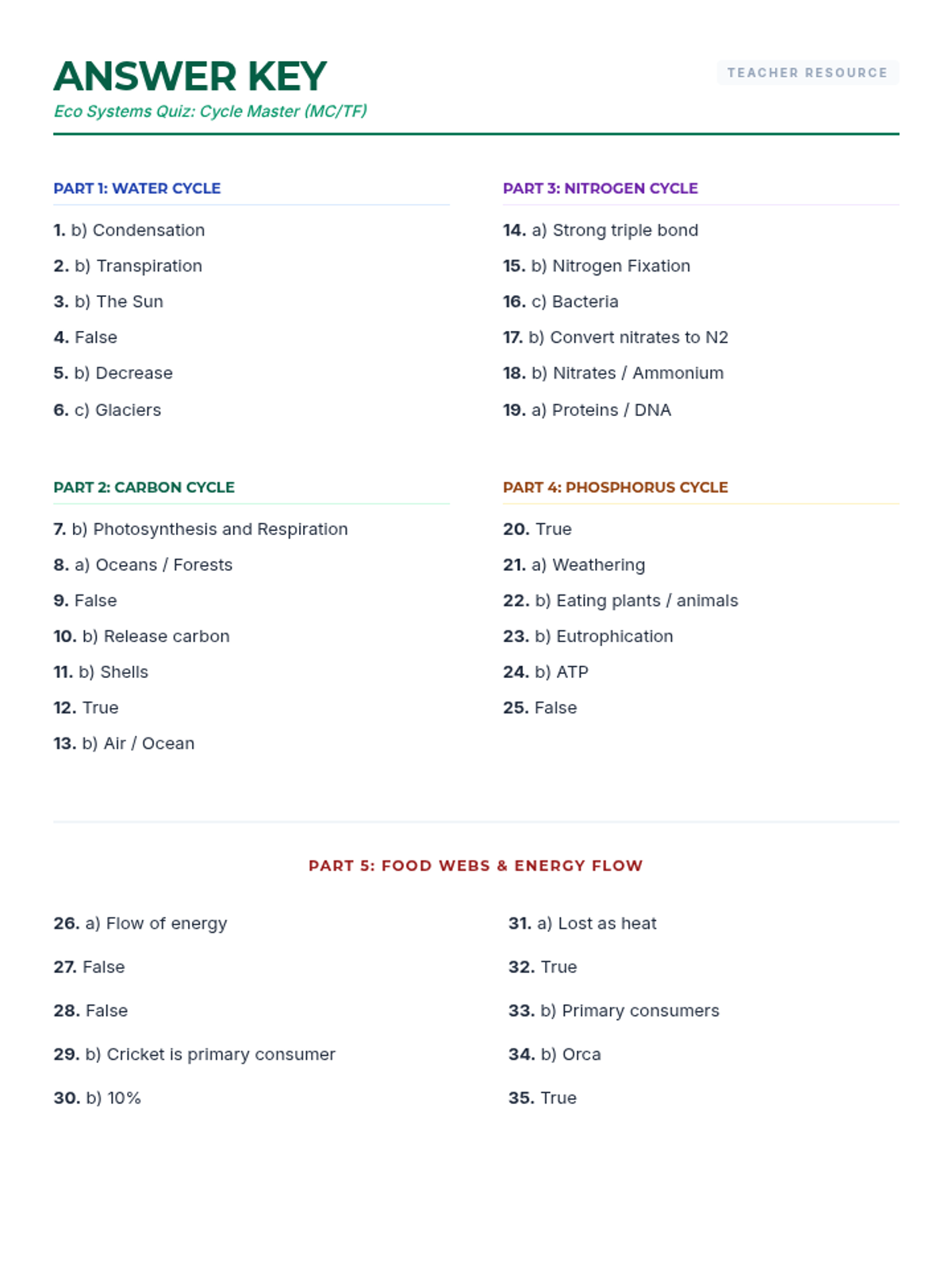
A 35-question quiz consisting exclusively of multiple-choice and true/false questions covering water, carbon, nitrogen, and phosphorus cycles, along with food chains and webs. Designed for clear objective assessment.
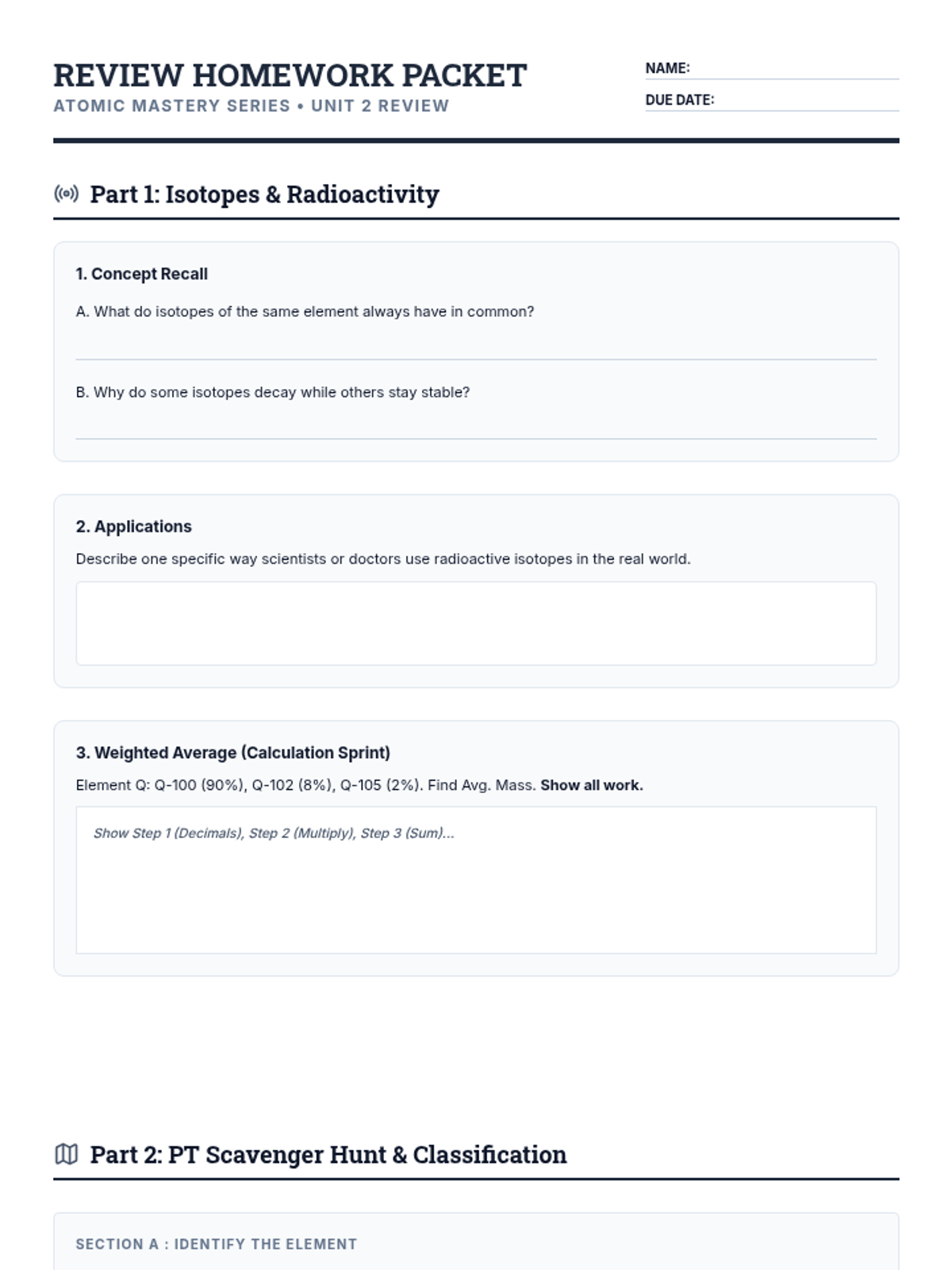
A comprehensive cumulative homework packet covering isotopes, periodic table organization, and ion formation to prepare students for the unit assessment. All student work areas fixed for legibility.
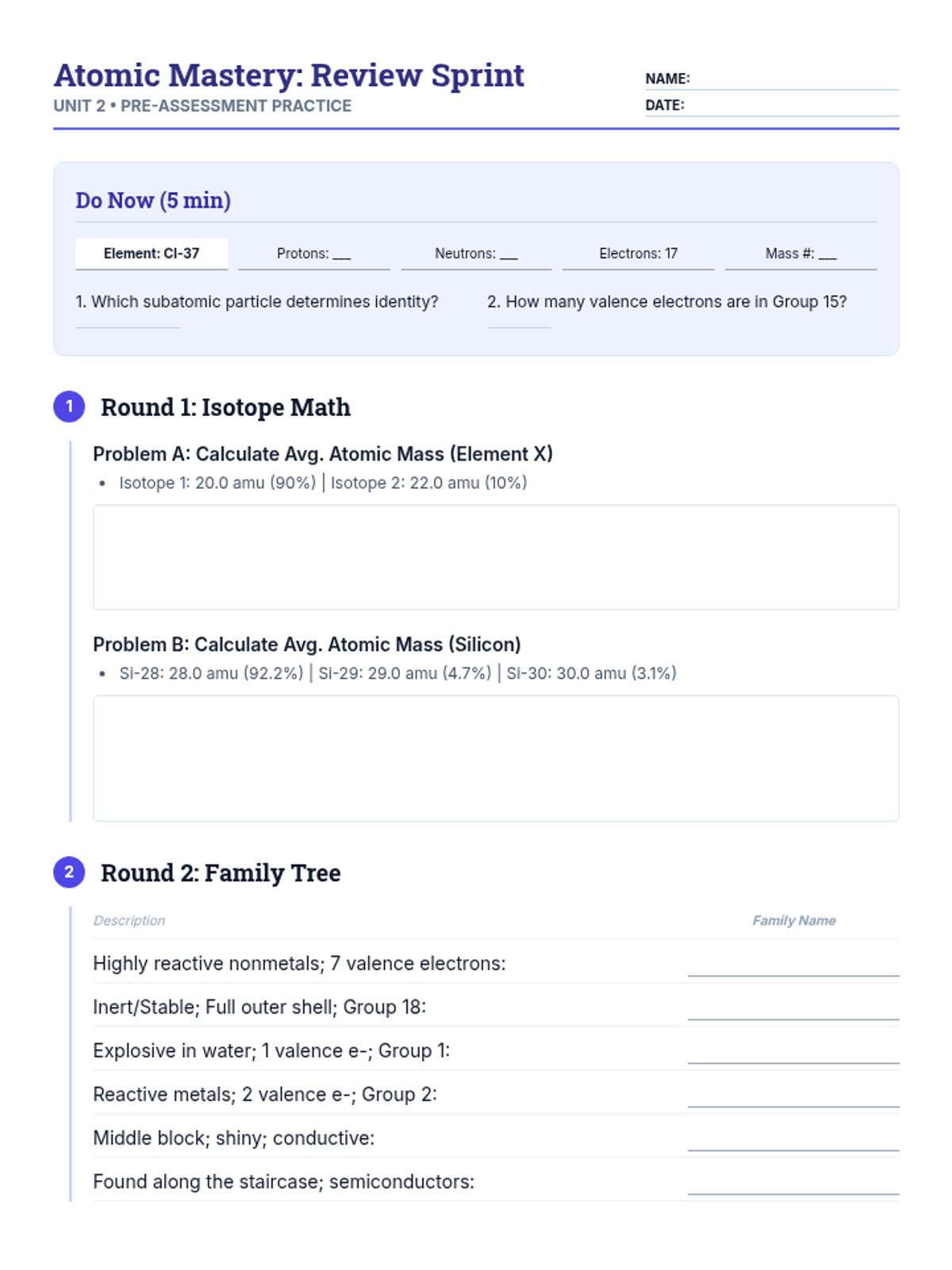
An expanded student practice handout for the review session, featuring a Do Now, and significantly more practice problems for isotope math, periodic table families, and ion formation. All layout issues fixed for print.
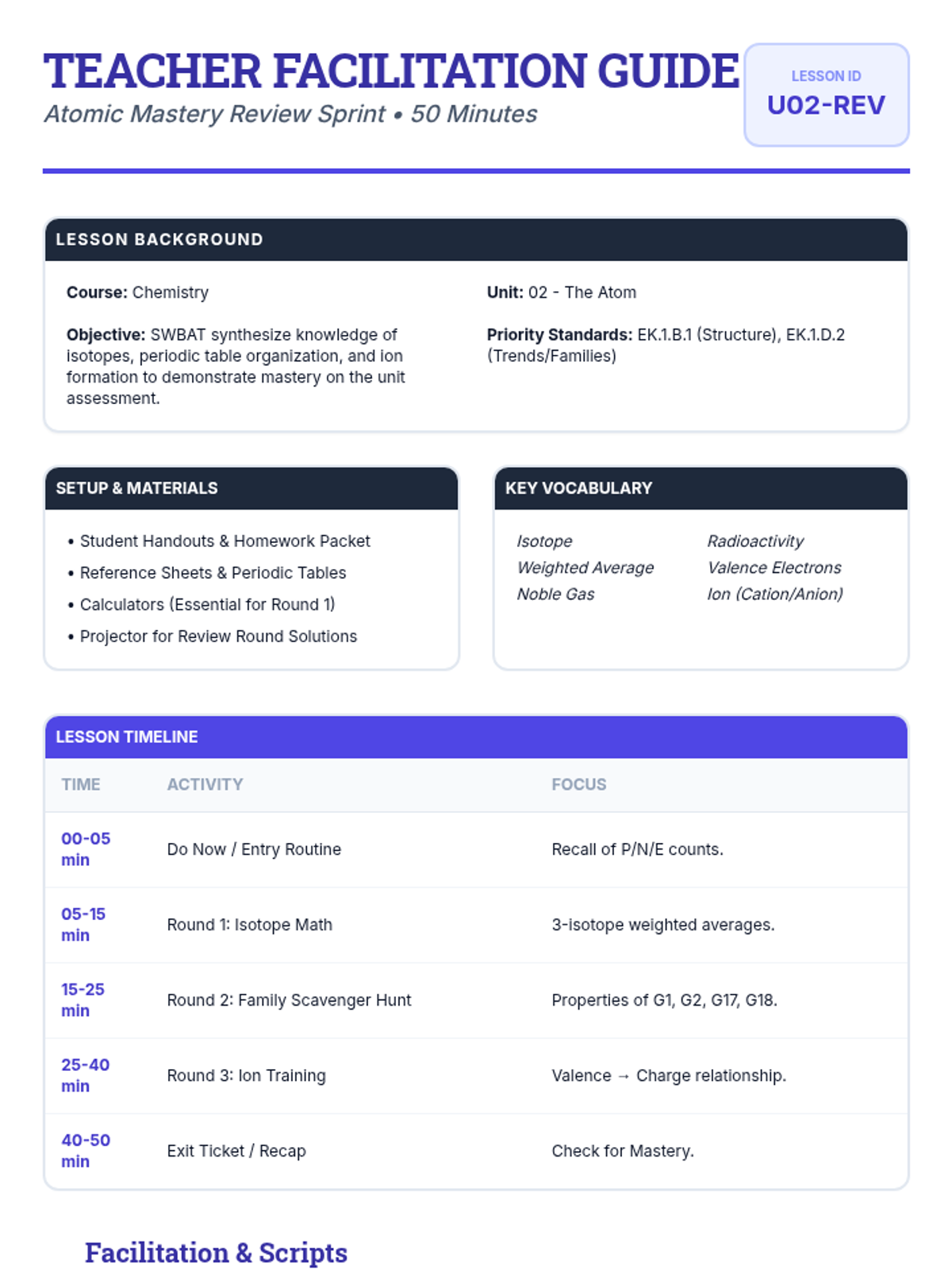
A detailed facilitation guide for the 50-minute review session, including specific teacher scripts, common look-fors, and a comprehensive master answer key for all student materials.
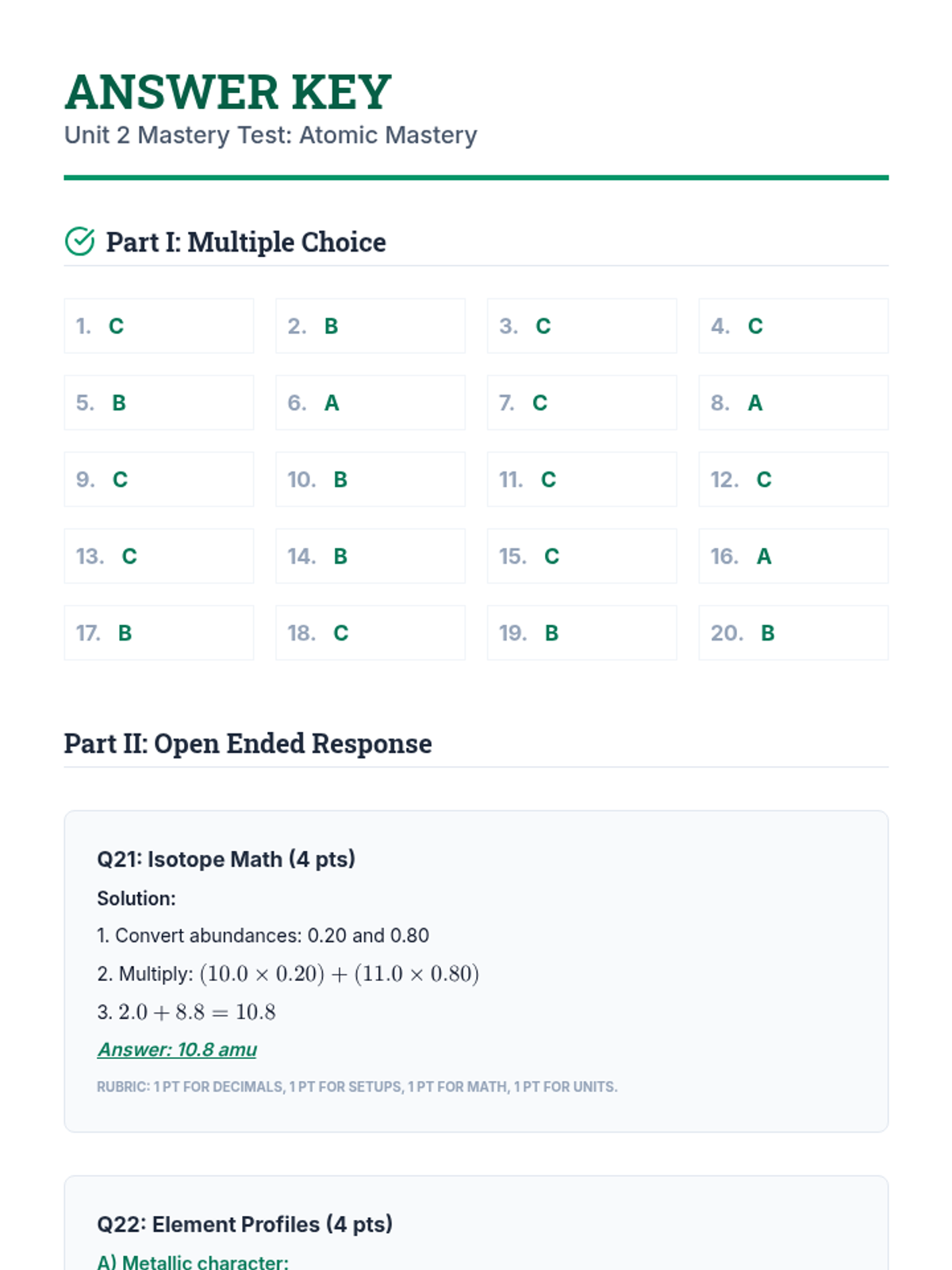
A comprehensive teacher answer key for the Atomic Mastery Test, including scoring rubrics for open-ended questions and step-by-step calculations.
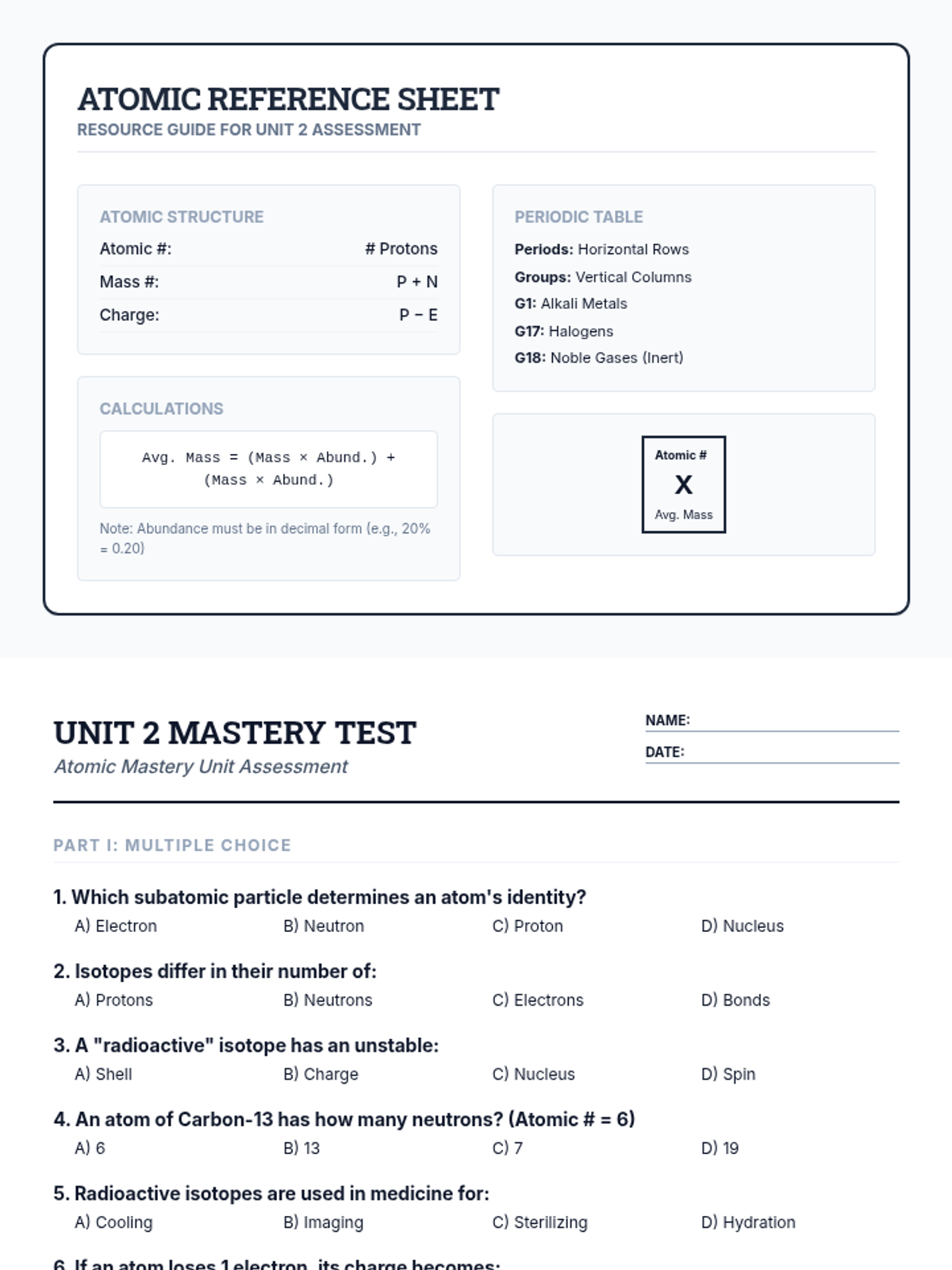
A 20-question multiple-choice and 2-question open-ended unit test covering isotopes, radioactive decay, atomic structure, and periodic table organization. Includes space for work and diagrams.
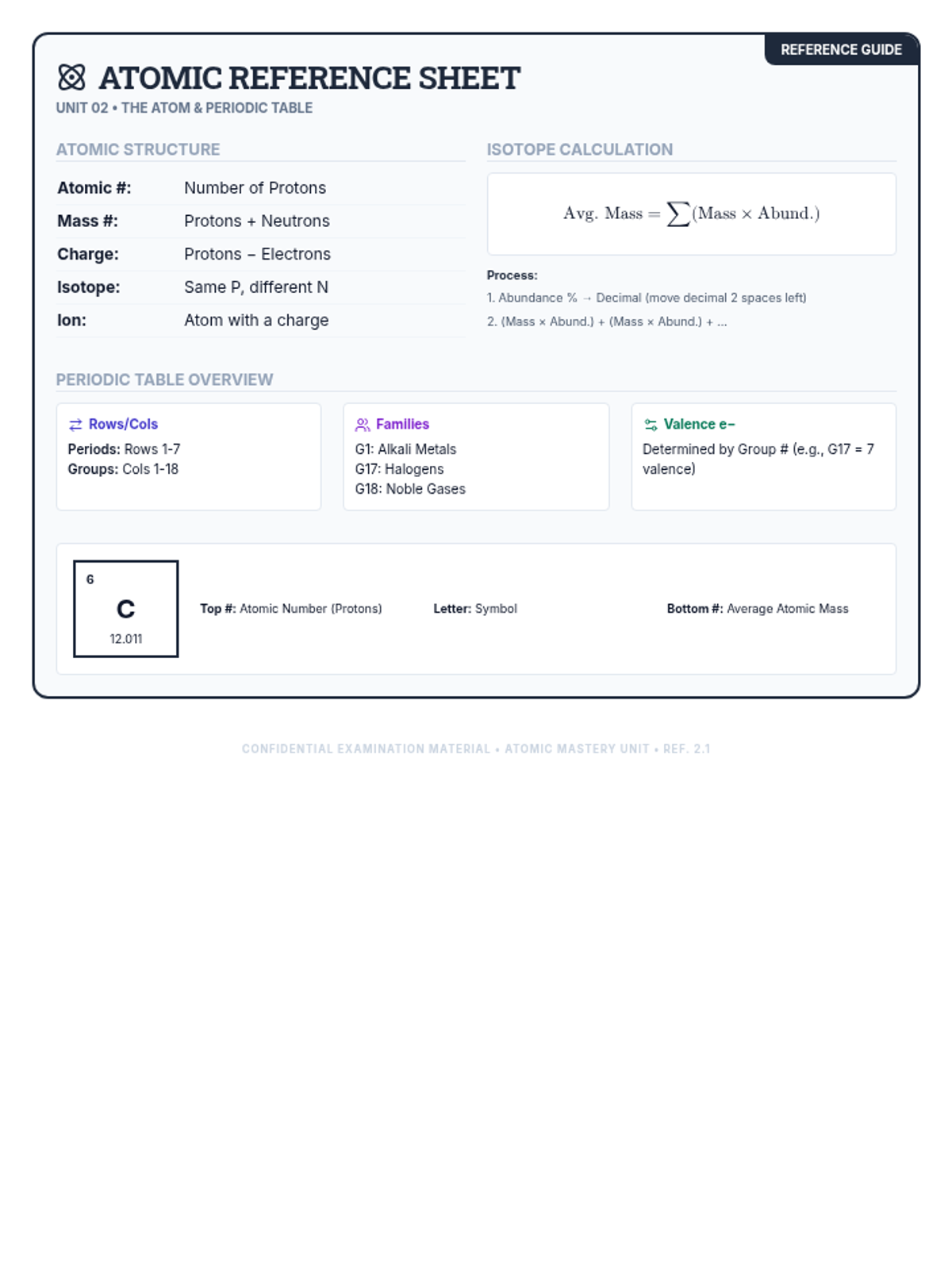
A one-page reference sheet for students featuring atomic structure definitions, average atomic mass calculation steps, and periodic table organization facts. designed to assist students during the unit assessment.
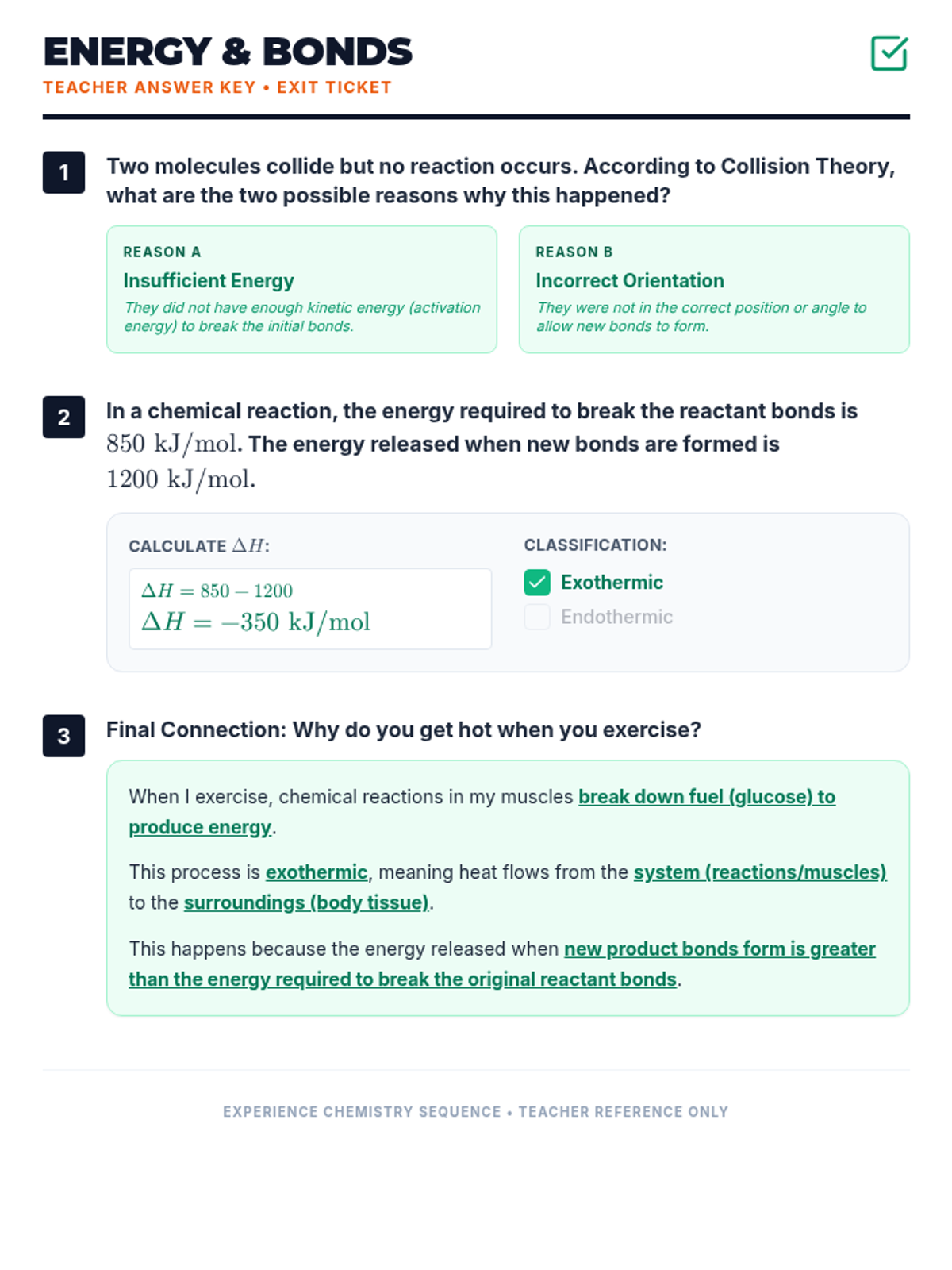
A teacher answer key for the Energy Bonds Exit Ticket, providing clear solutions for collision theory reasons, enthalpy calculations, and the final anchoring phenomenon connection. Consolidated to a single page.
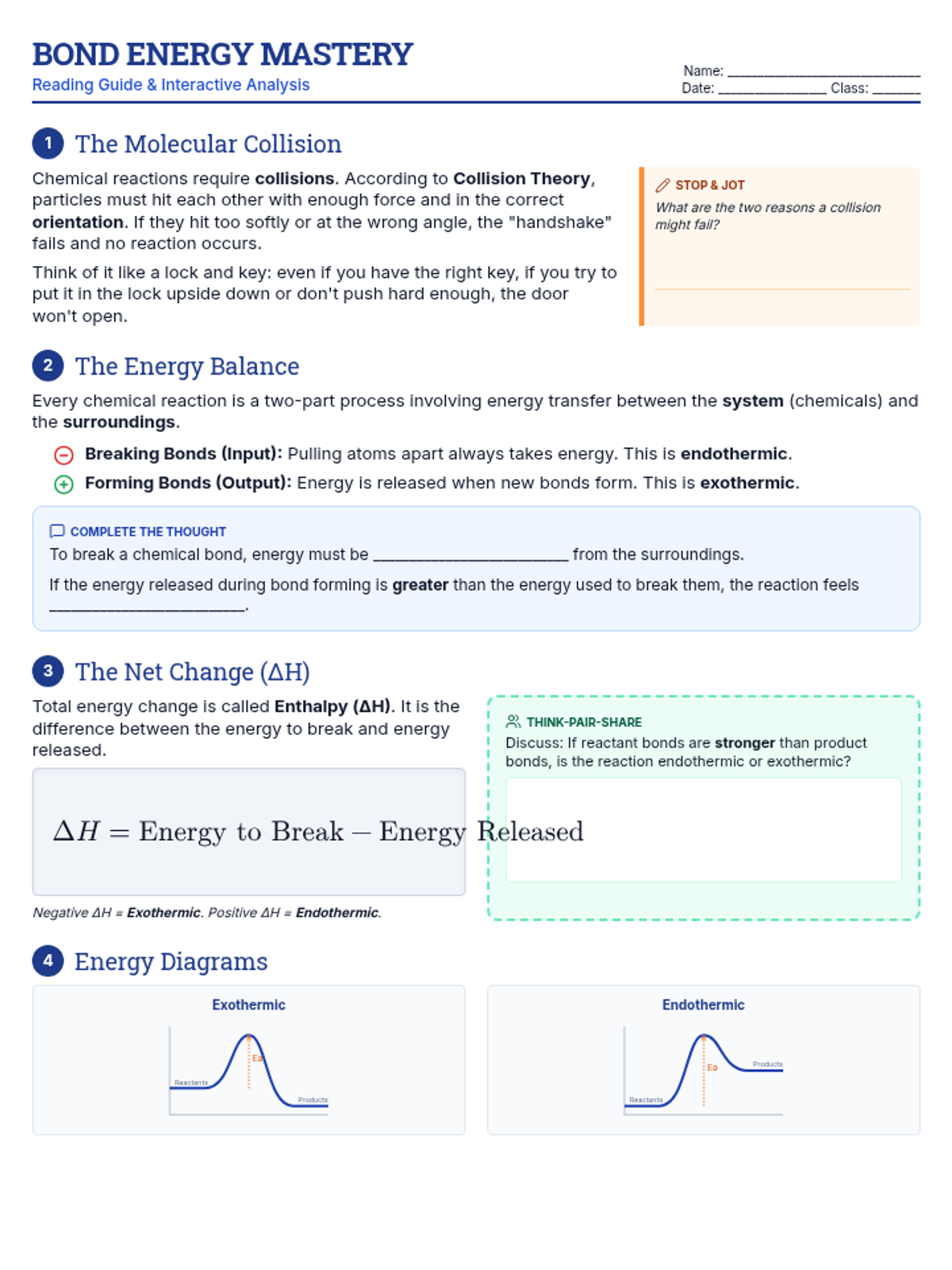
A comprehensive two-page chunked reading guide on bond energy and enthalpy. Features interactive Check for Understanding (CFU) elements like Stop & Jot, Sentence Stems, and Think-Pair-Share, along with four scaffolded practice examples ranging from guided to independent application.
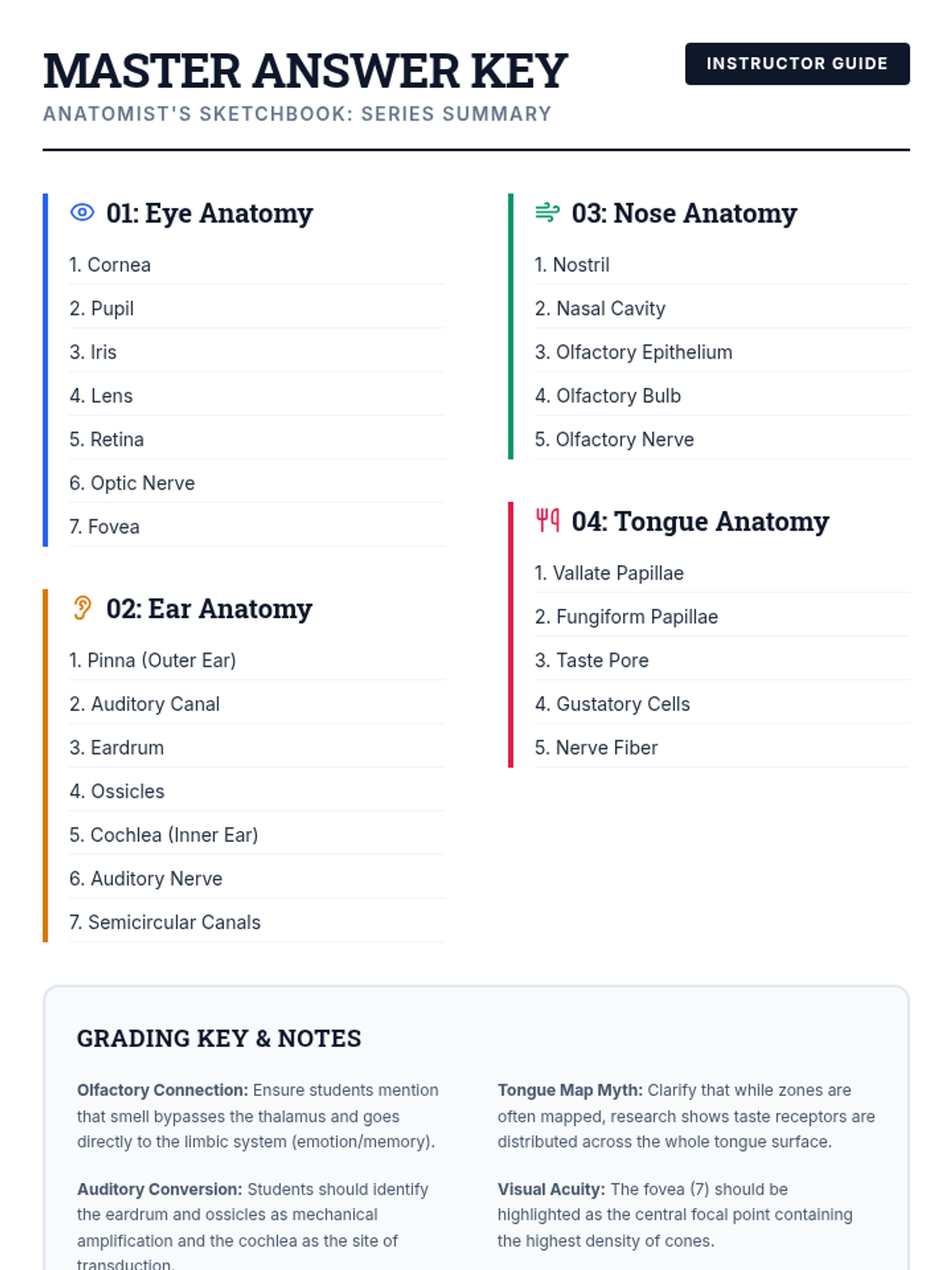
A comprehensive teacher answer key for the Sense Detectives anatomical series, including correct labels for the eye, ear, nose, and tongue worksheets along with instructional notes. Revised to ensure single-page layout.
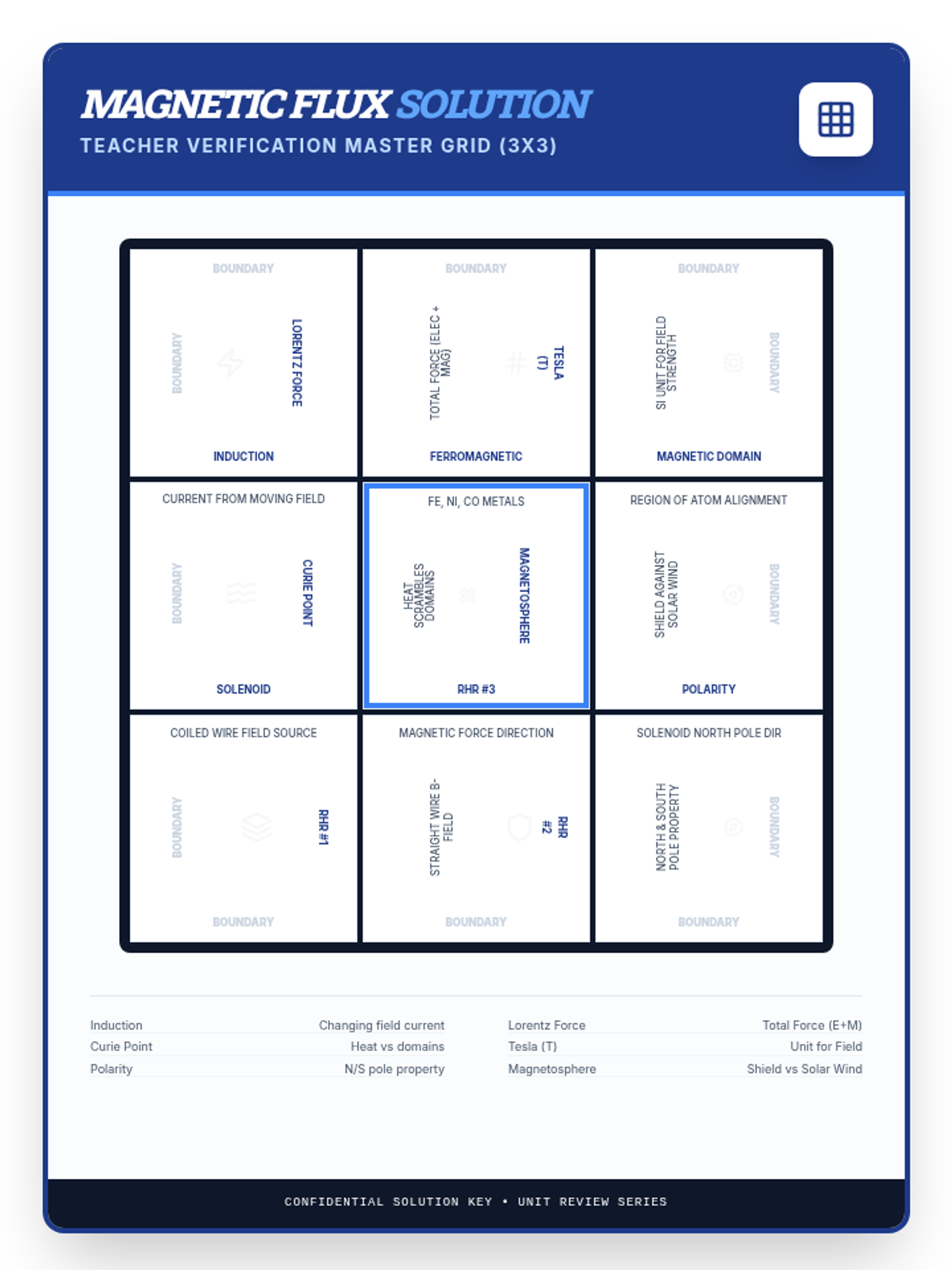
A teacher answer key for the Magnetic Flux Puzzle jigsaw activity. It provides the completed 3x3 solution grid and a logic key for the term-to-definition connections. Revised for 3x3 layout consistency.
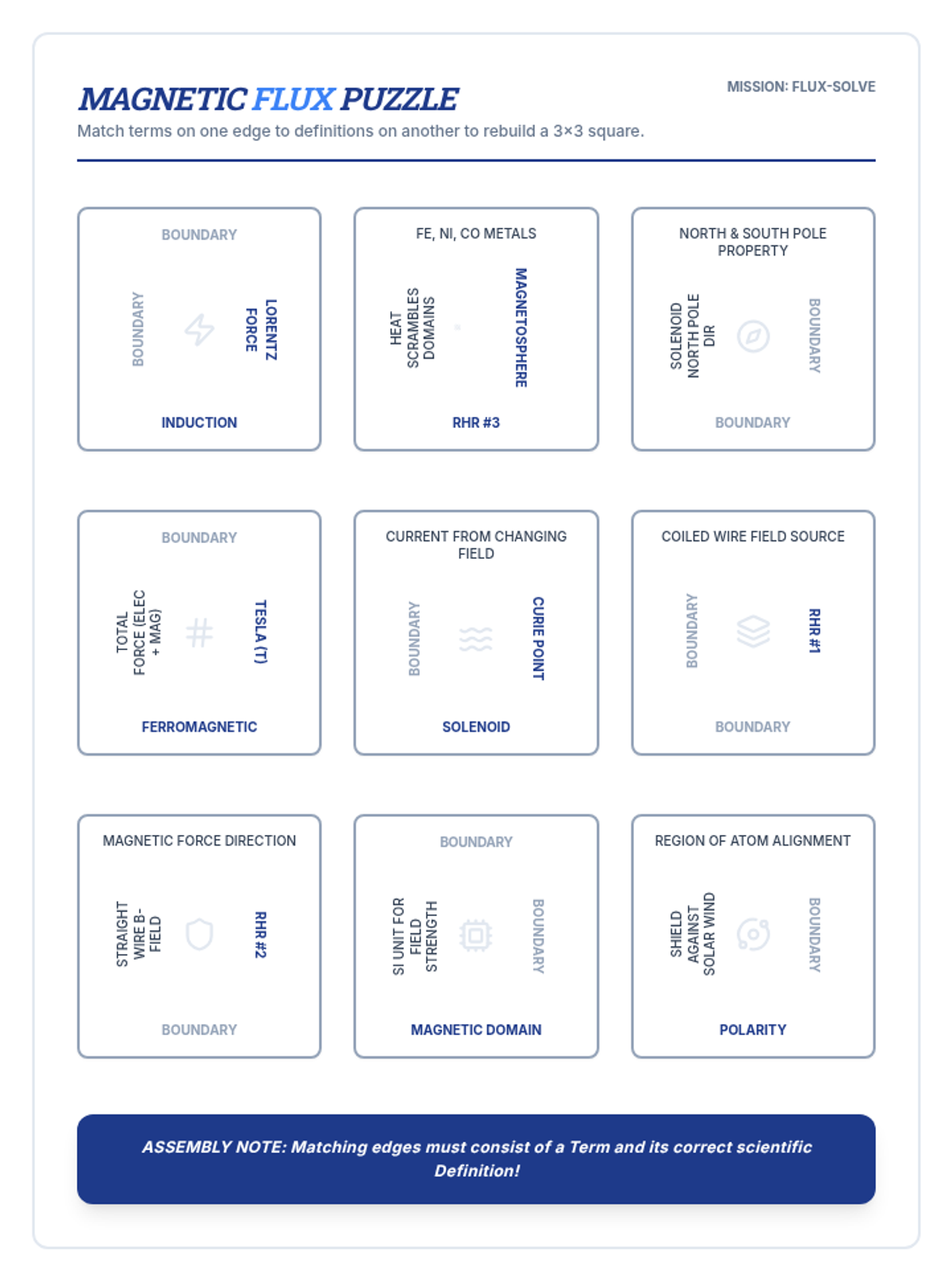
A vocabulary jigsaw activity where students cut out 9 squares and match terms on one edge to definitions on another to rebuild a 3x3 matrix. Covers essential magnetism vocabulary including Lorentz force, induction, and Curie point. Revised for better legibility and larger piece size.
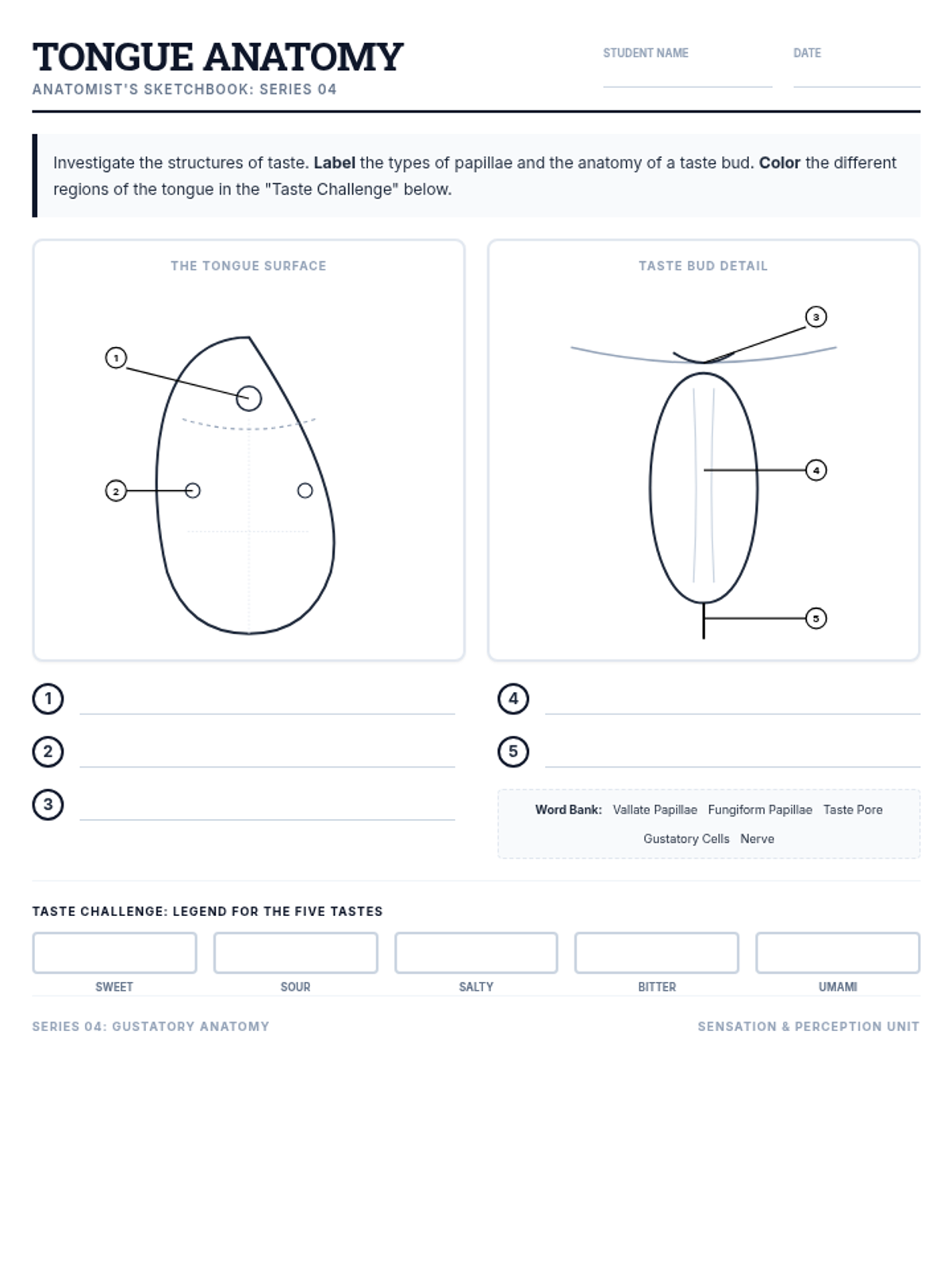
A student worksheet for labeling and coloring the anatomical structures of the human tongue, including papillae, taste buds, and primary taste regions. Revised for anatomical shape and clarity.
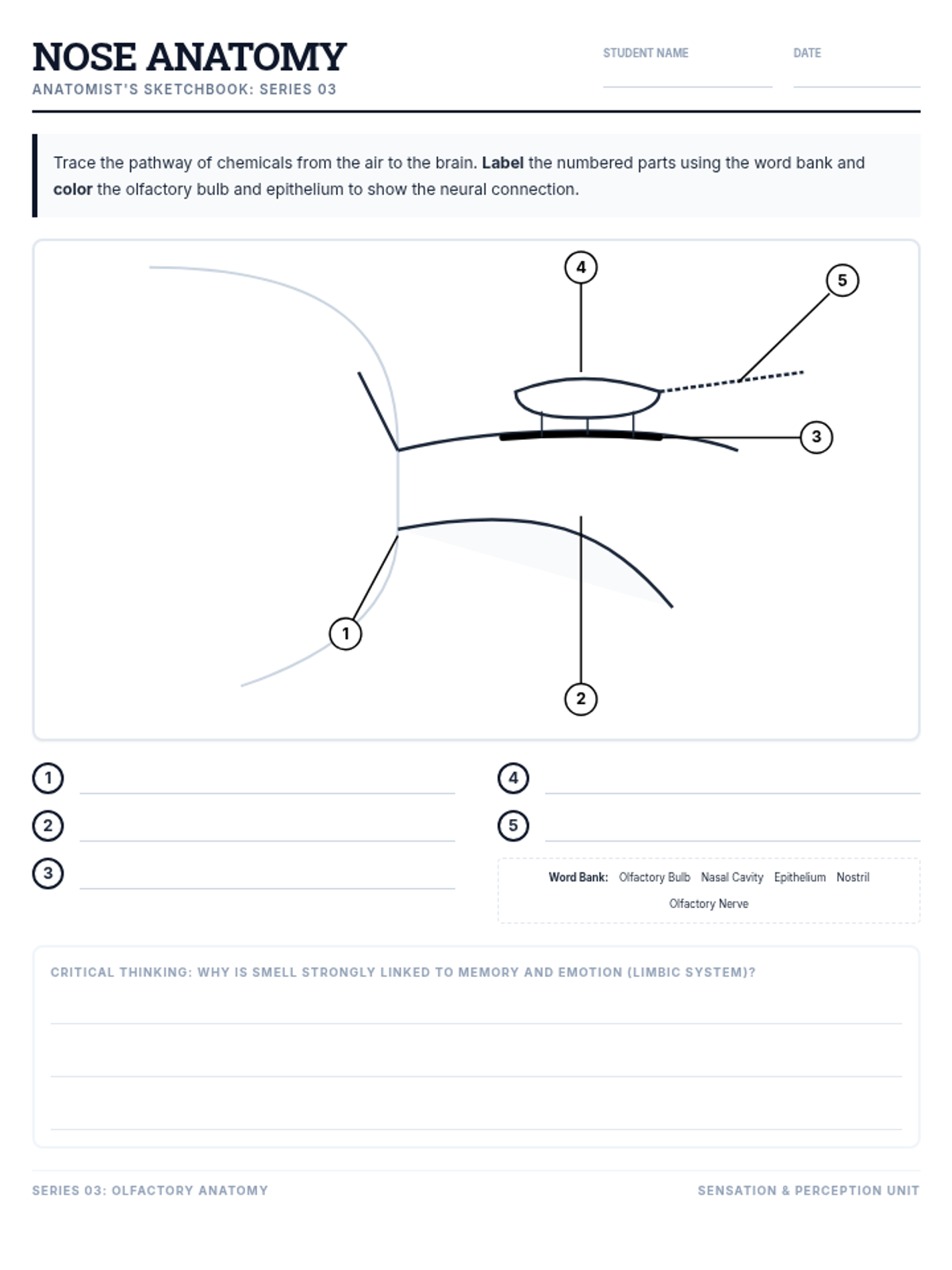
A student worksheet for labeling and coloring the anatomical structures of the human nose, focusing on the olfactory bulb, nasal cavity, and epithelium. Revised for context and layout.
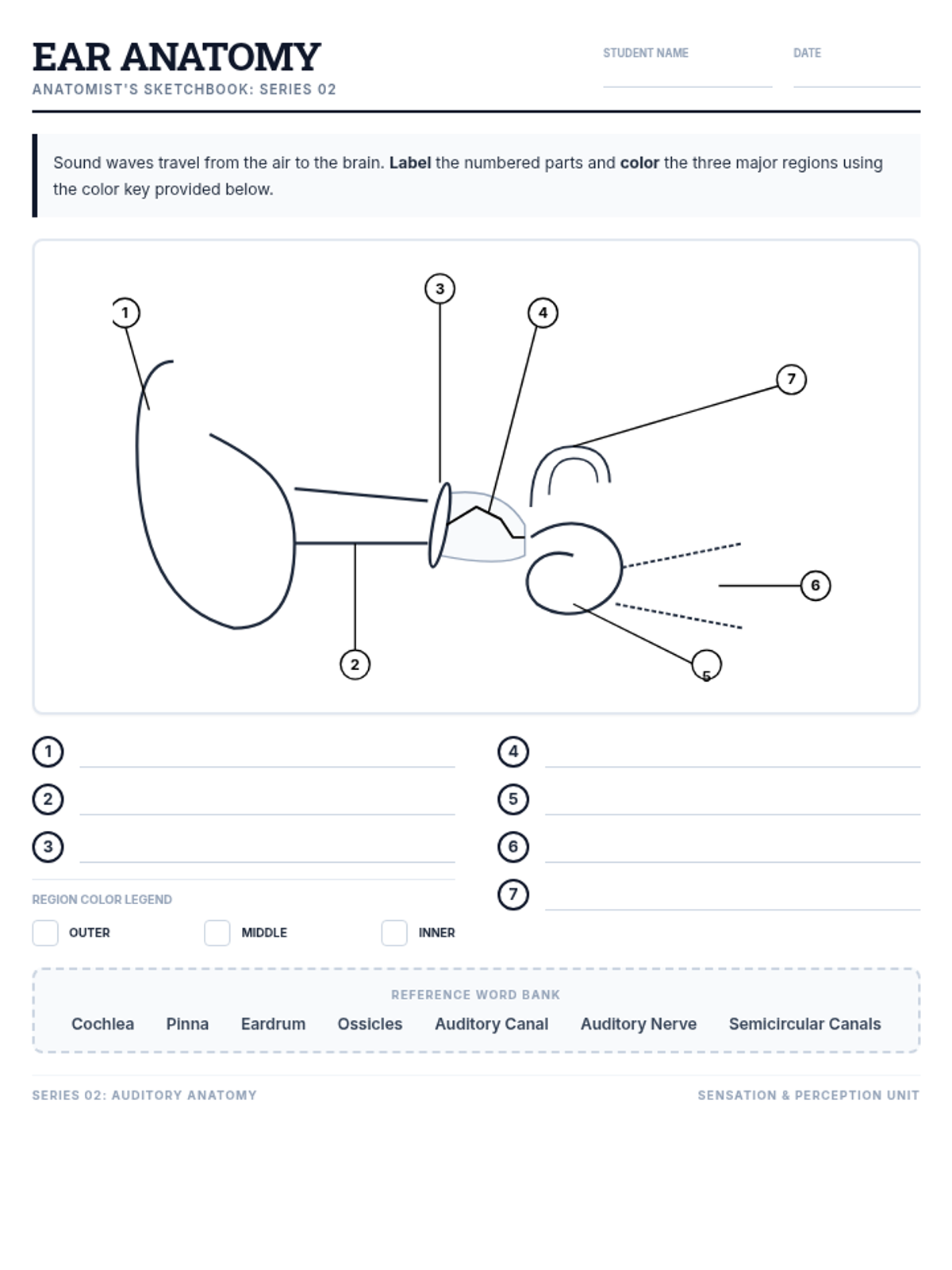
A student worksheet for labeling and coloring the anatomical structures of the human ear, including the pinna, auditory canal, eardrum, ossicles, and cochlea. Revised for anatomical accuracy and layout.
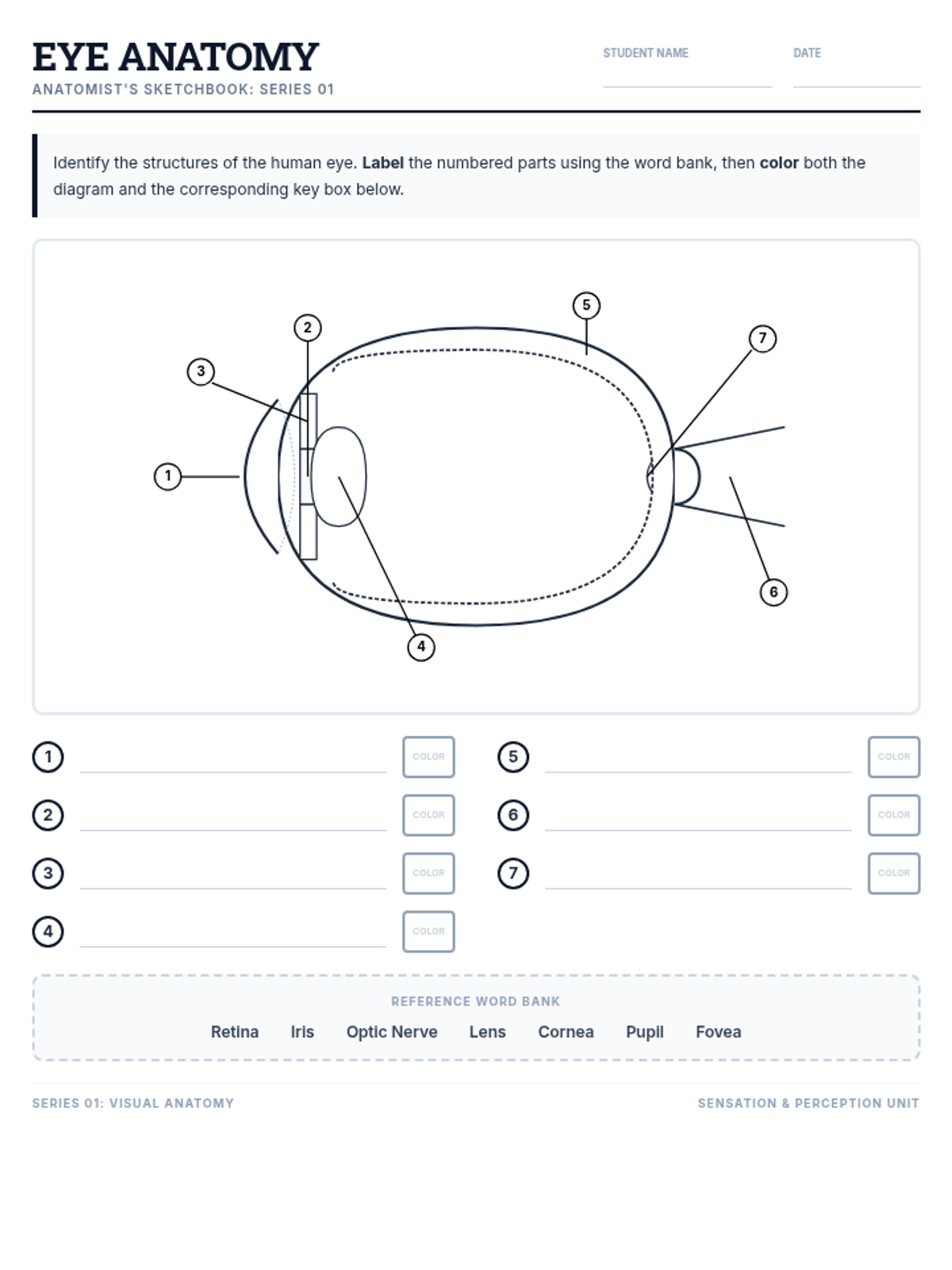
A student worksheet for labeling and coloring the anatomical structures of the human eye, including the cornea, iris, lens, retina, and optic nerve. Revised for layout and clarity.
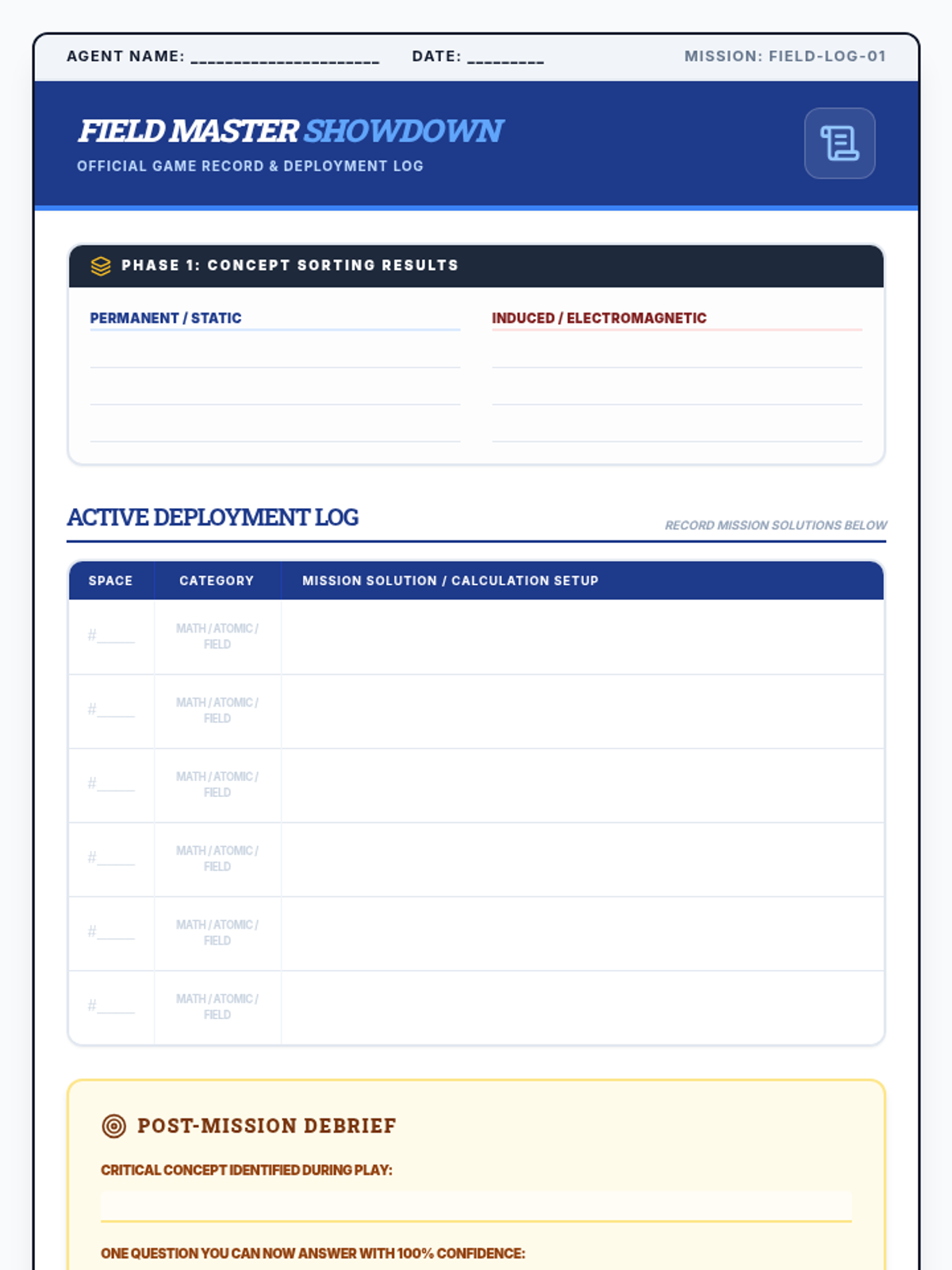
A student accountability document for the Field Master board game. It includes sections for Phase 1 card sort results, a gameplay challenge log to record answers during the game, and a final debrief reflection. Revised to fix page breaks and improve writing space.
Complete answer key for the Cycle Master Quiz, featuring answers for 35 multiple-choice and true/false questions. Structured in a clean, two-column layout for rapid grading.
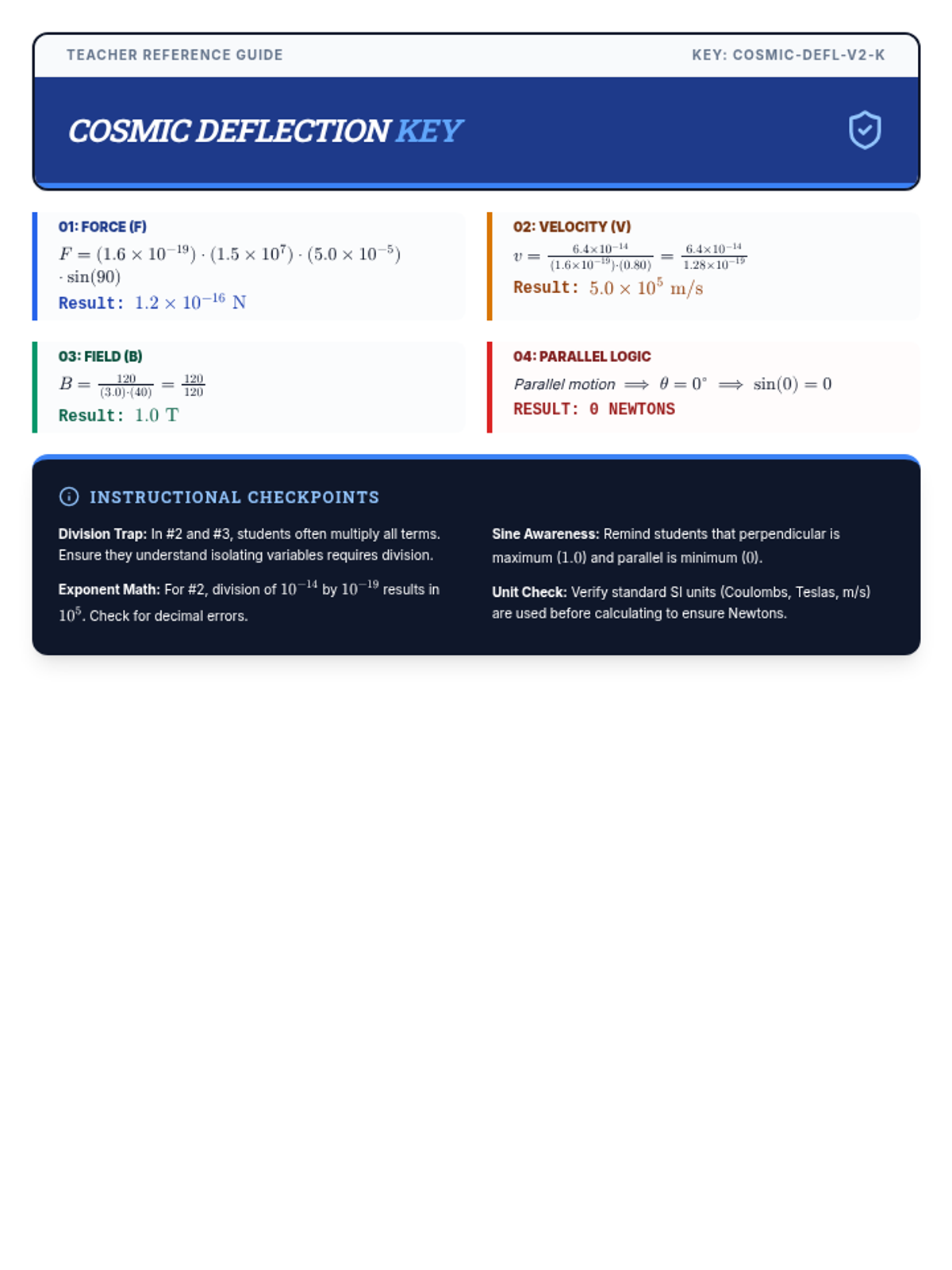
A teacher answer key for the Cosmic Deflection Worksheet. It provides step-by-step mathematical solutions for force, velocity, and field strength calculations, along with conceptual justifications for parallel motion. Revised for better layout and math rendering.
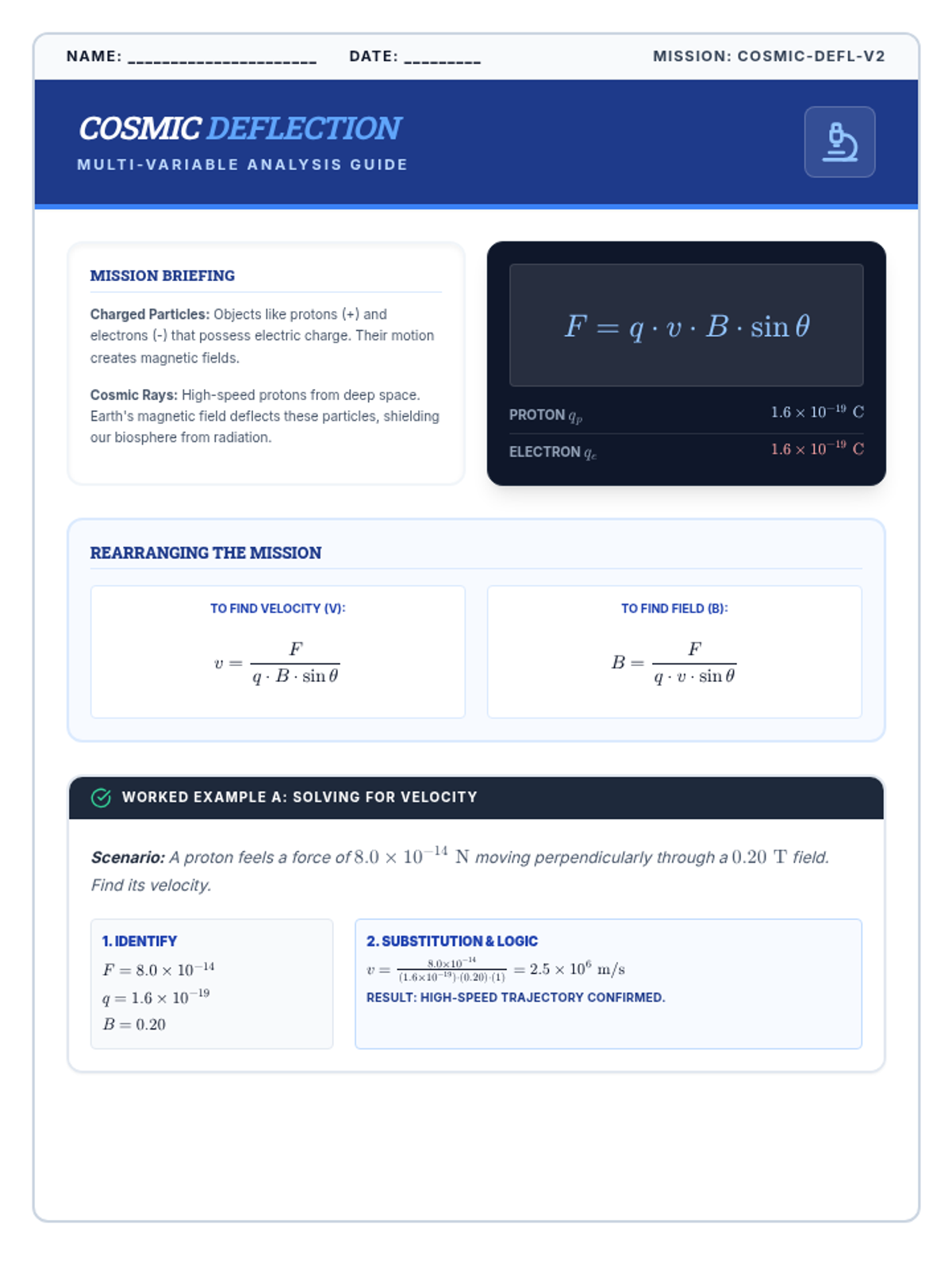
An expanded scaffolded worksheet focusing on calculating magnetic forces, velocity, and field strength. Features two detailed worked examples for rearranging formulas, plus a 4-problem practice set with a self-check answer bank. Revised for multi-variable mastery and optimized layout.
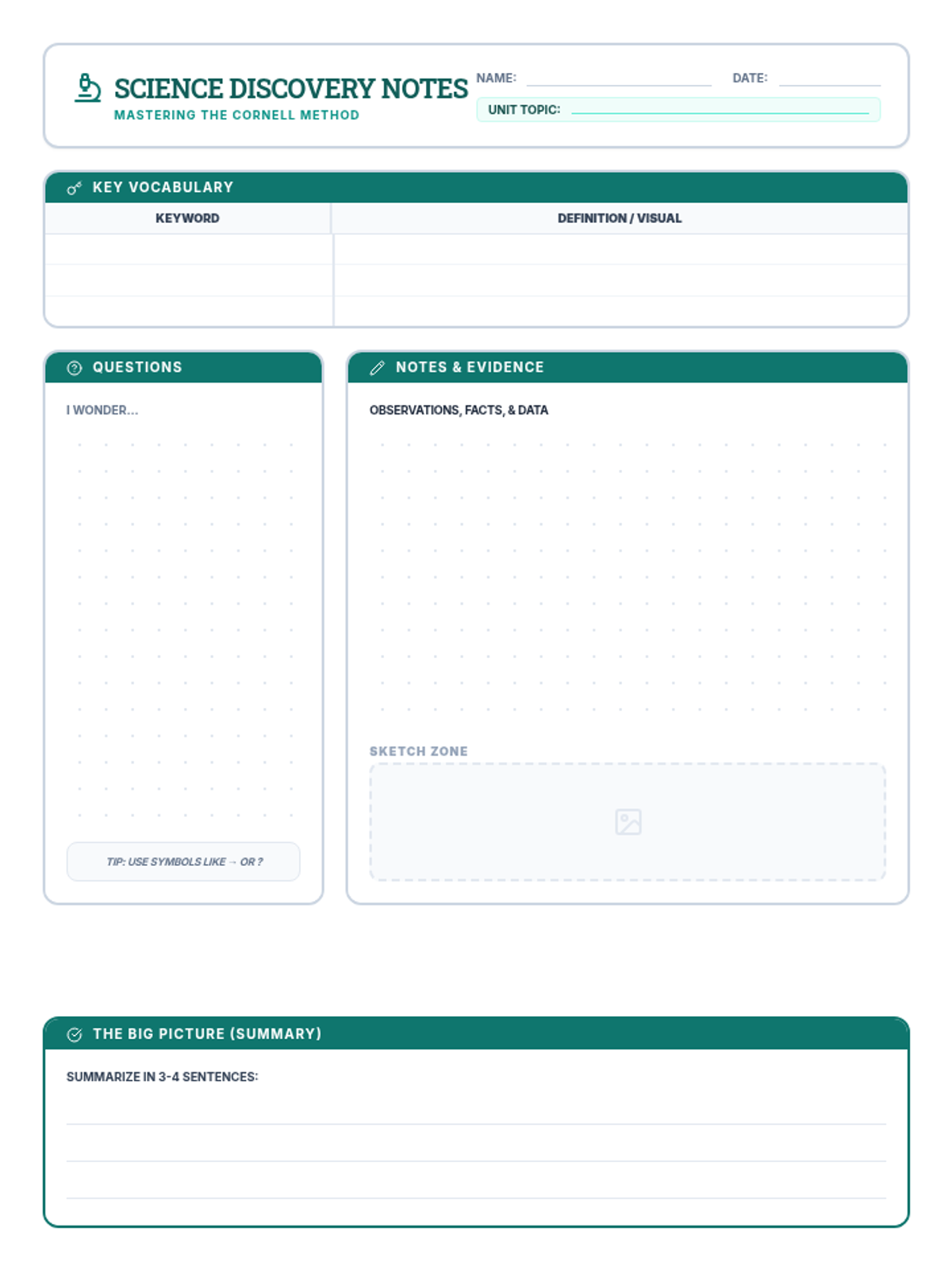
A visually engaging Cornell Notes template specifically designed for 6th-grade science students, featuring an expanded body area for questions and notes with a dot-grid pattern, and the summary section at the very bottom.
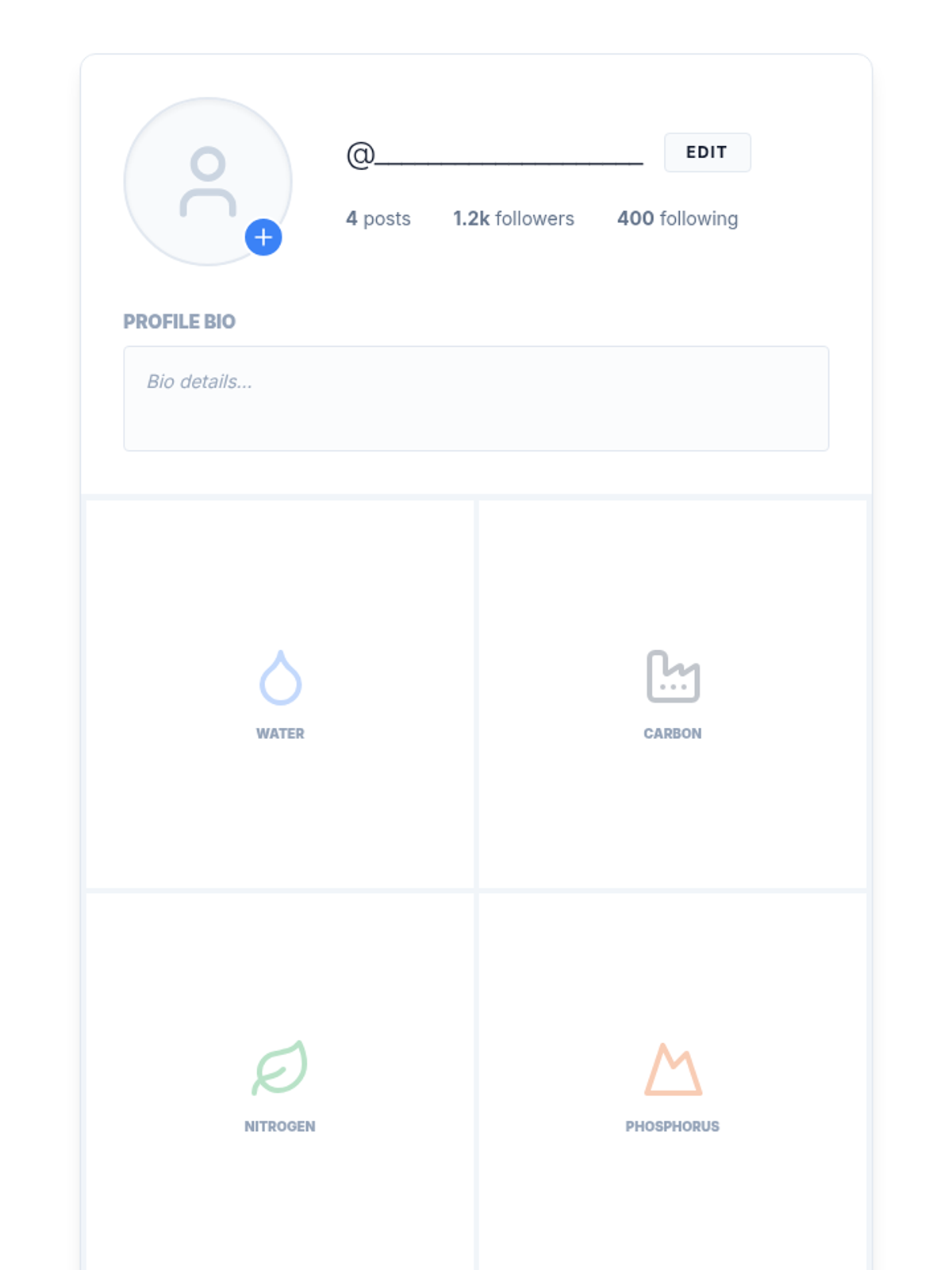
A printable or digital template mimicking an Instagram profile and post layout where students can finalize their Bio-Gram project content.
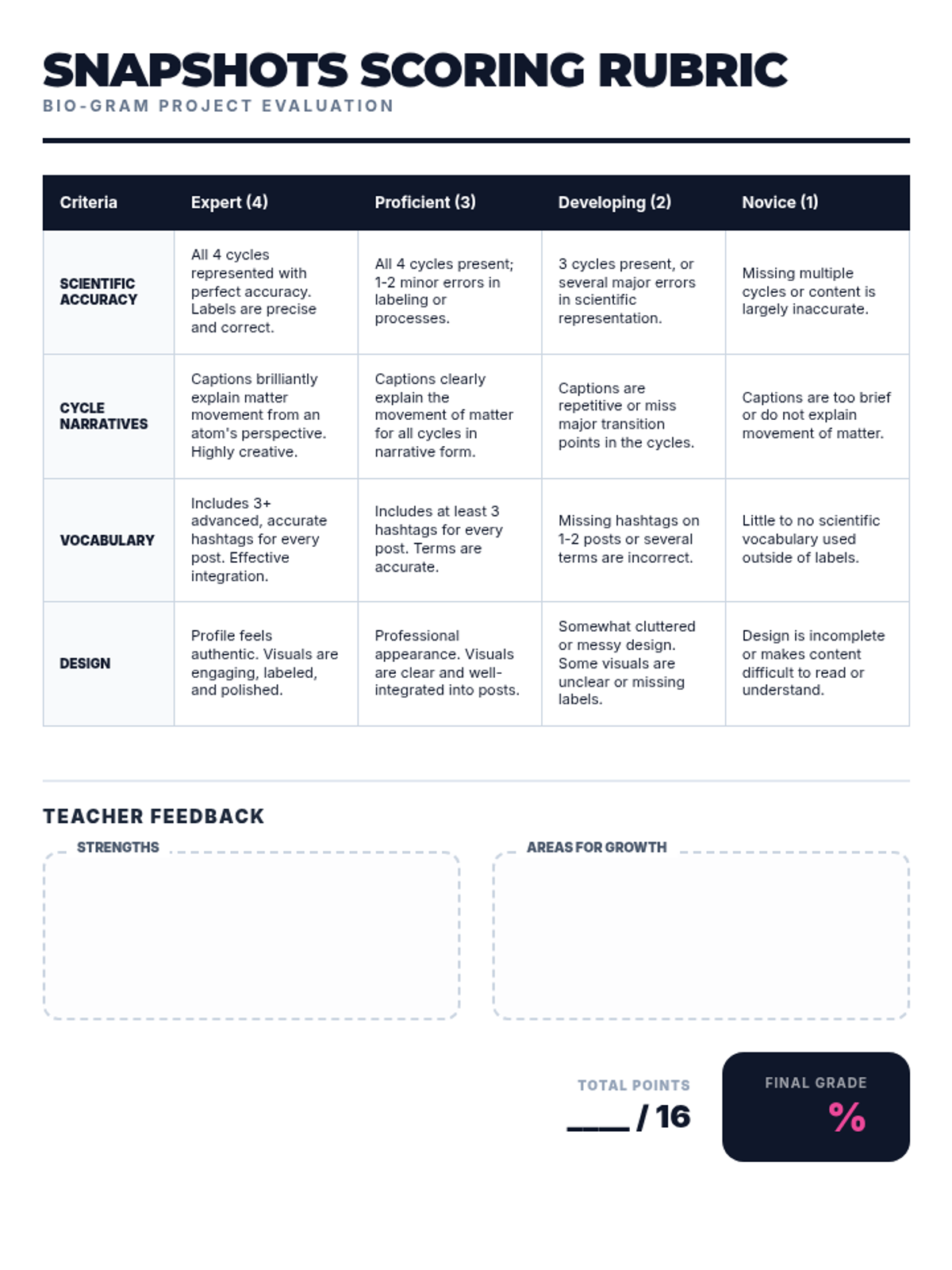
A comprehensive rubric for teachers to grade the Bio-Gram project, evaluating scientific accuracy, narratives, vocabulary usage, and design quality.
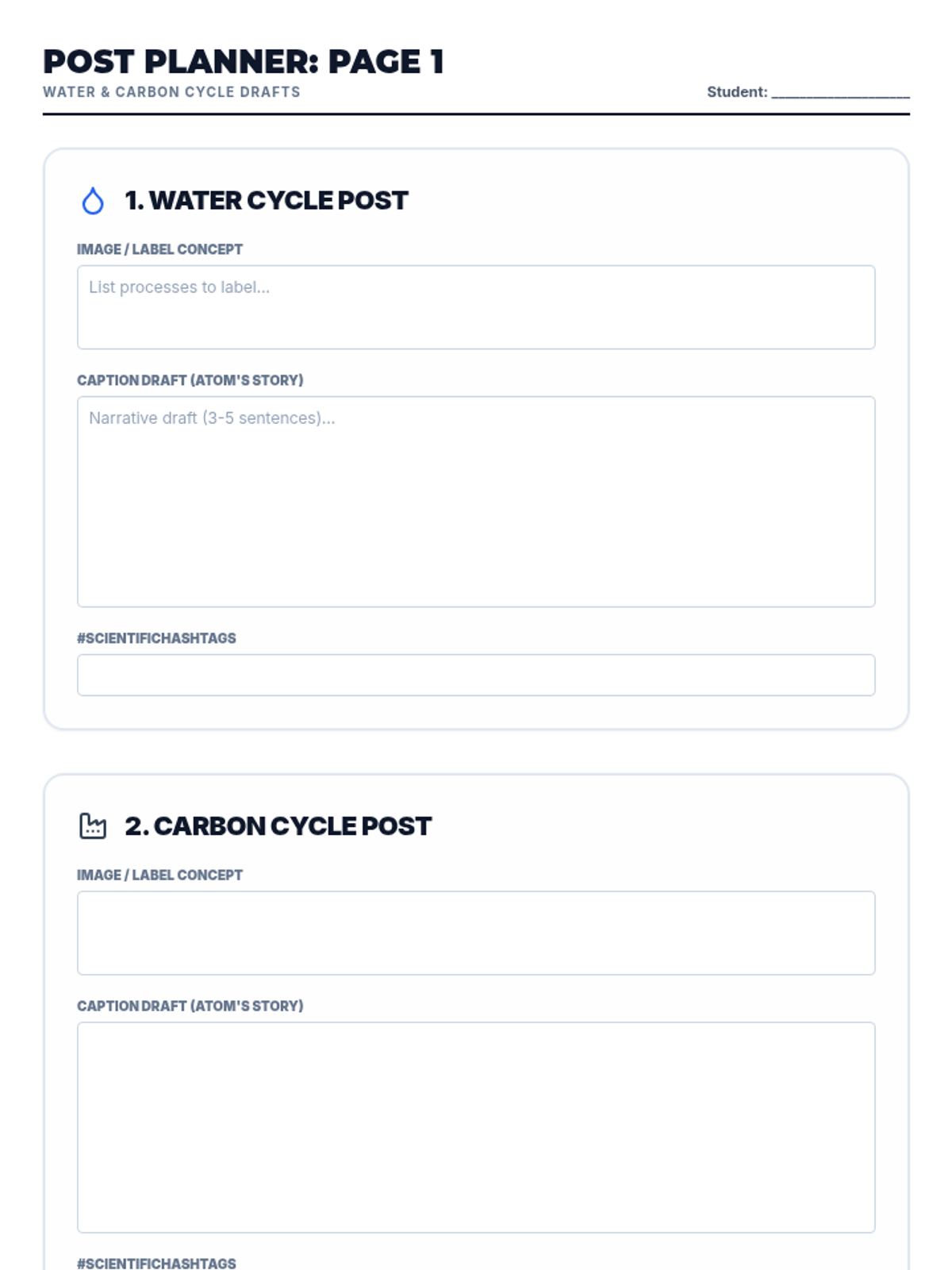
A planning worksheet for students to draft their social media captions, hashtag ideas, and image concepts for the four biogeochemical cycles before creating their final project.