Fundamental biological structures and processes from microscopic cells and genetic inheritance to complex body systems and global ecosystems. Addresses plant and animal adaptations, trait expression, and the cycles of life and cell division.
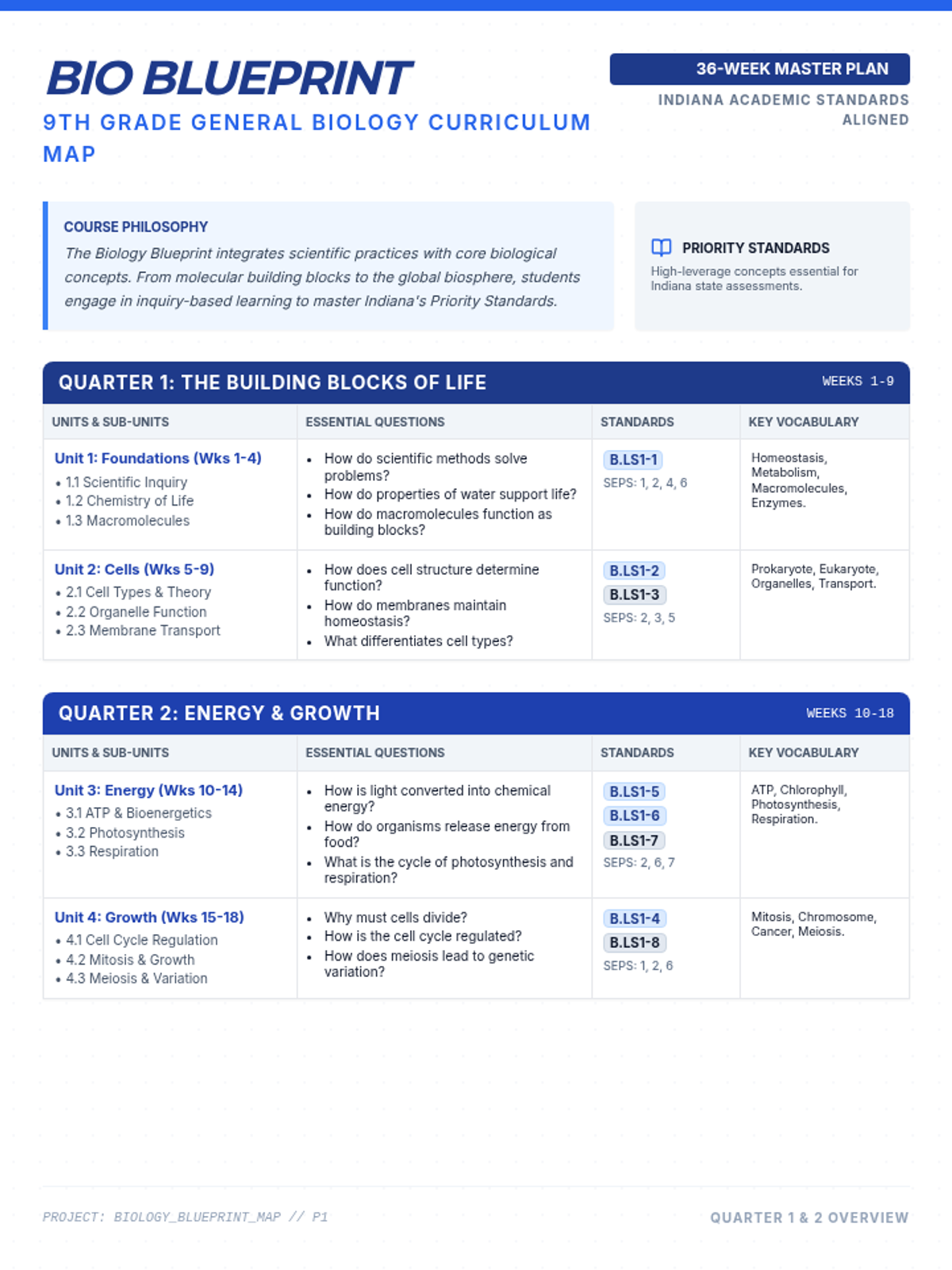
A detailed 36-week curriculum map for 9th-grade biology, organized by quarters and units. Each unit is now divided into specific sub-units for clearer pacing. Includes essential questions, standards, and key vocabulary.
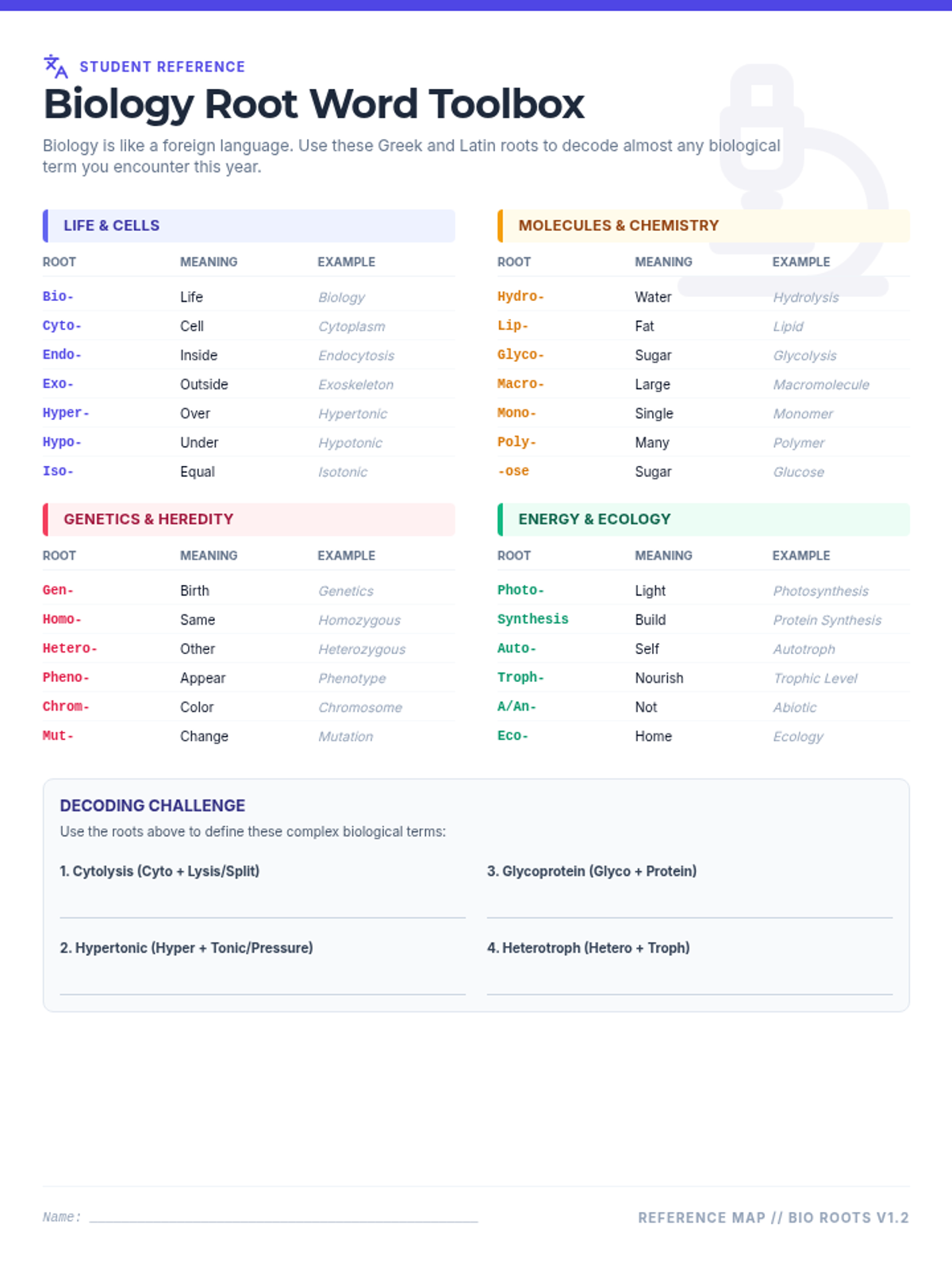
A student reference sheet providing Greek and Latin roots for common biological terms. Organized by unit topics to support vocabulary acquisition across the 36-week curriculum. Revised for single-page fit and better layout.
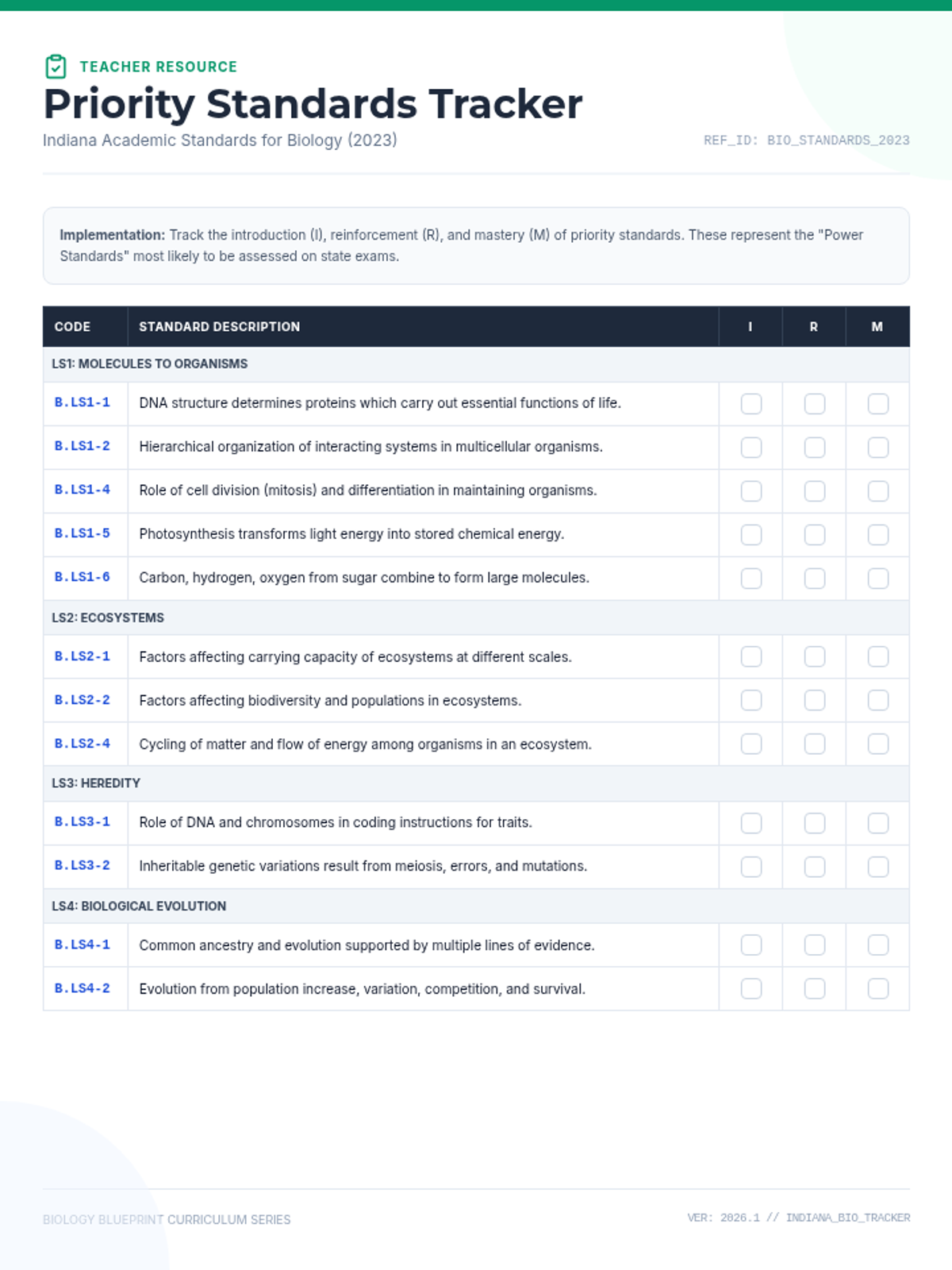
A checklist for teachers to track the implementation and mastery of Indiana's Priority Biology Standards across the 36-week school year. Includes codes and full descriptions of key standards. Revised for better formatting and single-page fit.
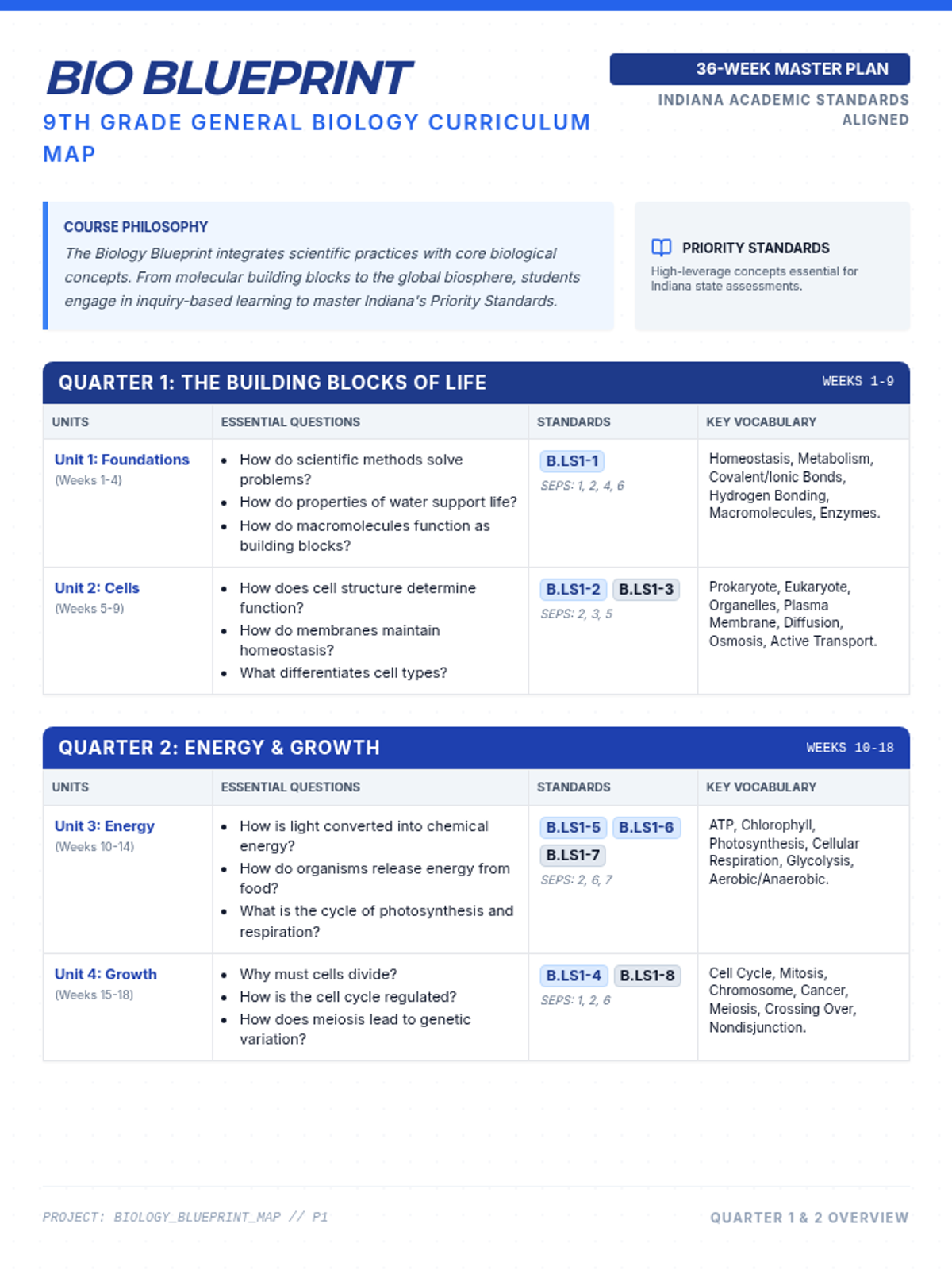
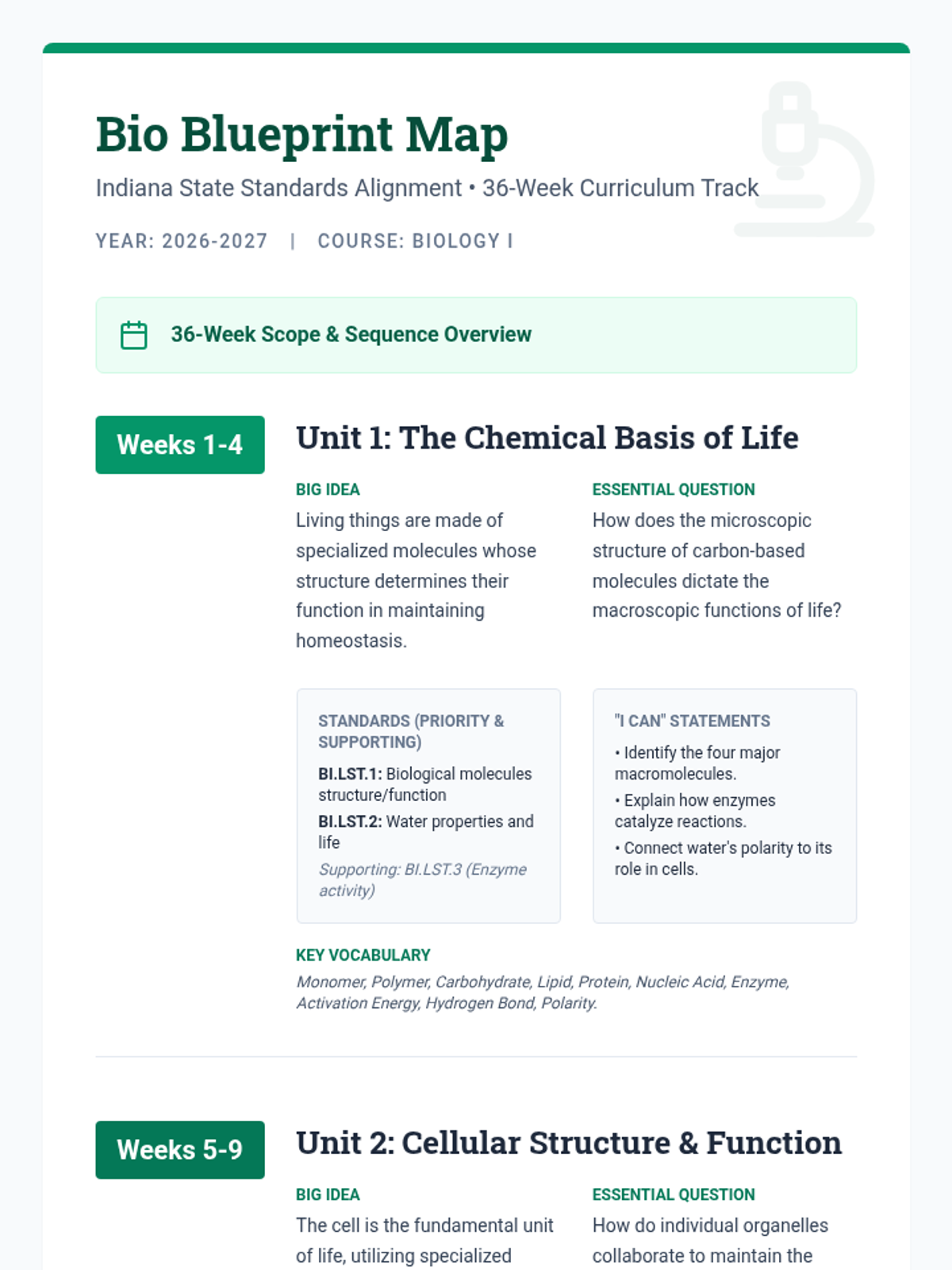
A detailed 36-week curriculum map for 9th-grade biology, organized by quarters and units. Includes essential questions, priority/supporting Indiana state standards, and key vocabulary for each unit. Revised for better page breaks and formatting.
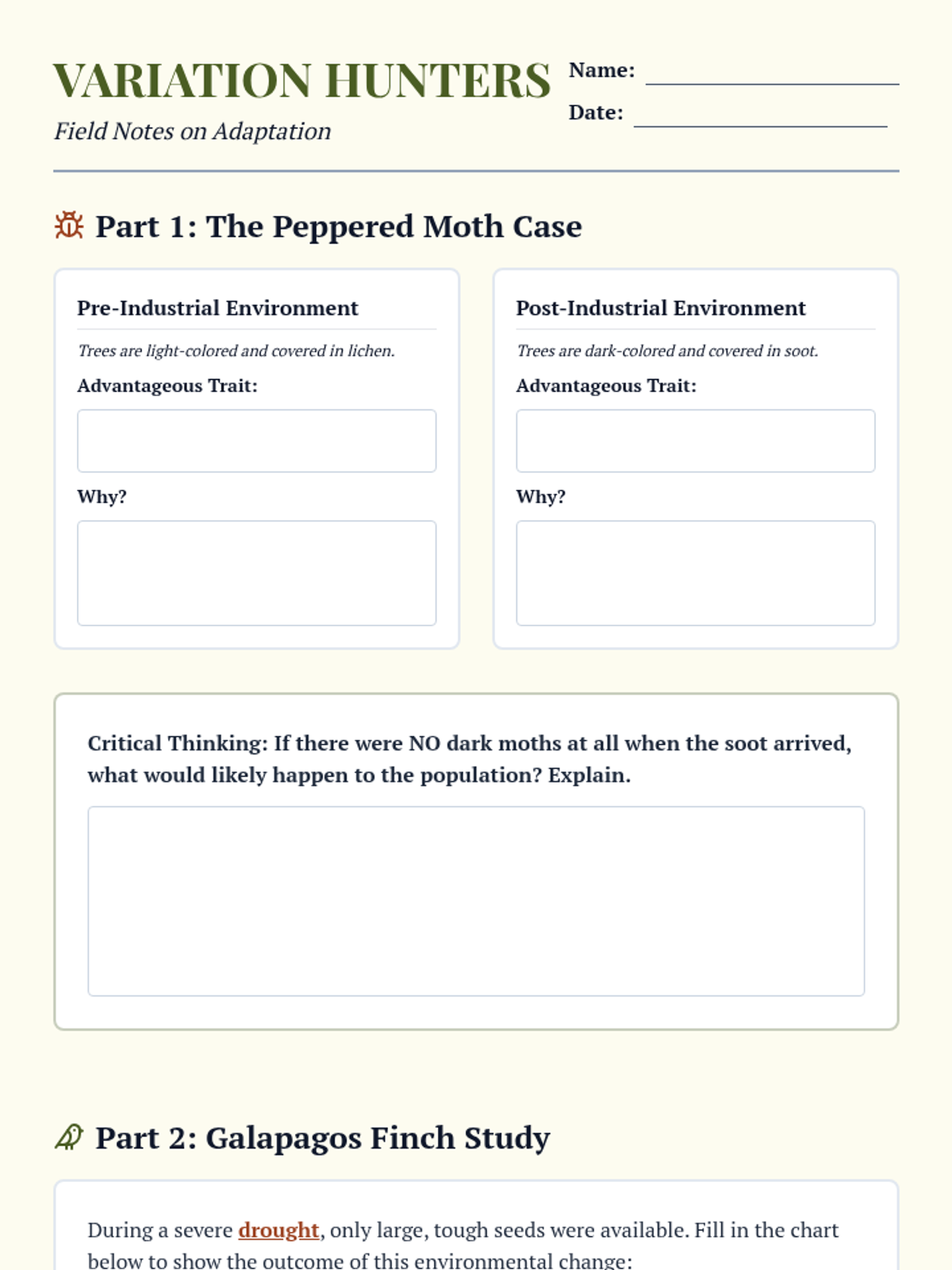
A student worksheet for tracking variations in peppered moths and Galapagos finches. Includes sections for recording advantageous traits and a long-form reflection on why variation prevents extinction.
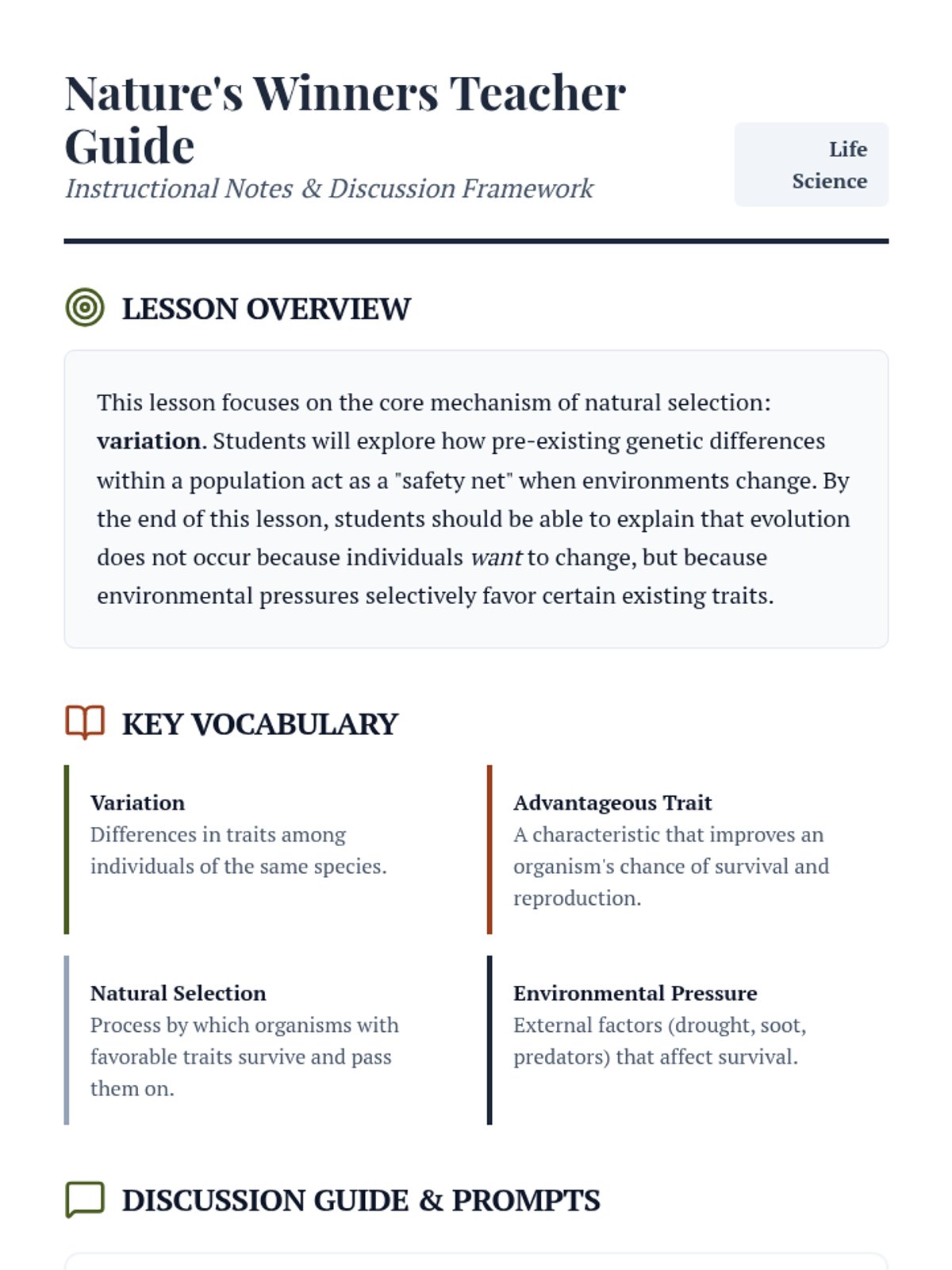
A comprehensive teacher guide for the 'Adapt or Fade' lesson, including instructional goals, discussion prompts for moth and finch case studies, clarification of common misconceptions, and an extension activity.
A 10-slide presentation exploring how genetic variation within a population provides advantages or disadvantages during environmental changes, featuring peppered moths and bird beak case studies. Includes speaker notes and an explorer's sketchbook aesthetic.
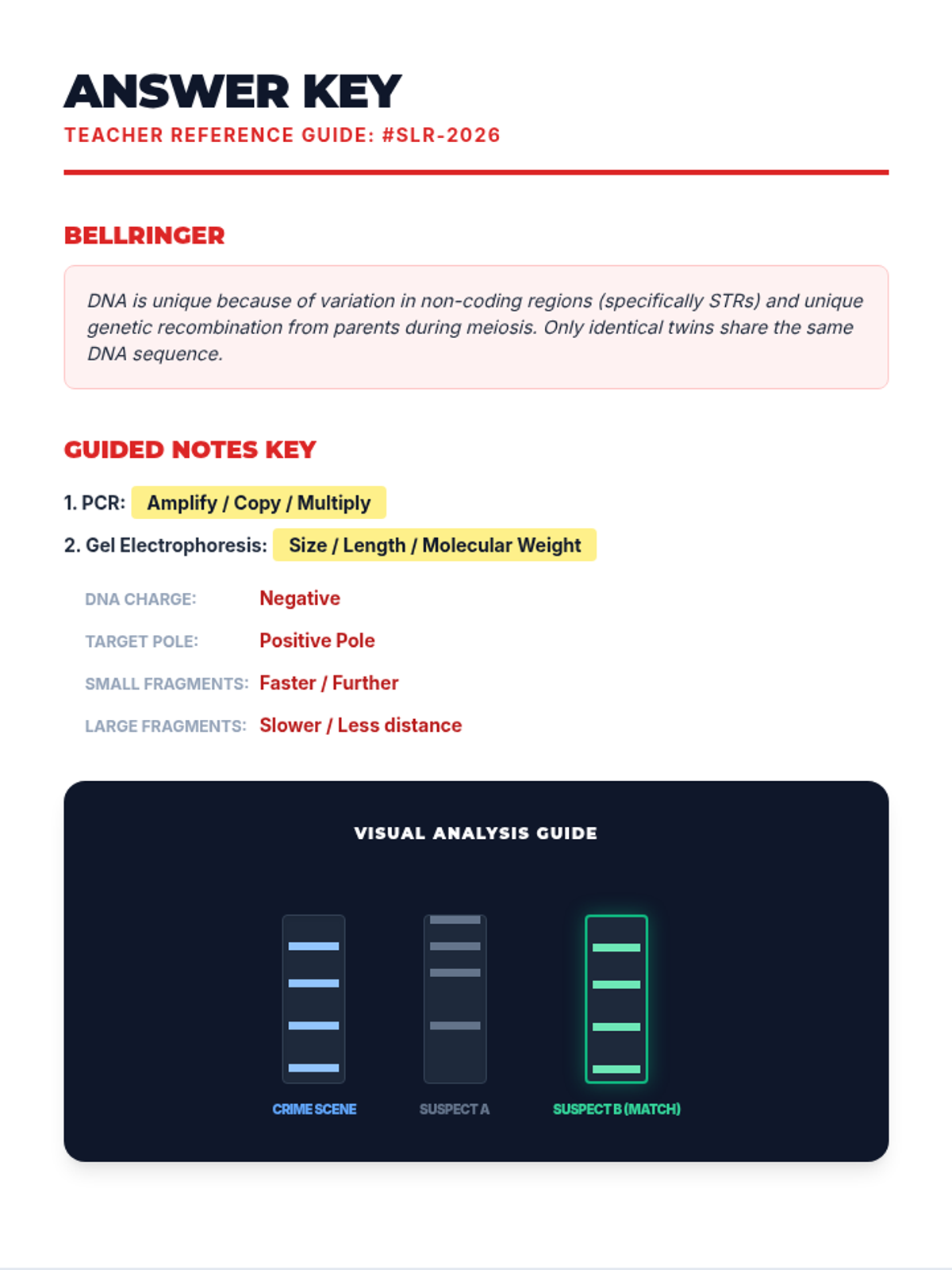
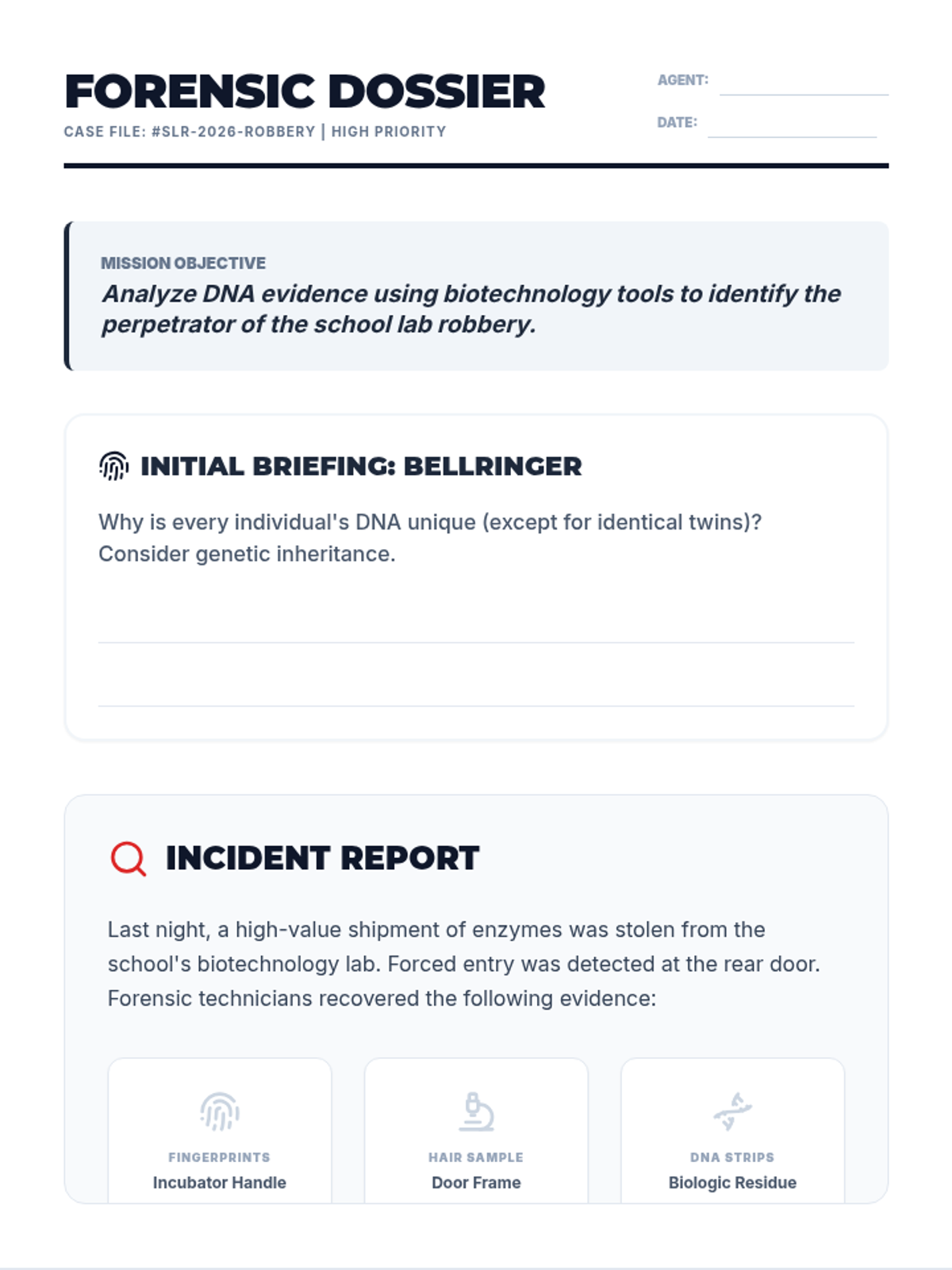
A 2-page answer key for the Biotech Detectives lesson. Provides correct answers for the bellringer, guided notes, suspect DNA comparison, independent practice questions, and a model CER response.
A 4-page student packet for a DNA technology and forensics lesson. Includes a case briefing, guided notes on PCR and gel electrophoresis, a parabolic movement graphing activity, a suspect DNA comparison, independent practice questions, and a CER final verdict section.
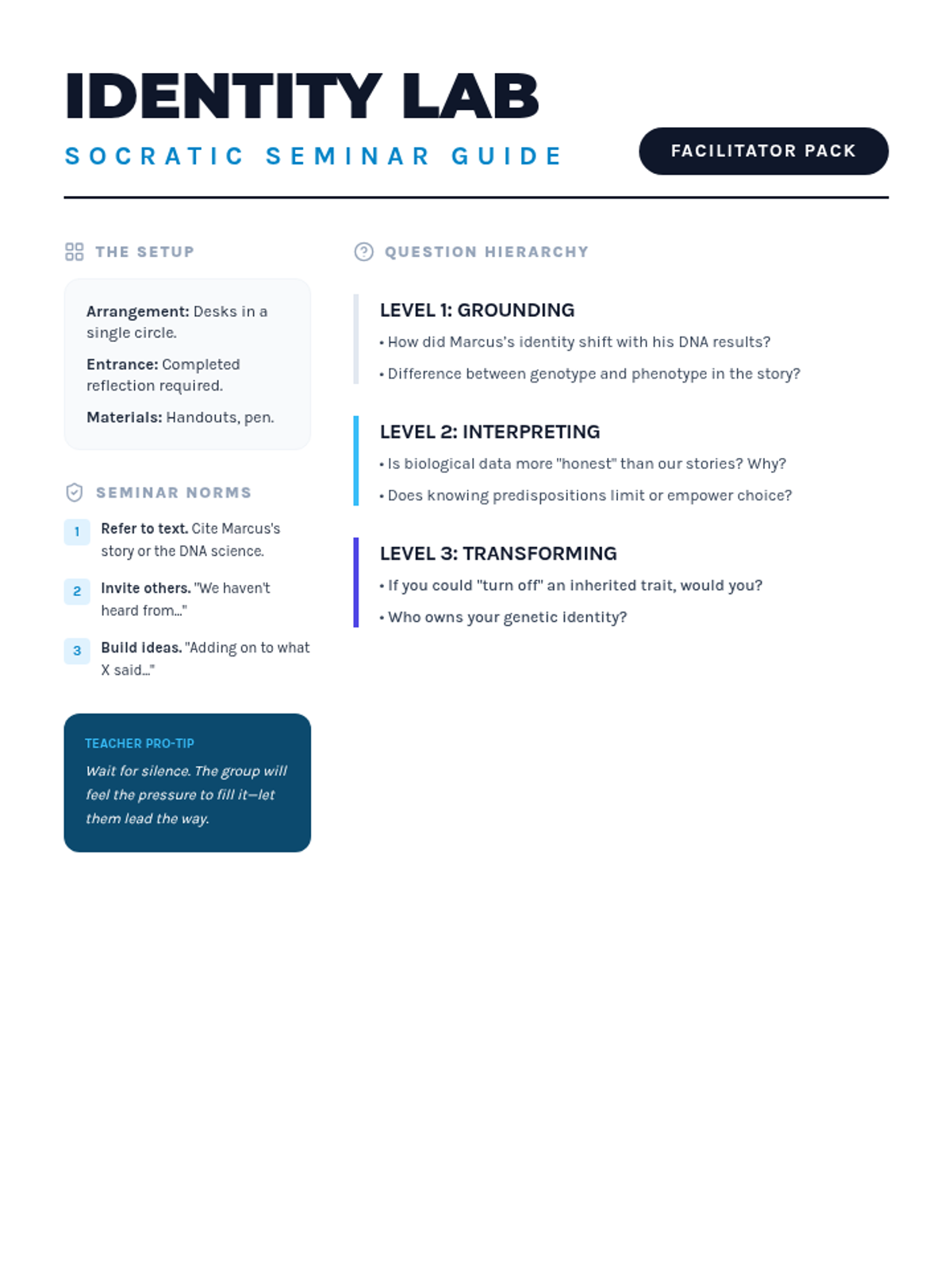
A teacher facilitation guide for a Socratic seminar focusing on DNA and Identity. Revised to fix page breaks, consolidate content, and expand the observation tracker to 25 student rows. Layout highly optimized for single-page use.
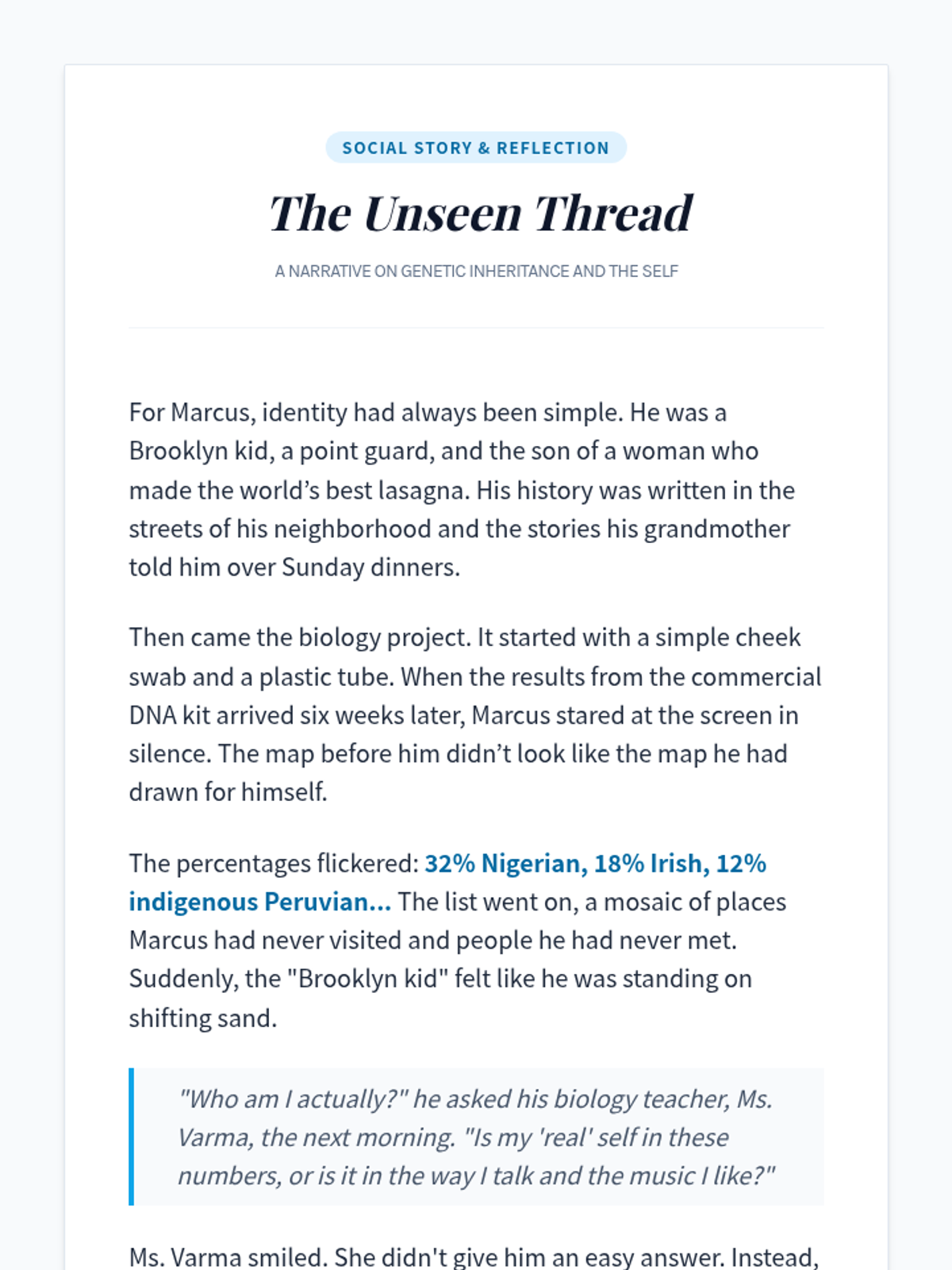
A reflective social story about a student discovering their genetic ancestry and grappling with the meaning of identity. Revised to fix page breaks, increase student work space, and improve label accessibility.
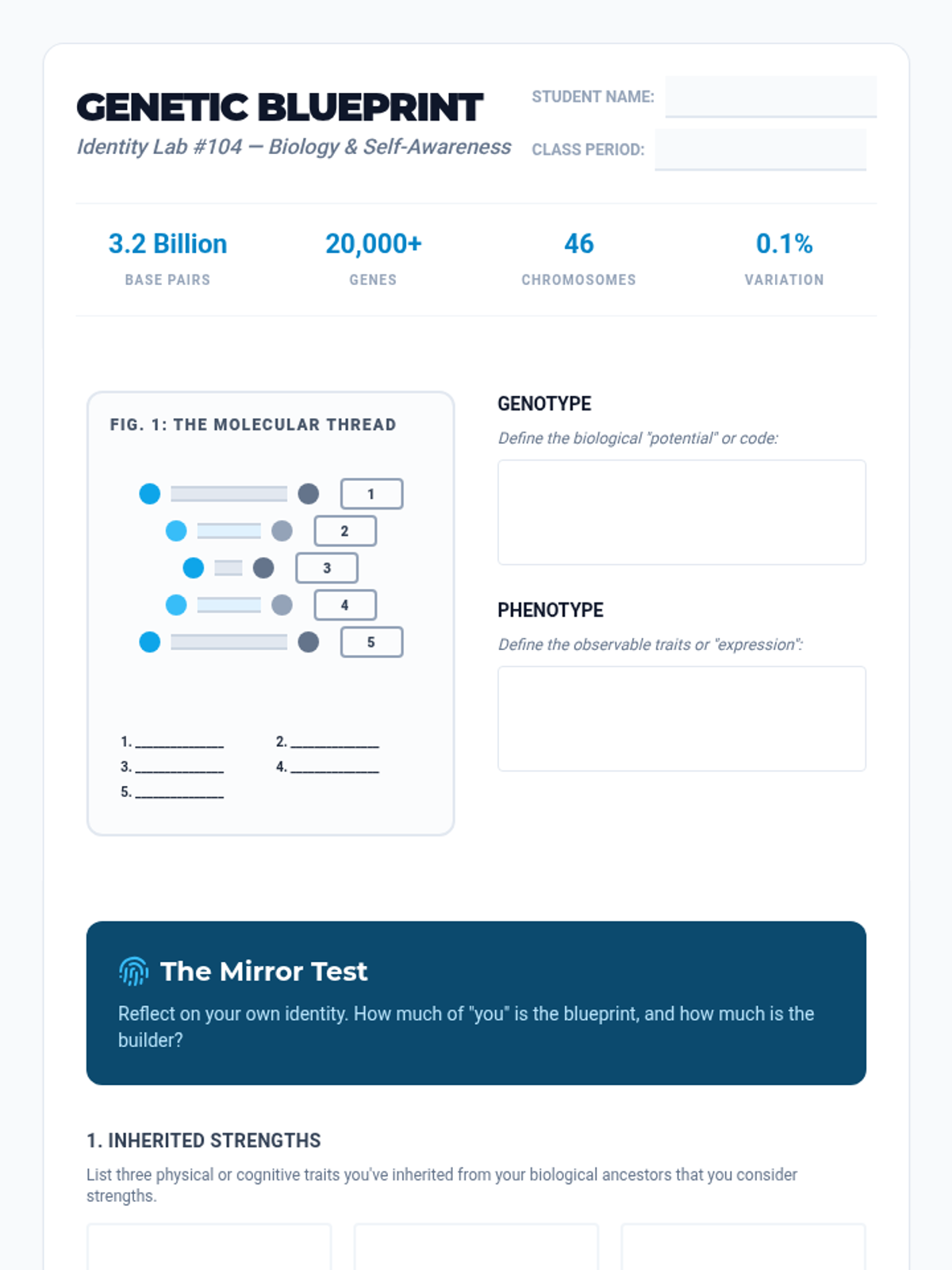
A visual guided notes worksheet that balances scientific diagrams of DNA with SEL reflection questions. Students label the structure of DNA while analyzing their own inherited and environmental traits. Revised with improved diagram, 5-label key, and white work areas.
A high-impact slide deck for teaching DNA through the lens of identity. Features visuals on genomic similarity, epigenetics, and the 'Bio-Mirror' reflection prompt. Includes guidelines for the Socratic seminar.
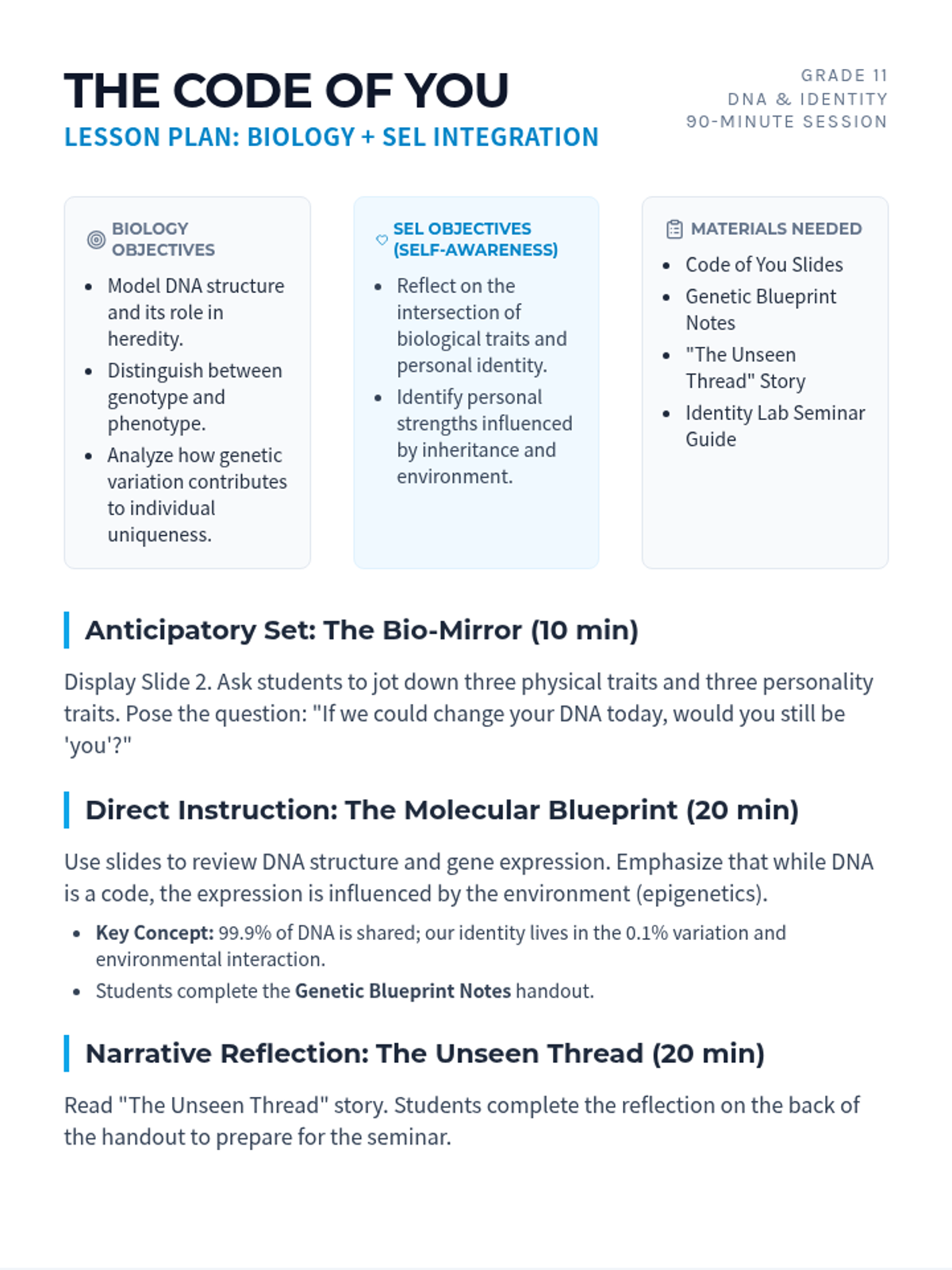
A comprehensive 90-minute lesson plan integrating Biology (DNA structure/heredity) and SEL (Self-Awareness/Identity). Revised to fix page breaks and include Exit Ticket work area. Content condensed to fit on 2 pages.
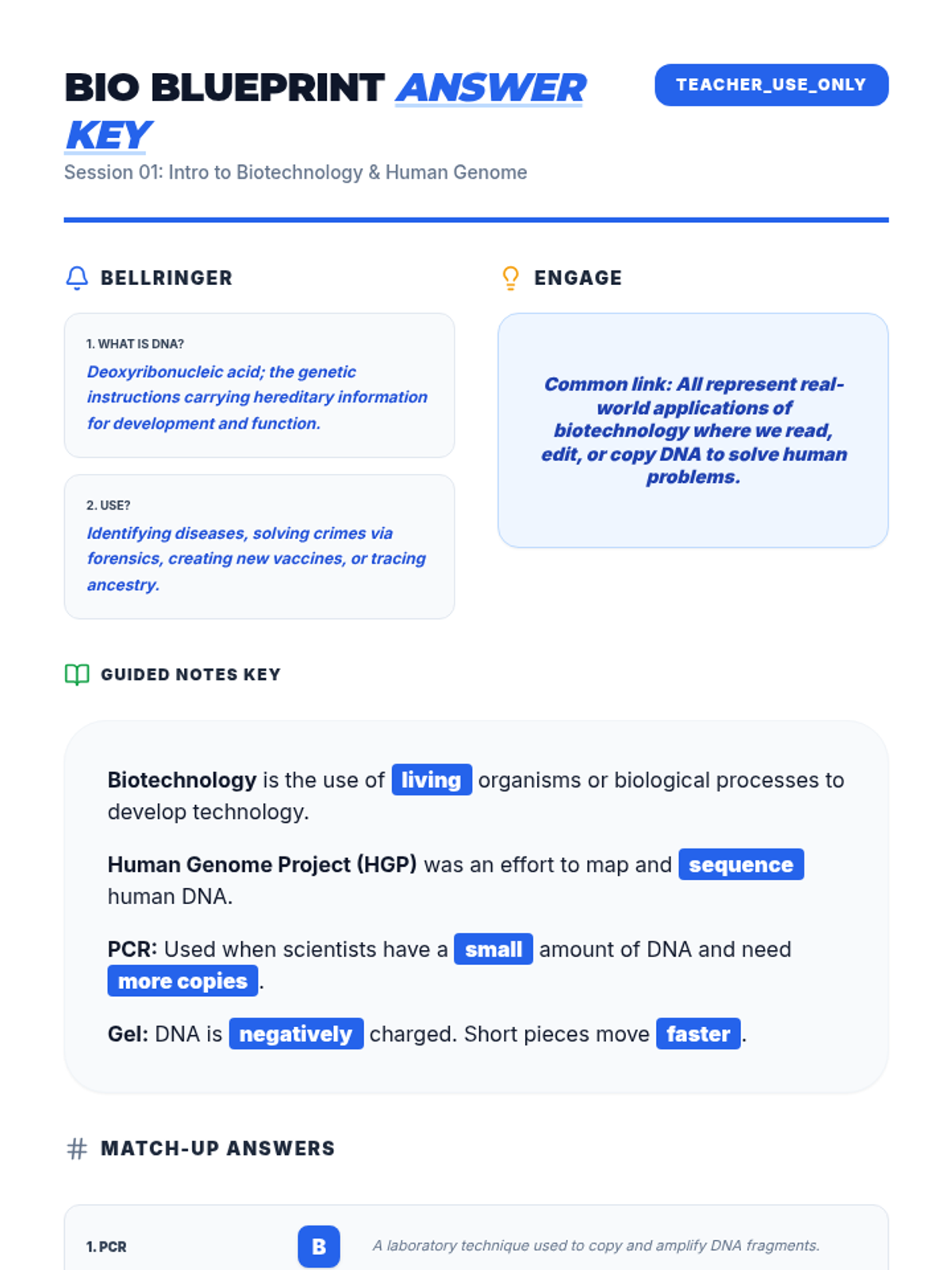
A comprehensive answer key for the Bio Blueprint worksheet, featuring filled-in guided notes, correct vocabulary matches, a completed timeline, and exemplar responses, now with a light-themed exit ticket for consistency. Vertical alignment and page utilization improved.
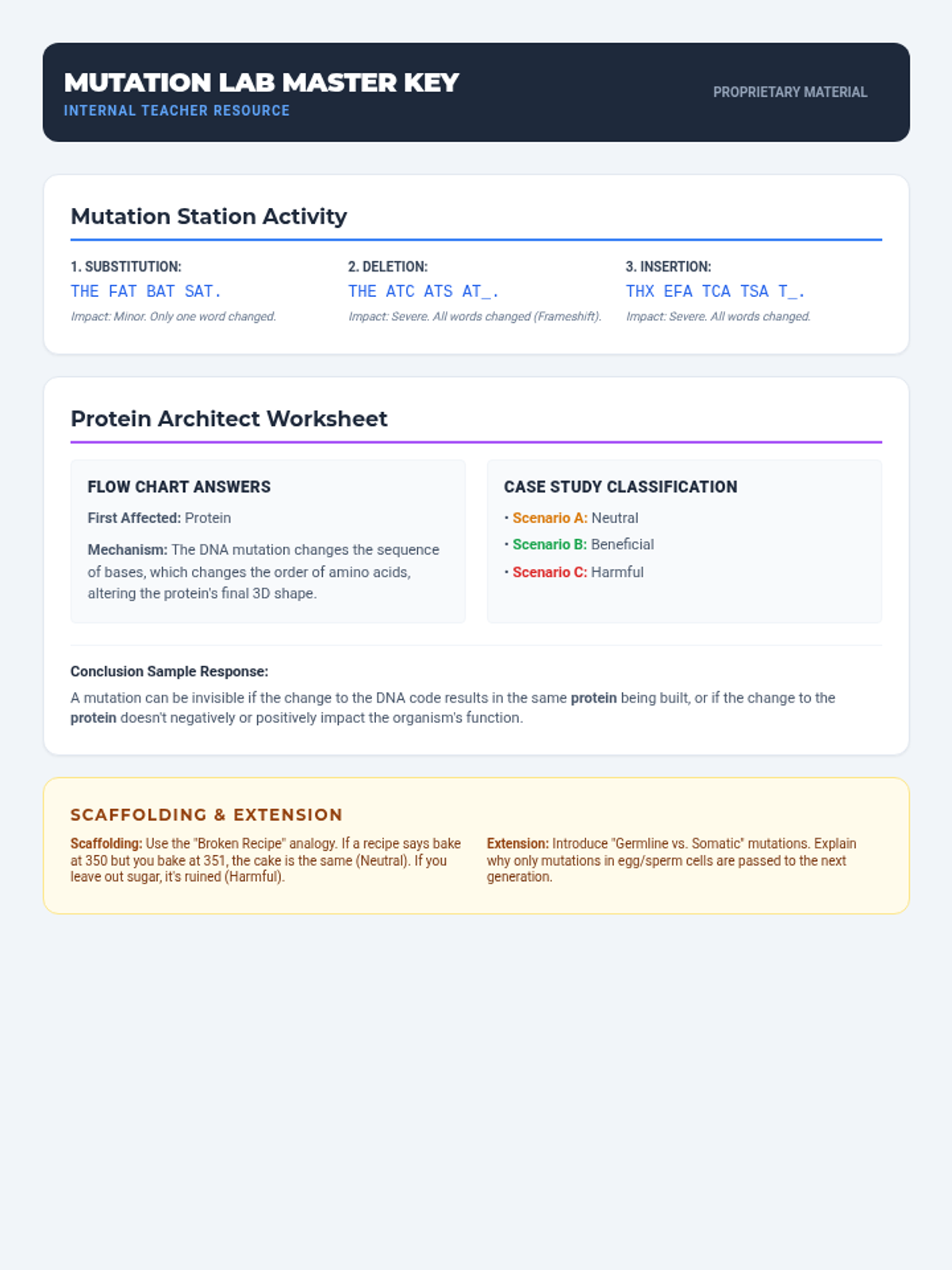
A teacher's answer key and grading guide for all materials in the Mutation Lab lesson, including specific student response examples and scaffolding tips.
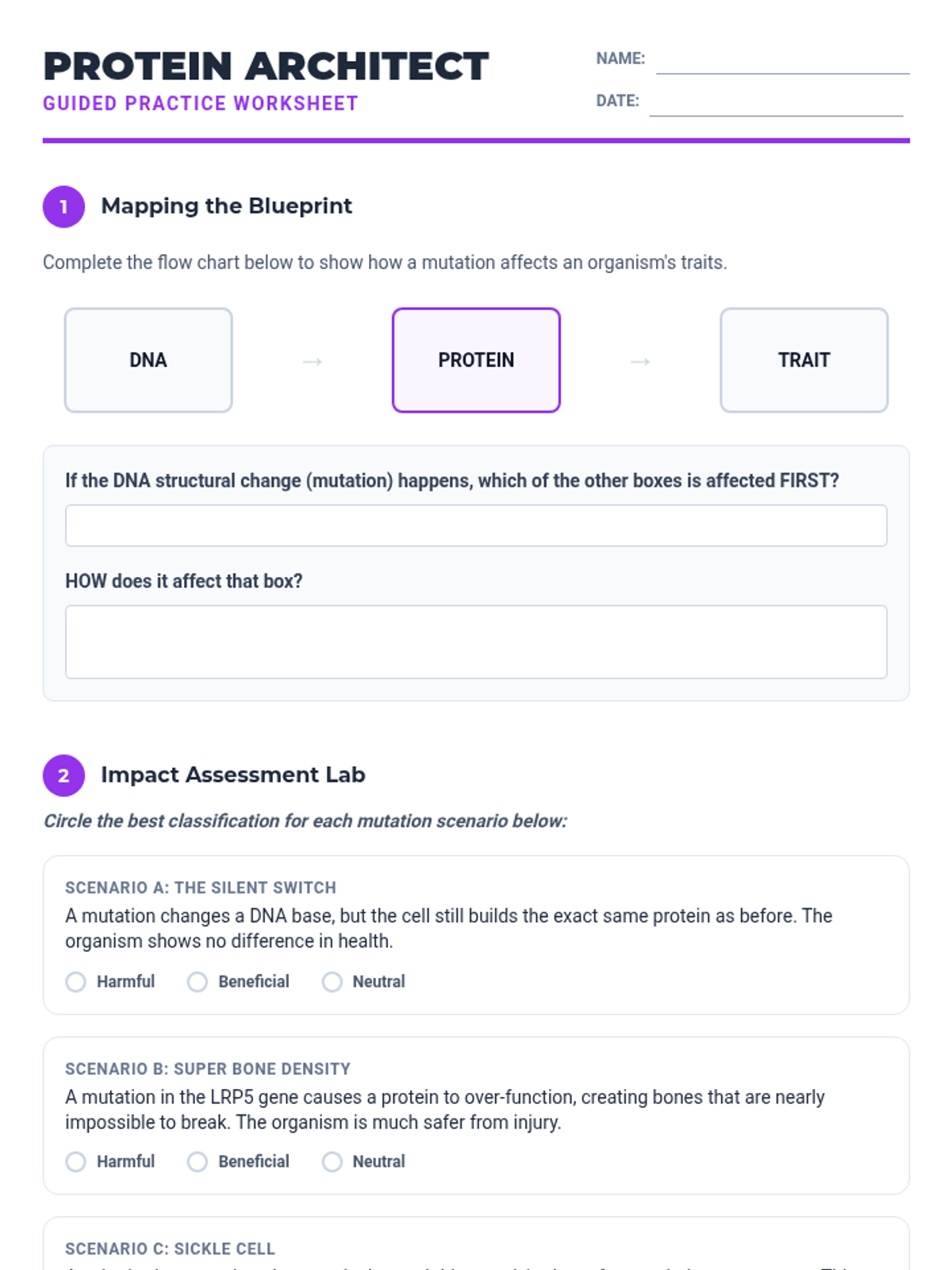
A guided practice worksheet focusing on modeling the flow of genetic information and categorizing real-world mutation examples as harmful, beneficial, or neutral.
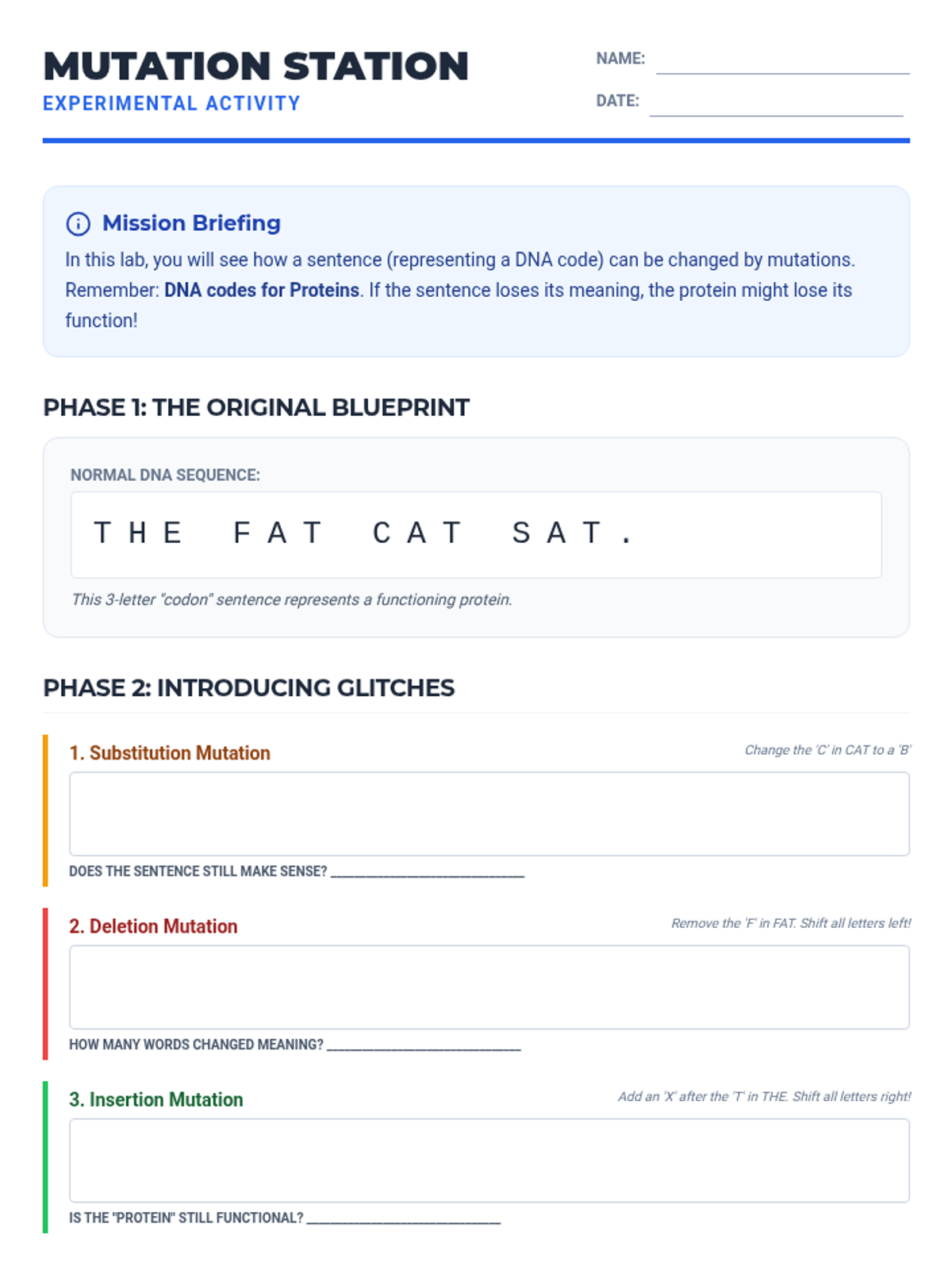
A hands-on student activity worksheet using sentence analogies to model substitution, deletion, and insertion mutations and their effects on protein "meaning."
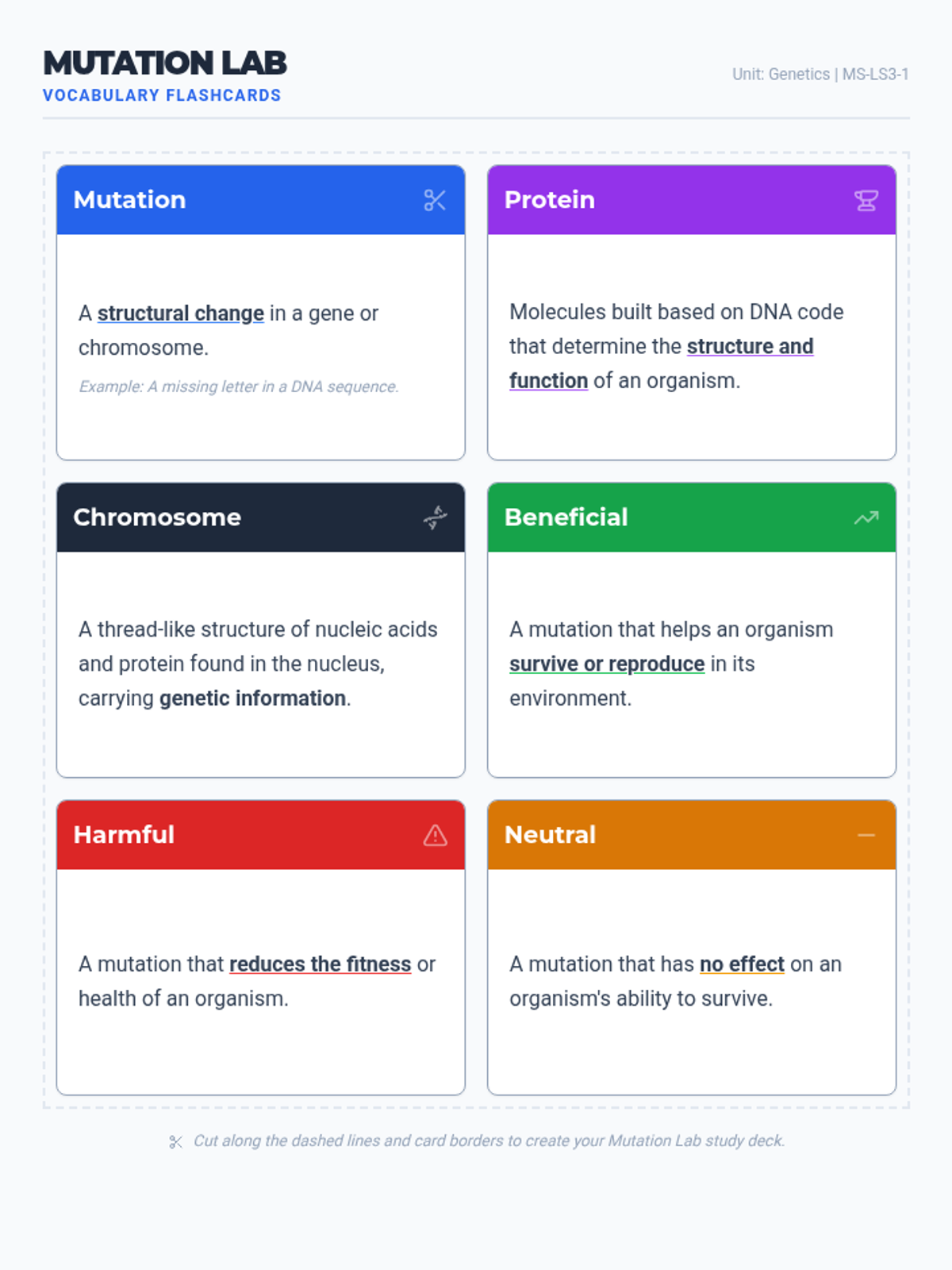
A set of six essential vocabulary cards for the Mutation Lab lesson, featuring clear definitions and visual icons for key genetic terms.
A visually engaging slide deck for 8th-grade science, explaining the relationship between DNA, proteins, and traits, and how mutations impact organism structure and function.
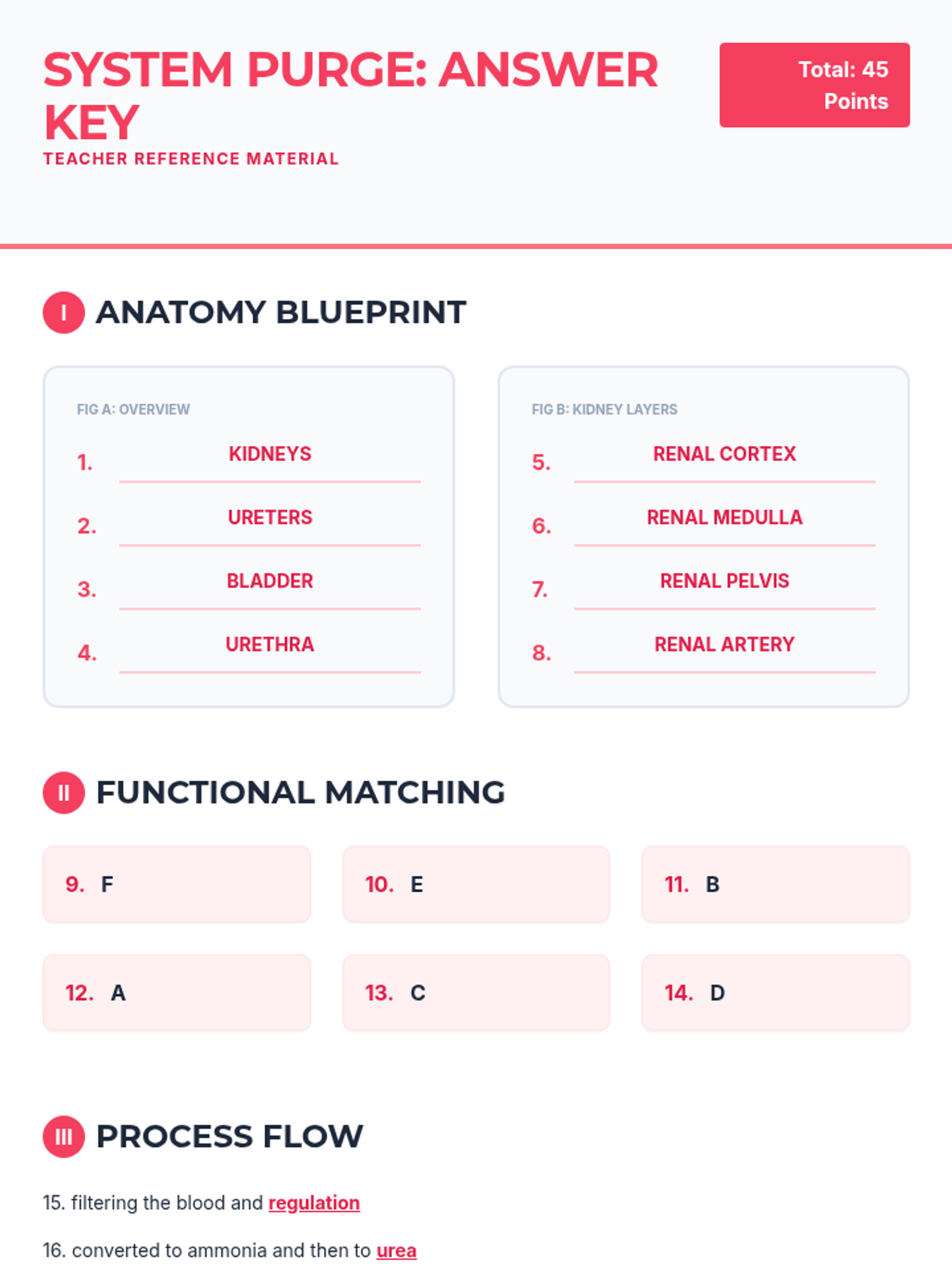
An answer key for the Urinary System Review Worksheet, providing correct answers for all 45 questions. Revised to ensure correct numbering and professional formatting.
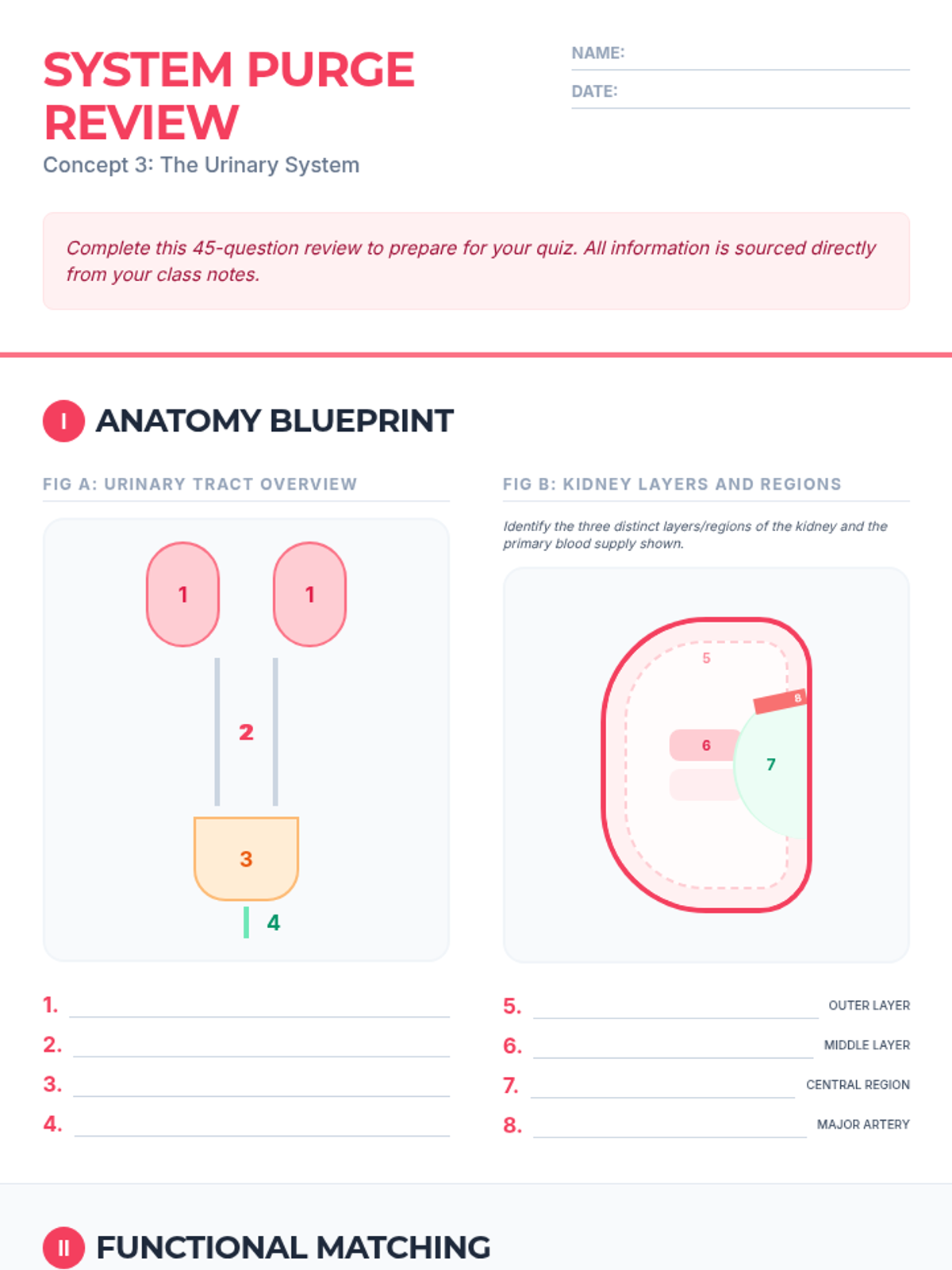
A comprehensive 45-question review worksheet for the urinary system, covering anatomy, nephron function, and regulation. Revised Figure B to specifically focus on identifying the three layers of the kidney.
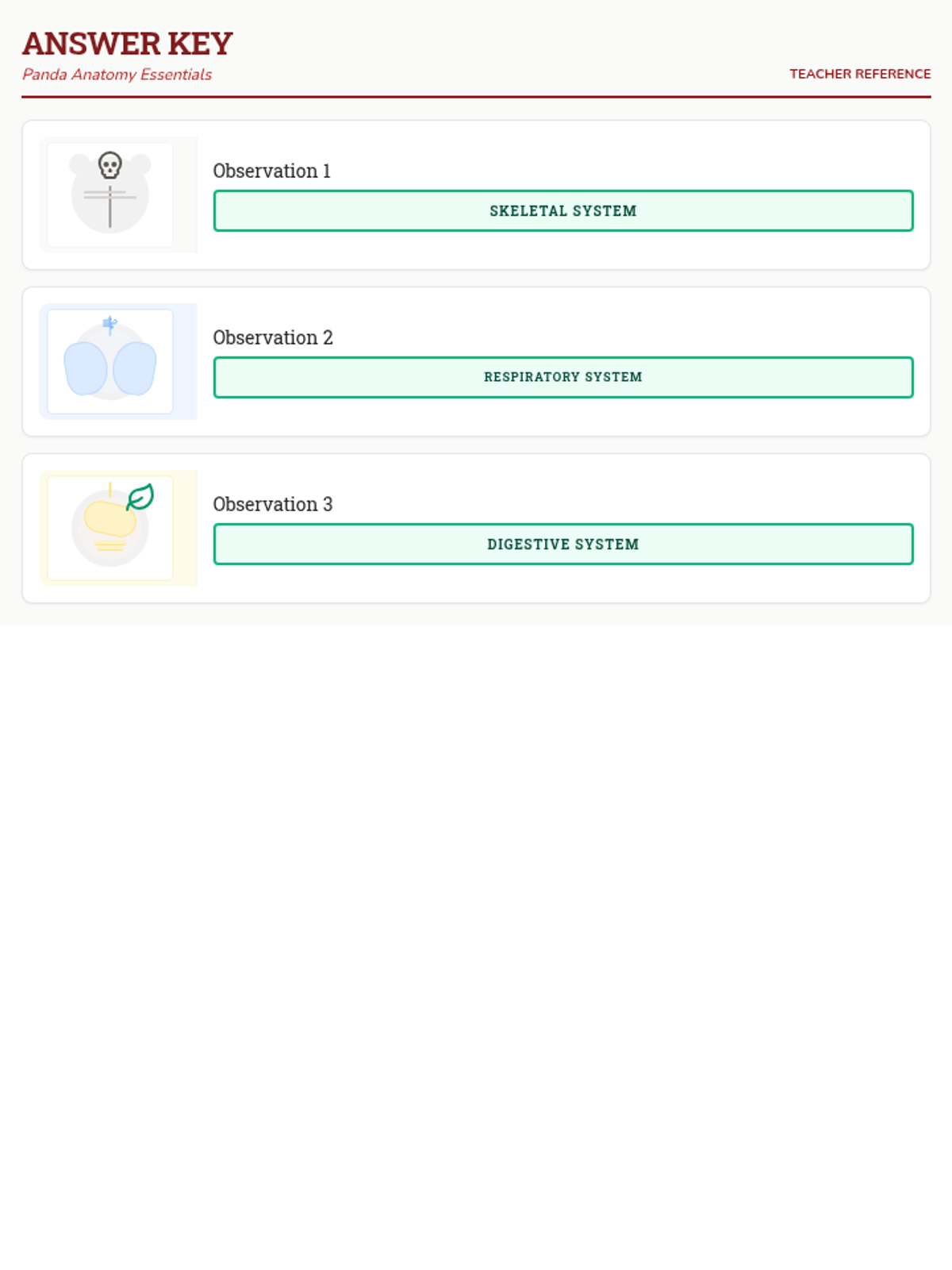
A completed version of the Panda Systems worksheet for teacher reference, showing the correct placement of all labels with matched visual diagrams.
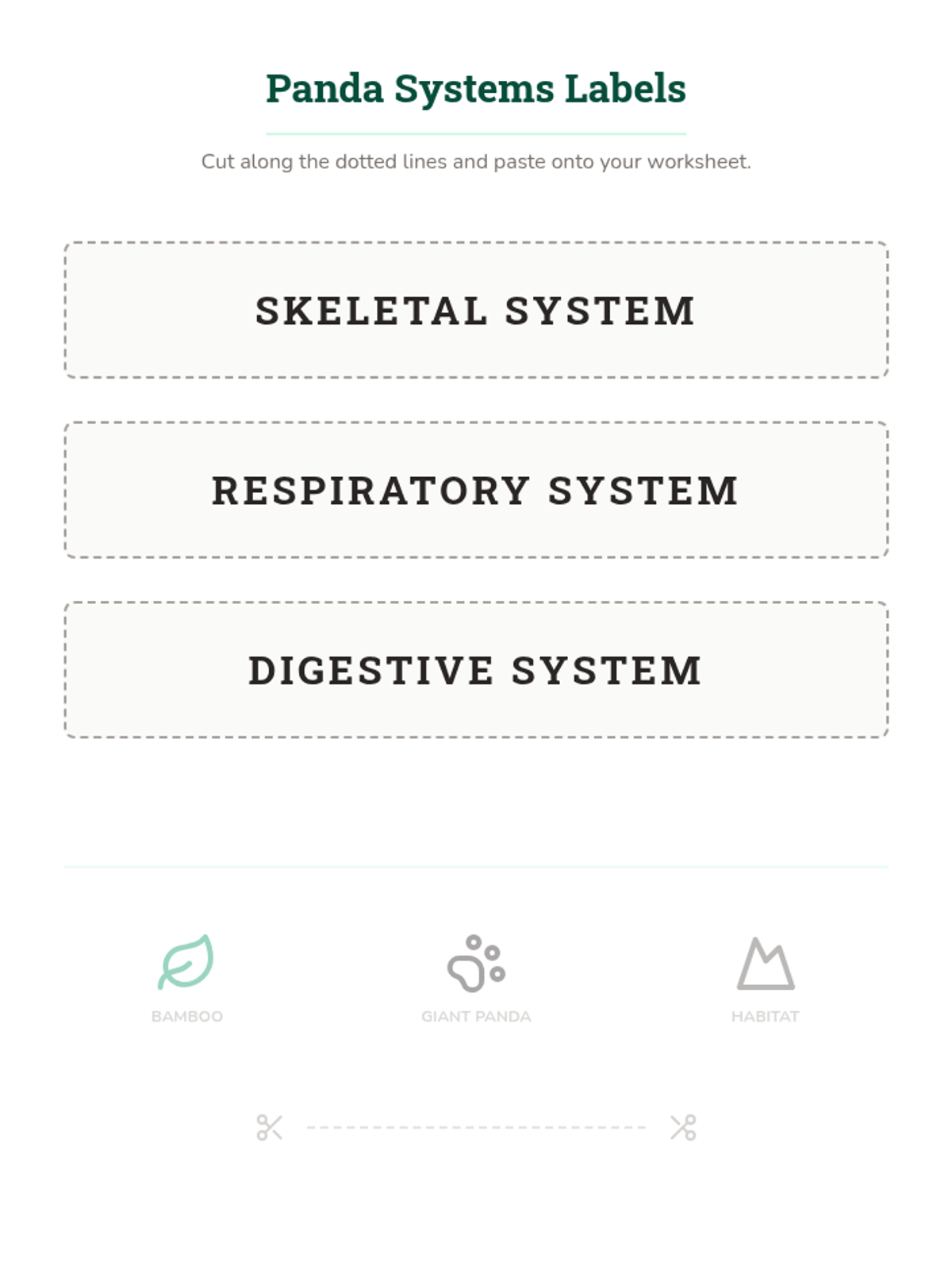
A set of large, clear labels for the skeletal, respiratory, and digestive systems designed for cutting and pasting onto the primary worksheet.
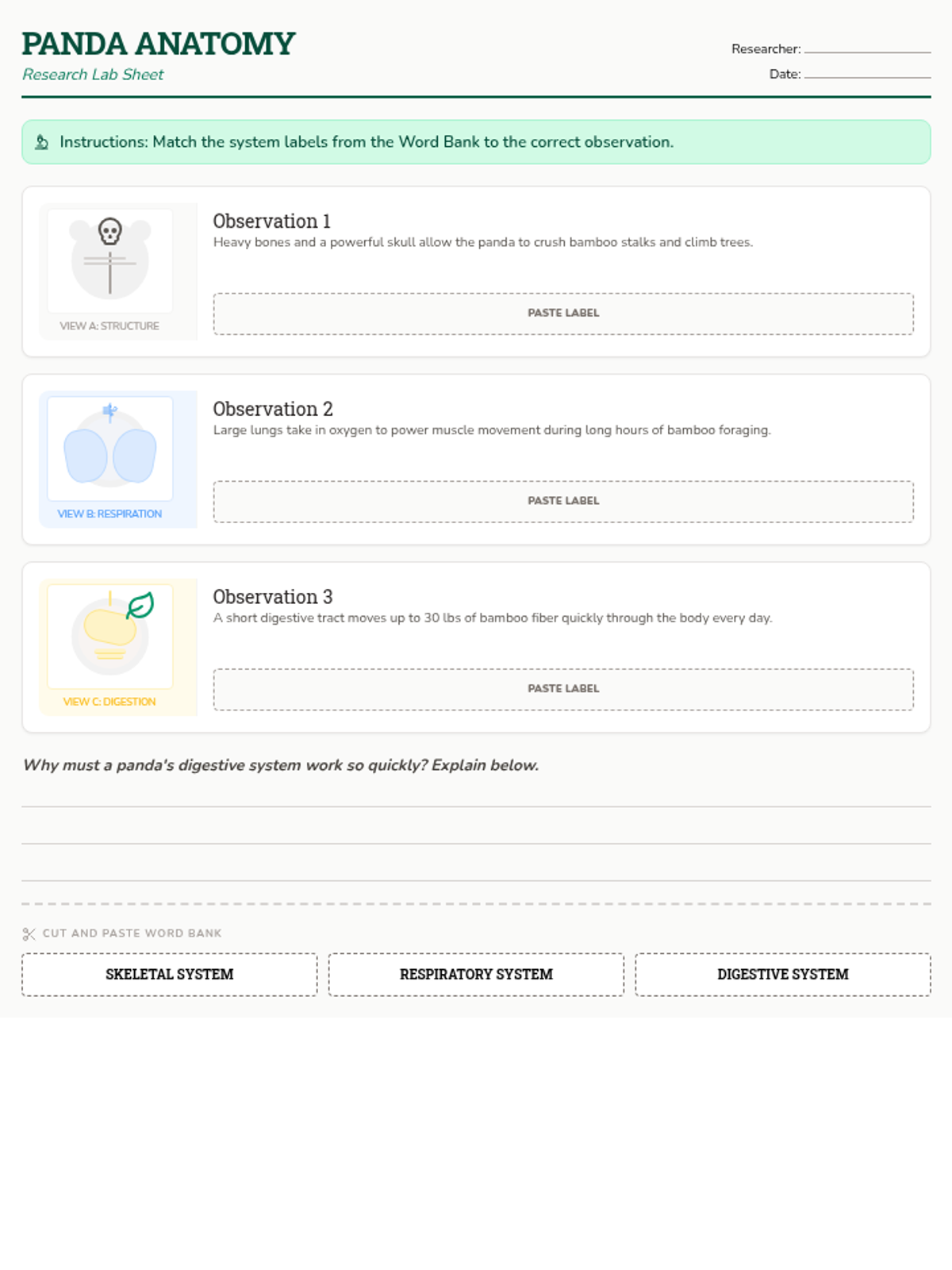
A field-research style worksheet where students identify and label the skeletal, respiratory, and digestive systems of a panda using descriptive clues and stylized internal diagrams, including a built-in cut-and-paste word bank.
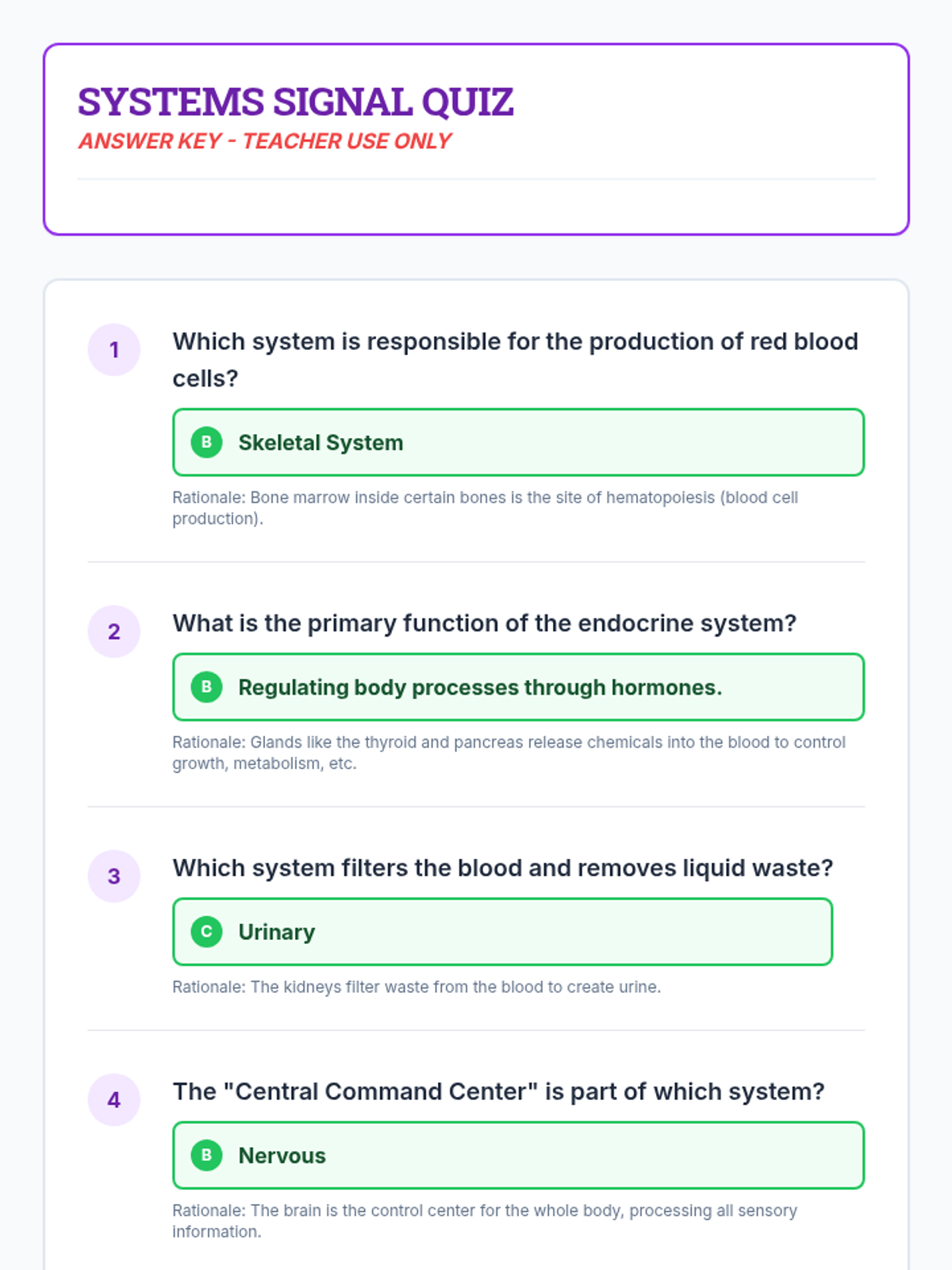
The answer key for the Systems Signal quiz, providing correct answers and rationales for all questions. Revised for consistent teacher guidance and better page flow.
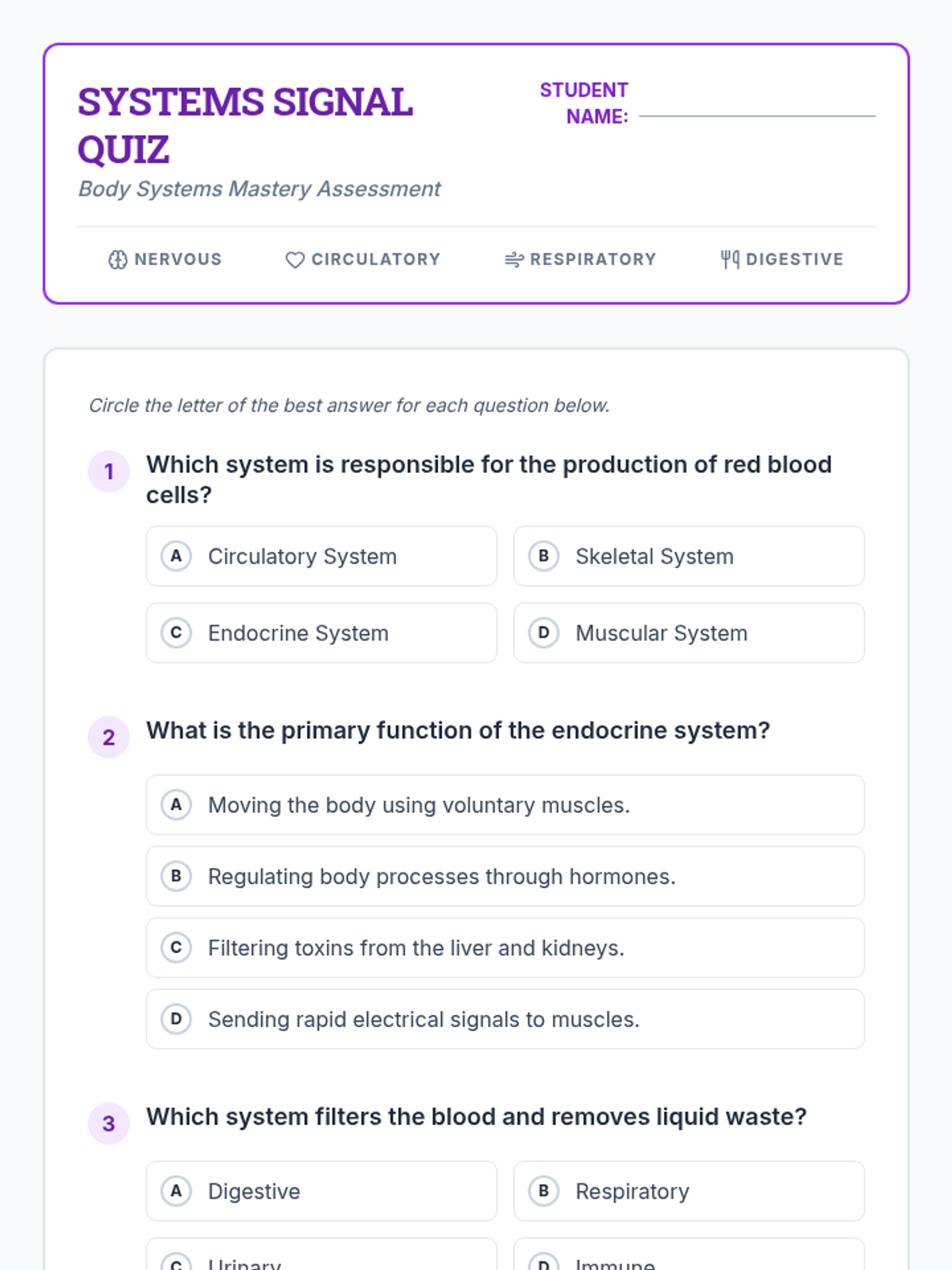
A multiple-choice quiz covering key concepts, organs, and system interactions within the human body. Revised for better page flow and work areas.
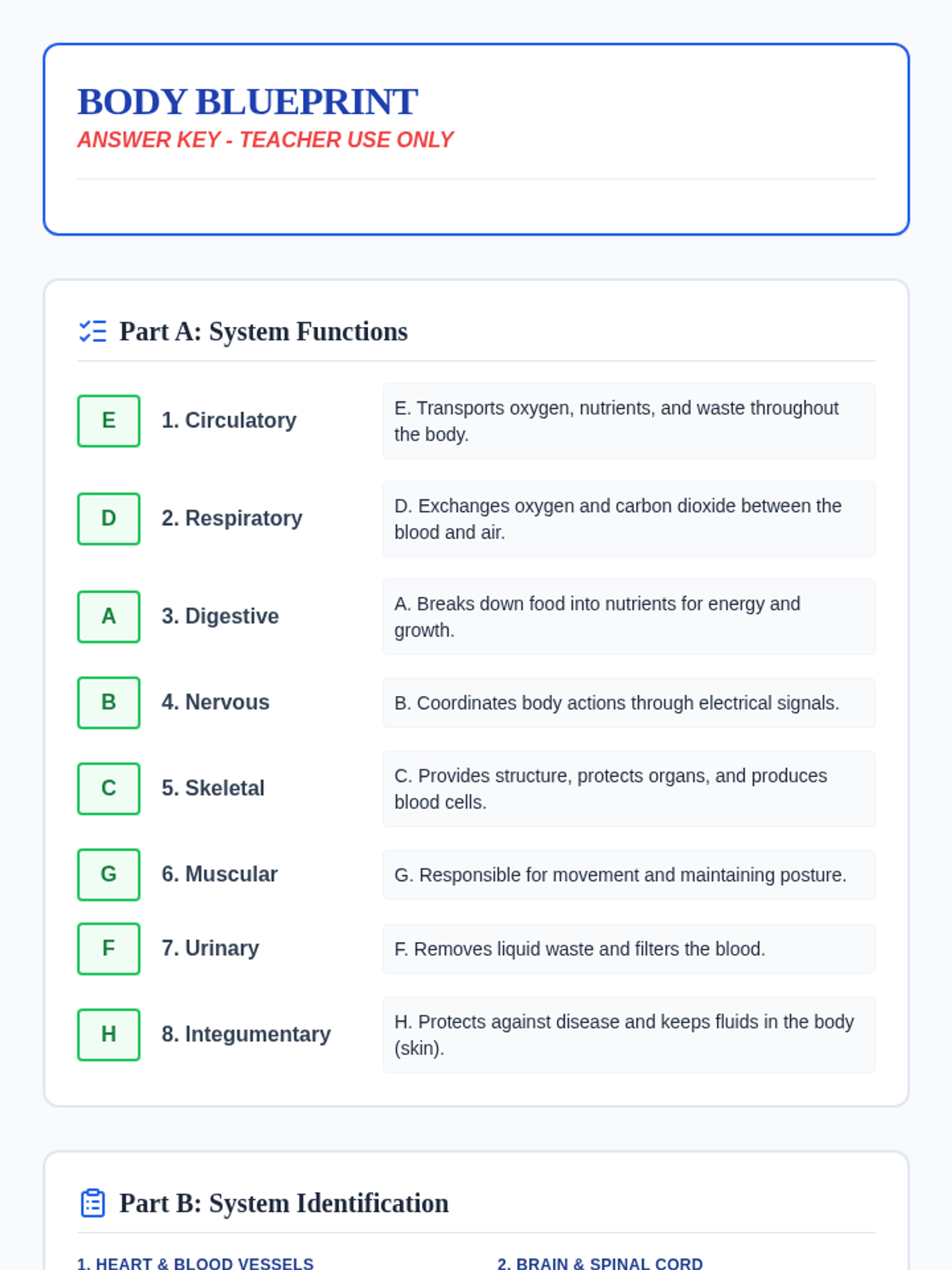
The answer key for the Body Blueprint worksheet, providing correct matches and identification for teacher use.
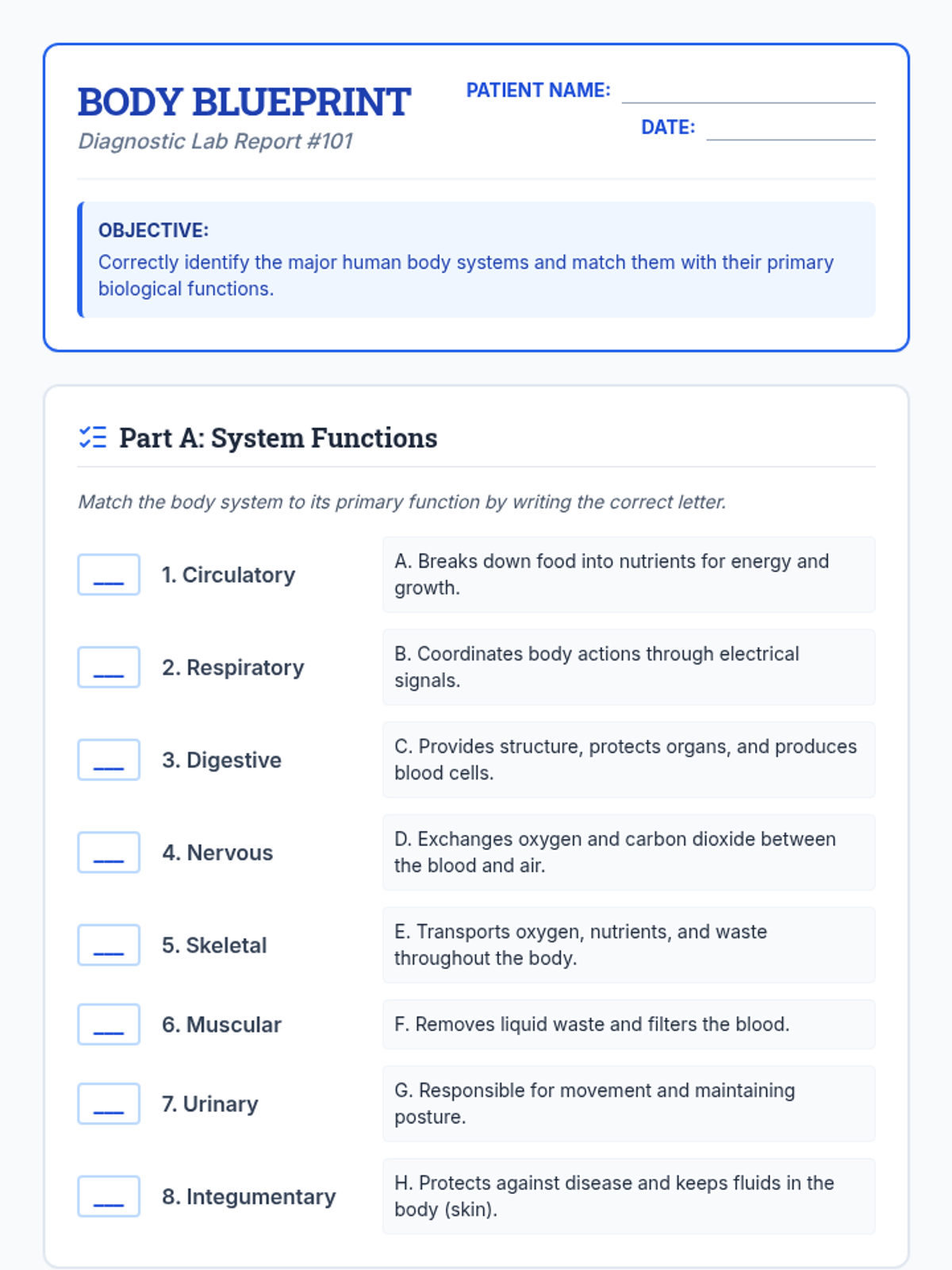
A labeling and matching worksheet for students to identify the functions and organs of major body systems. Revised for better page breaks and legible student work areas.
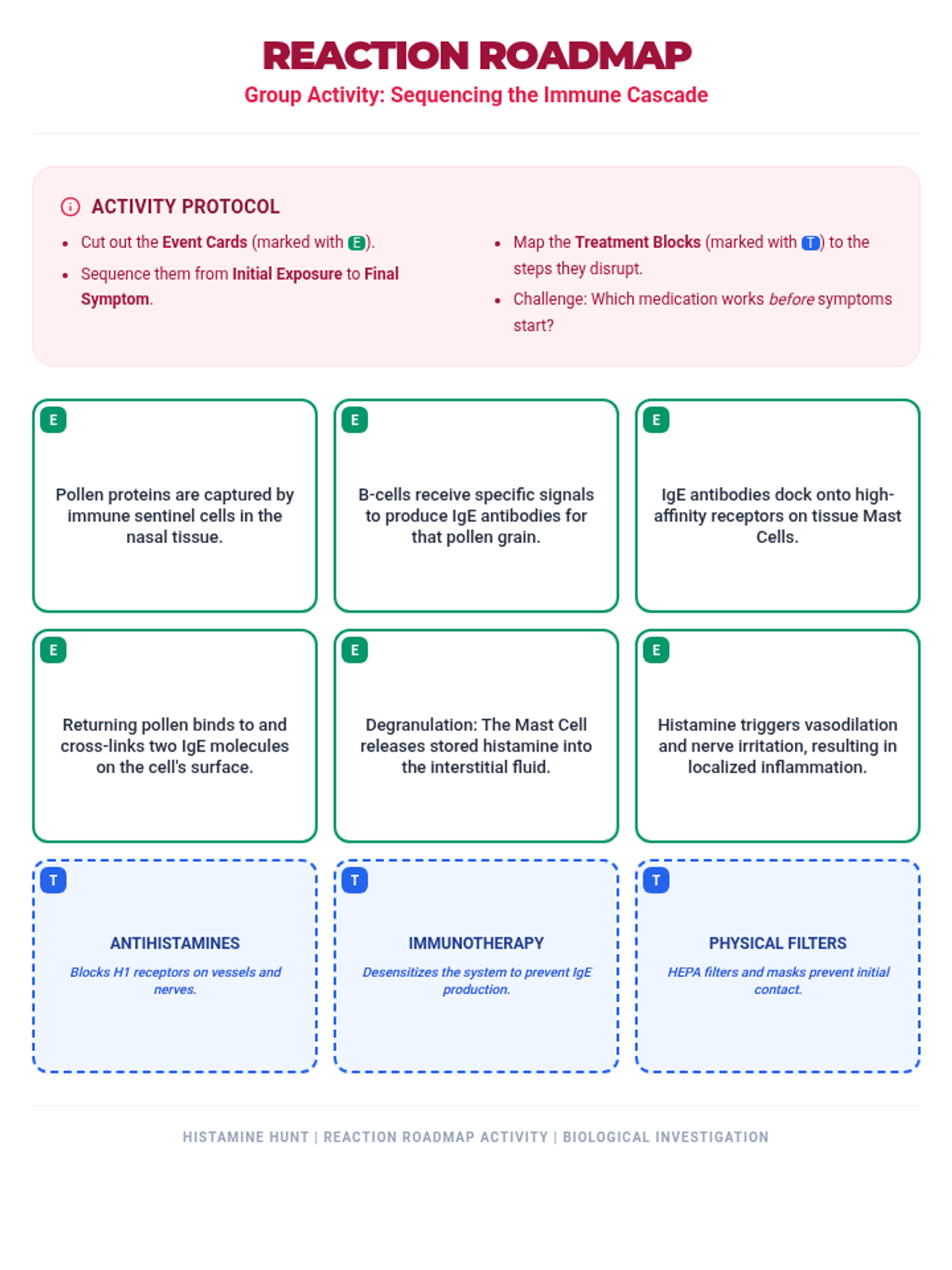
An interactive card-sorting activity where students sequence the stages of an allergic reaction and apply pharmacological treatments. Revised to fit on a single page with improved badge alignment and text wrapping.
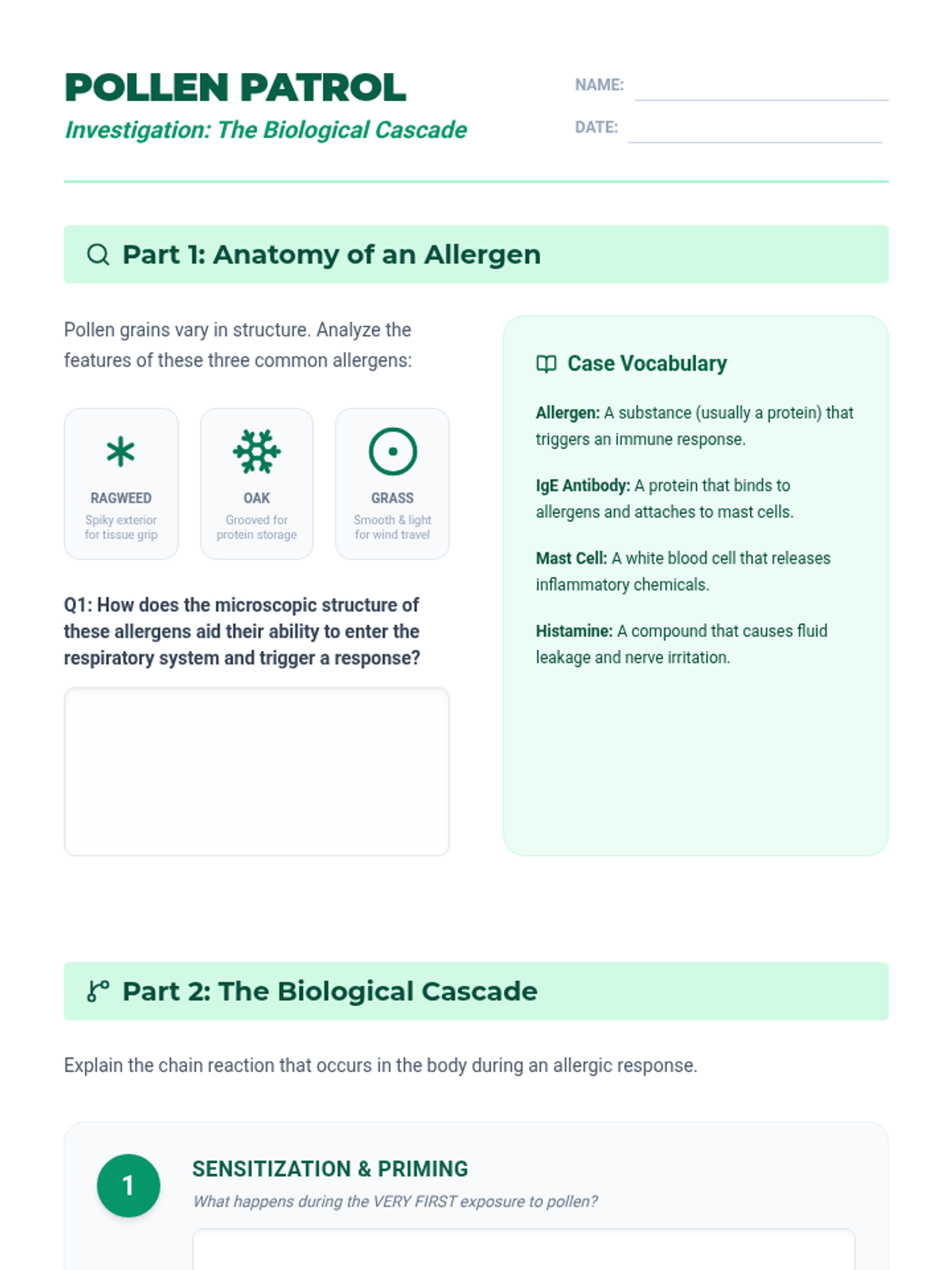
A student worksheet focusing on the anatomical structure of pollen, the flowchart of the allergic response, and the physiological mechanisms of histamine. Revised for better page breaks and larger work areas.
A high-impact slide deck for classroom instruction, covering the stages of an allergic reaction from sensitization to degranulation and management strategies. Revised with improved visuals and slide balance.
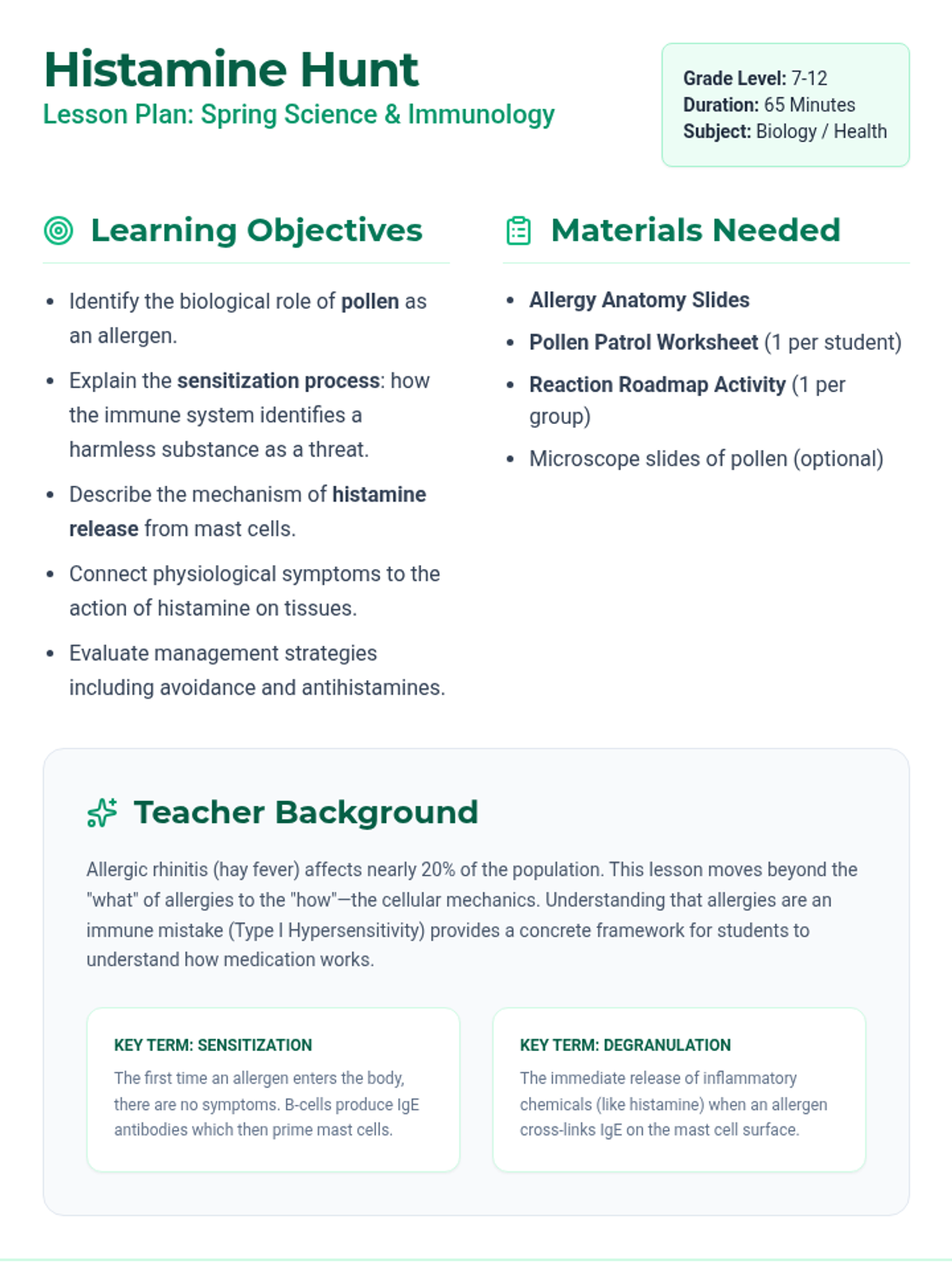
A detailed lesson plan for teachers, outlining the instructional sequence, learning objectives, and common student misconceptions regarding the biology of allergies. Revised for improved layout and content flow.
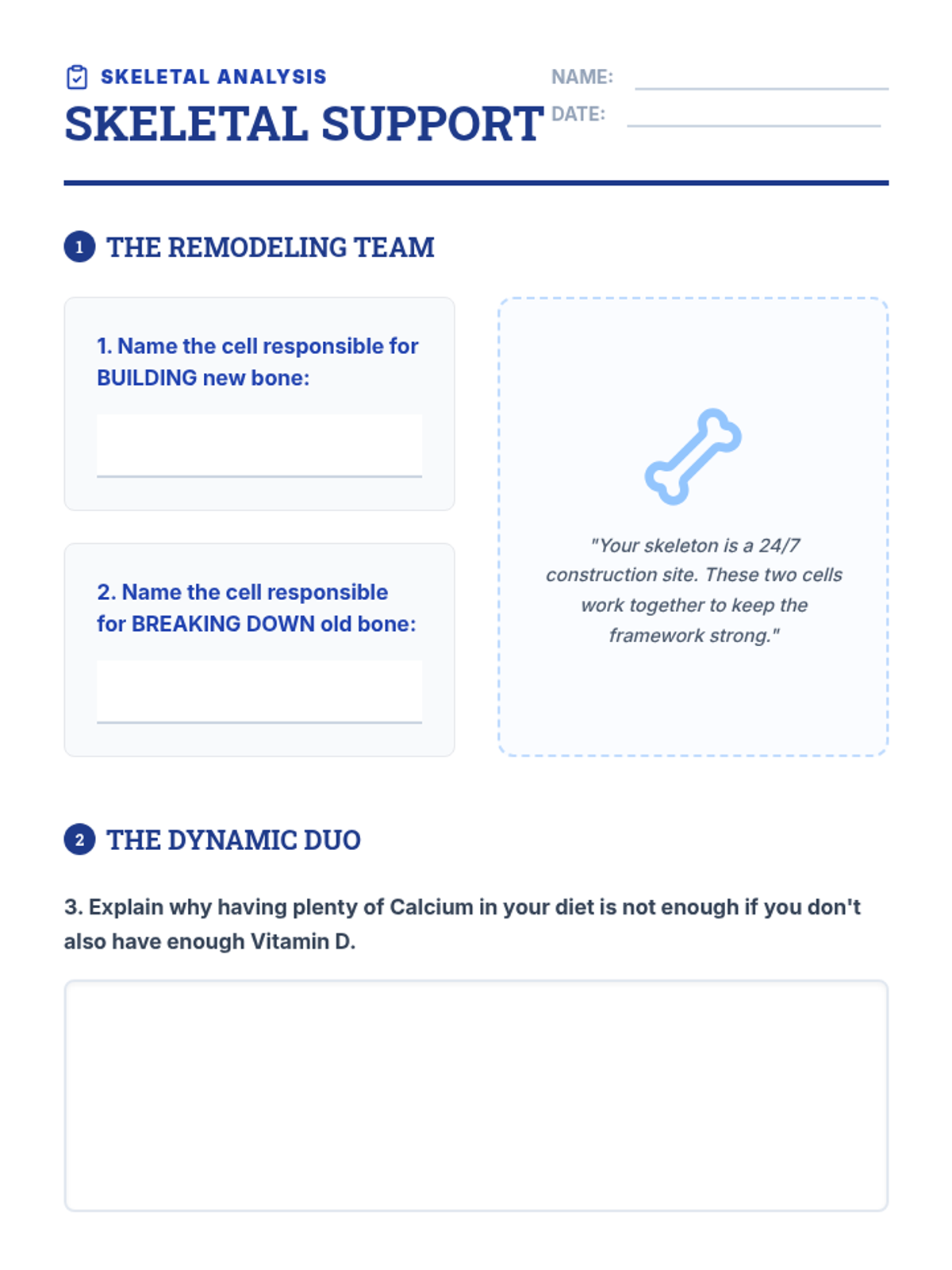
A assessment worksheet for students to demonstrate their understanding of bone remodeling cells, the importance of minerals, and the benefits of weight-bearing exercise.
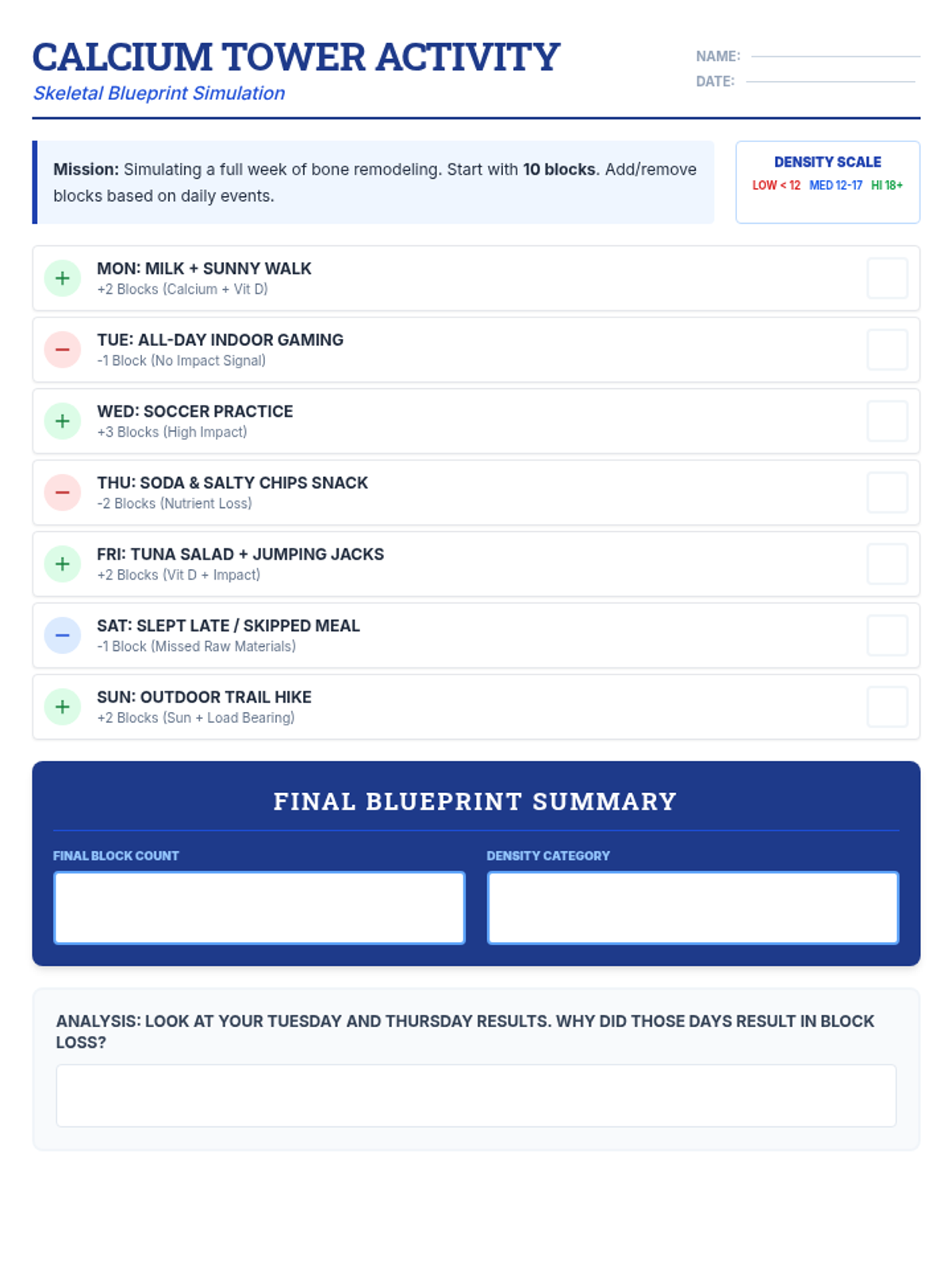
A hands-on activity where students use blocks to model bone growth and mineral loss based on lifestyle choices, simulating the building of peak bone mass.
Visual presentation for the Bone Base Blueprint lesson, covering the biological construction crew (osteoblasts and osteoclasts), the role of minerals, and the concept of peak bone mass.
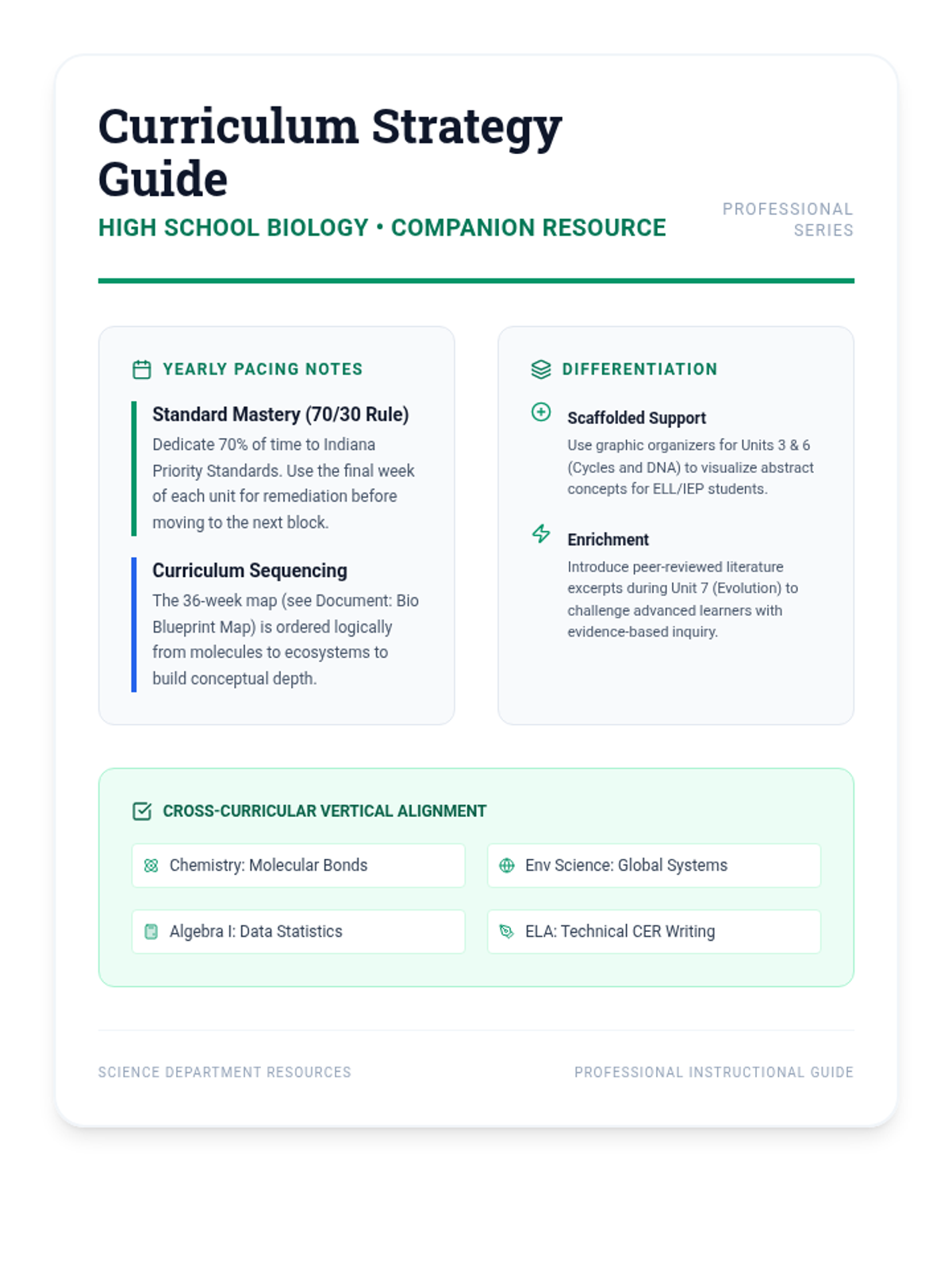
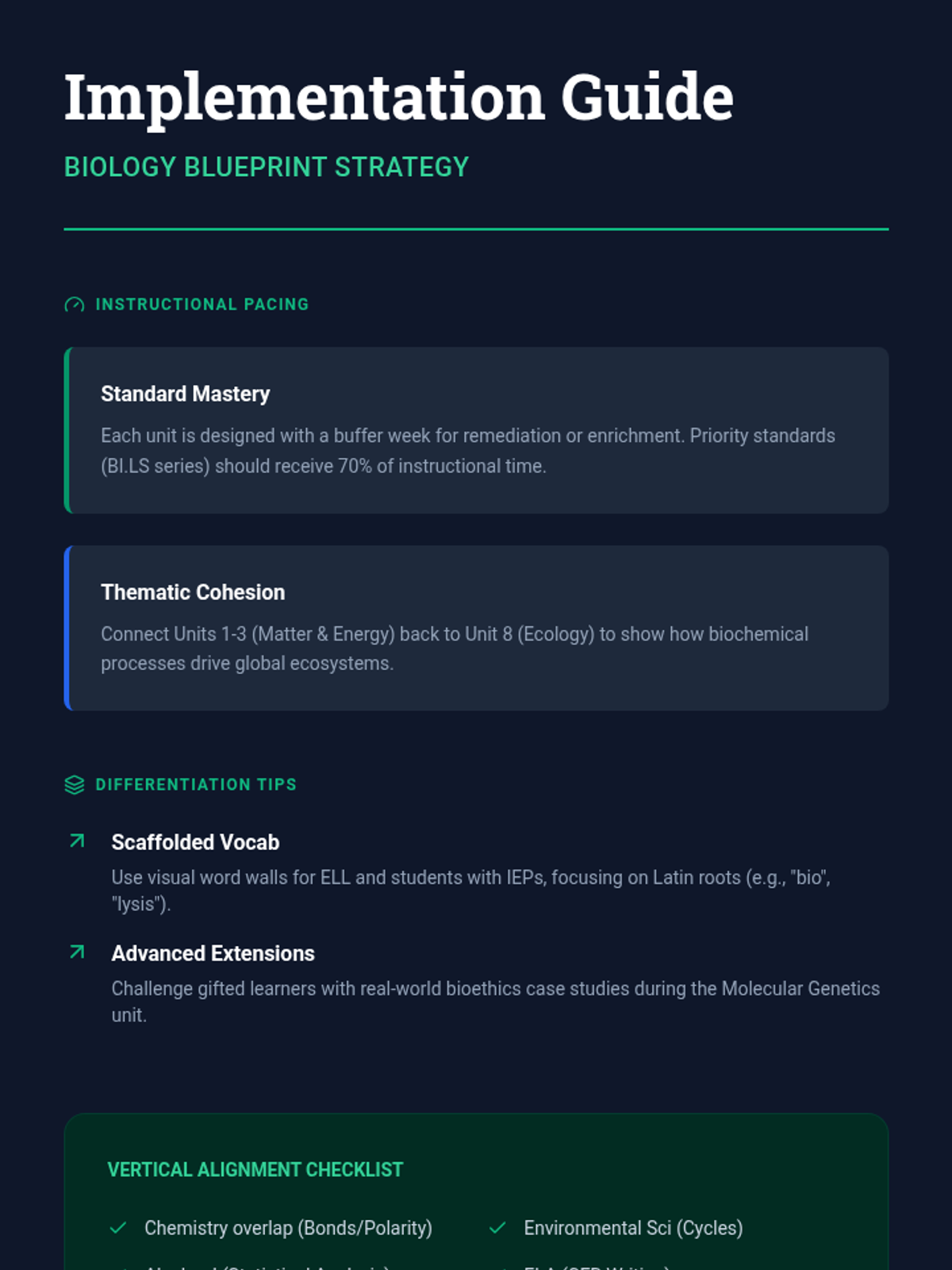
A professional, single-page implementation guide for biology teachers, providing pacing tips, differentiation strategies, and vertical alignment goals to support the 36-week curriculum map.
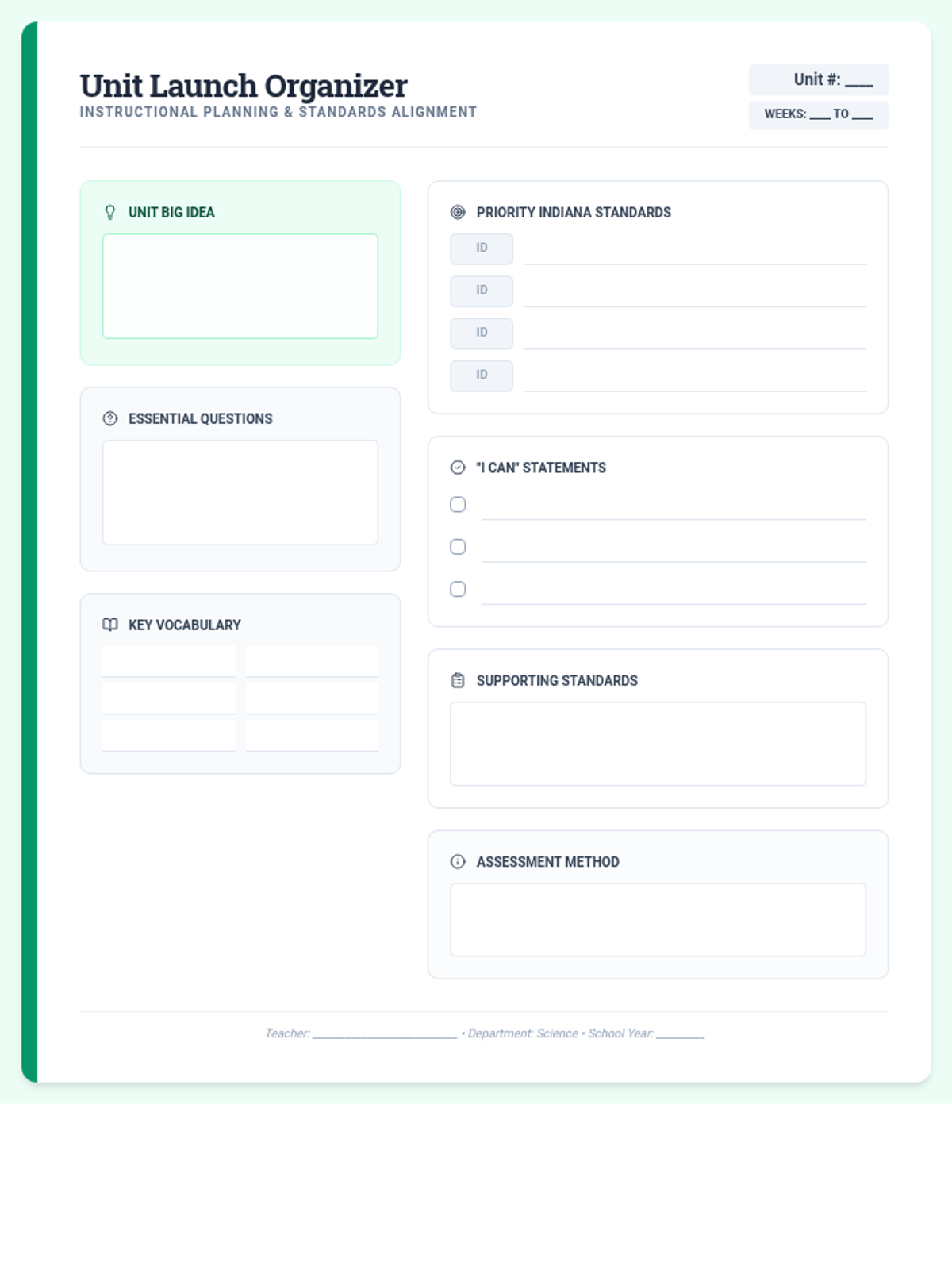
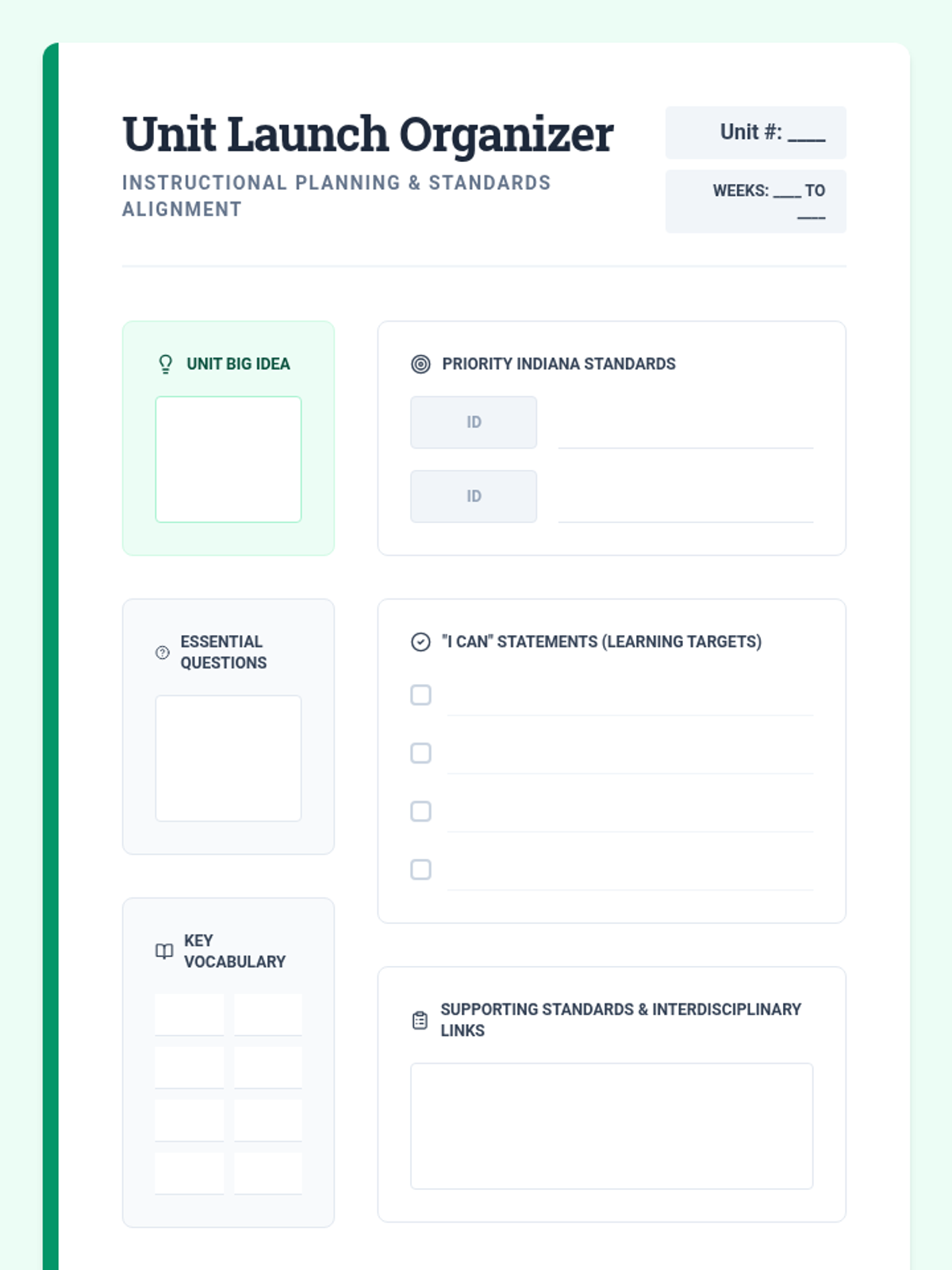
A teacher-facing unit launch template designed for zooming into specific biology units, featuring work areas for standards, essential questions, "I Can" statements, and vocabulary. Optimized for single-page printing.
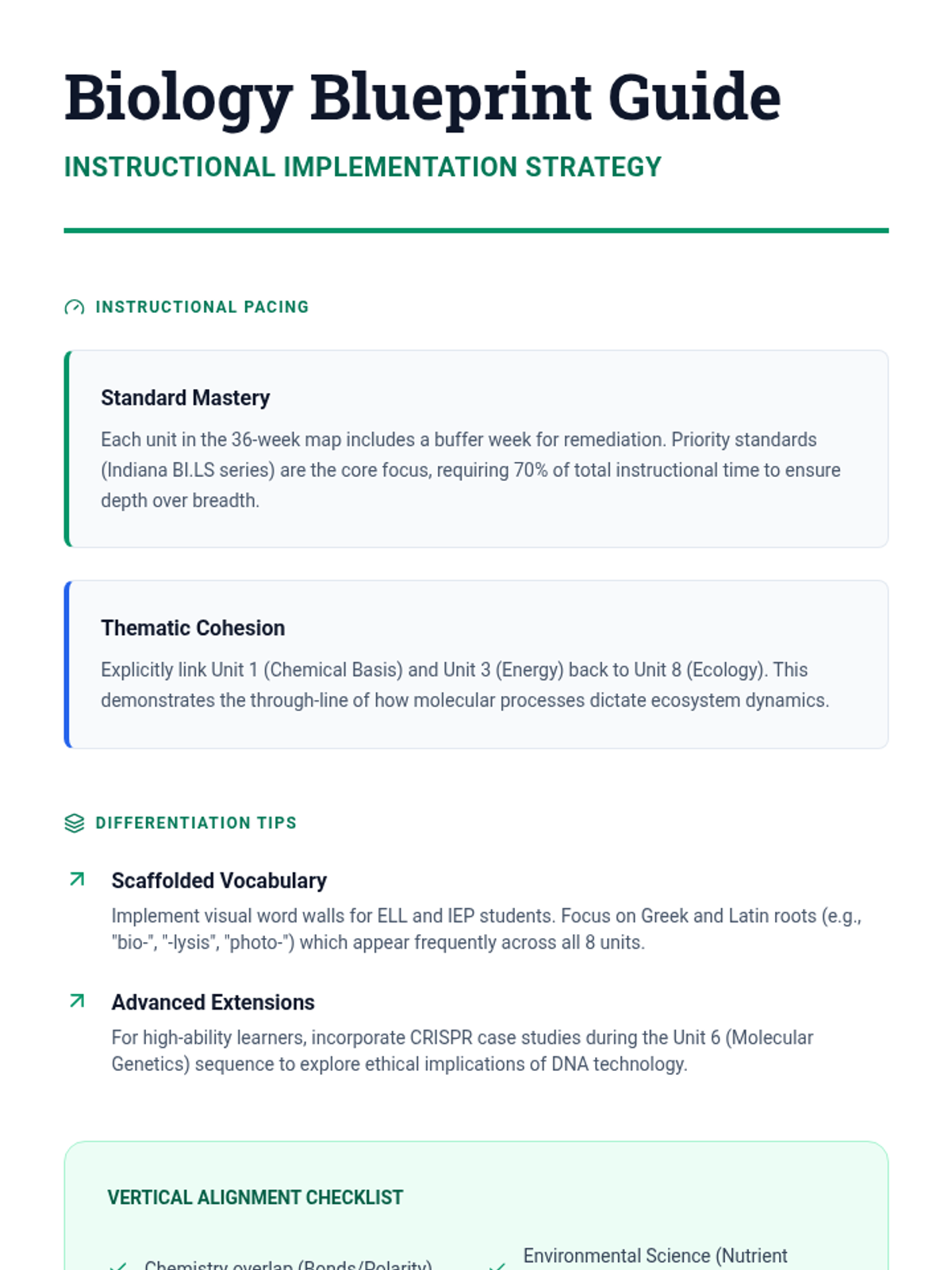
A high-contrast, print-friendly instructional guide for biology teachers, providing pacing strategies, differentiation tips, and alignment checklists for the year-long curriculum.
A professional instructional guide for high school biology teachers, providing pacing strategies, differentiation tips, and vertical alignment checklists for the 36-week curriculum.
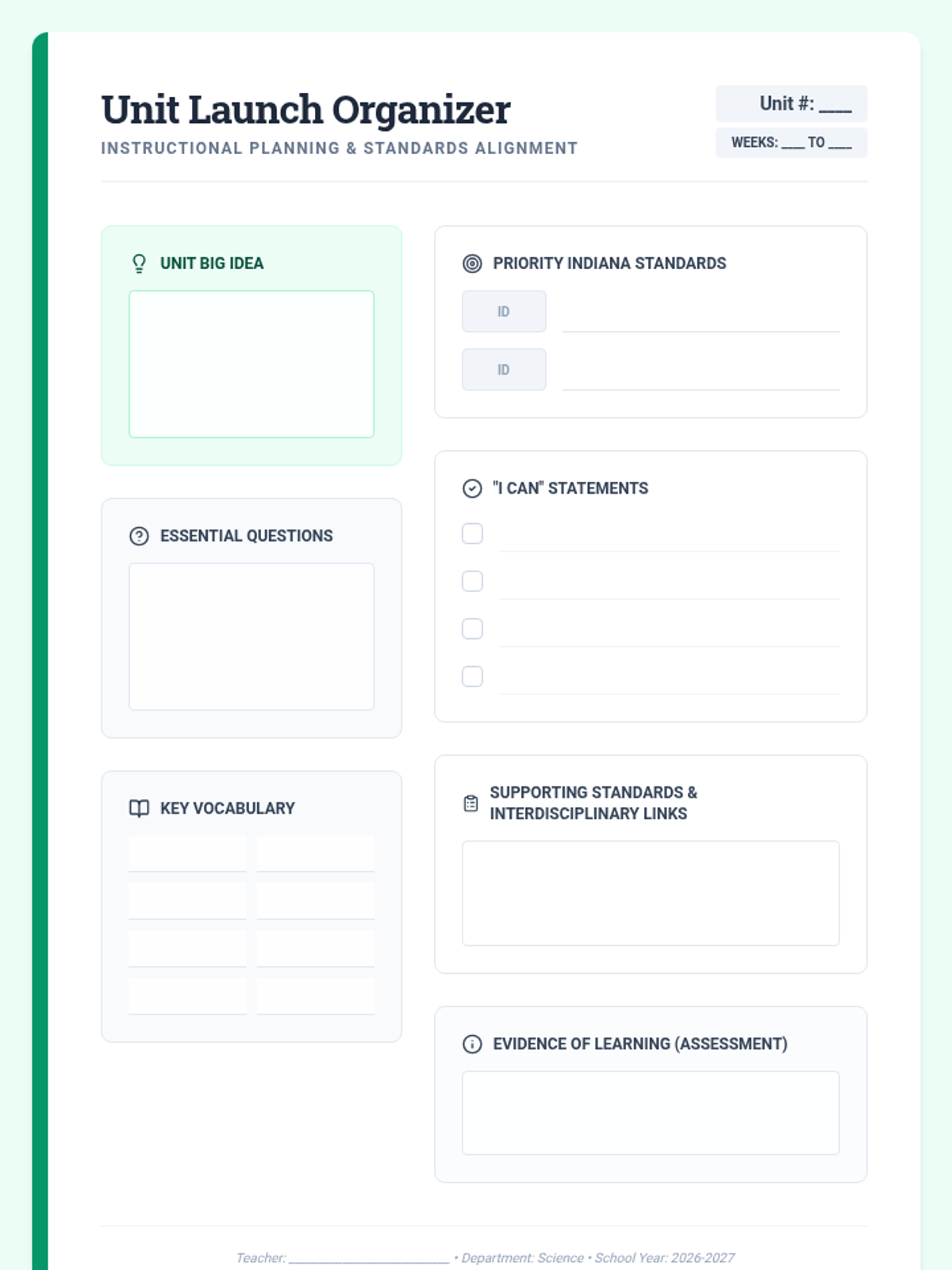
A teacher-facing unit launch template designed for zooming into specific biology units, featuring work areas for standards, essential questions, "I Can" statements, and vocabulary.
A comprehensive 36-week high school biology curriculum map aligned with Indiana State Standards, featuring units, big ideas, essential questions, priority standards, "I Can" statements, and key vocabulary. Corrected for page-breaks and content.
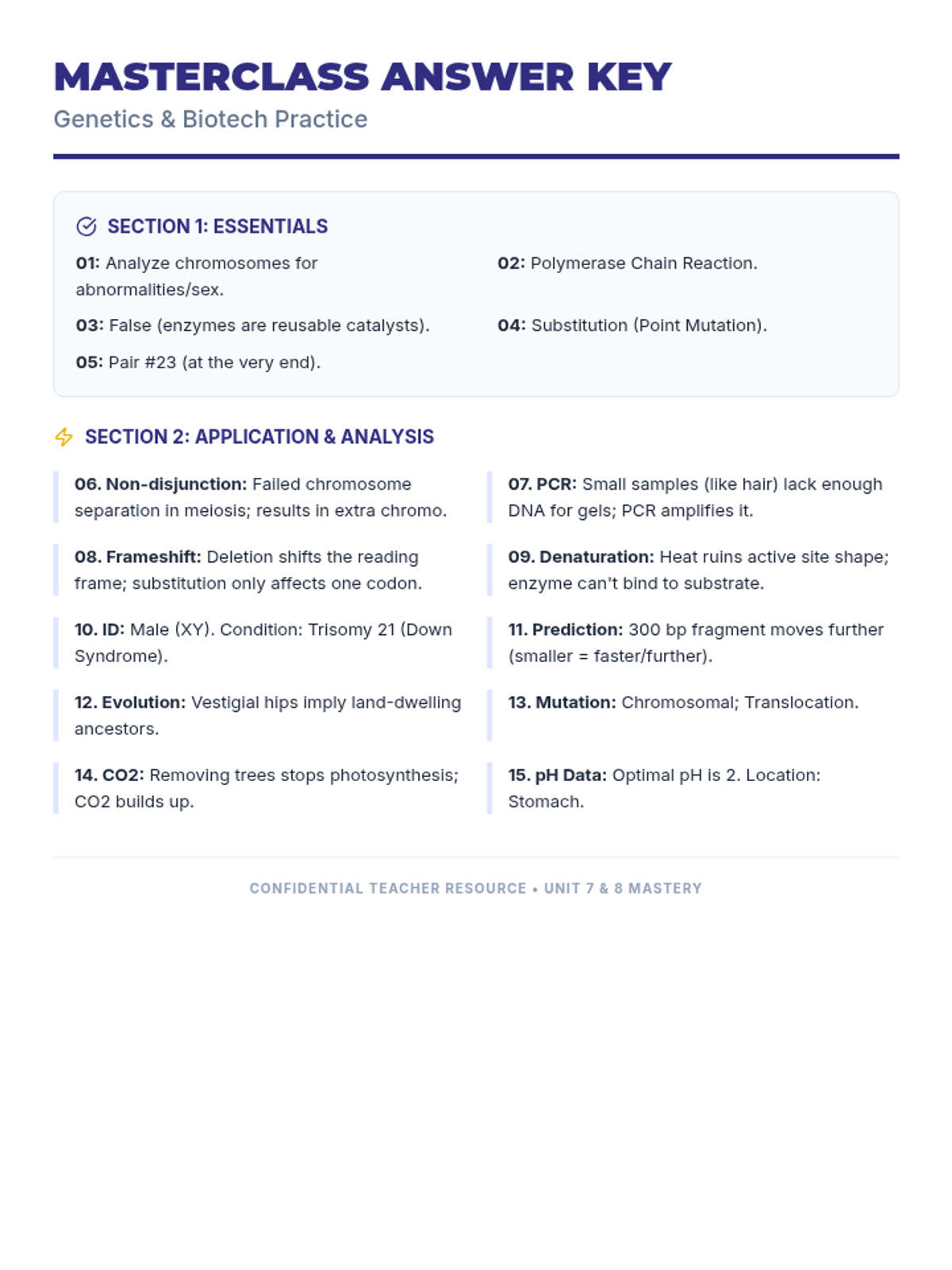
A detailed teacher answer key for the revised Genetics Challenge Worksheet, providing answers for both foundational recall and higher-level application questions.
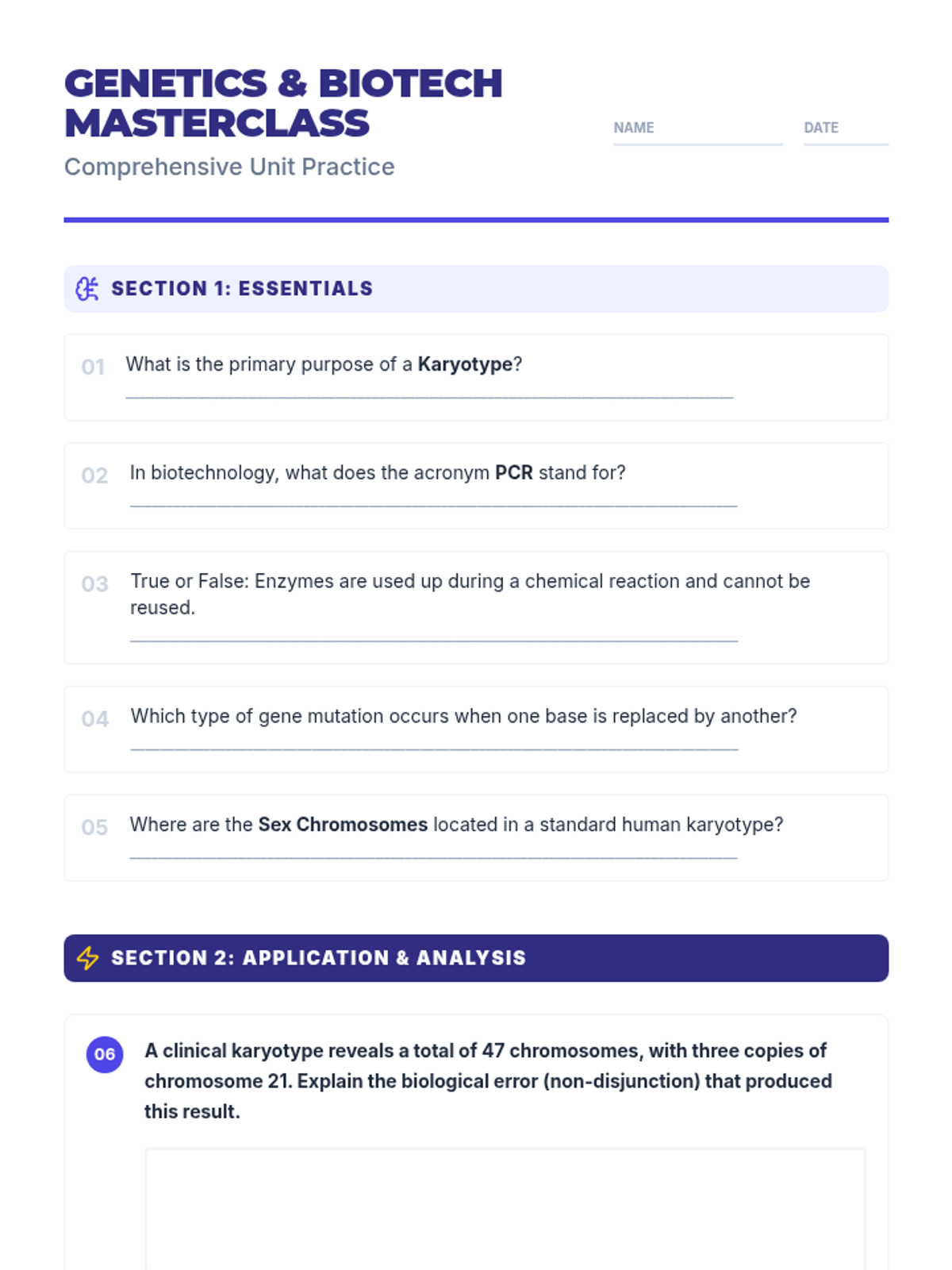
A revised genetics worksheet combining foundational recall questions with challenging application and analysis items. The DOK labels have been removed to present a cohesive practice assessment covering karyotyping, biotechnology, and mutations.
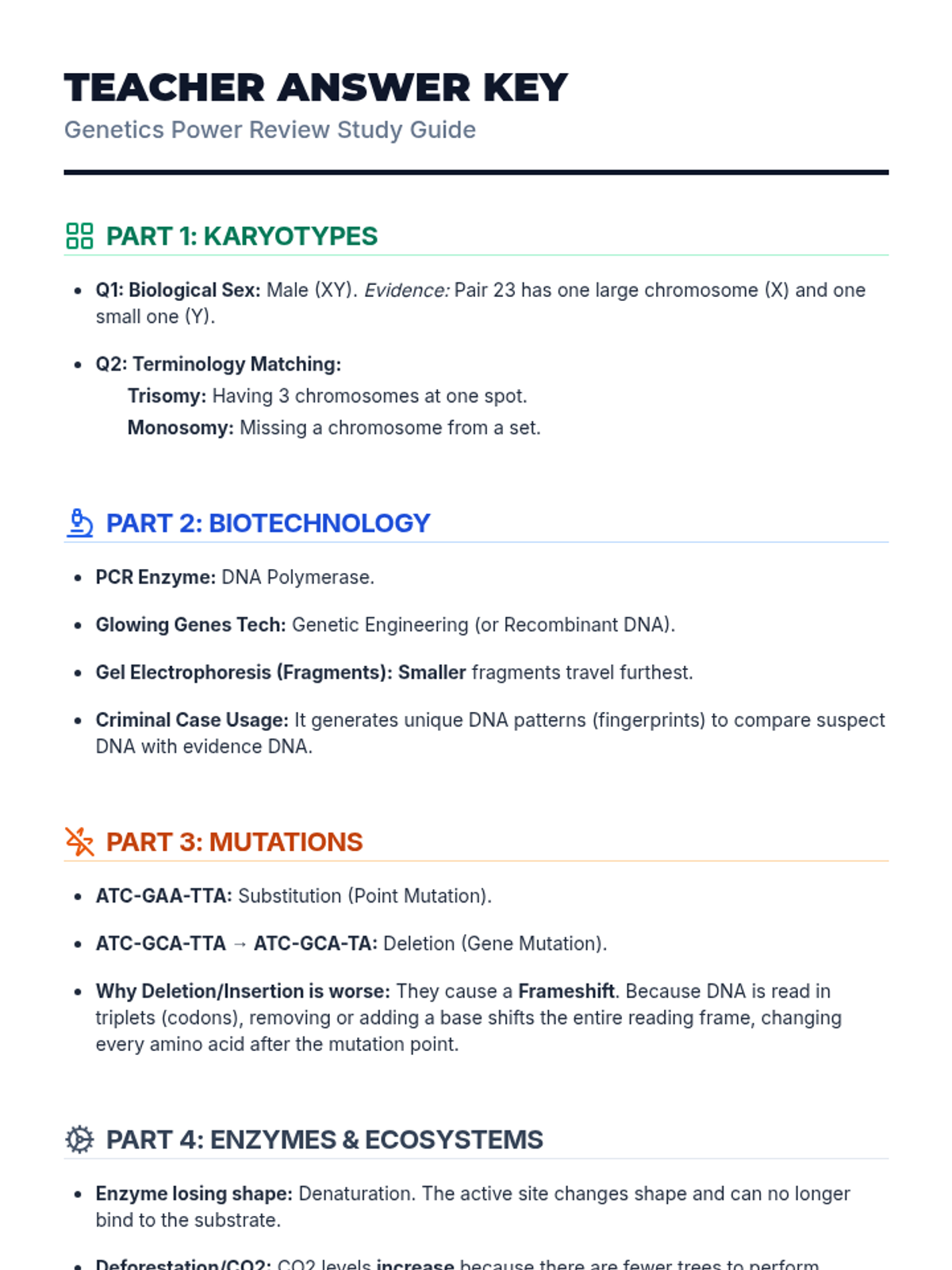
A clear, concise teacher answer key for the Genetics Power Review Study Guide, providing the correct terminology and explanations for each practice question.
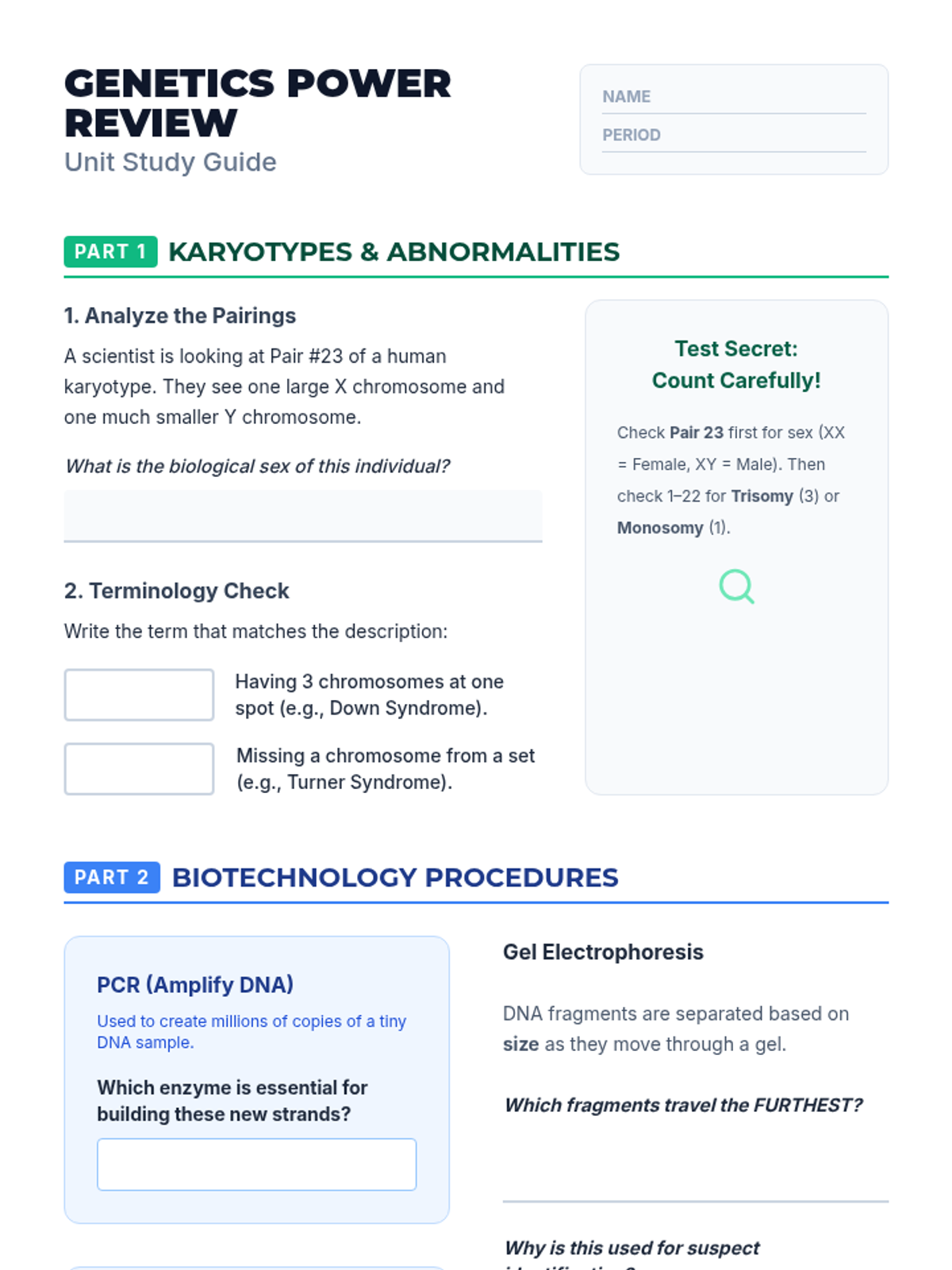
A practice-heavy study guide for students covering Karyotypes, Biotechnology, Mutations, and Enzymes. It includes analysis questions, matching, and short-response areas designed to prepare students for the high-priority standards found in the unit test.
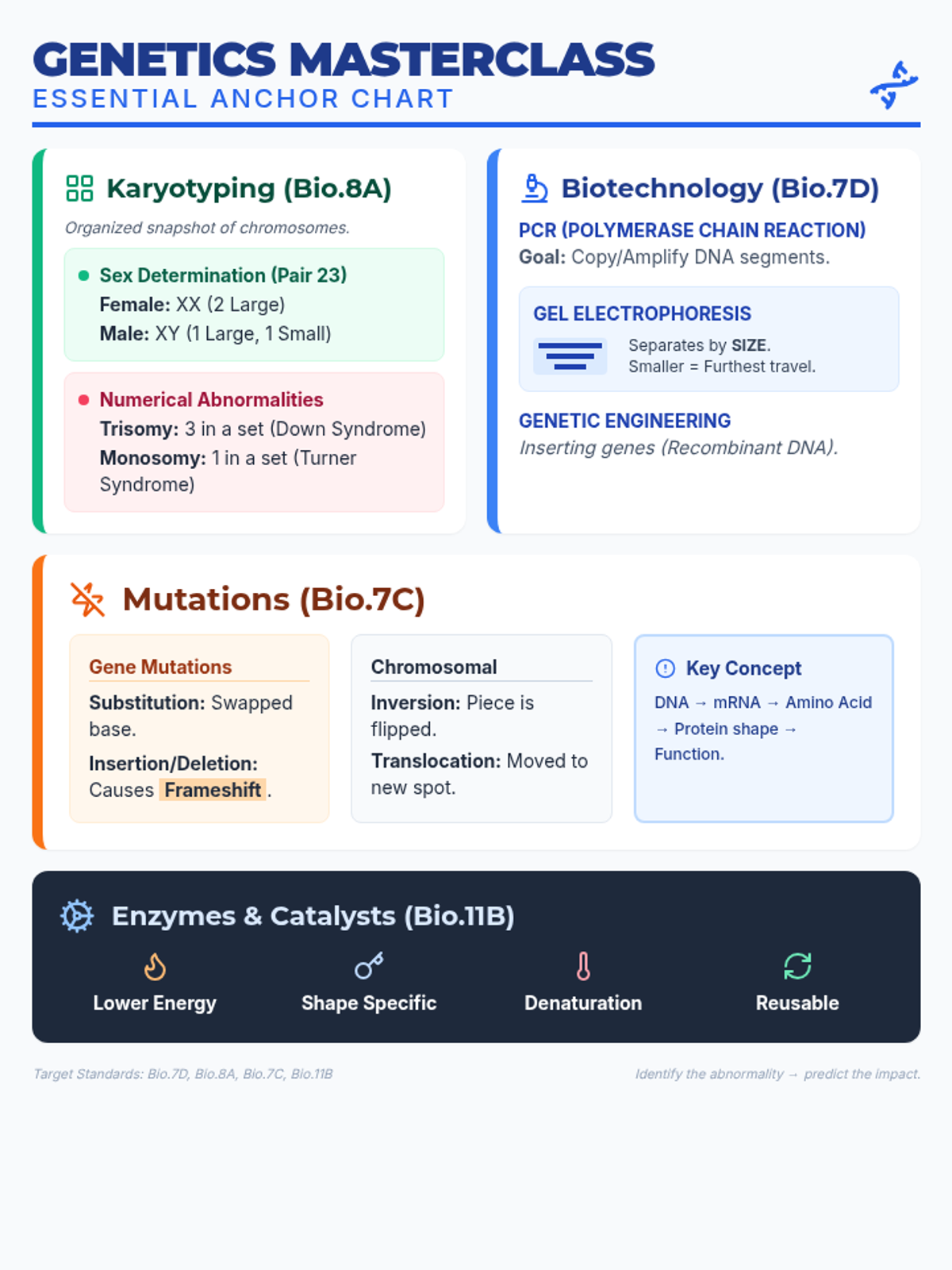
A comprehensive anchor chart summarizing high-priority biology topics including Karyotyping, Biotechnology (PCR and Gel Electrophoresis), Mutations, and Enzymes. It uses a clean, visual layout with clear definitions and icons to support student retention.
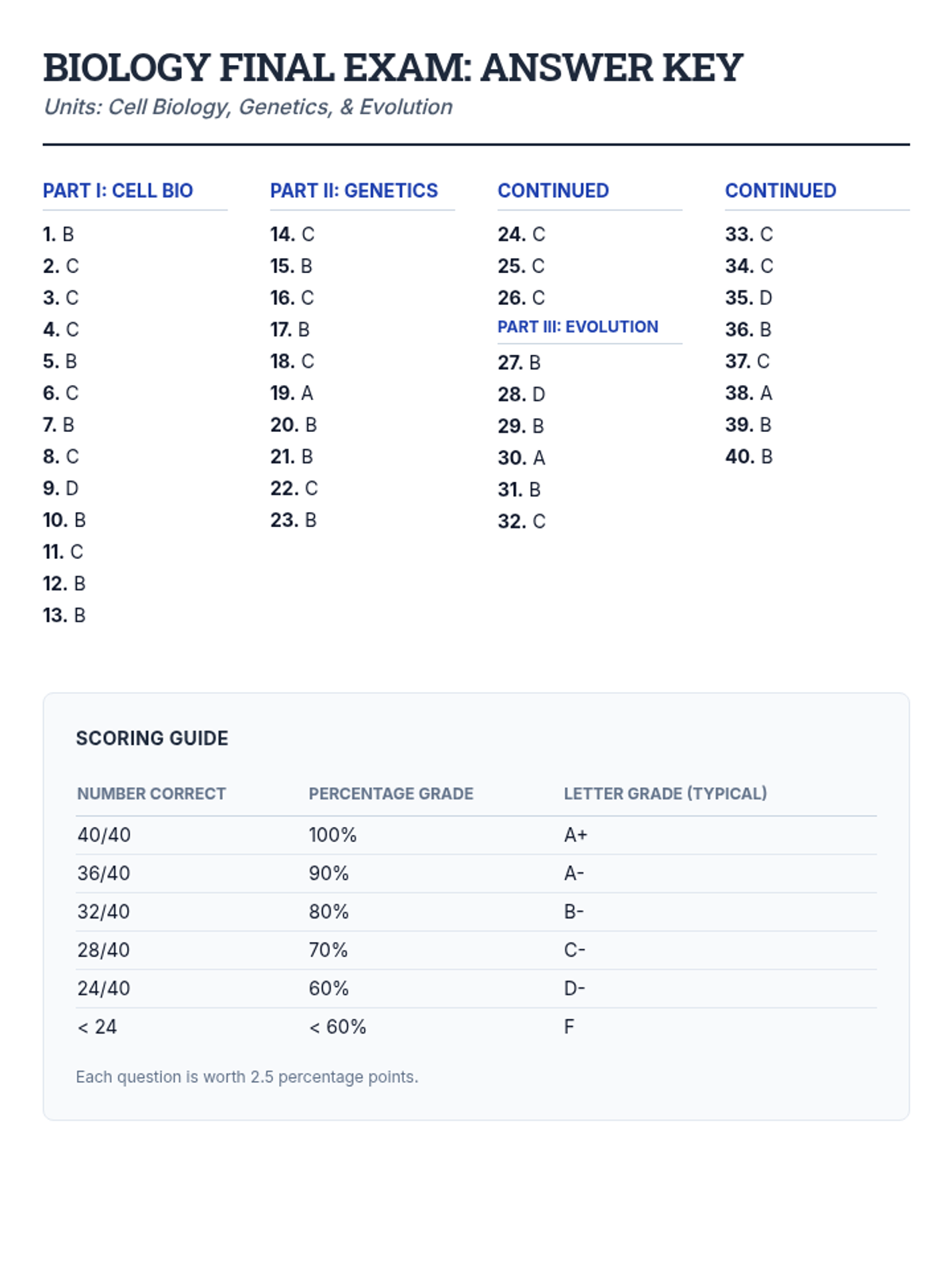
The answer key for the 40-question Biology Final Exam. Includes a compact key for quick grading and a standard scoring guide with percentage calculations.
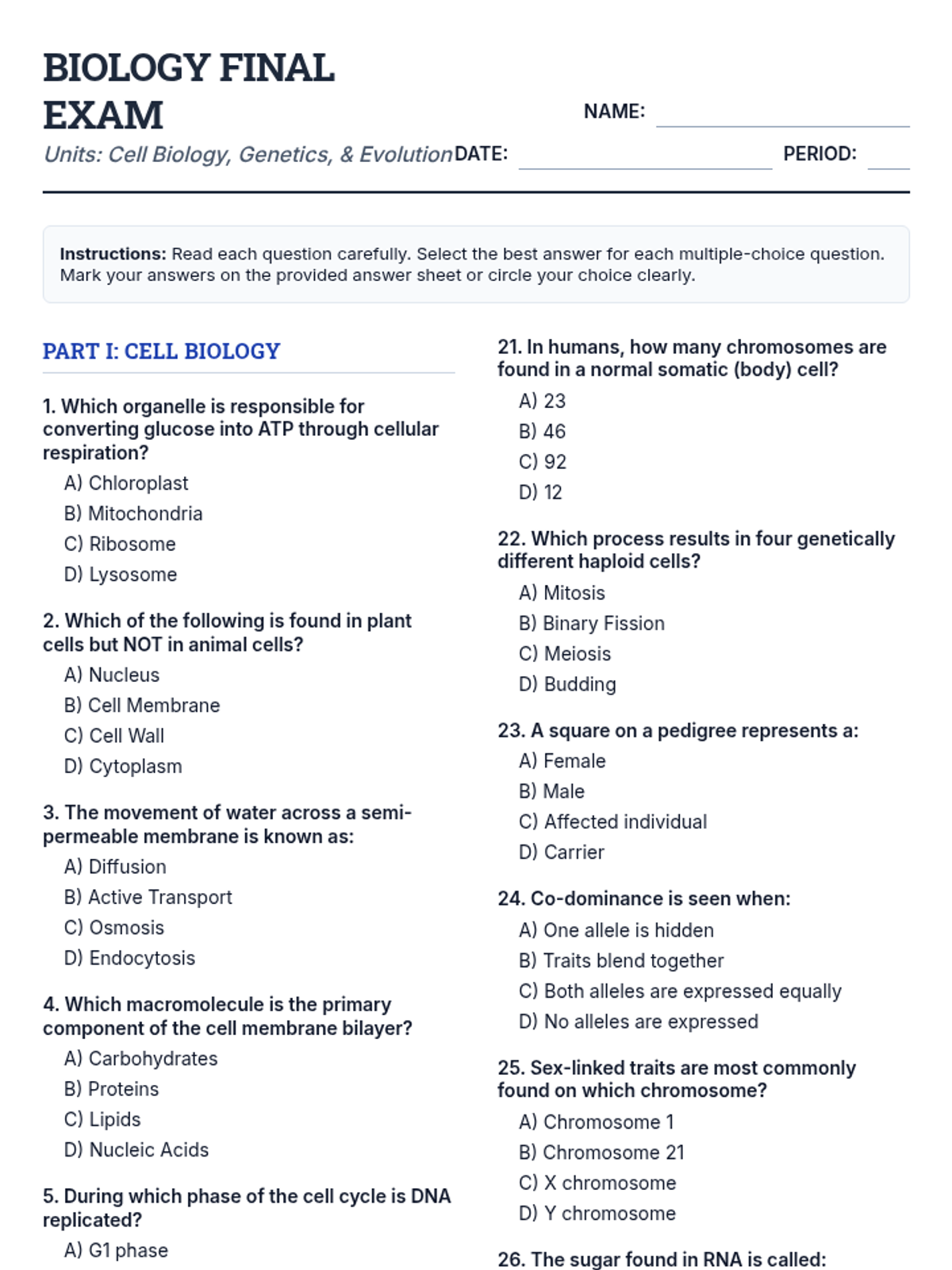
A 40-question multiple-choice biology final exam covering Cell Biology, Genetics, and Evolution. It is designed with a two-column layout to optimize page use while maintaining high readability.
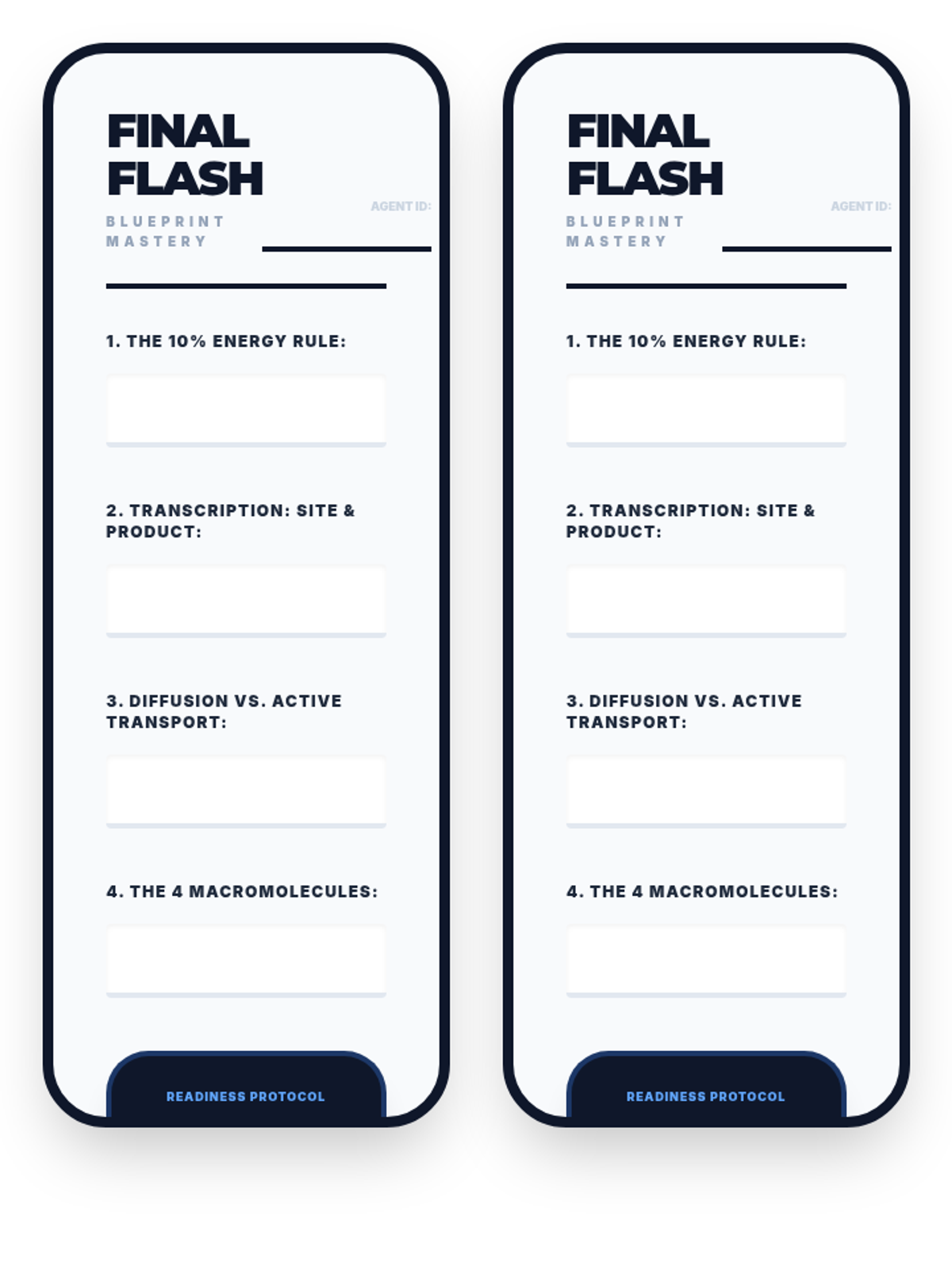
A double-sided exit ticket for quick formative assessment of the most critical review concepts before the exam.
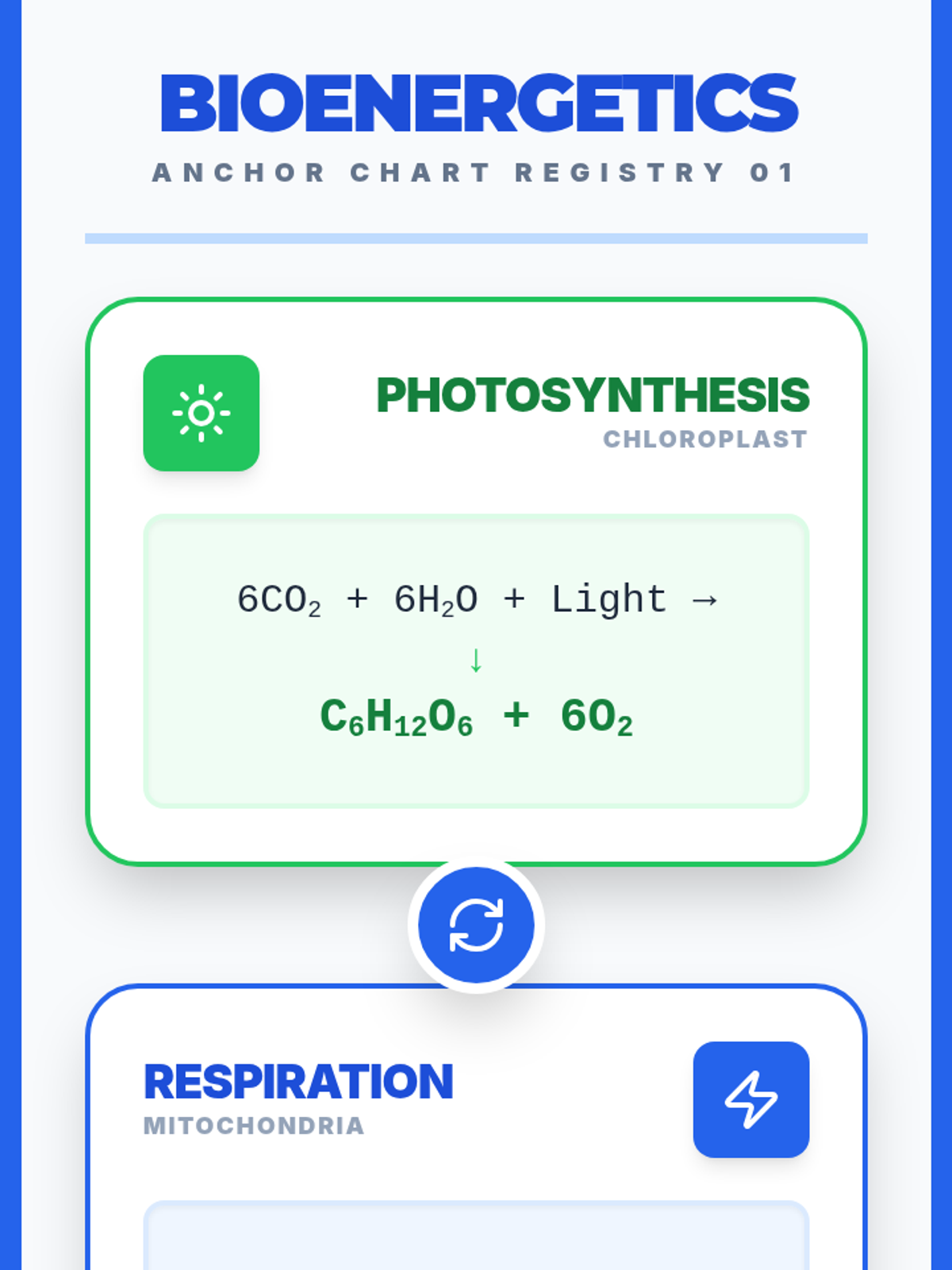
Visual anchor charts summarizing the most high-stakes concepts for the Biology Keystone exam: Bioenergetics and the Central Dogma of Molecular Biology.
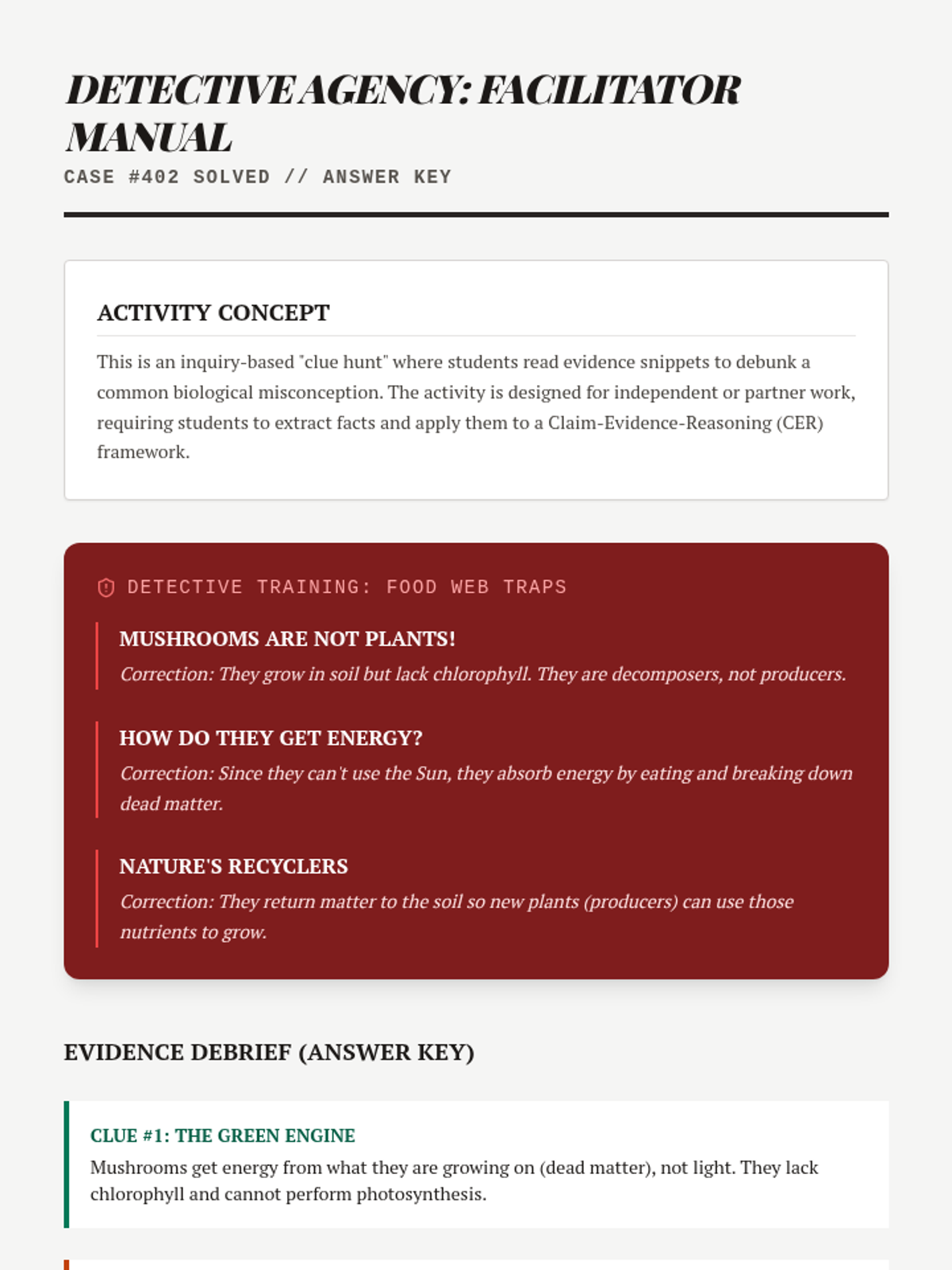
Updated teacher guide for the "Hidden Kingdom Mystery." Now includes specific facilitation notes on "Nature's Recyclers" and common food web traps. Revised for better page flow and legibility.
Updated intro slides for the Kingdom Detective investigation. Now includes explicit slides addressing "Nature's Recyclers" and common food web traps. Revised for better text contrast and layout polish.
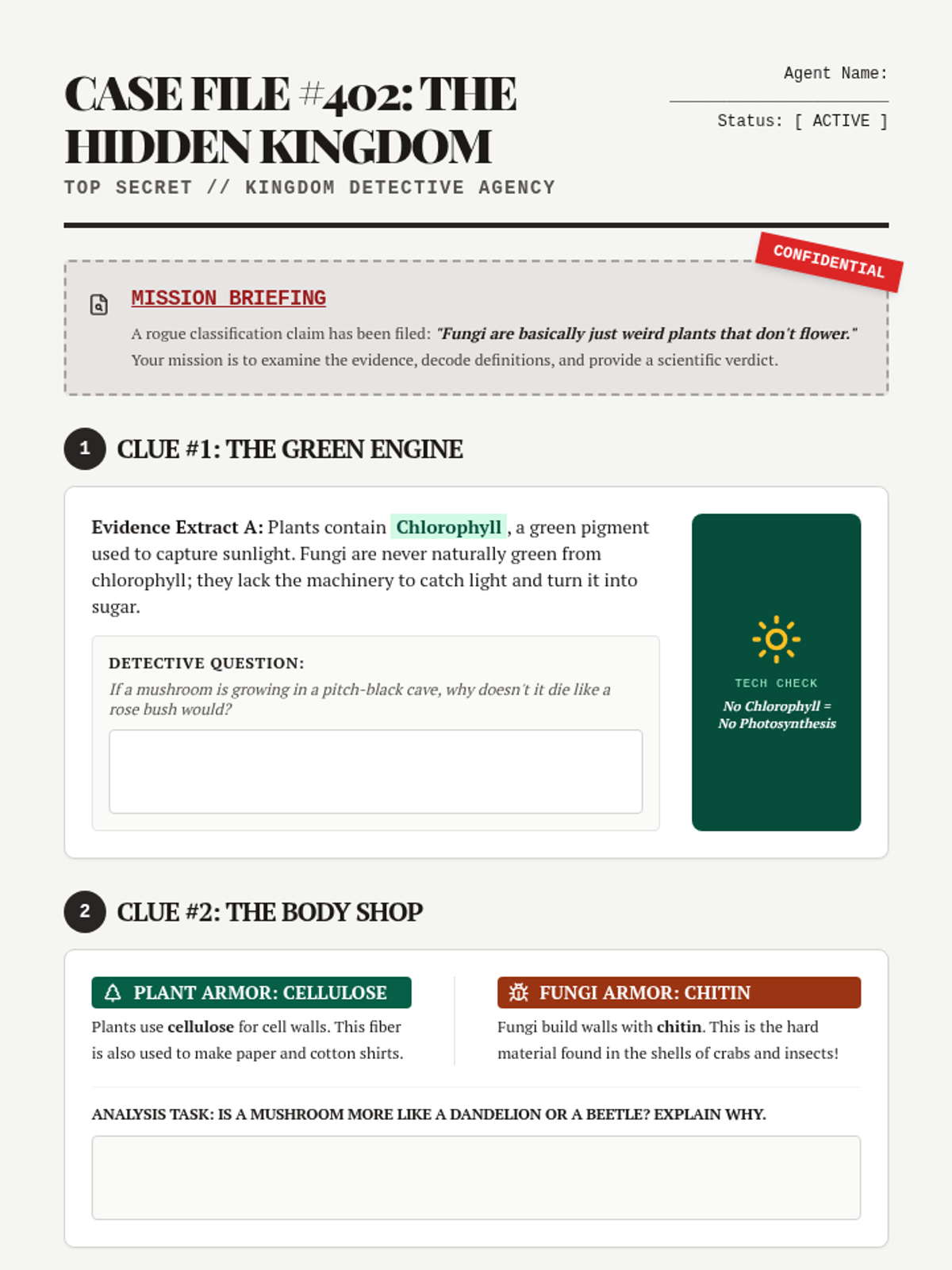
A mystery-themed clue hunt where students act as "Kingdom Detectives." Updated with explicit sections on "Nature's Recyclers" and "Common Food Web Traps" to address key misconceptions about fungi and energy roles. Revised for better terminology consistency and page flow.
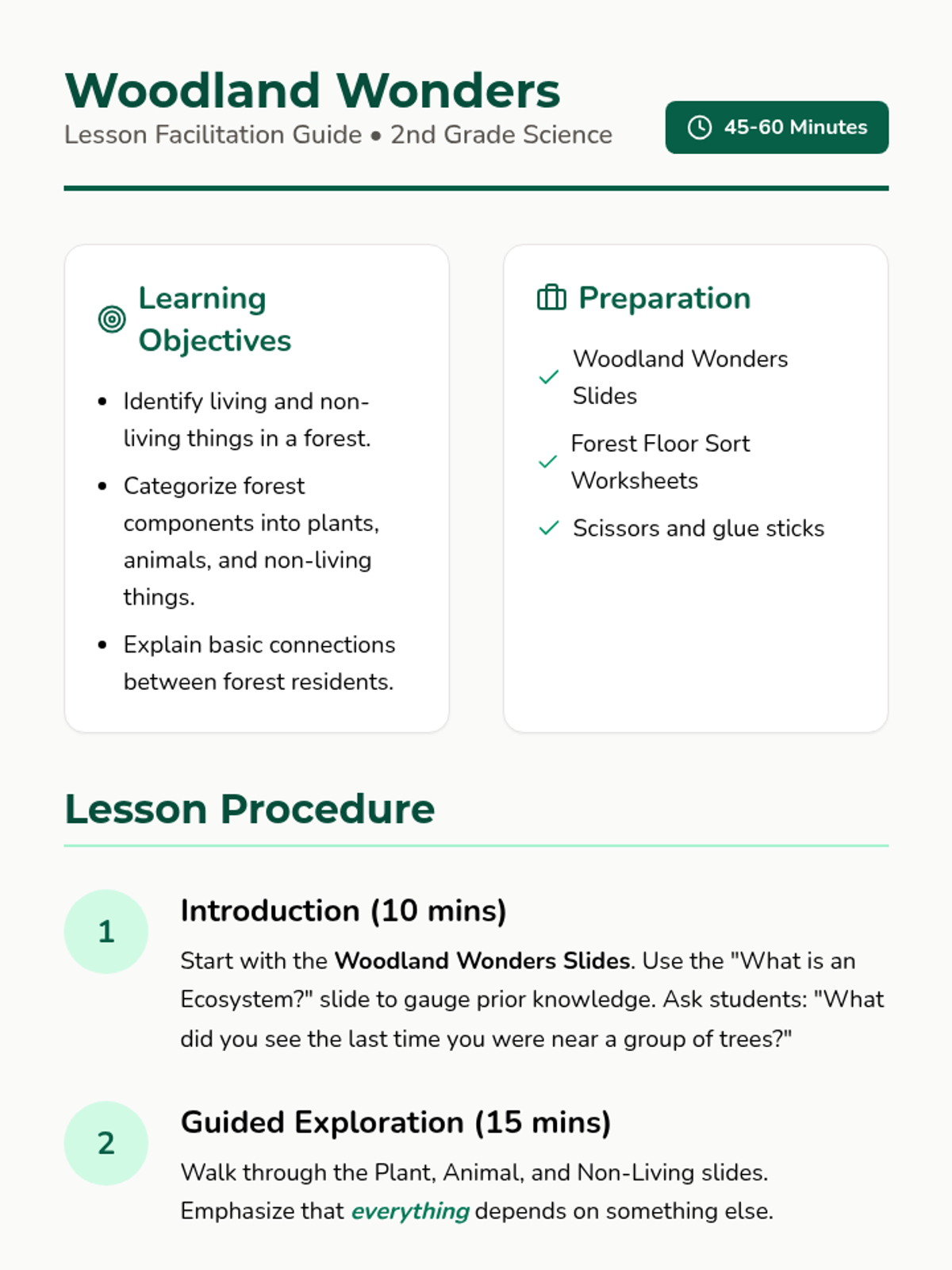
Comprehensive teacher guide for the Woodland Wonders lesson, including learning objectives, step-by-step procedures, and differentiation strategies for 2nd grade science.
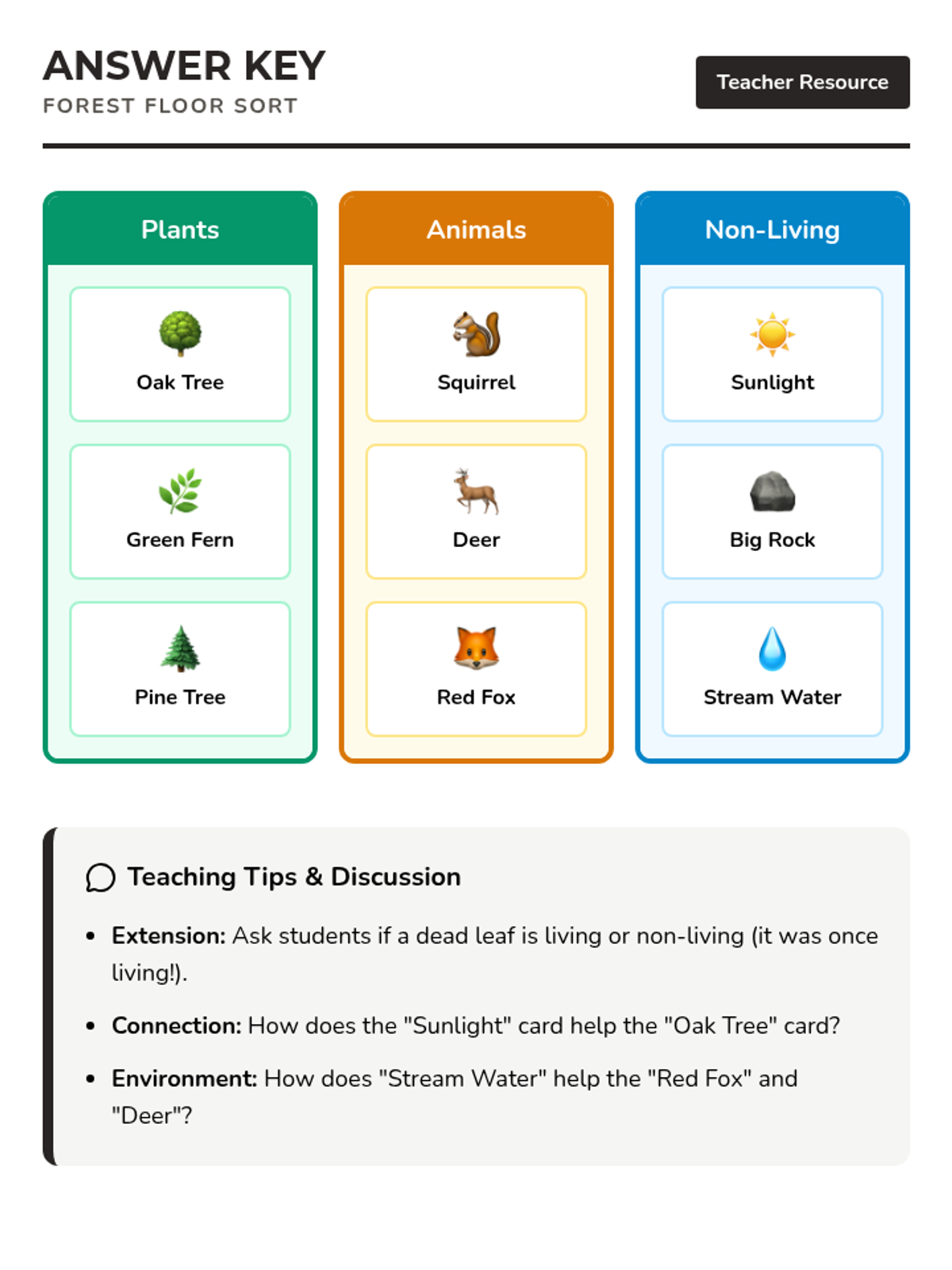
Teacher answer key for the Forest Floor Sort Activity, providing correctly categorized items and discussion prompts for class review.
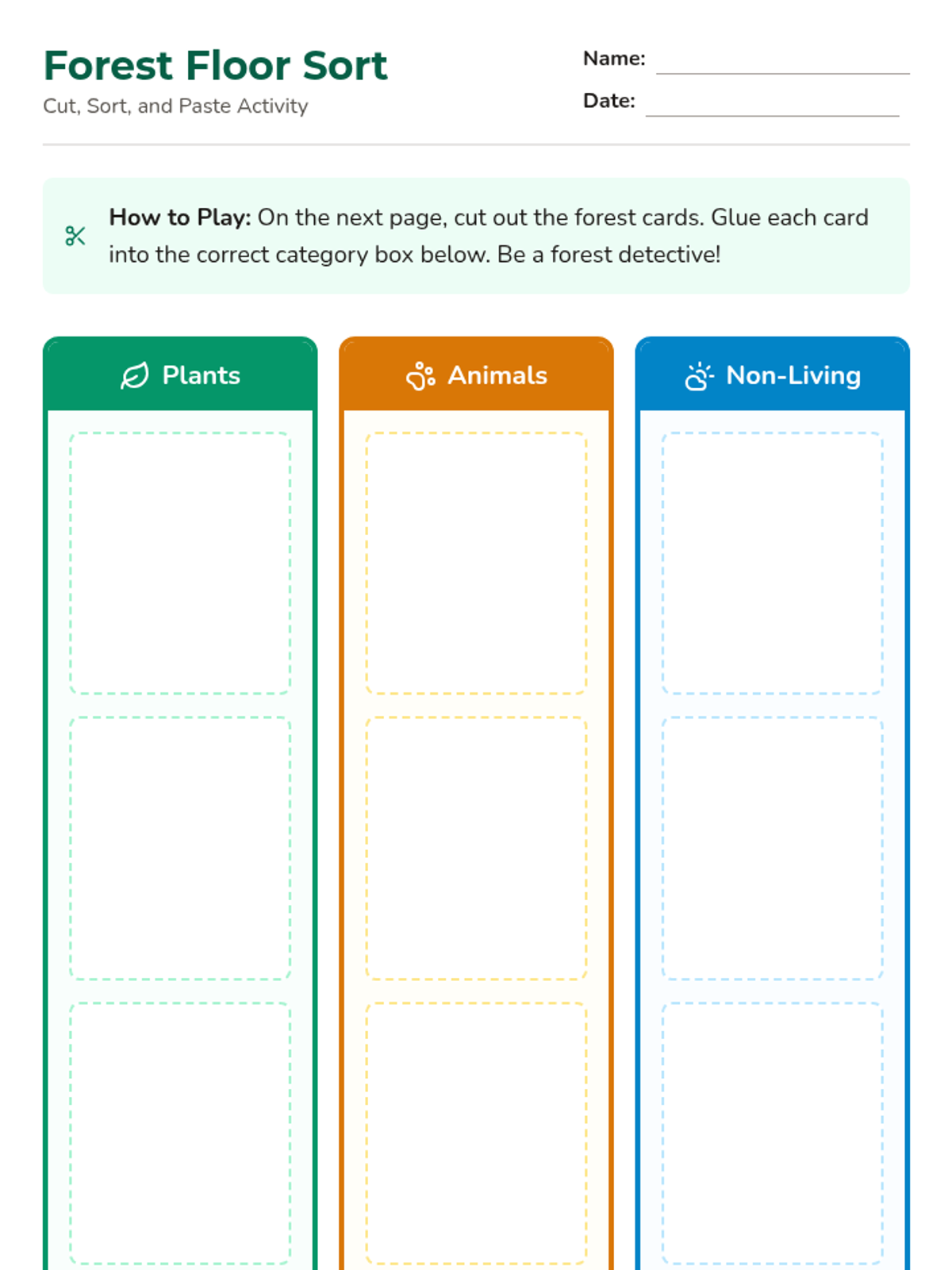
A 2-page cut-and-paste sorting activity for 2nd graders to categorize forest ecosystem components into plants, animals, and non-living things. Includes a sorting board and a cutout sheet.
A vibrant slide deck introducing second graders to the forest ecosystem, covering living things (plants and animals) and non-living components.
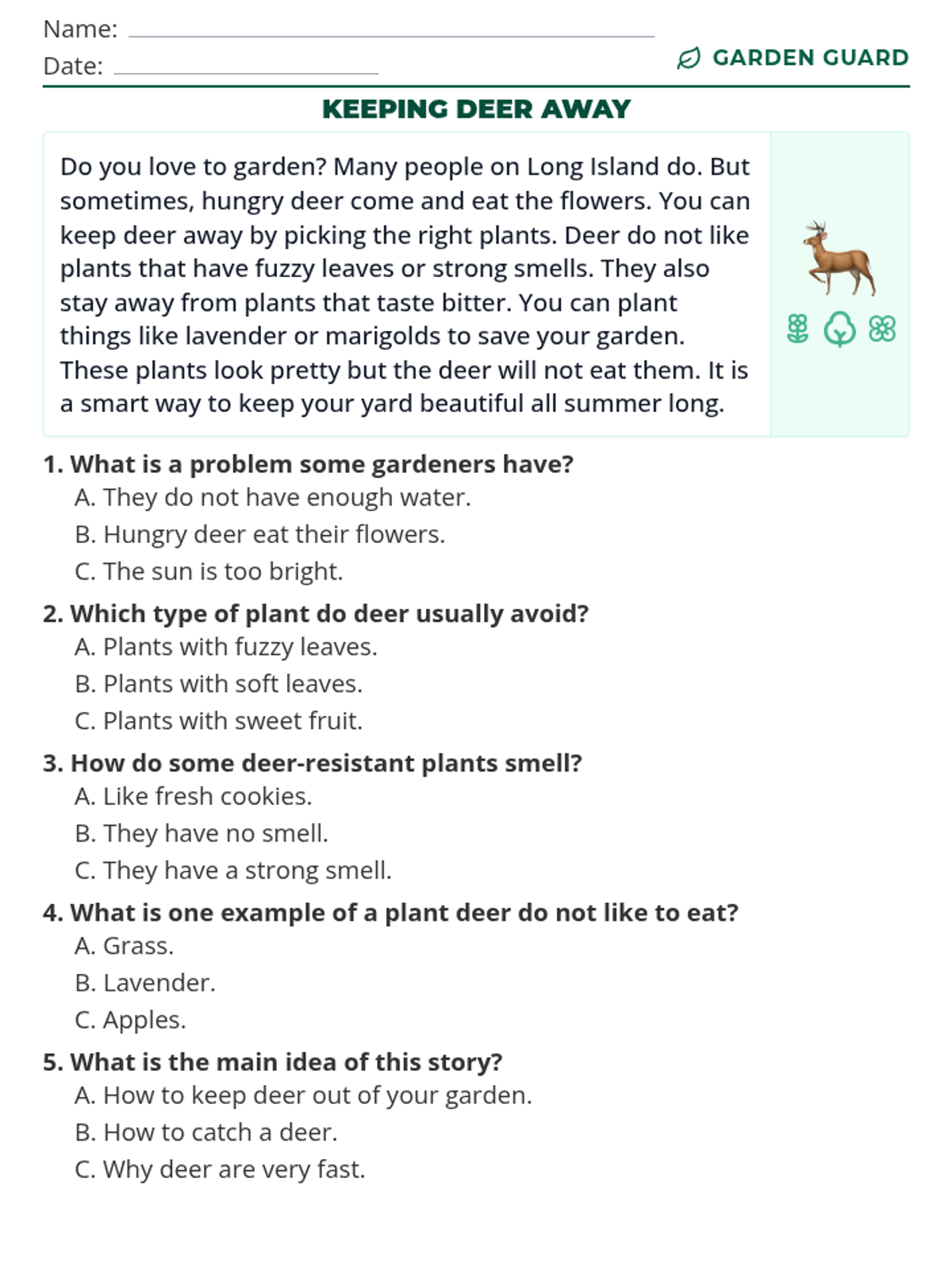
A one-page reading comprehension worksheet for third graders about deer-resistant plants, featuring a reading passage with a deer emoji and garden icons, followed by five multiple-choice questions.
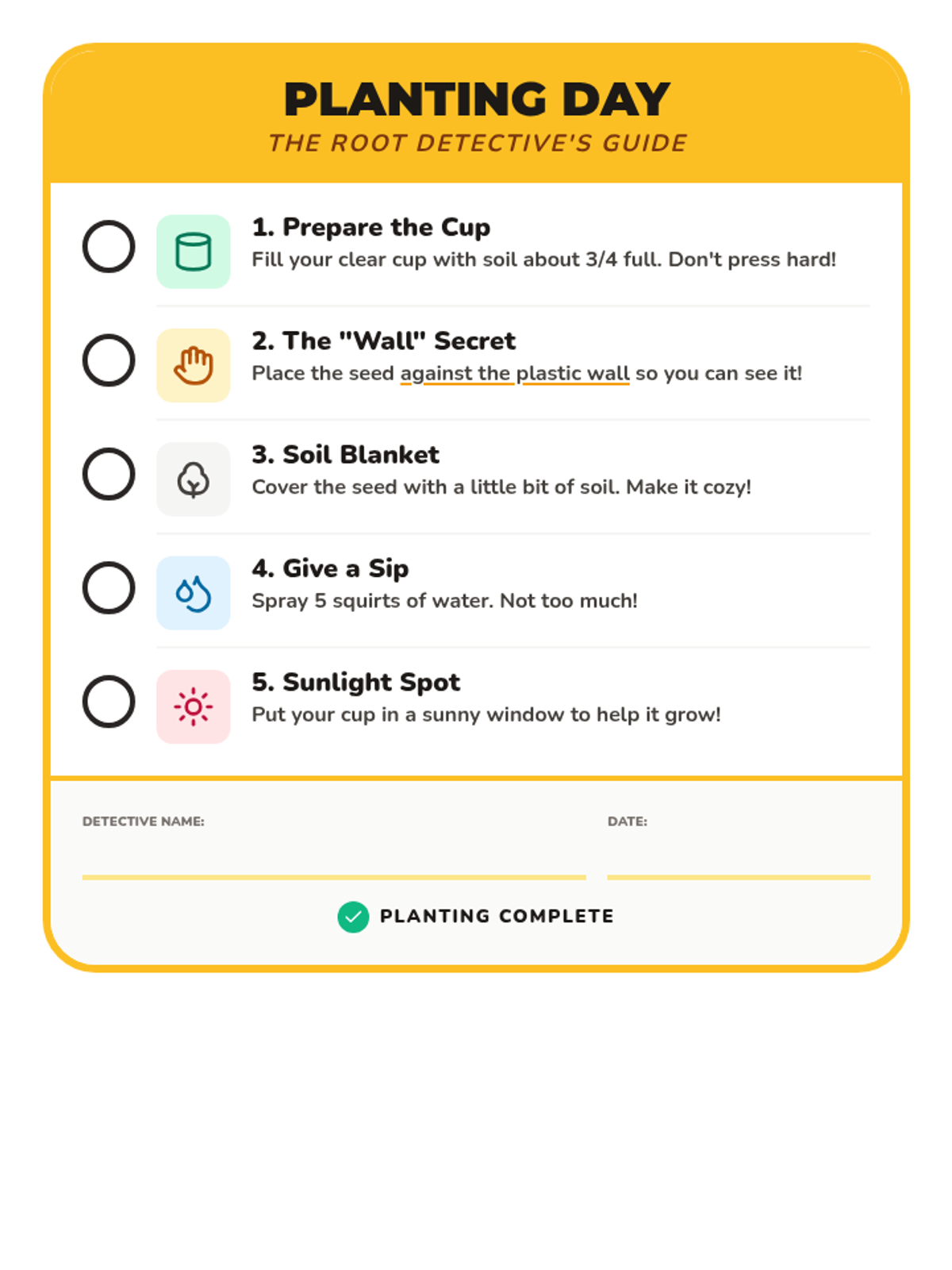
Revised Planting Day Checklist for Pre-K students, featuring a single-page layout, interactive check-circles for each step, and high-contrast text for better readability.
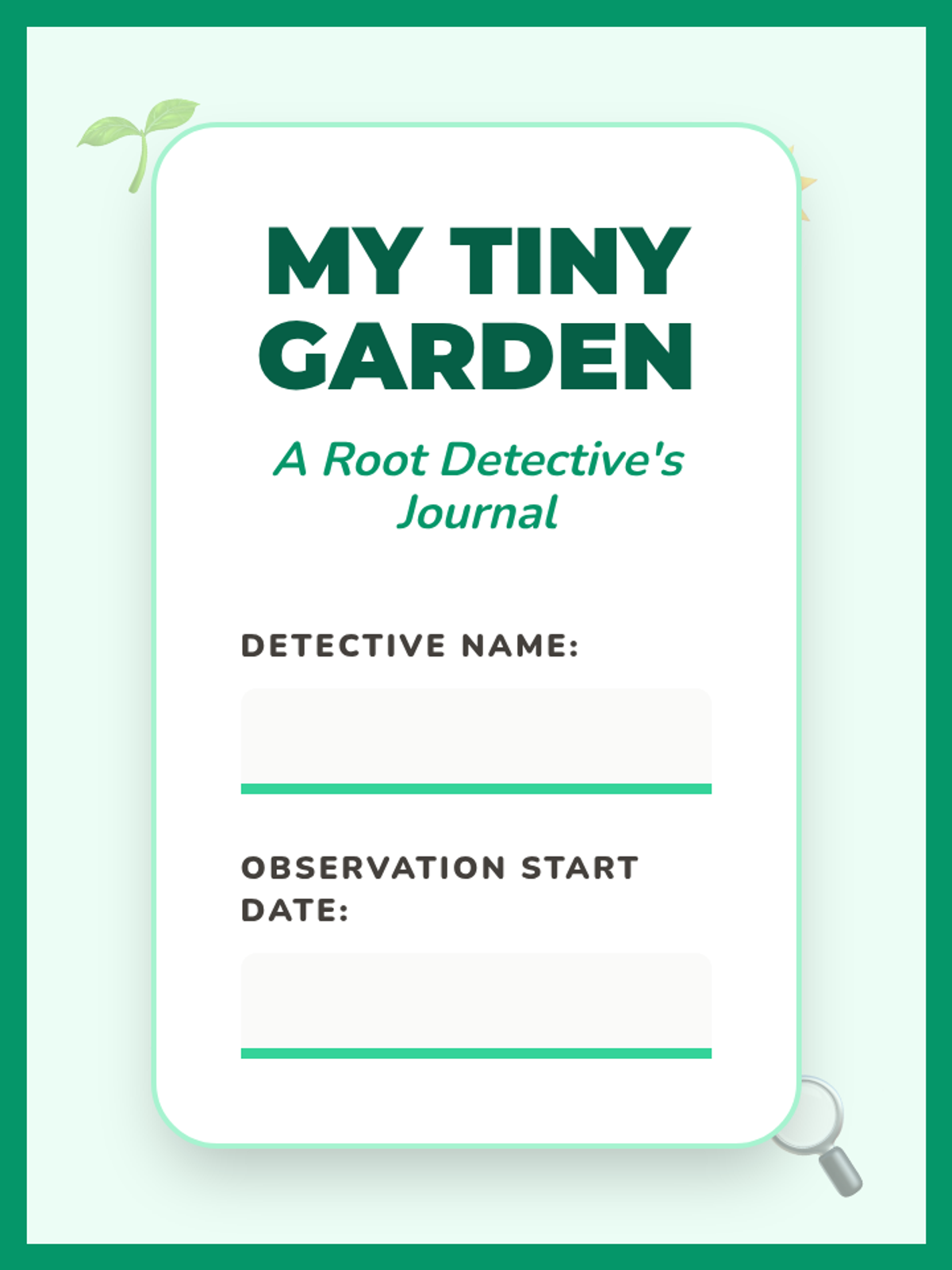
Revised student journal for Pre-K with larger writing fields for names and dates, and darker, high-contrast borders for observation and measurement areas to ensure clarity when printed.
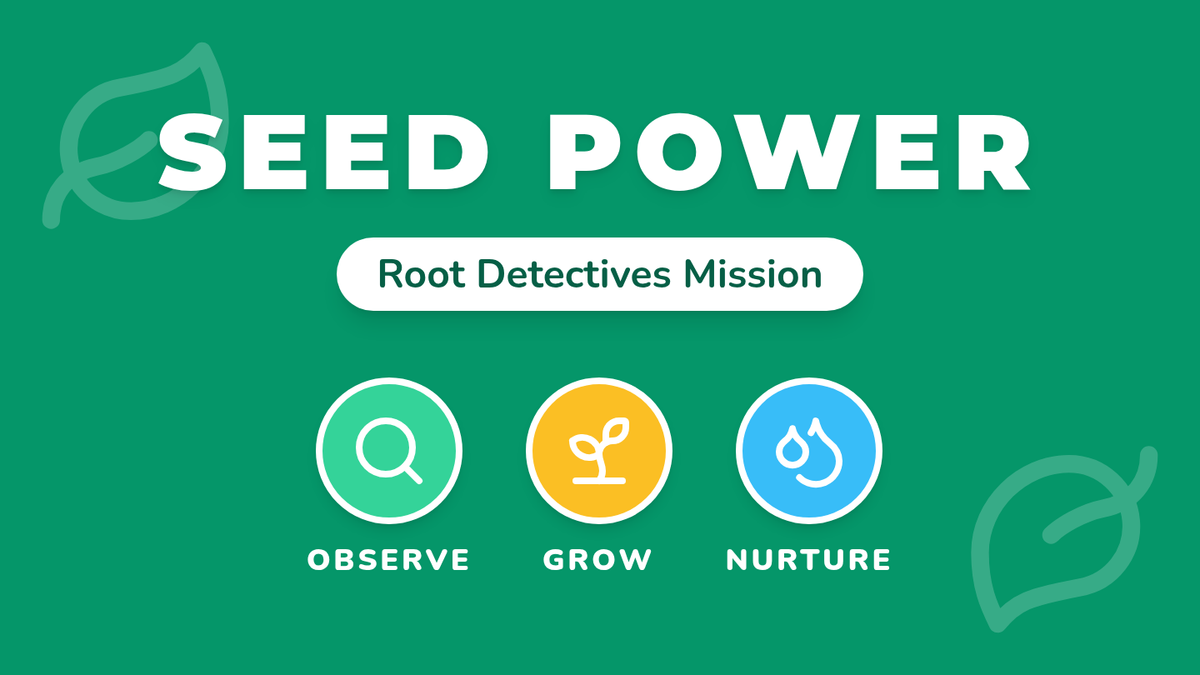
Revised visual slides for the Root Detectives lesson, featuring increased font sizes for Pre-K visibility and a corrected layout for the root anatomy slide.
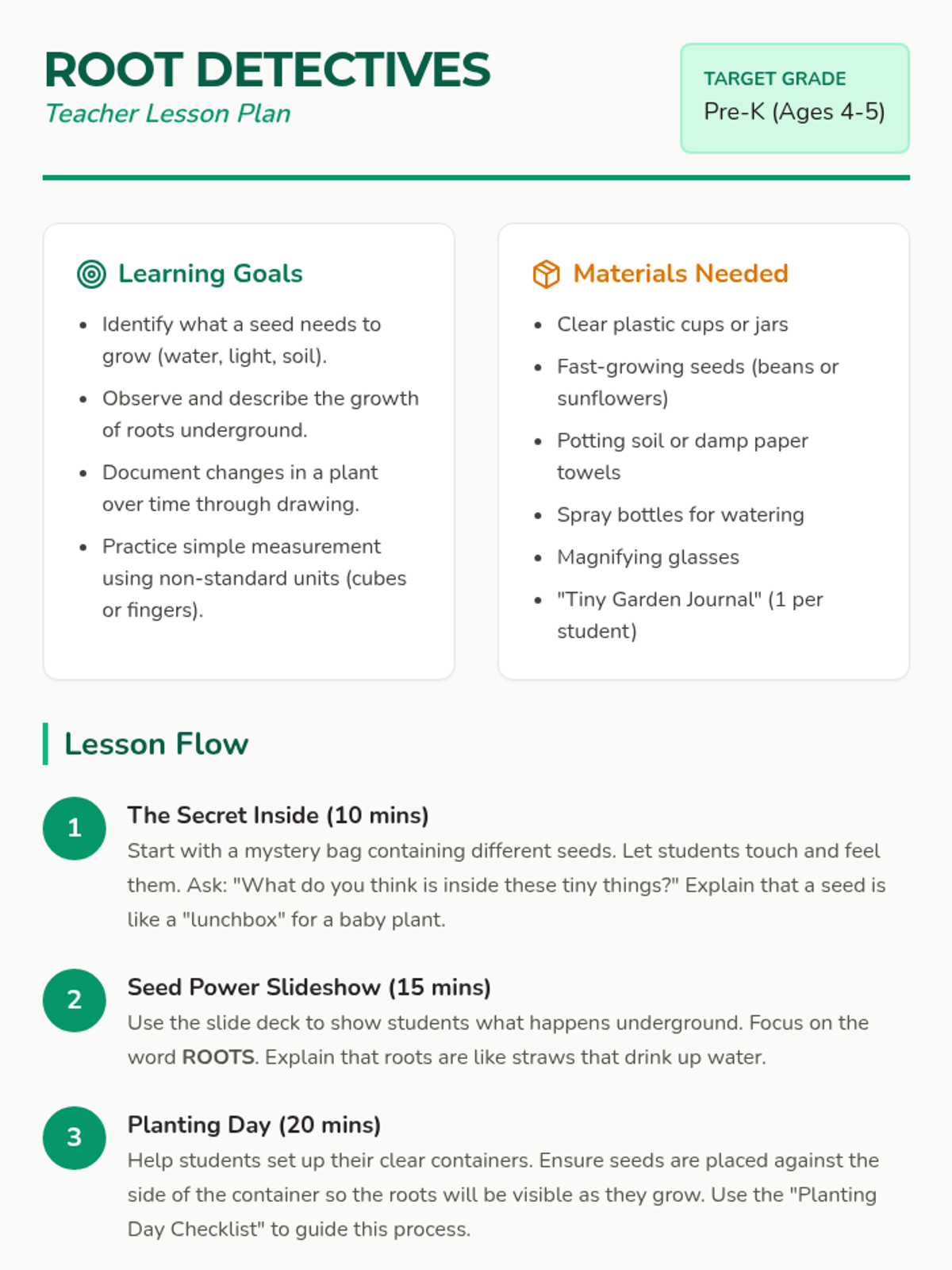
A comprehensive teacher's lesson plan for Pre-K, detailing learning objectives, materials, and a step-by-step instructional flow for the Root Detectives botany unit.
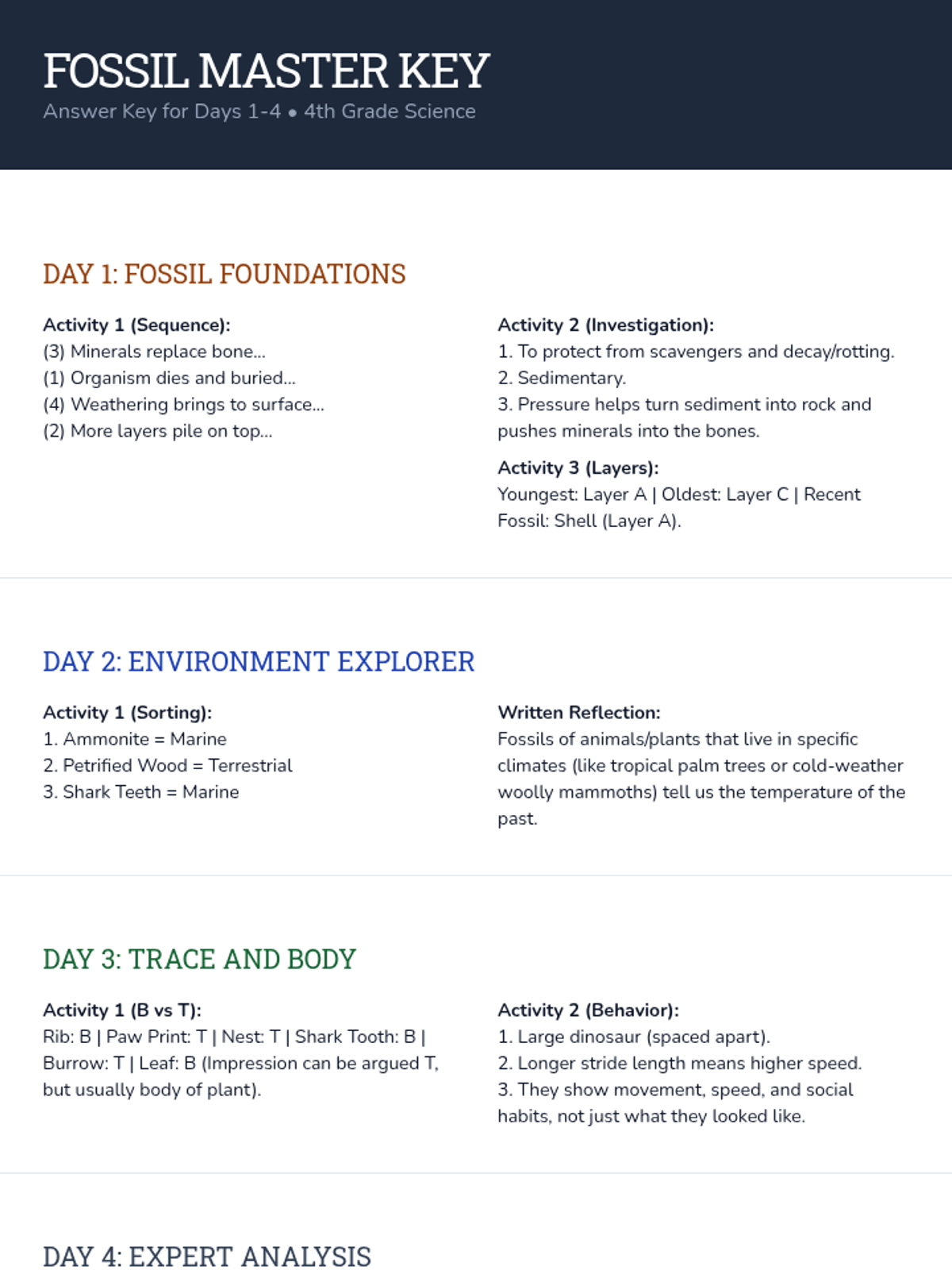
Complete answer key for all four days of the fossils and past environments unit, covering formation, environmental indicators, fossil types, and final analysis.
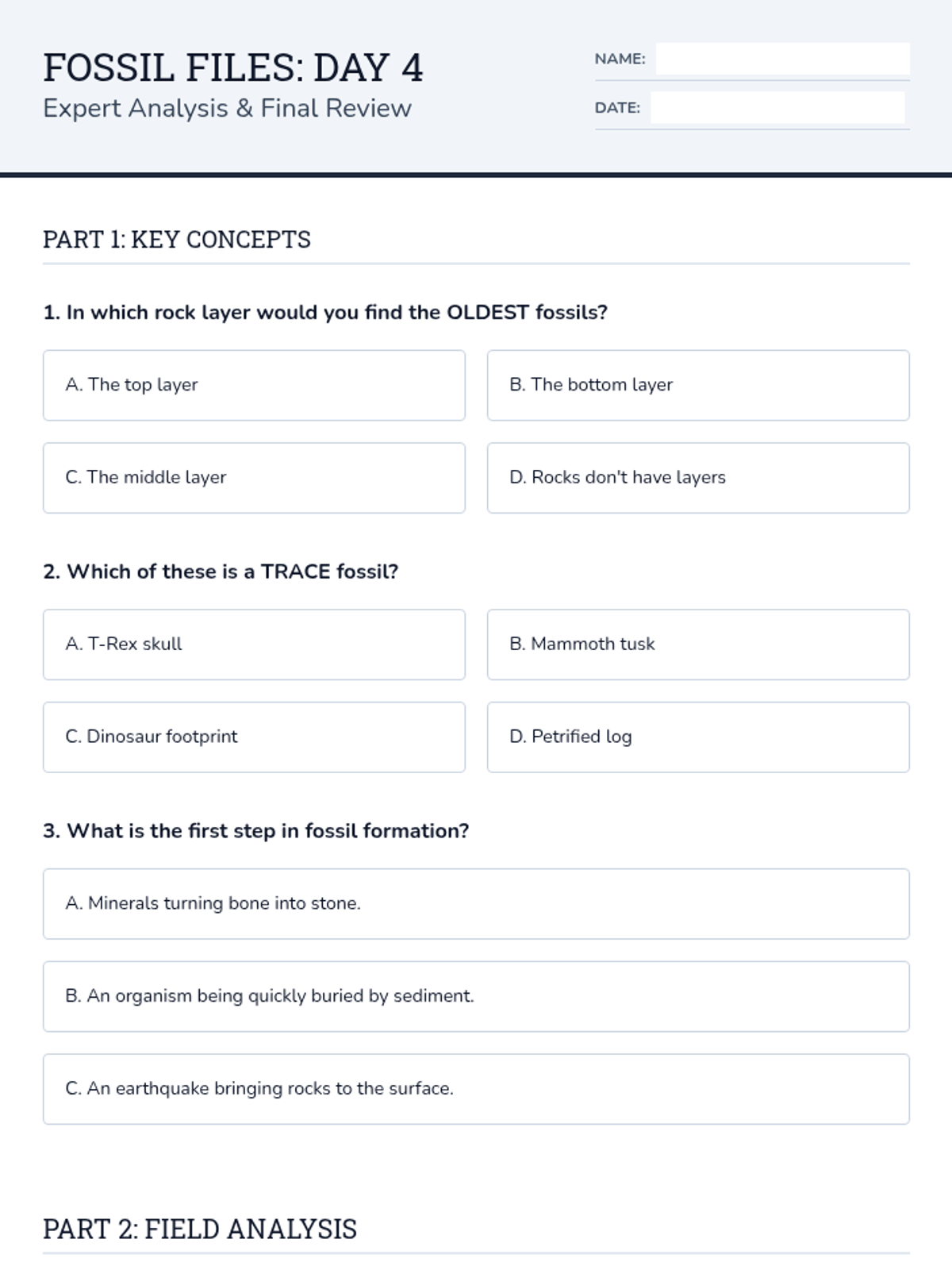
Day 4 final assessment packet for the fossils unit. Includes multiple-choice questions, evidence-based environmental analysis, and a creative "new fossil" synthesis activity.
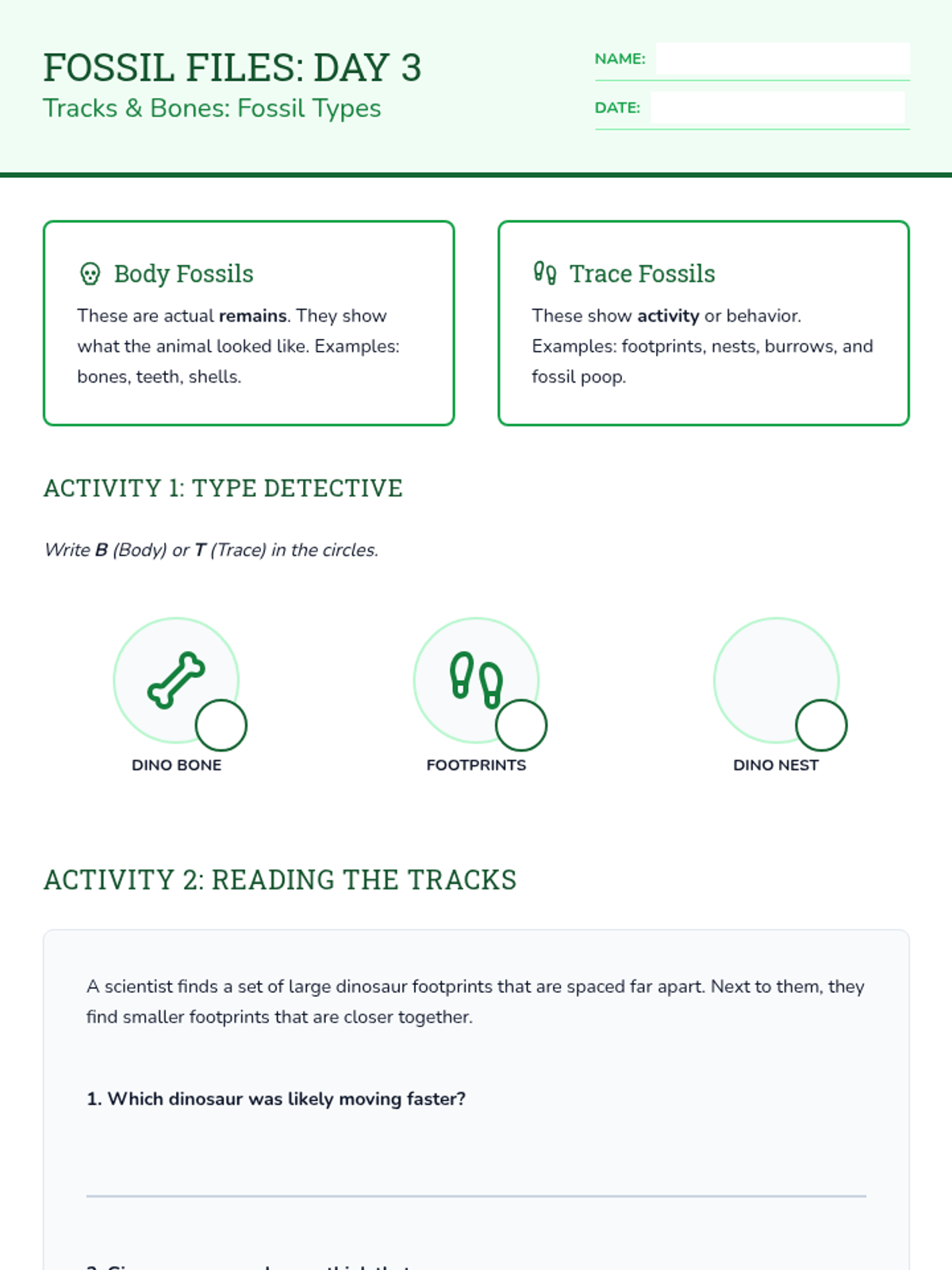
Day 3 independent student packet focusing on the distinction between body fossils and trace fossils. Includes a classification activity and behavior analysis scenarios.
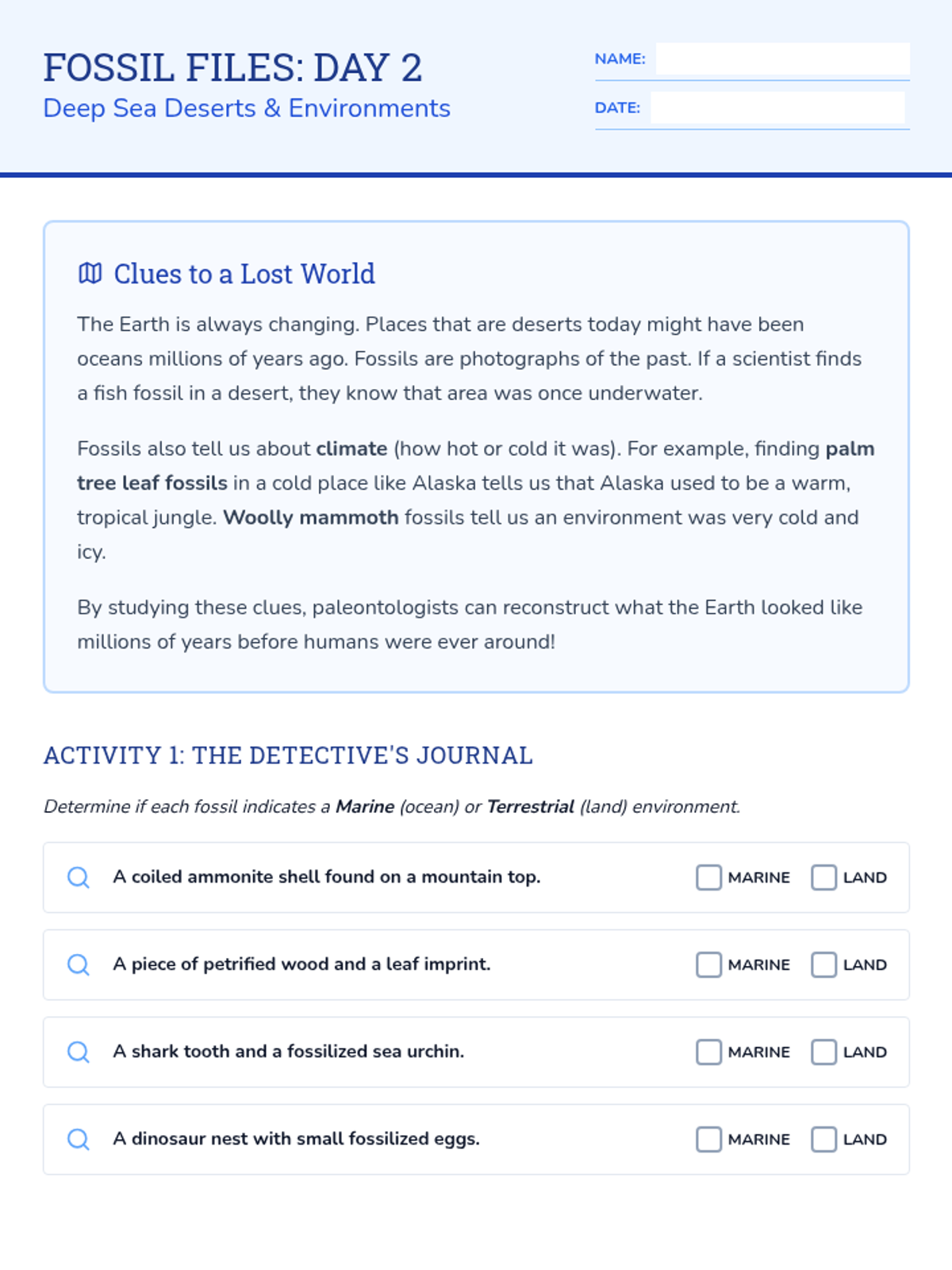
Day 2 independent student packet focusing on using fossils as evidence of past environments (marine vs. terrestrial). Includes deductive reasoning tasks and a visual reconstruction activity.
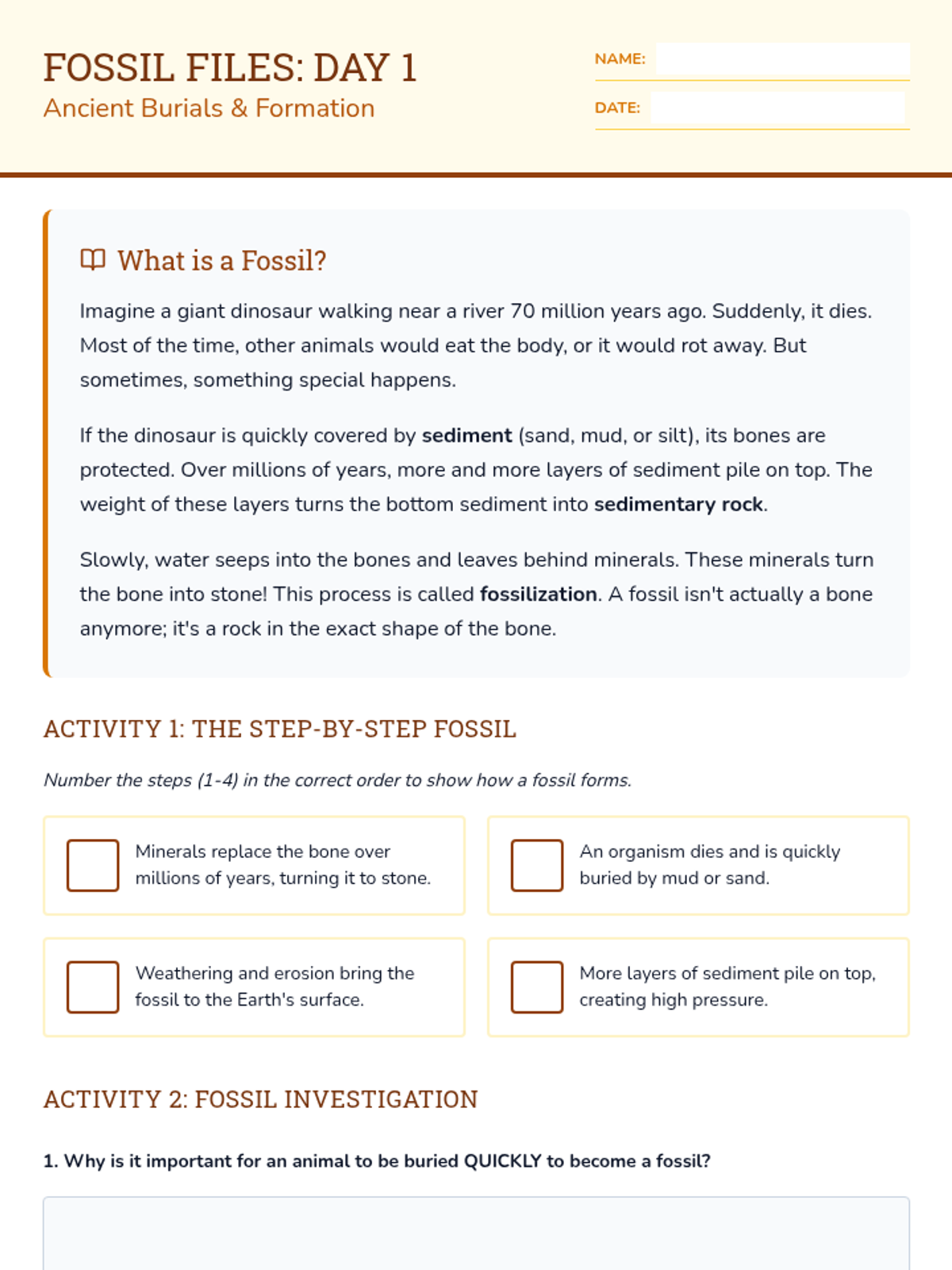
Day 1 independent student packet focusing on fossil formation processes and the Law of Superposition. Includes reading, sequencing, and diagram labeling activities.
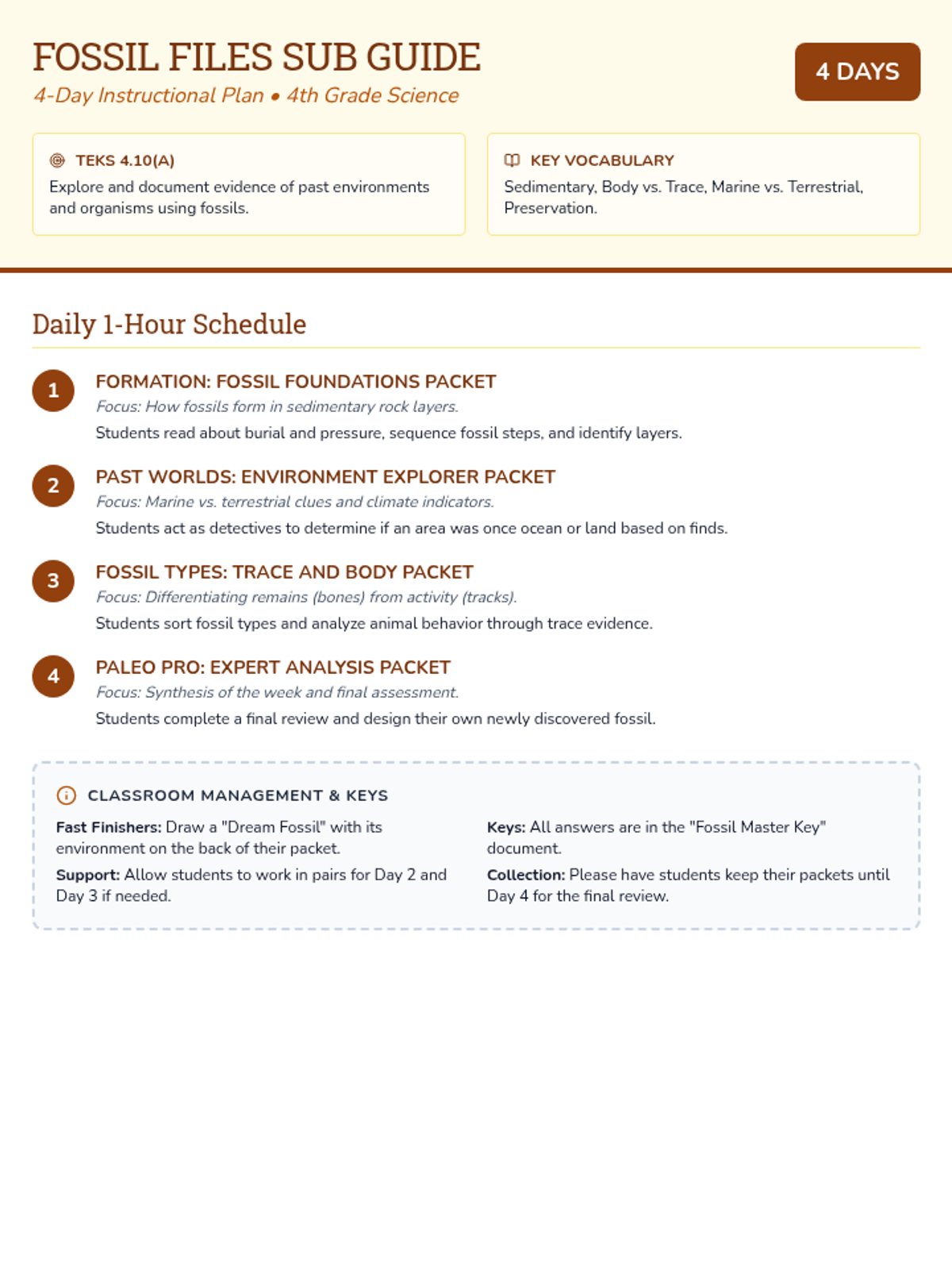
A comprehensive teacher/substitute guide detailing a 4-day instructional plan for fossils and past environments, including daily objectives, schedules, and tips.
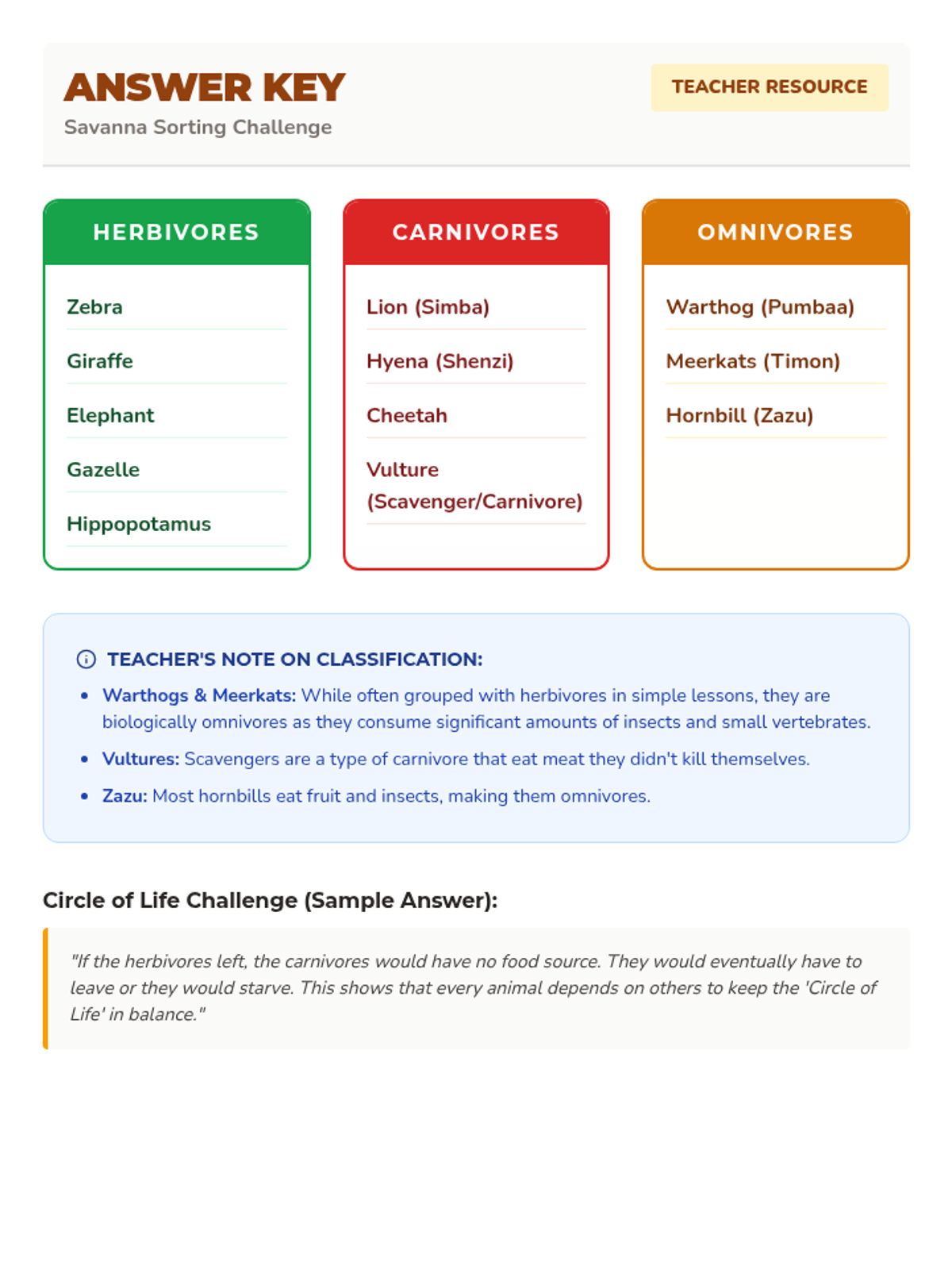
An answer key for the Savanna Sorting Worksheet, including biological notes for teachers regarding complex dietary classifications like omnivorous warthogs.
A polished 5-slide instructional presentation explaining animal diets and ecological balance with Lion King characters. Now features improved contrast, accurate icons, and a circular diagram of the Circle of Life.
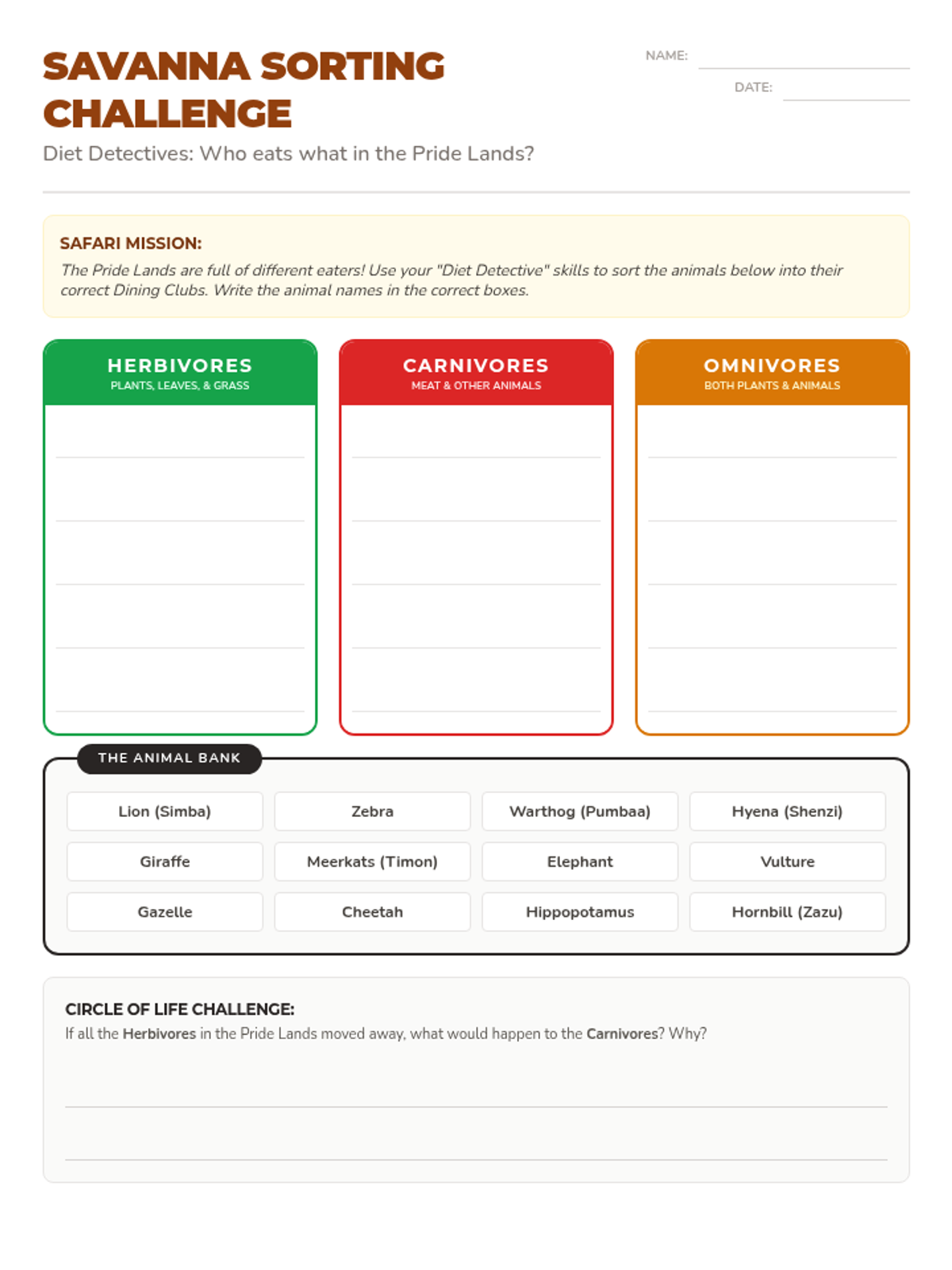
A single-page sorting activity where students categorize characters and savanna animals by diet, featuring a clear animal bank and reflection section.
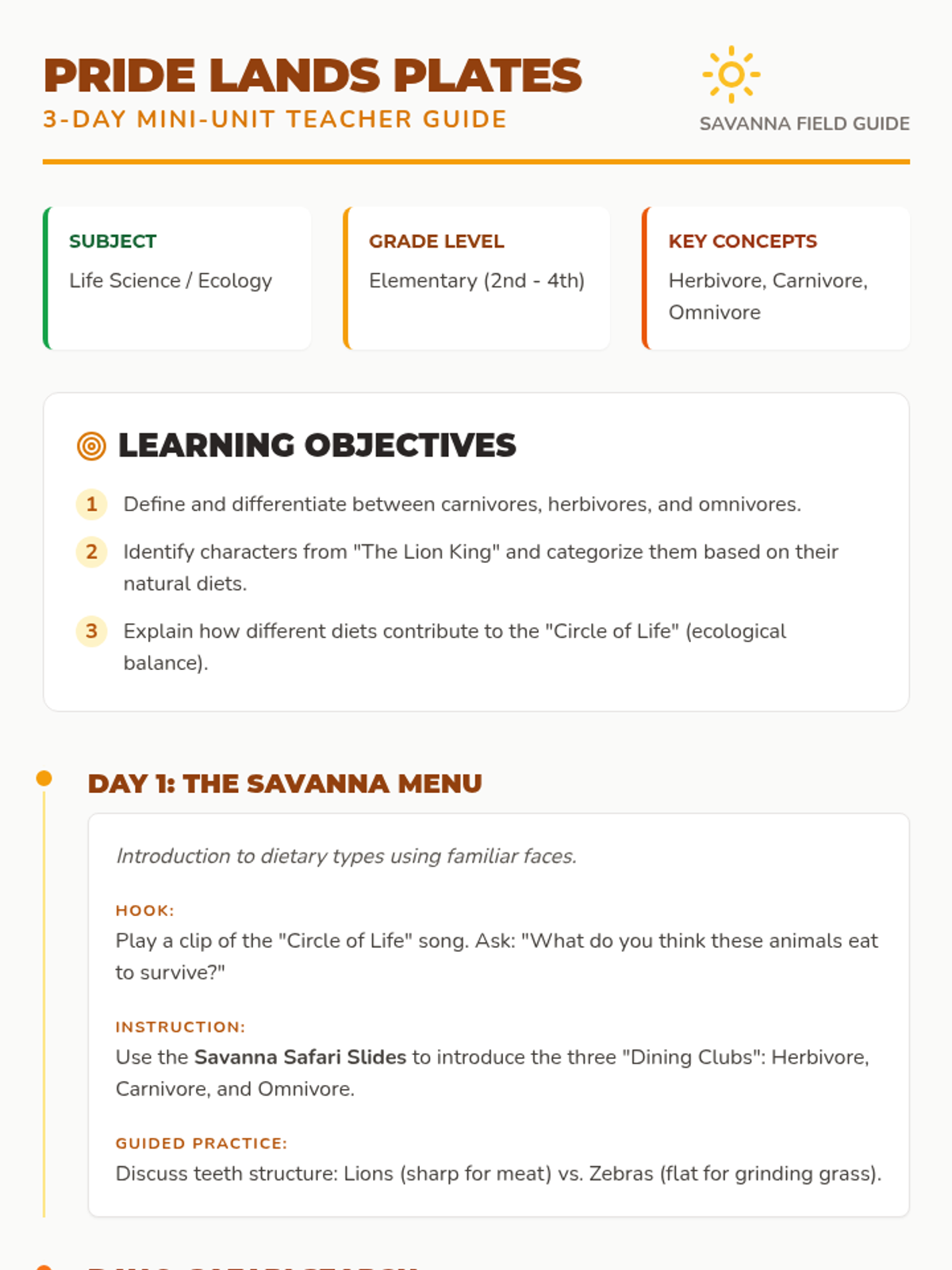
A comprehensive 3-day teacher guide for the Pride Lands Plates unit, including daily lesson breakdowns, learning objectives, and references to accompanying materials.
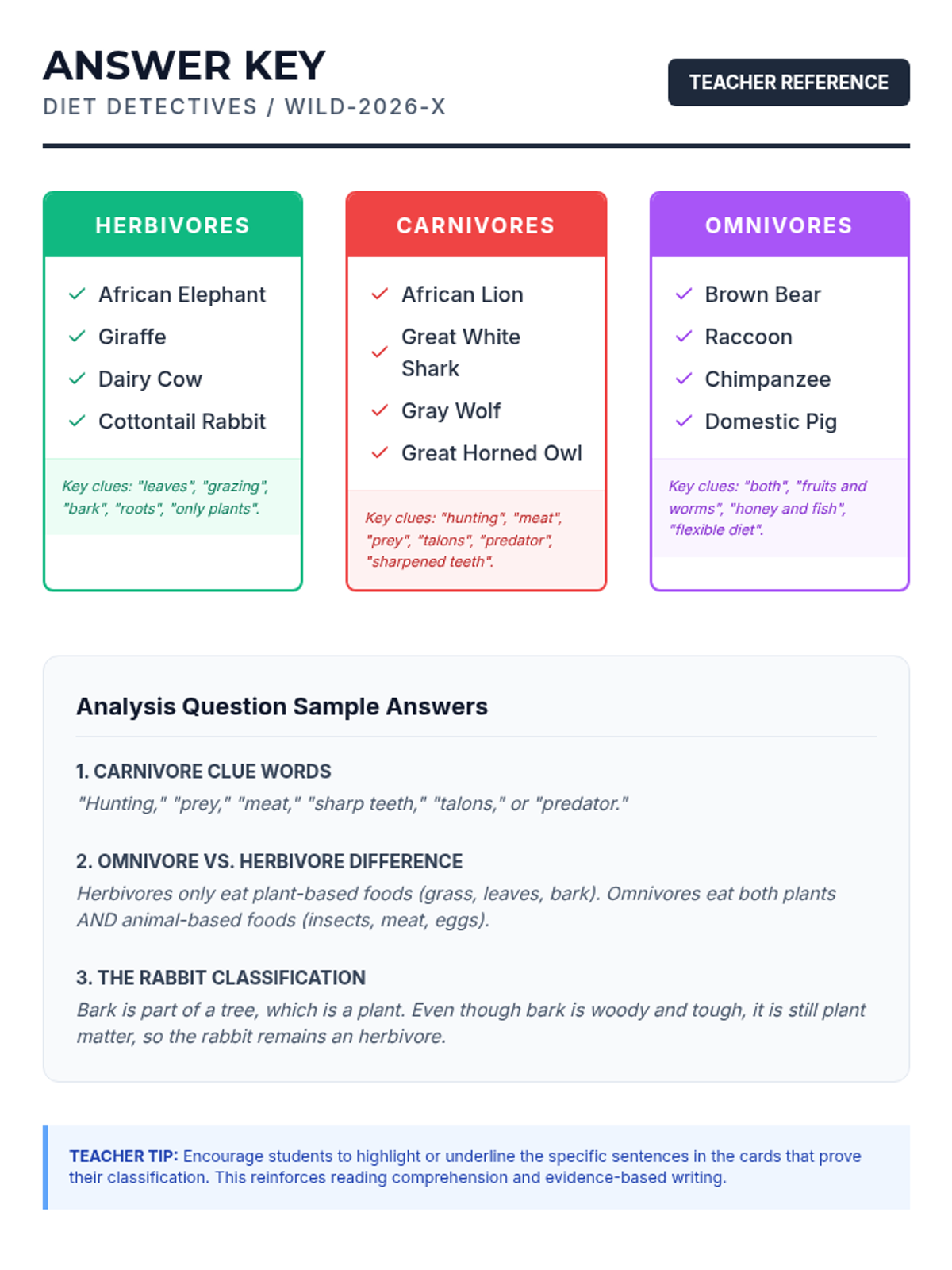
A teacher's answer key providing the correct classification for all 12 animals and sample responses for the analysis questions.
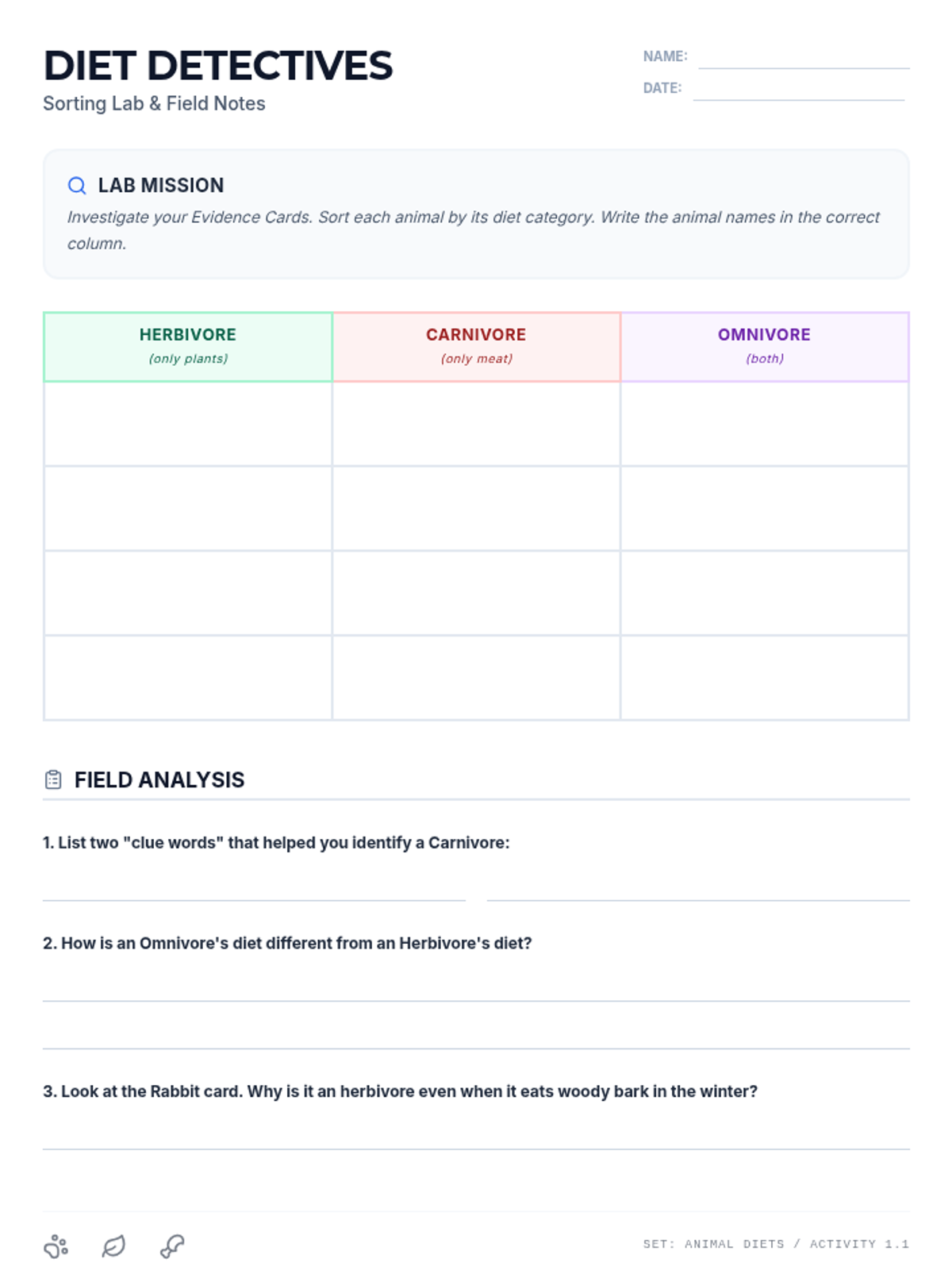
A sorting mat and recording sheet for students to document their animal diet classifications and provide textual evidence for their findings.
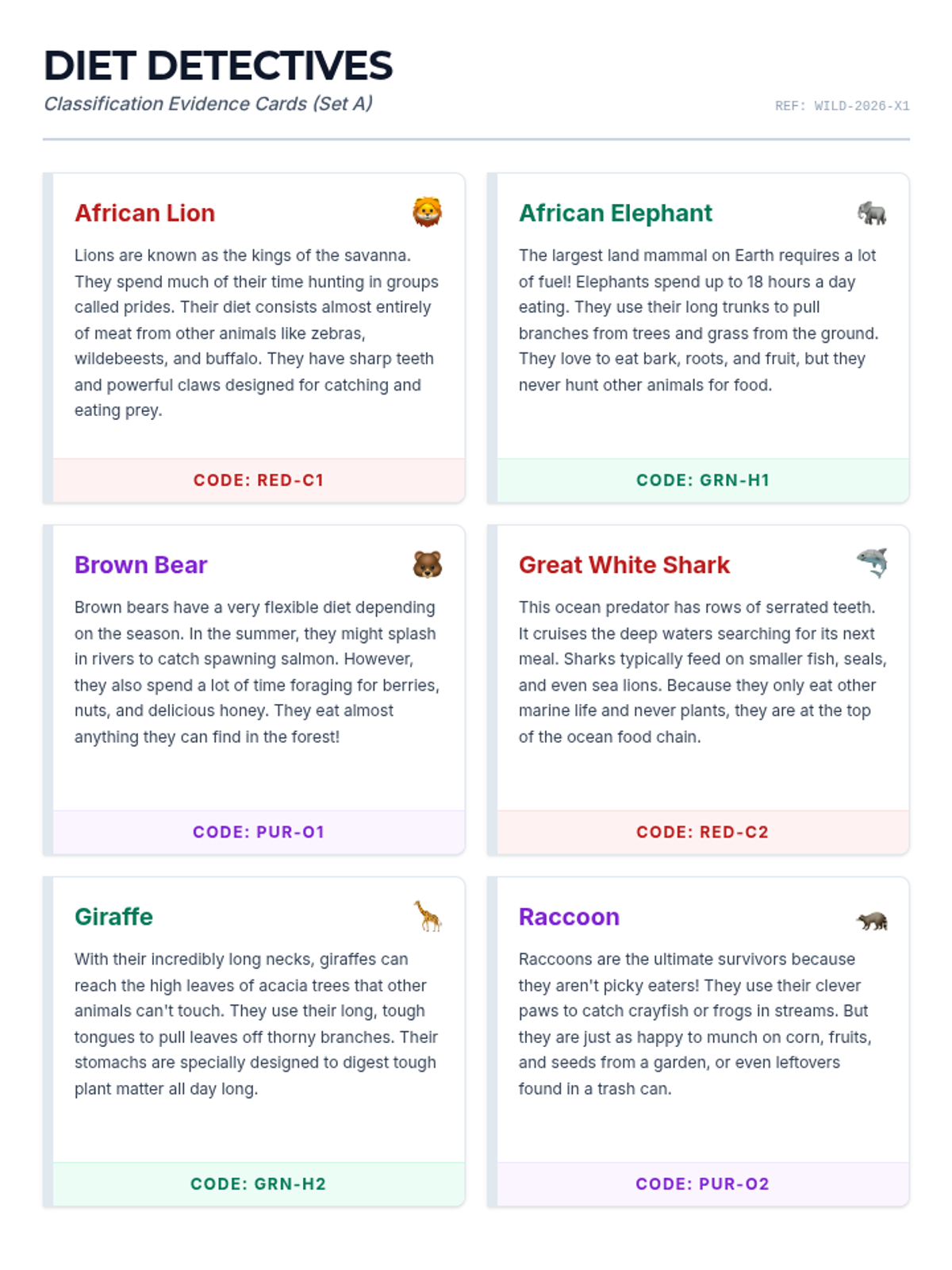
A set of 12 color-coded classification cards featuring various animals and short descriptions of their diets to help students identify herbivores, carnivores, and omnivores.
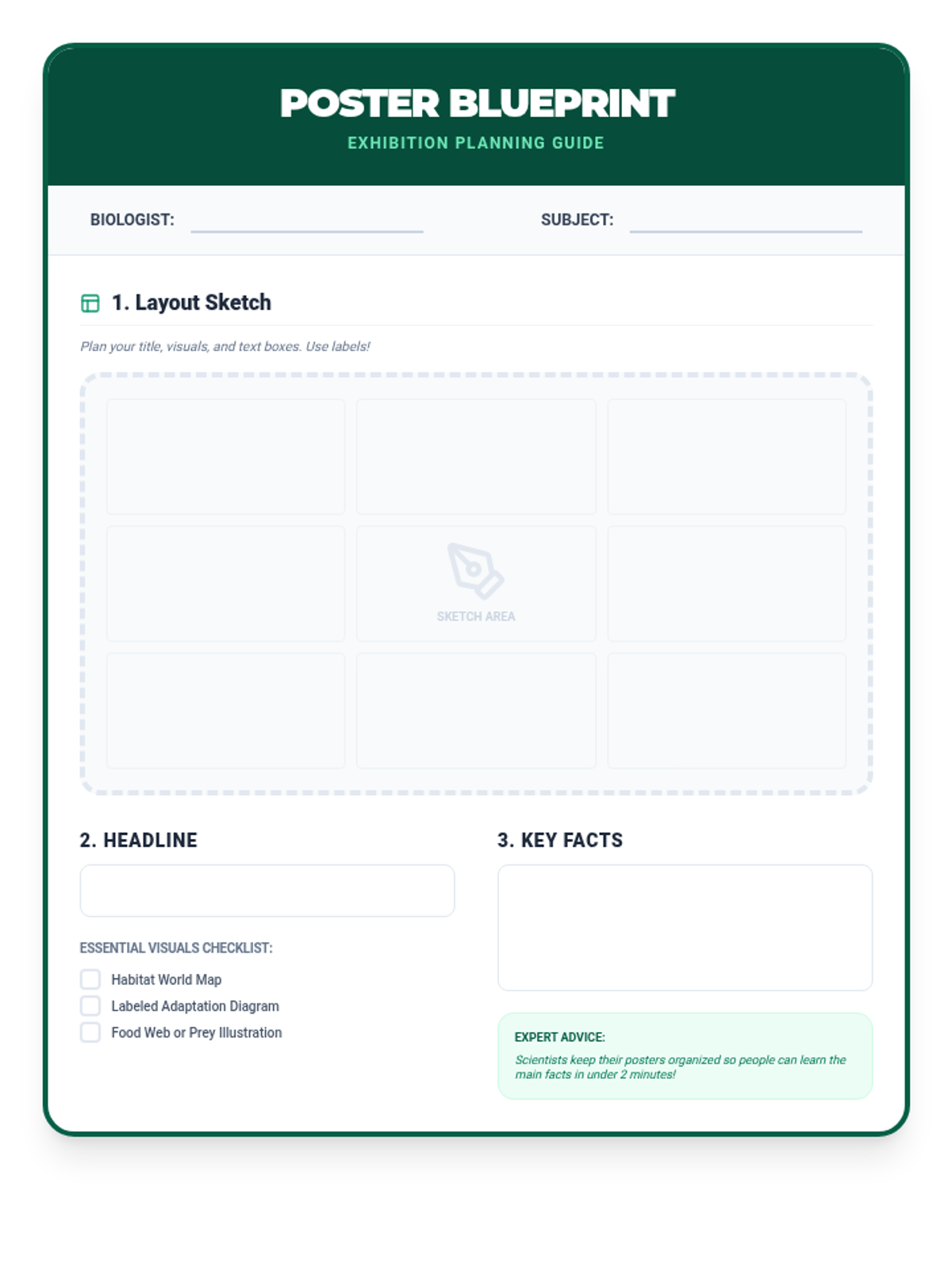
A planning document for students to design their final scientific exhibition poster, including layout sketching space and content reminders.
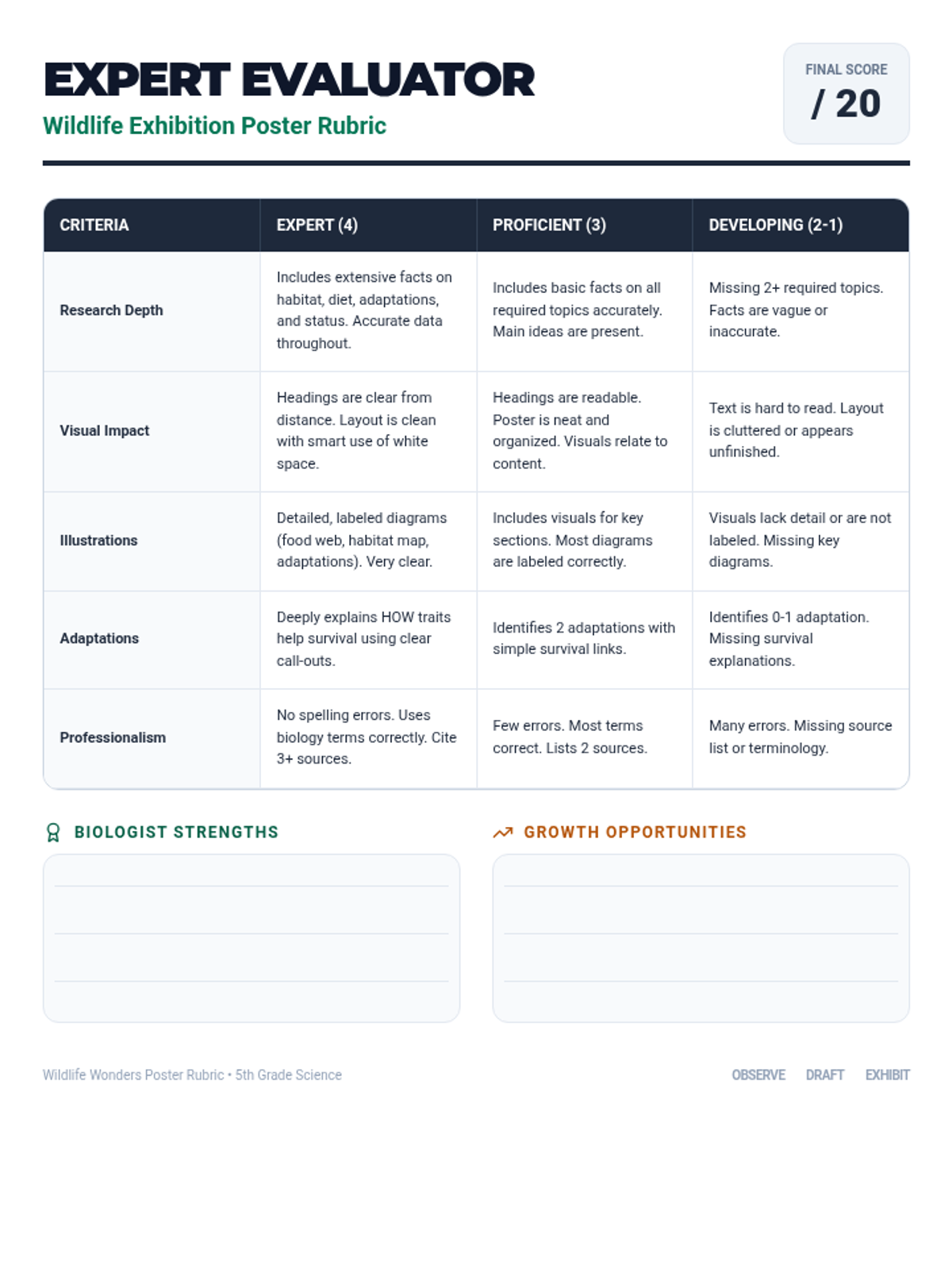
A clear and objective assessment rubric for the Wildlife Wonders poster project, evaluating students on research depth, visual impact, scientific illustrations, and professionalism.
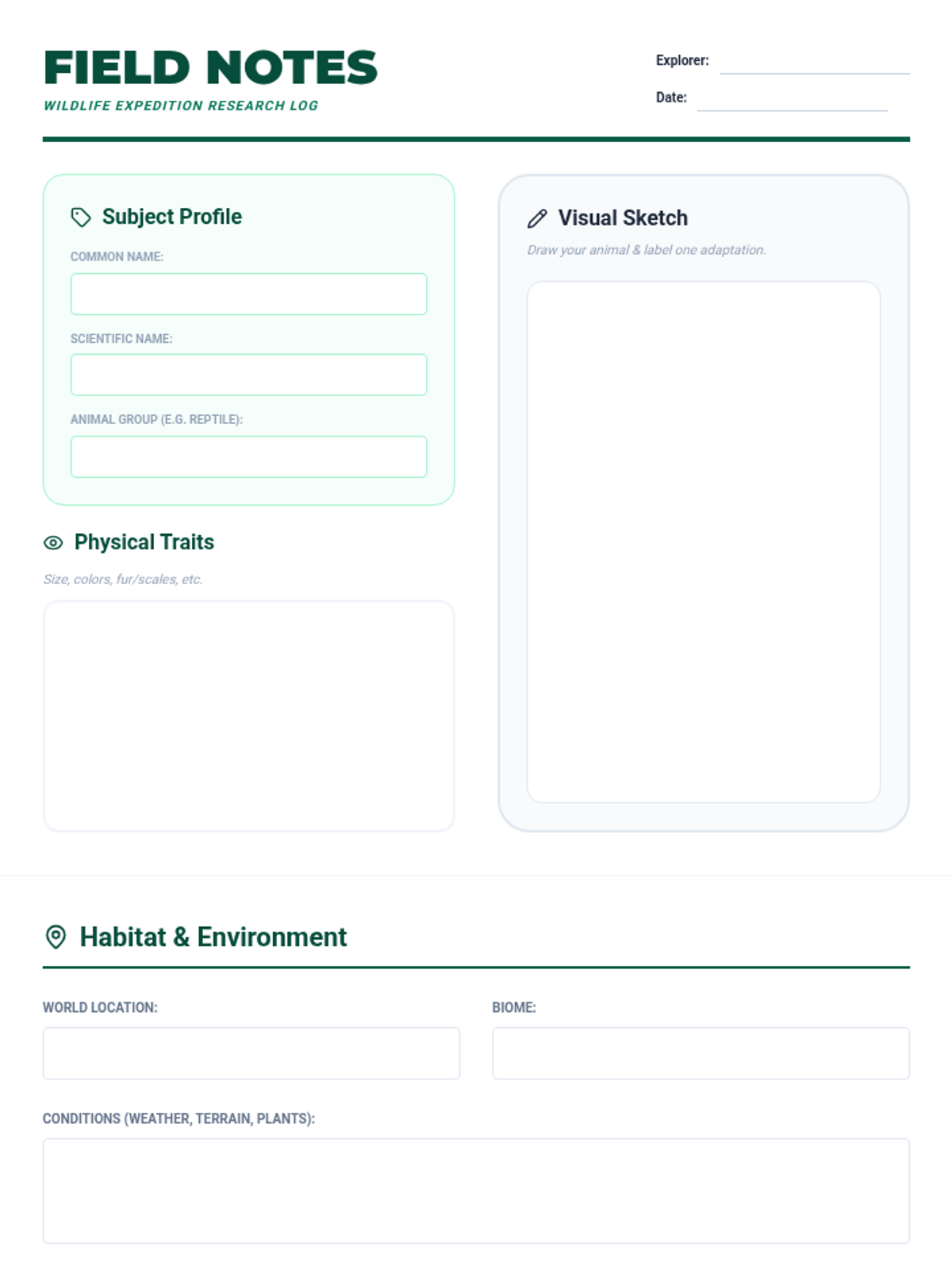
A structured research packet for students to gather and organize information about their chosen animal, including sections for habitat, adaptations, food web roles, and conservation status.
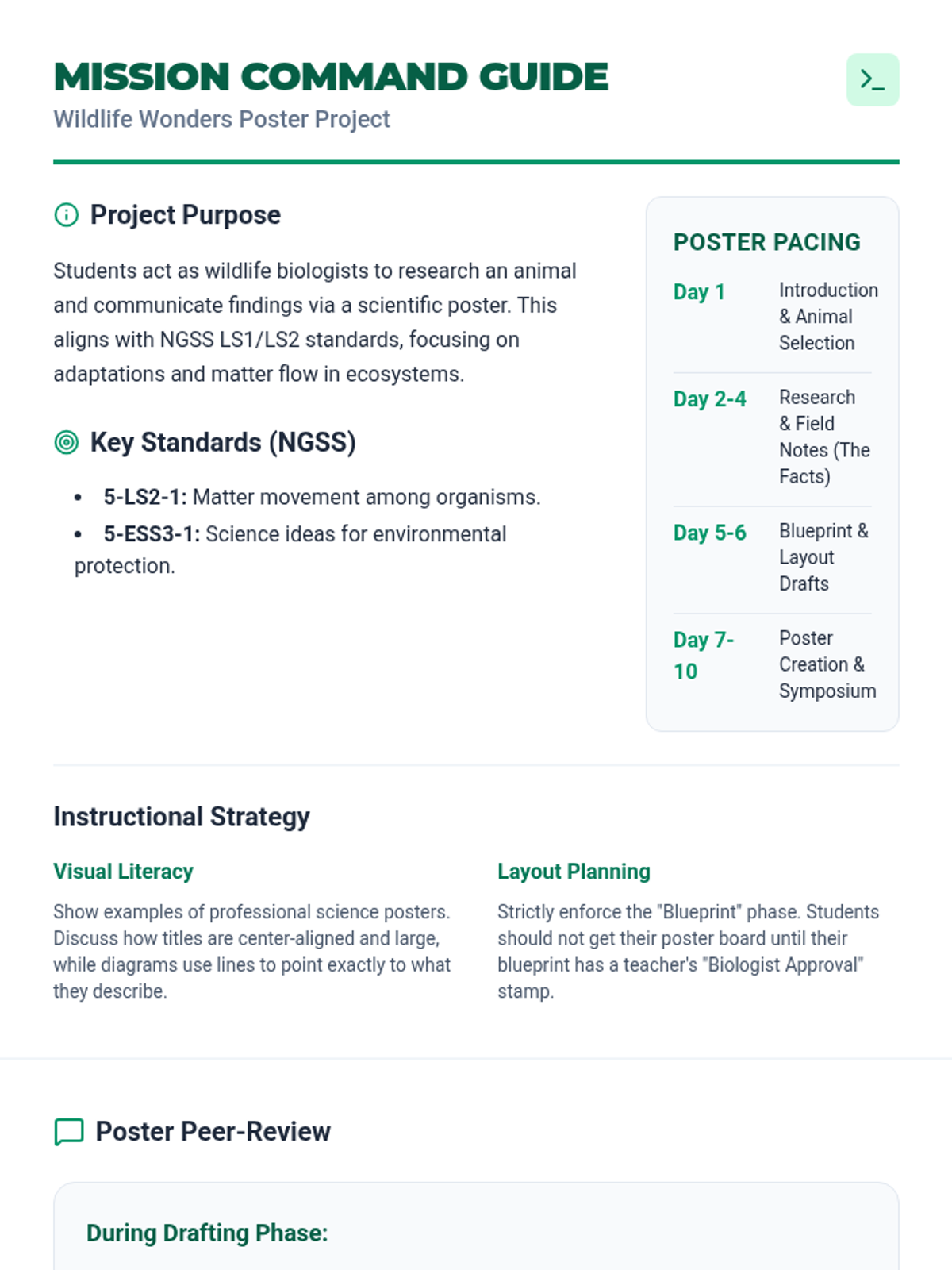
A comprehensive teacher guide for the Wildlife Wonders poster project, featuring pacing guides, layout planning strategies, and symposium facilitation tips.
Engaging visual slides to introduce the Wildlife Wonders research project, focusing on the creation of a scientific exhibition poster.