Fundamental biological structures and processes from microscopic cells and genetic inheritance to complex body systems and global ecosystems. Addresses plant and animal adaptations, trait expression, and the cycles of life and cell division.
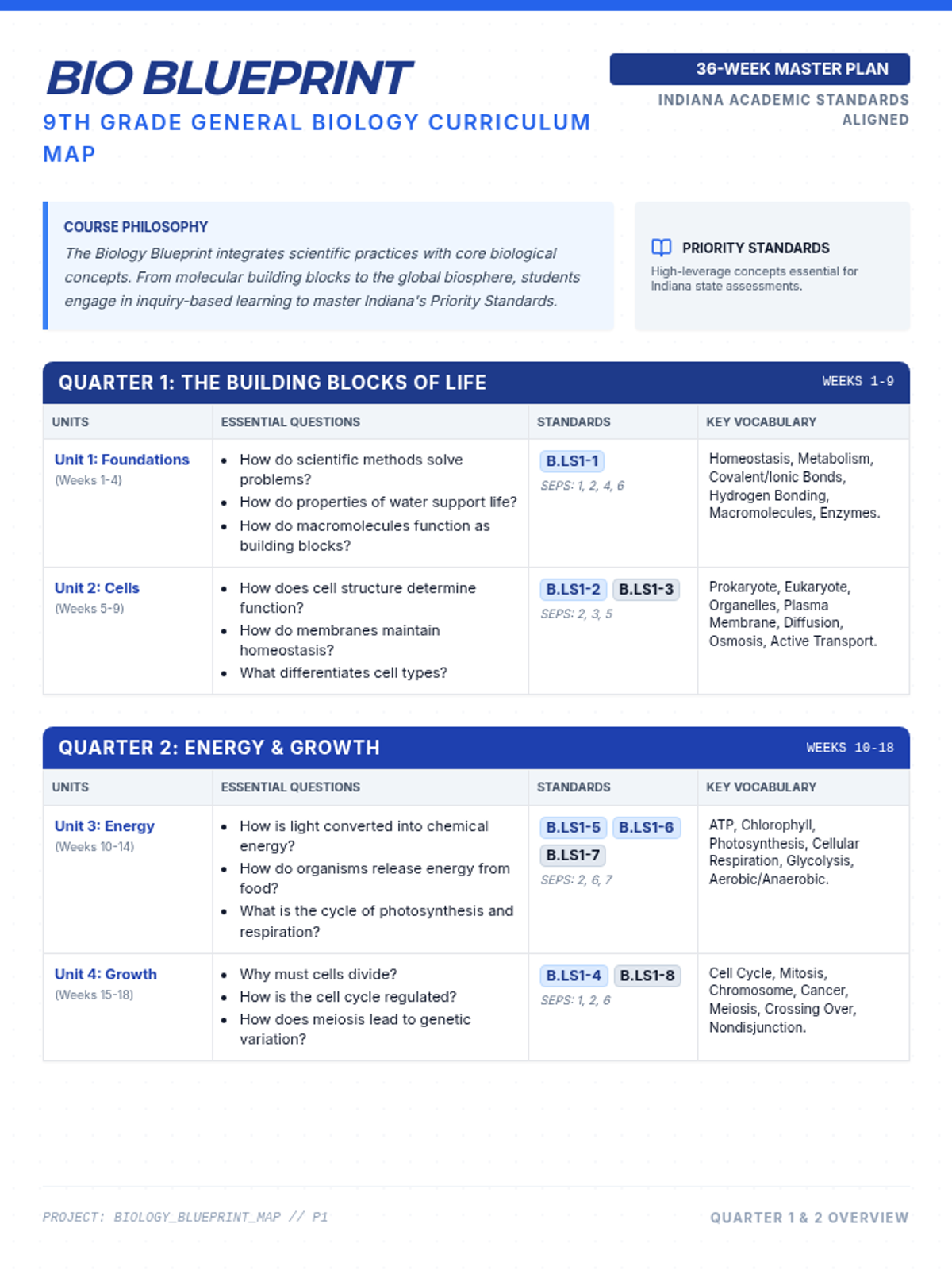
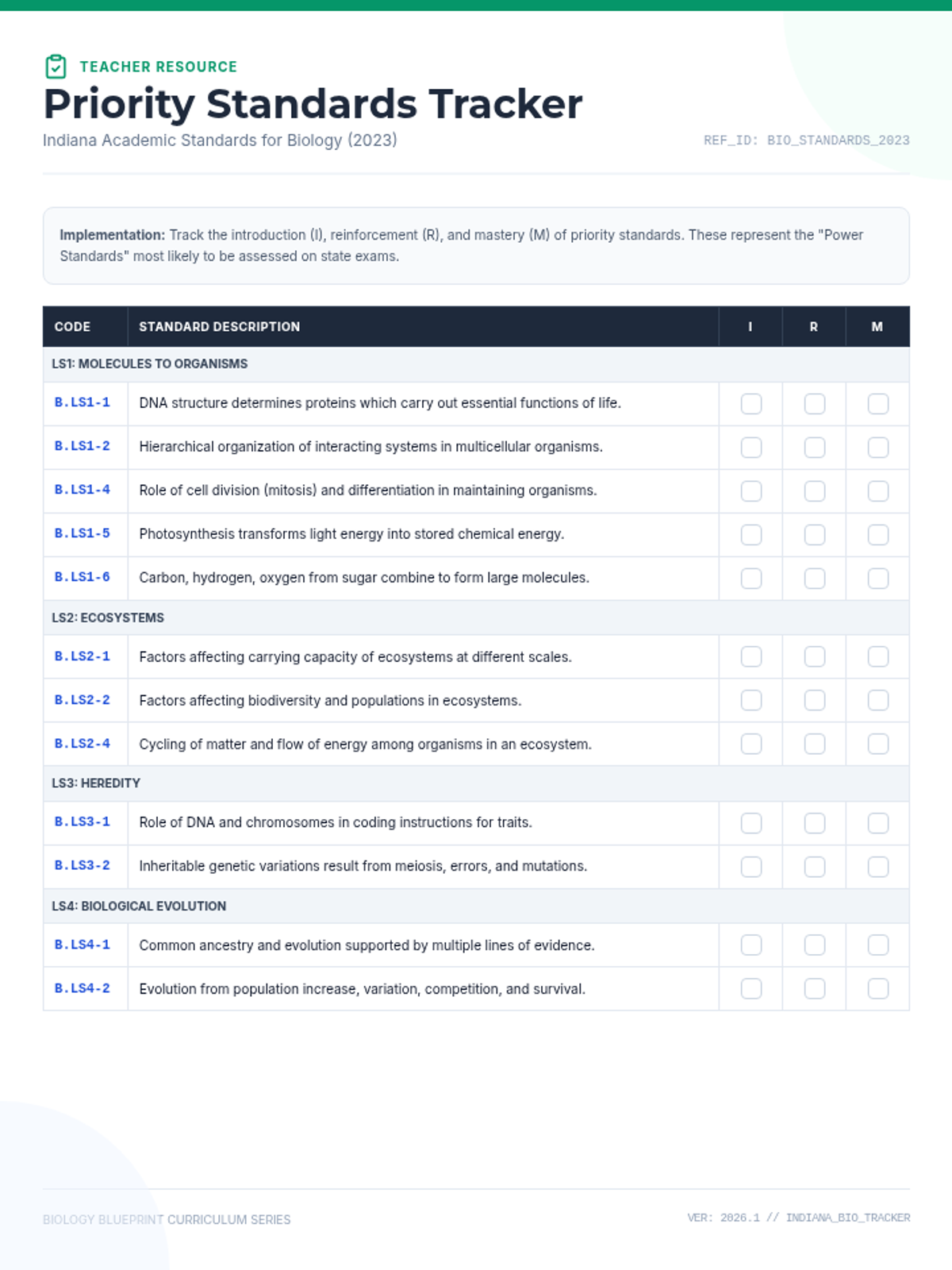
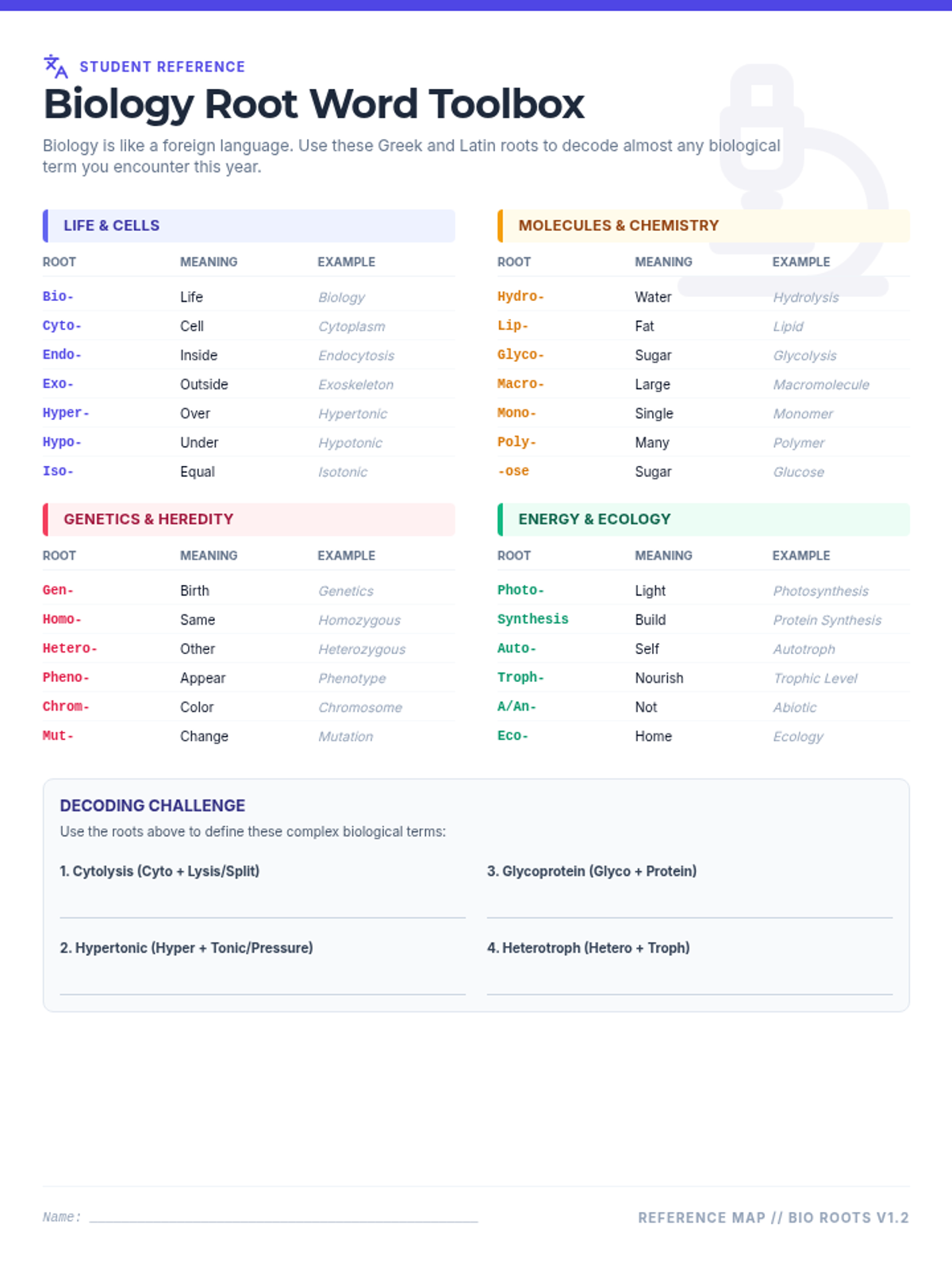
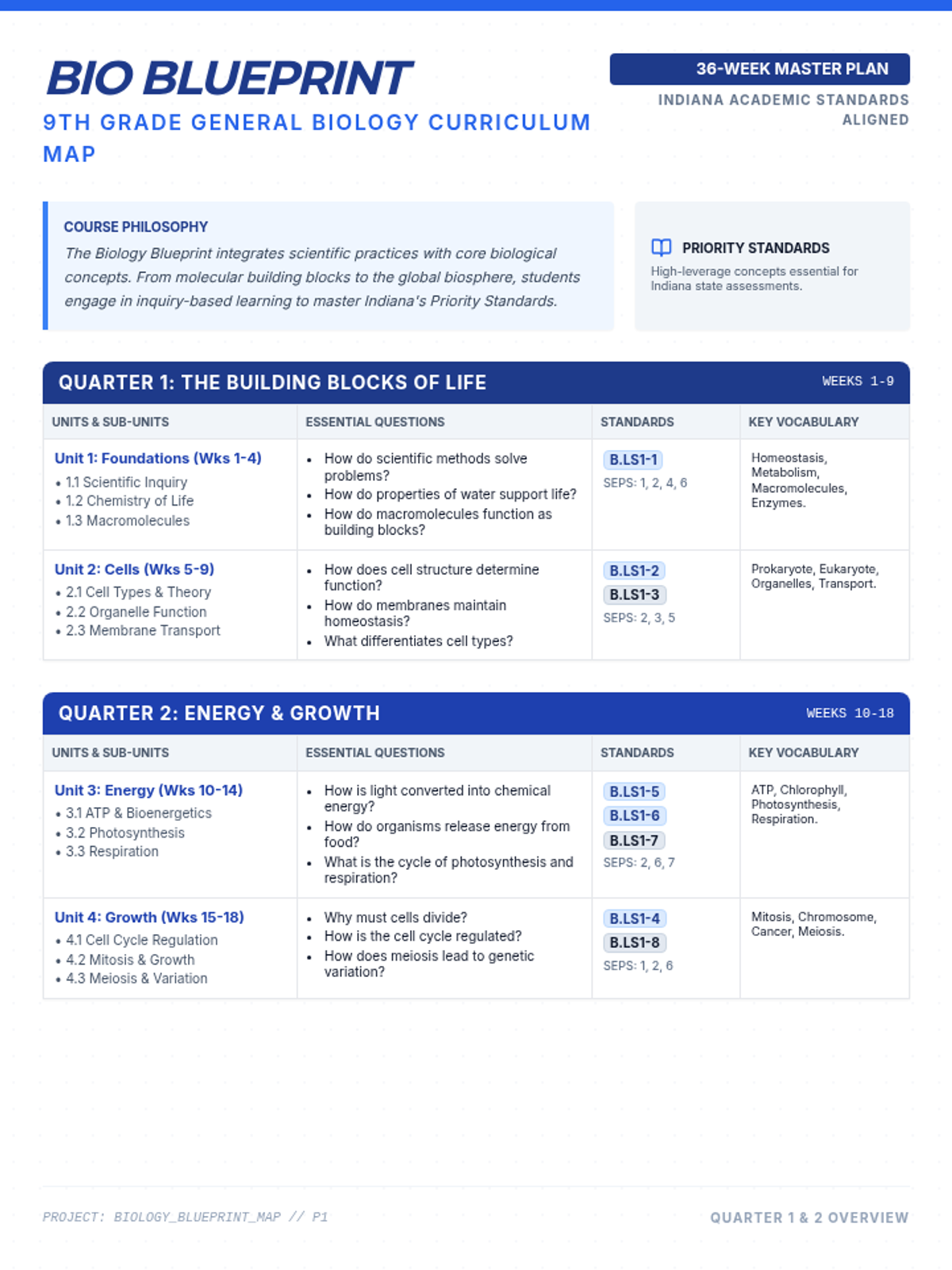
A foundational module containing the comprehensive year-long curriculum map, standards alignment documents, and essential vocabulary resources for 9th-grade biology.
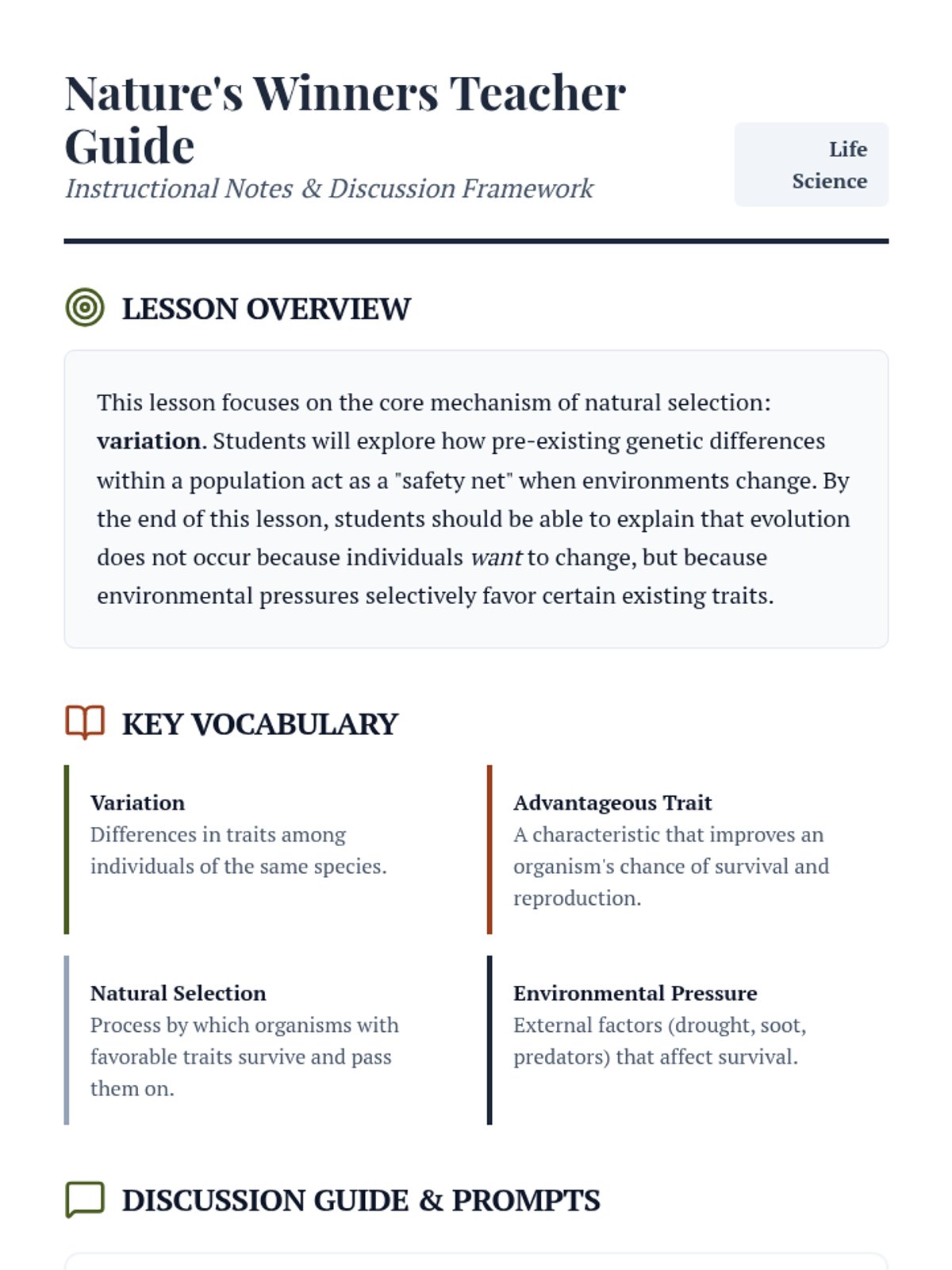
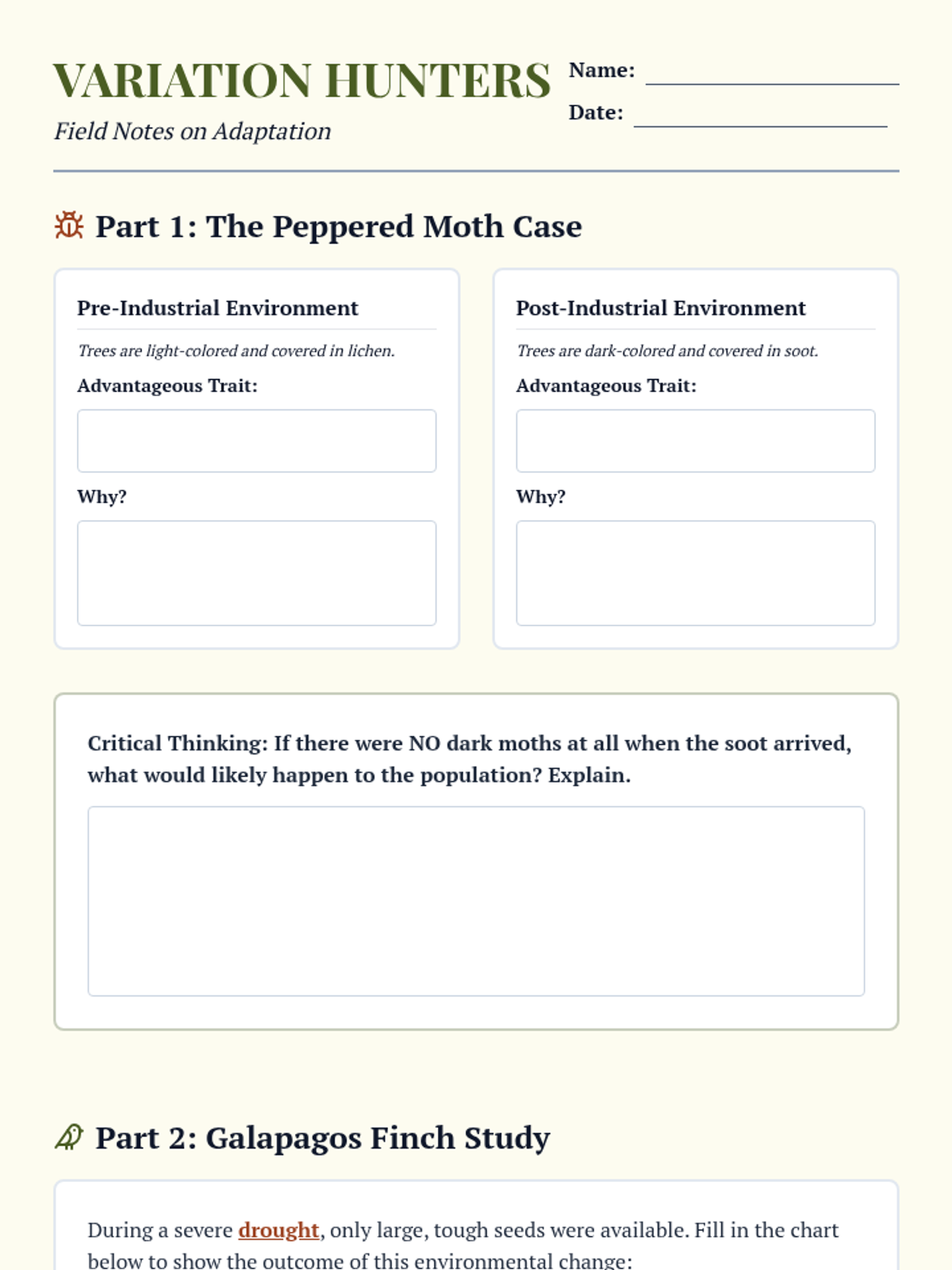
This lesson explores how genetic variation within a population influences survival during environmental changes, using peppered moths and Darwin's finches as primary case studies.
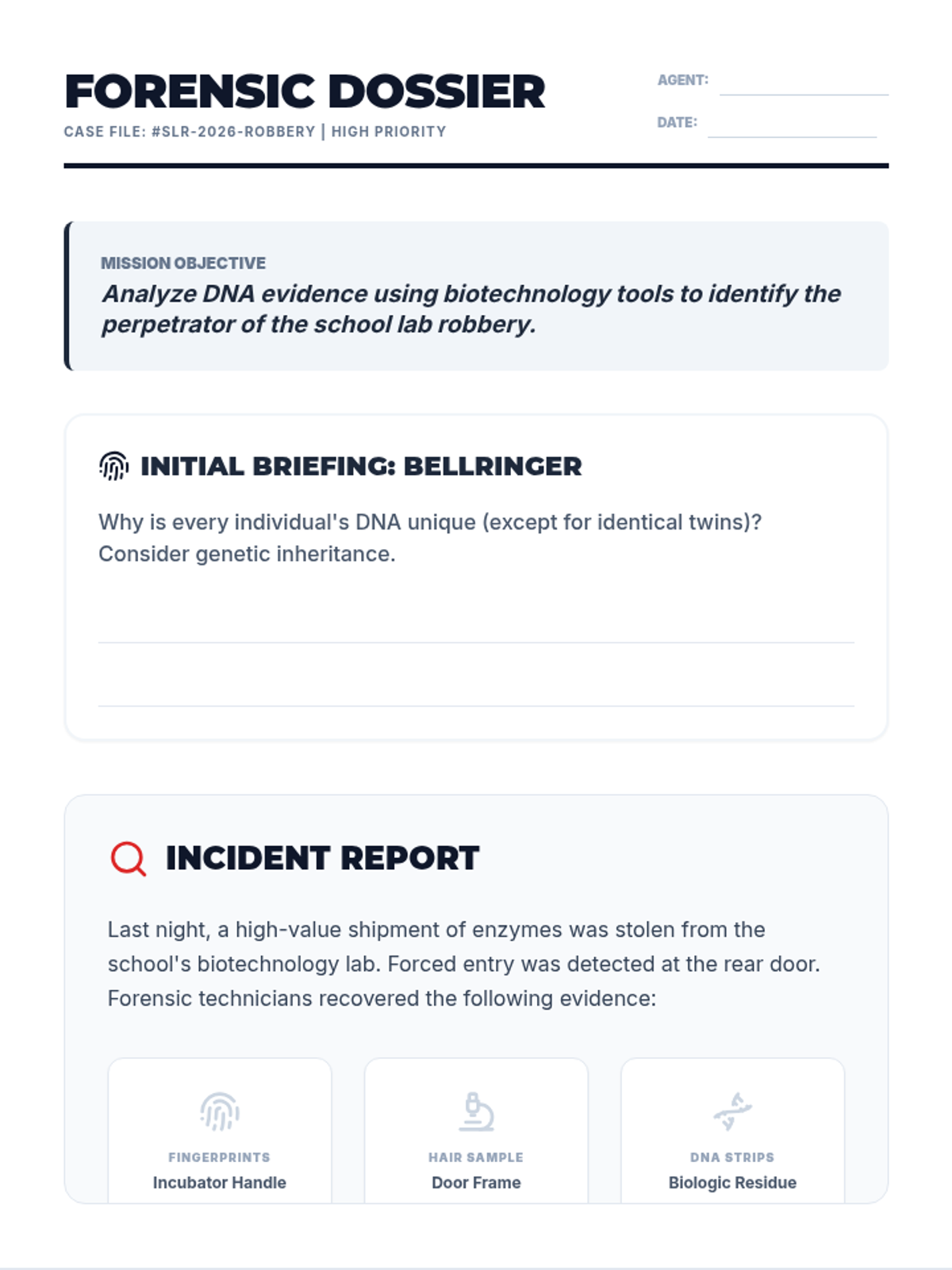
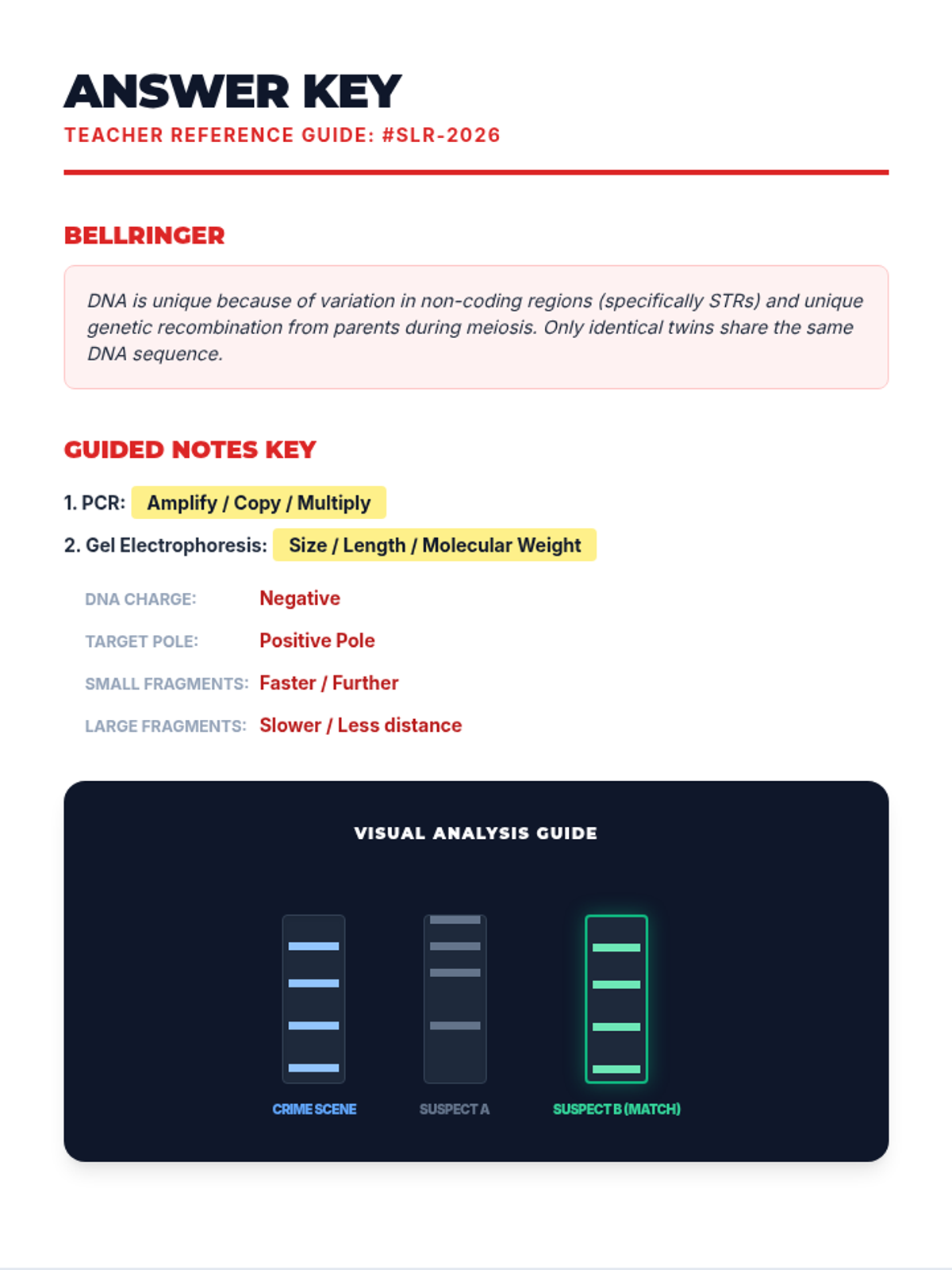
Students step into the role of forensic scientists to solve a school lab robbery. They will explore PCR, gel electrophoresis, and DNA fingerprinting to analyze evidence and identify a suspect using a Claim-Evidence-Reasoning framework.
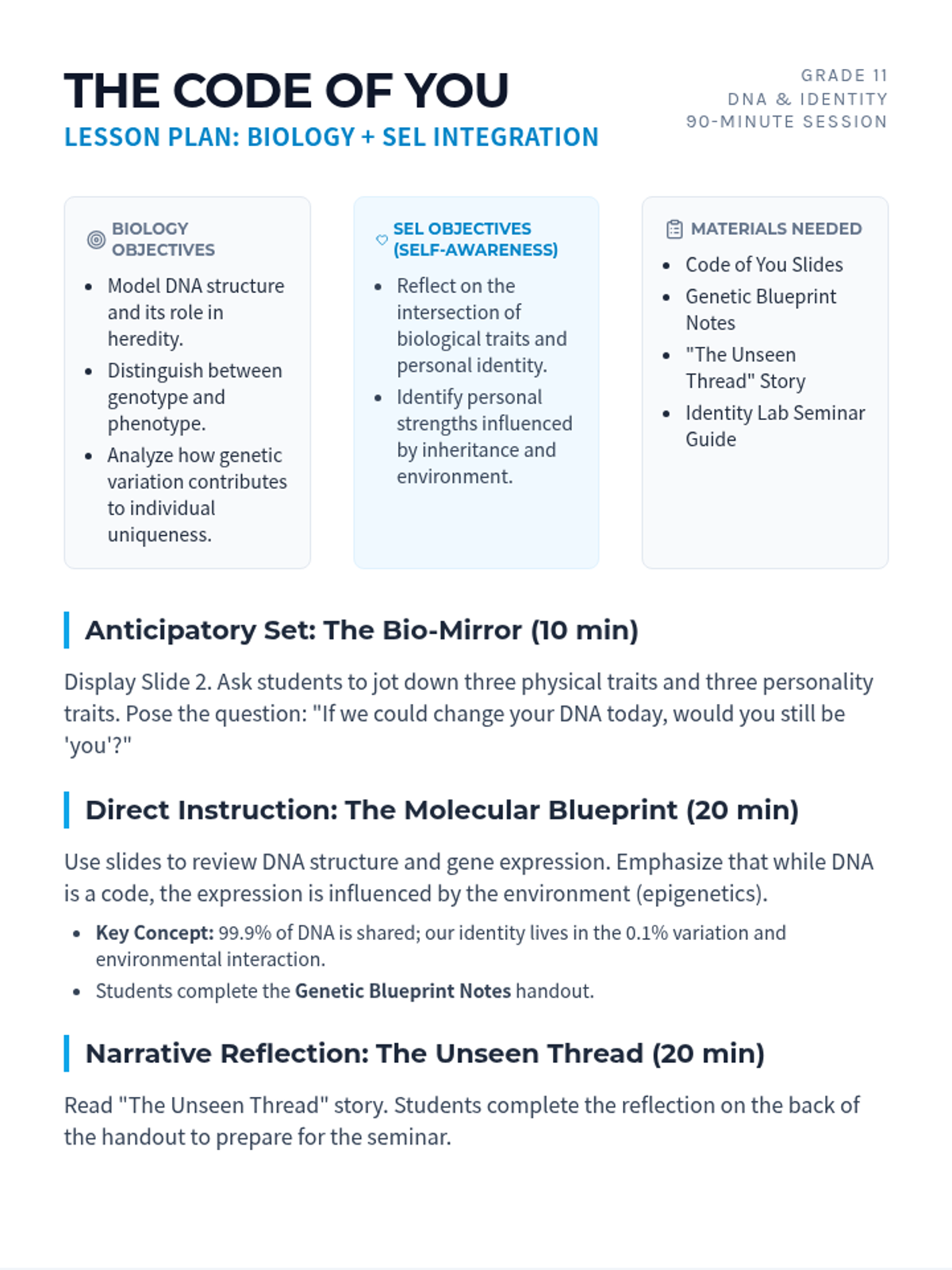
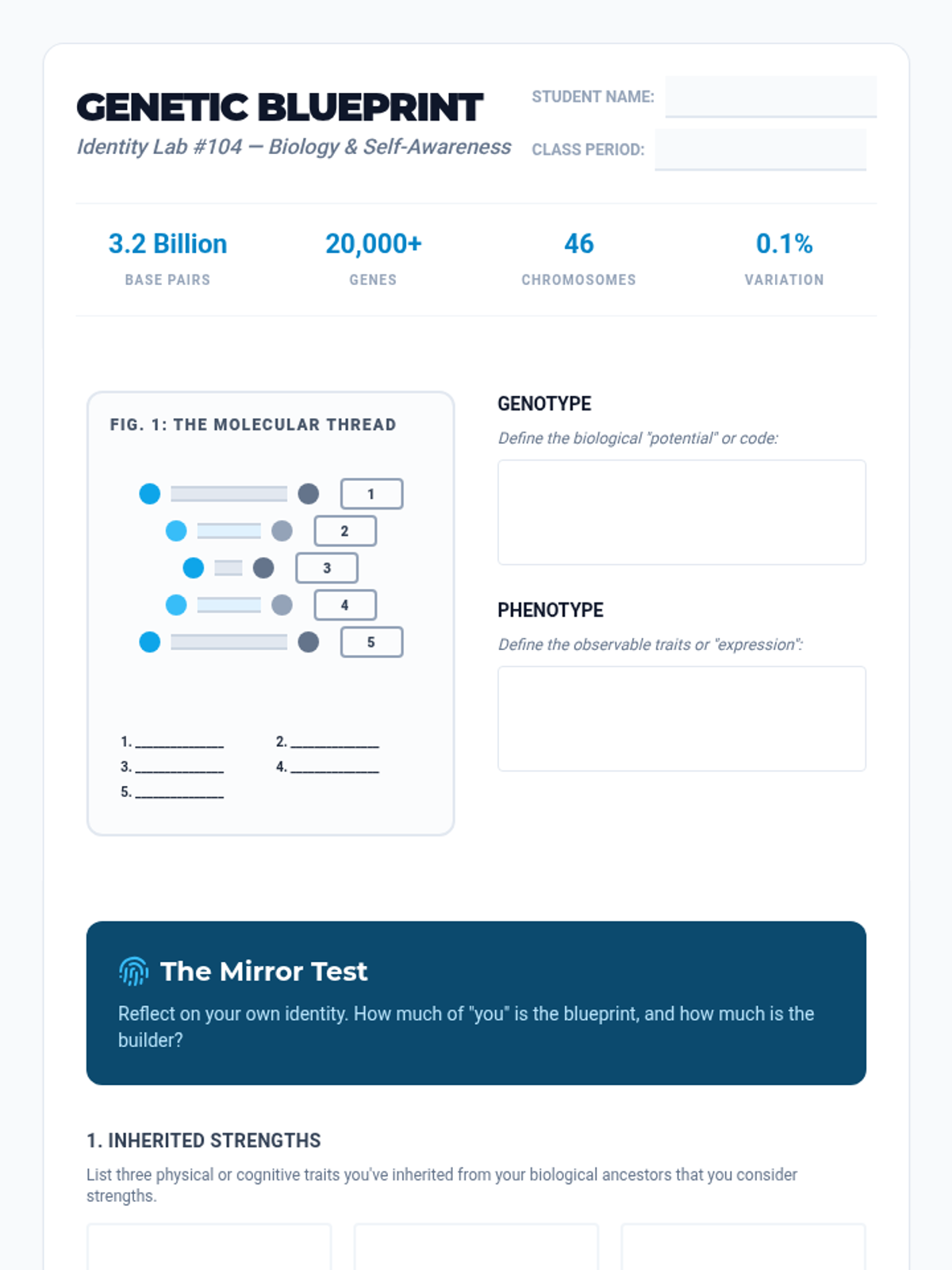
An integrated Biology and SEL lesson for 11th grade that explores the relationship between DNA, inheritance, and personal identity. Students analyze the science of genetics while reflecting on what makes them unique and how much of their 'self' is written in their code.
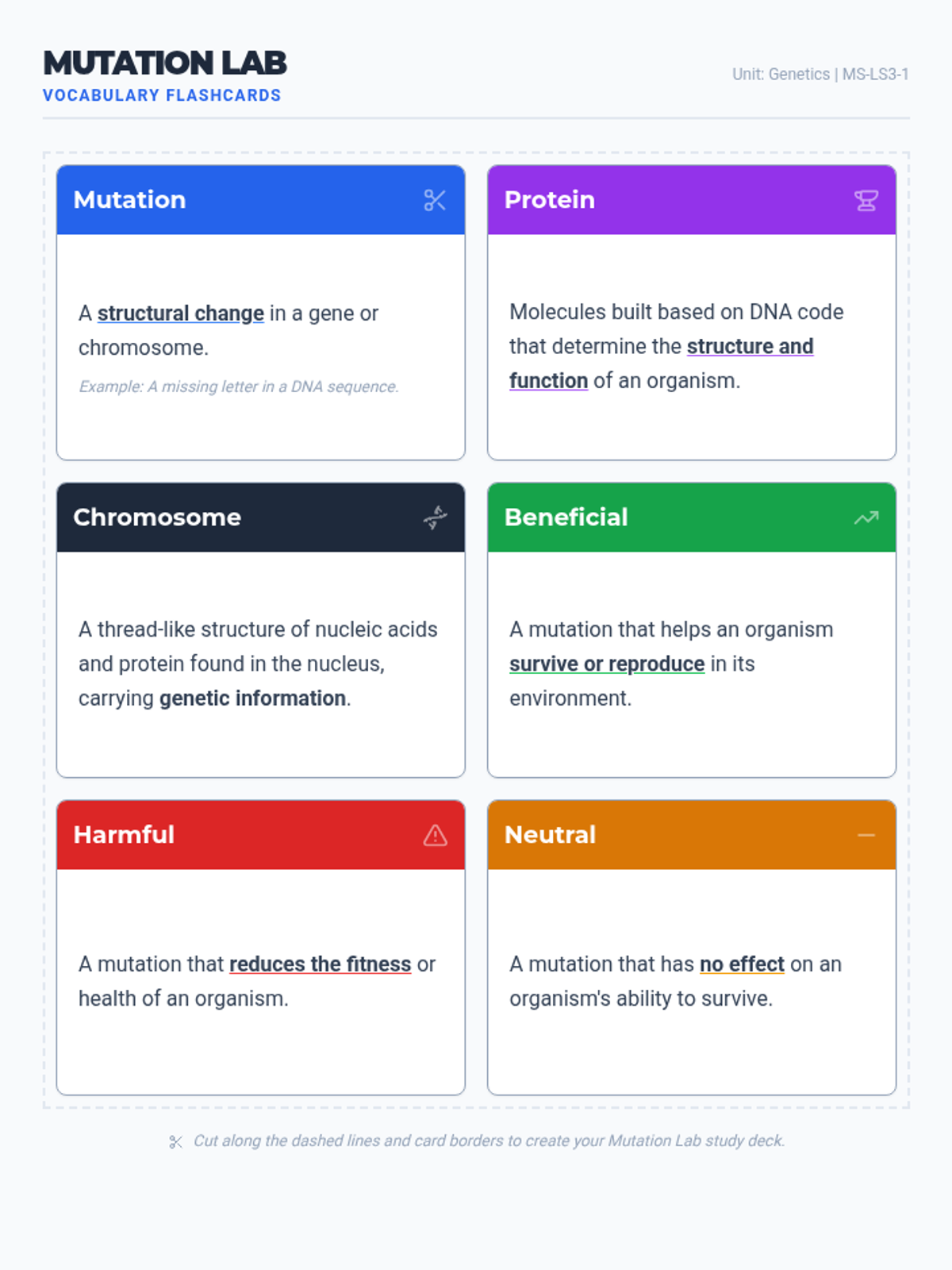
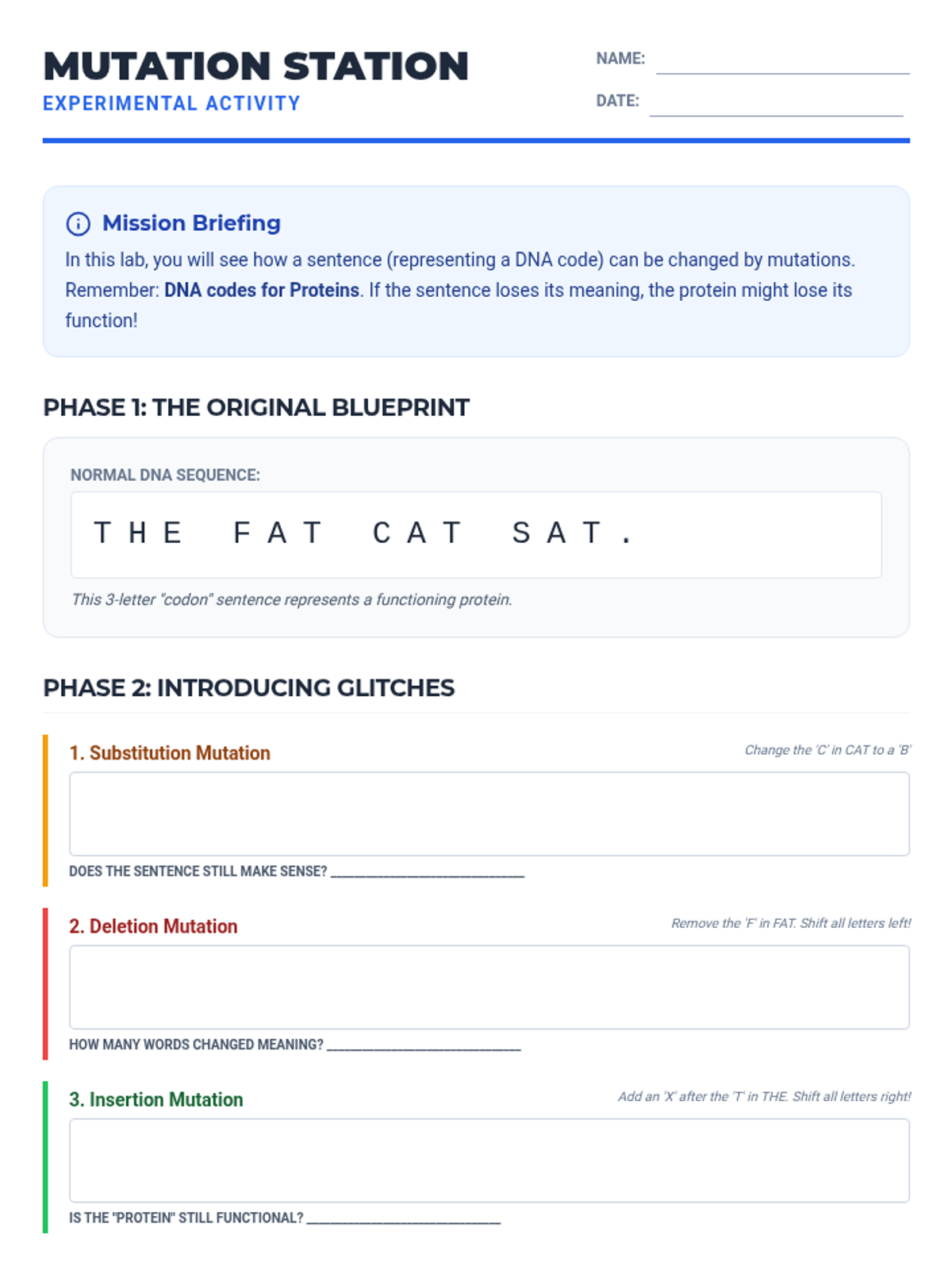
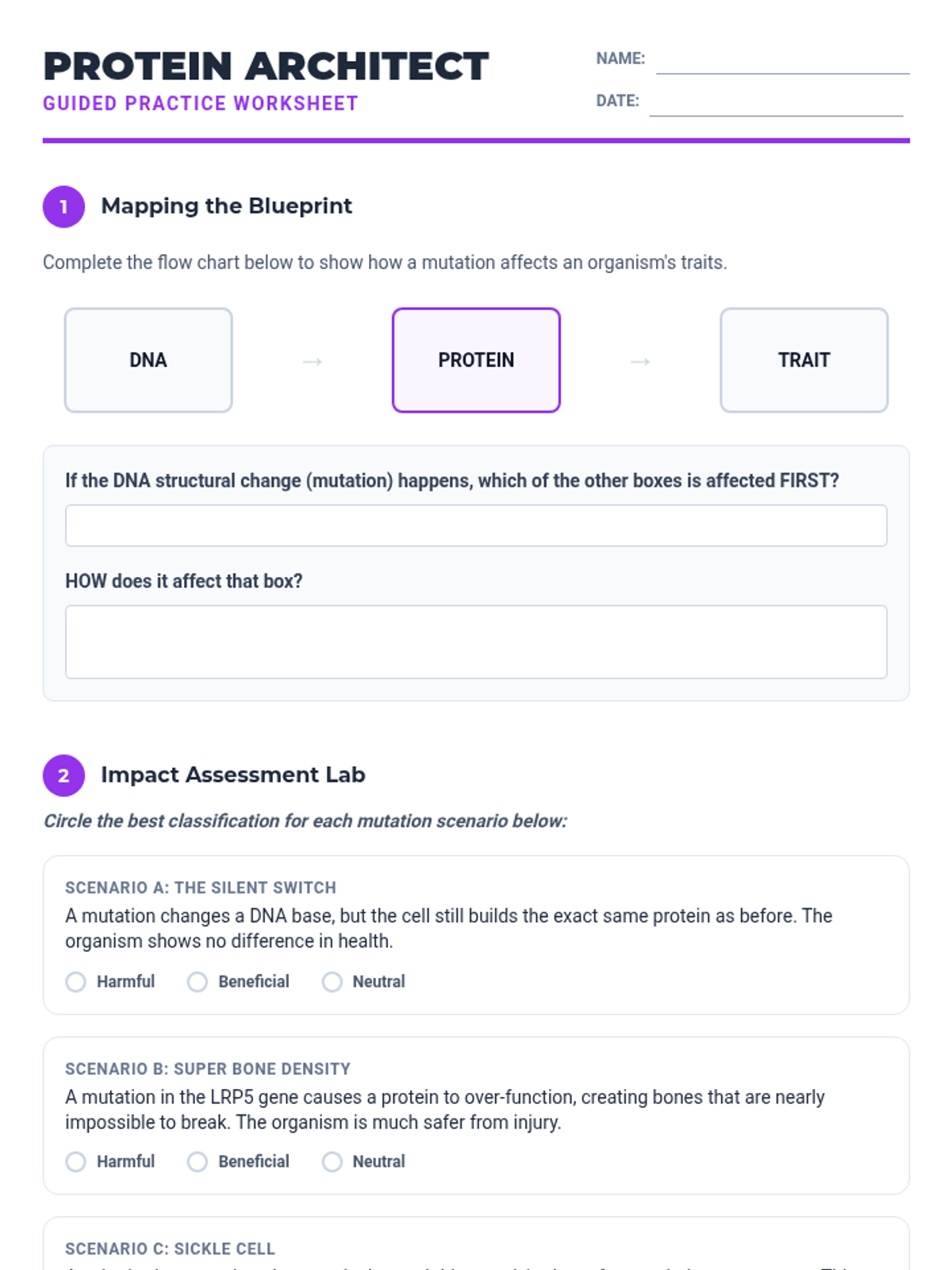
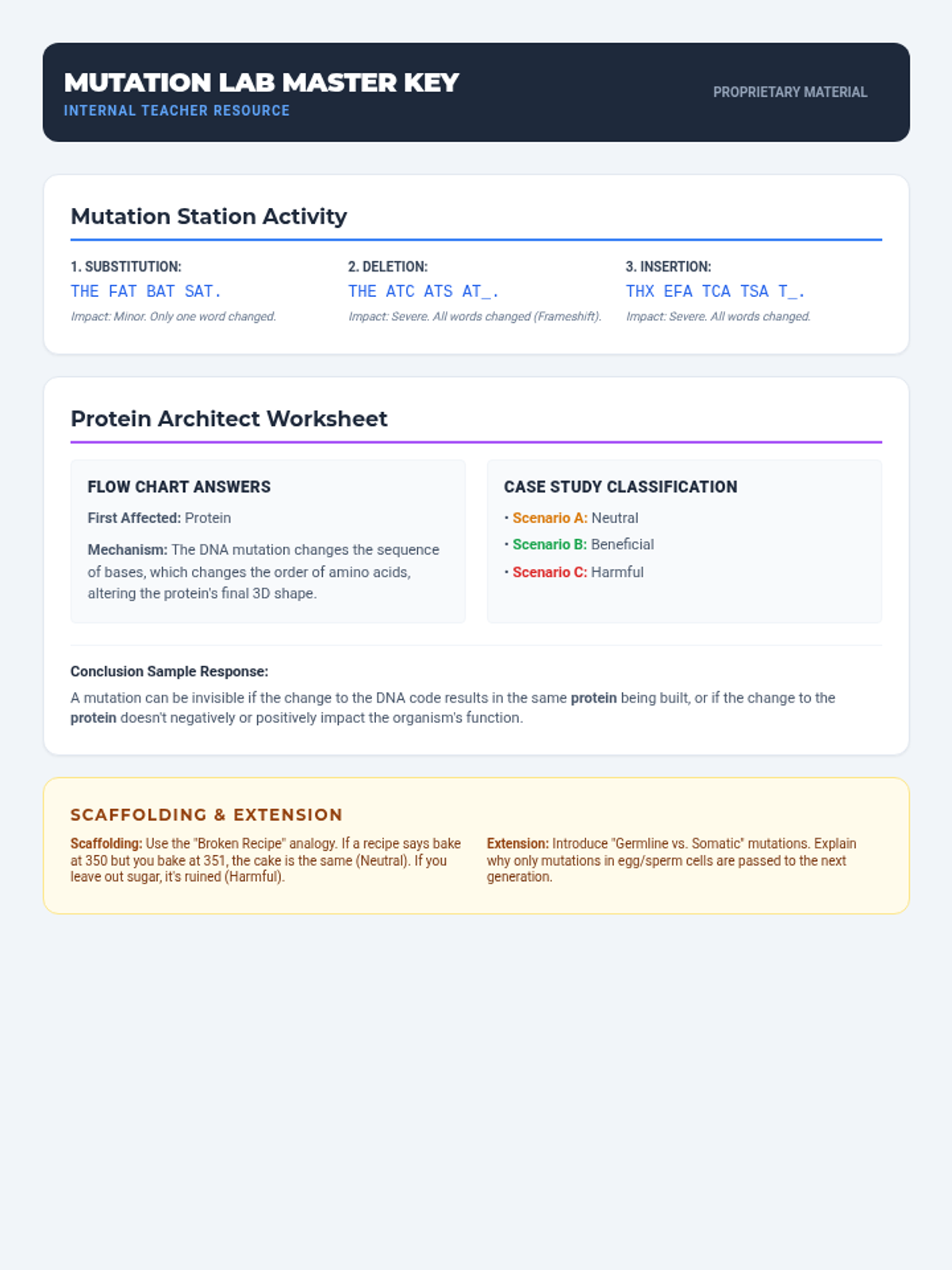
A comprehensive lesson on genetic mutations, exploring how changes in DNA structure affect protein function and organism traits through a high-tech laboratory lens.
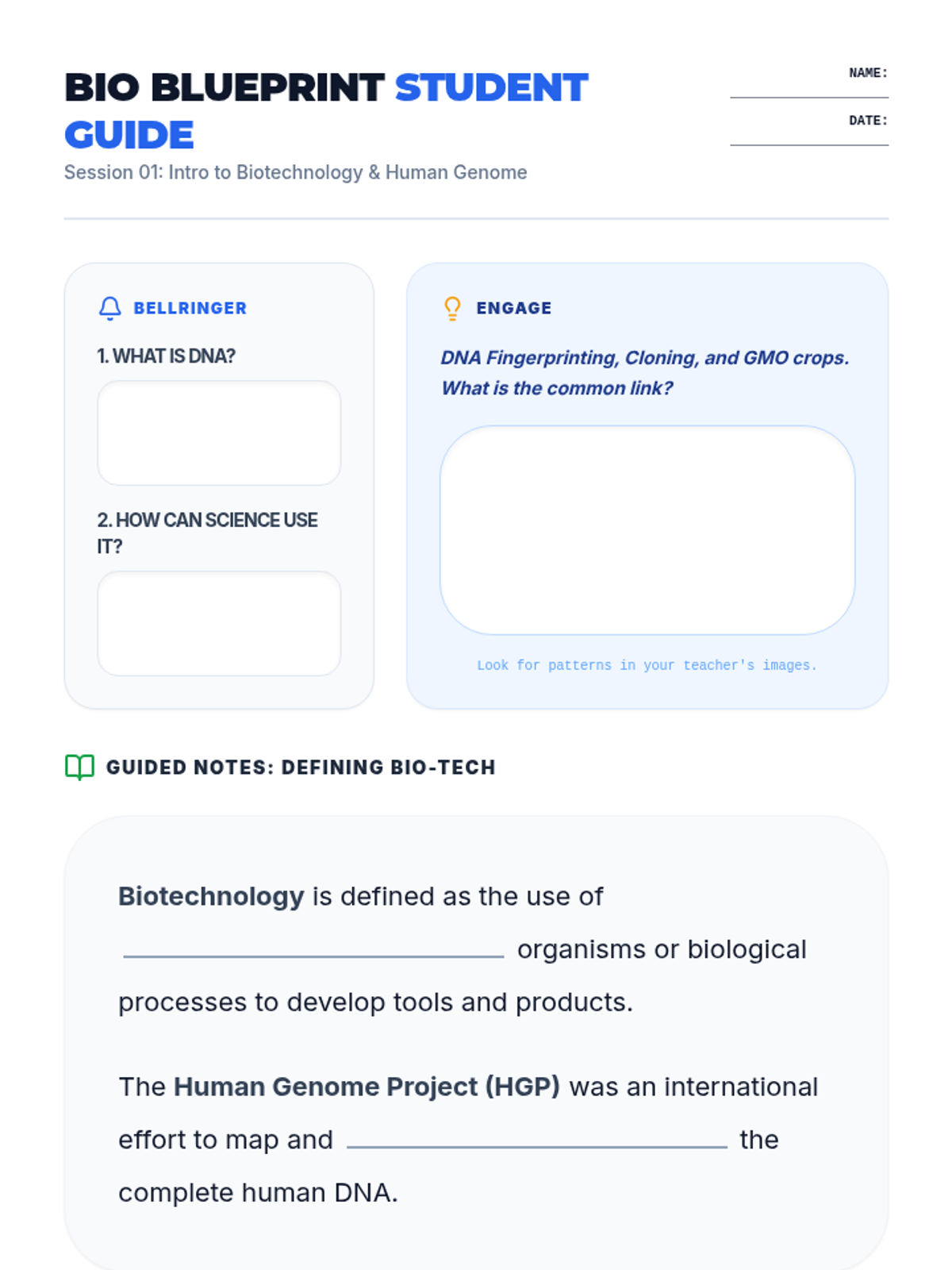
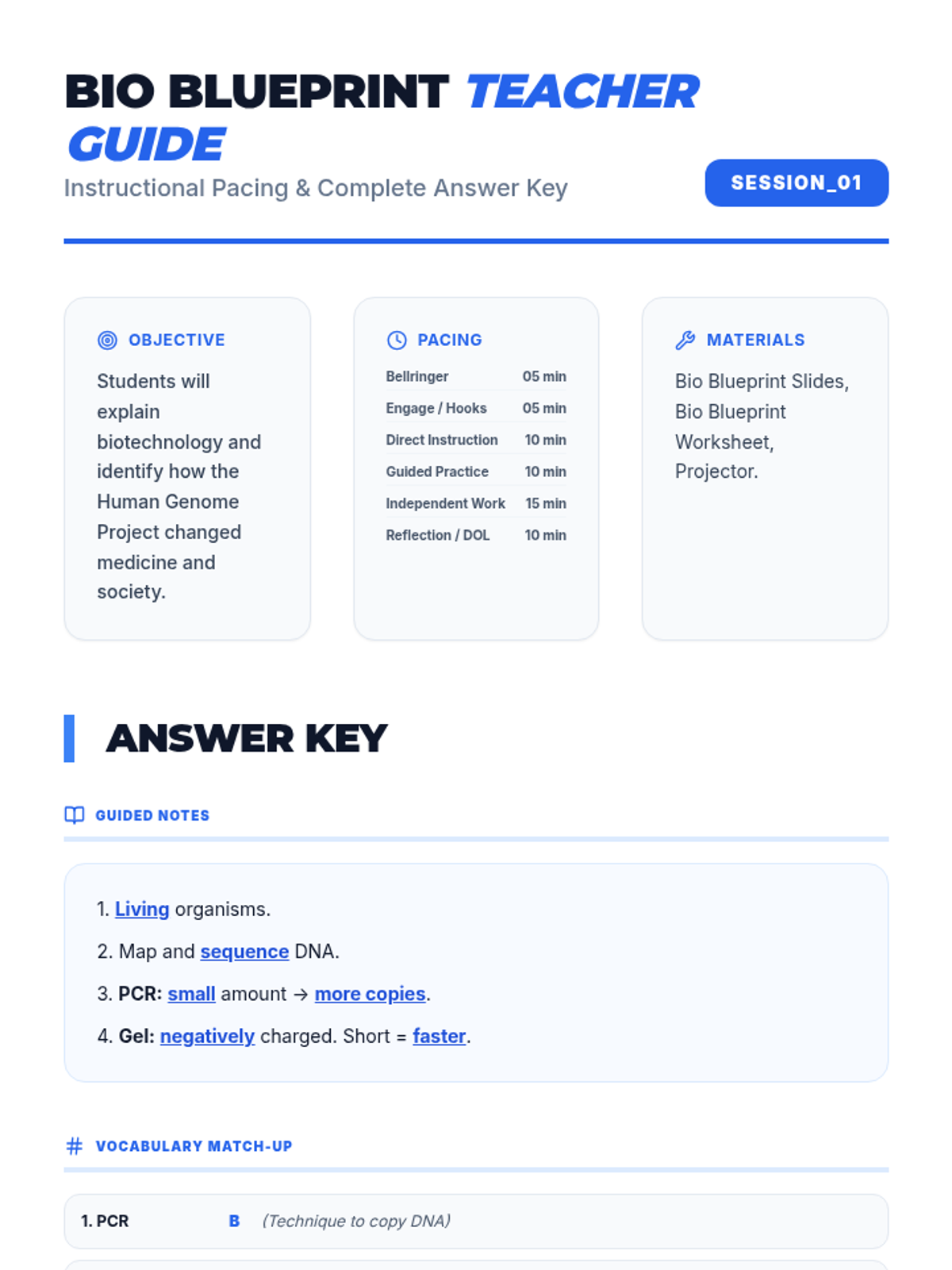
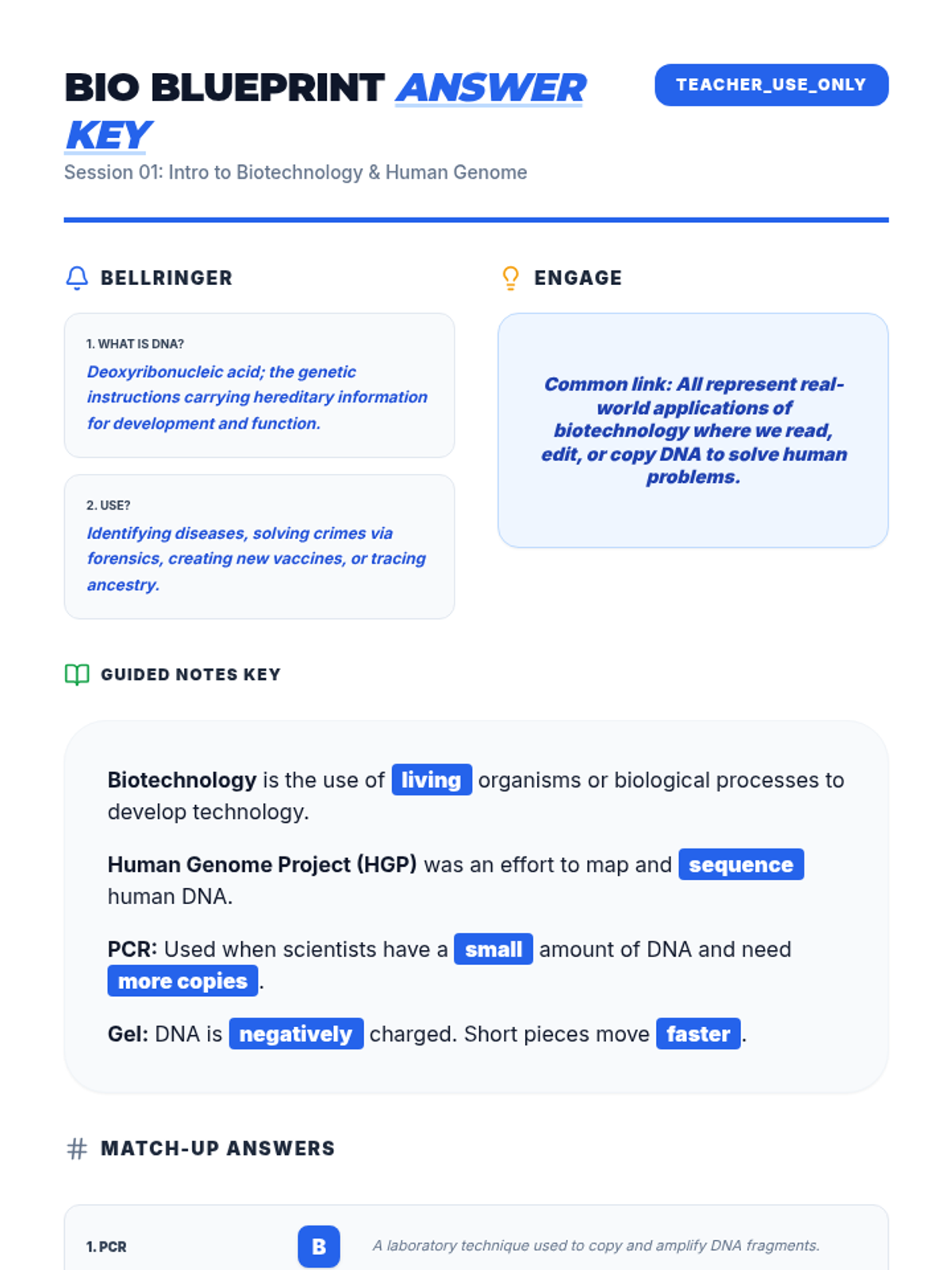
An introductory lesson on biotechnology and the Human Genome Project, covering fundamental concepts, DNA technology tools, and ethical considerations.
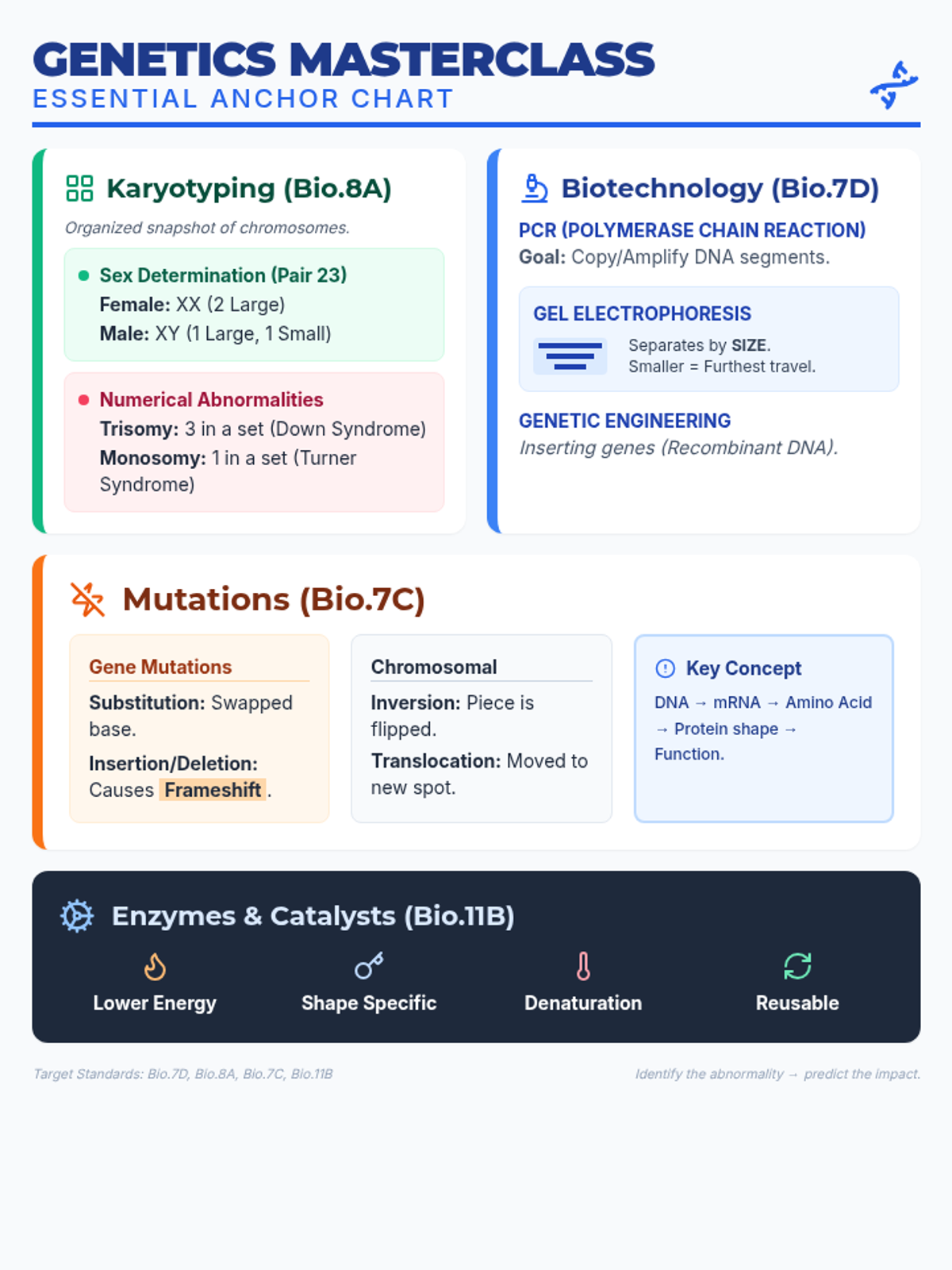
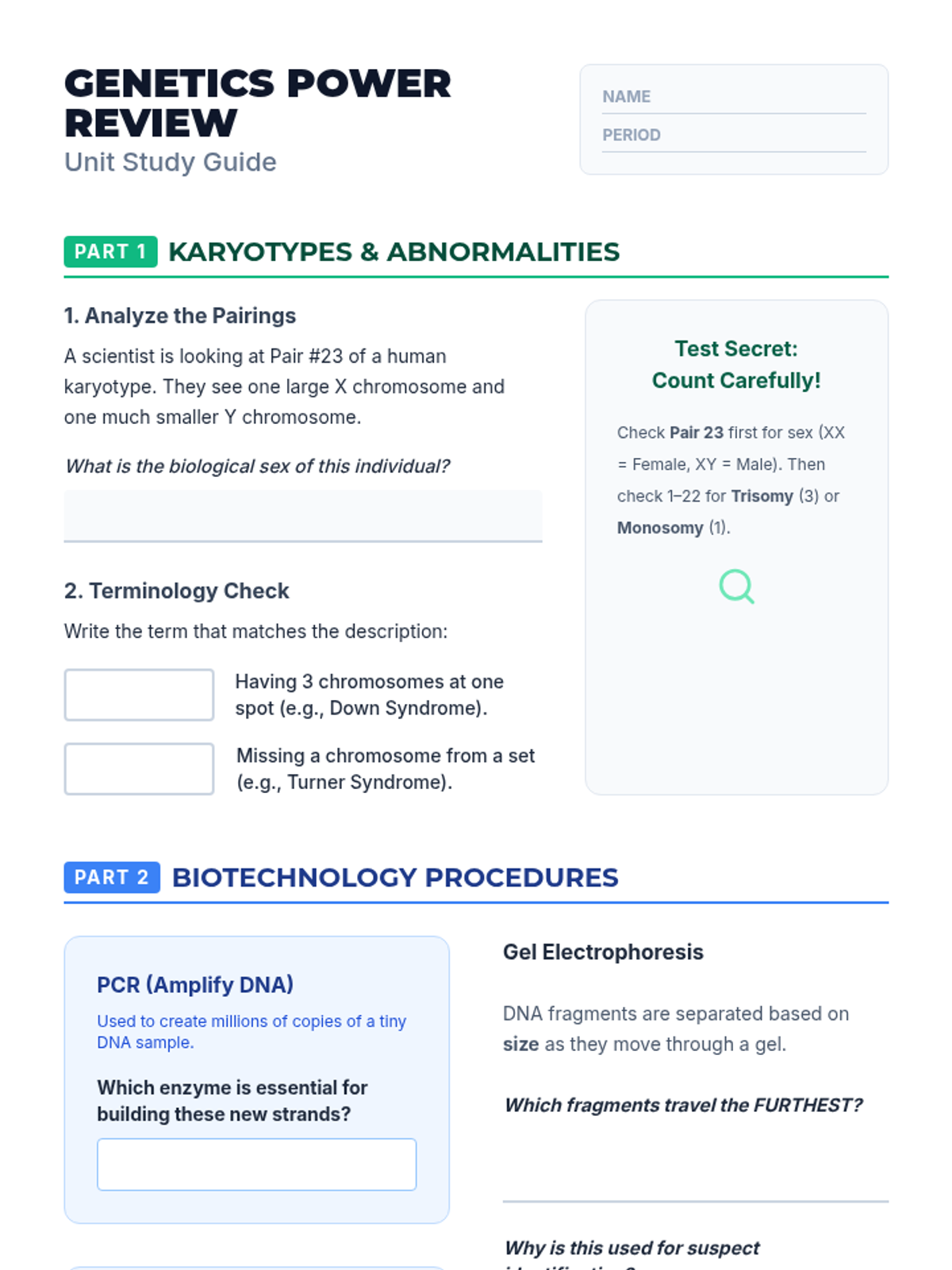
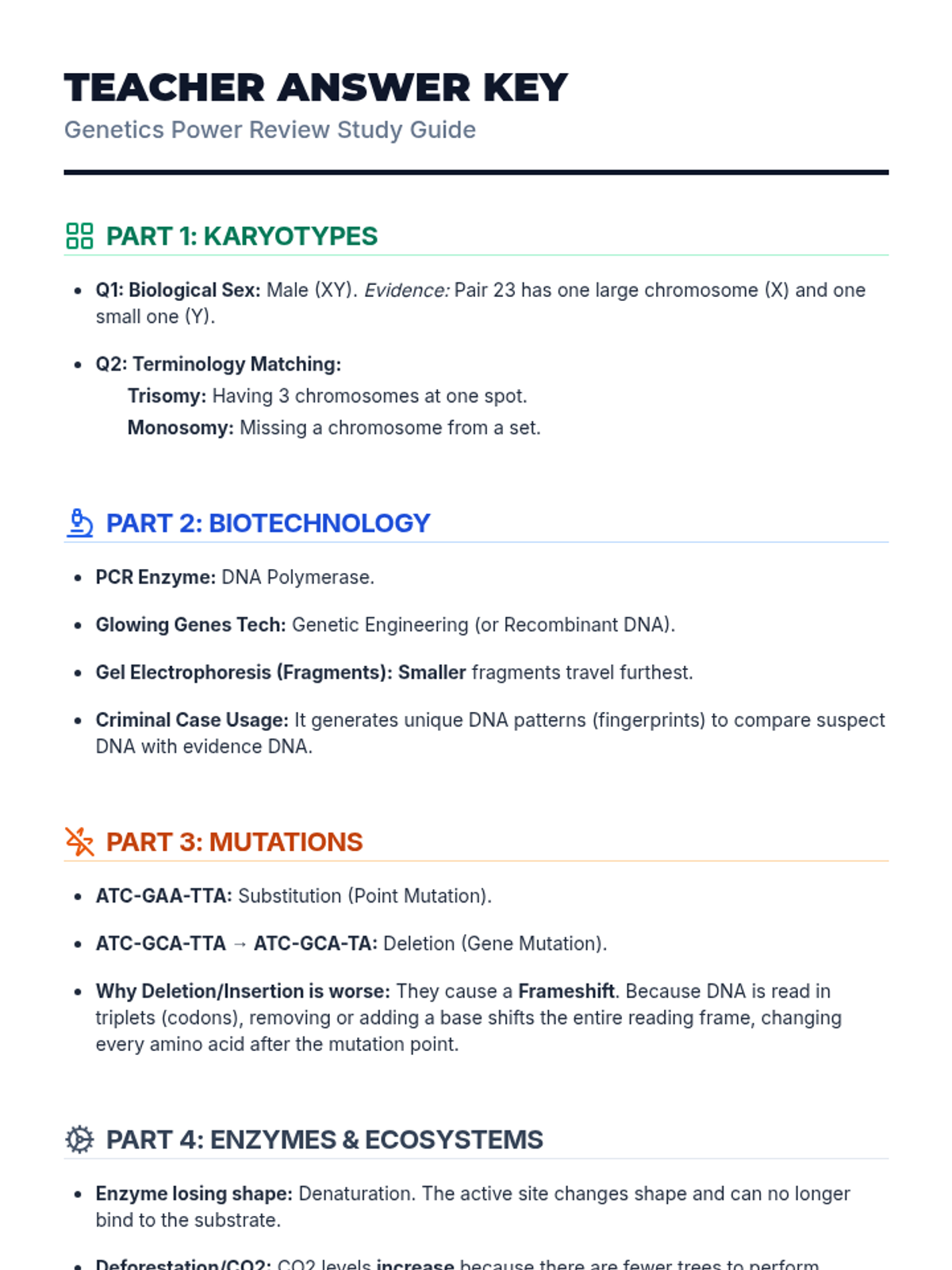
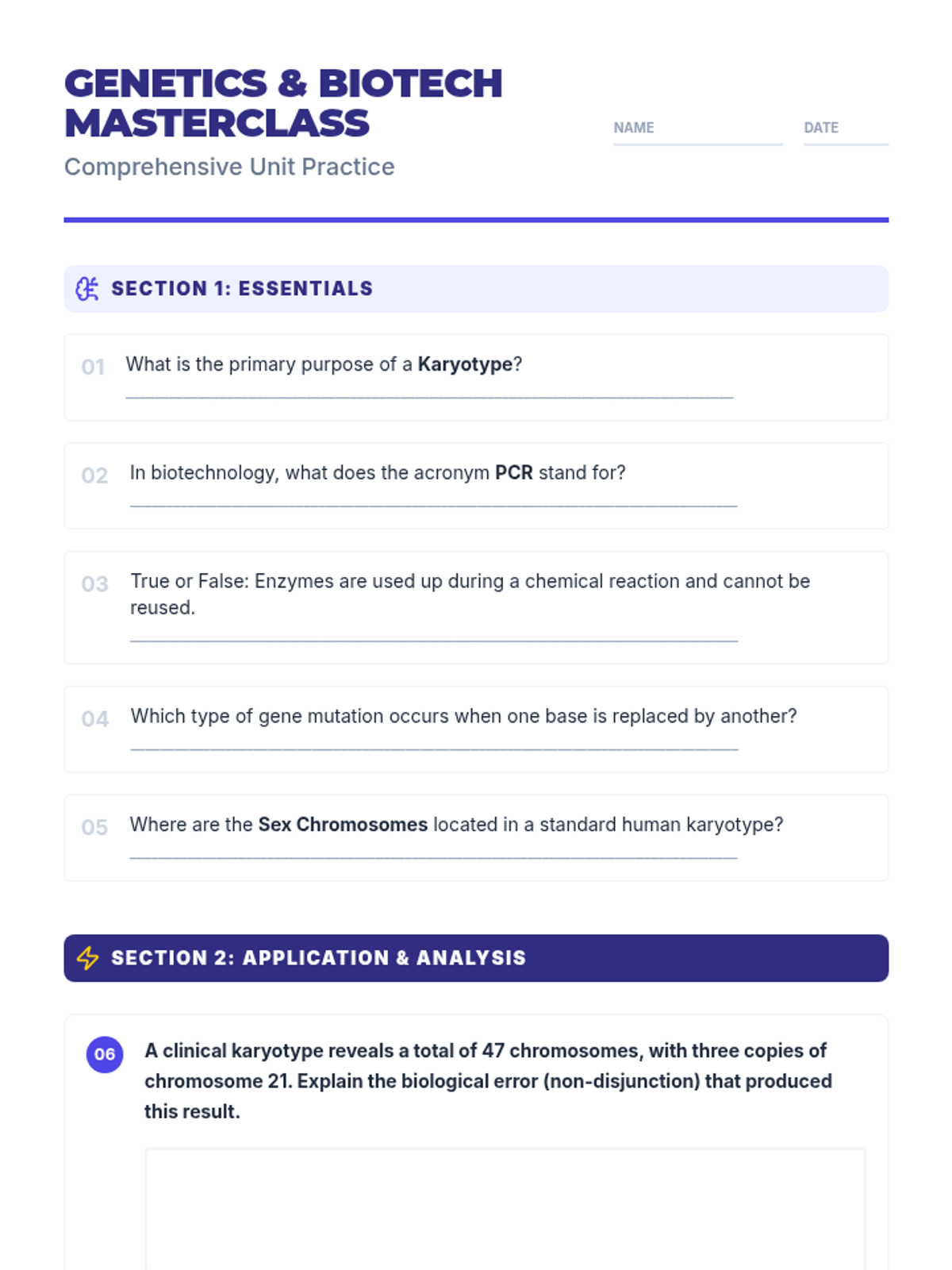
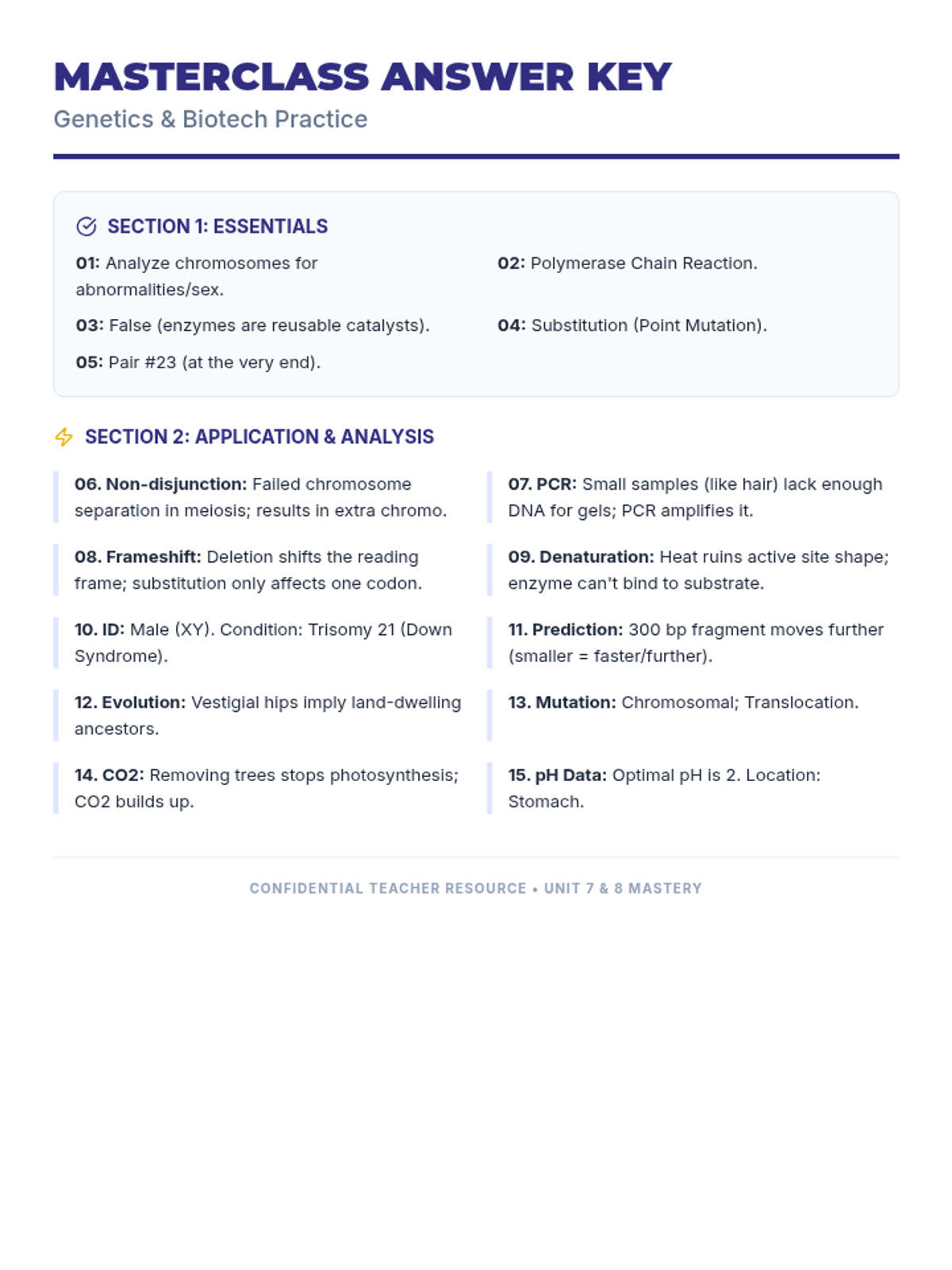
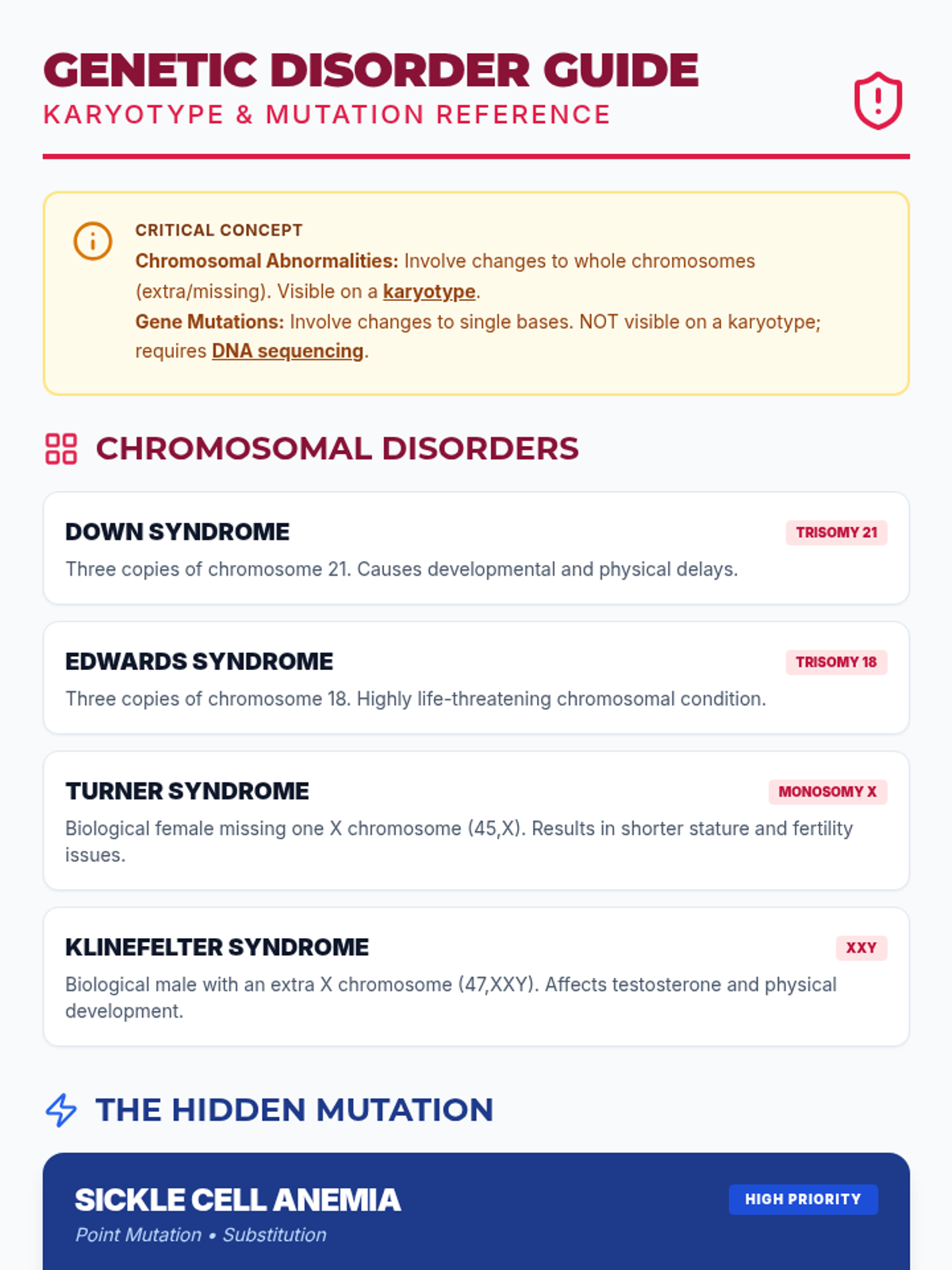
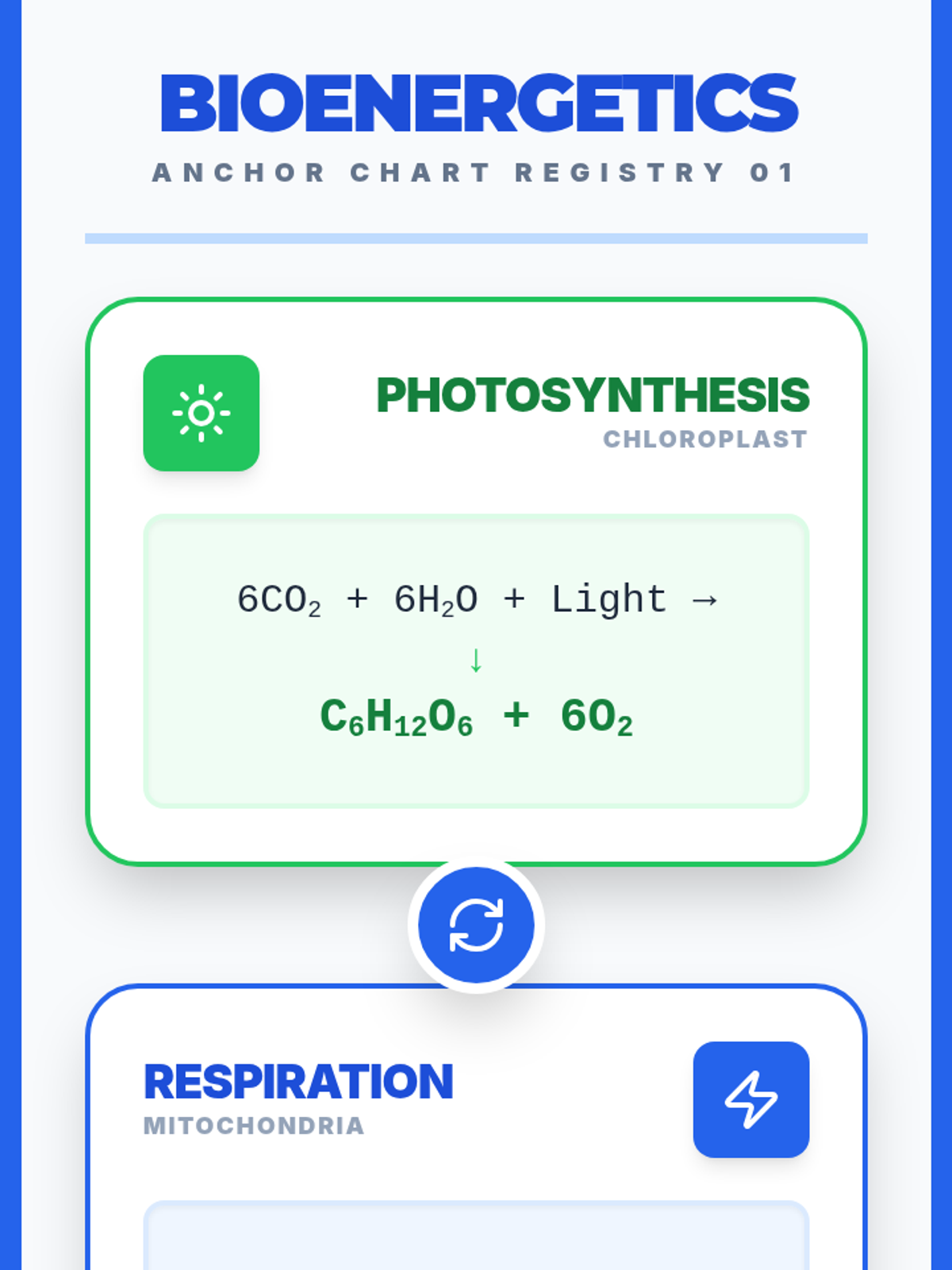
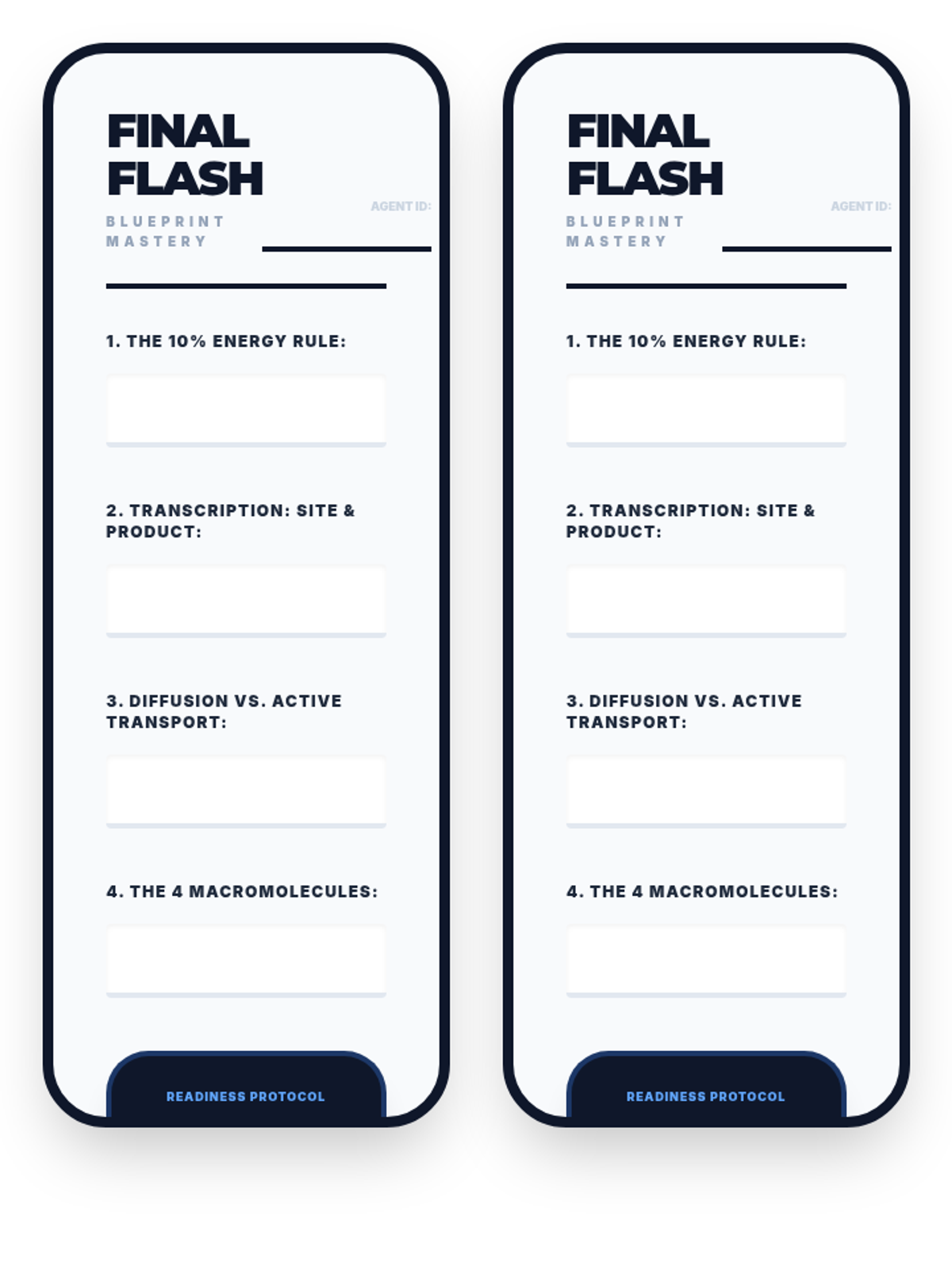
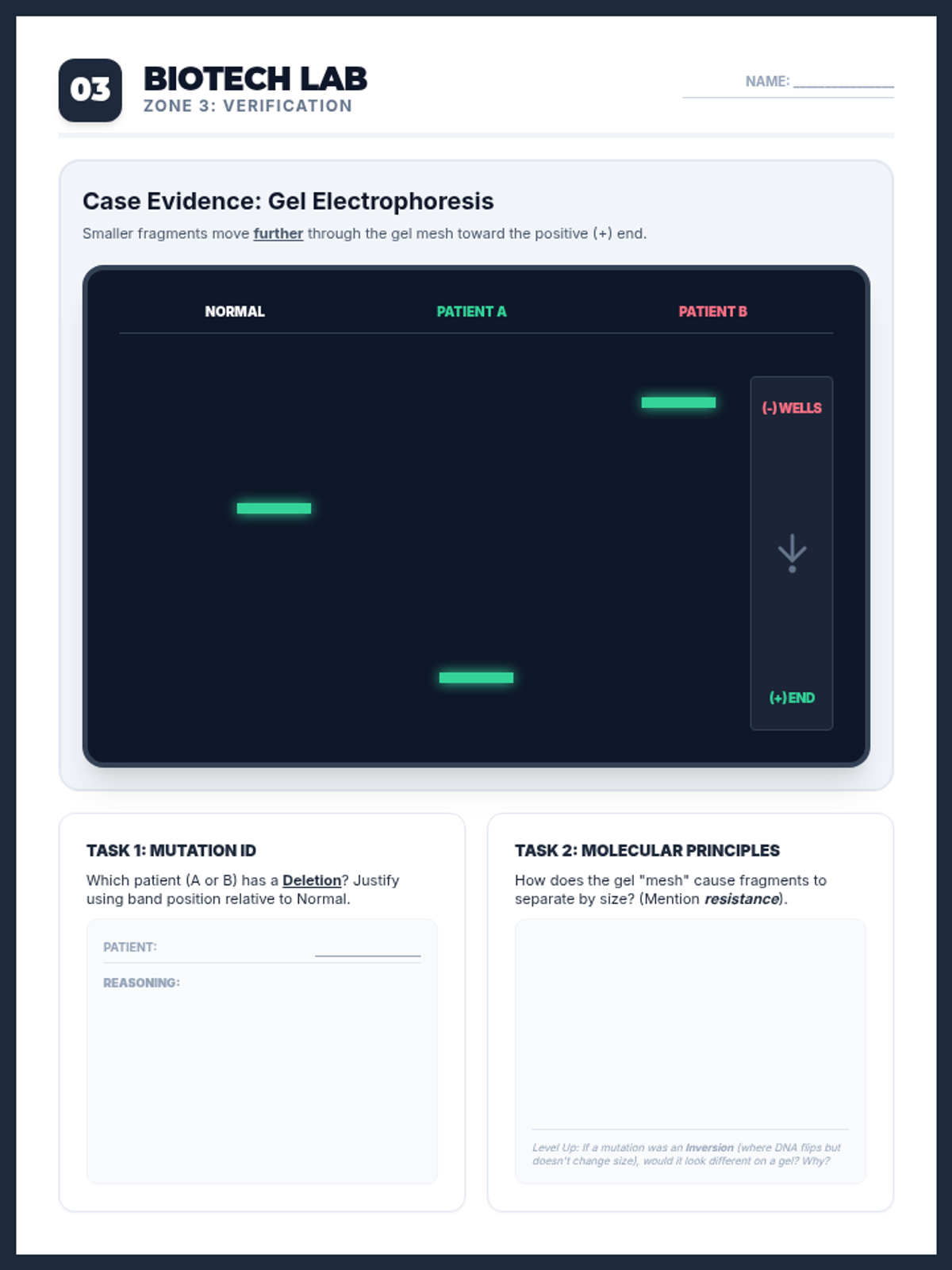
A high-impact review lesson designed to help students master the essential concepts of Karyotyping, Biotechnology (PCR/Gel Electrophoresis), and Mutations before their unit test. Includes visual anchor charts and structured practice.
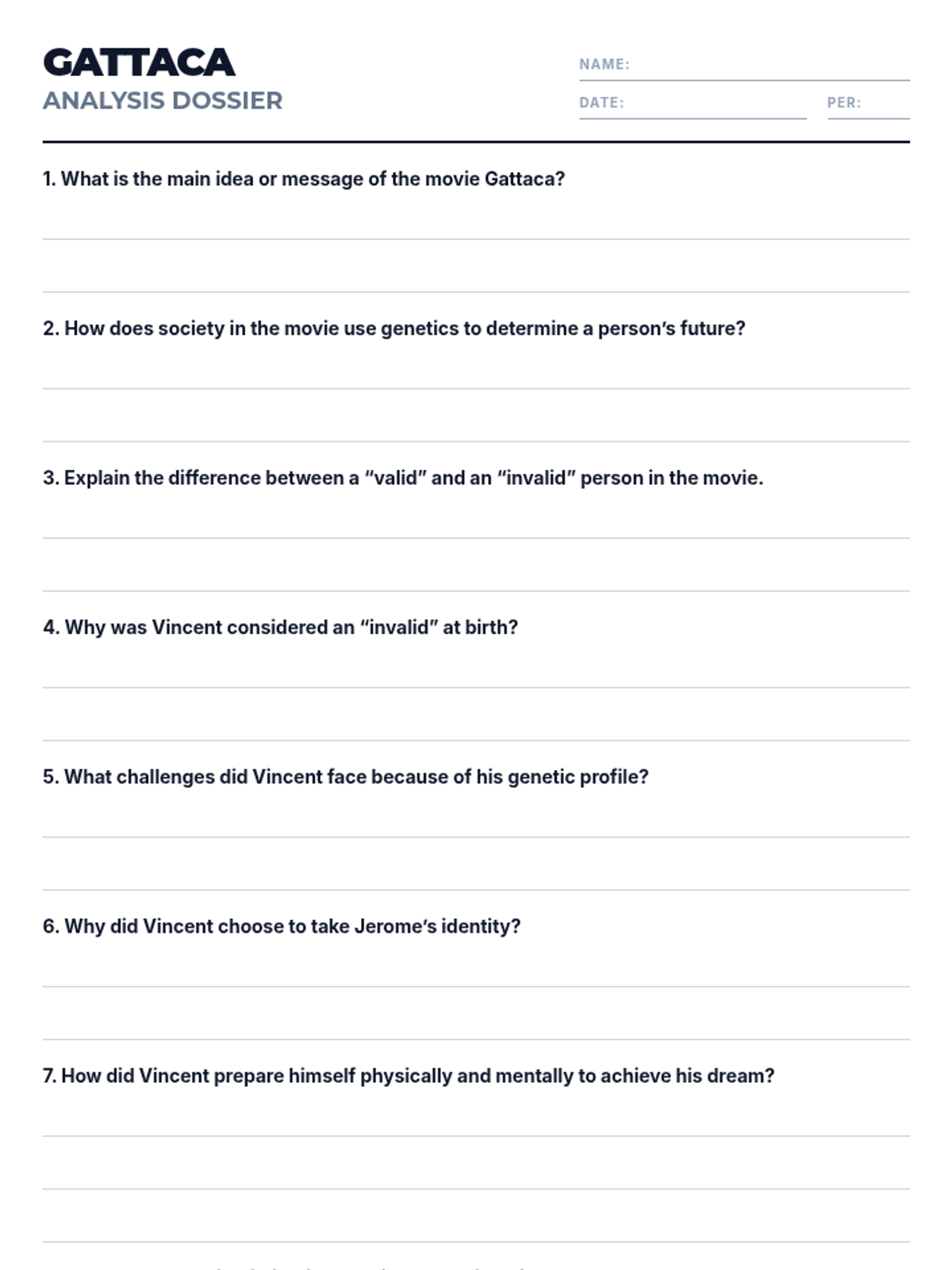
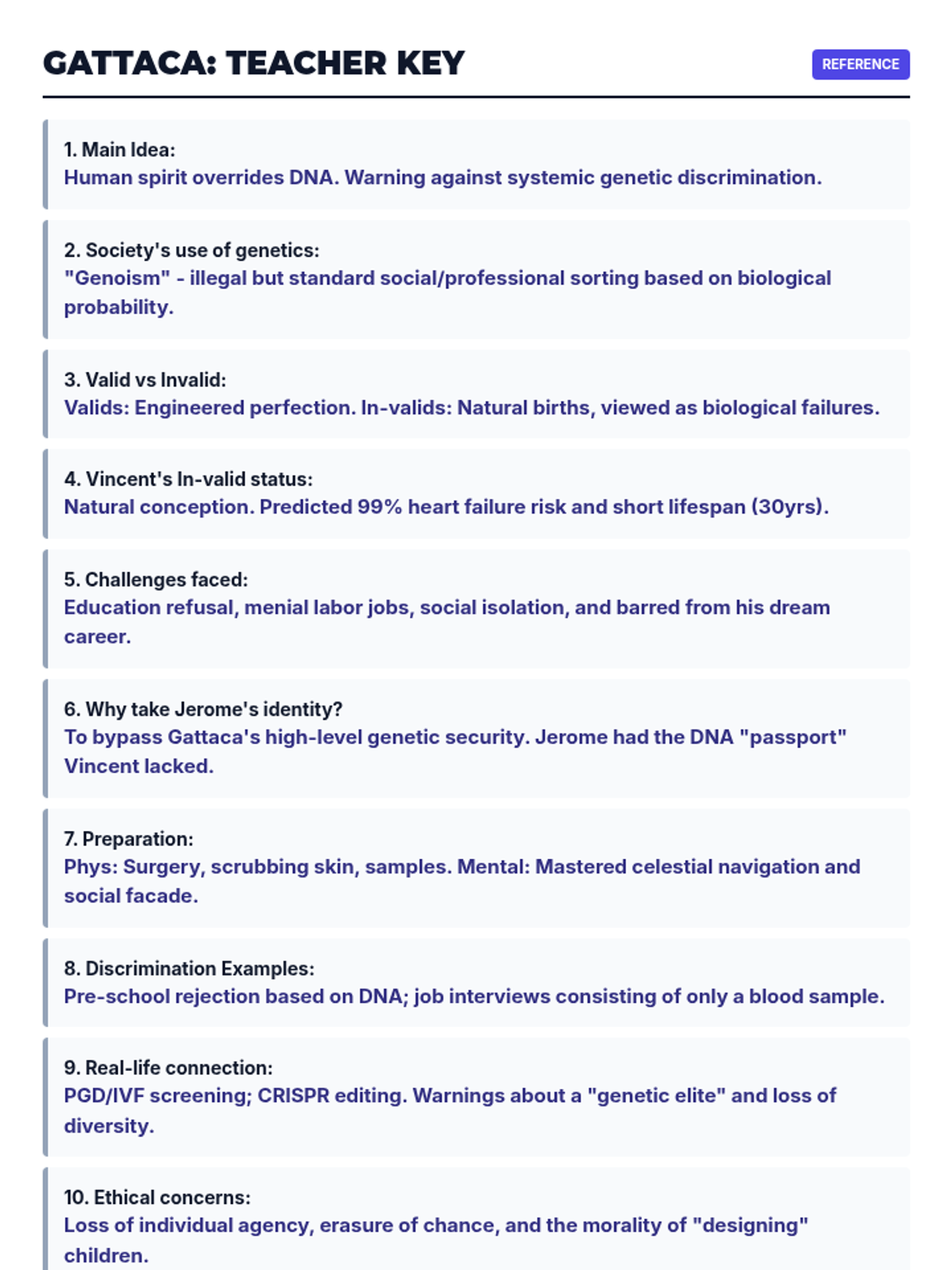
A comprehensive analysis of the ethical, social, and scientific themes in the film GATTACA, focusing on biotechnology and genetic discrimination.
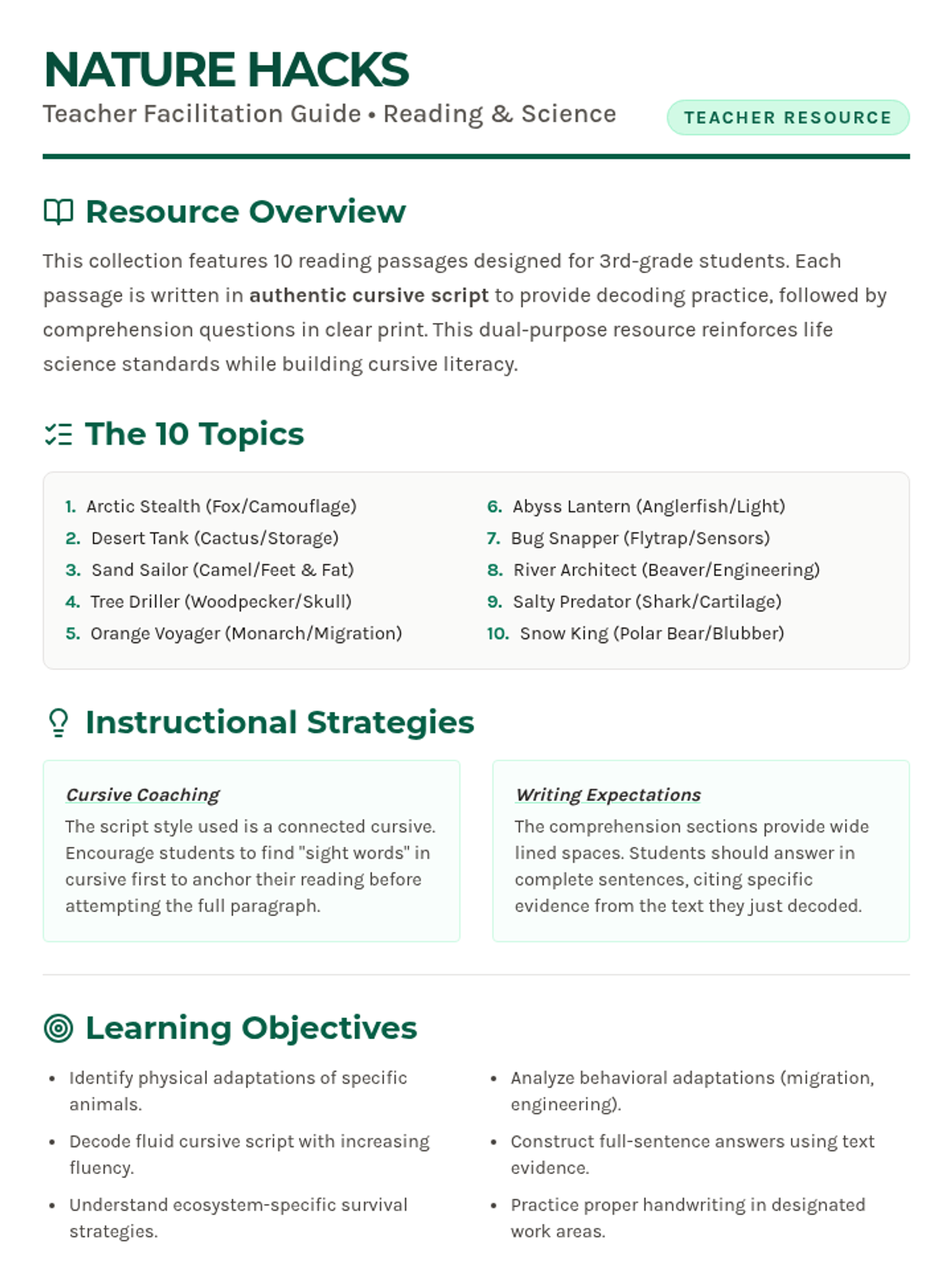
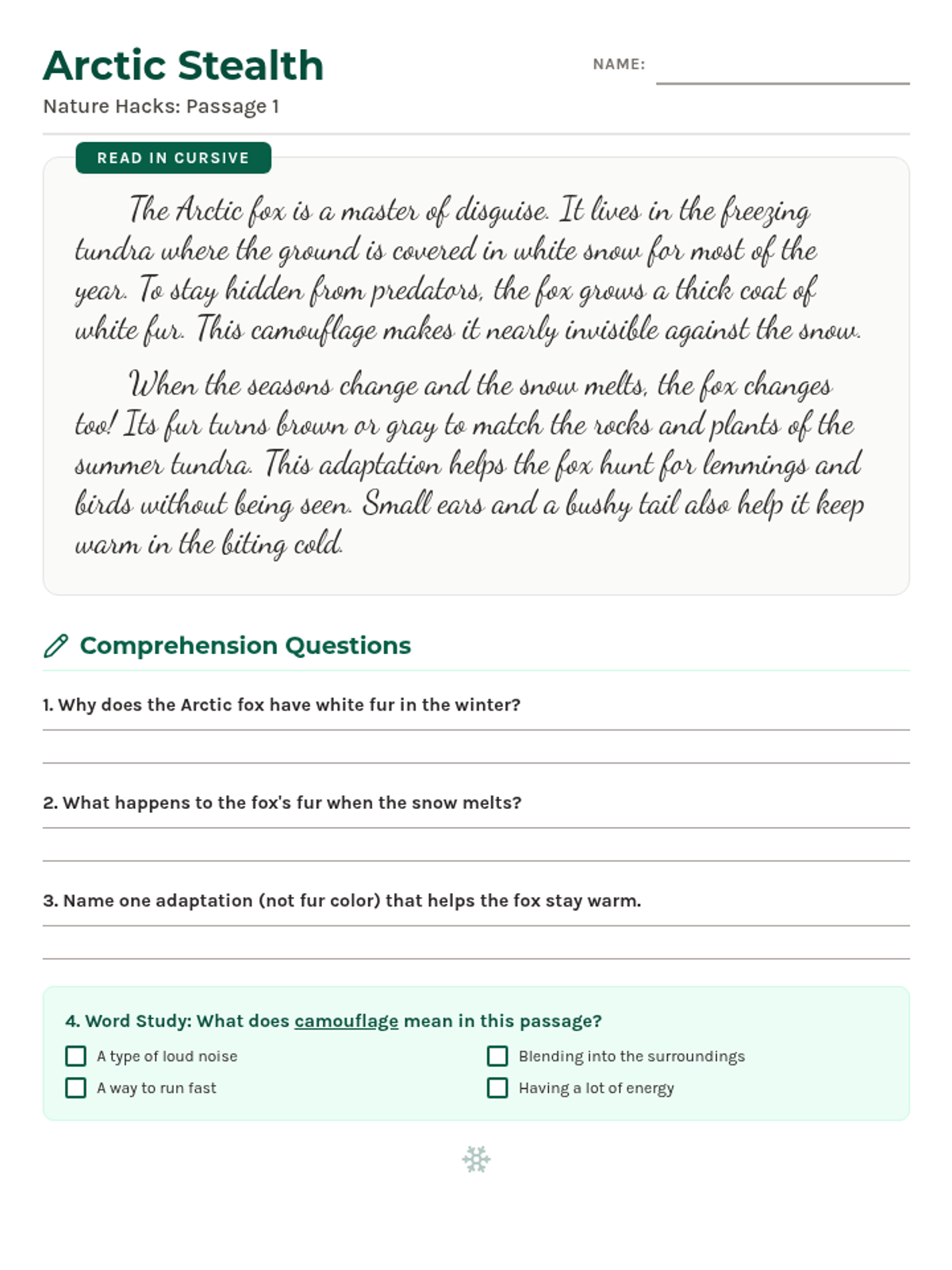
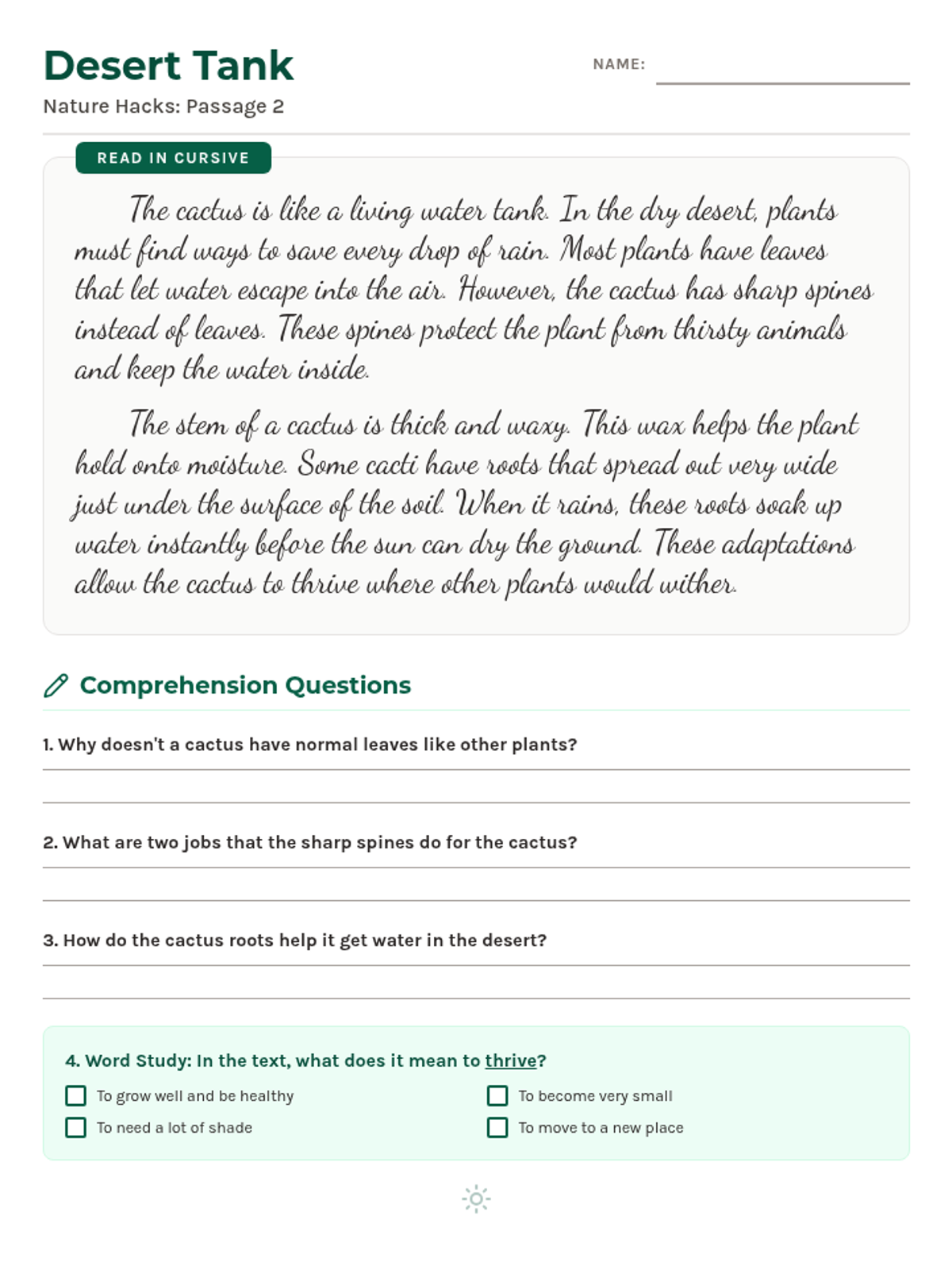
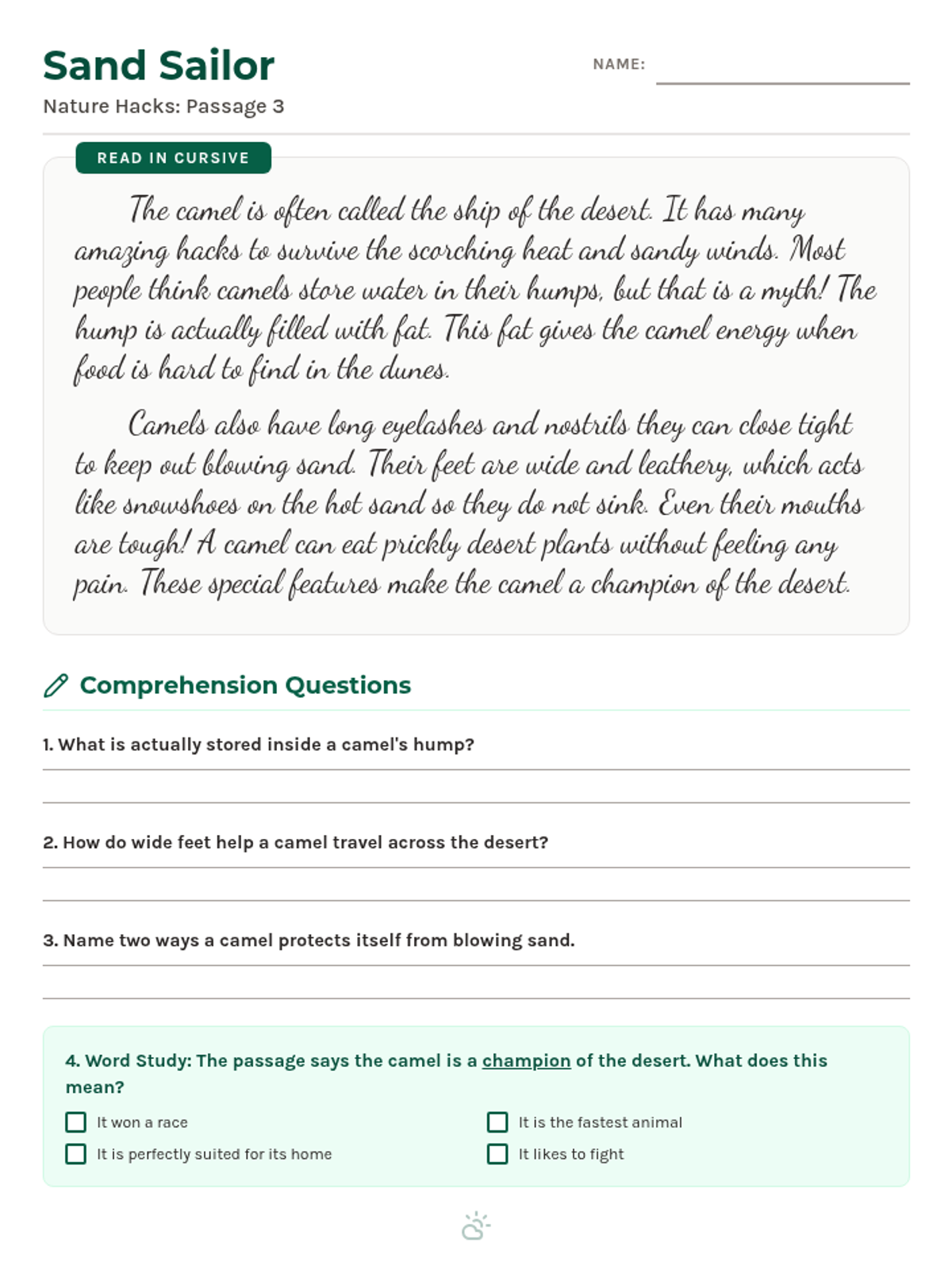
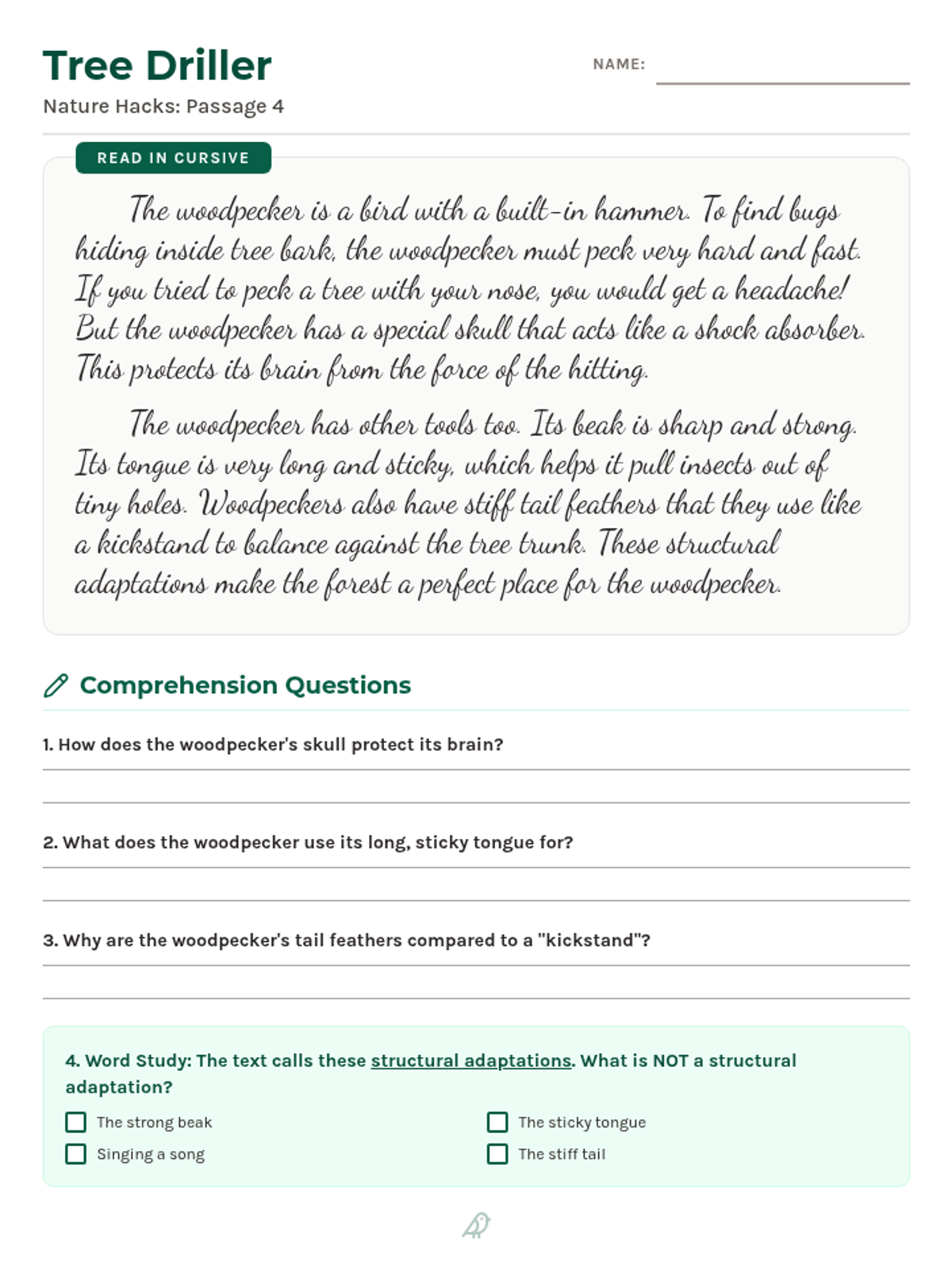
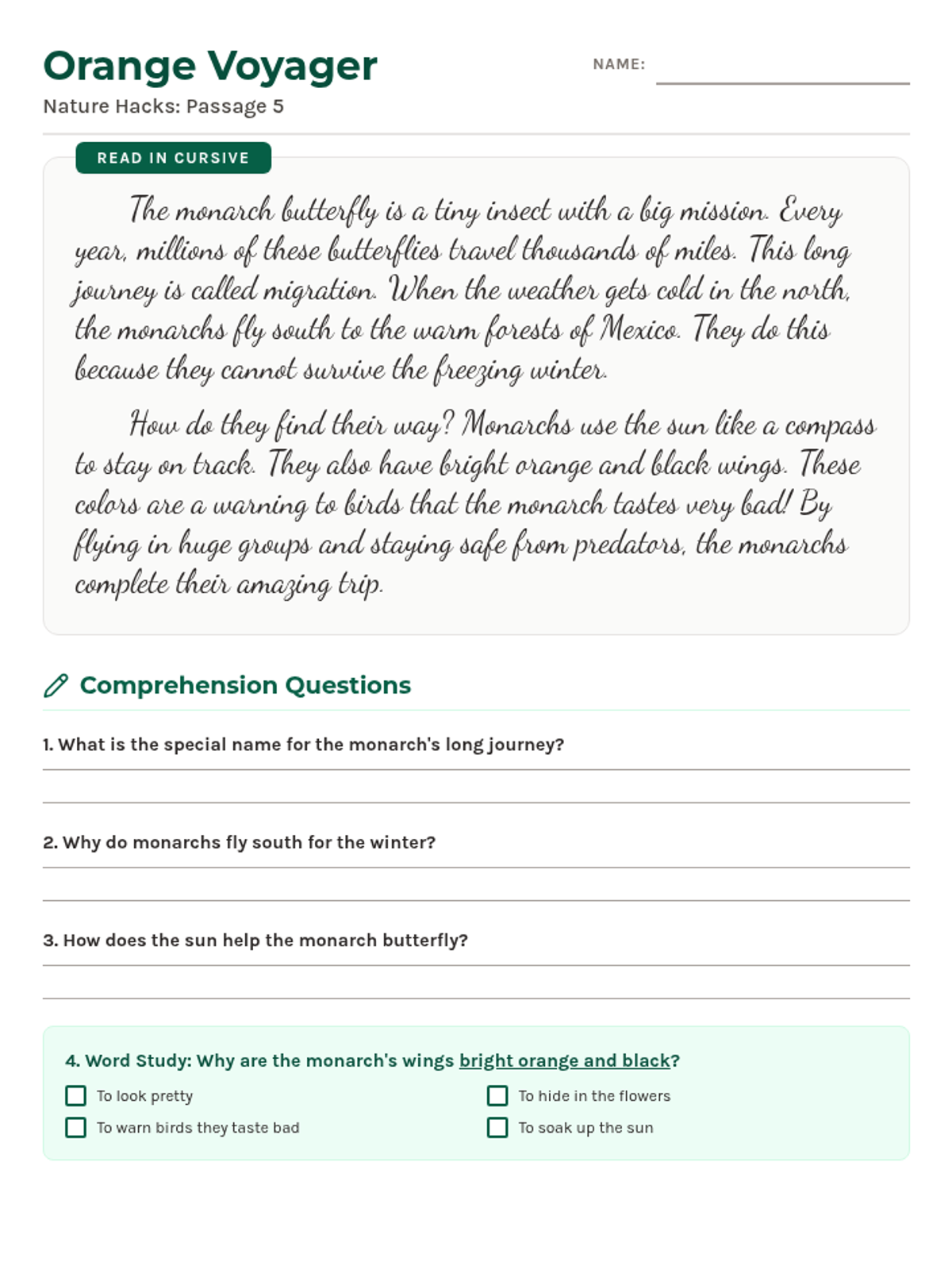
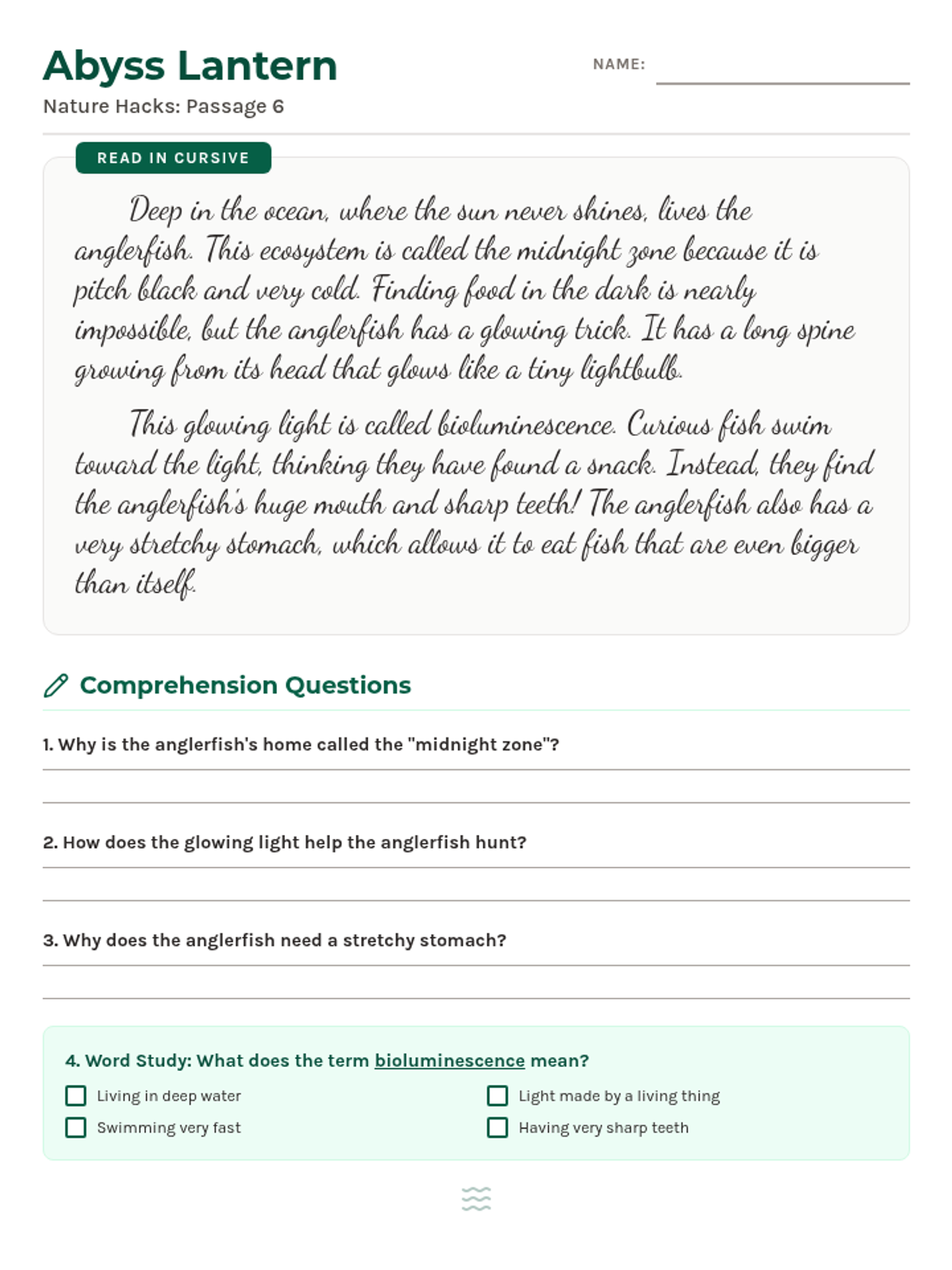
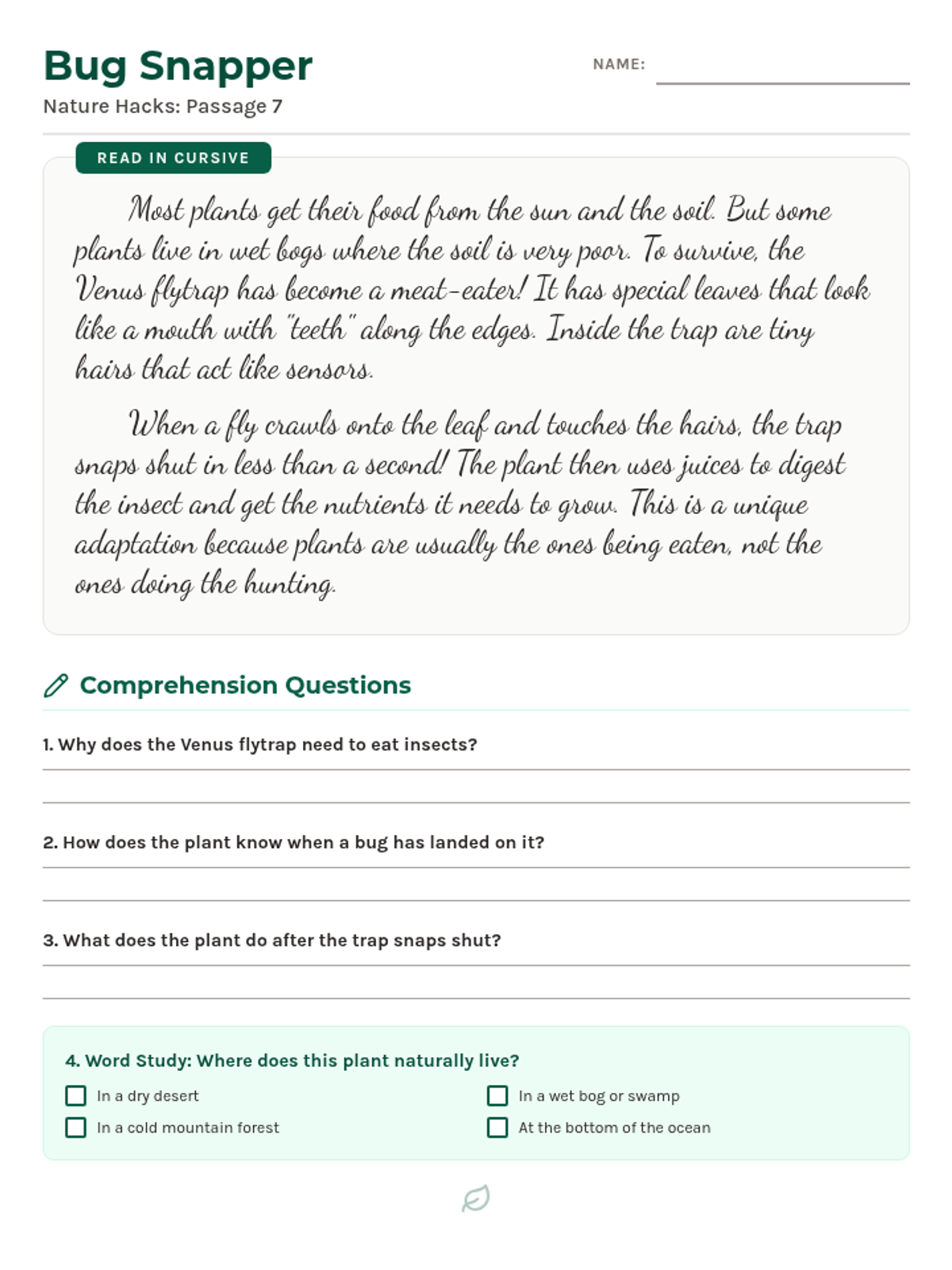
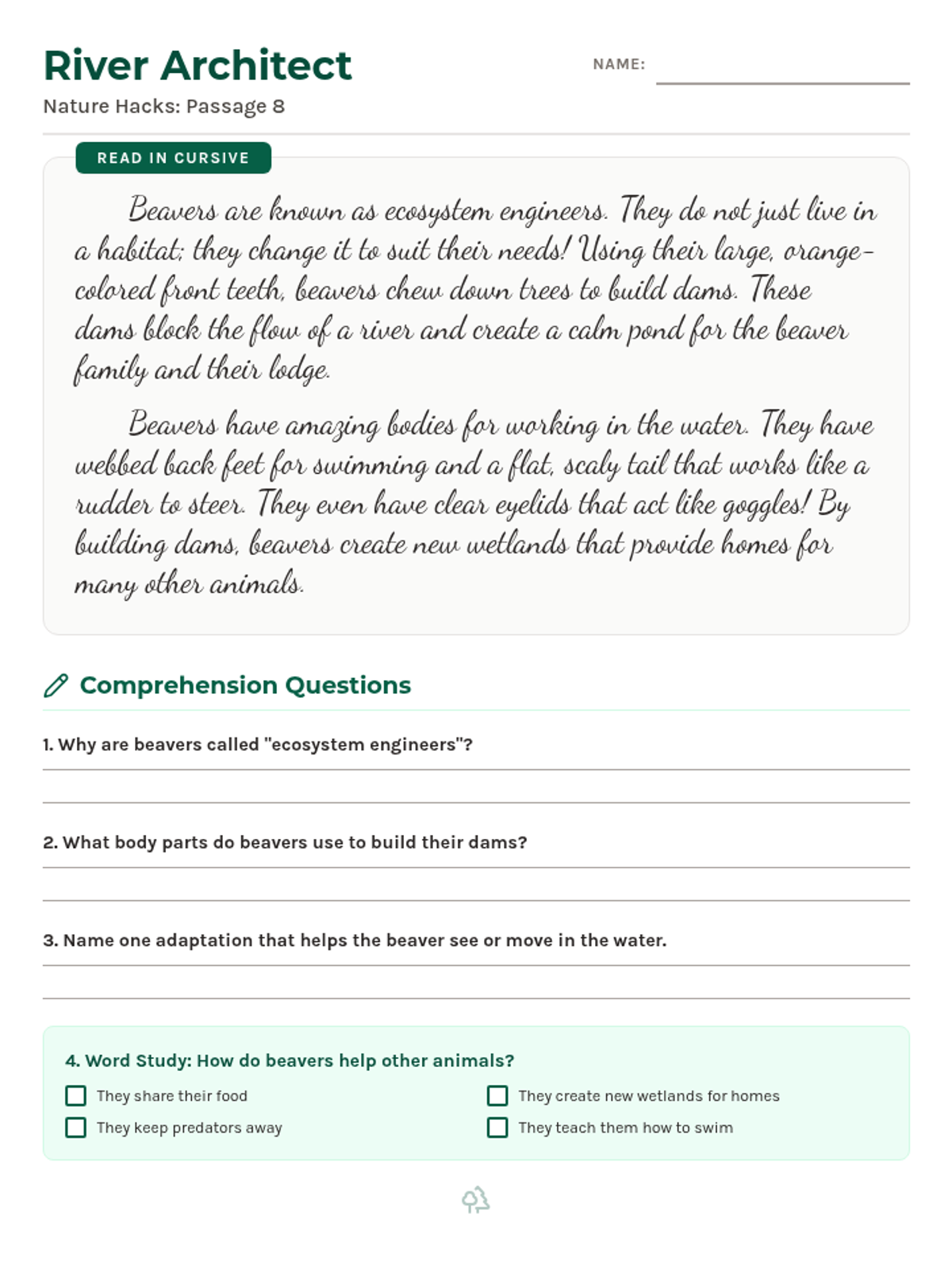
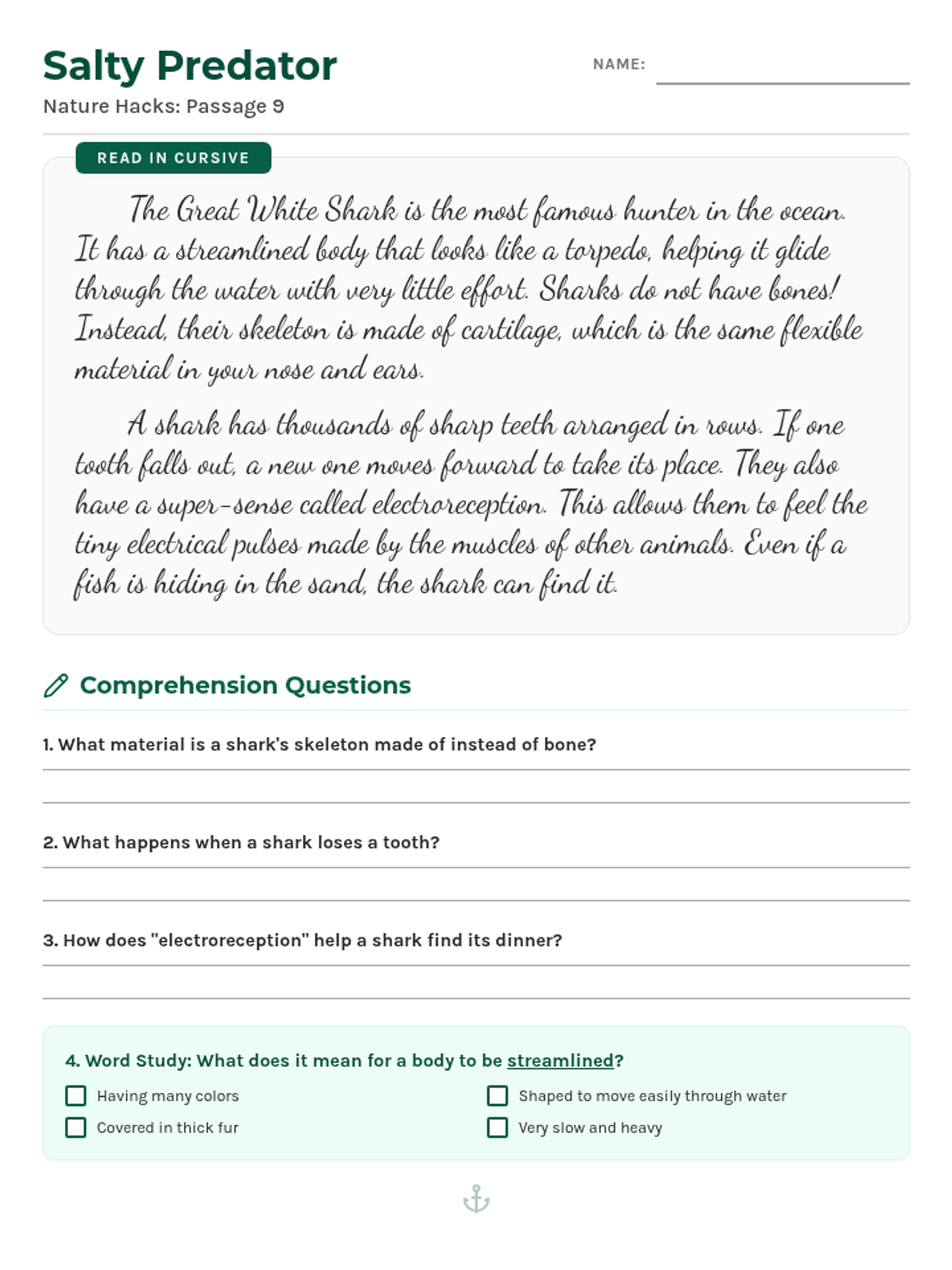
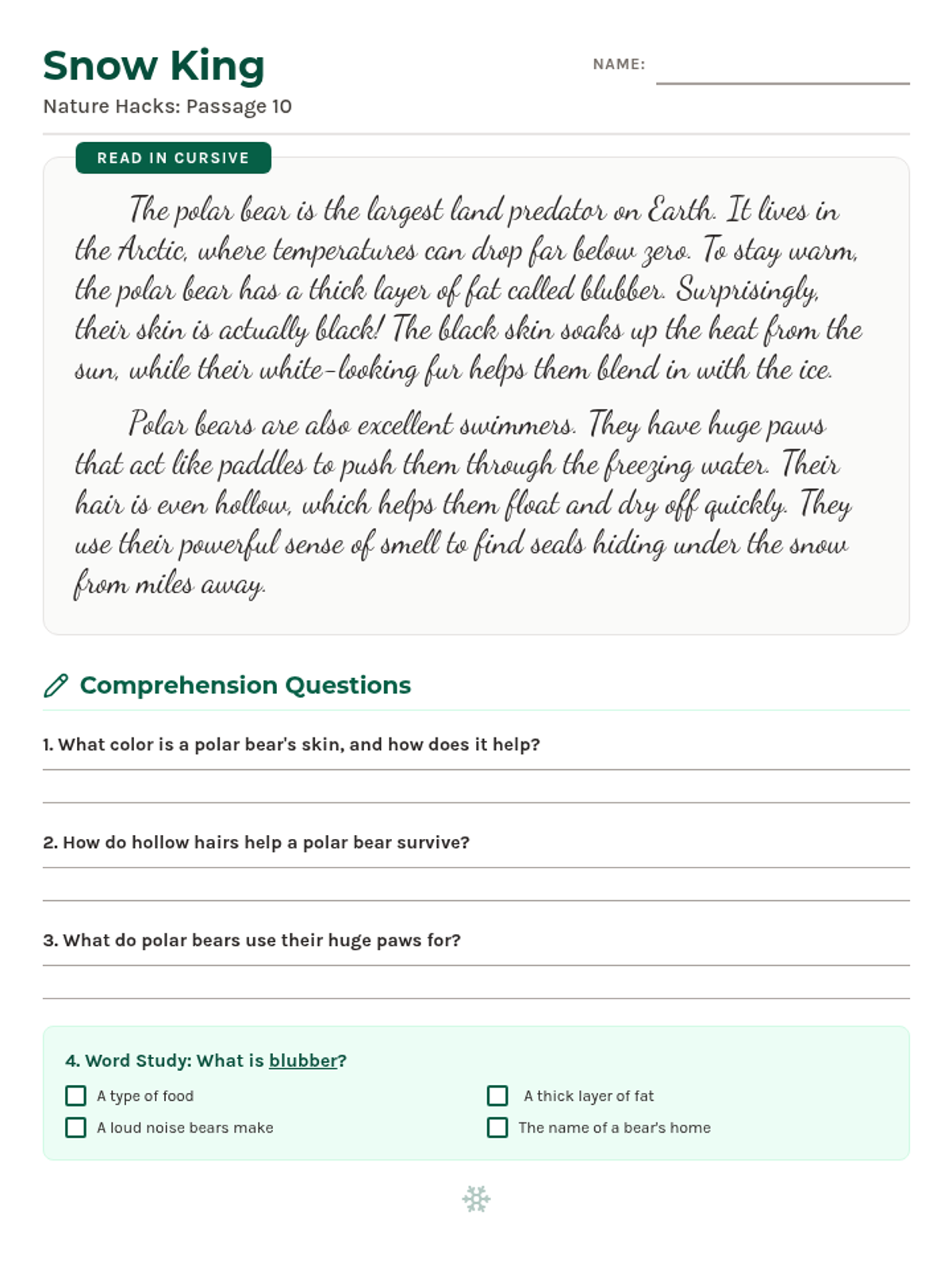
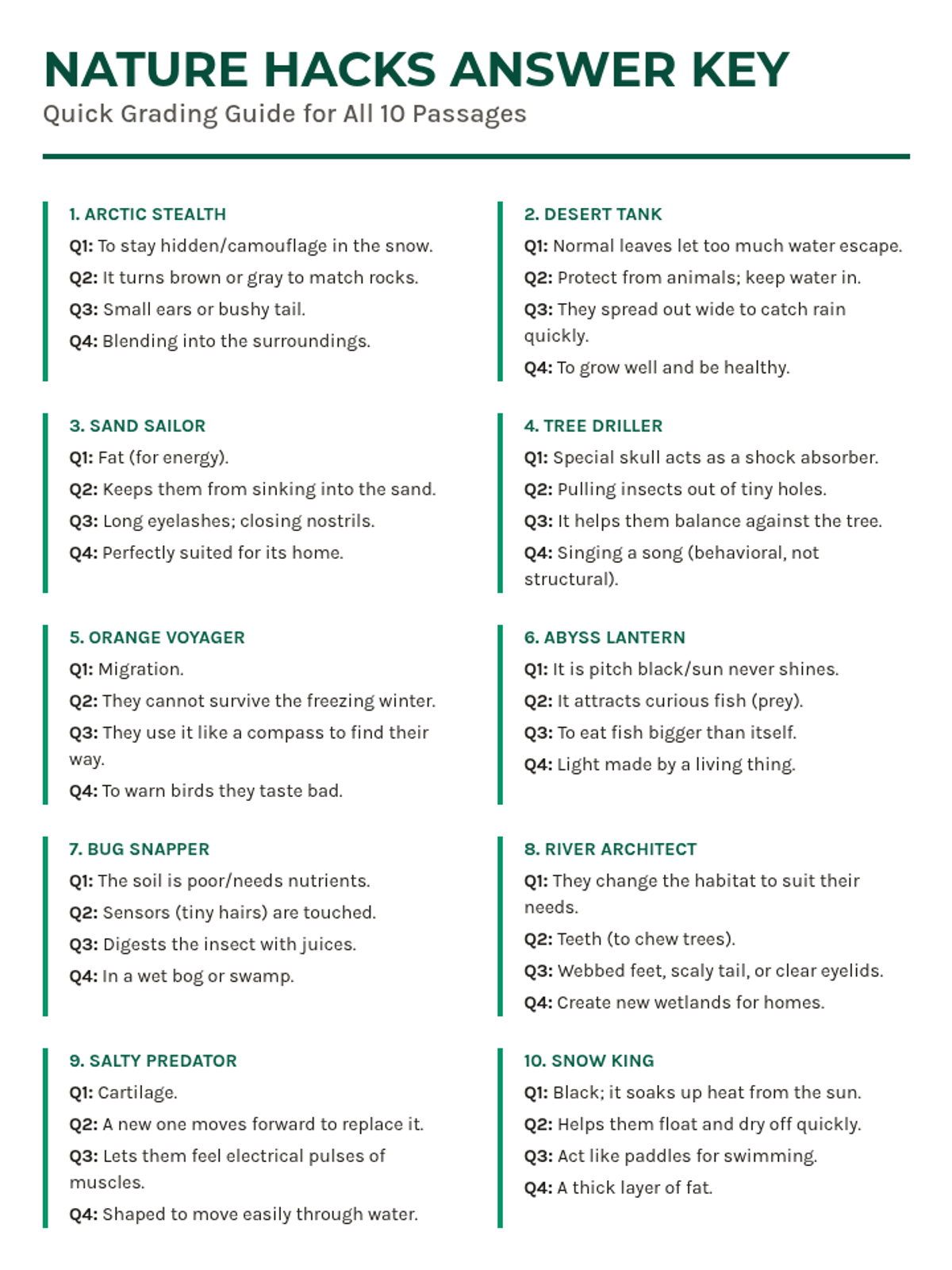
A comprehensive collection of 10 differentiated reading passages focused on animal adaptations and ecosystems, specifically designed to help students practice reading cursive while reinforcing key science concepts.
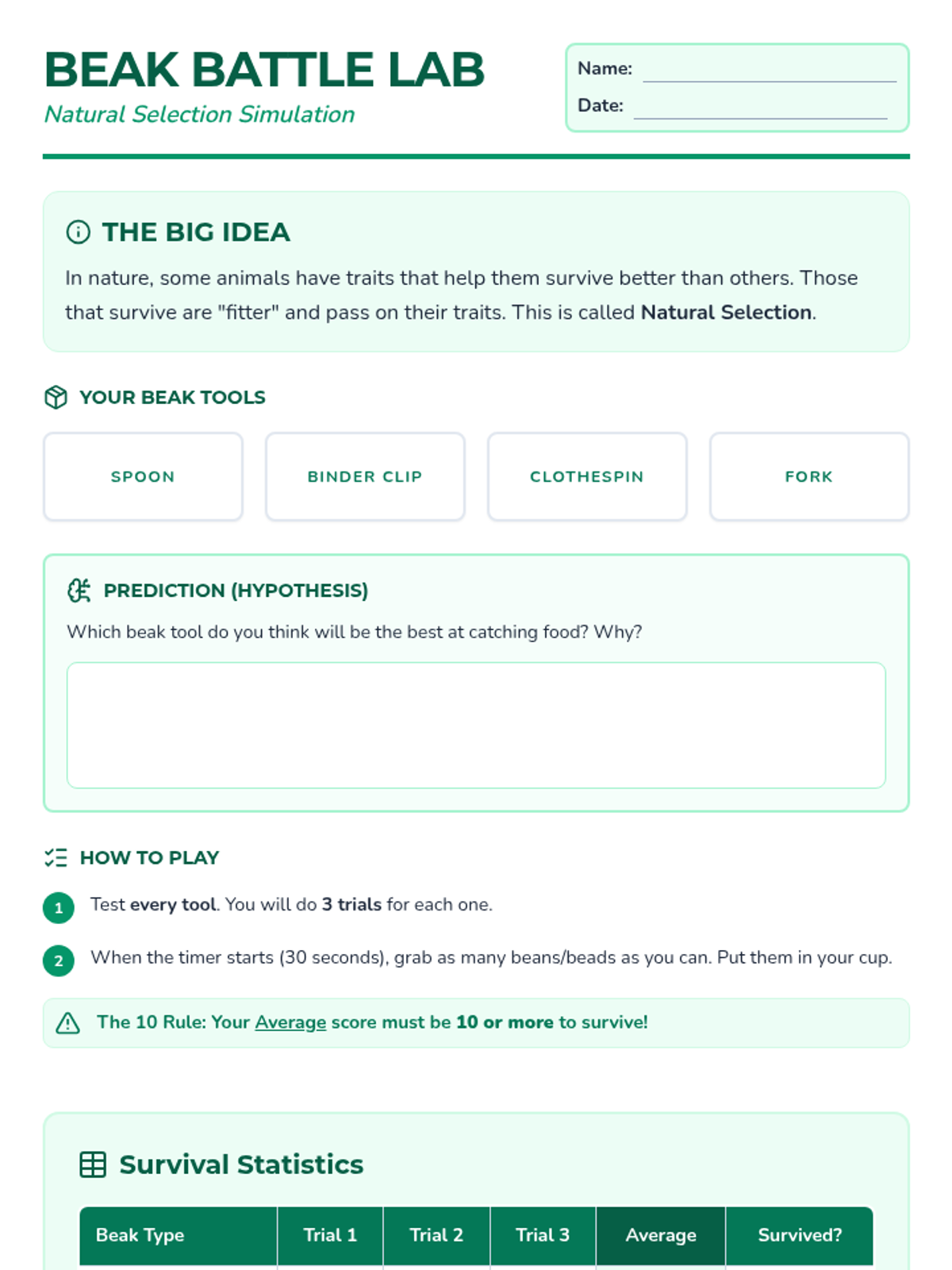
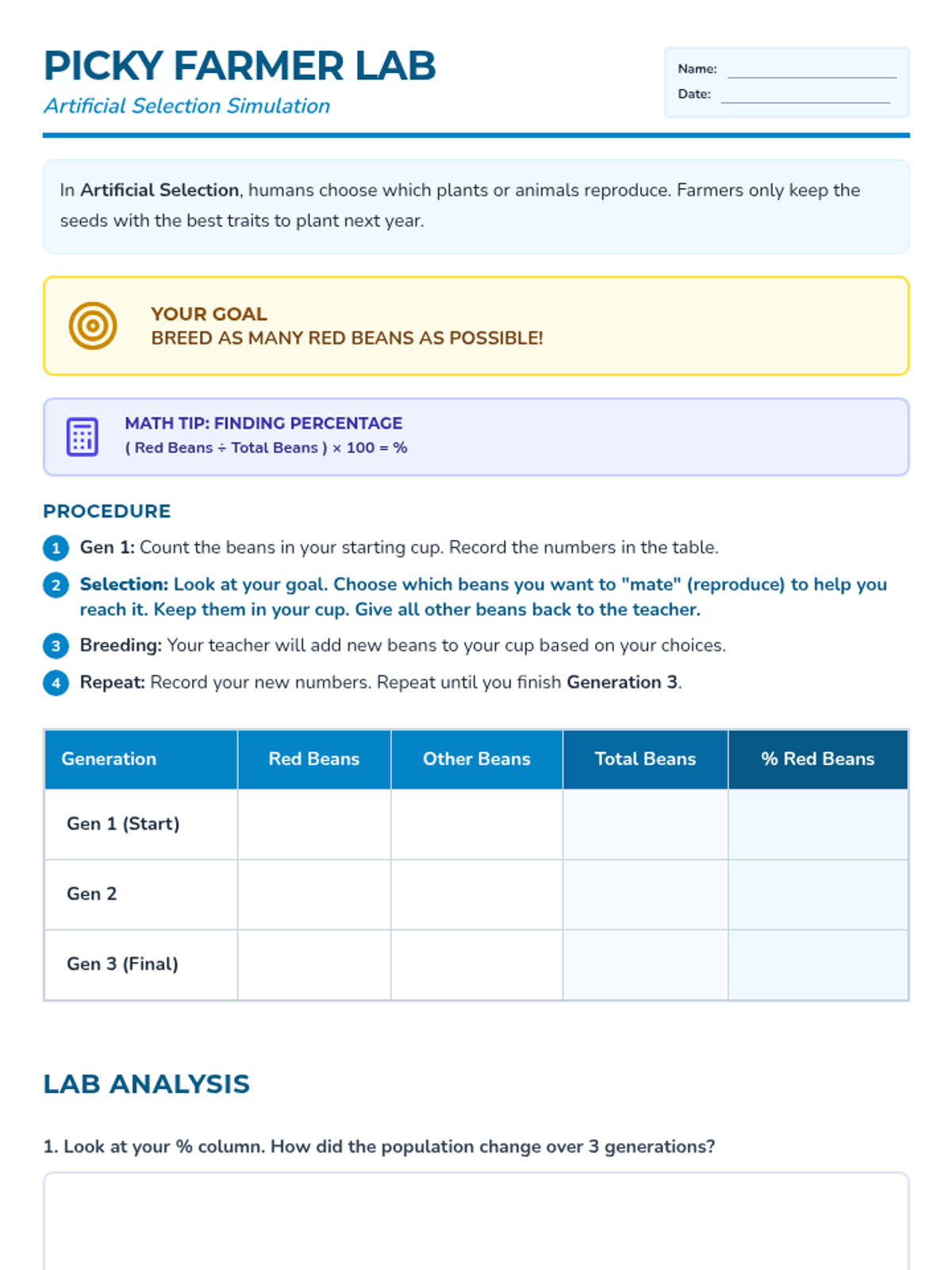
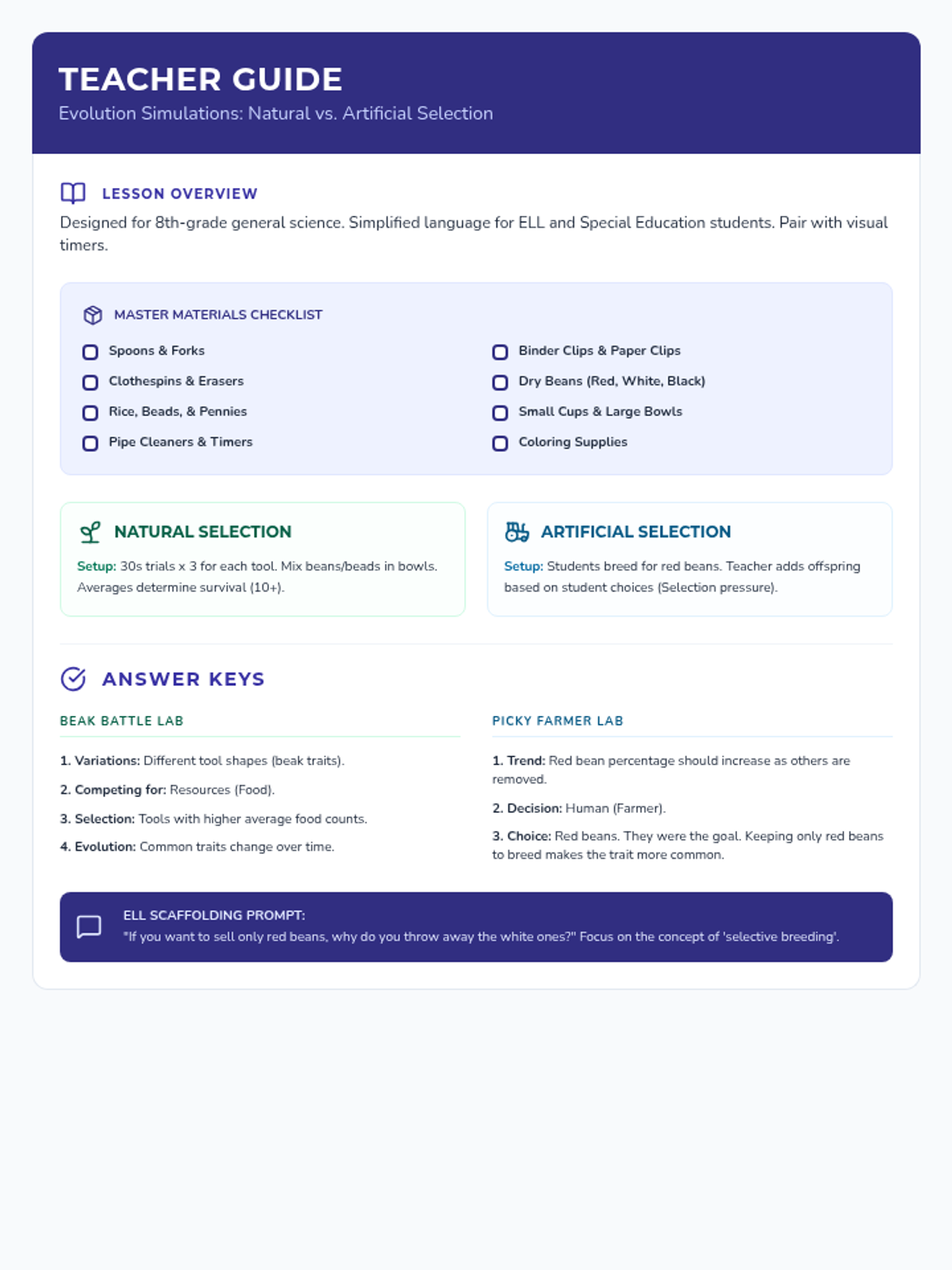
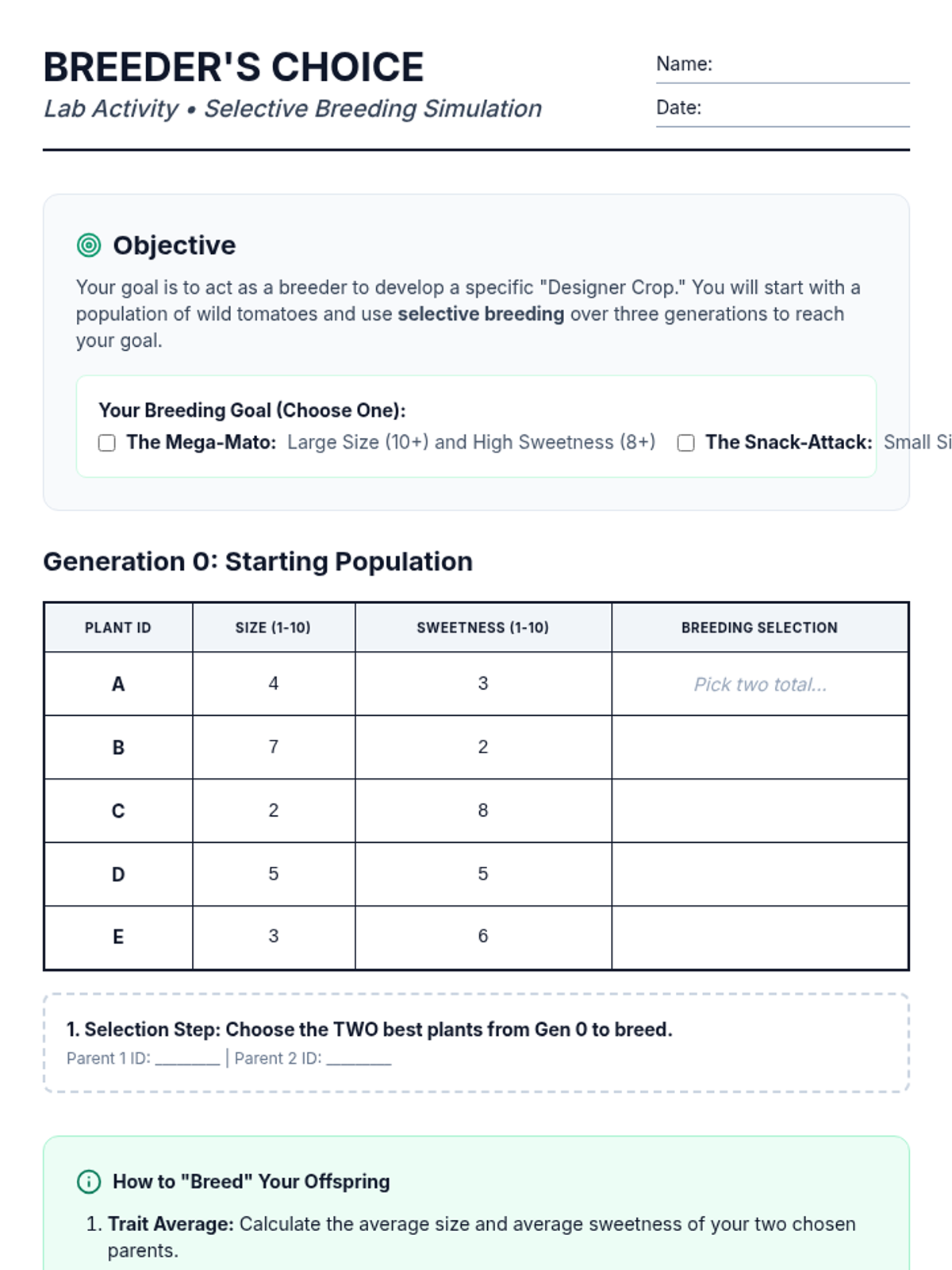
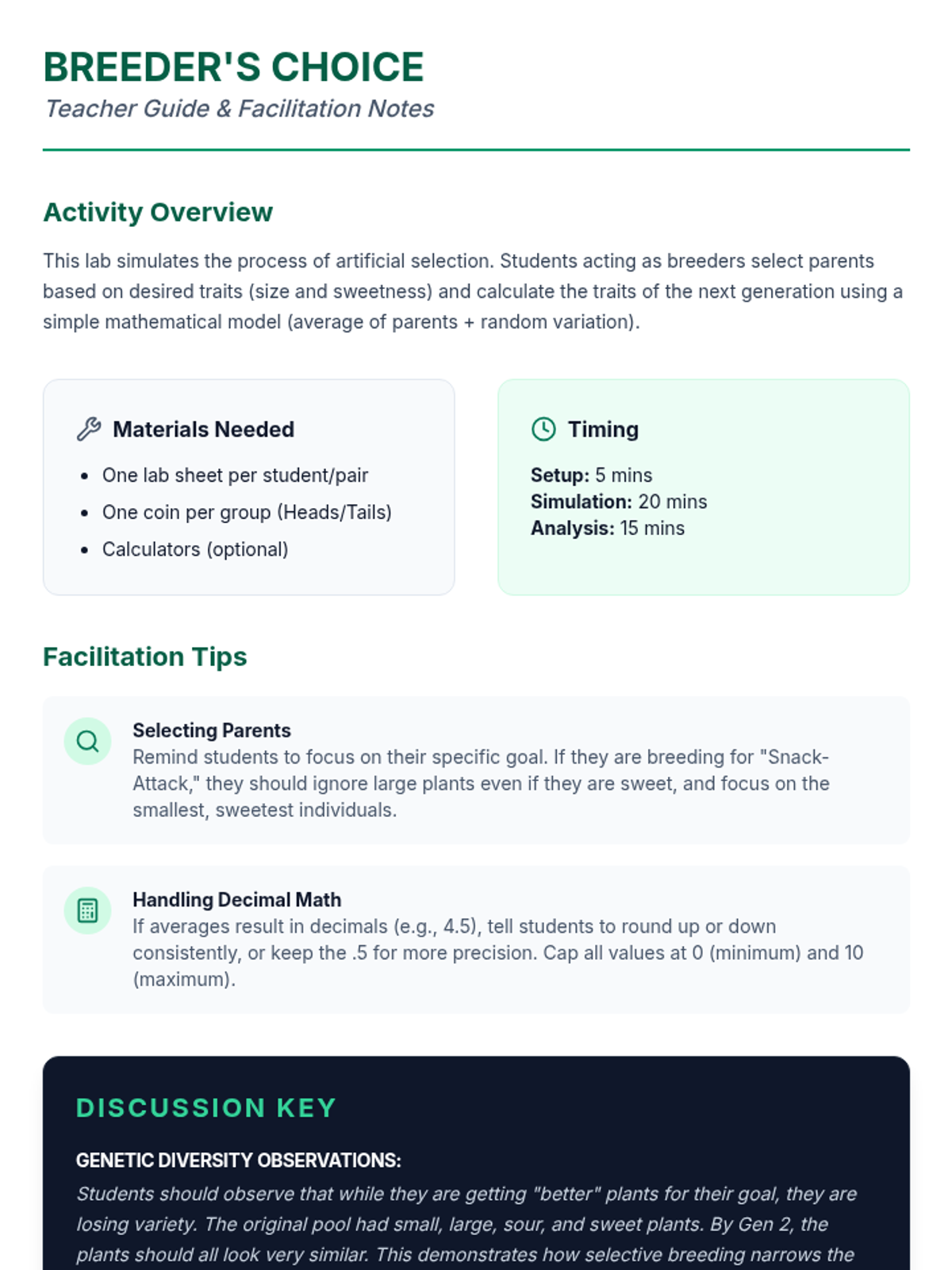
A hands-on lesson featuring two labs where students simulate natural selection through 'beak' adaptations and artificial selection through selective crop breeding.
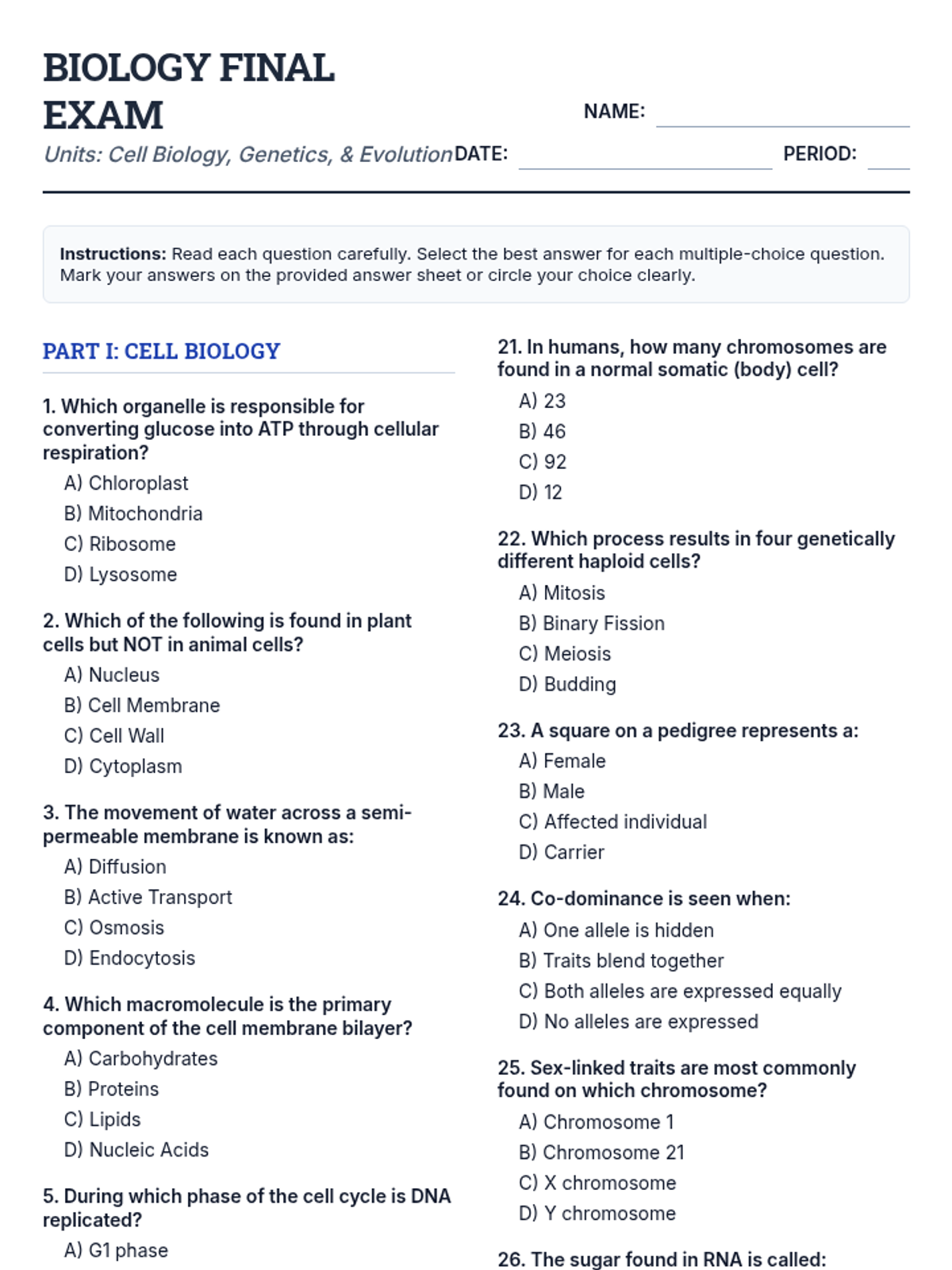
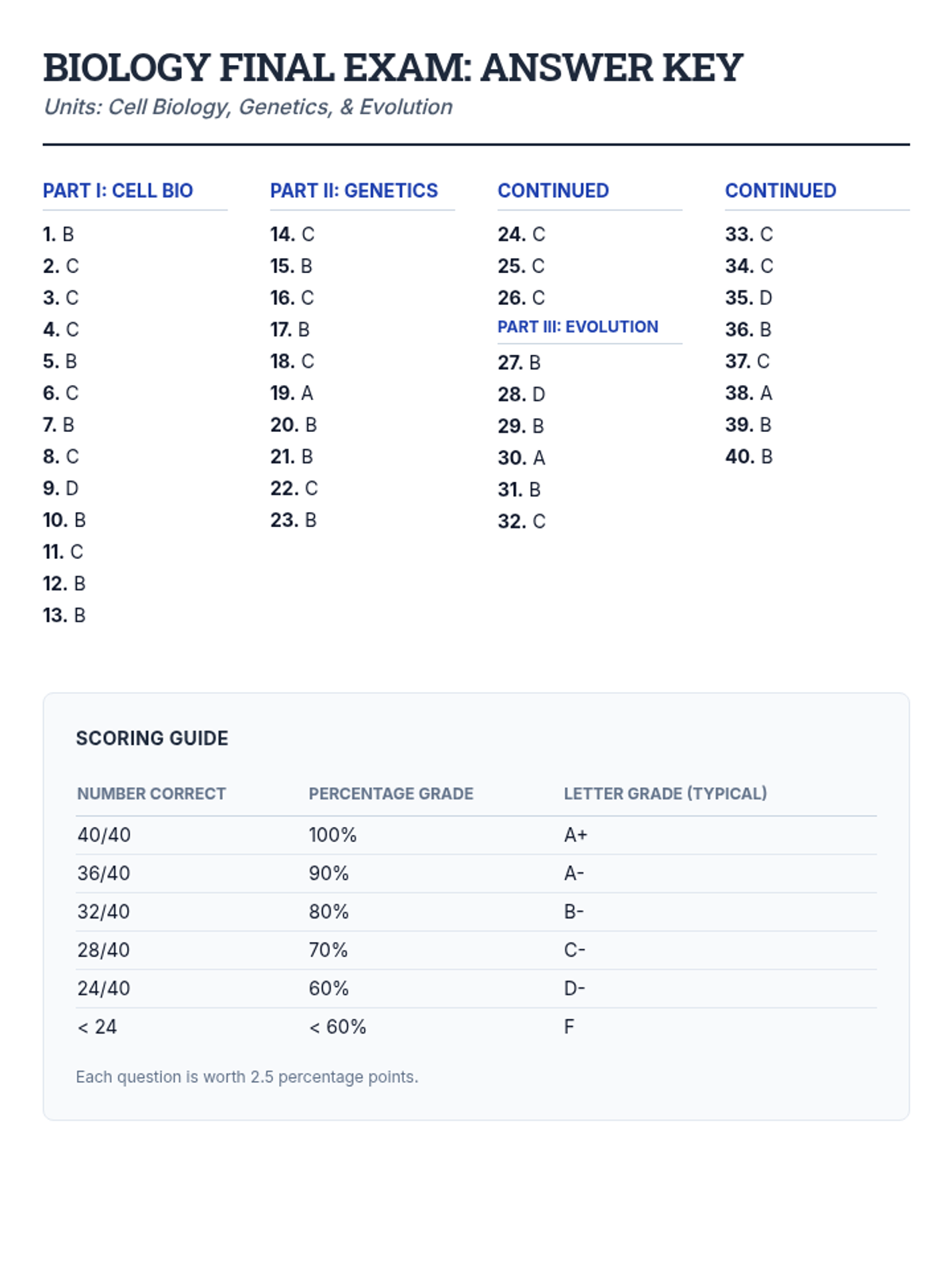
A comprehensive 40-question final examination covering the core units of Cell Biology, Genetics, and Evolution for freshman on-level students.
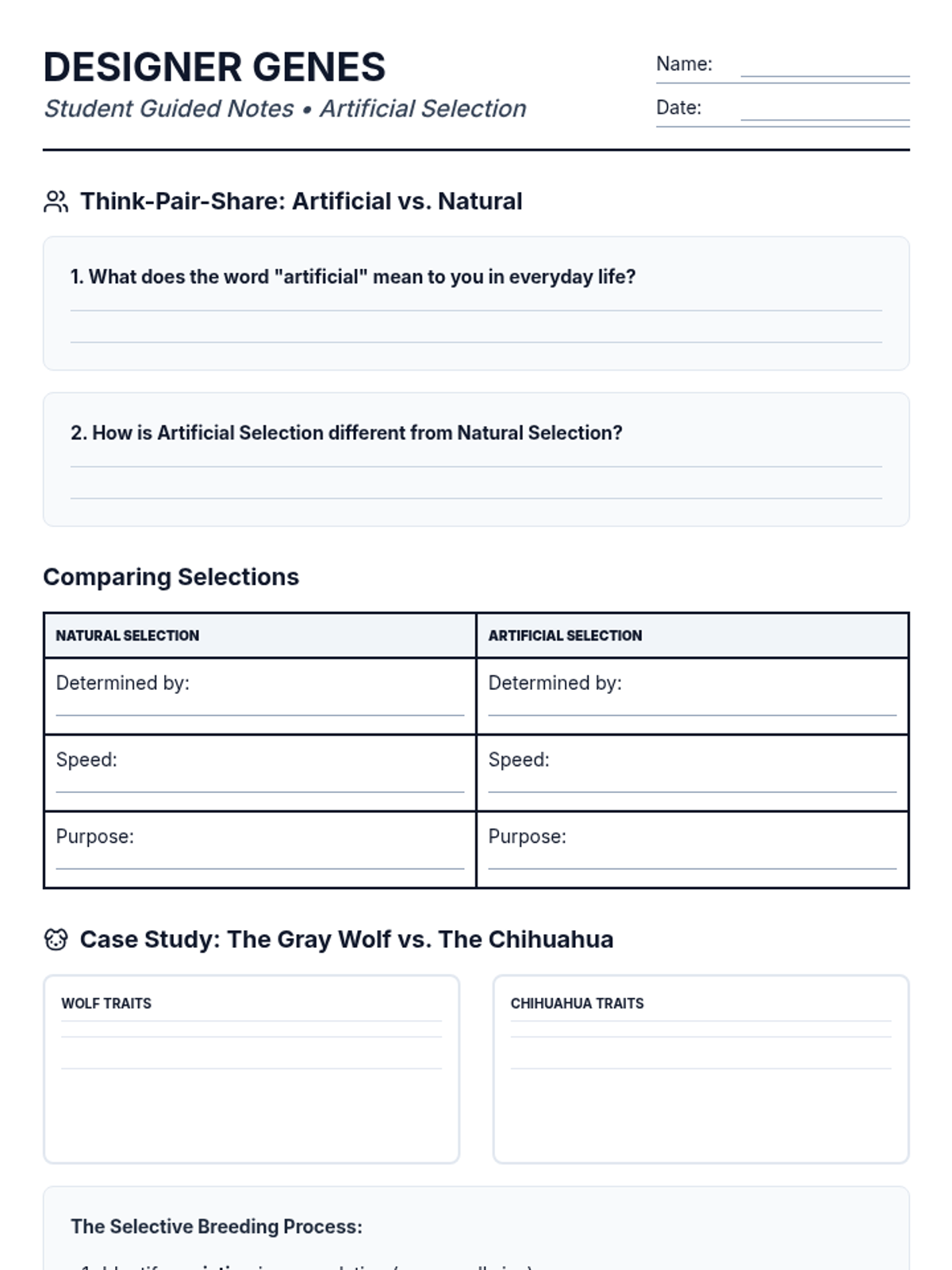
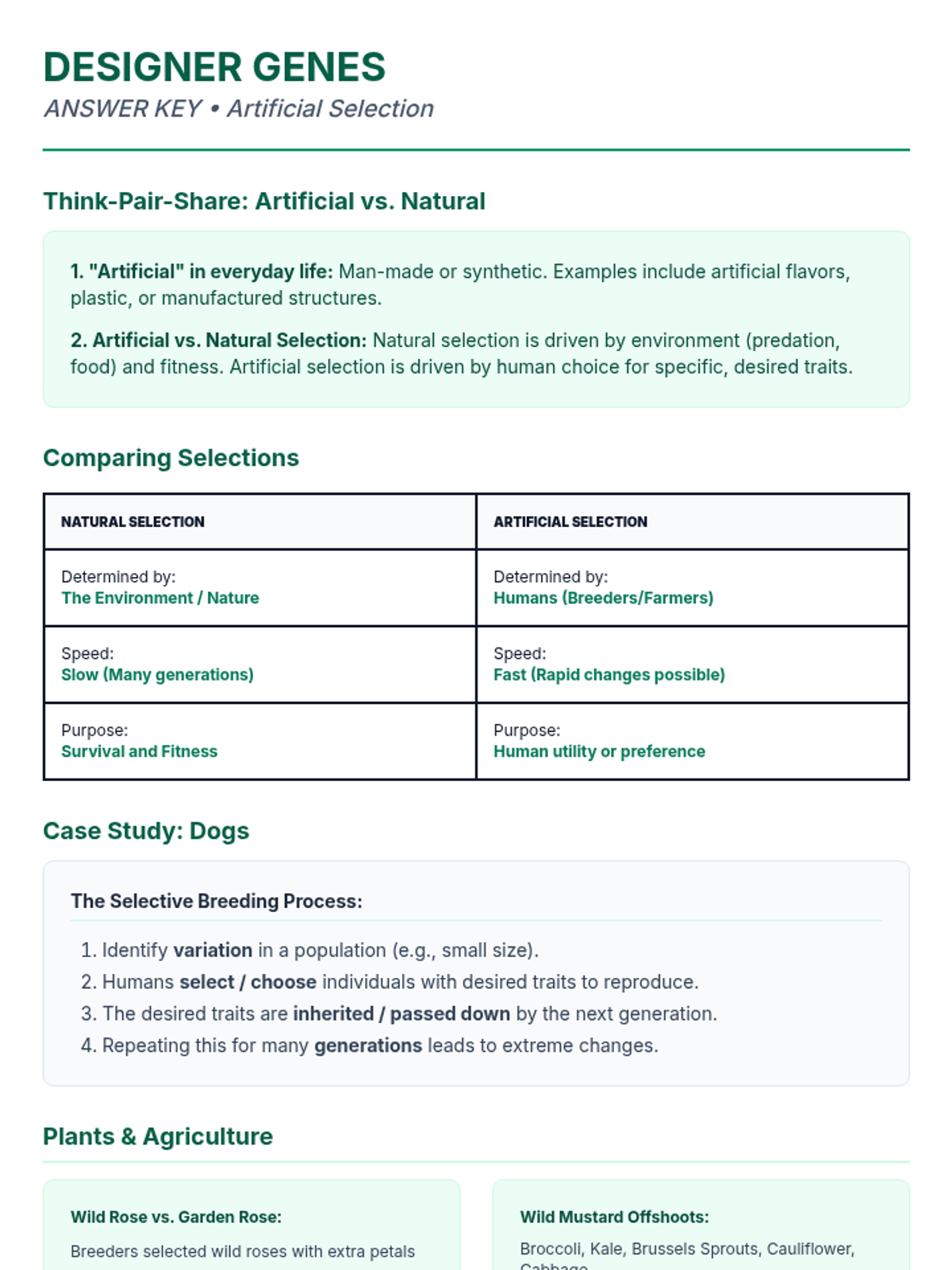
A lesson exploring artificial selection and selective breeding through familiar examples like dogs, roses, and vegetables, highlighting the differences from natural selection and the impact on genetic diversity.
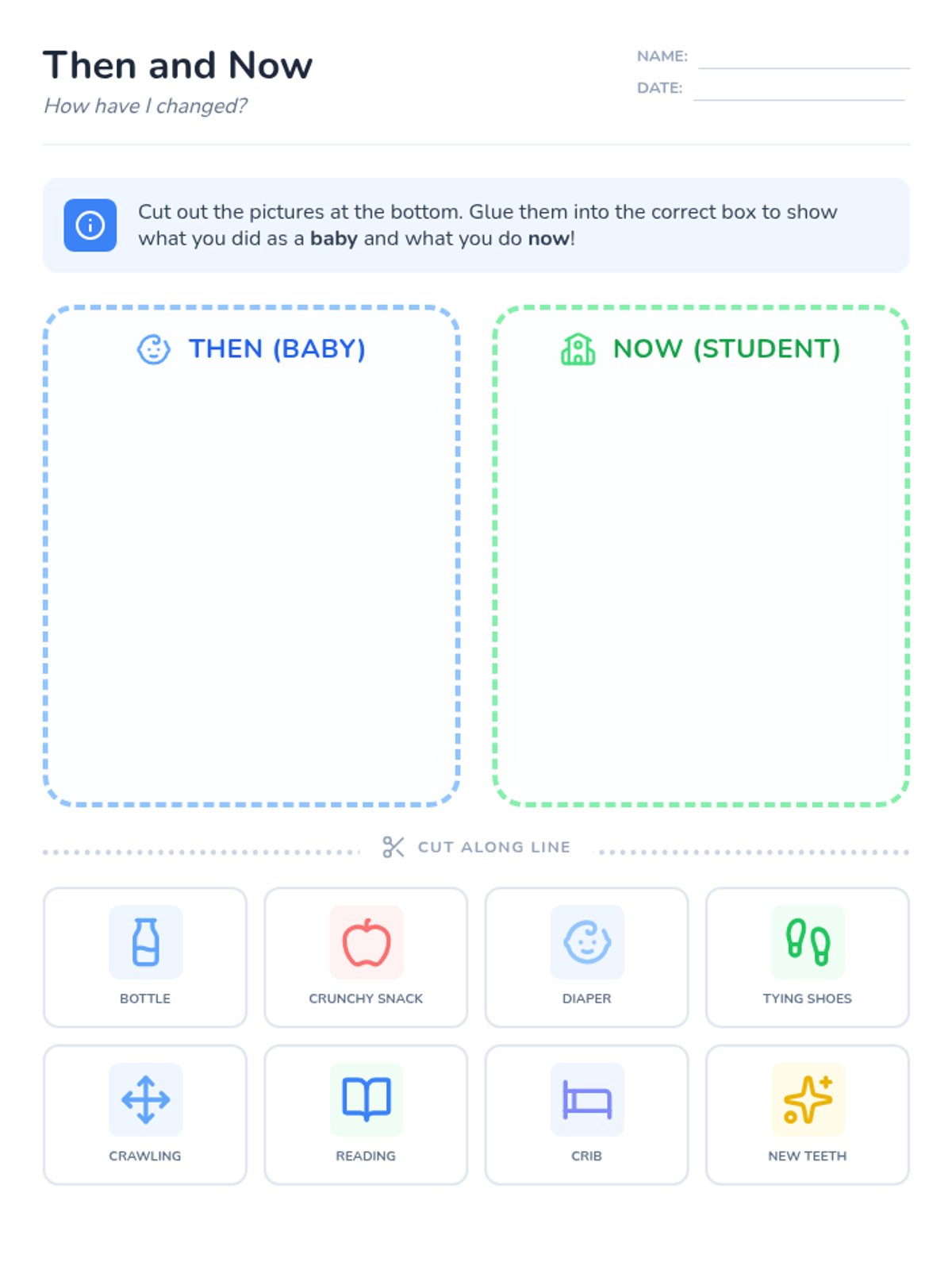
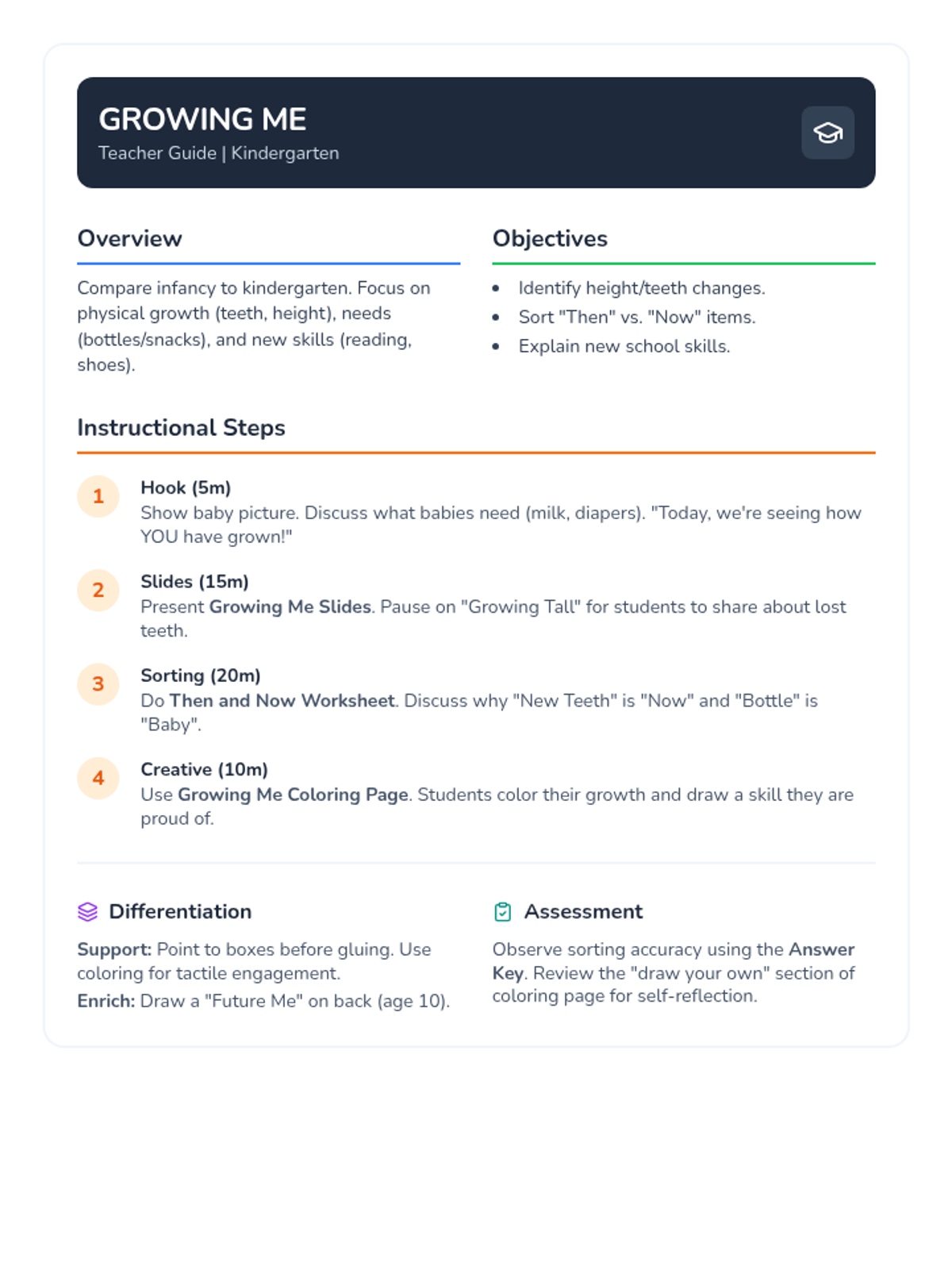
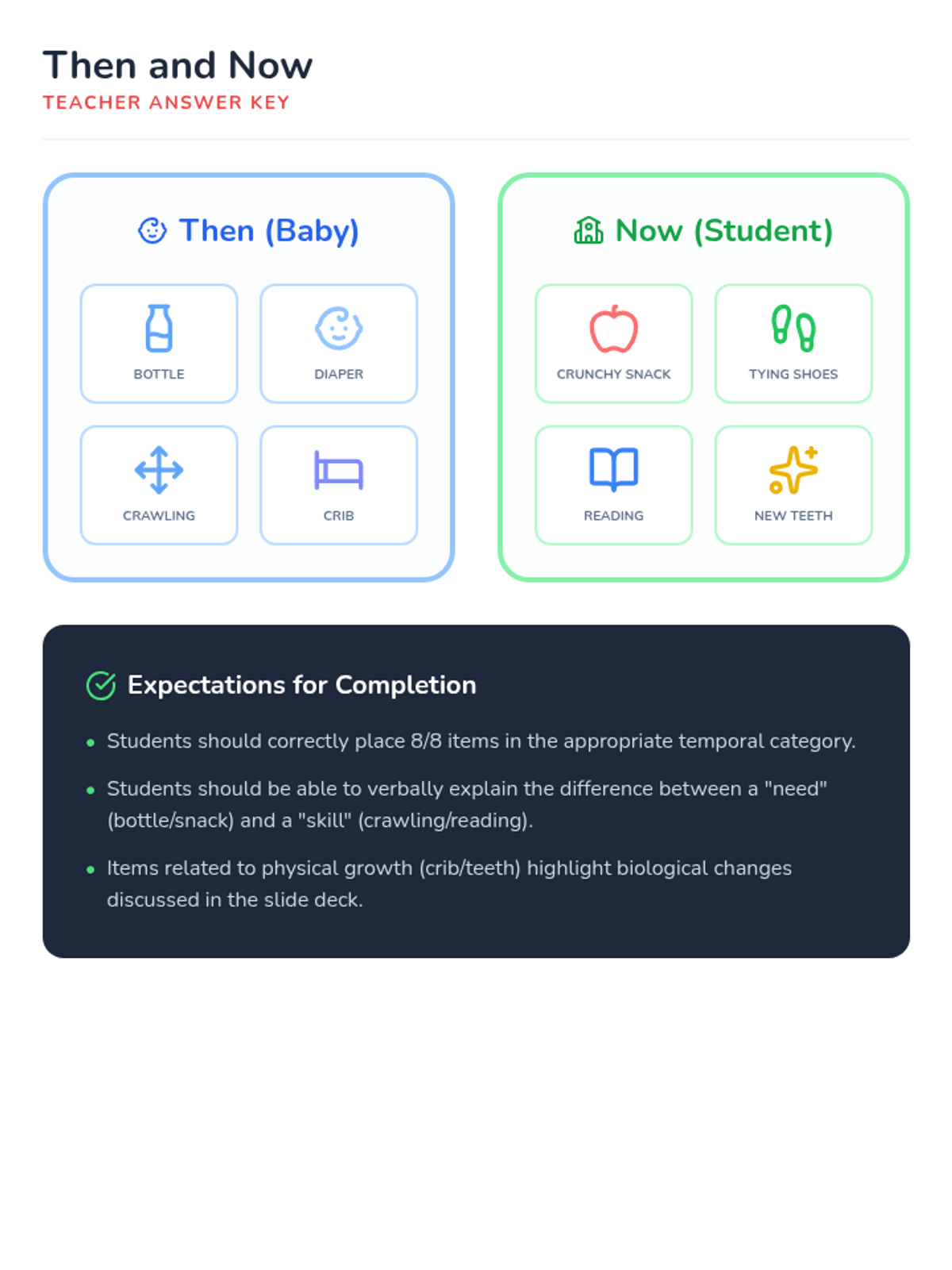
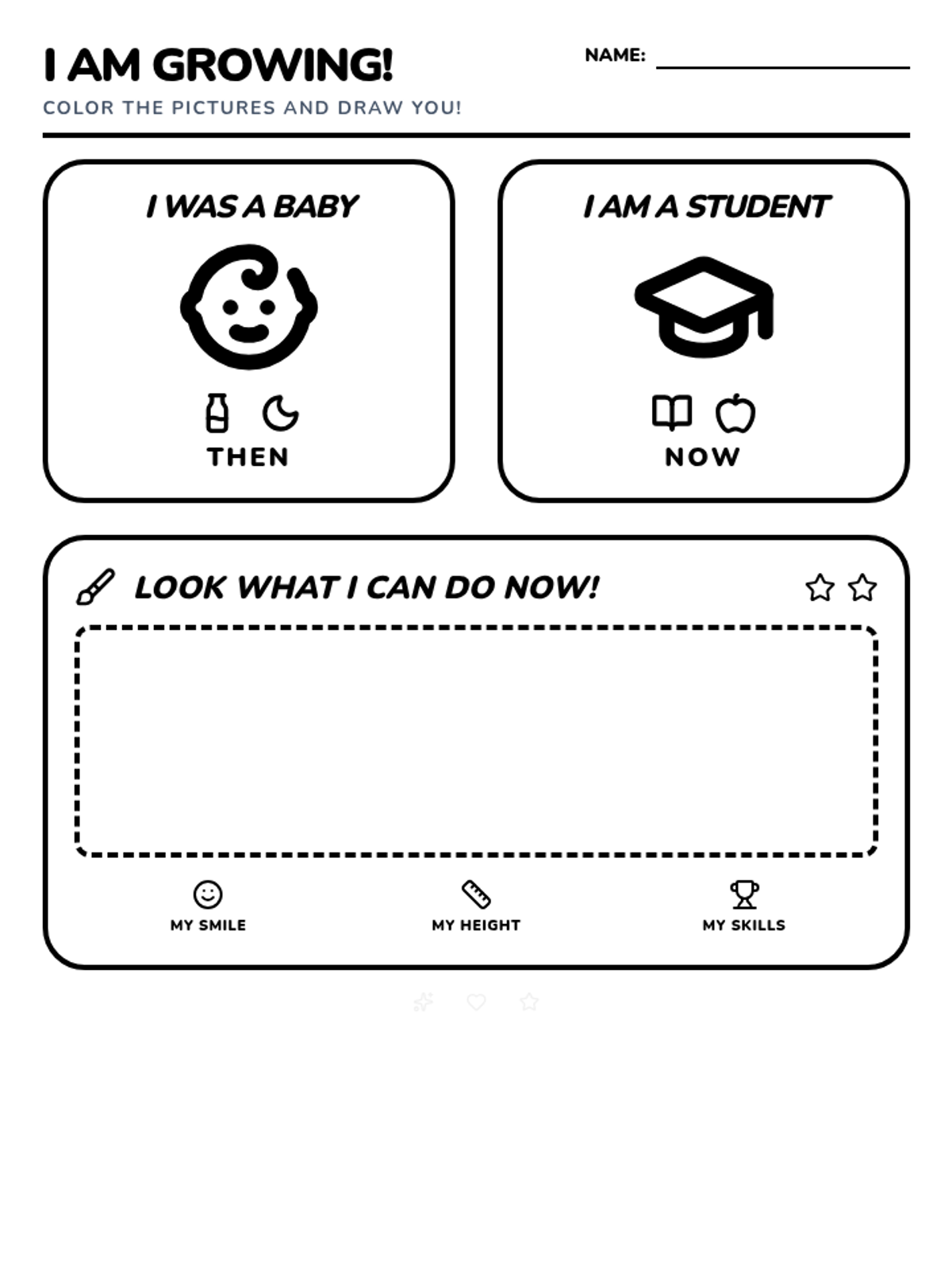
A lesson for kindergarteners to explore and identify how they have grown and changed from infancy to school age, focusing on needs, physical changes, and new skills.
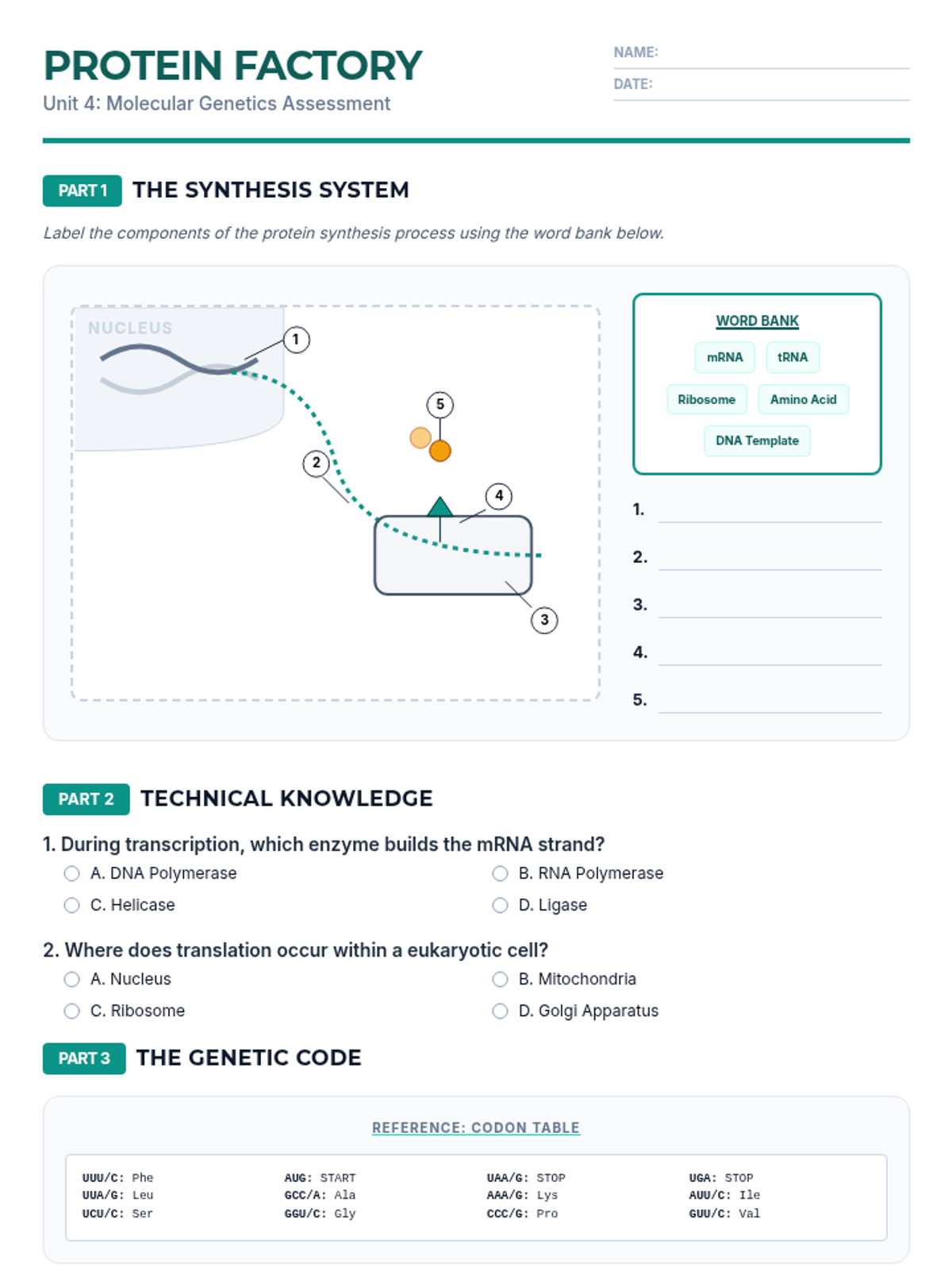
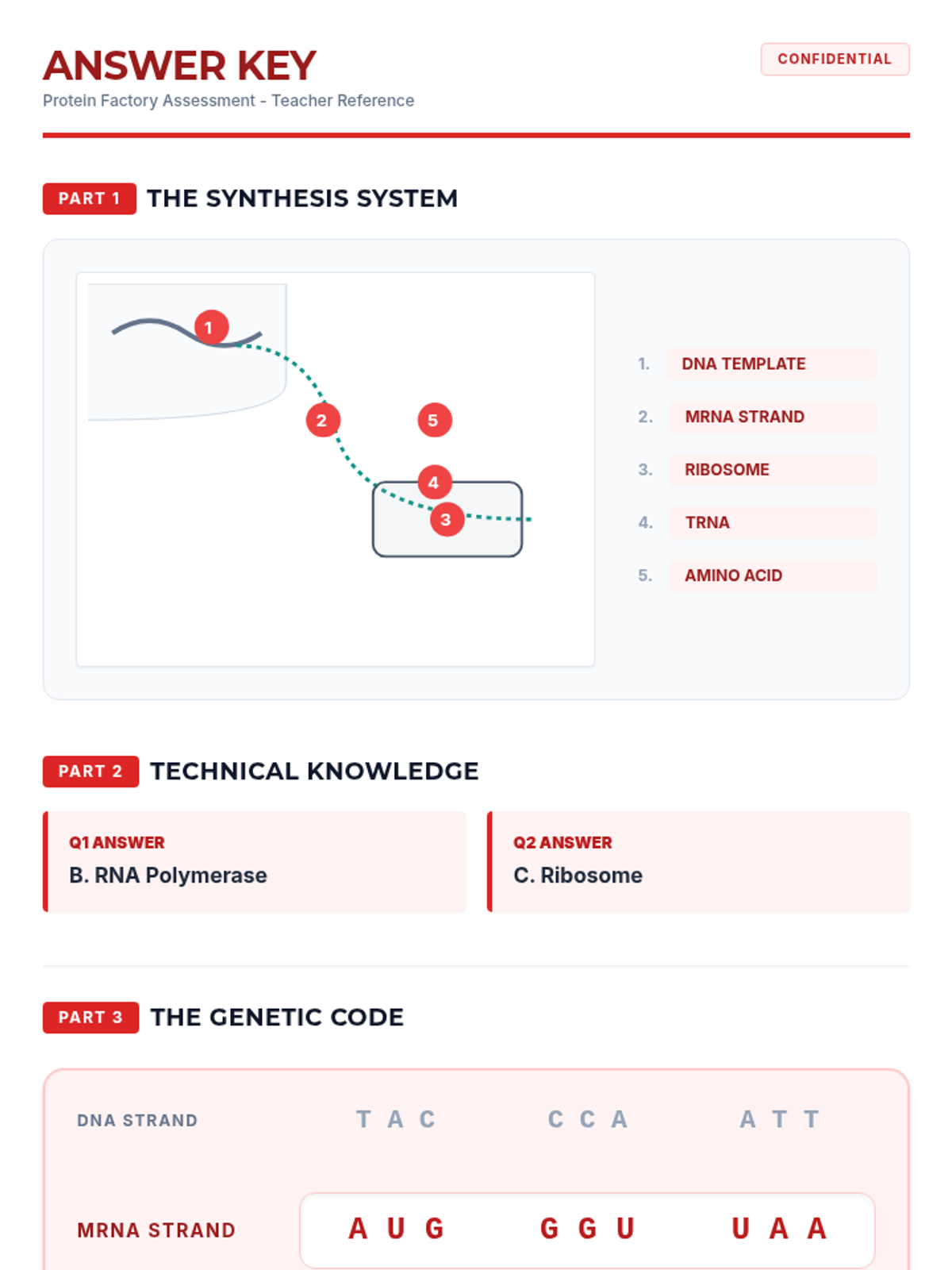
A comprehensive assessment on the central dogma of molecular biology, covering transcription, translation, and genetic code interpretation through diagrams and multiple-choice questions.
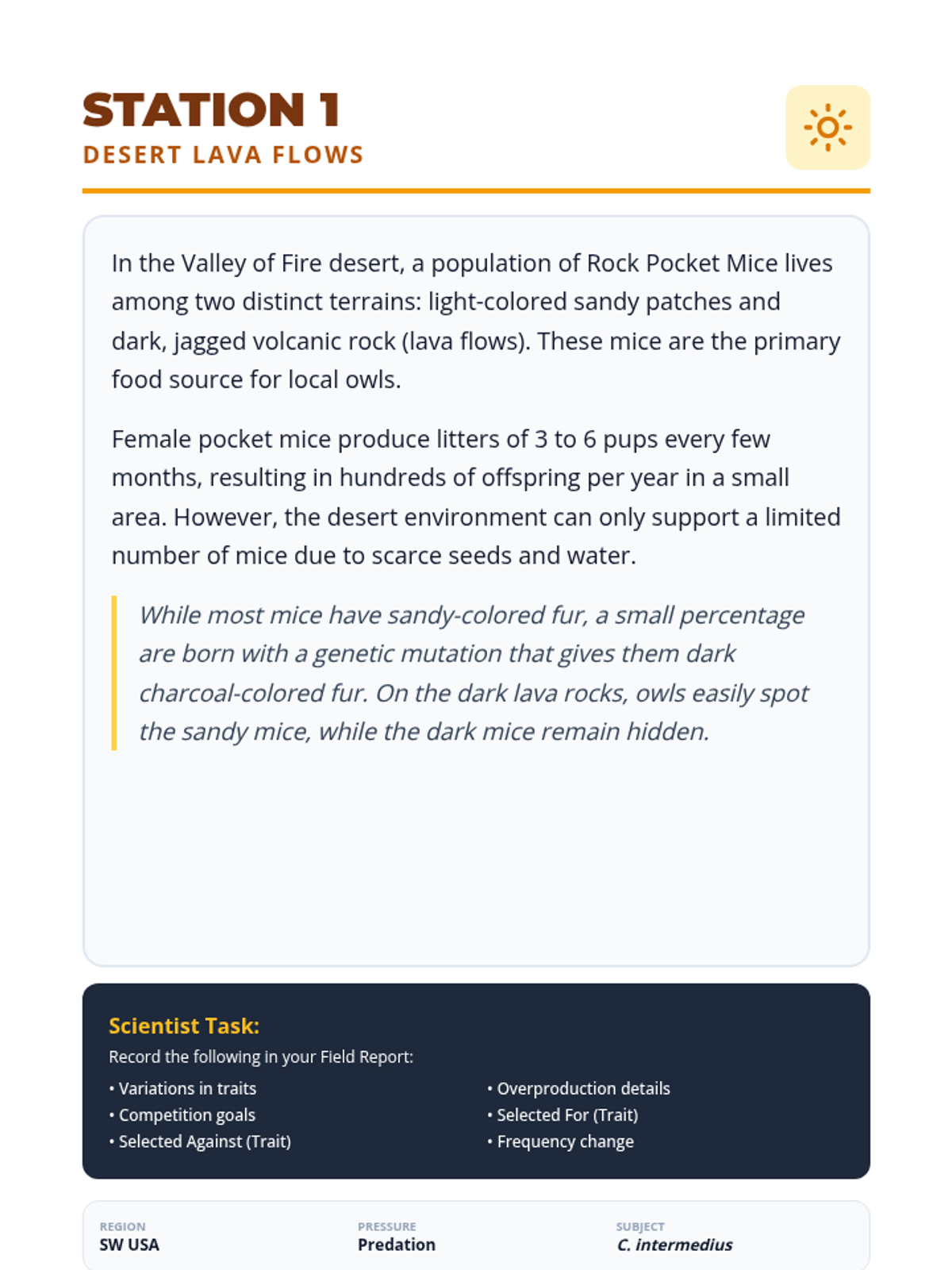
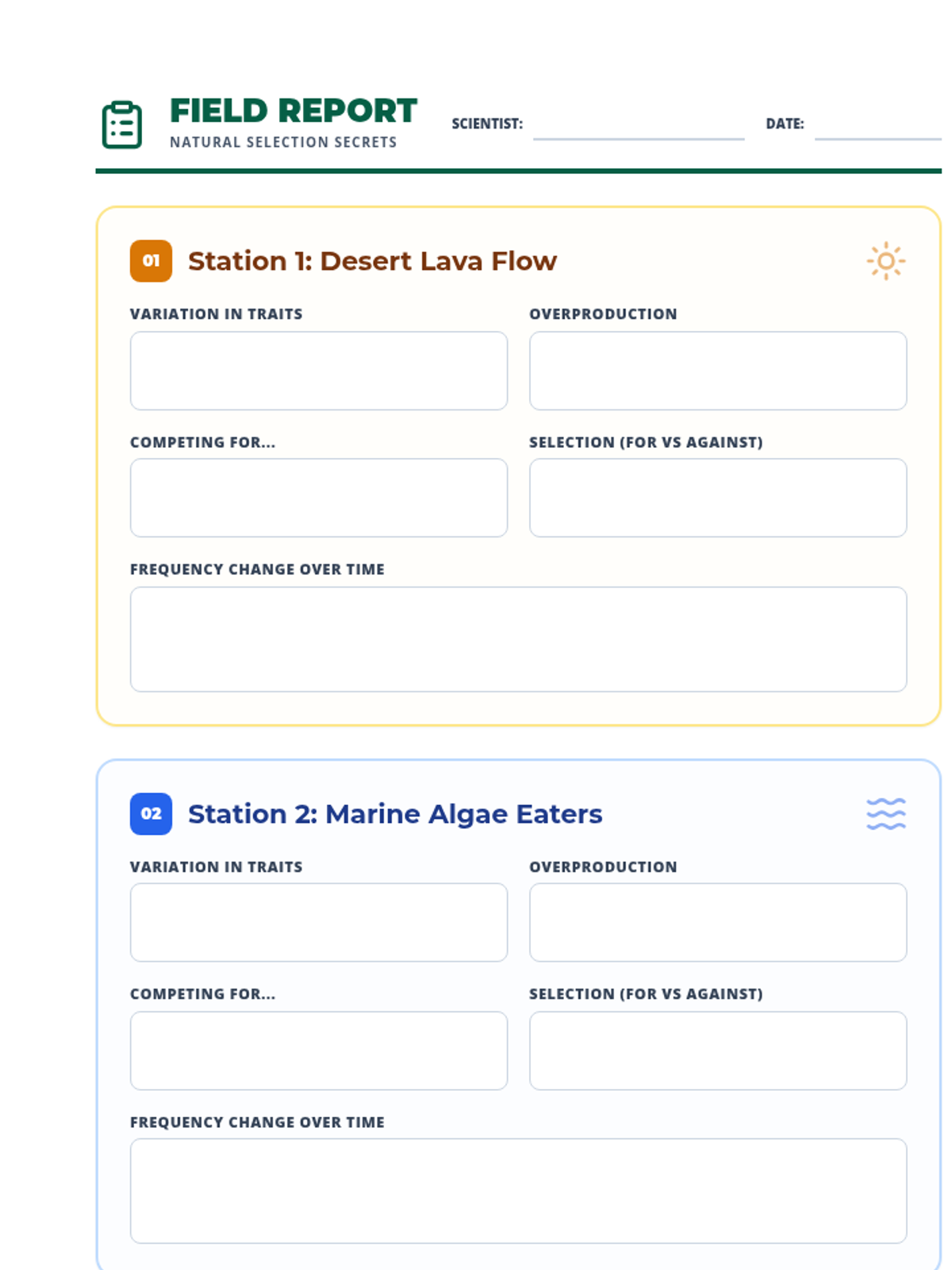
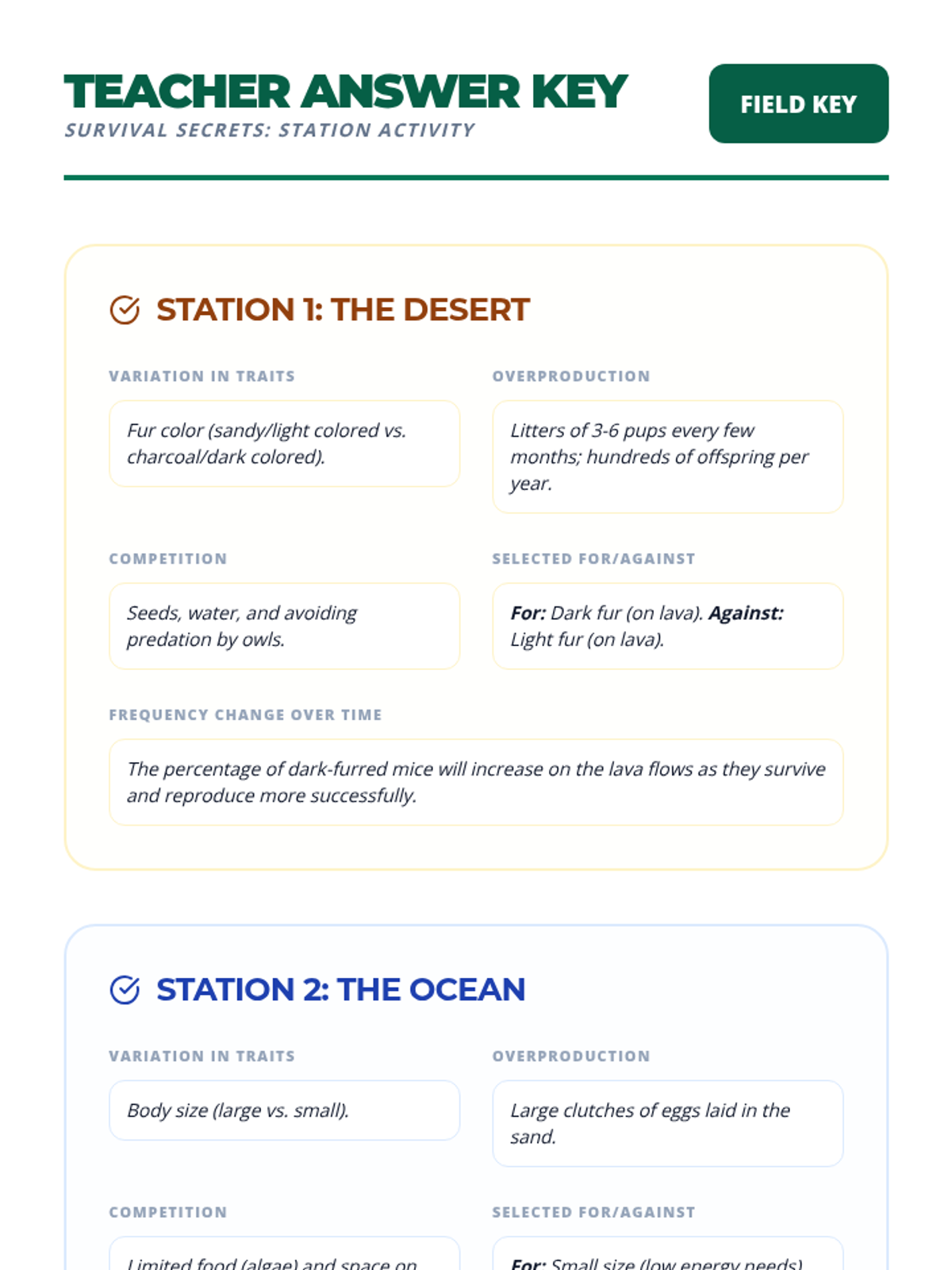
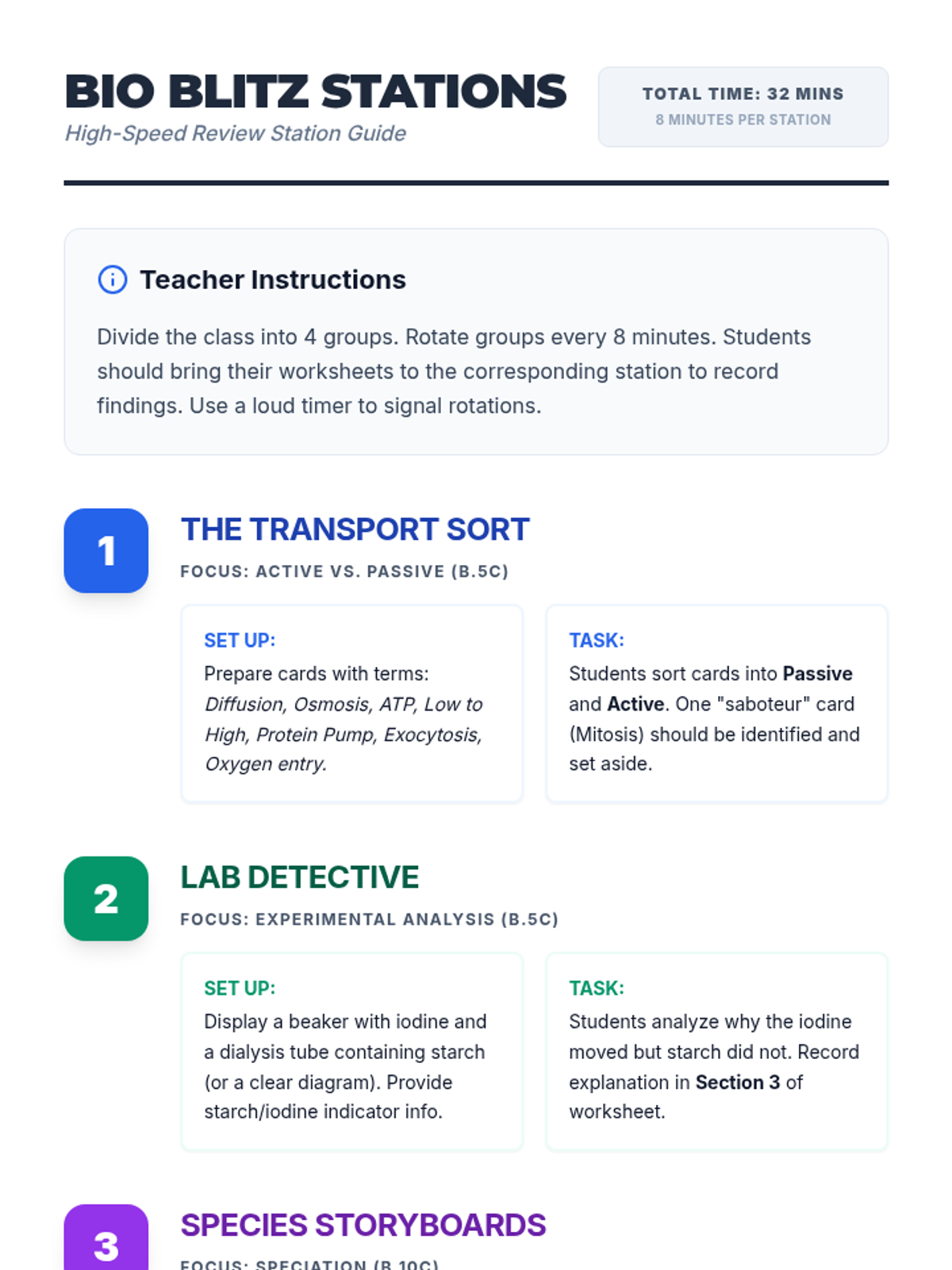
An immersive station-based lesson where students analyze real-world scenarios of natural selection across four diverse ecosystems to identify the mechanisms of evolution.
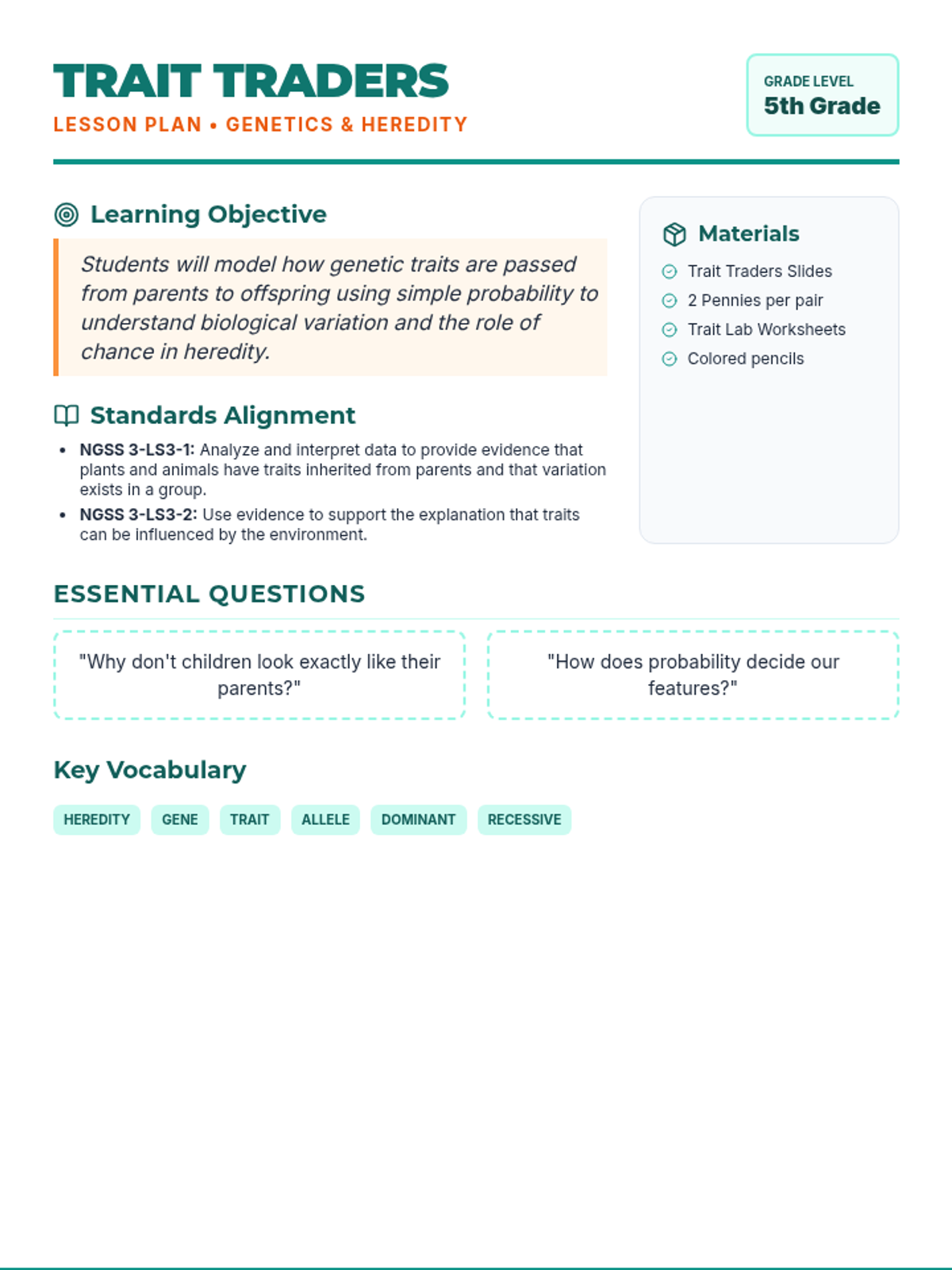
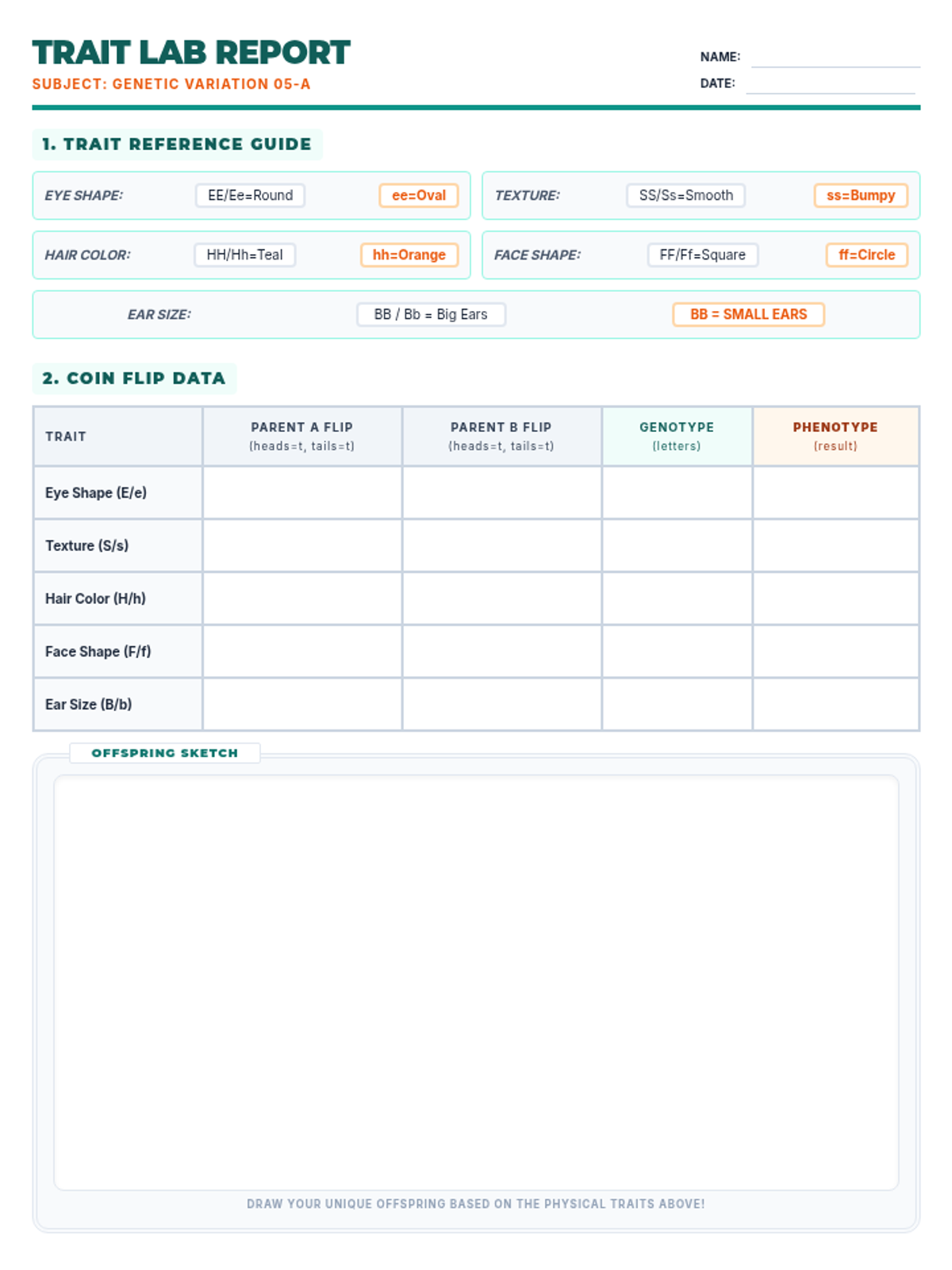
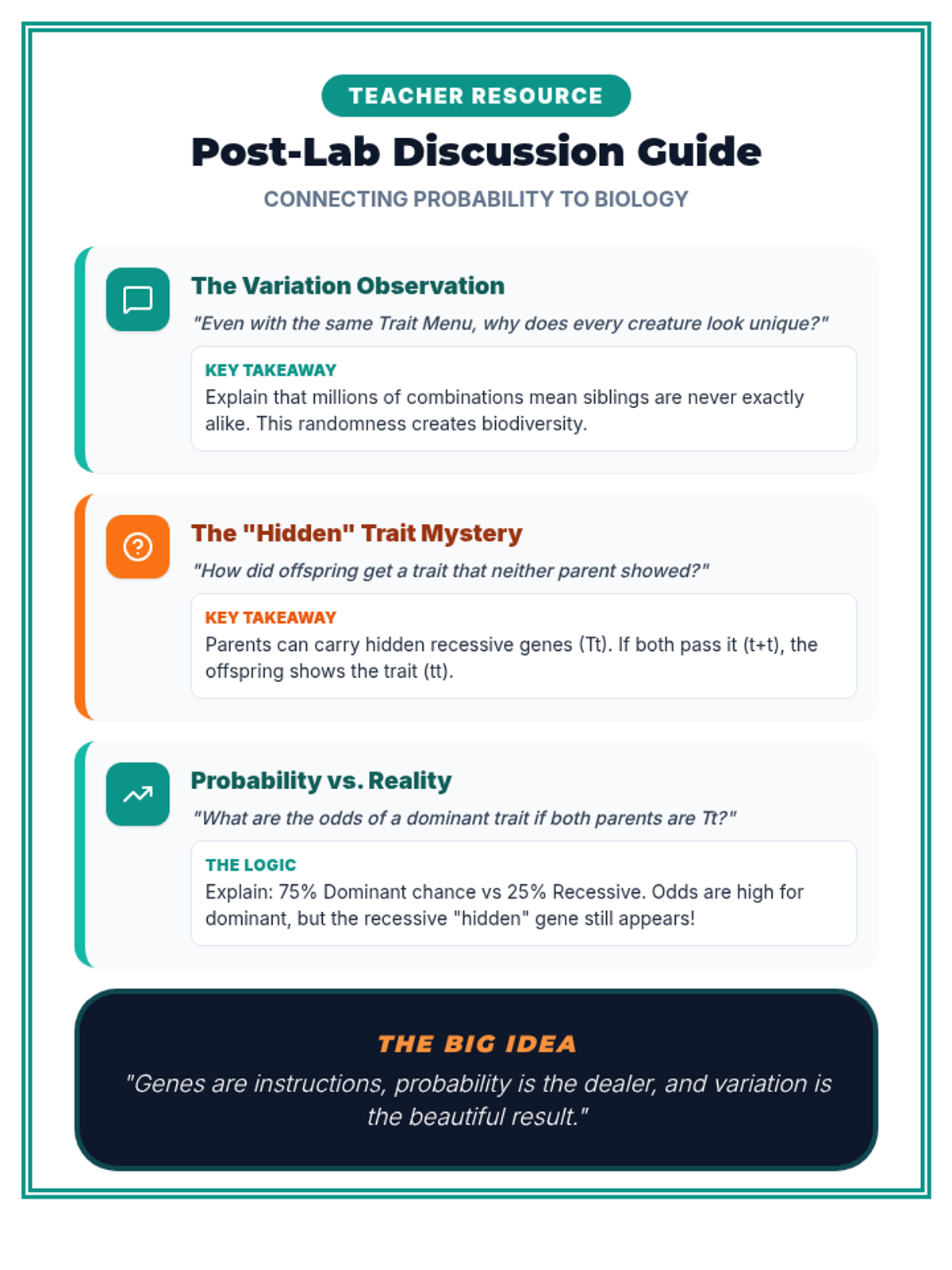
A hands-on exploration of genetics where 5th graders use probability (coin flips) to determine the physical traits of an offspring, demonstrating how heredity leads to biological variation.
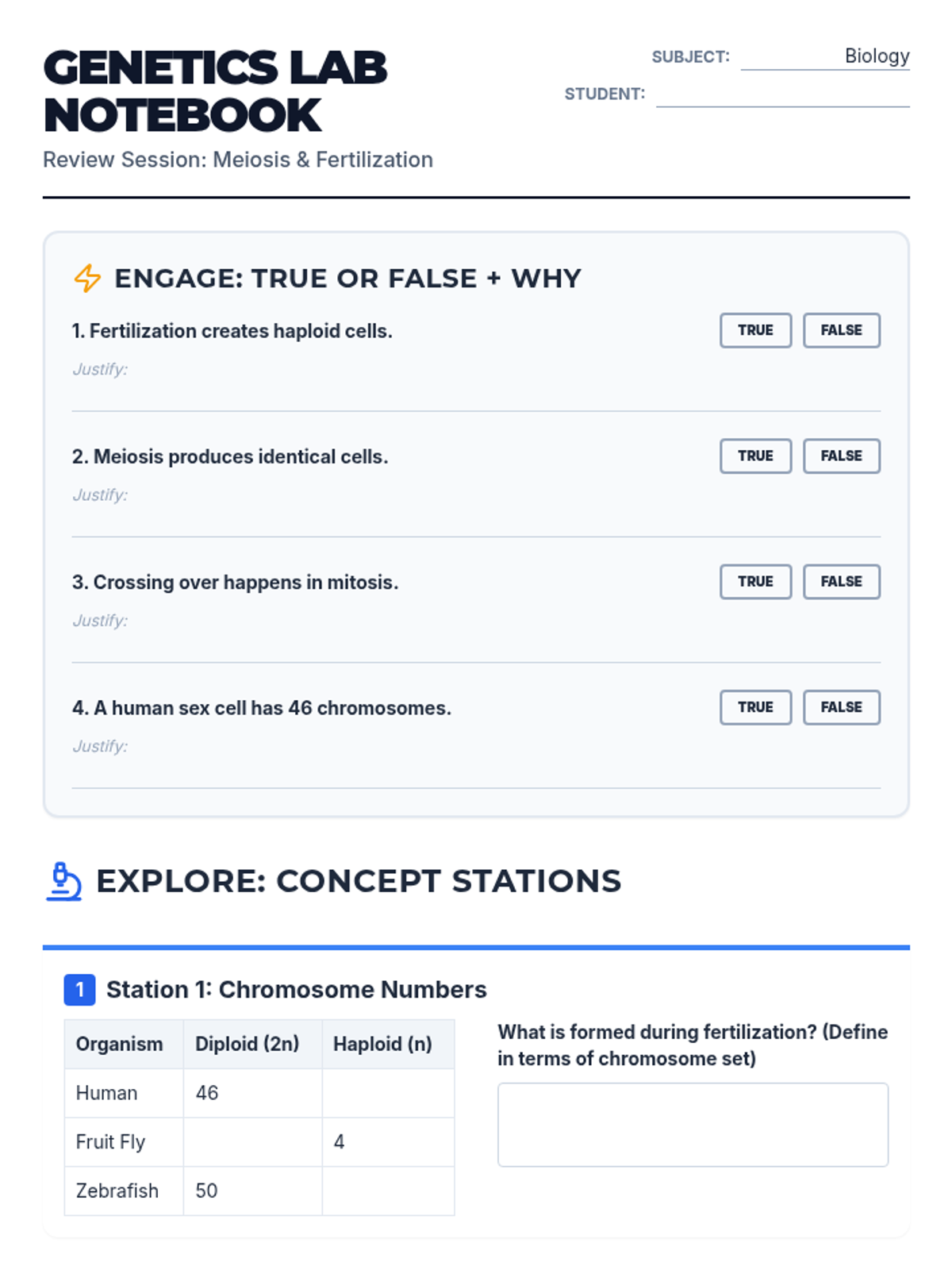
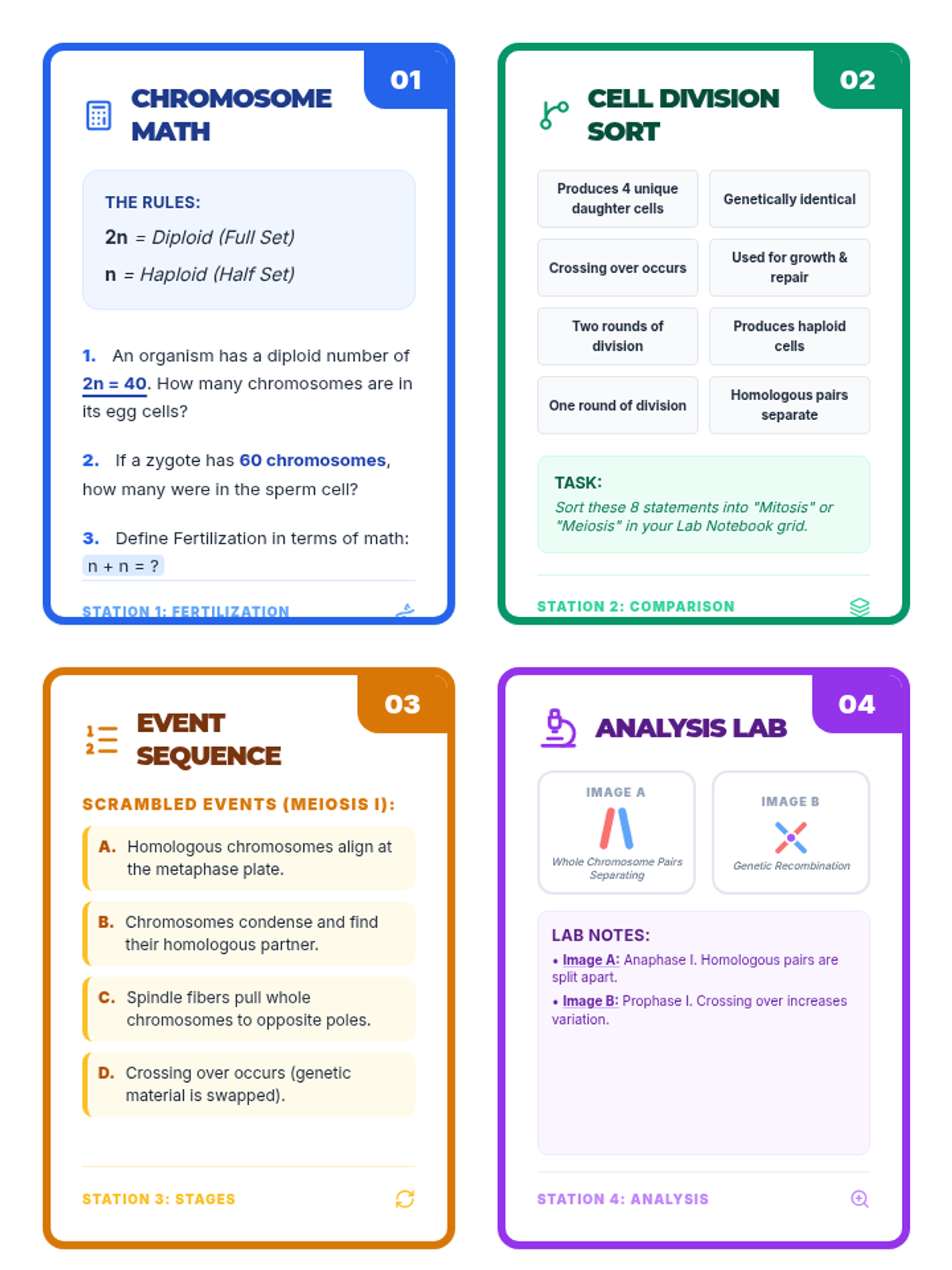
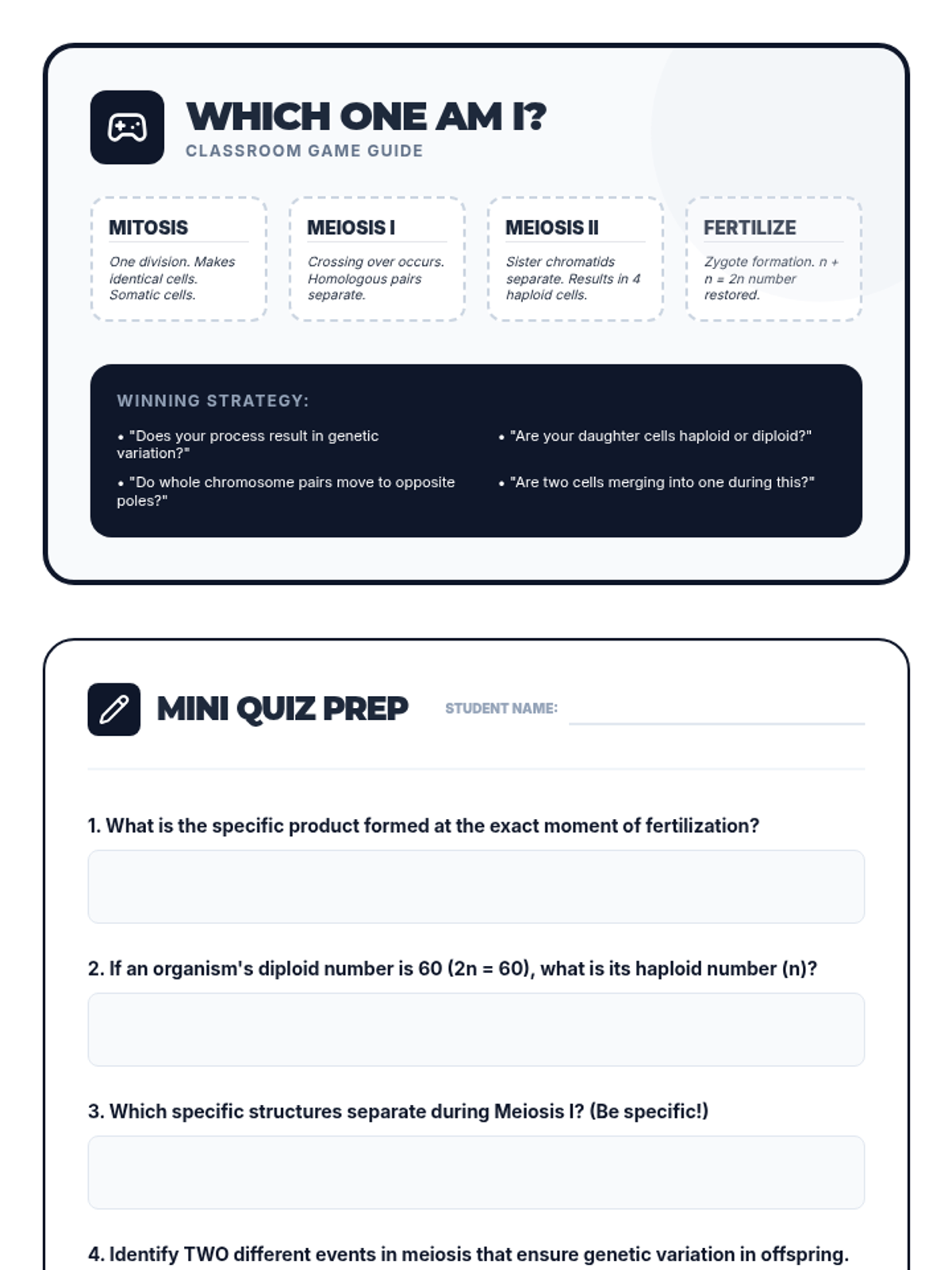
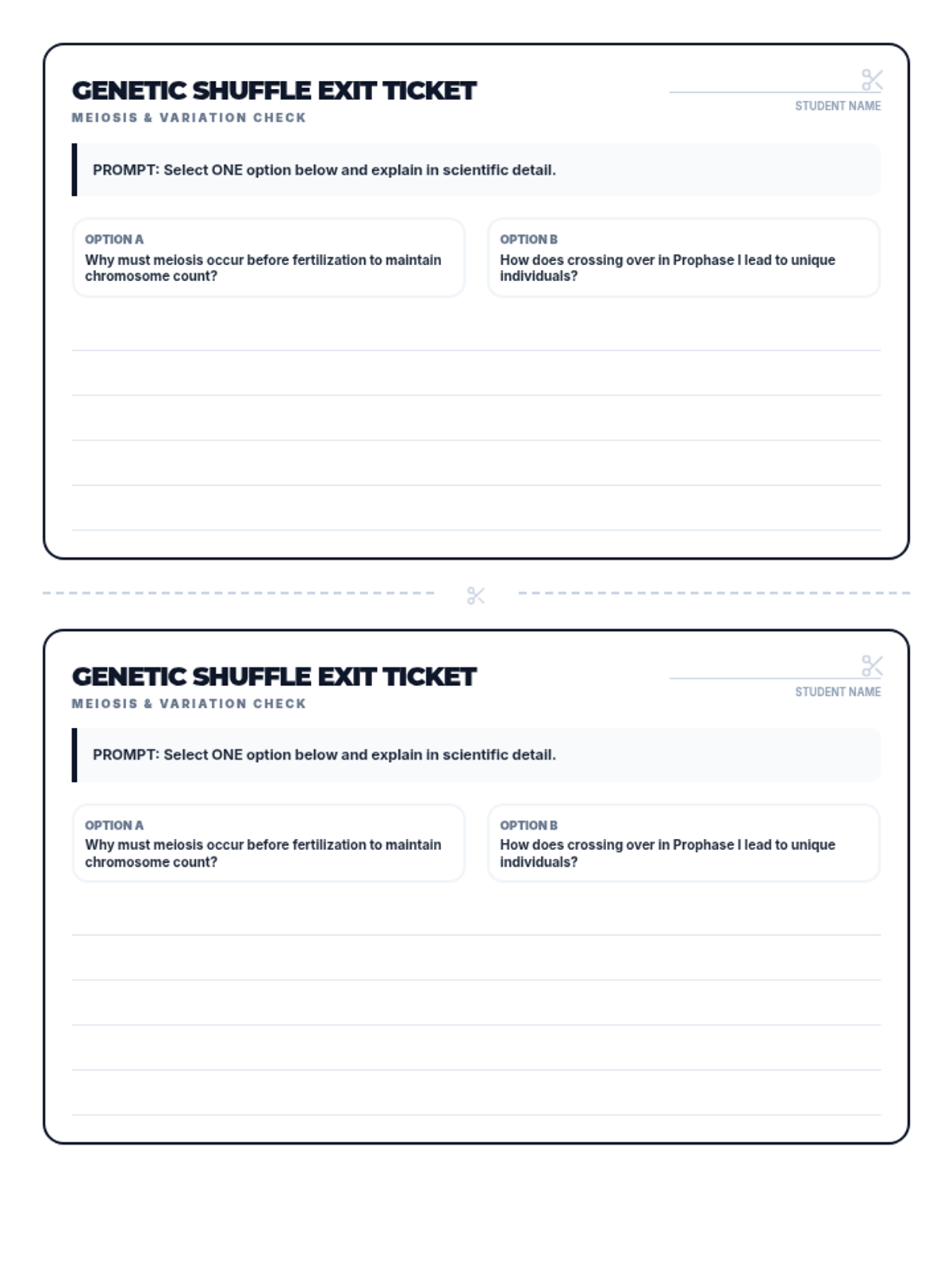
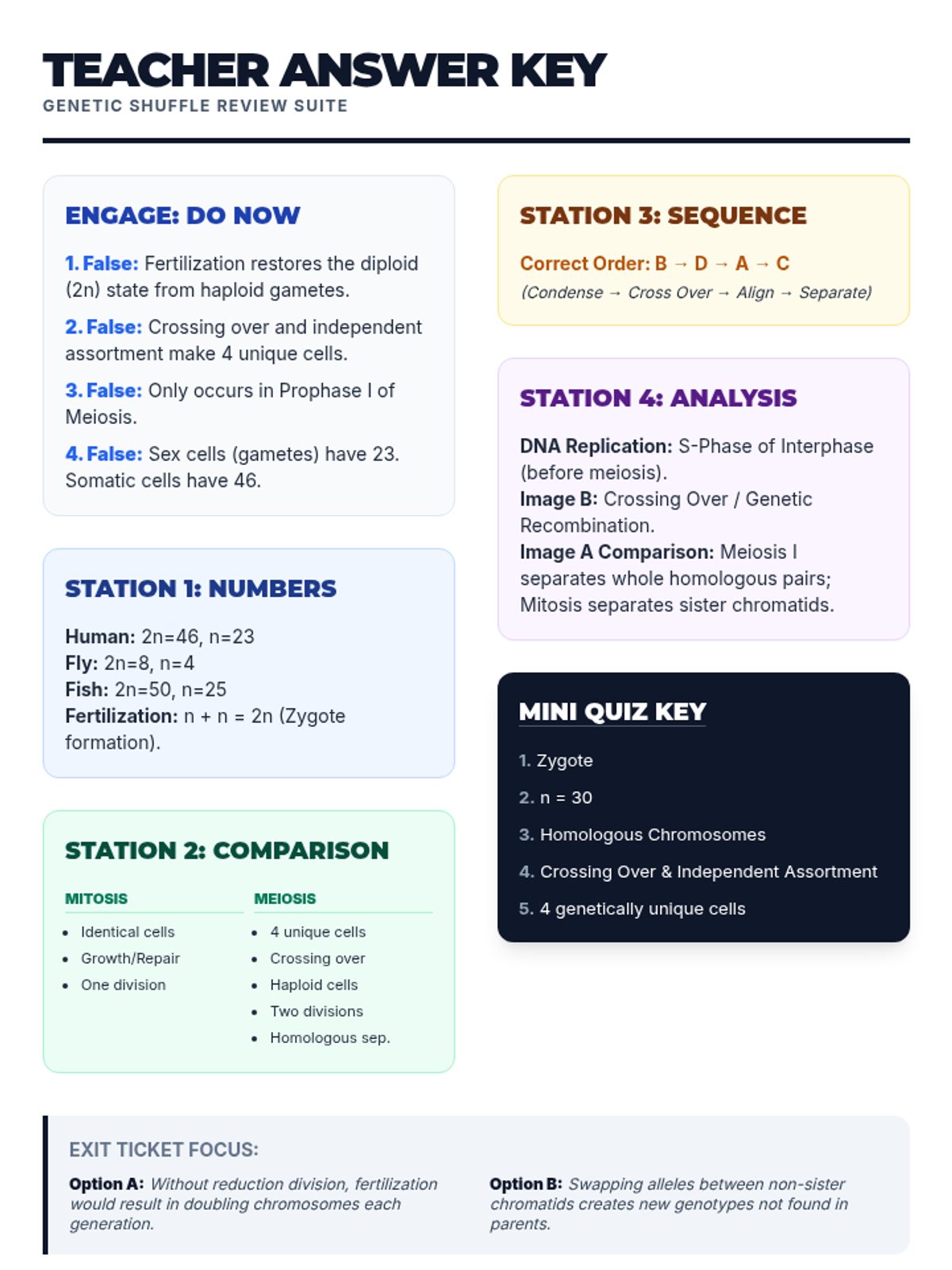
A high-school level review lesson covering meiosis, mitosis, fertilization, and genetic variation. Students rotate through concept stations to master chromosome math and cellular division sequences.
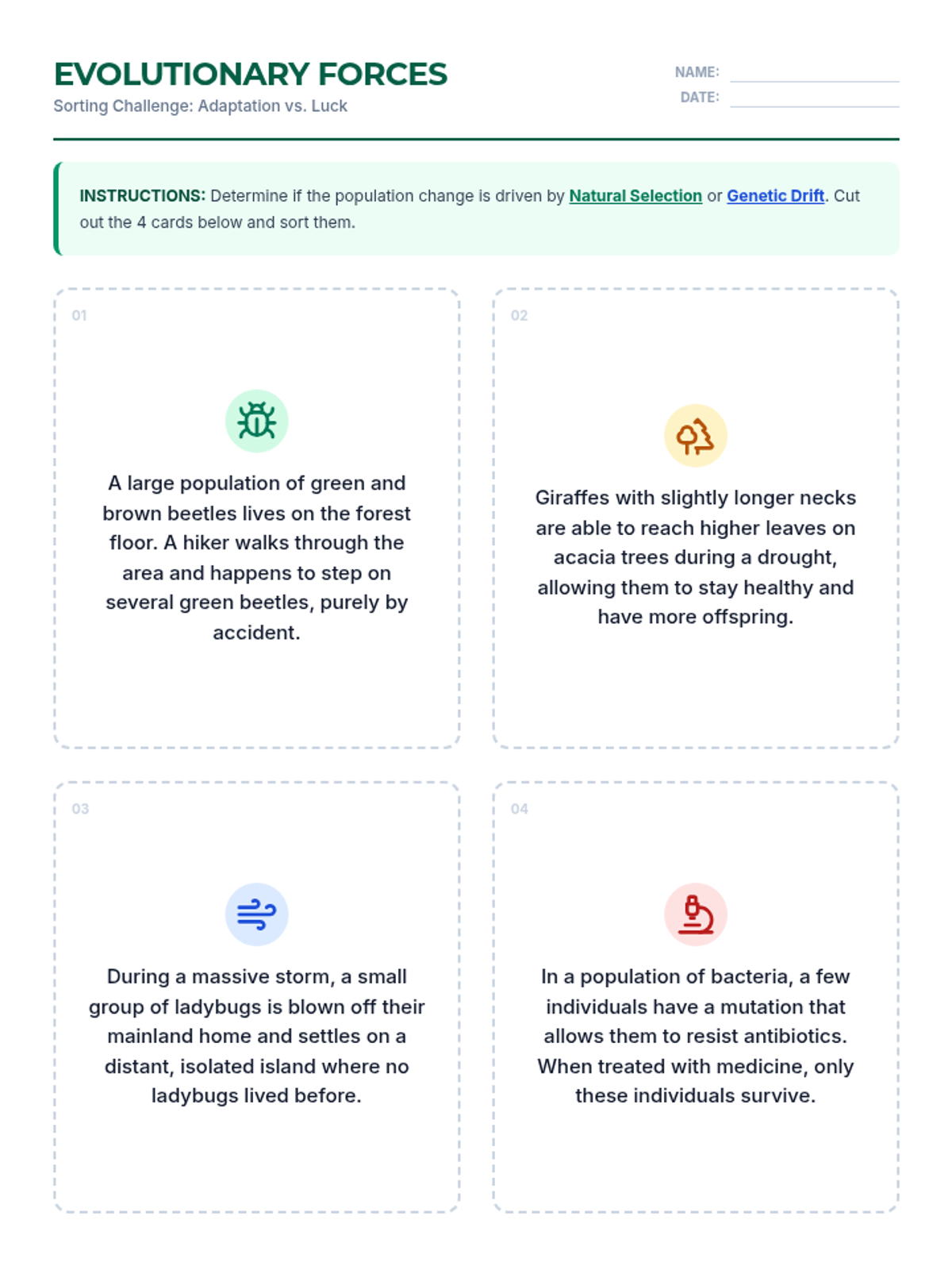
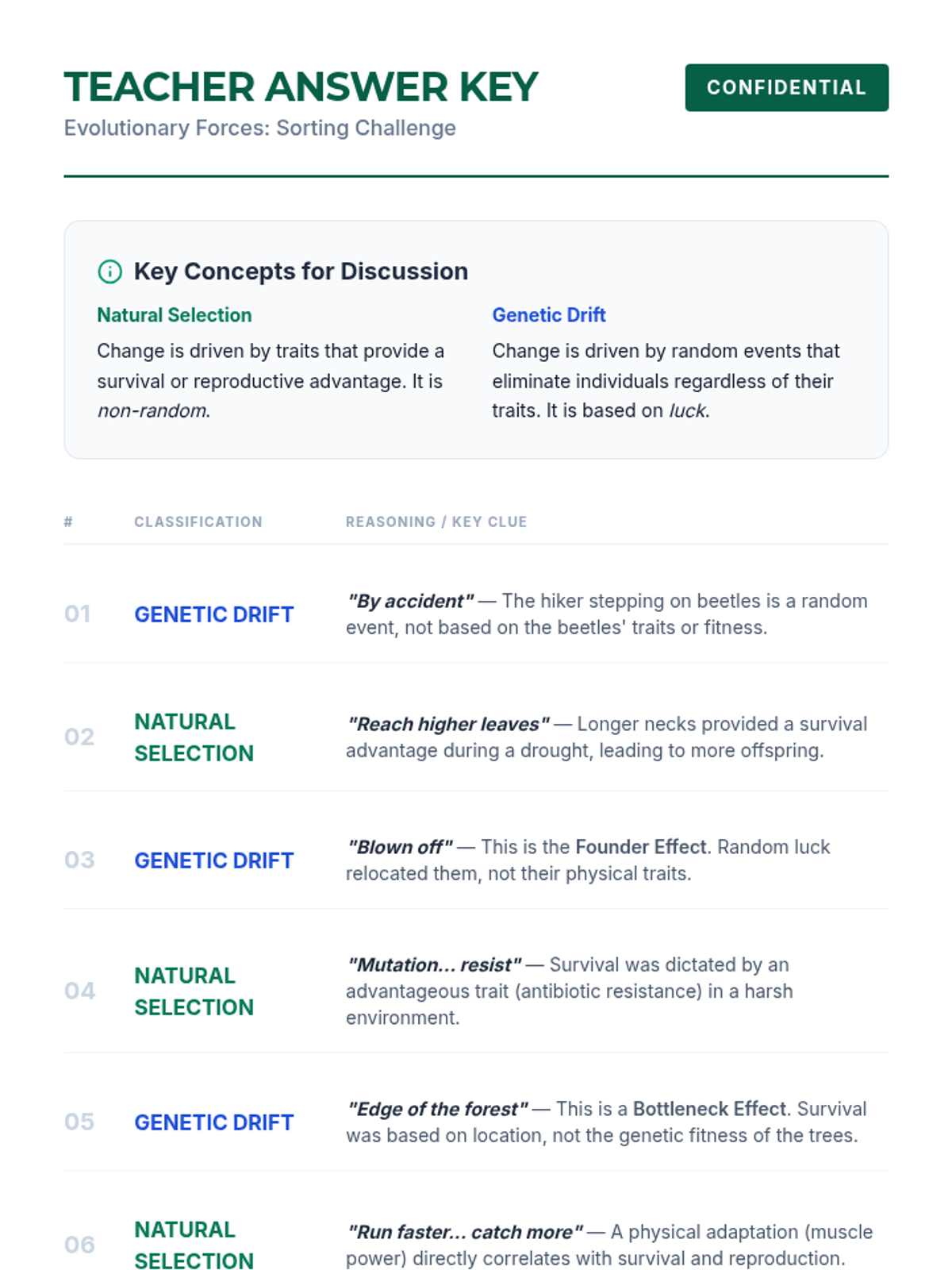
In this lesson, students explore the different mechanisms of evolution, specifically focusing on the distinctions between Natural Selection and Genetic Drift through active sorting and scenario analysis.
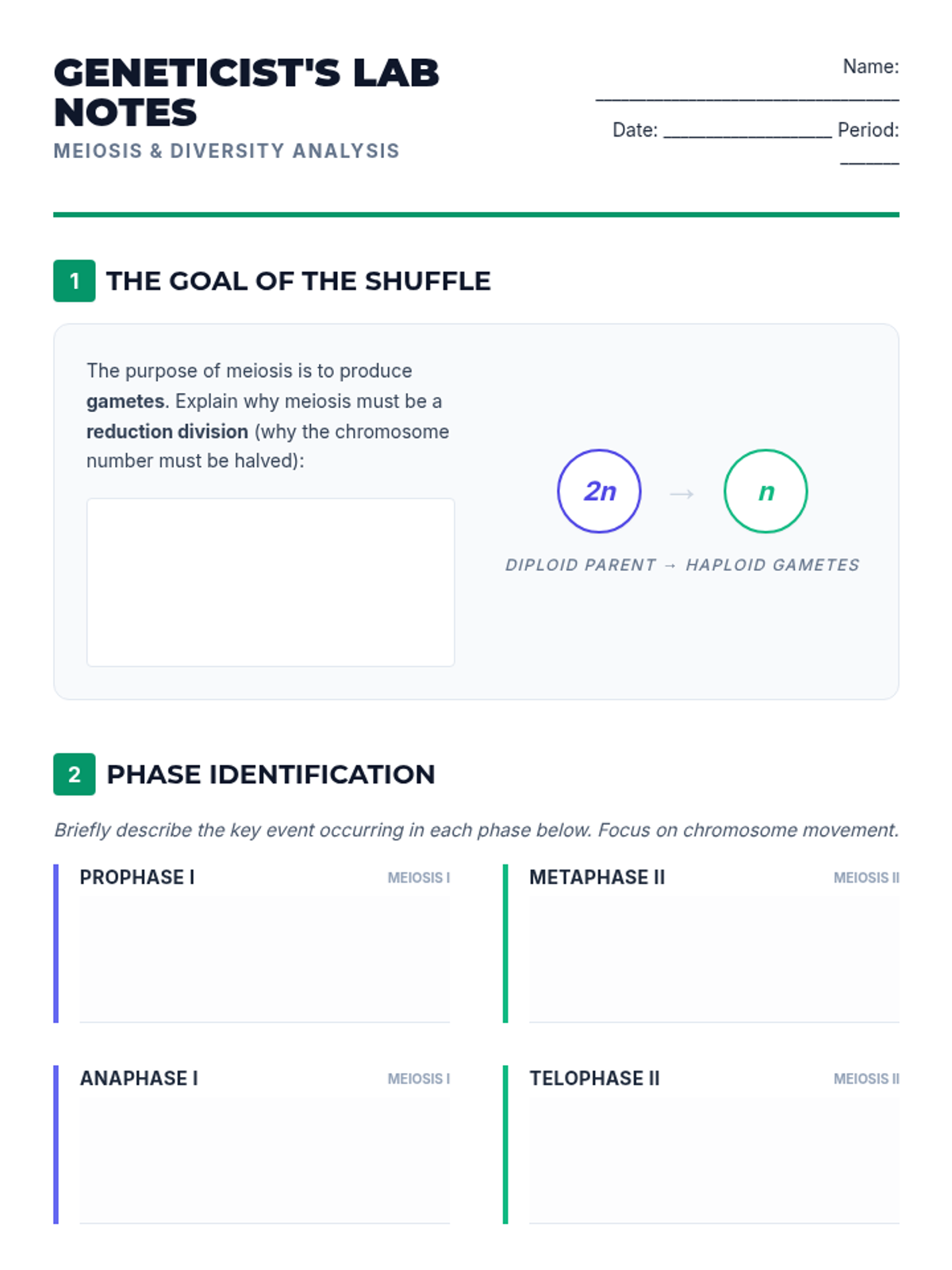
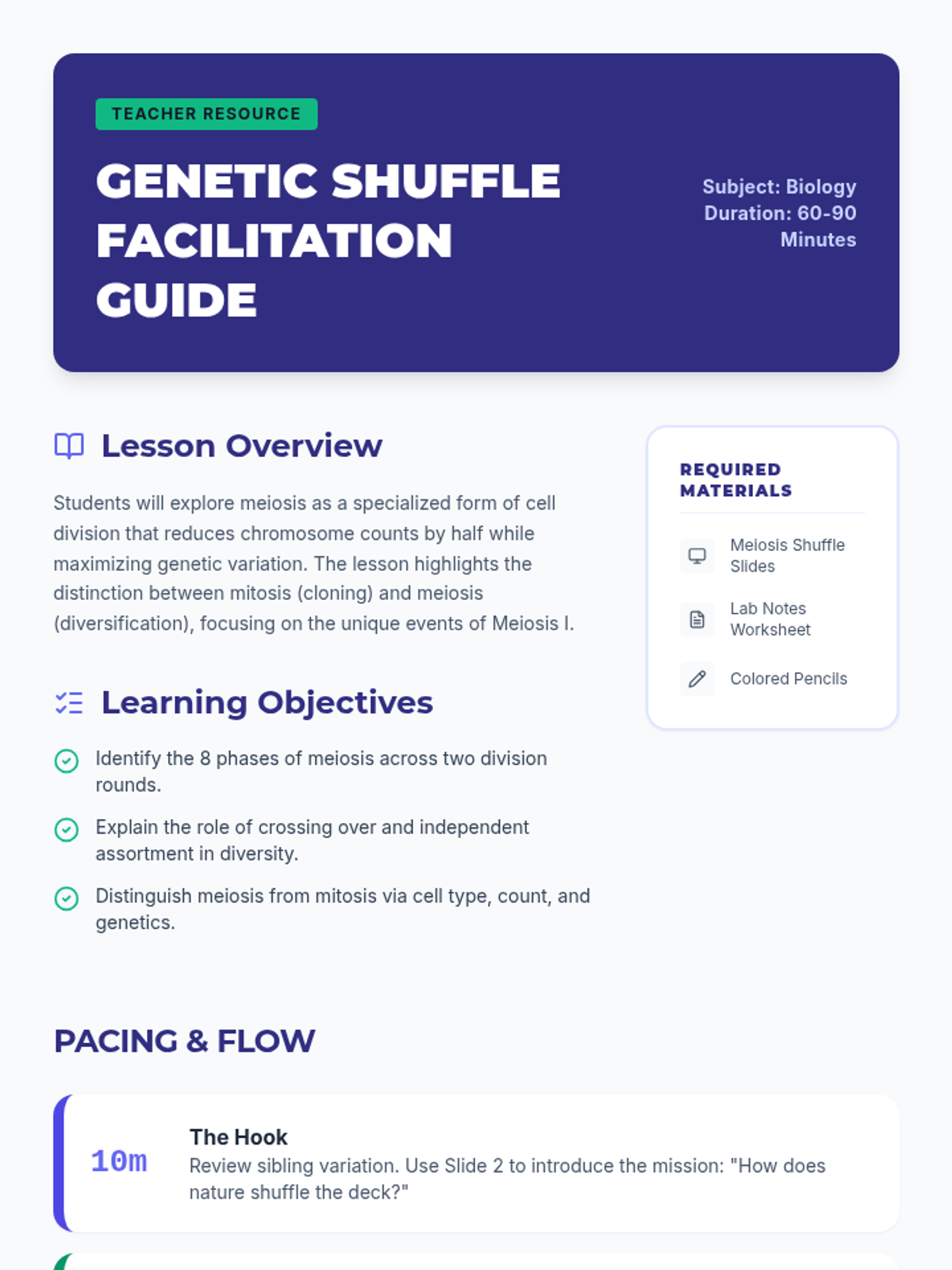
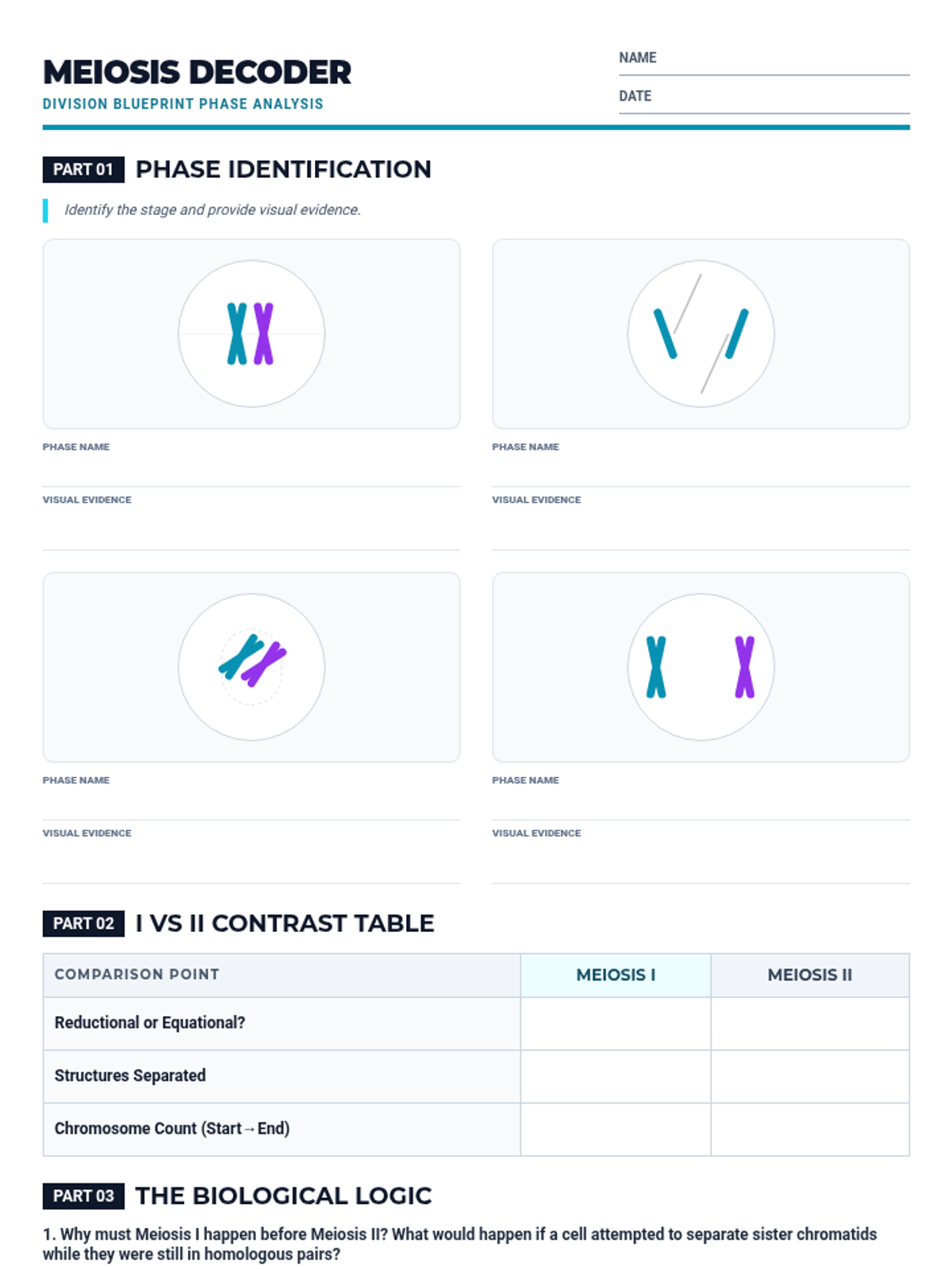
A comprehensive lesson on meiosis covering its phases, final products, and its critical role in genetic diversity compared to mitosis. Students will engage with visual models and comparative analysis.
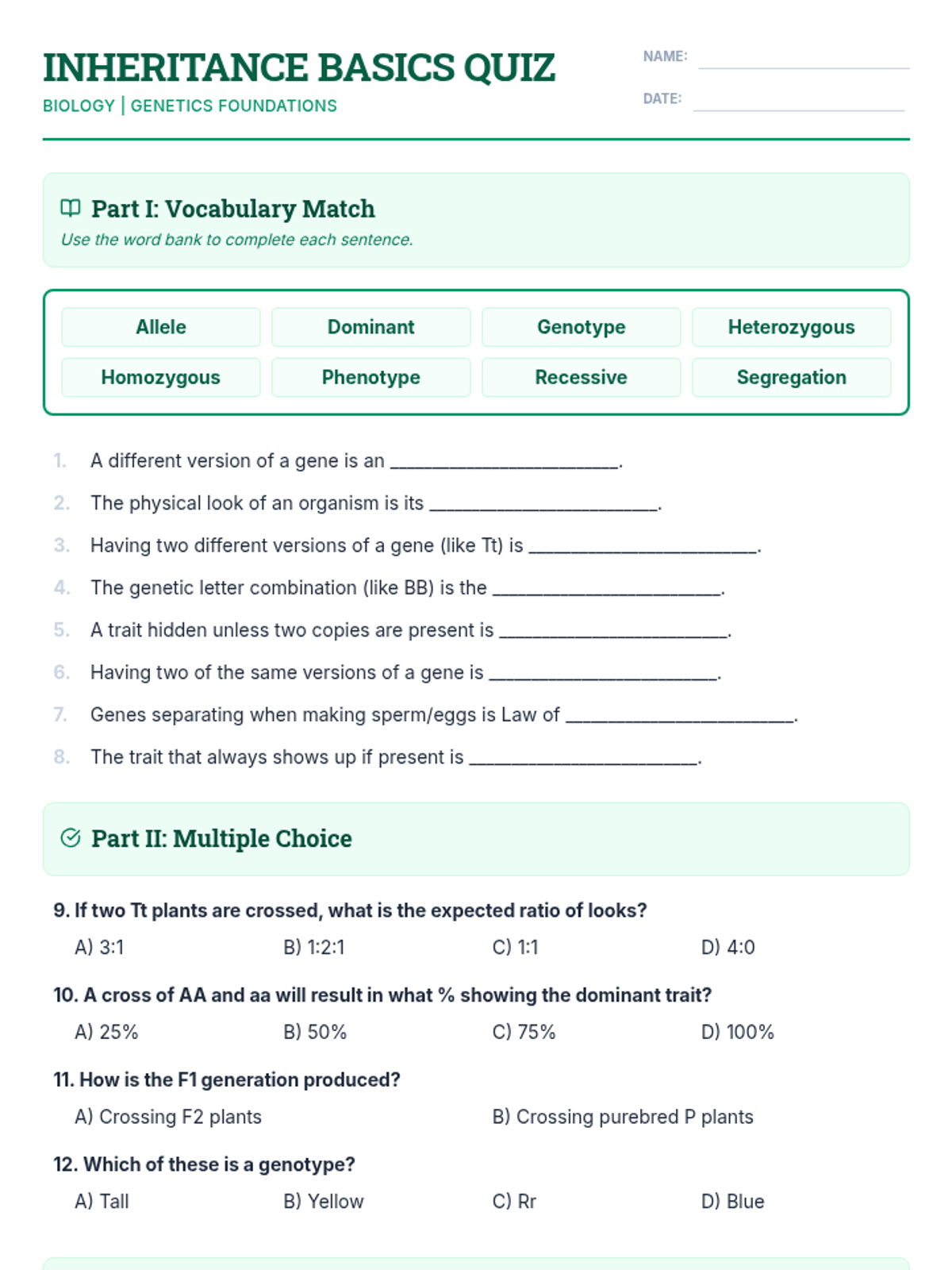
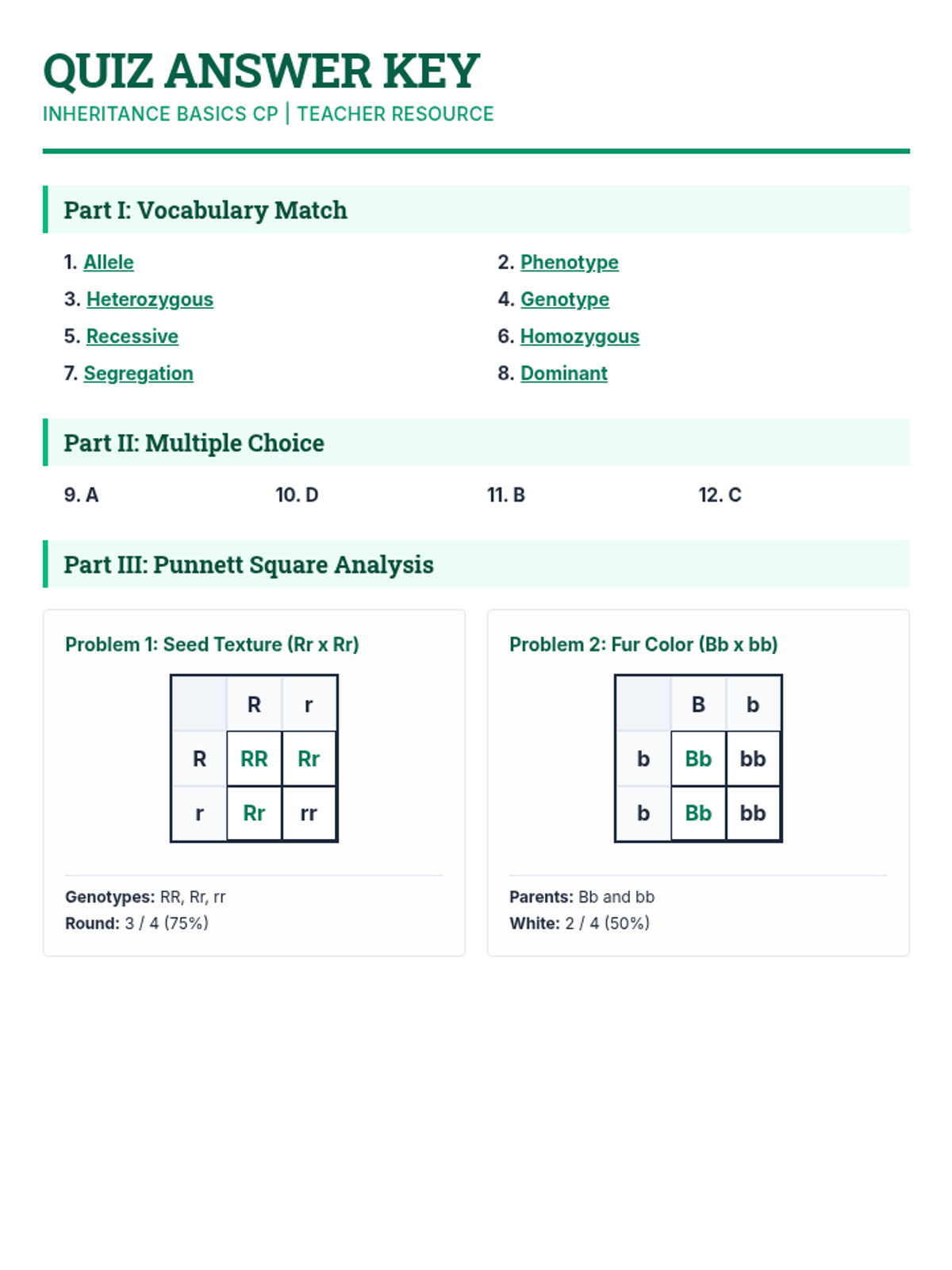
A foundational assessment on Mendelian genetics, simplified for College Prep (CP) biology students with clearer language and vocabulary support.
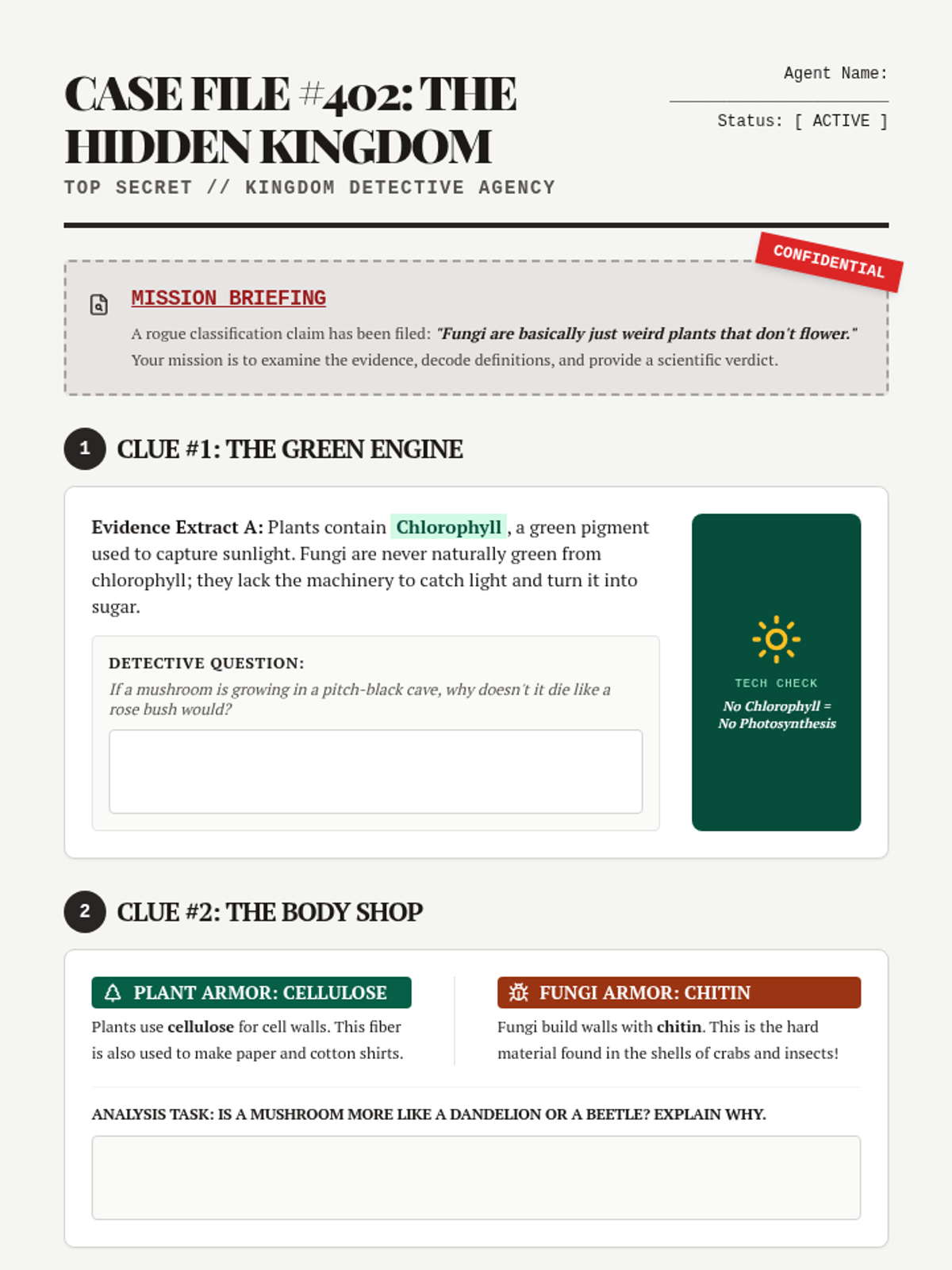
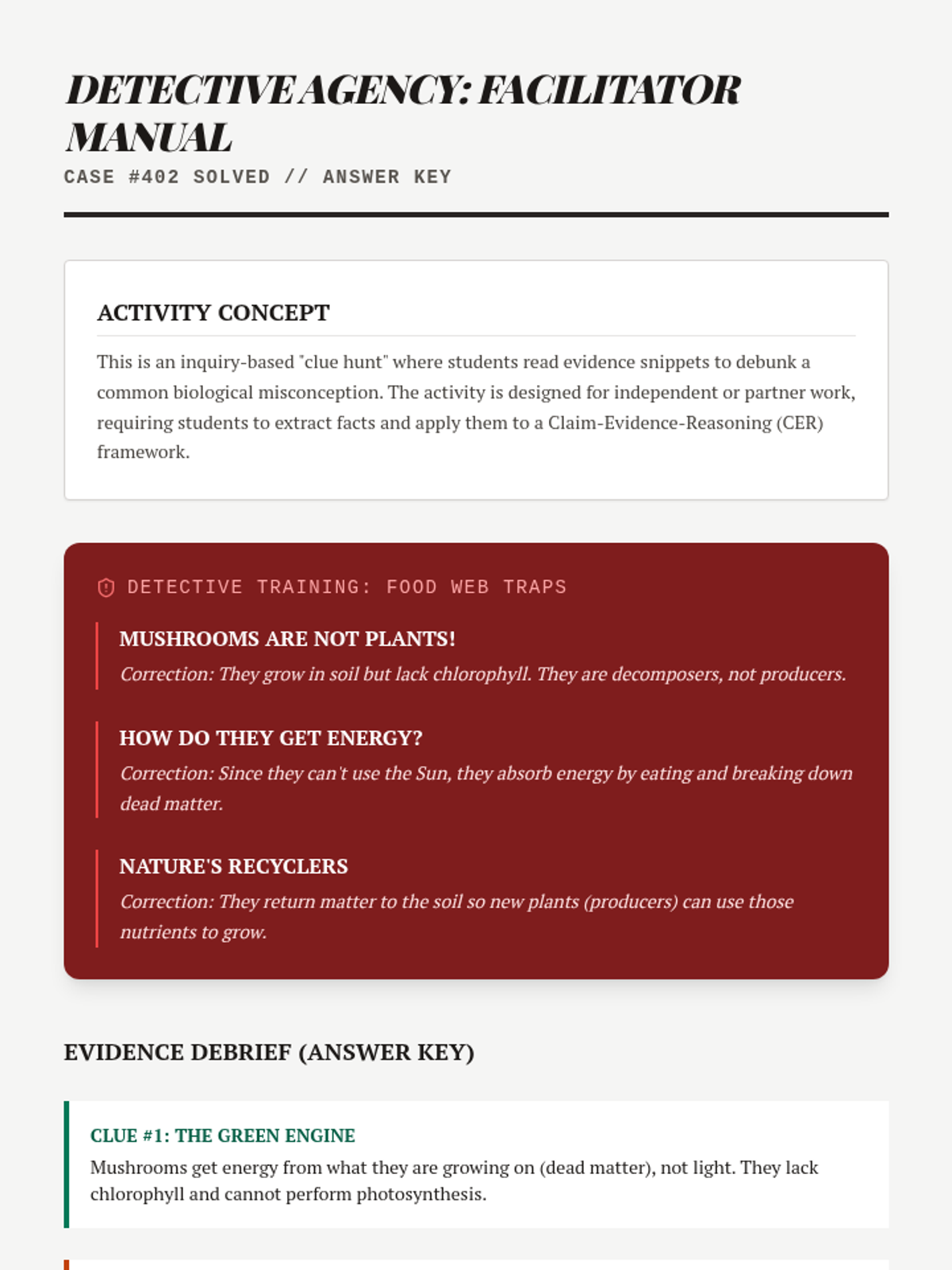
An independent, mystery-themed activity where students act as "Kingdom Detectives." They analyze a series of clues, definitions, and evidence files to determine why fungi are not plants and clarify the role of the sun in ecosystems.
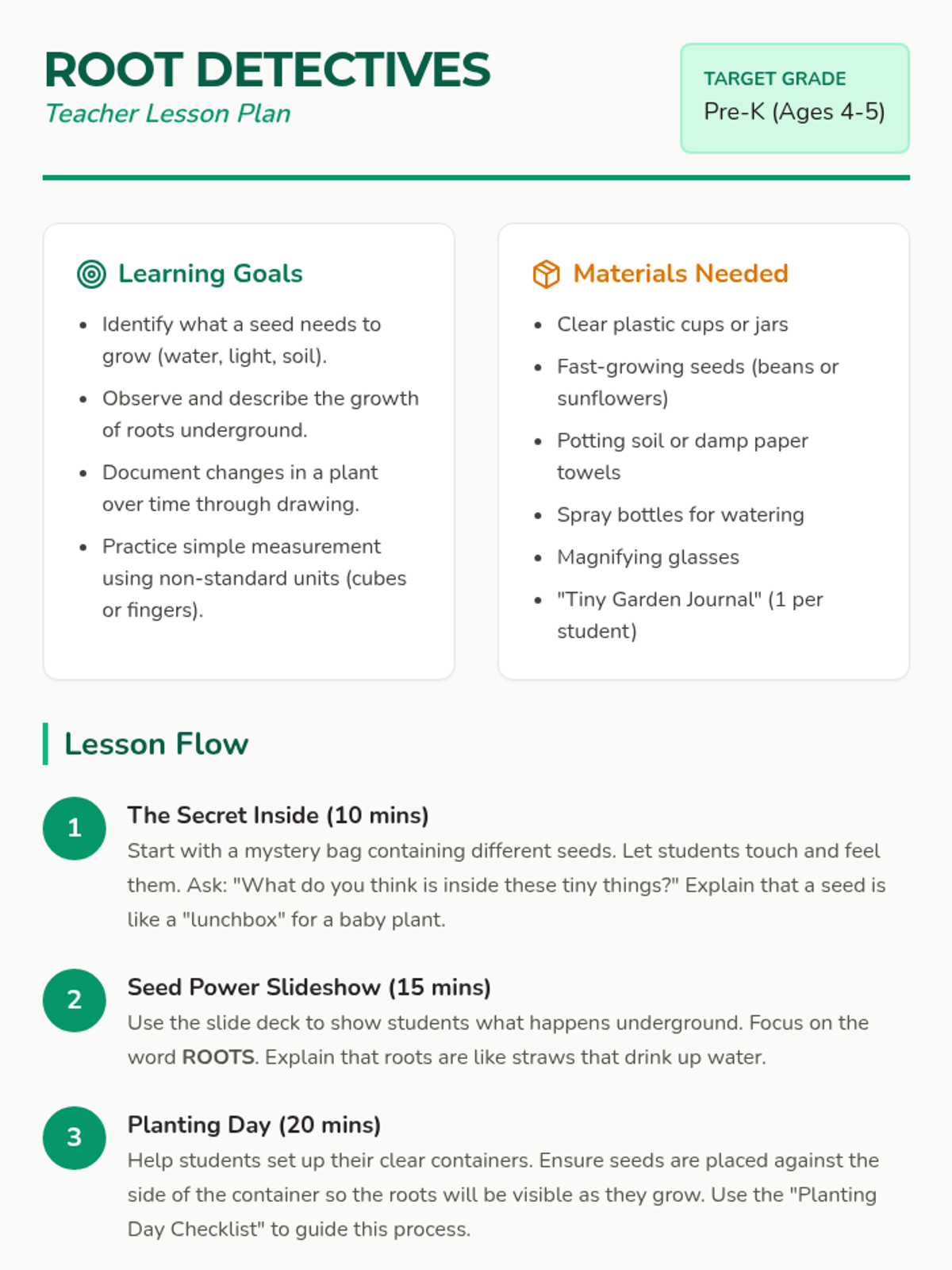
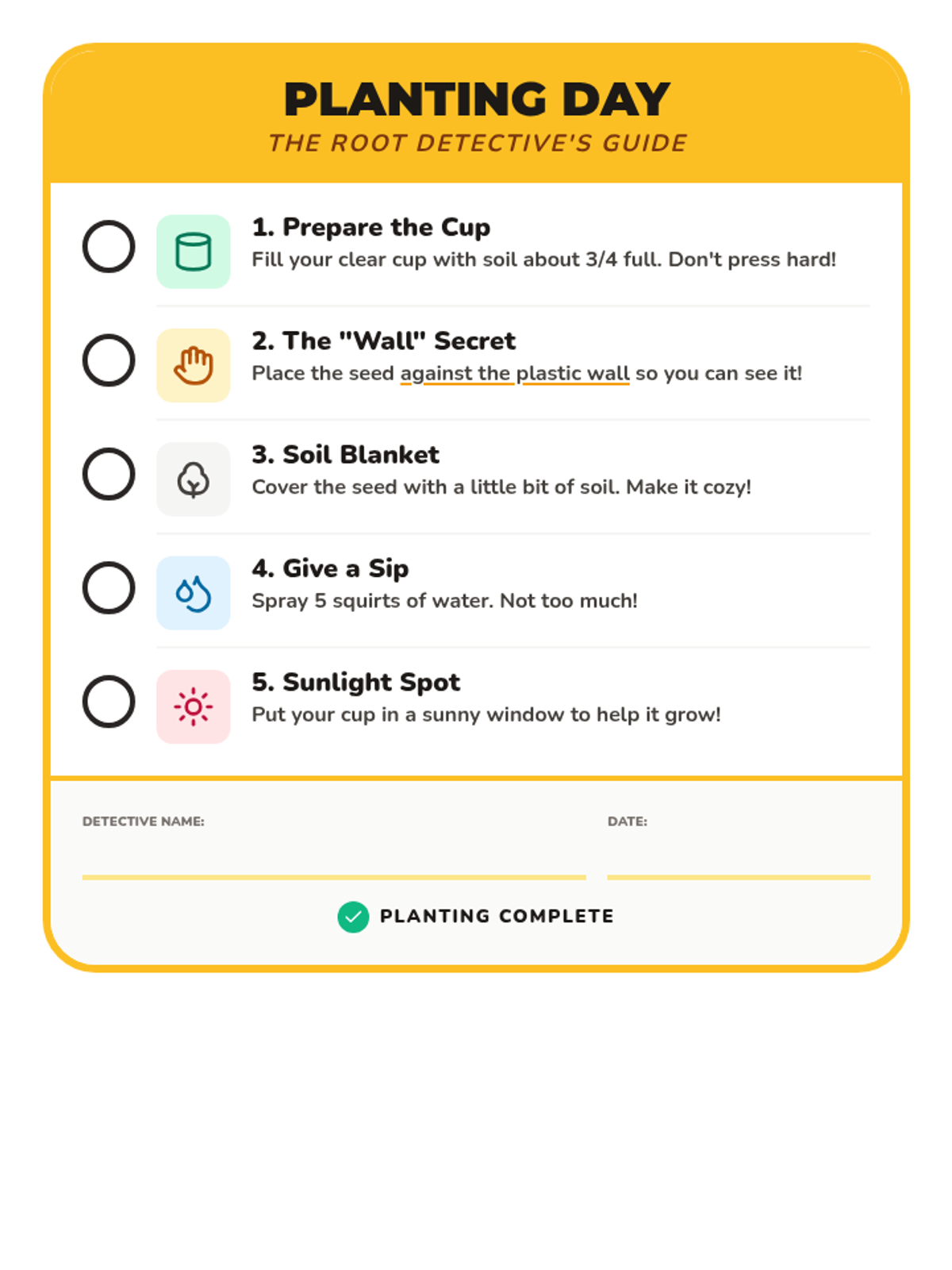
A hands-on botany lesson where Pre-K students plant seeds in clear containers to observe root growth and learn about the life cycle of plants through daily journaling.
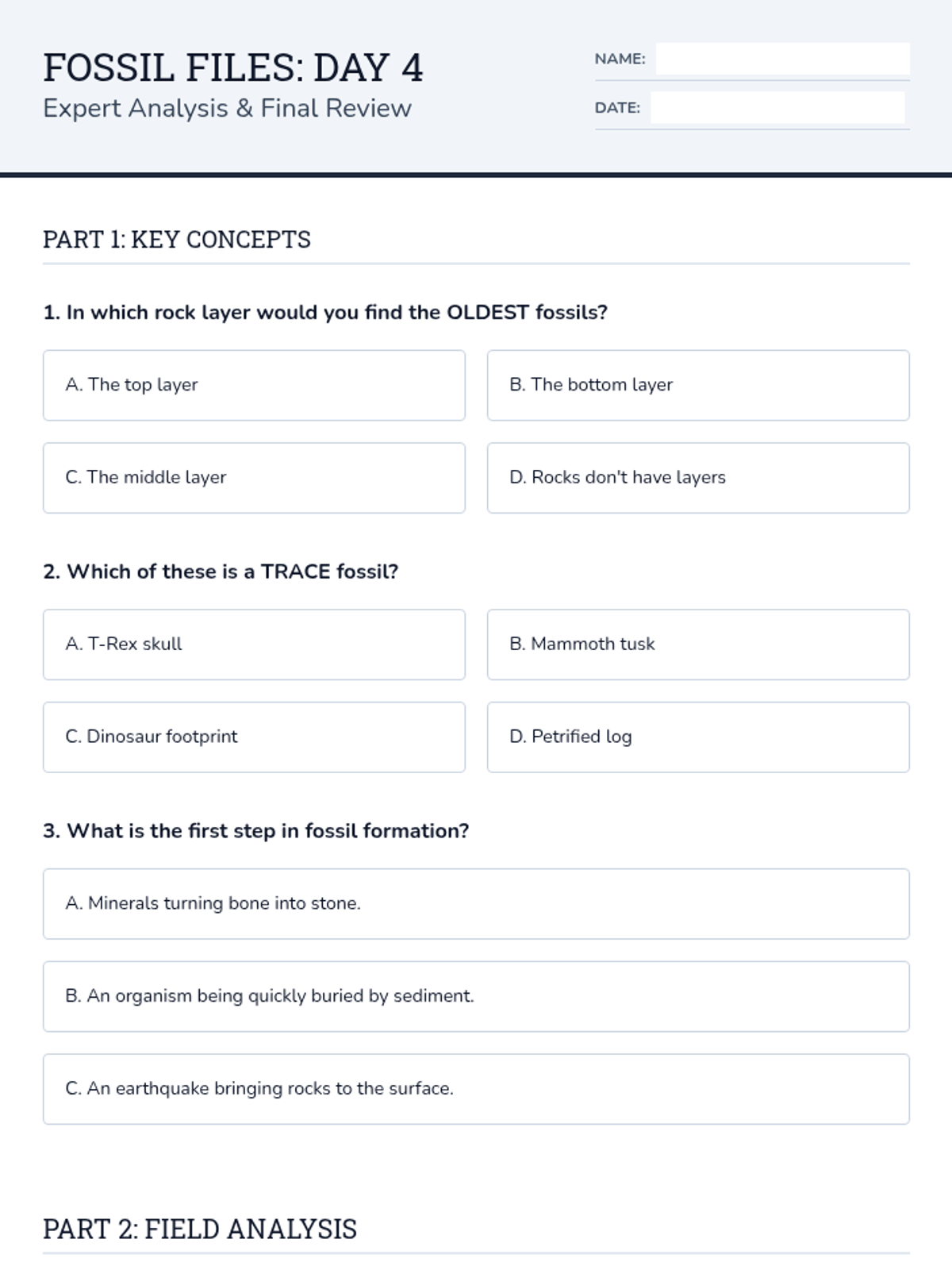
Synthesizing knowledge to analyze a fossil "dig site" and completing a final assessment.
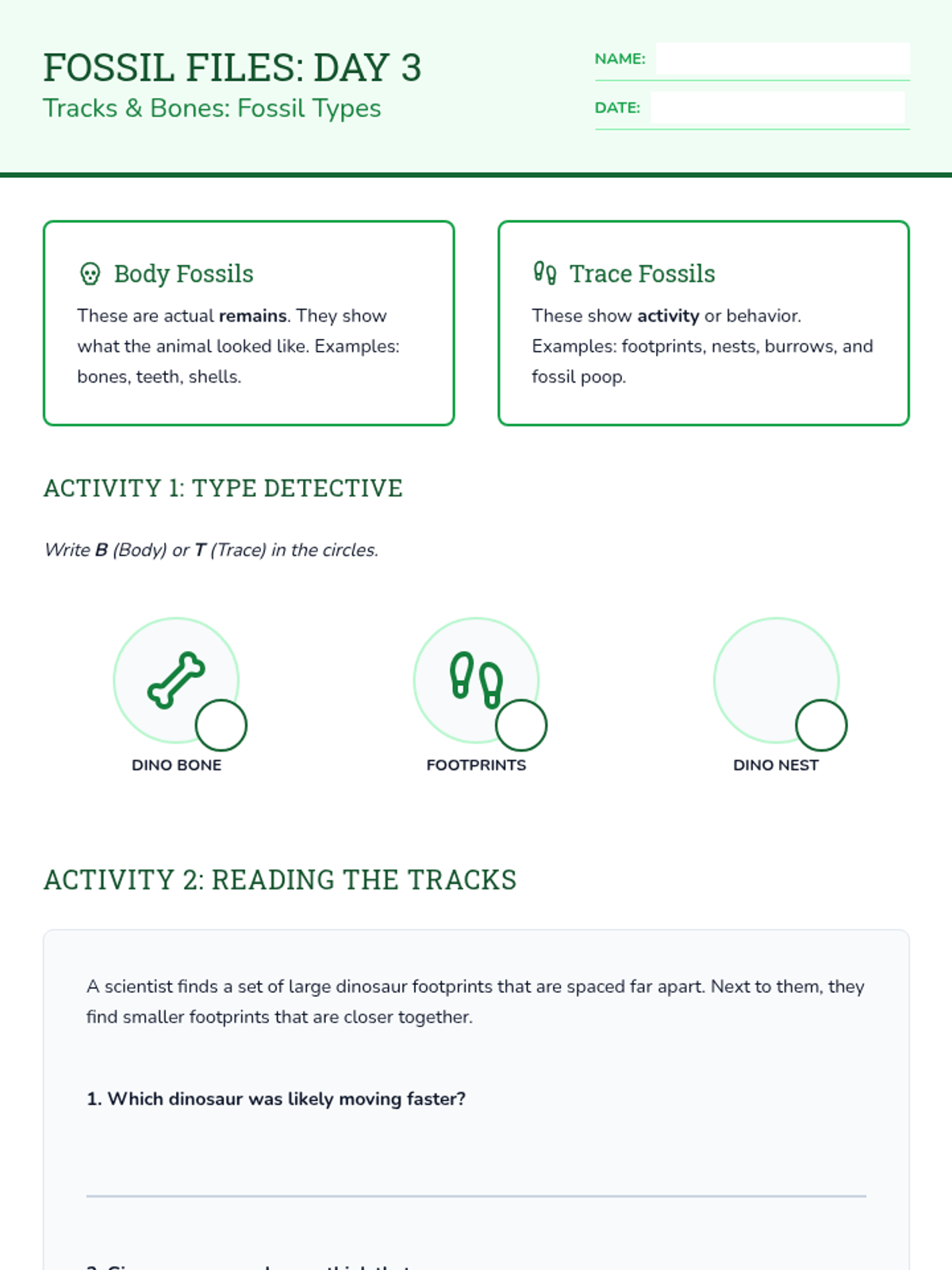
Exploring the differences between body fossils (bones, teeth) and trace fossils (footprints, burrows).
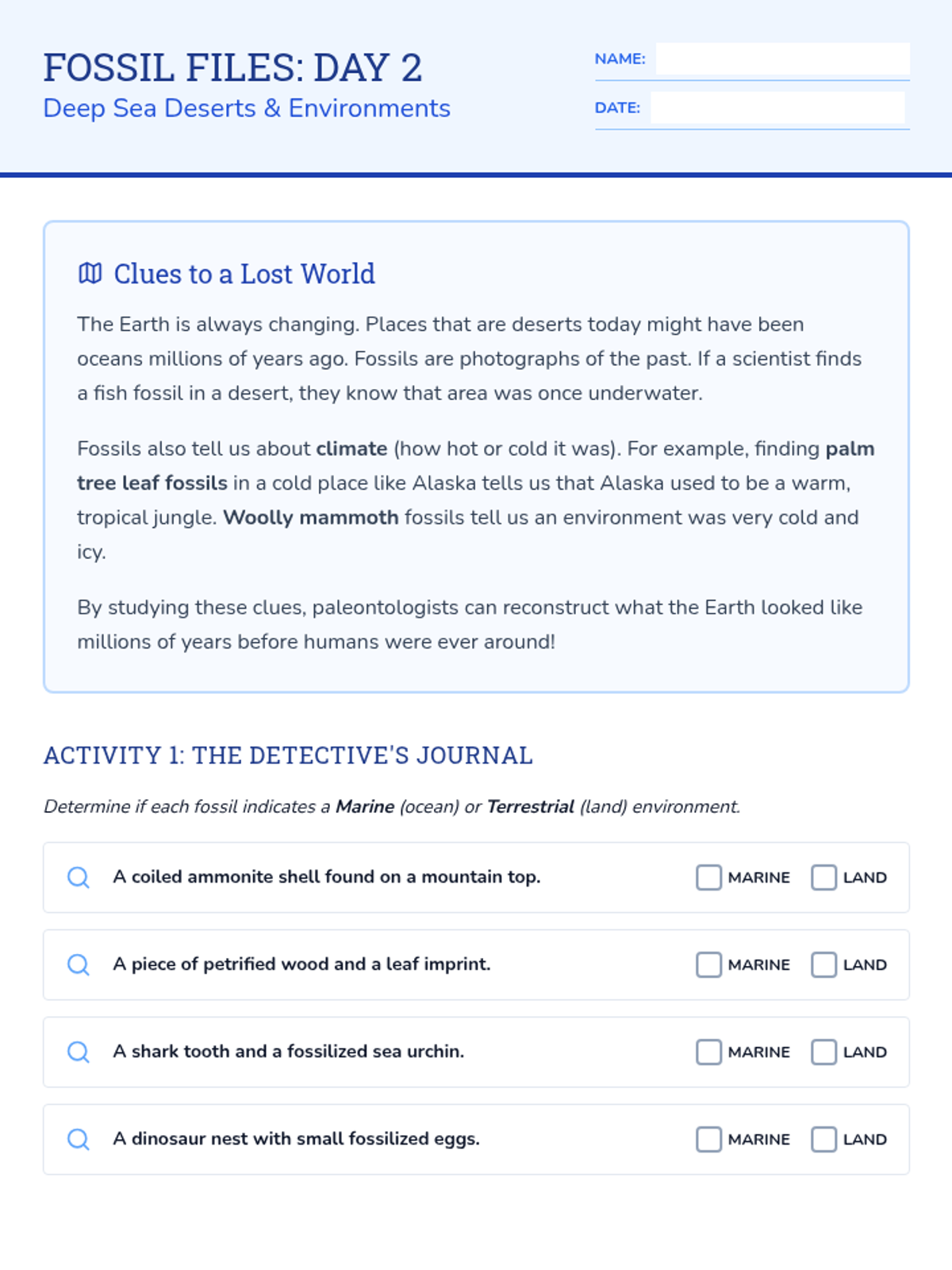
Using fossil evidence to determine whether an area was once a marine, desert, or forest environment.
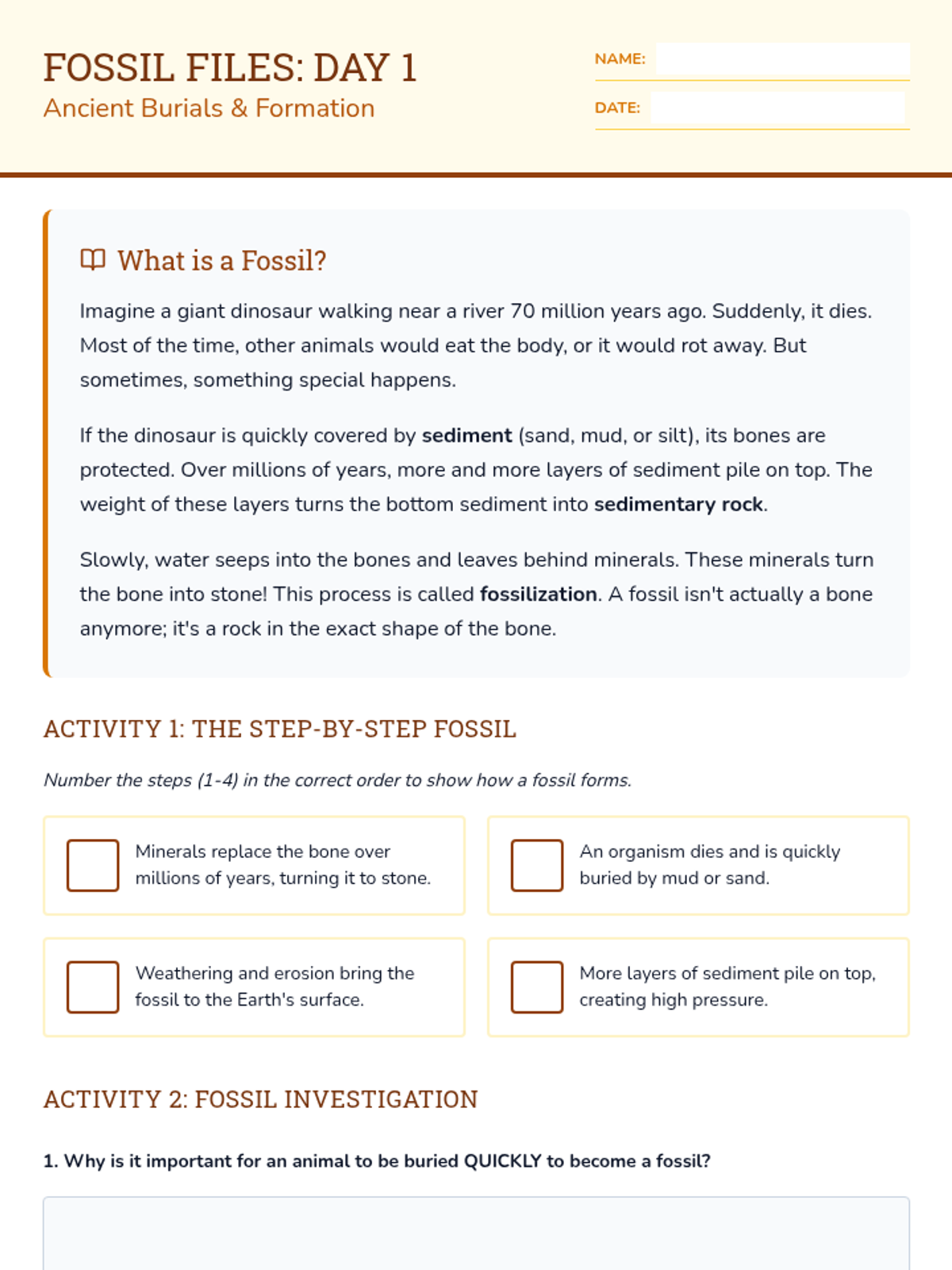
Introduction to how fossils form through the process of sedimentary rock layering and preservation.
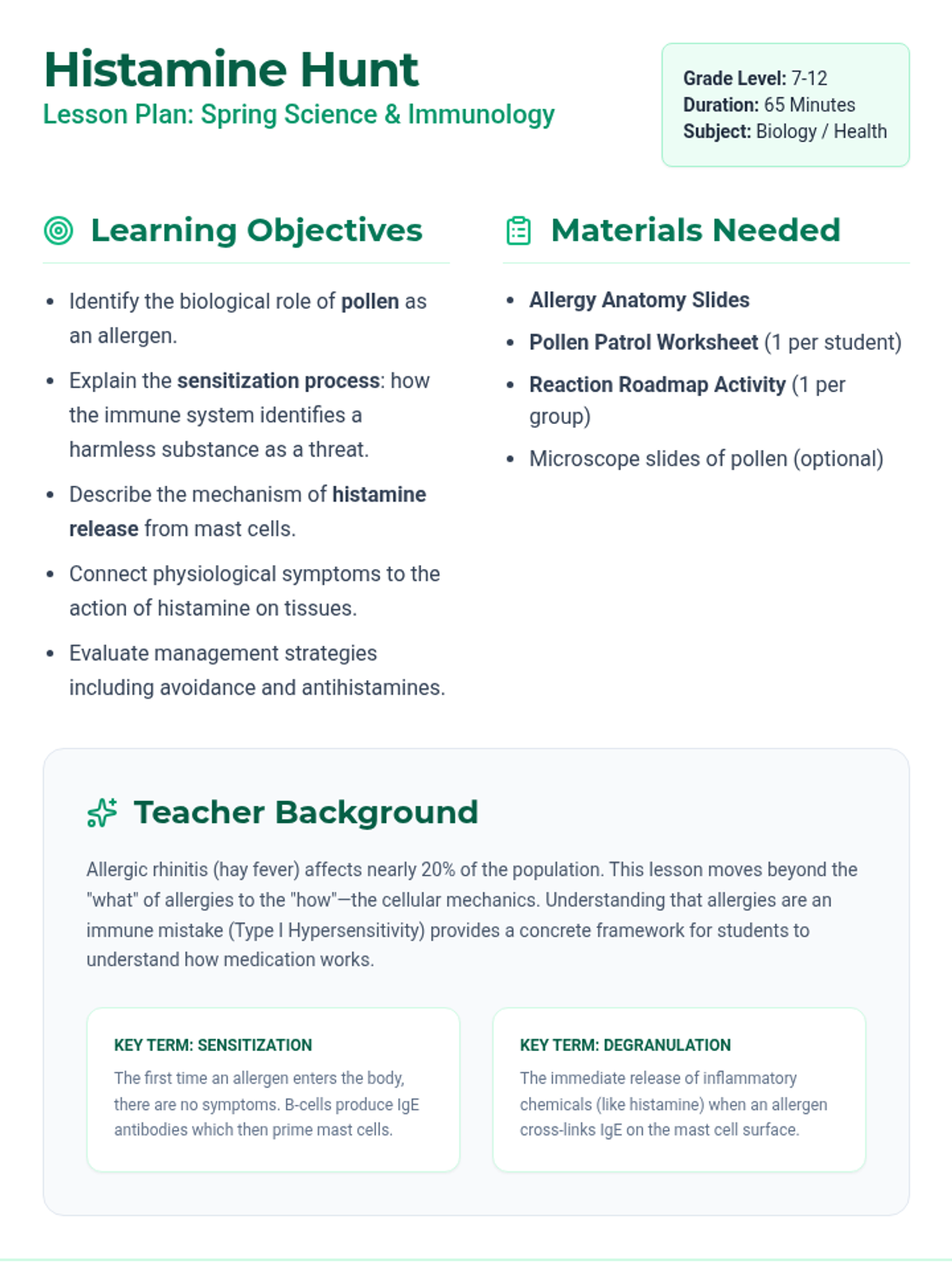
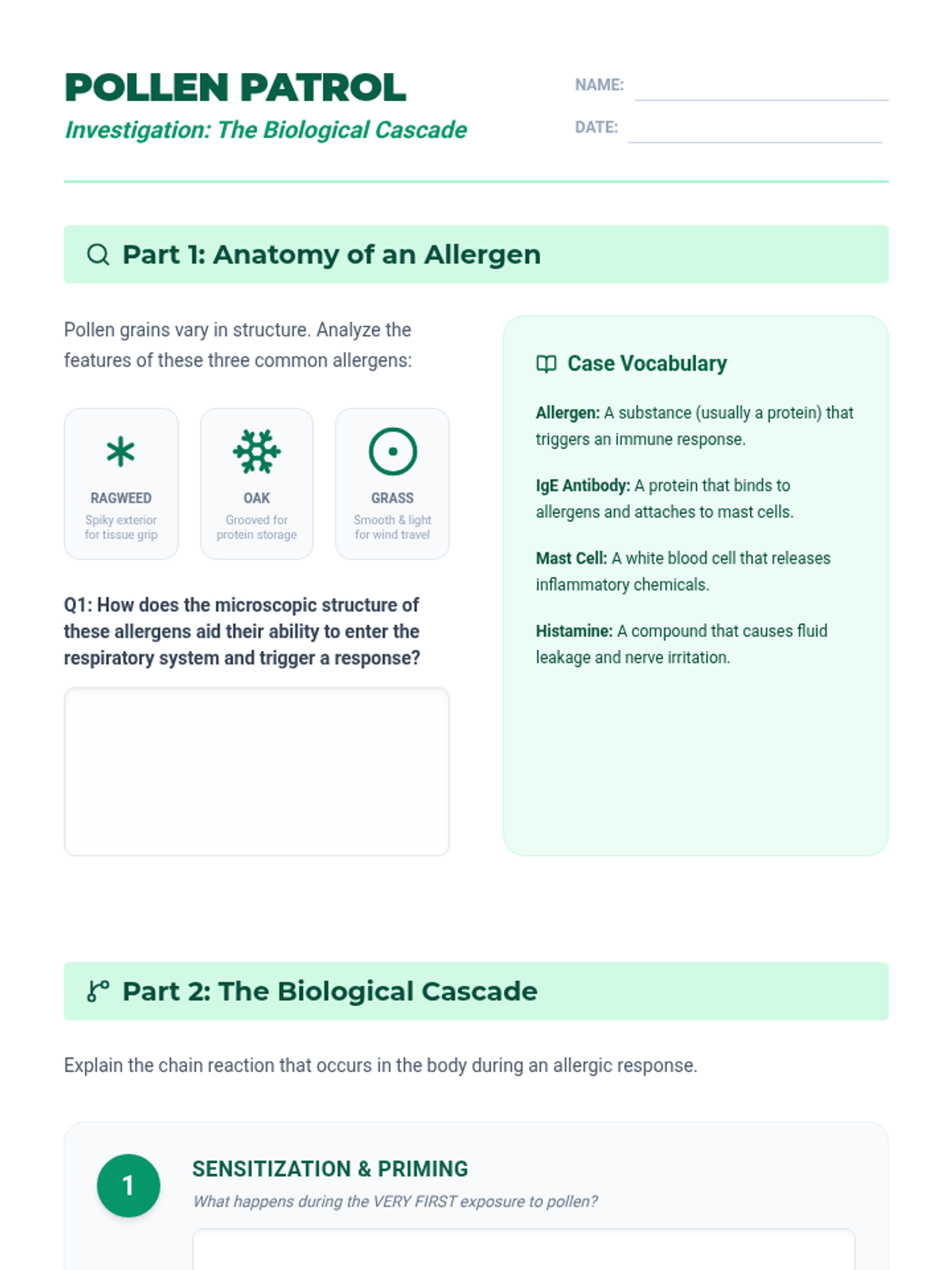
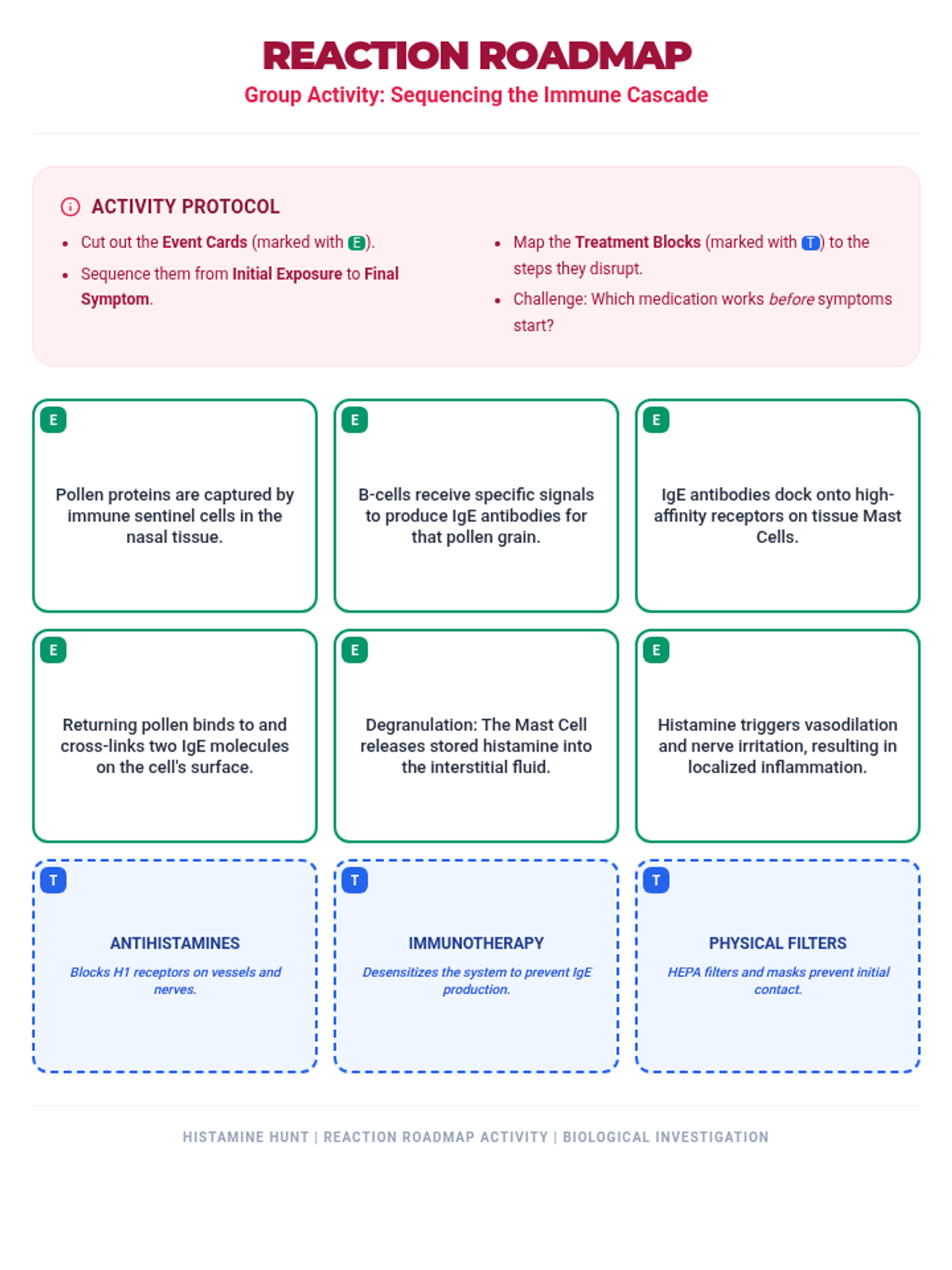
A comprehensive investigation into the biological mechanisms of seasonal allergies, focusing on the immune system's overreaction to pollen and the role of histamine. Students will explore hypersensitivity, physical symptoms, and evidence-based management strategies.
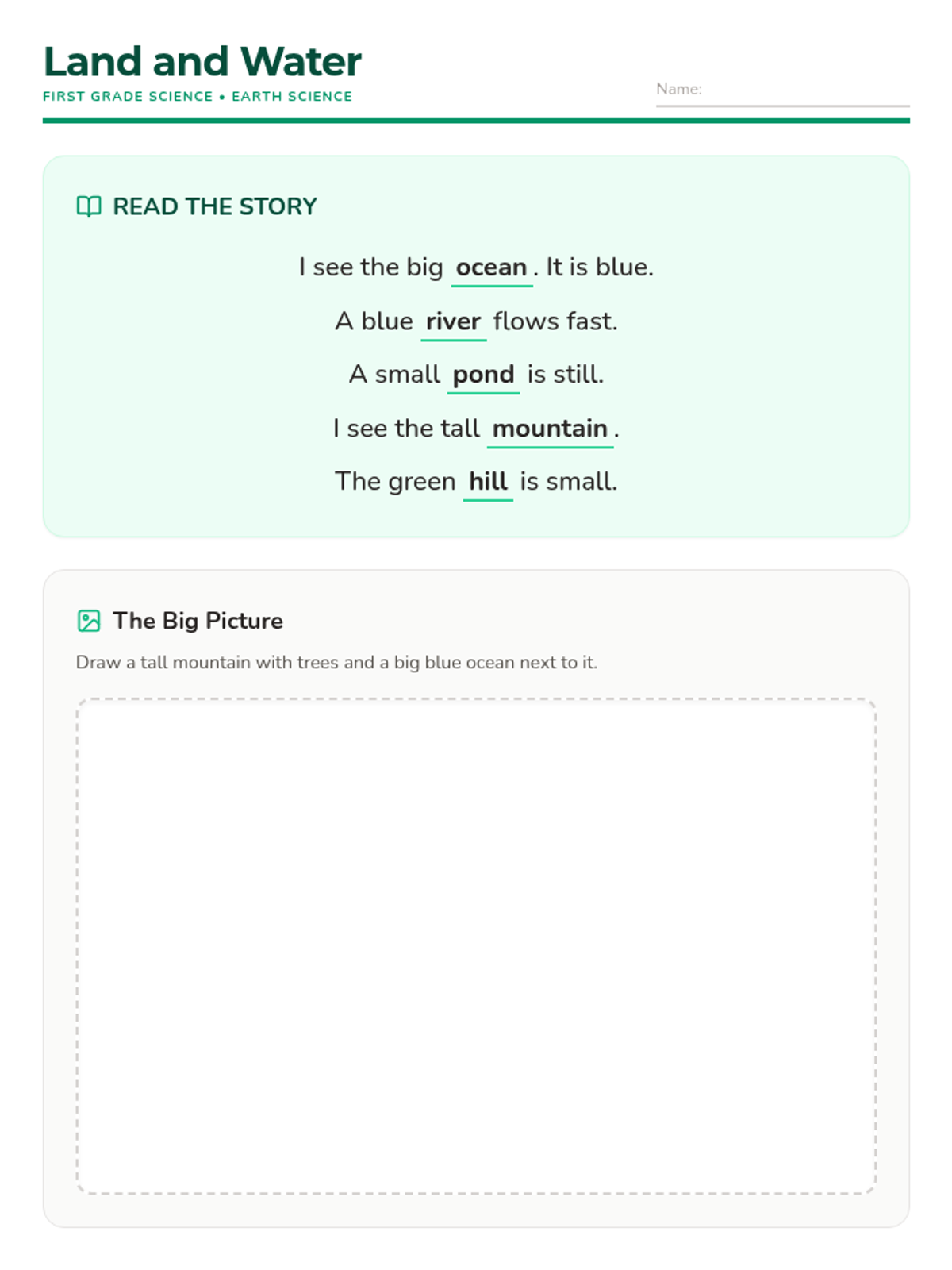
A geography-focused science lesson identifying different types of landforms and bodies of water on Earth.
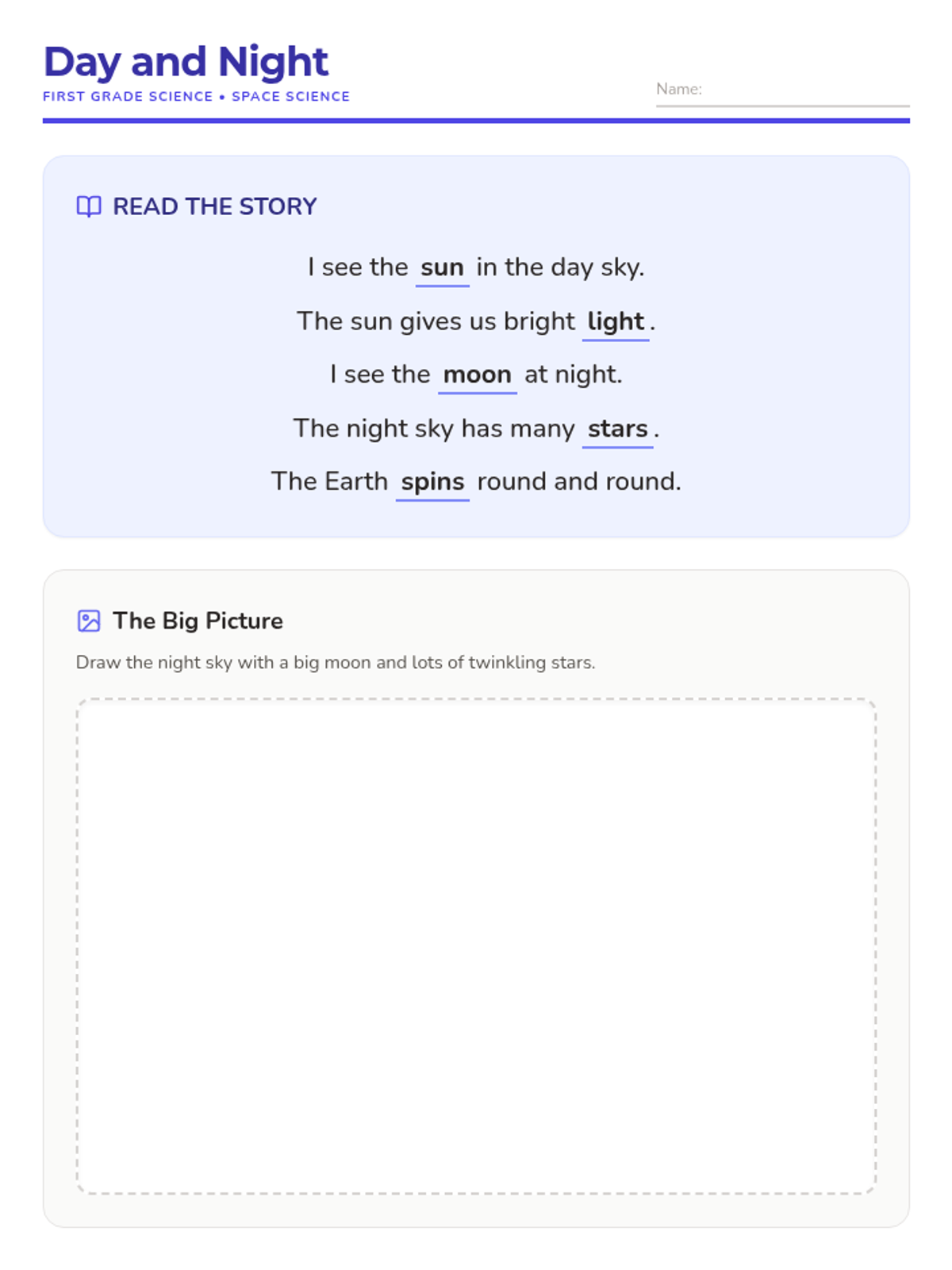
Students explore the concept of Earth's rotation through the visible patterns of day and night.
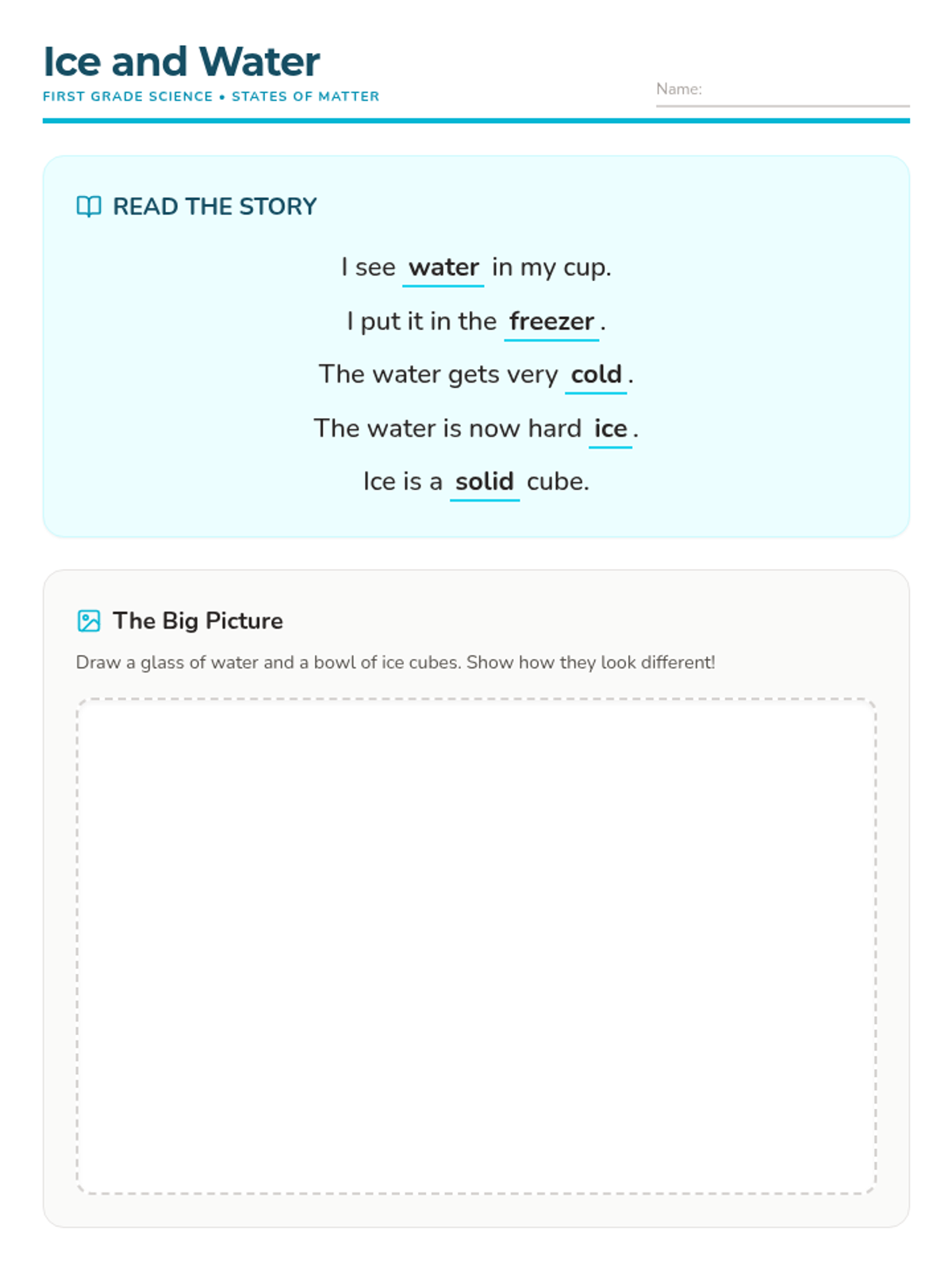
An introduction to the states of matter by observing how water changes from liquid to solid.
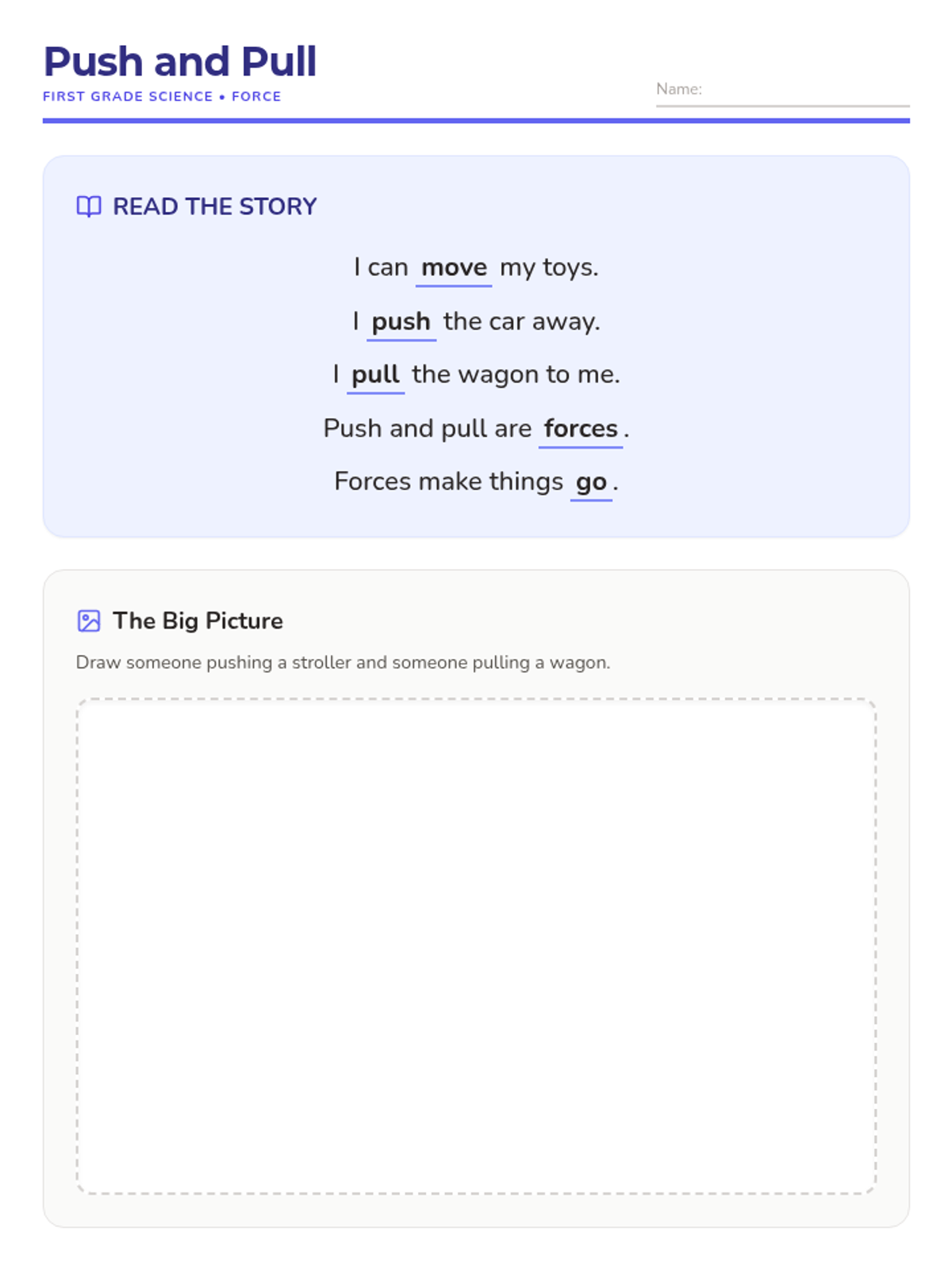
A basic physics lesson on force, teaching students about pushes and pulls using everyday objects.
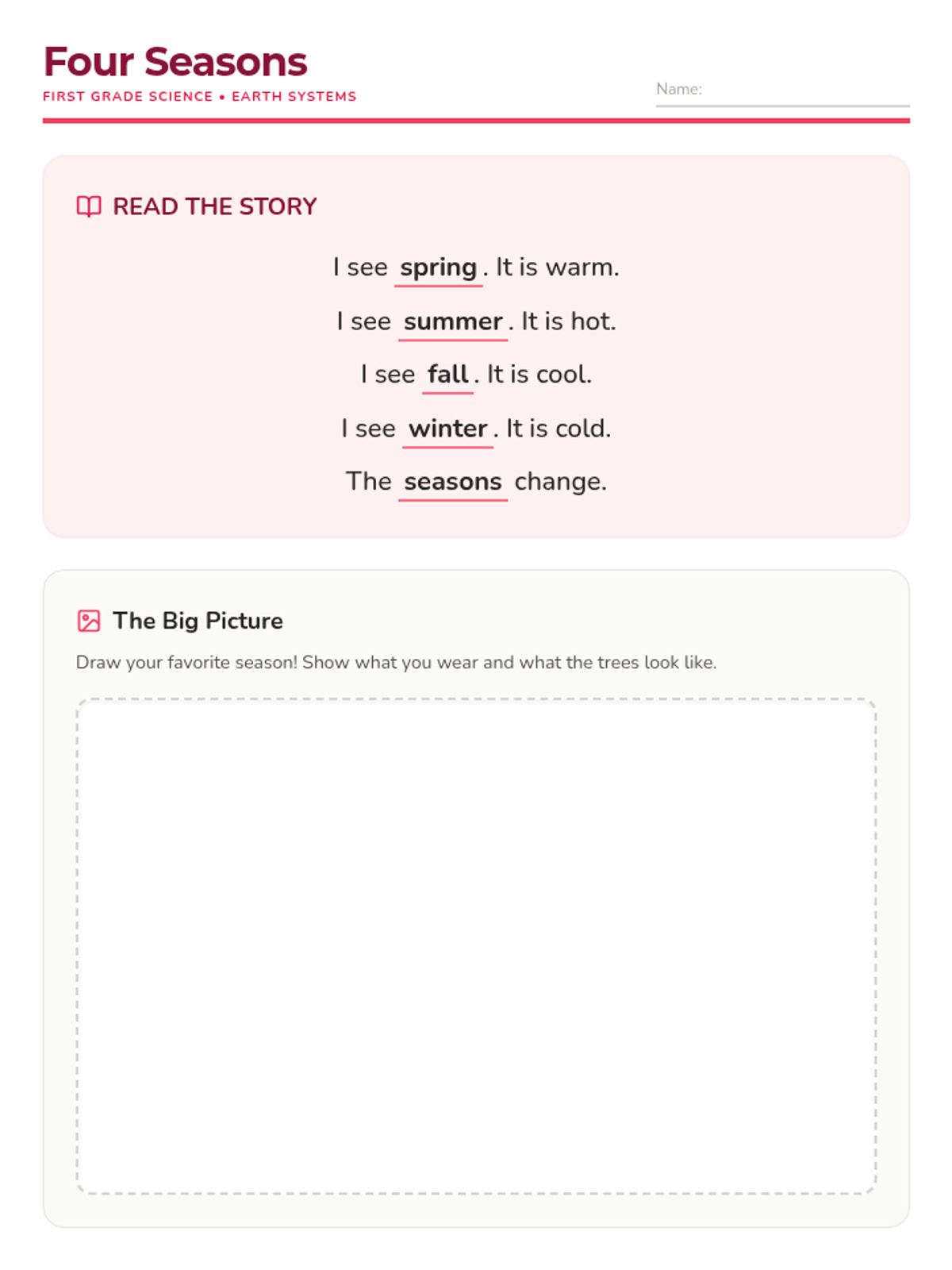
Students identify the four seasons and the primary environmental changes associated with each.
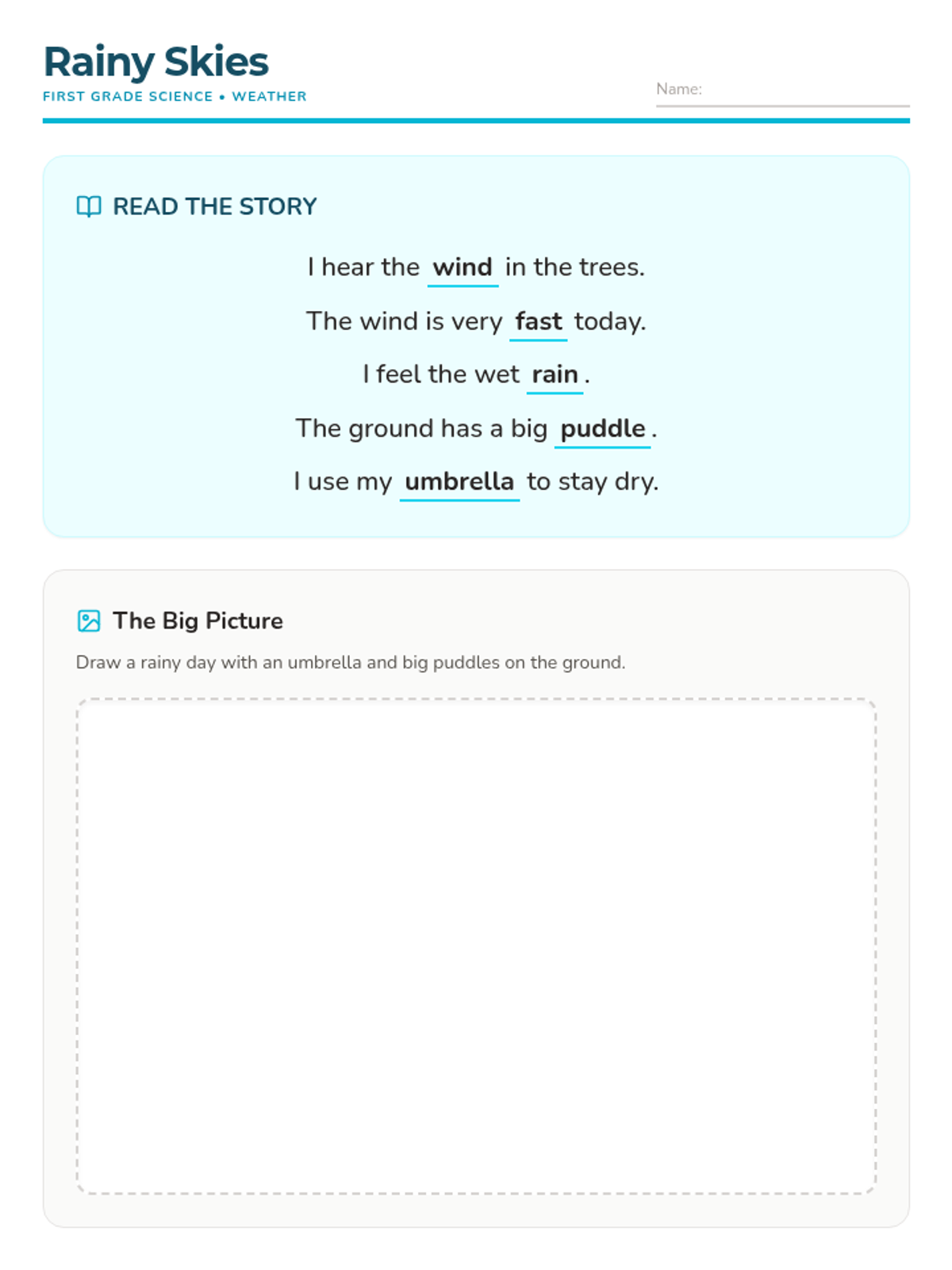
An exploration of dynamic weather elements like wind and precipitation and their effects.
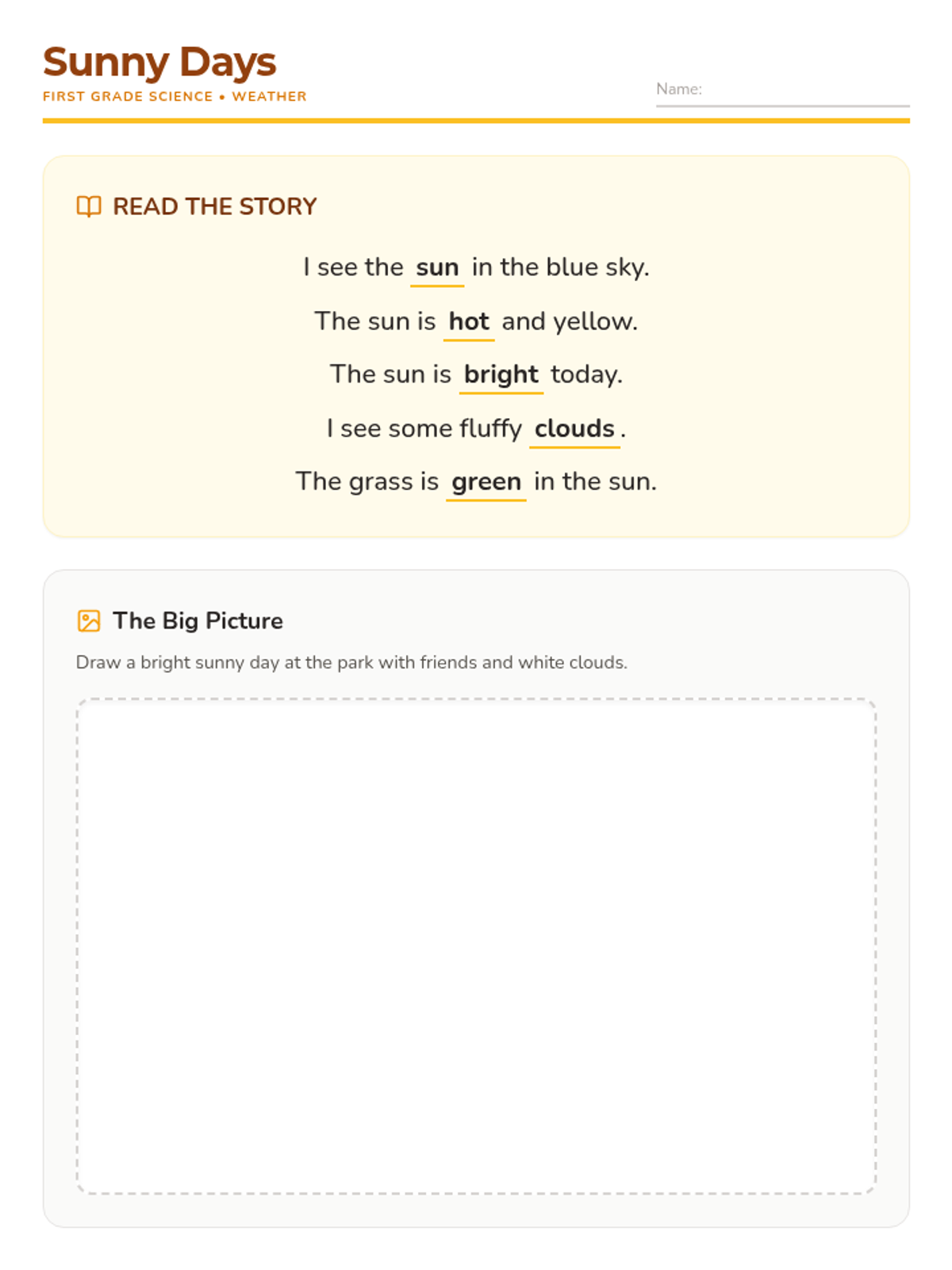
A look at basic weather patterns, focusing on the characteristics of sunny and cloudy days.
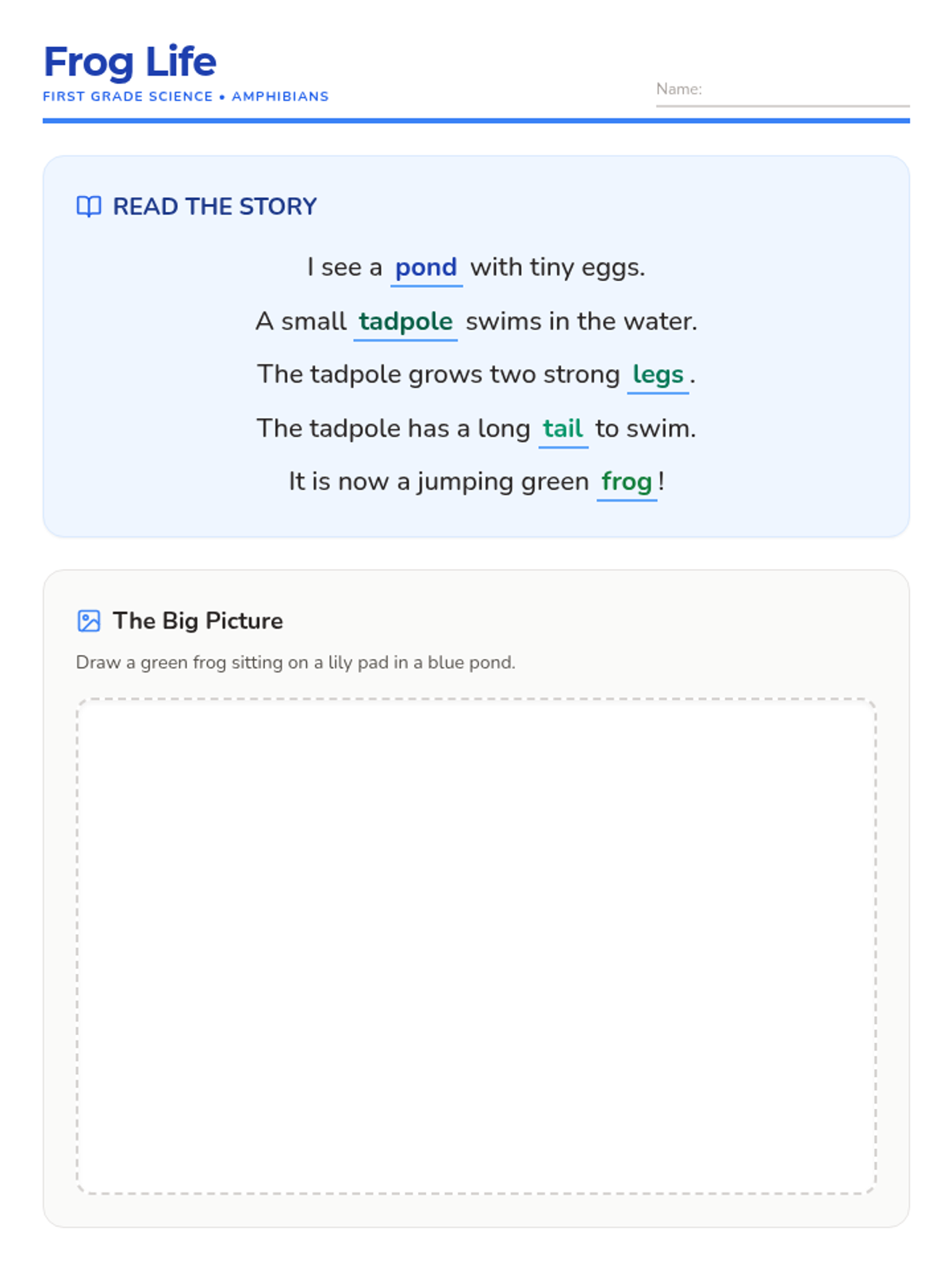
Students explore the stages of a frog's life cycle, from eggs in the water to a jumping adult.
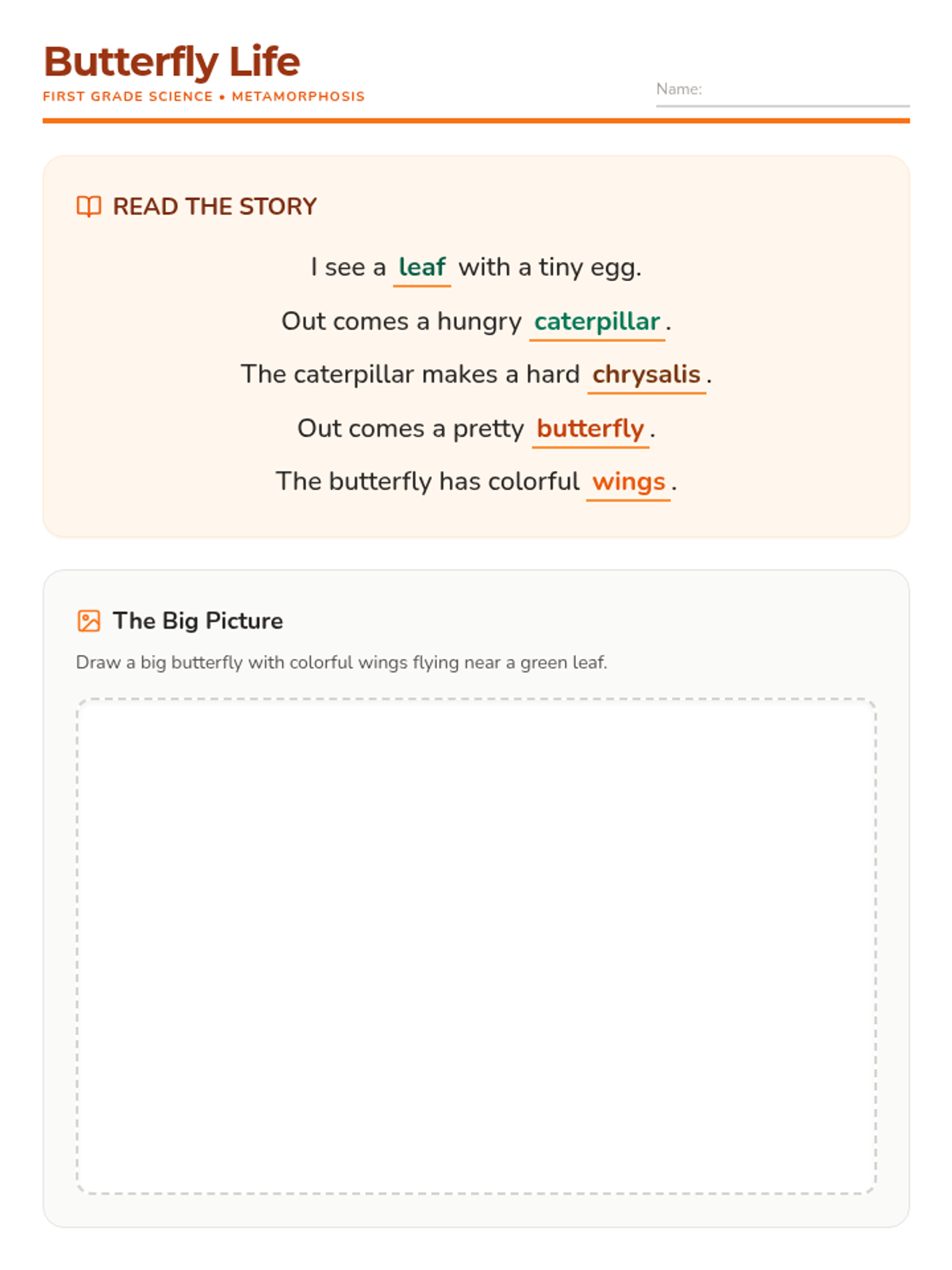
An introduction to metamorphosis as students follow a caterpillar's transformation into a butterfly.
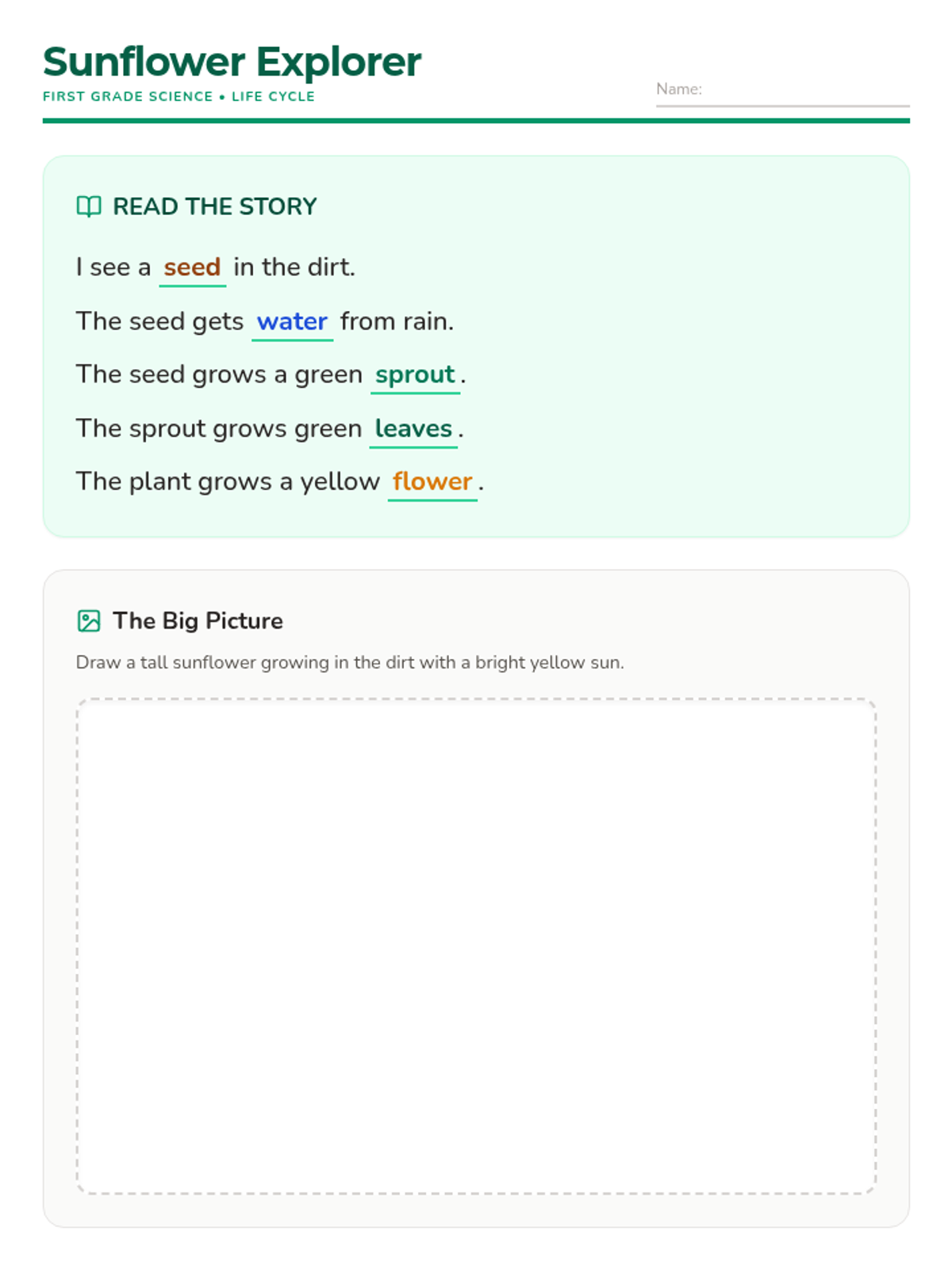
Students learn about the plant life cycle using a sunflower as a model, focusing on the stages from seed to flower.
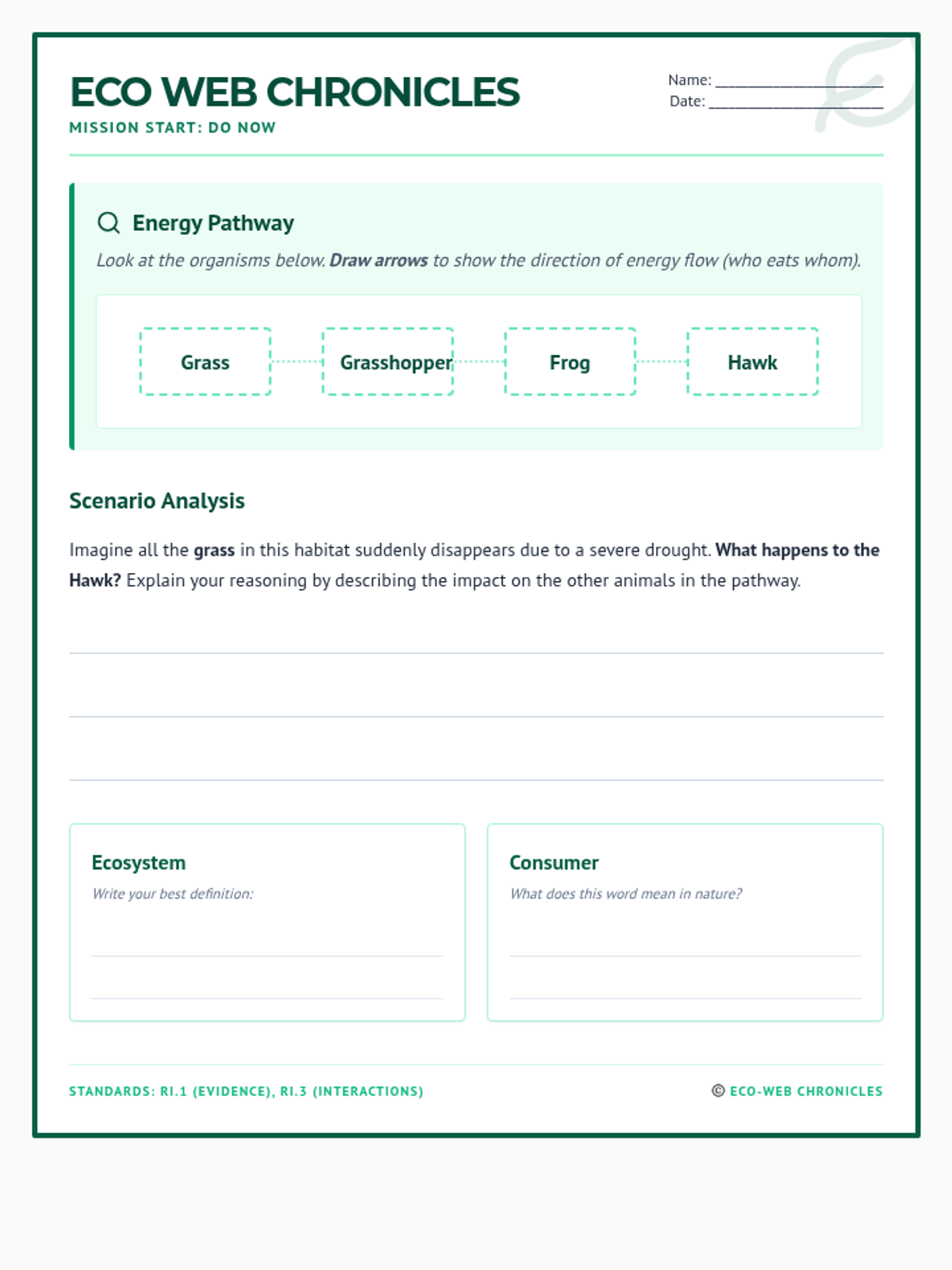
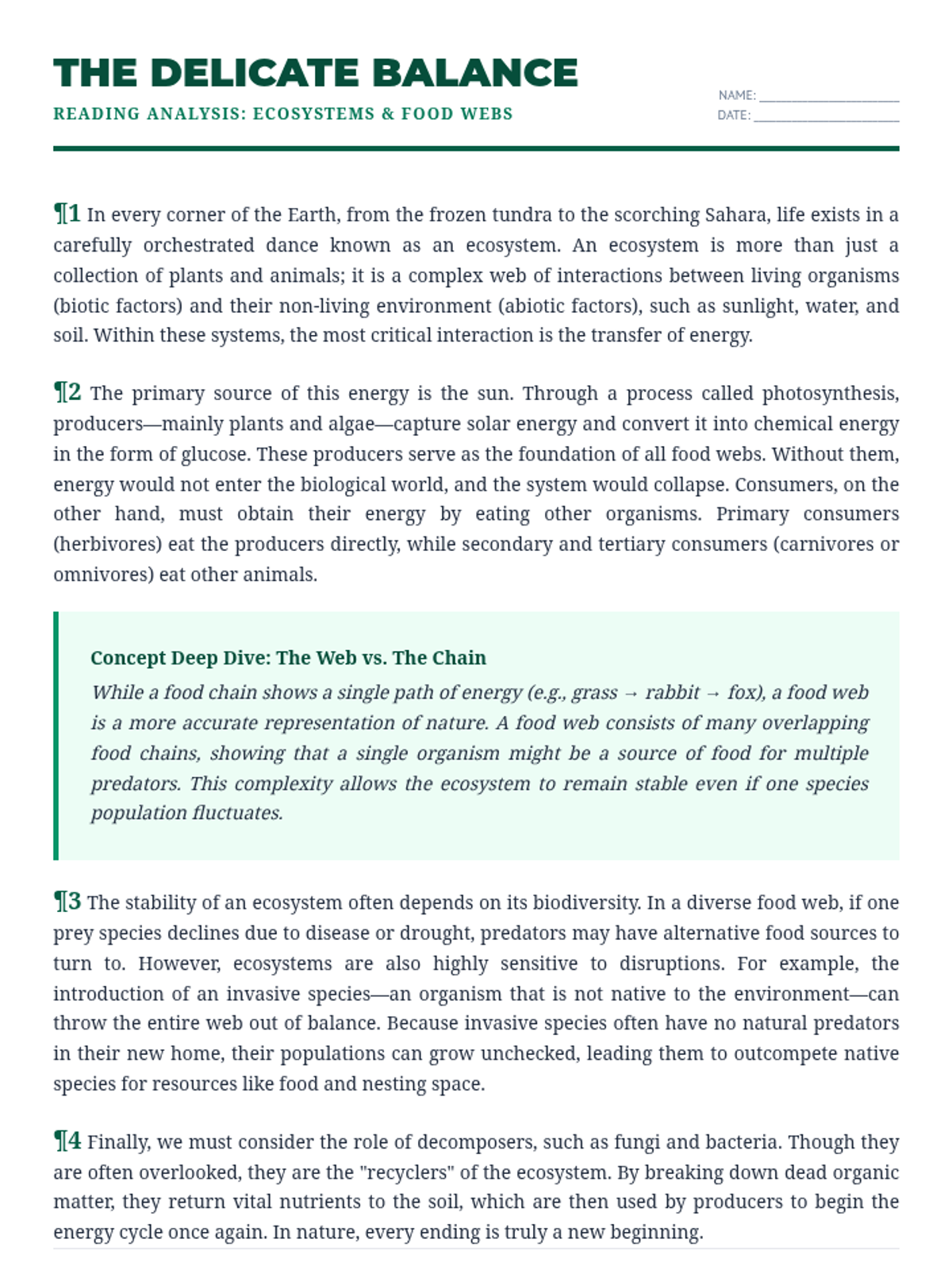
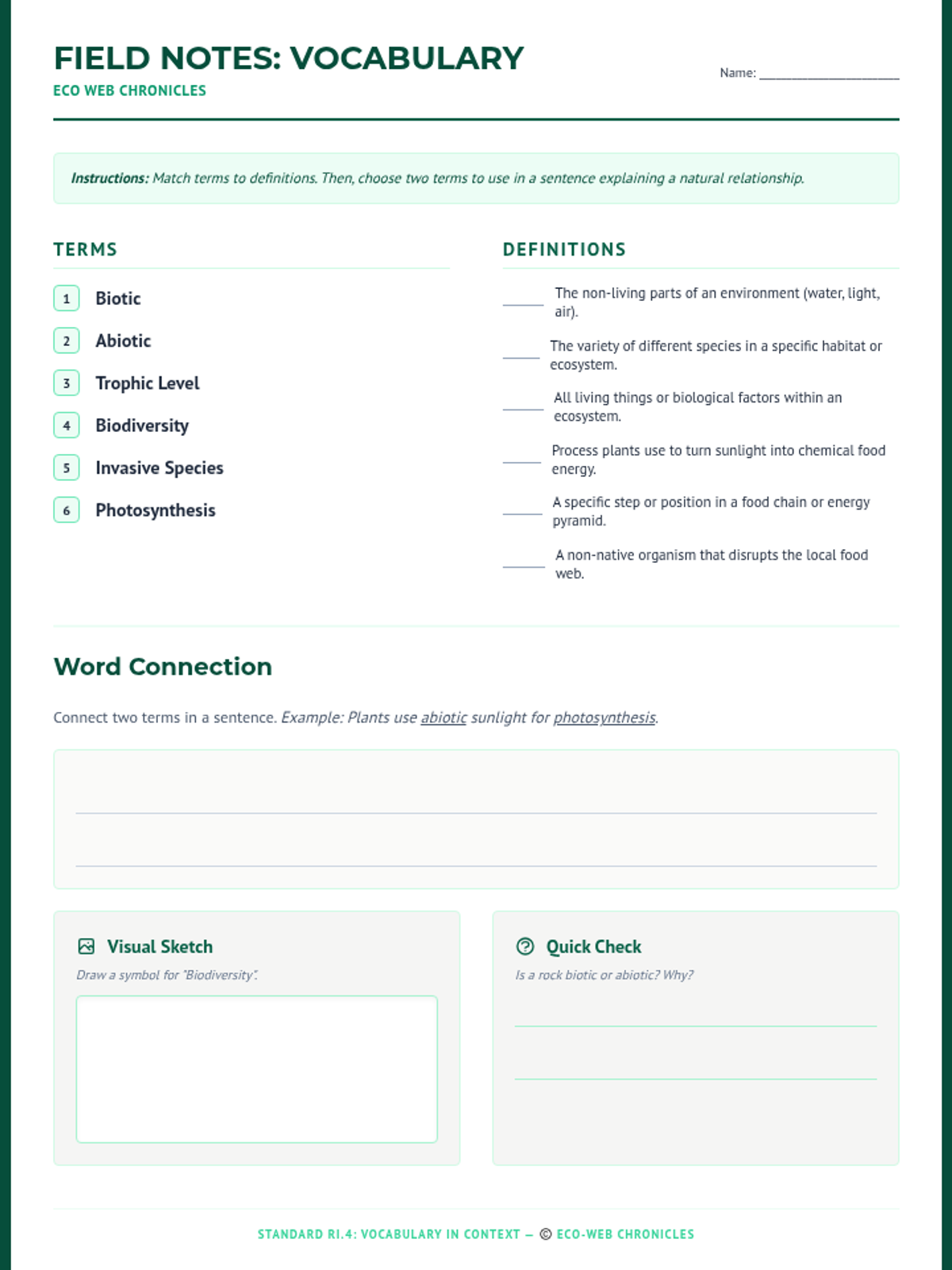
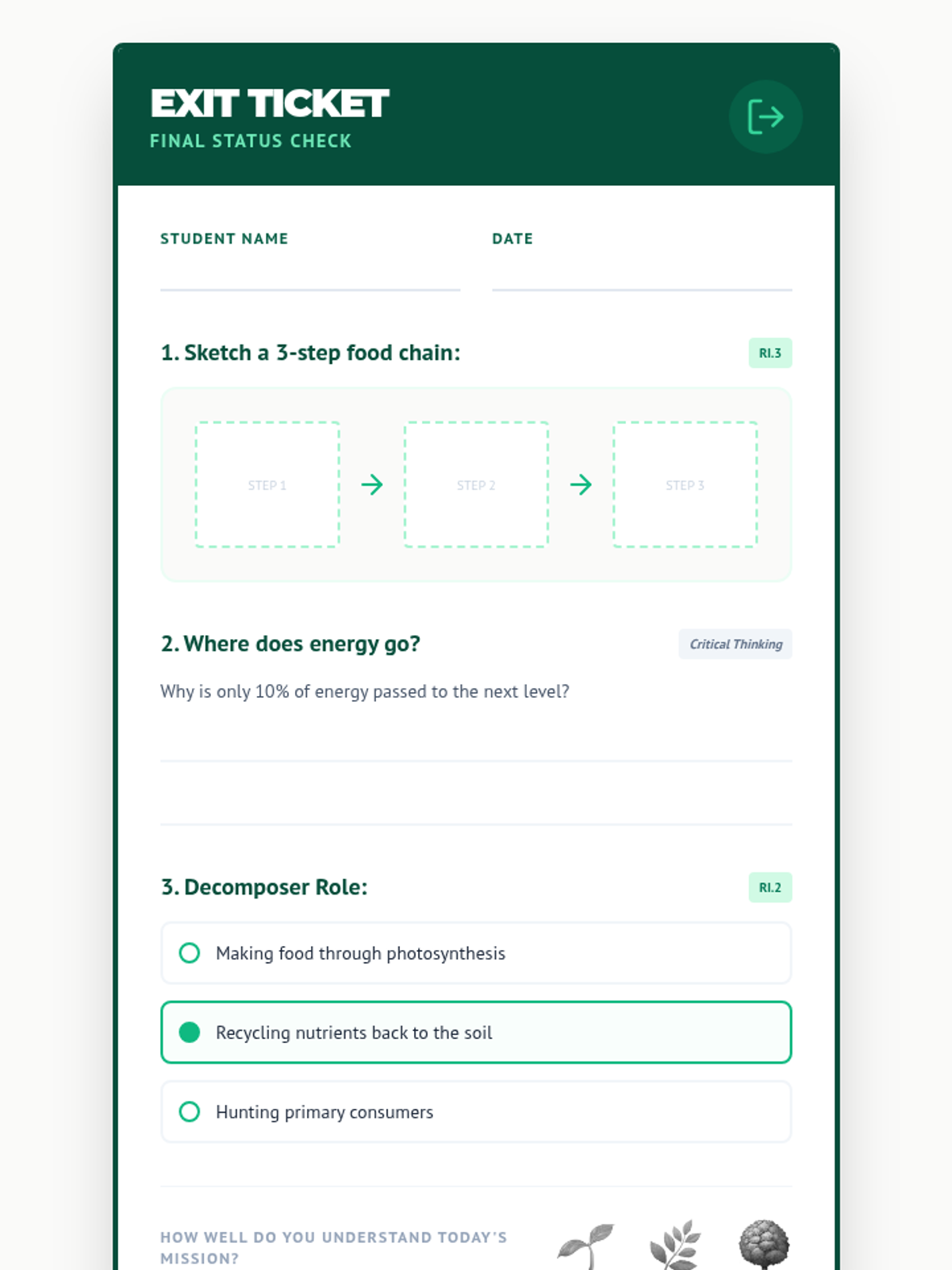
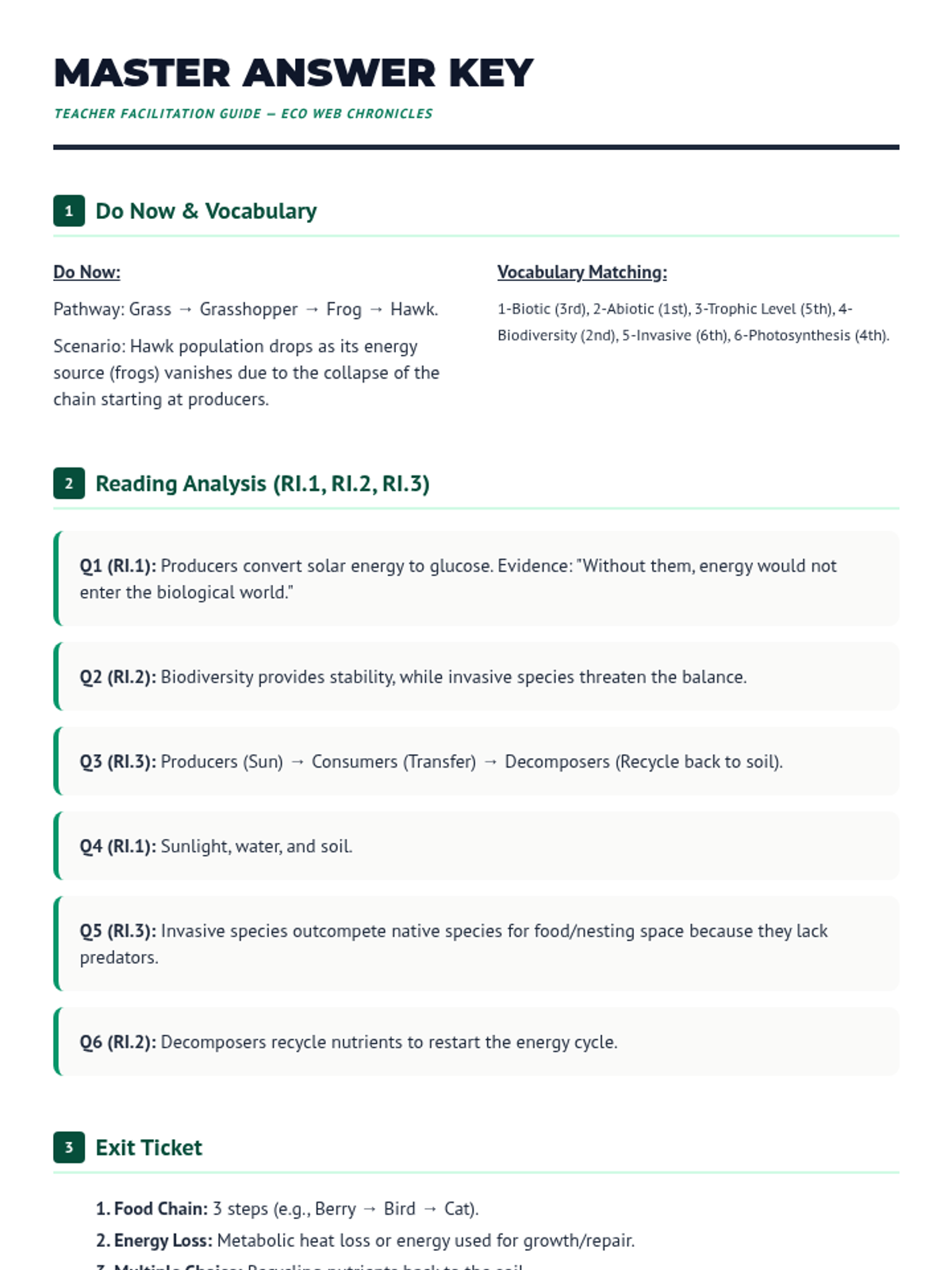
A comprehensive science lesson exploring the complex interactions within ecosystems and the flow of energy through food webs. Includes instruction, reading comprehension, and assessment materials.
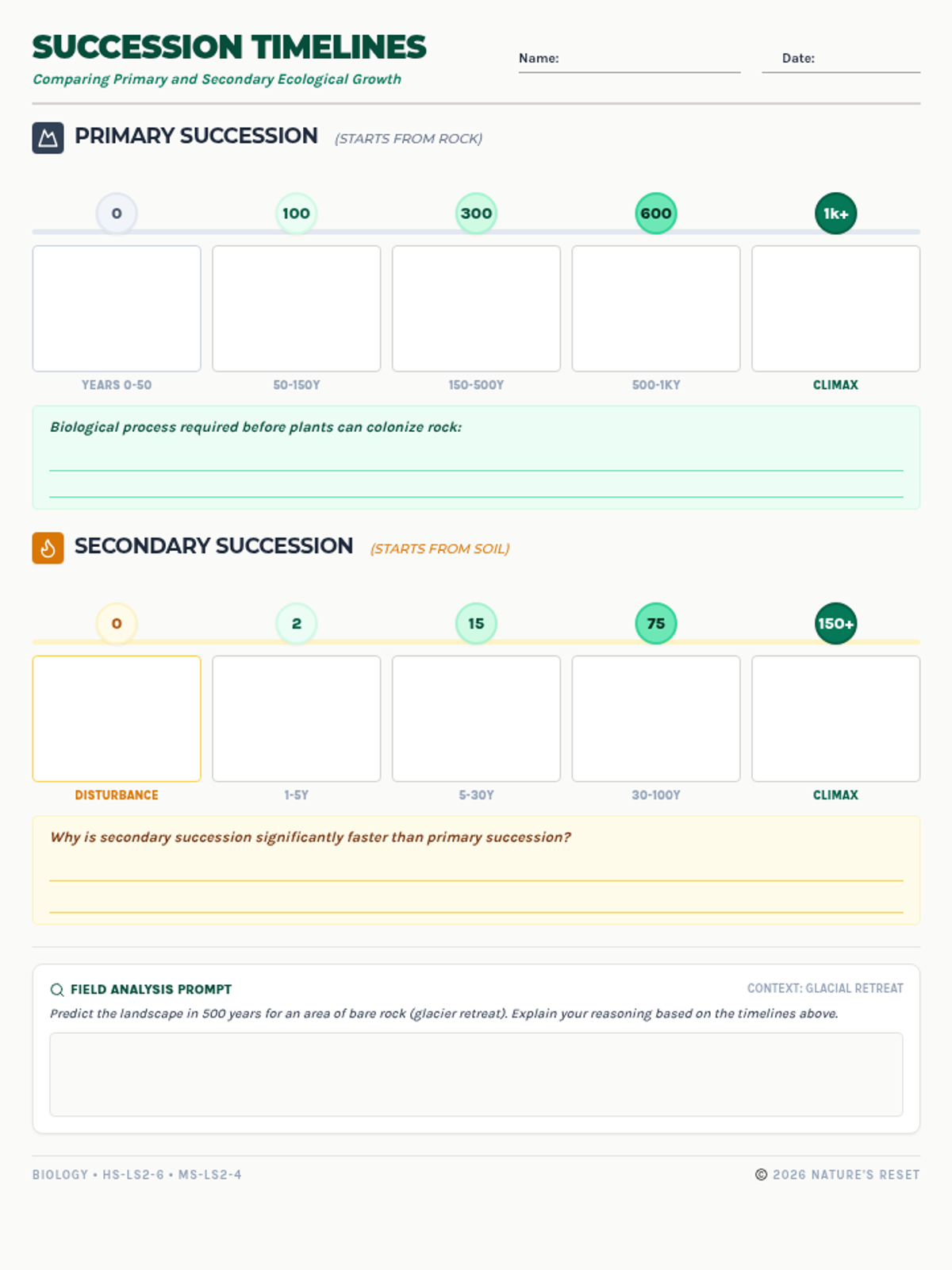
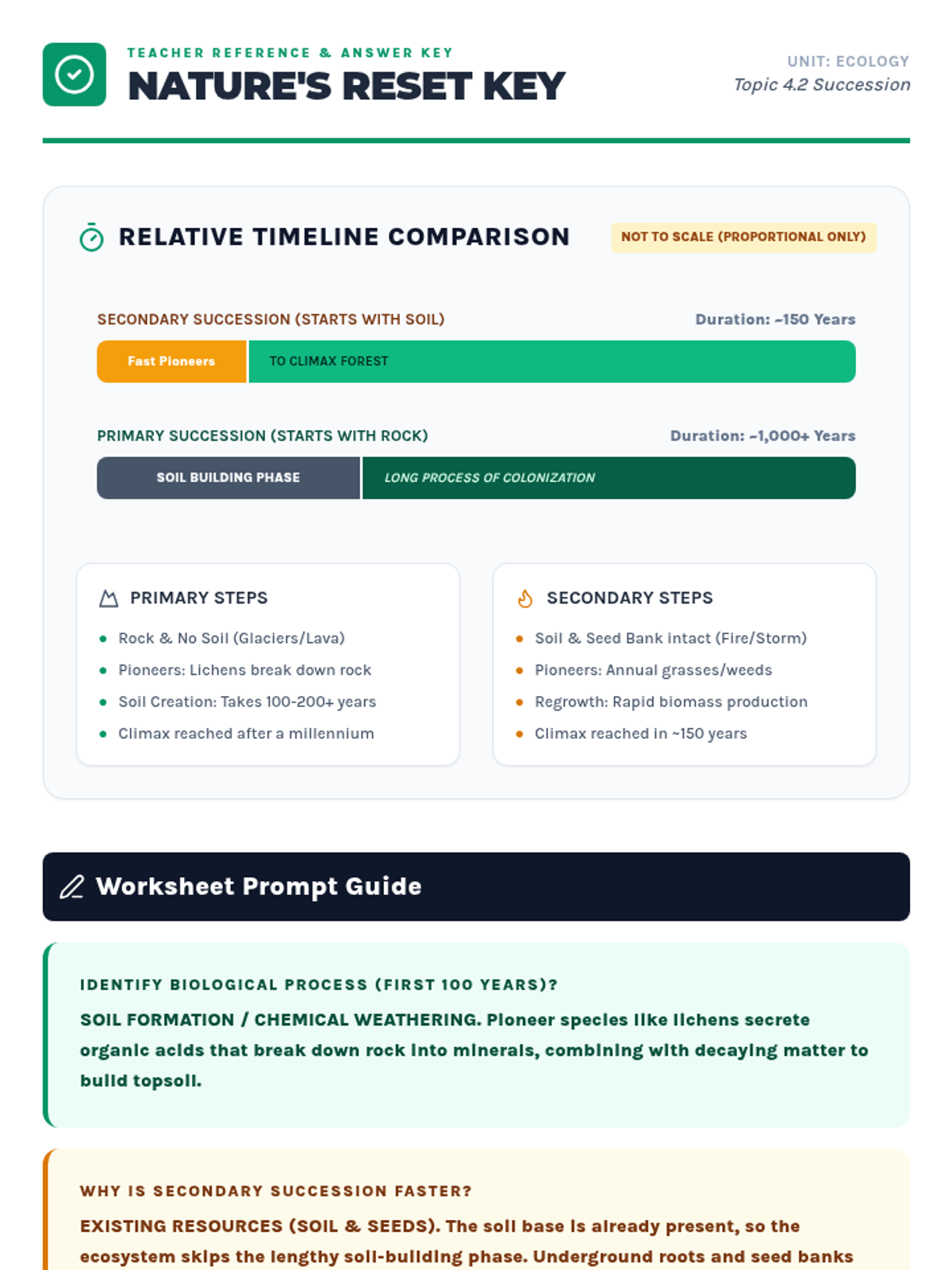
A visual exploration of how ecosystems recover and develop over time, comparing the long-term process of primary succession with the faster recovery of secondary succession. Students will analyze timeframes, pioneer species, and climax communities.
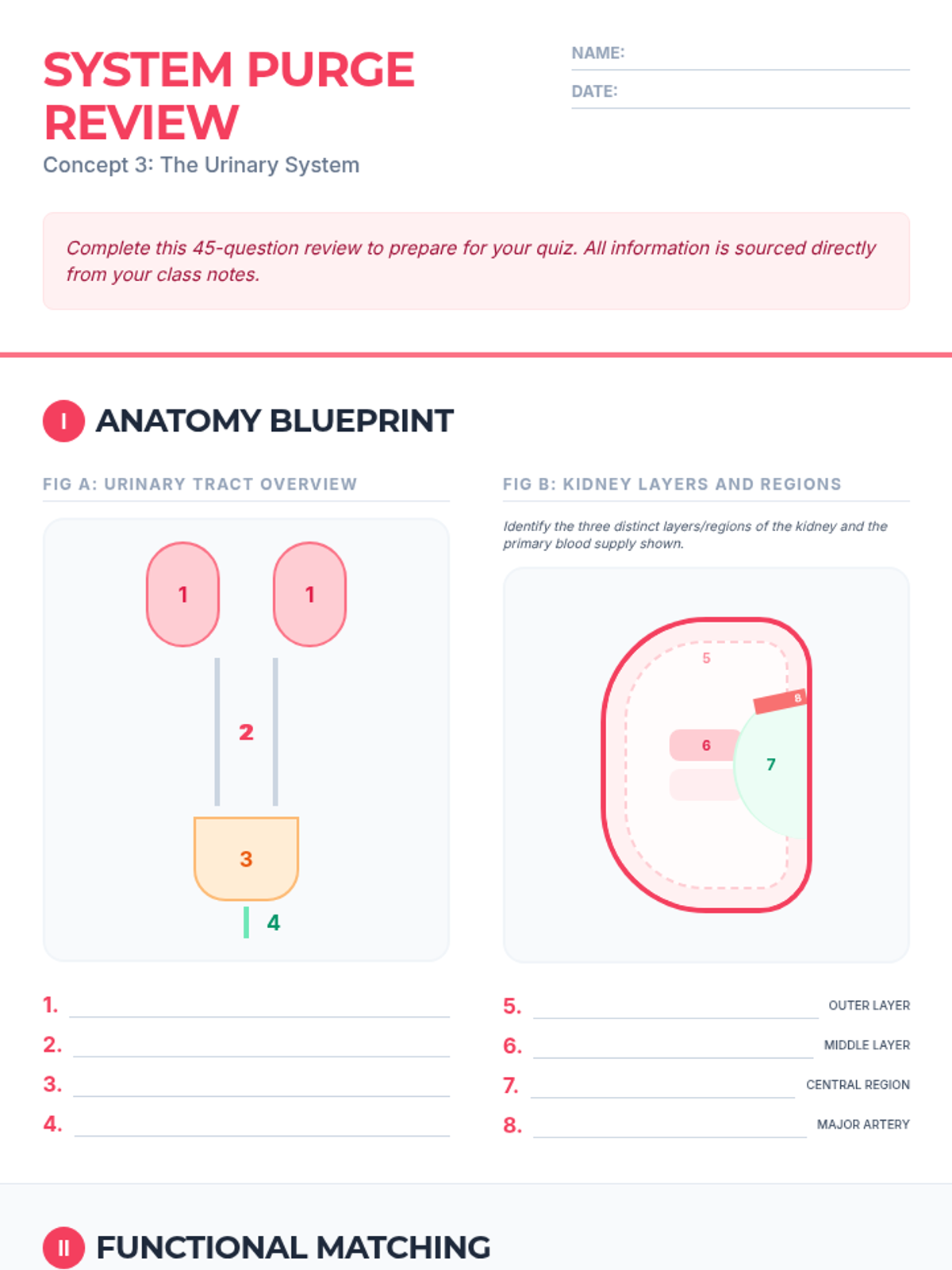
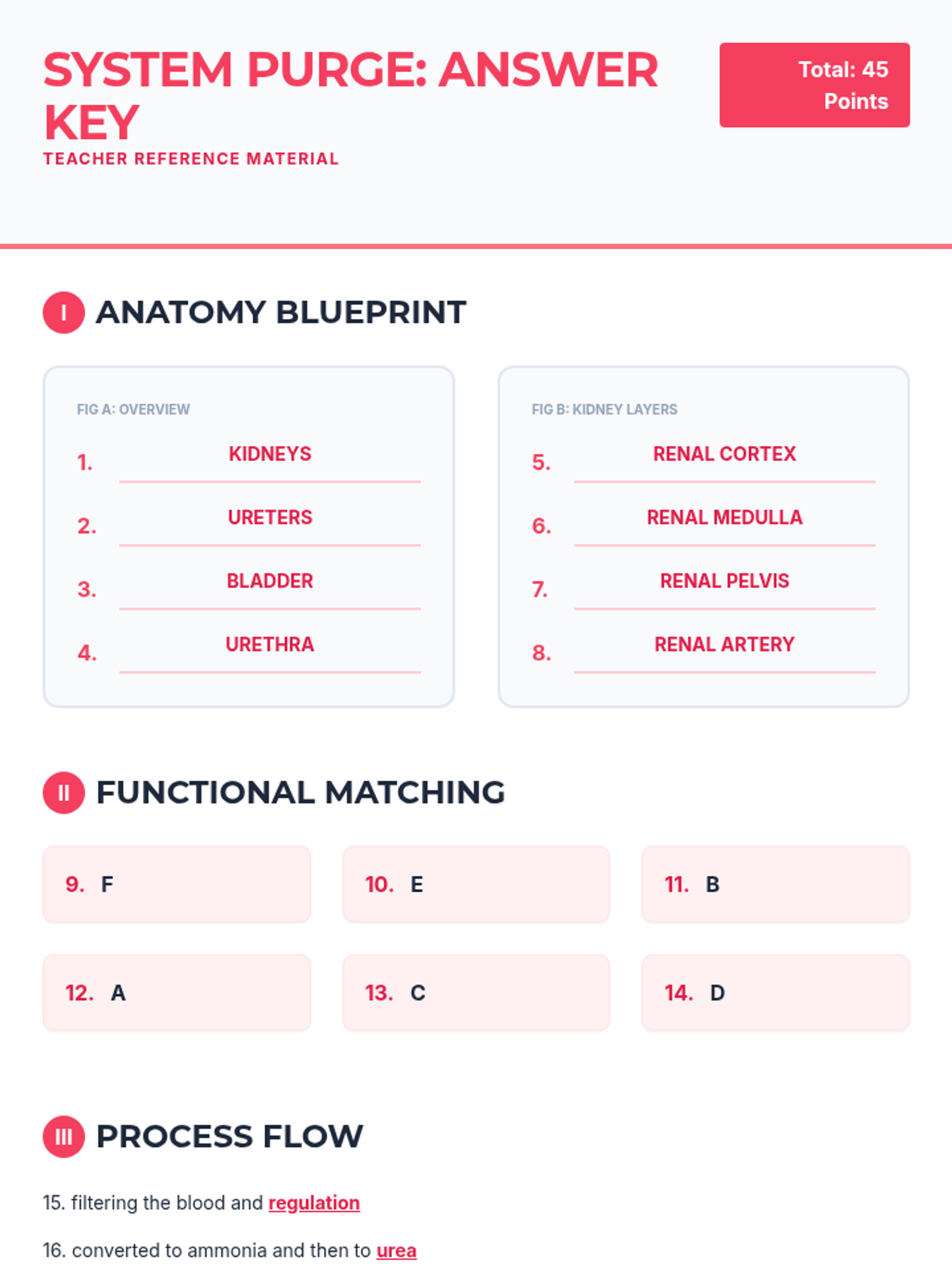
A comprehensive review of the urinary system based on Concept 3 notes, focusing on kidney structure, nephron function, and systemic regulation.
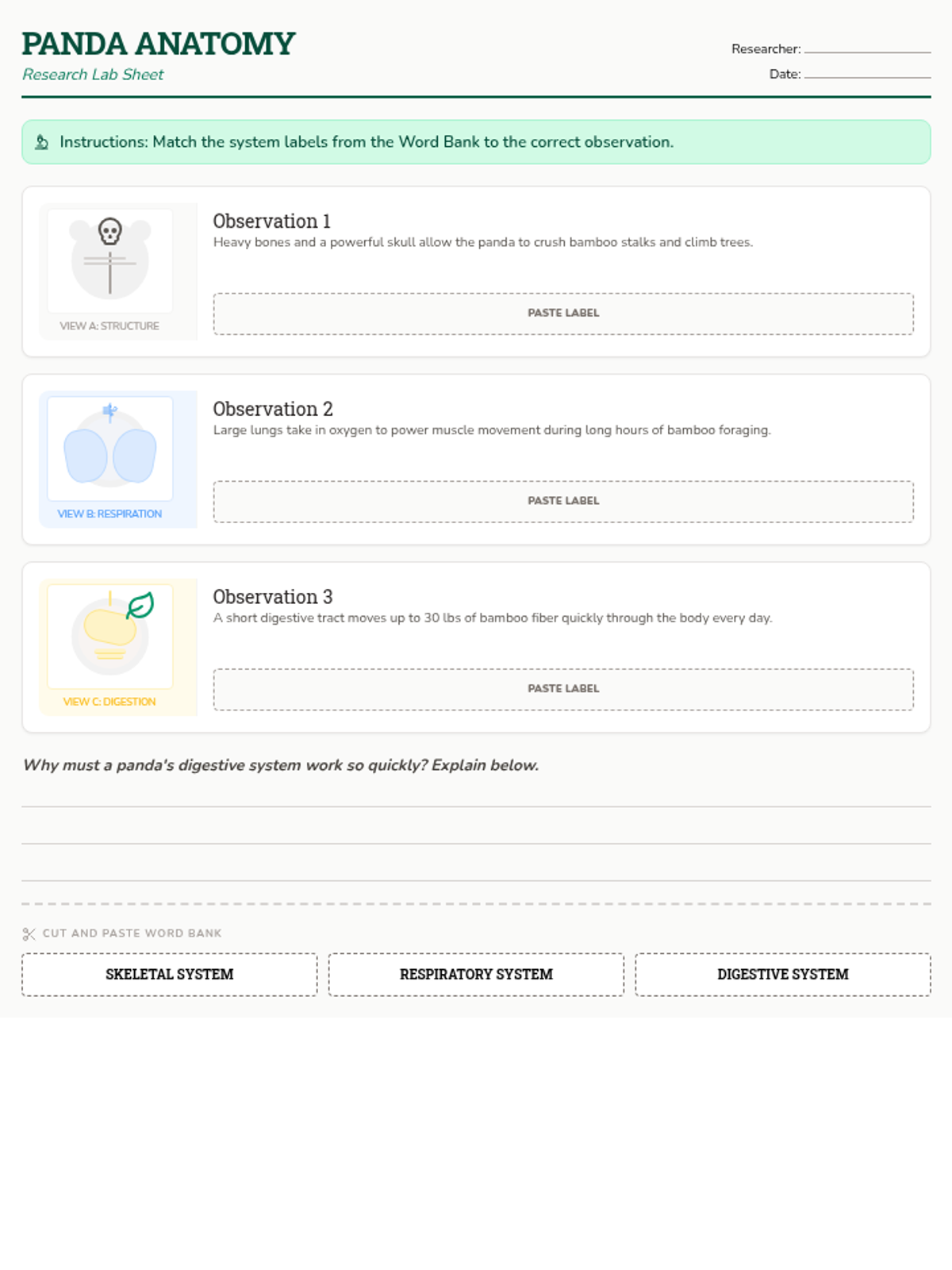
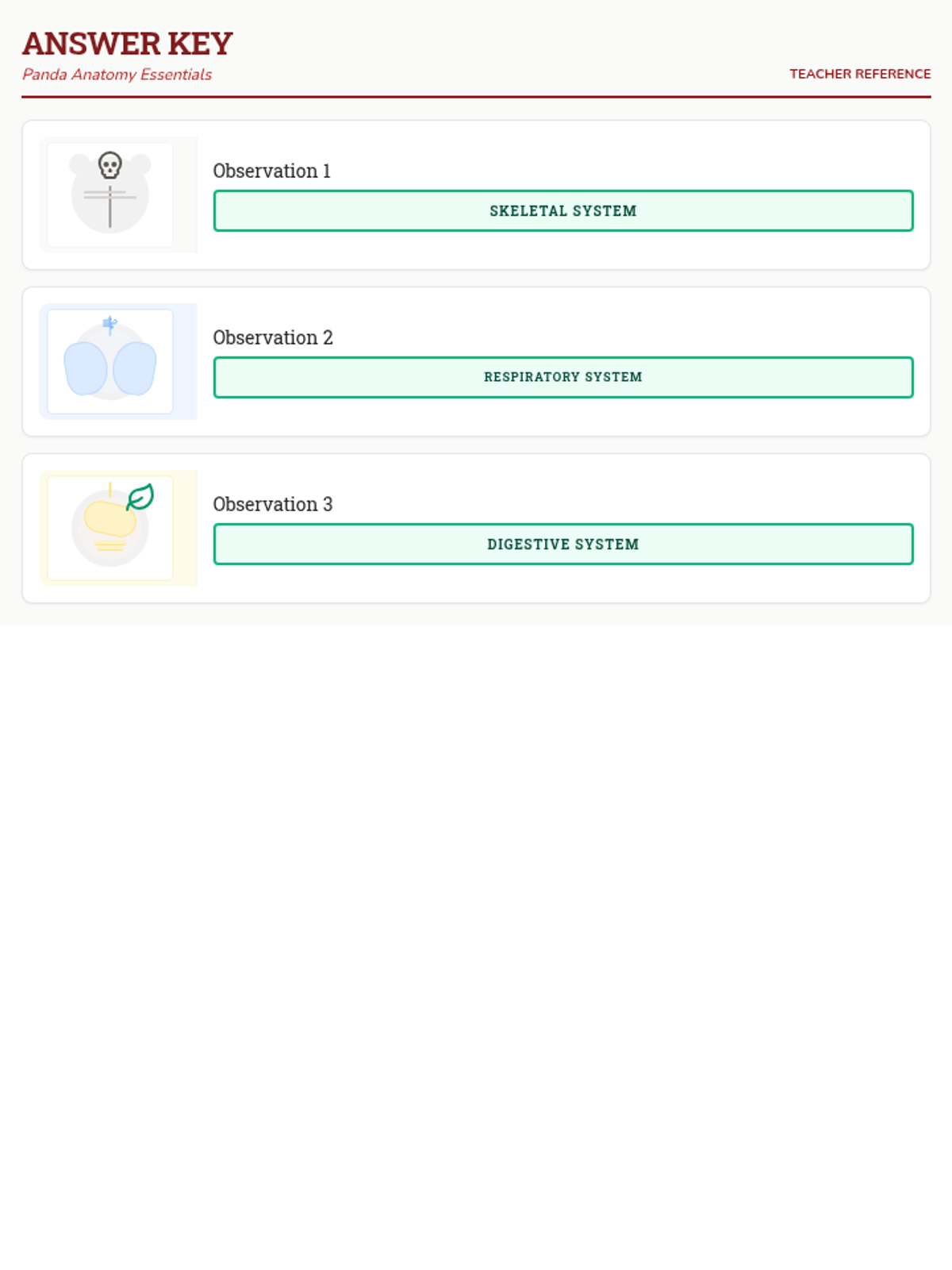
A hands-on lesson identifying the major internal systems of a Giant Panda, focusing on how their anatomy supports their unique bamboo-based diet and lifestyle.
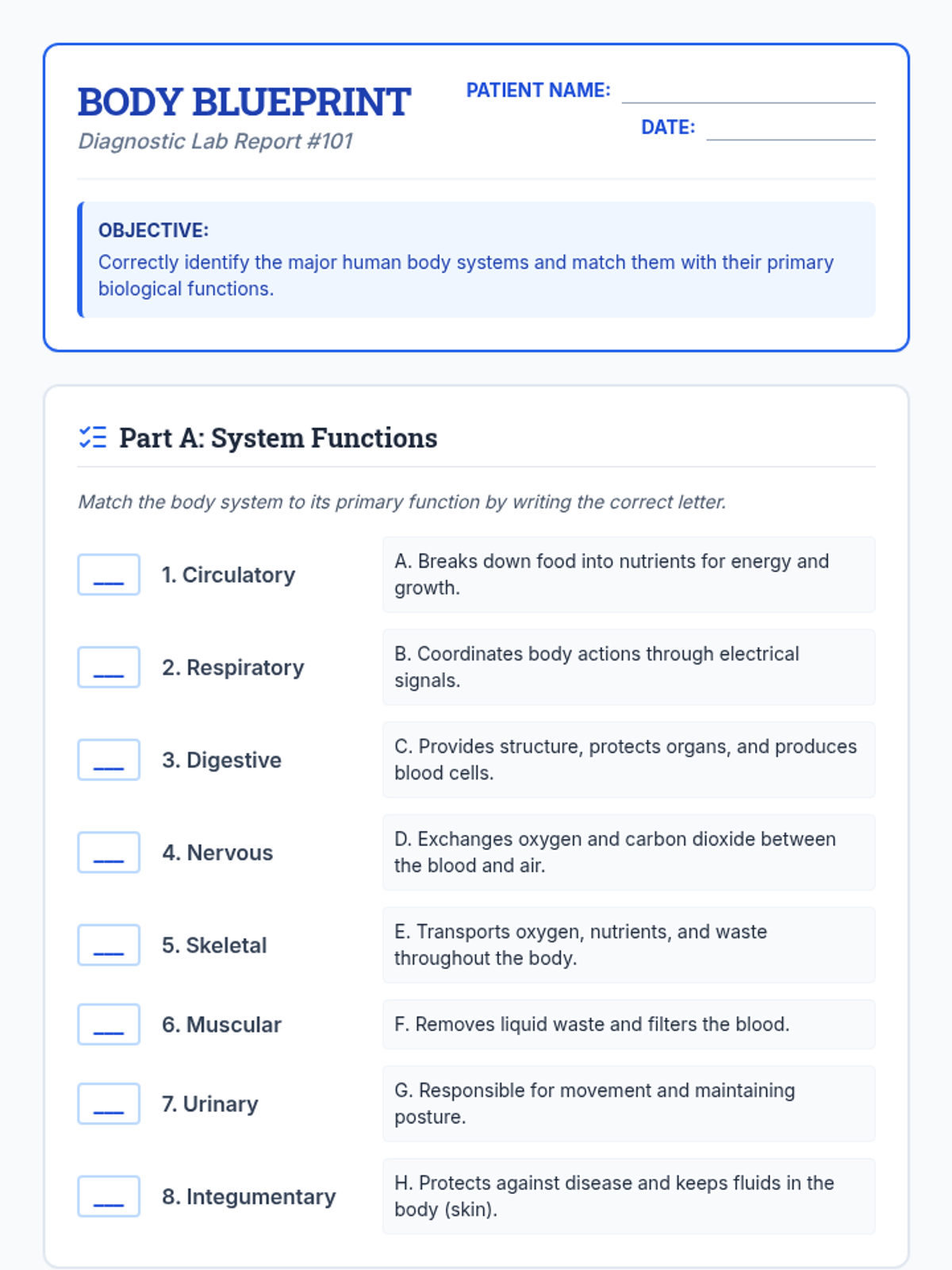
A comprehensive assessment suite to evaluate student understanding of the major human body systems, including their functions and key organs.
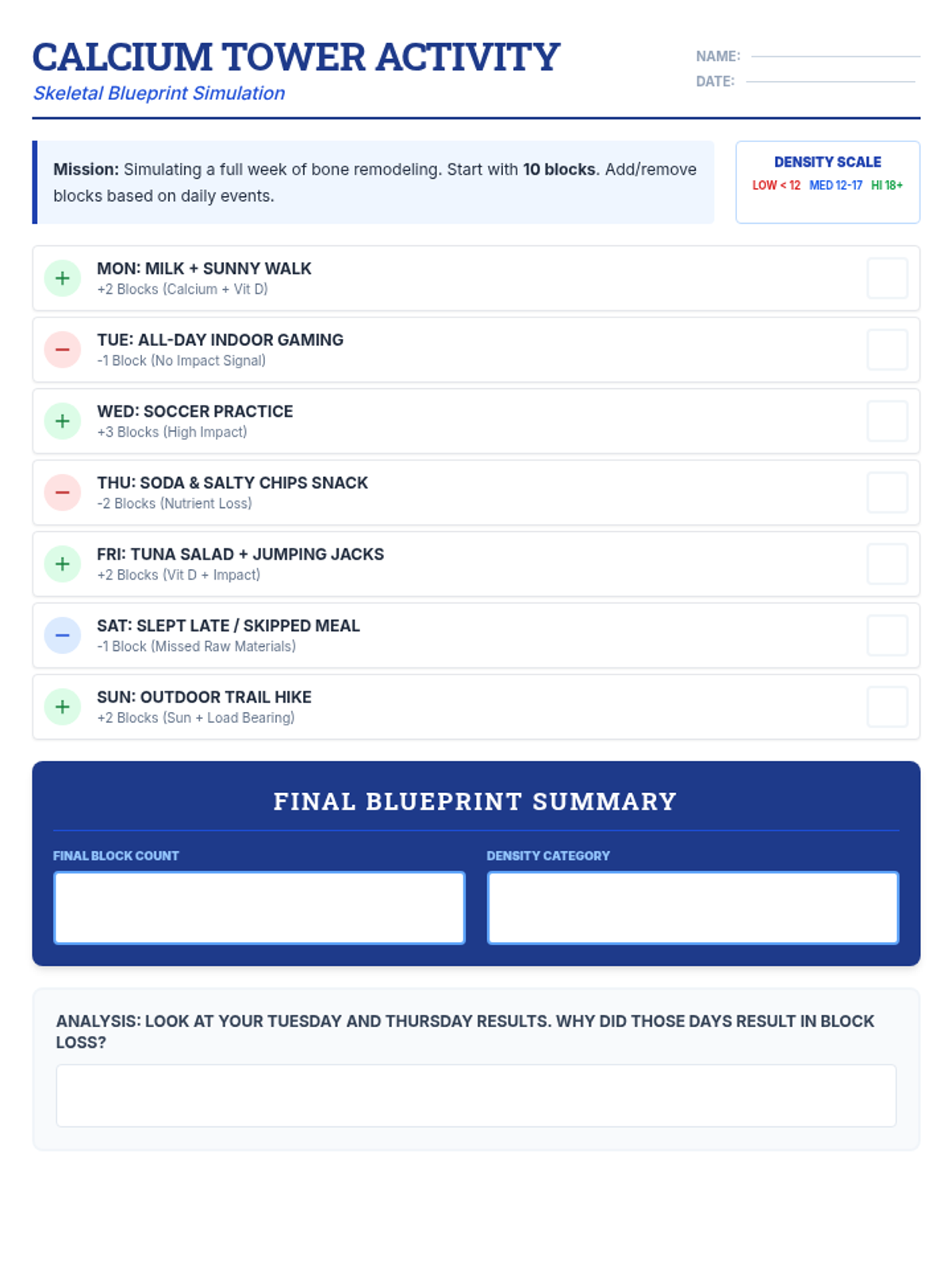
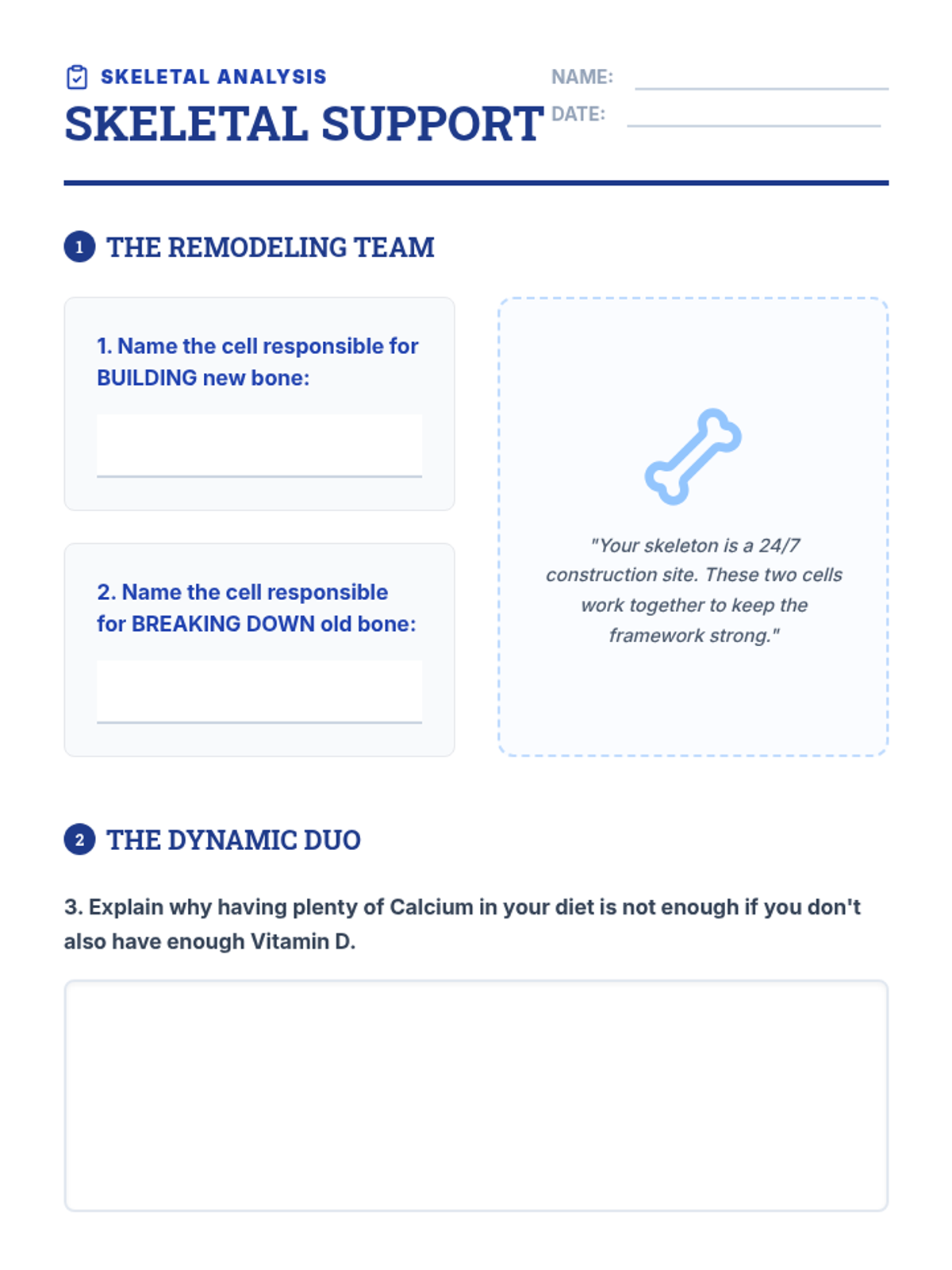
A biology and health lesson focused on bone growth, mineral density, and the lifelong habits required to build a strong skeletal foundation through nutrition and exercise.
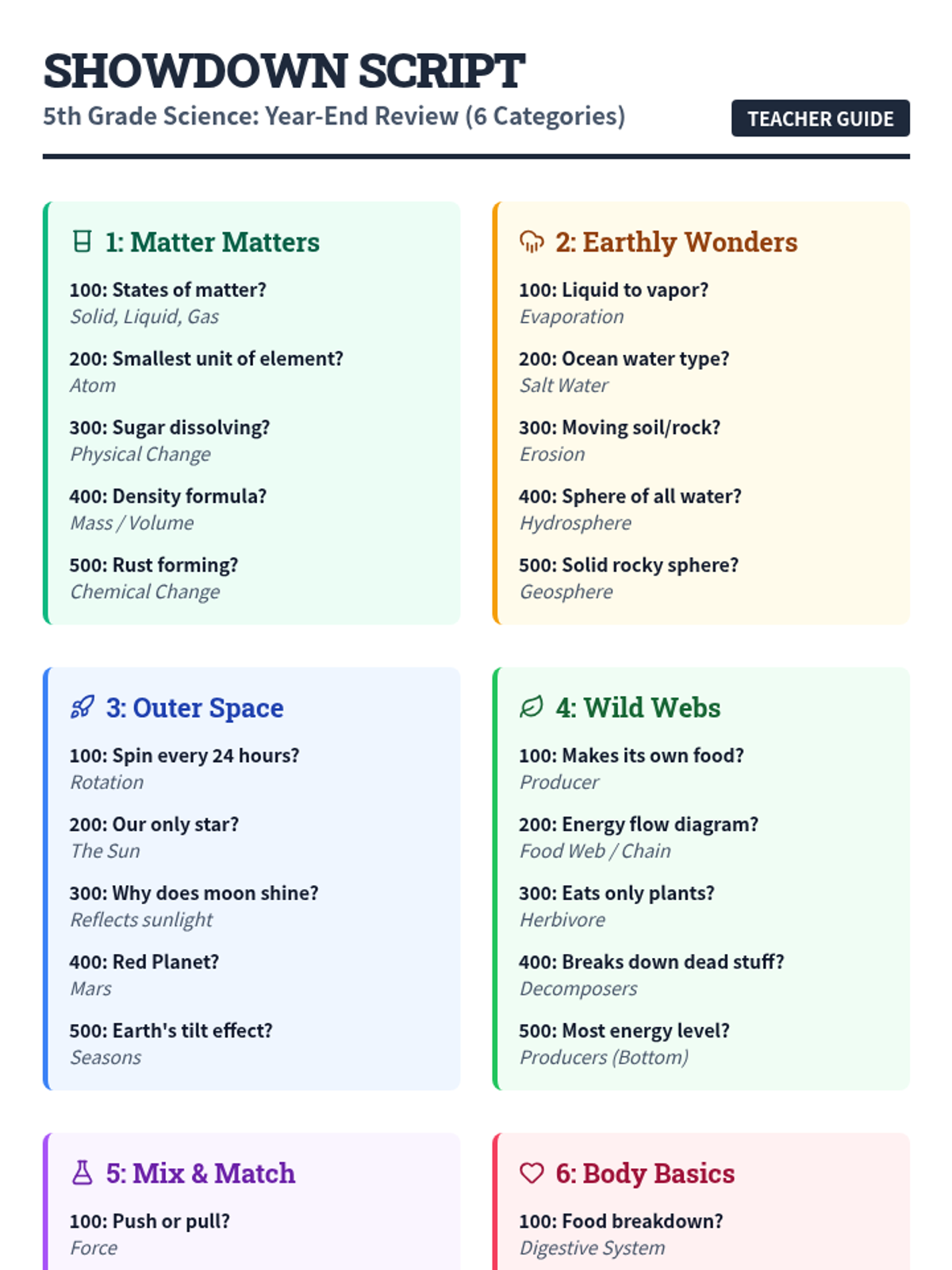
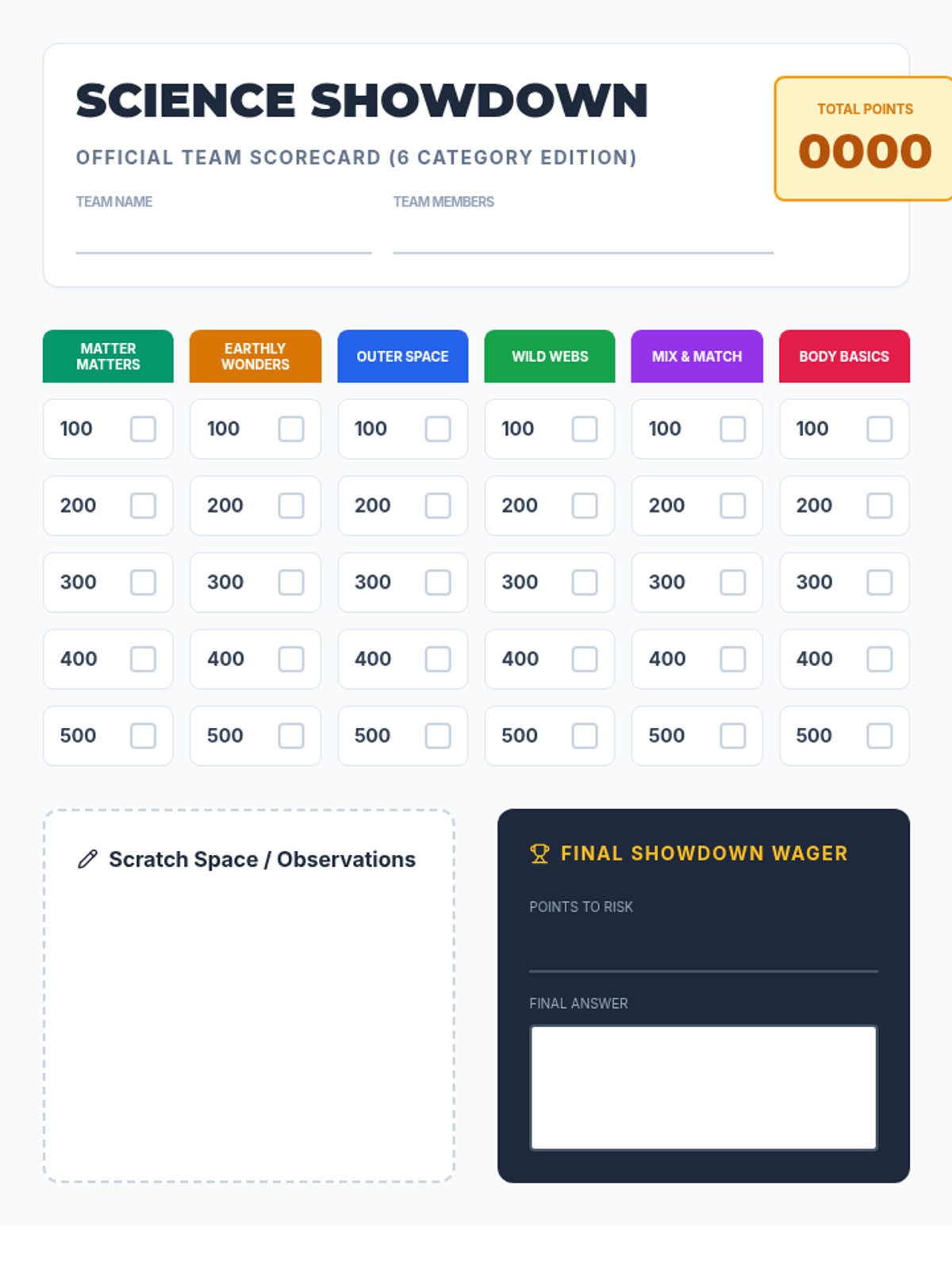
A comprehensive year-end science review for 5th grade designed as a high-energy Jeopardy-style game. This lesson covers matter, Earth systems, space, ecosystems, and scientific inquiry to prepare students for end-of-year assessments.
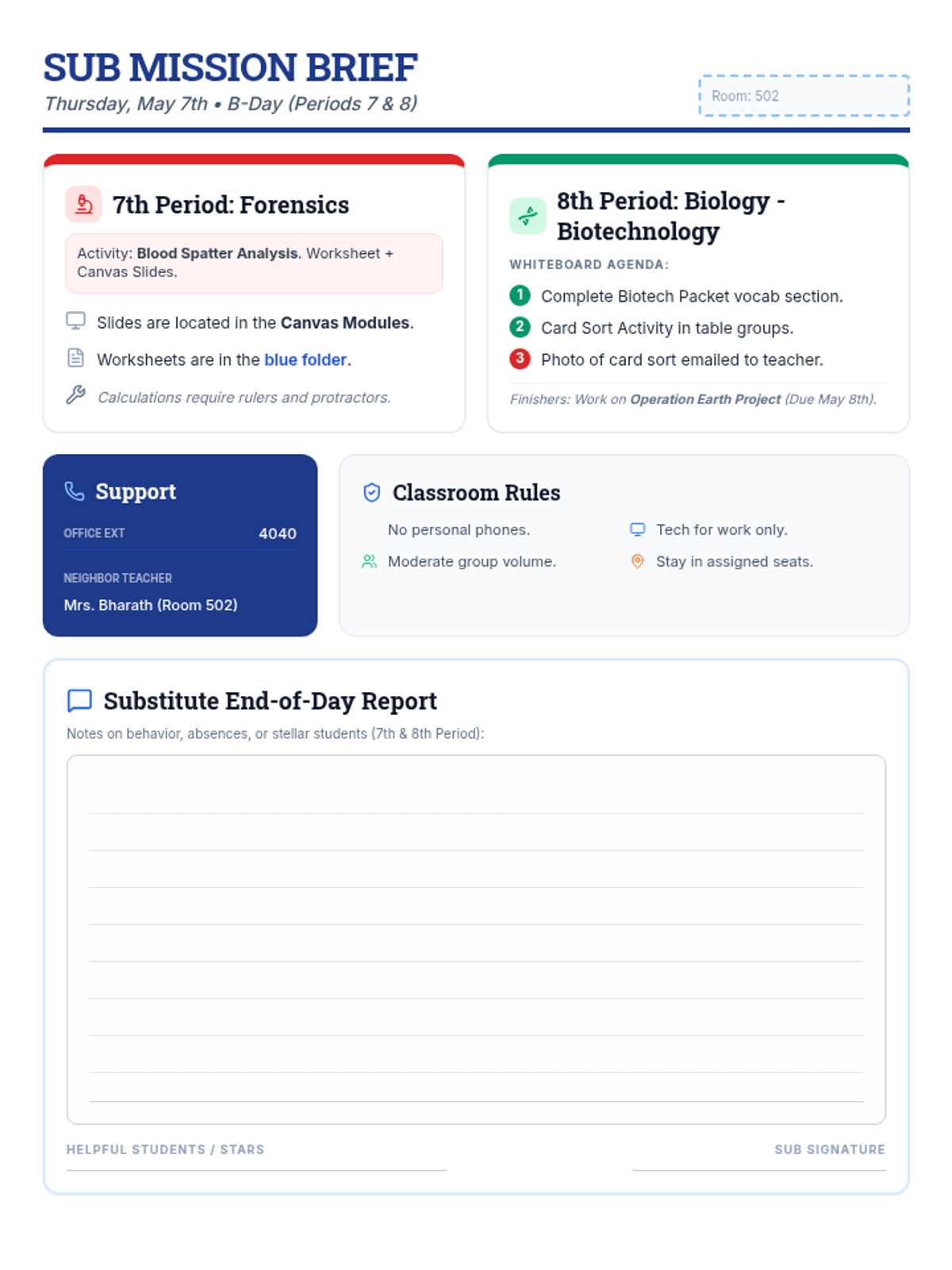
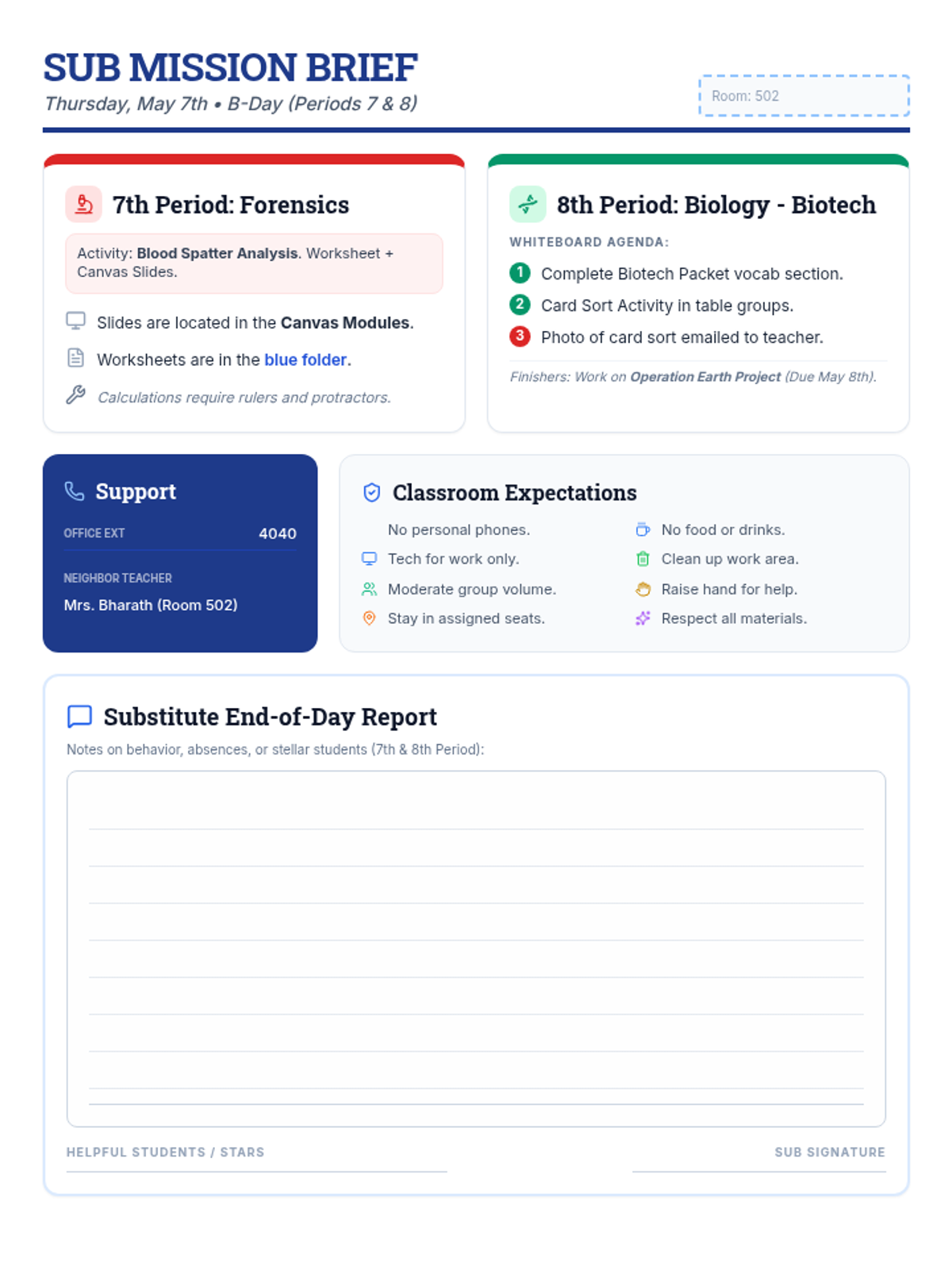
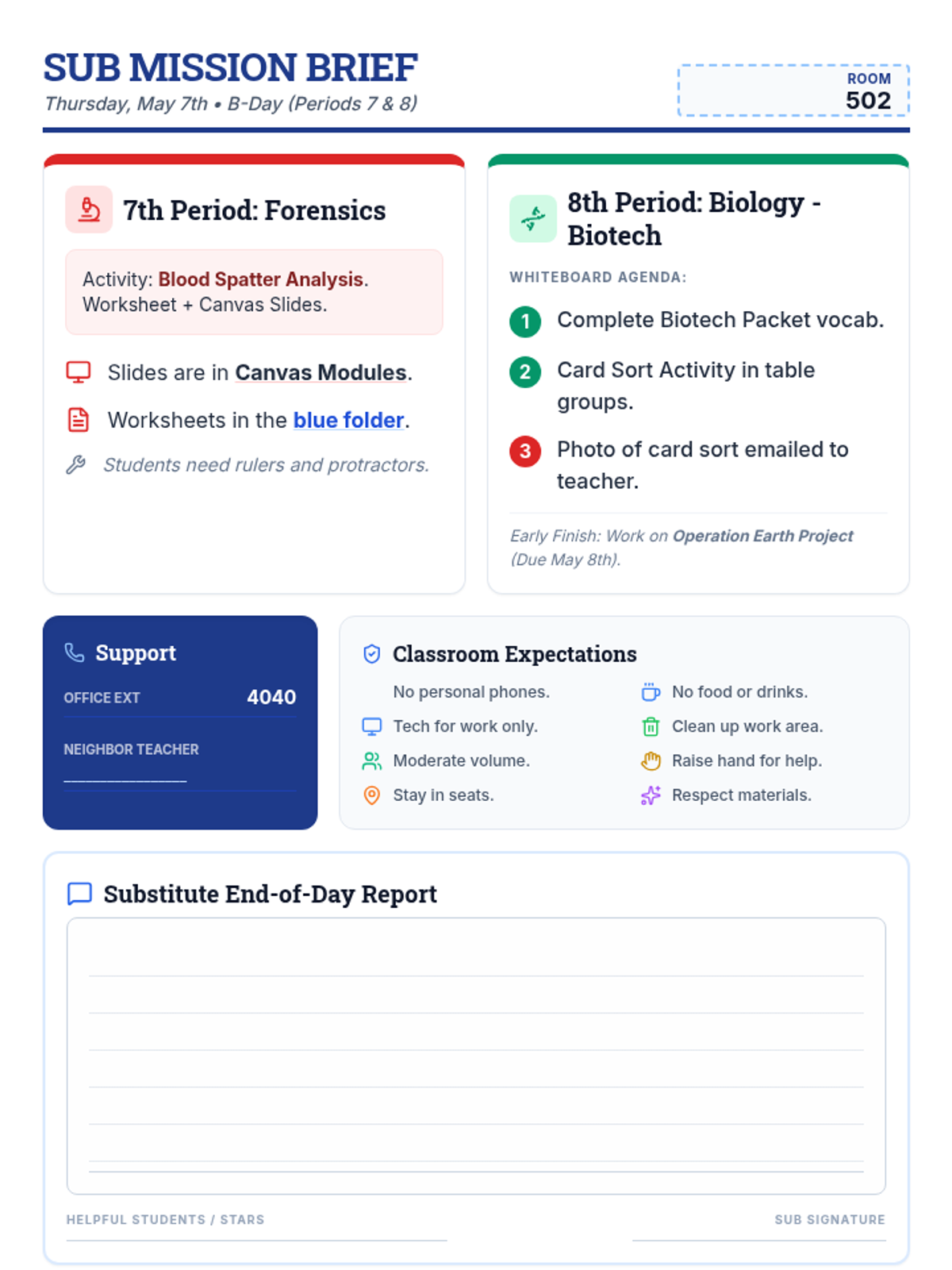
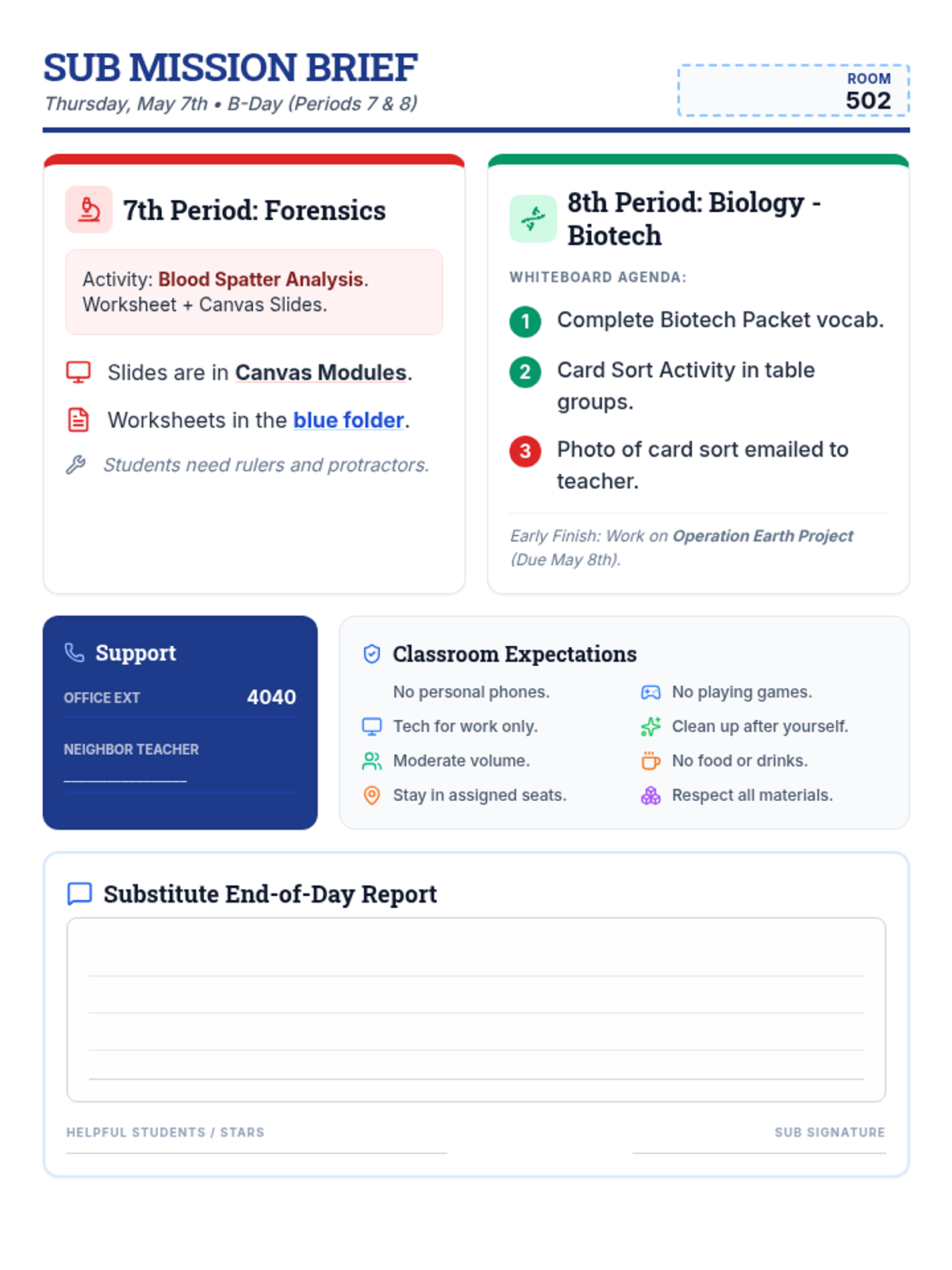
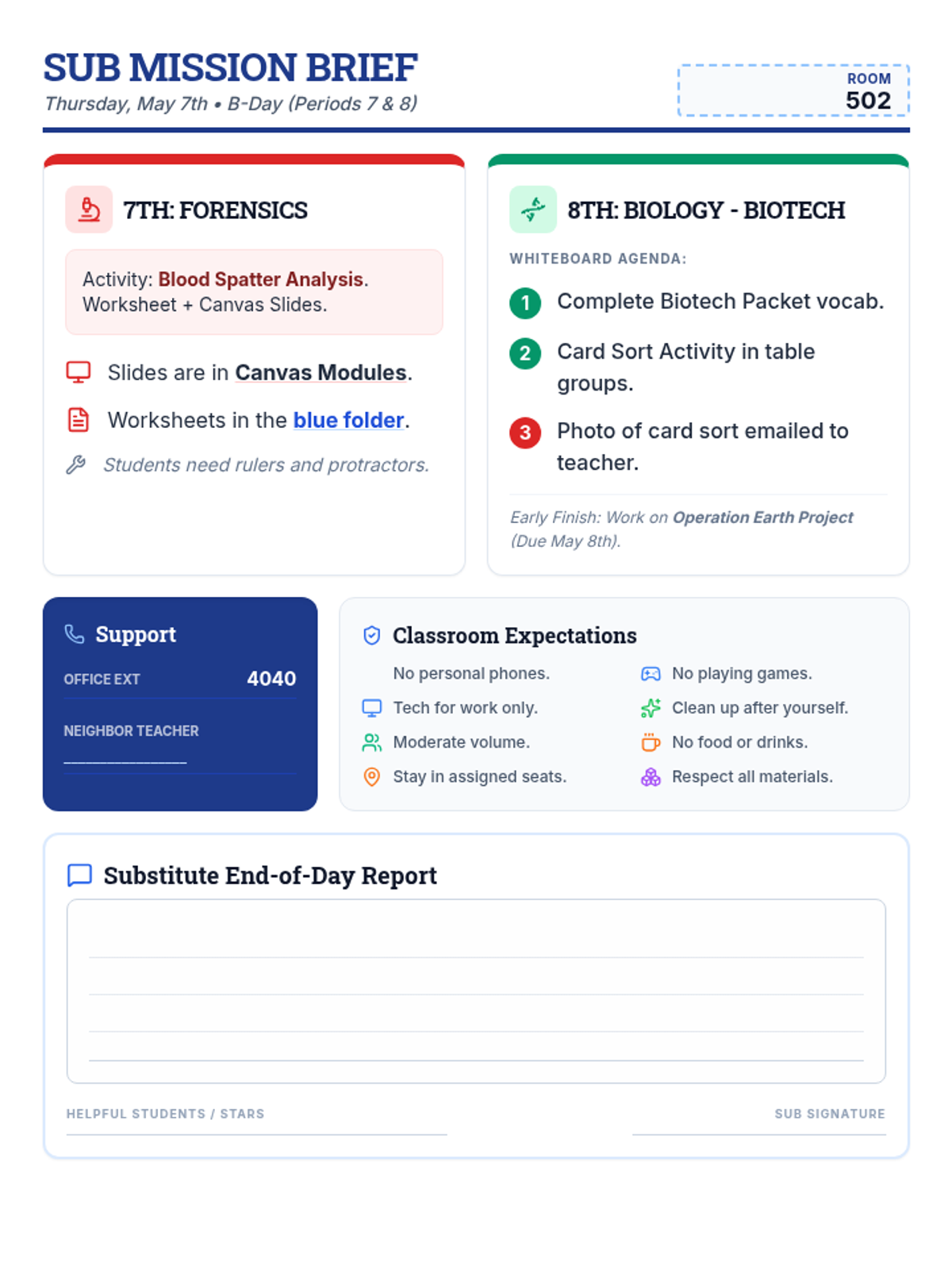
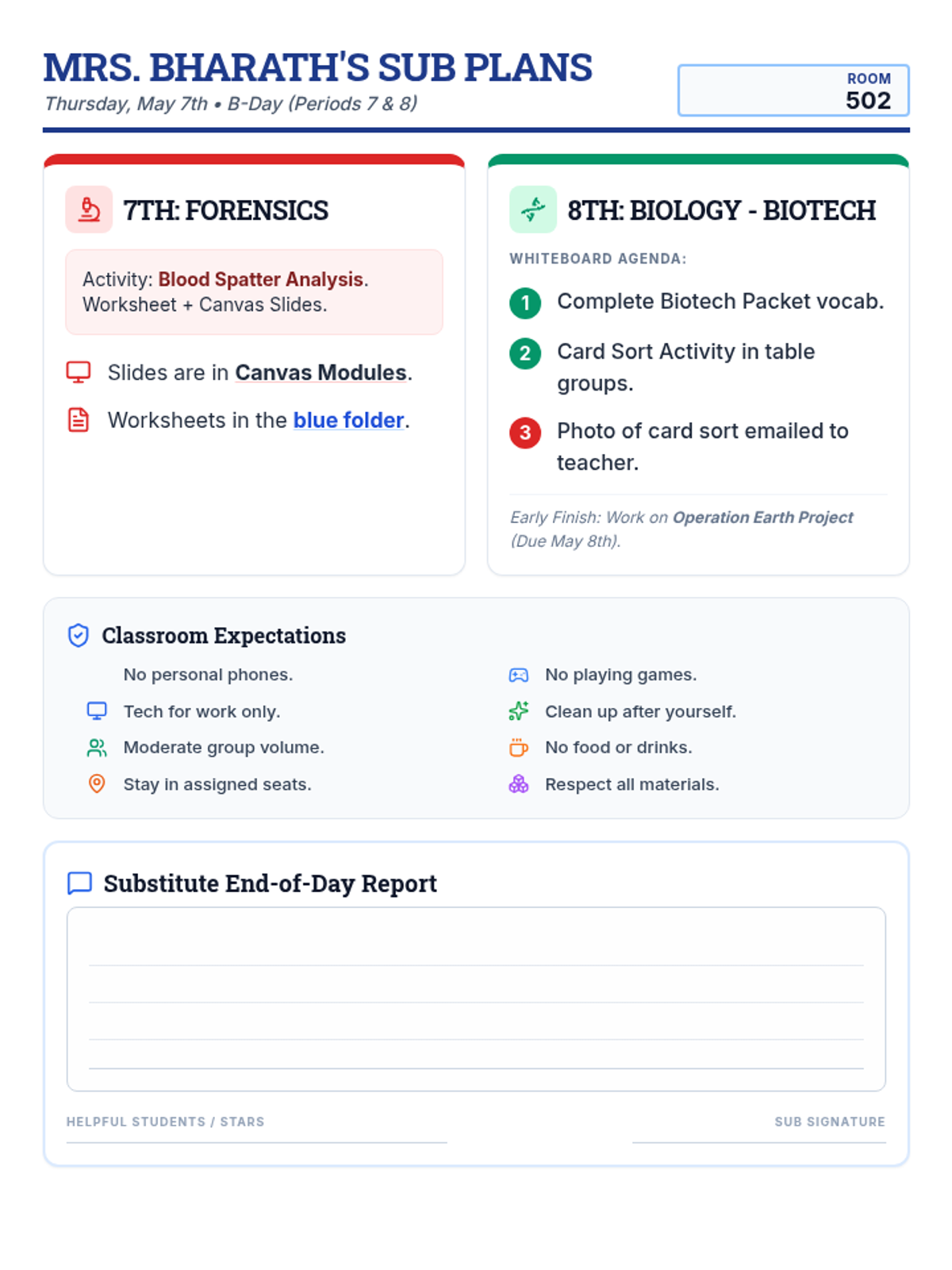
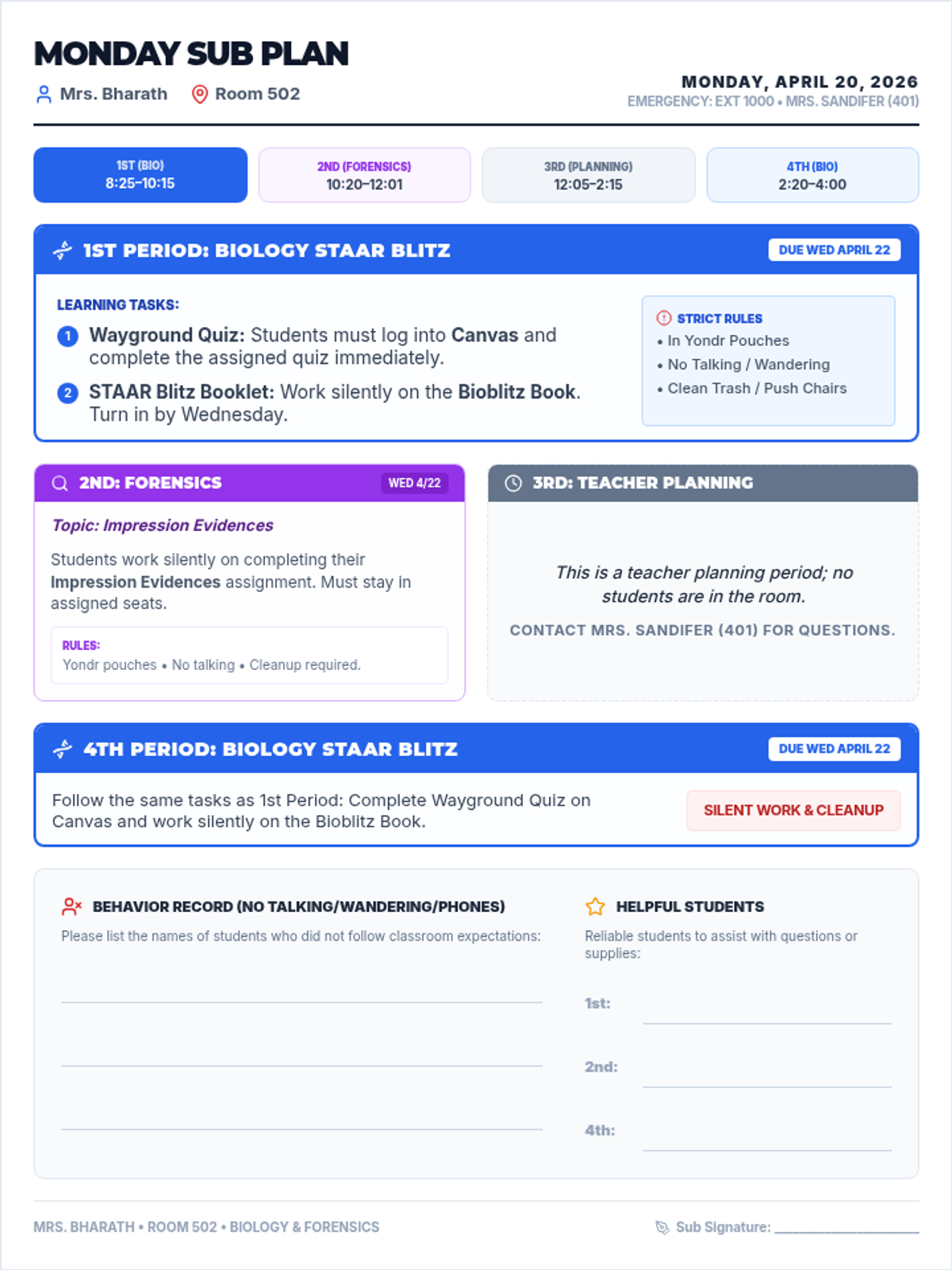
A concise and clear guide for a substitute teacher covering 7th and 8th period classes on May 7th, featuring forensics and biotechnology activities.
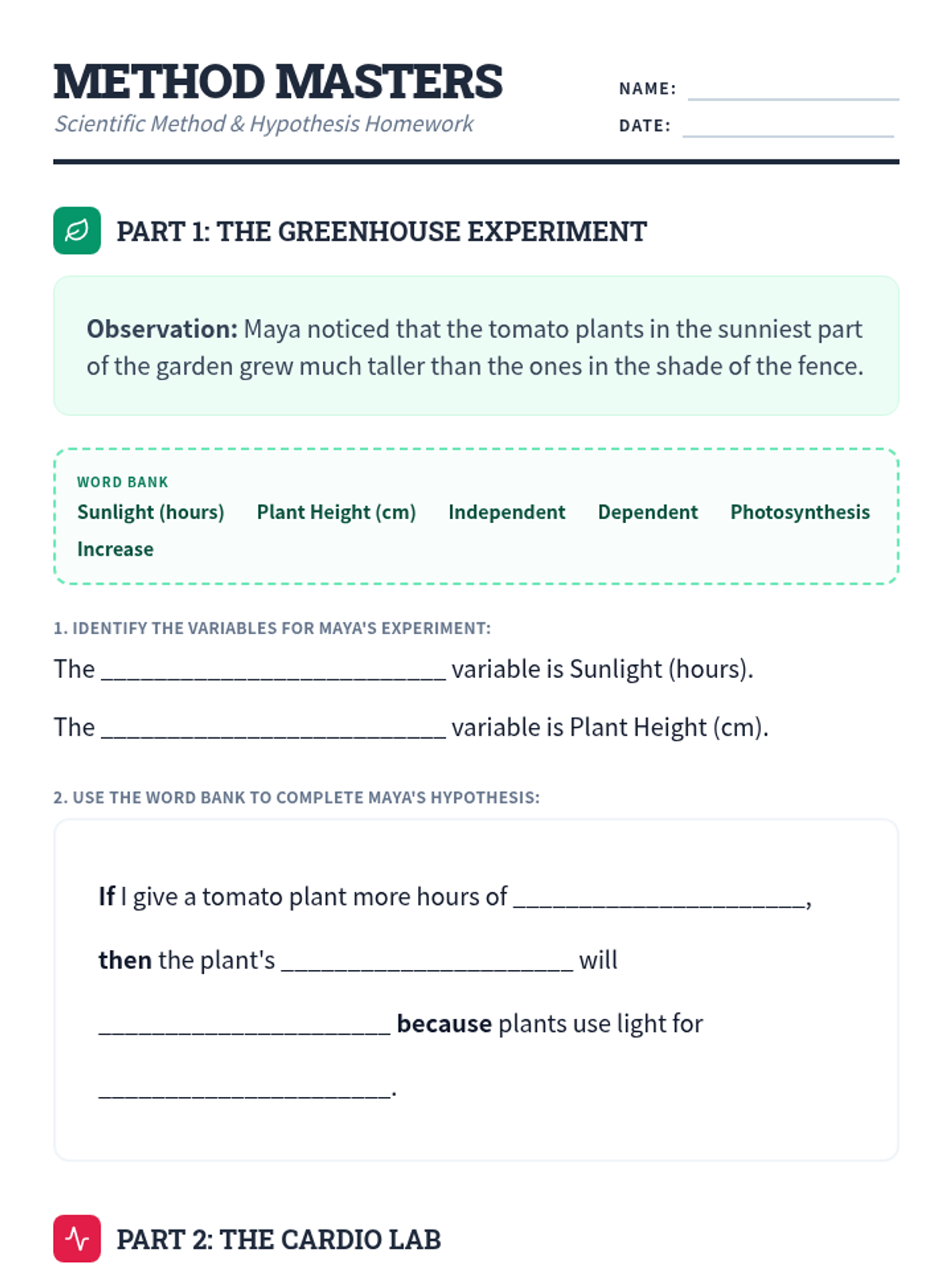
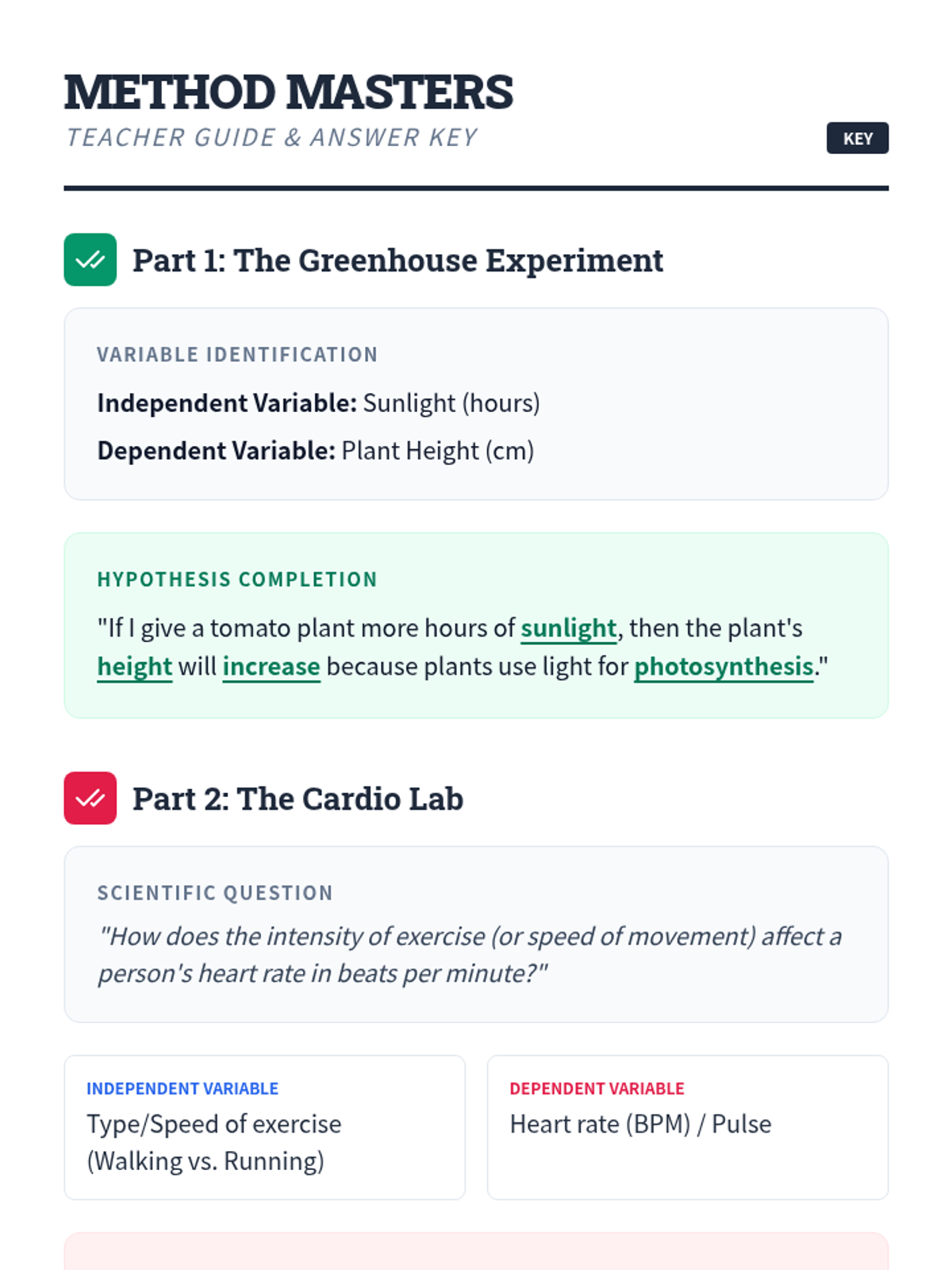
A foundational lesson on the scientific method and hypothesis formation, using real-world biological examples to practice variable identification and structured prediction.
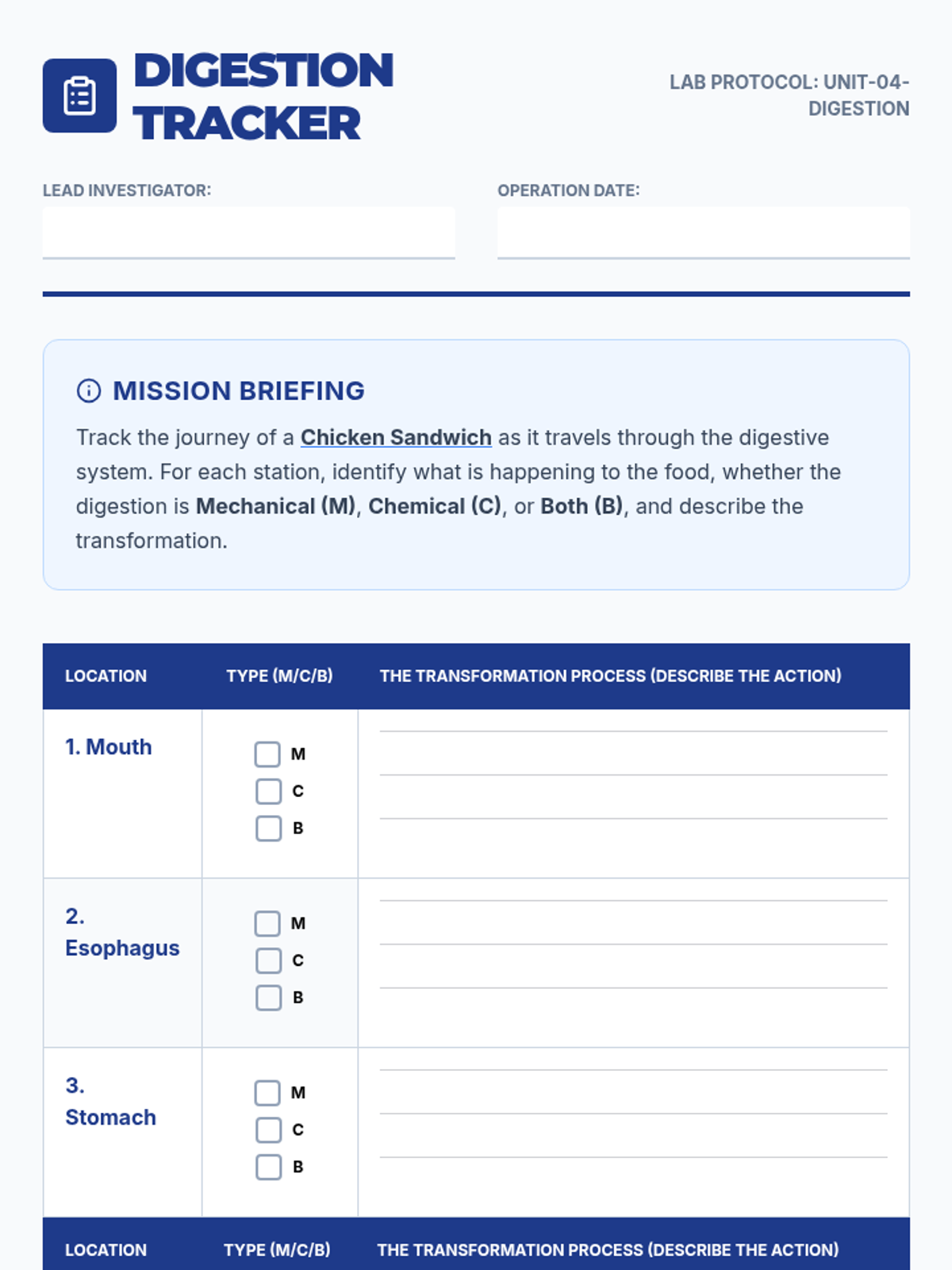
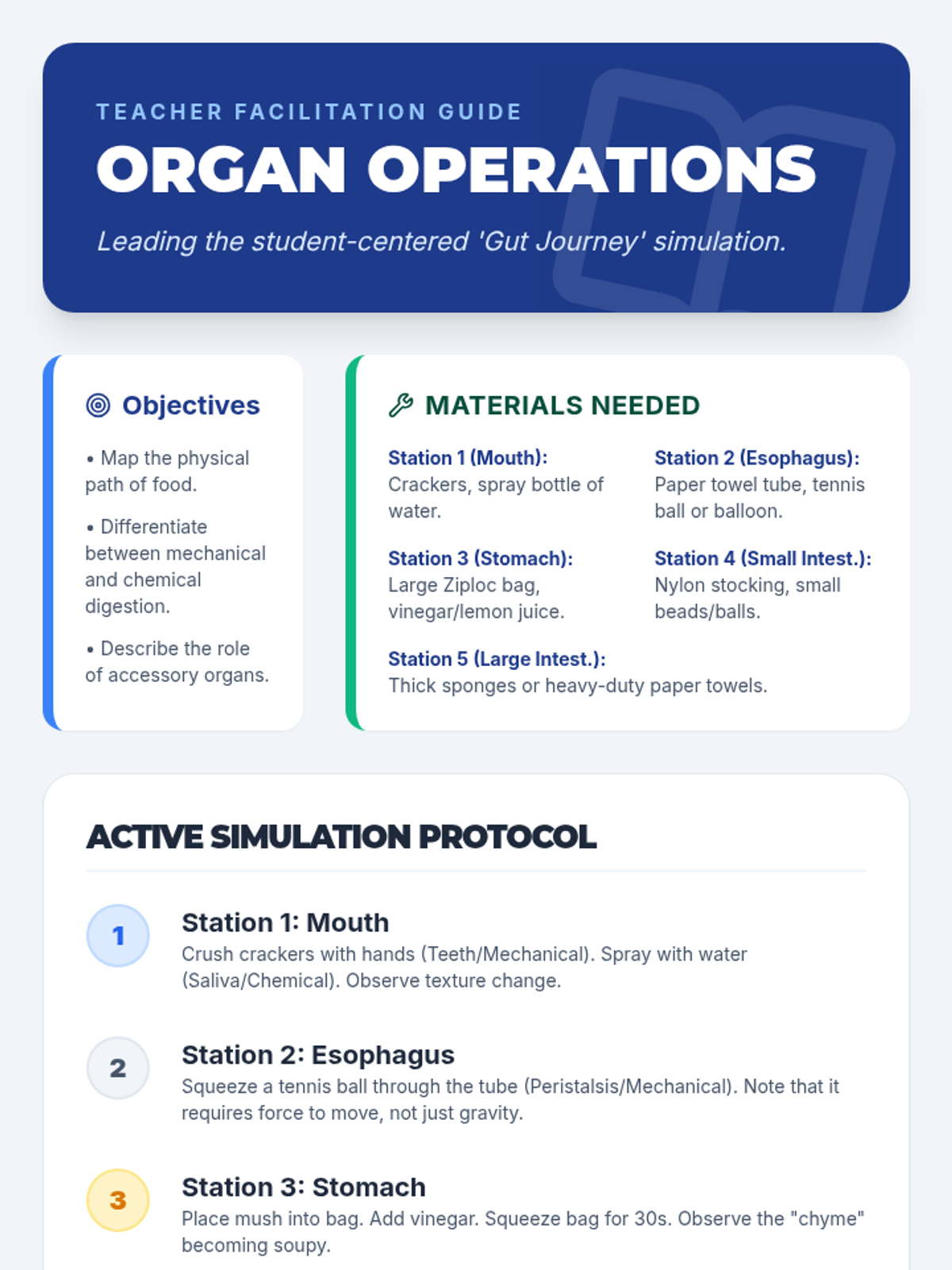
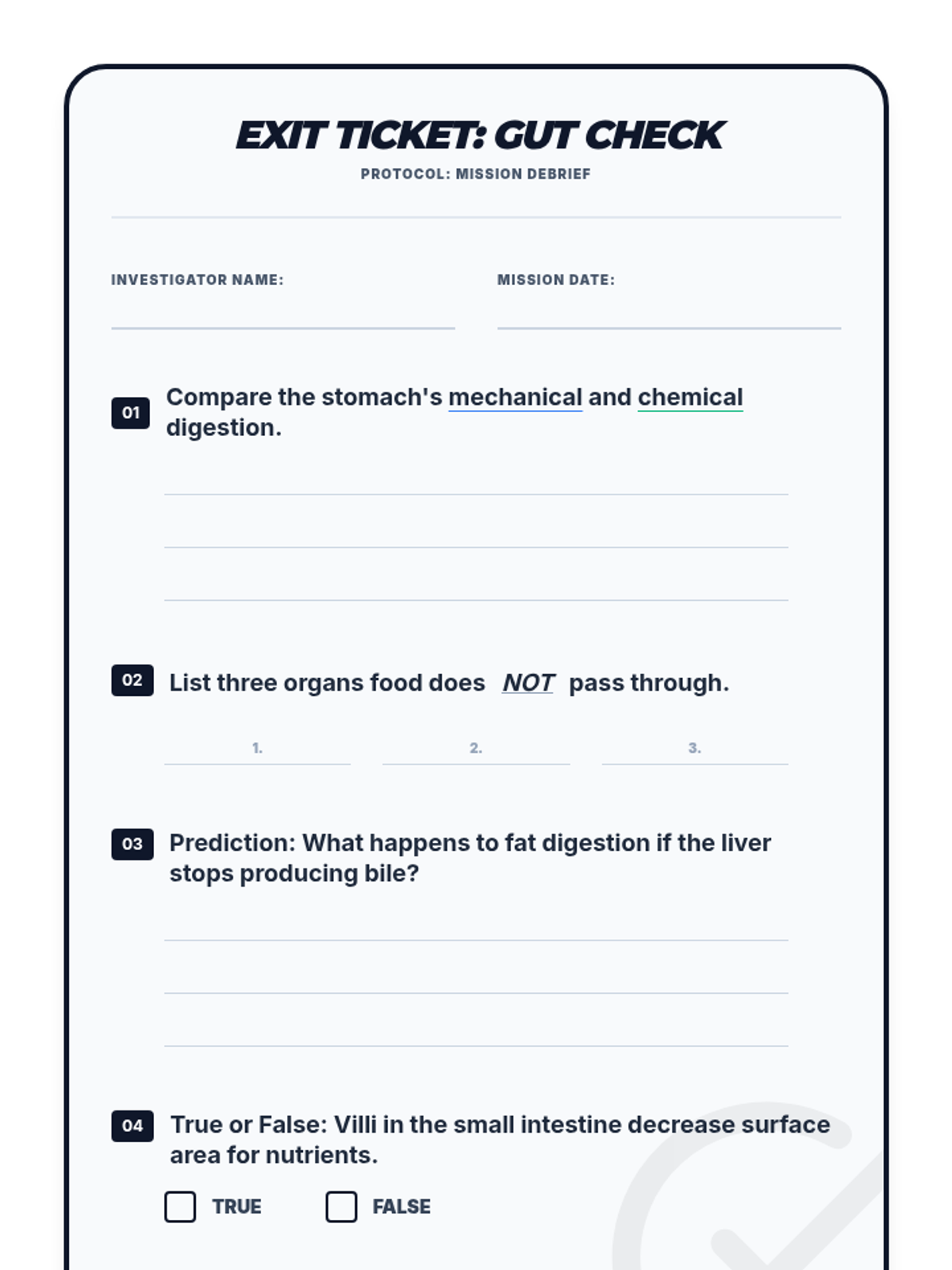
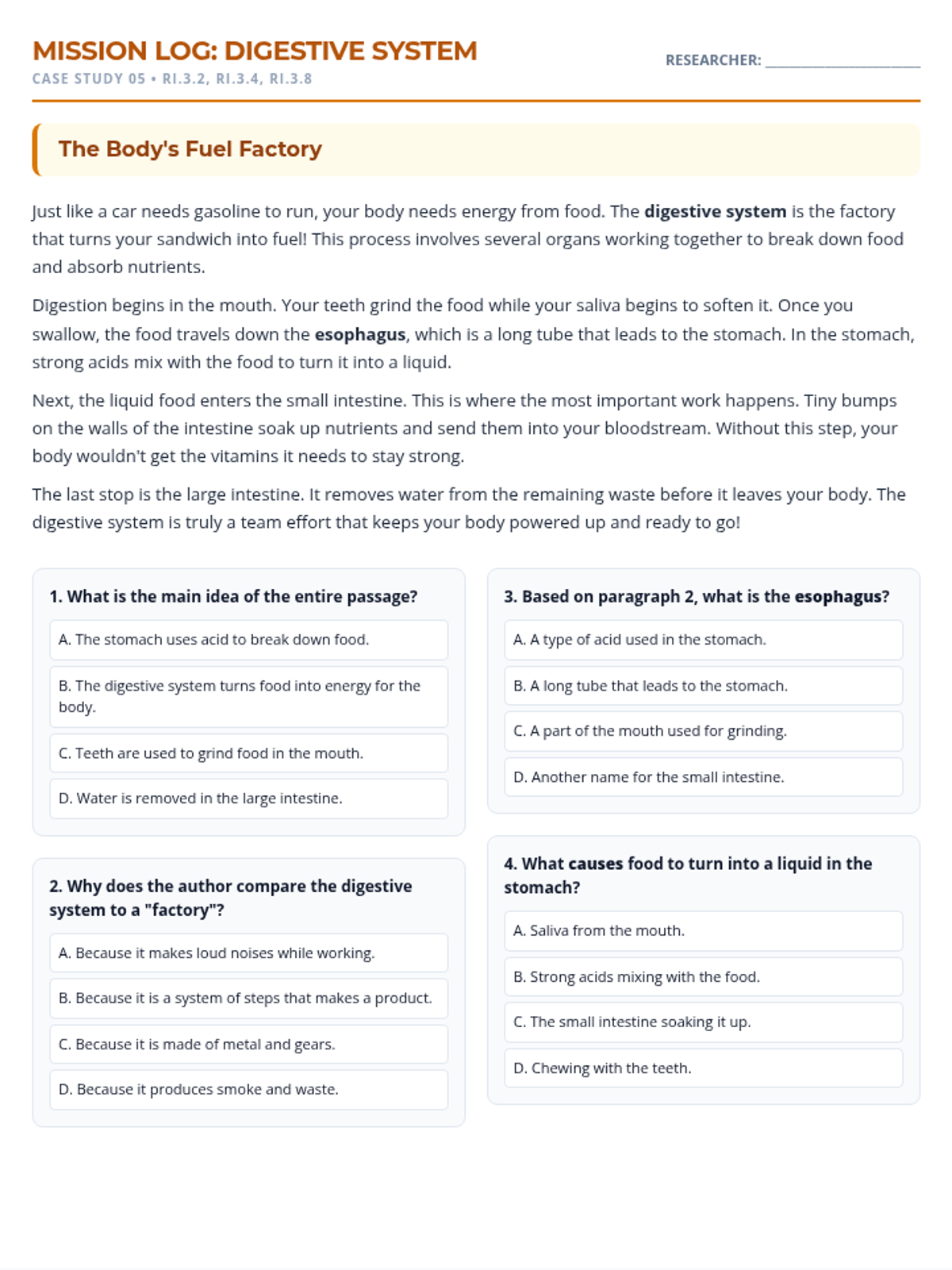
A student-centered exploration of the human digestive system, following the path of food from ingestion to elimination through mechanical and chemical processes.
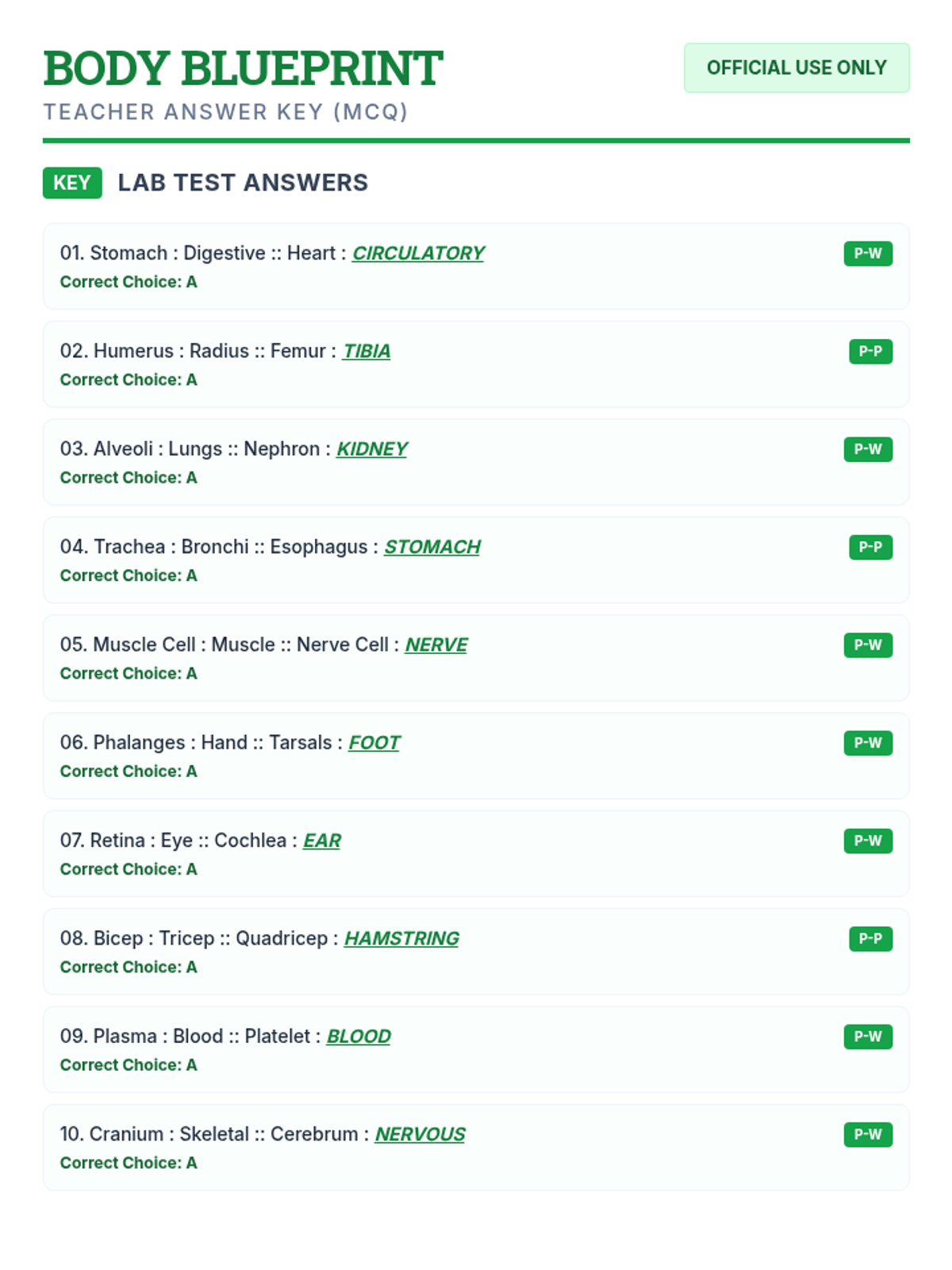
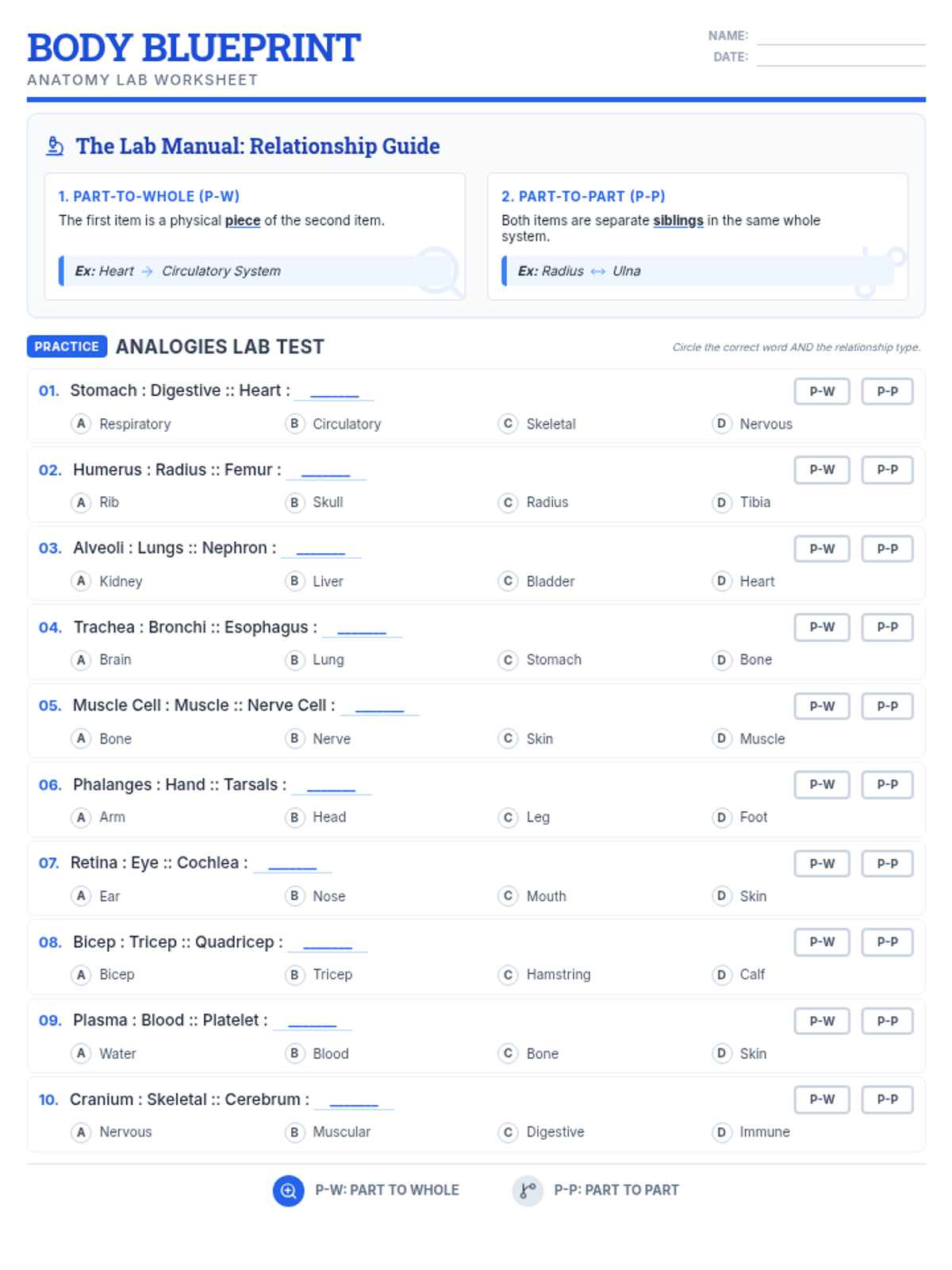
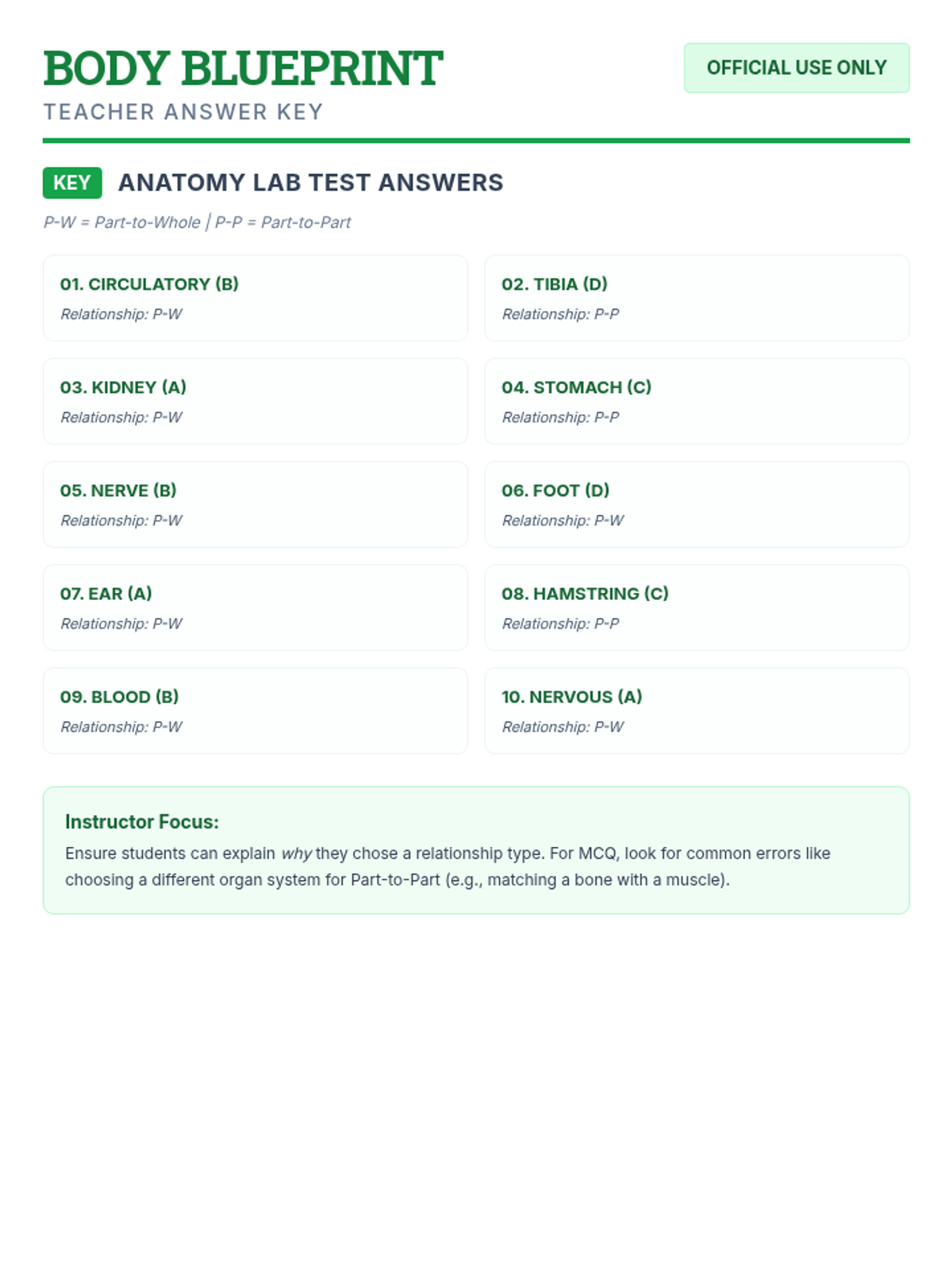
In this lesson, students explore the relationship between anatomical structures using analogies. They will distinguish between part-to-whole and part-to-part relationships within human body systems.
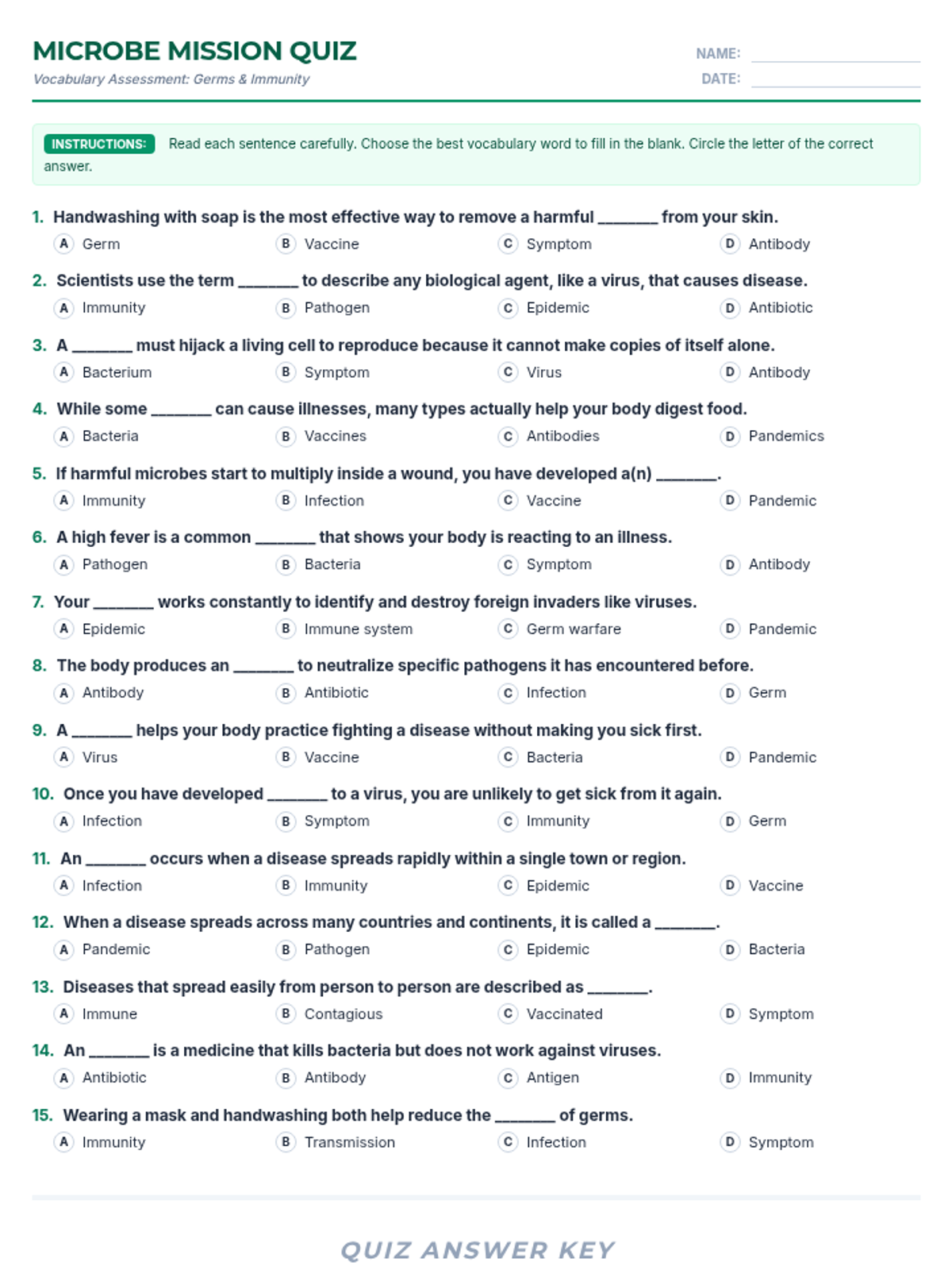
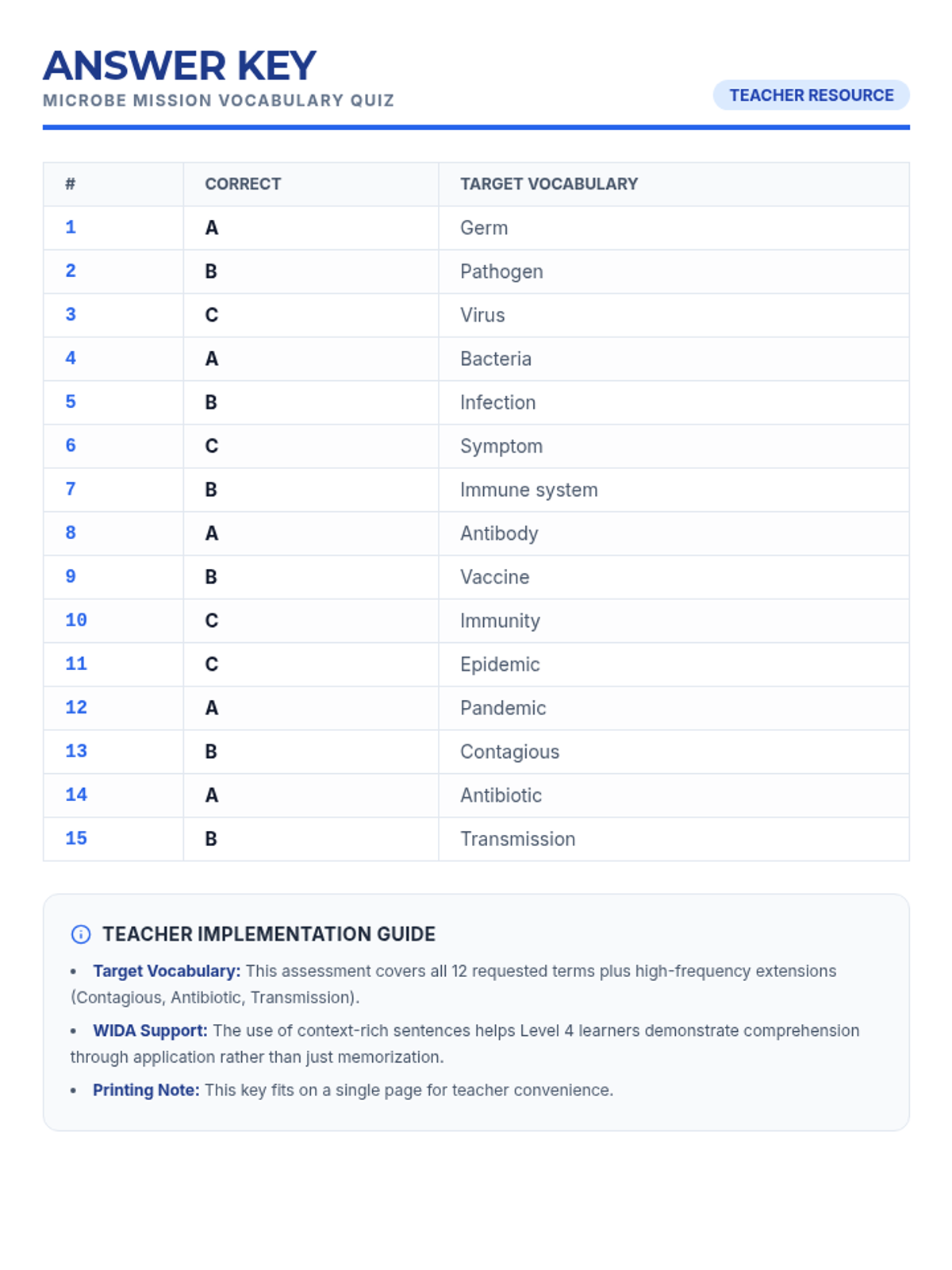
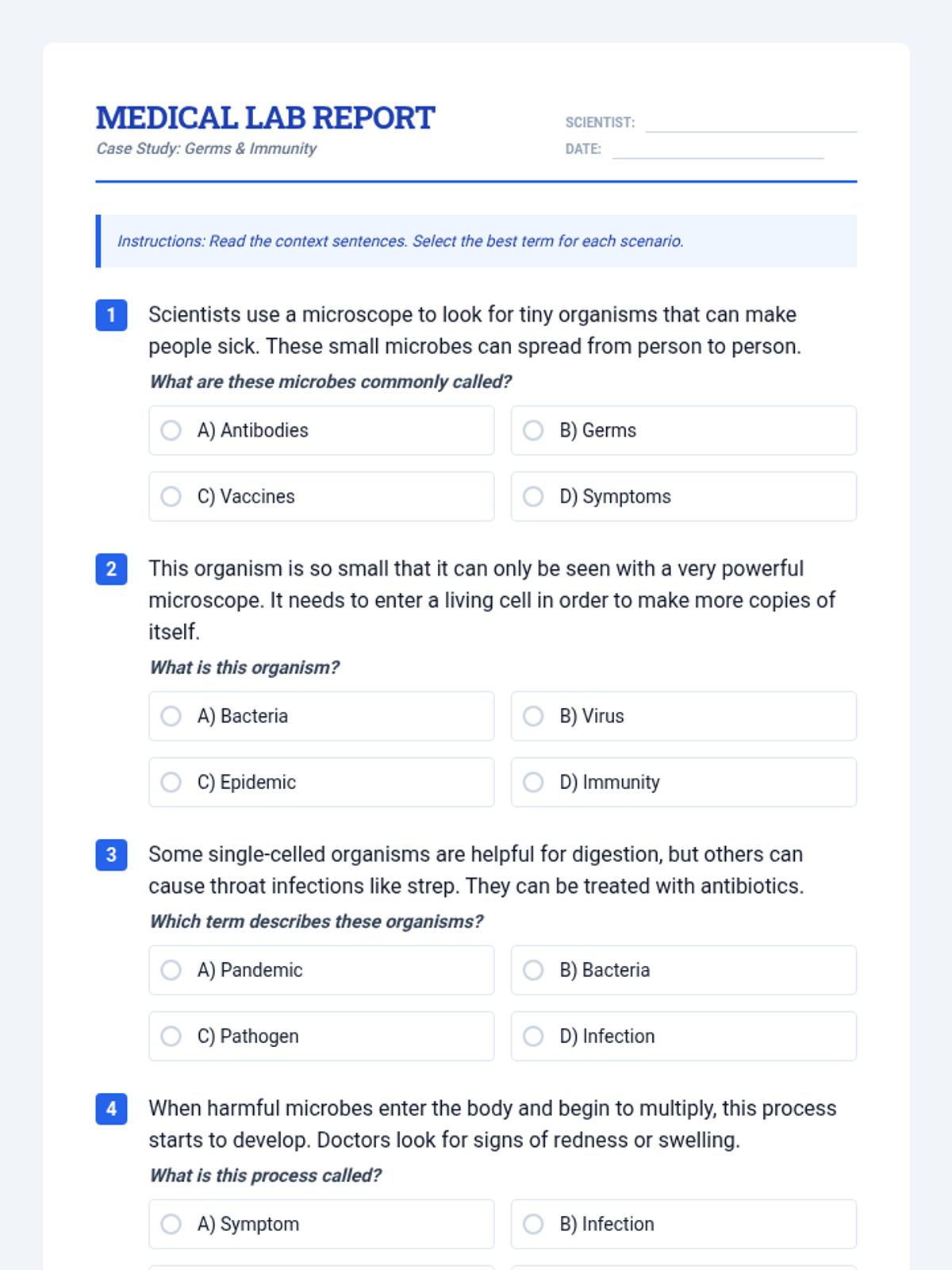
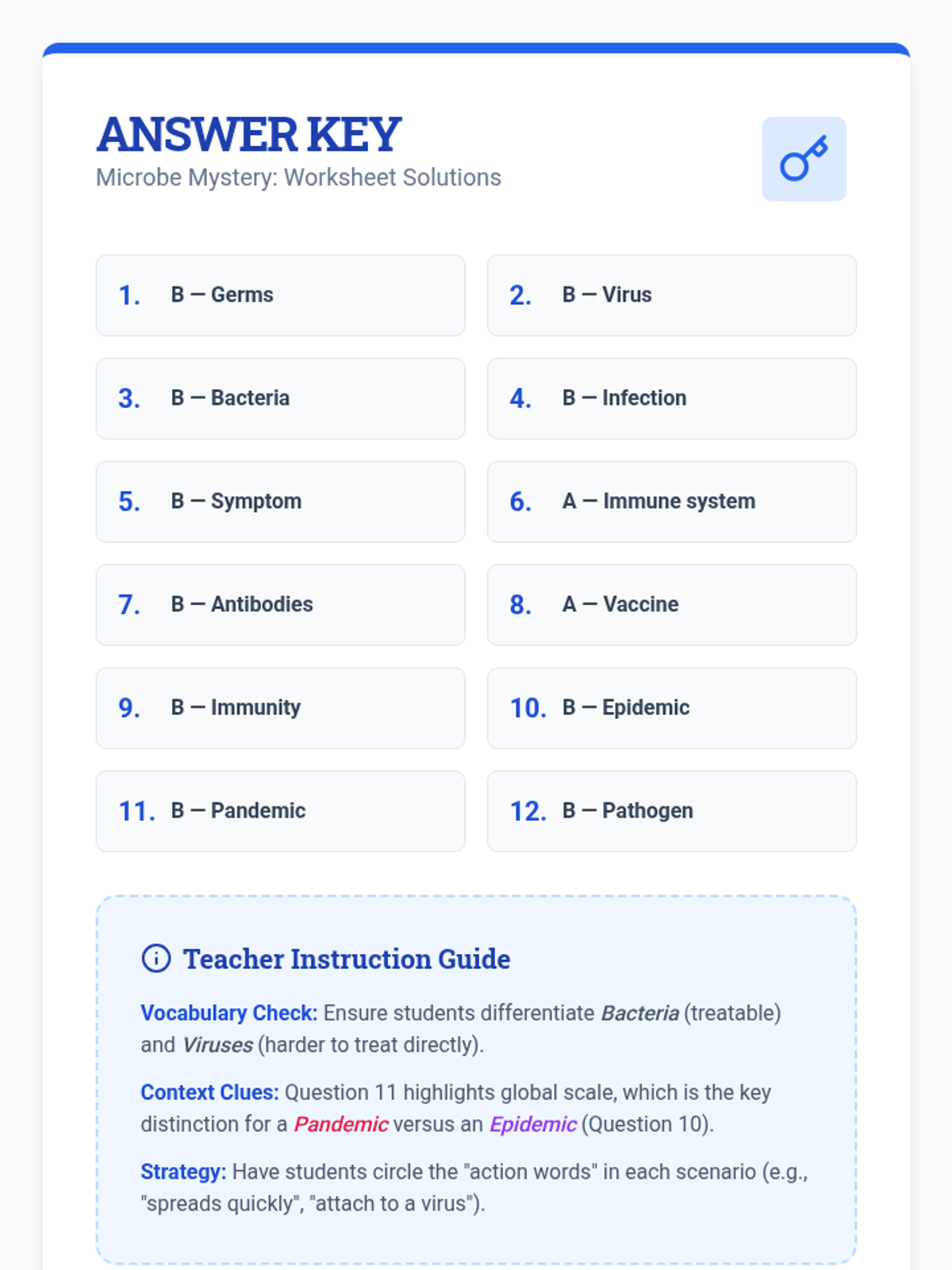
A comprehensive quiz and answer key covering essential medical and biological vocabulary related to germs, pathogens, and the body's immune response. Designed for WIDA Level 4 learners with context-rich sentences.
A comprehensive lesson on medical vocabulary related to germs and the immune system, designed for WIDA level 4 students. Includes visual aids and comprehension-based assessments.
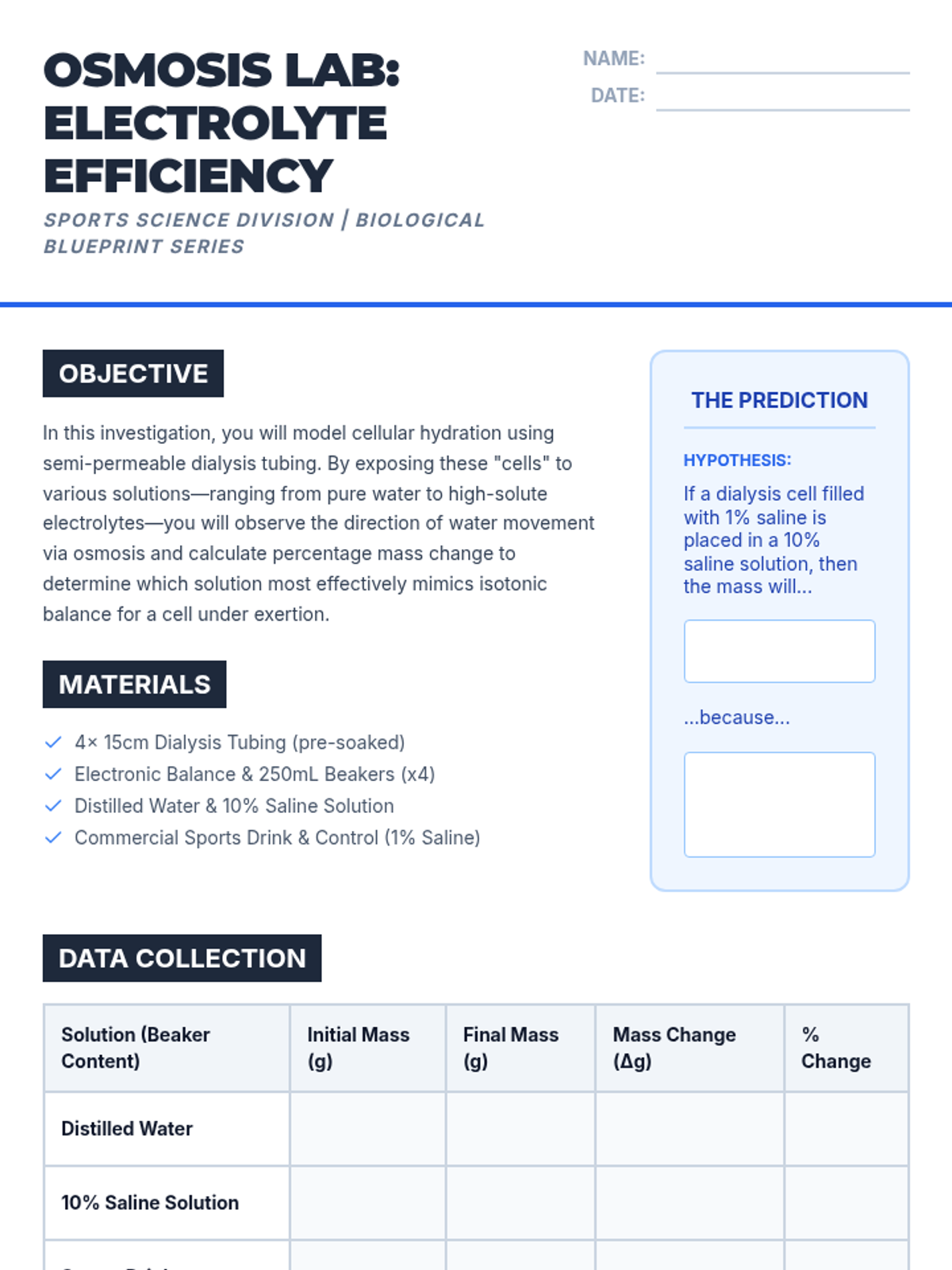
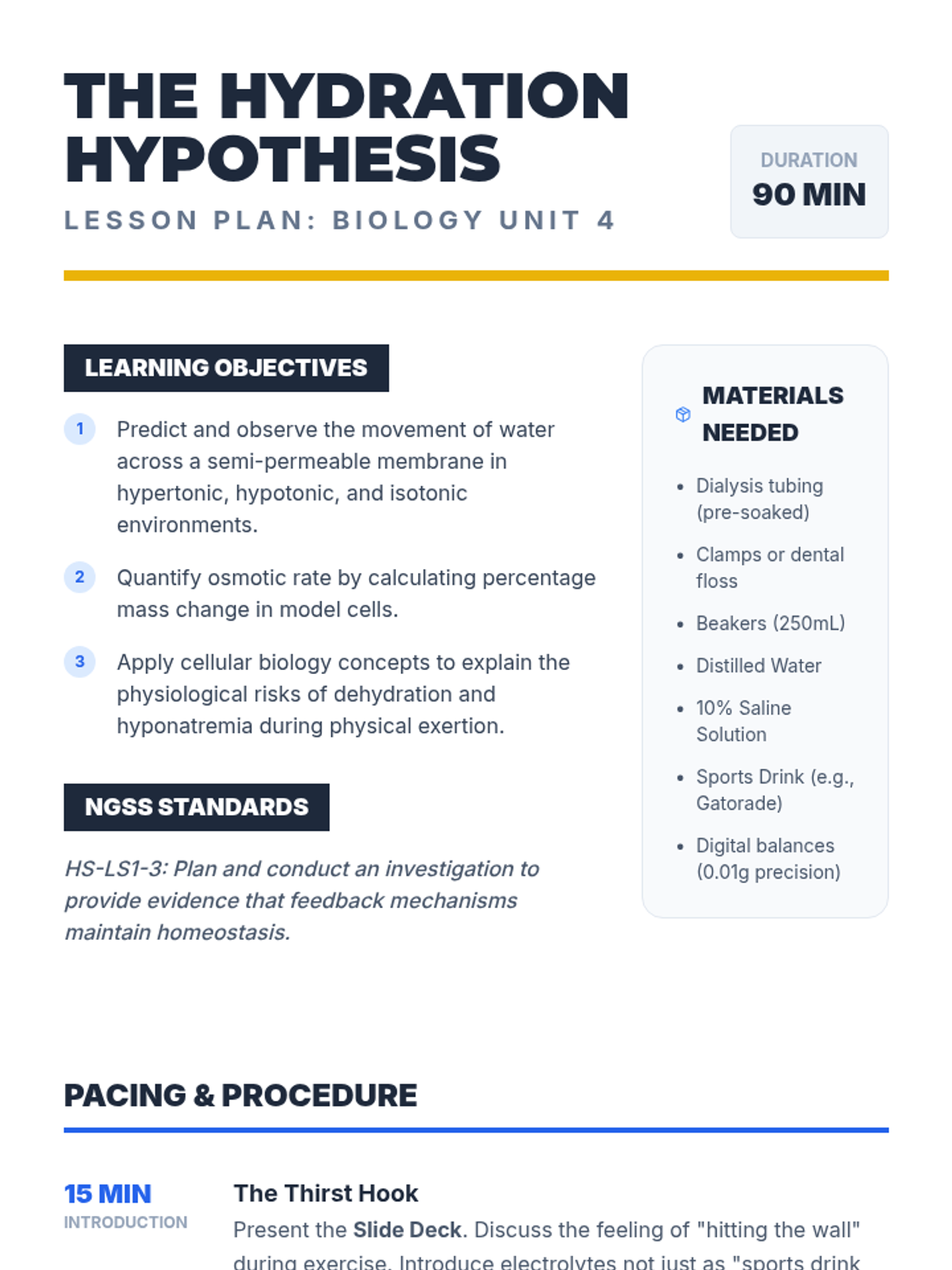
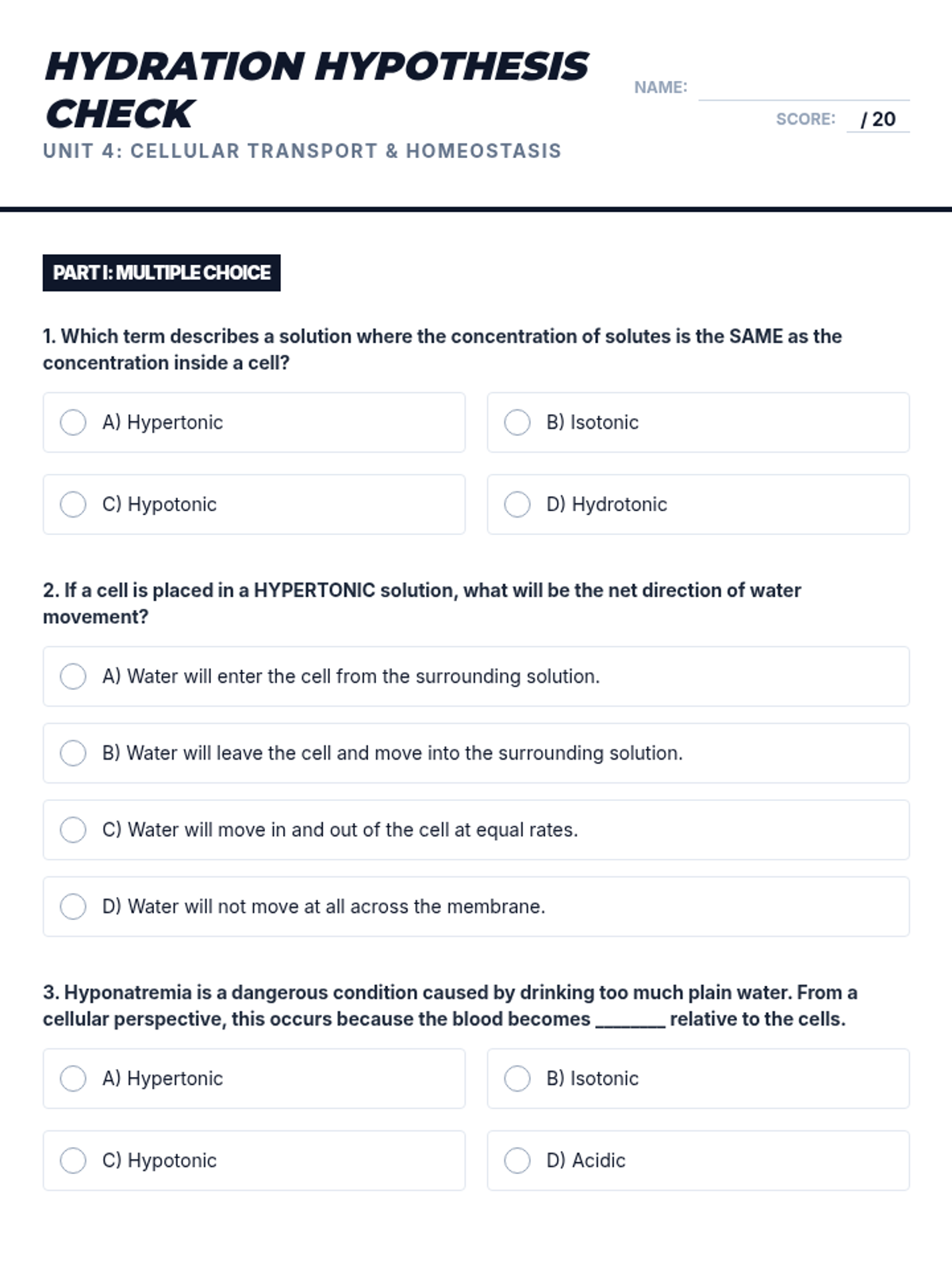
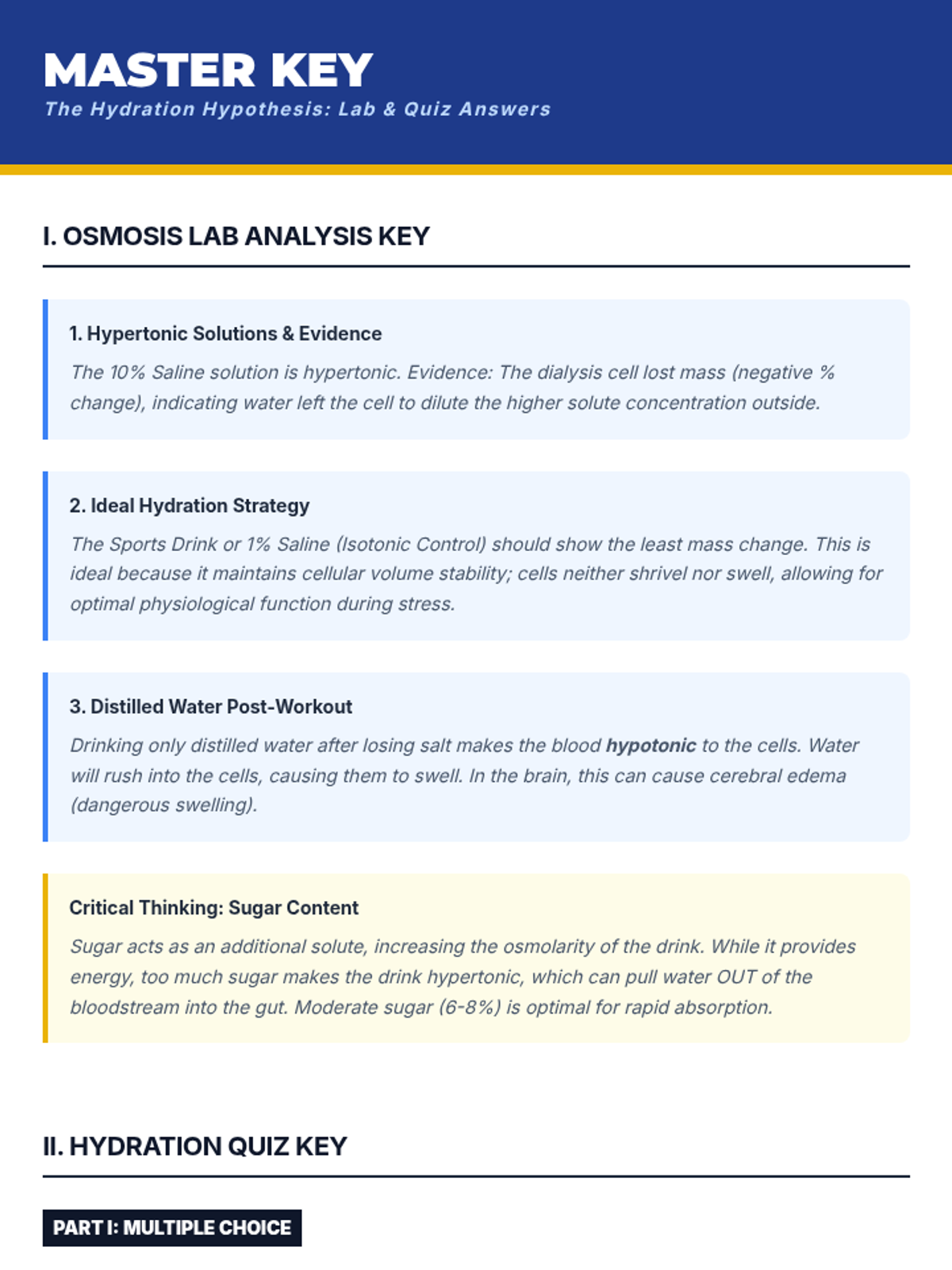
A high school biology lesson exploring the mechanics of cellular hydration, osmosis, and electrolyte balance during physical activity through experimental observation and physiological analysis.
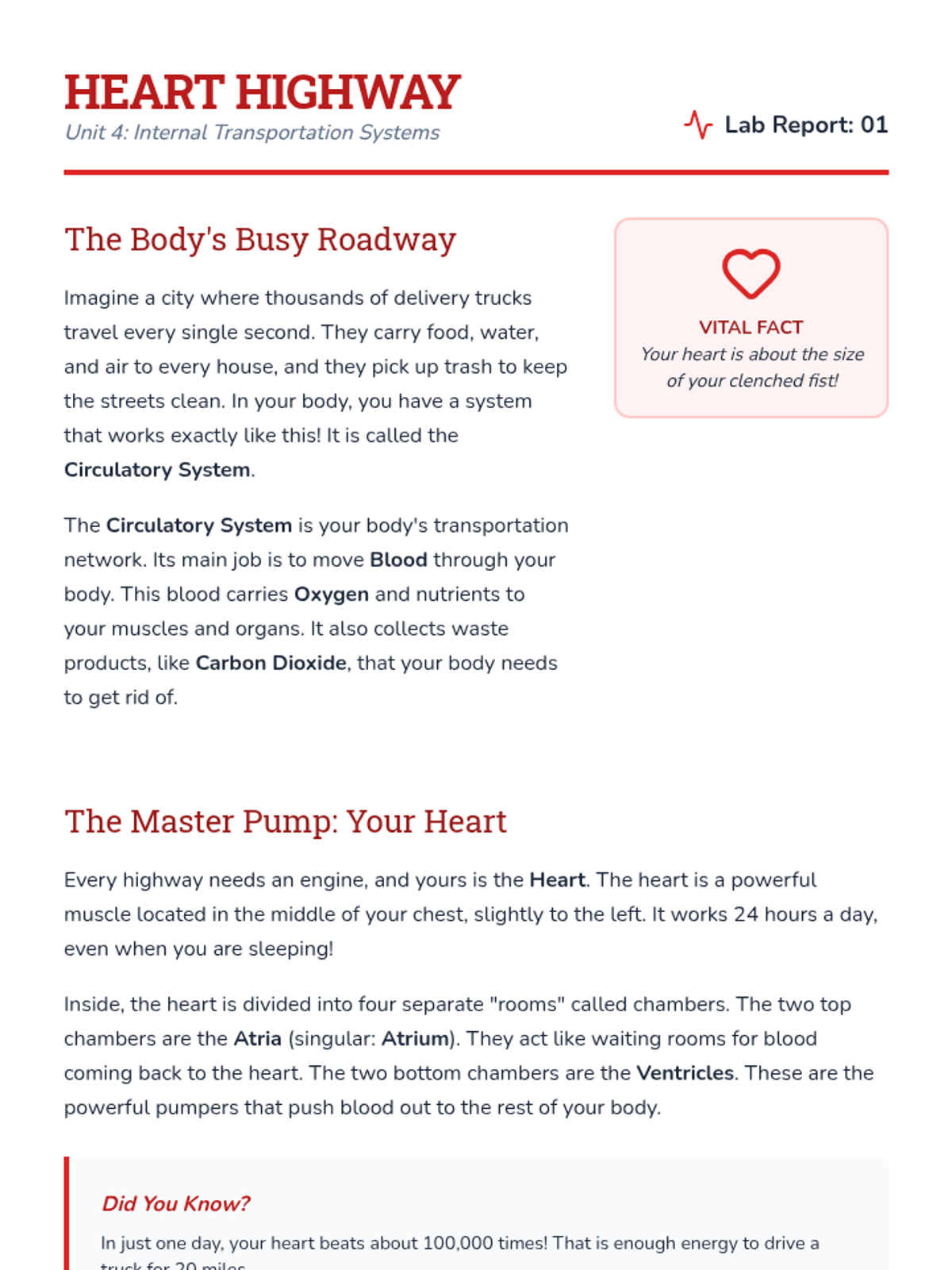
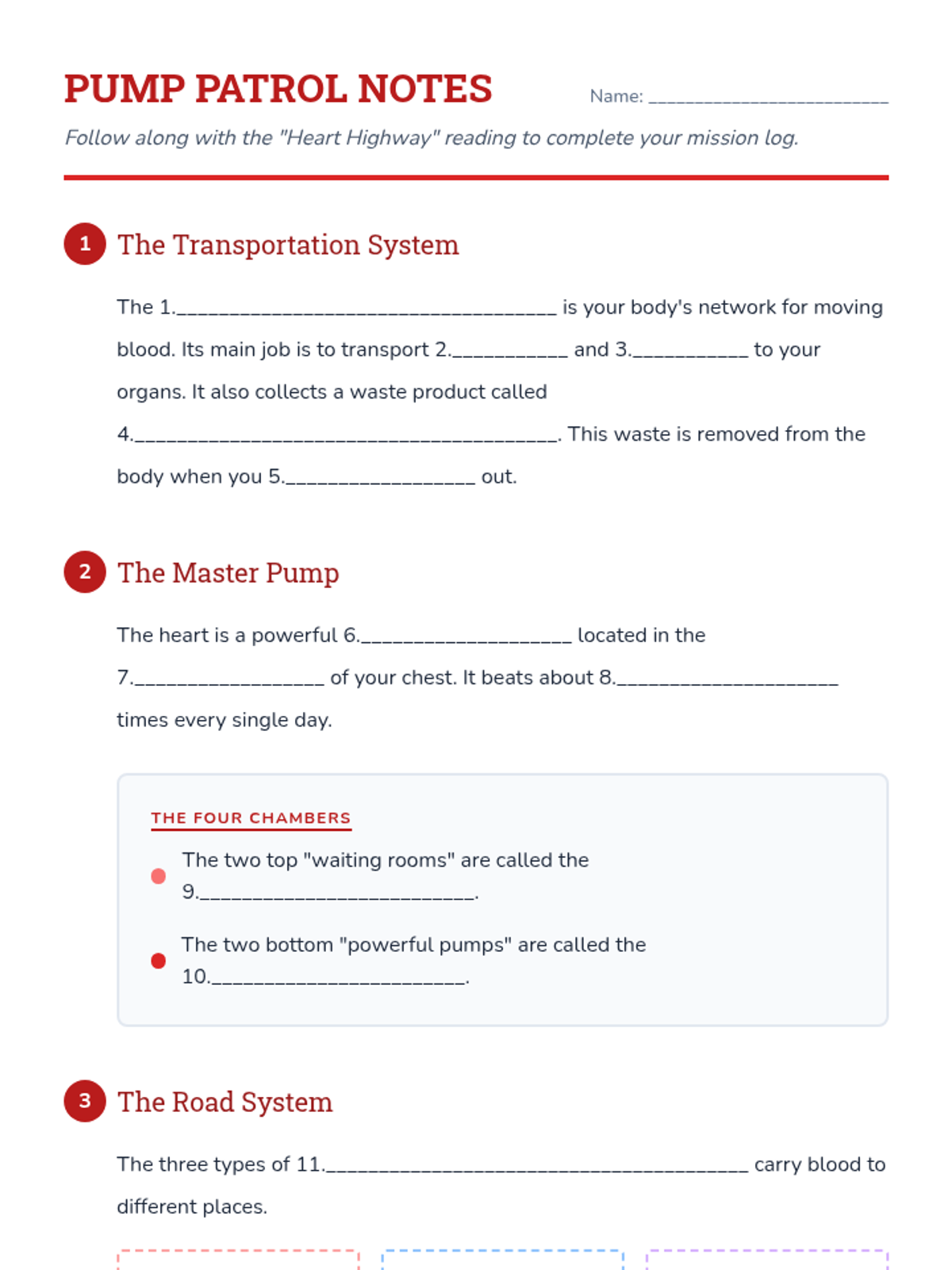
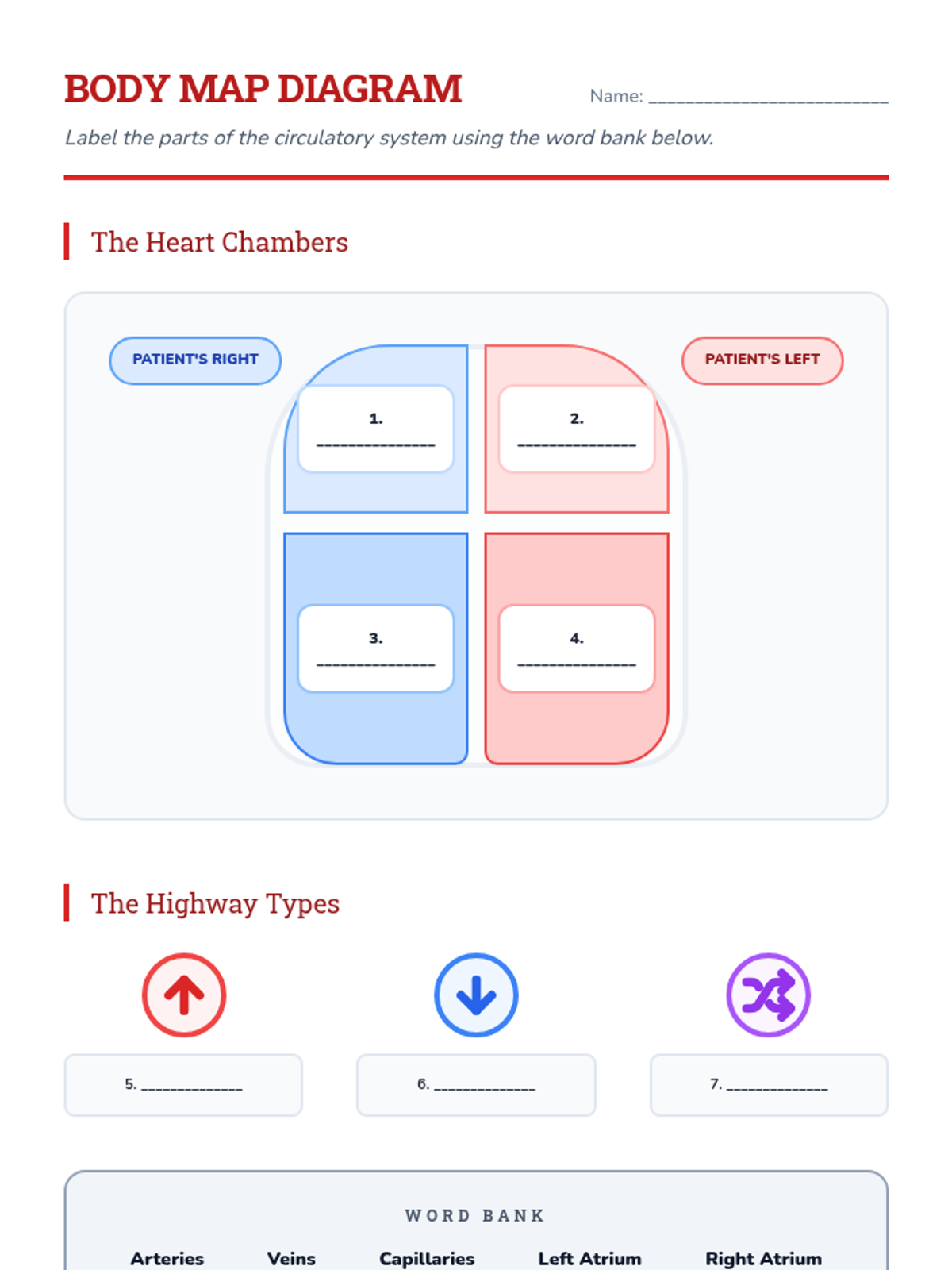
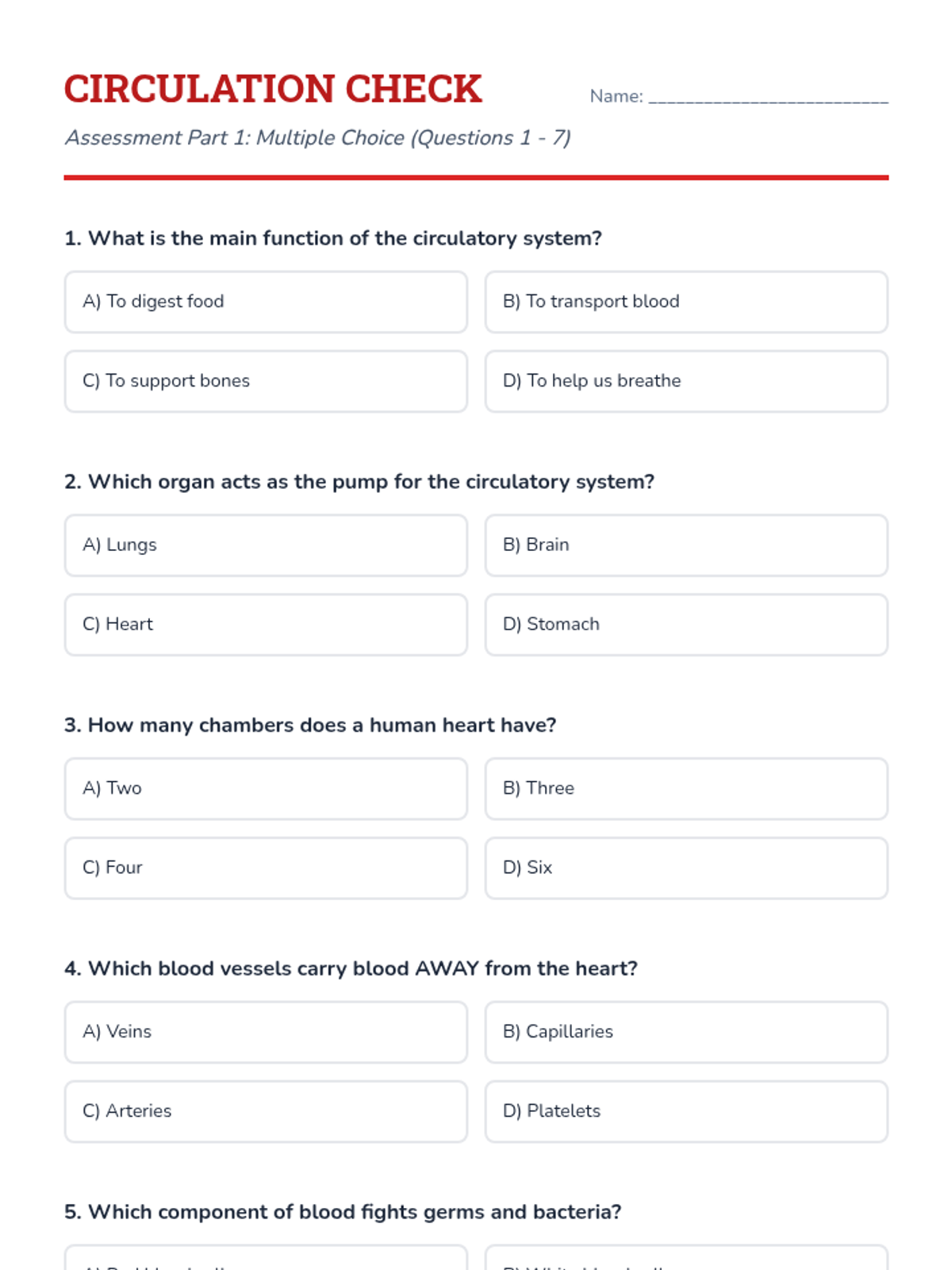
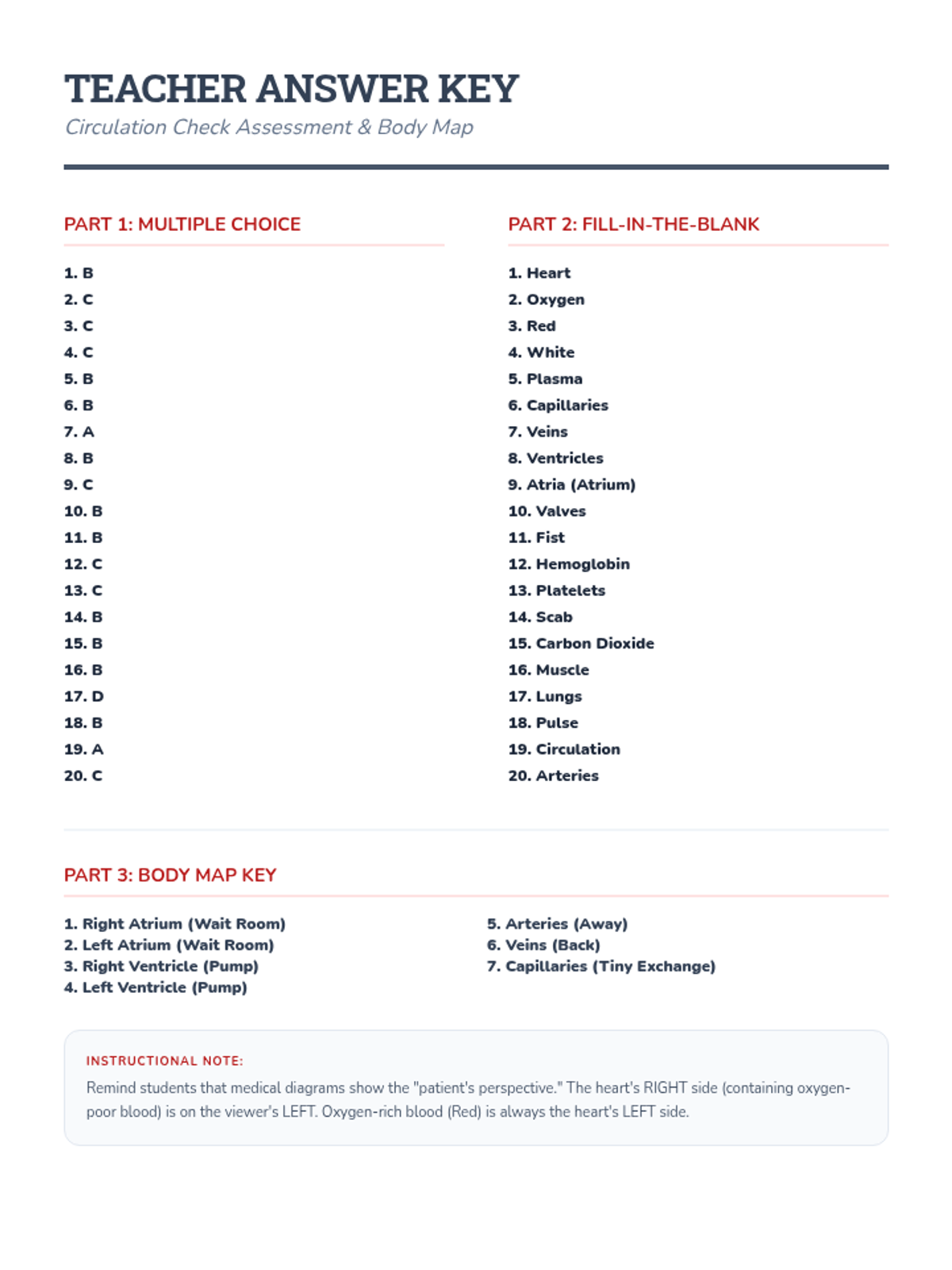
A comprehensive exploration of the circulatory system for 4th graders, covering the heart's anatomy, blood vessel types, and blood components through reading, diagramming, and assessment.
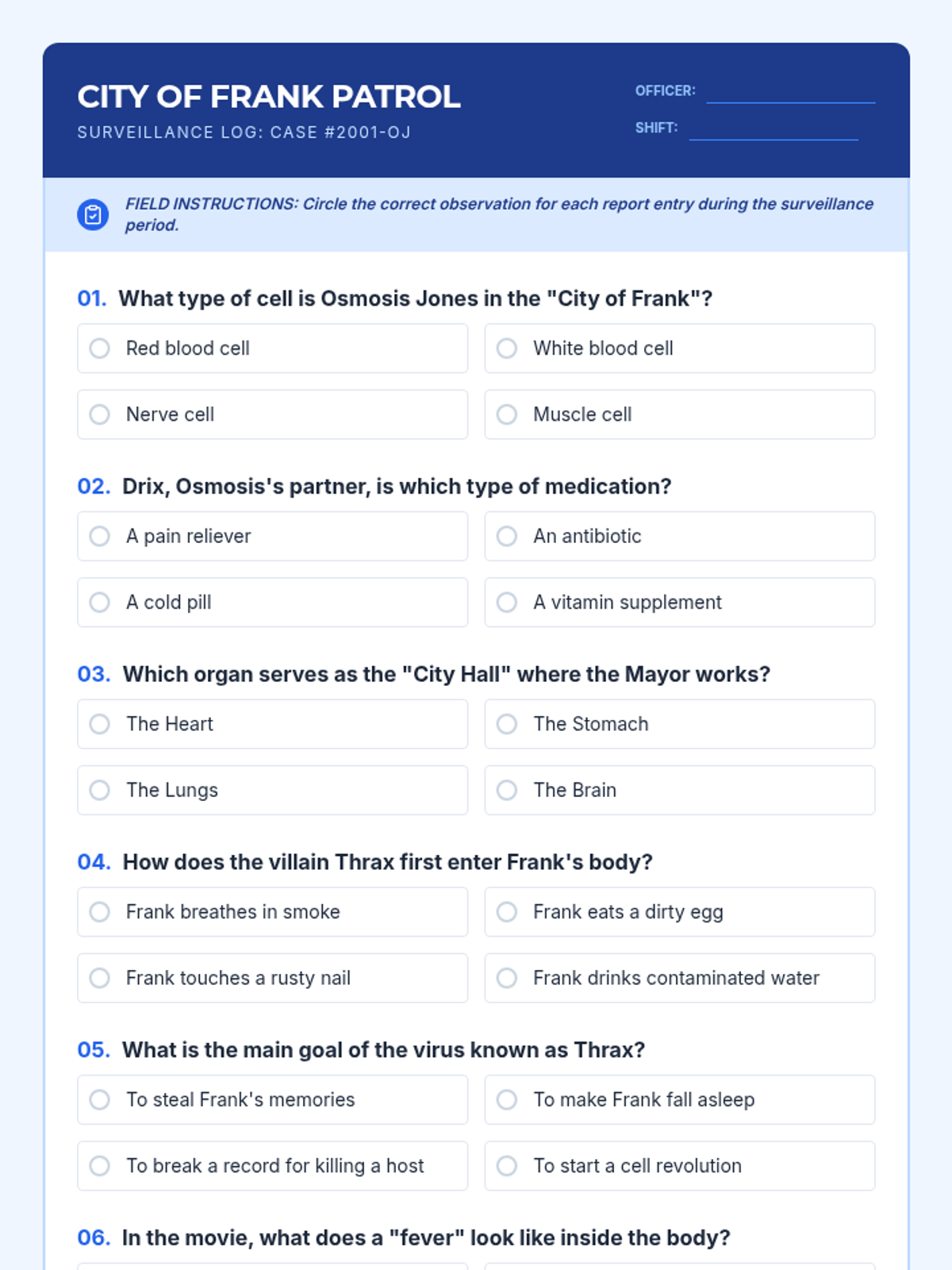
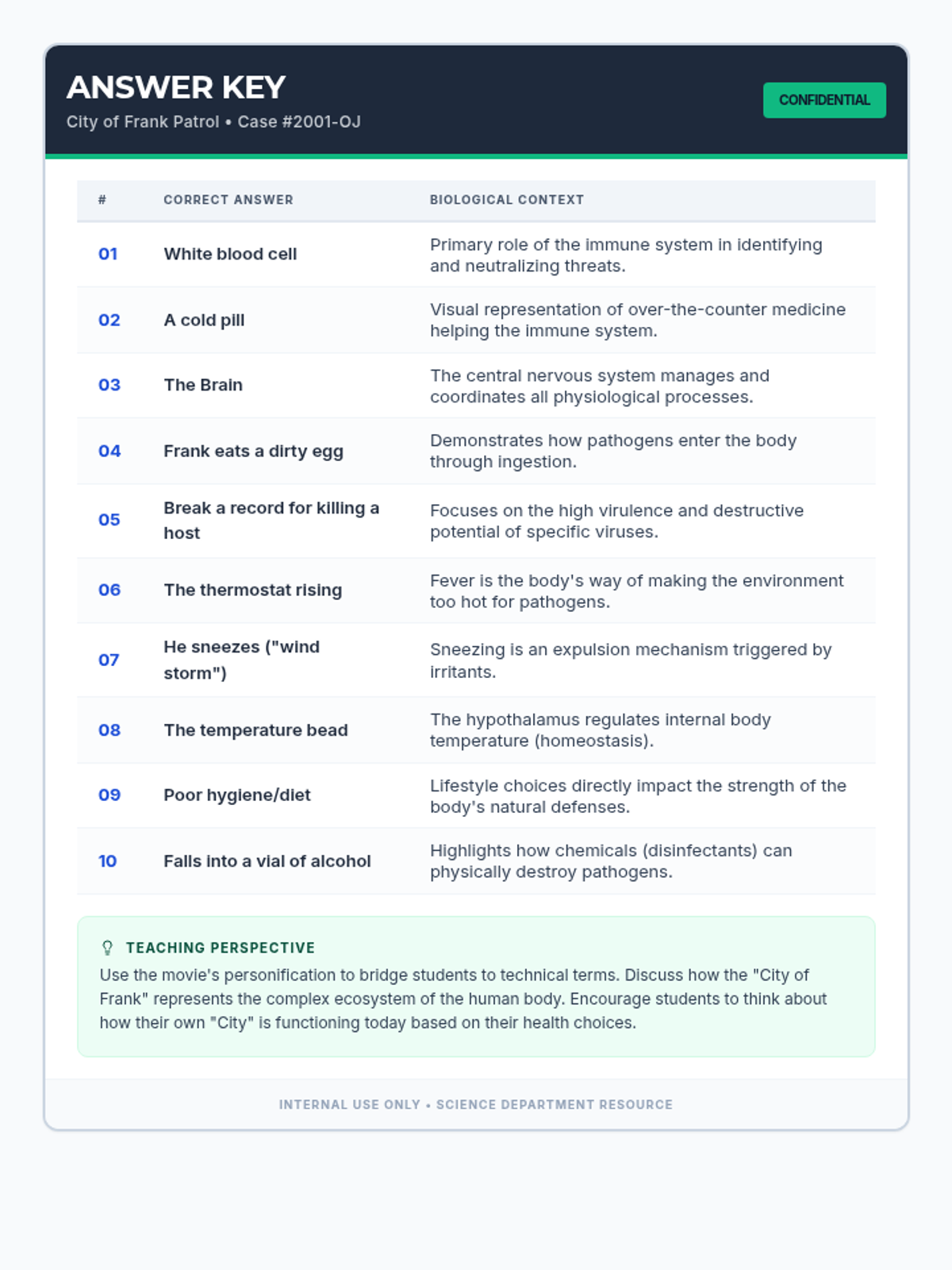
A lesson centered around the biology and plot of the movie Osmosis Jones, focusing on the immune system and healthy habits.
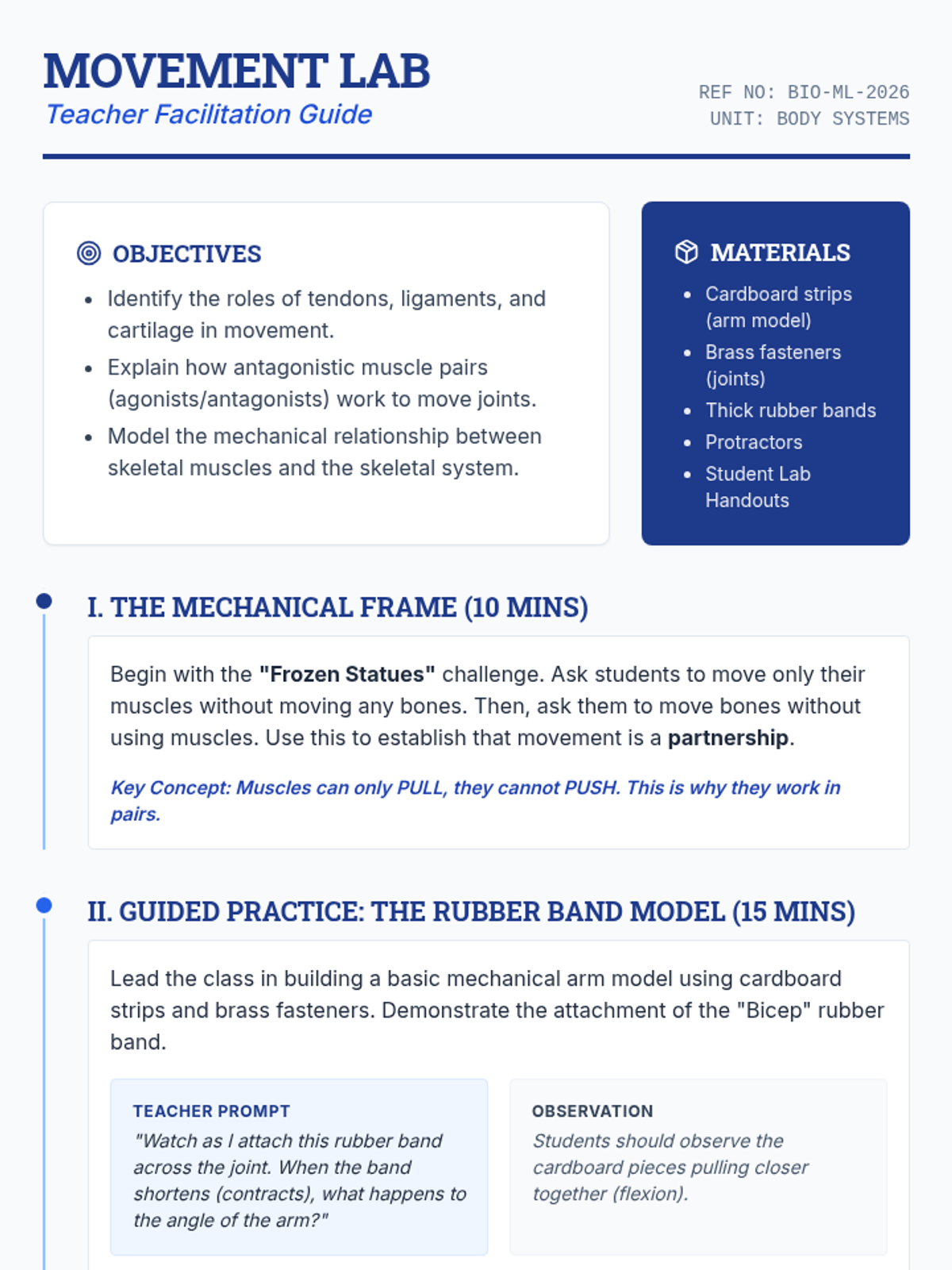
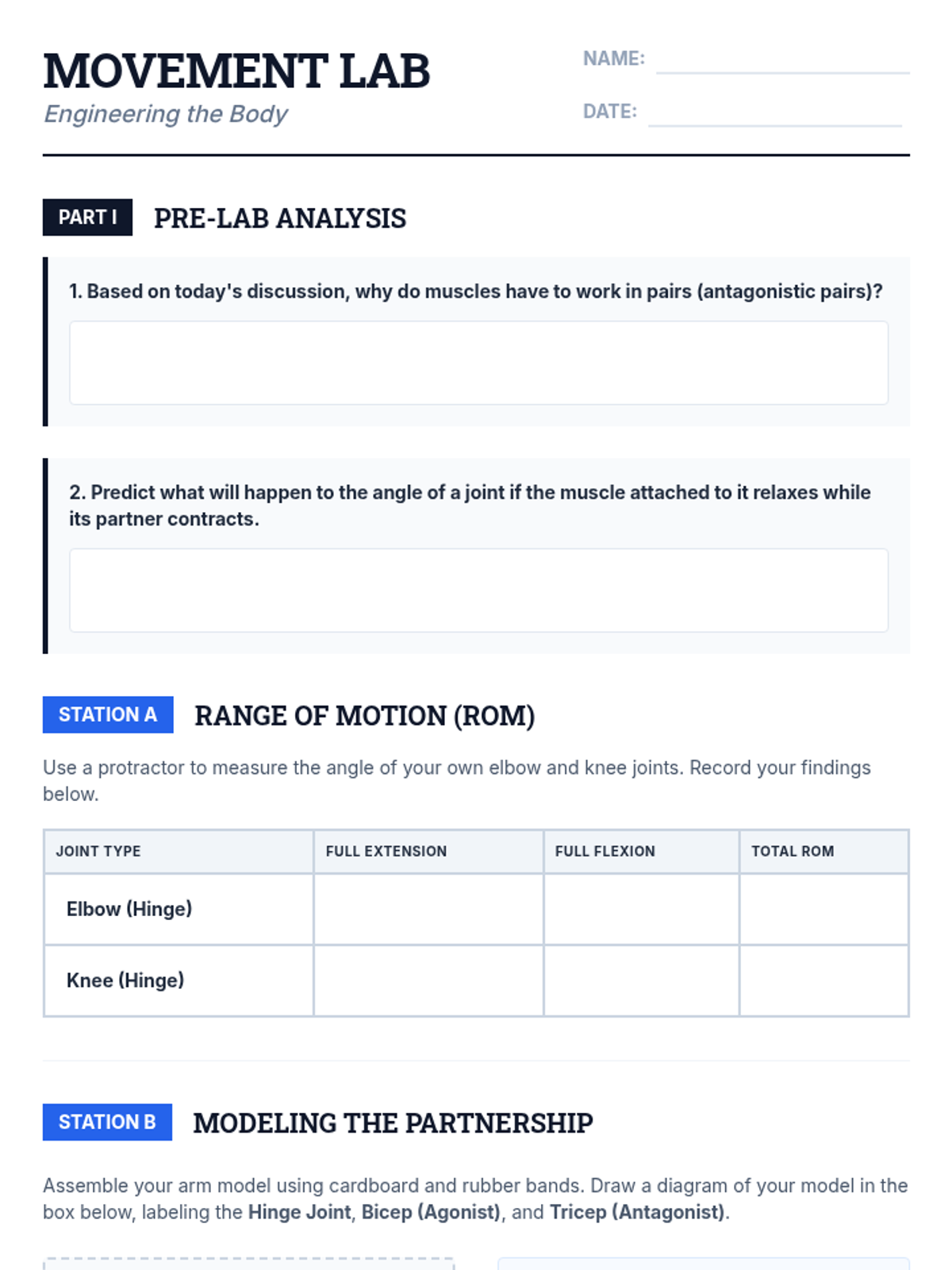
A hands-on exploration of the musculoskeletal system where students investigate how muscles and bones collaborate to create movement through modeling and mechanical analysis.
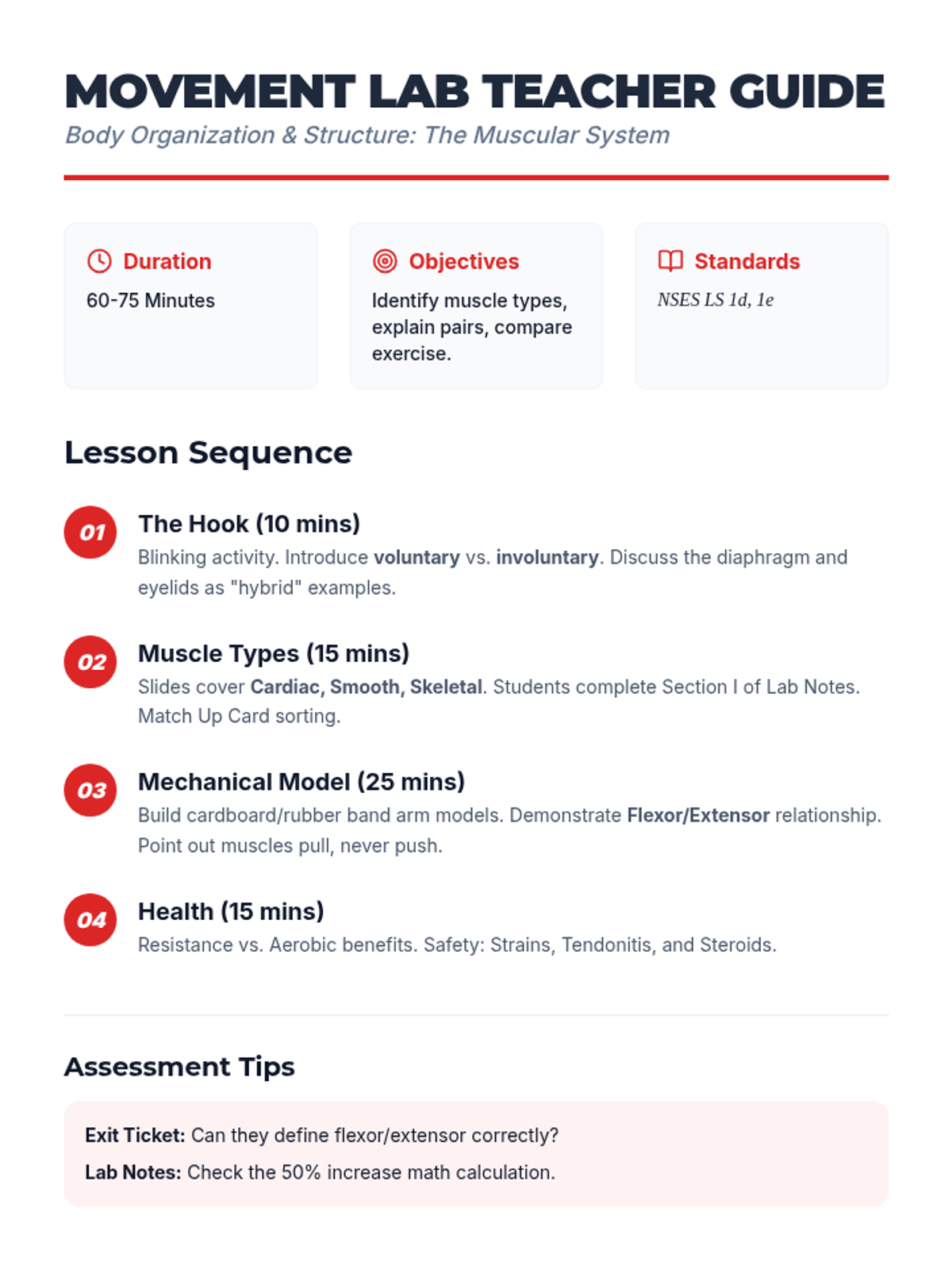
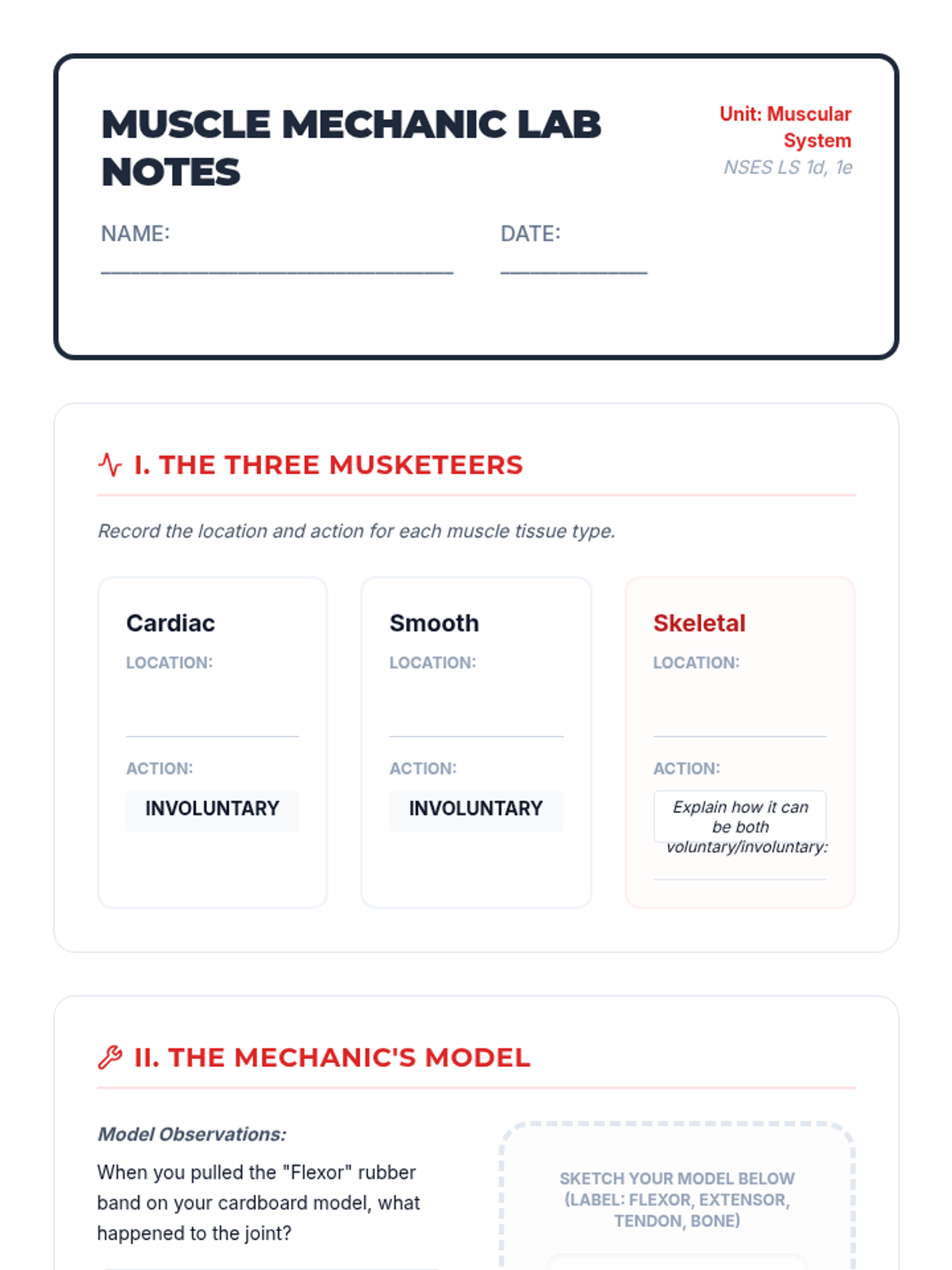
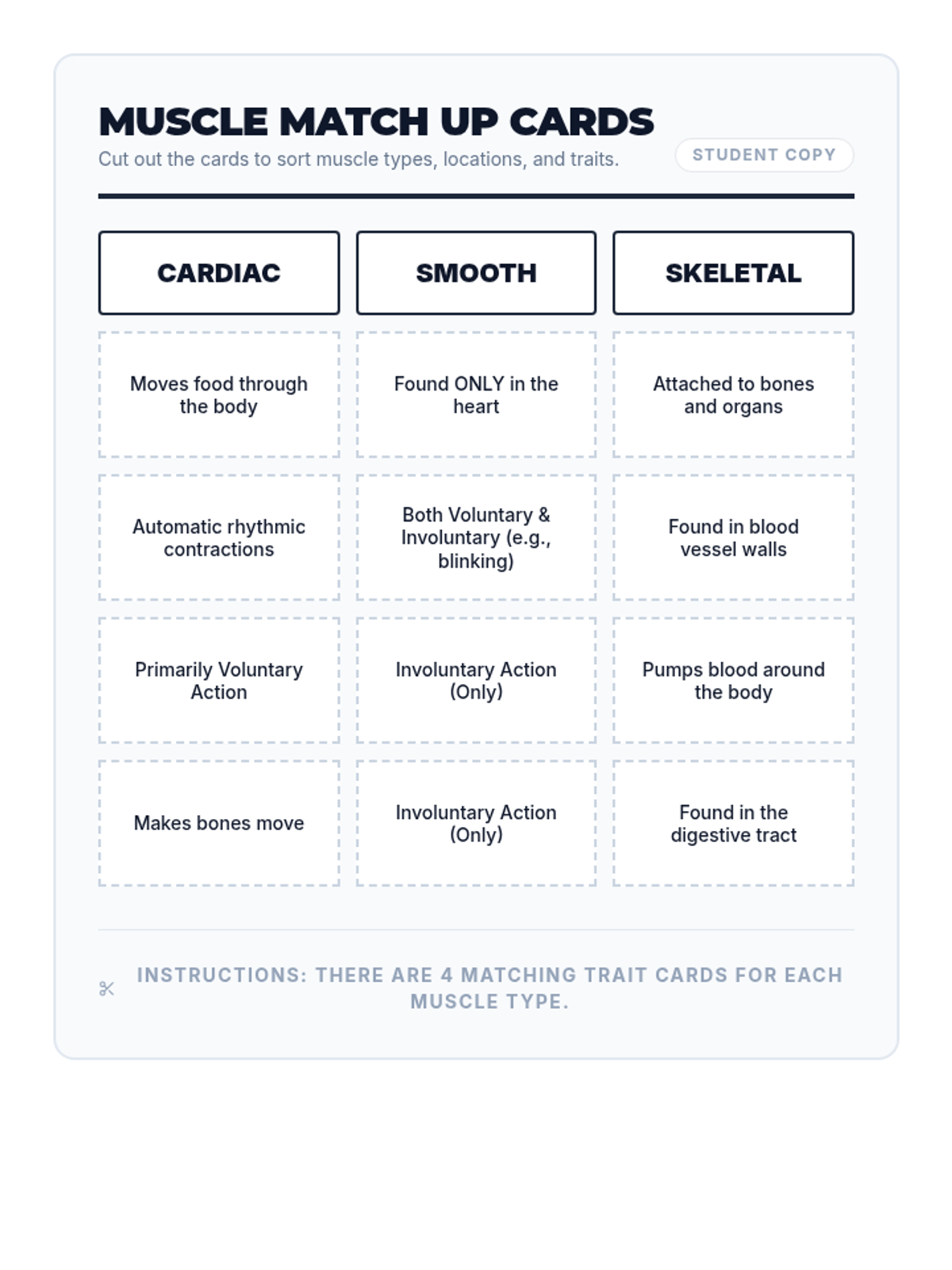
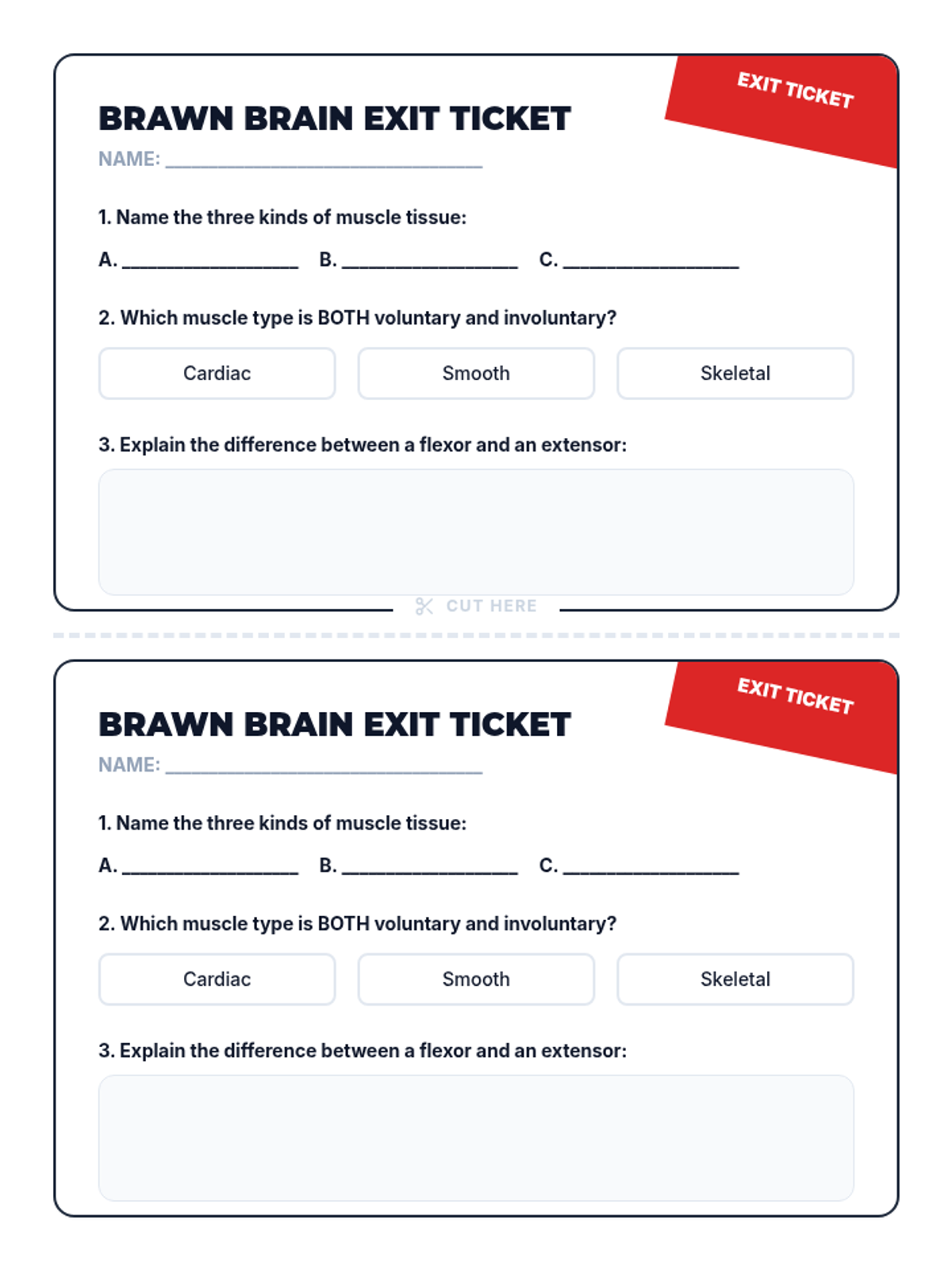
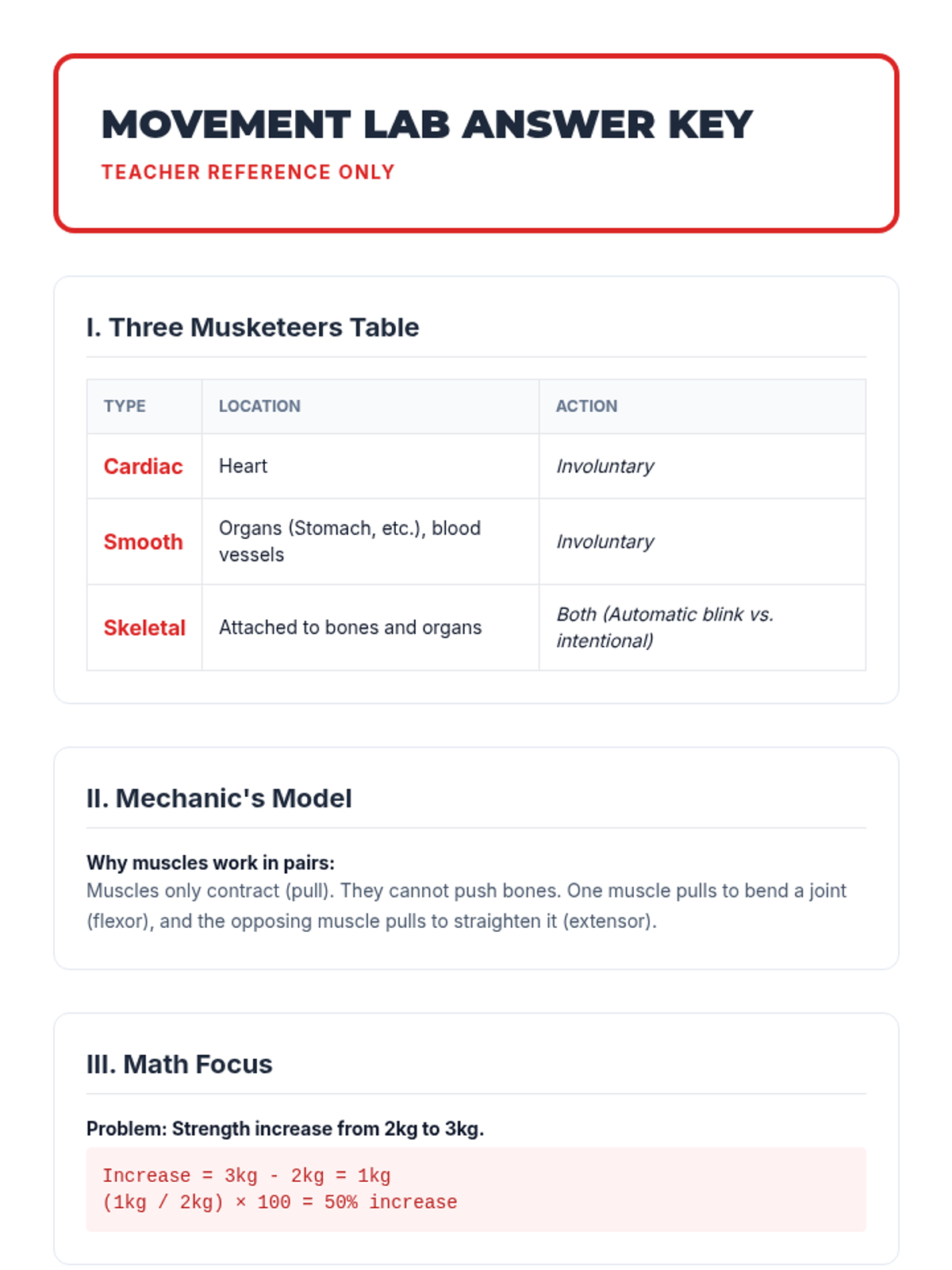
A hands-on exploration of the muscular system, focusing on the three types of muscle tissue, how muscle pairs work to create movement, and the importance of exercise for muscle health.
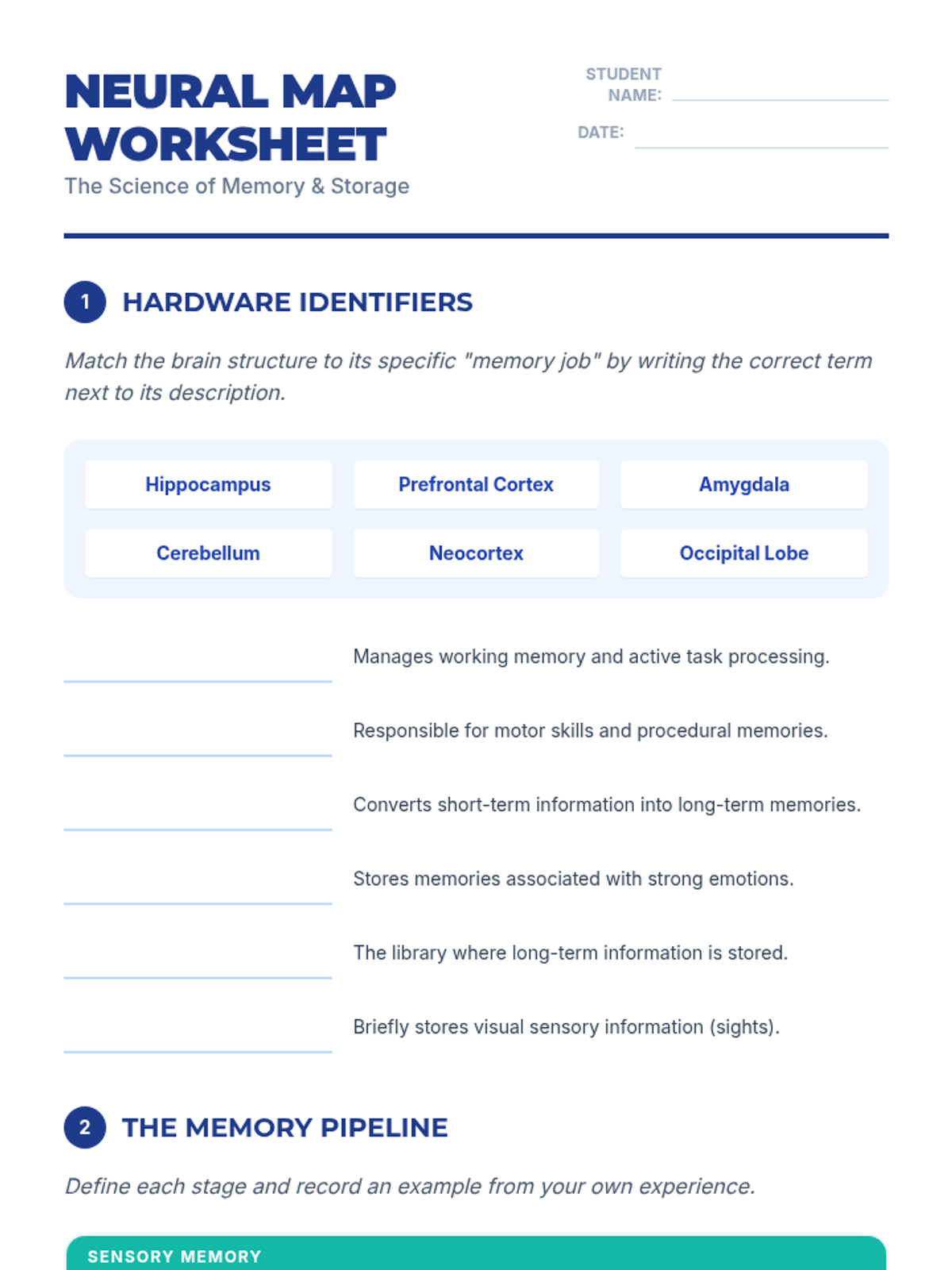
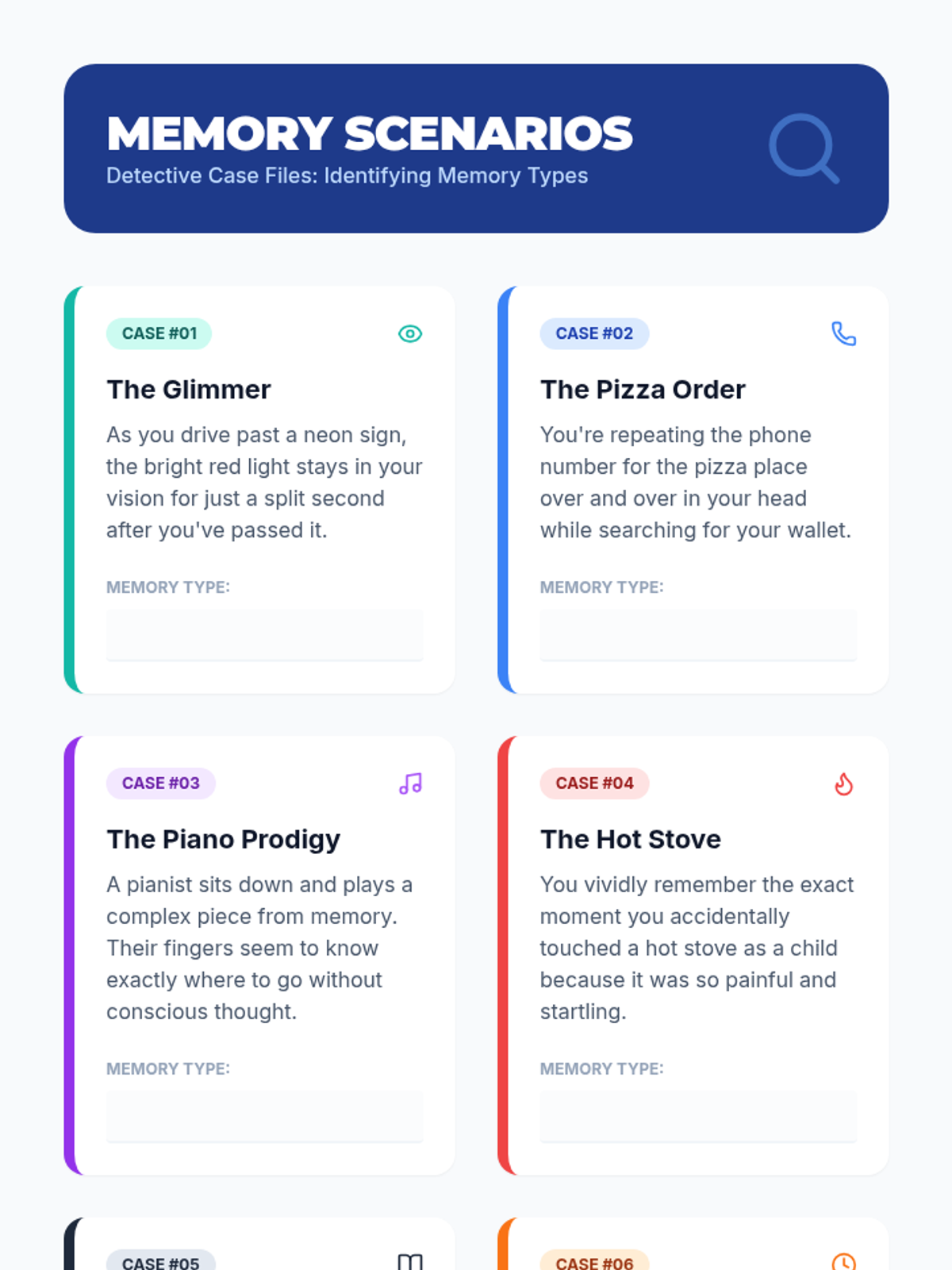
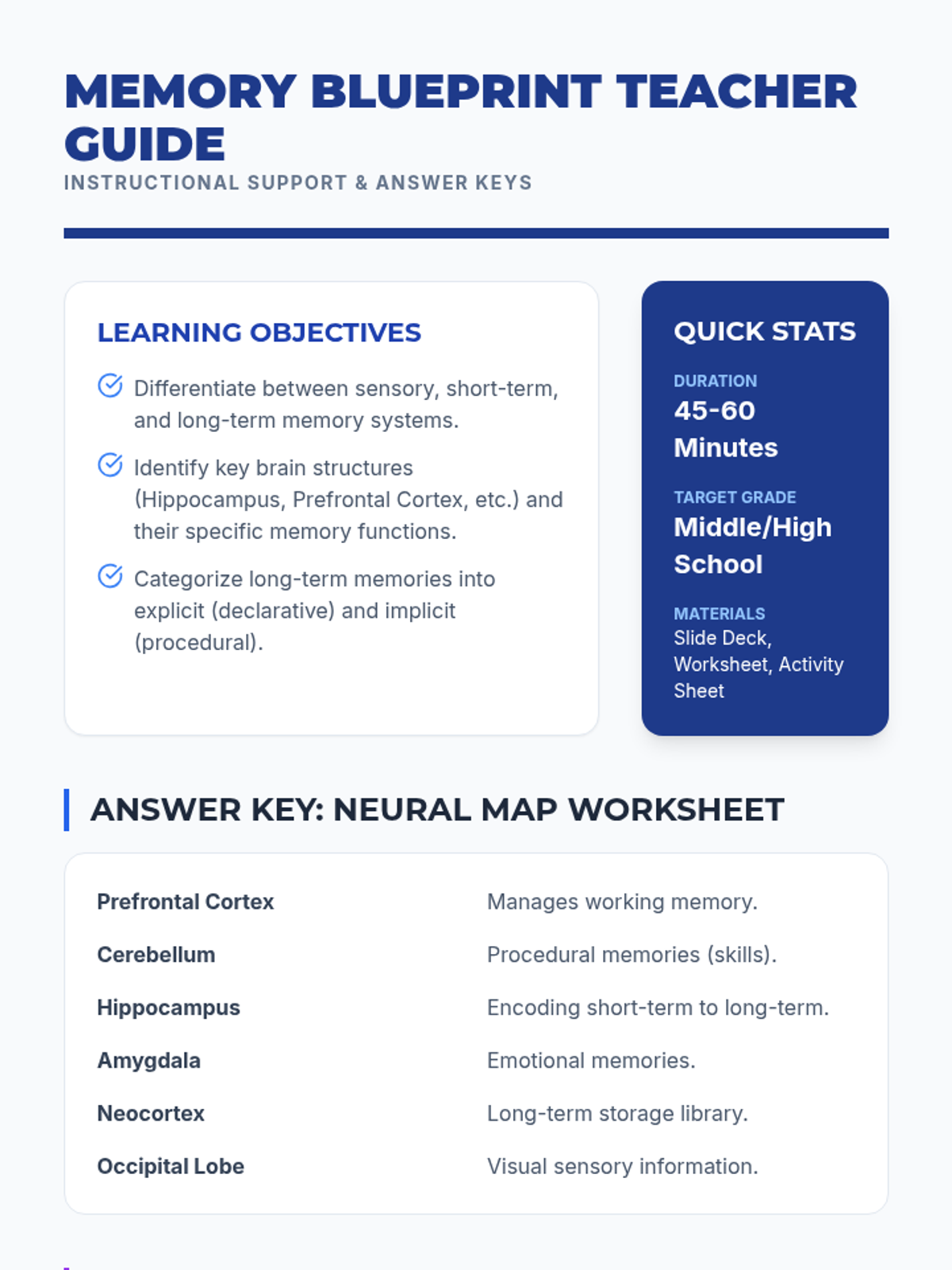
A comprehensive lesson on the three stages of memory (sensory, short-term, and long-term) and the specific brain structures that facilitate encoding and storage. Students will learn to categorize memories and identify the neurological 'hardware' behind their daily experiences.
A review of the digestive system and how all body systems work together, synthesizing ELA skills from the week.
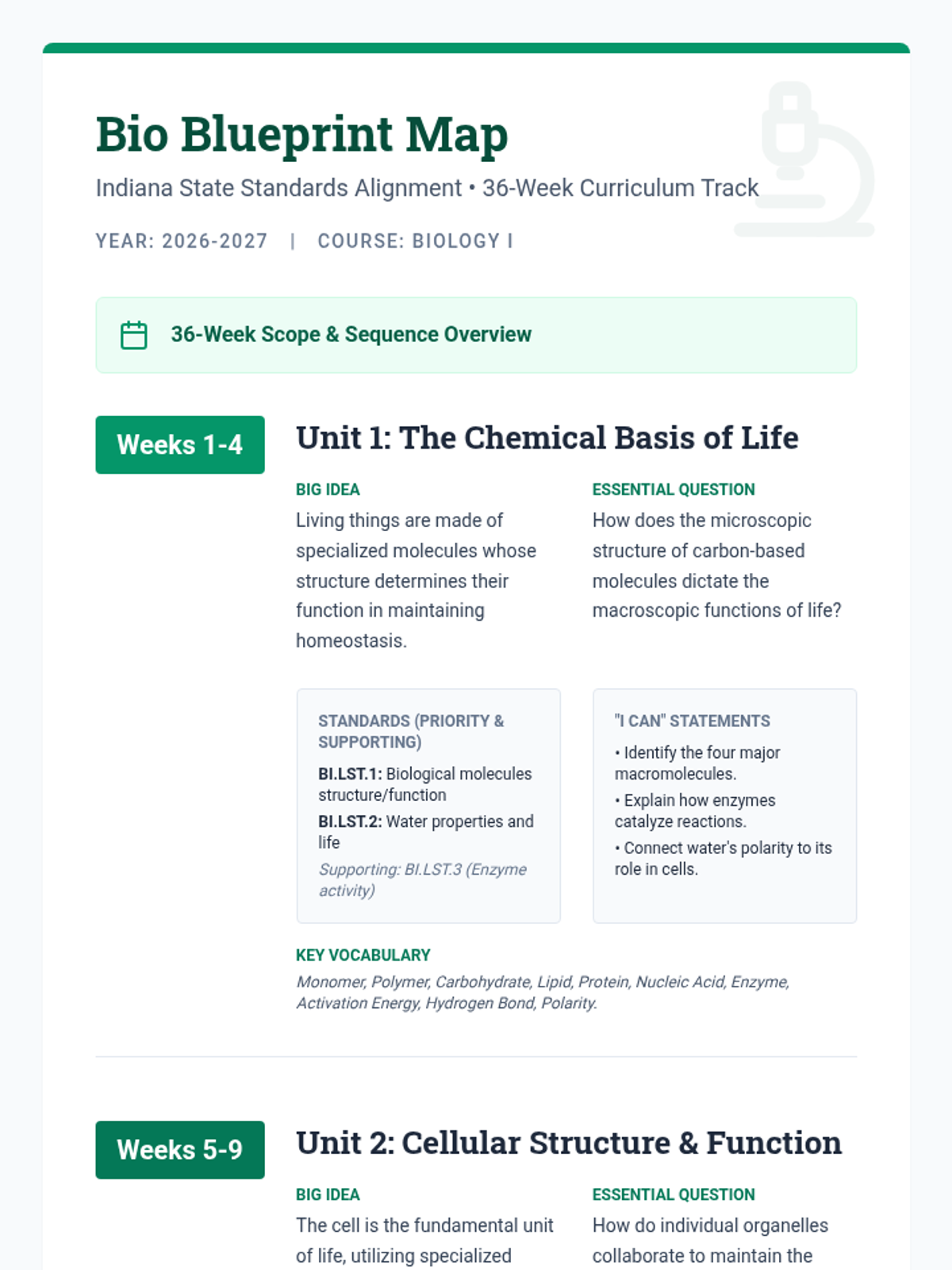
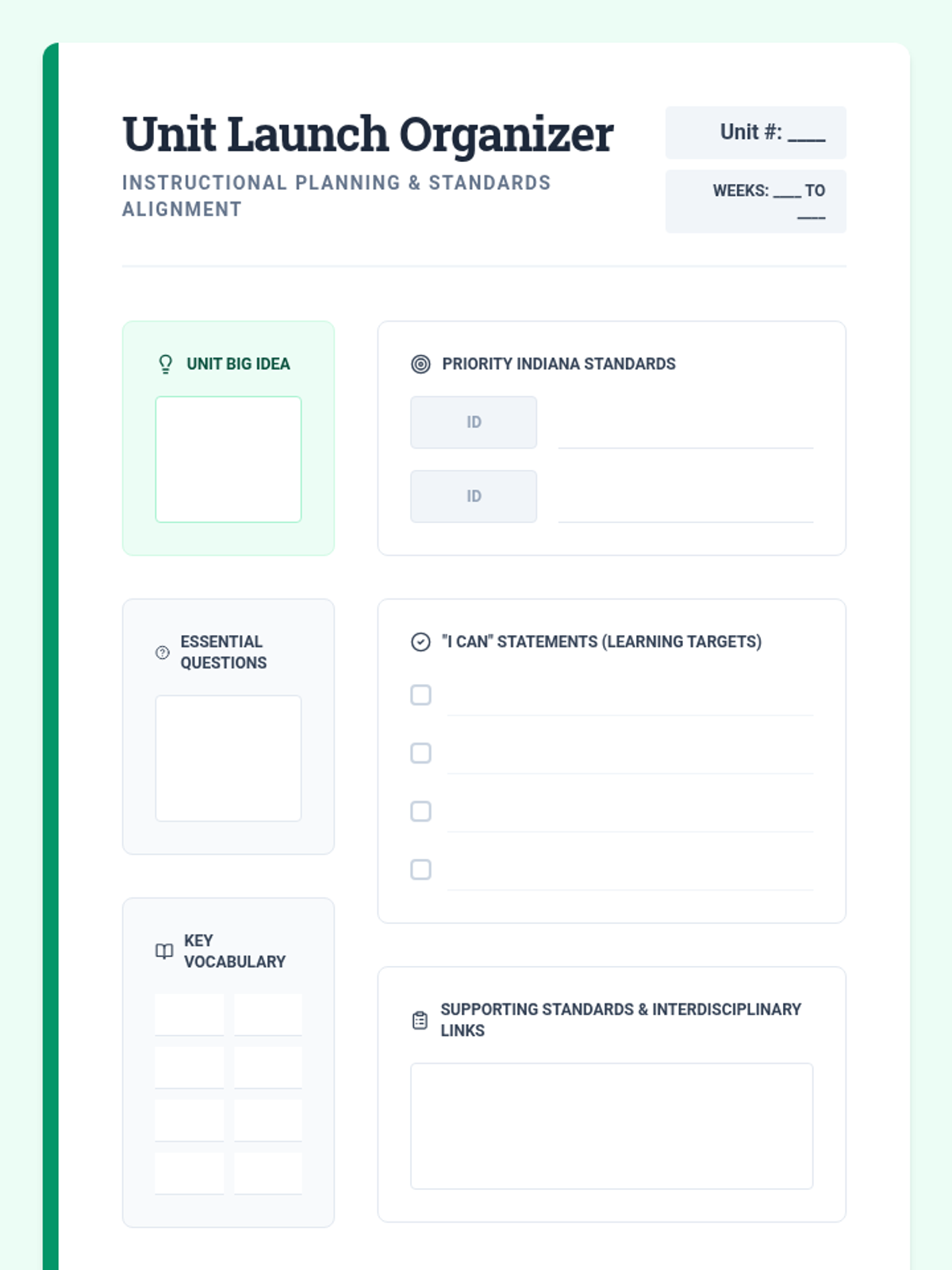
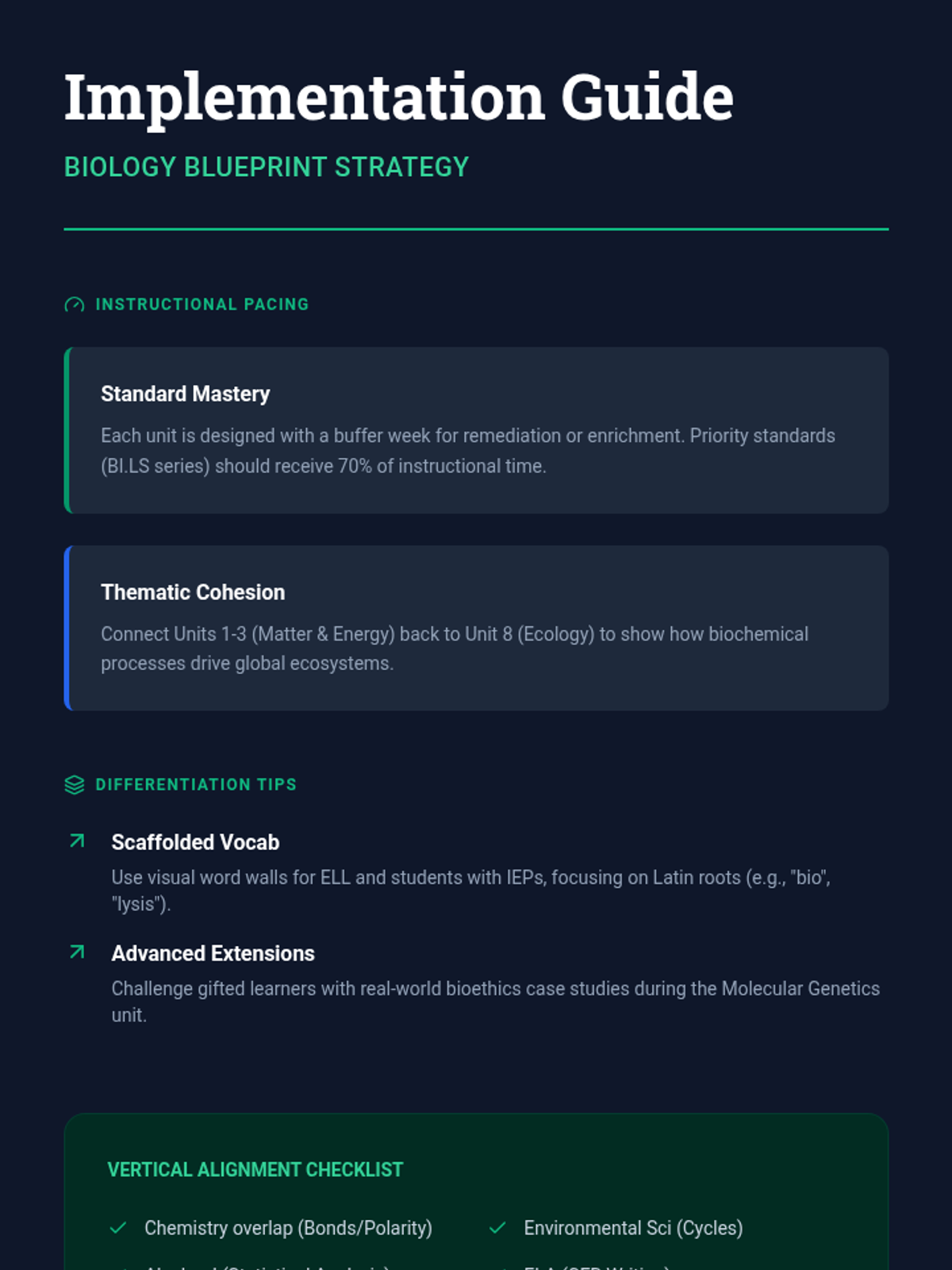
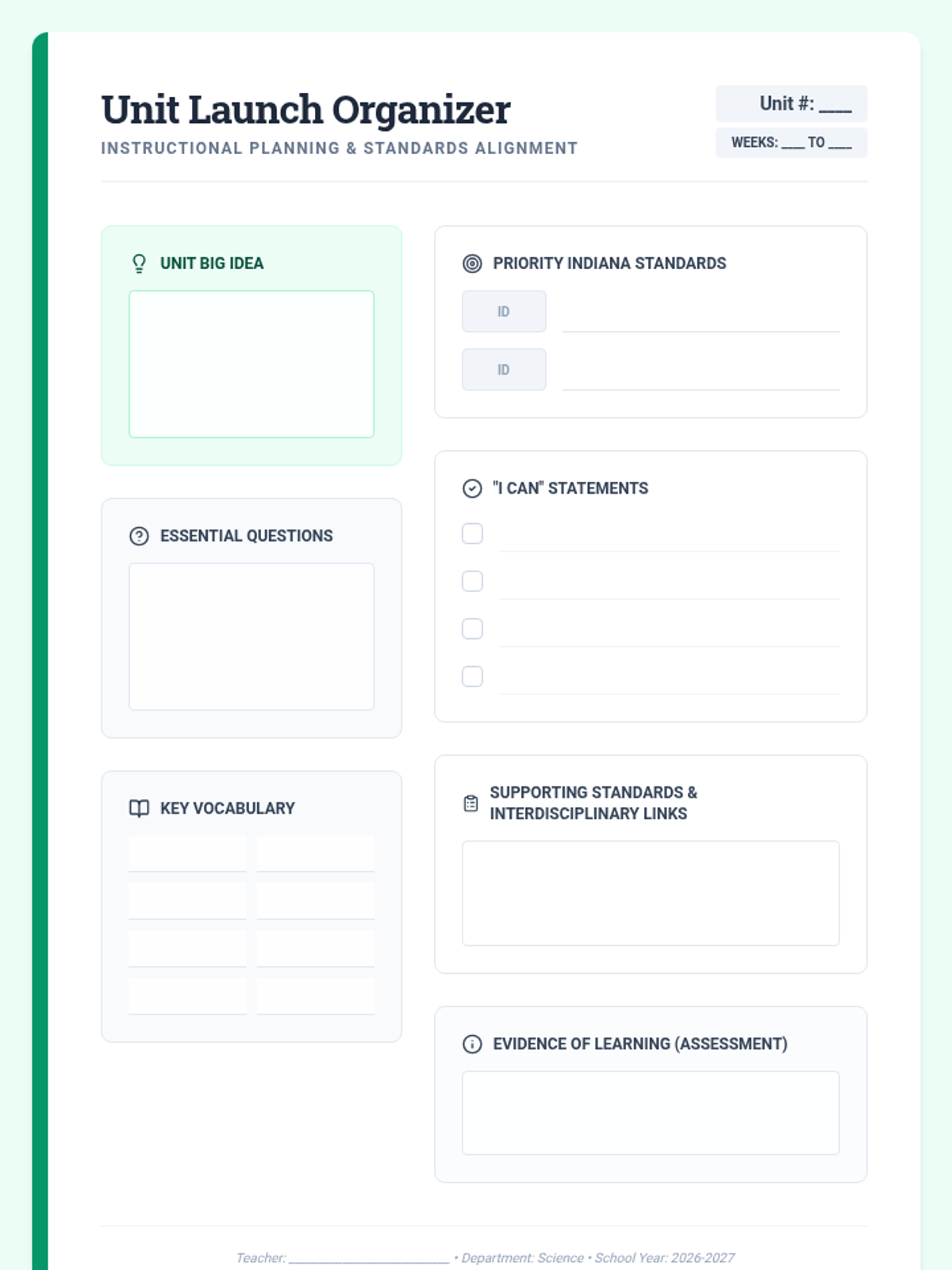
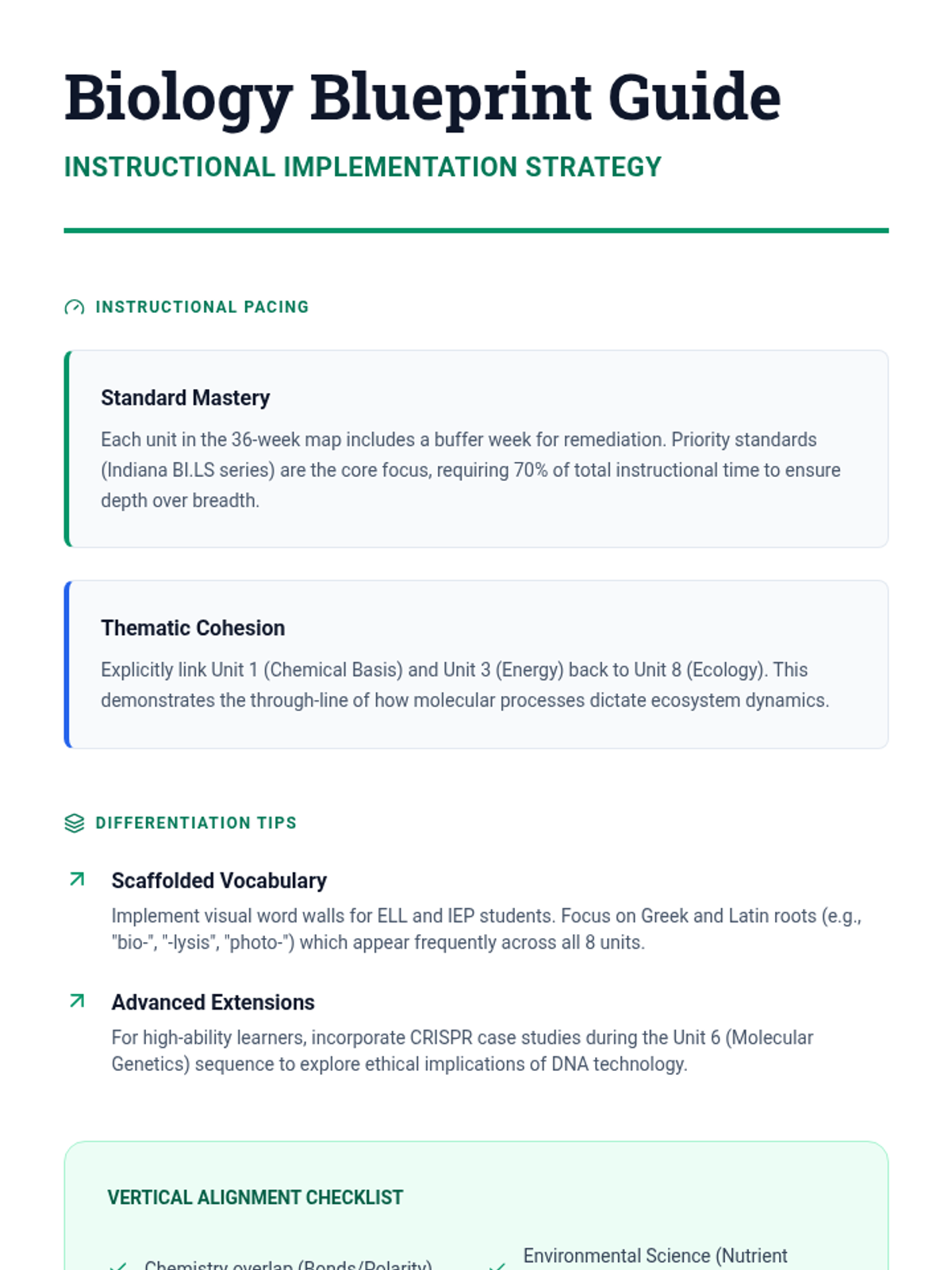
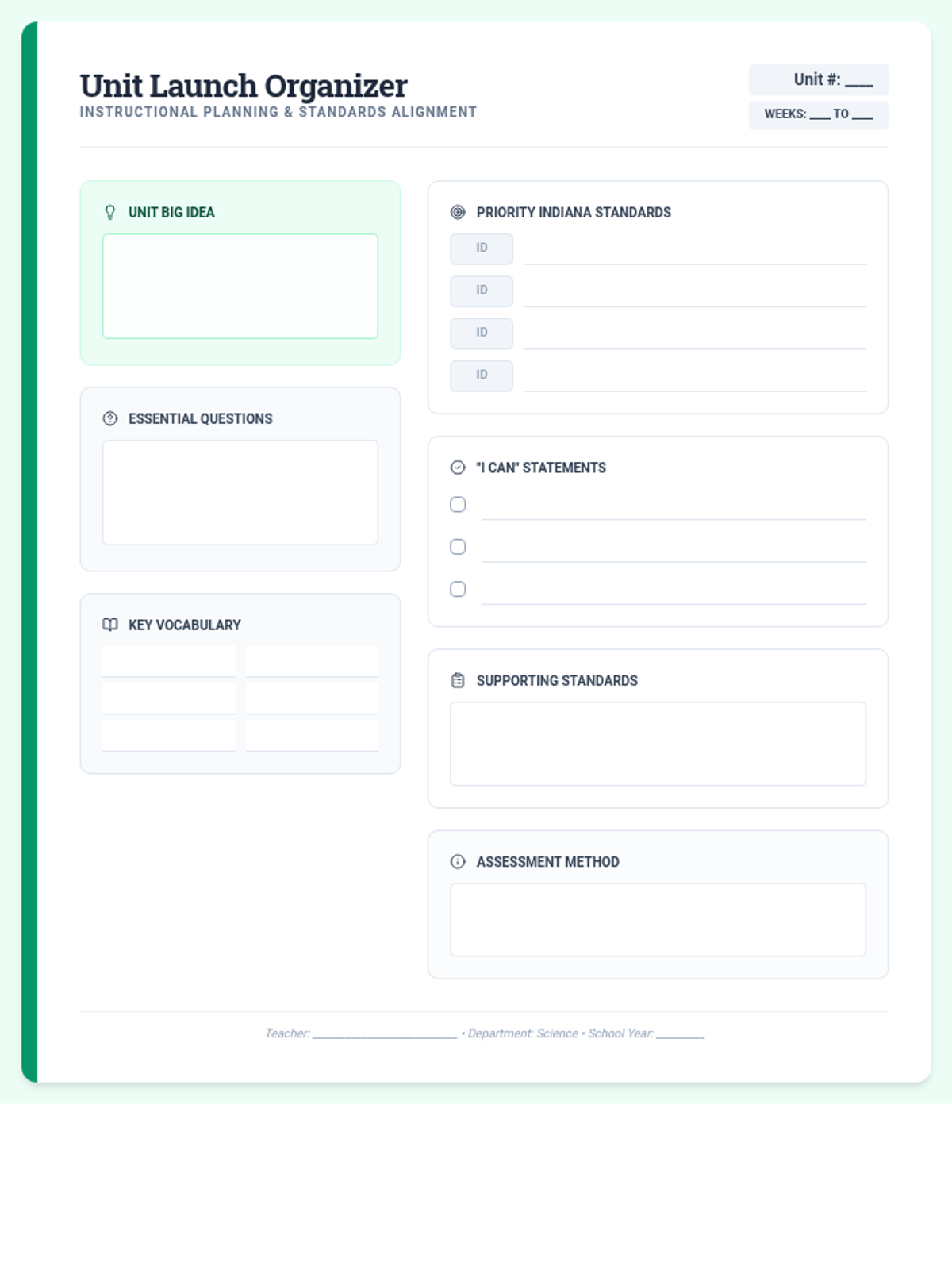
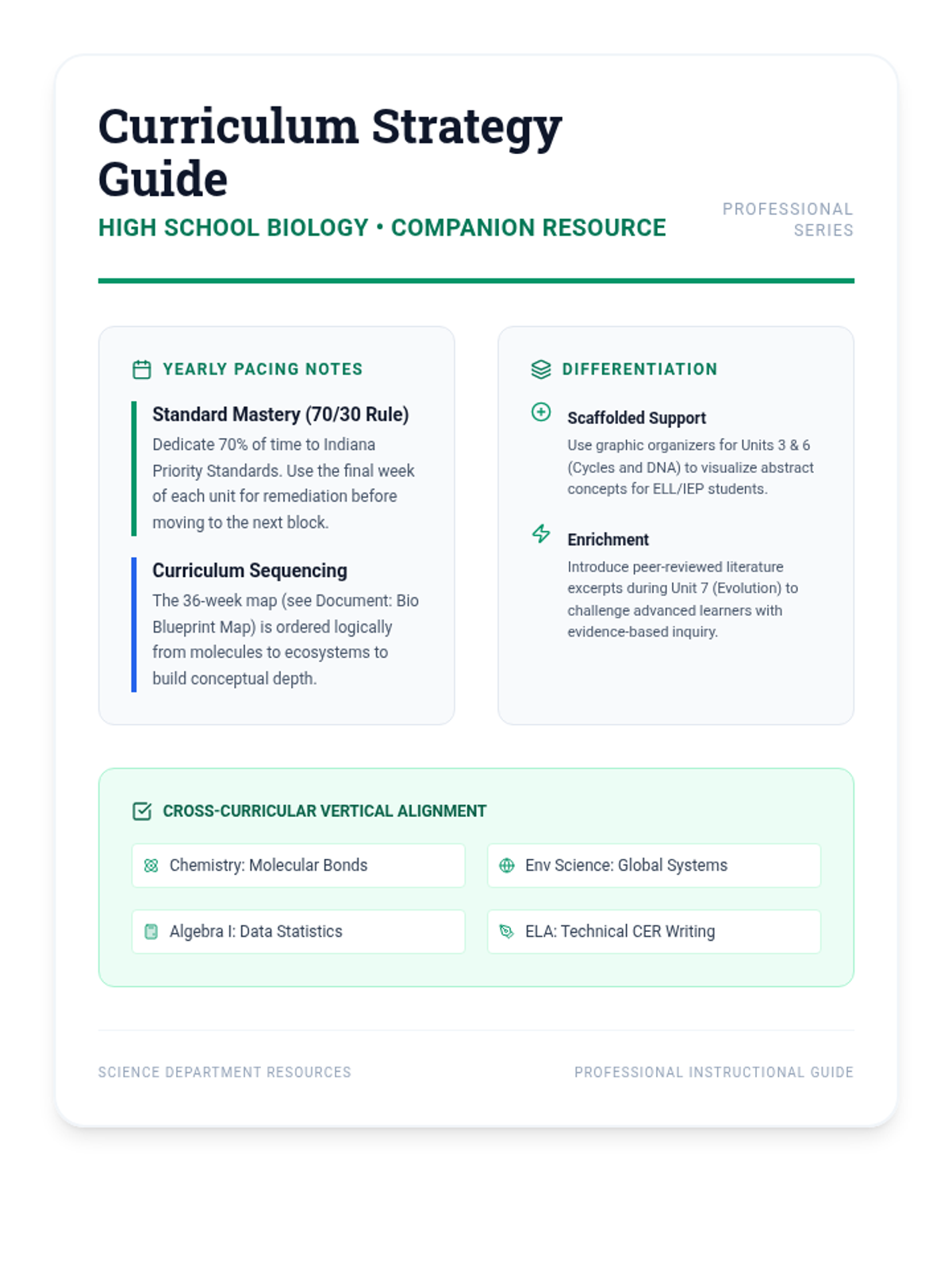
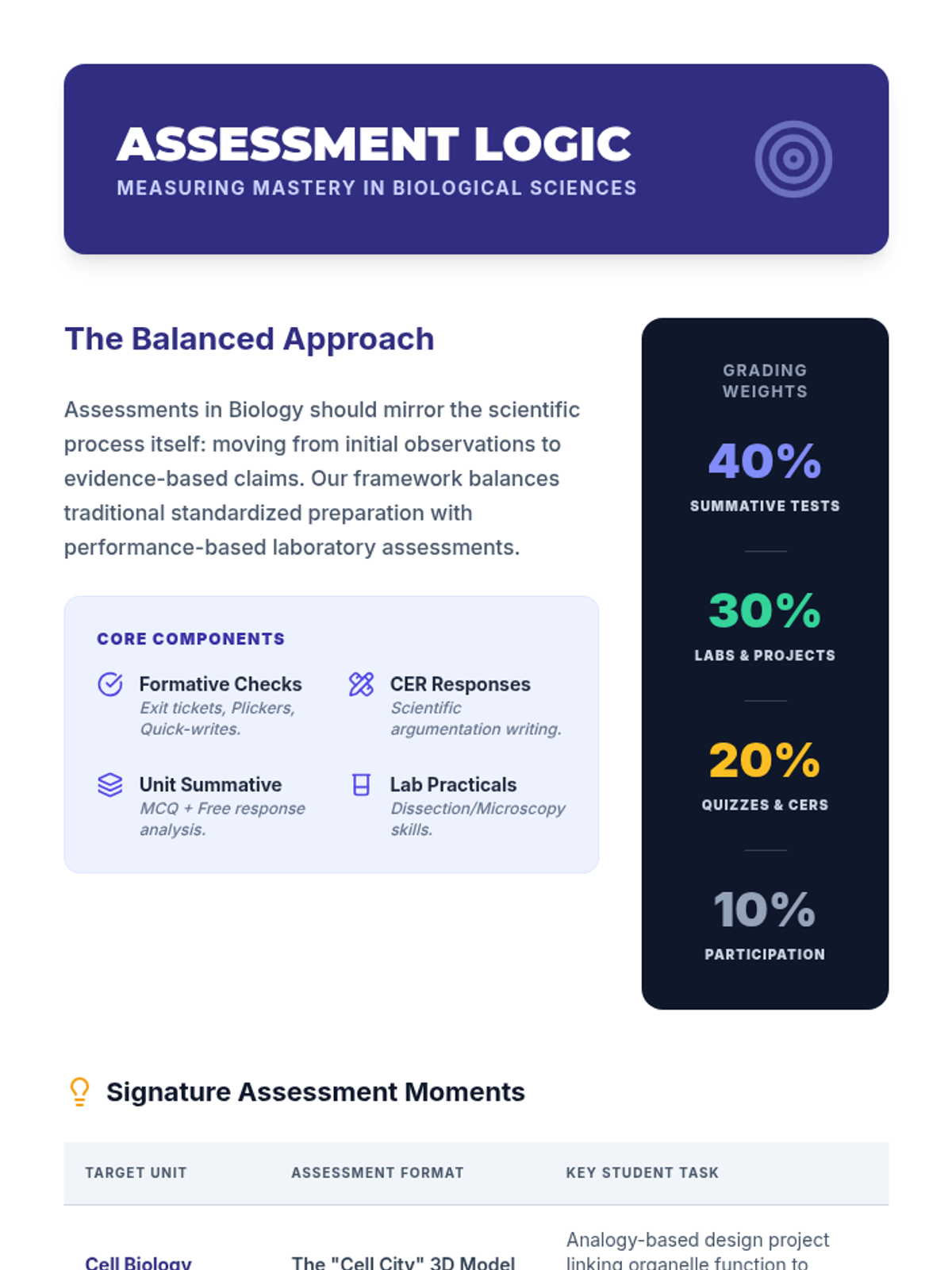
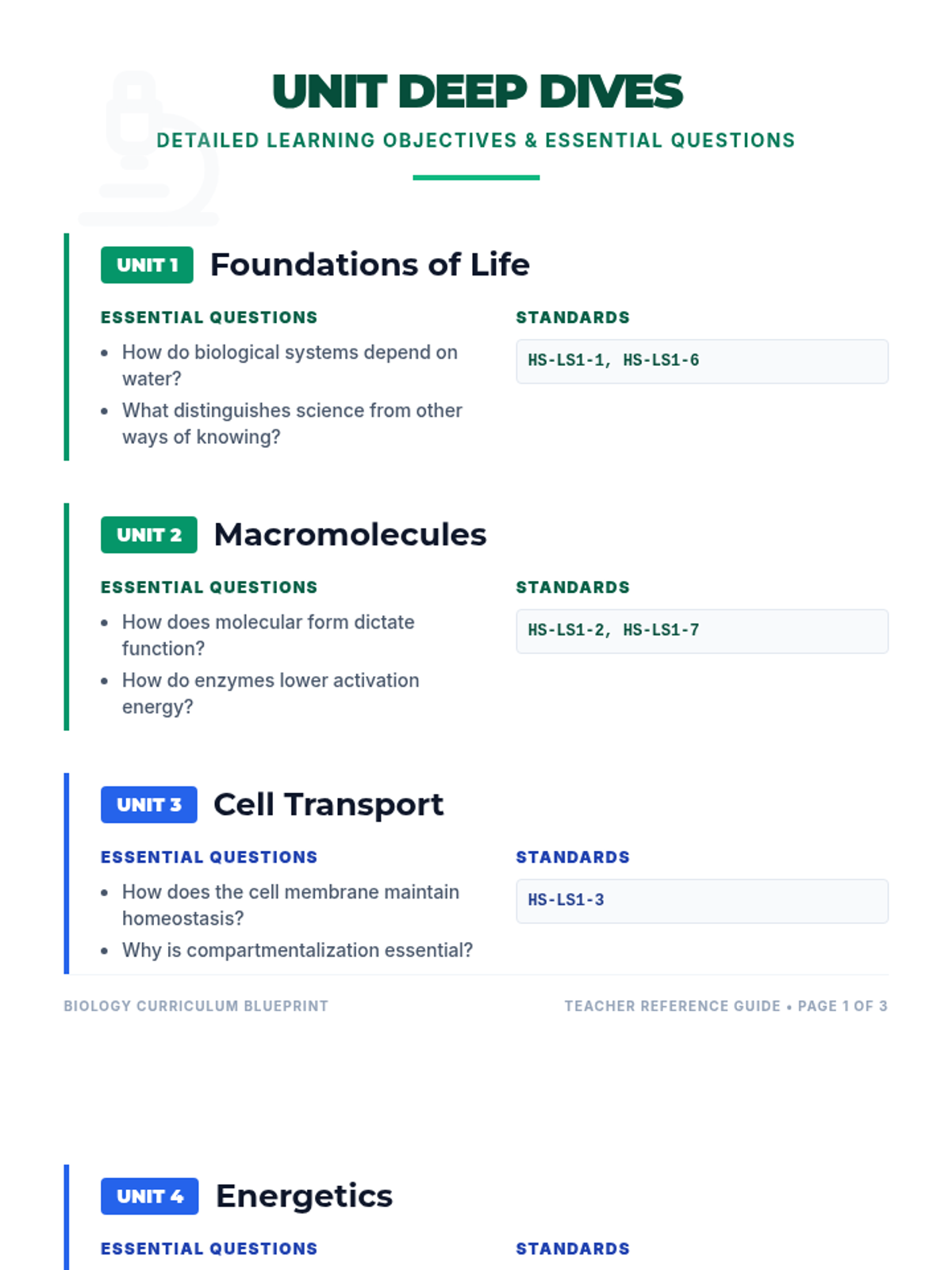
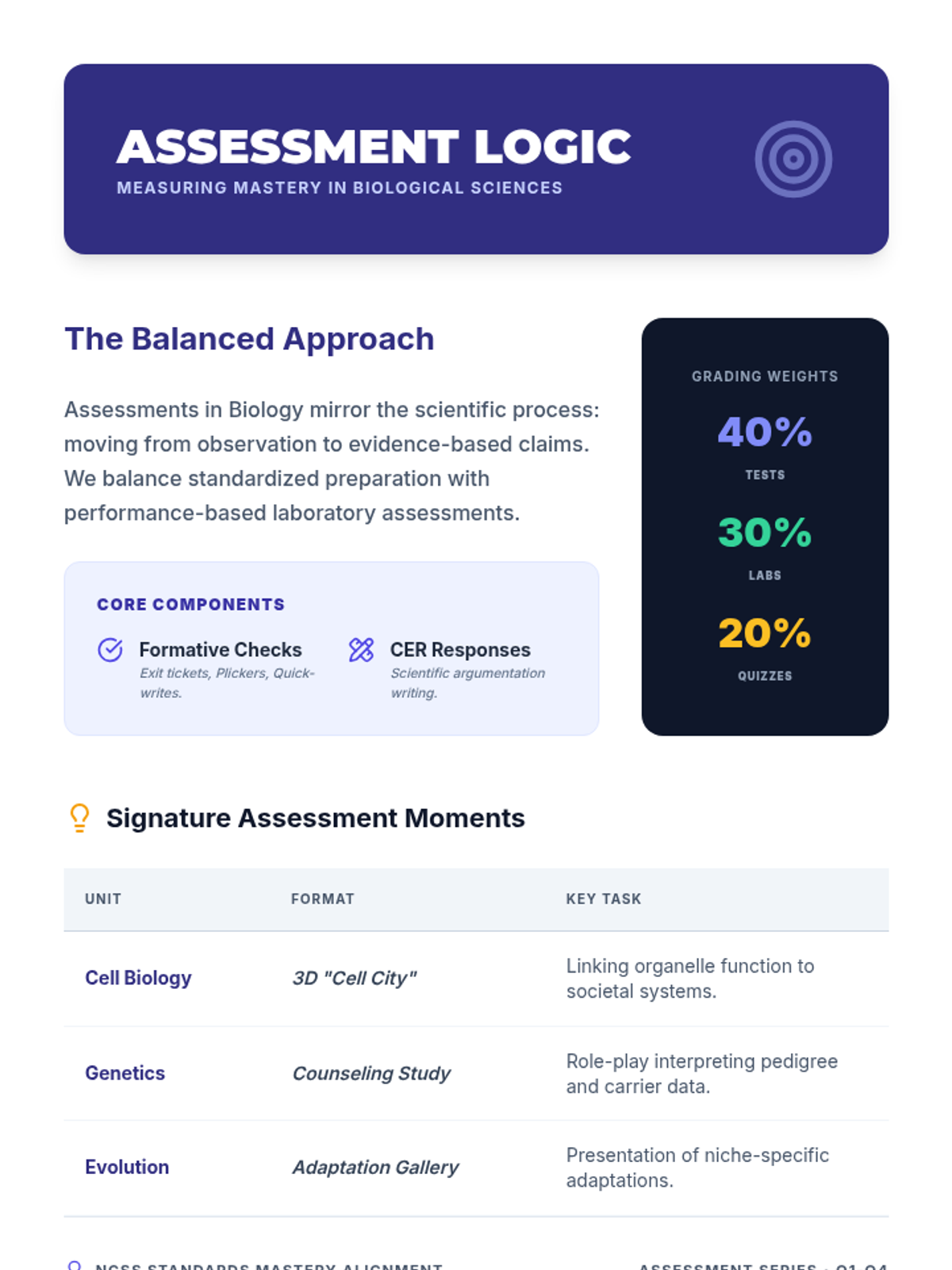
A curriculum planning lesson for biology teachers to organize a full year of high school biology instruction aligned with Indiana State Standards.
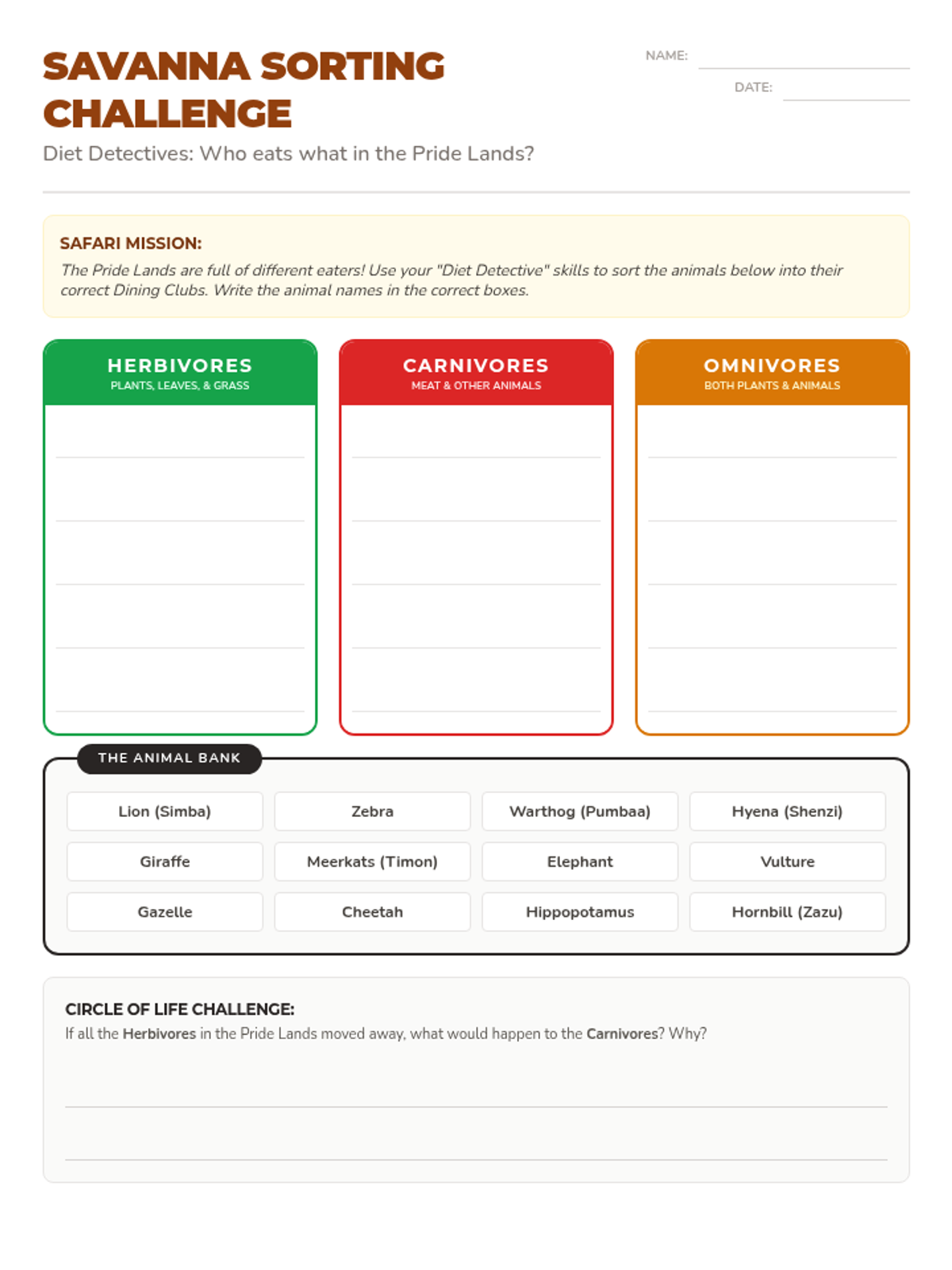
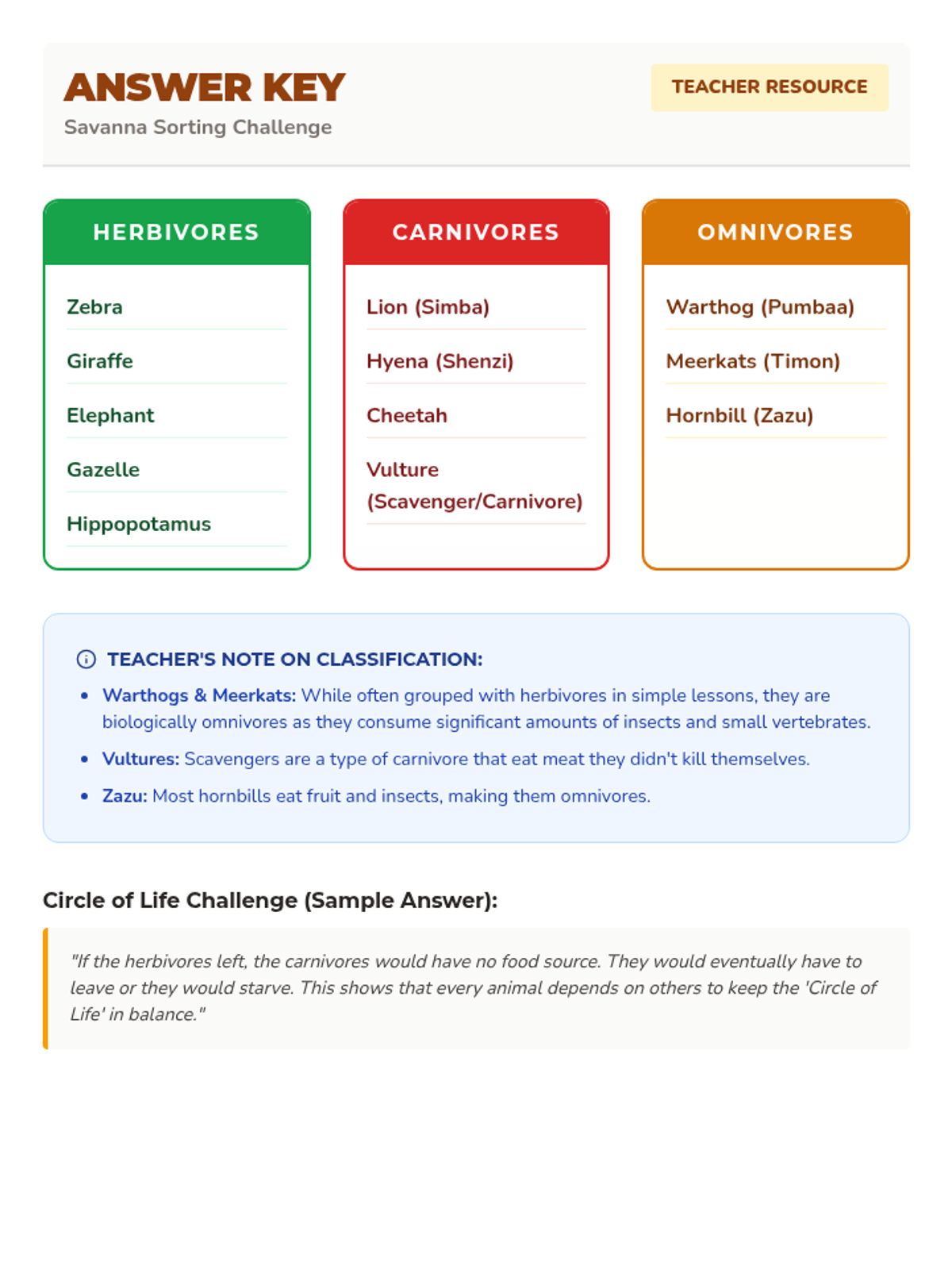
Culminating sorting activity where students categorize Lion King characters and other savanna animals by their diets, followed by a reflection on the 'Circle of Life'.
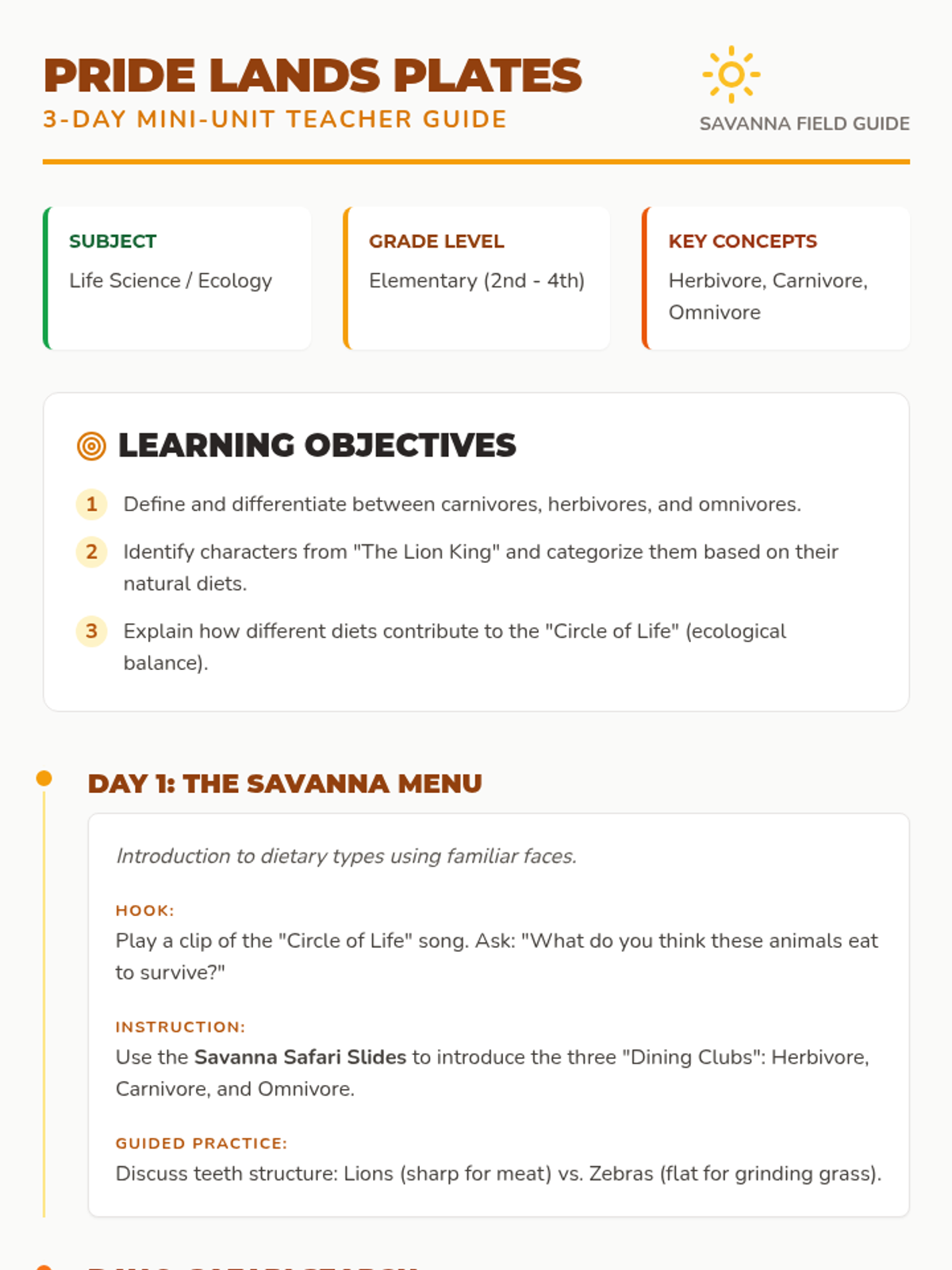
Introduction to herbivores, carnivores, and omnivores using Pride Lands characters as examples. students learn to identify dietary traits and basic dental structures associated with each group.
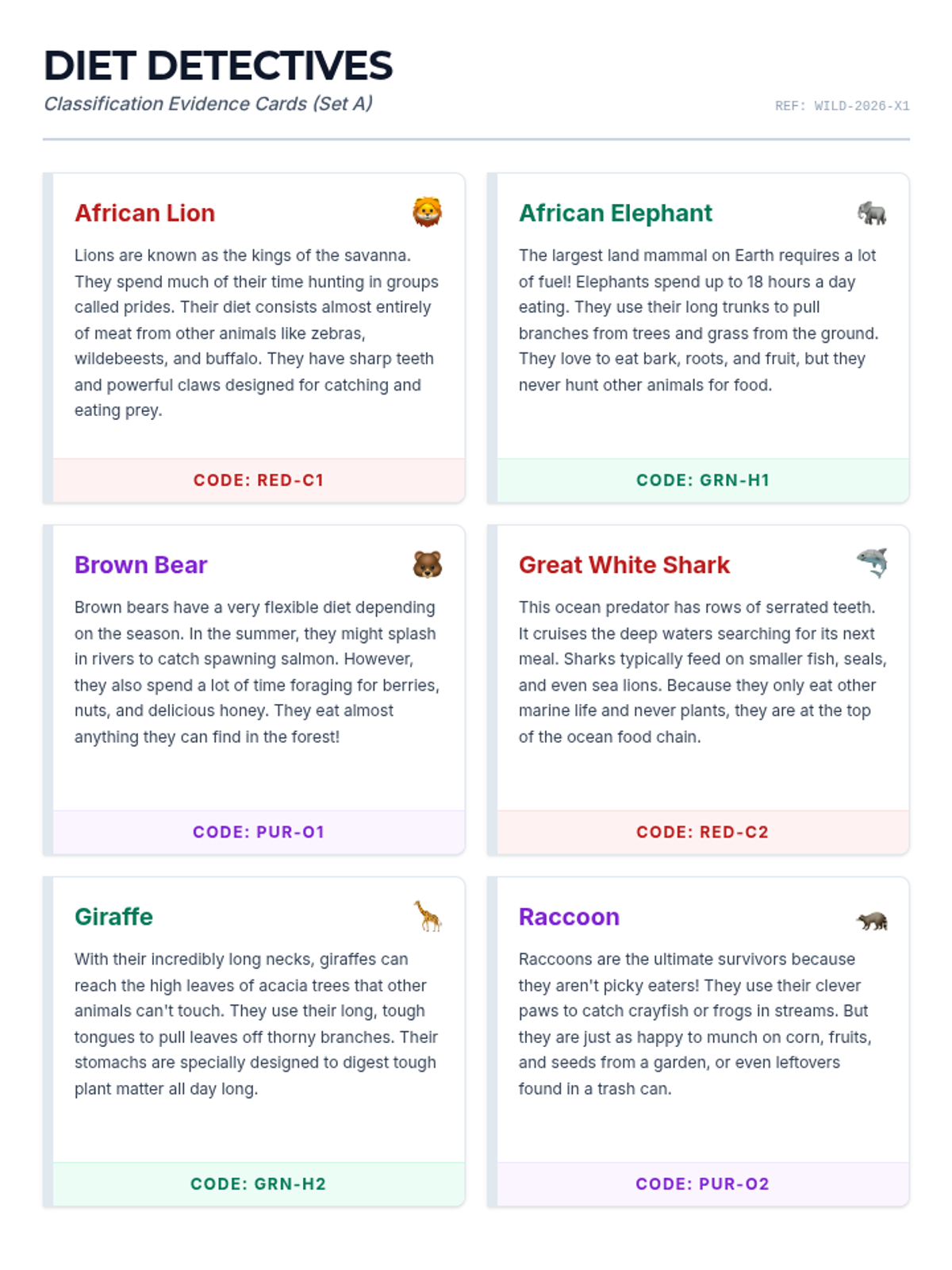
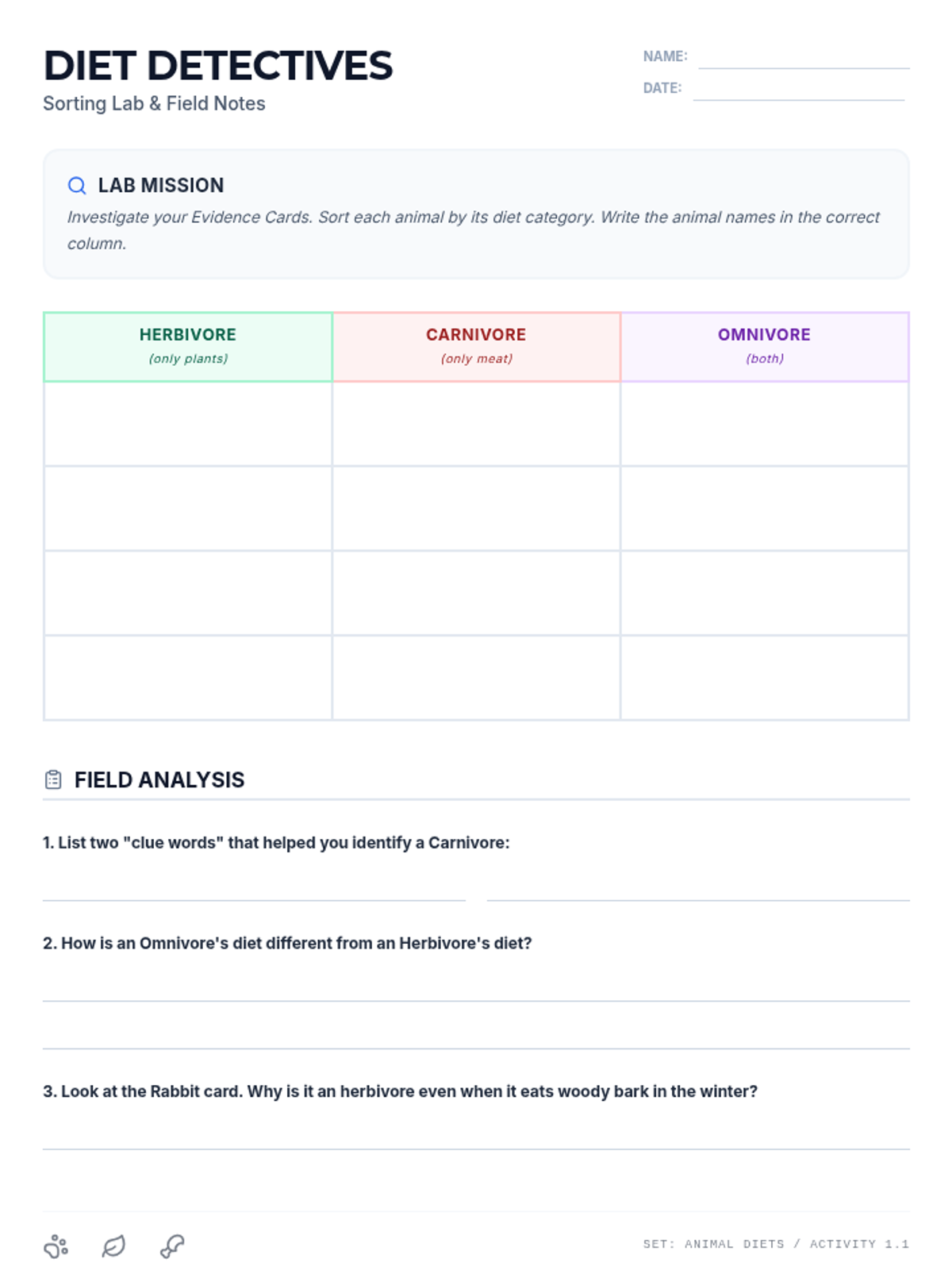
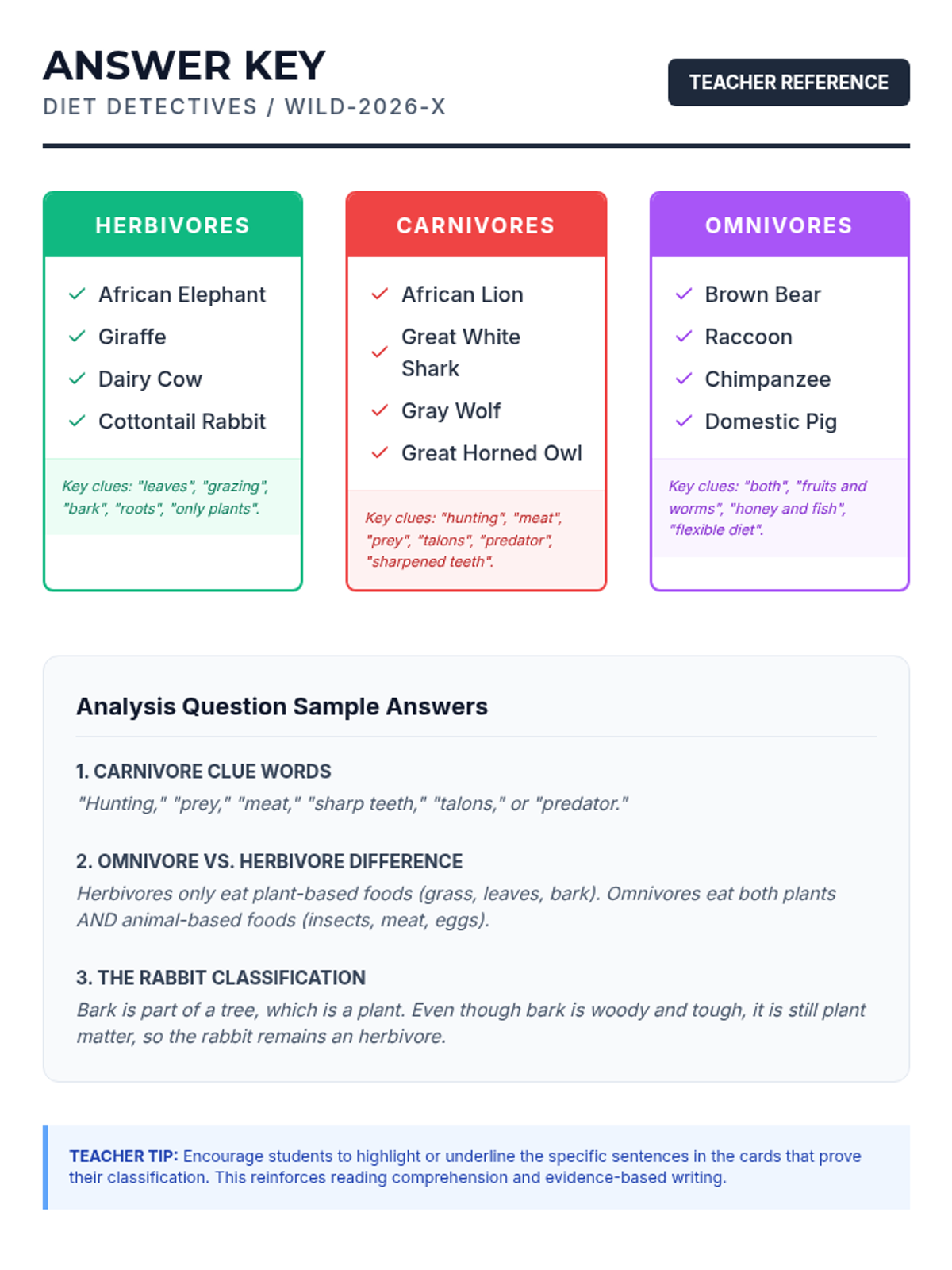
Students analyze short informational texts about various animals to classify them based on their diets using color-coded evidence cards.
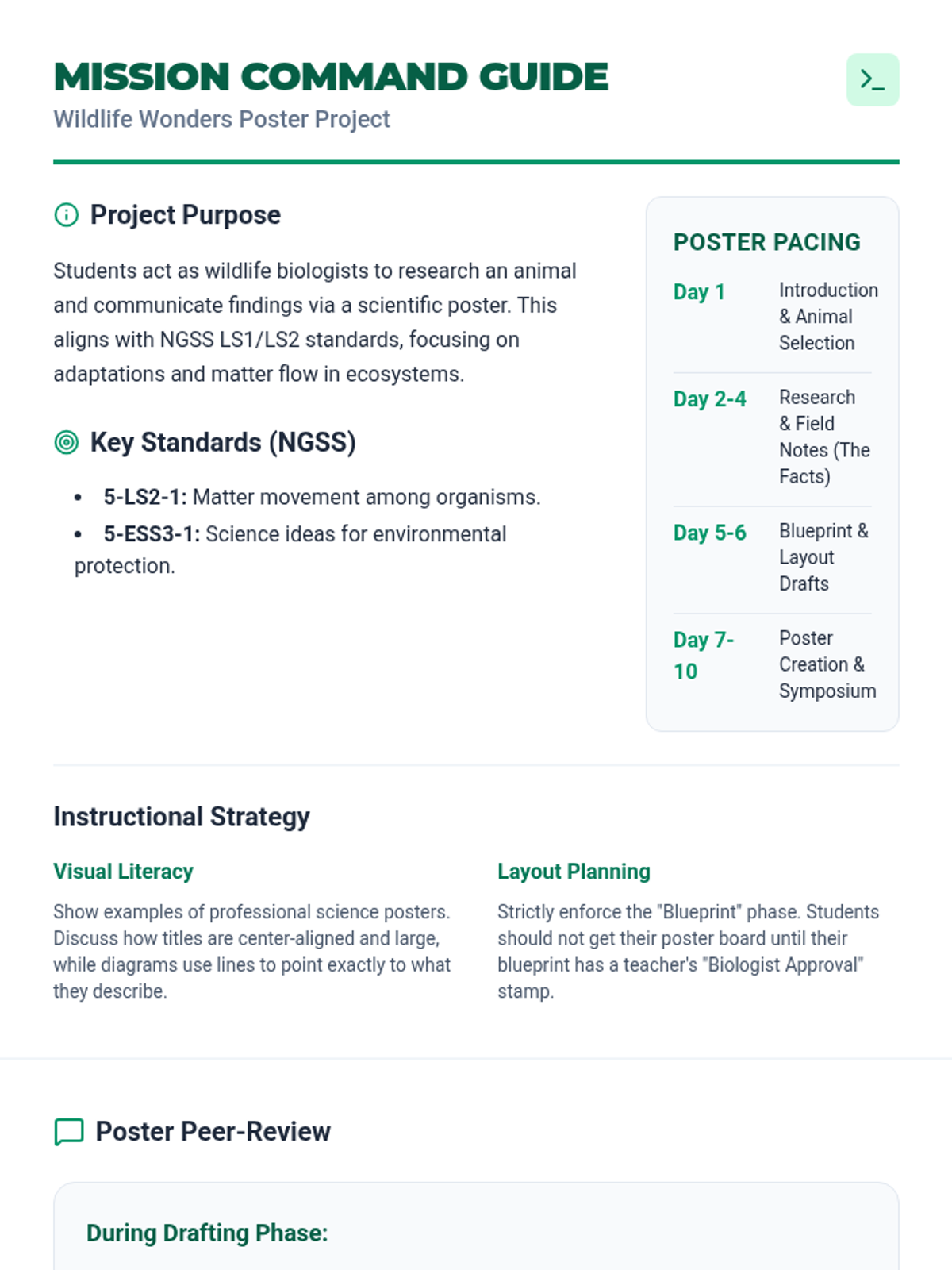
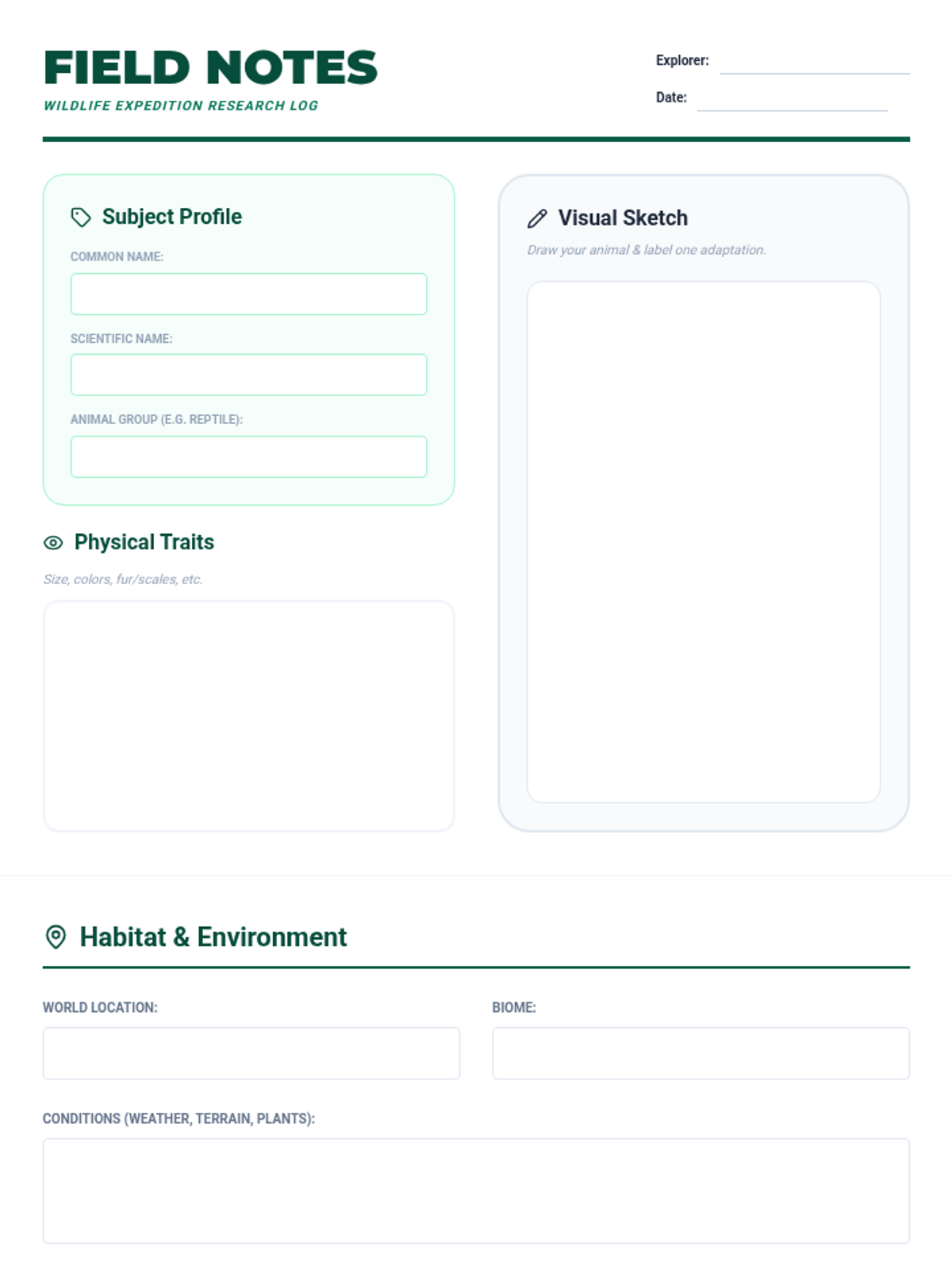
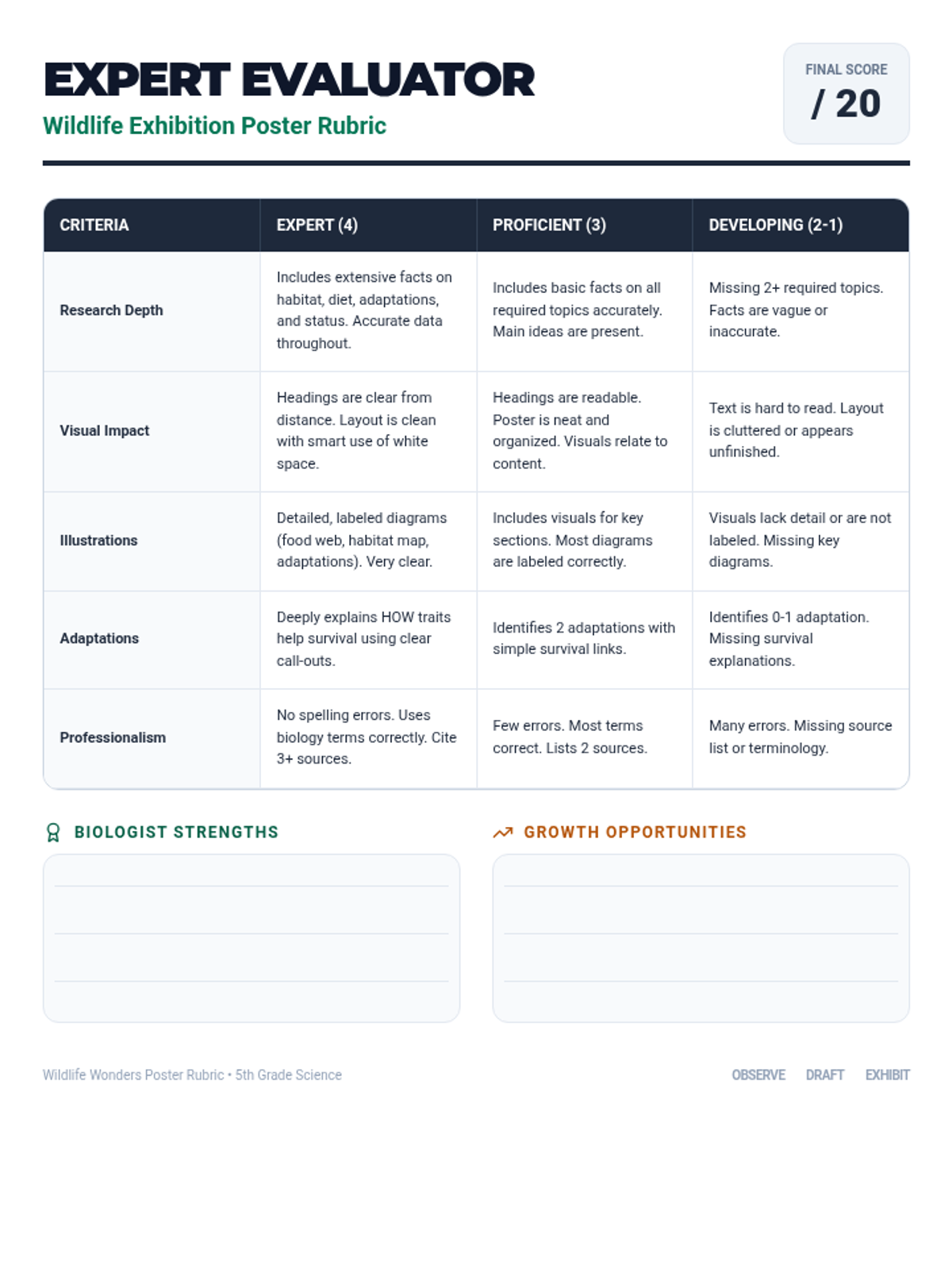
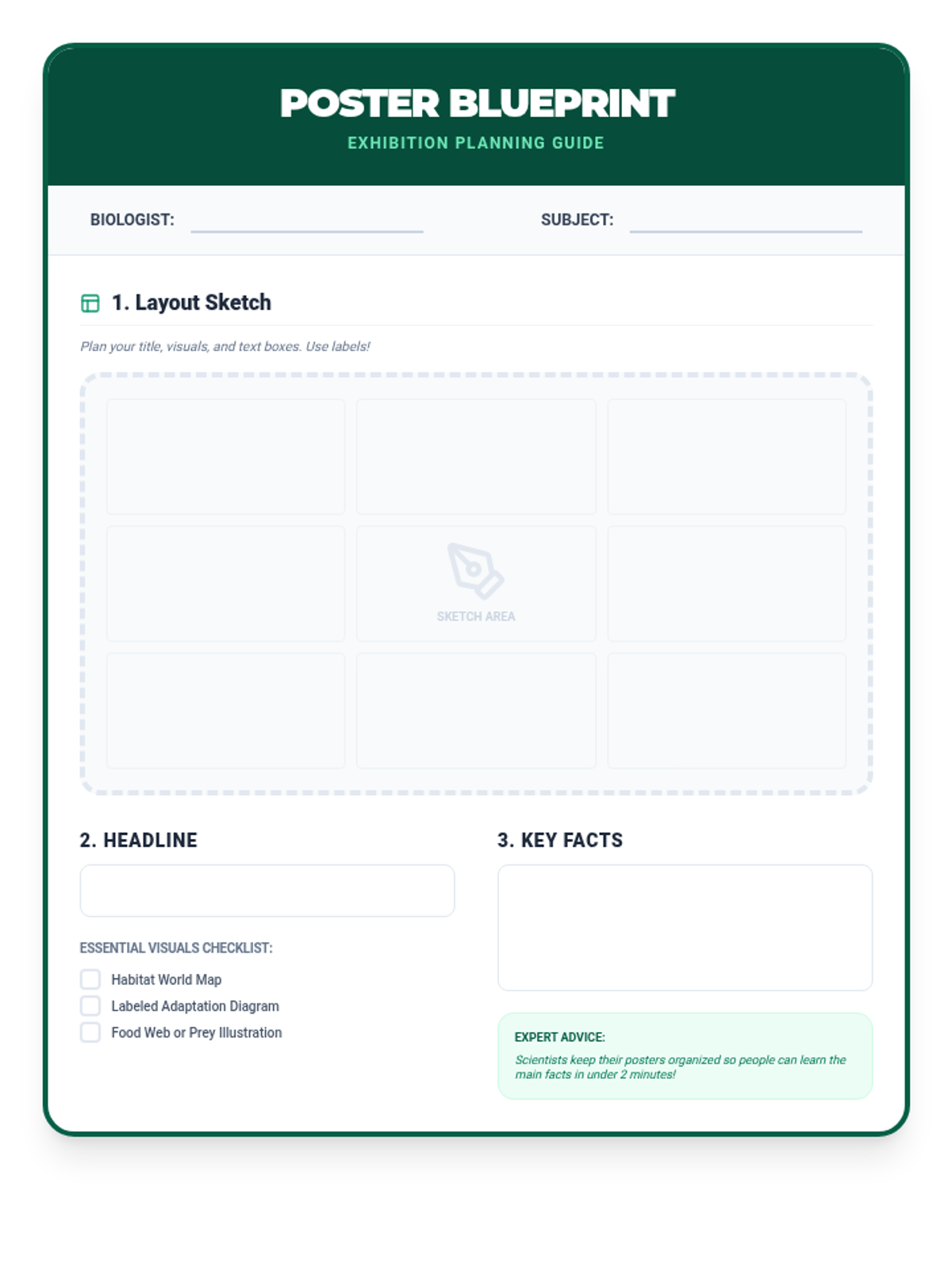
Students embark on a research journey, selecting a specific animal to study, gathering data on its biological needs and environmental role, and creating a final product to showcase their expertise.
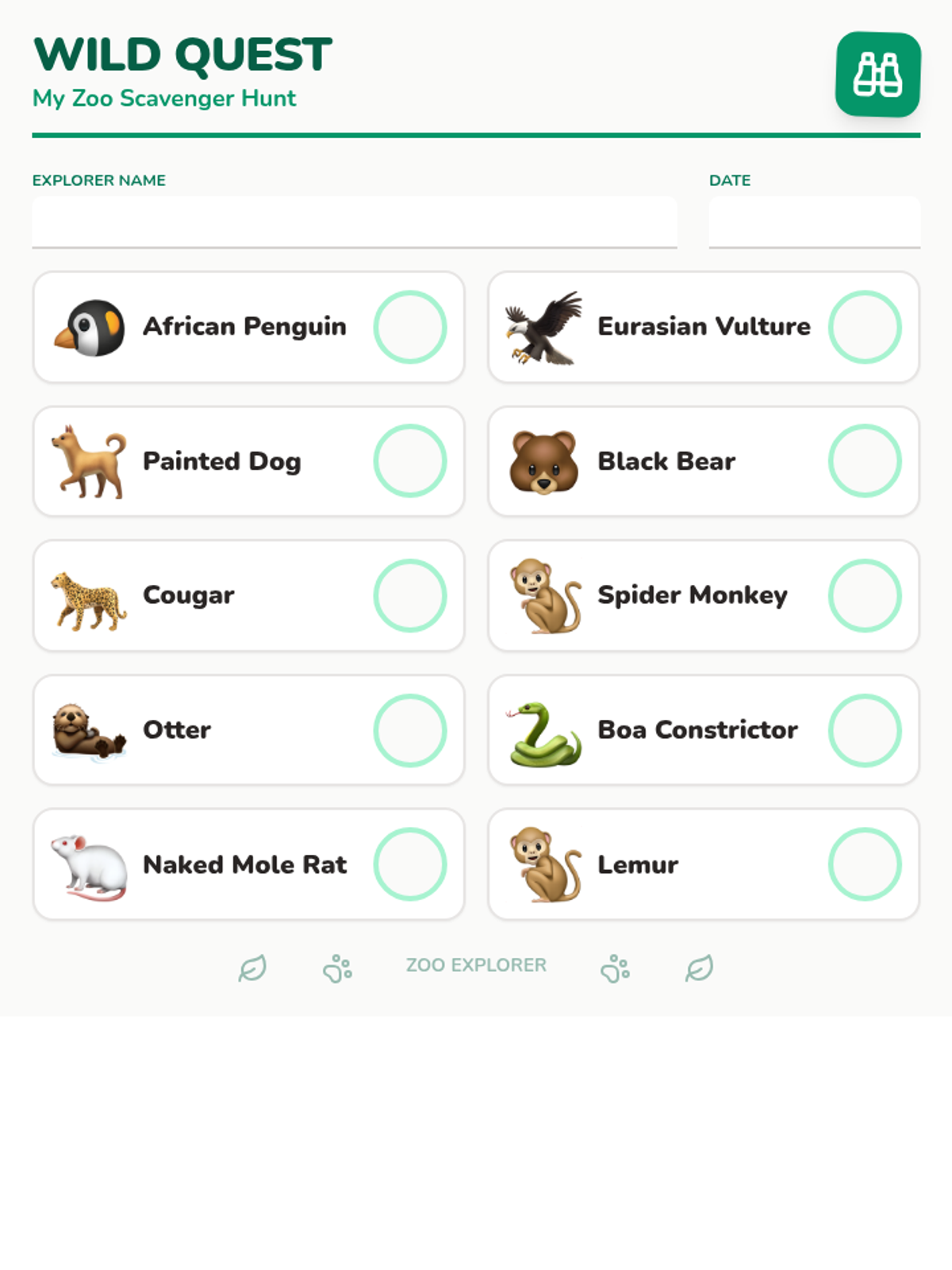
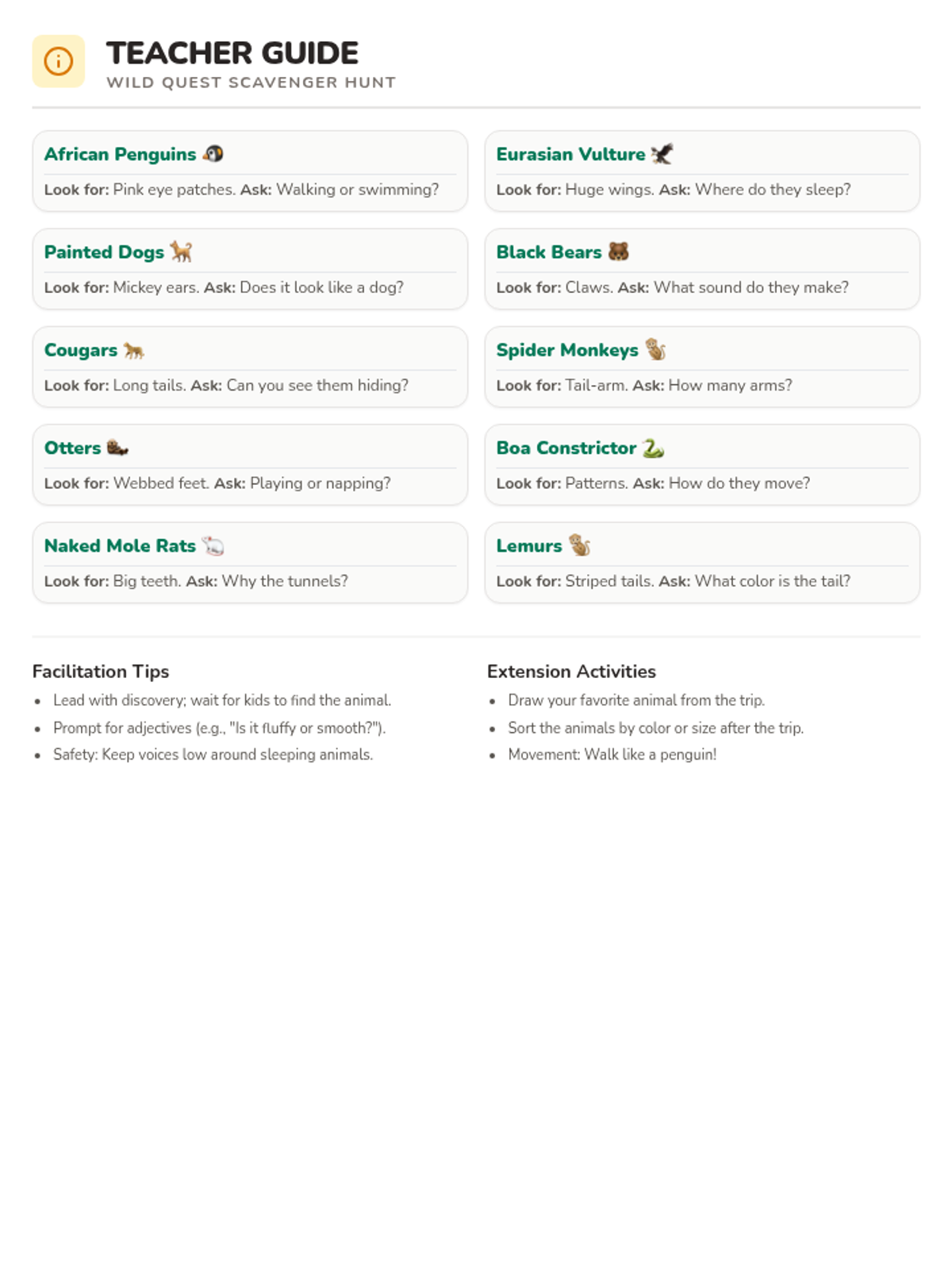
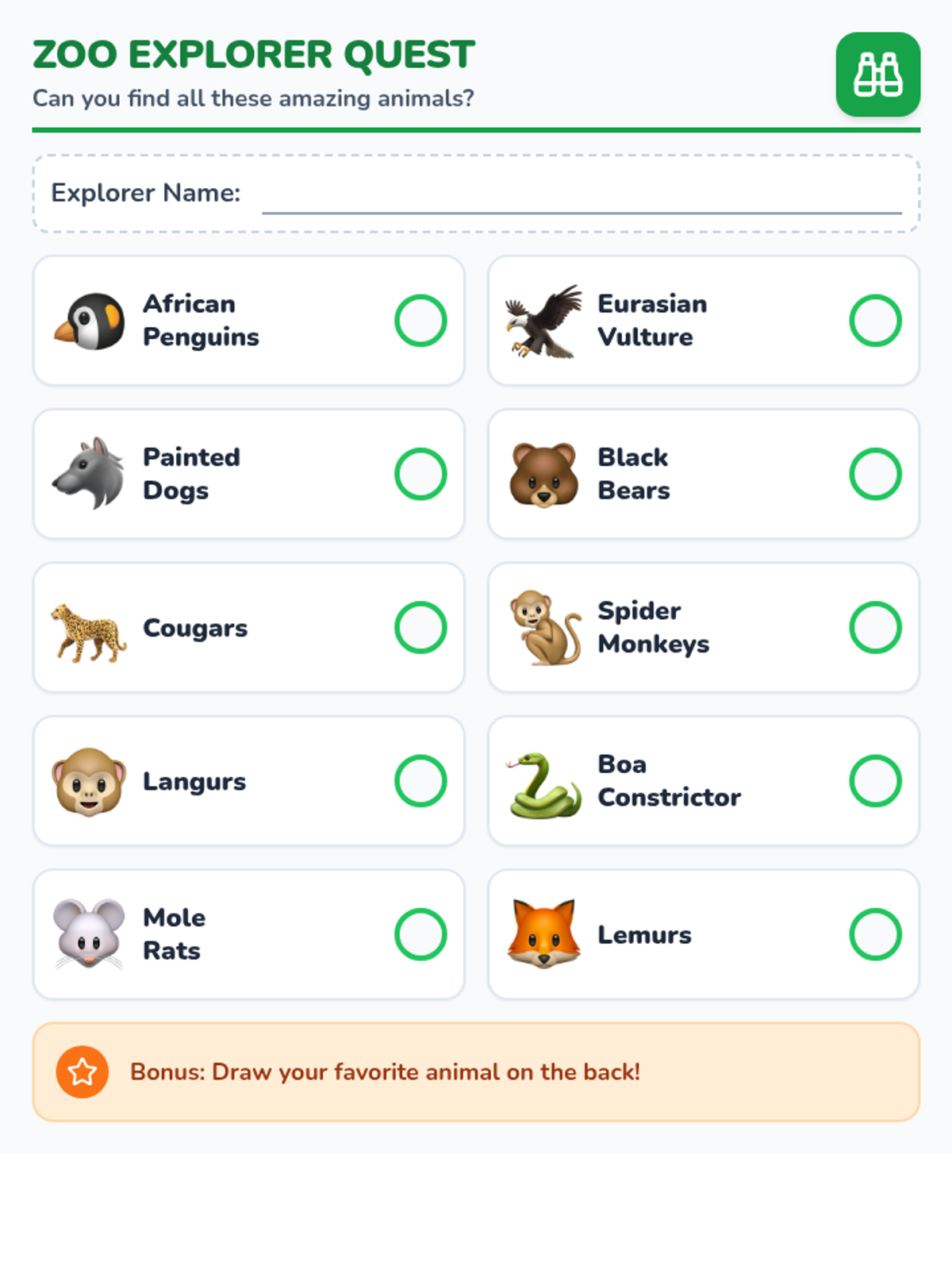
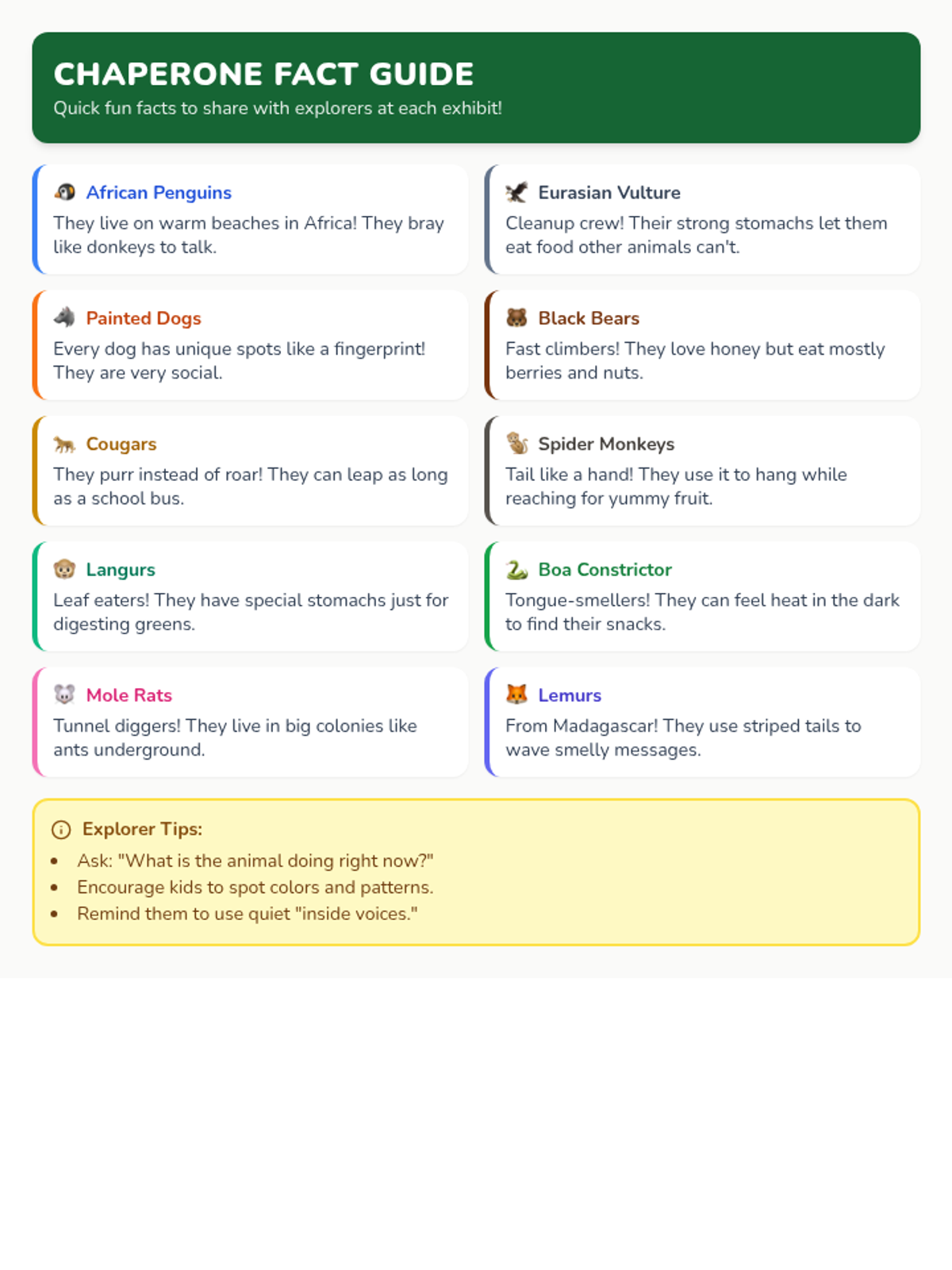
A fun, visual zoo scavenger hunt designed for Pre-K students to identify and observe specific animals during a field trip.
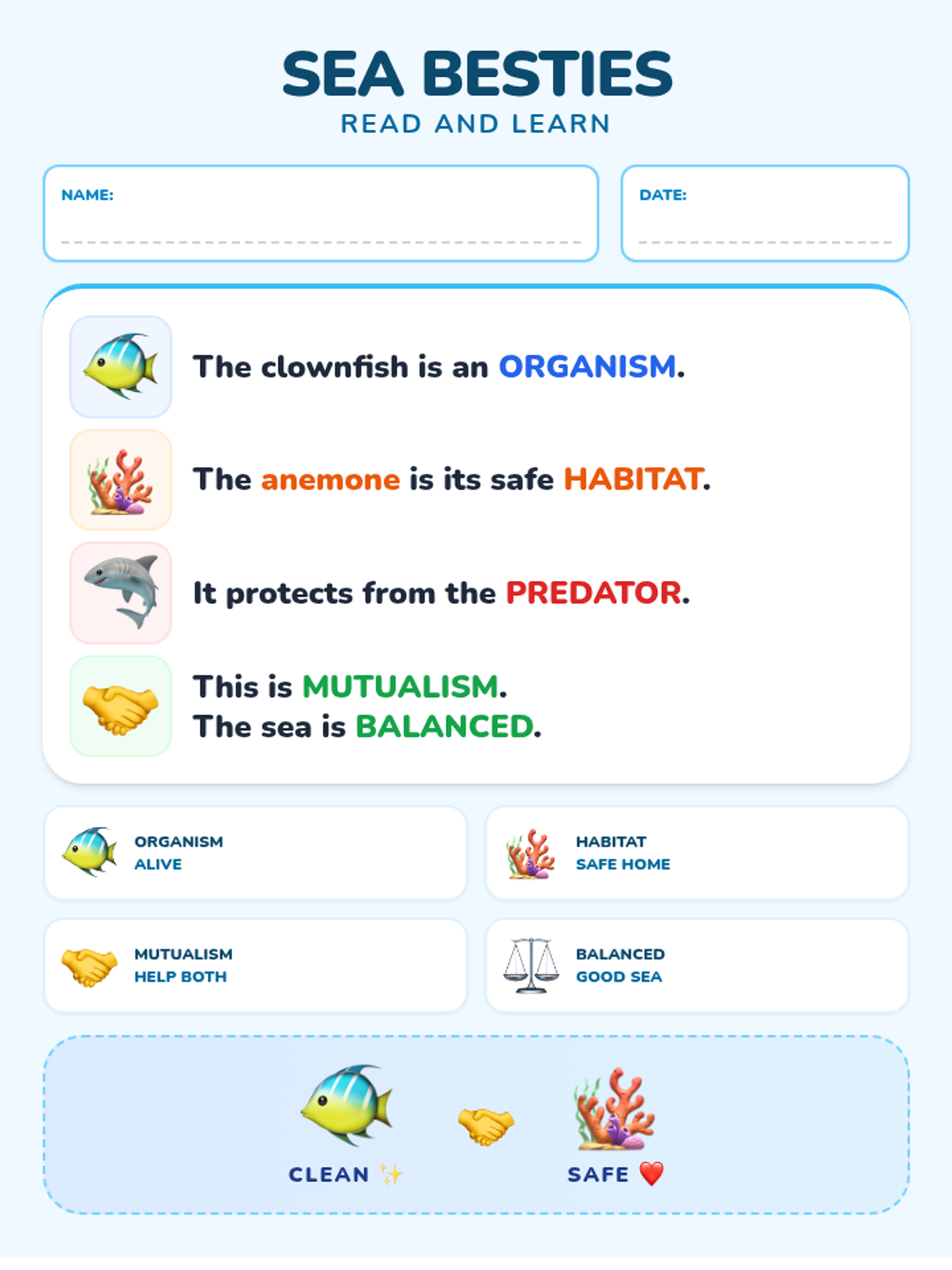
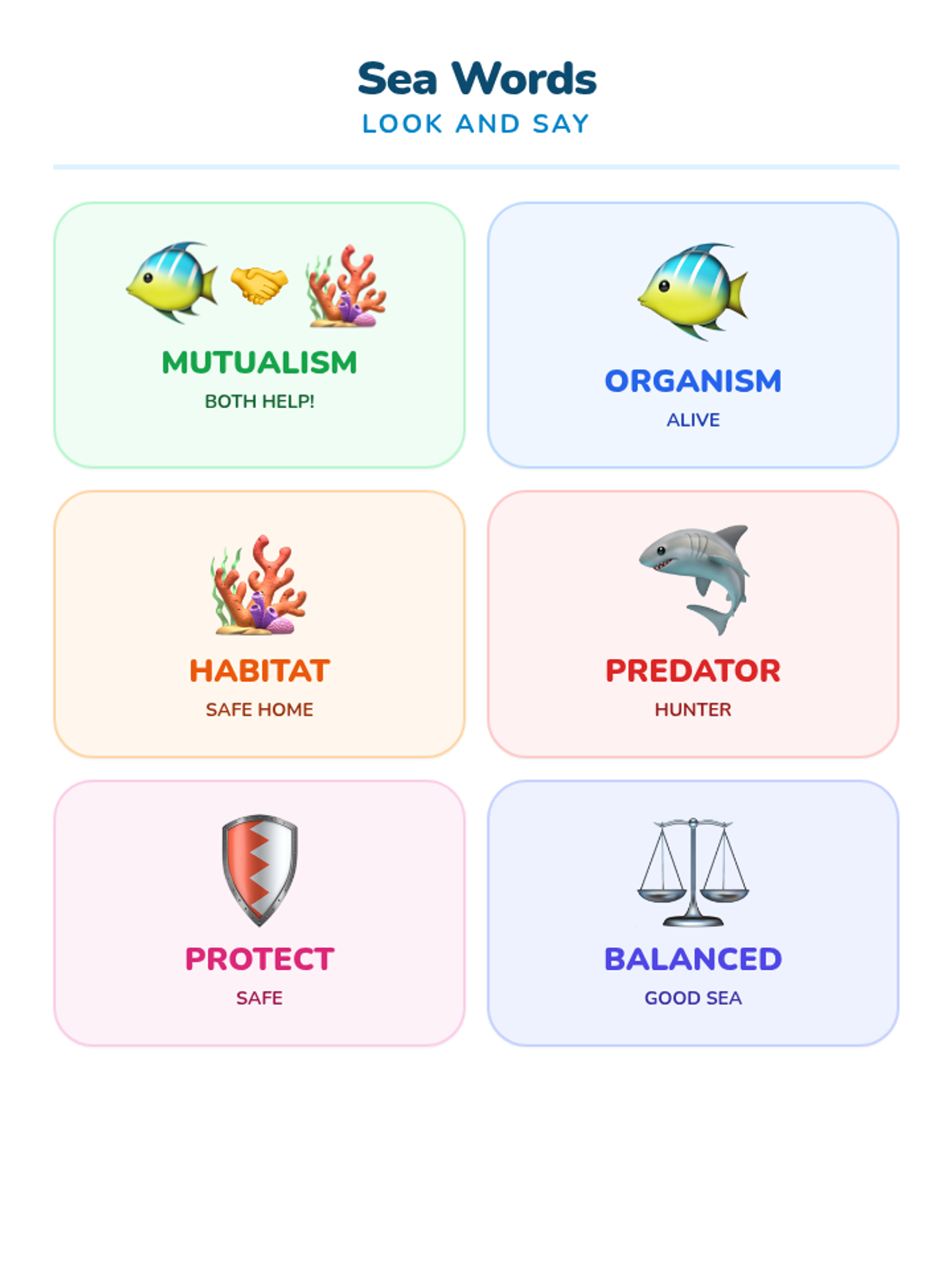
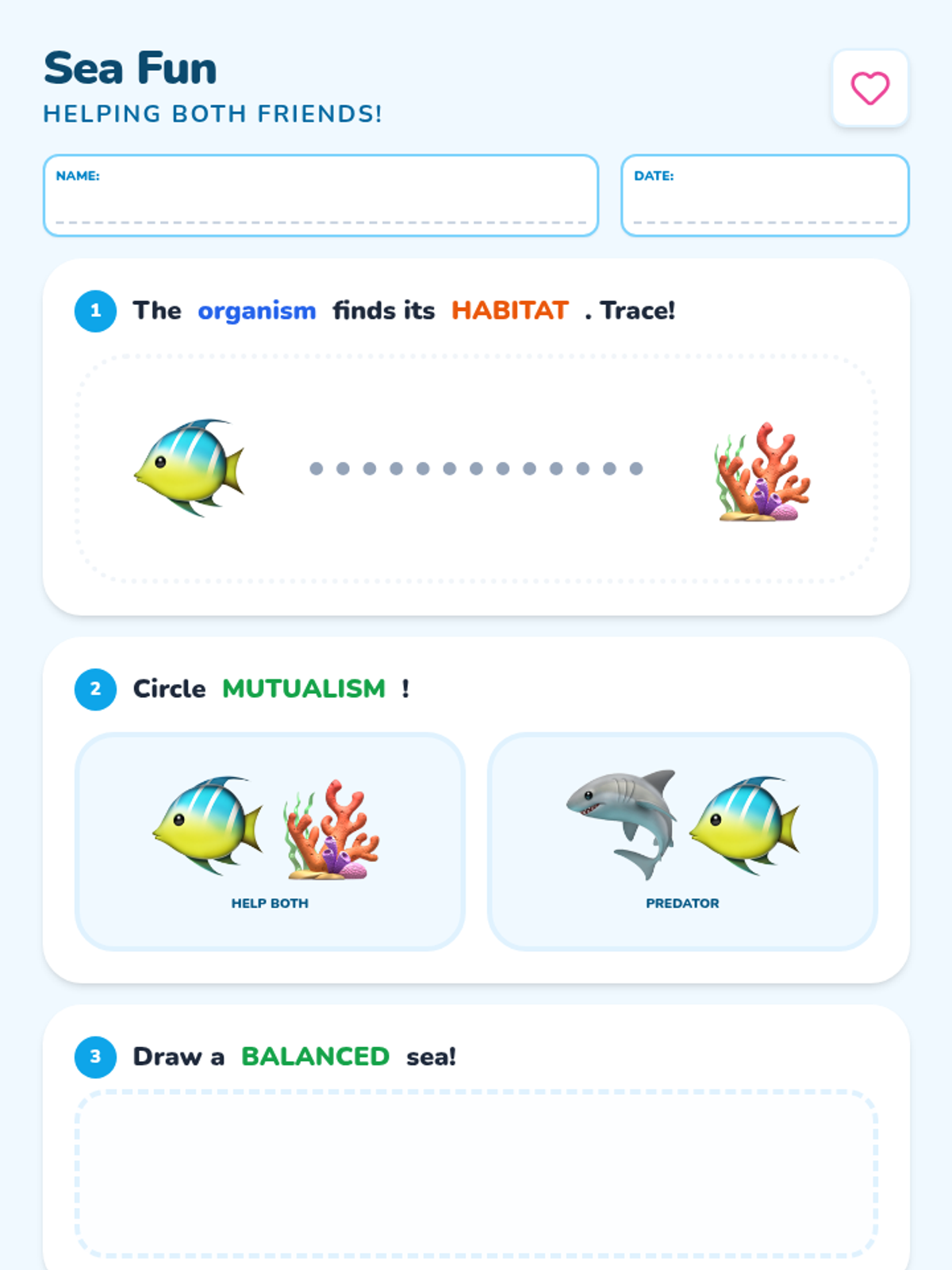
A simple introduction to the symbiotic relationship between clownfish and sea anemones, designed for Pre-K students with limited formal education (SLIFE). The lesson uses high-contrast visuals and basic vocabulary to explain how these ocean animals help each other.
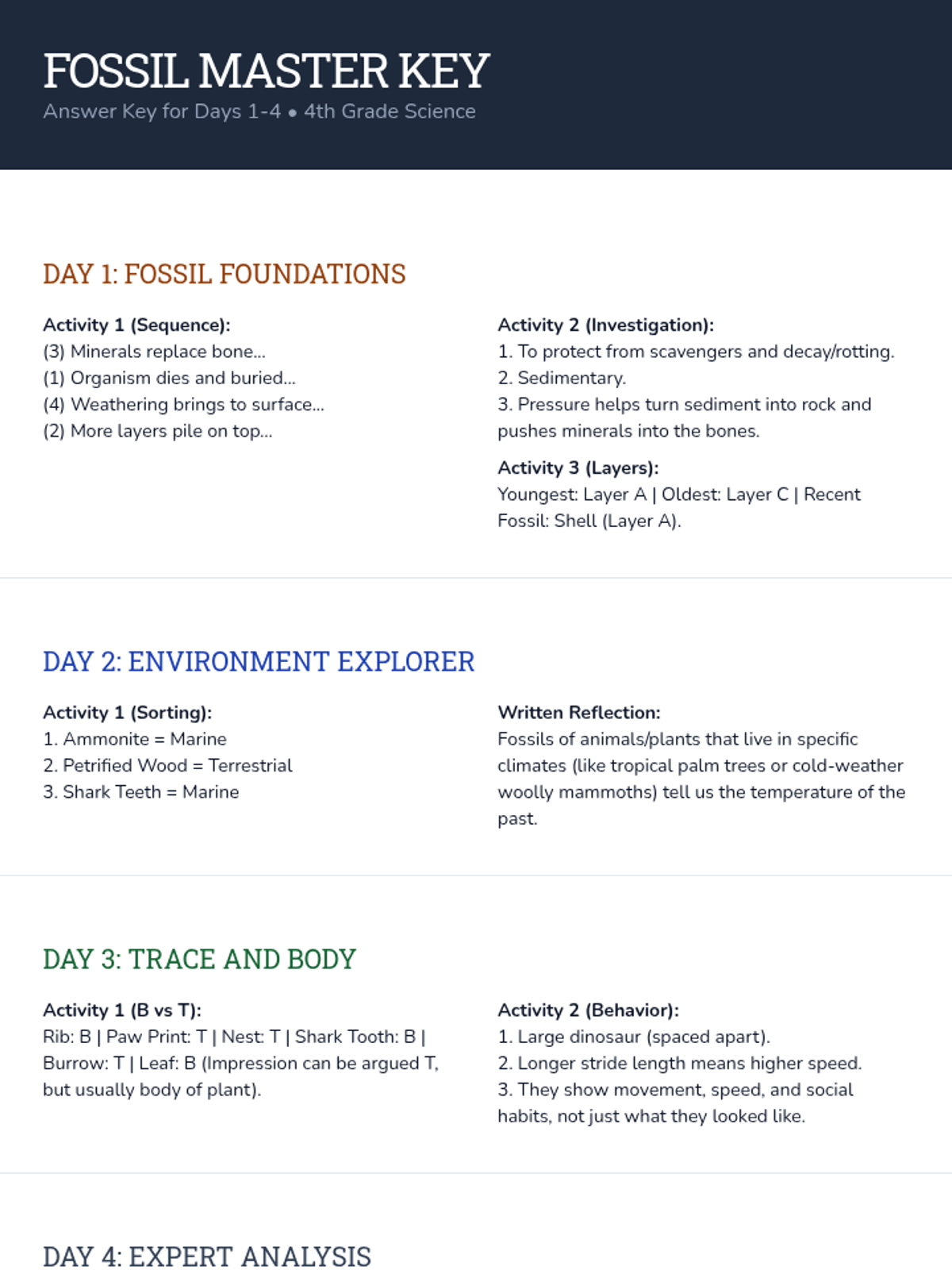
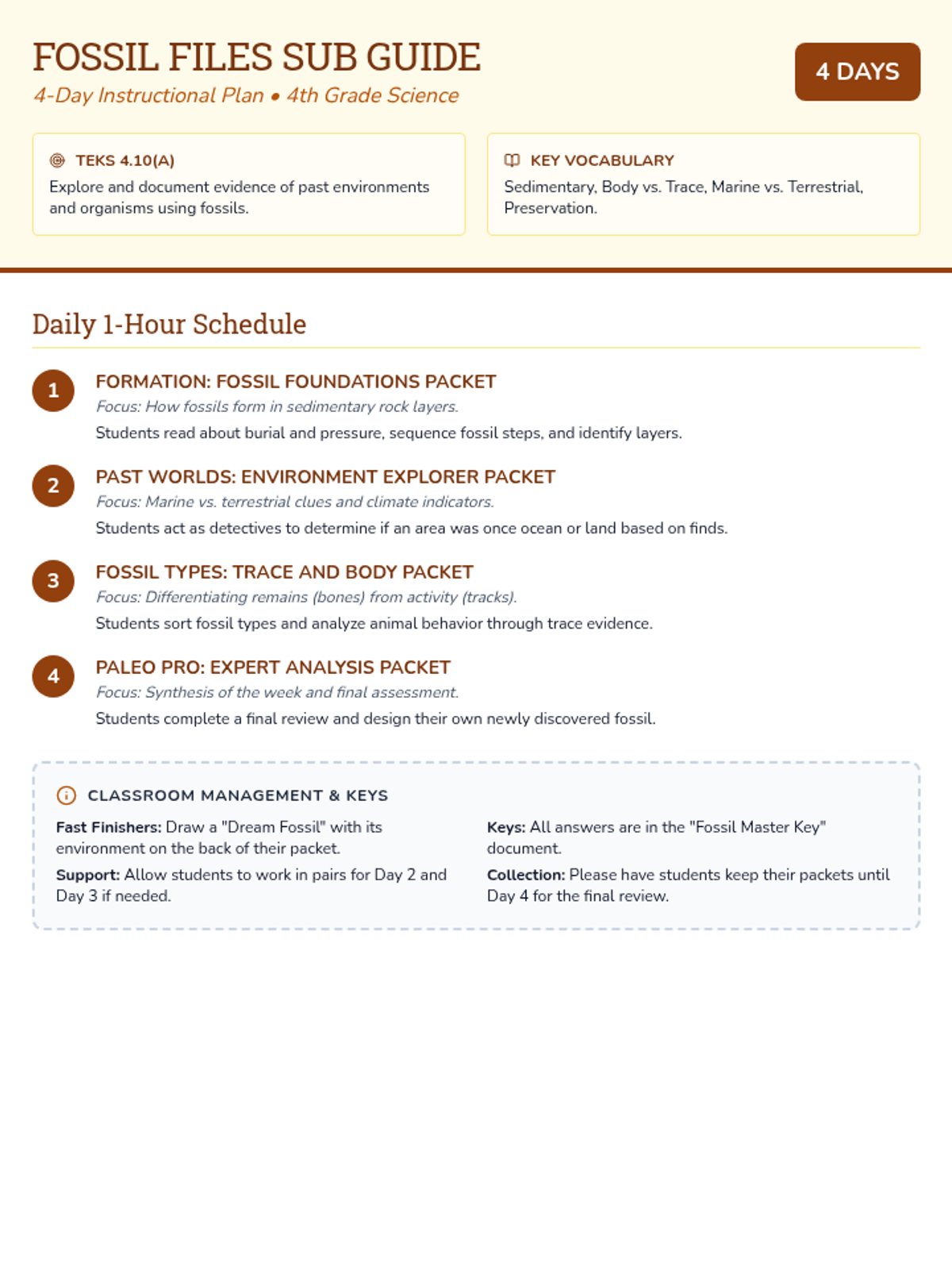
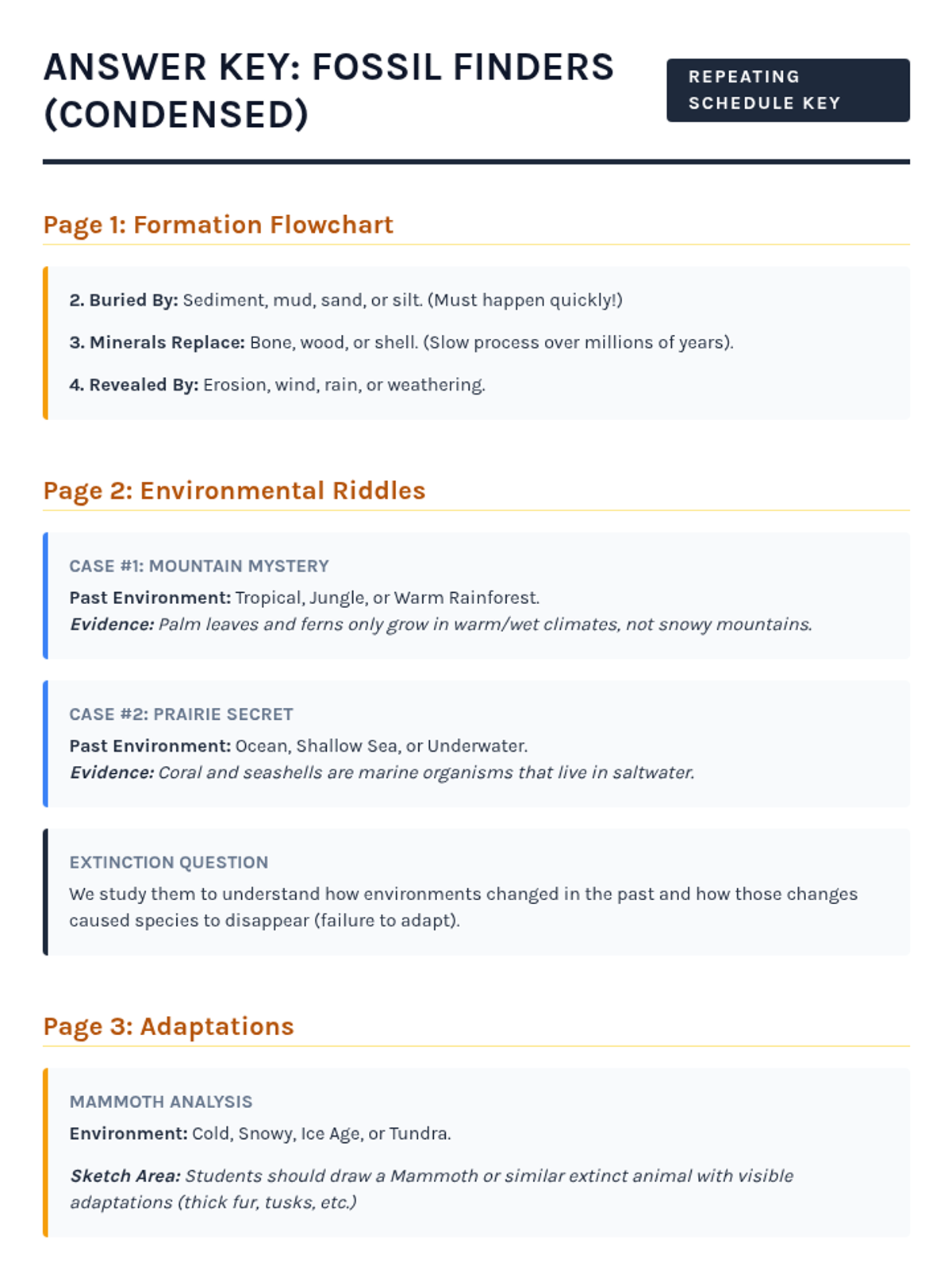
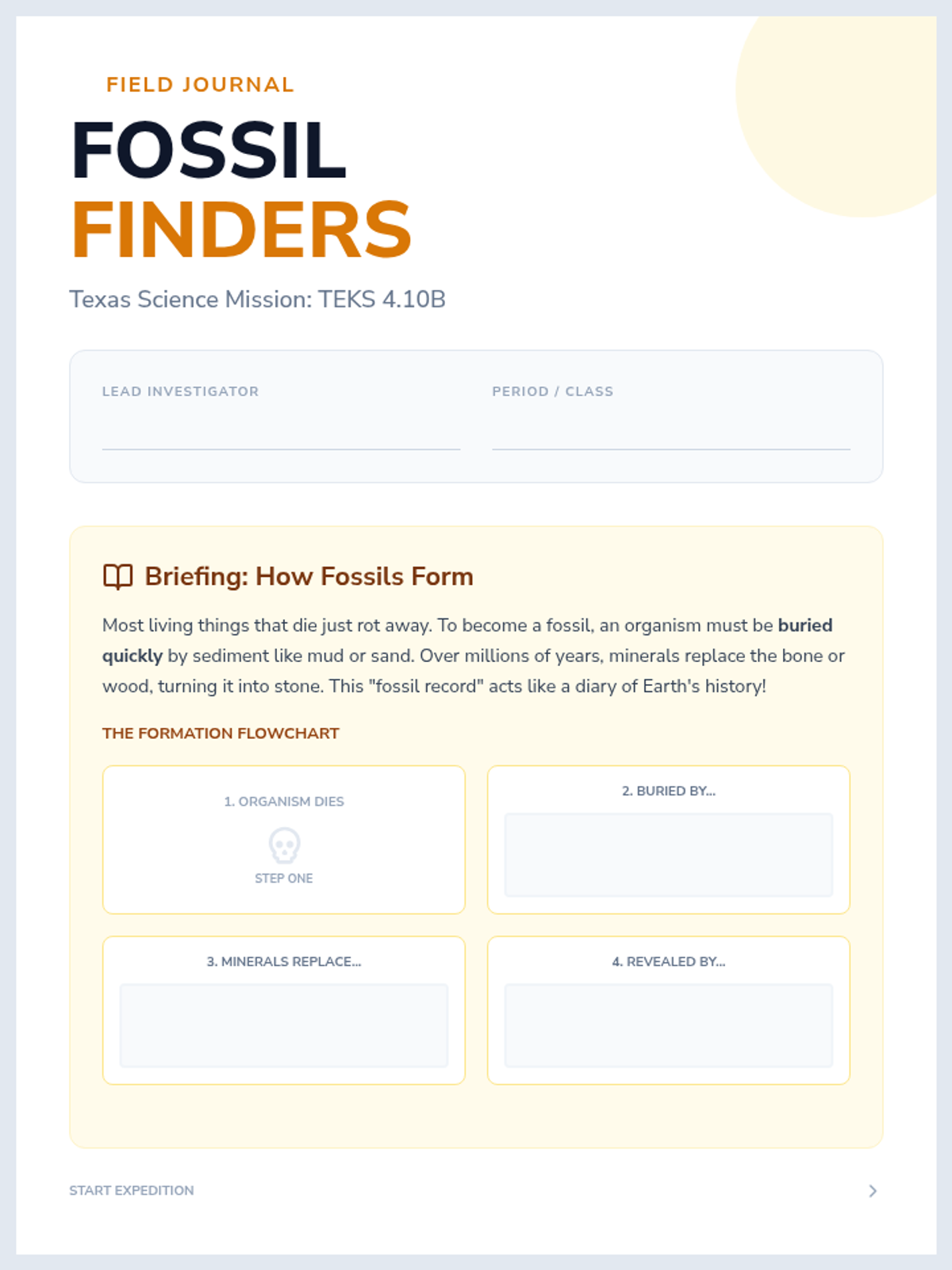
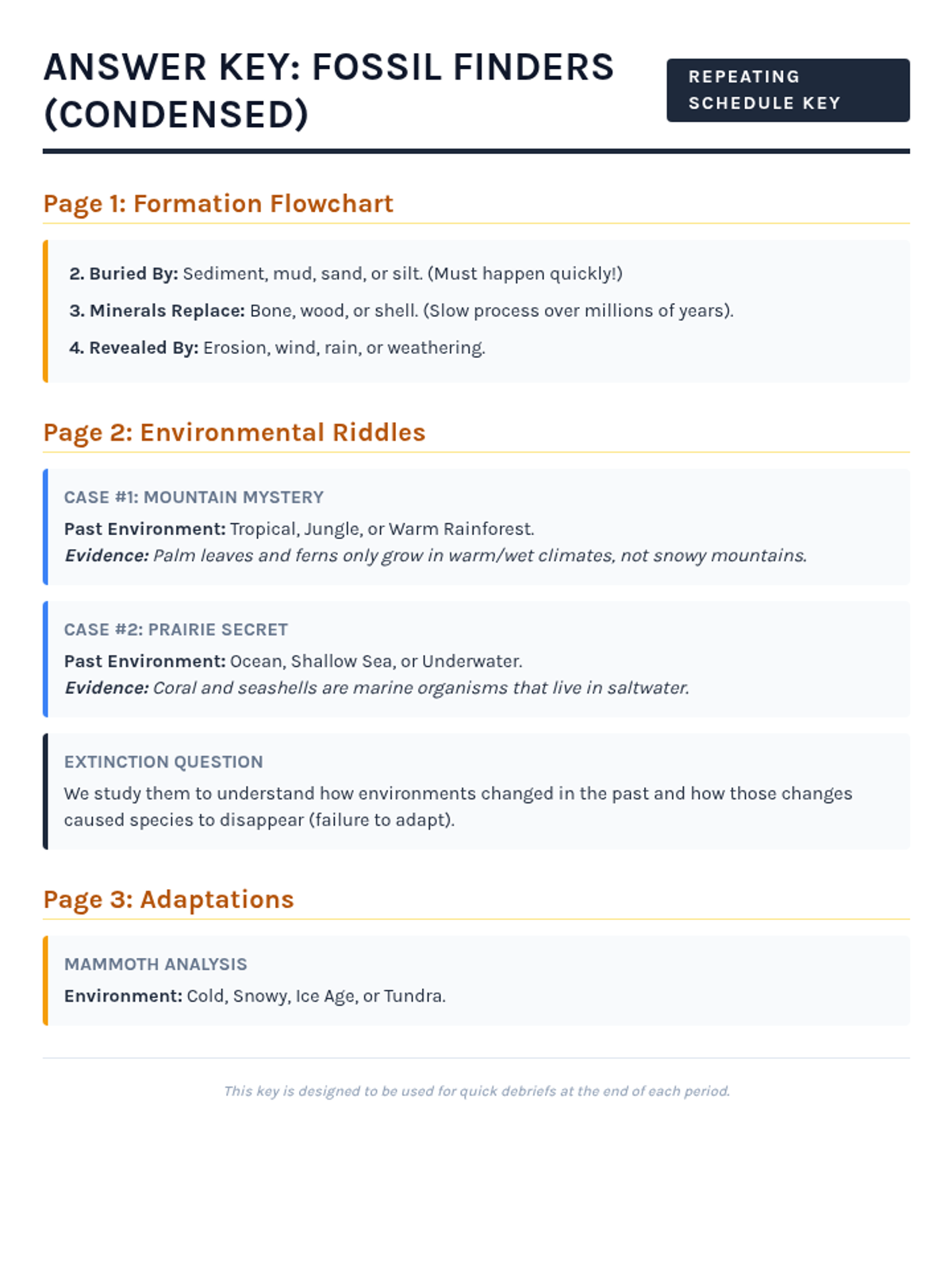
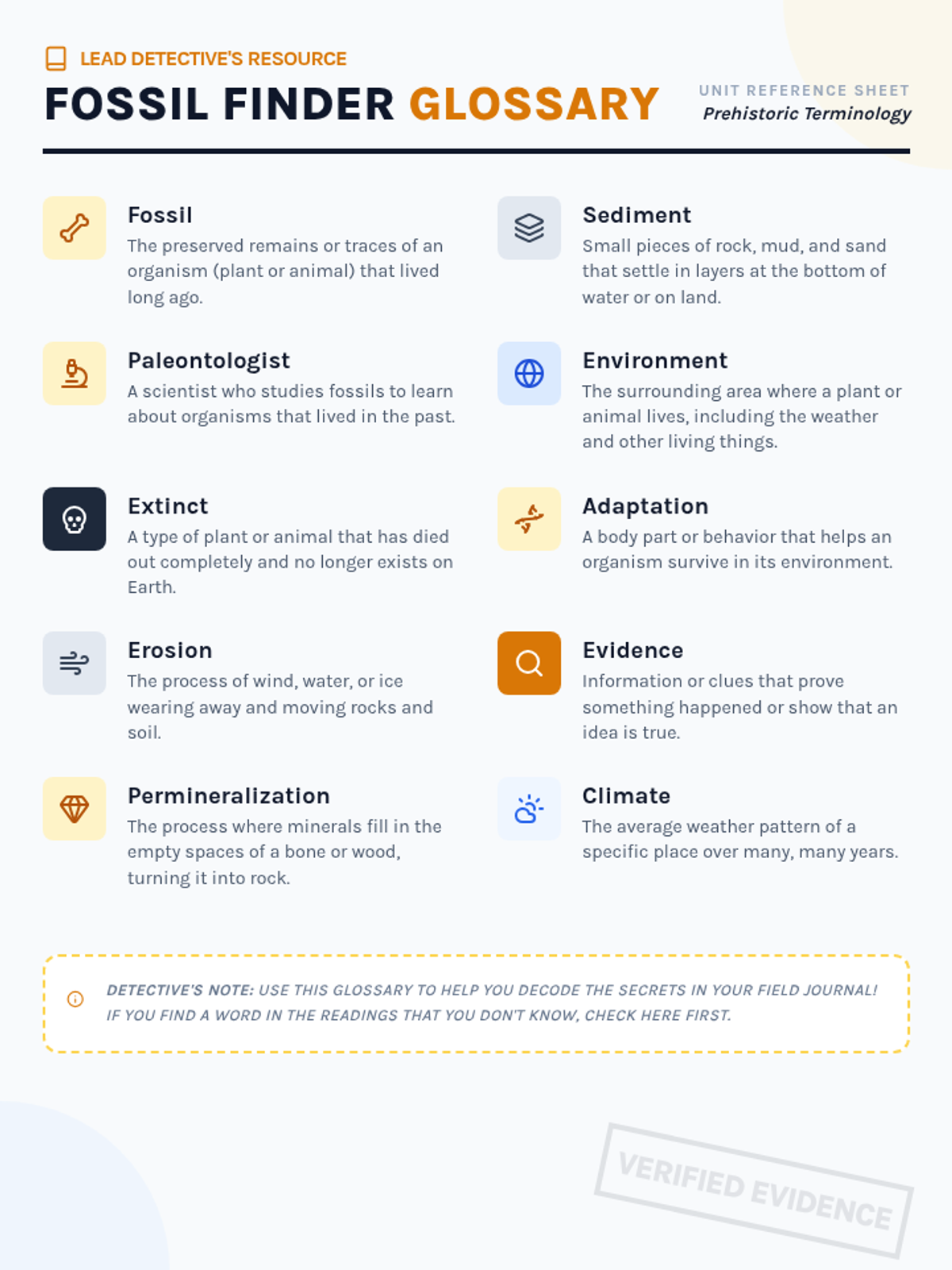
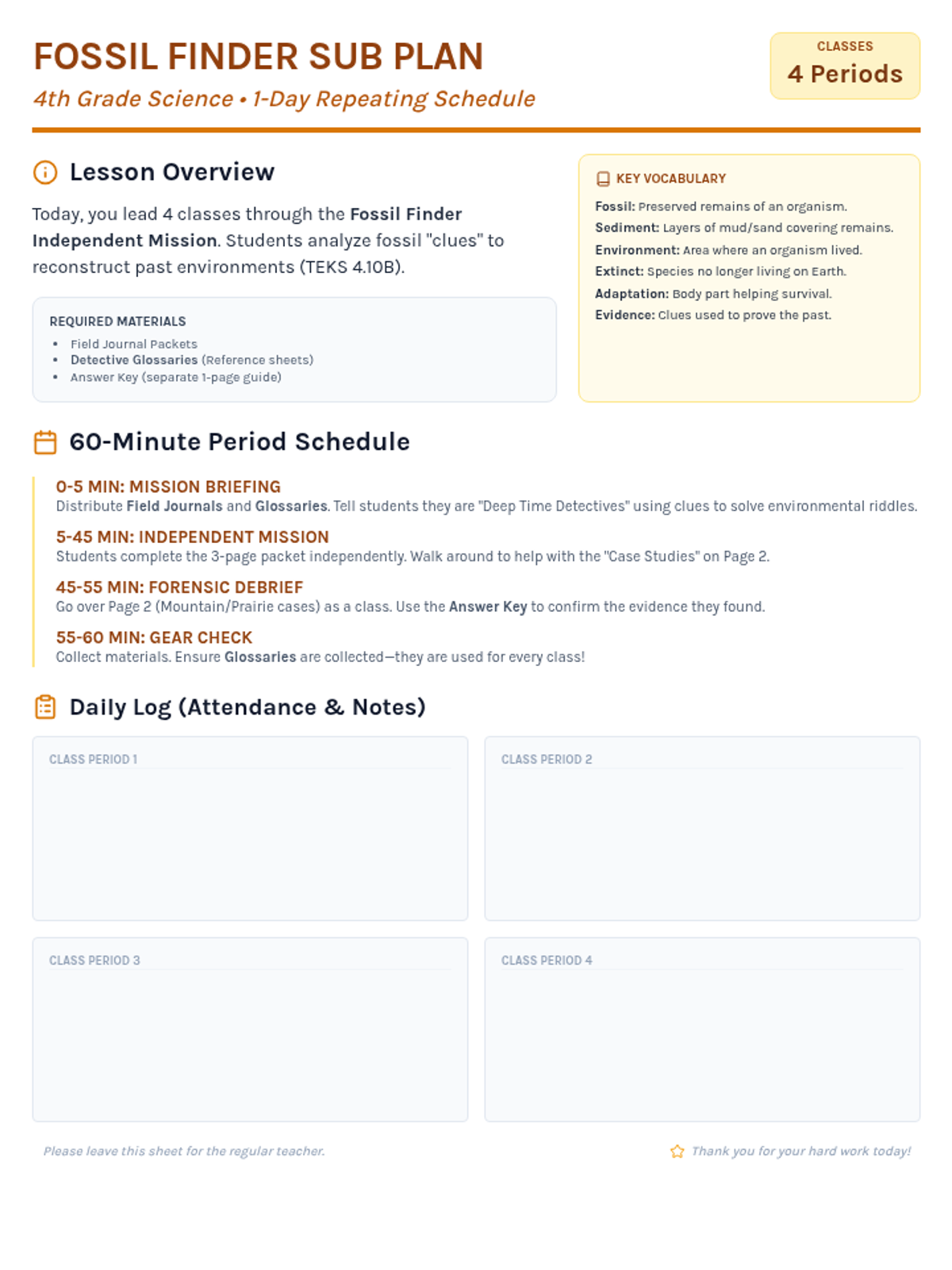
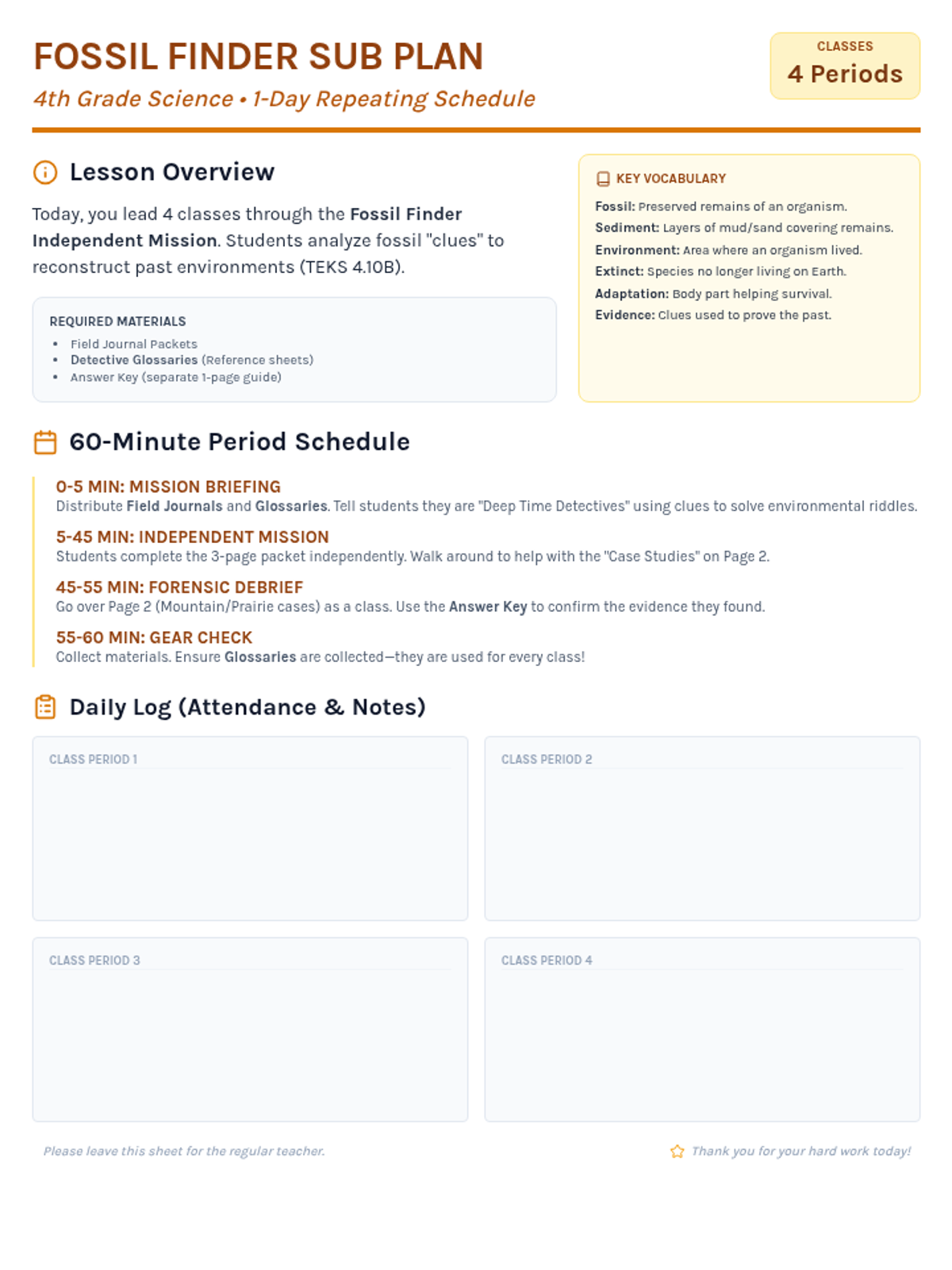
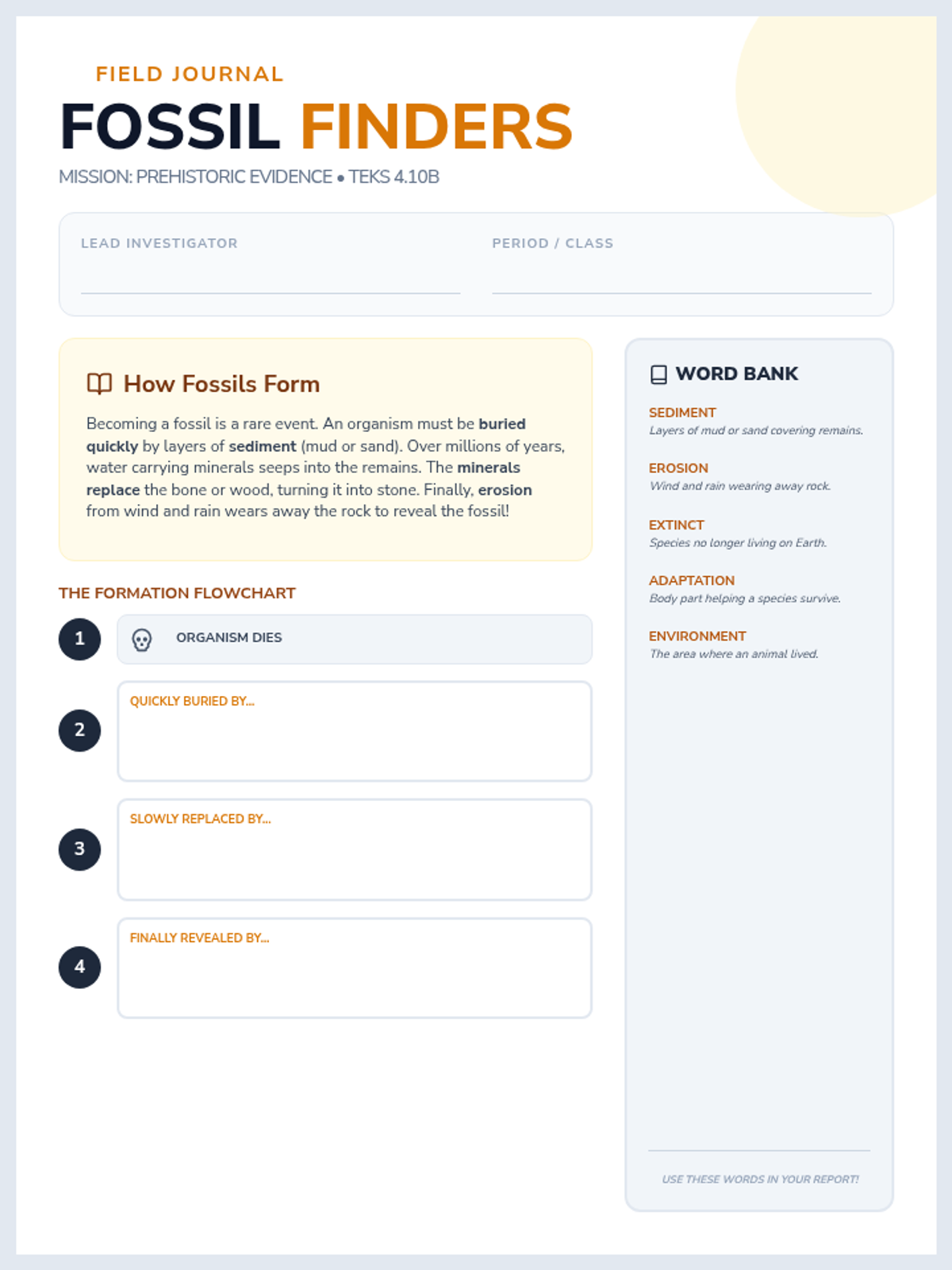
A 4-hour independent learning sequence where students investigate fossil formation, environmental changes over time, and the secrets of the fossil record.
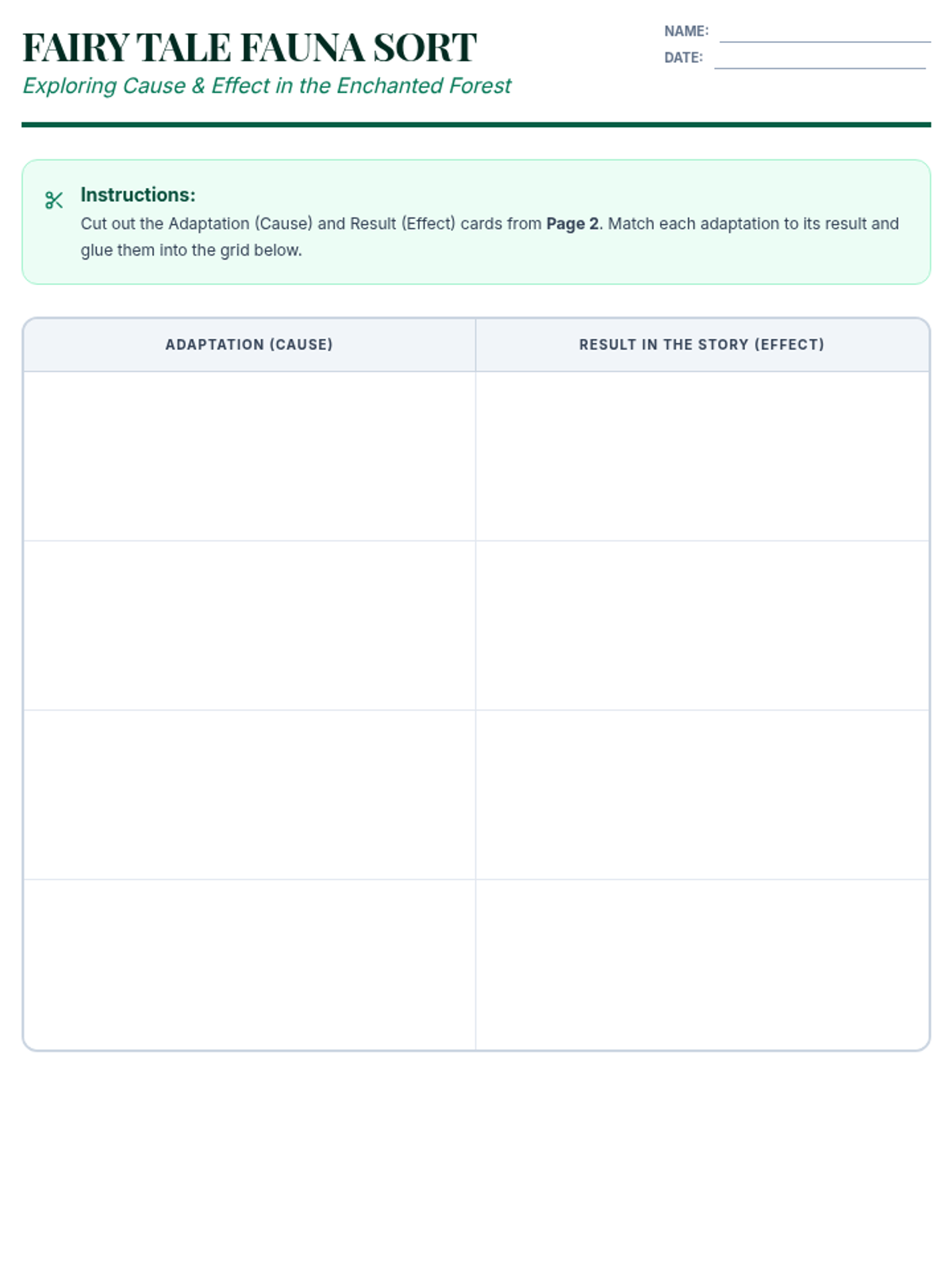
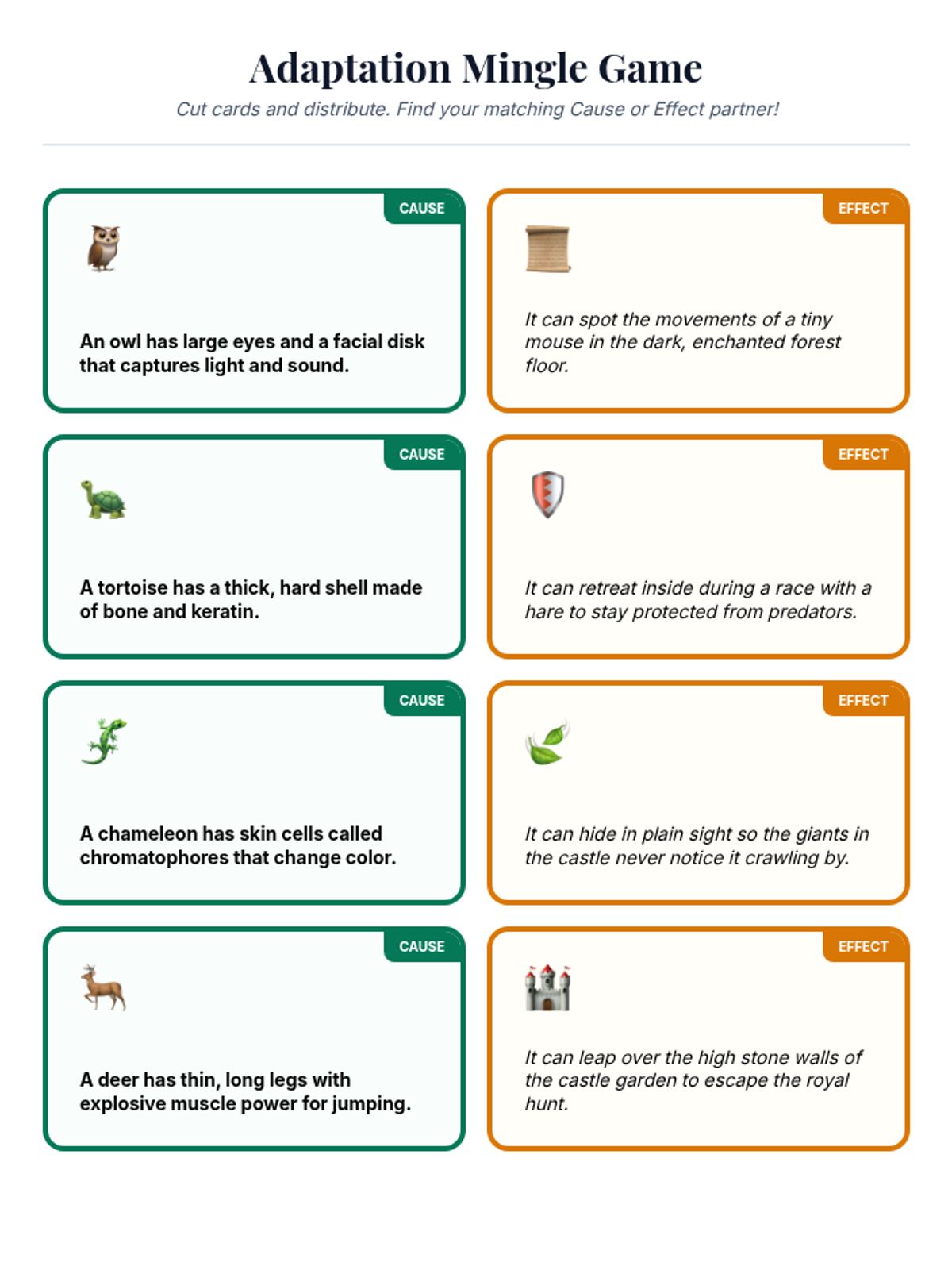
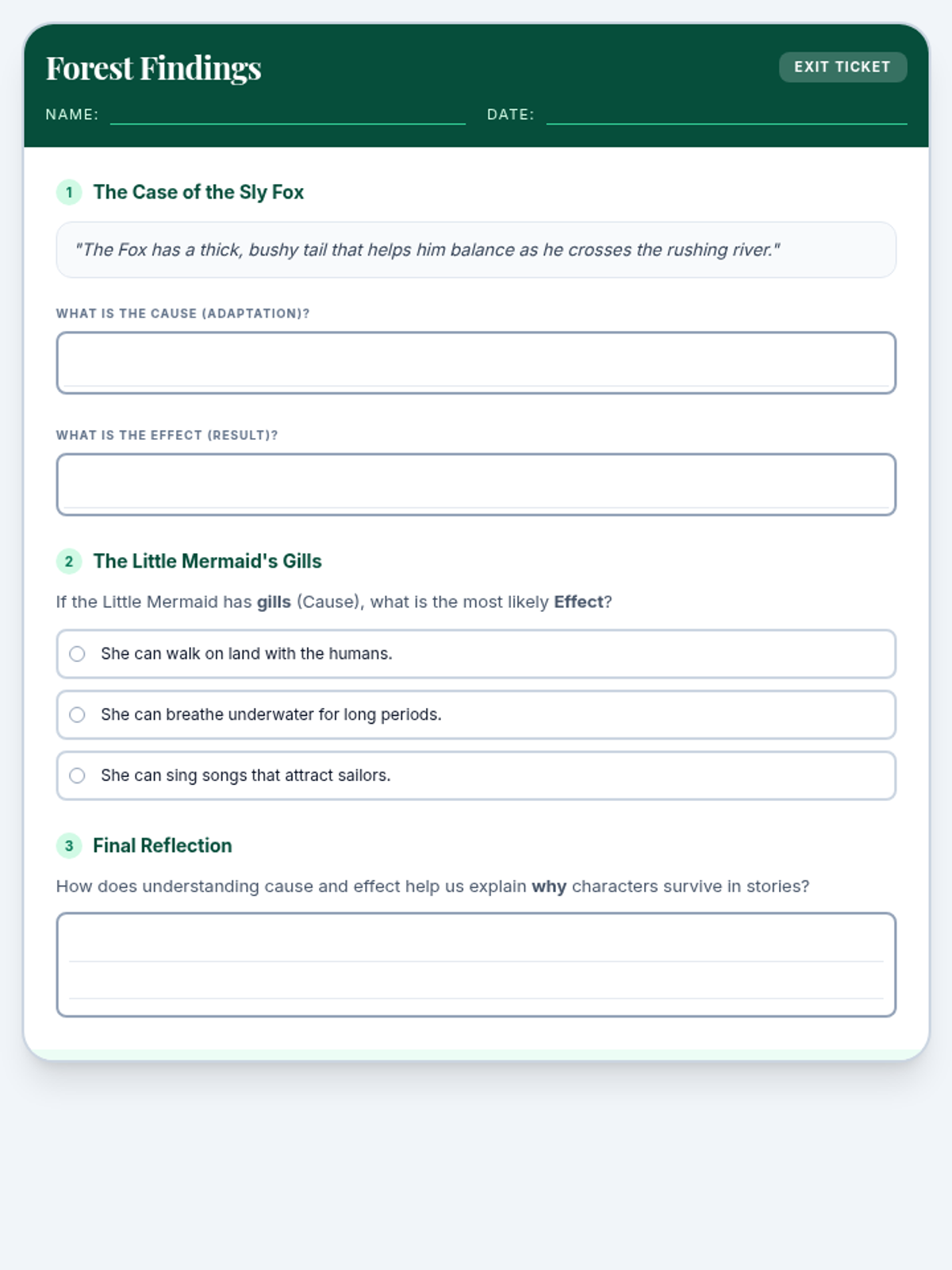
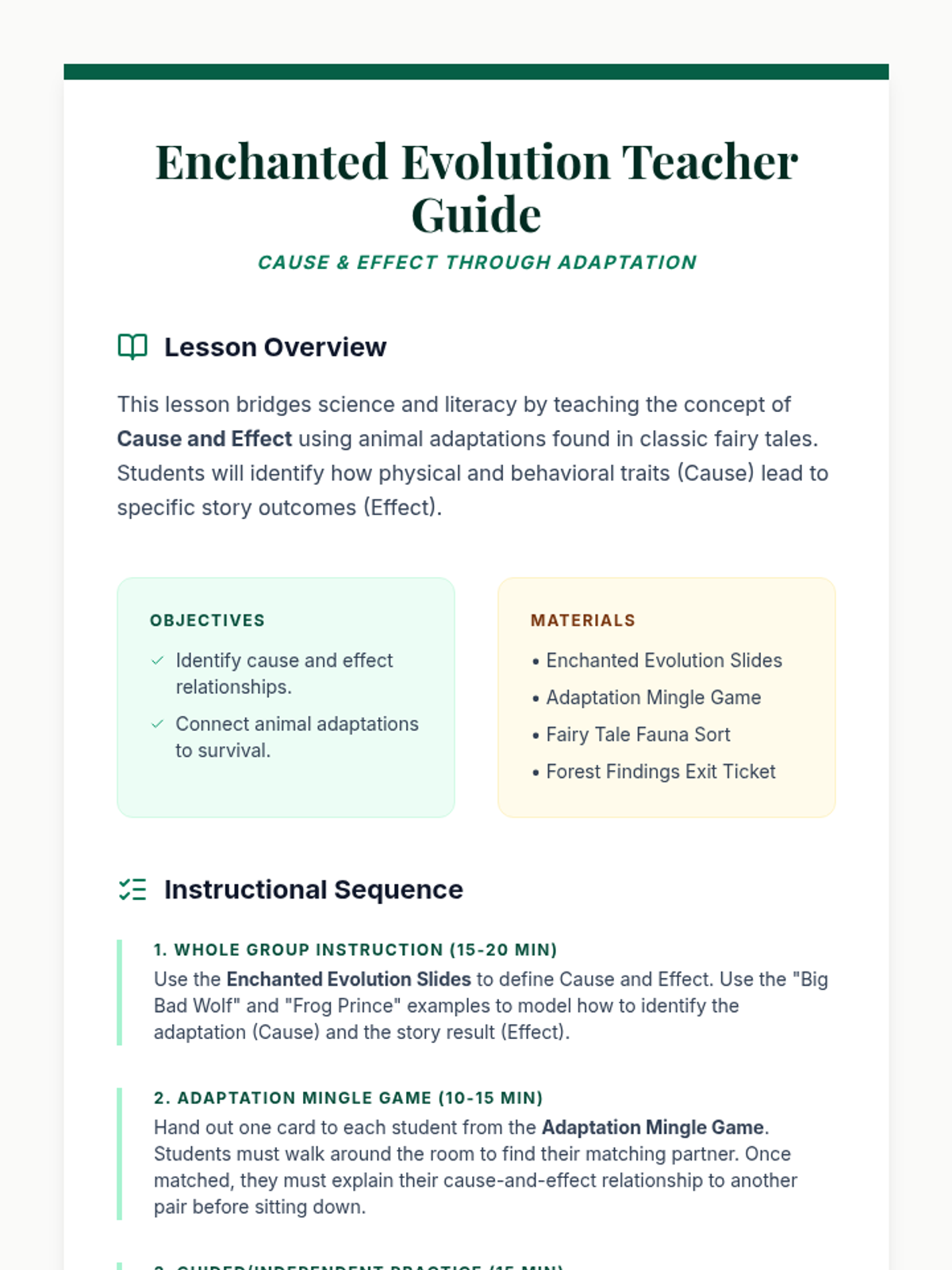
A whole-group lesson where students identify cause and effect relationships by analyzing how animal adaptations help fairy tale creatures survive their stories.
A fun, visual field trip experience for Pre-K students to explore specific animal species at the zoo through a scavenger hunt and guided discussion.
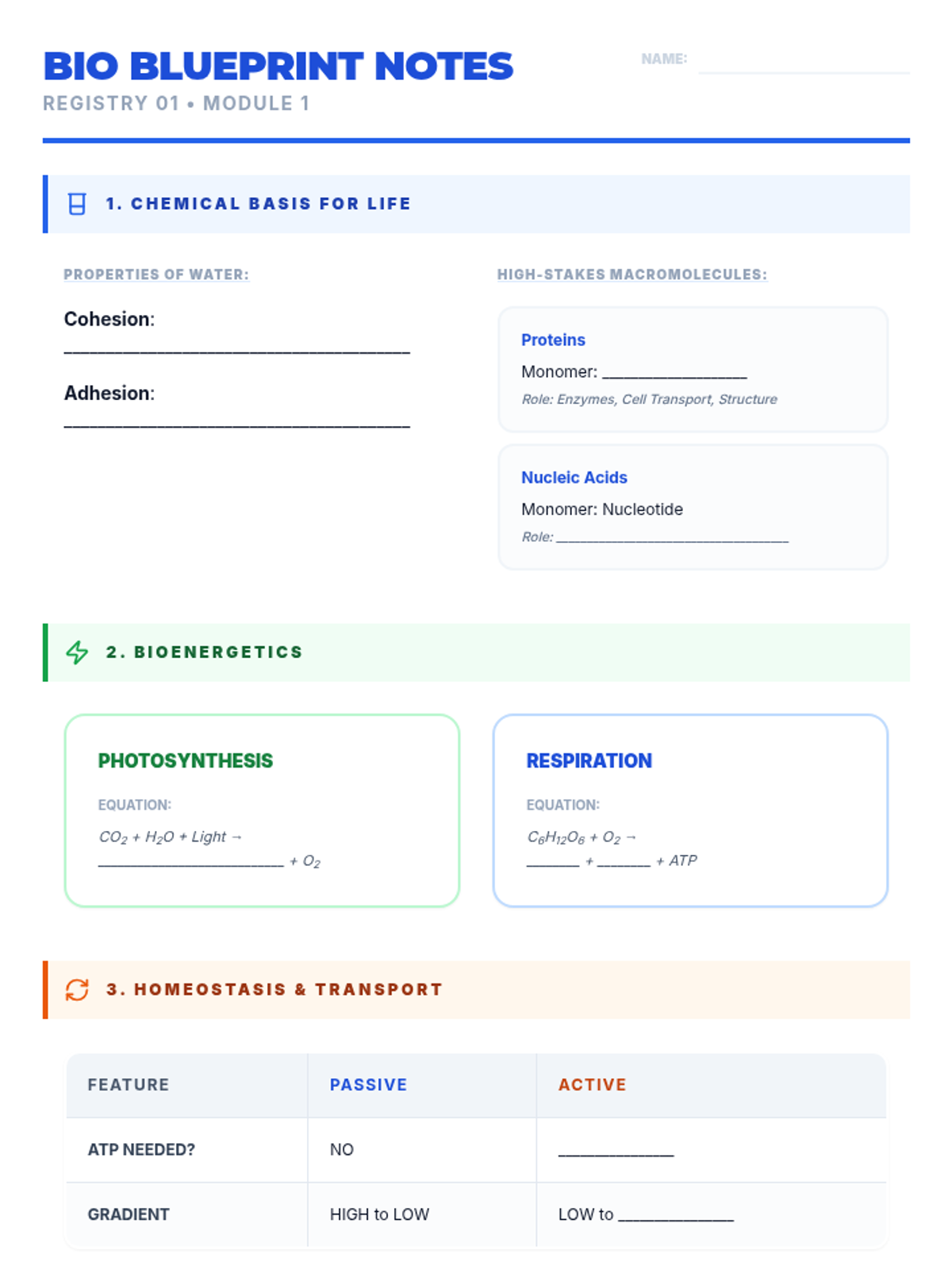
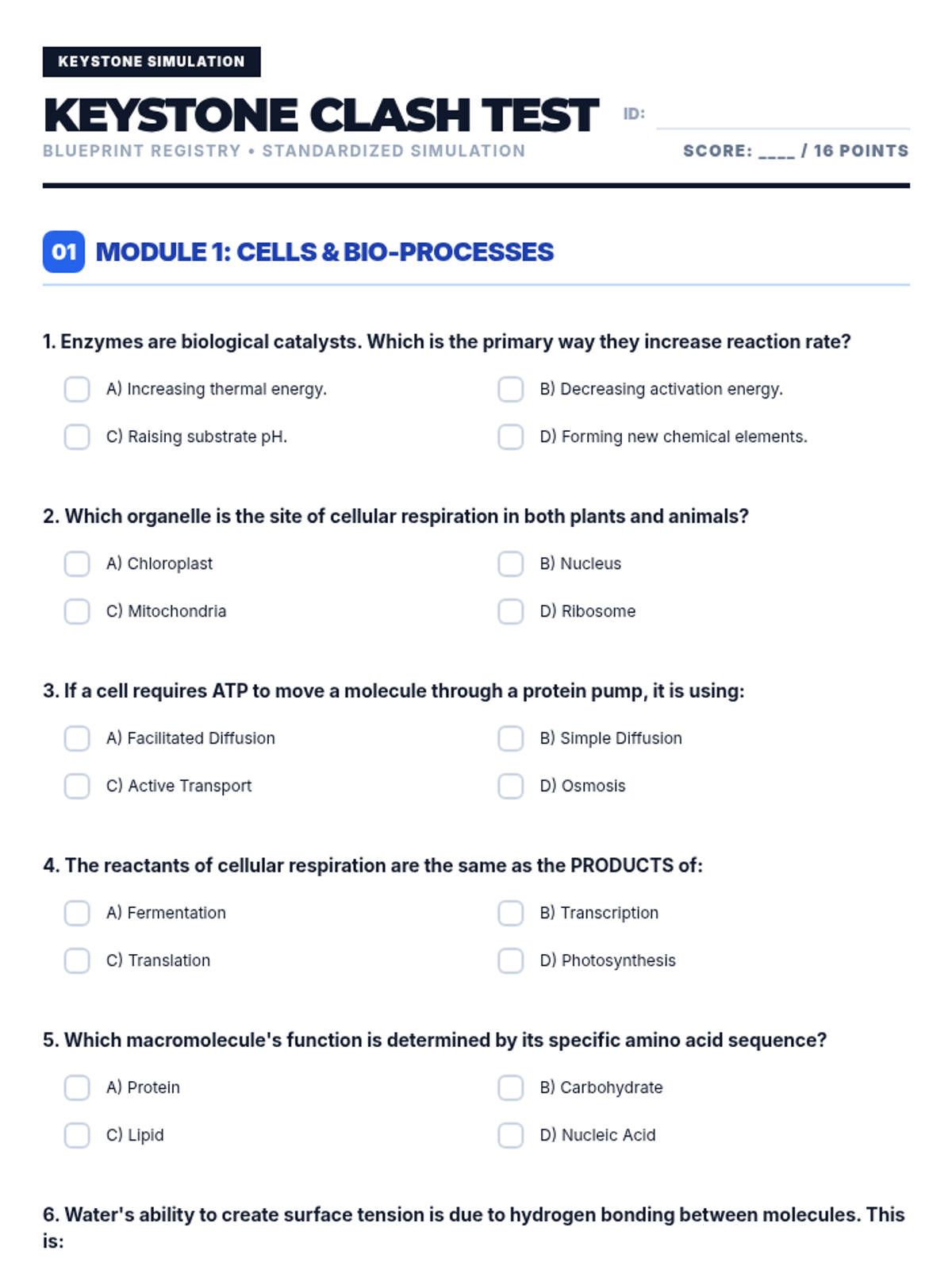
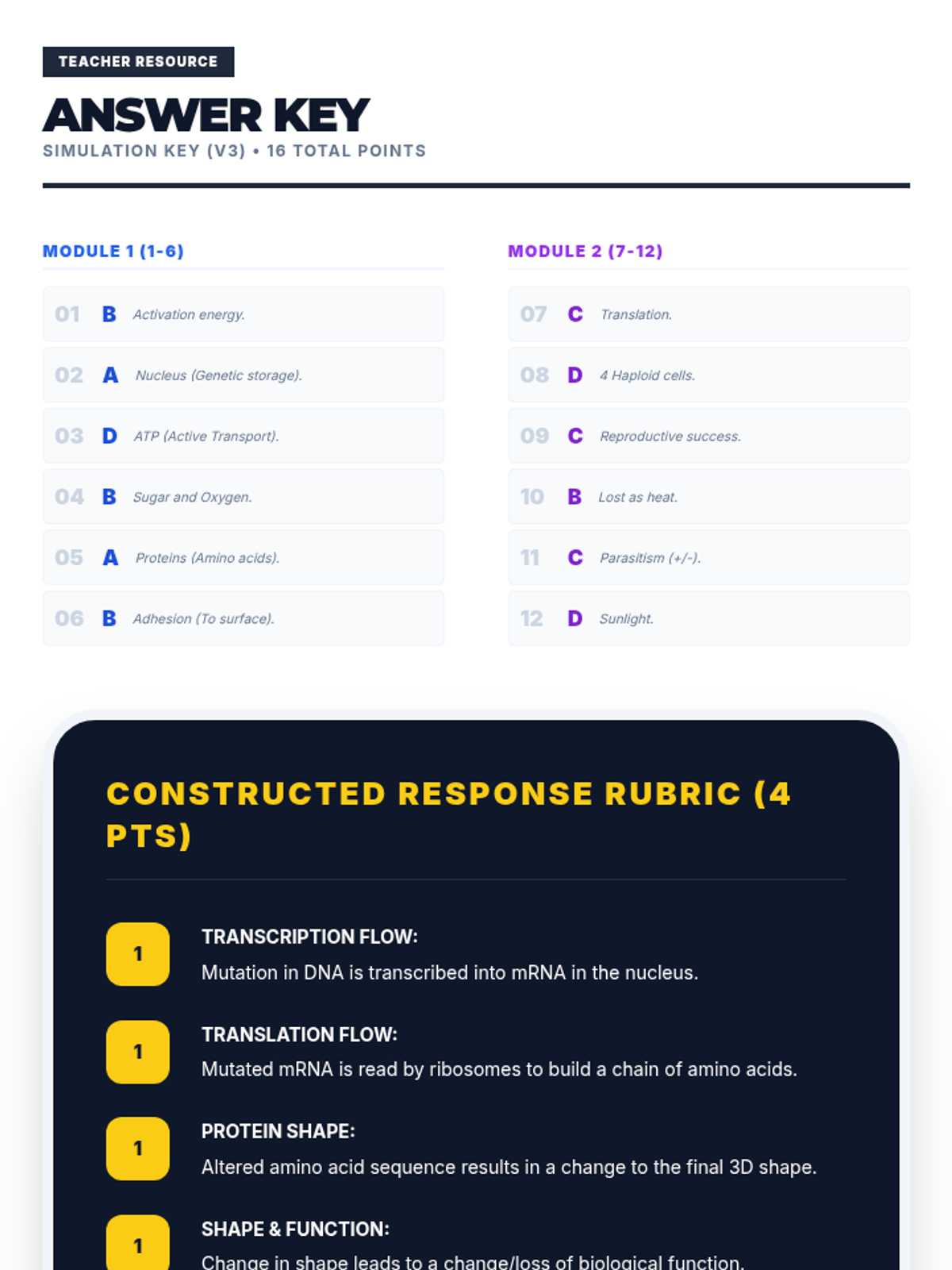
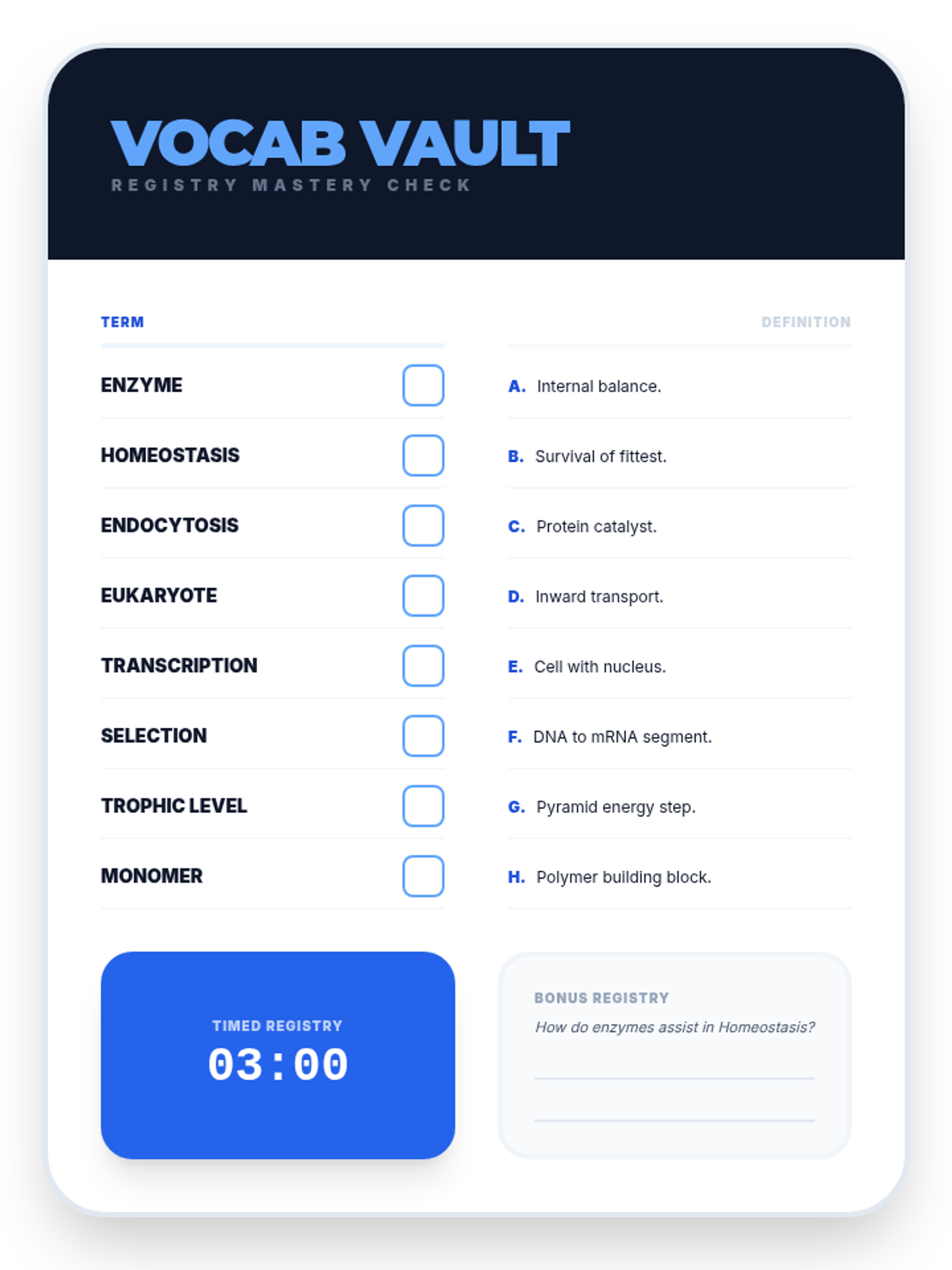
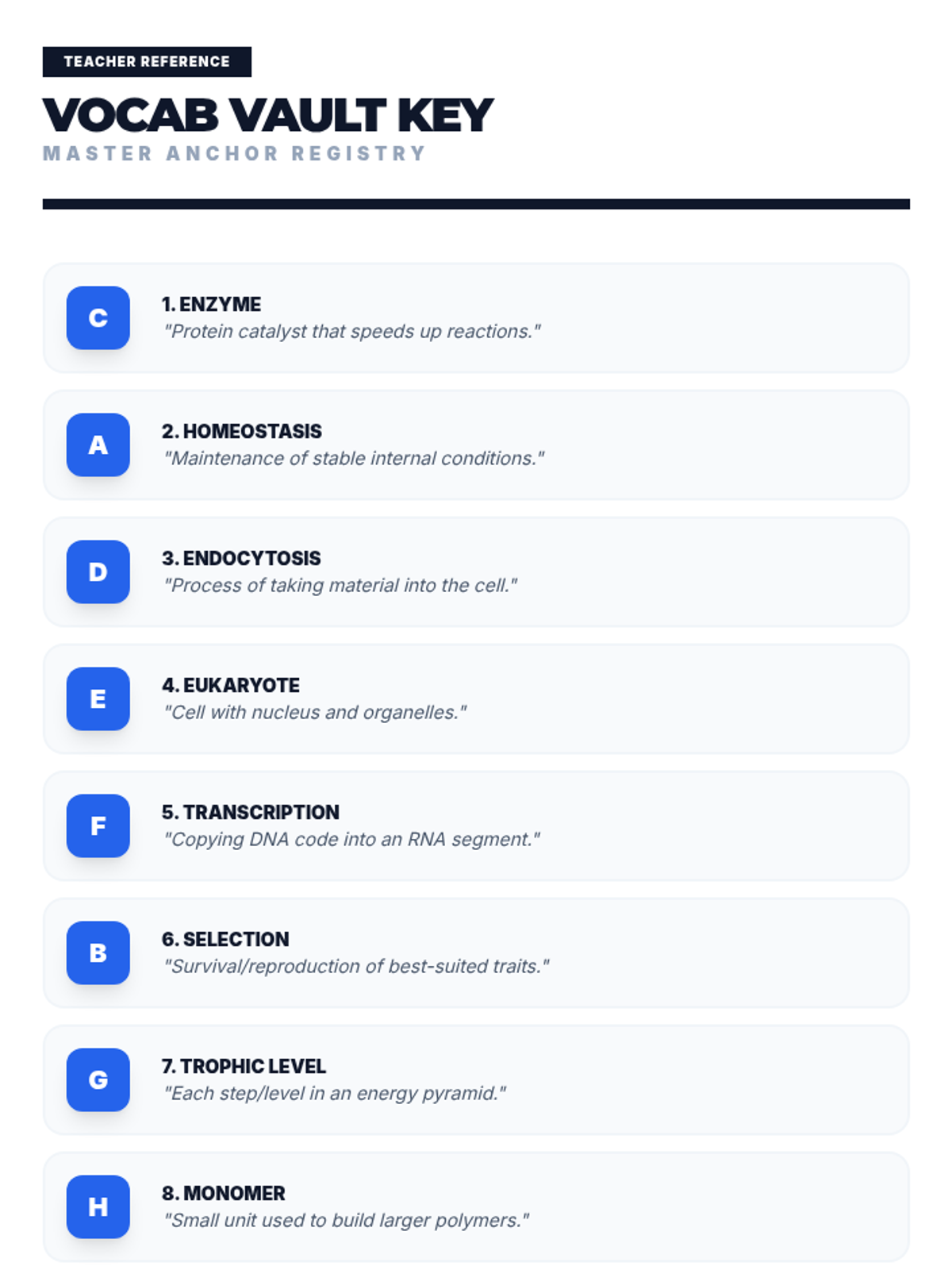
A comprehensive review session covering all Pennsylvania Biology Keystone Assessment Anchors, featuring guided notes, practice assessments, and visual aids to ensure student mastery of both modules.
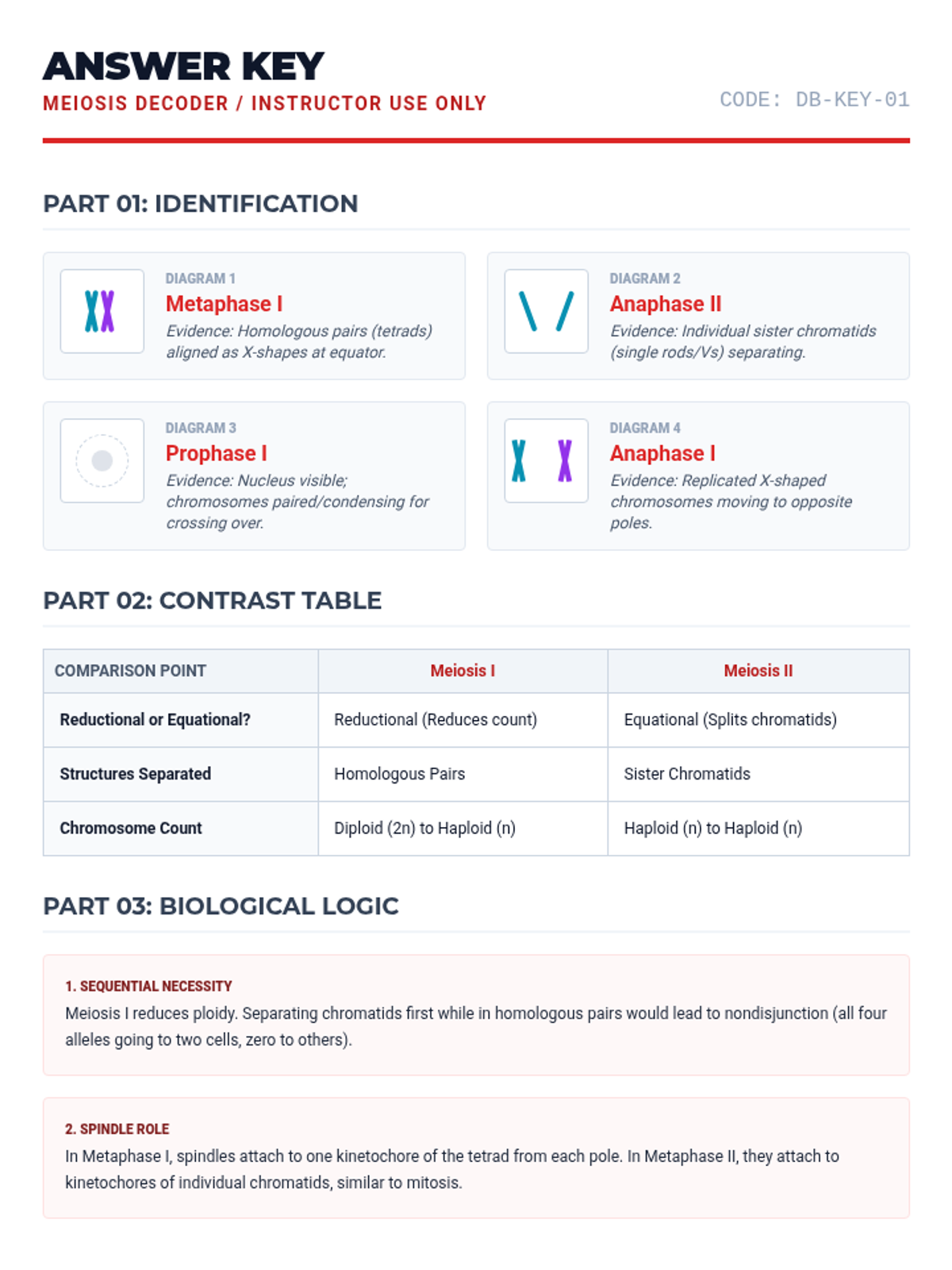
A comprehensive guide to meiosis, focusing on the structural and functional differences between Meiosis I and Meiosis II through visual identification and comparative analysis.
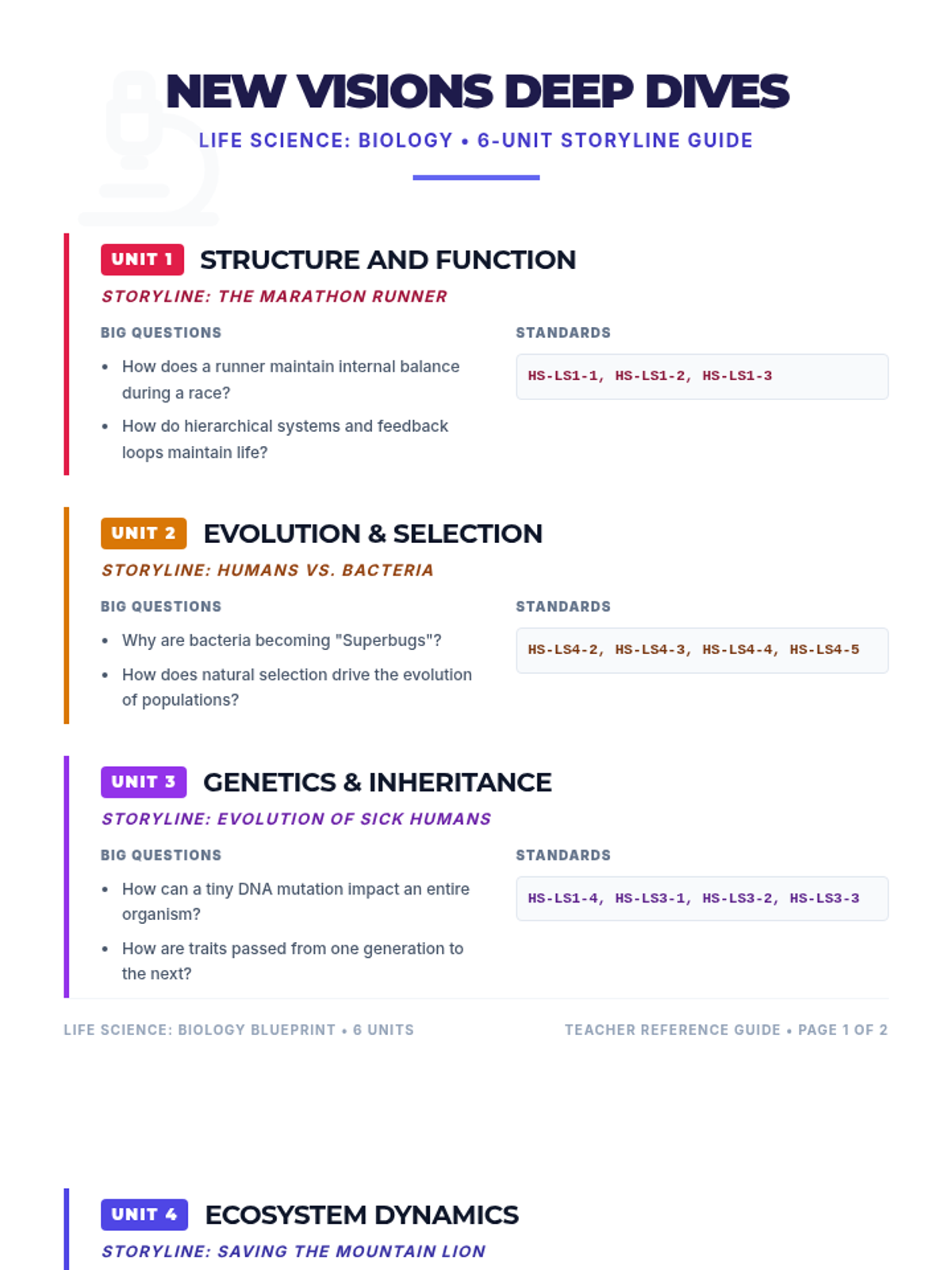
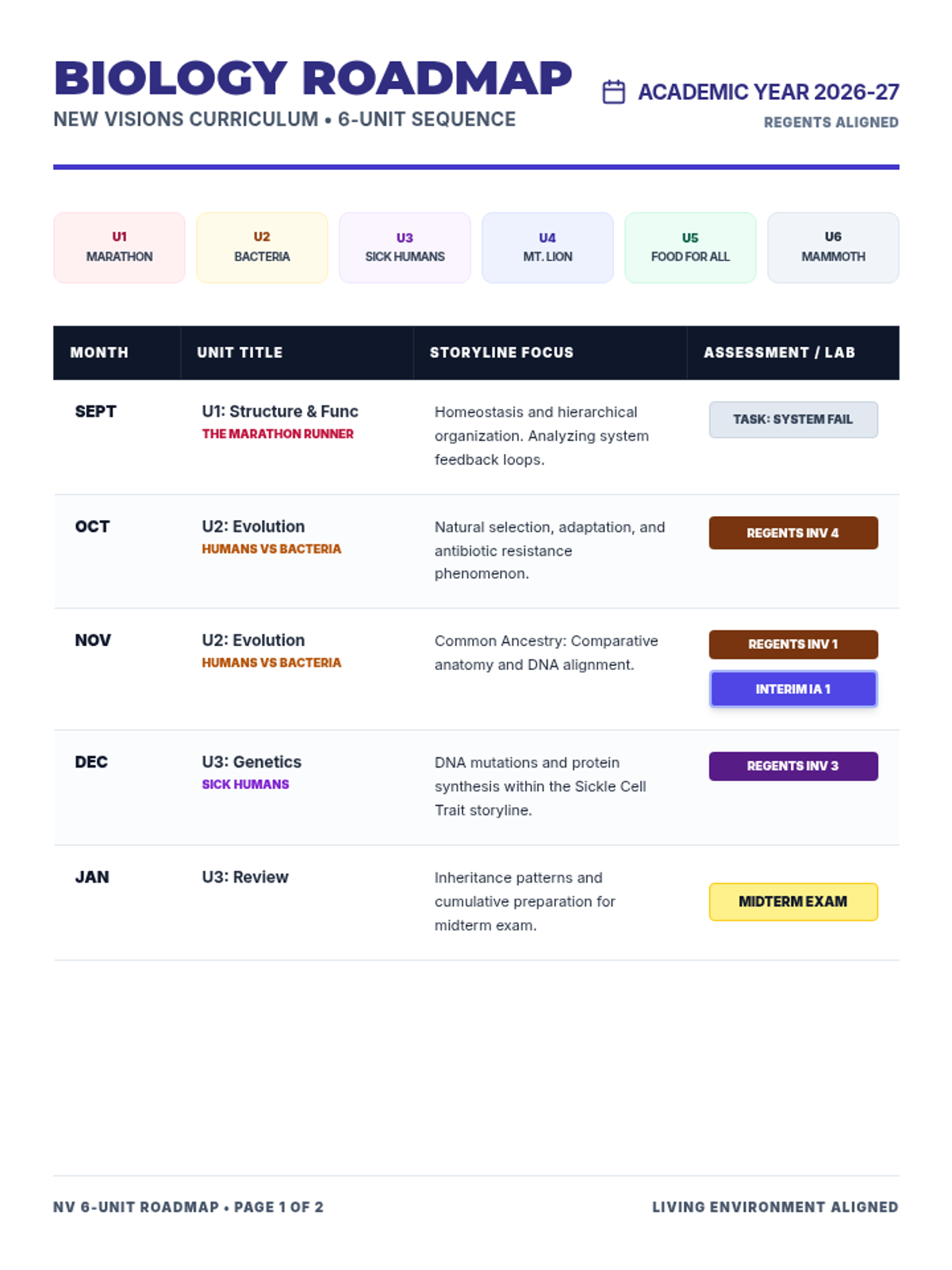
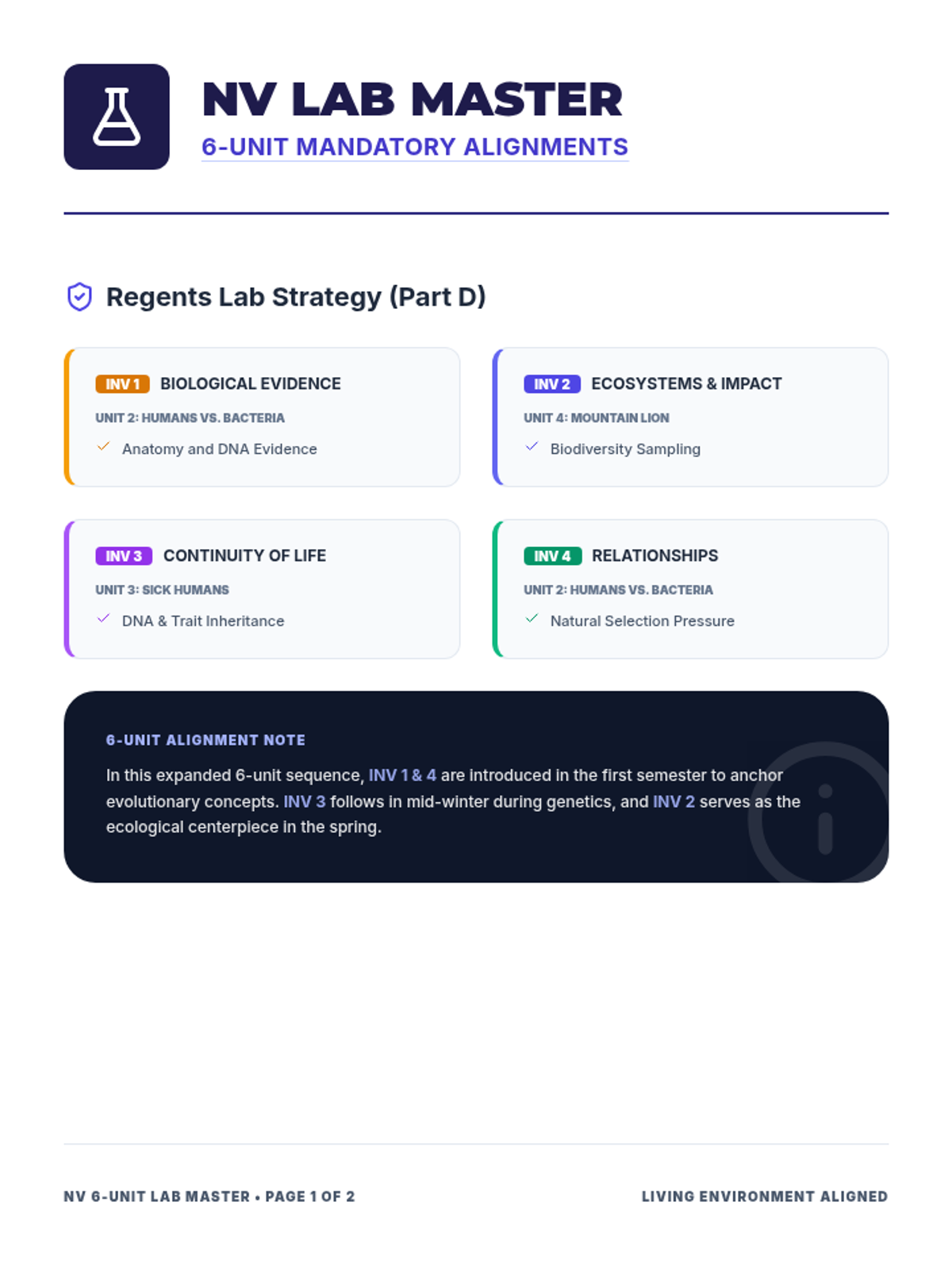
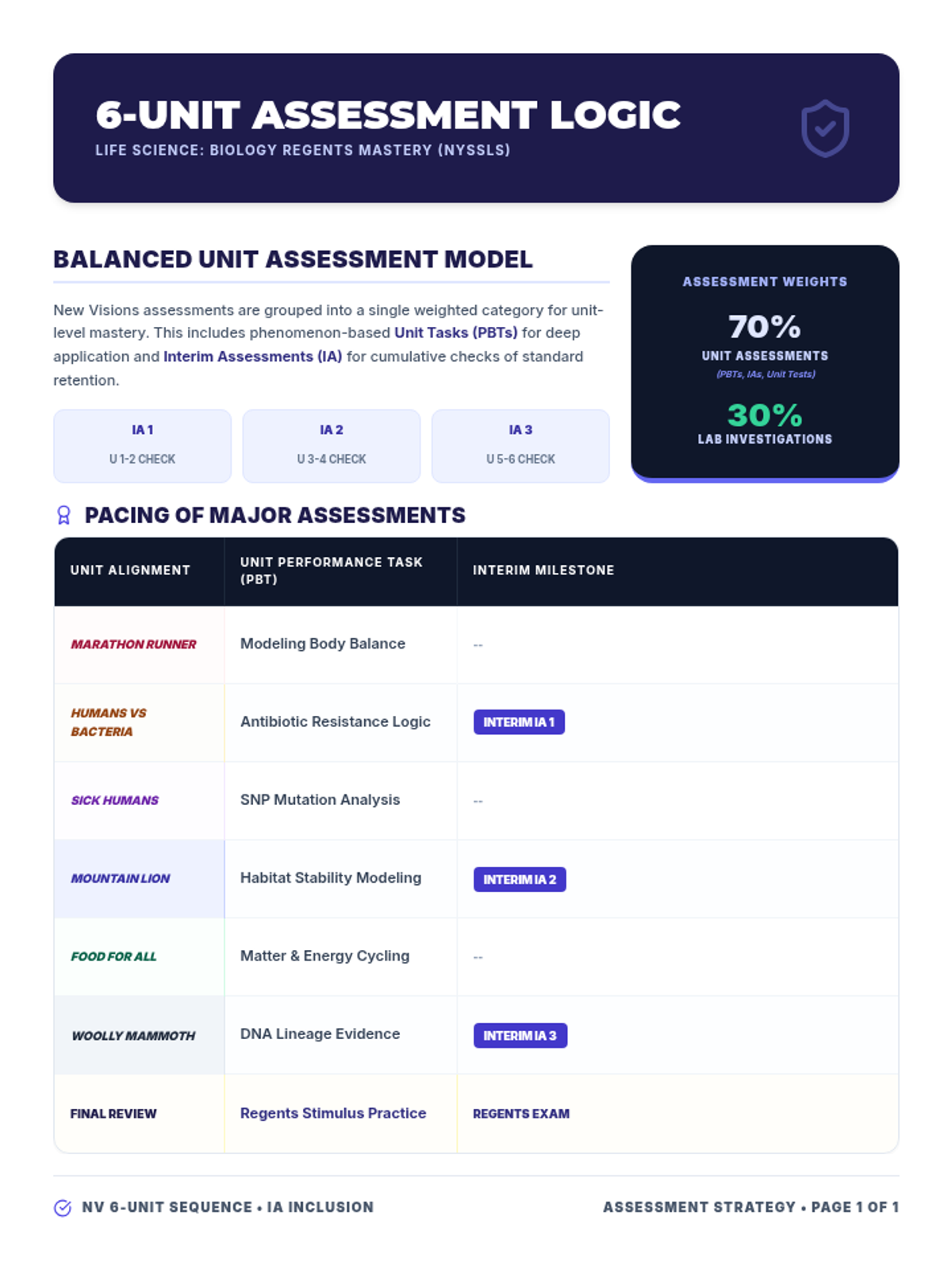
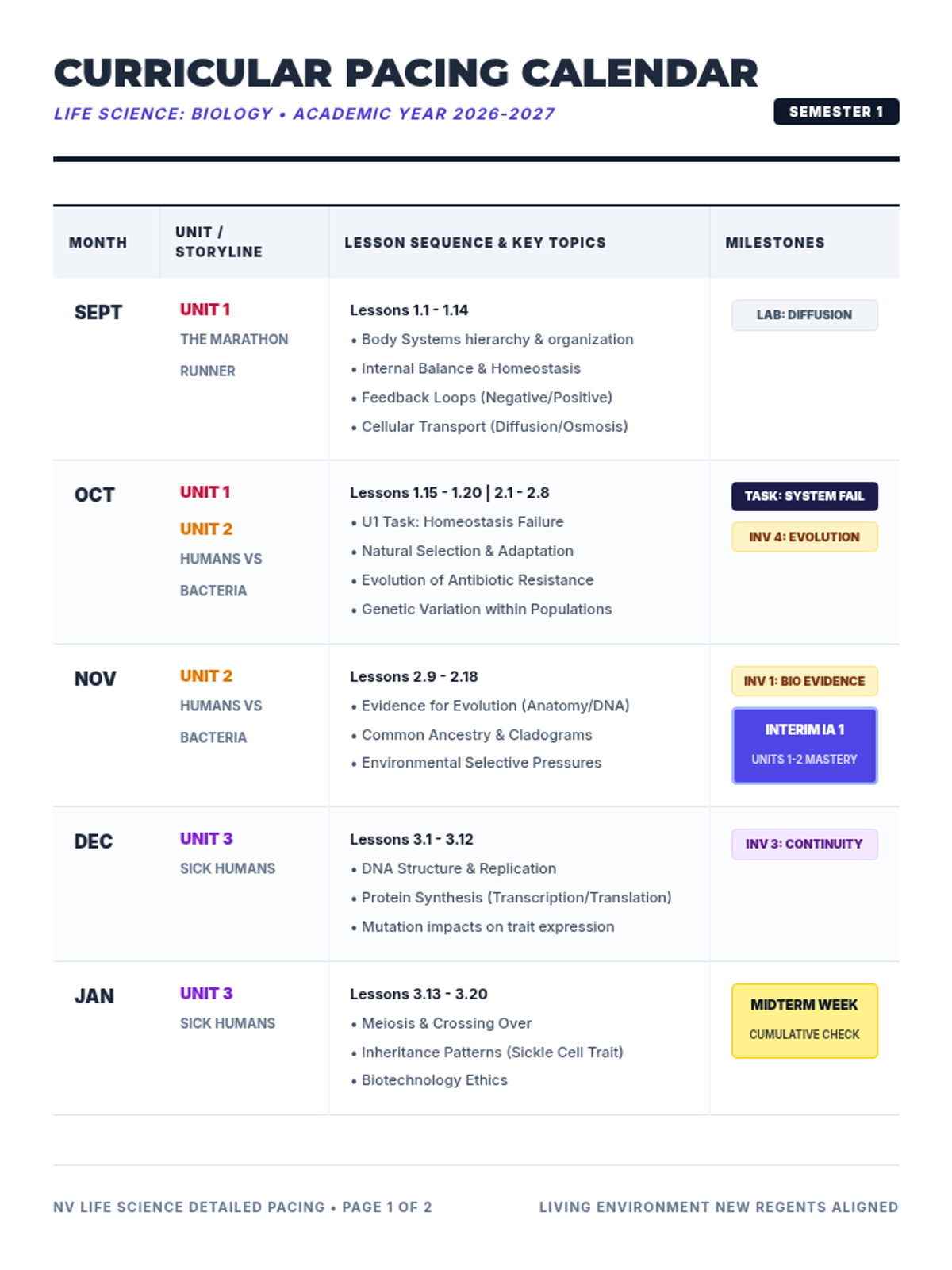
The foundational planning materials for the full-year Life Science: Biology curriculum, providing a high-level roadmap and detailed unit breakdowns.
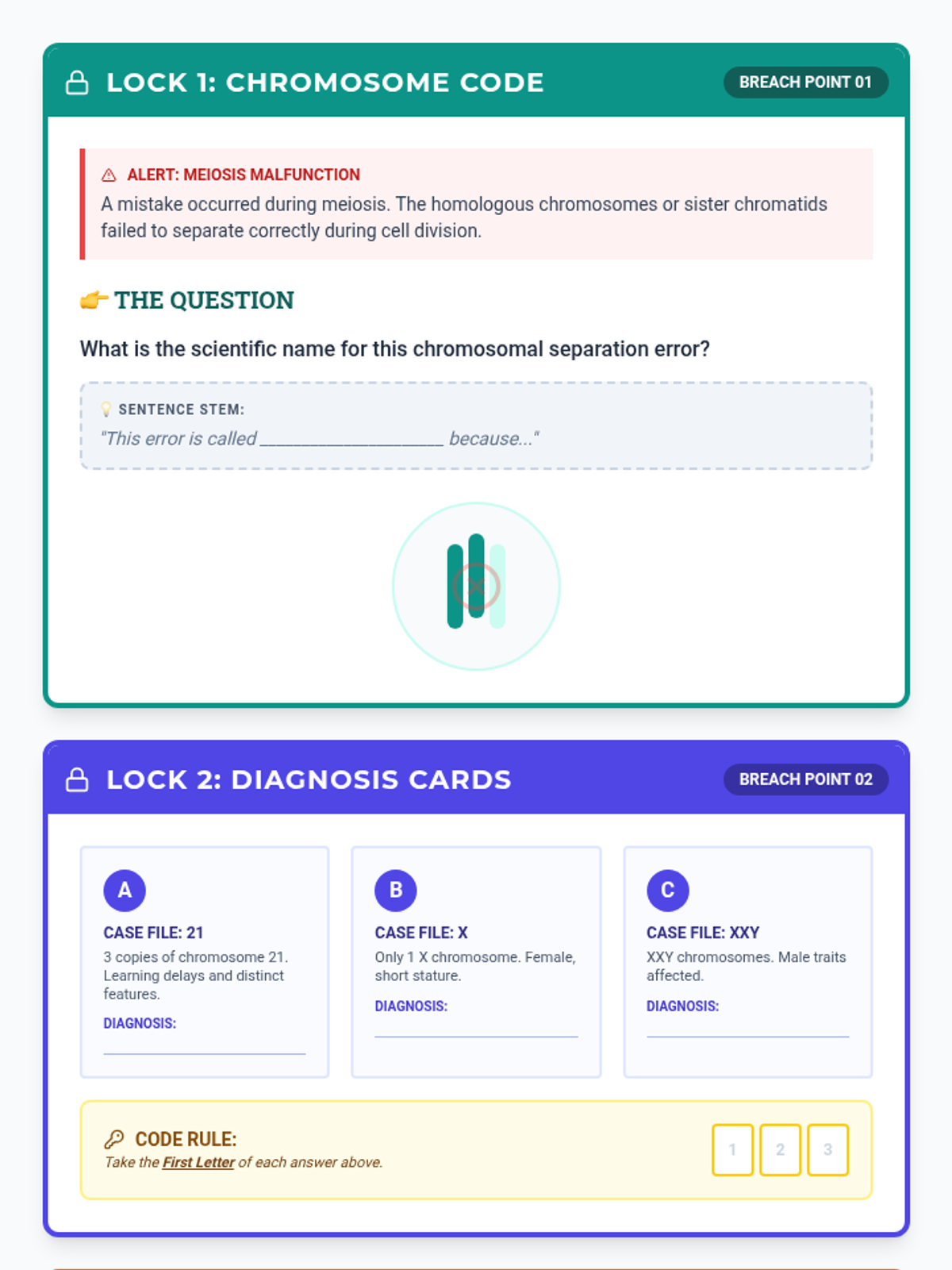
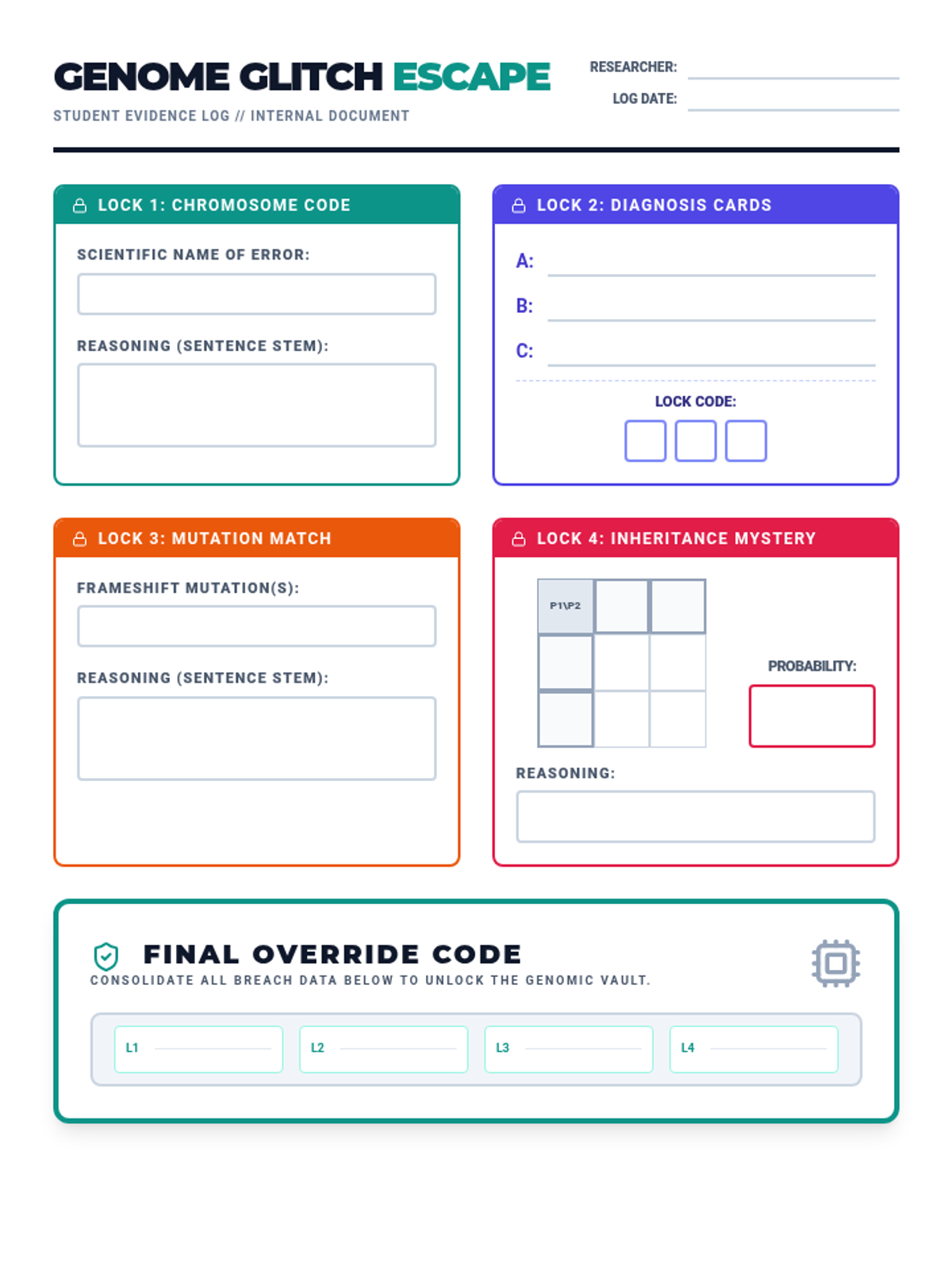
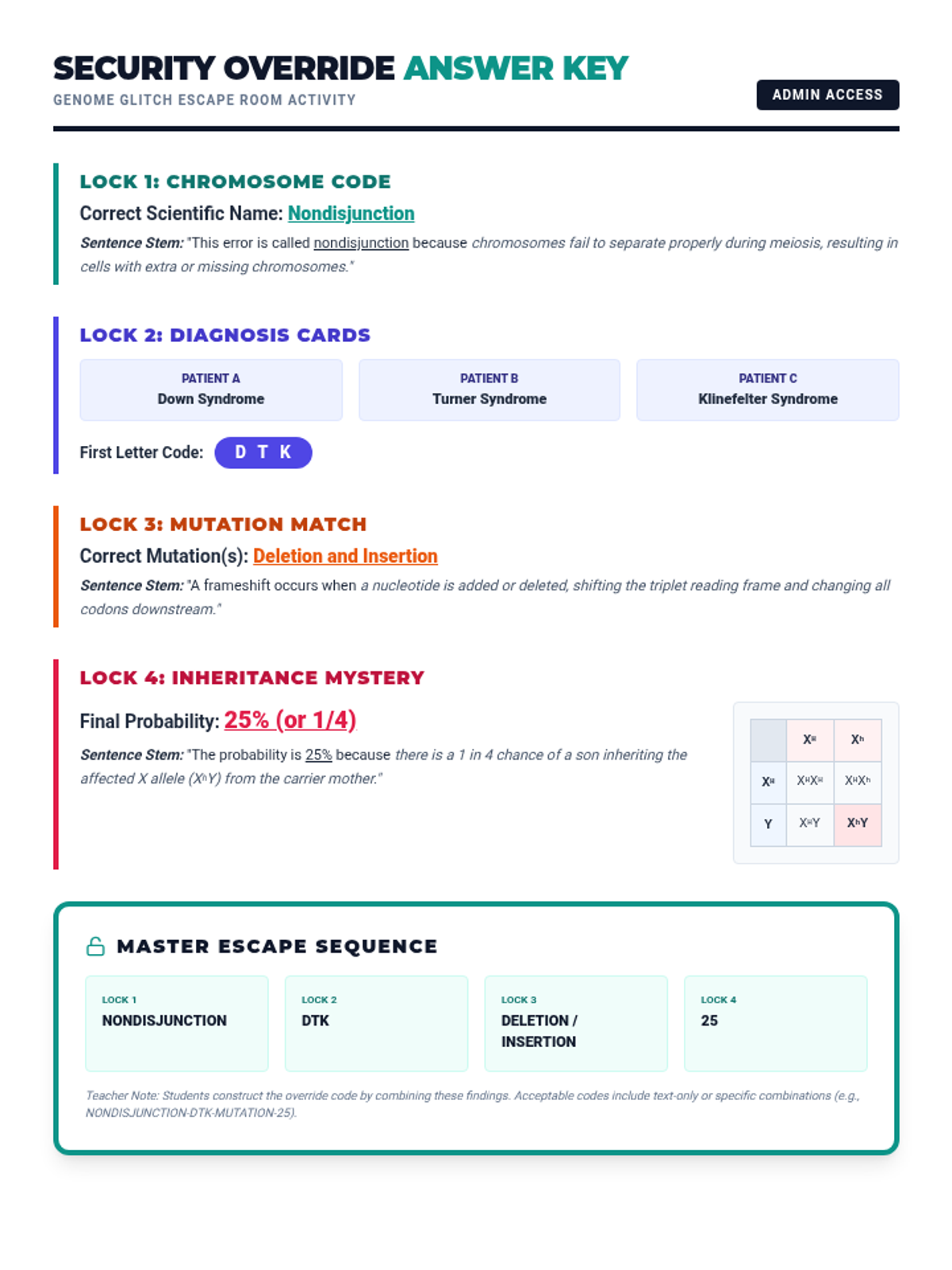
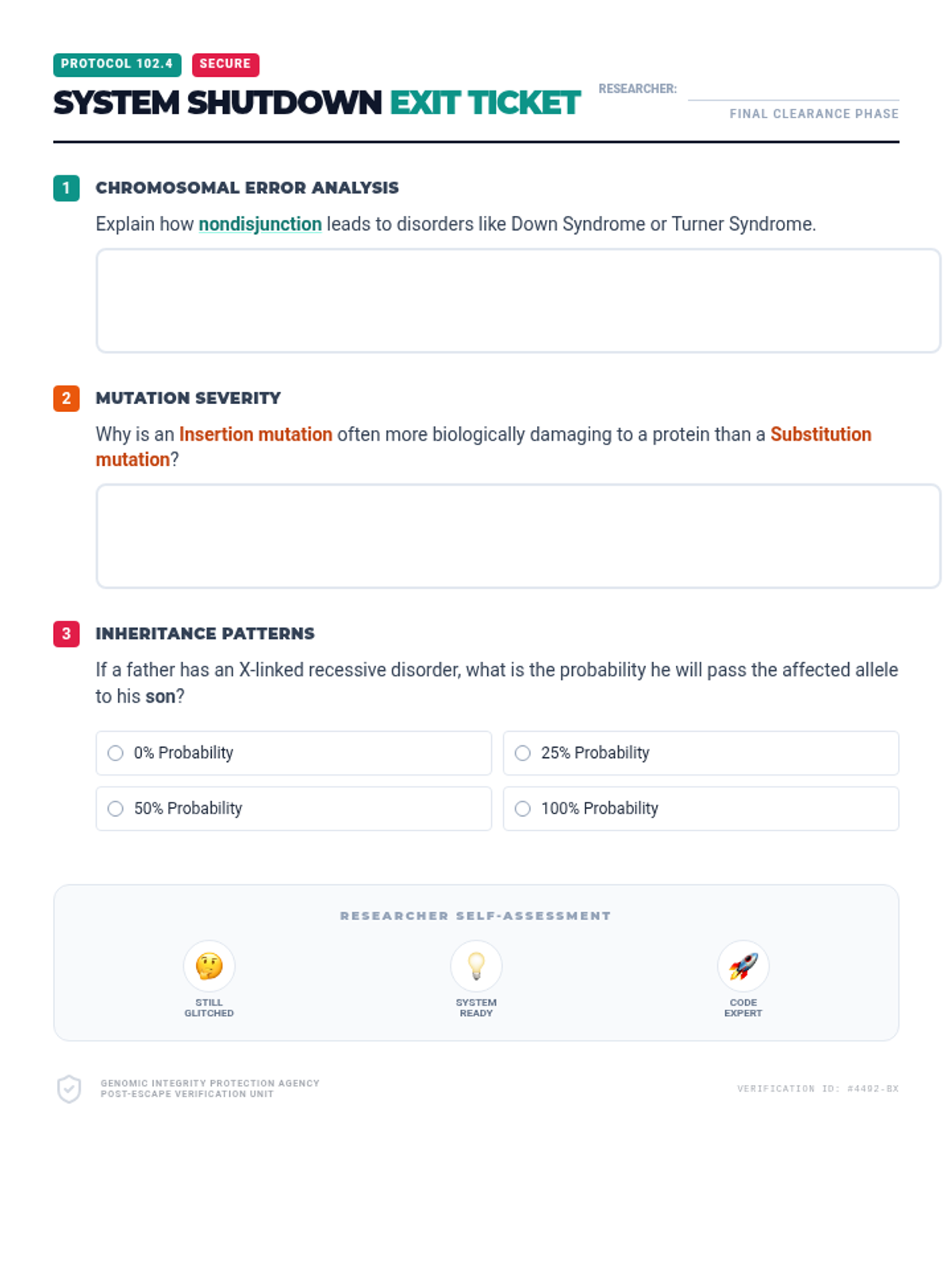
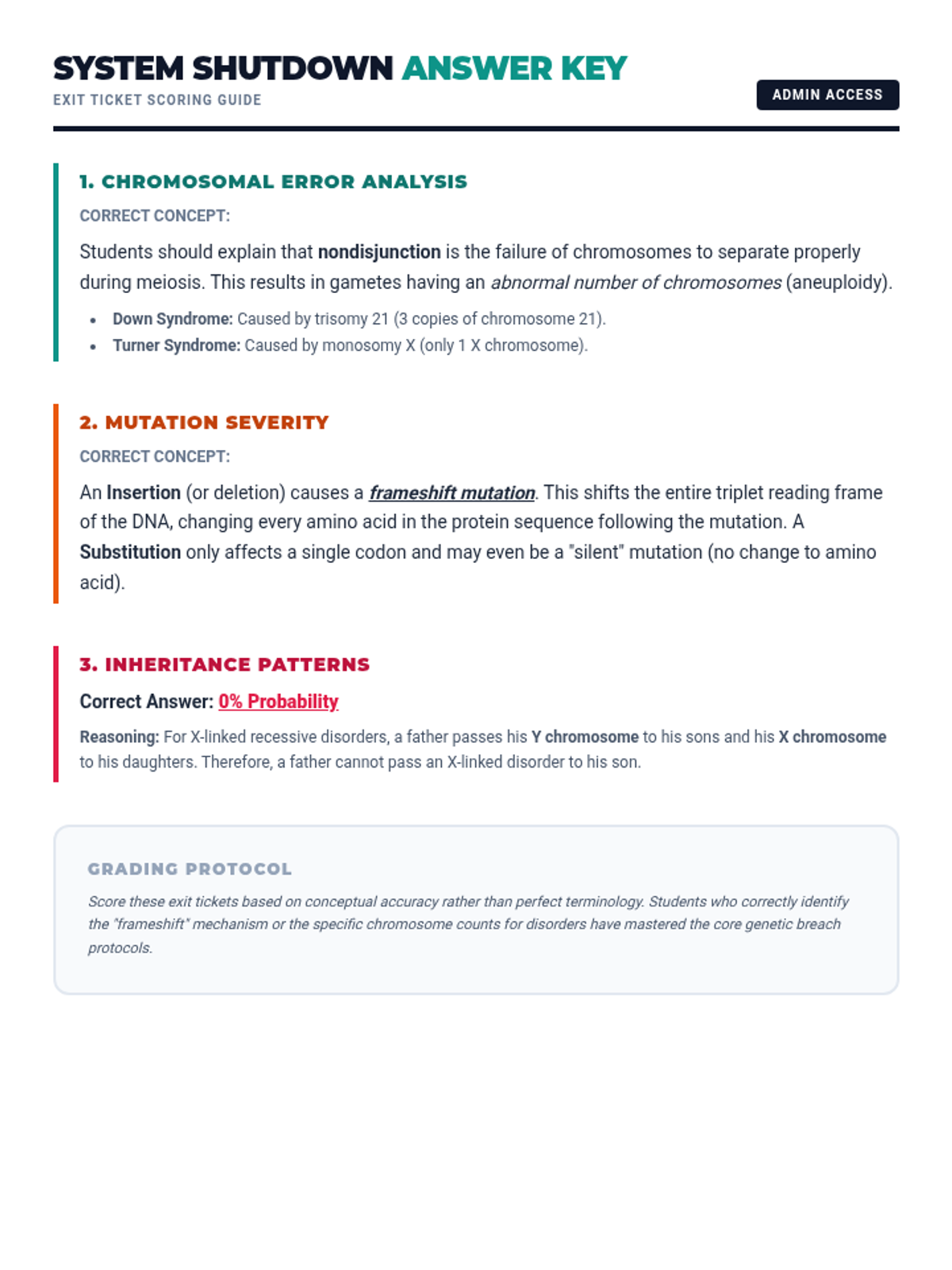
An immersive genetics escape room activity where students solve puzzles related to chromosomal errors, mutations, and inheritance patterns to 'unlock' a breached genomic system.
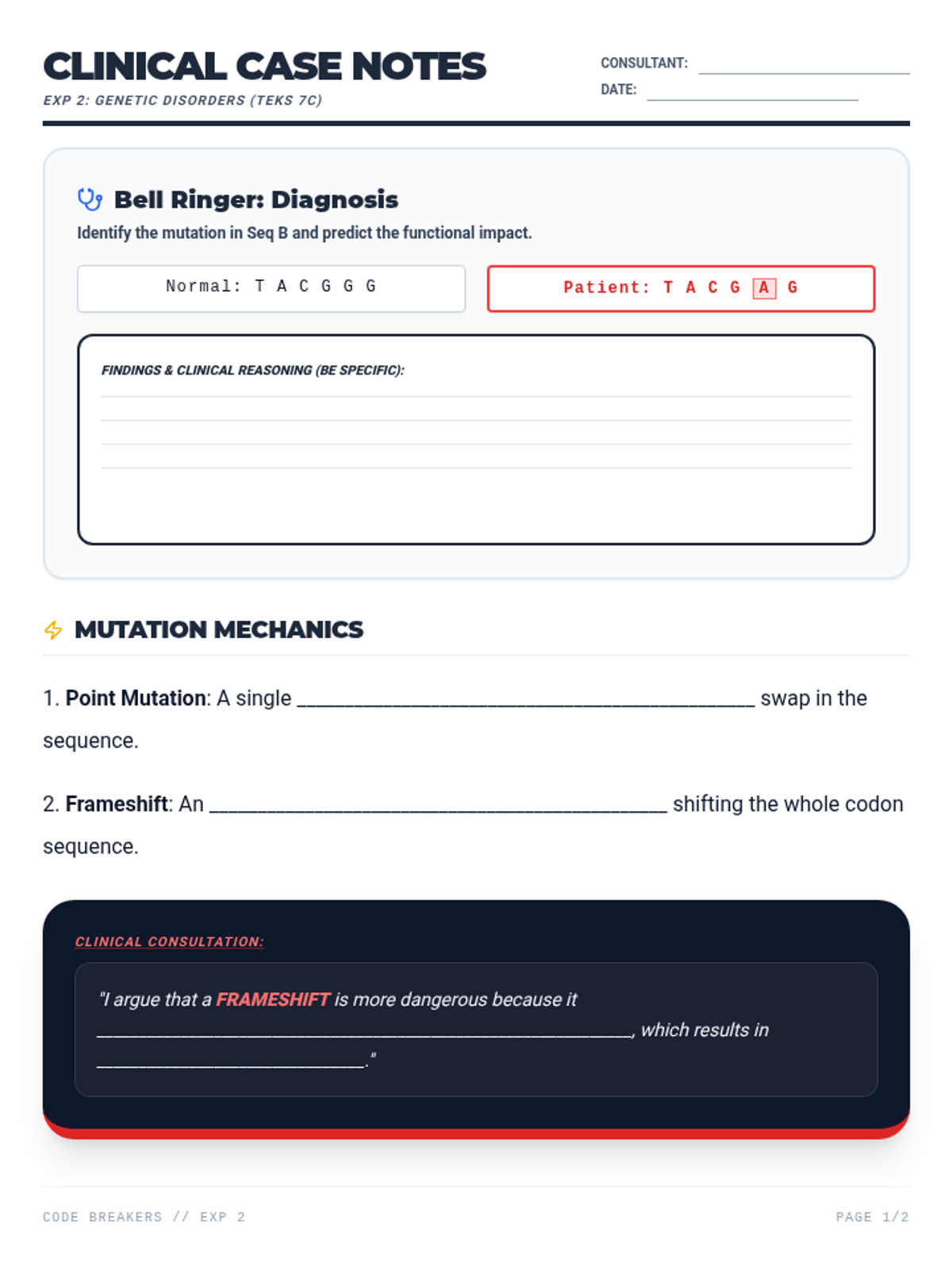
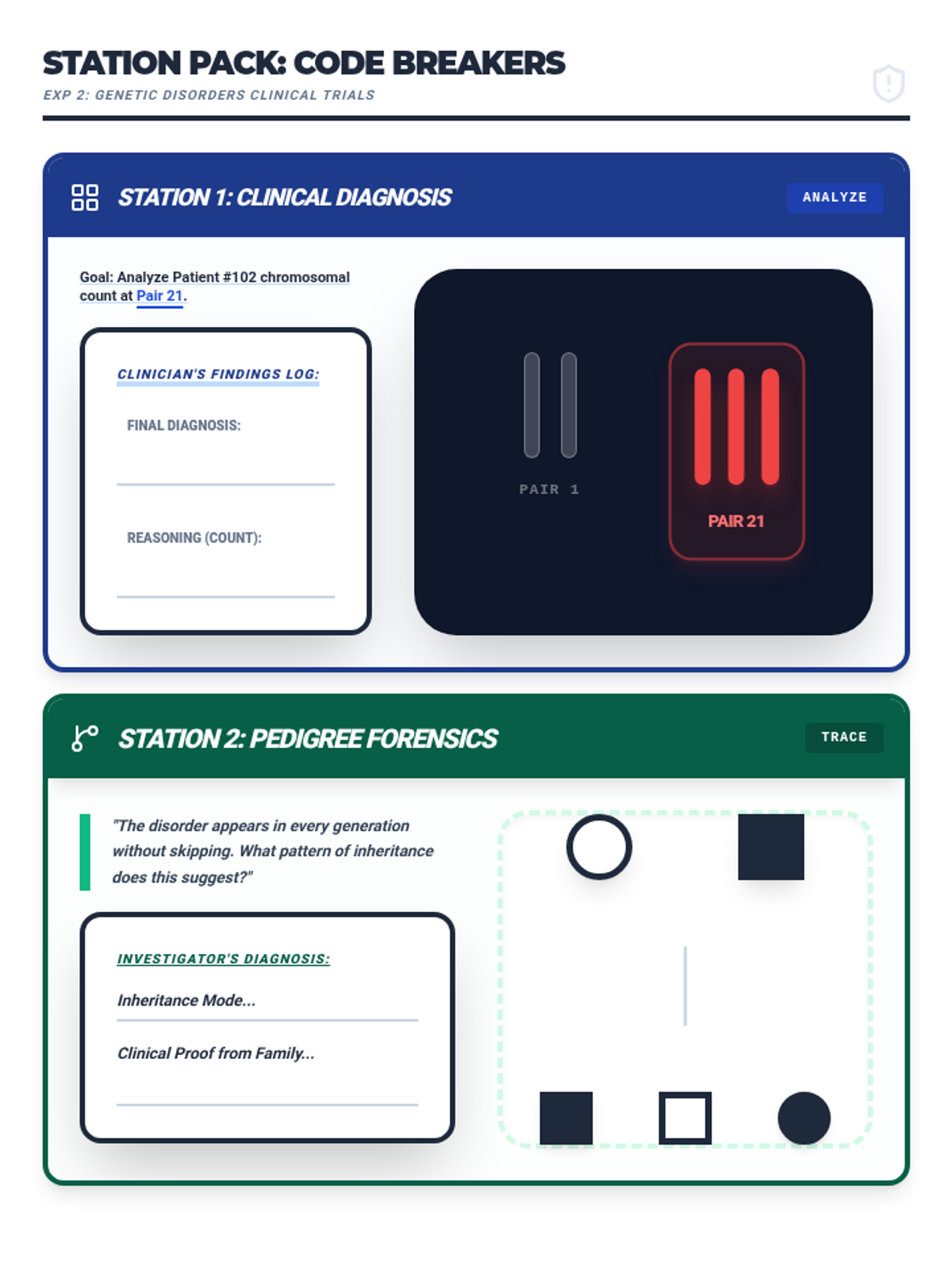
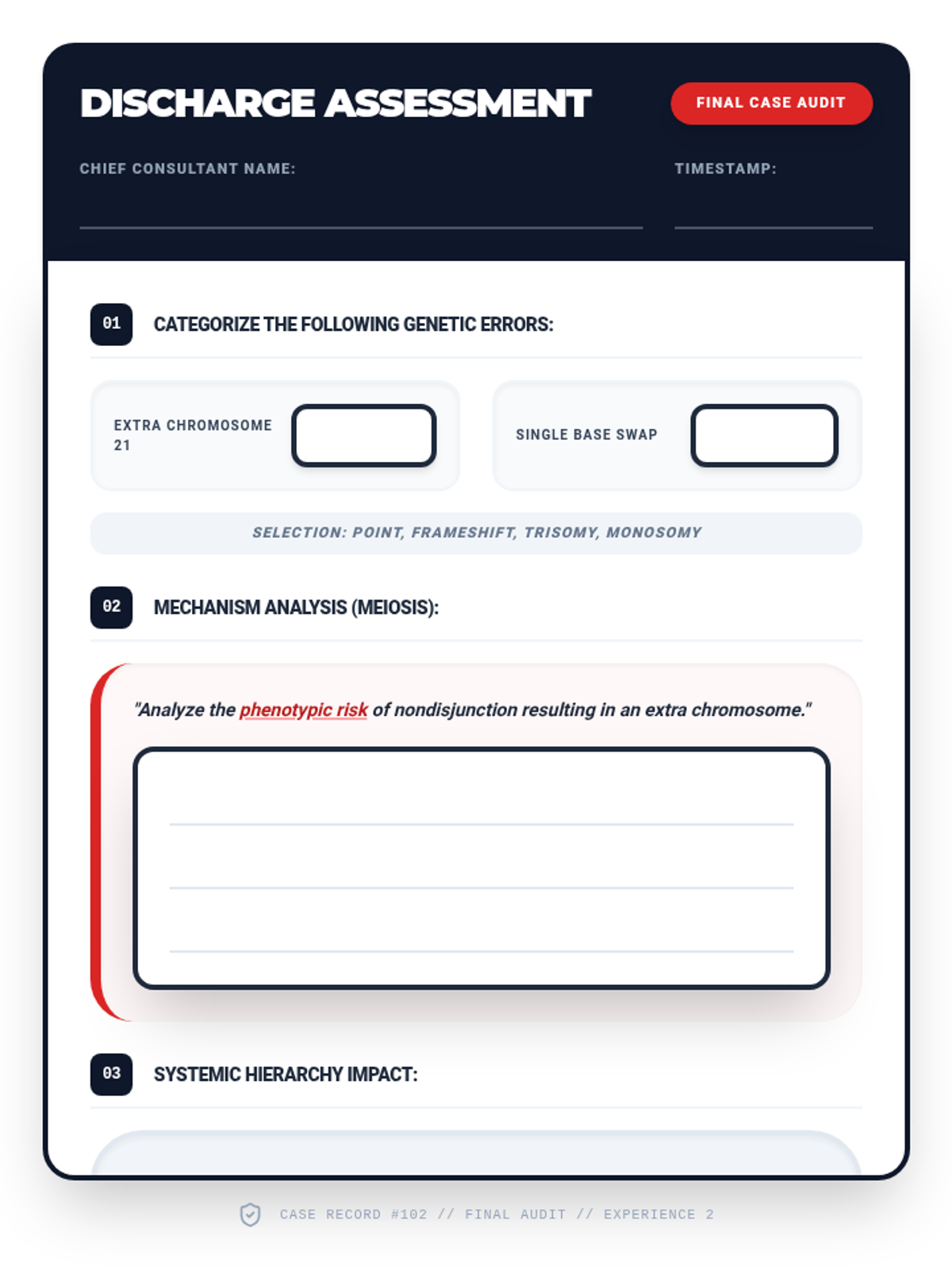
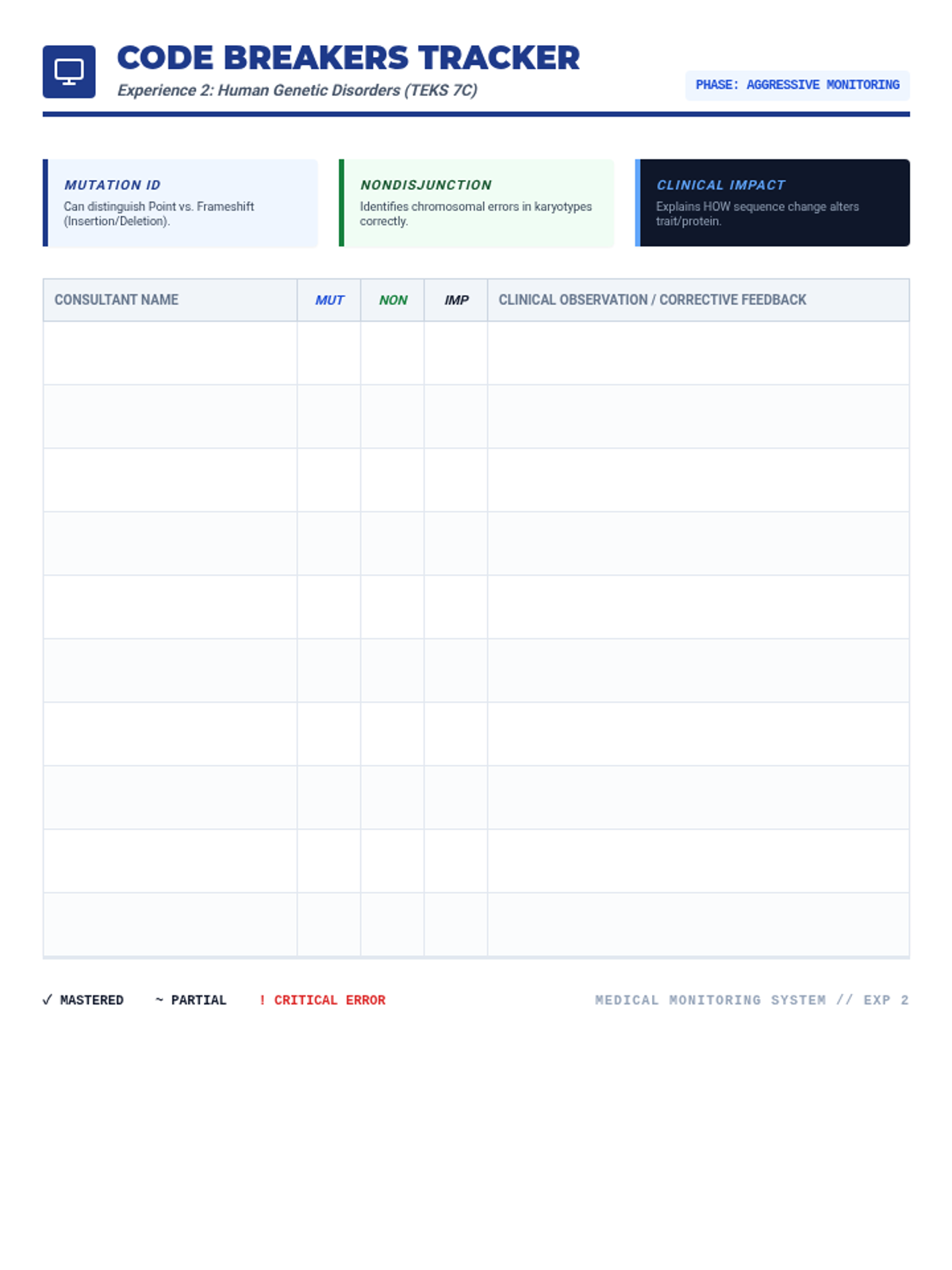
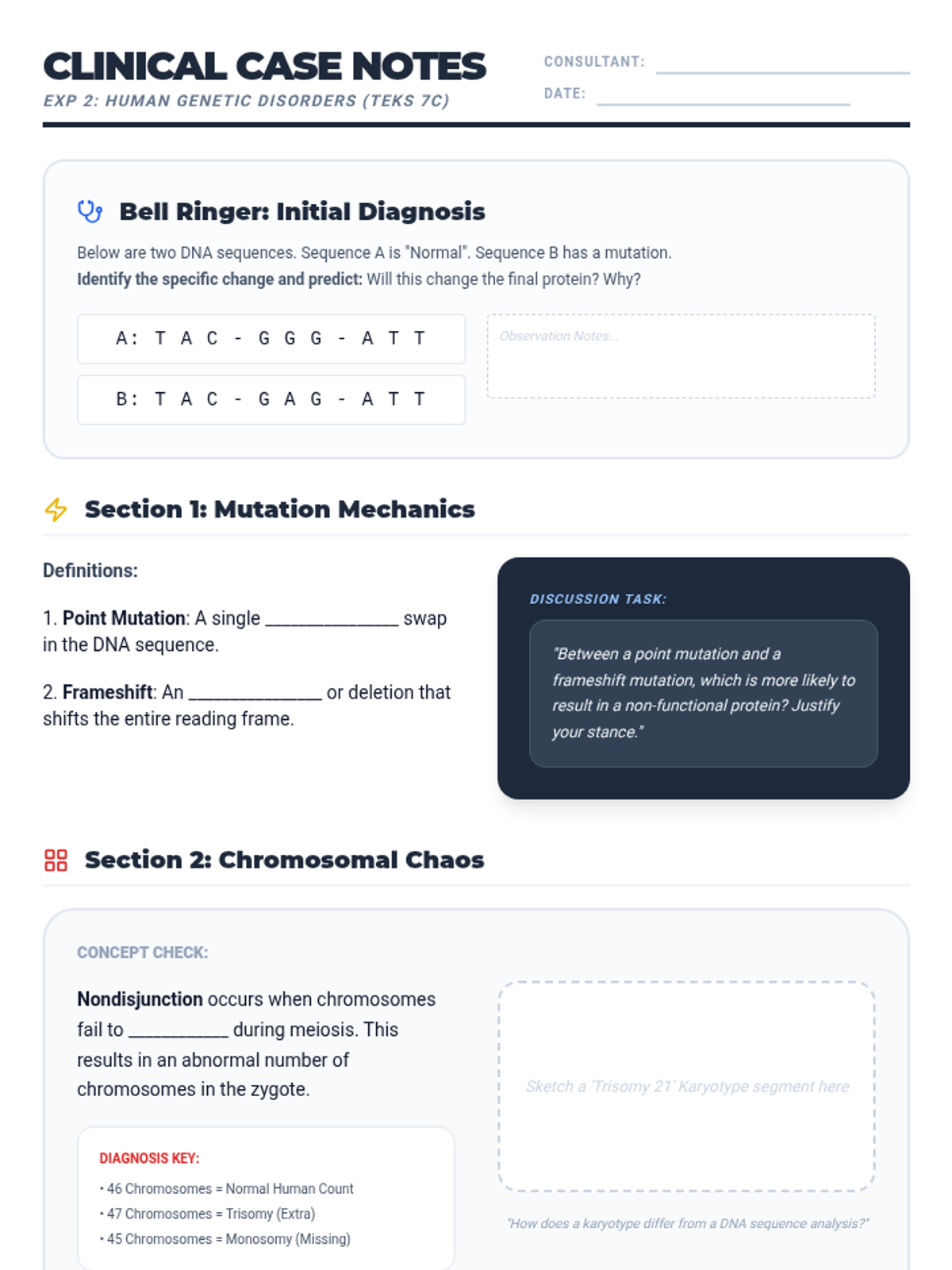
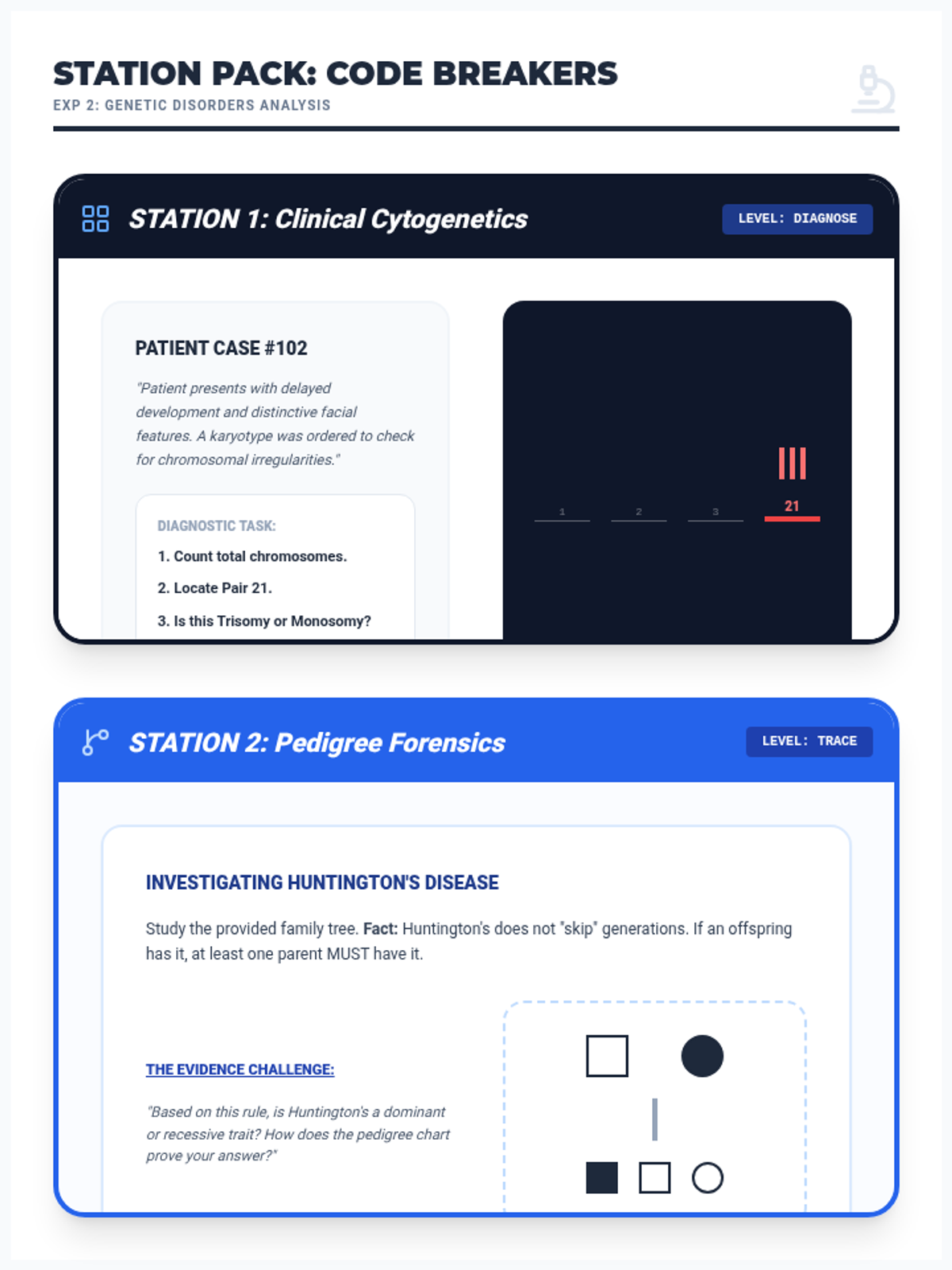
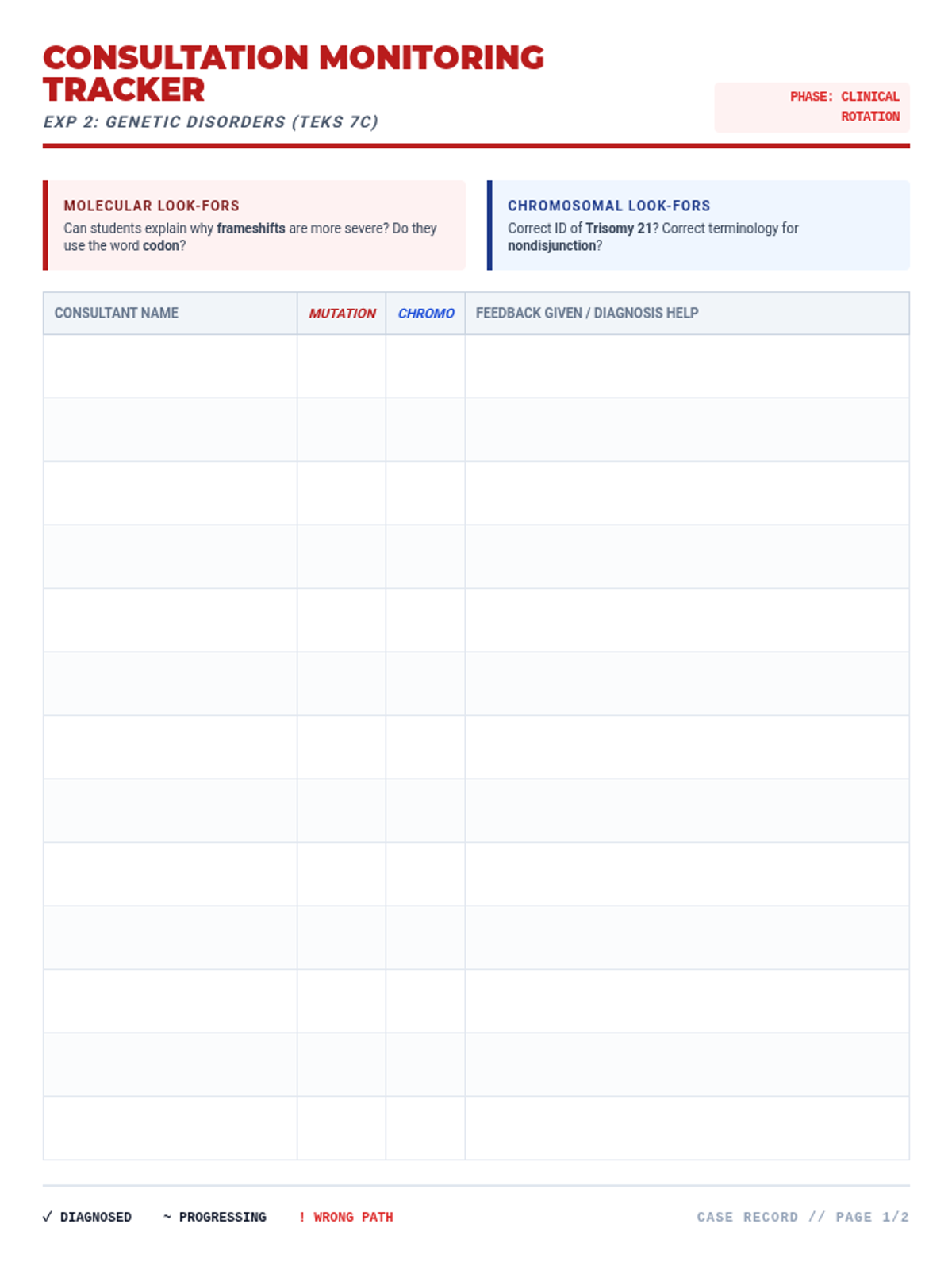
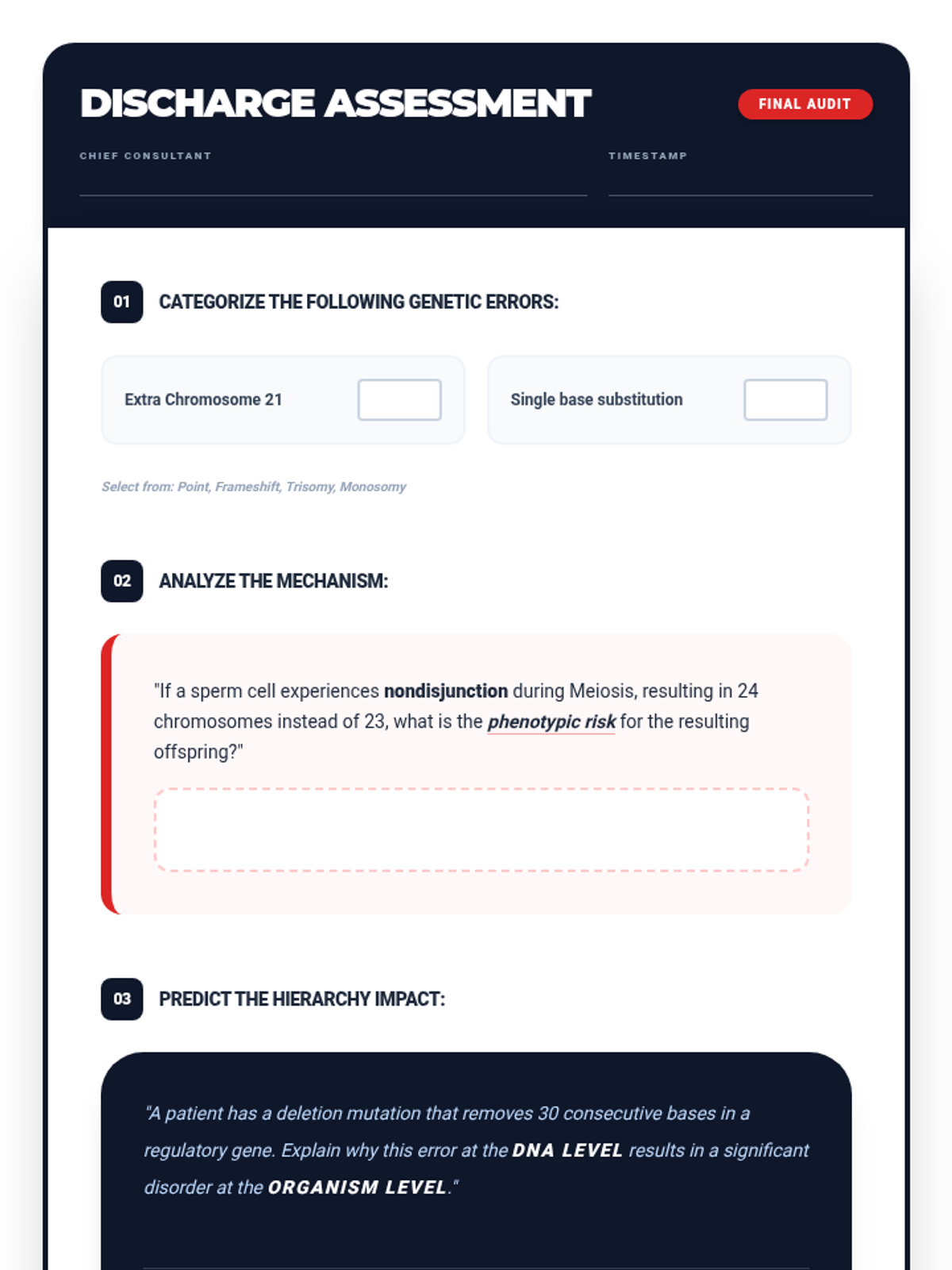
A 90-minute investigation into how genetic mutations and chromosomal abnormalities lead to human disorders. Students act as 'genetic consultants' to analyze karyotypes, pedigrees, and mutation types.
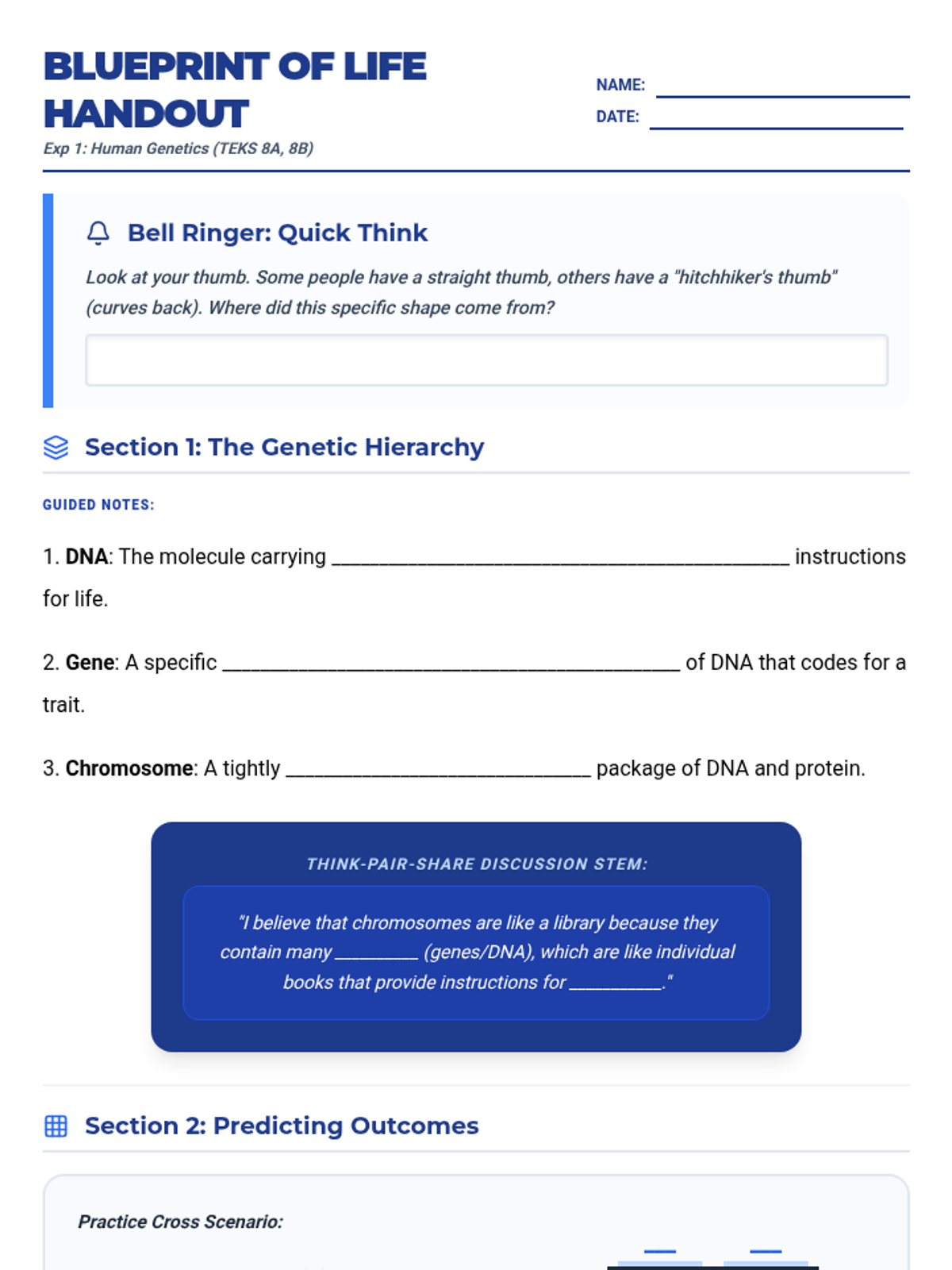
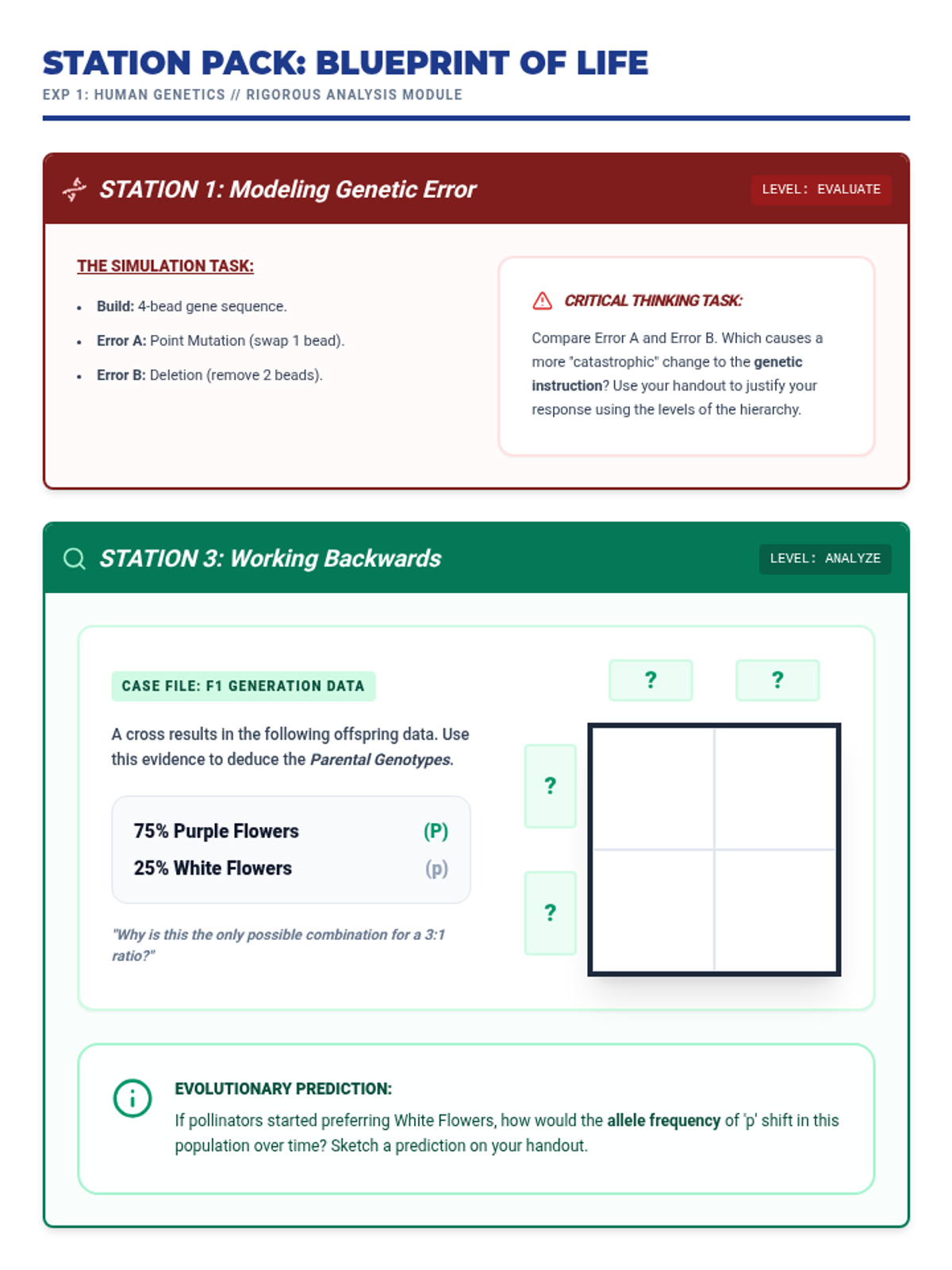
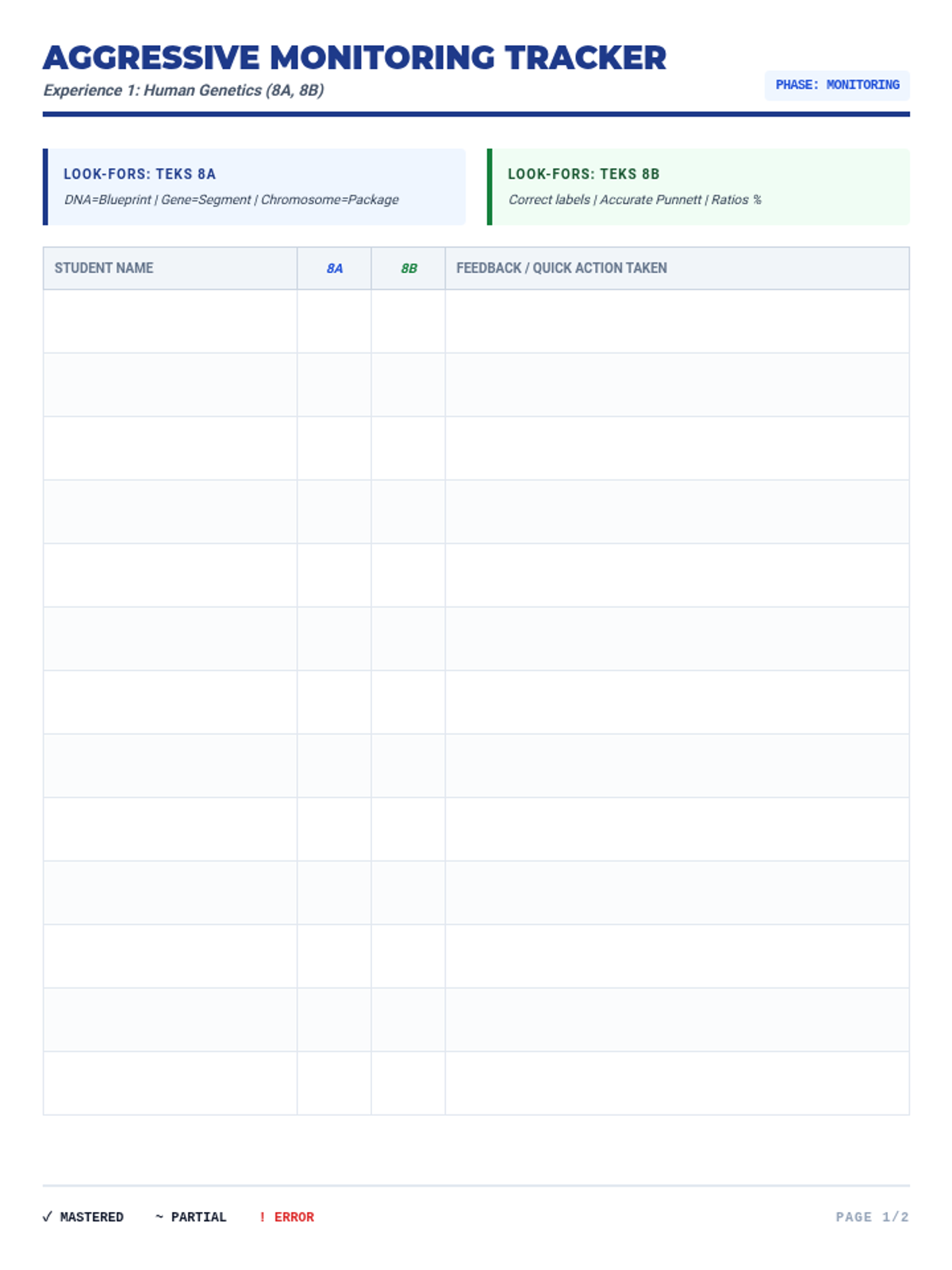
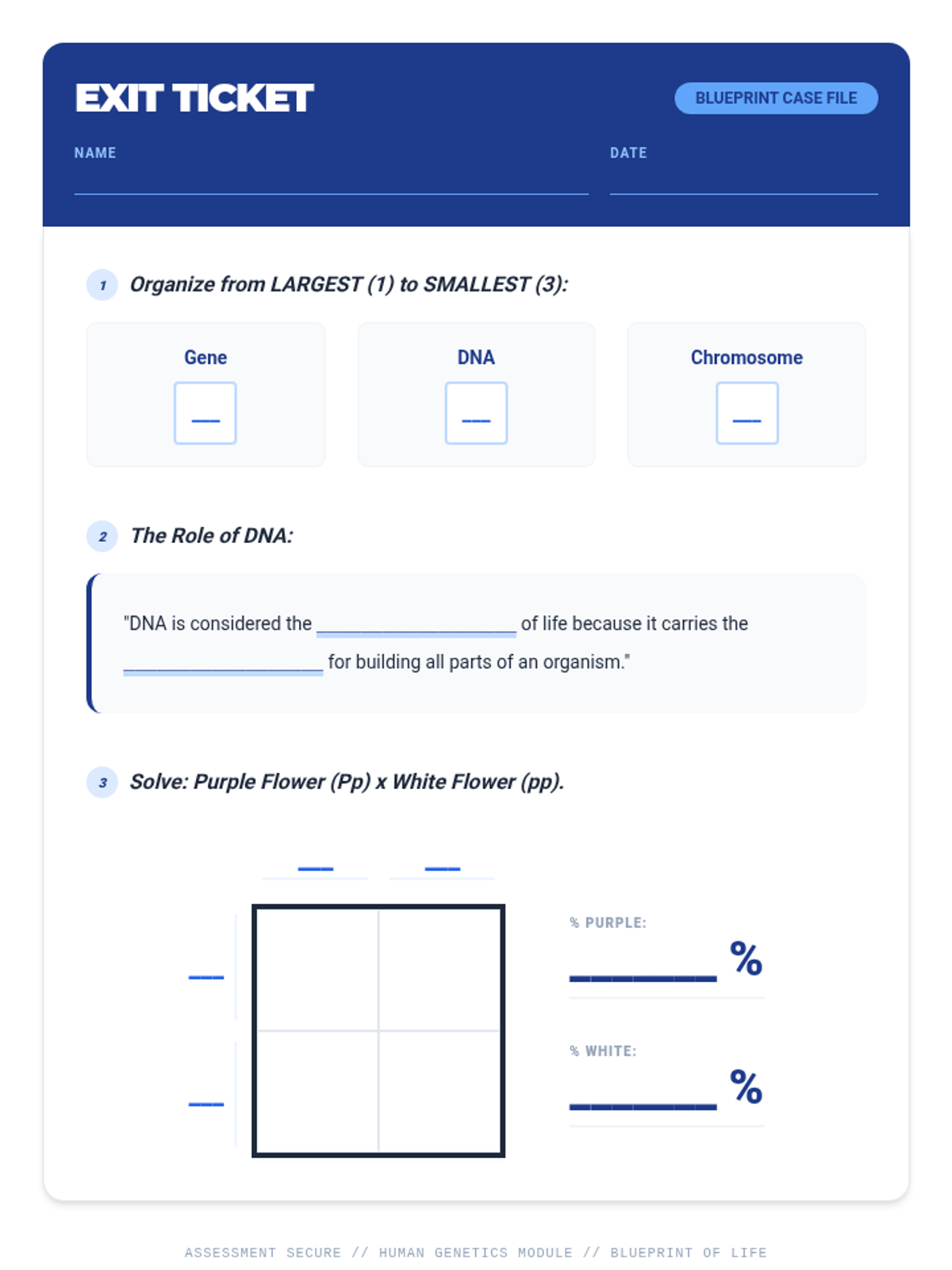
A comprehensive 90-minute lesson on DNA, genes, chromosomes, and genetic crosses. Students explore the 'Blueprint of Life' through chunked instruction, Think-Pair-Share discussions, and hands-on modeling stations.
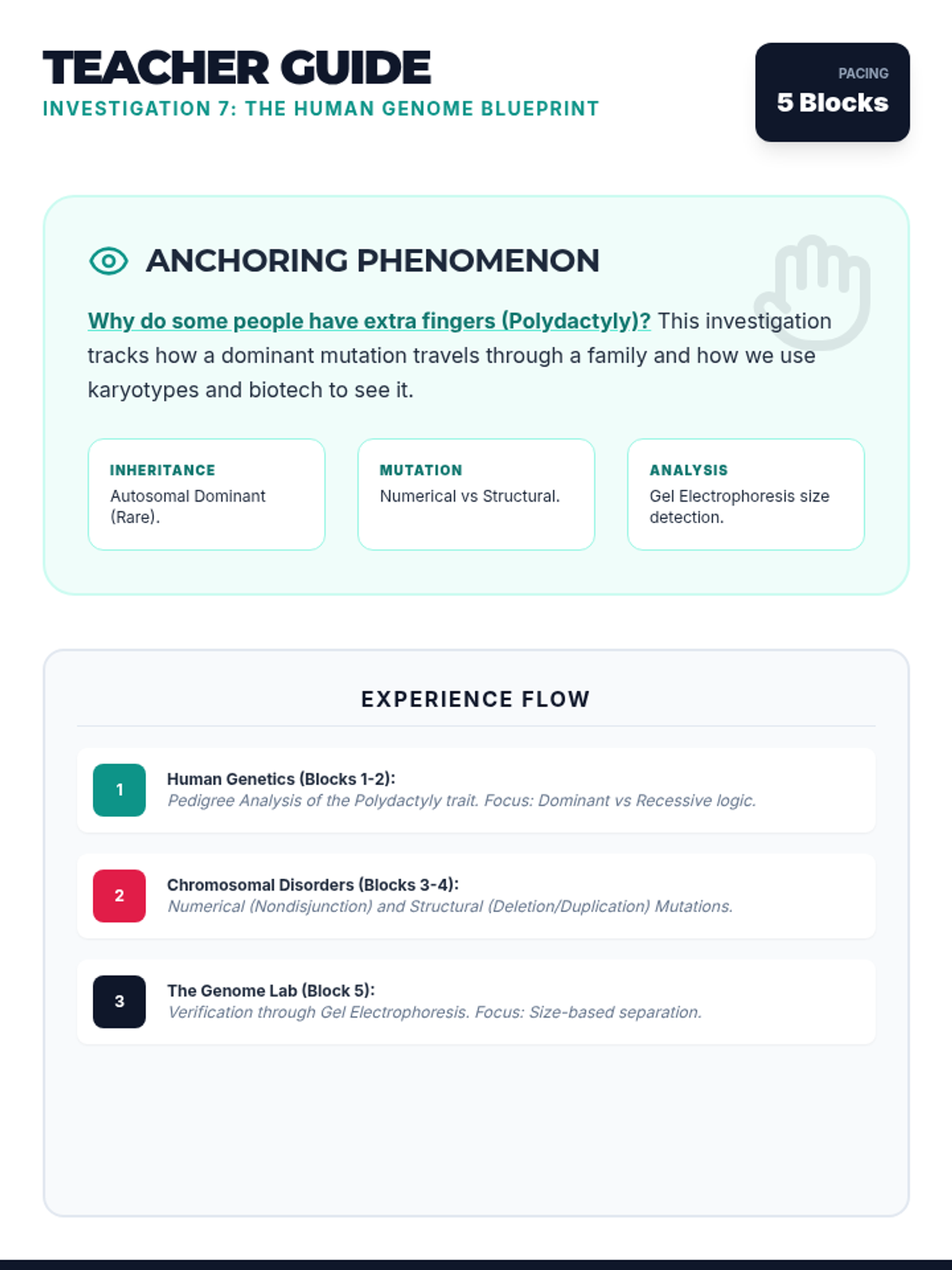
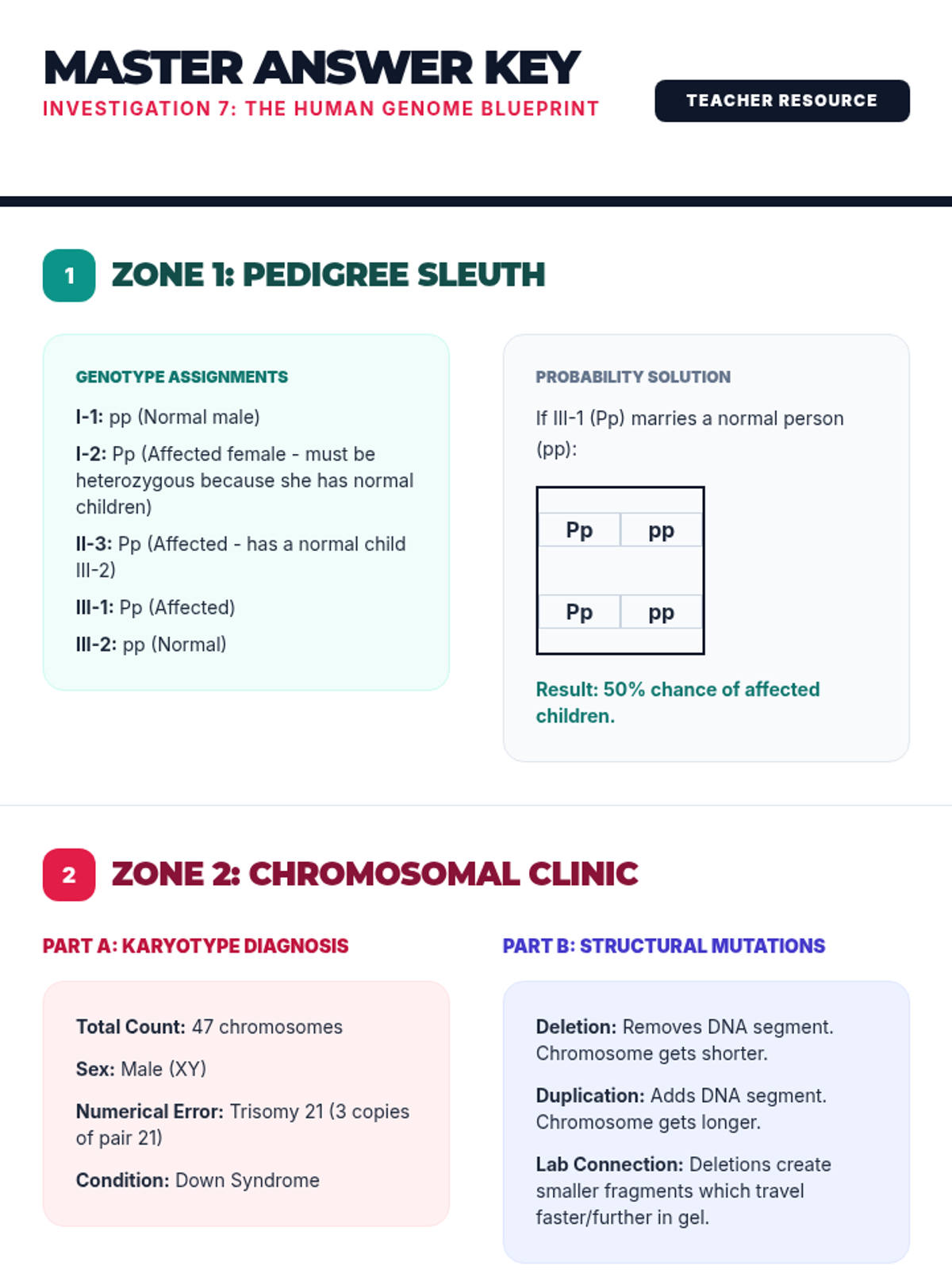
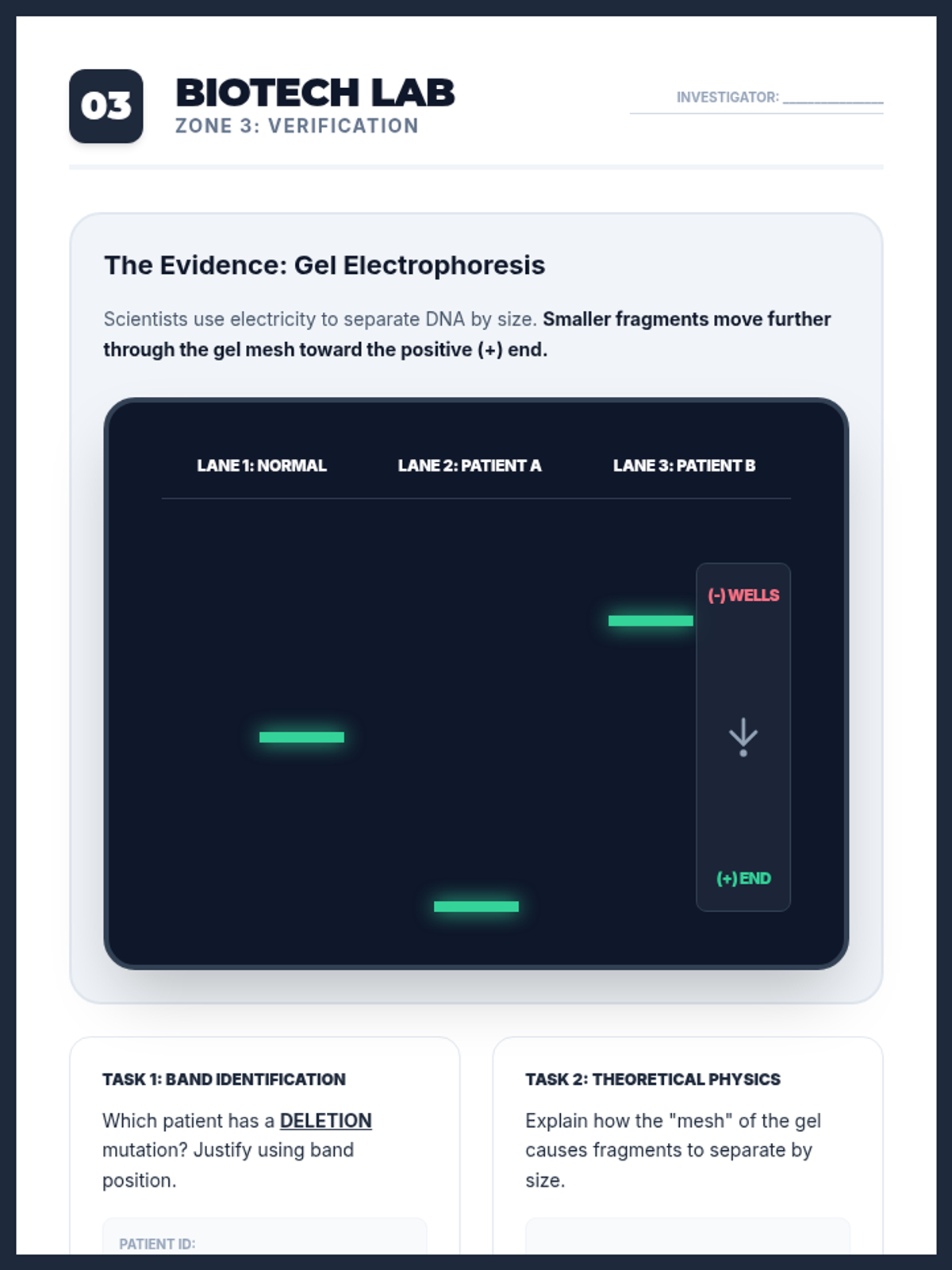
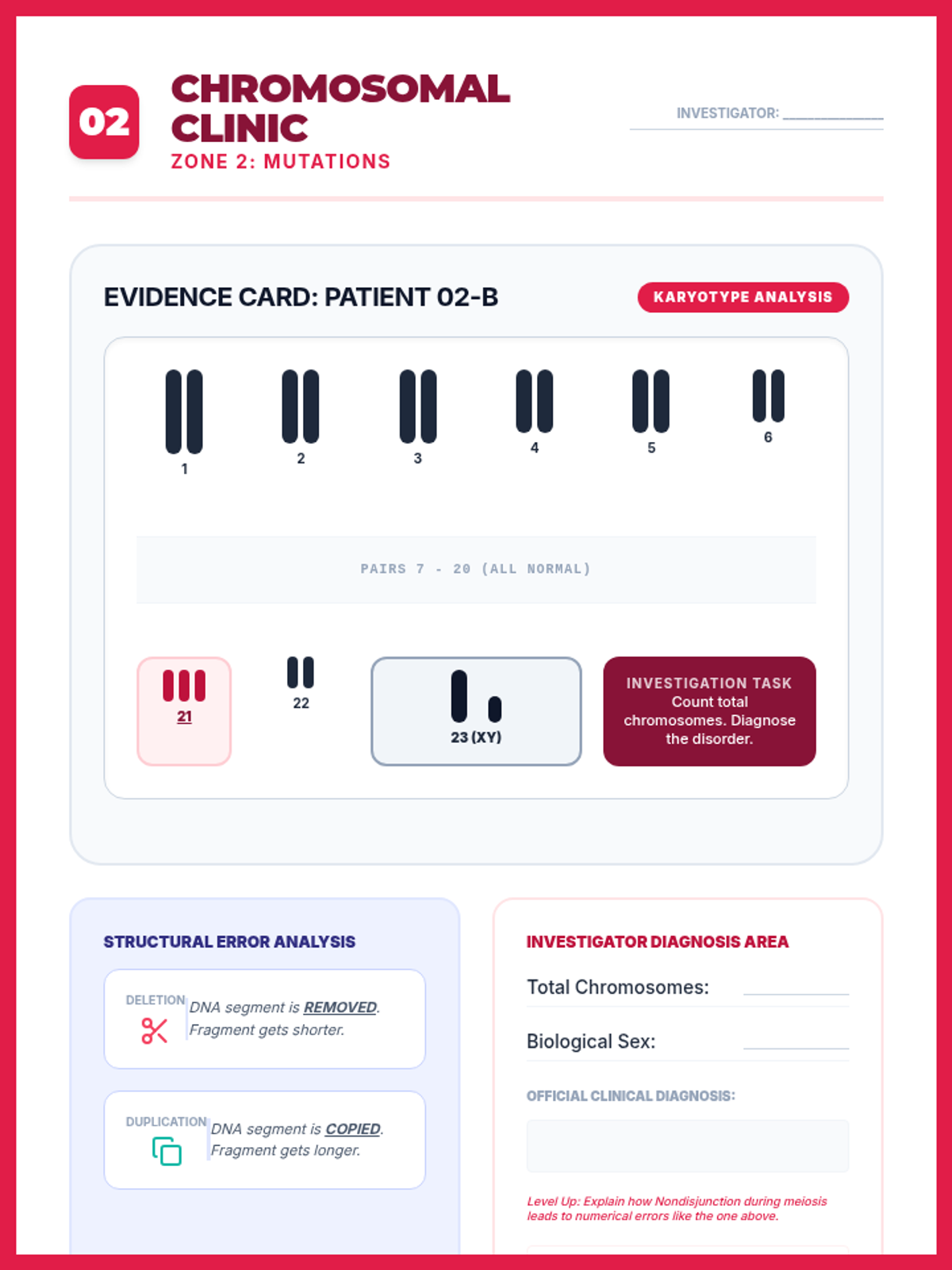
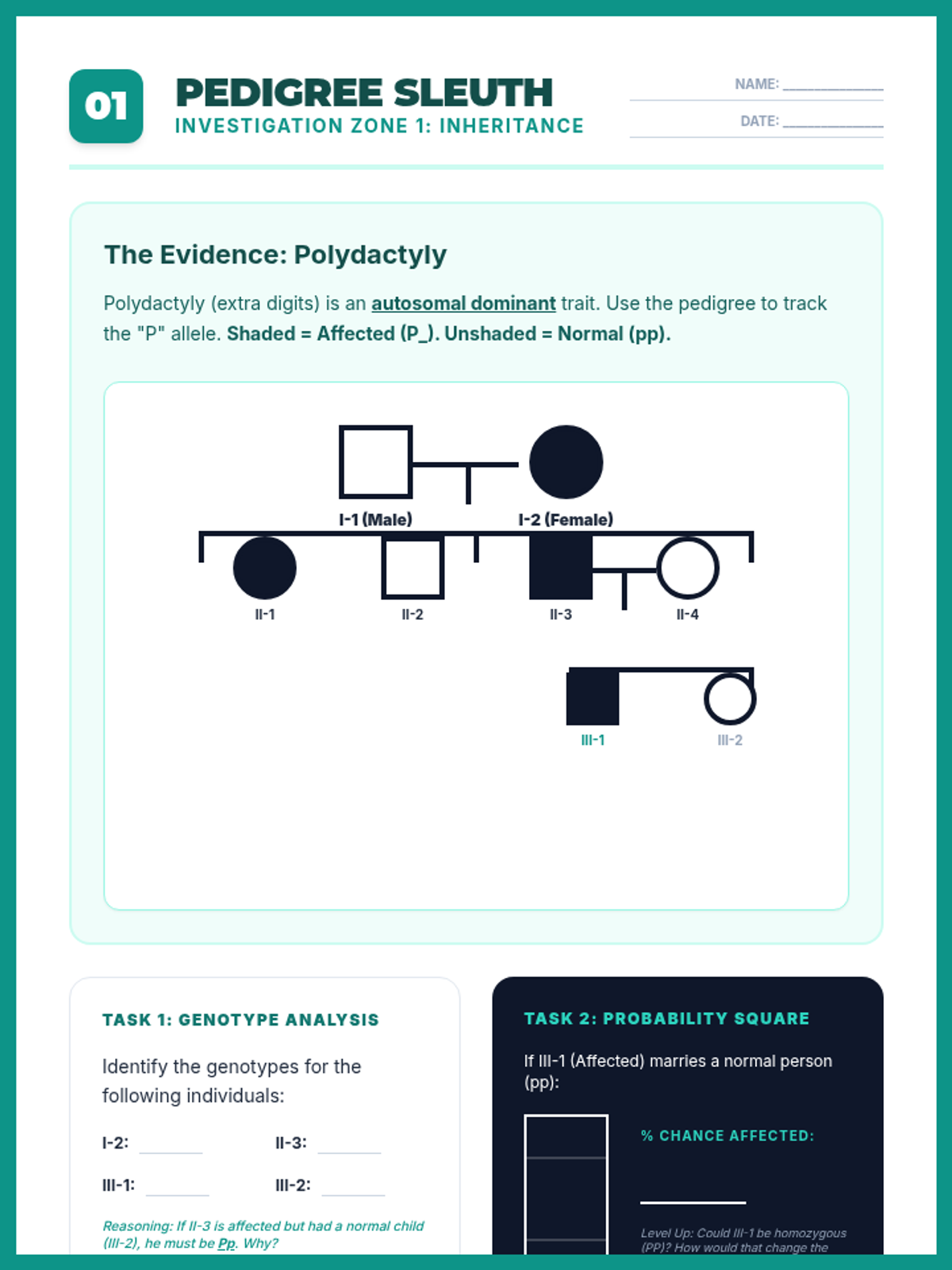
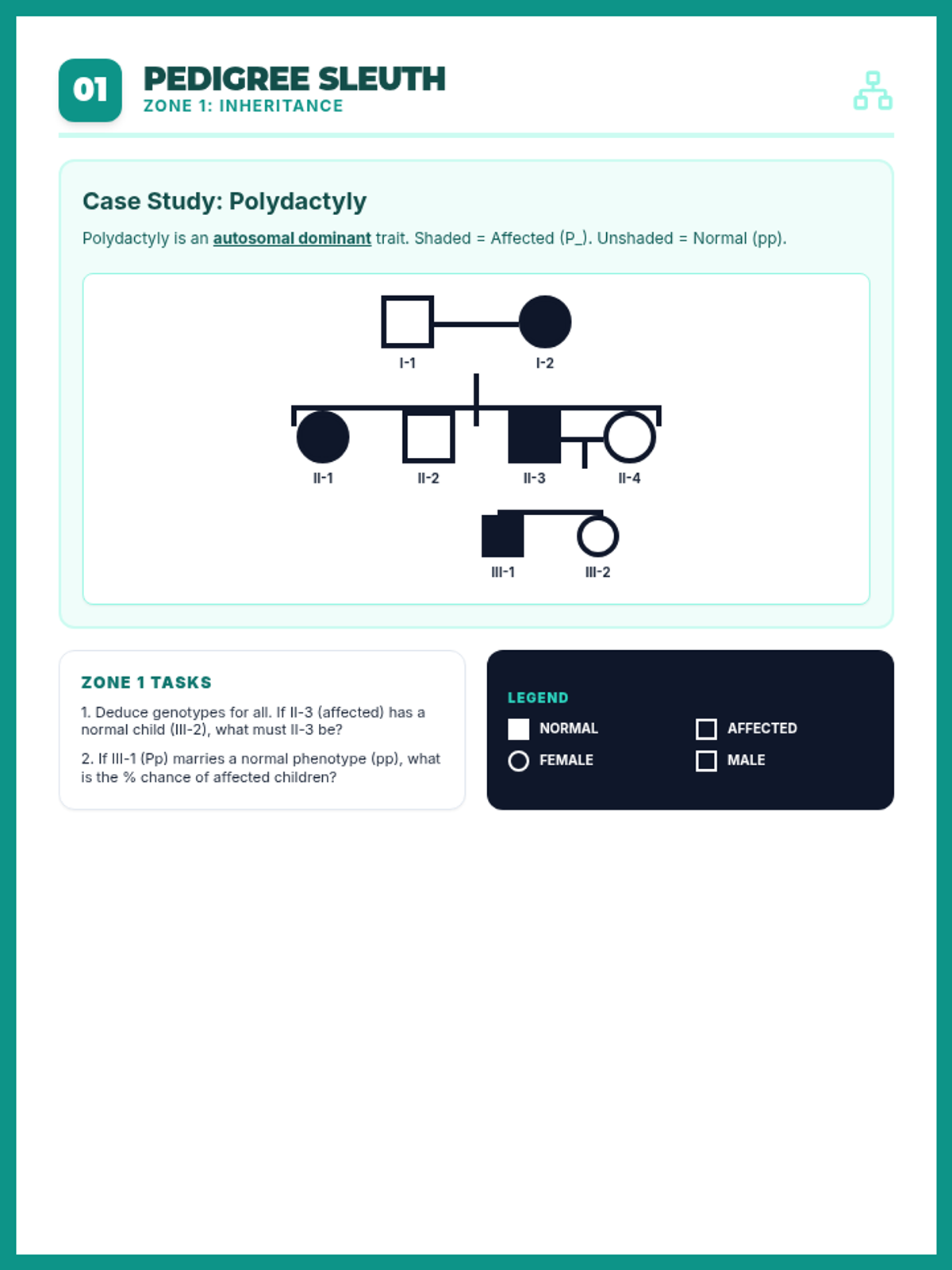
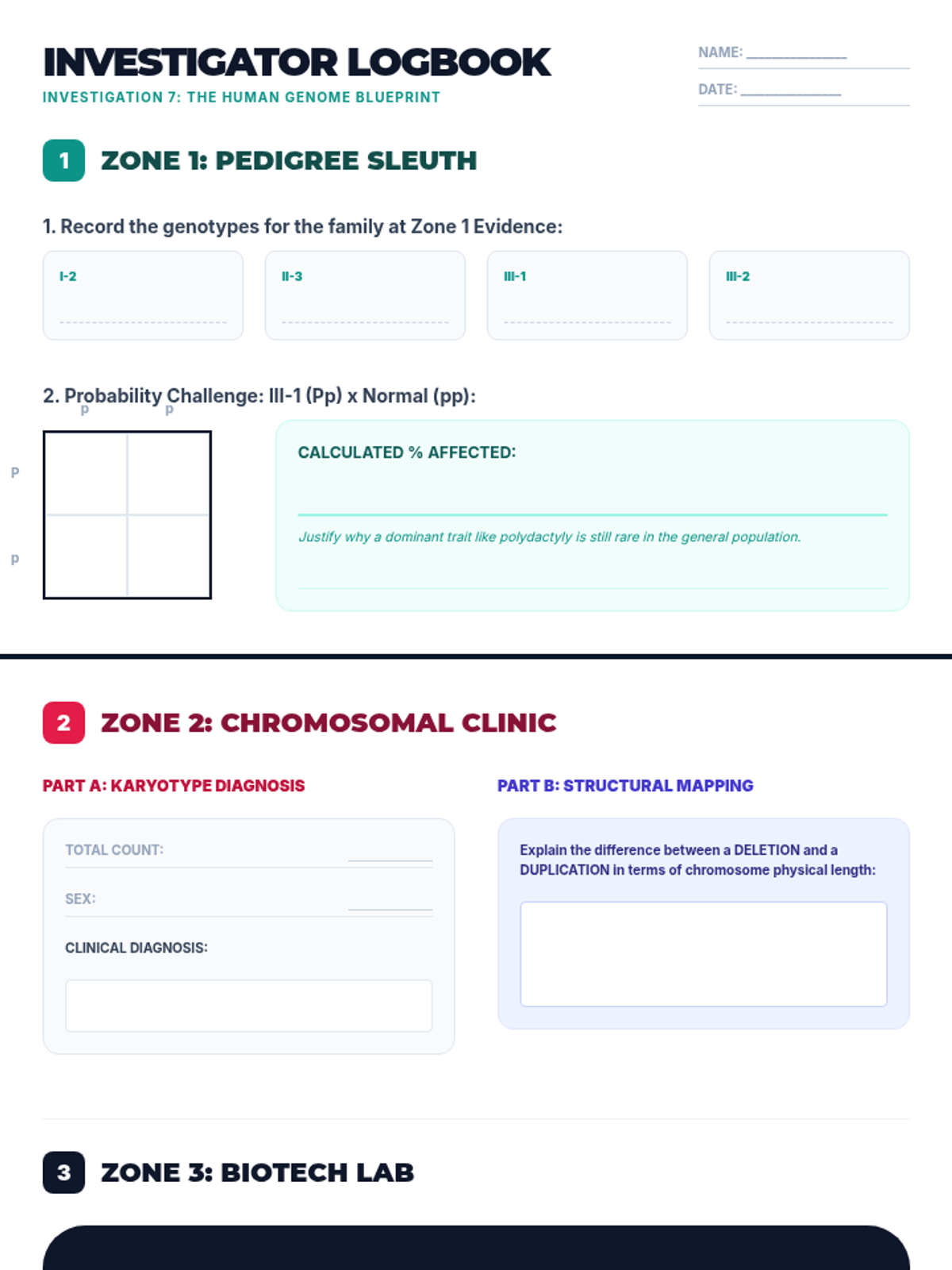
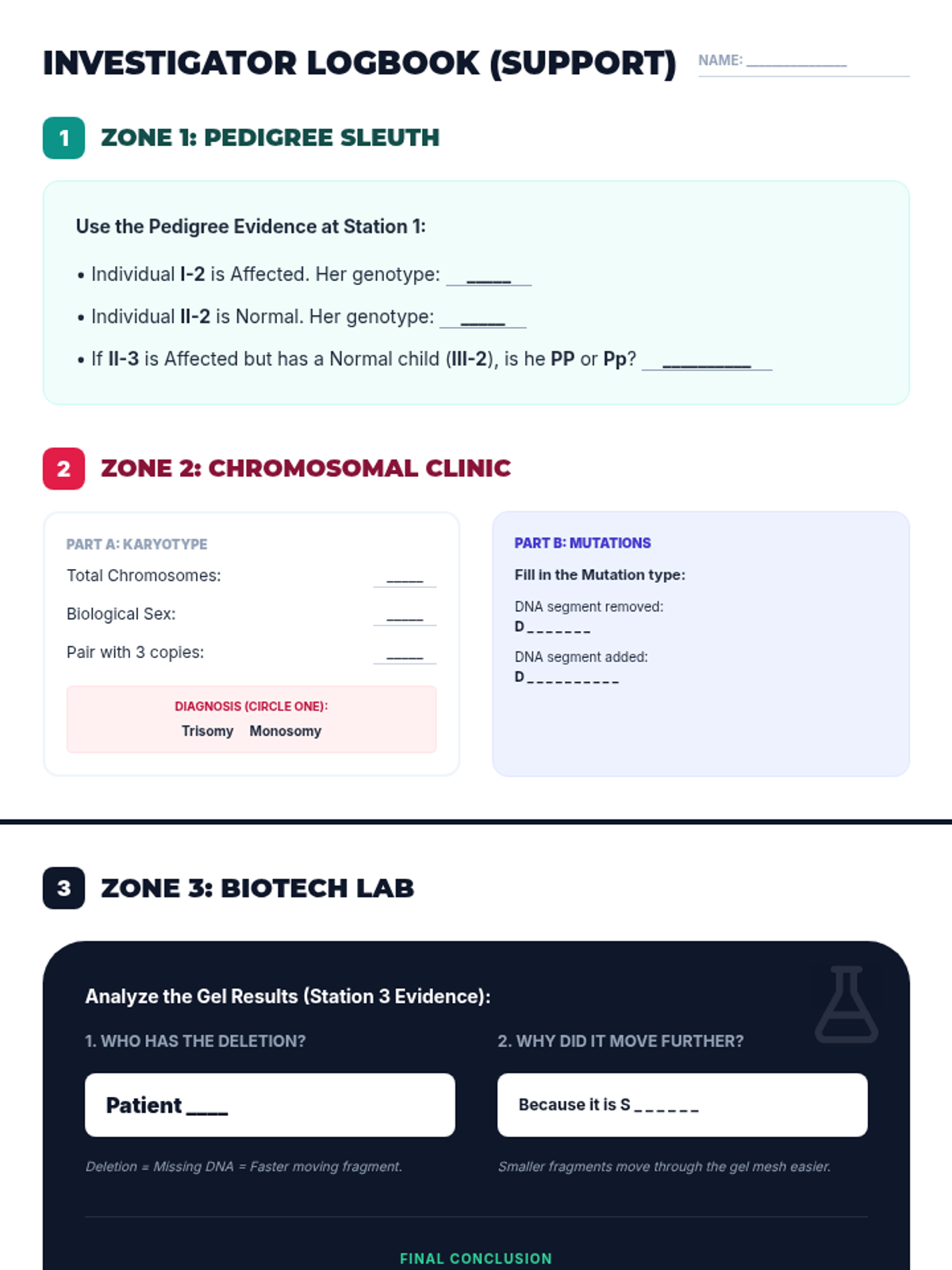
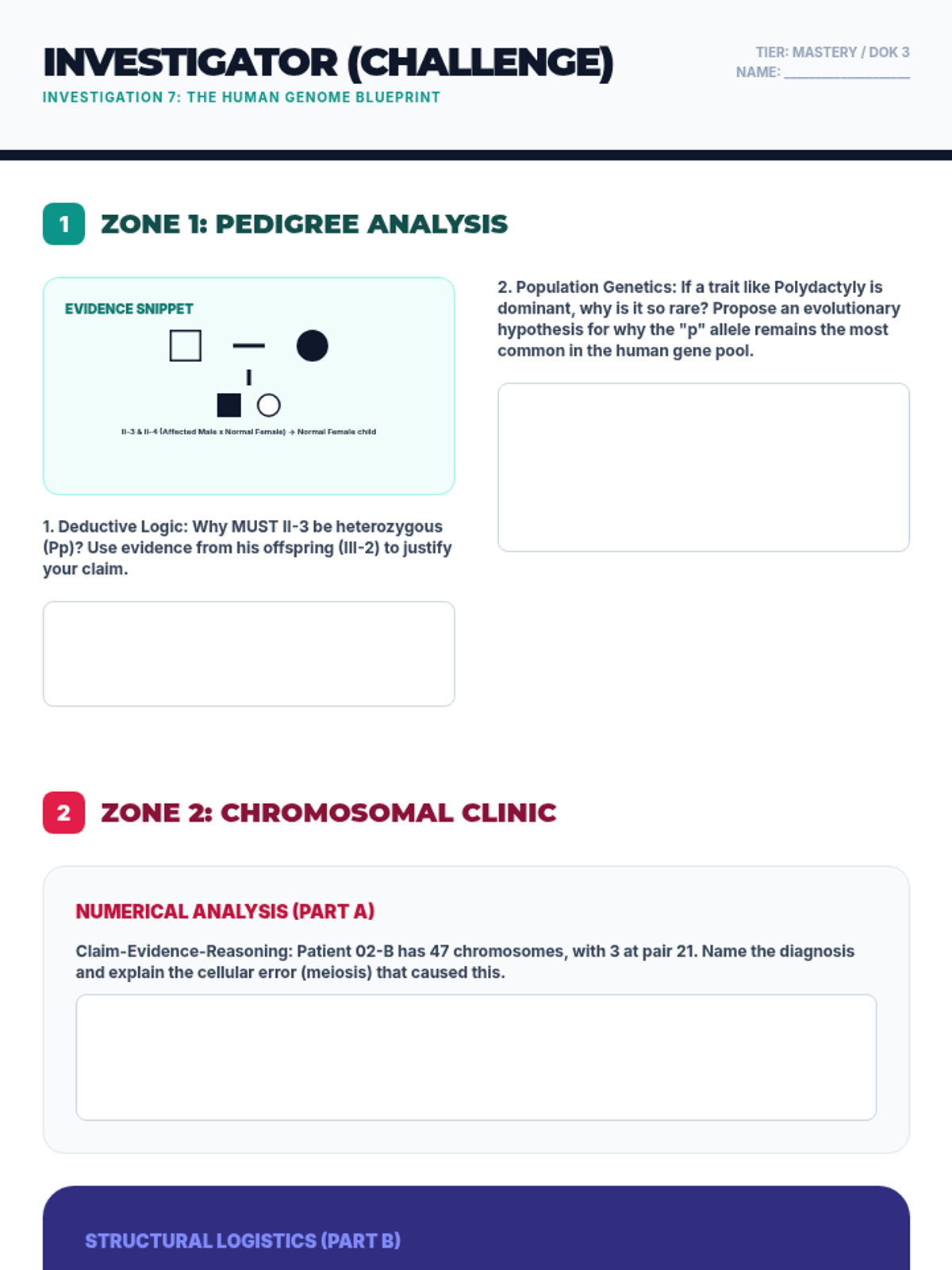
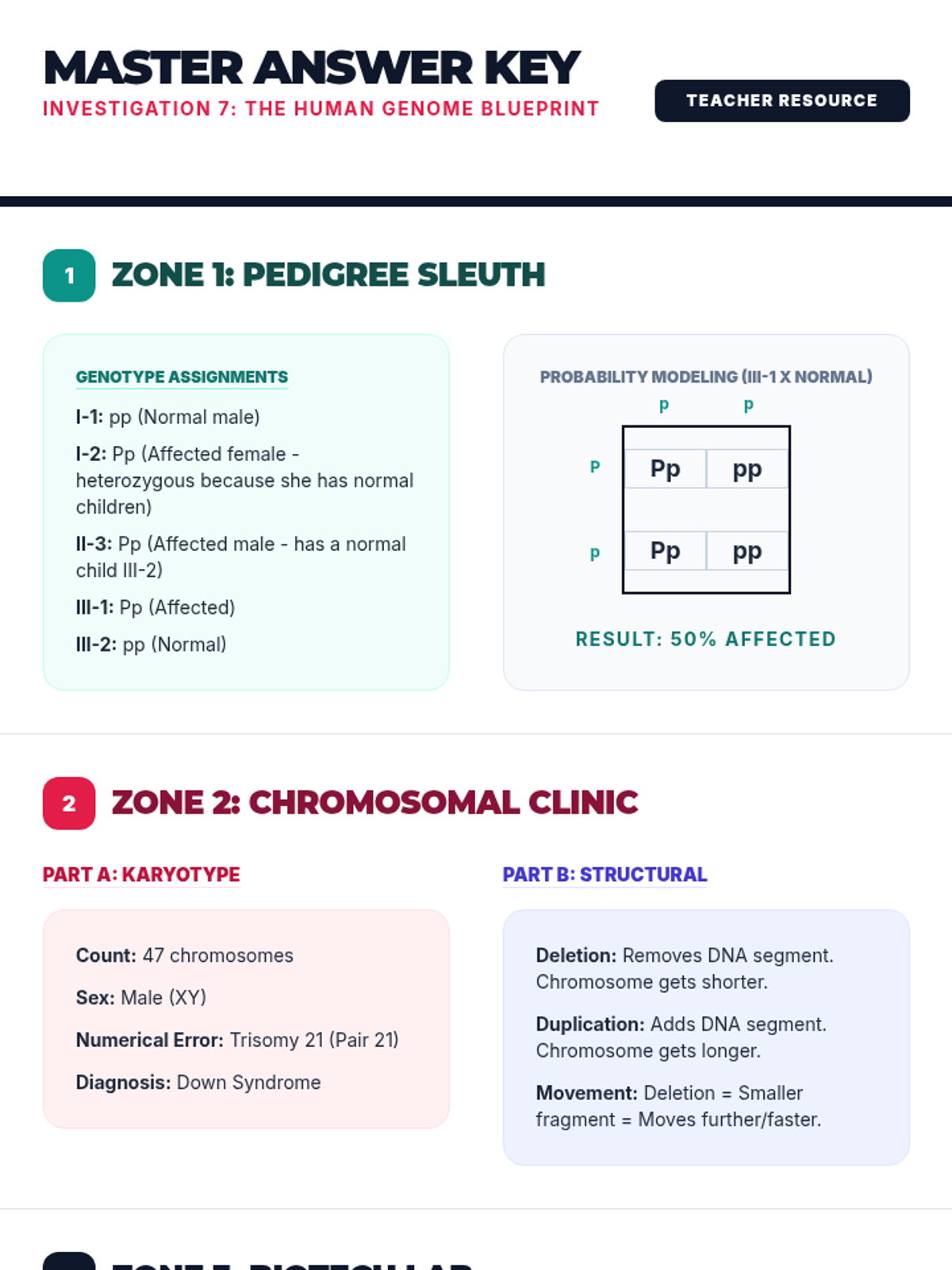
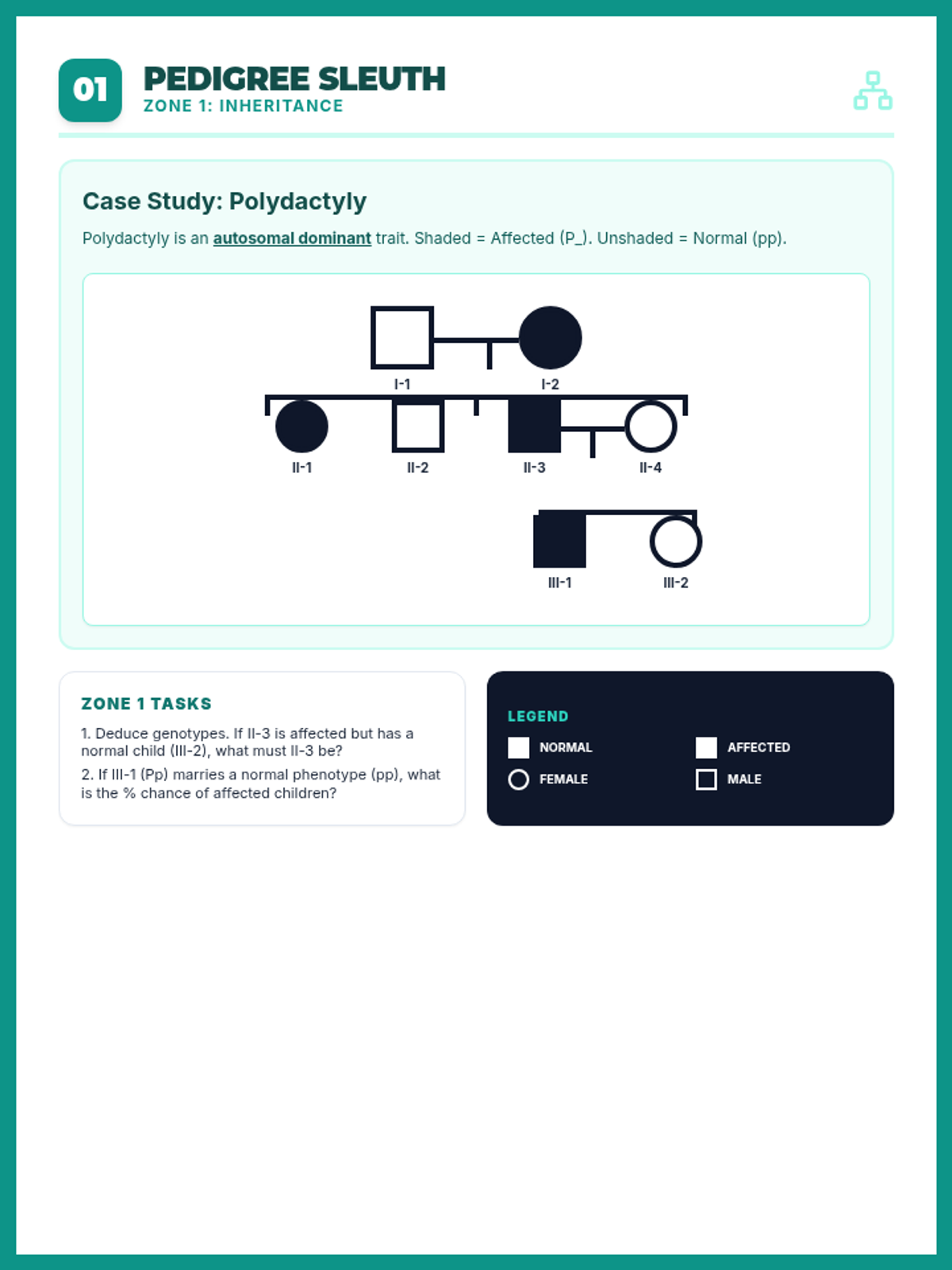
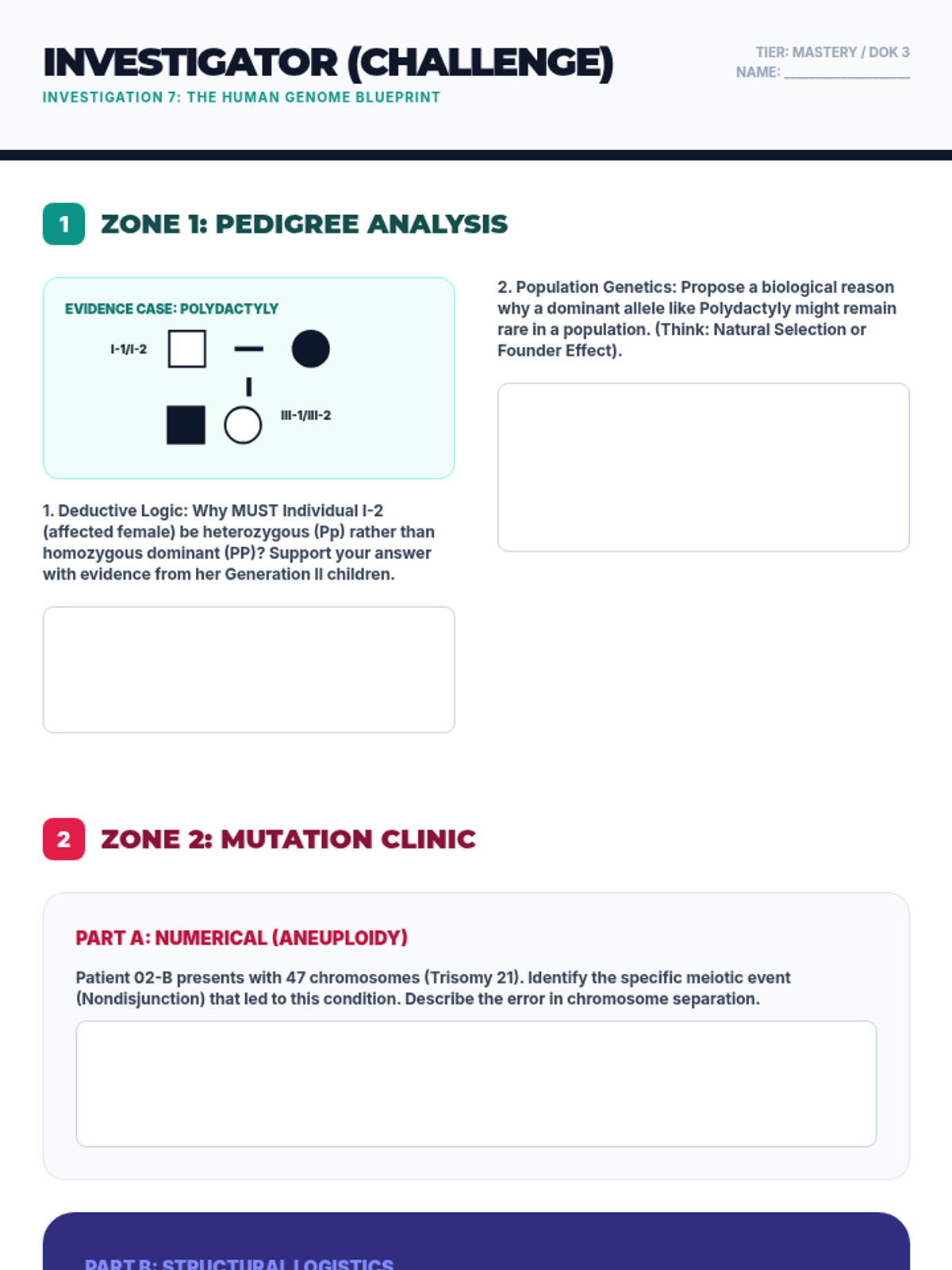
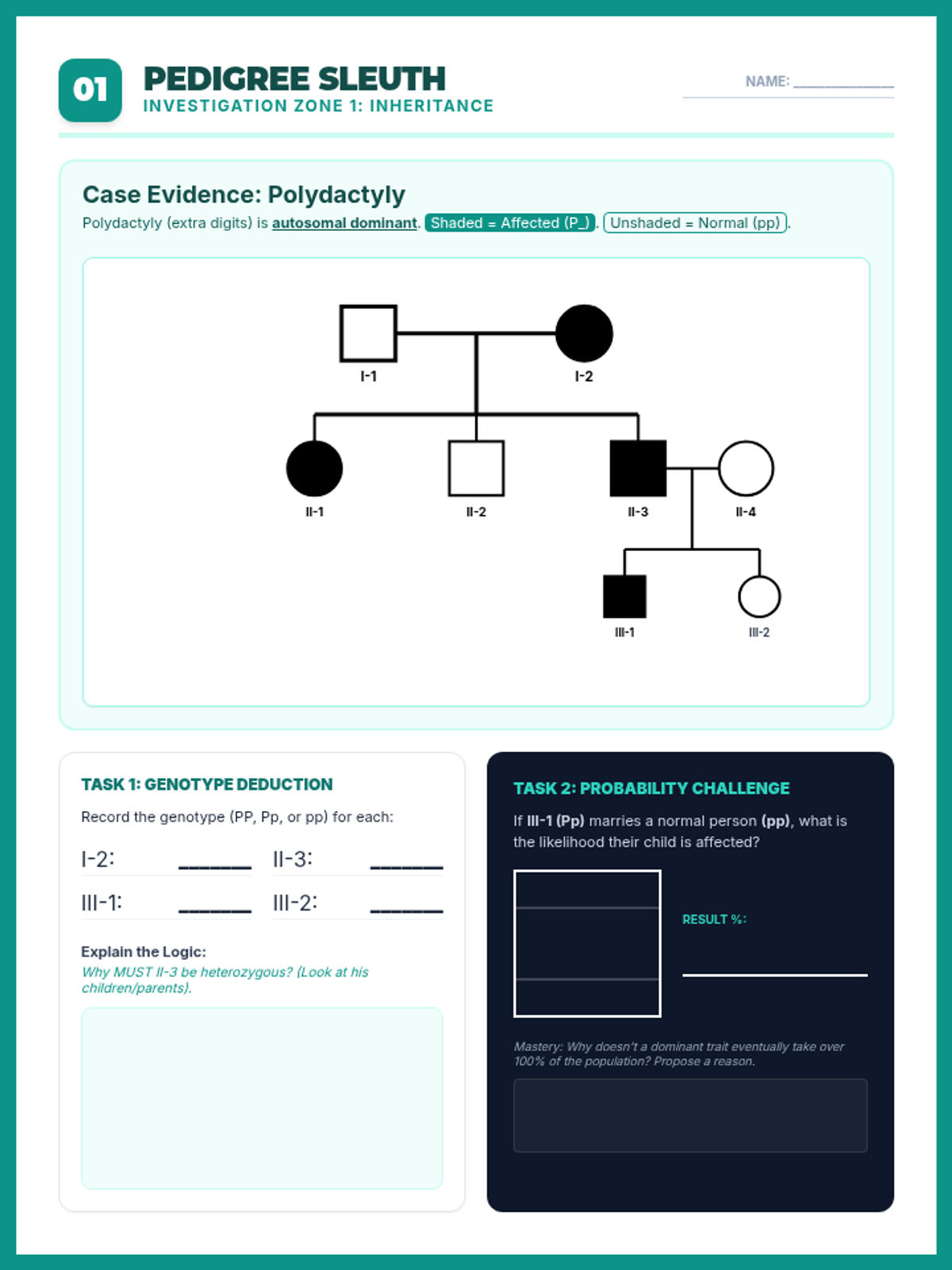
A 5-block (10 period) investigation into the human genome, focusing on patterns of inheritance, chromosomal disorders, and molecular biotechnology through the lens of polydactyly.
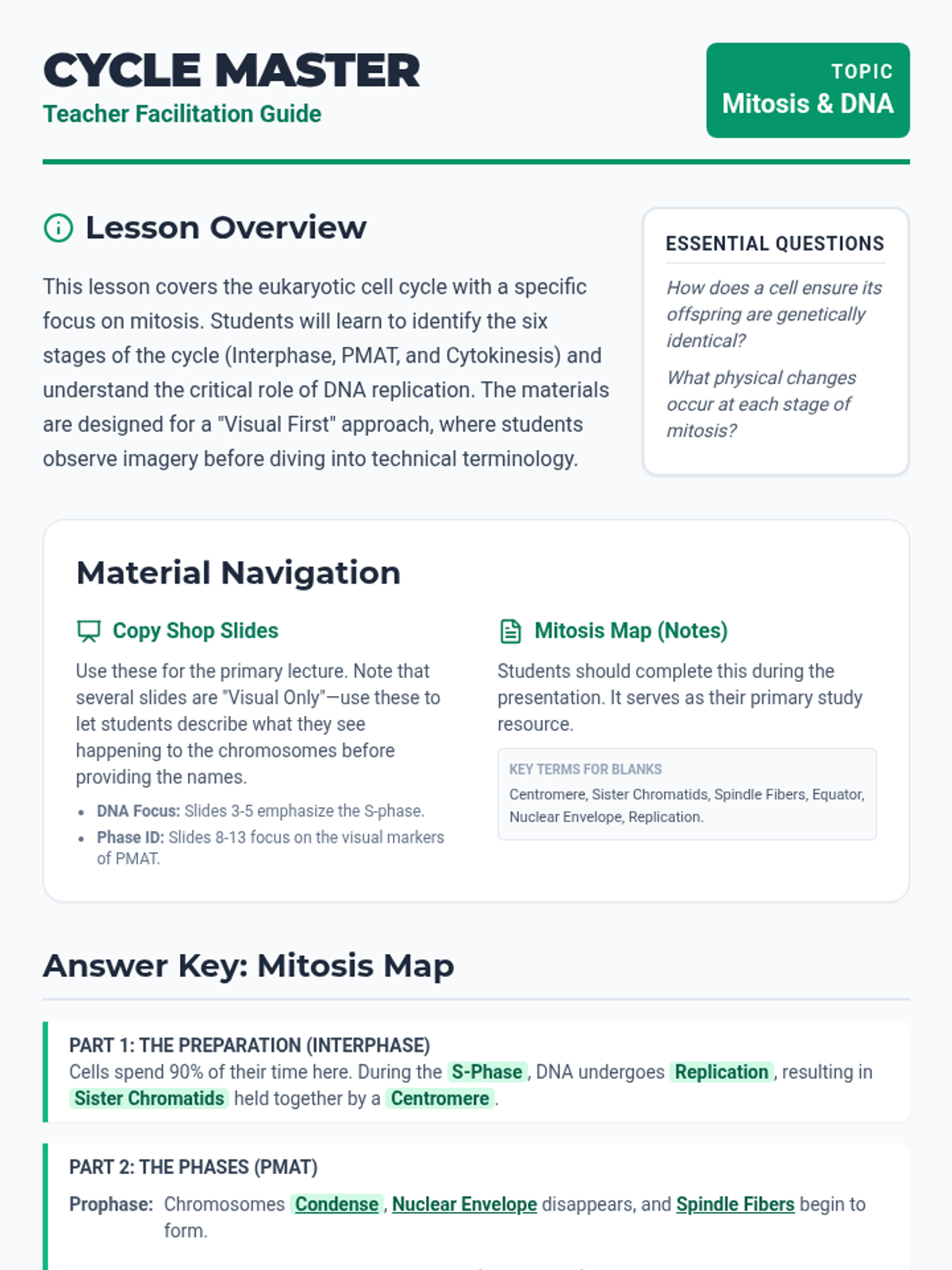
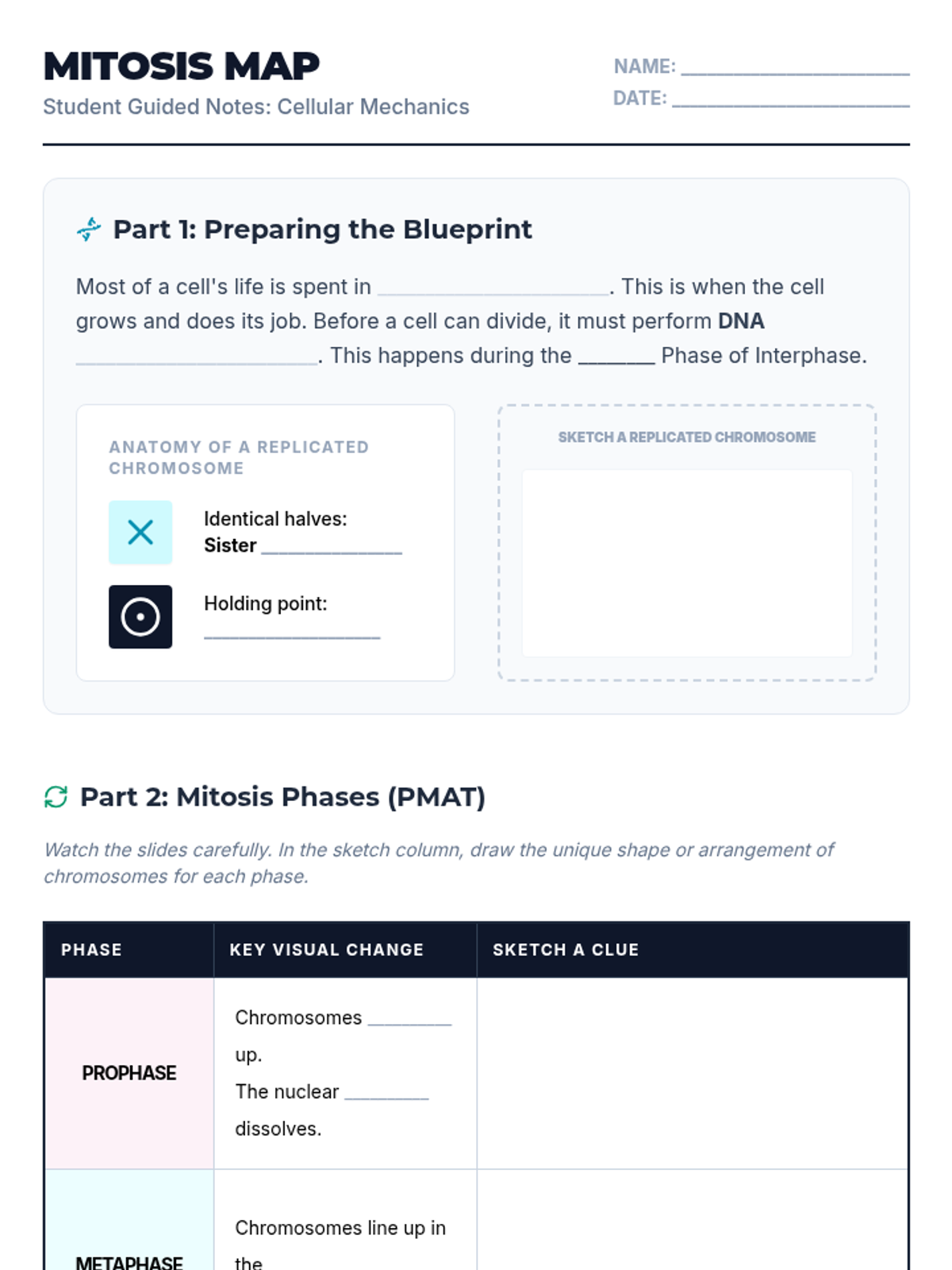
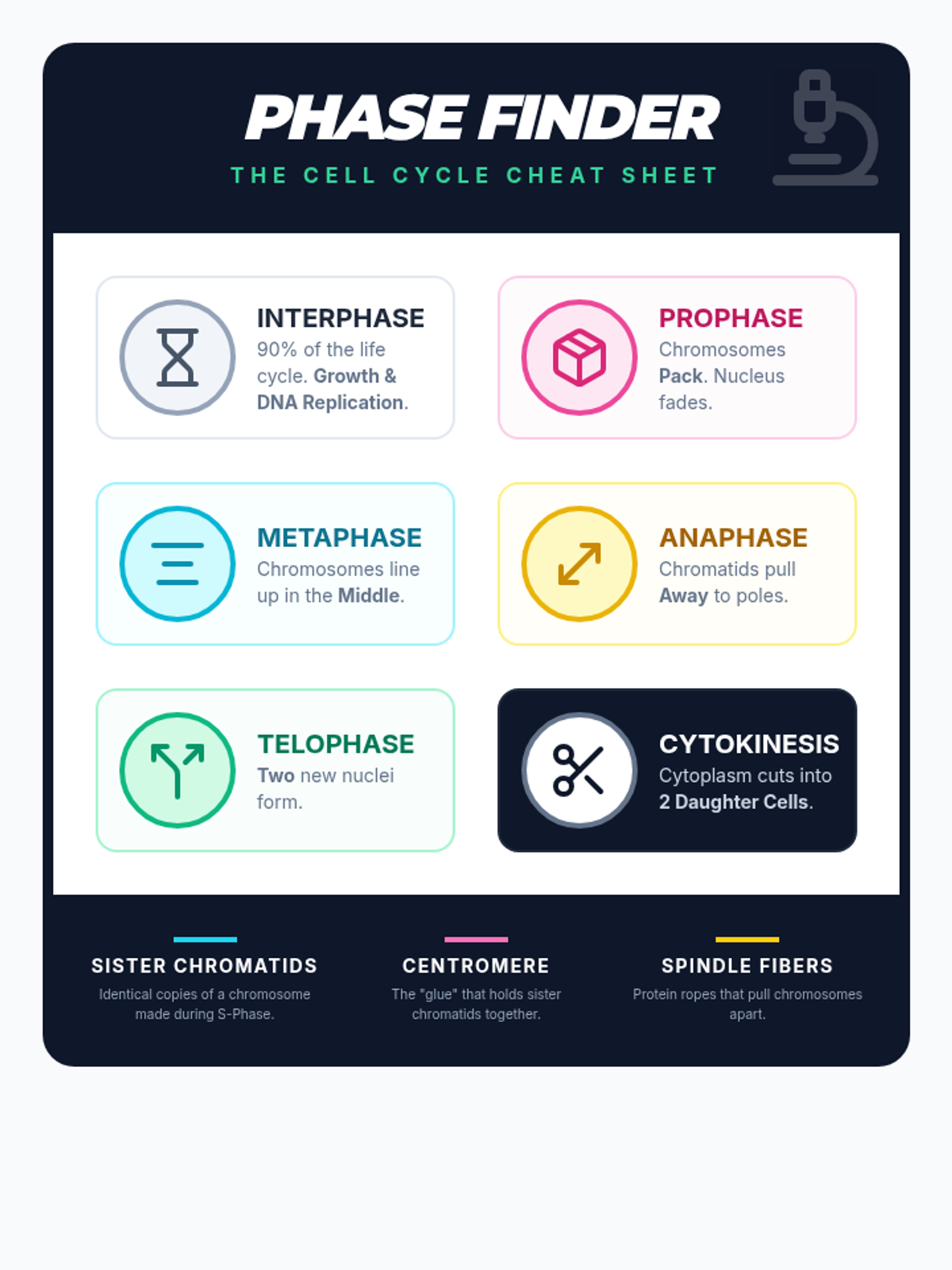
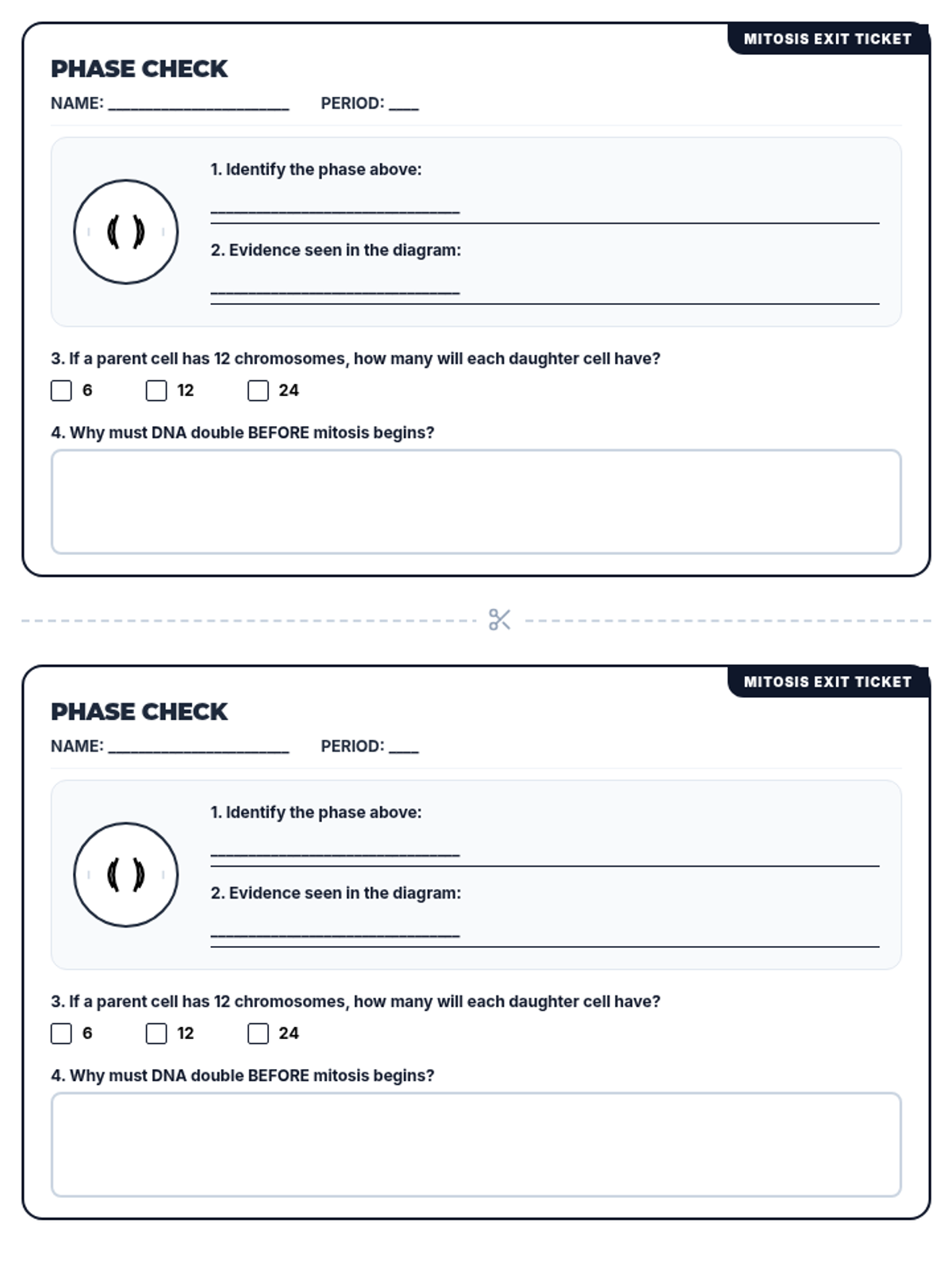
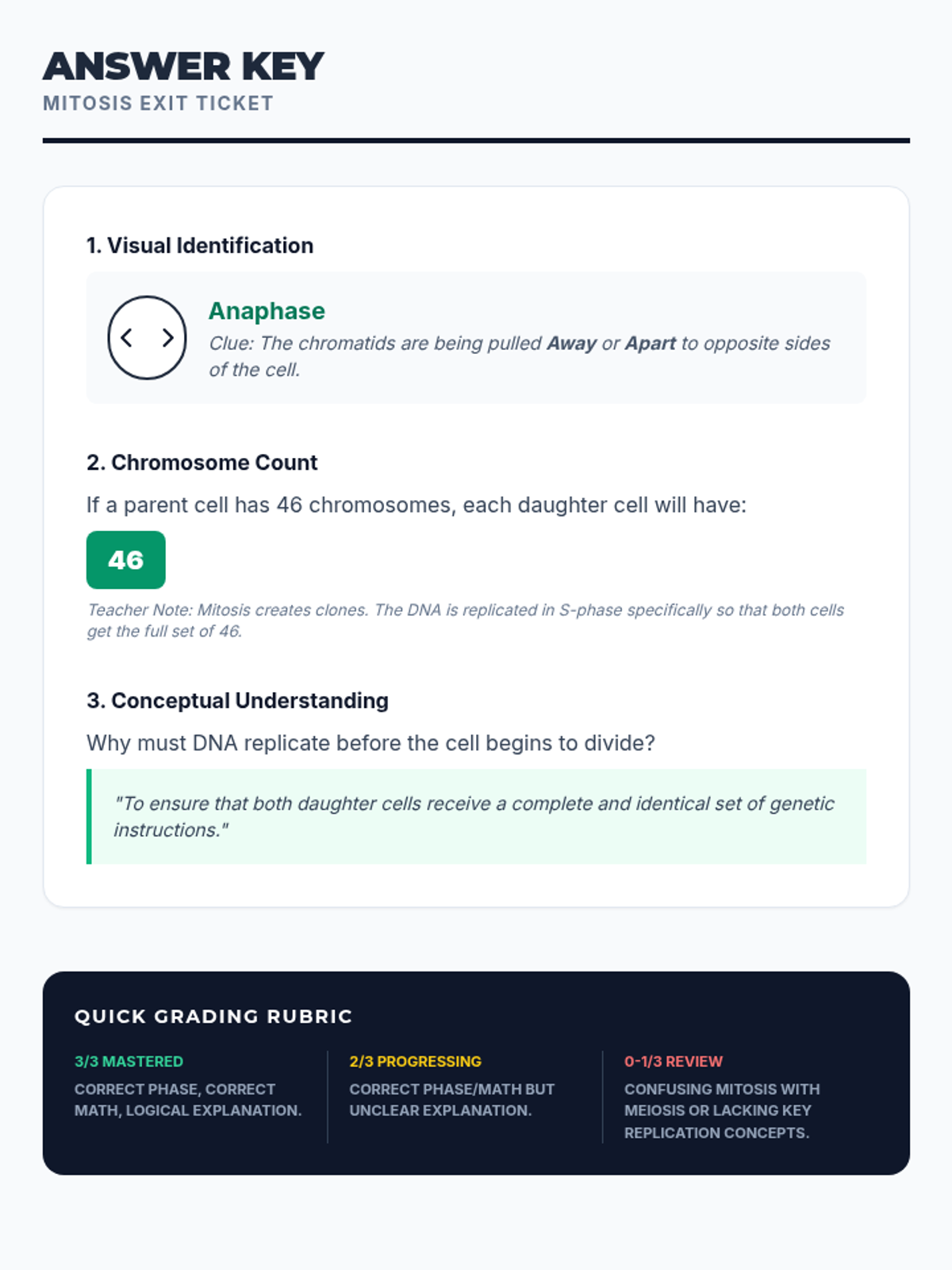
An in-depth look at mitosis and the 6-stage cell cycle, emphasizing DNA replication and visual identification of phases through guided observation.
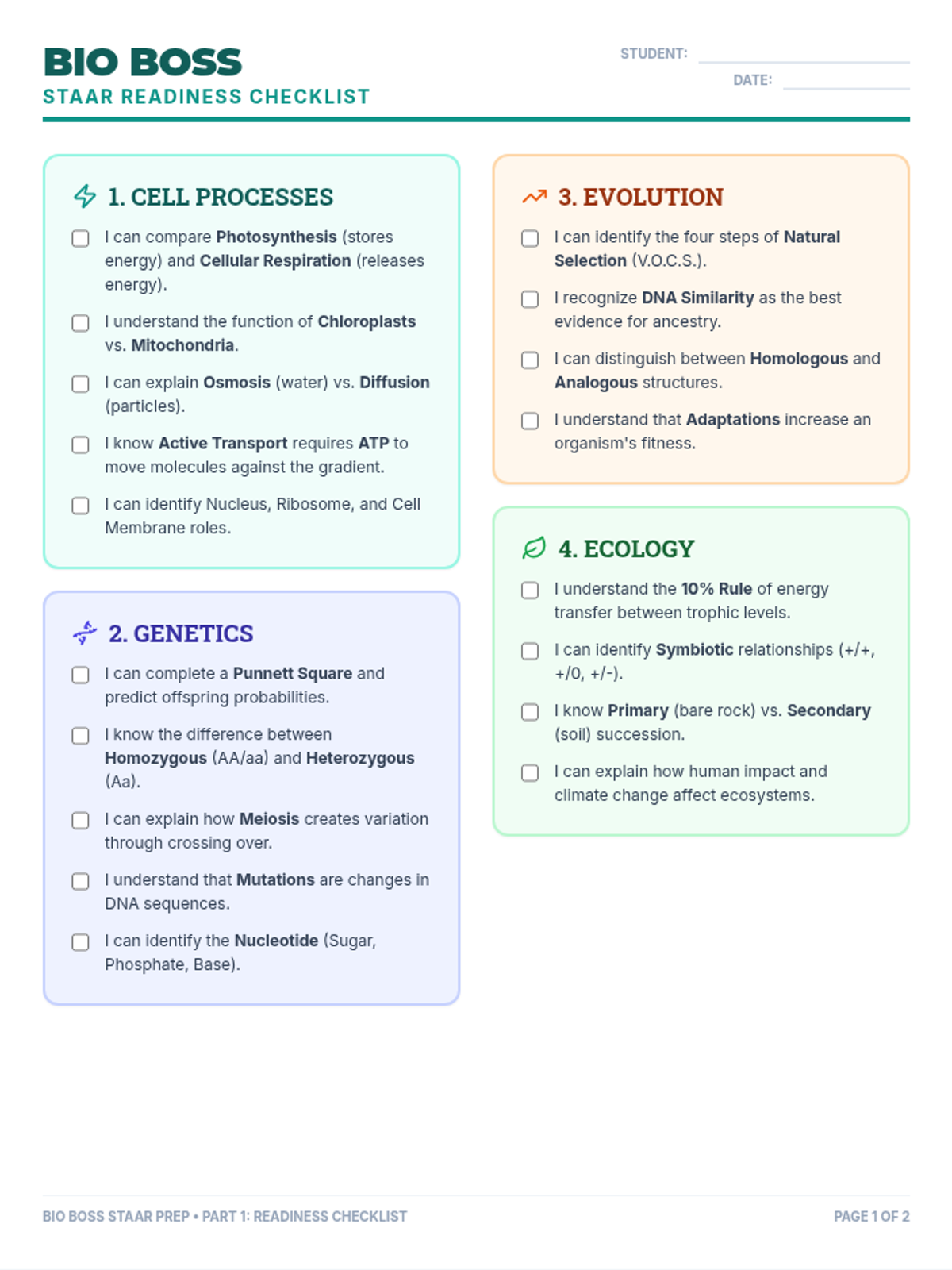
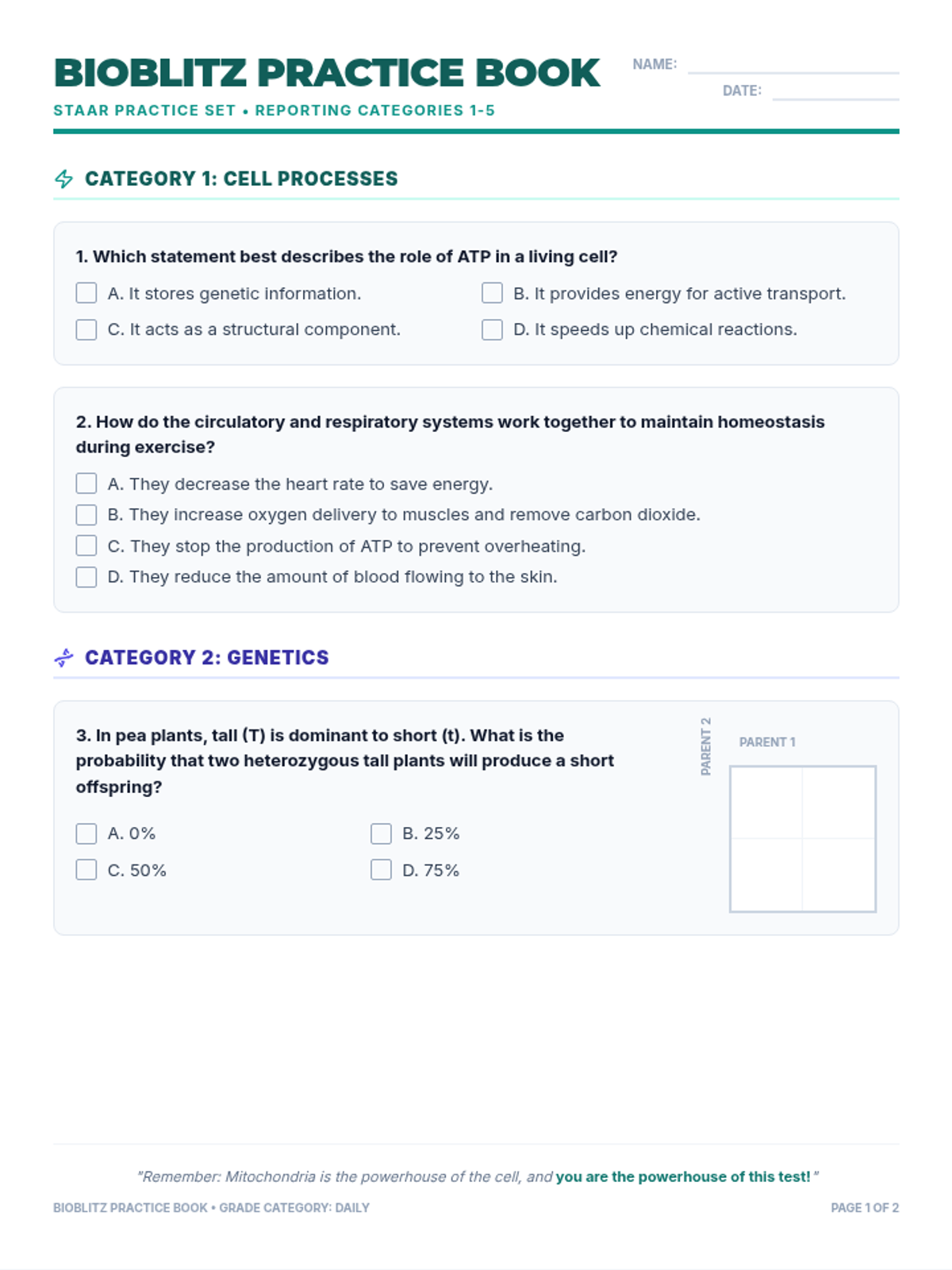
A focused review session for the Biology STAAR exam, centering on the five most-tested reporting categories through visual concept maps and question-stem alignment.
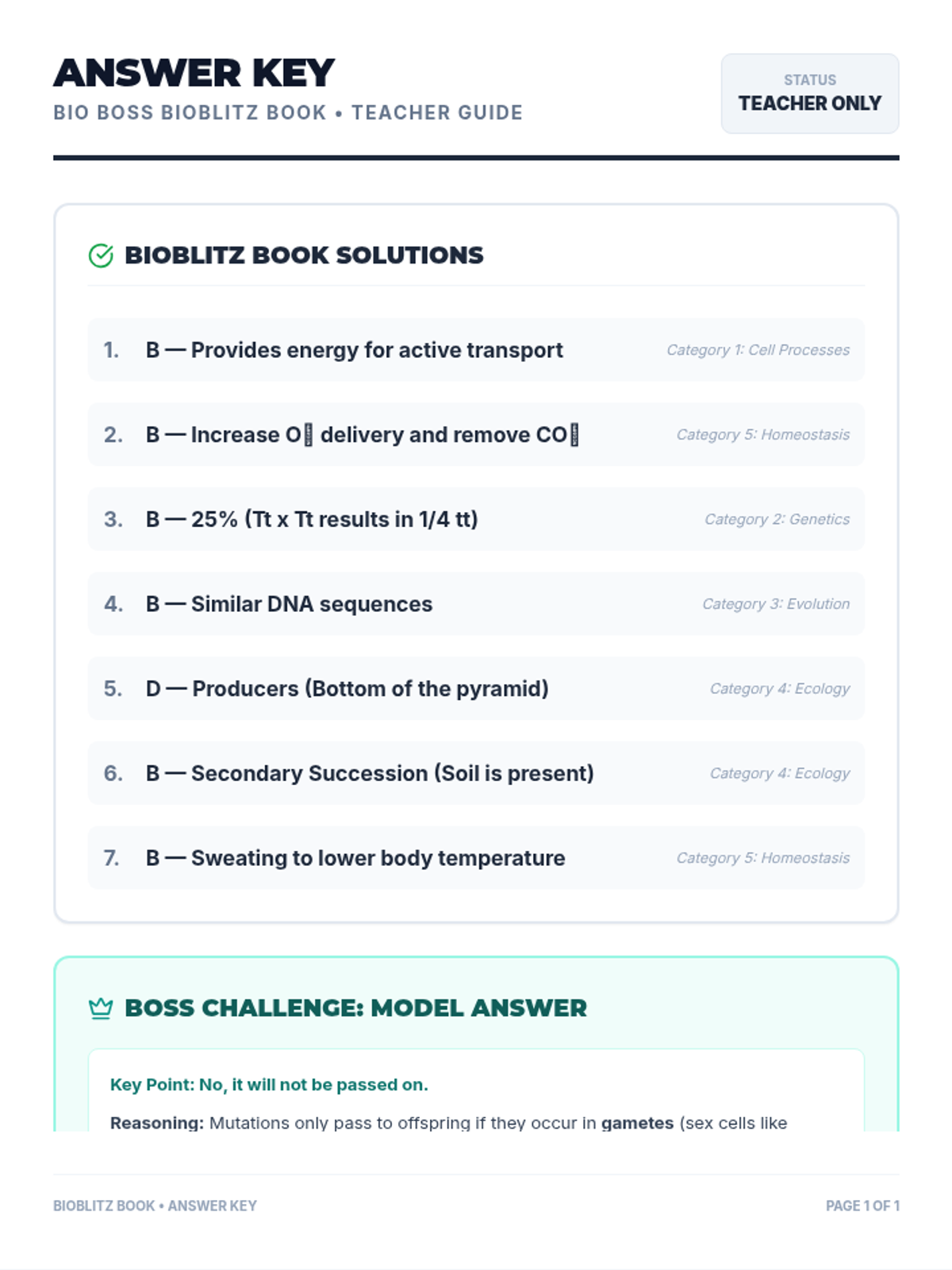
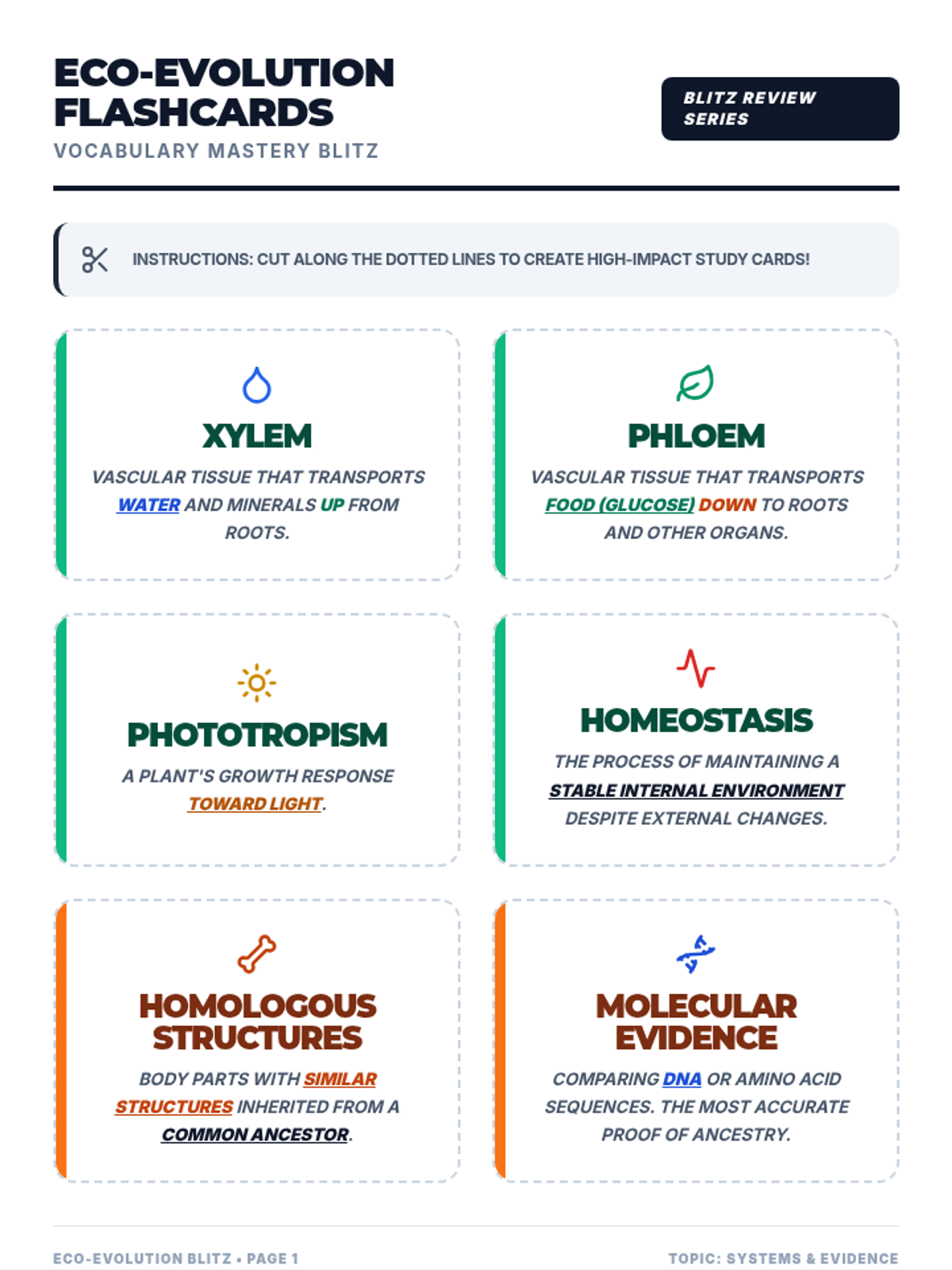
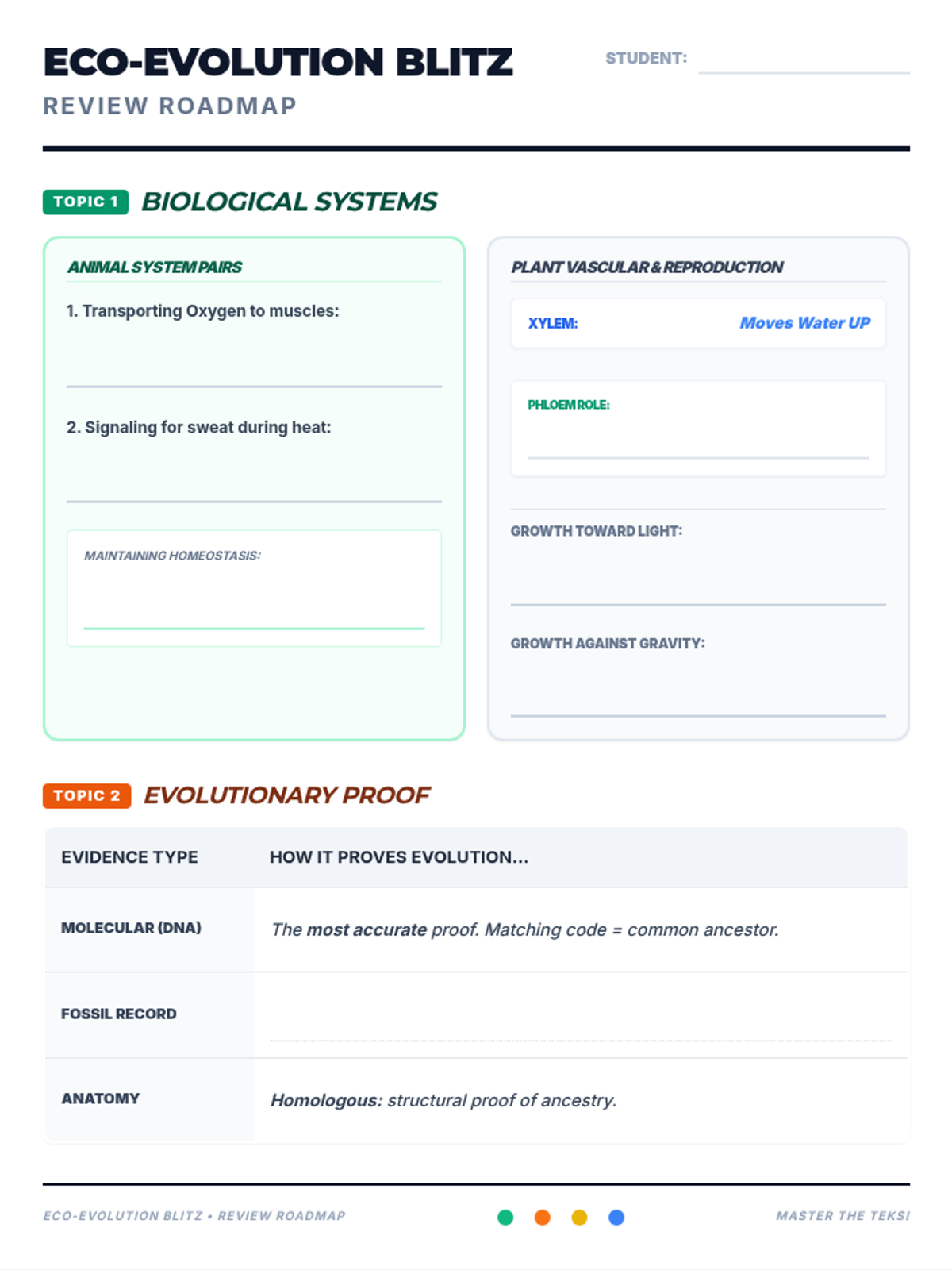
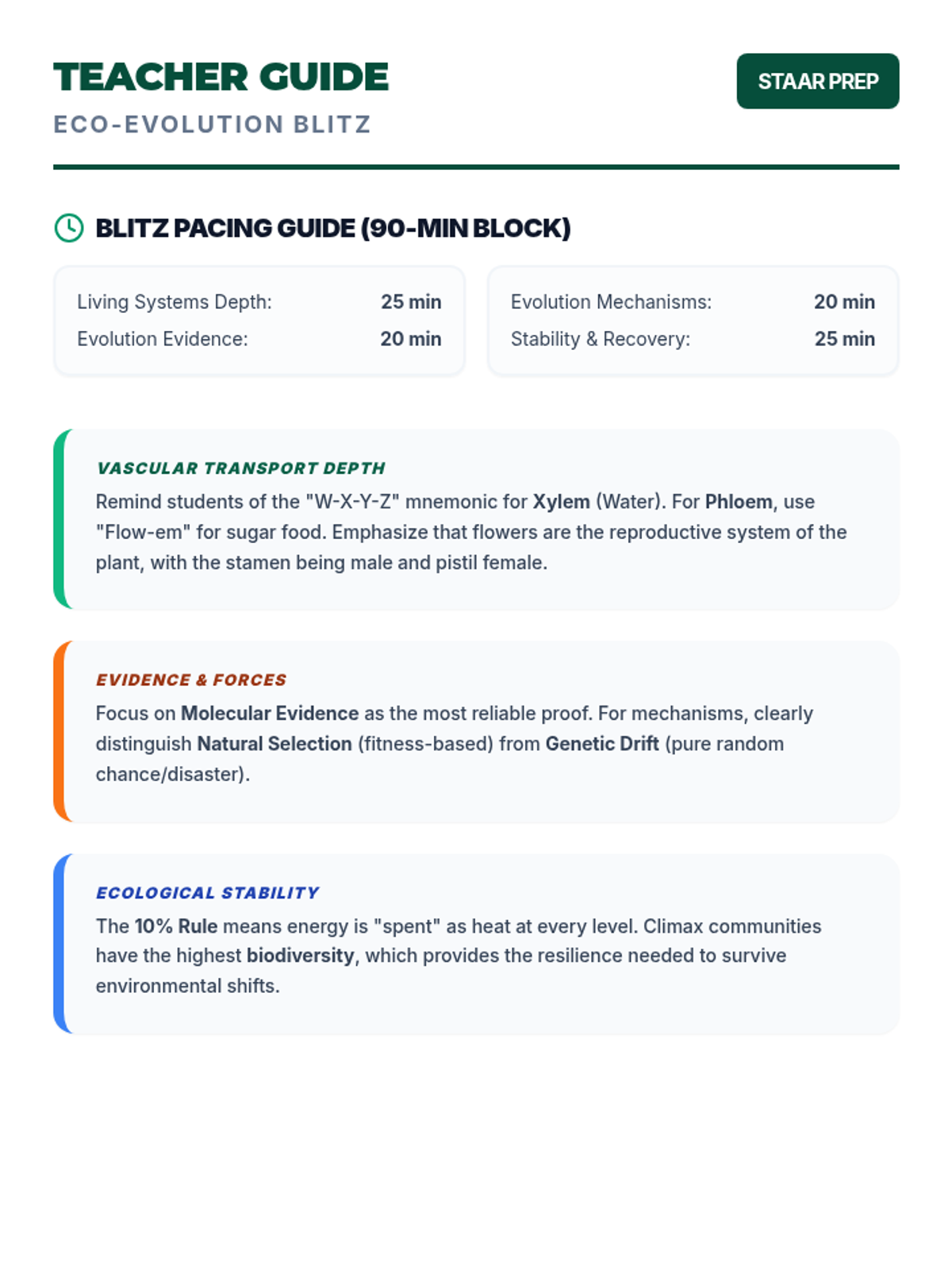
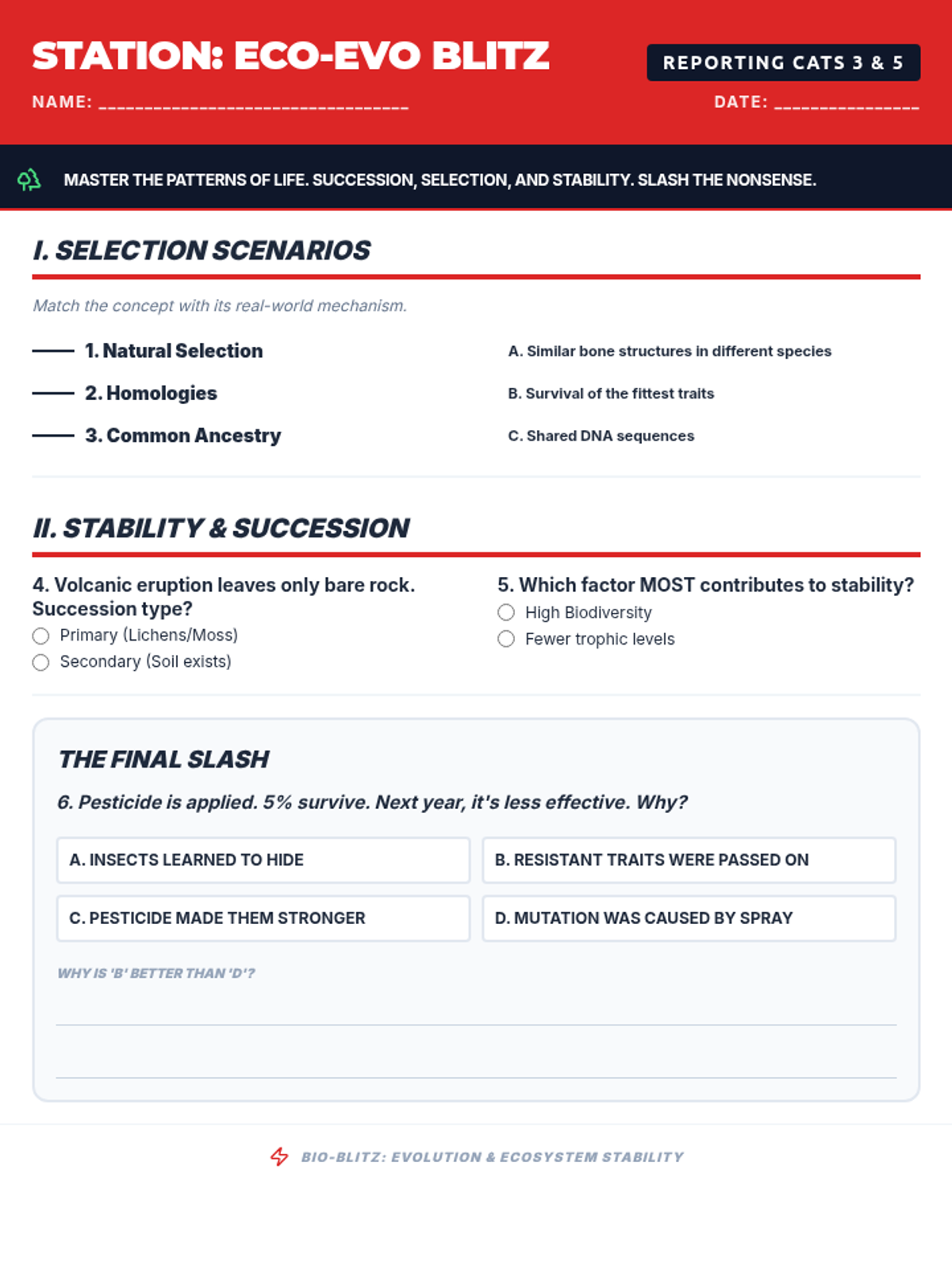
A high-impact review of evolutionary mechanisms, evidences, plant and animal systems interactions, and ecological stability. This lesson follows the Blitz format with maximum-depth content on succession, feedback loops, and biogeochemical cycles.
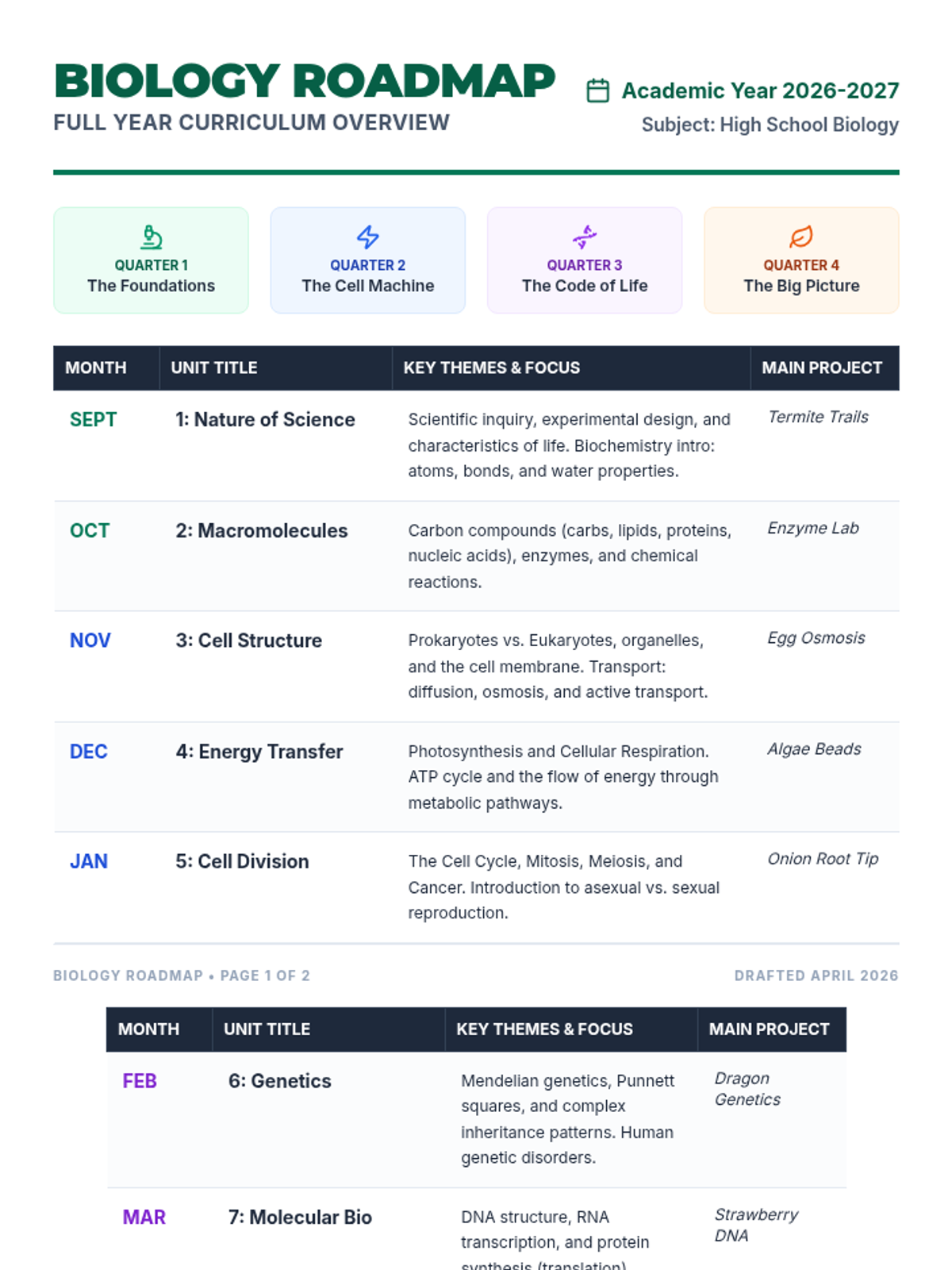
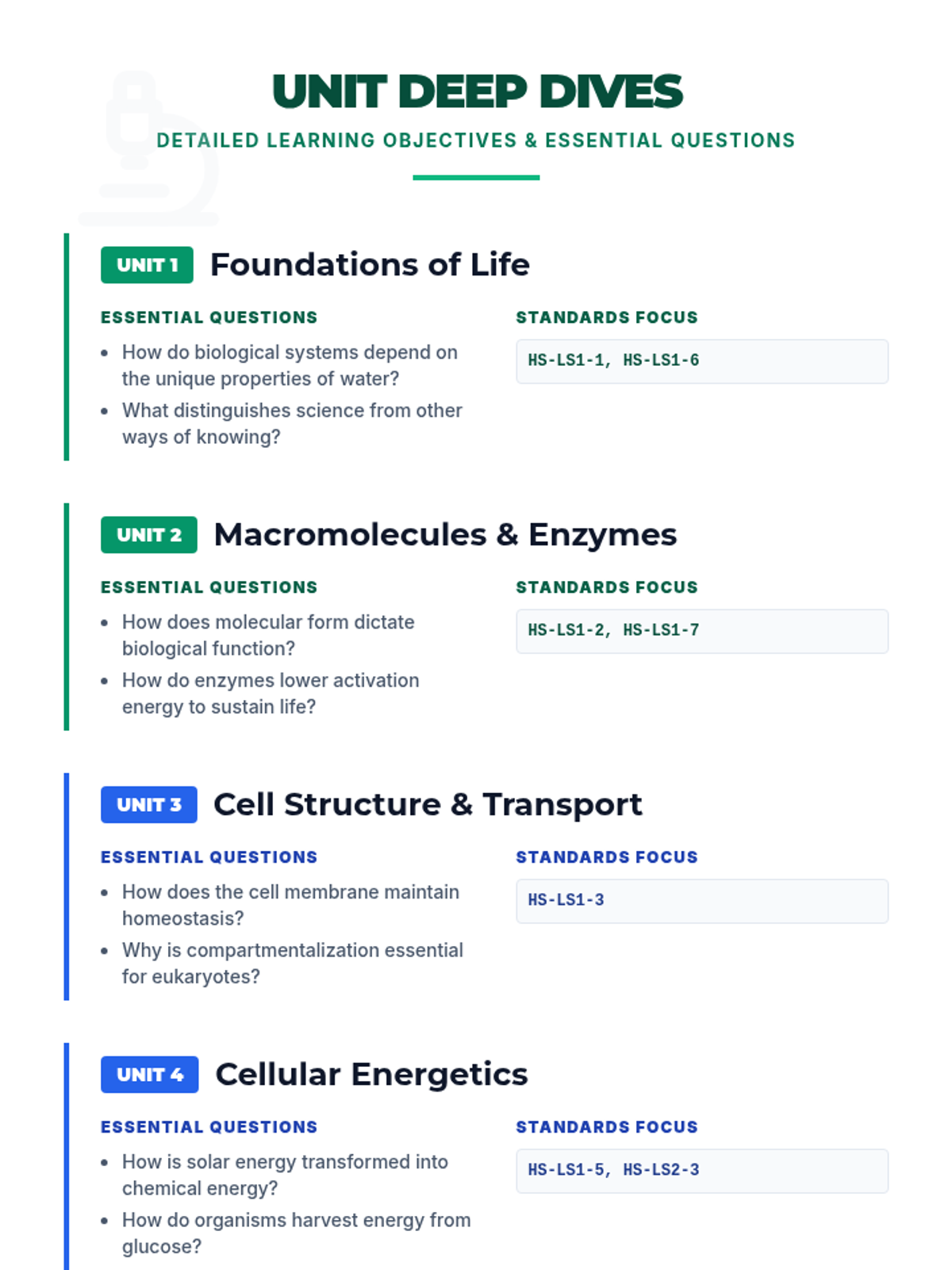
The foundational planning materials for the full-year Biology curriculum, providing a high-level roadmap and detailed unit breakdowns.
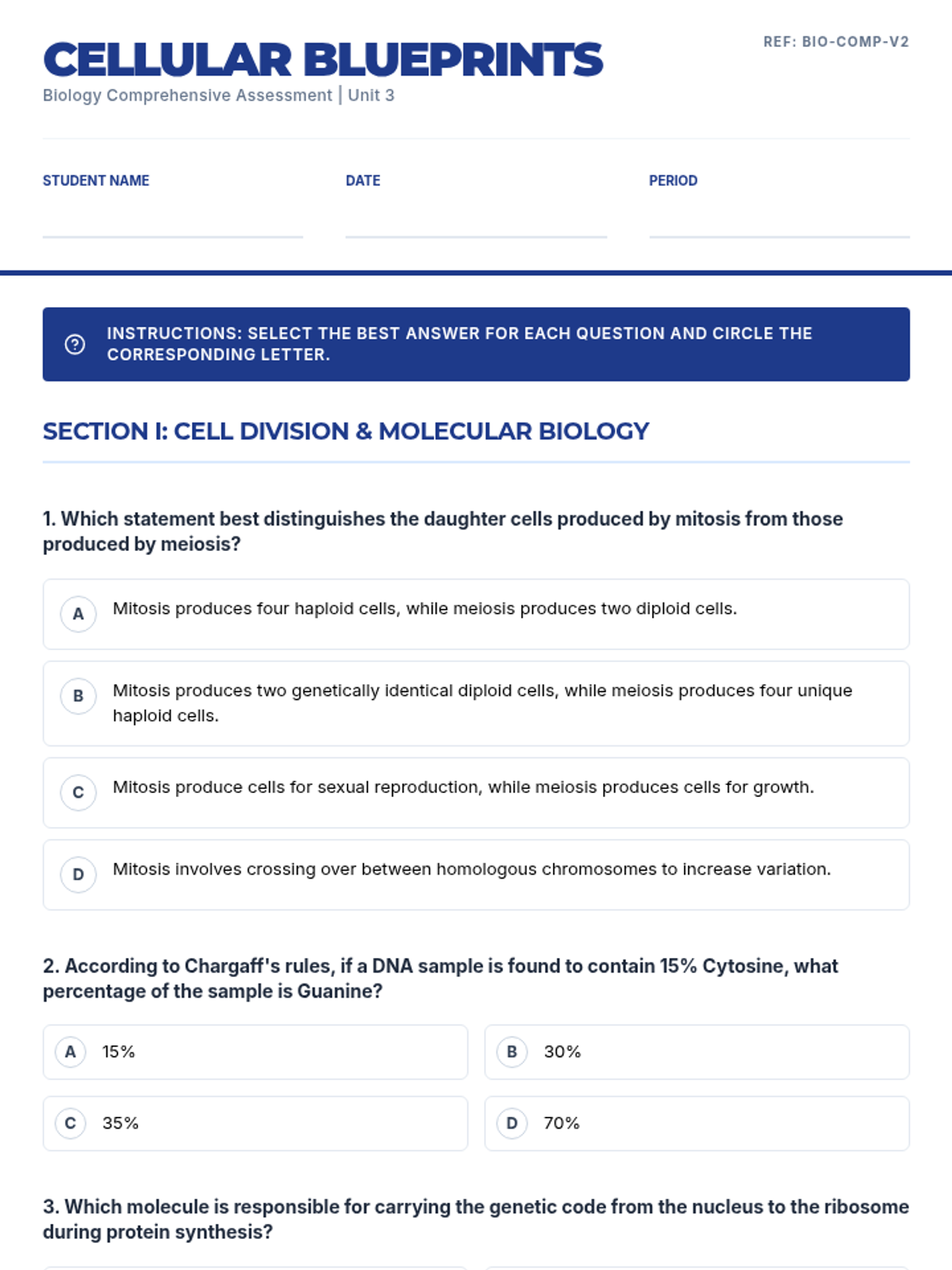
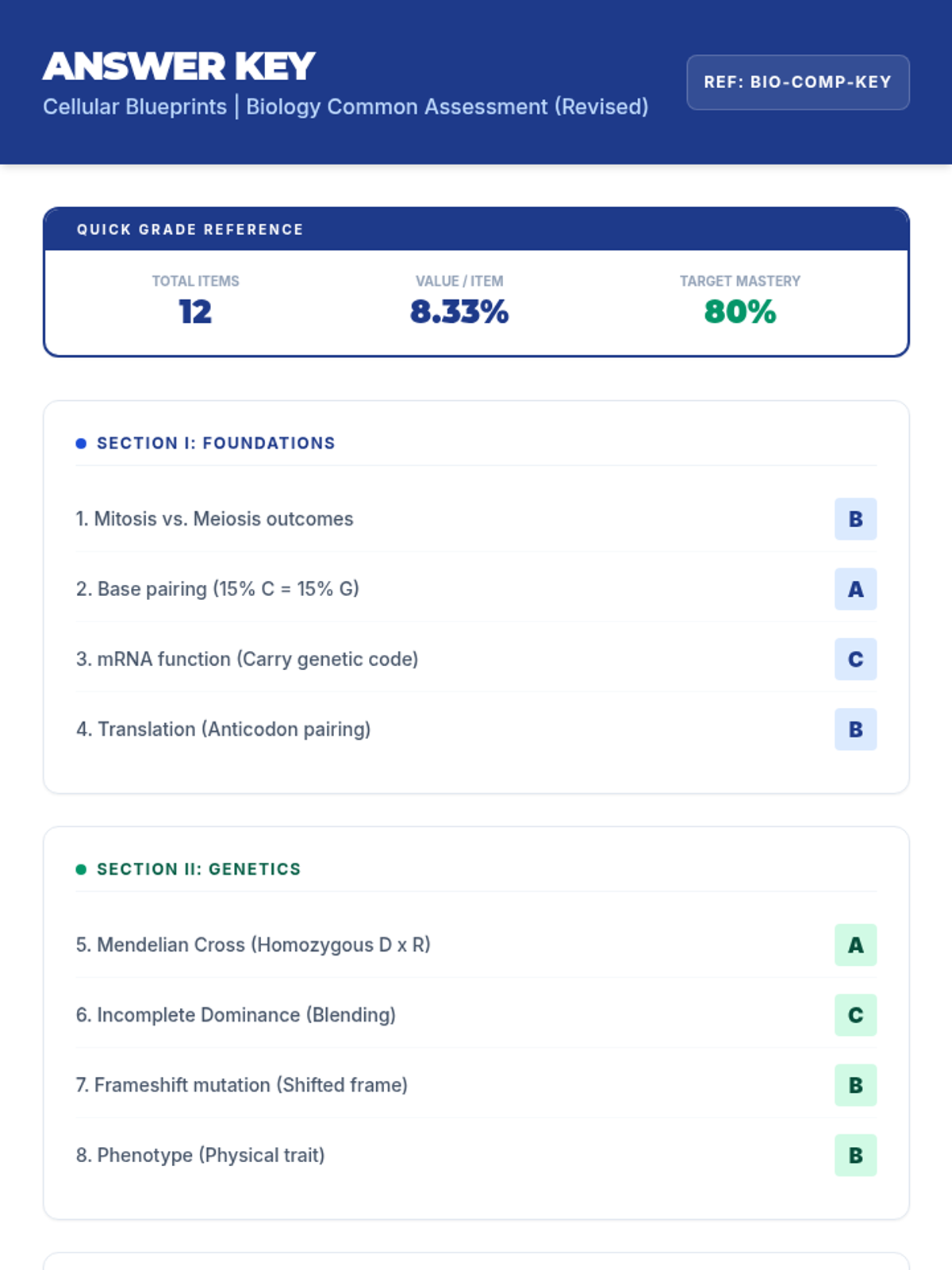
A high school biology assessment covering the fundamental processes of cell division, genetic storage, and protein production. This lesson includes a 12-question multiple-choice quiz and a corresponding teacher answer key.
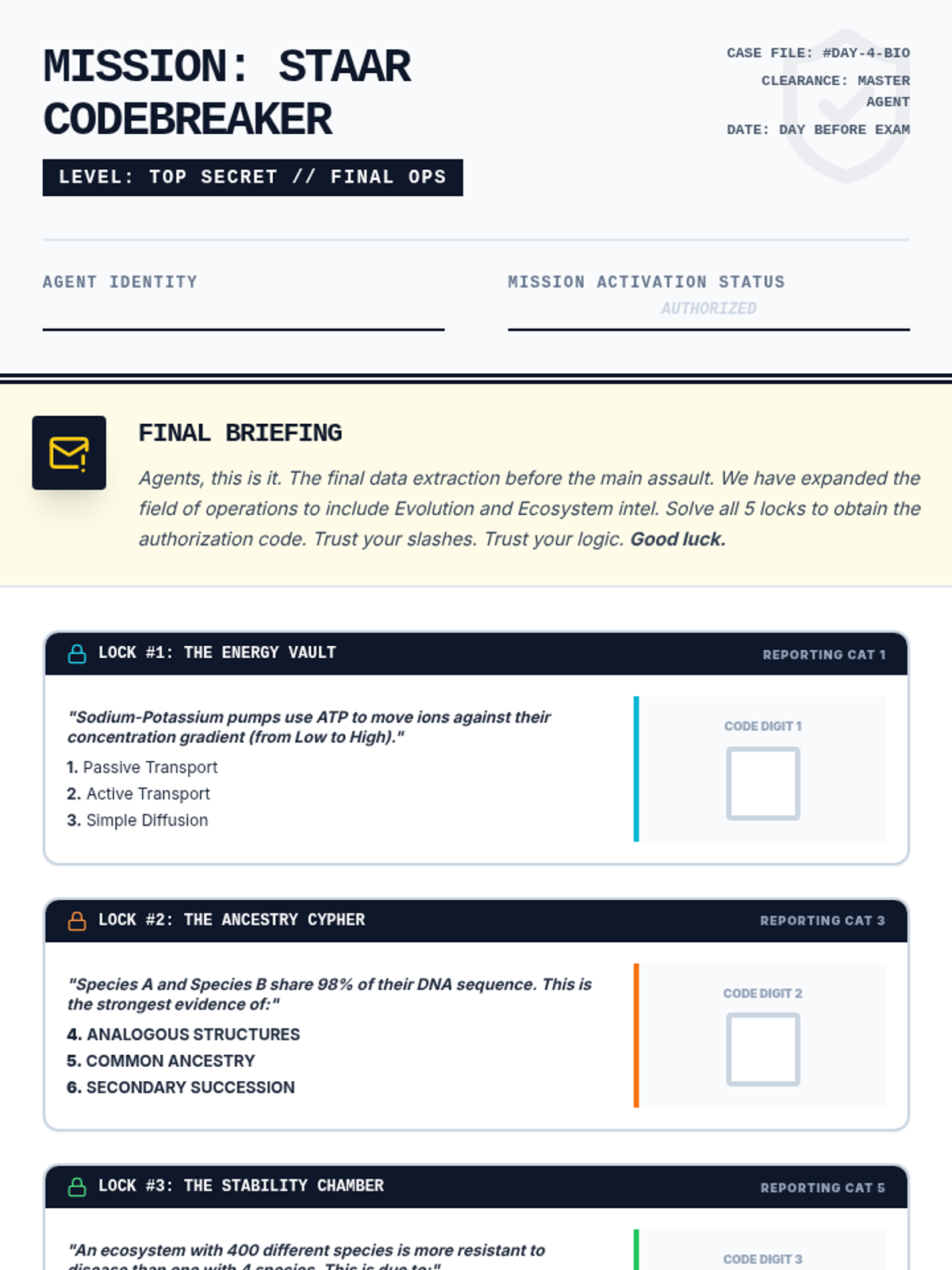
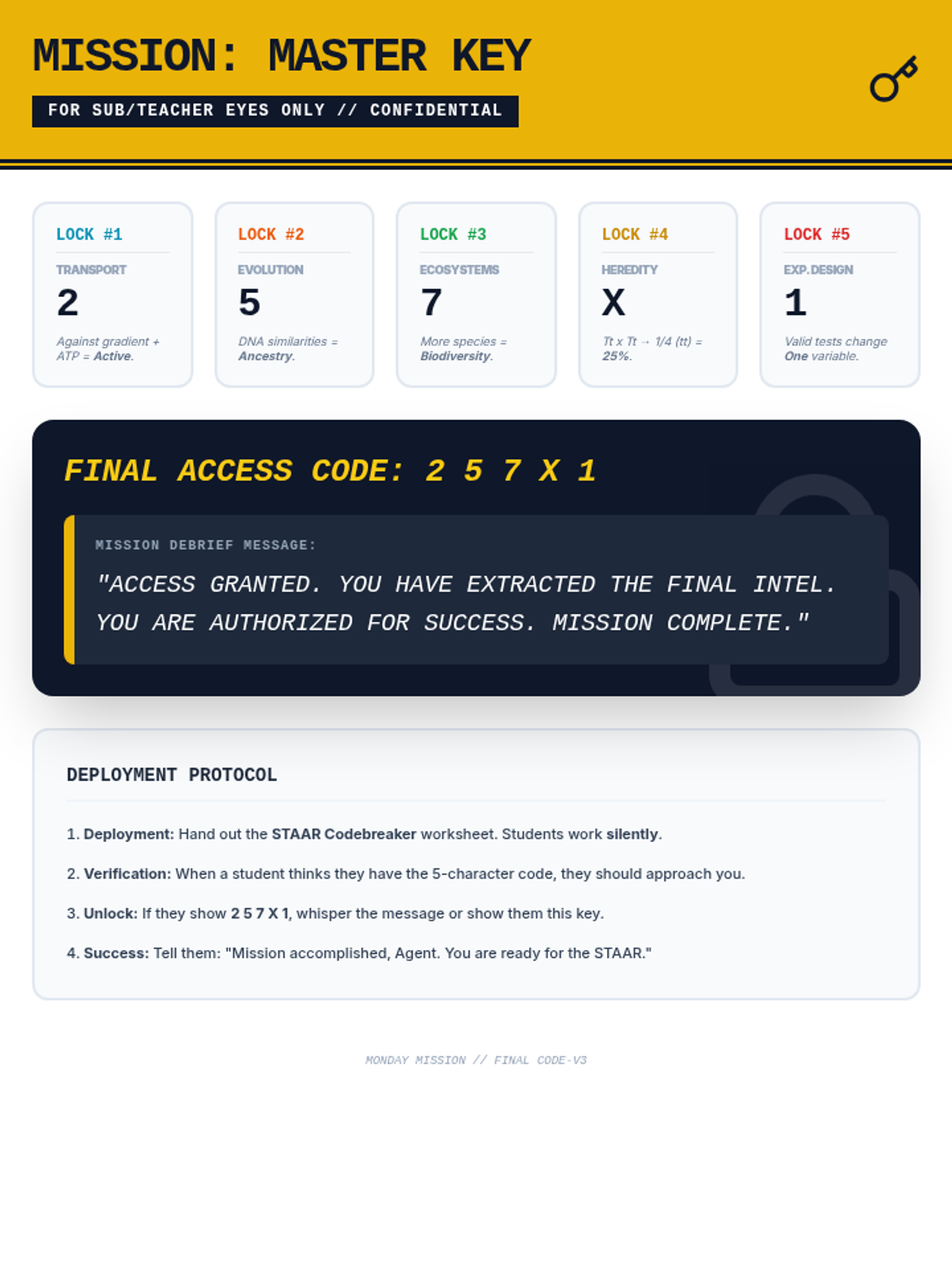
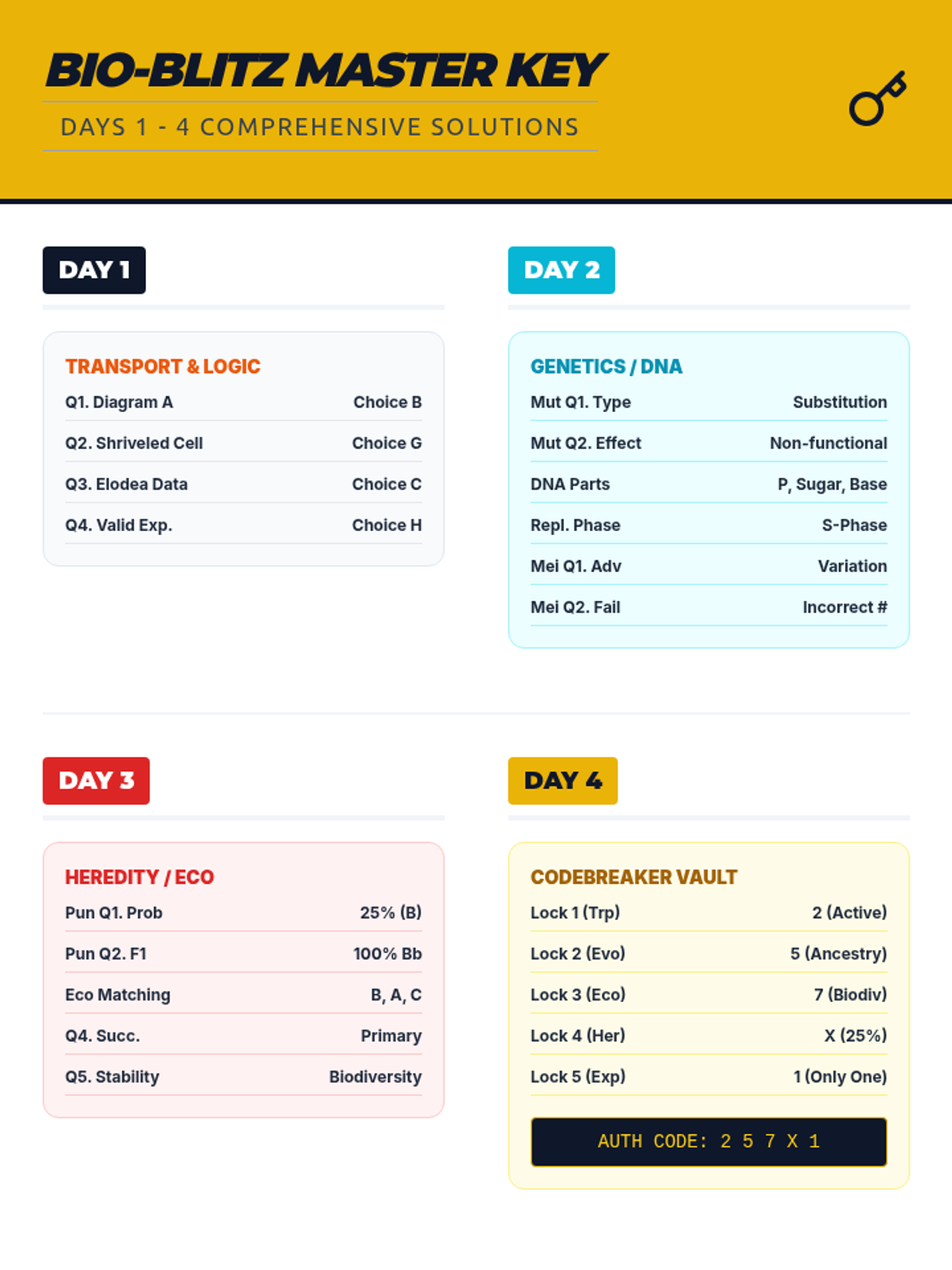
A self-contained, high-engagement "Secret Agent" themed review mission for Day 4 (the day before the STAAR exam), designed for independent work.
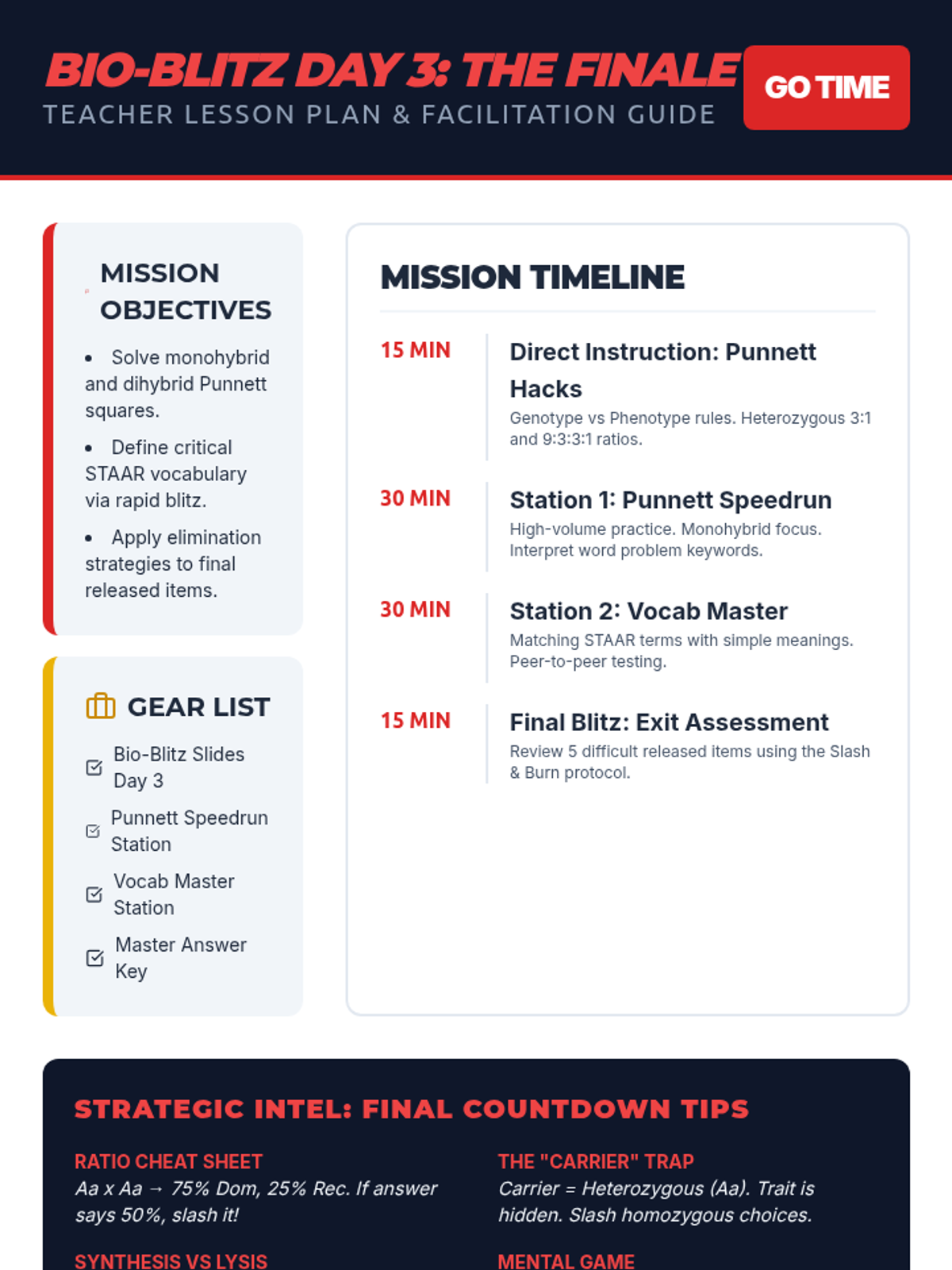
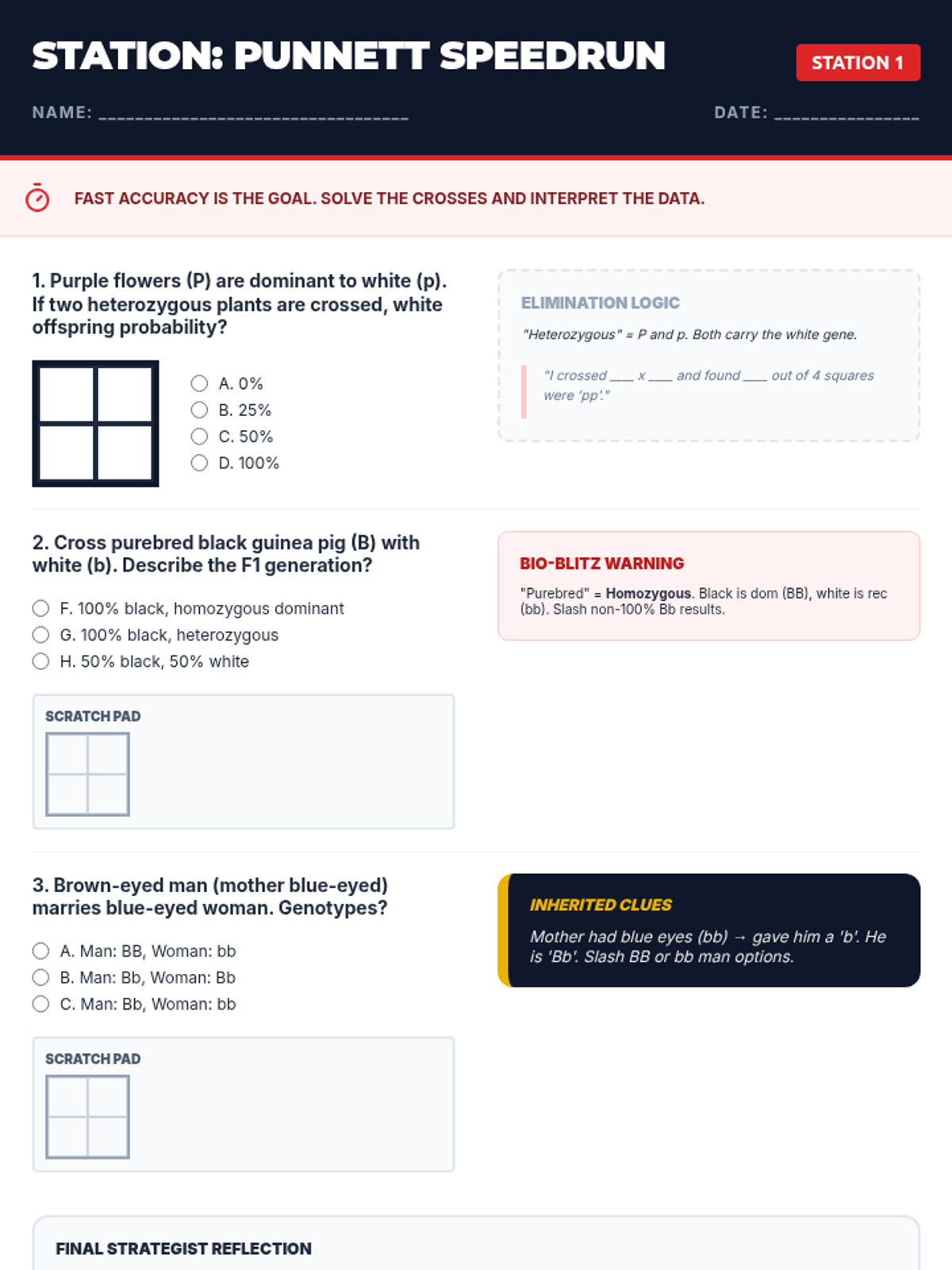
Concludes the review with heredity problems and a comprehensive vocabulary blitz to ensure students are ready for the STAAR exam.
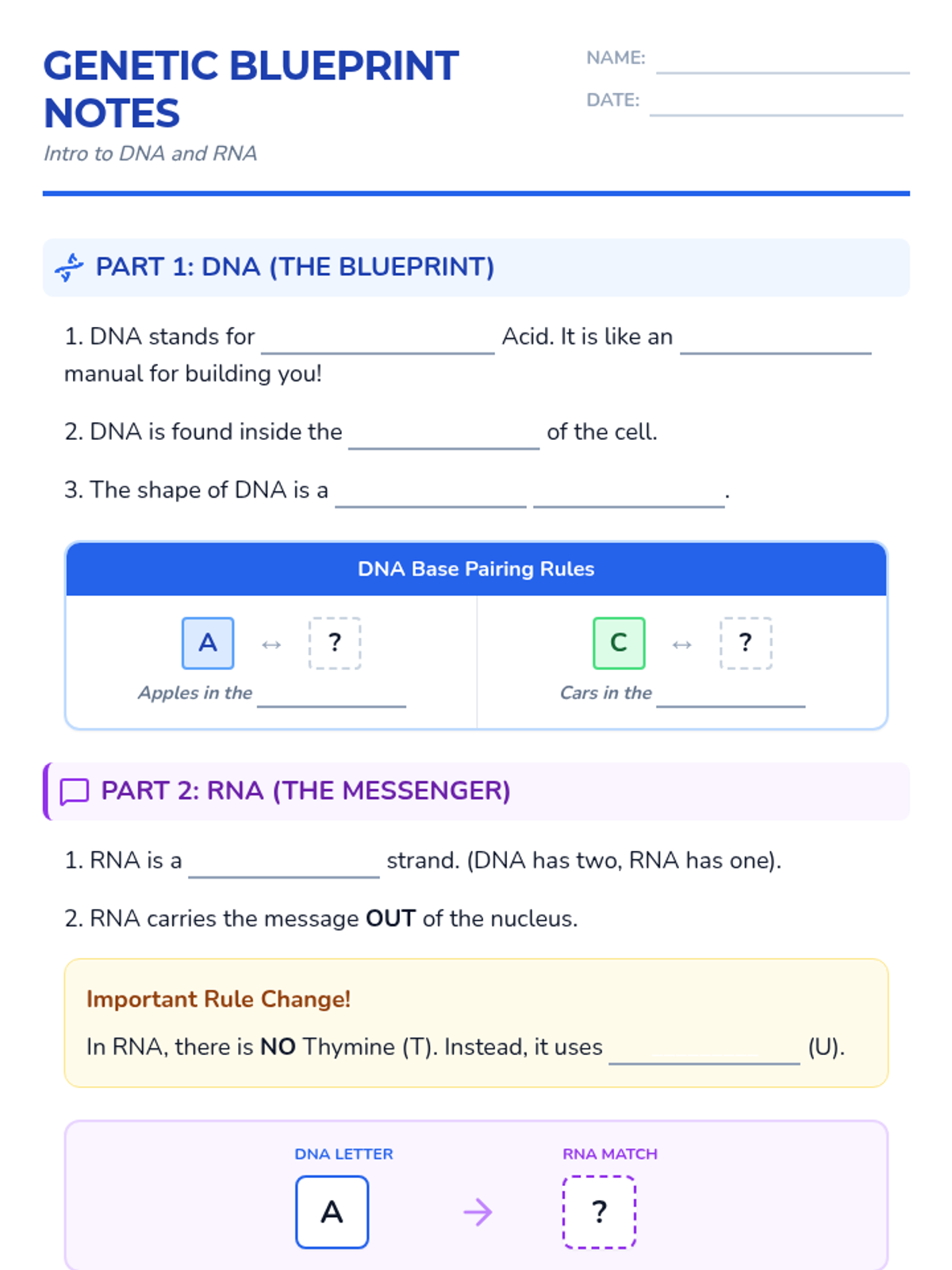
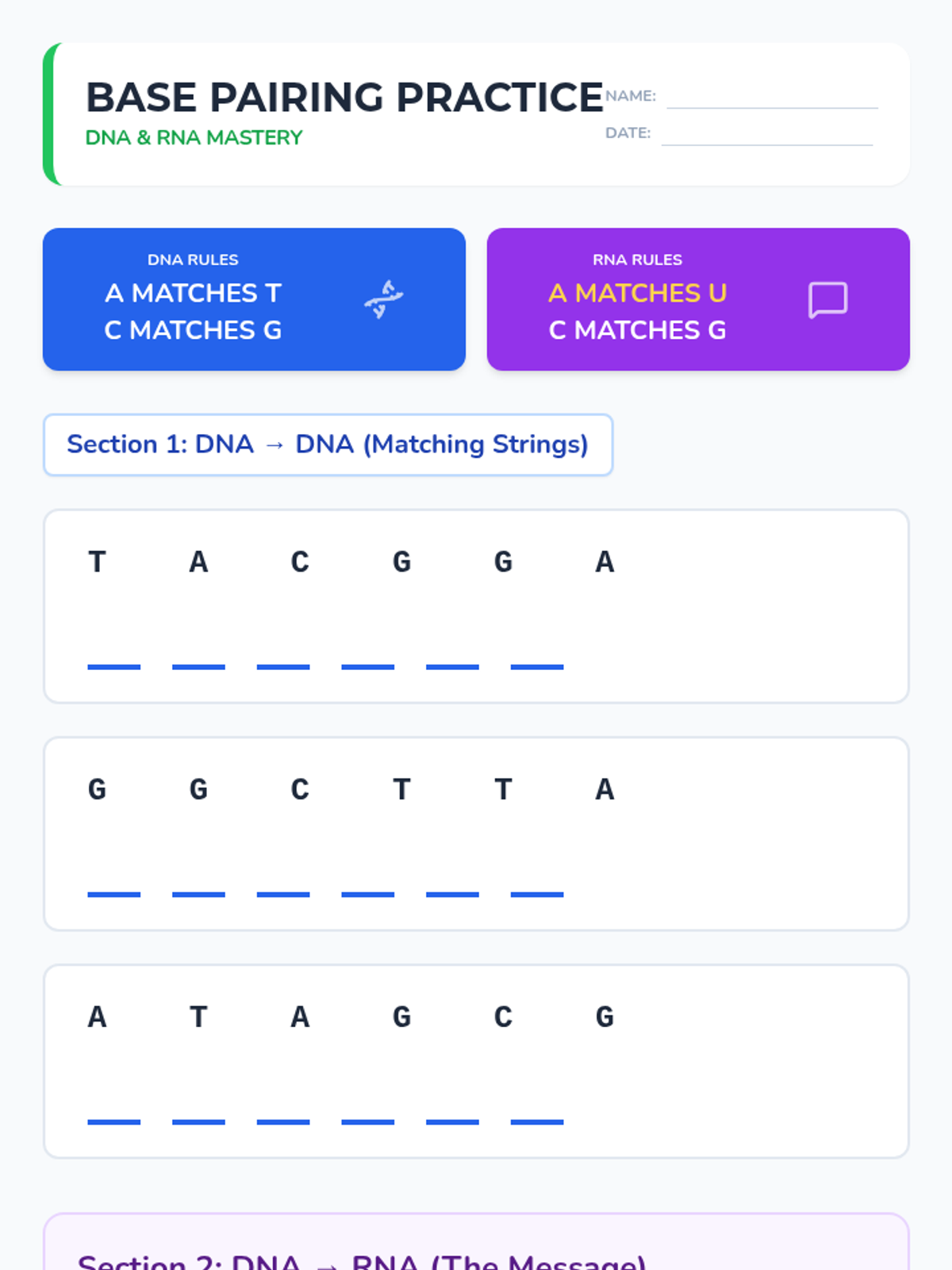
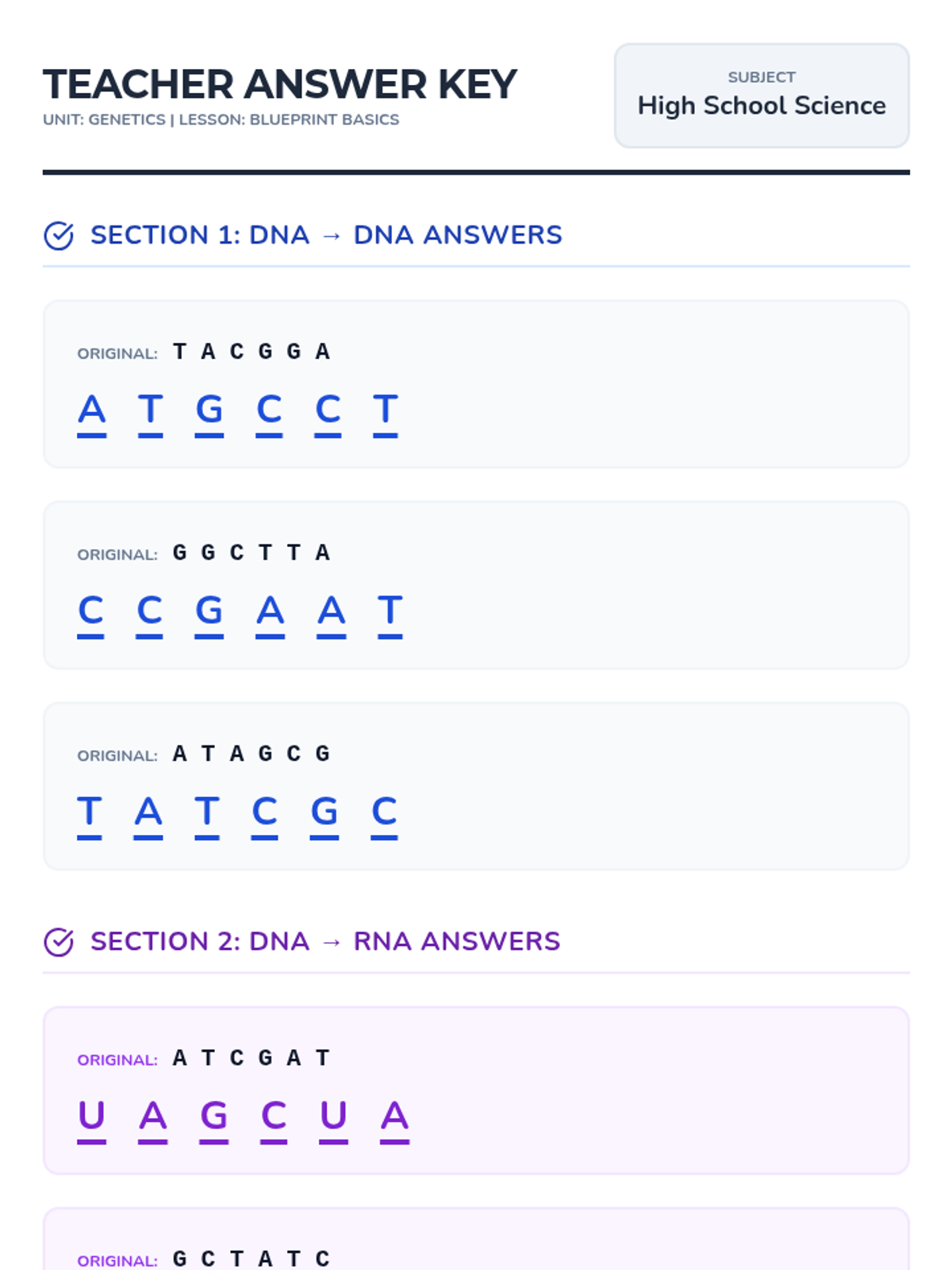
A foundational introduction to the structures of DNA and RNA, focusing on identifying components and mastering the base-pairing rules essential for genetics.
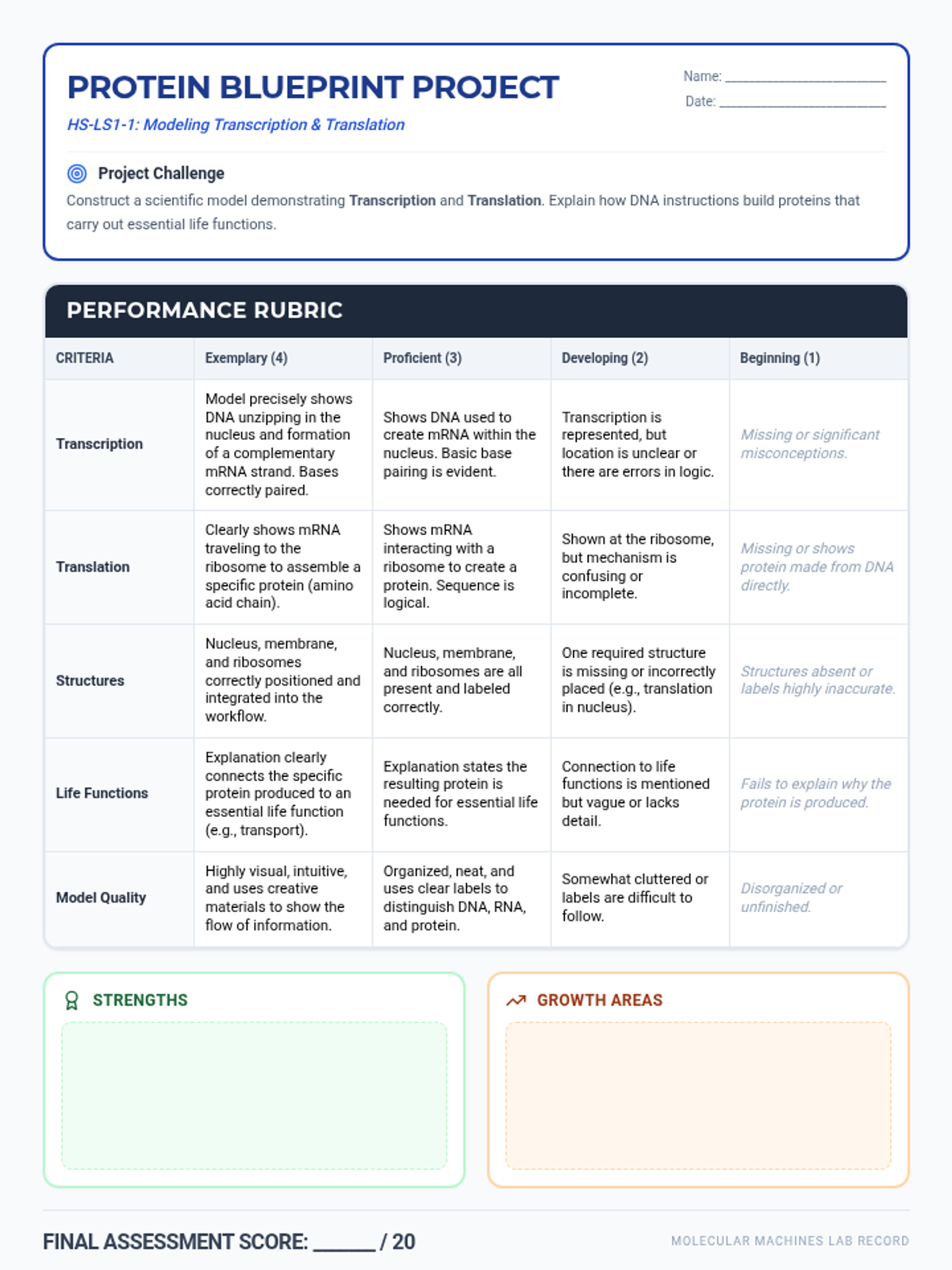
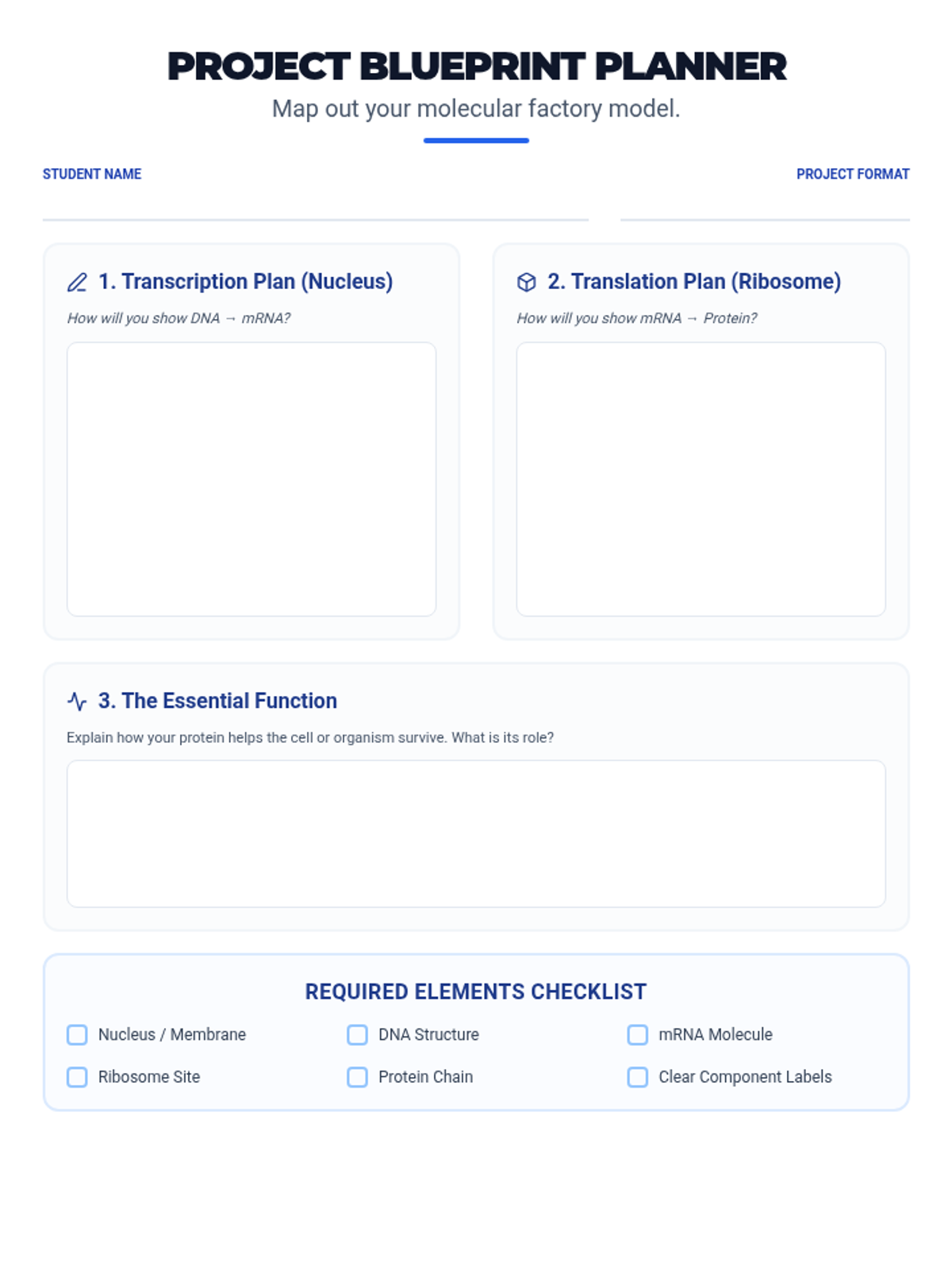
This lesson guides students through a summative project where they construct and explain models of transcription and translation, focusing on the flow of genetic information from DNA to proteins within the cell.
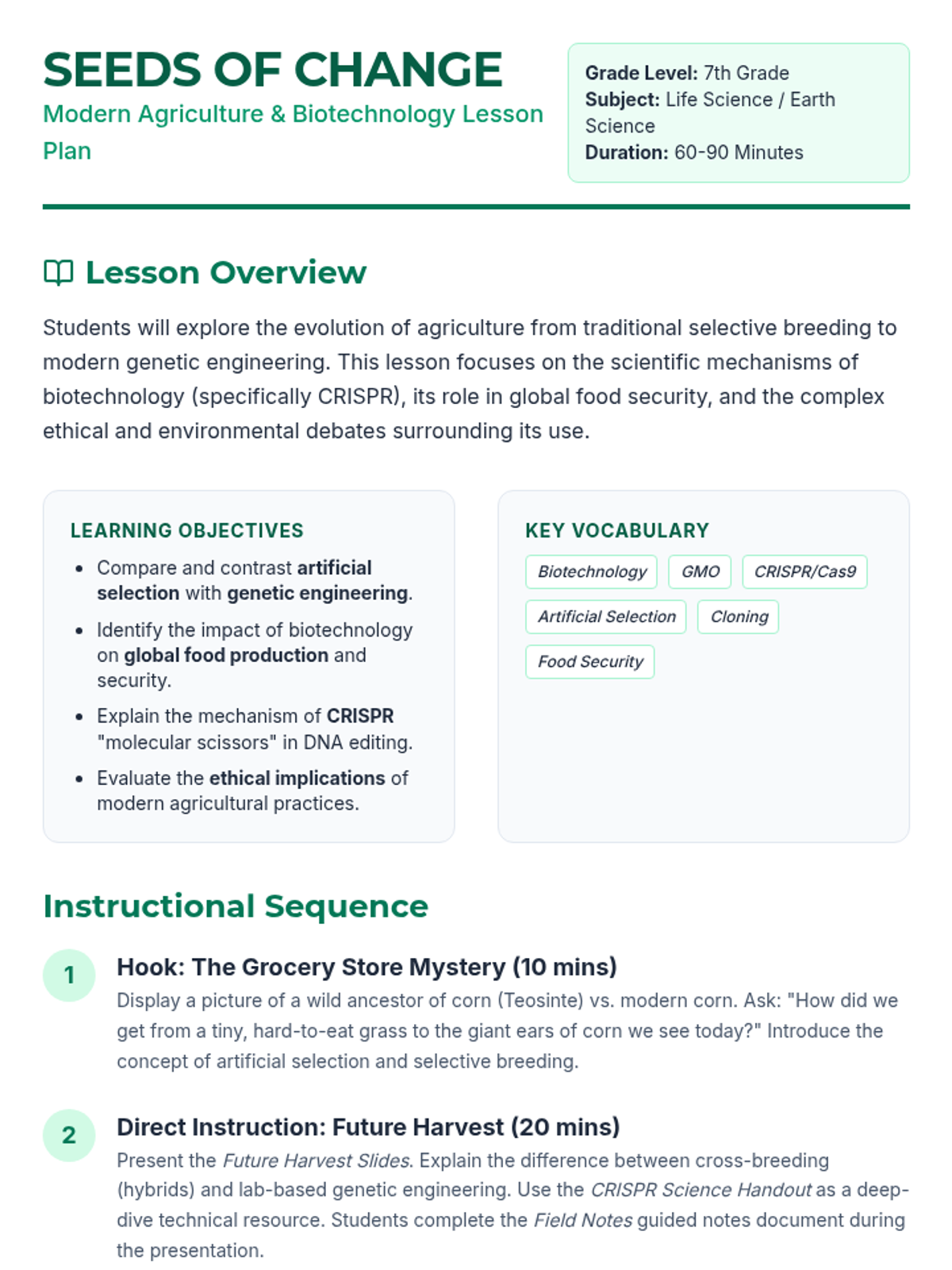
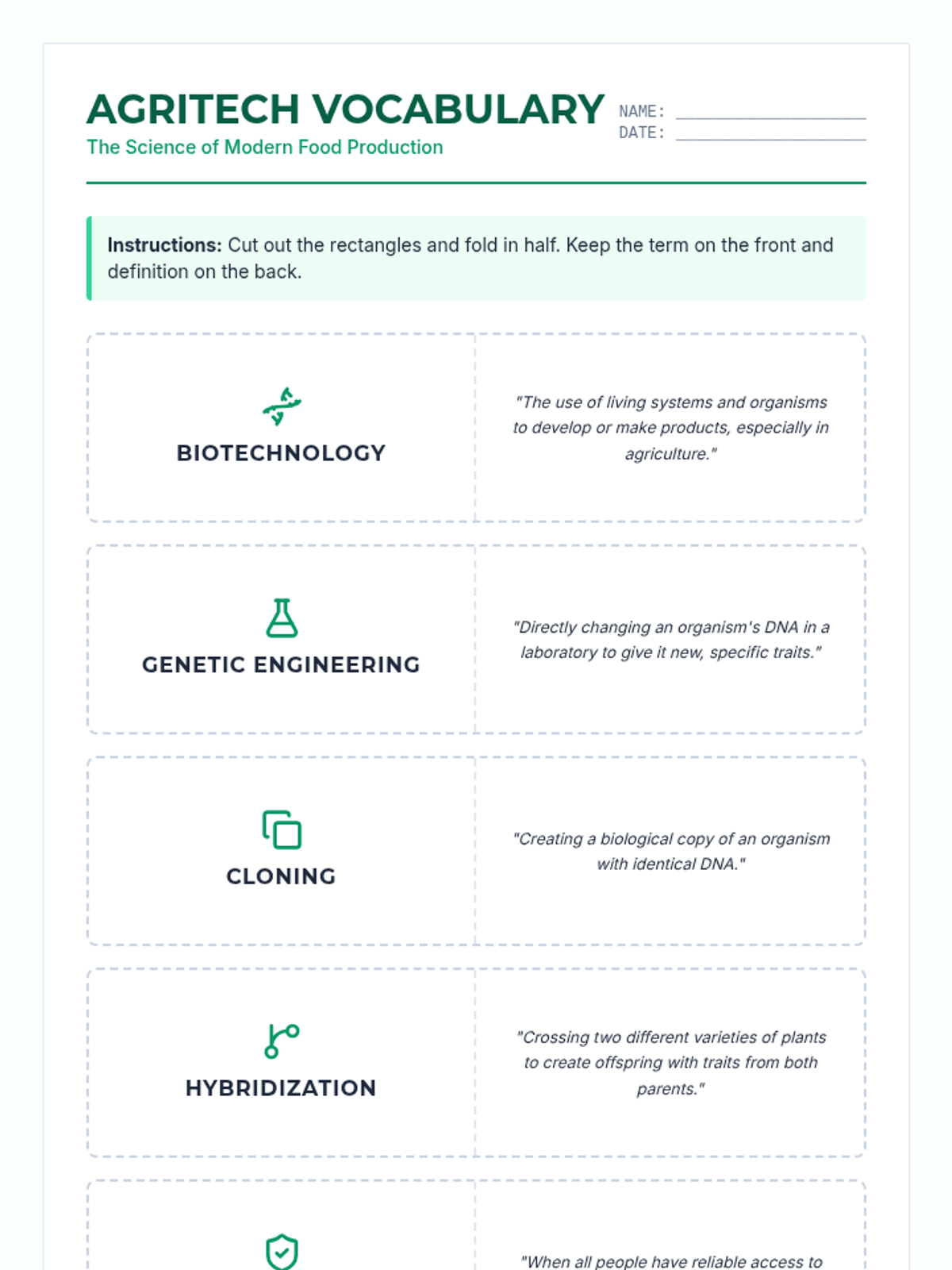
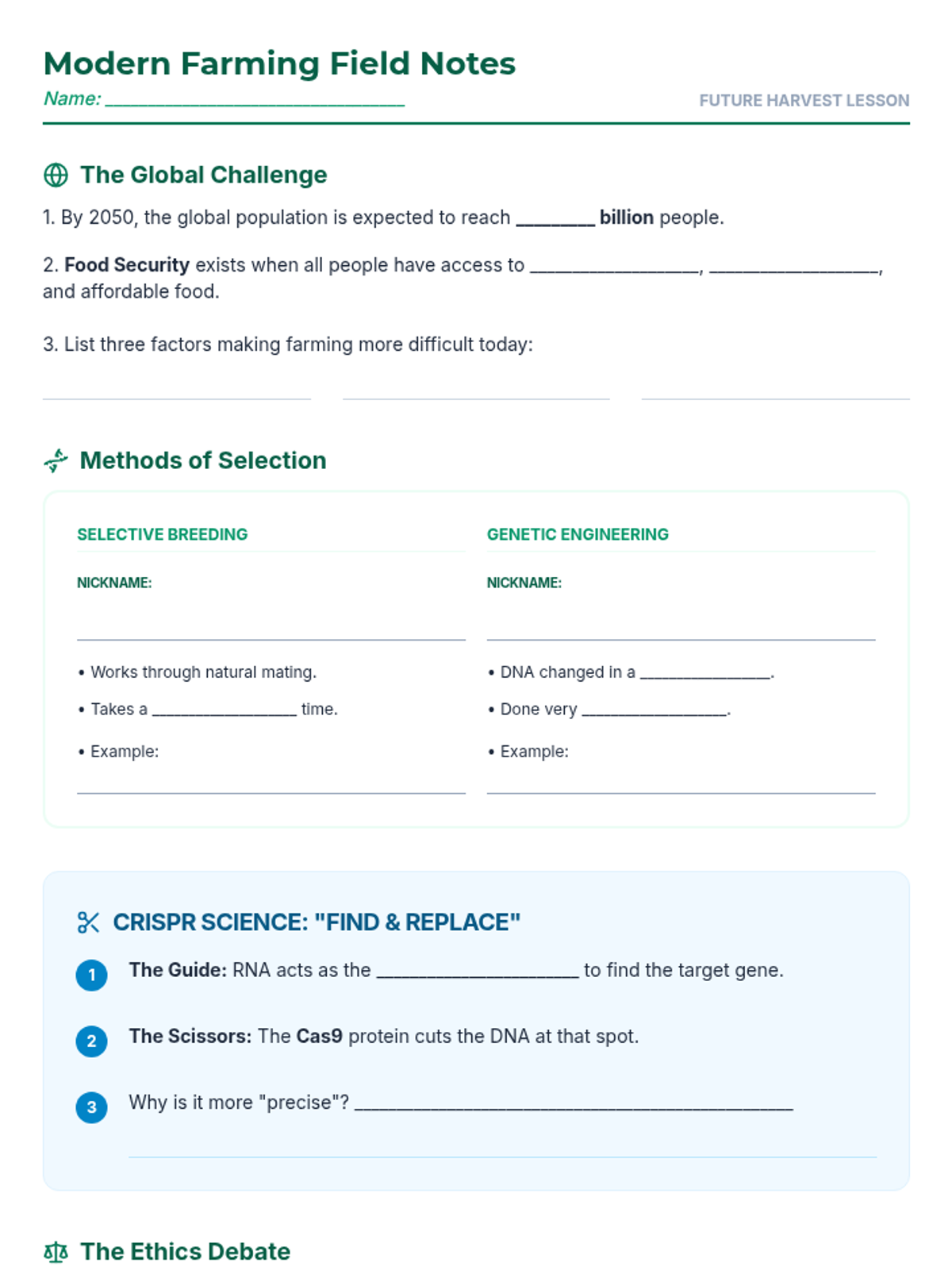
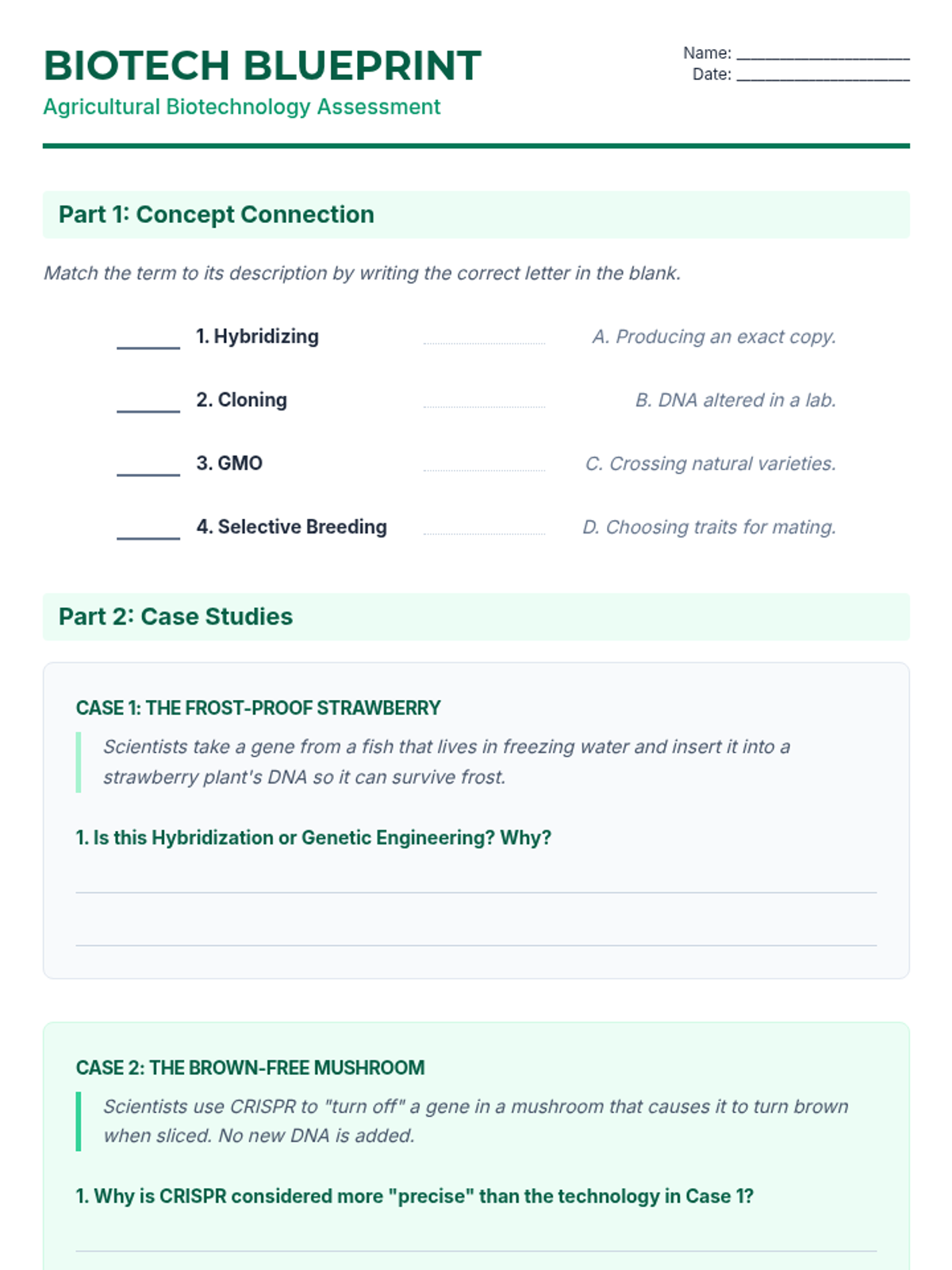
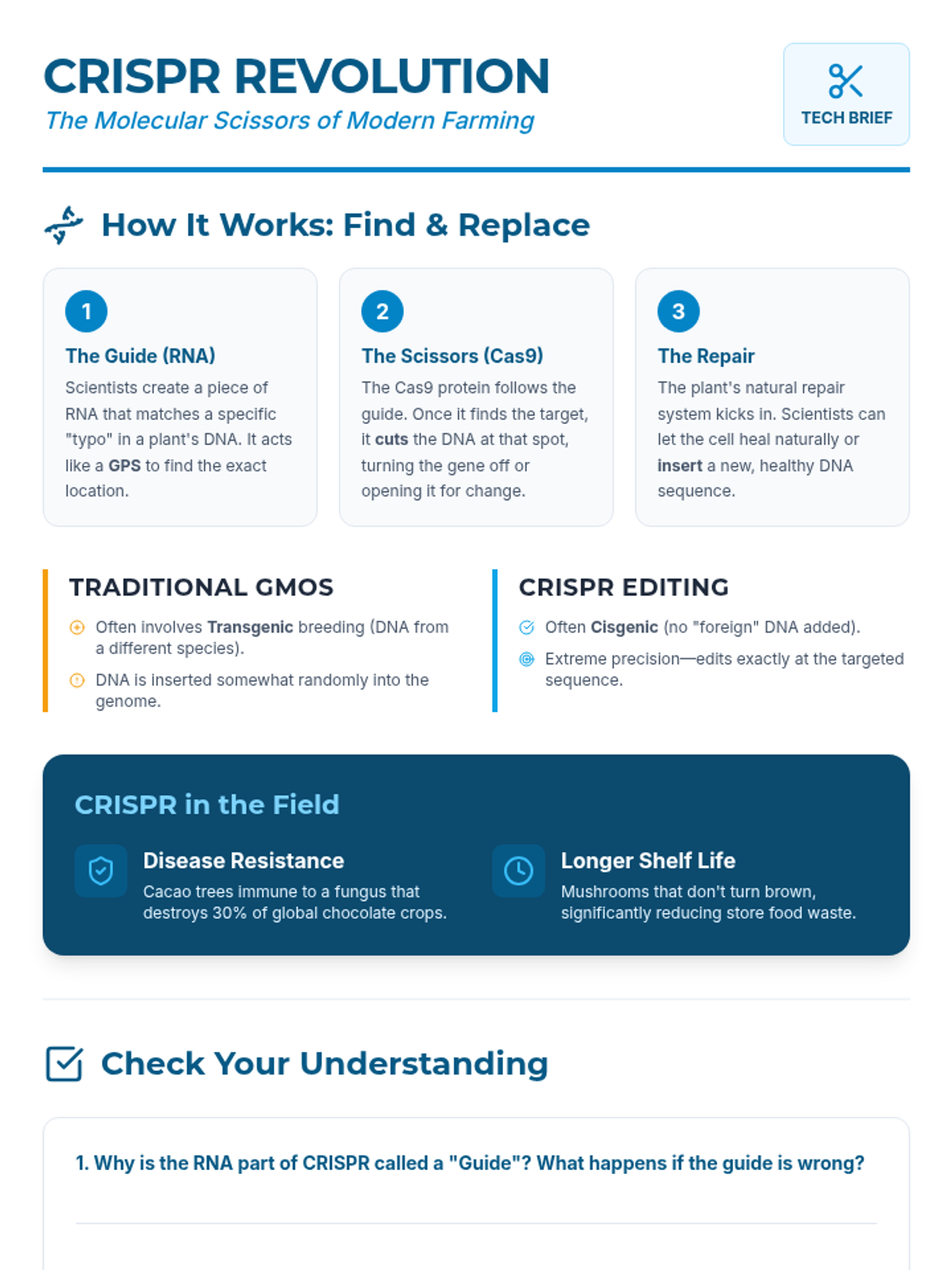
A comprehensive lesson exploring the science, ethics, and environmental impact of biotechnology in modern agriculture, comparing historical breeding methods with genetic engineering.
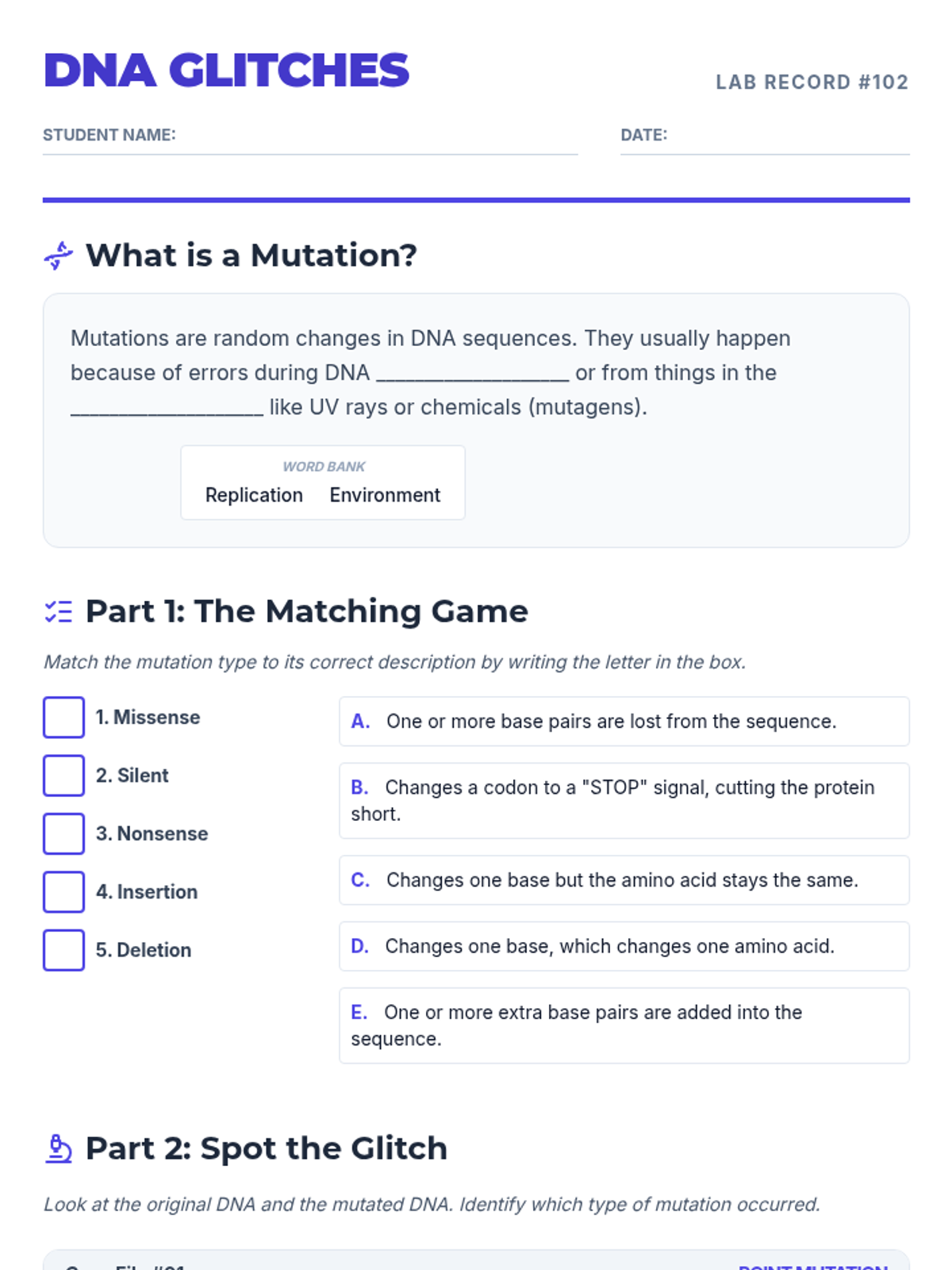
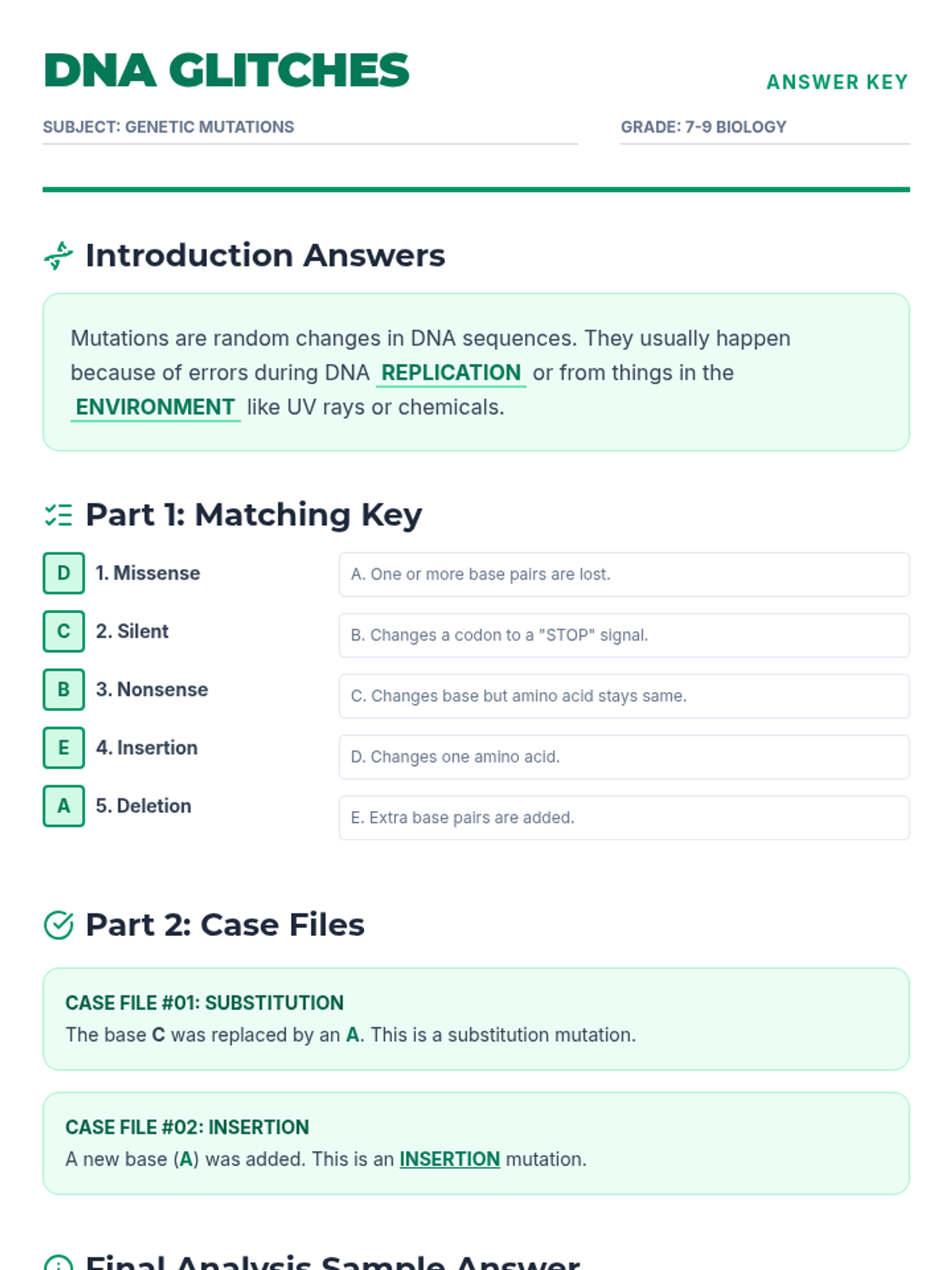
An introductory lesson on genetic mutations, covering point mutations and frameshift mutations, and how they affect protein synthesis.
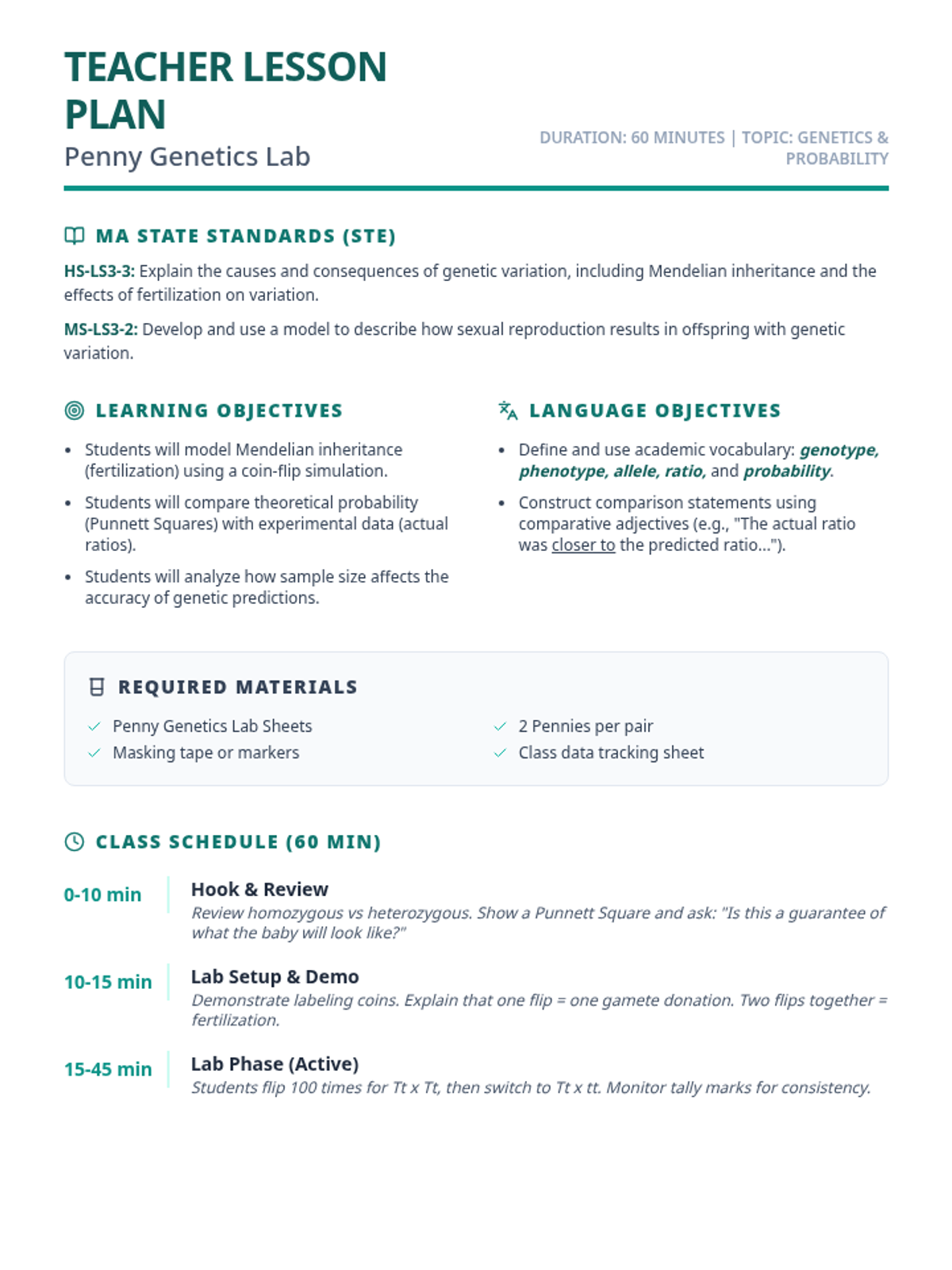
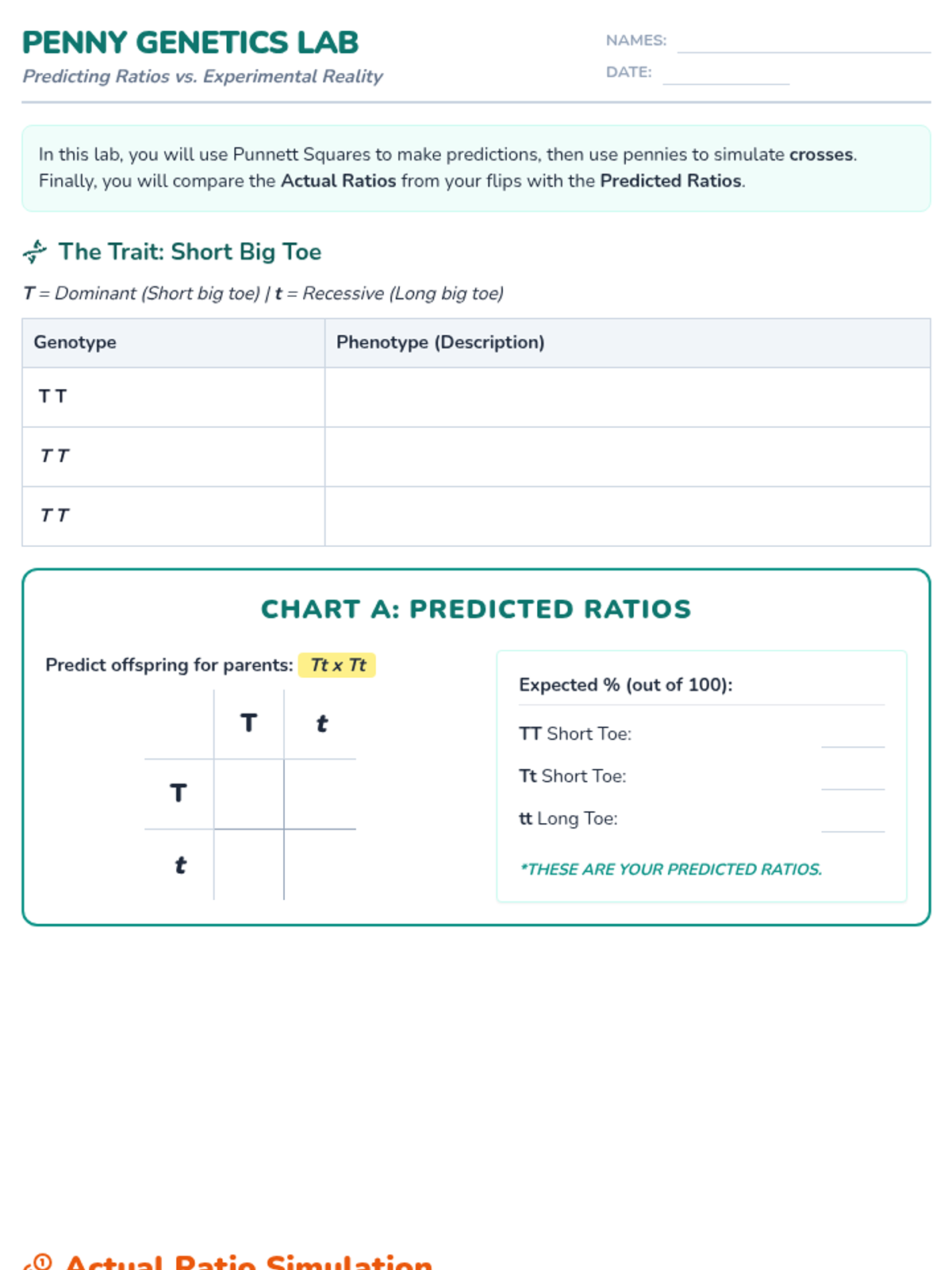
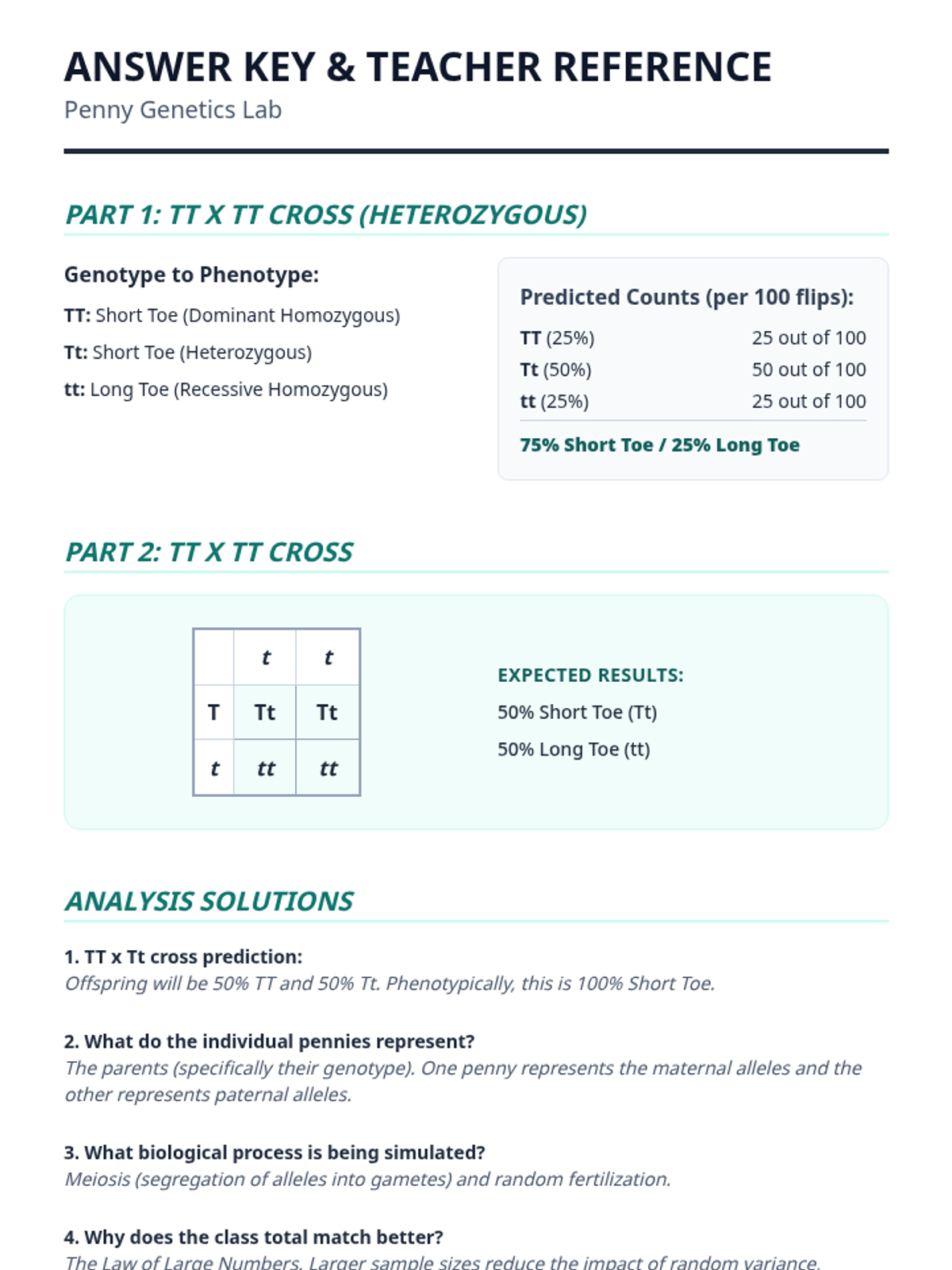
A 60-minute hands-on lab exploring the relationship between Punnett square predictions and actual genetic outcomes using coin-flip simulations. Students compare theoretical probability with experimental data to understand how fertilization works.
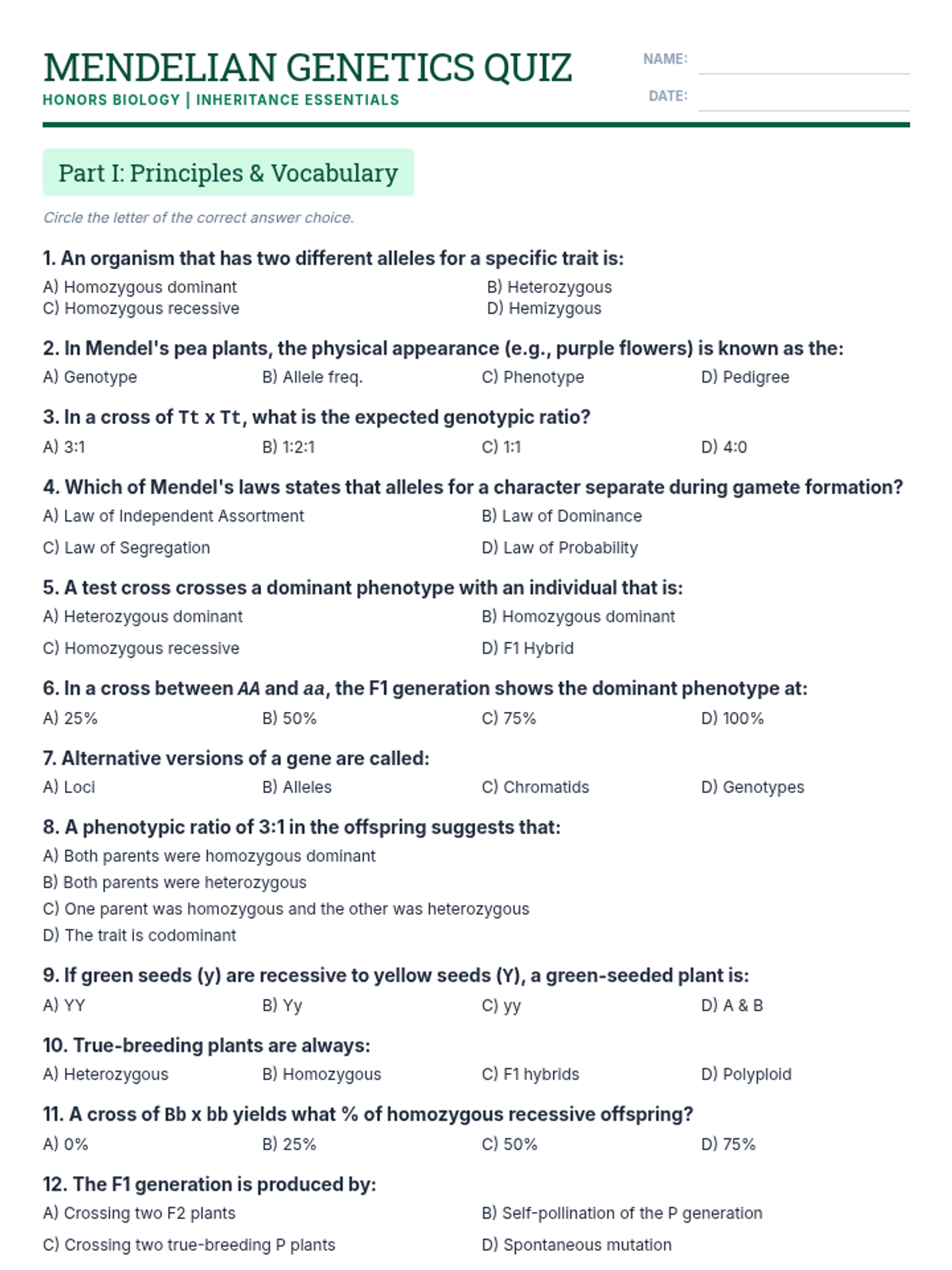
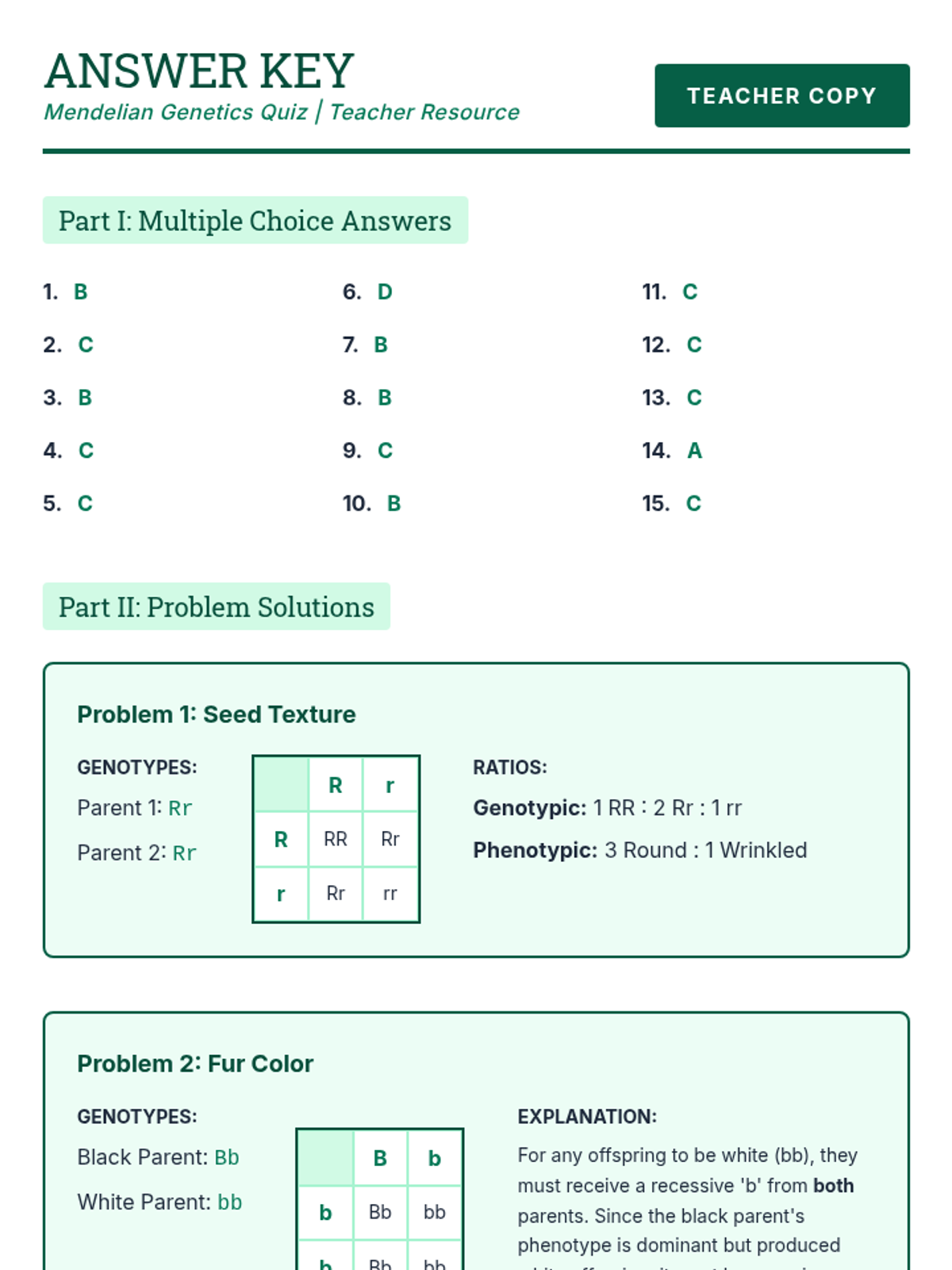
A rigorous assessment on the principles of Mendelian inheritance, covering monohybrid crosses, terminology, and probability ratios for honors biology students.
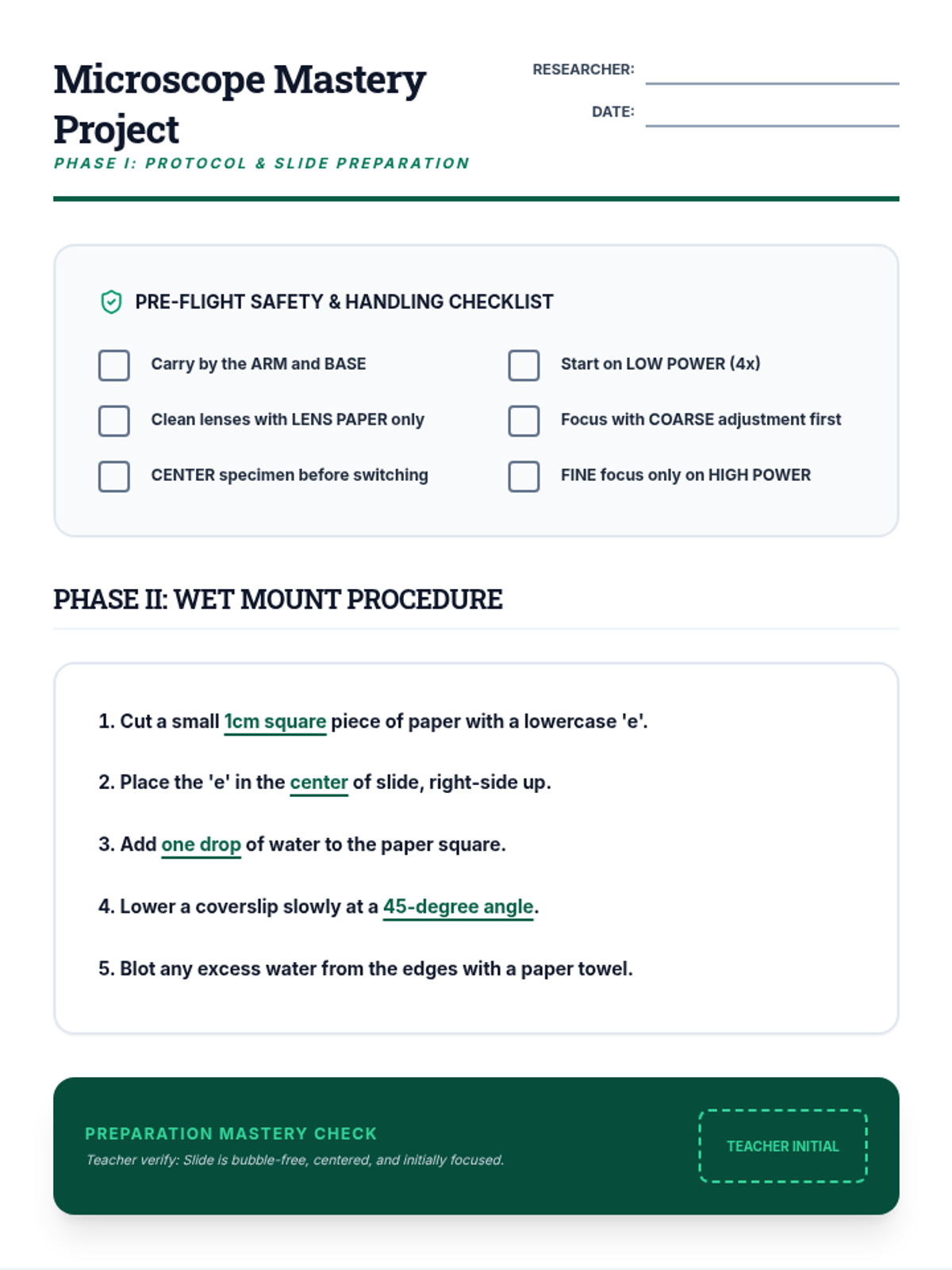
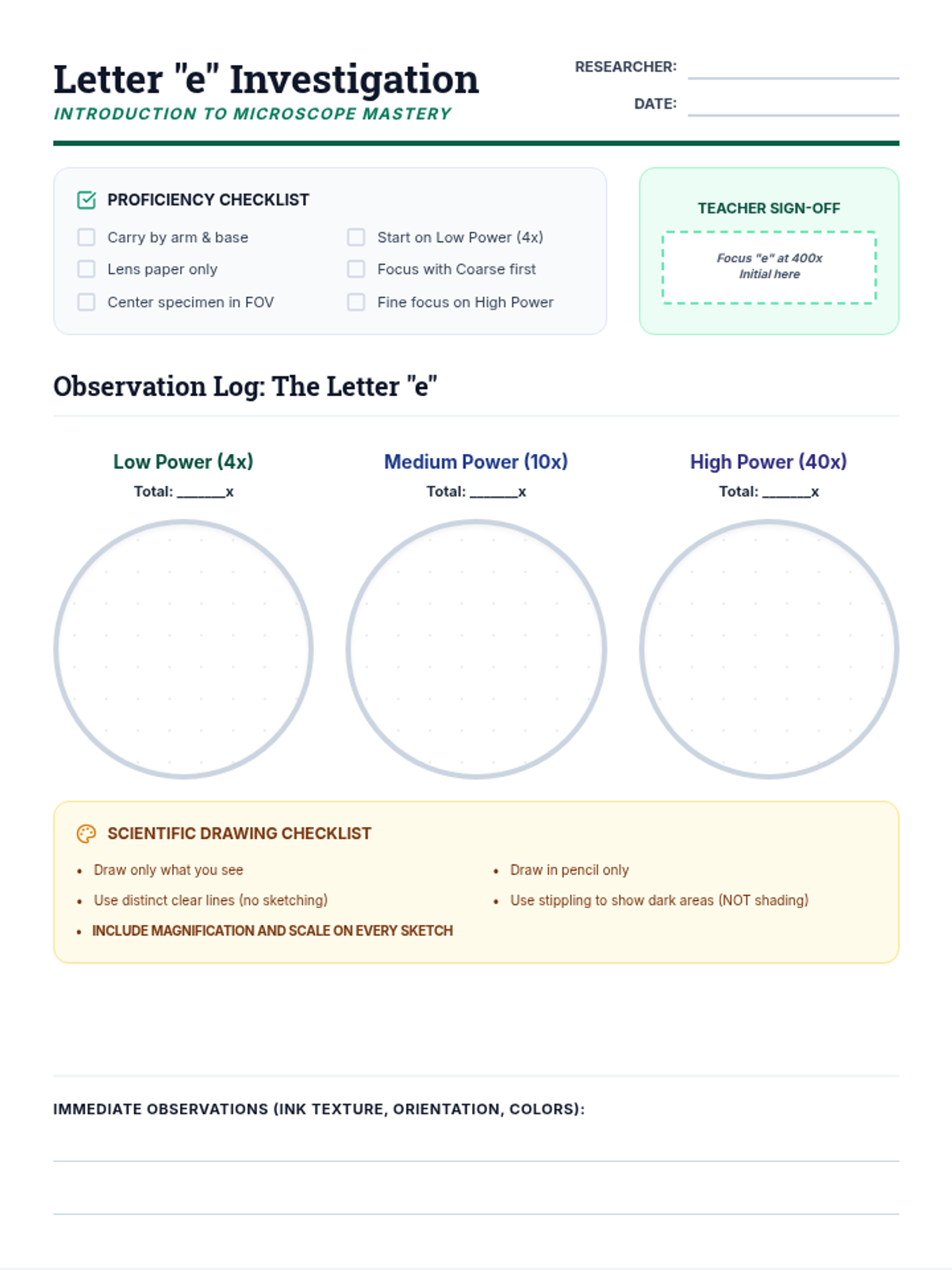
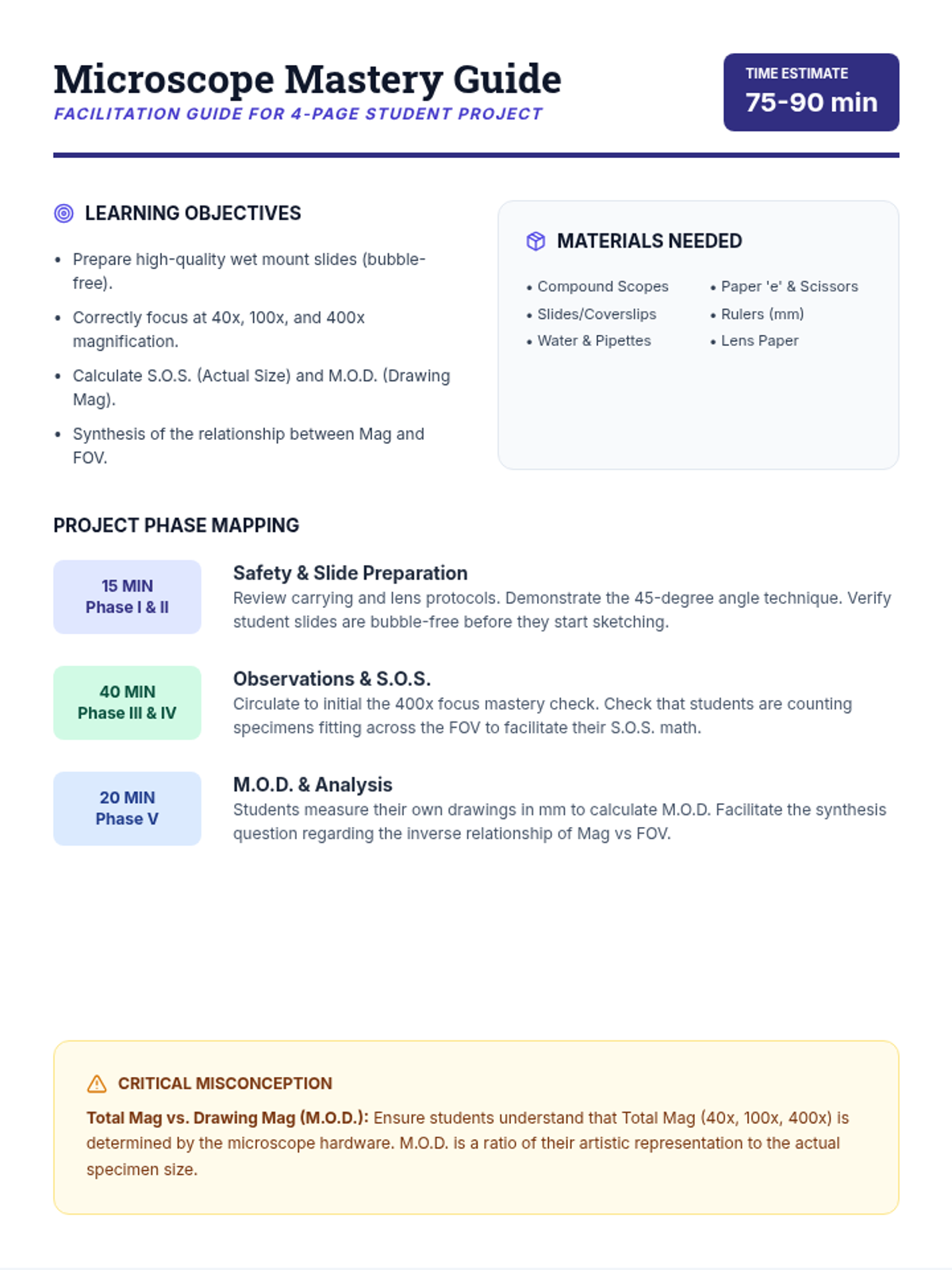
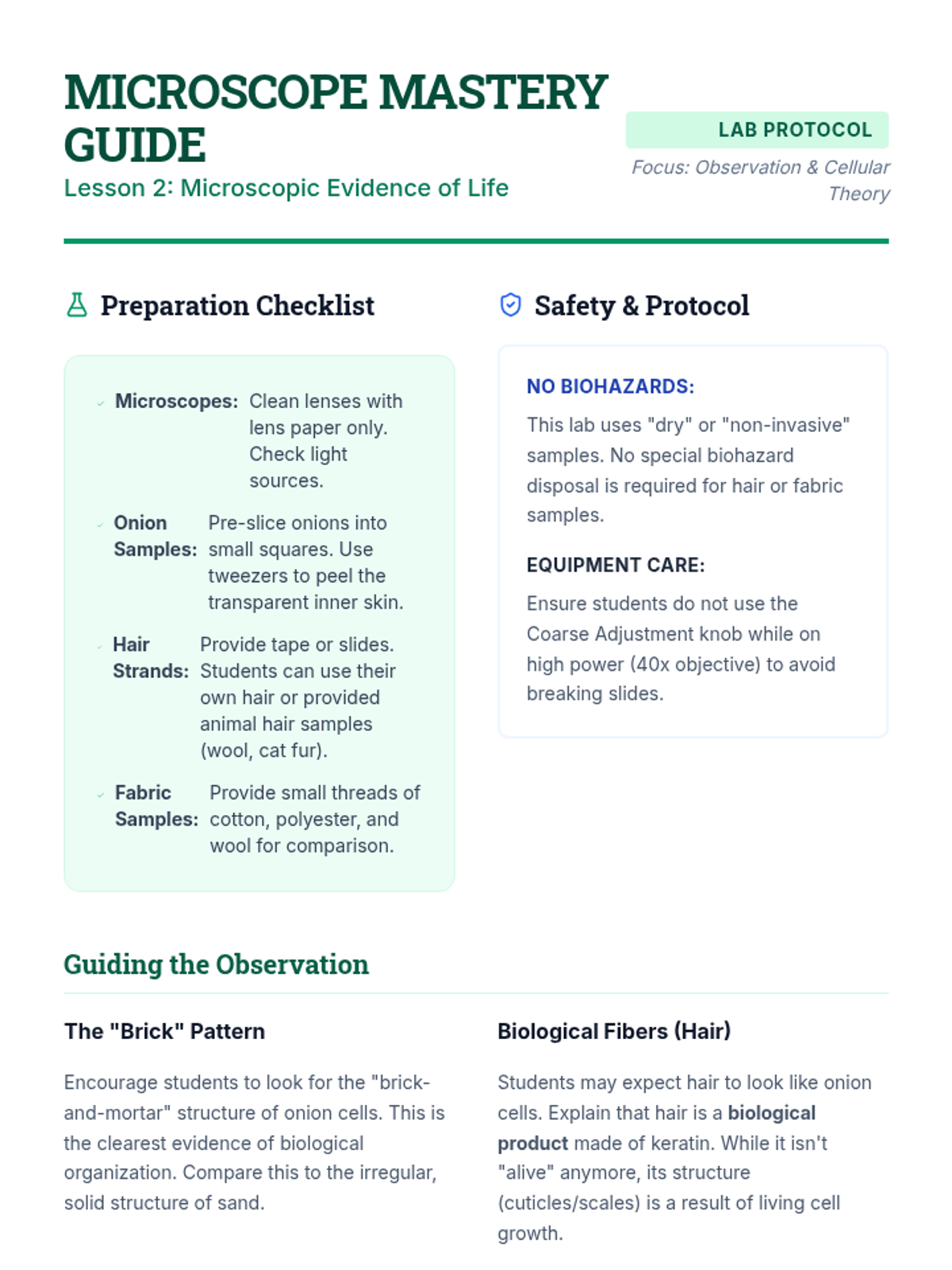
Students learn the fundamentals of microscopy by investigating the letter 'e', practicing slide preparation, and mastering magnification calculations. This lesson covers microscope parts, safety, wet mount preparation, and scientific drawing.
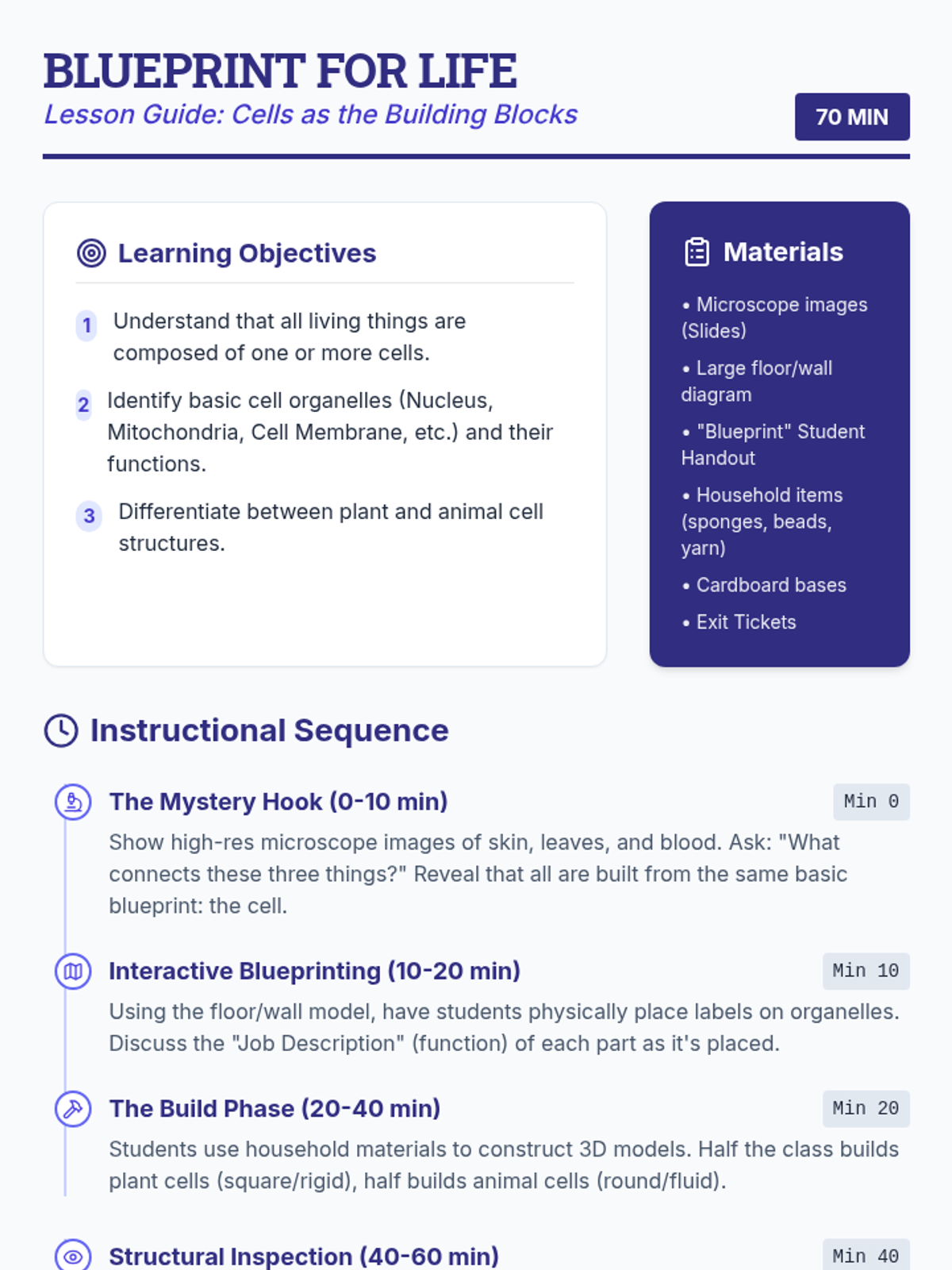
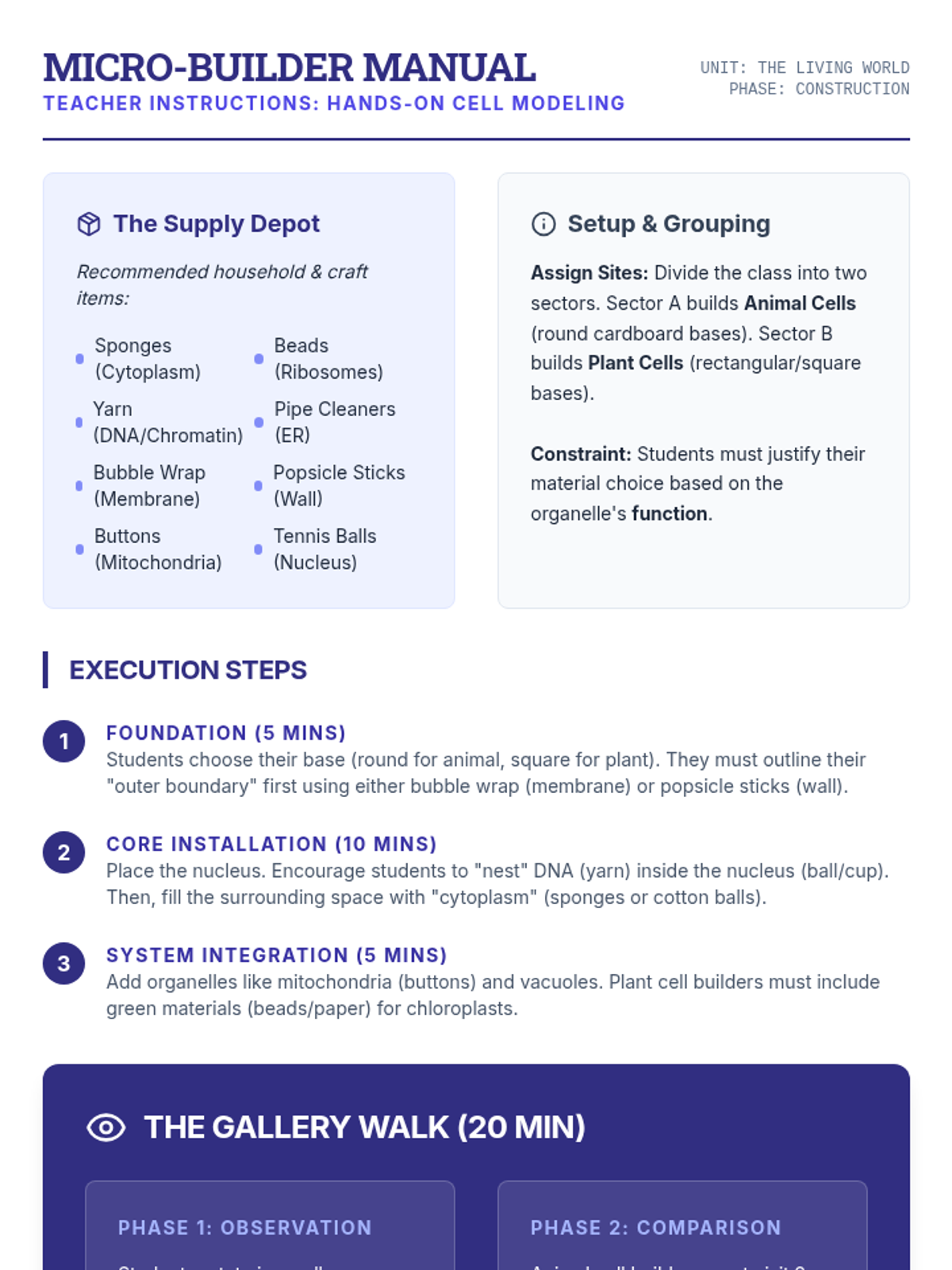
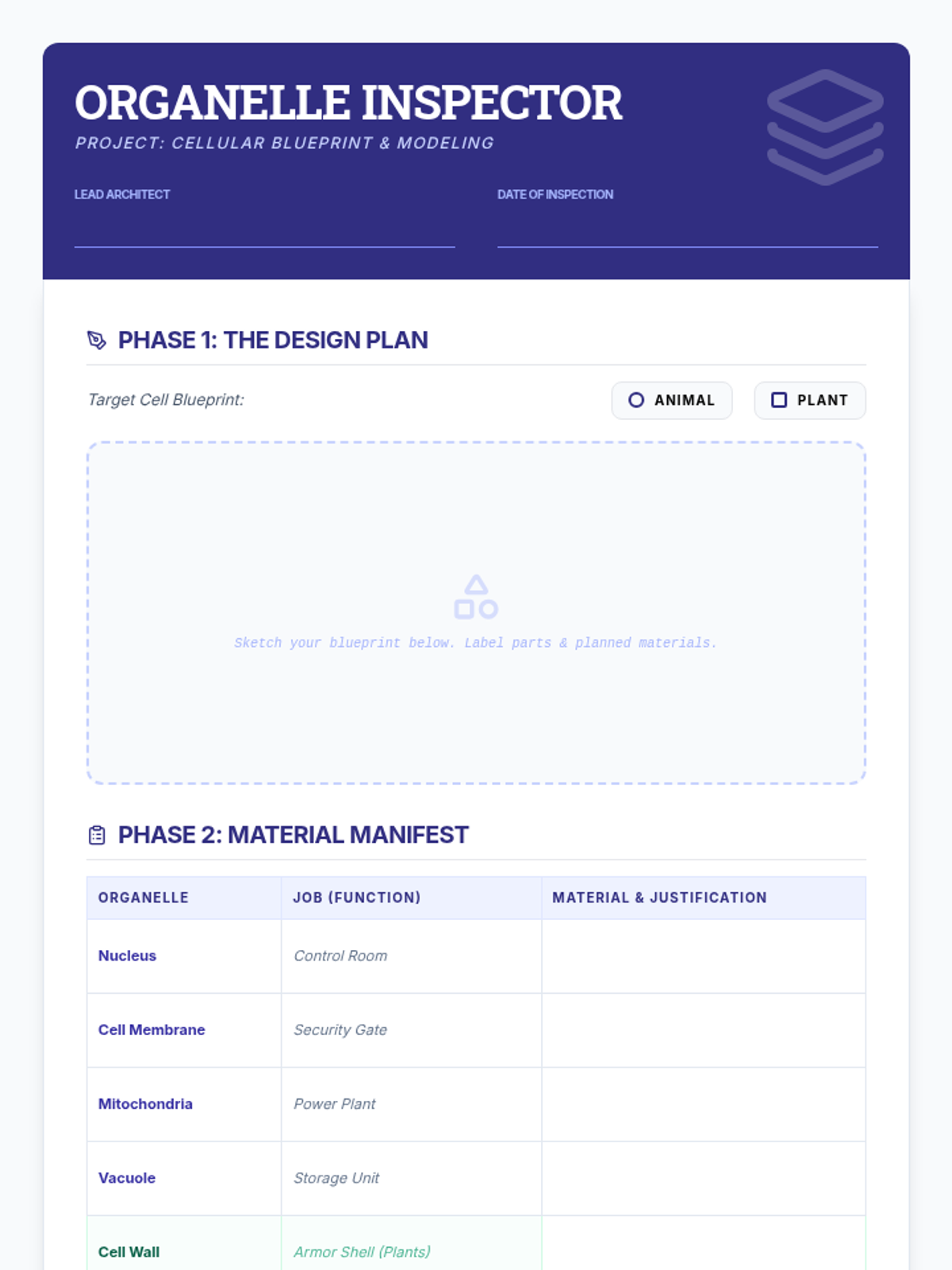
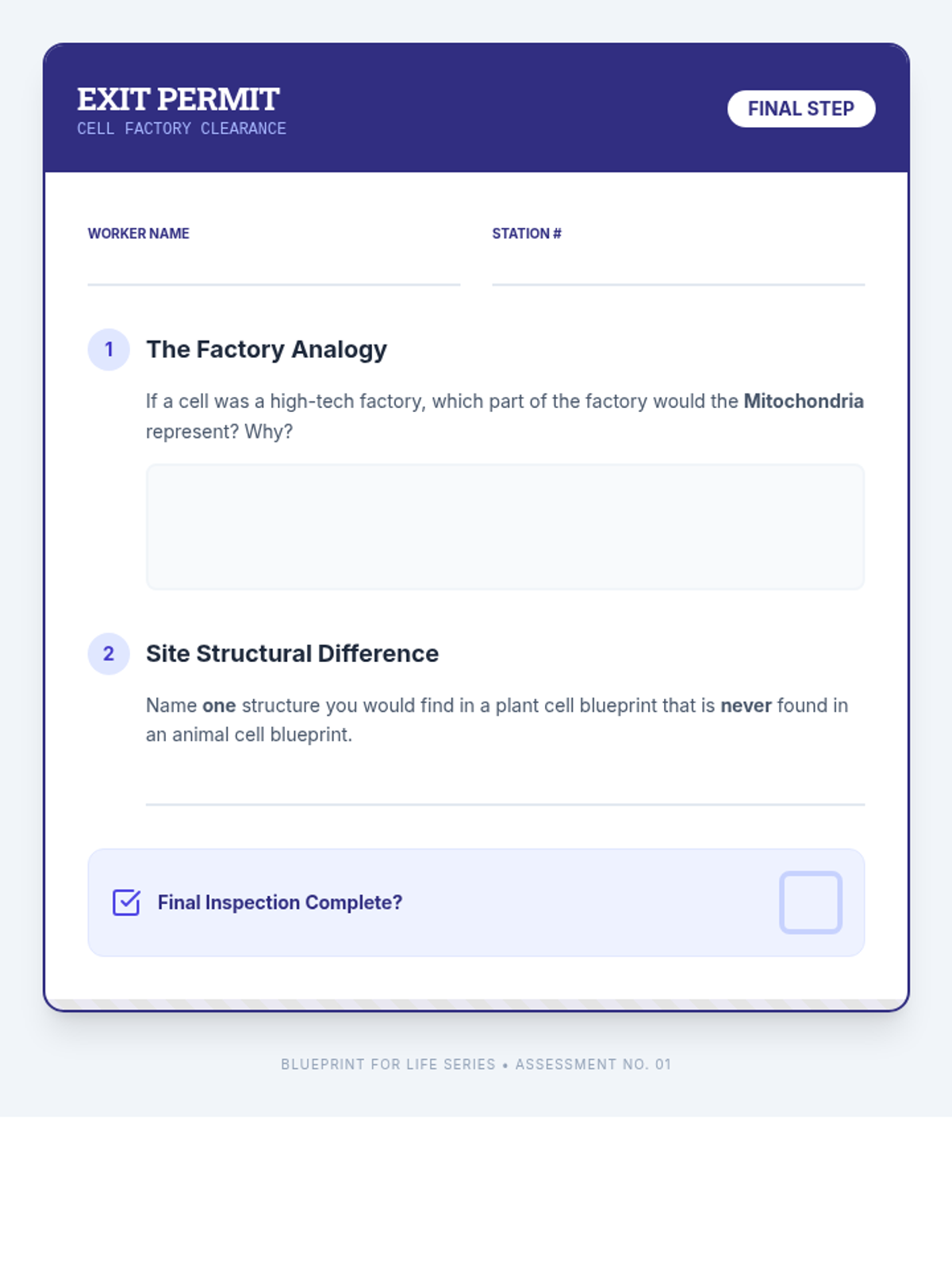
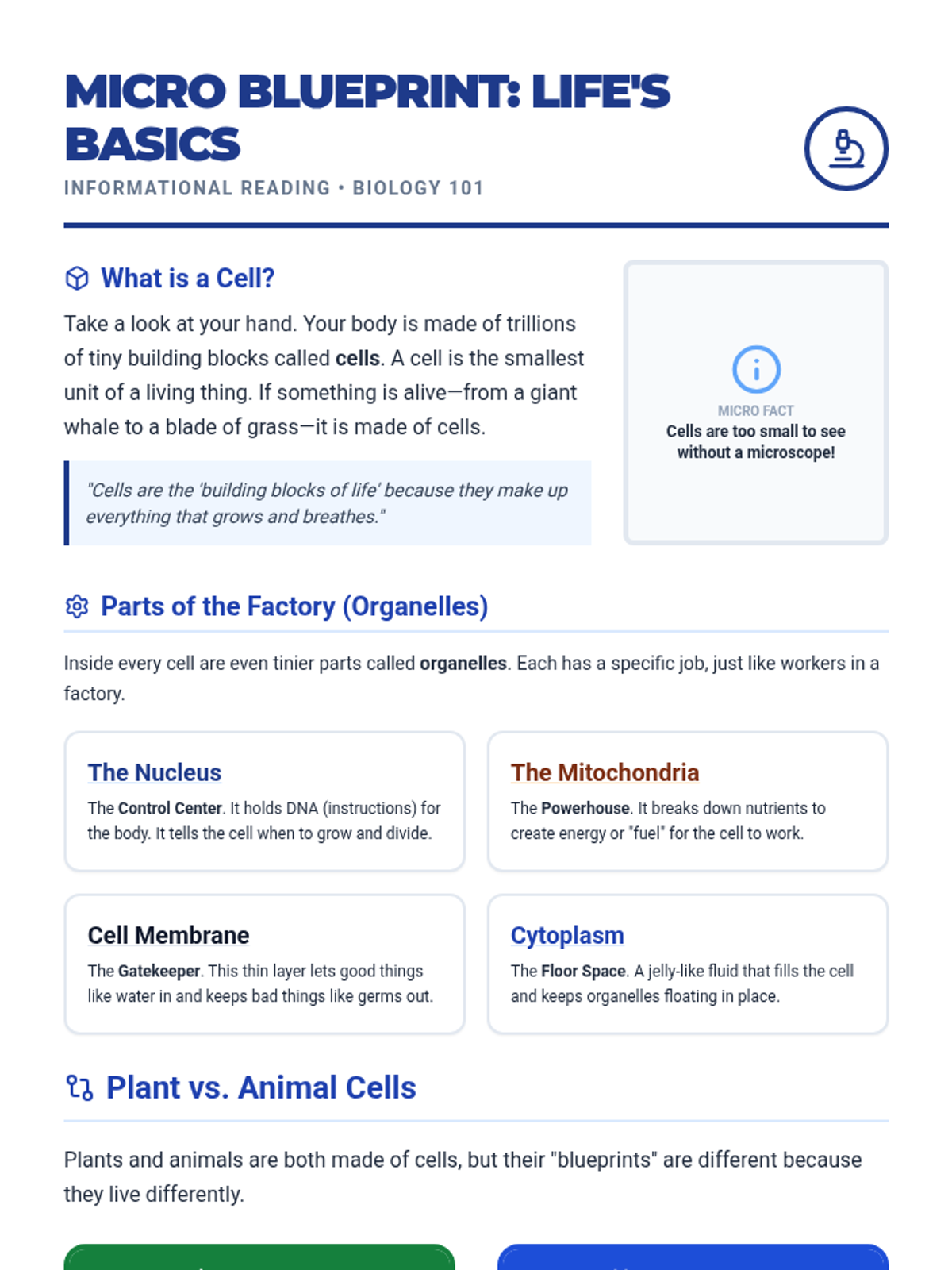
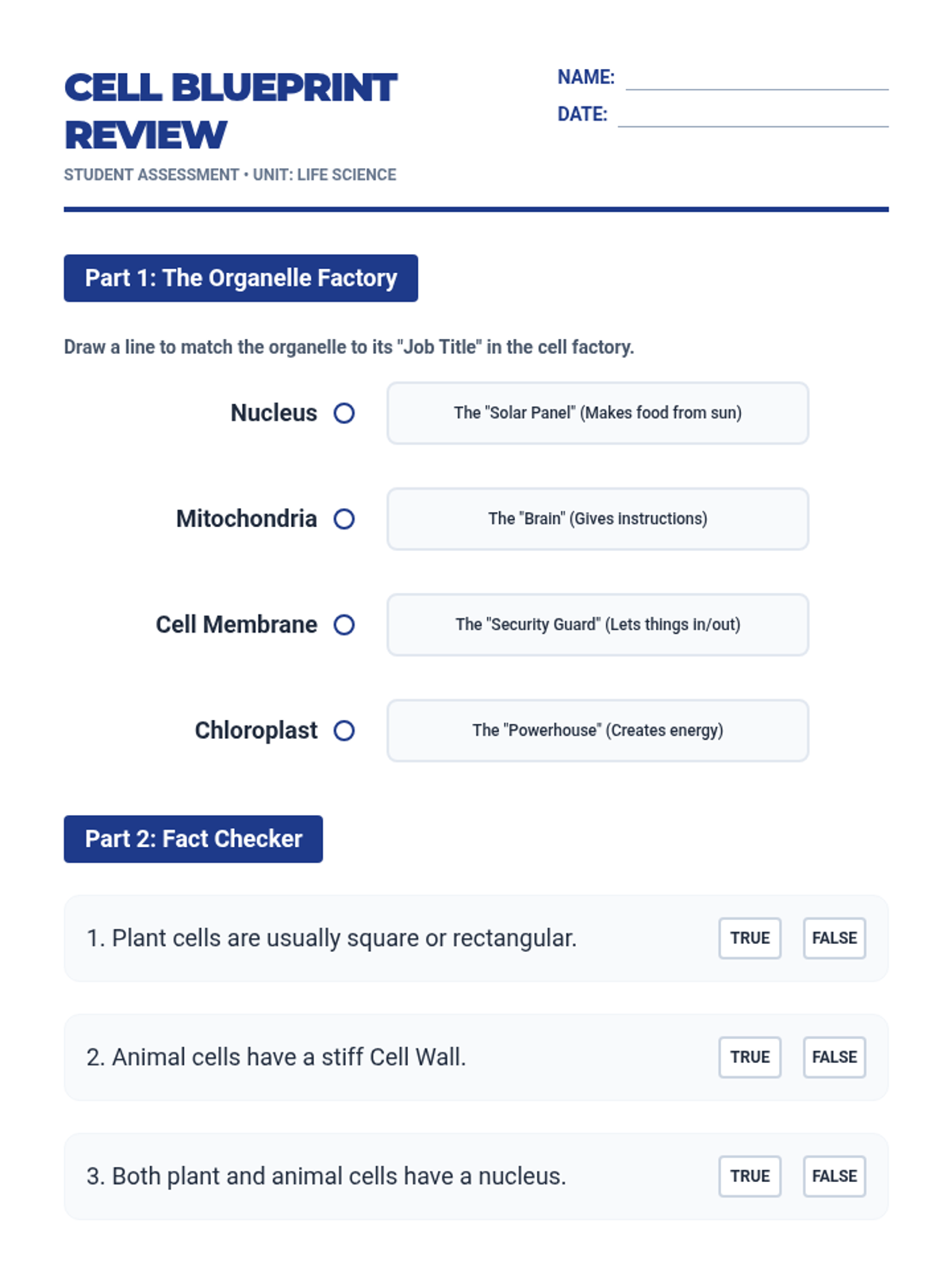
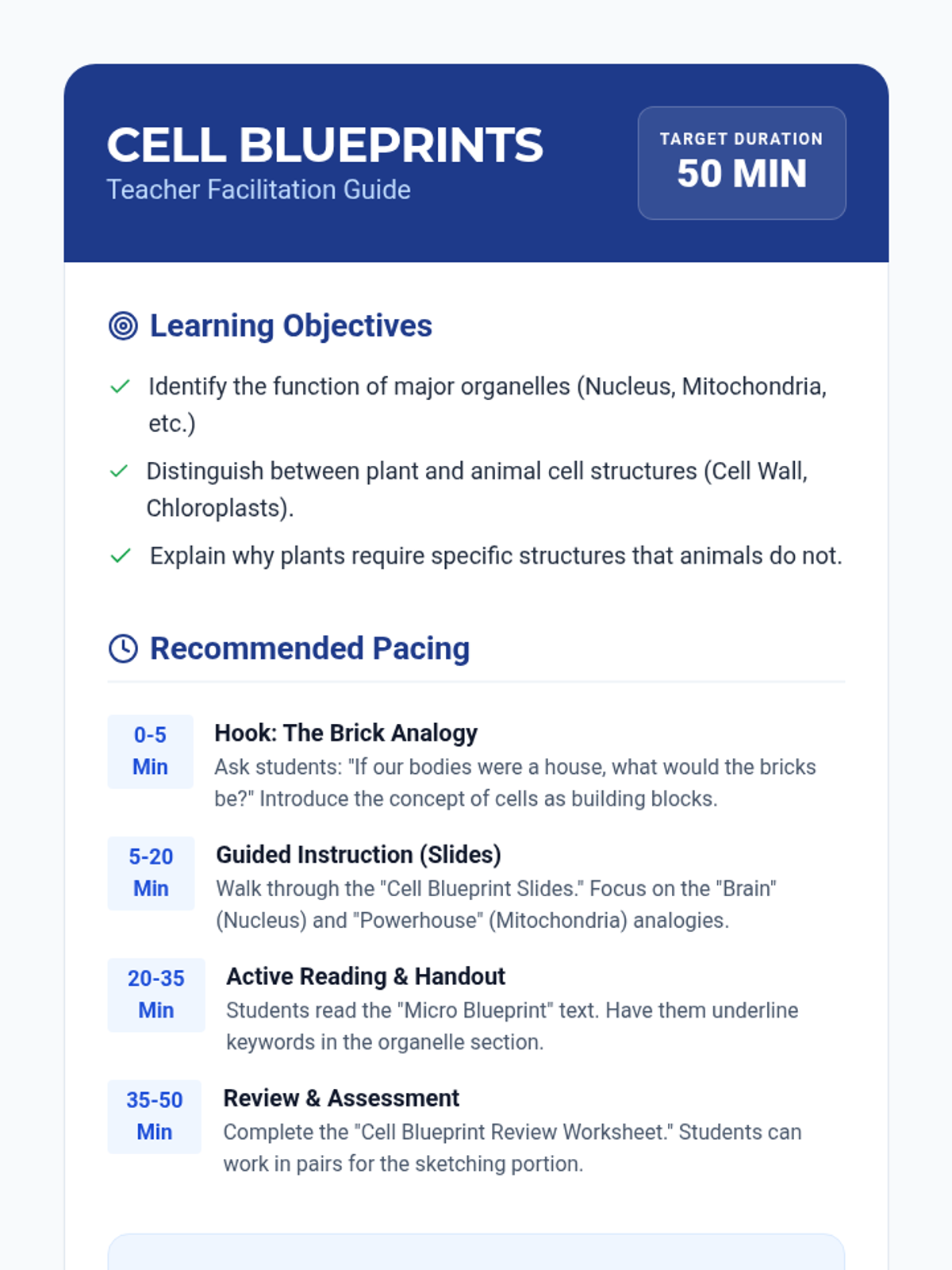
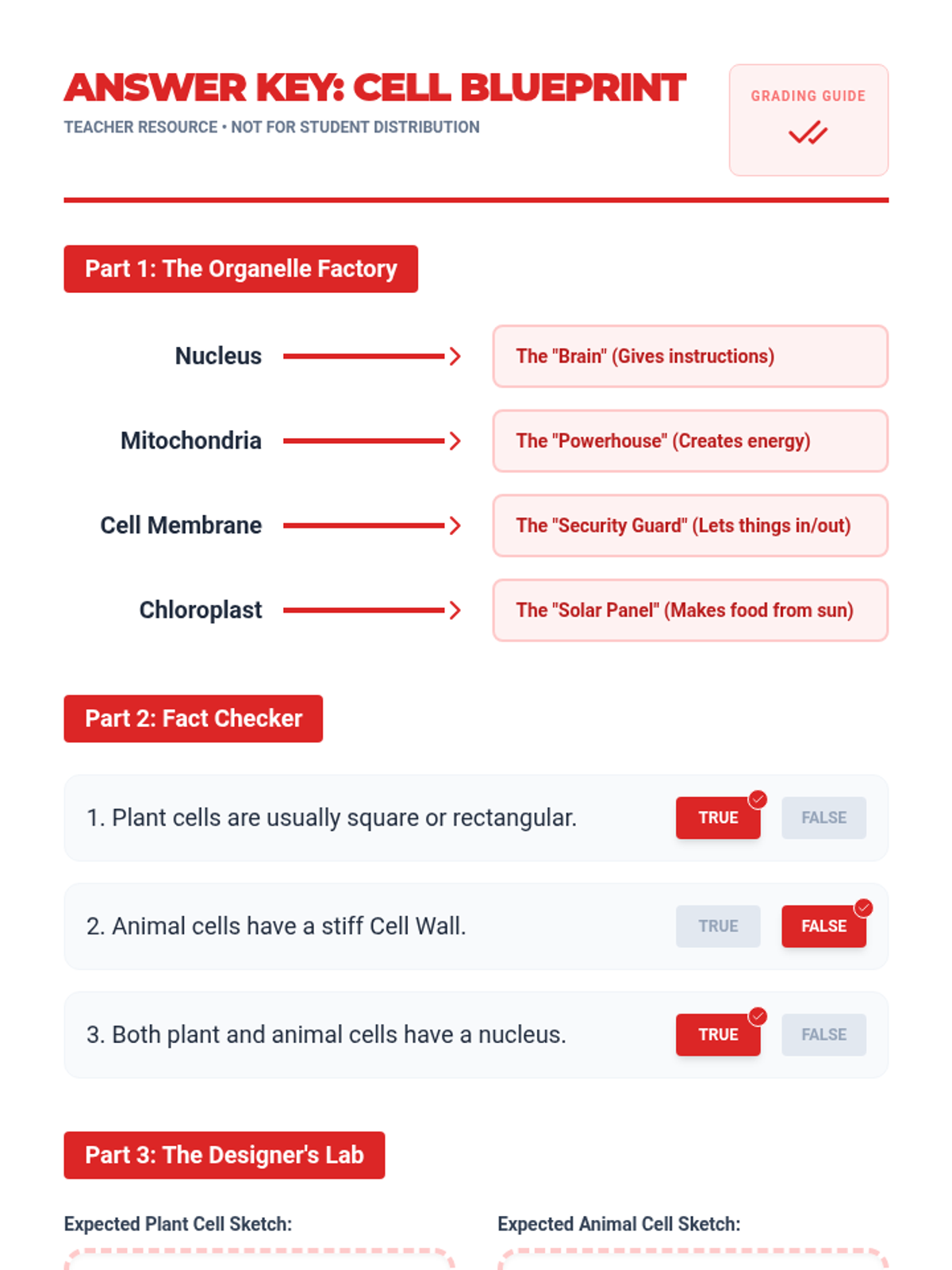
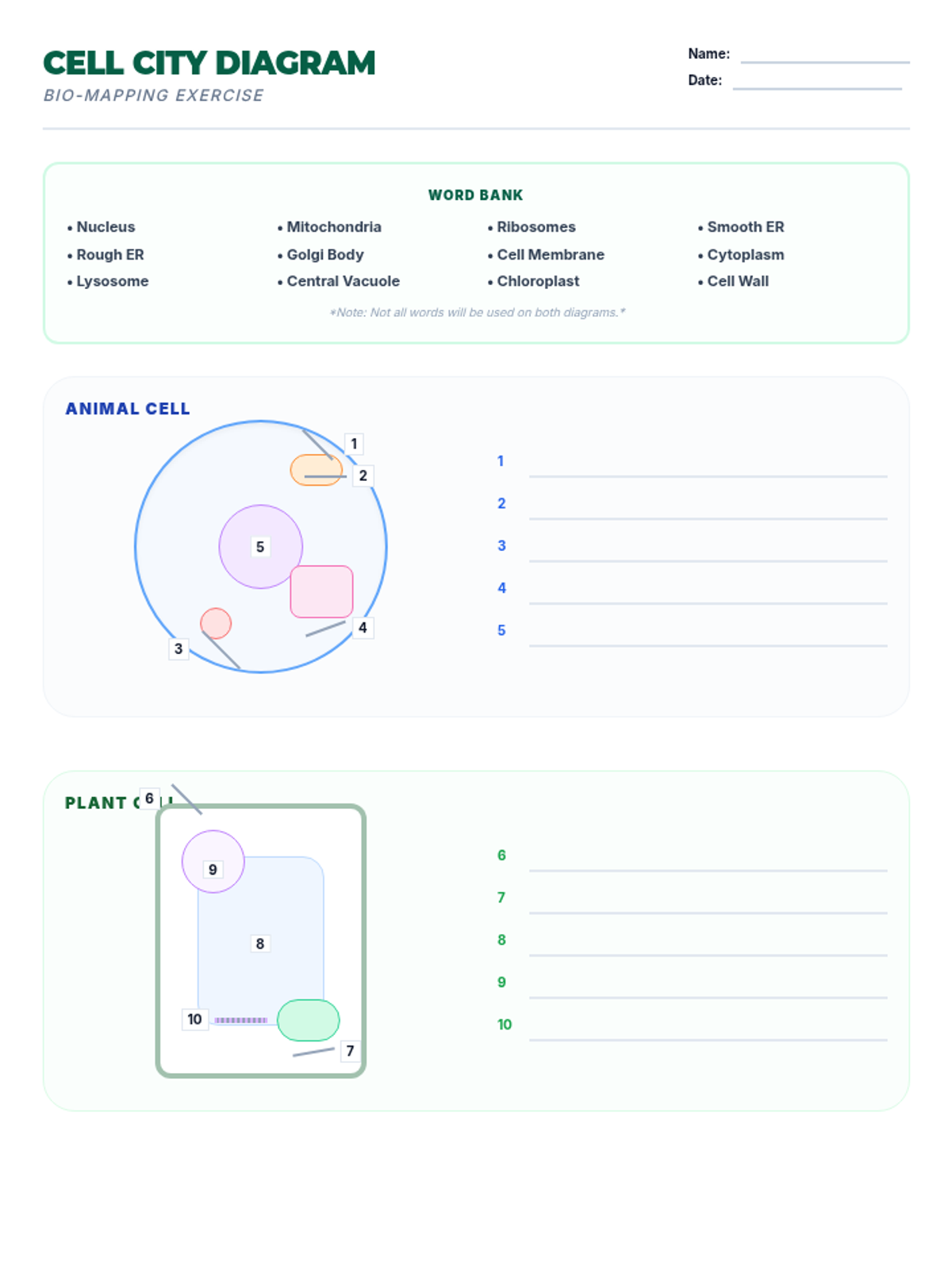
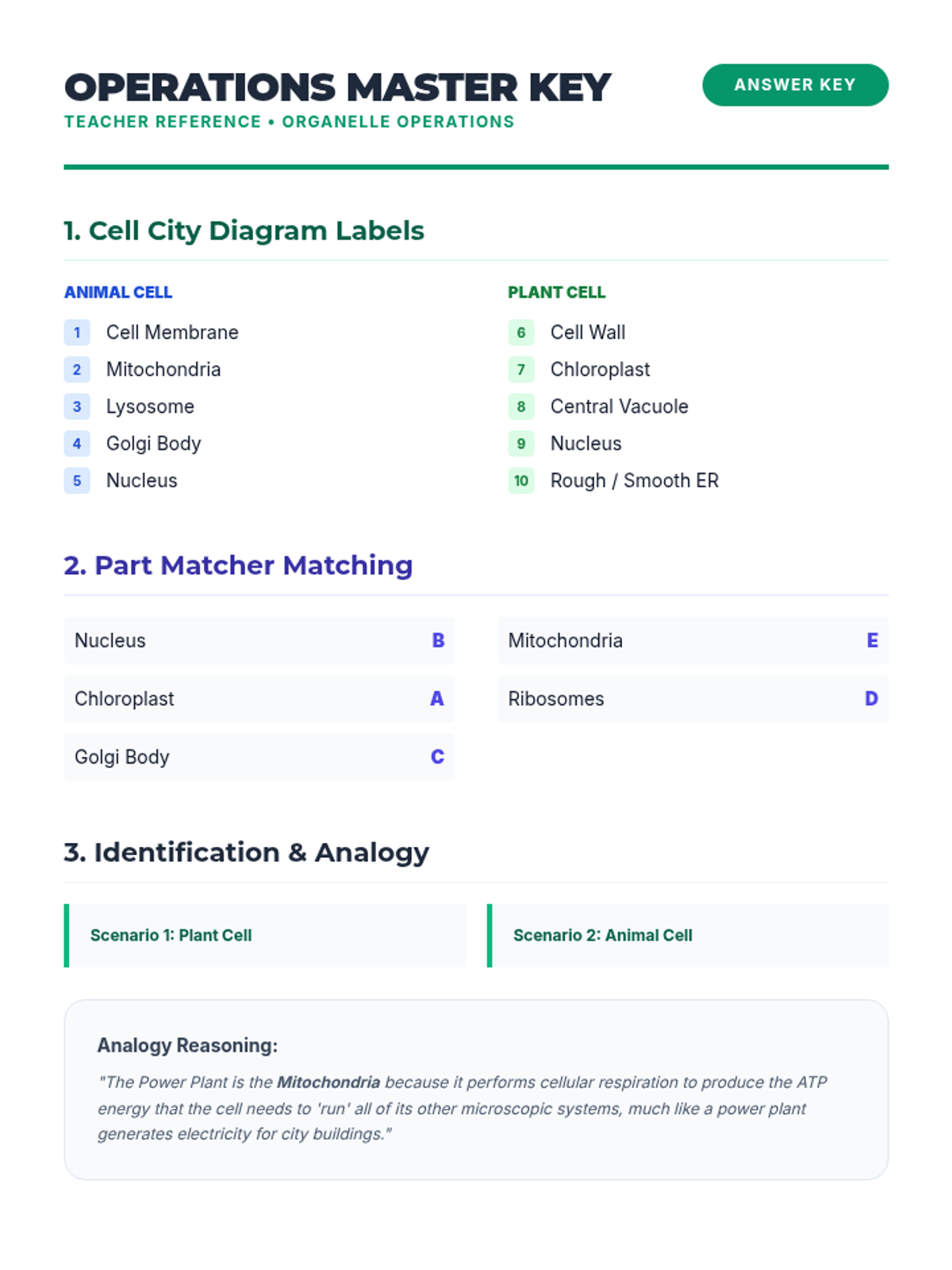
An introductory biology lesson exploring the fundamental unit of life through the lens of architectural design. Students compare plant and animal cells, identify organelles, and construct physical models using everyday materials.
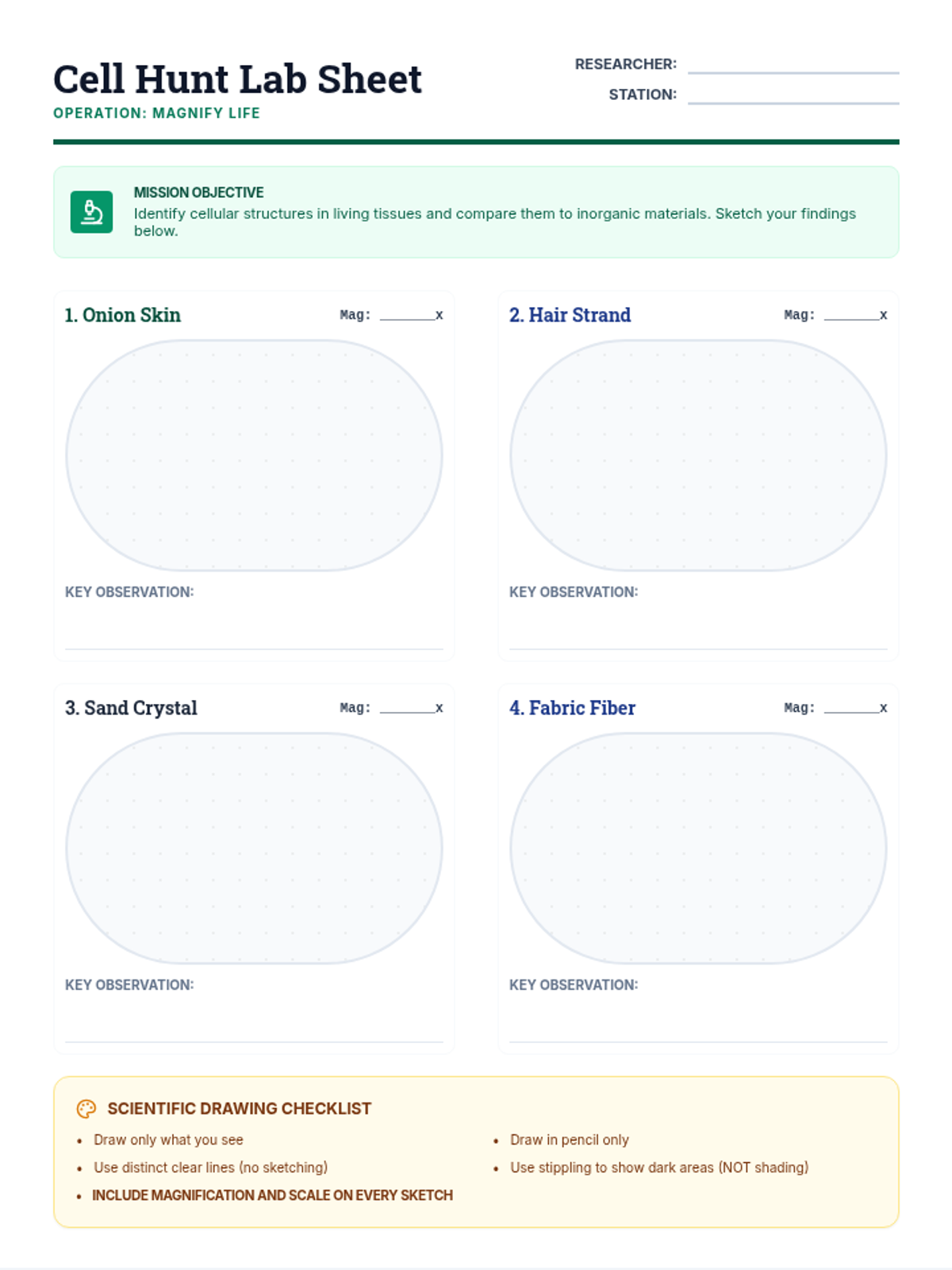
Students use microscopes to identify the cellular basis of life, comparing non-living materials with living tissues to establish that all living things are composed of cells.
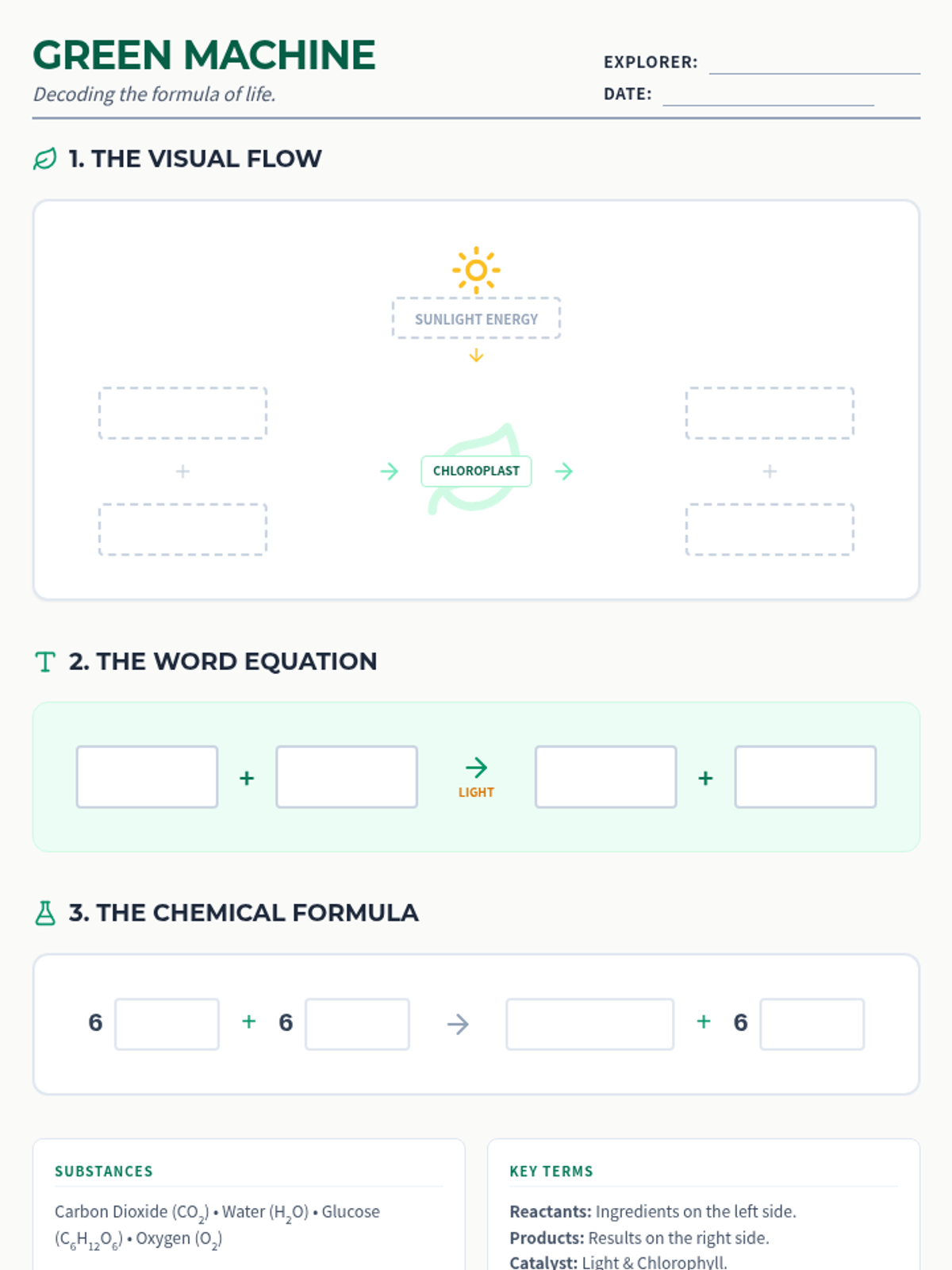
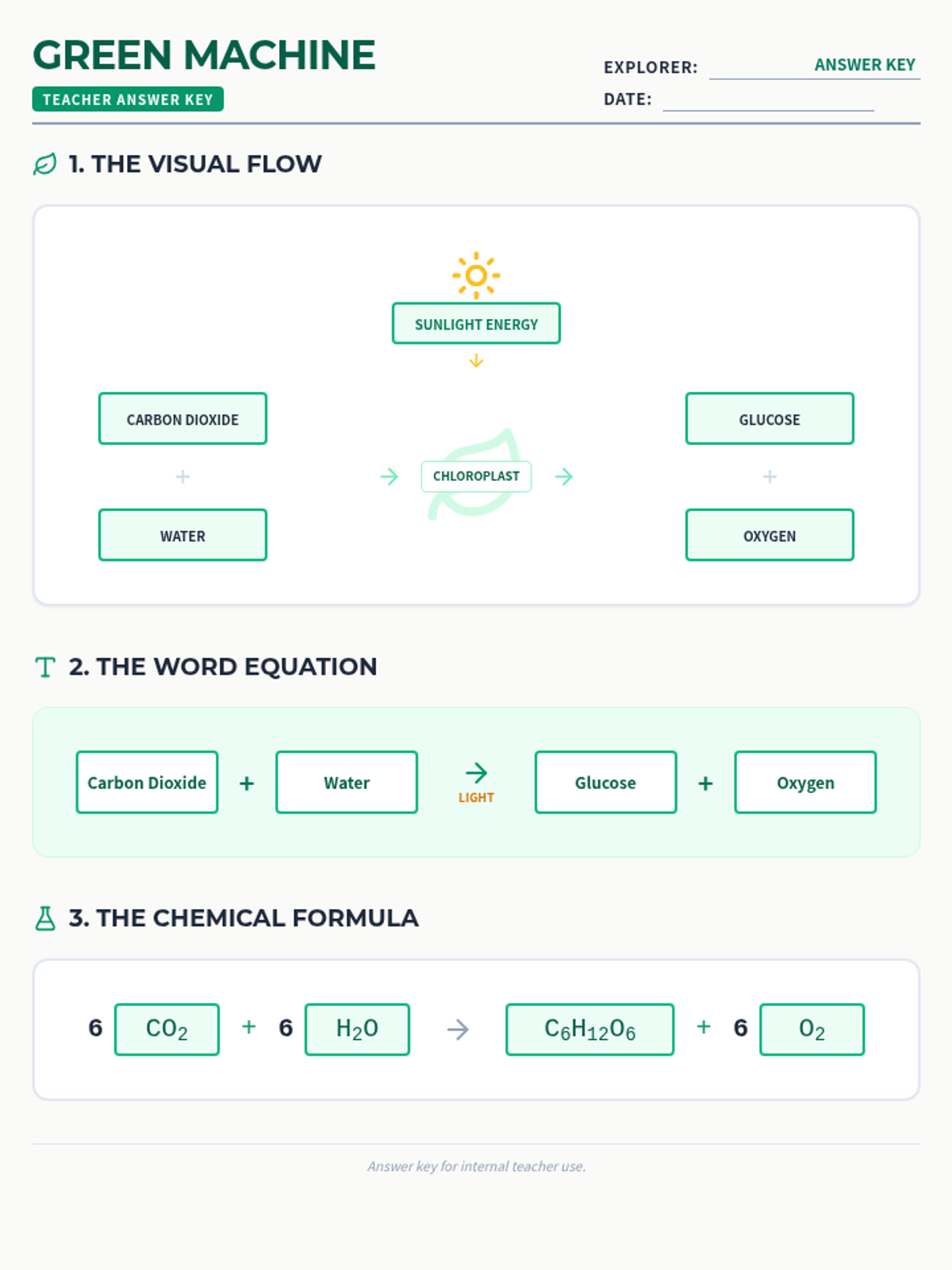
A focused exploration of the photosynthesis equation, helping students identify the reactants and products through diagrams and formula practice.
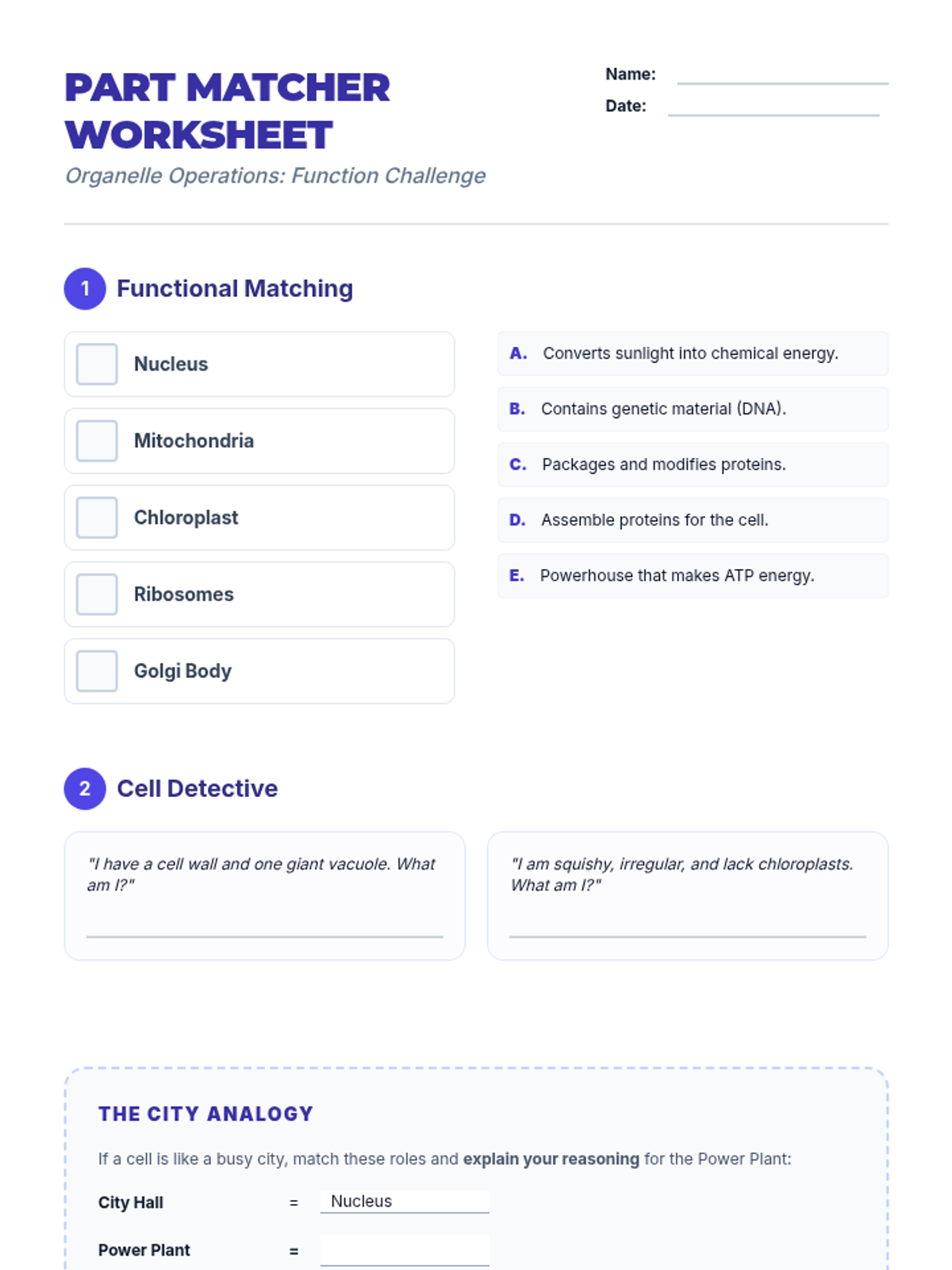
A 50-minute introductory lesson on plant and animal cells designed for 9-10th grade self-contained science. Students will explore cell organelles, compare structures, and understand how these 'building blocks of life' function like a factory or city.
A comprehensive exploration of animal and plant cell organelles, focusing on their structures, functions, and key differences. Students will identify organelles through diagrams and match them to their biological roles.
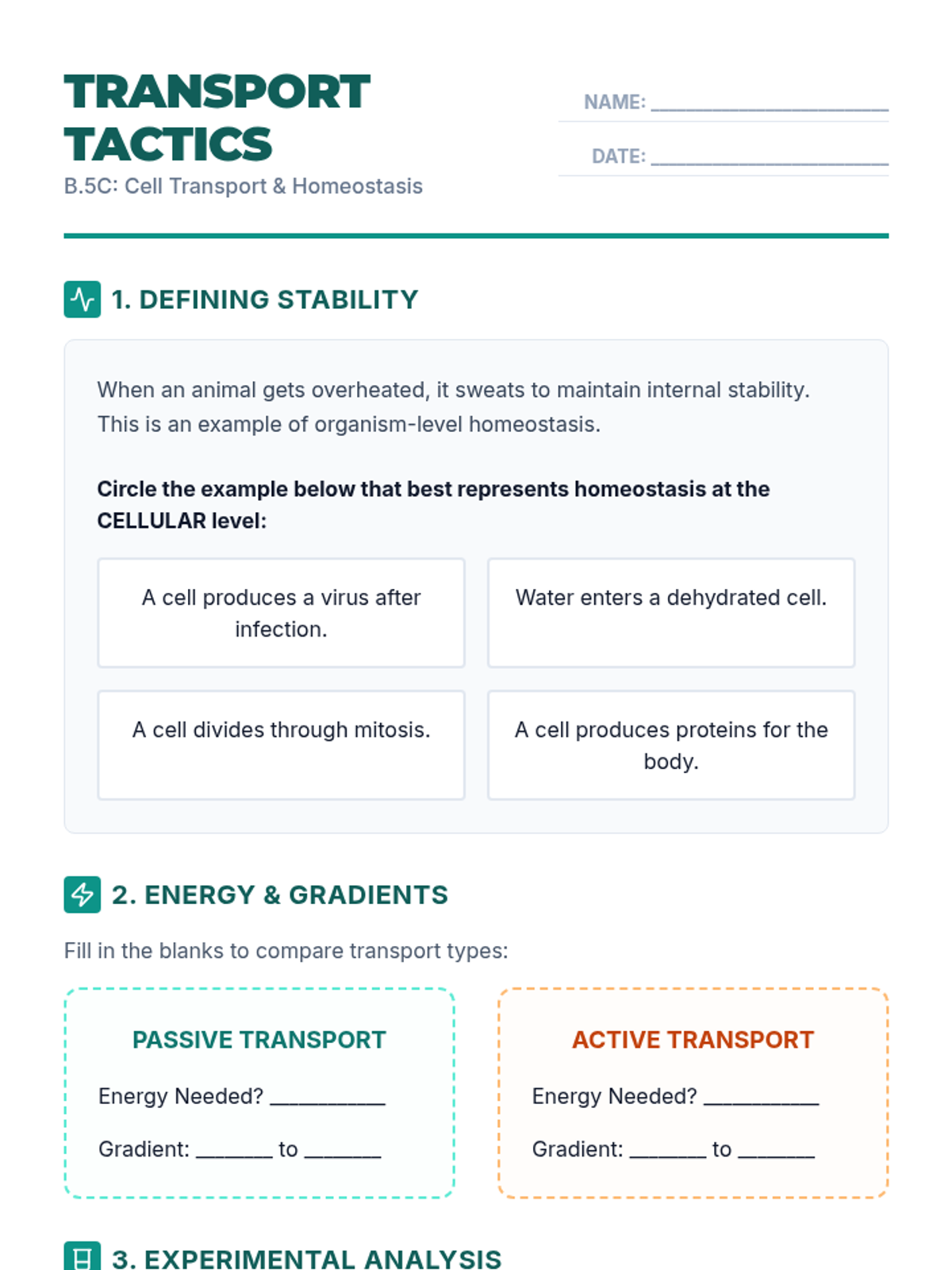
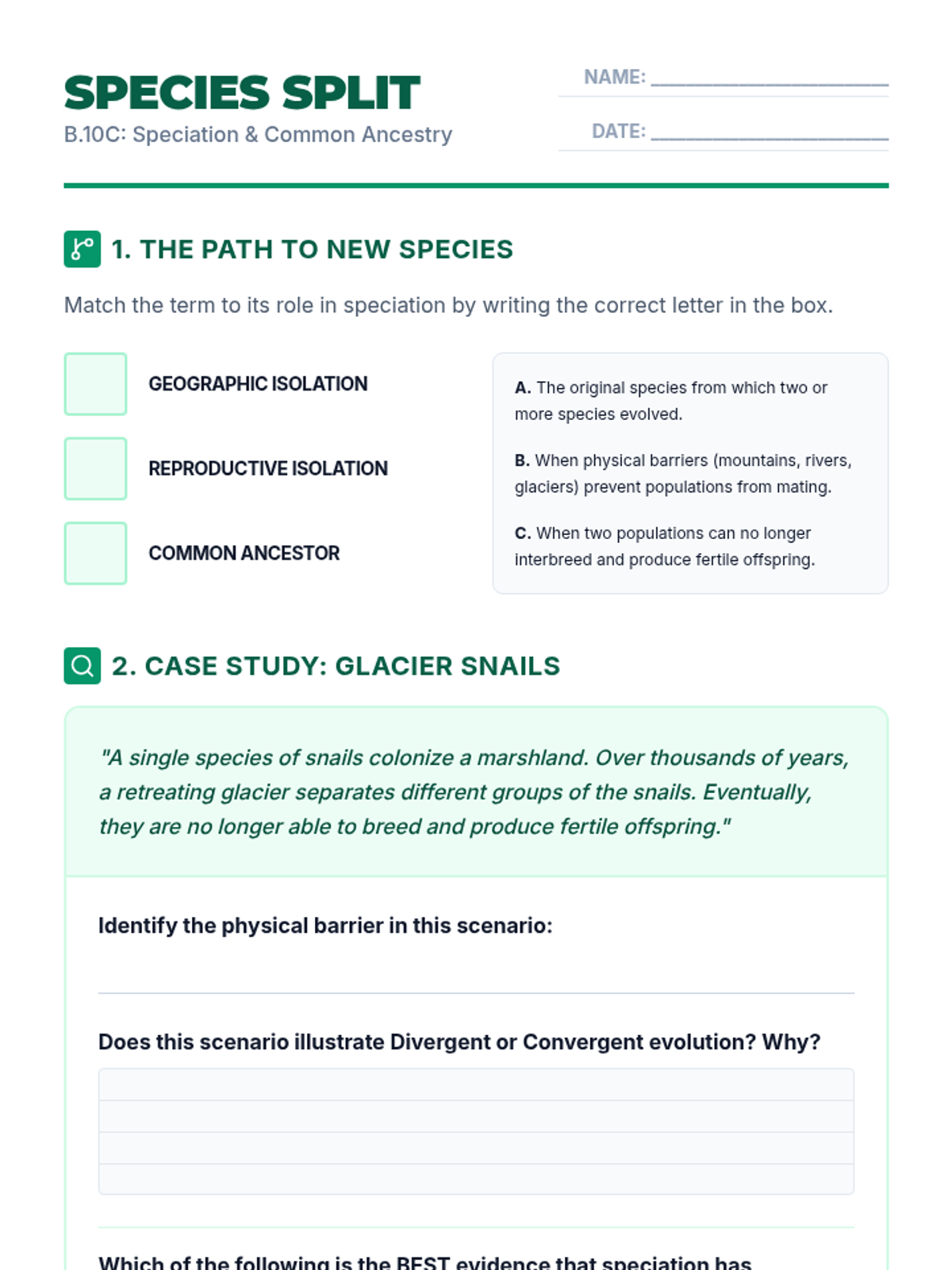
A 50-minute high-energy review lesson covering cell membrane dynamics, homeostasis, and the mechanisms of speciation.
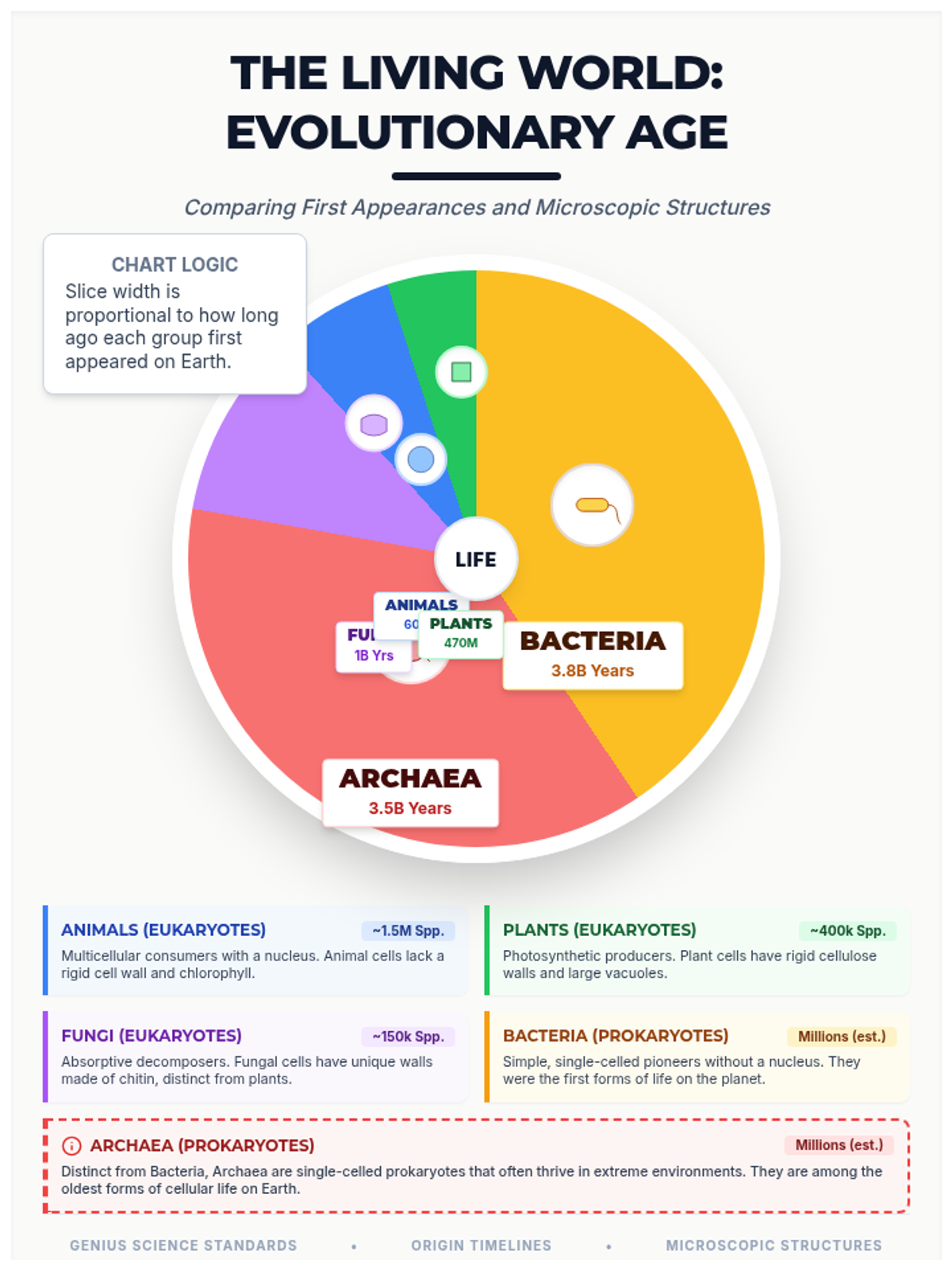
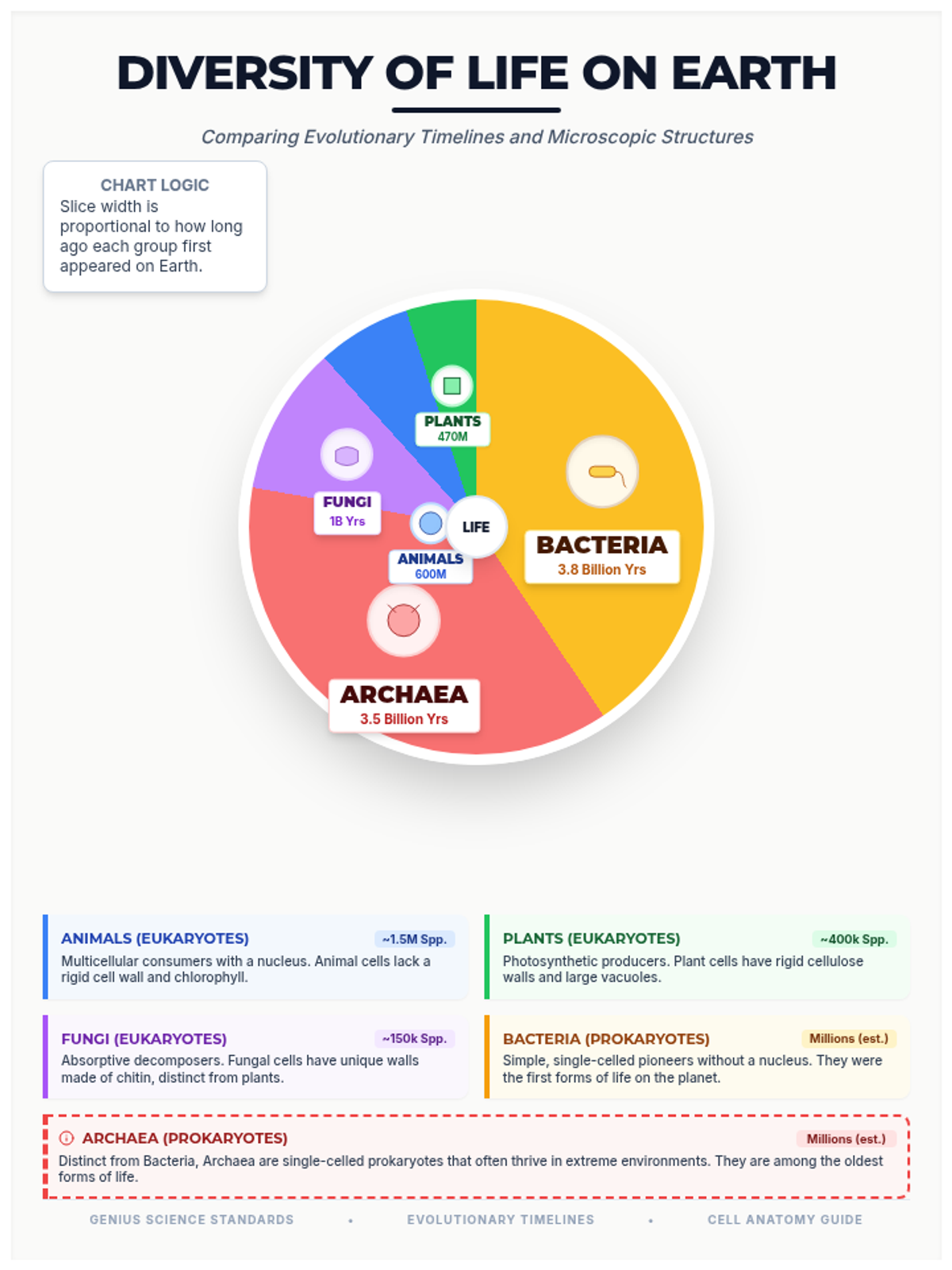
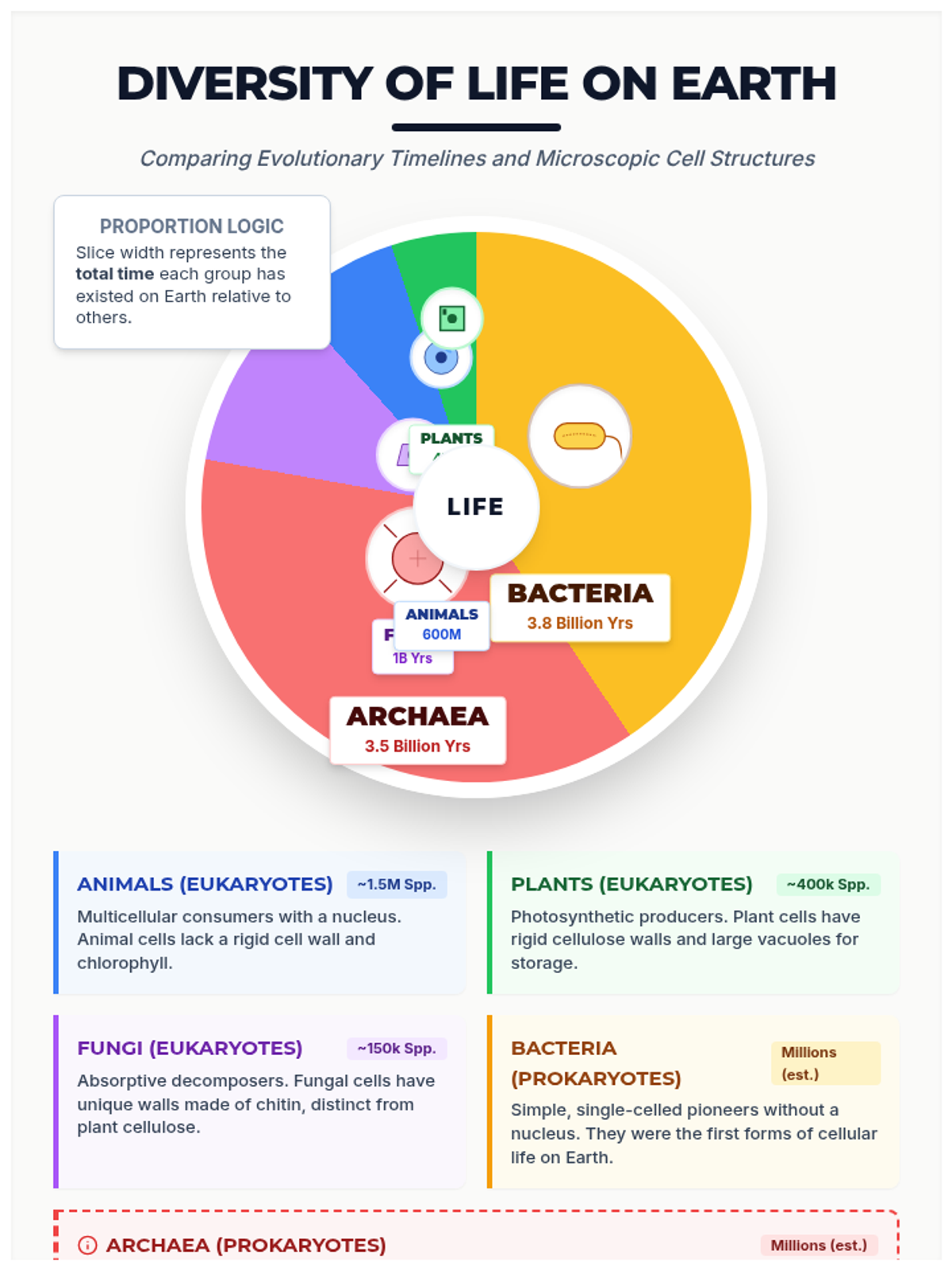
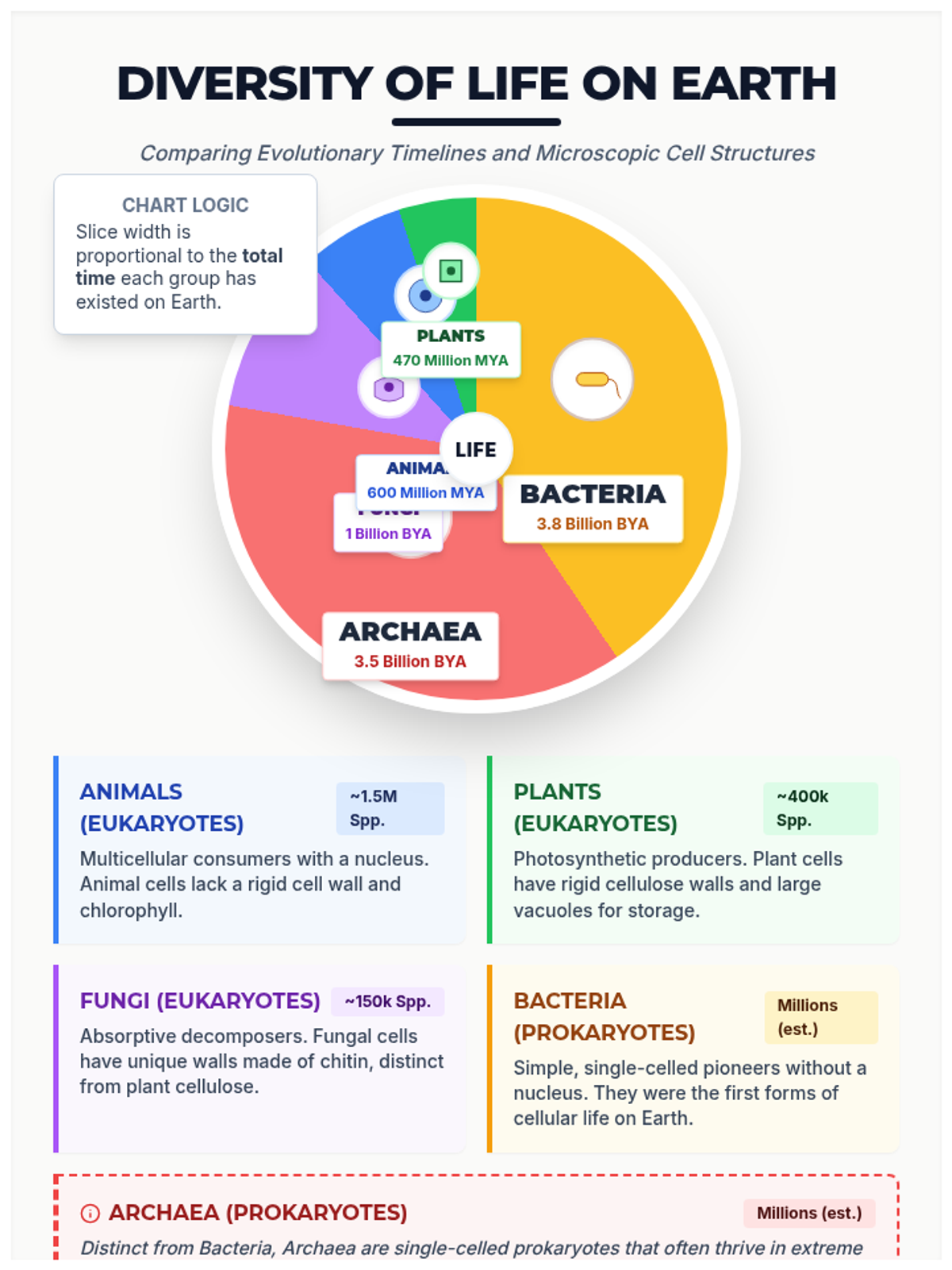
Explore the classification of life through the 5 Kingdoms: Animals, Plants, Fungi, Bacteria, and Viruses. Students will learn the key characteristics that define each group and discuss the unique biological status of viruses.
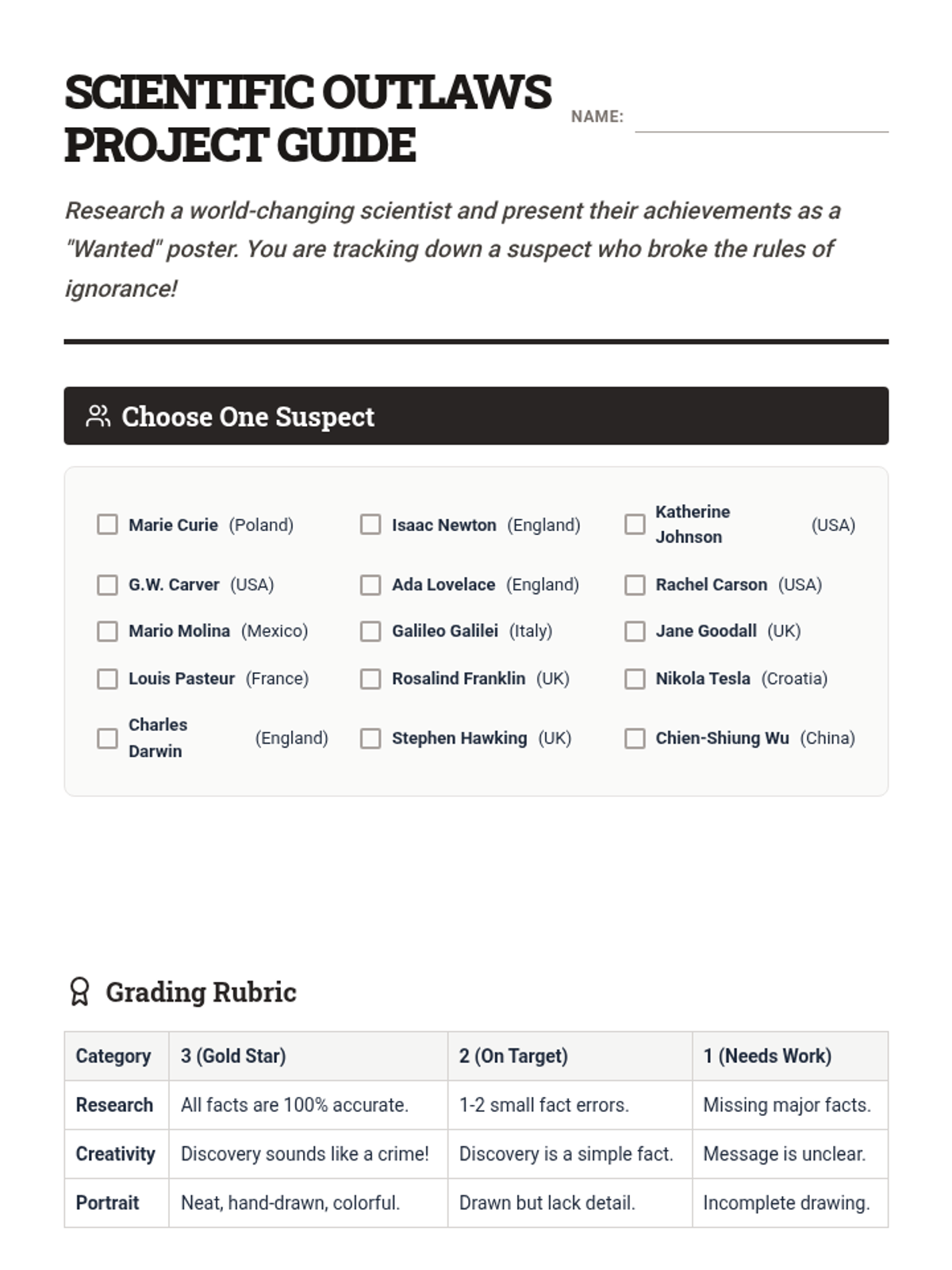
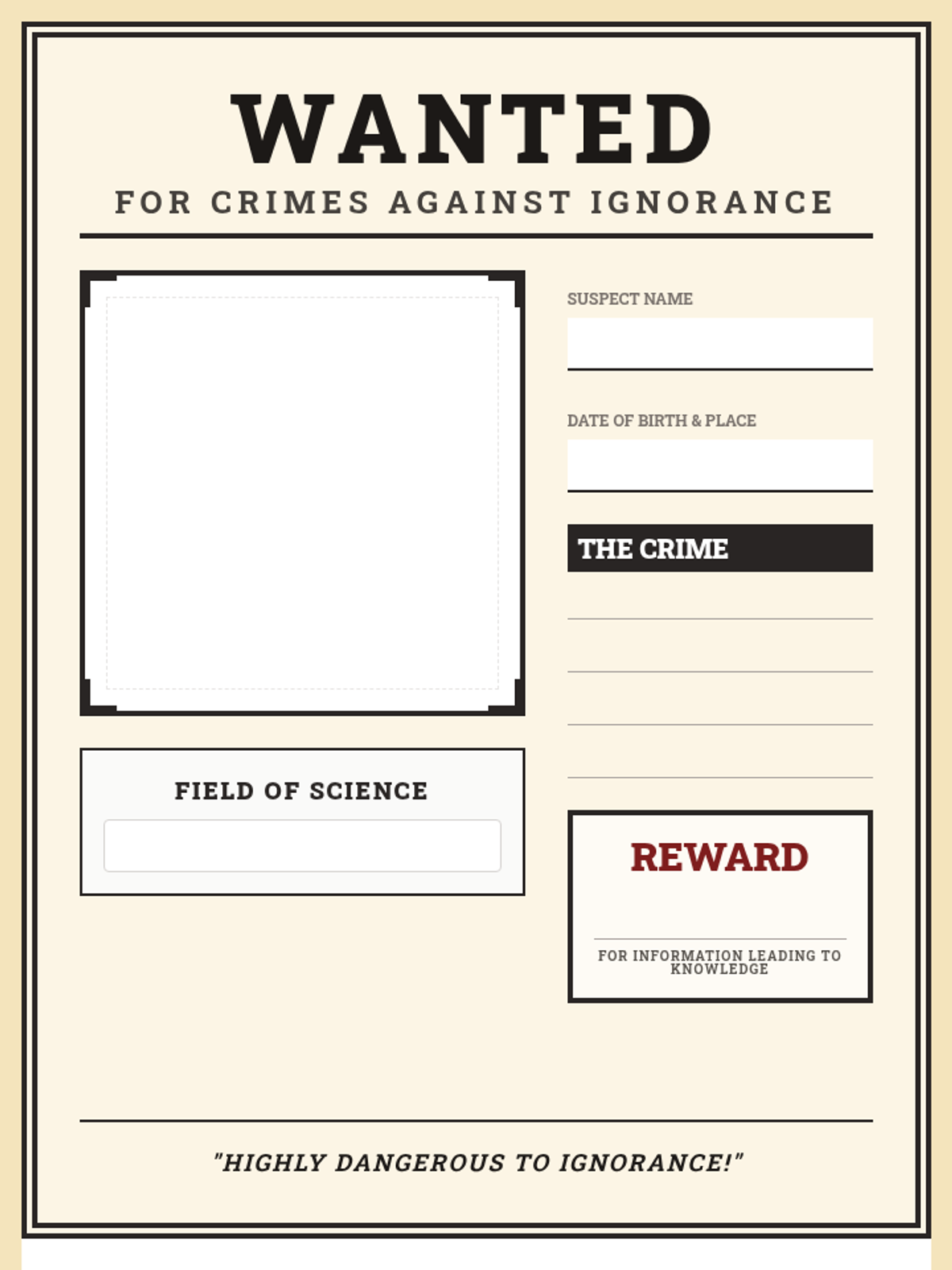
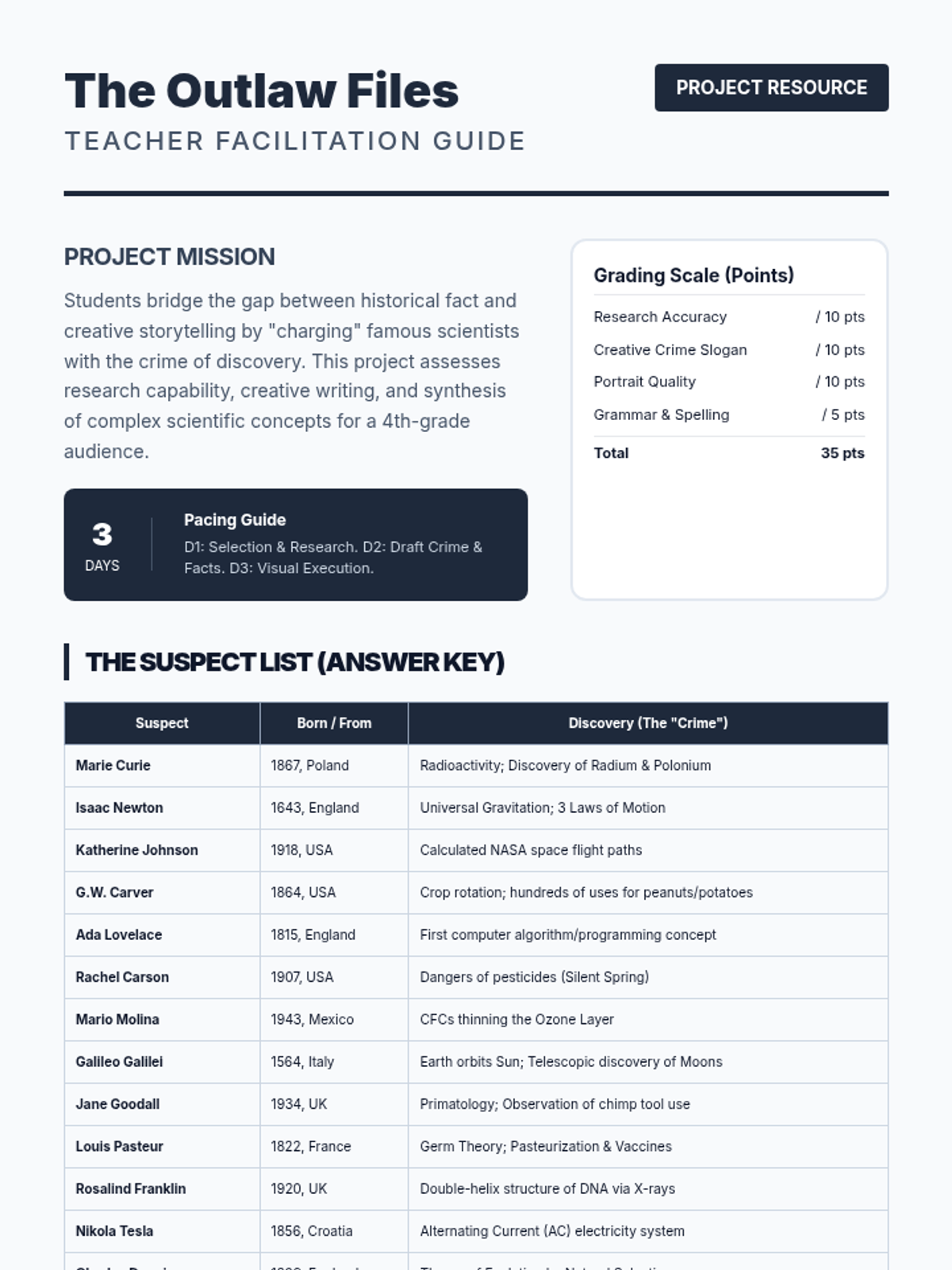
A creative science project where 4th-grade students research famous scientists and design 'Wanted' posters to showcase their discoveries as 'crimes against ignorance.'
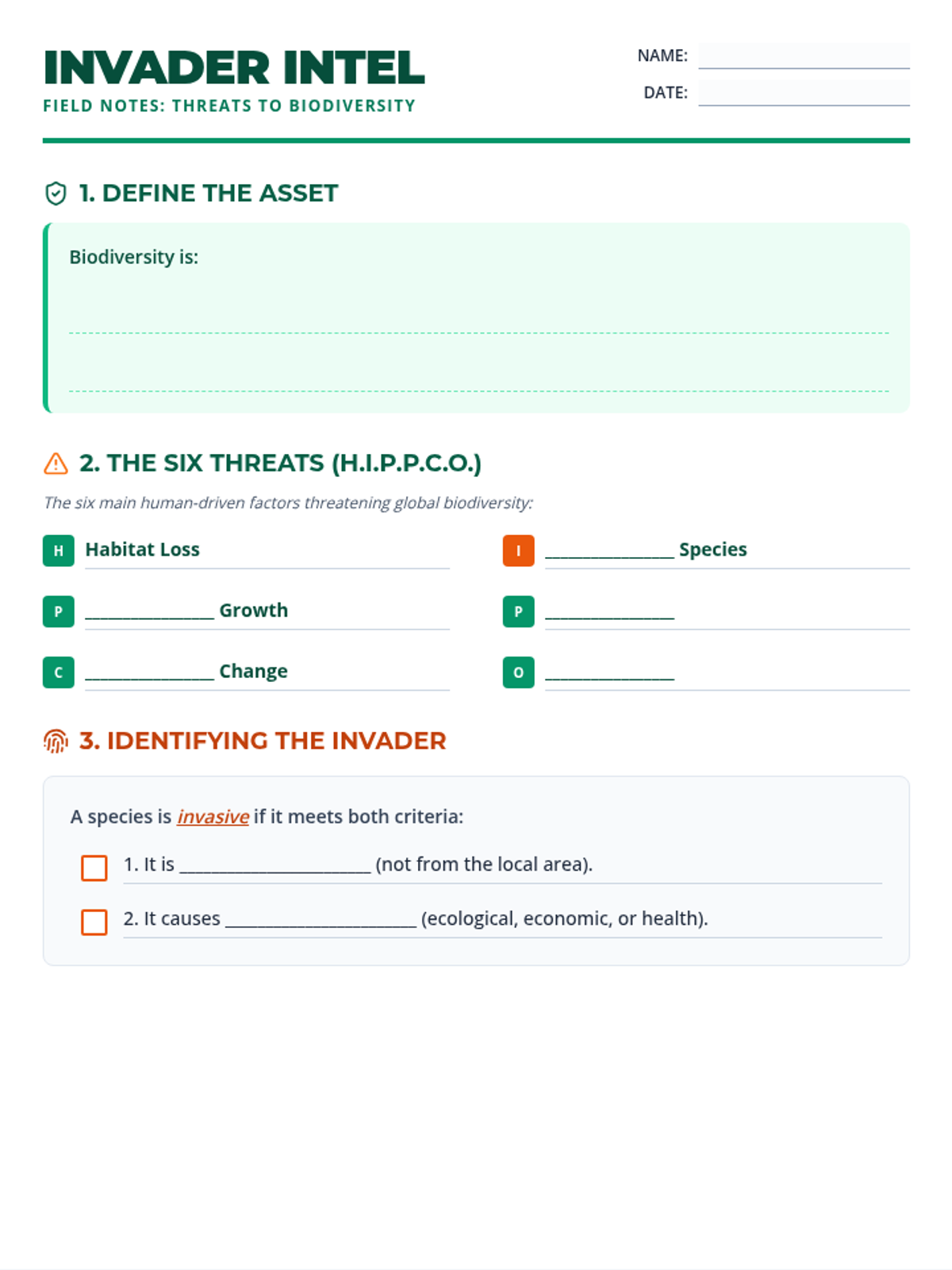
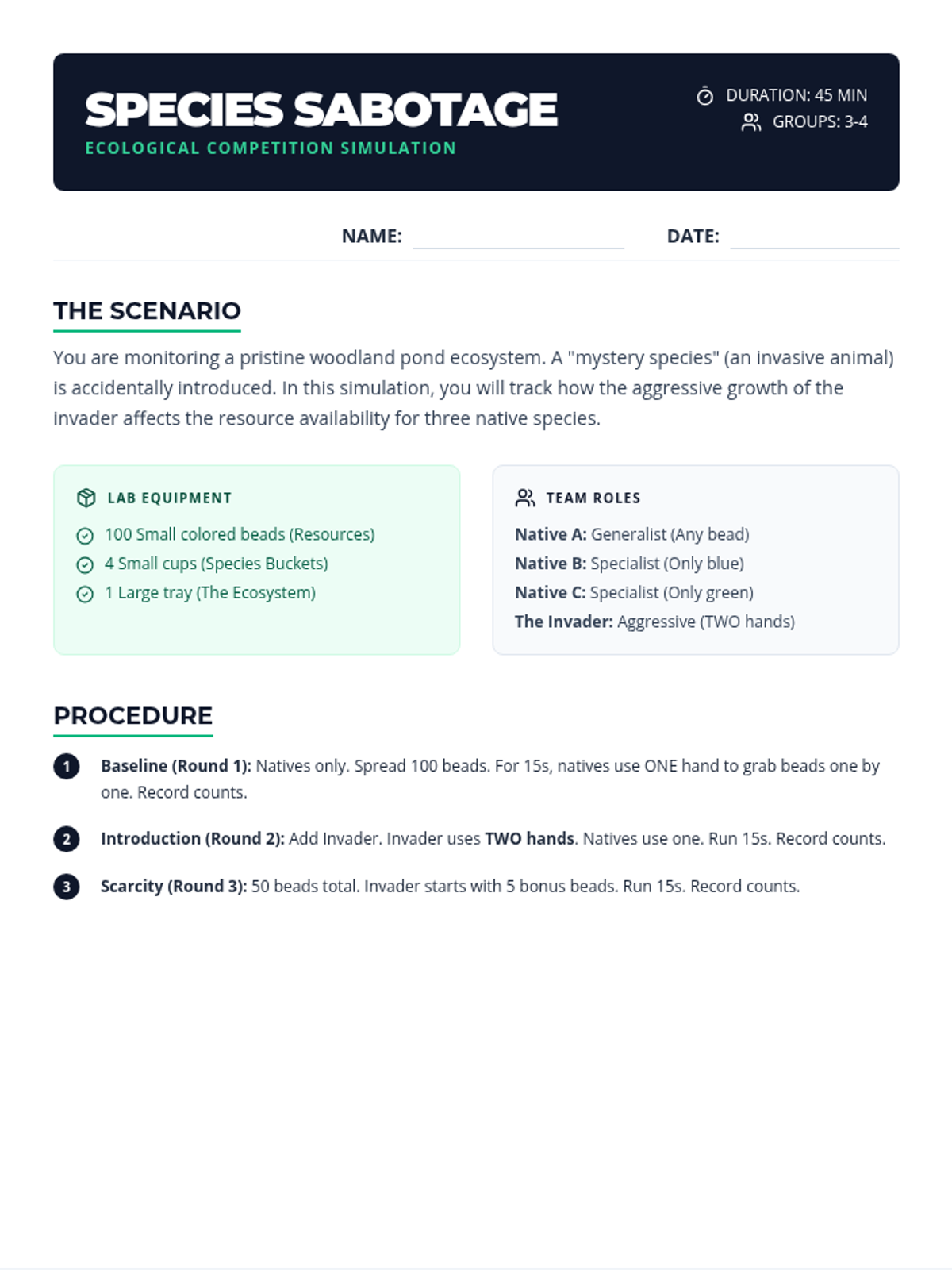
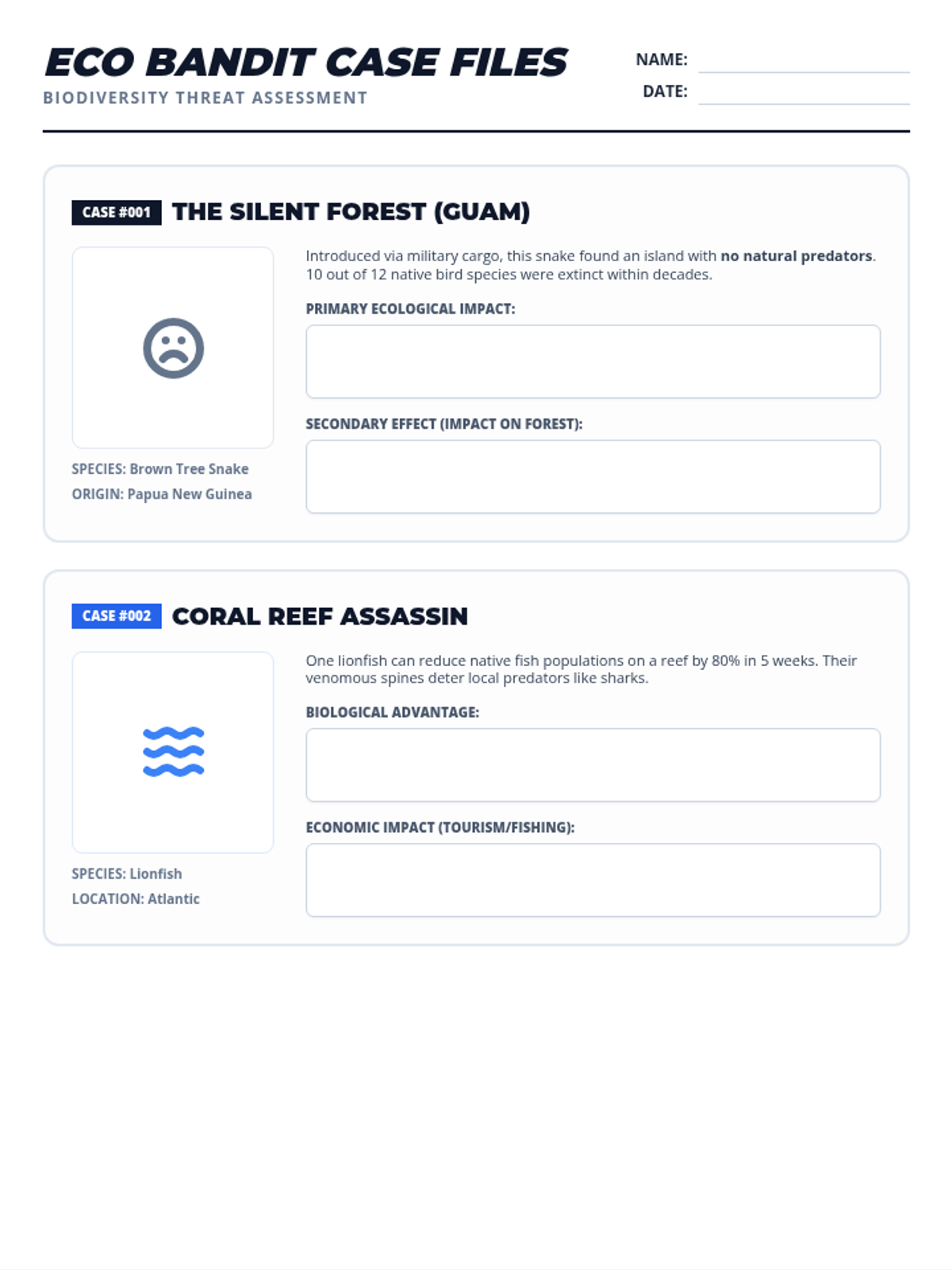
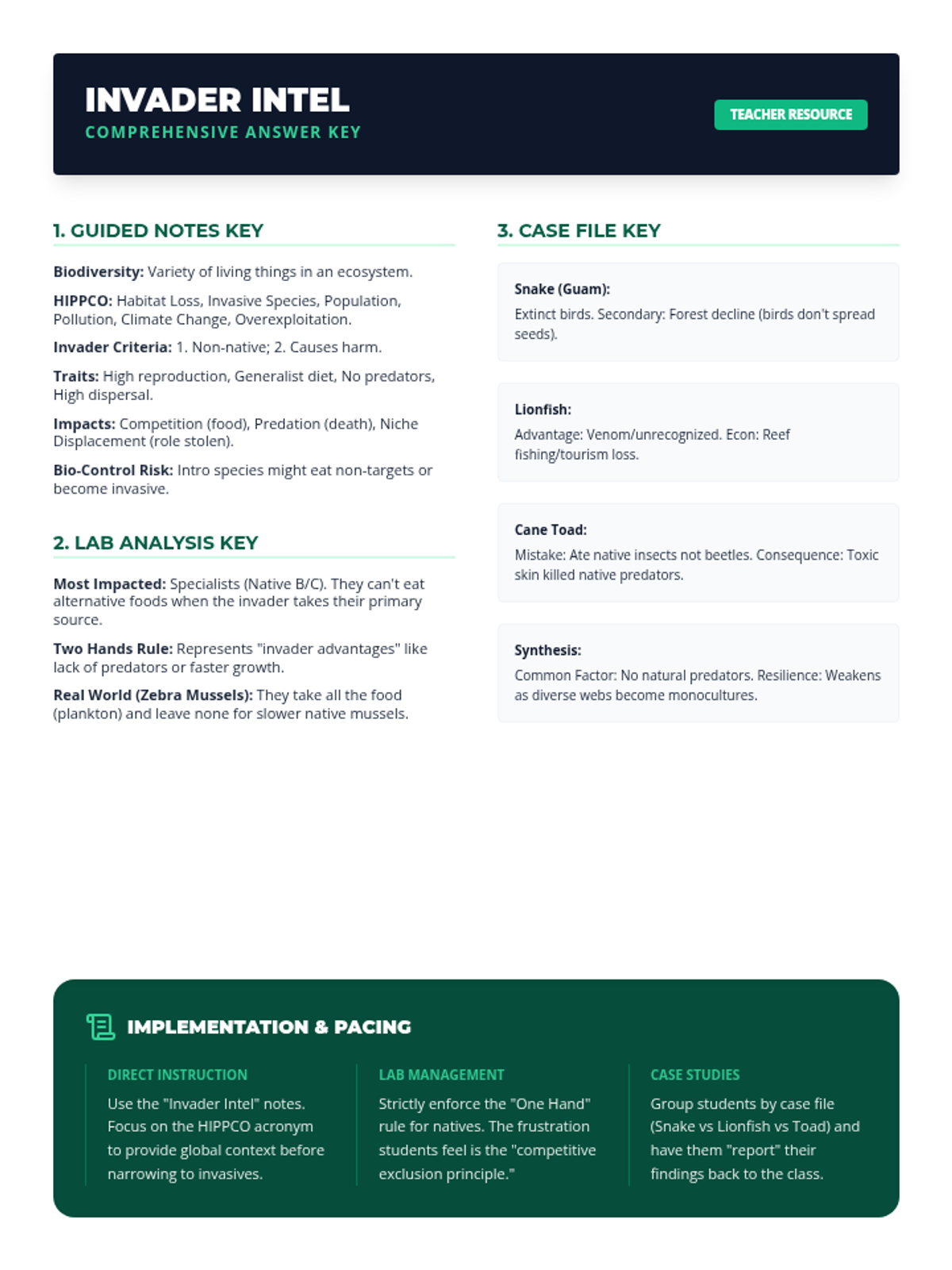
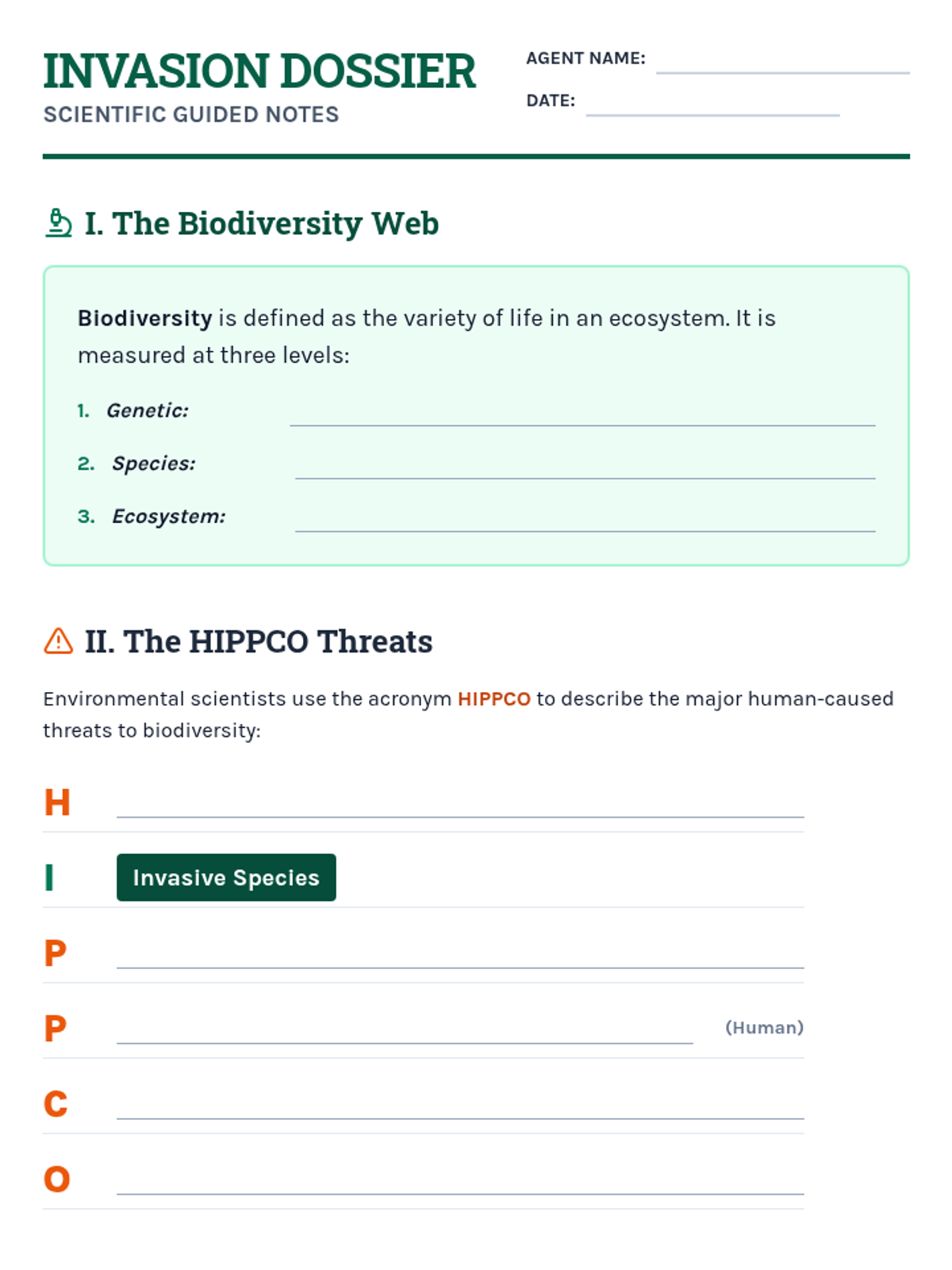
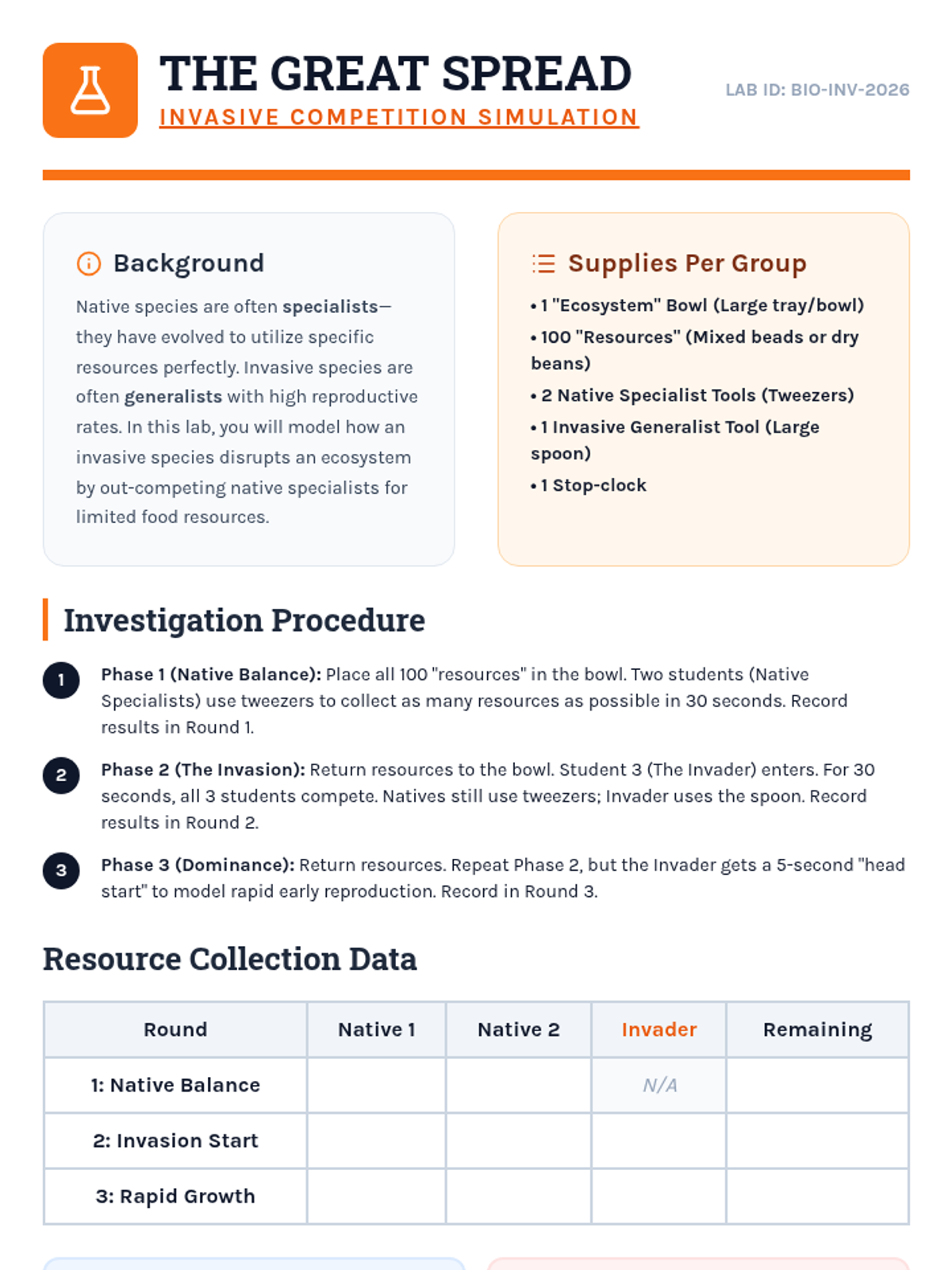
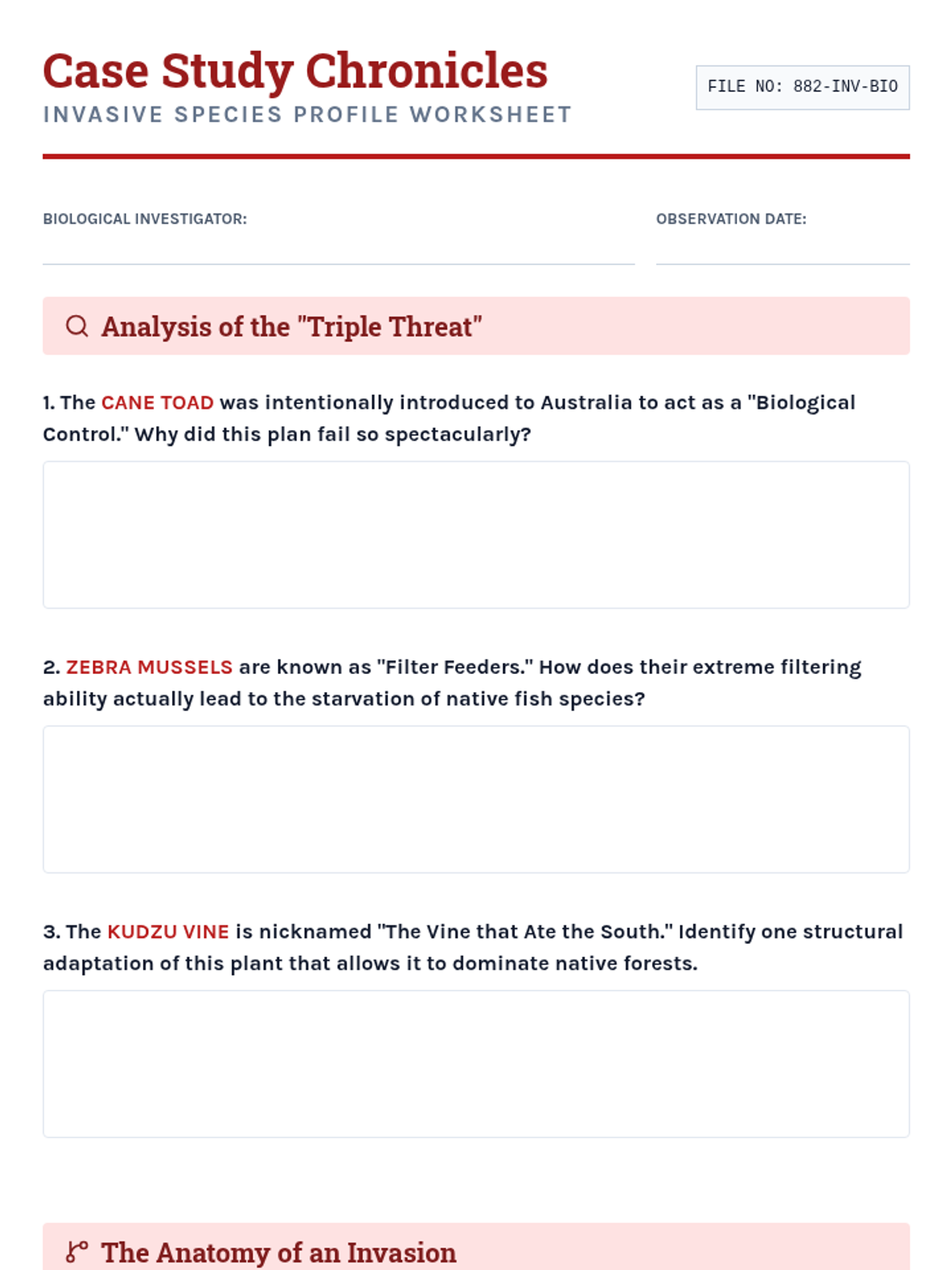
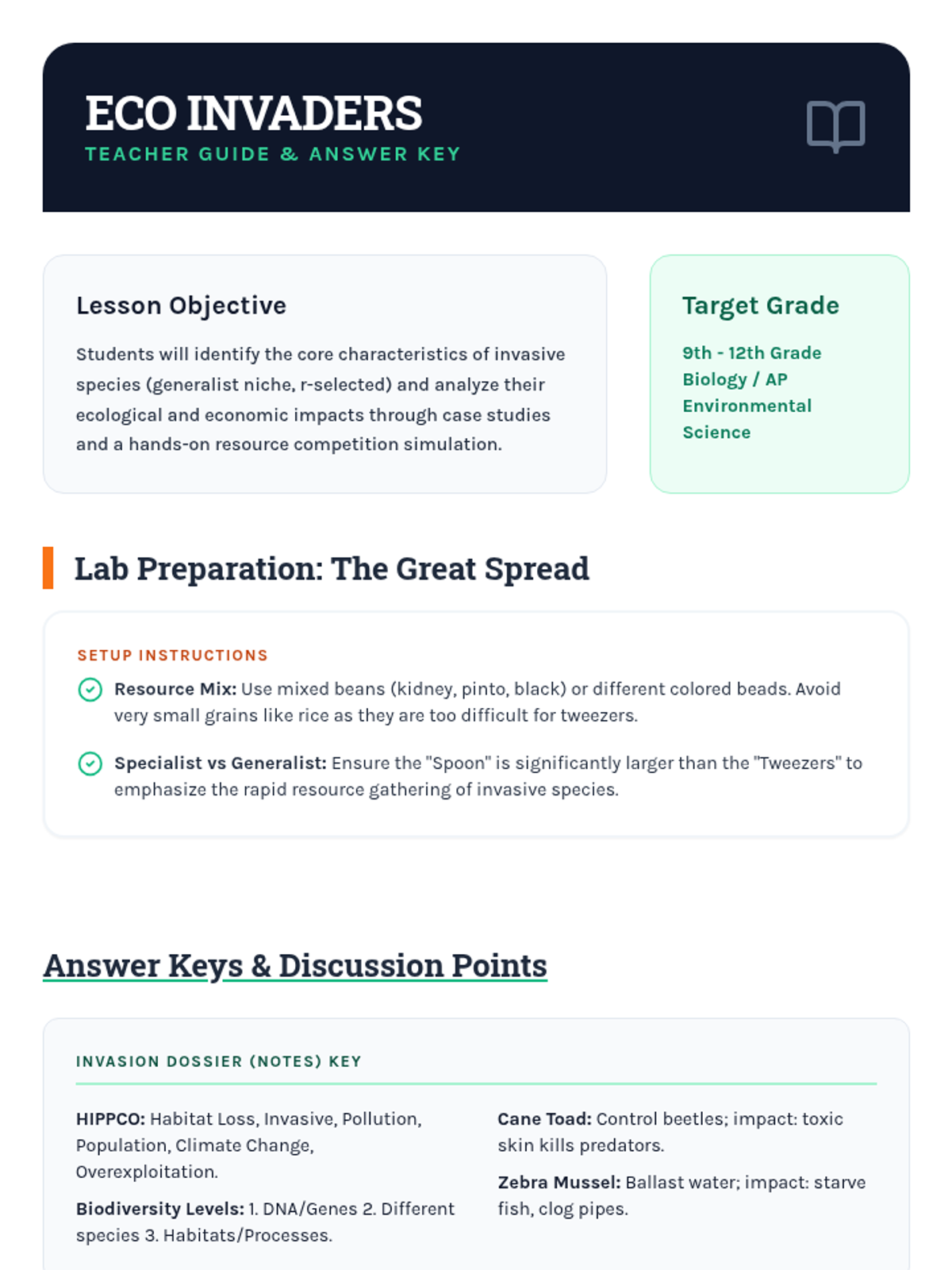
This lesson explores the impact of invasive species on global biodiversity through hands-on simulation and detailed case studies. Students will identify key characteristics of successful invaders and analyze the ecological and economic consequences of their introduction.
An immersive lesson exploring the impact of invasive species on global biodiversity through hands-on simulation, case study analysis, and guided inquiry.
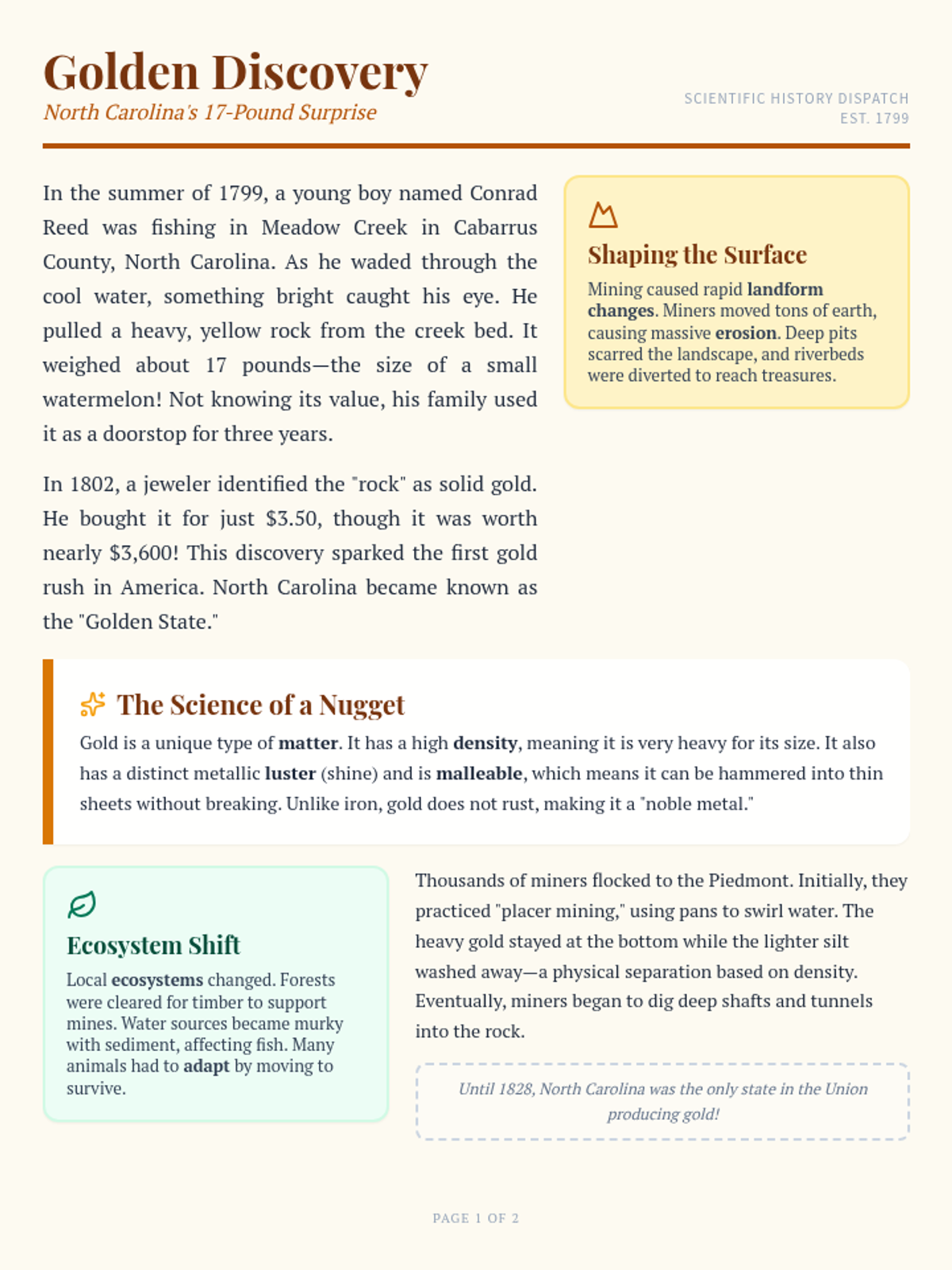
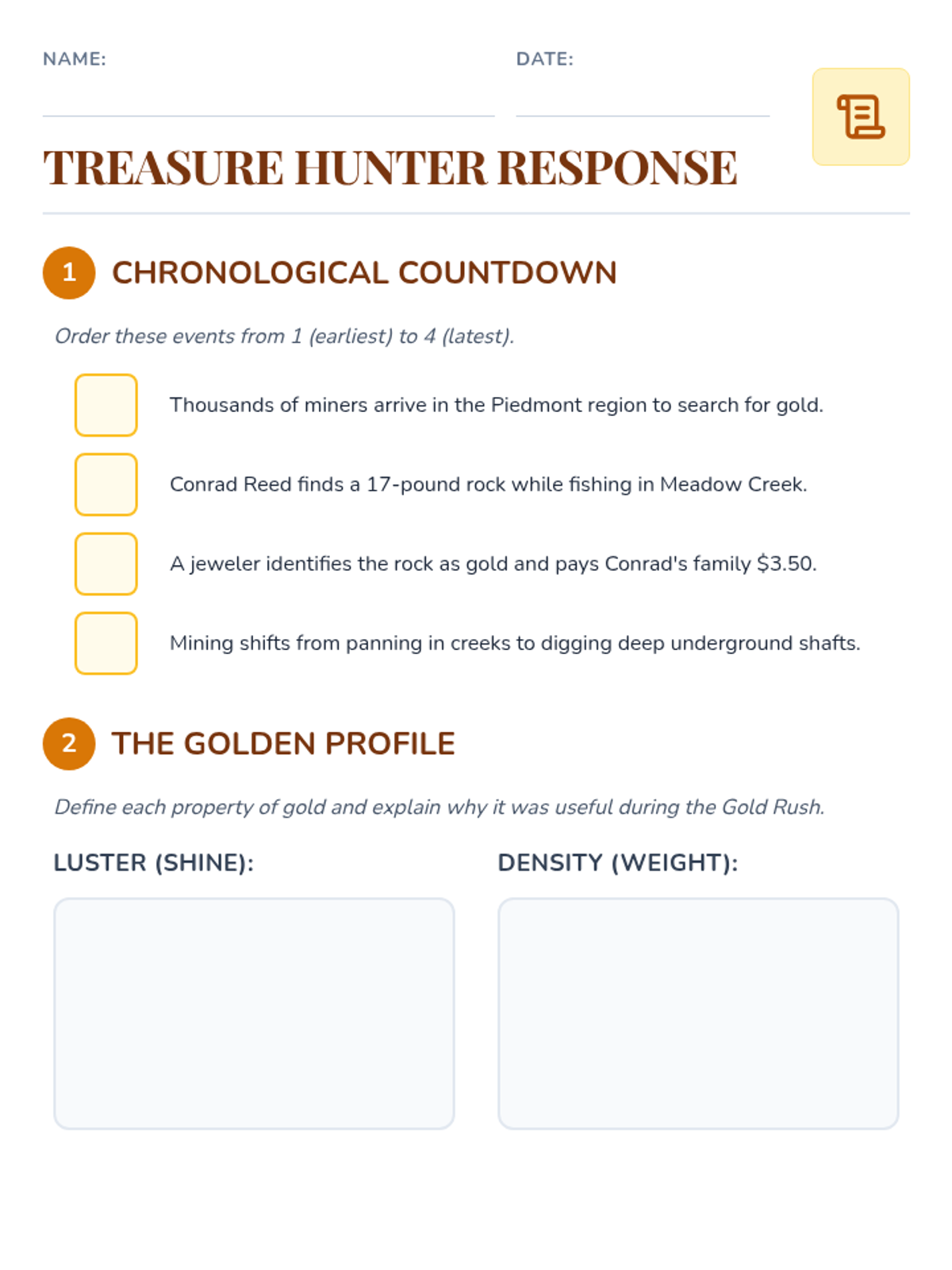
A cross-curricular lesson integrating North Carolina's gold rush history with physical properties of matter, landform changes, and ecosystem impacts. Students will explore the chronology of the 1799 discovery while analyzing the science behind the 'Golden State's' first boom.