Creek Chronicles Slides Creek Chronicles
Unlocking Aquatic Secrets through Leaf Packs
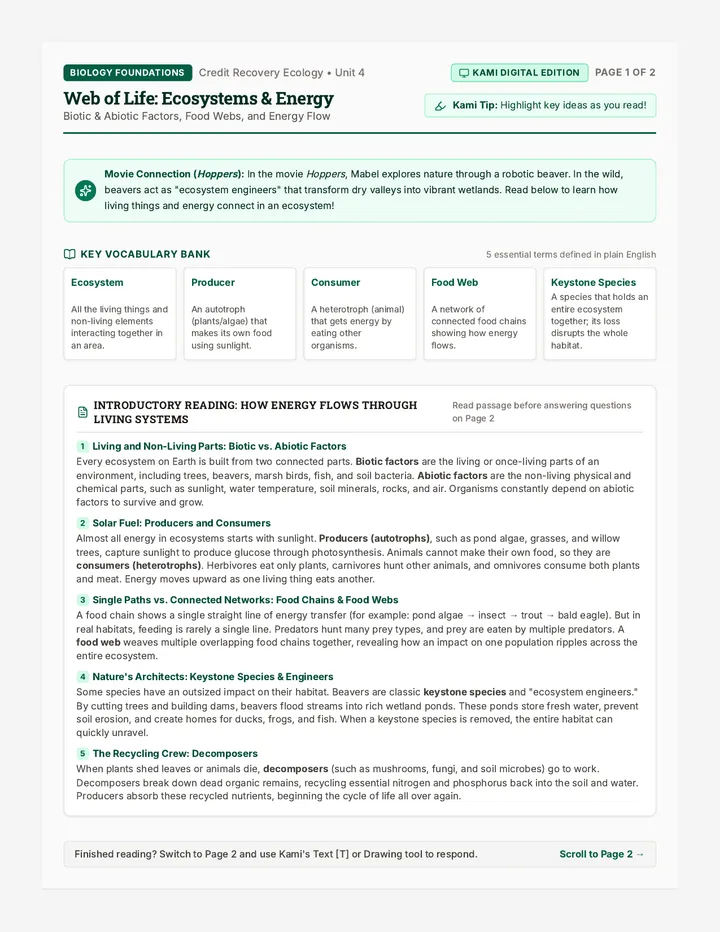
What is a Leaf Pack?
Think of a leaf pack as a "hotel and buffet" for underwater creatures.
Natural: Leaves that fall into streams and get trapped by rocks or branches.
Scientific: Mesh bags filled with local leaves, placed in a stream for 3-4 weeks to mimic nature.
Why use them? They collect "Benthic Macroinvertebrates"—our secret bio-indicators.
The Macroinvertebrates
Benthic
Living on the bottom of a body of water (stream, pond, or river).
Macro
Large enough to be seen with the naked eye (no microscope needed!).
Invertebrate
An animal without a backbone (like insects, snails, and worms).
Survival Strategies
How do they eat in a flowing stream? Functional Feeding Groups:
Shredders
Chew up large pieces of leaves and wood. (Example: Stoneflies)
Scrapers
"Gaze" or scrape algae off rocks. (Example: Mayflies)
Collectors
Filter small bits of food from the water. (Example: Caddisflies)
Predators
Hunt other macros for food. (Example: Dragonflies)
The Bio-Indicator Secret
Different macros have different tolerance levels to pollution.
Group 1: Sensitive
Can only live in clean water. (Stoneflies, Mayflies)
Group 2: Moderate
Can handle some pollution. (Scuds, Dragonflies)
Group 3: Tolerant
Can live in poor quality water. (Leeches, Lunged Snails)
High Diversity
HEALTHY STREAM
Human Impact
Runoff
Fertilizers, oils, and chemicals wash from roads and lawns into the creek. This can cause algae blooms and lower oxygen levels.
Habitat Loss
Removing trees (Riparian Buffer) along the bank makes the water warmer and causes erosion, which smothers the "macros" in silt.
Goal: How can we protect our "Sleuths"?
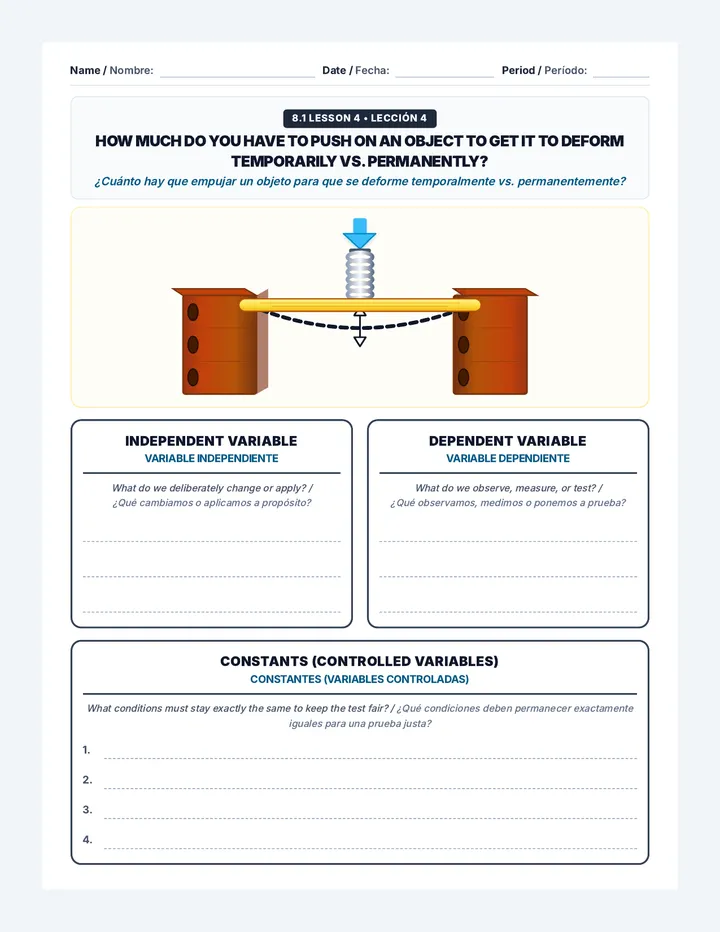
Mission: Leaf Pack Exam
It's time to empty the packs. Observe, identify, and record. What secrets will the creek reveal today?
Sort
Count
Conclude
Macro Mystery Worksheet Macro Mystery Worksheet
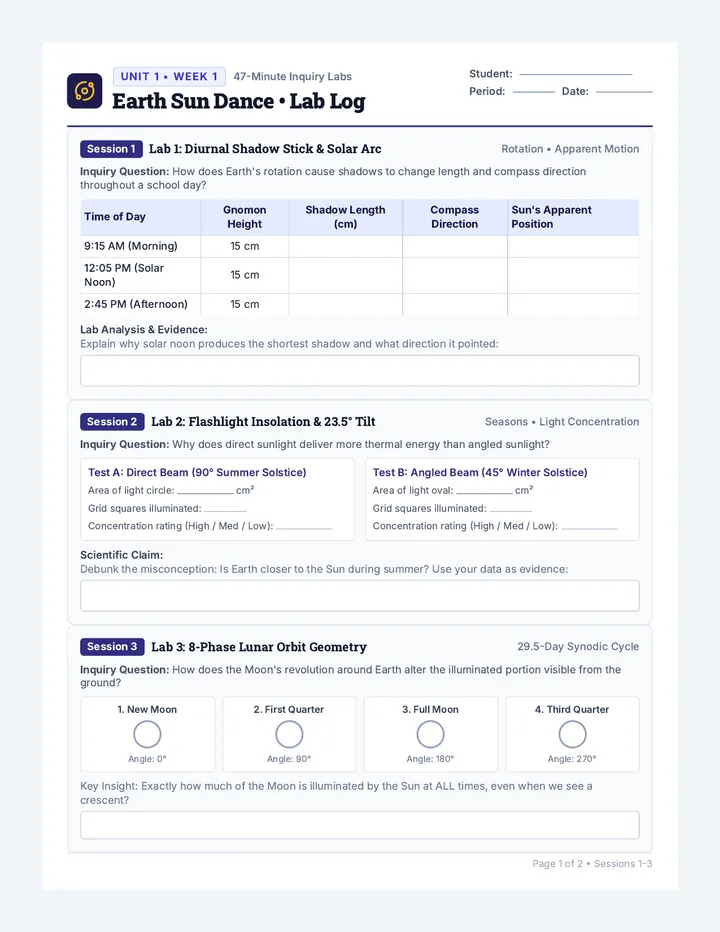
Post-Examination Investigative Report
Sleuth Name:
Date:
Part 1: Species Spotlight
Choose ONE macroinvertebrate from your leaf pack that you found most interesting. Sketch it and analyze its survival toolkit.
Scientific Illustration
Common Name:
Feeding Group (Circle one):
Shredder Scraper Collector Predator
Adaptation Observation:
How does its body shape or behavior help it survive in flowing water?
Part 2: Water Quality Audit
Identify which groups you found. Total the points to find your Pollution Tolerance Index (PTI).
Tolerance Level Common Macros Found? Score Group 1: Sensitive Stonefly, Mayfly, Caddisfly, Water Penny 3 pts Group 2: Moderate Dragonfly, Scud, Sowbug, Crane Fly, Clams
| 2 pts |
| Group 3: Tolerant | Midge Fly, Leech, Aquatic Worm, Snail |
| 1 pt |
| Your Total PTI Score: | __________ |
Poor Quality
Fair Quality
Good Quality
Excellent
Part 3: Impact Analysis
Based on your PTI score above, how healthy is this stream? Explain using evidence from your data.
Land Use Investigation
Look around the stream bank. Are there houses, roads, farms, or thick forests? How might these be helping or hurting the "macros"?
Expert Challenge (Grades 7-9)
Predict: If a new parking lot was built 50 feet from this stream, which specific "Functional Feeding Group" would be most affected and why?
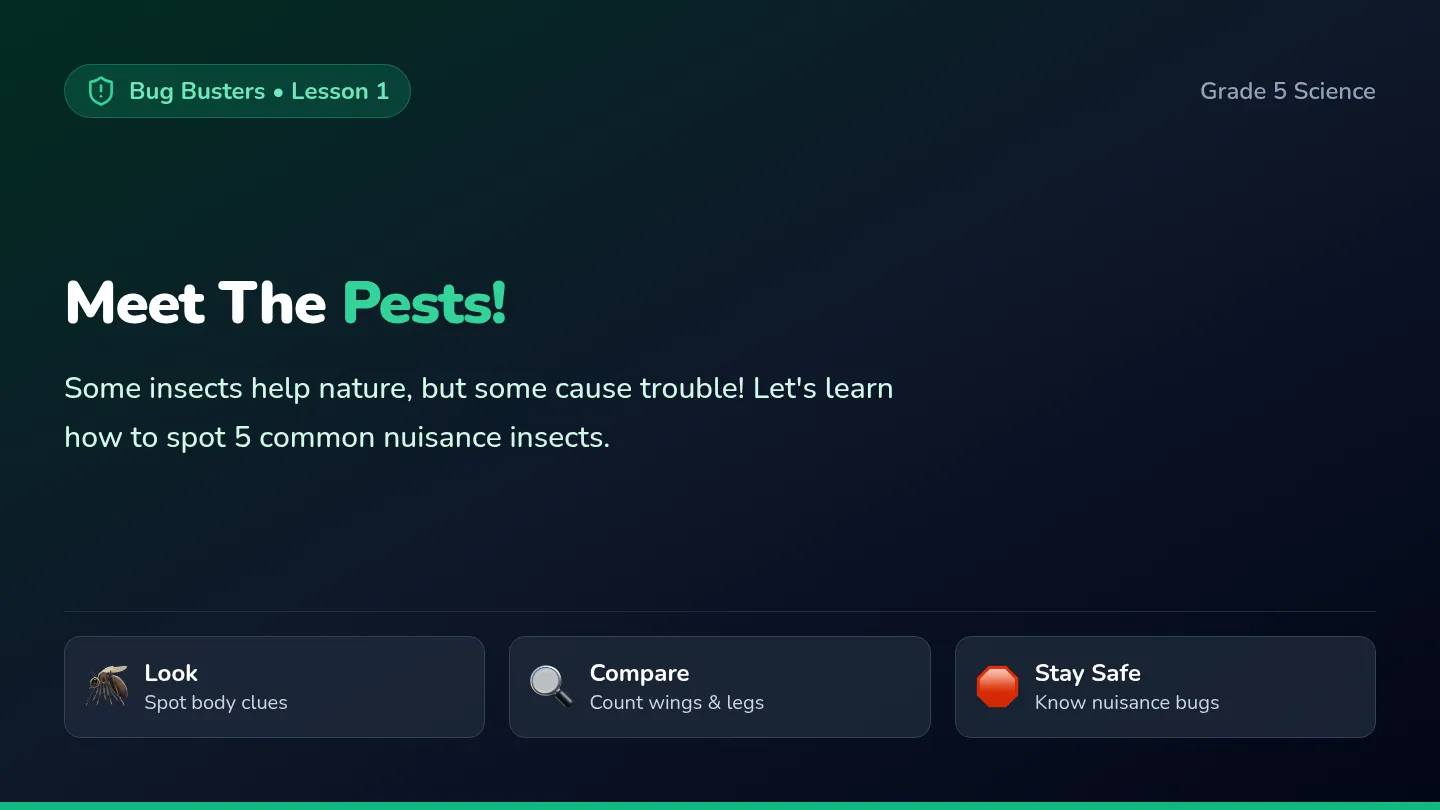
Sleuth Strategy Guide Sleuth Strategy Guide
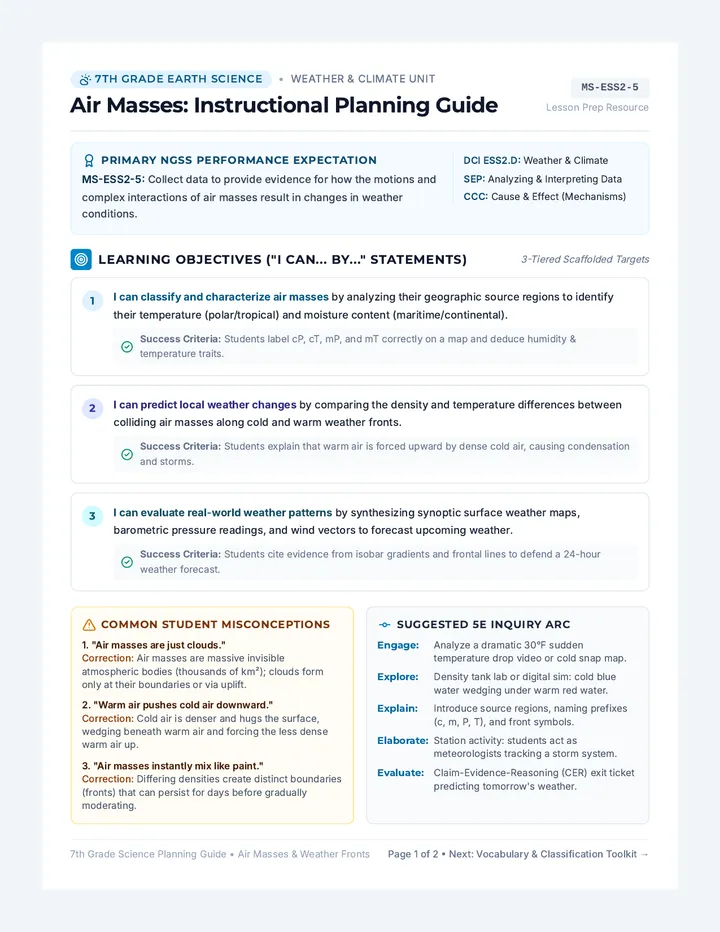
Teacher Facilitation & Differentiation Resource
Subject: Aquatic Ecology
Instructional Intent
This lesson transforms a standard leaf pack examination into a forensic investigation of stream health. Students move from basic identification to complex ecological reasoning, using macroinvertebrates as "bio-indicators" to diagnose the impact of surrounding land use.
Essential Questions
Why do some organisms thrive while others disappear?
How can small creatures tell us a big story about water?
How does land development alter underwater life?
Materials Needed
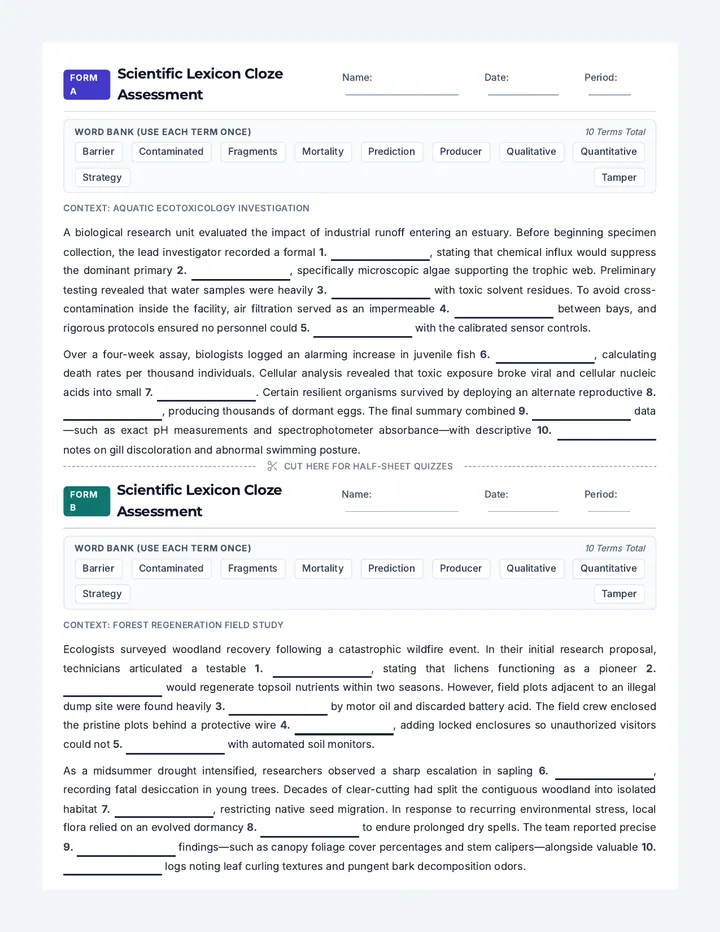
Creek Chronicles Slides
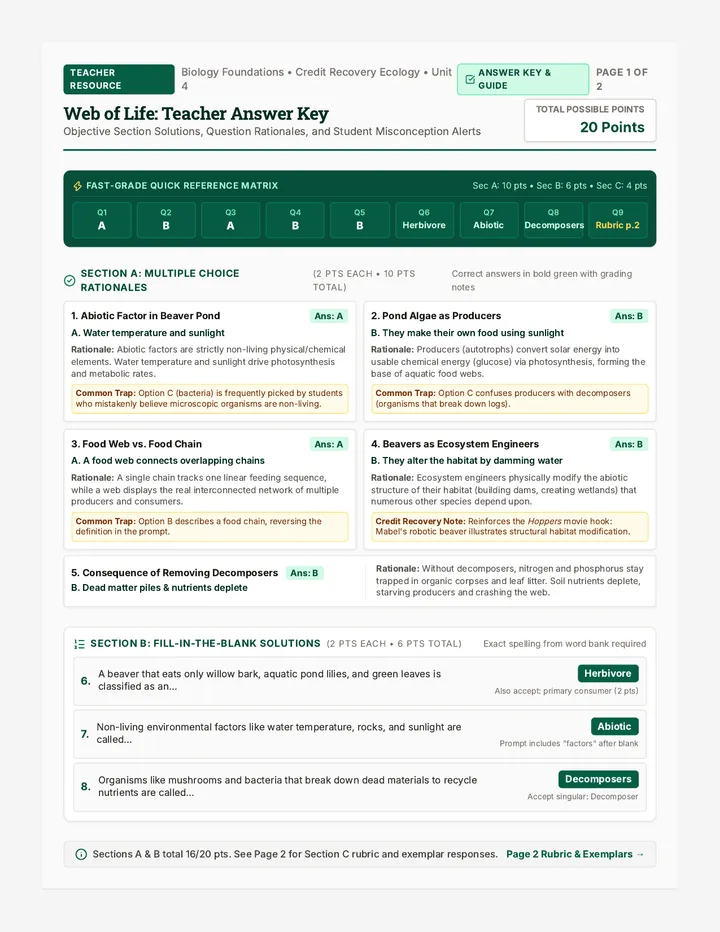
Macro Mystery Worksheets
Macro Identification Keys (Dichotomous)
Sorting Trays & Hand Lenses
Pacing (90m)
Hook & Slide Presentation 20m
Leaf Pack Sorting/ID 40m
Worksheet Audit (PTI) 20m
Debrief & Impact Discussion 10m
Differentiation Toolkit (Grades 5-9)
Tier 1: Foundations (Grades 5-6)
Focus: Form & Function
Visual Sorting: Use color-coded ID keys that match the Tolerance Groups on the worksheet.
Analogy Approach: Relate adaptations to human tools (e.g., caddisfly silk = glue; stonefly gills = snorkel).
Modified Audit: Focus on counting "kinds" rather than complex PTI math.
Tier 2: Extension (Grades 7-9)
Focus: Systems & Synthesis
Dichotomous Keys: Require students to use formal keys to identify specimens to the Family level.
The Expert Challenge: Use the worksheet's challenge section to discuss "Impervious Surfaces" and "Thermal Pollution."
Data Comparison: Have them compare this year's PTI score with historic class data to look for trends.
Assessment Key & Expected Findings
Part 1: Species Spotlight
Expected: Stoneflies/Mayflies for healthy streams (note their external gills or distinct tails). Look for Shredders in high-leaf areas and Scrapers in sunny, rocky areas.
Part 2: PTI Calculation
Total Score = (Number of Group 1 types × 3) + (Number of Group 2 types × 2) + (Number of Group 3 types × 1). Note: It's the diversity of types, not the number of individual bugs, that usually defines a PTI.
Part 3: Impact Analysis
Students should link human activity (e.g., "lawn fertilizer") to ecological outcomes (e.g., "too much algae, group 1 dies"). High-level answers will mention "dissolved oxygen" or "sedimentation."