A quick 30-minute introduction to the skeletal system, focusing on its main functions and the names of key bones in the human body. Students will explore how their 'internal frame' helps them move and stay protected.
An interactive lesson exploring how energy flows through different ecosystems using 3rd-grade appropriate concepts of producers, consumers, and decomposers. Students will identify food chains in eight distinct habitats.
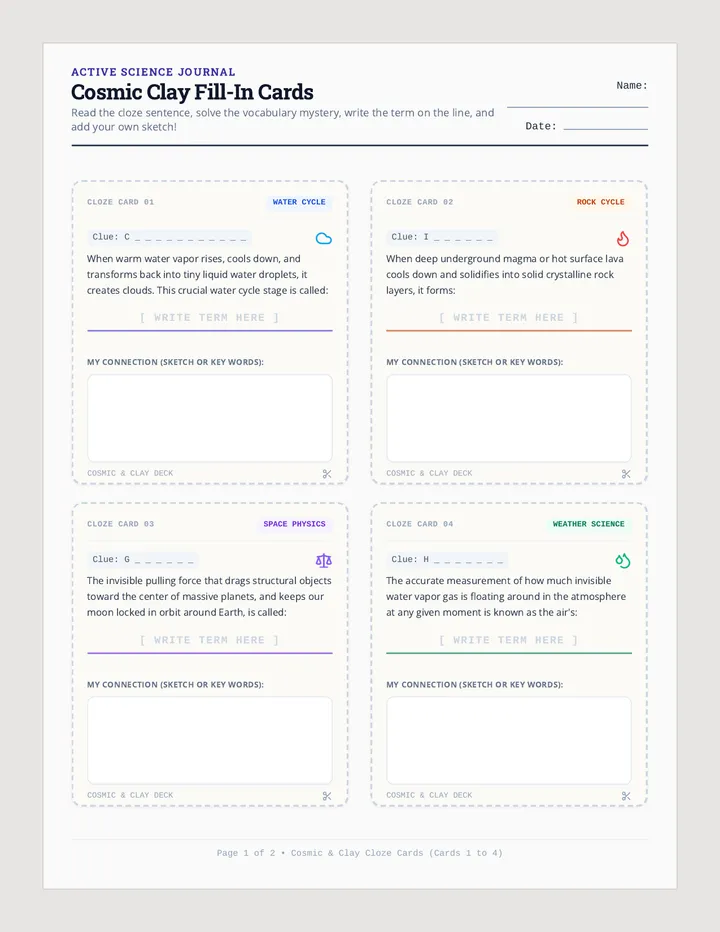
In this lesson, students dive into the water cycle while mastering RI.3.1 by asking and answering 'How' and 'Why' questions. They will explore the continuous journey of water through reading and evidence-based inquiry.
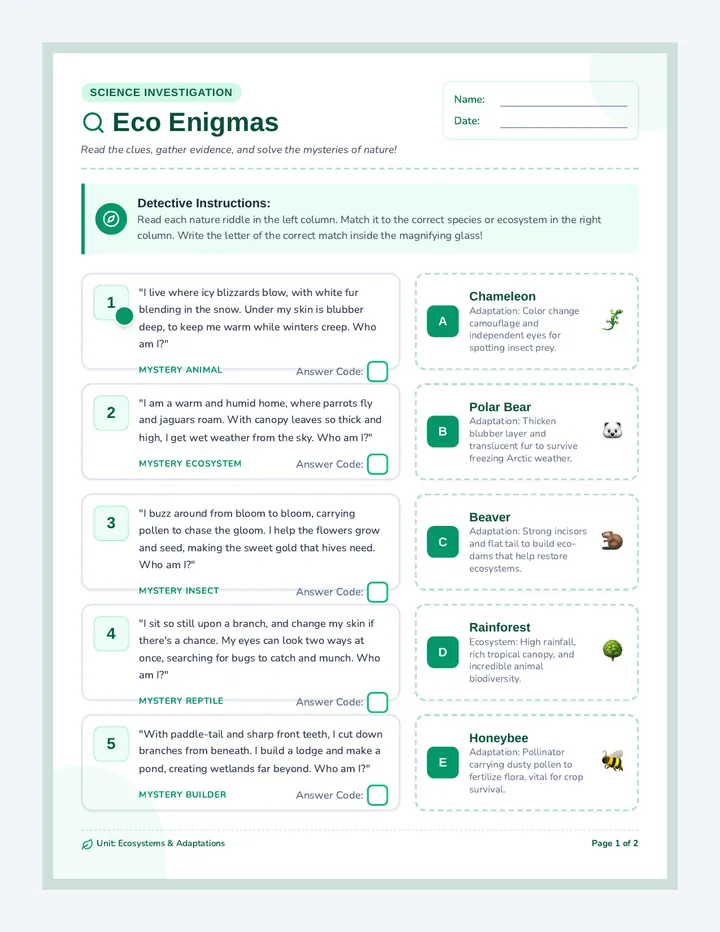
Students explore five major world habitats—Forest, Ocean, Desert, Arctic, and Rainforest—identifying key characteristics and the animals that call them home through visual presentation and hands-on sorting activities.
A creative project where students design and build a 3D biome model in a box, then document their scientific findings.
A lesson focused on the Anglerfish and its bioluminescent trap, designed for early elementary students with IEP supports. Students will learn about deep-sea adaptations through a simple reading passage and structured comprehension activities.
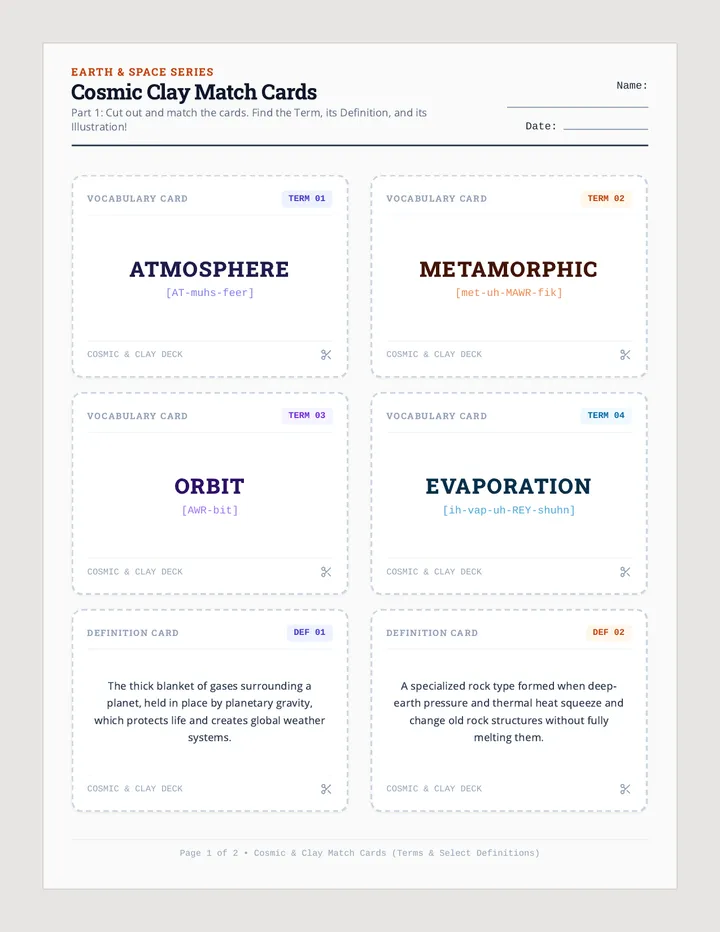
Students explore the essential methods of purifying water through hands-on experimentation. They will learn the roles of physical filtration and phase changes (evaporation) in removing contaminants from water samples.
A lesson exploring the continuous movement of water on Earth through a detailed diagram of the water cycle, focusing on the roles of energy and gravity.
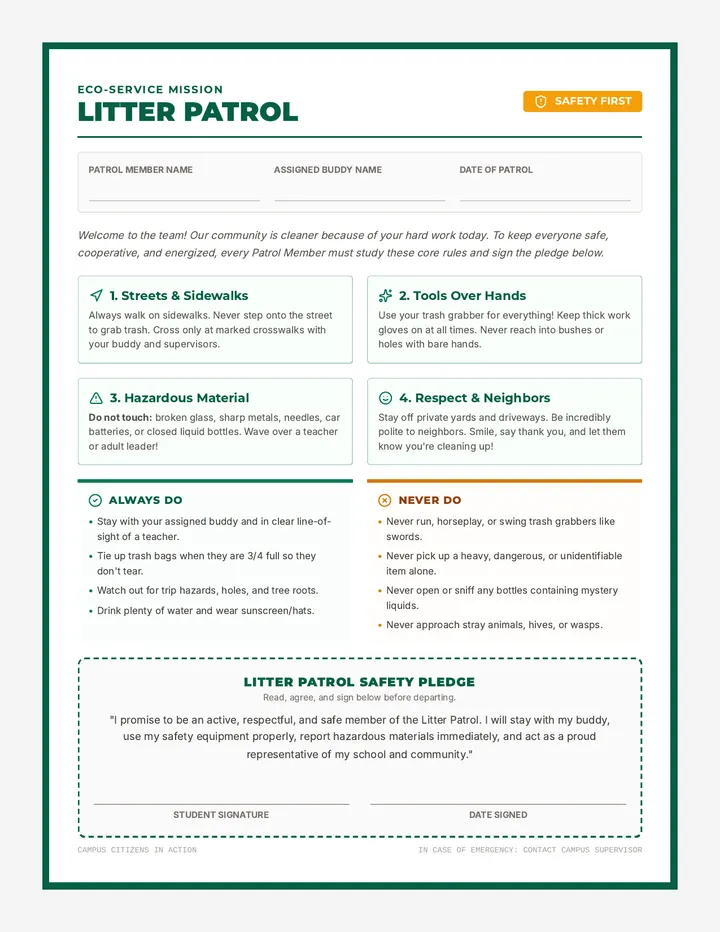
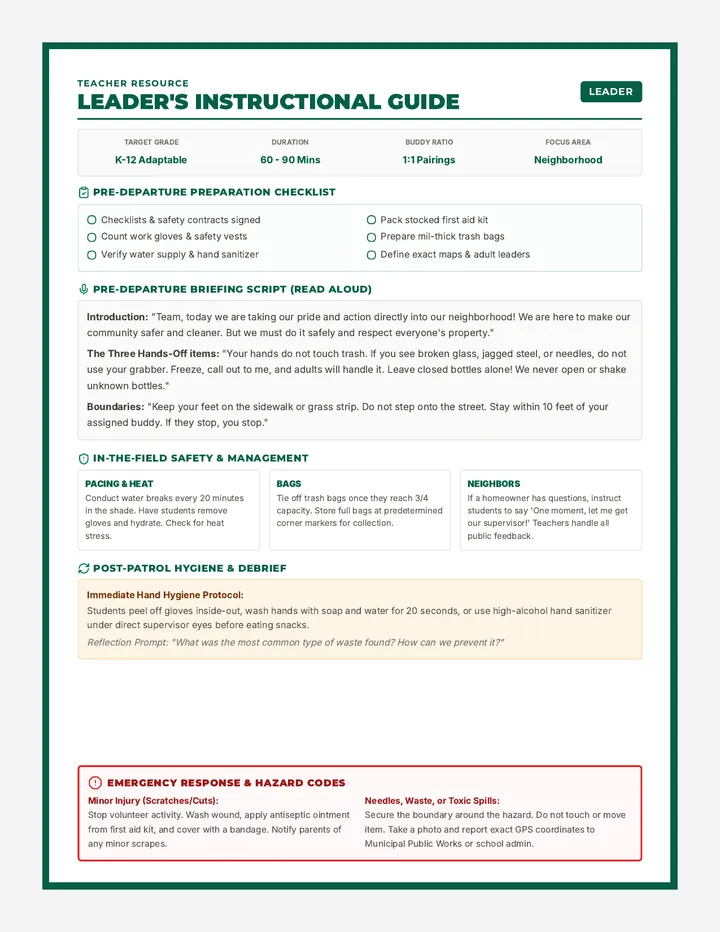
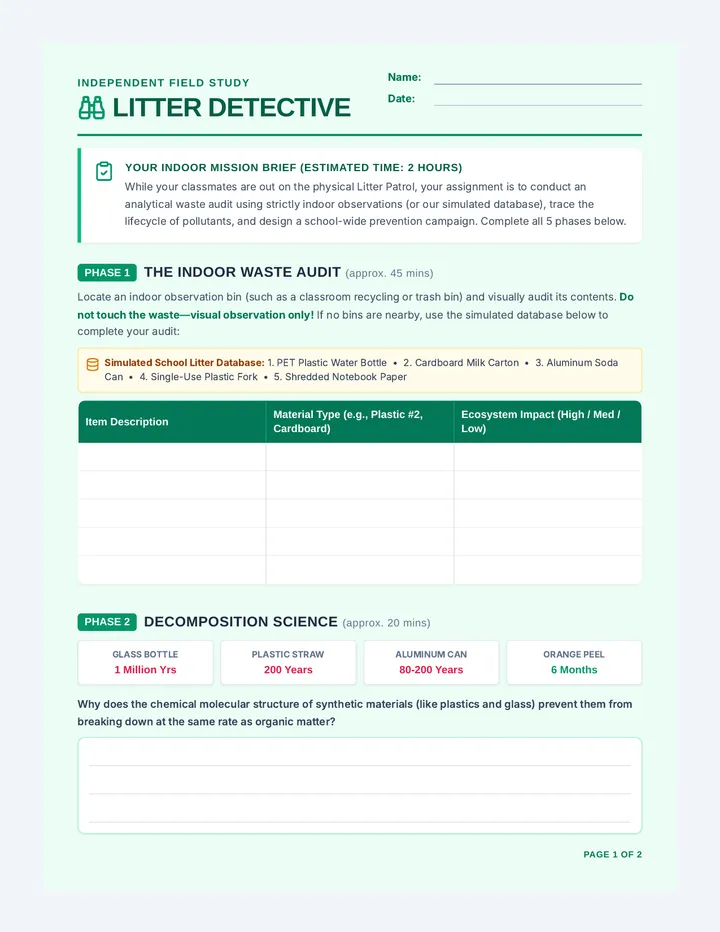
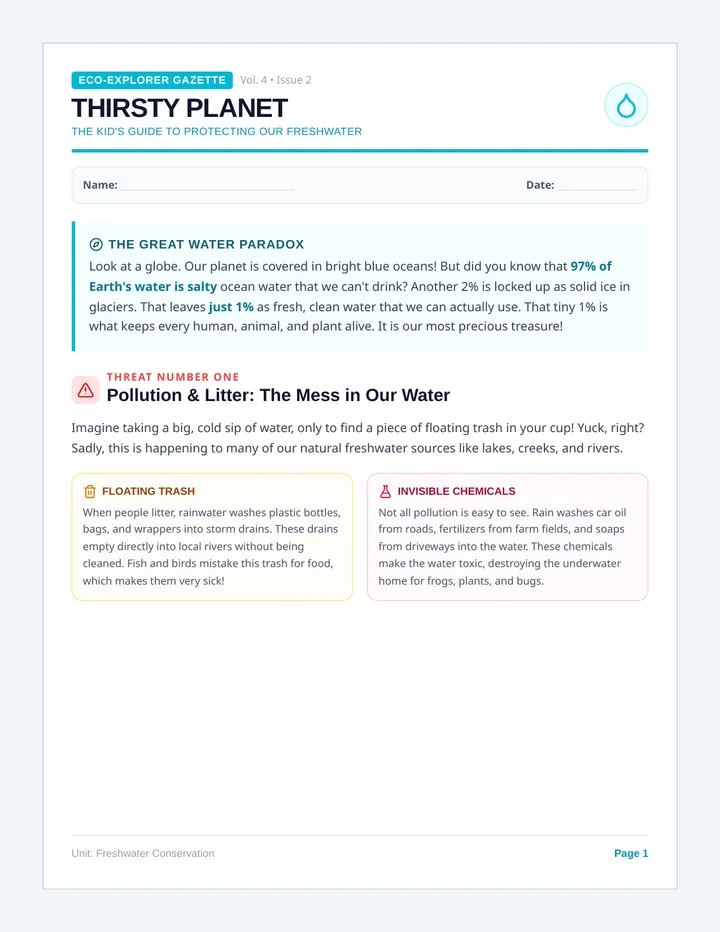
An introductory lesson on waste management and recycling where students practice sorting materials and learning key environmental vocabulary.
A fun, differentiated Earth Day celebration for 2nd-4th graders and life skills students, featuring hands-on missions to protect the planet after a week of testing.
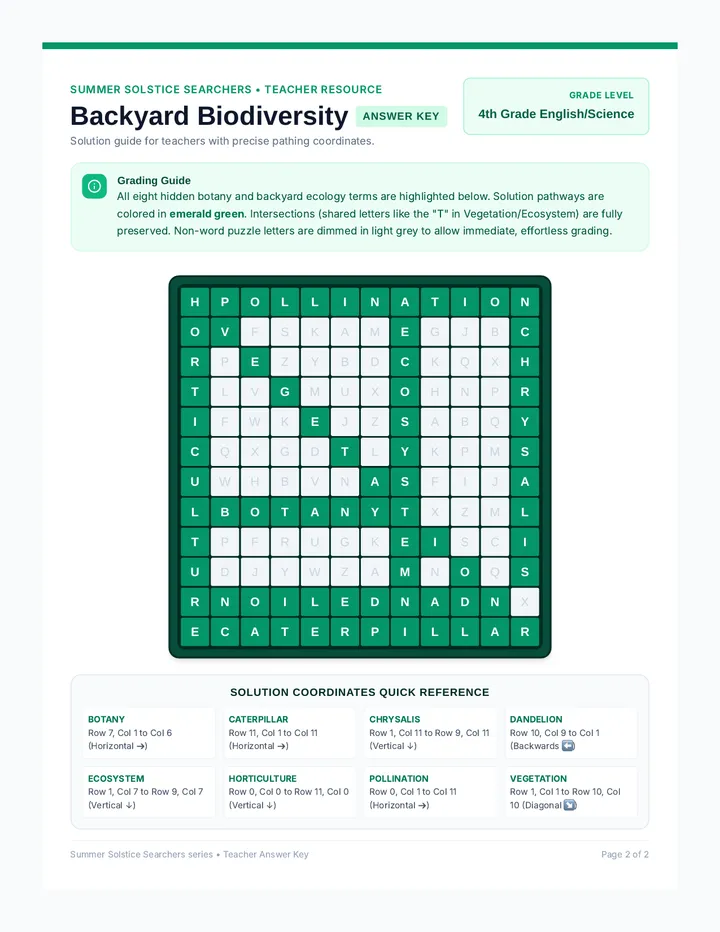
Students apply their scientific and mathematical knowledge to create either a Community Garden Design or a Garden Business Plan, culminating in a formal presentation.
Students explore plant life cycles and photosynthesis while practicing multi-step multiplication and division problems related to gardening logistics and plant needs.
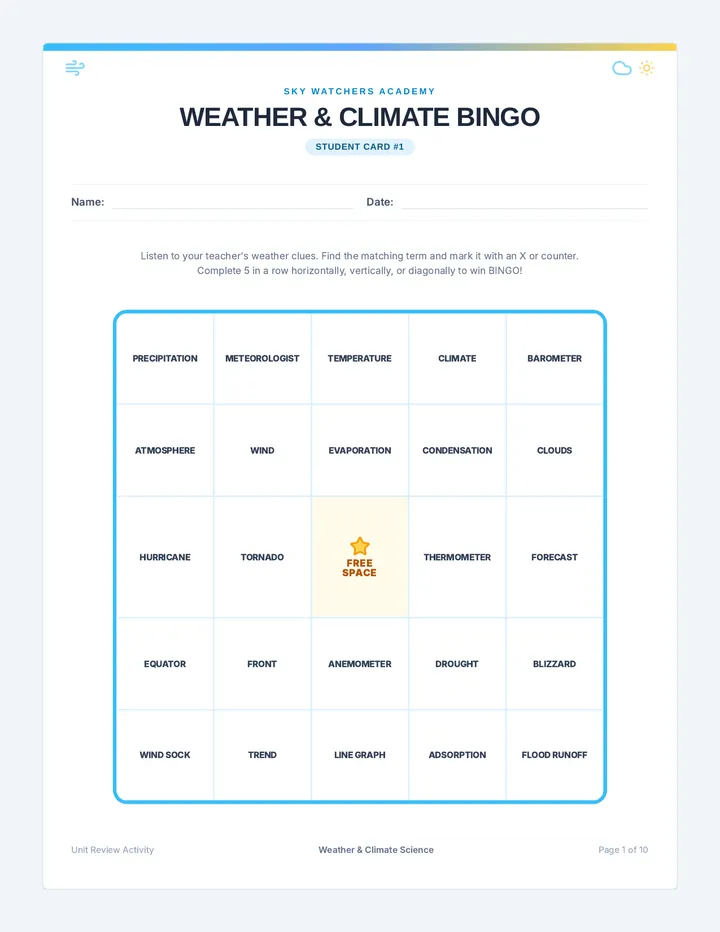
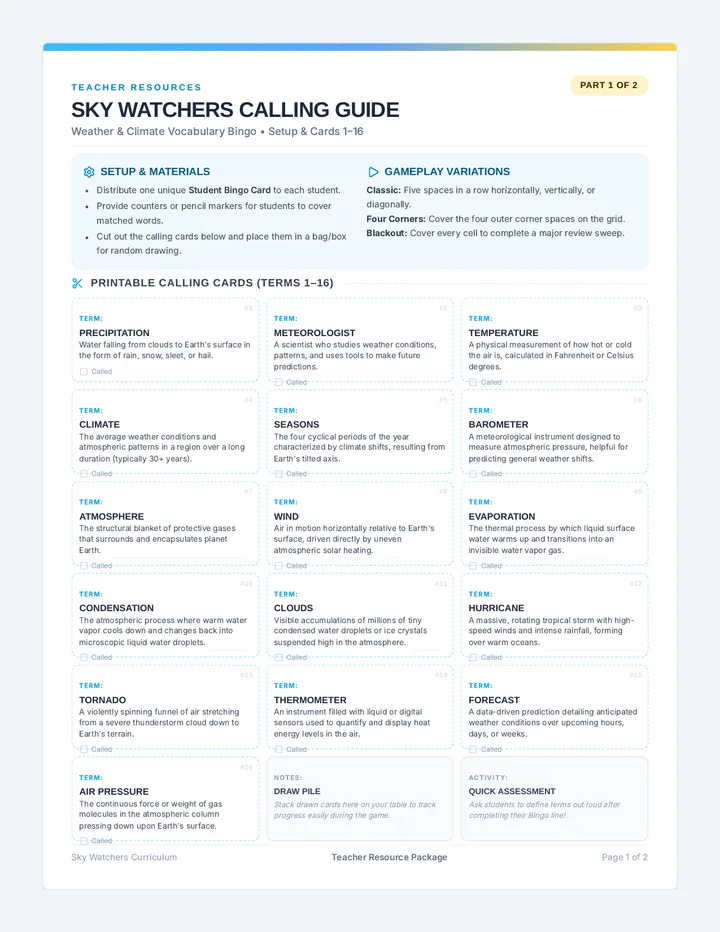
A foundational exploration of climate, weather, and the powerful ocean currents that shape our world's temperatures, specifically focusing on the equator and the El Niño phenomenon.
This lesson introduces students to producers, consumers, and decomposers, focusing on the direction of energy flow in food chains and the complexity of food webs. Students will participate in station-based activities to simulate ecosystem dynamics and analyze the impact of species removal.
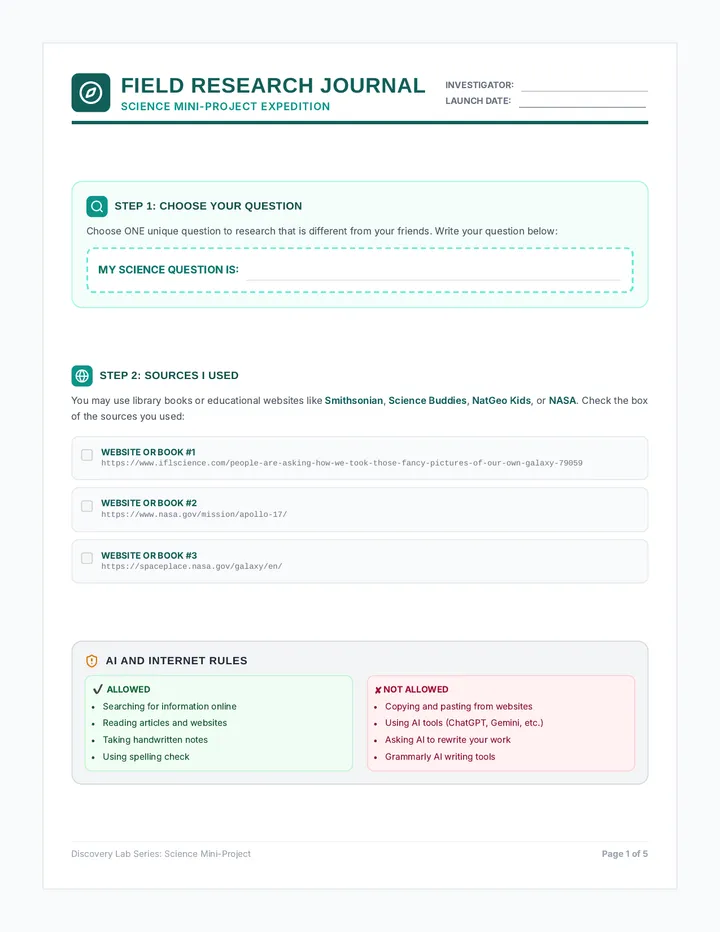
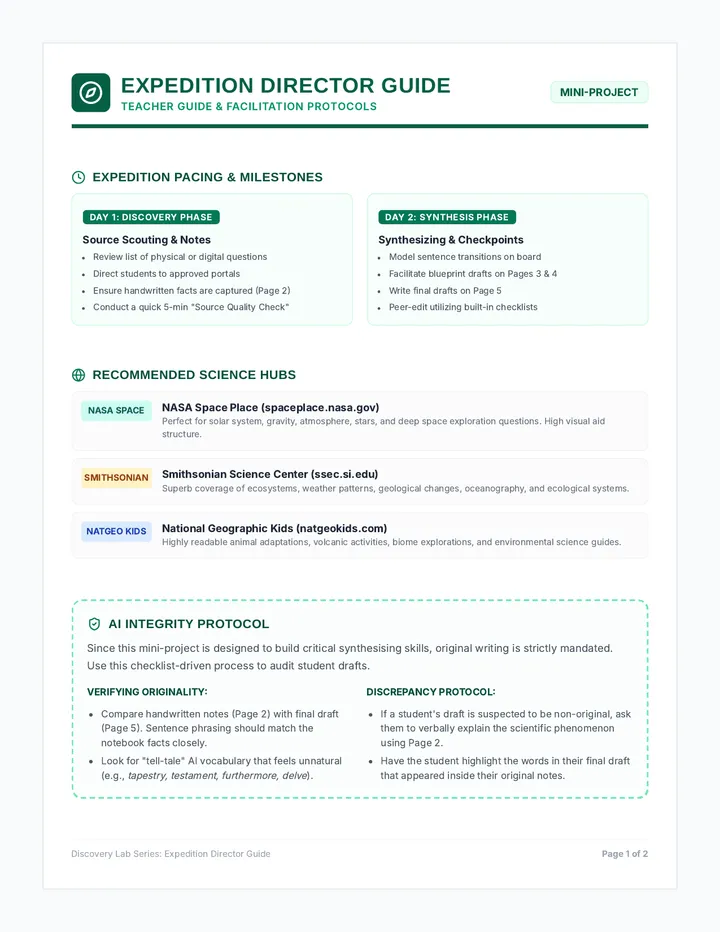
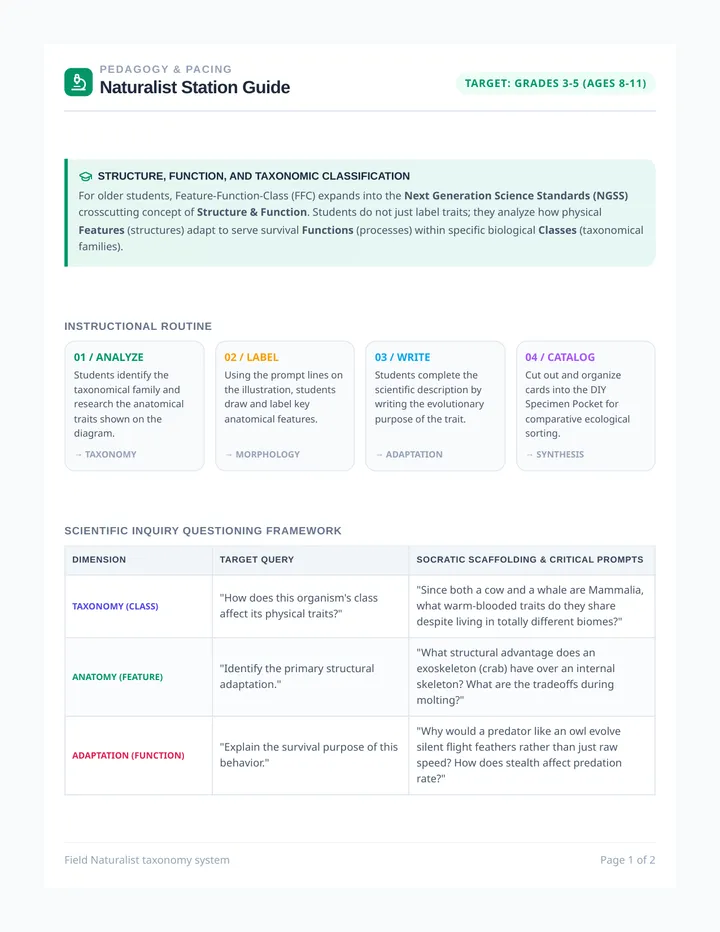
A research-focused lesson where students step into the shoes of a wildlife biologist to document the physical traits, habitats, and behaviors of a mammal of their choice.
A lesson focused on simple, actionable steps students can take to reduce energy consumption at home and school.
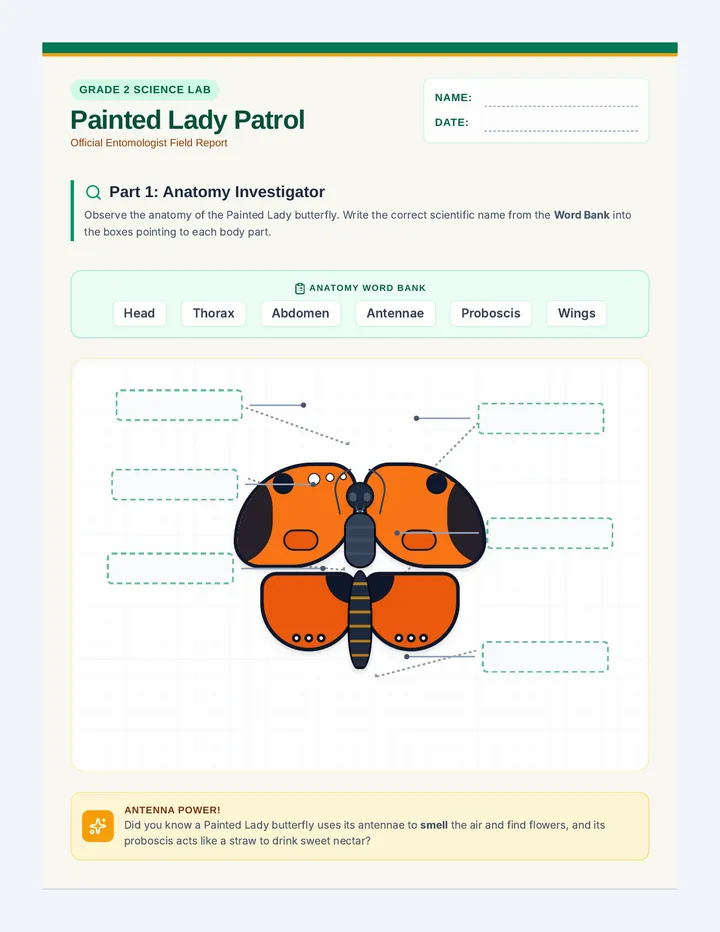
A beginner-friendly exploration of the four stages of a butterfly's life cycle, featuring a reading passage and comprehension activities focused on sequencing and Wh- questions.
An in-depth exploration of diverse mammals, focusing on informational text features, main ideas, and vocabulary acquisition through a comprehensive field guide and activity set.
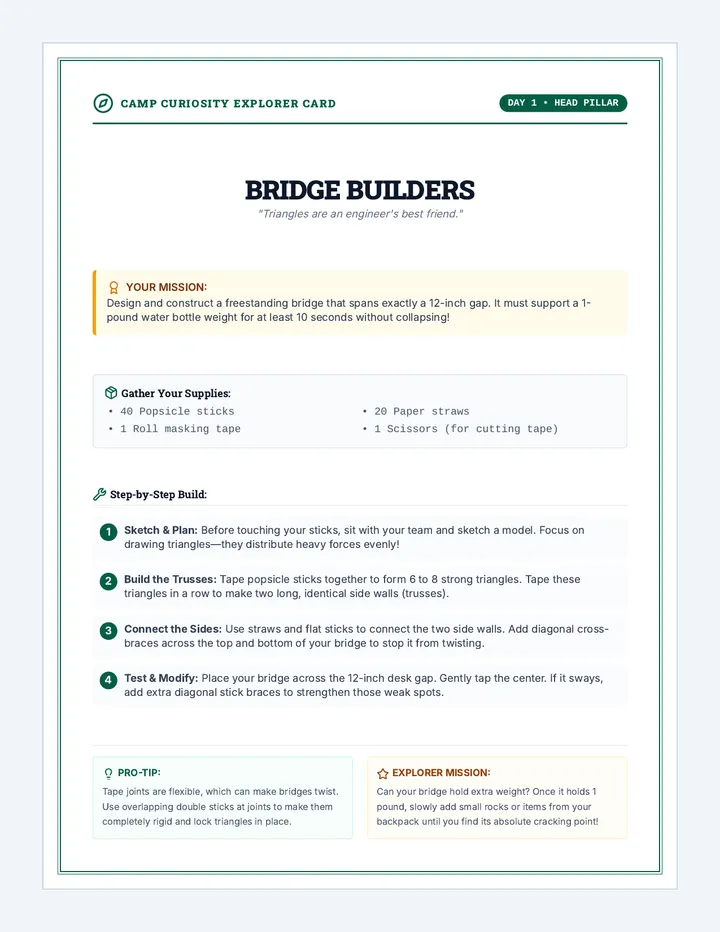
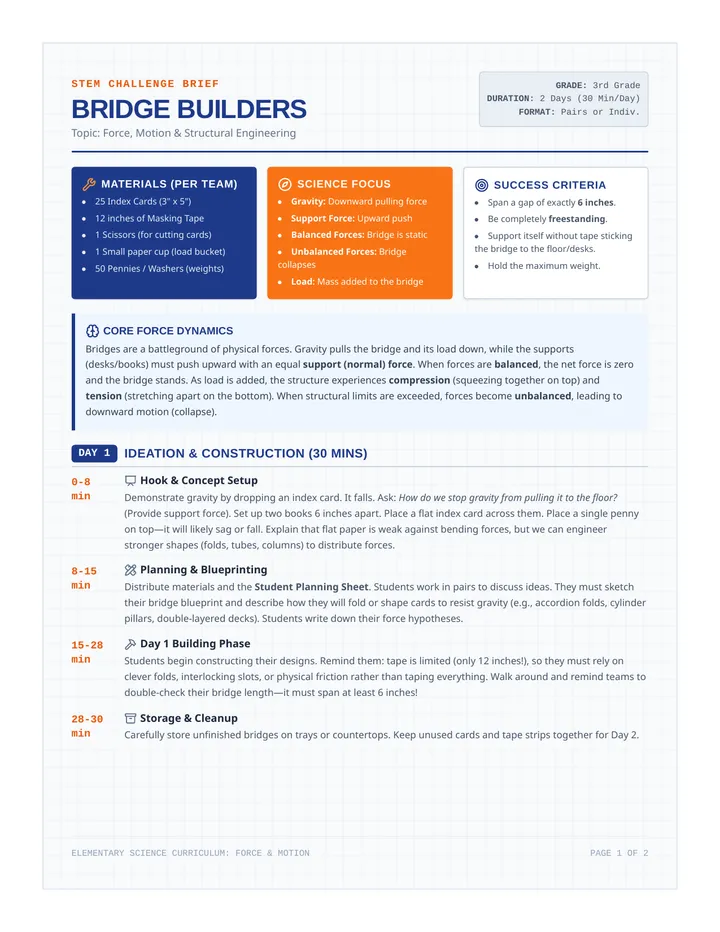
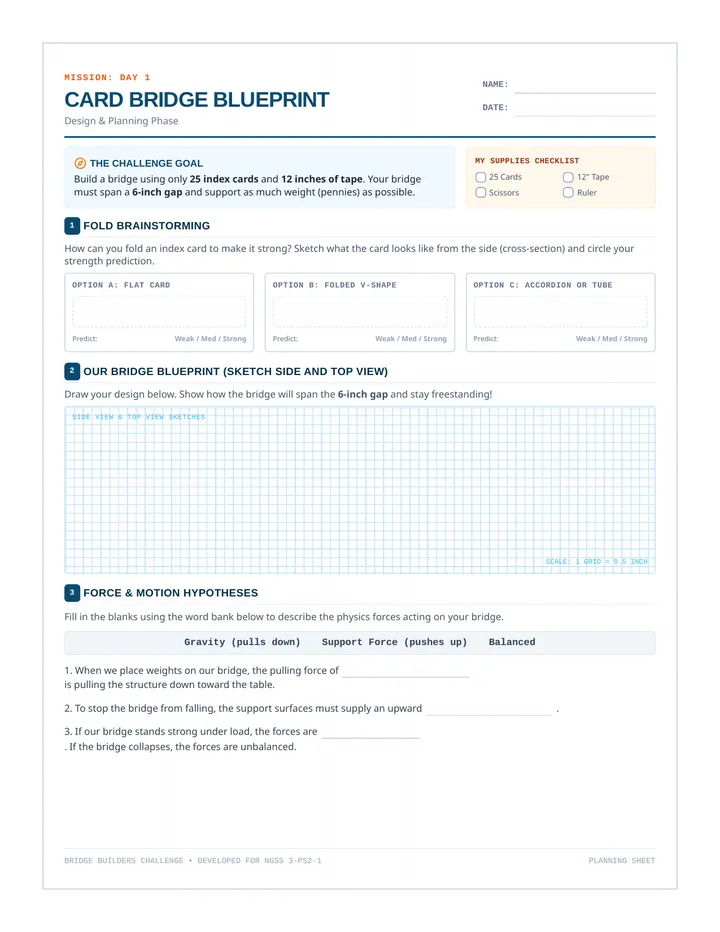
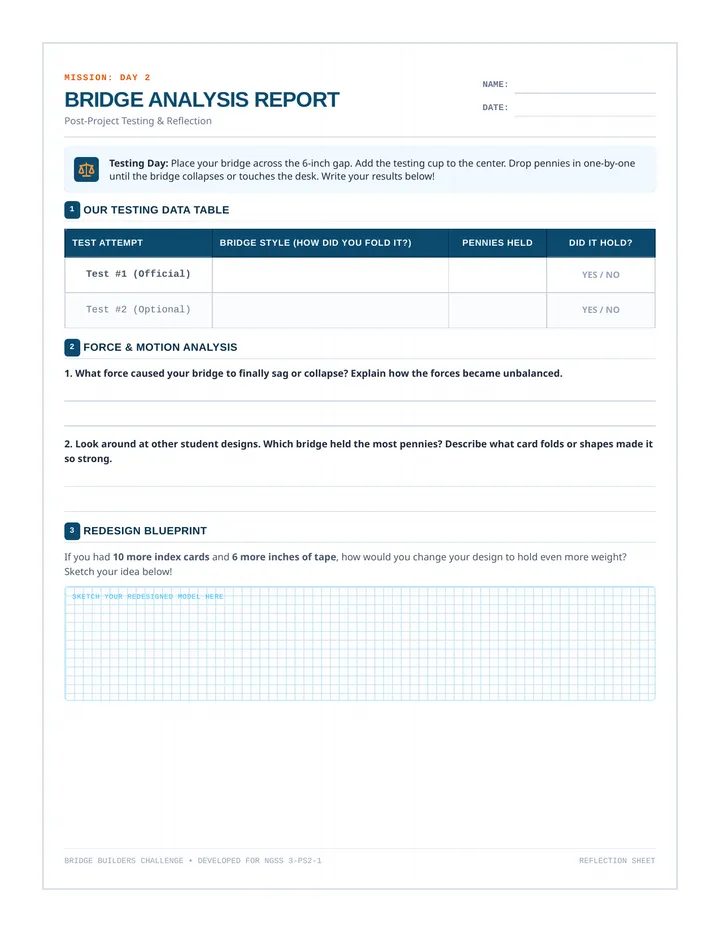
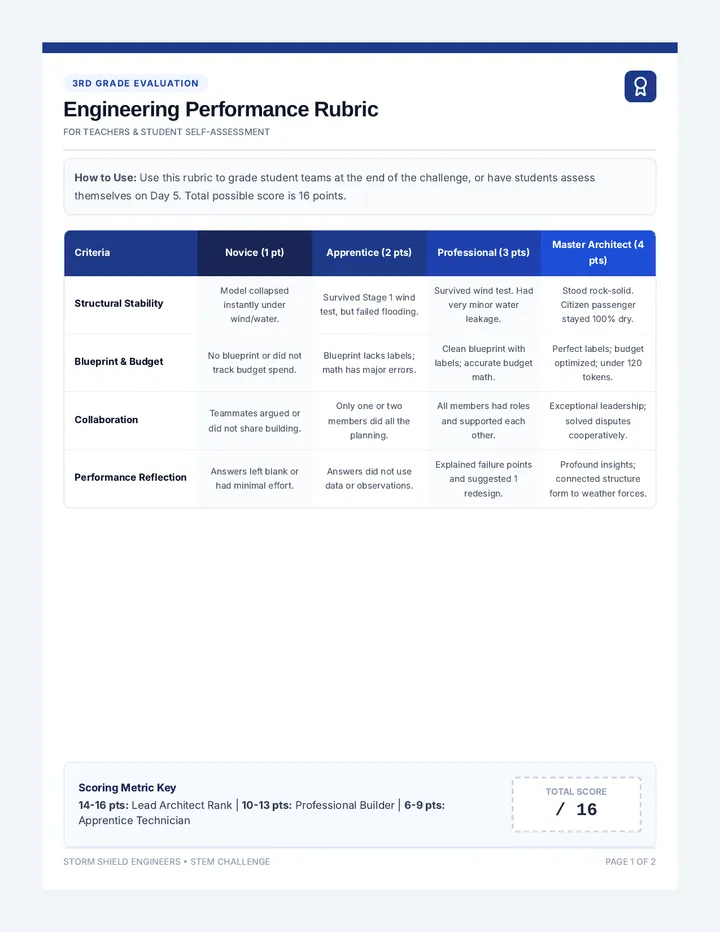
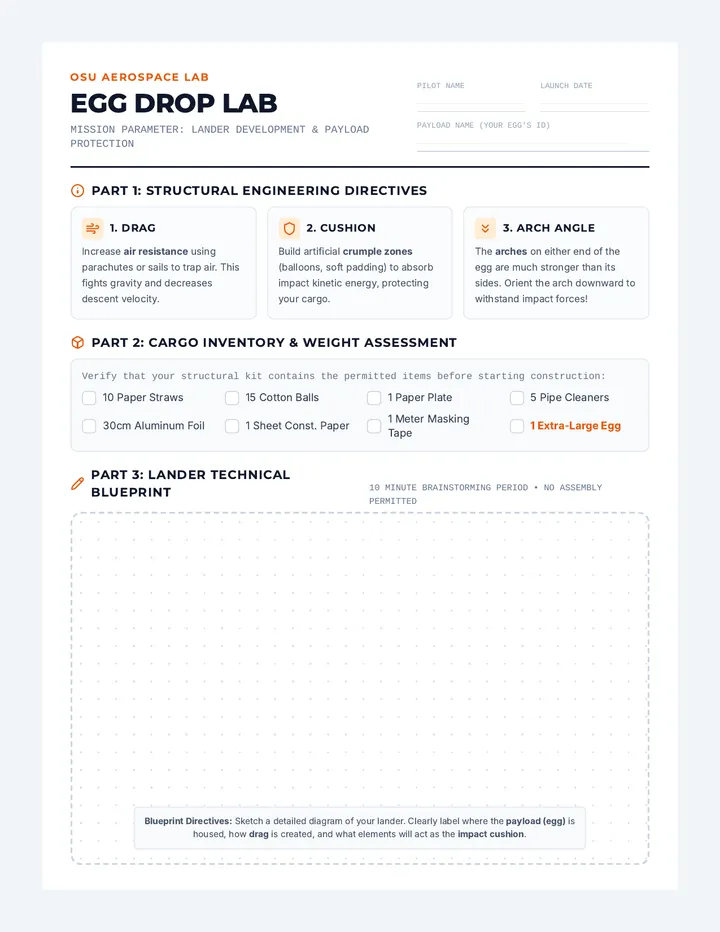
A high-energy 2nd-grade STEM challenge where students use classroom bin materials to design and build the ultimate summer island resort. This lesson focuses on engineering design, problem-solving, and creative thinking.
A lesson on identifying and forming plural nouns. Students learn the standard rules for regular plurals (-s, -es, -ies, -ves) and investigate 'rule-breaking' irregular nouns like mice, children, and people.
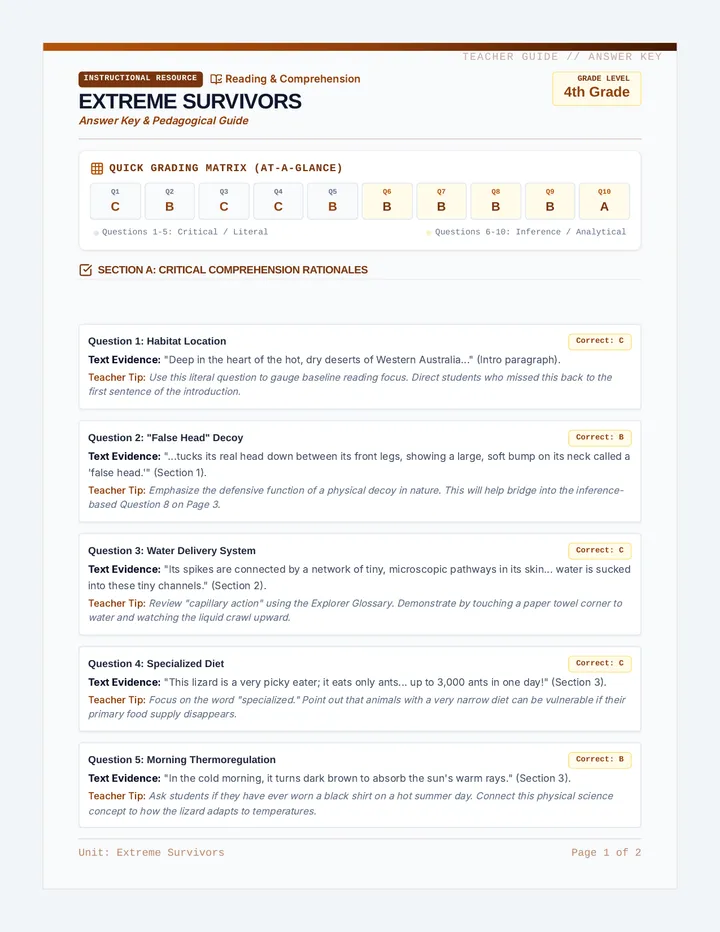
A reading comprehension-focused lesson for Earth Day, designed for upper elementary students in a resource classroom. Students will explore the history of Earth Day and identify ways they can contribute to environmental conservation through an informational passage and guided discussion.
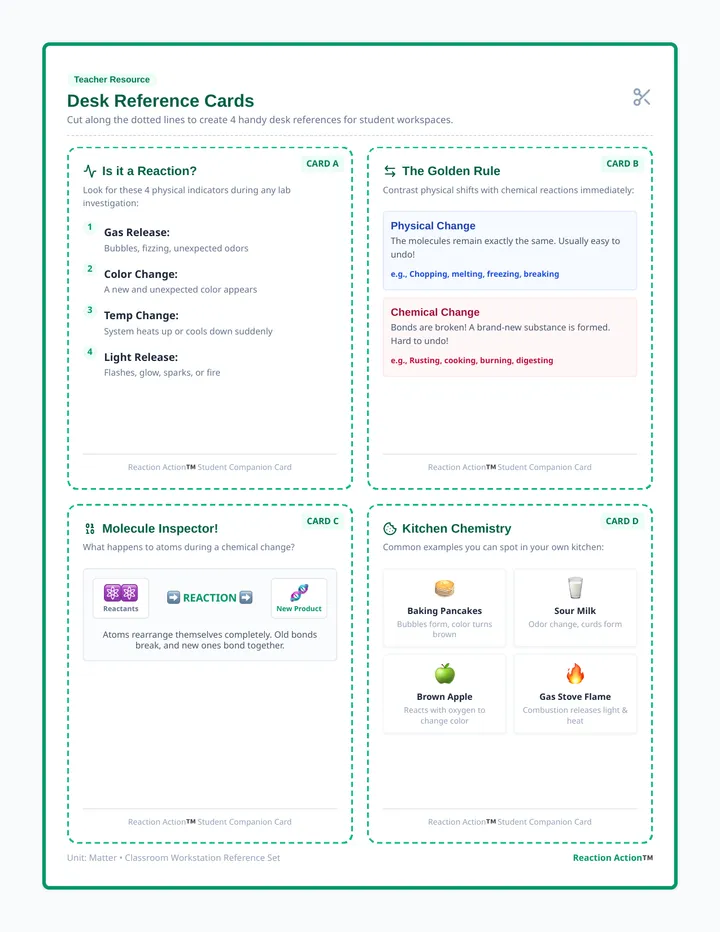
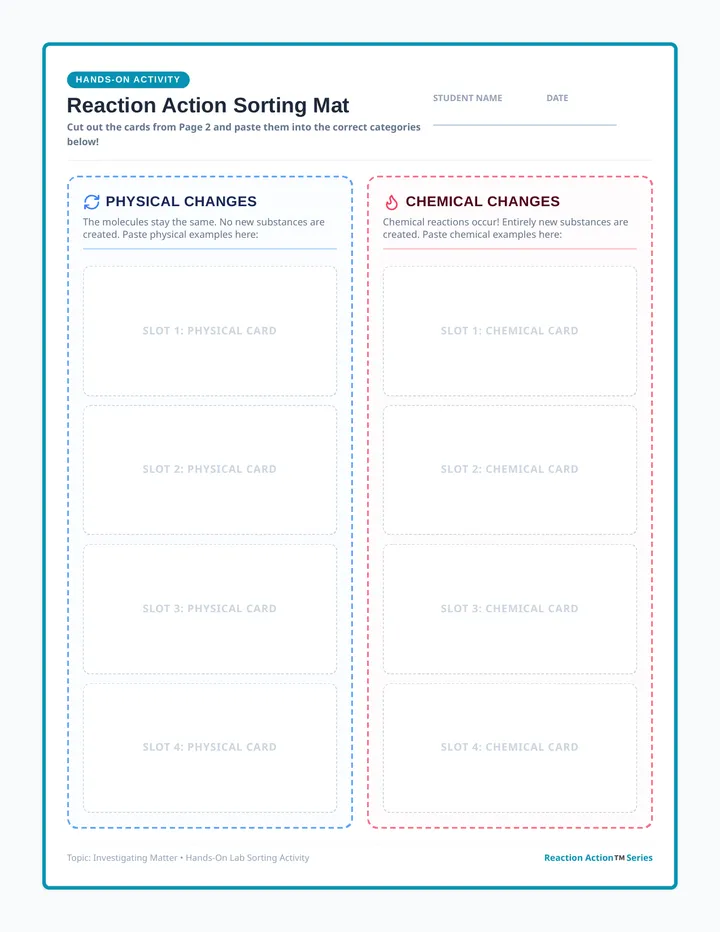
A hands-on exploration of the three primary states of matter through interactive lab stations, concluding with a comprehensive assessment.
A comprehensive set of practice materials for the ILEARN assessment focusing on vowel and consonant patterns (CVC, CCVC, CVCe, etc.). Includes grouped practice, a mixed test, task cards, and an answer key.
A lesson focused on mastering syllable division patterns through interactive tracking and assessment.
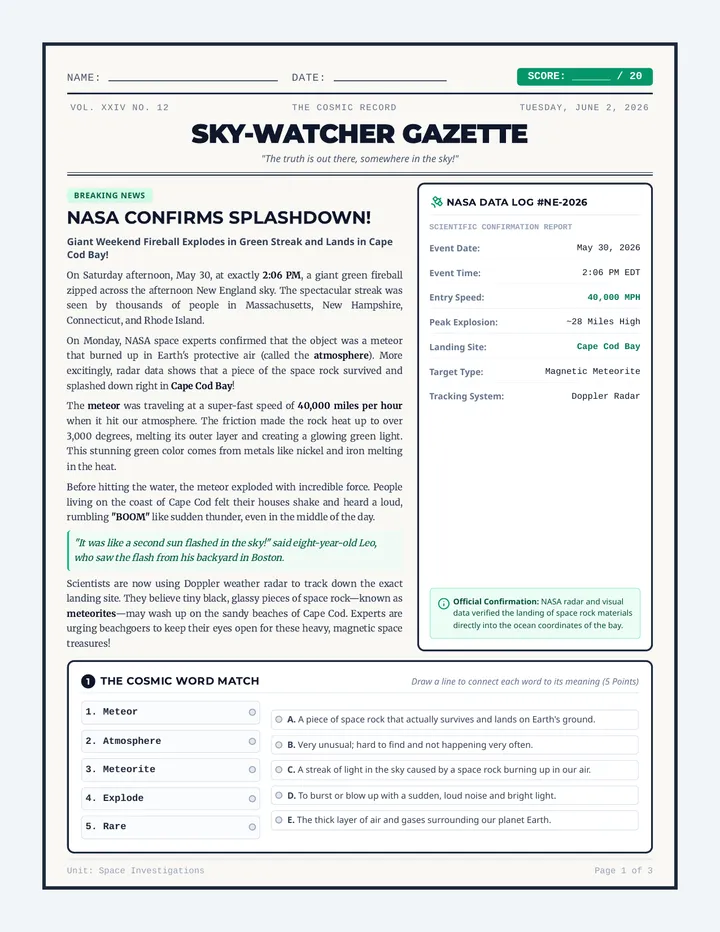
A comprehensive lesson exploring the critical role of bees in our ecosystem for Earth Day 2026, focusing on pollination, food security, and human impacts like pesticides and climate change.