An on-grade level reading and comprehension unit focusing on how extreme desert animals, specifically the Thorny Devil, utilize highly specialized physical and behavioral adaptations to survive in the arid Australian Outback.
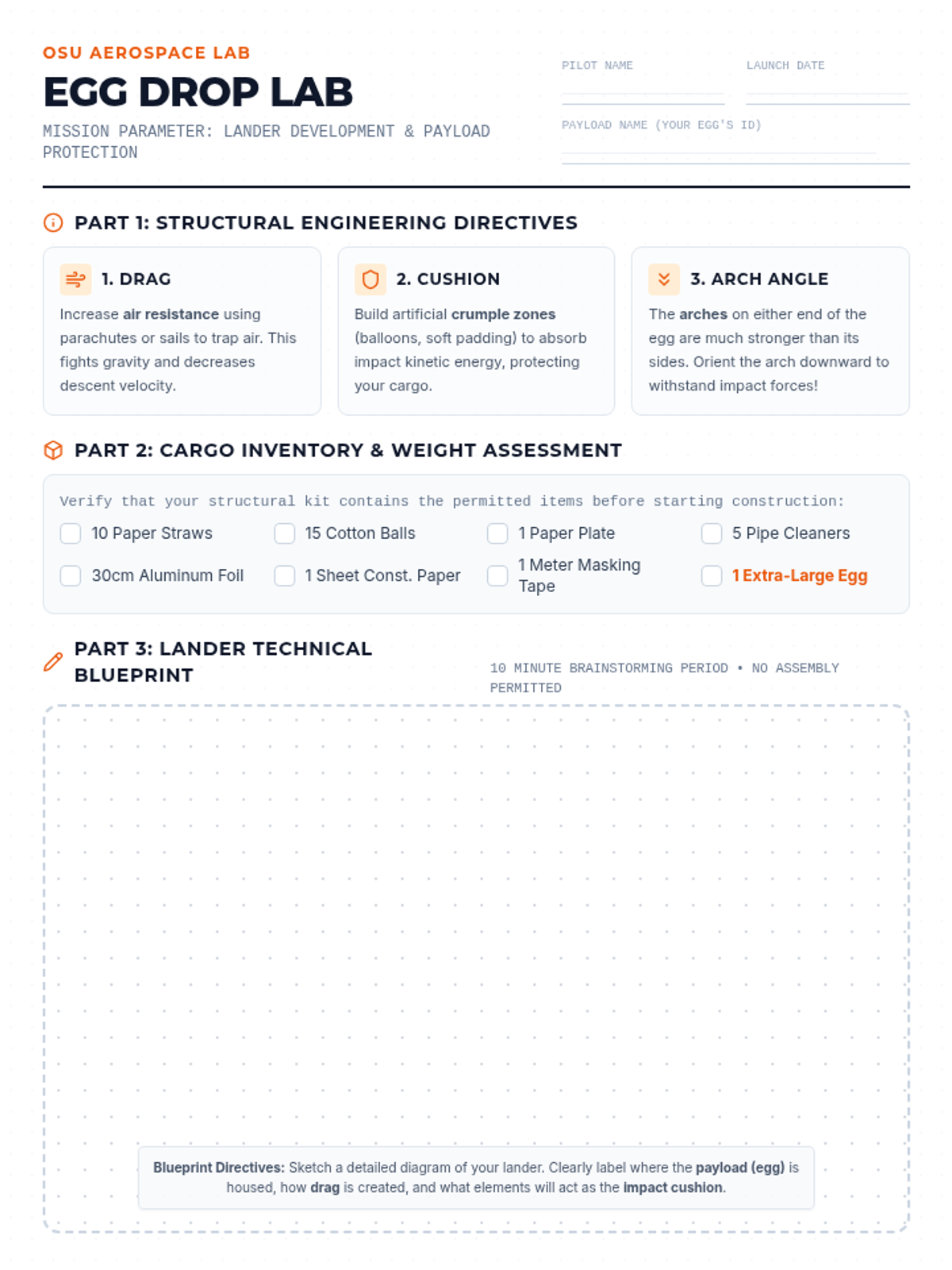
An engaging, hands-on physics and engineering lesson where students design, build, and test protective landing craft for fragile payloads (eggs), exploring forces, deceleration, and structural integrity.
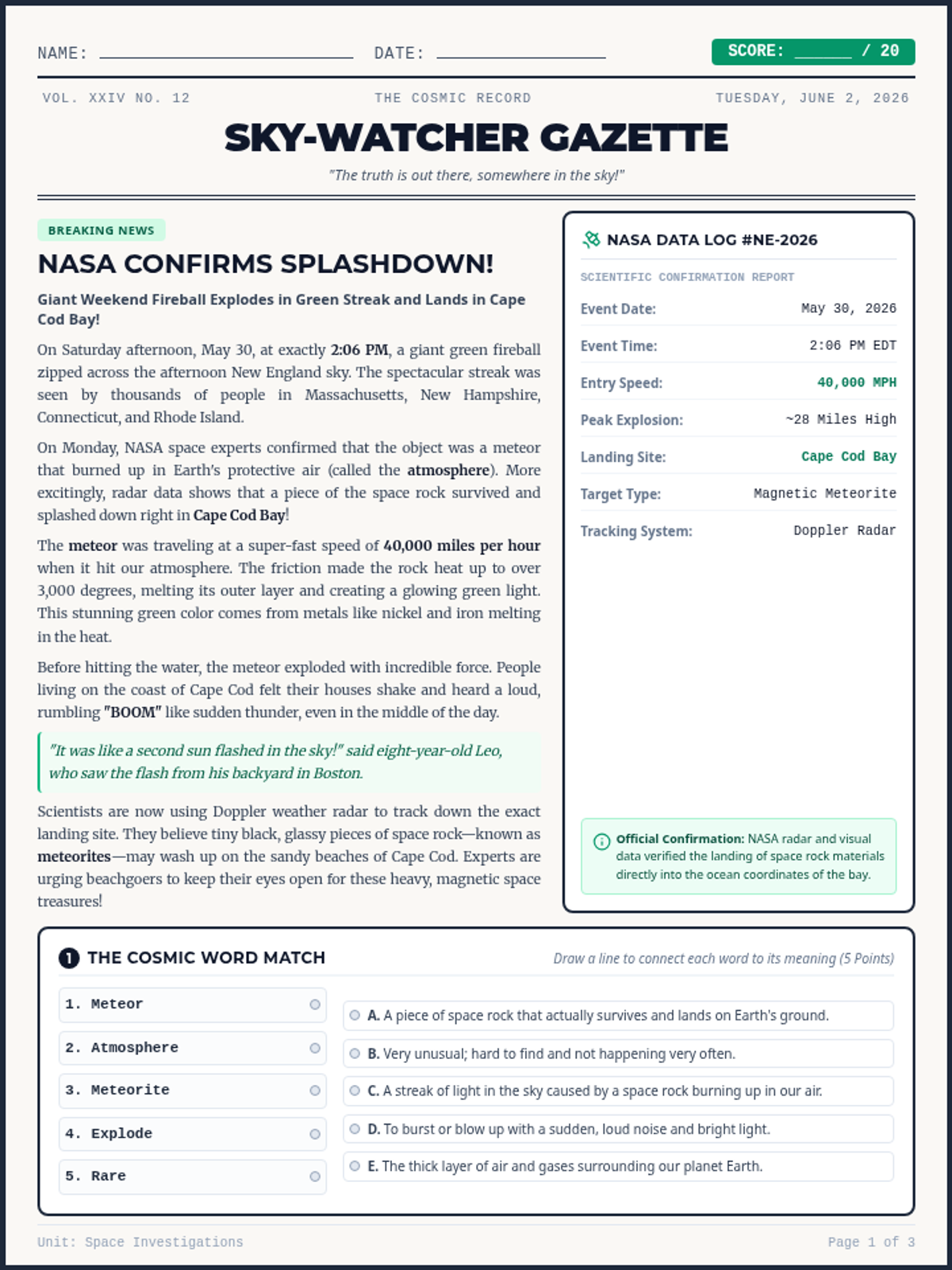
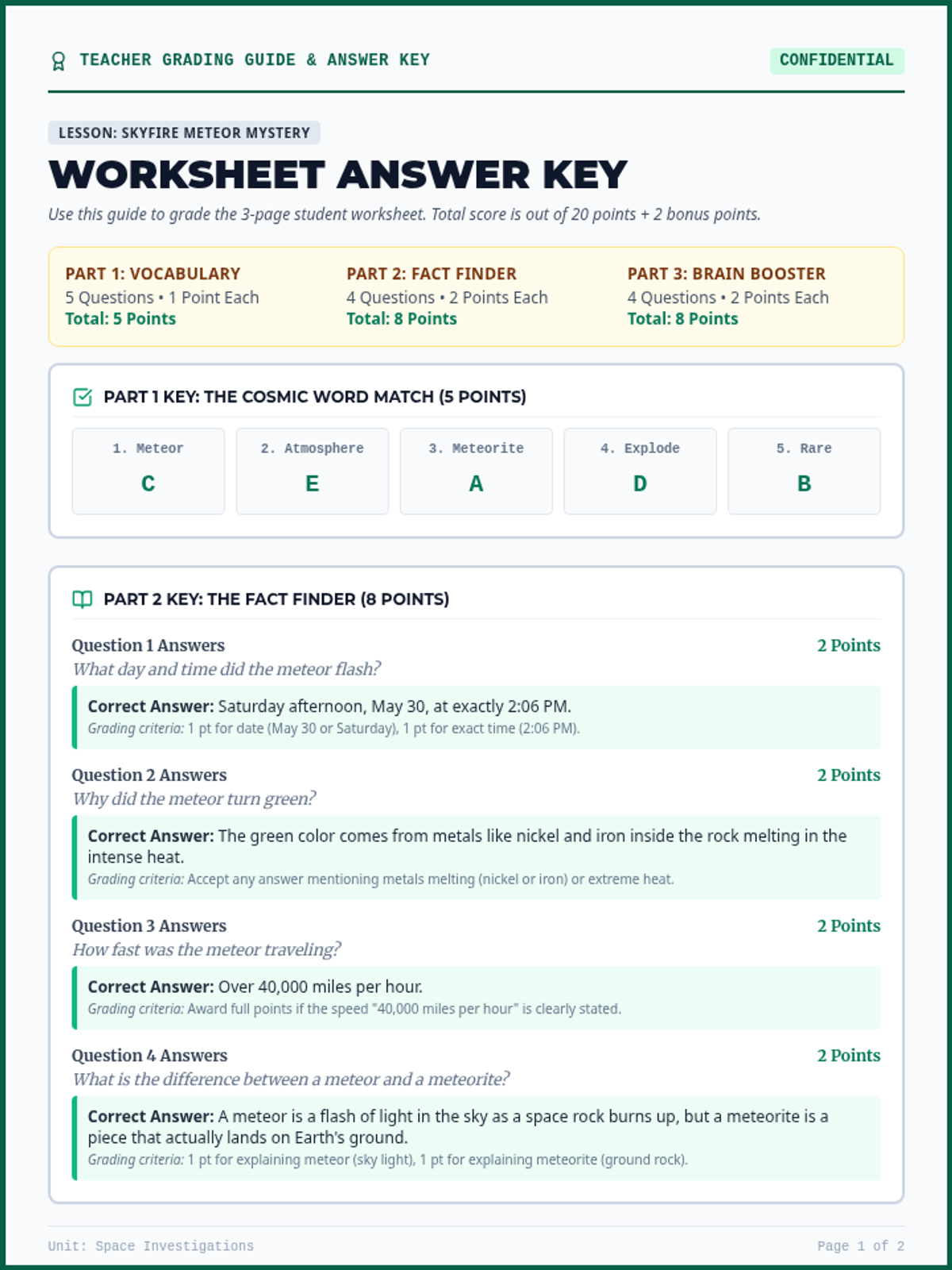
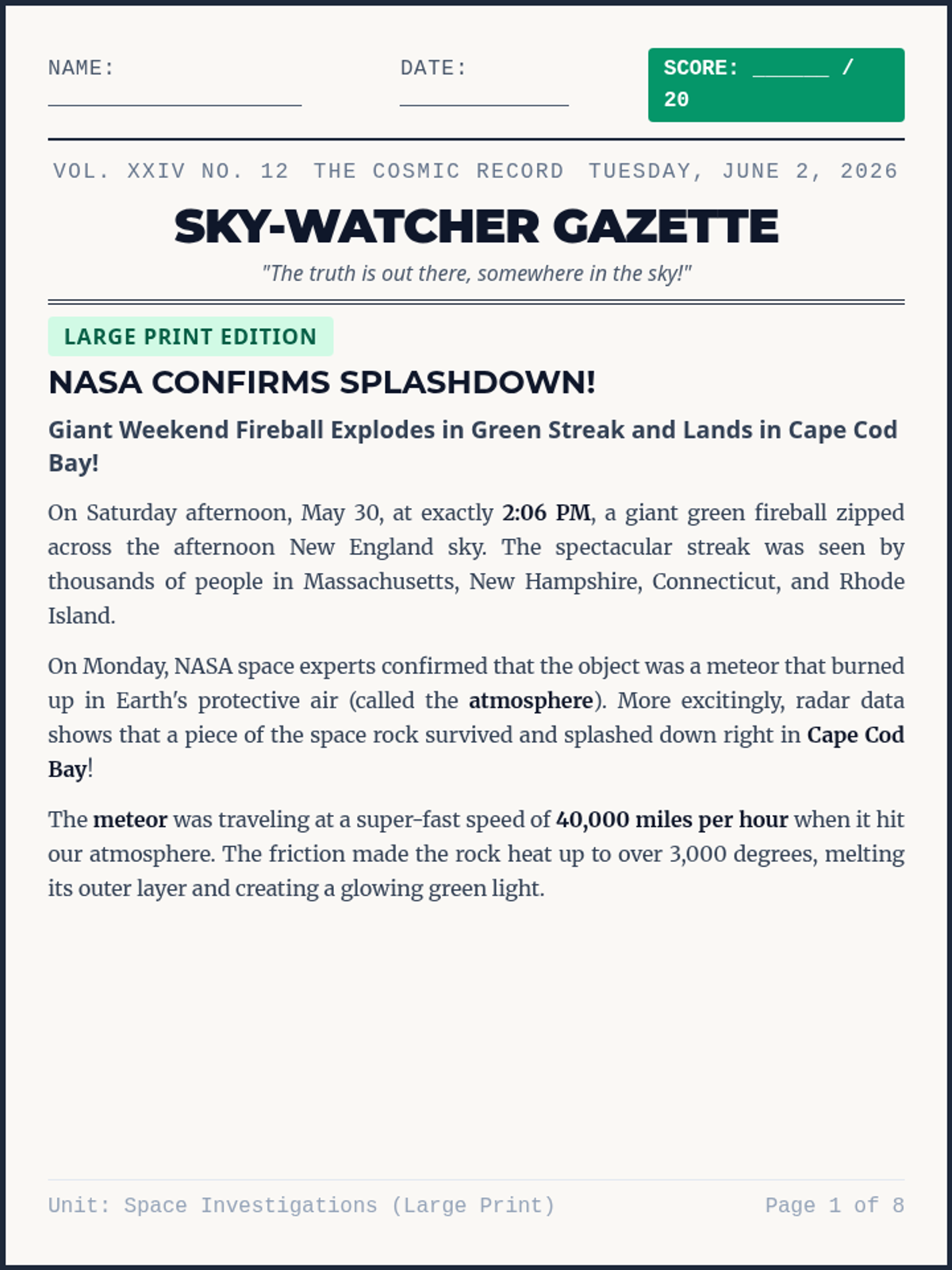
A reading comprehension lesson for 2nd and 3rd-grade students based on the spectacular meteor explosion over New England. Features engaging news-style reading, vocabulary challenges, comprehension questions, and a creative activity.
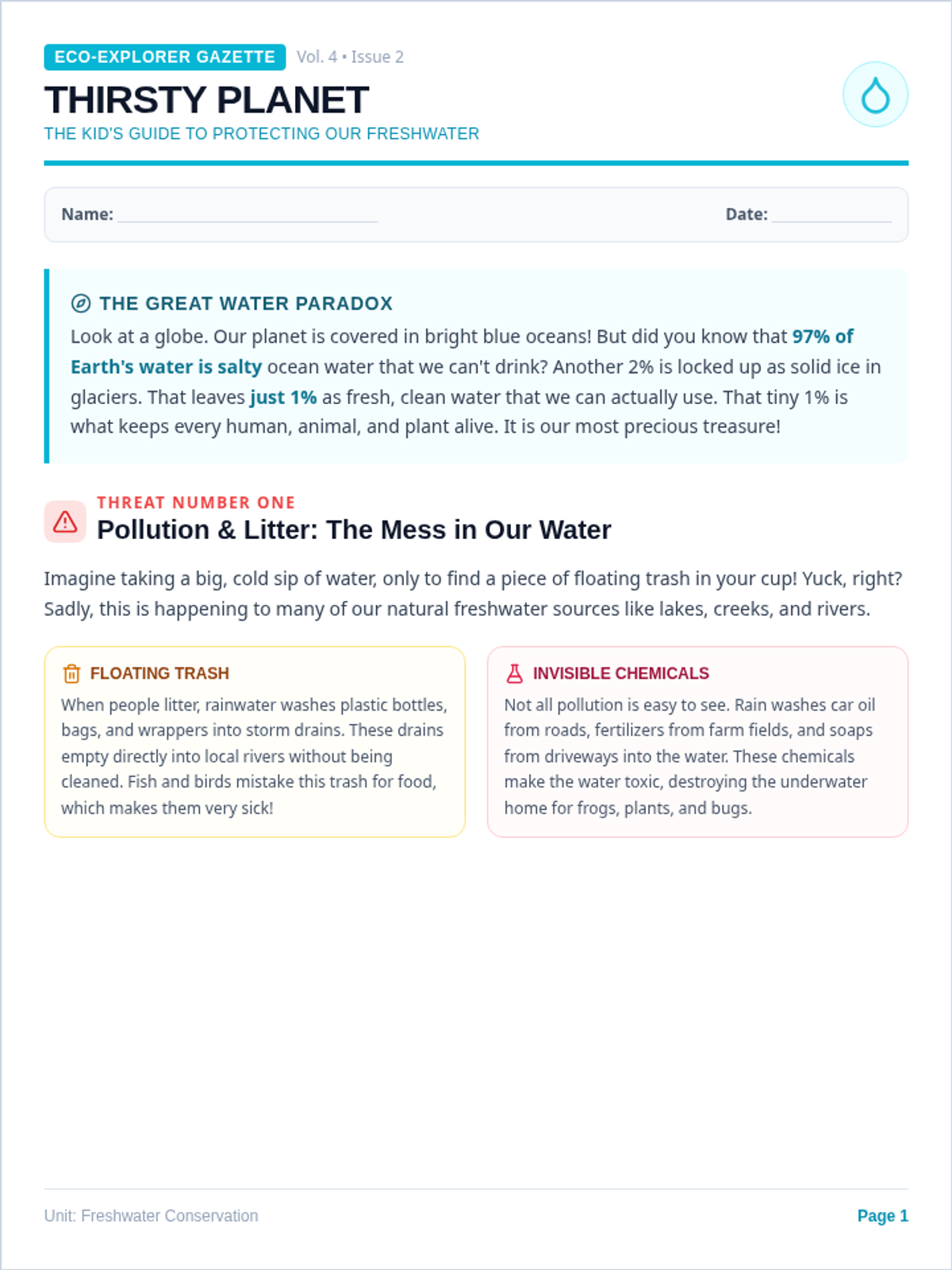
A lesson focused on understanding the primary threats to our freshwater supply, featuring an engaging, student-friendly explorer article on pollution, home water waste, droughts, and growing demand.
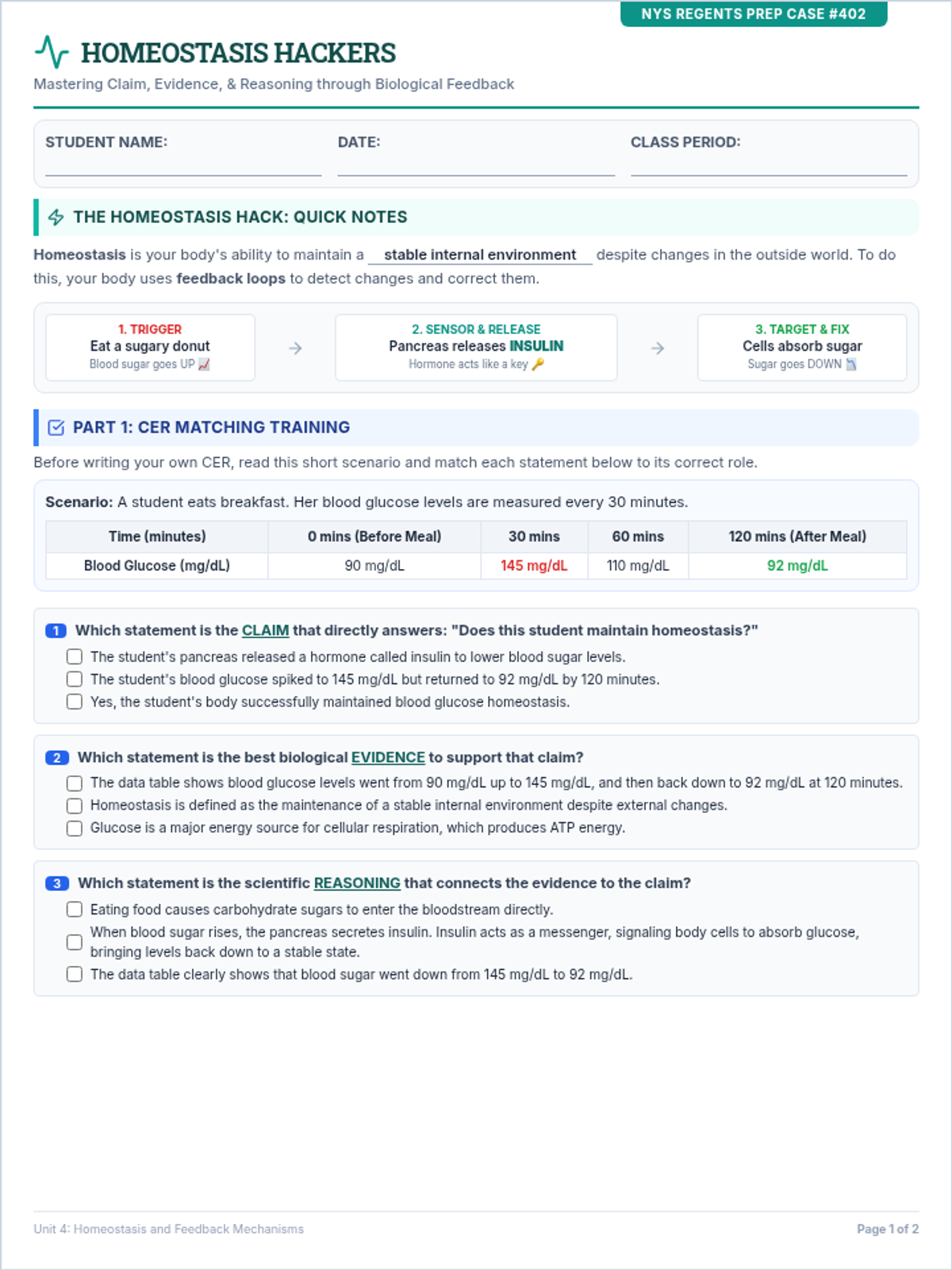
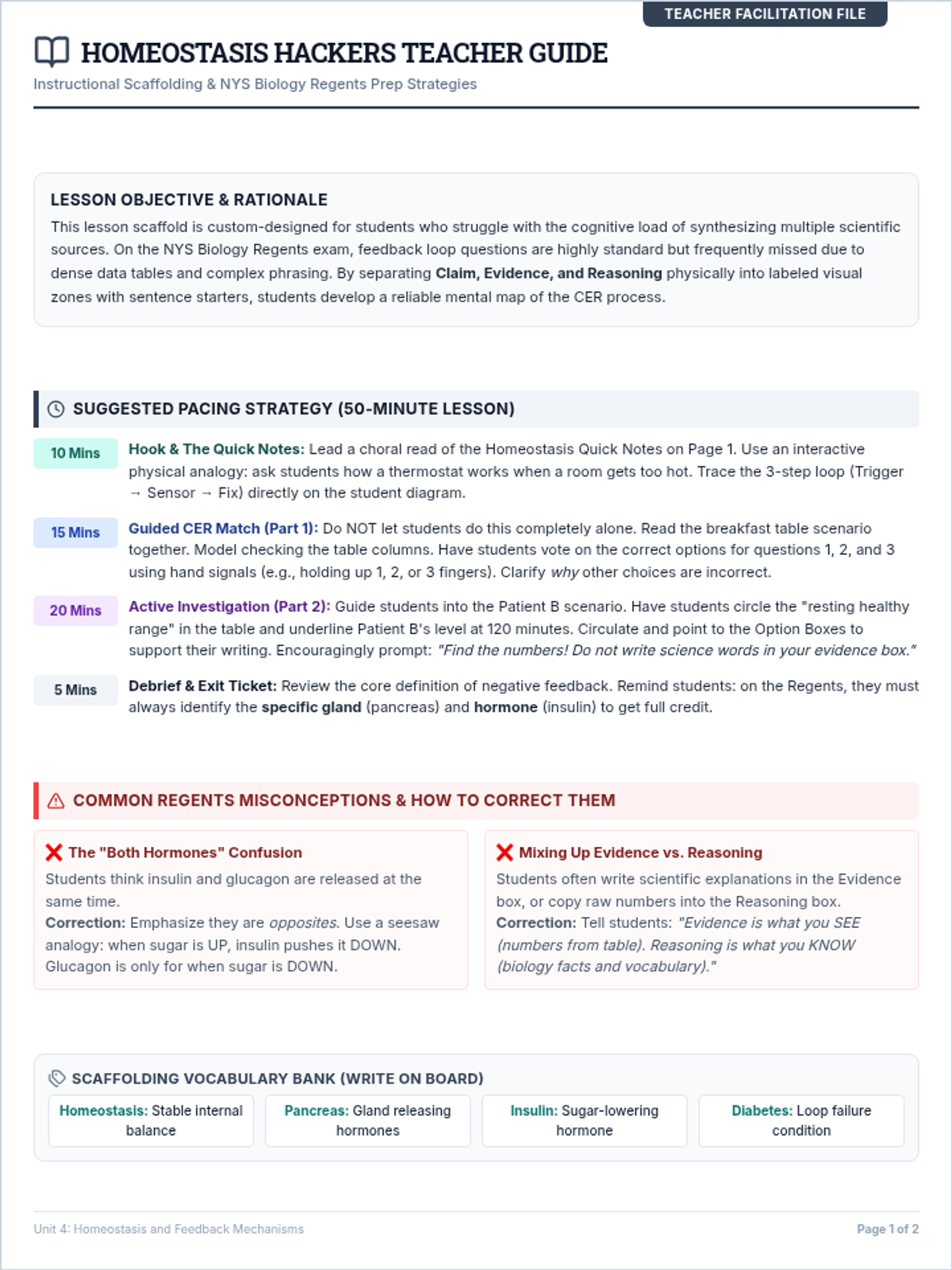
A comprehensive NYS Biology Regents preparation lesson focused on mastering the Claim-Evidence-Reasoning (CER) framework through the lens of Homeostasis and Feedback Mechanisms (specifically blood glucose regulation). Designed with heavy scaffolding, visual organizers, and multiple-choice matching for struggling learners.
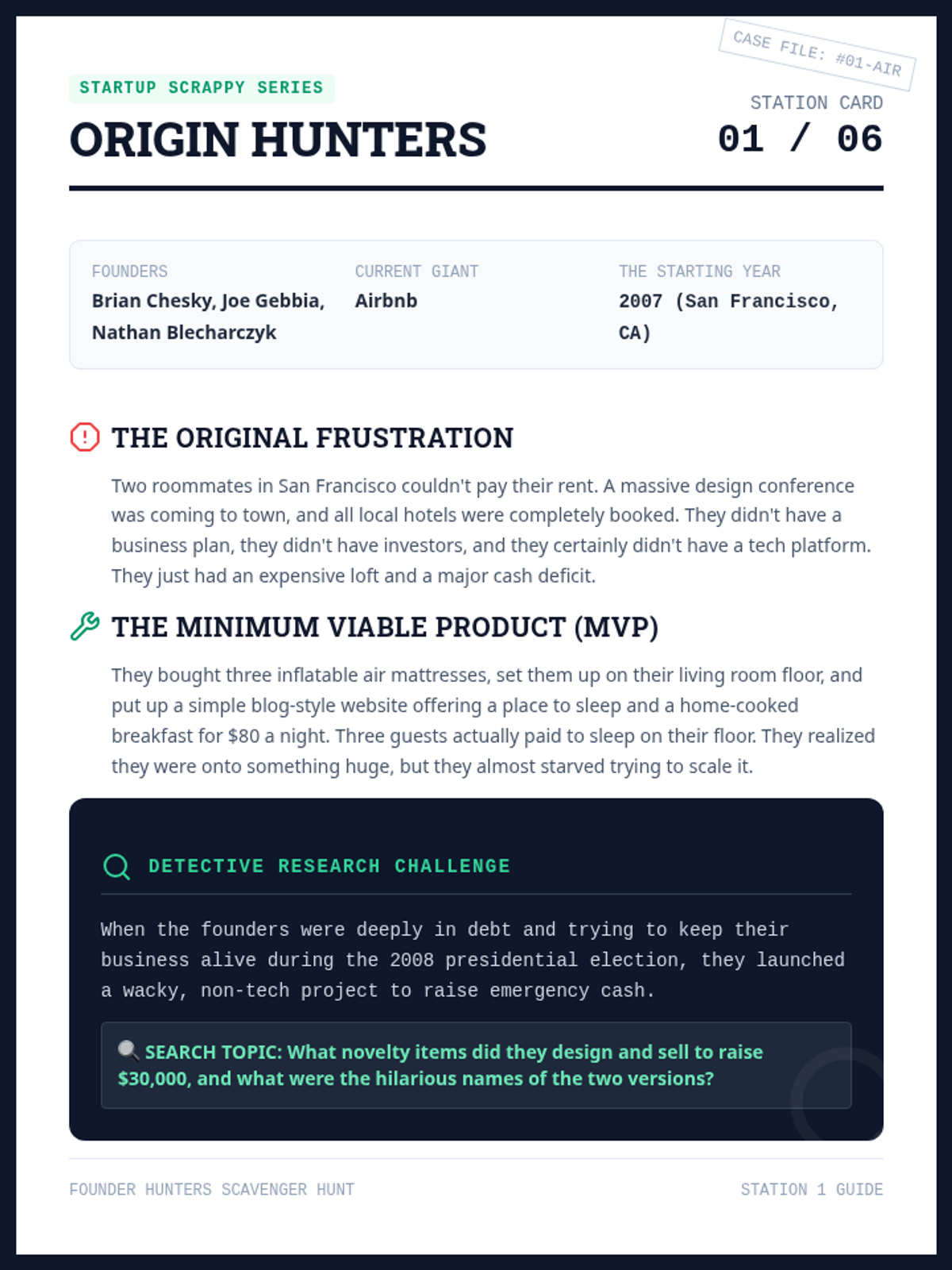
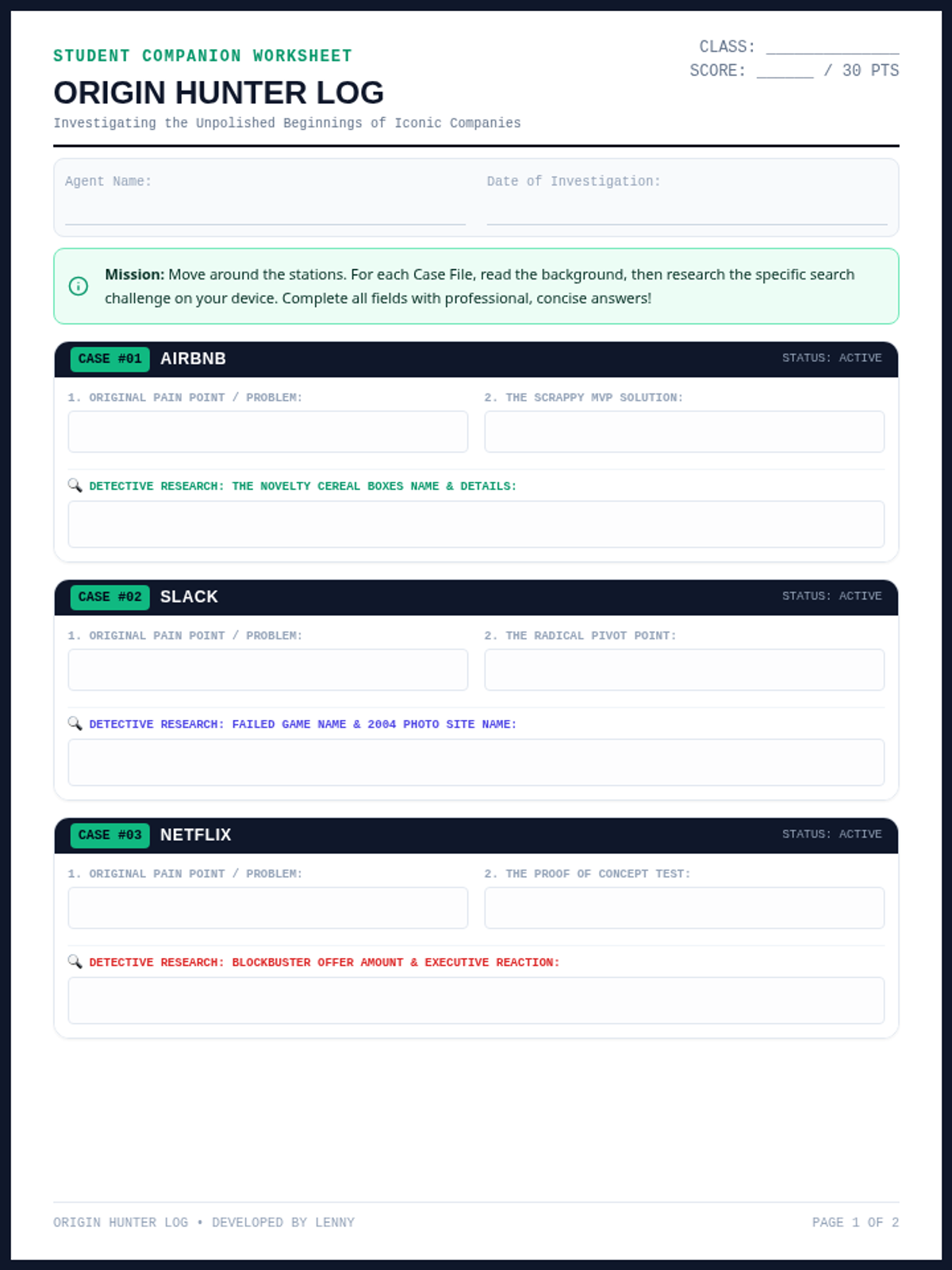
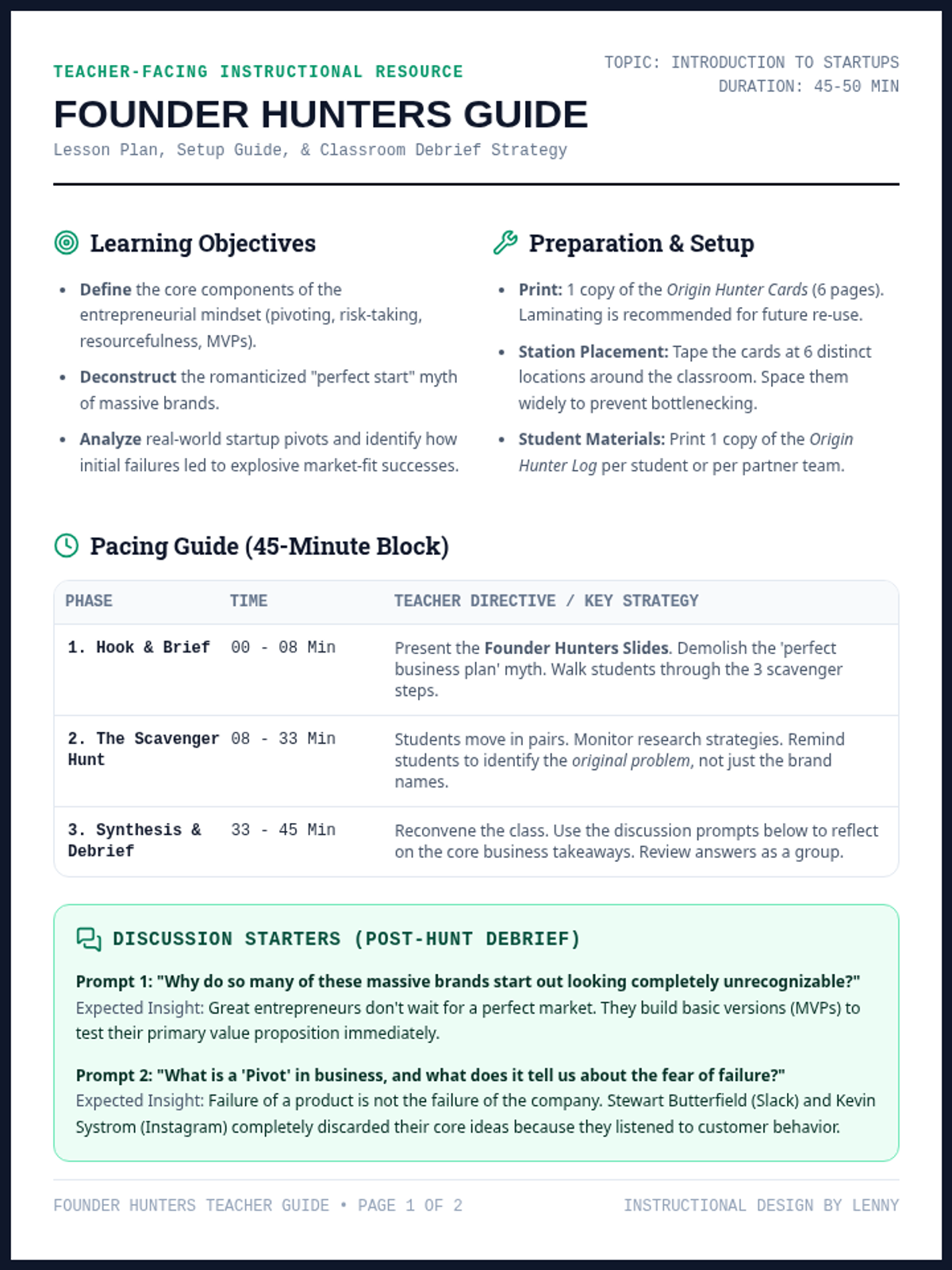
A high-energy, collaborative introductory lesson on entrepreneurship where students become 'Origin Hunters,' investigating the real-world, messy, and inspiring starting points of famous household brands.
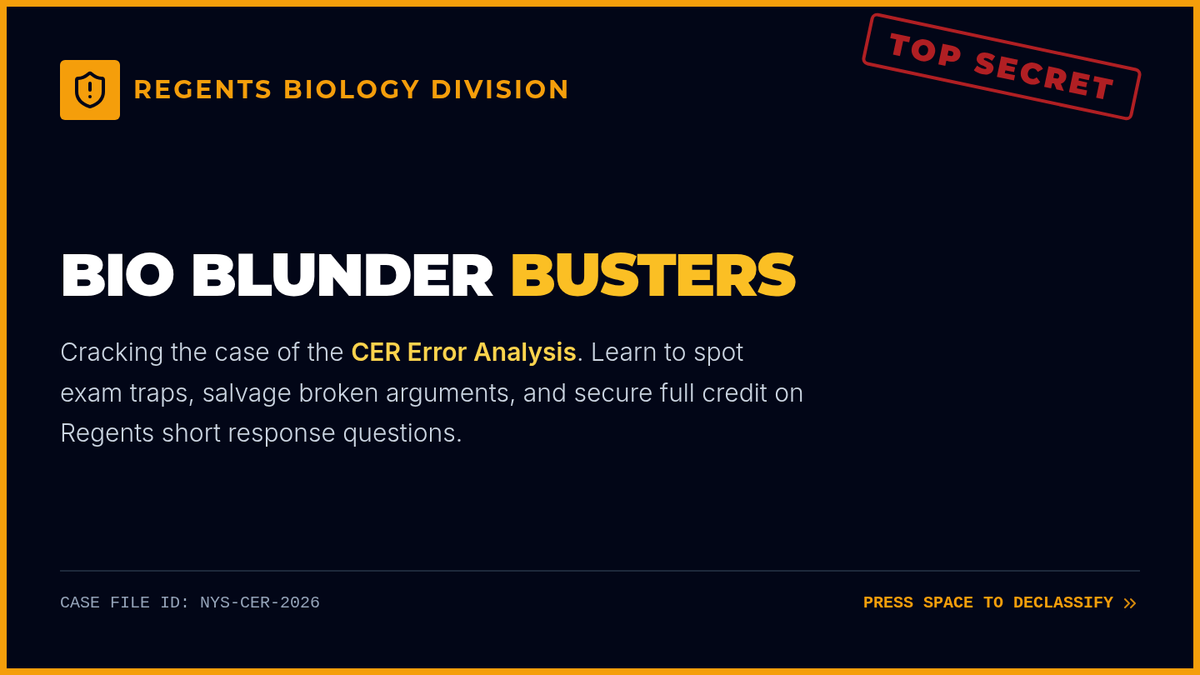
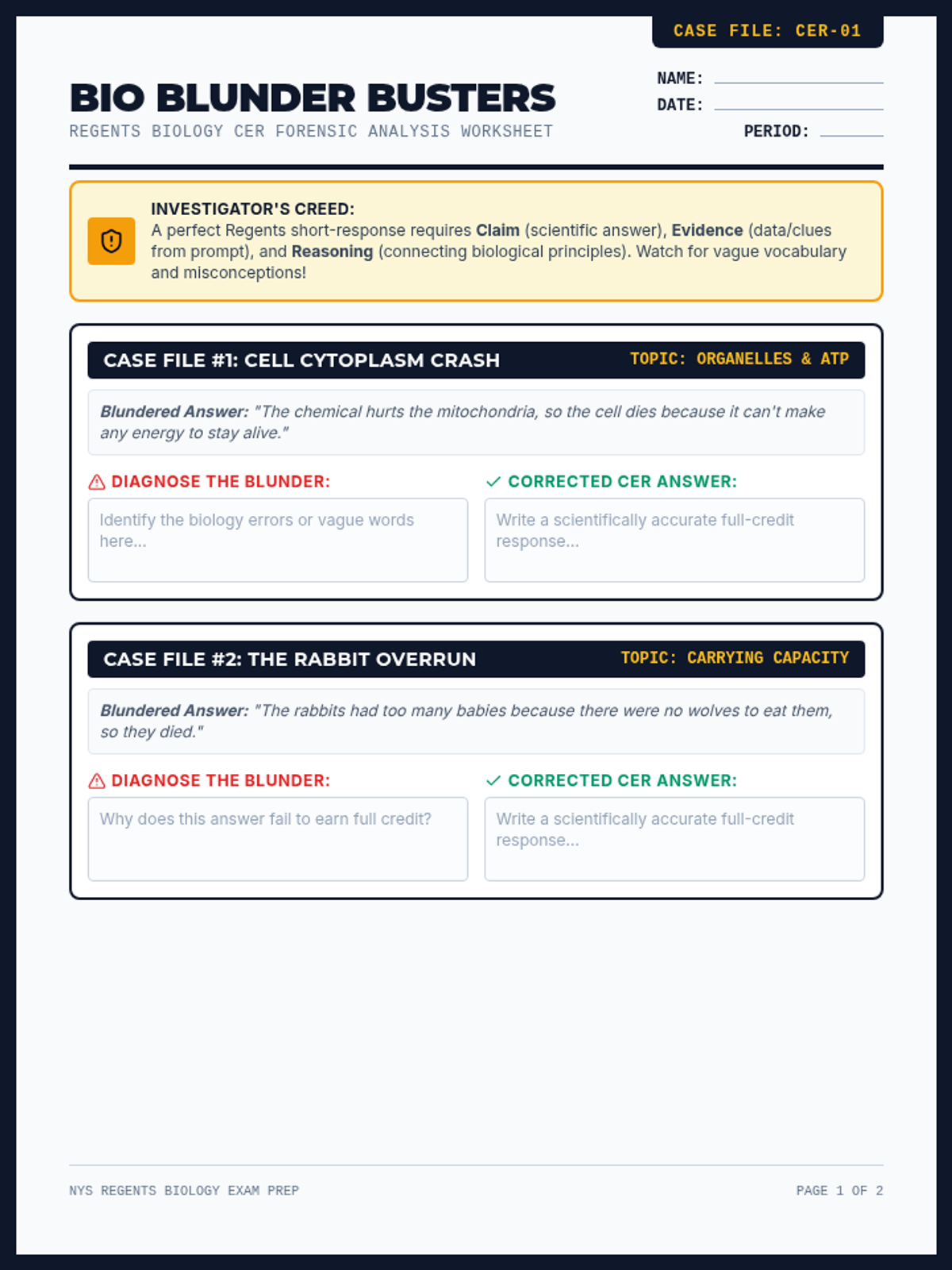
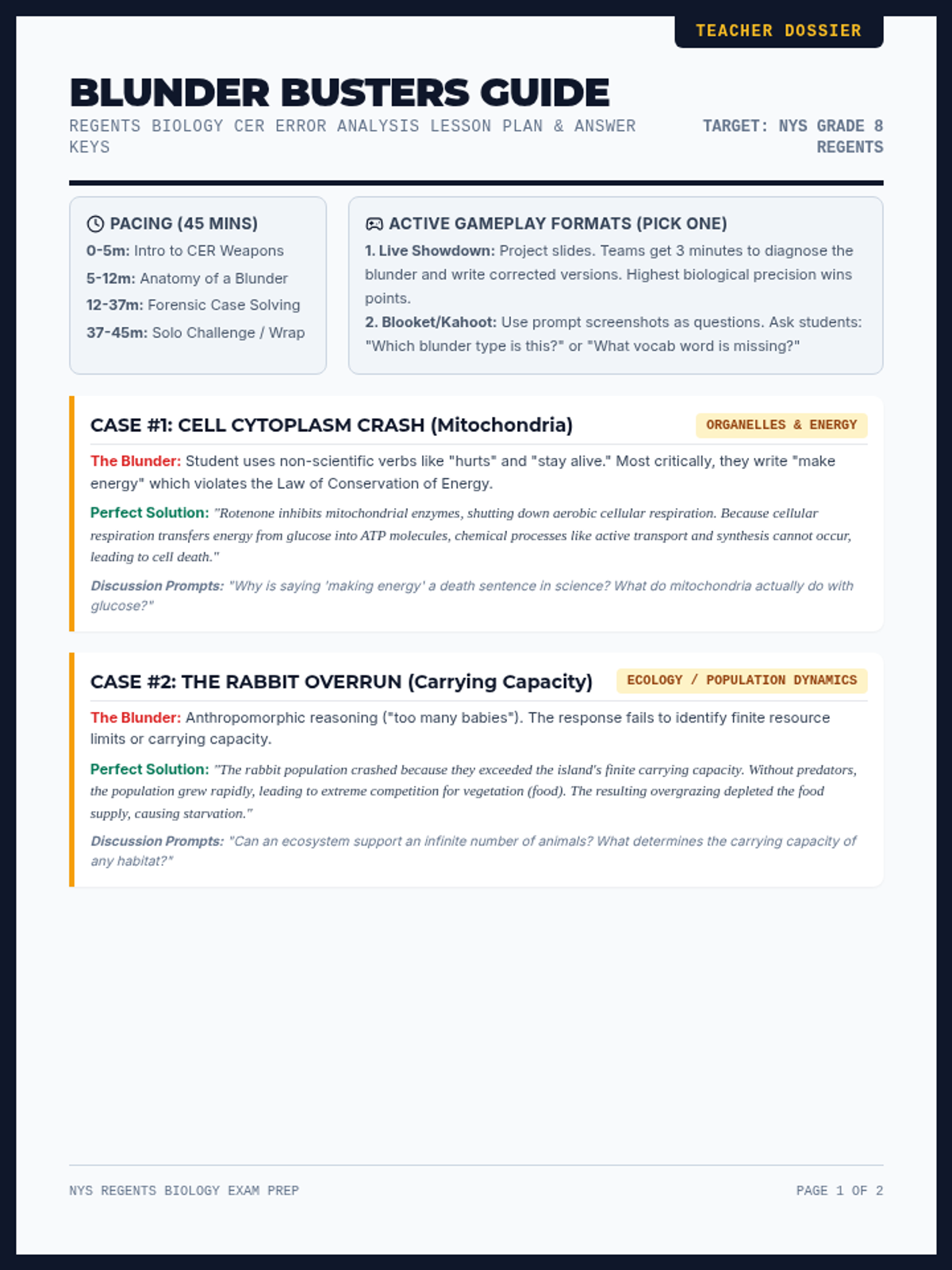
A highly engaging Regents Biology lesson focused on Claim-Evidence-Reasoning (CER) error analysis. Students act as science detectives to identify, analyze, and correct common exam blunders across major biology topics like ecology, cell division, and human impact.
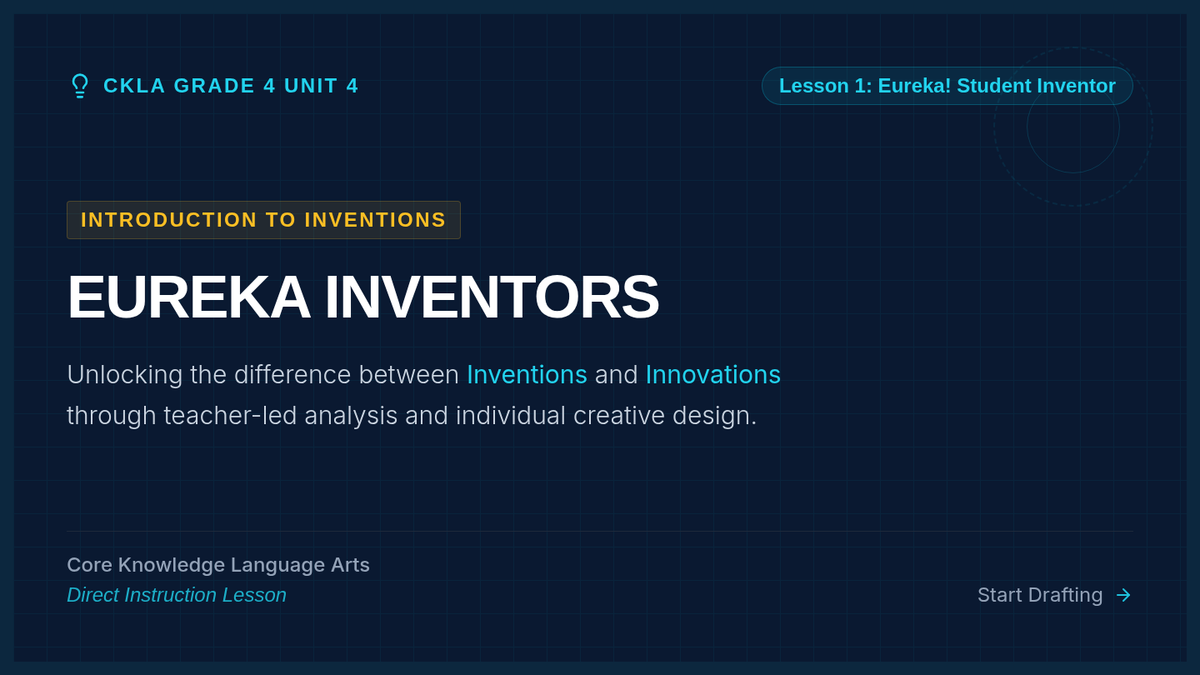
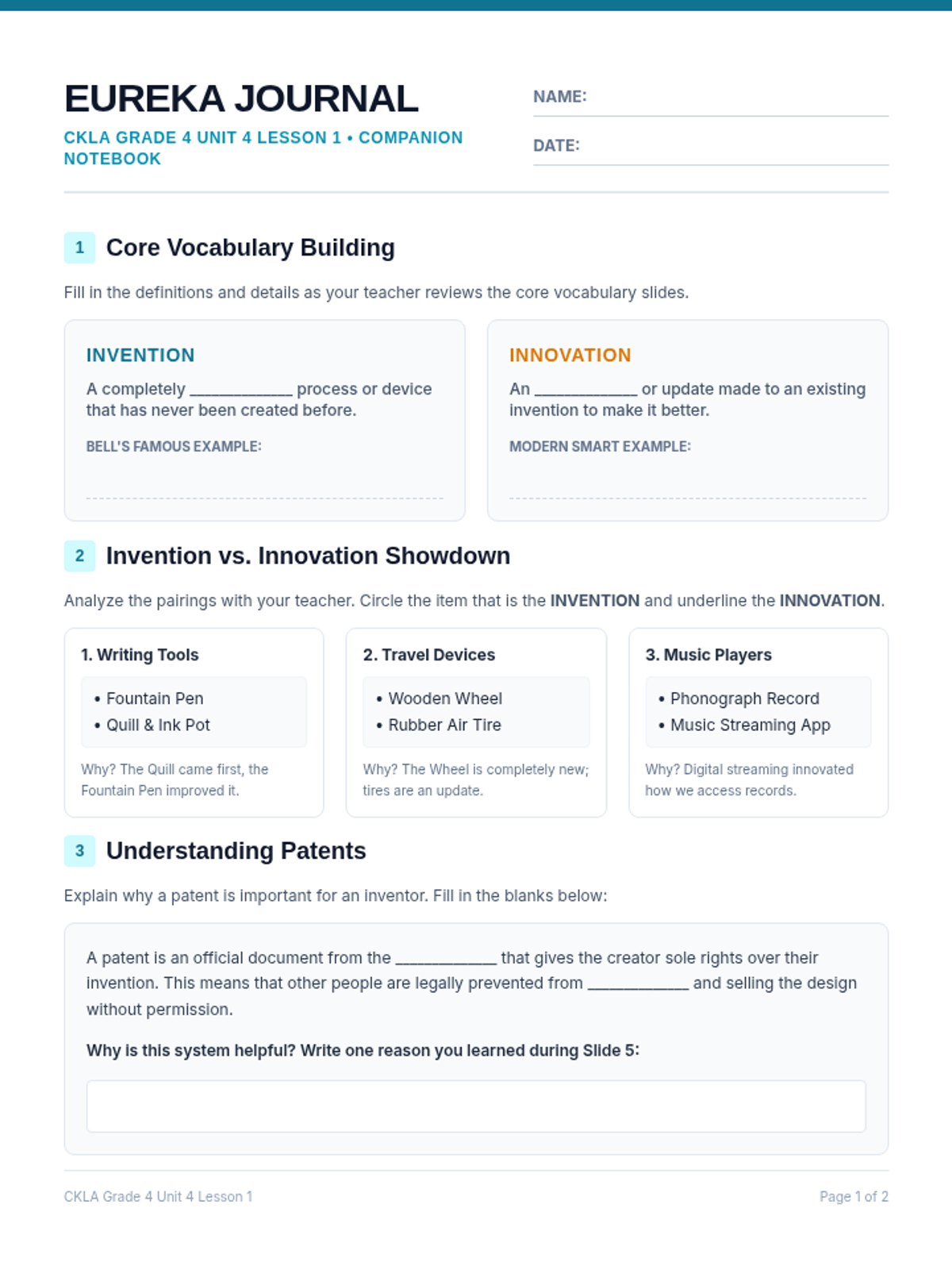
A rewritten direct-instruction lesson for CKLA Grade 4 Unit 4 Lesson 1 (Eureka! Student Inventor). It structures the introduction of inventions, innovations, and the patent process through teacher-led visual modeling and individual student responses, removing the default group activities.
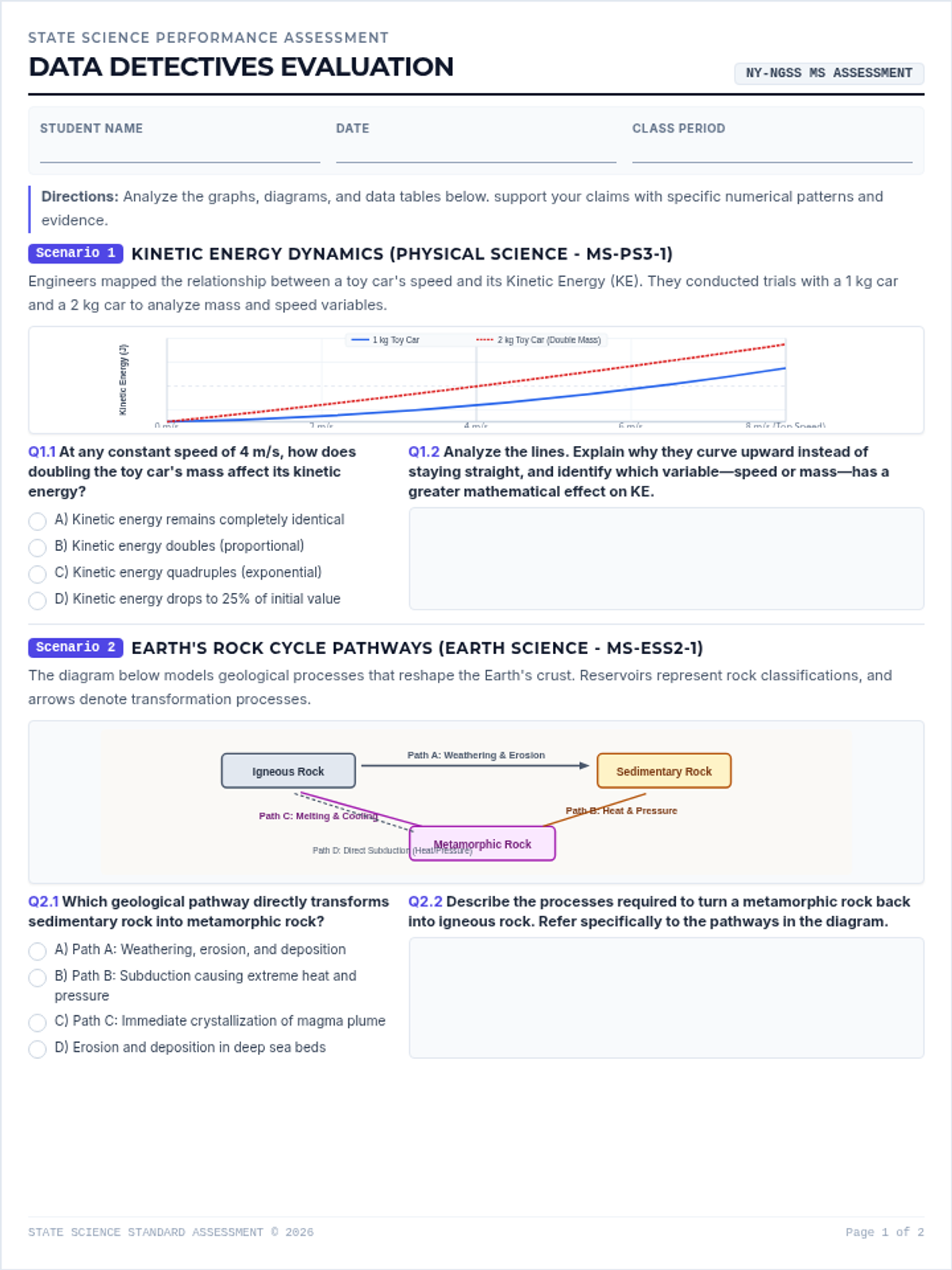
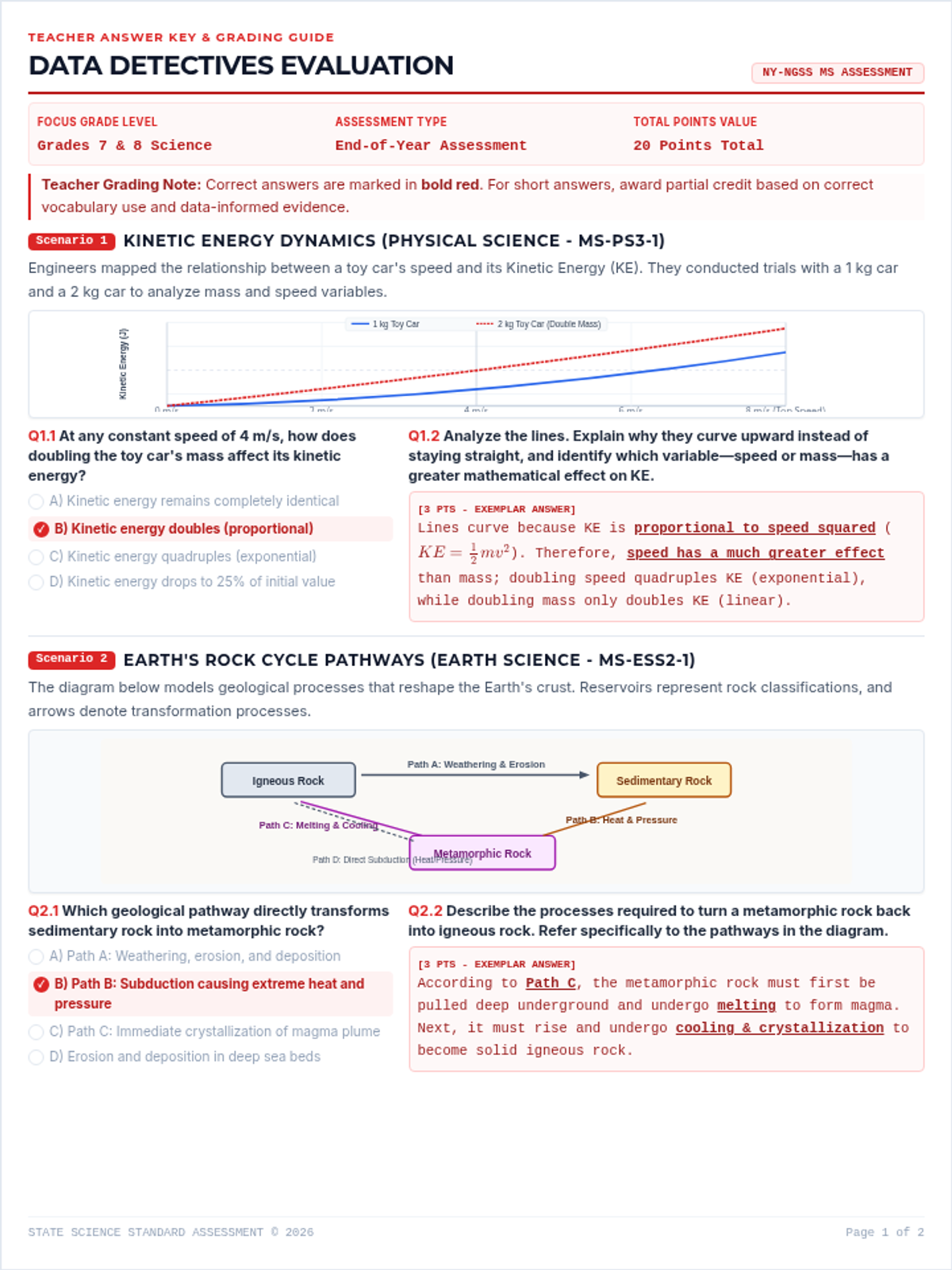
An end-of-year middle school science assessment focused on analyzing complex data sets, graphs, and diagrams across Life, Physical, and Earth science contexts, aligned with NY NGSS standards. Includes a student printable test and a matching teacher answer key.
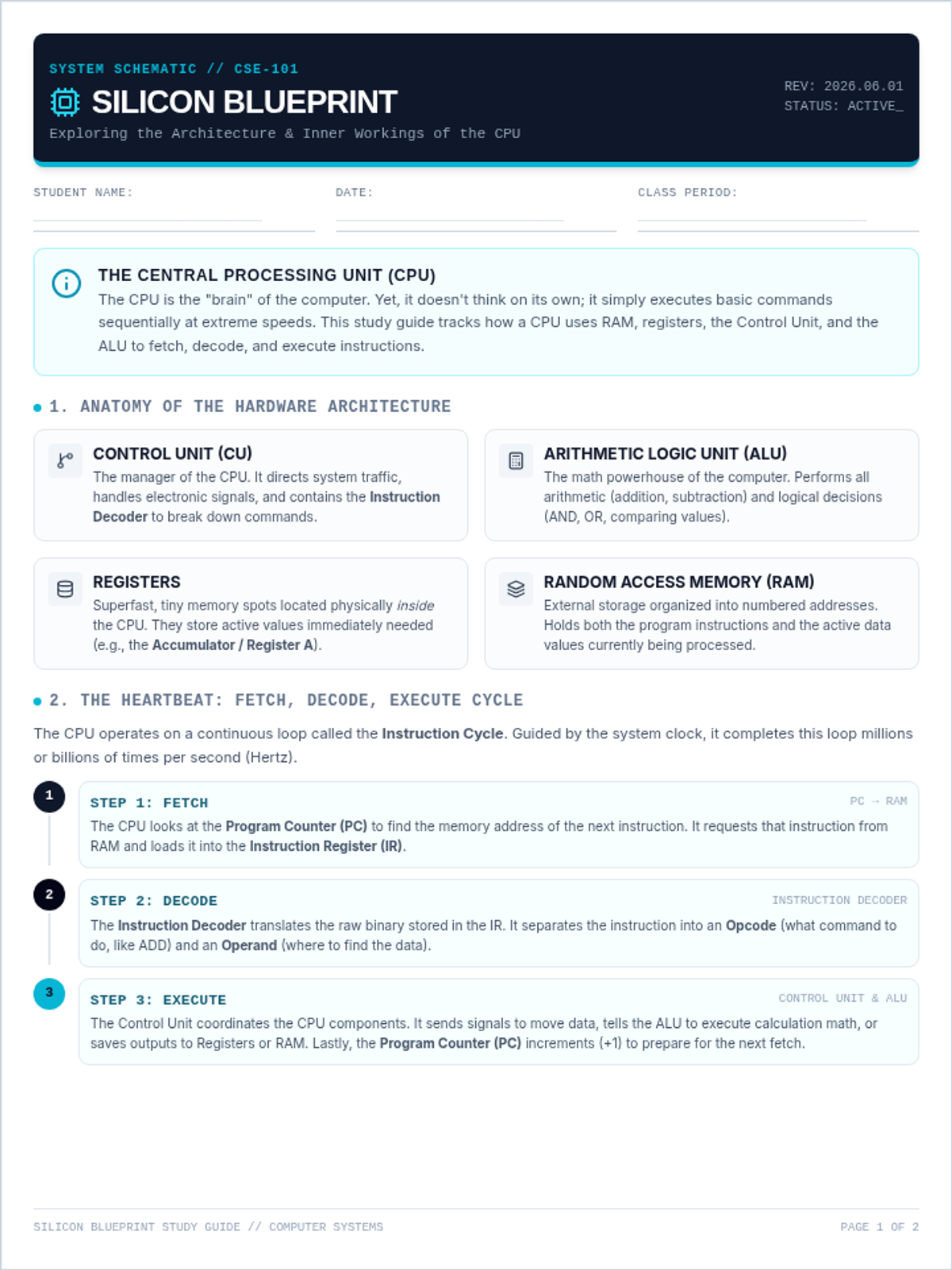
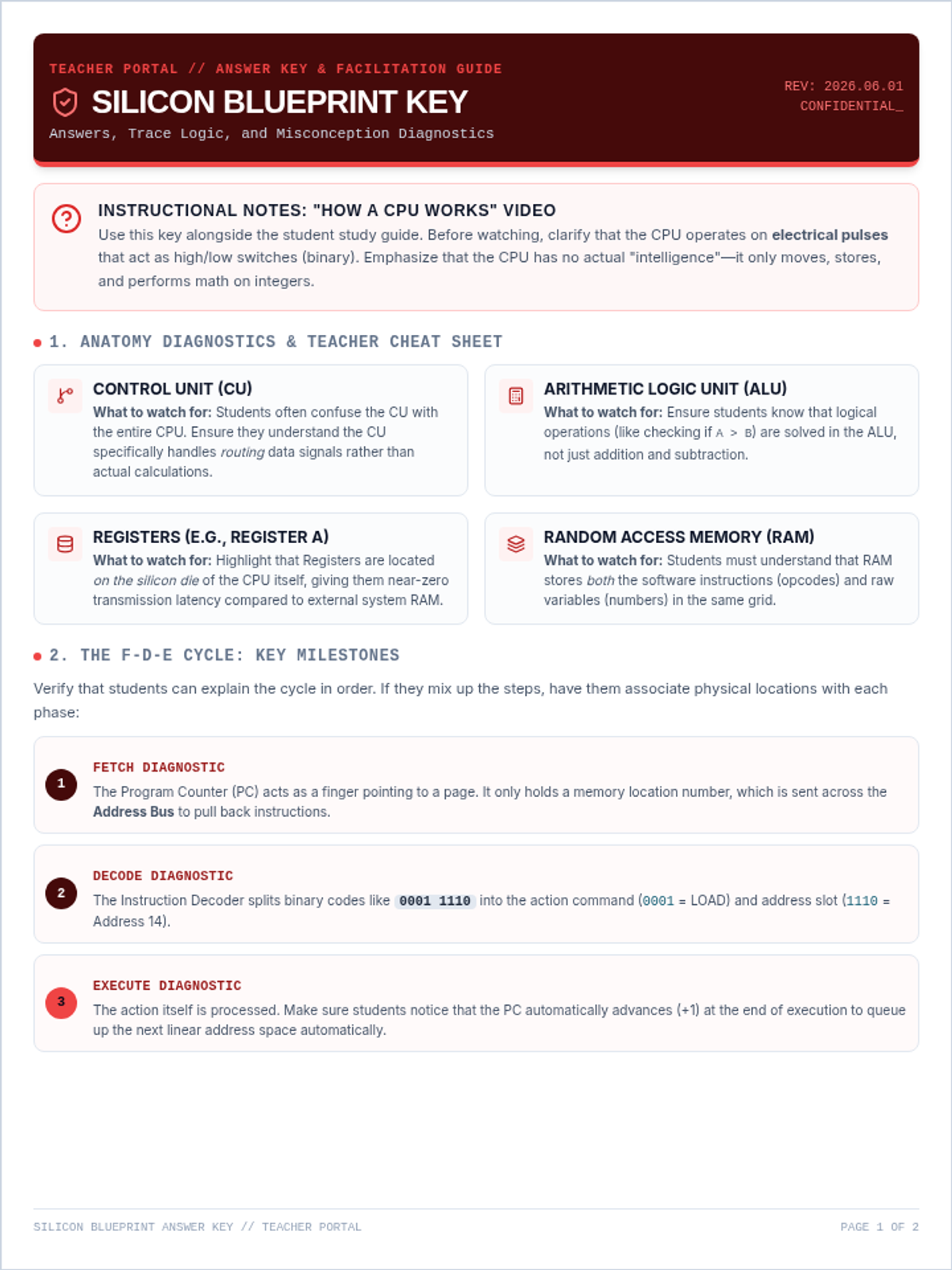
A comprehensive introduction to computer architecture, focusing on the CPU, internal registers, RAM, and the Fetch-Decode-Execute instruction cycle. Features a student-facing schematic study guide and a detailed teacher answer key with program trace steps.
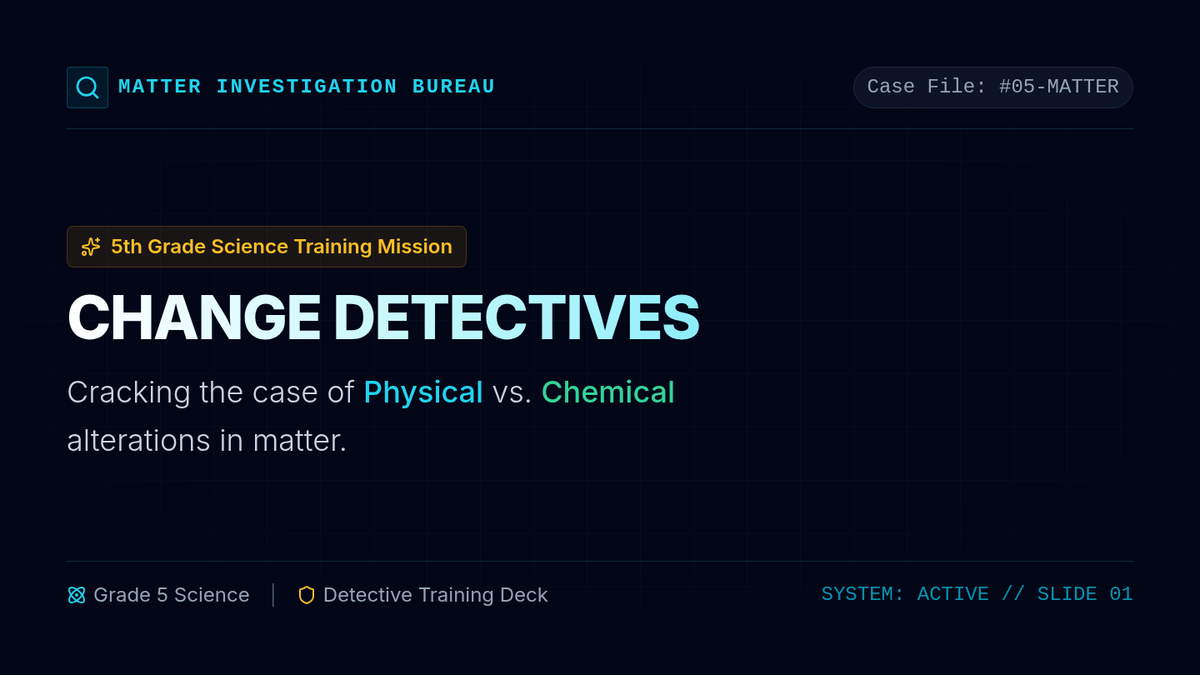
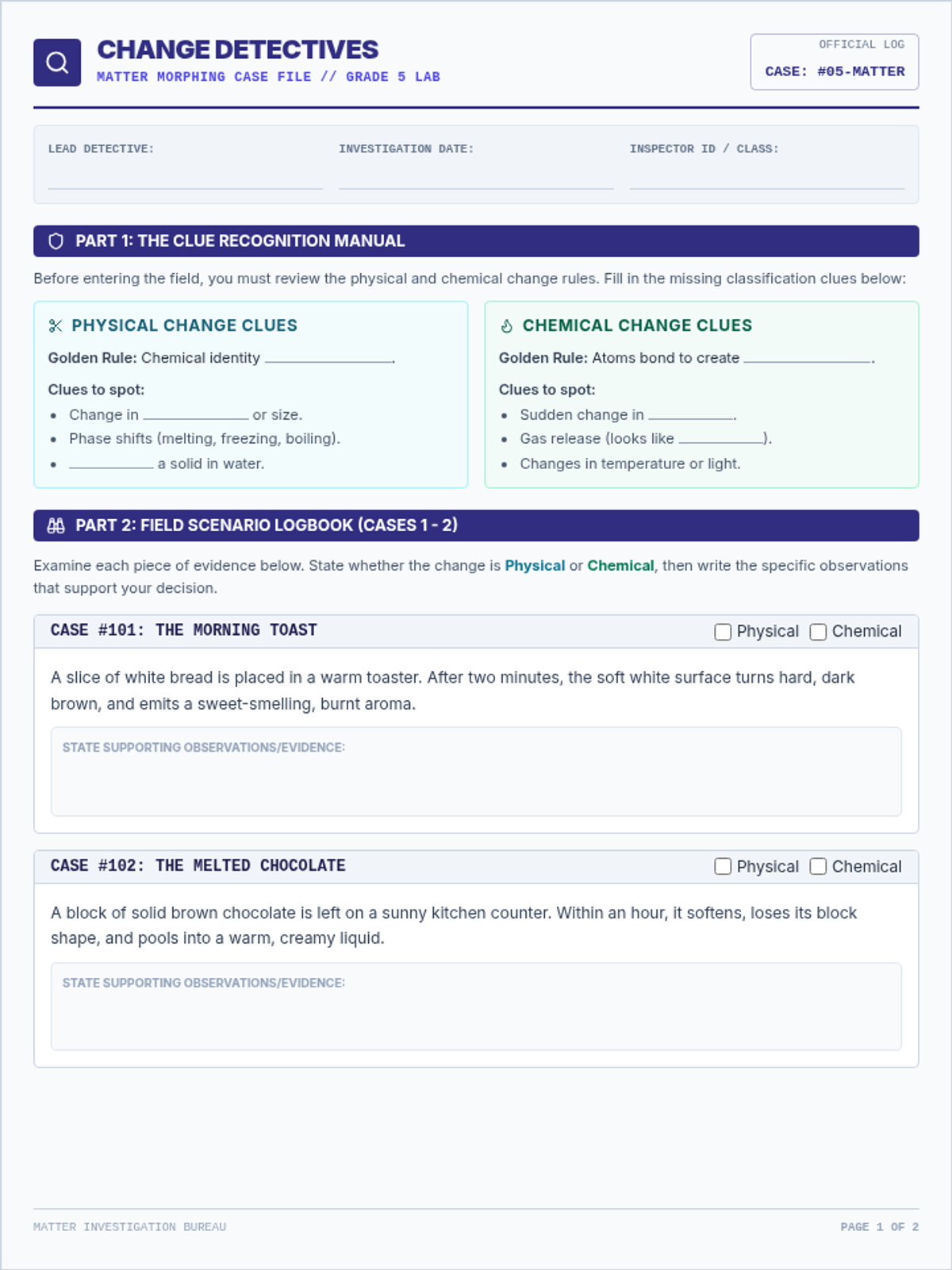
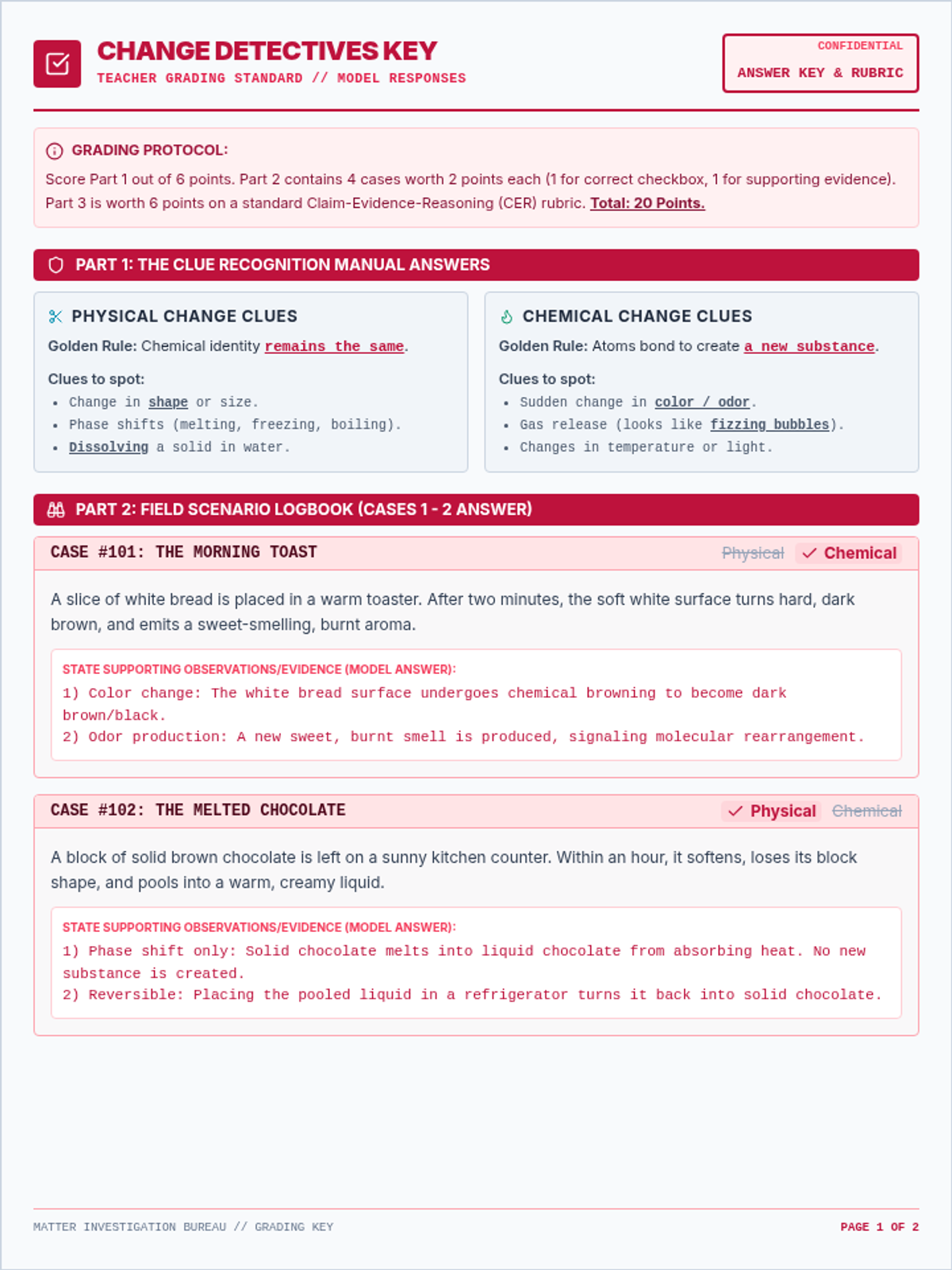
An interactive 5th-grade science lesson introducing physical and chemical changes. Students act as "change detectives," examining clues to classify alterations in matter and investigating real-world scenarios.
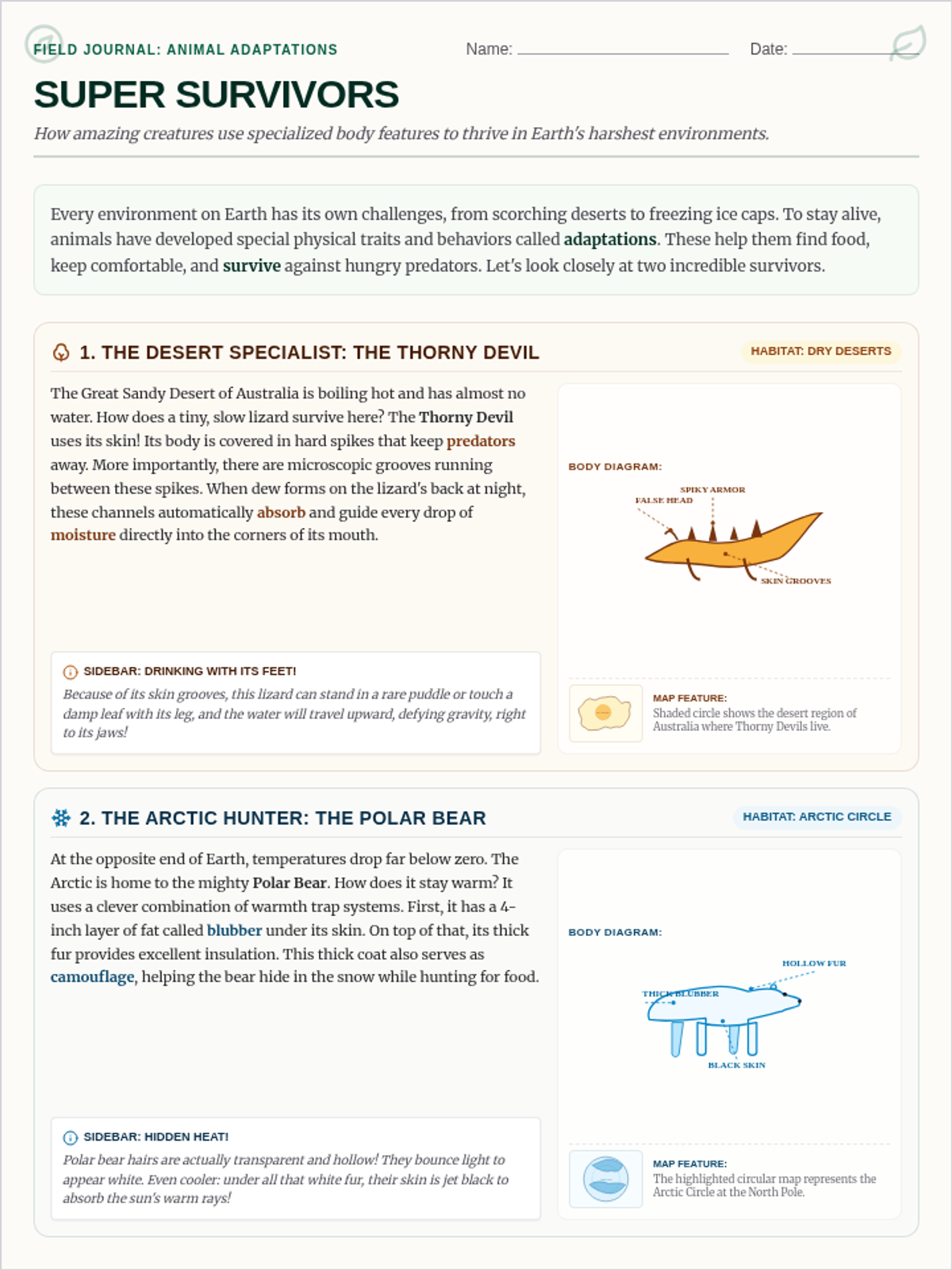
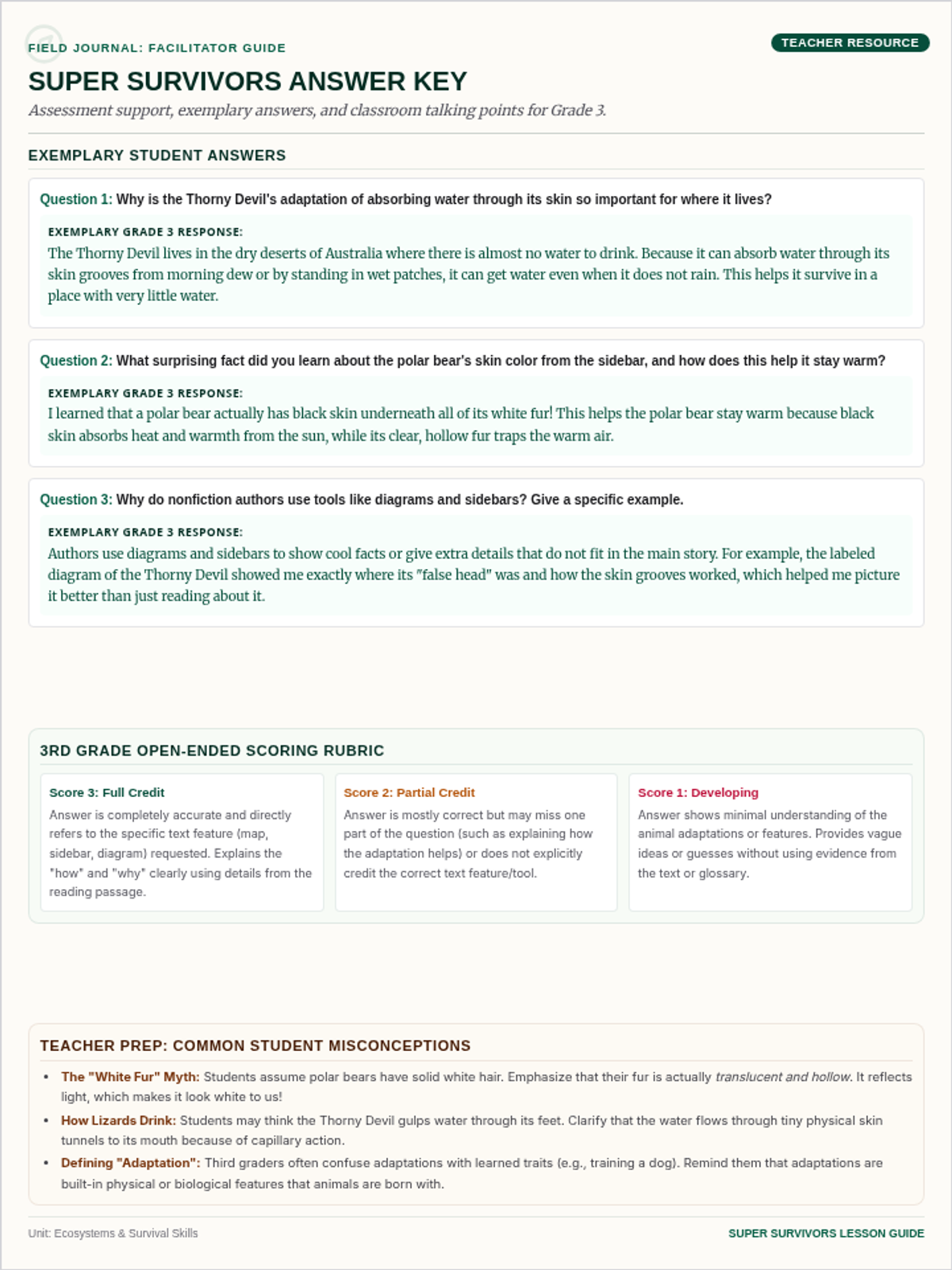
An engaging lesson on animal adaptations featuring a visual nonfiction reading passage and text feature hunt. Students learn about the Thorny Devil and Polar Bear, analyze geographic maps, look up key terms in a glossary, and answer deep comprehension questions.
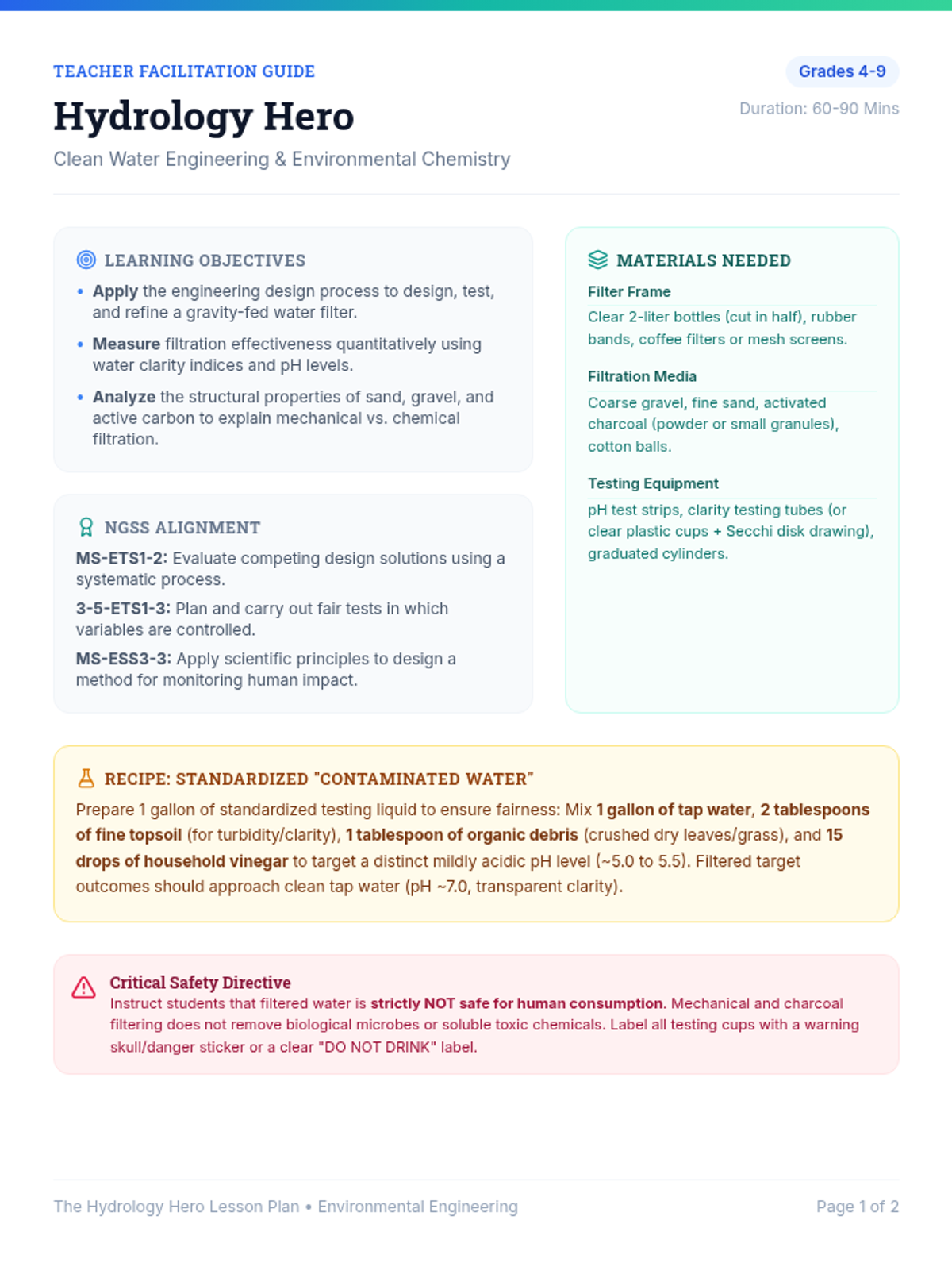
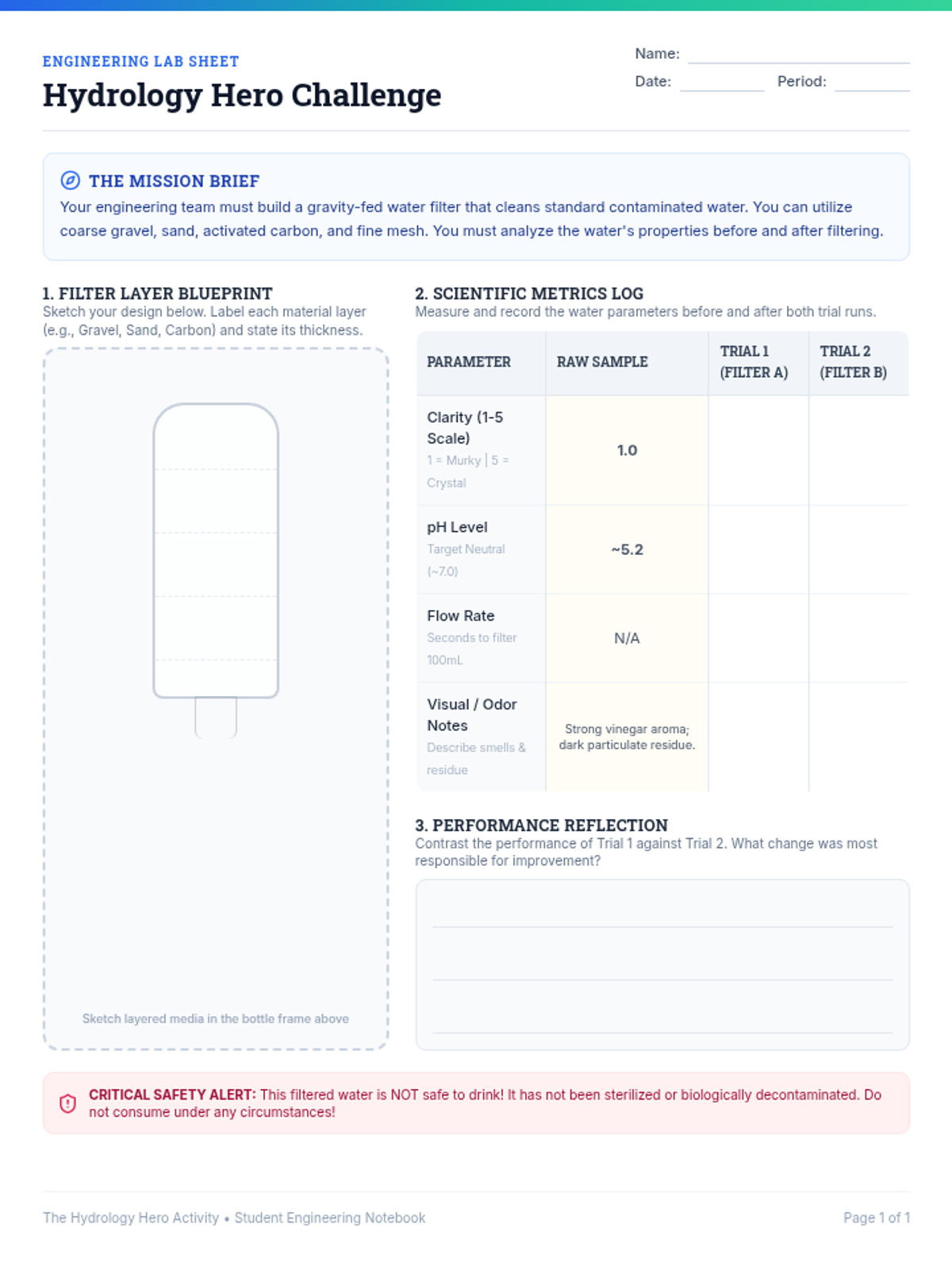
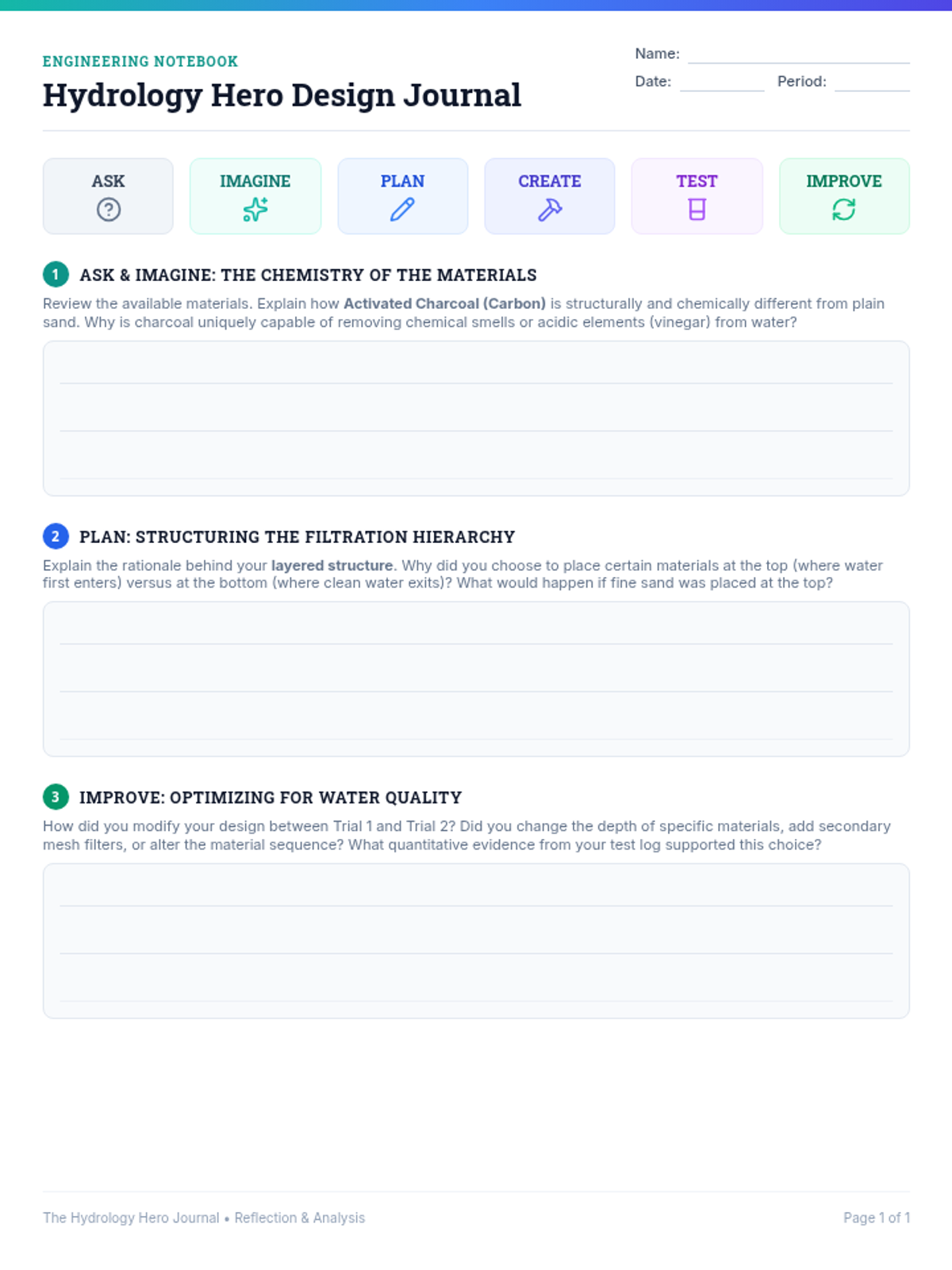
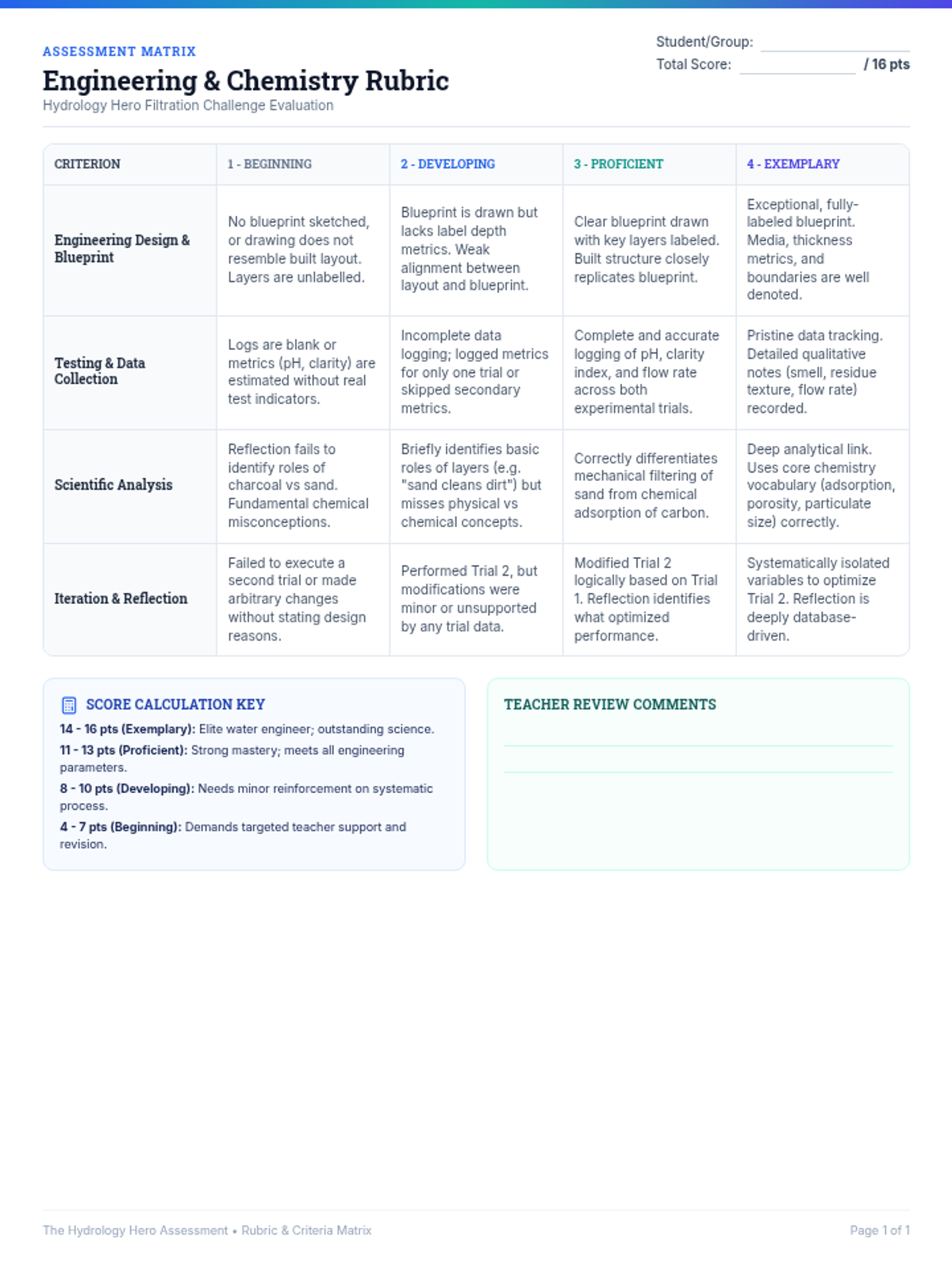
A comprehensive hands-on engineering lesson where students design and test gravity-fed filtration systems to explore water scarcity and water quality testing.
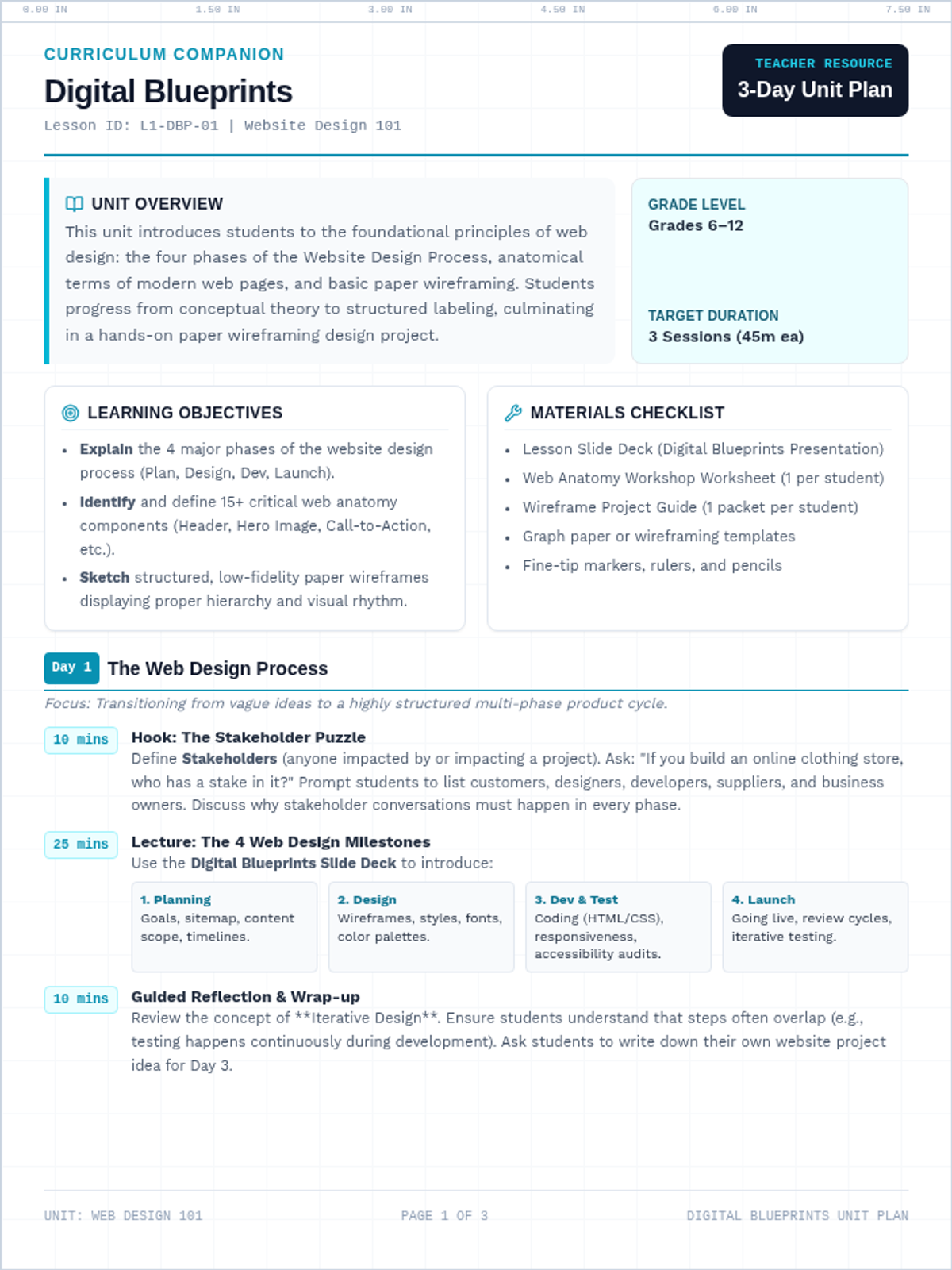
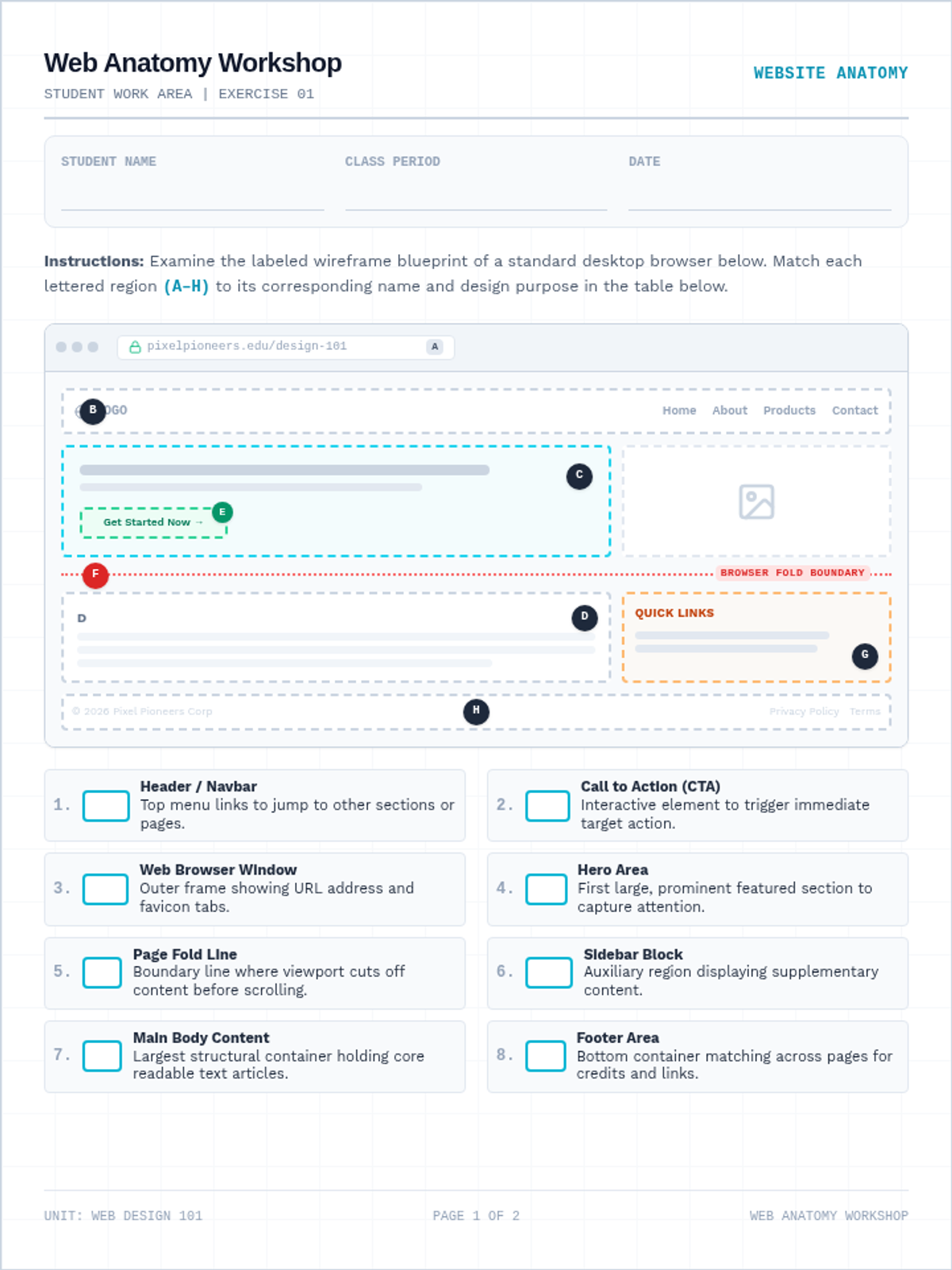
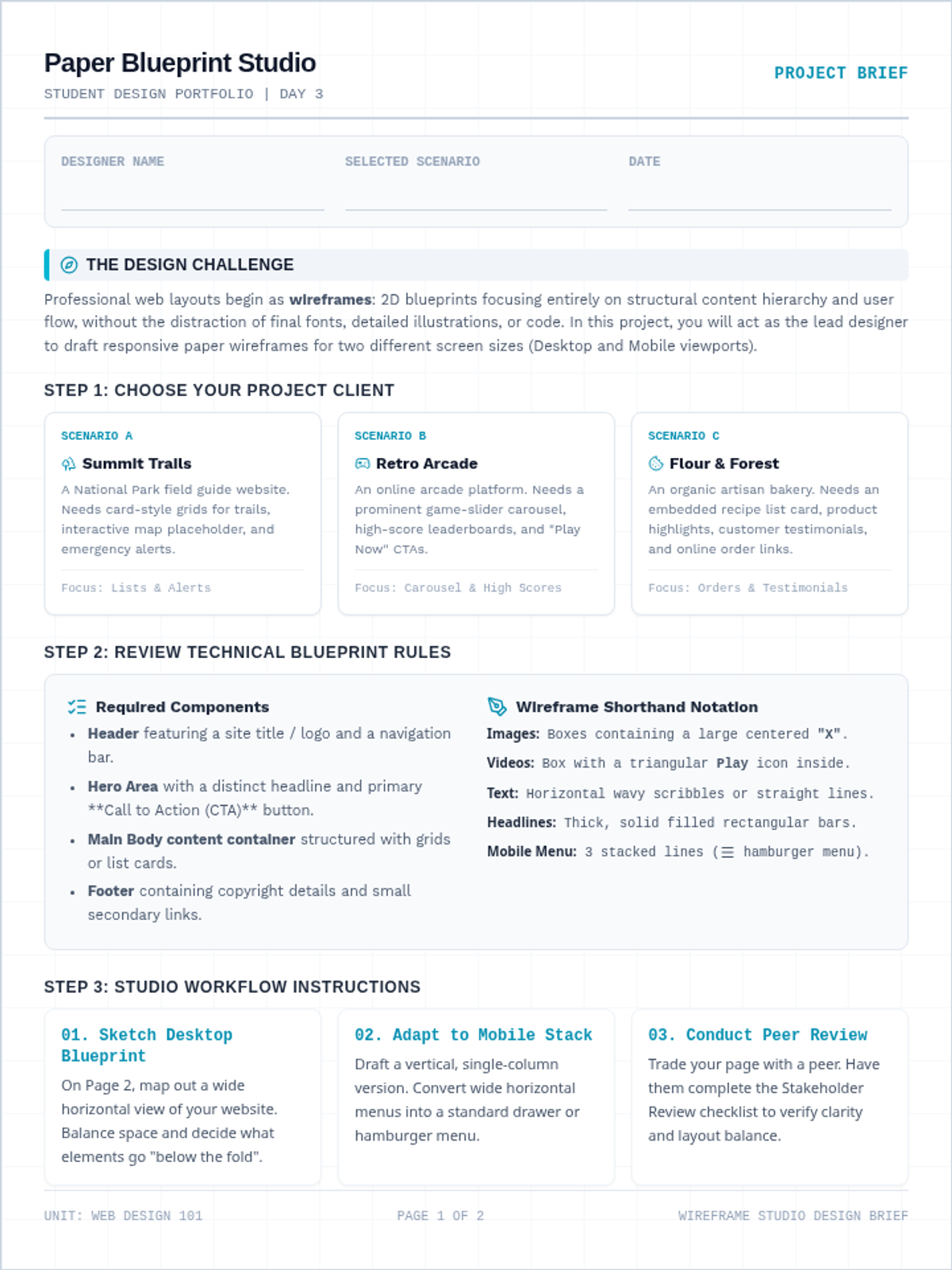
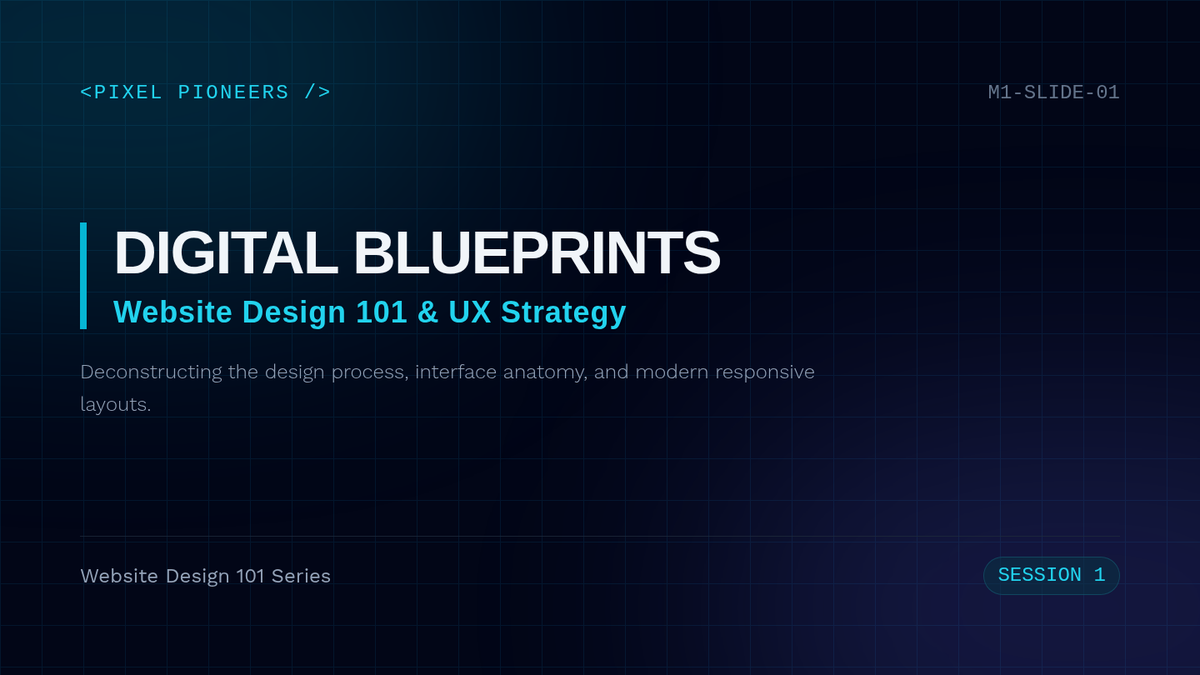
An introductory lesson on web design principles, covering the website design process, anatomy of a webpage, and paper wireframe sketching. Includes interactive slides, an anatomy and vocabulary worksheet, a paper-based wireframing project guide, and a comprehensive teacher guide.
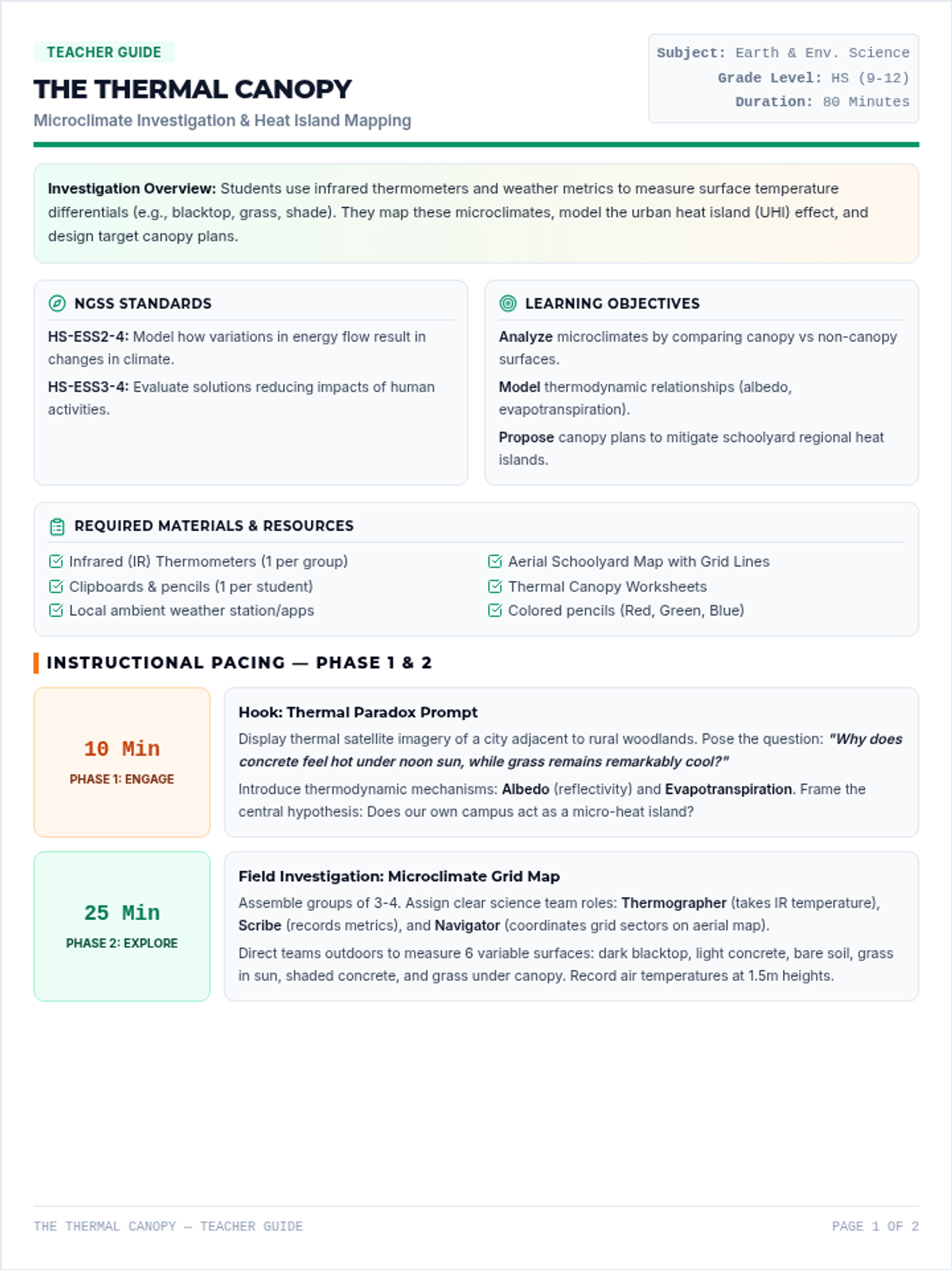
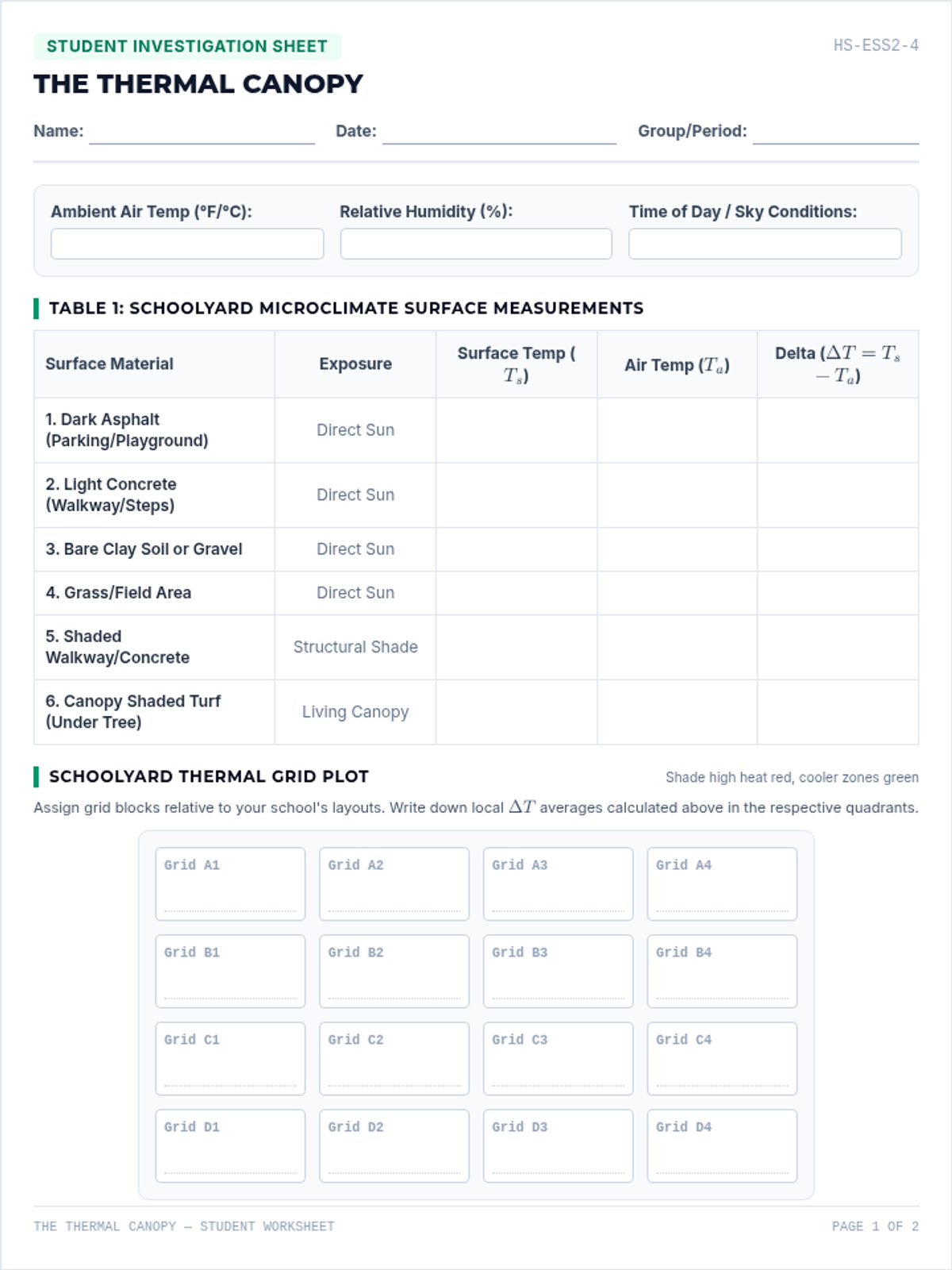
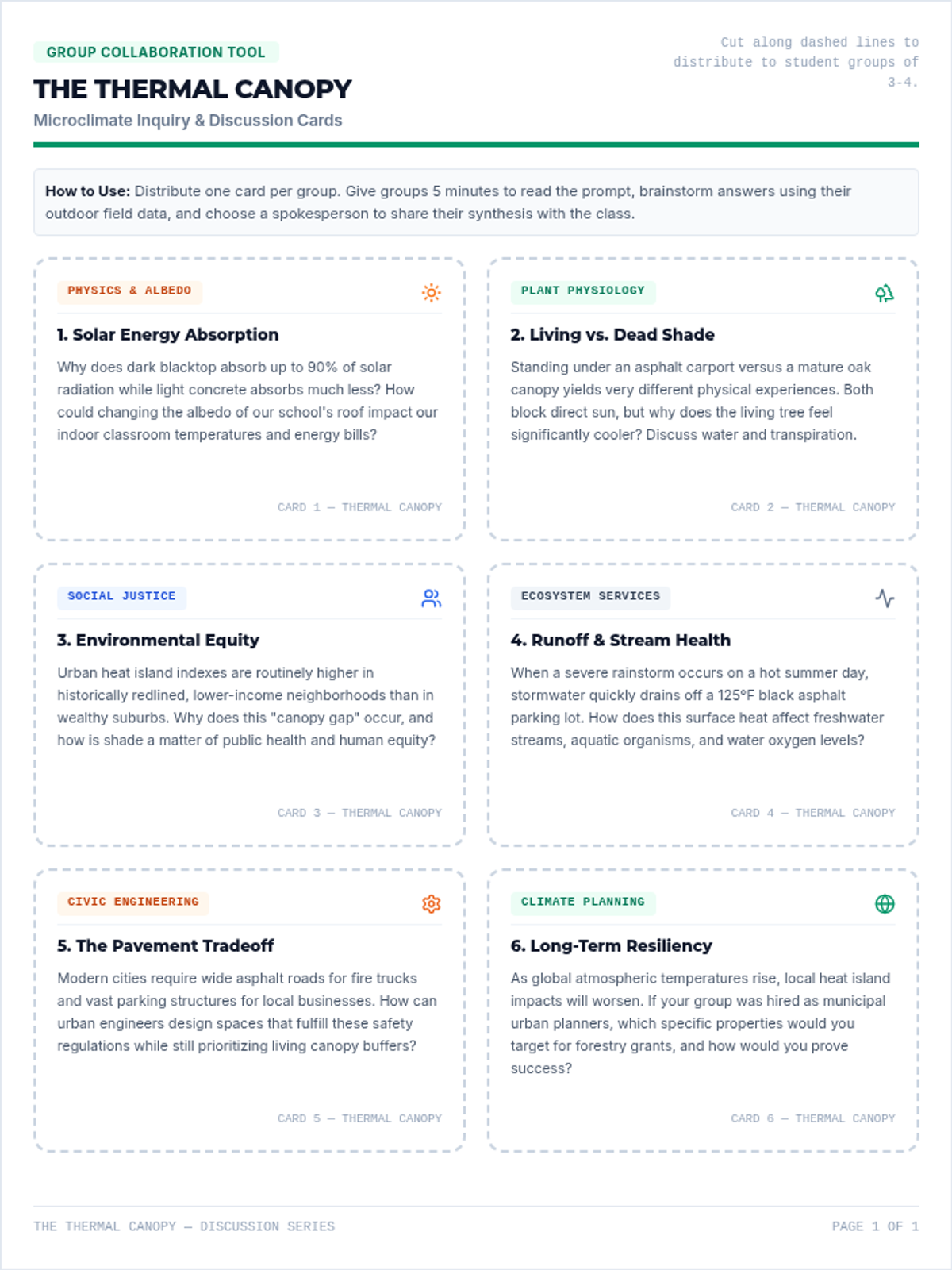
A hands-on environmental science lesson where high school students investigate schoolyard microclimates using temperature mapping and weather data, analyzing the local urban heat island effect and proposing canopy-based mitigation.
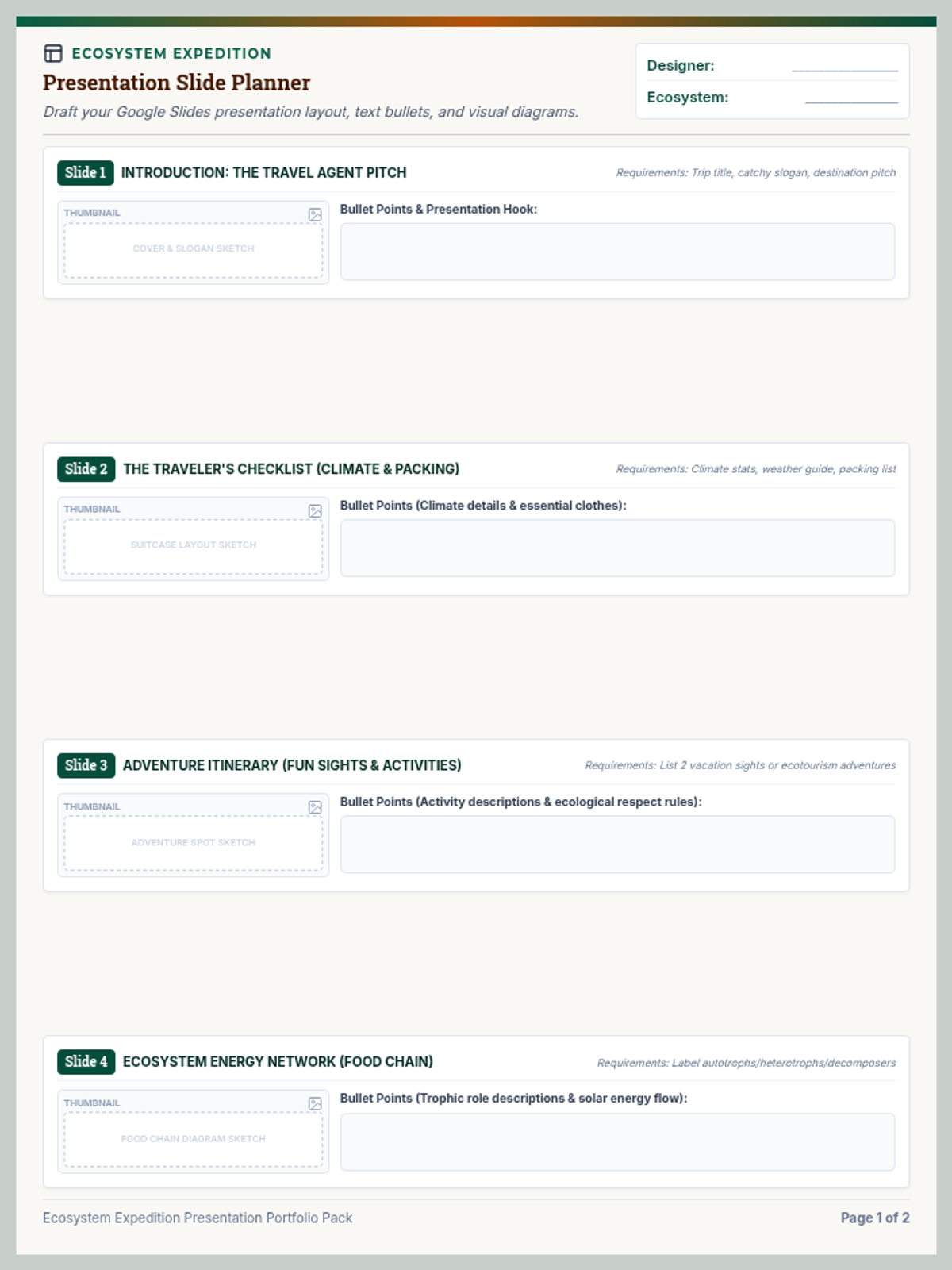
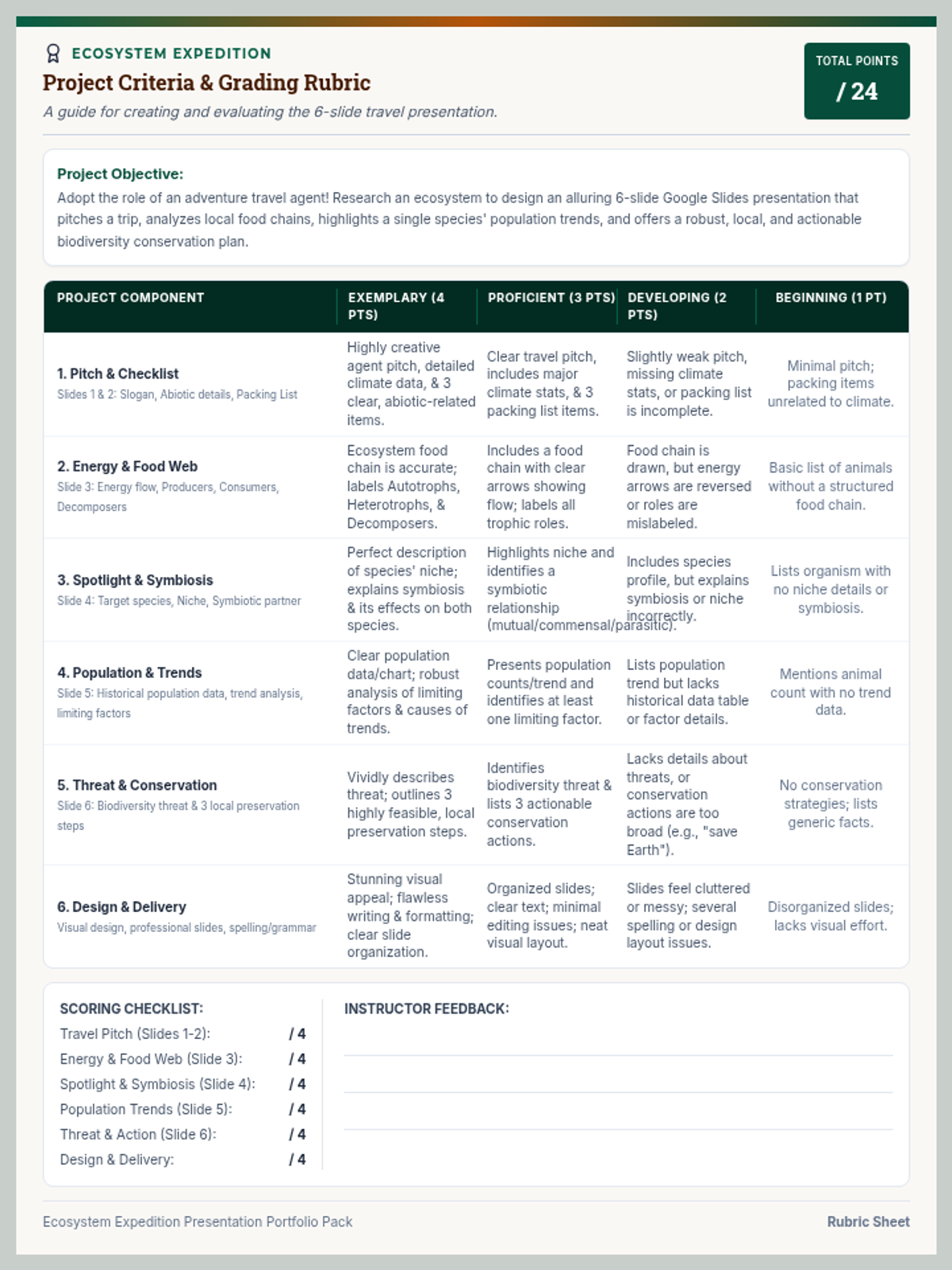
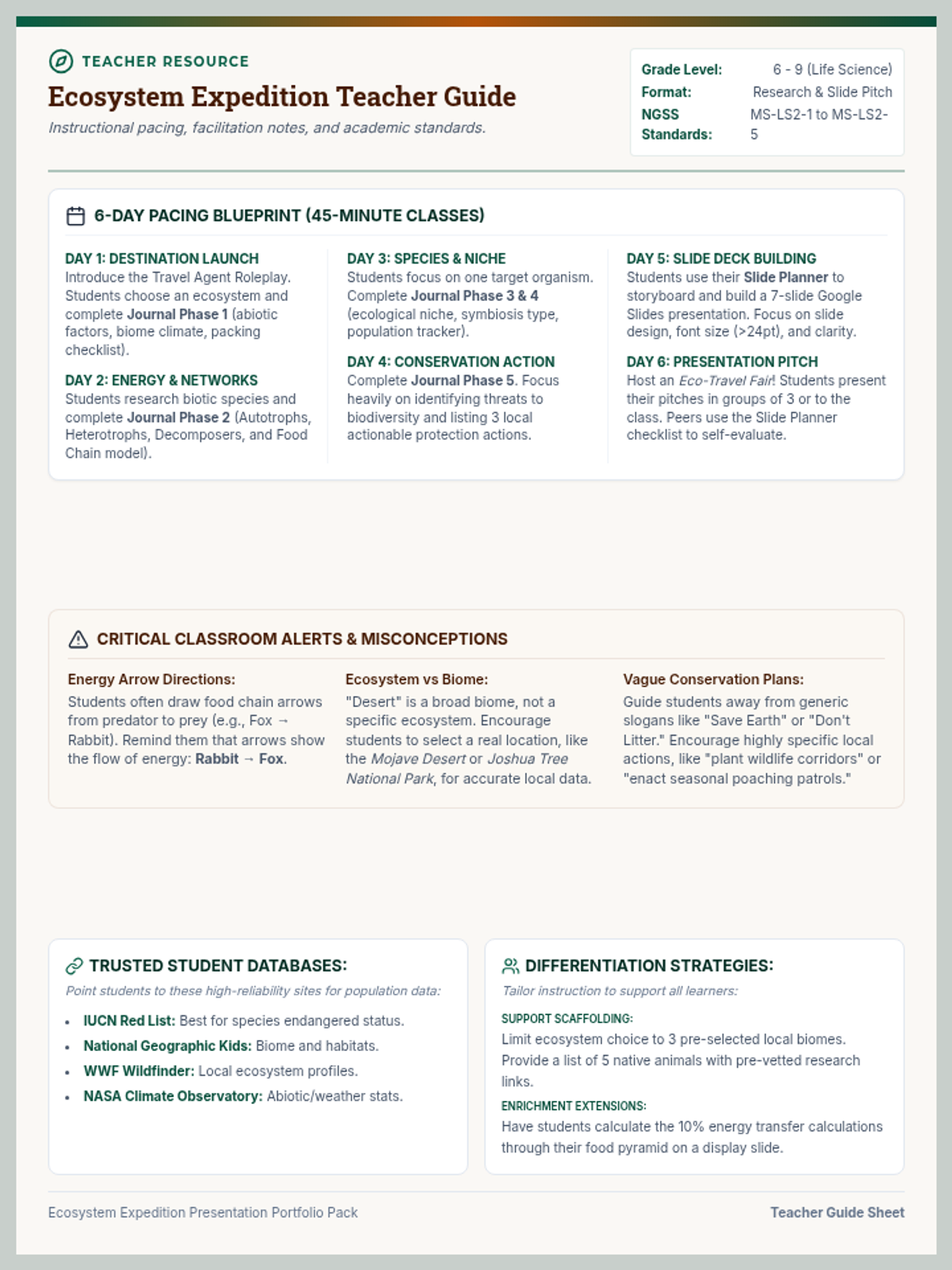
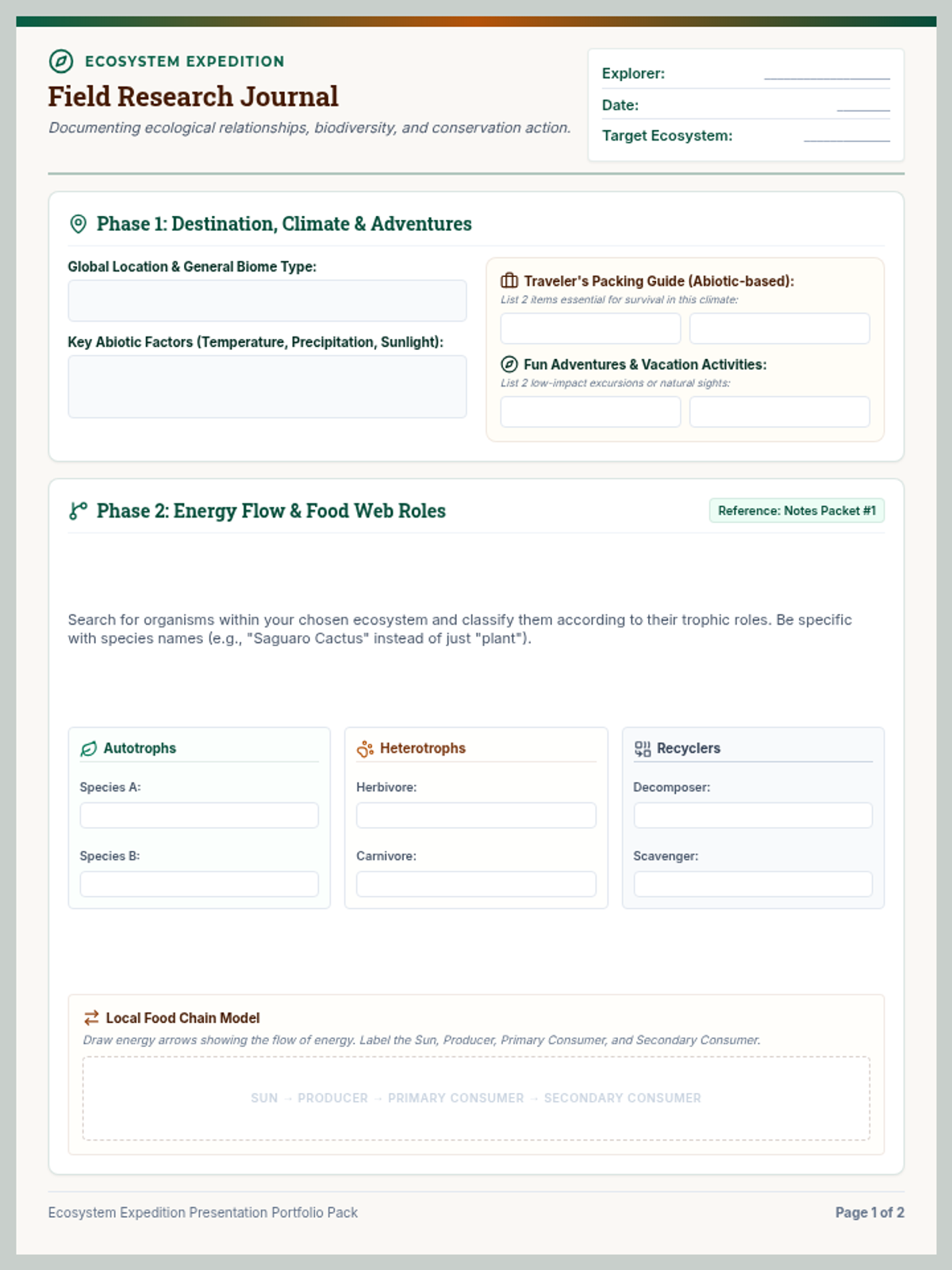
A project-based lesson where students research a chosen ecosystem, analyze its energy flow and biodiversity, focus on a specific species' population, and design a 'travel pitch' slide presentation with an actionable conservation plan.
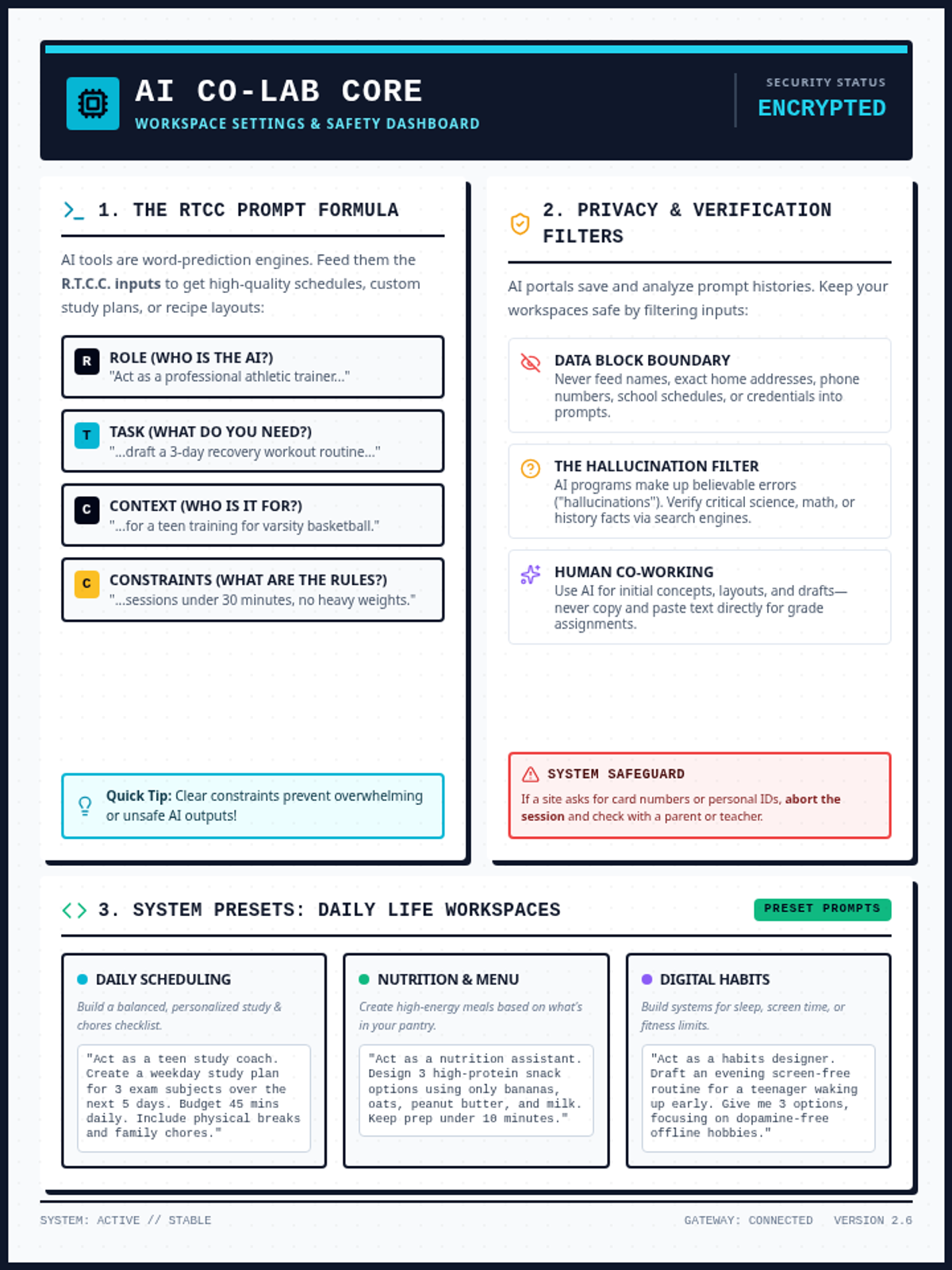
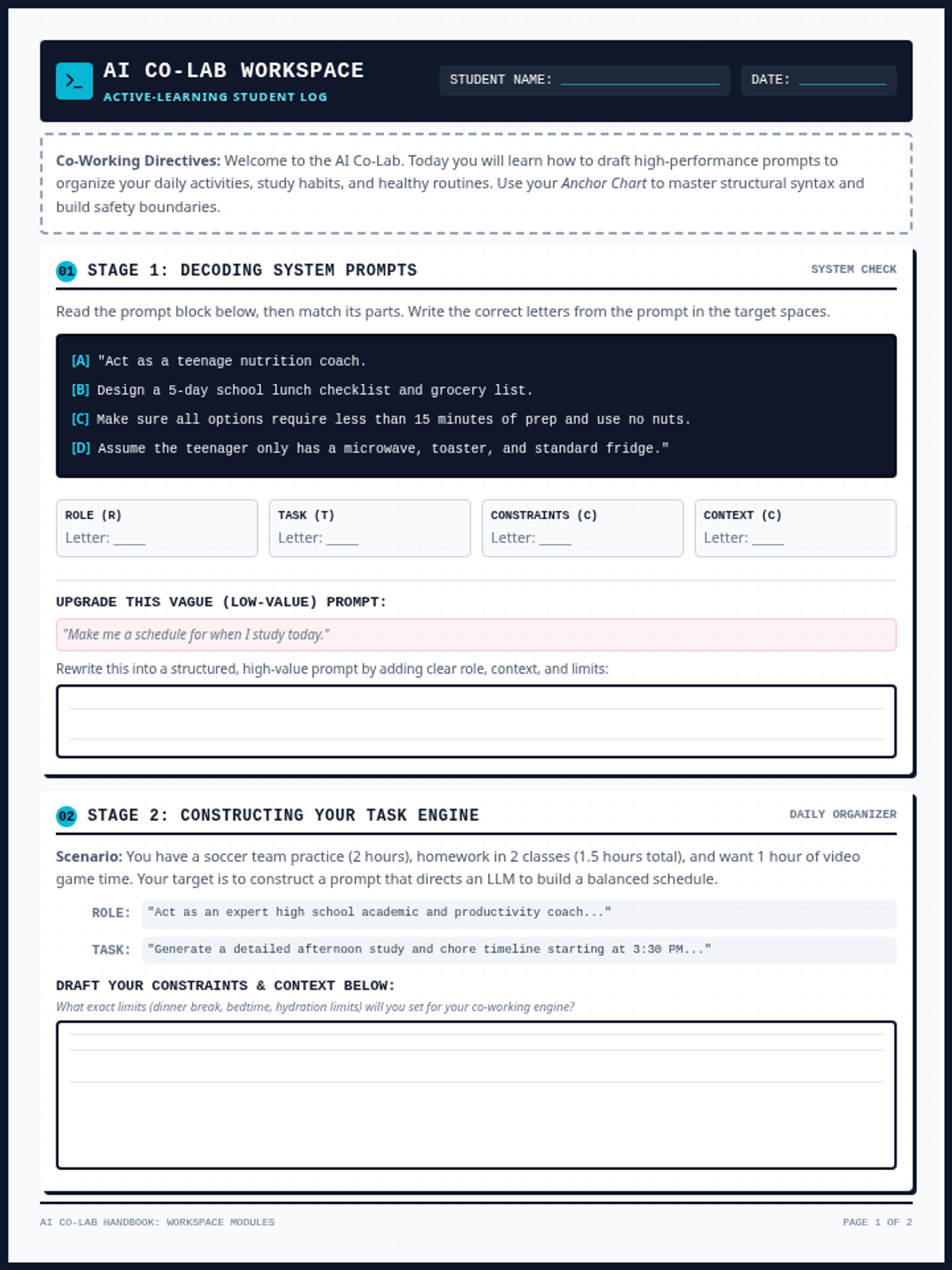
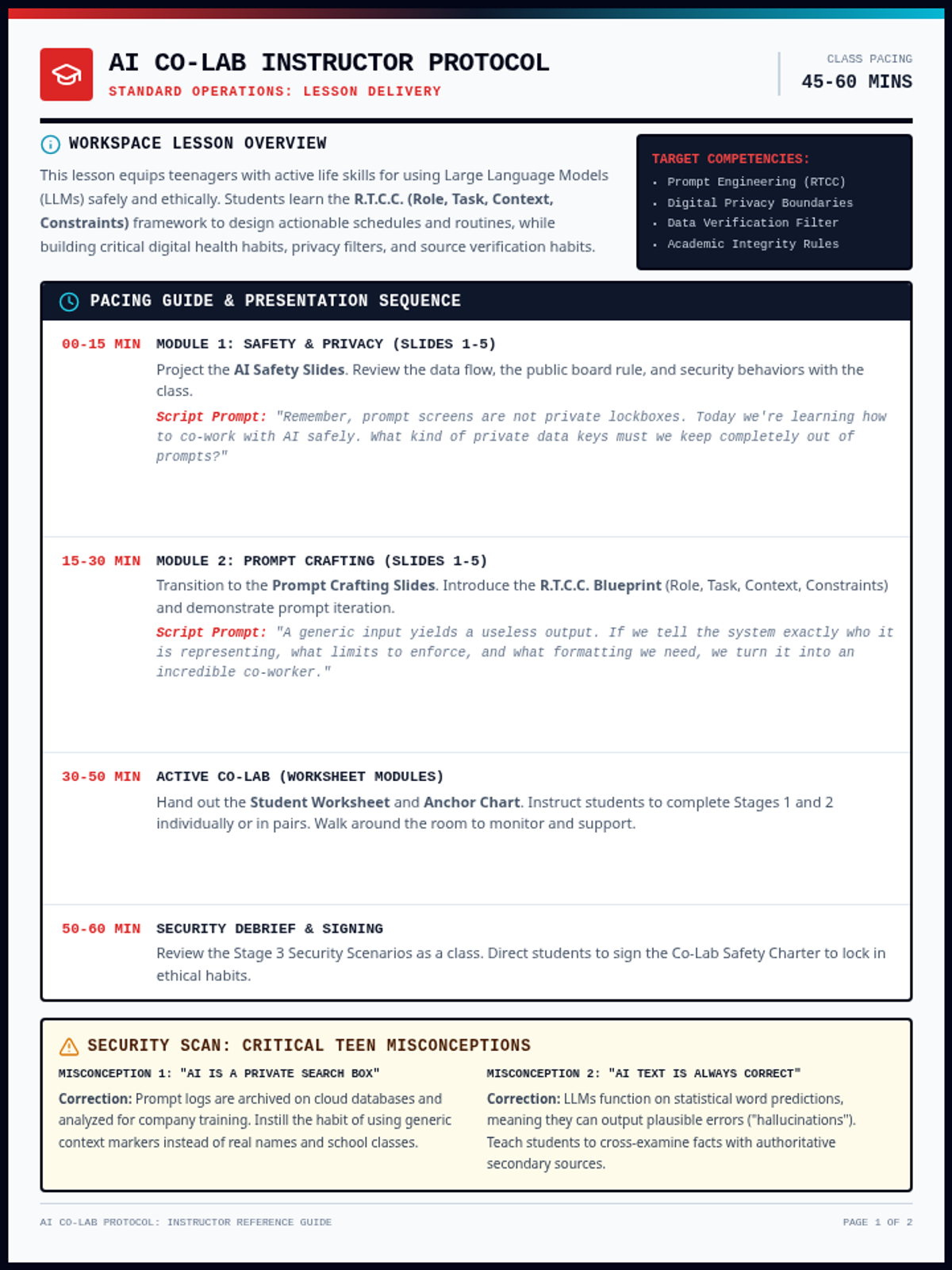
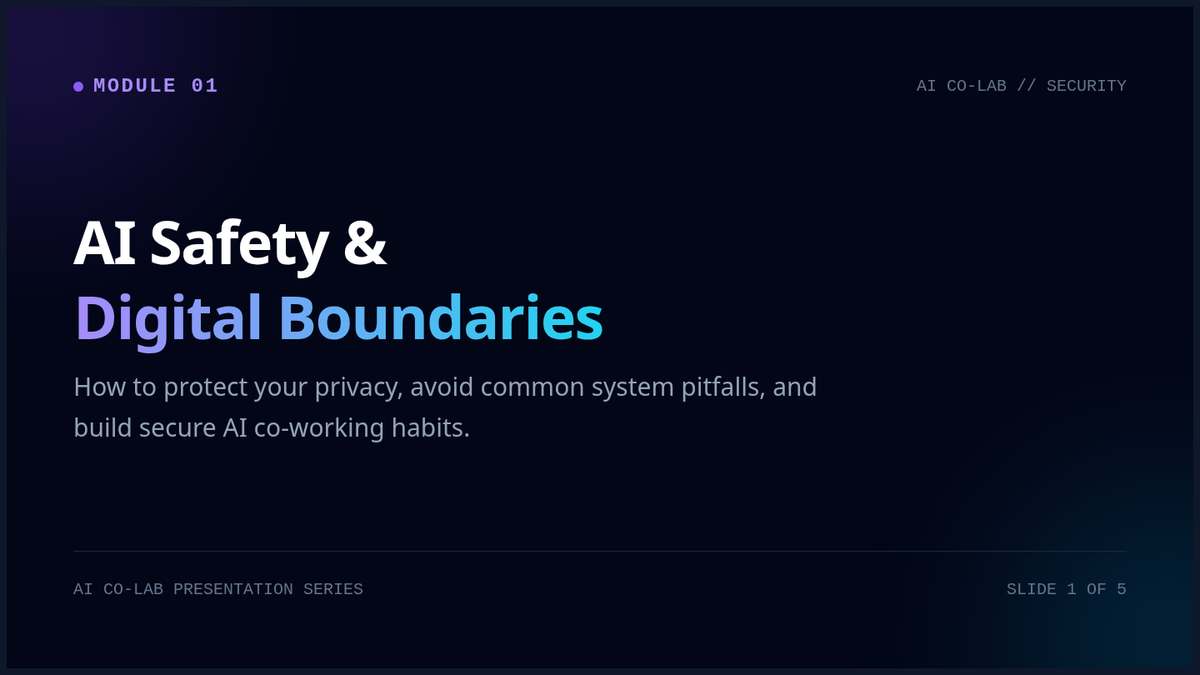
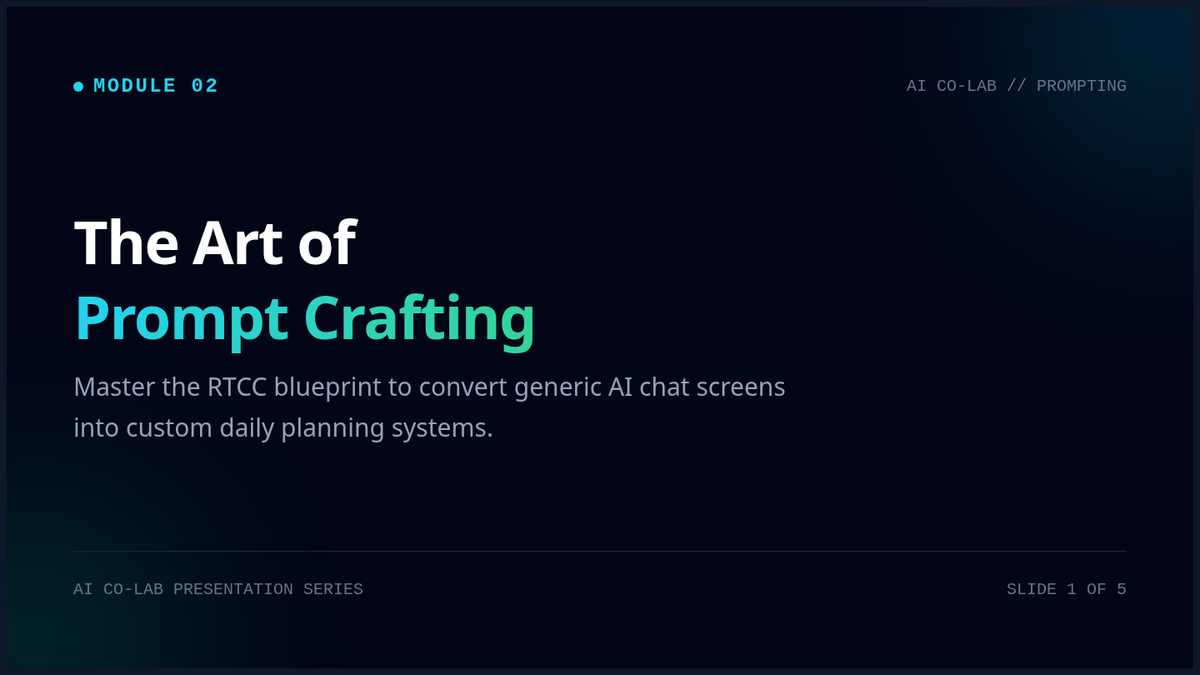
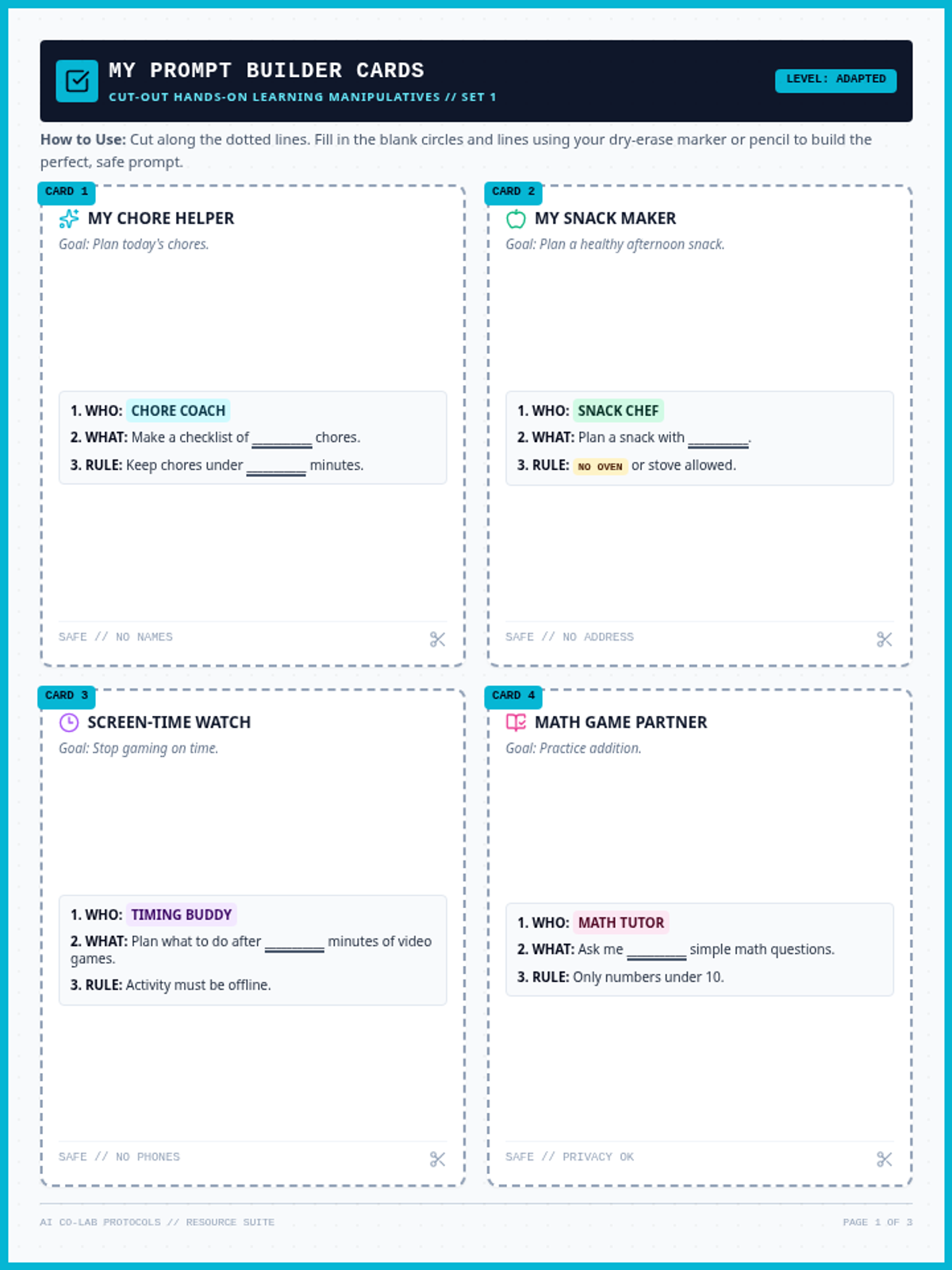
A complete guide for teenagers to responsibly use AI for everyday learning tasks, mastering critical safety habits, privacy boundaries, and advanced prompting techniques.
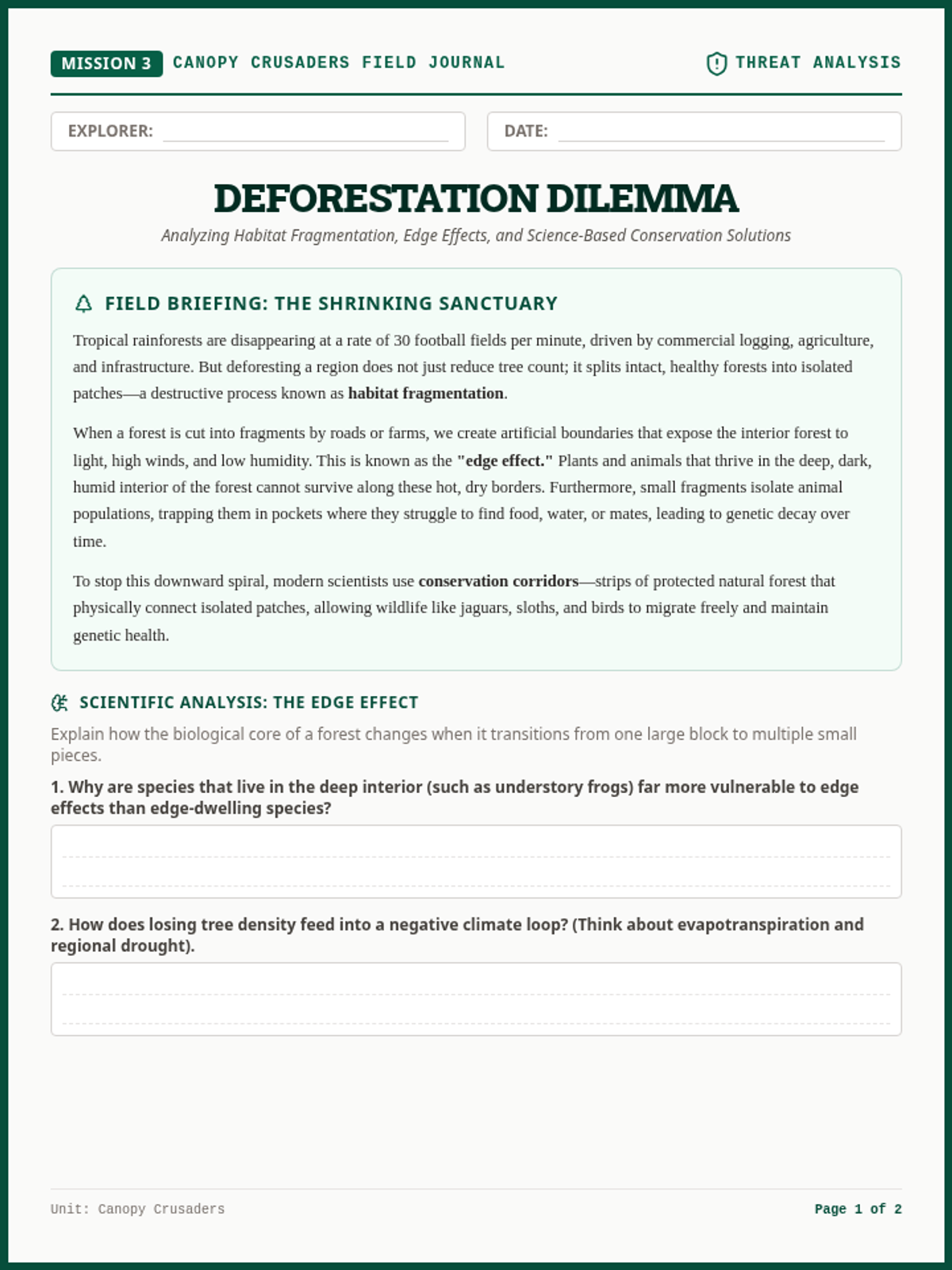
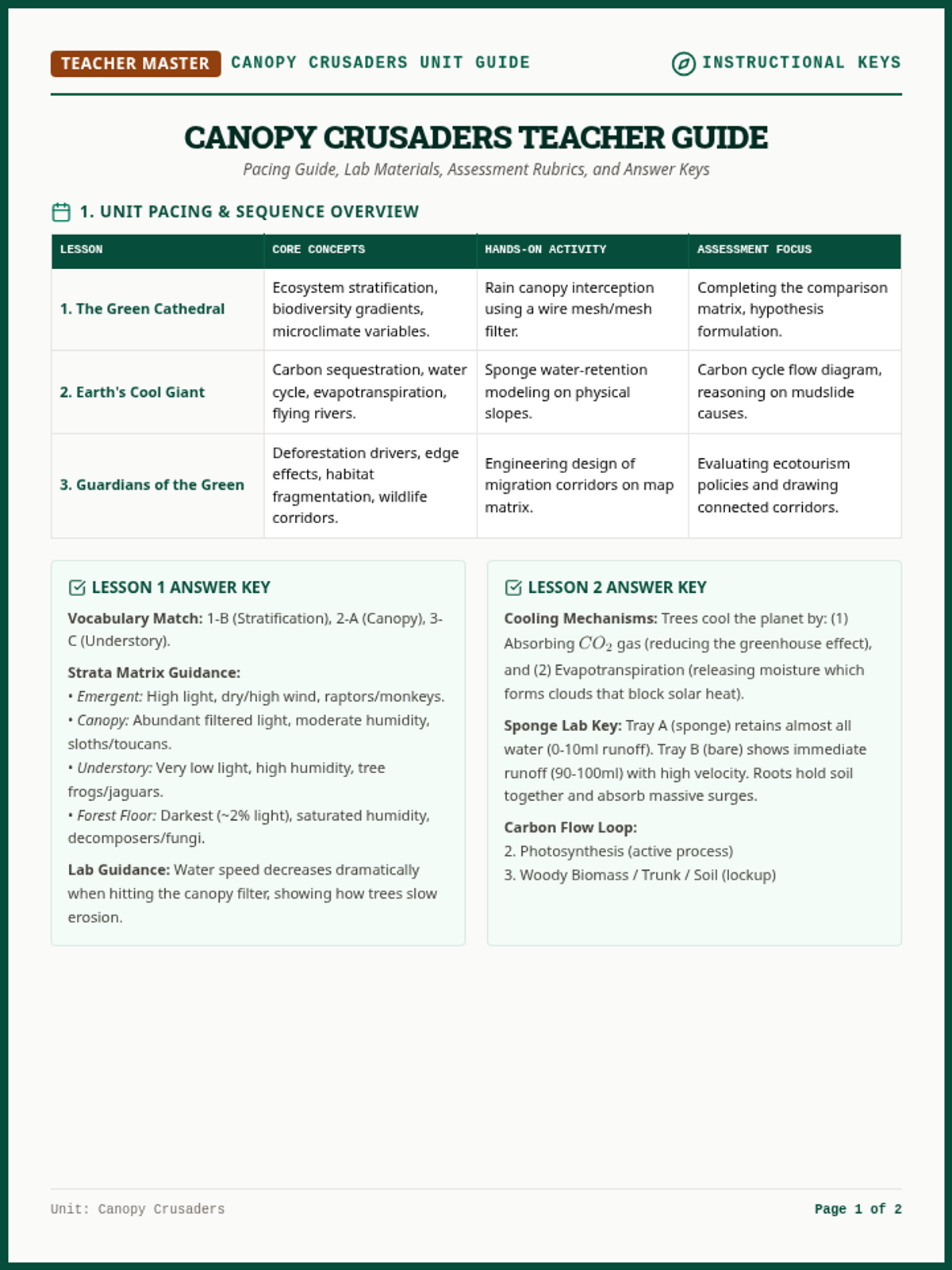
Students analyze the causes and consequences of deforestation, mapping habitat fragmentation and designing collaborative, science-based conservation solutions.
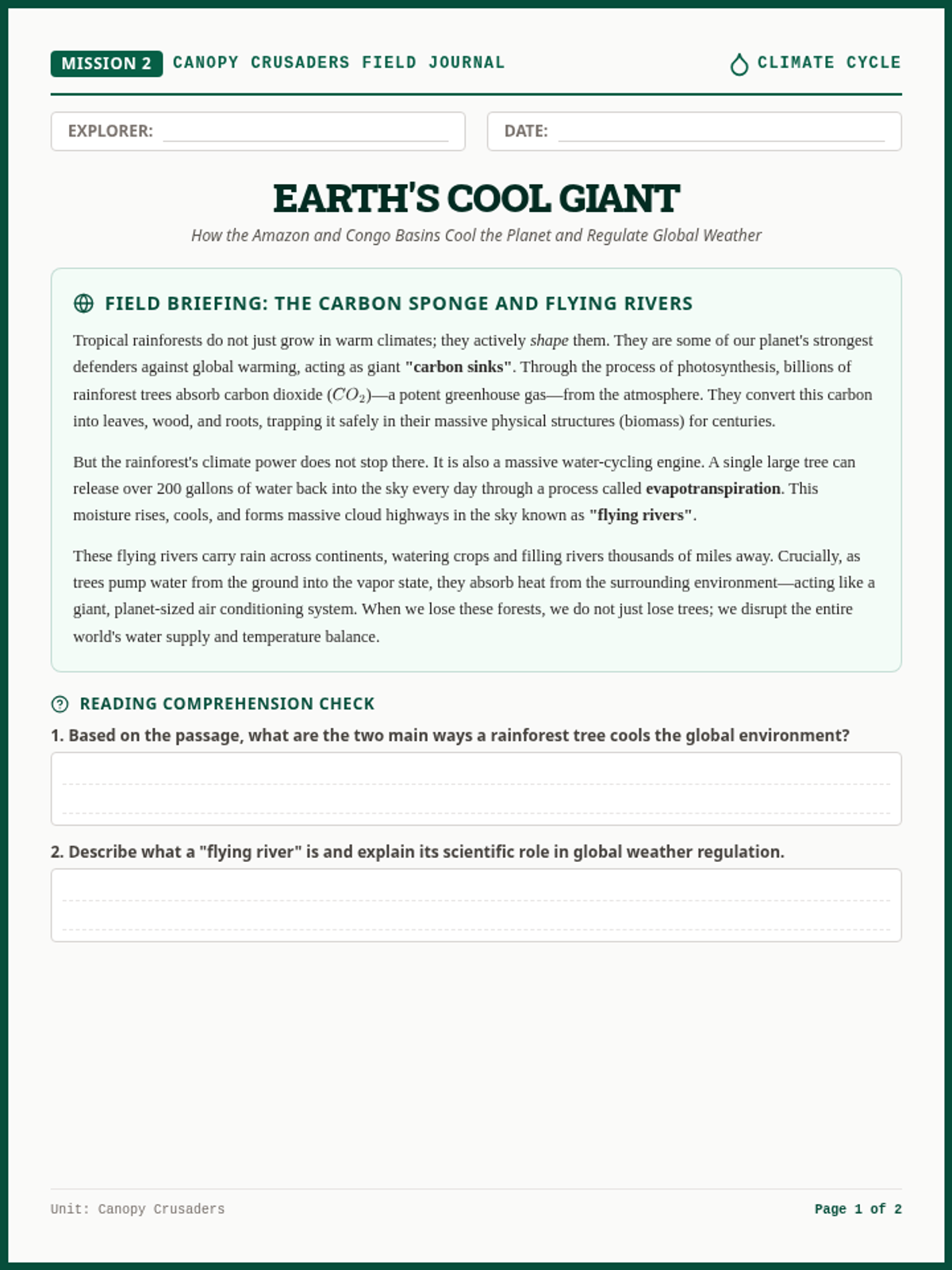
Students investigate the rainforest as a massive climate-control engine, analyzing how evapotranspiration regulates weather and how trees act as vital global carbon sinks.
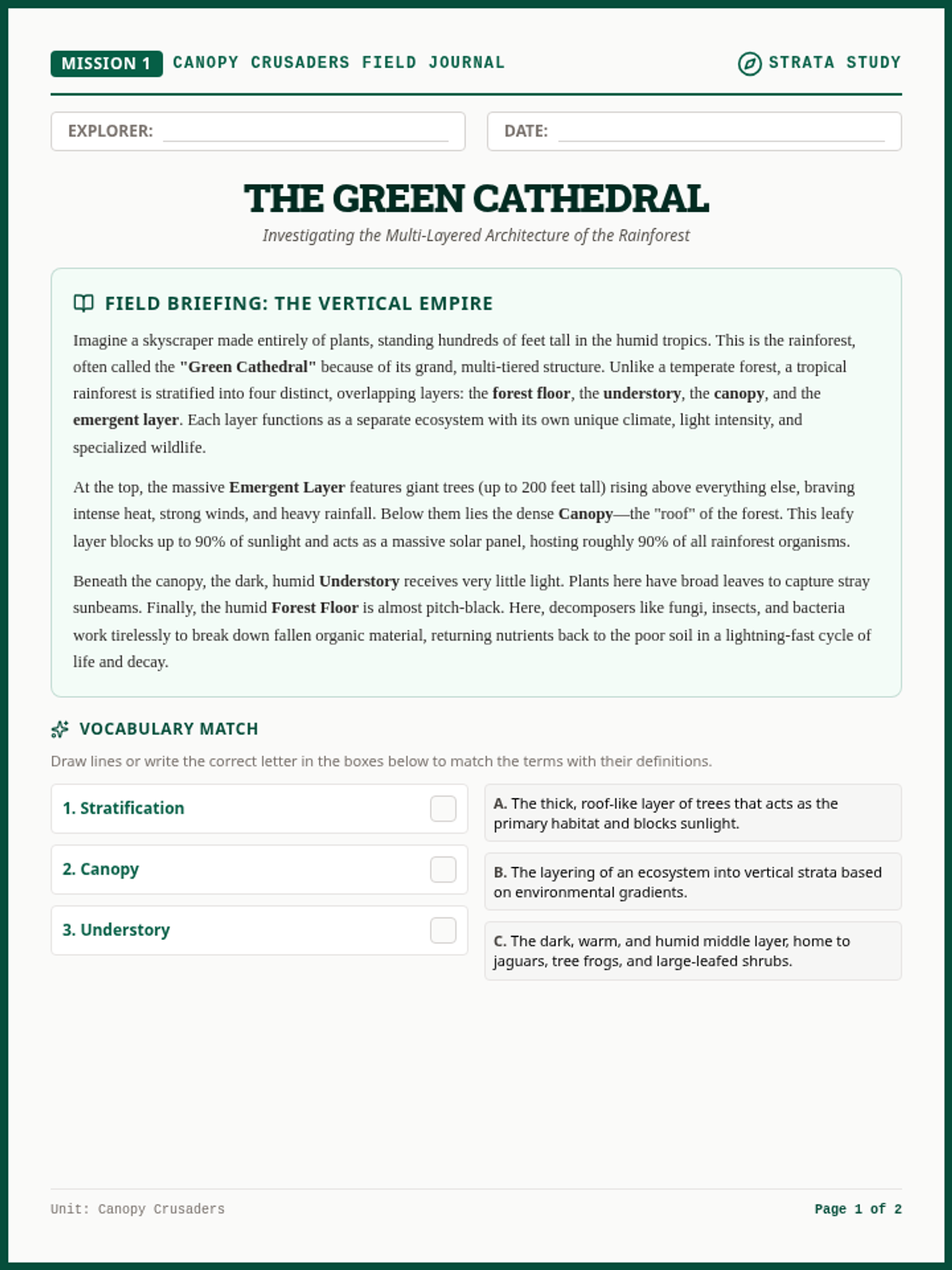
Students explore the structural layers of the rainforest (forest floor, understory, canopy, emergent layer) and model biodiversity and physical conditions across these strata.
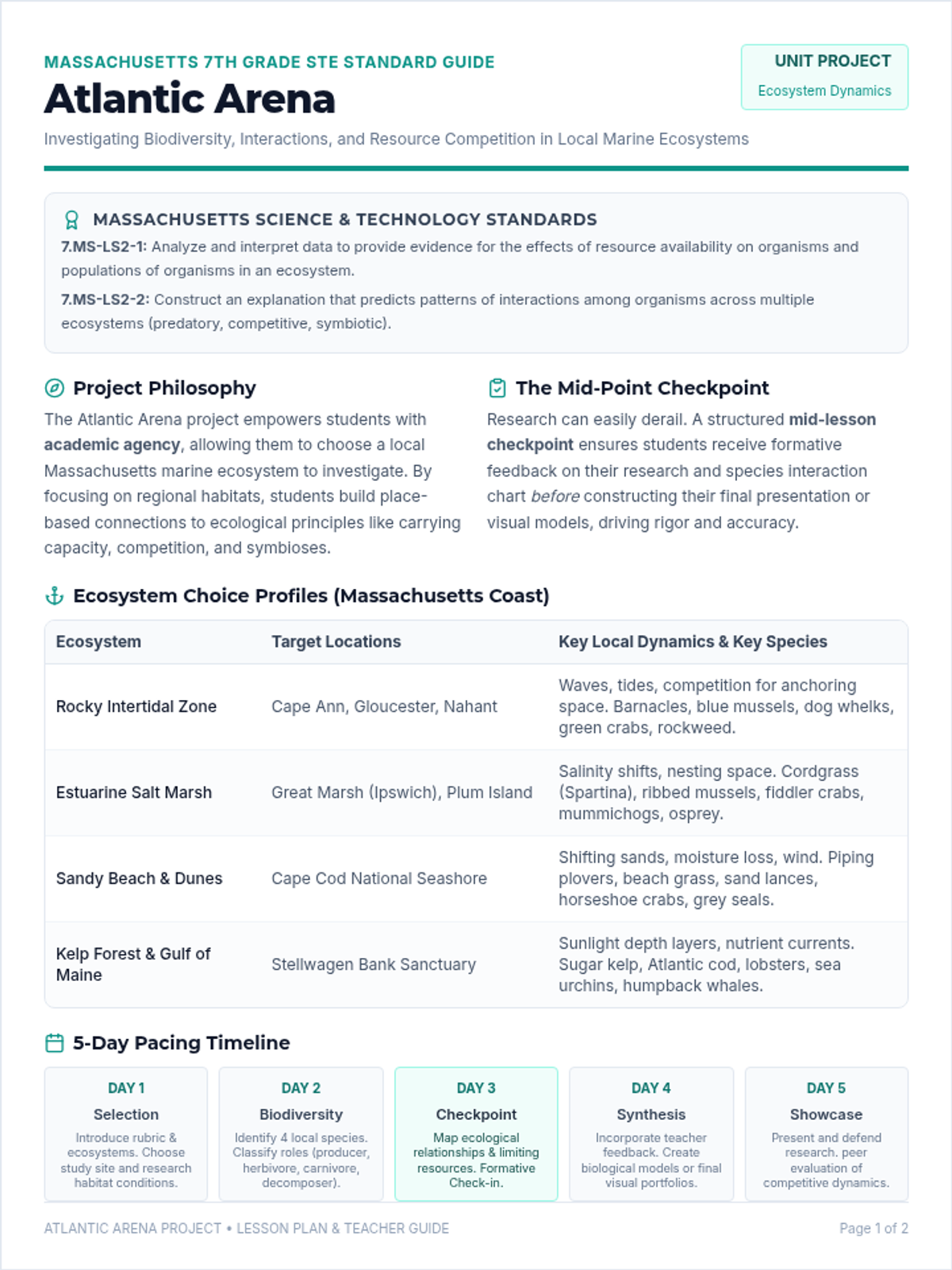
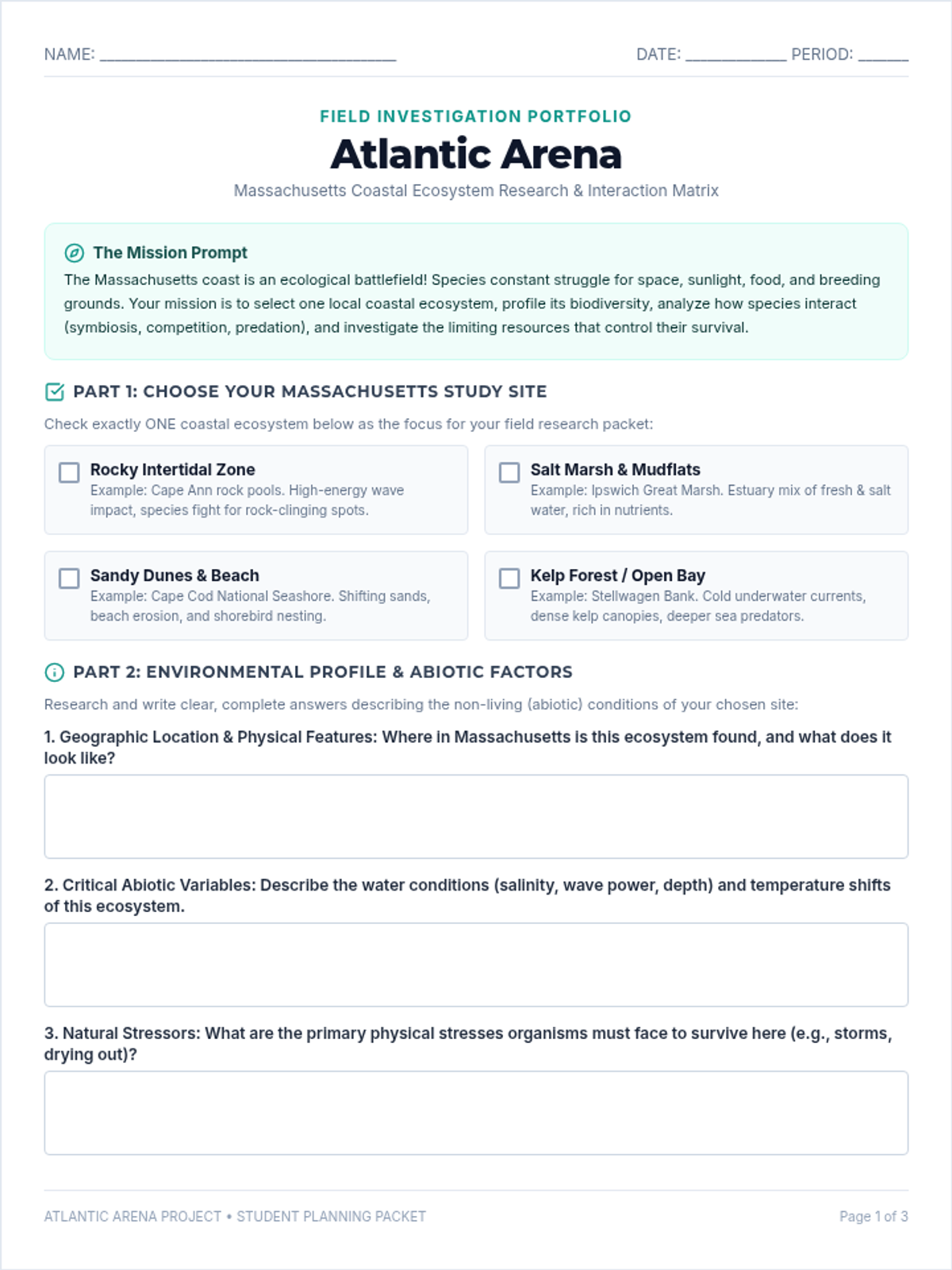
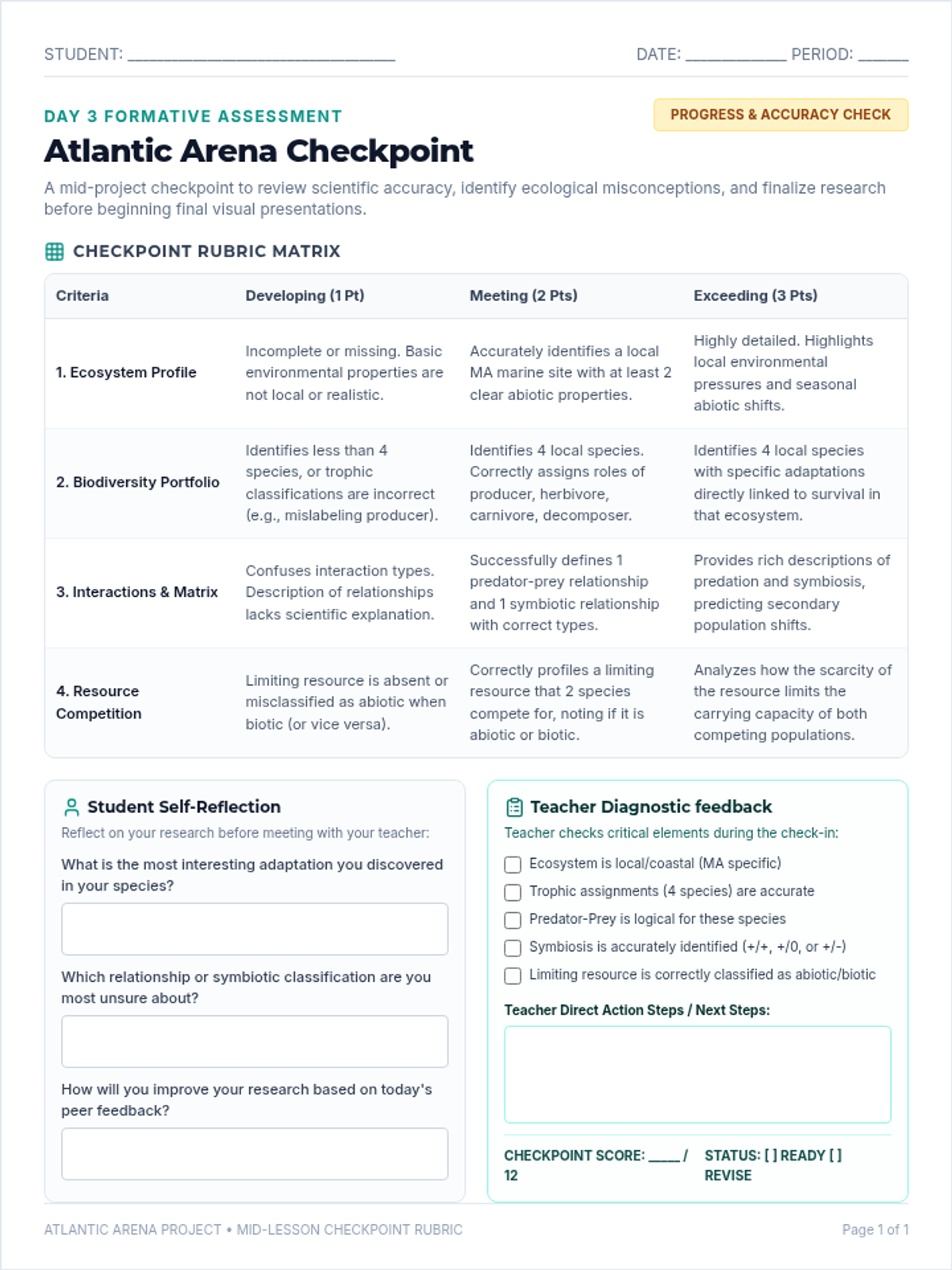
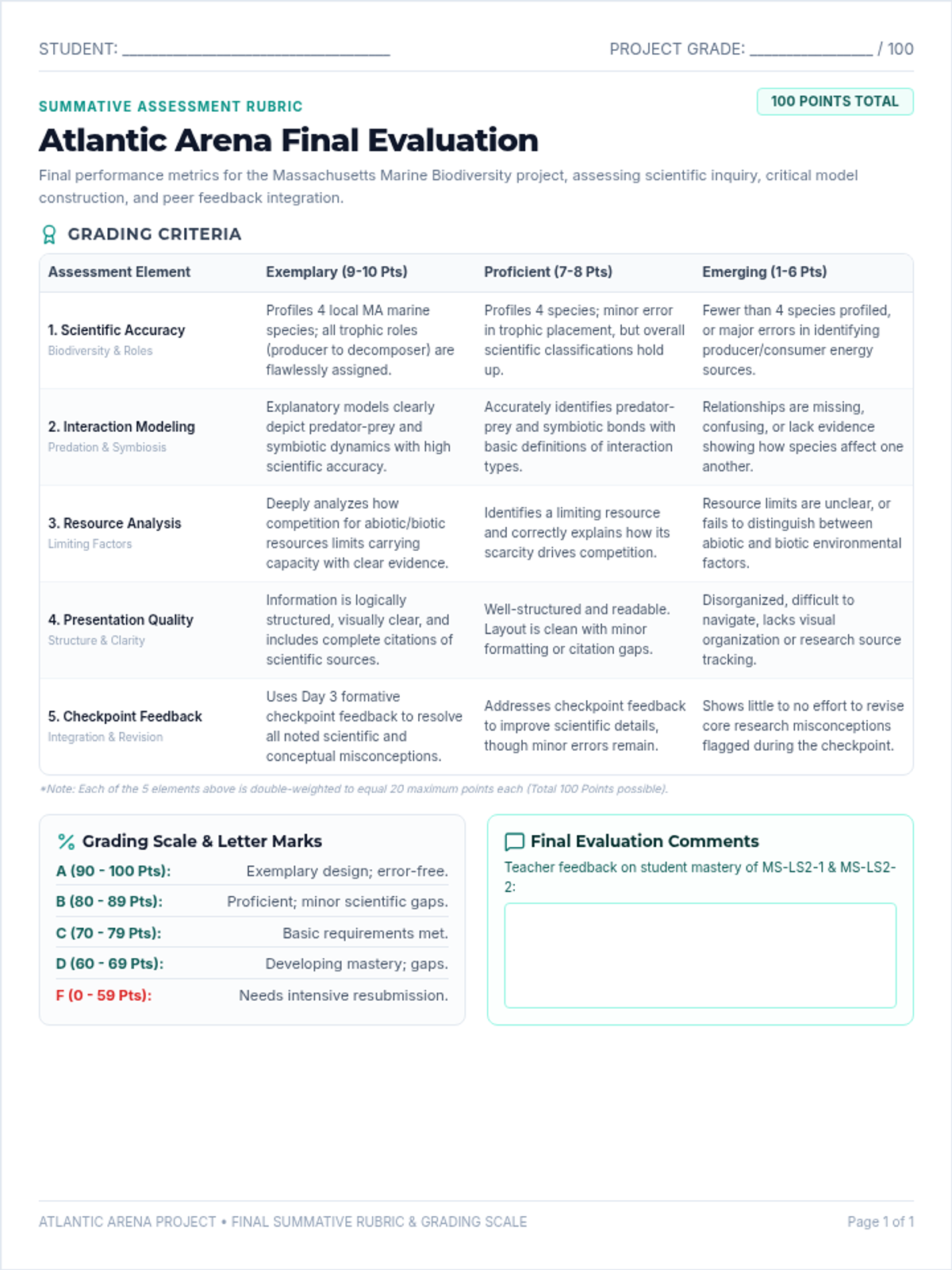
An investigative project-based lesson for 7th-grade students exploring Massachusetts marine ecosystems. Students choose a local coastal ecosystem, research resident species, analyze competitive and symbiotic interactions, and demonstrate understanding of resource availability.
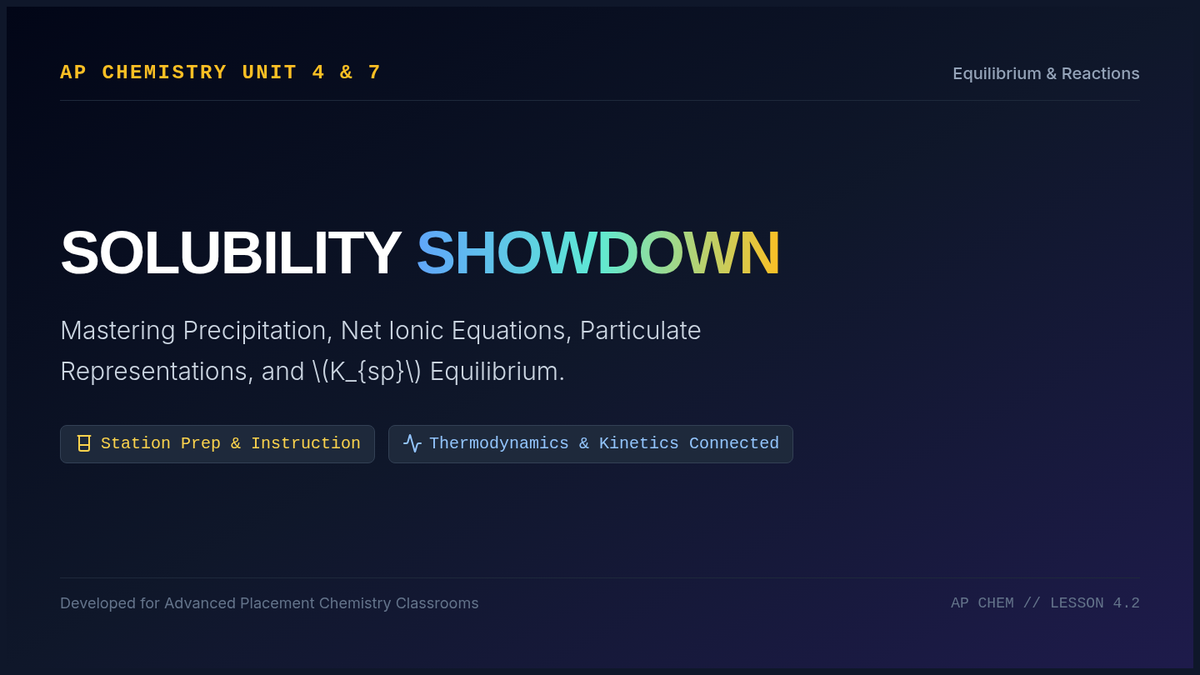
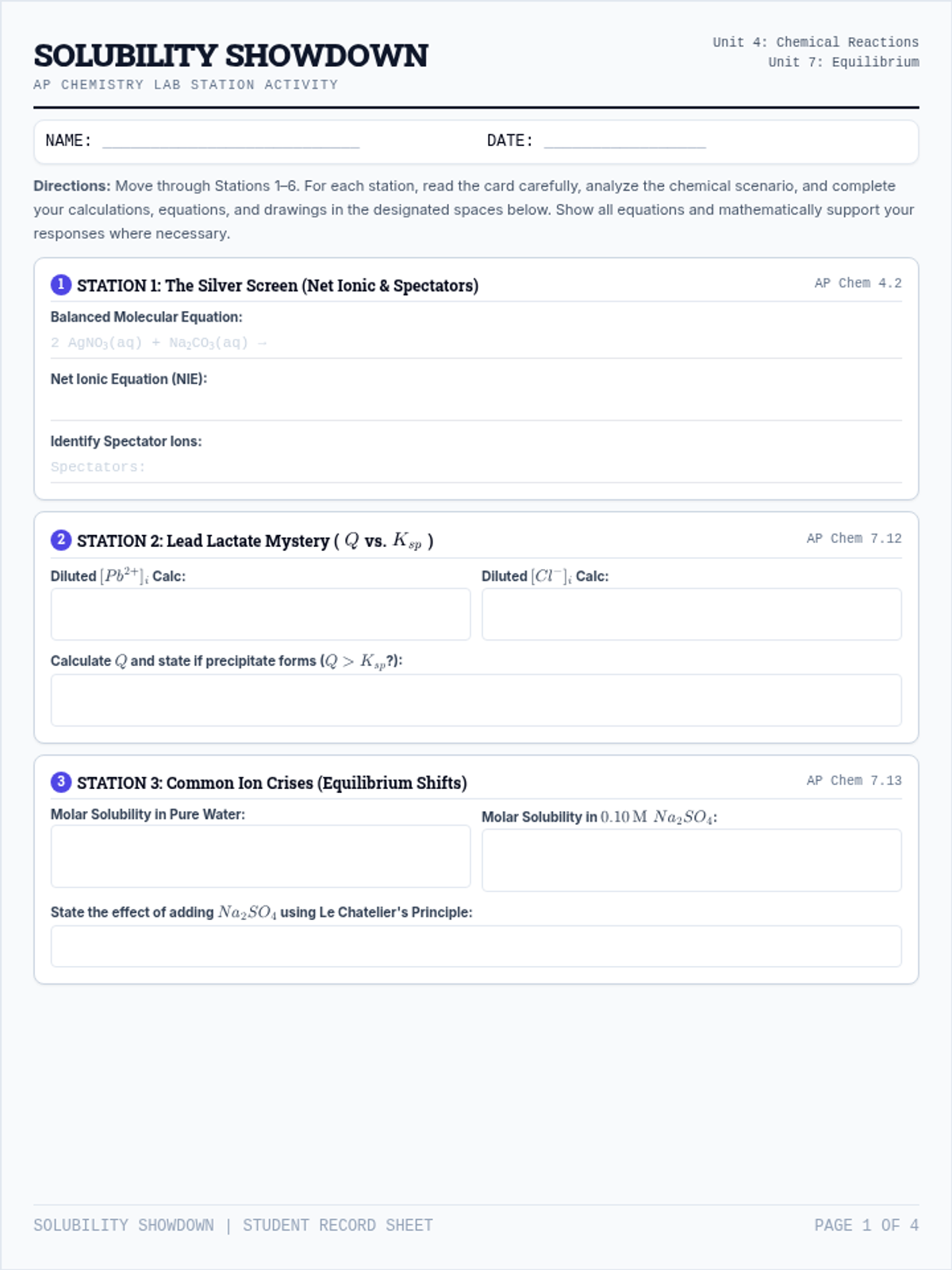
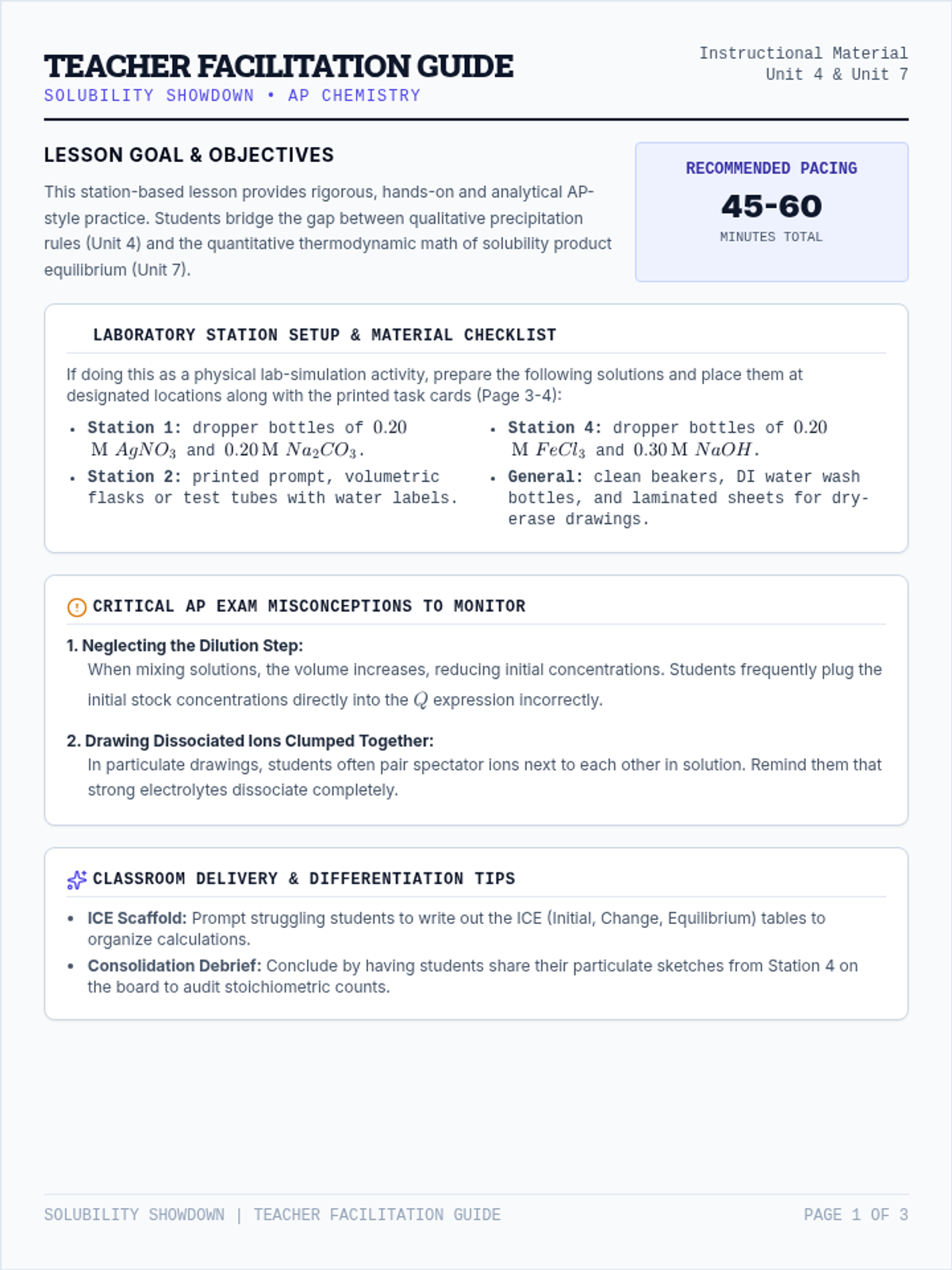
An AP Chemistry lesson exploring solubility rules, net ionic equations, particulate representations, and the mathematical link to Ksp and equilibrium shifts. Students engage with interactive station-based task cards simulating real laboratory precipitates.
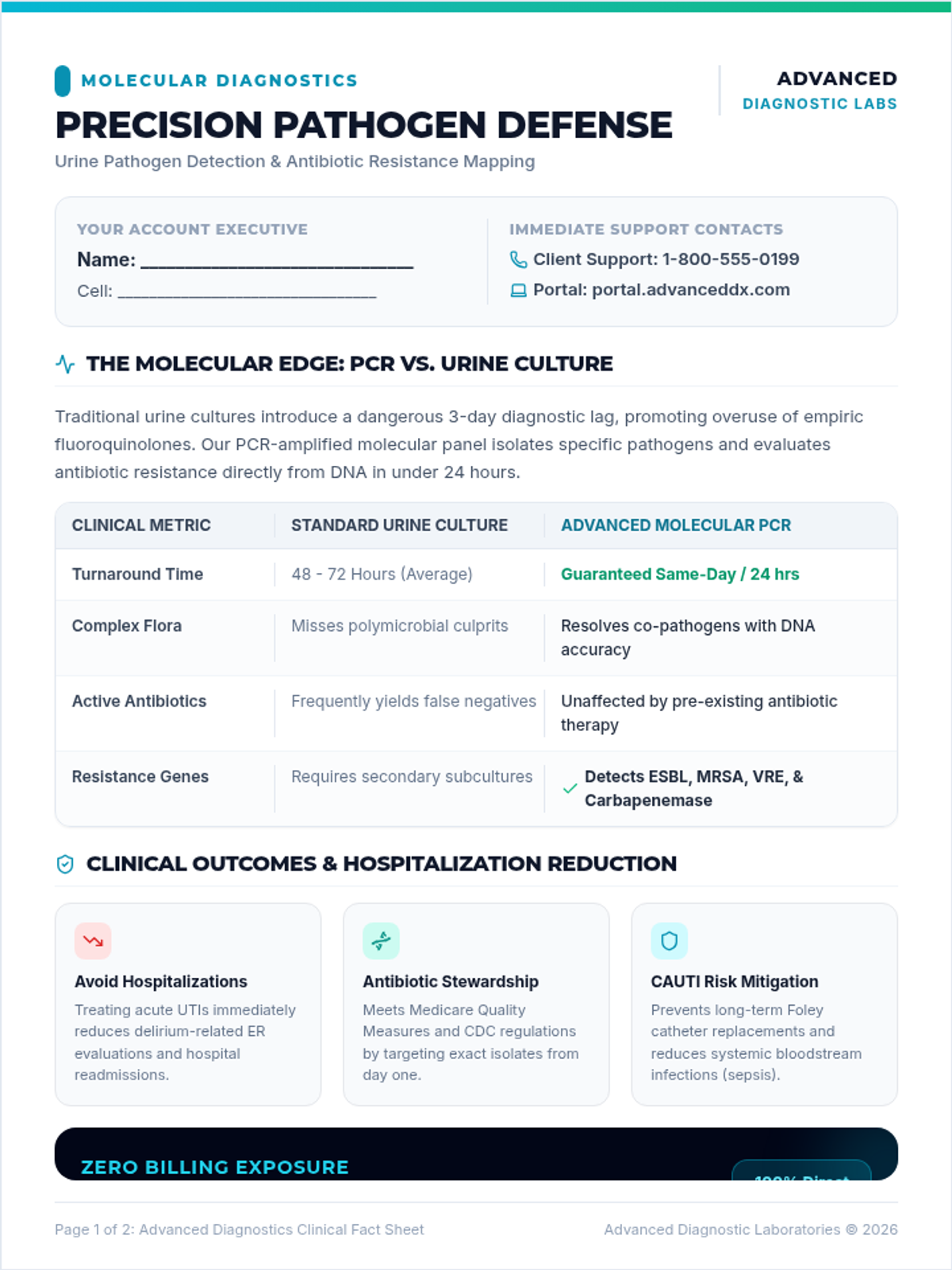
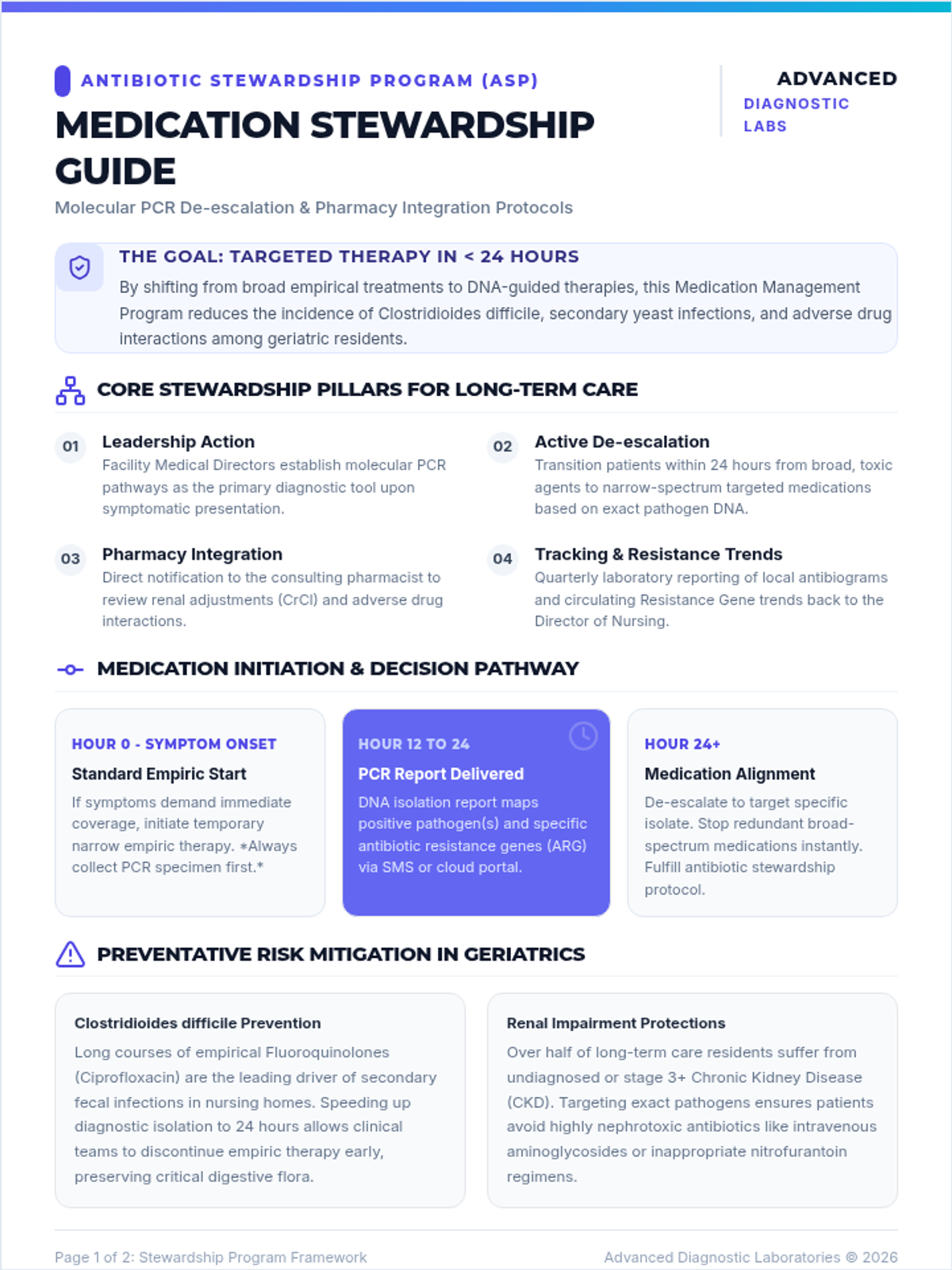
A comprehensive sales and educational package designed to pitch advanced molecular UTI testing services to long-term care and nursing home administrators, highlighting clinical and operational benefits.
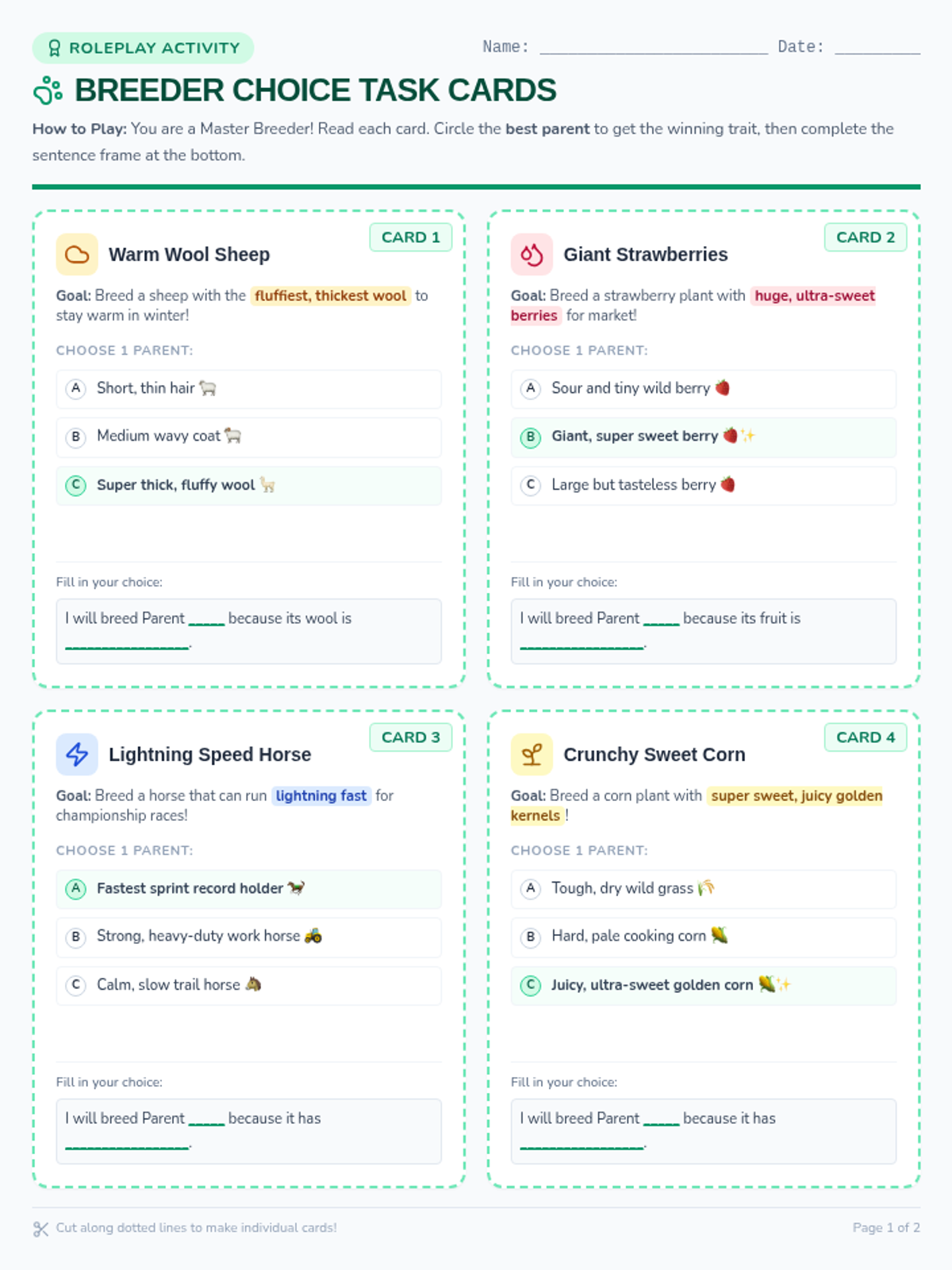
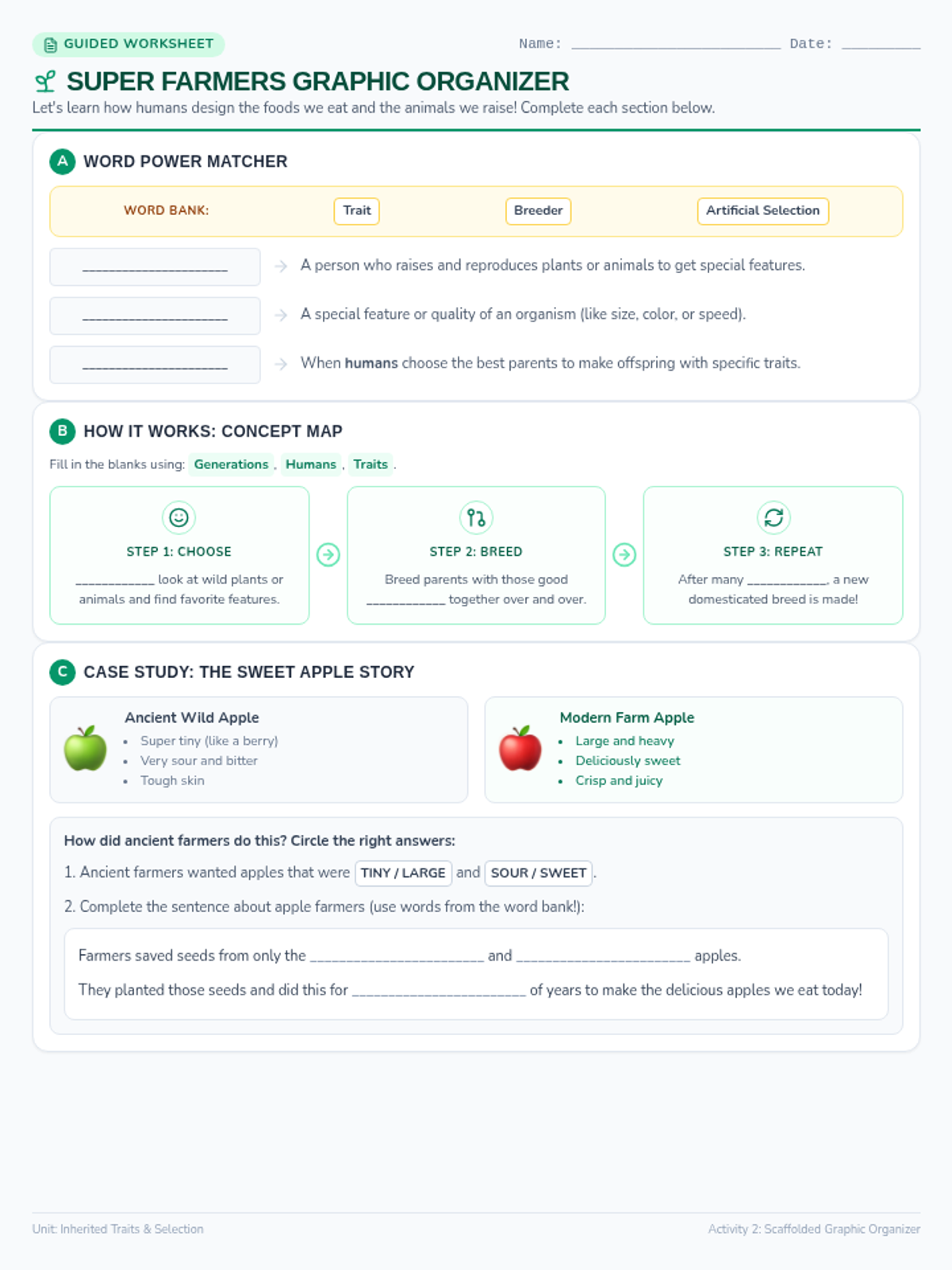
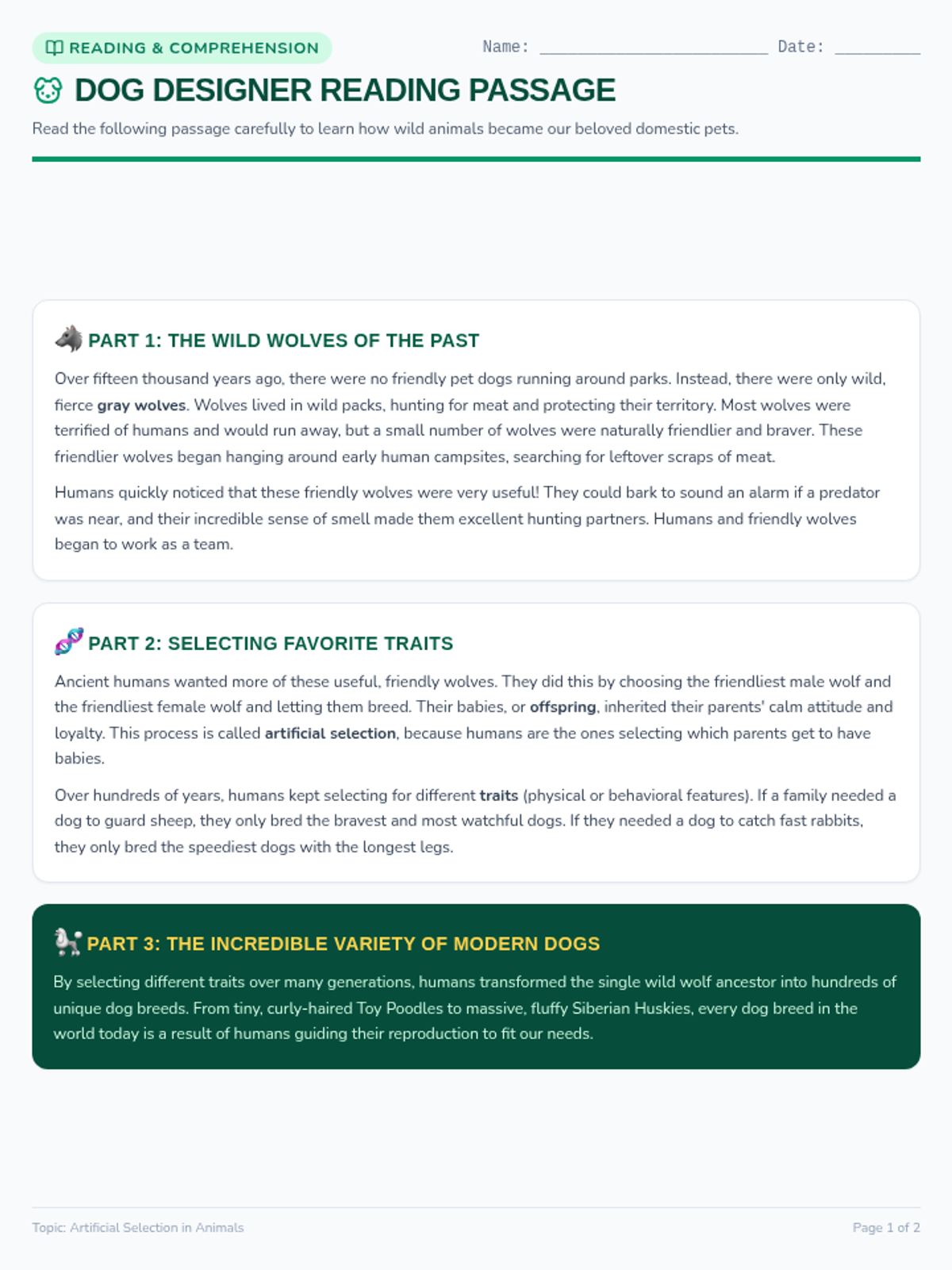
A hands-on, highly visual lesson where students explore artificial selection by roleplaying as breeders and farmers. Students analyze traits in dogs, crops, and livestock using scaffolded organizers, visual task cards, and matching tasks.
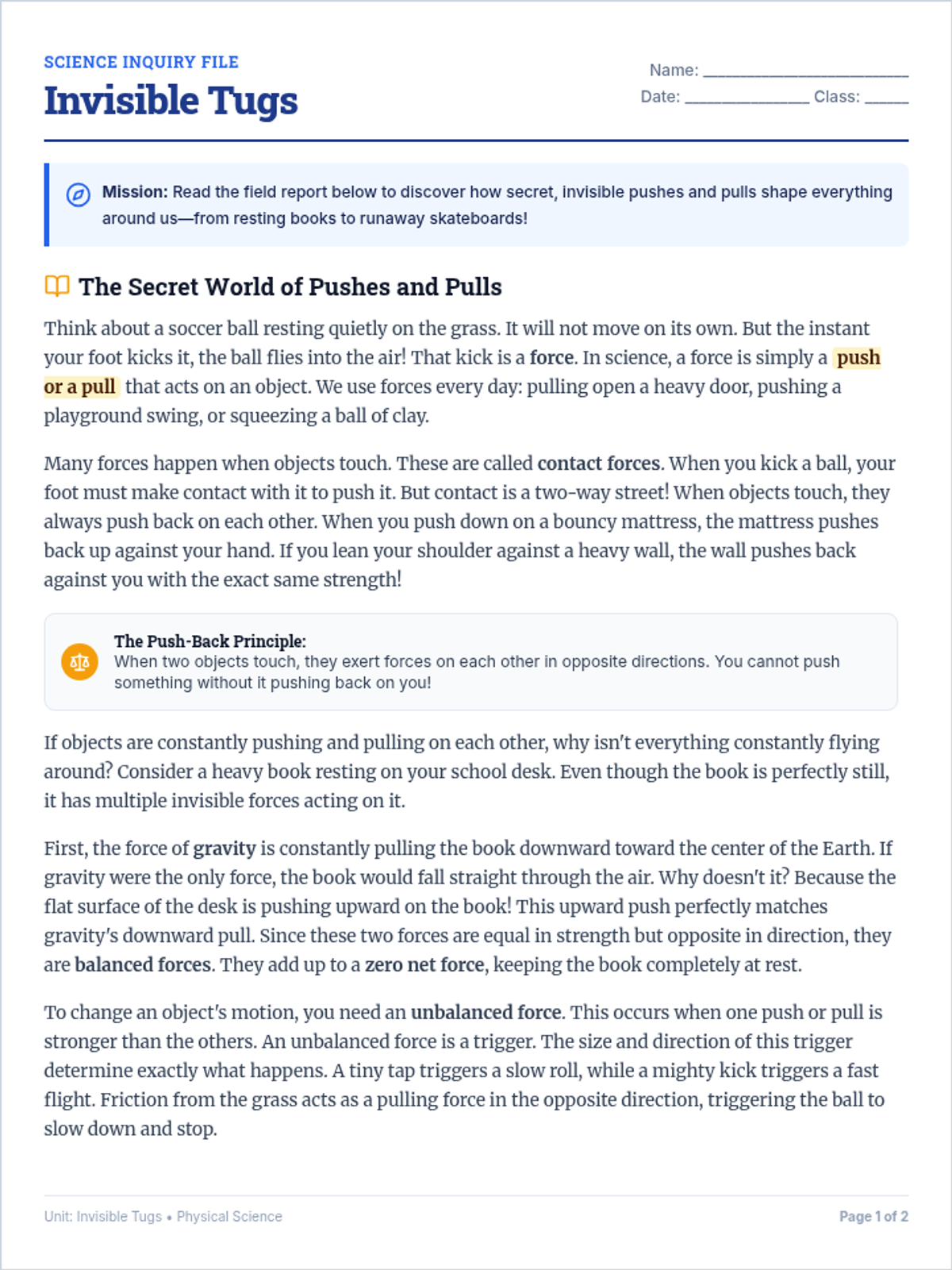
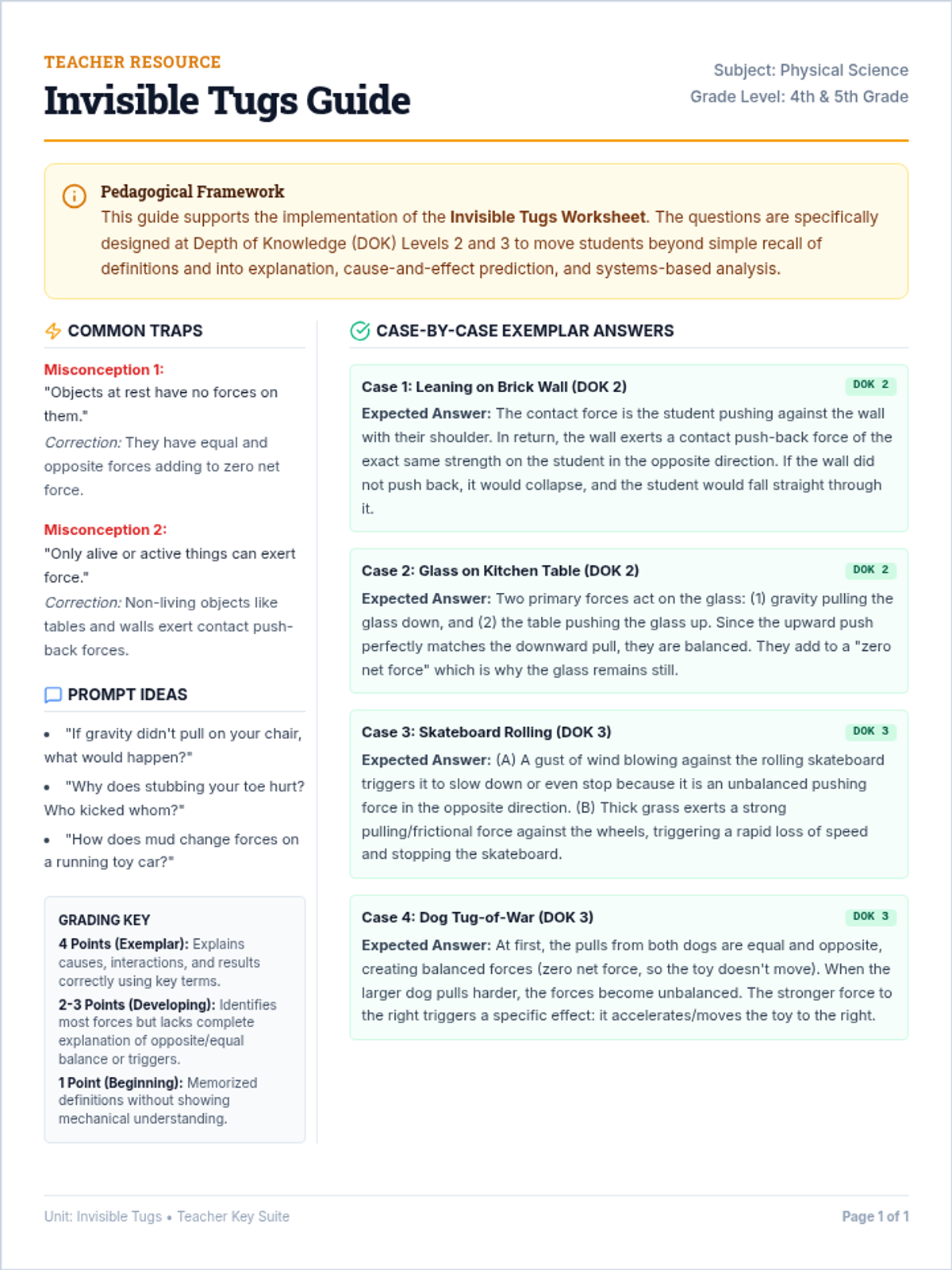
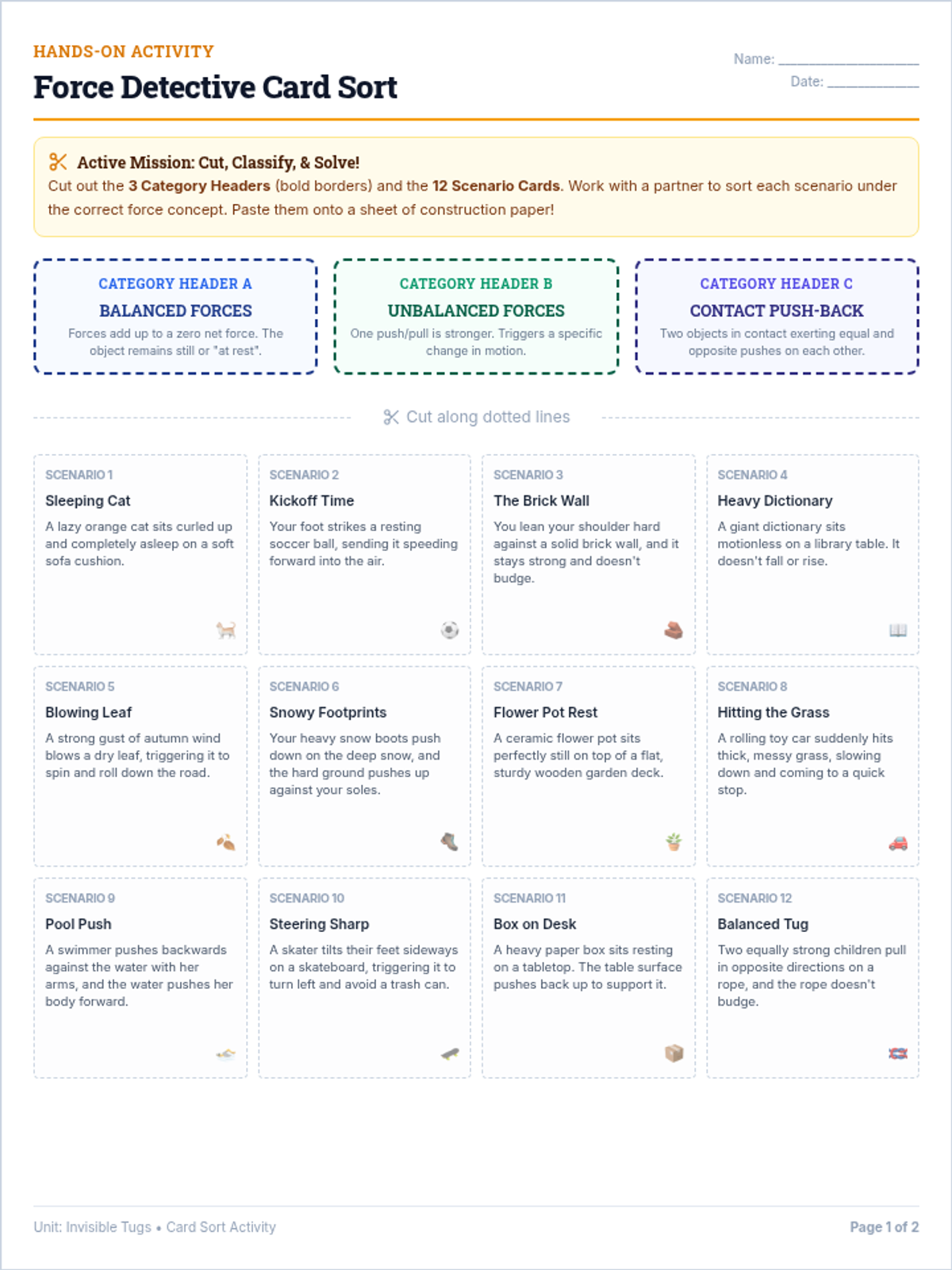
A guided inquiry lesson exploring pushes, pulls, contact forces, and balanced vs. unbalanced forces through everyday concrete examples and DOK 2-3 analysis questions.
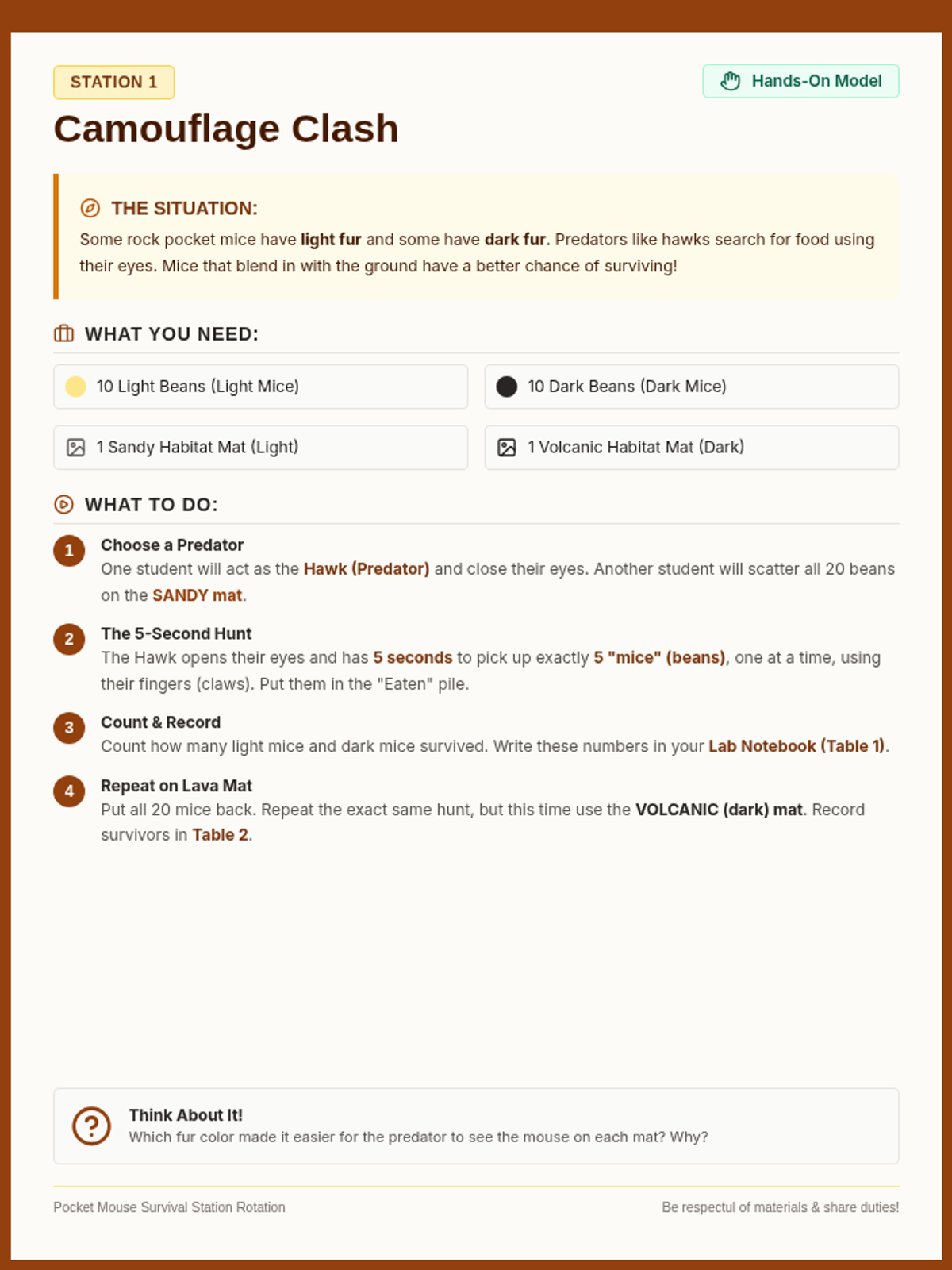
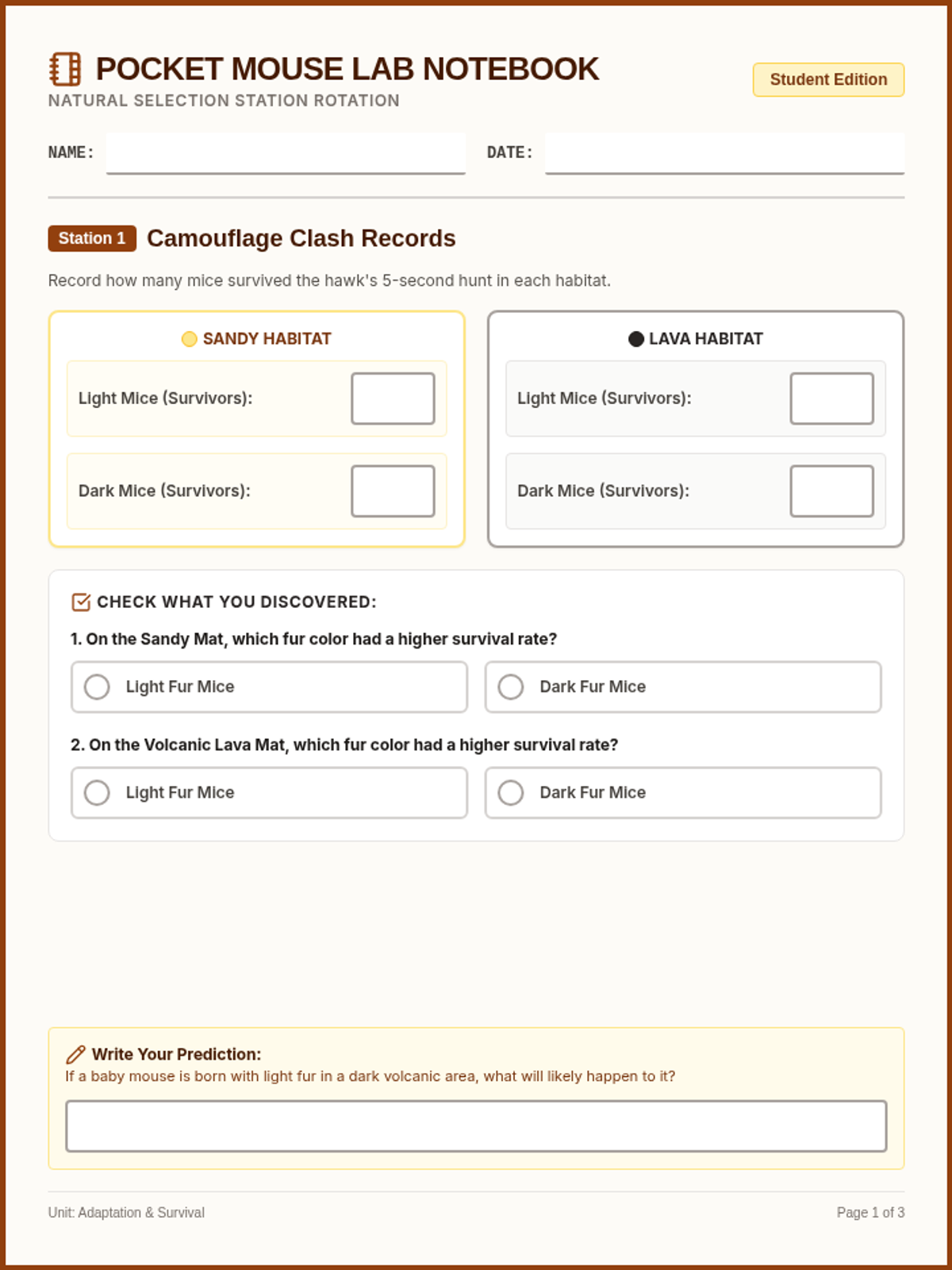
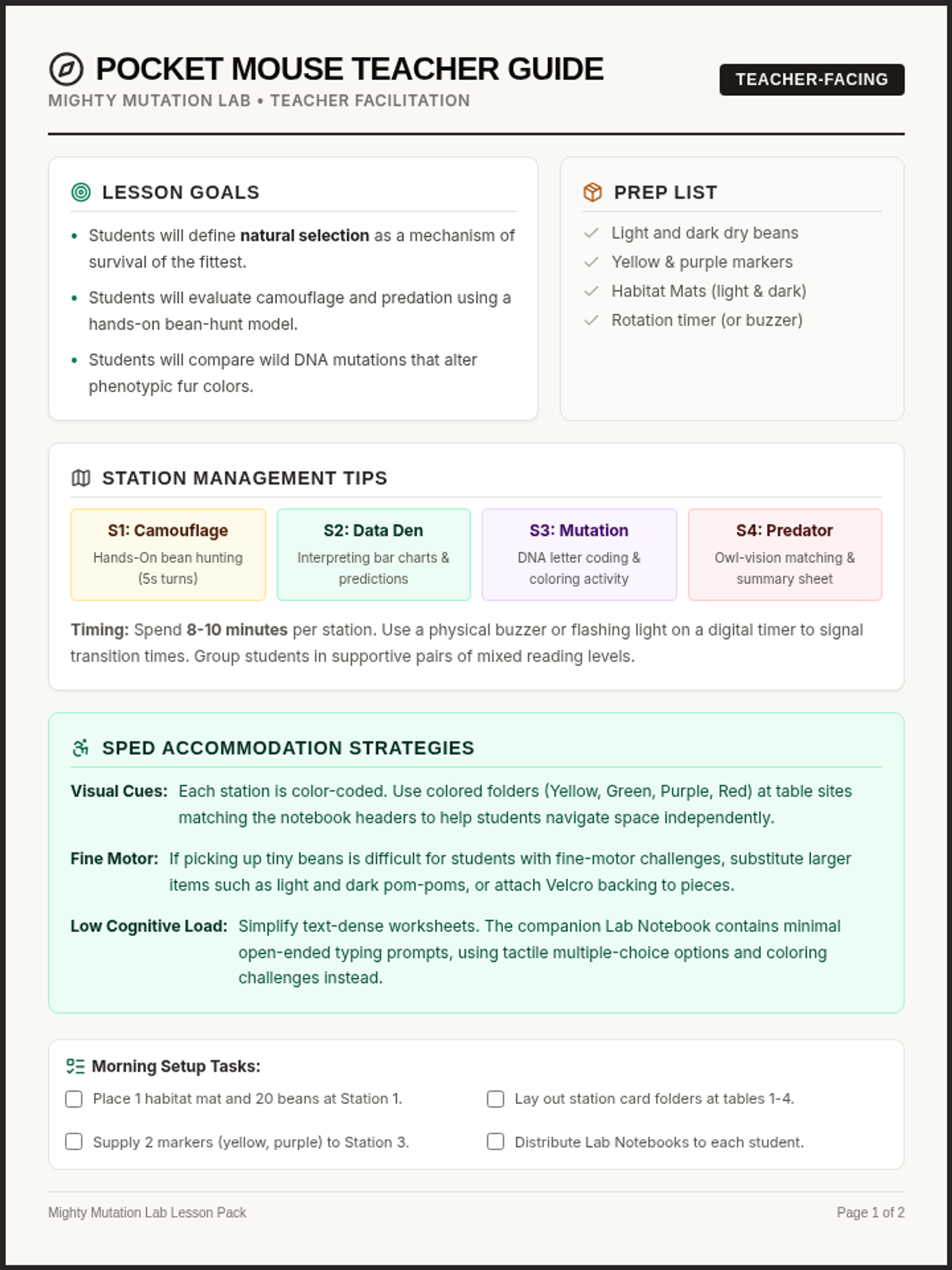
A Station Rotation Lab lesson focusing on natural selection and survival of the fittest using the real-world Rock Pocket Mouse scenario, designed to be high school special education friendly.
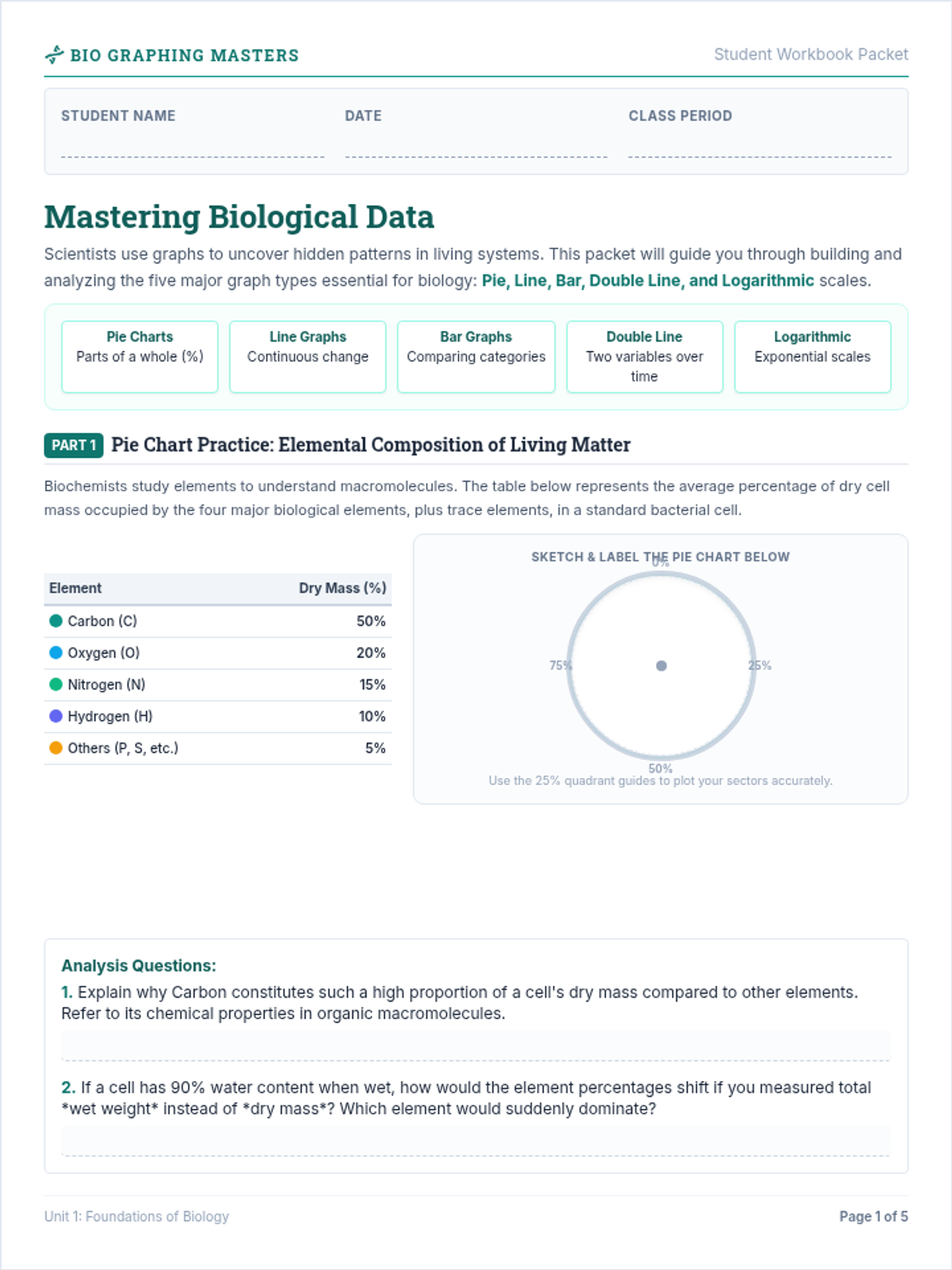
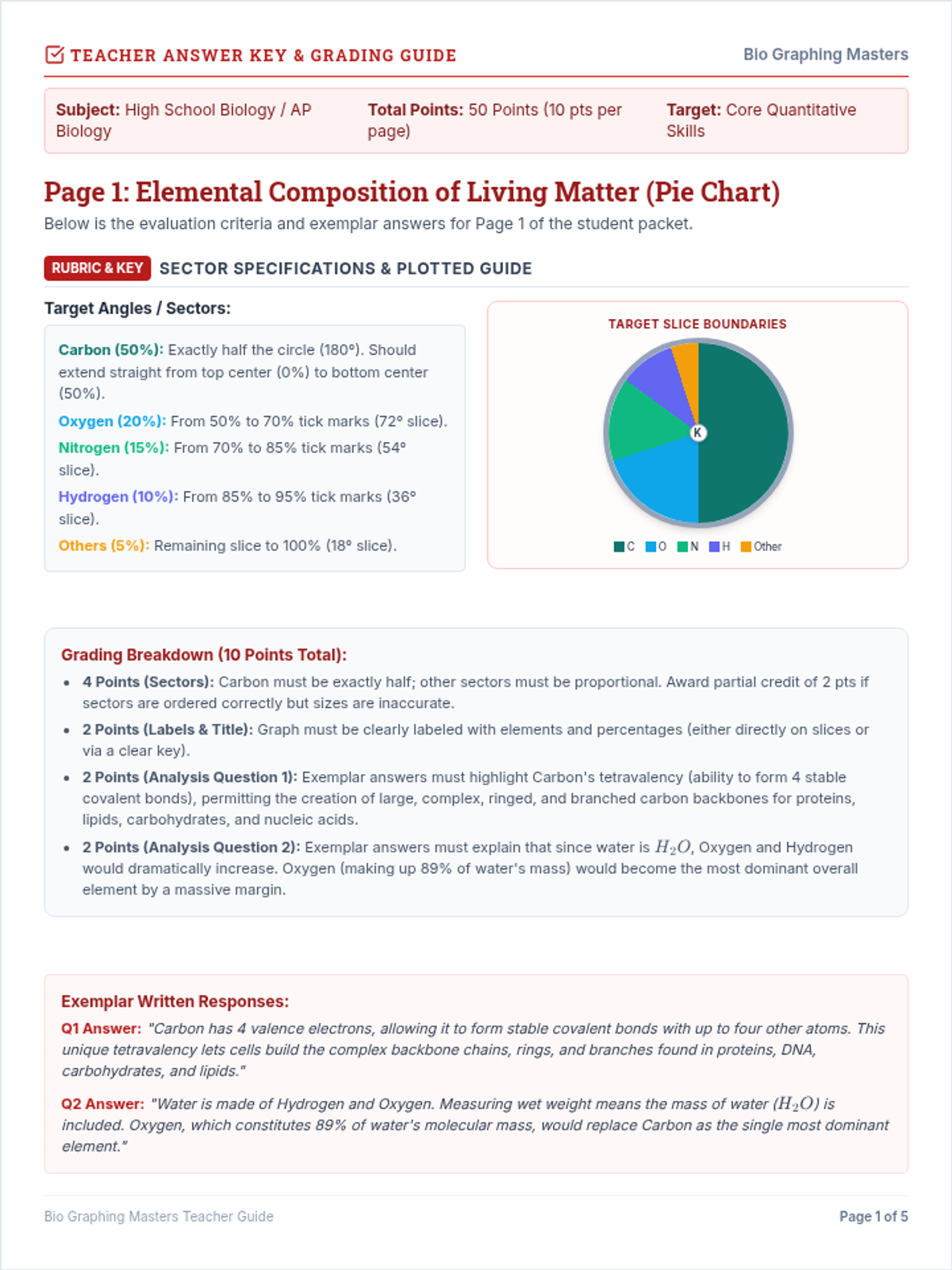
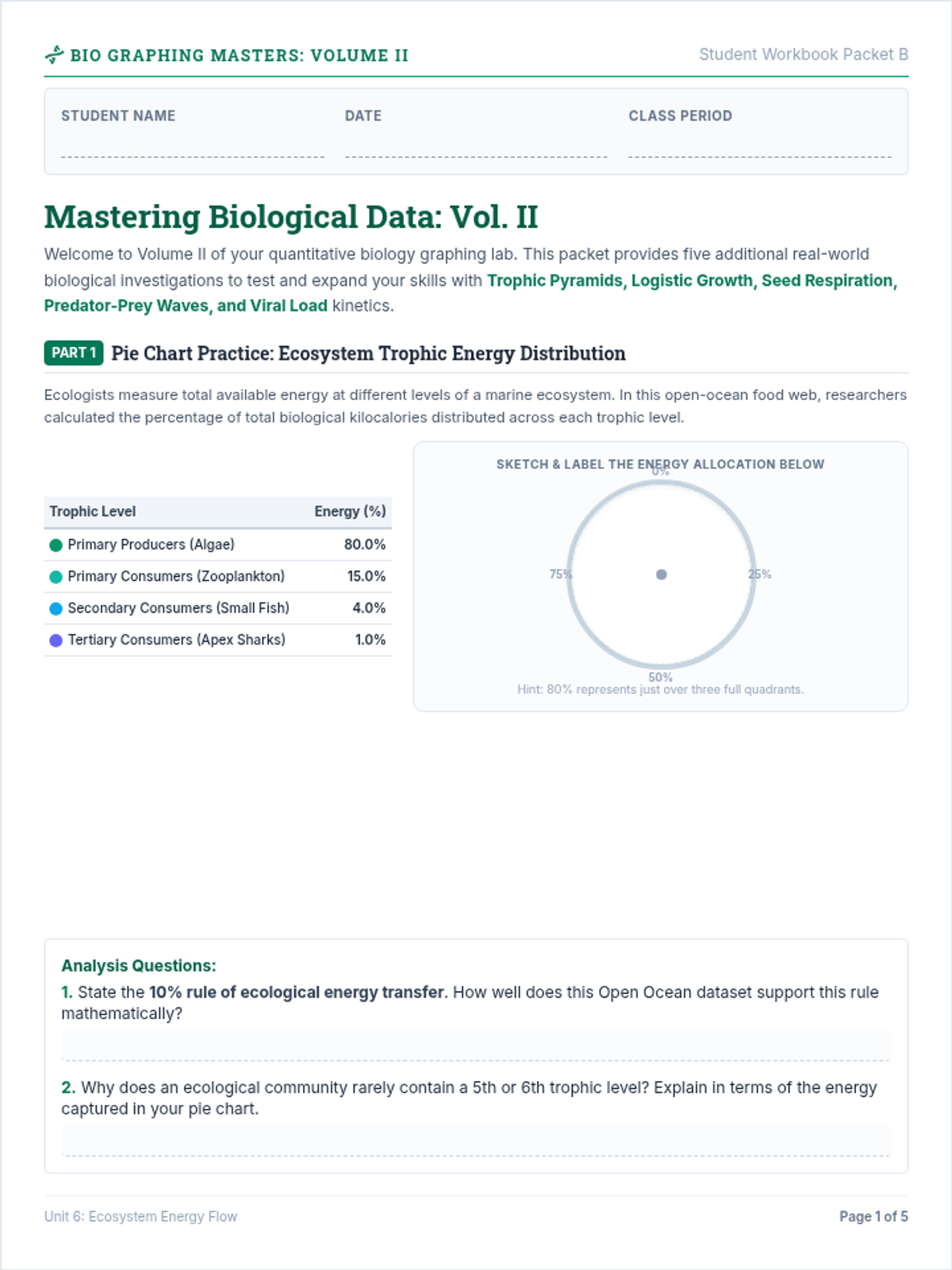
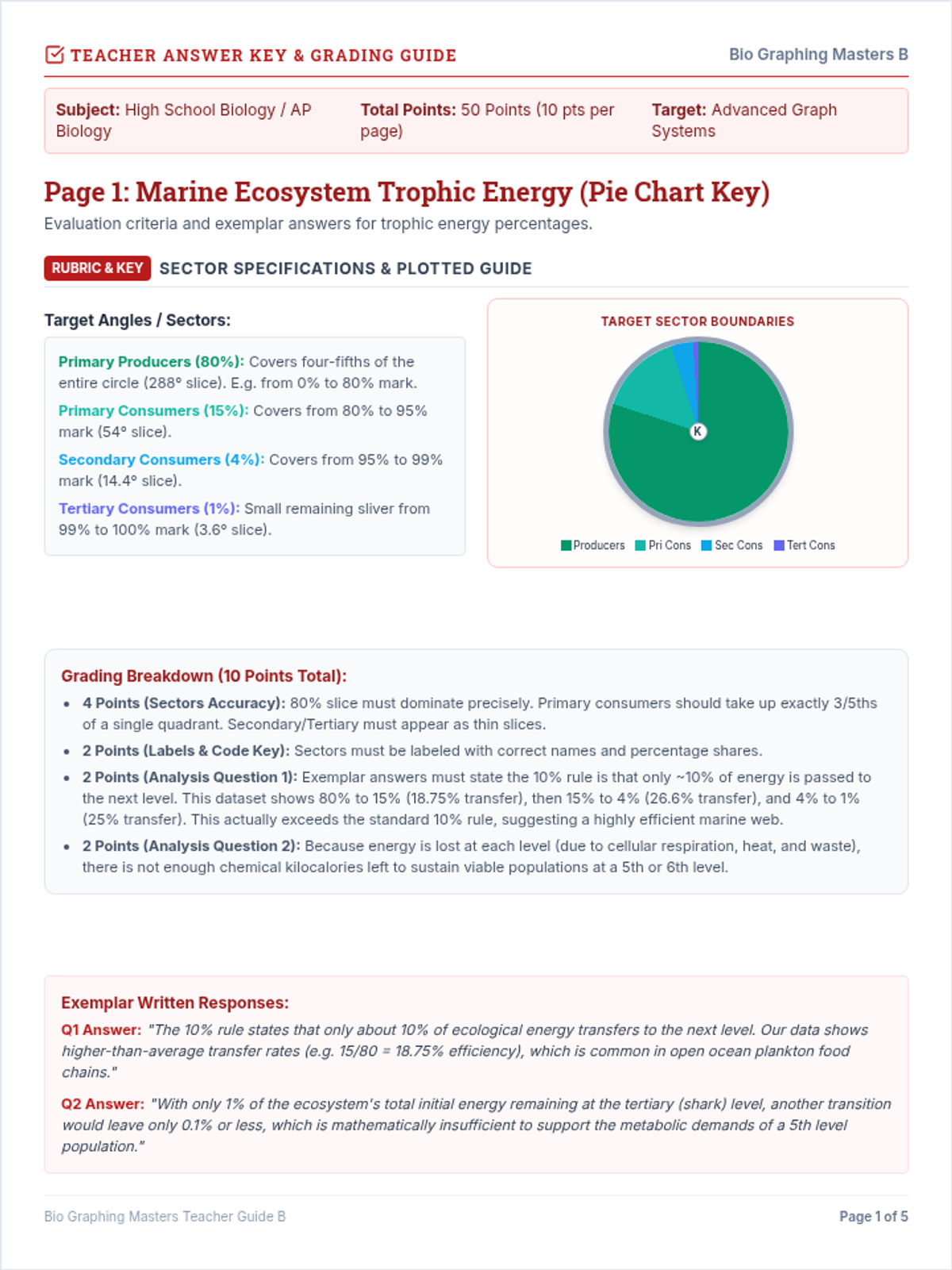
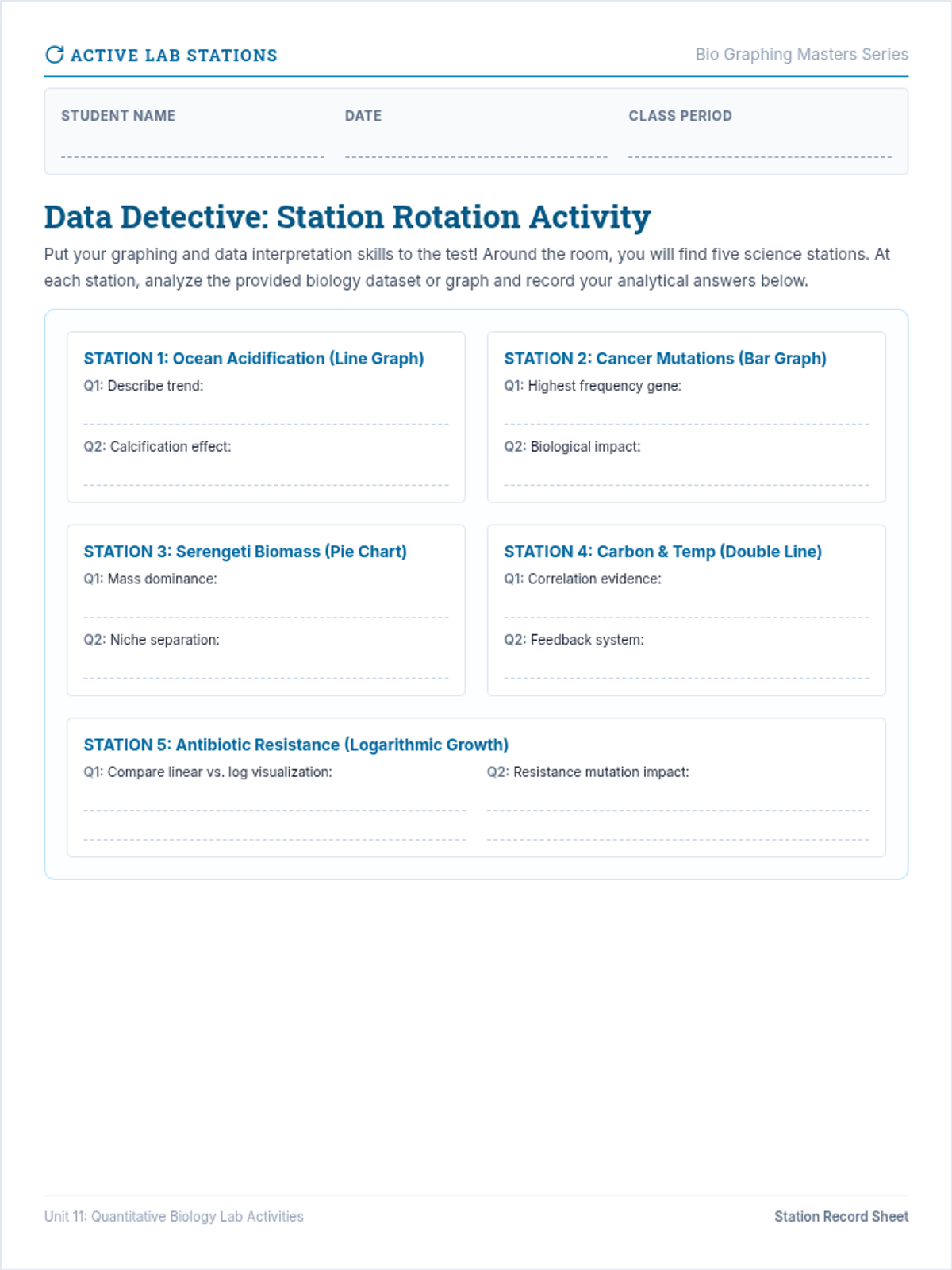
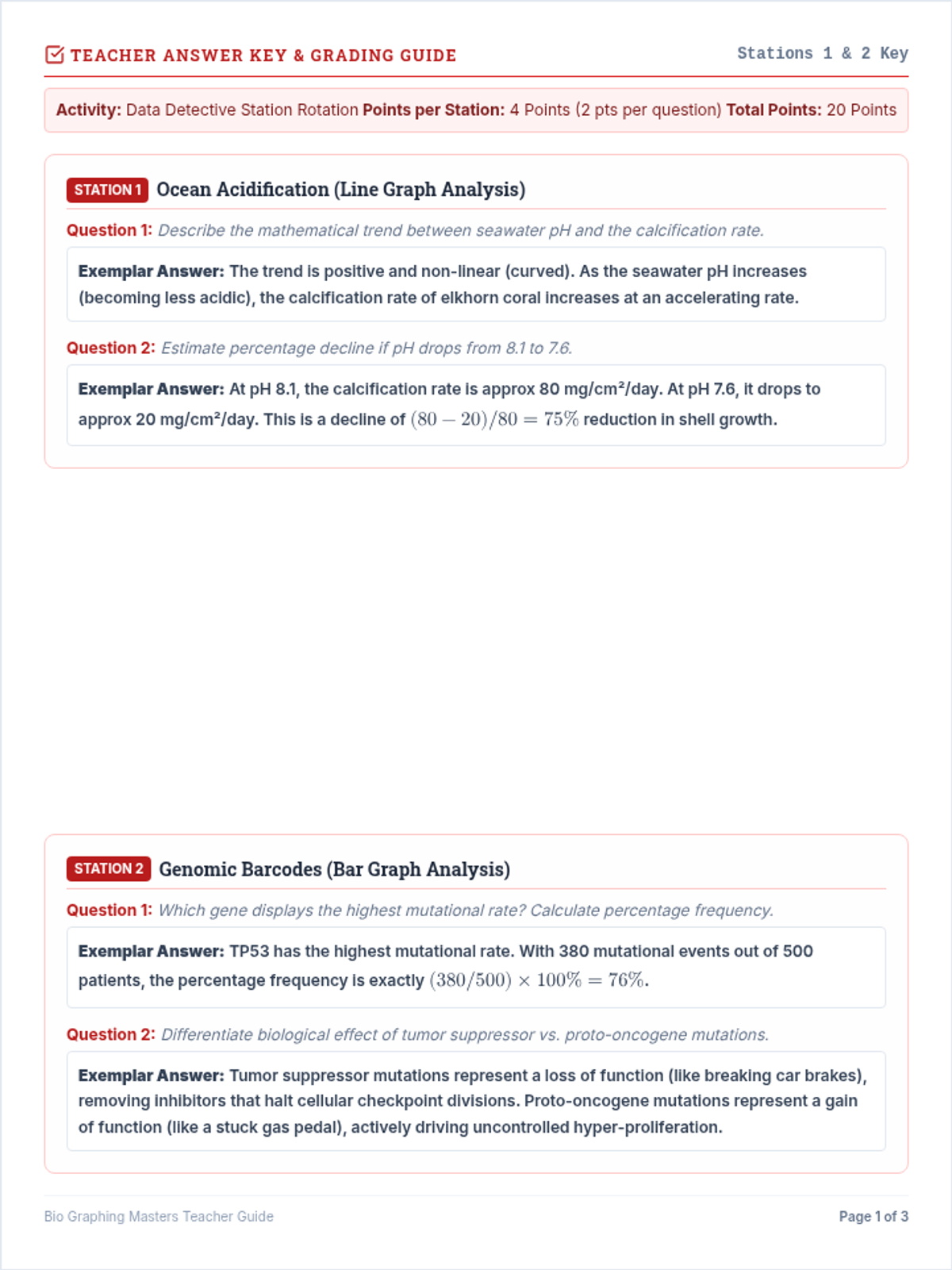
A comprehensive graphing skills lesson in biology. Students will learn how to parse, select, and construct five key graph types (pie, line, bar, double line, and logarithmic graphs) using authentic biological datasets.
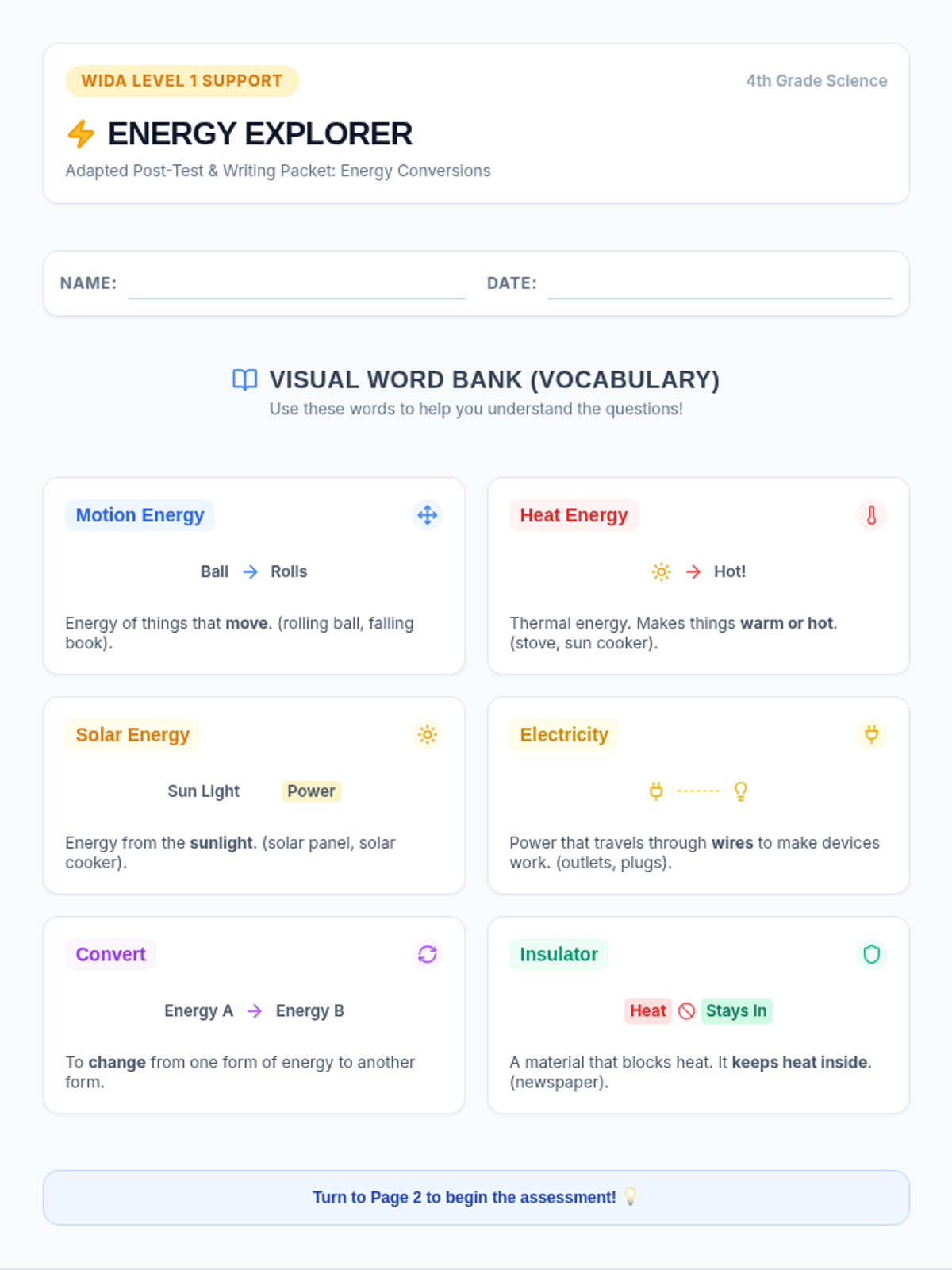
An adapted science lesson and assessment packet designed specifically for 4th-grade WIDA Level 1 (Entering) English Language Learners focusing on energy conversions. Includes visual vocab support, simplified questions, and structured sentence frame writing aids.
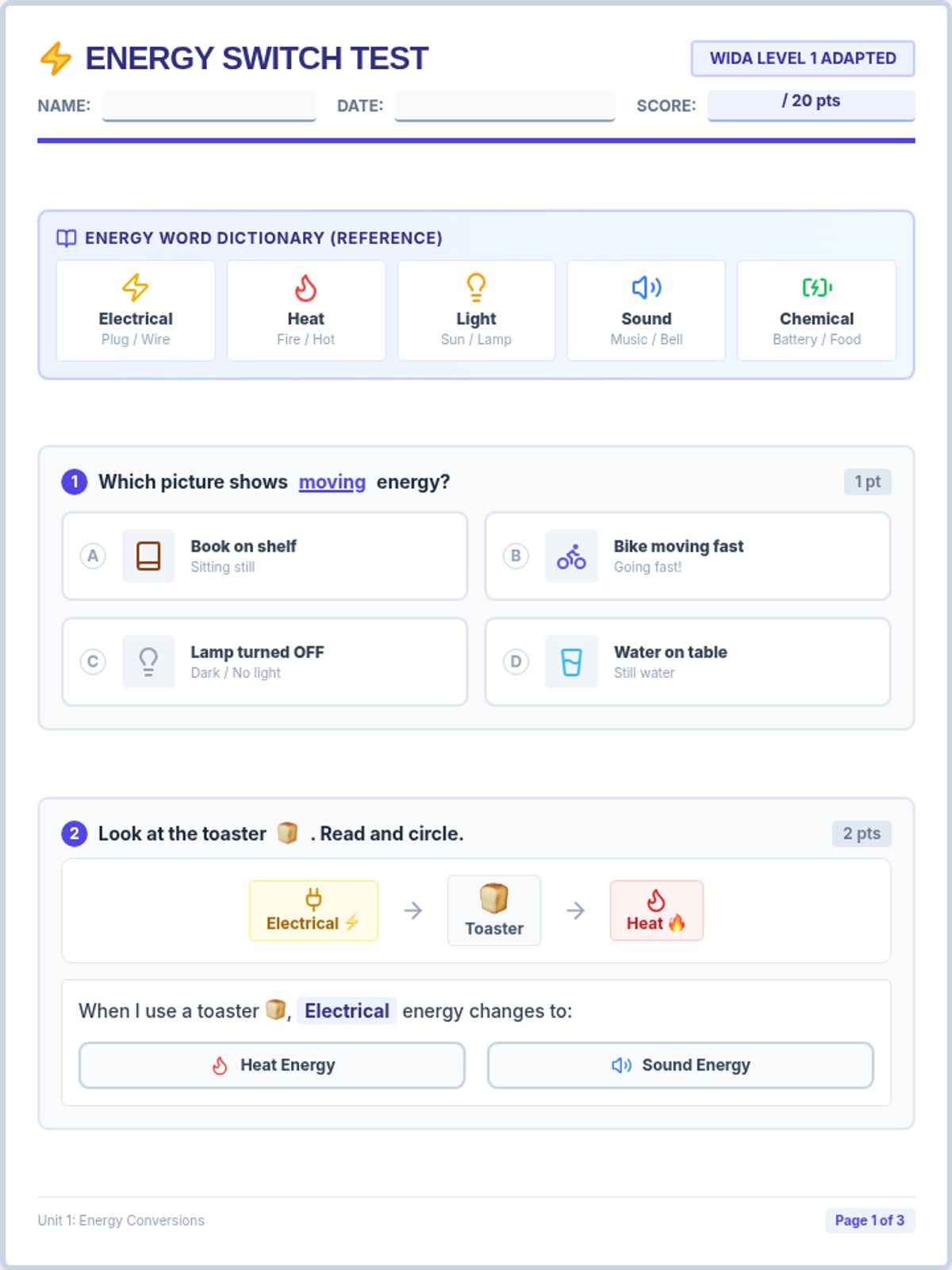
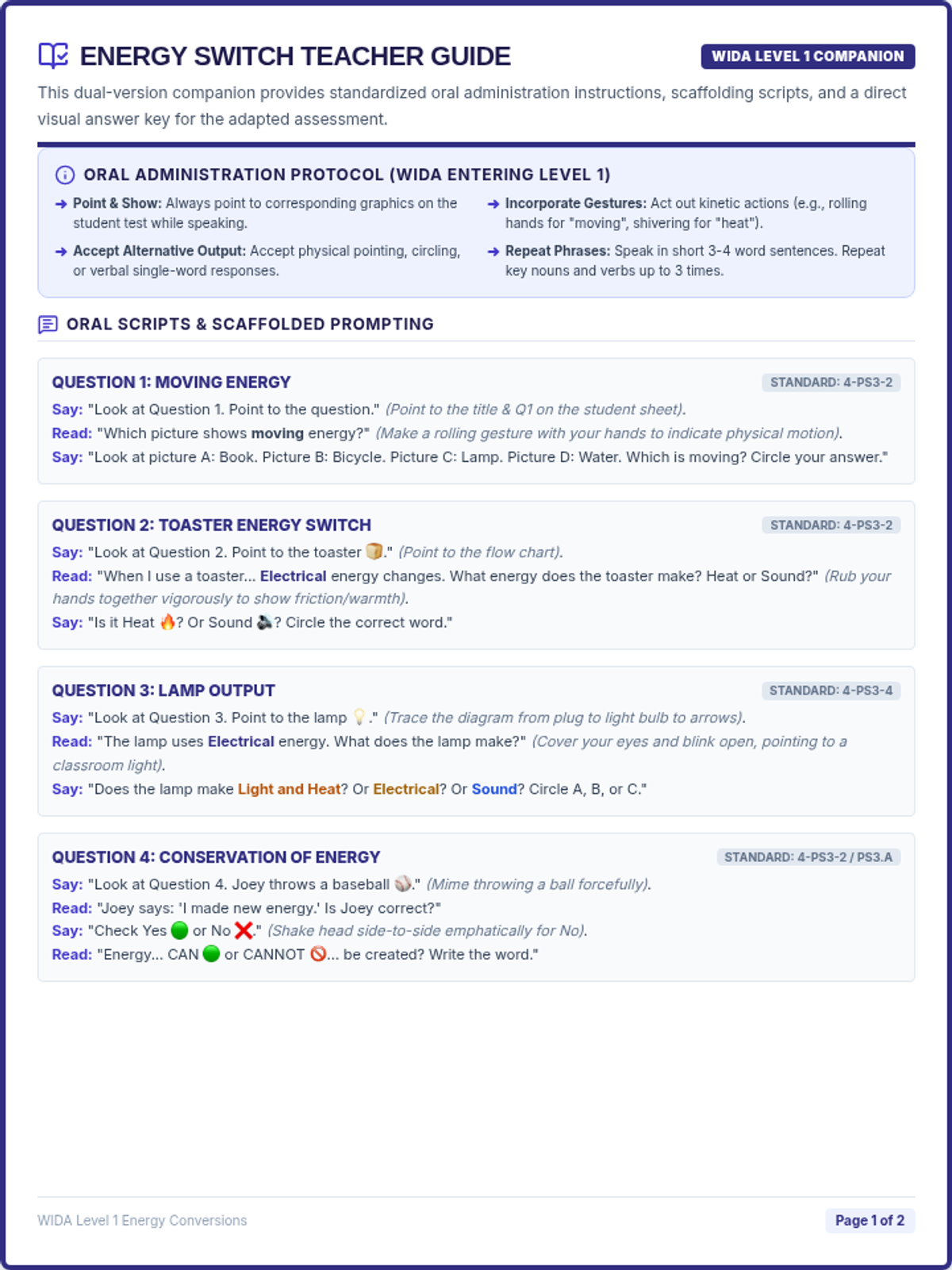
An adapted 4th-grade science assessment unit on energy conversions designed specifically for WIDA Level 1 (Entering) English Language Learners. It includes a highly visual student test and a companion teacher guide with oral scripts and scaffolded support.
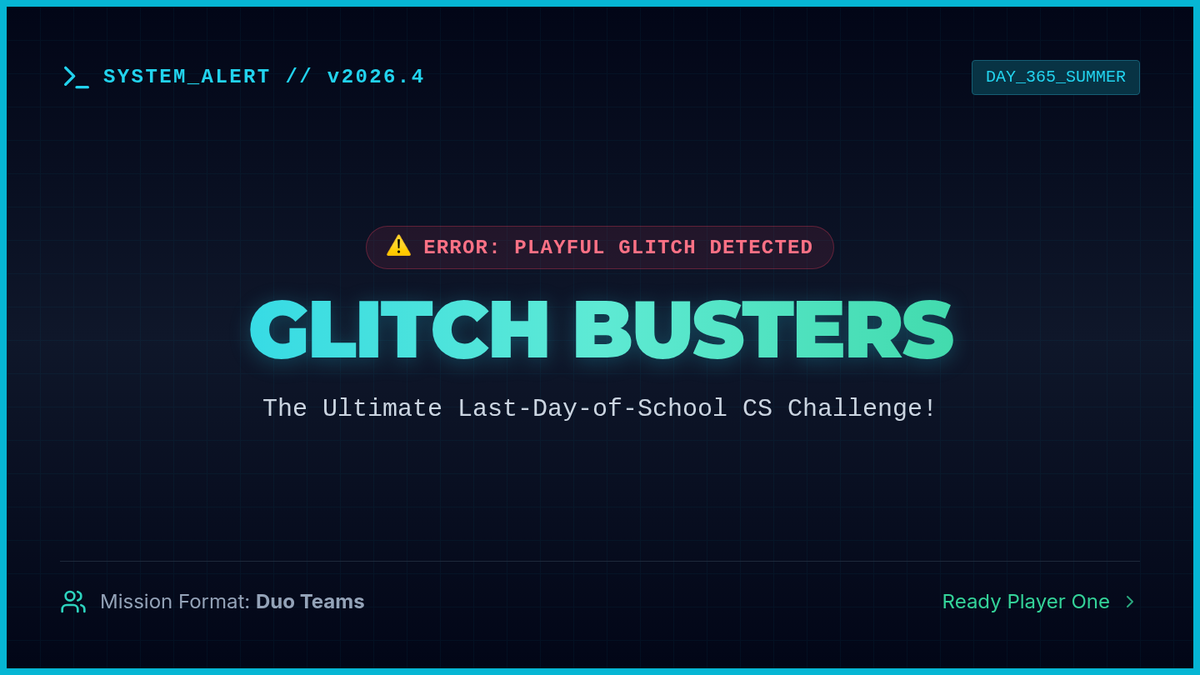
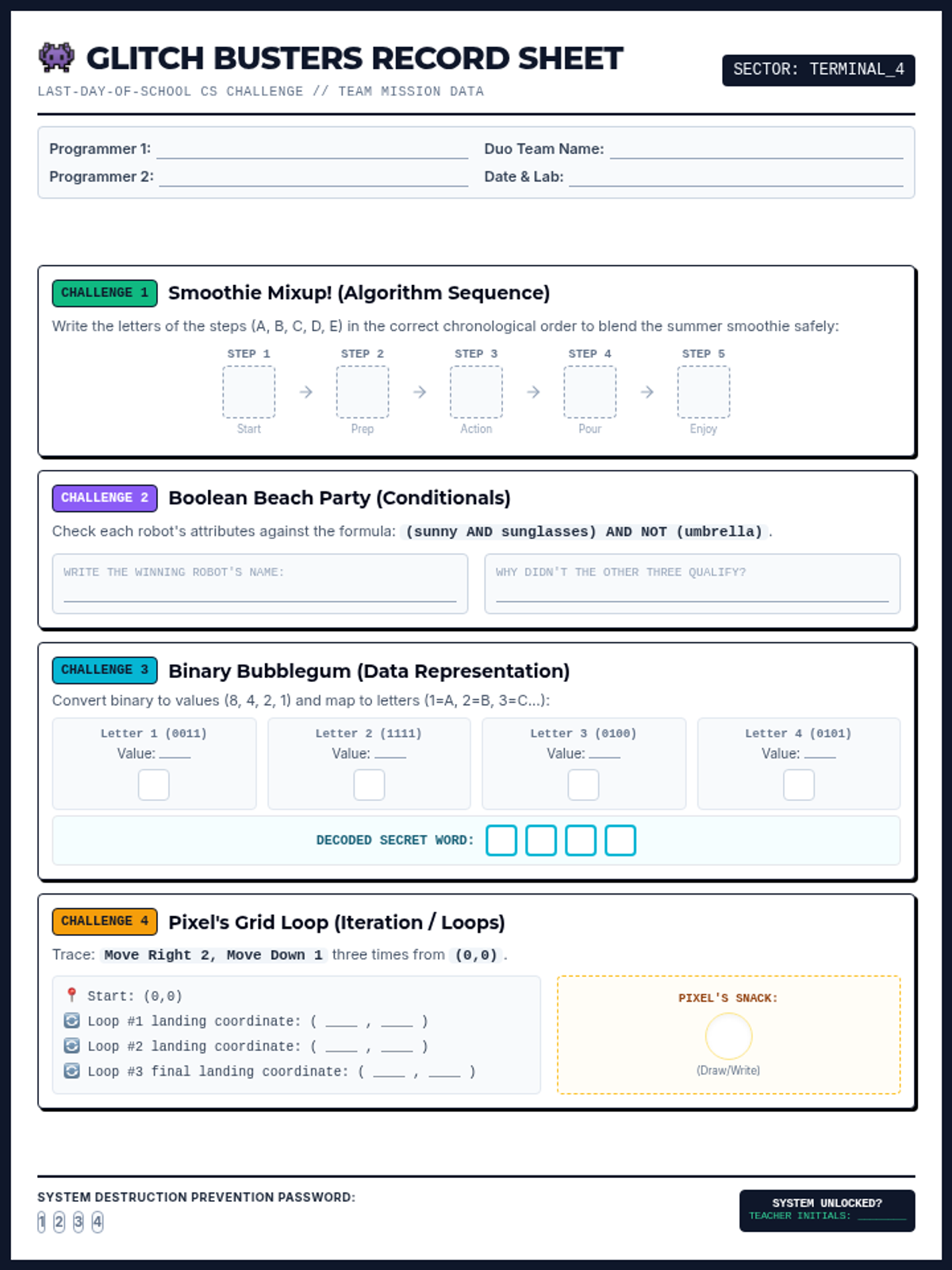
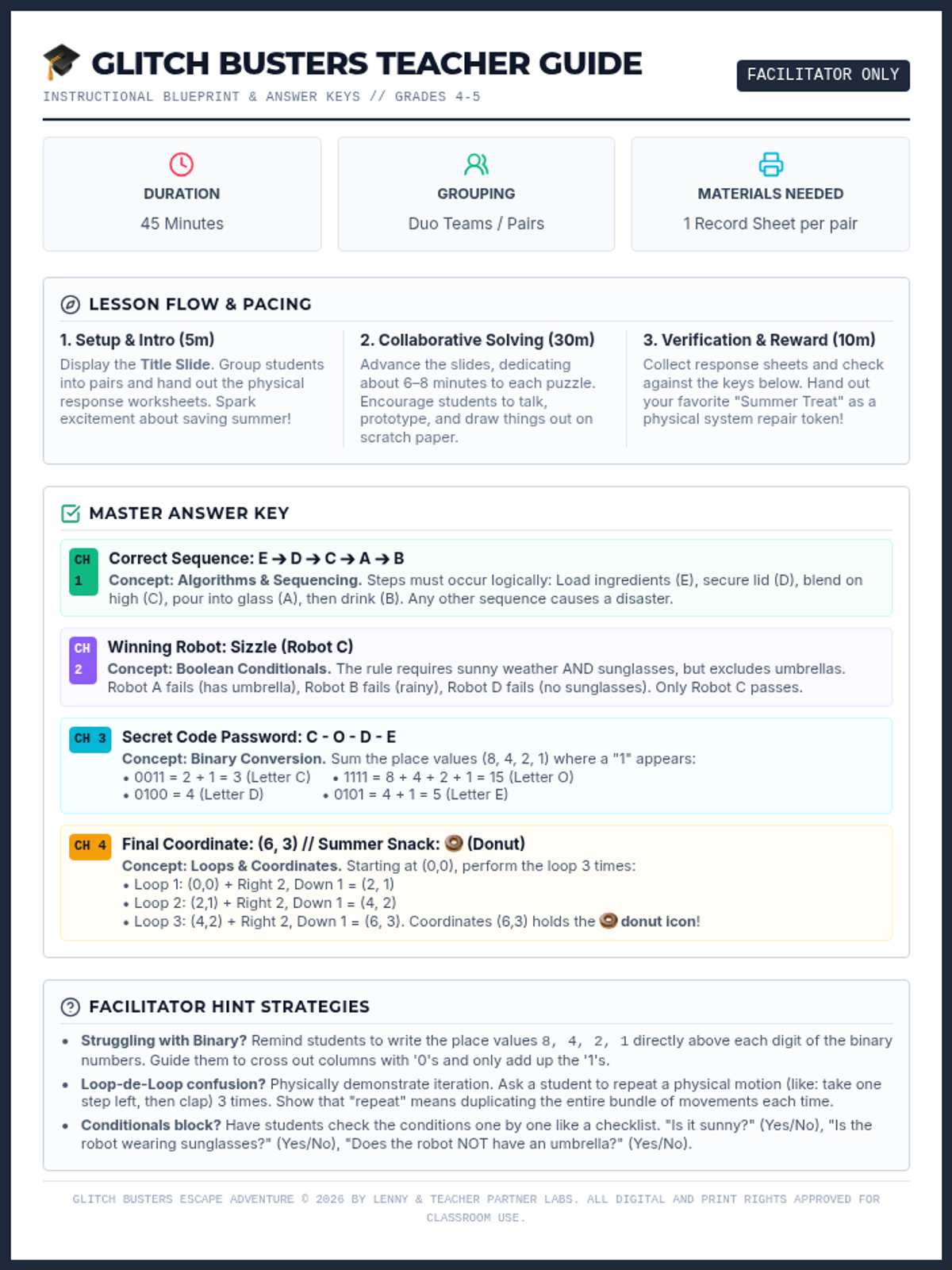
A high-energy, collaborative computer science escape challenge designed for the last day of school. Students work in pairs to solve funny, CS-themed logic and debugging puzzles to save the computer lab from a playful system glitch.