A highly visual and tactile introduction to polymer chains, monomers, and everyday applications. Students explore how small repeating units form strong, flexible, and stretchy properties through hands-on modeling and scaffolded writing.
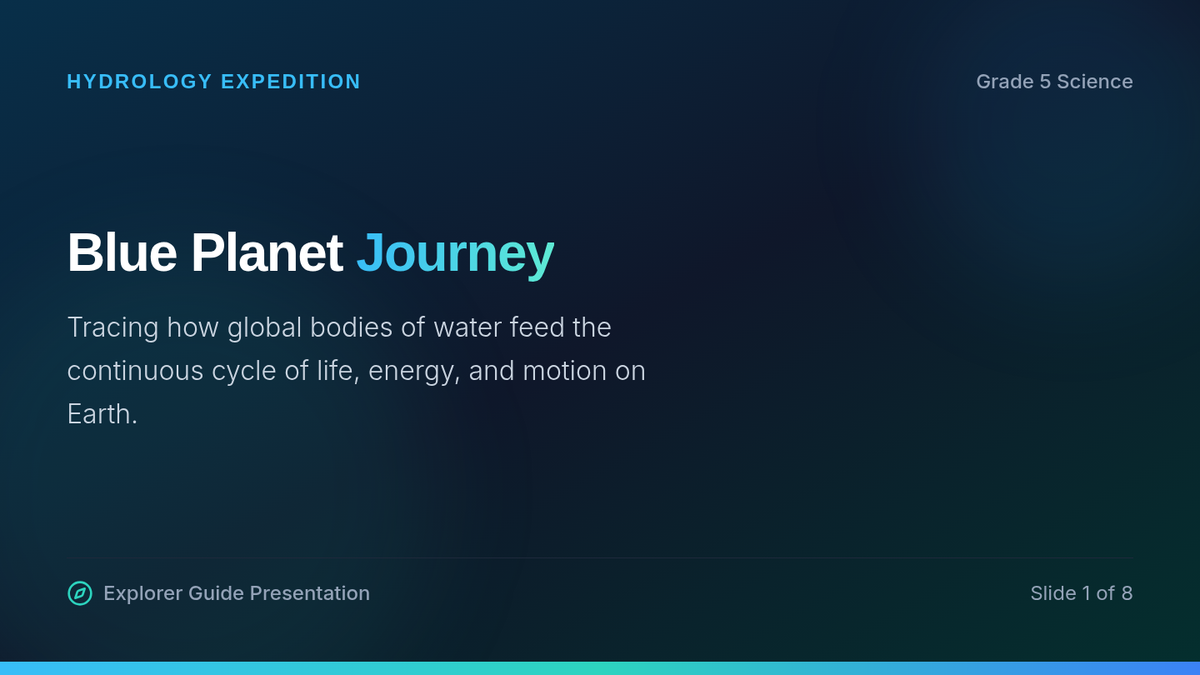
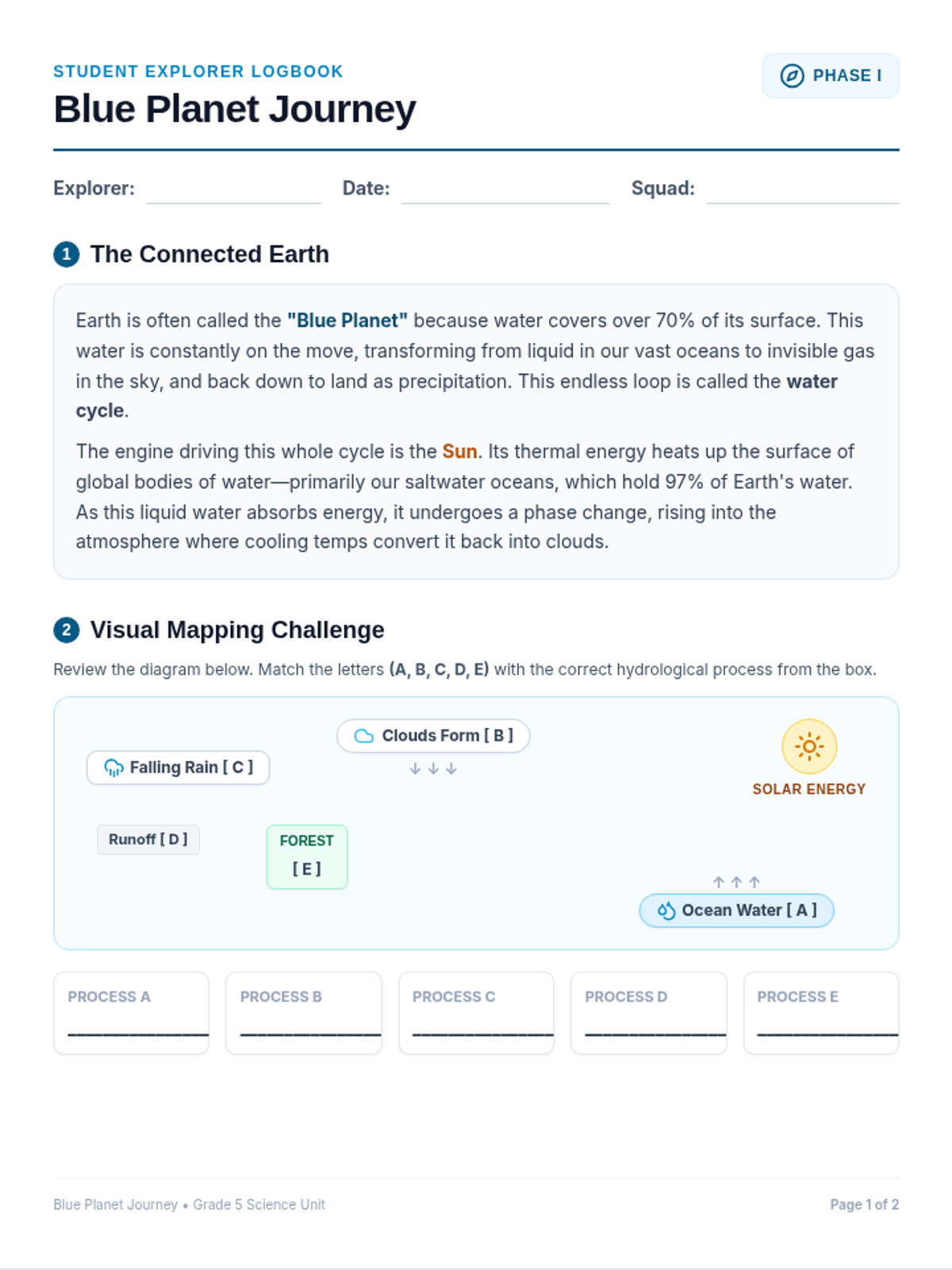
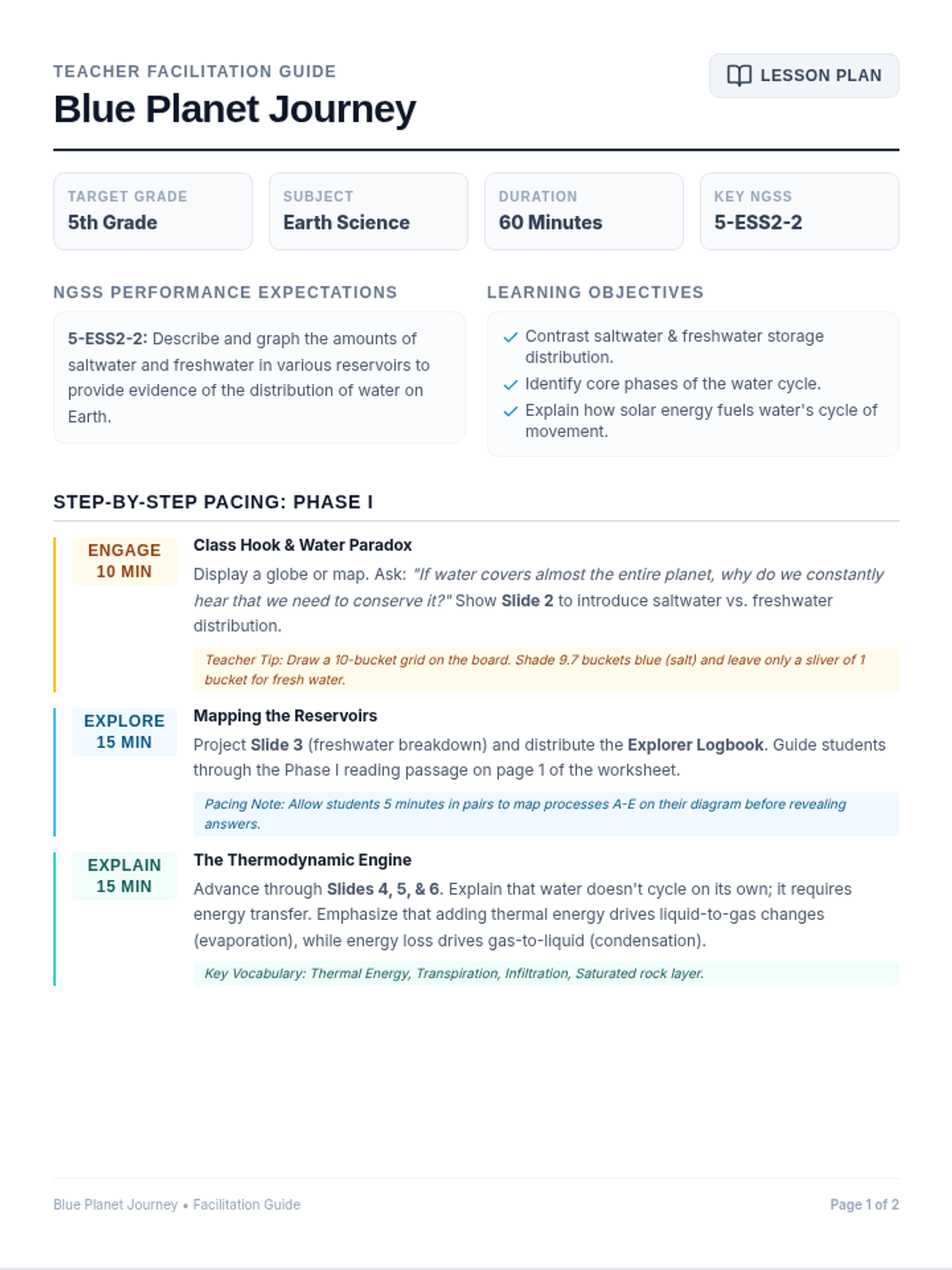
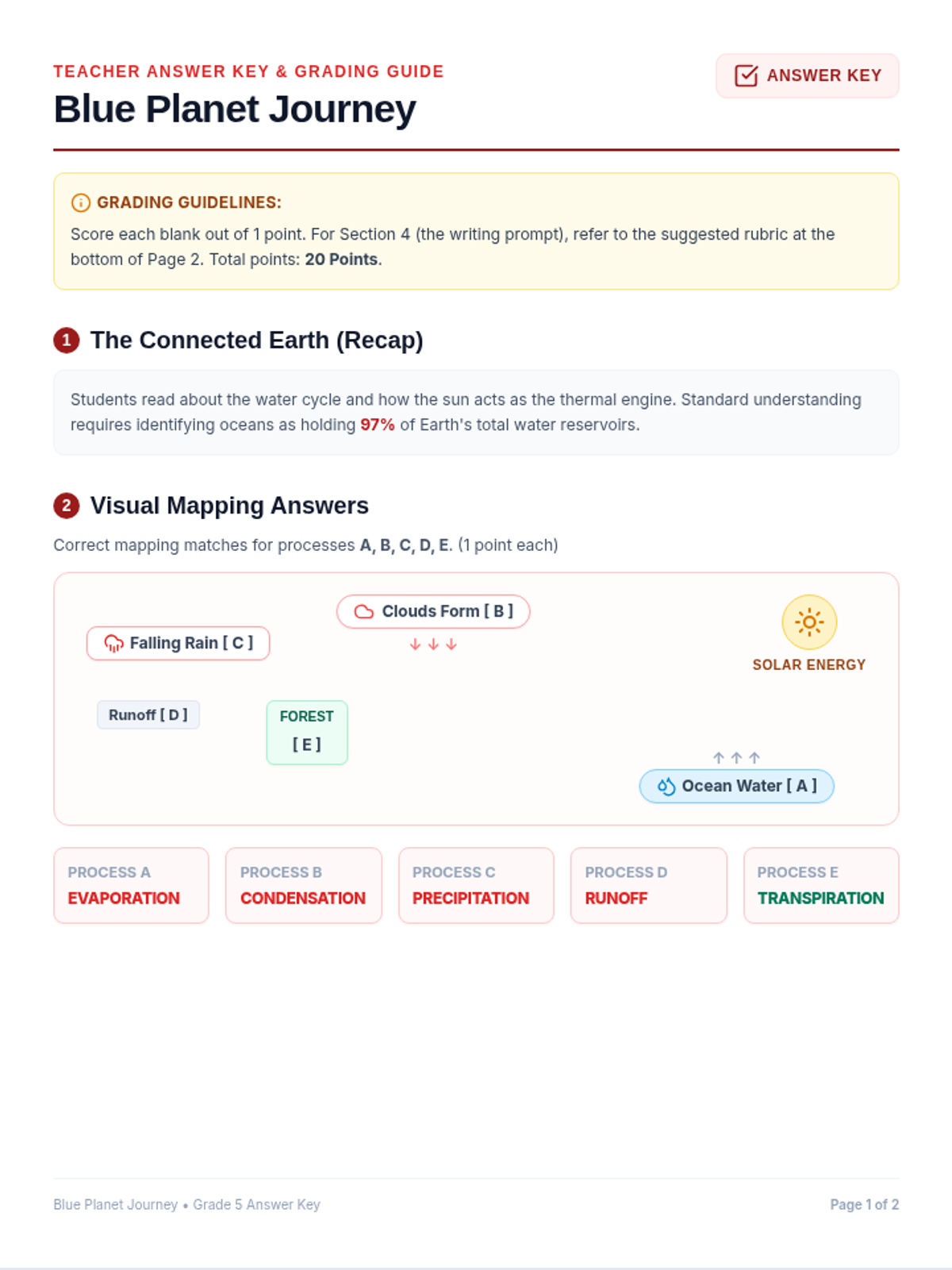
An immersive 5th-grade exploration of Earth's water systems, connecting global bodies of water directly to the continuous cycle of evaporation, condensation, precipitation, and runoff. Students trace how thermal energy drives these transitions across saltwater and freshwater reservoirs.
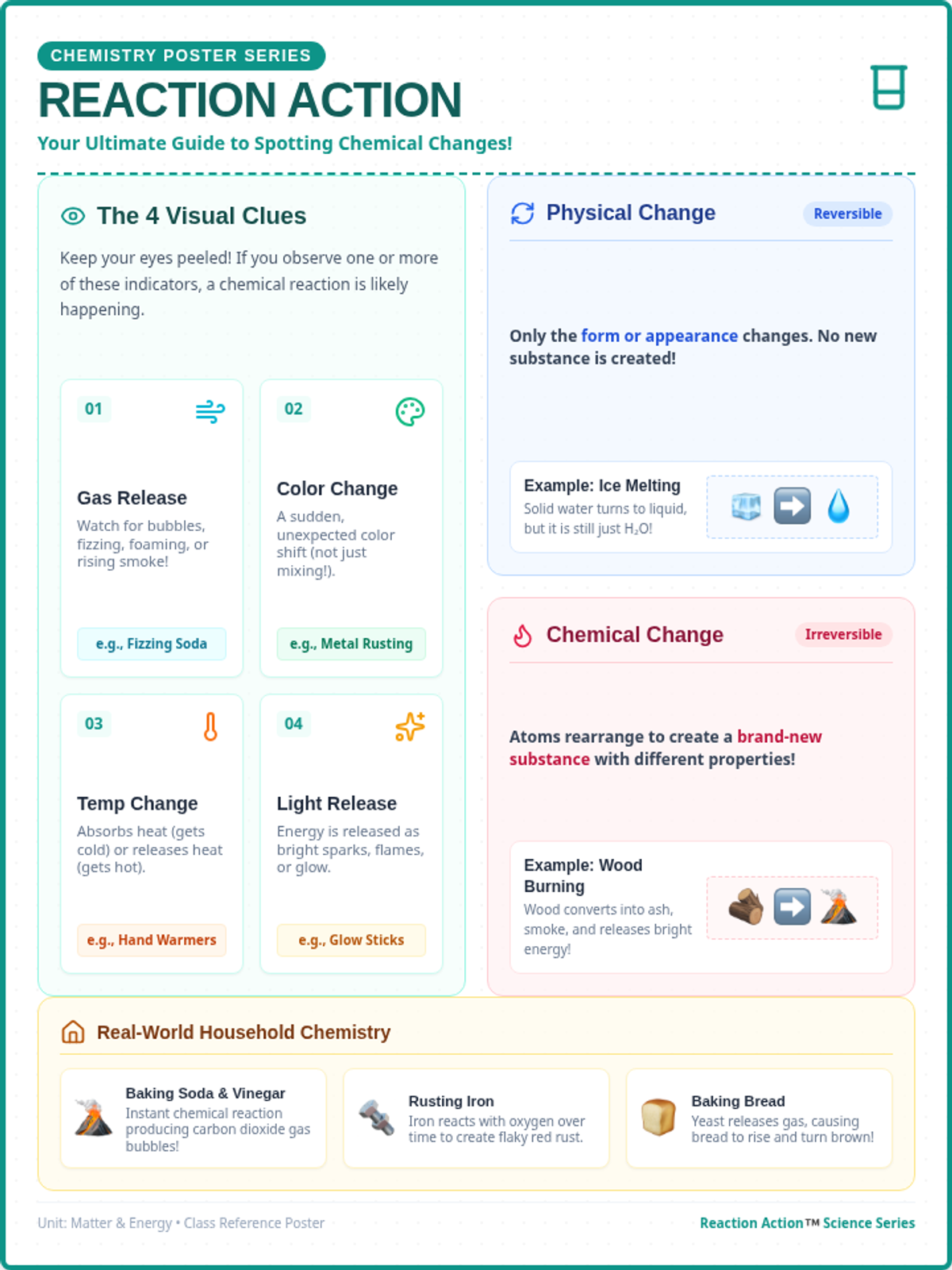
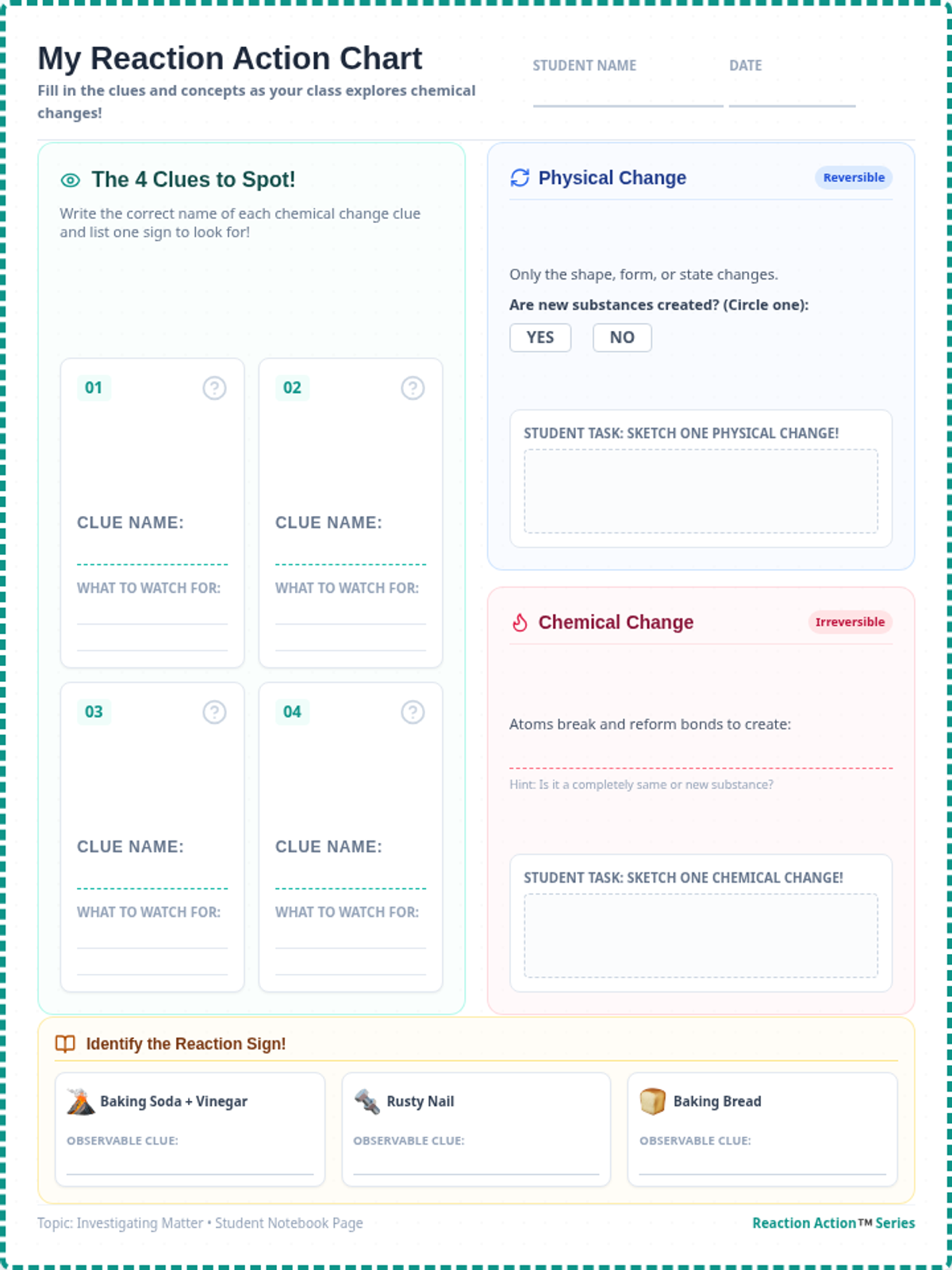
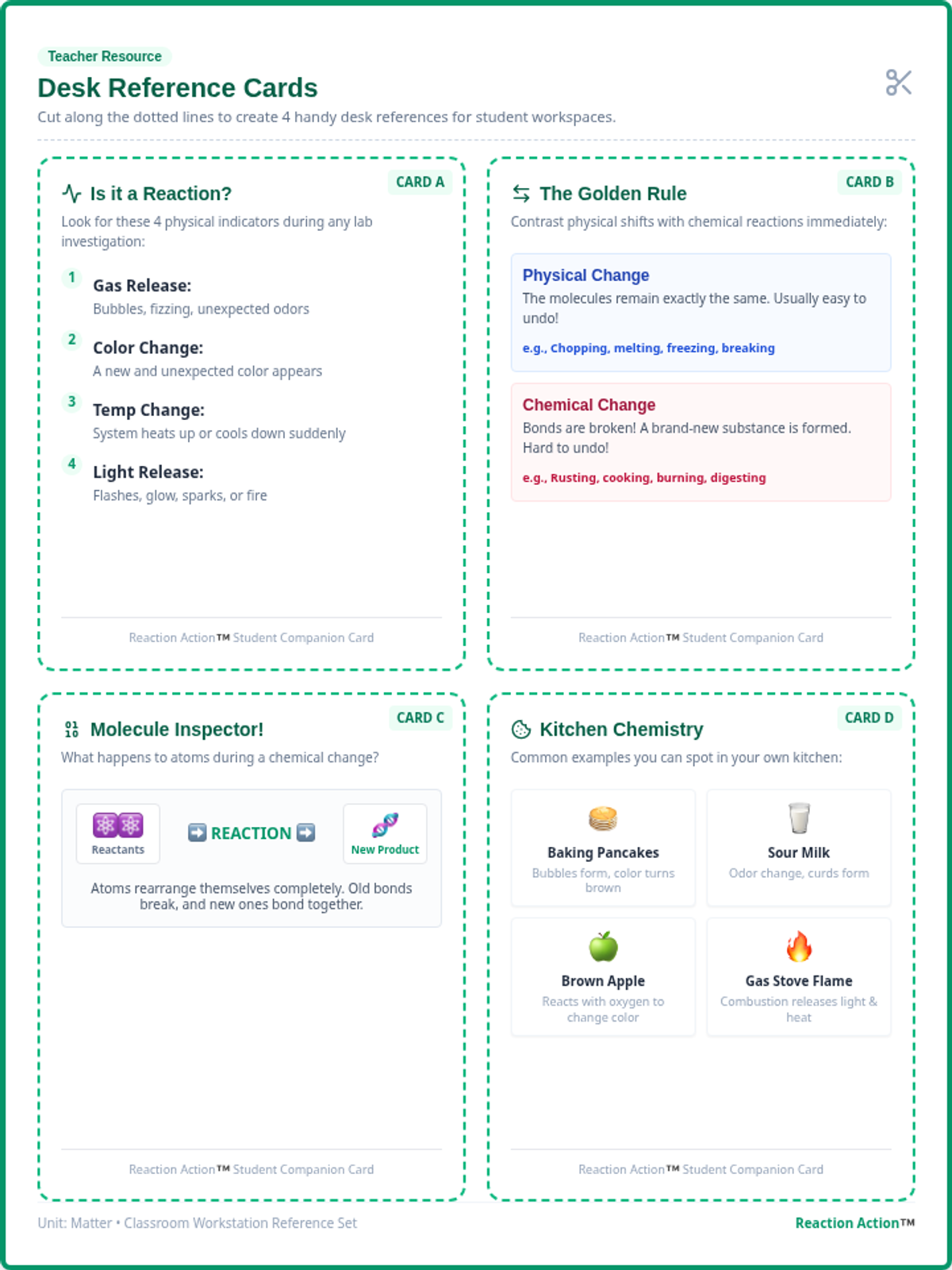
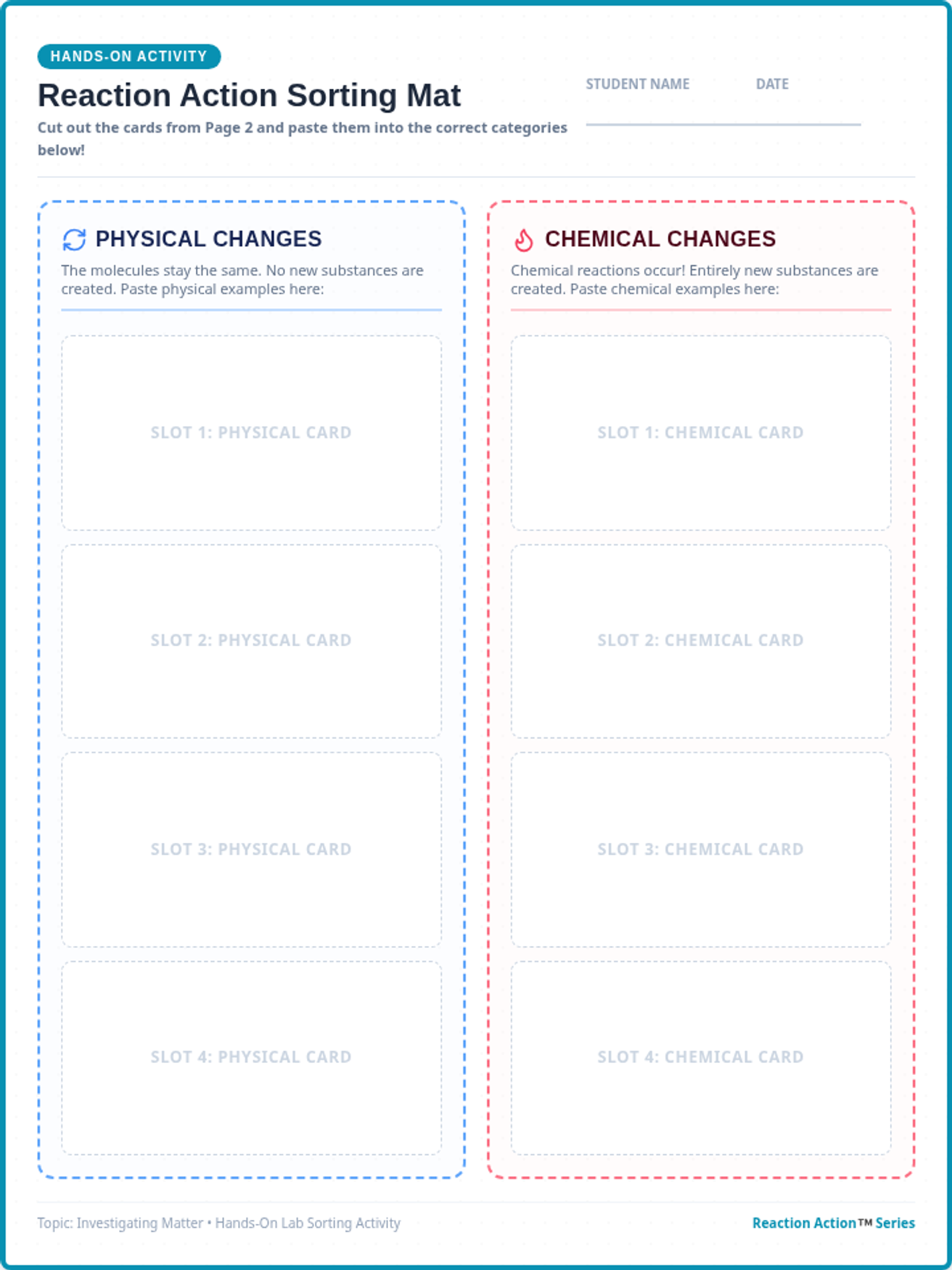
A comprehensive learning suite focused on identifying chemical reactions through visual clues, contrasting physical and chemical changes, and sorting real-world household examples. Includes a complete anchor chart, student fill-in chart, pocket resources, and a hands-on sorting kit.
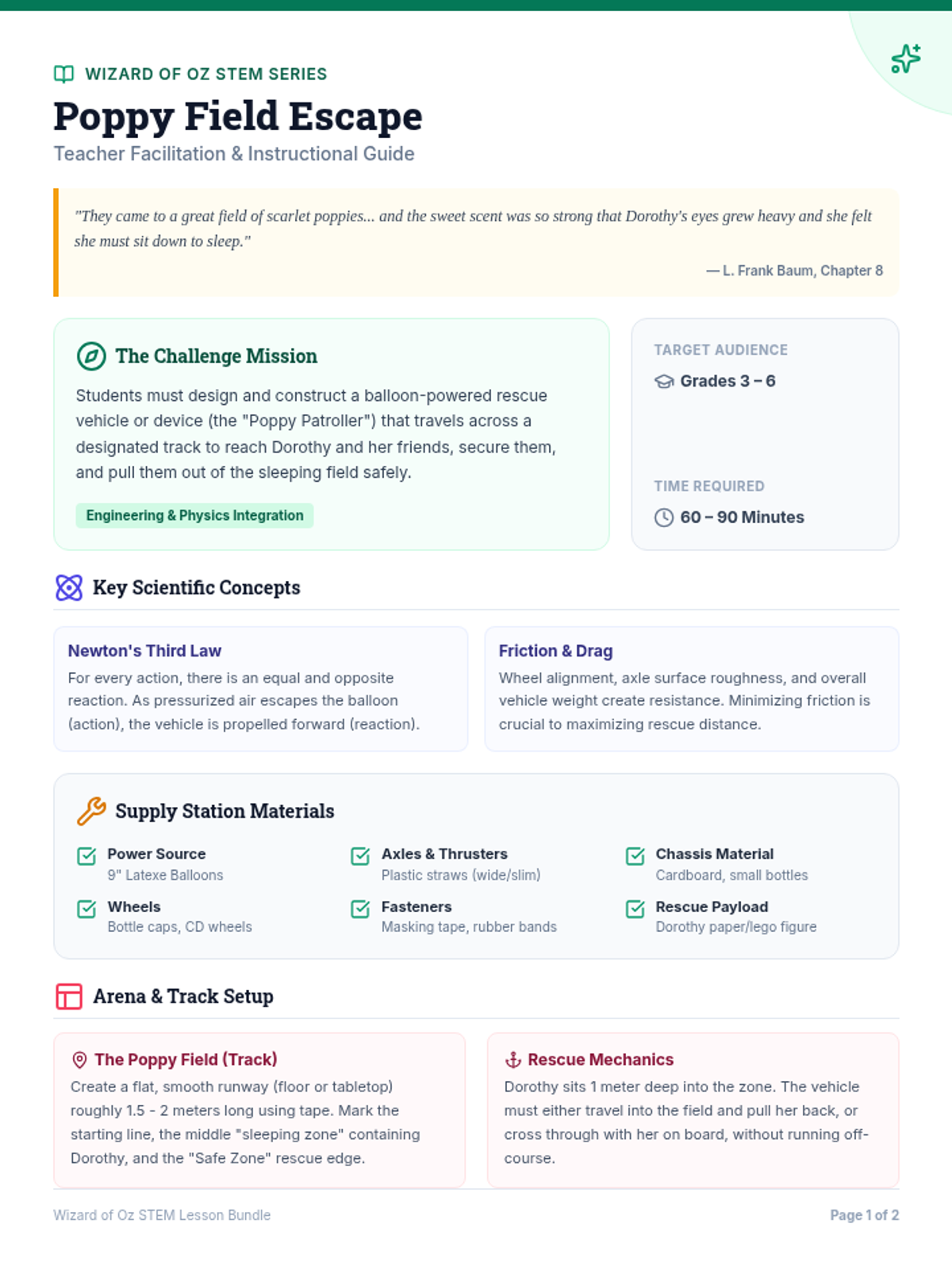
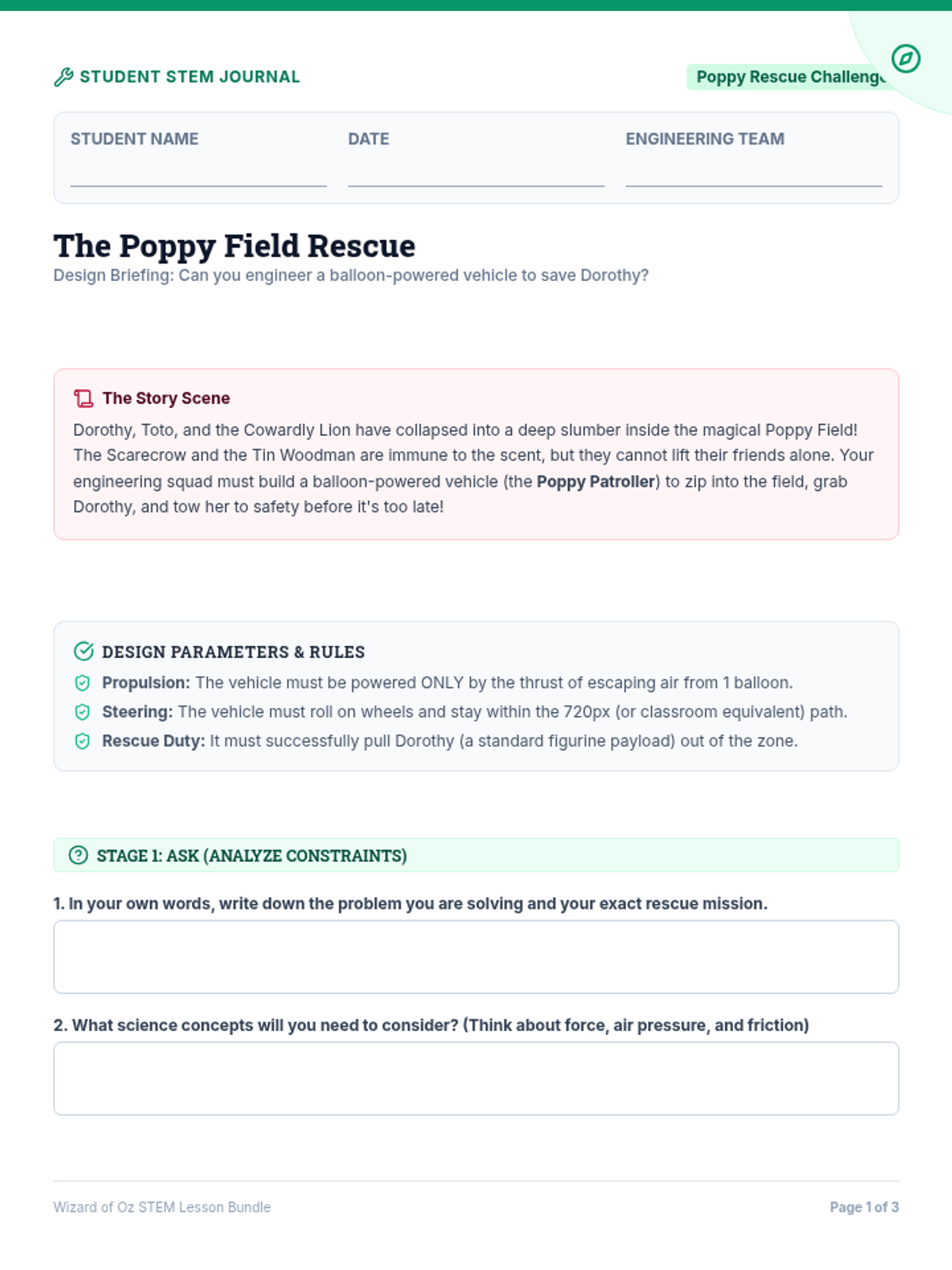
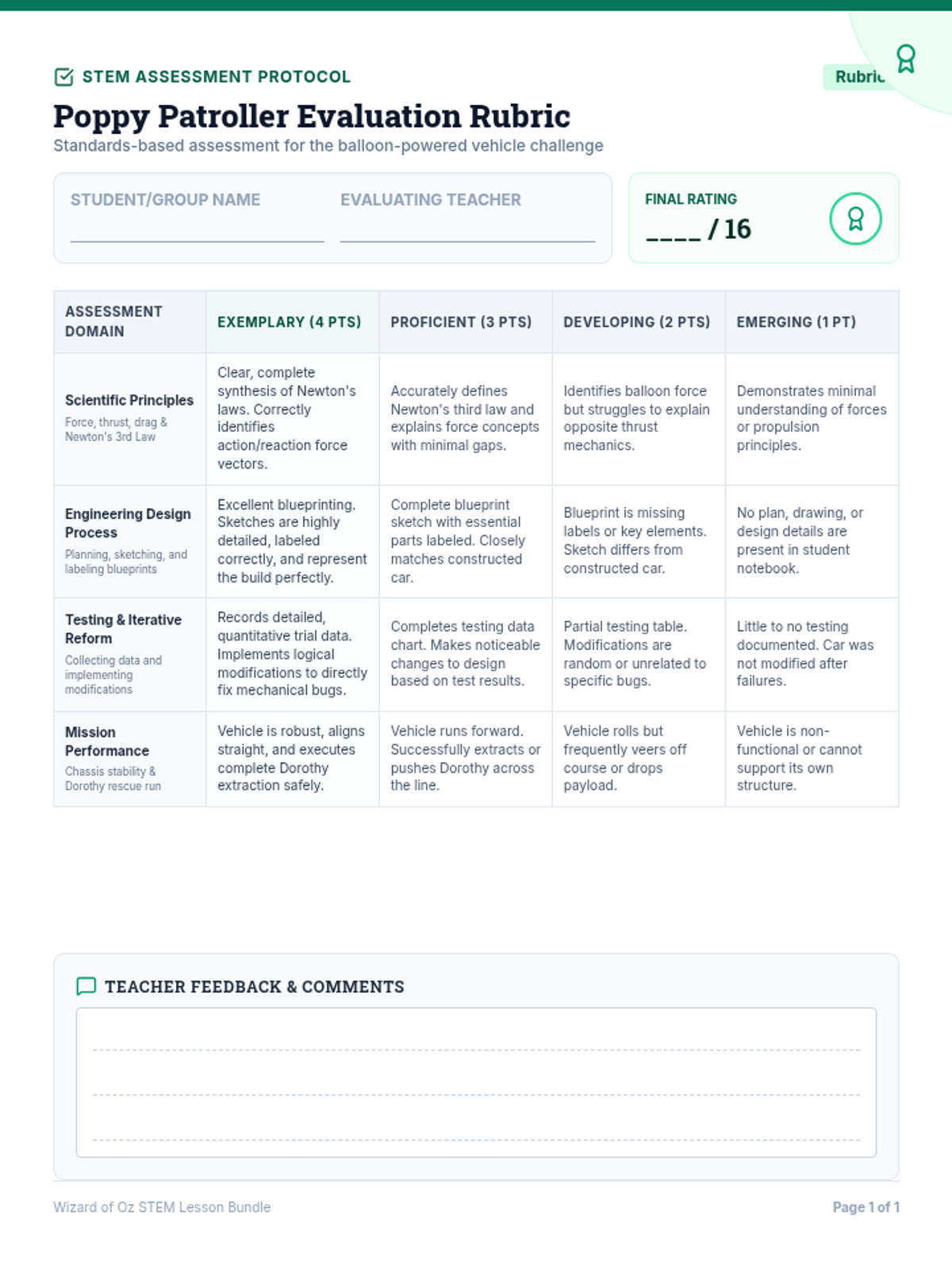
A hands-on STEM challenge based on The Wizard of Oz where students design and build a balloon-powered rescue vehicle to save Dorothy and her friends from the sleeping effects of the Poppy Field. This lesson guides students through the complete engineering design process, combining physical science concepts with literary connections.
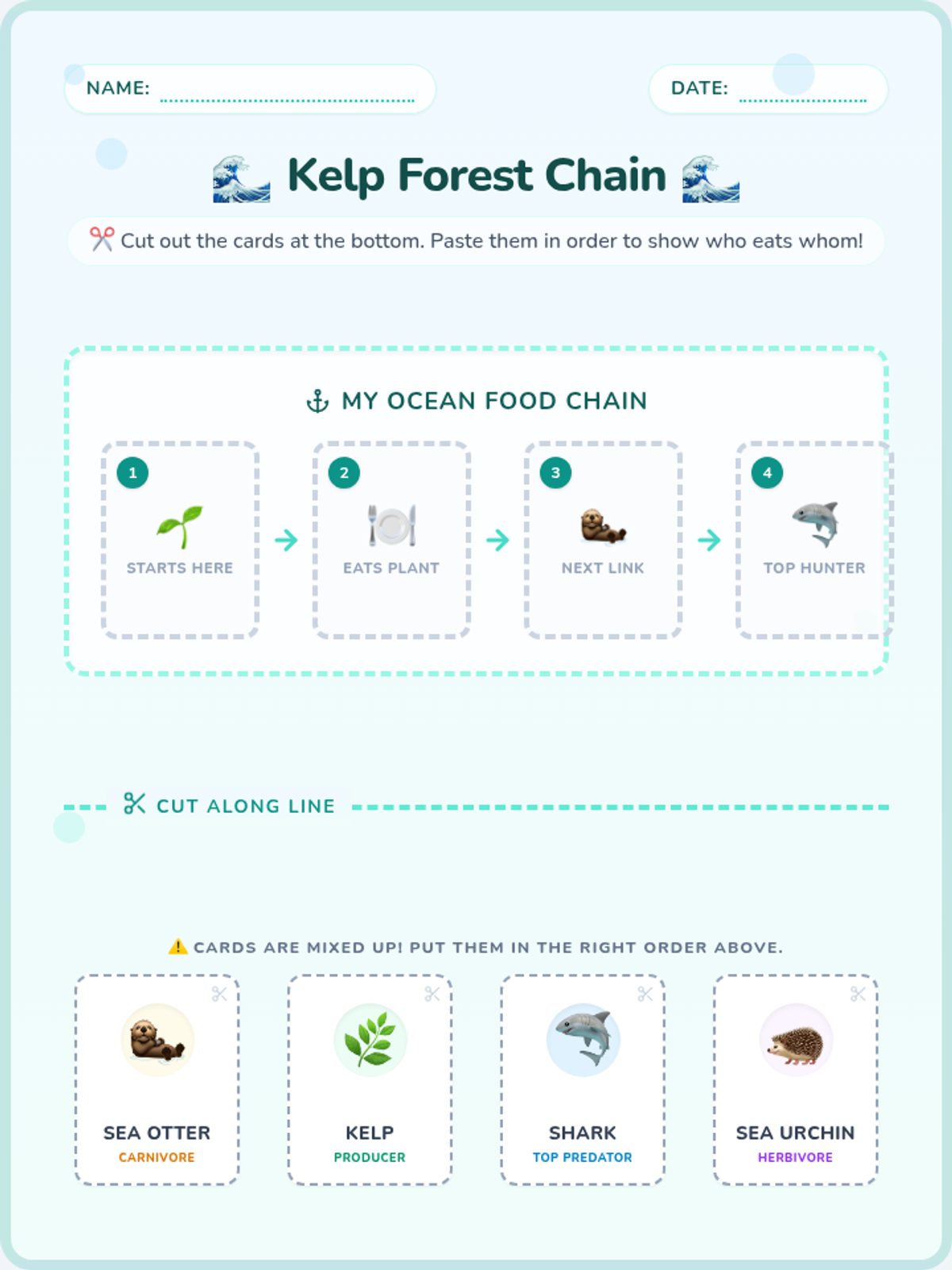
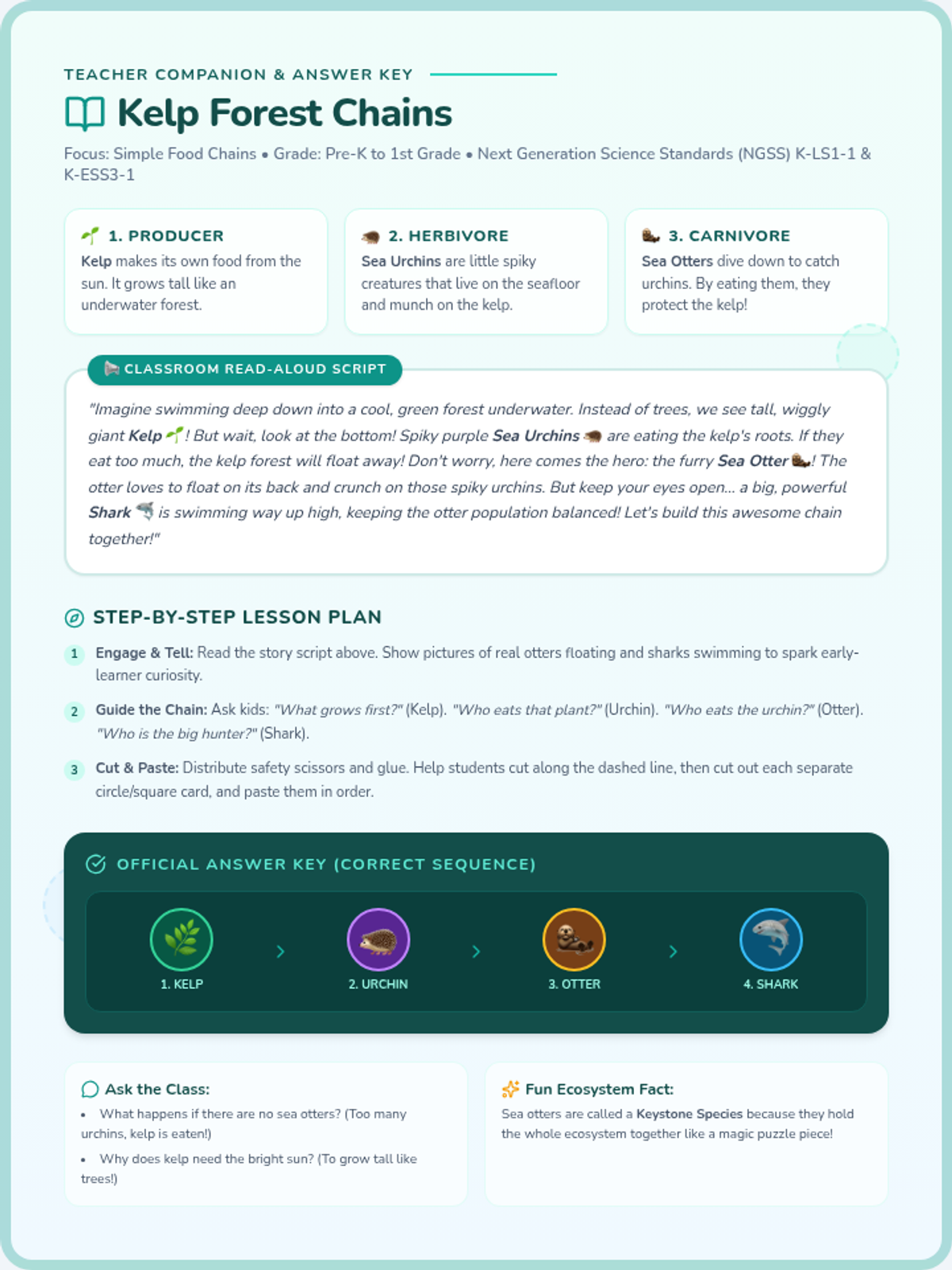
A hand-on science lesson for early learners (Pre-K to 1st grade) to understand simple ocean food chains using the kelp forest ecosystem. Students explore how energy moves from kelp to urchins, otters, and sharks through a tactile cut-and-paste activity.
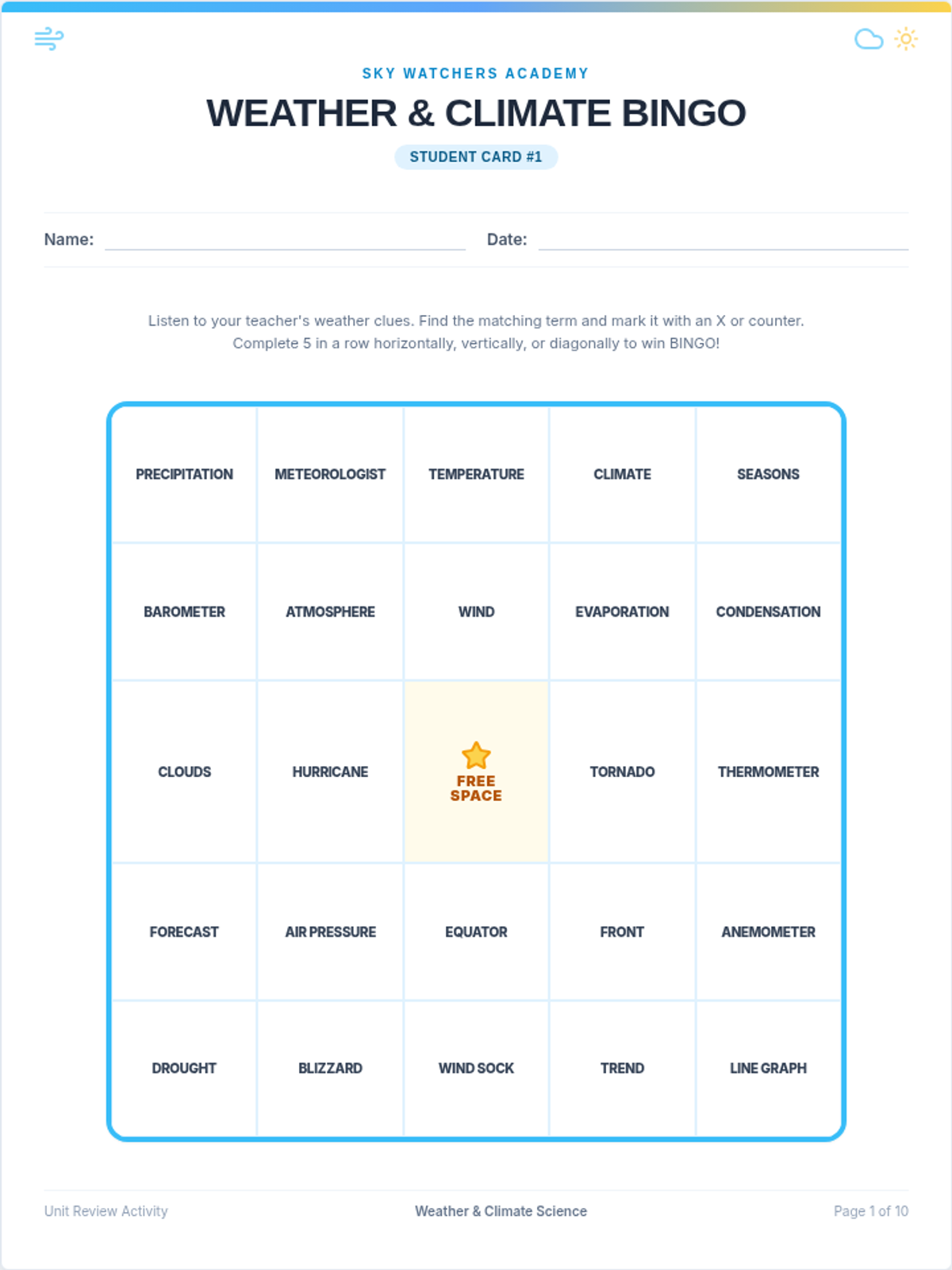
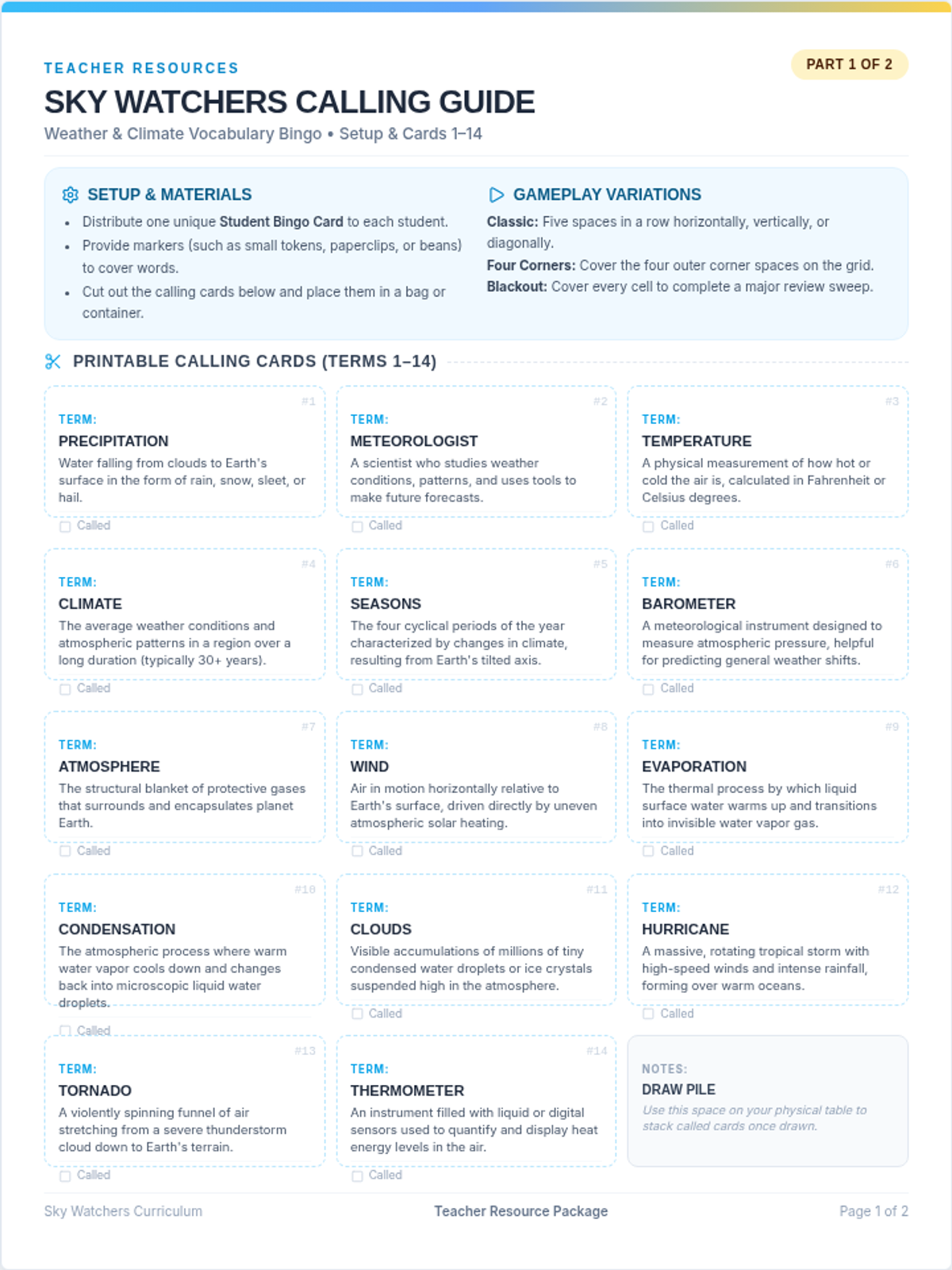
A weather and climate science unit featuring a complete class set of ready-to-print Bingo cards and a comprehensive teacher calling and tracking guide.
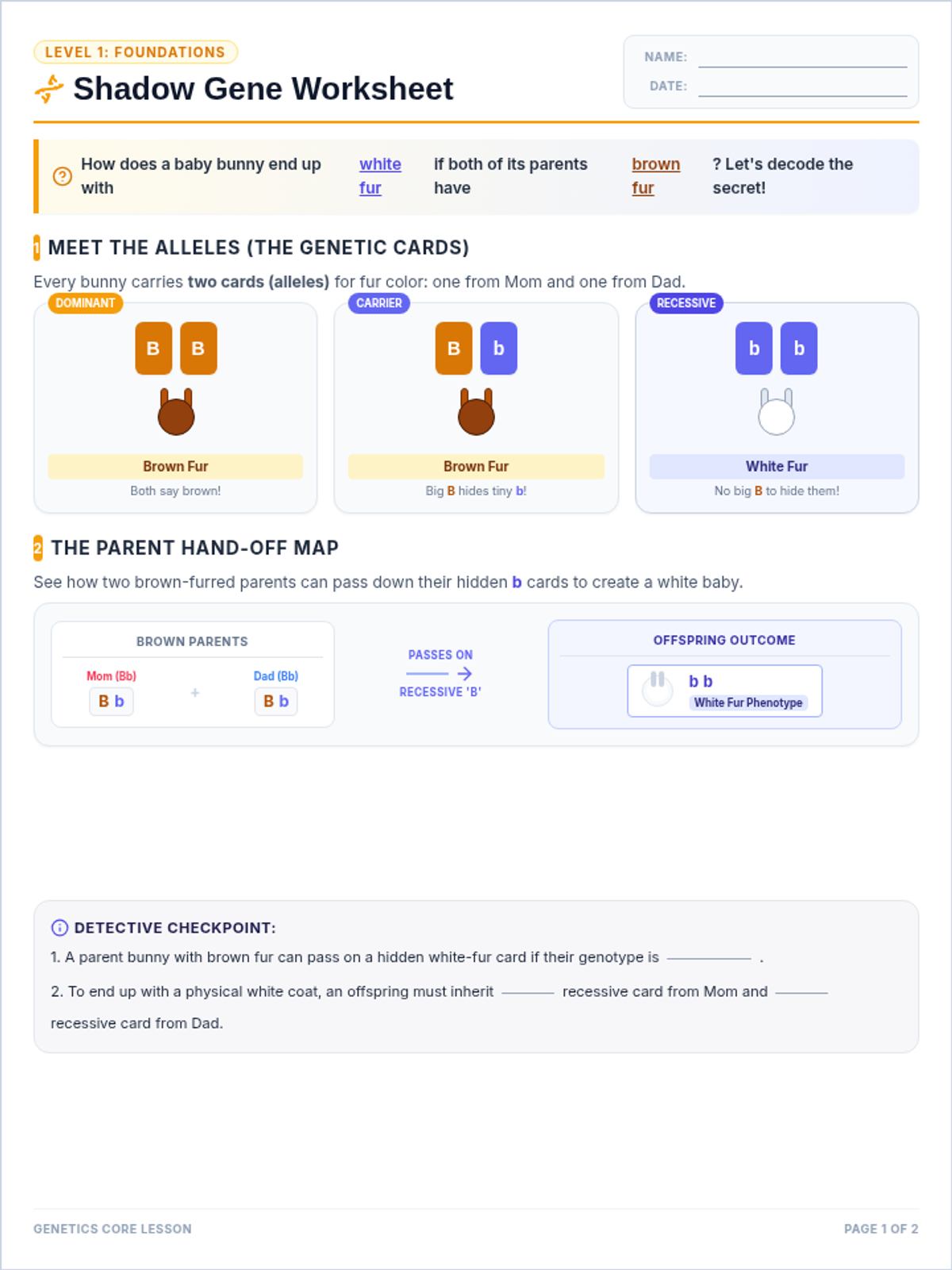
A highly visual, scaffolded lesson introducing recessive inheritance. Students explore how recessive alleles manifest as physical phenotypes using concrete bunny fur examples, guided diagrams, and sentence frames.
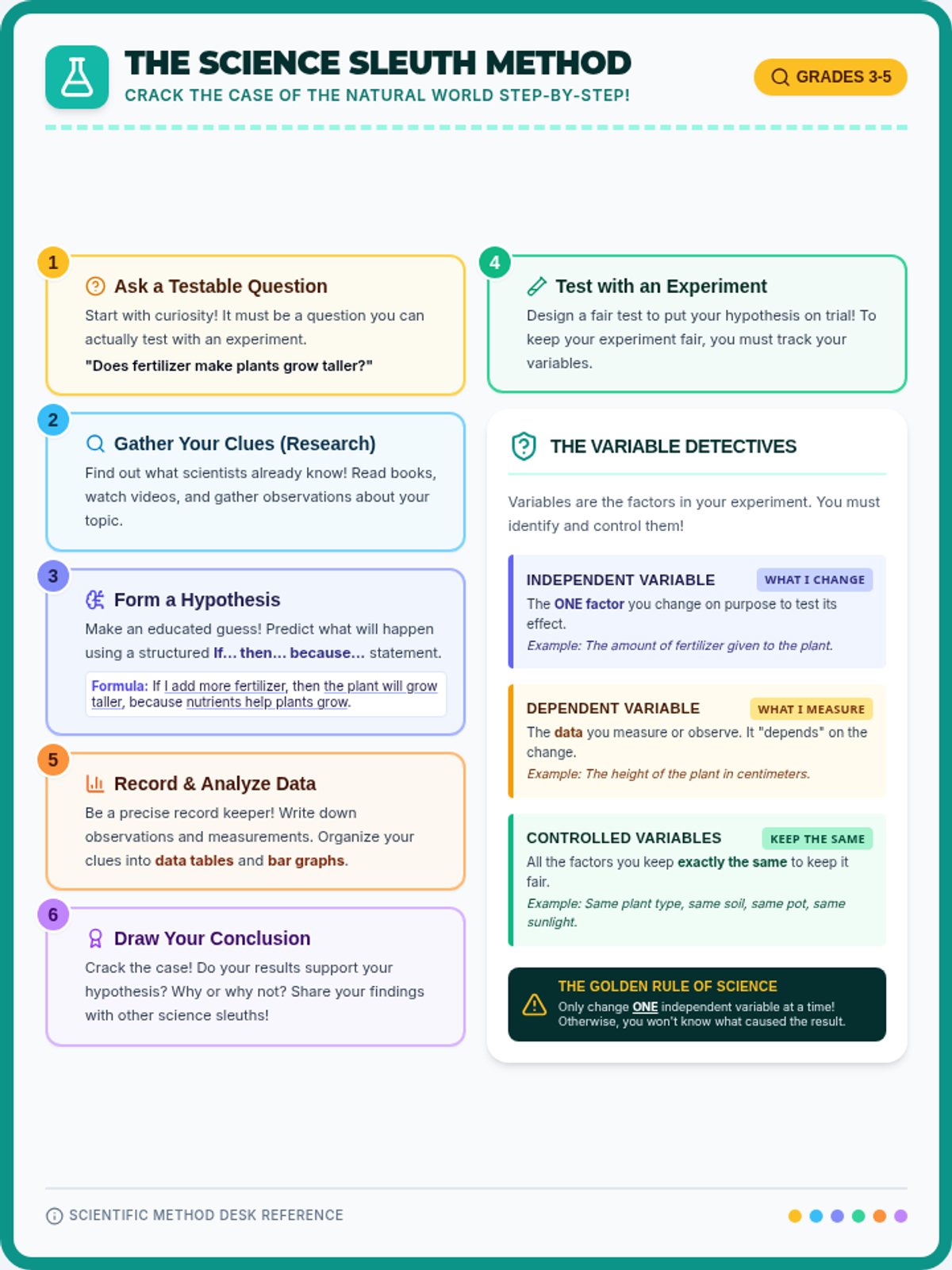
A high-impact science investigation unit starting with visual anchor charts and student planning templates to master the scientific method and variable identification in grades 3-5.
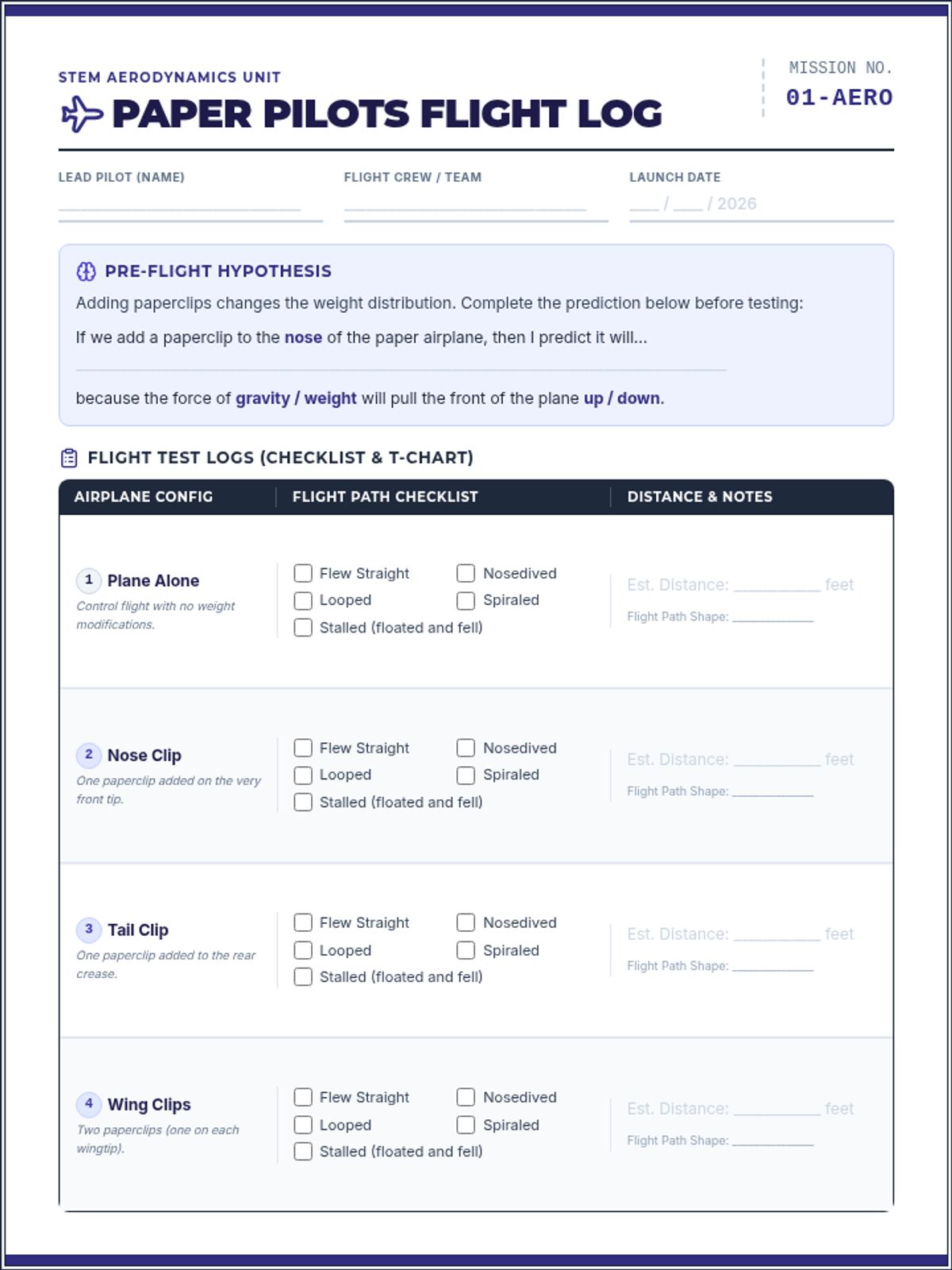
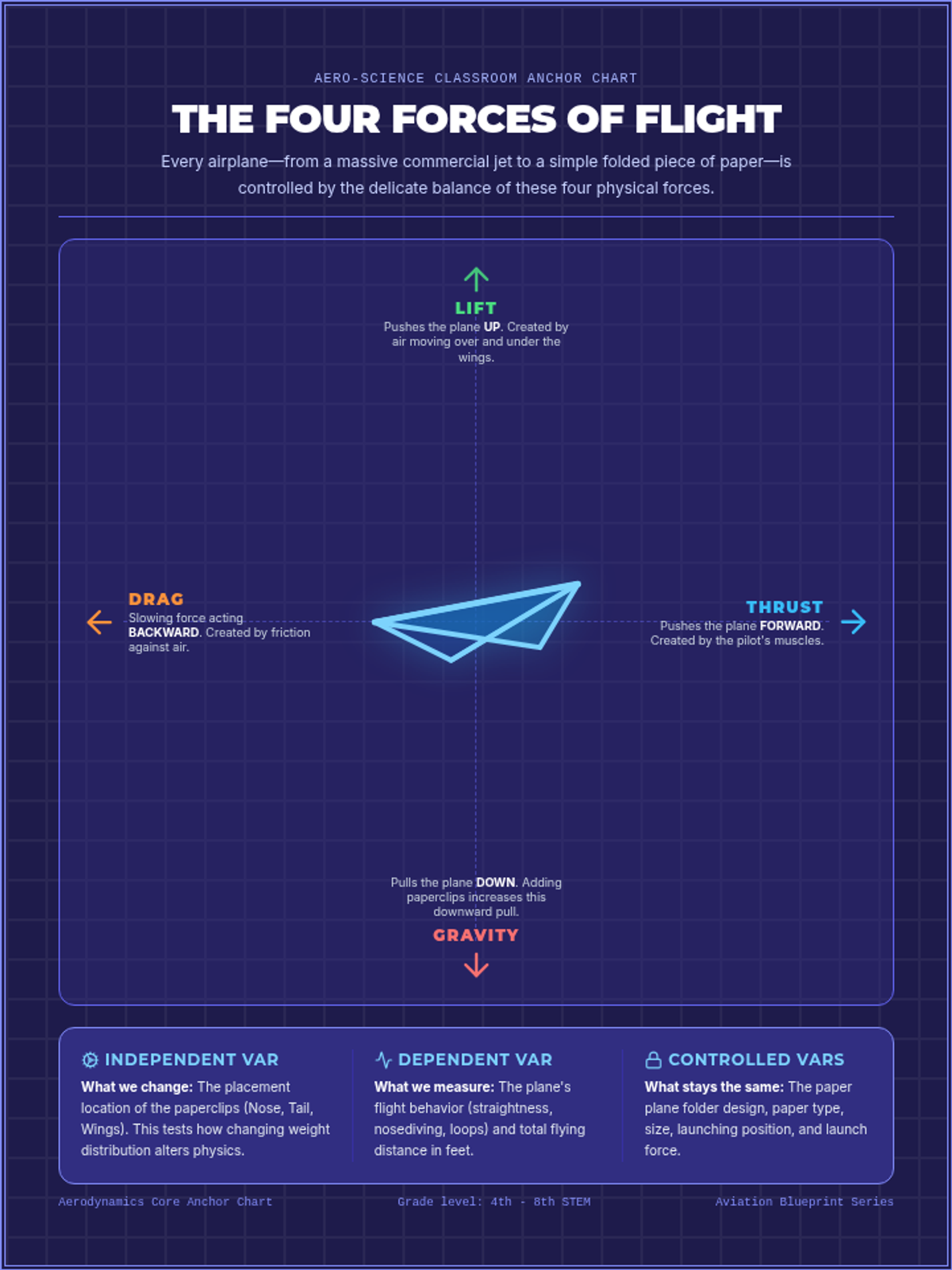
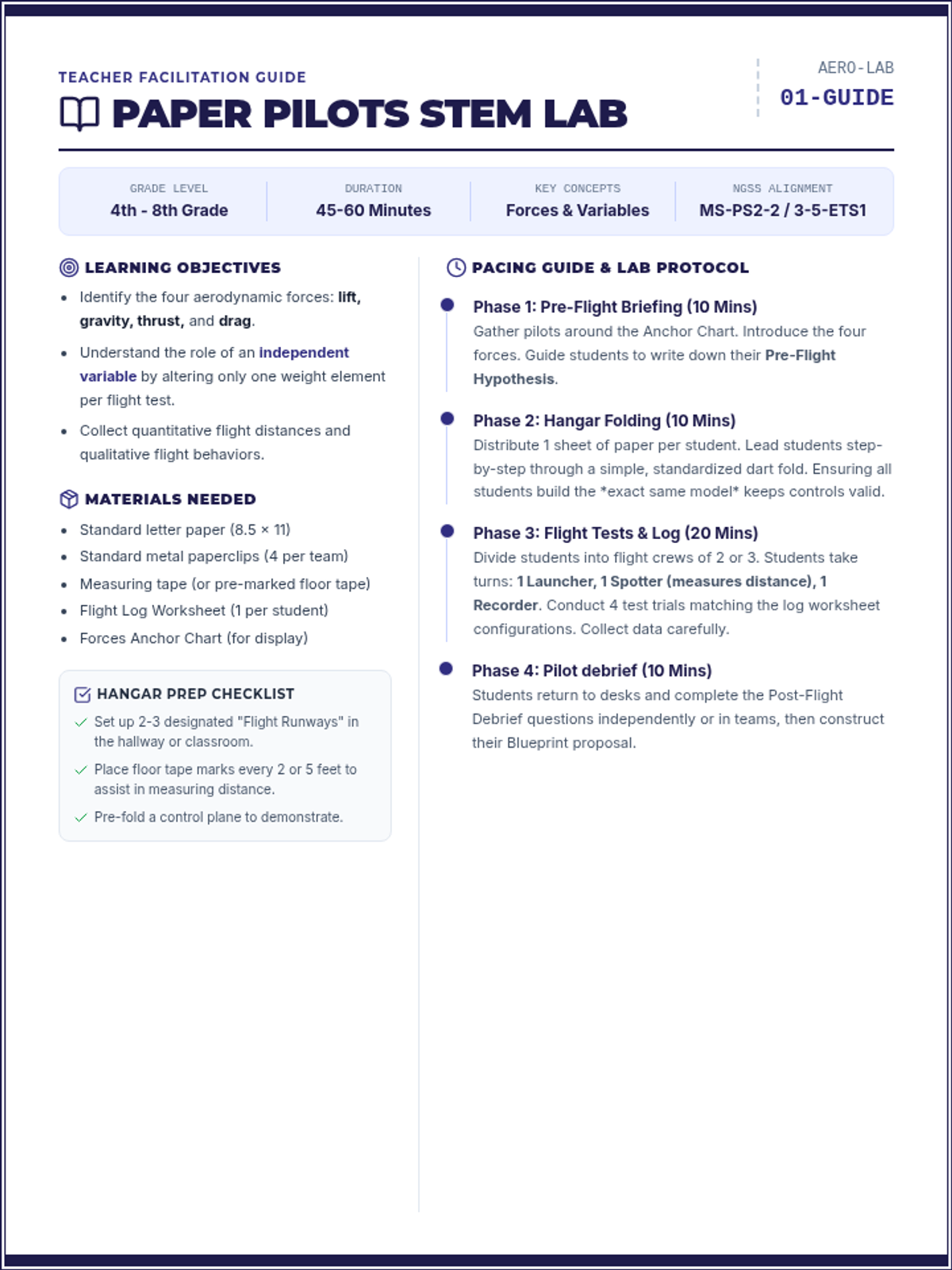
A hands-on STEM lesson where students explore aerodynamics and variables by testing how adding paperclips to different parts of a paper airplane affects its flight path, stability, and distance.
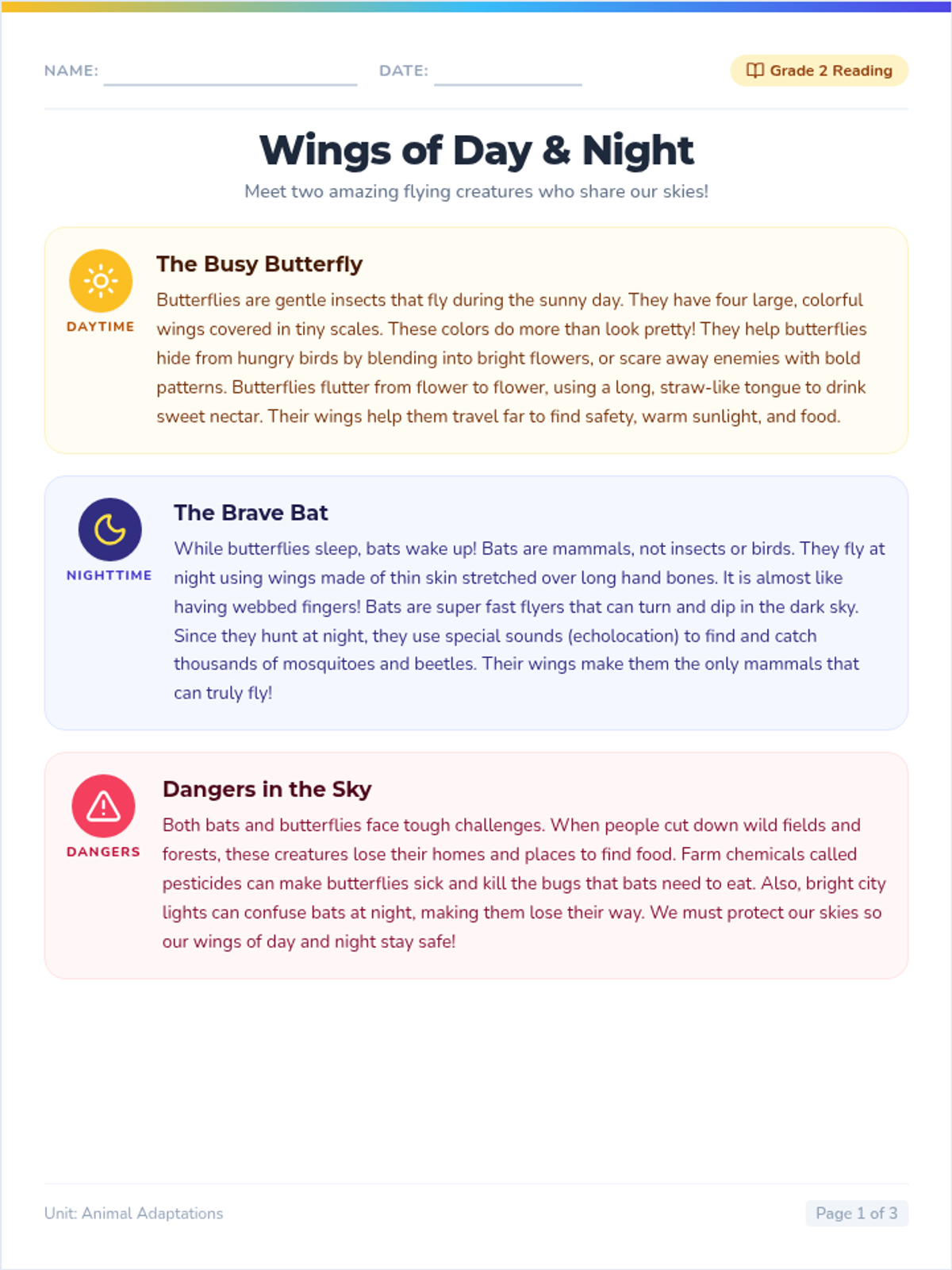
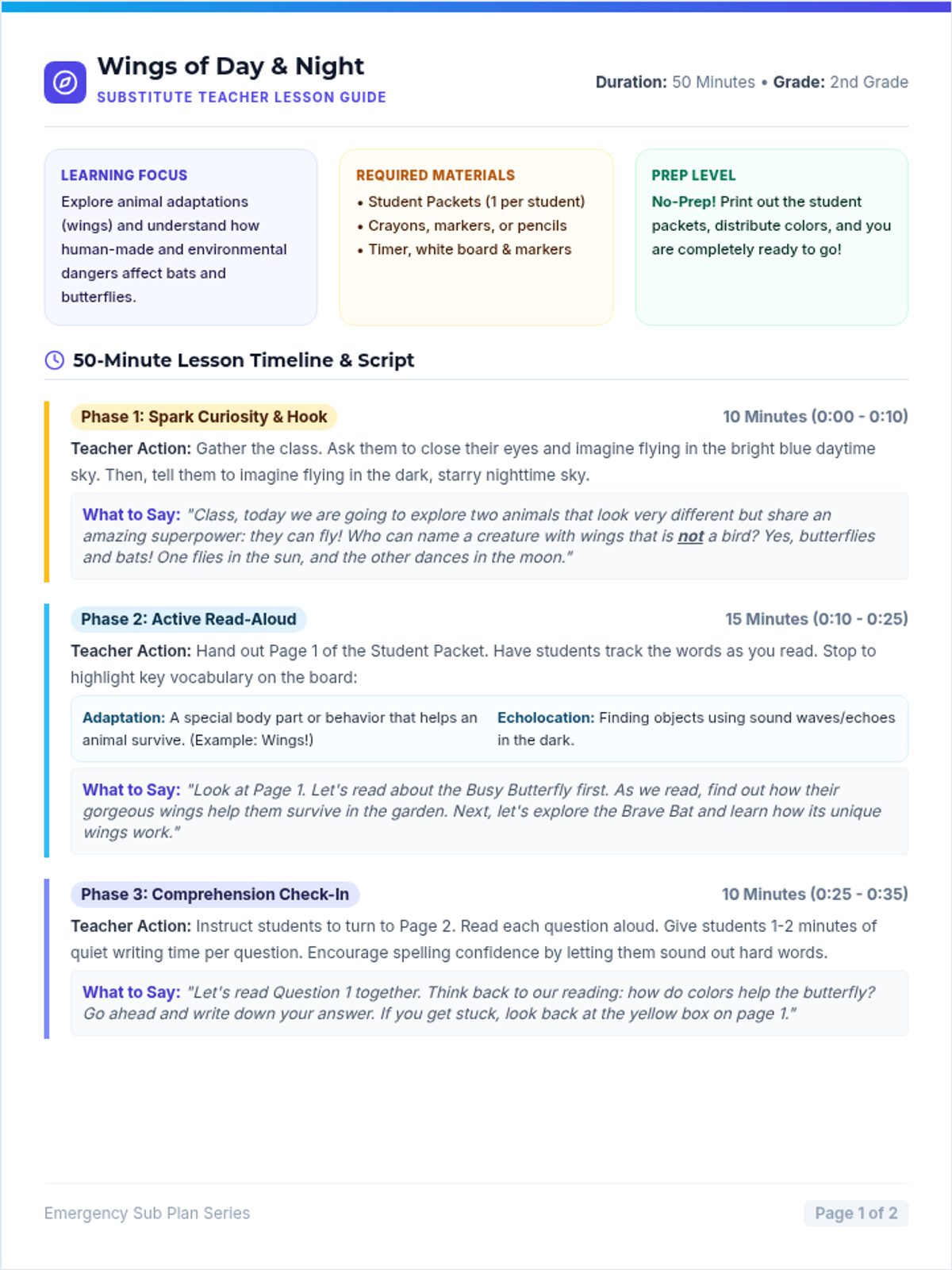
A 50-minute emergency sub plan for second graders exploring butterflies and bats. Students investigate how wings help these creatures survive, the unique dangers they face, and create a dual-habitat drawing of day and night.
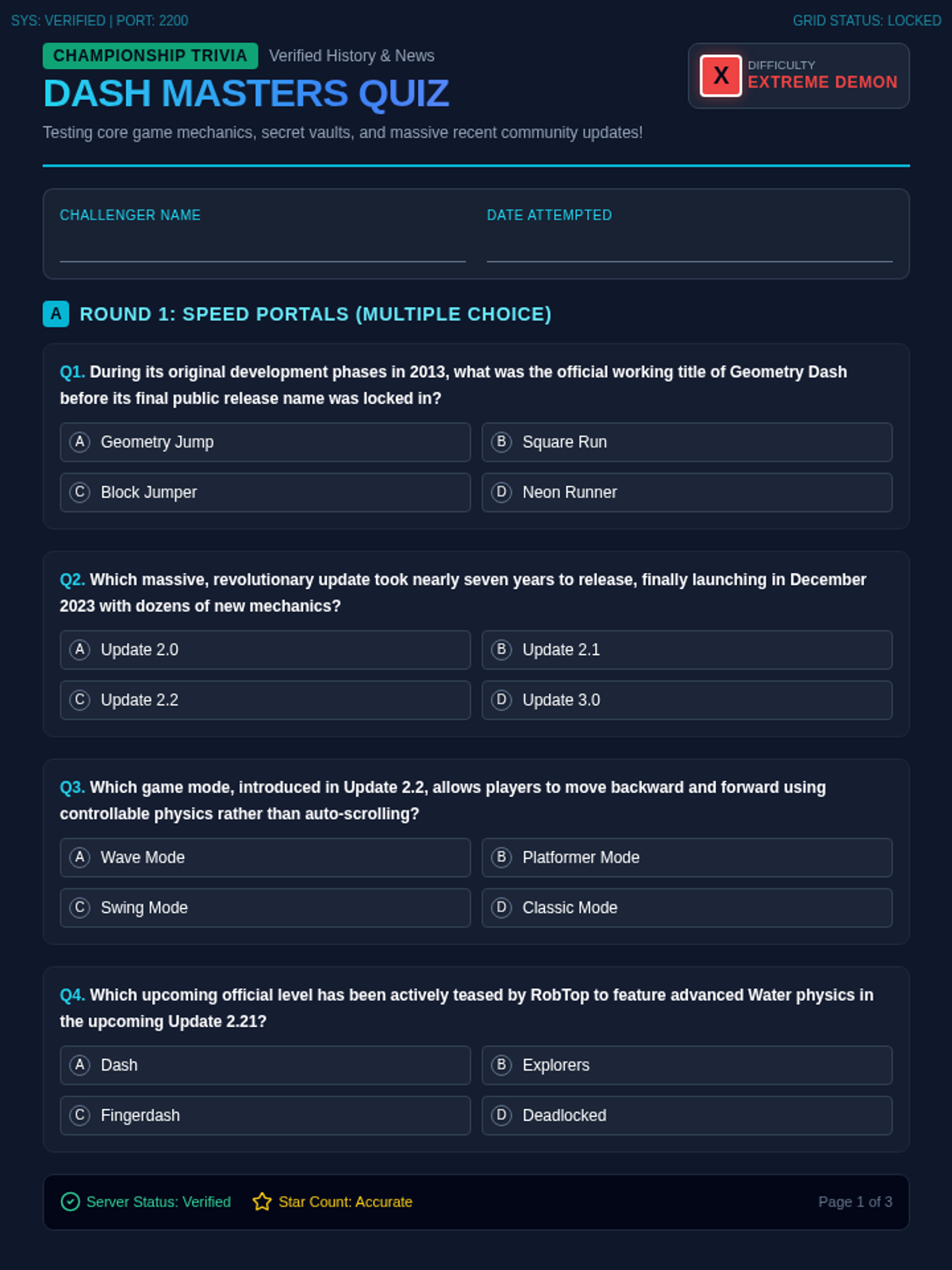
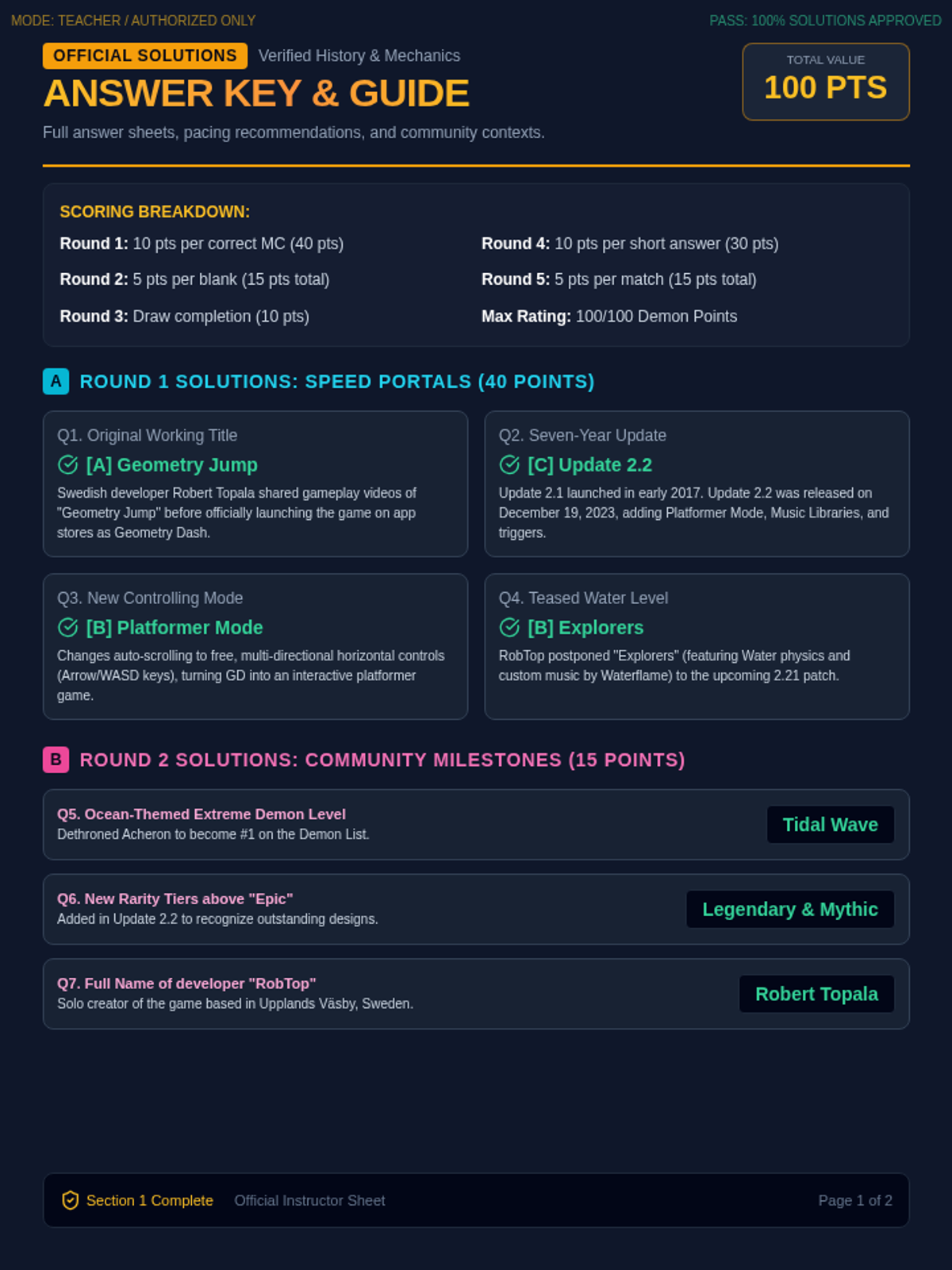
A fun-filled, competitive trivia challenge centered around the history, mechanics, and recent community updates of the sensation Geometry Dash. Perfect for gaming clubs, brain breaks, or student-led activities.
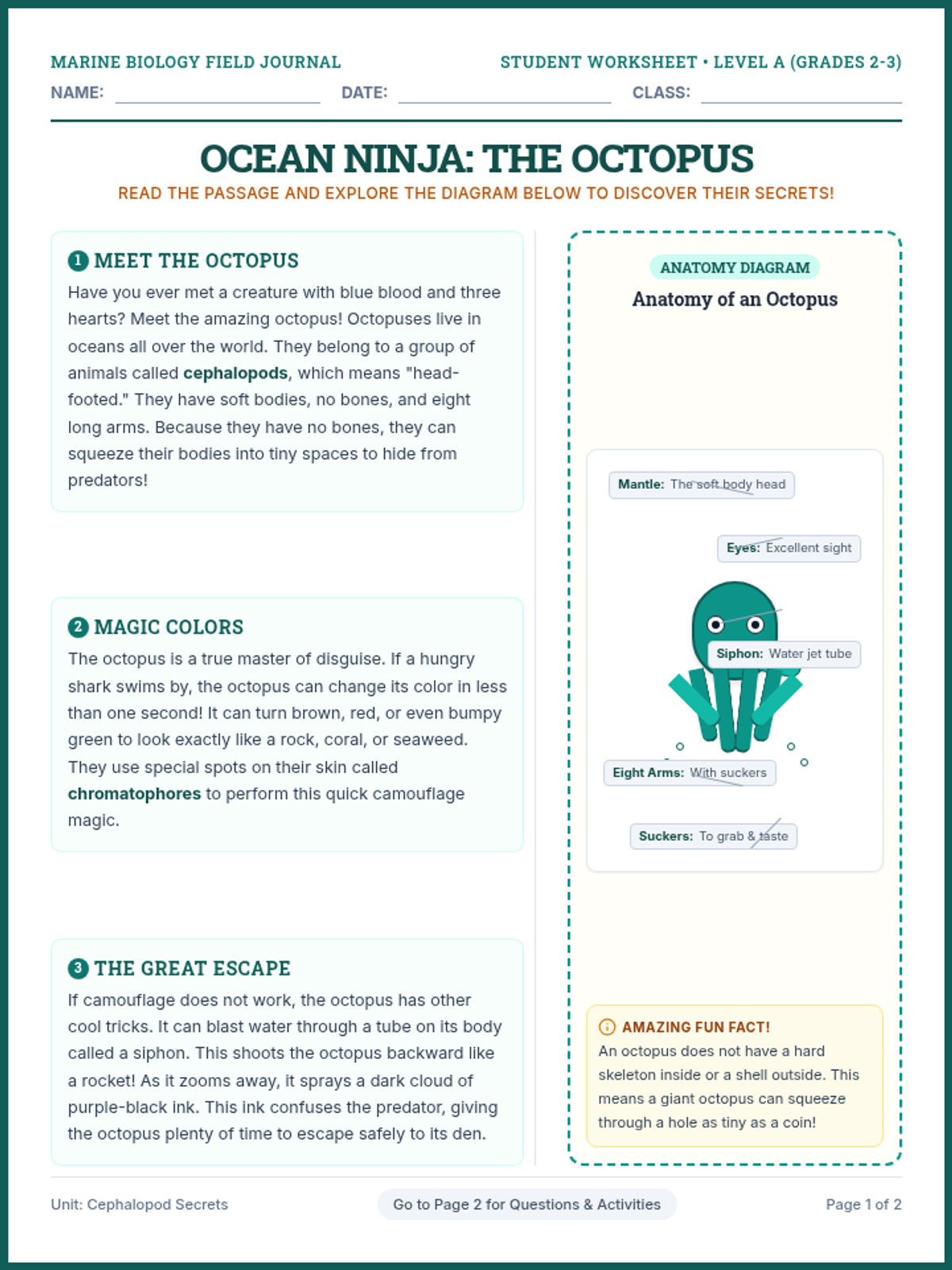
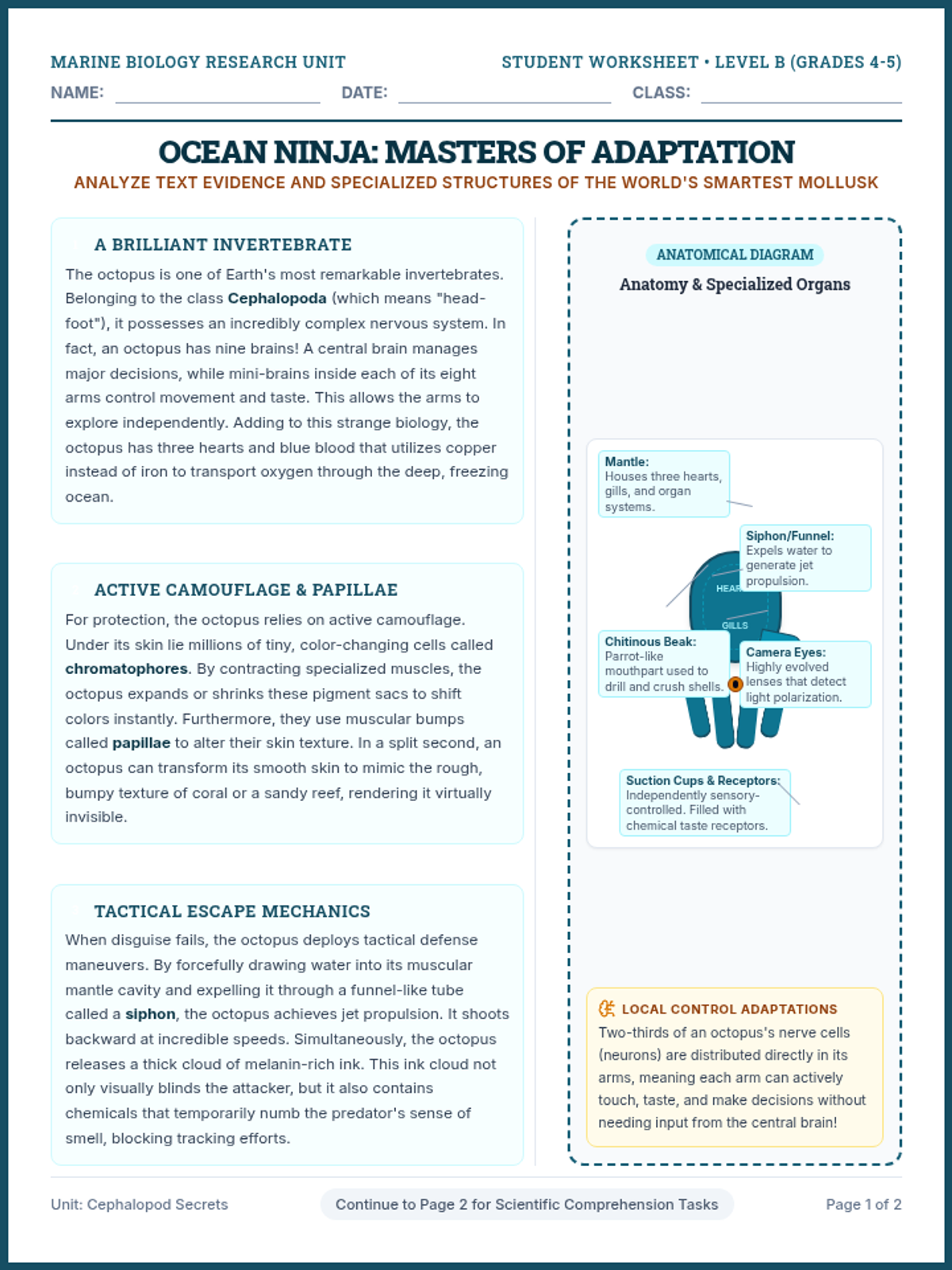
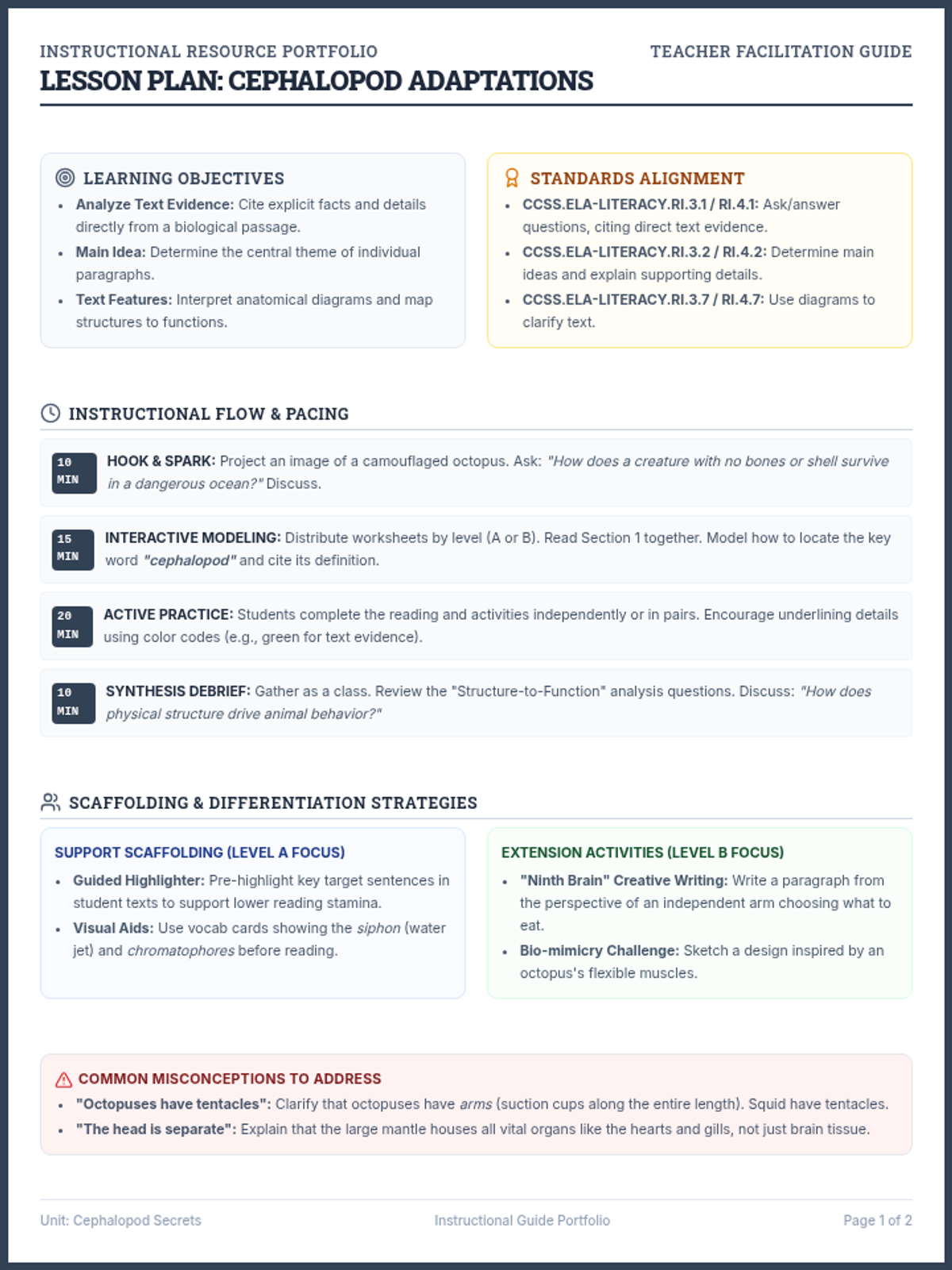
A differentiated reading comprehension unit focusing on the fascinating adaptations, anatomy, and intelligence of octopuses. Students read level-adjusted passages, analyze text-feature diagrams, and practice finding direct text evidence and summarizing main ideas.
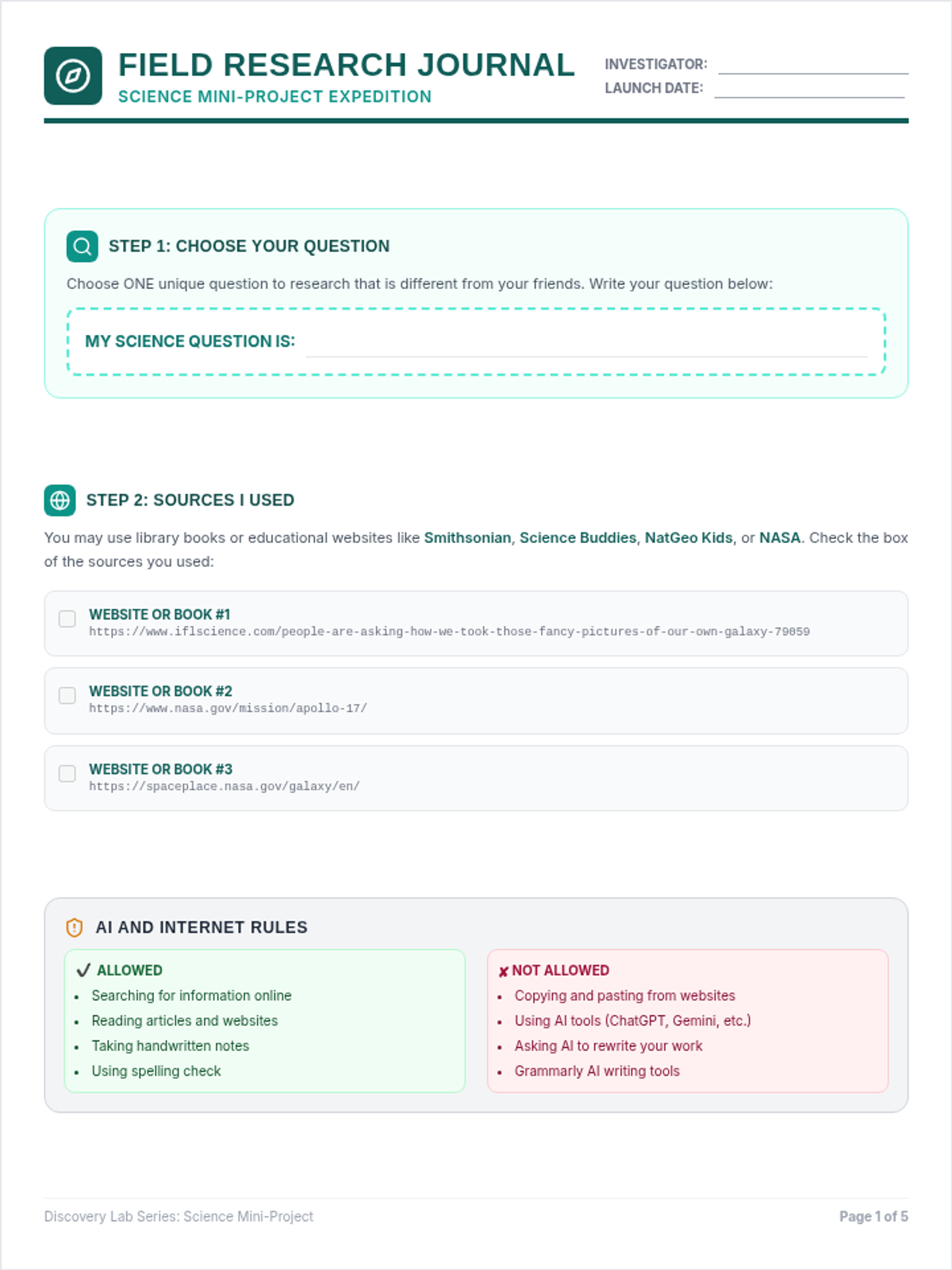
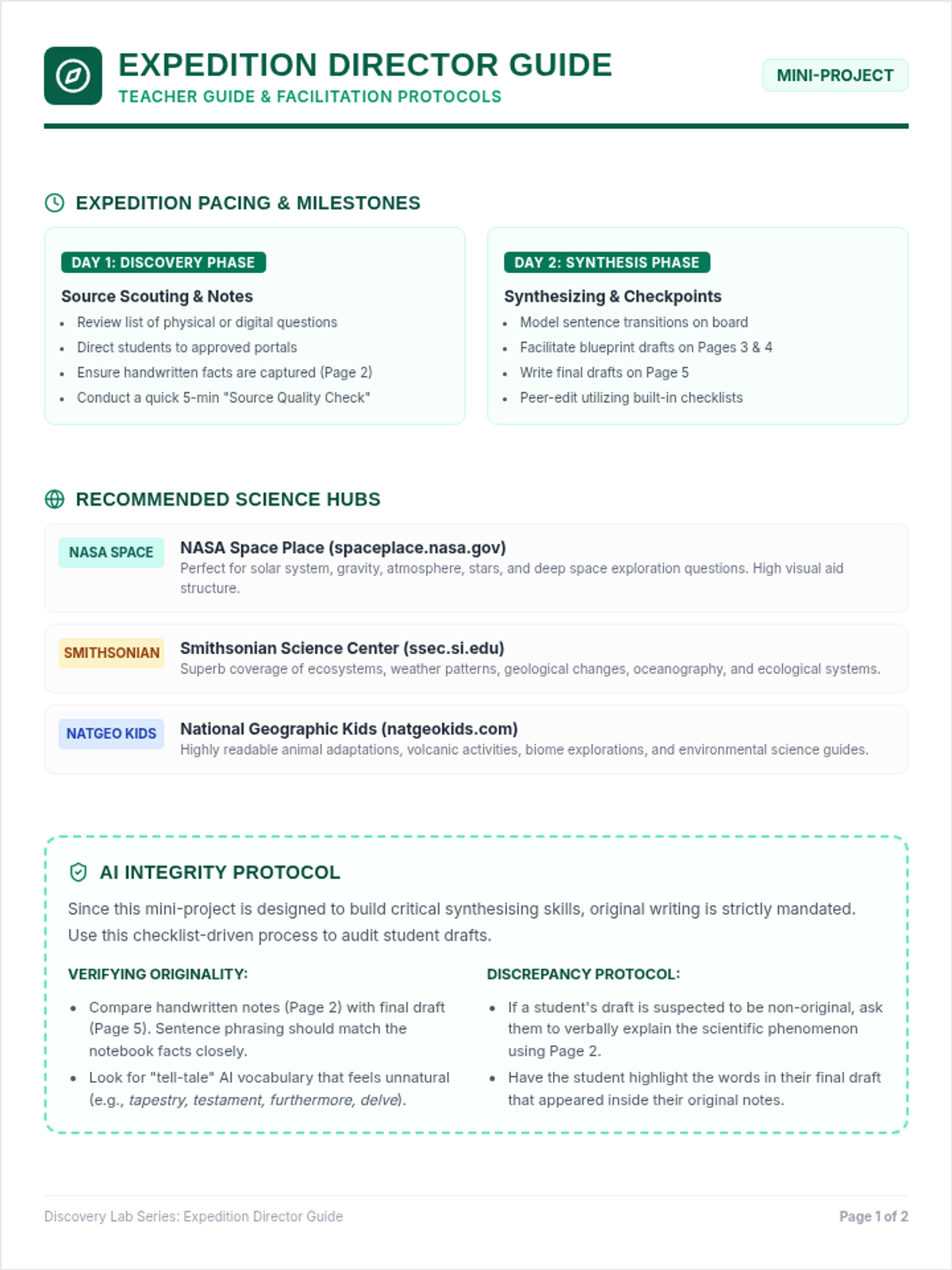
A student-led research project where students choose a science question, evaluate reliable sources, gather evidence, and draft a 3-4 paragraph explanation. Includes moderate visual scaffolding and structured checklists to guide independent inquiry and writing.
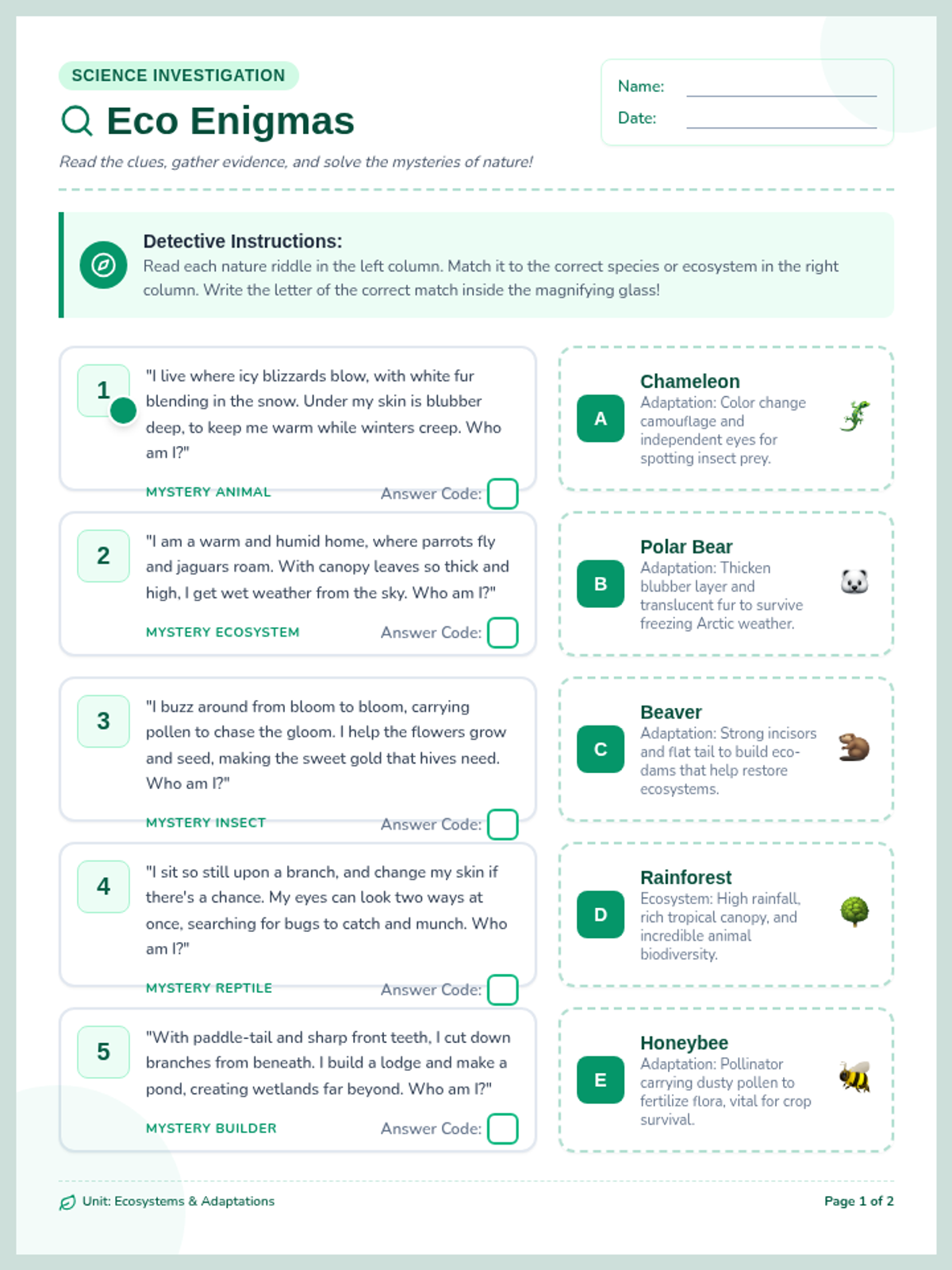
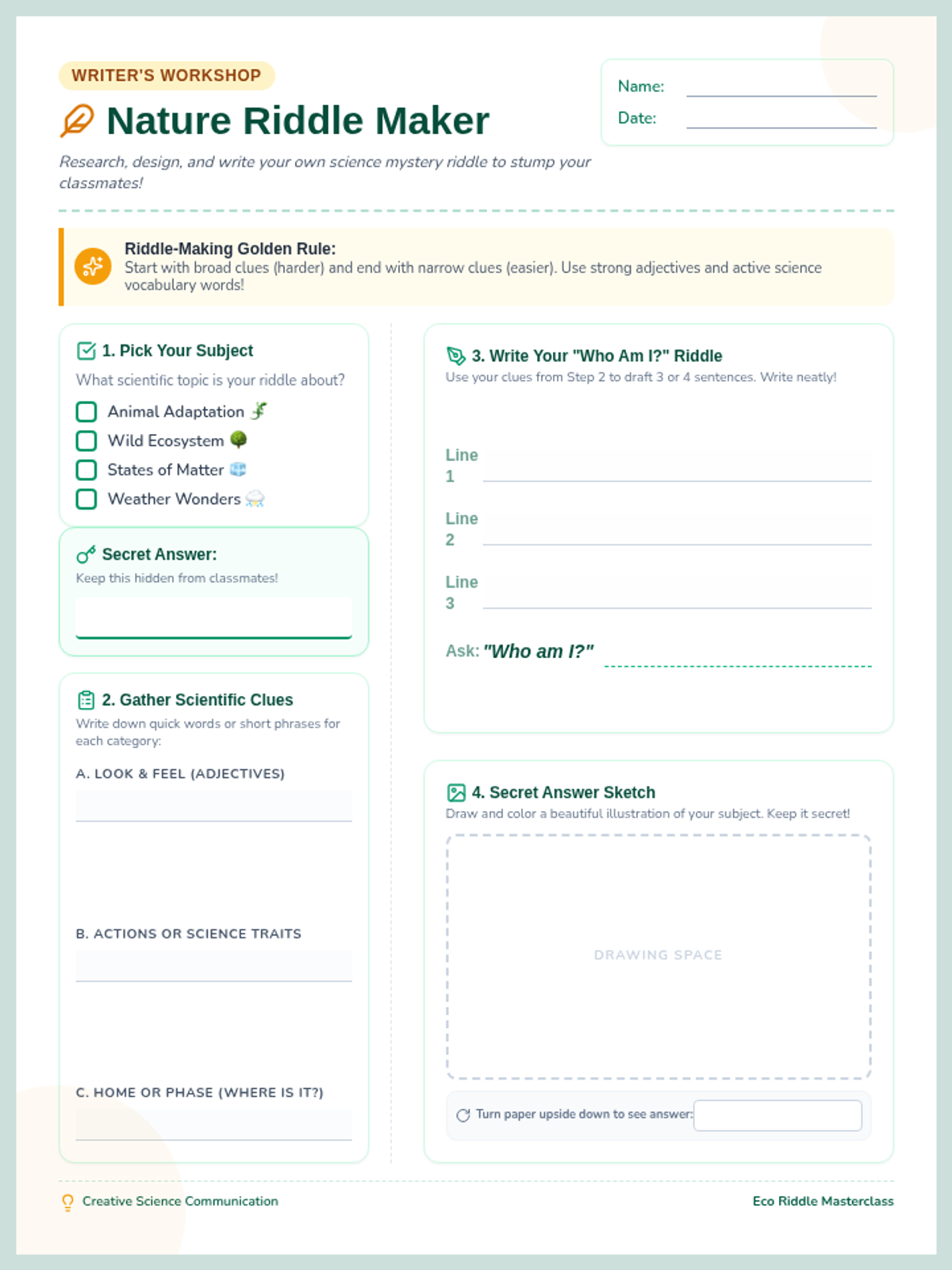
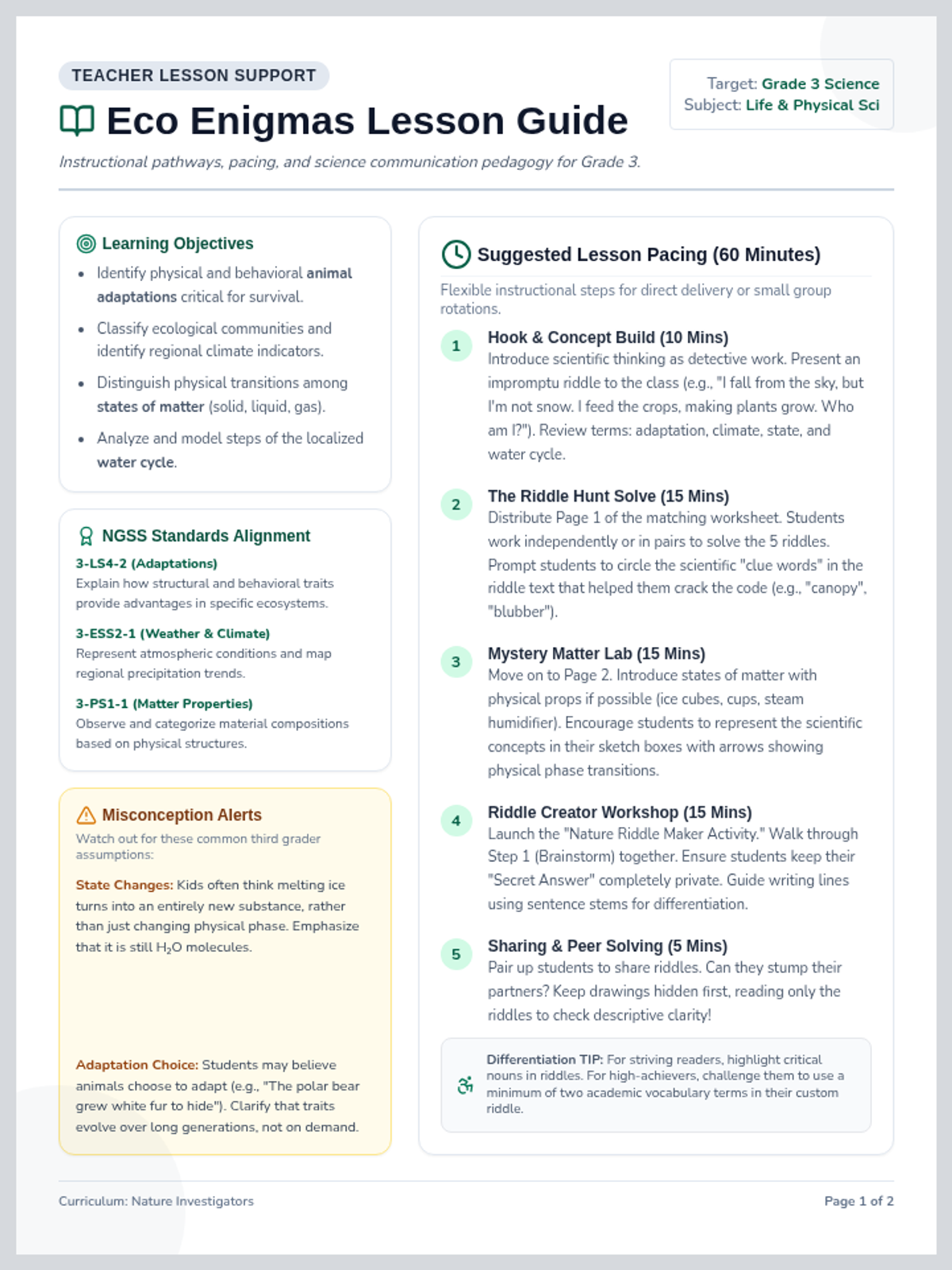
A hands-on science lesson for third graders using riddles to explore ecosystems, animal adaptations, weather, and states of matter. Students solve clues, match concepts, and author their own scientific riddles.
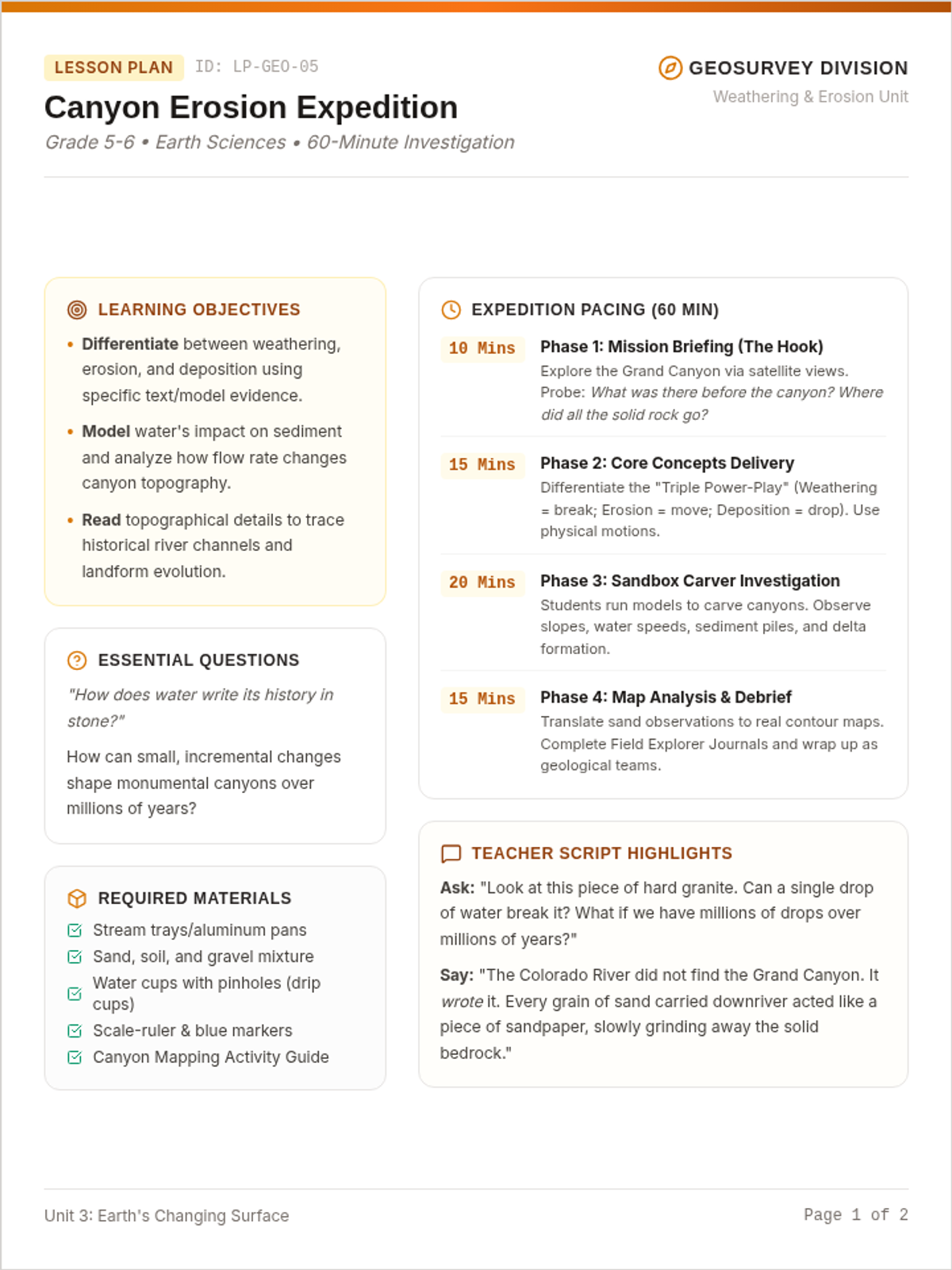
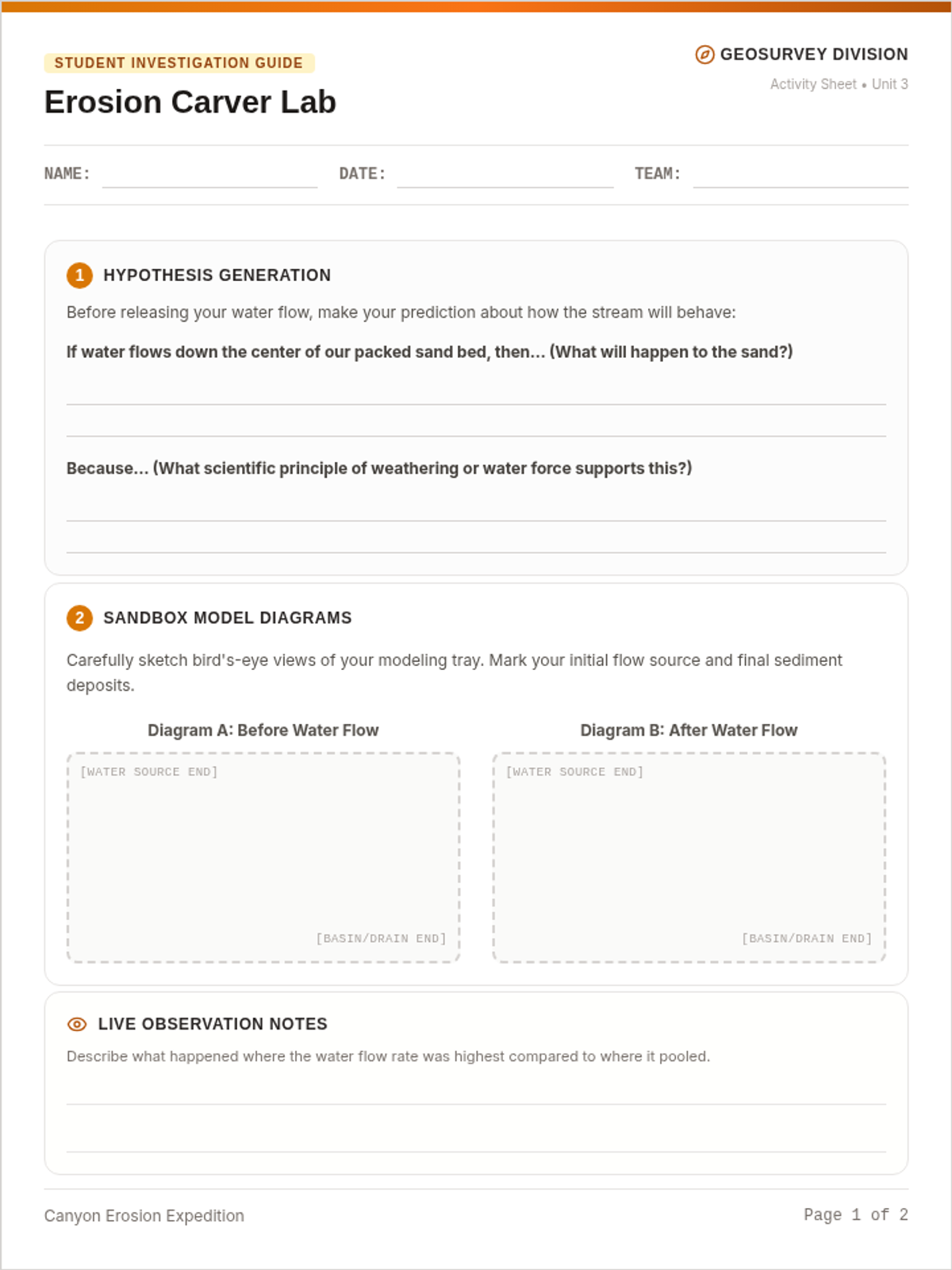
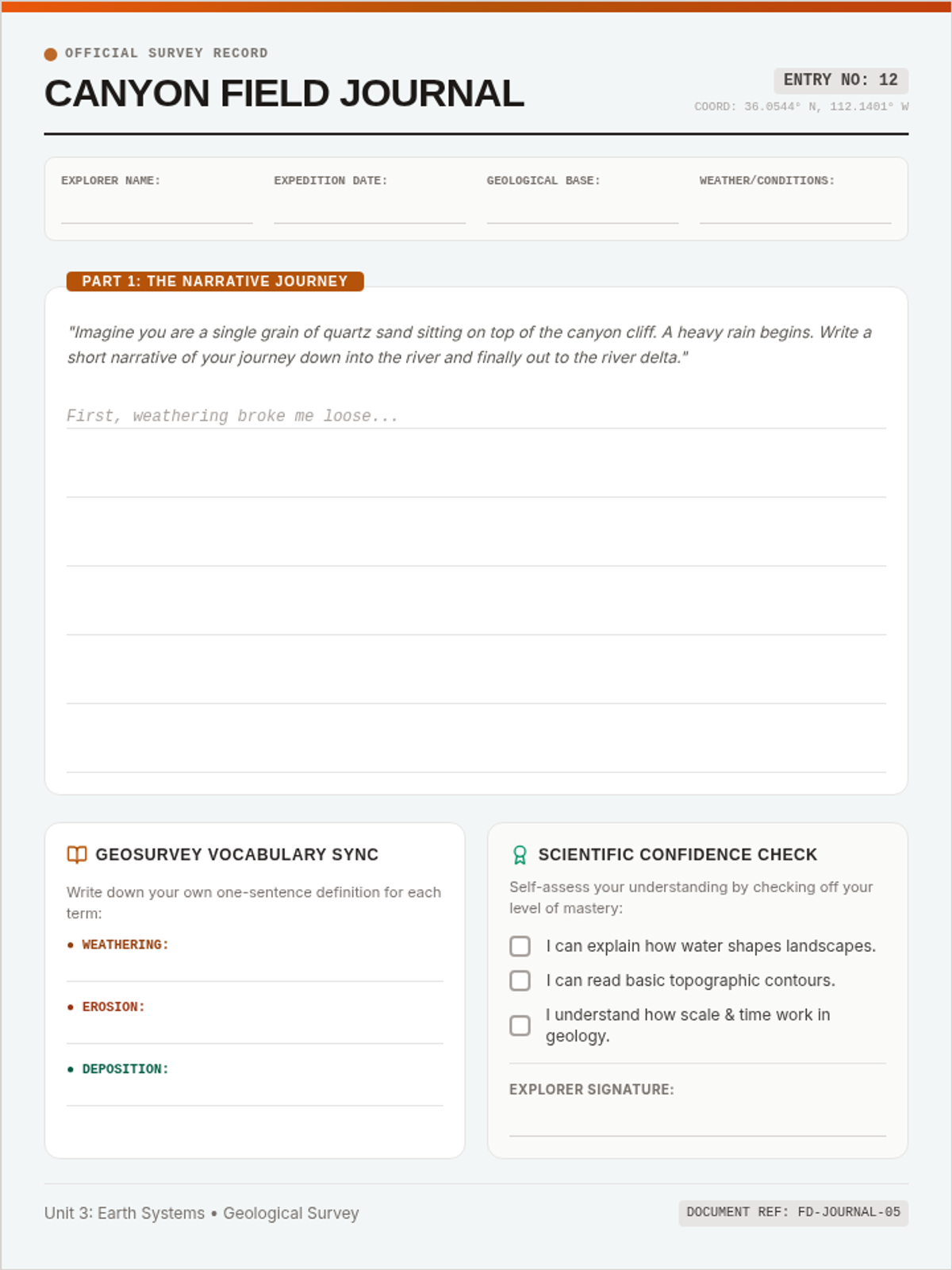
An immersive geological investigation where 5th and 6th-grade students study weathering and erosion. Students analyze canyon maps, model erosional forces, and keep a scientific field journal.
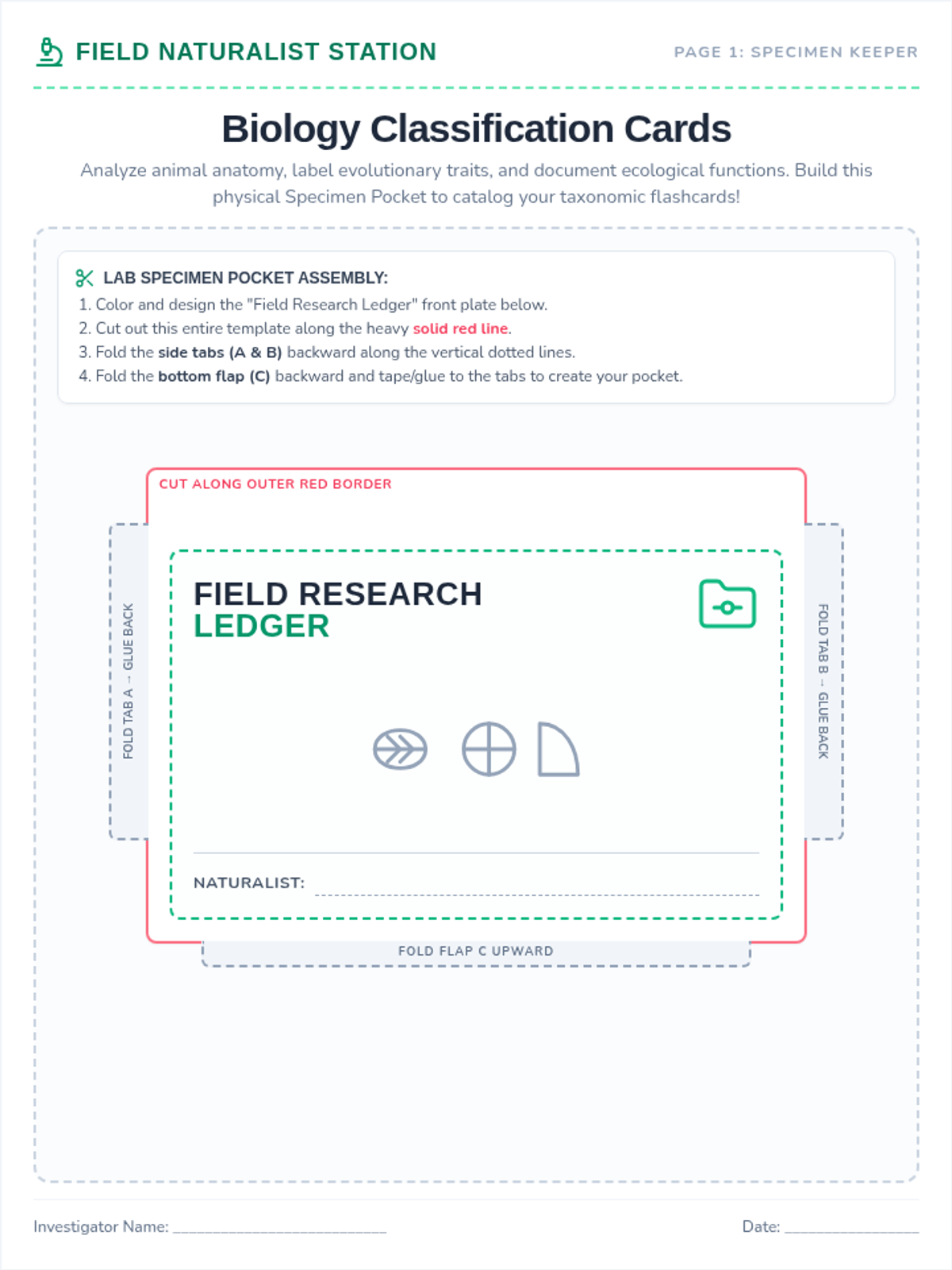
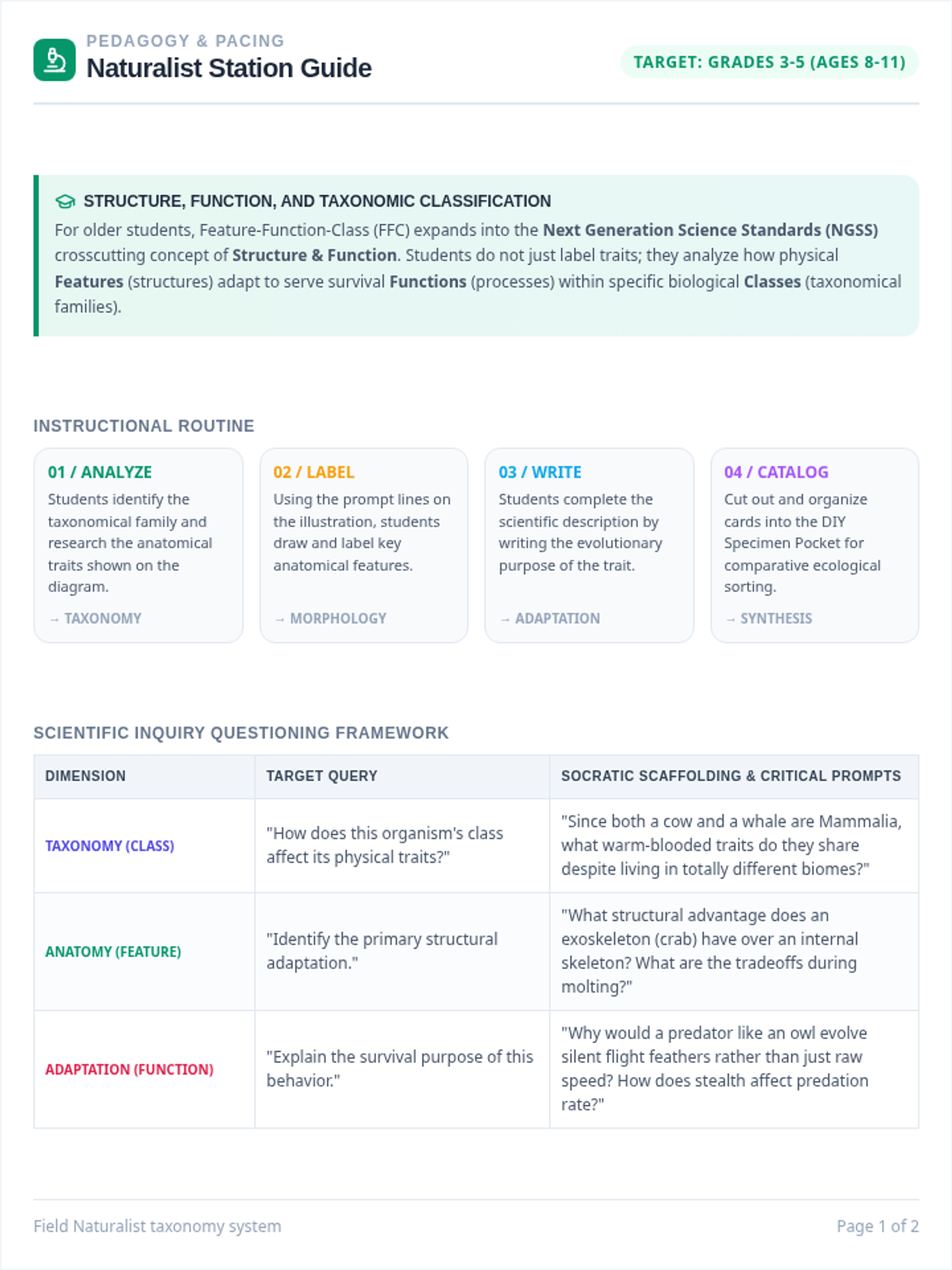
A biology and taxonomy sorting system designed for older kids (Grades 3-5). Students analyze evolutionary adaptations, label critical anatomical features, and categorize specimens by their taxonomic classes, habitats, and ecological functions.
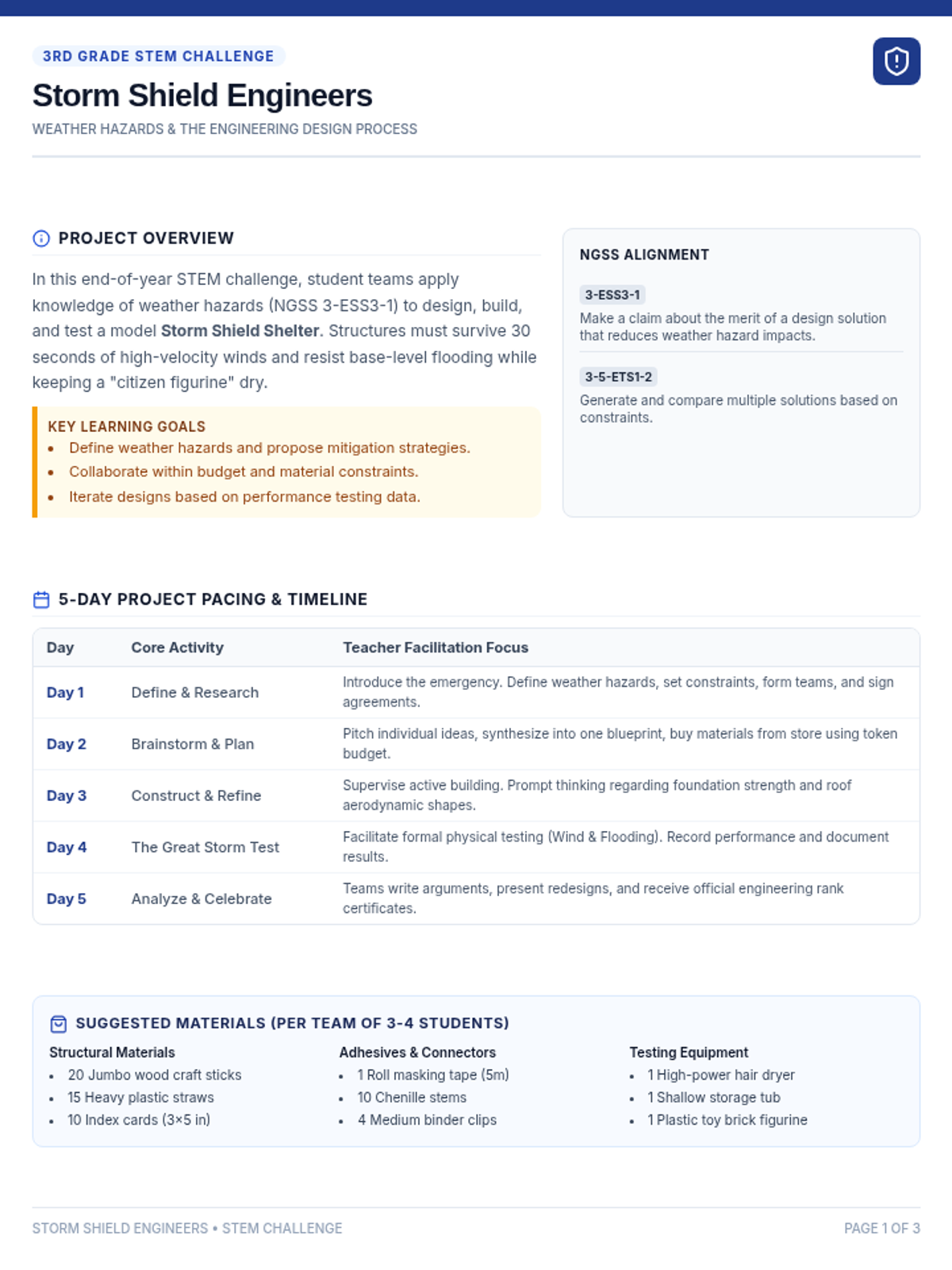
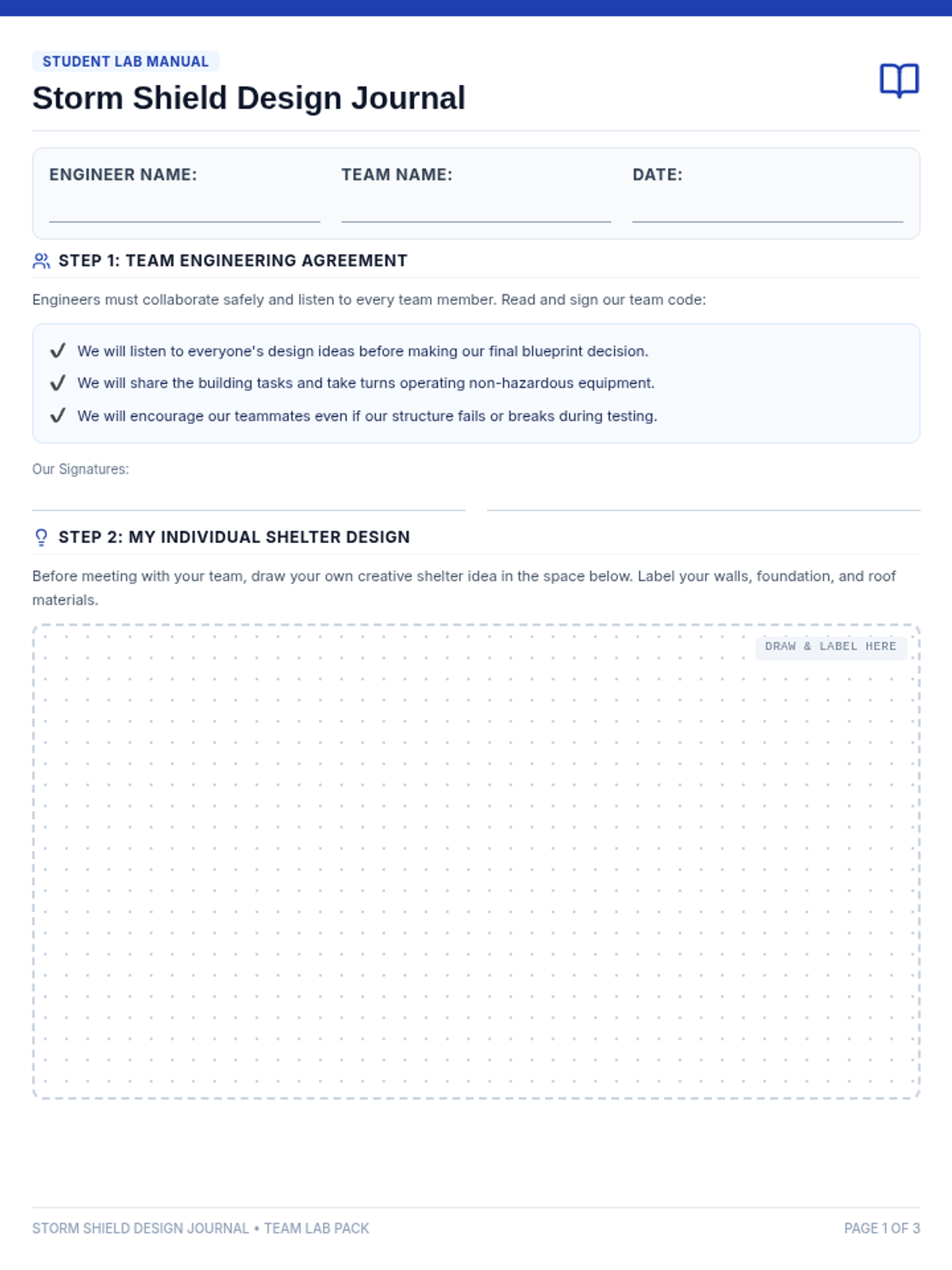
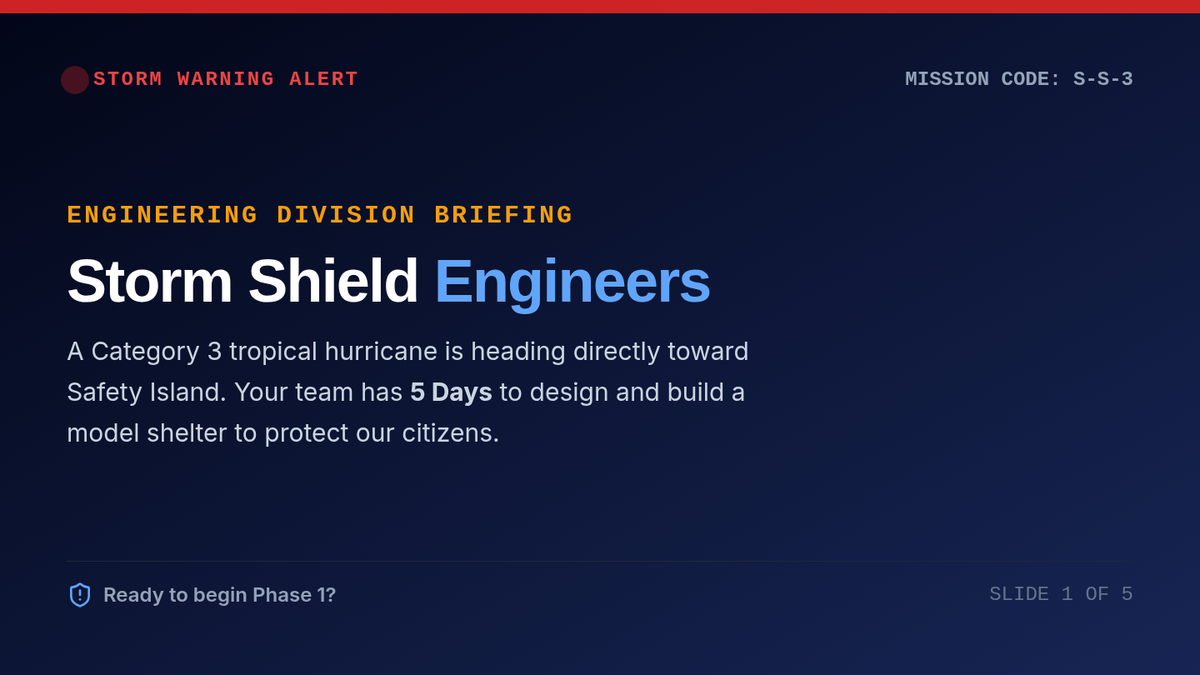
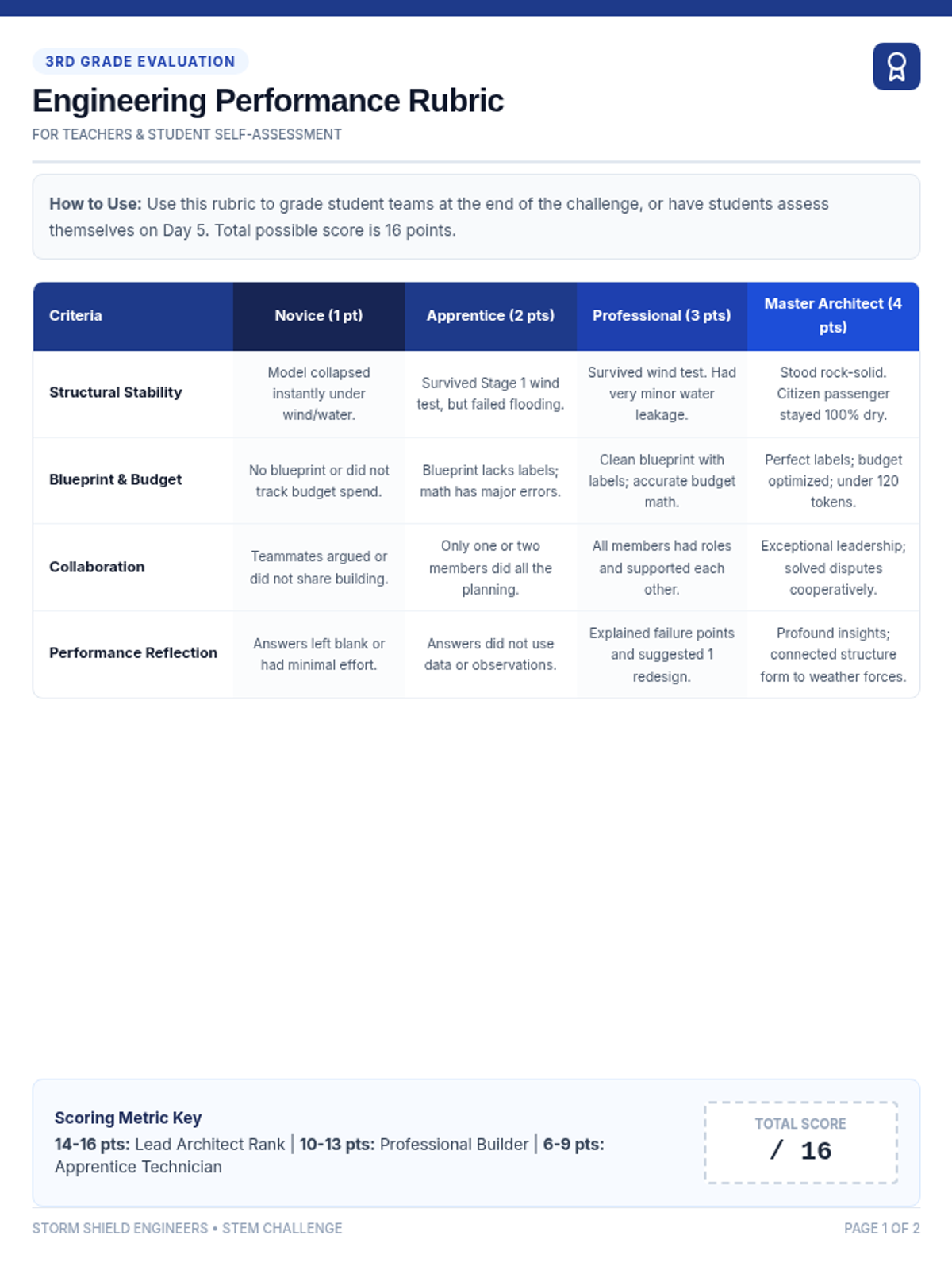
A collaborative, hands-on 3rd-grade STEM challenge where student engineering teams design, build, and test a model storm shelter that can survive wind and water hazards. Students apply weather hazard standards while experiencing the complete engineering design process over a multi-day timeline.
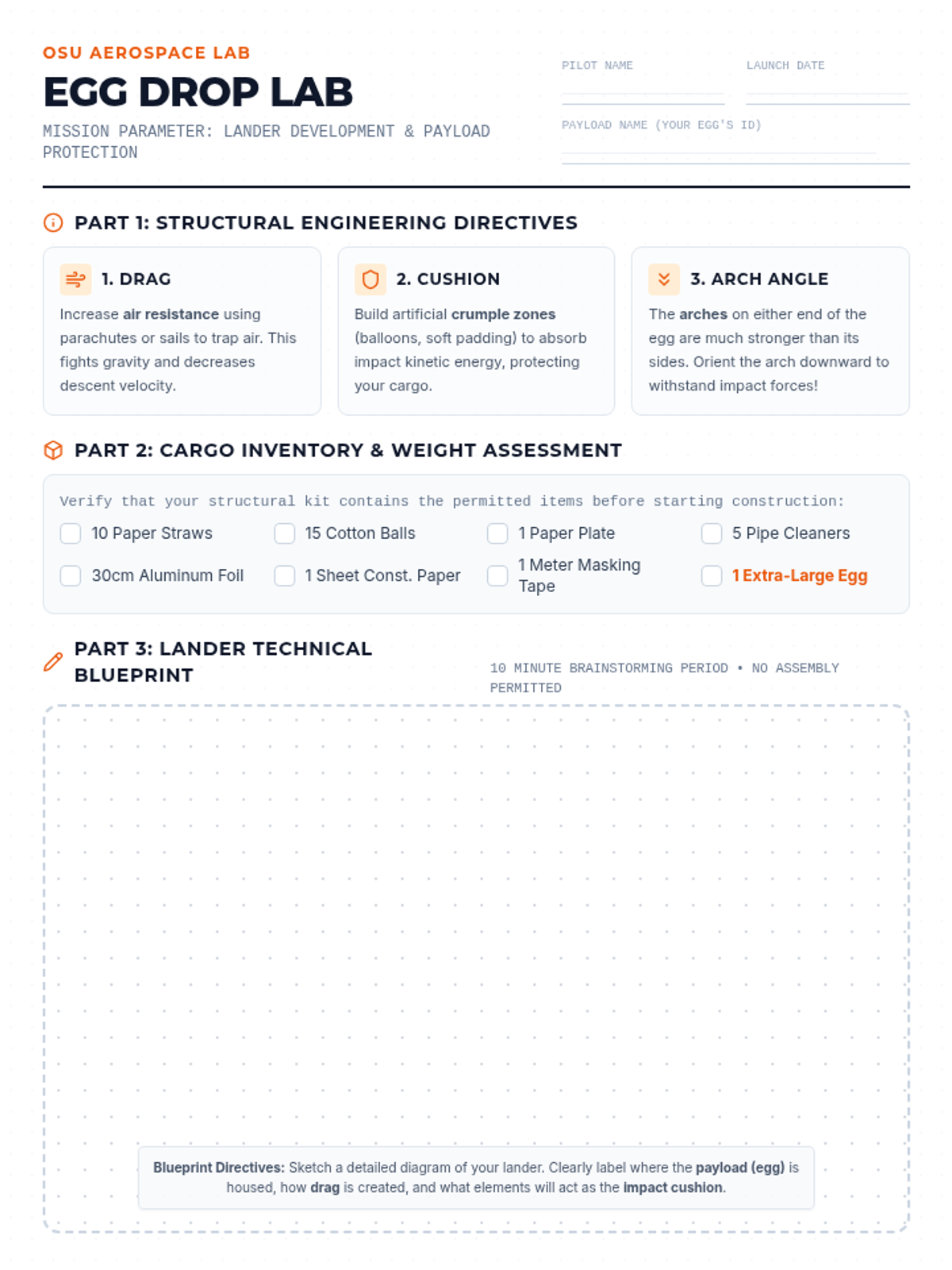
An engaging, hands-on physics and engineering lesson where students design, build, and test protective landing craft for fragile payloads (eggs), exploring forces, deceleration, and structural integrity.
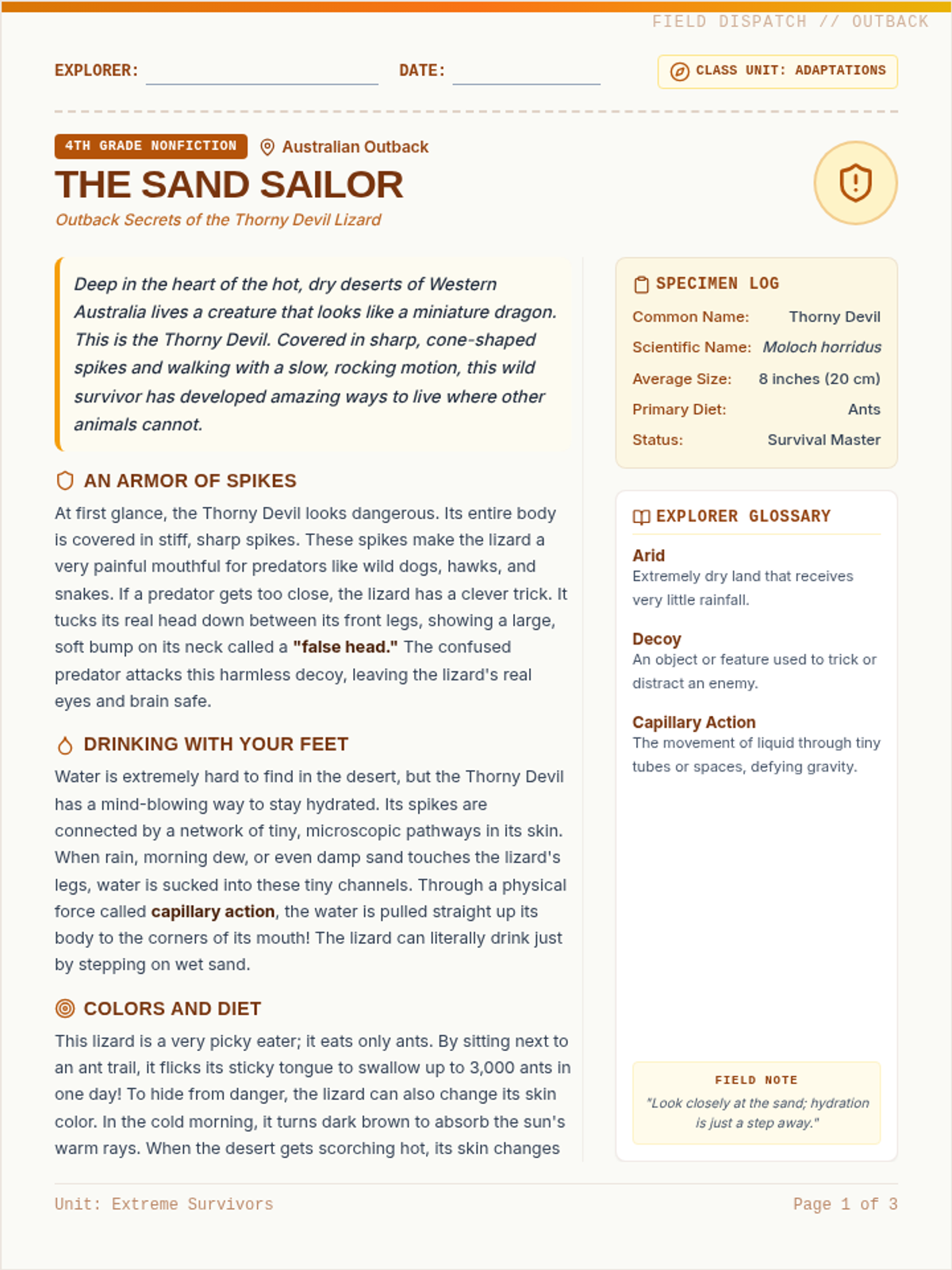
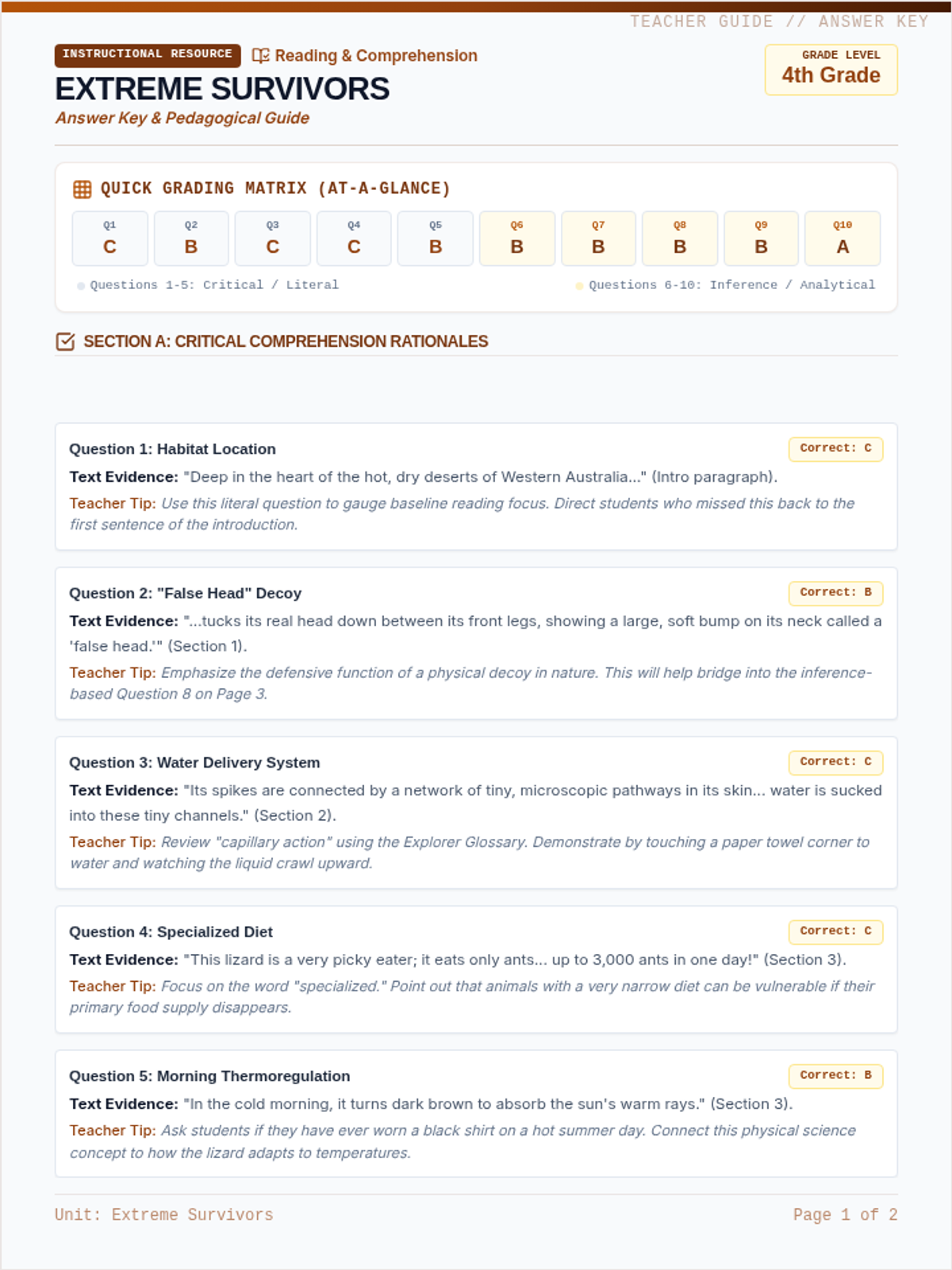
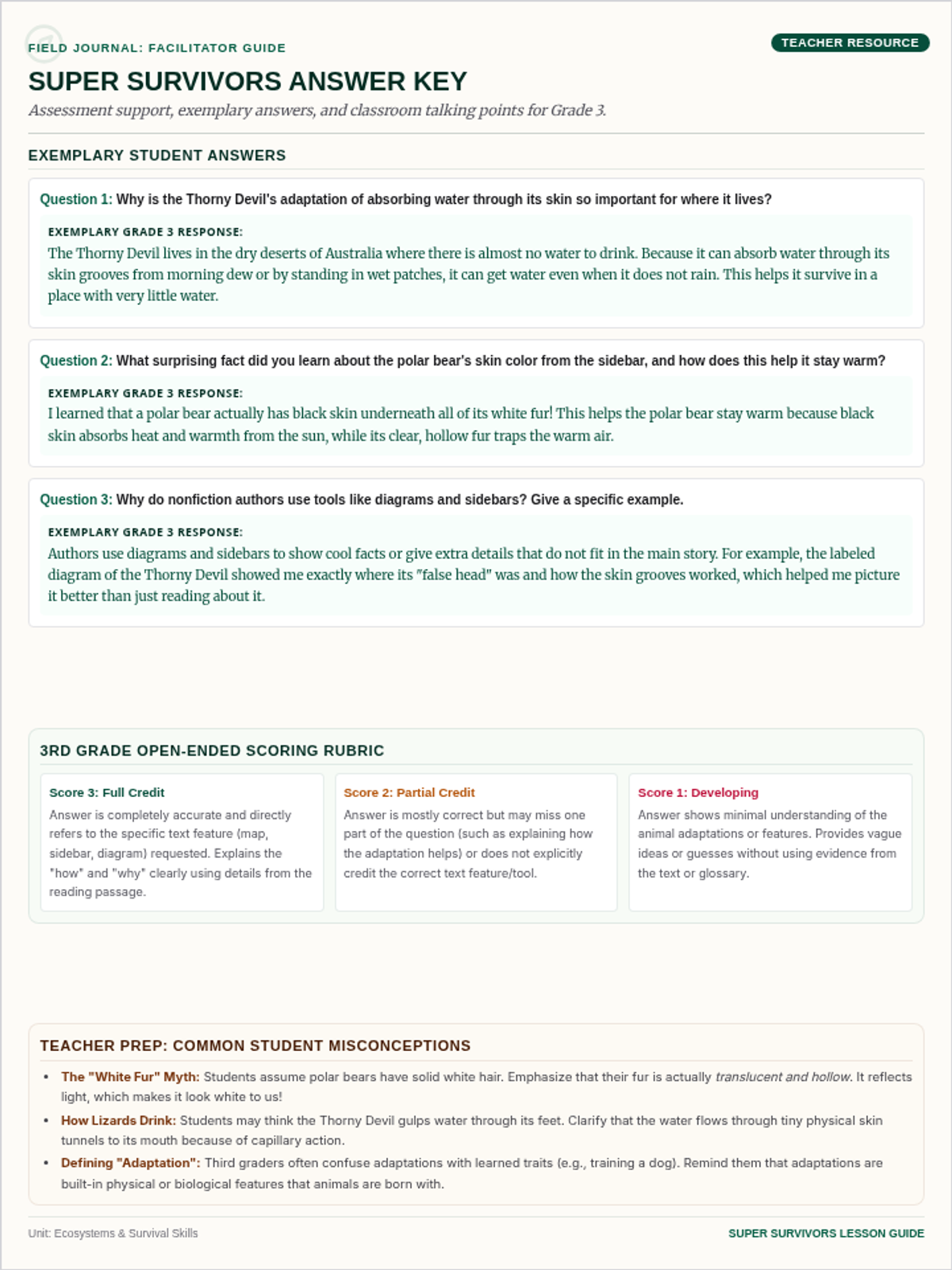
An on-grade level reading and comprehension unit focusing on how extreme desert animals, specifically the Thorny Devil, utilize highly specialized physical and behavioral adaptations to survive in the arid Australian Outback.
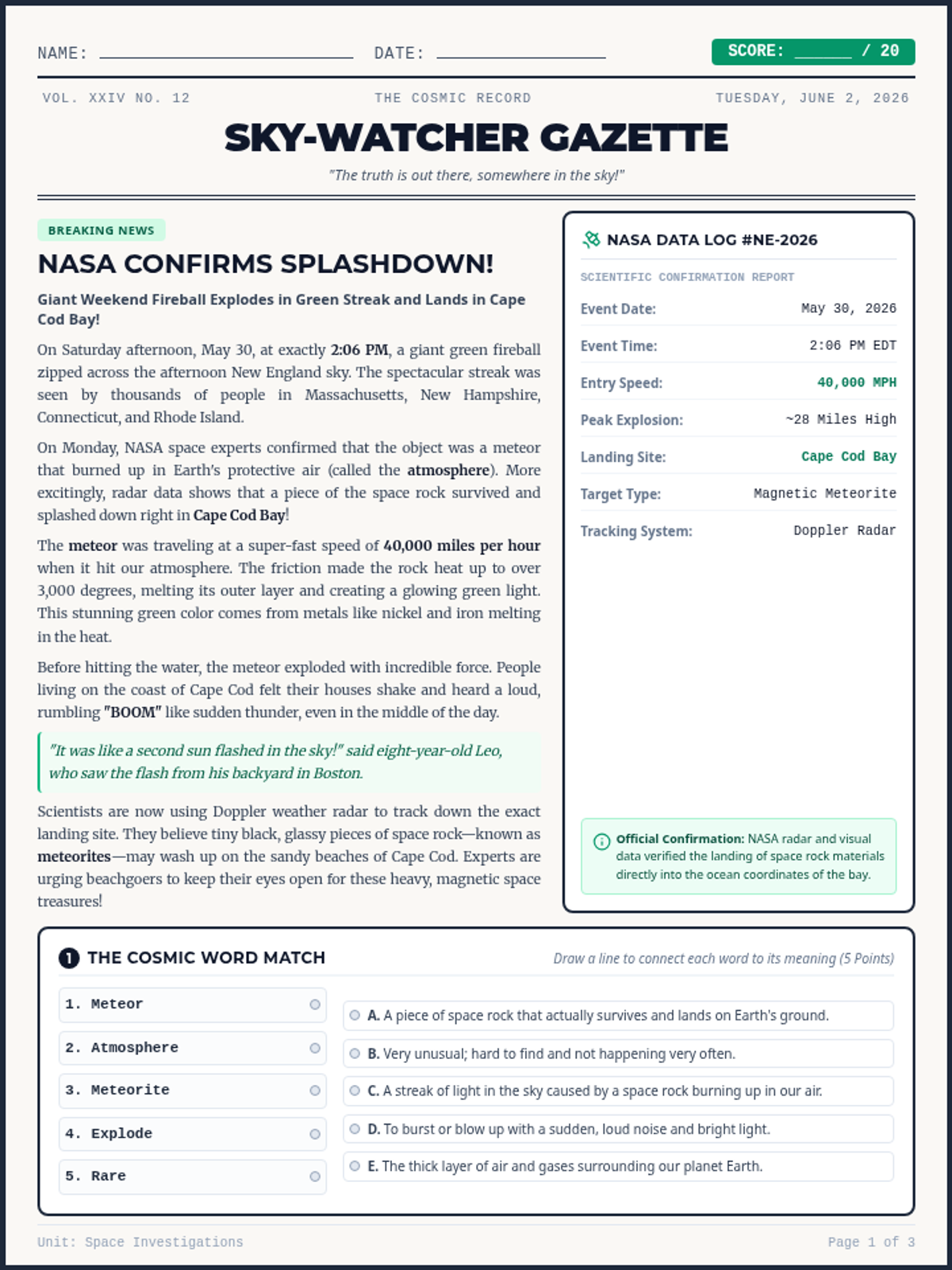
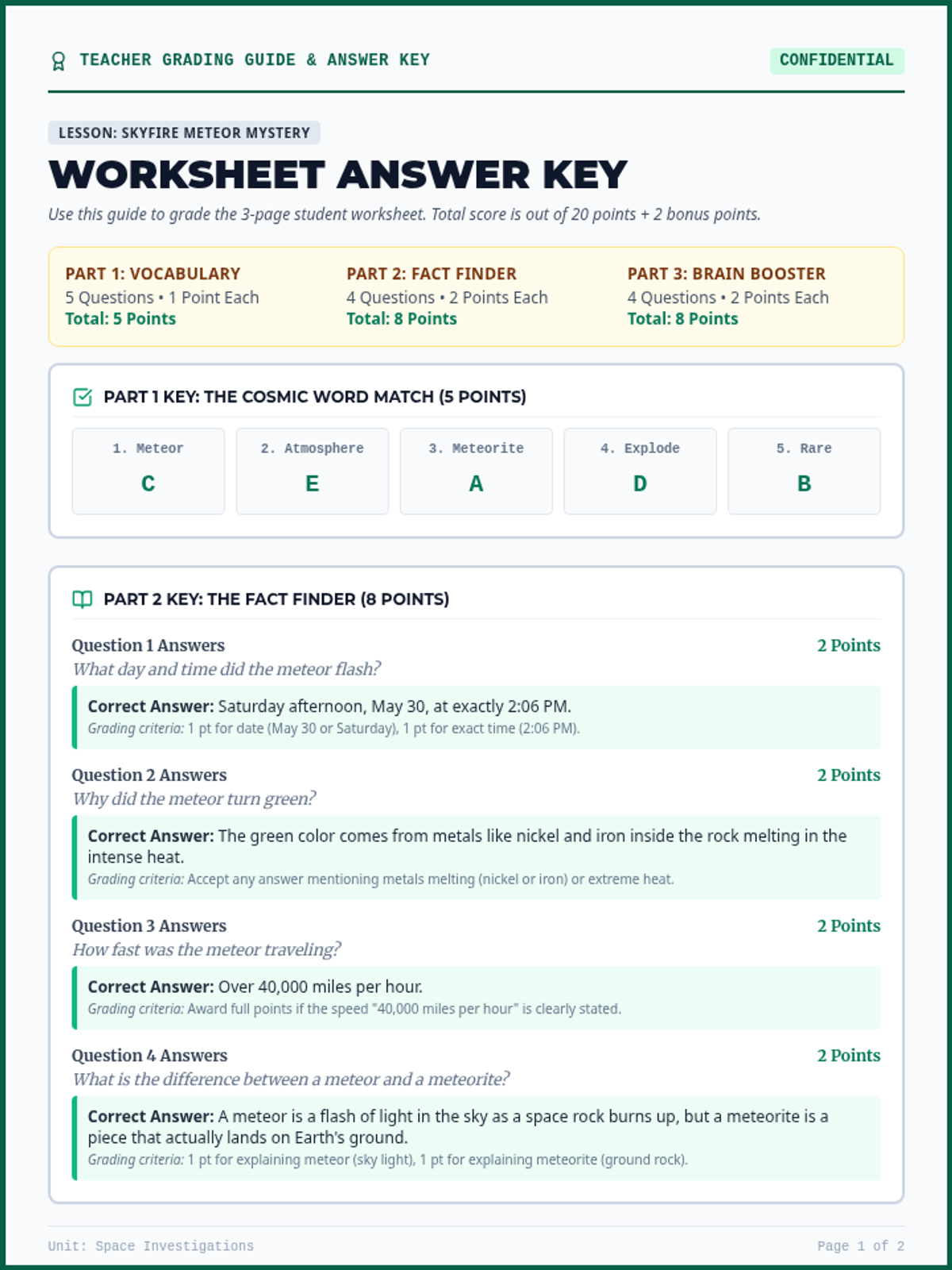
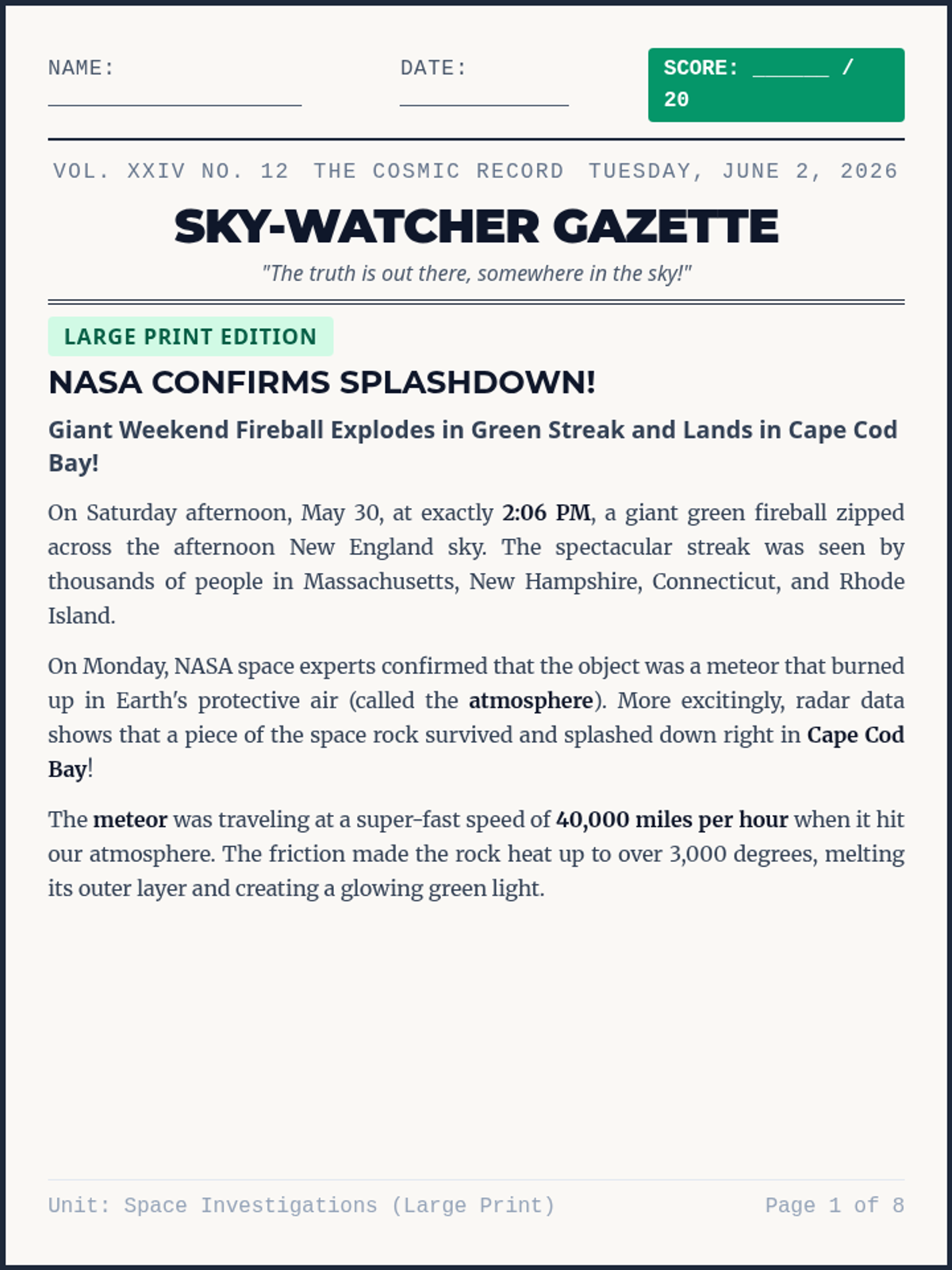
A reading comprehension lesson for 2nd and 3rd-grade students based on the spectacular meteor explosion over New England. Features engaging news-style reading, vocabulary challenges, comprehension questions, and a creative activity.
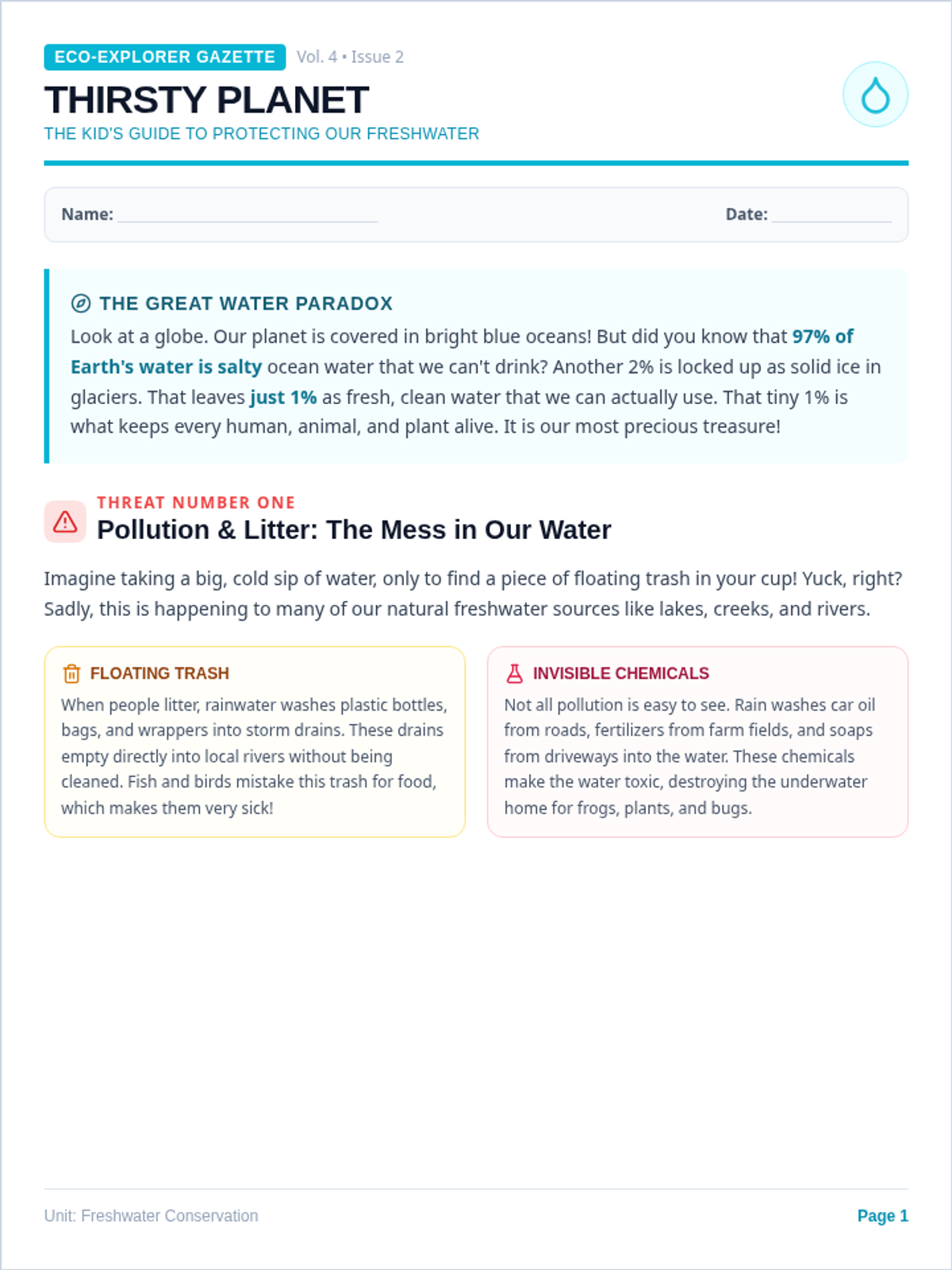
A lesson focused on understanding the primary threats to our freshwater supply, featuring an engaging, student-friendly explorer article on pollution, home water waste, droughts, and growing demand.
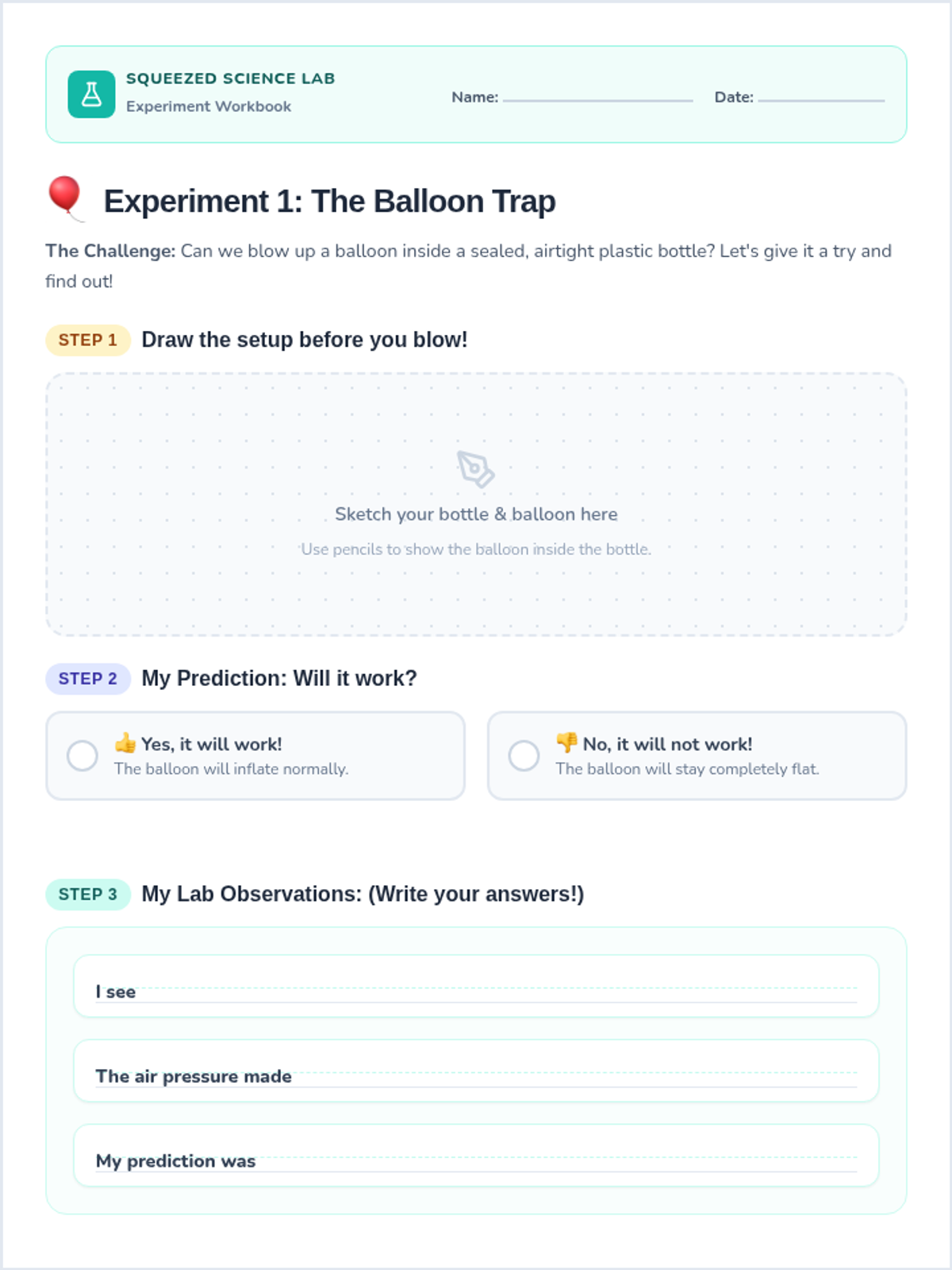
An early elementary science lesson about air pressure featuring three hands-on experiments: Balloon in a Bottle, Egg in a Bottle, and the Water Glass Trick. Students make predictions and record observations using a highly visual cut-and-paste workbook.
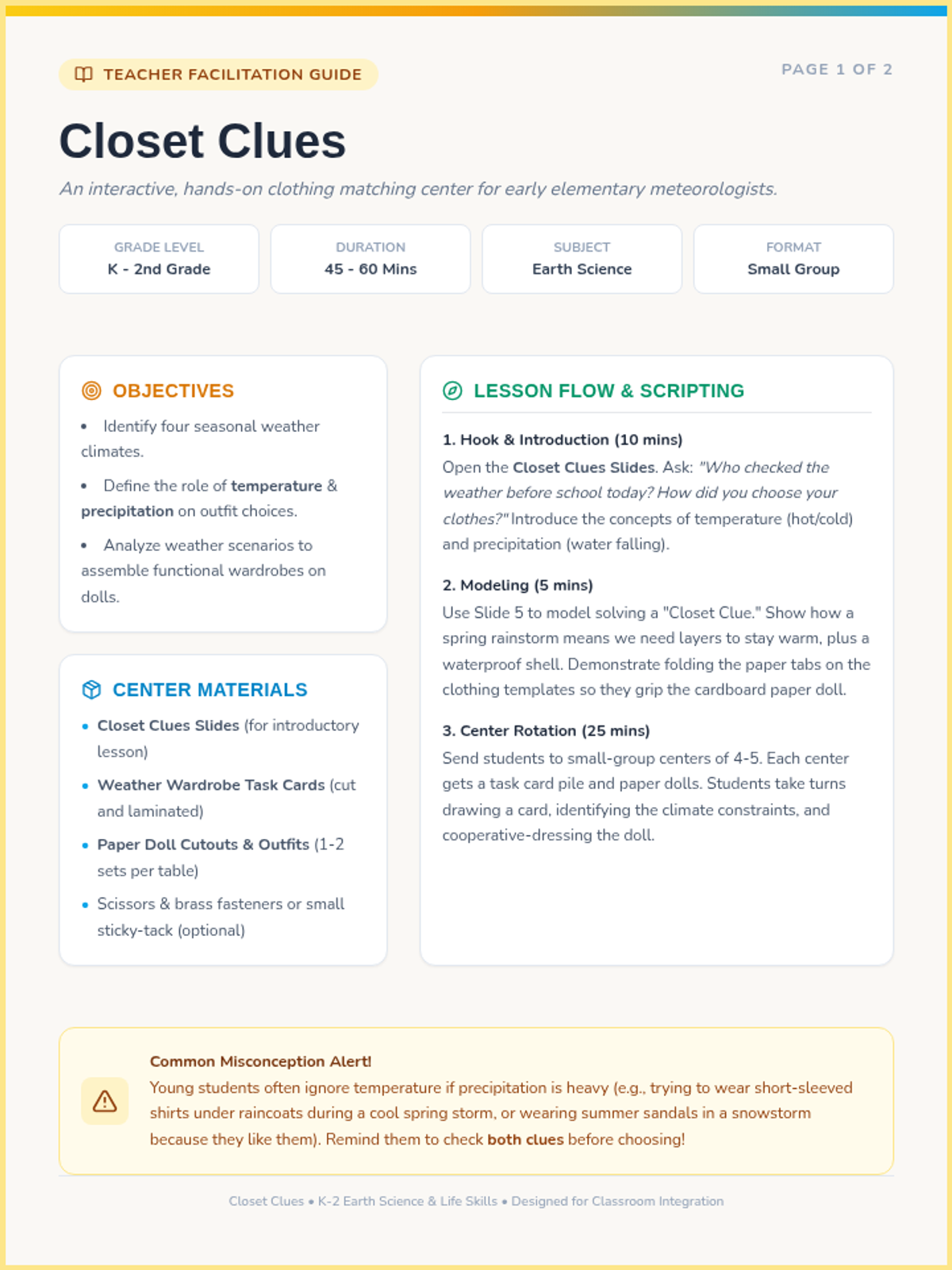
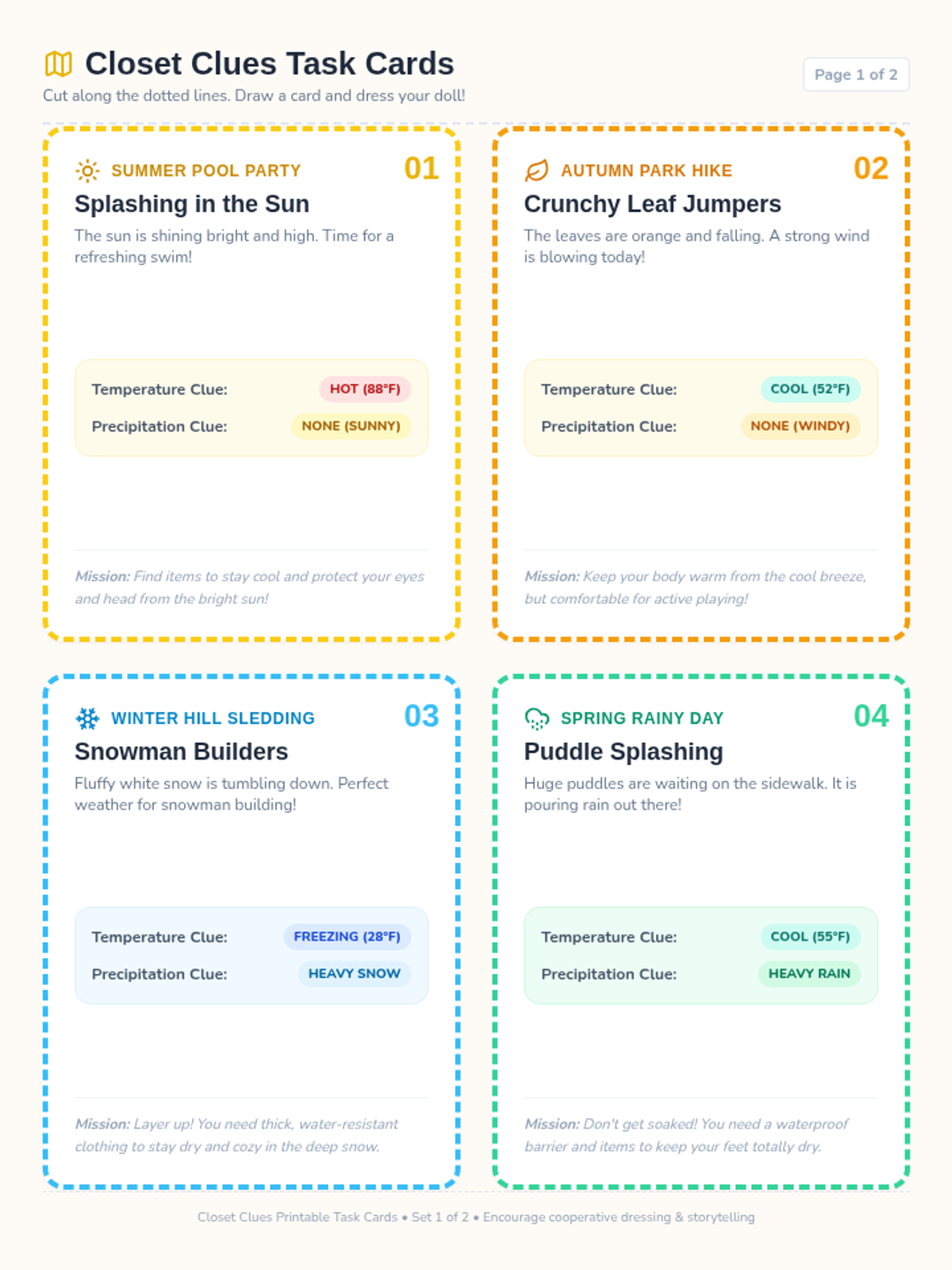
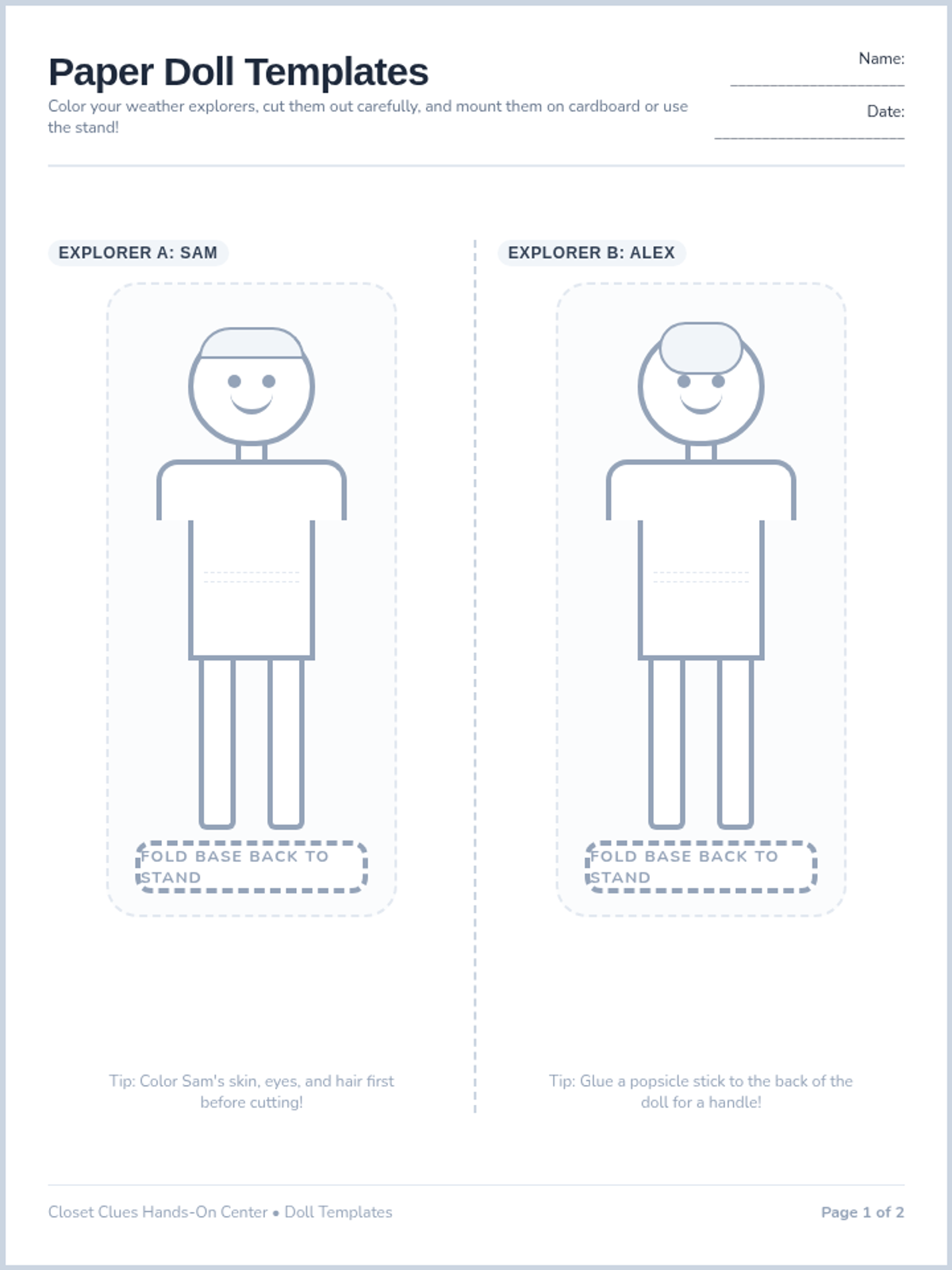
A hands-on, interactive lesson where students explore how to select appropriate clothing based on seasonal weather conditions, temperature, and precipitation. Using task cards and paper-doll cutouts, students practice matching wardrobes to real-world weather scenarios.
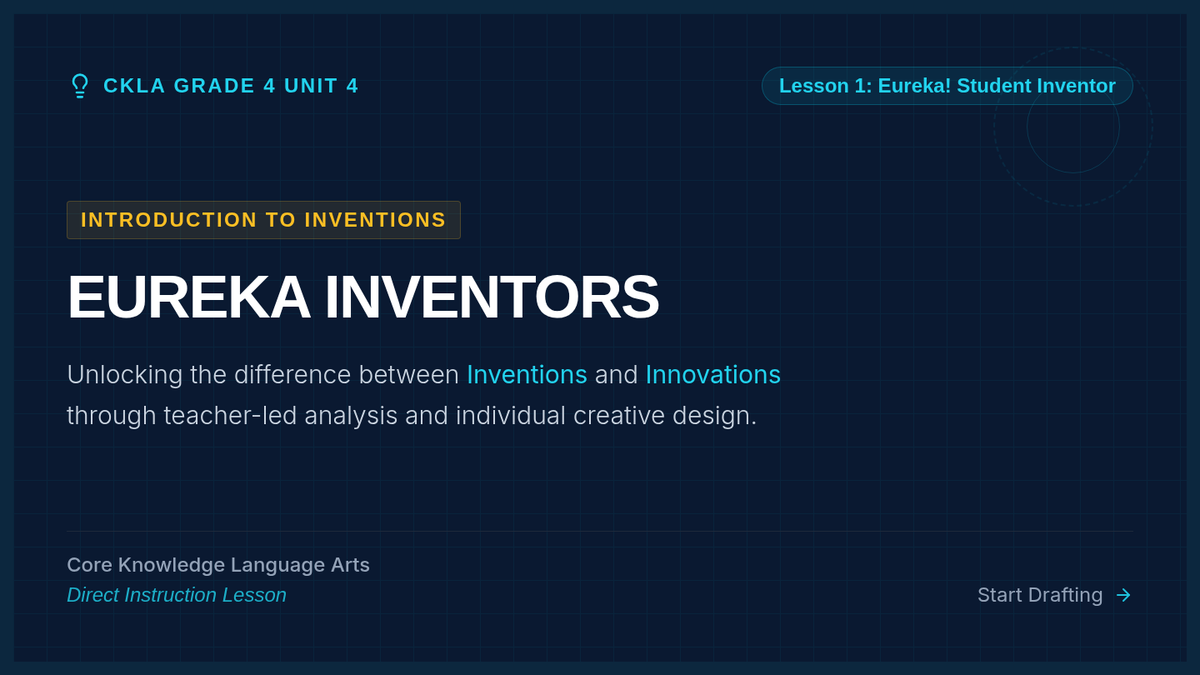
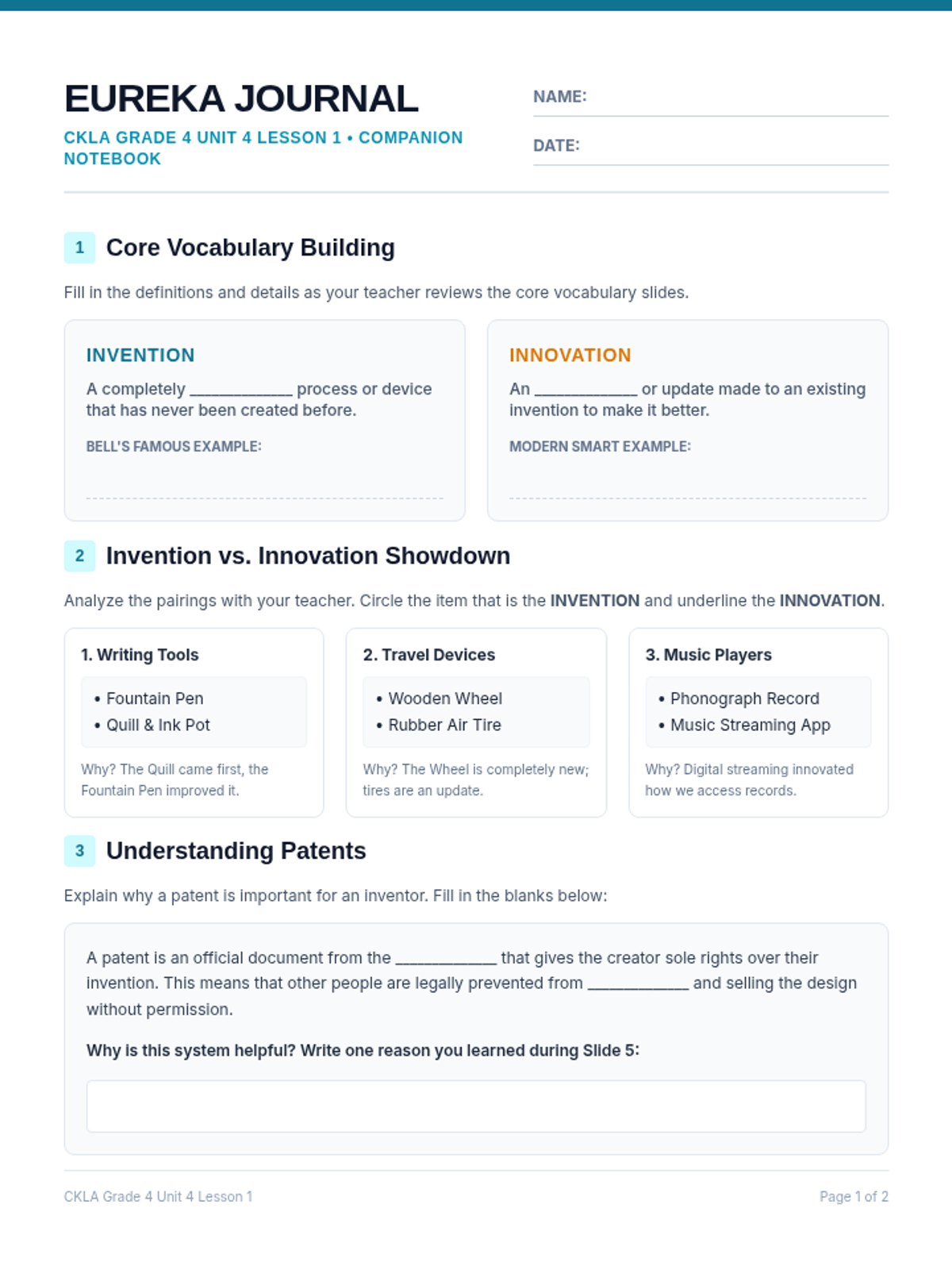
A rewritten direct-instruction lesson for CKLA Grade 4 Unit 4 Lesson 1 (Eureka! Student Inventor). It structures the introduction of inventions, innovations, and the patent process through teacher-led visual modeling and individual student responses, removing the default group activities.
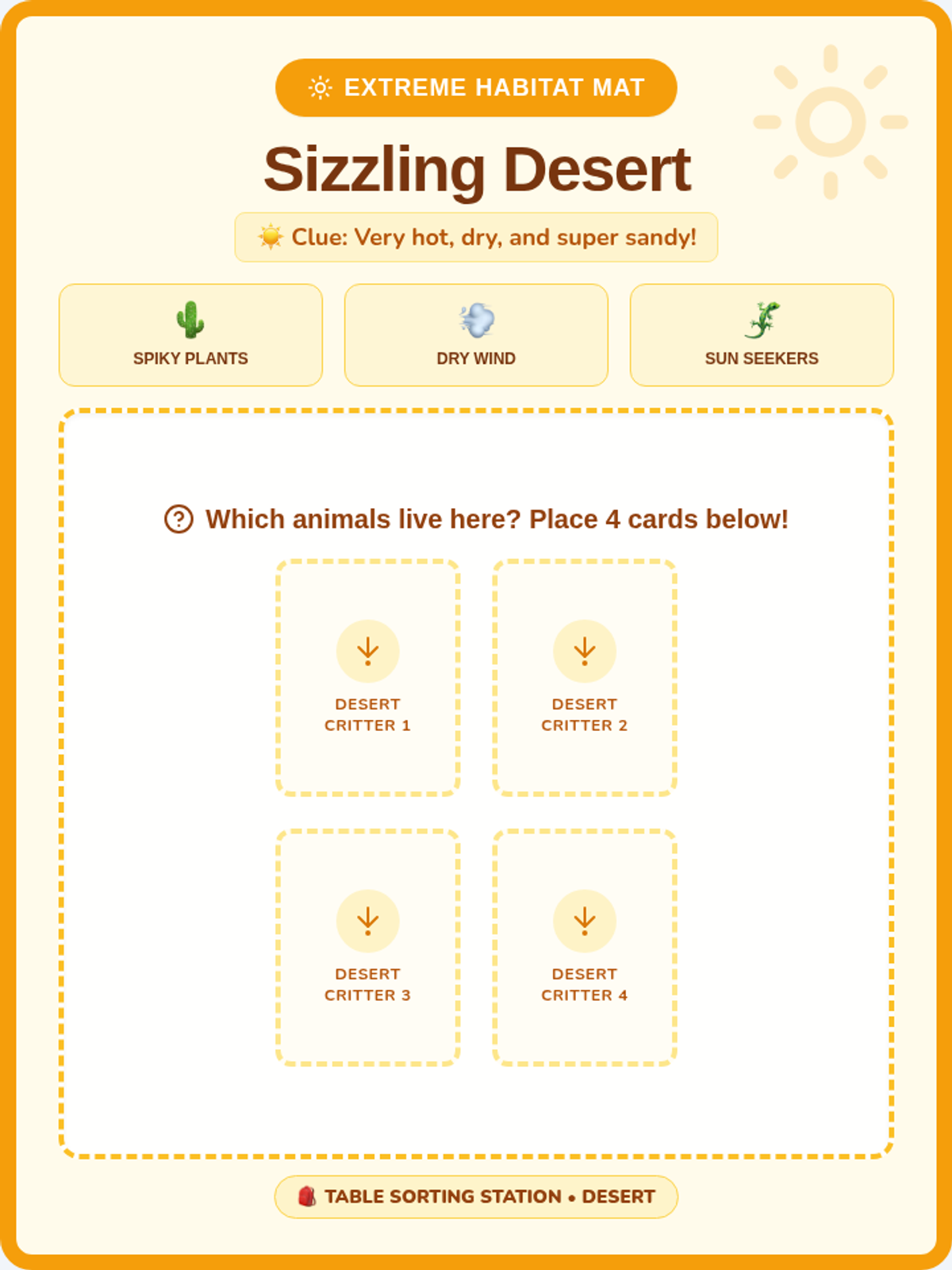
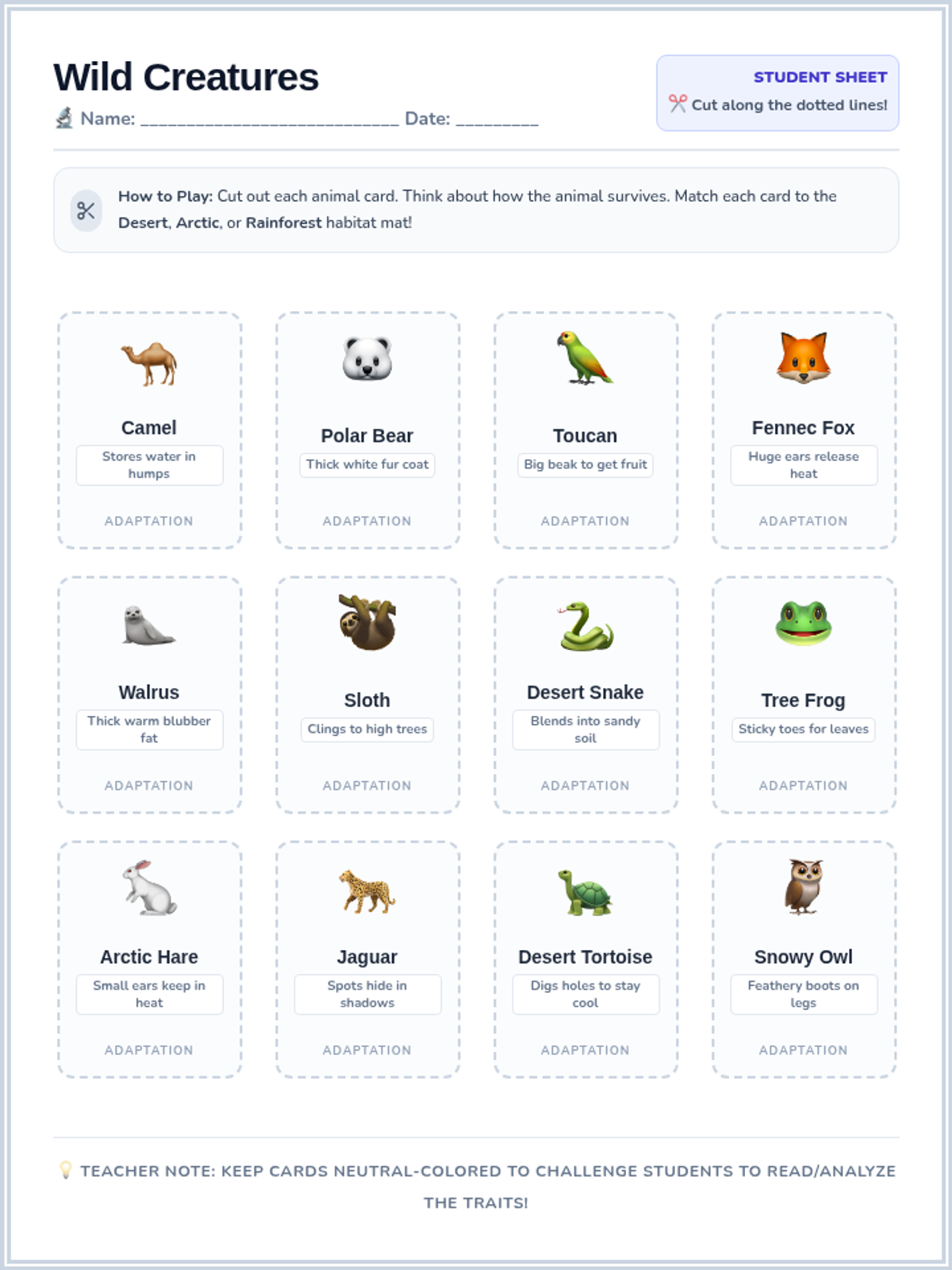
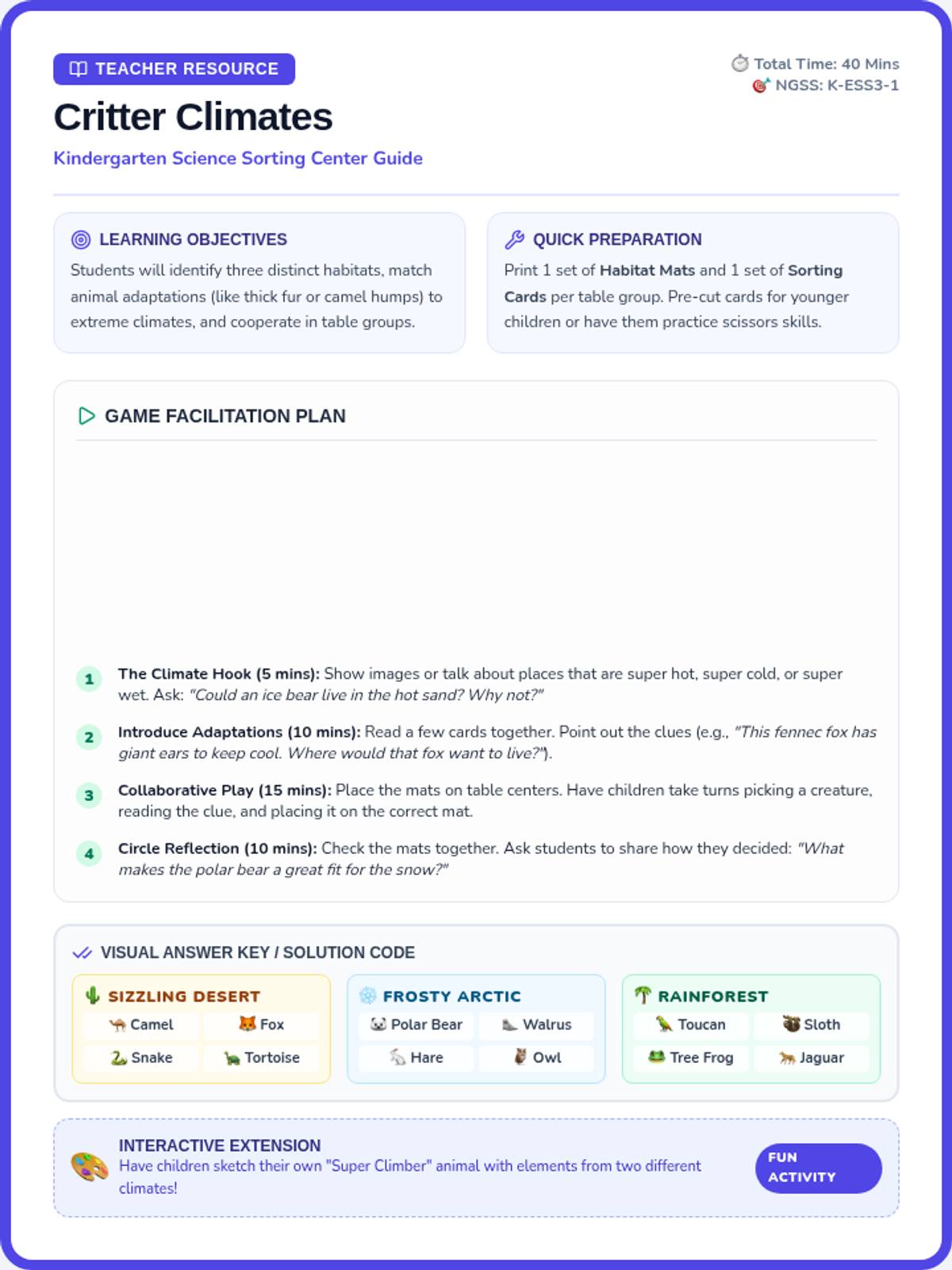
A hands-on kindergarten science game where students sort animals into three extreme habitats: Desert, Arctic, and Rainforest, learning about adaptations along the way.
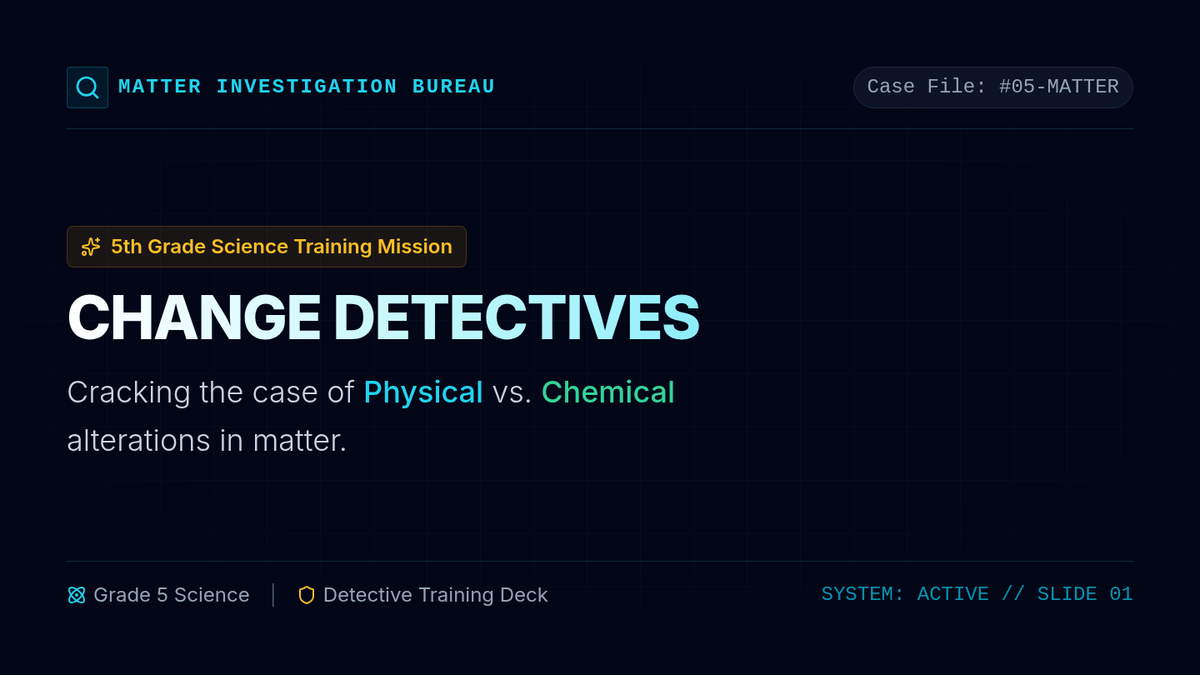
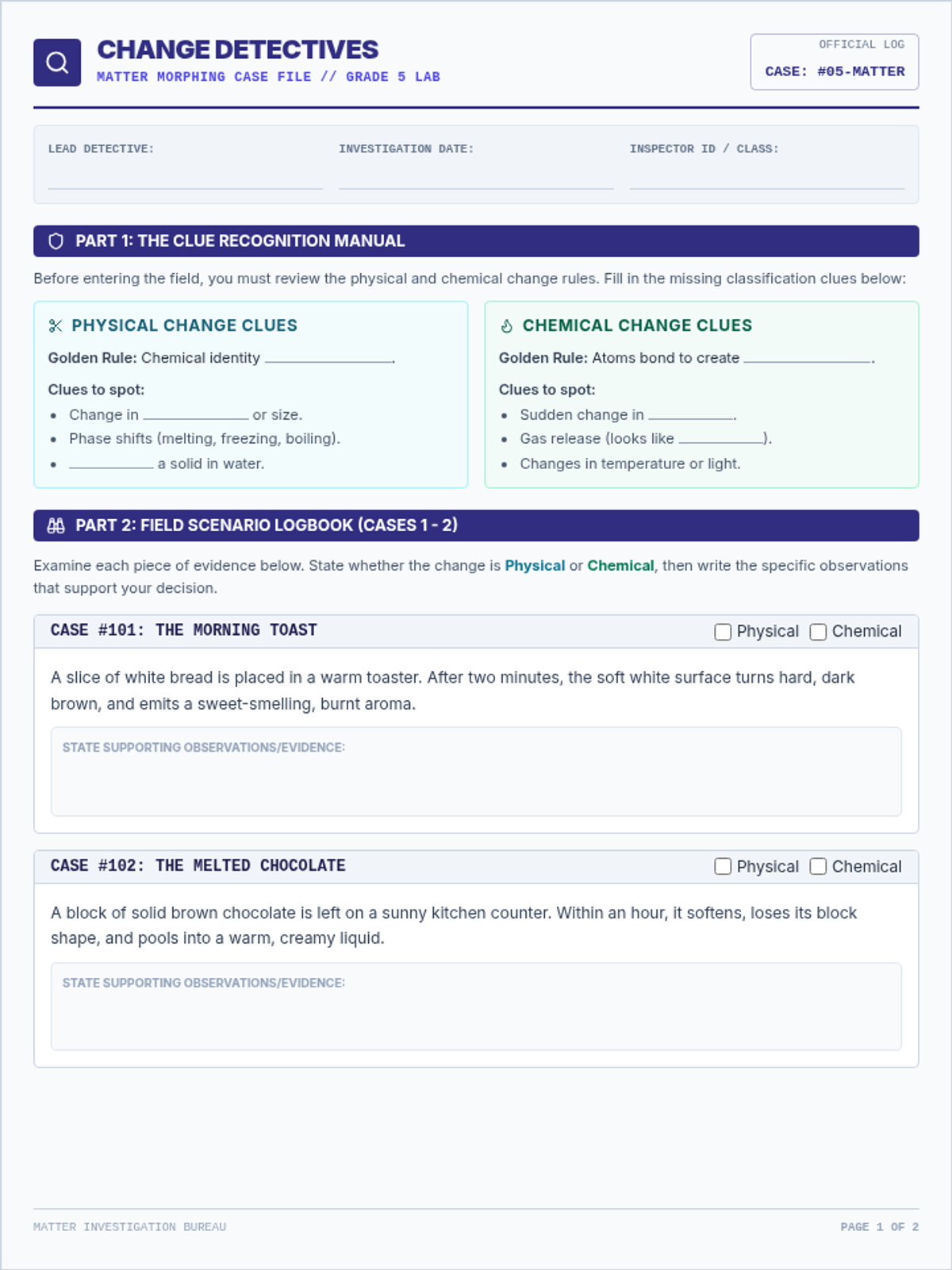
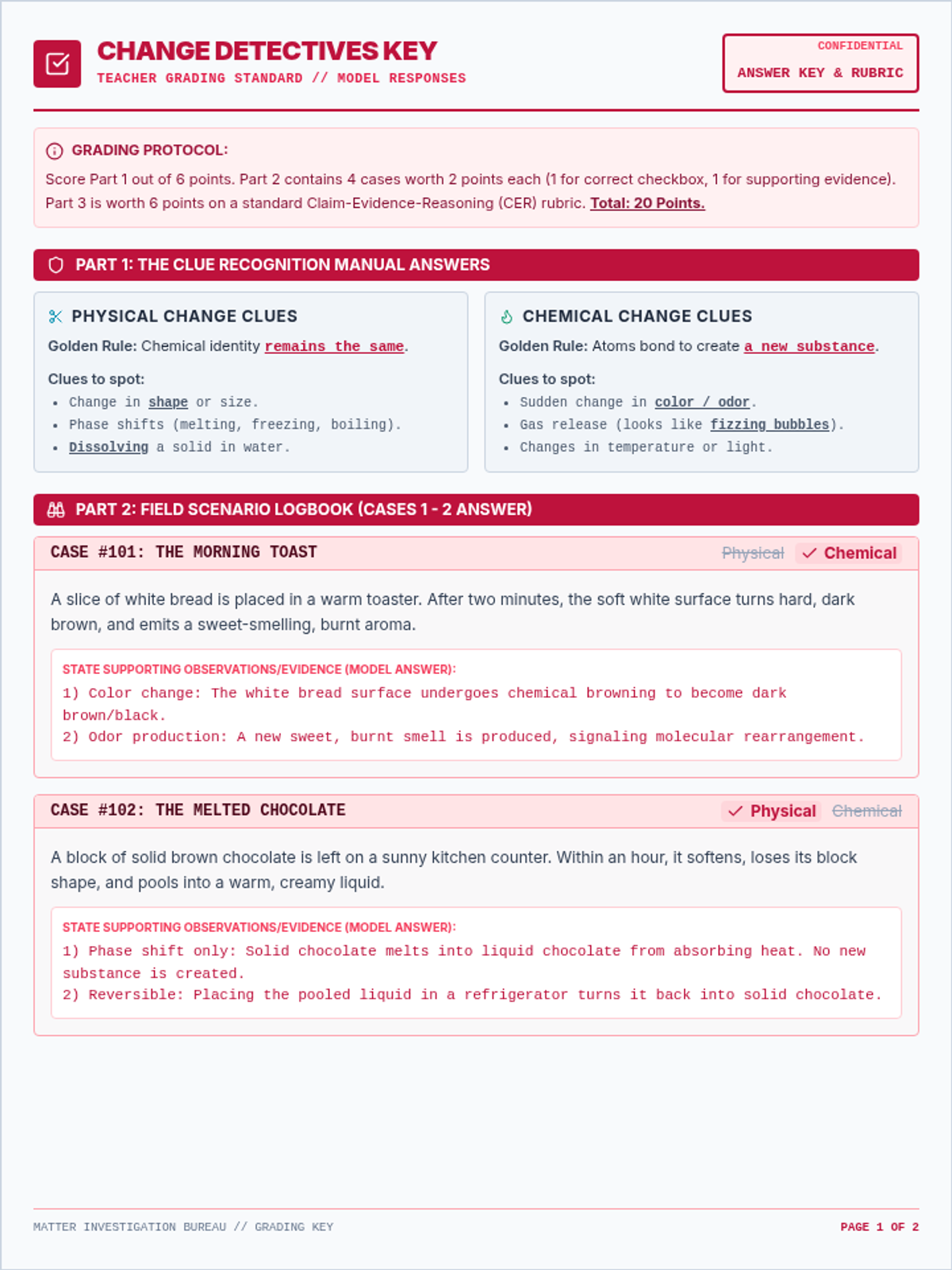
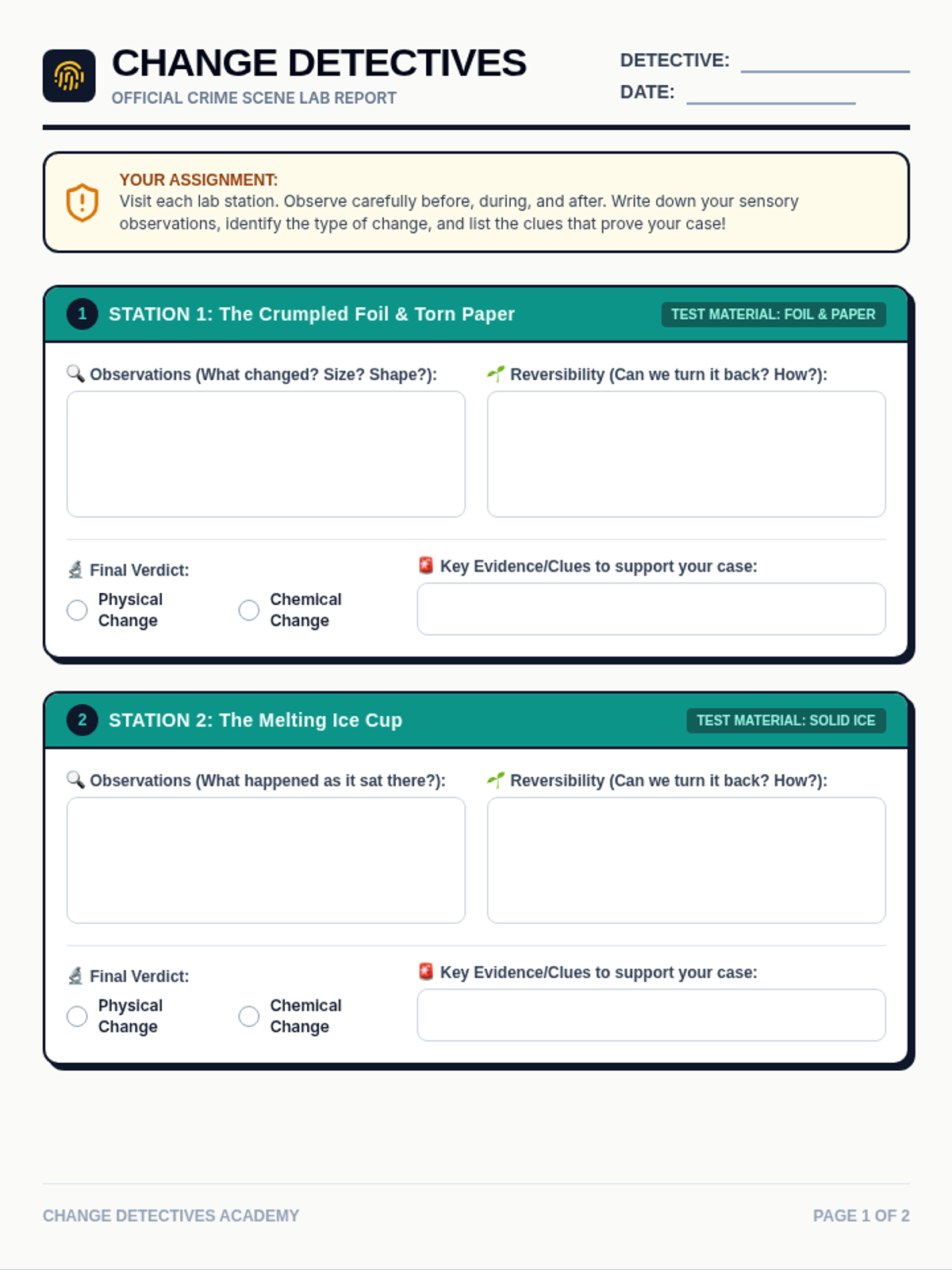
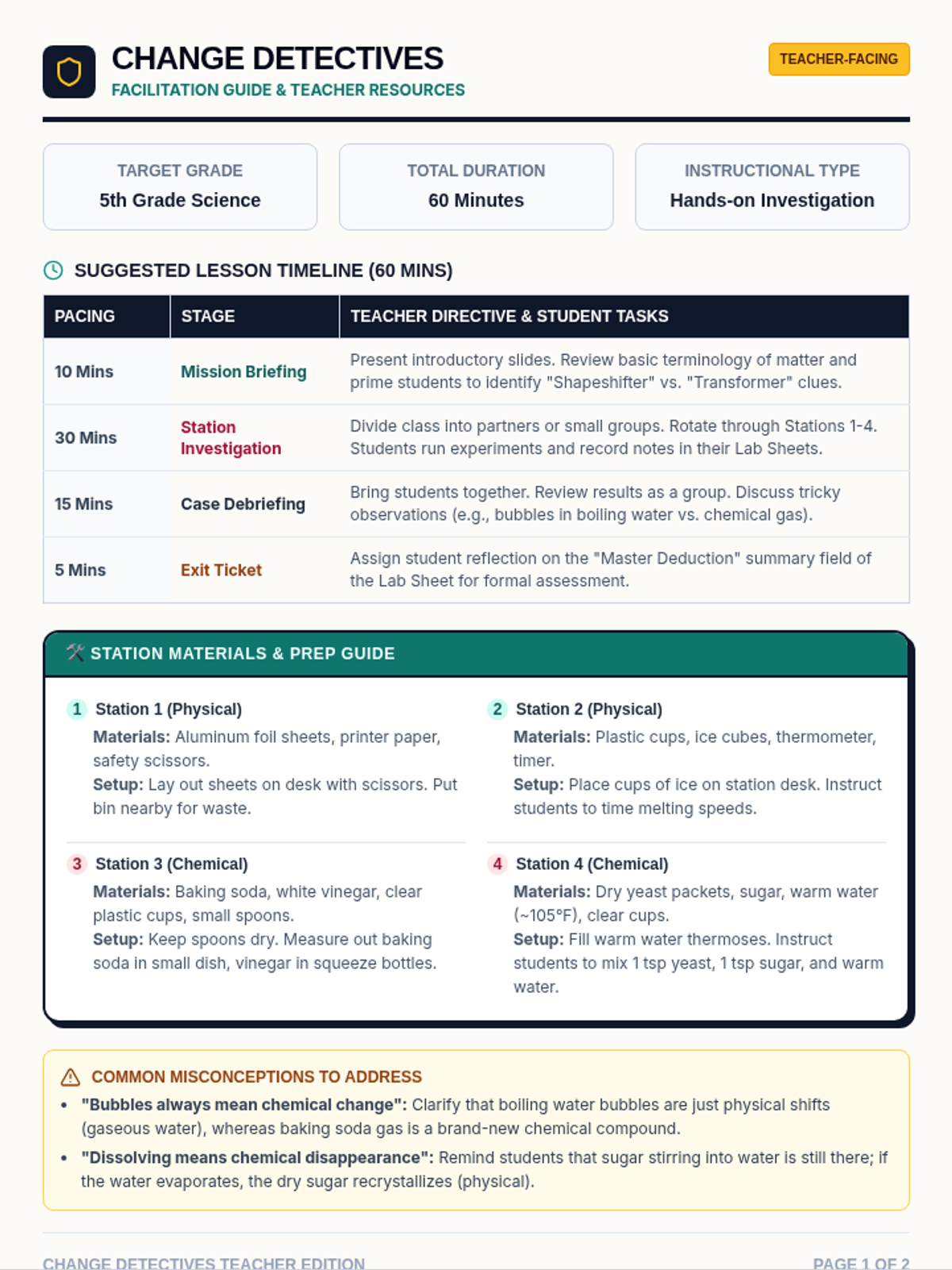
An interactive 5th-grade science lesson introducing physical and chemical changes. Students act as "change detectives," examining clues to classify alterations in matter and investigating real-world scenarios.
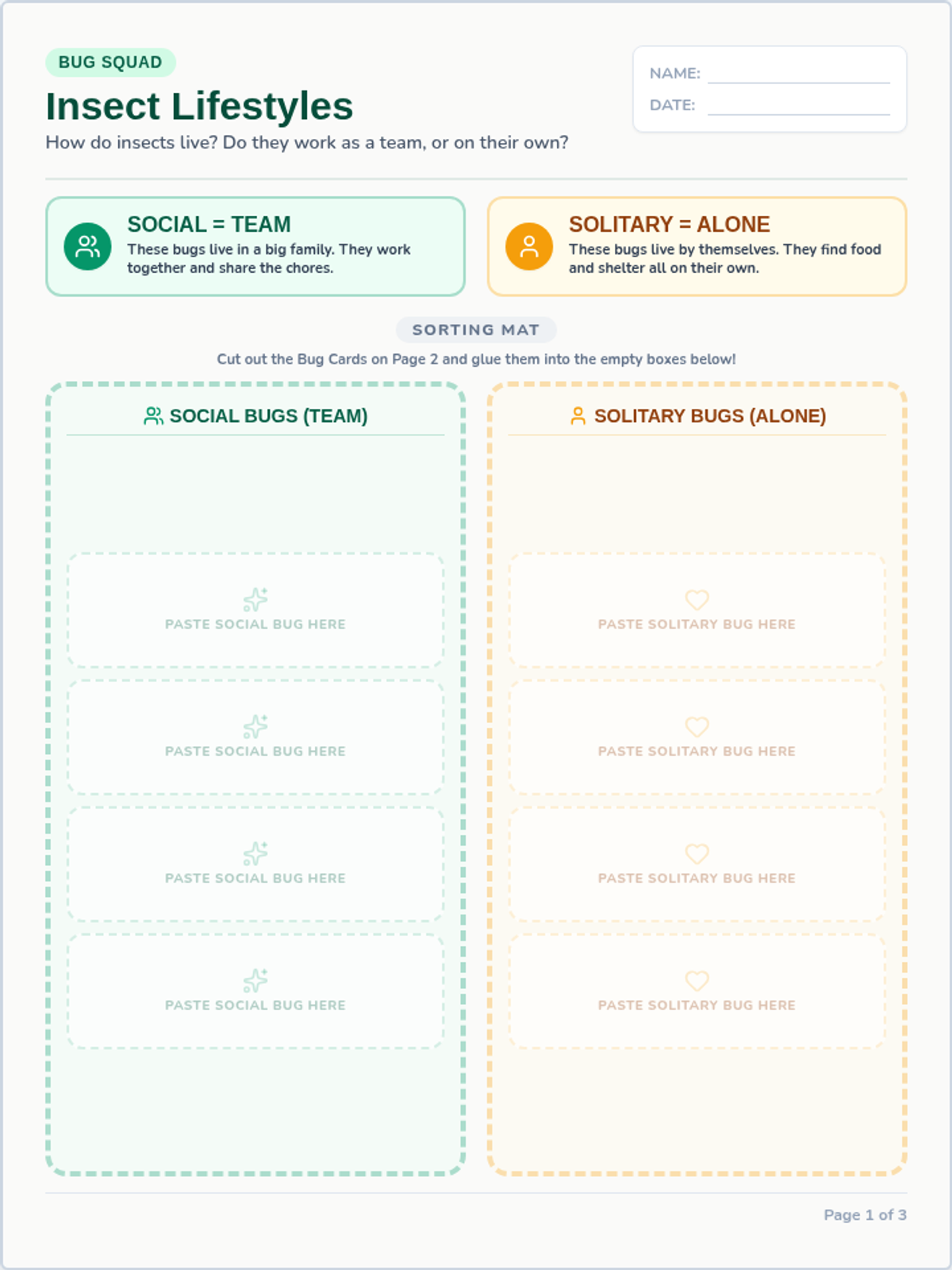
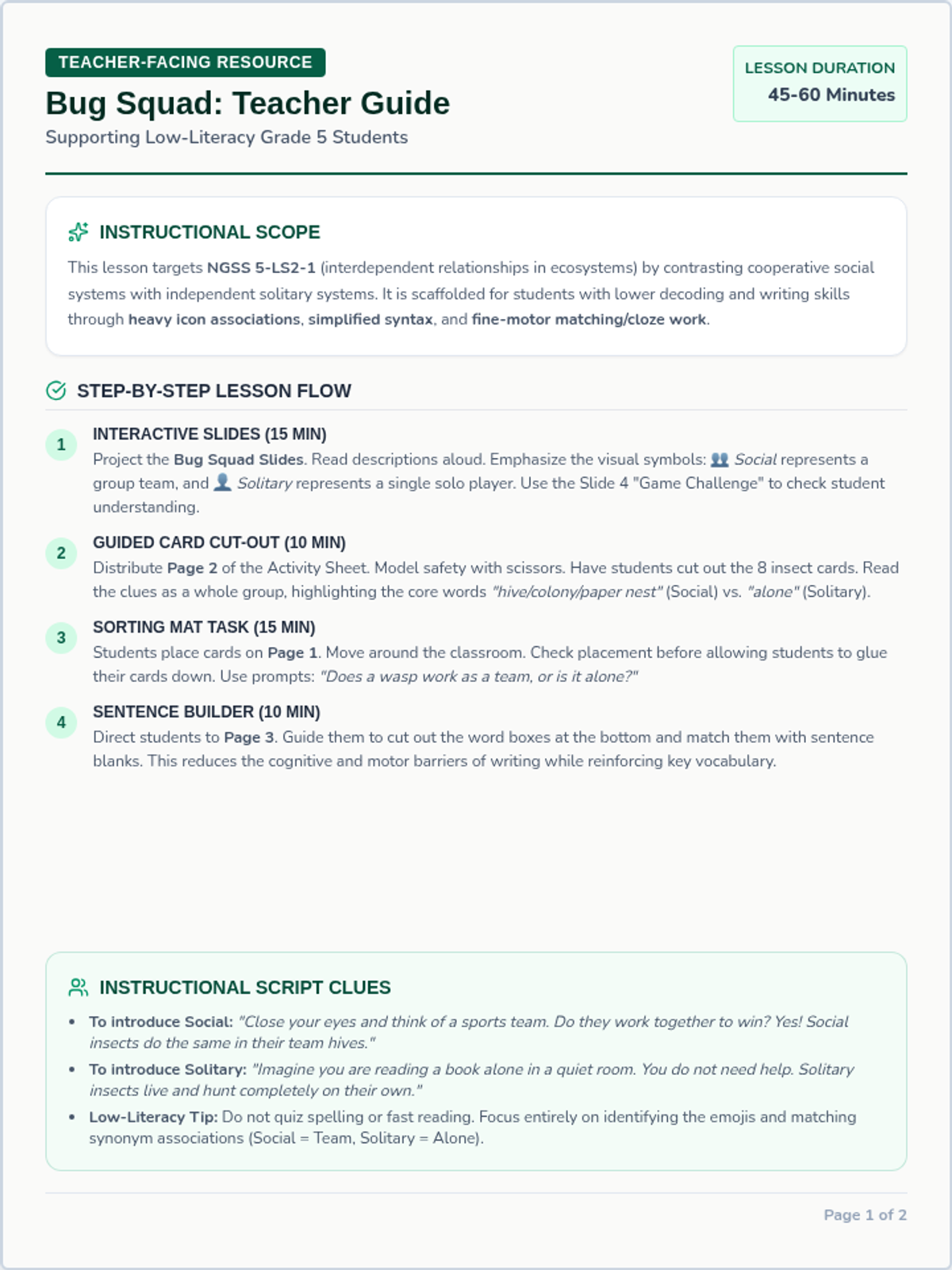
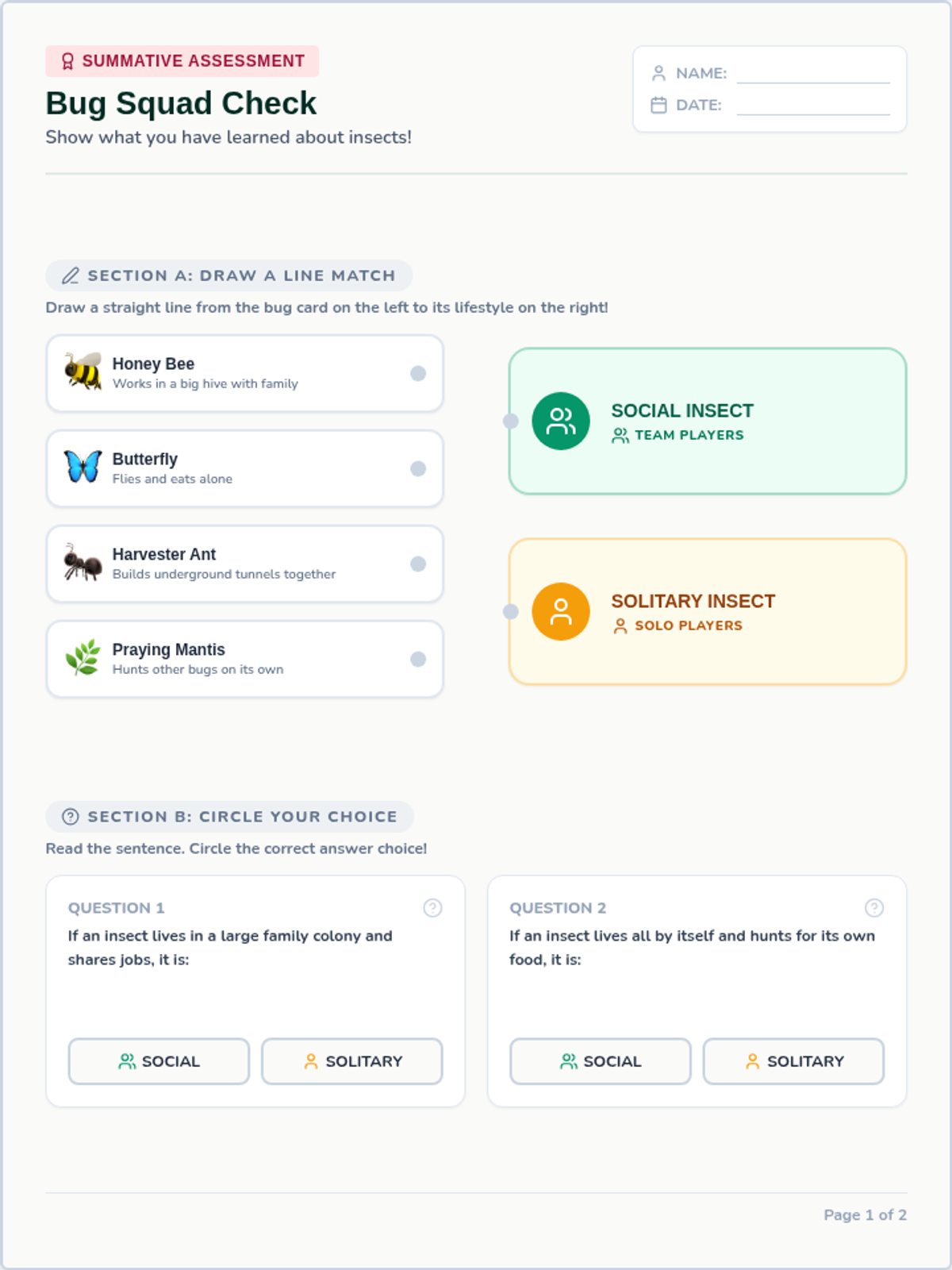
A highly visual lesson designed for low-literacy fifth graders to master the difference between social and solitary insects. The lesson provides rich scaffolding through hands-on sorting cards, visual anchor charts, and cut-and-paste sentence frames to reduce writing barriers.
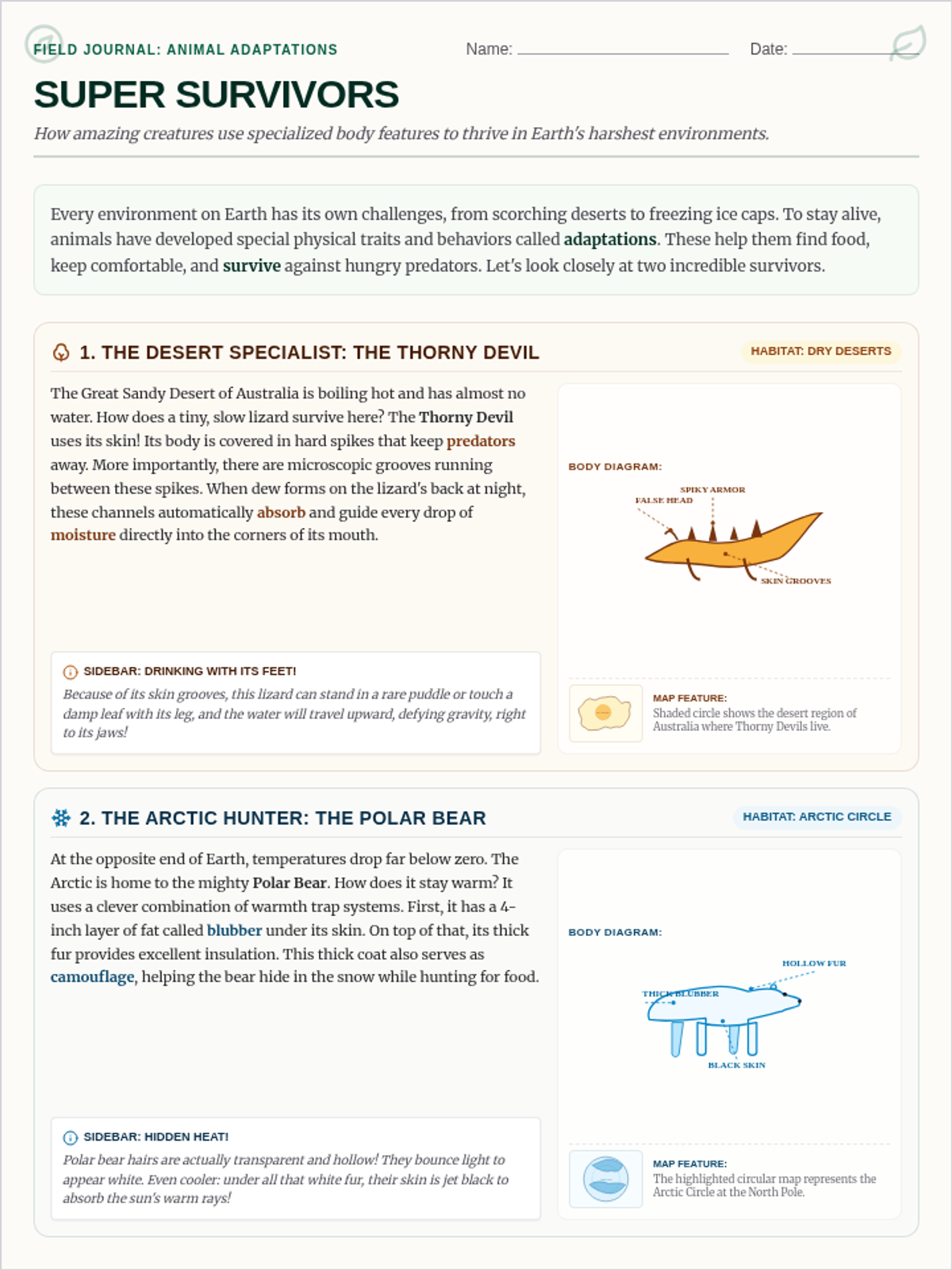
An engaging lesson on animal adaptations featuring a visual nonfiction reading passage and text feature hunt. Students learn about the Thorny Devil and Polar Bear, analyze geographic maps, look up key terms in a glossary, and answer deep comprehension questions.
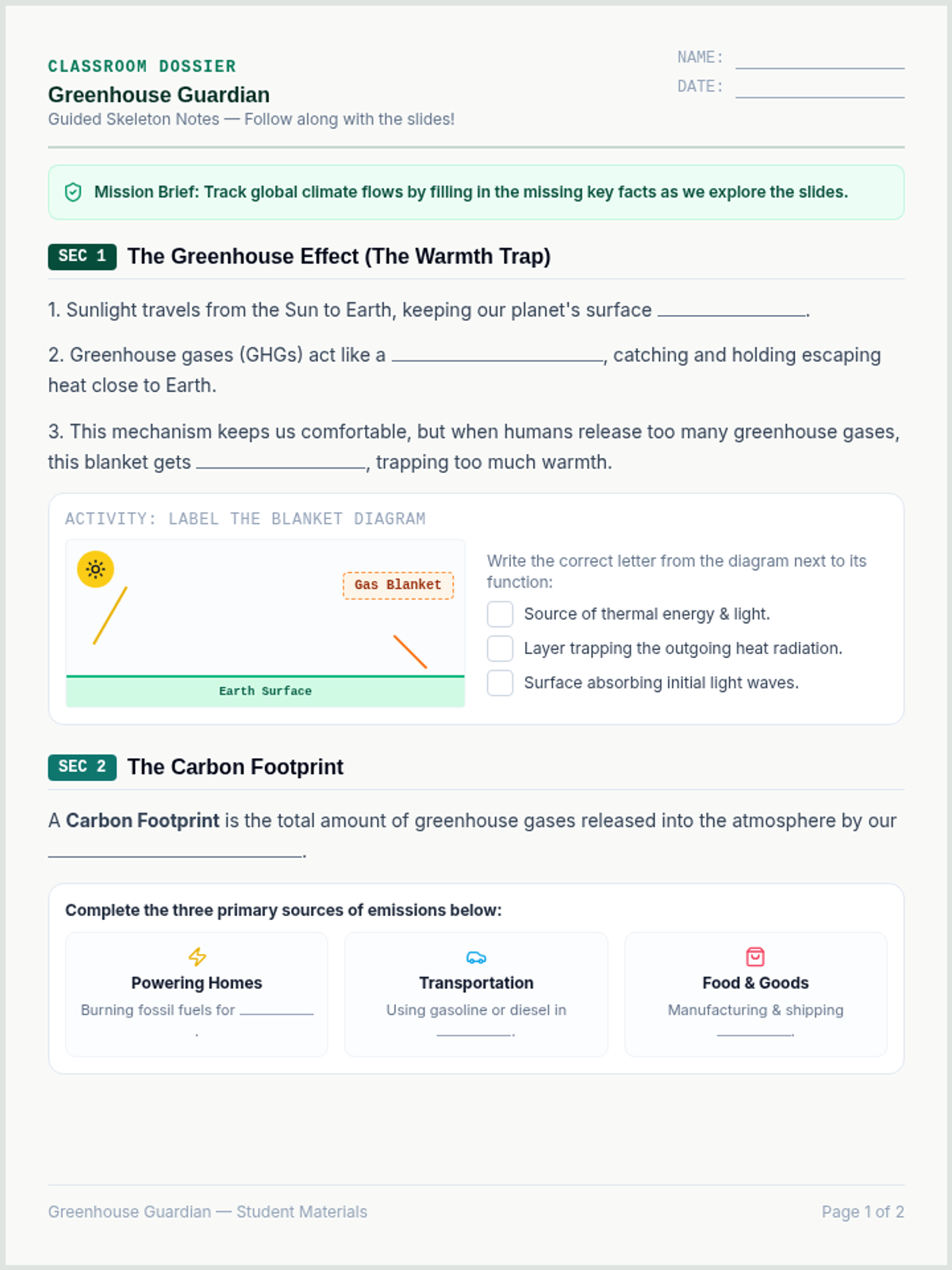
An introductory lesson exploring the greenhouse effect, carbon footprints, and deforestation. Includes an engaging visual slideshow and printable guided skeleton notes to keep students active and focused during instruction.
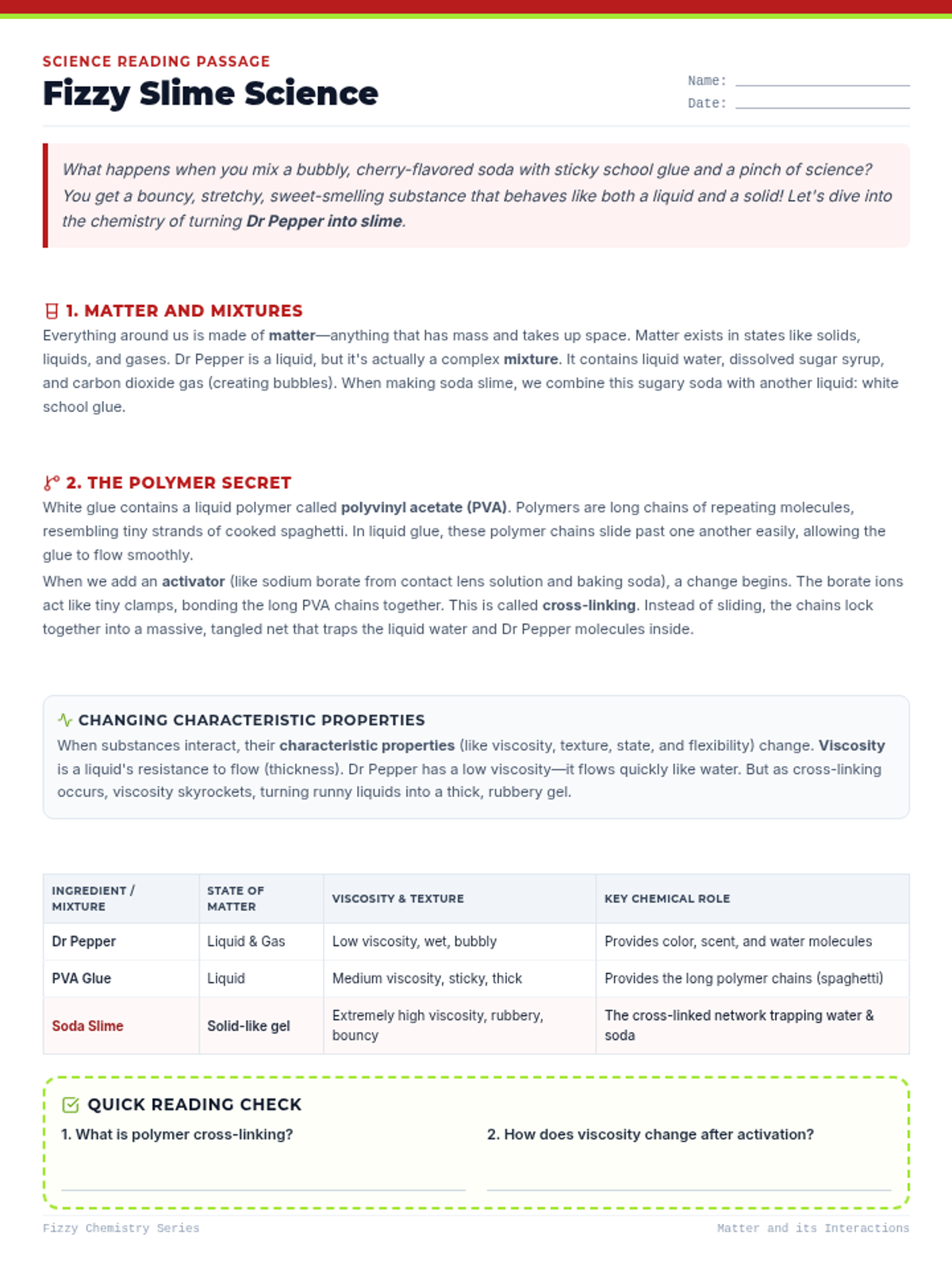
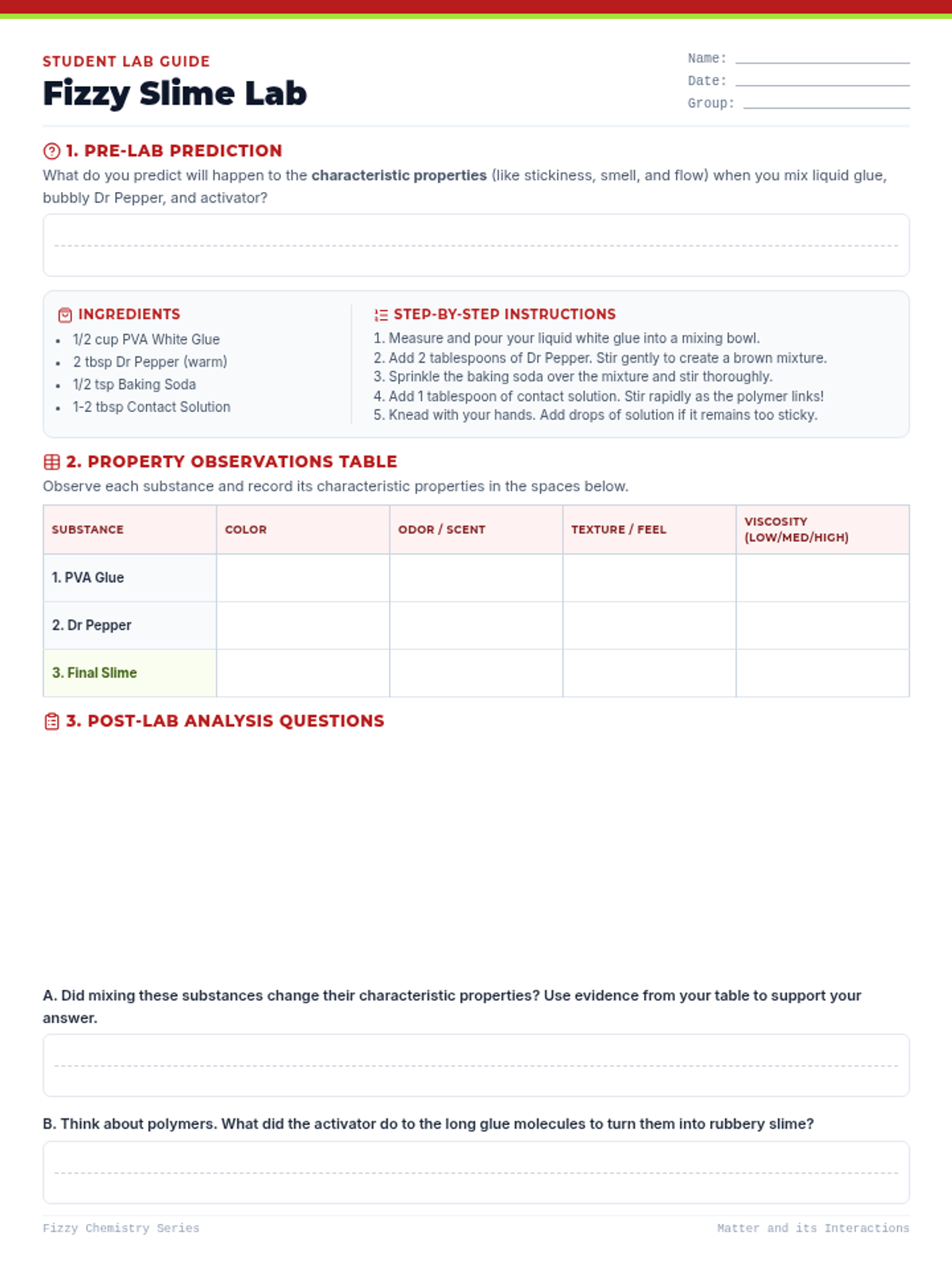
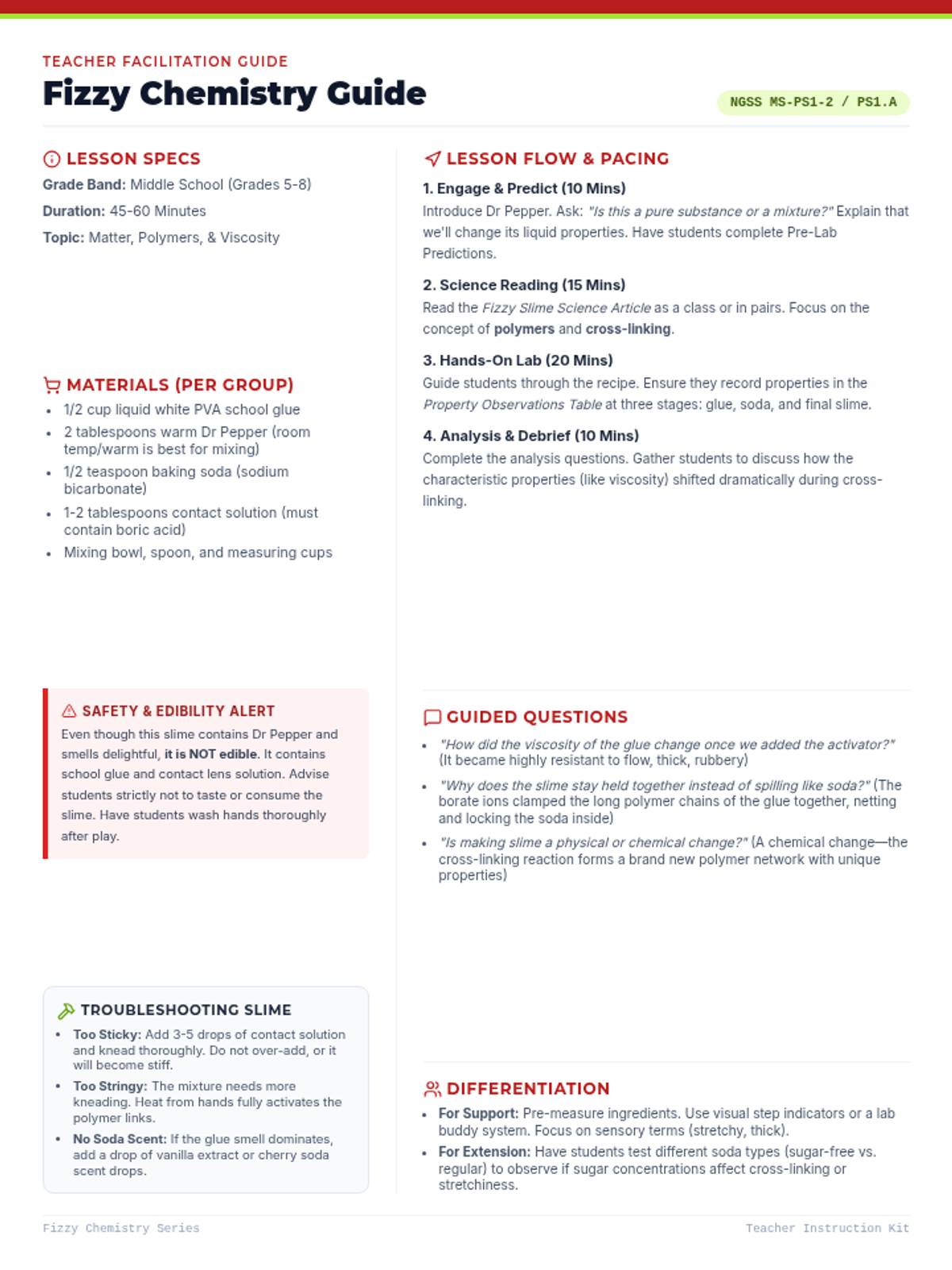
An interactive chemistry lesson investigating matter and its interactions by transforming Dr. Pepper into custom slime. Students examine how mixing substances changes their characteristic properties.
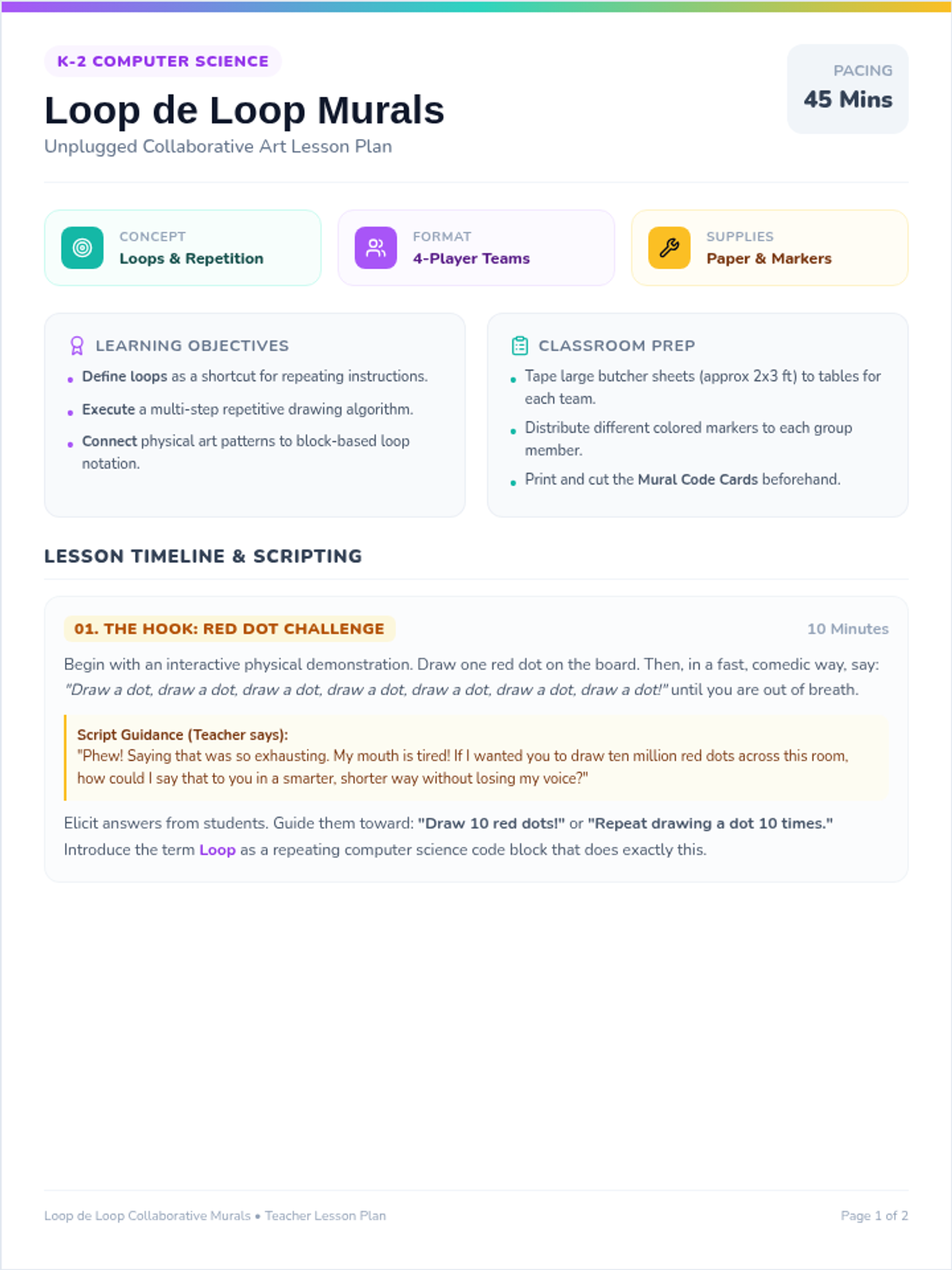
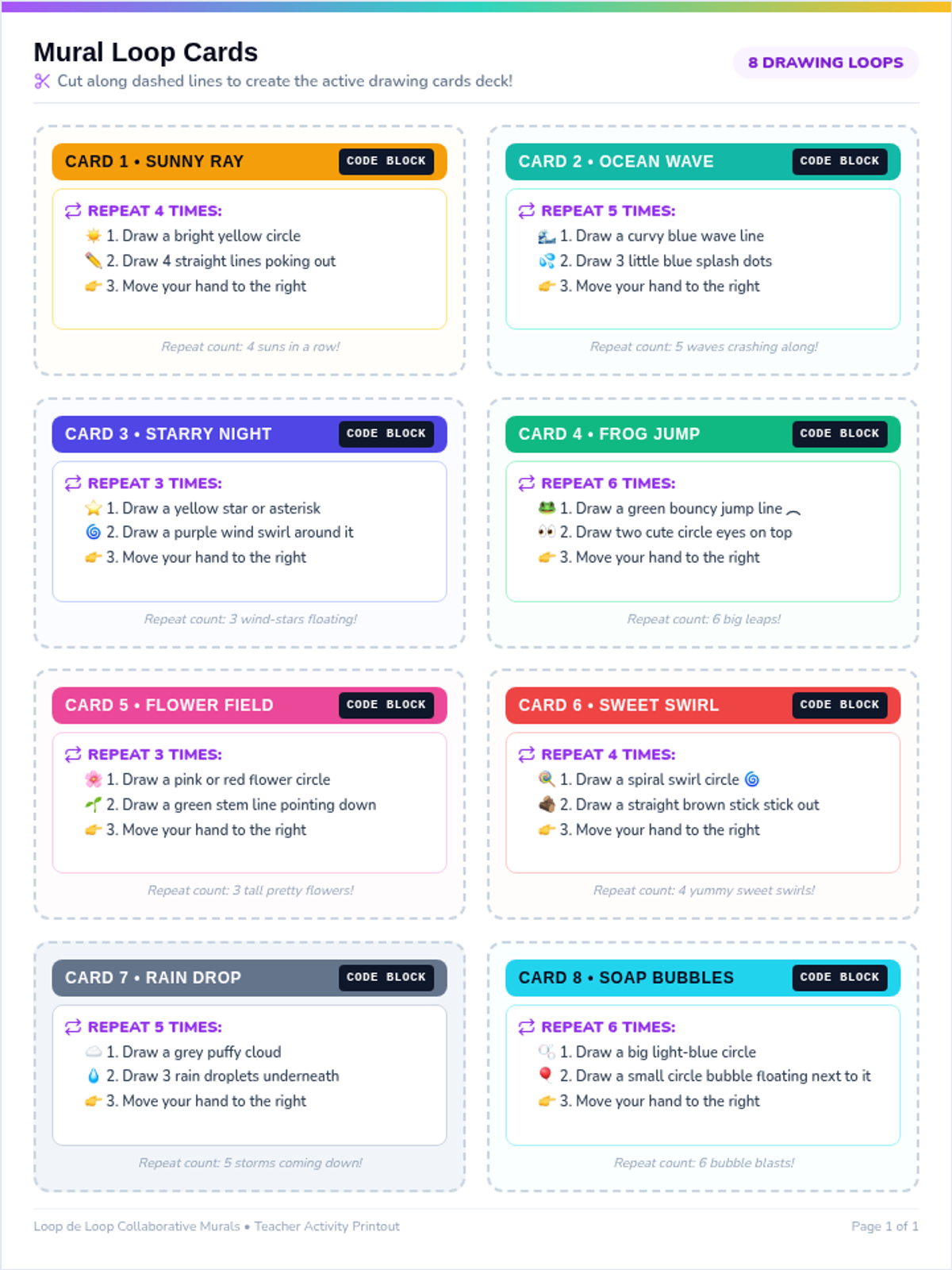
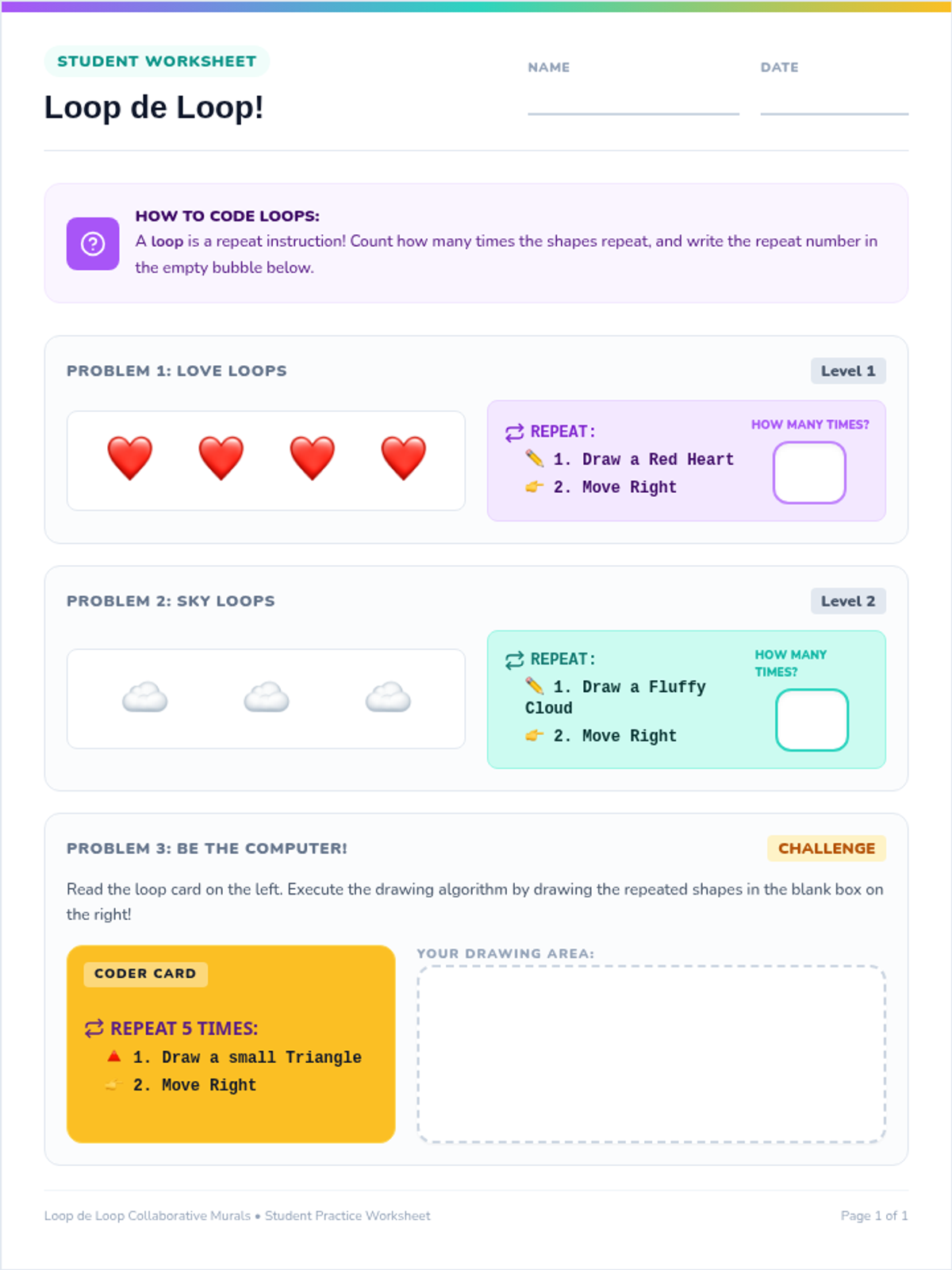
An active, hands-on unplugged computer science lesson for K-2 students. Students learn the concept of loops (repetition) by creating collaborative art masterpieces using simple drawing algorithms.
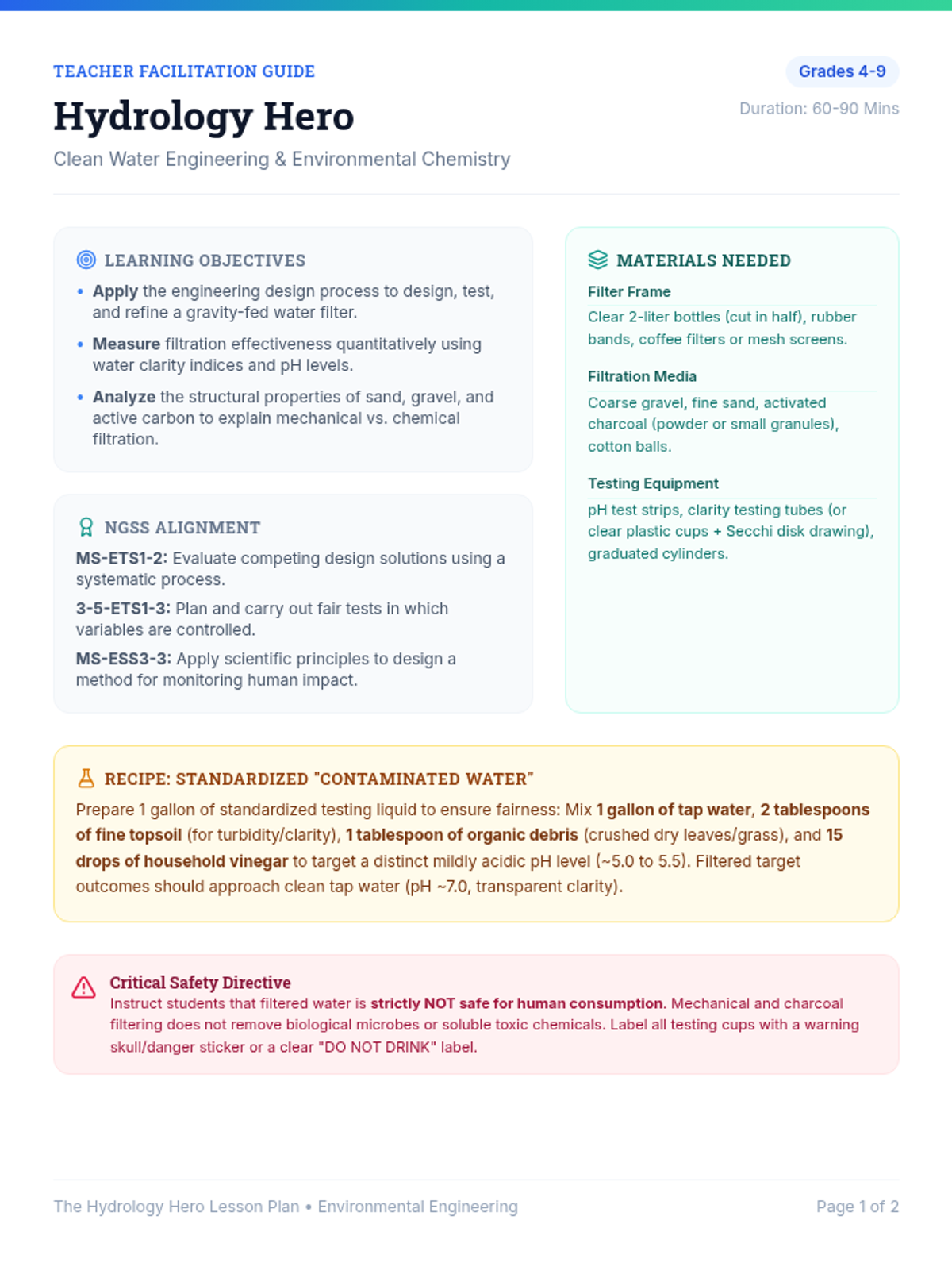
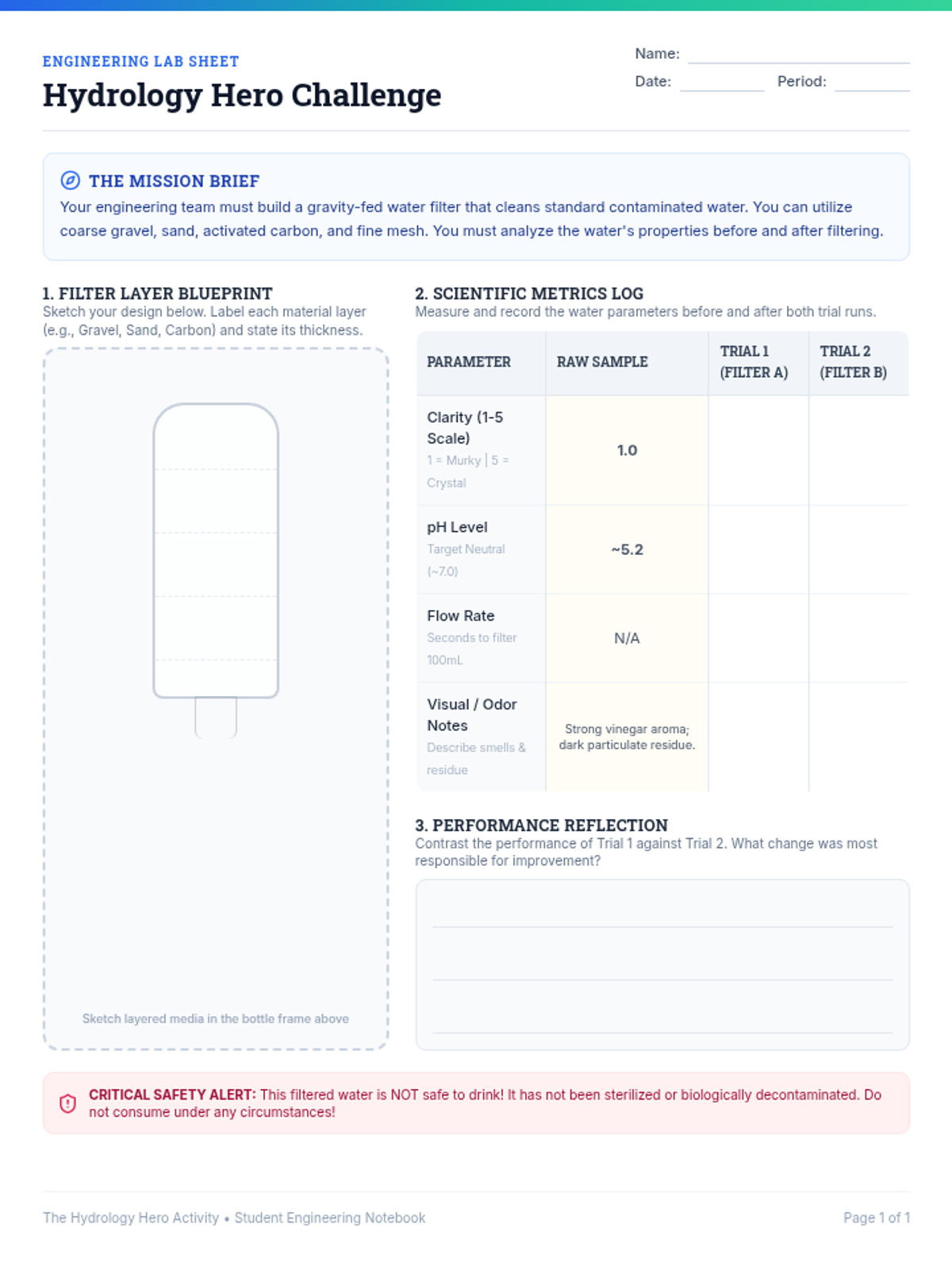
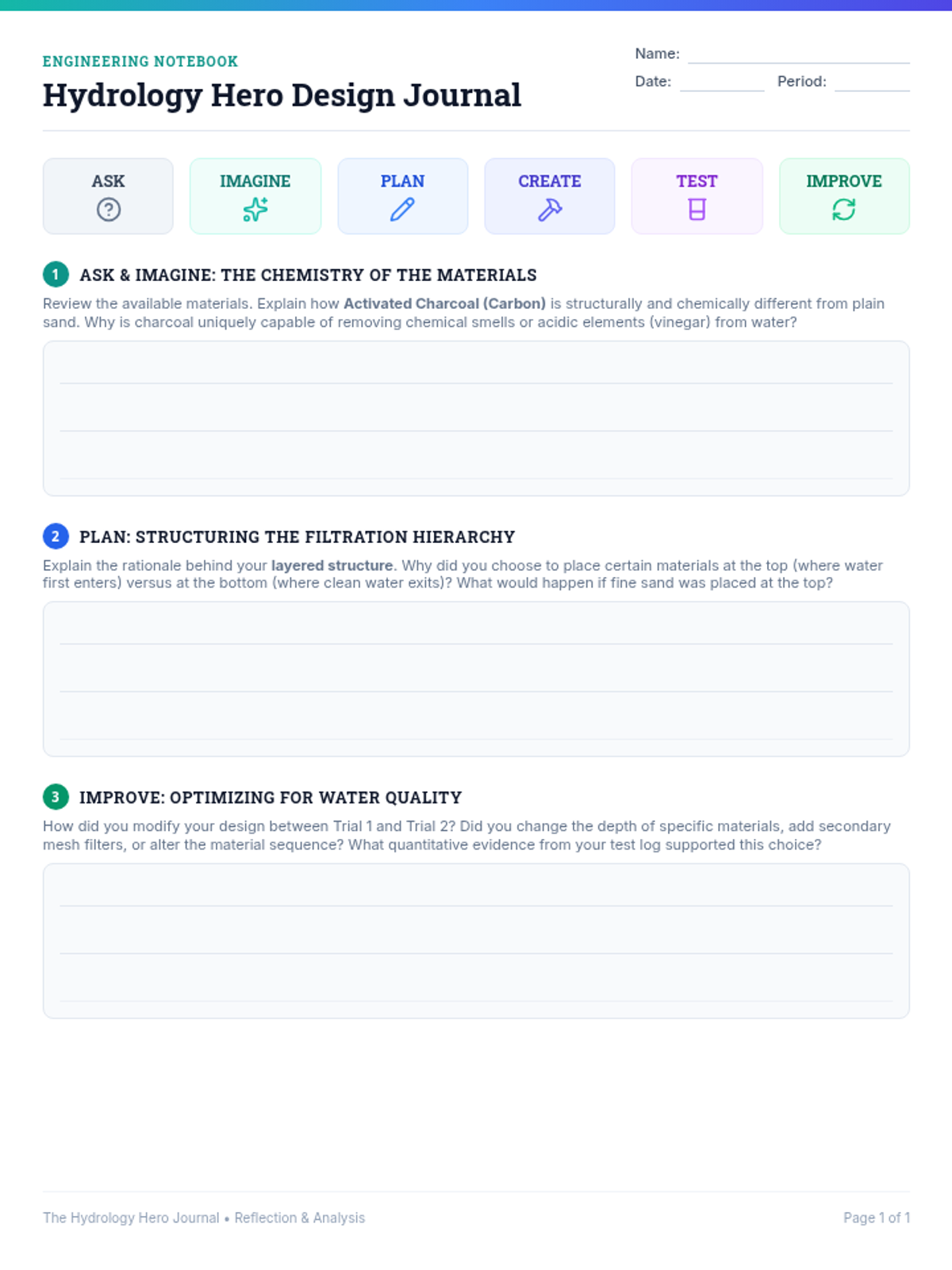
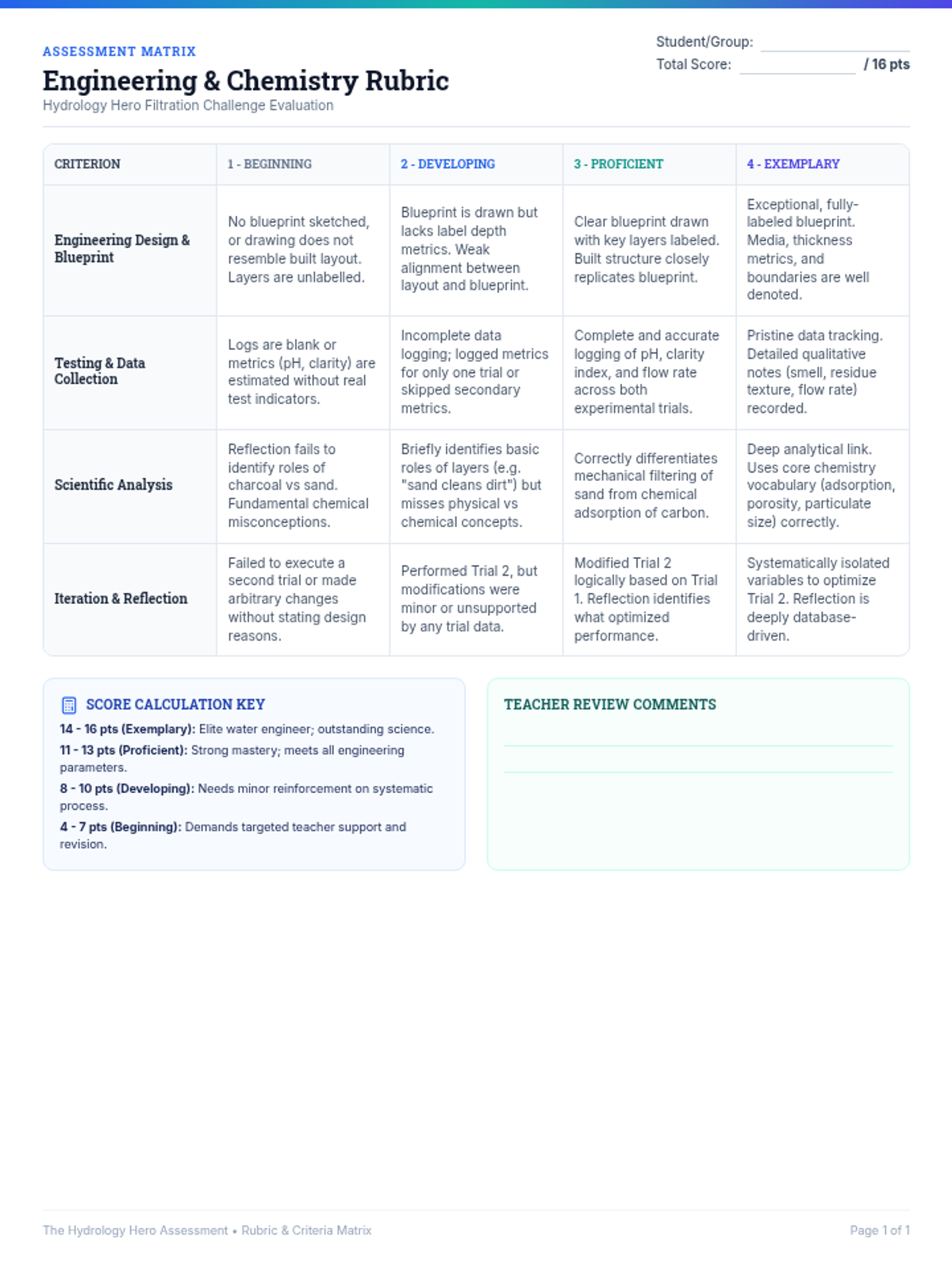
A comprehensive hands-on engineering lesson where students design and test gravity-fed filtration systems to explore water scarcity and water quality testing.

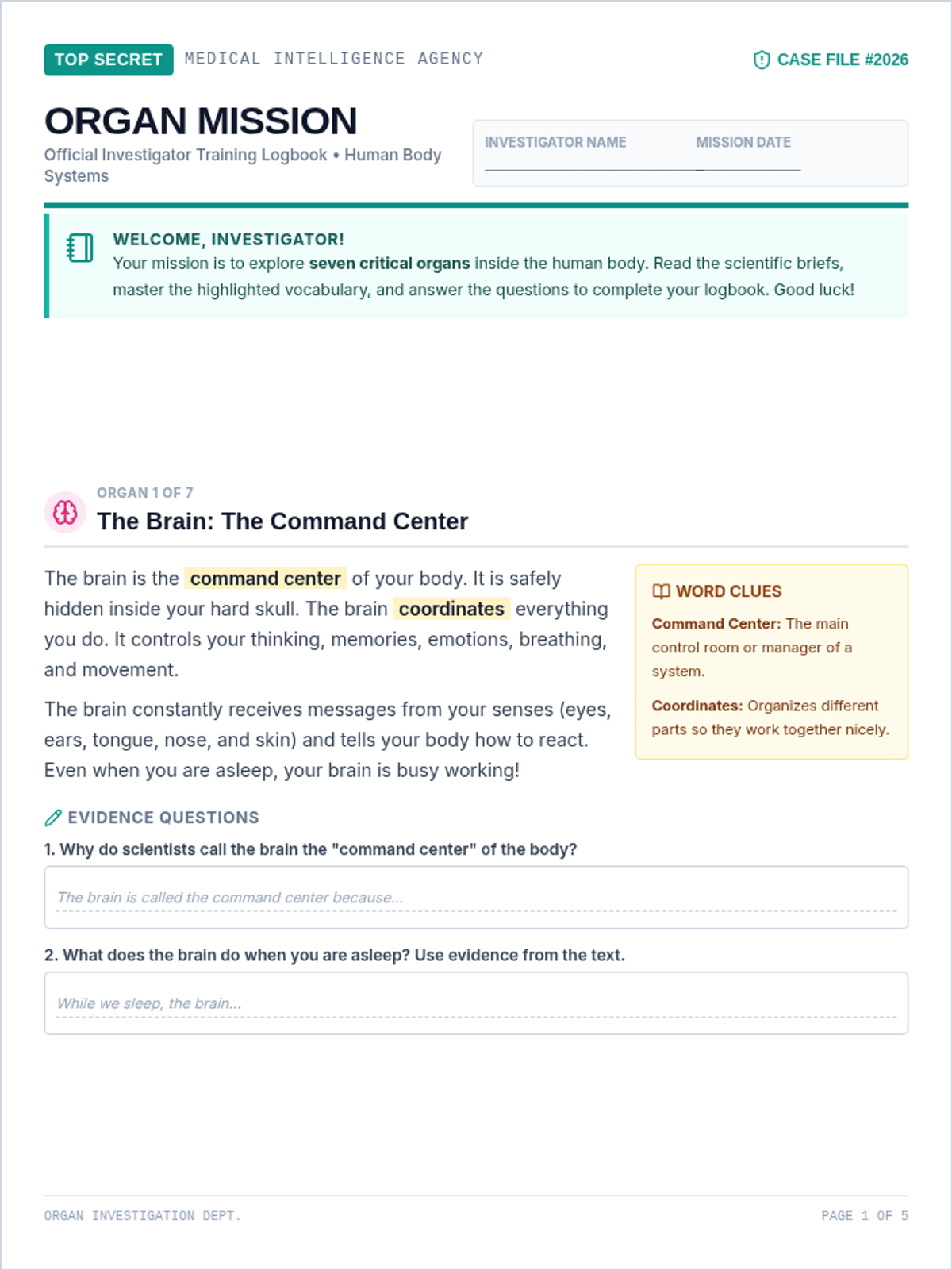
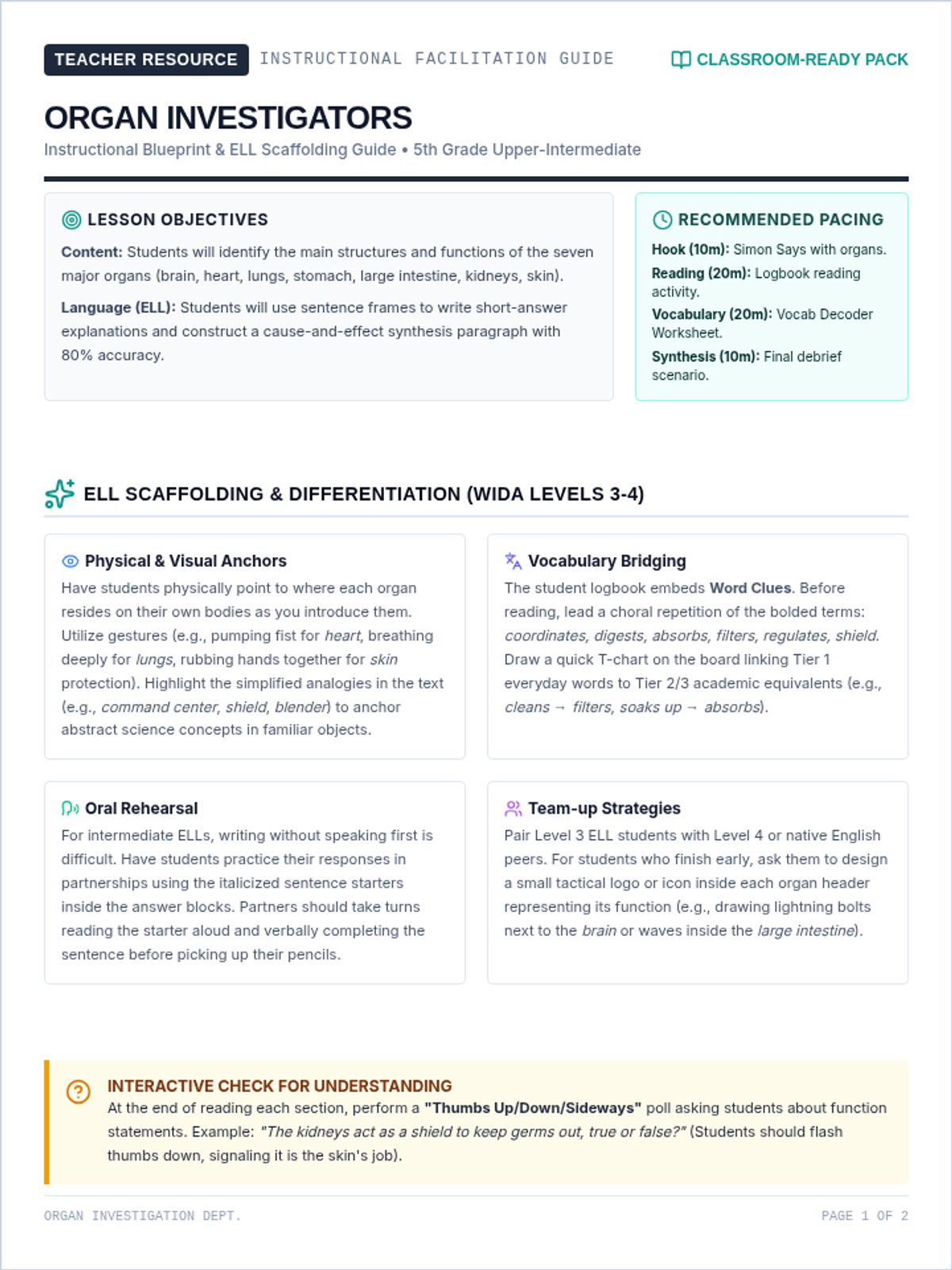
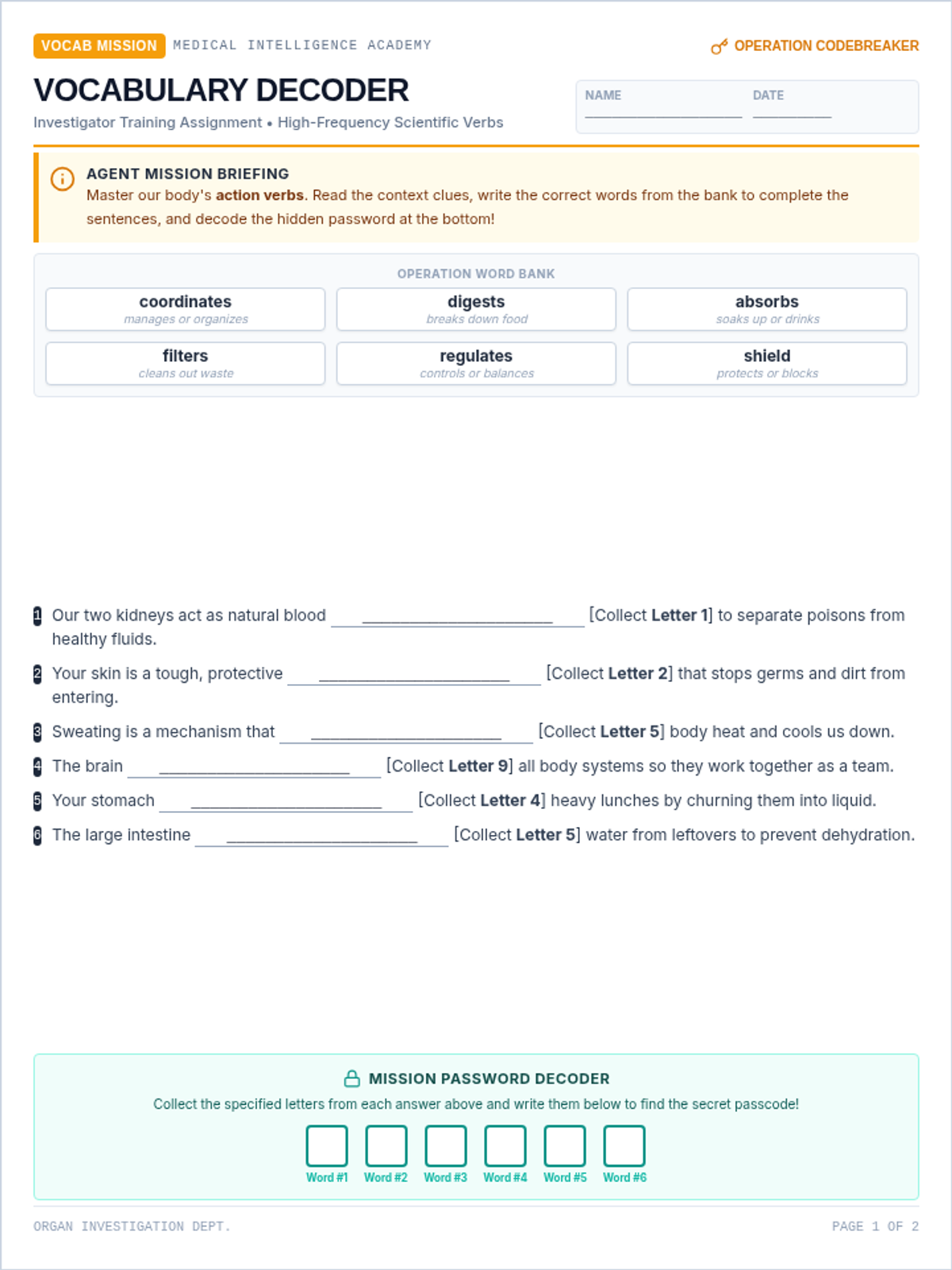
An engaging reading comprehension and vocabulary lesson designed for 5th-grade upper-intermediate English Language Learners (ELLs). Students become 'Organ Investigators' to read about the brain, skin, heart, lungs, stomach, large intestine, and kidneys, using structured scaffolding and sentence frames.
An interactive, detective-themed introduction to physical and chemical changes for 5th grade. Students learn to analyze clues like color change, gas production, temperature shifts, and state changes to determine how matter transforms.
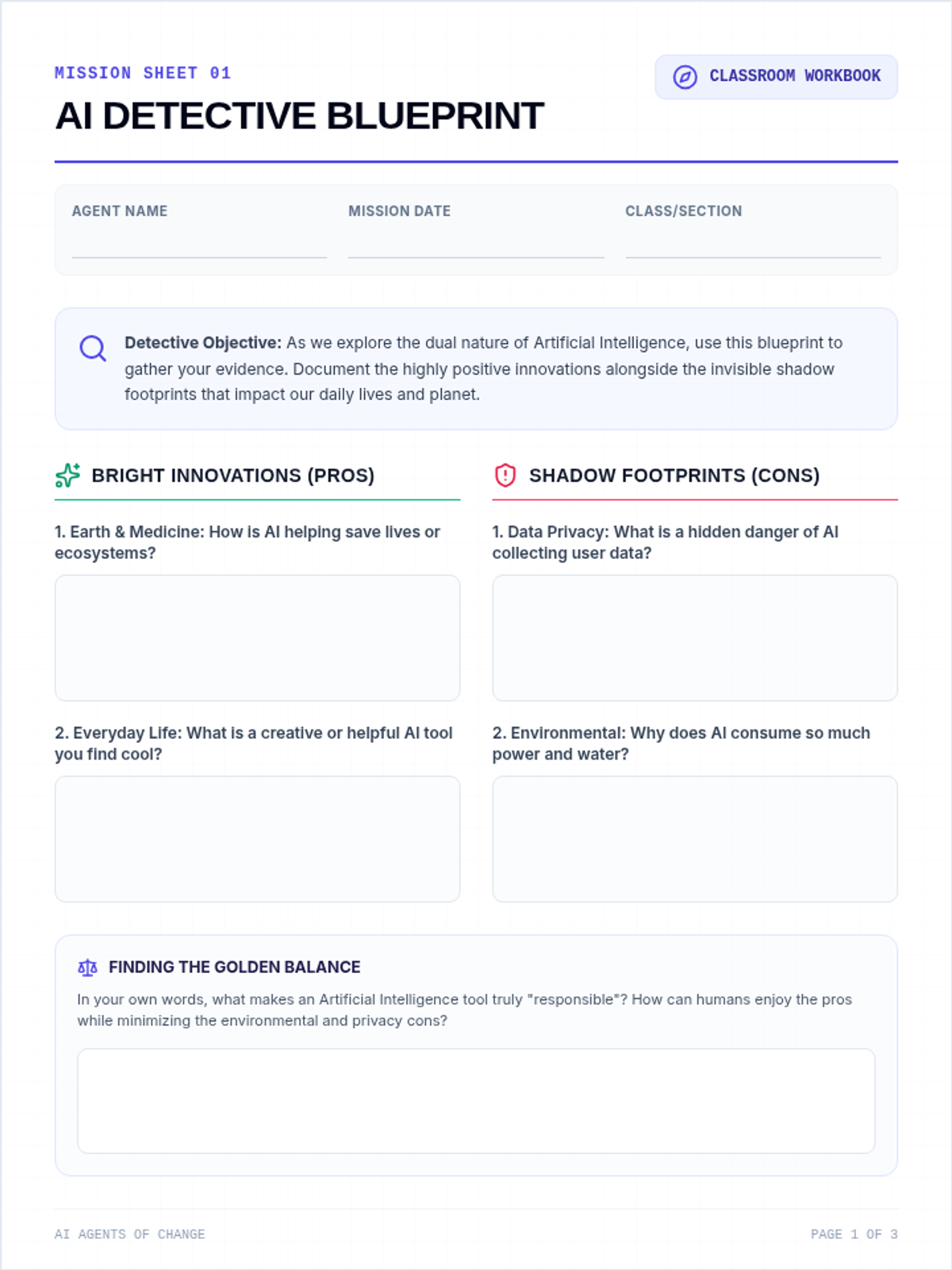
A balanced, highly engaging lesson for upper elementary and middle school students exploring the dual nature of AI. Students discover cutting-edge AI innovations in science and accessibility, examine the digital footprint of data centers, and learn practical digital citizenship skills regarding data privacy.
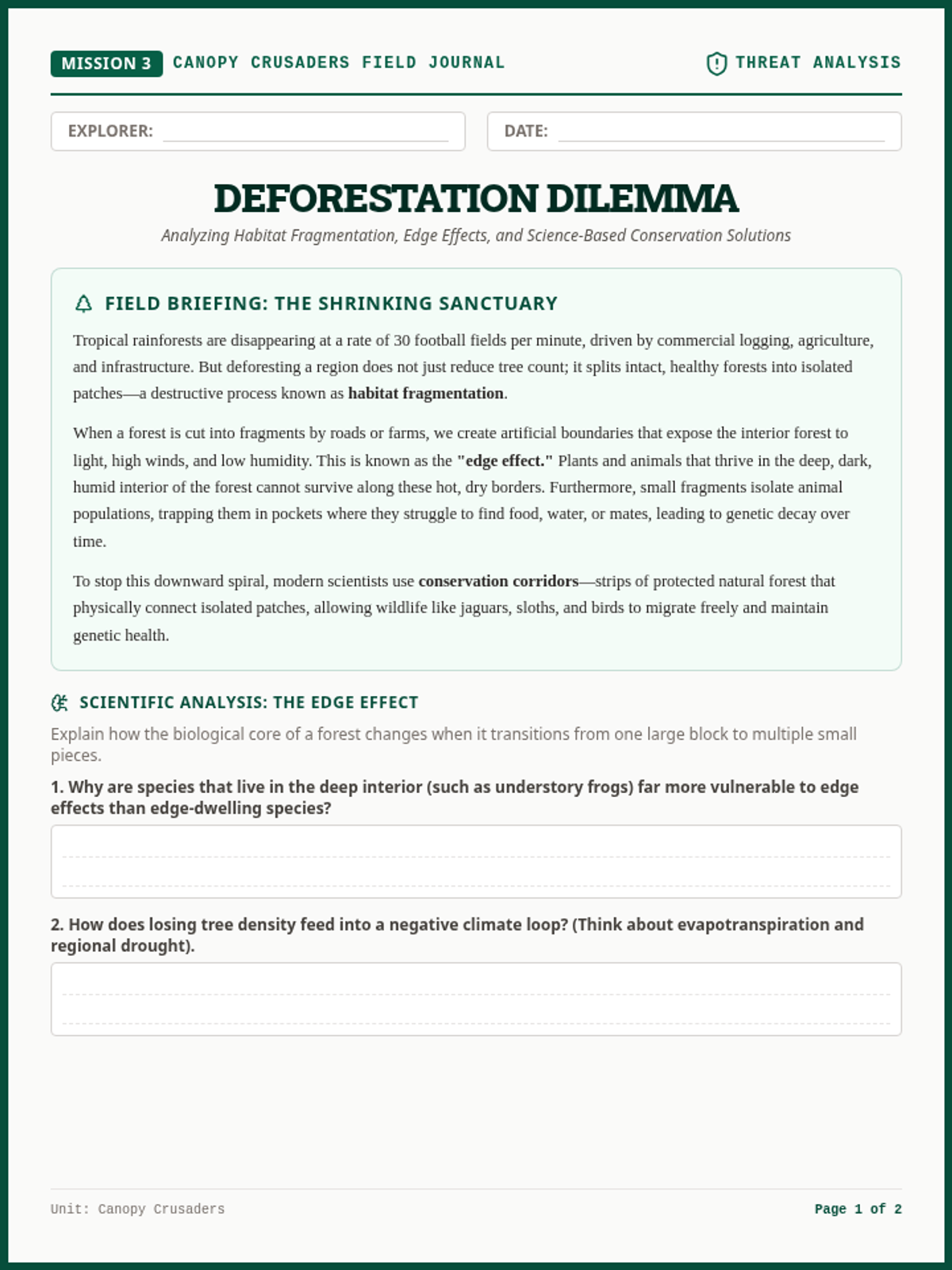
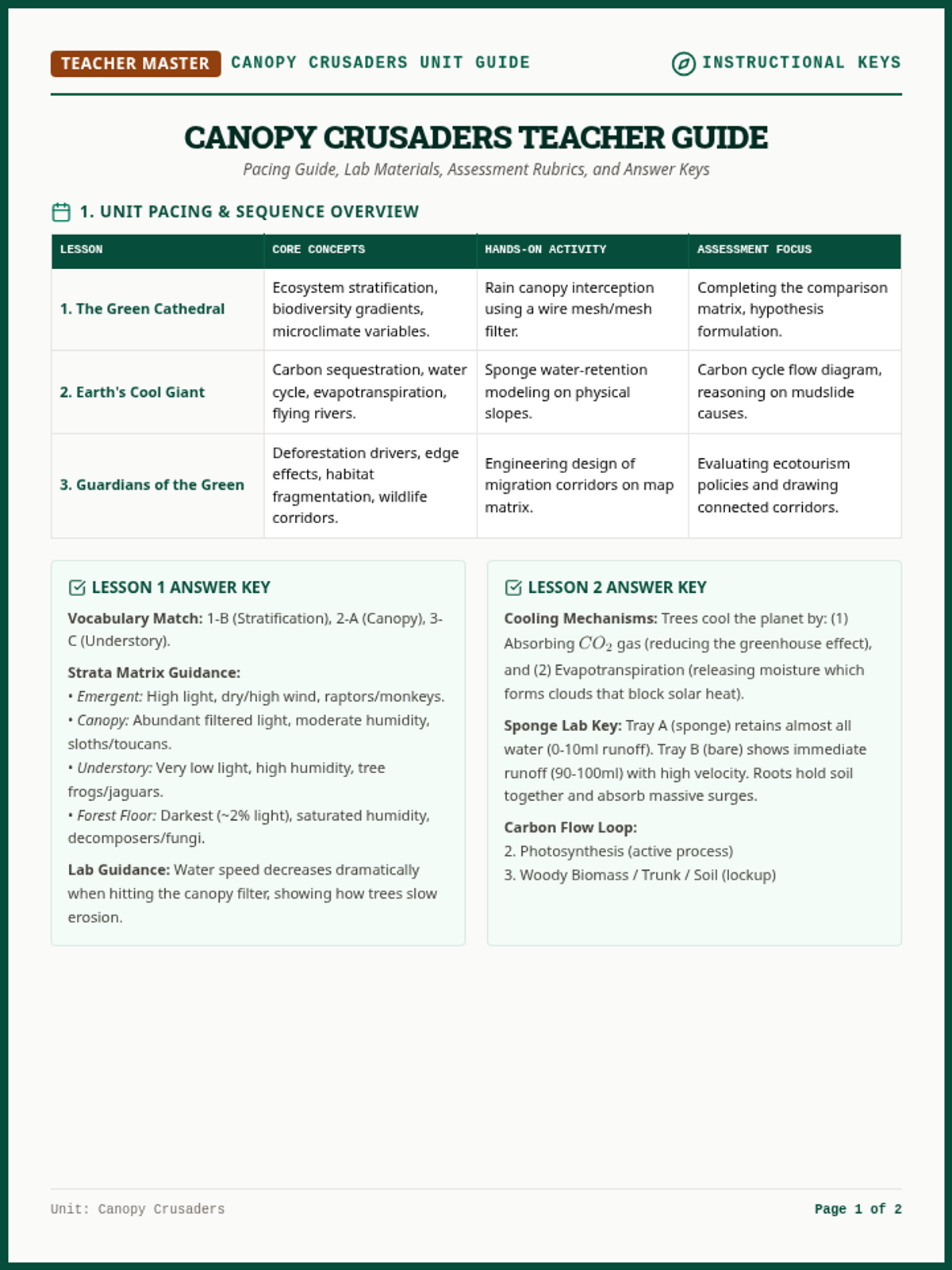
Students analyze the causes and consequences of deforestation, mapping habitat fragmentation and designing collaborative, science-based conservation solutions.
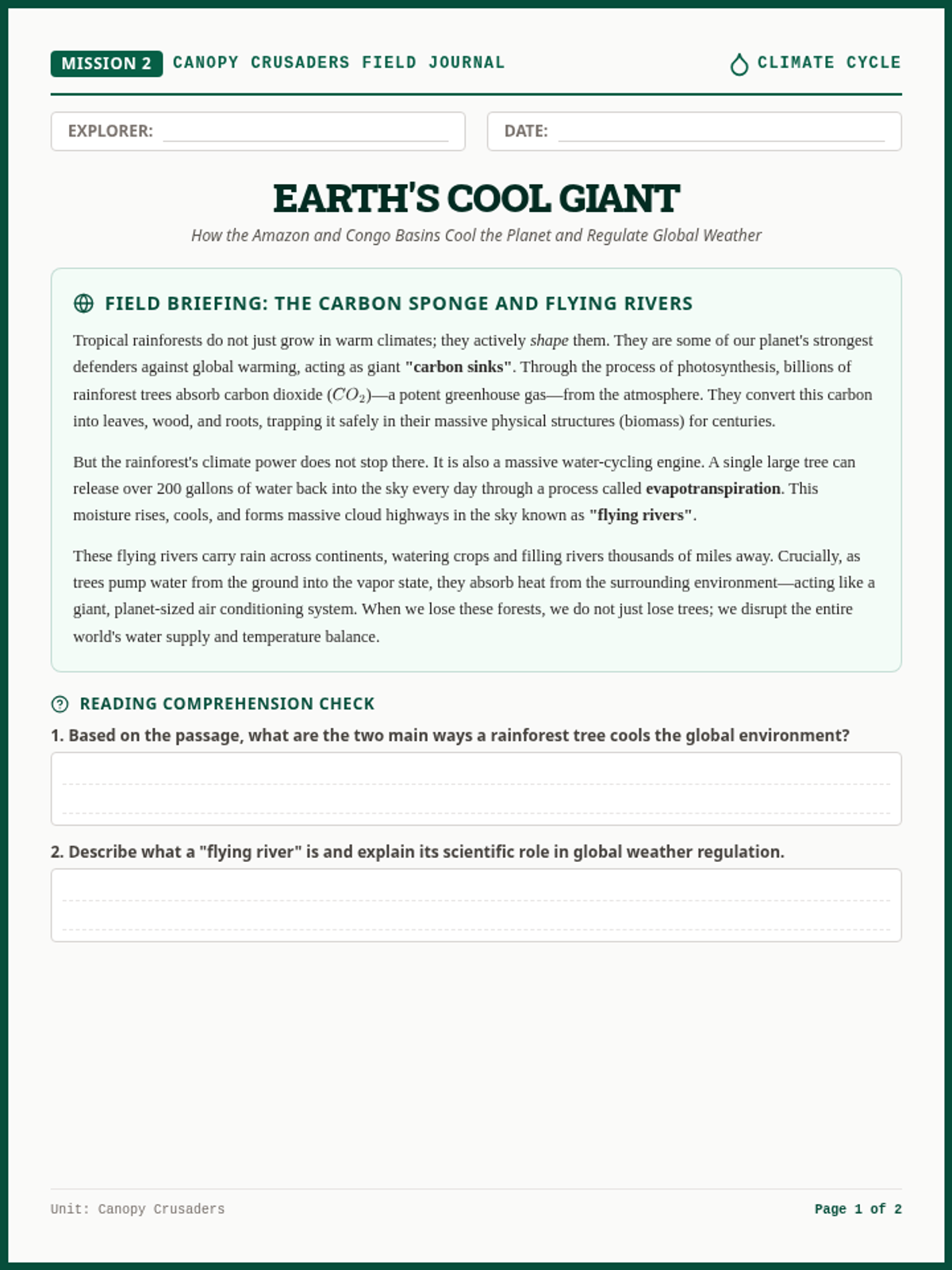
Students investigate the rainforest as a massive climate-control engine, analyzing how evapotranspiration regulates weather and how trees act as vital global carbon sinks.
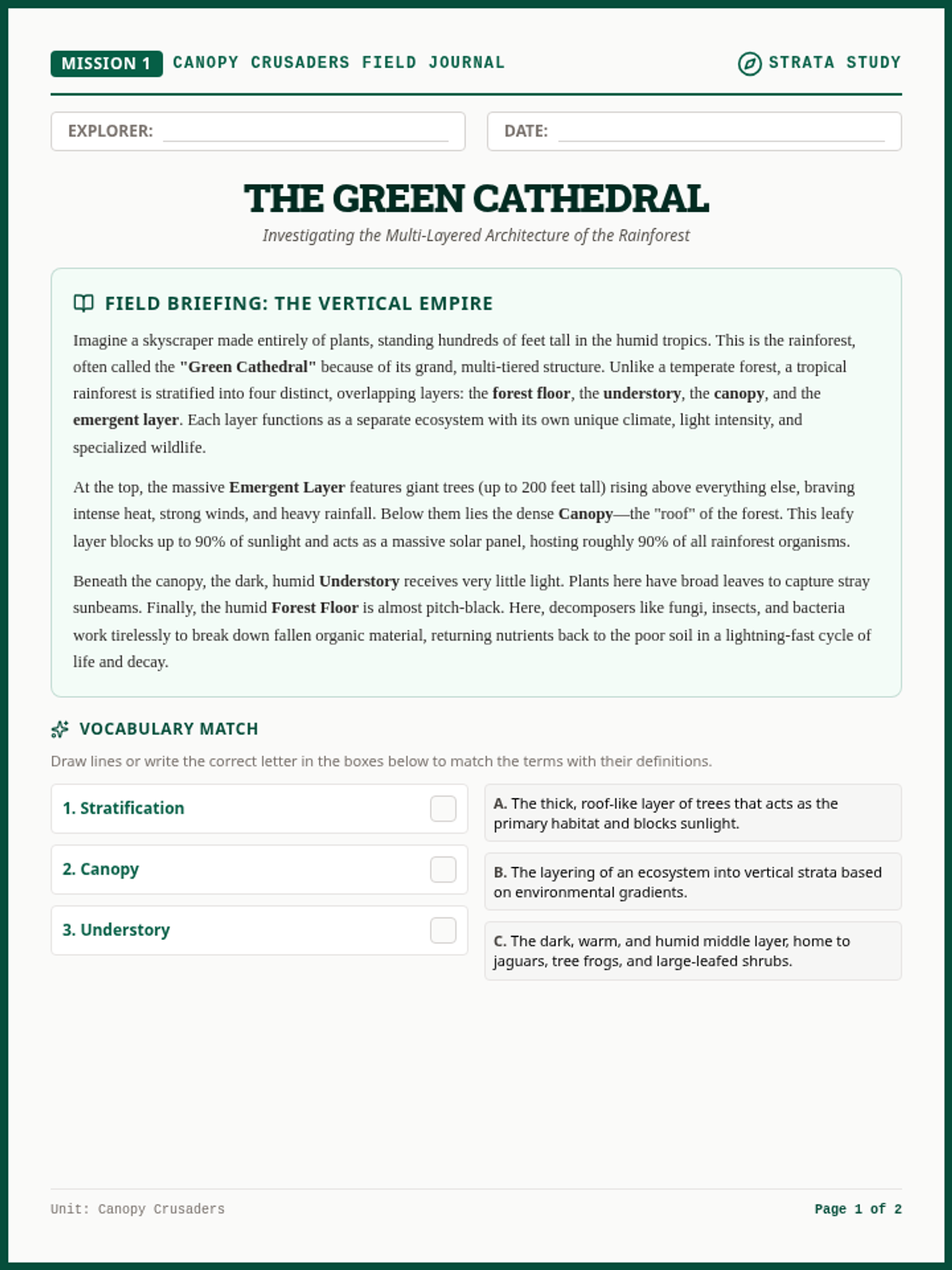
Students explore the structural layers of the rainforest (forest floor, understory, canopy, emergent layer) and model biodiversity and physical conditions across these strata.
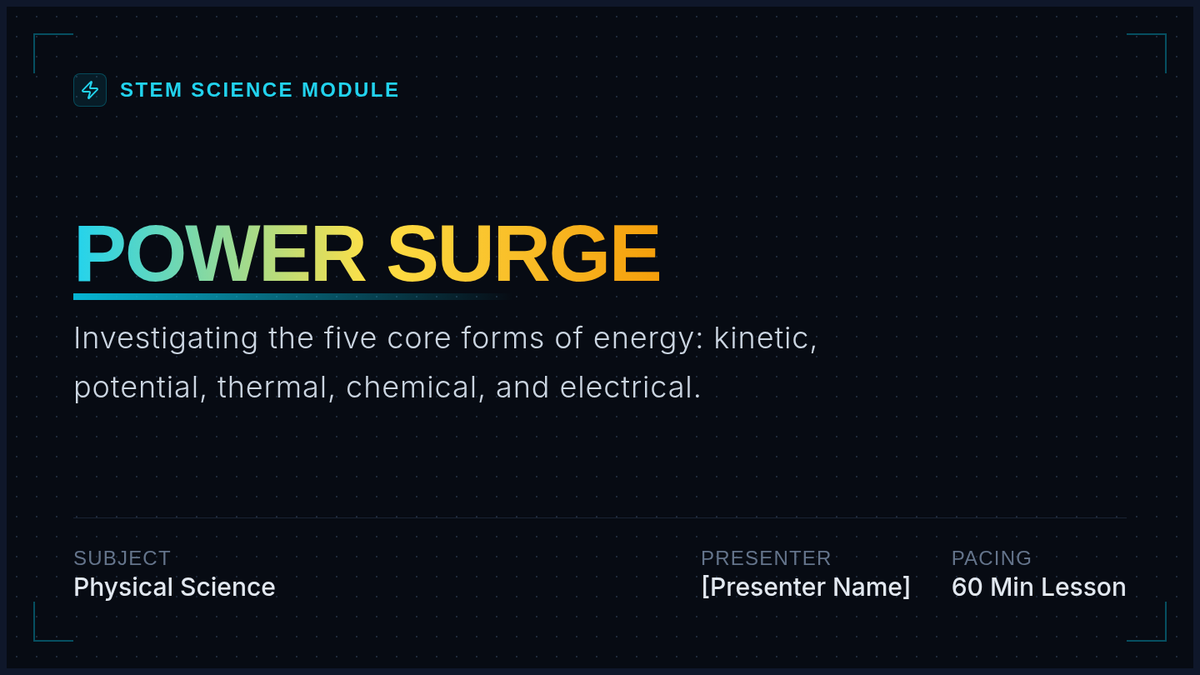
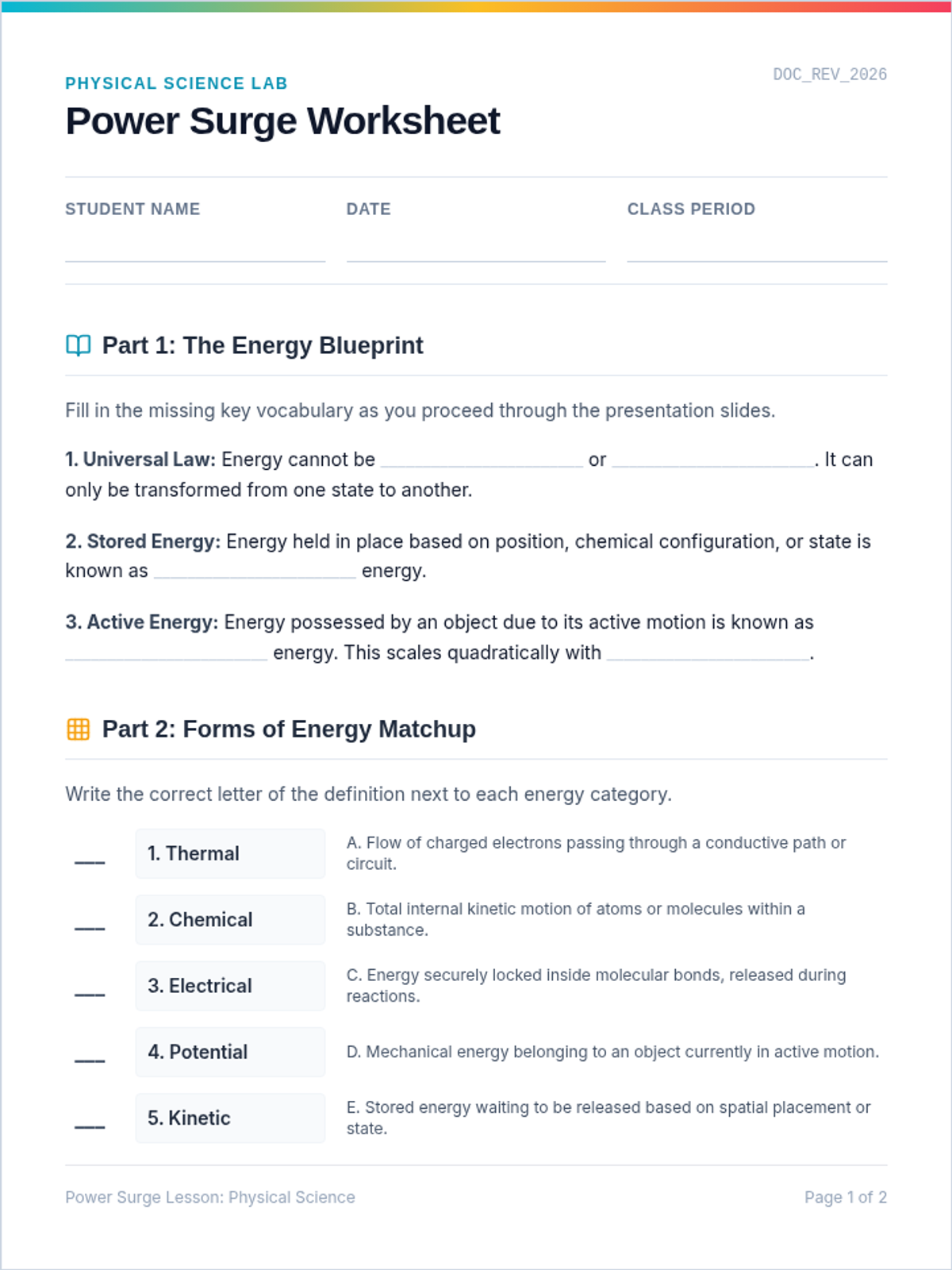
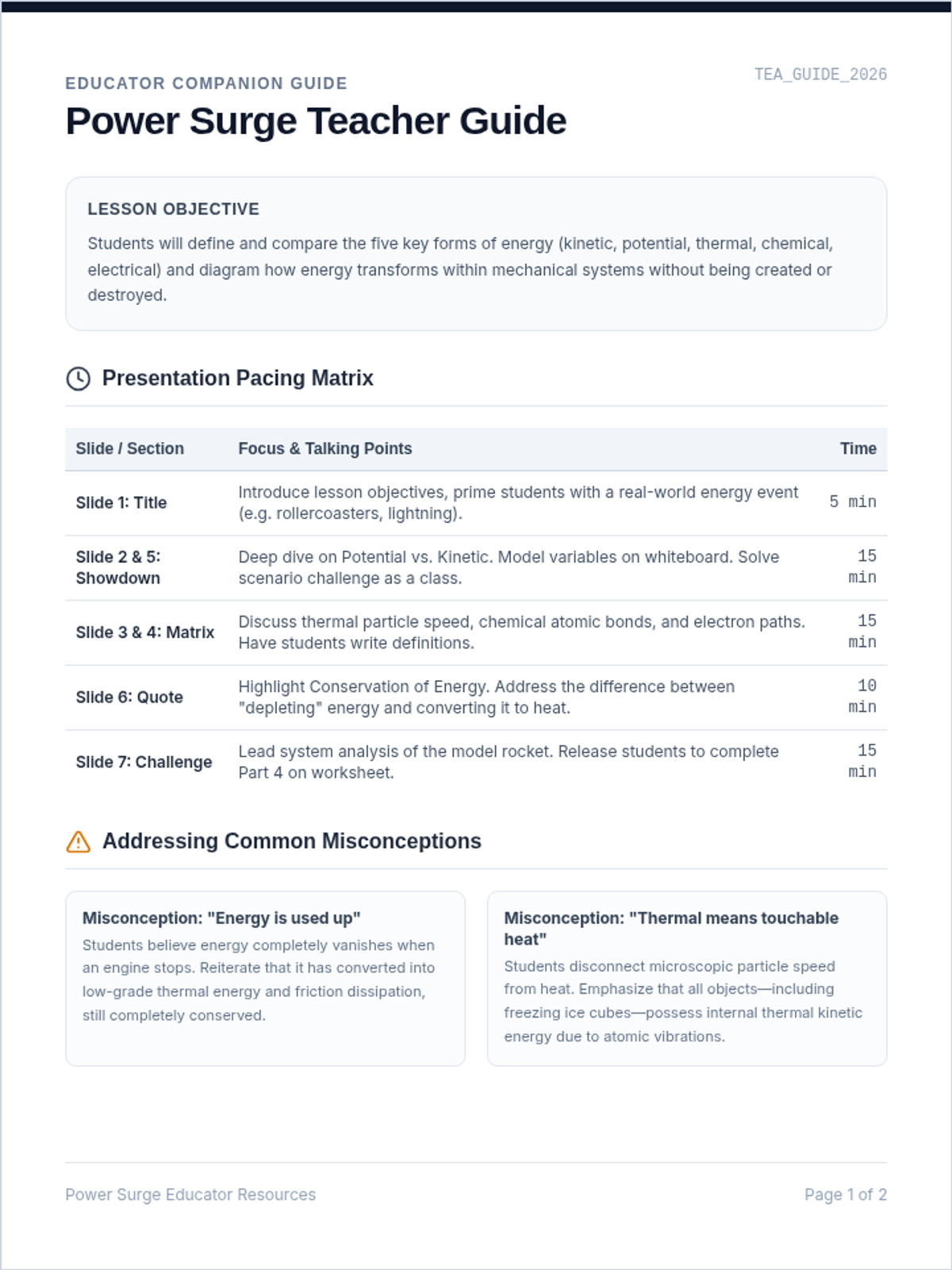
A dynamic lesson introducing the five core forms of energy: kinetic, potential, thermal, chemical, and electrical. This lesson utilizes highly engaging visual slides and structured templates to help students compare, contrast, and identify energy transformations.
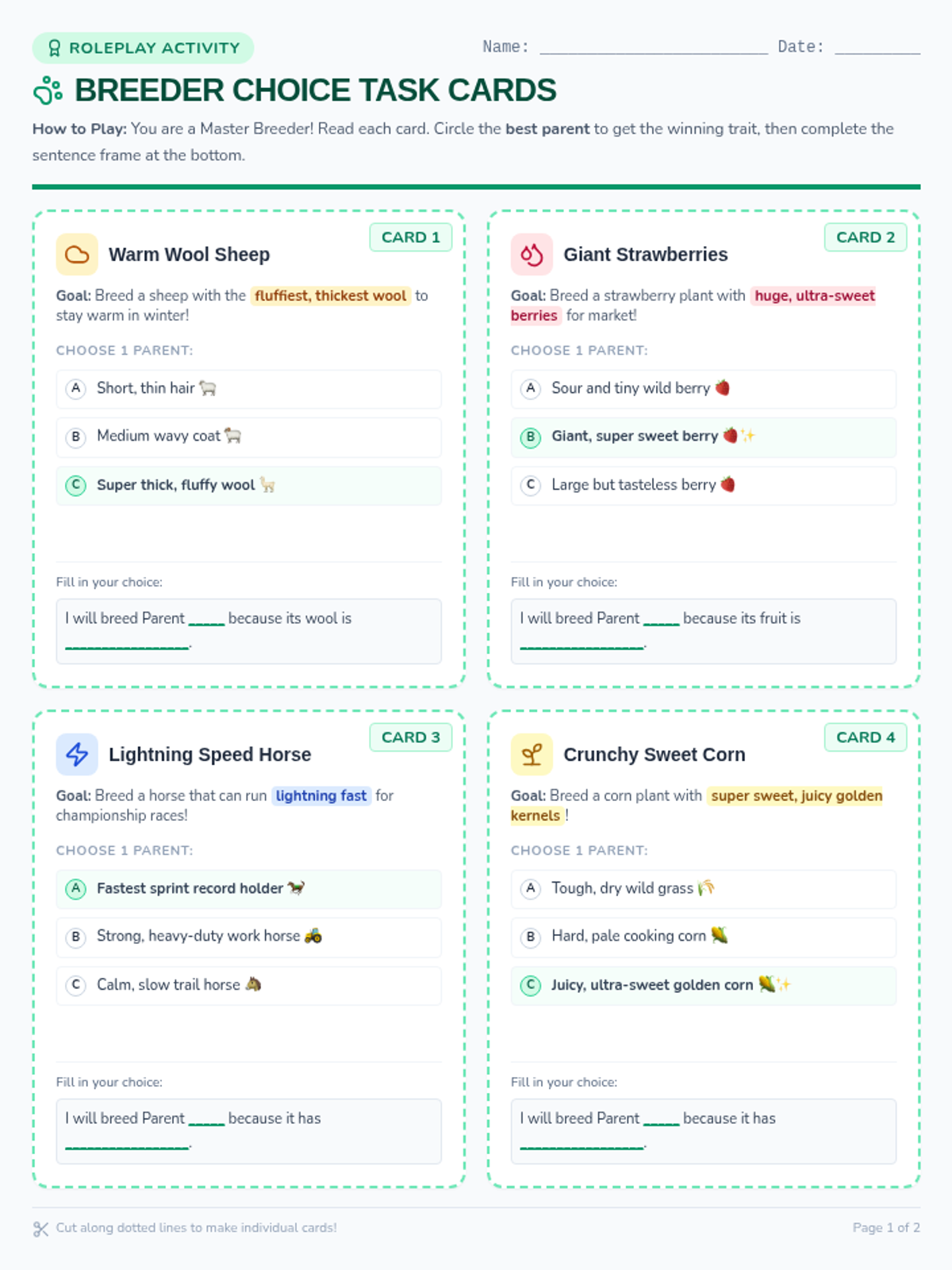
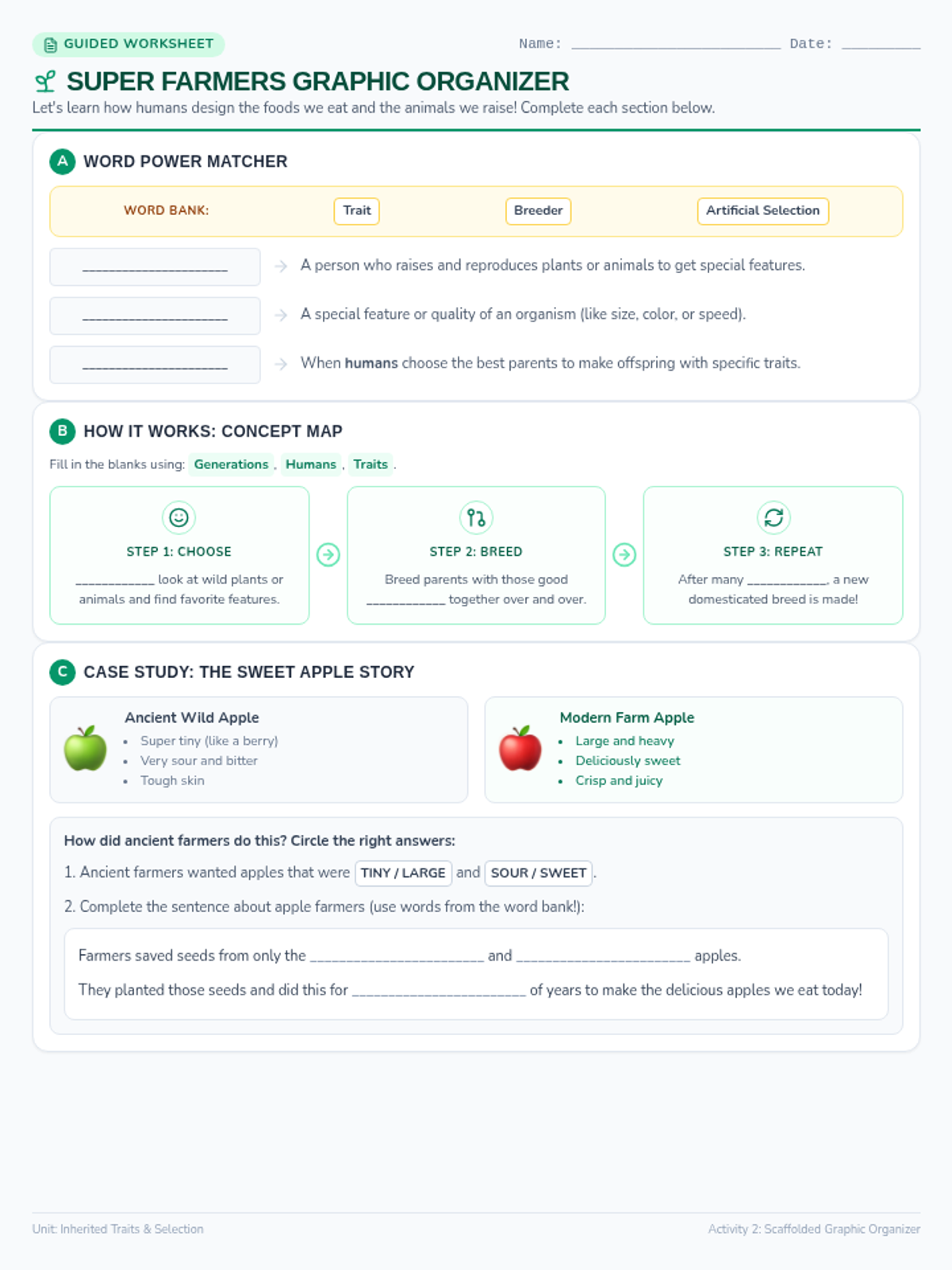
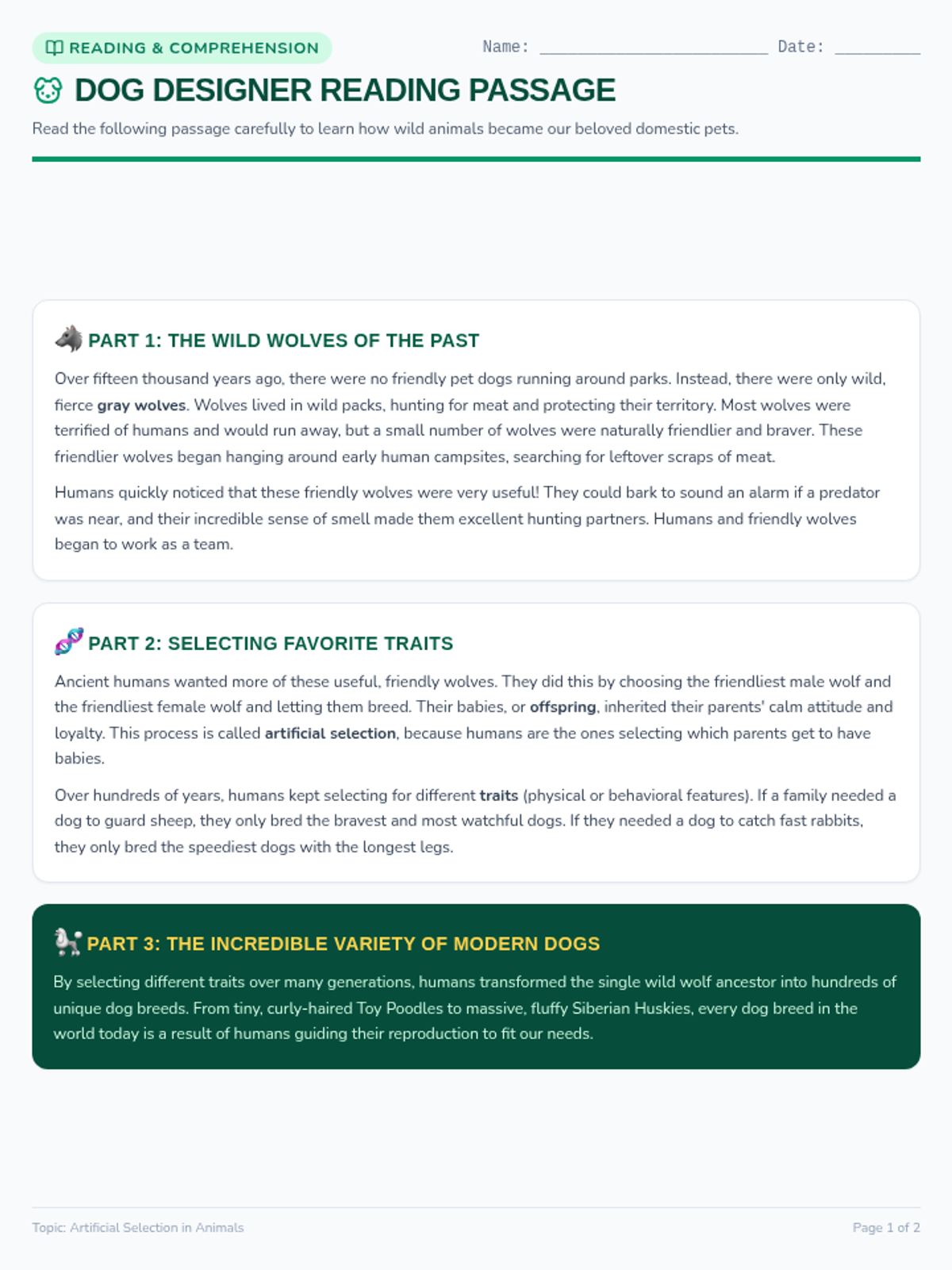
A hands-on, highly visual lesson where students explore artificial selection by roleplaying as breeders and farmers. Students analyze traits in dogs, crops, and livestock using scaffolded organizers, visual task cards, and matching tasks.
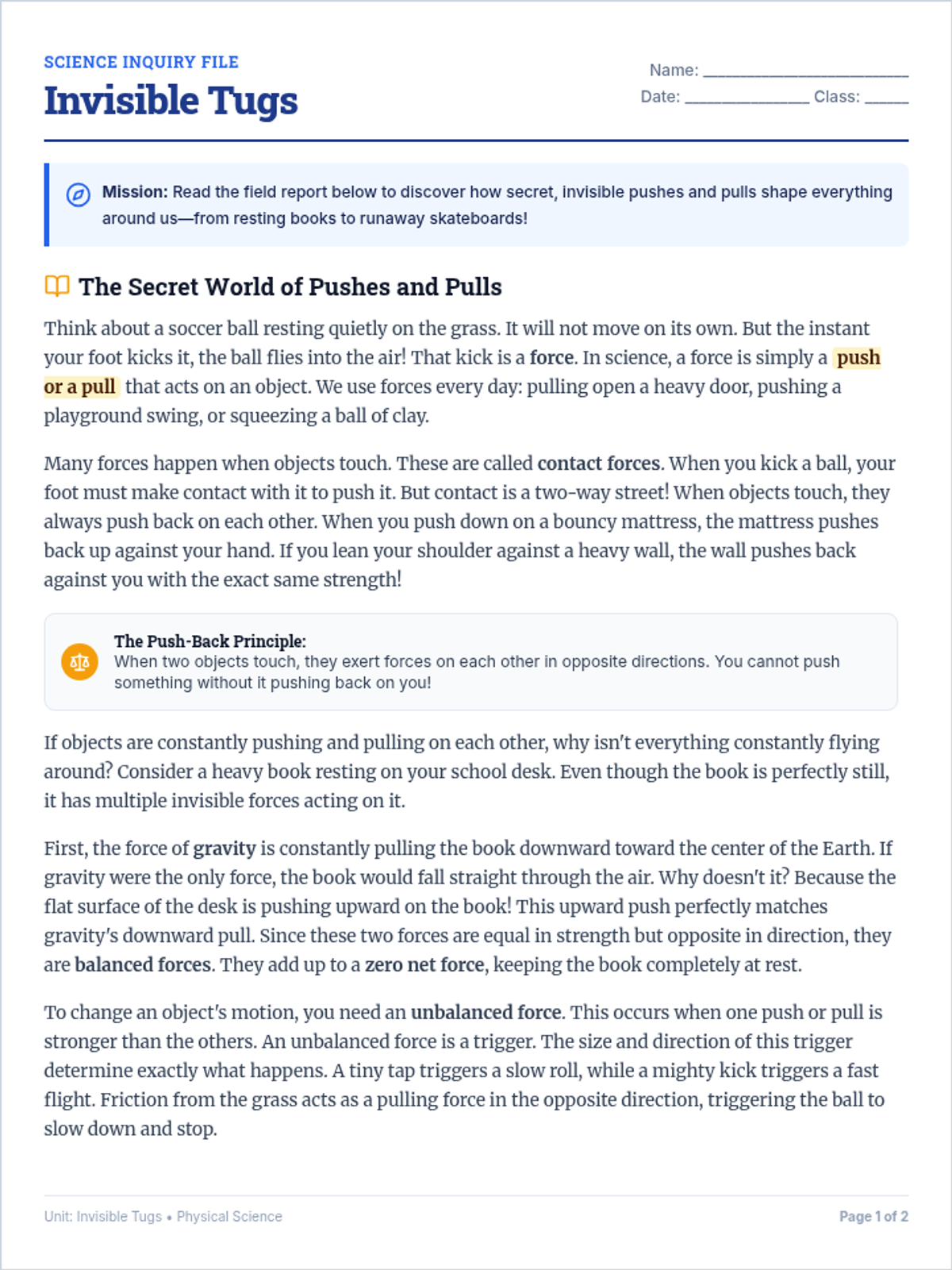
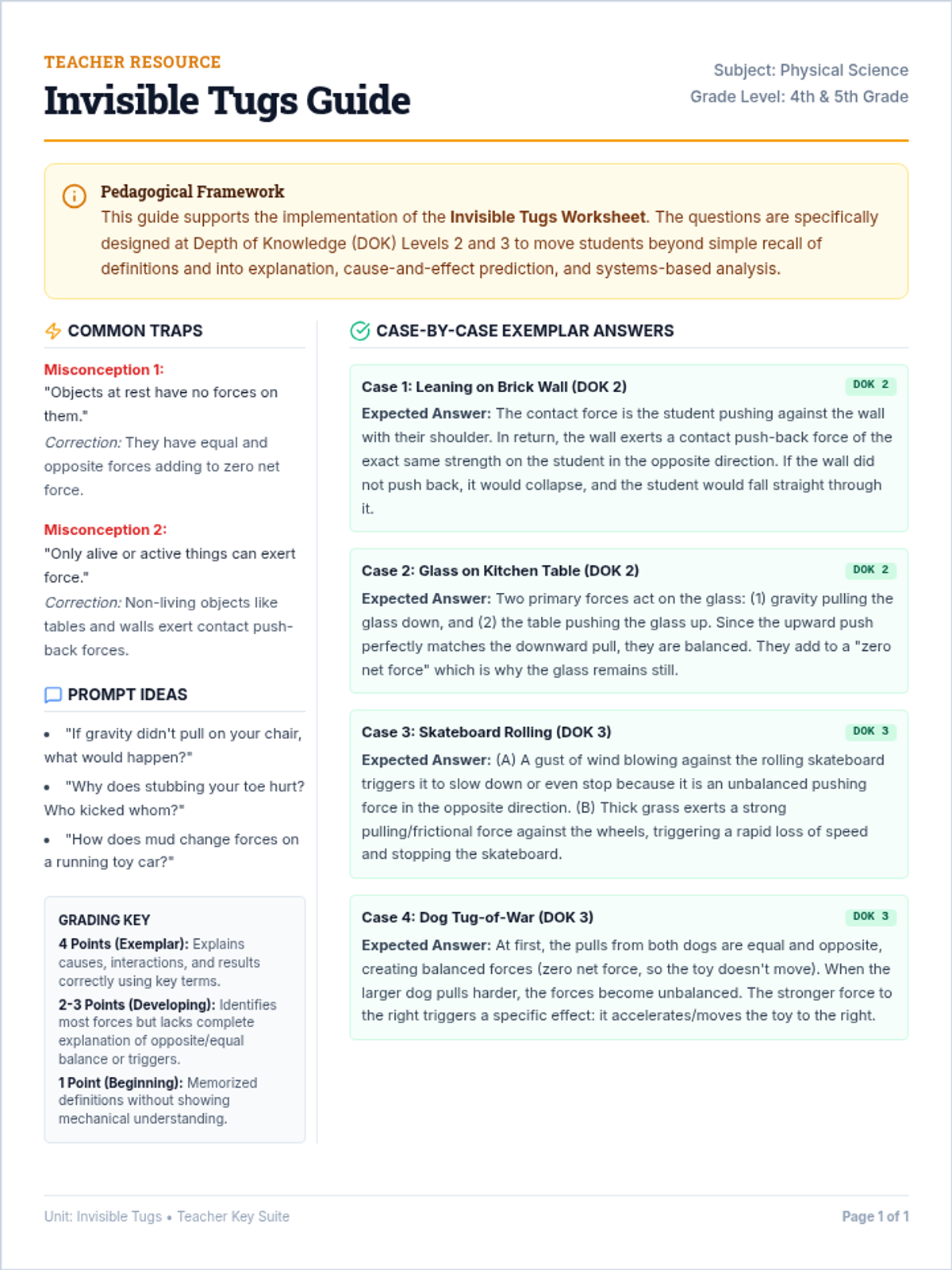
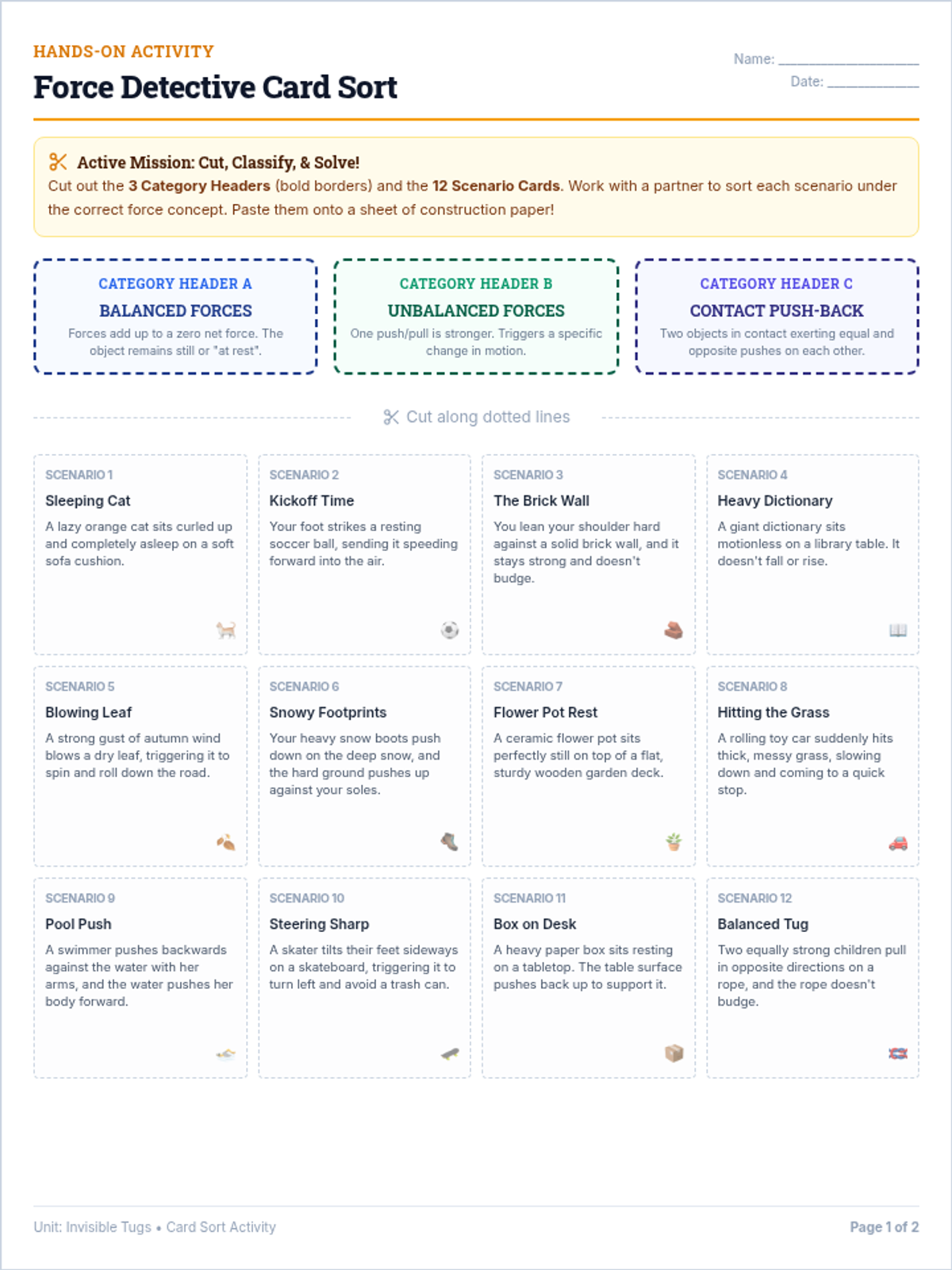
A guided inquiry lesson exploring pushes, pulls, contact forces, and balanced vs. unbalanced forces through everyday concrete examples and DOK 2-3 analysis questions.
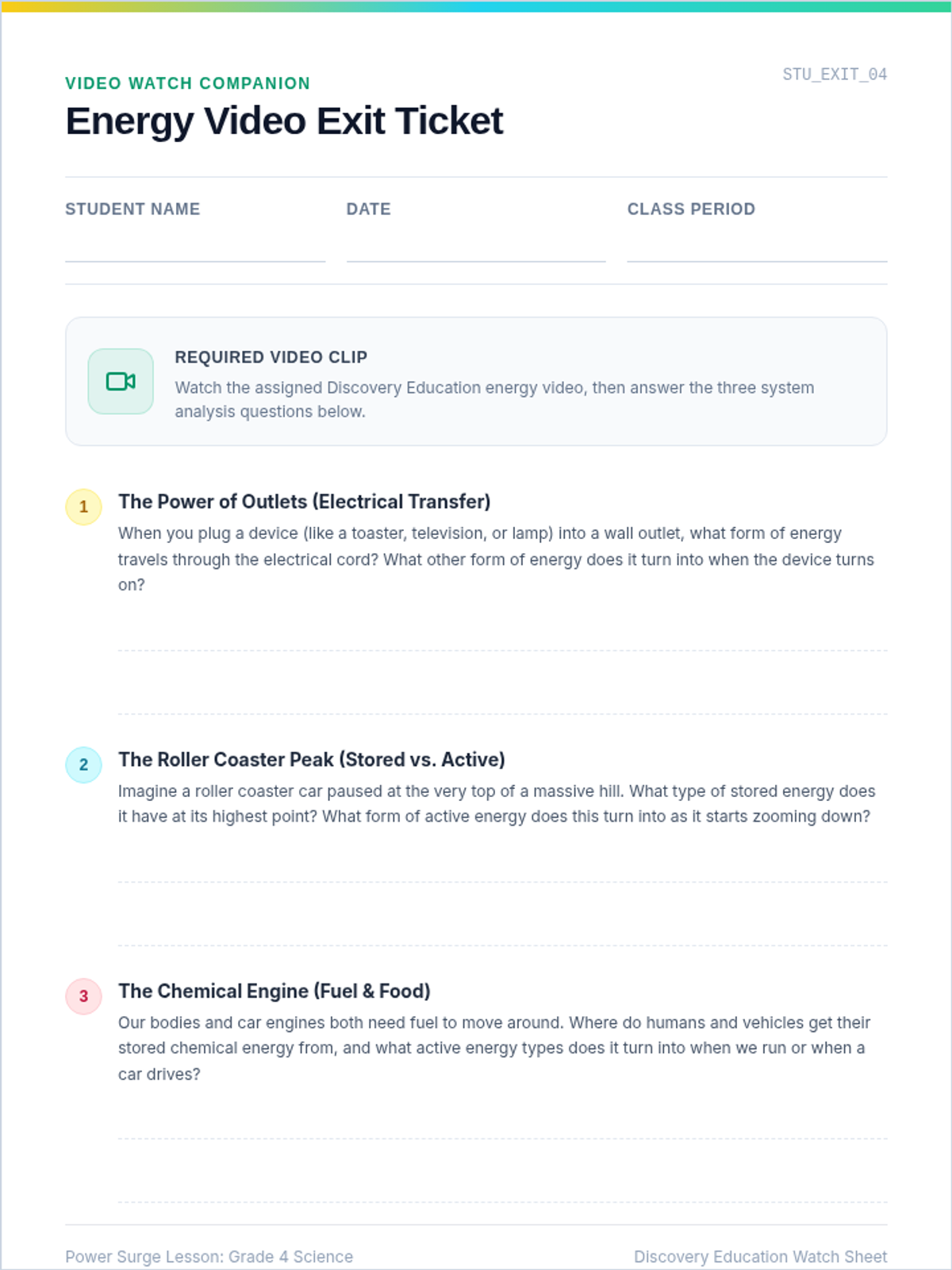
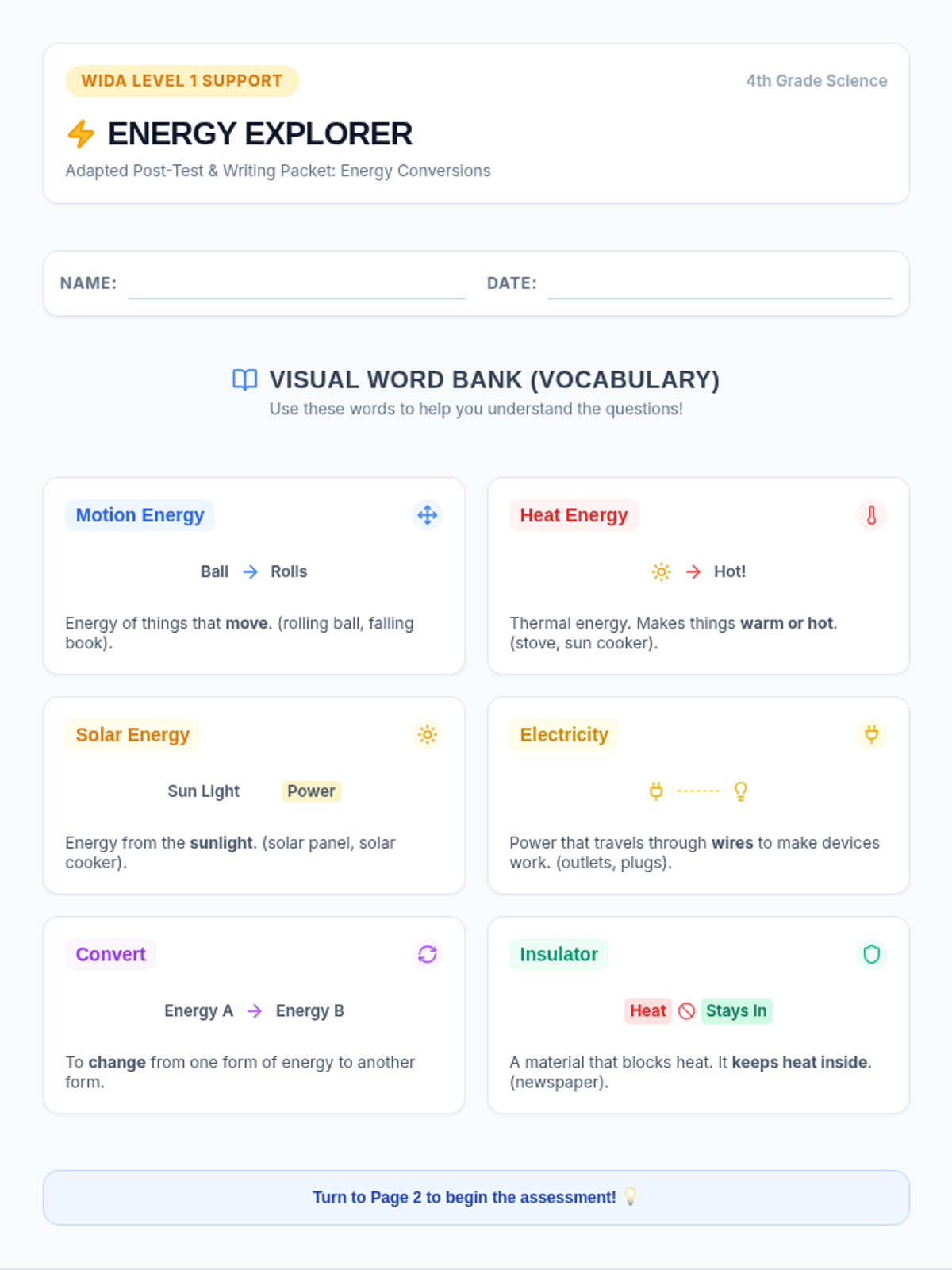
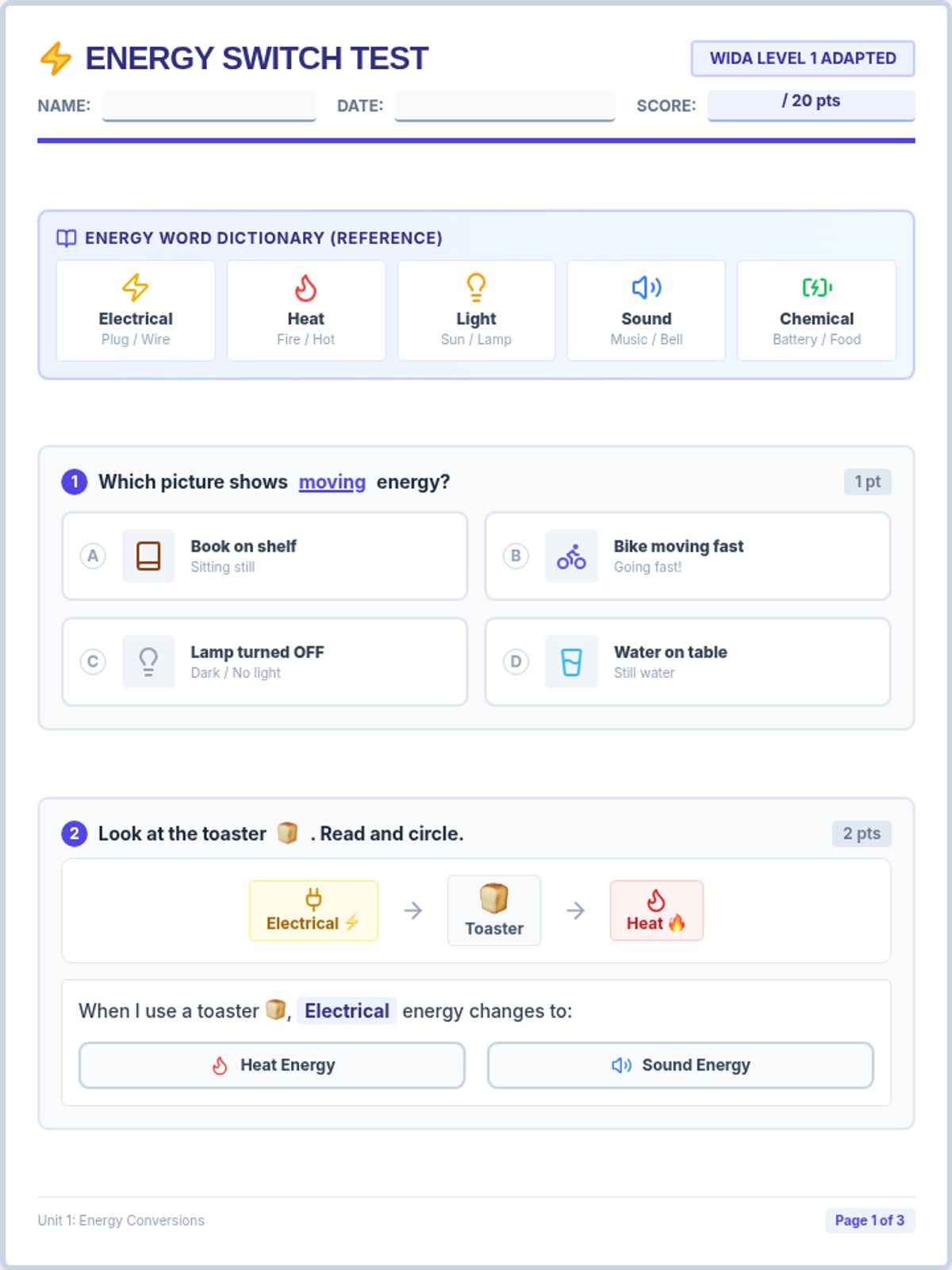
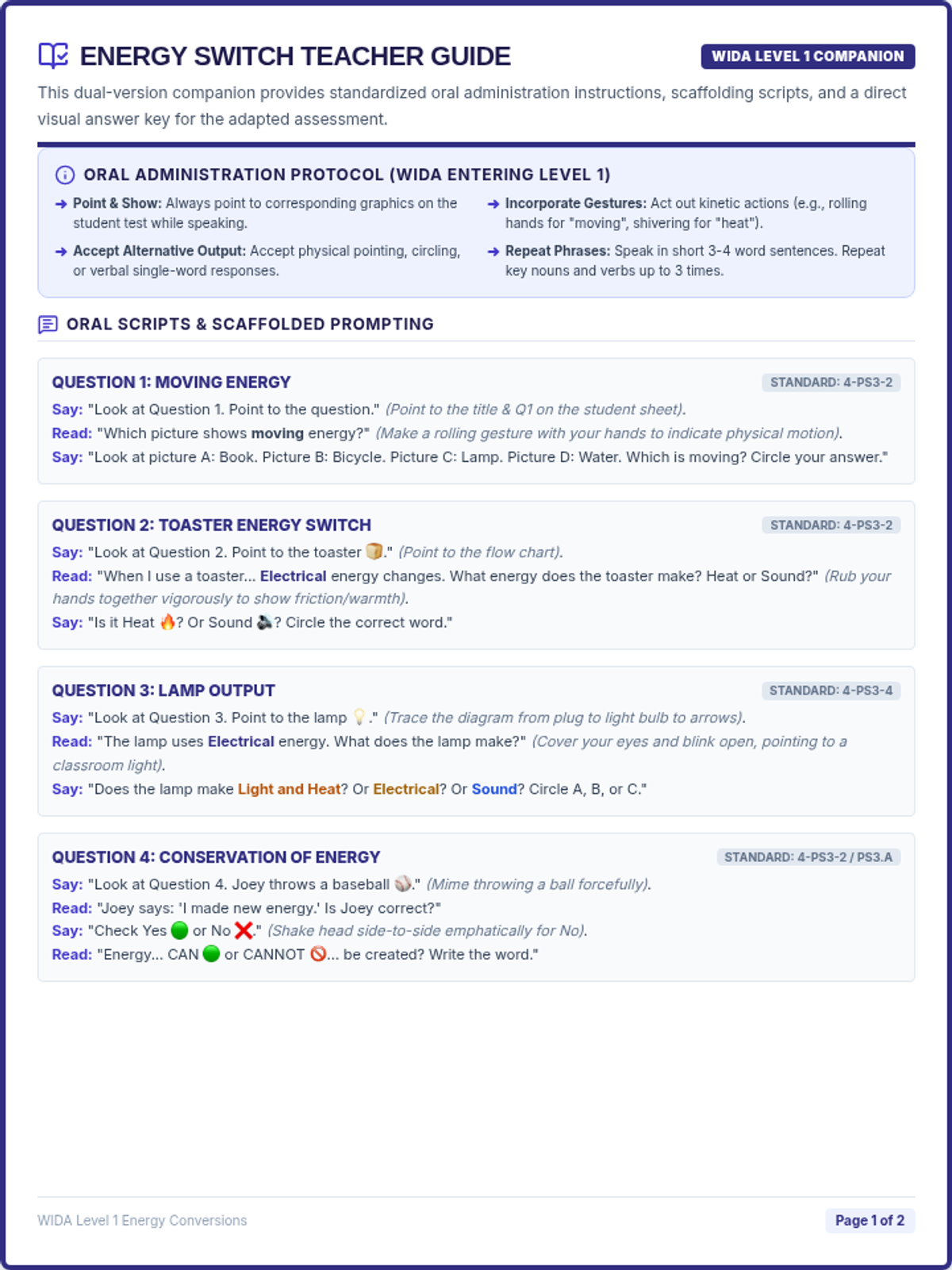
An adapted science lesson and assessment packet designed specifically for 4th-grade WIDA Level 1 (Entering) English Language Learners focusing on energy conversions. Includes visual vocab support, simplified questions, and structured sentence frame writing aids.
An adapted 4th-grade science assessment unit on energy conversions designed specifically for WIDA Level 1 (Entering) English Language Learners. It includes a highly visual student test and a companion teacher guide with oral scripts and scaffolded support.
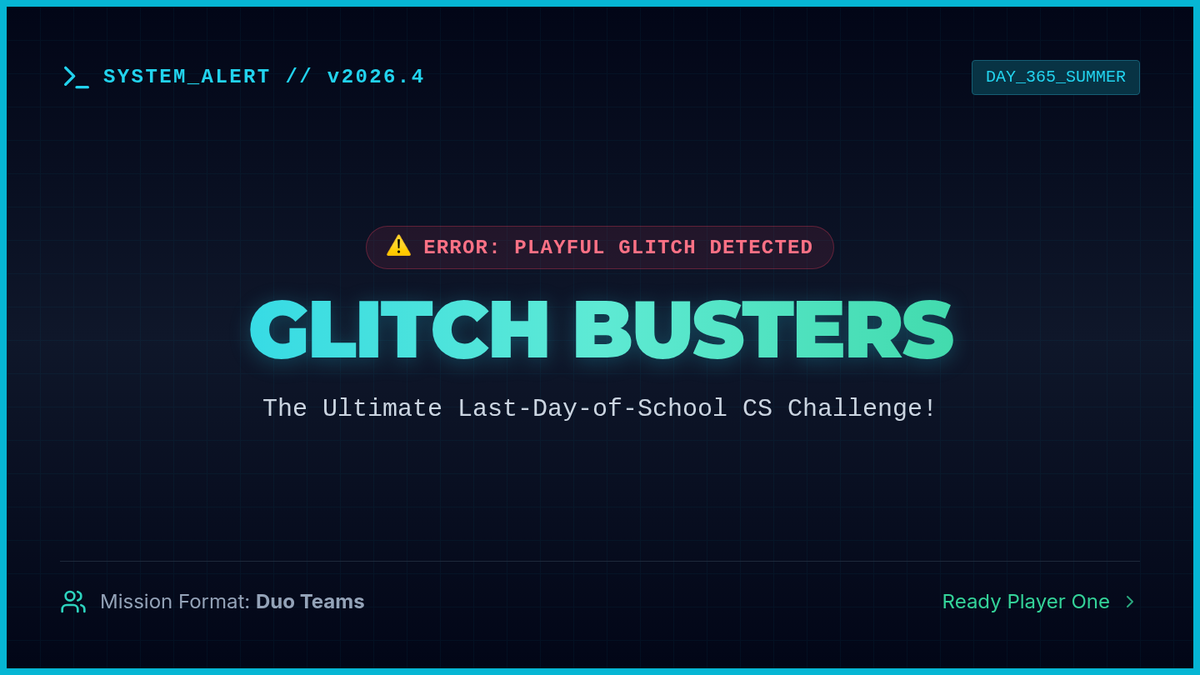
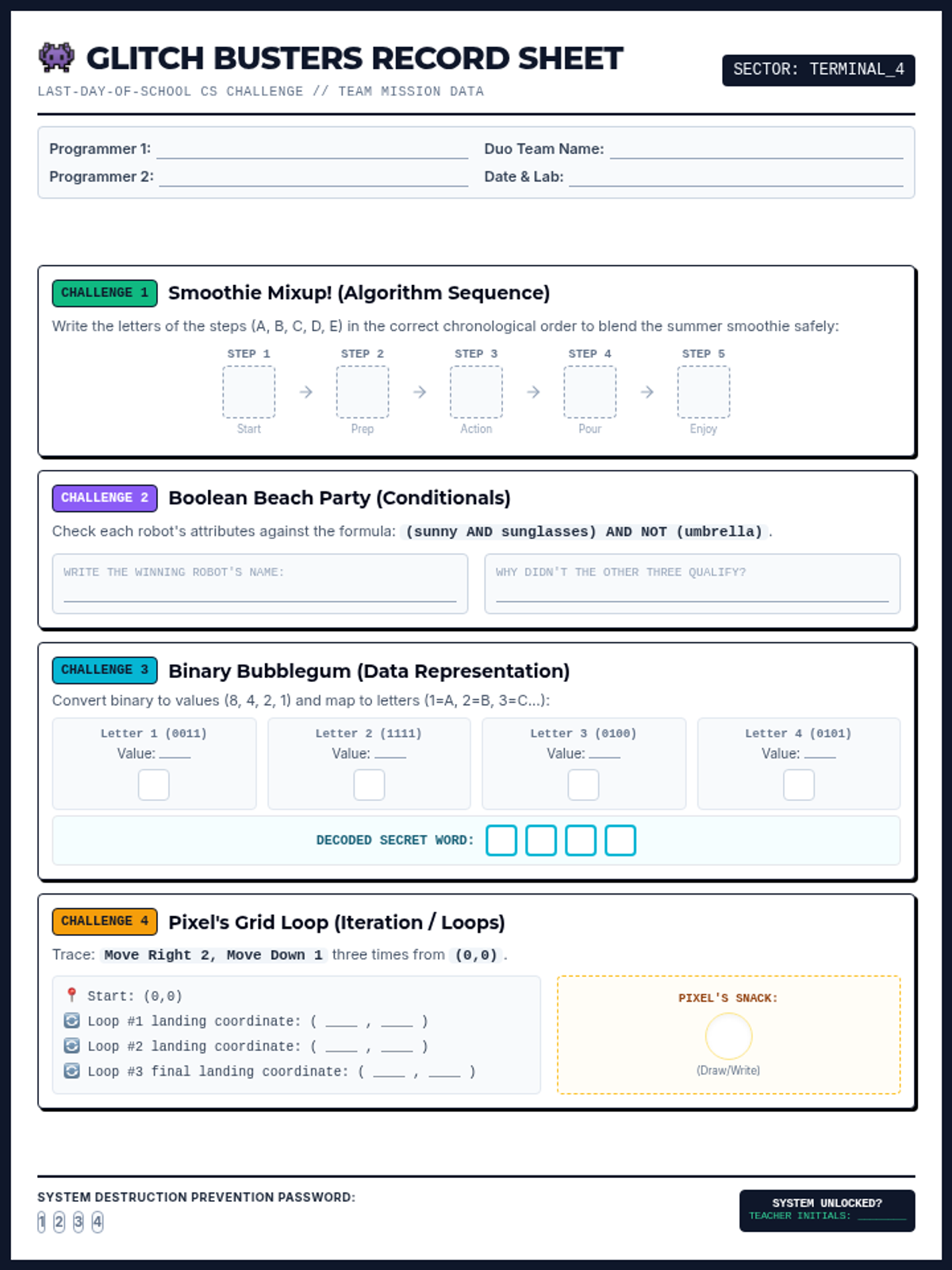
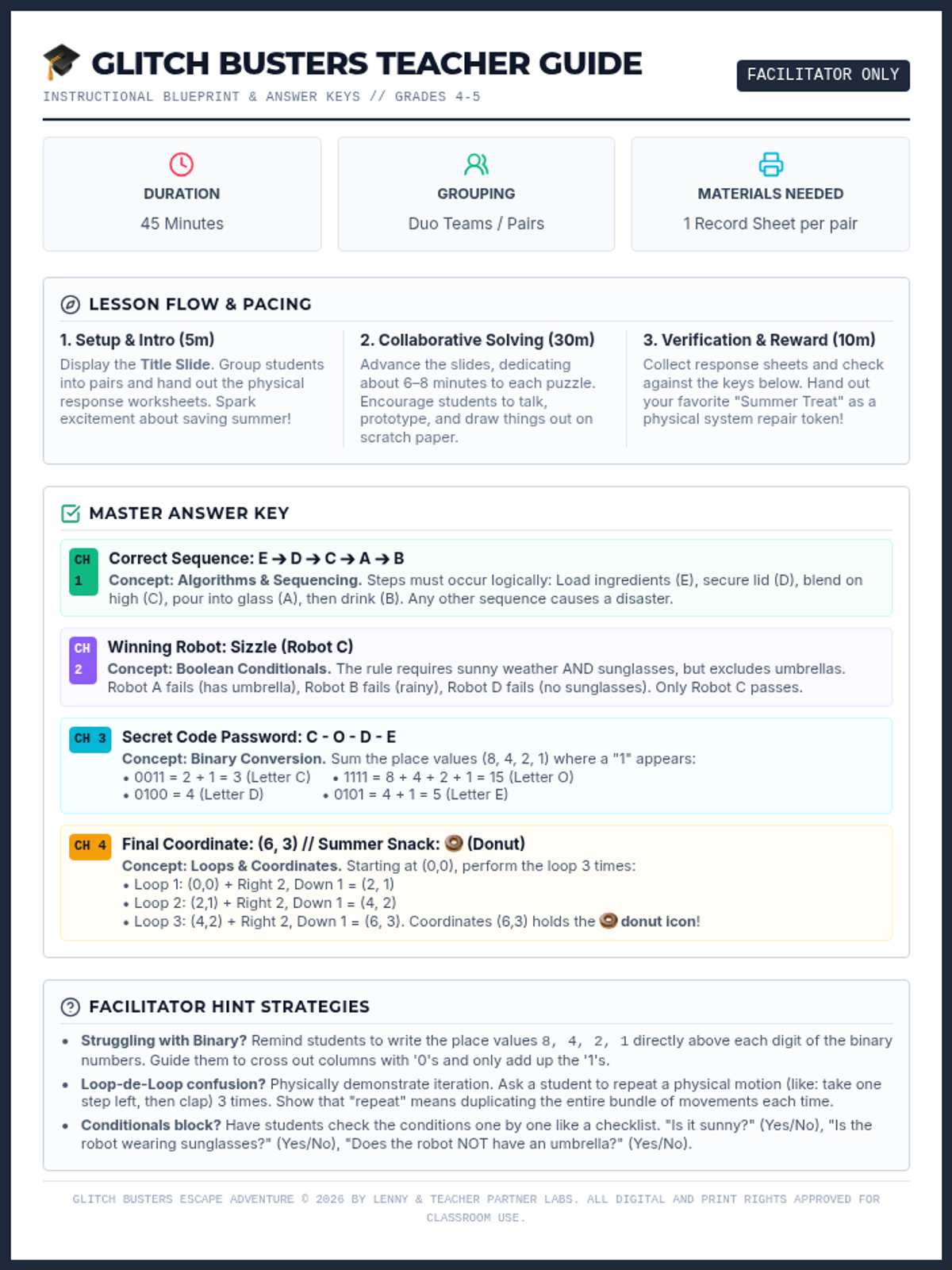
A high-energy, collaborative computer science escape challenge designed for the last day of school. Students work in pairs to solve funny, CS-themed logic and debugging puzzles to save the computer lab from a playful system glitch.
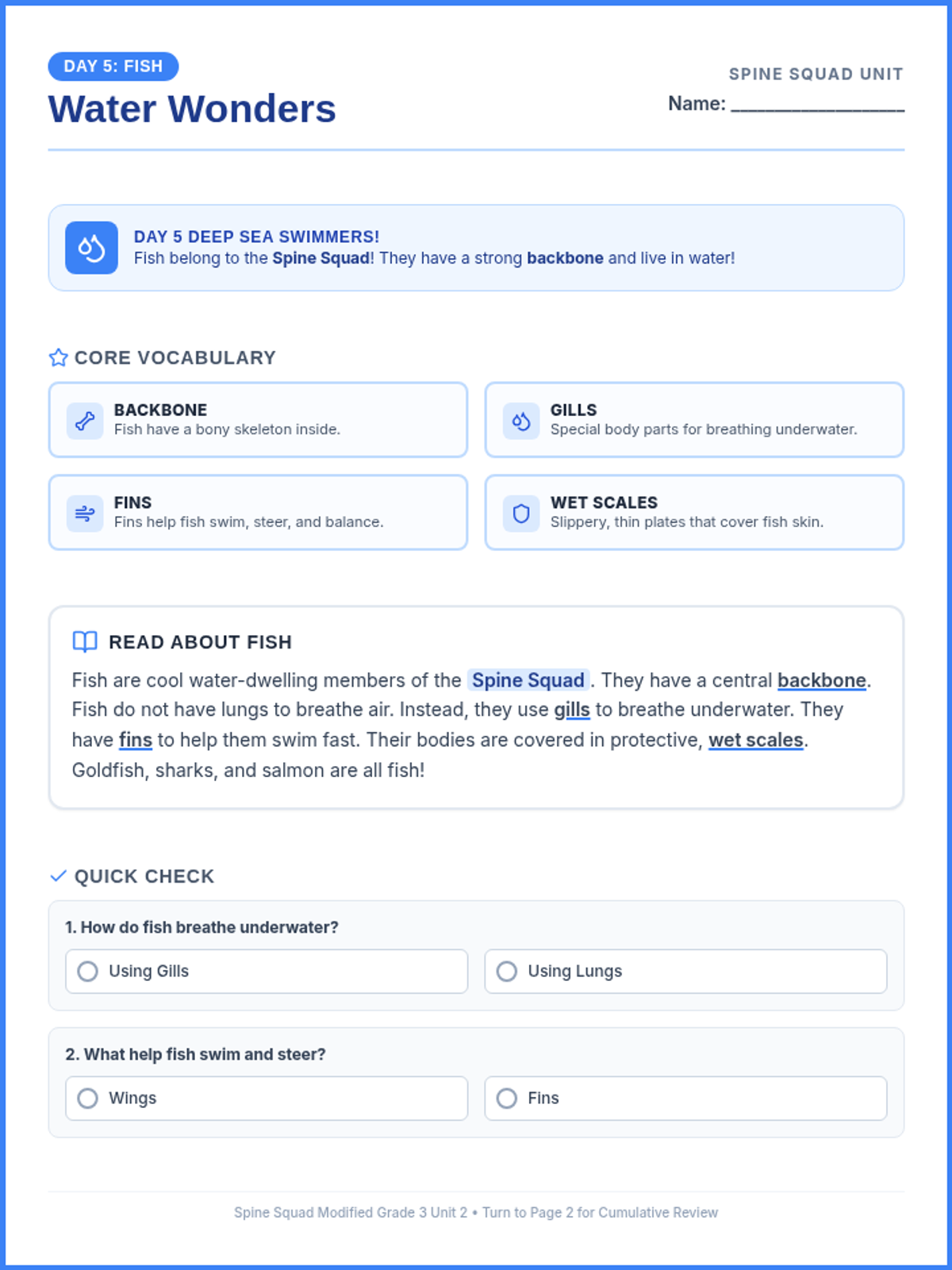
In this fifth and final lesson of the Spine Squad unit, students explore fish, focusing on gills, fins, scales, and underwater survival, with a final cumulative review of the five vertebrate groups.
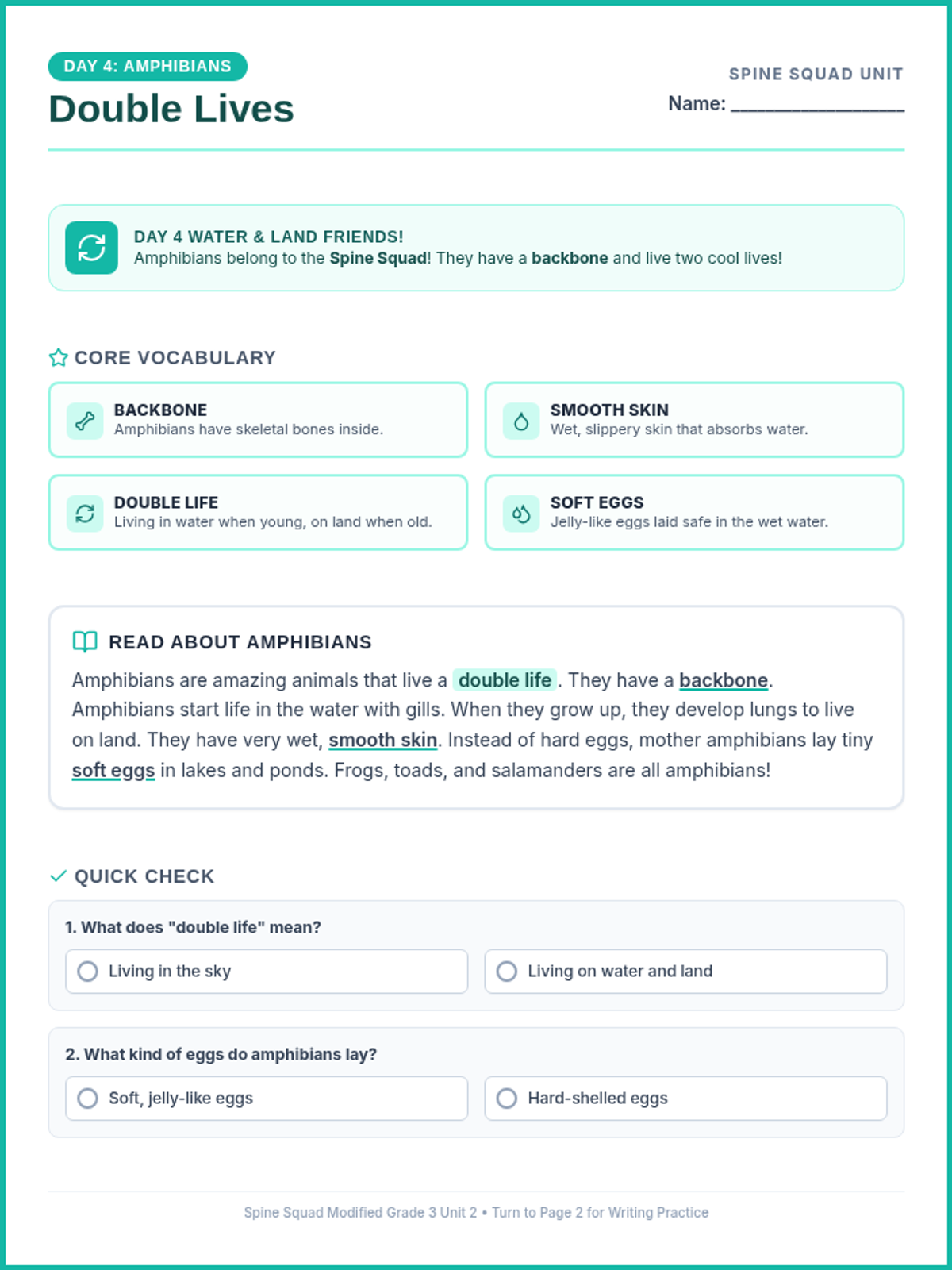
In this fourth lesson of the Spine Squad unit, students study amphibians, understanding how they live on water and land, lay soft eggs, and have smooth, wet skin, with scaffolded reading and tracing.