A biology and taxonomy sorting system designed for older kids (Grades 3-5). Students analyze evolutionary adaptations, label critical anatomical features, and categorize specimens by their taxonomic classes, habitats, and ecological functions.
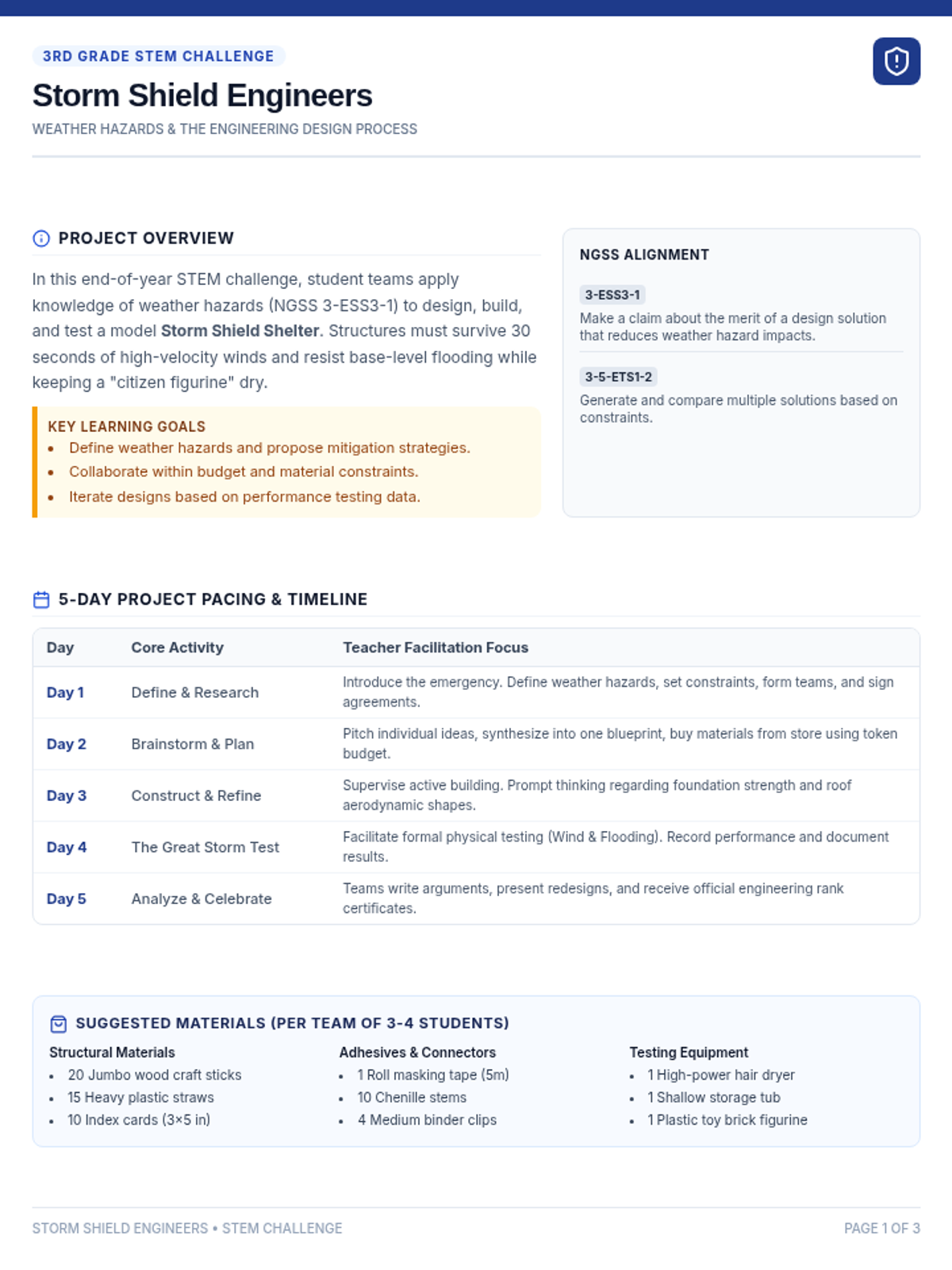
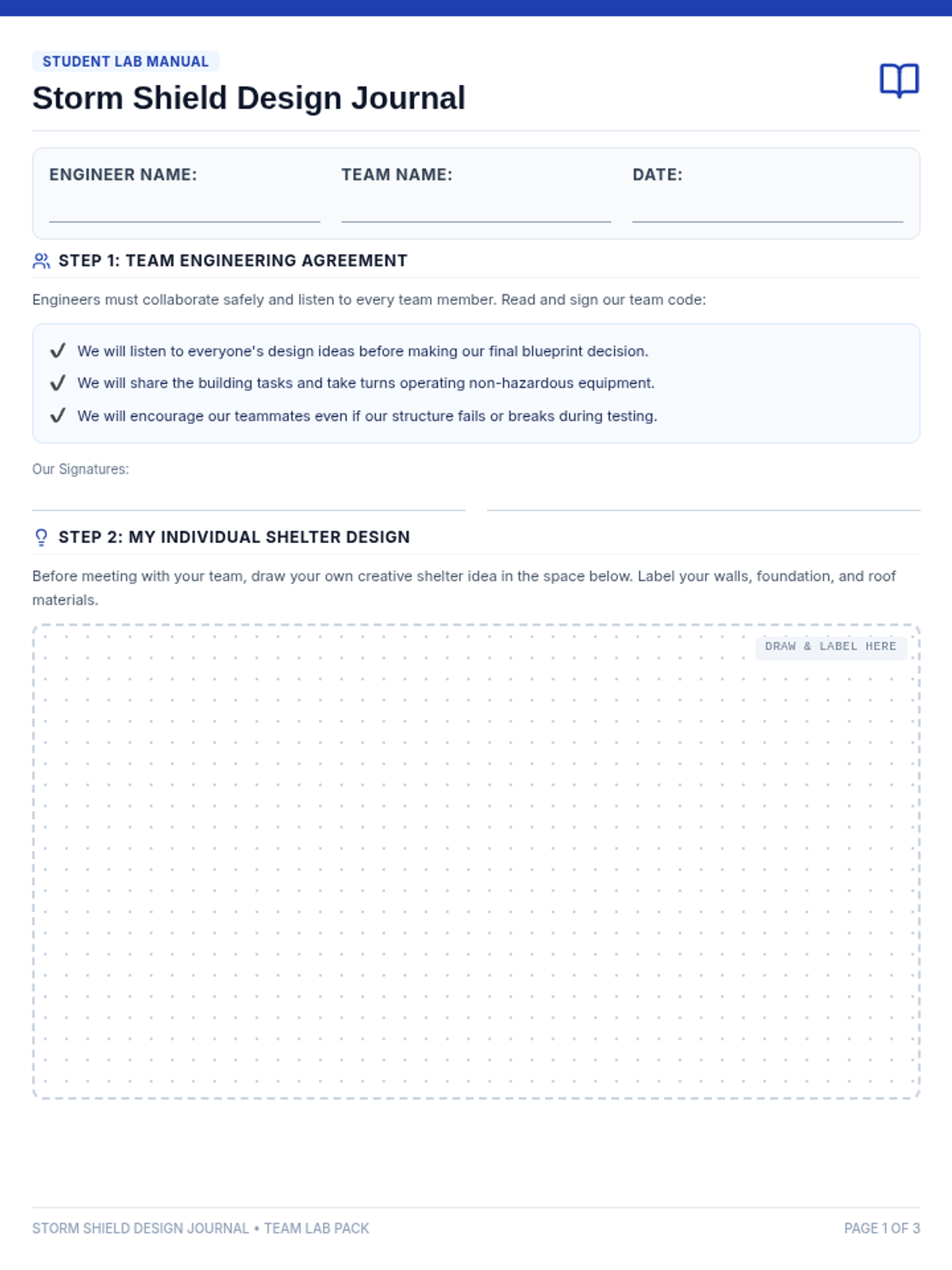
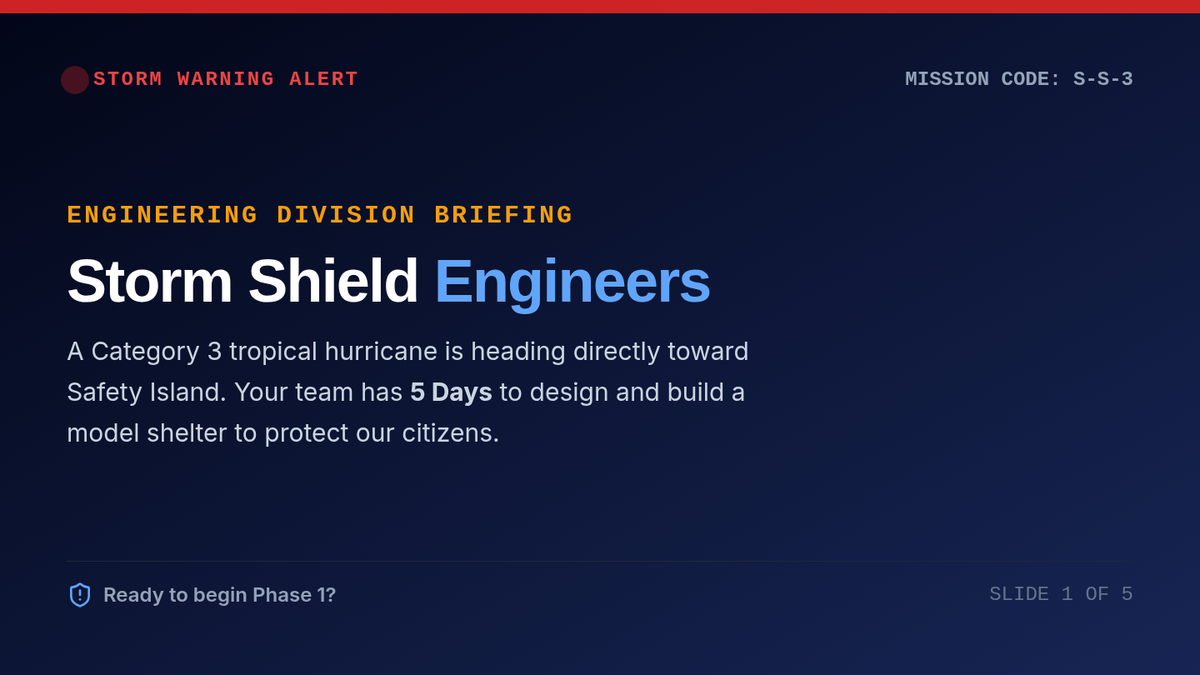
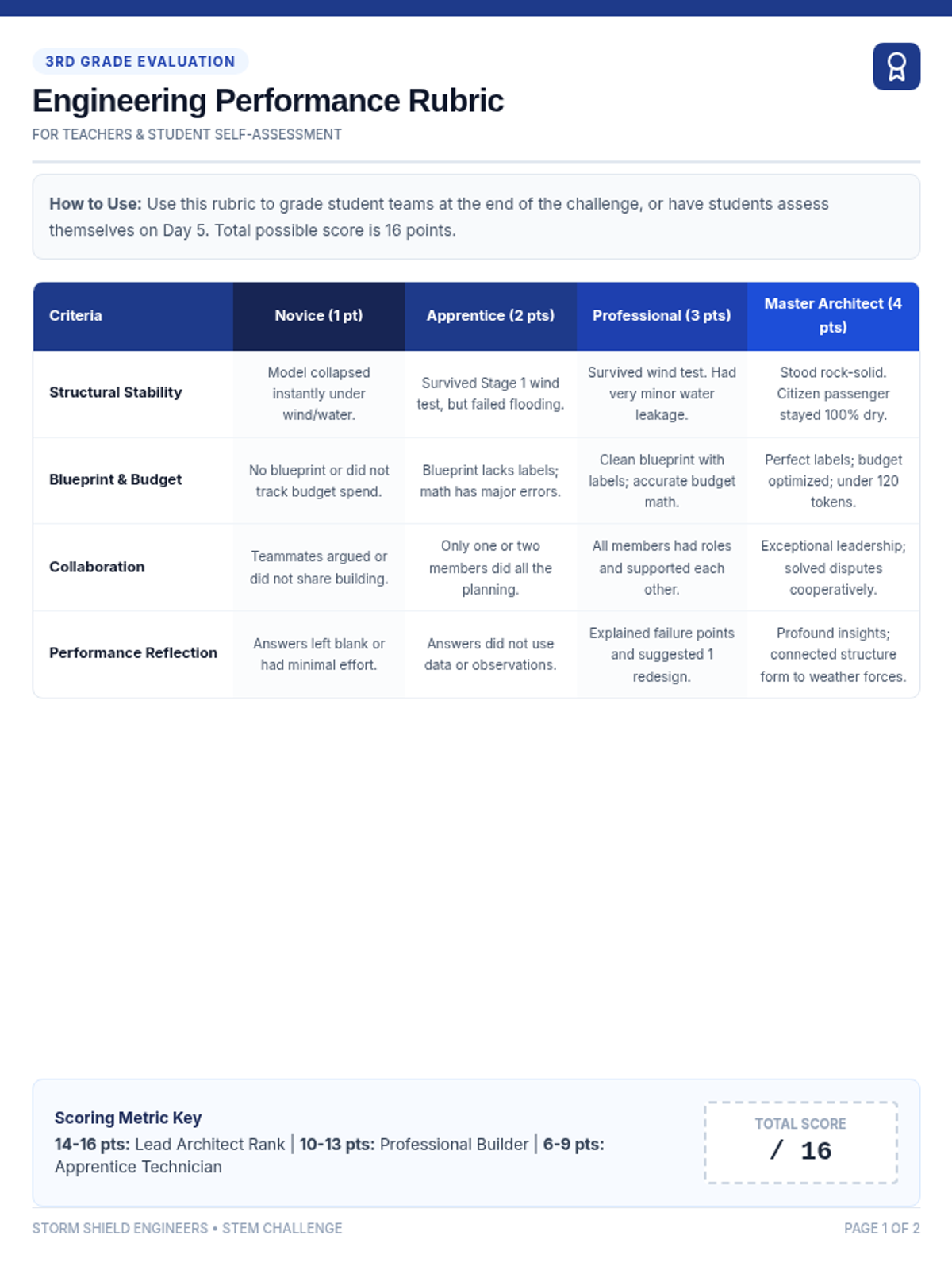
A collaborative, hands-on 3rd-grade STEM challenge where student engineering teams design, build, and test a model storm shelter that can survive wind and water hazards. Students apply weather hazard standards while experiencing the complete engineering design process over a multi-day timeline.
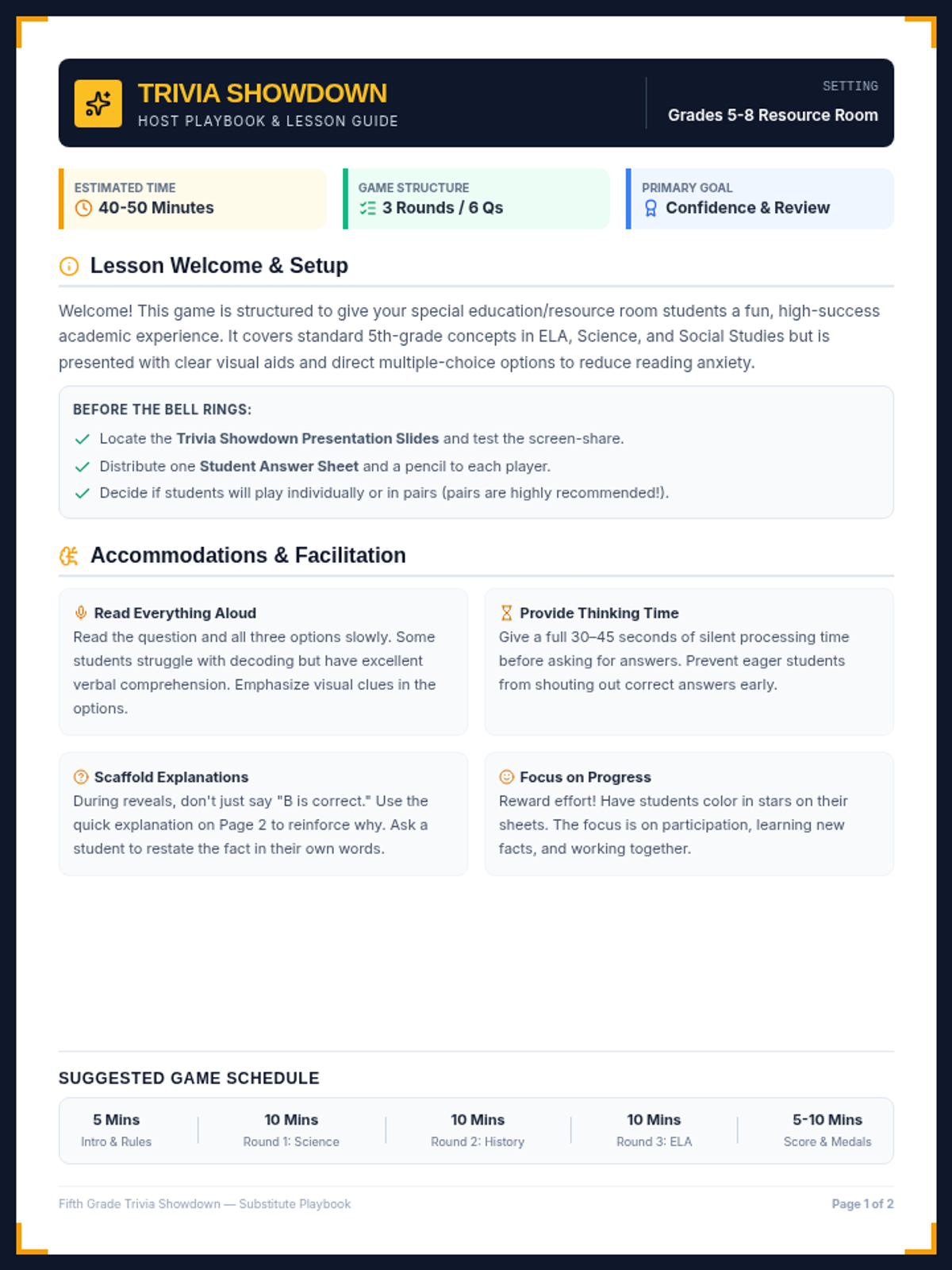
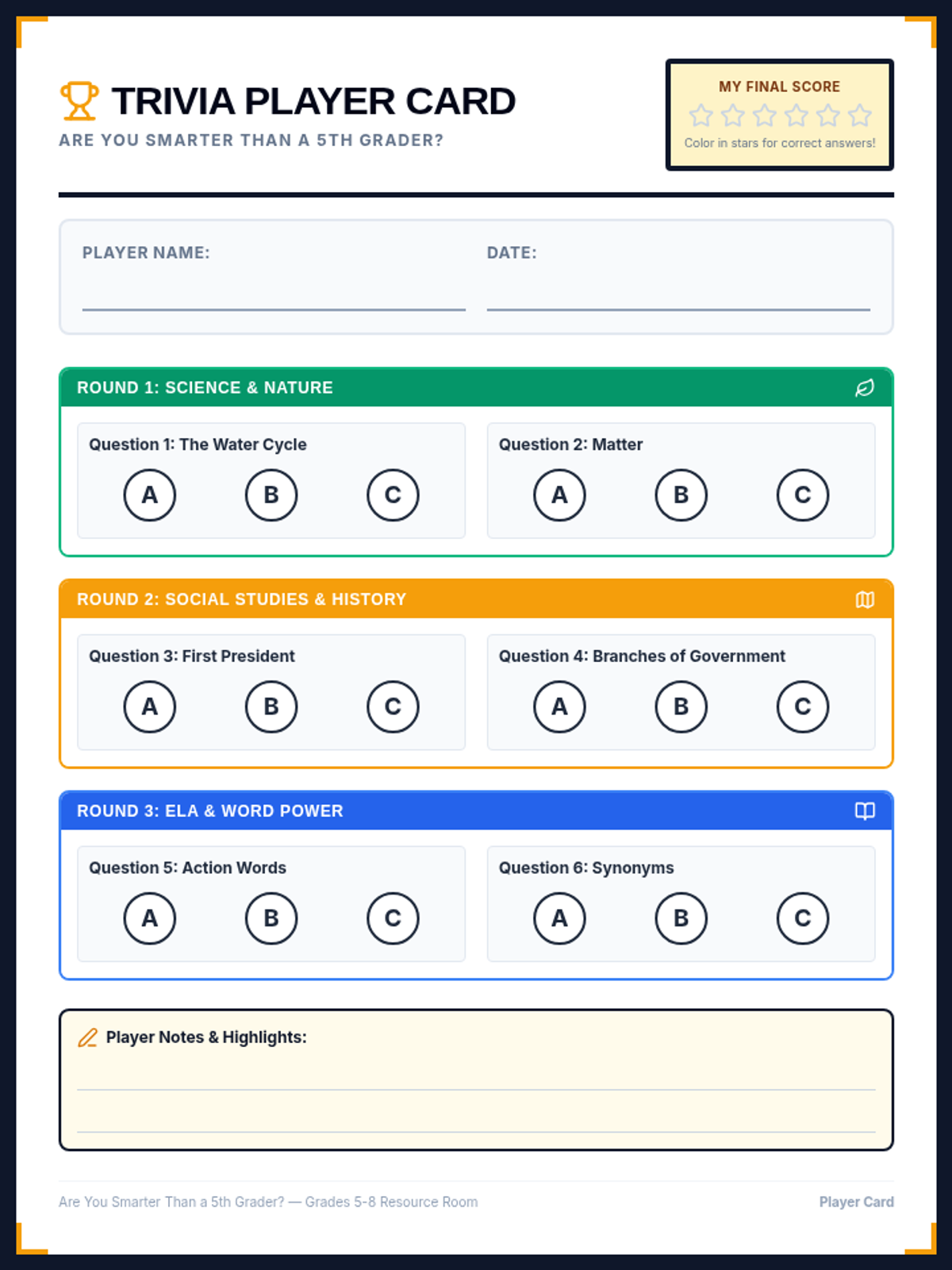
A retro game-show themed trivia lesson for resource room students in grades 5-8, featuring accessible 5th-grade level questions in Science, Social Studies, and ELA. Includes a slide presentation, printable student answer sheets, and a substitute teacher guide.
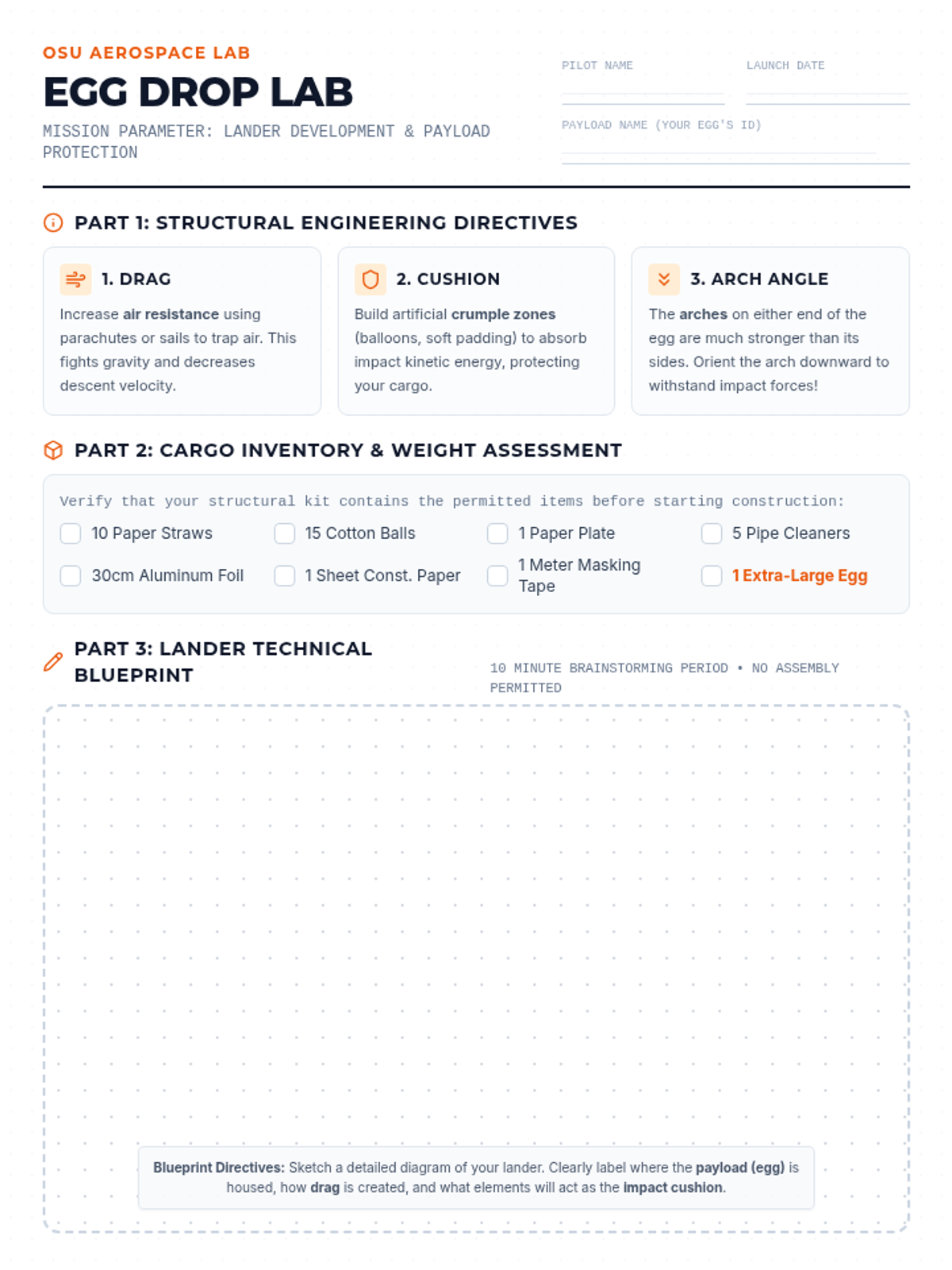
An engaging, hands-on physics and engineering lesson where students design, build, and test protective landing craft for fragile payloads (eggs), exploring forces, deceleration, and structural integrity.
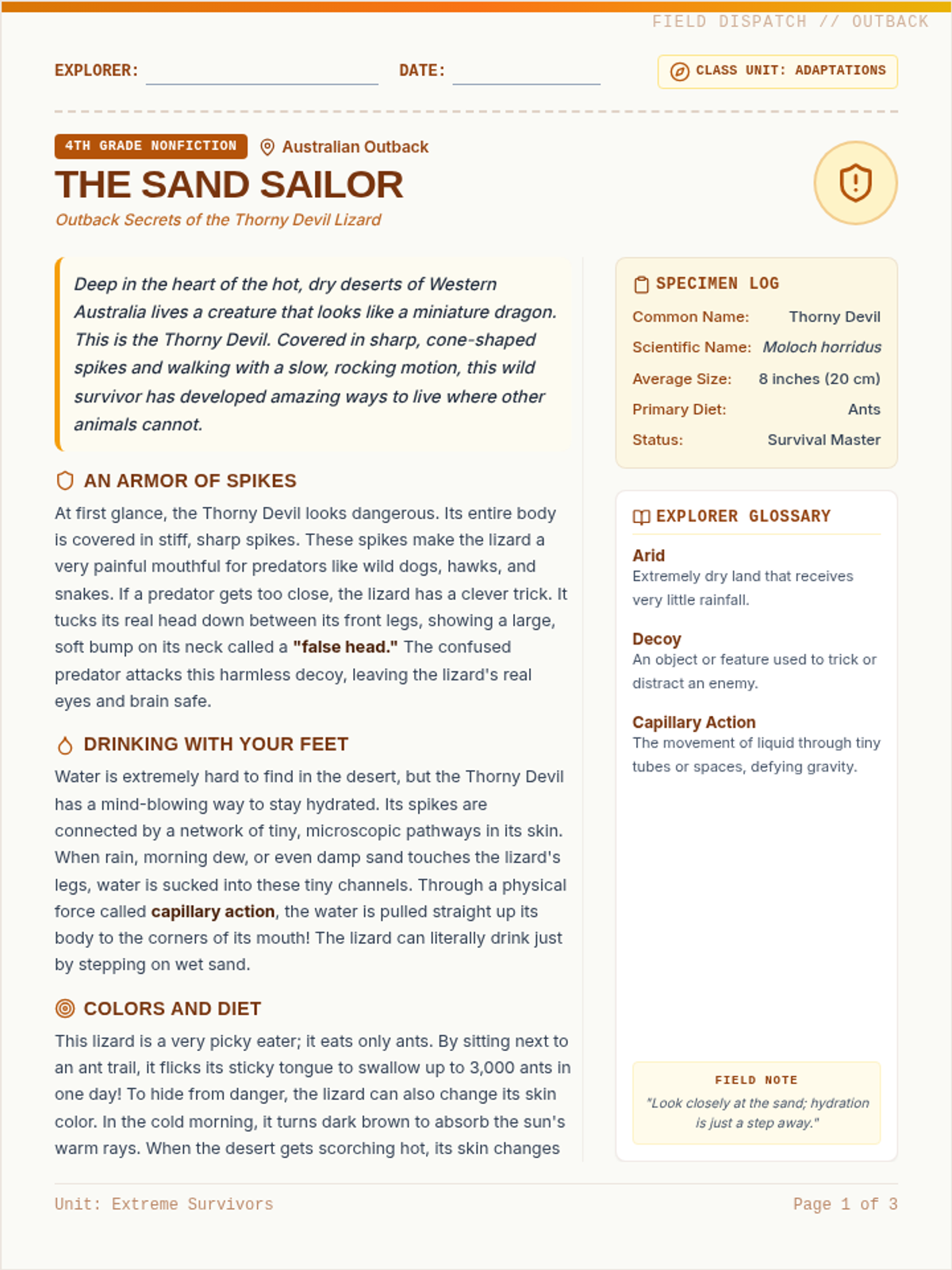
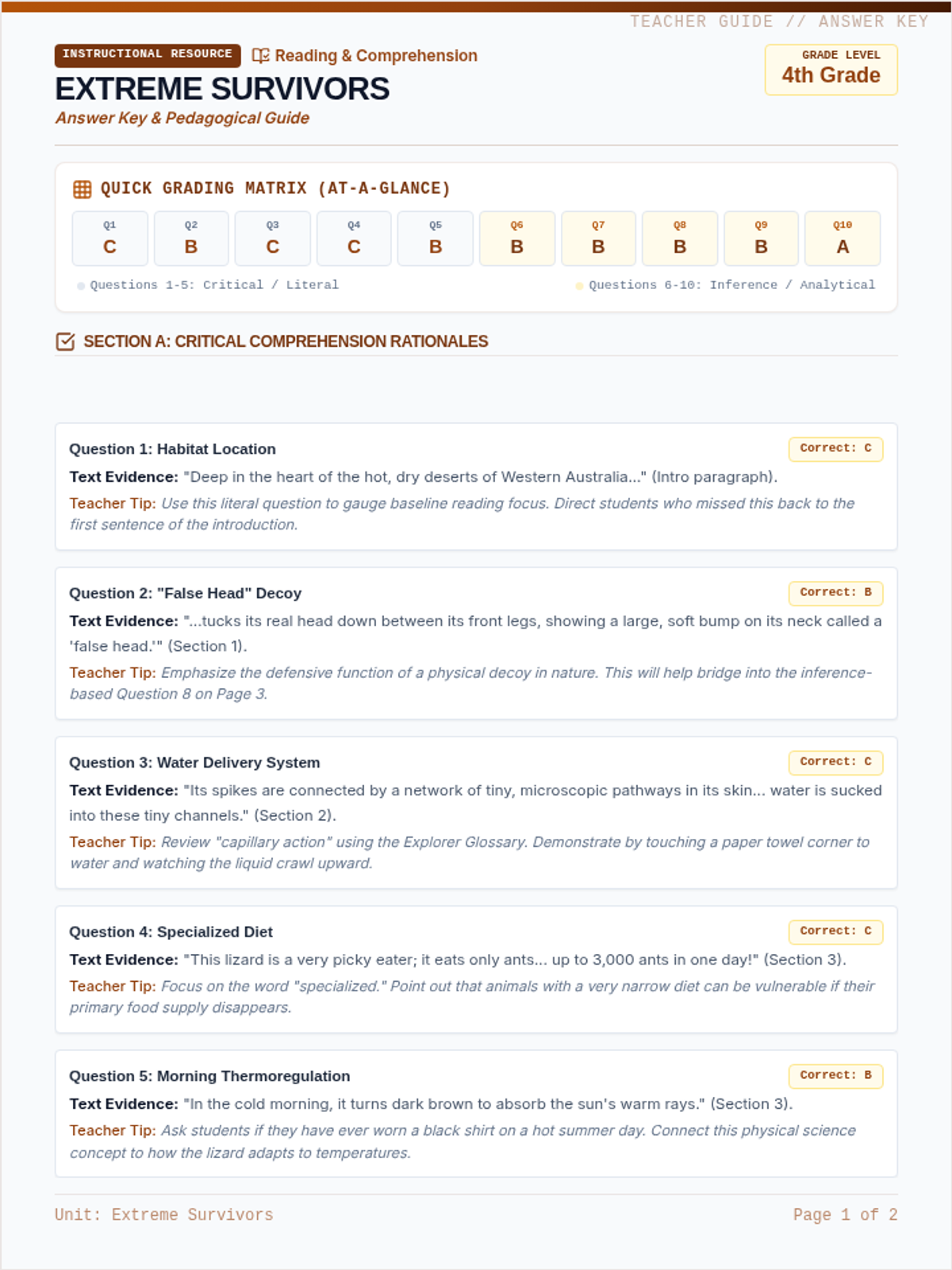
An on-grade level reading and comprehension unit focusing on how extreme desert animals, specifically the Thorny Devil, utilize highly specialized physical and behavioral adaptations to survive in the arid Australian Outback.
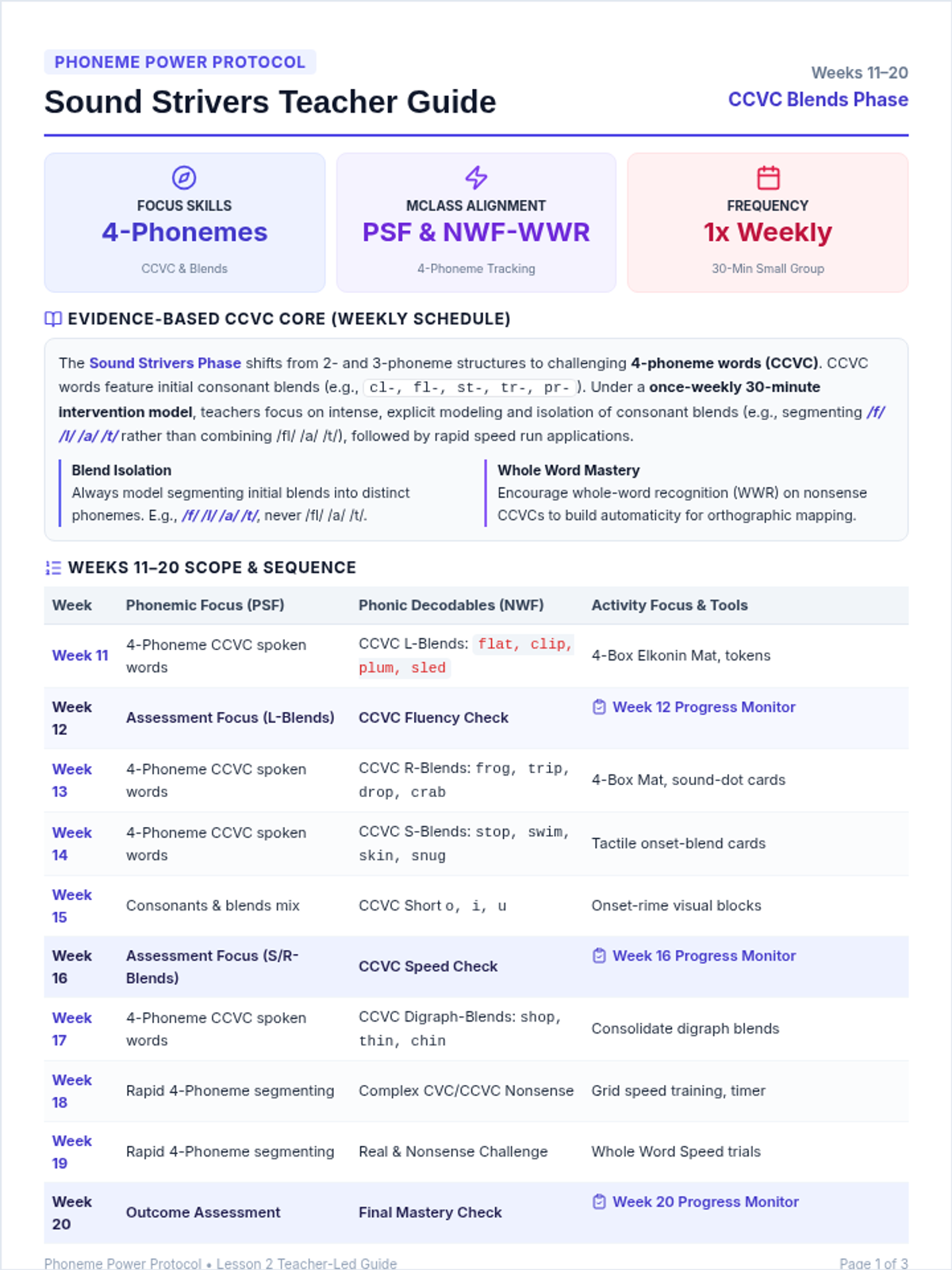
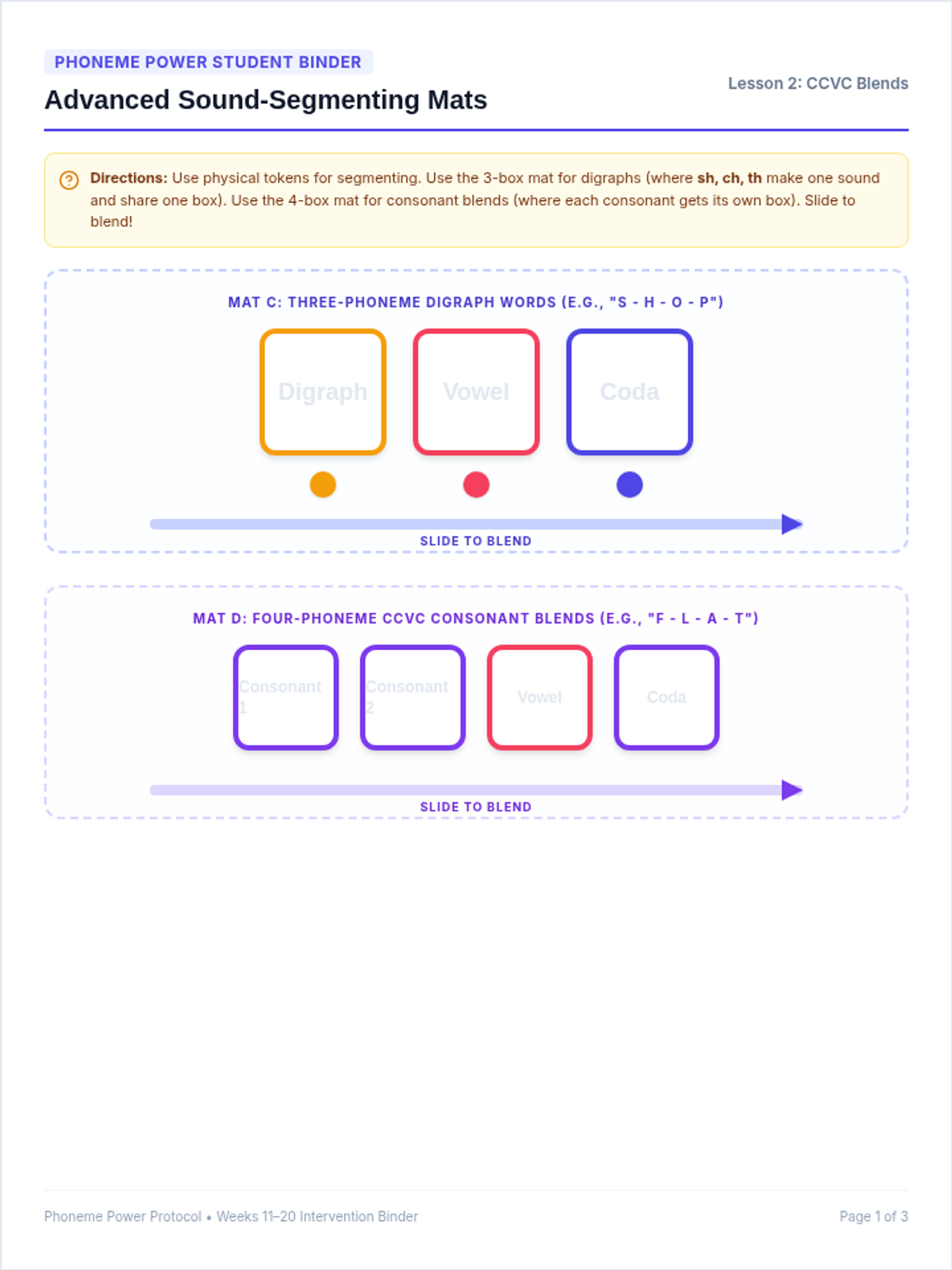
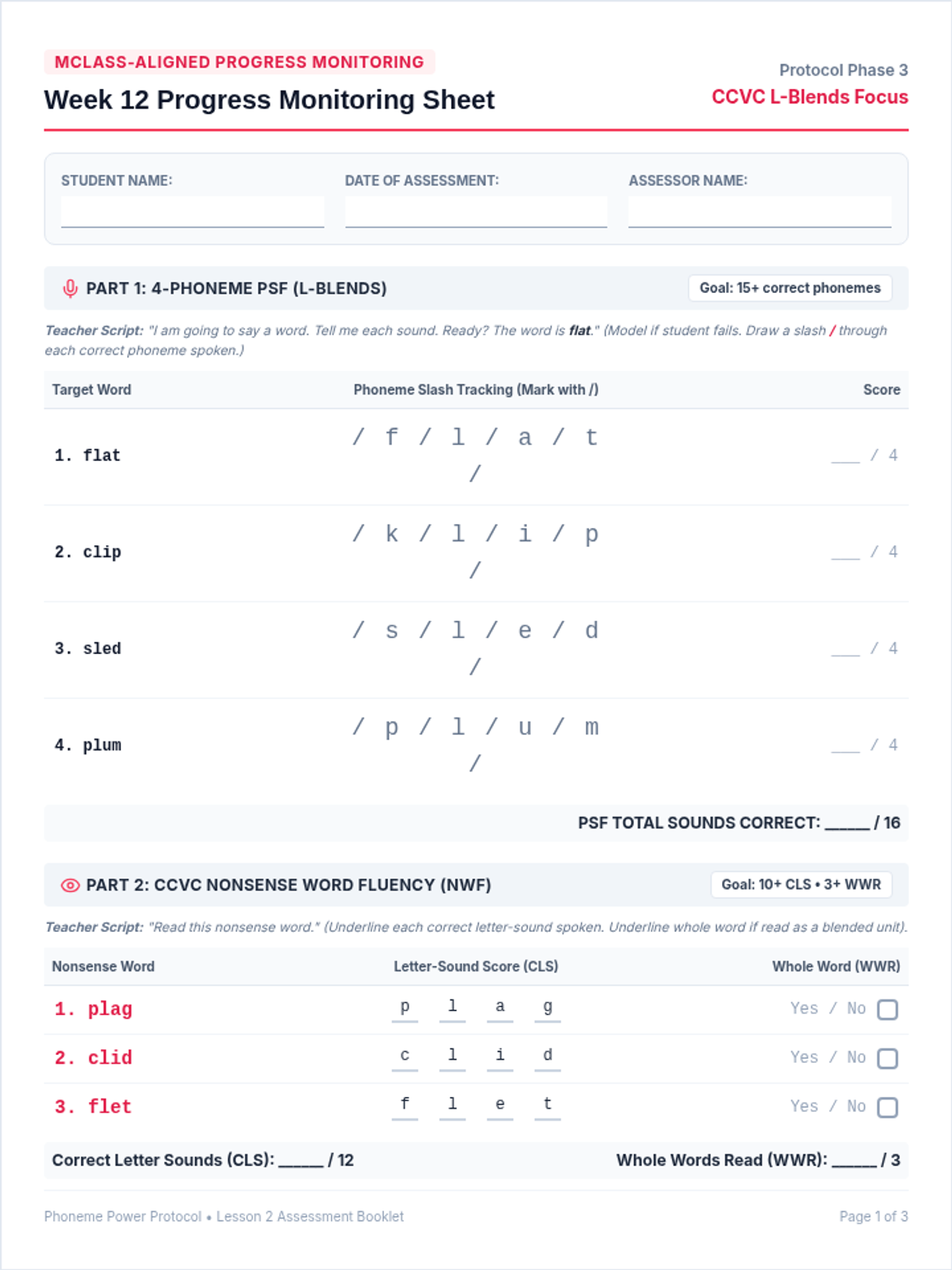
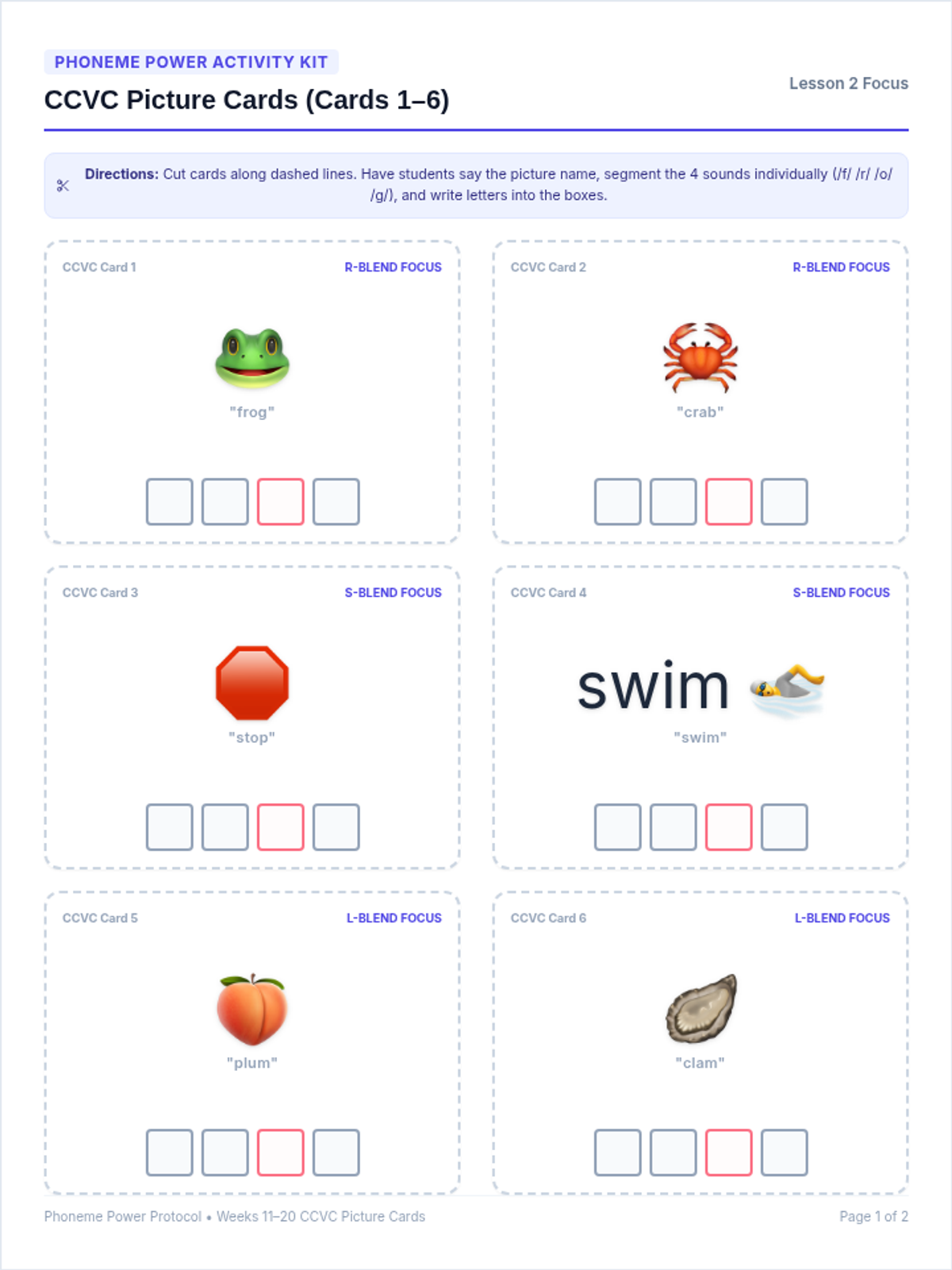
Weeks 11-20 of the Phoneme Power Protocol intervention, focusing on CCVC (consonant blends) and complex CVC words. Includes systematic small-group routines for 4-phoneme words, visual 4-box Elkonin mats, tactile onset-rime blending cards, and progress monitoring scoring sheets for Weeks 12, 16, and 20.
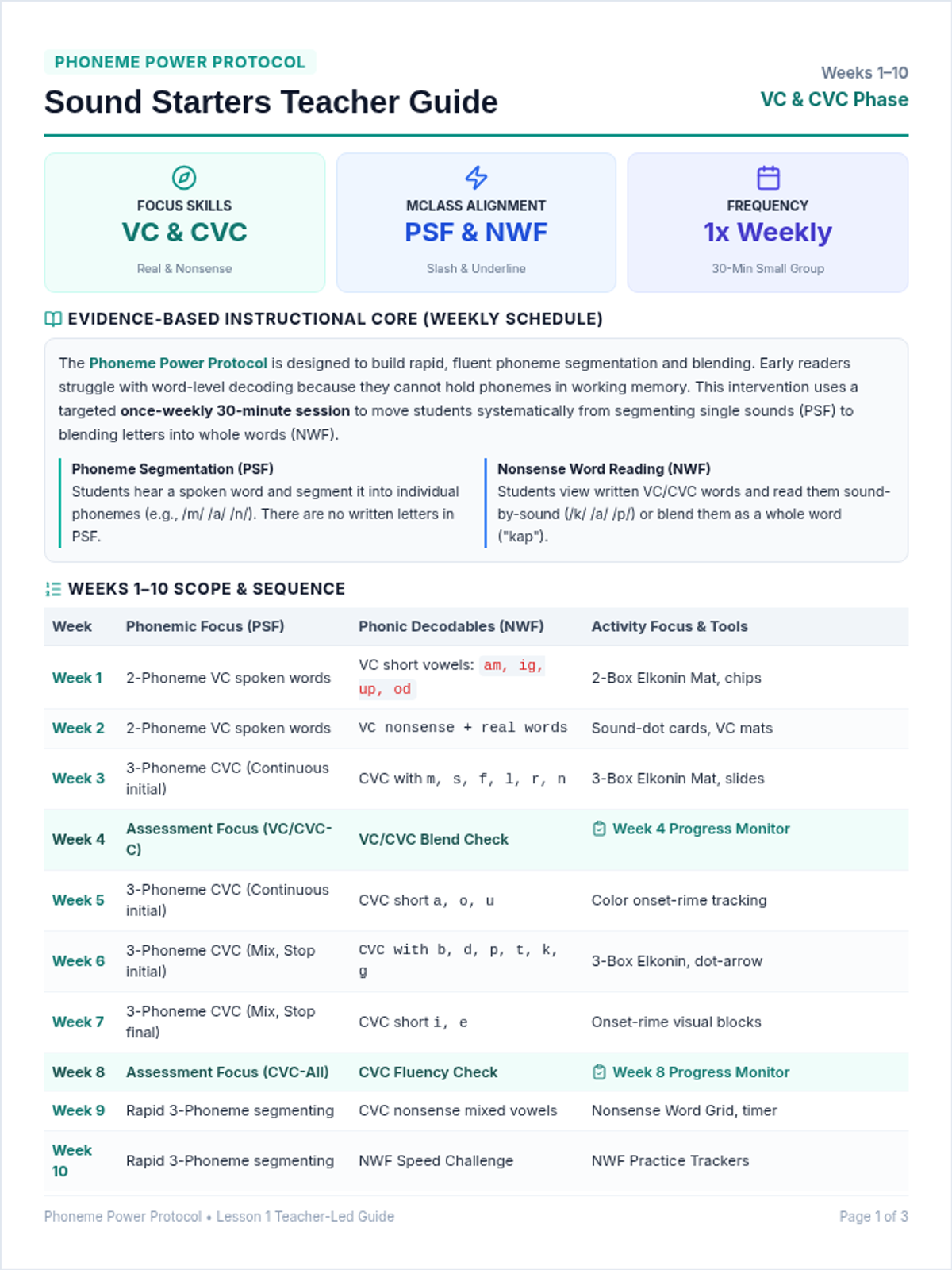
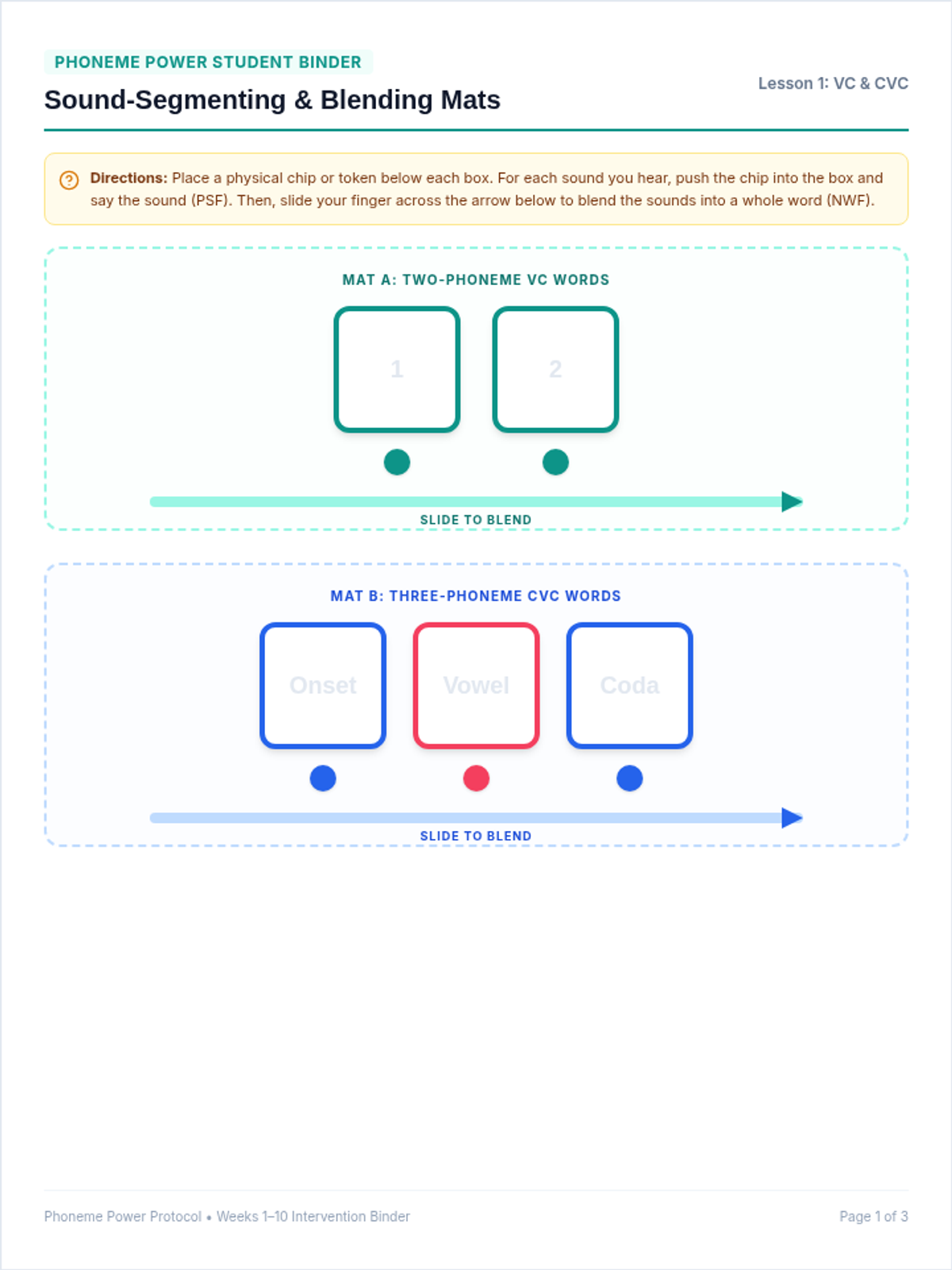
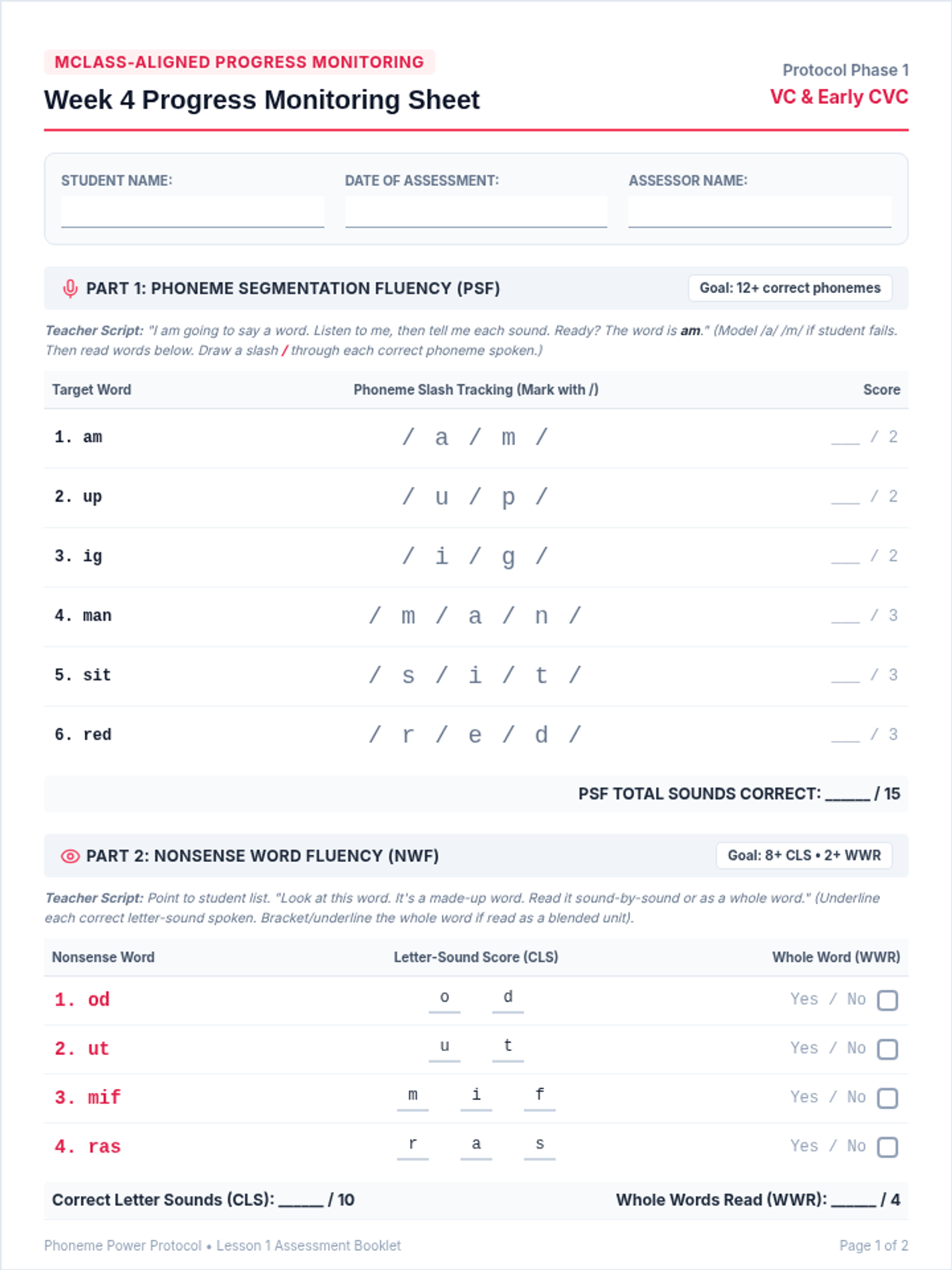
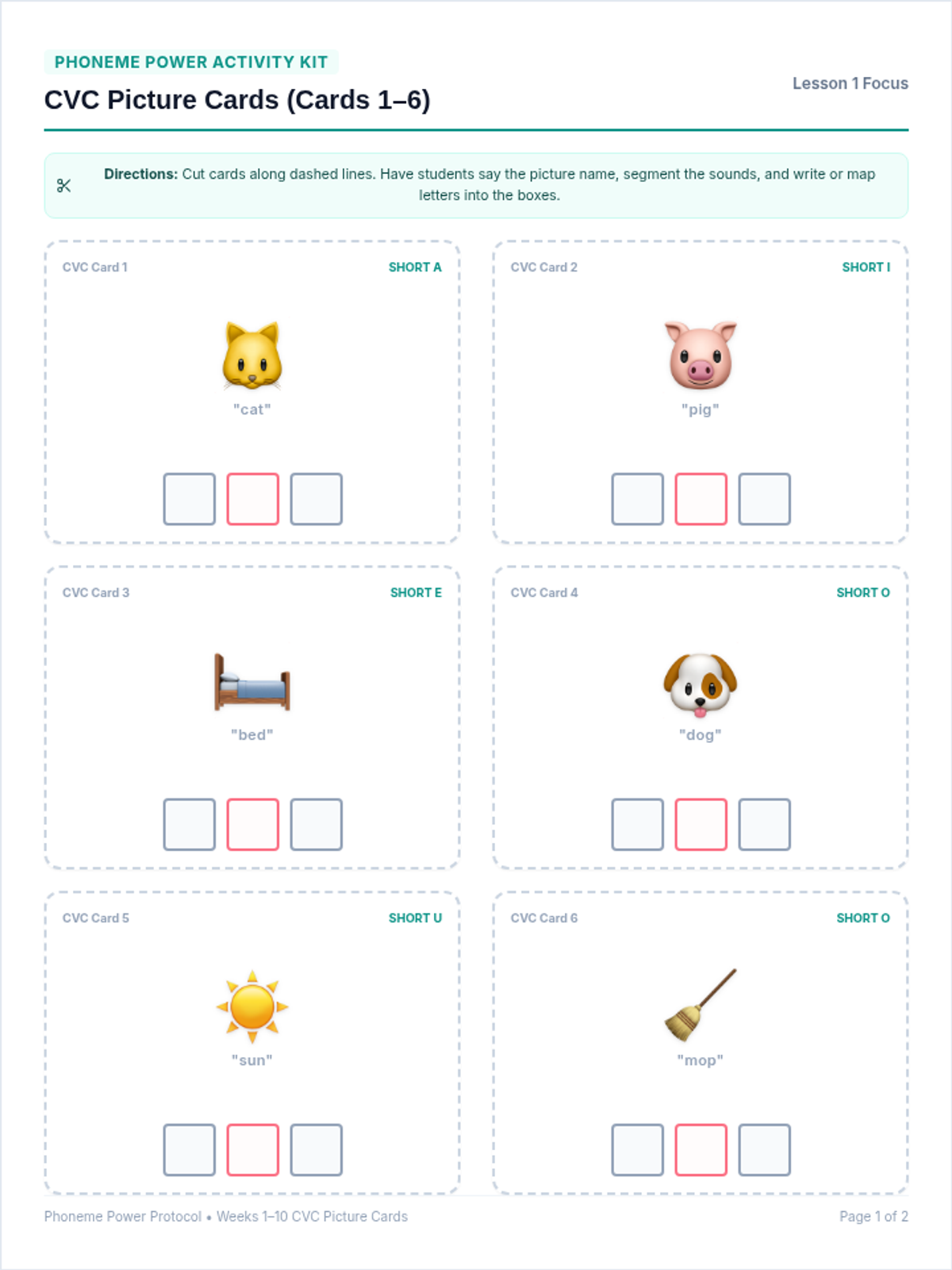
Weeks 1-10 of the Phoneme Power Protocol intervention, focusing on VC and CVC words. Includes systematic routines for segmenting individual sounds (PSF) and blending phonemes into nonsense and real words (NWF) using 2-box and 3-box Elkonin mats, color-coded word cards, and progress monitoring at Weeks 4 and 8.
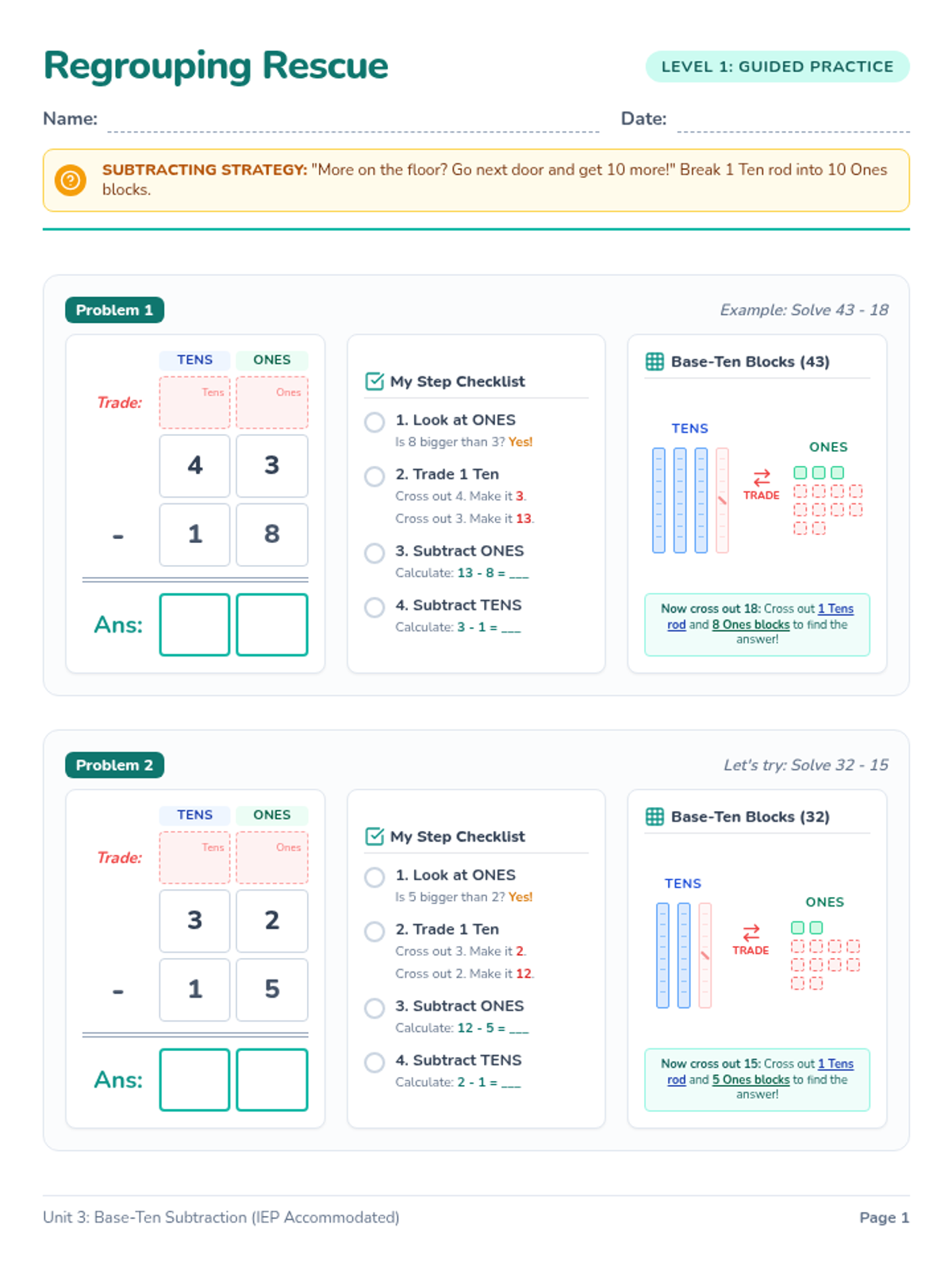
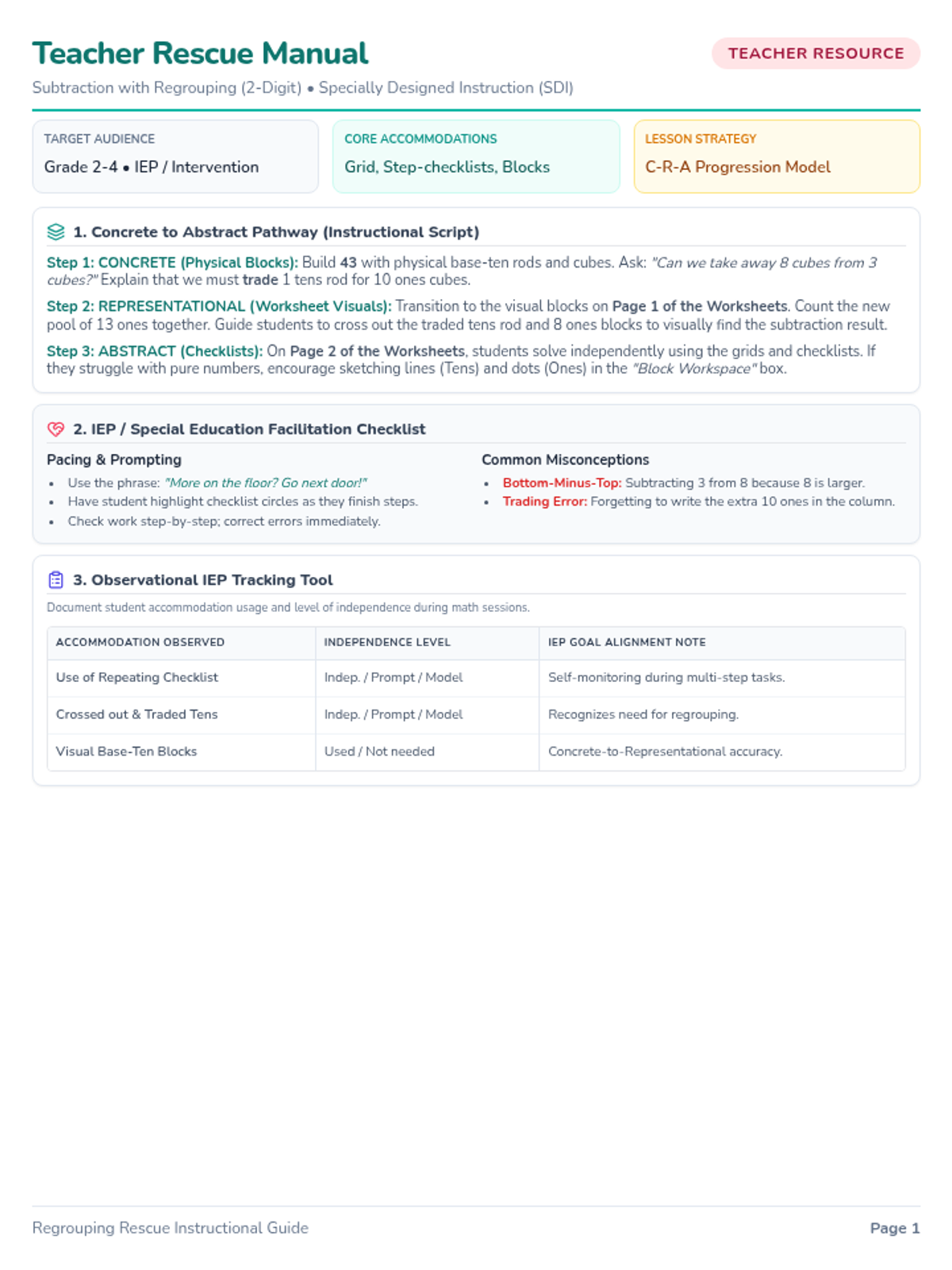
A highly-structured, research-backed lesson on subtracting two-digit numbers with regrouping, specifically designed with IEP accommodations. Includes grid-aligned practice sheets with repeating step-by-step visual checklists and built-in base-ten visual blocks to support concrete-representational-abstract transitions.
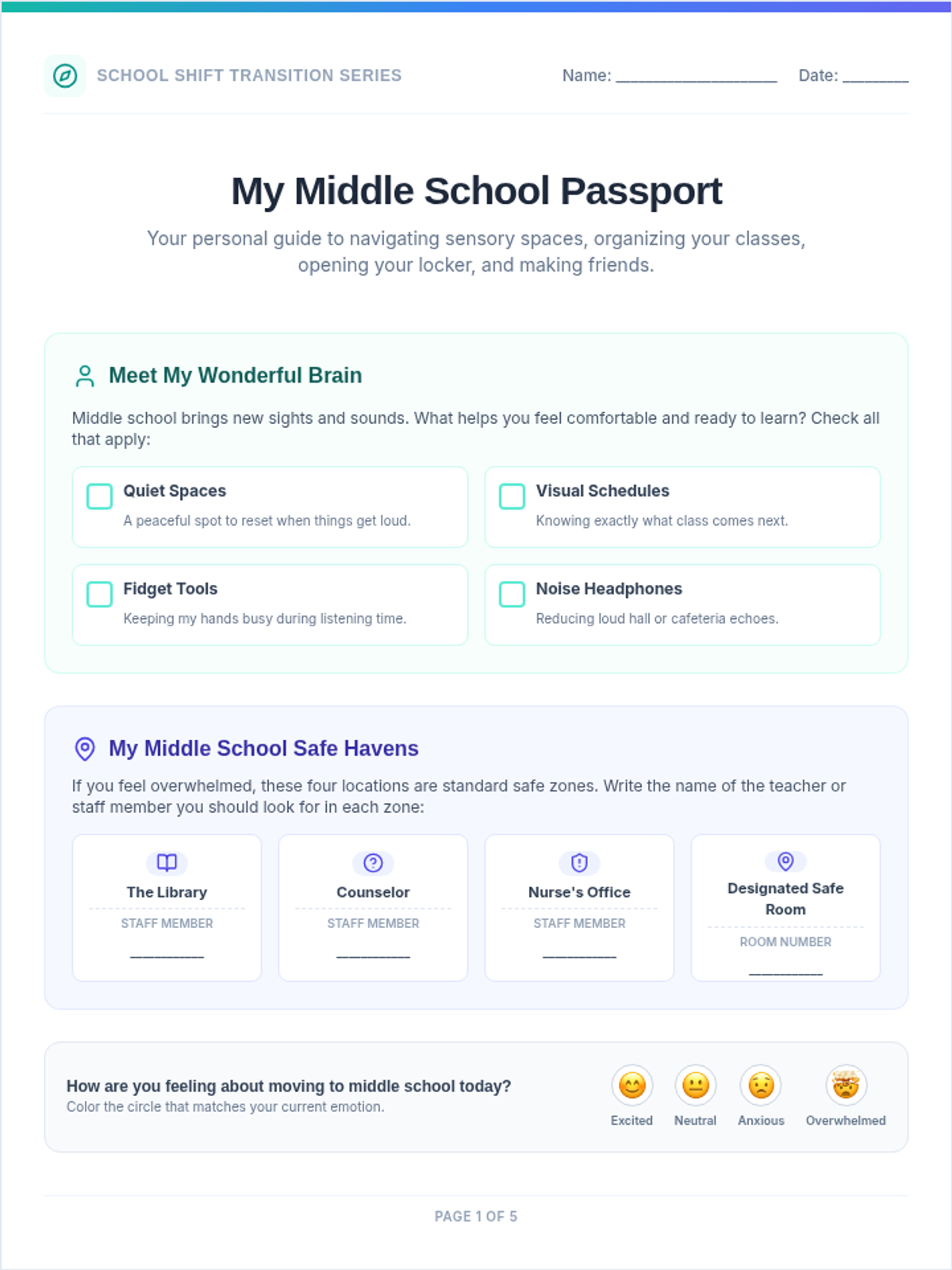
A transition lesson designed specifically for middle school students with ASD, focusing on navigating sensory changes, learning social scripts, practicing physical tasks like locker combinations, and organizing multiple classes.
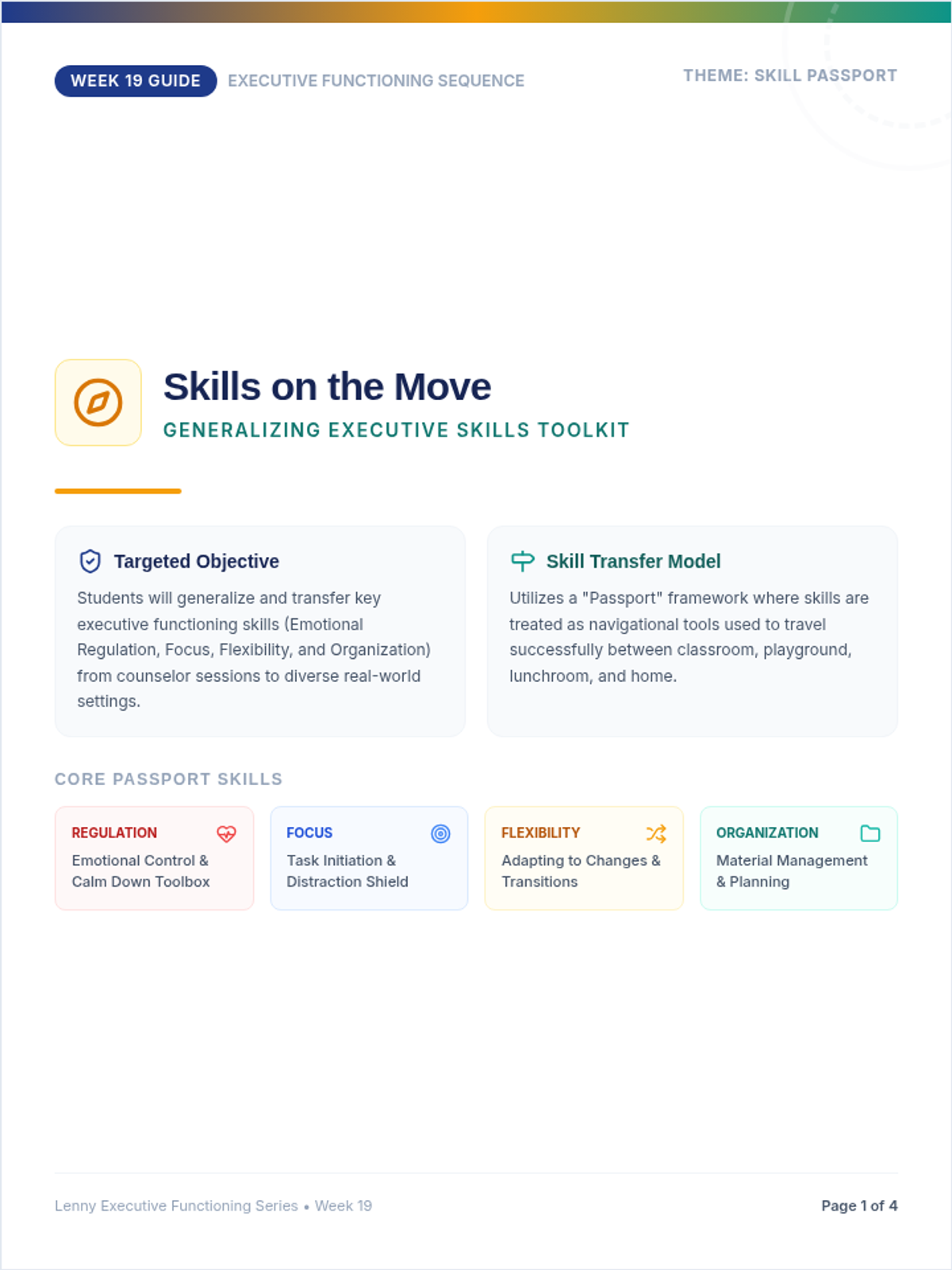
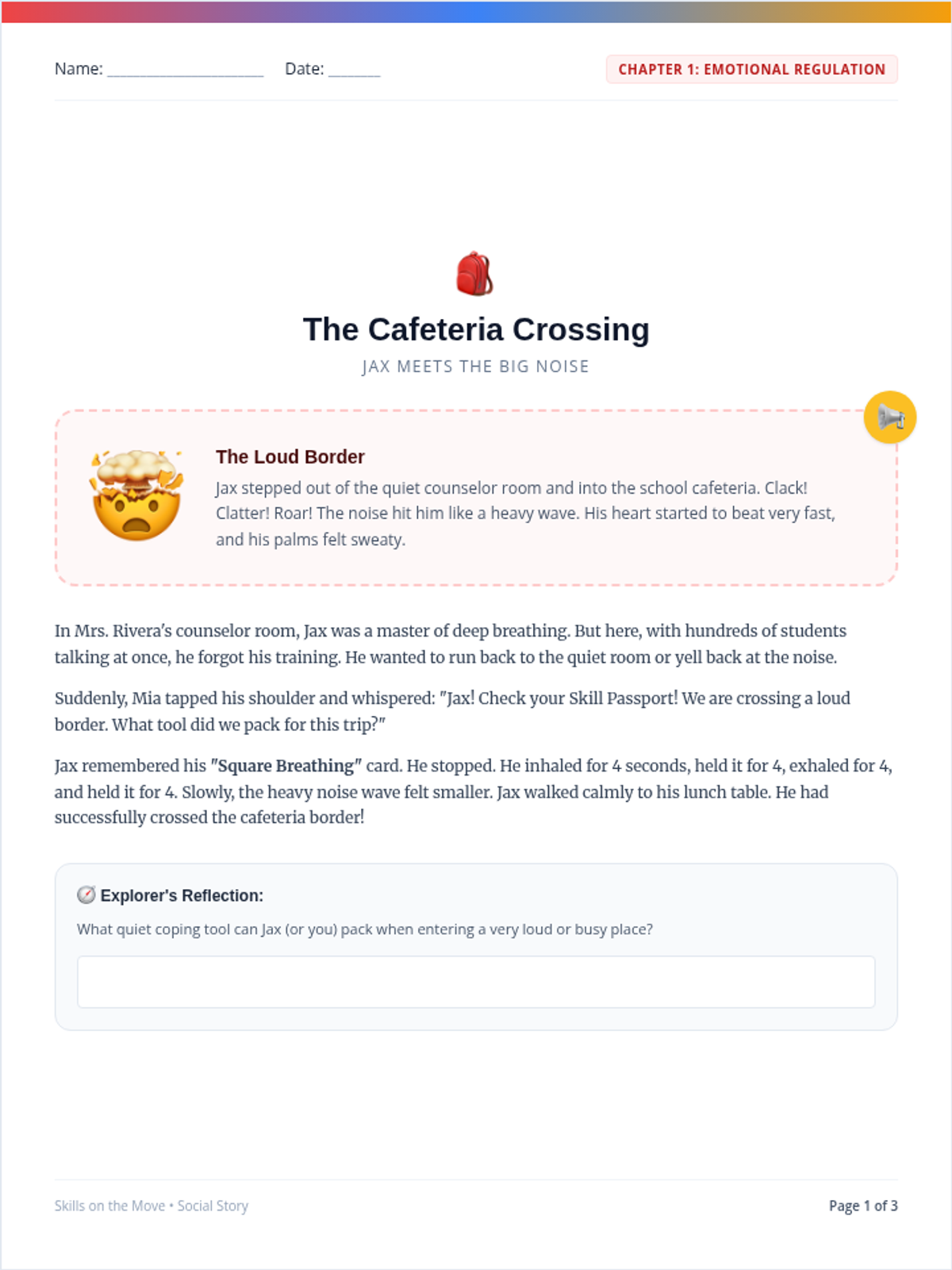
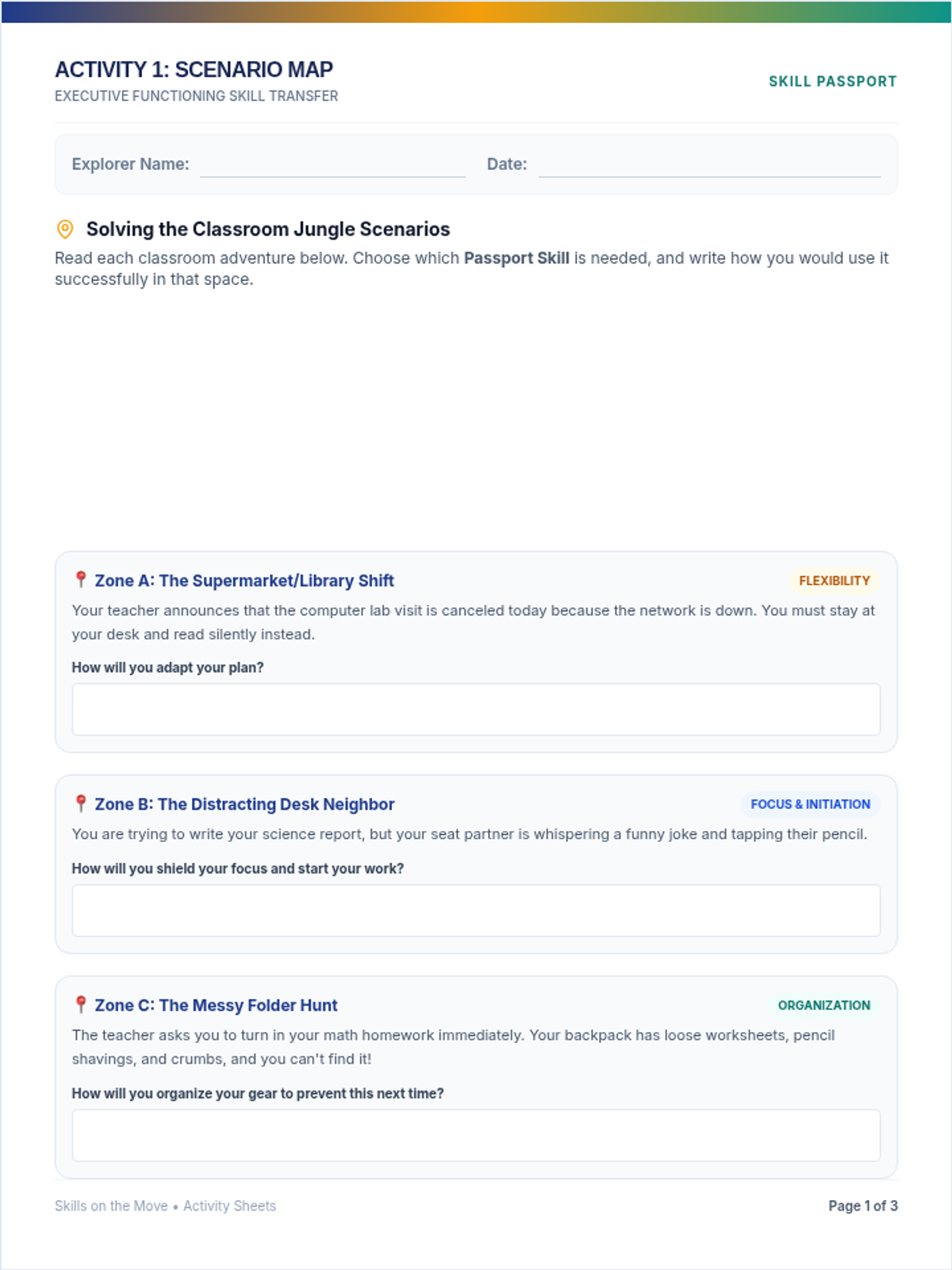
A comprehensive lesson designed to help students generalize and transfer their executive functioning skills—including emotional regulation, focus, flexibility, and organization—across various settings.
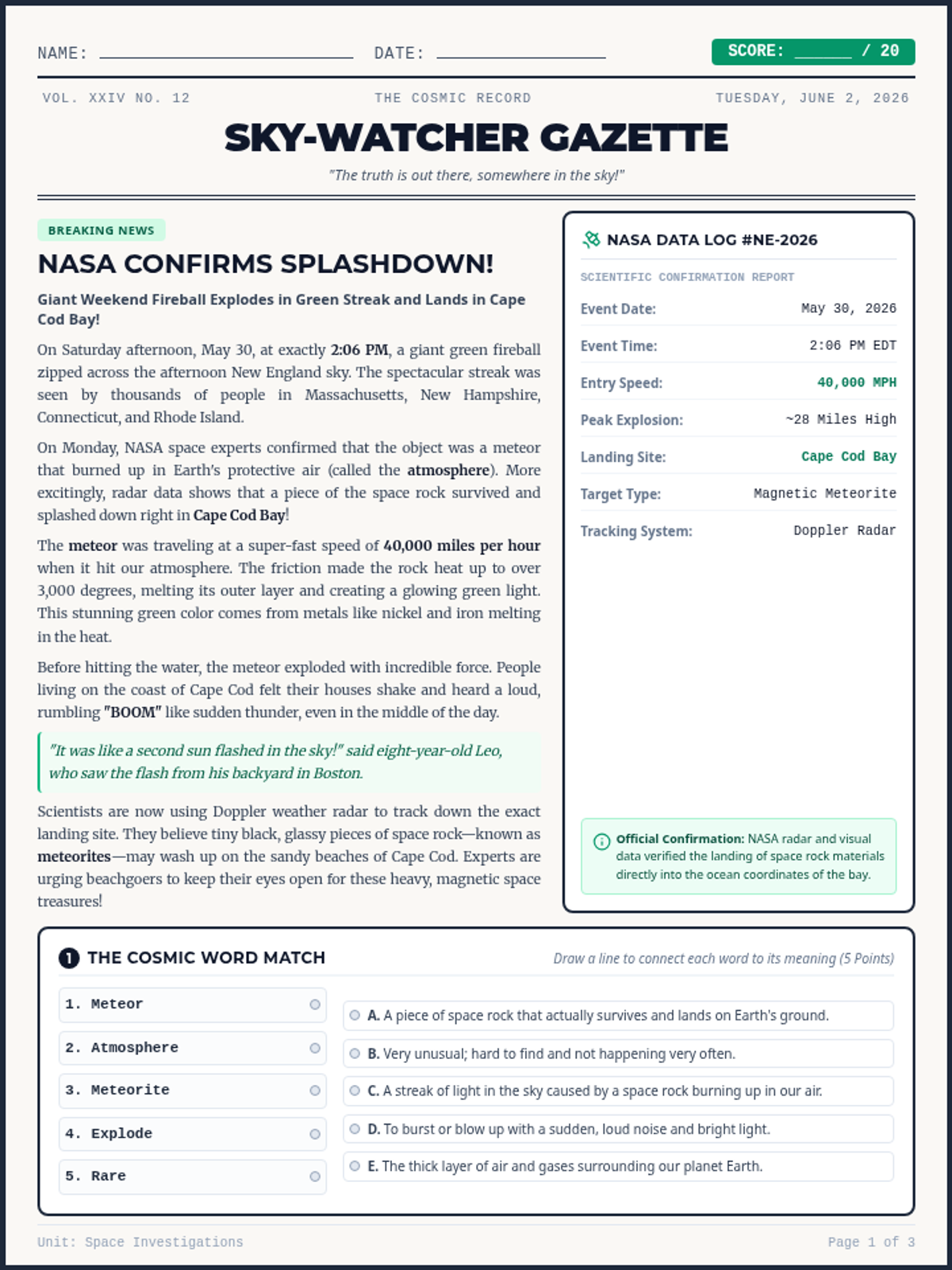
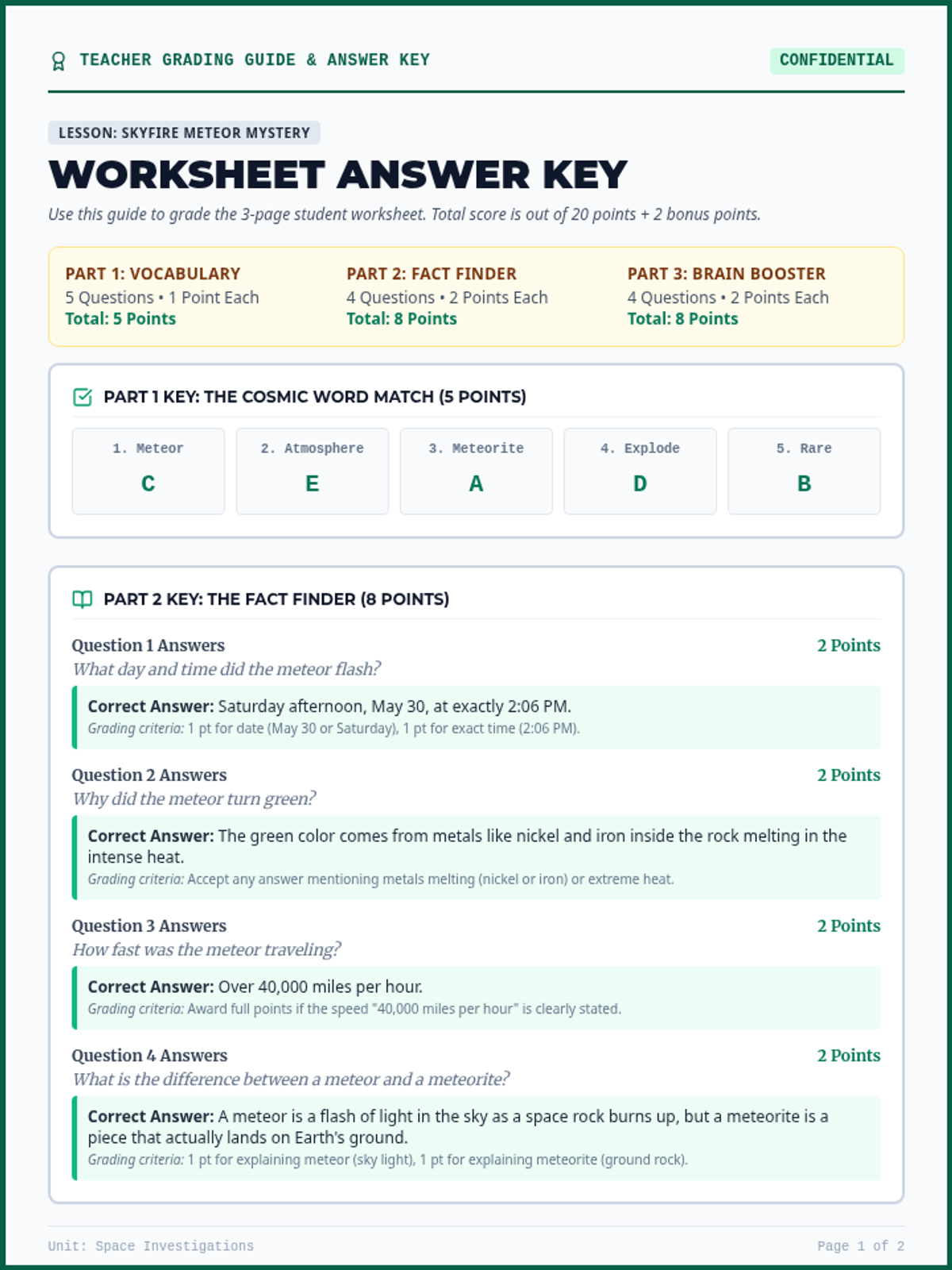
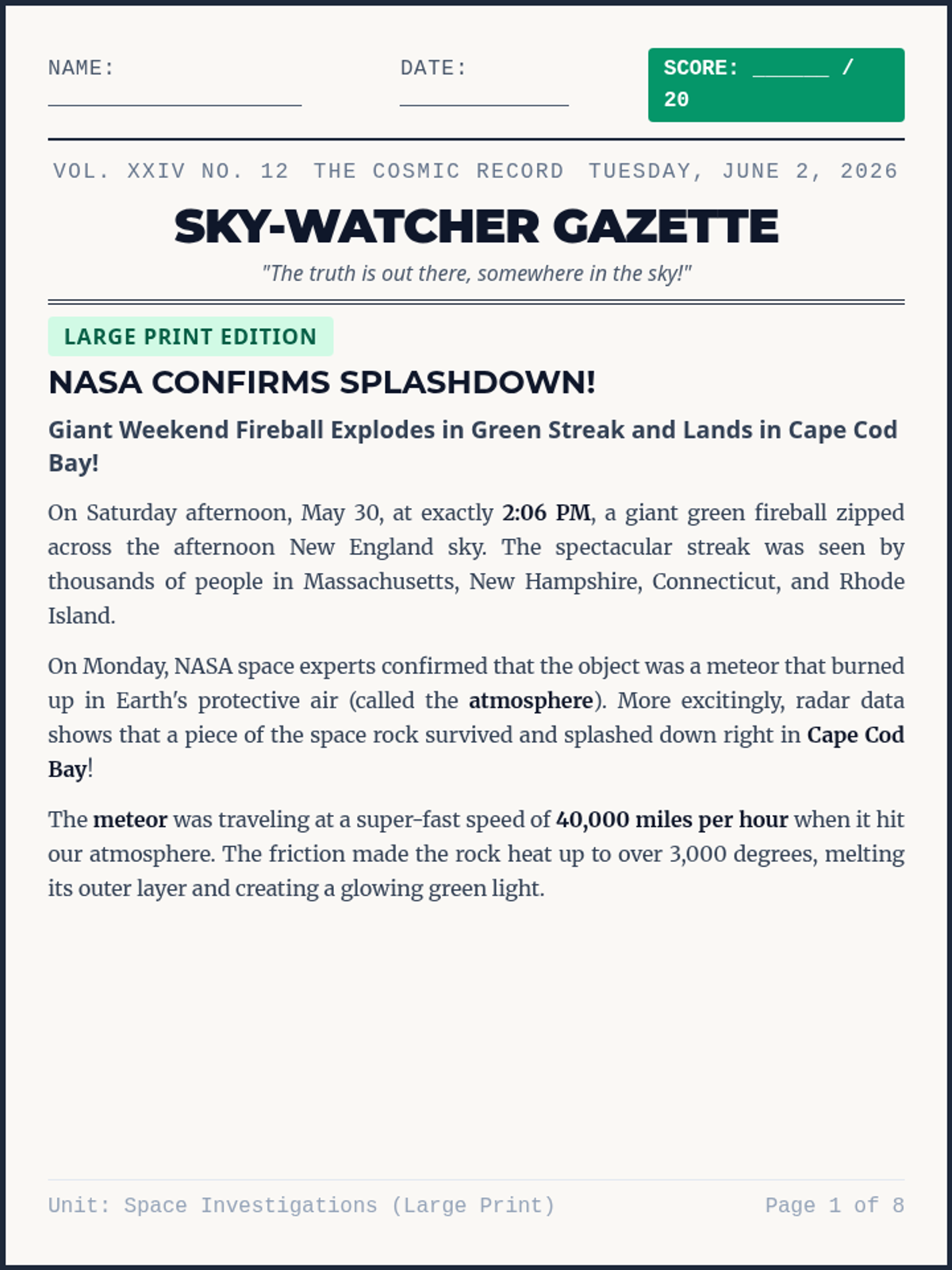
A reading comprehension lesson for 2nd and 3rd-grade students based on the spectacular meteor explosion over New England. Features engaging news-style reading, vocabulary challenges, comprehension questions, and a creative activity.
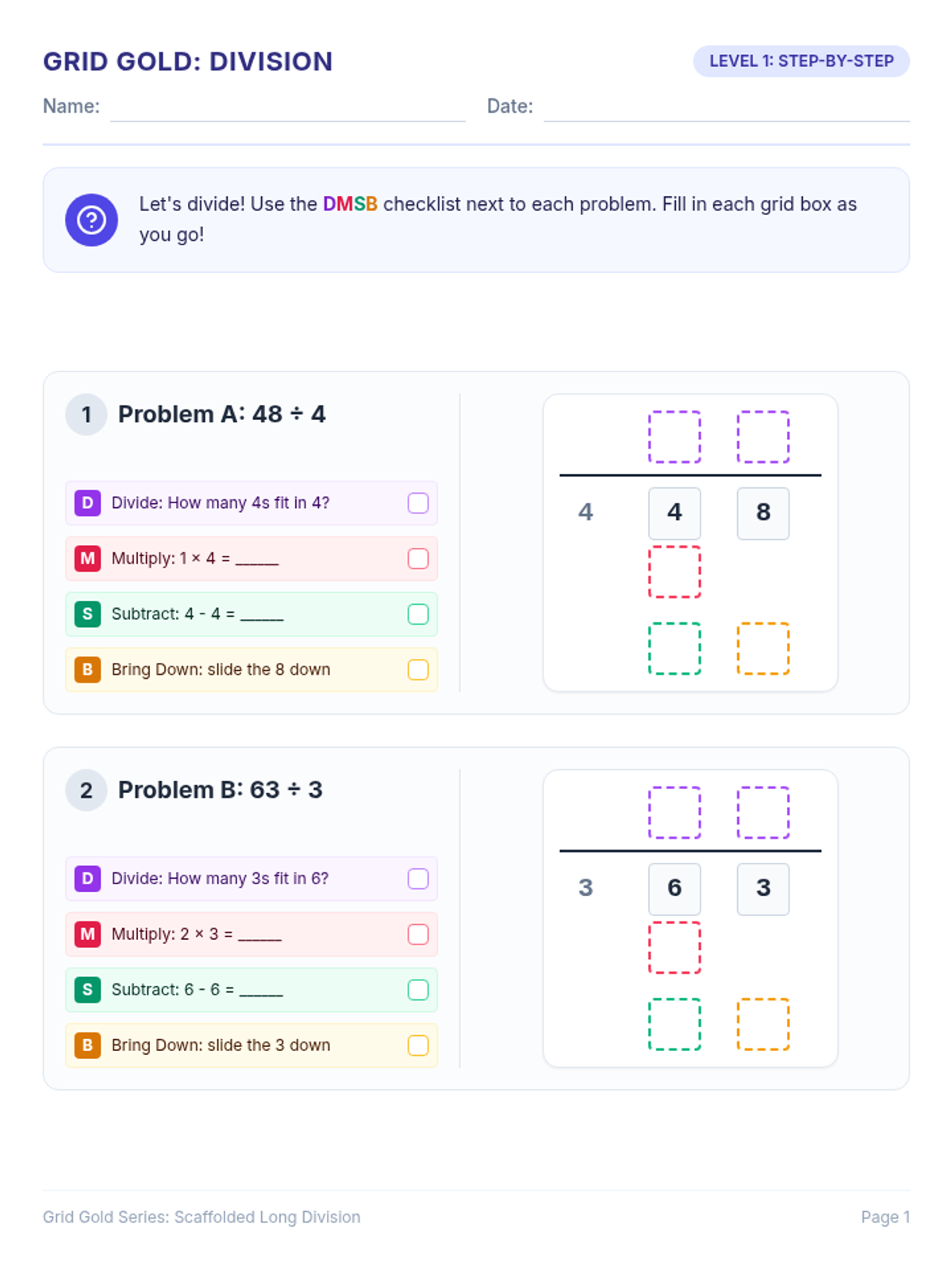
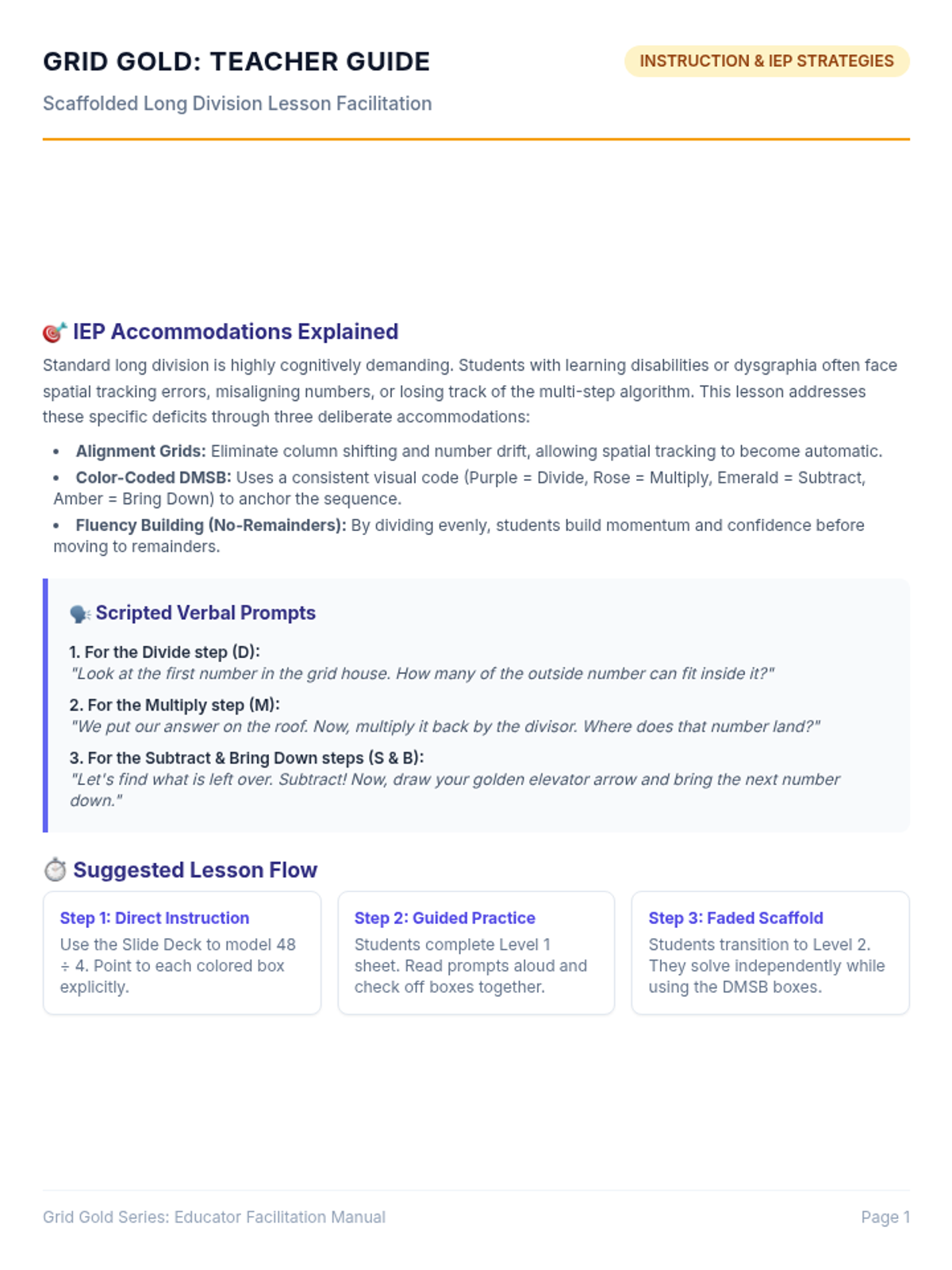
A scaffolded long division lesson tailored for IEP students, featuring color-coded steps (DMSB), grid organizers to prevent alignment errors, and no-remainder division. Includes an instructional slide deck, leveled student worksheets, and a comprehensive teacher guide.
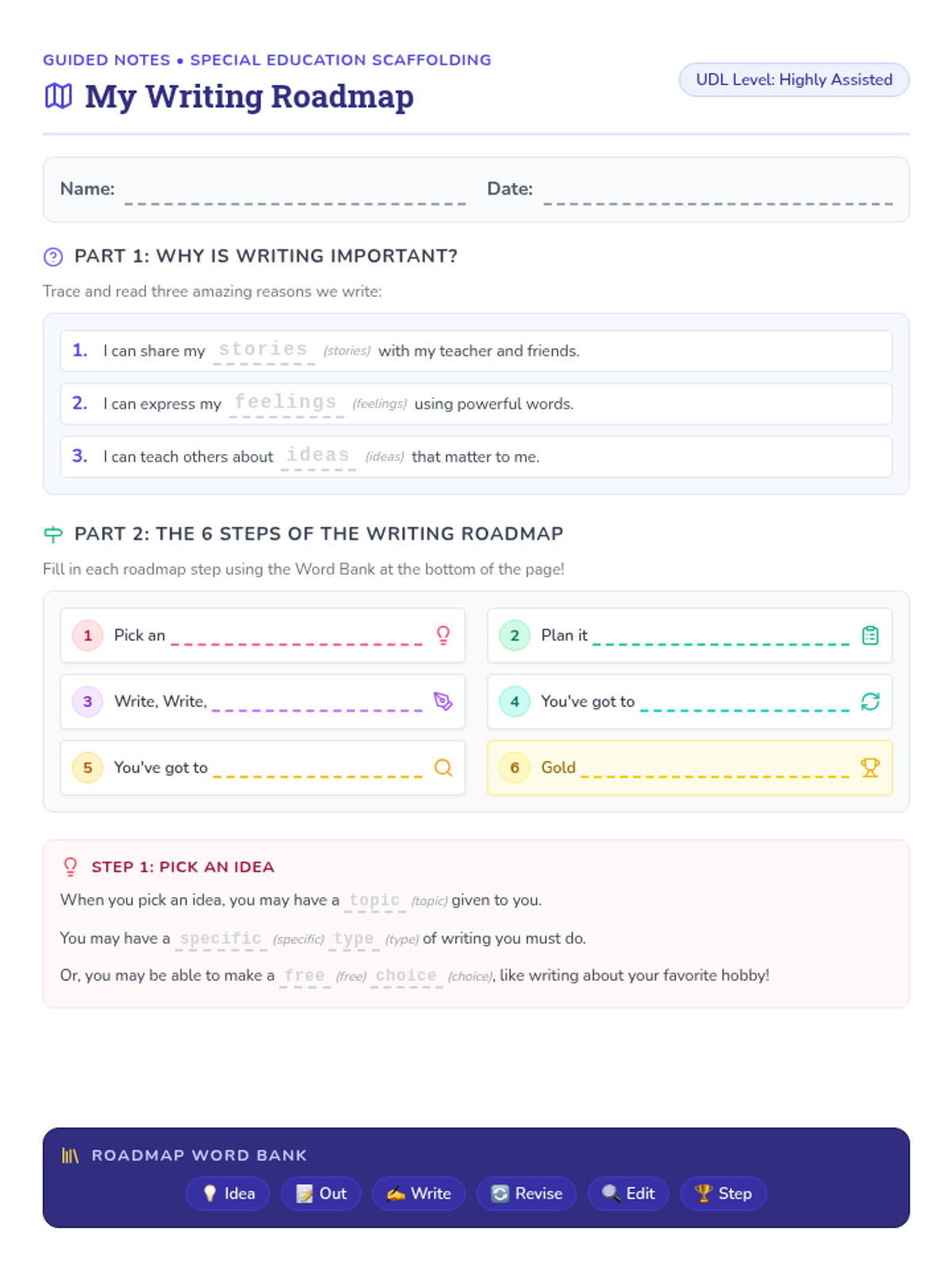
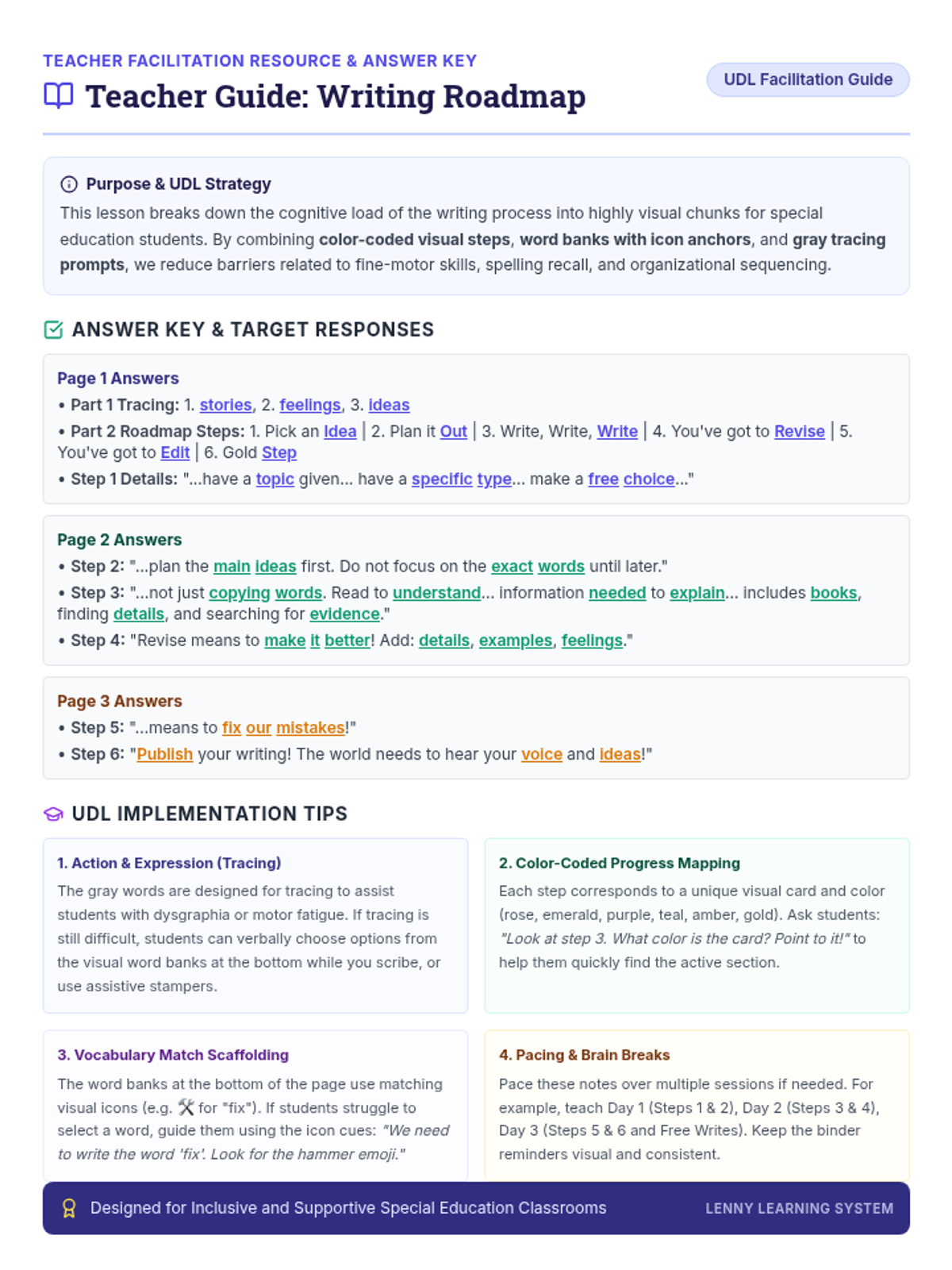
A scaffolded lesson focused on the writing process, redesigned specifically for special education students using Universal Design for Learning (UDL) principles, featuring sentence frames, visual word banks, and tracing support.
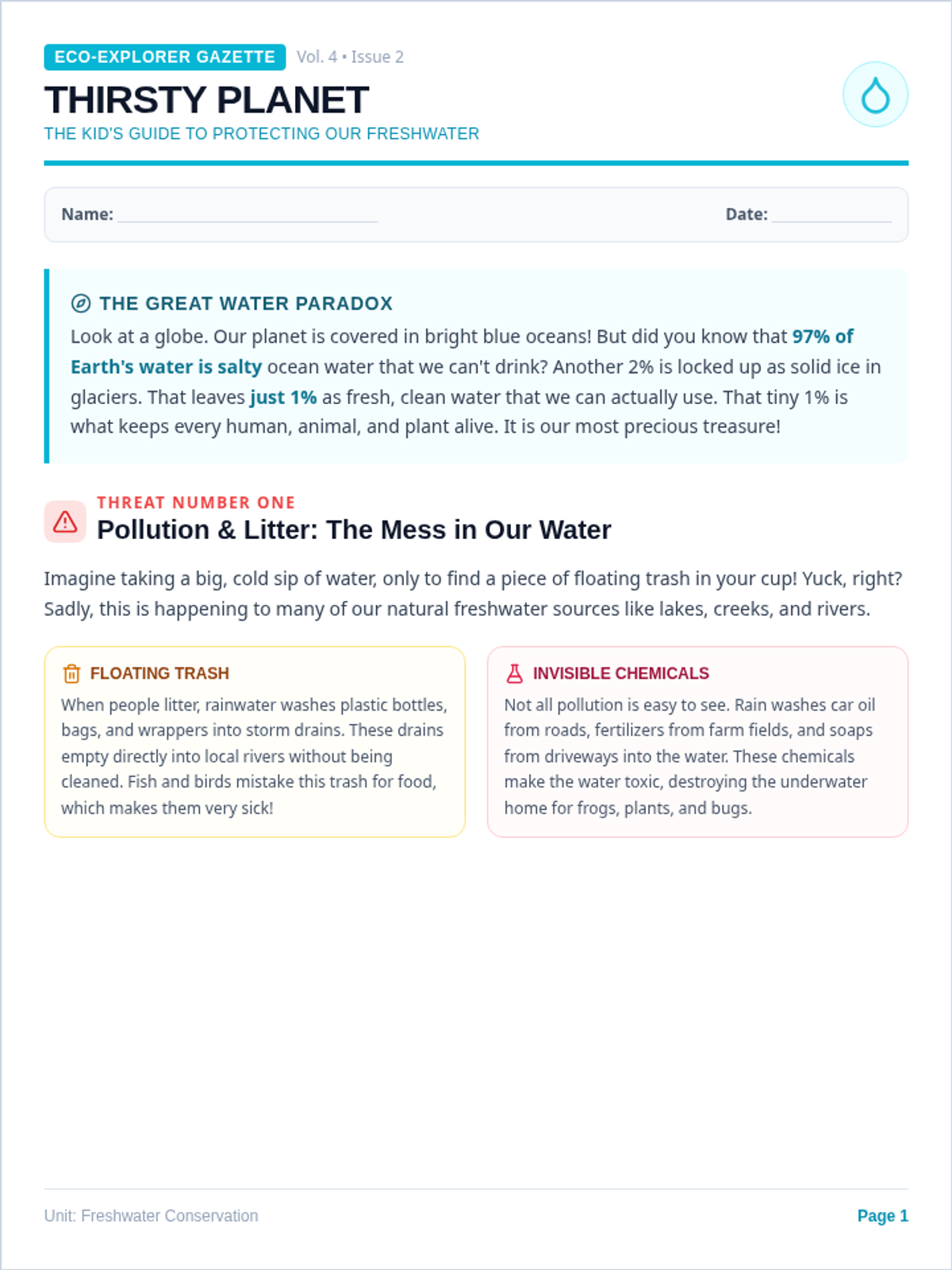
A lesson focused on understanding the primary threats to our freshwater supply, featuring an engaging, student-friendly explorer article on pollution, home water waste, droughts, and growing demand.
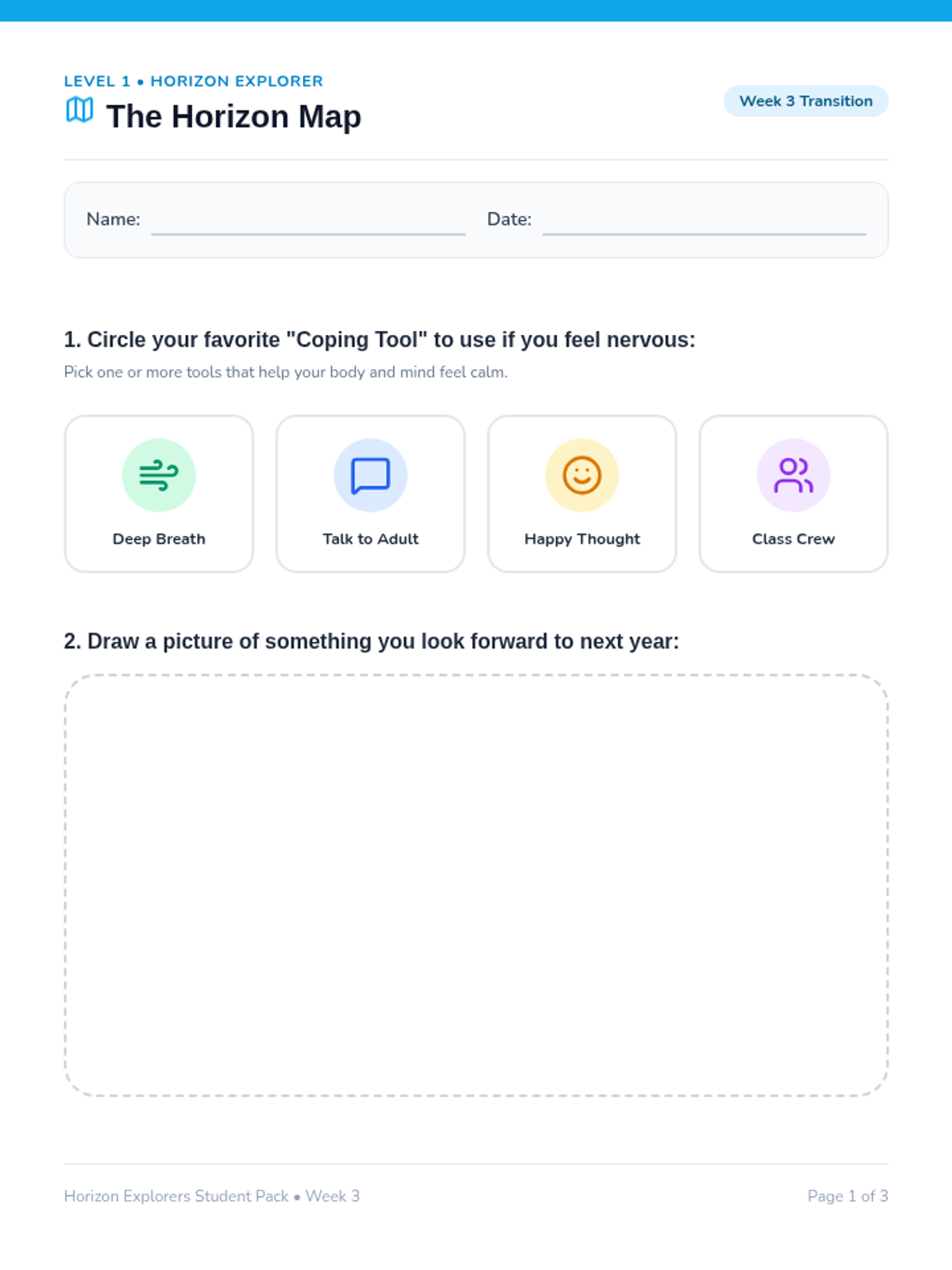
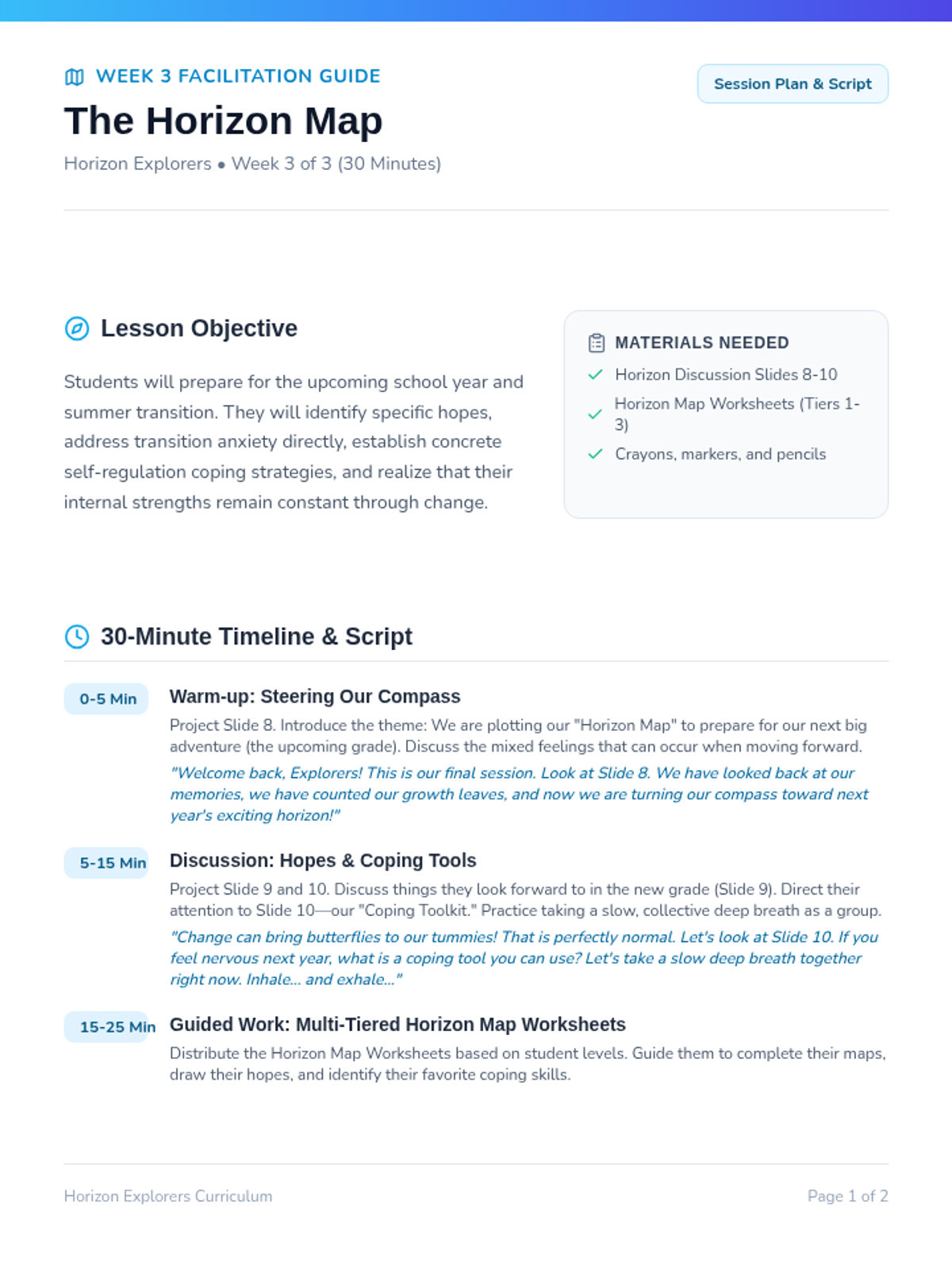
Week 3 prepares students for the upcoming school year, addressing transition anxiety directly and helping them map out coping strategies and future goals.
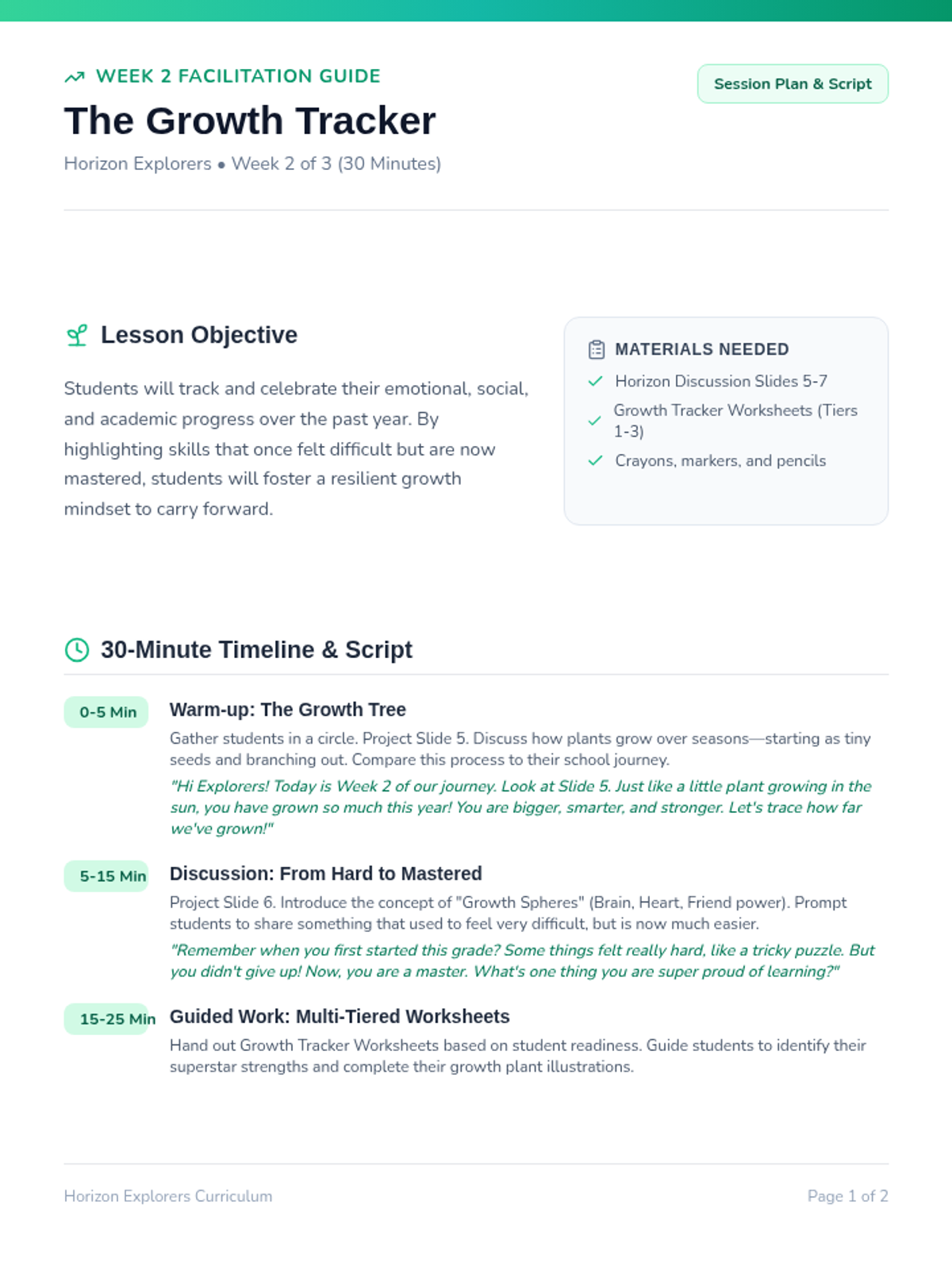
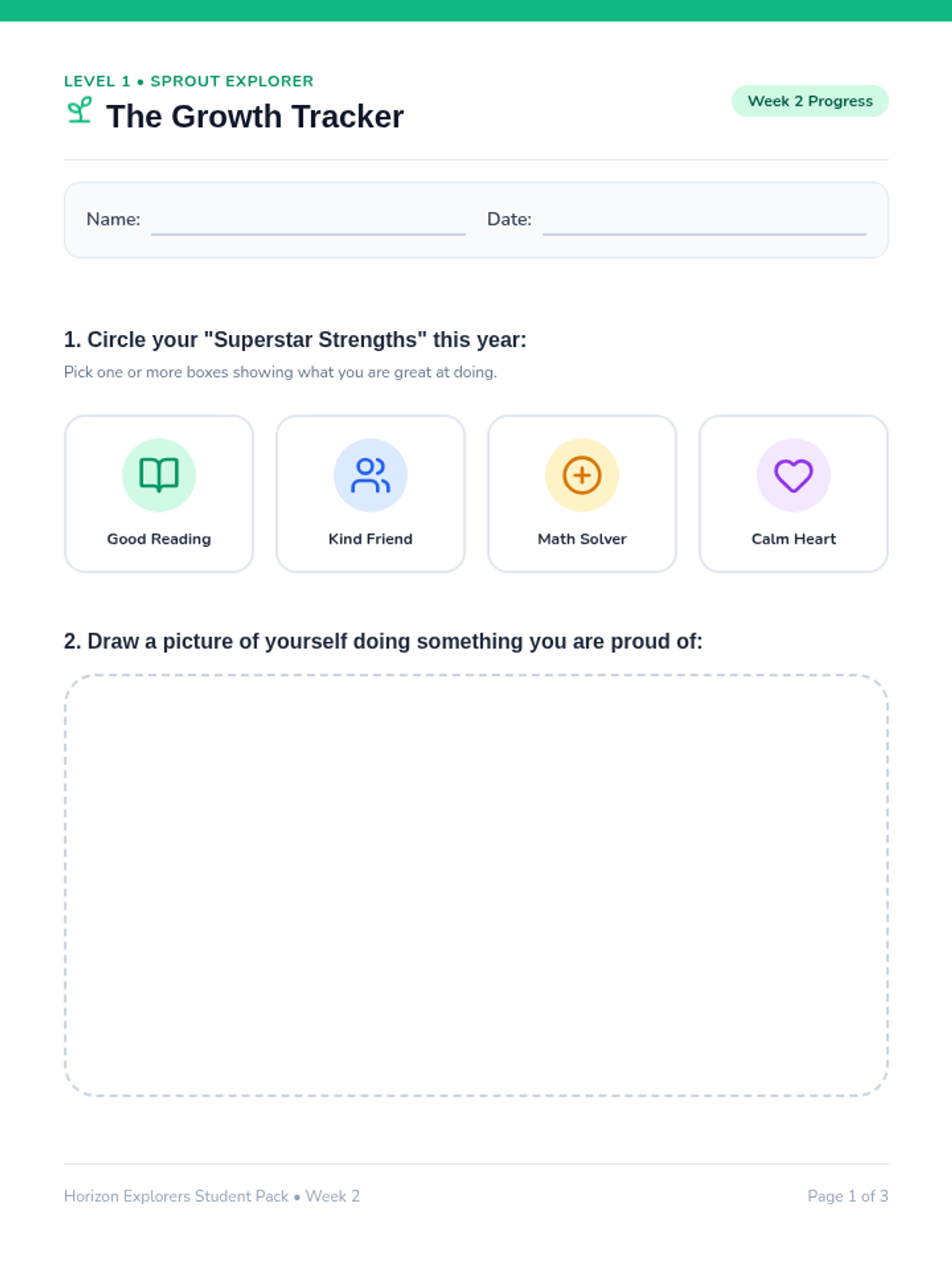
Week 2 focuses on celebrating personal progress, identifying new skills mastered, and tracking how each student has grown emotionally, socially, and academically.
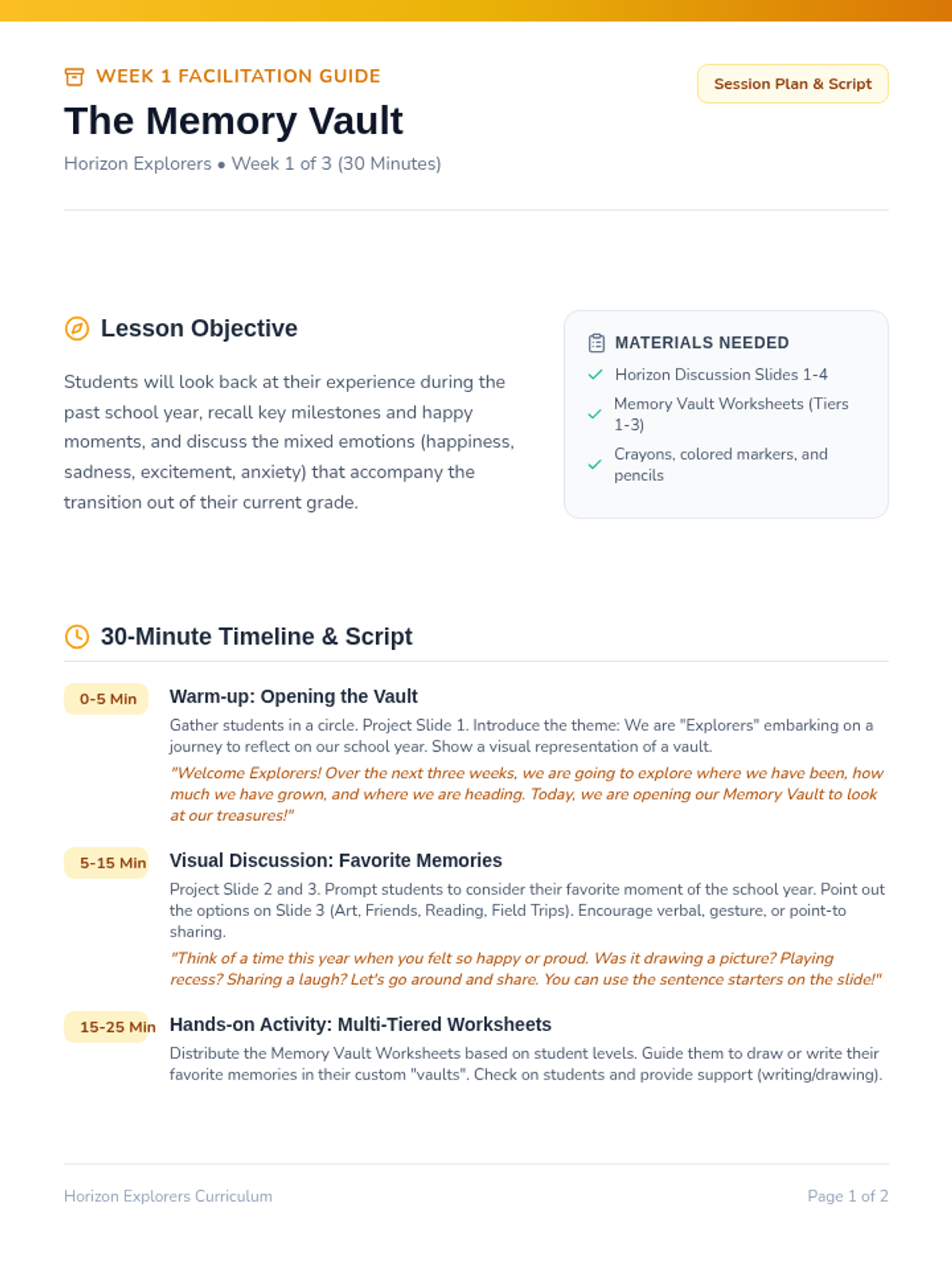
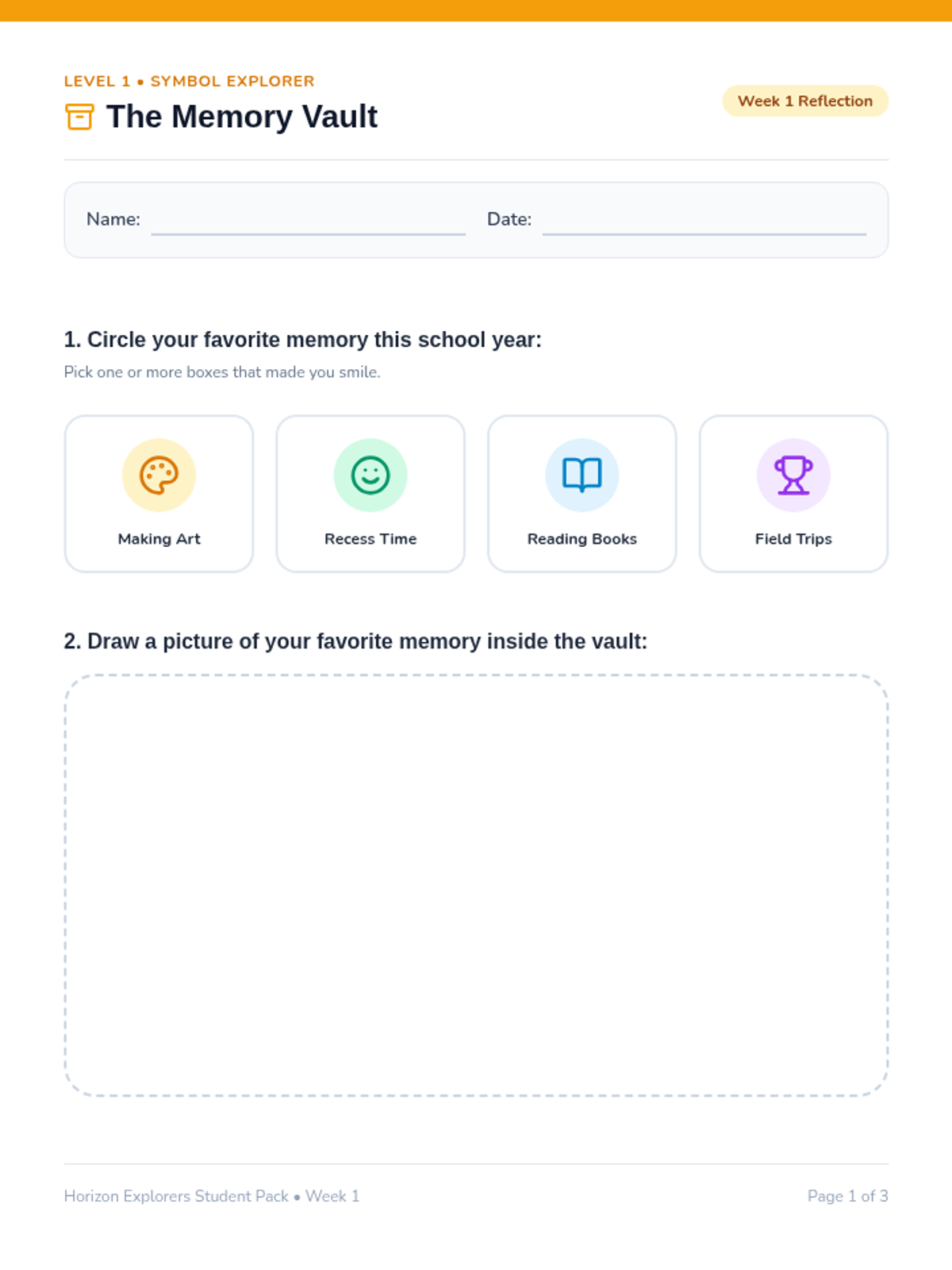
Week 1 focuses on looking back at favorite moments, triumphs, and highlights from the past school year, while acknowledging the complex emotions that come with endings.
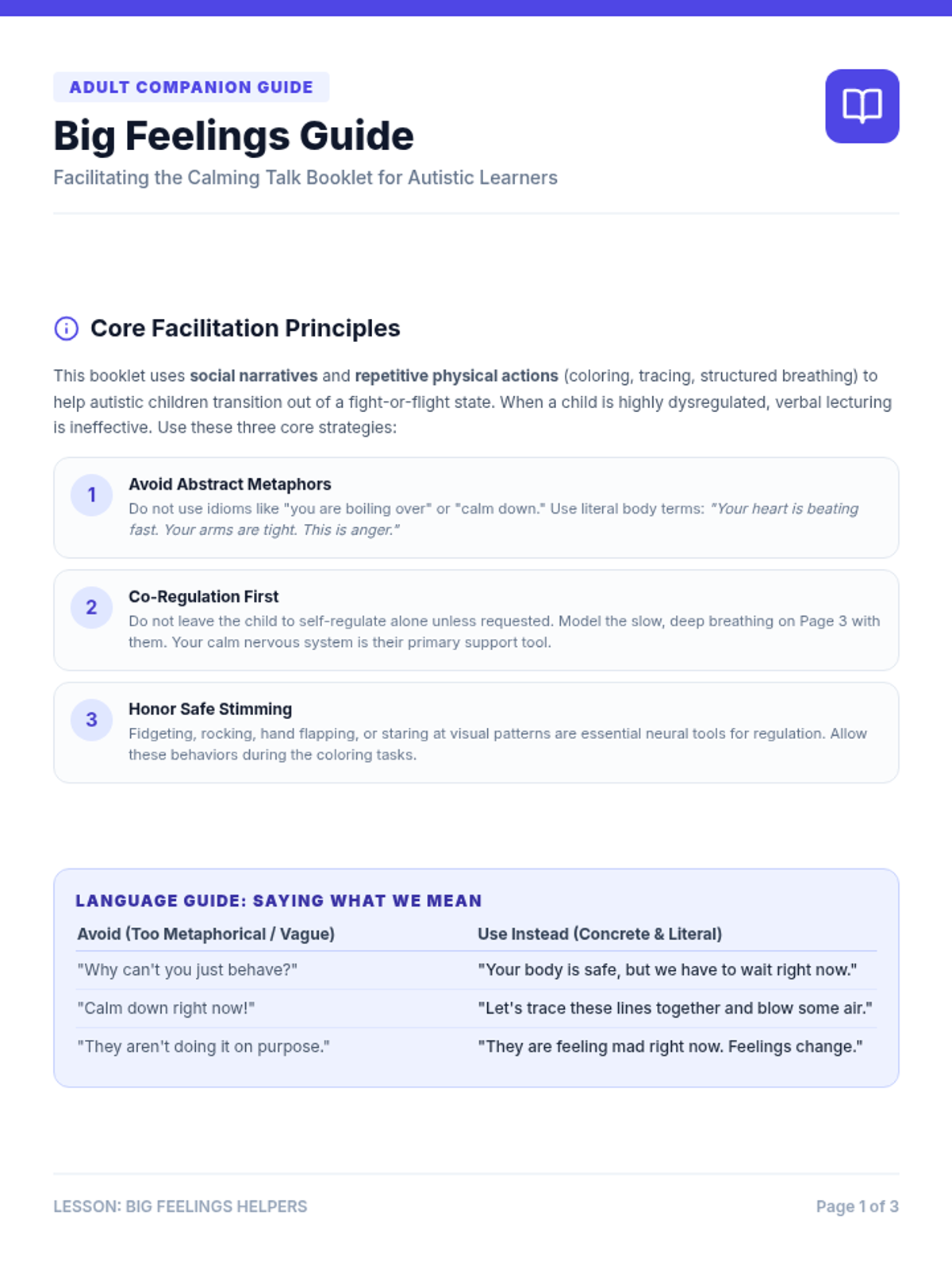
A supportive social narrative and positive self-talk booklet designed specifically for autistic children to cope with anger, the word 'no', and friendship anxieties. Includes clear visual scenes, concrete language, and calming coloring pages with traceable phrases.
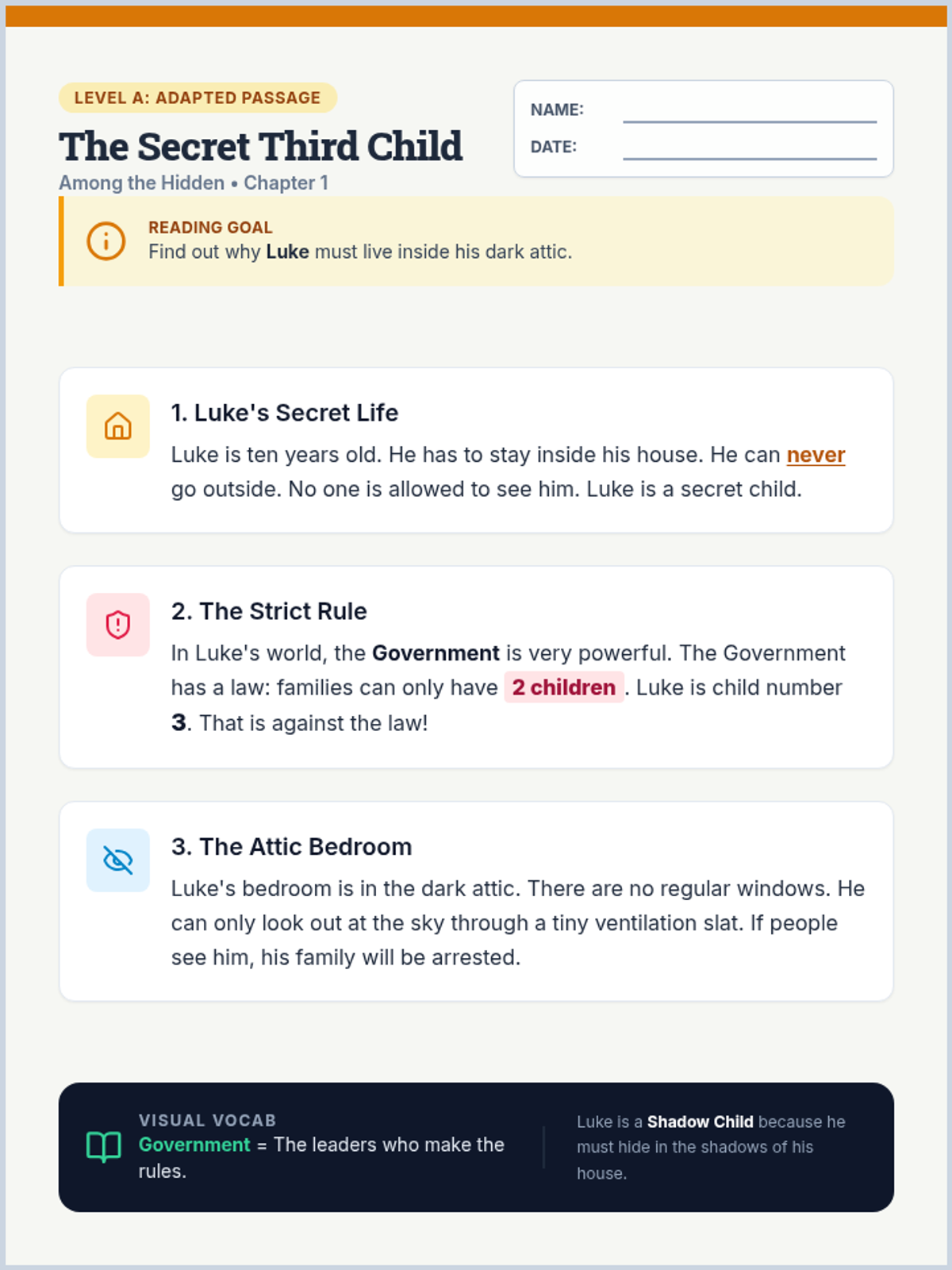
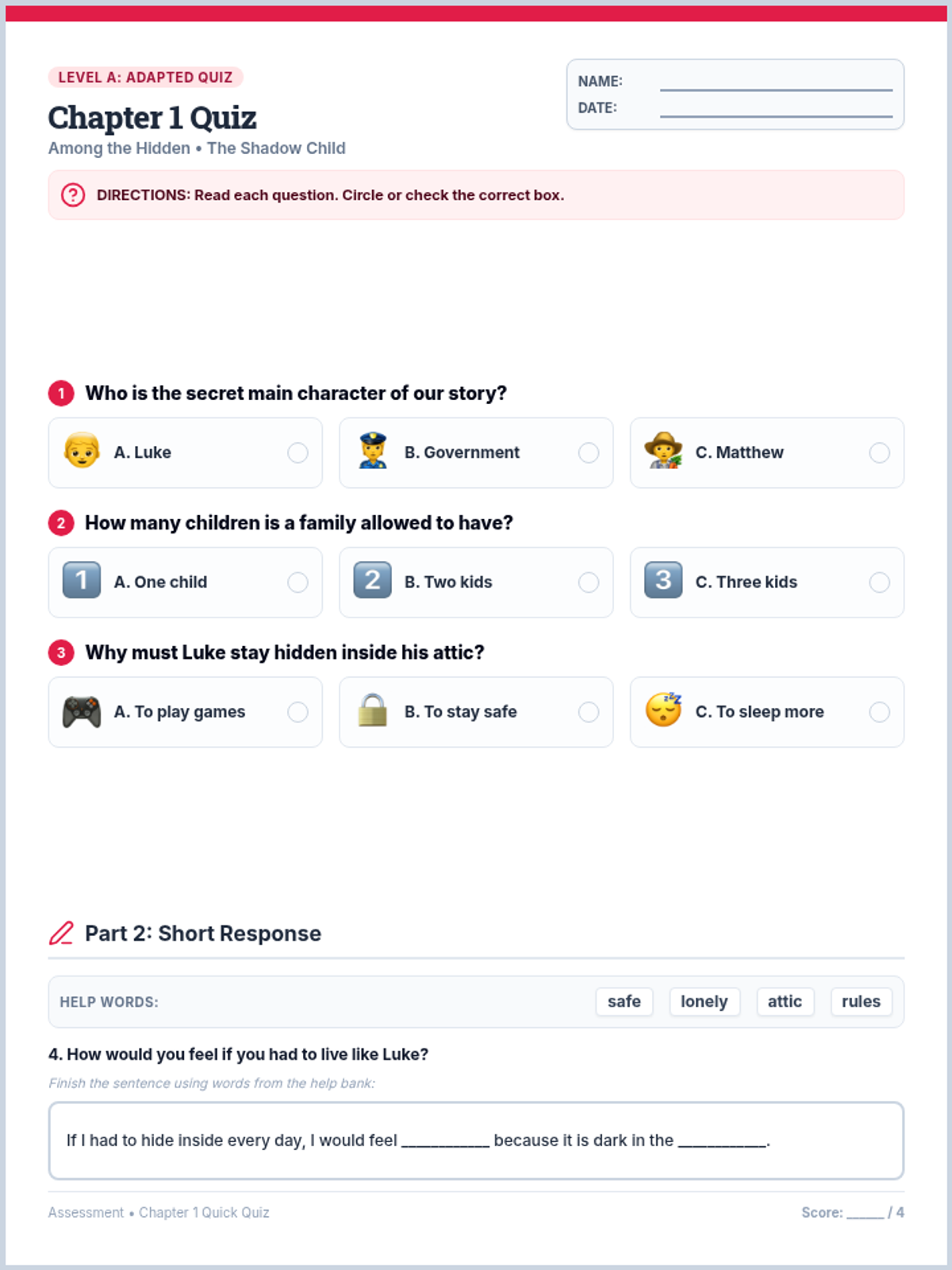
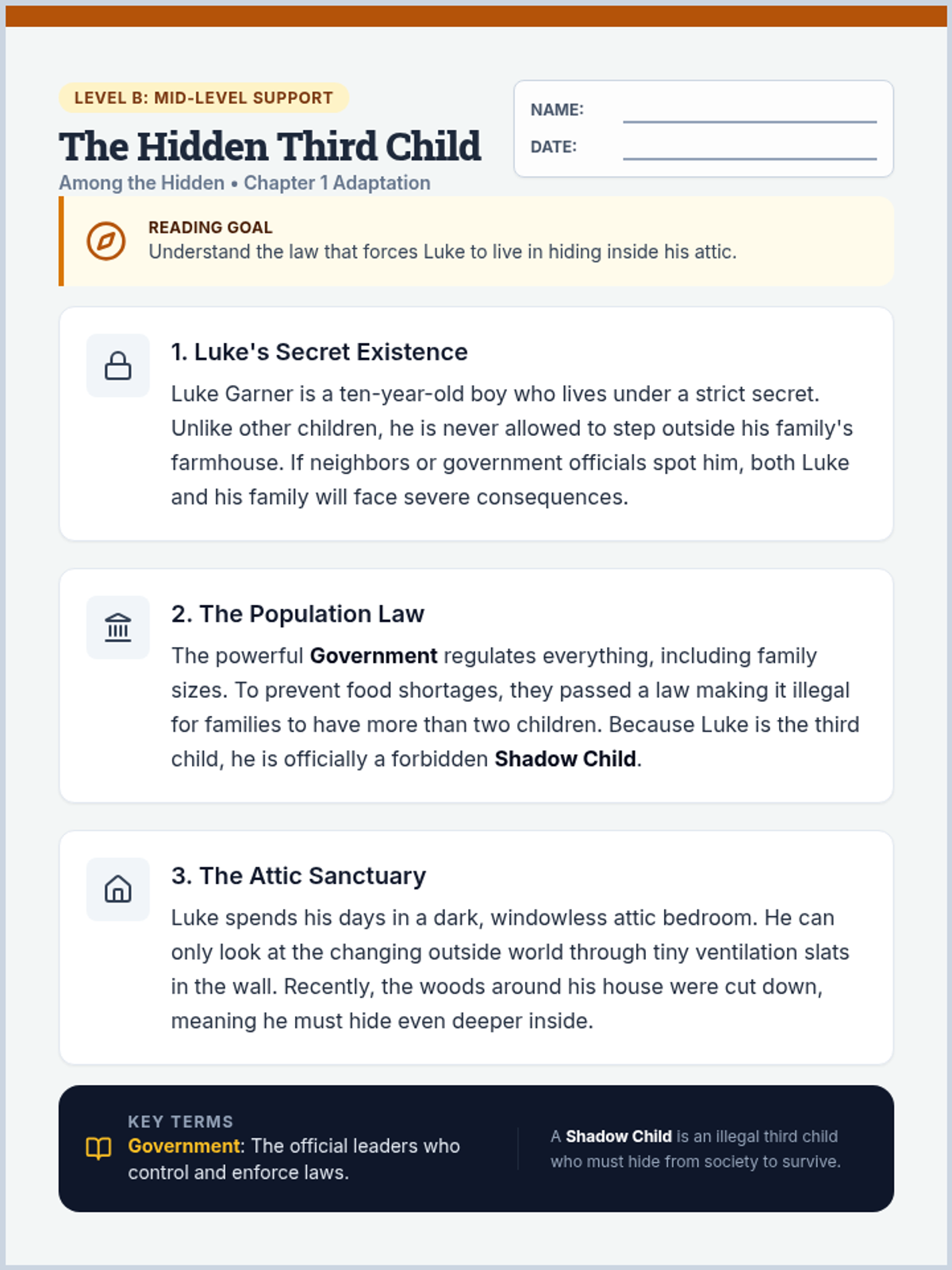
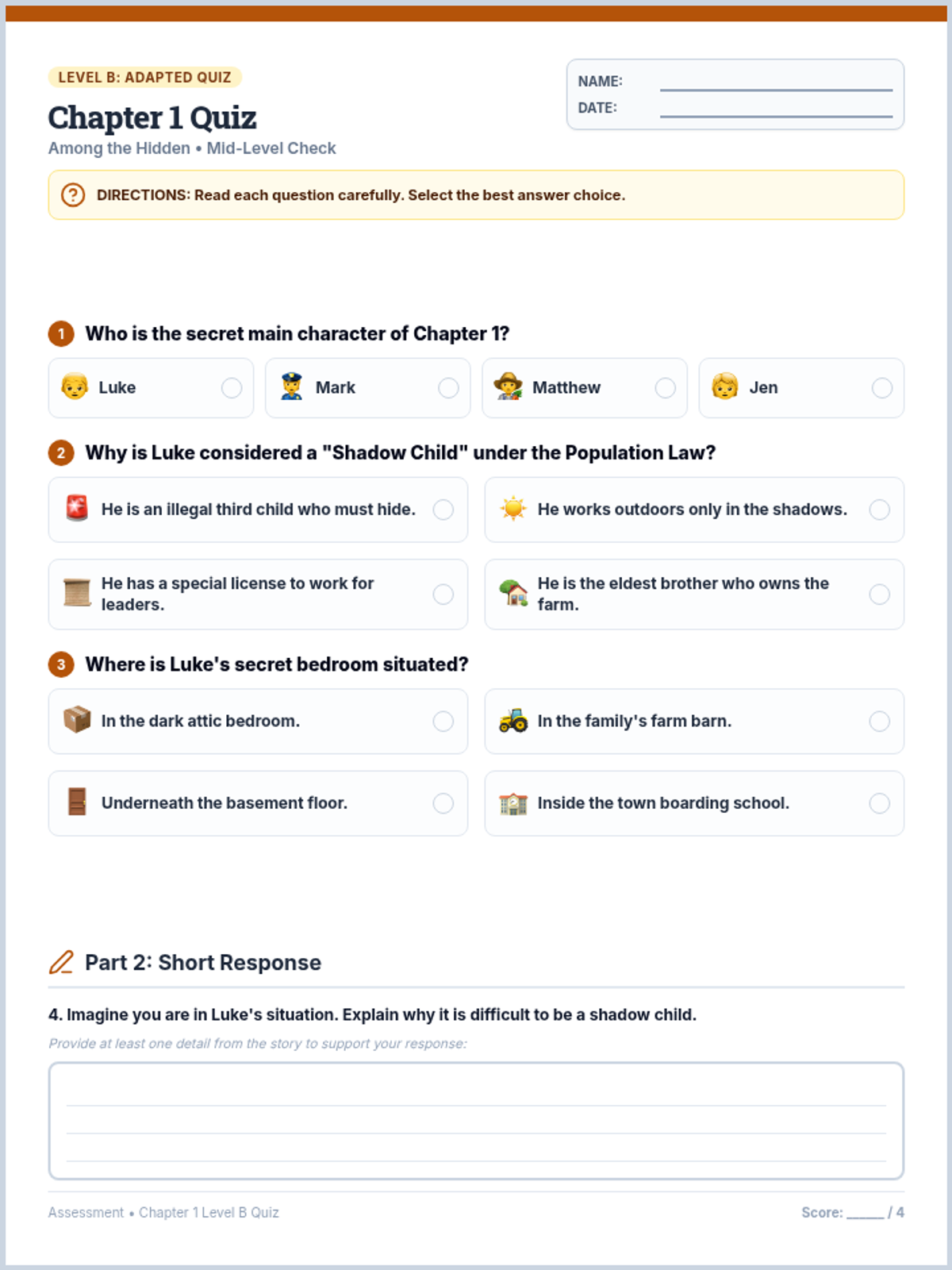
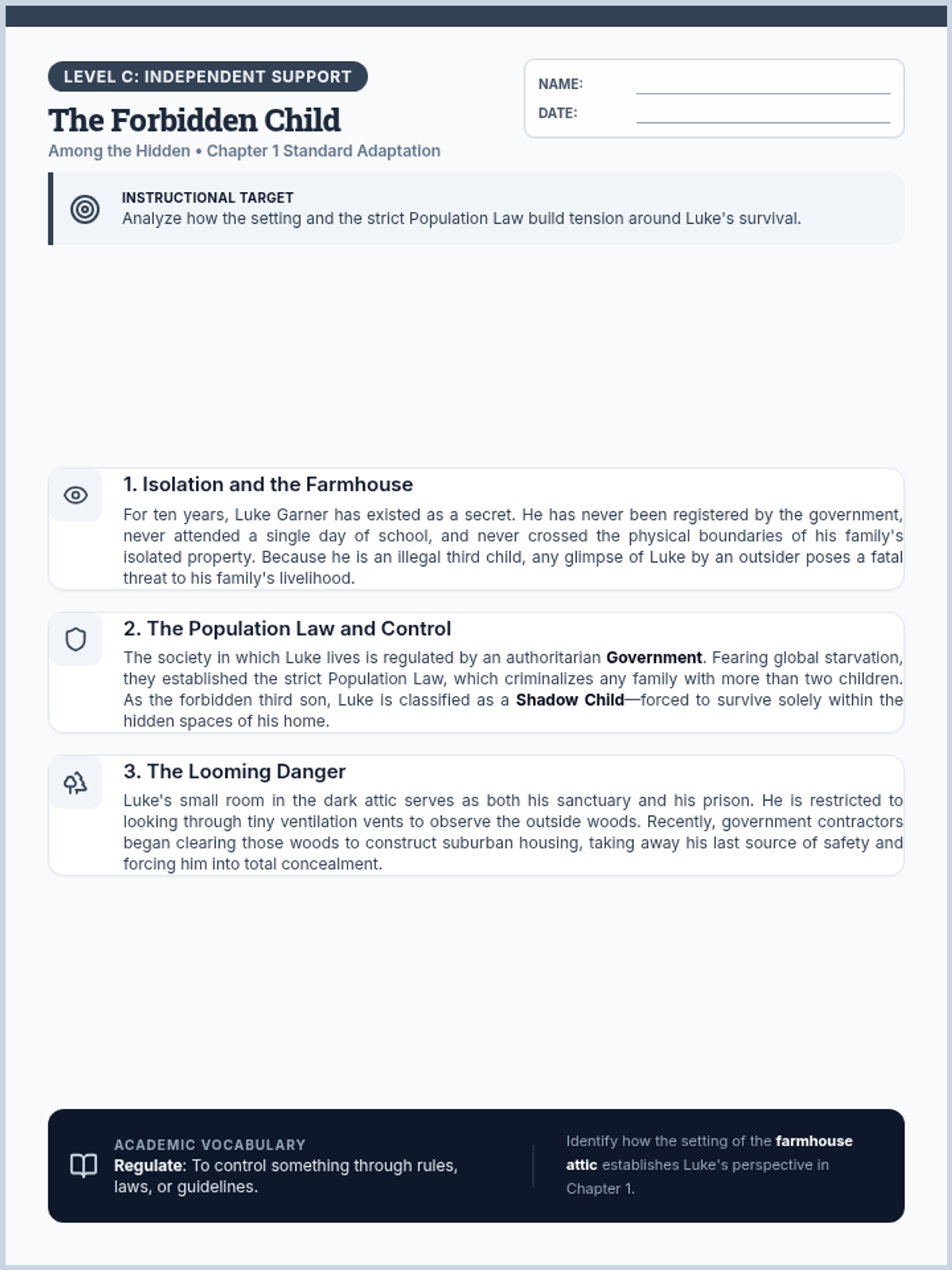
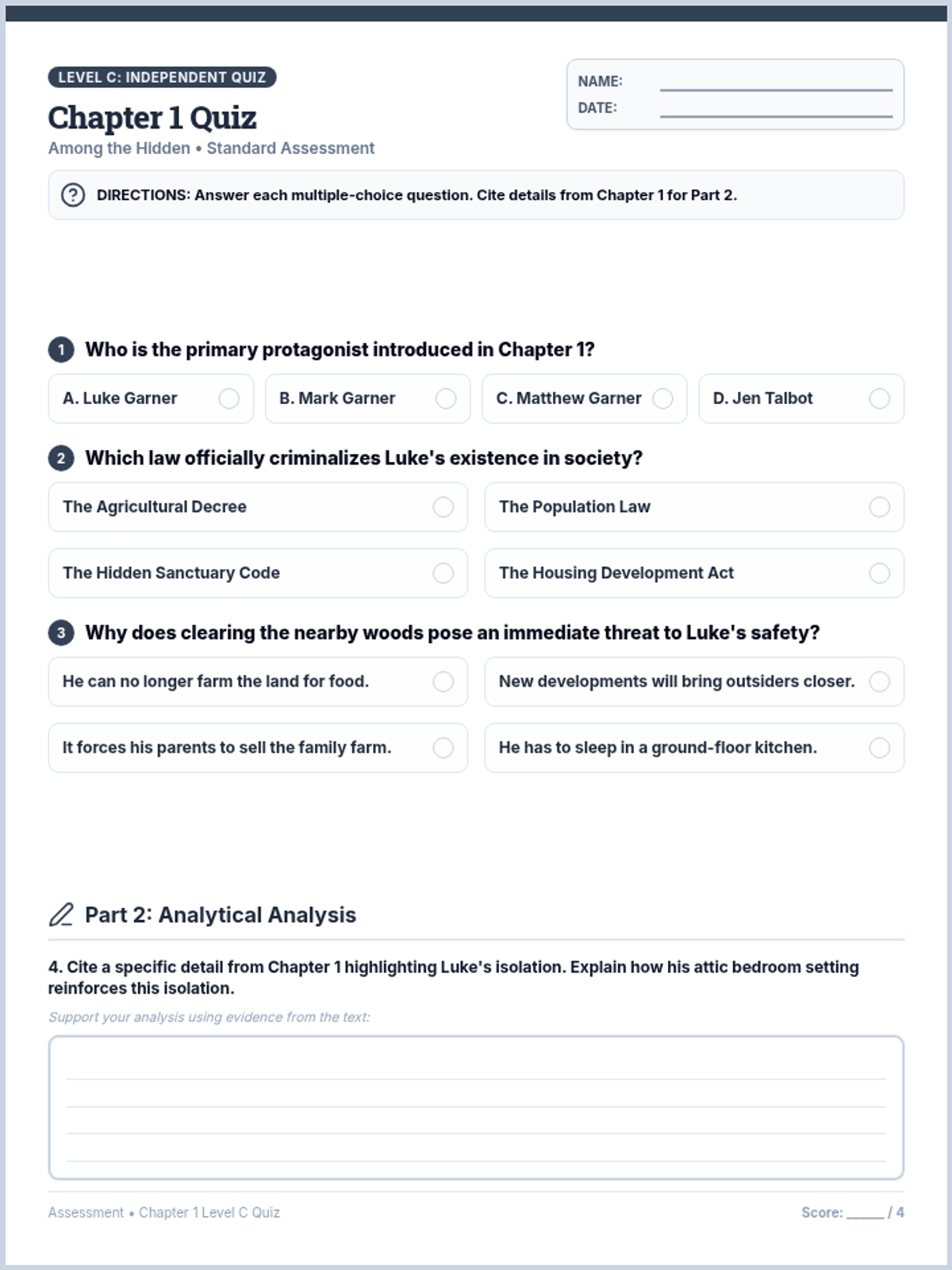
An adapted lesson on the beginning of 'Among the Hidden' tailored for students with IEPs. It features highly structured slides, a simplified reading passage with visual aids, and a heavily scaffolded visual quiz.
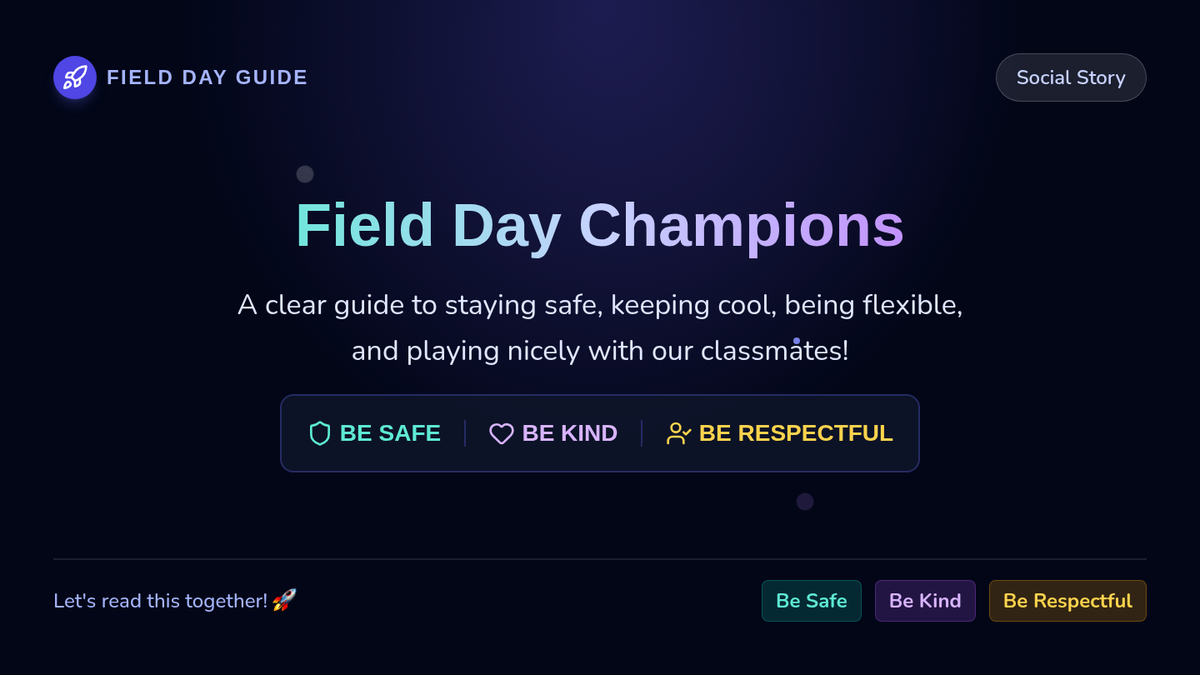
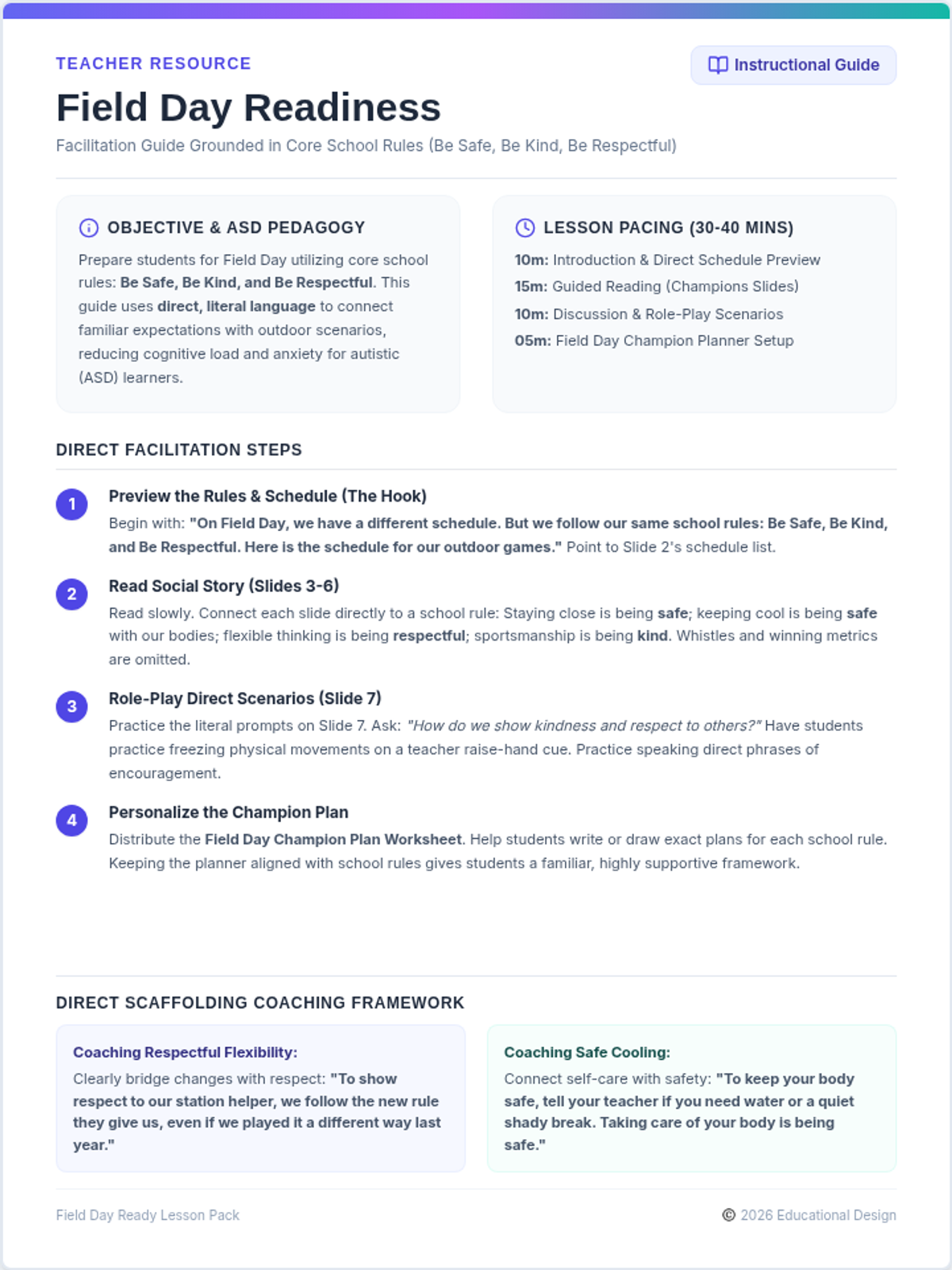
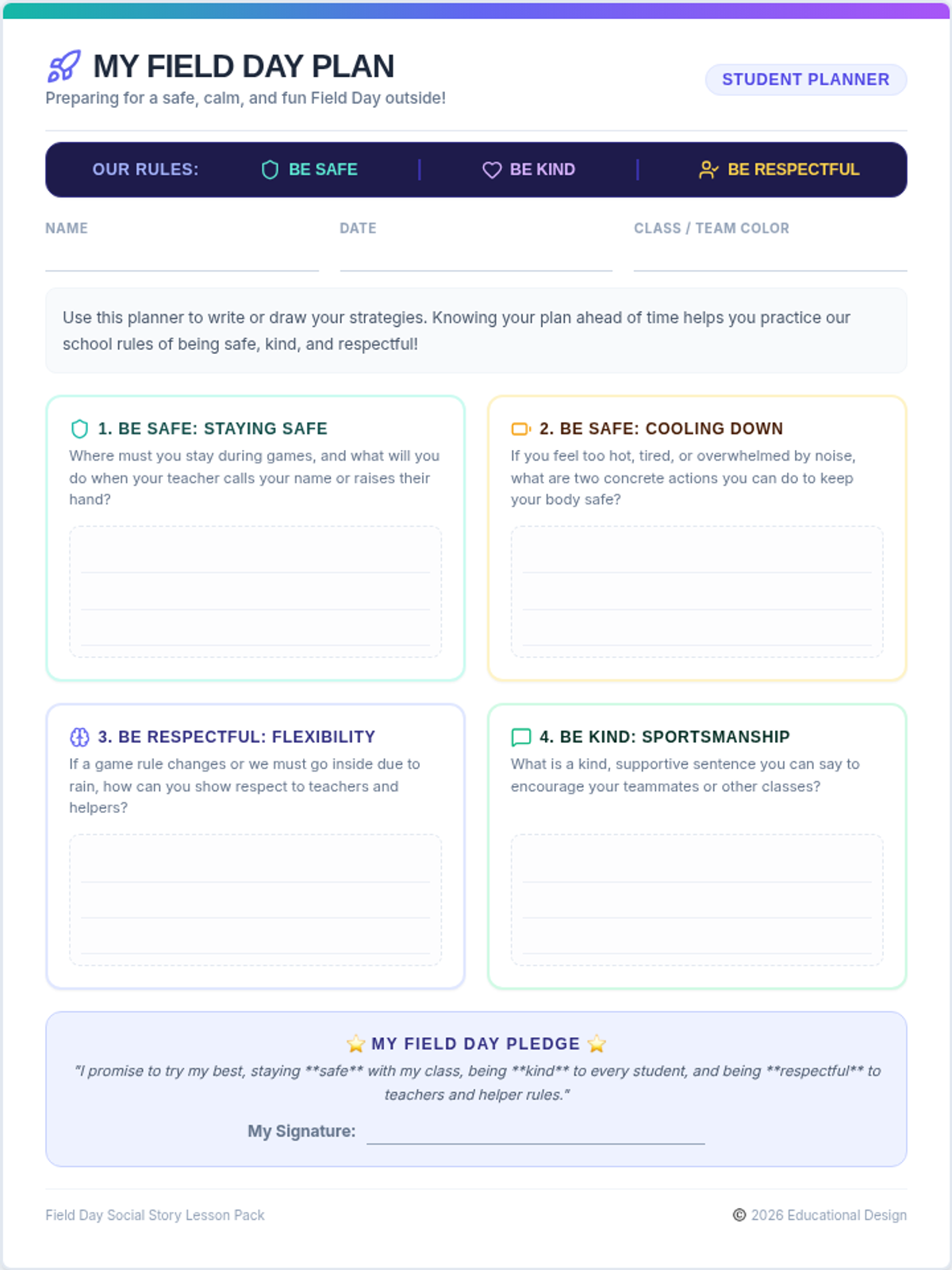
A lesson package focused on preparing elementary students for the unique social, emotional, and sensory challenges of Field Day, featuring a projectable social story slide deck.
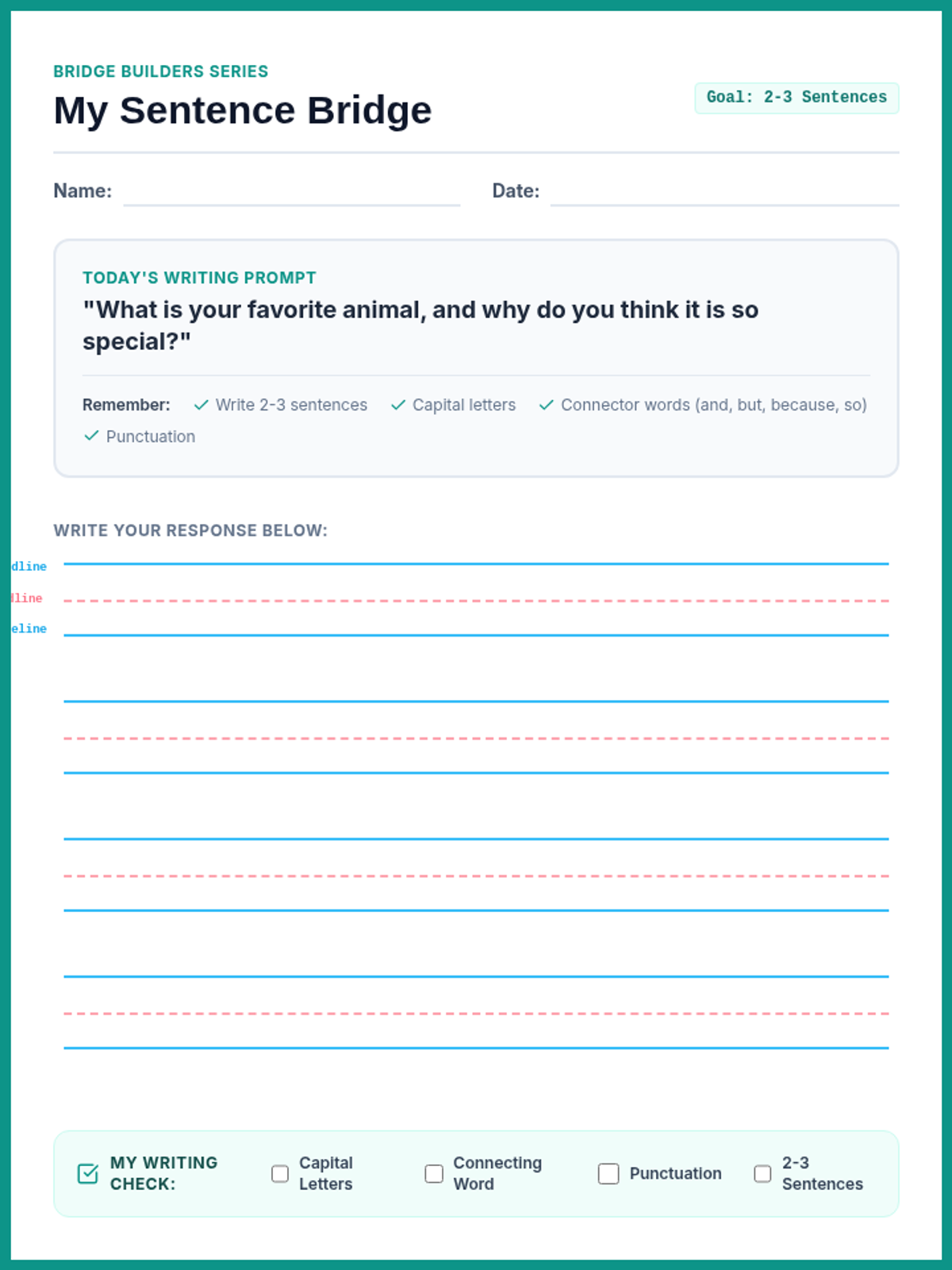
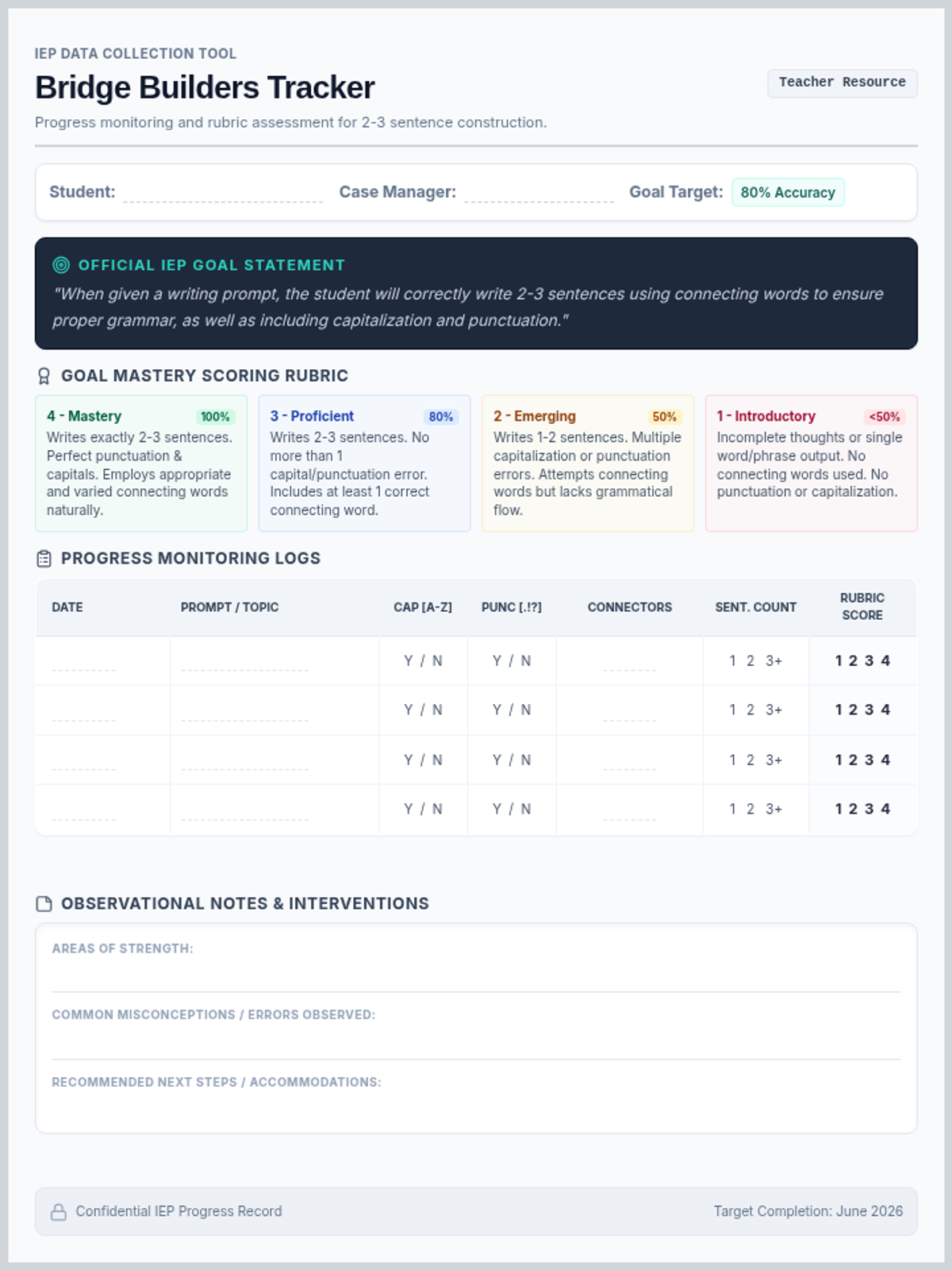
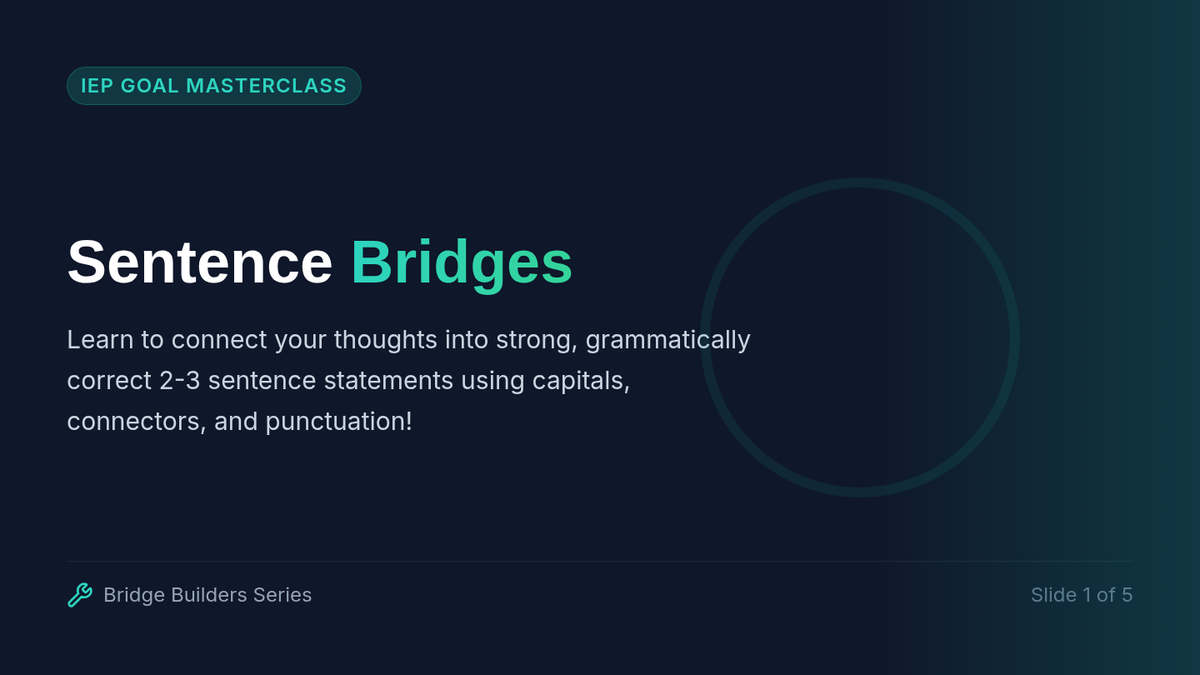
A comprehensive learning package designed to help students master writing 2-3 grammatically correct sentences using connecting words, capitalization, and punctuation. Features a structured 'Bridge' metaphor that visually scaffolds sentence connections, perfect for IEP goal tracking and targeted instruction.
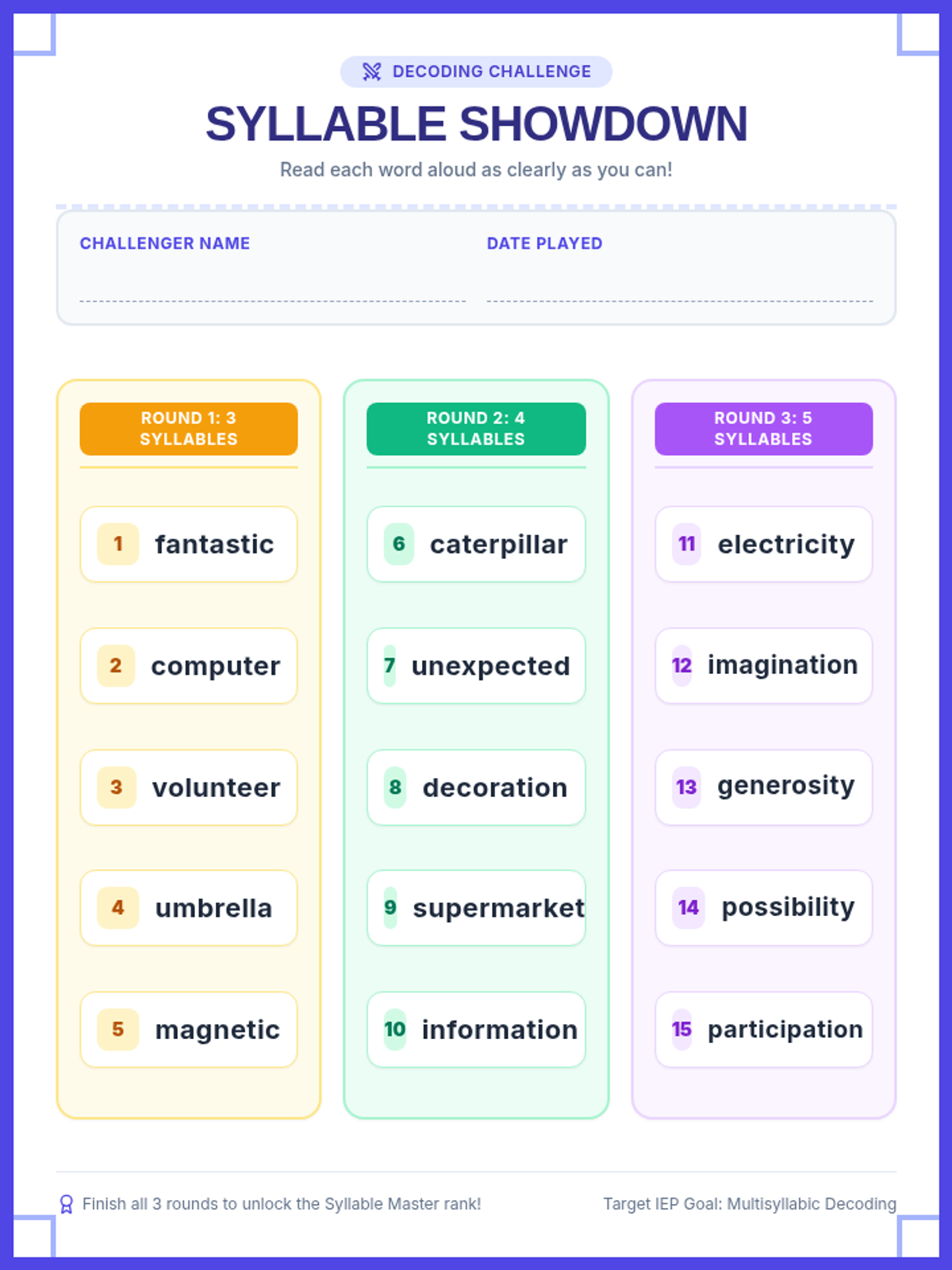
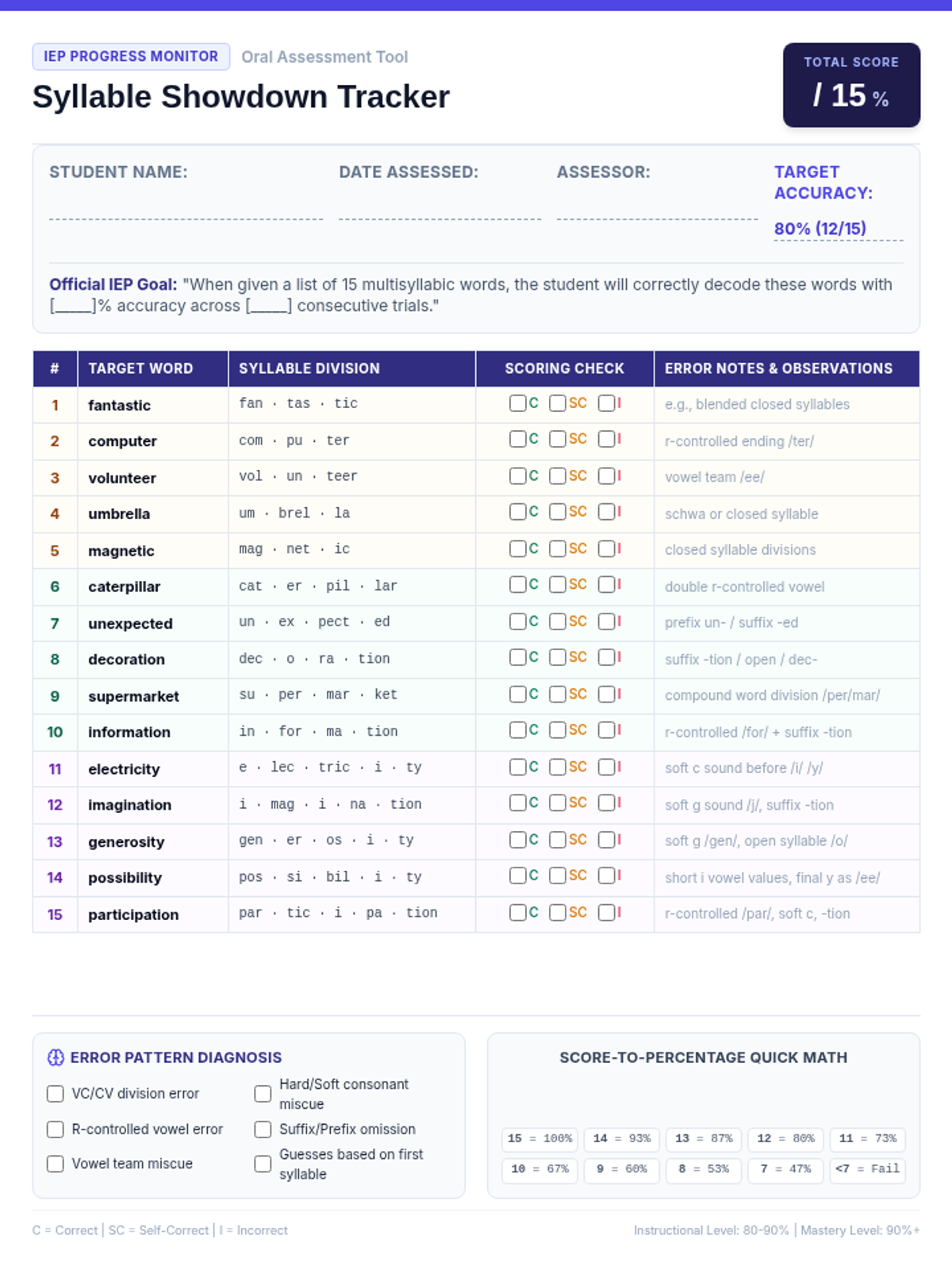
A targeted decoding assessment lesson designed for IEP progress tracking, containing a student-facing reading list of fifteen multisyllabic words and a teacher-facing progress tracking sheet.
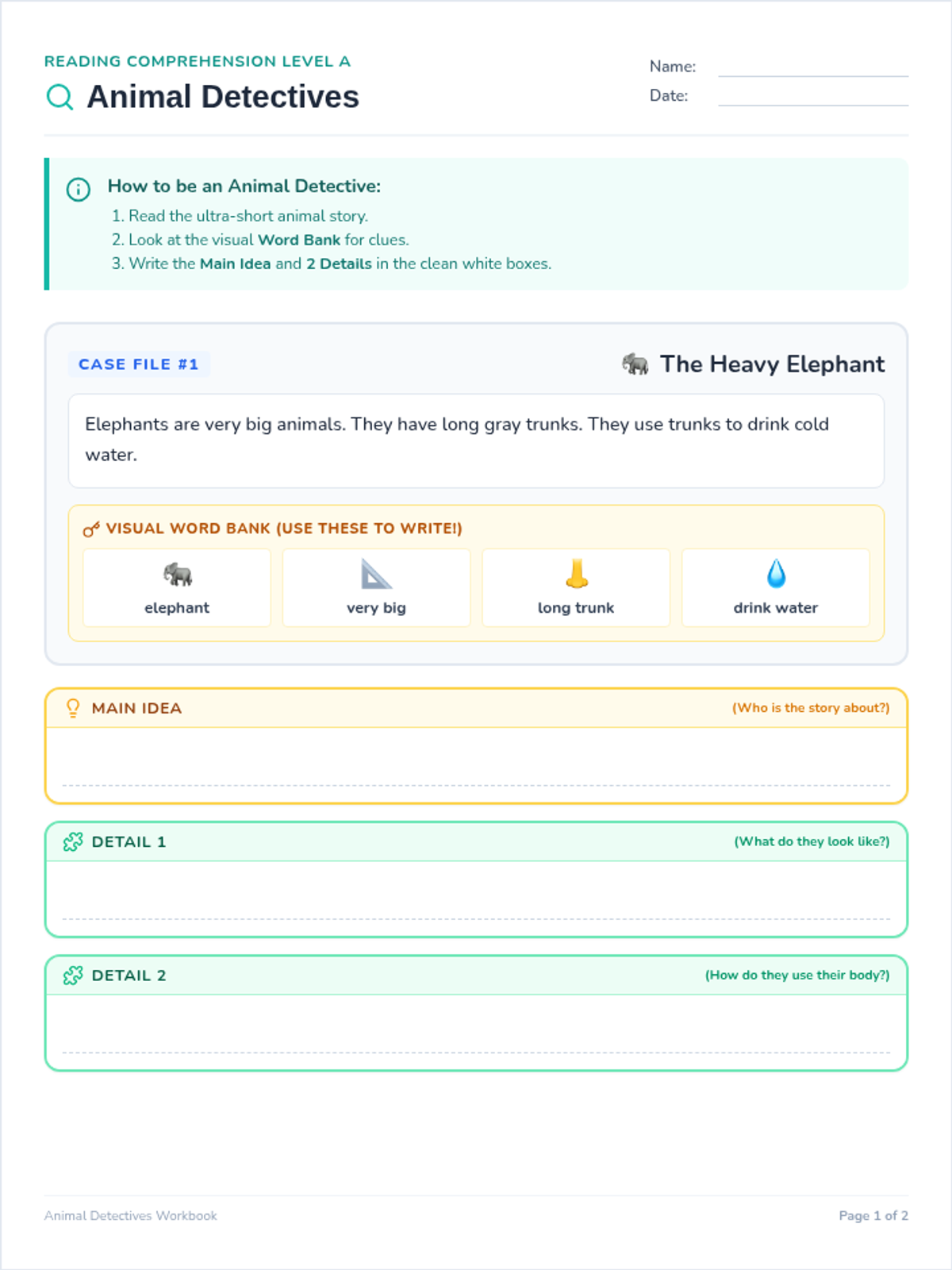
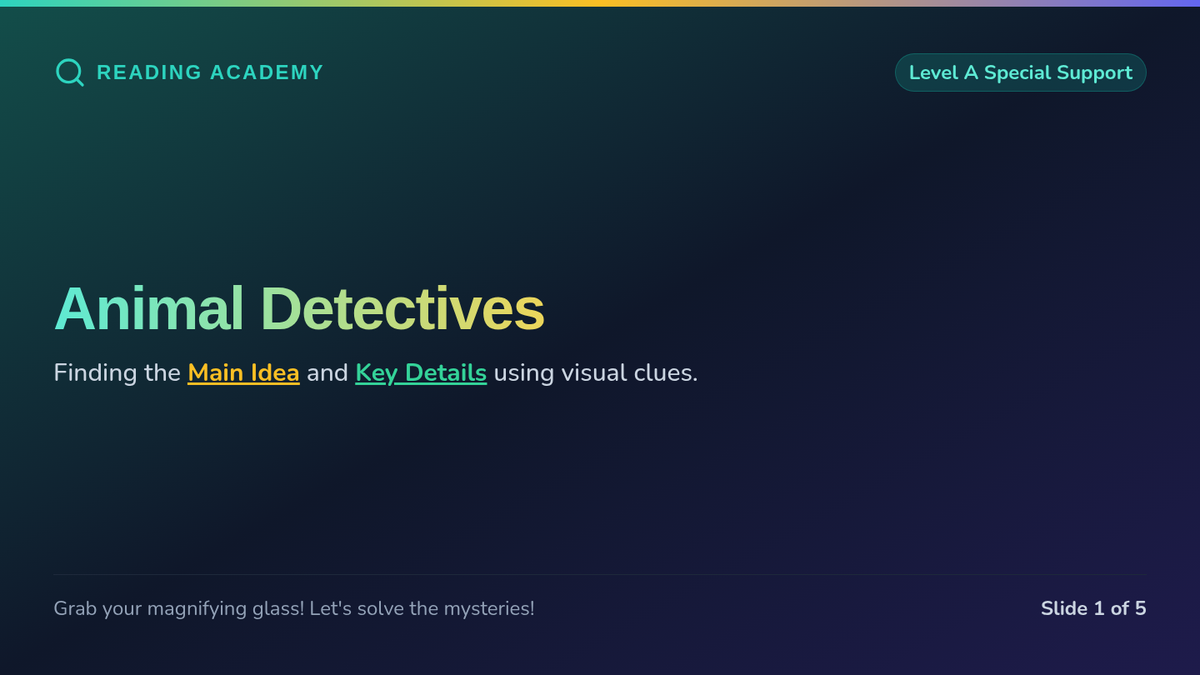
A structured reading lesson designed for students with autism to identify main ideas and key details using visual supports. Includes highly simplified animal-themed passages and structured graphic organizers.
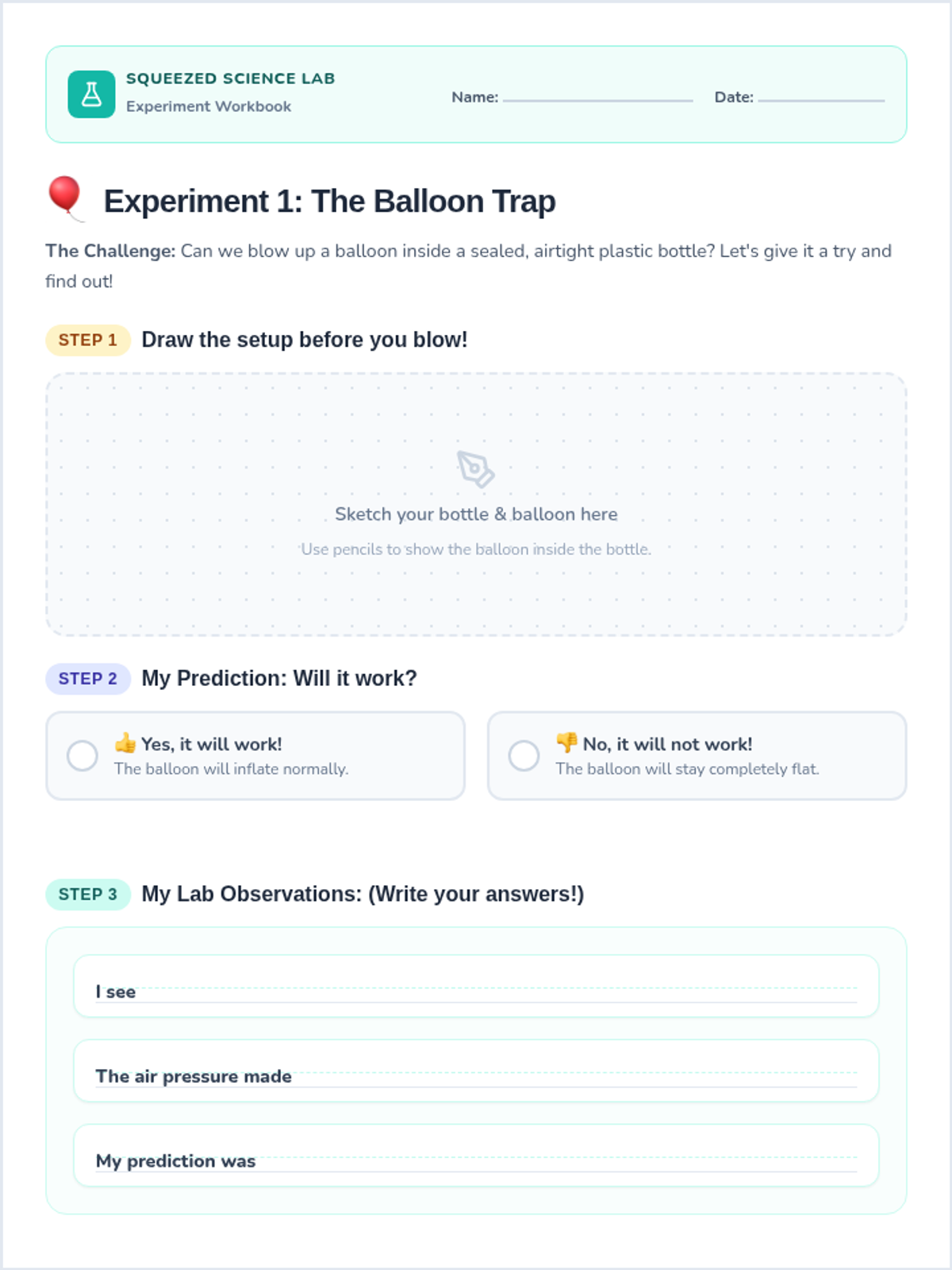
An early elementary science lesson about air pressure featuring three hands-on experiments: Balloon in a Bottle, Egg in a Bottle, and the Water Glass Trick. Students make predictions and record observations using a highly visual cut-and-paste workbook.
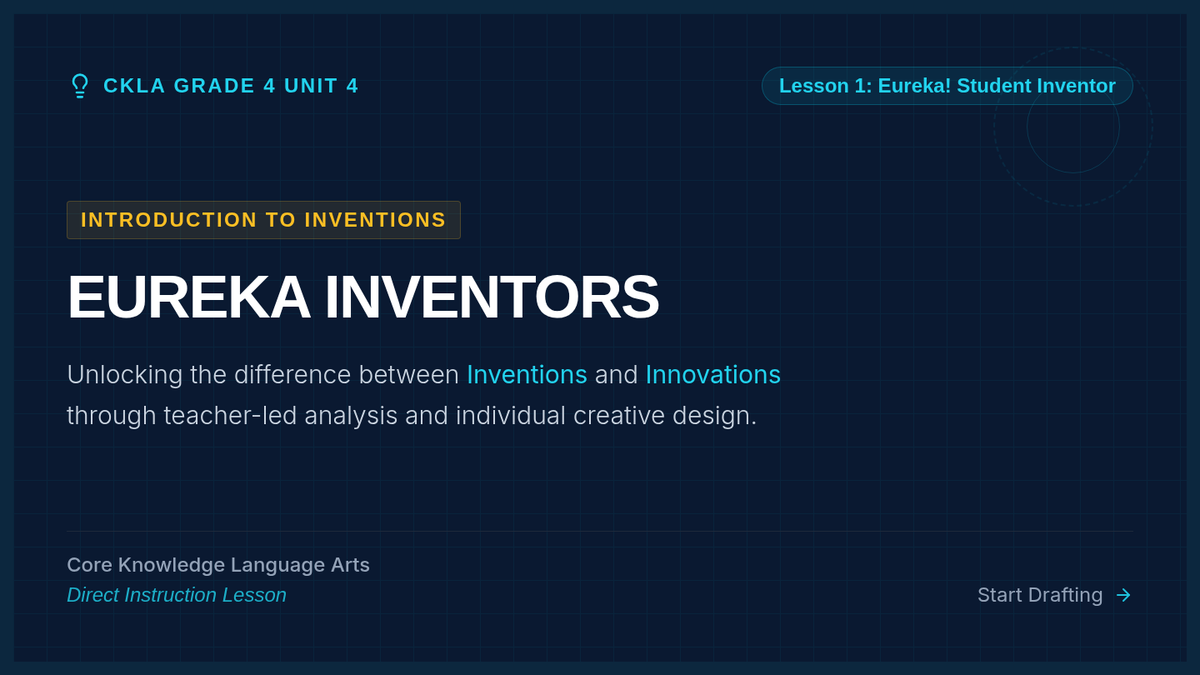
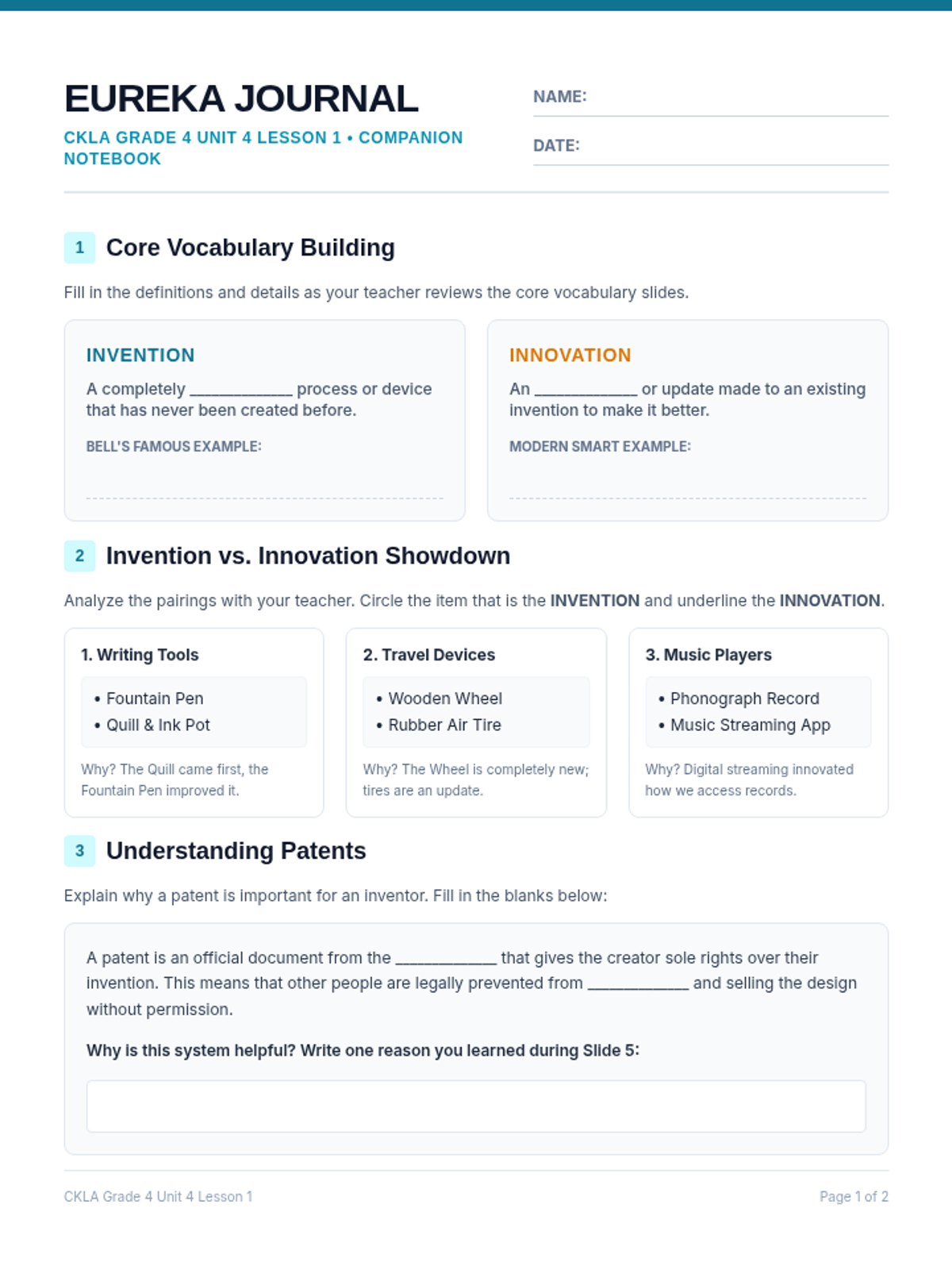
A rewritten direct-instruction lesson for CKLA Grade 4 Unit 4 Lesson 1 (Eureka! Student Inventor). It structures the introduction of inventions, innovations, and the patent process through teacher-led visual modeling and individual student responses, removing the default group activities.
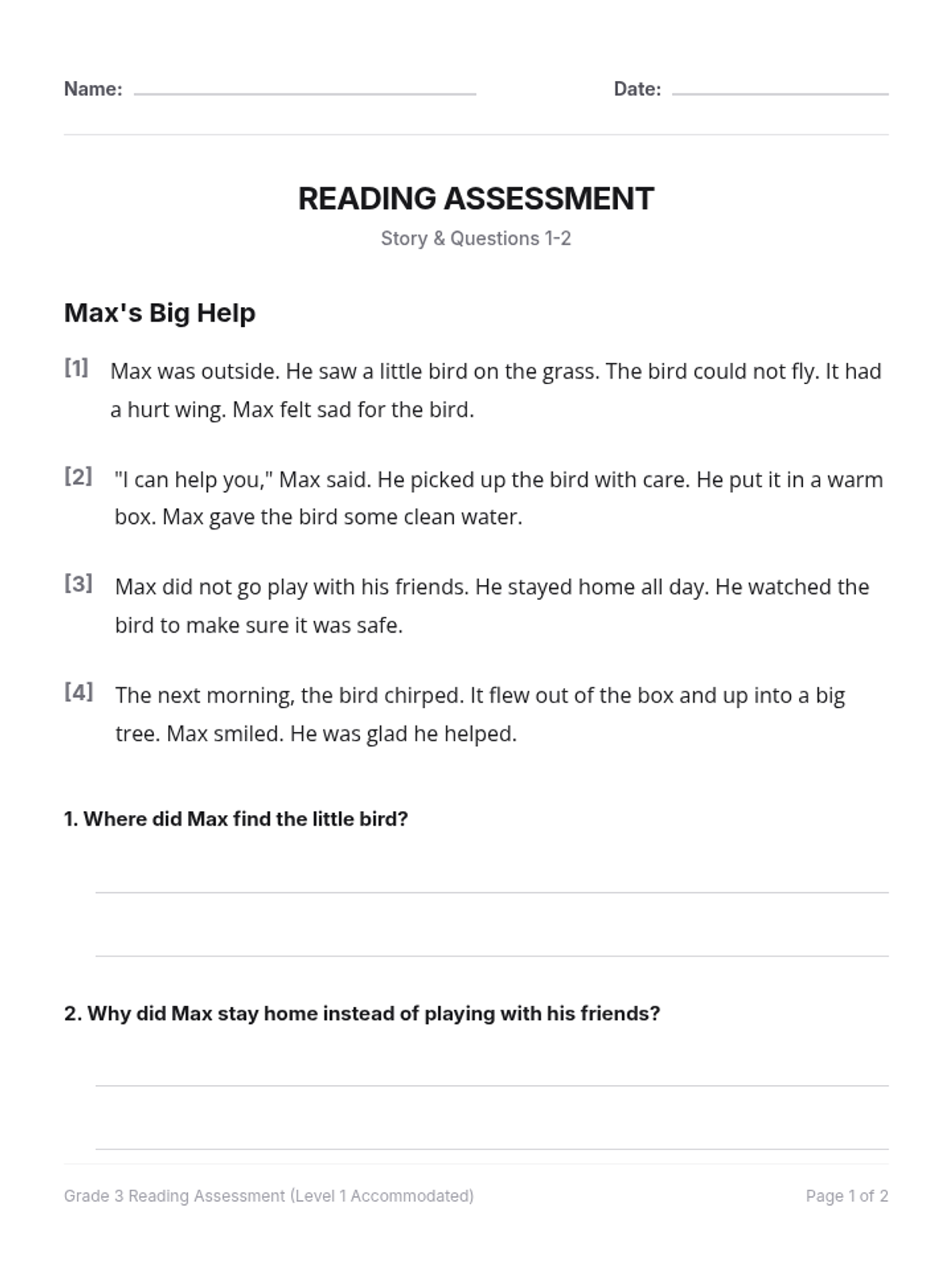
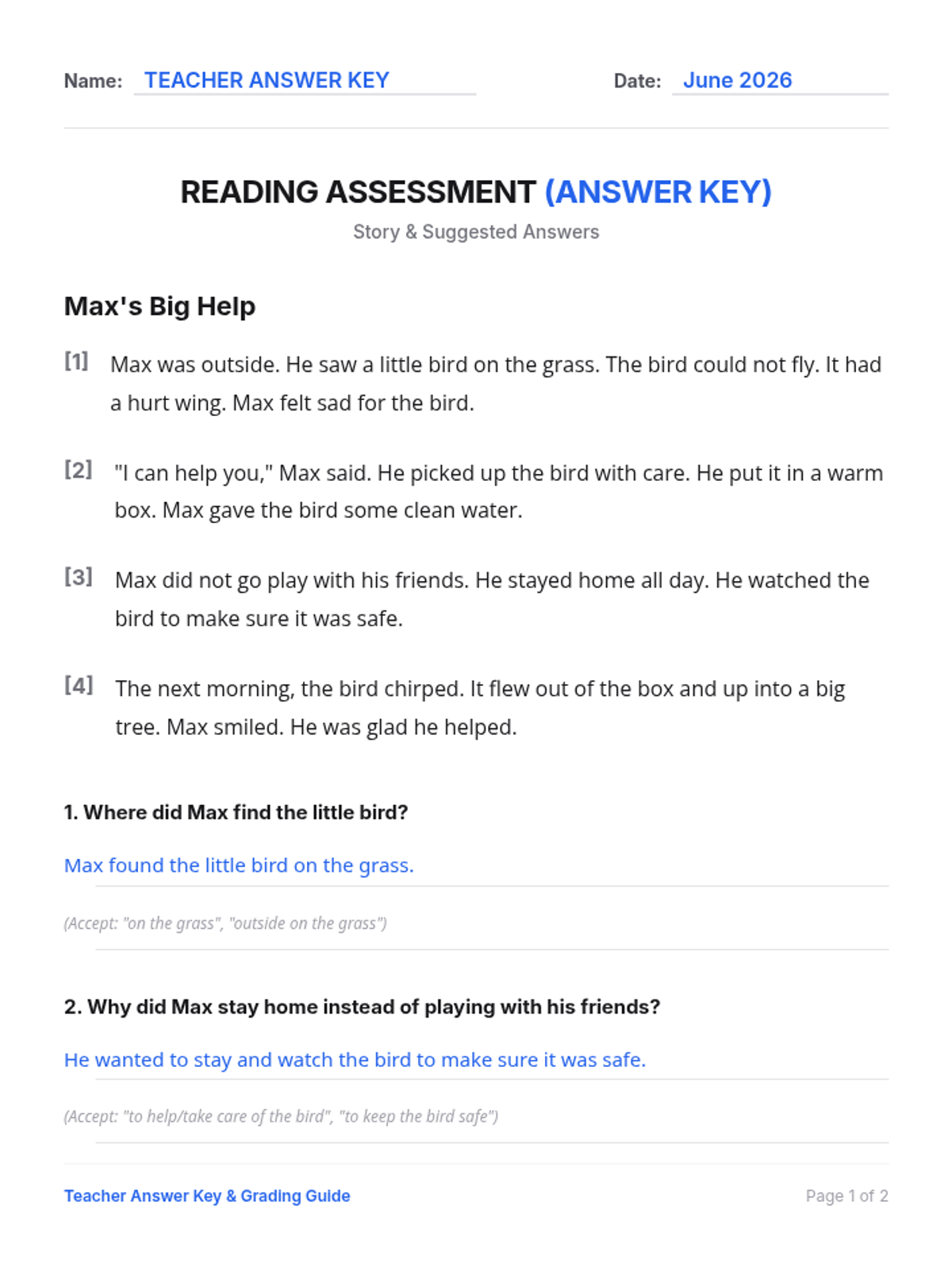
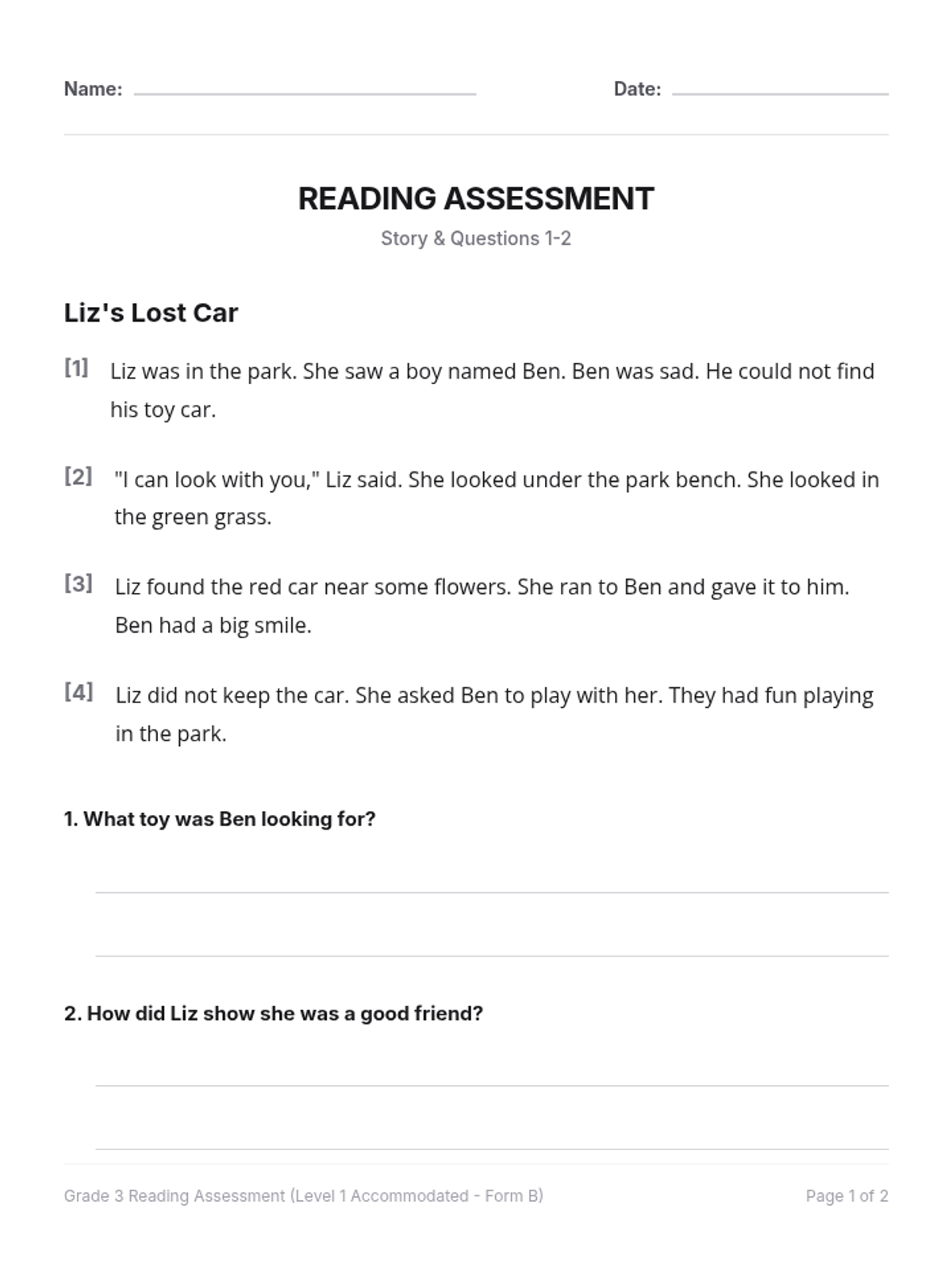
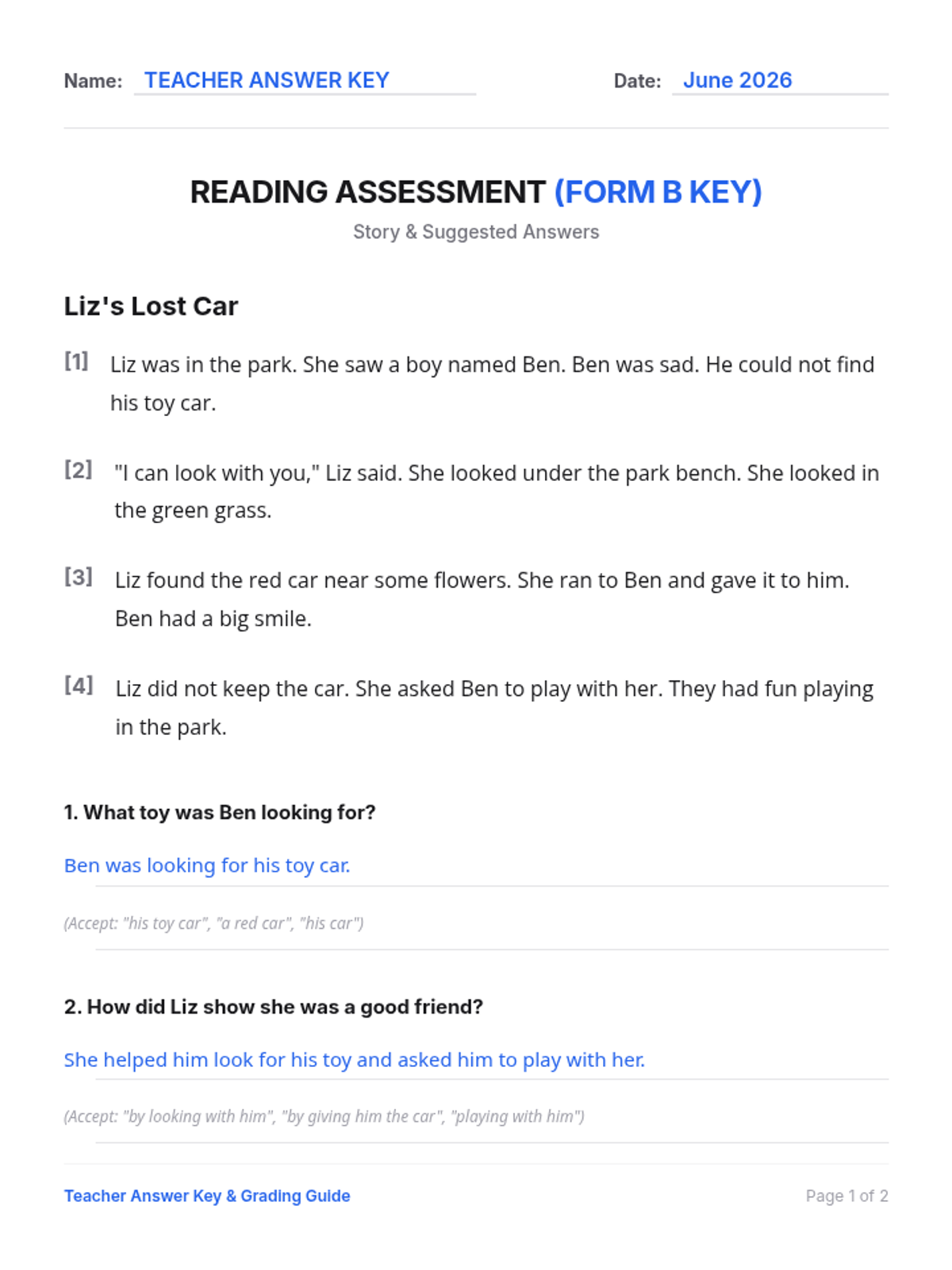
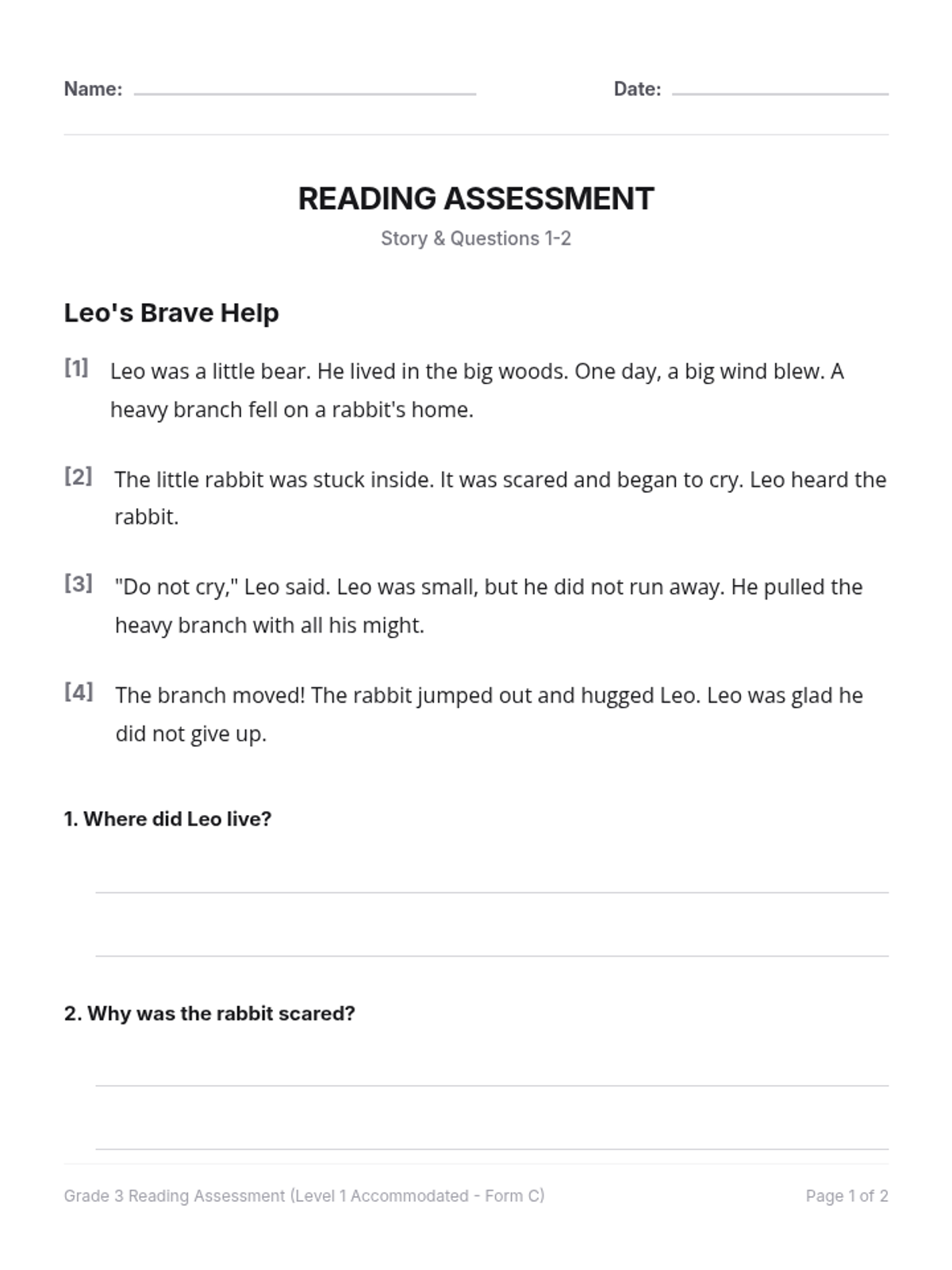
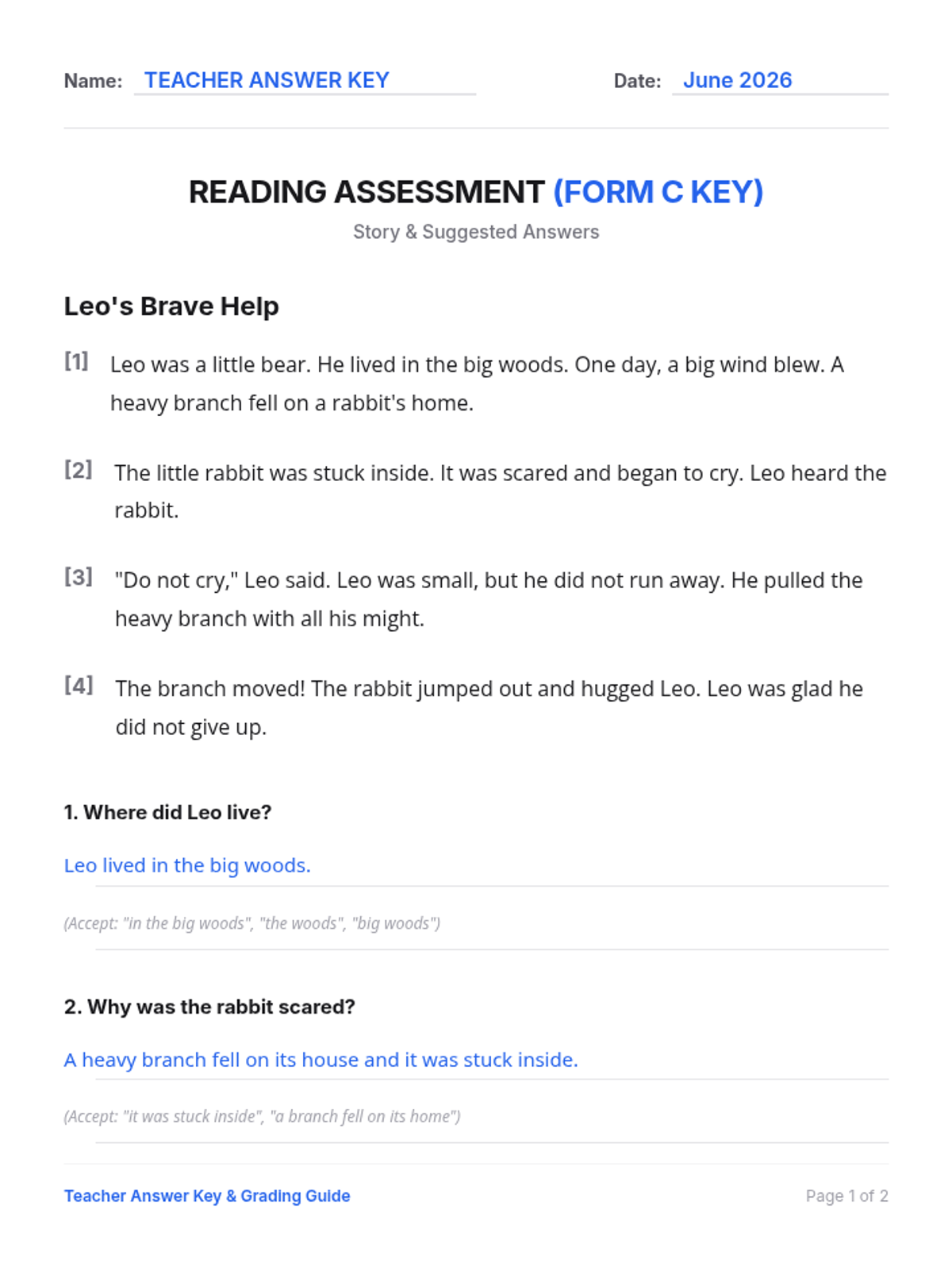
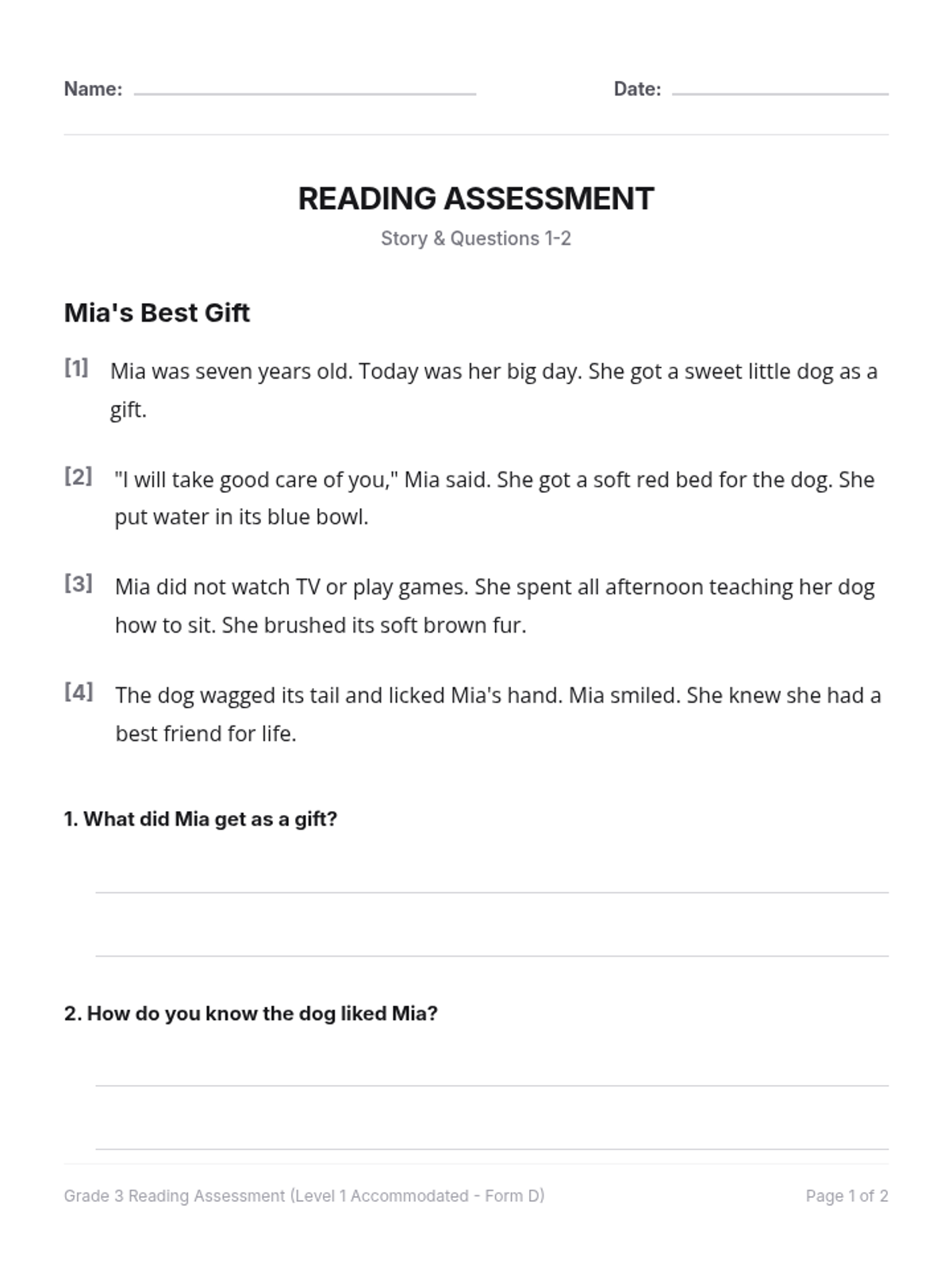
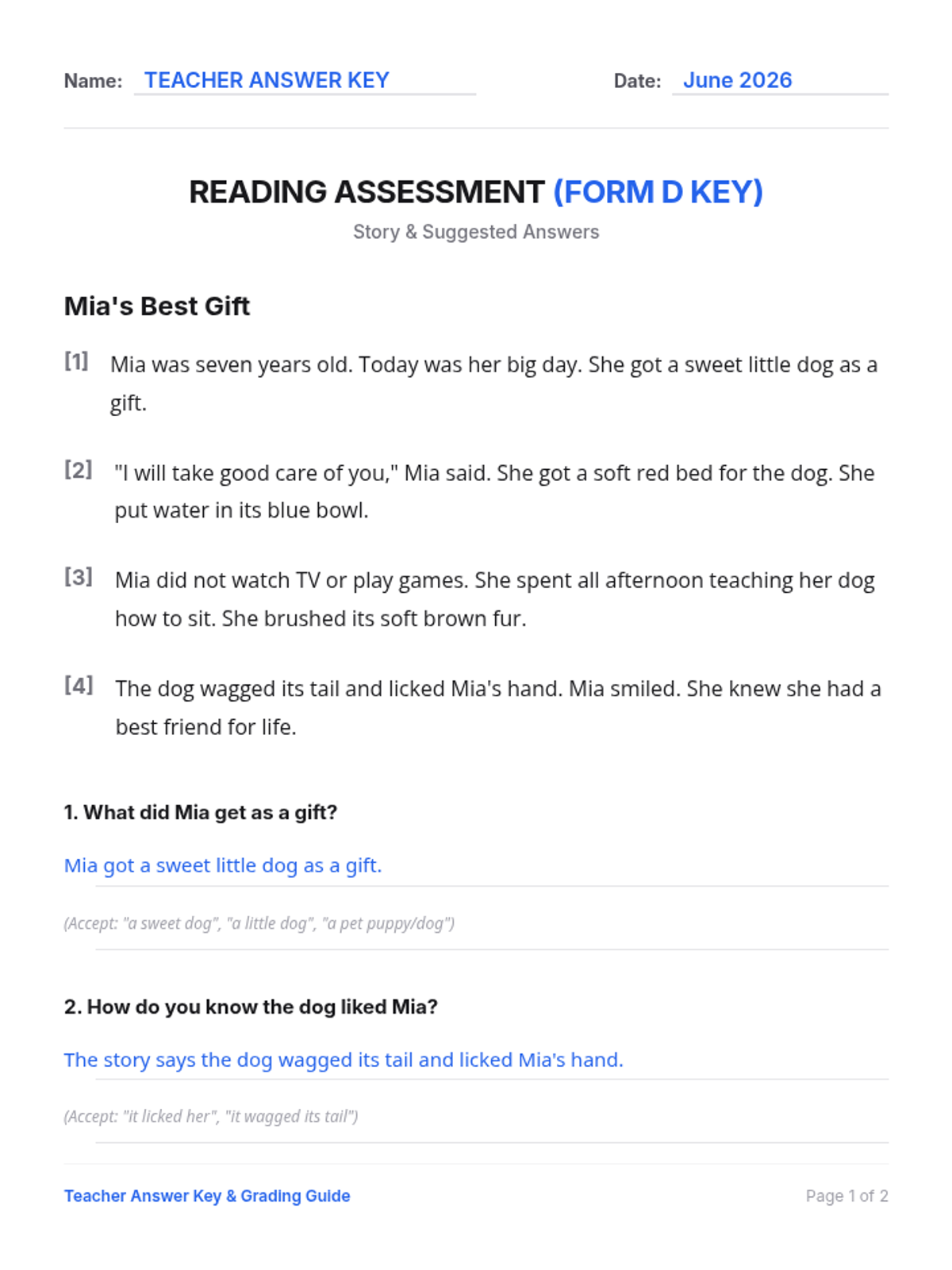
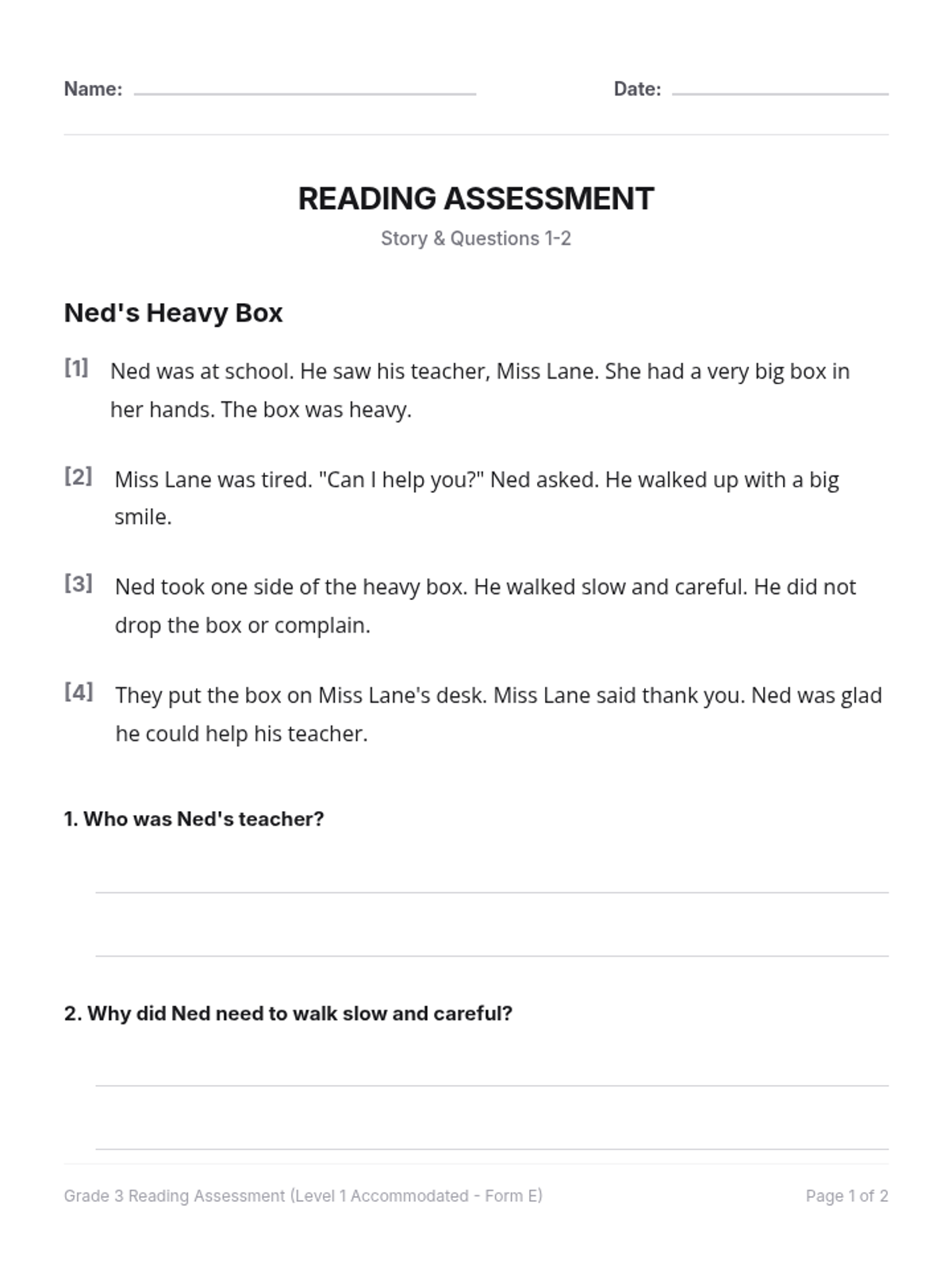
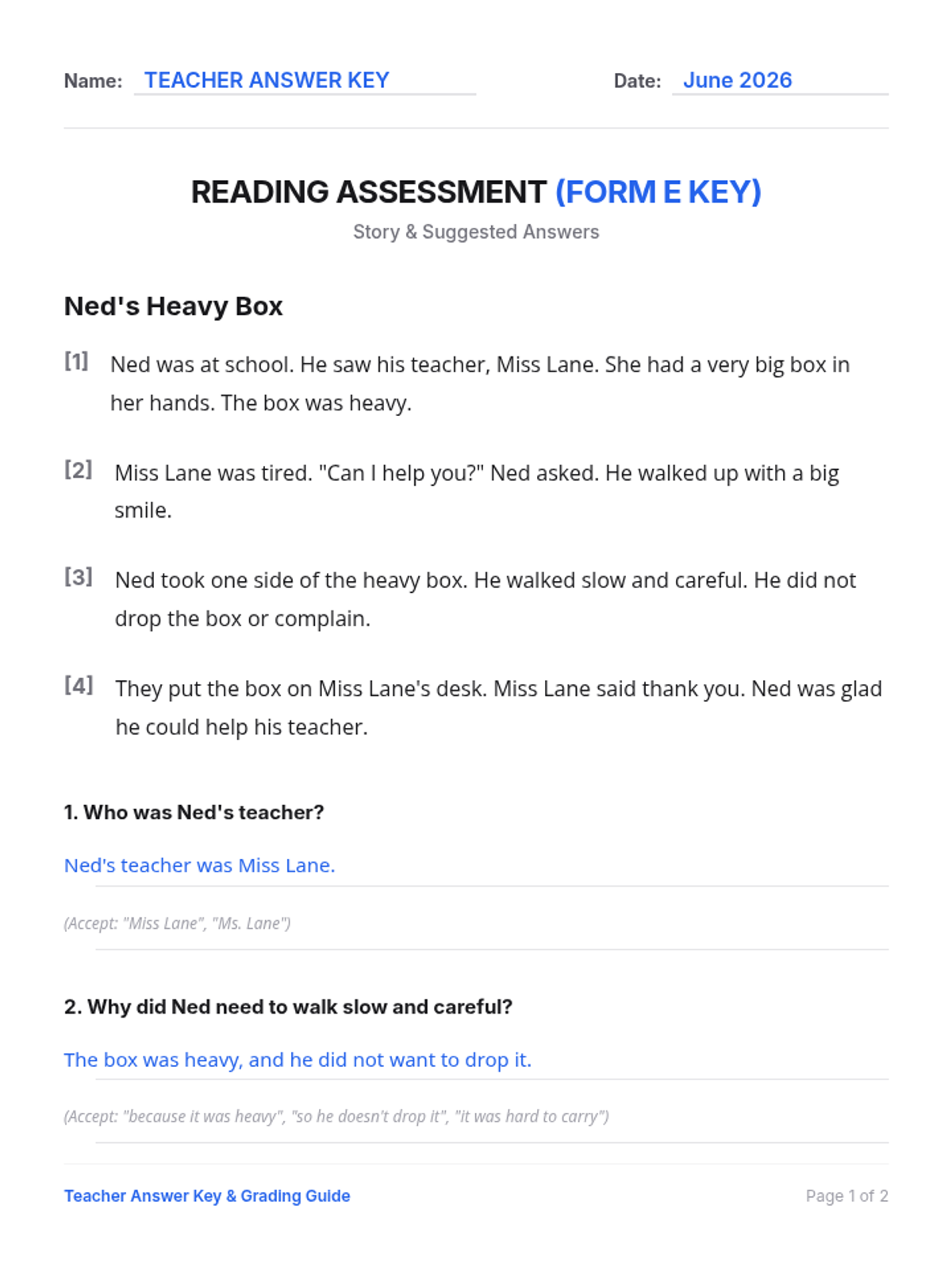
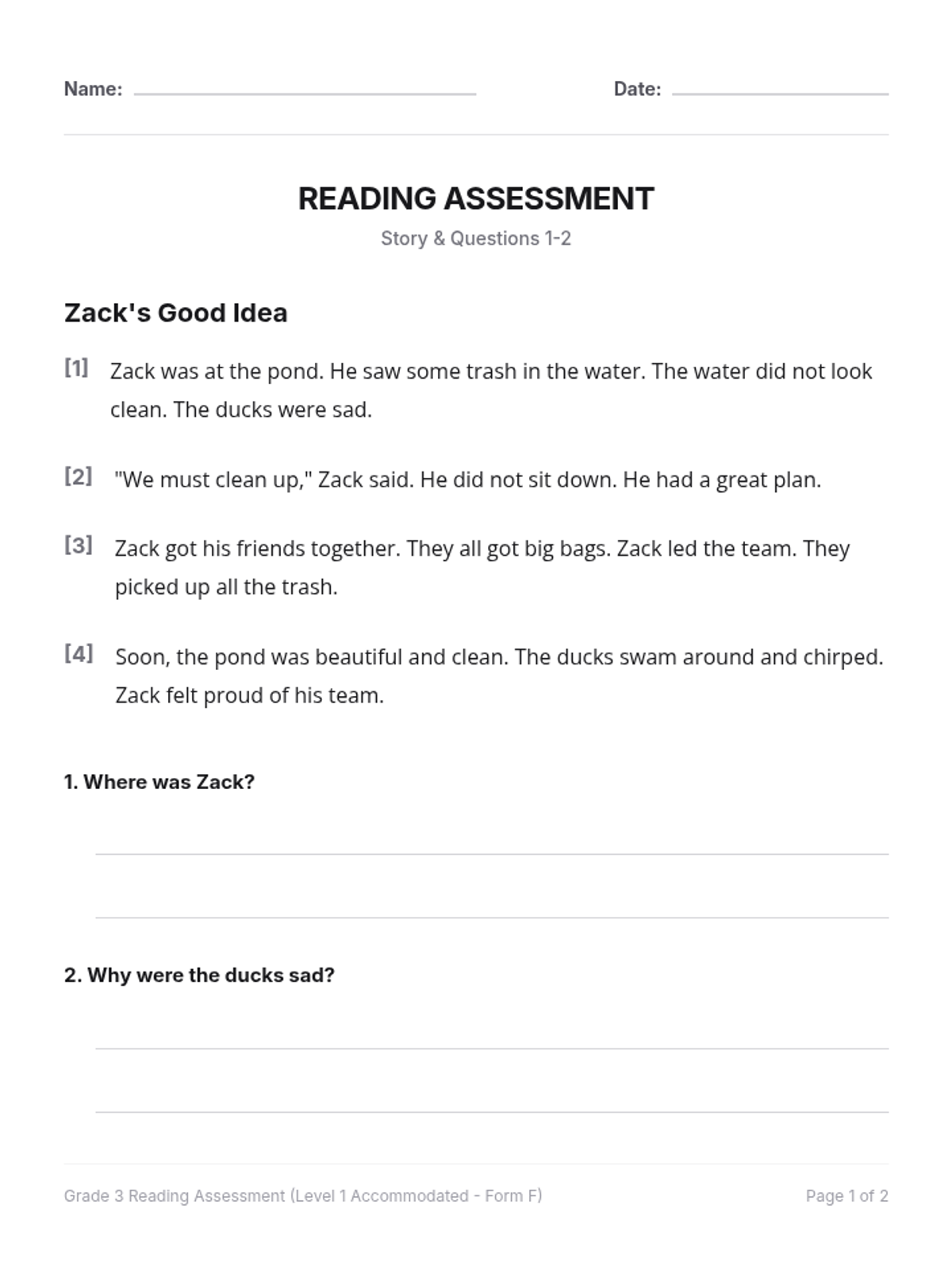
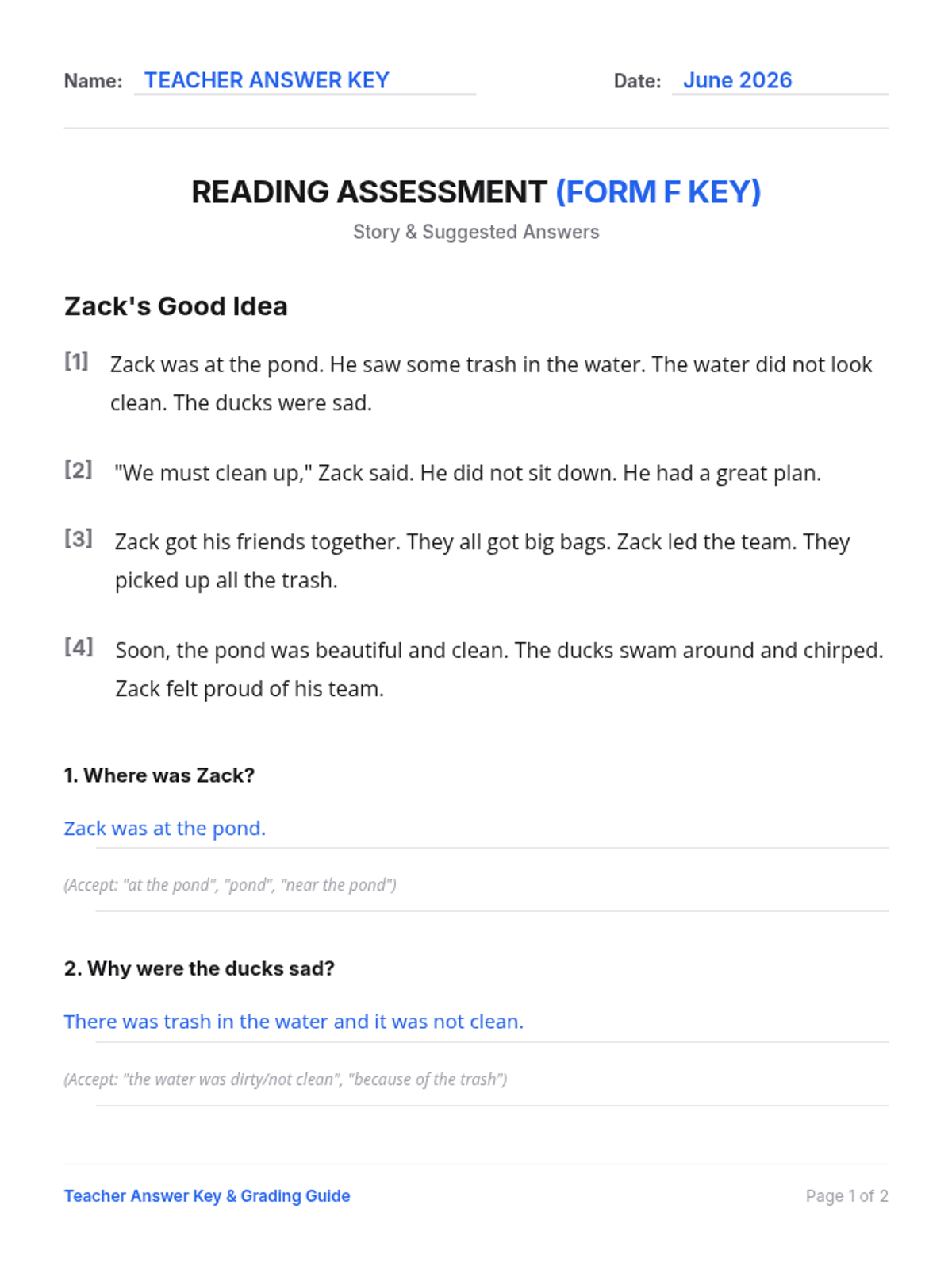
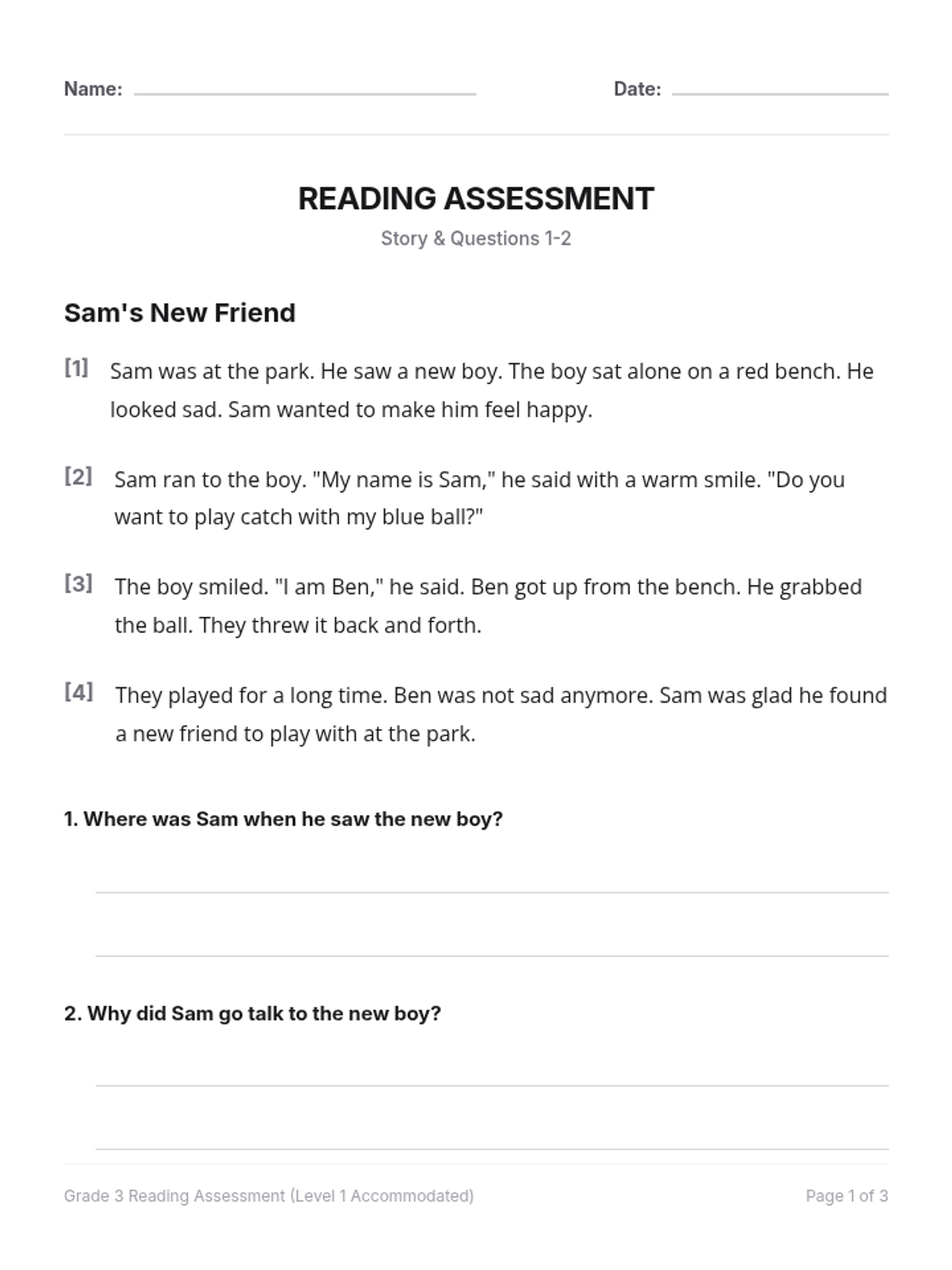
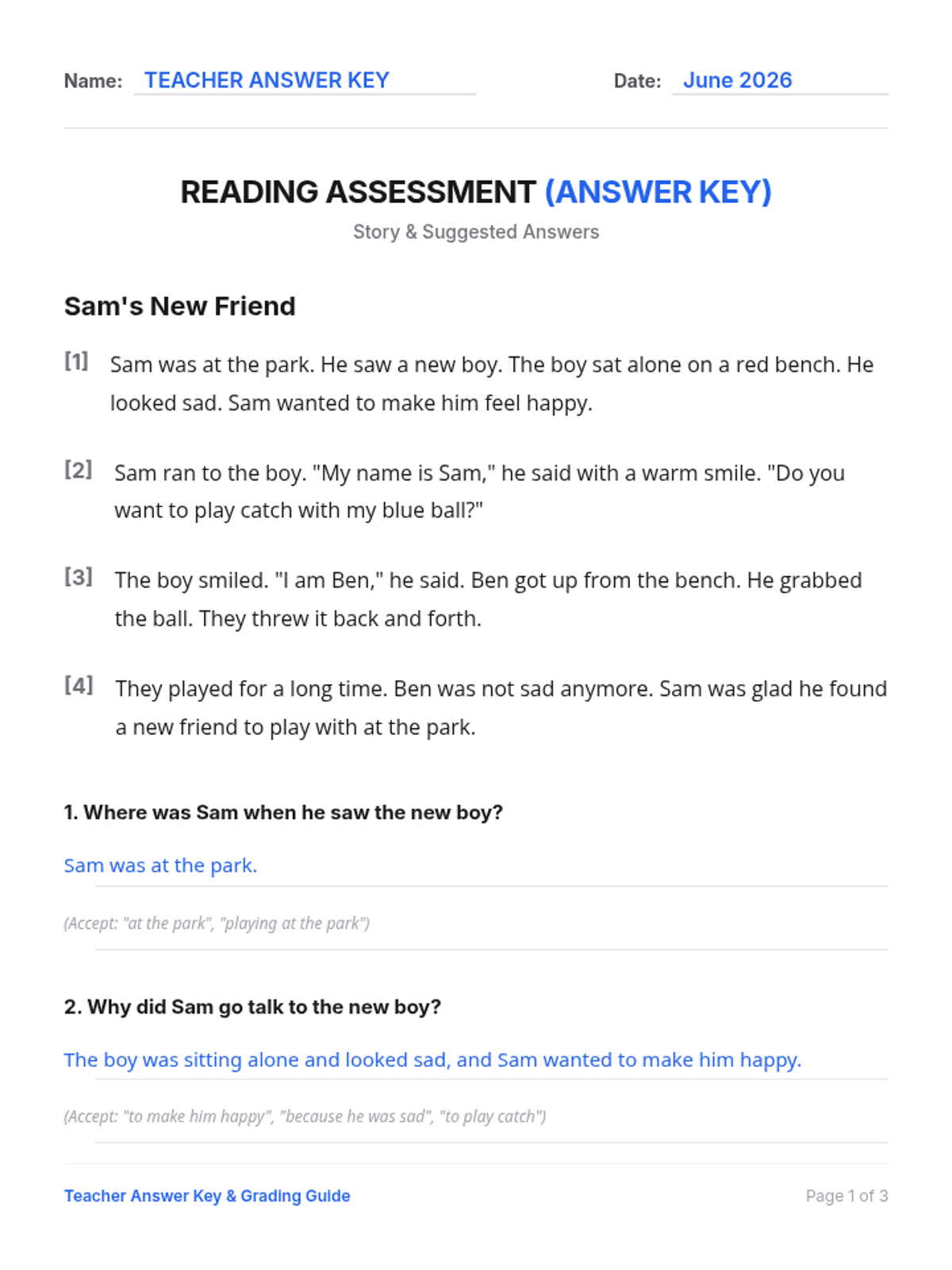
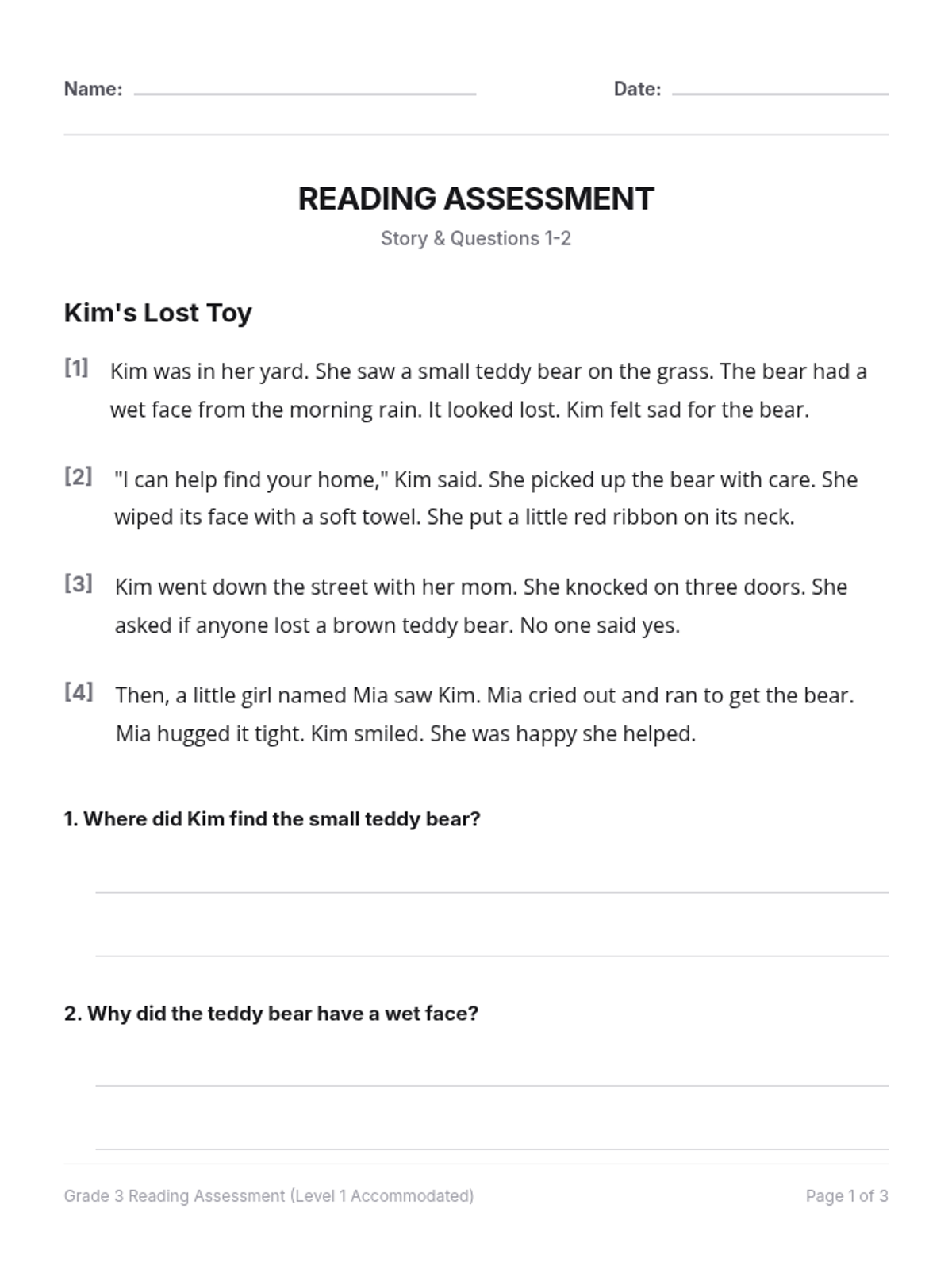
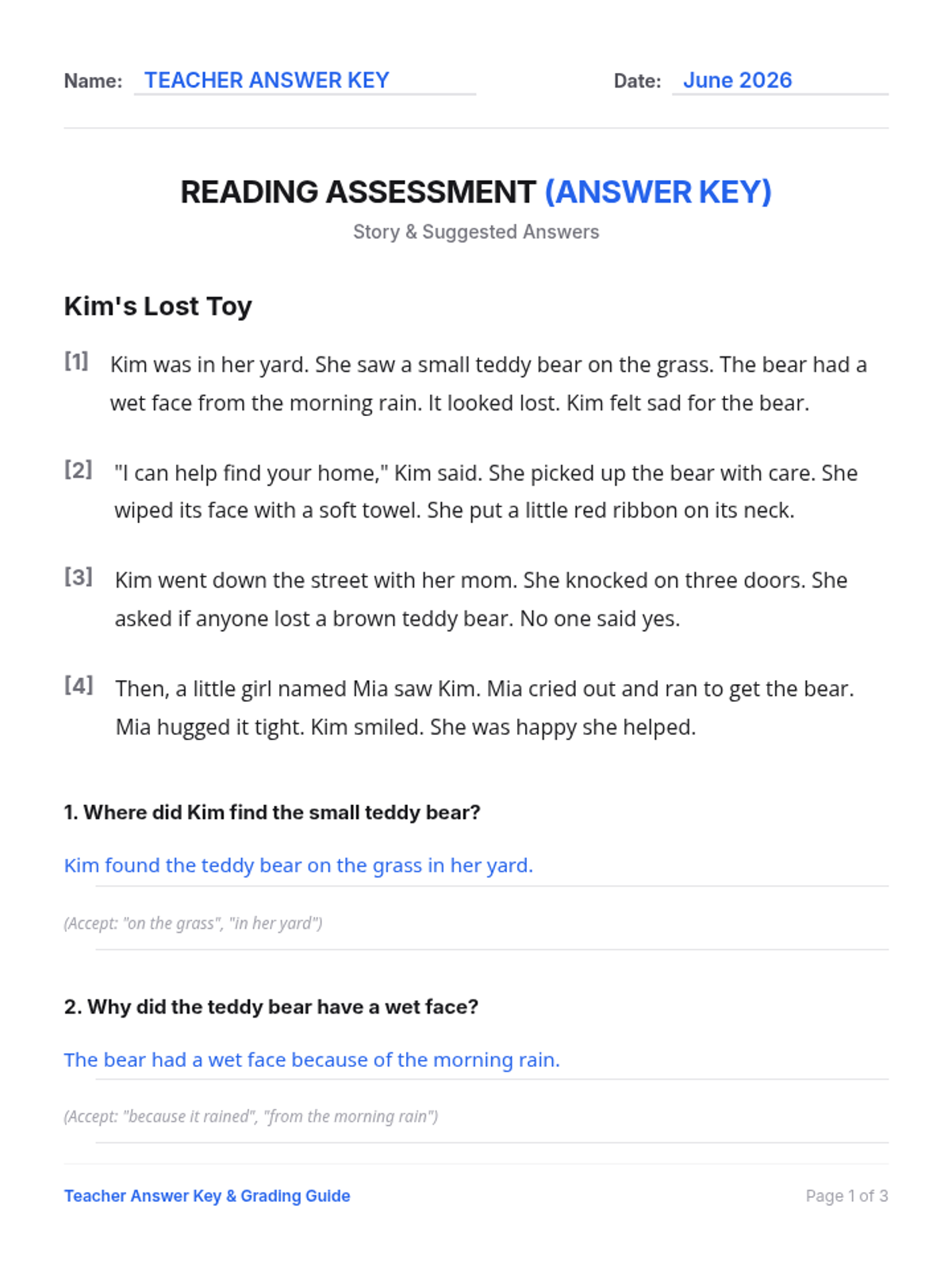
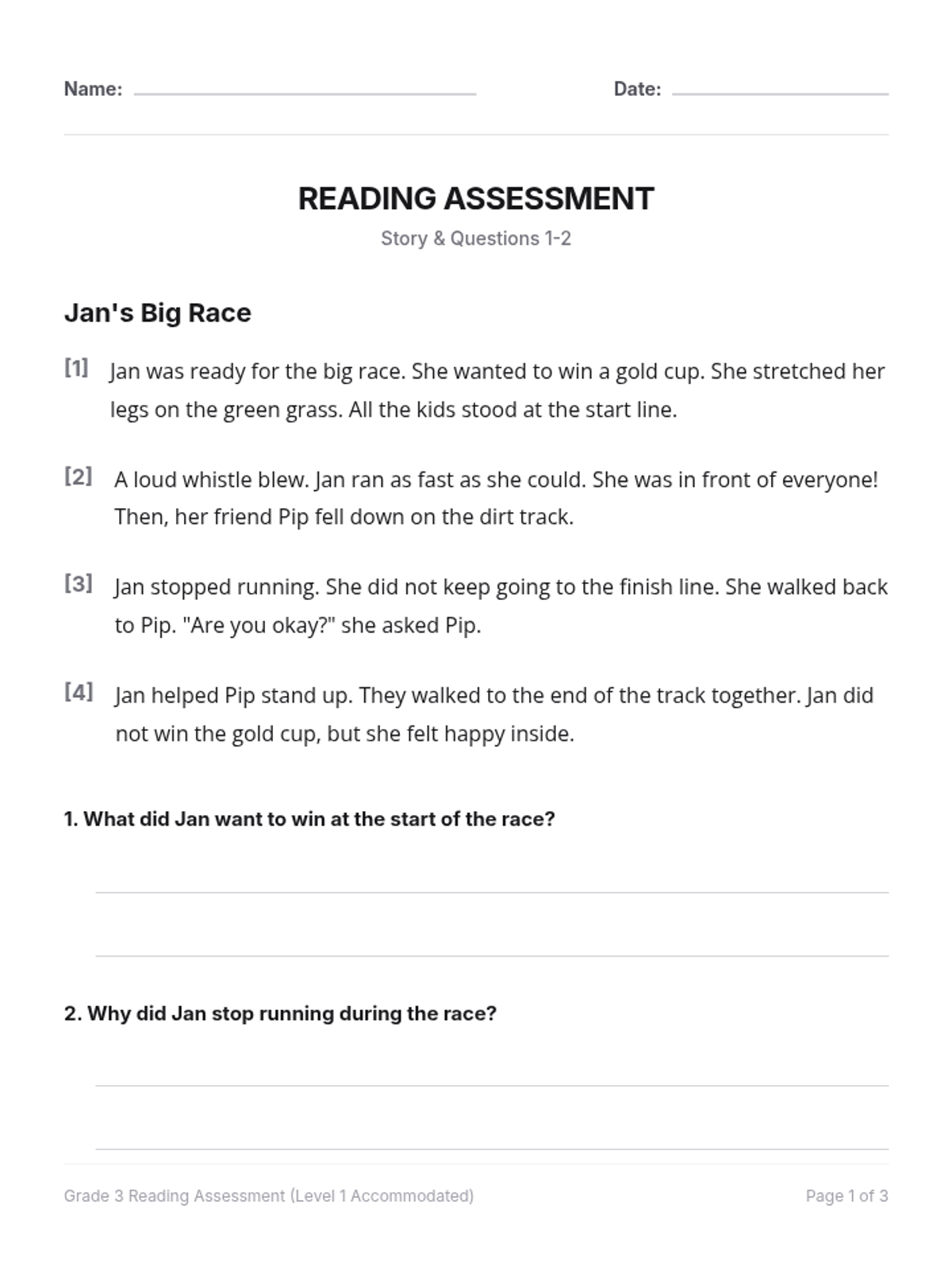
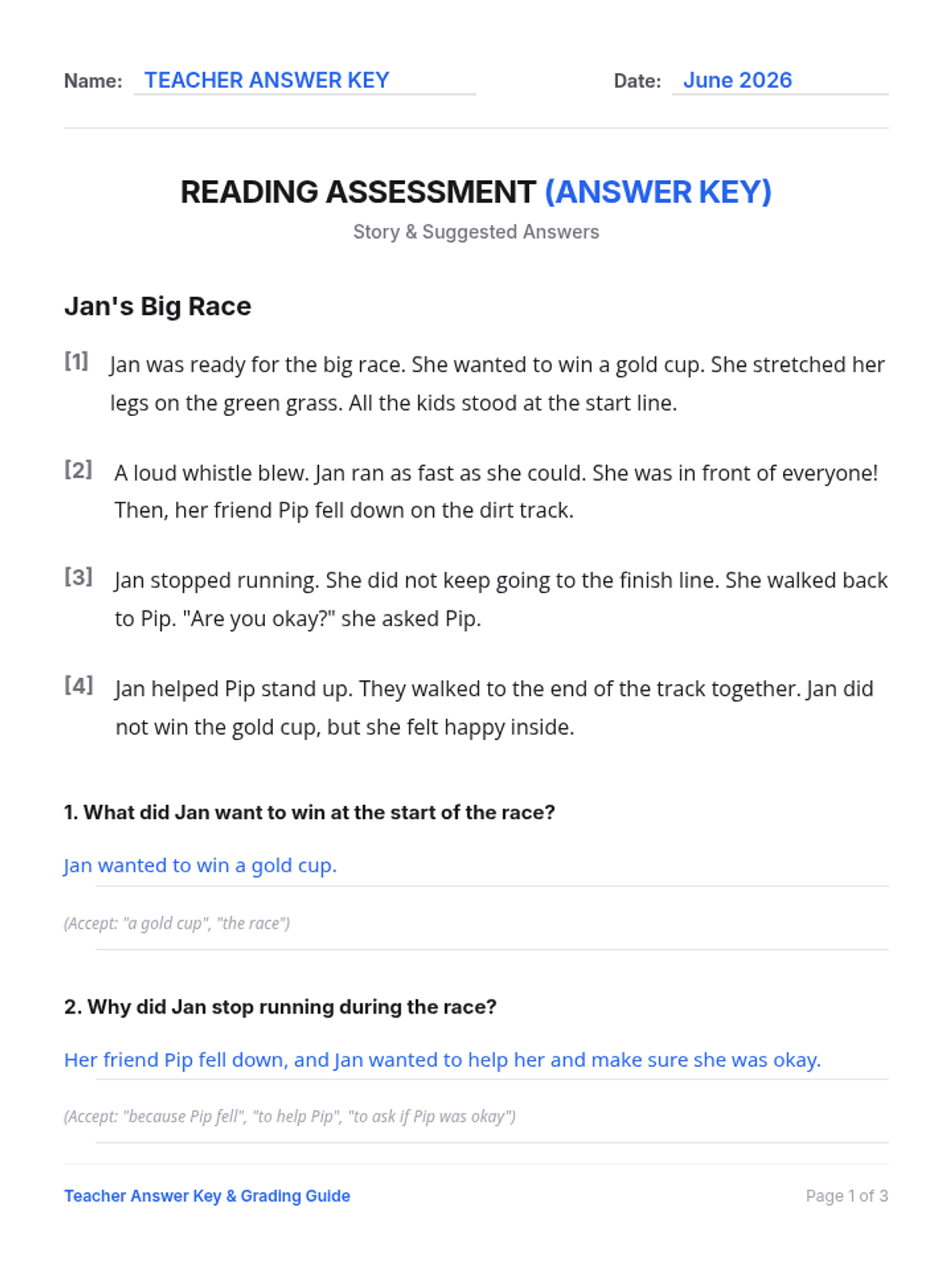
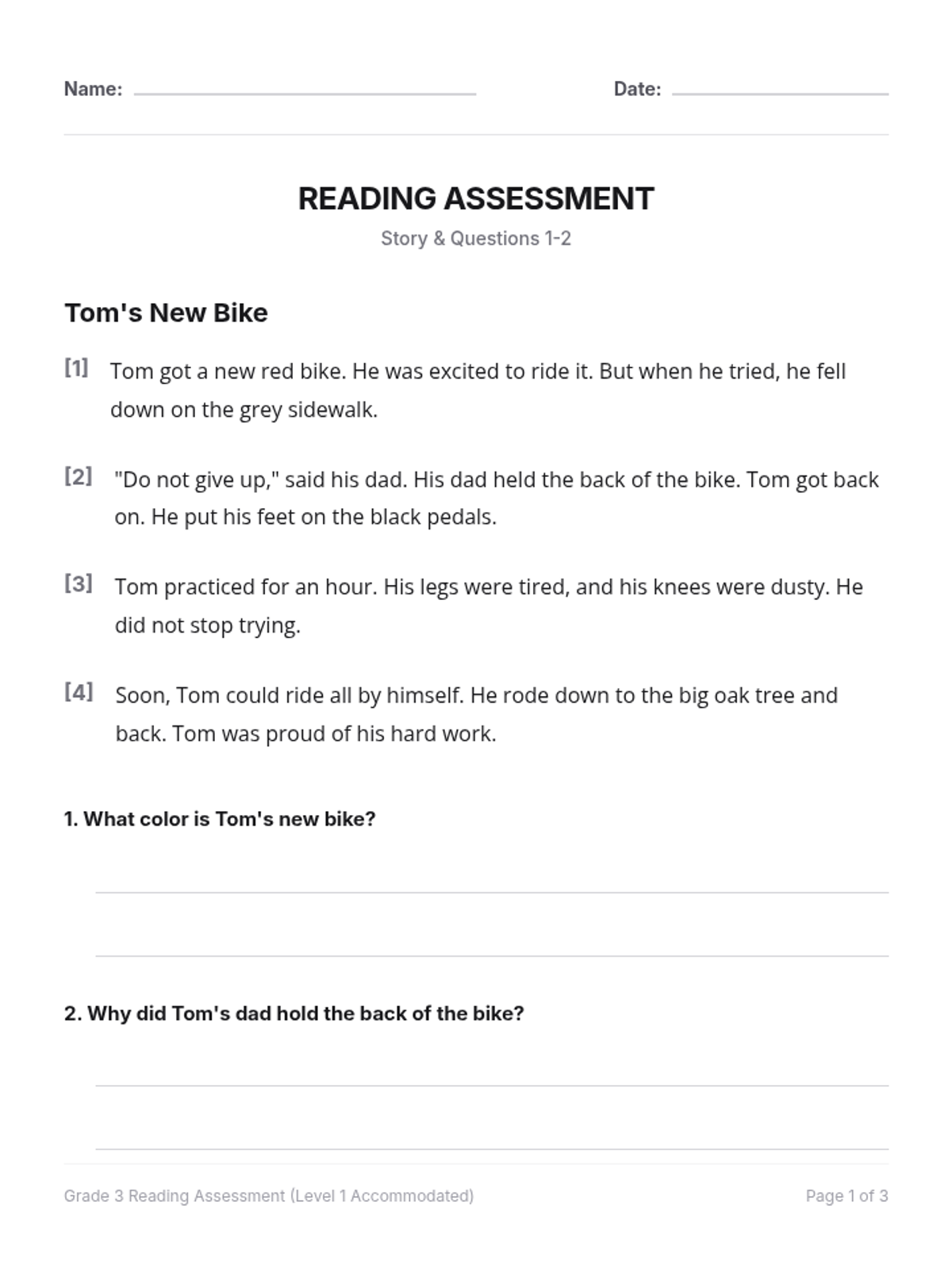
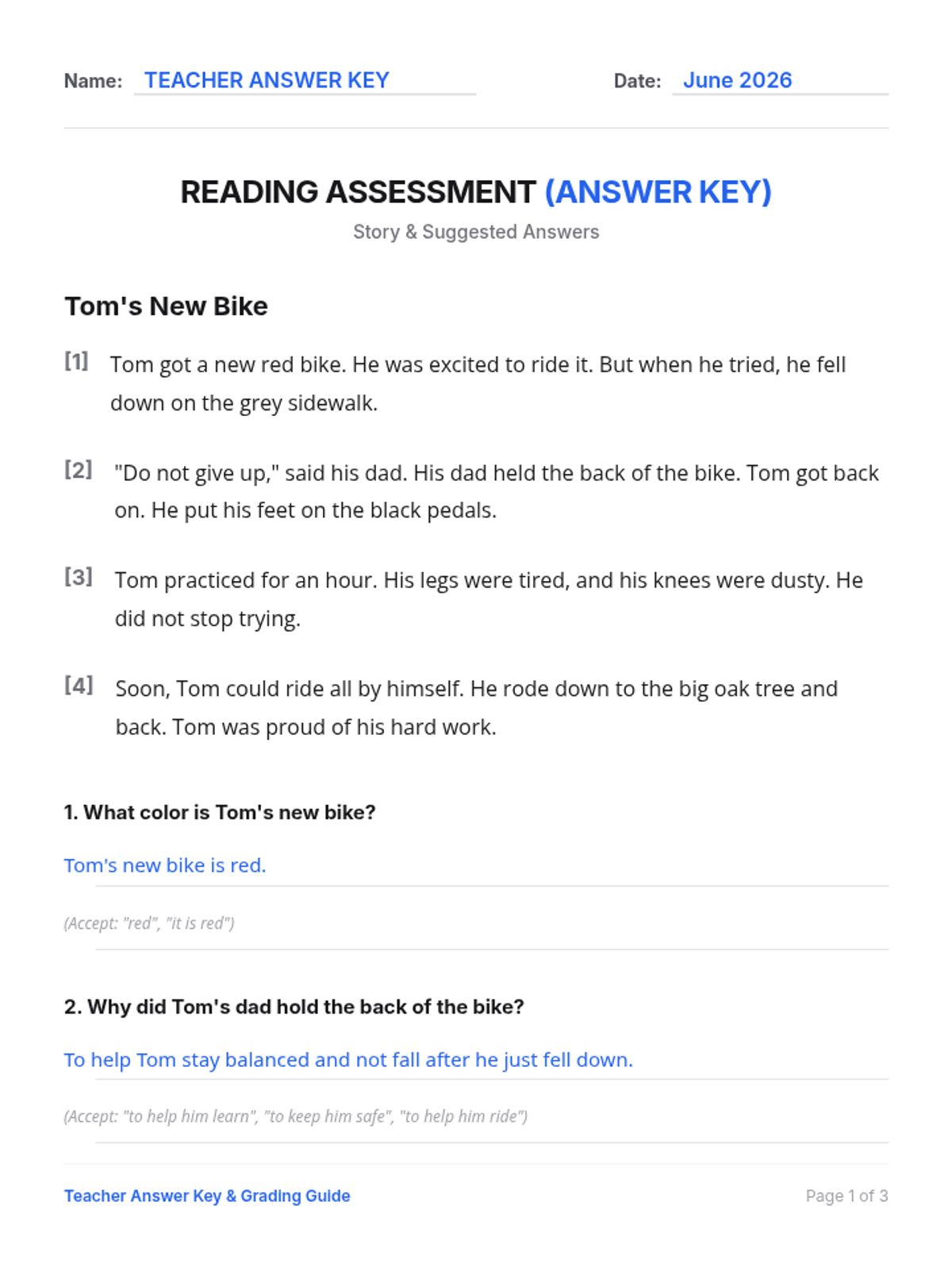
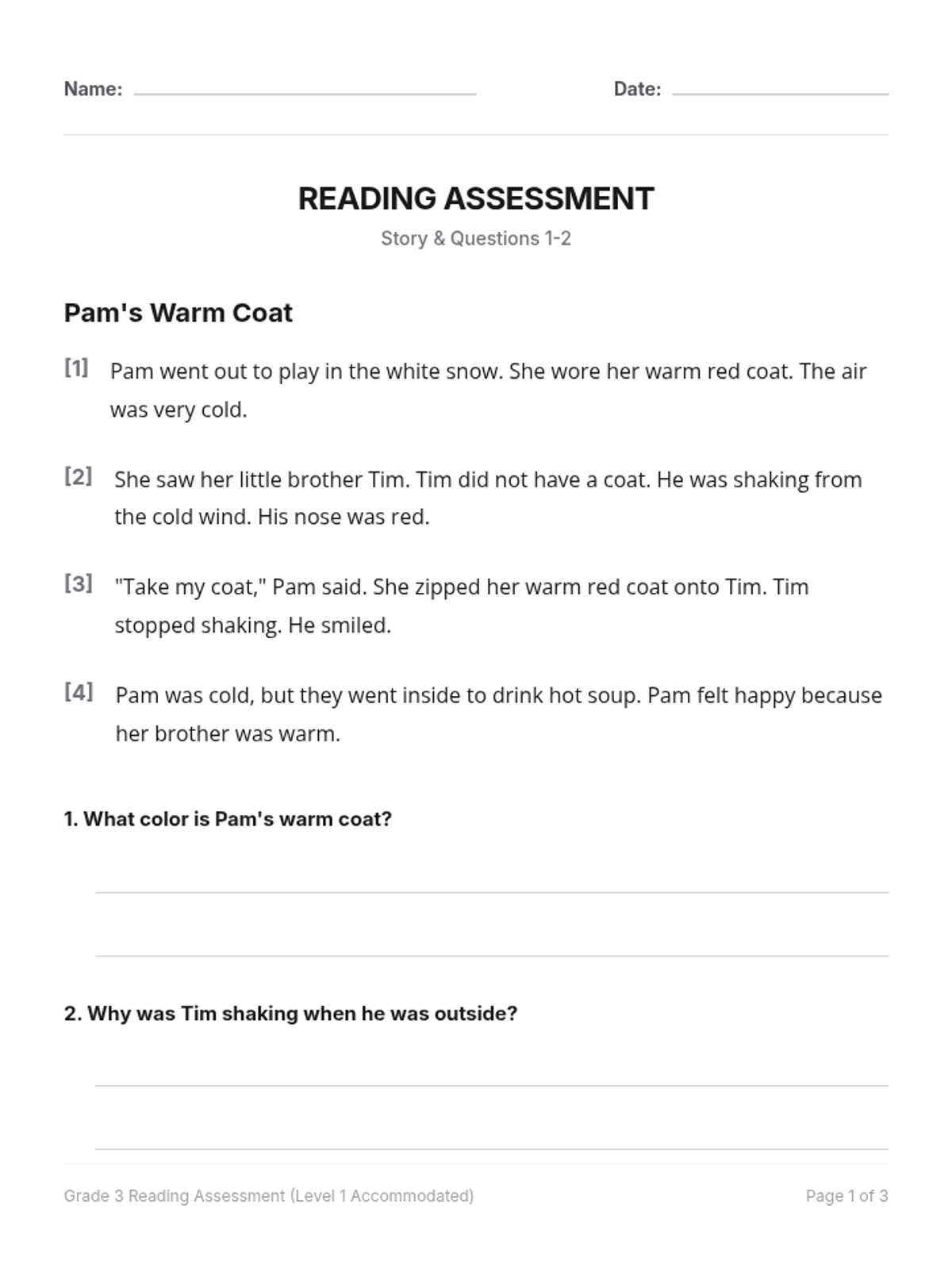
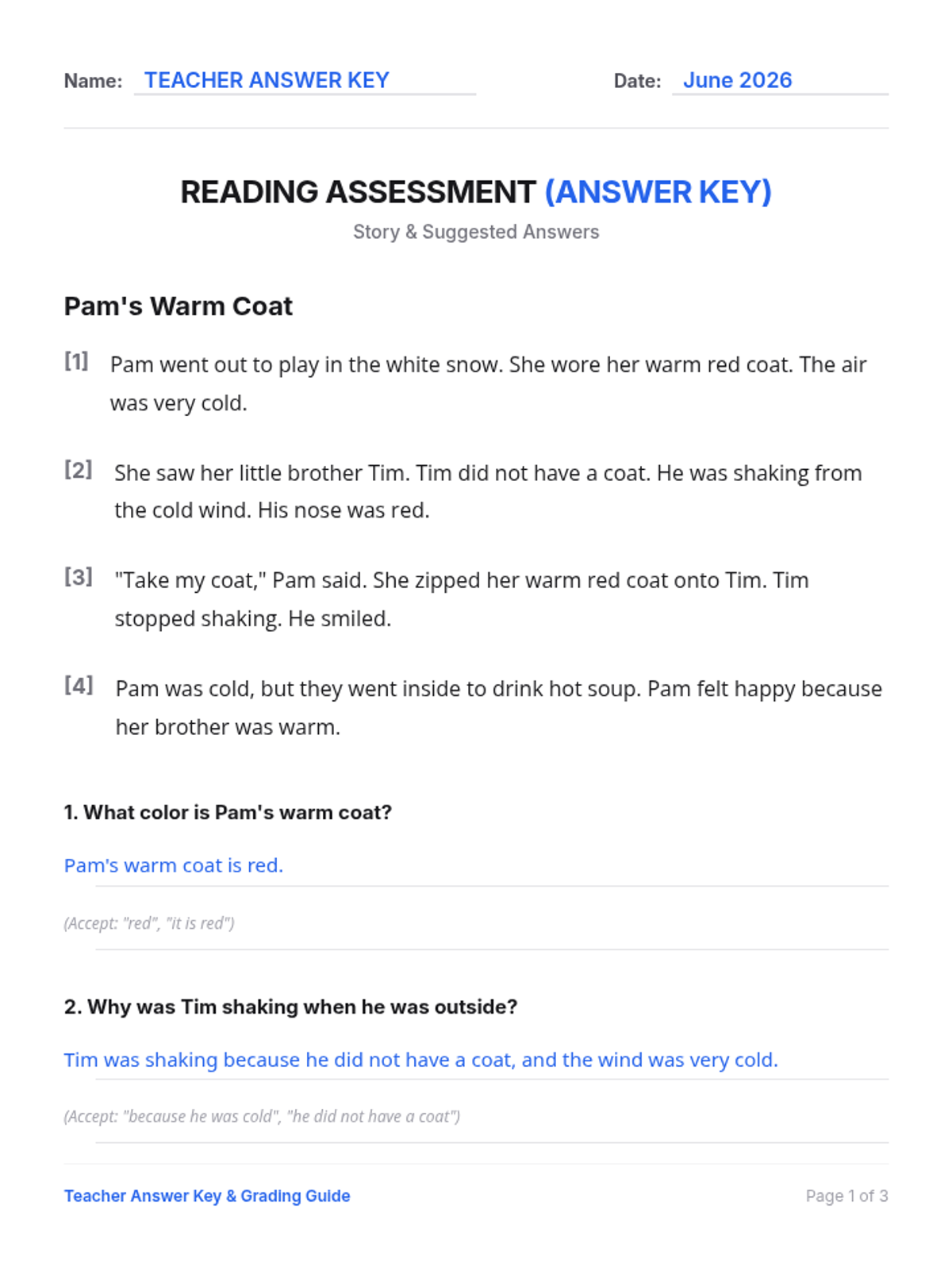
An accommodated reading assessment designed for a third-grade student reading at a first-grade level. Features a highly accessible passage, generous writing lines, explicit and implicit comprehension questions, and simplified layouts.
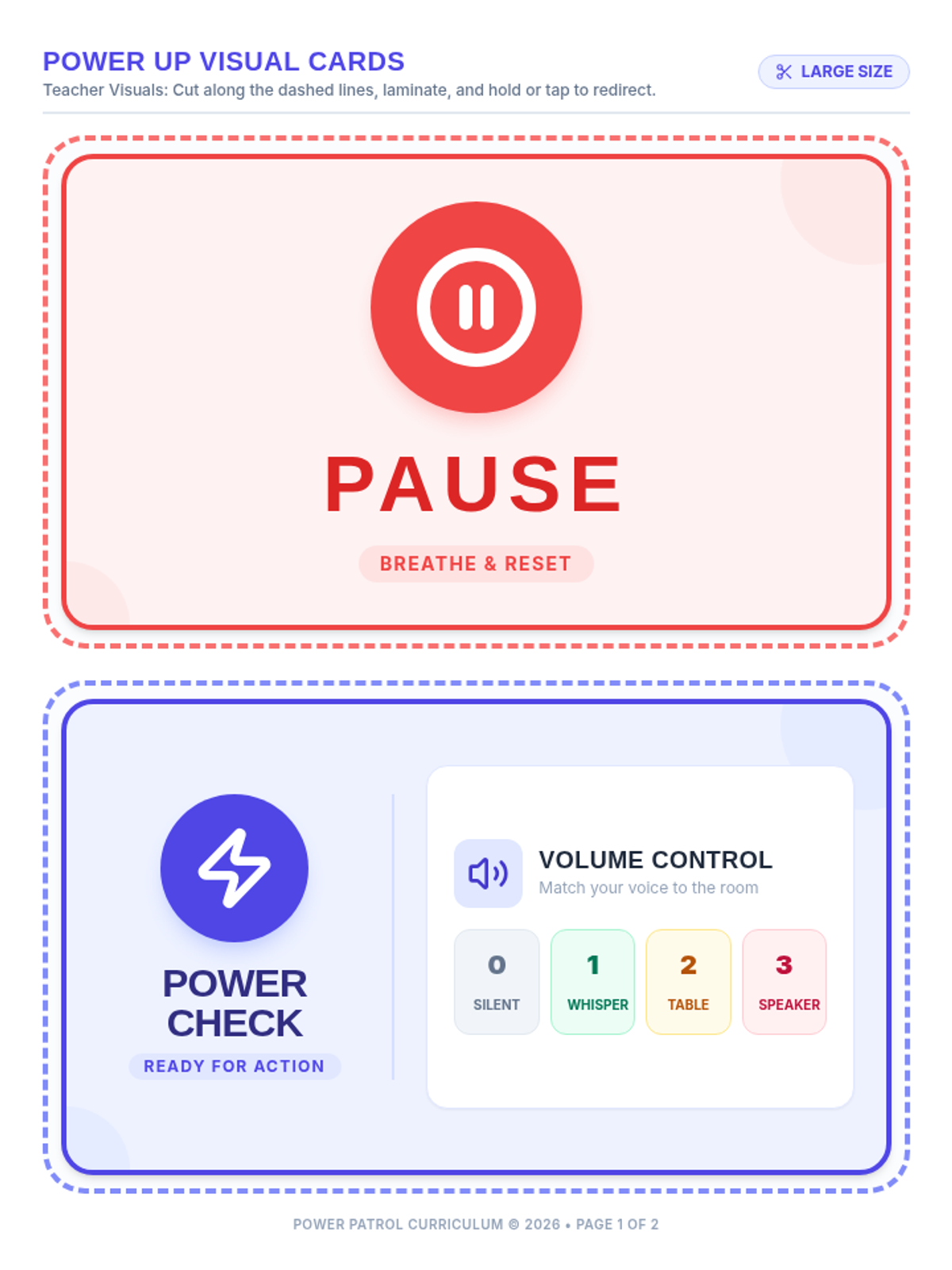
This lesson introduces self-regulation strategies using visual 'Pause' and 'Power Check' cards to help students monitor and control their body movement, personal space, and vocal volume.
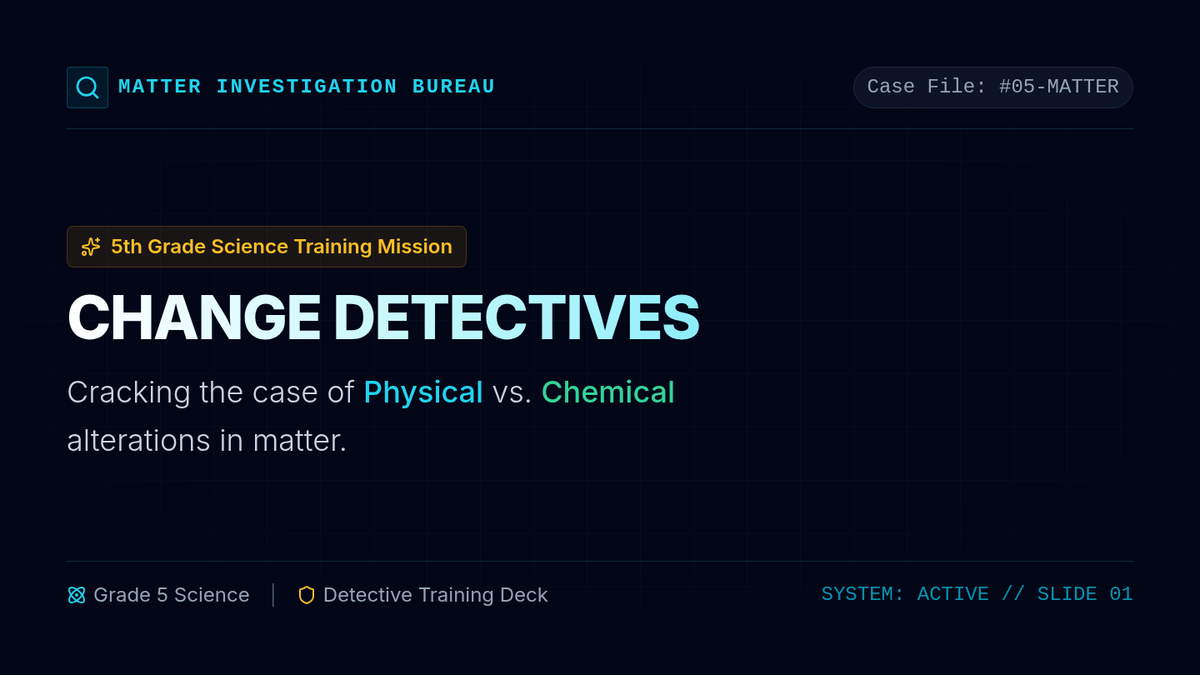
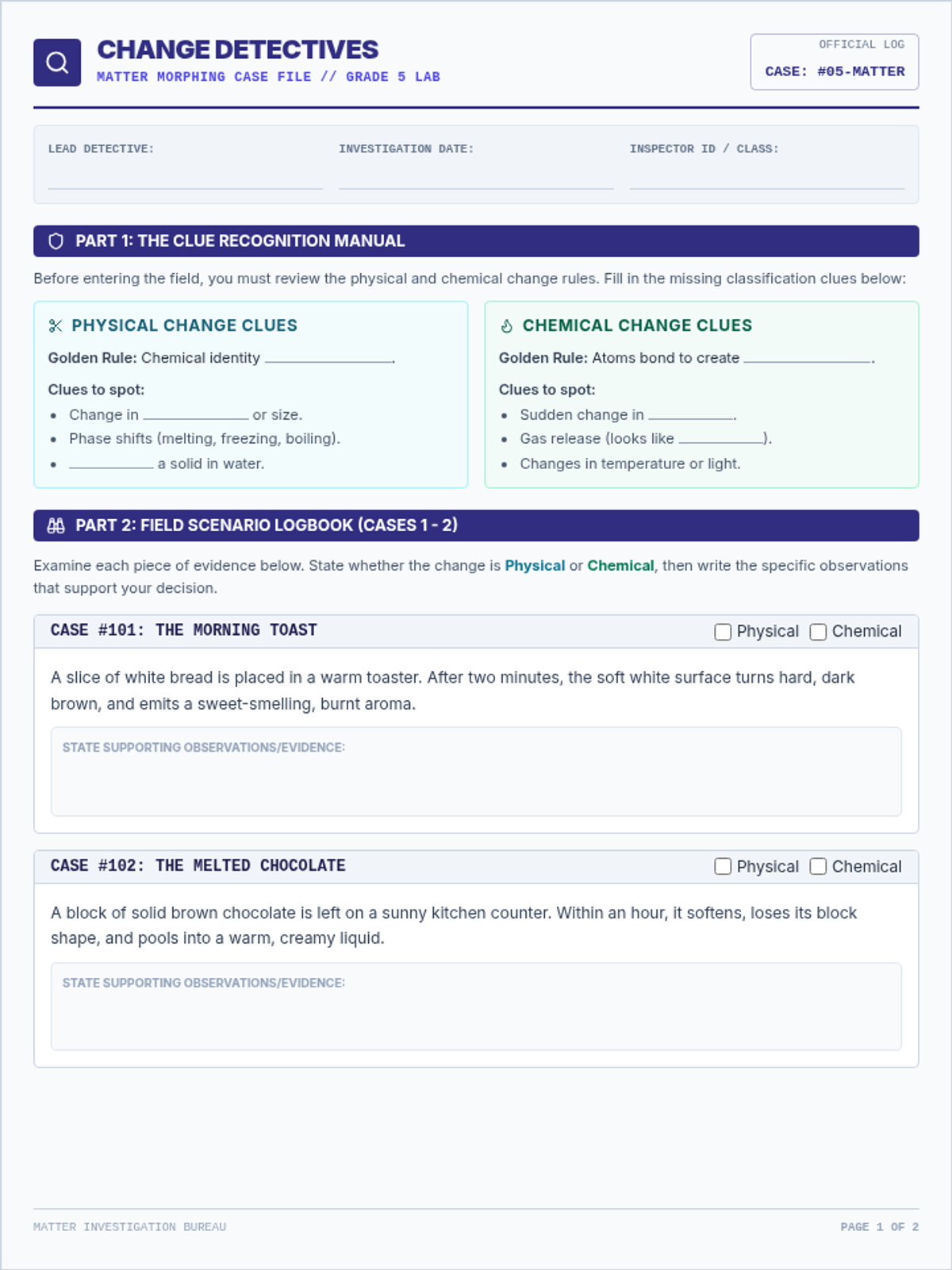
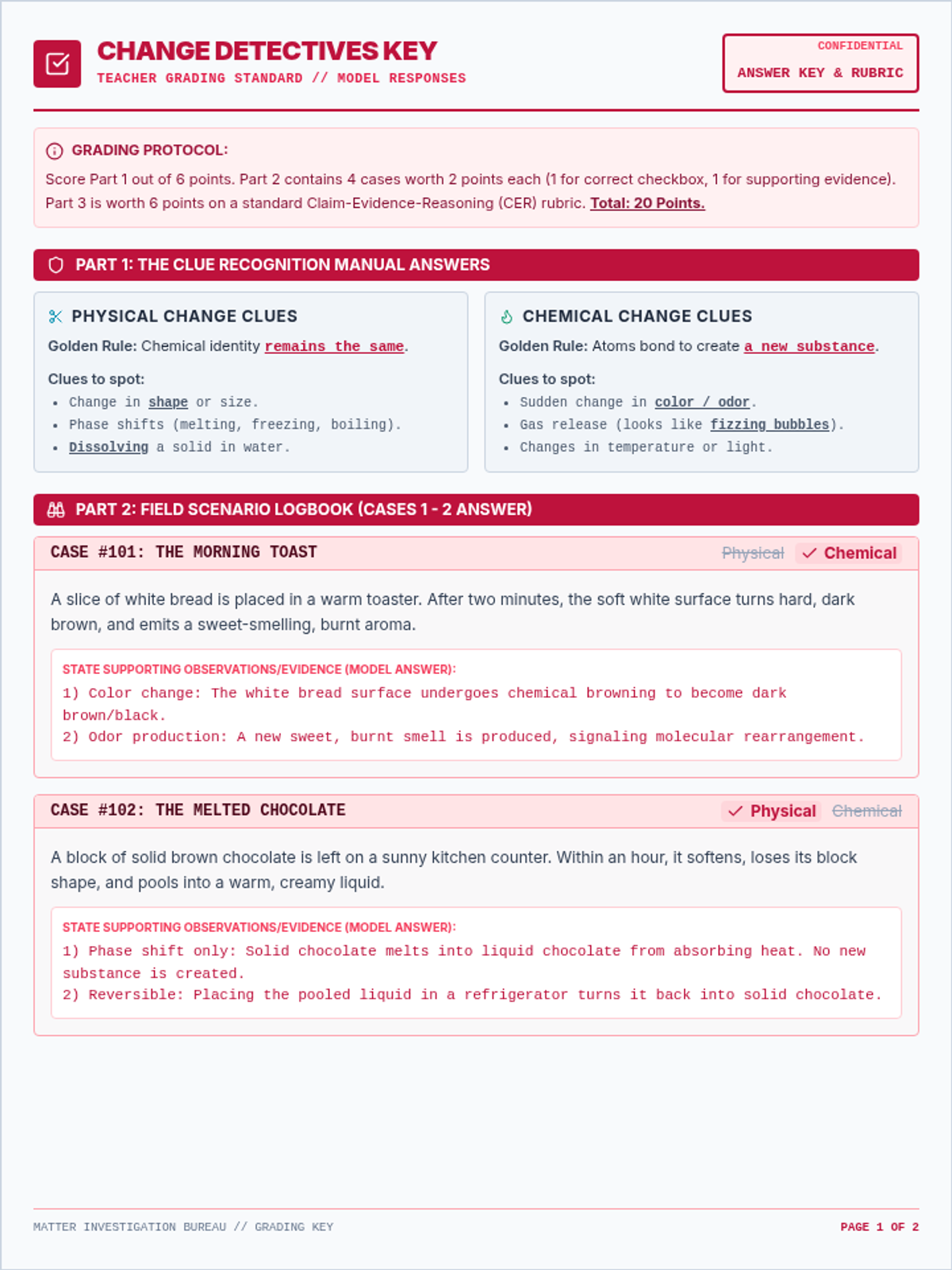
An interactive 5th-grade science lesson introducing physical and chemical changes. Students act as "change detectives," examining clues to classify alterations in matter and investigating real-world scenarios.
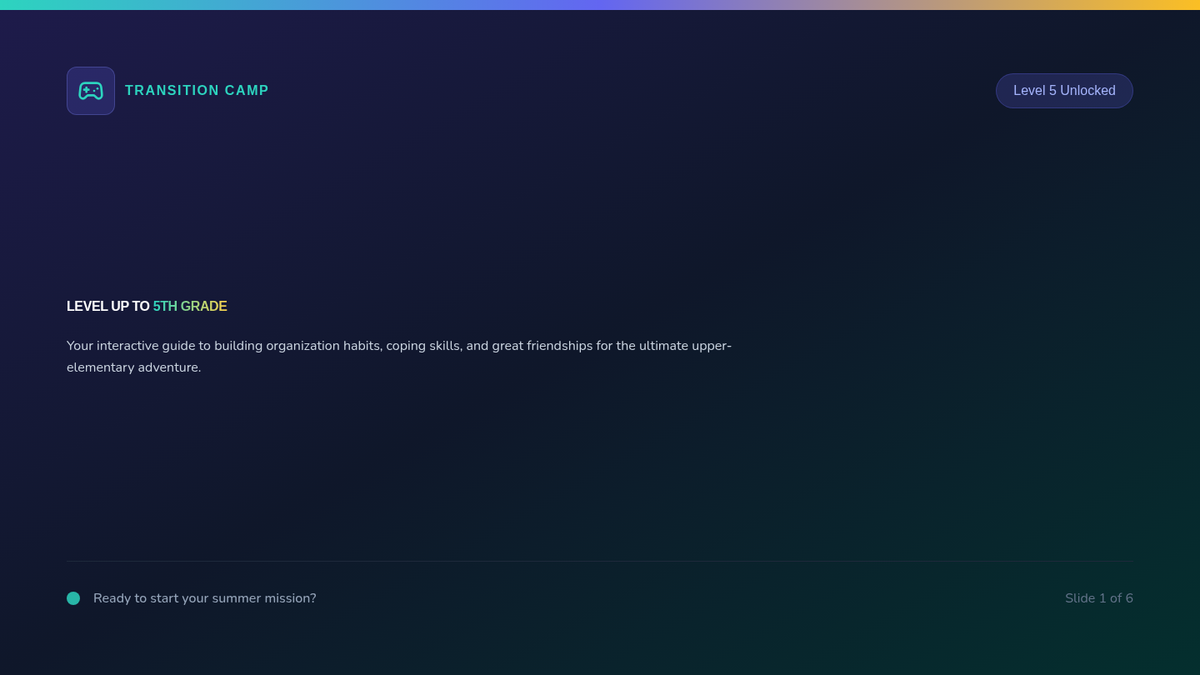
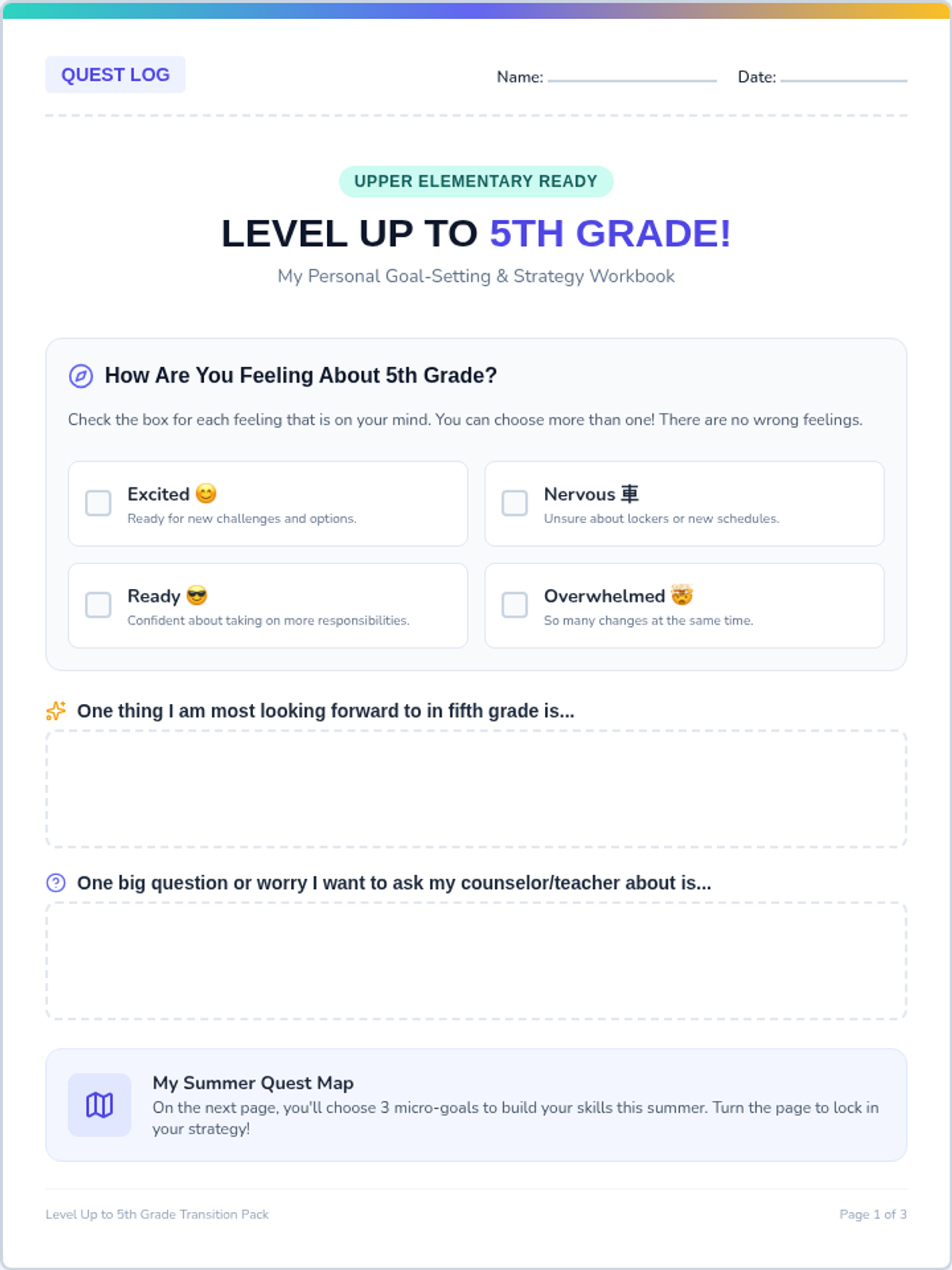
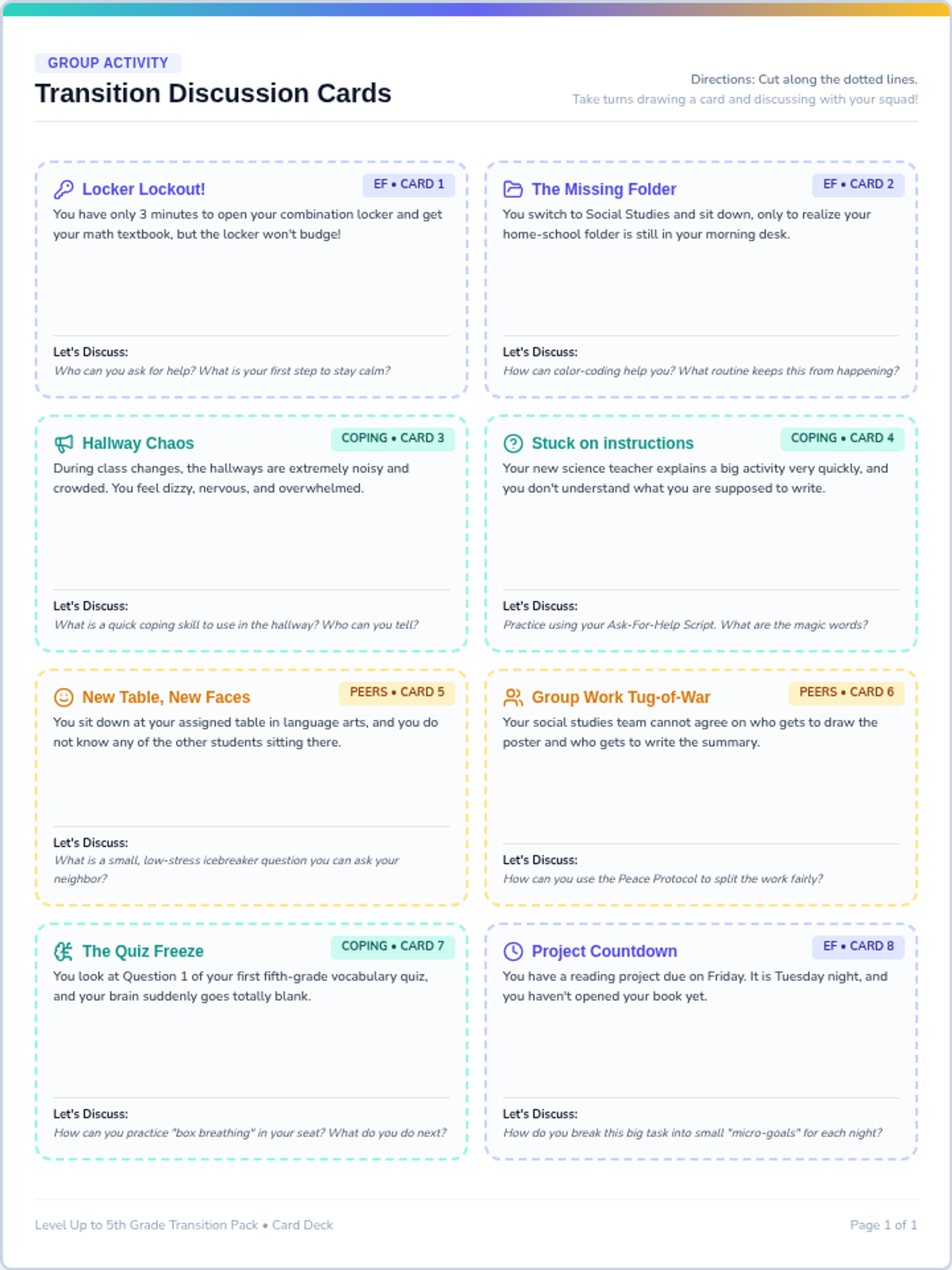
A comprehensive transition lesson package designed for rising 5th-grade special education students. It features an instructional slide deck, a structured goal-setting workbook, and discussion task cards to help students master executive functioning, coping, and social skills before middle school/upper elementary transition.
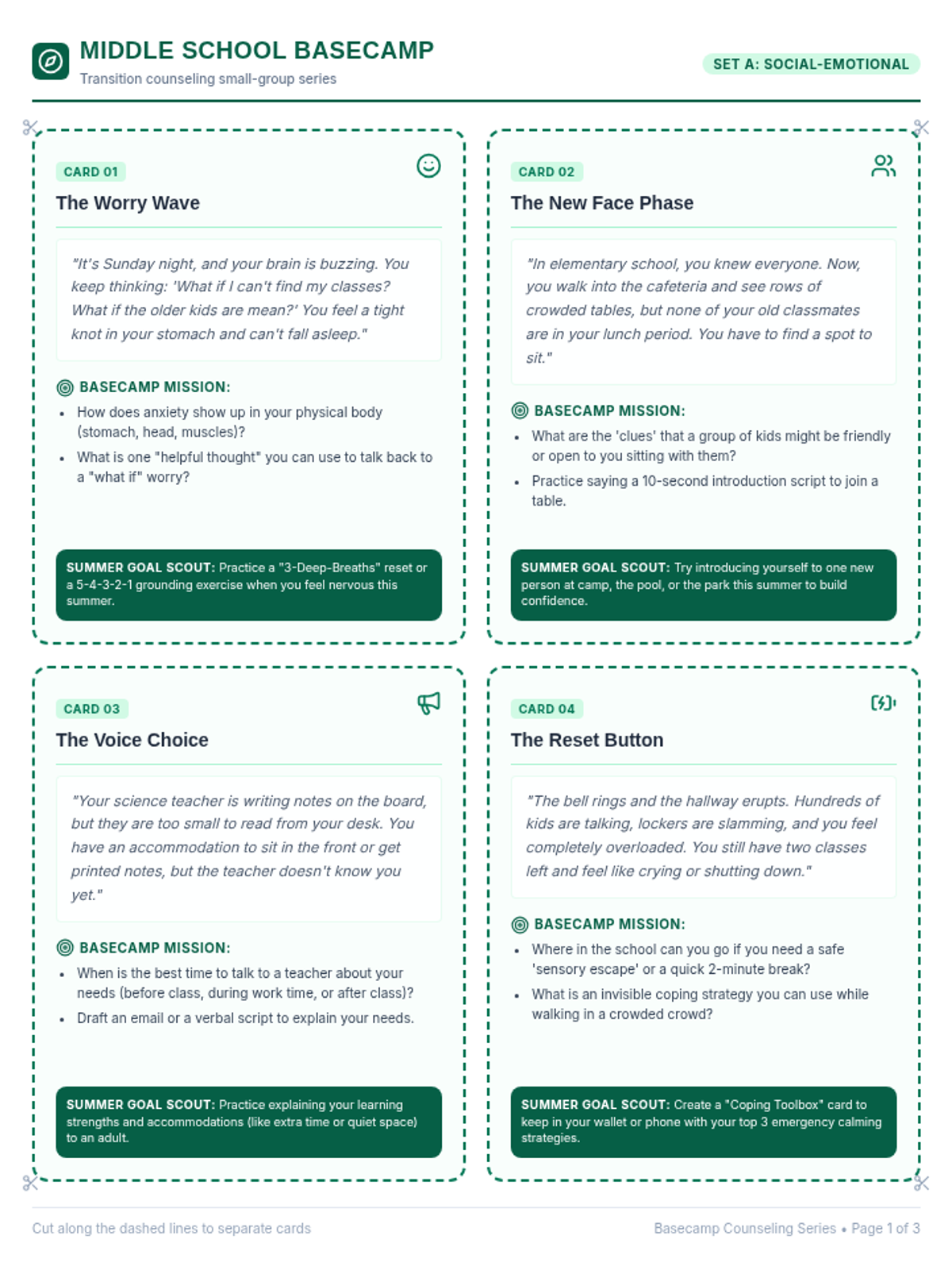
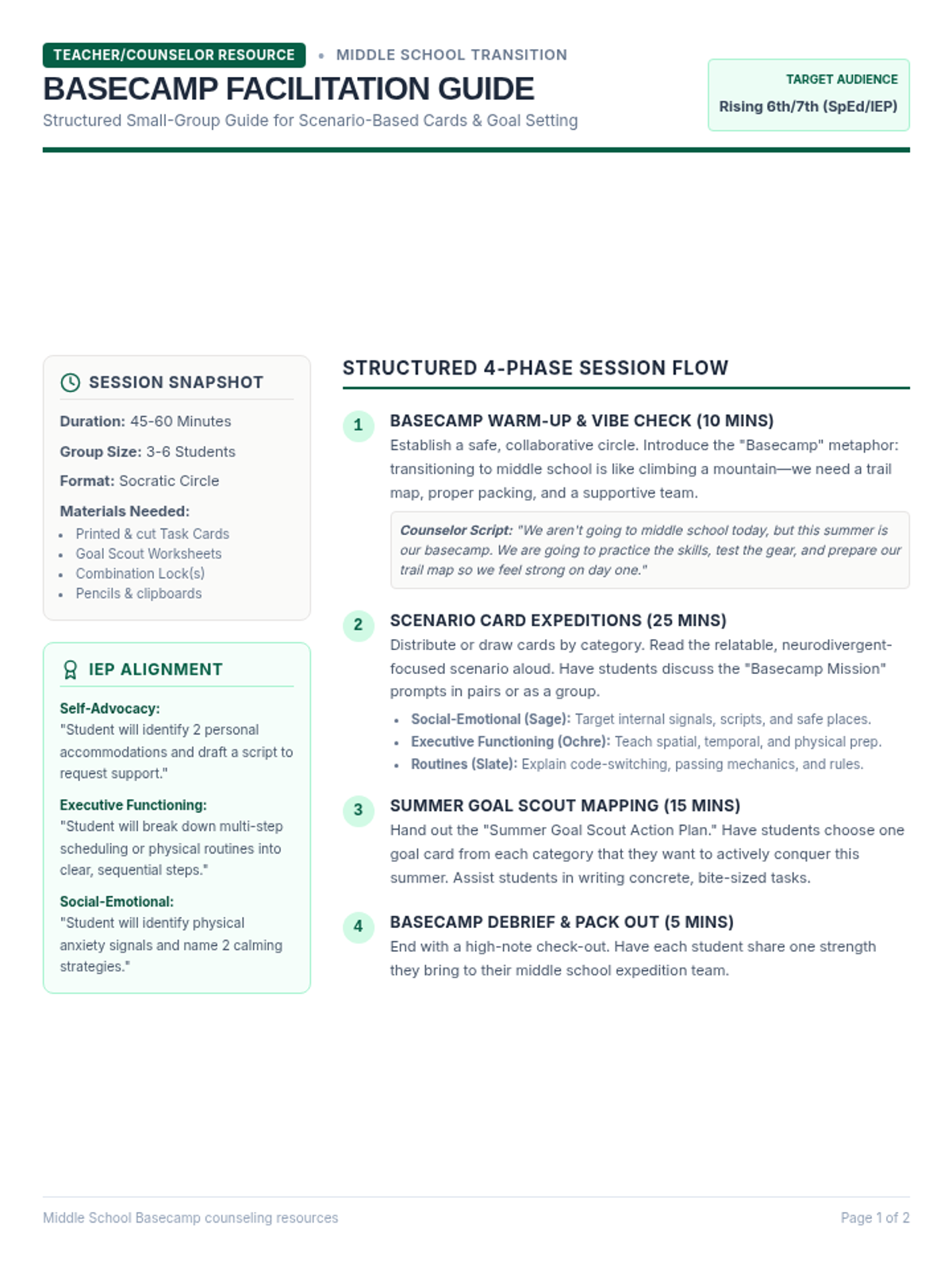
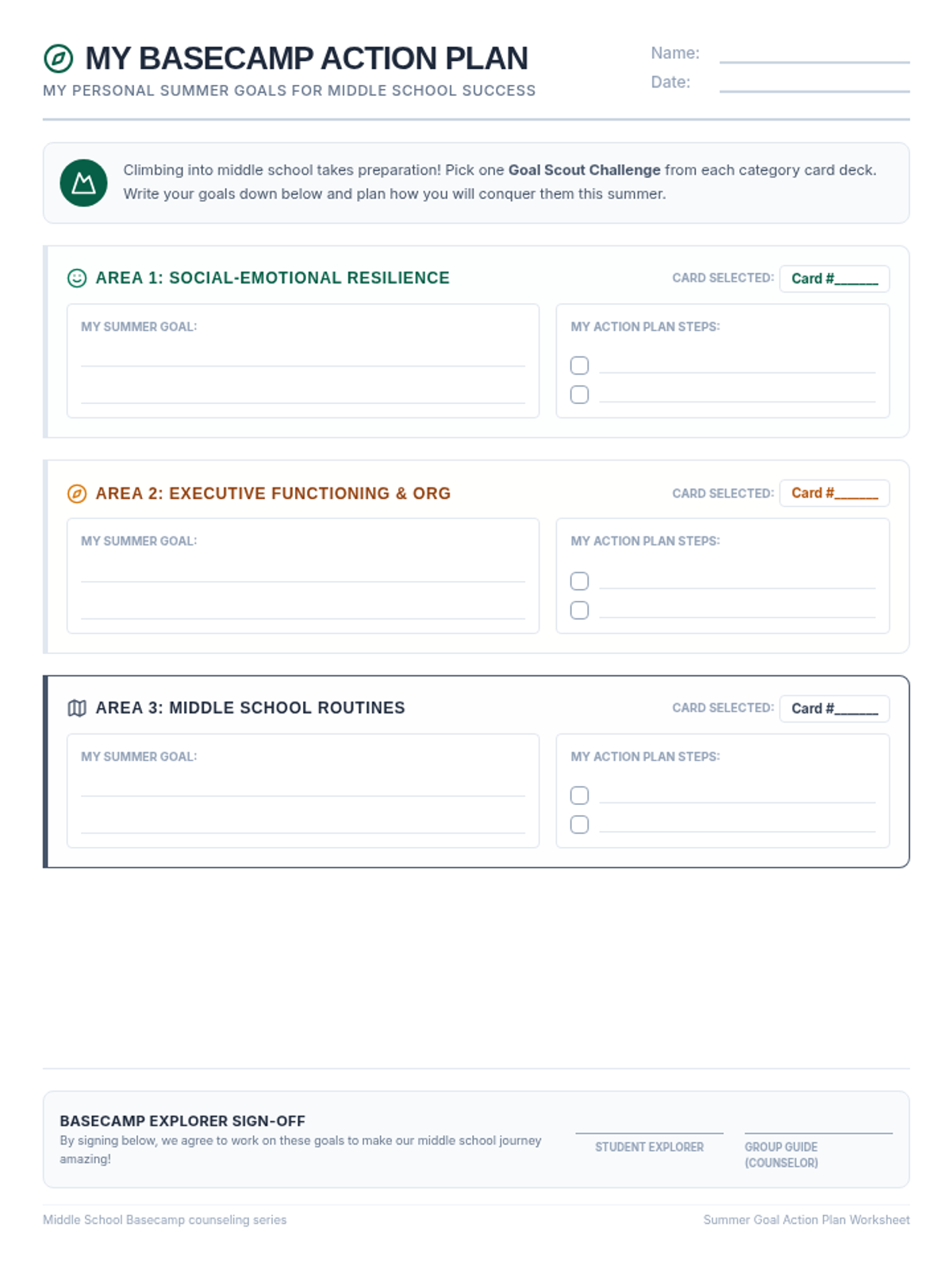
A small-group transition counseling lesson designed to prepare rising special education students for middle school. The lesson uses scenario-based discussion cards and action-planning worksheets to target social-emotional resilience, executive functioning, and navigating new school routines.
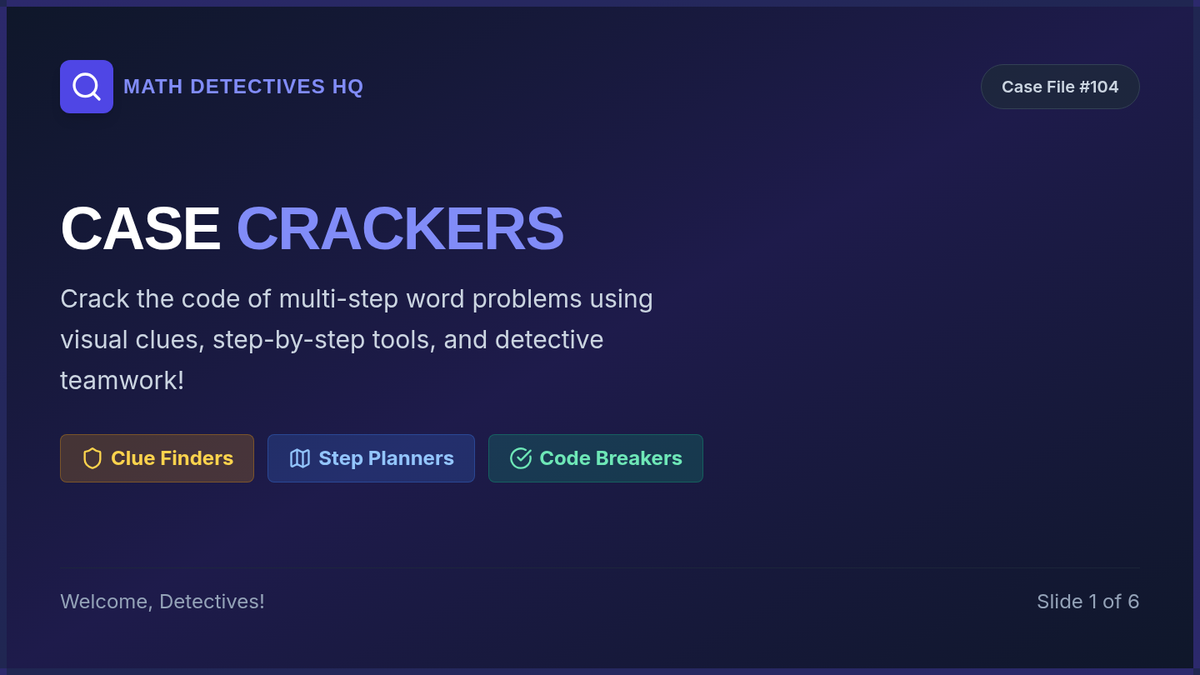
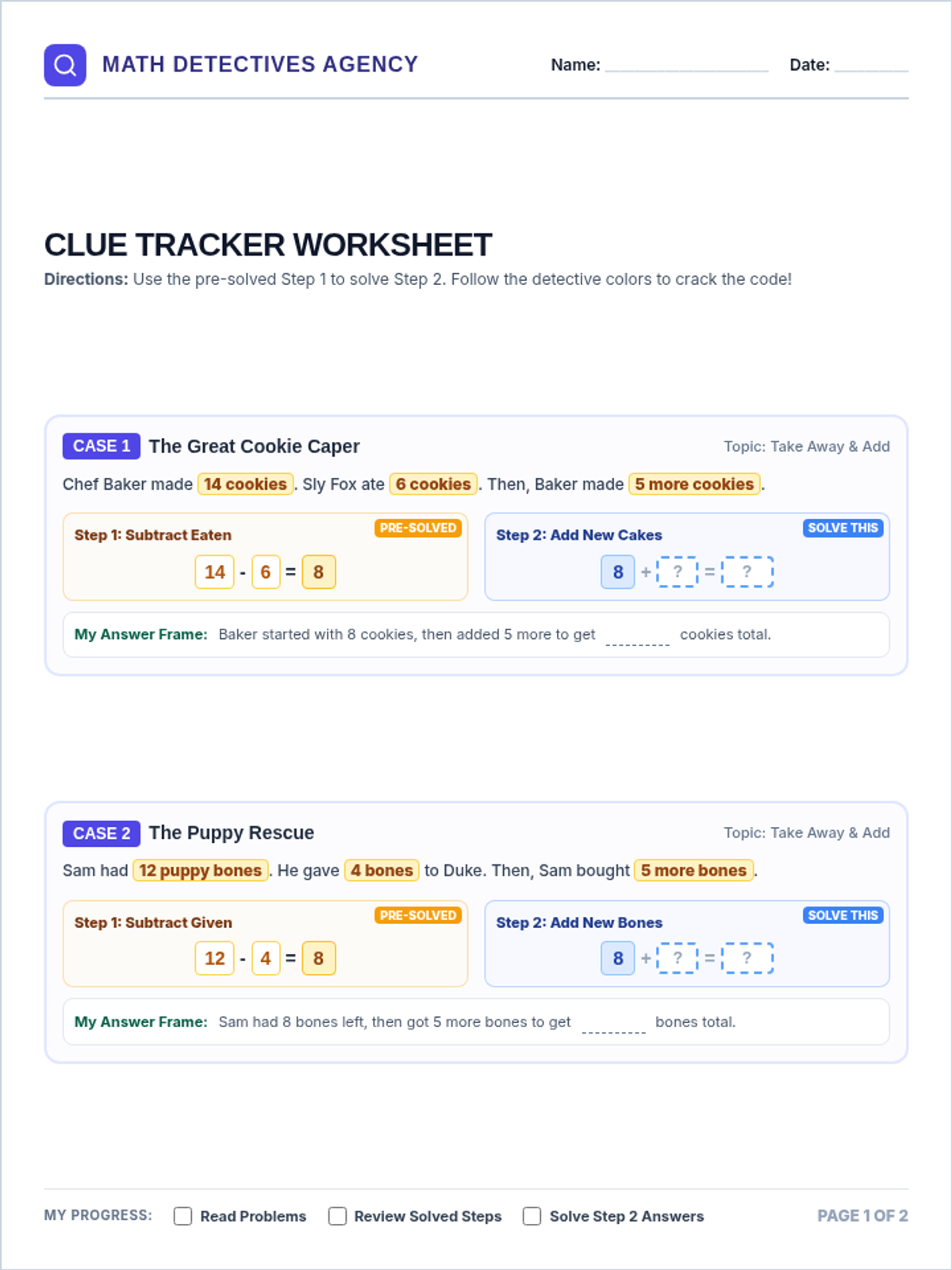
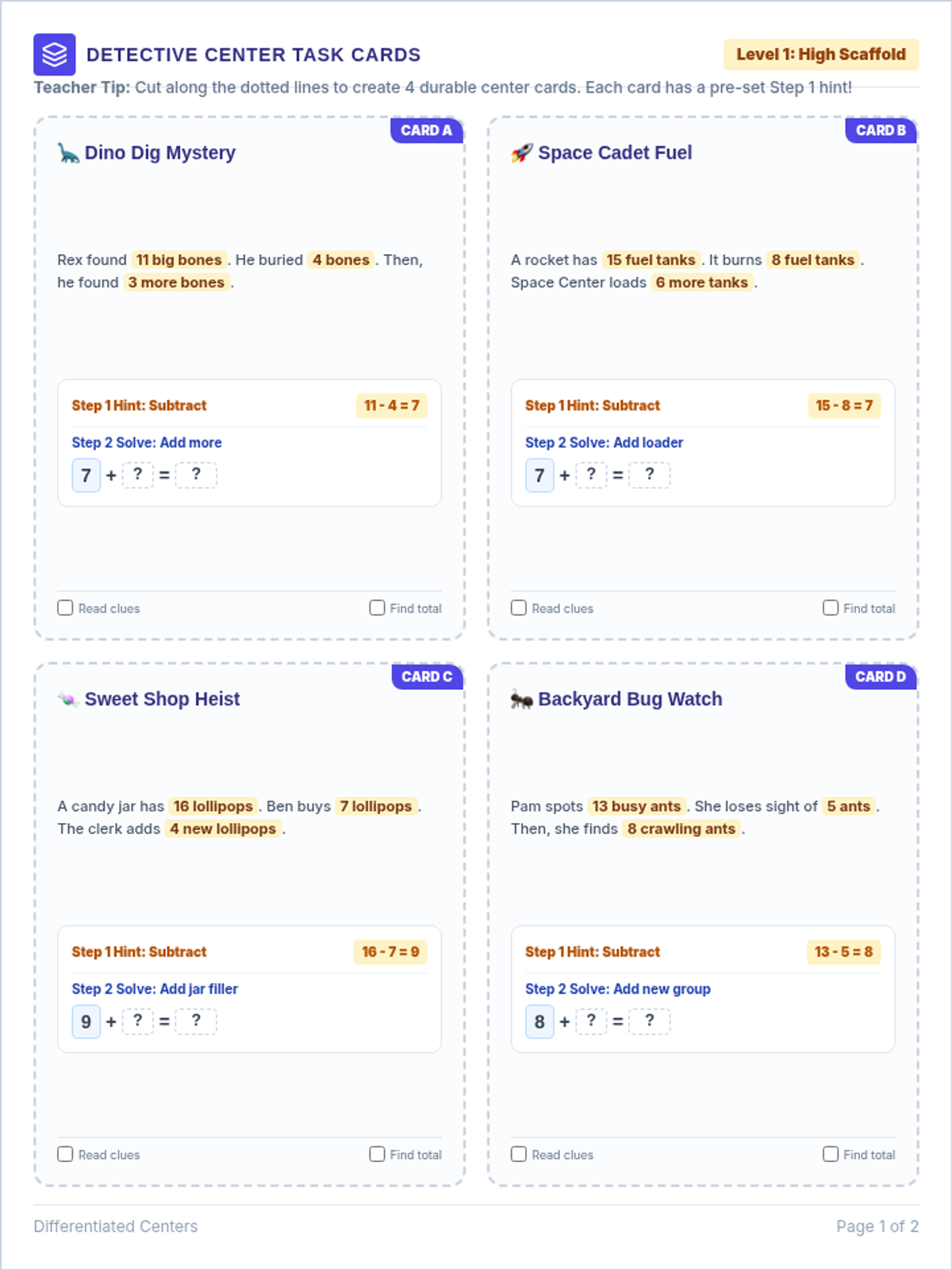
A structured lesson designed for IEP students to master multi-step word problems using a 'Math Detectives' theme. Includes visual guides, color-coded step-by-step scaffolds, sentence frames, and partially-completed templates.
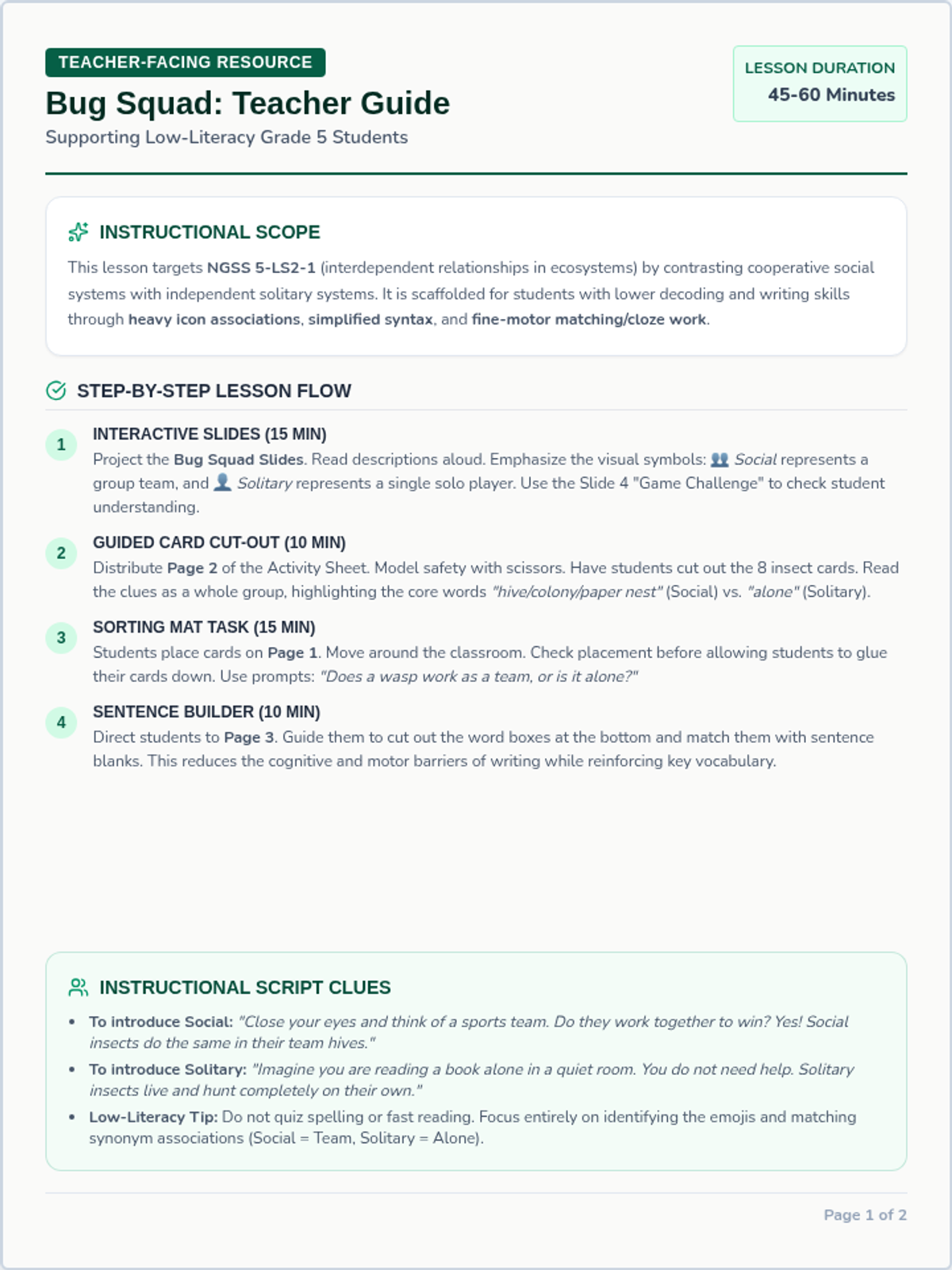
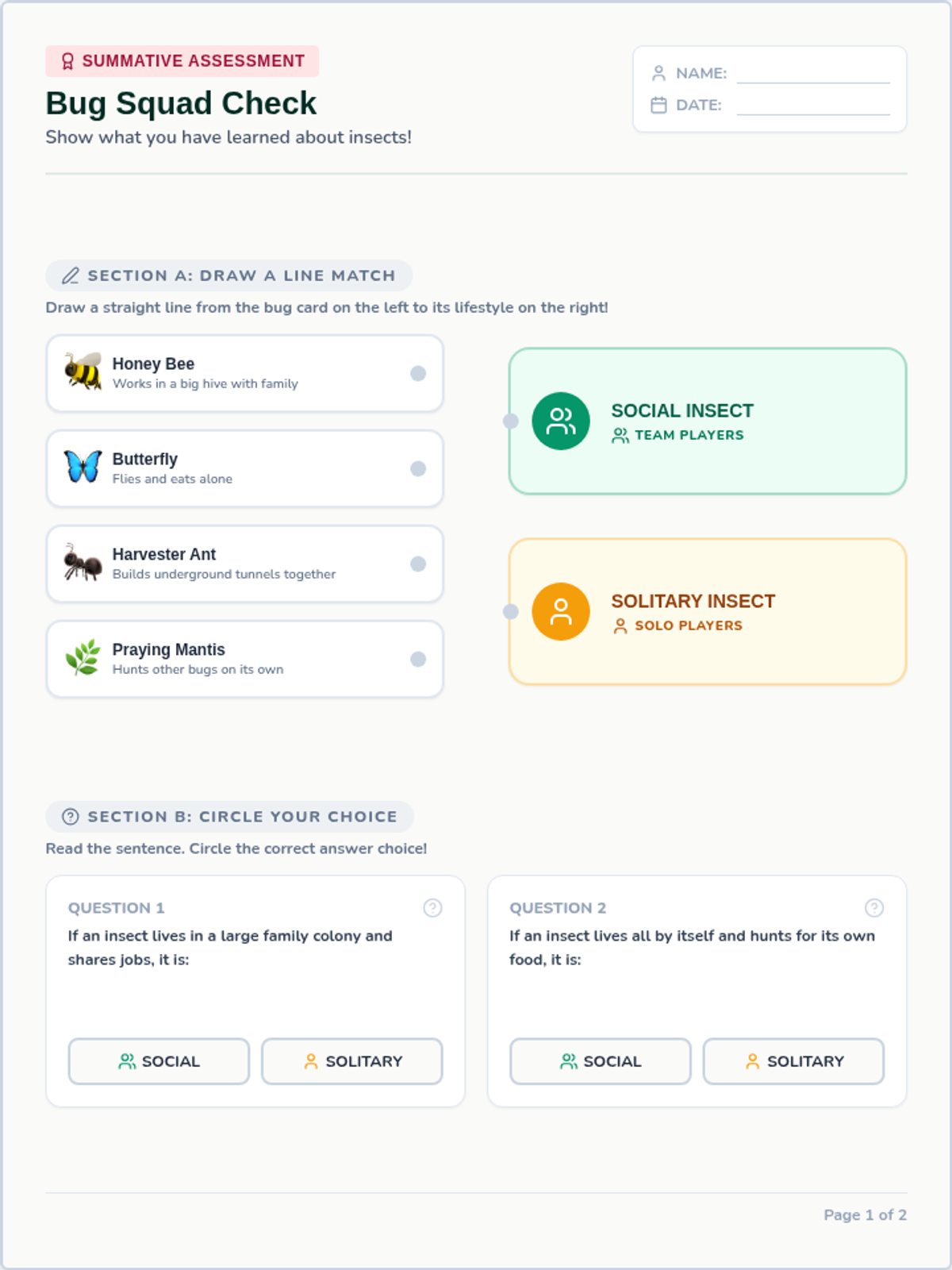
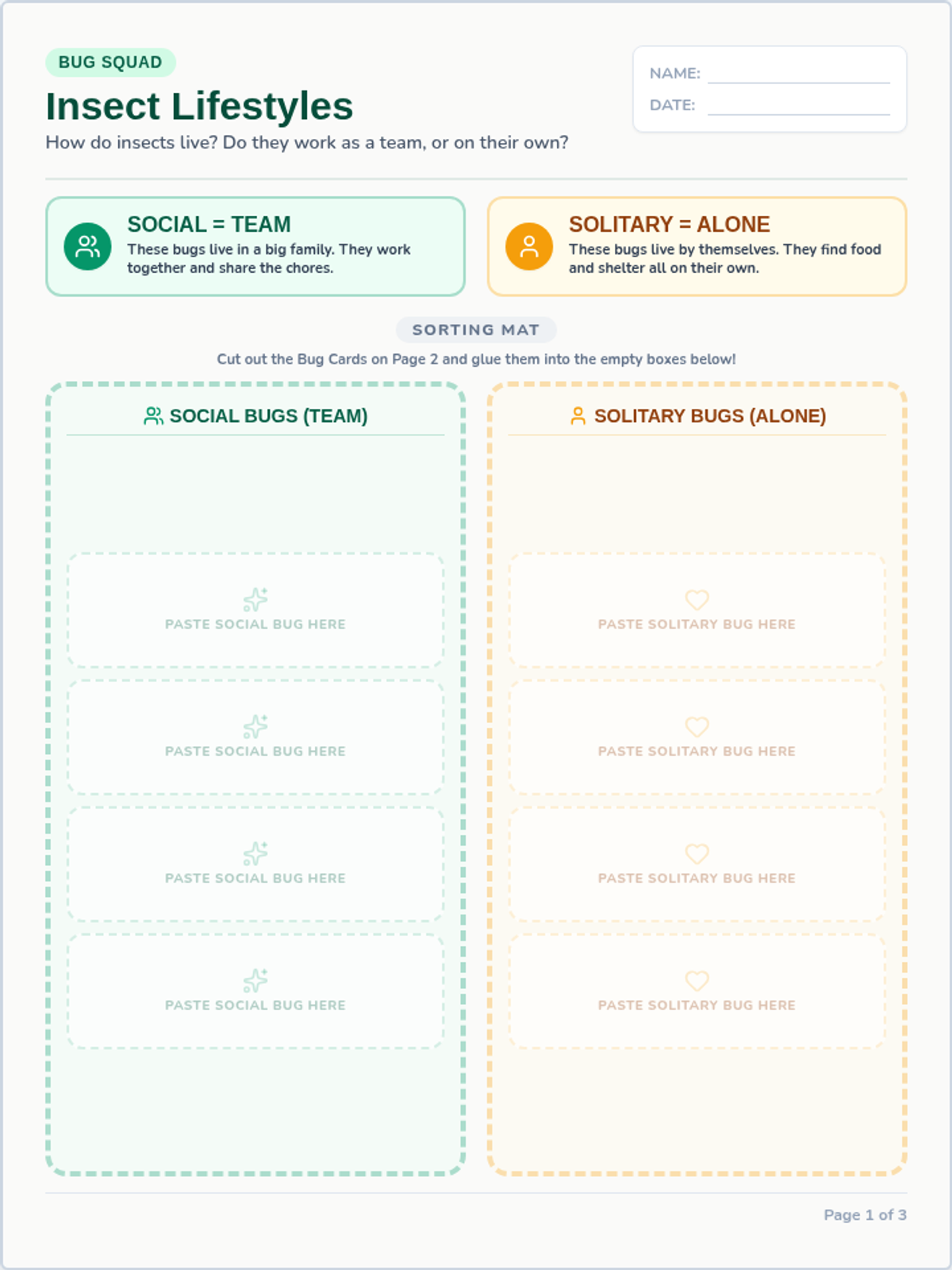
A highly visual lesson designed for low-literacy fifth graders to master the difference between social and solitary insects. The lesson provides rich scaffolding through hands-on sorting cards, visual anchor charts, and cut-and-paste sentence frames to reduce writing barriers.