Atomic structure, quantum models, and periodic trends establish the fundamental nature of matter. Stoichiometry, gas properties, and equilibrium constants facilitate quantitative analysis of chemical reactions and molecular interactions.
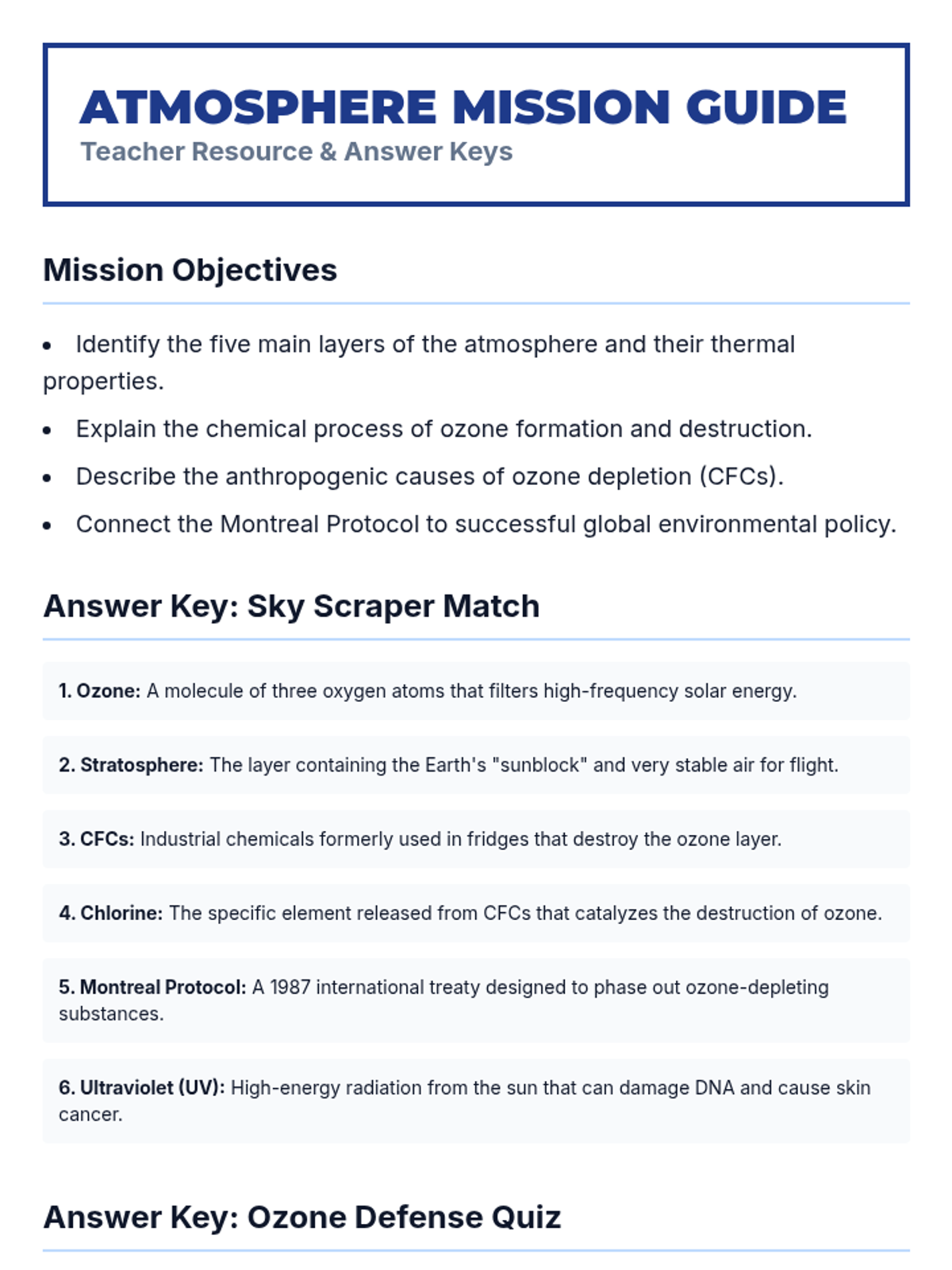
Completed teacher guide with full text in the answer keys, corrected styling for the mnemonic, and improved layout to prevent awkward page breaks between questions.
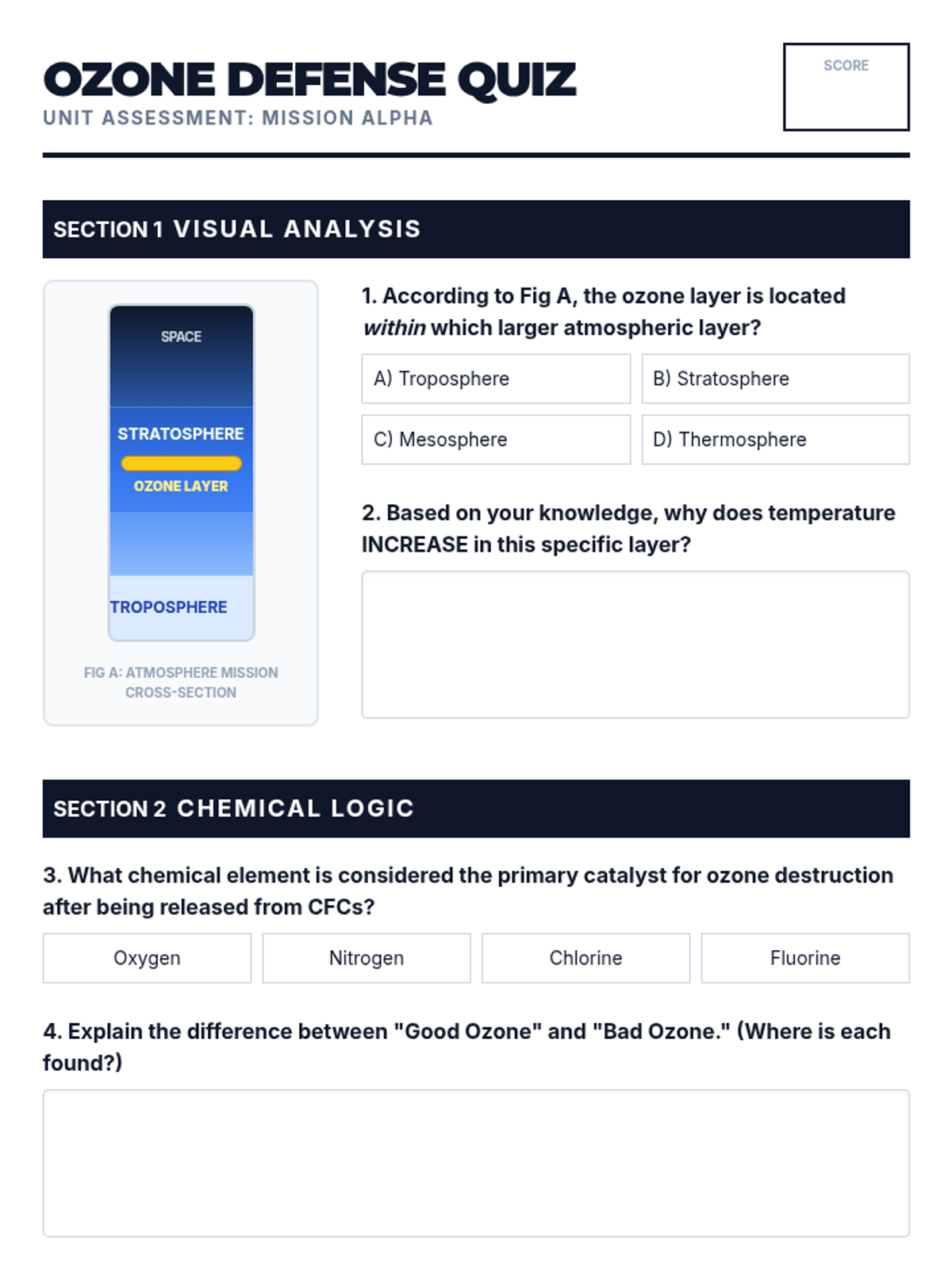
Revised practice quiz with a scientifically accurate atmosphere diagram, parallel tense in answer choices, corrected page breaks to keep questions with their options, and larger work areas for student responses.
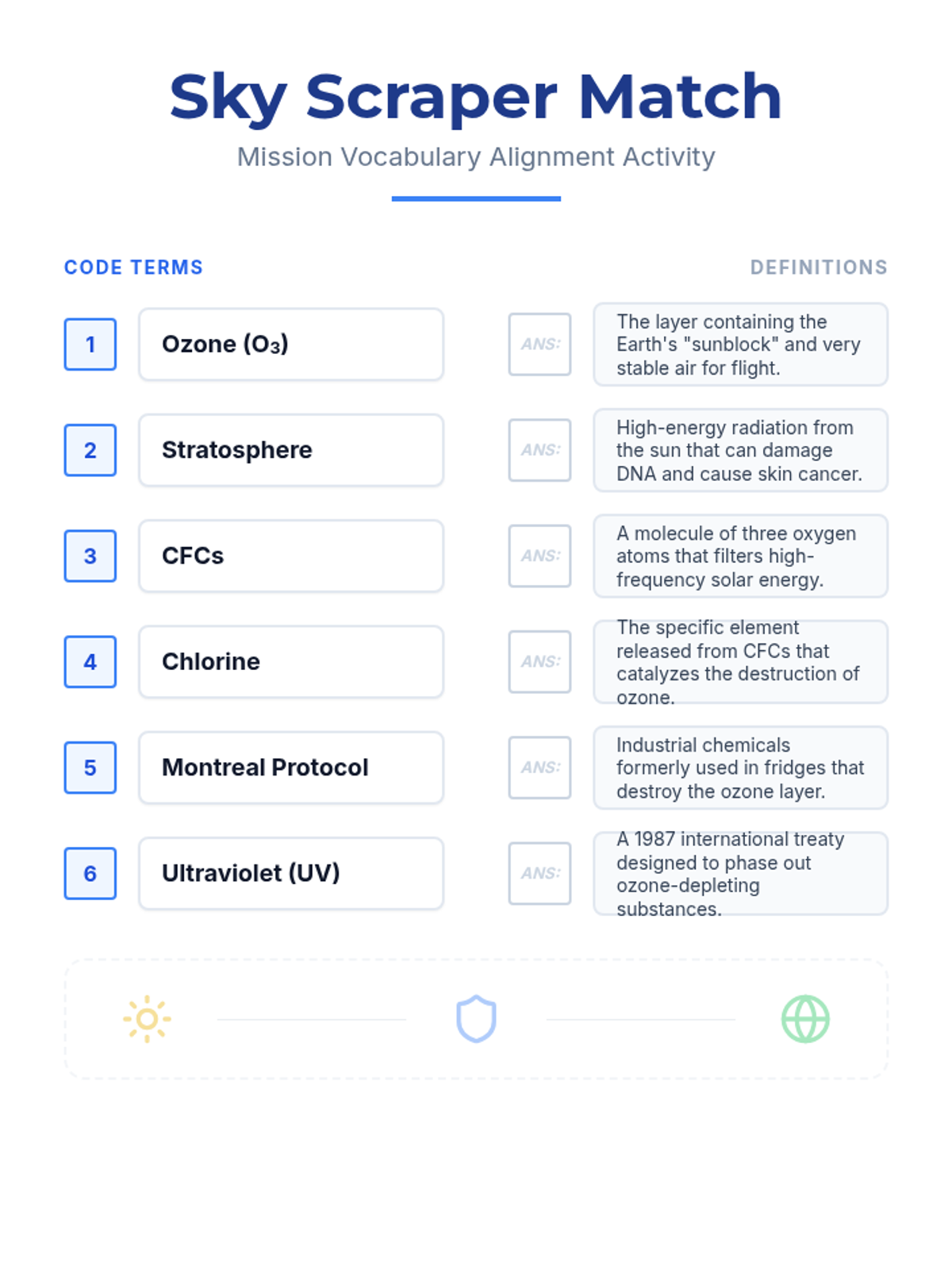
Corrected matching worksheet with fixed ozone subscripts, proper grammar (catalyzes), and a layout that avoids splitting terms across pages.
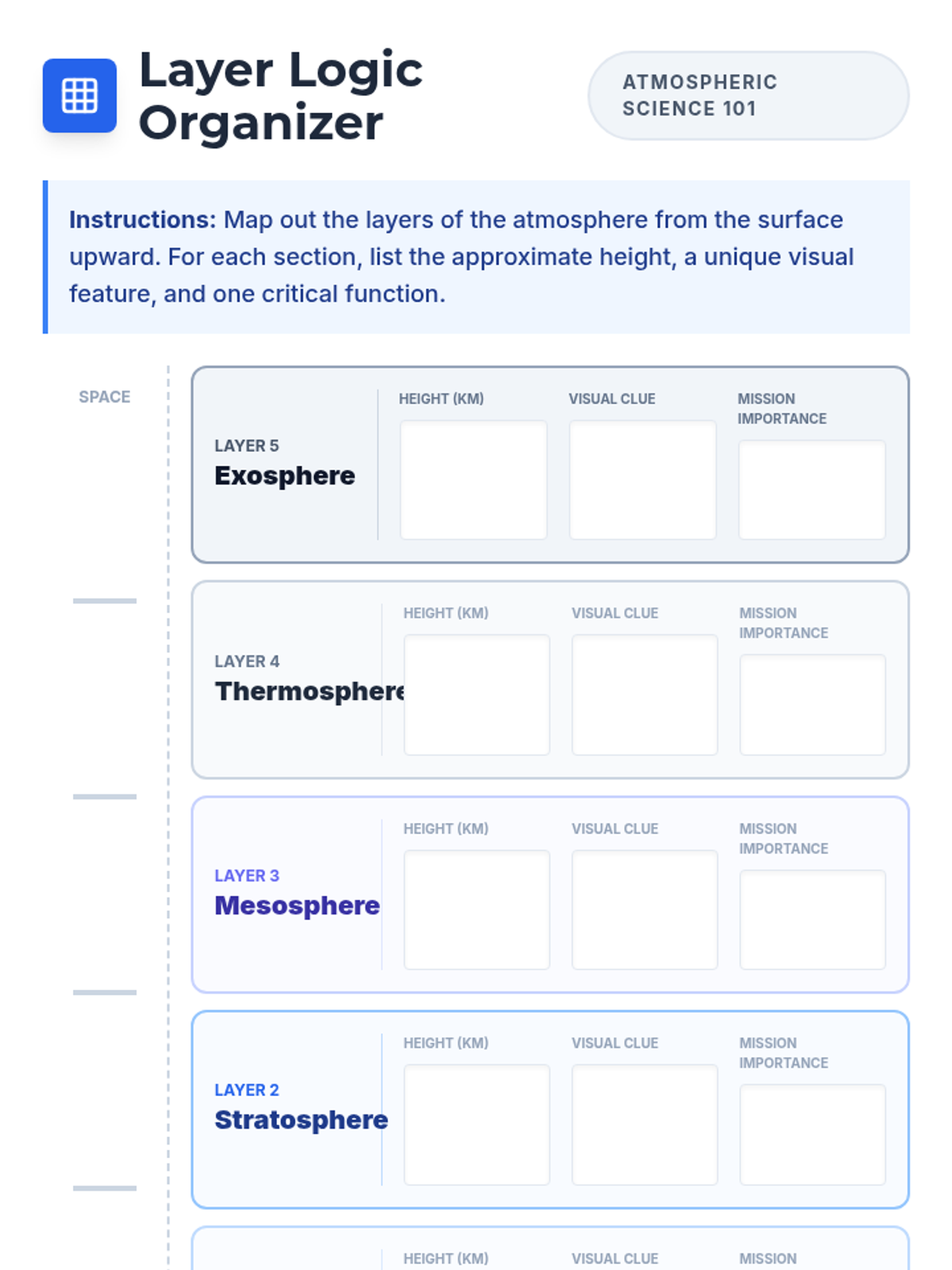
Revised graphic organizer with improved page break prevention, a lightened background for the Exosphere box to ensure handwriting legibility, and larger response areas for mission importance.
Updated guided notes with improved spacing for student work areas, corrected chemical subscripts (sub tags), and enhanced alignment in the sequence of destruction section.
A revised visual slide deck with corrected chemical notation (subscripts), improved font styling, and enhanced contrast for atmospheric layer labels.
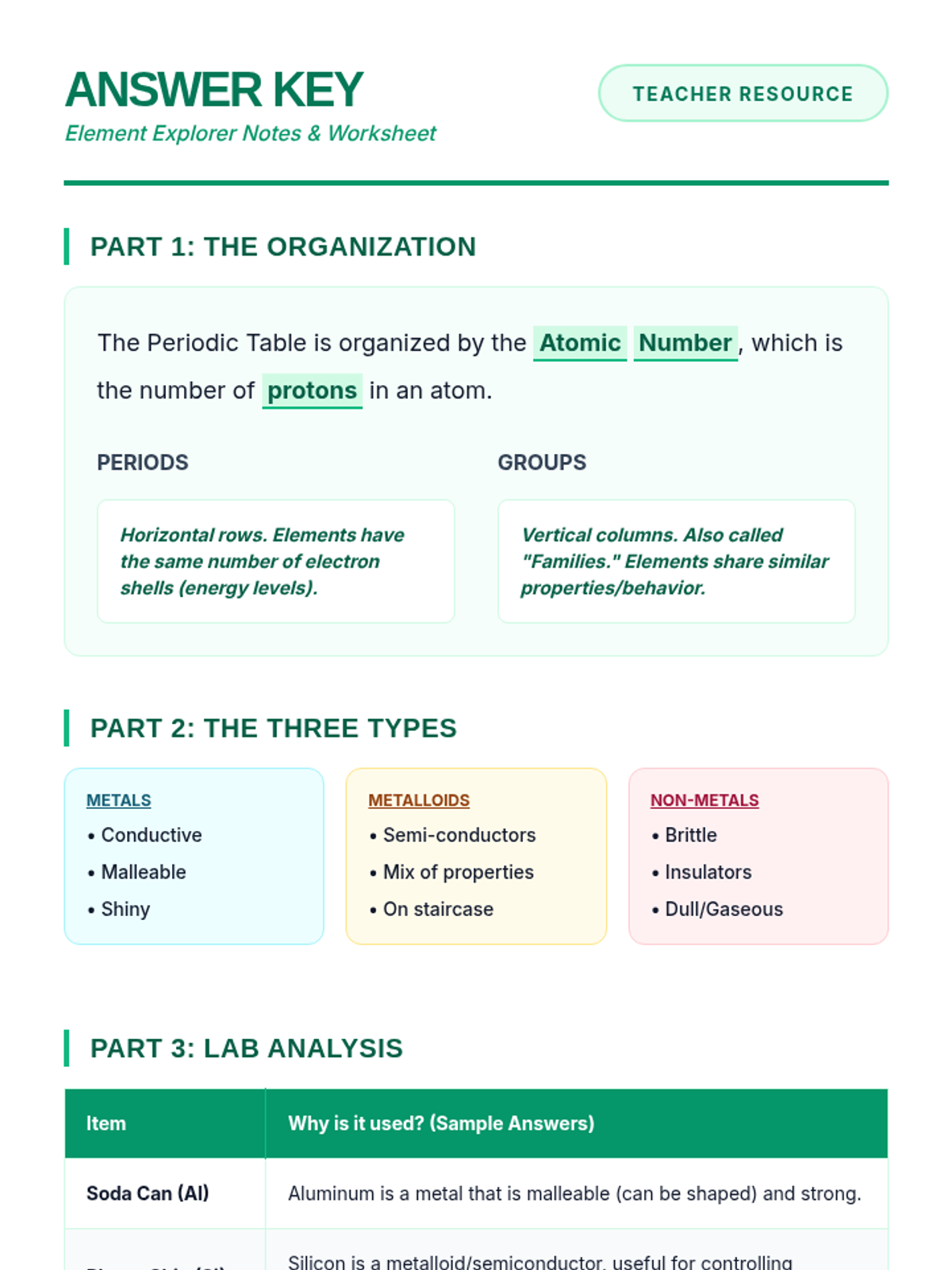
Comprehensive answer key for the Element Explorer Notes and Worksheet, providing sample responses and teaching points for the lab analysis and synthesis questions.
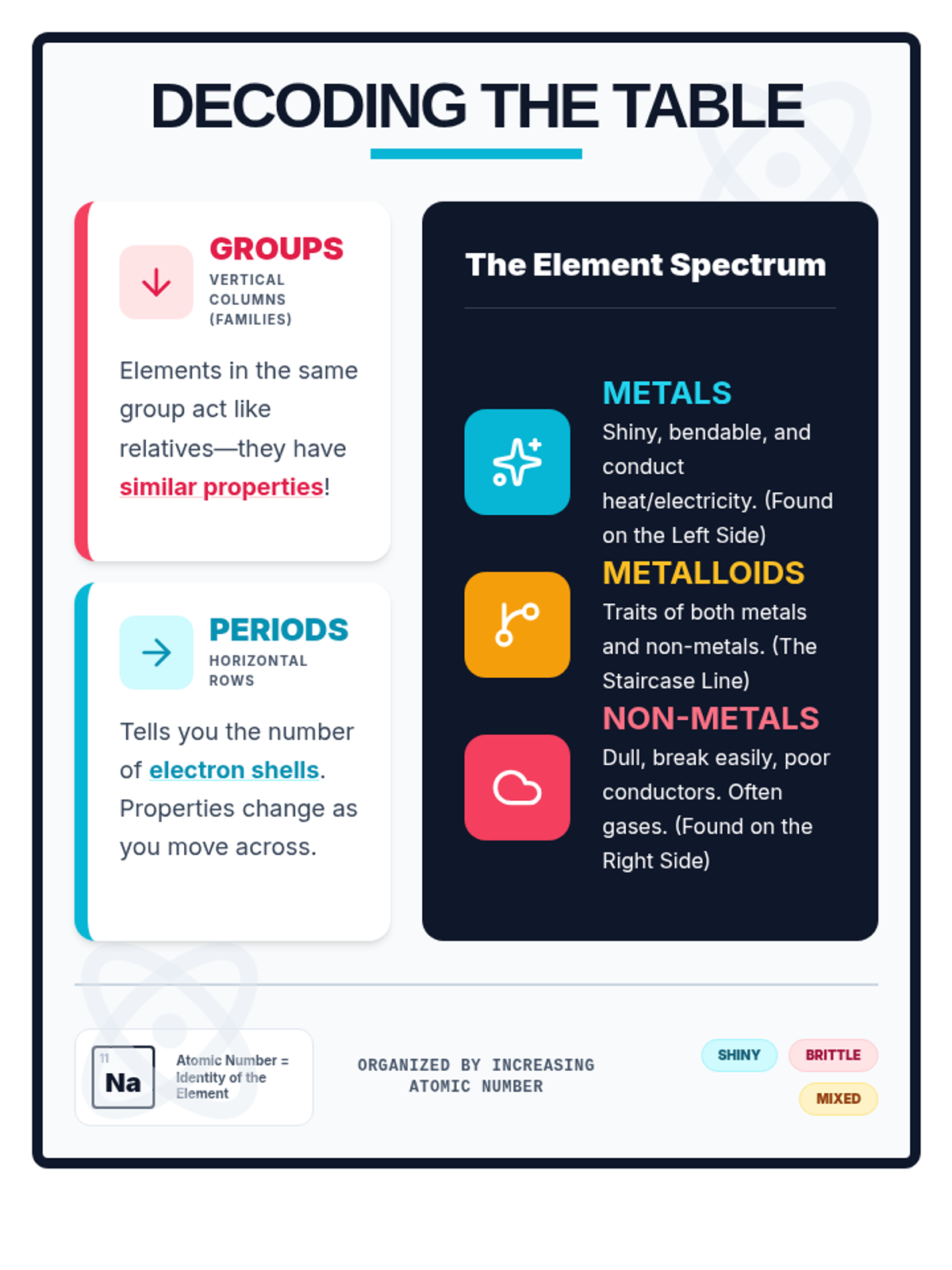
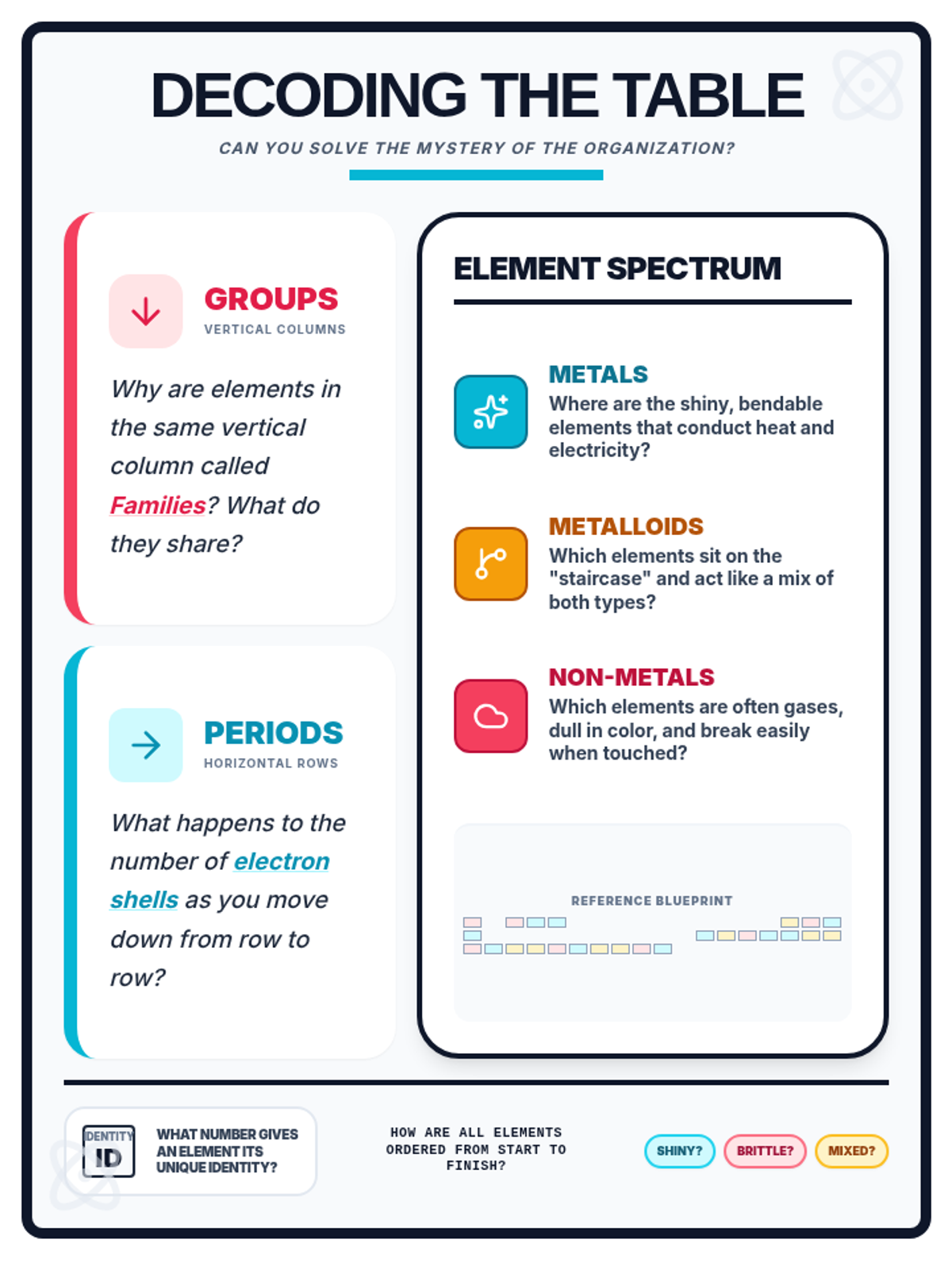
A visual inquiry-based anchor chart for classroom display, using questions to prompt students to think about the organization of the Periodic Table, groups, periods, and element types.
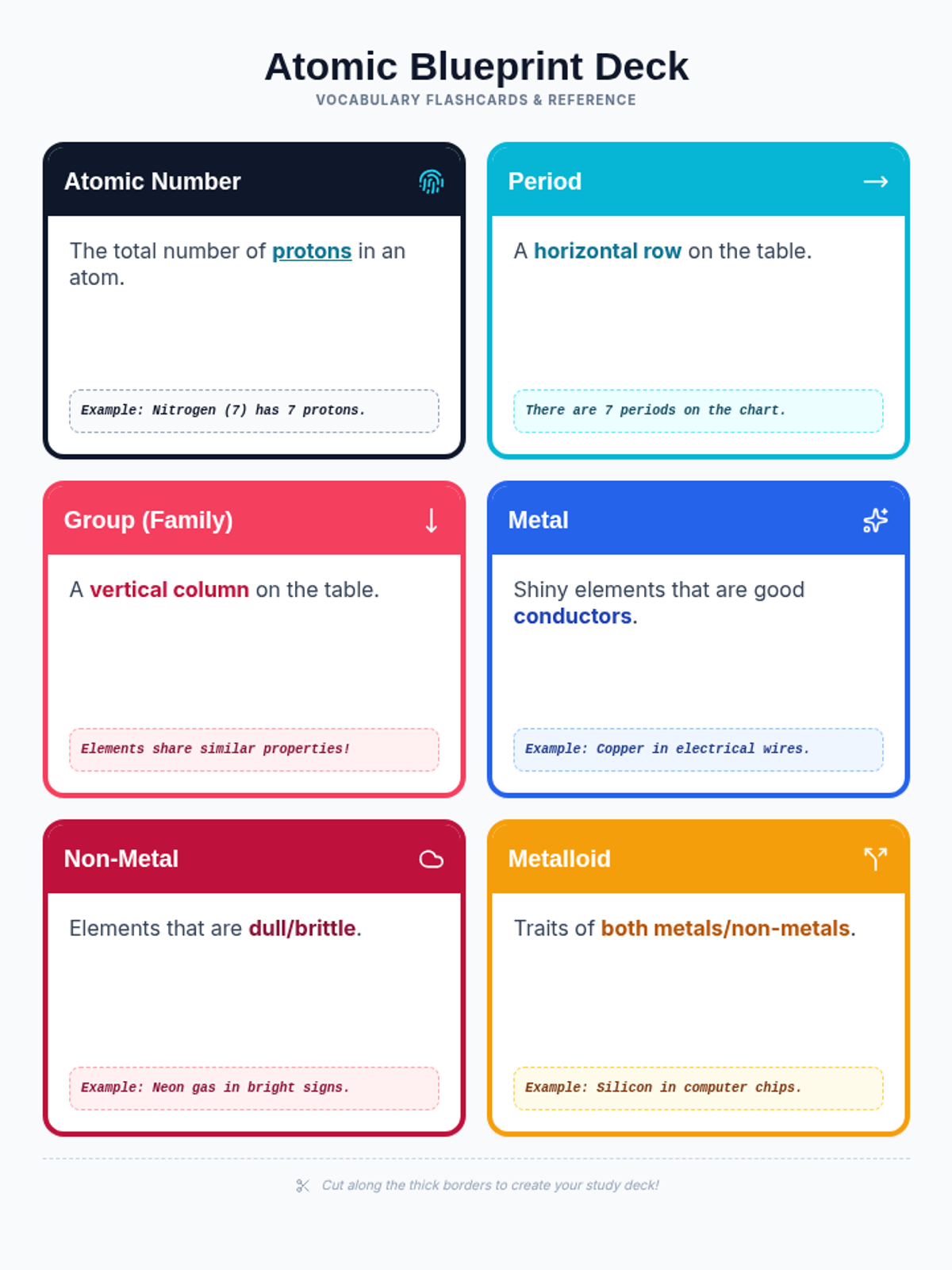
A set of high-contrast vocabulary cards covering key Periodic Table terms with clear definitions, visual icons, and "key point" summaries for student study.
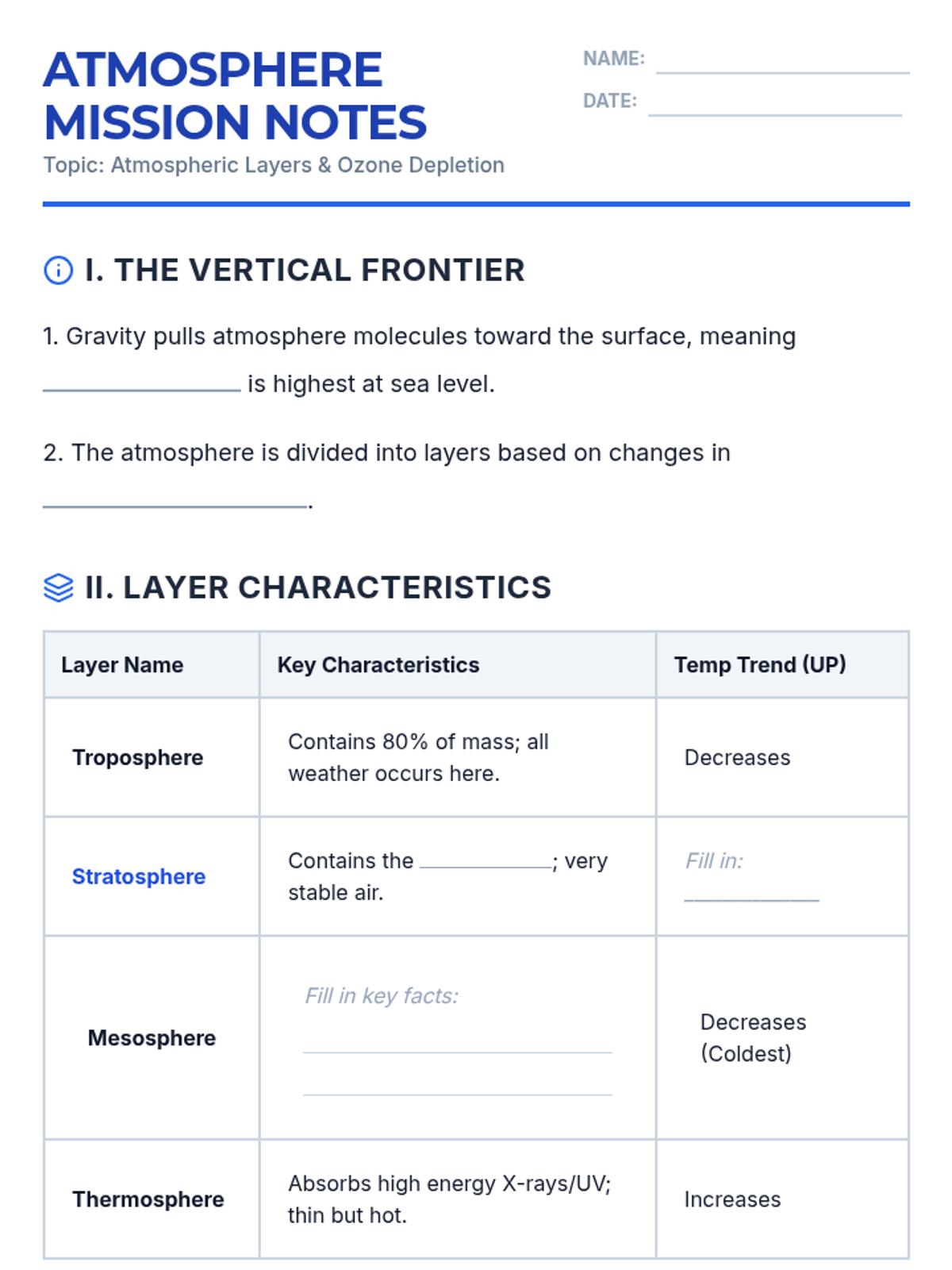
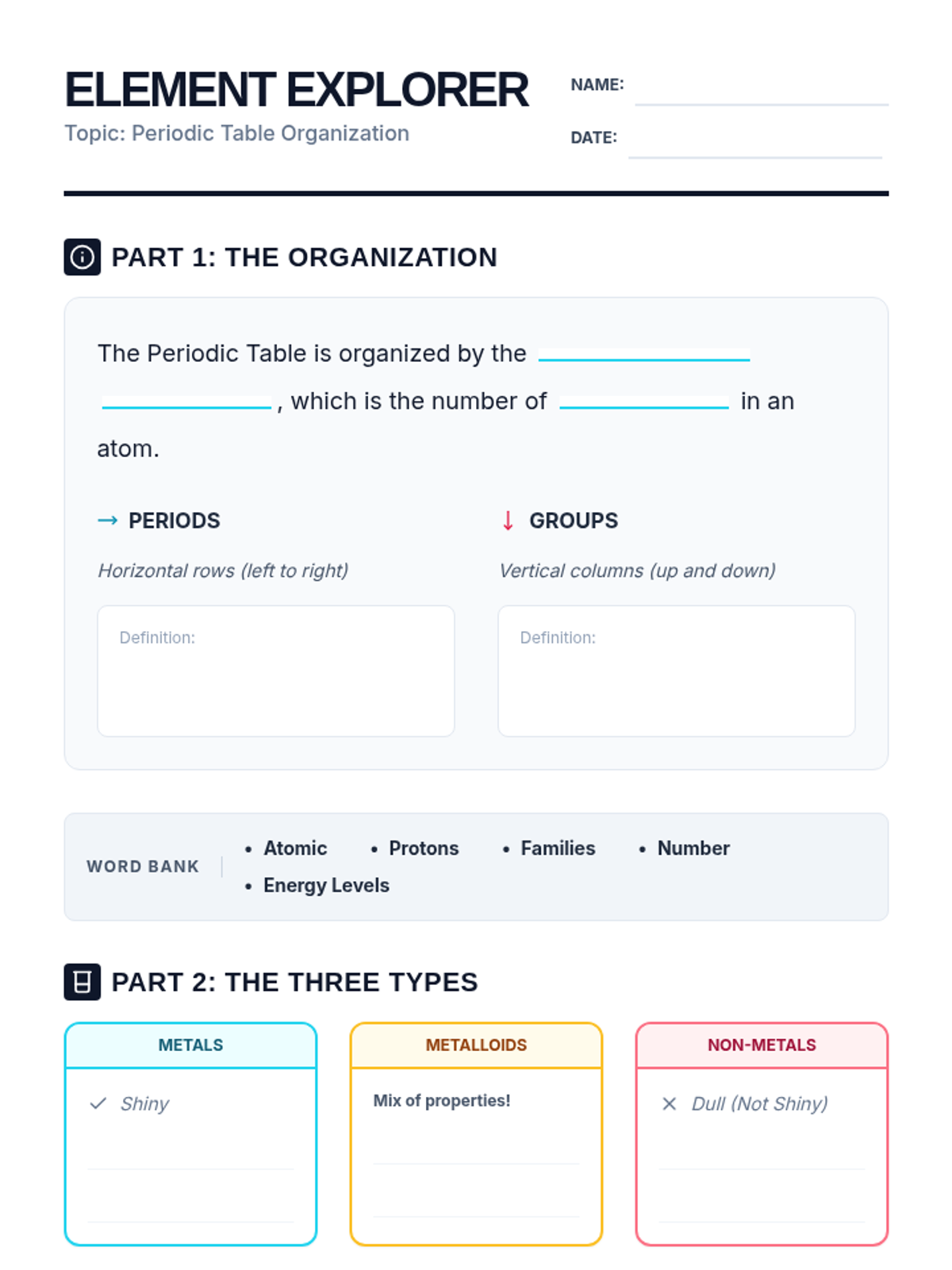
Guided notes and analysis worksheet for student exploration of Periodic Table organization, including word banks for simplified learning and real-world identification exercises.
Interactive slide deck introducing the Periodic Table, featuring clear visuals for groups and periods, color-coded sections for metals/non-metals, and real-world examples.
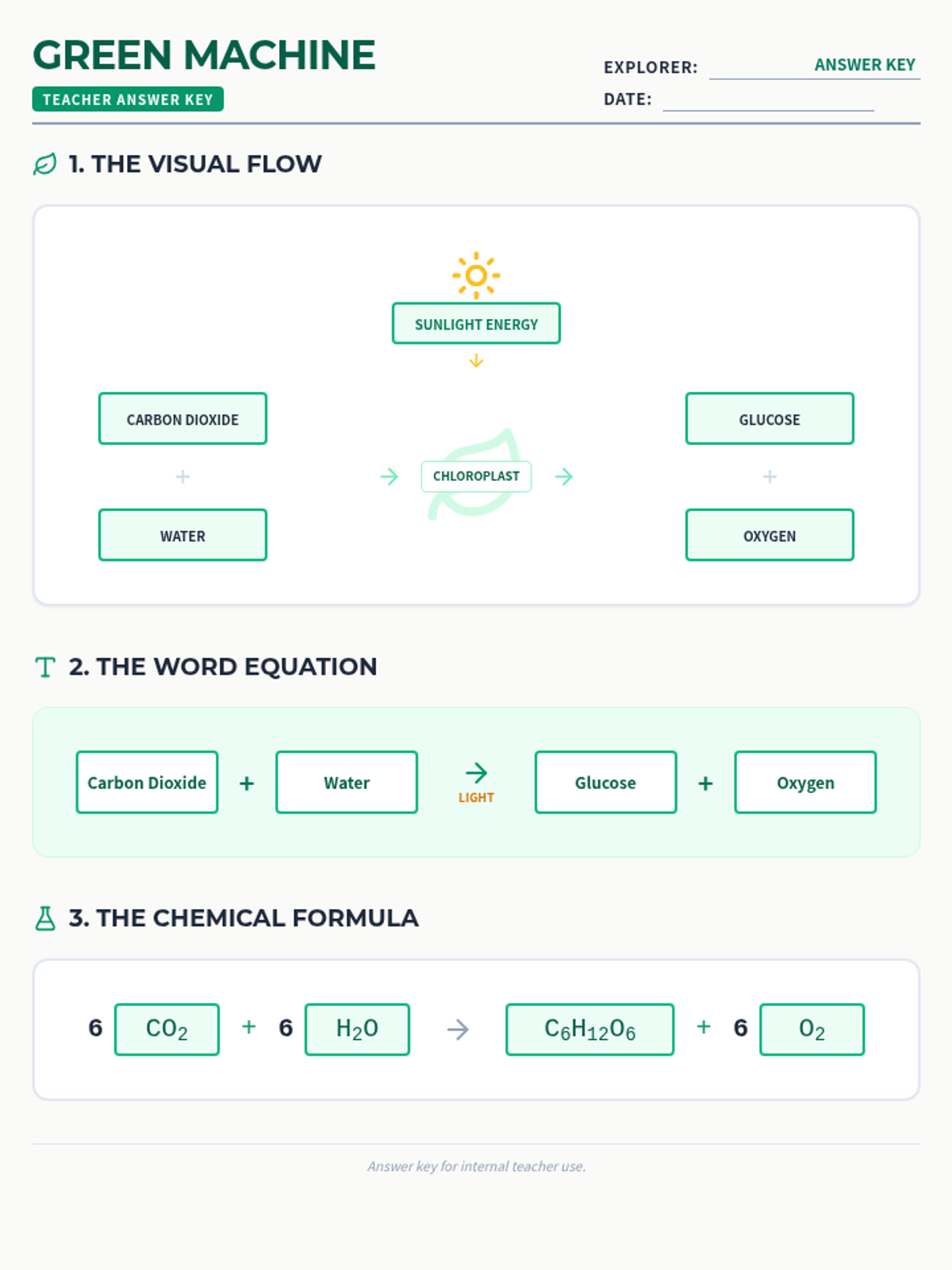
The teacher answer key for the Green Machine worksheet, providing the correct labels for the photosynthesis diagram and equations.
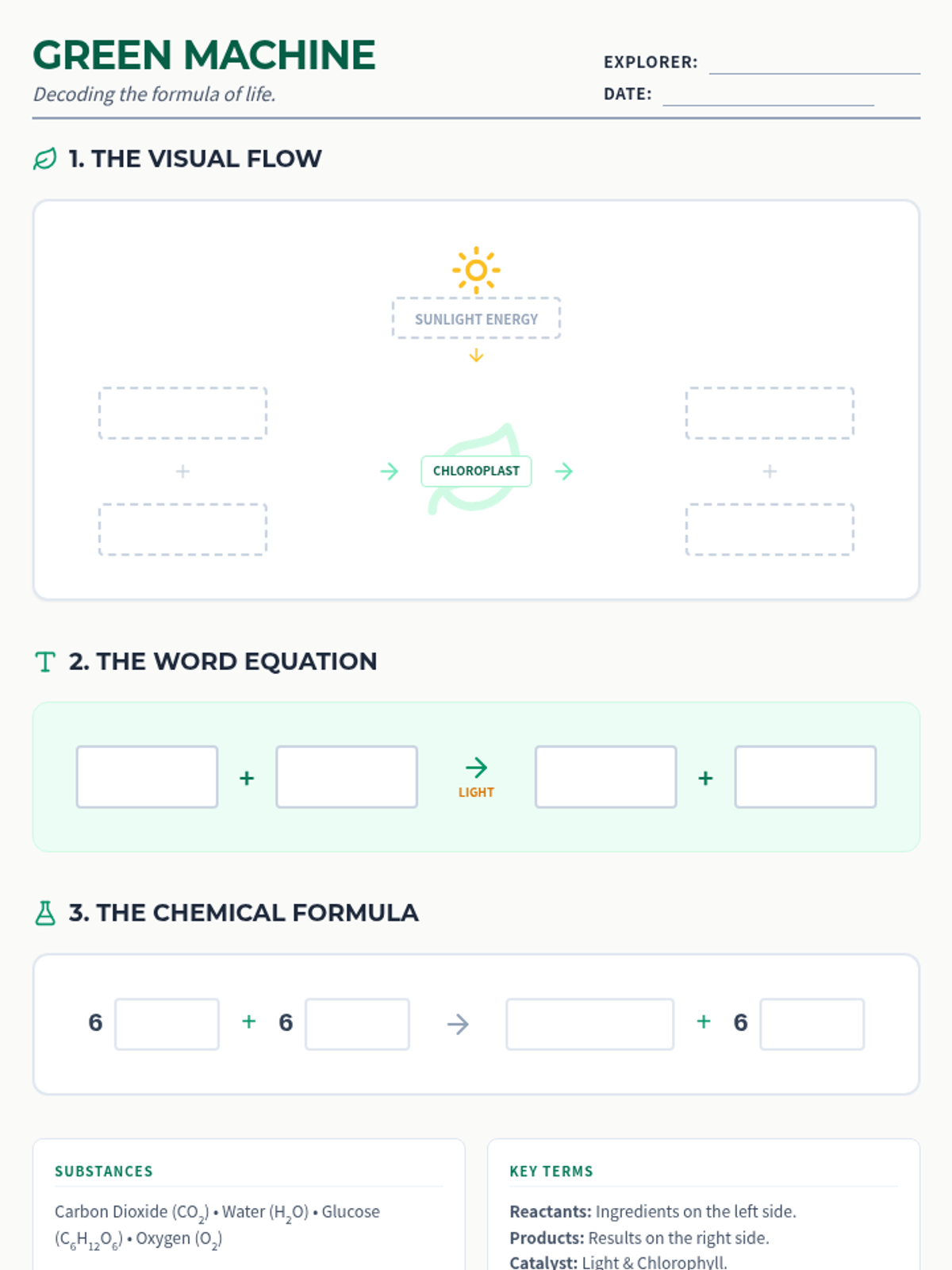
A fill-in-the-blank worksheet for middle school students focusing on the photosynthesis equation through diagrams, word formulas, and chemical notation.
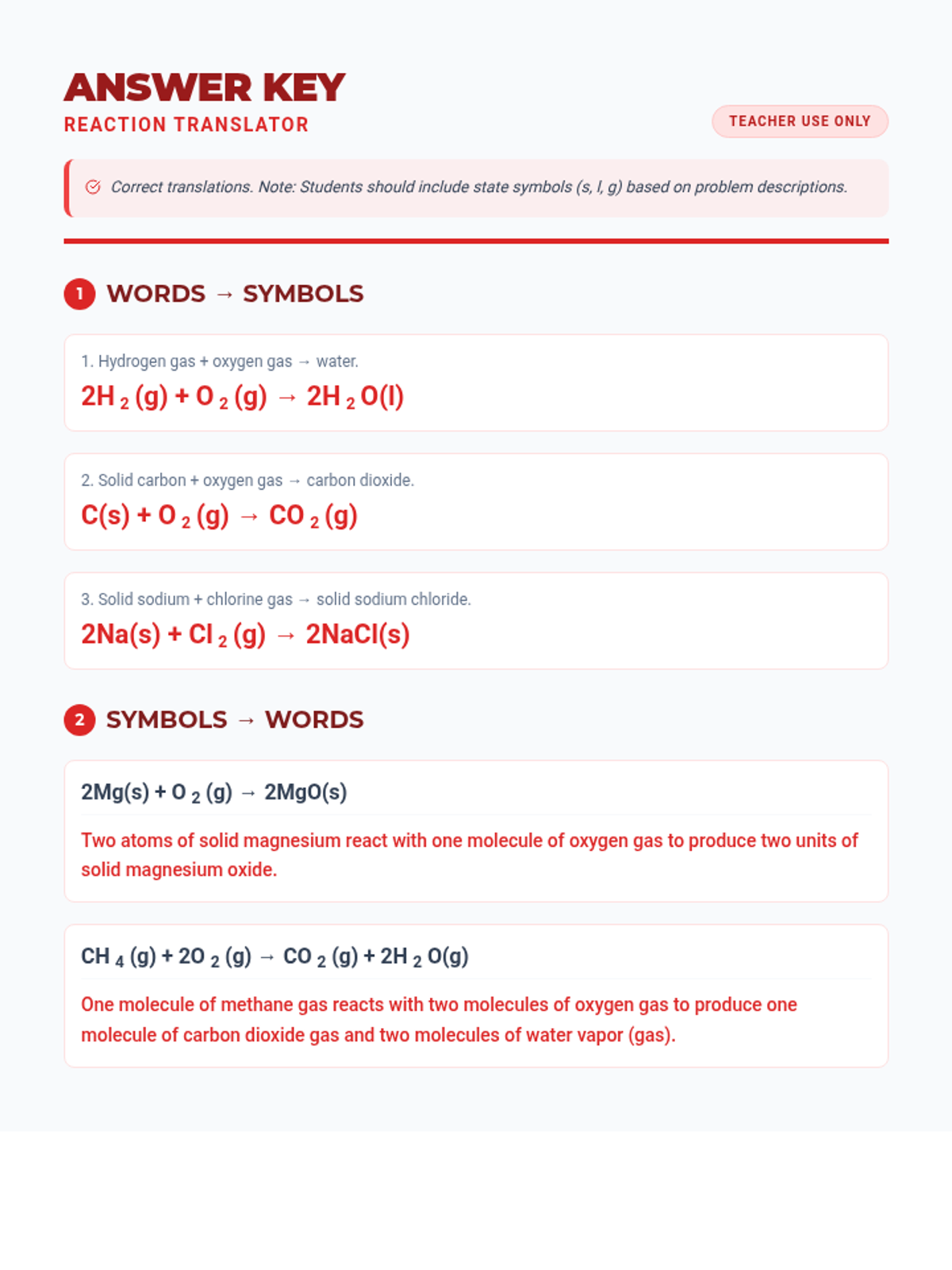
An answer key for the Reaction Translator Worksheet, providing balanced symbolic equations and descriptive word translations for all practice problems.
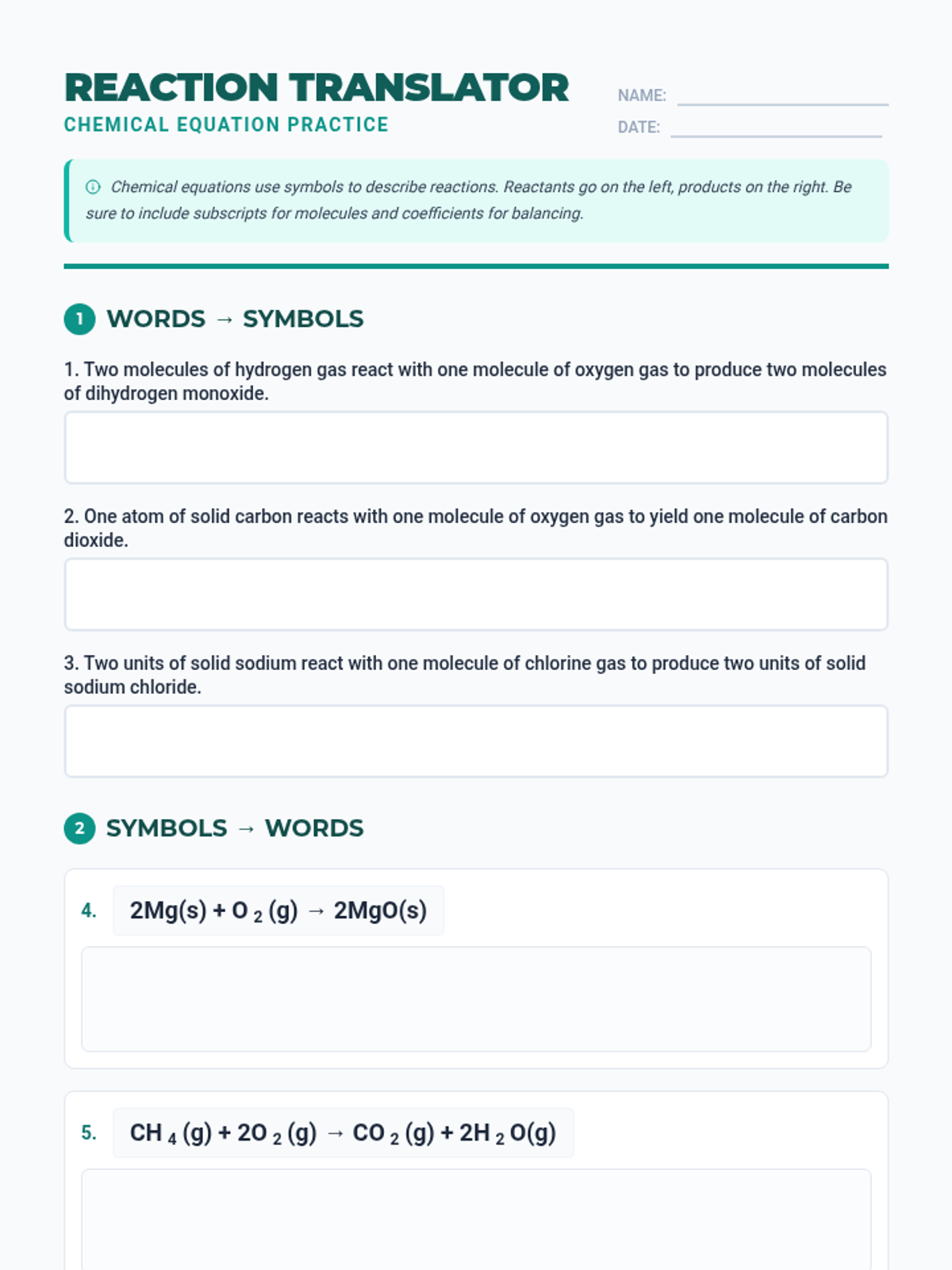
A student worksheet for practicing the translation between word descriptions and symbolic chemical equations, featuring five practice problems with dedicated writing spaces.
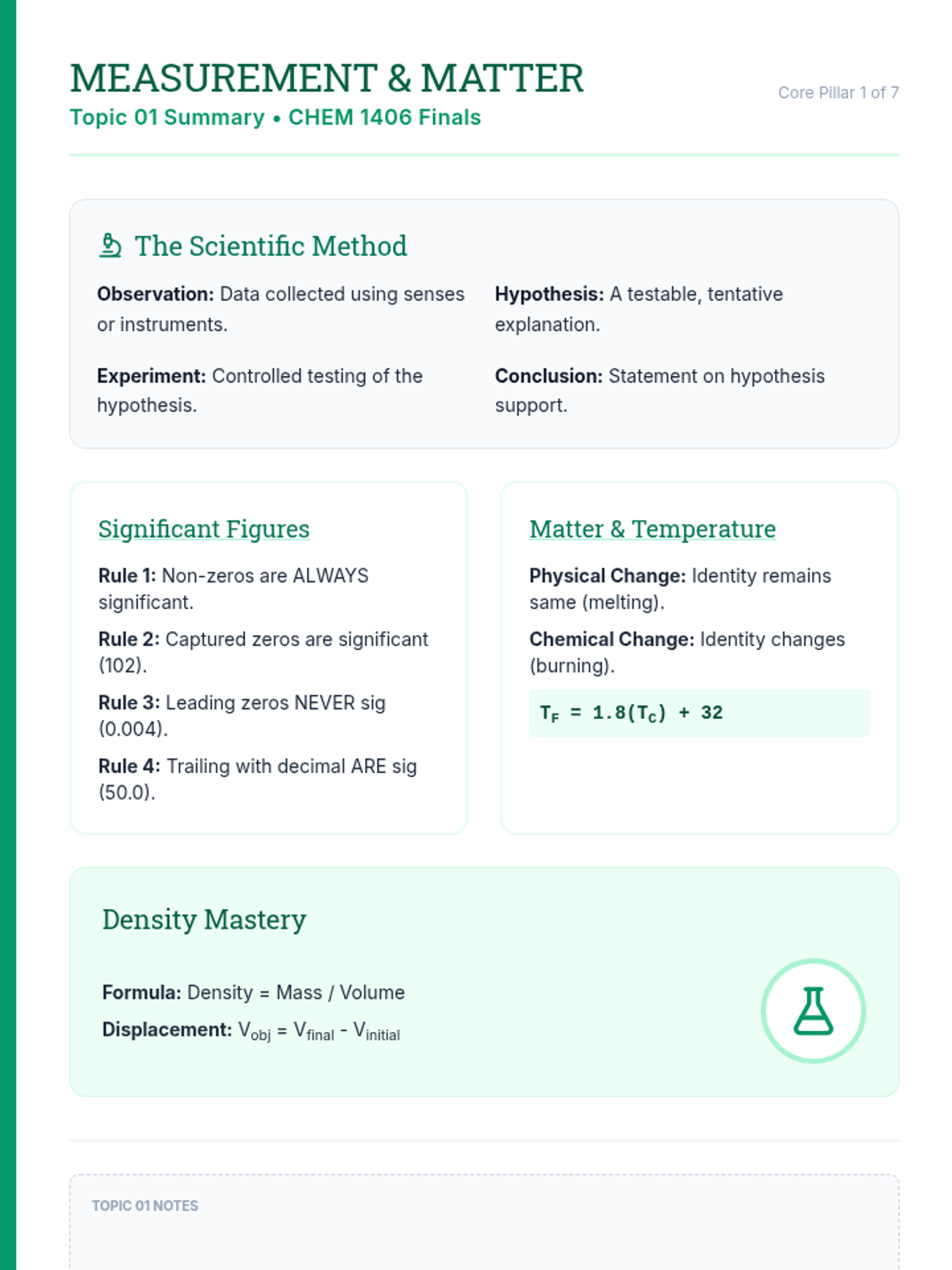
A consolidated 7-page study booklet covering all core pillars of the CHEM 1406 final exam, designed for easy printing and review.
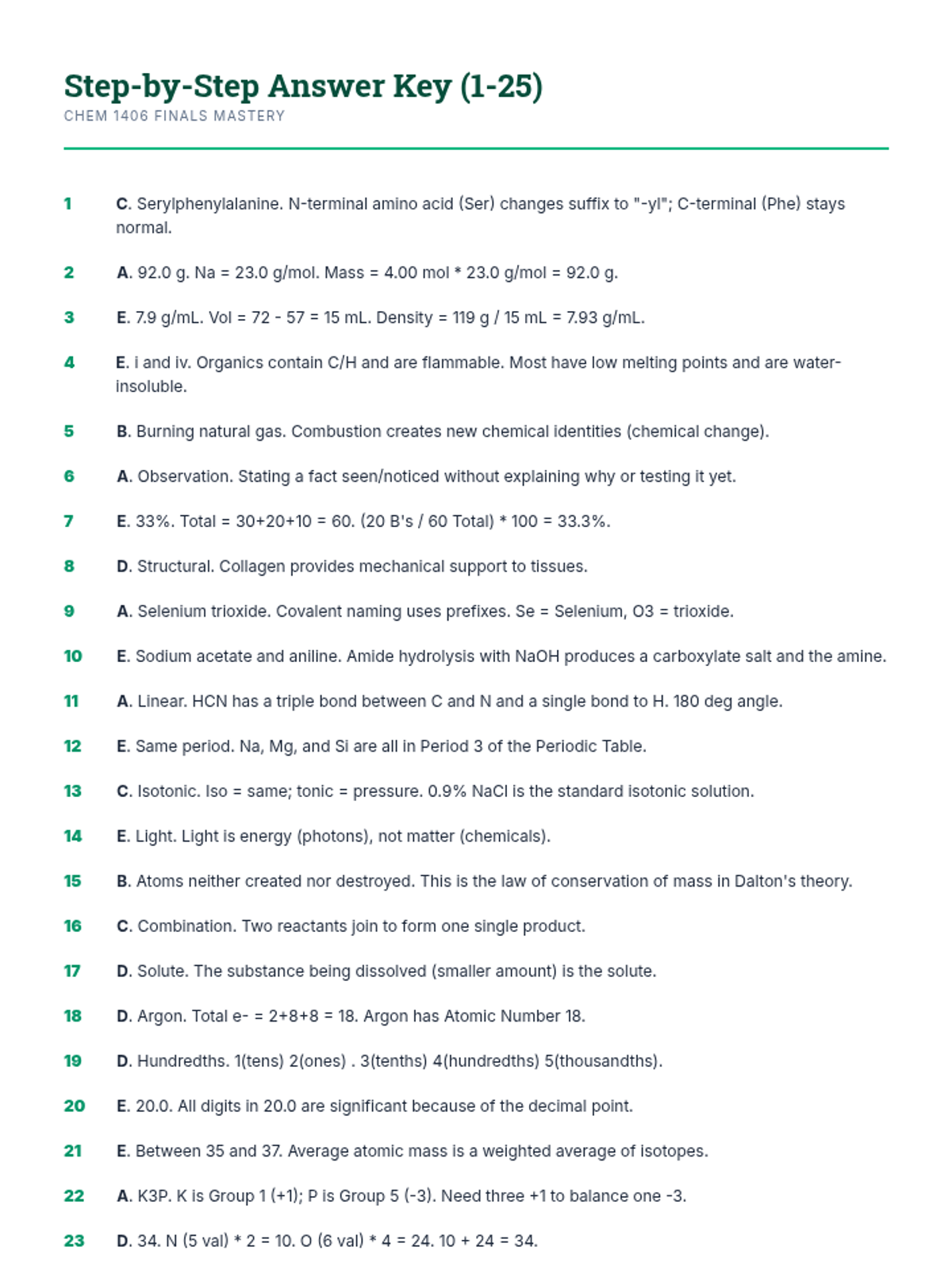
A detailed answer key for the comprehensive final review, providing step-by-step logic and mathematical breakdowns for every question.
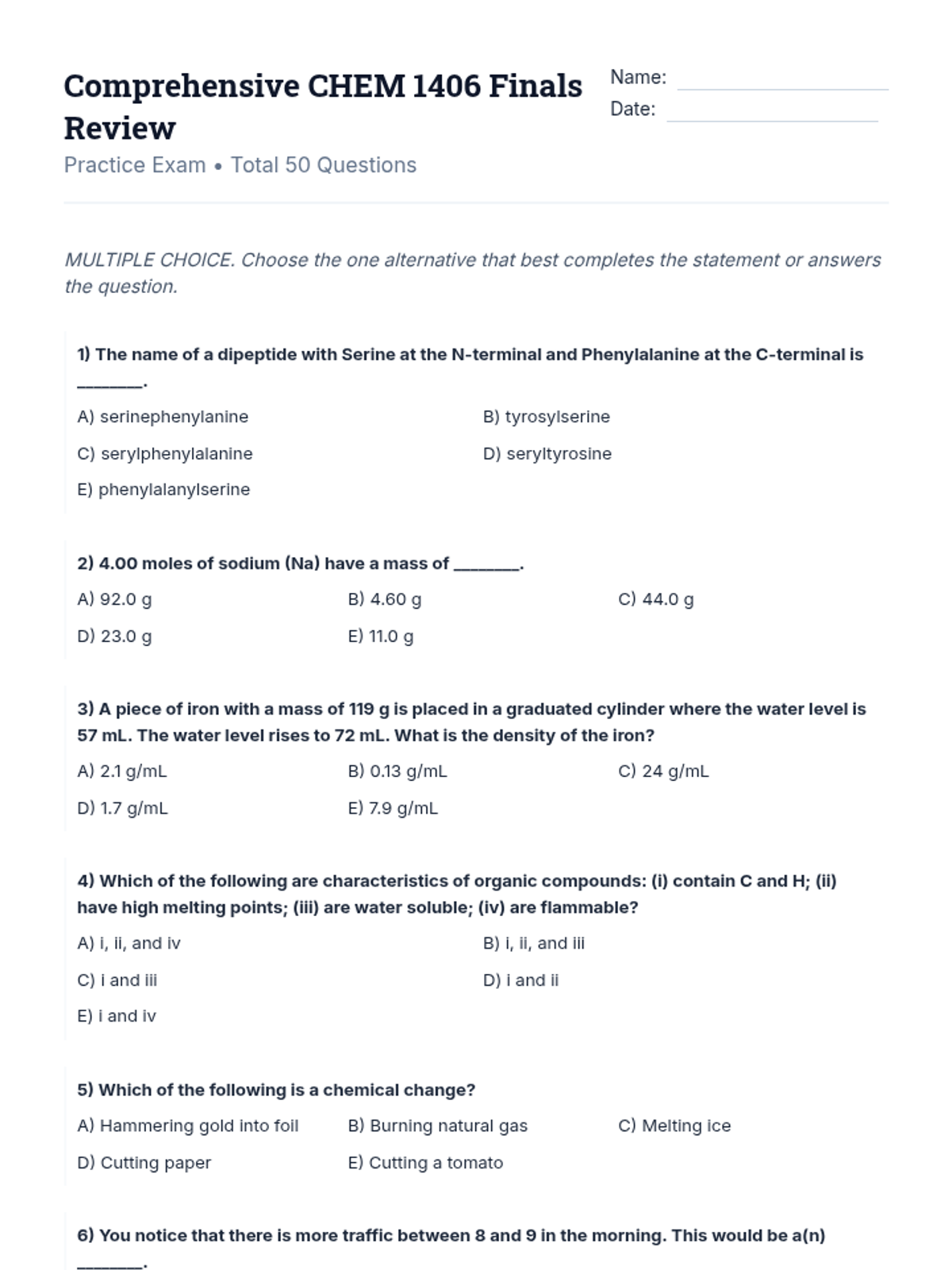
A full 50-question multiple-choice practice exam for CHEM 1406, mirroring the content and difficulty of the provided final comprehensive exam.
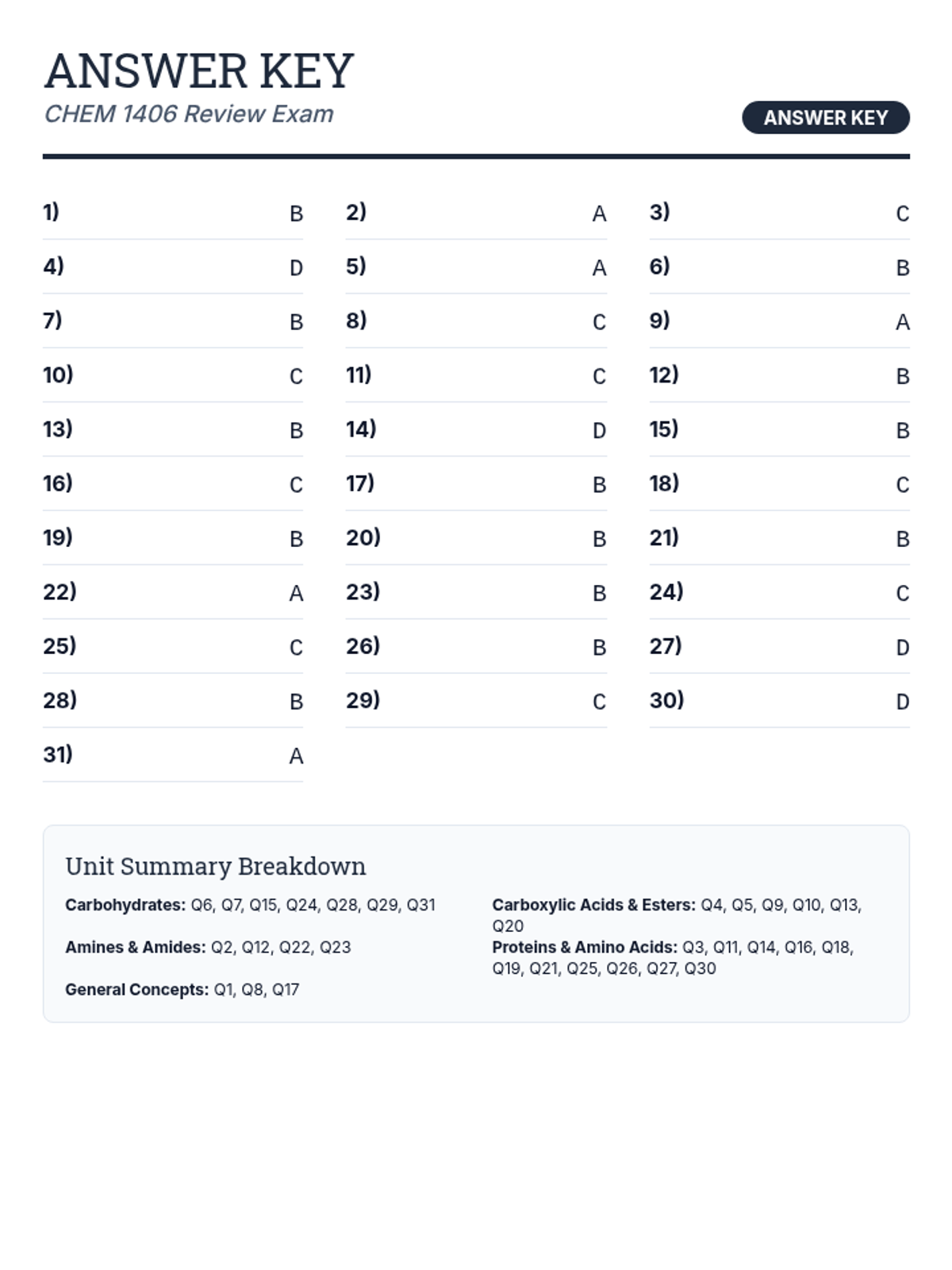
The answer key for the CHEM 1406 Review Exam, including a content breakdown for teacher reference.
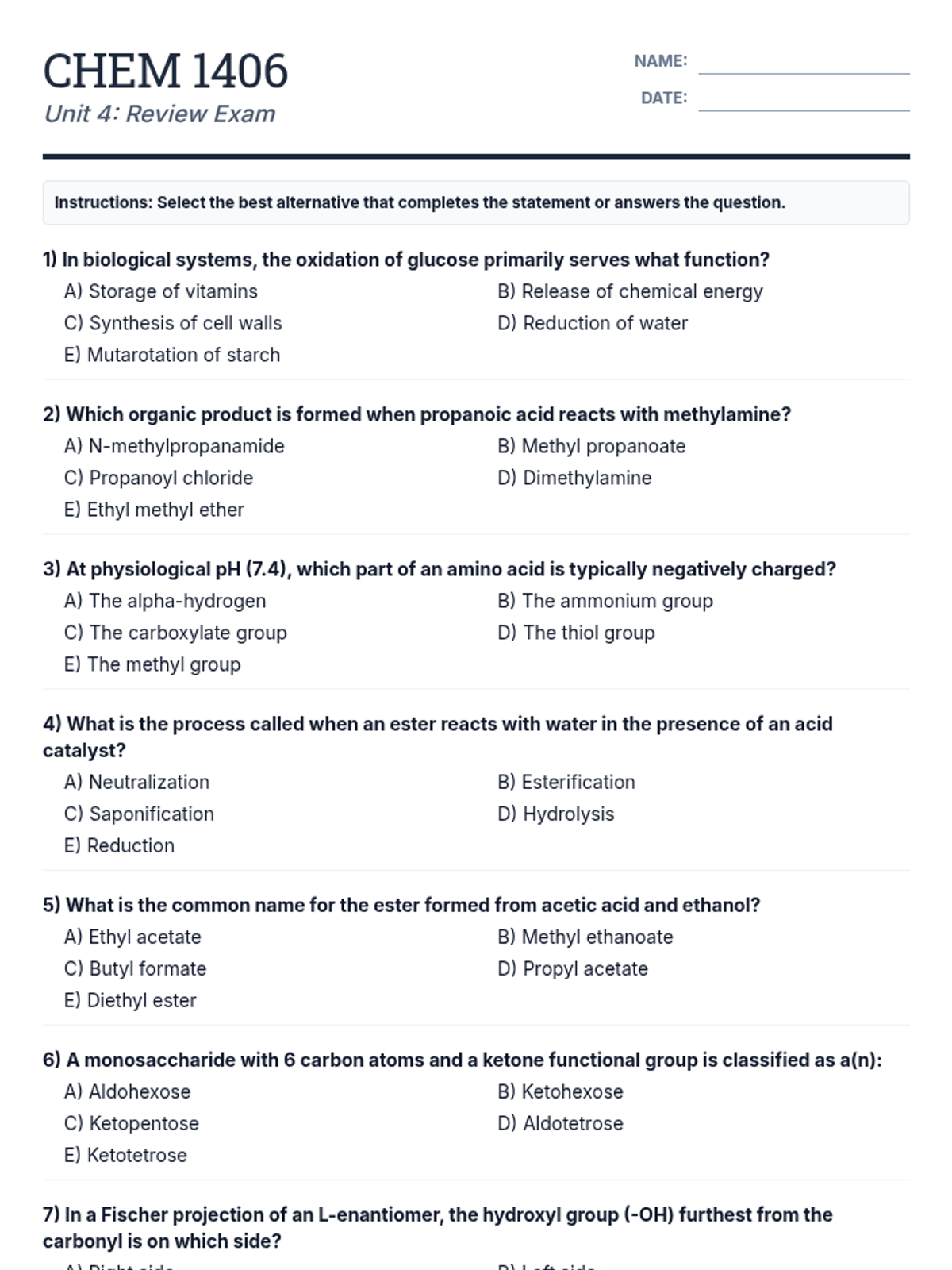
A 31-question multiple-choice review assessment covering the key concepts of the organic and biochemistry unit, including structural identification and reactions.
Educational slide deck for the Surface Tension Showdown experiment, introducing the concepts of cohesion, surface tension, and surfactants with engaging visuals.
A 2-page student lab report for the Surface Tension Showdown experiment, including space for materials, procedure, data collection, and scientific analysis.
A teacher facilitation guide for the Surface Tension Showdown experiment, explaining the science of cohesion and providing tips for student success at home.
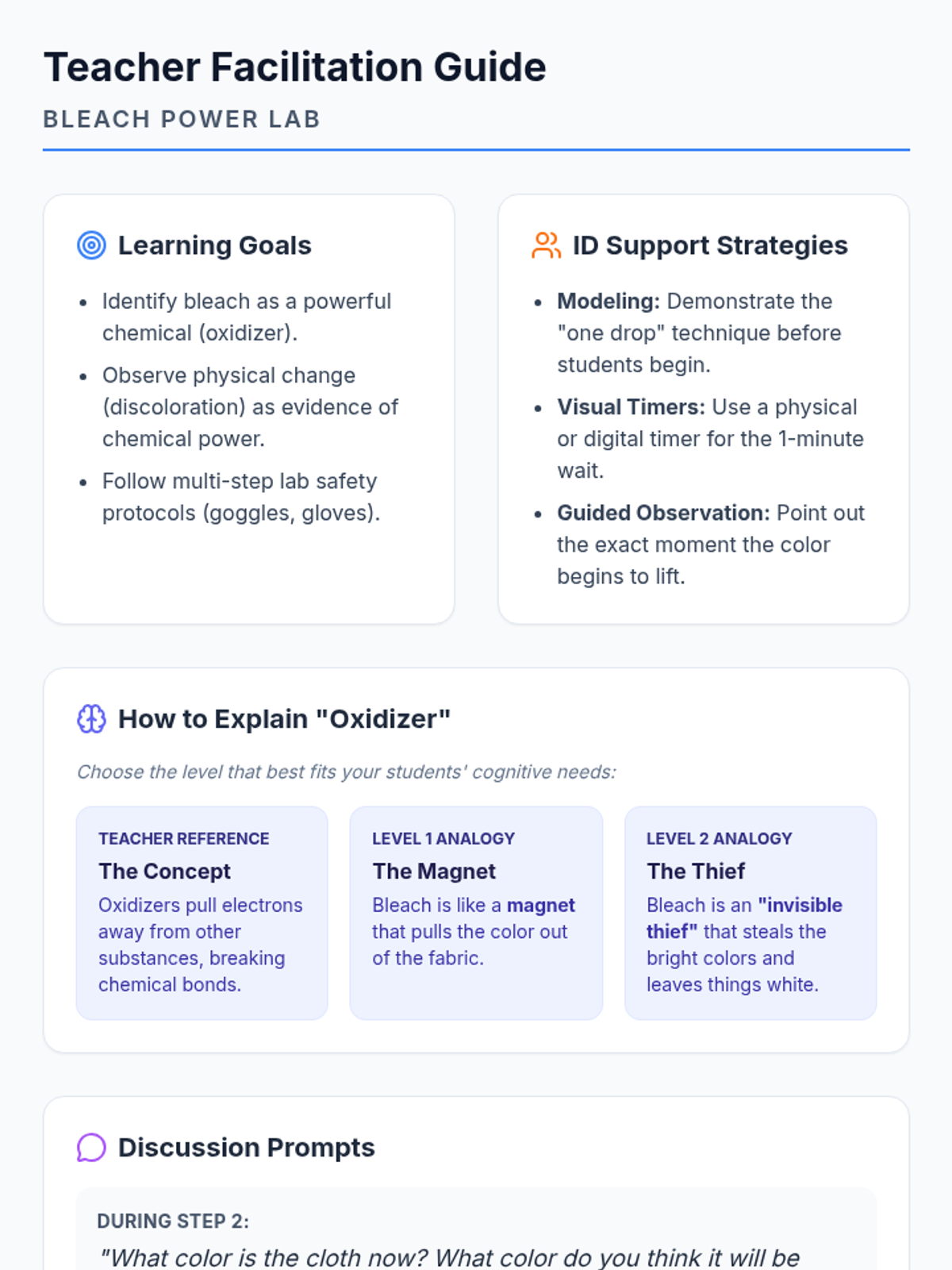
Teacher guide for the Bleach Power Lab, containing instructional strategies for students with ID, discussion prompts, and differentiation tips. Includes a section on how to explain the concept of an oxidizer.
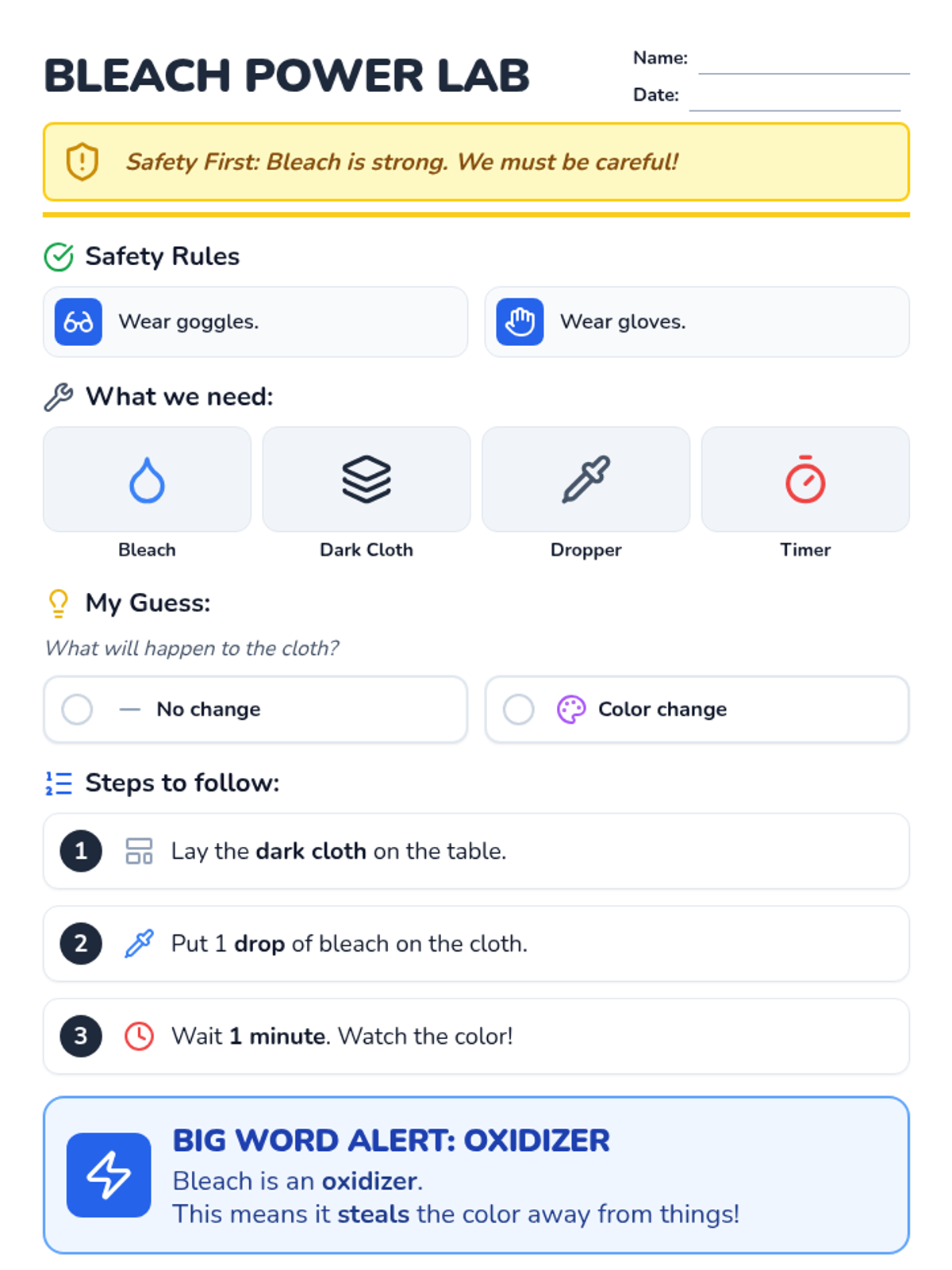
A highly visual lab procedure worksheet for high school students with ID, featuring step-by-step instructions with picture support, safety rules, and observation boxes for drawing results. Updated with a simple hypothesis section and explanation of what an oxidizer is. Both drawing boxes now use matching icons for visual consistency. Final safety summary is optimized to fit on two pages.
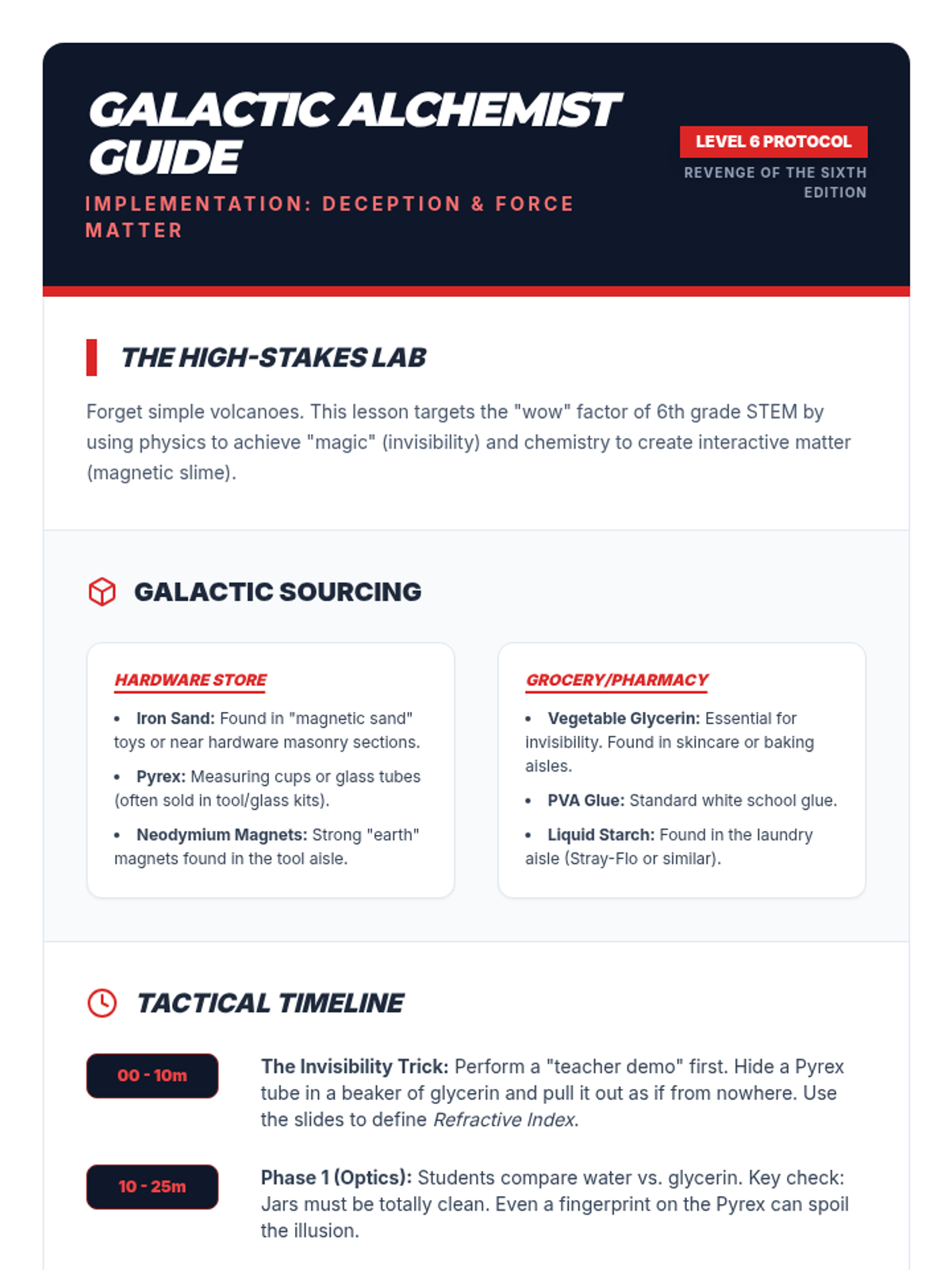
Comprehensive teacher guide for the Sith Science Lab. Revised to fix kerning issues in headers and prevent pacing guide page breaks.
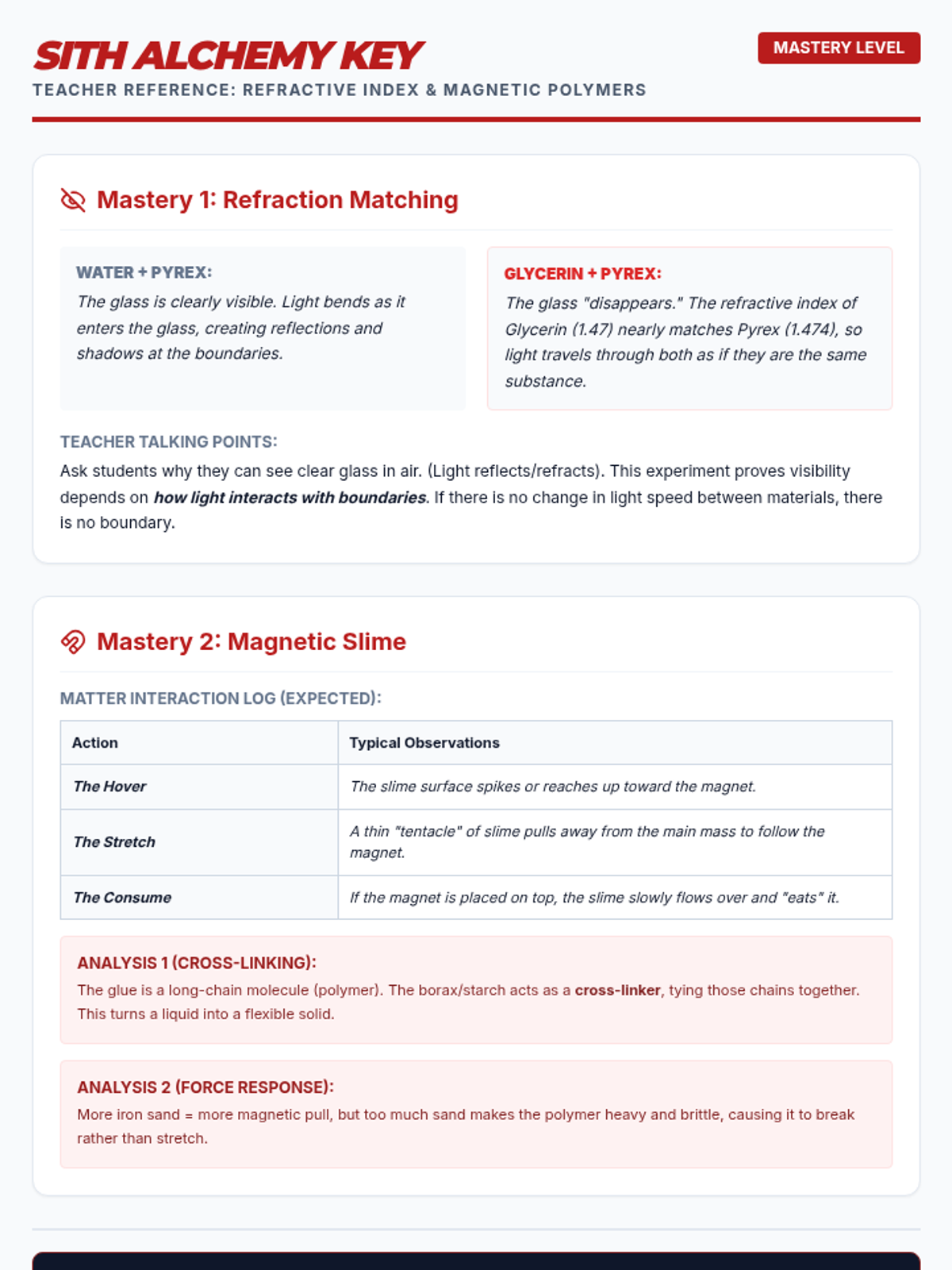
Detailed answer key and scientific explanations for the Sith Science Lab experiments. Revised to improve font sizes for better accessibility.
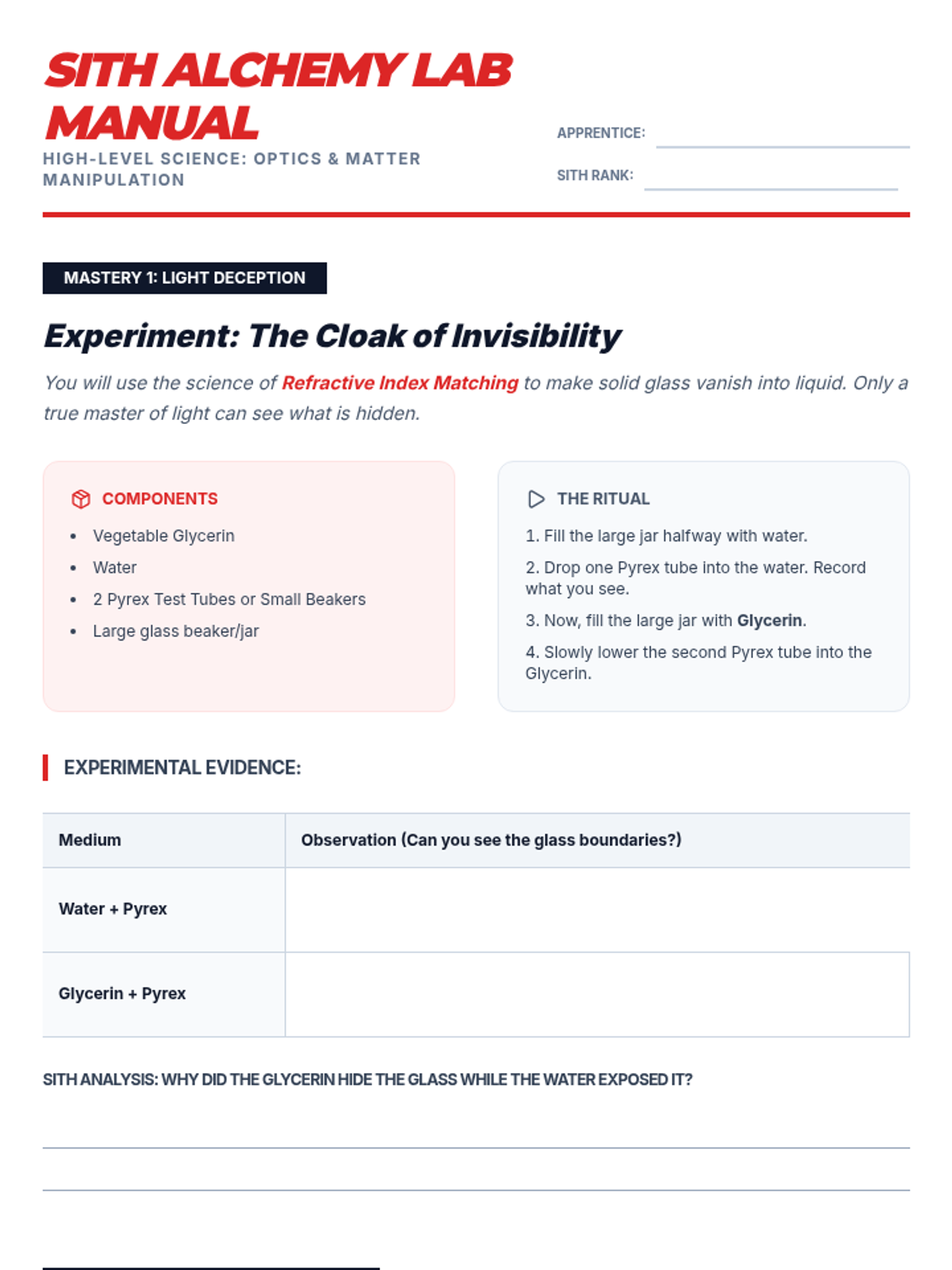
A structured lab manual for students to record observations from the refraction and magnetic slime experiments. Revised to fix contrast of student work lines and table borders.
A high-impact Star Wars-themed slide deck for the Sith Science Lab. Covers the science of refraction index matching and magnetic polymerization with a Dark Side aesthetic. Revised for better text contrast and visual alignment of light beams.
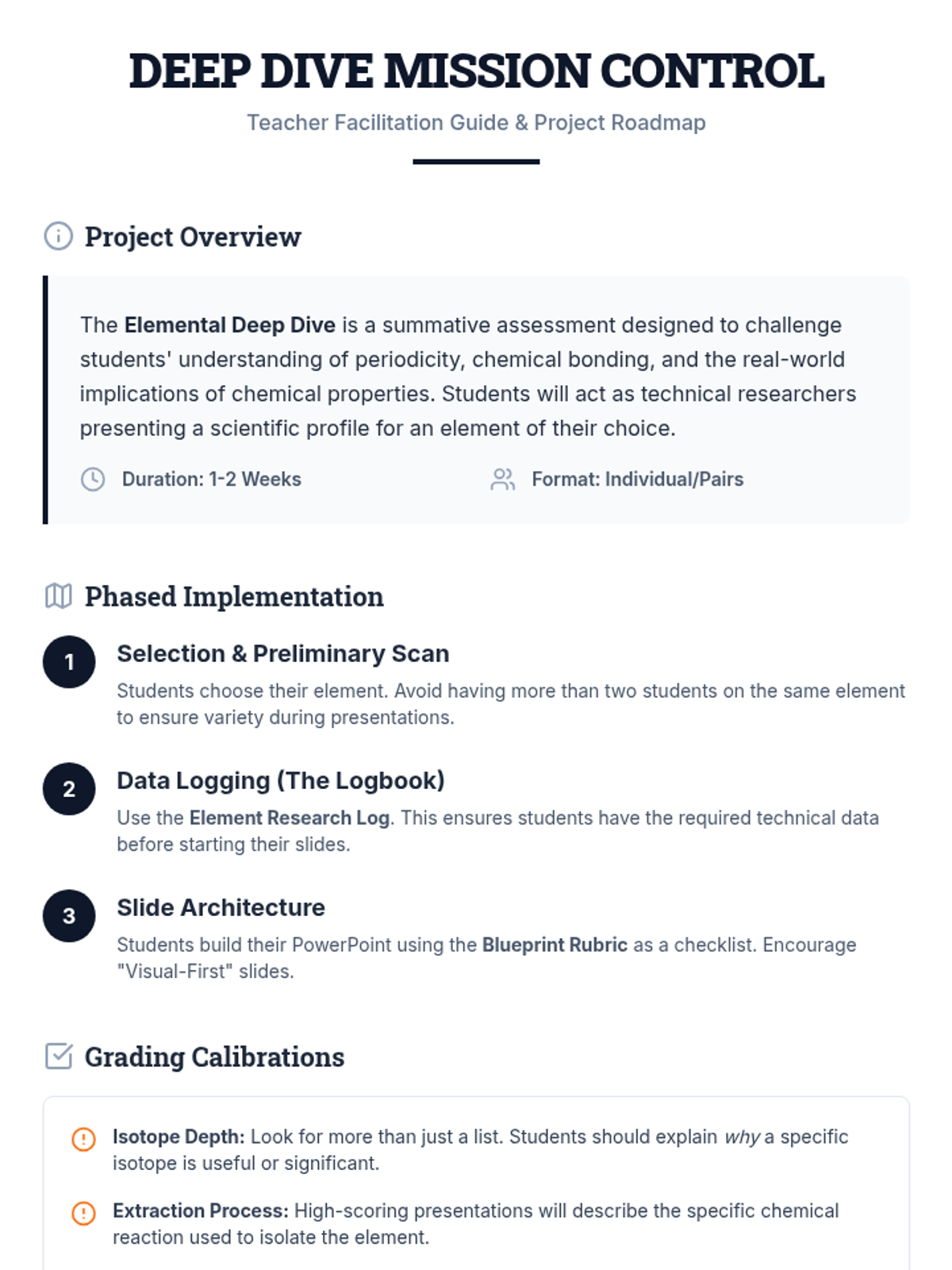
A teacher's guide for managing the Elemental Deep Dive project, including pacing suggestions, grading tips for technical scientific content, and a recommended slide deck structure.
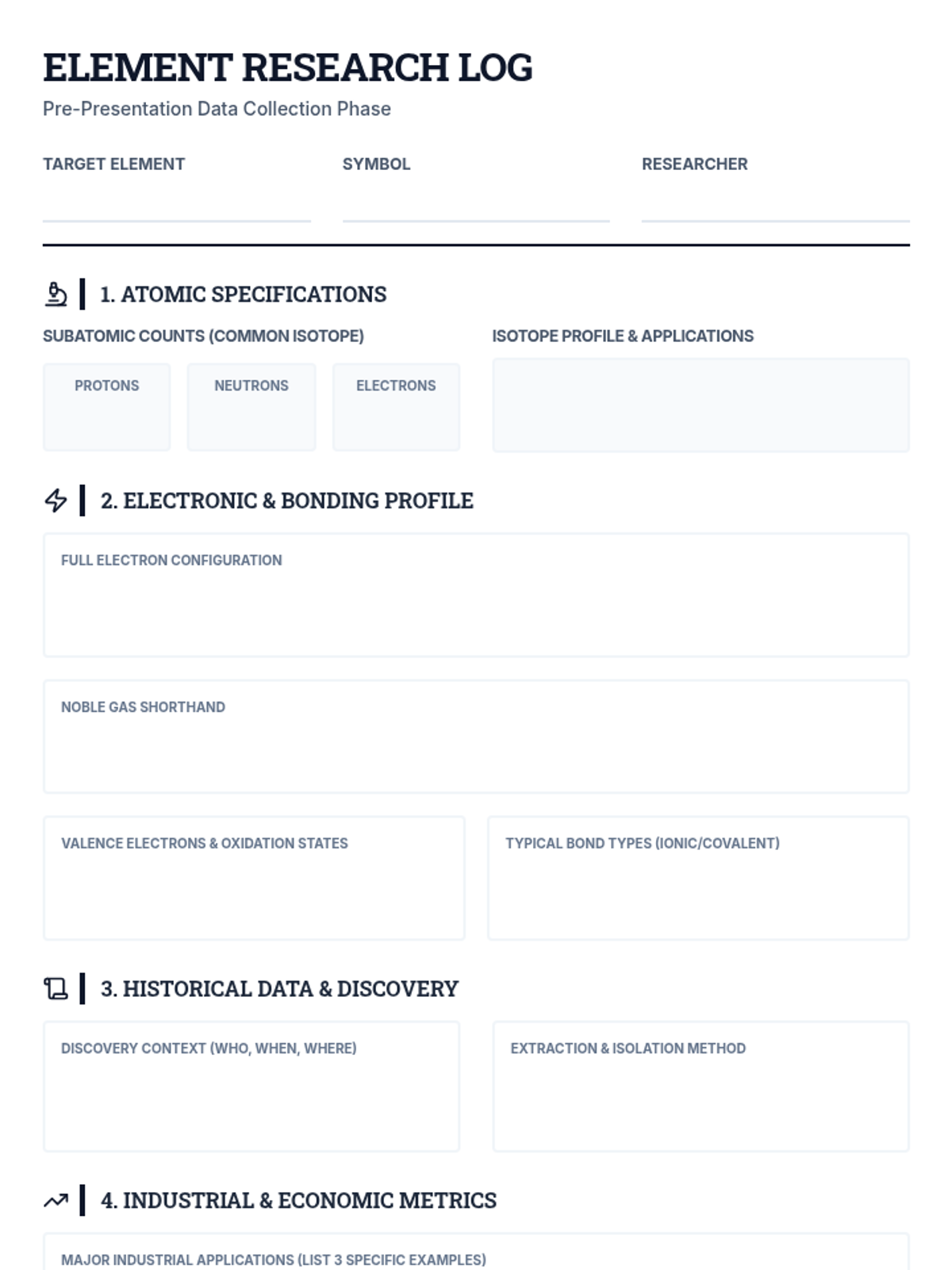
A research organizer for students to gather and structure data on their chosen chemical element before creating their final presentation, aligned with the project's rubric categories.
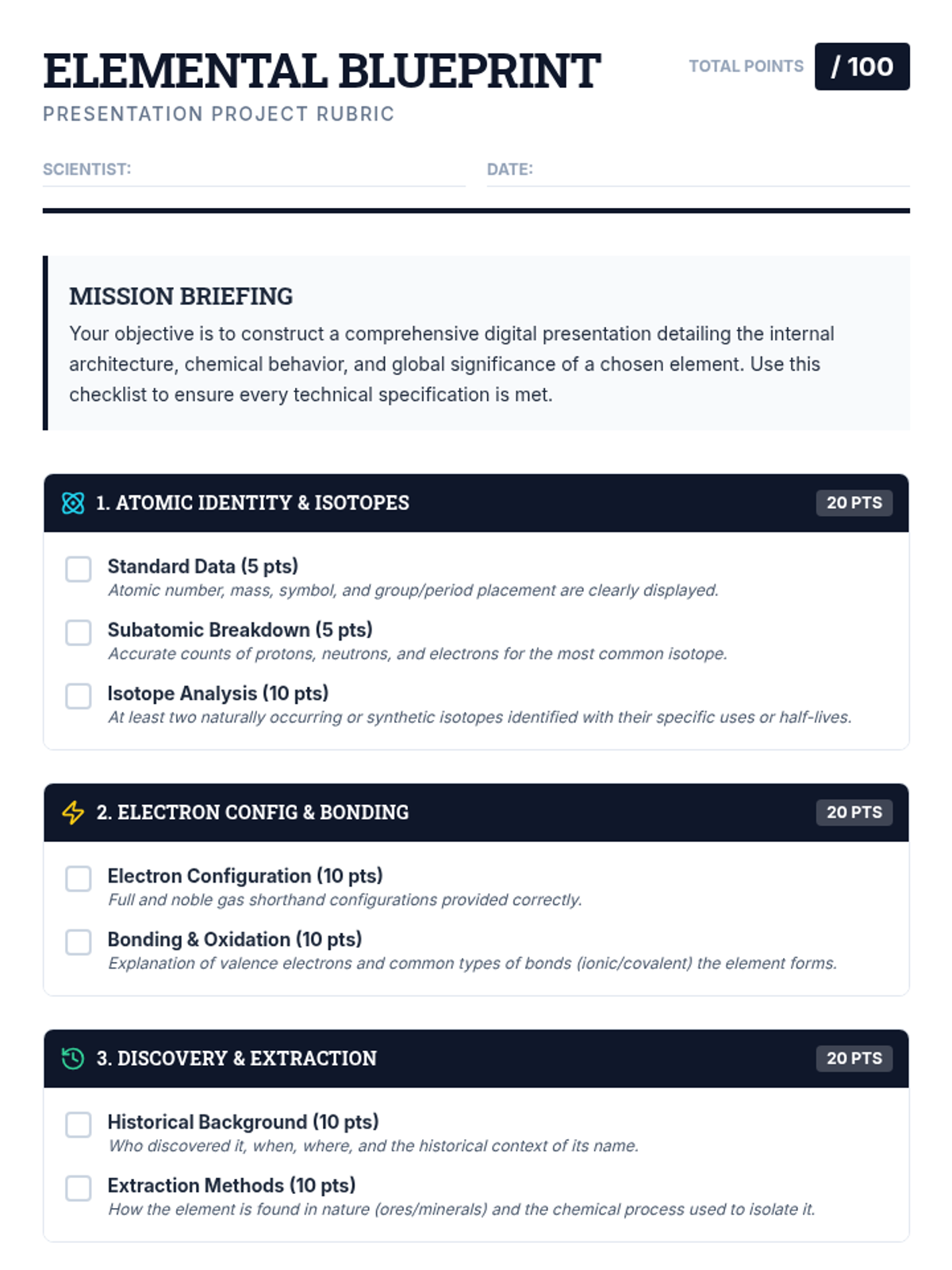
A comprehensive point-based rubric for a student presentation on a chemical element, featuring technical blueprint styling and clear scoring criteria across five major scientific categories.
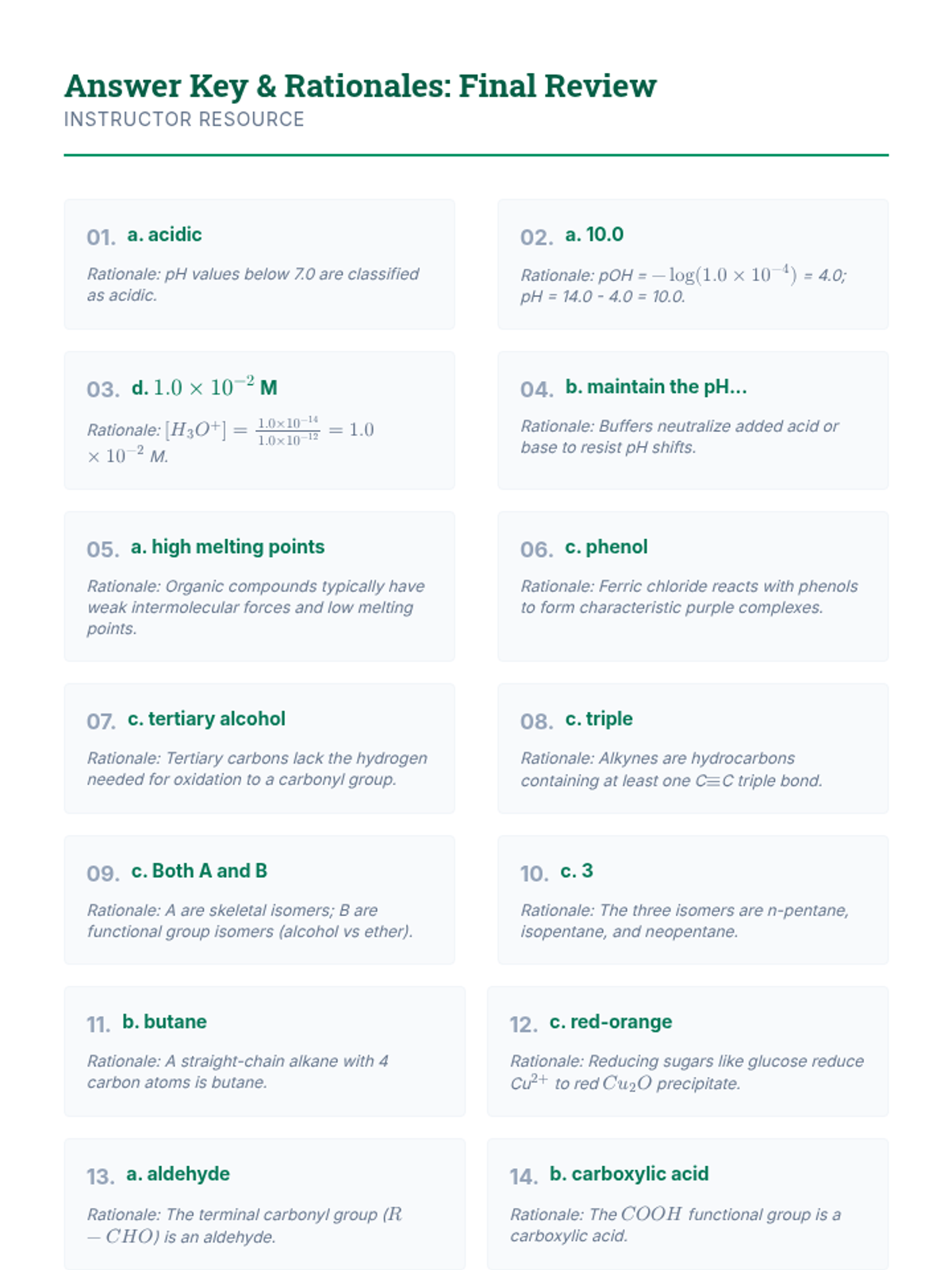
Answer key for the Final Review Quiz. Rationales were improved for clarity and consistency. Removed instructor notes and resource headers for a cleaner layout. Added layout improvements for page-break consistency.
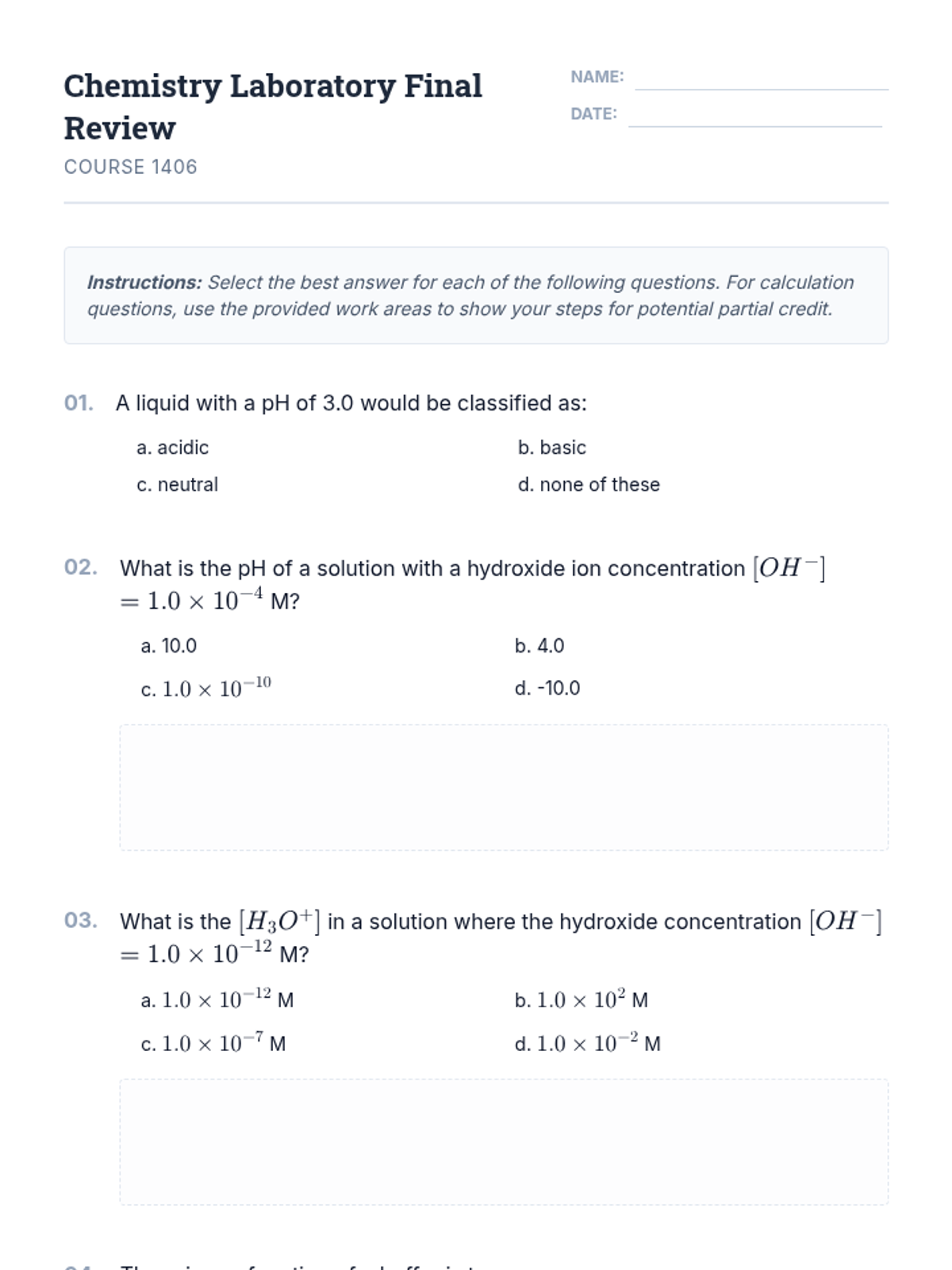
A 30-question multiple-choice review for introductory chemistry laboratory students. Improved diagram rendering and ensured question integrity across page breaks. Removed unstable LaTeX in favor of clean HTML entities for broader compatibility.
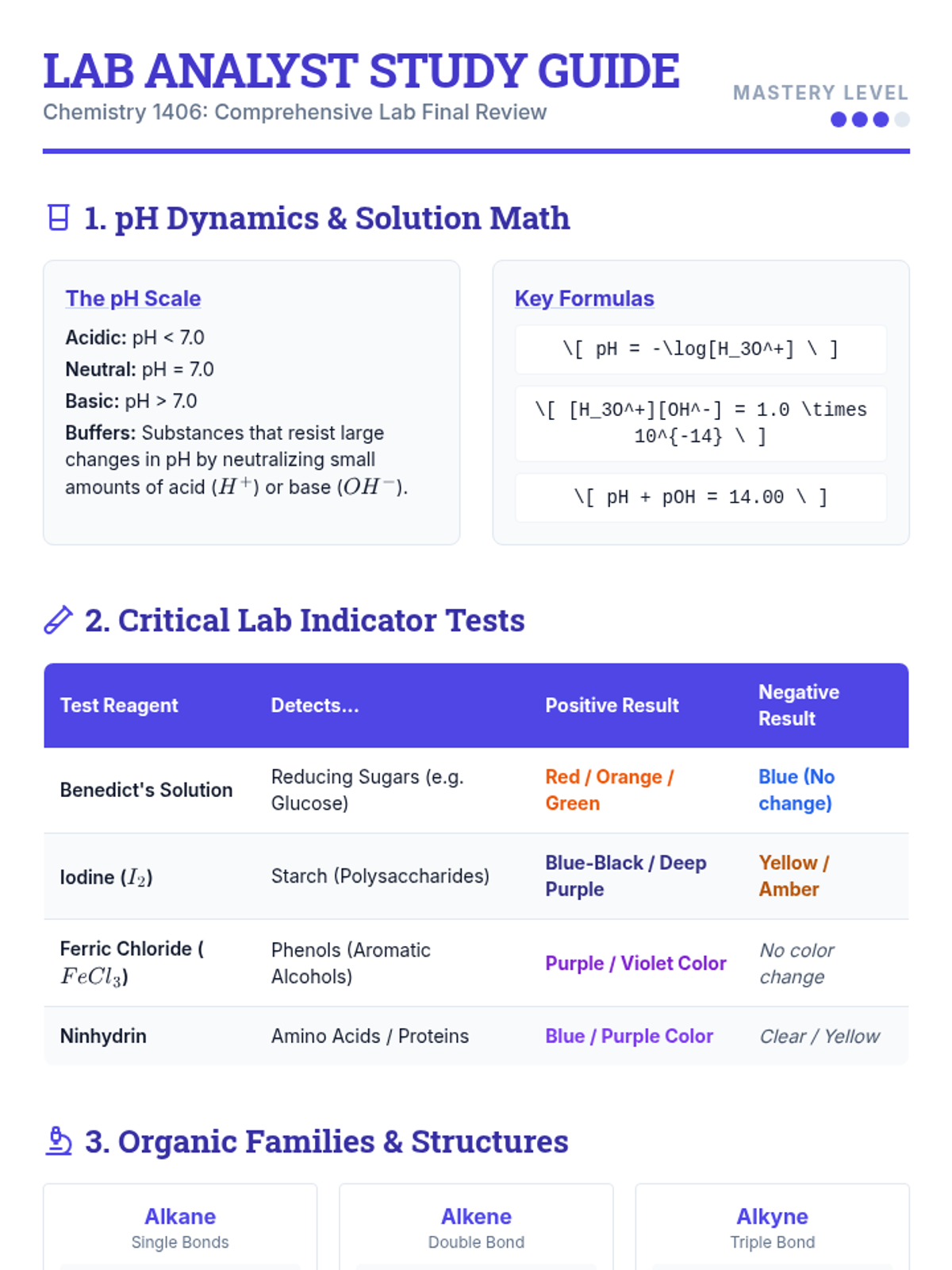
A comprehensive study guide covering pH calculations, laboratory indicator tests, organic chemistry functional groups, and quantitative solution calculations for chemistry laboratory students. Added a Quick Practice Arena for calculation practice and fixed layout issues.
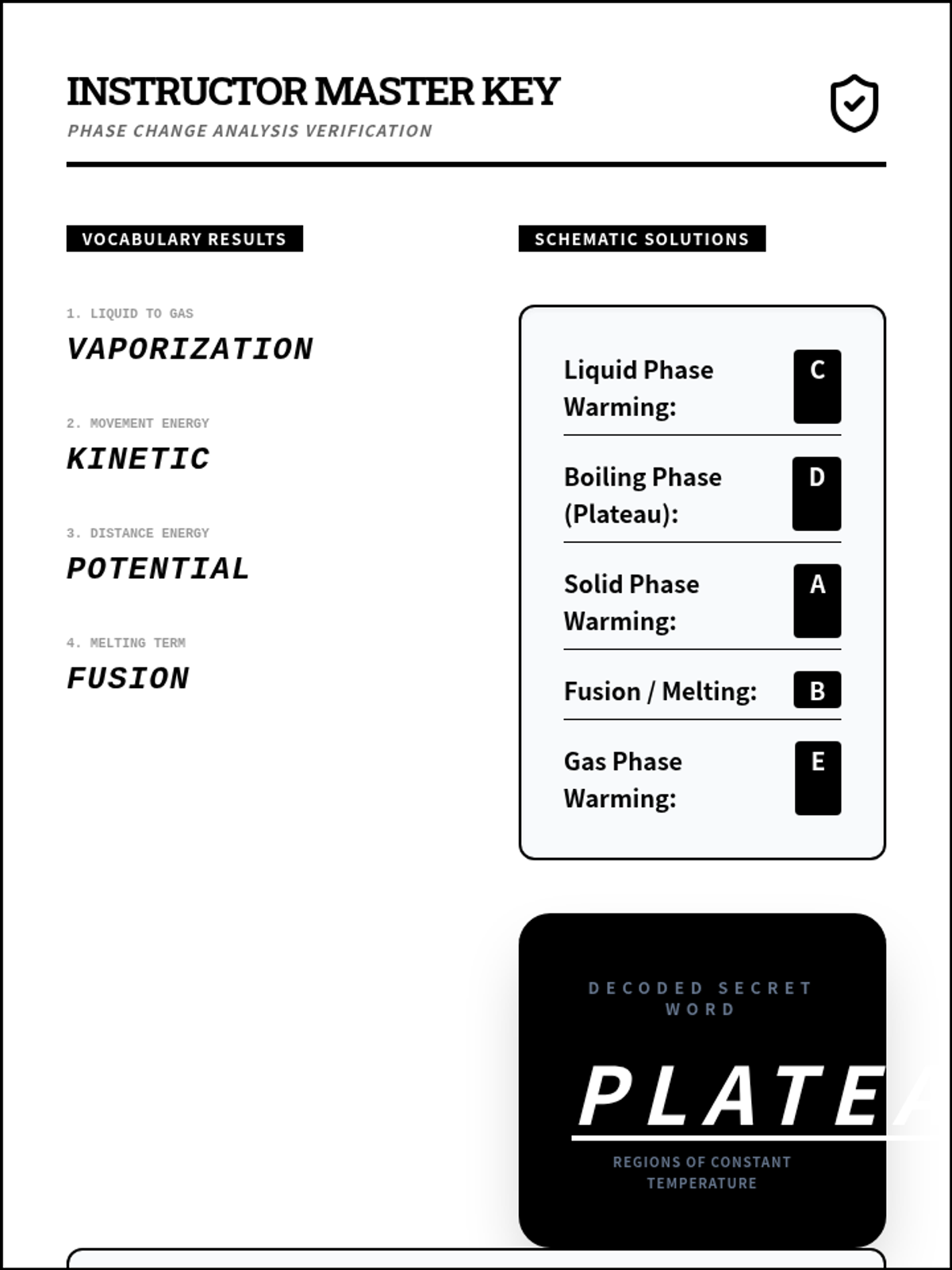
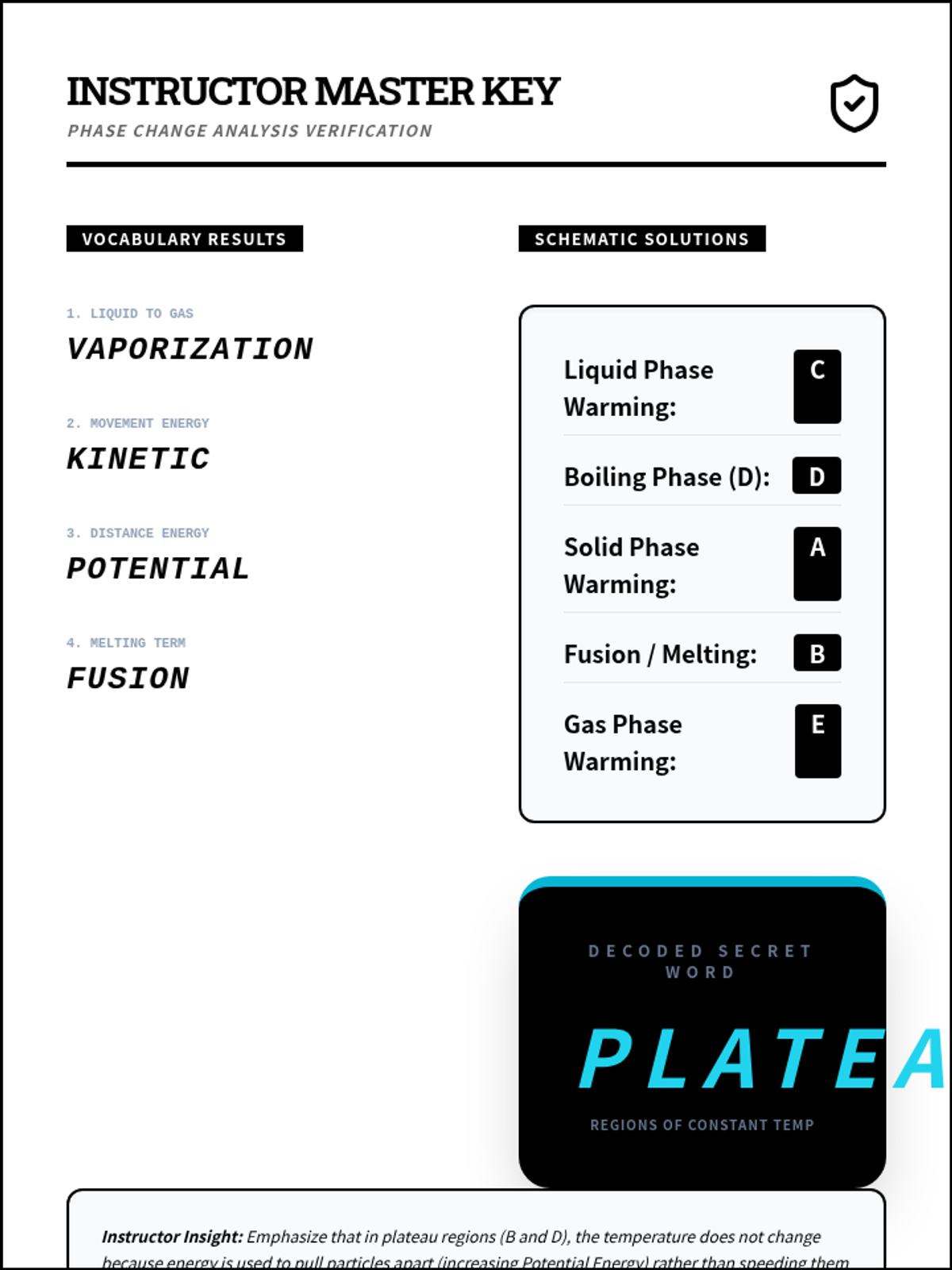
A high-contrast teacher answer key for the Thermal Blueprint Puzzle. Provides clear solutions for vocabulary scrambles and curve segment matching. Features pedagogical insights into kinetic vs potential energy changes during slopes and plateaus.
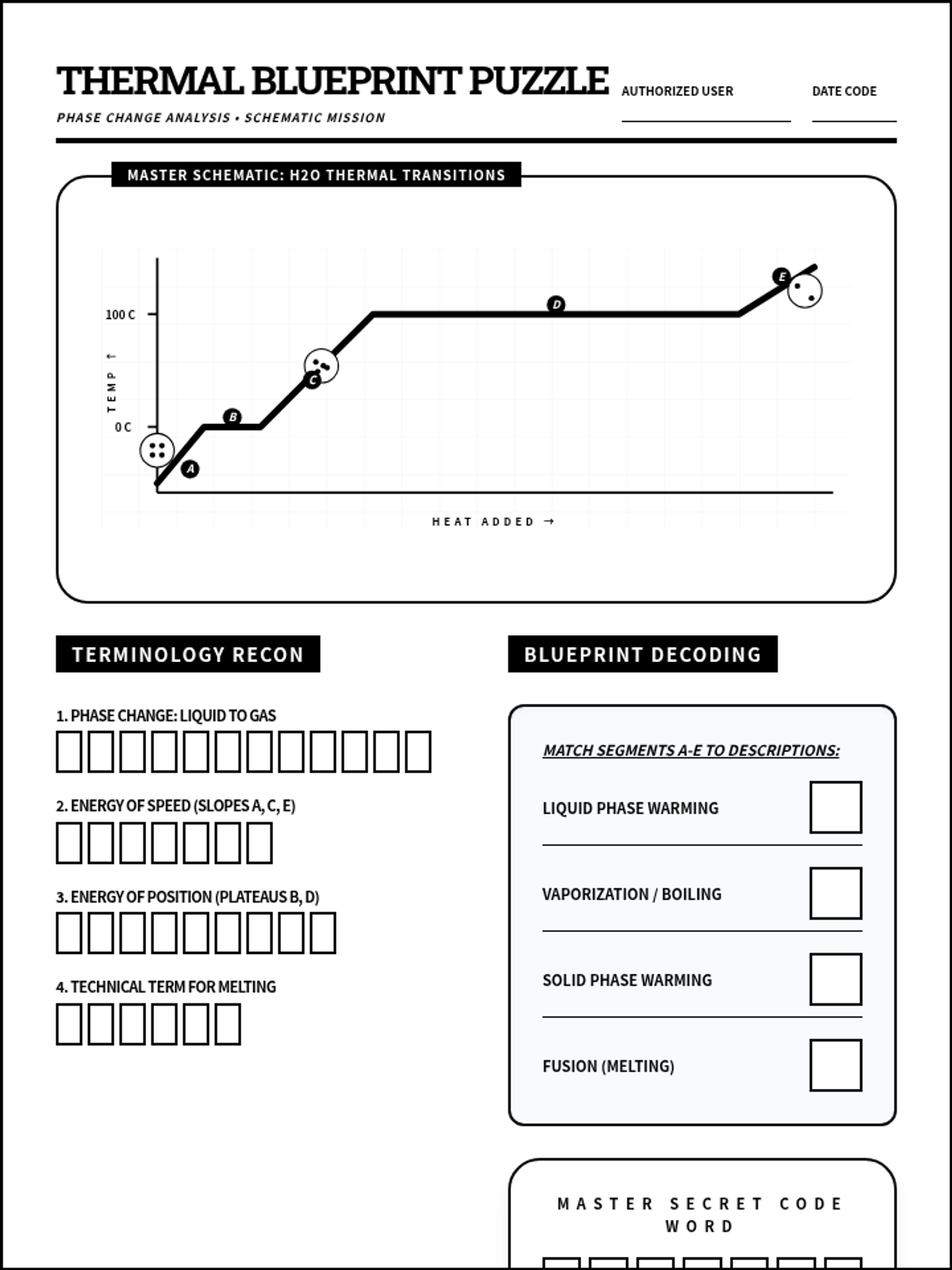
A final student version of the Thermal Blueprint Puzzle. Features realistic particle callouts (tight solid, spaced liquid, scattered gas) and a high-contrast, bolded hint section for the secret code word to ensure legibility in print. Optimized for black-and-white high-contrast printing.
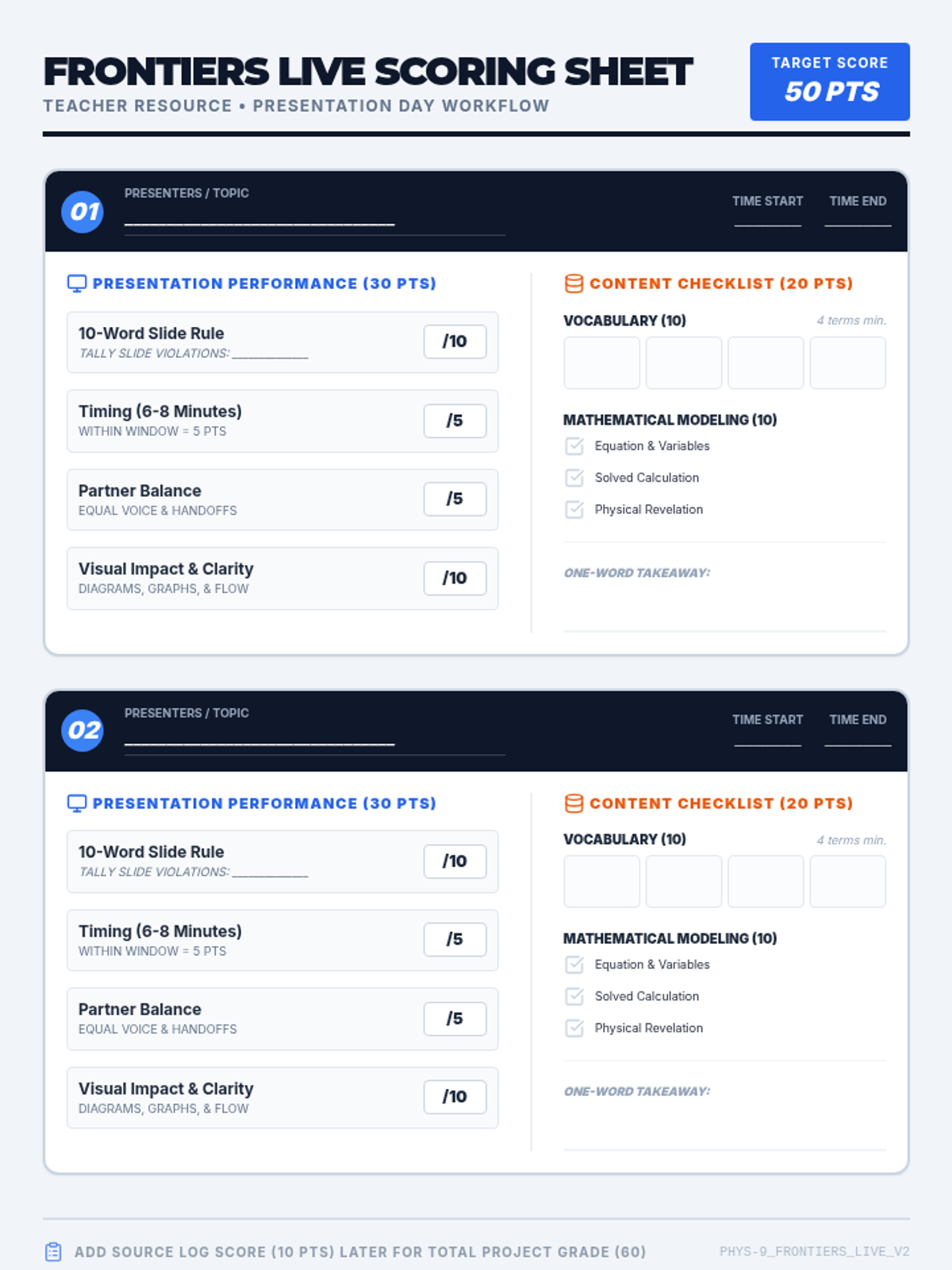
A streamlined teacher-facing scoring sheet designed for use during live student presentations. It features two scoring cards per page, checklists for the 10-word rule and time limits, and quick-entry boxes for vocabulary and equations. Updated to match the new 30-point presentation rubric.
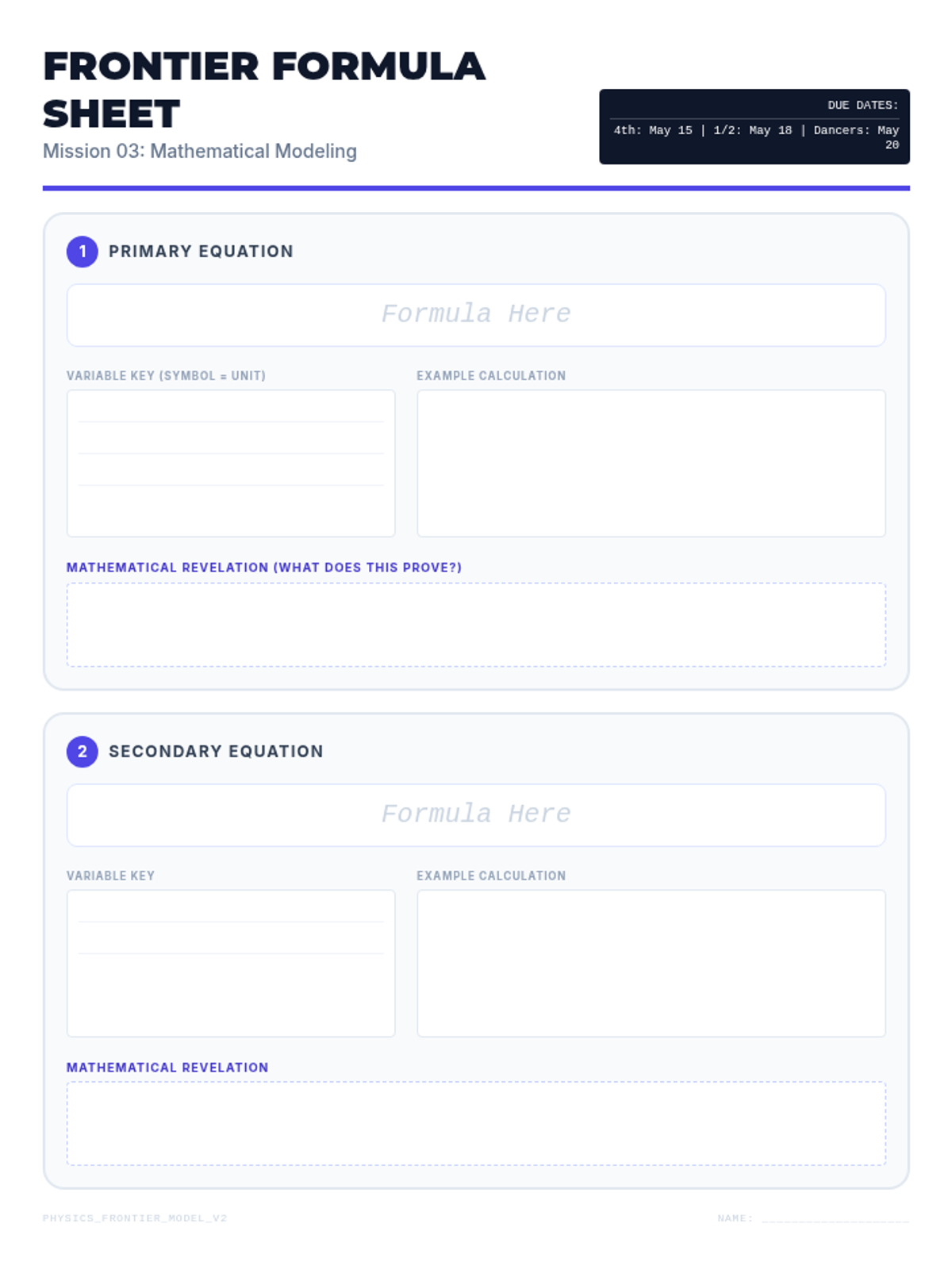
A mathematical modeling worksheet for breaking down physics equations, defining variables, providing calculation examples, and explaining physical significance. Revised for single-page layout.
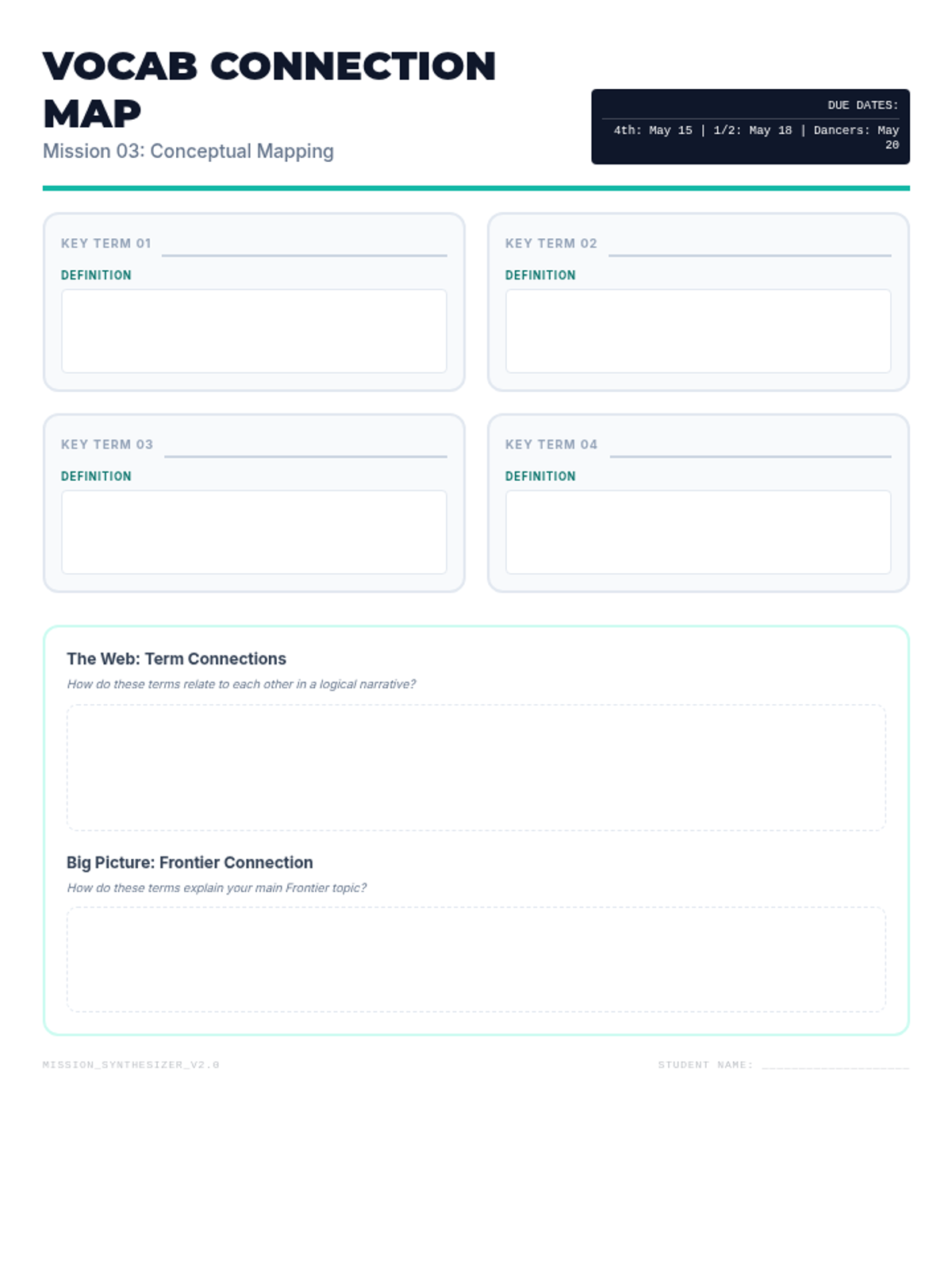
A vocabulary-focused worksheet where students define four key terms and explain the conceptual links between them and their research topic. Revised for single-page layout.
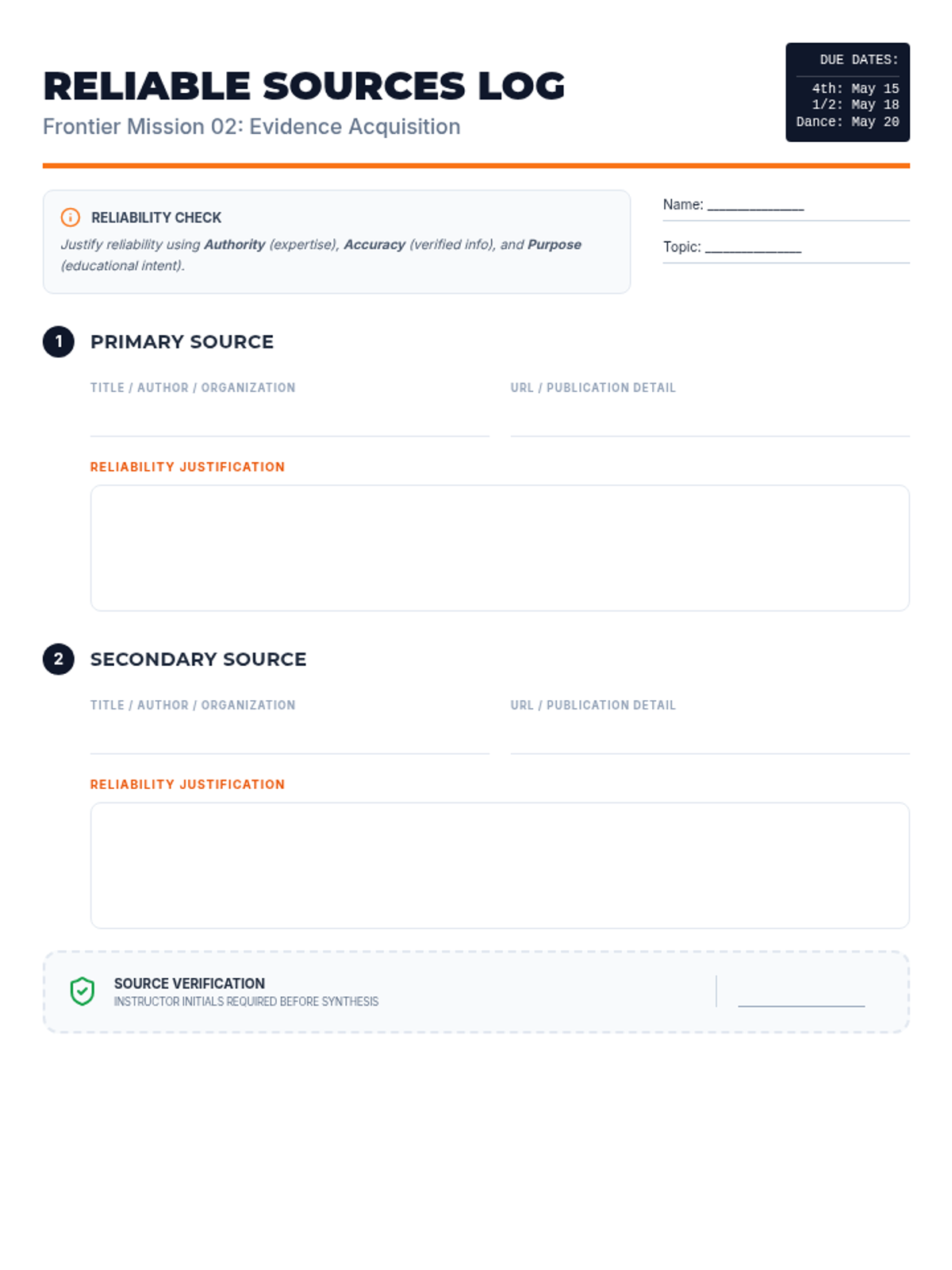
A structured handout for students to document two reputable research sources and justify their reliability based on authority, accuracy, and purpose. Revised for single-page layout.
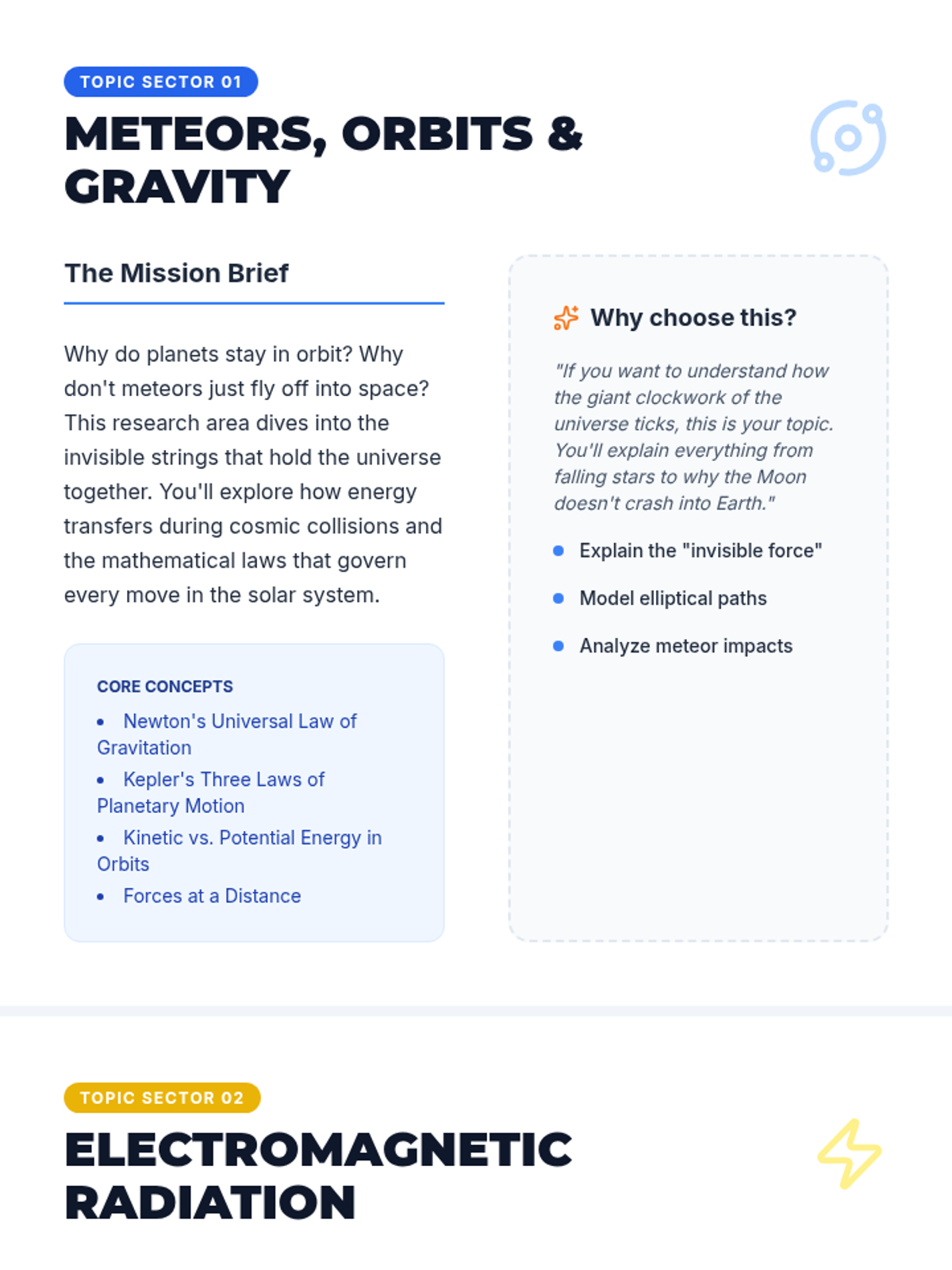
A detailed topic guide featuring a deep dive into all six research areas, including mission briefs, core concepts, and 'Why Choose This?' hooks to help students select their research focus.
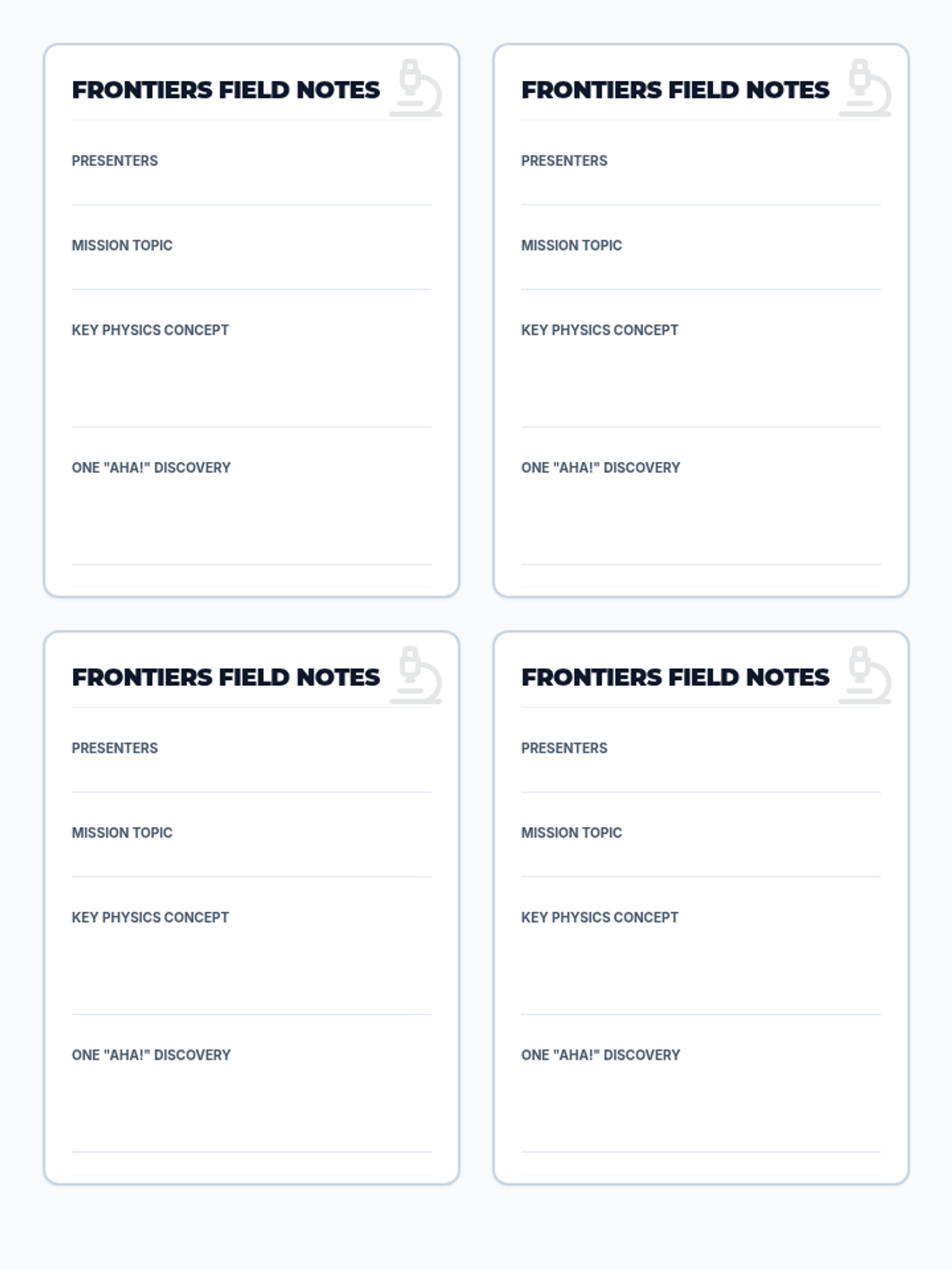
Small, quadrant-based note sheets for students to use while observing peer presentations, featuring space for key concepts, equations, and vocabulary words. Revised for 10-point scoring.
An introductory slide deck for teachers to launch the Physics Frontiers research project, covering mission goals, the 10-word slide rule, and specific equation requirements. High-impact visual design. Revised to reflect the new 30-point presentation scoring.
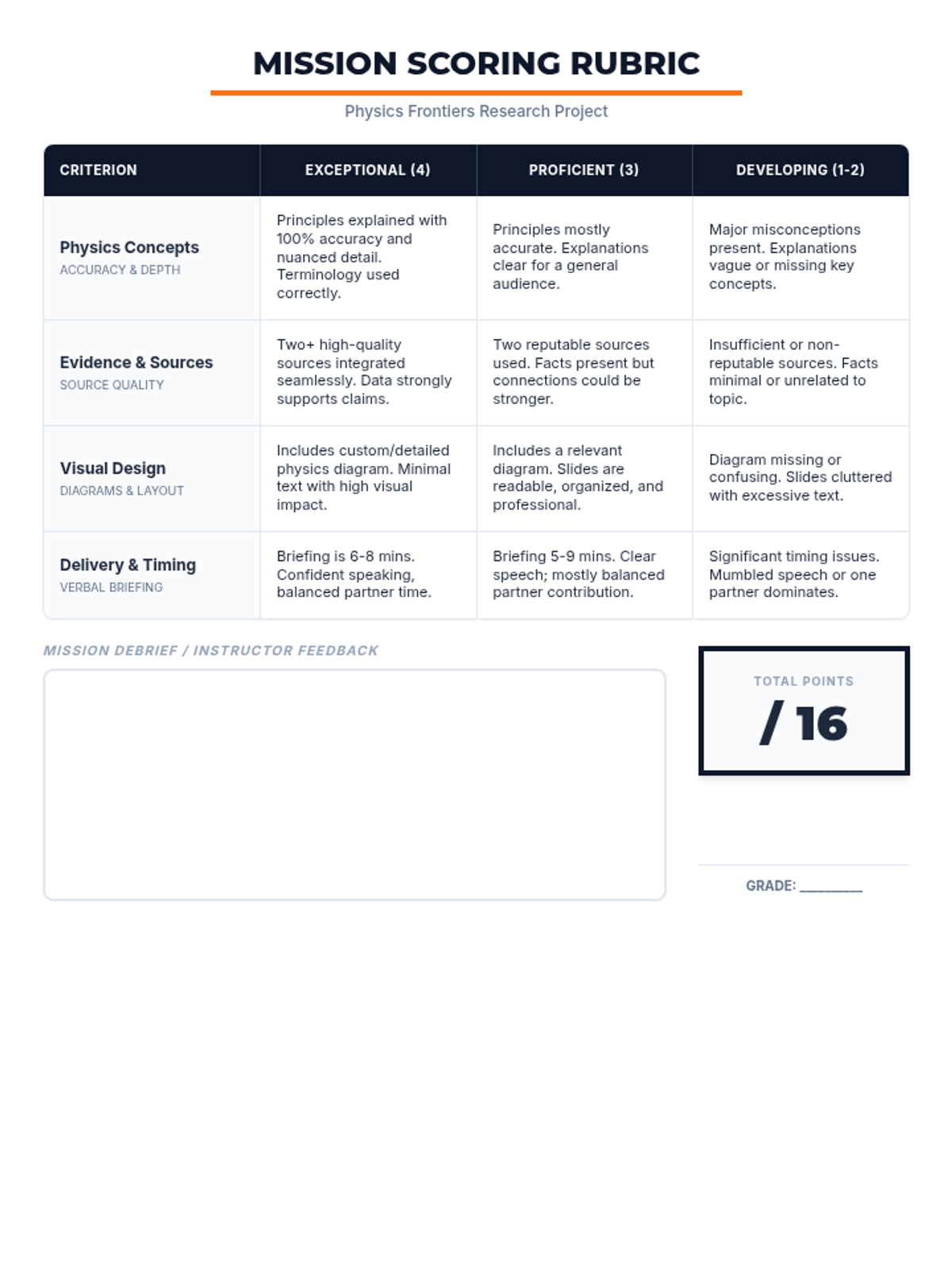
A detailed grading rubric for the Physics Frontiers live presentation, evaluating content description, public speaking skills, vocabulary usage, equation analysis, and teamwork/timing. Updated to a 30-point scale with specific point values for exceptional, proficient, and developing performance.
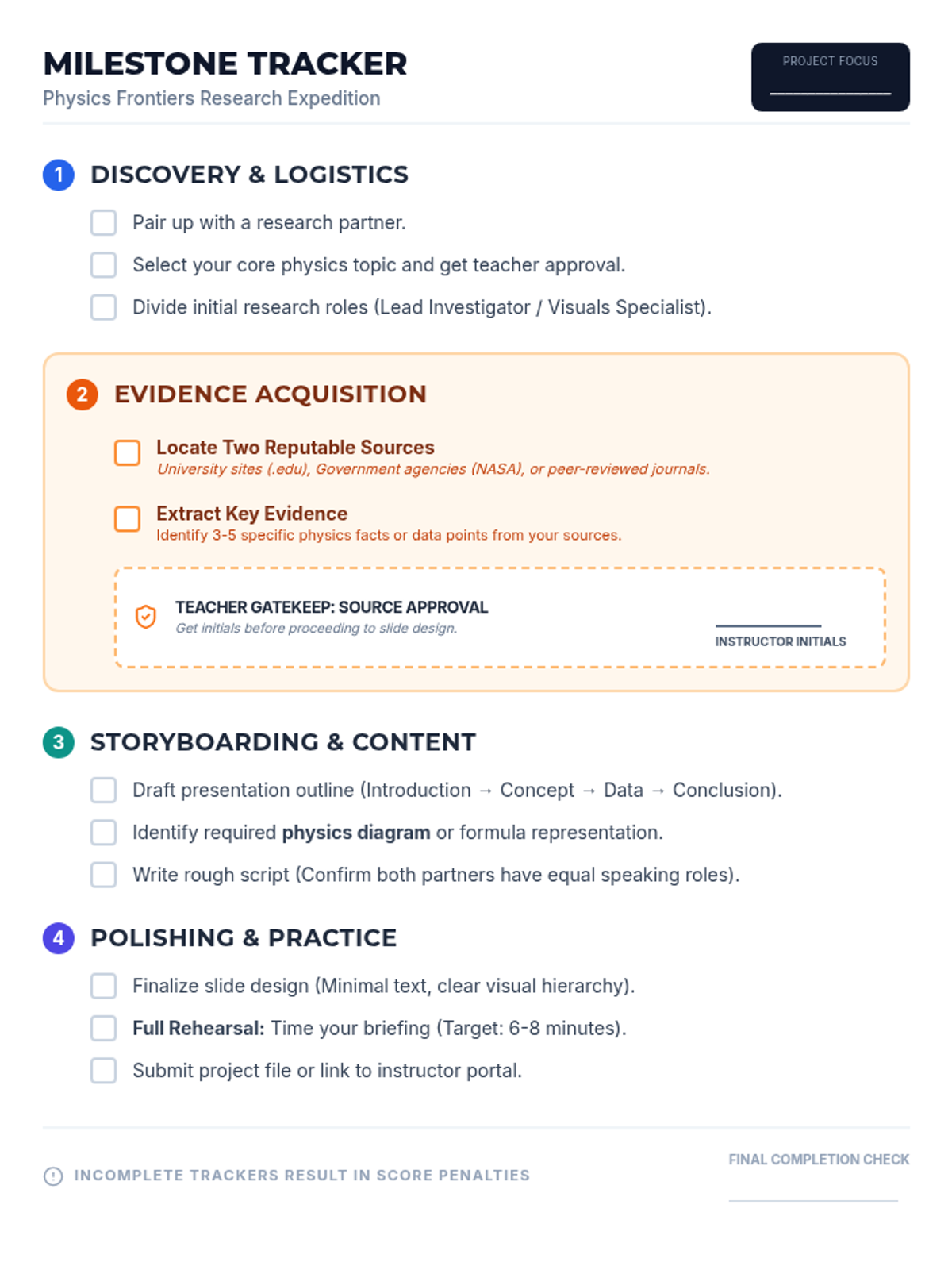
A task-based progress tracker for the Physics Frontiers project, featuring a mandatory teacher checkpoint for source verification and clear categorical phases. Revised for single-page fit.
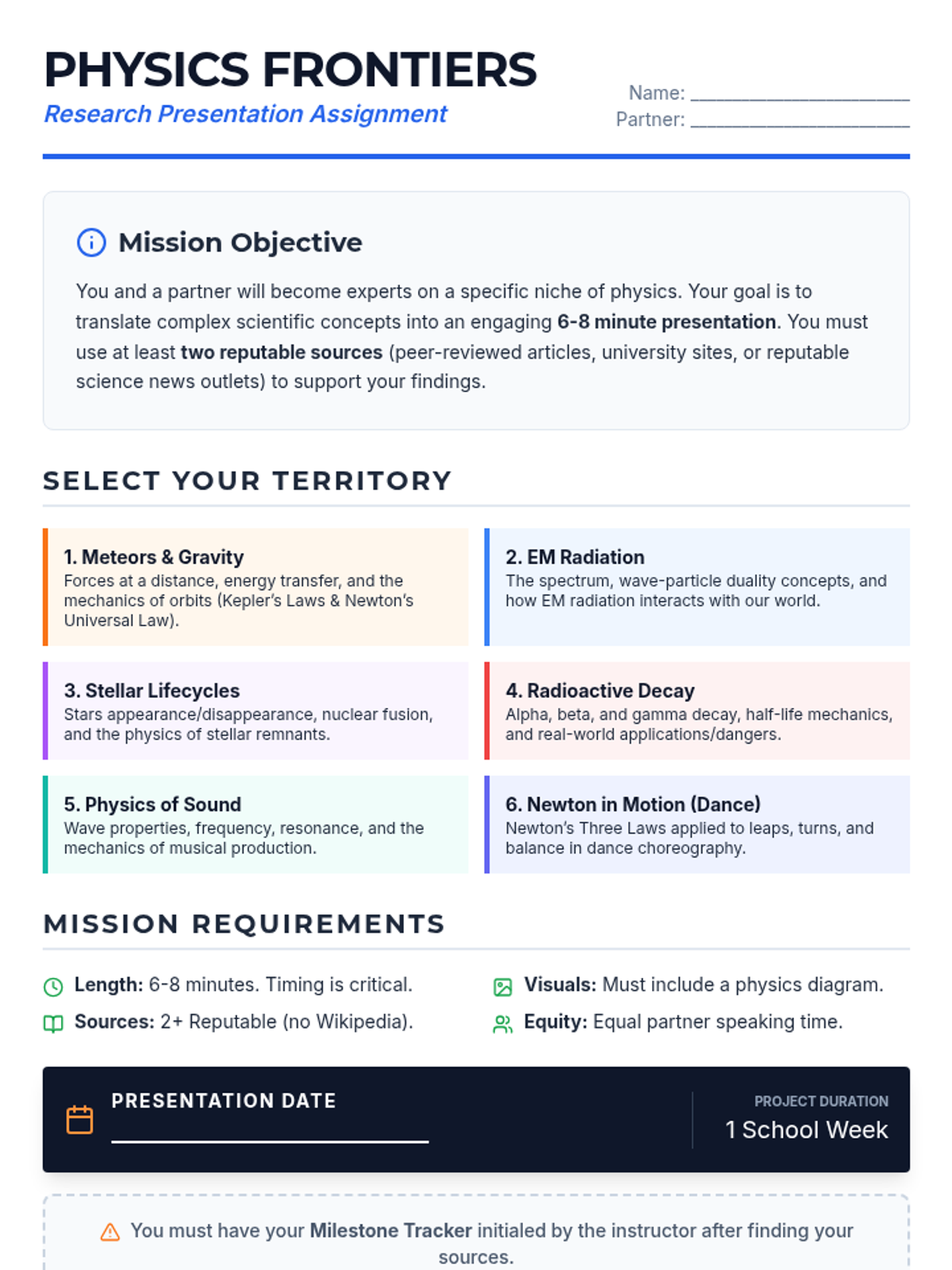
The main project handout for the Physics Frontiers research assignment, updated with specific equation and vocabulary requirements, a 10-word slide limit, and revised 30-point presentation scoring breakdown. Optimized for single-page fit.
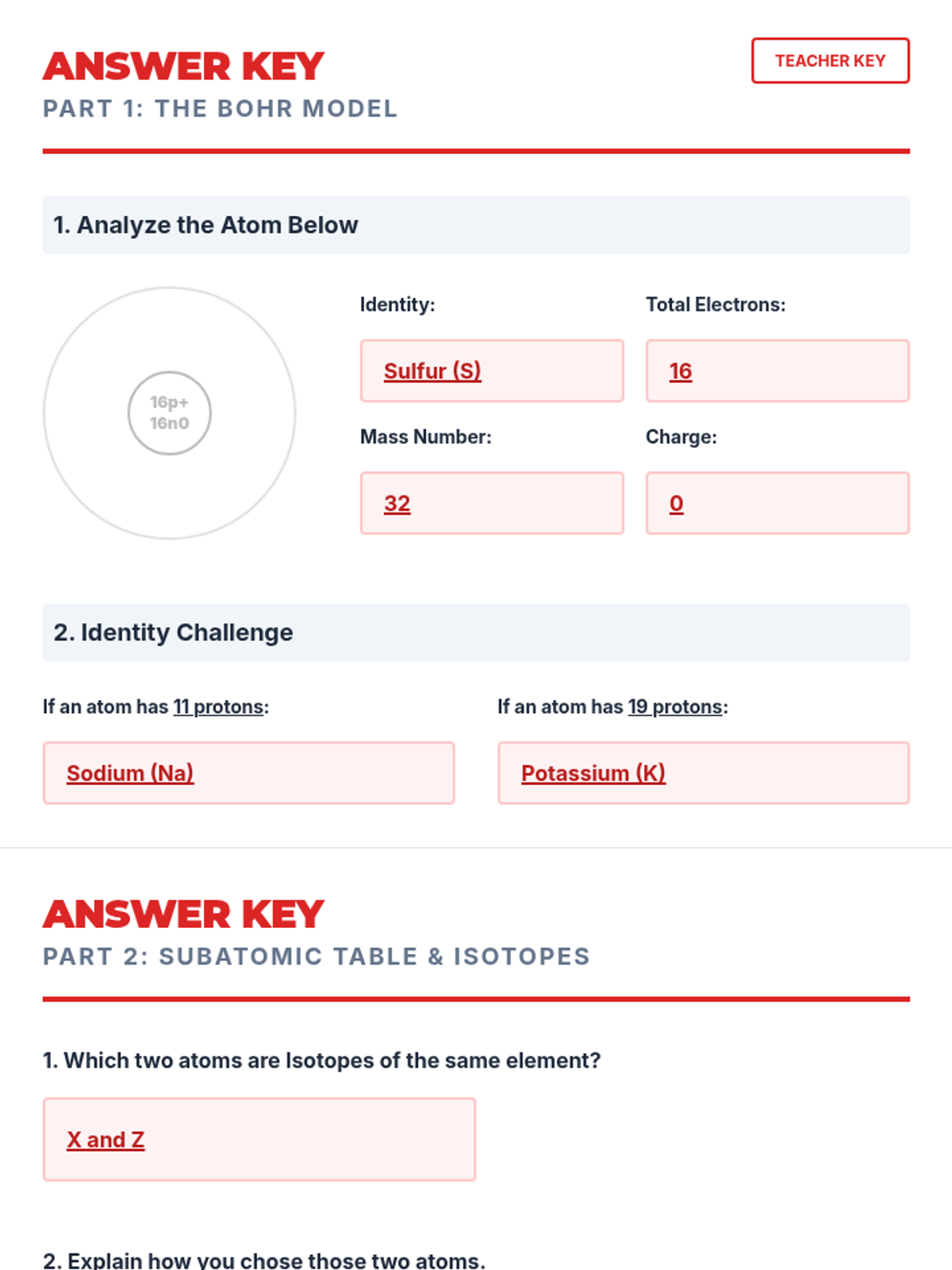
Complete teacher answer key for the Atomic Blueprint Packet with step-by-step solutions and highlighted answers.
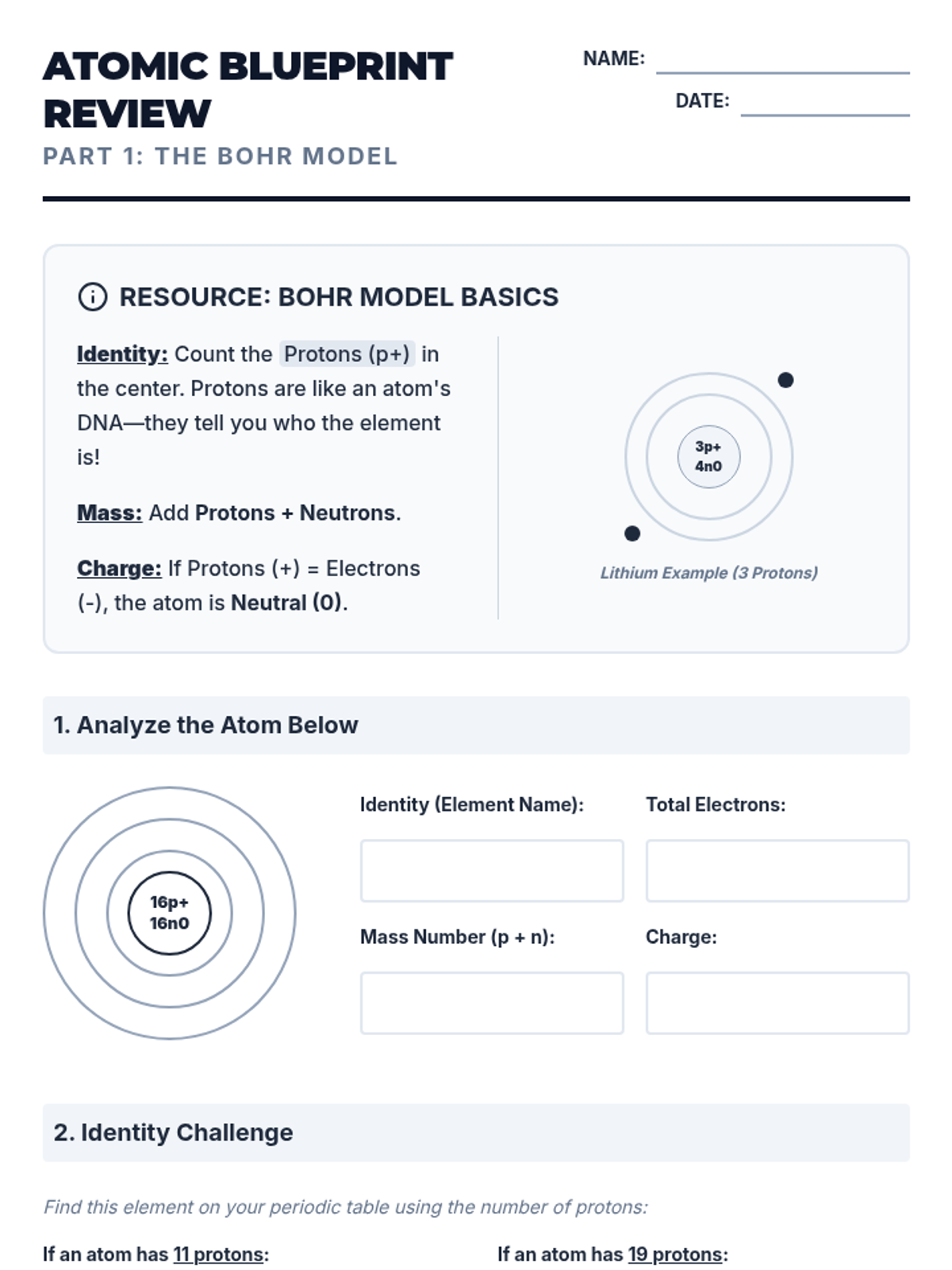
A 6-page independent practice packet for special education students updated for high-contrast printing, featuring integrated notes from slides and a clean, light-background layout.
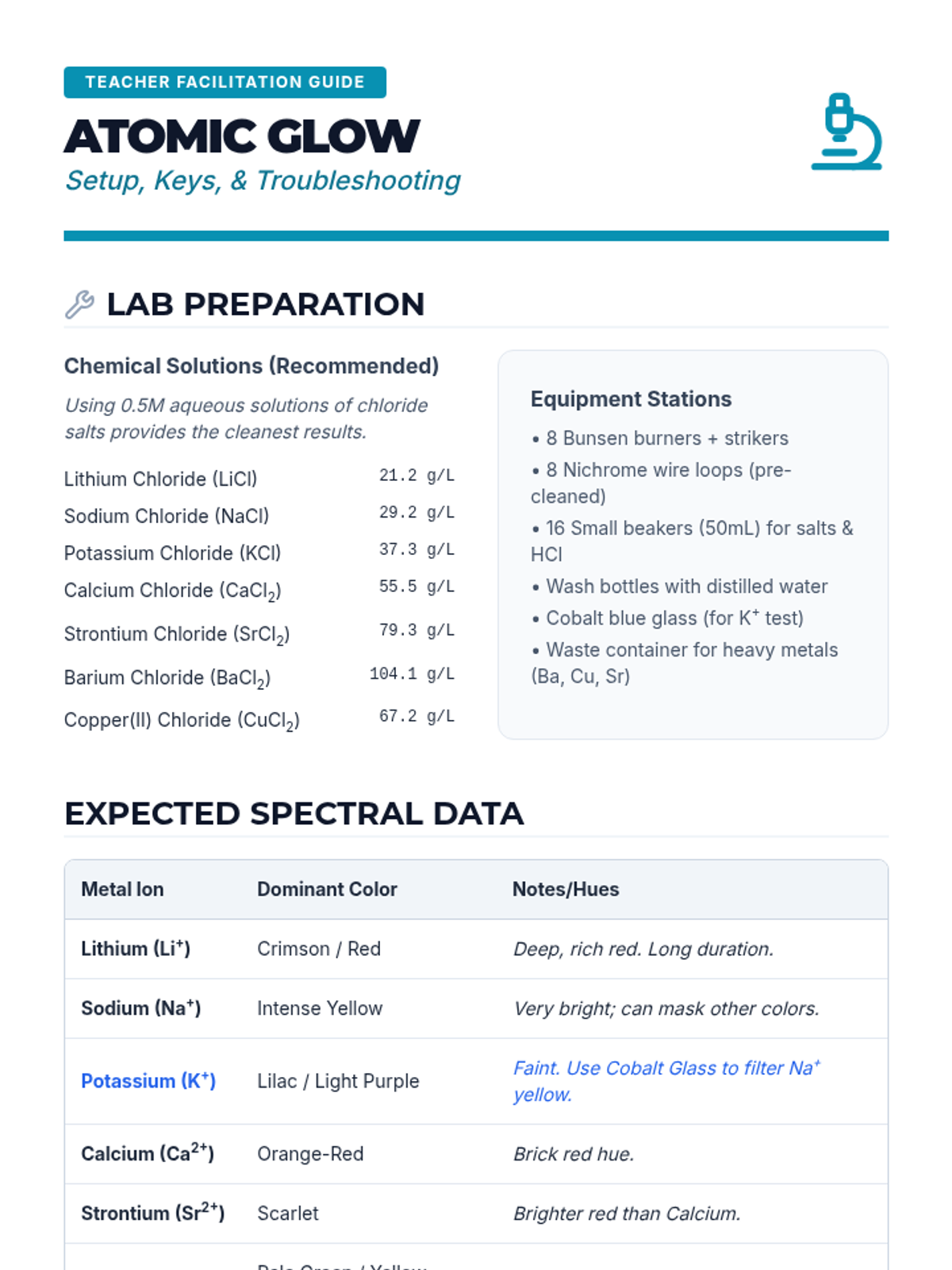
A teacher facilitation guide for the Flame Test lab. Includes chemical preparation instructions, a detailed expected results table, and an answer key for all pre-lab and post-lab questions. Features troubleshooting tips for common student errors like sodium contamination.
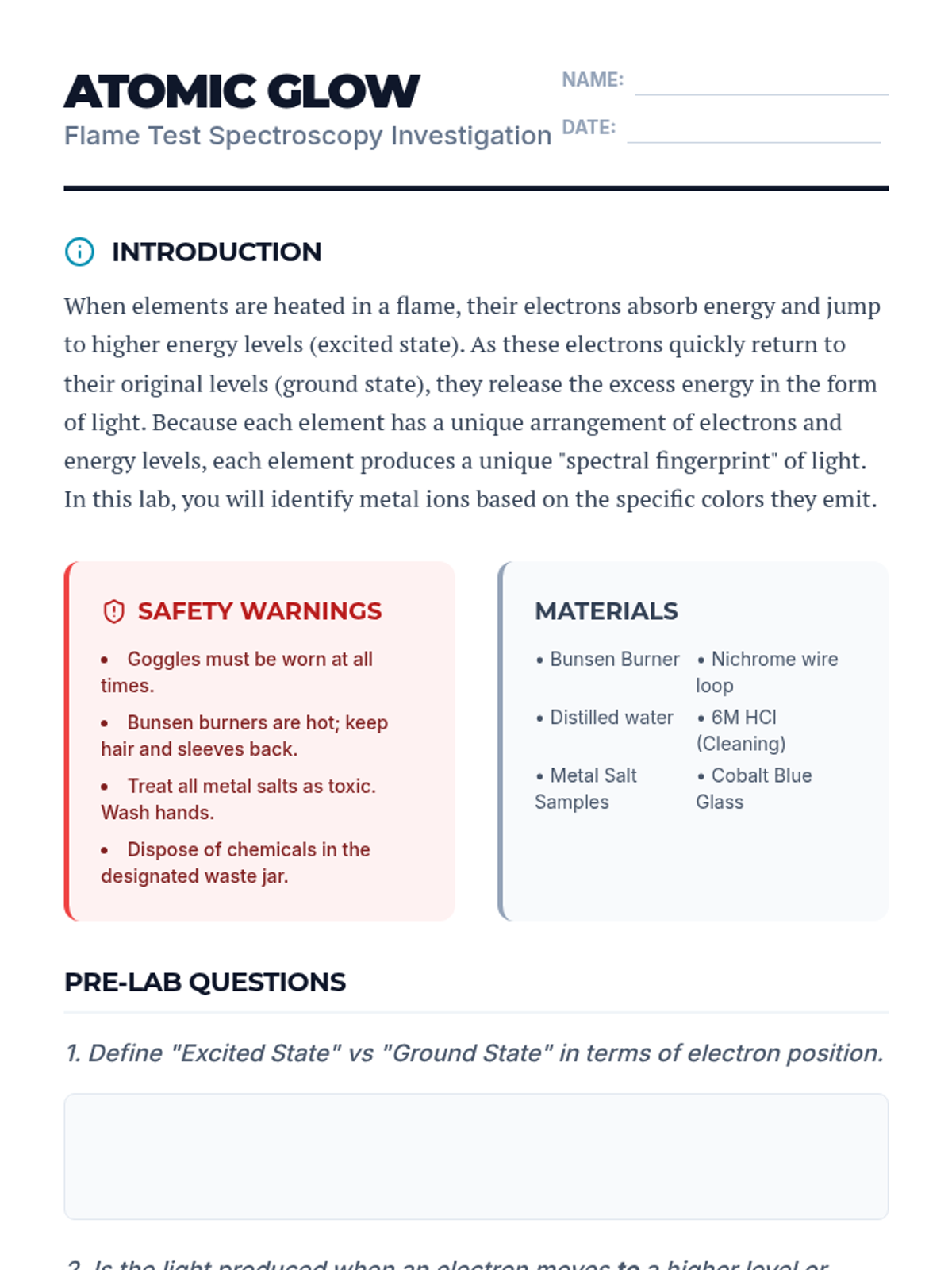
A student lab guide for the Flame Test experiment. Includes a pre-lab section, safety protocols, a structured data table for various metal ions, and post-lab analysis questions. Designed in a professional, clean lab notebook style.
A visual slide deck for the Flame Test Lab, covering learning objectives, safety protocols, Bohr model mechanics, and step-by-step procedures. Features a high-contrast dark theme with glowing neon accents.
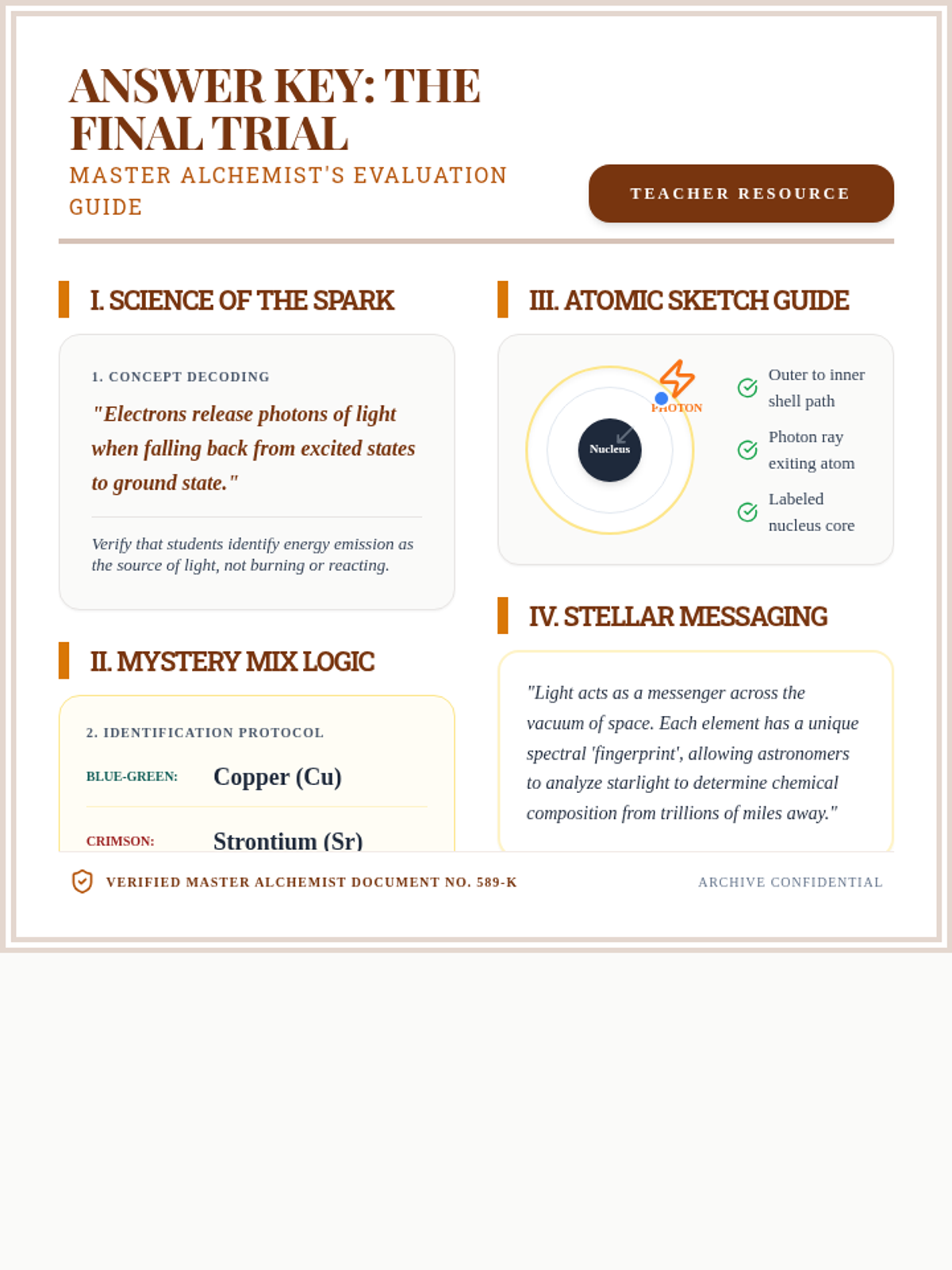
A comprehensive answer key for 'The Final Trial' assessment. It provides correct answers, diagram requirements, and pedagogical tips for the teacher. Optimized for 11x8 landscape print with high-visibility layout and fixed rendering artifacts. Small font sizes increased for better legibility.
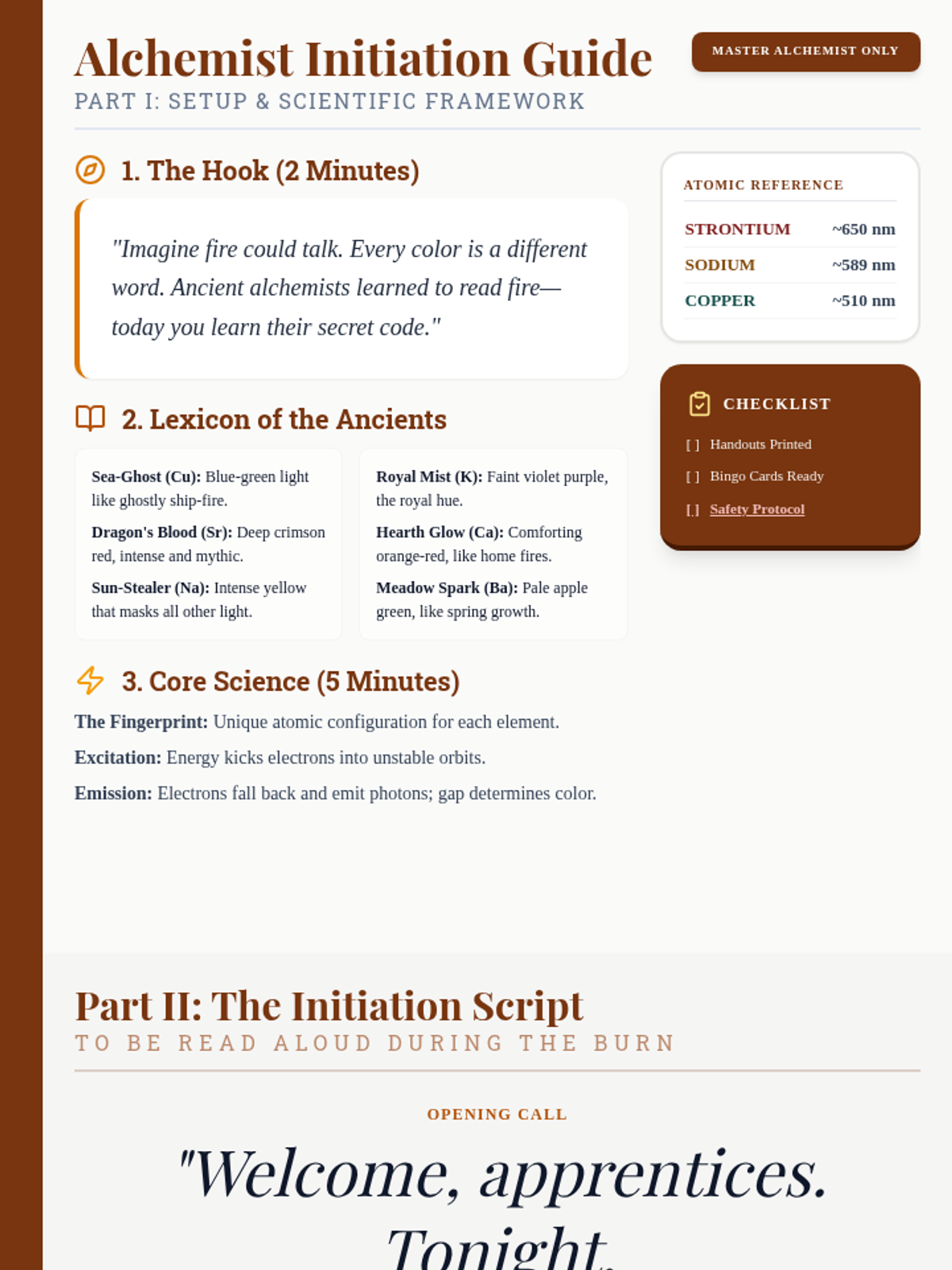
A teacher facilitation guide for the 'Mystery Mix' flame show. Includes a structured prep lesson plan, an atmospheric script for the demonstration, and a 'Lexicon of the Ancients' explaining the symbolic nicknames for each element. Optimized for 11x8 landscape print with reduced padding to avoid content cutoff.
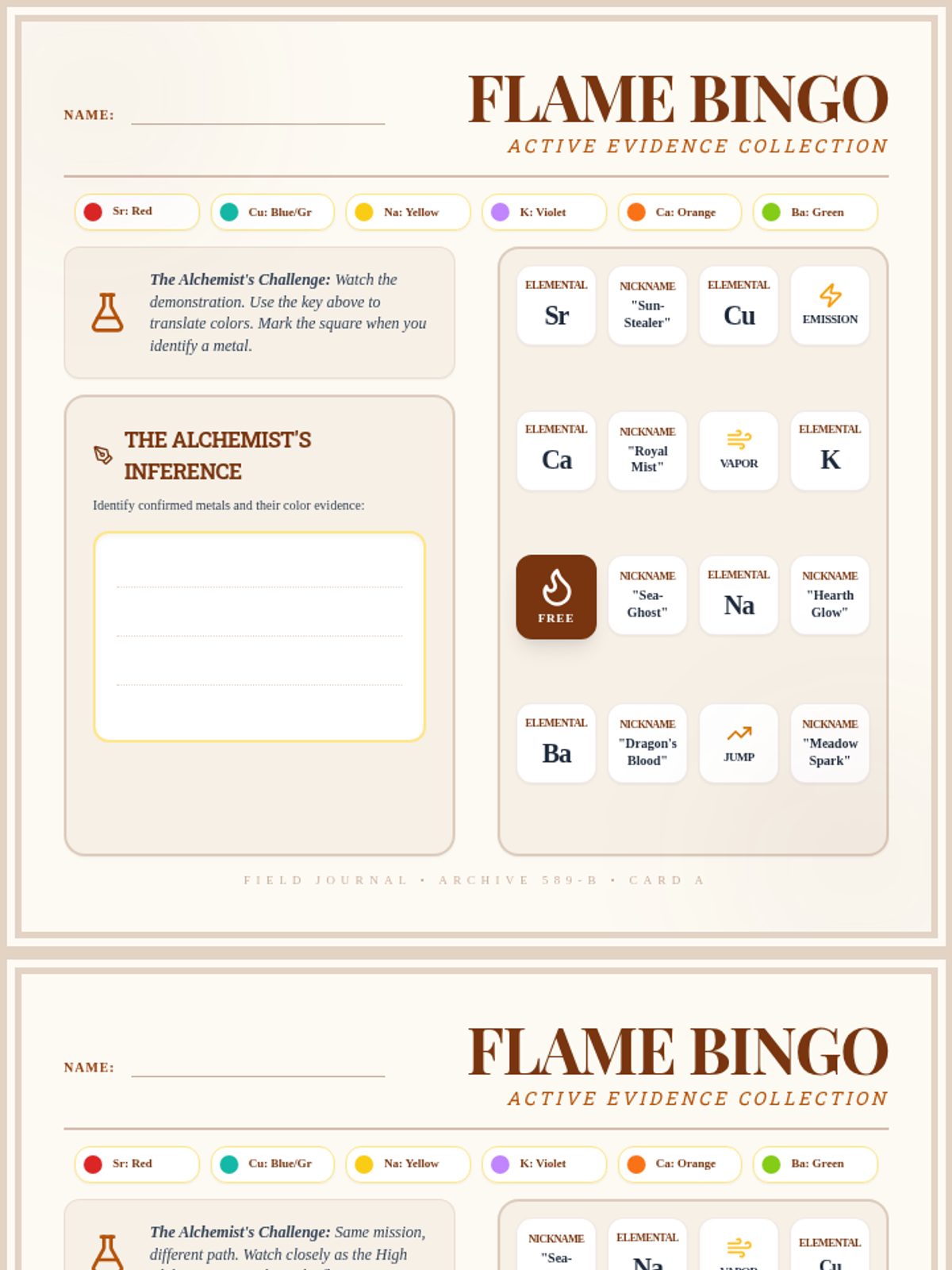
An updated three-page interactive activity document with color-coded Bingo cards. The background of each tile matches the specific flame color of its element or nickname. Contrast on lighter tiles (yellow/lime) has been improved by using dark text for labels, and student work areas in the recap assessment have been given more vertical space.
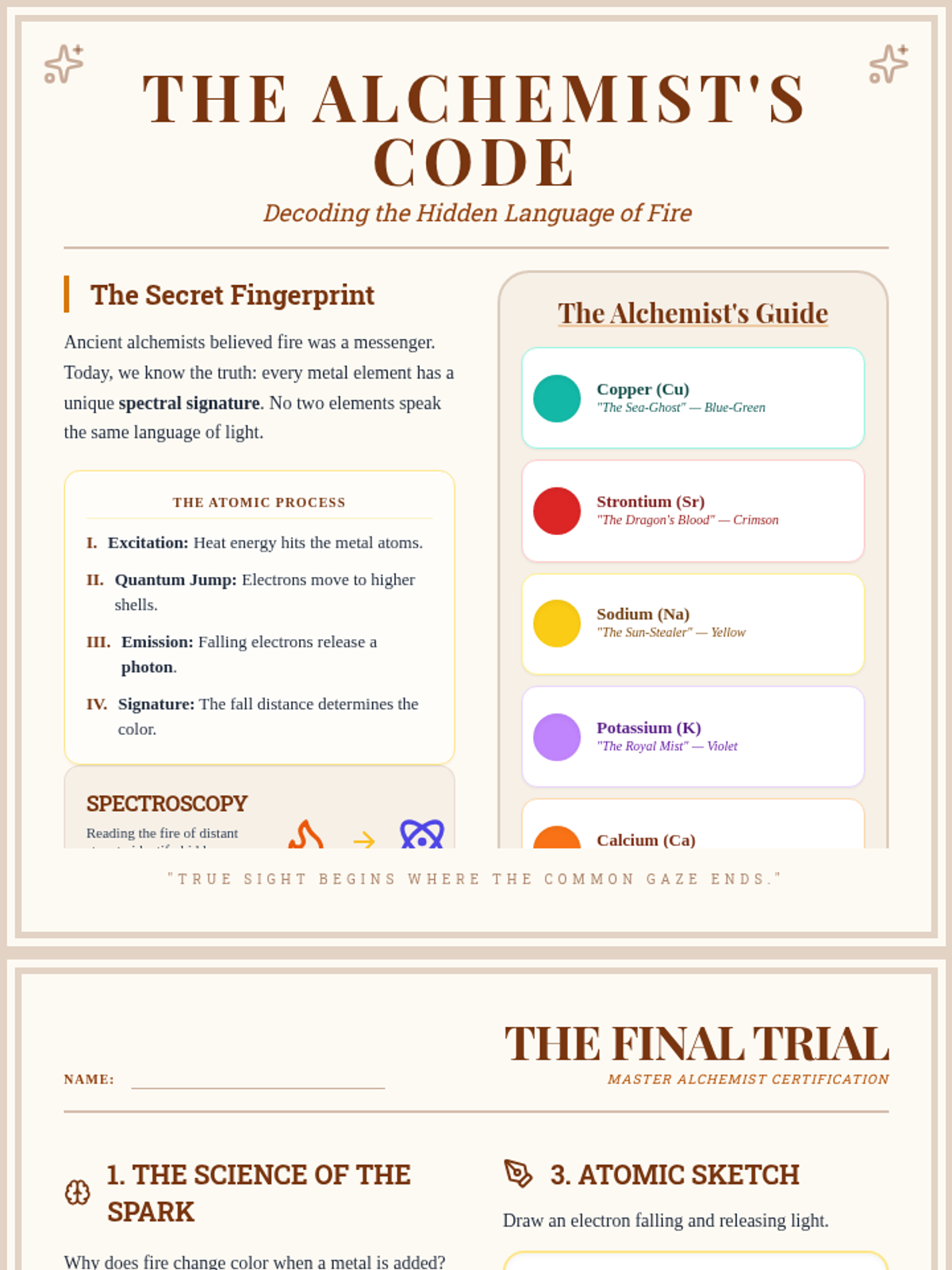
A two-page student handout for a flame test experiment. Page one provides a detailed alchemical color key (now including Barium) and the science of spectroscopy. Page two features 'The Final Trial' assessment. Optimized for 11x8 landscape print with uniform answer choices and improved sketch area. Small name field to maximize space.
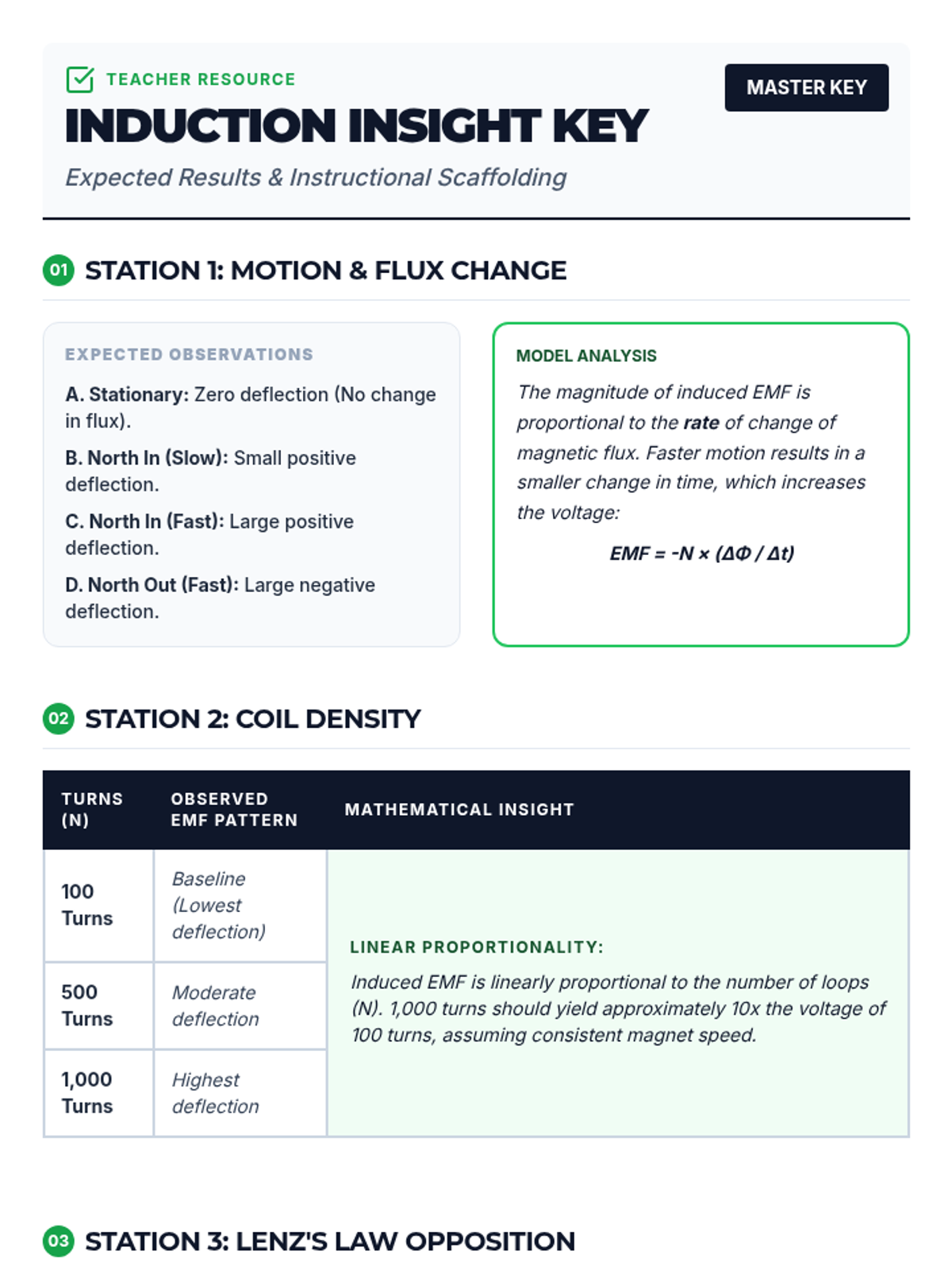
A teacher answer key for the Induction Insight Lab Worksheet. Provides expected galvanometer observations, mathematical relationship justifications (Faraday's Law), and the conceptual logic for Lenz's Law opposition. Includes instructional tips for classroom facilitation. Revised for better LaTeX rendering and page layout. Removed problematic LaTeX characters for better reliability.
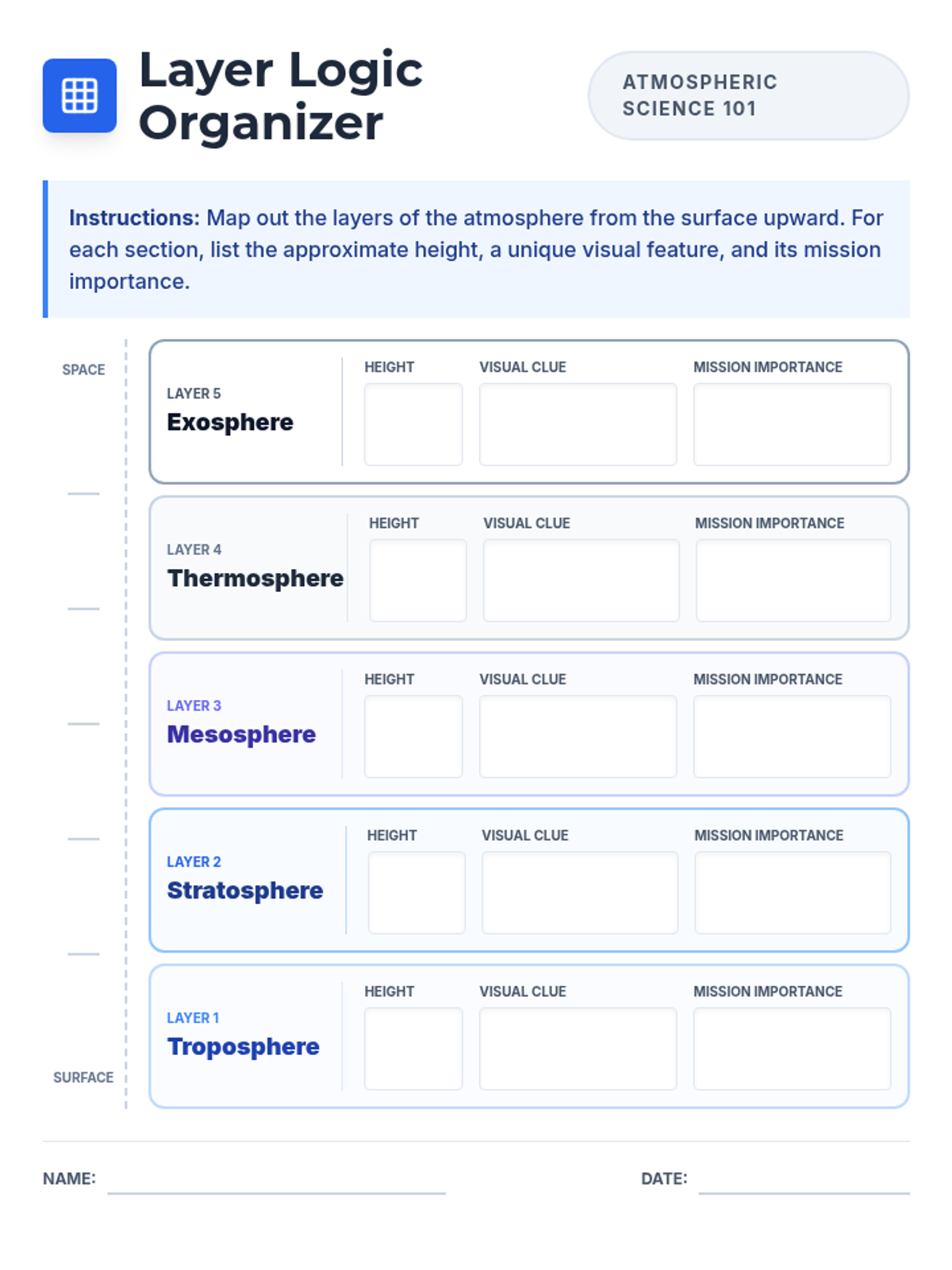
Revised graphic organizer with corrected container heights and enhanced text contrast for labels. Features a vertical layout of atmospheric layers with designated spaces for height, visual clues, and mission importance.
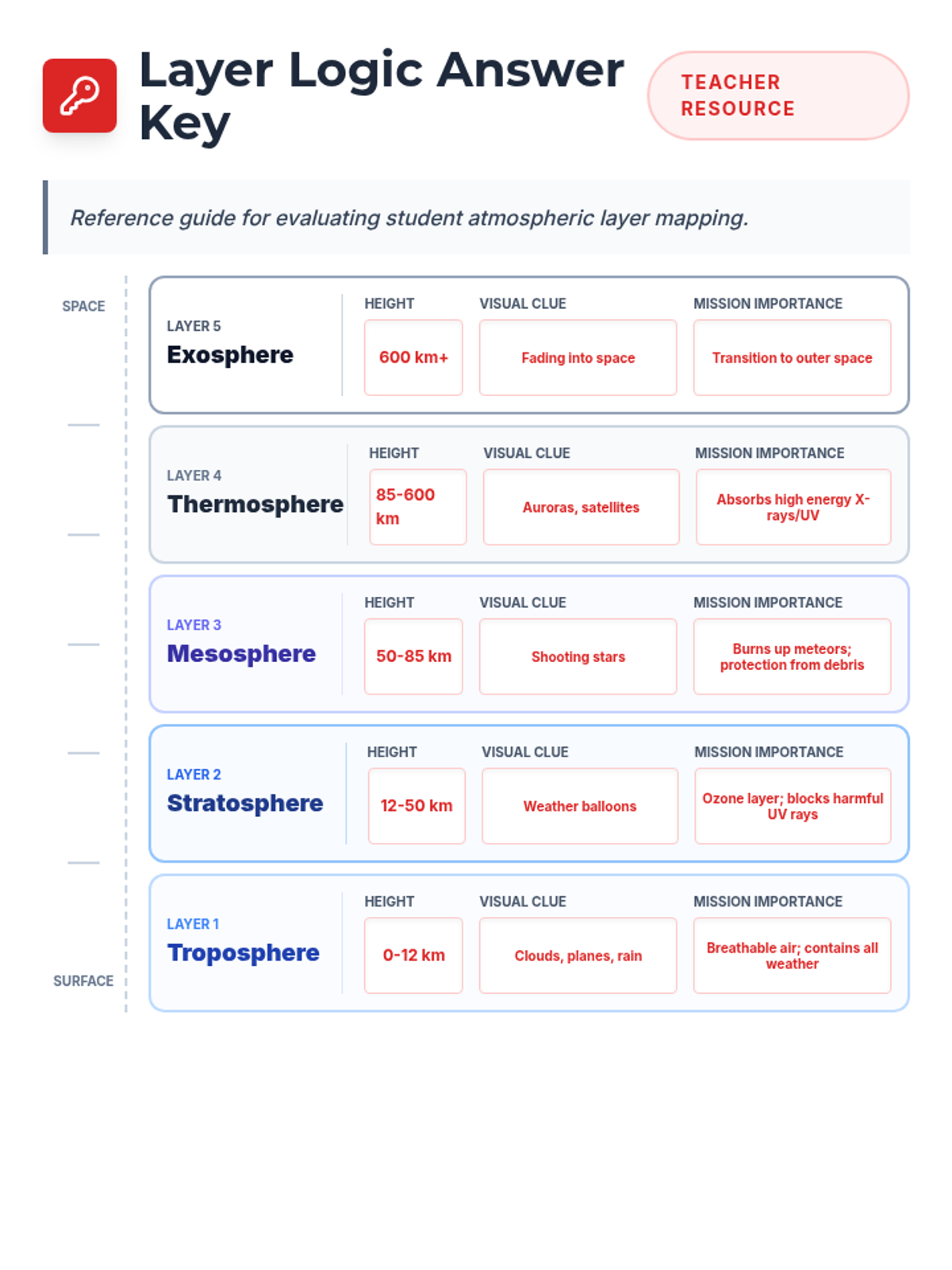
Revised answer key for the Layer Logic Organizer with corrected container heights and enhanced text contrast for labels. Provides heights, visual clues, and mission importance for all five layers.
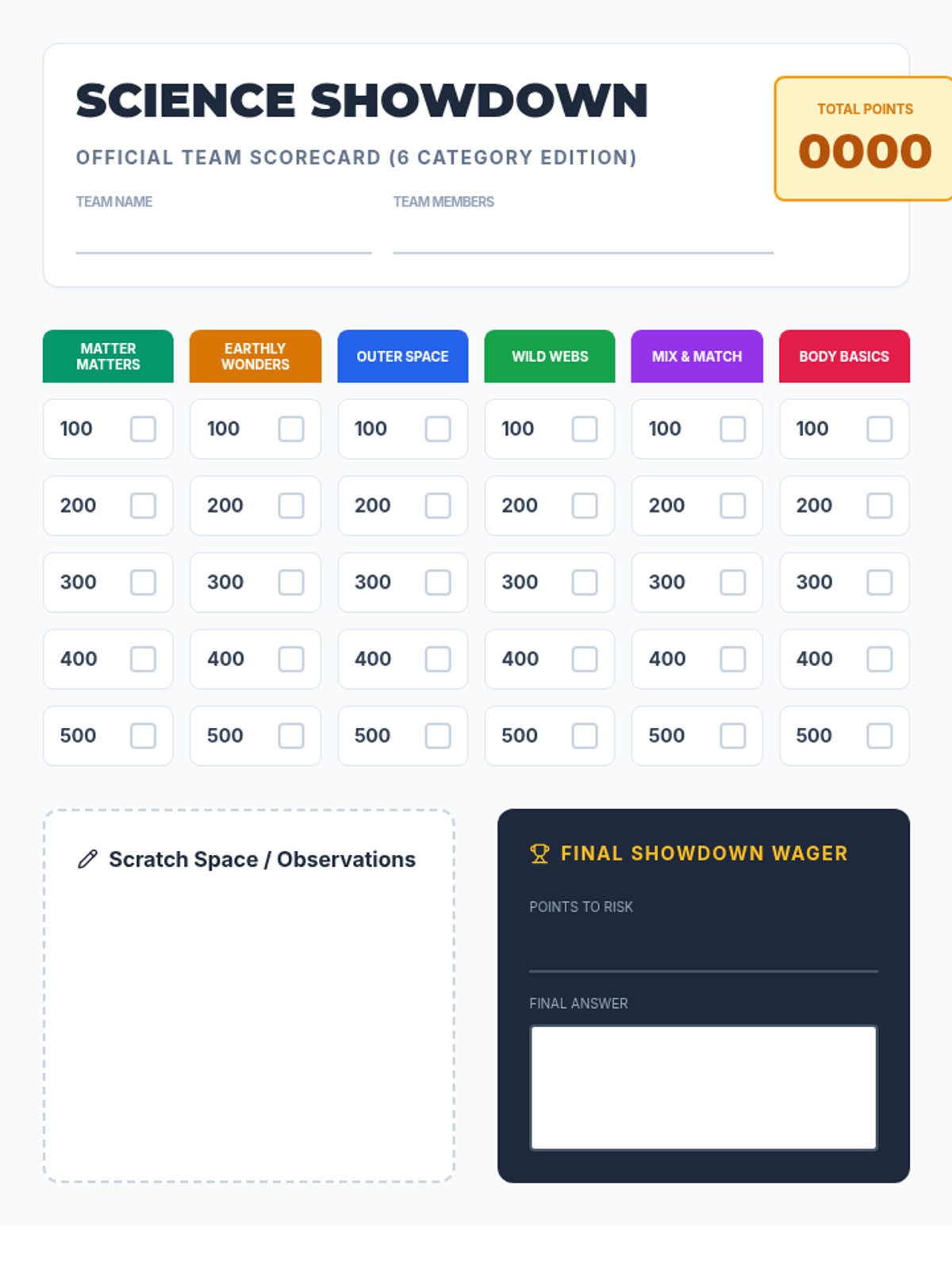
A student team scorecard for the Science Showdown game, updated with 6 categories for points tracking and a dedicated space for Final Showdown wagers. Category 6 has been updated to 'Energy Lab'.
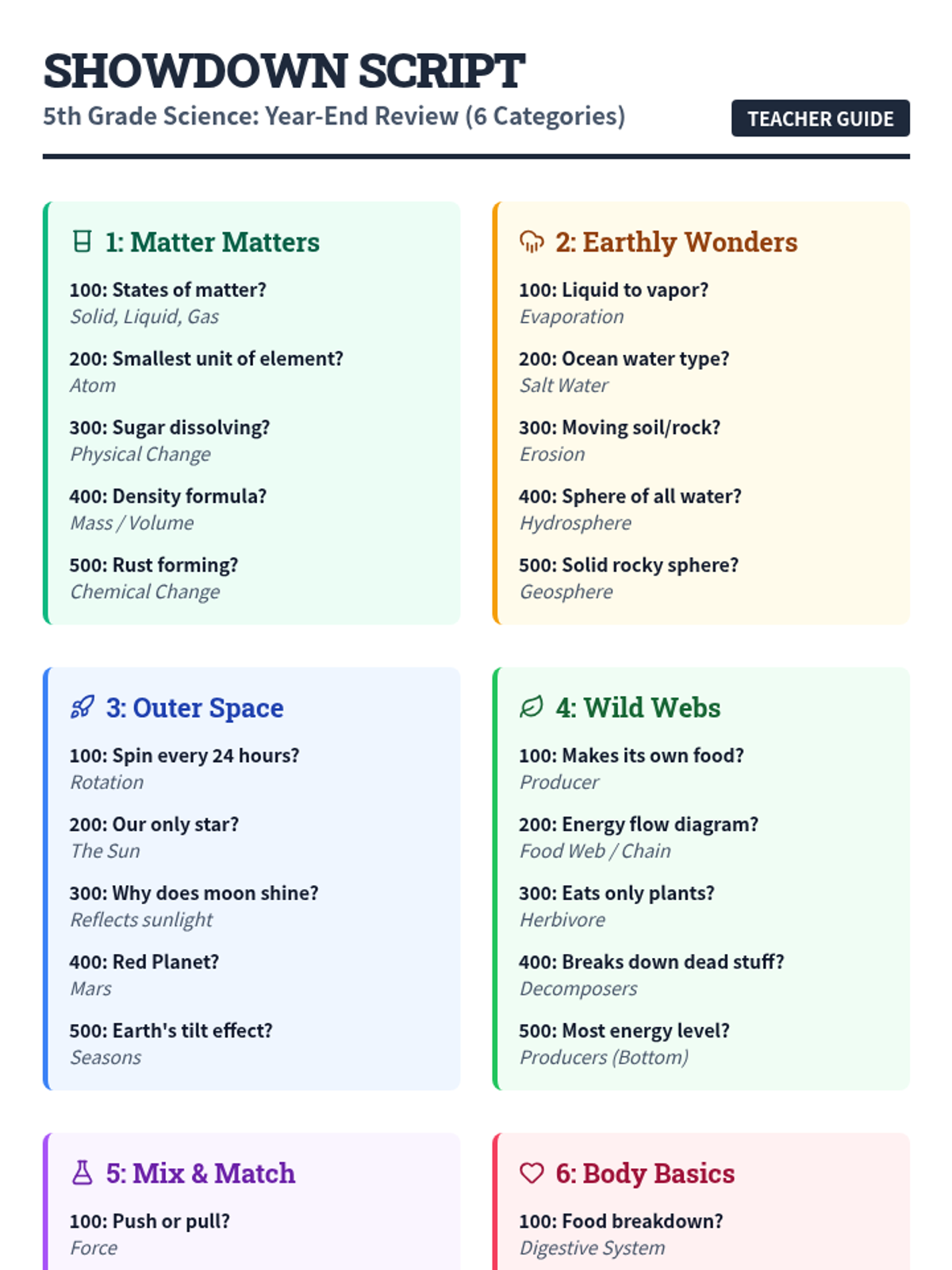
A teacher guide containing all 30 game questions and answers across 6 categories, including explanations and a Final Showdown question. Category 6 has been updated to 'Energy Lab'.
A high-energy, 16:9 Jeopardy-style presentation featuring 6 science categories, point-valued questions, and a Final Showdown slide. Designed with a modern, high-contrast palette and bold typography for maximum classroom visibility. Category 6 has been updated to 'Energy Lab'.
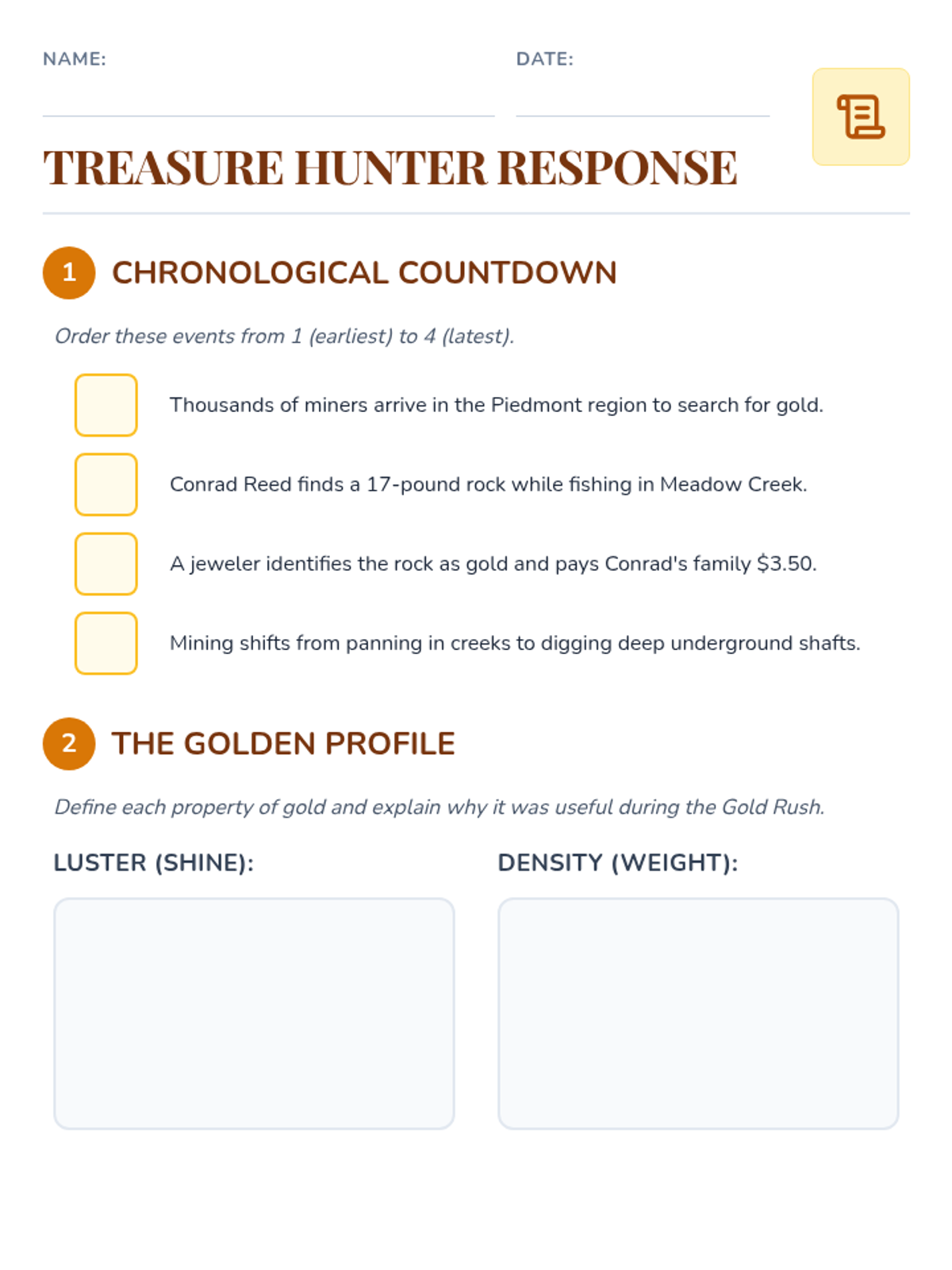
A comprehensive response sheet for the Golden Discovery passage. It tests students on the chronology of the NC gold rush, the physical properties of gold (matter), landform changes (erosion), and ecosystem adaptations. Standardized writing lines and enlarged response boxes.
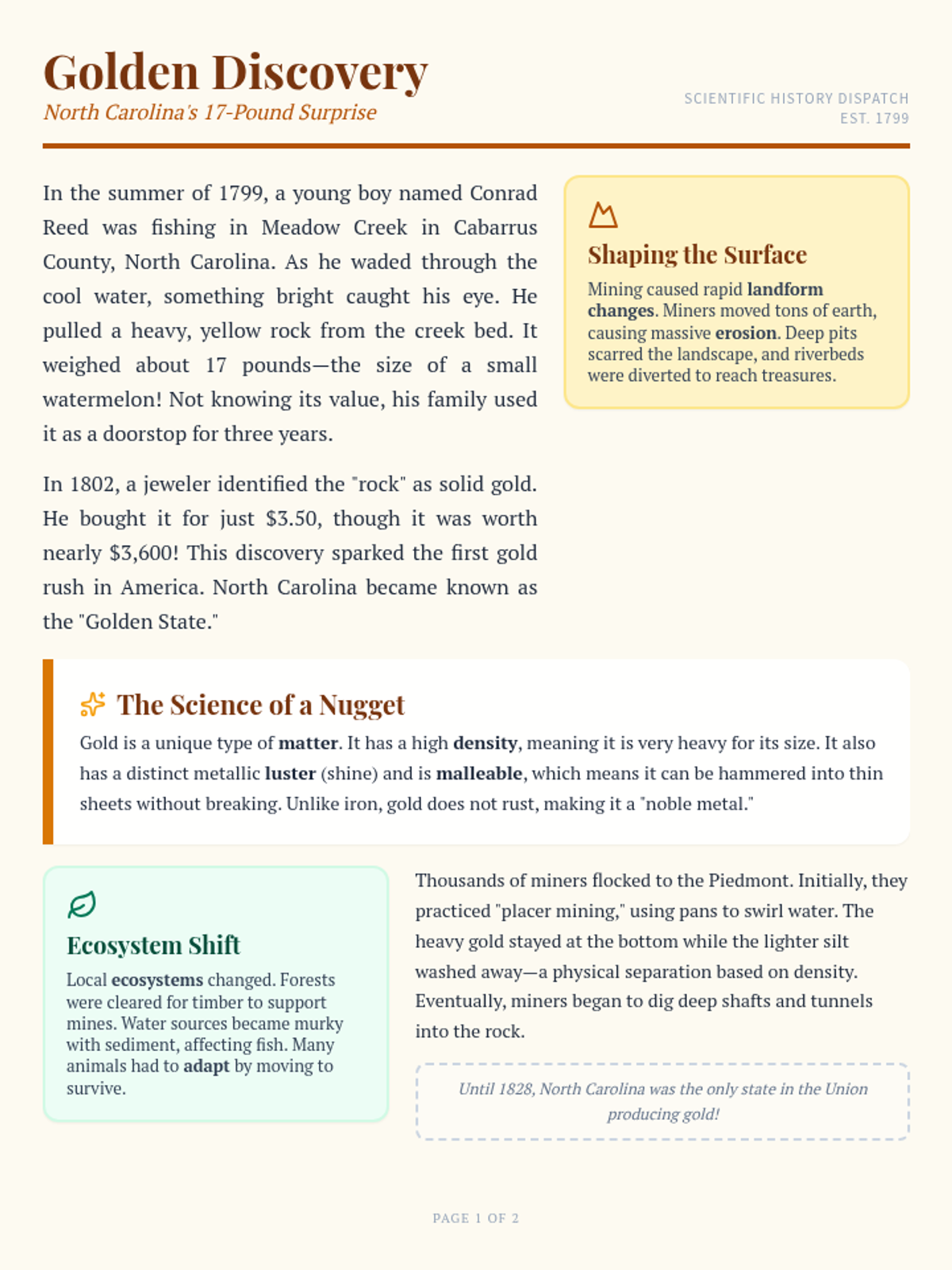
A high-interest reading passage about the discovery of gold at Reed Gold Mine in North Carolina. It integrates historical context with science concepts such as physical properties of matter, erosion, landform changes, and ecosystem impact. Now includes a structured reflection section and improved layout.
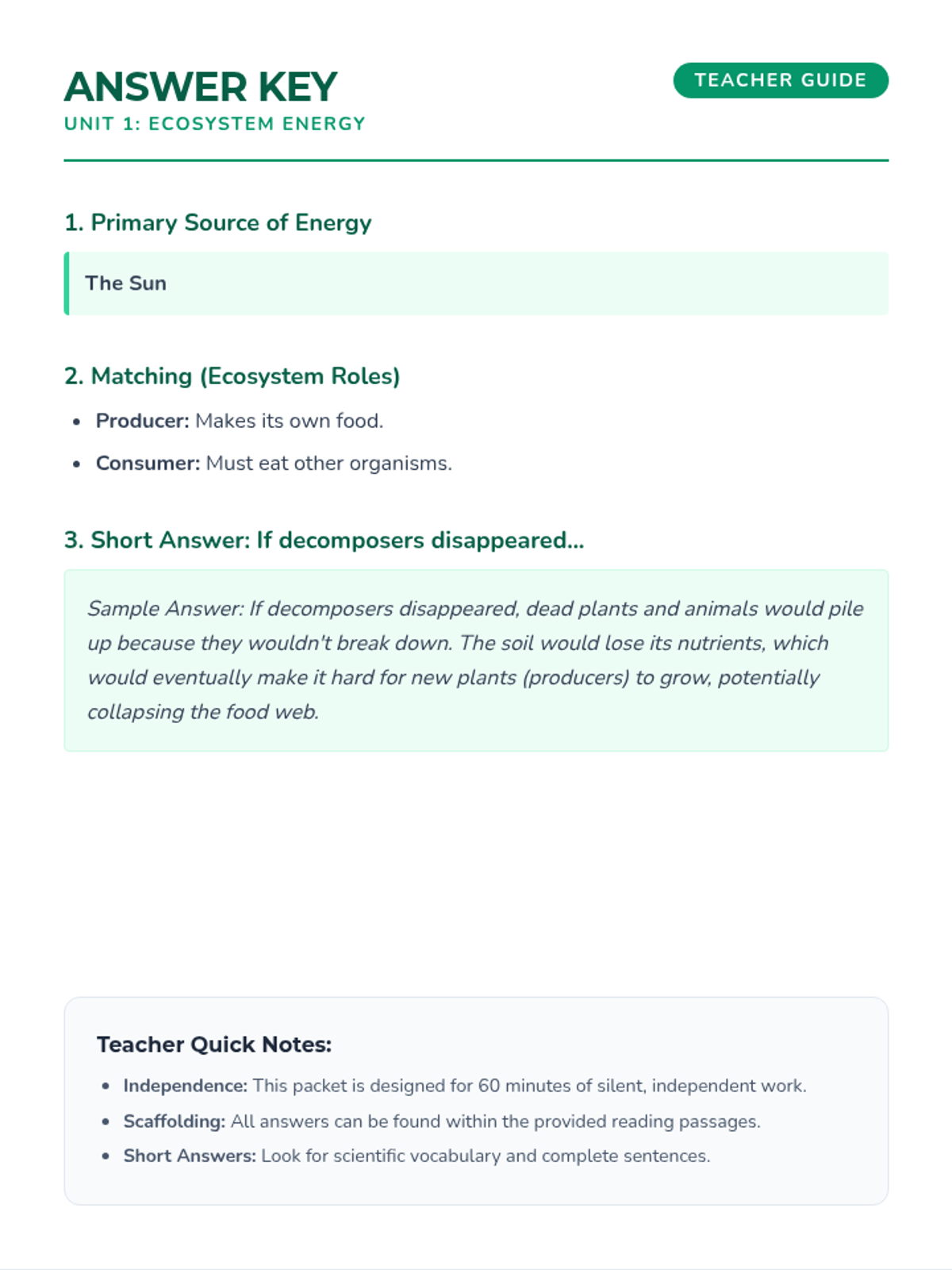
A complete answer key and teacher guide for the Field Investigator Mission Worksheet, including sample answers for short-response questions.
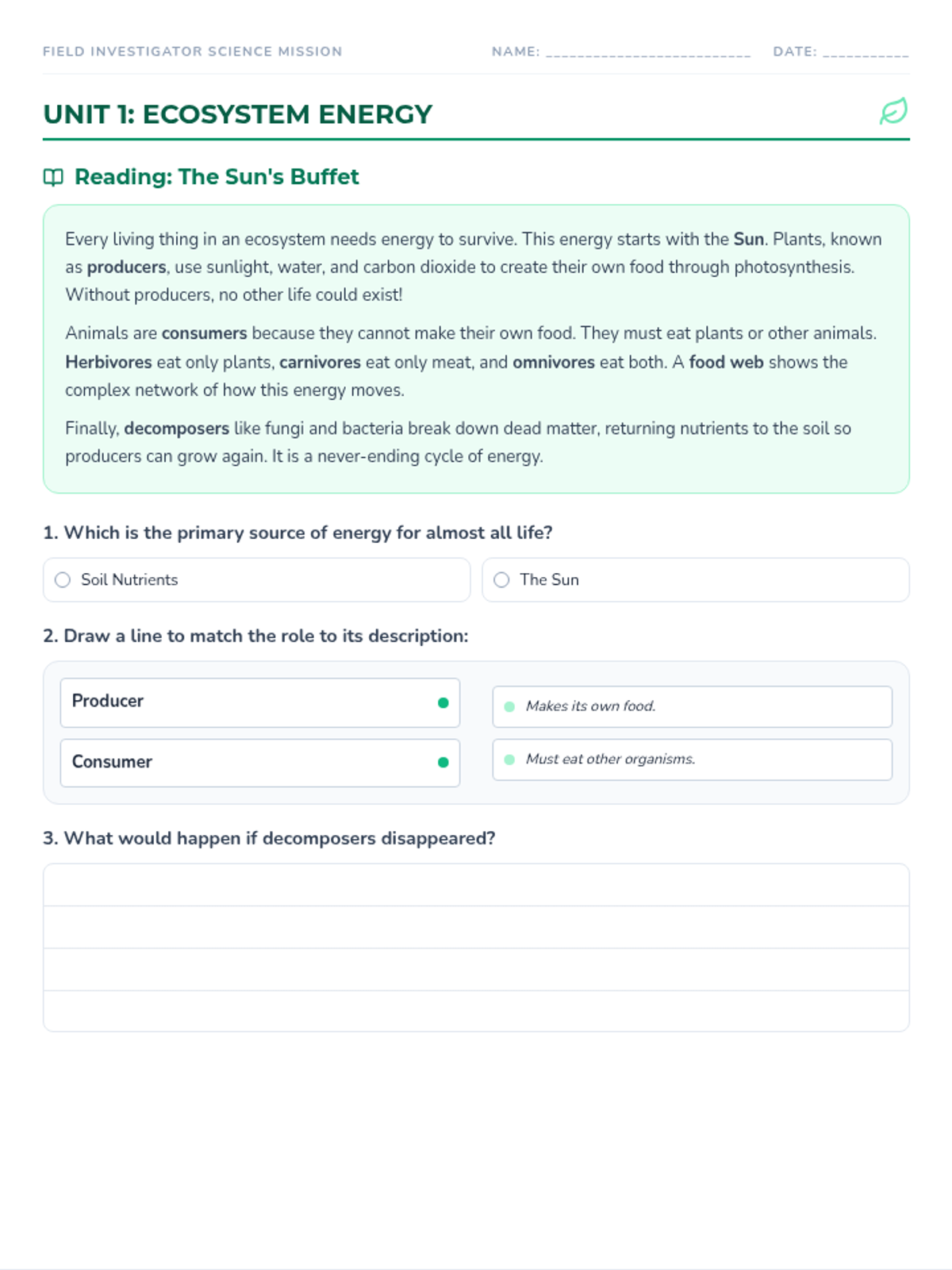
A comprehensive 3-page science worksheet covering Ecosystems, Matter, and Space. Includes reading passages and a variety of question types (multiple choice, matching, fill-in-the-blank, and short answer) suitable for independent student work.
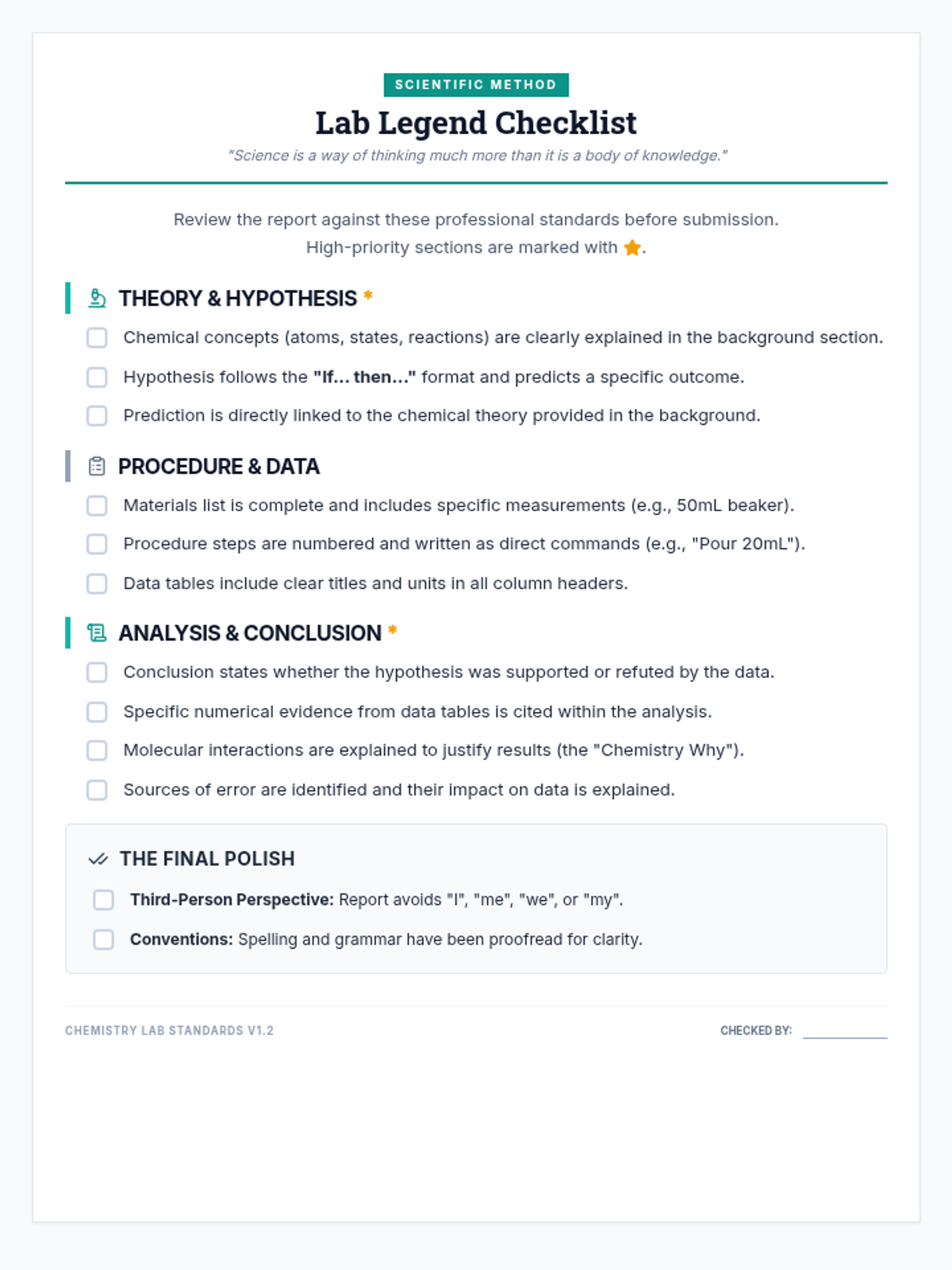
A student-facing checklist for a formal lab report. It helps middle schoolers self-assess their work, specifically highlighting the high-priority scientific theory and conclusion sections. Phraseology updated to model objective scientific writing.
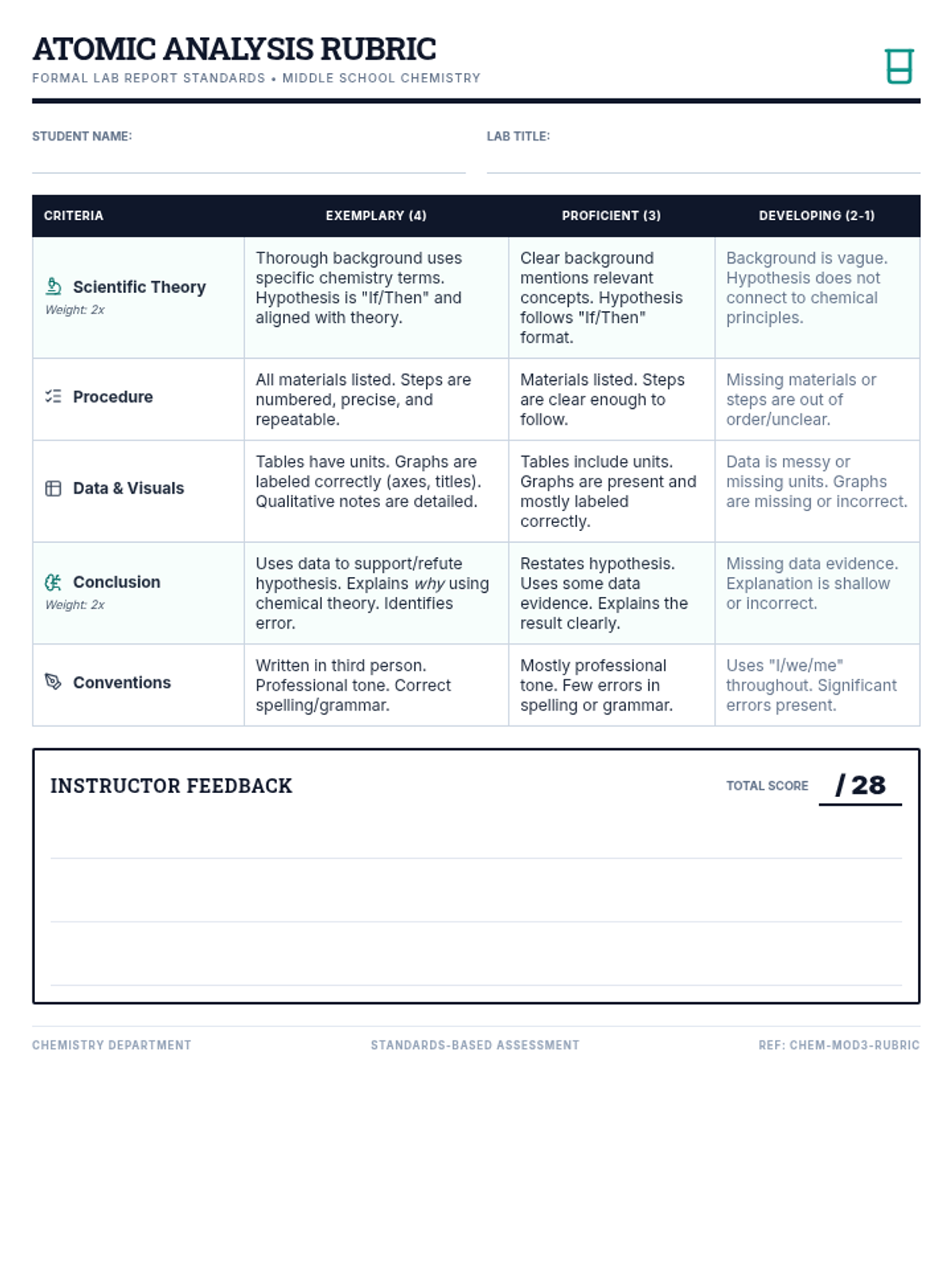
A formal lab report rubric for middle school chemistry, focusing on the scientific method with extra weight on scientific theory and conclusions. Features a clean, professional "Lab Notebook" aesthetic.
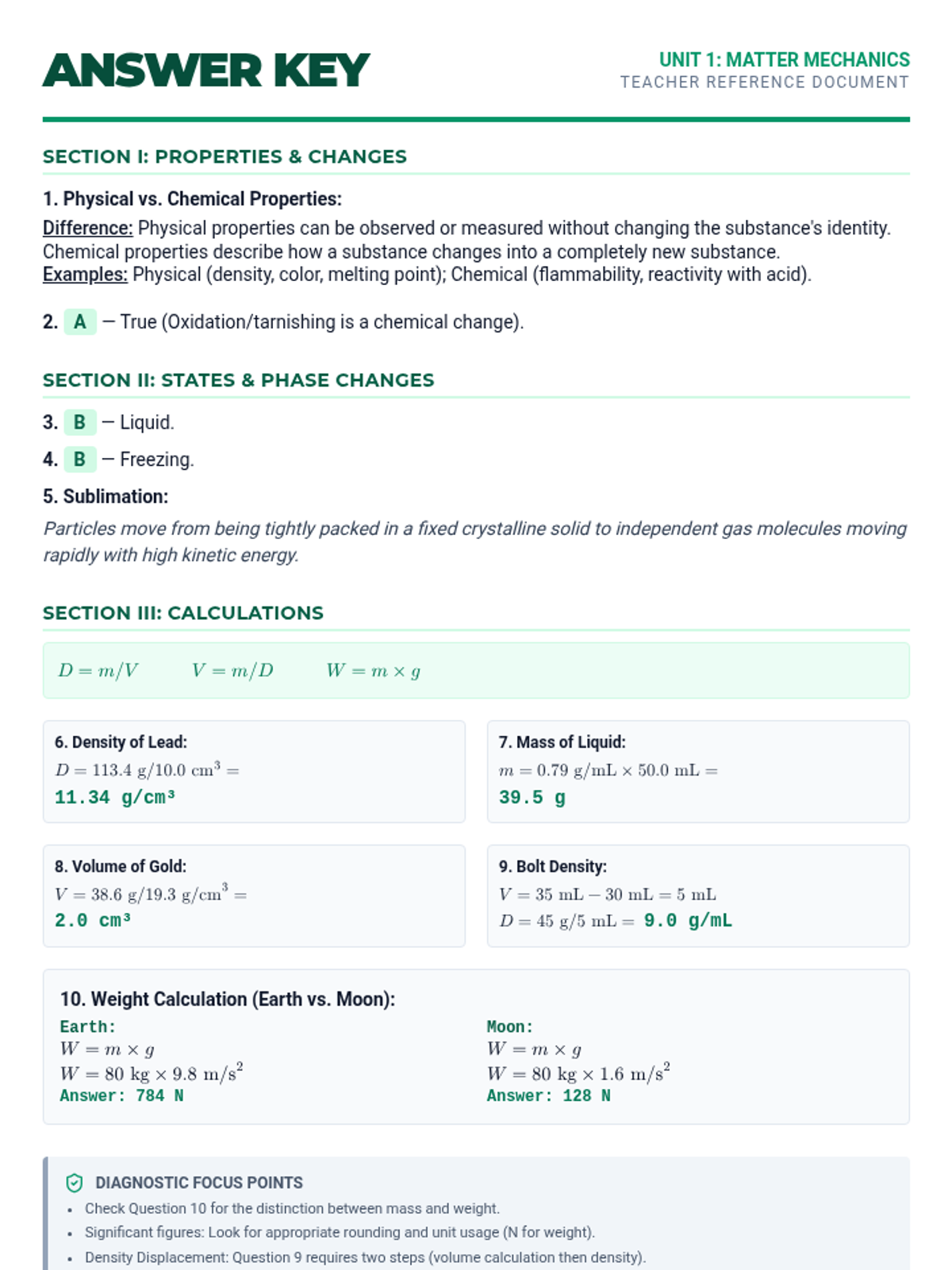
A comprehensive answer key and scoring guide for the Matter Mechanics diagnostic, updated with formula references and detailed calculation focus points. Fixed page break issues in the teacher notes section.
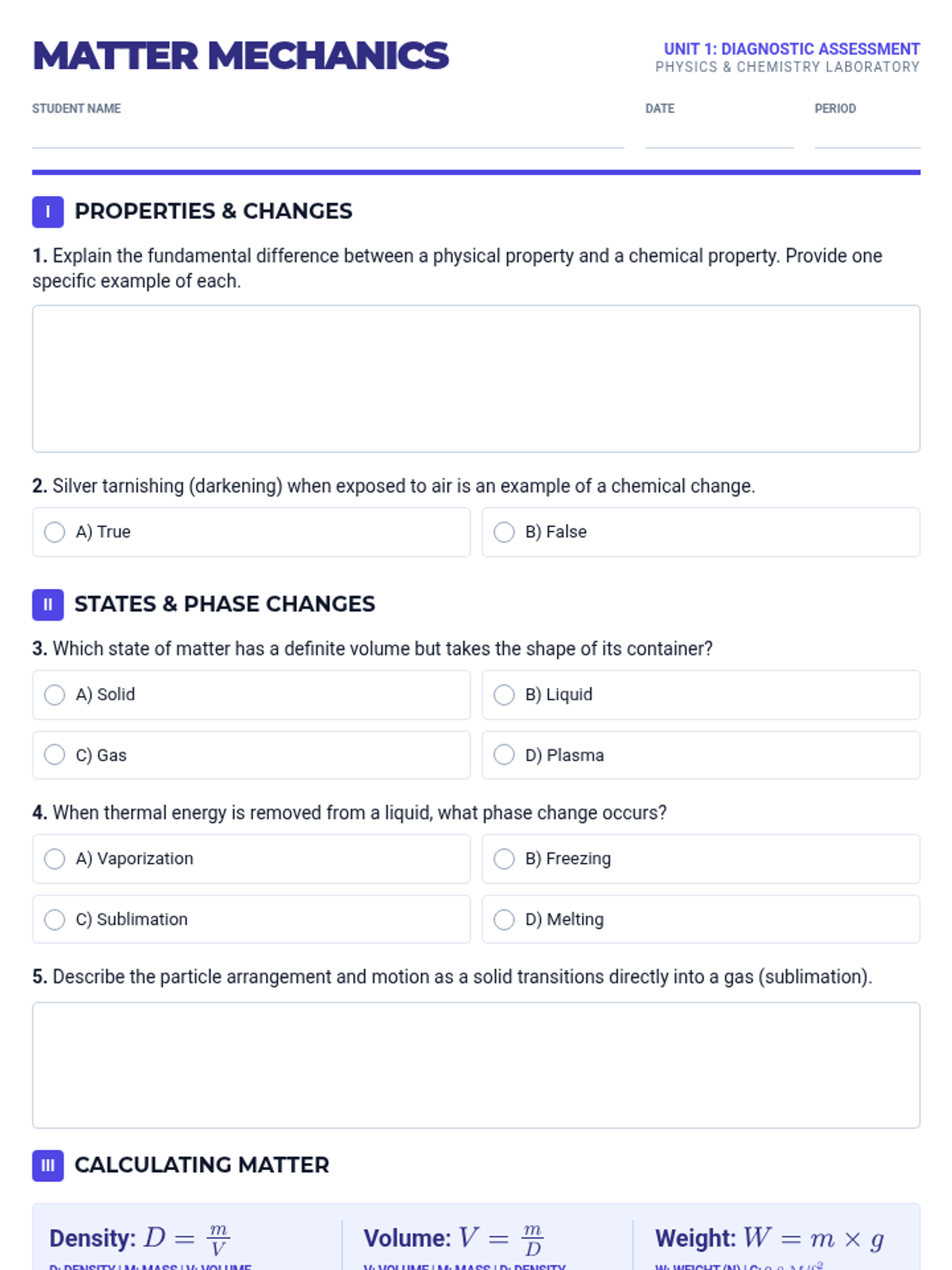
A two-page diagnostic assessment for 9th-grade students covering physical/chemical properties, states of matter, density, and weight calculations. Revised with expanded formula reference box including volume calculation support.
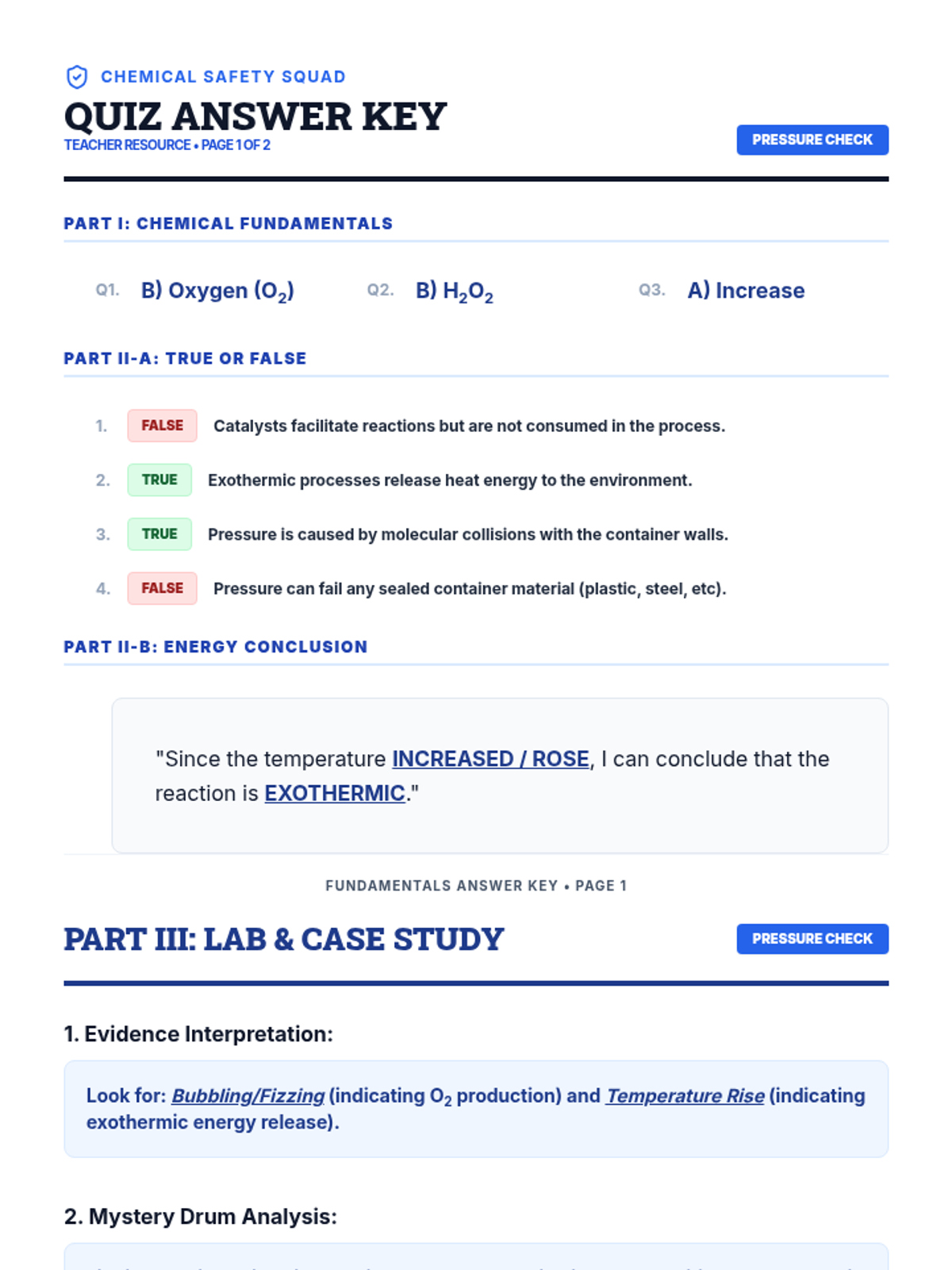
Teacher answer key for the Pressure Check Quiz, providing detailed responses and grading criteria for the visualization question. Improved formatting and page break prevention. Fixes subscript rendering and updates answers for new quiz content. Consolidated to 2 pages for efficiency.
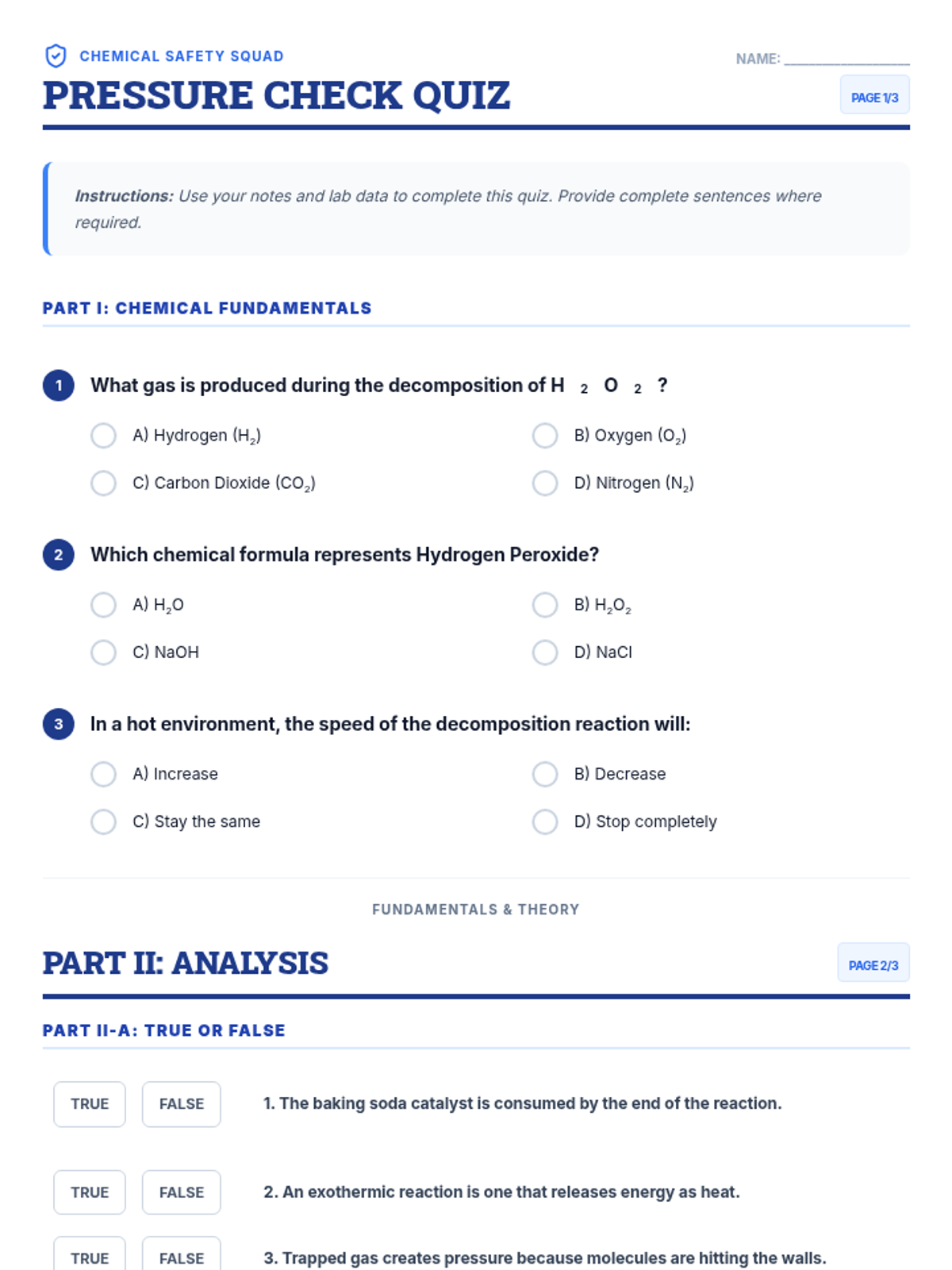
An updated 3-page open-note quiz now featuring Multiple Choice, True/False, Lab Data Analysis, and Industrial Case Study sections. Includes robust chemical notation and clear student work areas with guide lines. Fixes subscript rendering and formatting issues.
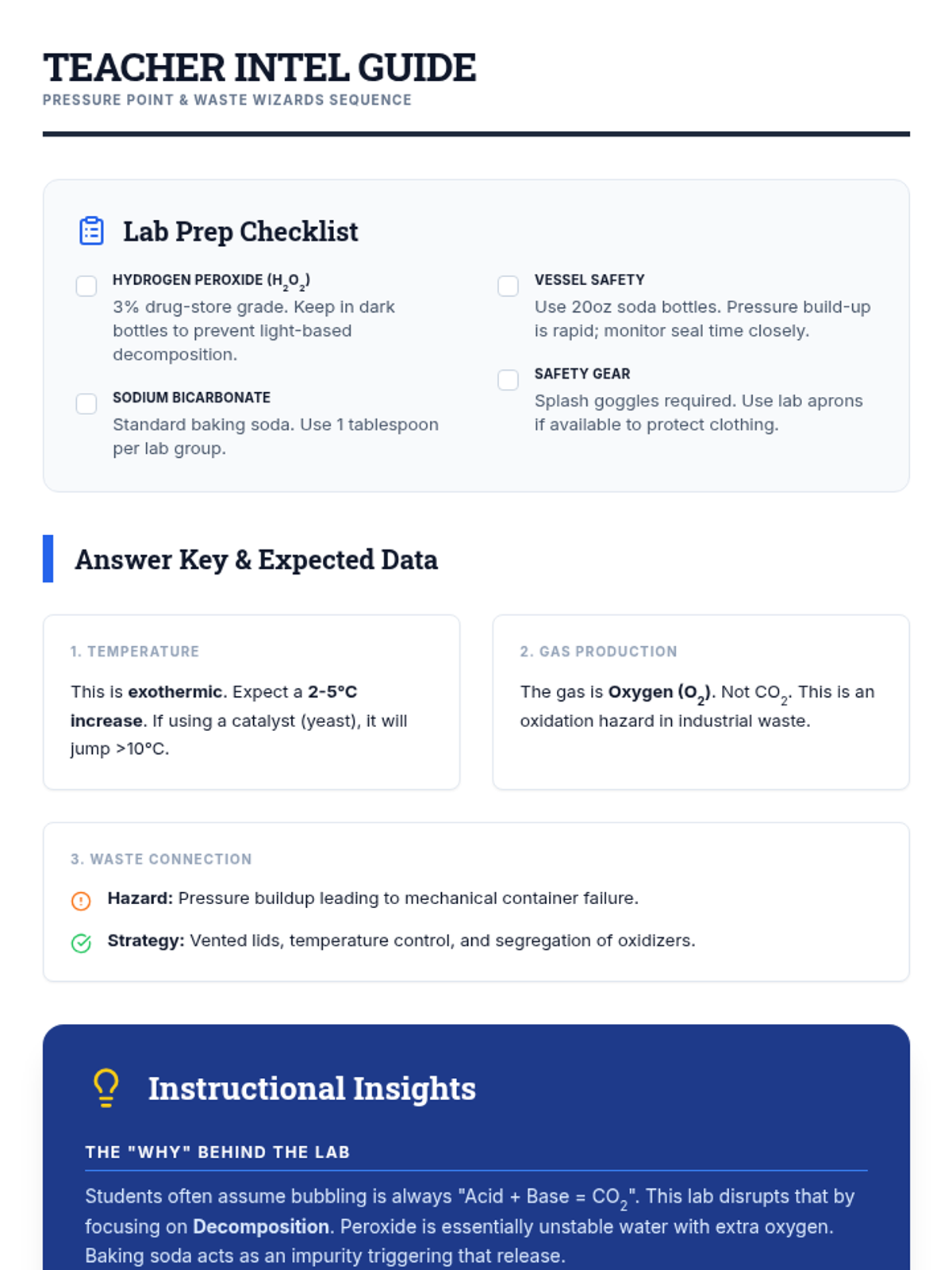
A teacher's guide for the Chemical Safety Squad sequence, including prep checklists, expected lab results, and answer keys for the analysis worksheets.
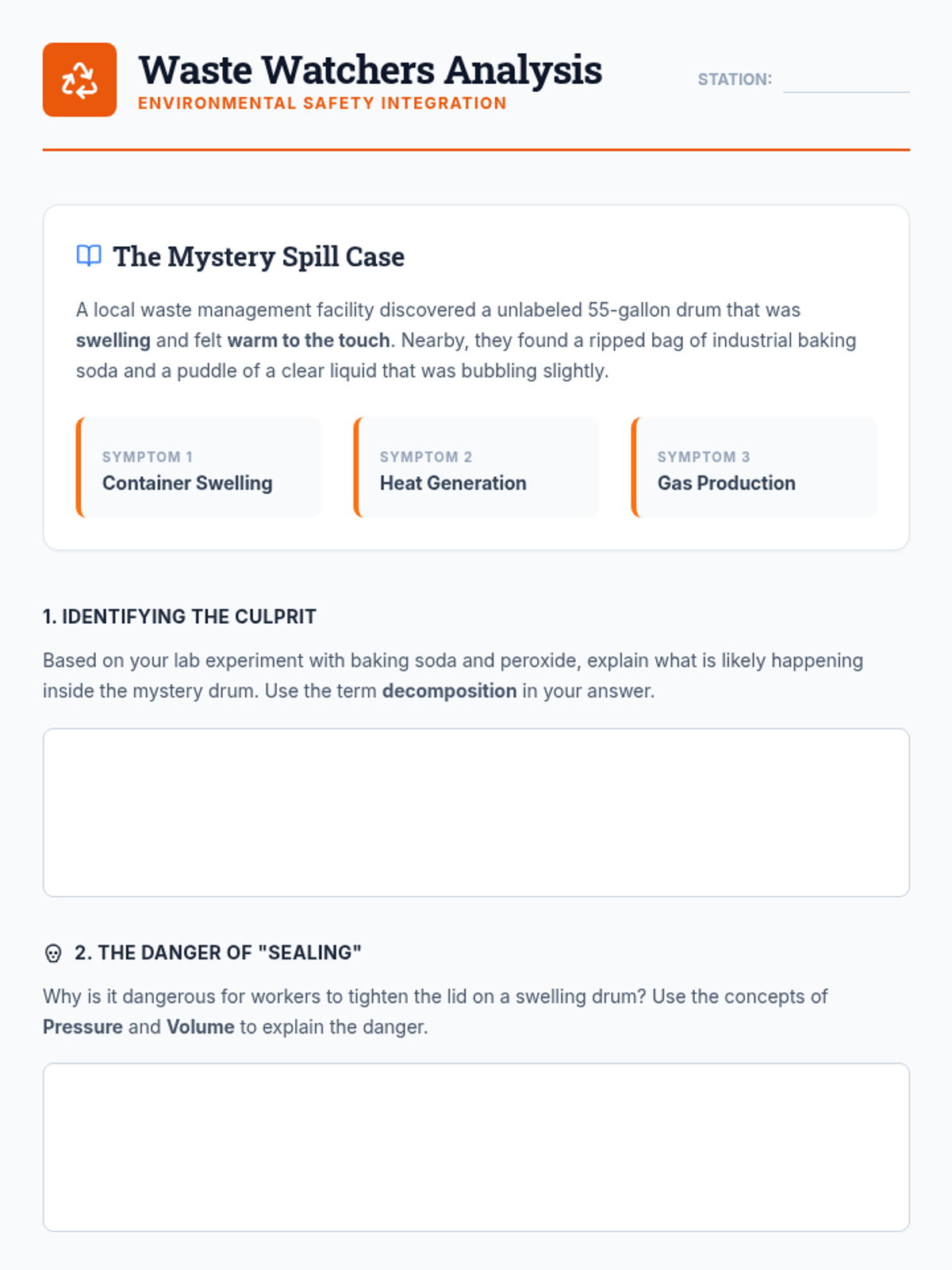
An analysis worksheet connecting the Pressure Point lab to environmental waste management, featuring a case study on mystery spills and questions on vented containment systems.
A light-themed visual presentation deck for the Pressure Problem lesson, featuring clear chemical notation and illustrations of industrial safety protocols.
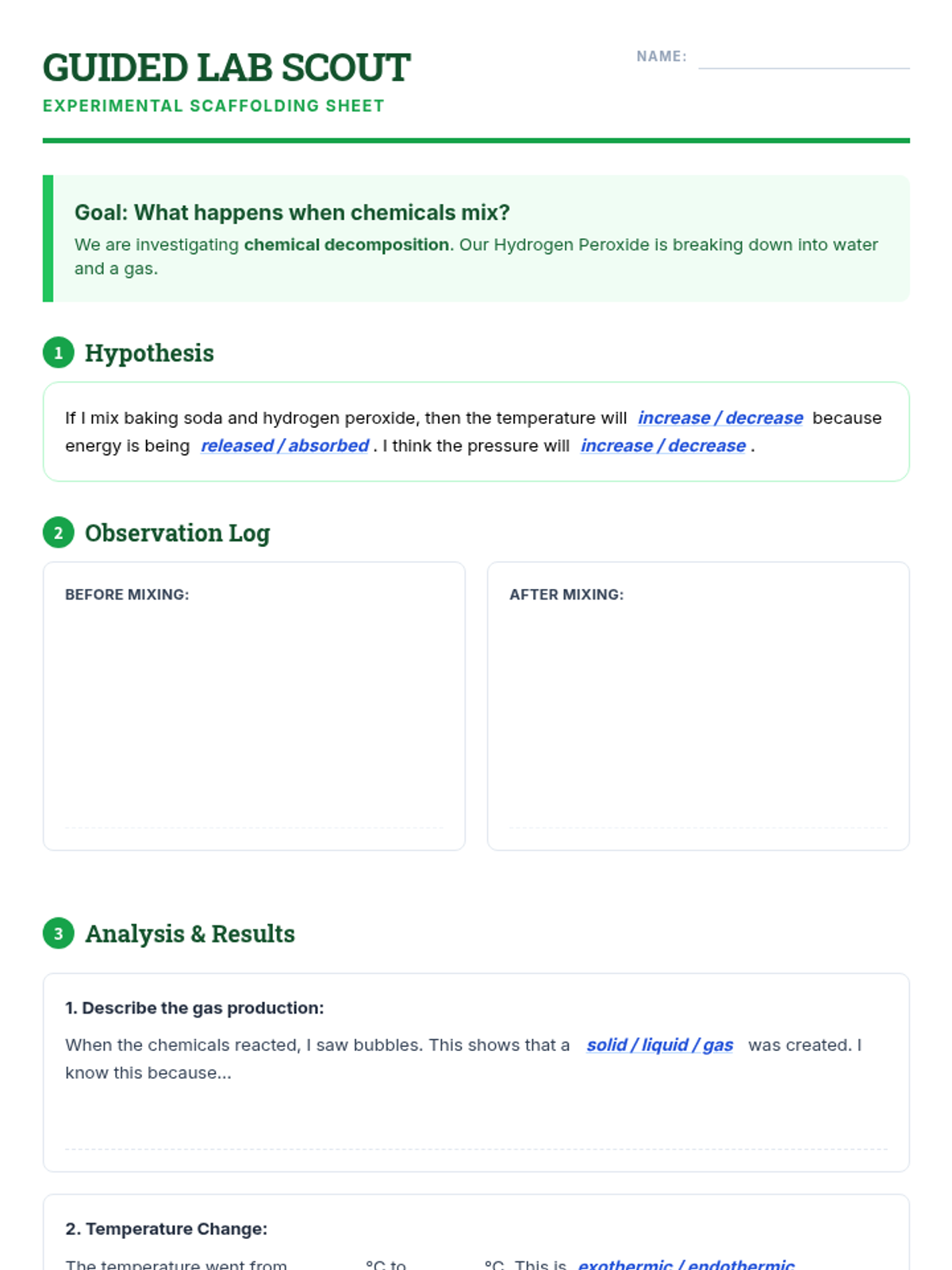
A scaffolded lab report with sentence frames for the Pressure Point experiment, designed to support students who need extra guidance in forming hypotheses and drawing conclusions about chemical decomposition and safety.
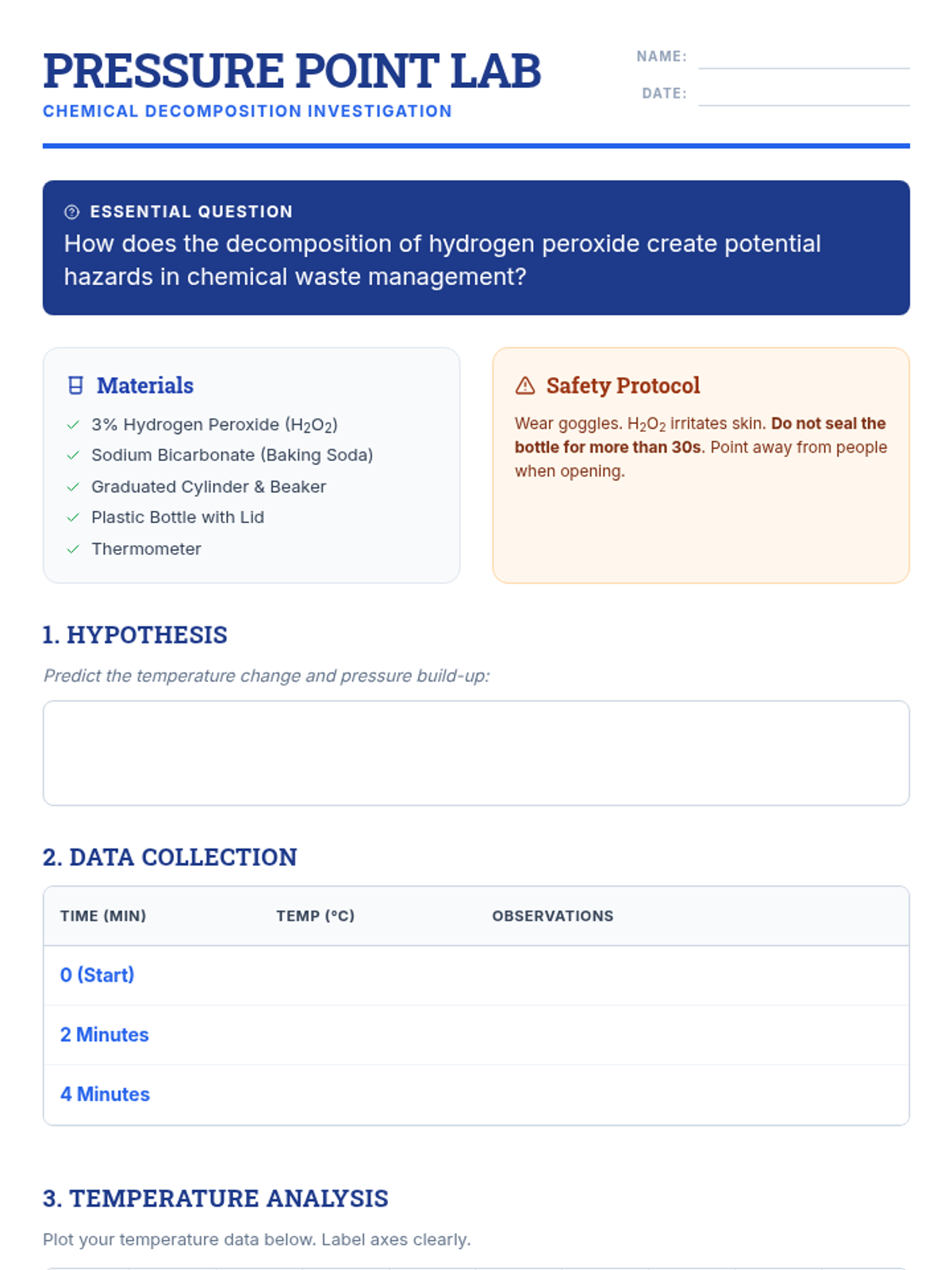
A standard lab report for the Pressure Point experiment, featuring data collection tables, a graphing area, and analysis questions focusing on exothermic reactions and gas pressure hazards.
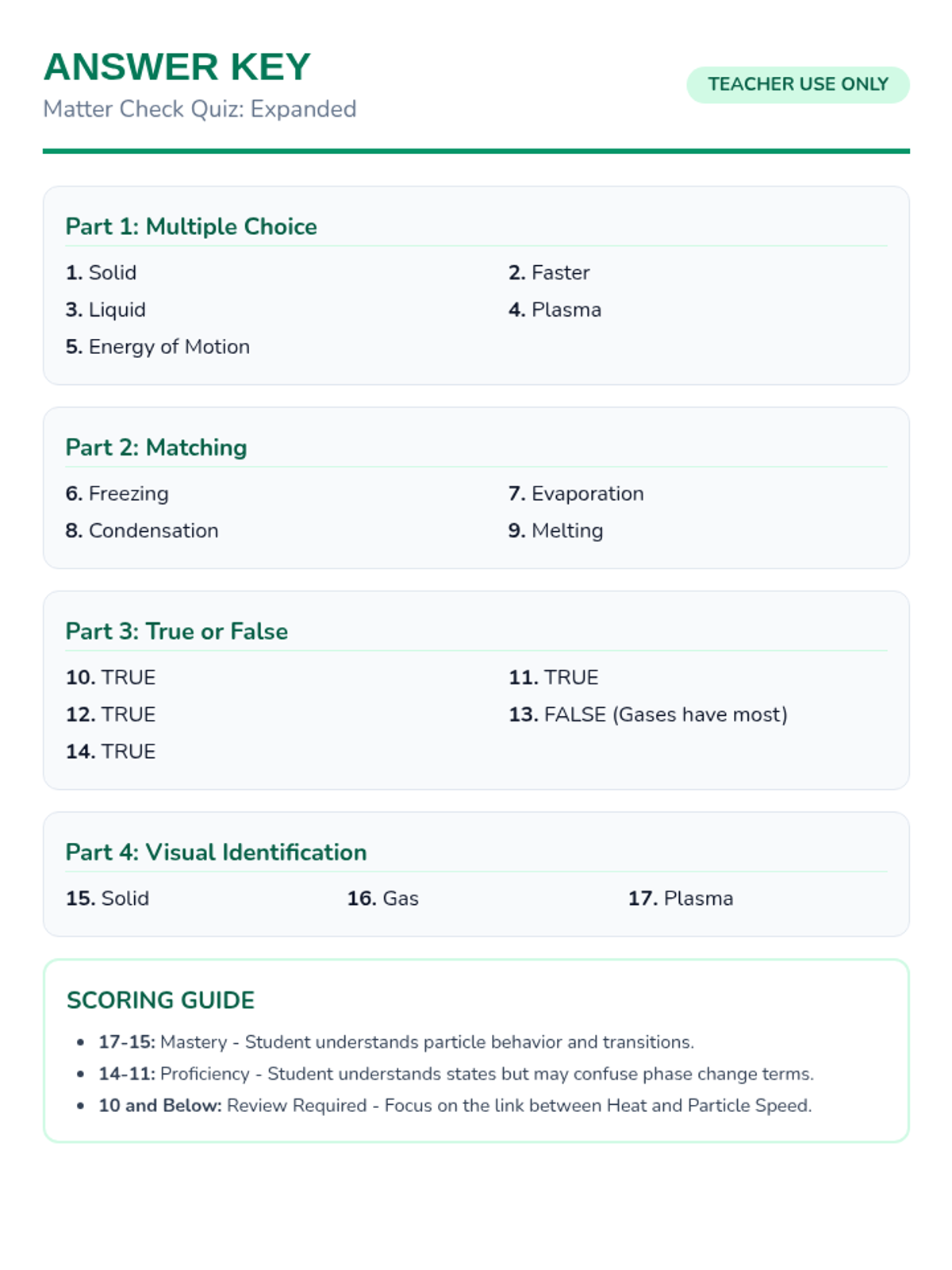
Teacher-facing answer key for the expanded Matter Check Quiz. Includes scoring guide and diagnostic tips for interpreting student results. Updated with corrected scoring logic.
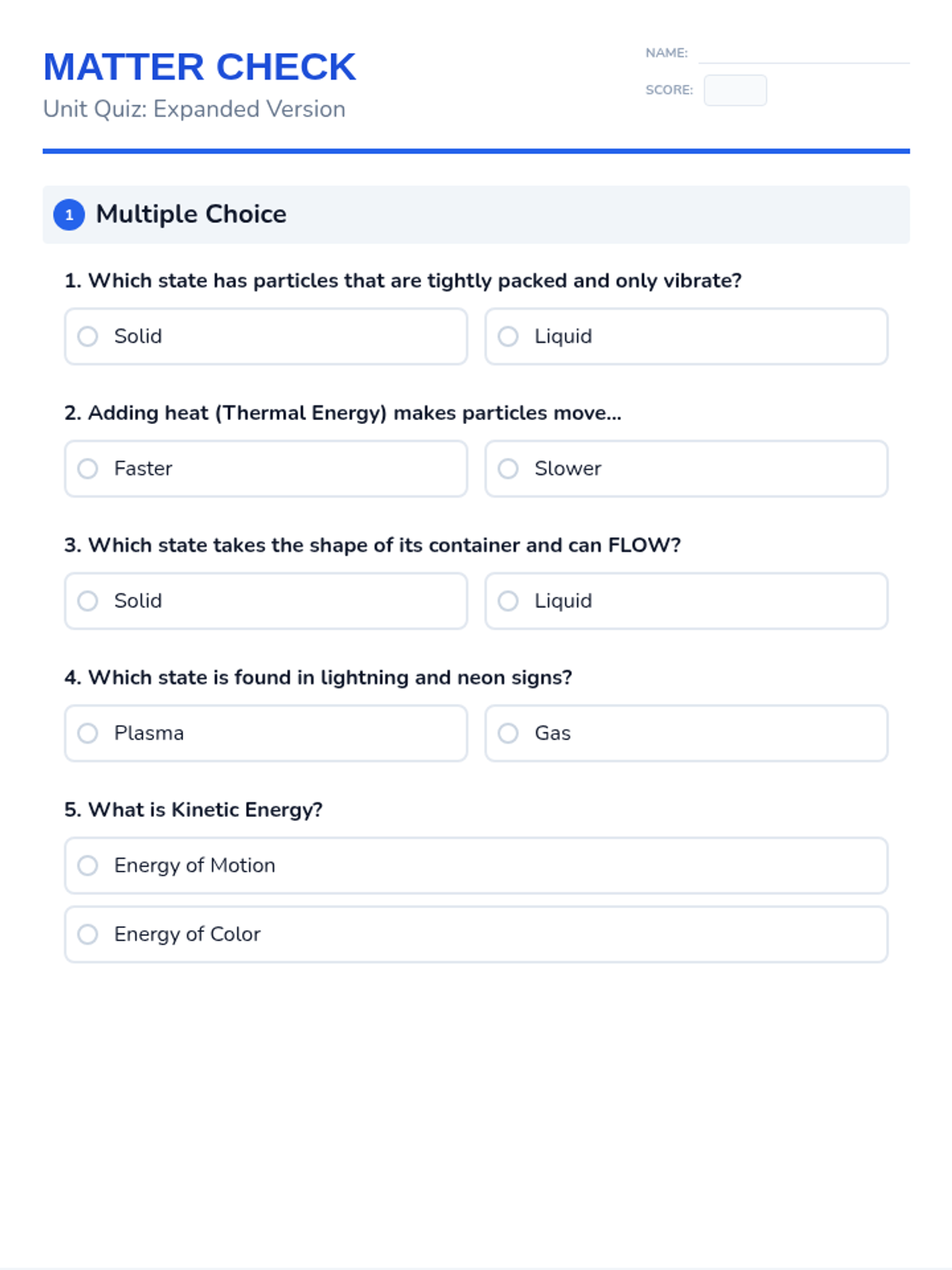
A 17-question expanded quiz covering states of matter, phase changes, and energy. Features Multiple Choice, Matching, True/False, and Visual Identification sections.
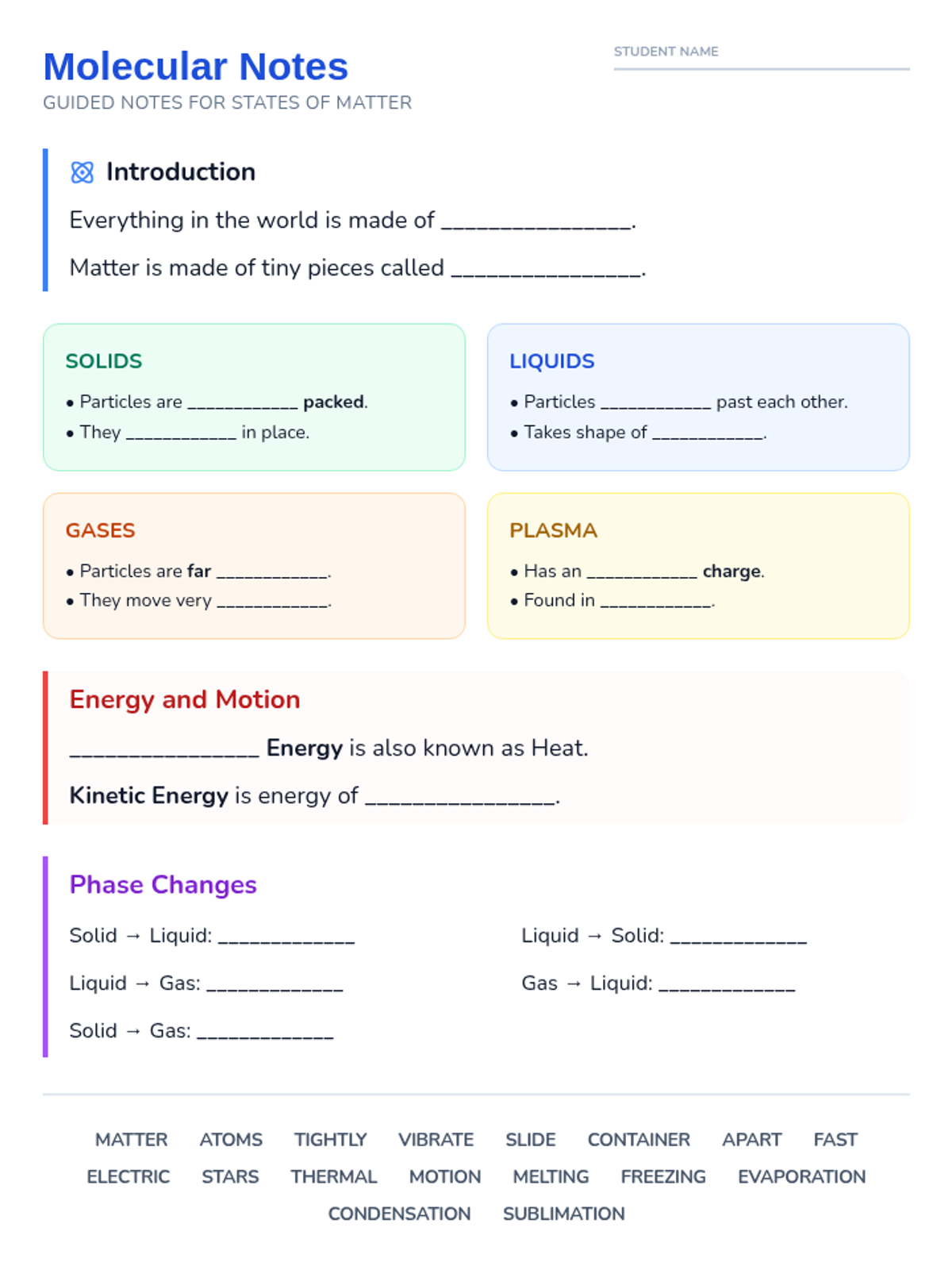
A guided notes handout designed to accompany the slides, revised with legible background for the Plasma section and an updated word bank.
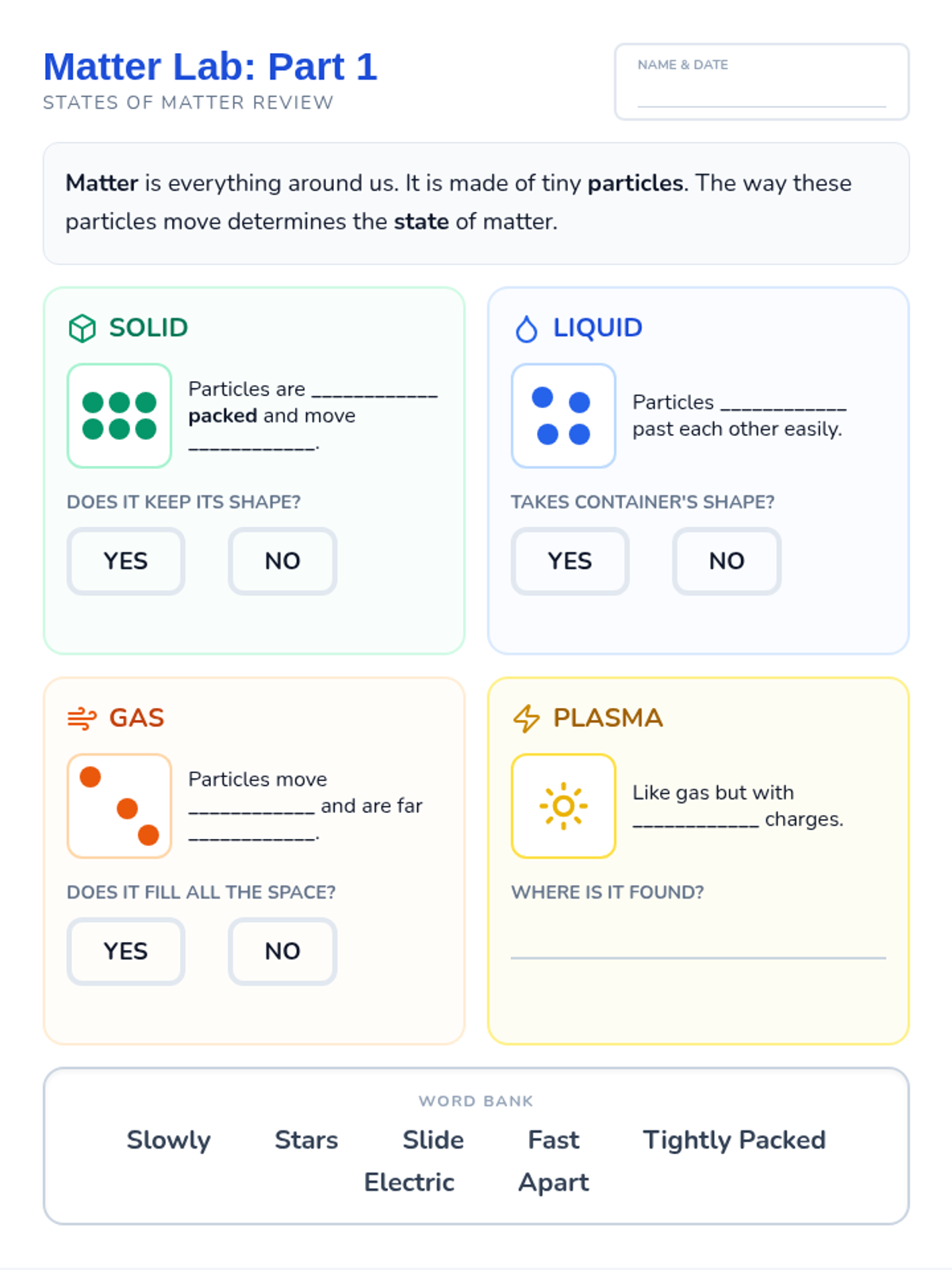
A 4-page comprehensive review packet featuring graphic organizers, visual matching, and simplified text for diverse learners. Revised for improved page flow and layout consistency.
A 10-slide presentation reviewing states of matter, phase changes, and energy principles with simplified text and high-contrast visuals.
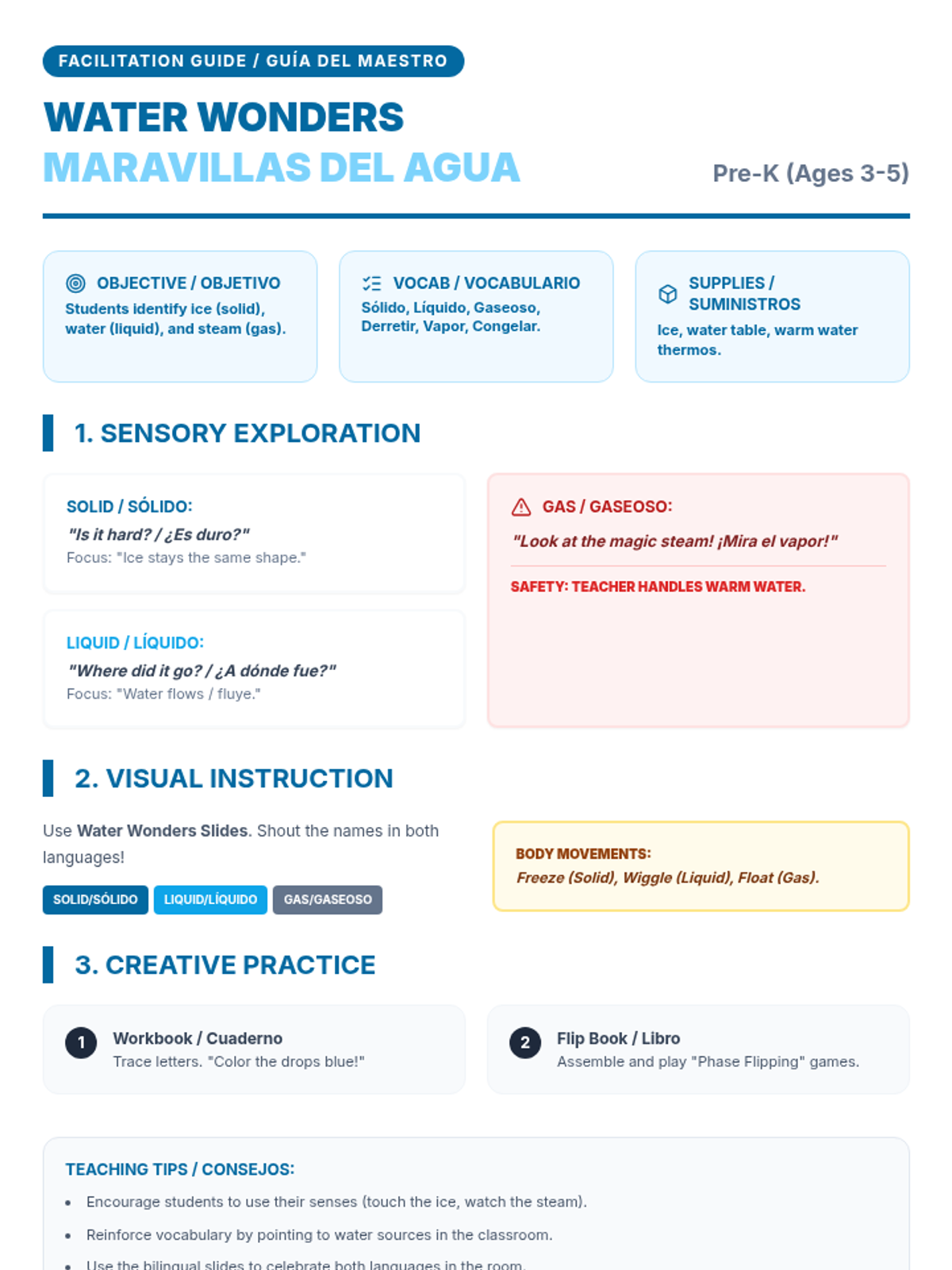
A bilingual English and Spanish teacher's guide for the Water Wonders lesson, featuring sensory station setups, vocabulary equivalents, and facilitation prompts in both languages. Updated for layout stability and readability.
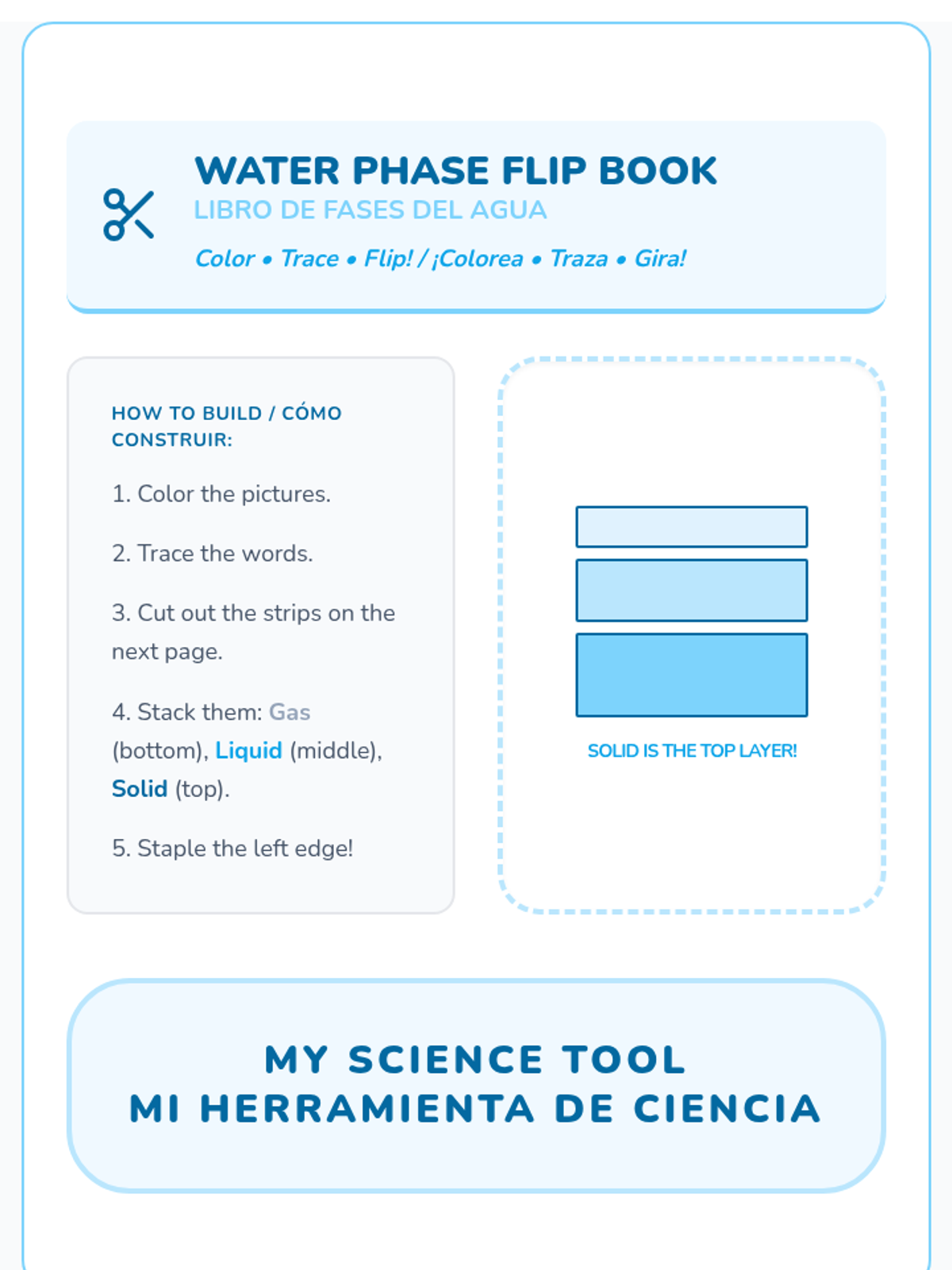
A bilingual printable template for a staggered water phases flip book, including English/Spanish vocabulary (SOLID/SÓLIDO, LIQUID/LÍQUIDO, GAS/GASEOSO) and icons for coloring and tracing. Updated for instruction consistency and visibility.
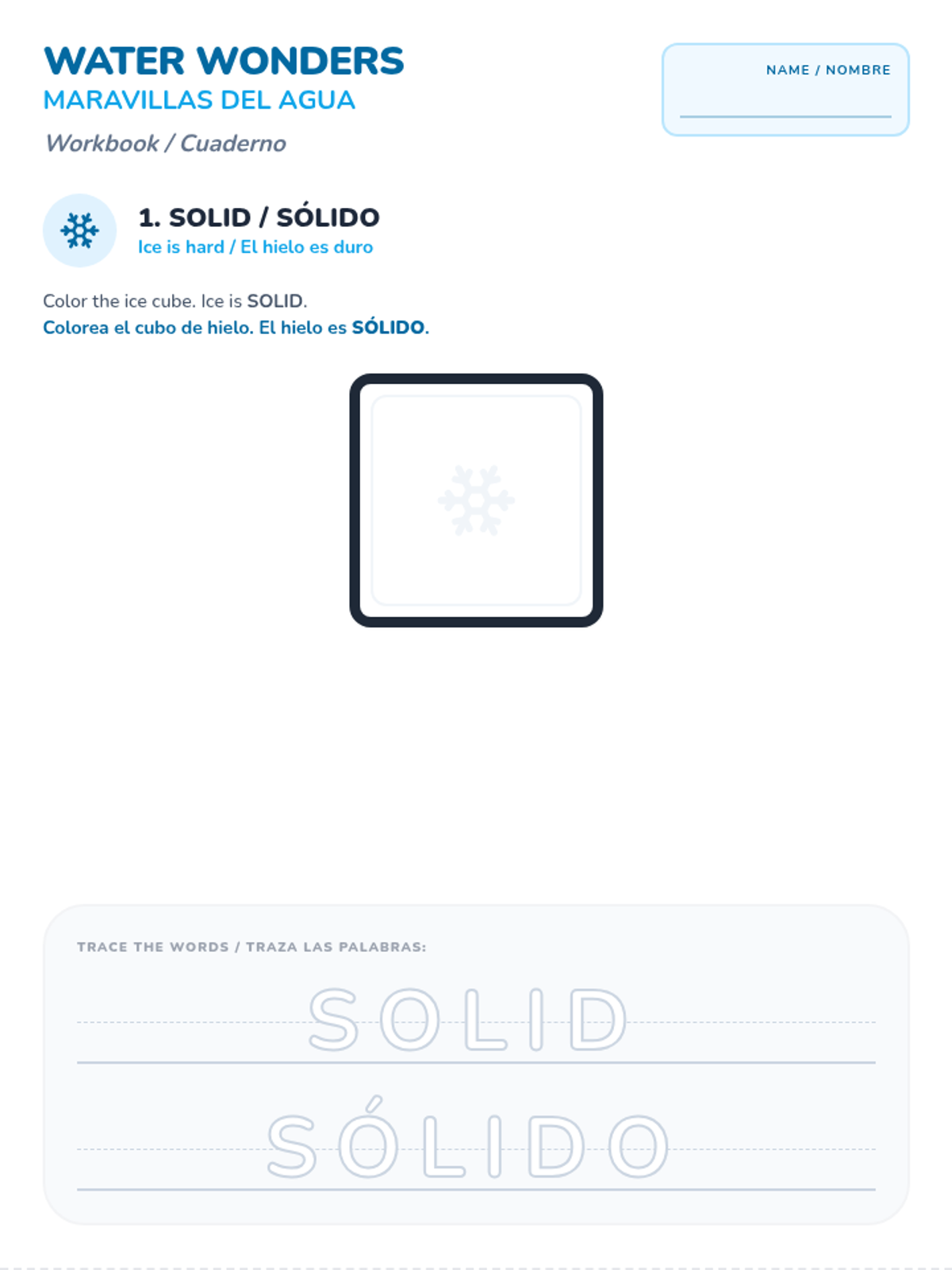
A 3-page bilingual printable workbook for Pre-K fine motor development, featuring large coloring areas and high-contrast English/Spanish word-tracing activities for "SOLID/SÓLIDO", "LIQUID/LÍQUIDO", and "GAS". Updated with improved graphics and page-break stability.
An engaging 8-slide presentation for Pre-K students covering the three states of water with bilingual English and Spanish text, high-contrast visuals, and simple vocabulary. Updated with improved text contrast and adjective consistency.
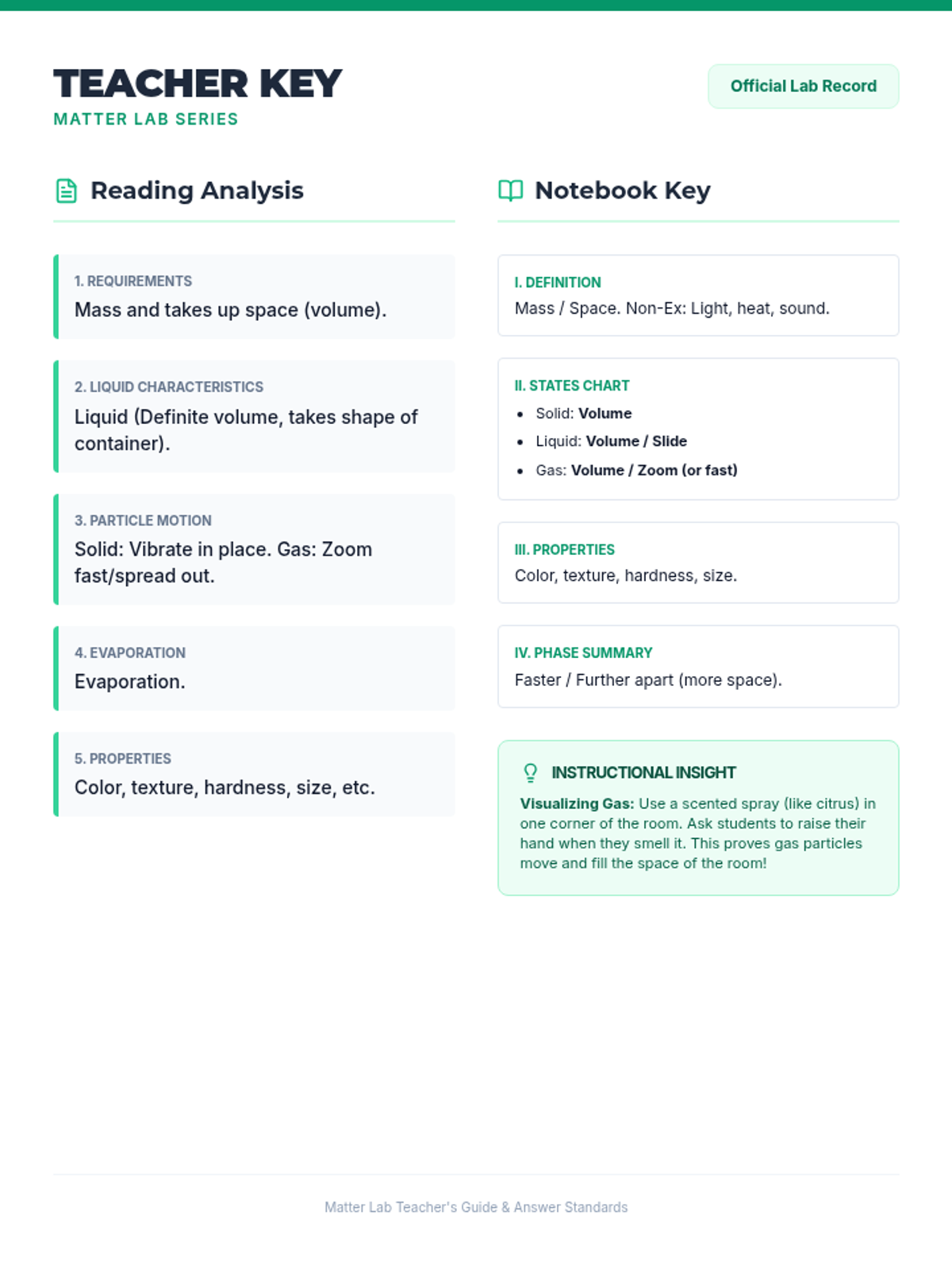
A complete answer key for the Matter Lab Report reading passage and the Lab Notebook guided notes, including teaching tips for educators.
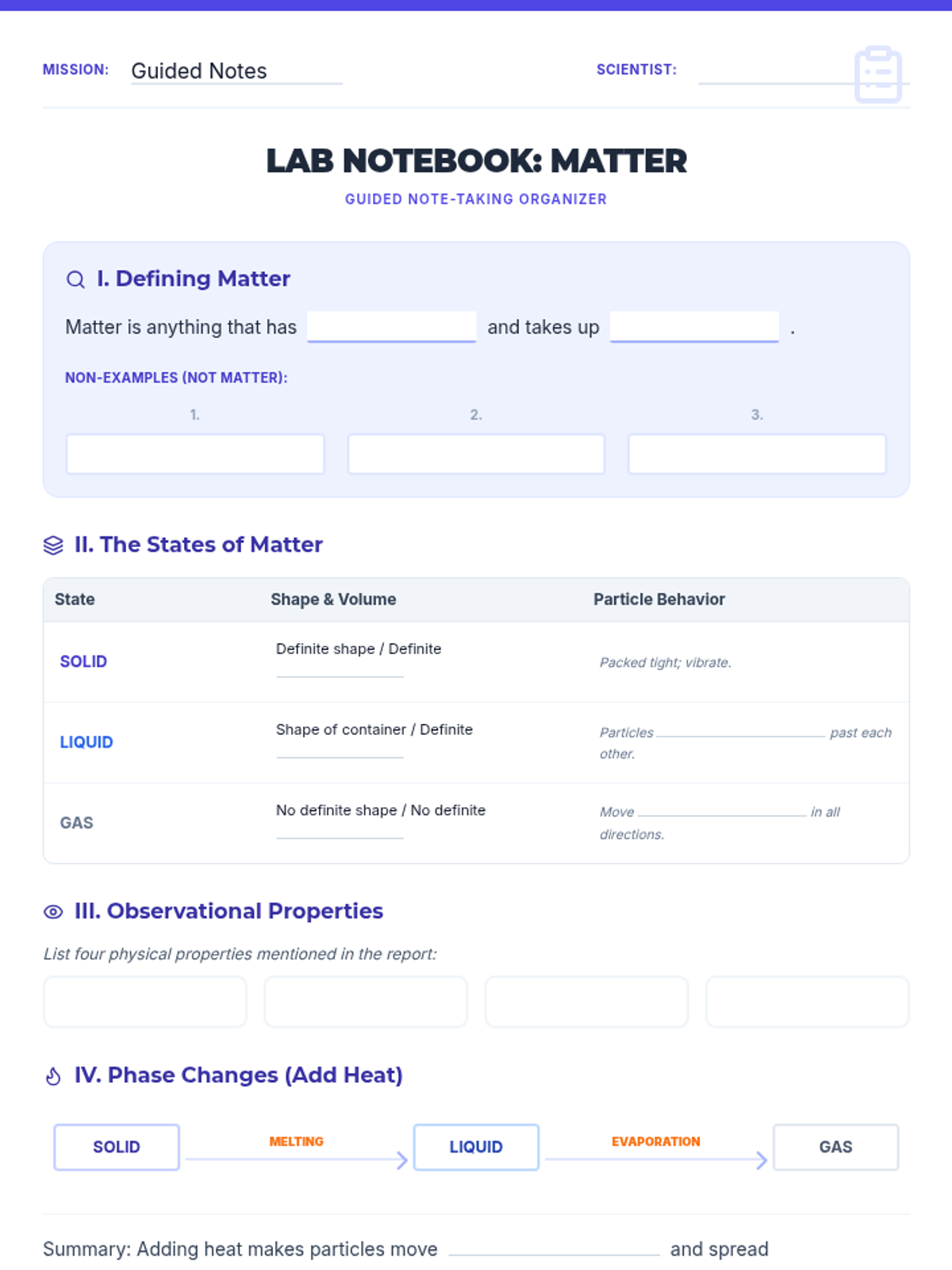
A guided note-taking worksheet designed for 4th-grade students to use while reading about matter or during a classroom lesson. Includes a states of matter chart and fill-in-the-blank definitions.
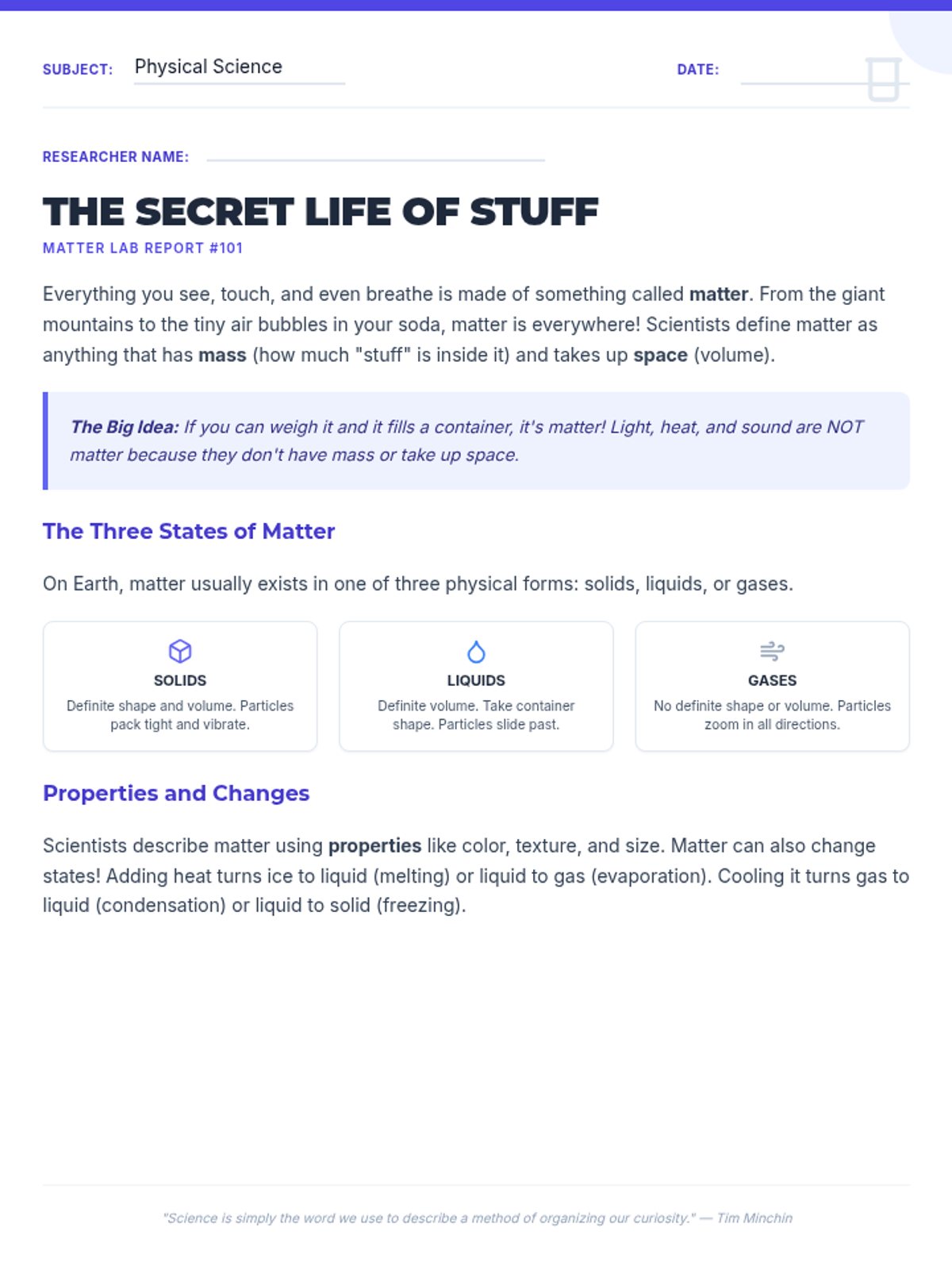
An informational reading passage about the properties and states of matter, followed by five comprehension questions (multiple choice and short answer) designed for 4th-grade students.
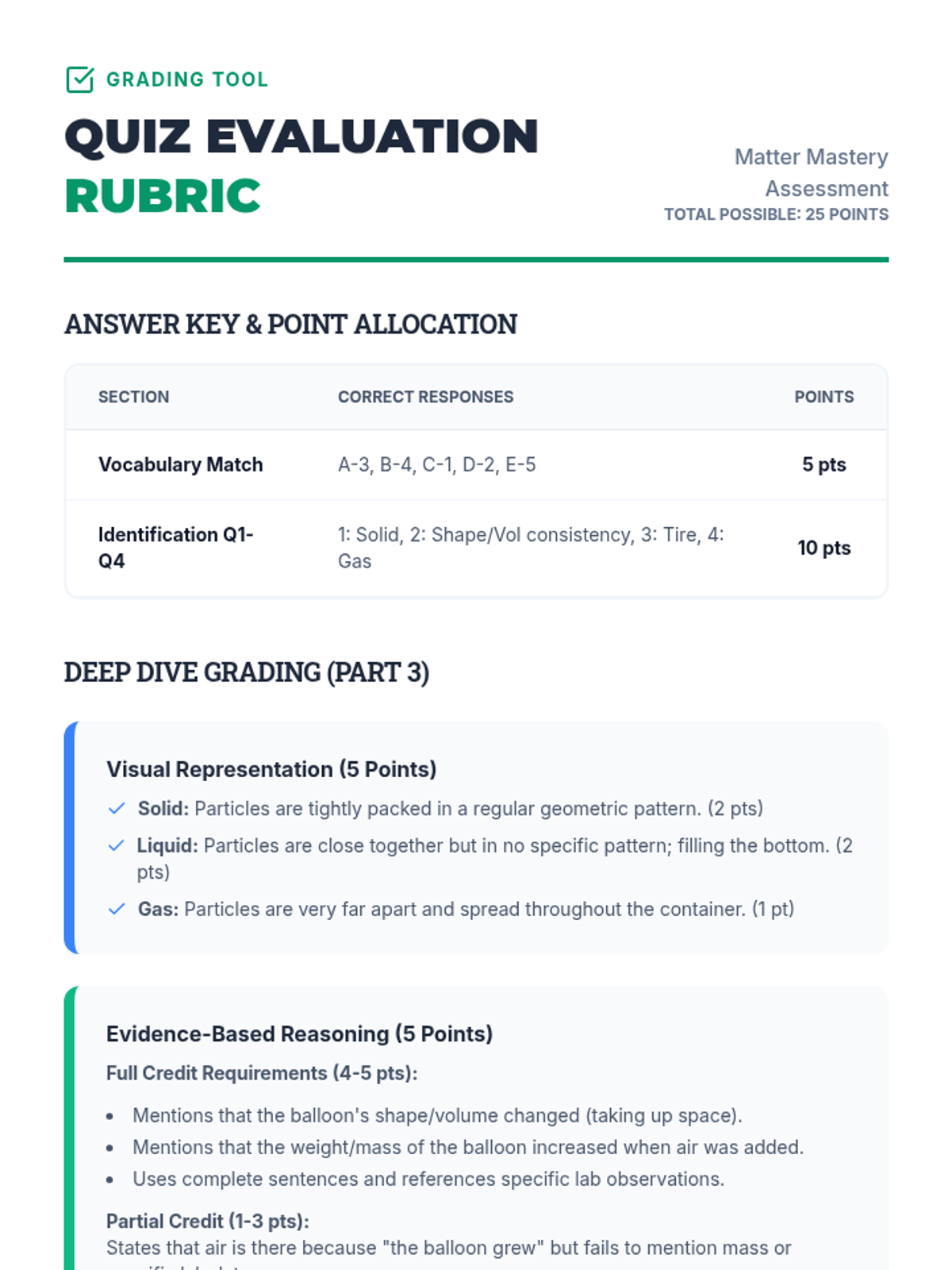
A teacher resource for grading the Matter Mastery Quiz, including a point breakdown and qualitative criteria for written responses.
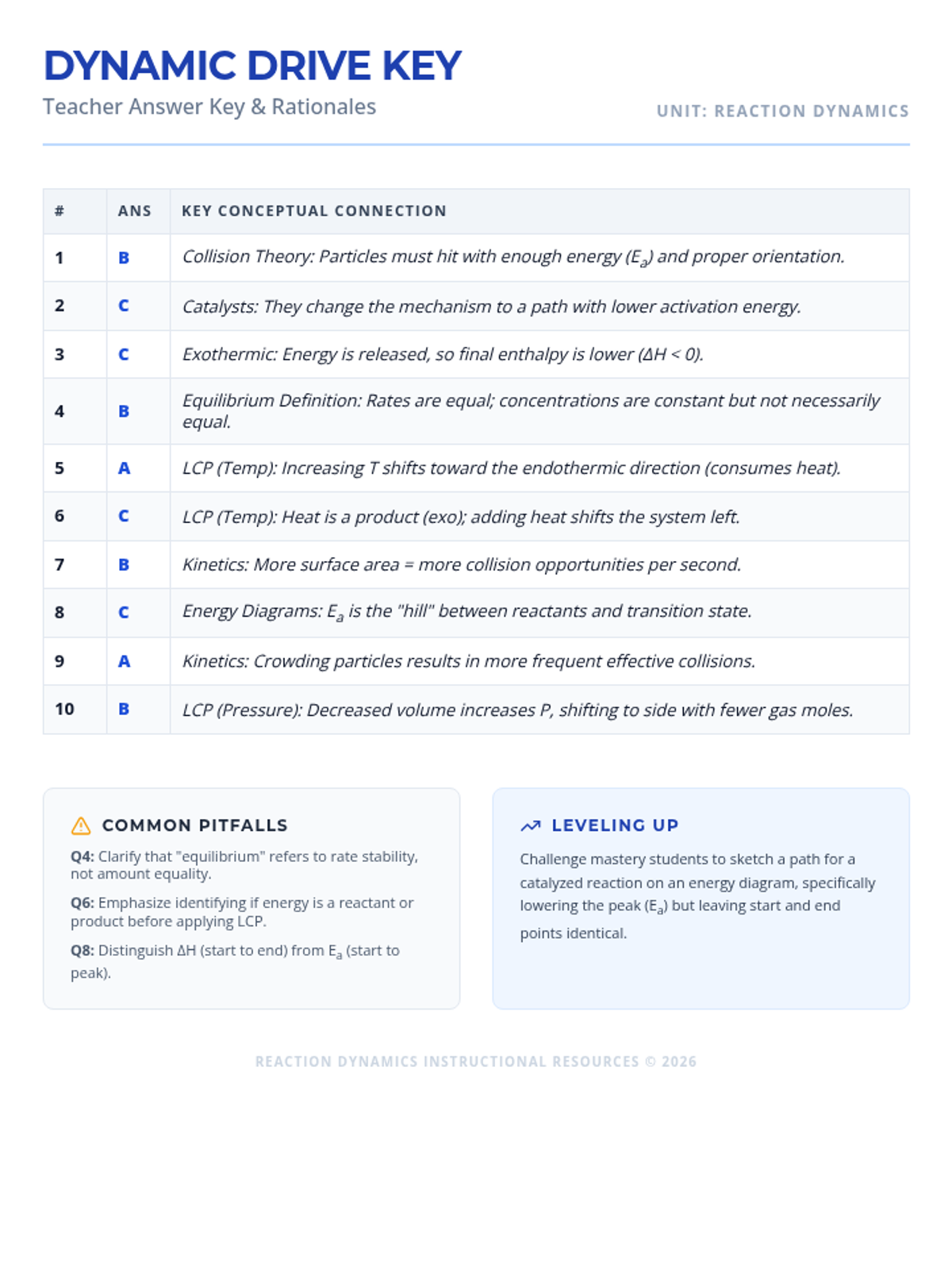
A teacher answer key for the Dynamic Drive MCQs. It provides the correct answers, conceptual rationales for each question, and a guide to common student misconceptions for classroom debriefing. Revised for better page breaks and math rendering.
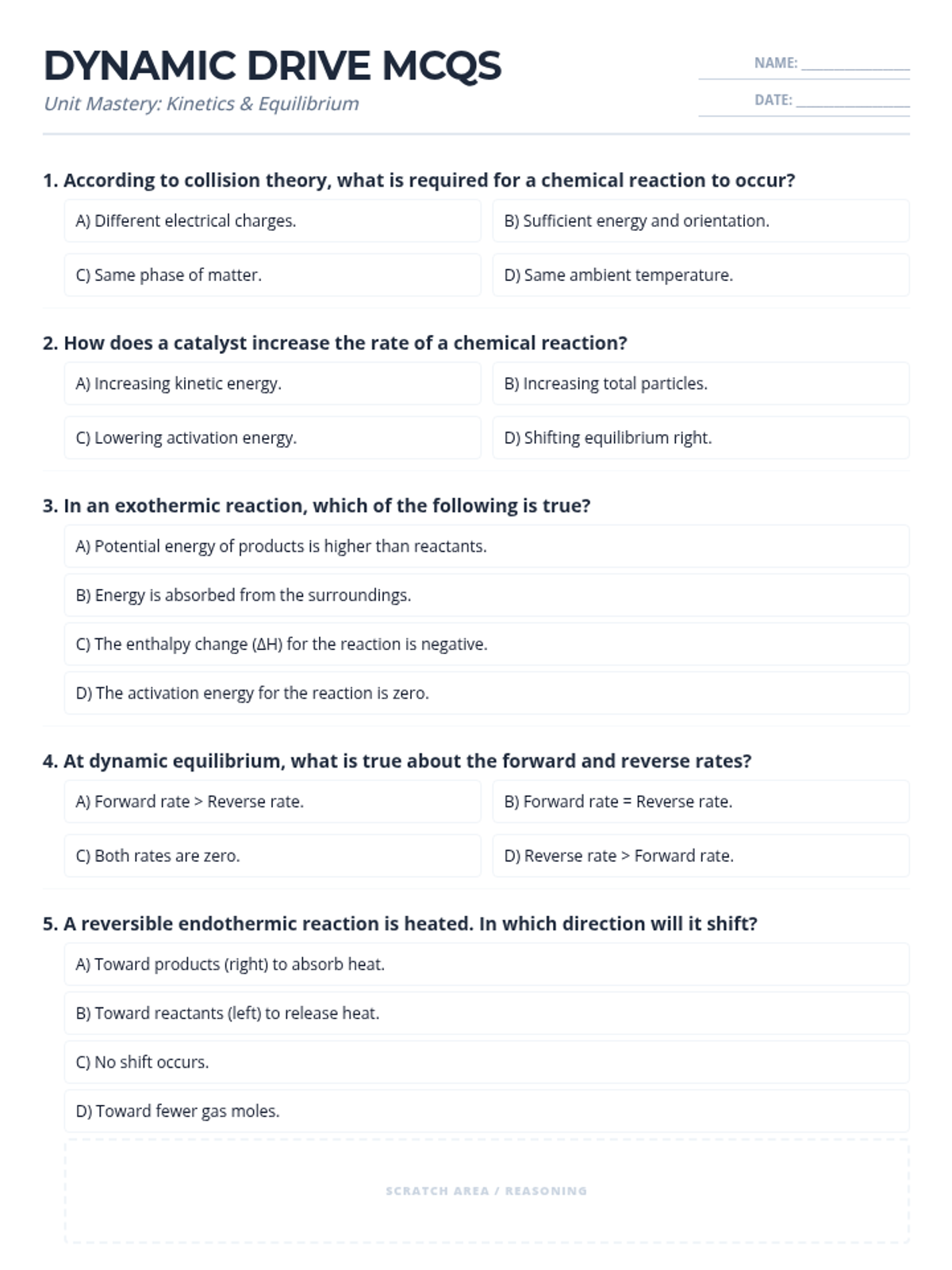
A student assessment consisting of 10 multiple-choice questions covering the key concepts of the Reaction Dynamics unit, including kinetics, energy pathways, and equilibrium shifts. Features uniform answer styling for unbiased testing. Revised for better page breaks, legibility, and technical rendering.
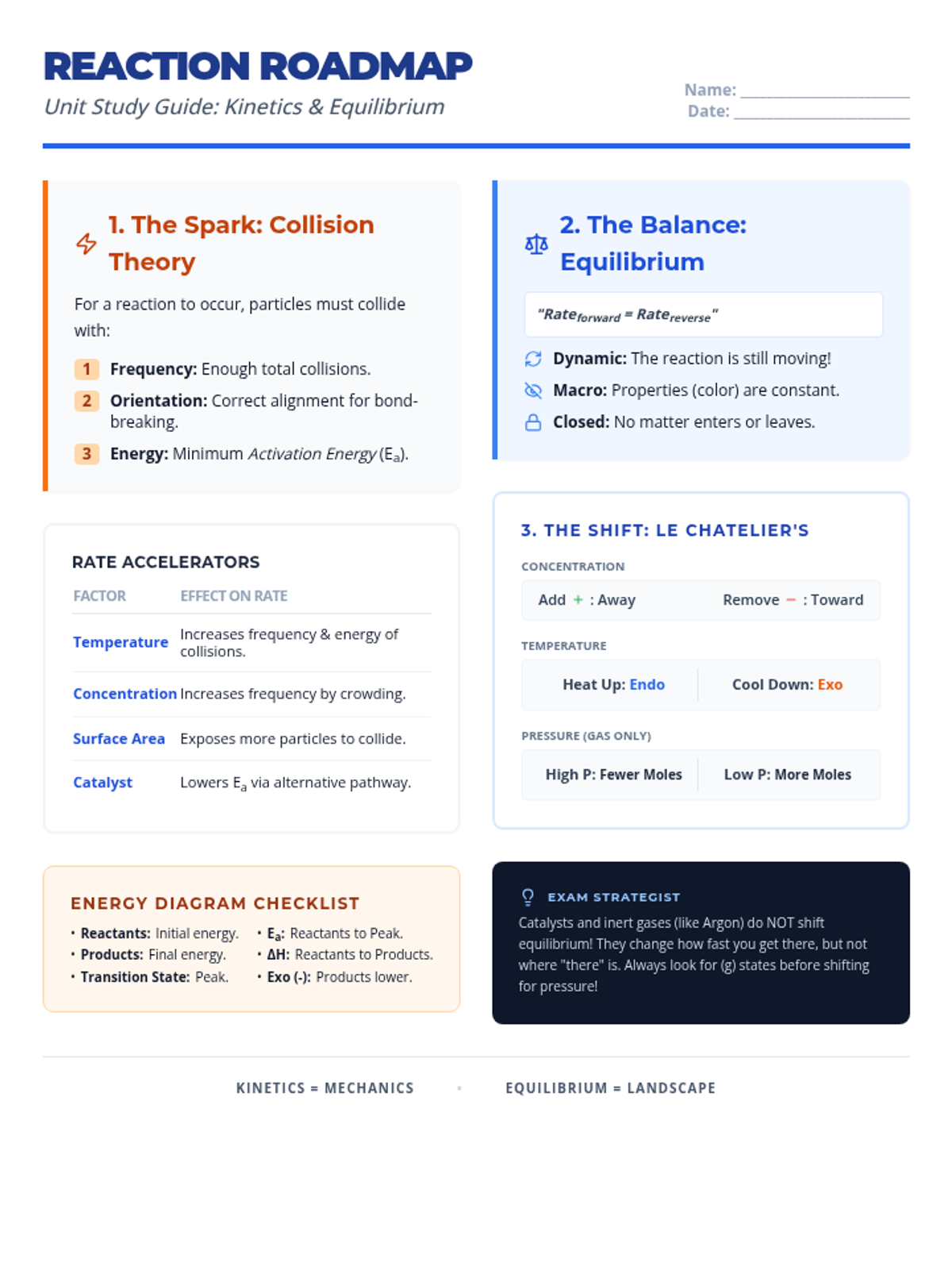
A comprehensive one-page study guide for the Reaction Dynamics unit. It summarizes collision theory, reaction rate factors, energy diagram components, the dynamic nature of equilibrium, and Le Chatelier's Principle shift rules in a visually organized, technical layout. Revised for better page fitting, legibility, and technical rendering.
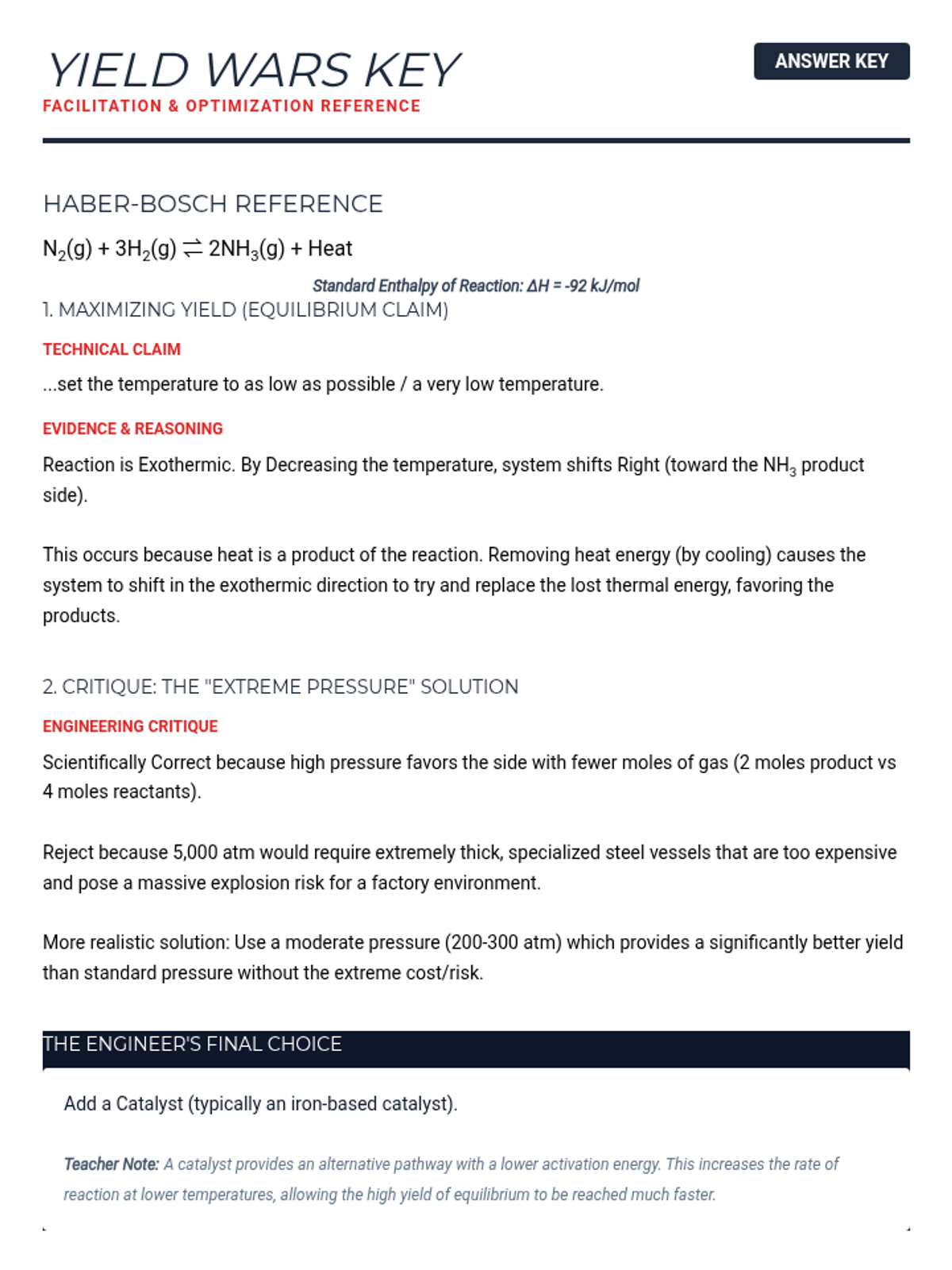
A teacher answer key and facilitation guide for the Yield Wars Worksheet. It provides the expected chemical reasoning for ammonia synthesis optimization, highlights the kinetic vs. thermodynamic trade-off, and suggests instructional focus points.
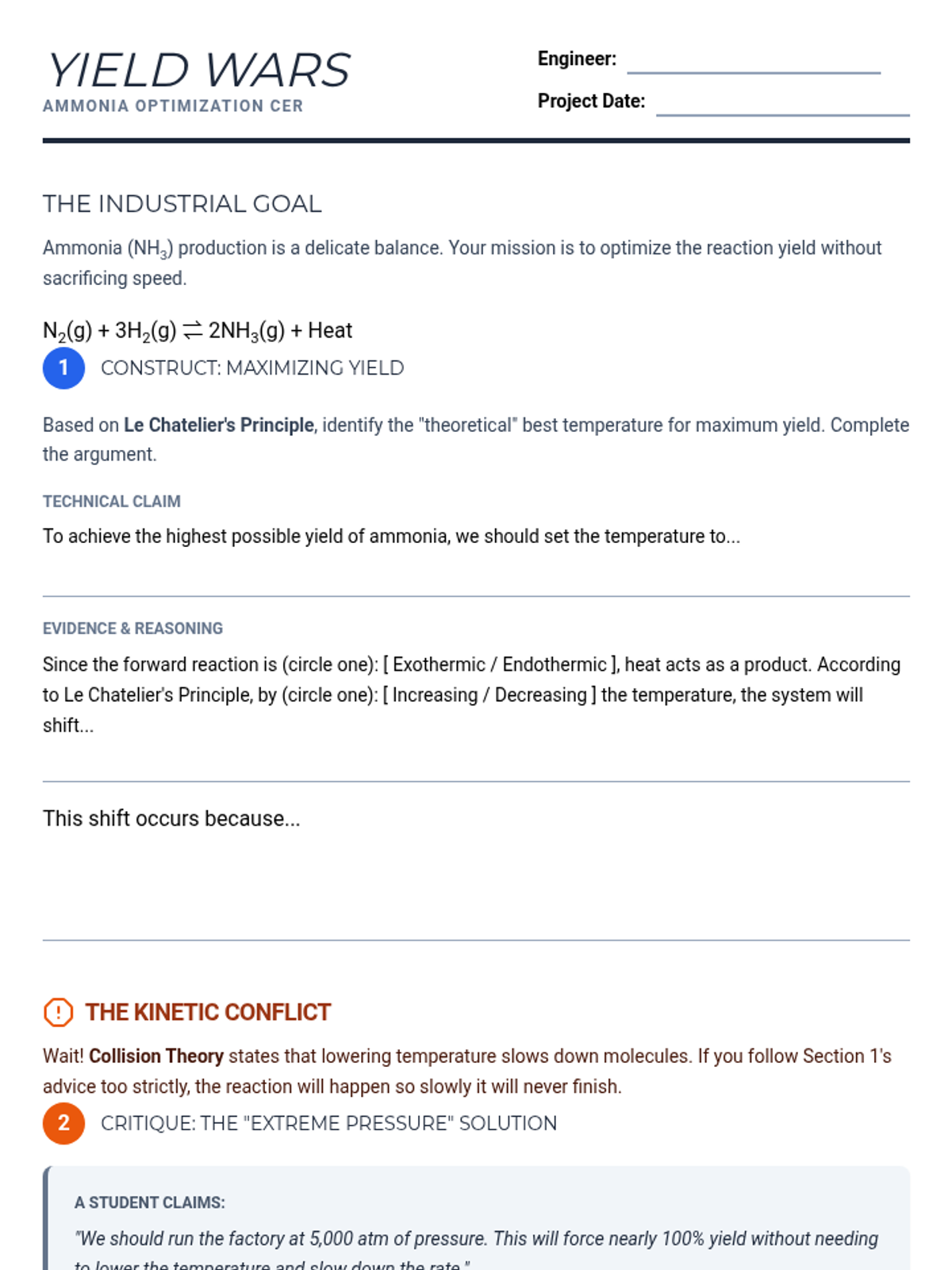
A scaffolded CER worksheet focusing on the optimization of ammonia synthesis. It guides students through the conflict between thermodynamics (yield) and kinetics (rate), using sentence stems to support trade-off analysis.
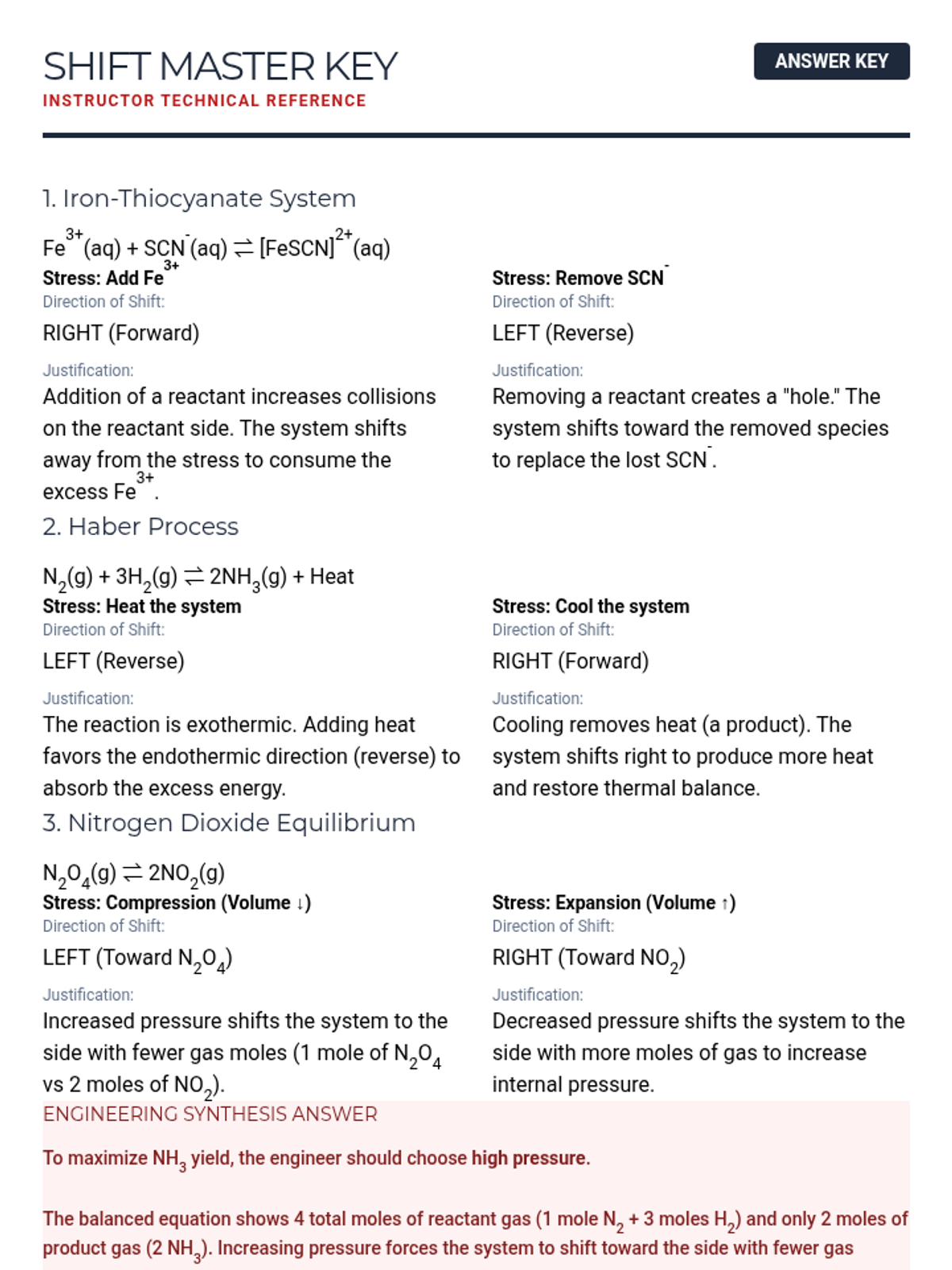
A detailed teacher answer key for the Shift Master Worksheet, featuring predicted directions and justifications based on Le Chatelier's Principle for various chemical stresses.
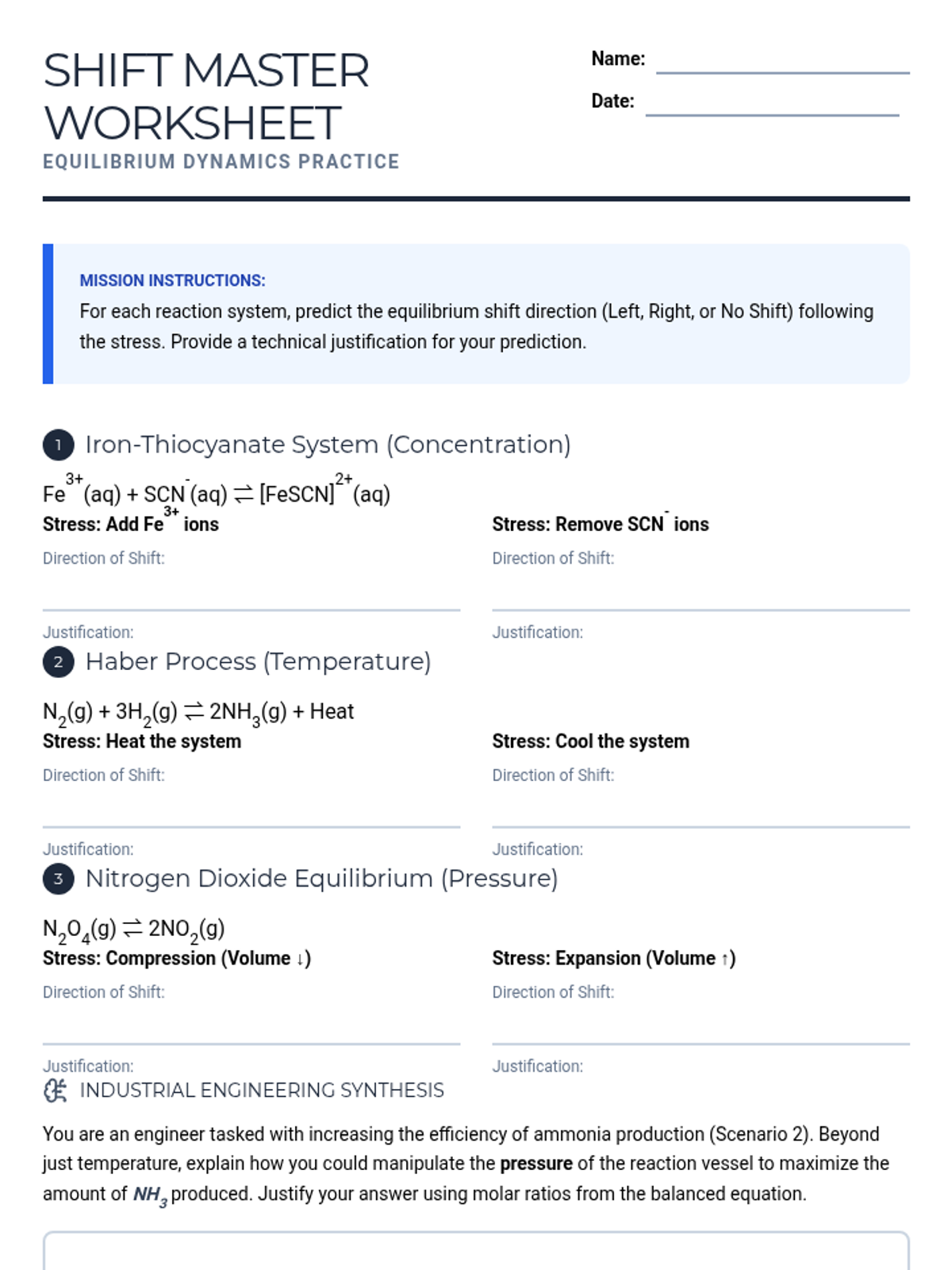
An application worksheet for Le Chatelier's Principle. It covers four distinct scenarios (concentration, temperature, pressure/volume, and catalysts) using real-world chemical reactions like the Haber Process and iron-thiocyanate equilibrium. Includes a synthesis question for critical thinking.
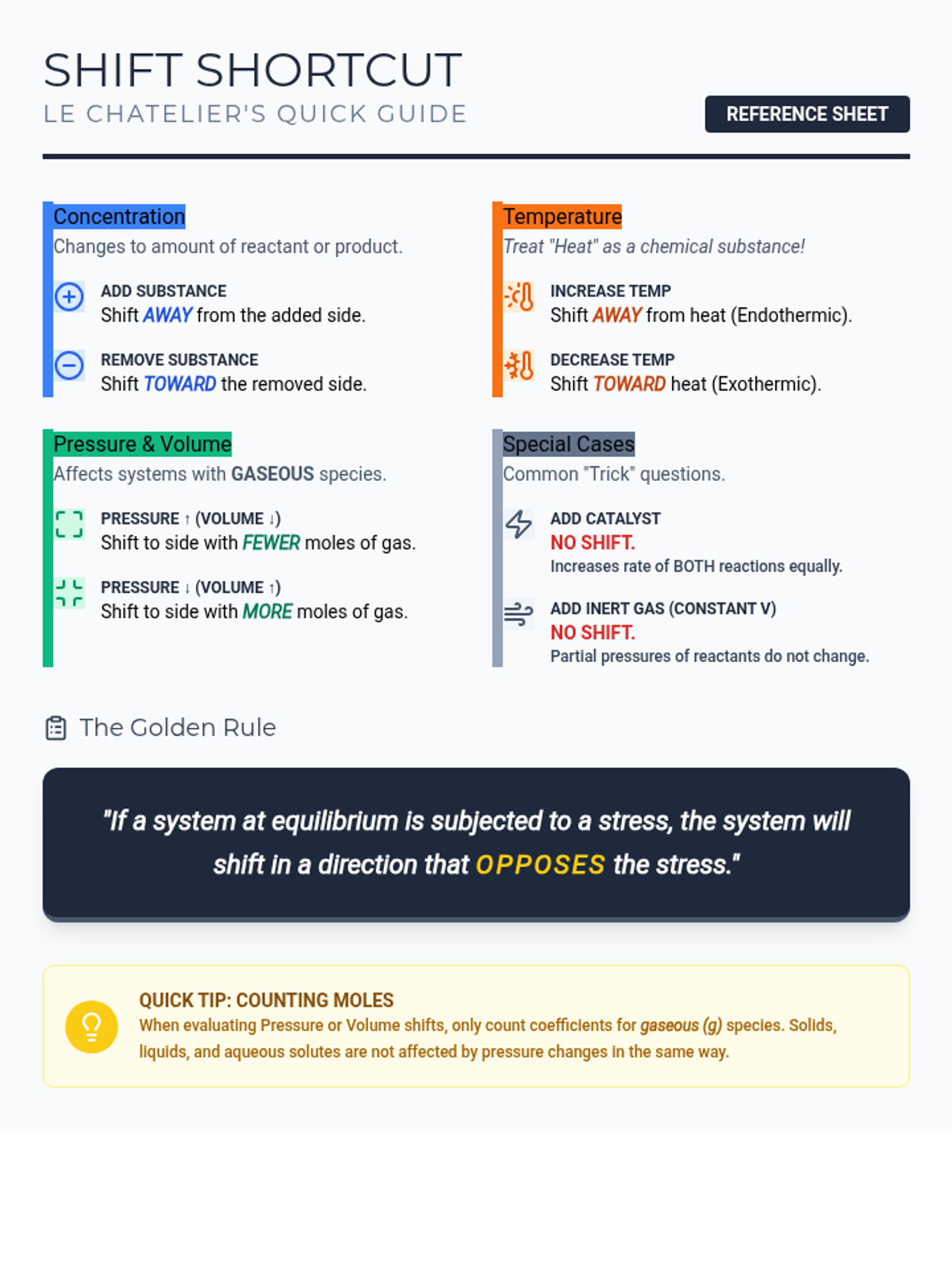
A visually organized reference sheet for Le Chatelier's Principle. It provides quick-look rules for concentration, temperature, volume, pressure, catalysts, and inert gases, styled as a clean technical guide.
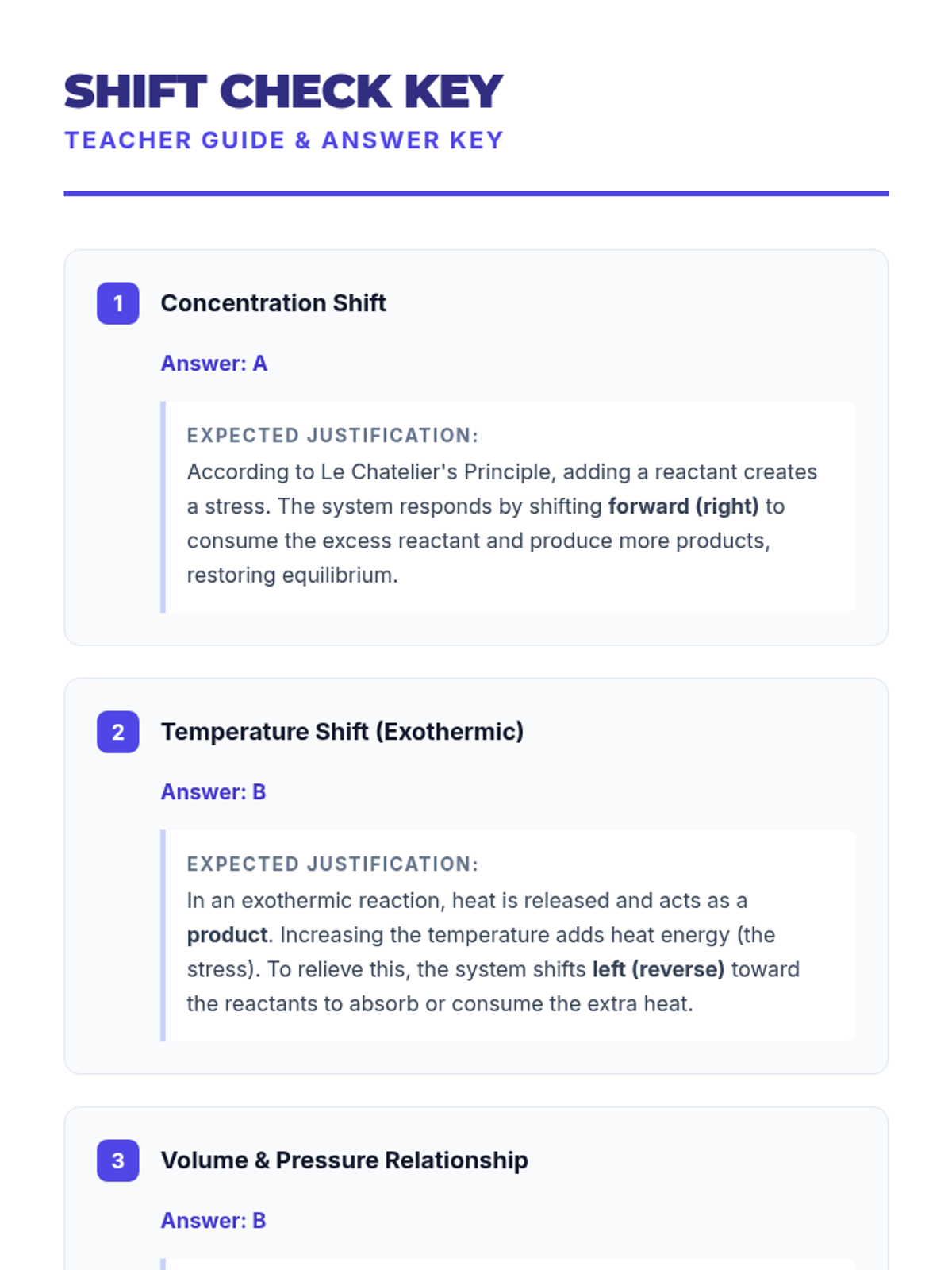
Detailed teacher answer key for the Shift Check Quiz. Includes the correct MCQ responses and structured justifications based on Le Chatelier's Principle for each scenario. Revised for better page breaks and math rendering.
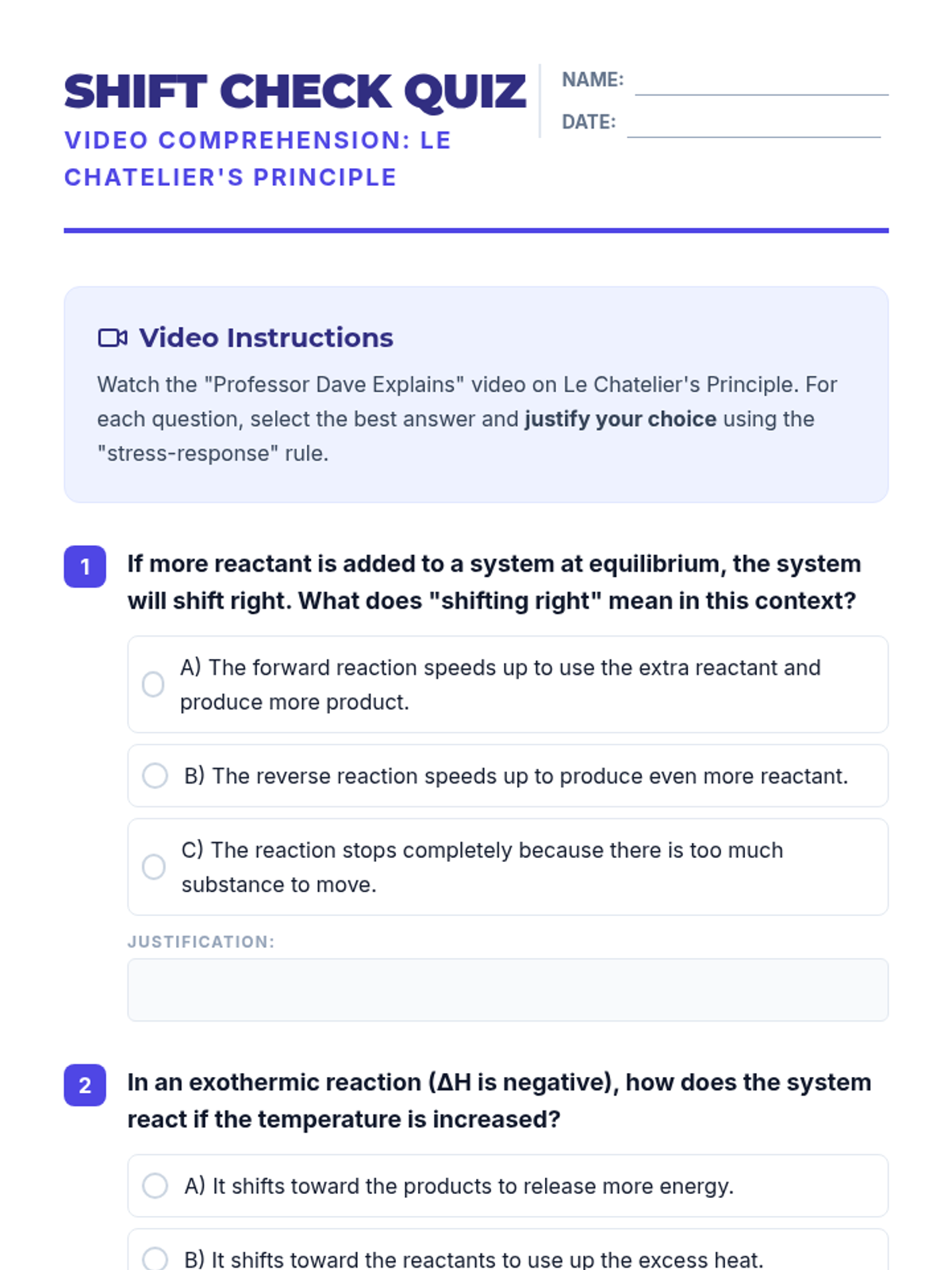
A 1-page student quiz with 4 multiple-choice questions based on the Professor Dave video transcript. Focuses on concentration, temperature, and volume/pressure shifts with a specific gaseous equilibrium scenario. Identical styling for all answer choices. Revised for better page breaks and math rendering.
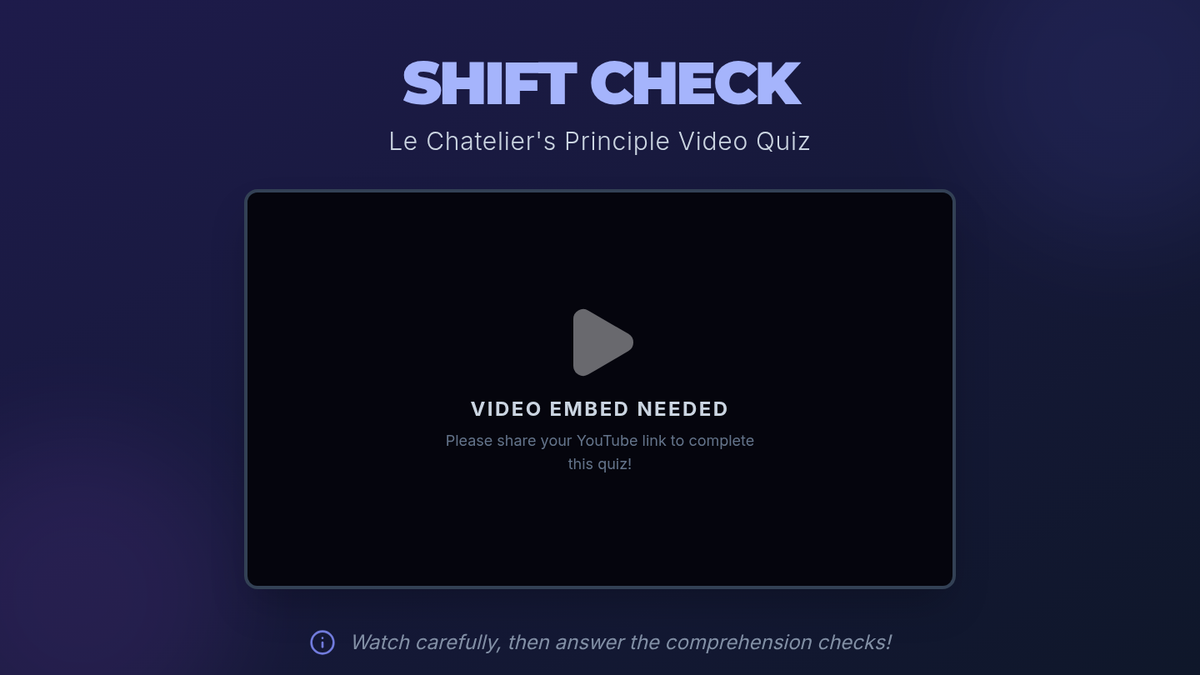
A 6-slide visual presentation for a video quiz on Le Chatelier's Principle. Includes comprehension checks based on the Professor Dave transcript covering concentration, temperature, and volume/pressure stresses. Minimum font size 24px. Revised for better label positioning and legibility.
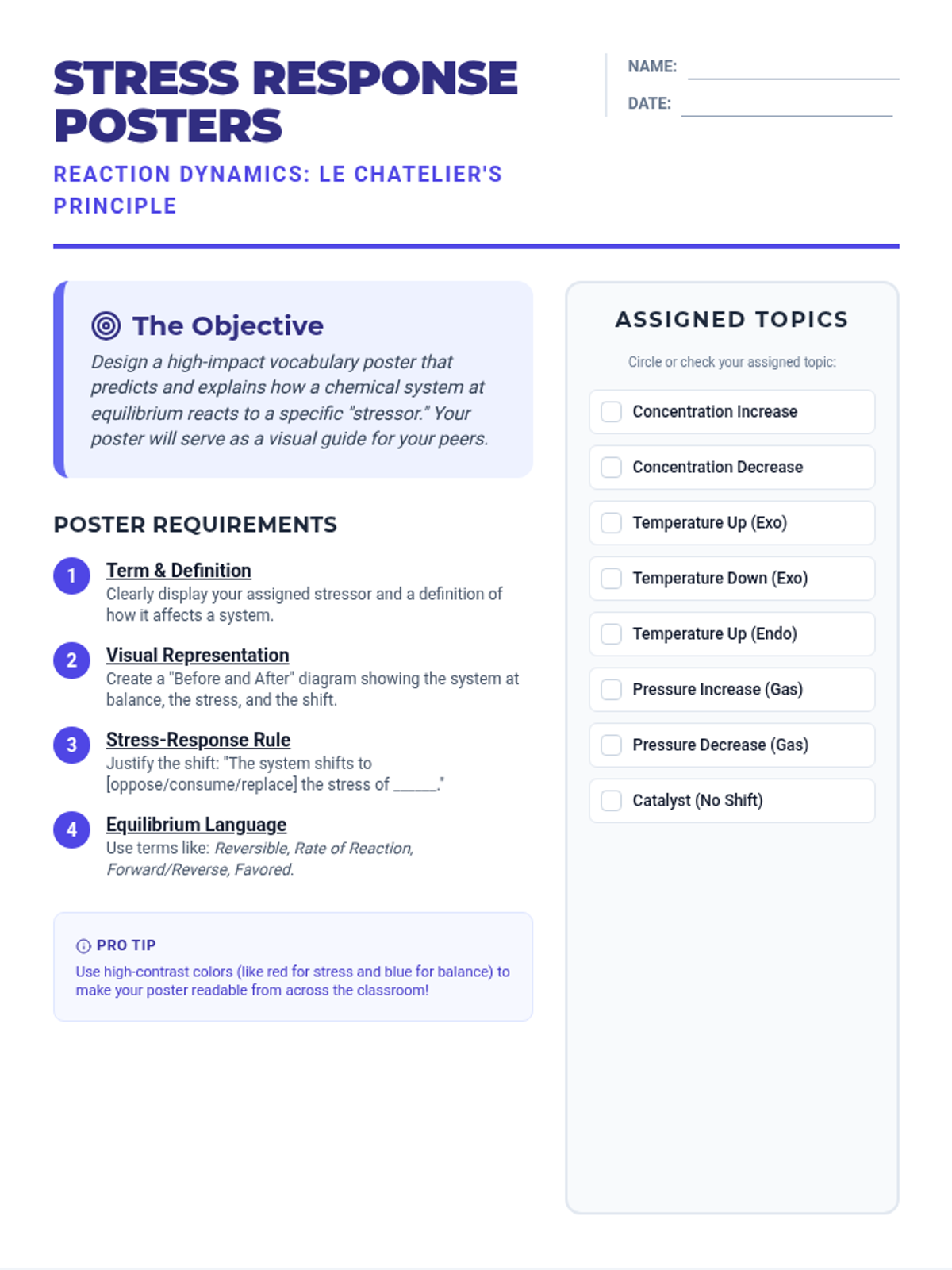
A 2-page student activity guide for creating high-impact vocabulary posters on Le Chatelier's Principle. Includes specific stressor topics, a structured drafting blueprint for predictions and justifications, and a quick-reference grading checklist. Revised to fix page breaks and improve contrast.
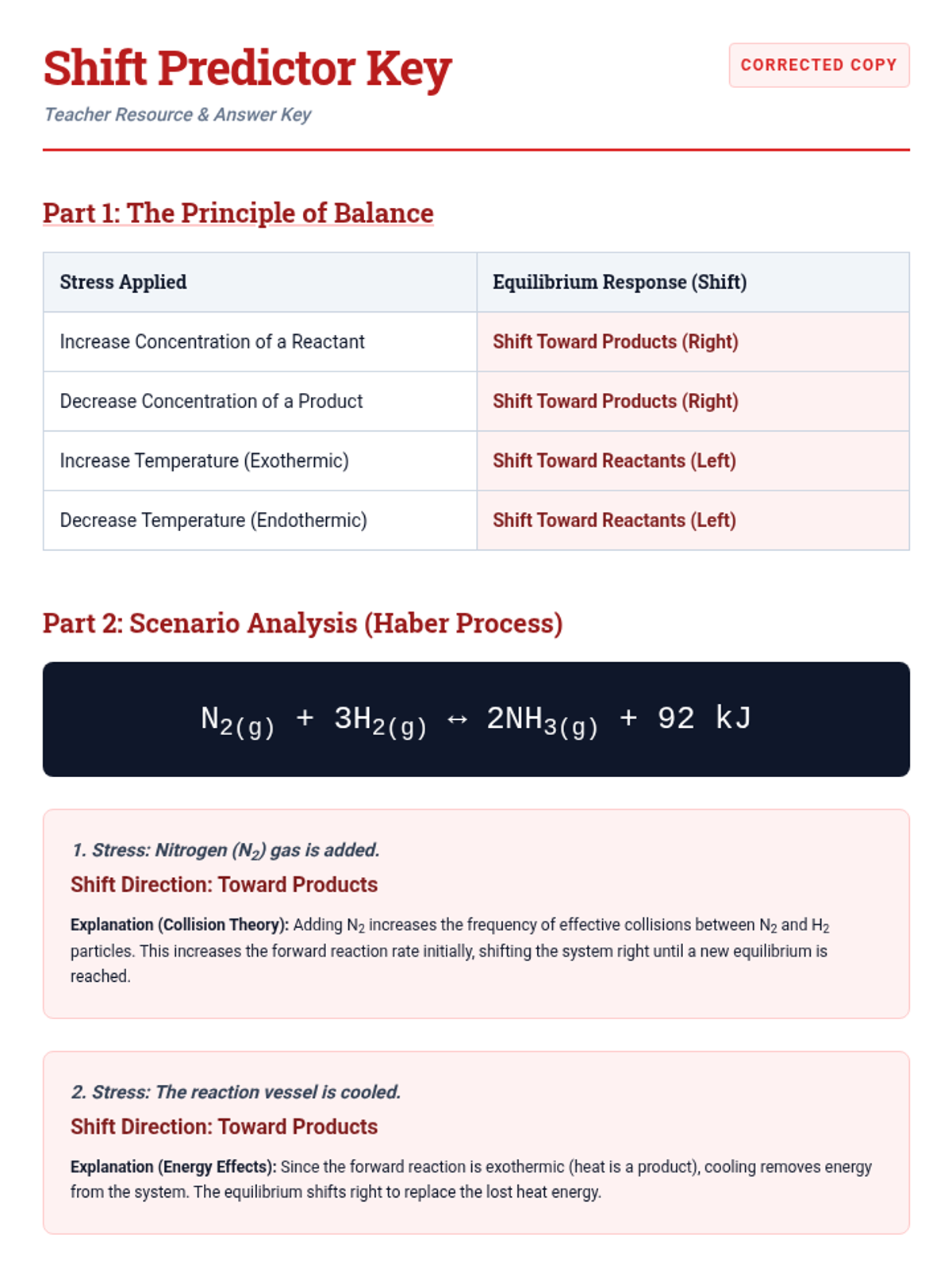
Detailed teacher answer key for the Shift Predictor Worksheet. Includes the summary table, scenario analysis with reasoning based on collision theory and energy effects, and a visual representation of equilibrium shifts on a concentration vs. time graph. Revised for better page breaks and math rendering.
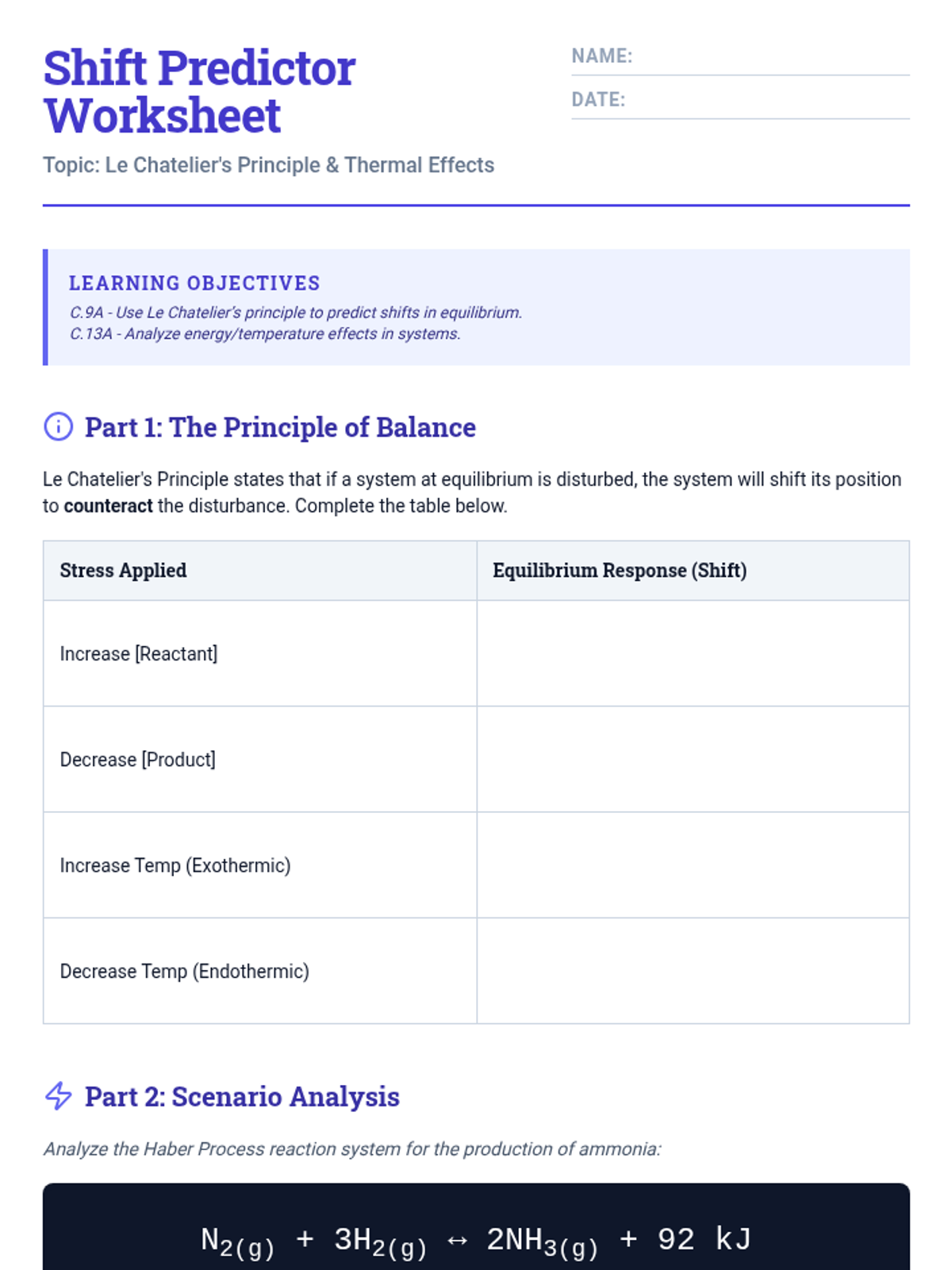
A student worksheet focused on Le Chatelier's Principle and thermal effects in chemical systems. Includes table summaries, scenario analysis for the Haber Process and biological carbonic acid systems, and a graphical synthesis section for visualizing equilibrium shifts. Revised for better page breaks, legibility, and technical rendering.
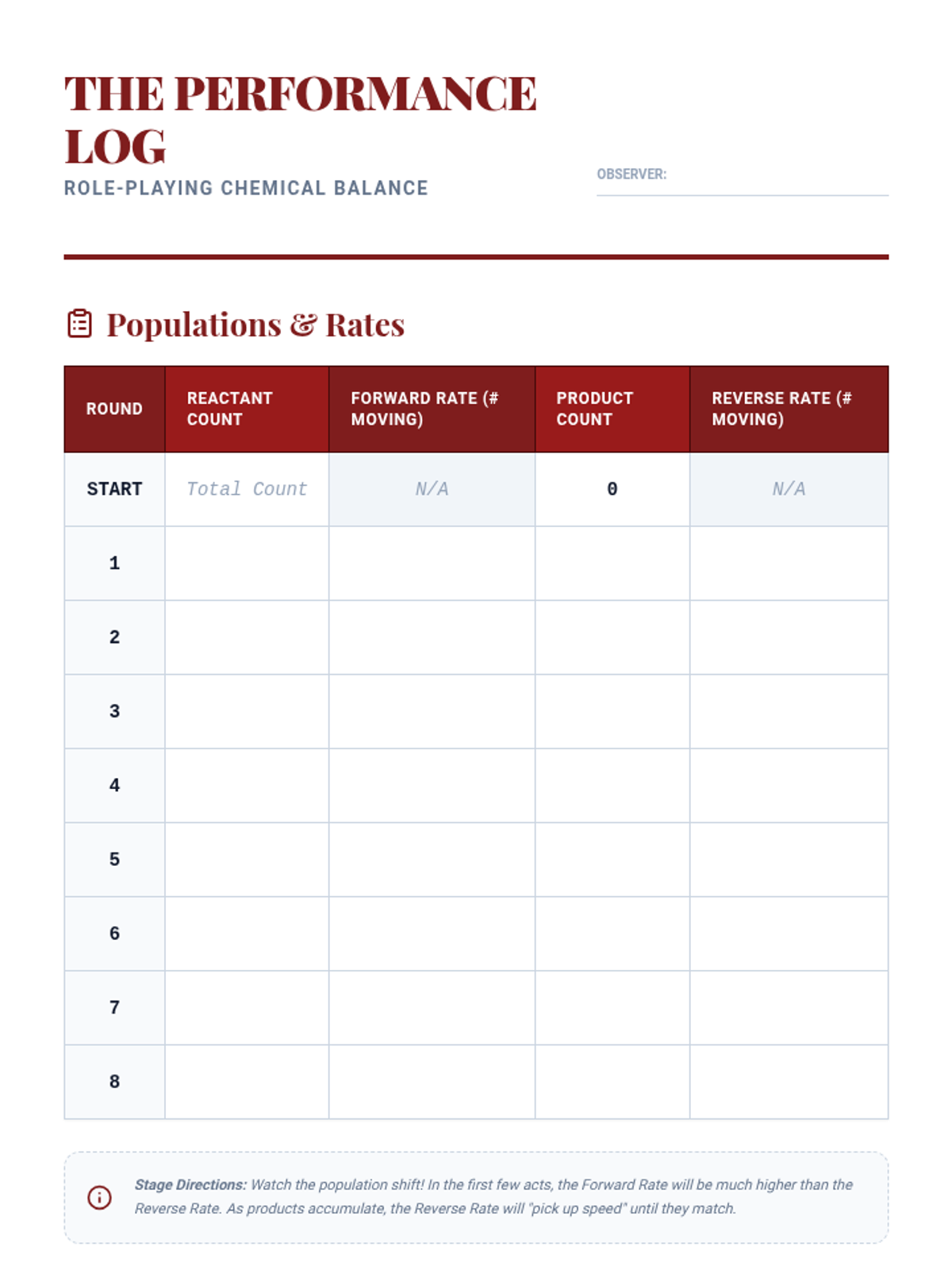
A student recording sheet for the equilibrium role-playing simulation. Students track particle counts and reaction rates over several rounds to identify when and how a system reaches balance. Revised for better header layout and spacing.
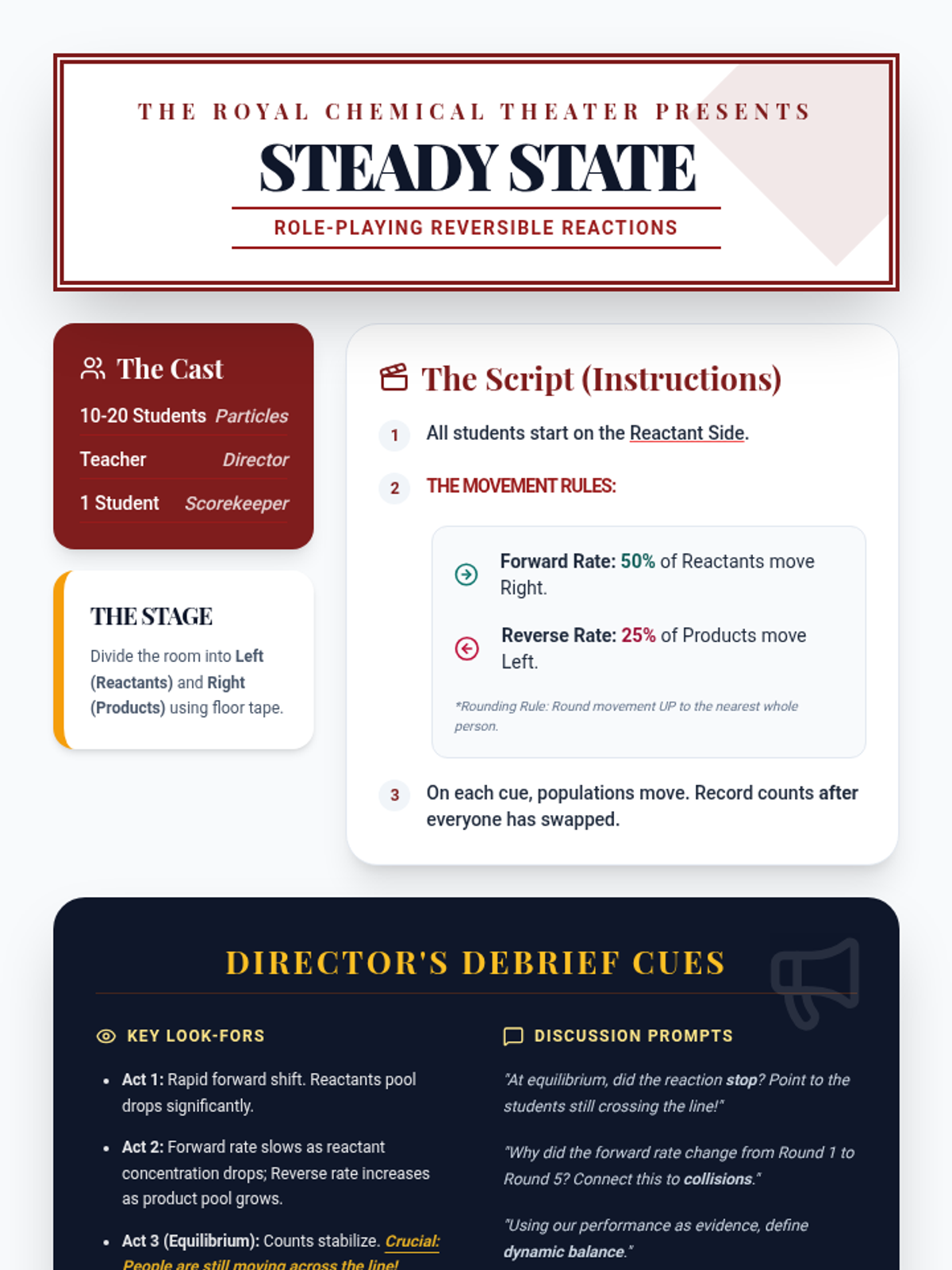
A teacher-facing facilitation guide for a role-playing simulation where students act as particles to model dynamic equilibrium. Includes clear movement rules, setup instructions, and discussion prompts. Revised for layout and contrast.
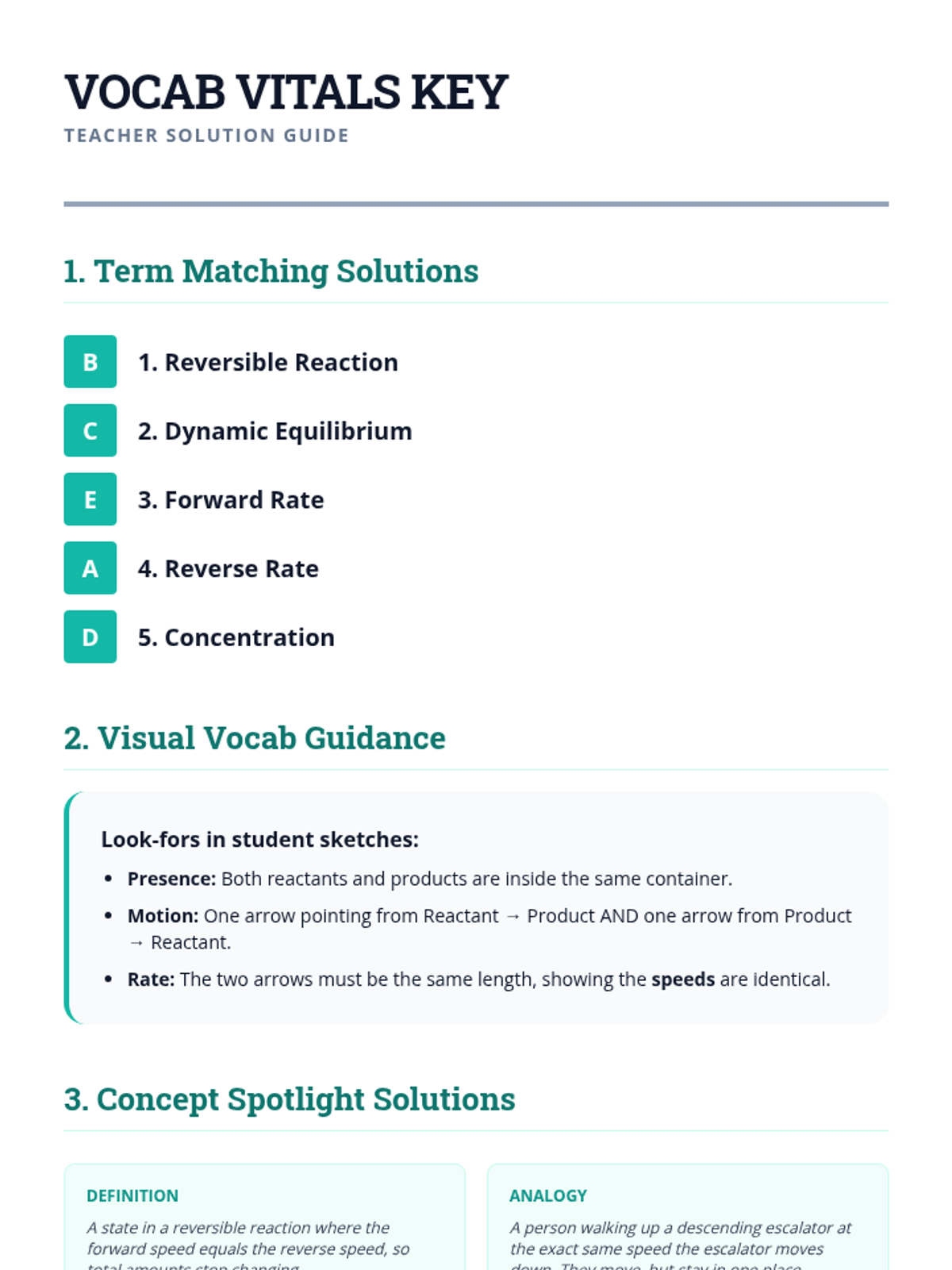
Teacher answer key for the Vocab Vitals activity, providing matching solutions, particle model look-fors, and sample conceptual responses.
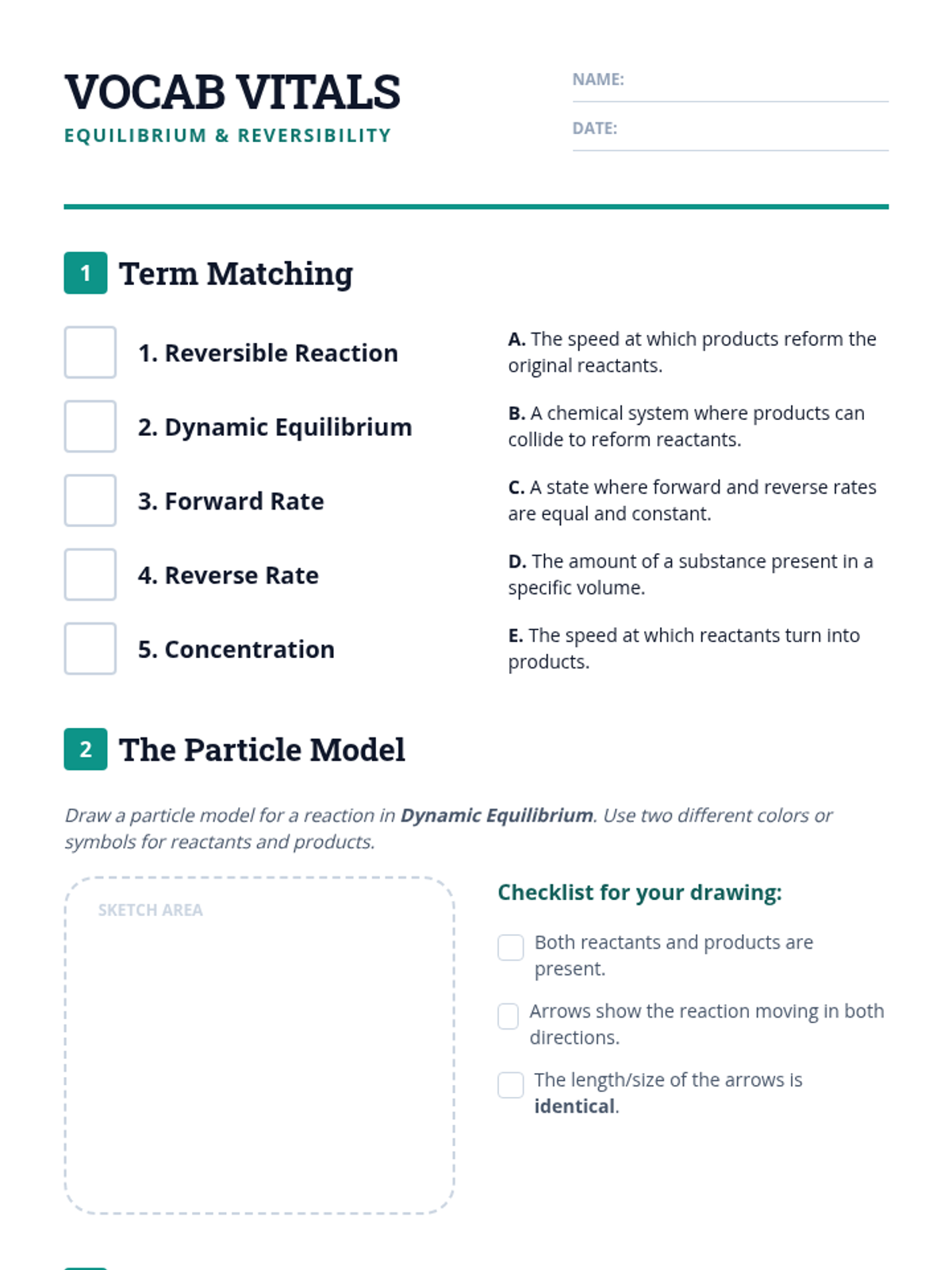
A vocabulary activity focusing on equilibrium terms, featuring matching, particle modeling, and a Frayer-style concept map for dynamic equilibrium.
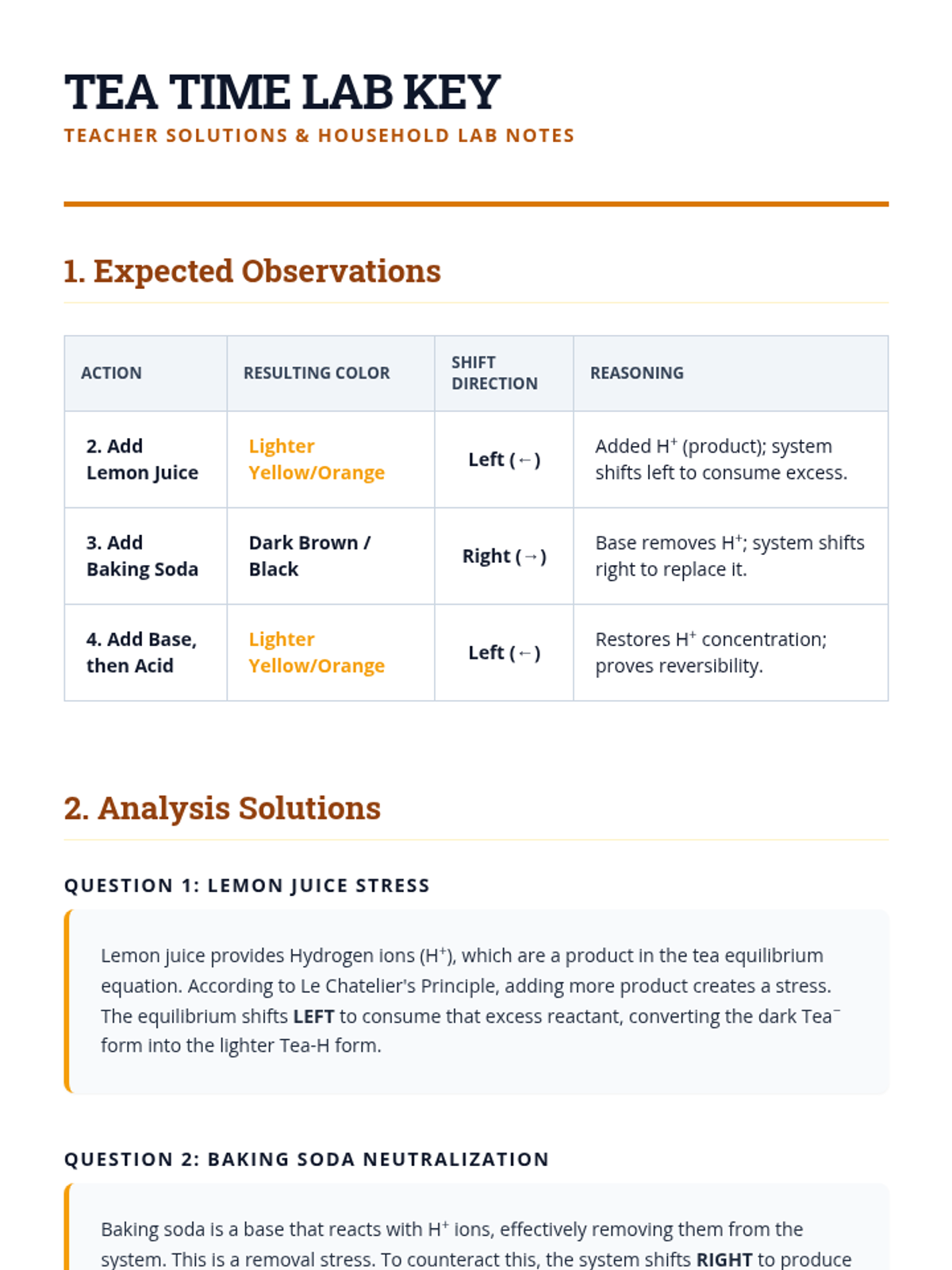
A detailed teacher answer key for the Color Shift Lab. Includes expected data, sample analysis responses, and instructional tips for success. Revised for better page breaks and math rendering.
A visual presentation covering Le Chatelier's Principle, including concentration and temperature stresses, the collision theory reasoning behind shifts, and a case study using a household black tea equilibrium system. Revised for better label positioning and legibility.
A visual inquiry-based anchor chart for classroom display, using questions to prompt students to think about the organization of the Periodic Table, groups, periods, and element types. Updated with a white-themed Spectrum section and a mini reference grid for improved clarity and utility.
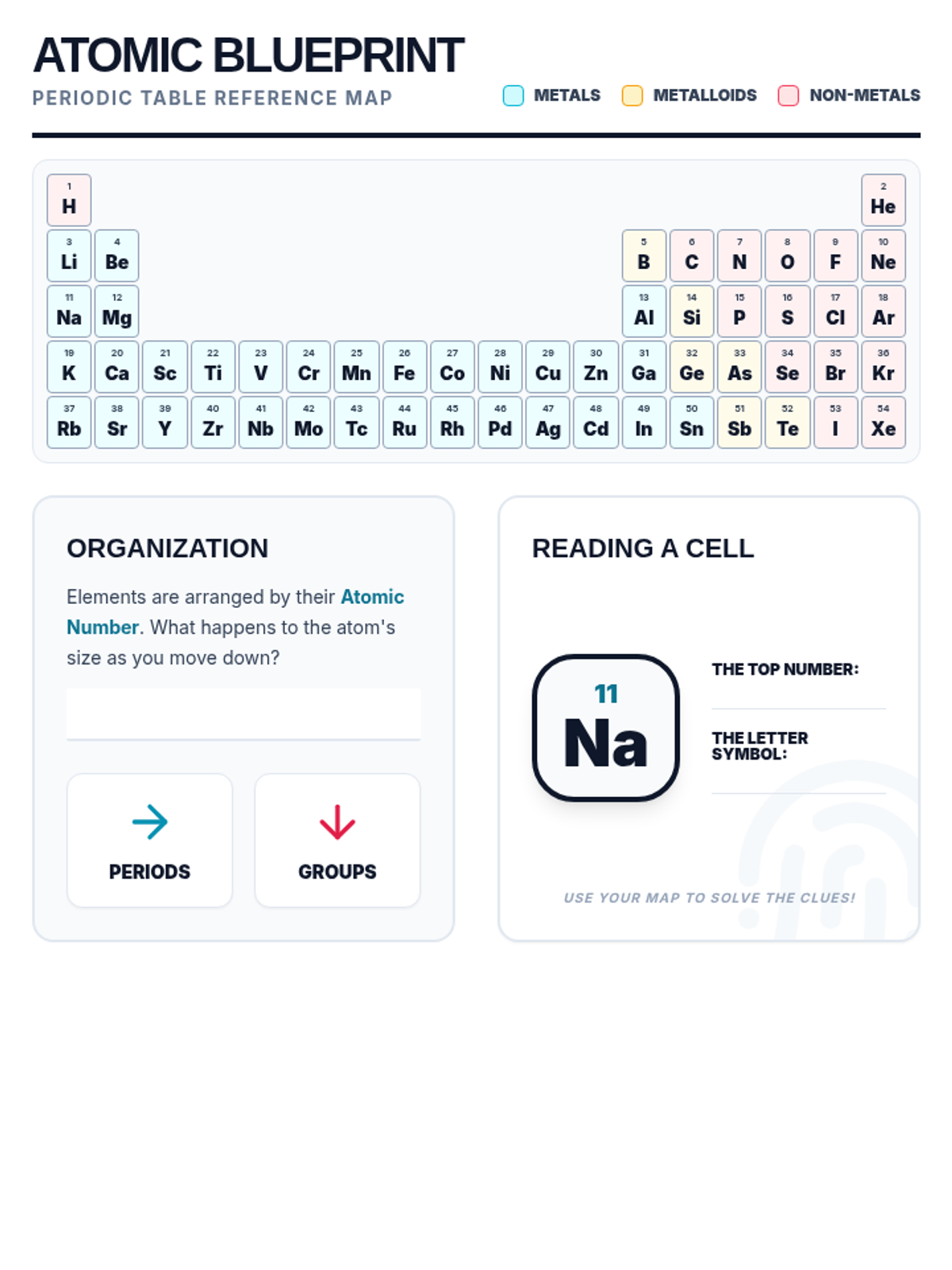
A clean, simplified Periodic Table reference sheet for student use, color-coded by element type and featuring clear explanations for groups, periods, and atomic cells. Now includes a complete Period 5 for continuity.
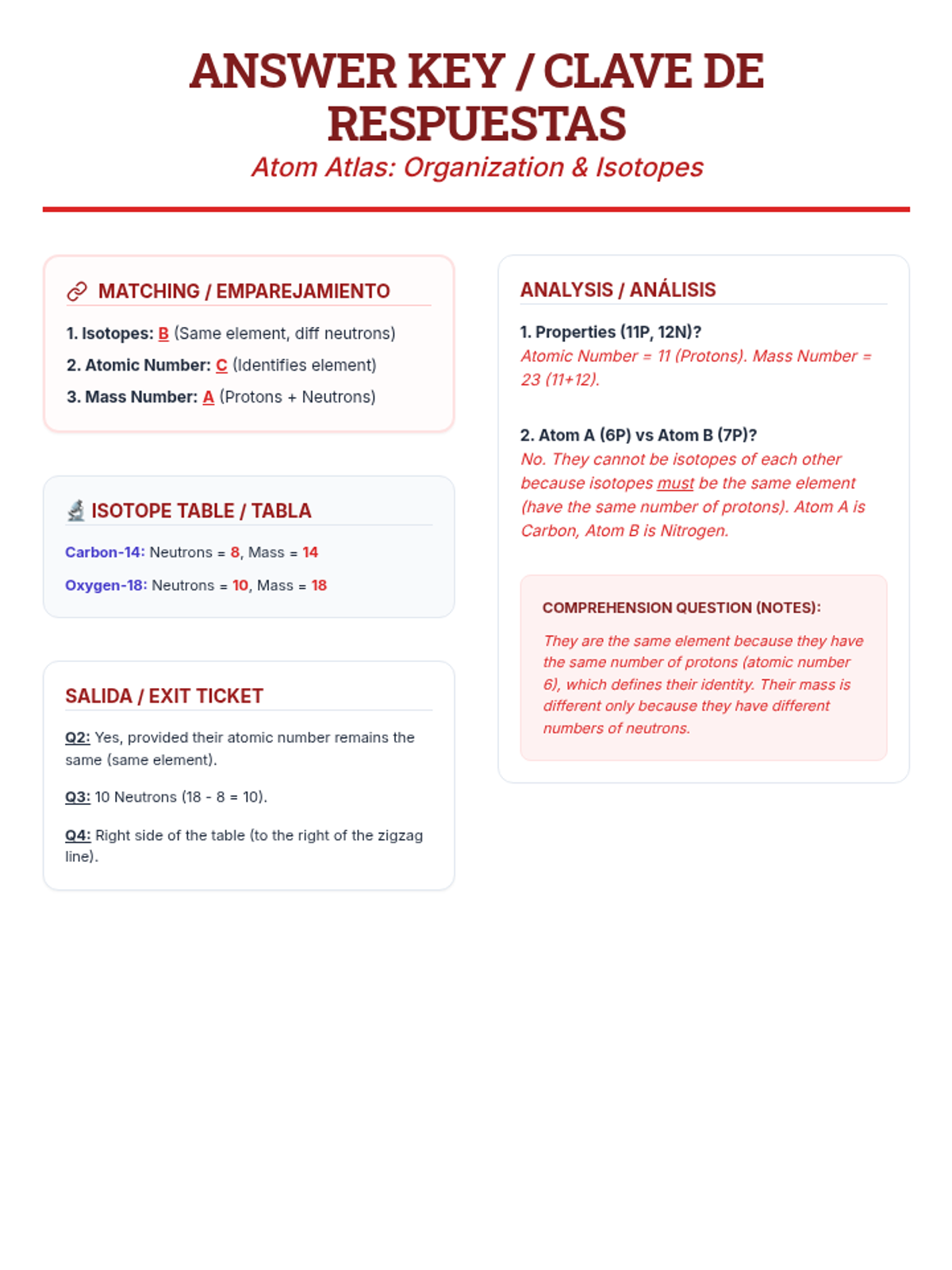
A comprehensive answer key covering the isotopes analysis, matching, and comprehension sections for the Atom Atlas lesson.
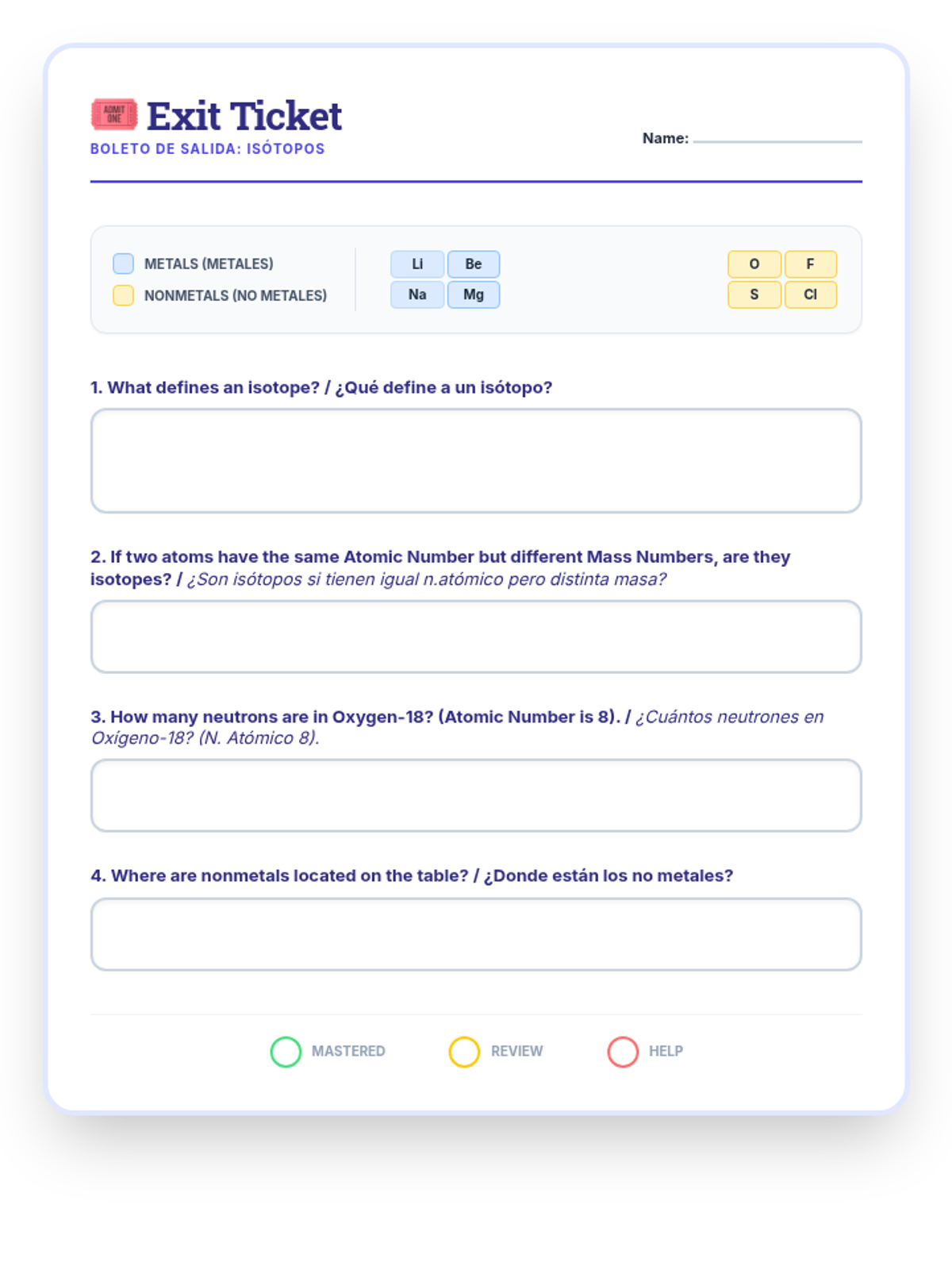
A concise exit ticket assessment focusing on isotope concepts and periodic table location, provided in both English and Spanish.
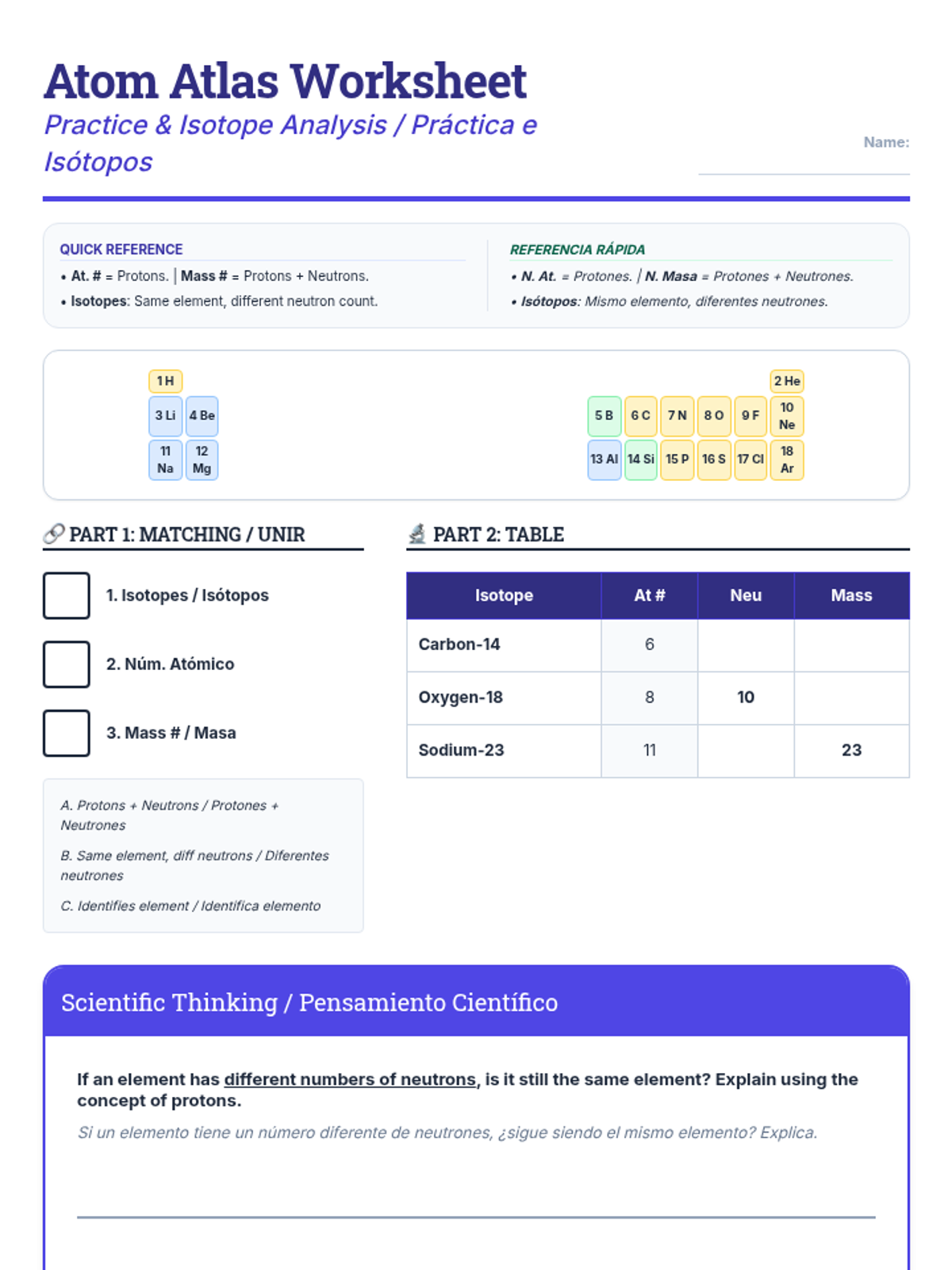
A practice worksheet featuring matching, an isotope analysis table, and comprehension questions focused on atomic structure and isotope variations.
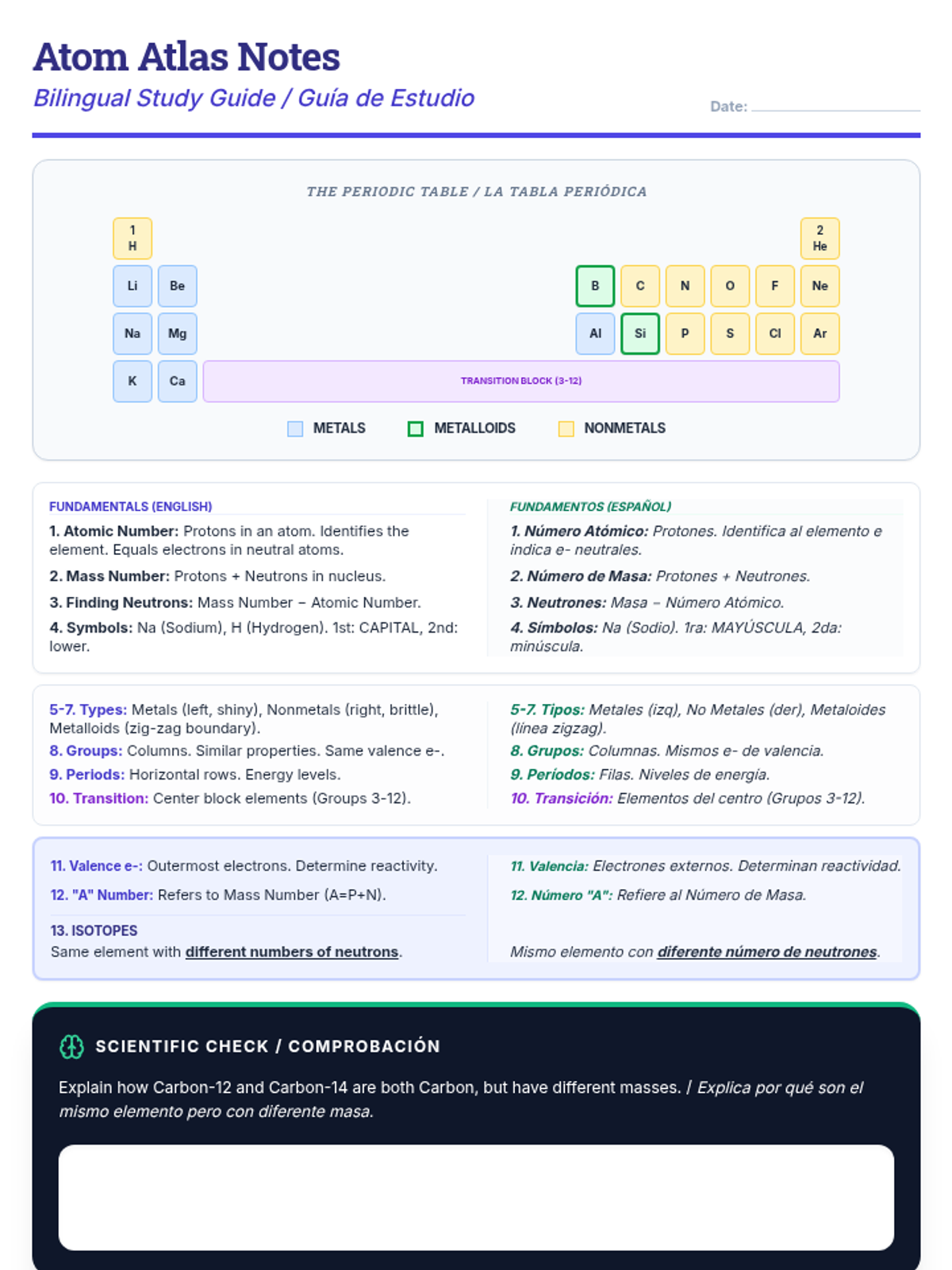
Bilingual notes document covering the organization of the periodic table, including a color-coded reference map, dual-language explanations of atomic properties, and a new section on isotopes.
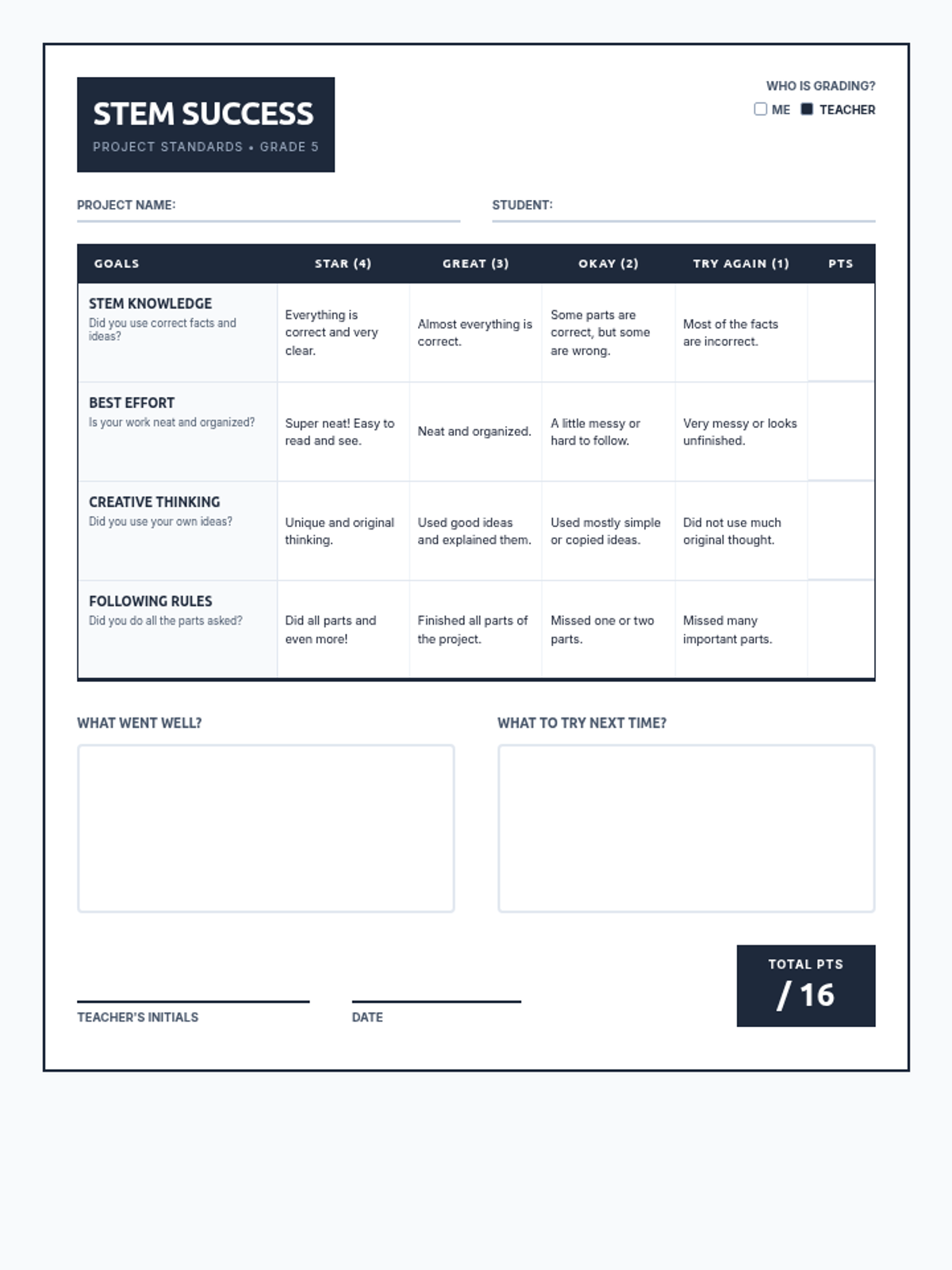
A student-friendly STEM project rubric with simple language like "STEM Knowledge" and "Best Effort." It includes space for teacher feedback and self-grading, with all grade-level references removed for universal application.
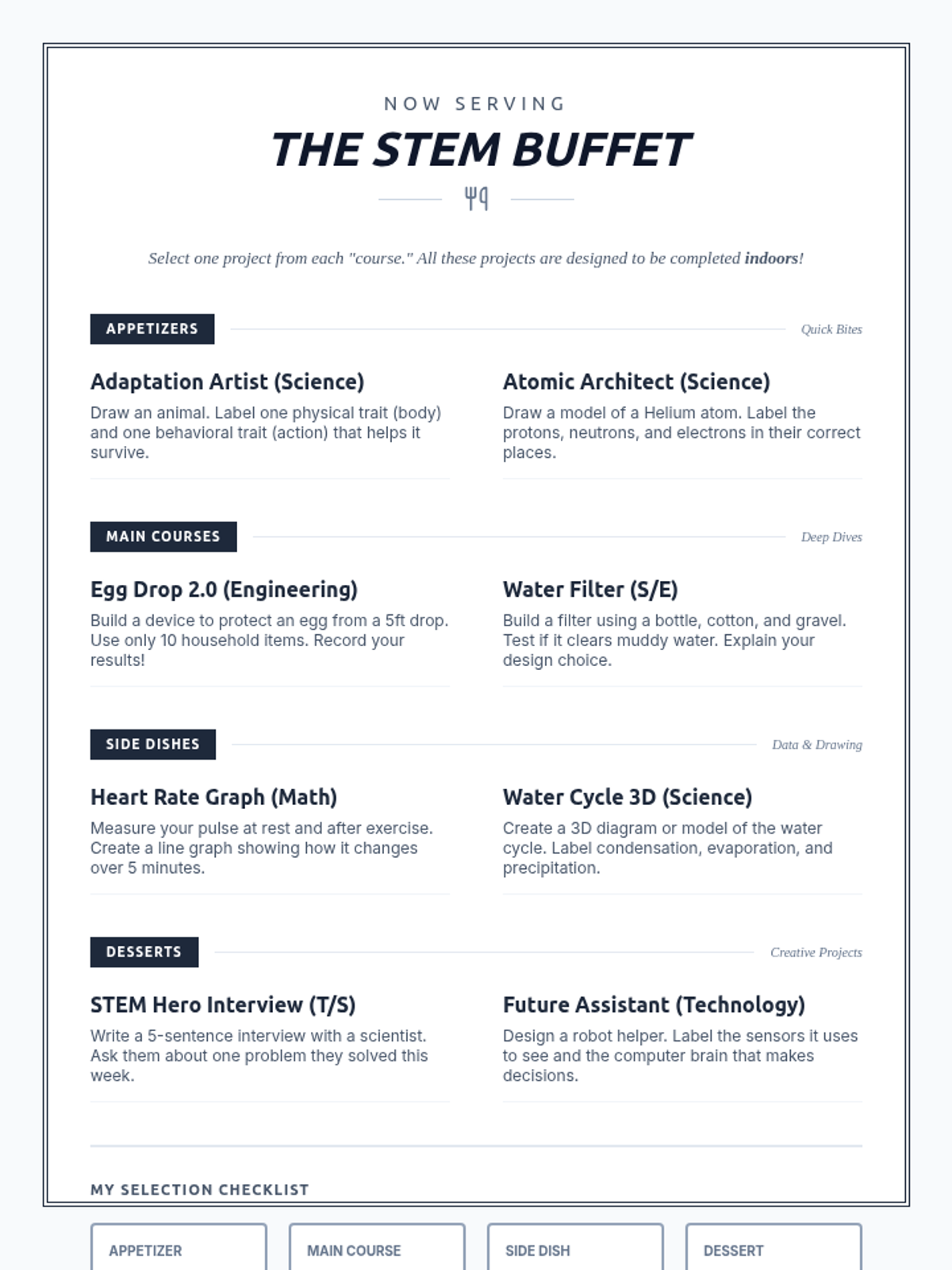
A 5th-grade restaurant-themed STEM project menu updated for entirely indoor completion. Projects include "Adaptation Artist" and "Egg Drop 2.0," designed to be completed in 1-2 days to allow for a full course selection within a single week. Spacing and page layout have been optimized for a single-page print.
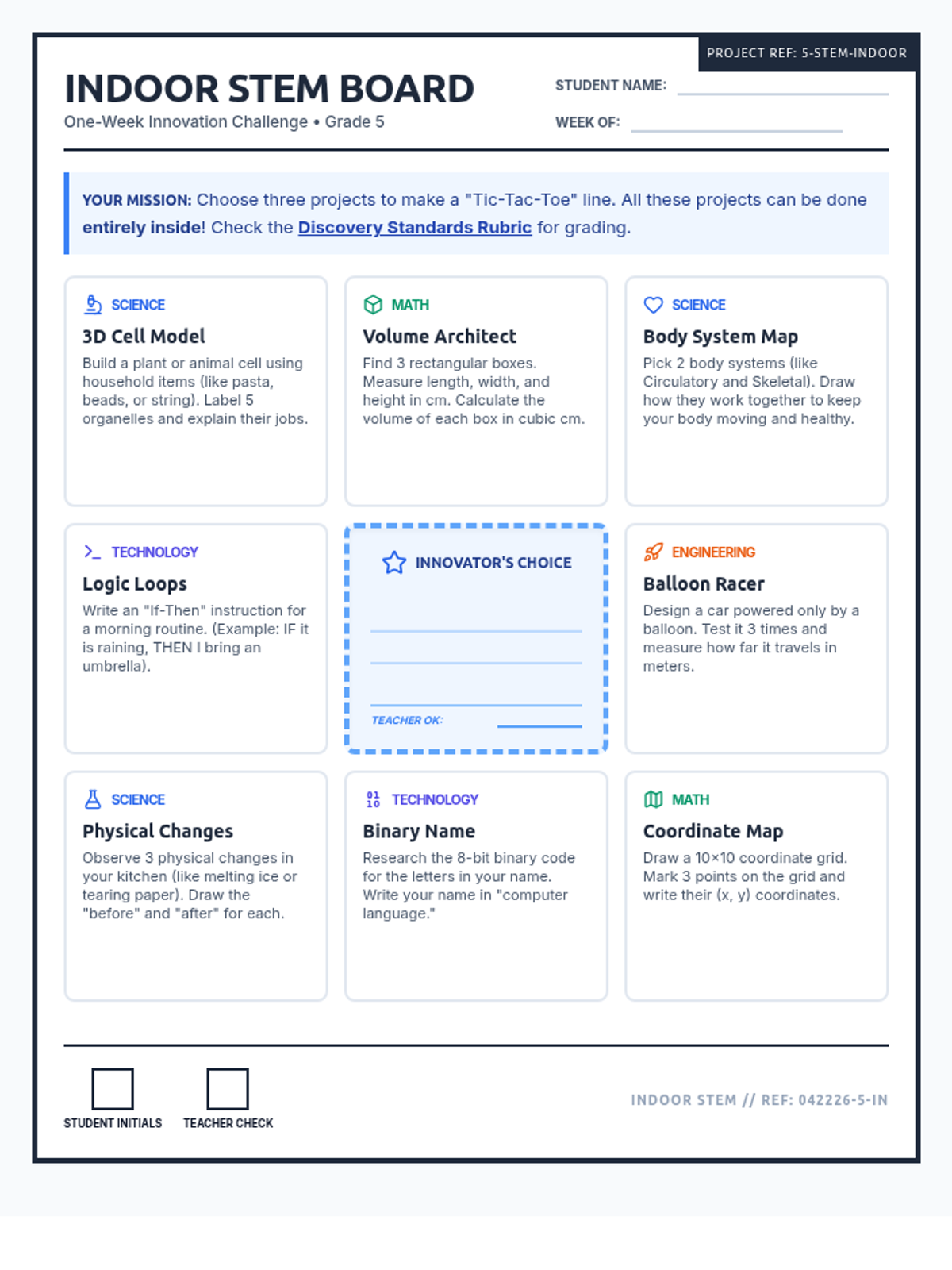
An indoor-only Tic-Tac-Toe choice board designed for a one-week duration. Projects include the "Bird Beak Lab" and "3D Cell Model," ensuring all activities are suitable for an indoor environment. Grade-level references have been removed for universal use.
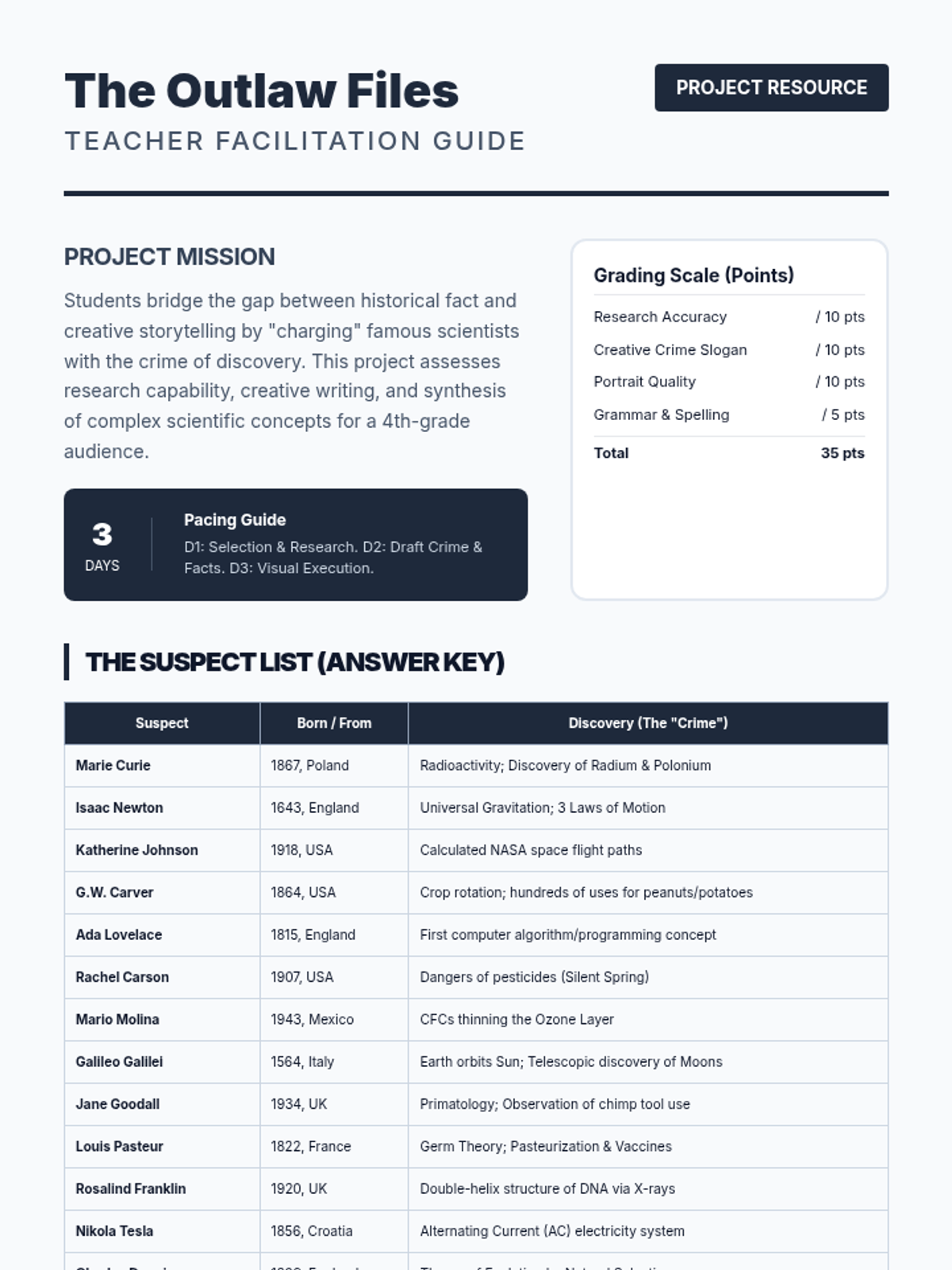
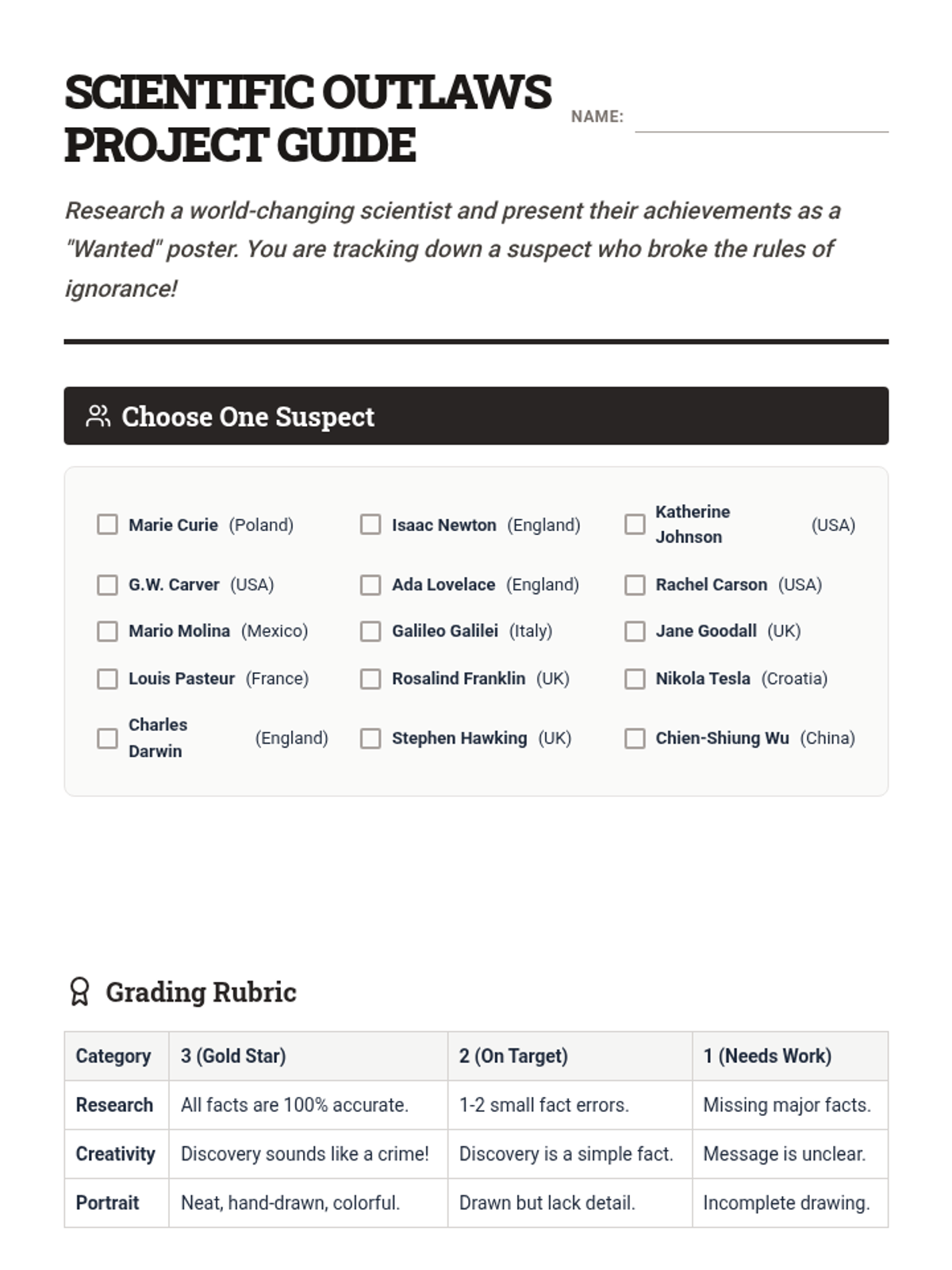
A teacher-facing resource including a project overview, pacing guide, a facts 'cheat sheet' for the 15 scientists, and a detailed scoring rubric.
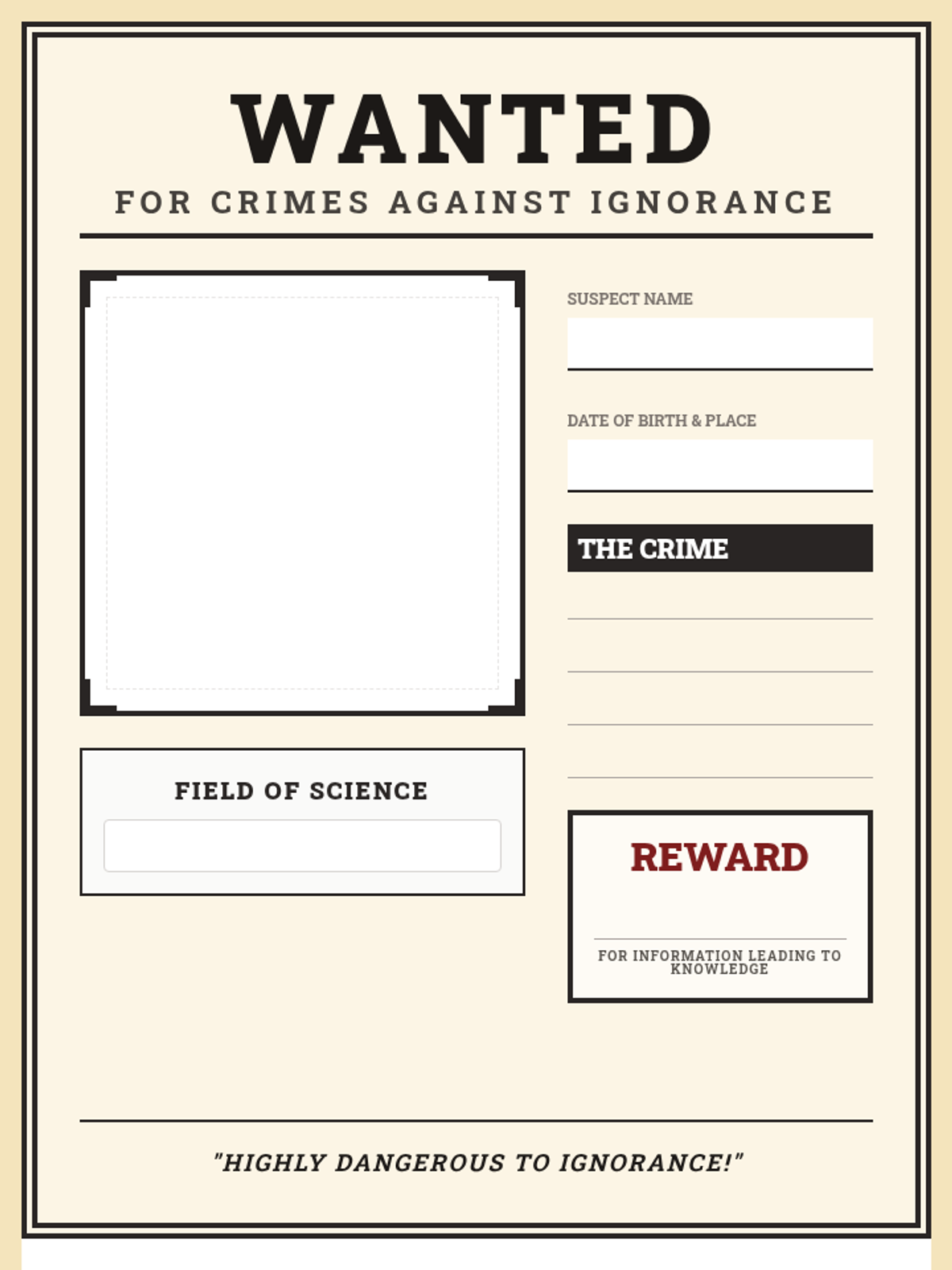
A beautifully themed, vintage-style 'Wanted' poster template for students to fill out with their chosen scientist's details and portrait.
A student research guide that provides the list of 15 scientists, a research organizer for capturing key facts, and the project's grading criteria.
A visually engaging slide deck that introduces the 'Scientific Outlaws' project, explaining the project requirements and providing creative examples.
High-impact presentation slides for a CP Chemistry review session. Visualizes the "Mole Island" conversion roadmap, bridges the gap between particles and mass, and outlines the step-by-step master plan for stoichiometry calculations. Includes improved formatting for scientific notation and legibility.
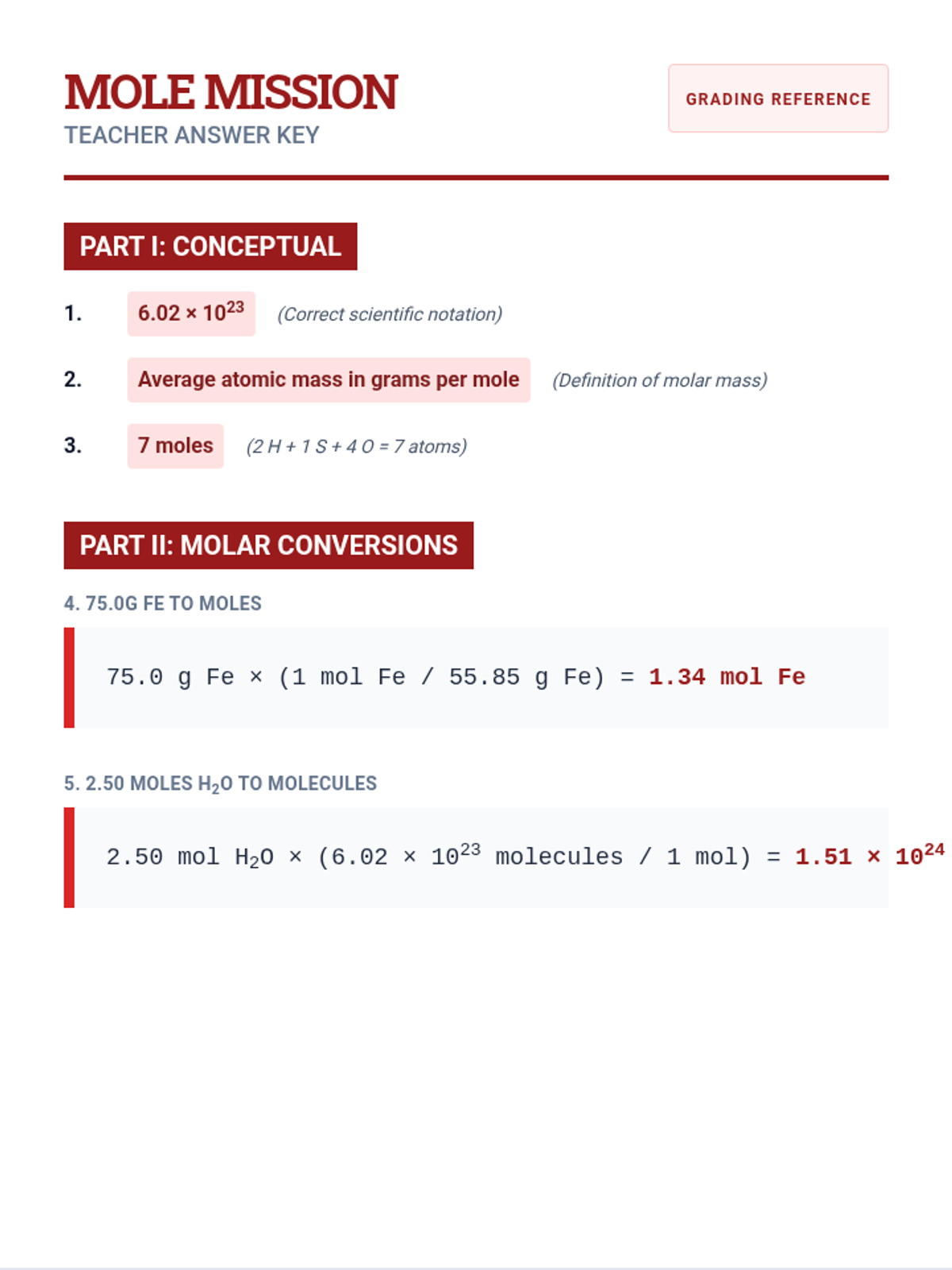
A detailed teacher answer key for the Mole Mission Test. Includes step-by-step solutions for all calculation problems, clear marking of final answers, and point breakdowns for stoichiometric steps. Subscripts and formatting fixed for better readability.
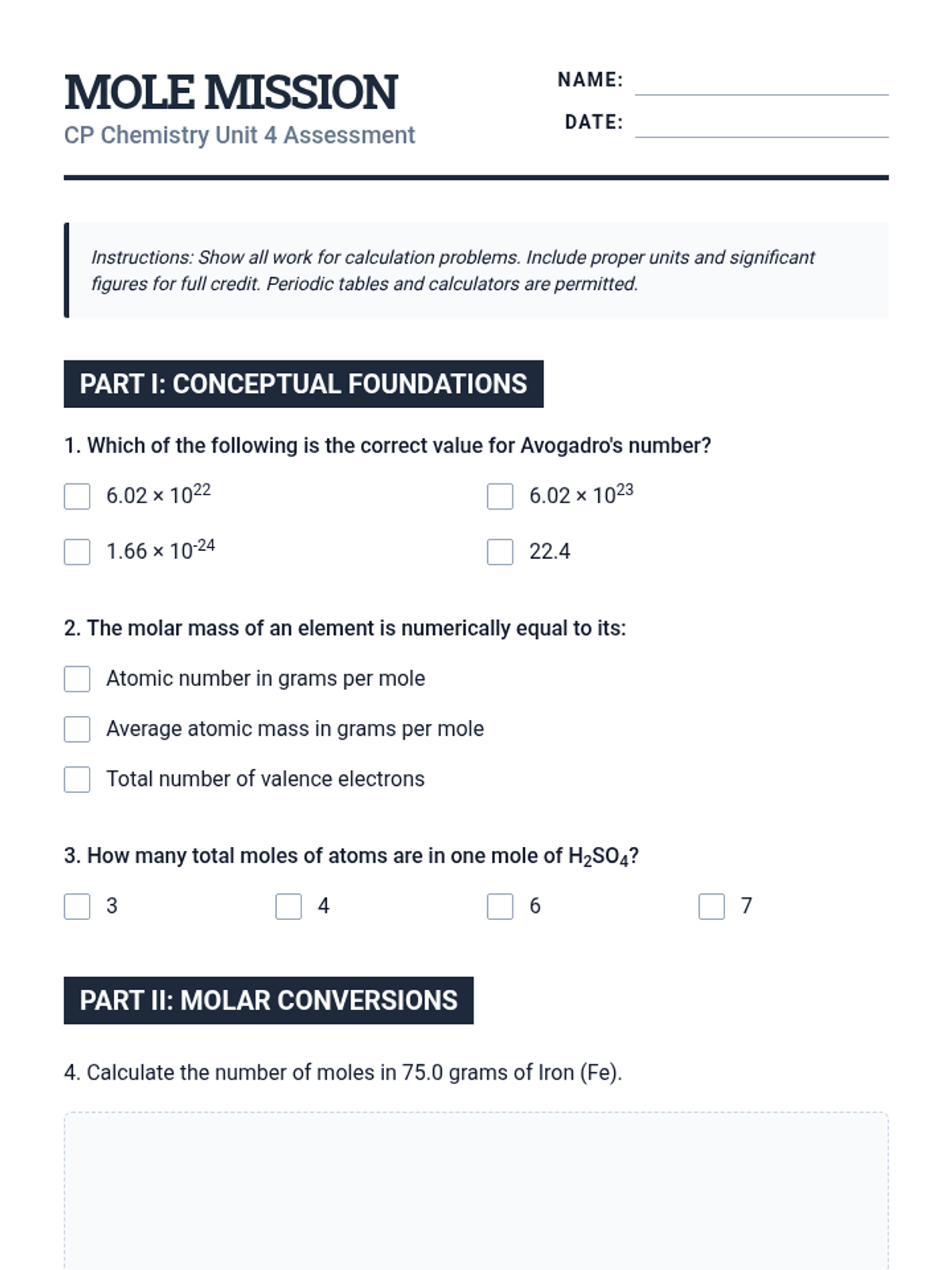
A comprehensive two-page chemistry test covering the mole, Avogadro's number, percent composition, and stoichiometry. Includes multiple choice, conversion problems, and multi-step stoichiometric calculations with clear student work areas. Layout optimized for print with no widowed headers.
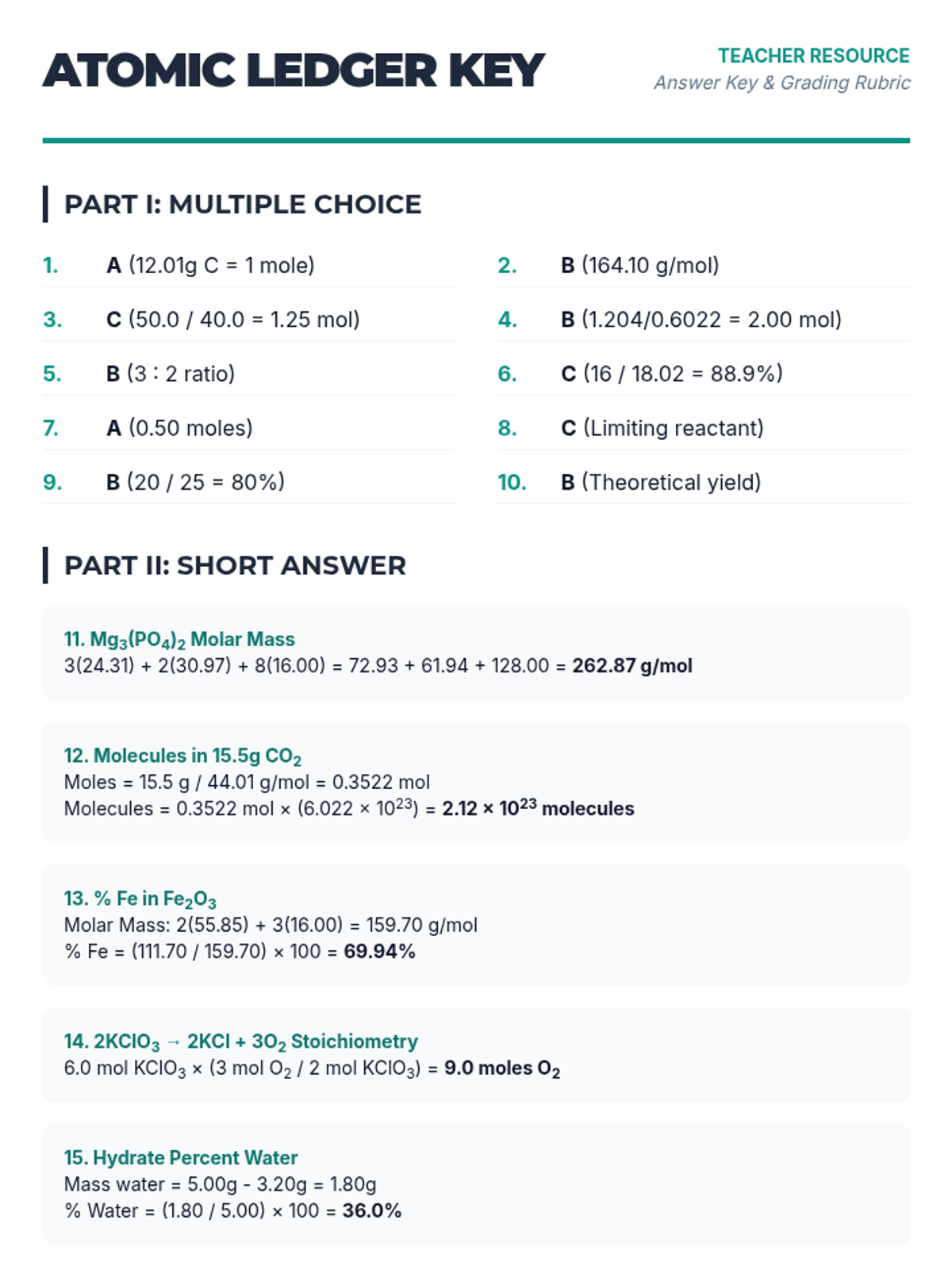
Detailed answer key and grading solutions for the Atomic Ledger chemistry assessment. Updated to match the revised test structure including mole calculations and mass-to-mass stoichiometry.
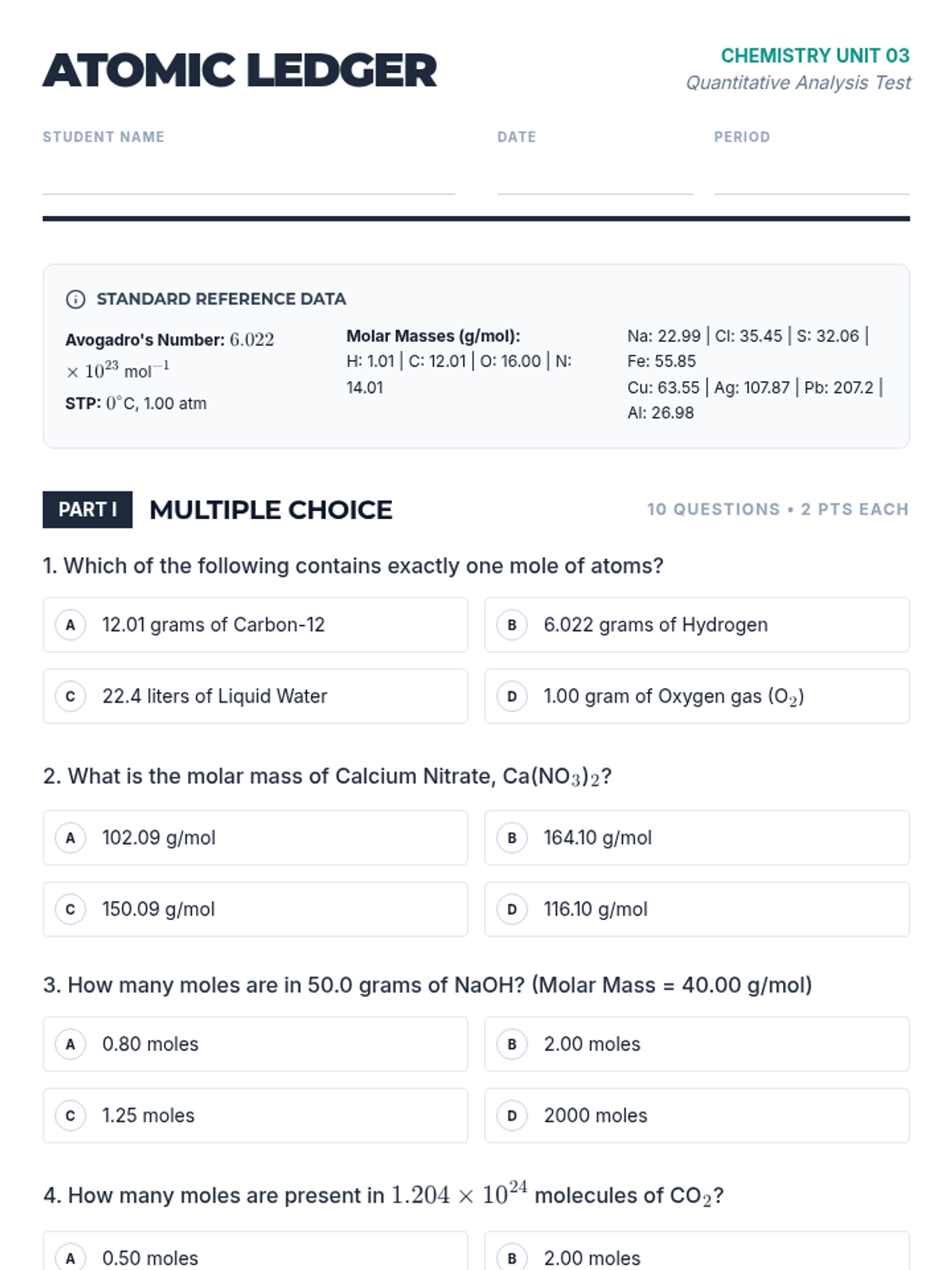
A rigorous chemistry test for high school juniors covering molar mass, stoichiometry, and percent composition, featuring a sleek lab-ledger aesthetic. Removed empirical formula questions and refined the stoichiometry section. Increased work areas and fixed page breaks.
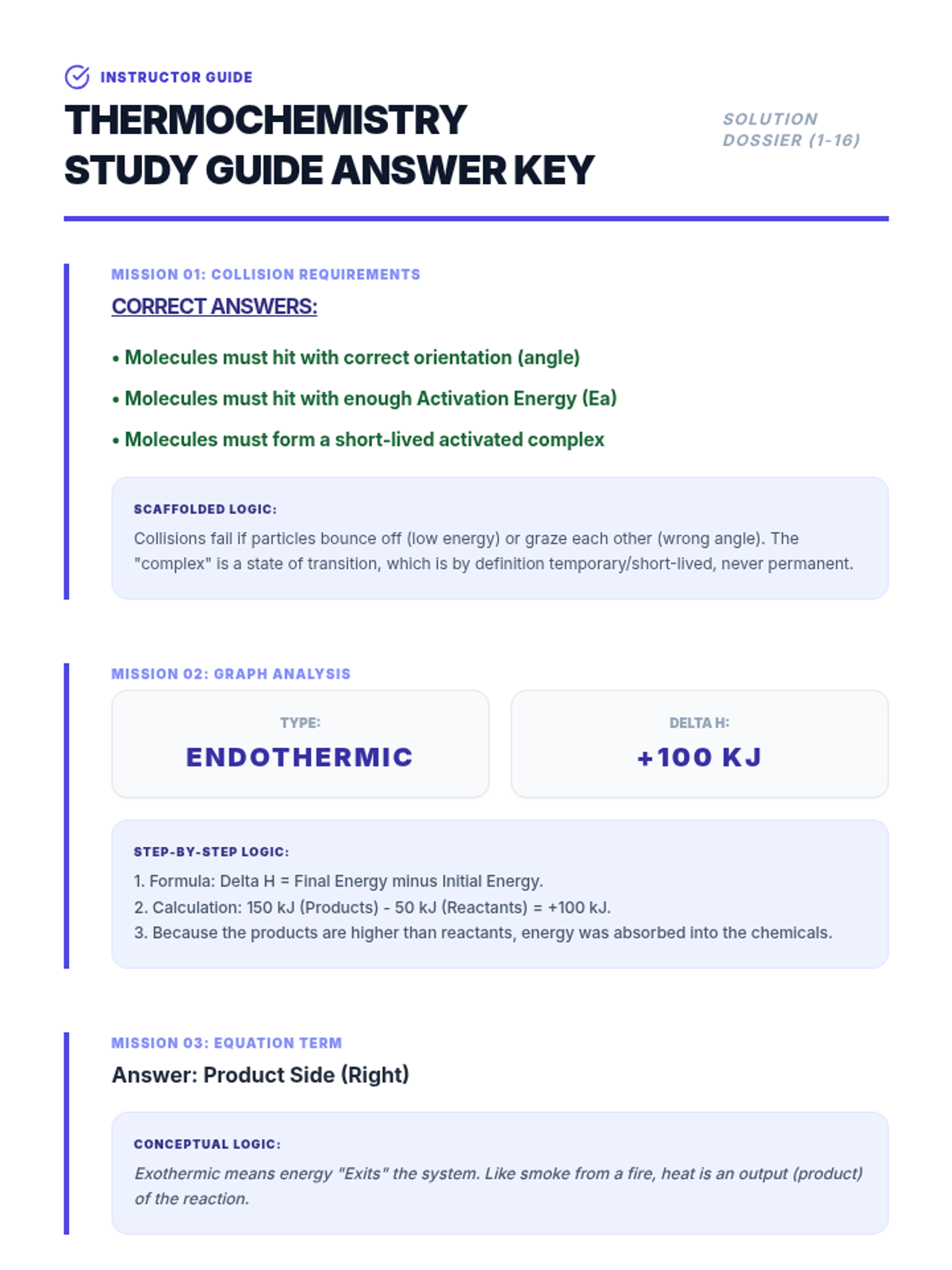
A comprehensive teacher answer key for the Thermochemisrty Study Guide. It provides detailed scaffolded logic for all 16 questions, including mathematical step-by-step breakdowns and pedagogical strategies for each section. All notation is simplified for clear, error-free printing. Layout condensed for 3-page efficiency.
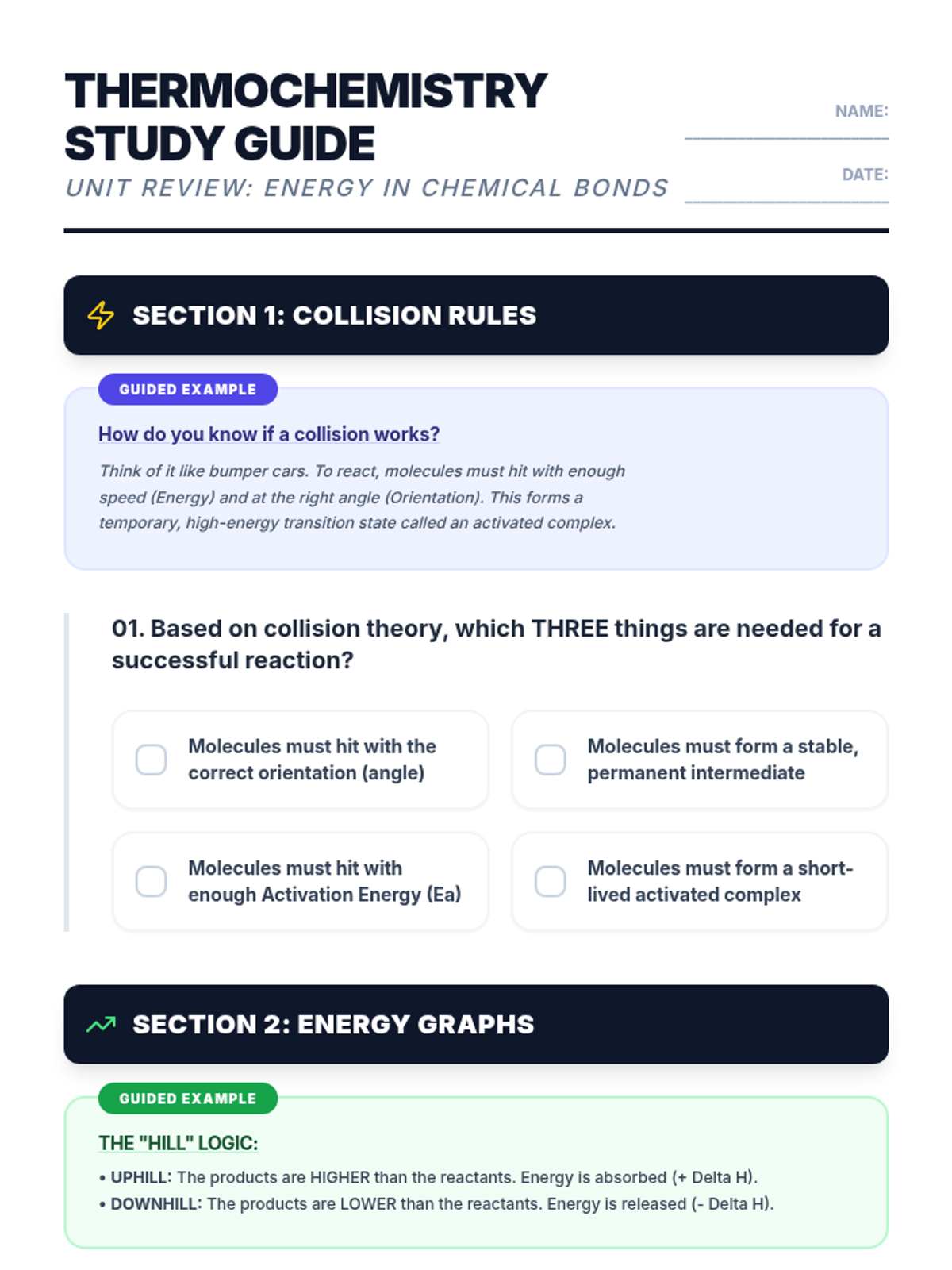
A comprehensive 5-page student study guide for the thermochemistry unit. Features 16 distinct review tasks, standardized multiple-choice styling, and improved work areas for calculations. All chemical and mathematical notation uses ASCII text for perfect PDF rendering. Includes scaffolded "Guided Examples" for every section. Optimized for professional print and instructional clarity. Layout condensed for 5-page efficiency.
A comprehensive teacher answer key for the Thermal Blueprint vocabulary puzzle. It provides solutions for word scramble challenges (Vaporization, Kinetic, Potential, Fusion) and correct segment matching for the heating curve schematic. Includes pedagogical guidance on the energy transitions occurring at each stage.
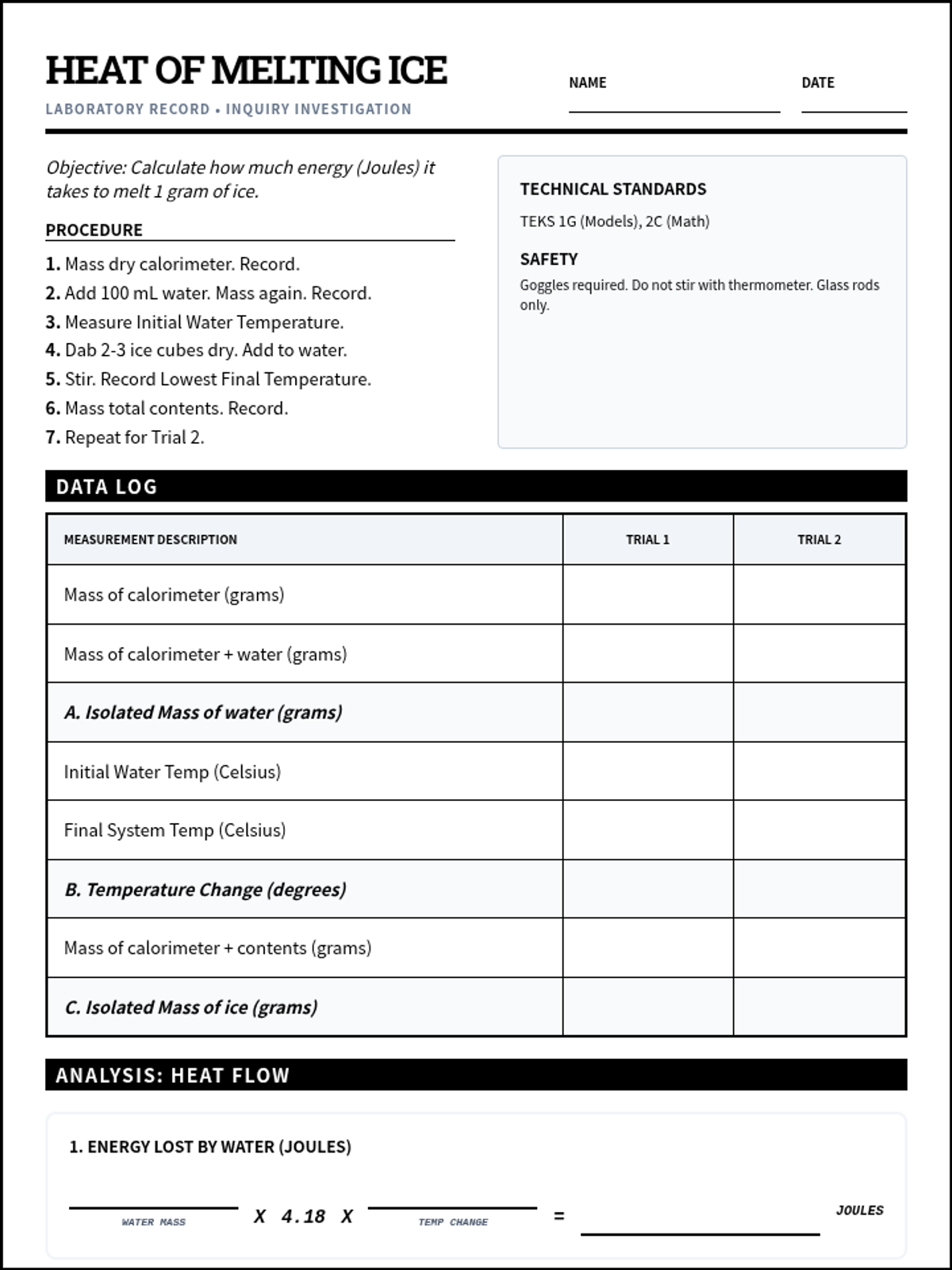
A streamlined 2-page lab report for determining the Heat of Fusion of ice. All mathematical notation and complex coding symbols have been removed and replaced with standard plain text to ensure zero rendering issues. Features a tightened layout with clear work areas, improved contrast for helper text, and a high-impact final calculation strategy. Optimized for black-and-white printing.
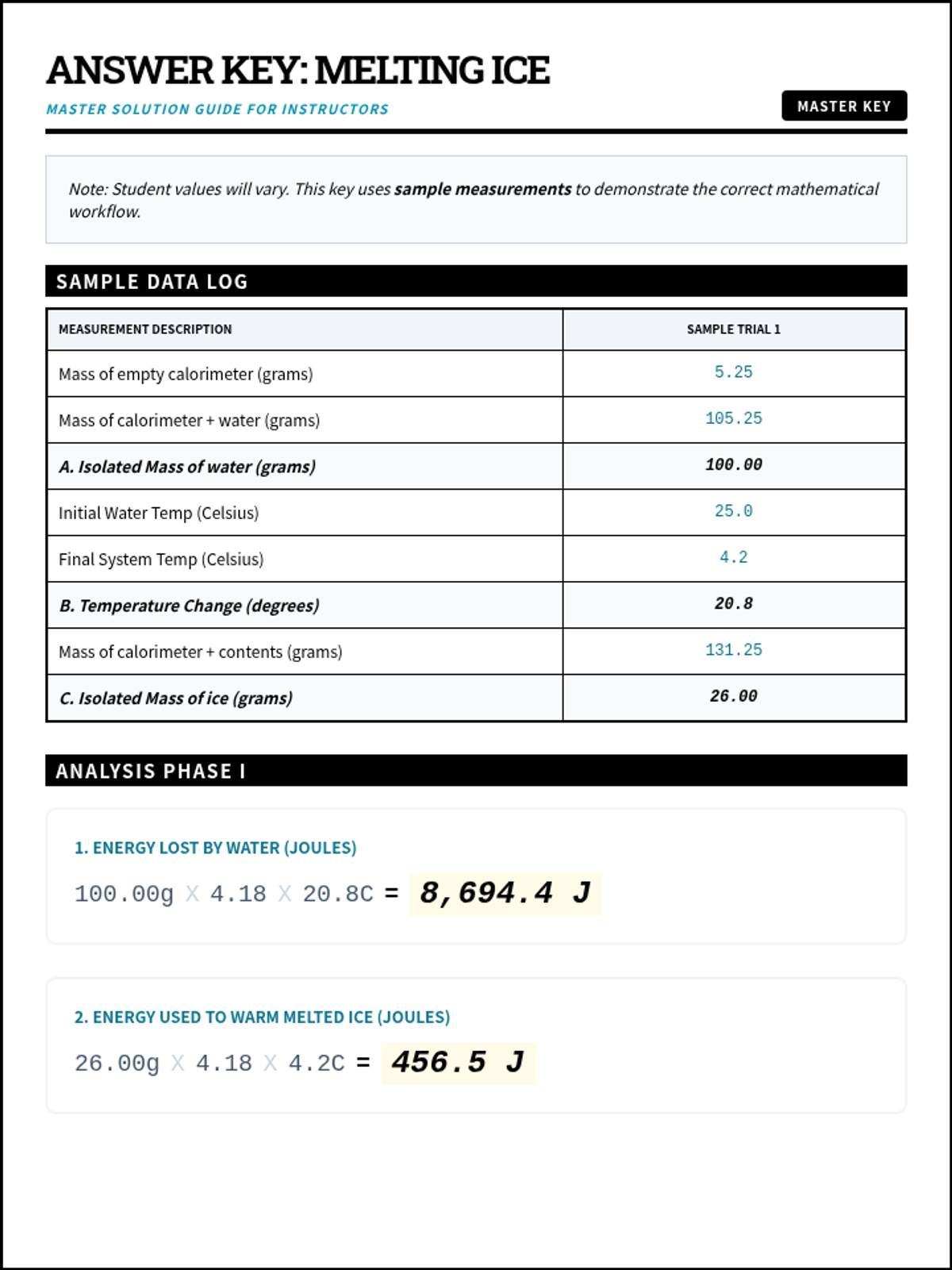
A streamlined 2-page teacher answer key for the Melting Ice investigation. Provides sample experimental data, step-by-step solutions for energy calculations without using complex math symbols, and a fully worked out final mission challenge solution. Optimized for clarity and instructor ease-of-use.
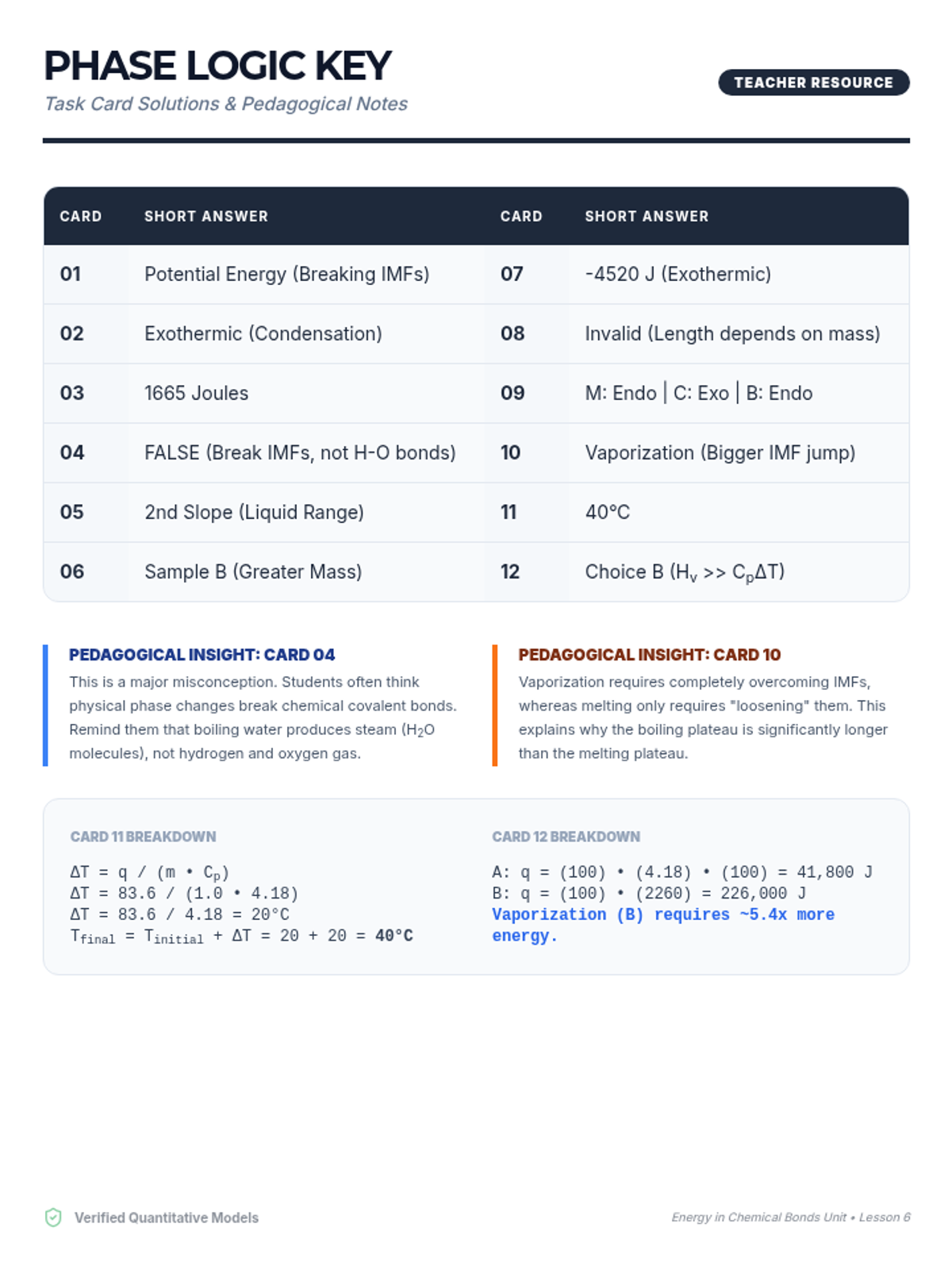
A comprehensive teacher answer key for the Phase Logic Task Cards. Includes a quick-reference answer table, detailed pedagogical rationales for common student misconceptions, and mathematical step-by-step breakdowns for quantitative challenges.
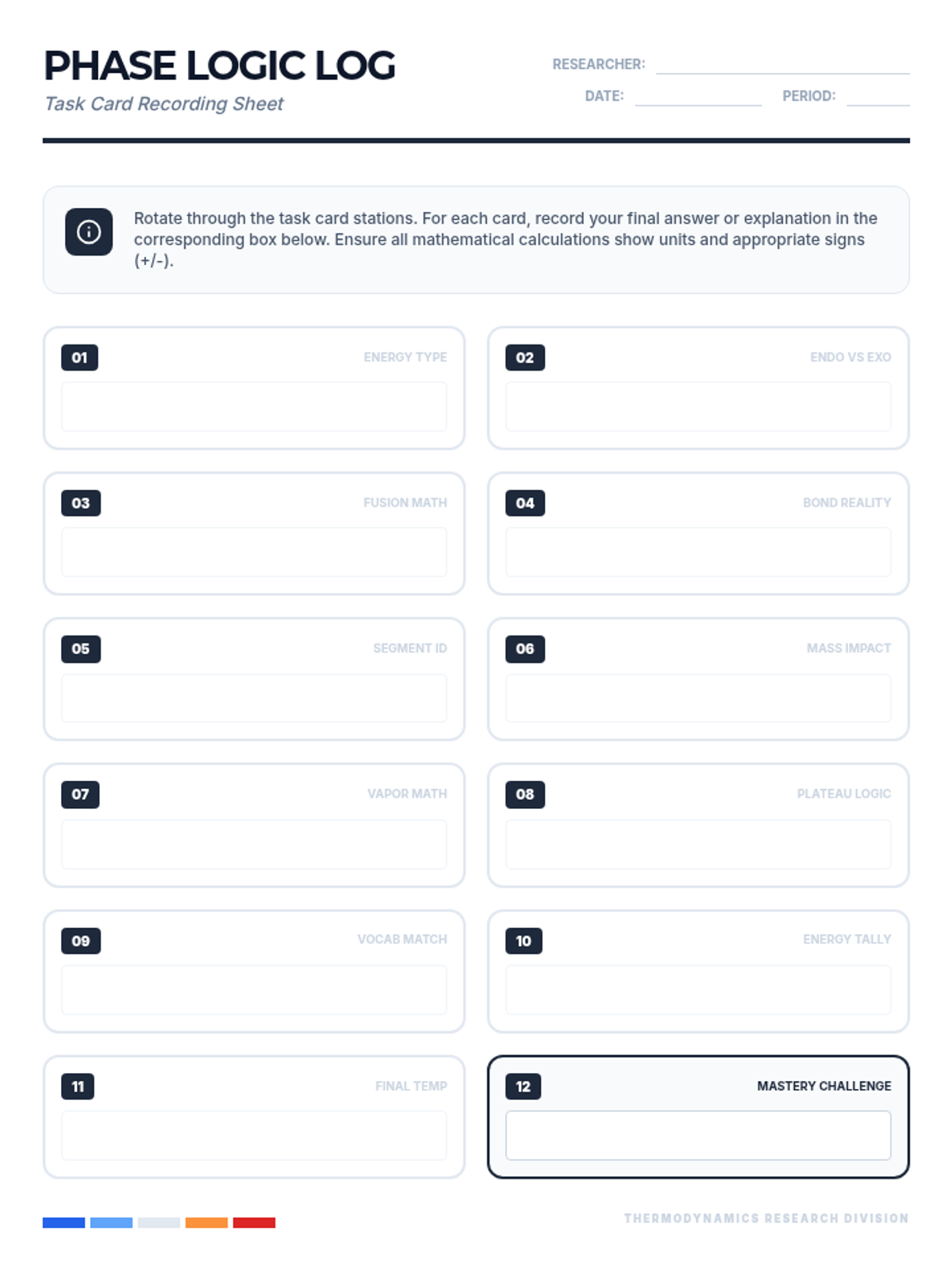
A dedicated student recording sheet for the Phase Logic Task Cards. Features a grid layout with 12 numbered boxes, thematic icons, and a clean technical aesthetic to facilitate organized data entry during station rotations.
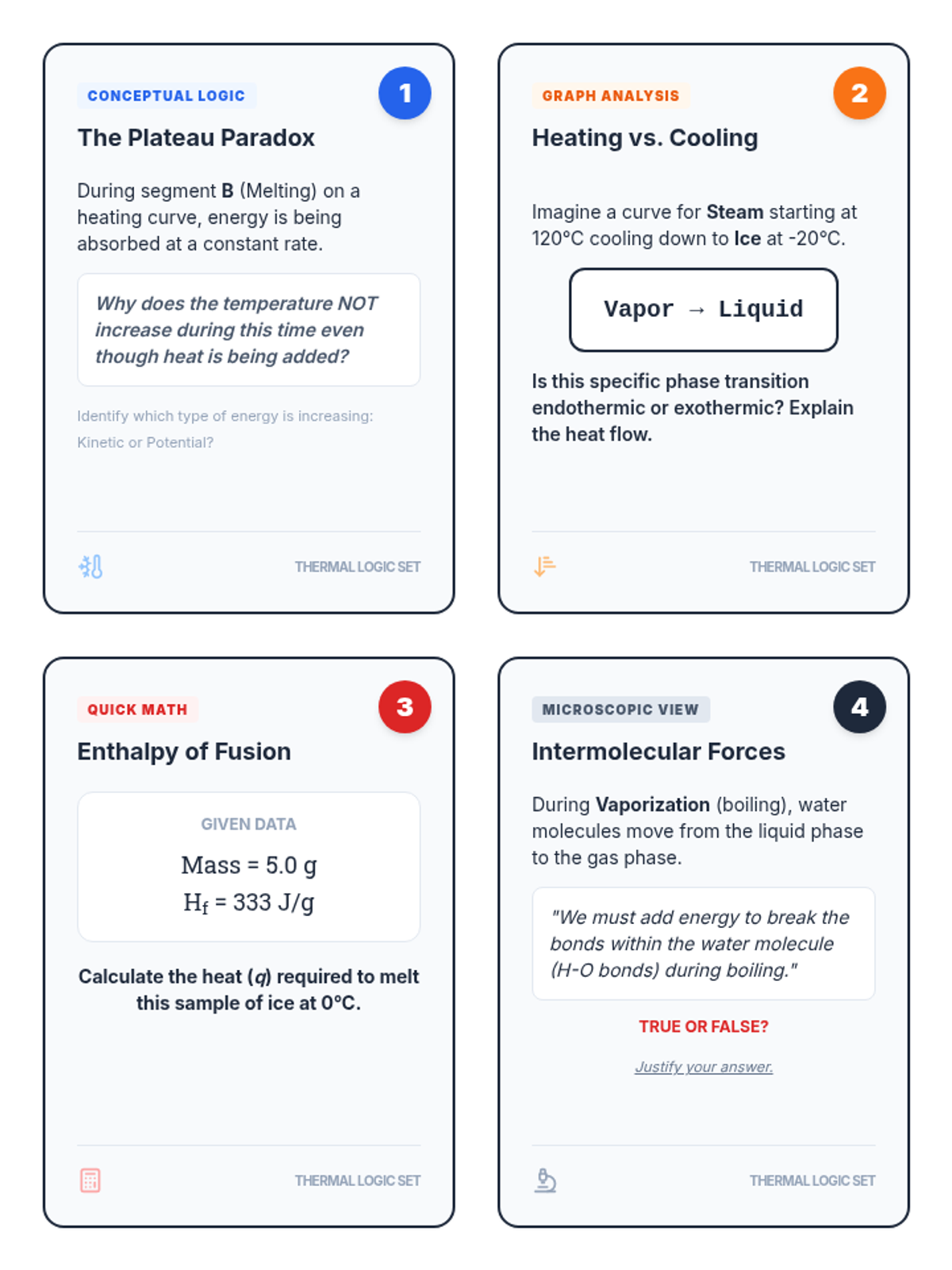
A set of 12 thematic task cards for checking student understanding of thermal phase changes. Cards cover conceptual logic, graph analysis, quantitative calculations, and microscopic particle-level explanations. Designed with a clean, high-contrast 'Technical Log' aesthetic.
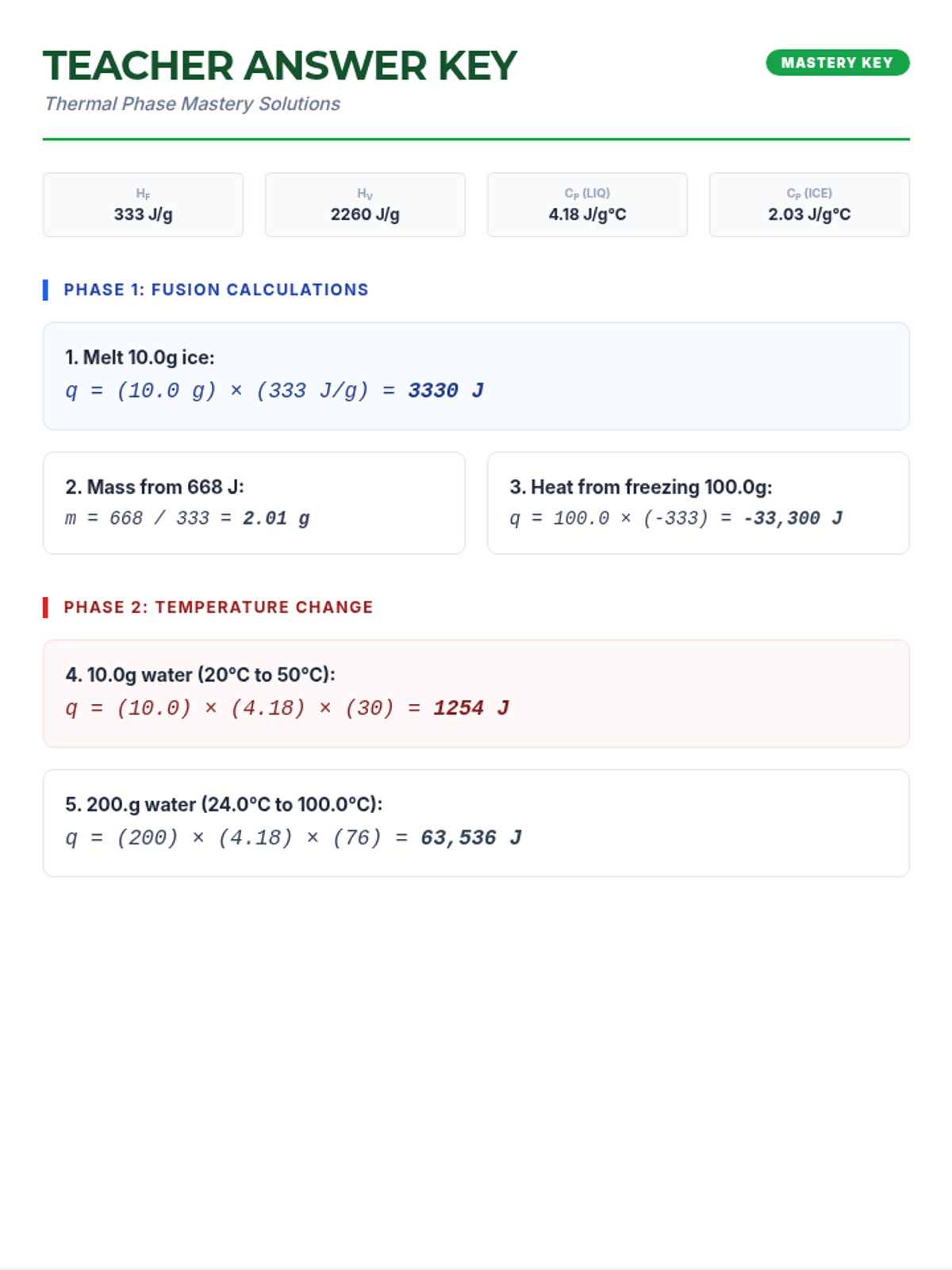
A comprehensive teacher answer key for the Thermal Phase Mastery worksheet. It provides step-by-step mathematical solutions for heat of fusion, vaporization, and specific heat problems, including detailed breakdowns for the 2-step and 3-step synthesis challenges. Layout features clear color-coded sections matching the student worksheet. Consolidated to 2 pages with improved numerical order.
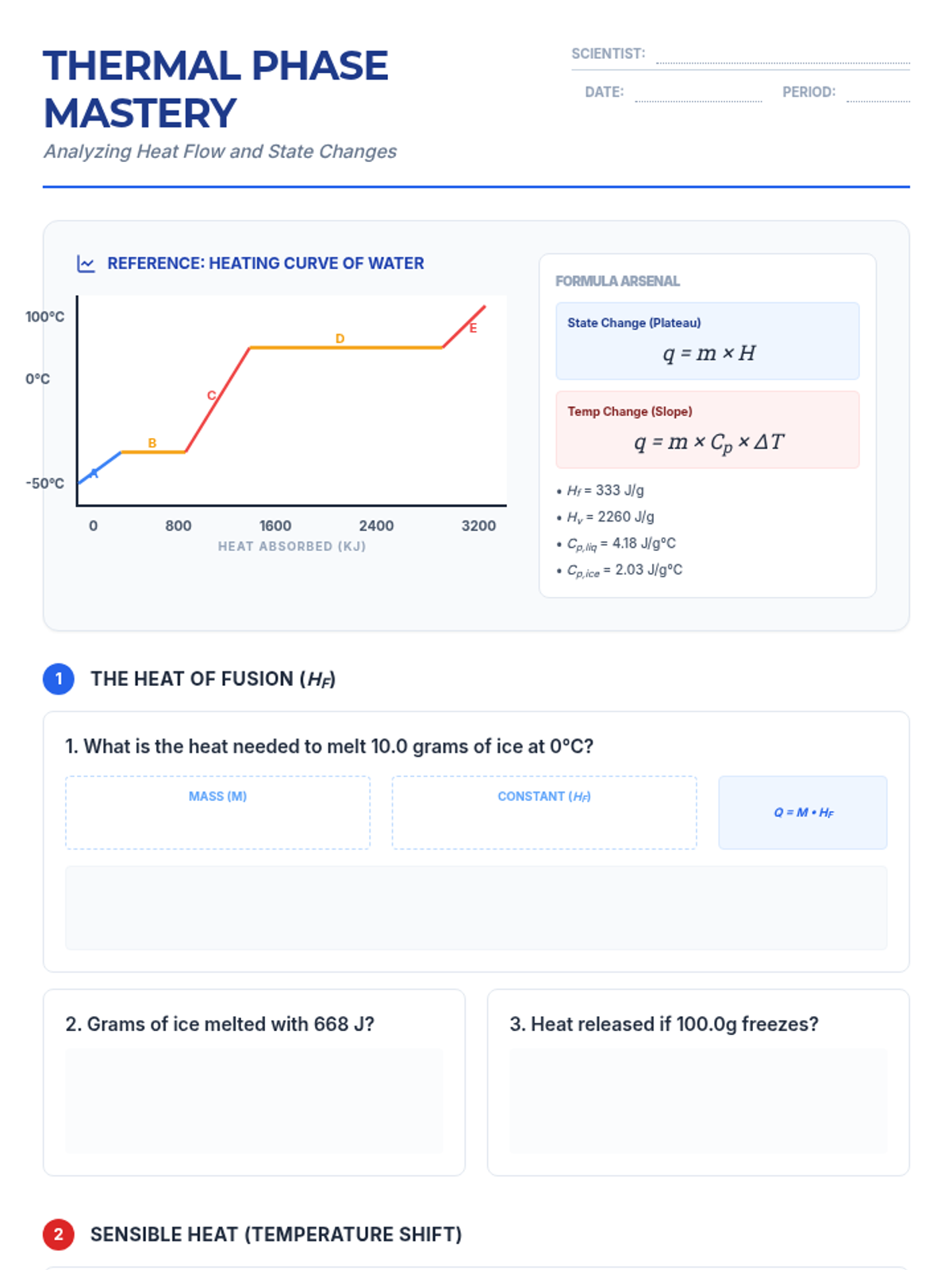
A 2-page scaffolded worksheet titled 'Thermal Phase Mastery' that guides students through calculating heat transfer during phase changes and temperature shifts. It features a technical layout with a custom heating curve graph, progressive scaffolding from fill-in-the-blank tables to independent synthesis, and clear formula banks. Optimized for print with avoided page breaks inside problems.
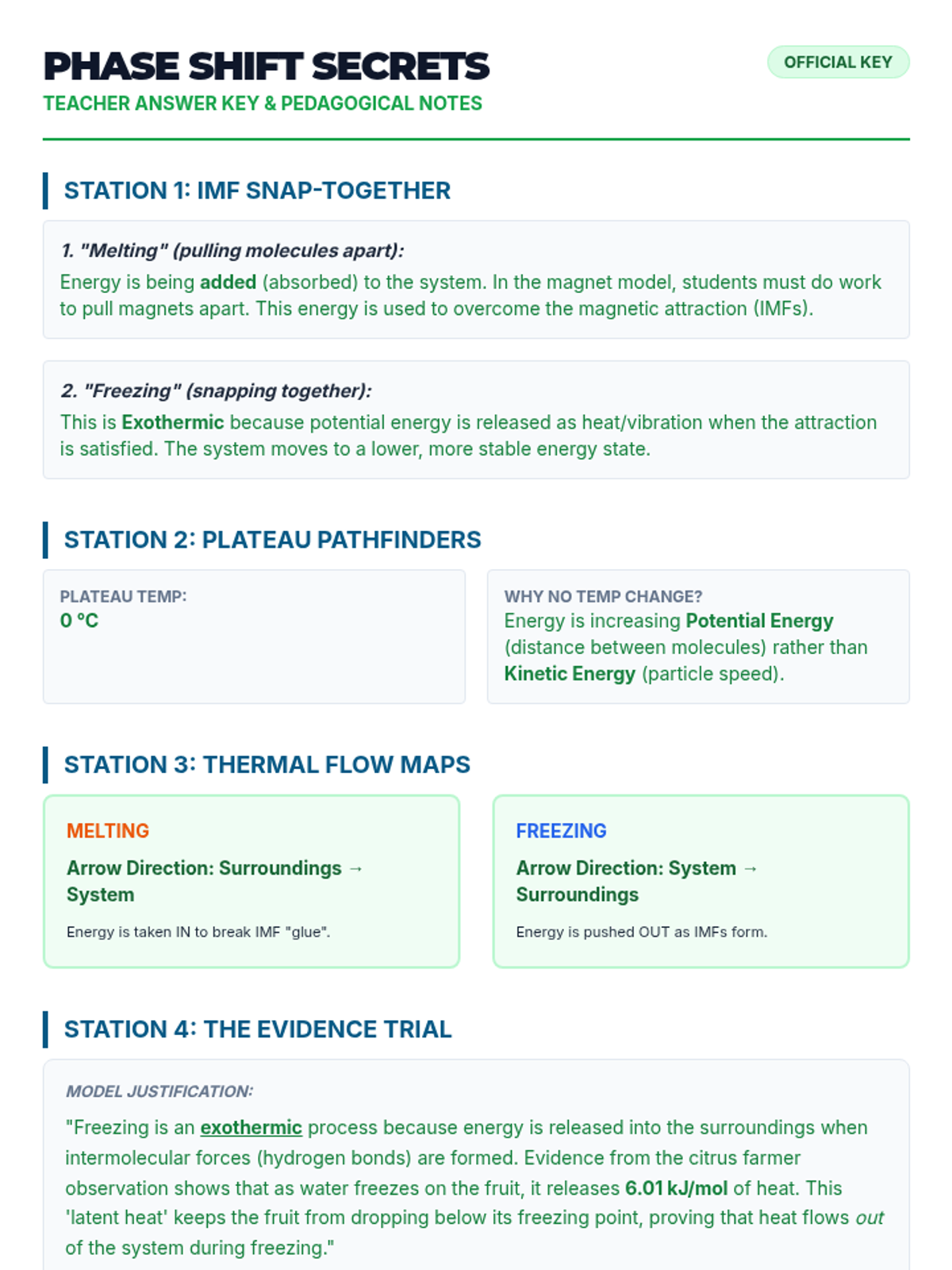
A comprehensive teacher answer key for the Phase Shift Secrets station guide. It provides model student responses for the IMF modeling, heating curve analysis, heat flow sketches, and the final data-driven justification for why freezing is exothermic.
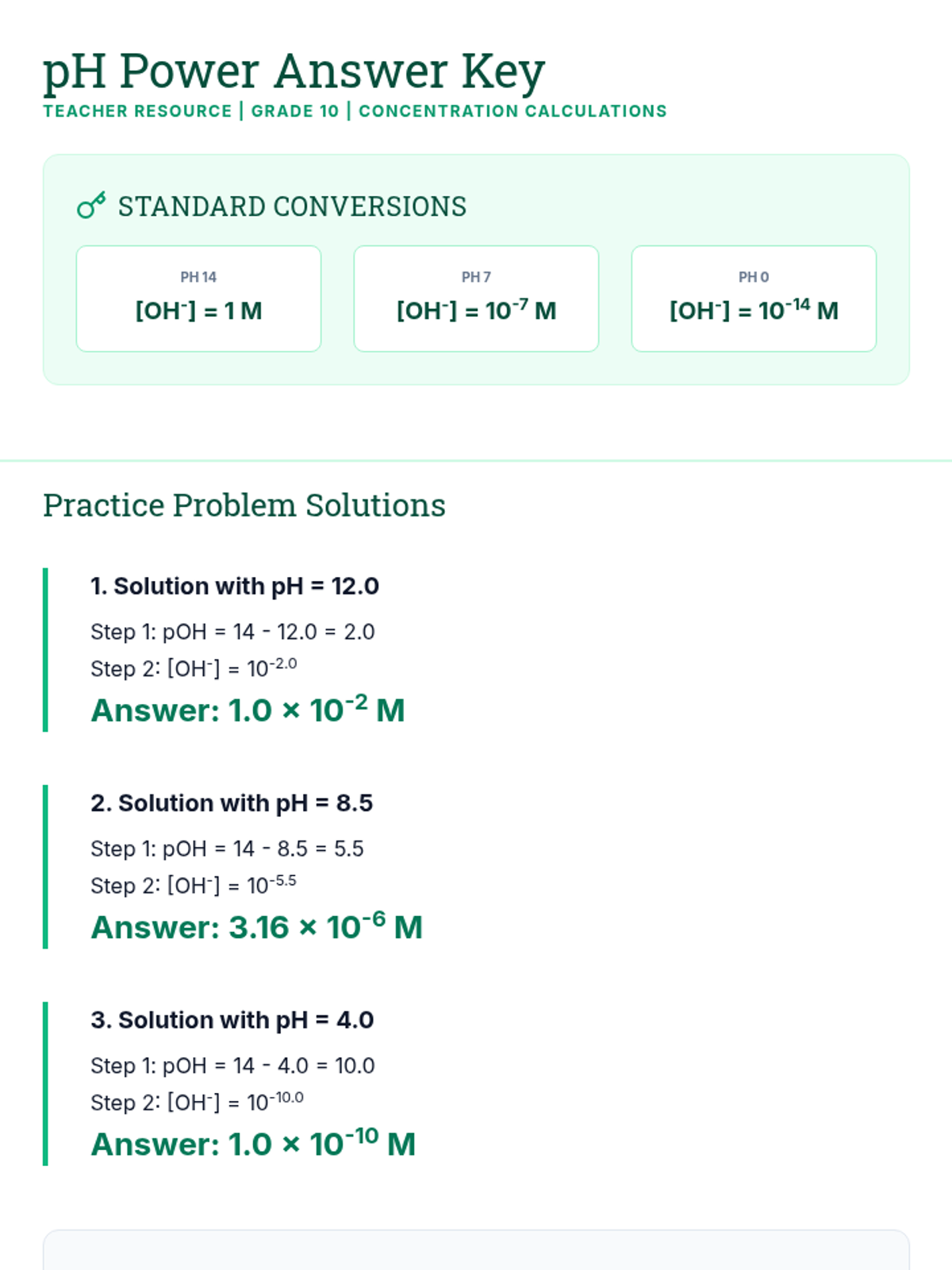
An answer key for the pH Power Worksheet, providing detailed step-by-step solutions and a quick reference guide for teachers. (Revised for rendering, layout, and scientific accuracy)
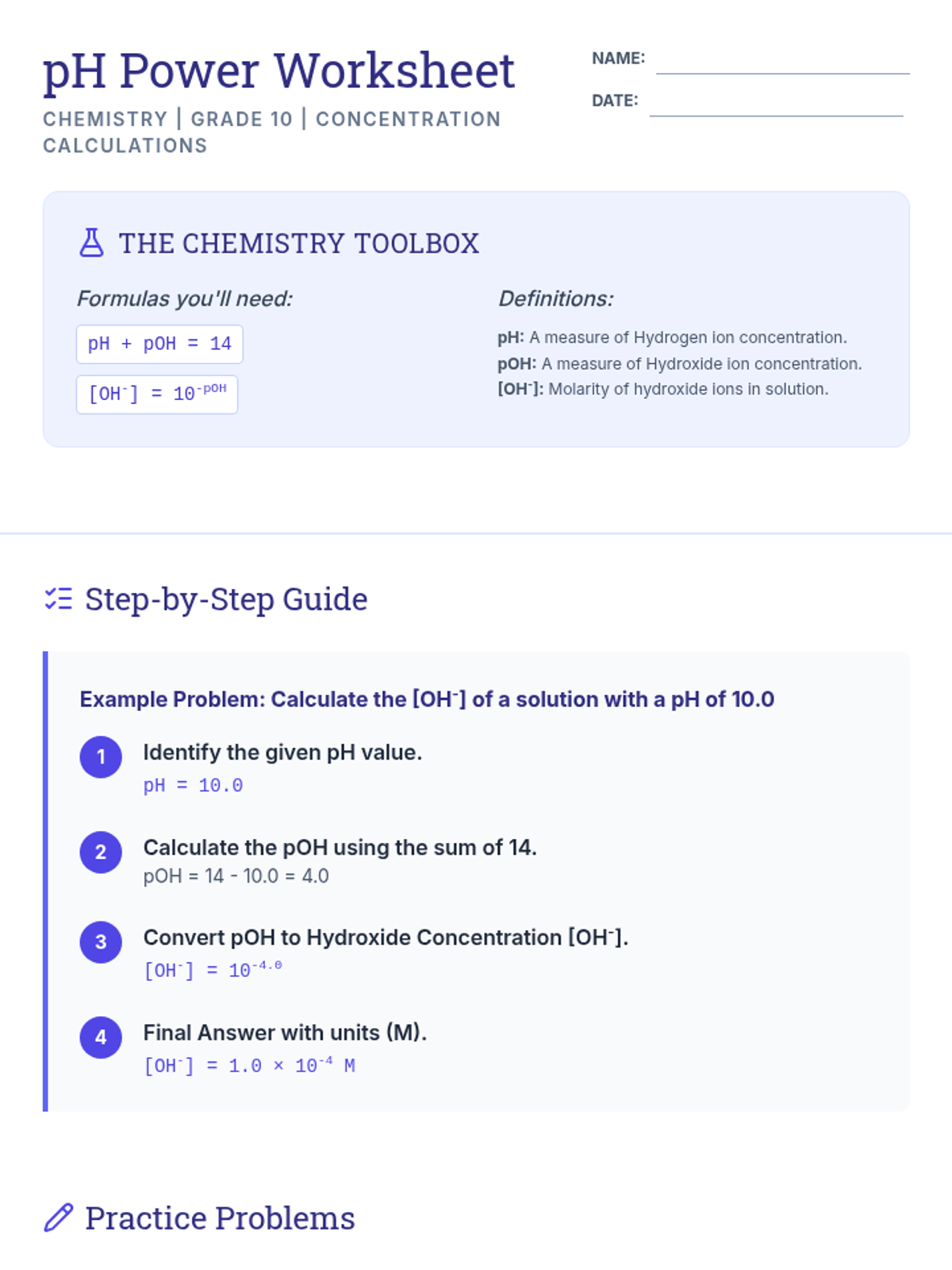
A step-by-step worksheet guiding students through the process of calculating hydroxide ion concentration from pH values, featuring clear formulas and practice problems. (Revised for rendering and layout)
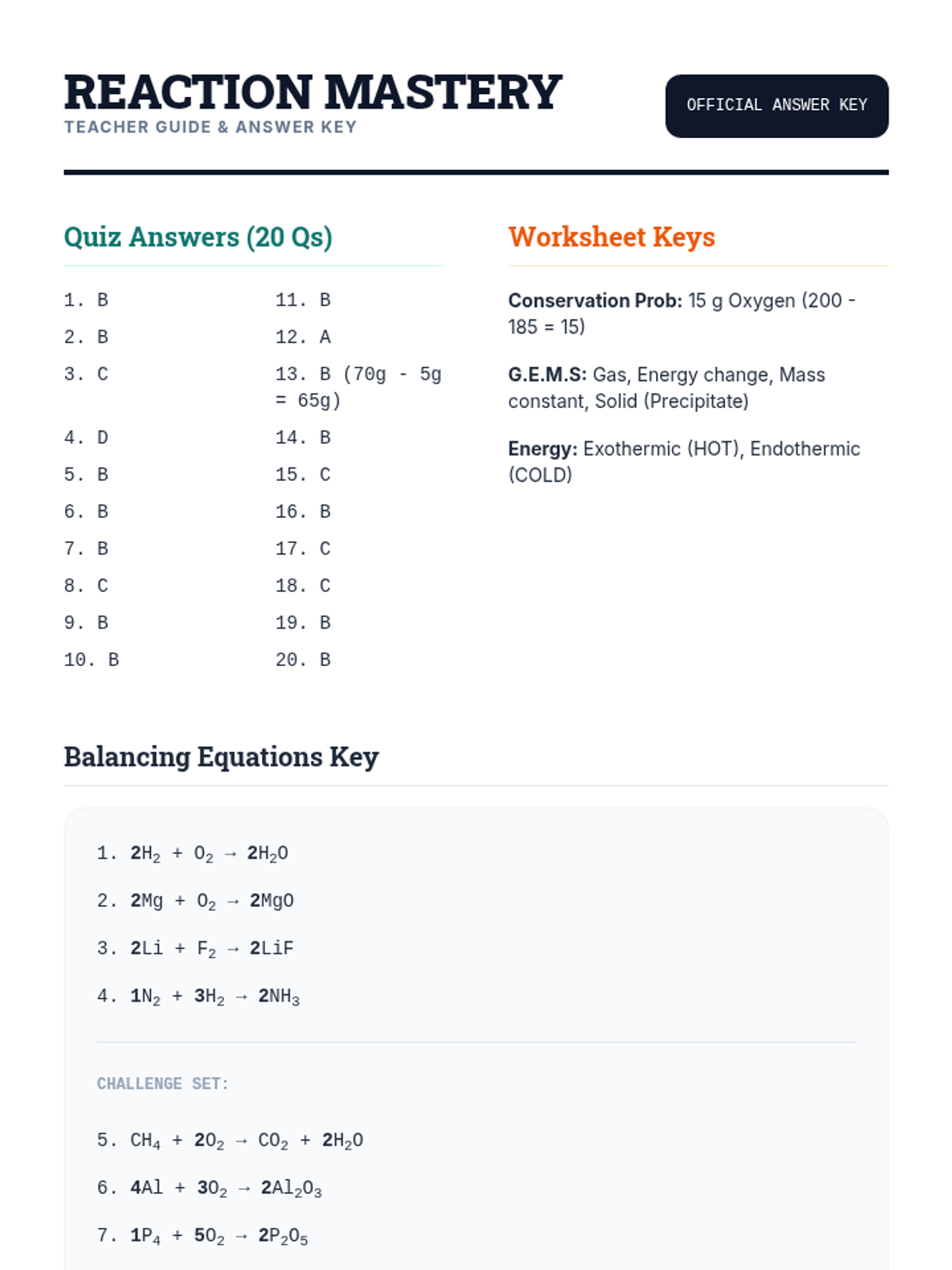
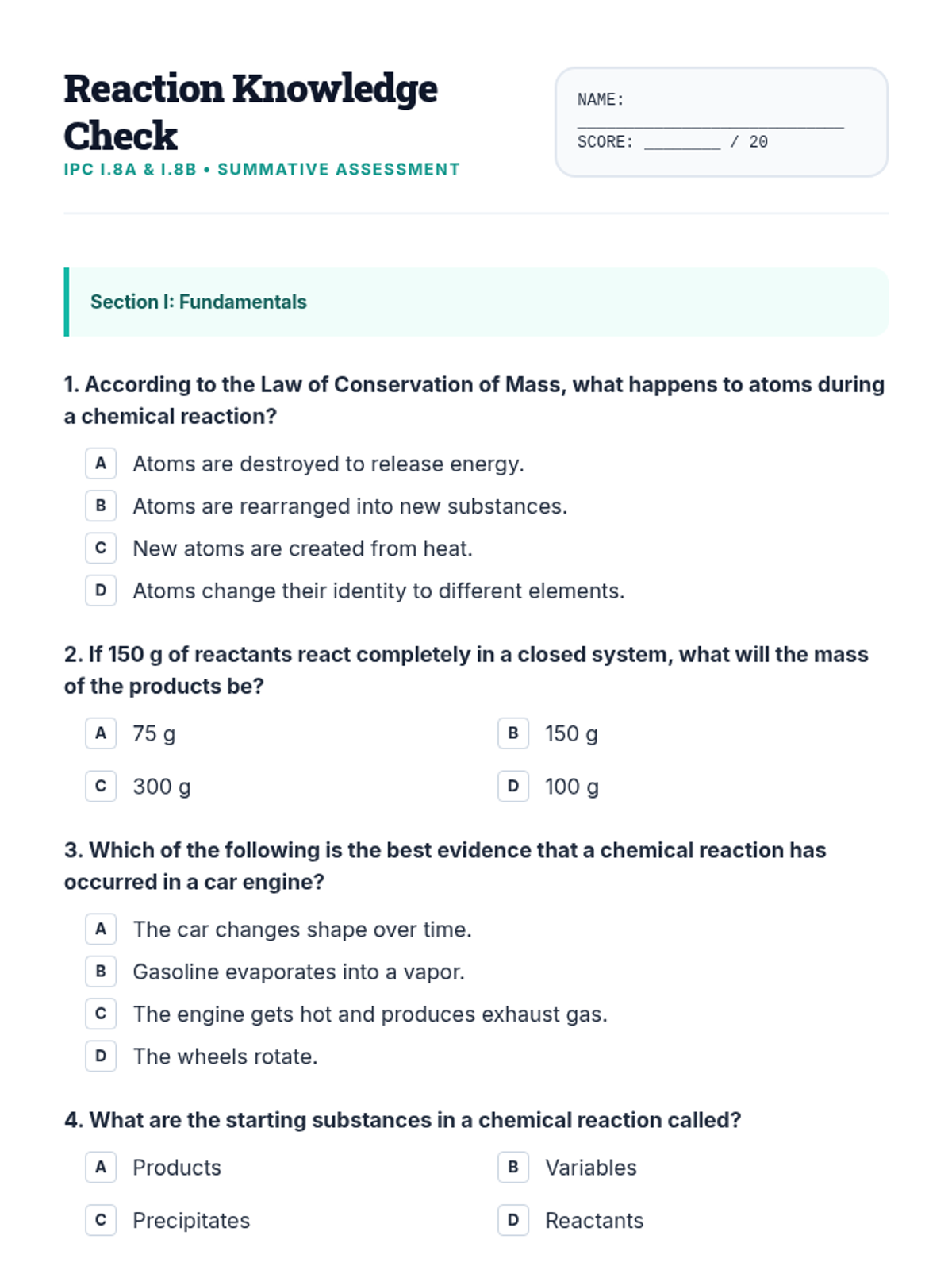
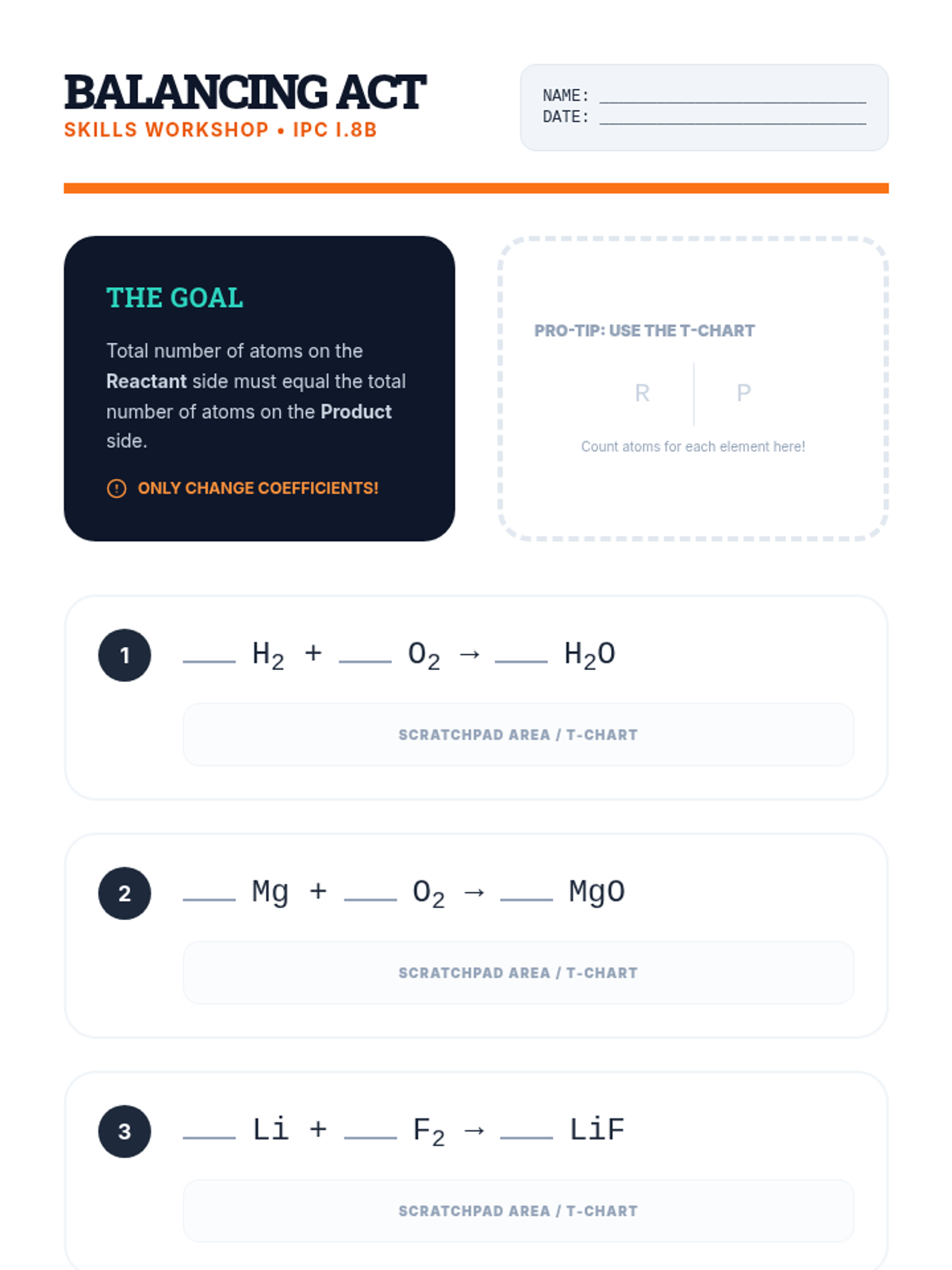
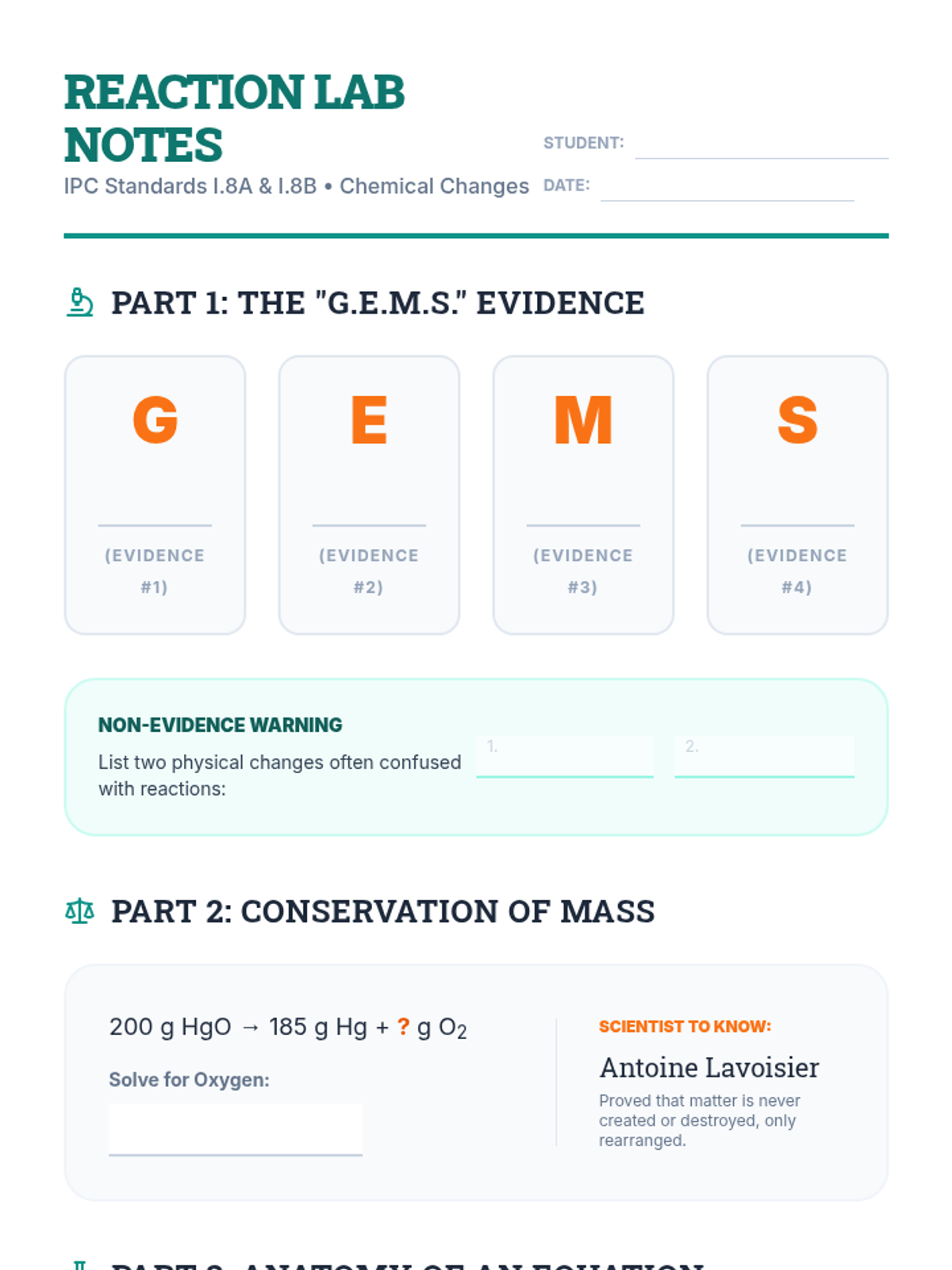
A comprehensive teacher resource including answer keys for the Reaction Knowledge Check, Balancing Practice, and Lab Notes worksheet, plus pacing suggestions.
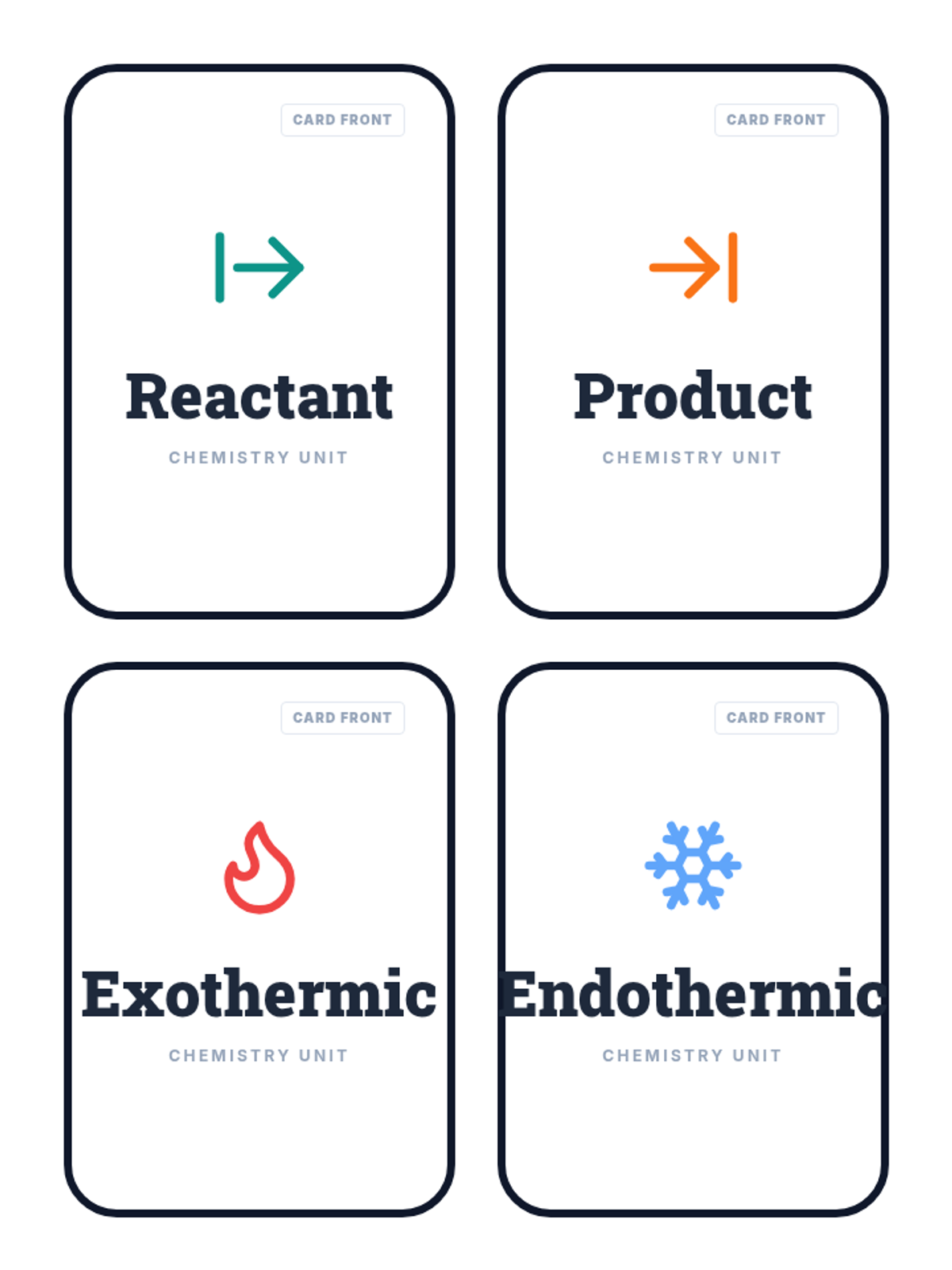
A set of printable chemistry vocabulary flashcards featuring key terms like Reactant, Product, Exothermic, Endothermic, and Precipitate with definitions and visual icons.
A comprehensive 20-question multiple-choice practice quiz covering conservation of mass, balancing equations, evidence of reactions, reaction types, and energy changes.
A two-page balancing equations practice worksheet with 10 problems ranging from basic to advanced challenge levels, including a "How-To" guide for students.
A two-page guided notes worksheet covering IPC standards I.8A and I.8B, including sections for GEMS evidence, conservation of mass calculations, and reaction energy.
Visual presentation for Chemical Reactions (IPC I.8A & I.8B). Covers GEMS evidence, conservation of mass, balancing basics, reaction types, and energy changes with high-contrast, accessible designs.
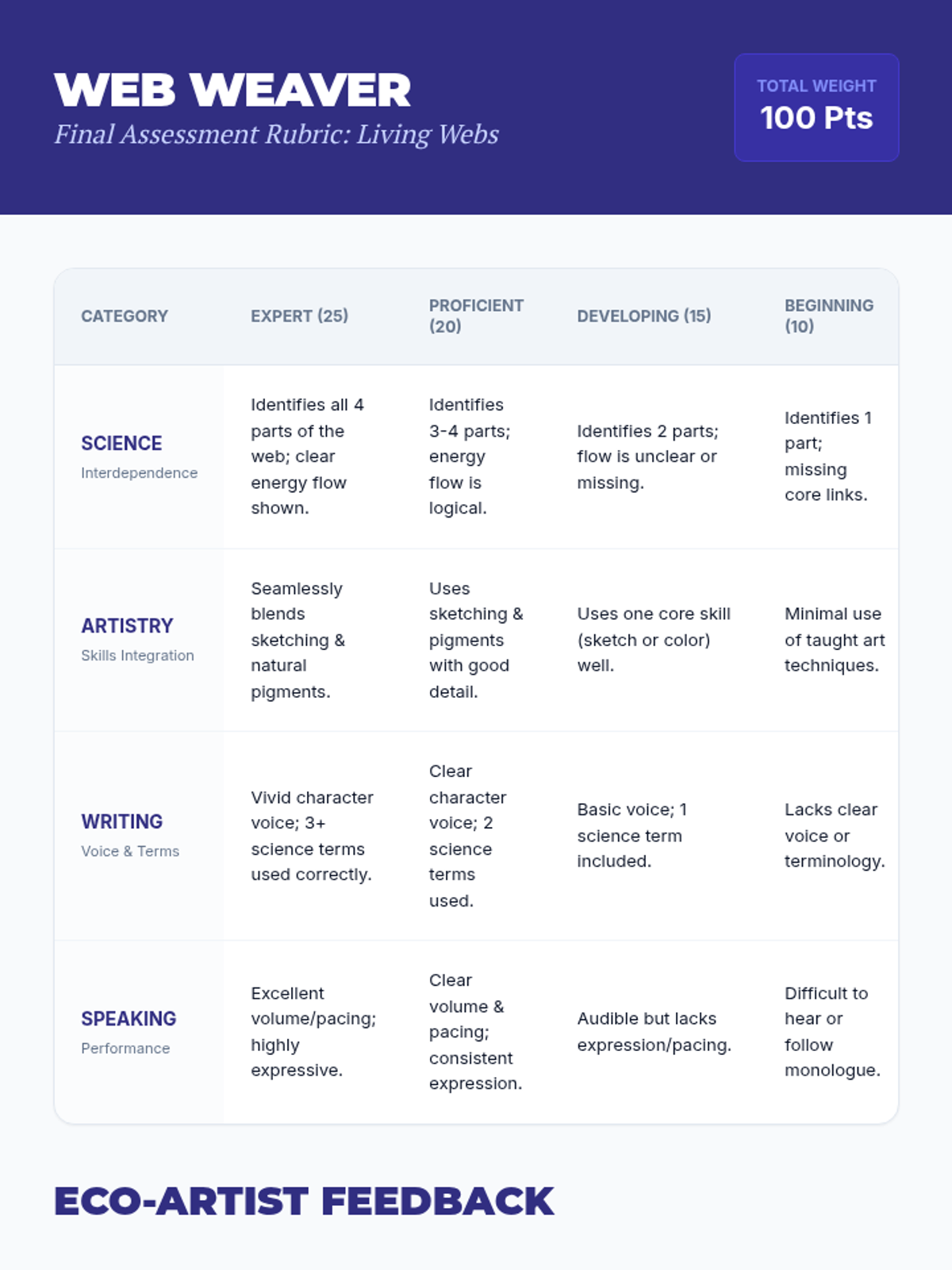
Professional assessment tool for teachers. Fixed incomplete point scale, improved category label visibility, and corrected feedback box page breaks. Increased space for teacher notes.
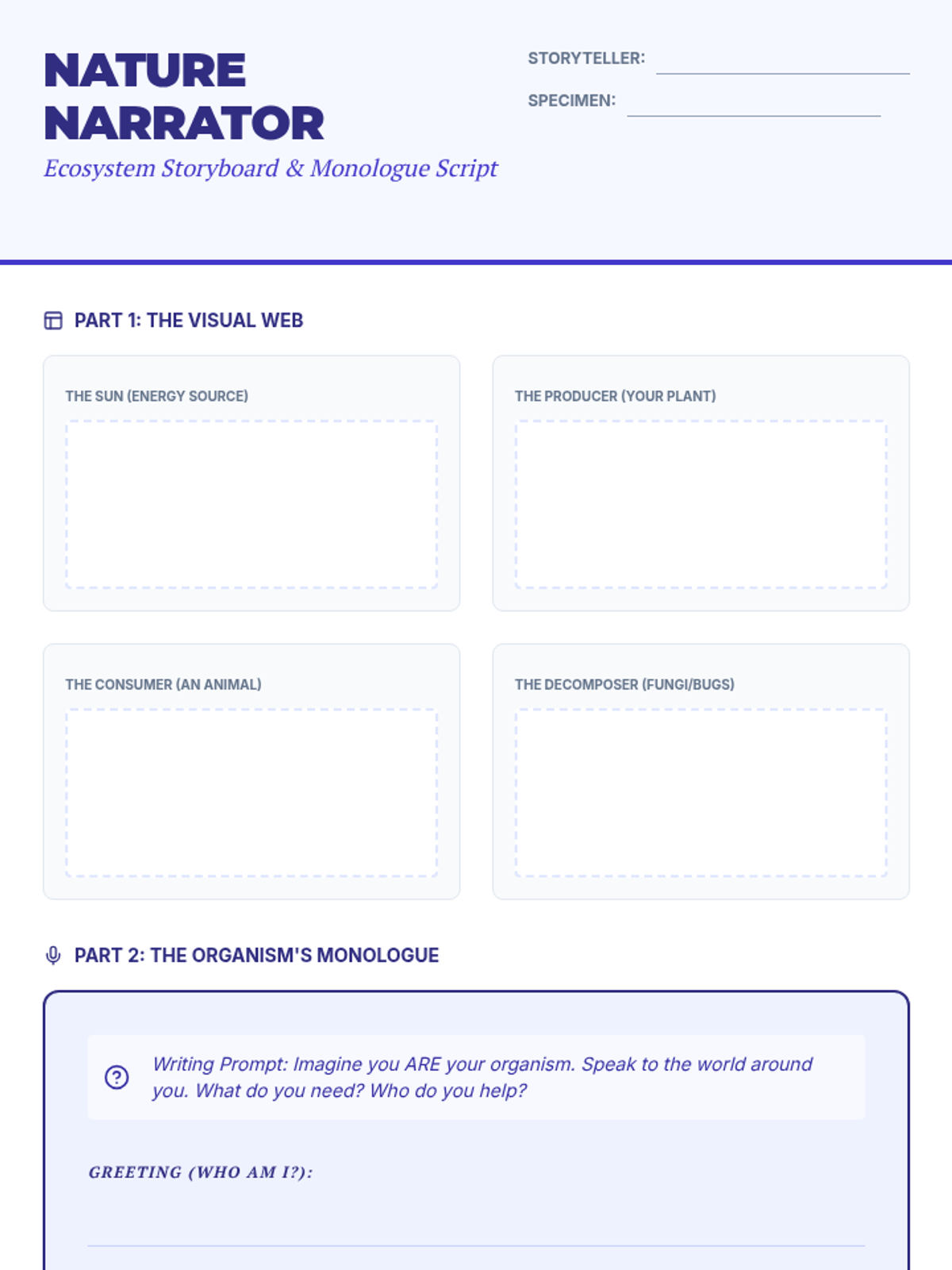
Creative planning sheet for ecosystem storyboards and monologues. Fixed illegible dark work areas and orphaned sections. Increased drawing box sizes.
A presentation that bridges science and storytelling, teaching students about ecological interdependence and how to translate scientific concepts into narrative art.
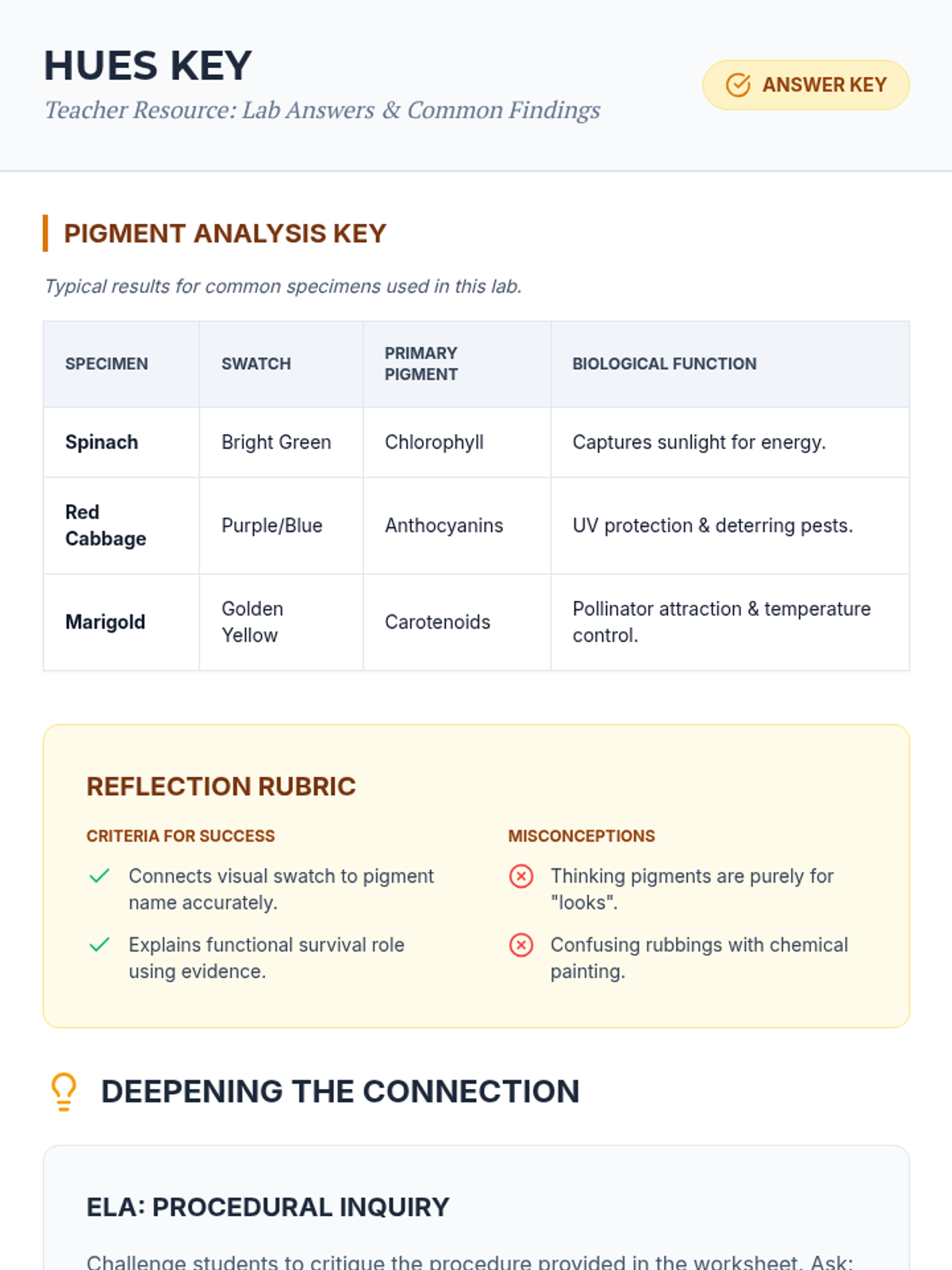
Teacher answer key and reference for the Pigment Passport lab. Fixed orphaned headers and improved layout distribution with expanded extension activities.
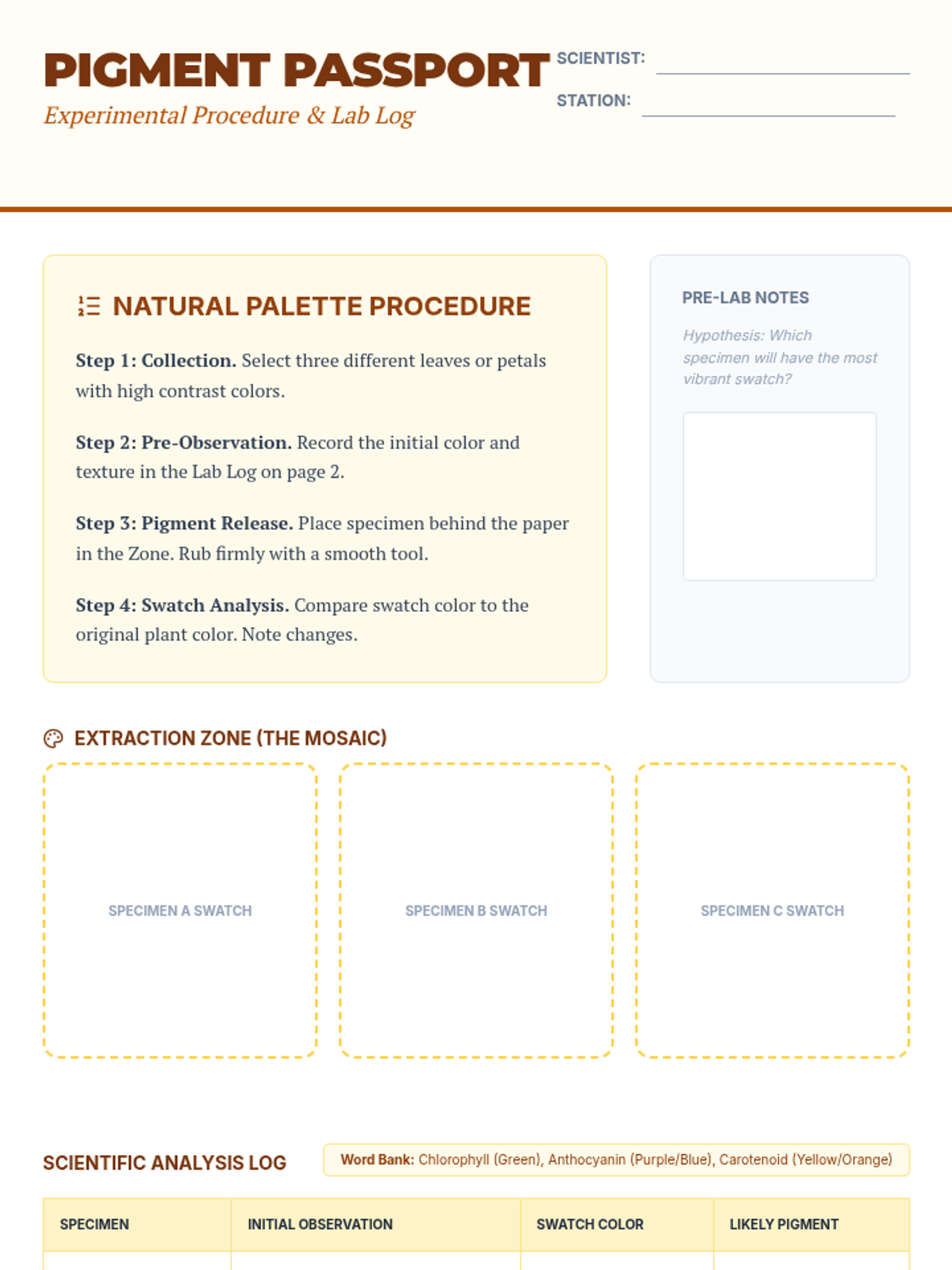
Lab report template for plant pigment extraction. Fixed dark work areas, cramped table rows, and added a pre-lab notes section for layout balance. Includes a tiny pigment word bank.
A visual presentation exploring the chemistry of plant pigments, their biological functions, and the process of natural extraction for artistic use.
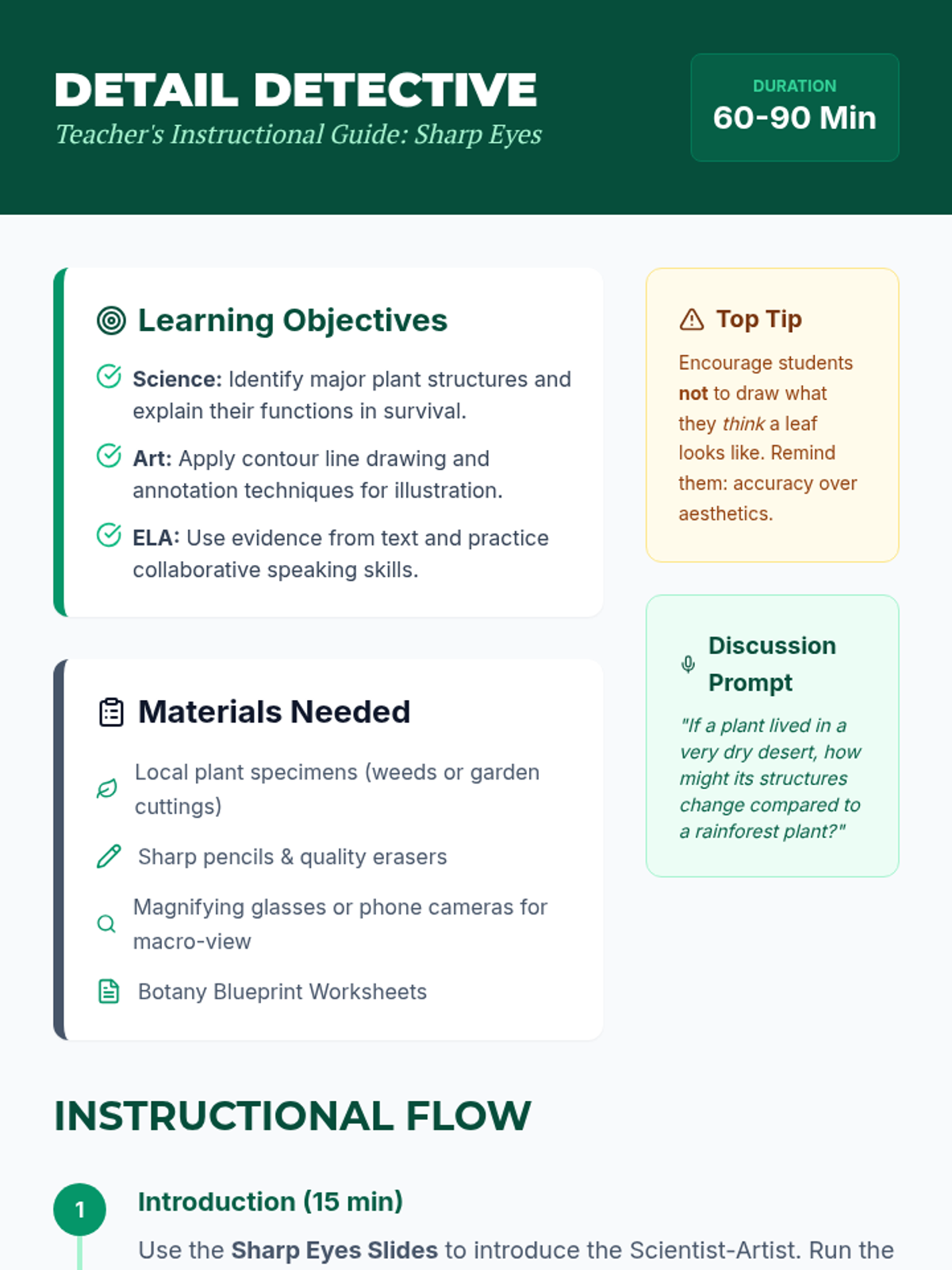
A detailed instructional guide for teachers, providing learning objectives, material lists, discussion prompts, and a step-by-step lesson flow. Fixed page breaks and layout spacing.
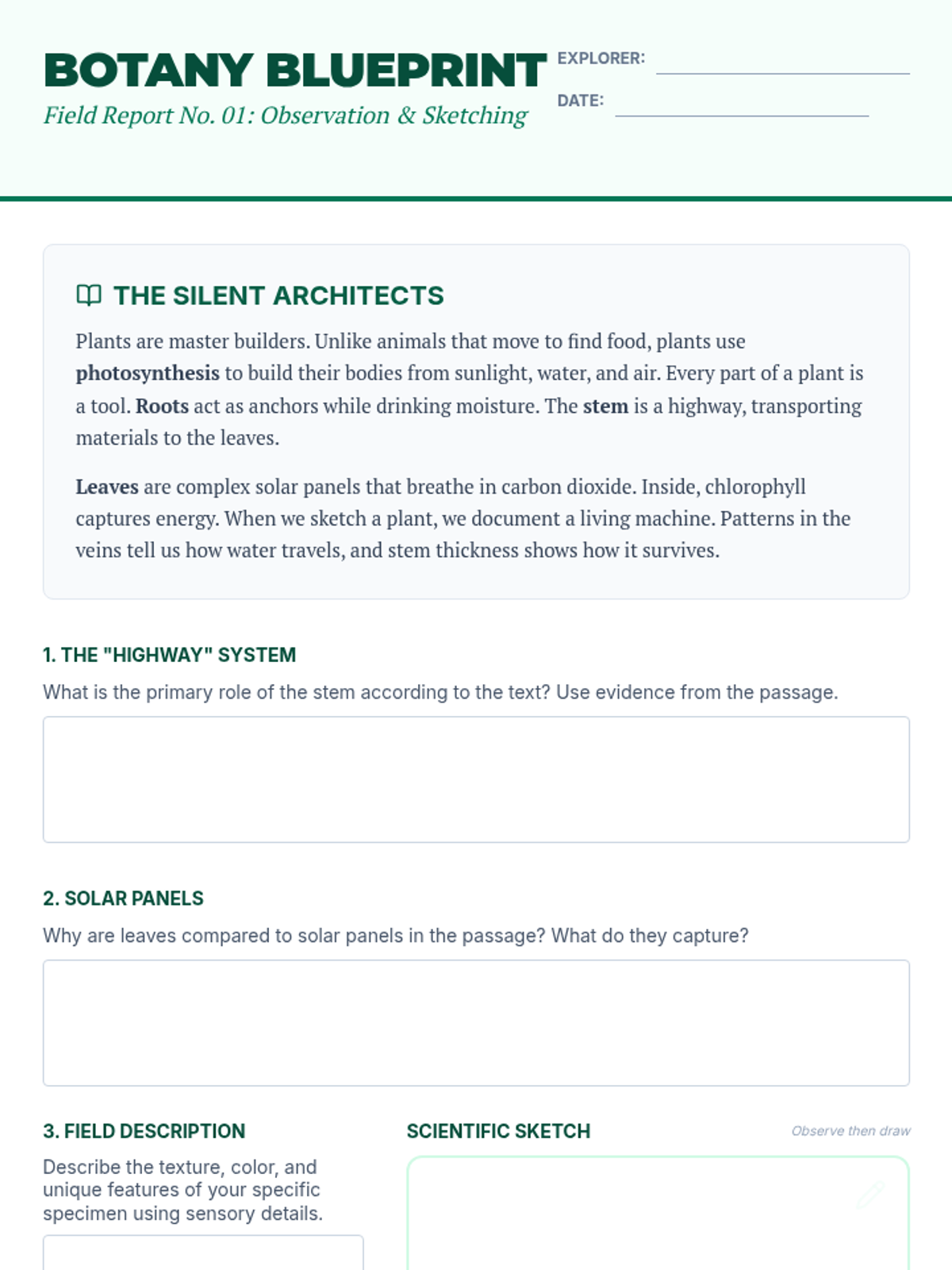
Comprehensive worksheet combining reading comprehension on plant biology with a dedicated area for scientific sketching and peer feedback. Optimized to 2 pages with improved space utilization and larger response areas.
An engaging slide deck introducing students to the intersection of botanical science and observational art, featuring plant anatomy and scientific sketching techniques.
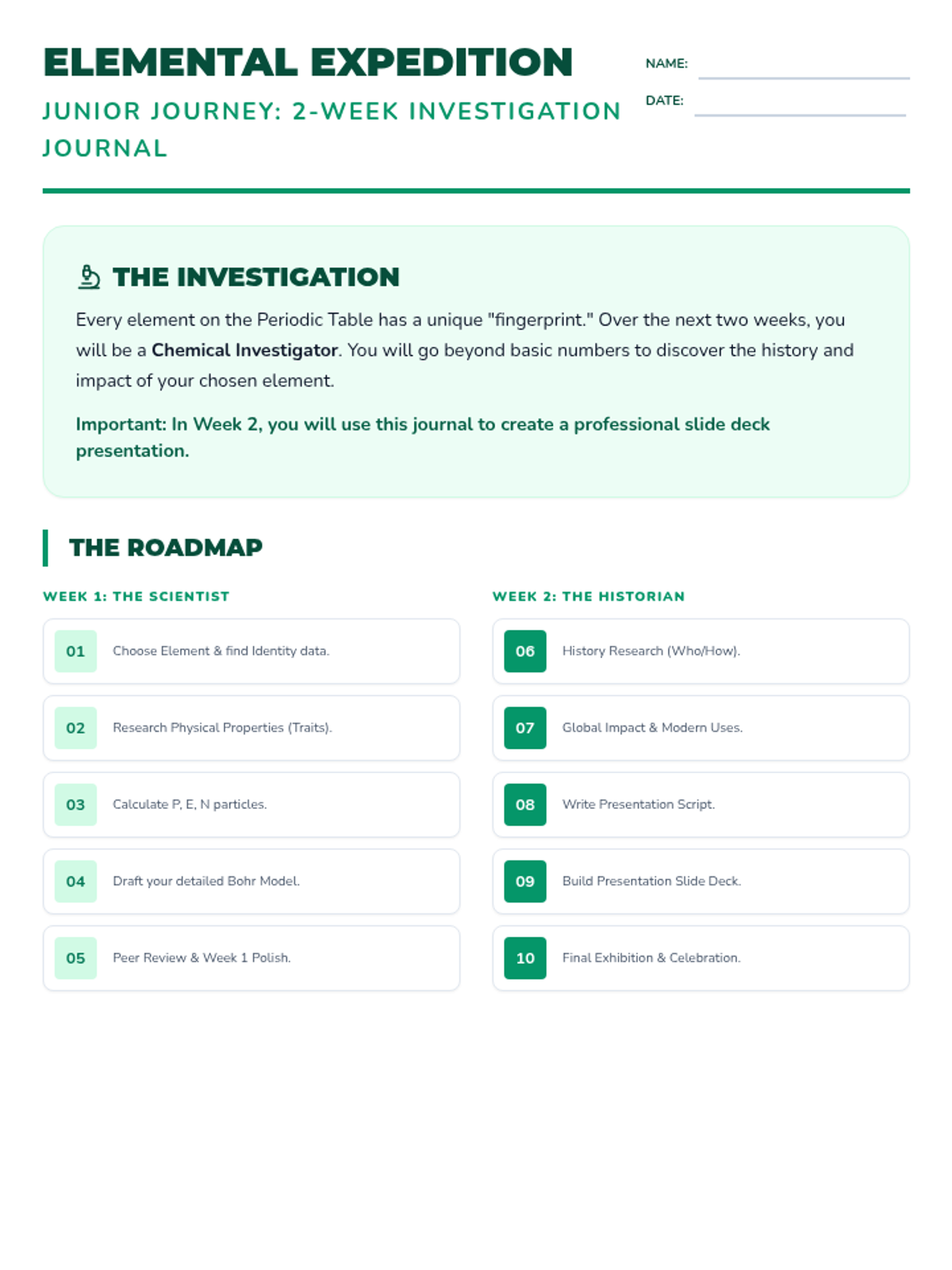
An extensive, 7-page student research journal for juniors. Features a 10-day roadmap, a detailed Oxygen model example, physical property logs, historical discovery deep dives, presentation scripting tools, and a teacher rubric. Includes clear, detailed directions for independent work.
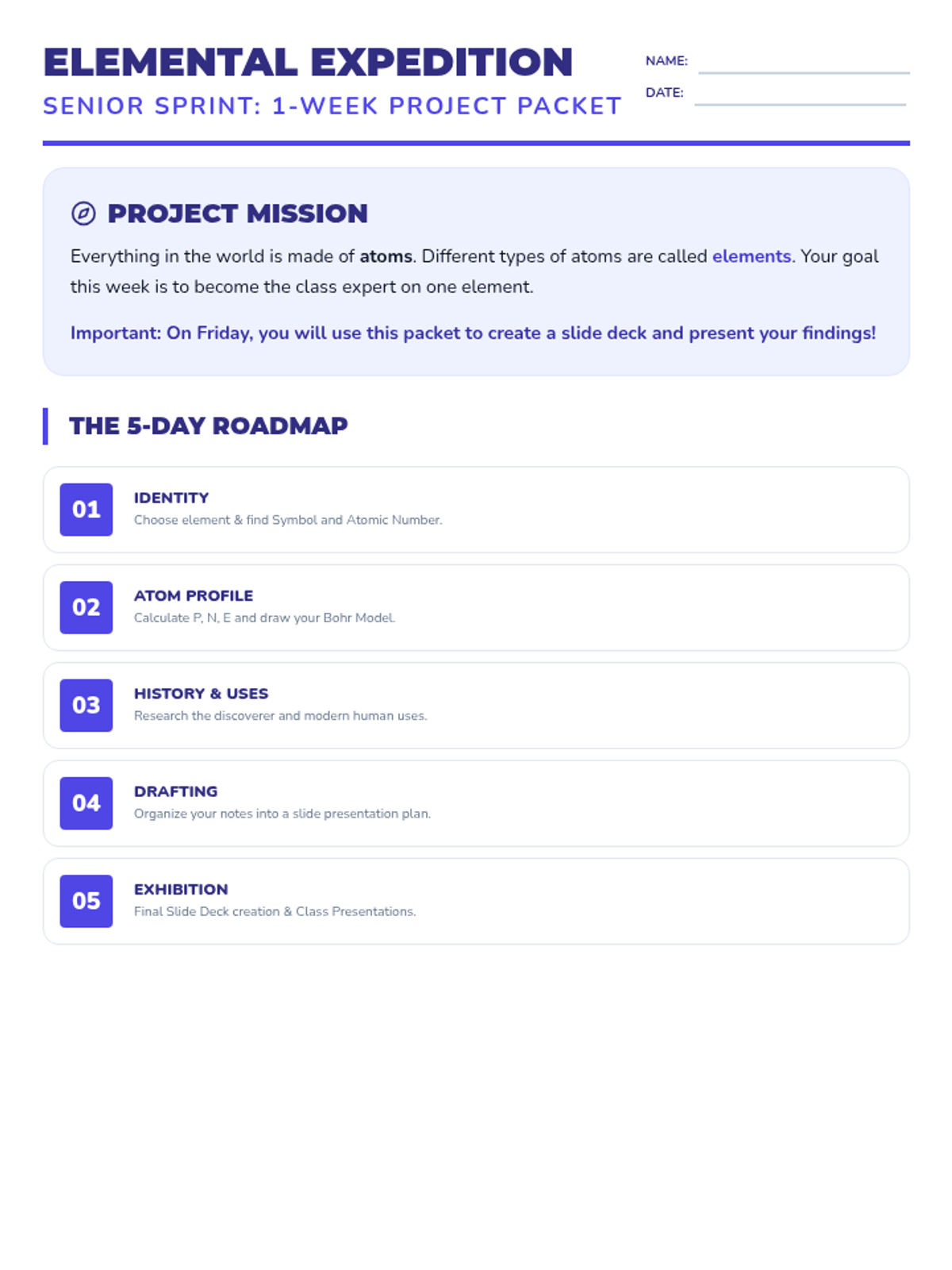
A complete, 5-page student project packet for seniors, featuring a 5-day roadmap, a detailed Helium model example, step-by-step scientific research guides, and a teacher rubric. Includes clear directions for independent work and slide deck planning.
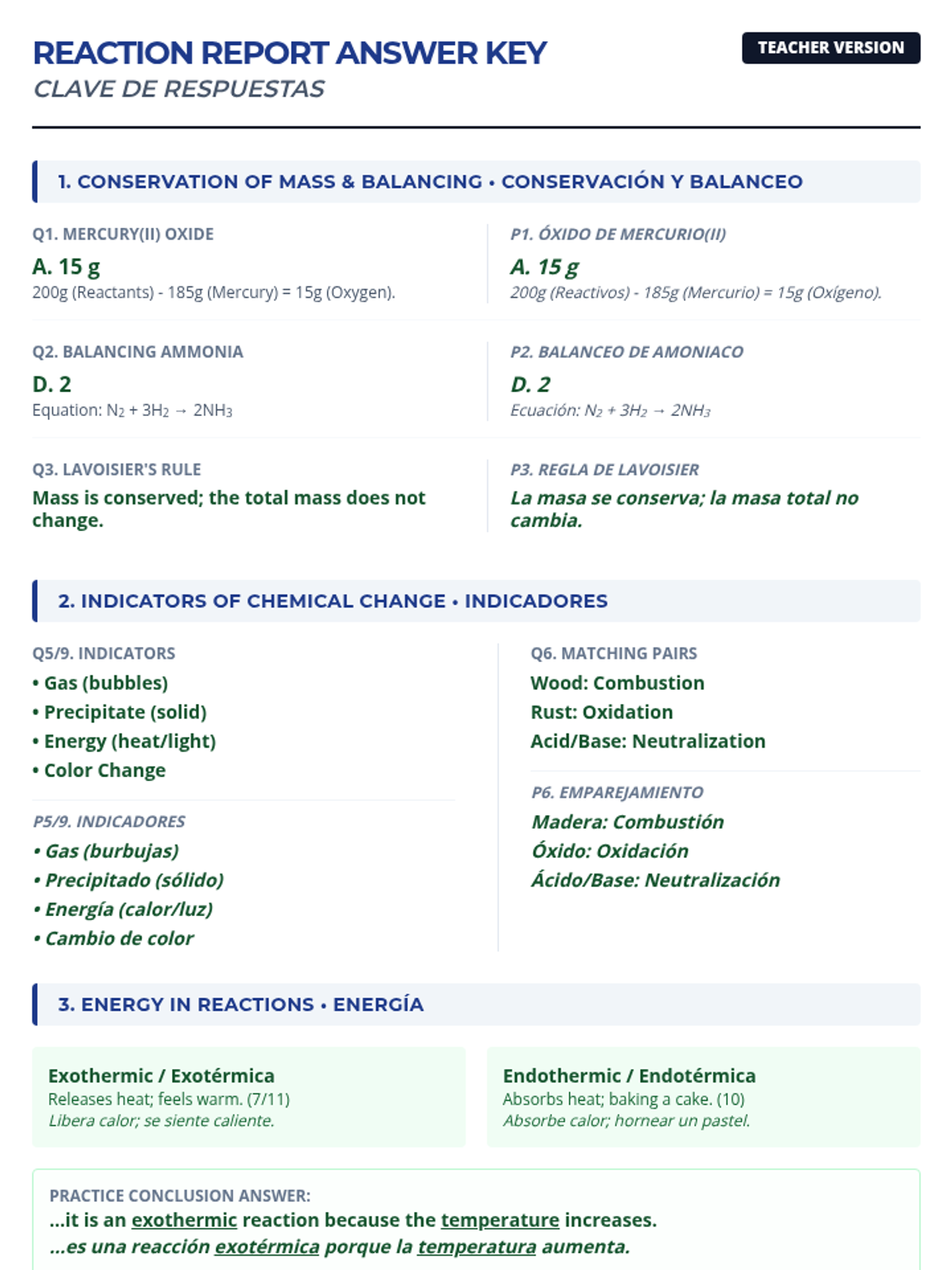
A teacher-facing answer key for the bilingual Chemical Reactions Study Guide. Includes CSS-enhanced <sub> tags for chemical formula rendering and high-contrast bilingual explanations for teacher reference.
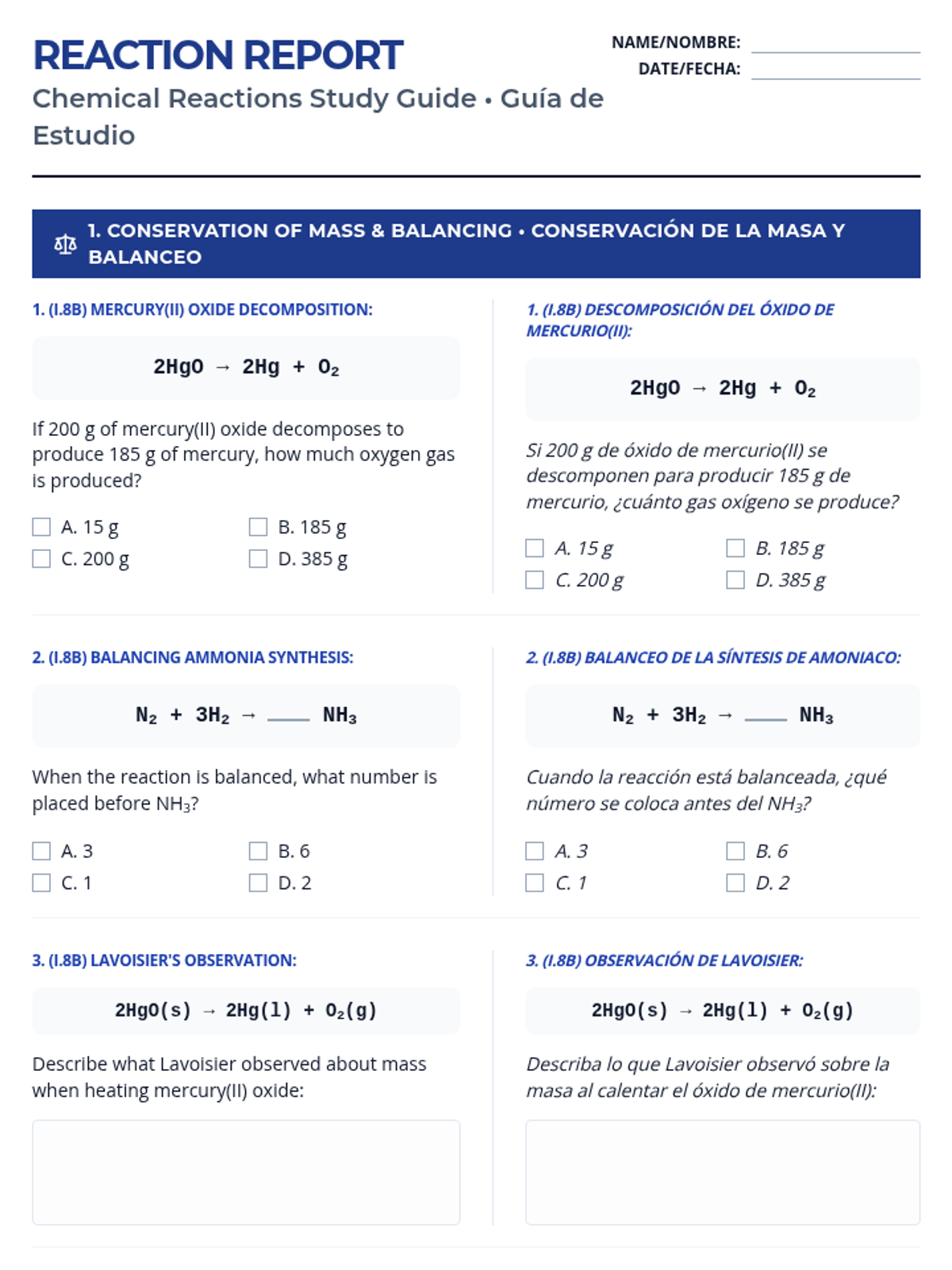
A bilingual (English/Spanish) study guide for chemical reactions, featuring conservation of mass calculations and energy changes. Includes CSS-enhanced <sub> tags for precise chemical formula rendering and improved layout to prevent orphaned headers and ensure adequate work space.
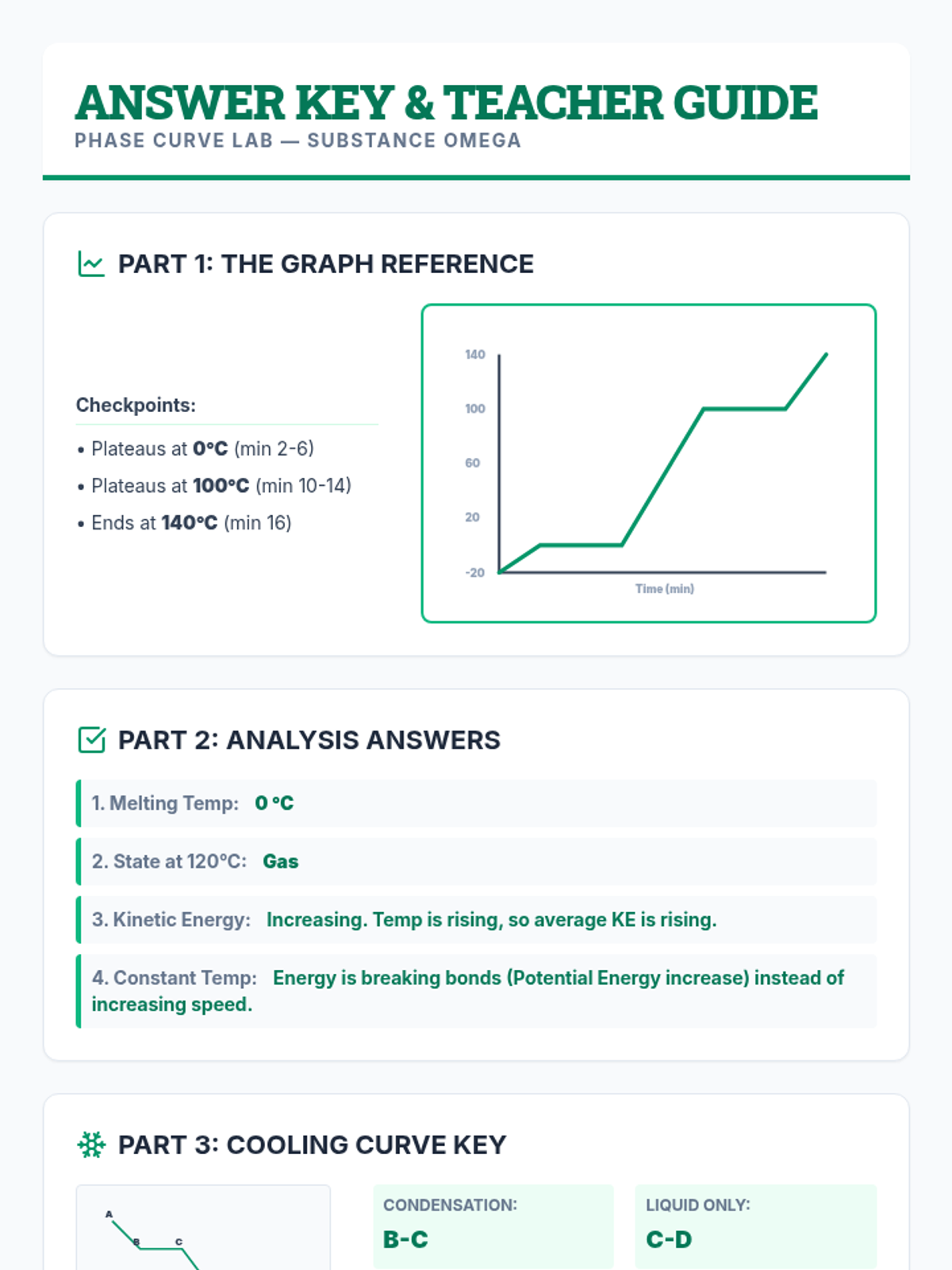
Teacher answer key for the Phase Curve Lab, including a corrected reference graph, ideal student responses, and cooling curve identifications. Improved with numerical axis labels and better page flow.
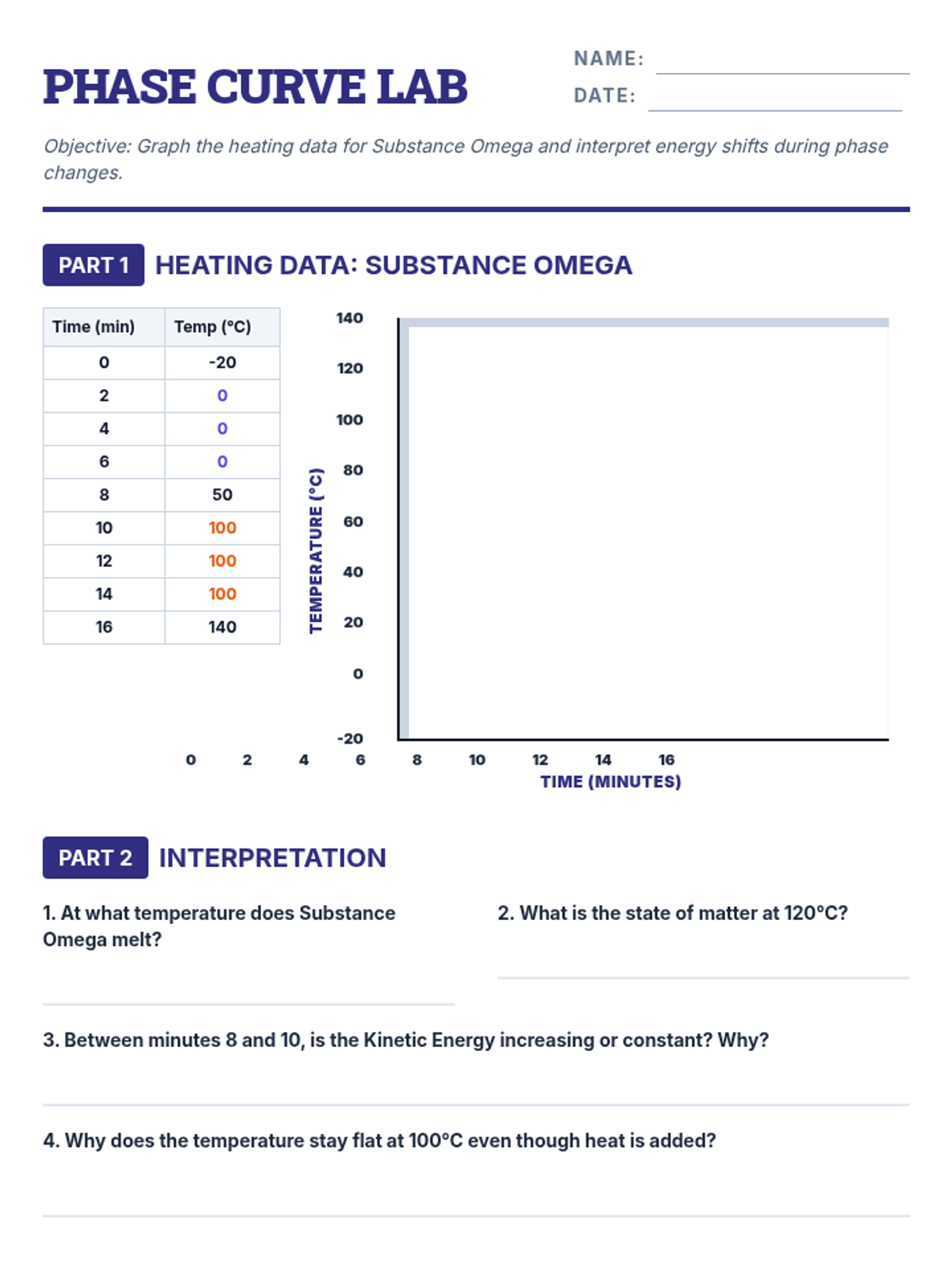
A lab-style worksheet where students graph phase change data for 'Substance Omega' and answer analysis questions about kinetic and potential energy. Improved with numerical axis labels and better page flow.
A visual slide deck explaining the key features of heating and cooling curves. Updated with axis labels, improved graph layouts, and a transition to the lab activity.
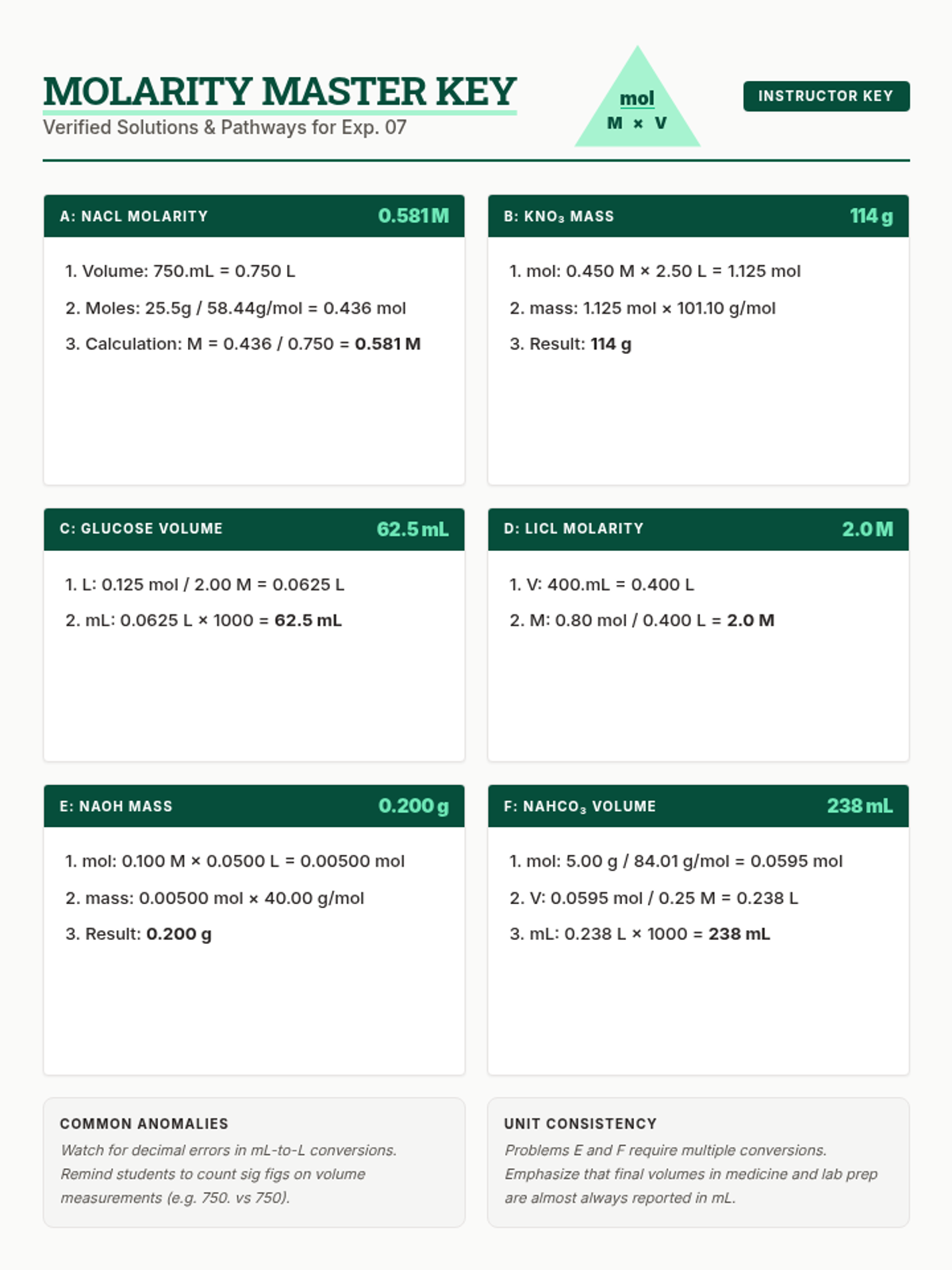
A one-page answer key for the Molarity Mastery Handout, featuring concise step-by-step solutions for six problems and instructor tips. Includes a visual formula triangle for quick teacher reference. Vertical spacing and formatting standardized for instructor ease.
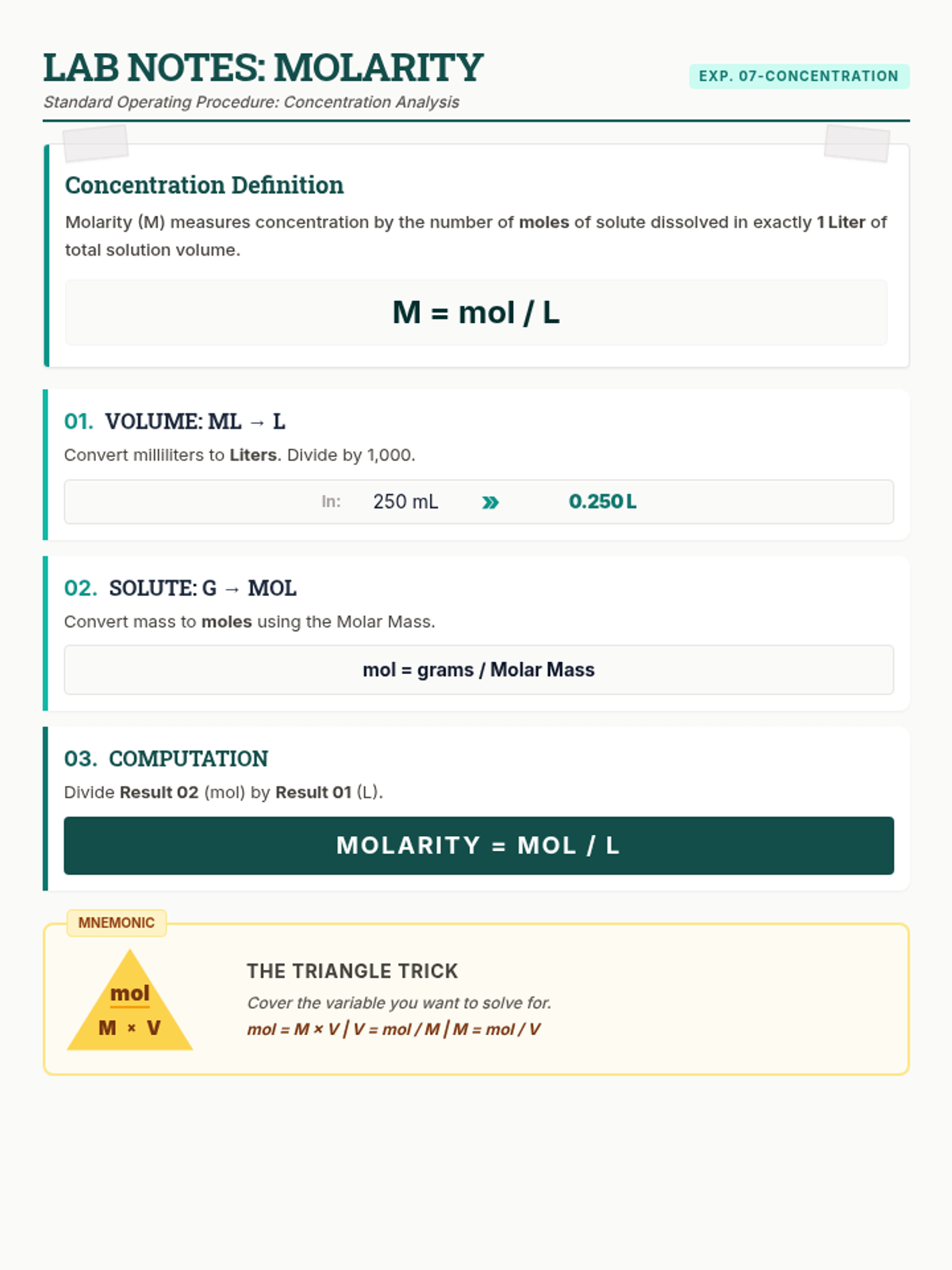
A visual two-page student handout for molarity with a lab notebook theme. Page 1 contains a 3-step procedural explainer and formula triangle mnemonic. Page 2 provides six practice problems (covering M, mass, and volume) with dedicated work areas. Vertical spacing optimized for print readability.
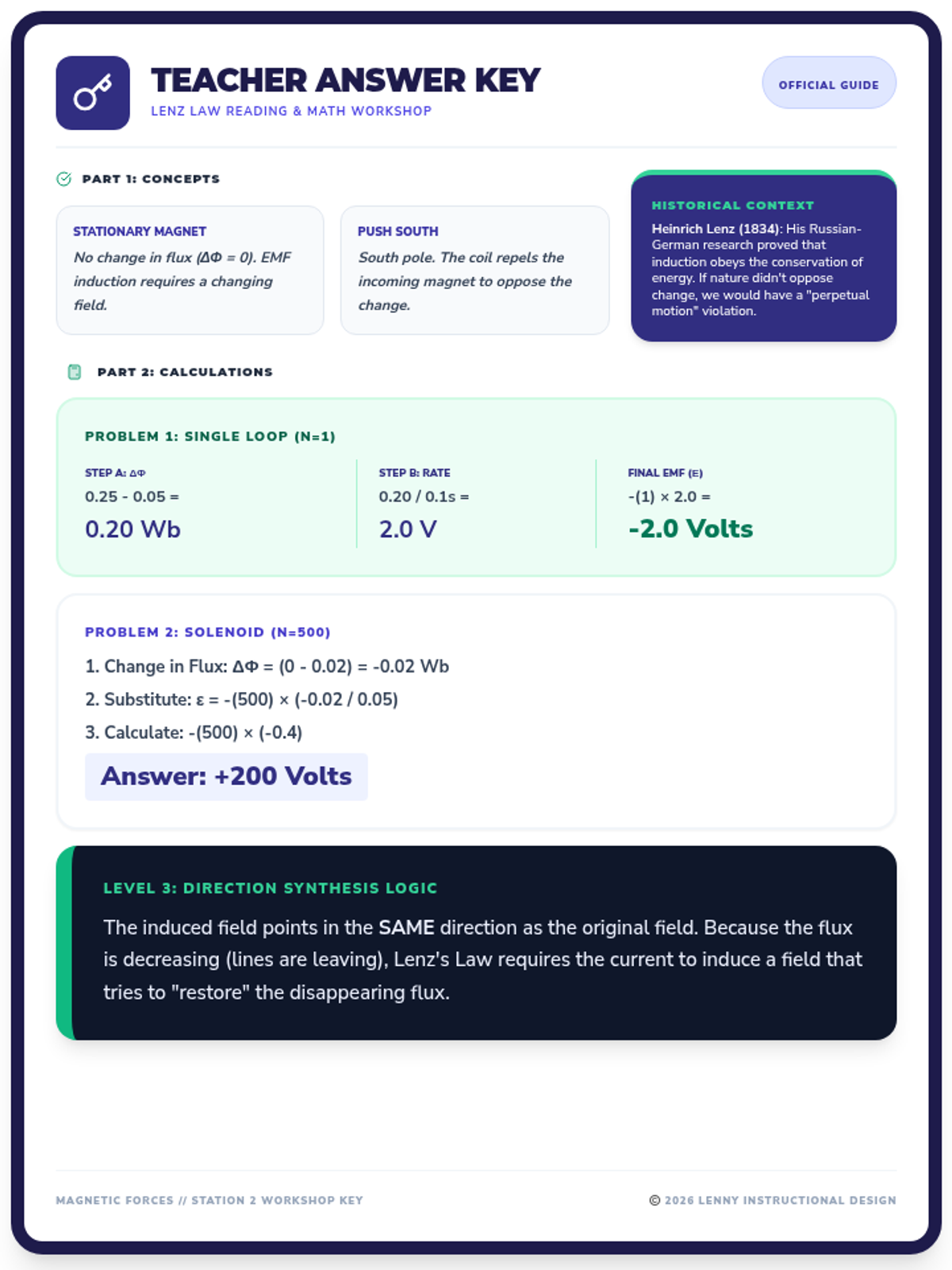
A teacher answer key for the Lenz Law Reading Workshop. Provides correct conceptual answers for the Check for Understanding questions and step-by-step mathematical solutions for the scaffolded EMF calculations. Revised for better page layout and math rendering. Added historical context notes for teachers.
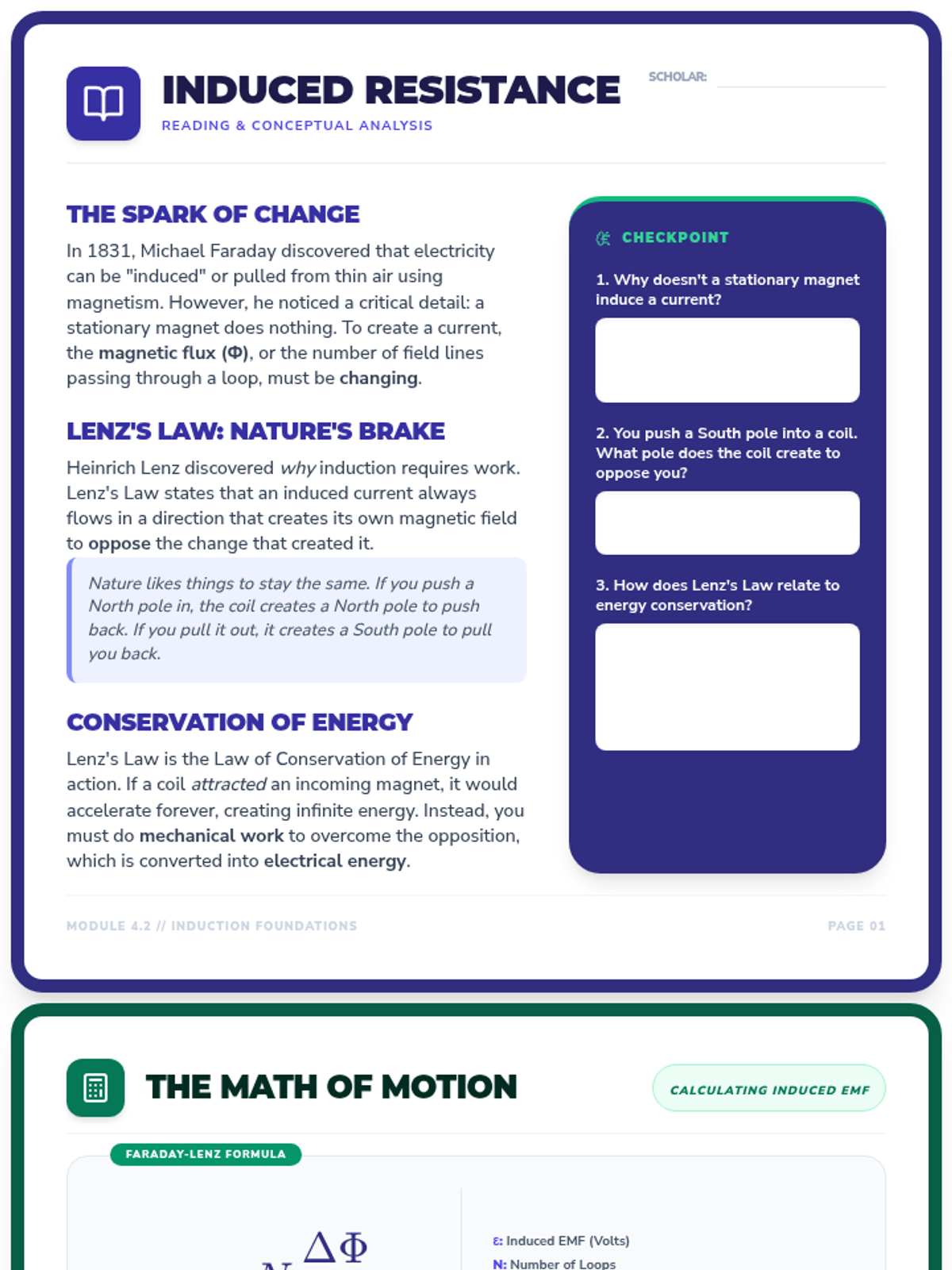
A 2-page instructional handout on Lenz's Law and Electromagnetic Induction. Includes a short reading passage with conceptual Check for Understanding questions, followed by a scaffolded math workshop for calculating induced EMF using Faraday's Law. Revised for better page layout and legible student work areas. Fixed dark backgrounds in answer boxes. Updated symbols for better rendering. Fixed label contrast in math problems.
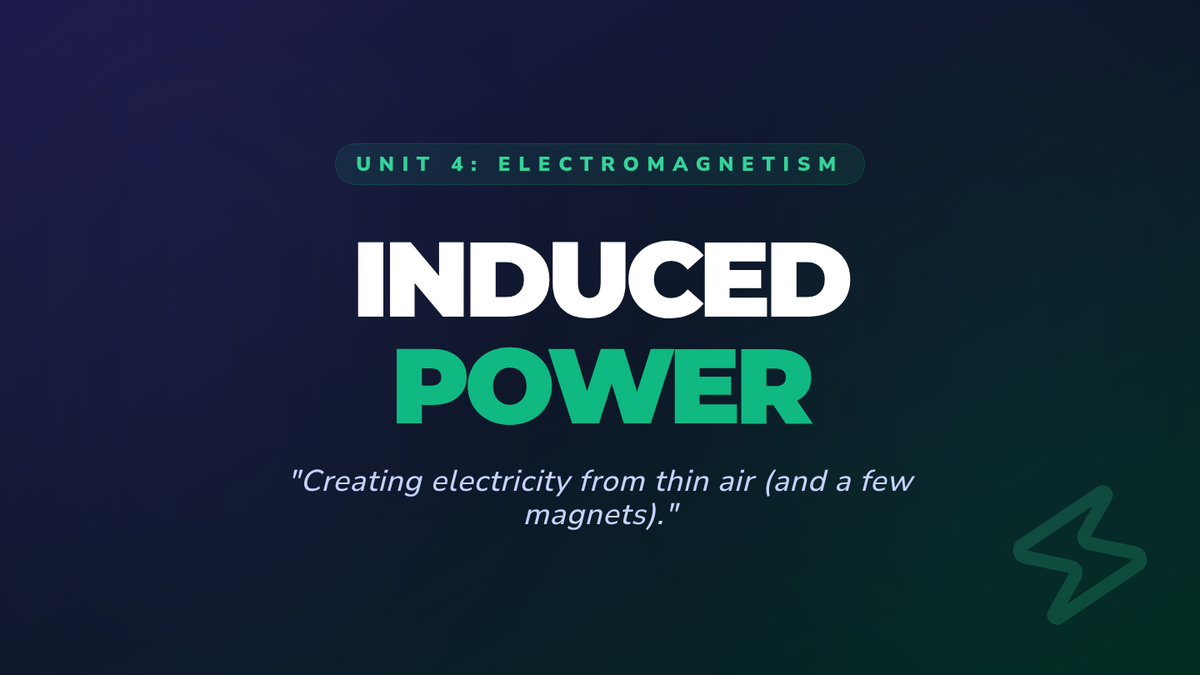
A 7-slide presentation deck focusing on Electromagnetic Induction and Lenz's Law. Includes clear visual diagrams for Scenario A and B modeling, real-world applications like induction stoves and Maglev trains, and a breakdown of Faraday's discovery. All text is 24px minimum for classroom legibility. Revised for improved visibility of Slide 3 and higher contrast visuals.
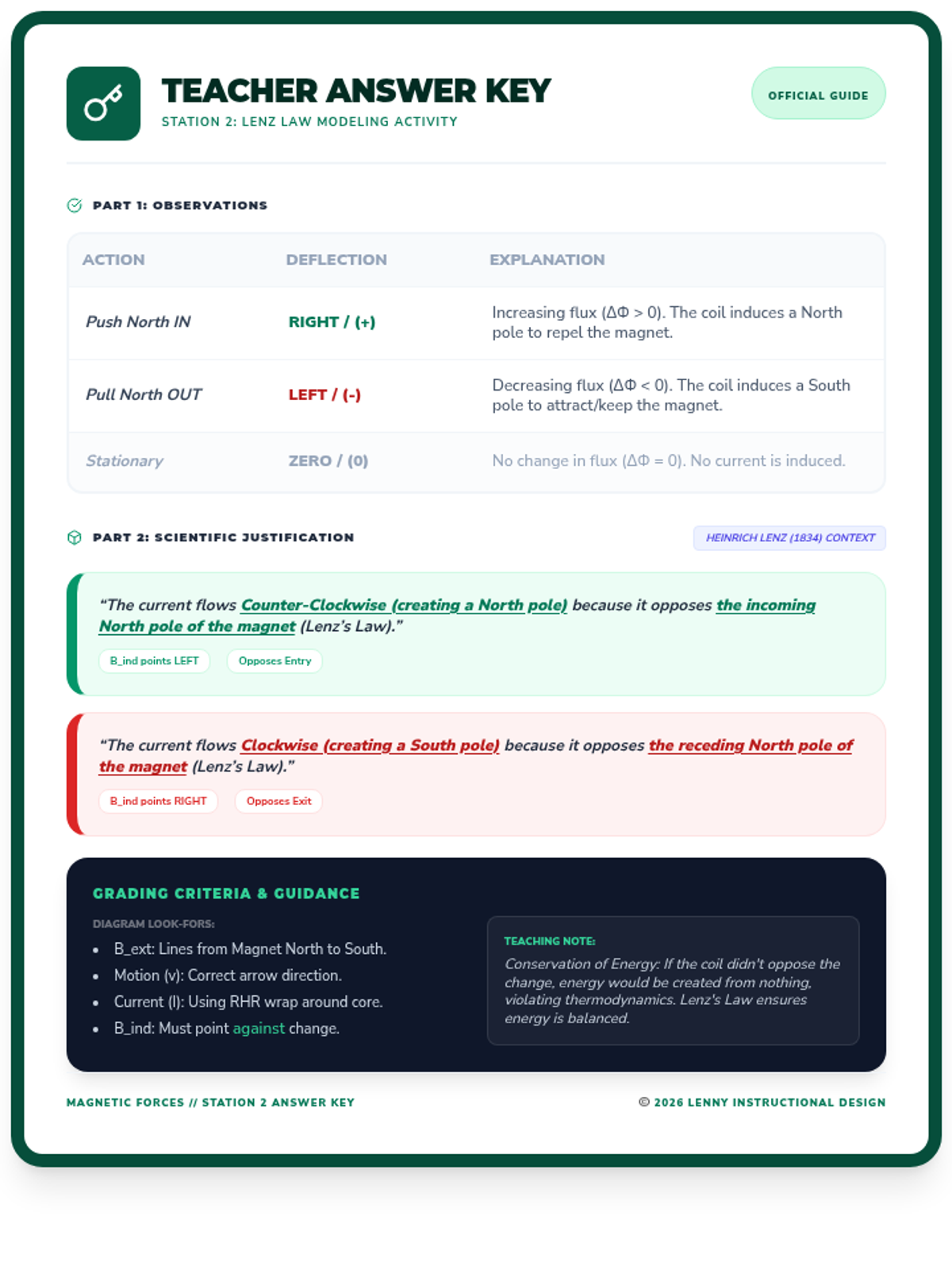
A teacher-facing answer key for the Lenz Law Lab Worksheet. Includes correct observations for pushing and pulling a magnet, model justification sentences, and a grading rubric for student diagrams. Revised for better page layout and math rendering. Added historical context notes for teachers.
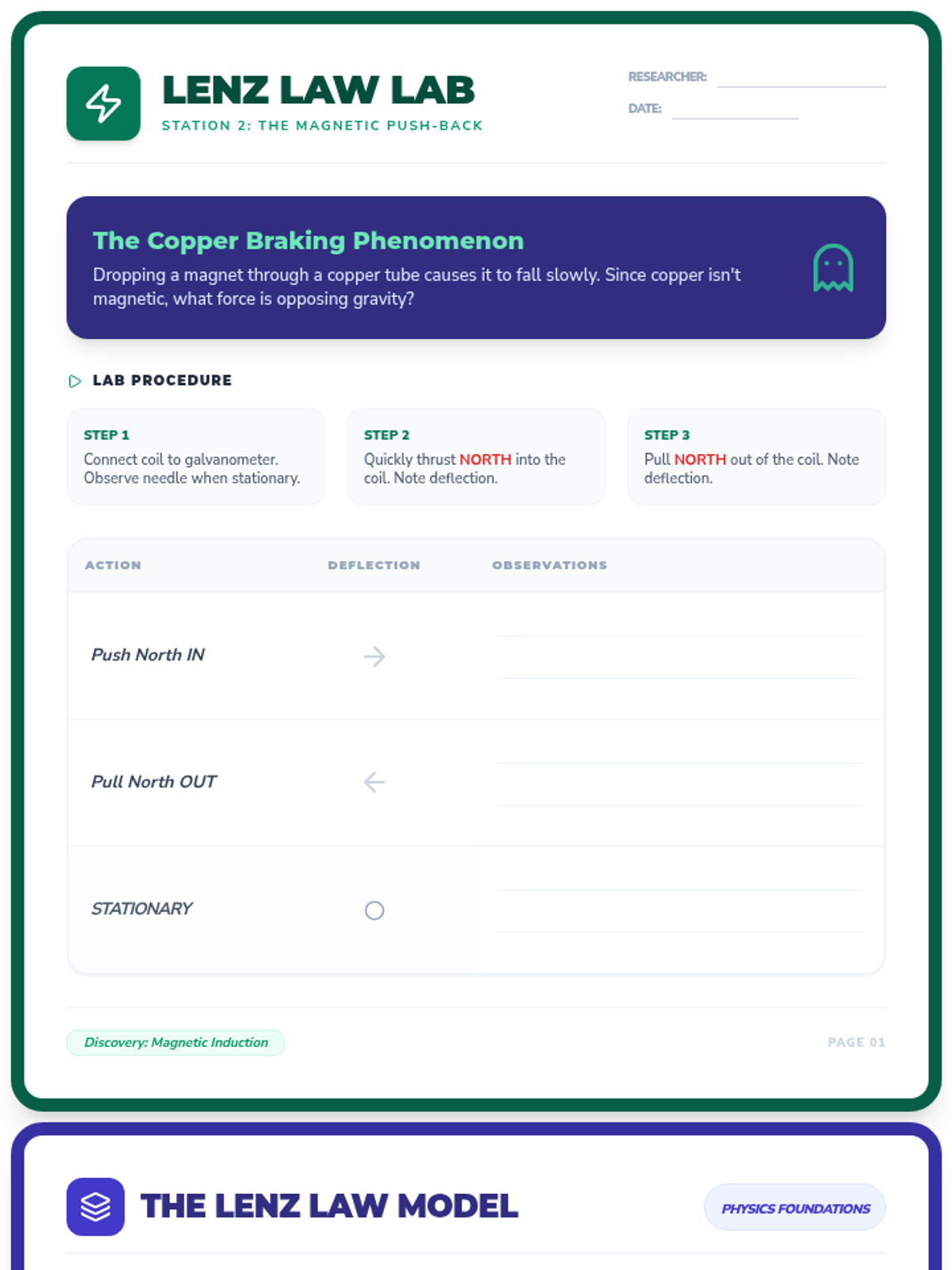
A revised student lab worksheet for Lenz's Law. Now includes historical context on Heinrich Lenz (1834) and a formal definition of the law on Page 2, alongside the modeling task and investigation steps. Revised layout for clarity. Improved diagram spacing and alignment.
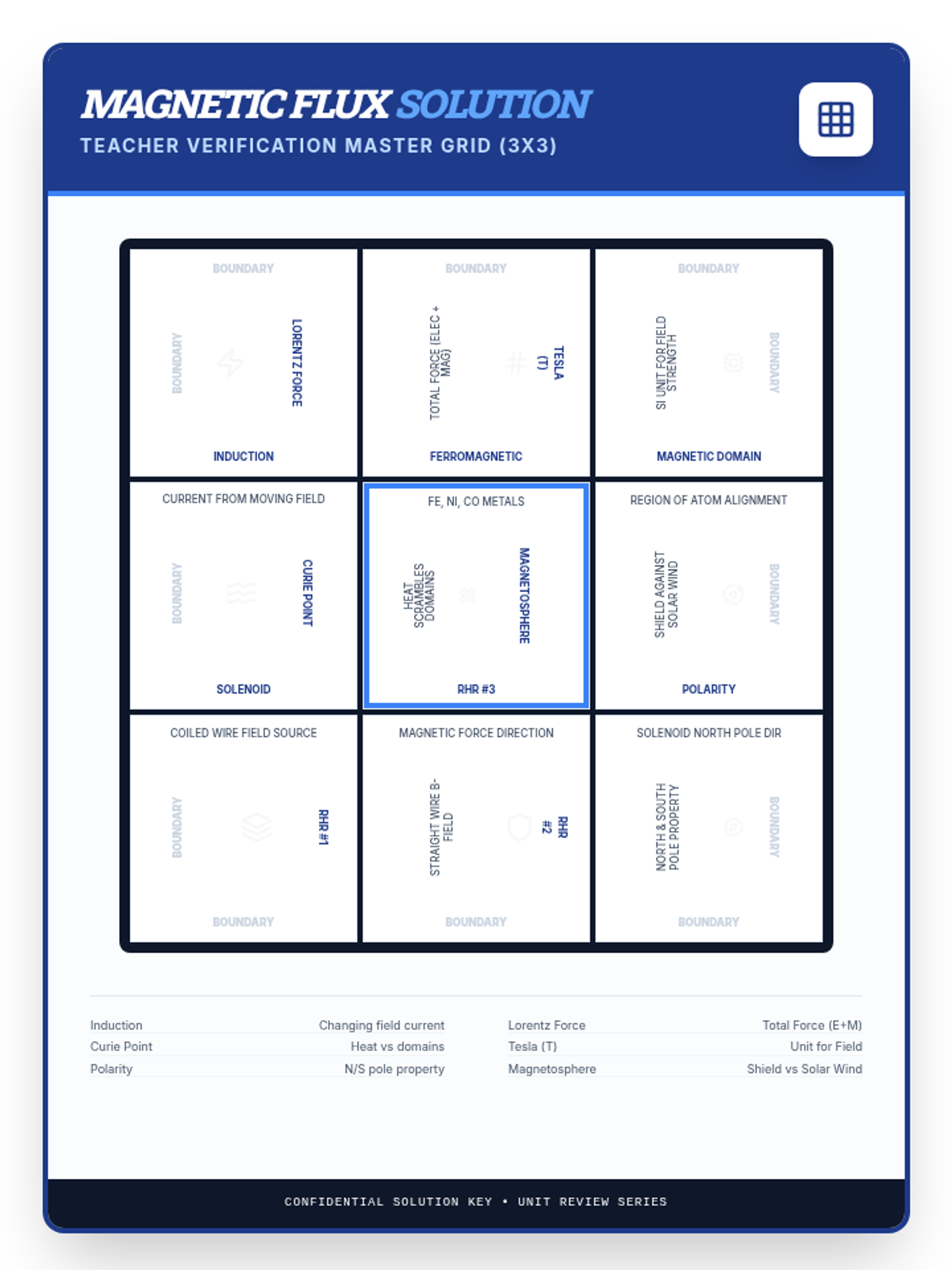
A teacher answer key for the Magnetic Flux Puzzle jigsaw activity. It provides the completed 3x3 solution grid and a logic key for the term-to-definition connections. Revised for 3x3 layout consistency.
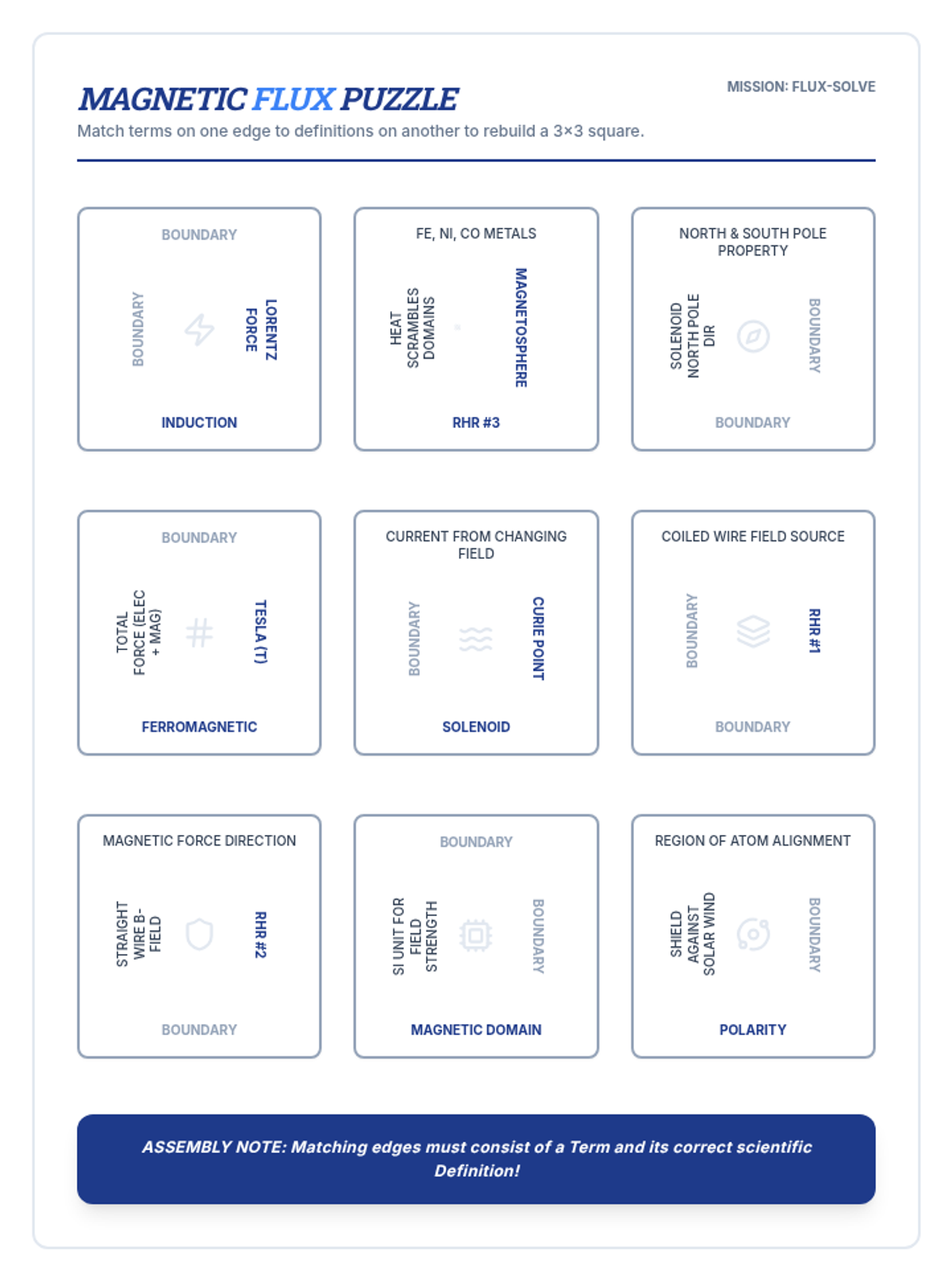
A vocabulary jigsaw activity where students cut out 9 squares and match terms on one edge to definitions on another to rebuild a 3x3 matrix. Covers essential magnetism vocabulary including Lorentz force, induction, and Curie point. Revised for better legibility and larger piece size.
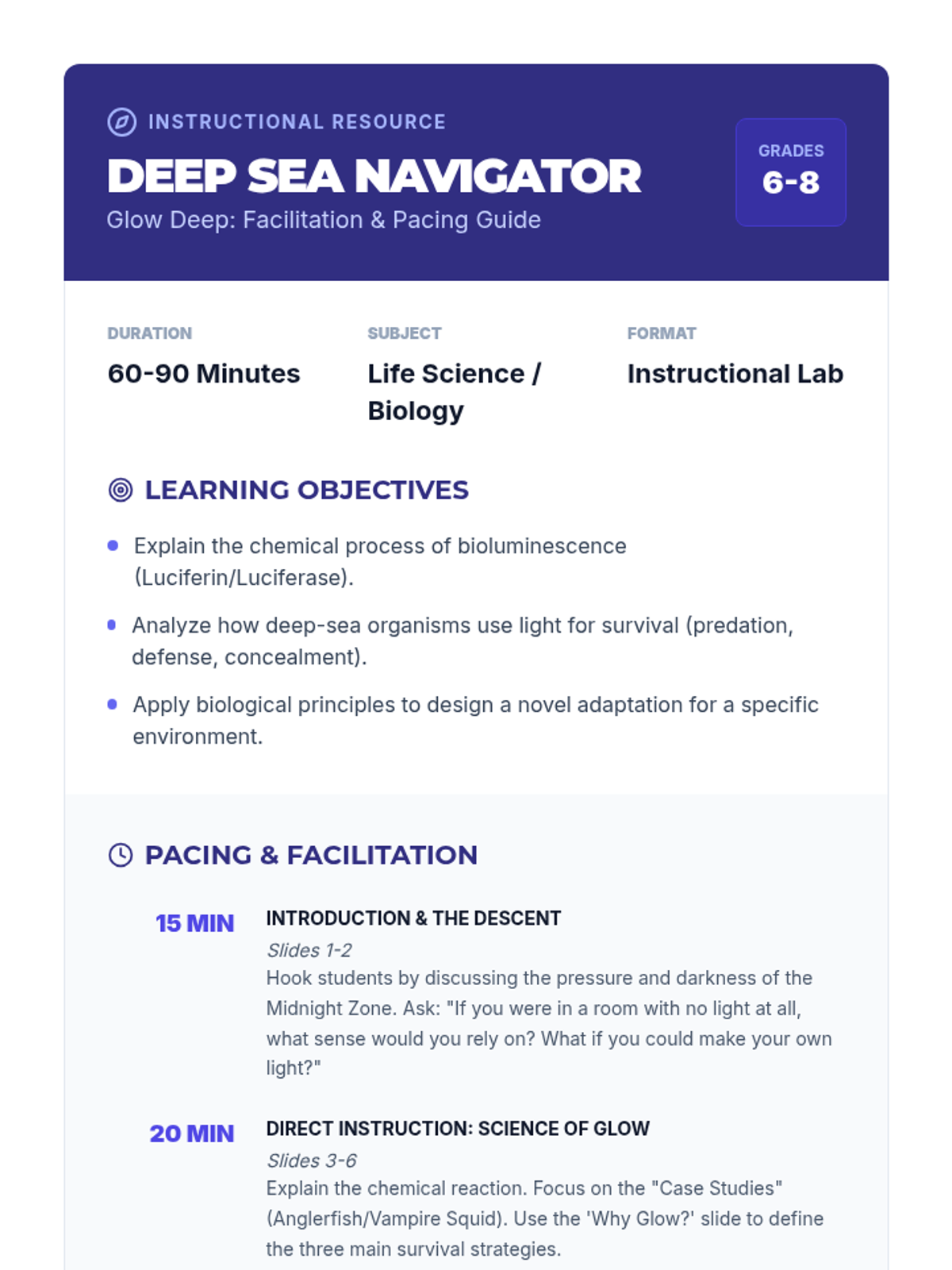
A facilitator's guide for the Glow Deep lesson, providing pacing, discussion questions, background science, and strategies for guiding student design projects.
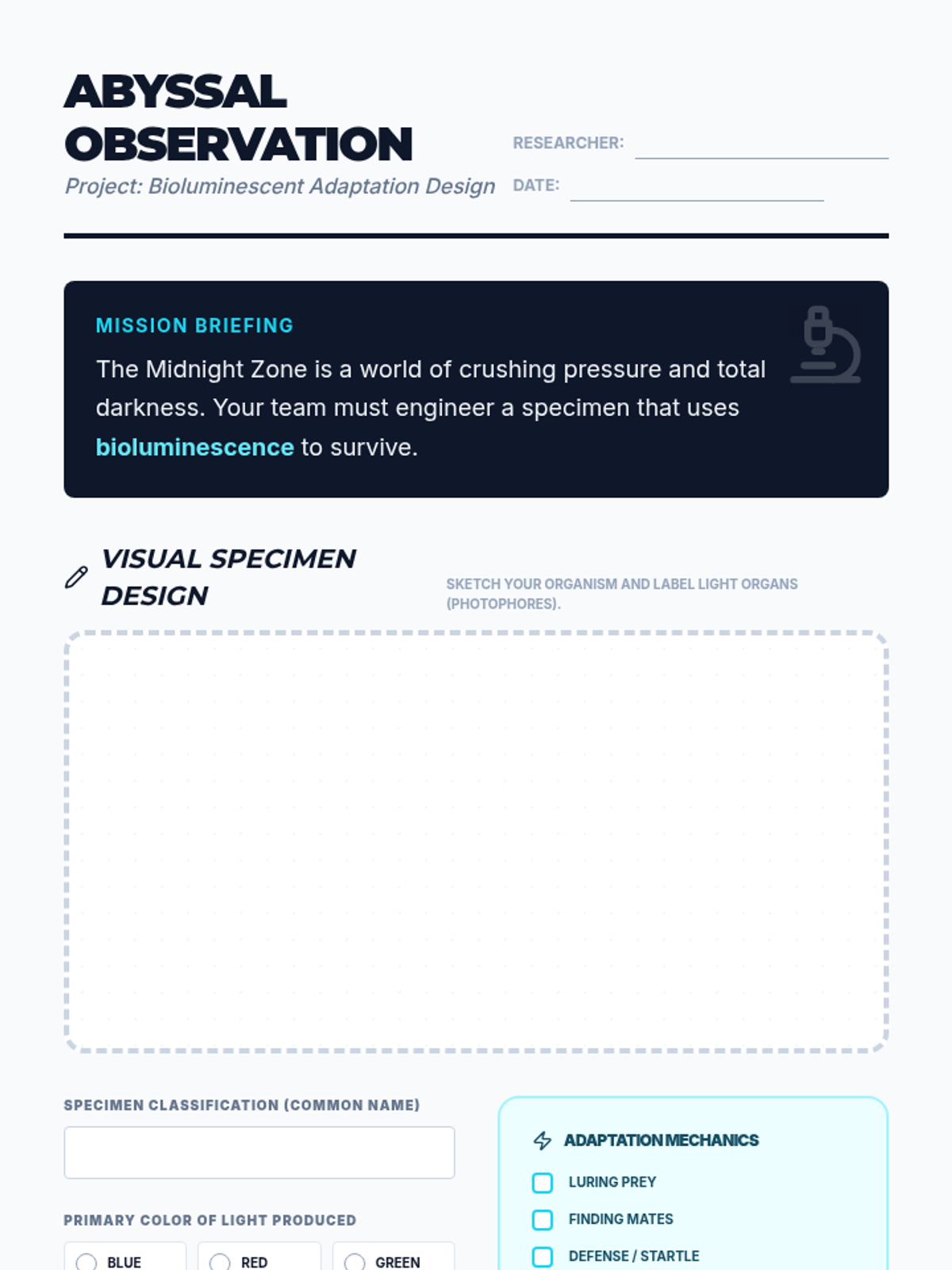
A student activity sheet for designing a bioluminescent deep-sea creature, featuring technical specifications for light production and behavioral adaptation mapping.
A visual presentation exploring the midnight zone of the ocean, the science of bioluminescence, and specific case studies like the Anglerfish and Vampire Squid to prepare students for their creature design mission.
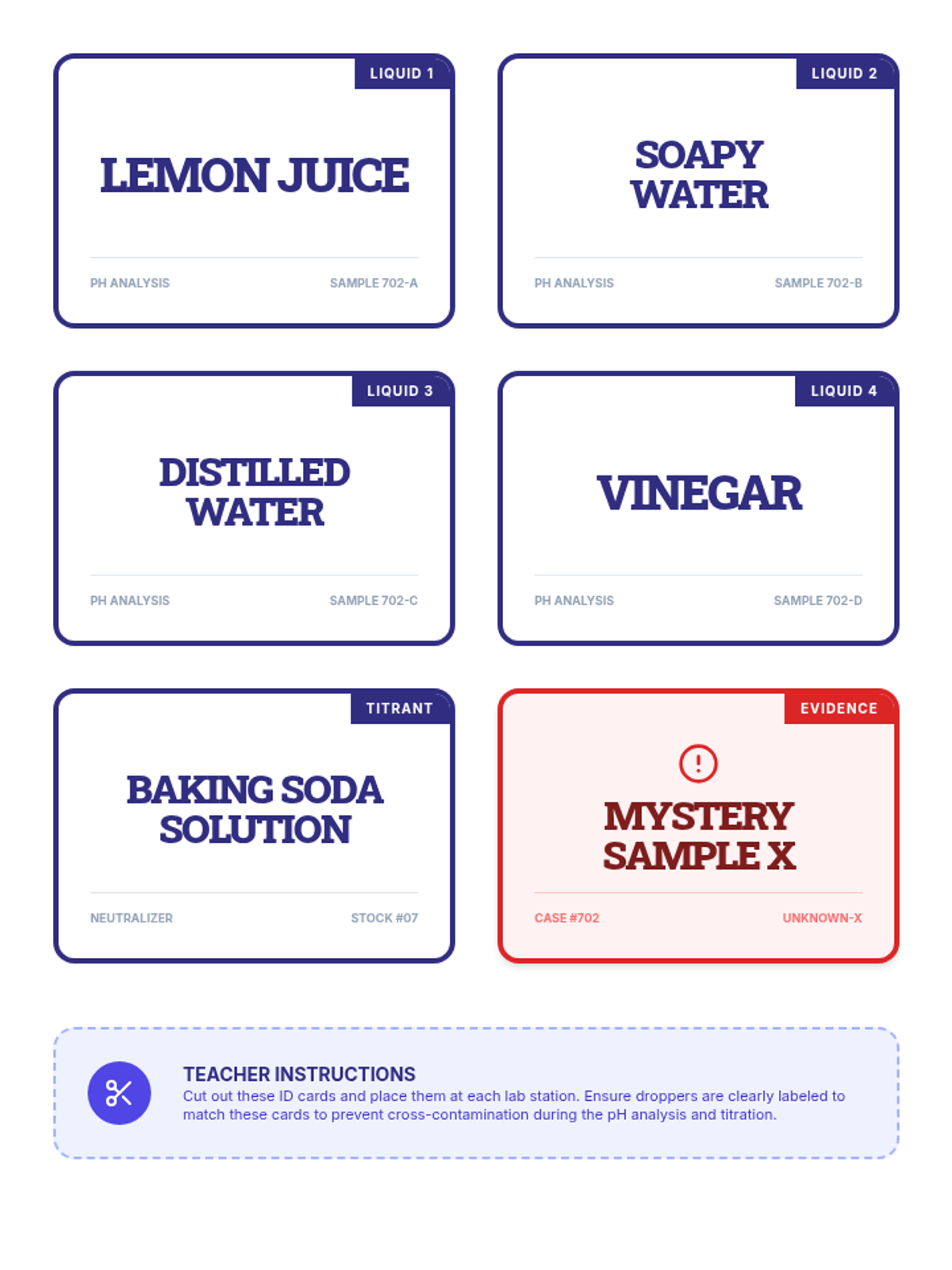
Printable station ID cards for the Grade 7 pH lab. Includes labels for Lemon Juice, Soapy Water, Distilled Water, Vinegar, Baking Soda Solution, and the Mystery Sample Evidence.
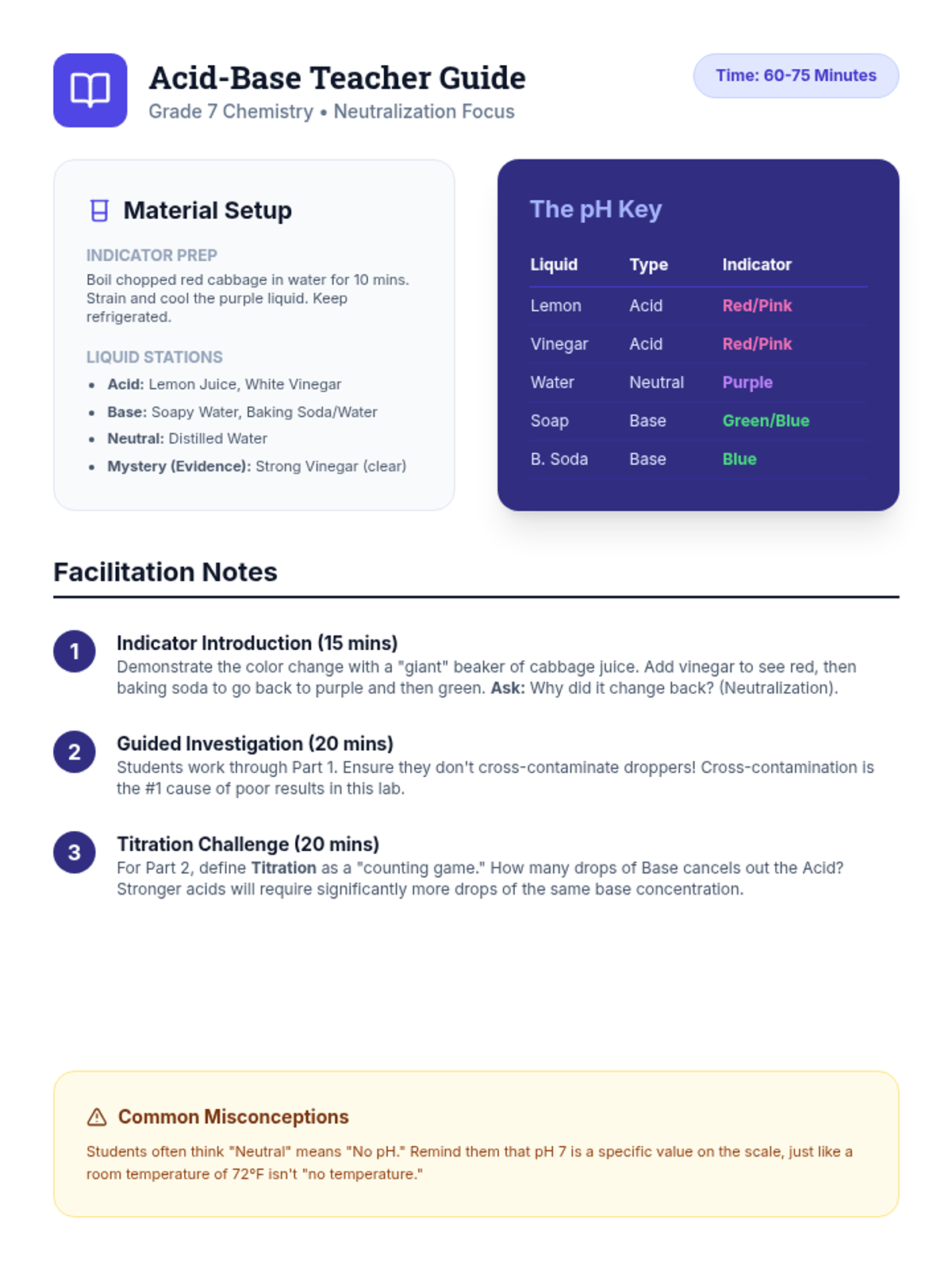
A facilitator's guide for the Grade 7 Acid-Base Forensics lab. It includes red cabbage indicator preparation instructions, a master pH color key, instructional strategies for titration, and a full answer key.
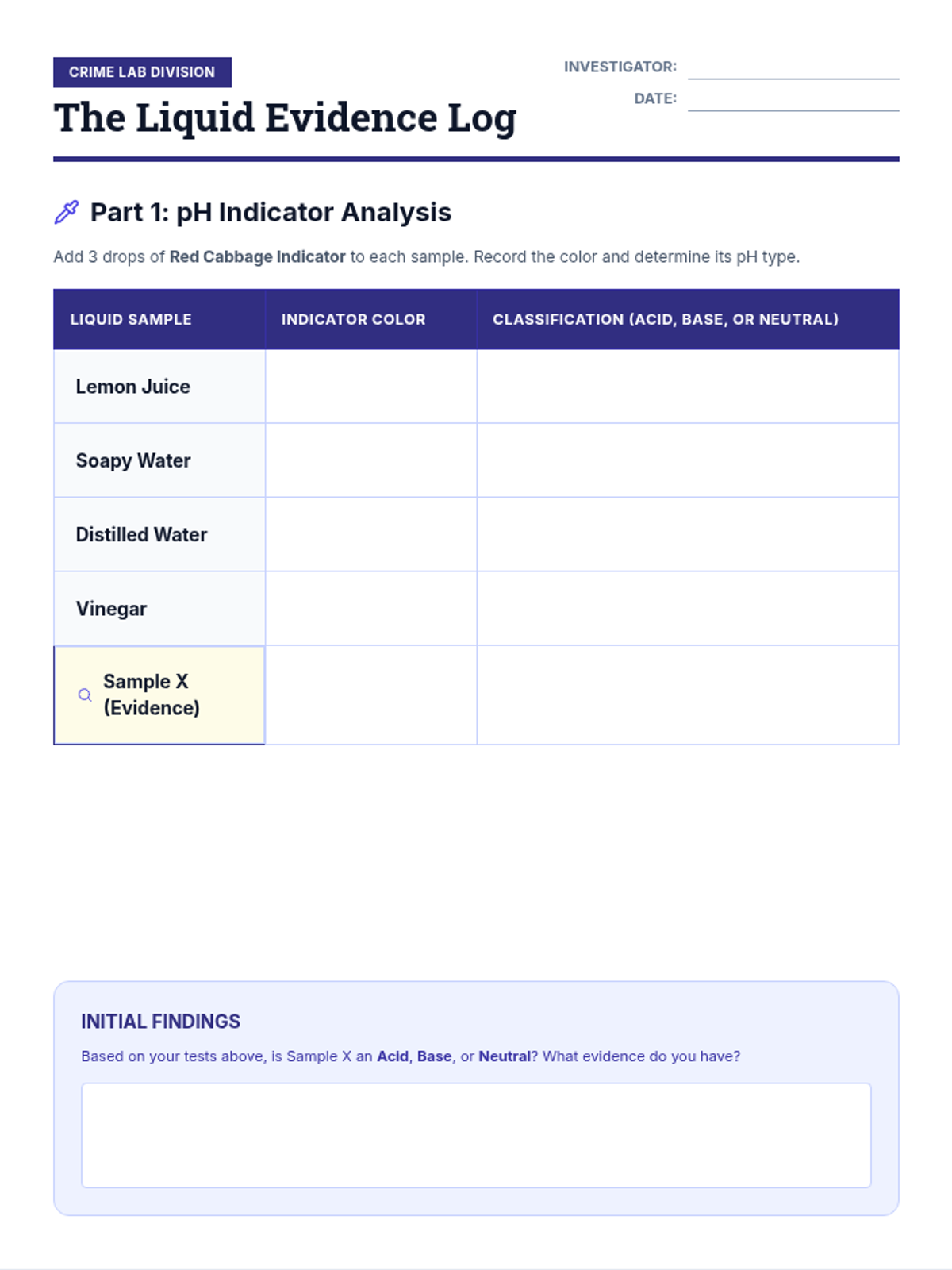
A 2-page lab report for Grade 7. Part 1 focuses on identifying acids, bases, and neutral substances using a red cabbage indicator. Part 2 introduces titration through a neutralization experiment where students count drops to find the balance point.
A 16:9 presentation for Grade 7 chemistry. It introduces the pH scale, explains how indicators work (specifically red cabbage juice), and outlines the process of simple titration for neutralization in a forensic context.
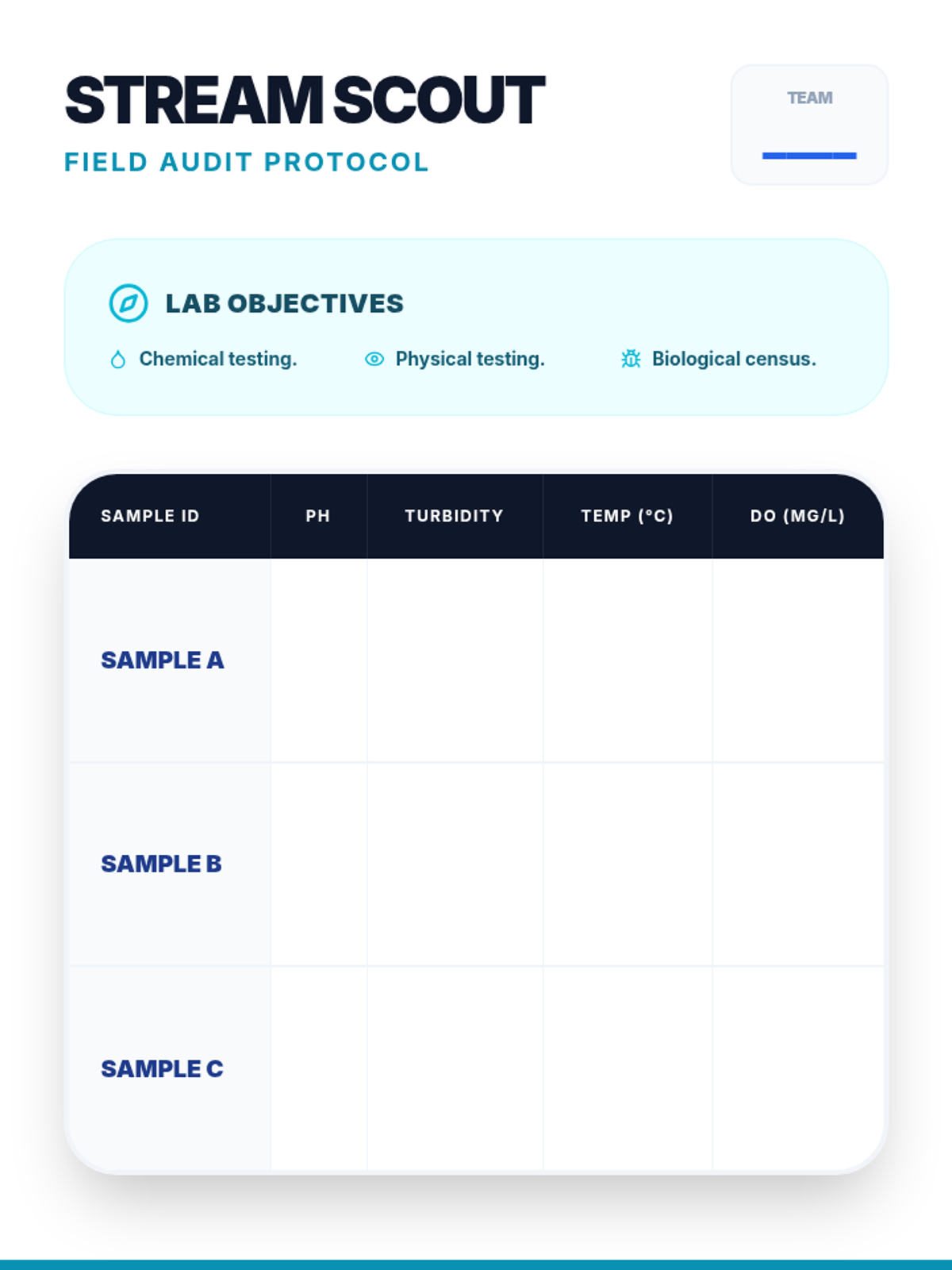
A hands-on laboratory activity sheet for the Stream Scout audit, allowing students to record chemical data and identify bio-indicator macroinvertebrates across different water samples.
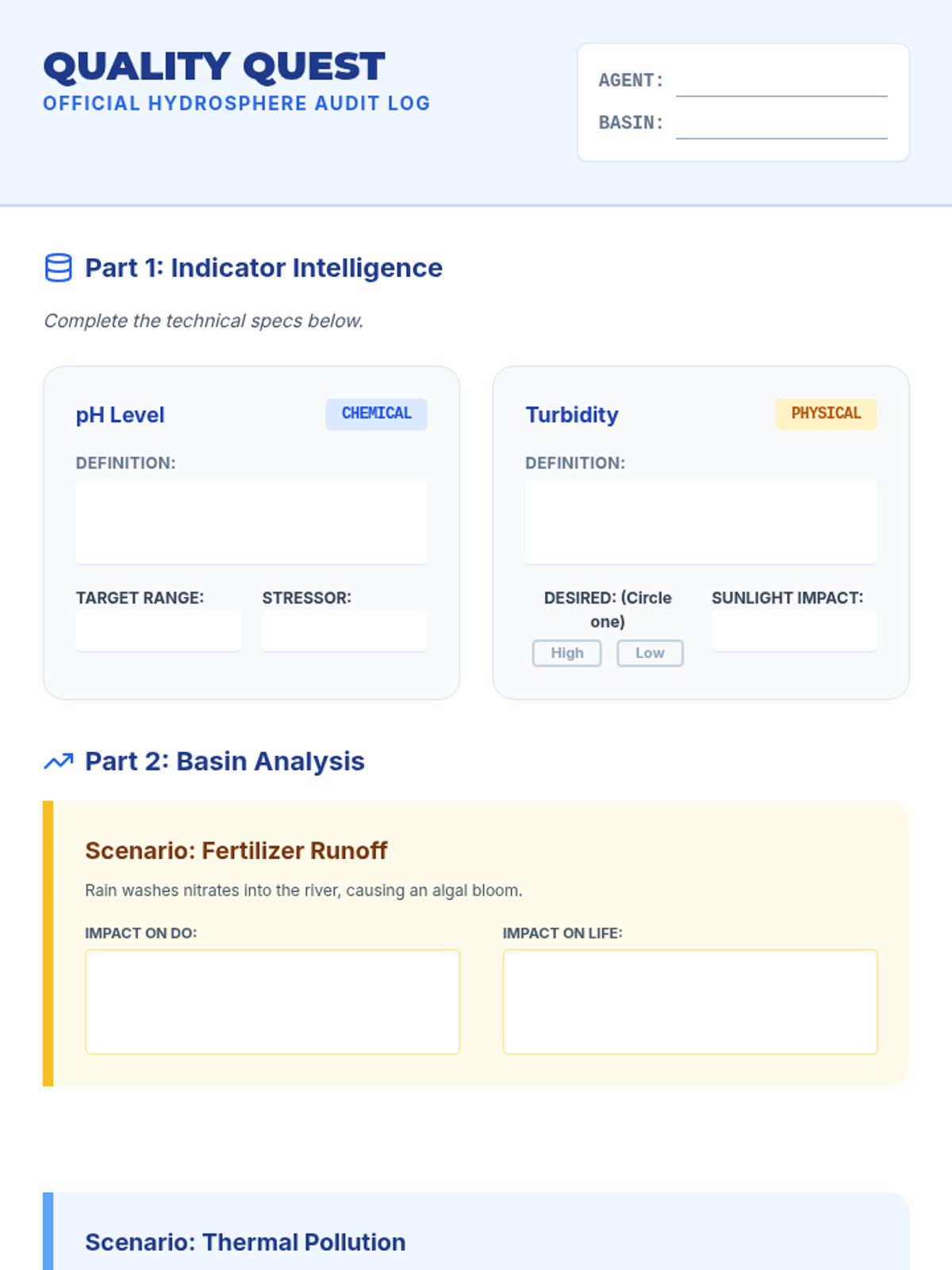
A student worksheet for the Aqua Quest lesson, focusing on defining water quality indicators and analyzing environmental scenarios affecting river basin health.
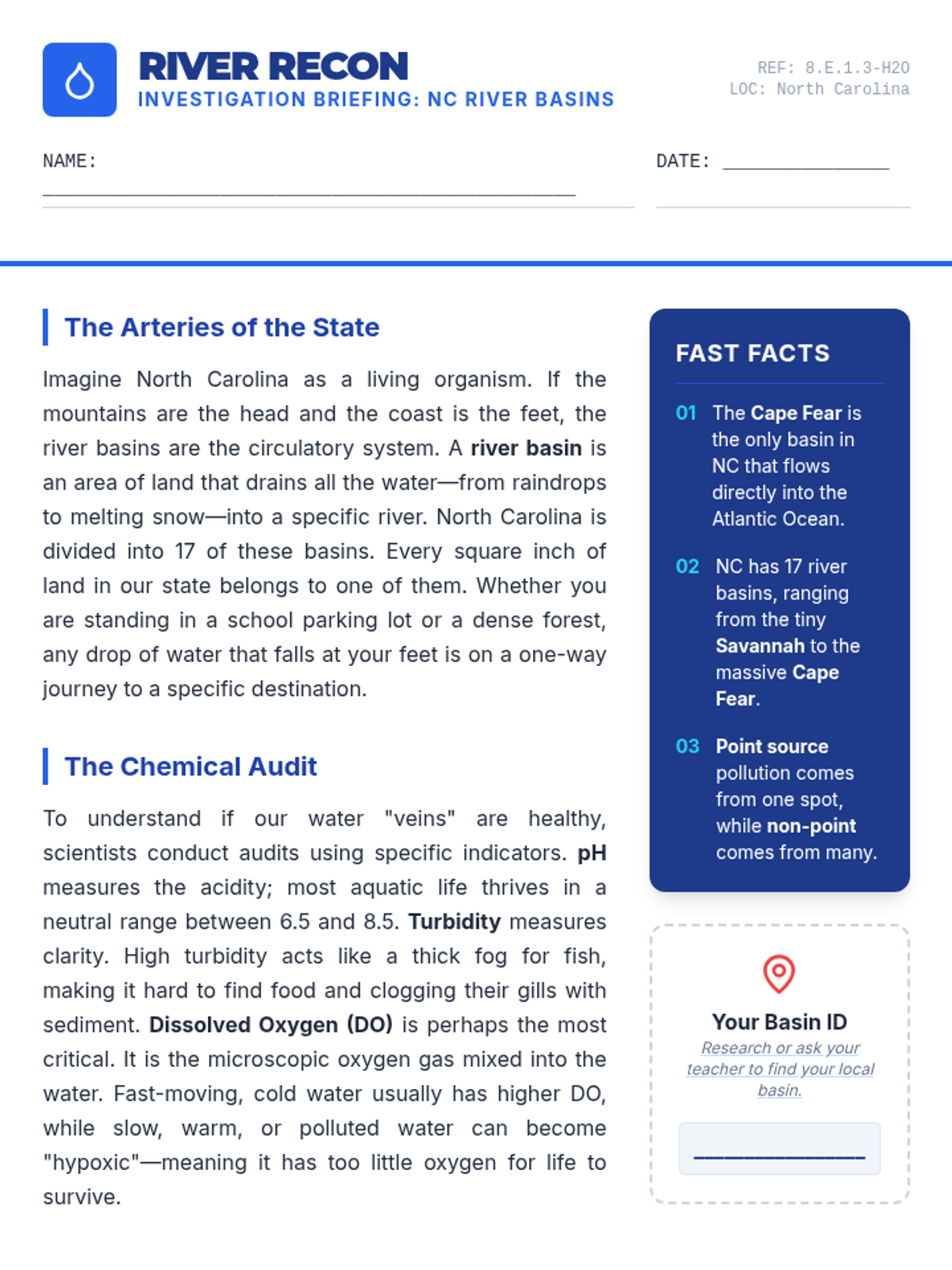
A detailed background reading for students about North Carolina river basins, water quality indicators, and bio-indicators, complete with comprehension questions.
An instructional slide deck for the Aqua Quest lesson, featuring visual explanations of NC river basins, pH, turbidity, dissolved oxygen, and bio-indicators.
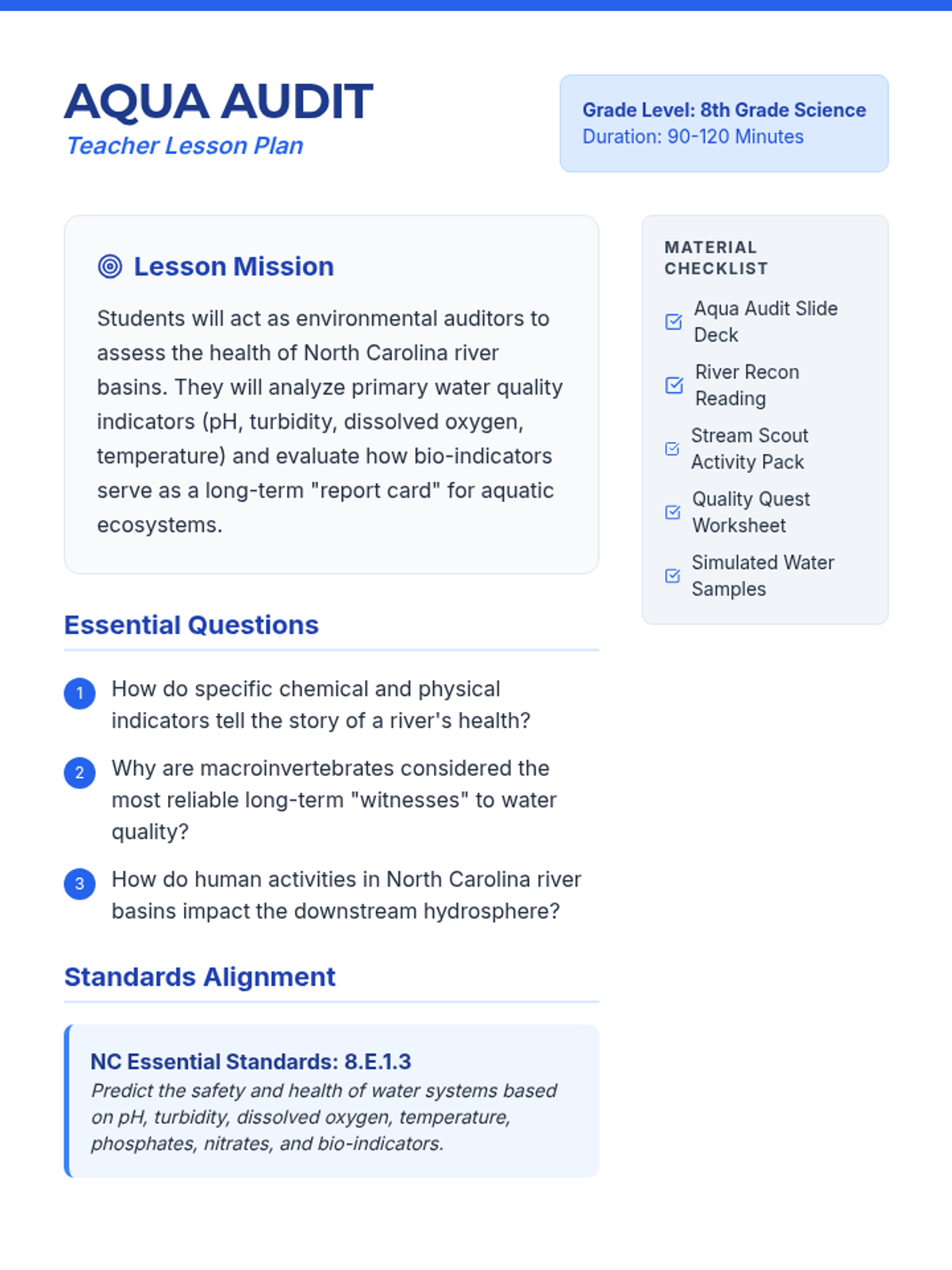
A comprehensive teacher lesson plan for the Aqua Quest hydrosphere audit, detailing instructional sequences, material checklists, and hands-on lab procedures for 8th-grade science.
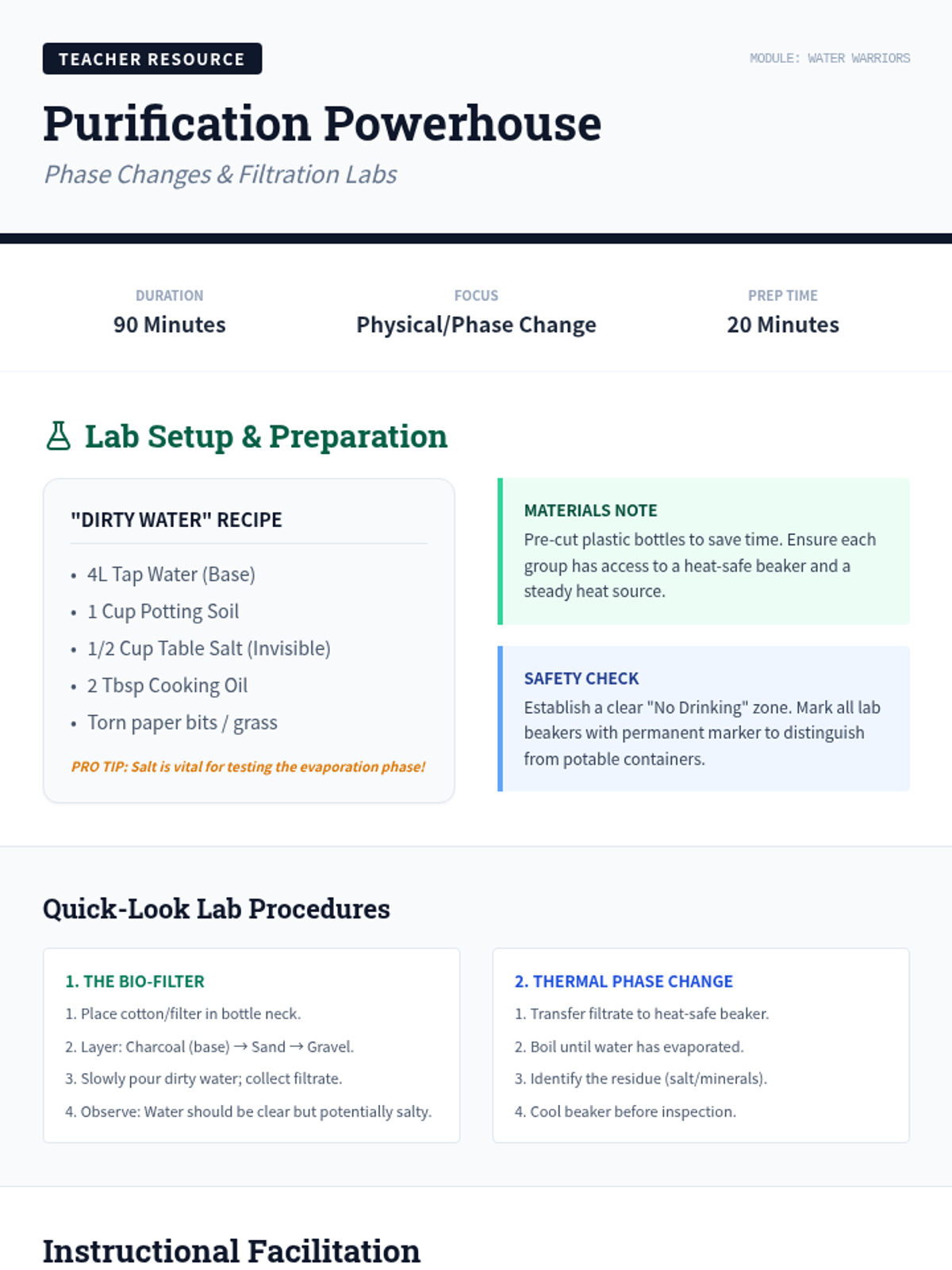
A comprehensive instructional guide for teachers to facilitate the water purification experiment. Includes lab prep recipes, facilitating prompts, answer keys, and troubleshooting tips.
A visual presentation guide for teaching the concepts of physical filtration and phase-change purification. Includes clear visual aids and a lab safety overview.
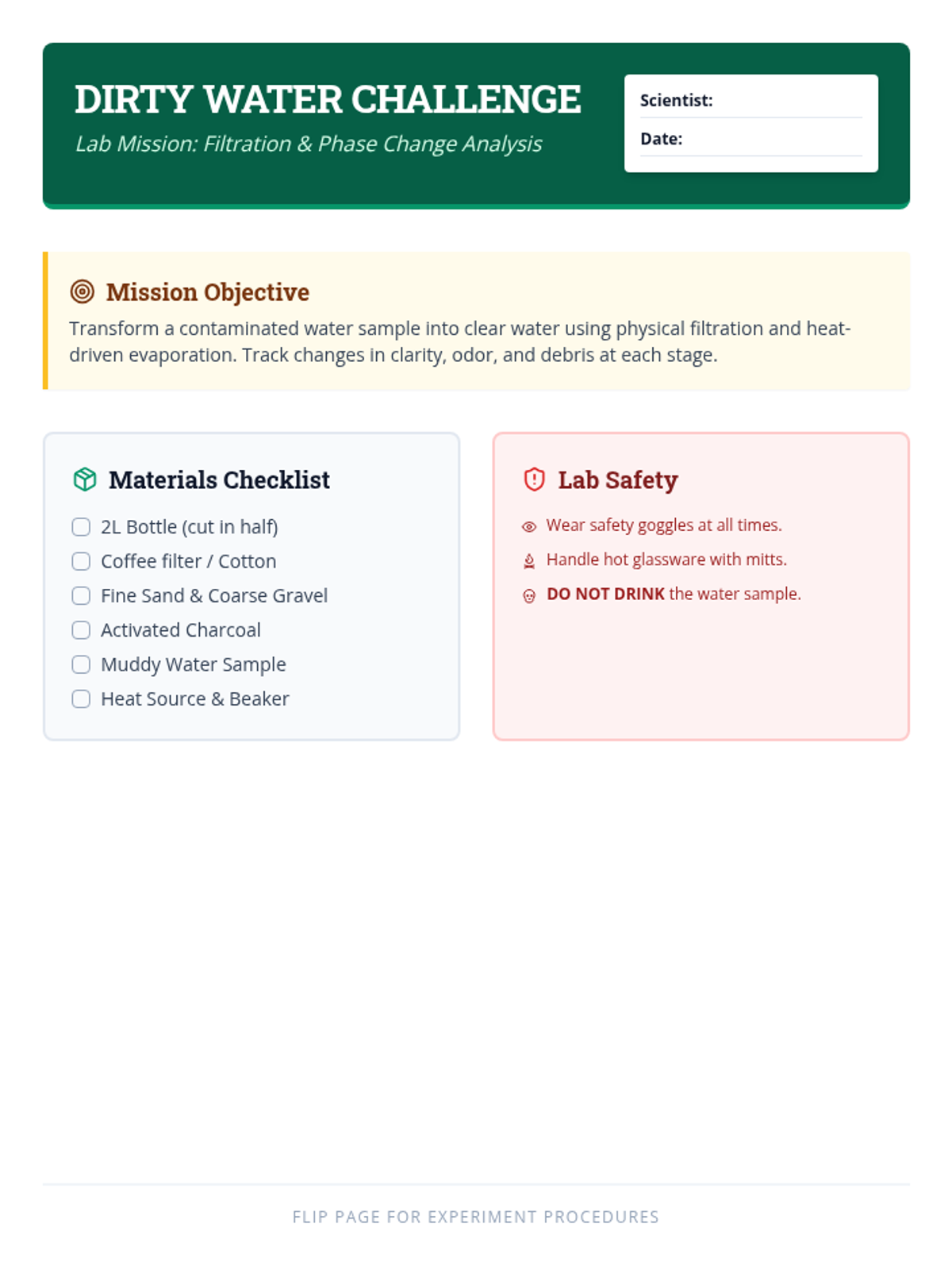
A comprehensive guide for students to conduct a two-part water purification experiment using filtration and evaporation. Includes safety tips, material lists, and observation sections.