An ultra-compact 1-page recording worksheet for the Syllable Snap activity, accommodating all 56 syllable pairs across a two-column layout. Students record syllables and final words. Header and rows have been resized to prevent page overflow.
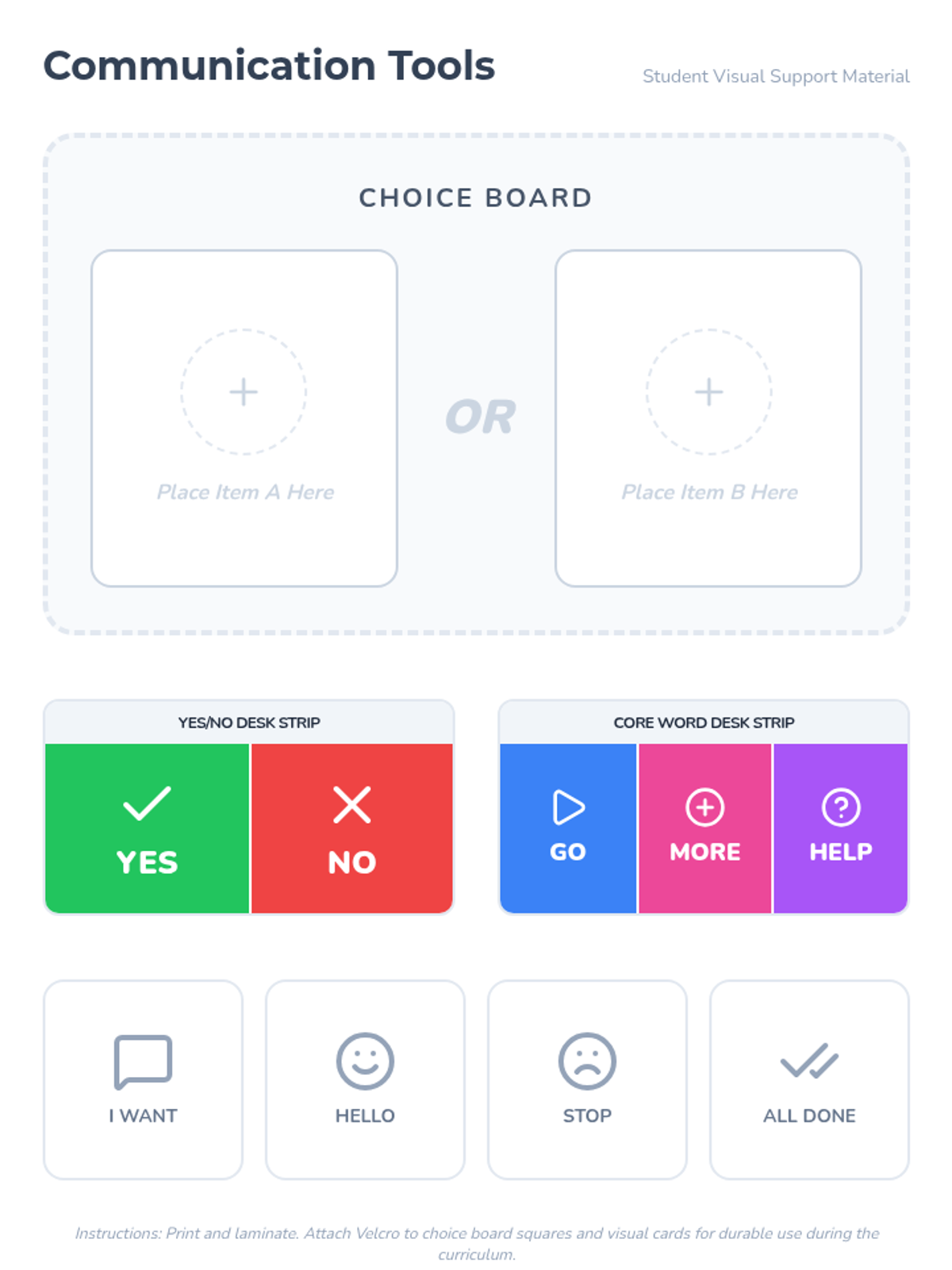
Visual communication supports for students, including a choice board template, desk strips for Yes/No and core words, and large modeling icons.
A visual slide deck to support the Voice Voyagers curriculum, featuring high-contrast modeling slides for Yes/No, Help, Go, and More.
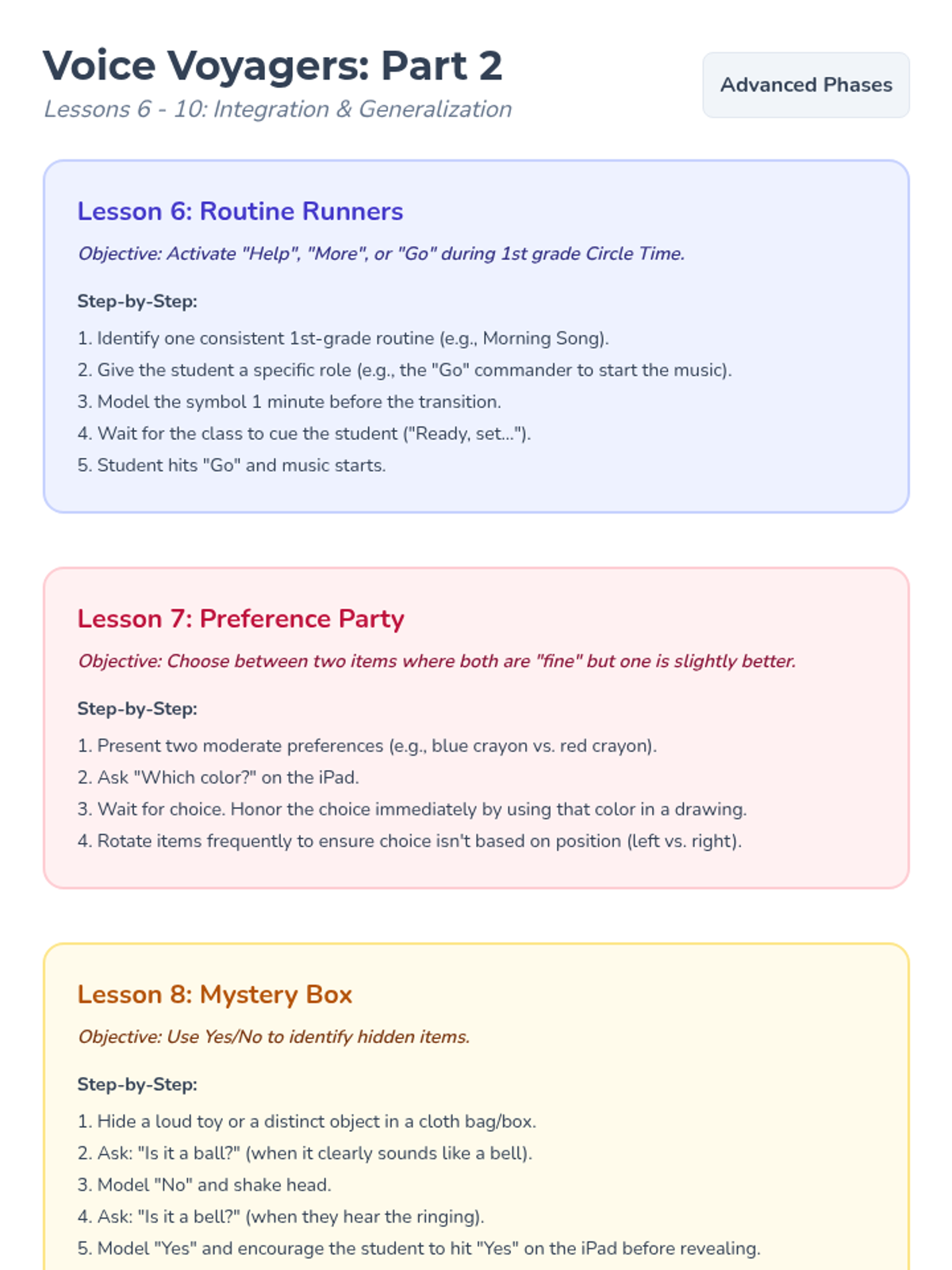
Step-by-step facilitation plans for Lessons 6 through 10 of the Voice Voyagers curriculum, focusing on generalization and complex social interactions.
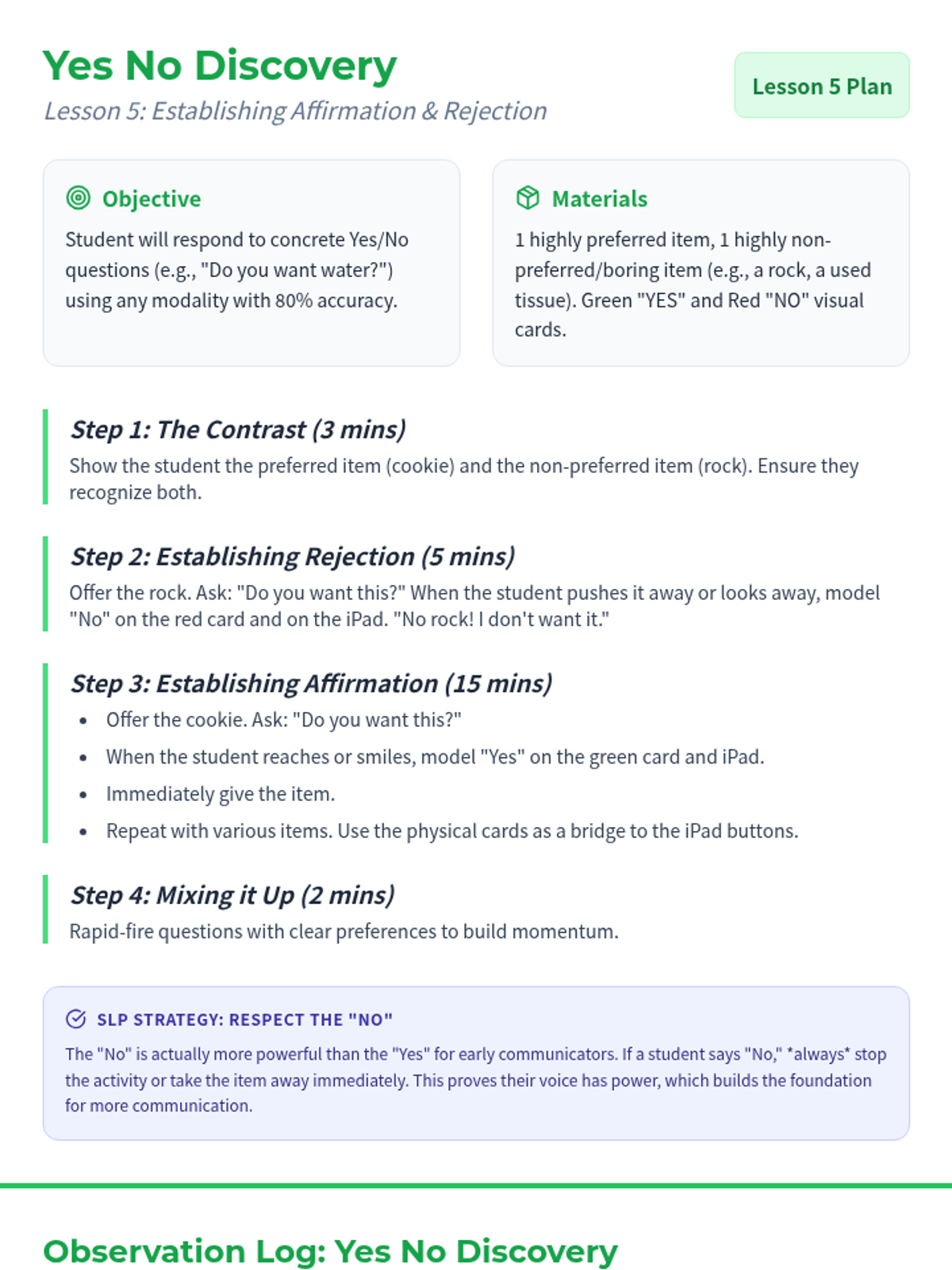
A step-by-step facilitation guide for SLPs to implement Lesson 5: Yes No Discovery, focusing on simple affirmation and rejection.
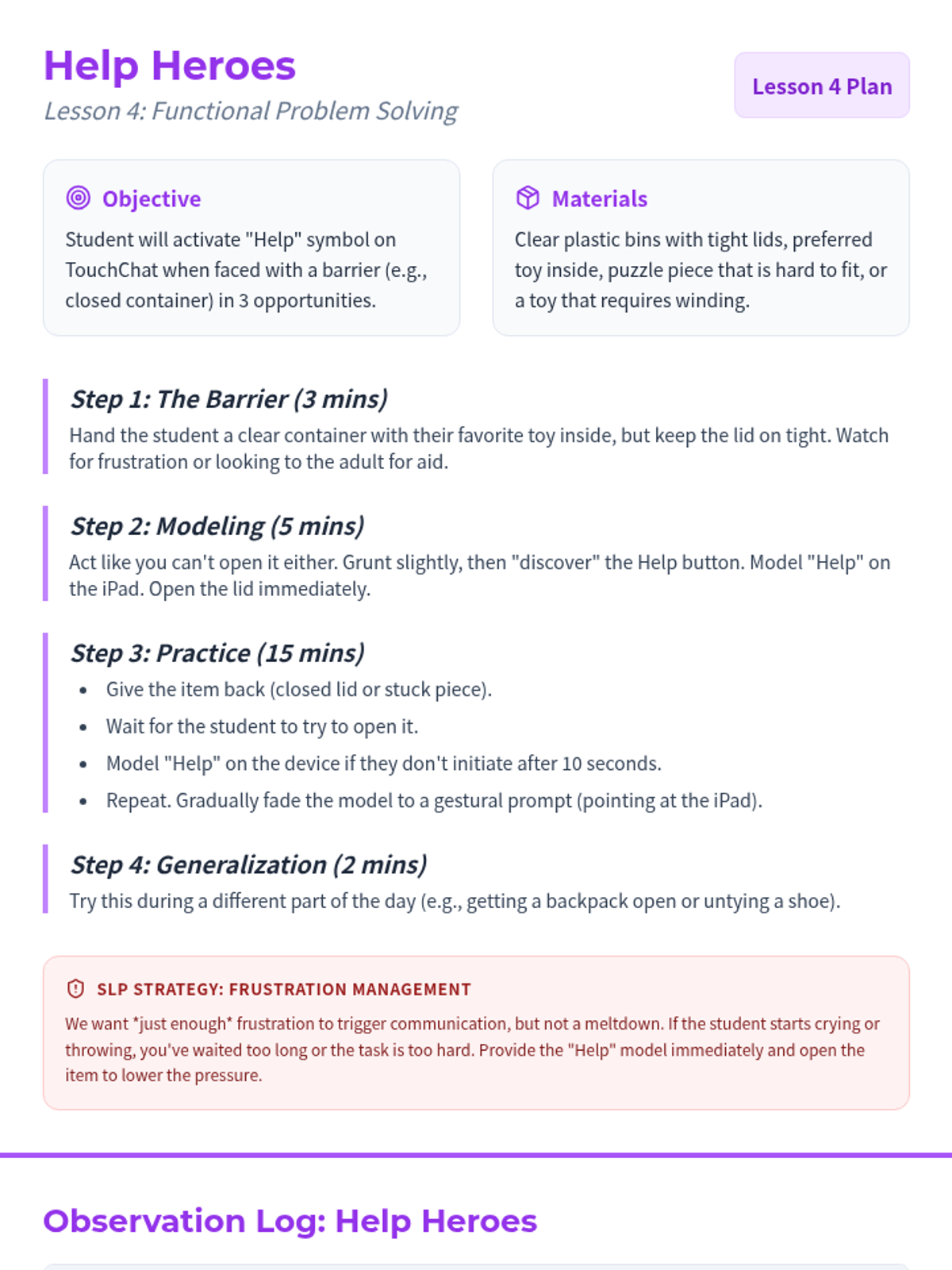
A step-by-step facilitation guide for SLPs to implement Lesson 4: Help Heroes, focusing on the core word "HELP" for problem-solving.
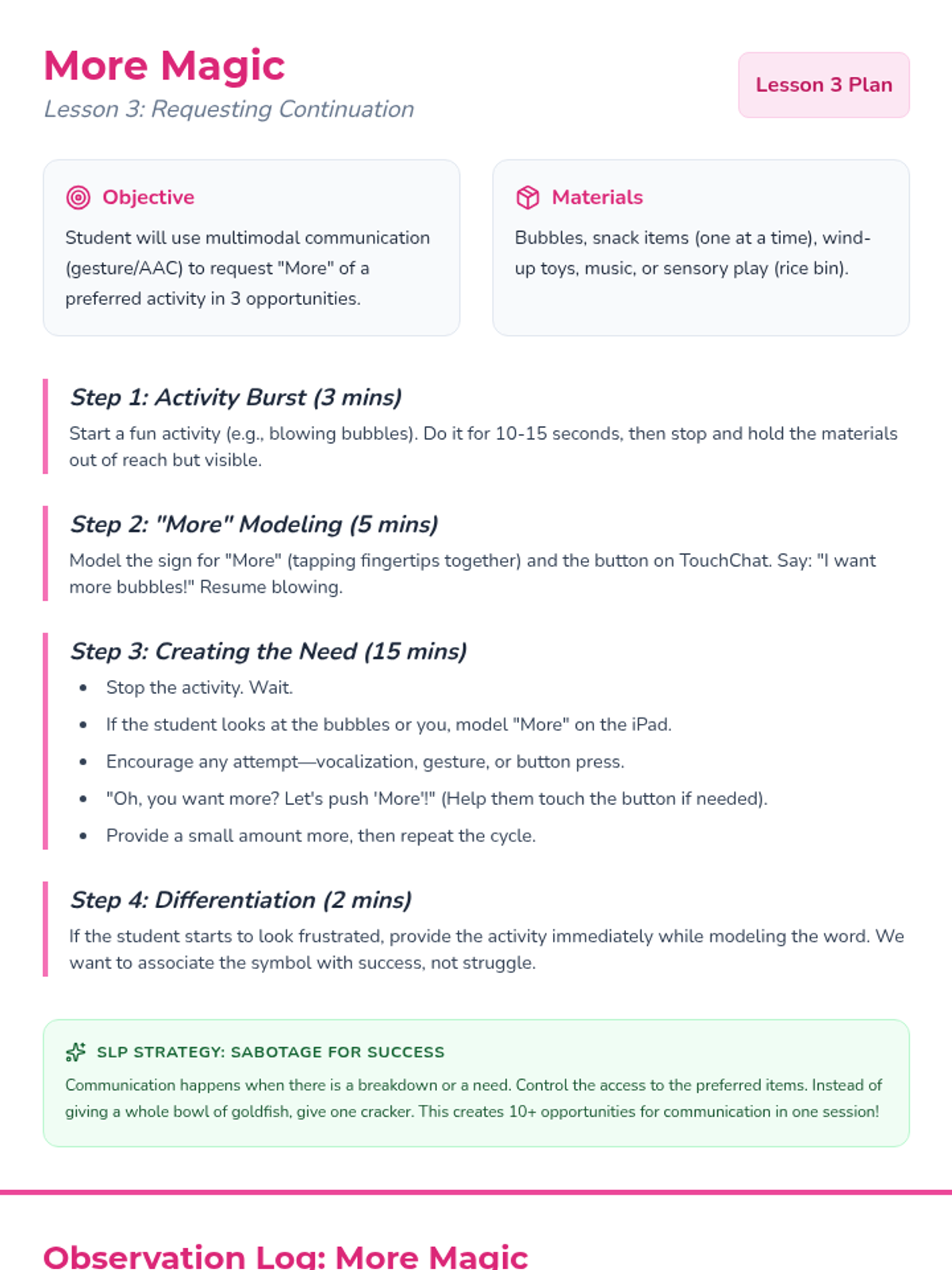
A step-by-step facilitation guide for SLPs to implement Lesson 3: More Magic, focusing on requesting continuation using the "MORE" symbol.
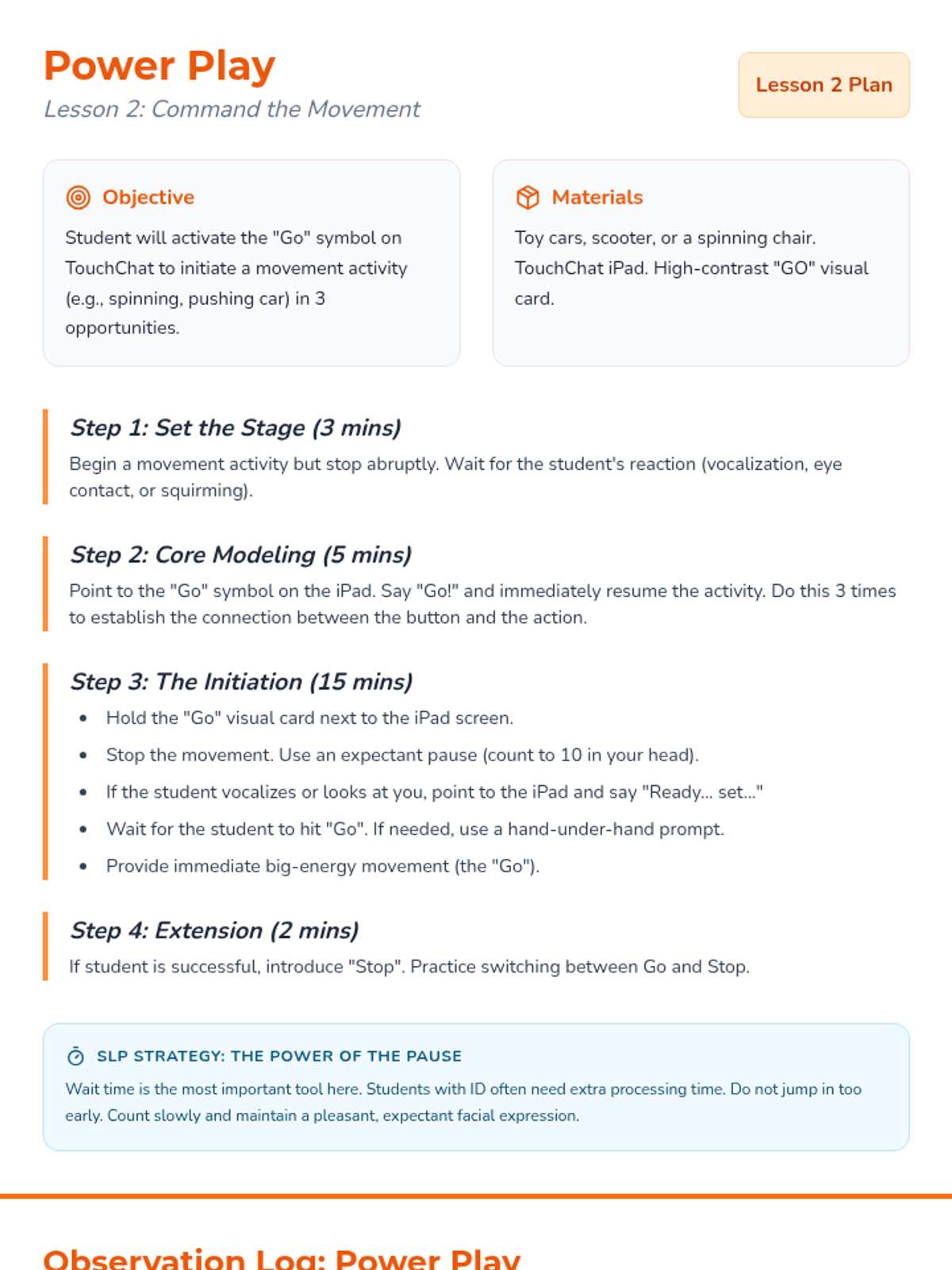
A step-by-step facilitation guide for SLPs to implement Lesson 2: Power Play, focusing on the core word "GO" during movement activities.
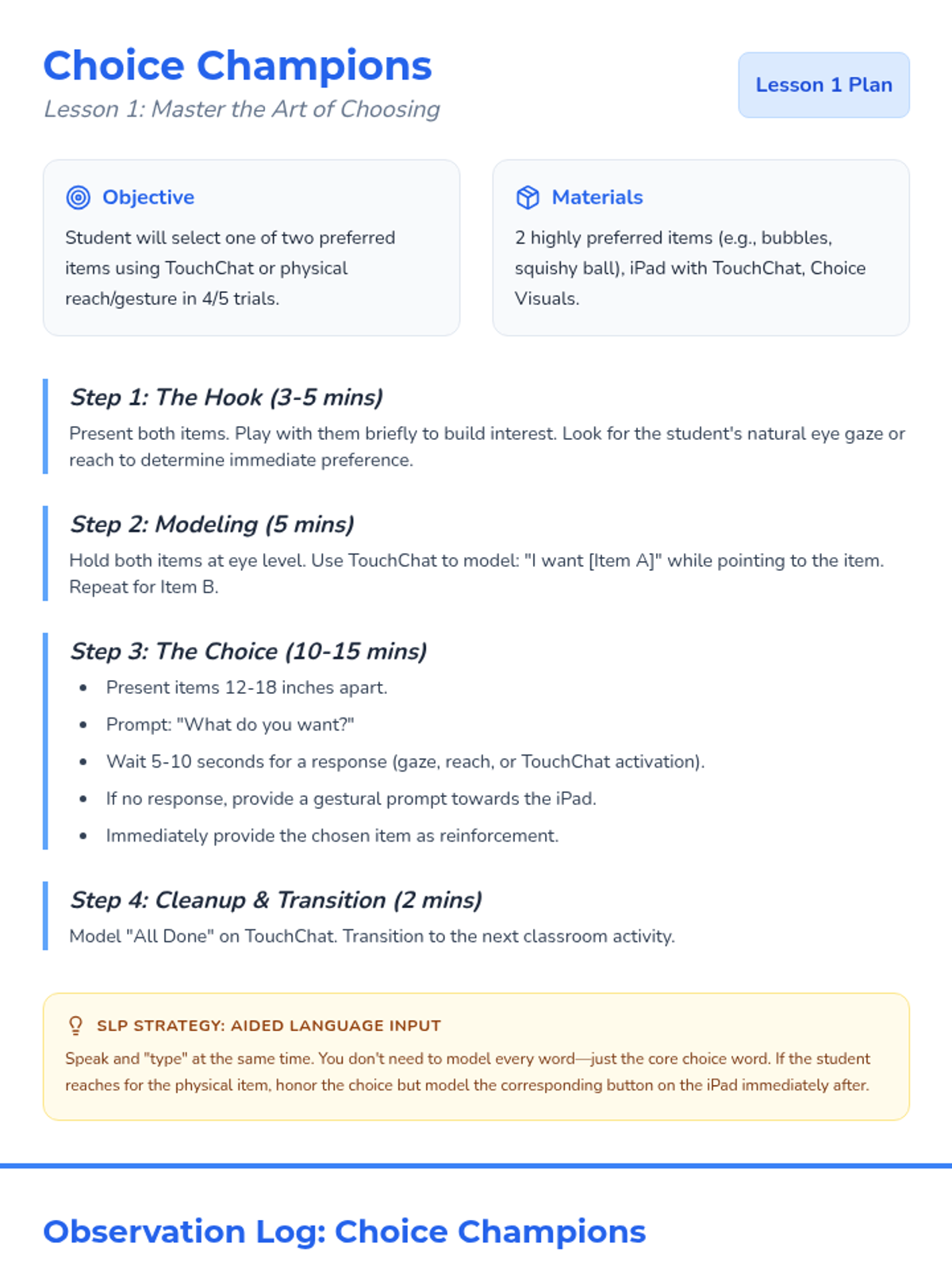
A step-by-step facilitation guide for SLPs to implement Lesson 1: Choice Champions, focusing on choice-making between two preferred items using TouchChat.
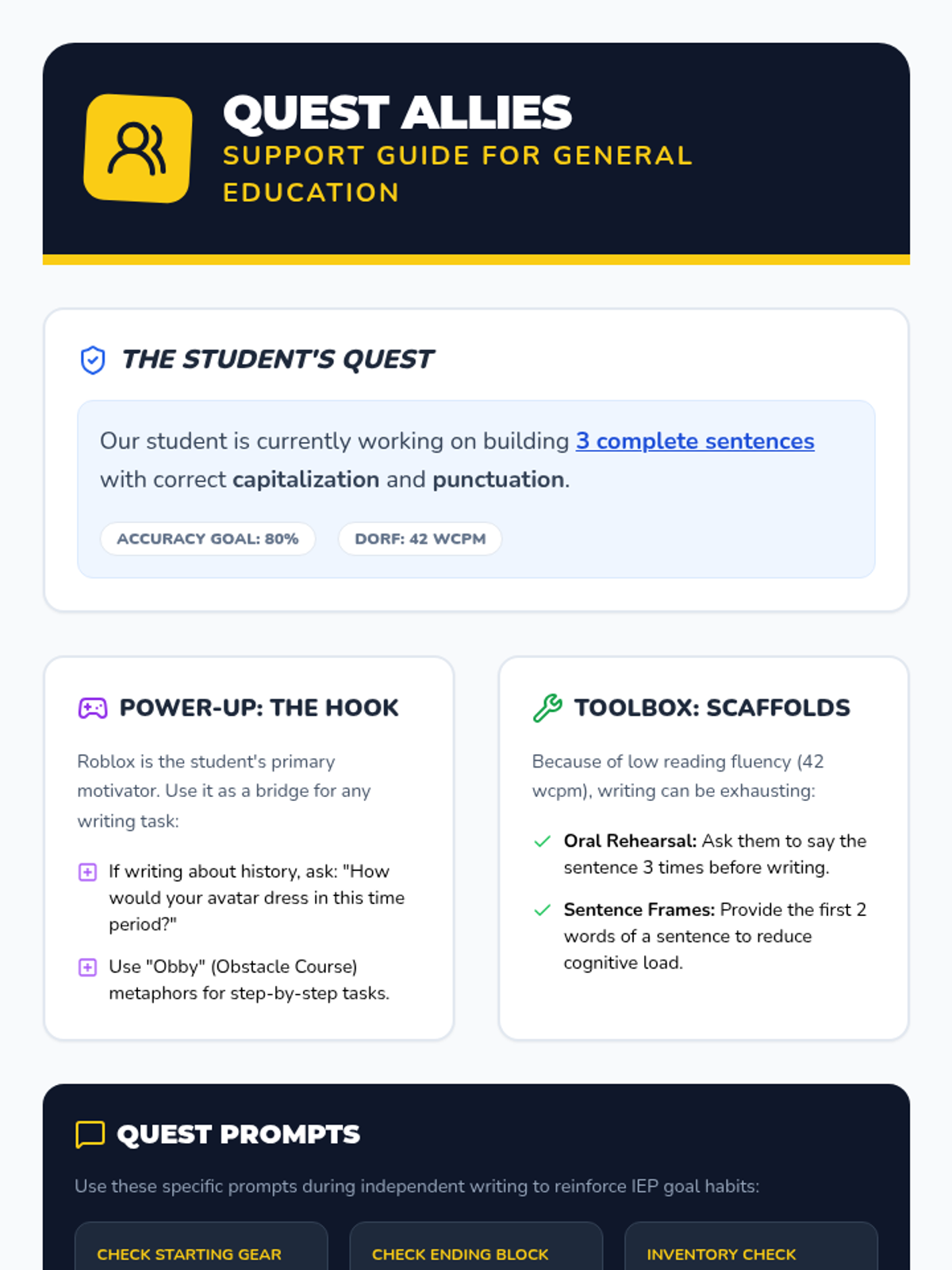
A collaboration handout for general education teachers explaining how to support the student's specific sentence-writing IEP goal. It includes Roblox-themed engagement hooks, quick scaffolding techniques, and verbal prompting scripts.
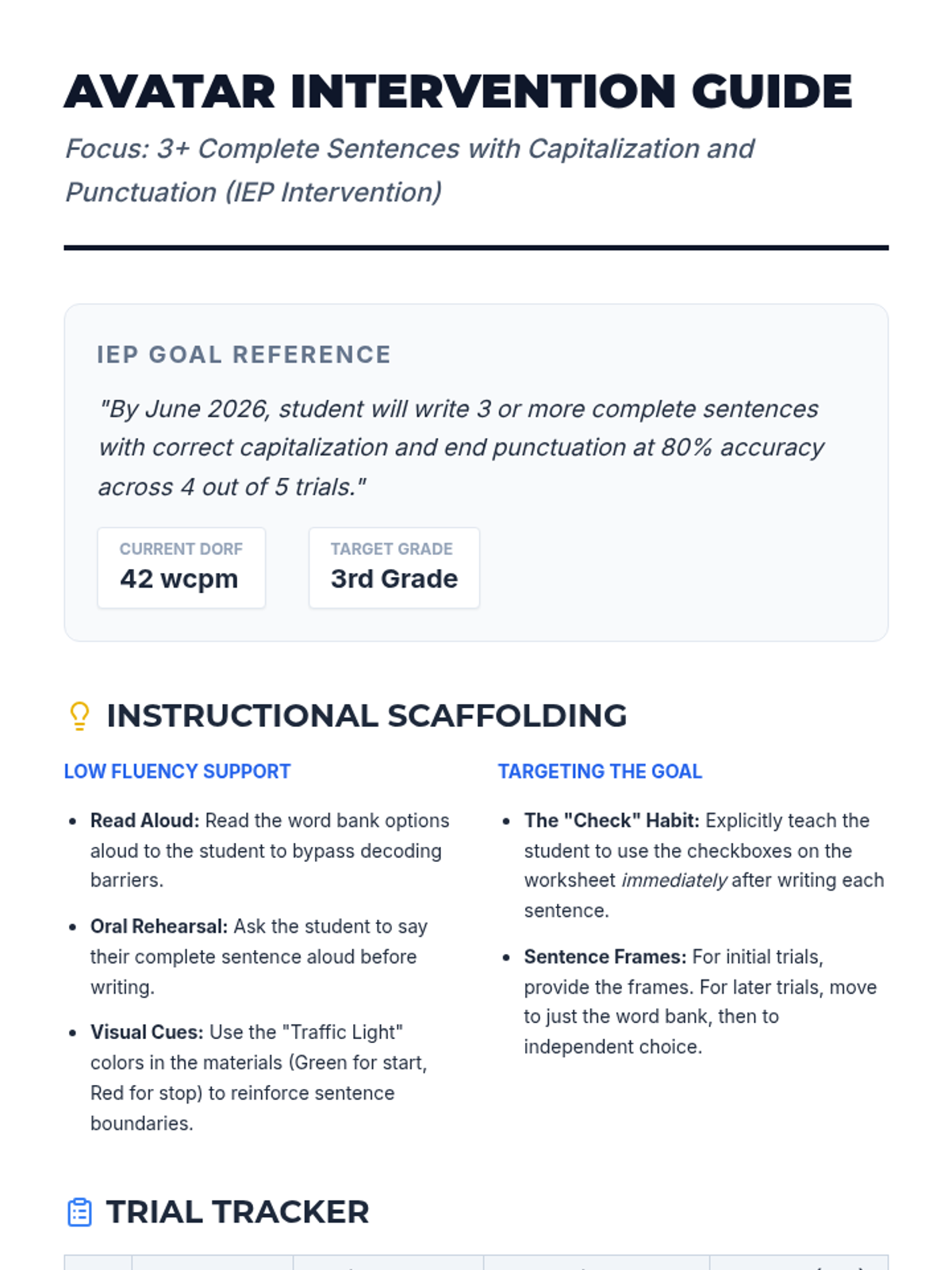
A teacher's guide providing instructional strategies for low-fluency students, IEP goal alignment, and a trial tracker for data collection. includes specific tips for using Roblox themes to motivate student writing.
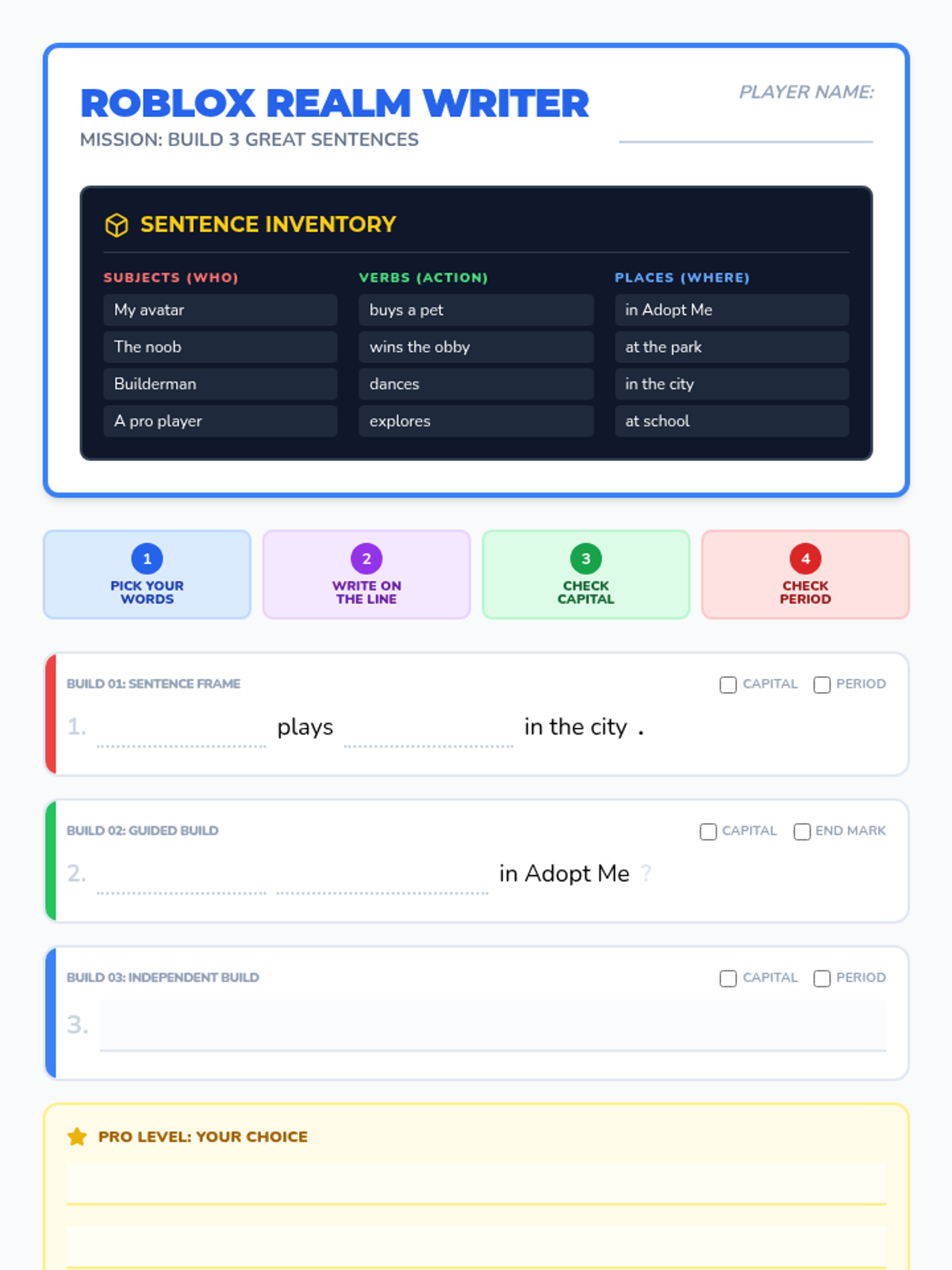
A print-ready Roblox-themed worksheet featuring a word bank and graded sentence frames (full support to independent). Designed to help students draft three sentences with checklists for capitalization and end punctuation. Includes chunked directions for clear task management.
A visually engaging Roblox-themed slide deck designed to teach sentence structure, capitalization, and punctuation to students. It includes modeling, guided practice with word blocks, and a student self-check list.
Visual presentation for Lesson 2 focused on teaching main idea and supporting details using inventors like Madam C.J. Walker, now including a historical snapshot of the year 1942.
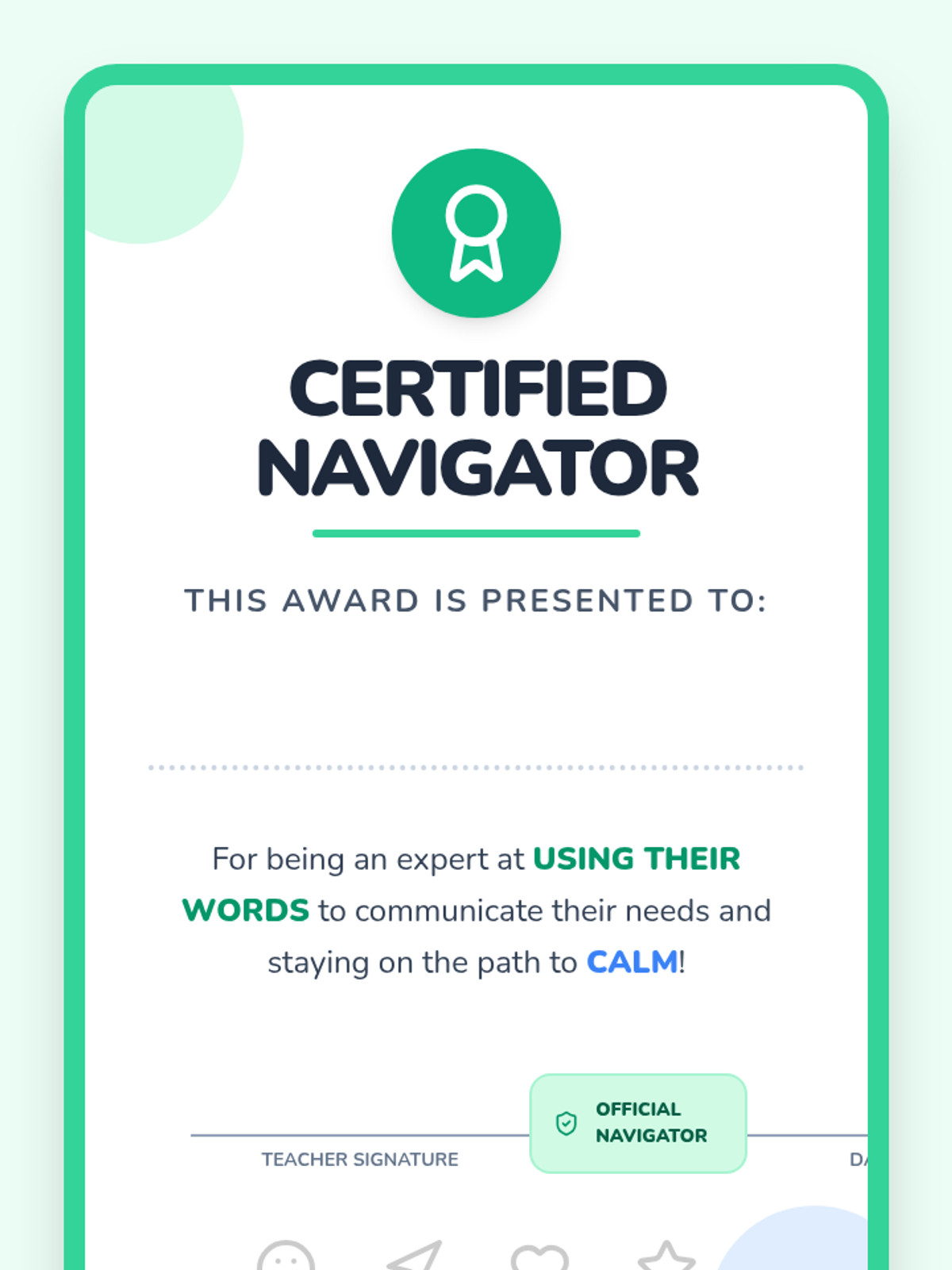
A celebratory certificate to award to first-grade students once they demonstrate successful use of the Feelings Navigator Chart and verbal communication skills. Designed to reinforce positive behavior and provide a sense of achievement.
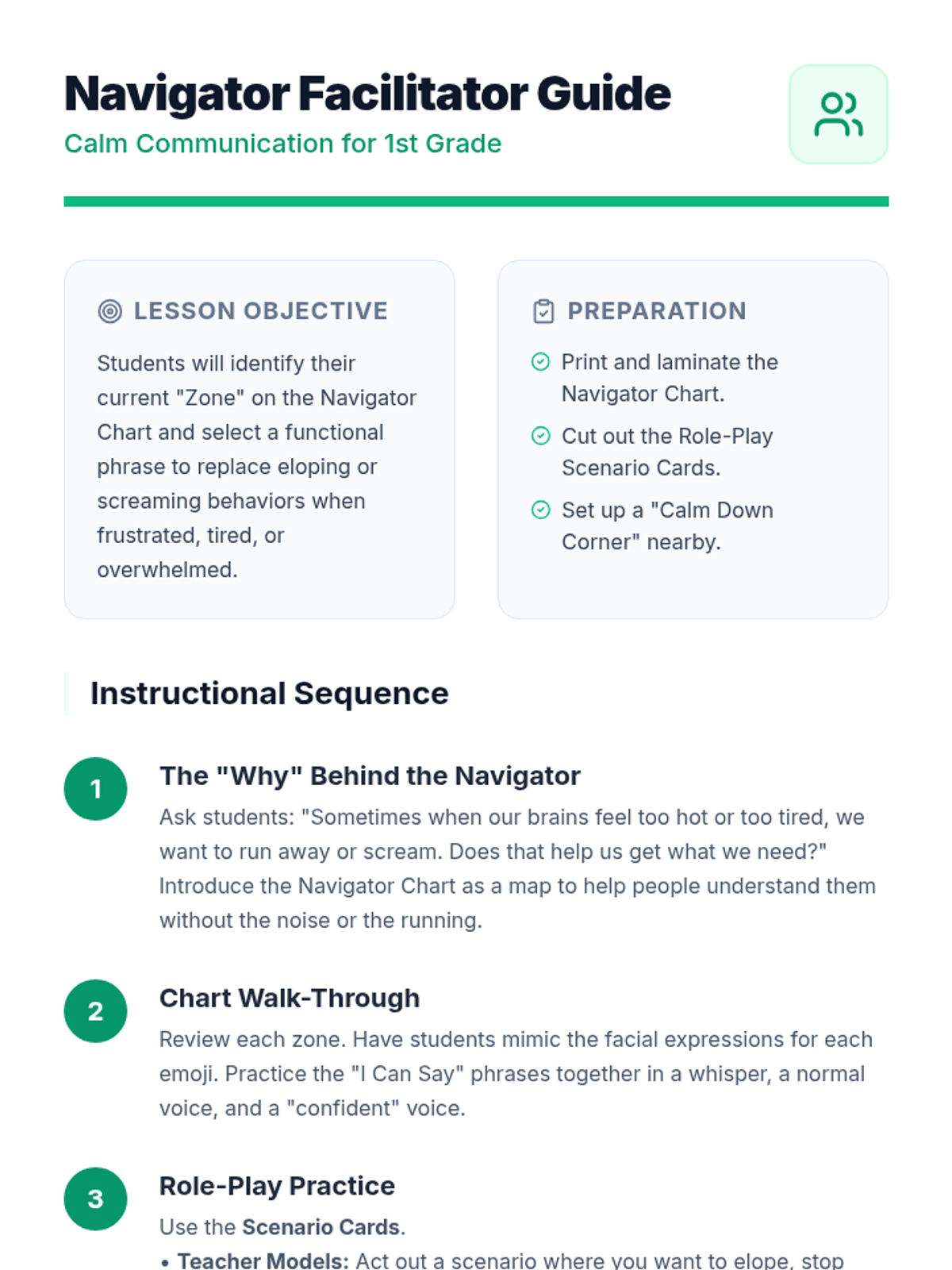
A comprehensive teacher facilitation guide for the Calm Communication lesson, including step-by-step instructional sequences, behavioral management tips for eloping and screaming, and an observation log to track student progress.
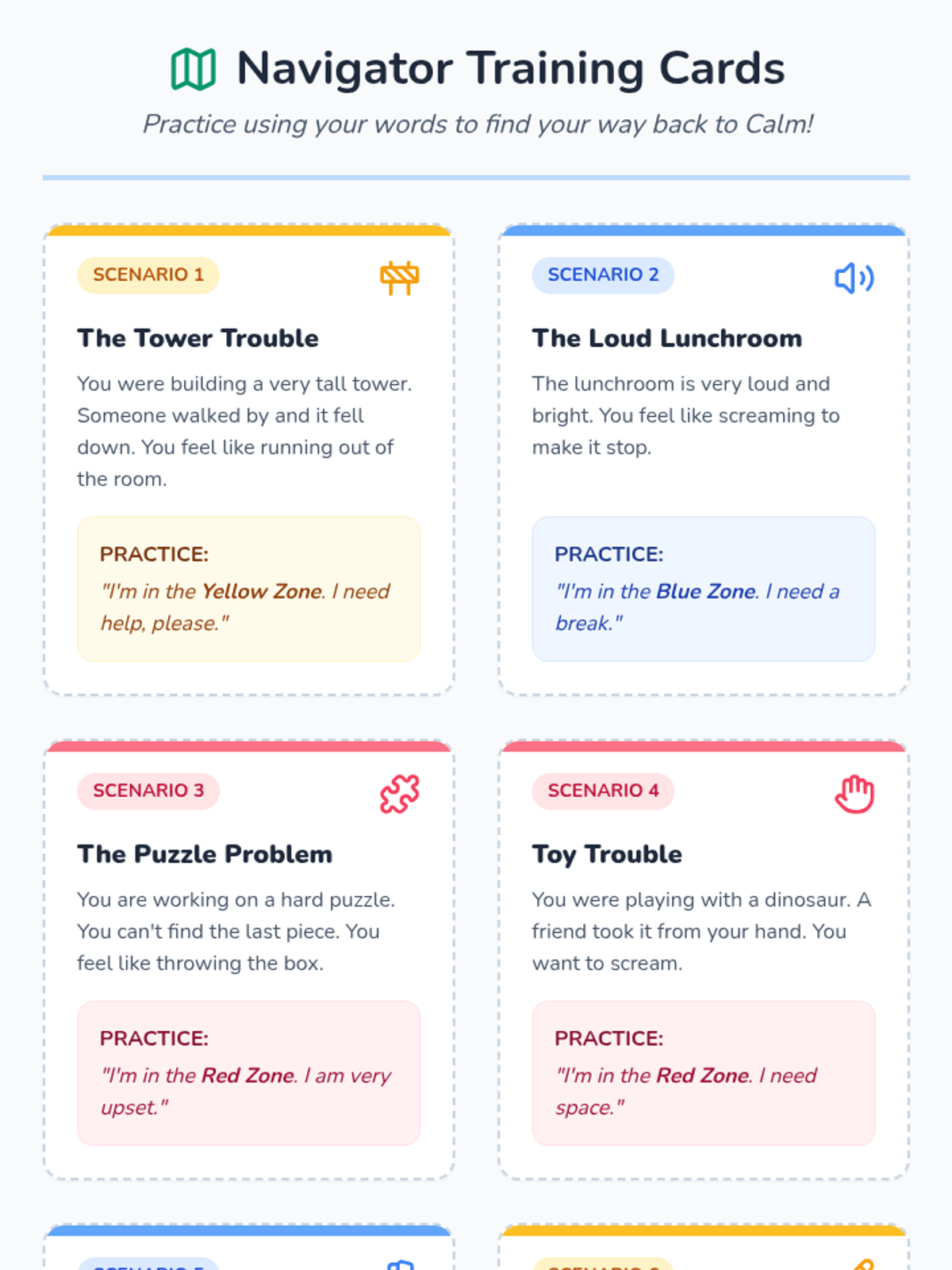
A set of 6 role-play scenario cards specifically for first graders, focusing on common school triggers like transitions, difficult tasks, and social conflicts. Each card provides a "Practice" section to help students use verbal communication instead of eloping or screaming.
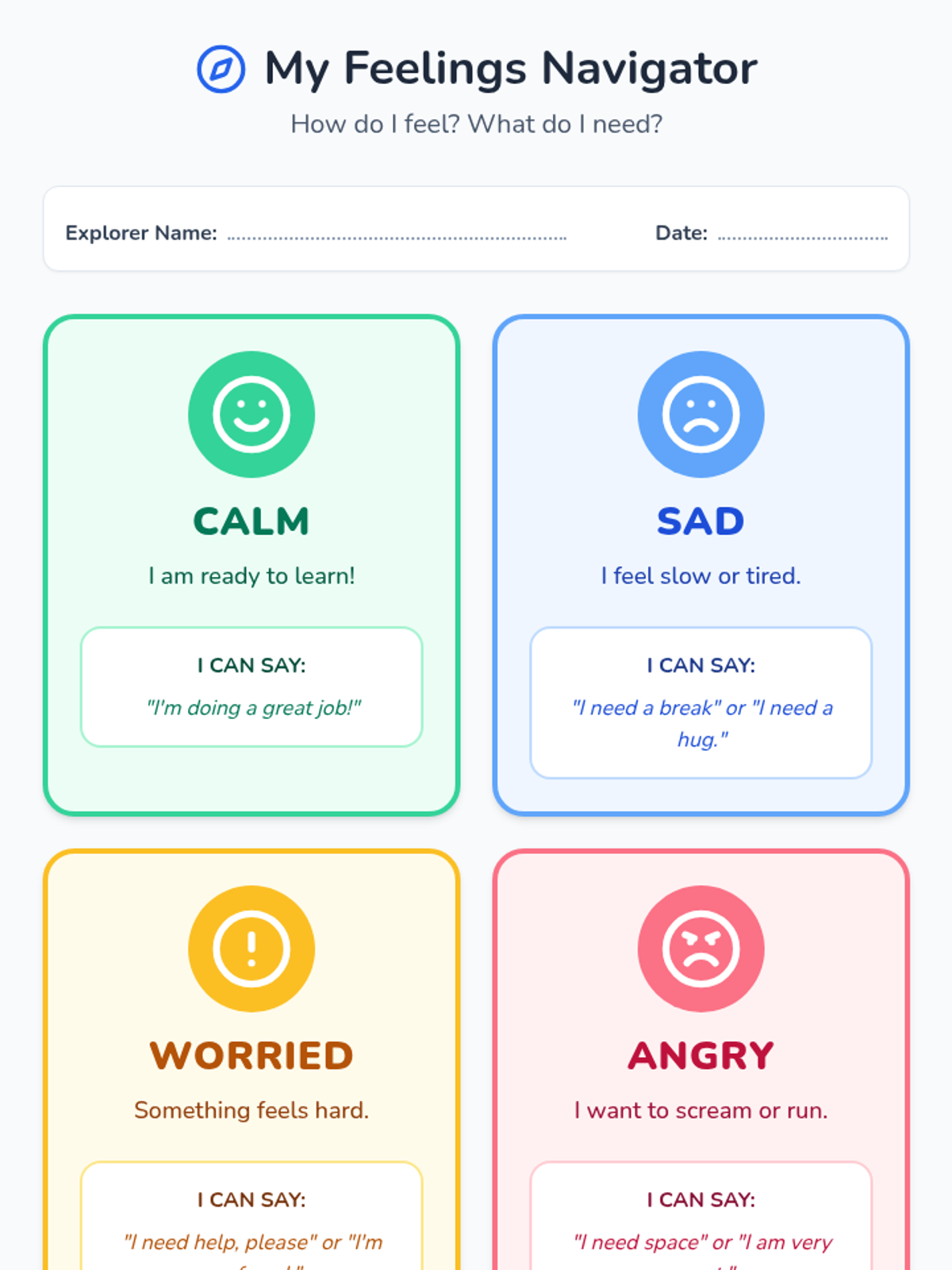
A visual feelings chart designed for first graders, featuring four color-coded emotion zones (Calm, Sad, Worried, Angry) with corresponding "I can say" prompts to encourage verbal communication over eloping or screaming.
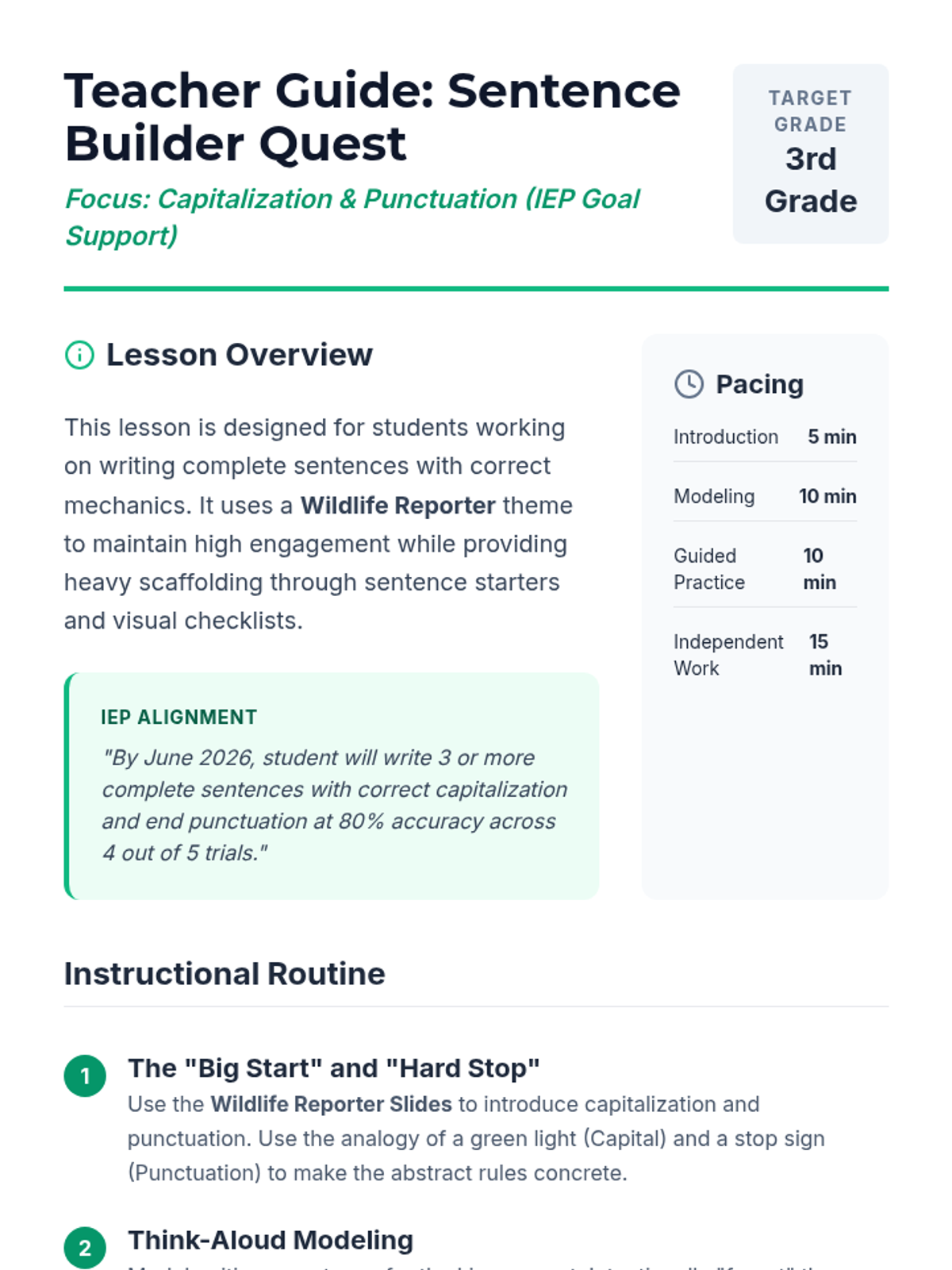
A comprehensive teacher guide for the Sentence Builder Quest lesson, featuring instructional routines, differentiation strategies for low reading levels, and a data tracking table for IEP goals.
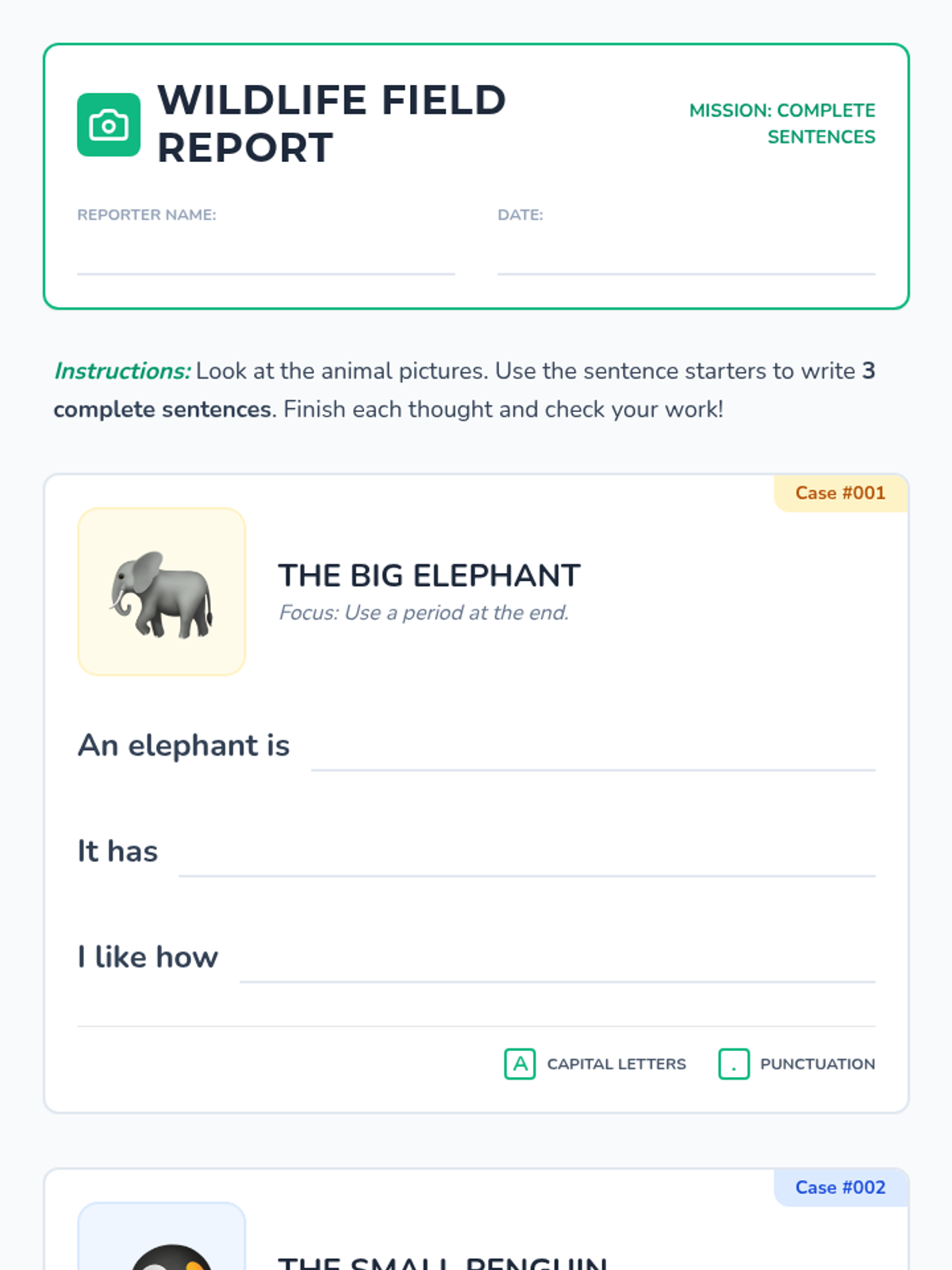
A guided writing worksheet featuring three animal prompts with pictures and sentence starters to help students practice writing complete sentences with correct mechanics.
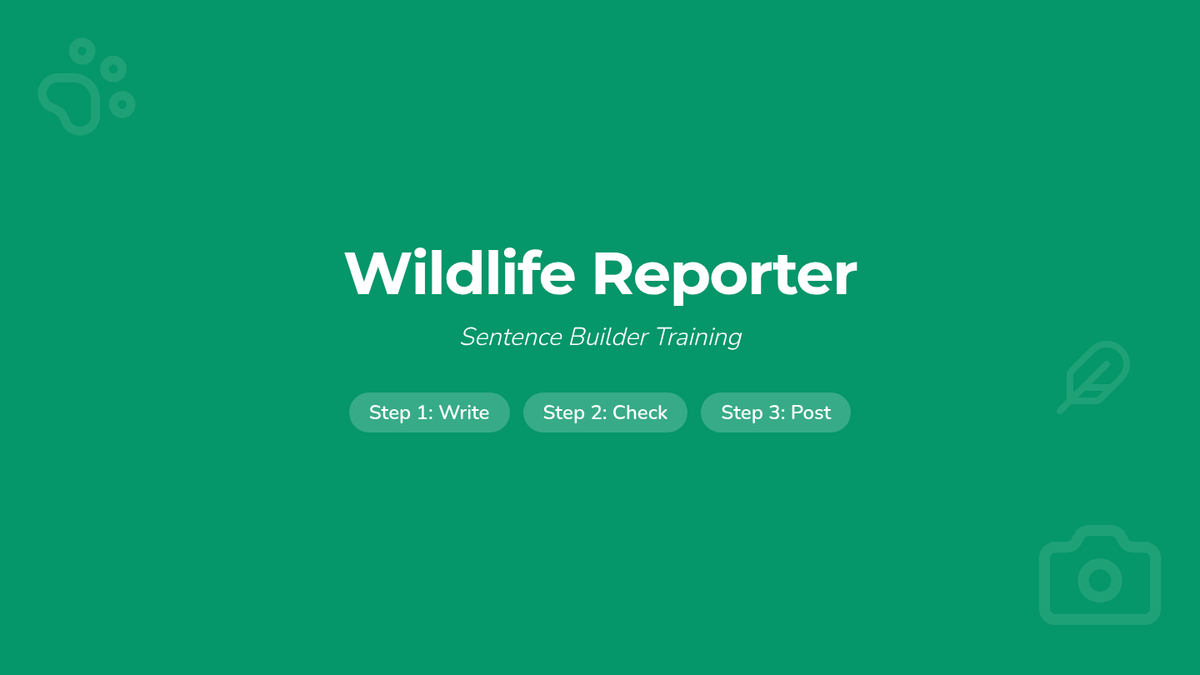
Instructional slides for teaching sentence mechanics using a wildlife reporter theme, featuring capitalization and punctuation rules along with guided animal prompts.
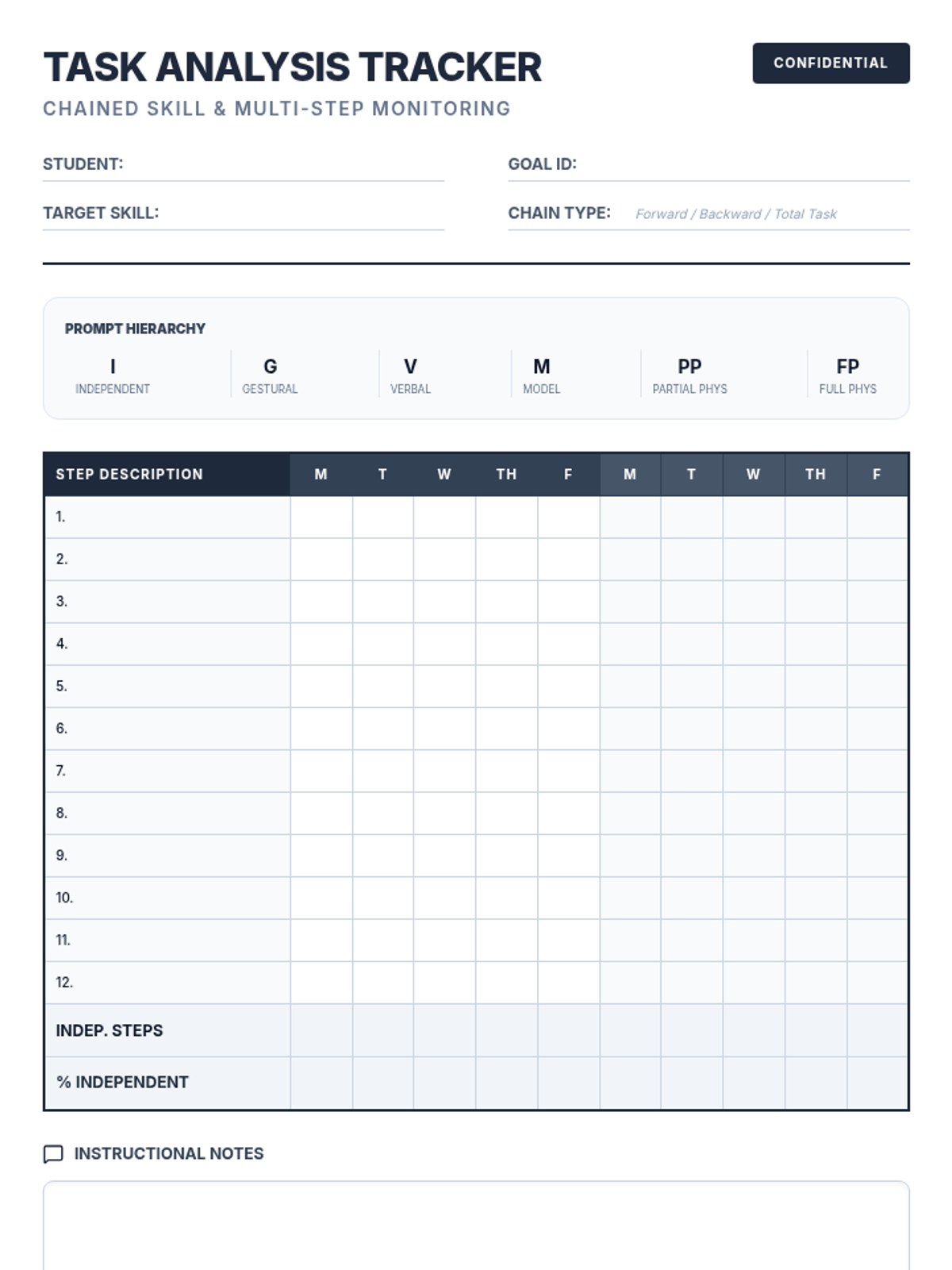
A task analysis data sheet for tracking complex, multi-step skills (e.g., hygiene routines, vocational tasks). It allows for recording prompt levels across 10 sessions with automated independent step calculation.
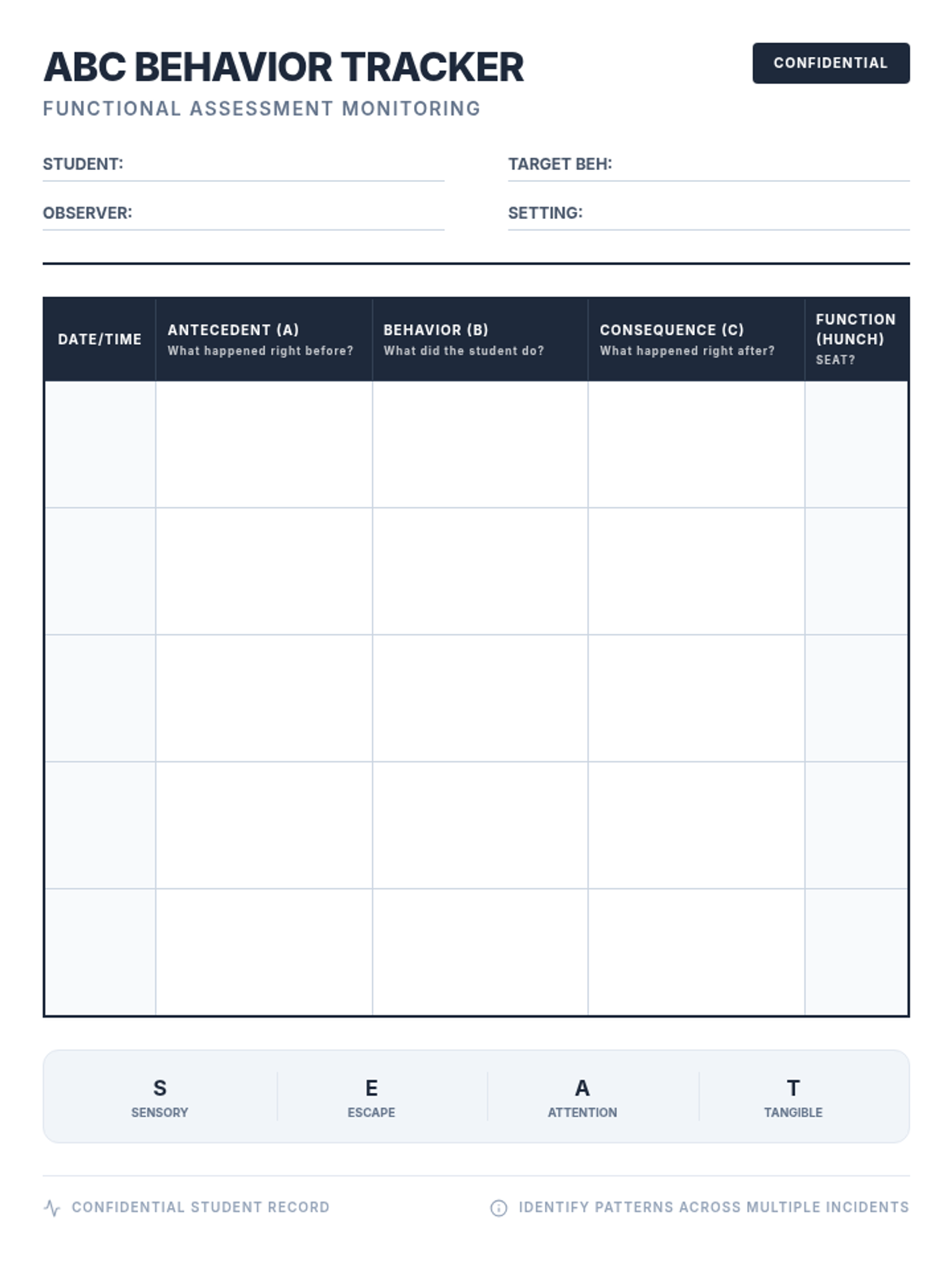
An ABC (Antecedent-Behavior-Consequence) tracking sheet for functional behavior assessment. It includes structured columns for recording incident details and a SEAT function key for analysis.
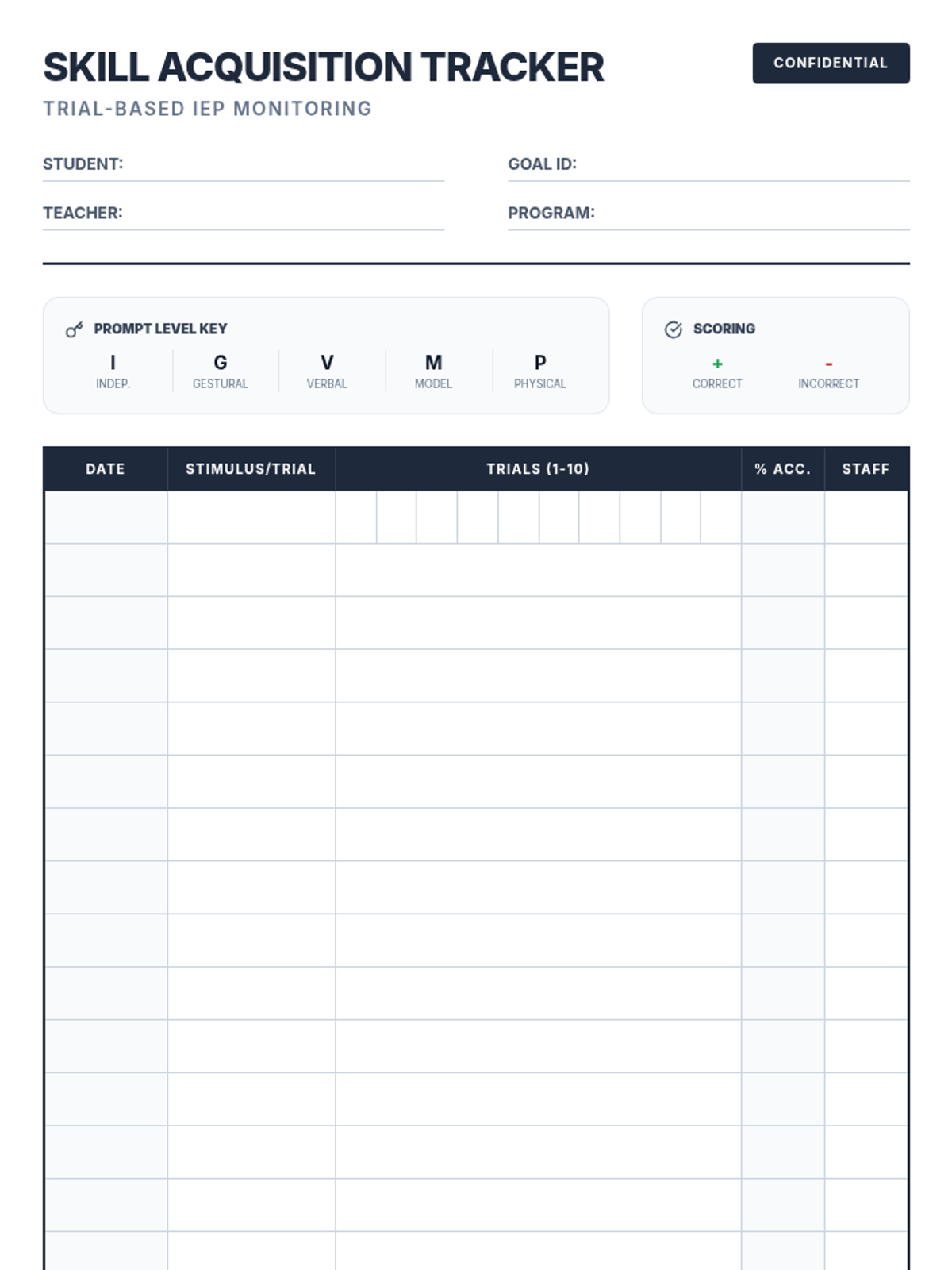
A detailed skill acquisition tracking sheet for trial-based learning. It includes a prompt hierarchy key, a 10-trial data table with percentage calculation columns, and a progress review section.
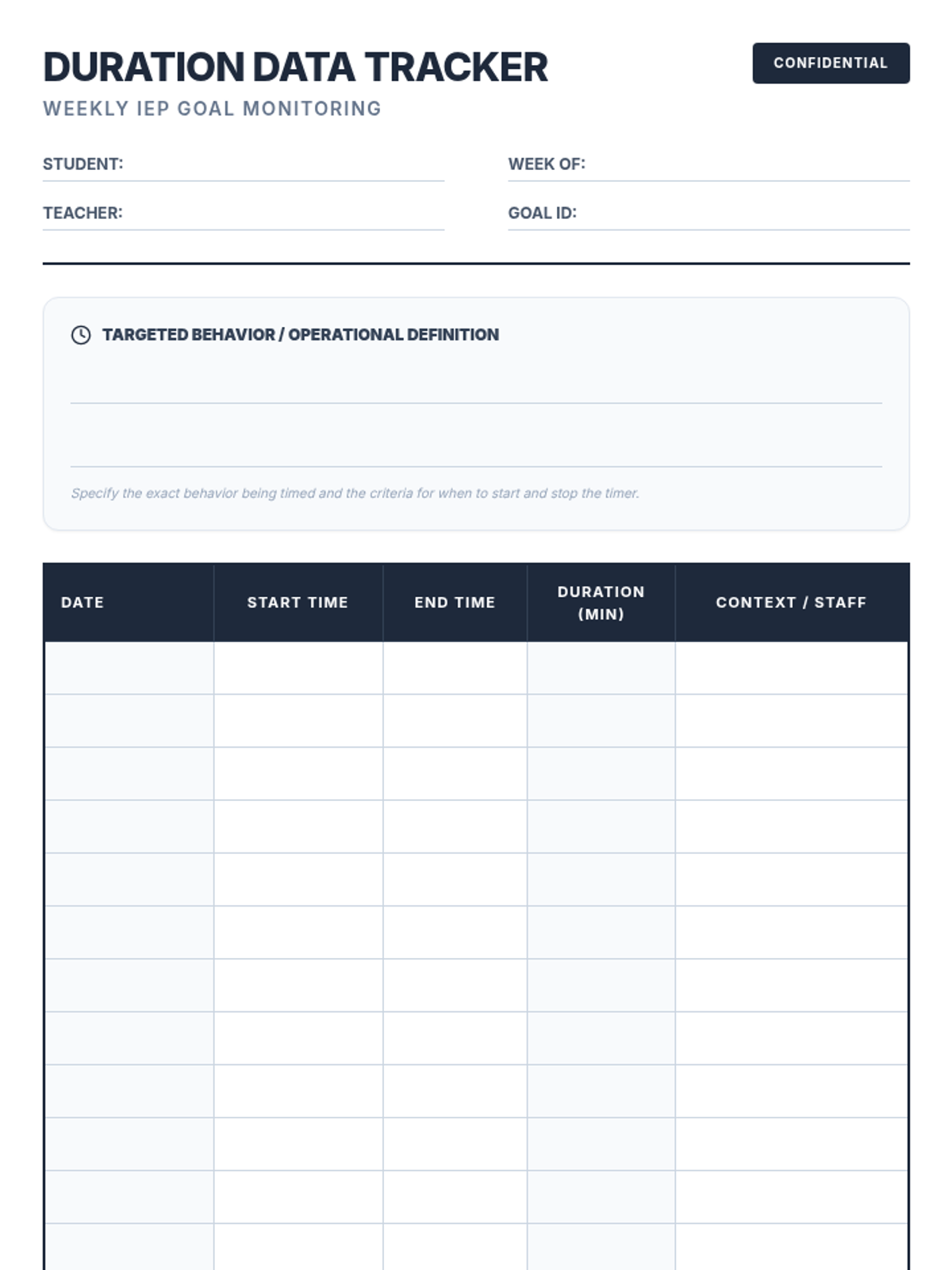
A structured duration tracking sheet for recording the length of time a behavior occurs. Includes columns for start time, end time, and total minutes, with a weekly summary section for analysis.
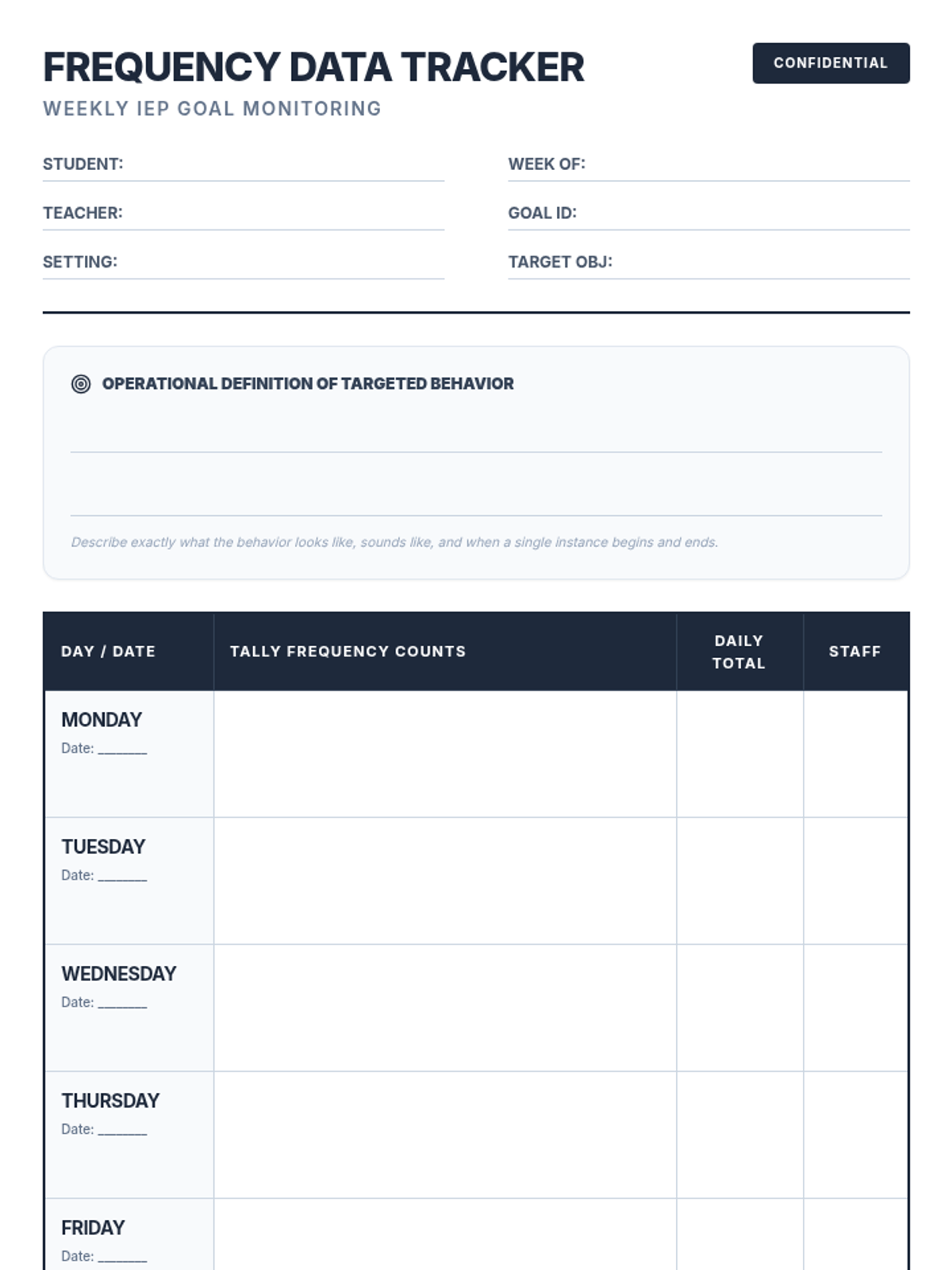
A clean, professional weekly frequency tracking sheet for individual student IEP goals. It features a header for student identification, a dedicated goal description area, a daily tally table for Monday-Friday, and a weekly summary section for analysis and notes.
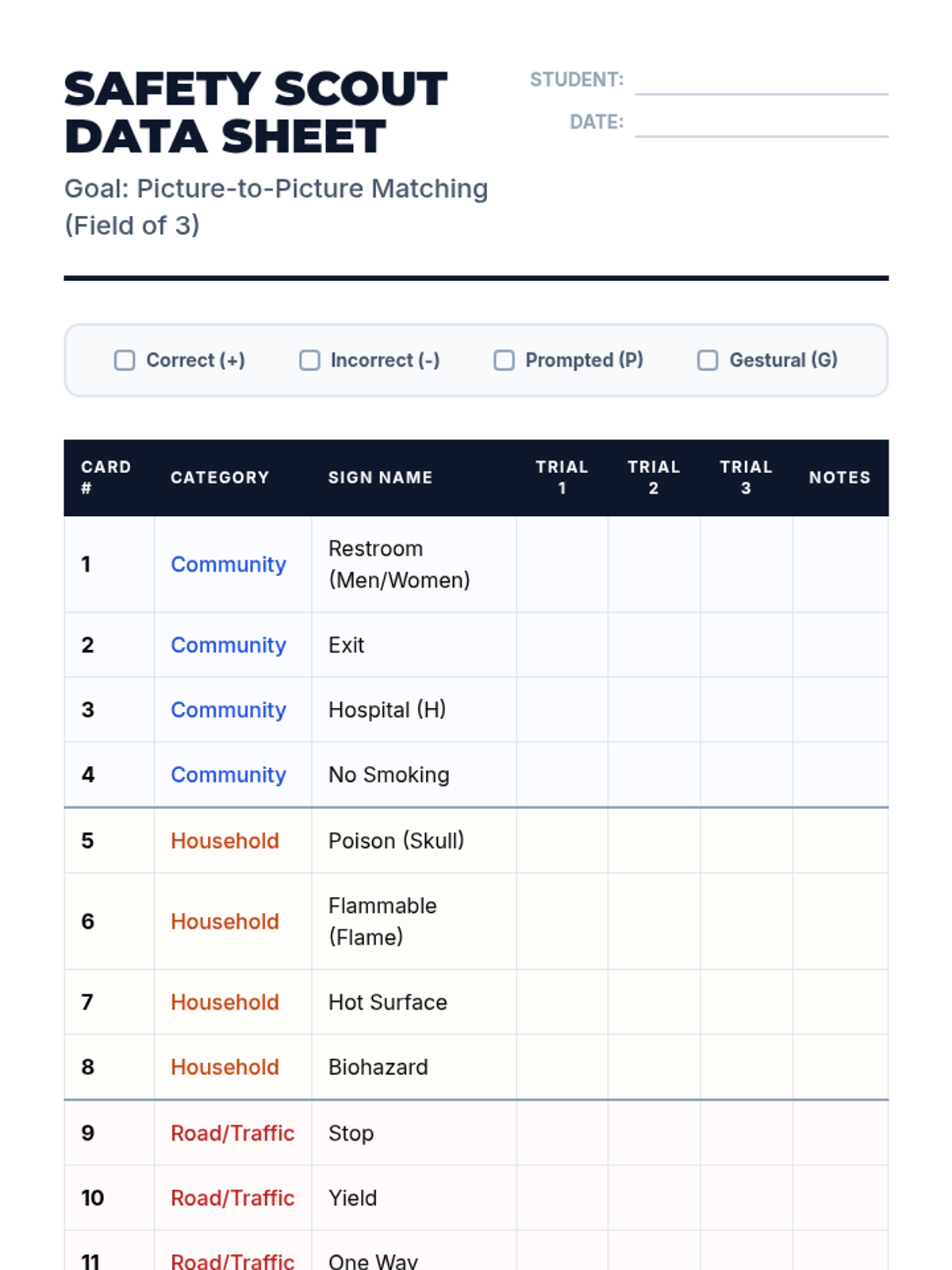
A teacher data collection sheet for the Safety Sign Seekers lesson, allowing educators to track student accuracy and prompting levels across all 16 safety sign task cards.
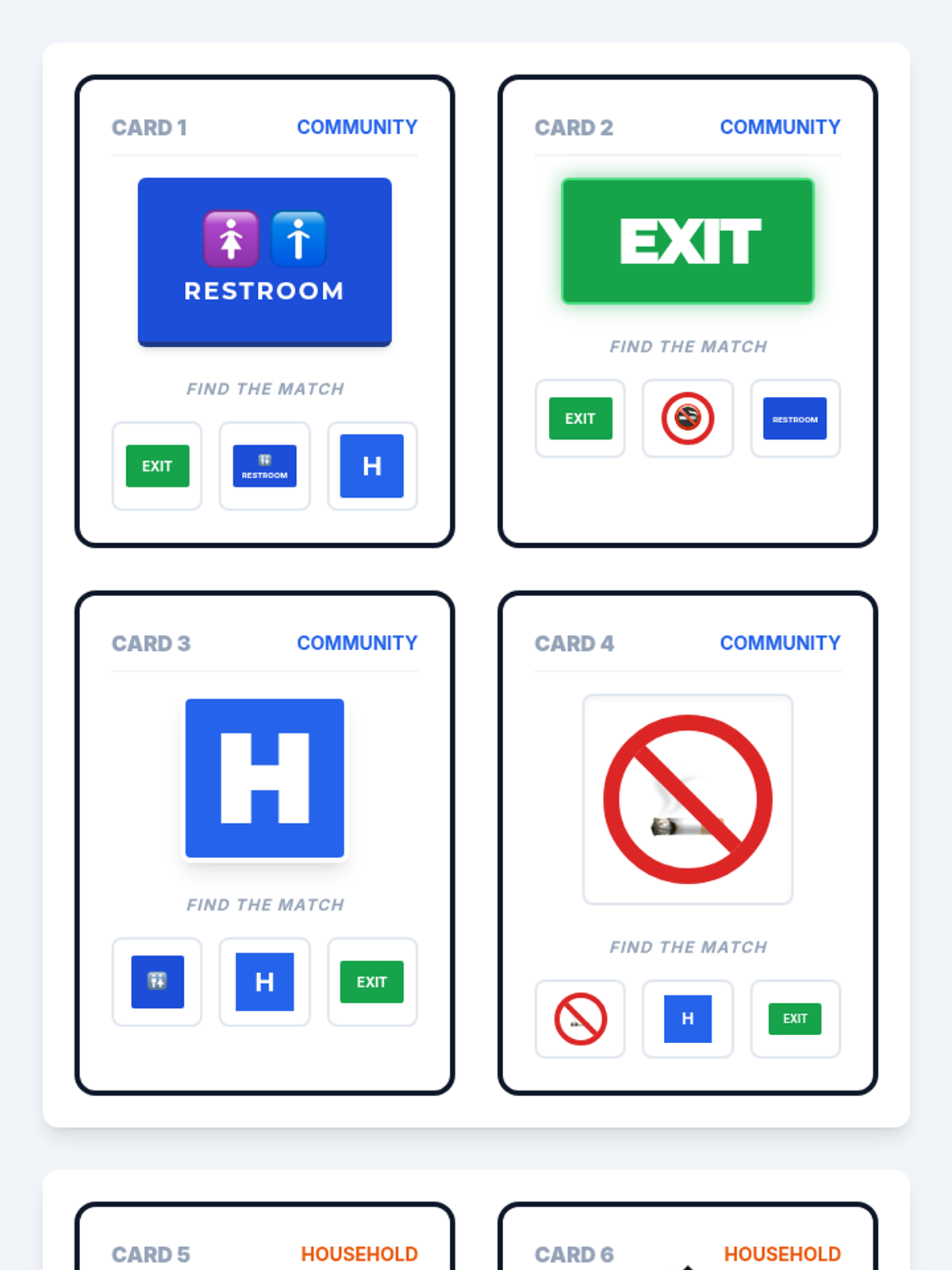
A collection of 16 picture-to-picture matching task cards in a field of 3, covering community, household, road, and workplace safety signs. Redesigned with realistic CSS-based physical signage to mimic real-world objects.
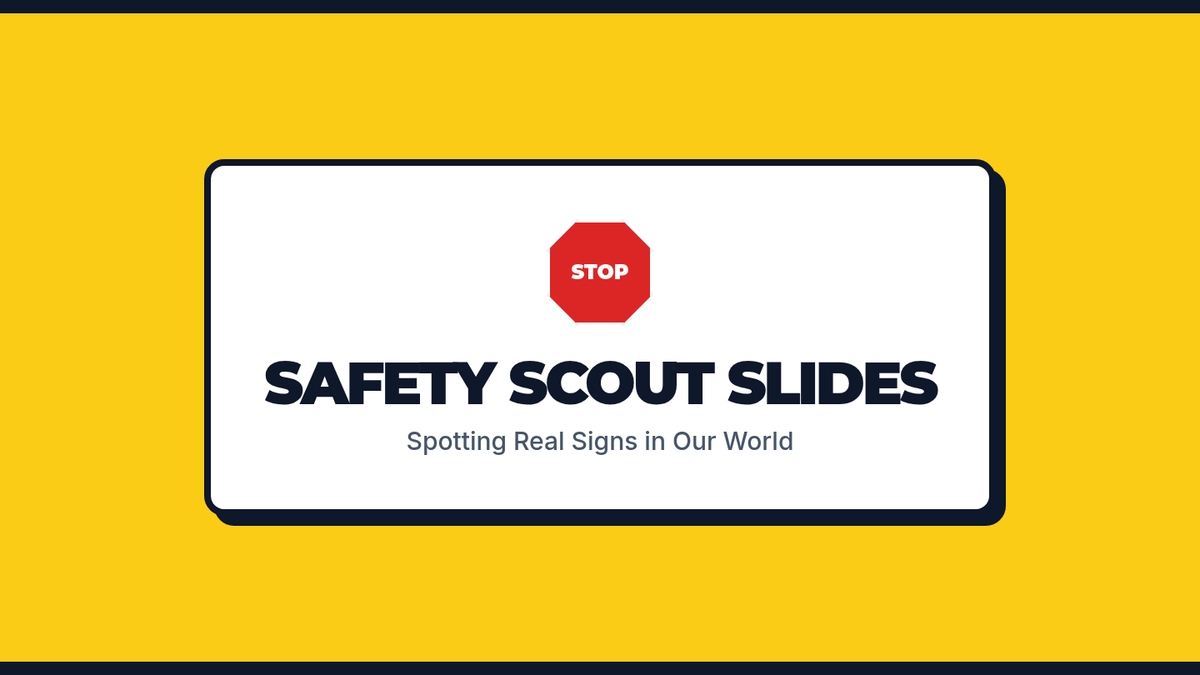
Introductory slides for the Safety Sign Seekers lesson, featuring realistic physical sign representations (plaques, glowing signs, street signs) instead of simple icons. Covers community, household, road, and workplace safety markers.
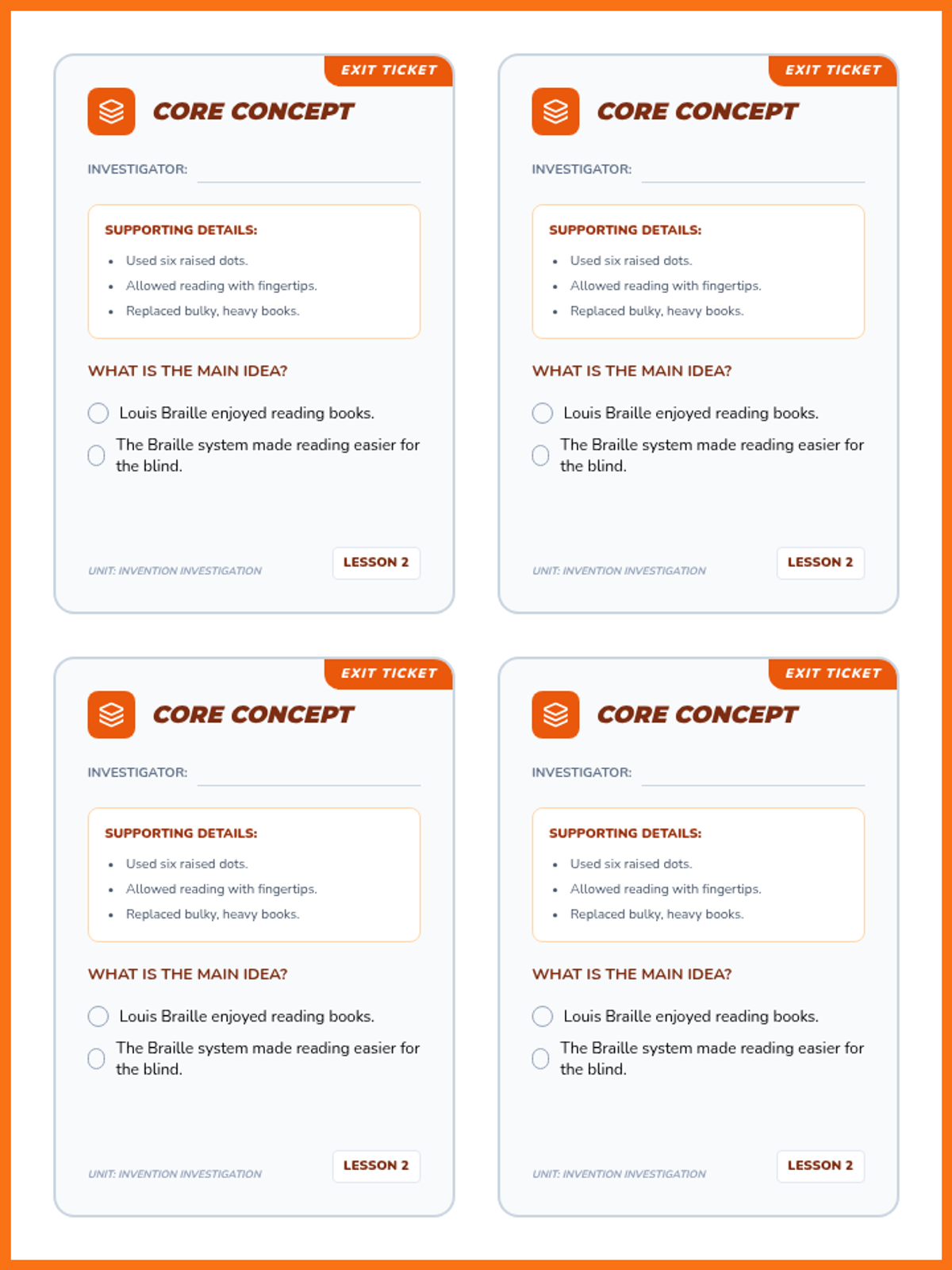
A set of 4 assessment slips per page for students to demonstrate their understanding of main idea through a matching challenge.
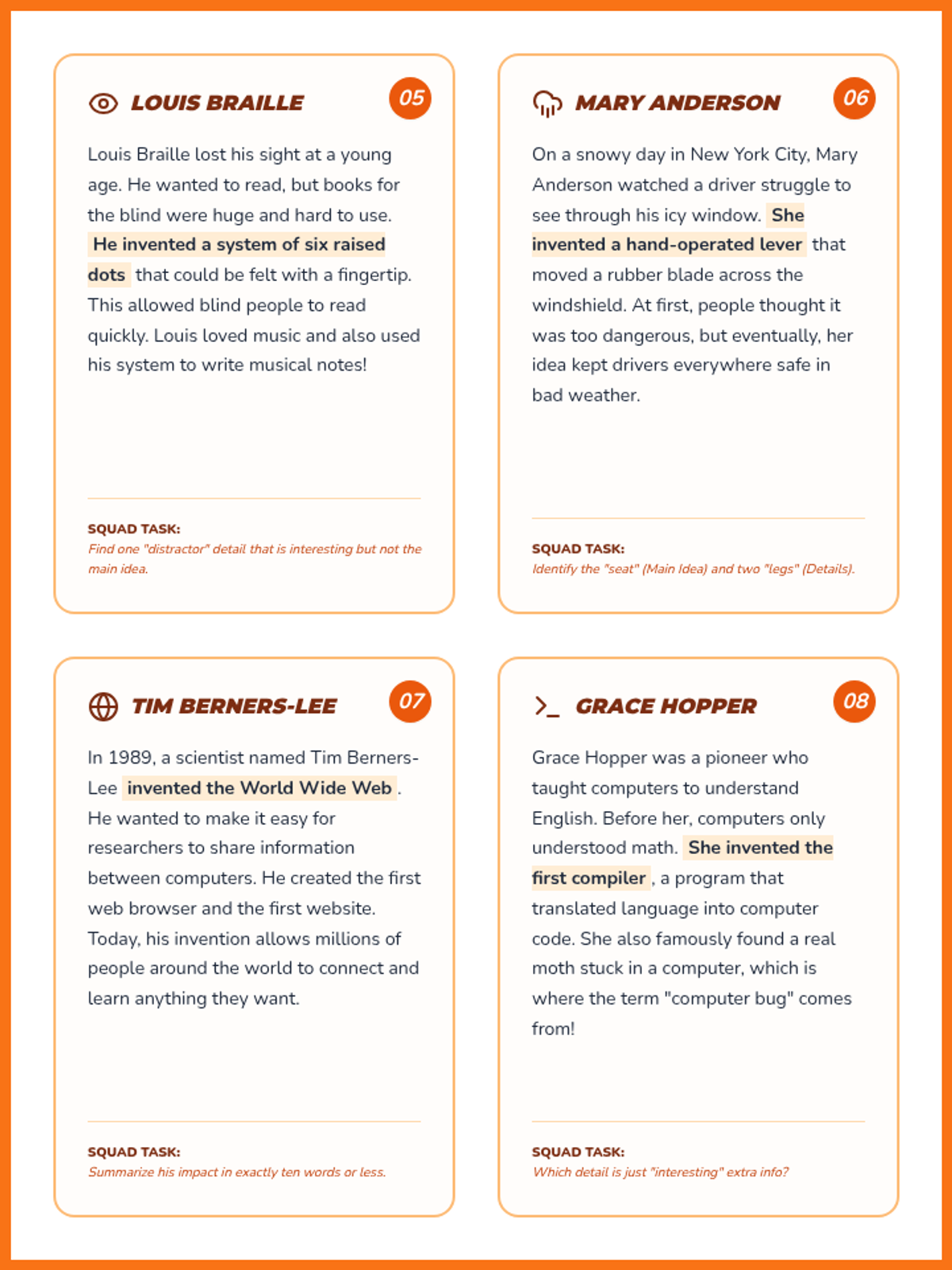
A set of task cards and a graphic organizer focused on identifying main idea and supporting details in inventor biographies.
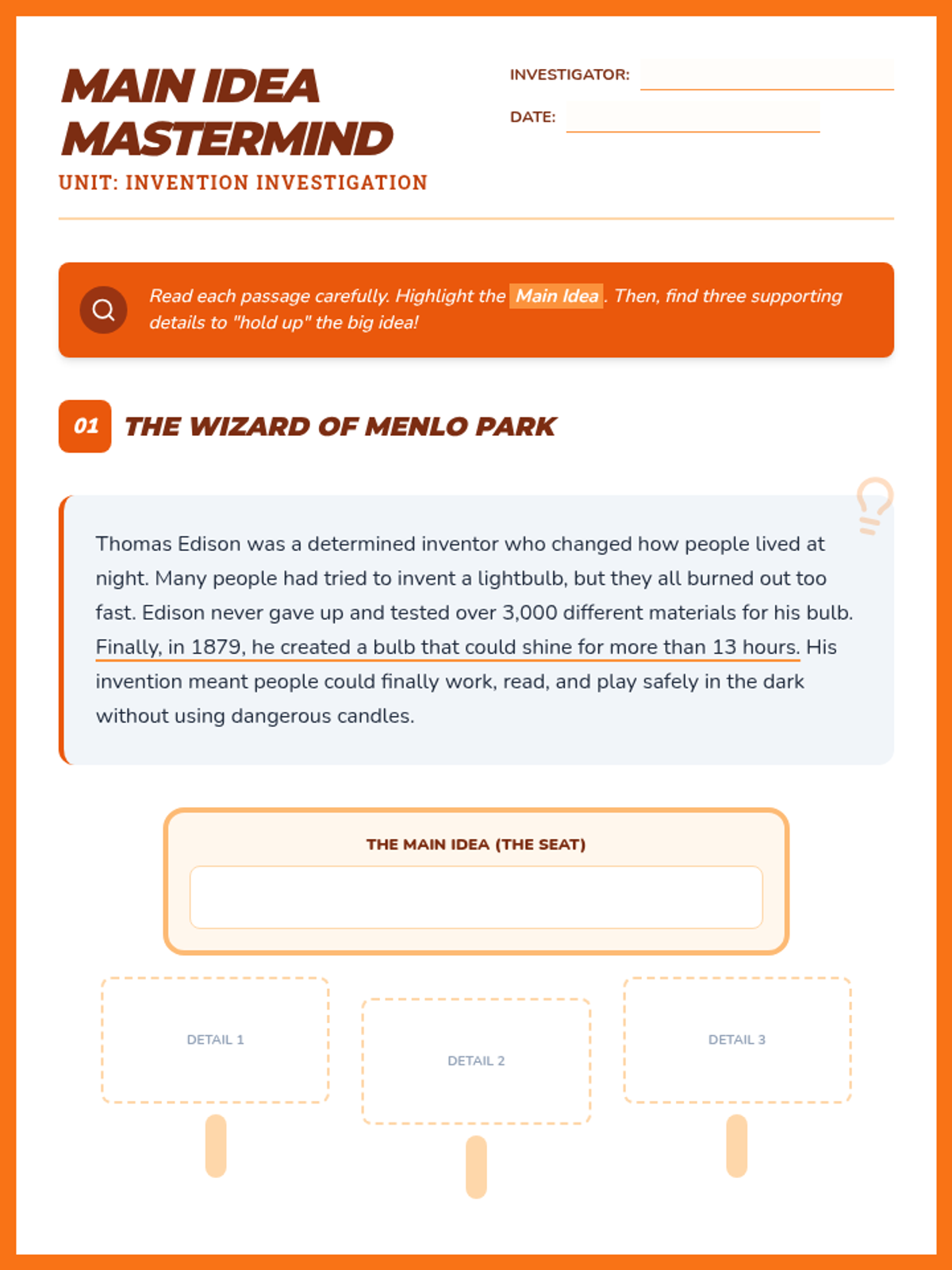
Worksheet for students to identify main idea and supporting details using the "Stool Model" for inventors like Thomas Edison and Hedy Lamarr.
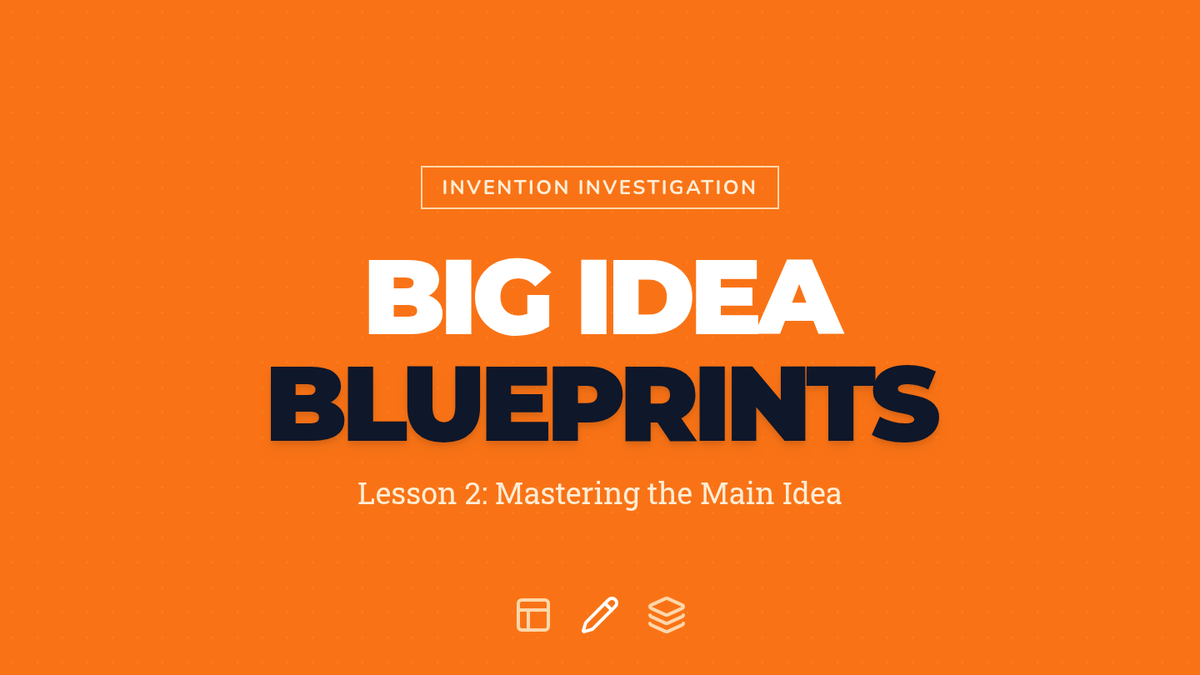
Visual presentation for Lesson 2 focused on teaching main idea and supporting details using inventors like Madam C.J. Walker.
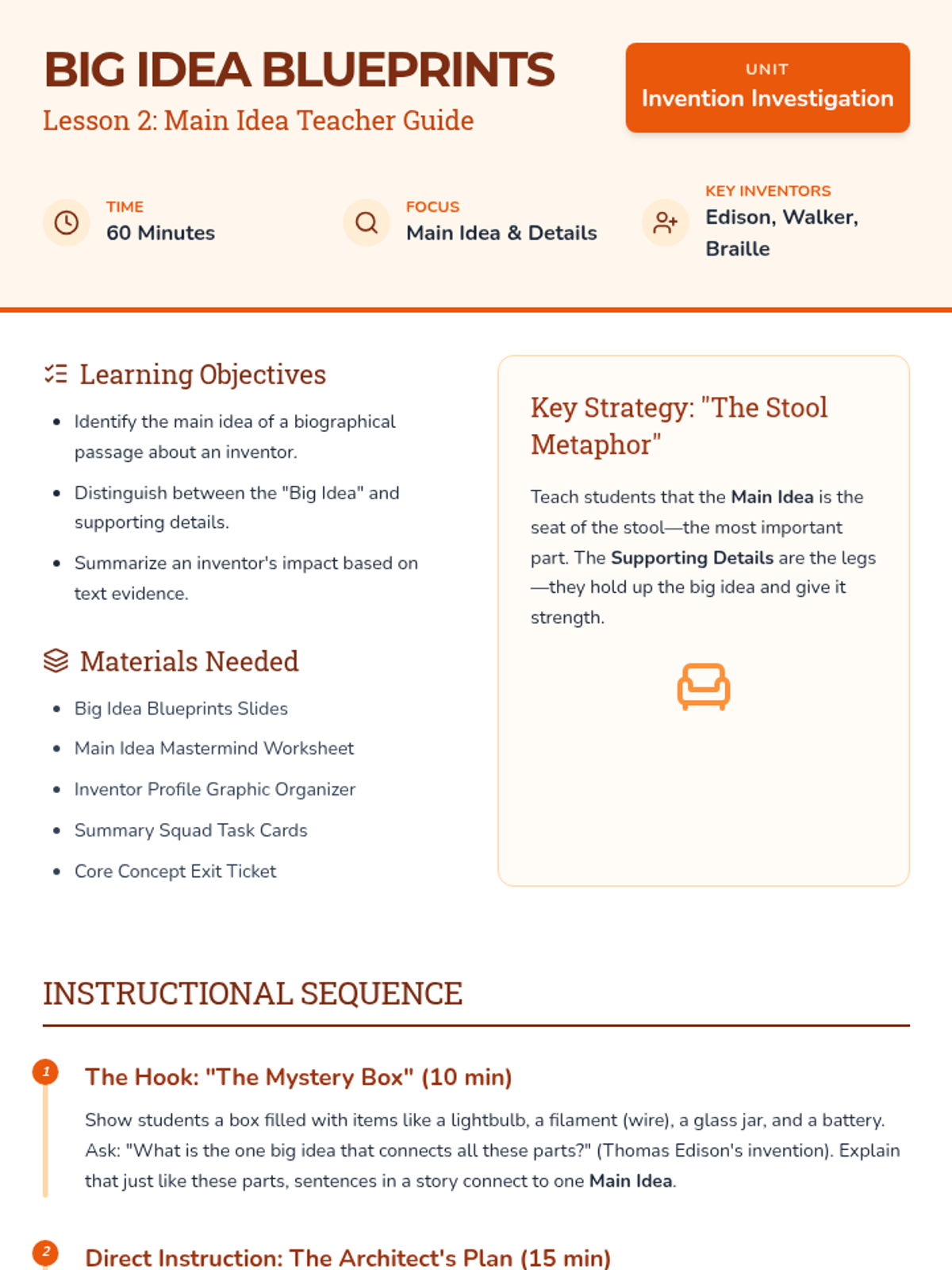
Teacher guide for Lesson 2, providing a clear instructional path for teaching main idea using inventors as the primary subject.
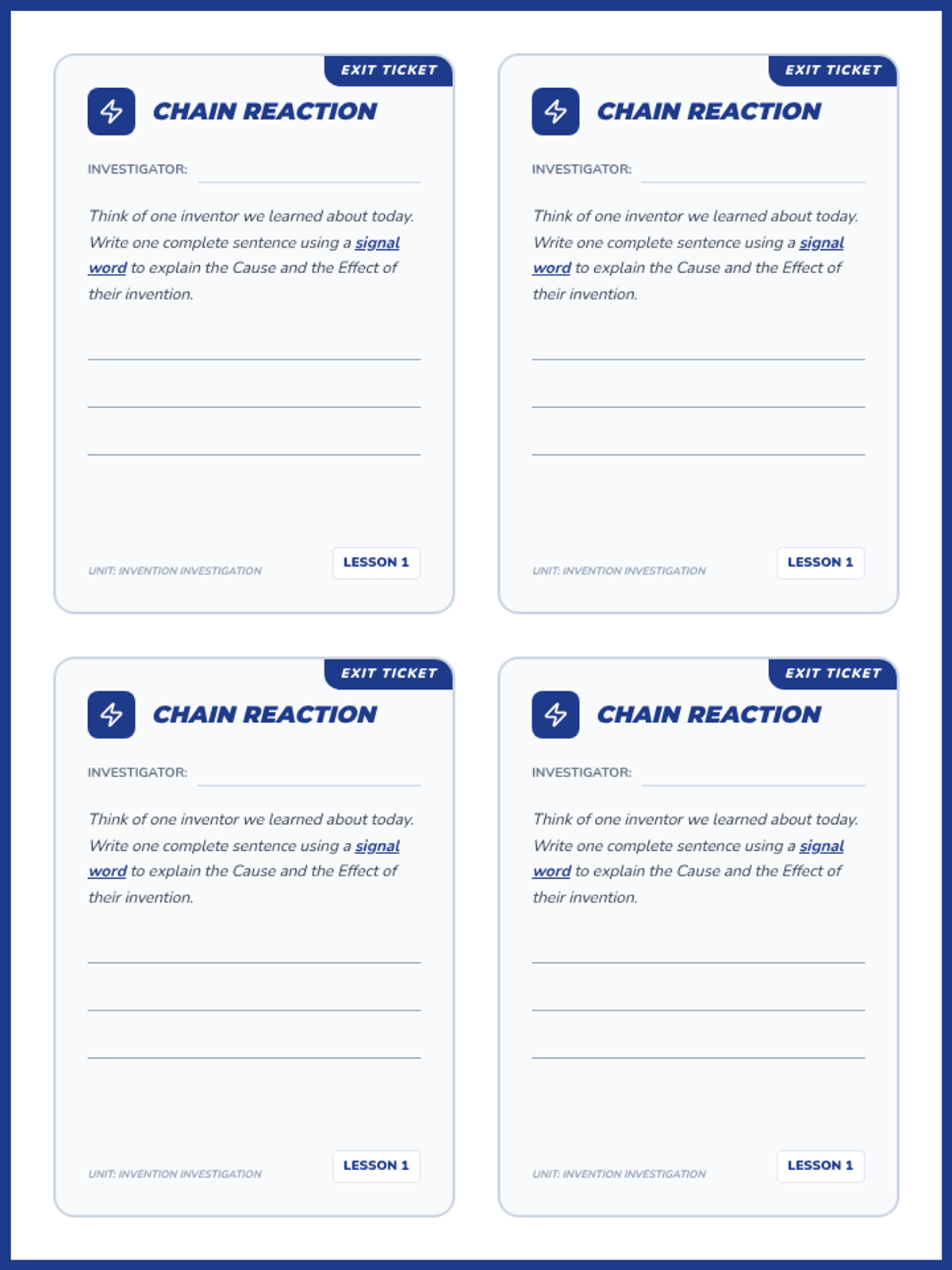
A set of 4 assessment slips per page for students to demonstrate their understanding of cause and effect through writing.
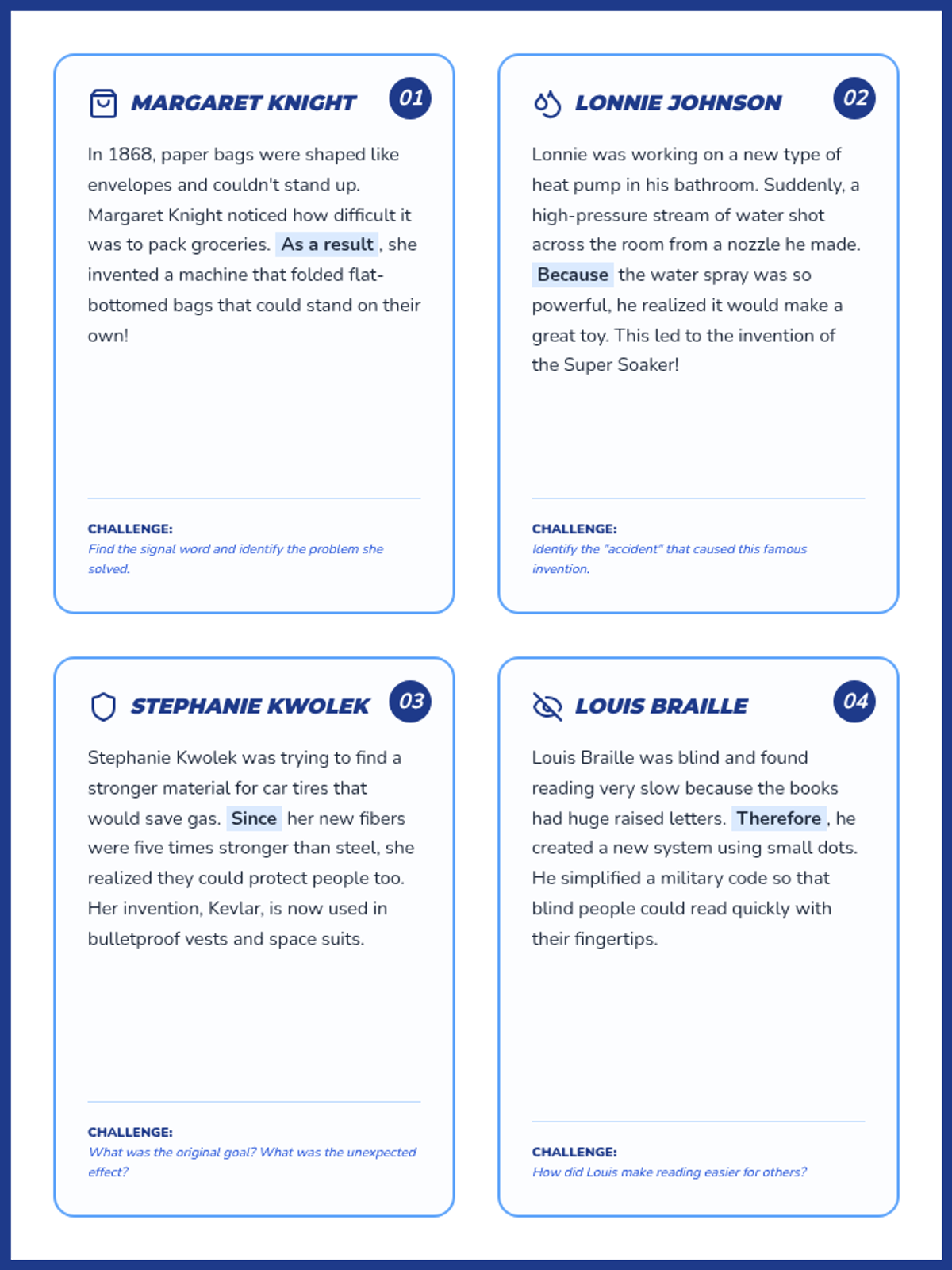
A set of task cards featuring biographical snippets and a corresponding graphic organizer for students to track cause and effect relationships.
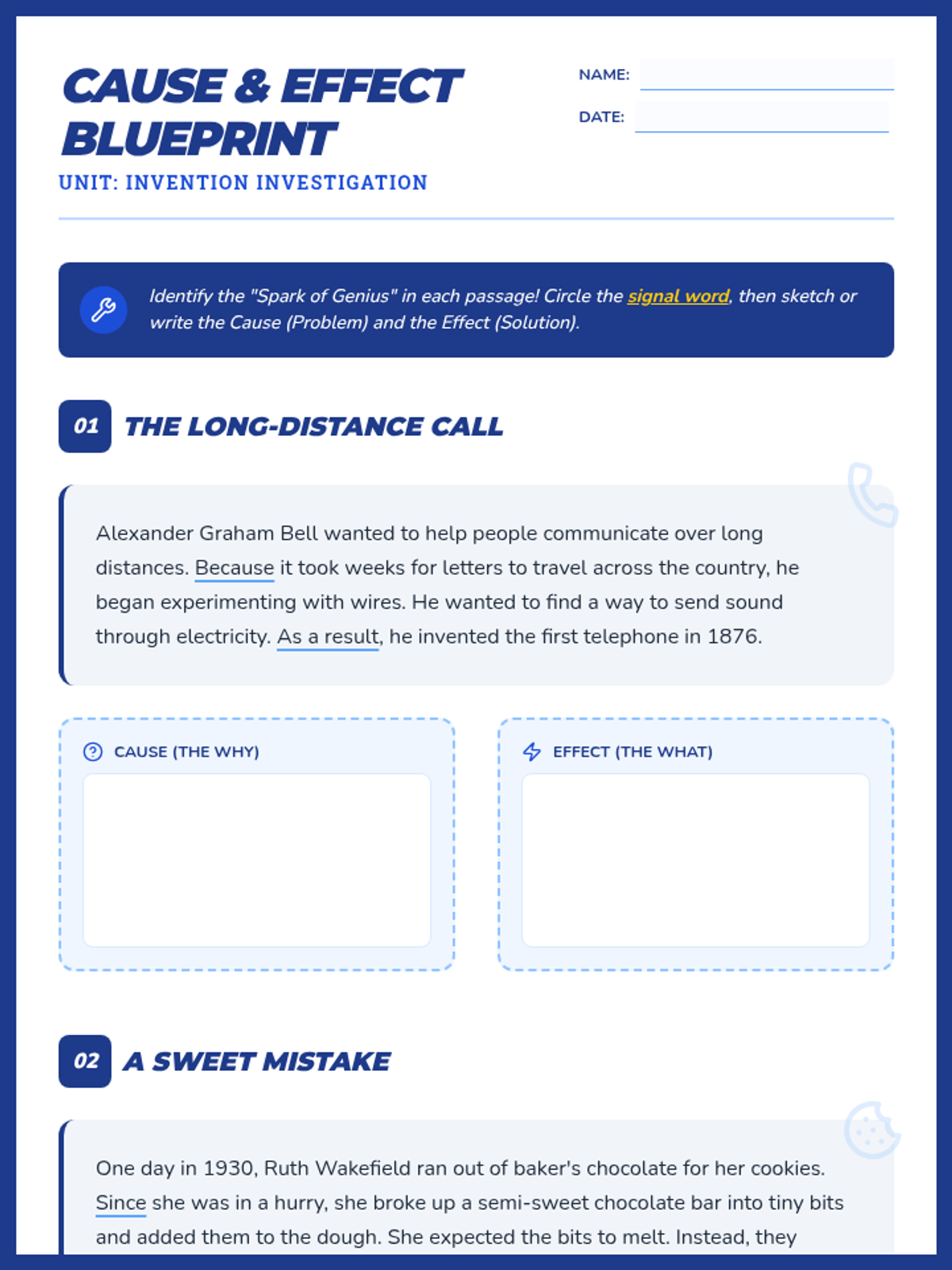
An updated worksheet for students to identify cause and effect relationships, featuring an expanded biography of Ruth Wakefield and specific investigation questions for each passage.
Visual presentation for Lesson 1 focused on teaching cause and effect through the stories of inventors like Garrett Morgan and Mary Anderson.
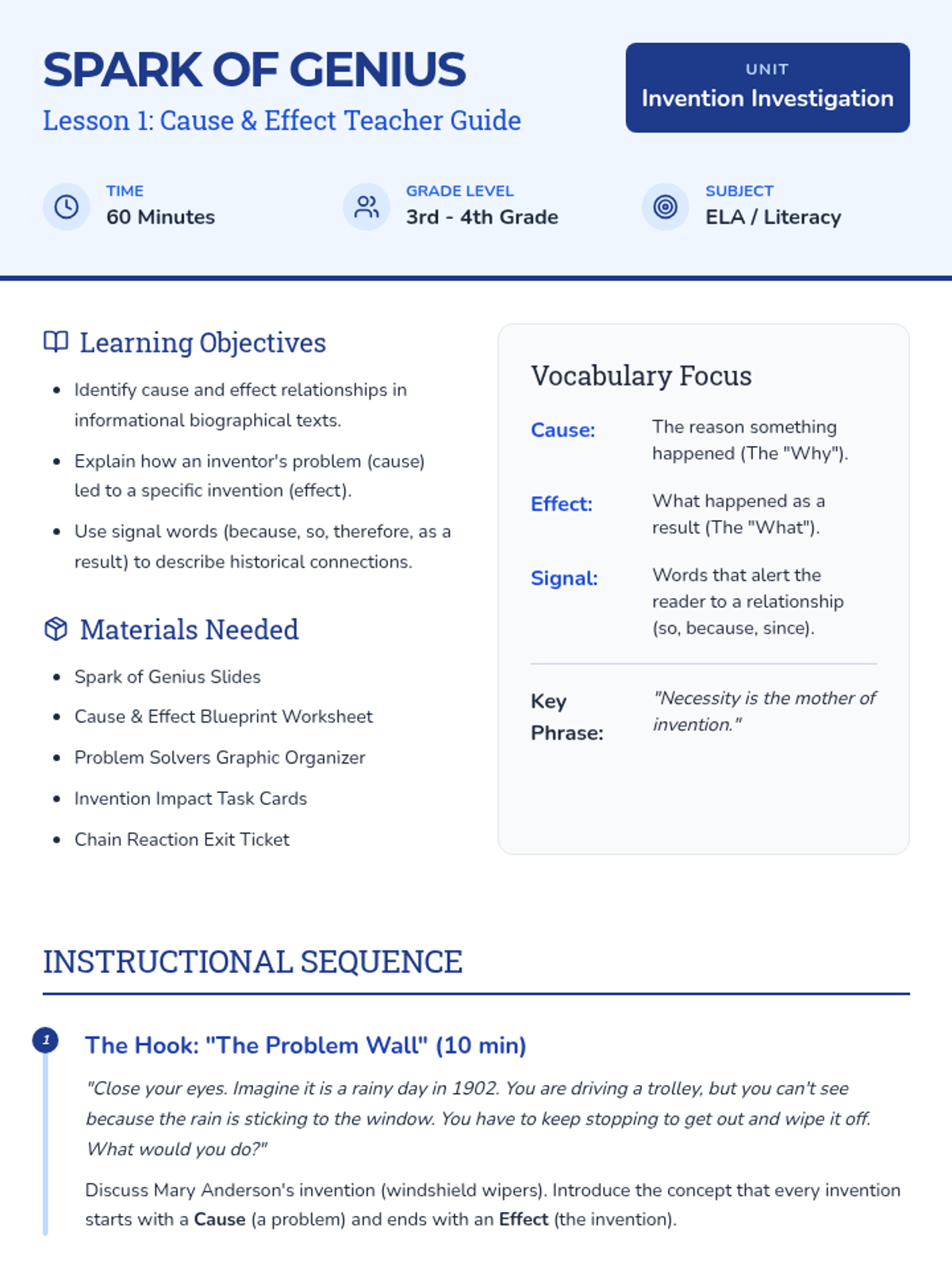
A detailed teacher guide for Lesson 1, covering the instructional sequence, learning objectives, and differentiation strategies for teaching cause and effect through inventors.
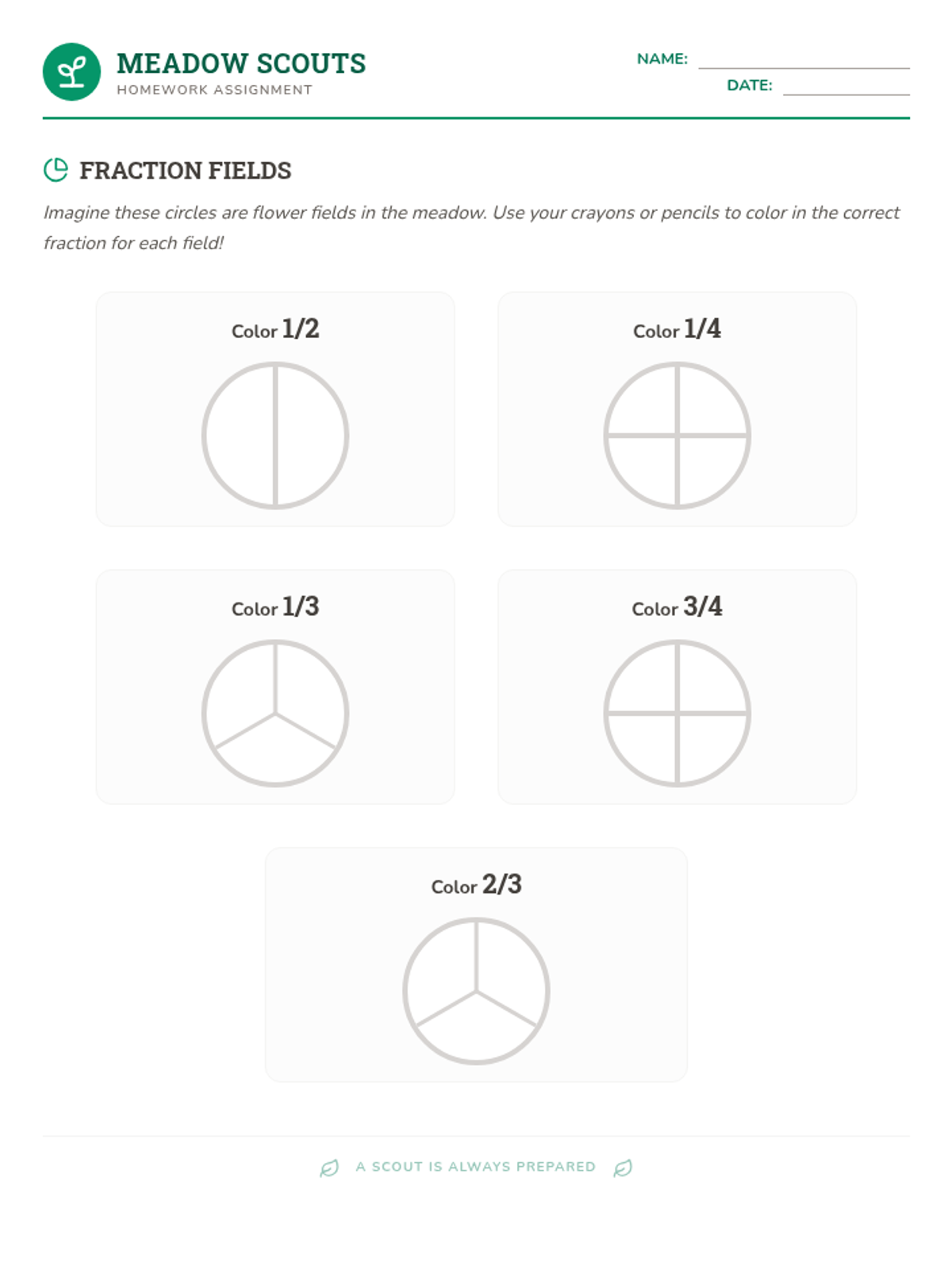
A fractions worksheet where students color in sections of a circle to represent 1/2, 1/3, 1/4, 3/4, and 2/3. Corrected for 8.5x11 fitting.
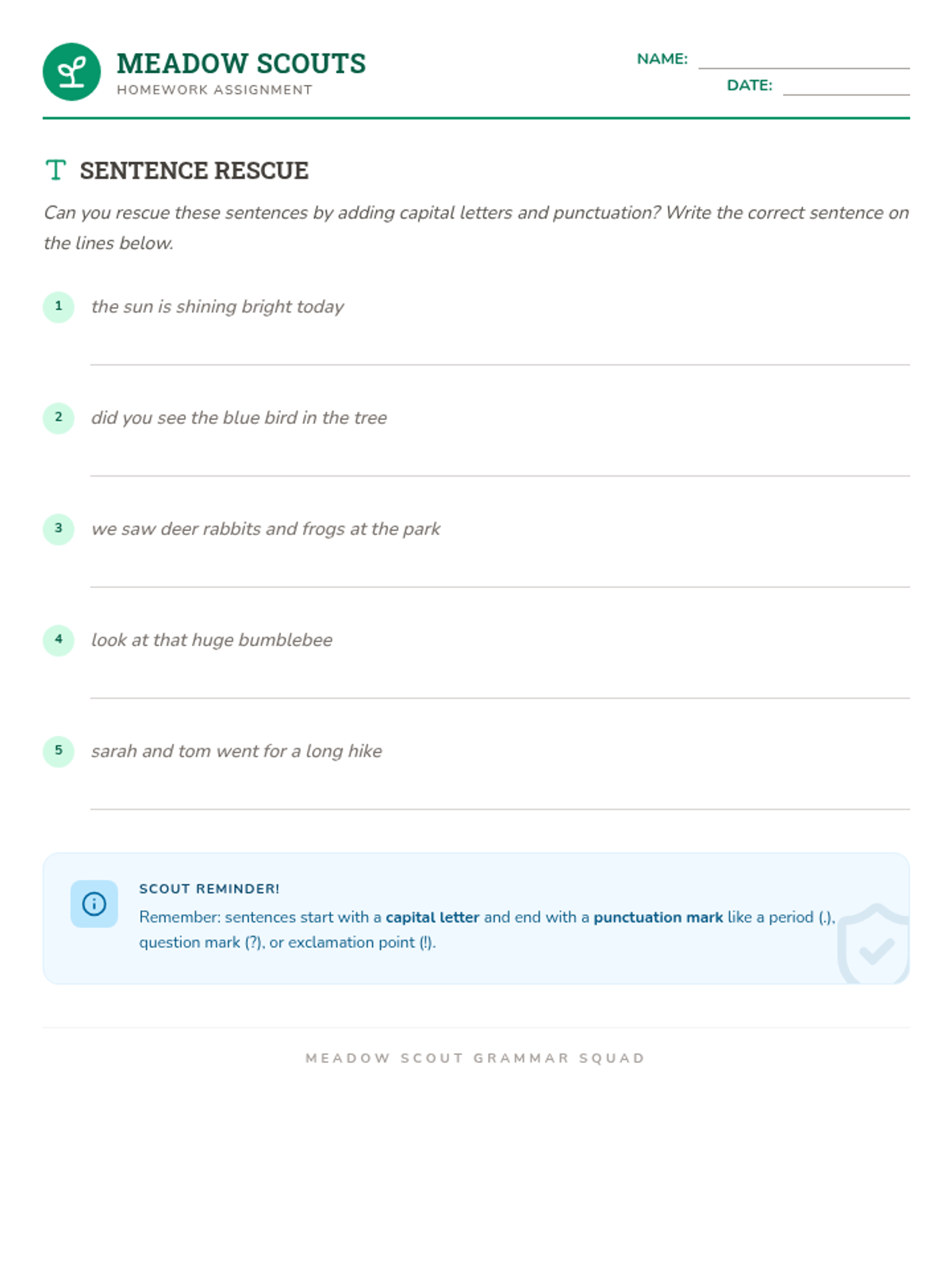
A grammar worksheet where students must rewrite five sentences with proper capitalization and punctuation. Corrected for 8.5x11 fitting.
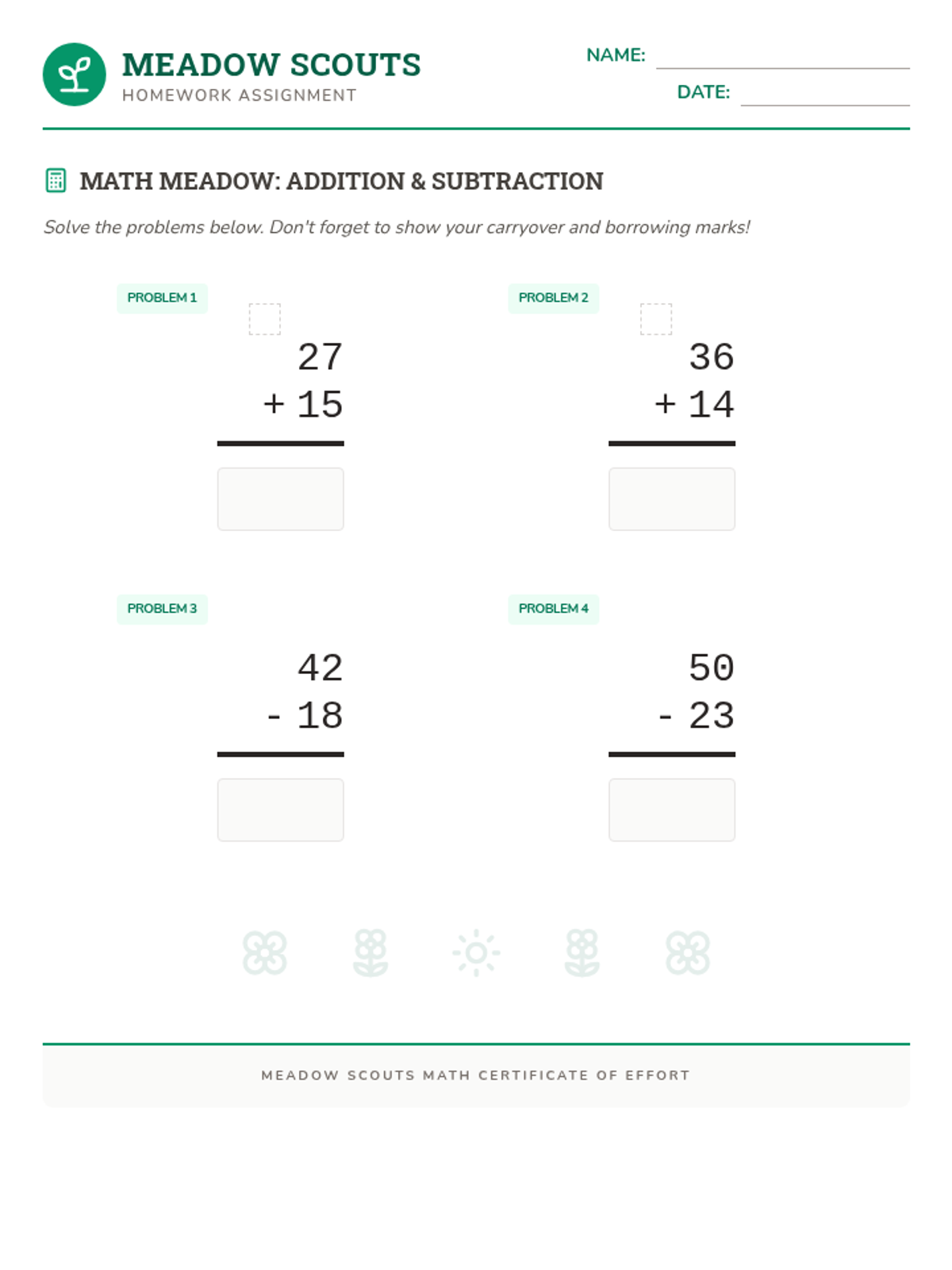
An addition and subtraction worksheet featuring four problems within 50 that require regrouping (carrying over and borrowing). Corrected for 8.5x11 fitting.
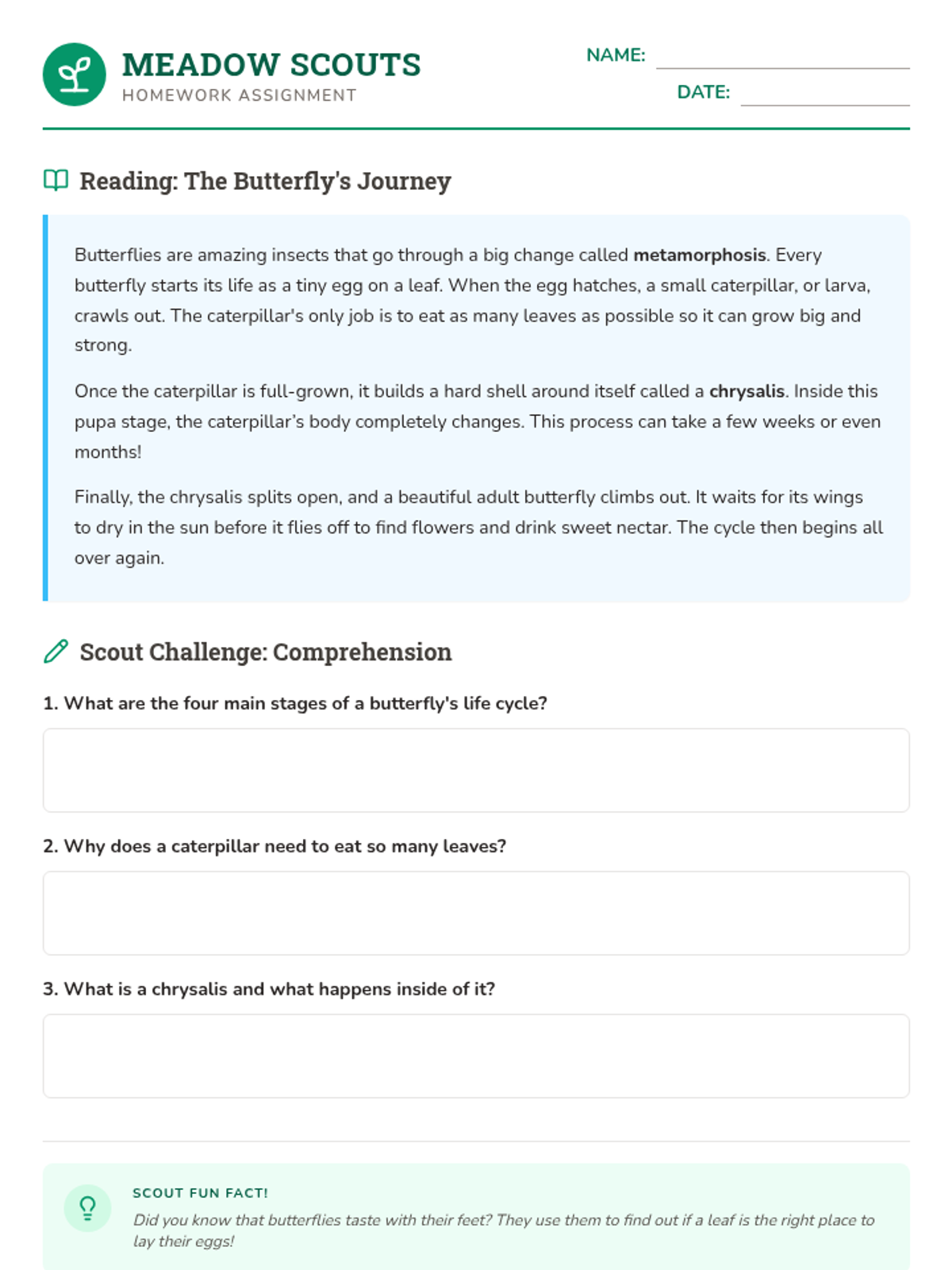
A reading comprehension worksheet about the life cycle of a butterfly, featuring a passage and three short-answer questions. Corrected for 8.5x11 fitting.
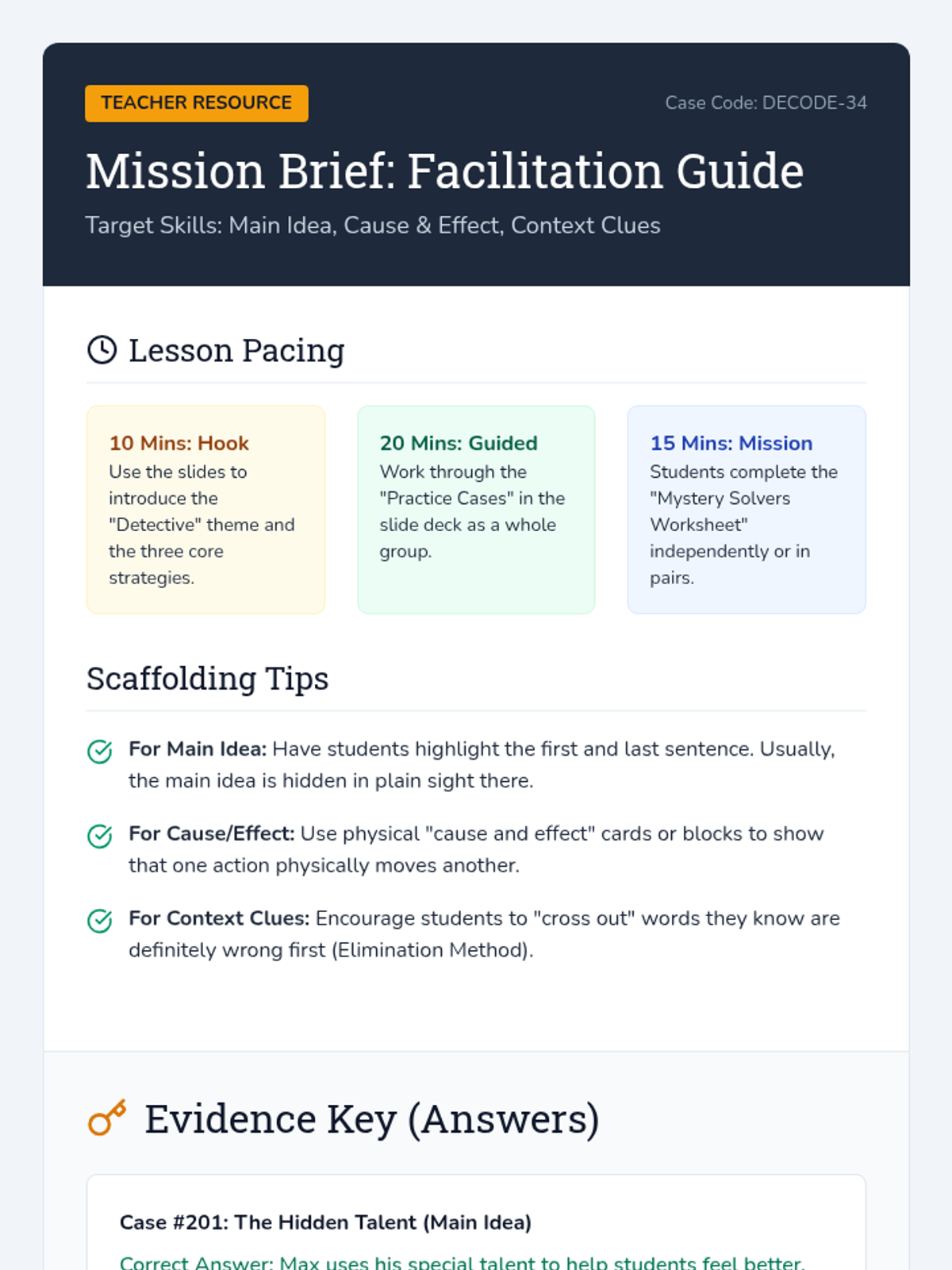
A teacher's facilitation guide including lesson pacing, pedagogical tips for reading intervention, and a complete answer key for the student worksheet.
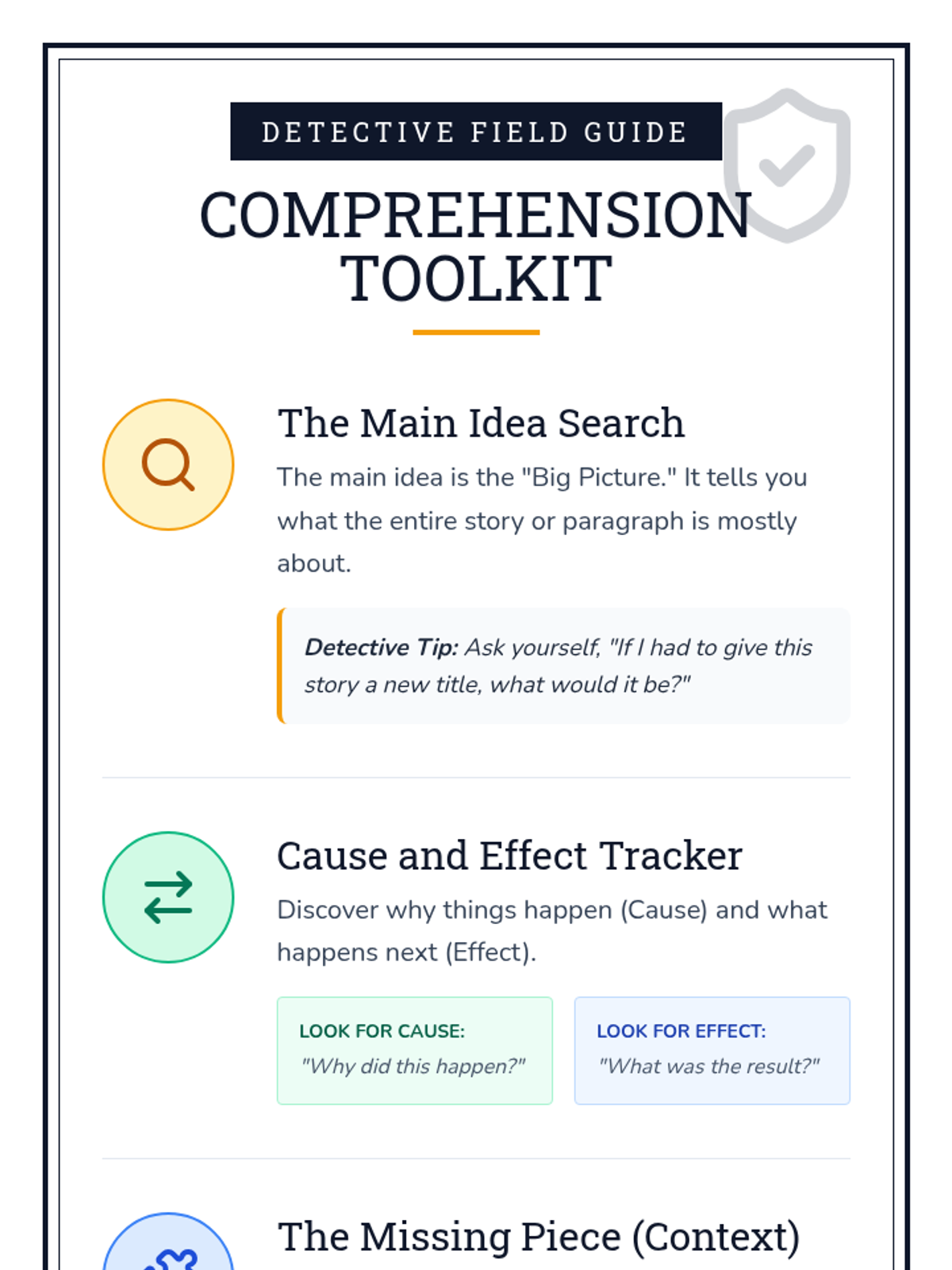
A one-page student reference sheet (anchor chart) that summarizes the three reading comprehension strategies with detective-themed icons and tips.
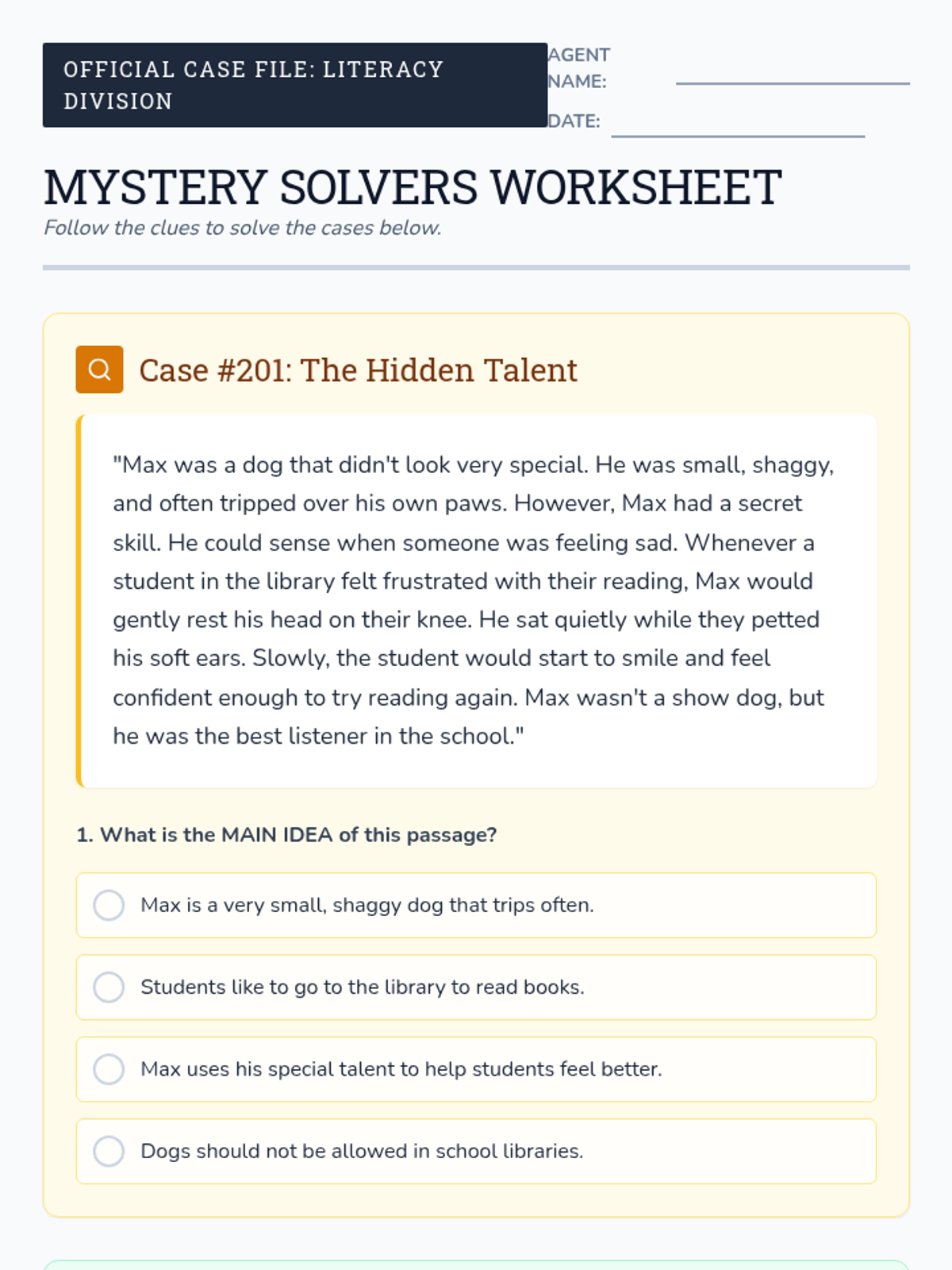
A 2-page detective-themed worksheet for 3rd and 4th graders featuring reading passages and questions on main idea, cause and effect, and context-based sentence completion.
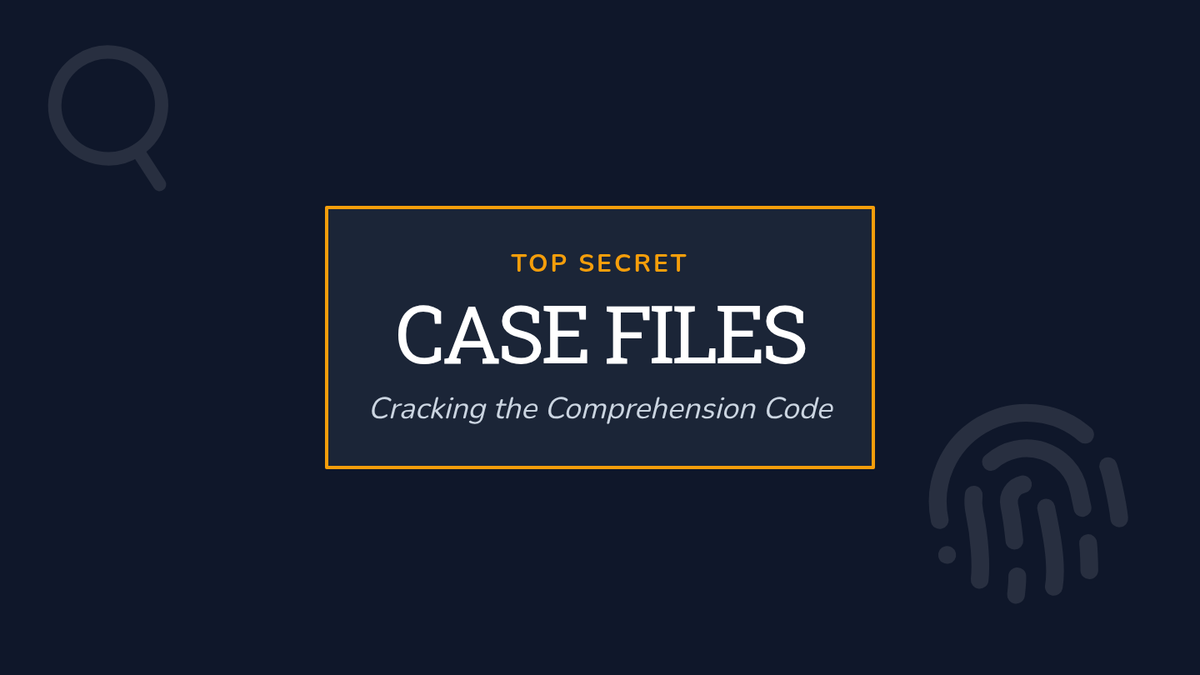
A comprehensive slide deck for teaching 3rd and 4th graders key comprehension strategies using a 'Detective' theme. Includes sections on Main Idea, Cause & Effect, and Sentence Completion with guided practice slides for each.