A set of engaging memory cards and supporting materials designed to help students master two-syllable words where both syllables are open. Students will match syllable pairs to form complete words, reinforcing phonics and decoding skills.
Students will learn to identify the main idea and supporting details in biographical texts about famous inventors, synthesizing information to understand their overall impact.
Students will explore how inventors identified problems (causes) and developed solutions (effects), using real-world examples like the lightbulb and the windshield wiper.
A collection of foundational homework worksheets covering reading comprehension, arithmetic, grammar, and basic fractions with a nature-inspired 'Meadow Scouts' theme.
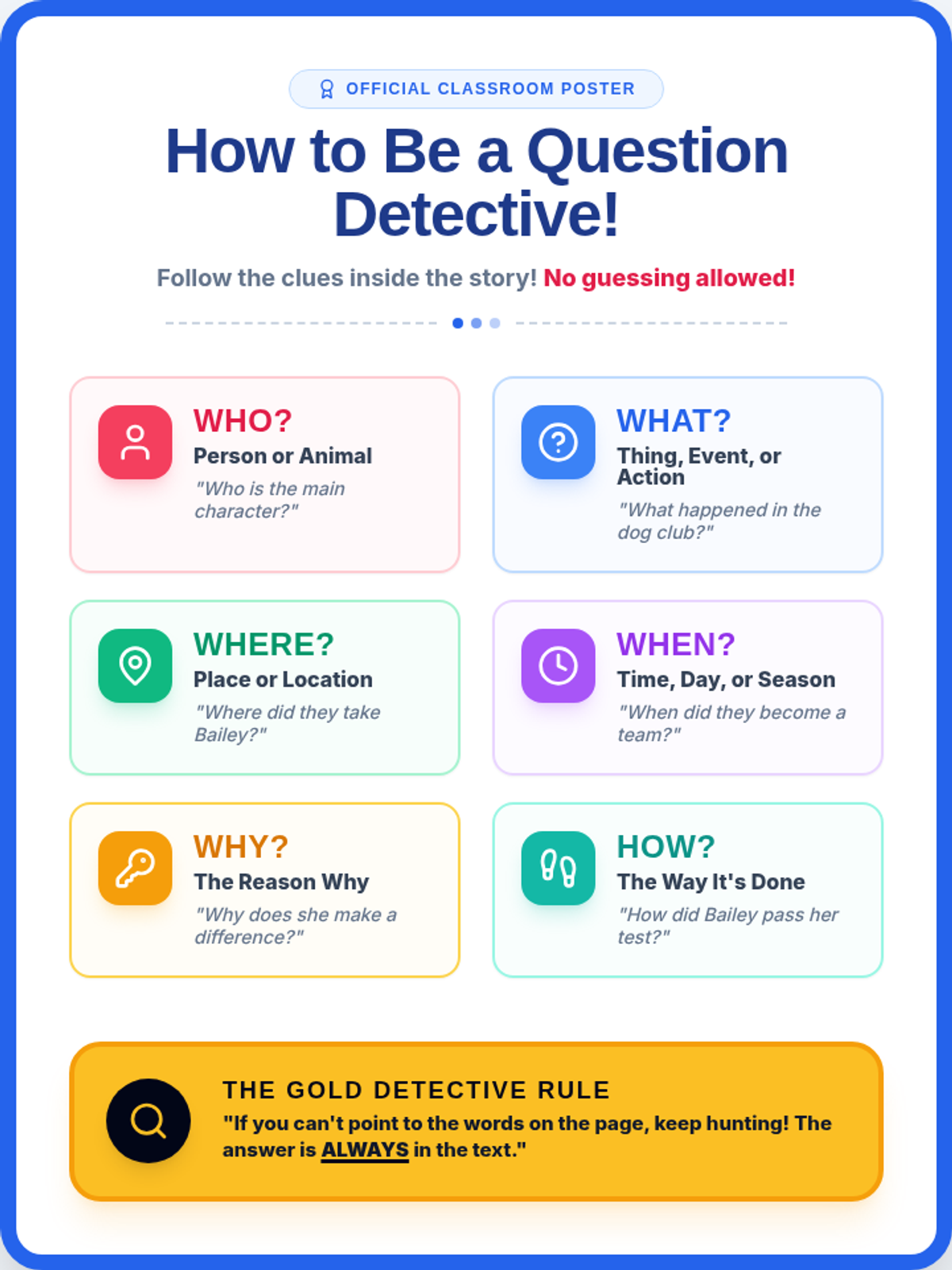
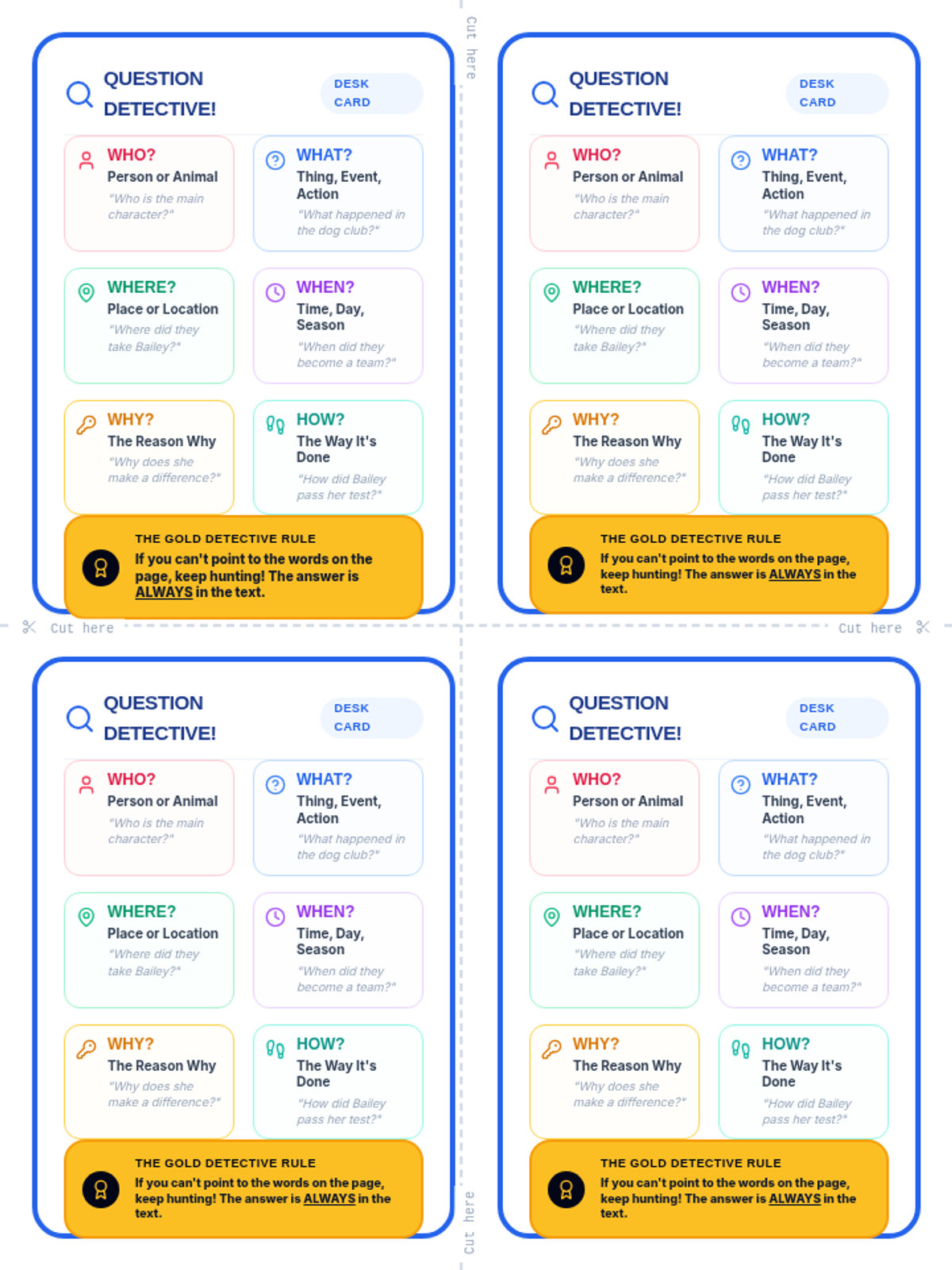
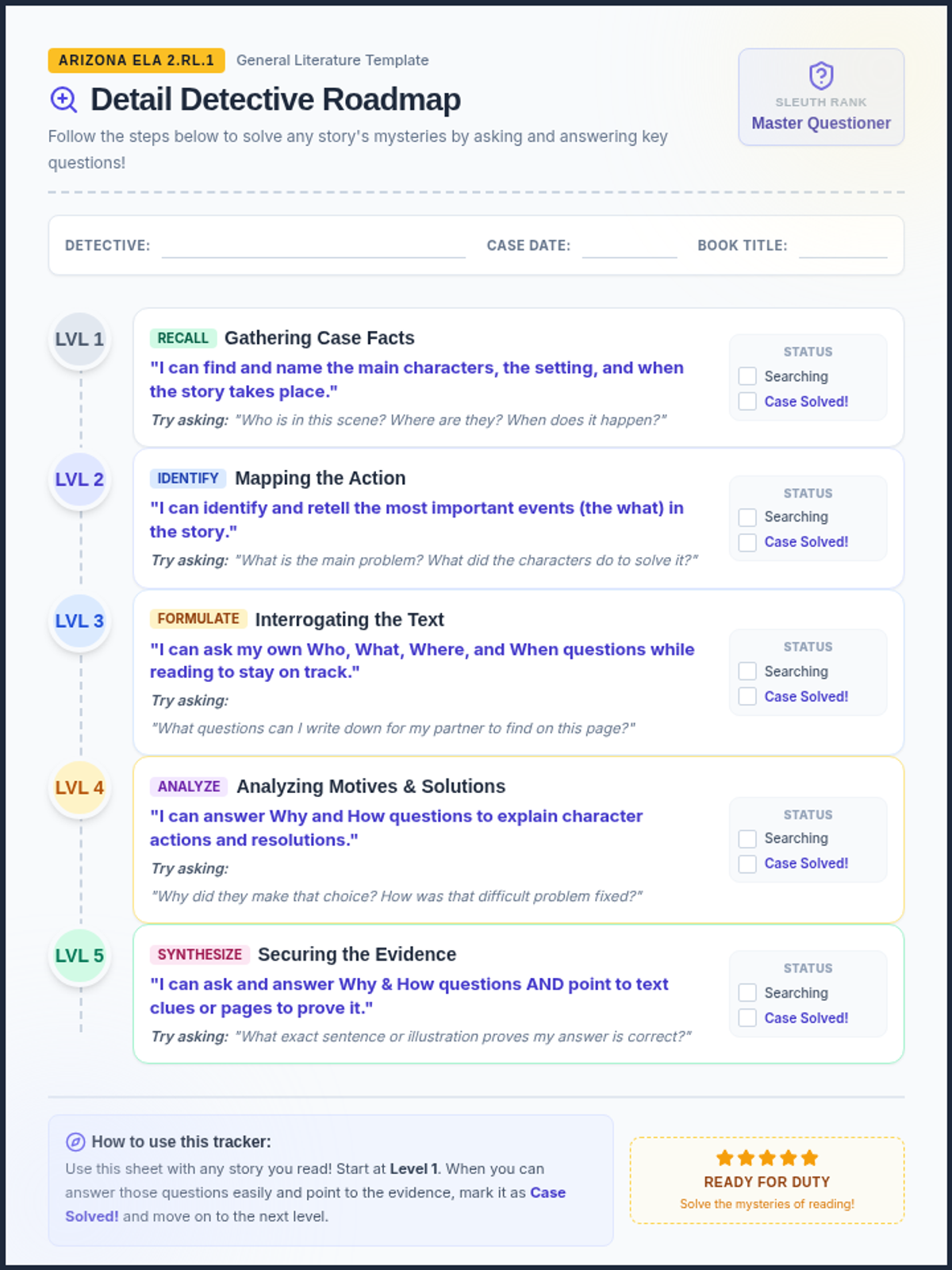
A reading intervention lesson designed to help 3rd and 4th graders master main idea, cause and effect, and sentence completion through a detective-themed series of activities. Students act as 'Reading Detectives' to uncover clues and solve literacy mysteries.
A bridge between decoding and fluent reading, this lesson focuses on mastering R-controlled vowels through speed drills, phrase scooping, and repeated reading of short, engaging passages. Students will shift from individual sound isolation to smooth, connected reading.
A comprehensive strategy set for educators to support students who struggle with long reading assignments through chunking, visual scaffolding, and self-regulation tools.
A comprehensive writing unit designed for newcomer multilingual learners to draft a fictional story about a clever rabbit. This lesson includes vocabulary building, structured planning with a brain frame, and scaffolded drafting.
A collection of 10 short stories designed for beginning readers, focusing on CVC words and high-frequency sight words with visual comprehension support.
A lesson focused on mastering academic vocabulary used in reading comprehension questions. Students will learn to distinguish between common analytical verbs and concepts through a hands-on matching game and reference guides.
Students will identify and compare four major text structures: chronology, comparison, cause/effect, and problem/solution. Through an architectural 'blueprint' theme, ESL students will learn signal words and structural patterns to improve reading comprehension.
A focused lesson on decoding and blending words with the -tch trigraph, using a kitchen-themed approach to engage students in fluency drills.
A foundational toolkit for setting up a physical engineering and maker space, covering physical layout, collaborative roles, and essential classroom routines.
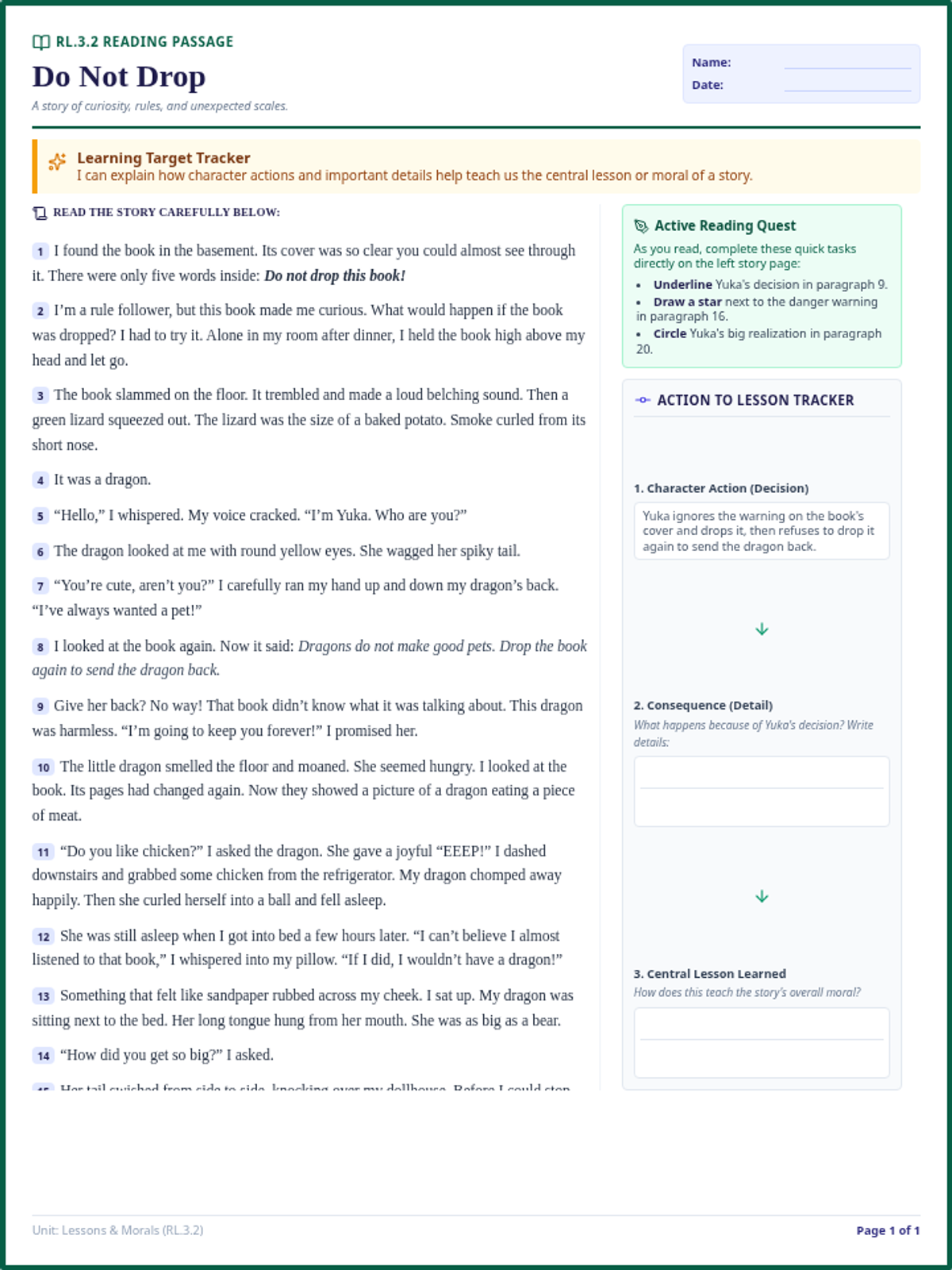
A collection of comprehension resources for the book 'Mallory vs. Max', focusing on character development and plot events for second-grade readers.
A set of materials for assessing and practicing 47 key graphemes, including high-visibility flashcards and a comprehensive teacher tracking sheet.
A set of visual supports designed to help 3rd-grade students engage in meaningful academic conversations during EL Education Module 3 lessons. Includes a desktop conversation mat and a set of cue cards with specific sentence stems for peer interaction.
A reading comprehension lesson focusing on identifying and decoding common initial consonant blends through a garden-themed story.
A behavioral and functional lesson designed for a 2nd-grade student with Autism and ADHD to master the 'Launch Sequence' of transitioning from preferred activities to academic tasks. It focuses on visual schedules, clear 'First-Then' contingencies, and a specific 3-step 'Ignition' process to overcome task initiation hurdles.
A handwriting practice lesson focused on spring-themed sentences, designed to help 1st and 2nd grade students improve their letter formation and sentence structure while celebrating the season.
A hands-on board game experience where students explore the forest of compound words, practicing how to decompose words and match visual parts to create new ones.
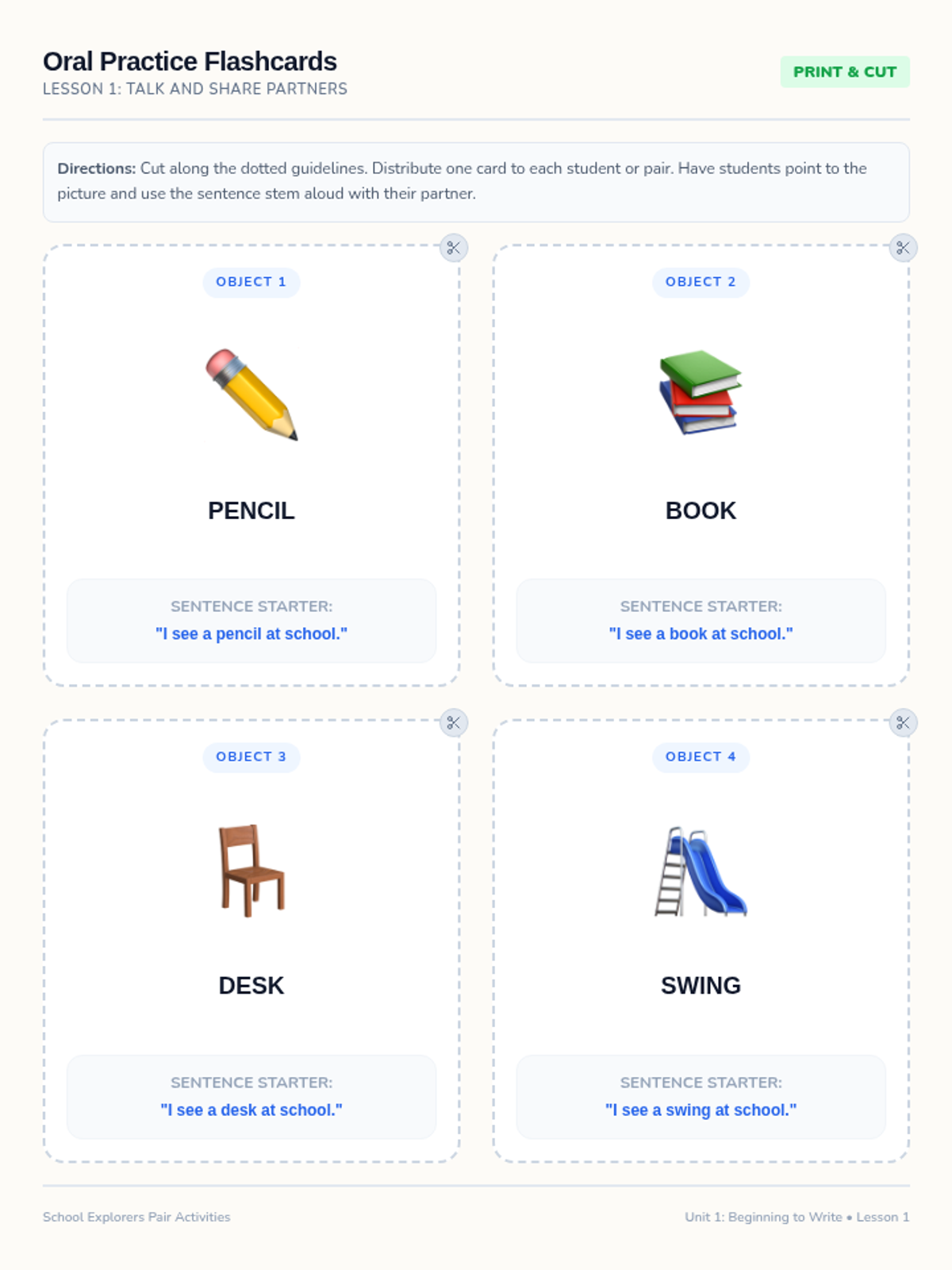
A lesson focused on how living things depend on trees for survival, utilizing visual sentence frames to support Kindergarten oral language development.
A phonics-focused lesson exploring the African savanna using CVC, VCe, and consonant digraphs through a decodable reading passage and comprehension check.
Materials for assessing and monitoring third-grade oral reading fluency, including a lexile-appropriate passage with word counts and a teacher scoring sheet.
A set of activities designed to help 3rd graders master computer-based testing strategies specifically for the Indiana IREAD-3 assessment, focusing on digital navigation and specific reading skills.