An interactive sorting activity where students categorize various objects into solids, liquids, and gases. This hands-on game uses visual cues to reinforce the fundamental properties of the states of matter.
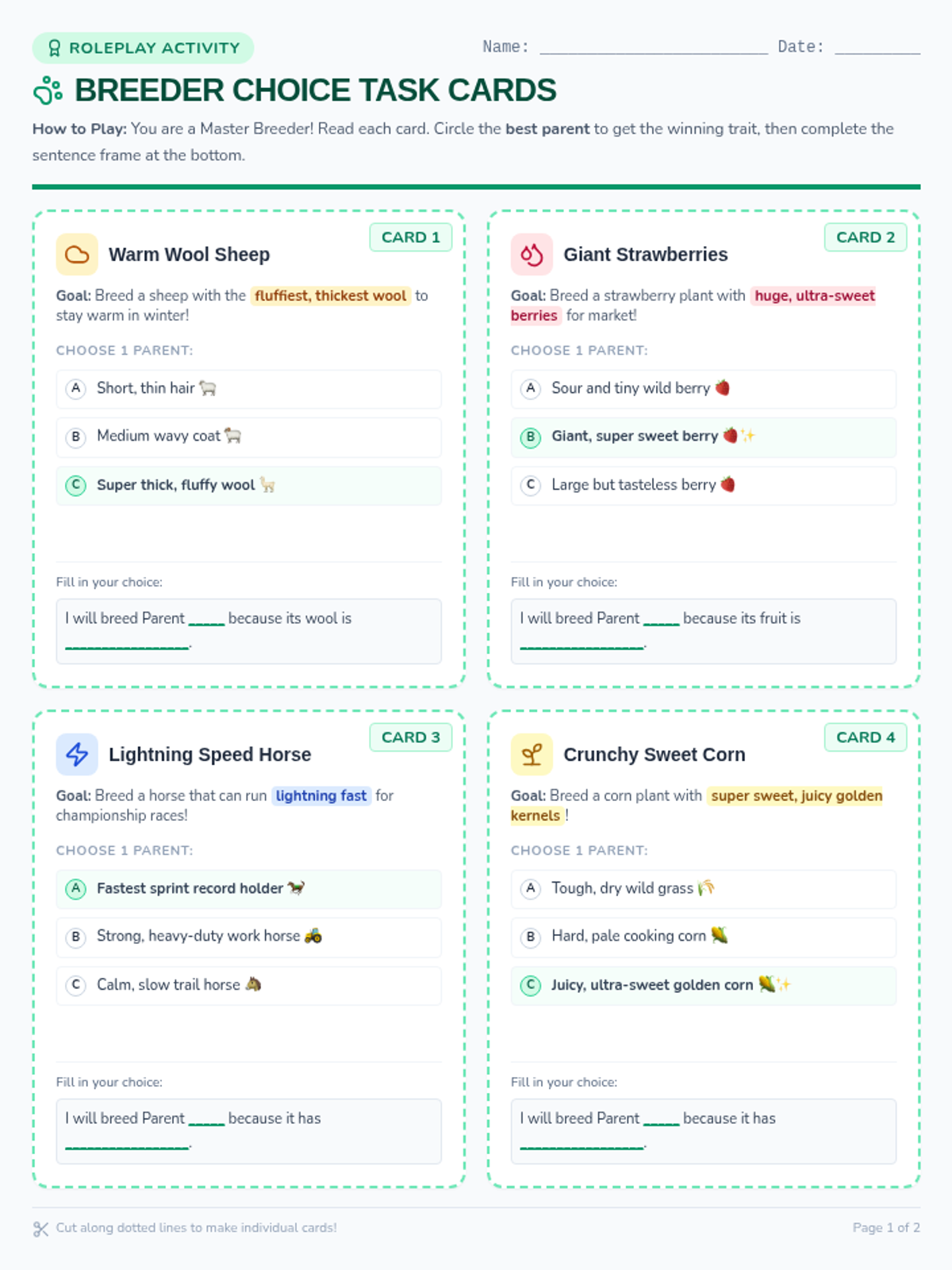
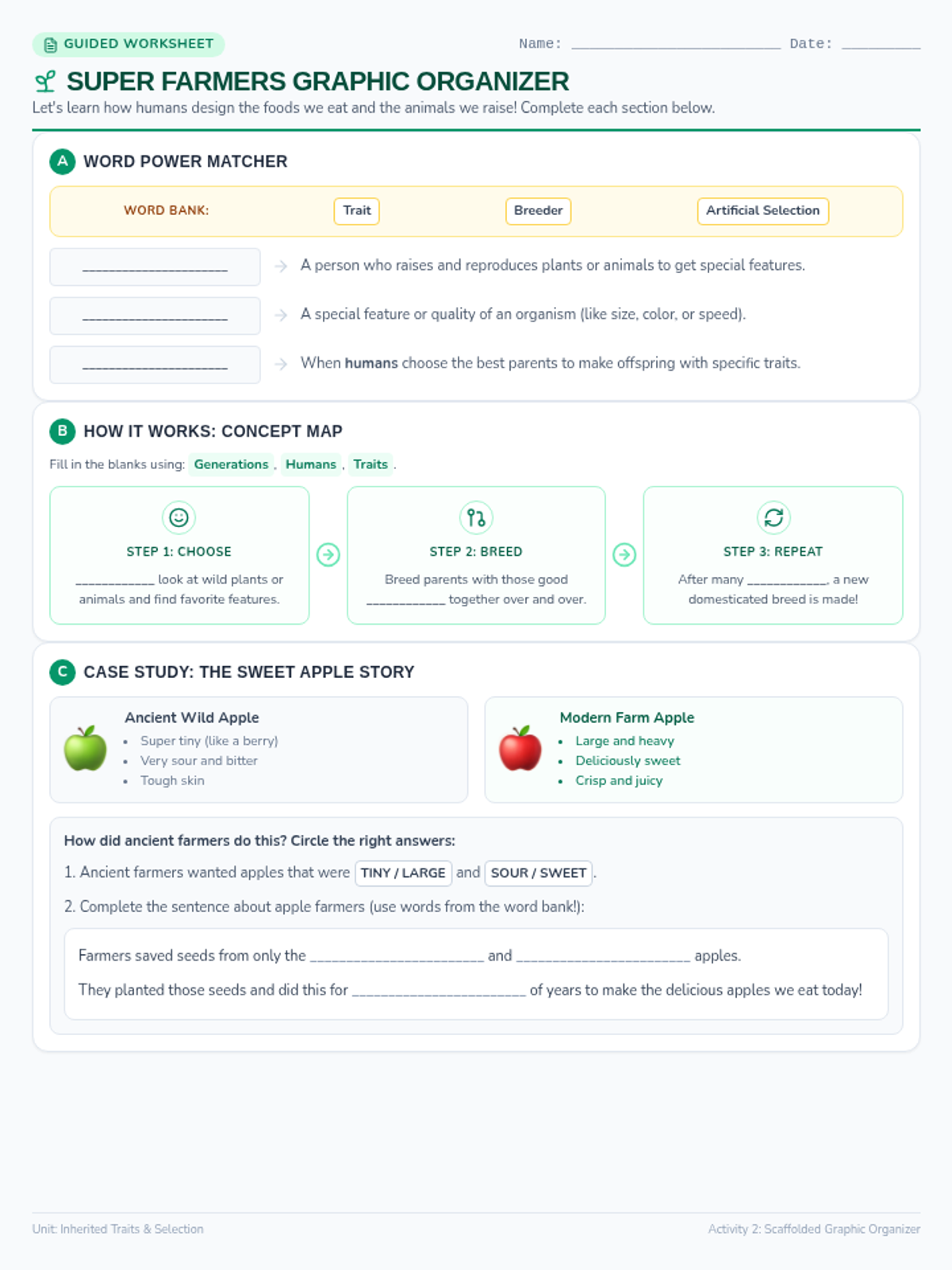
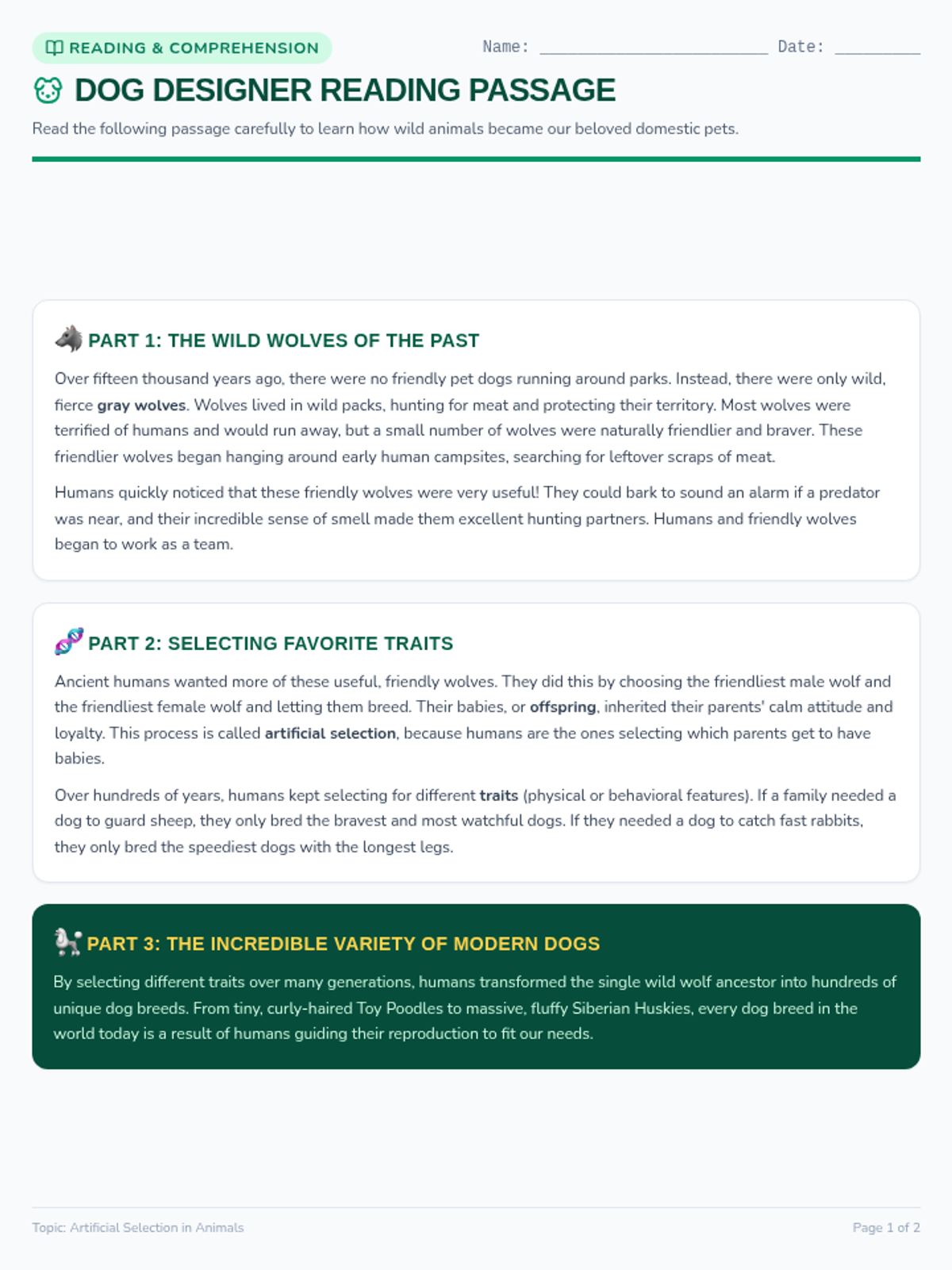
A hands-on, highly visual lesson where students explore artificial selection by roleplaying as breeders and farmers. Students analyze traits in dogs, crops, and livestock using scaffolded organizers, visual task cards, and matching tasks.
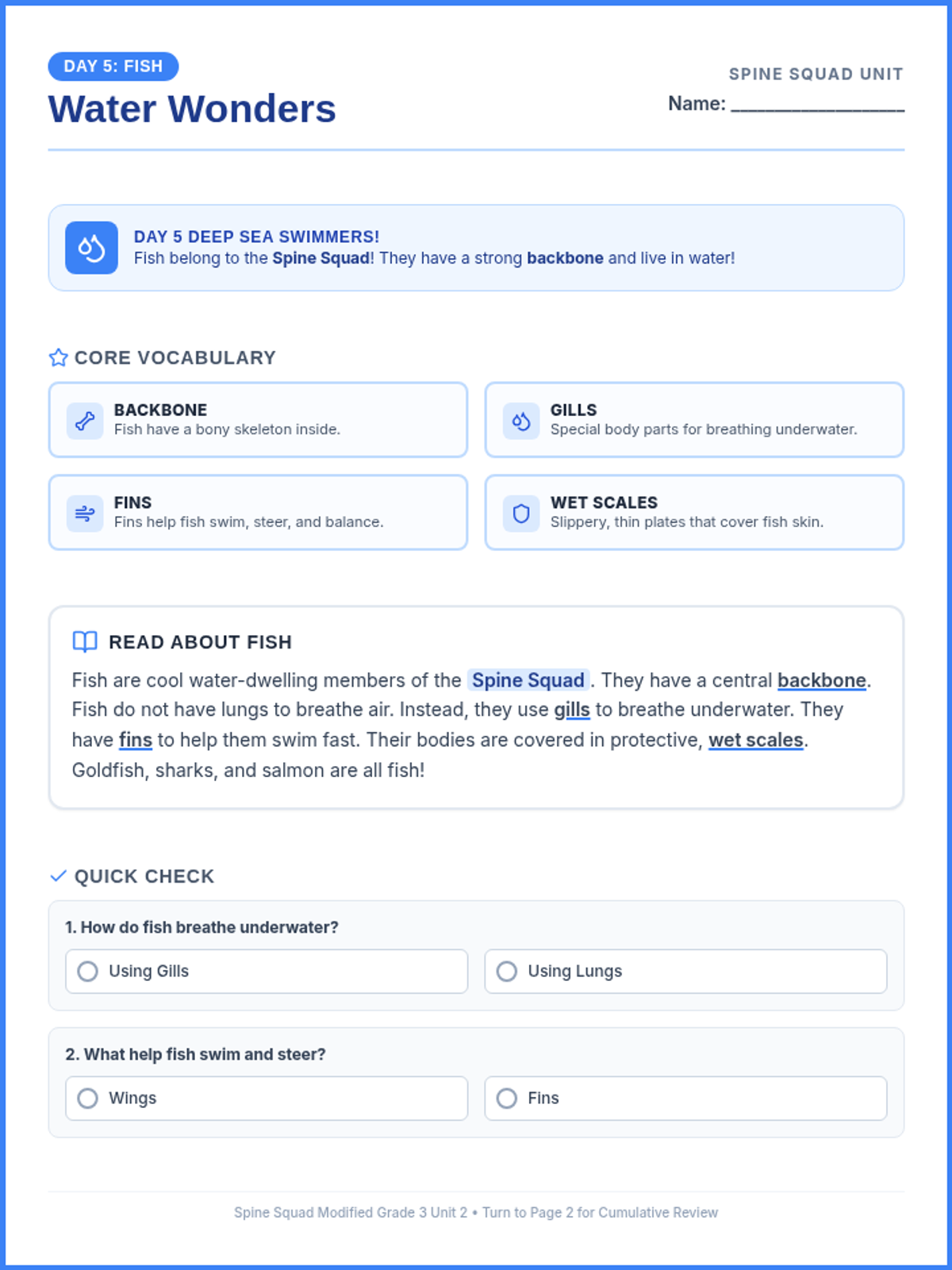
In this fifth and final lesson of the Spine Squad unit, students explore fish, focusing on gills, fins, scales, and underwater survival, with a final cumulative review of the five vertebrate groups.
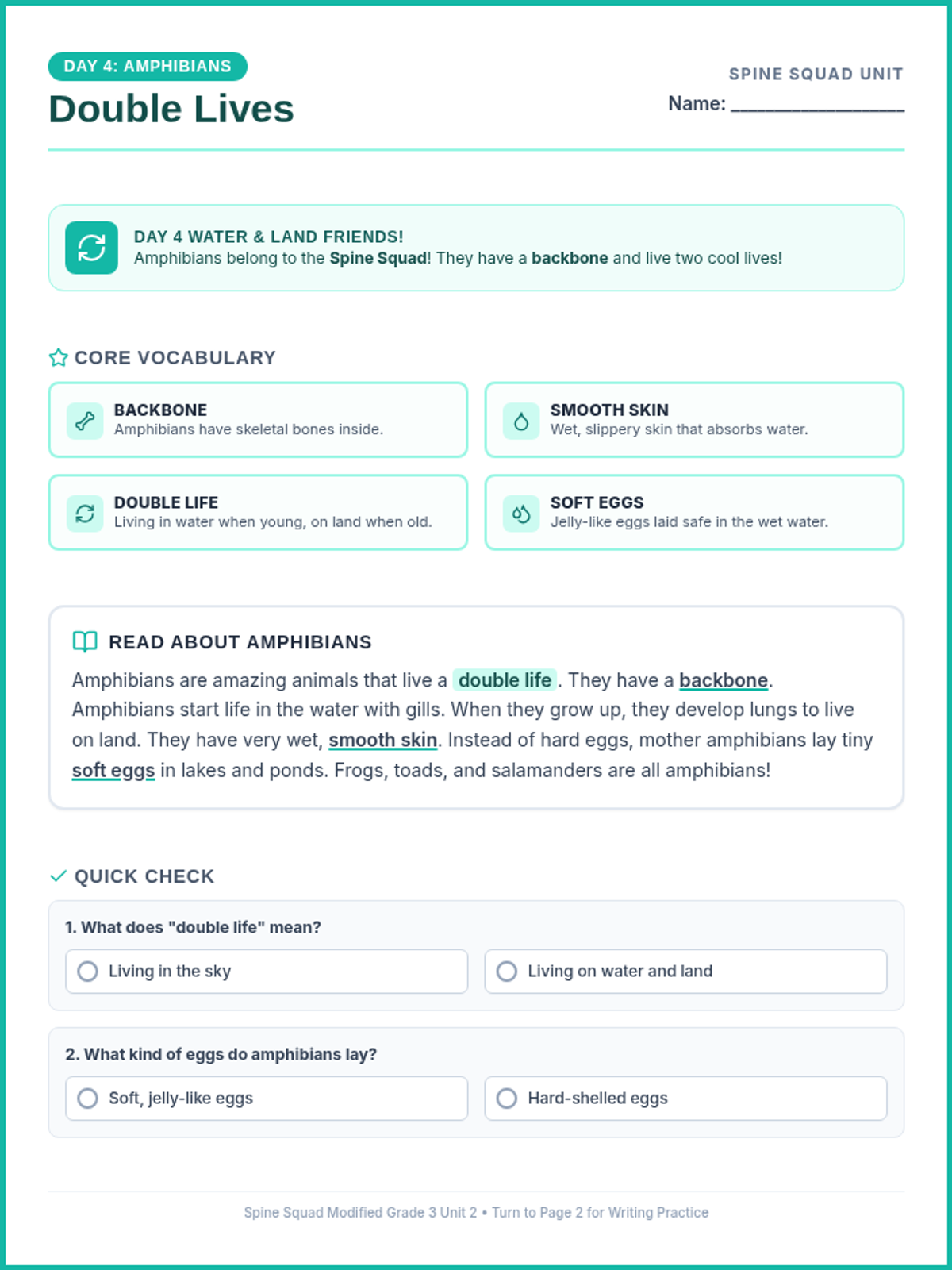
In this fourth lesson of the Spine Squad unit, students study amphibians, understanding how they live on water and land, lay soft eggs, and have smooth, wet skin, with scaffolded reading and tracing.
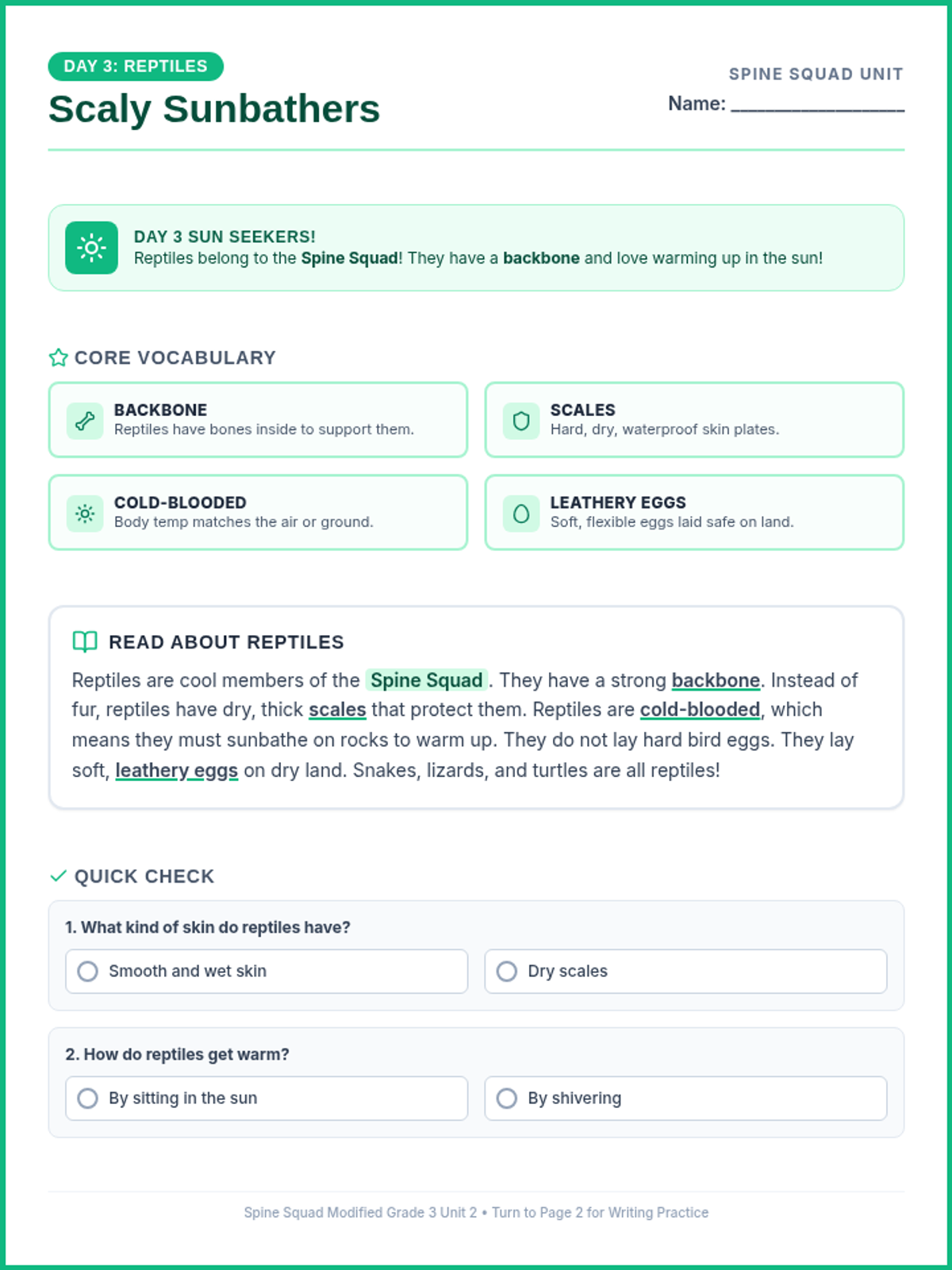
In this third lesson of the Spine Squad unit, students identify reptiles, exploring characteristics such as scales, cold-blooded regulation, and laying leathery eggs on land, supported by guided tracing.
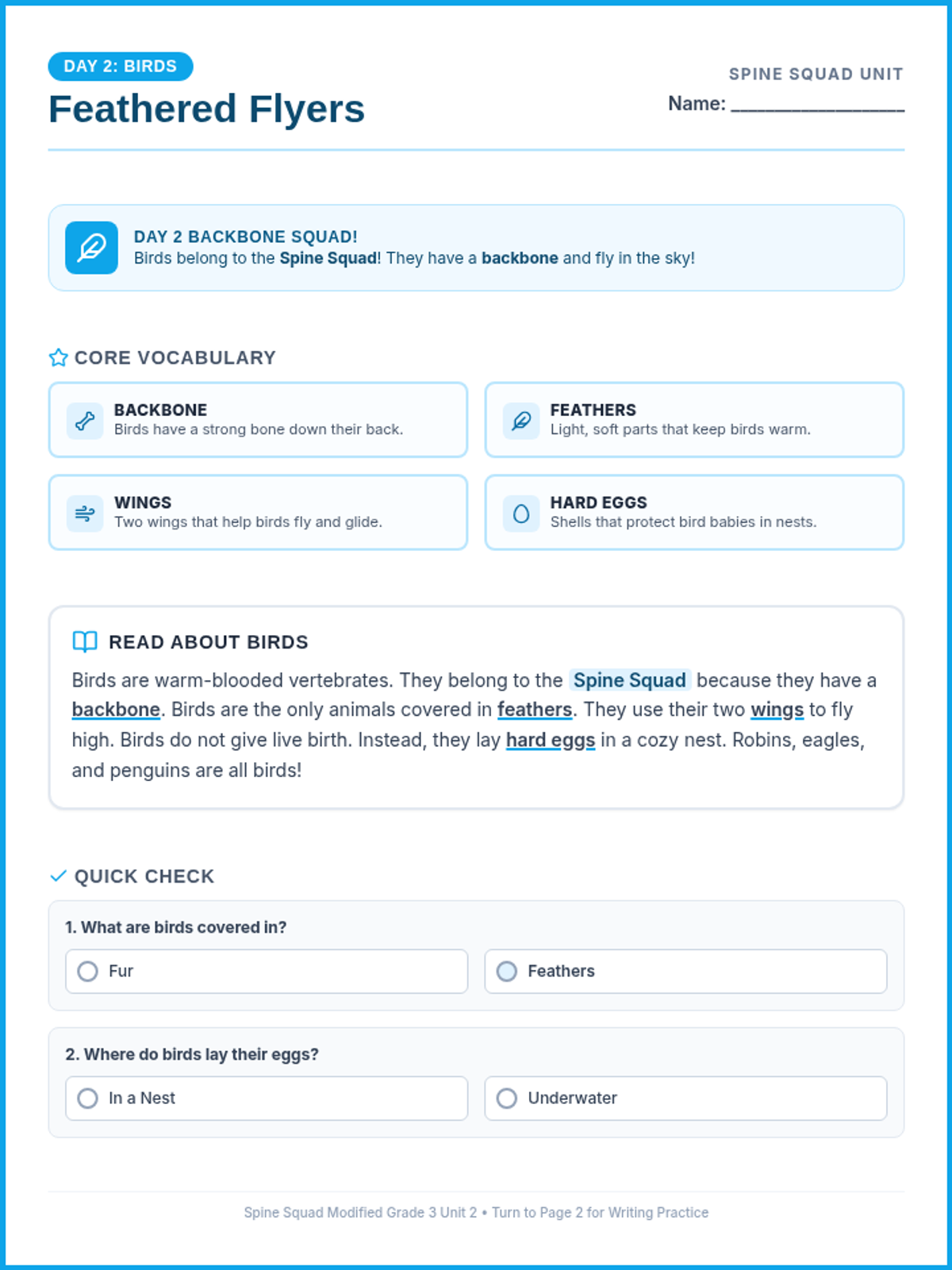
In this second lesson of the Spine Squad unit, students examine the key characteristics of birds, including feathers, wings, and laying hard-shelled eggs, using scaffolded comprehension prompts and tracing.
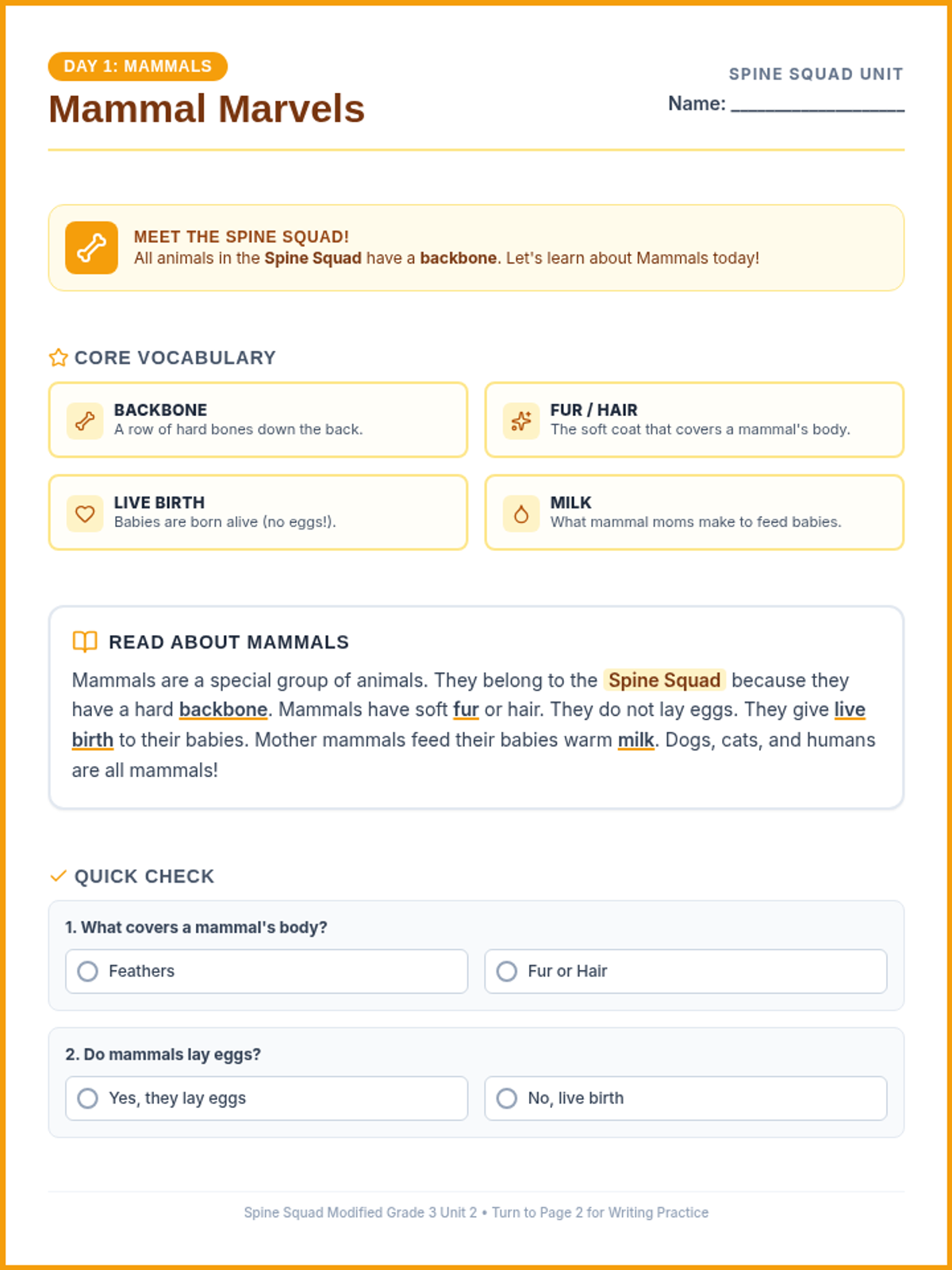
In this first lesson of the Spine Squad unit, students explore the unique traits of mammals, focusing on fur/hair, live birth, and milk production with heavy visual support and tracing activities.
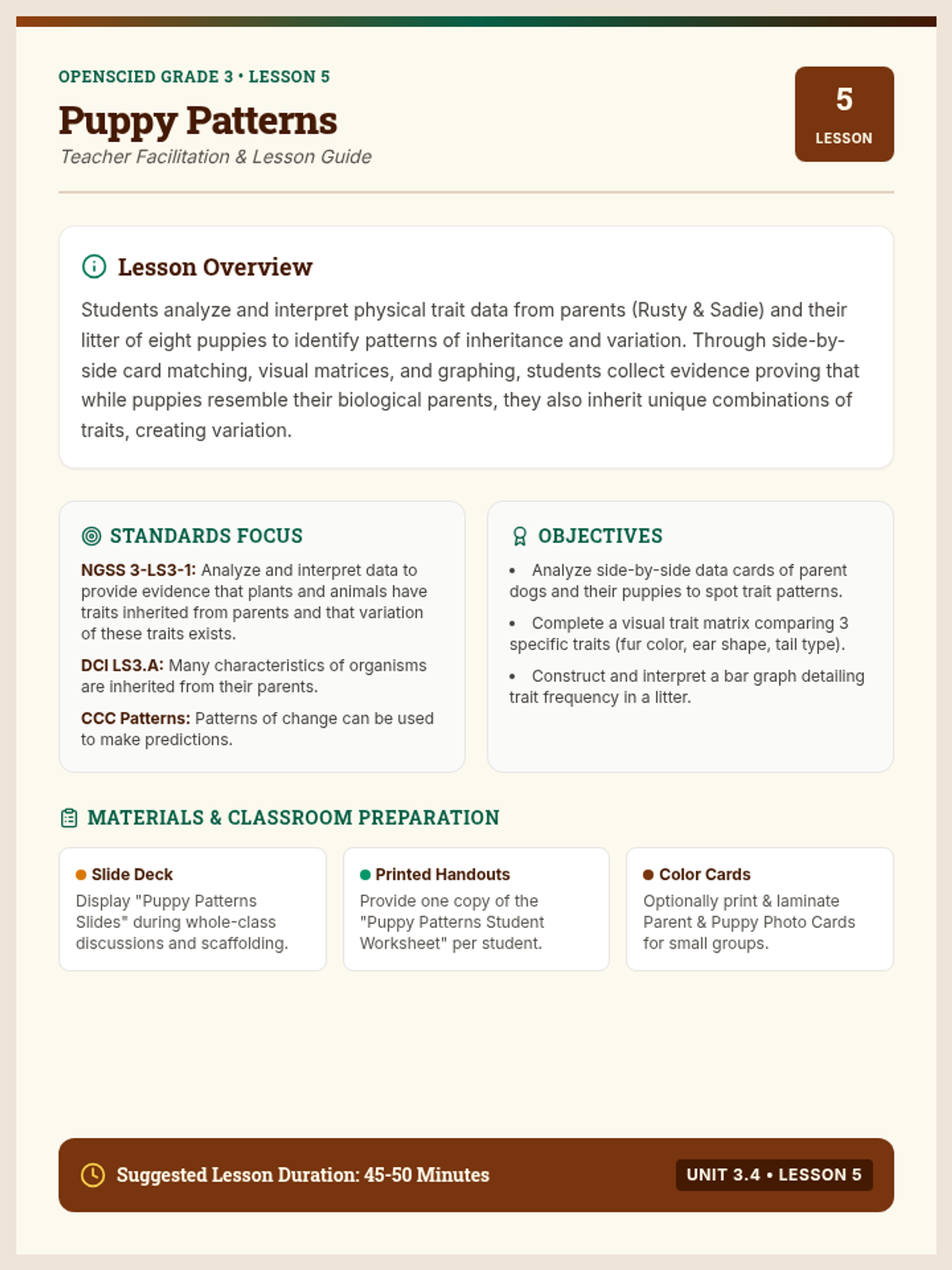
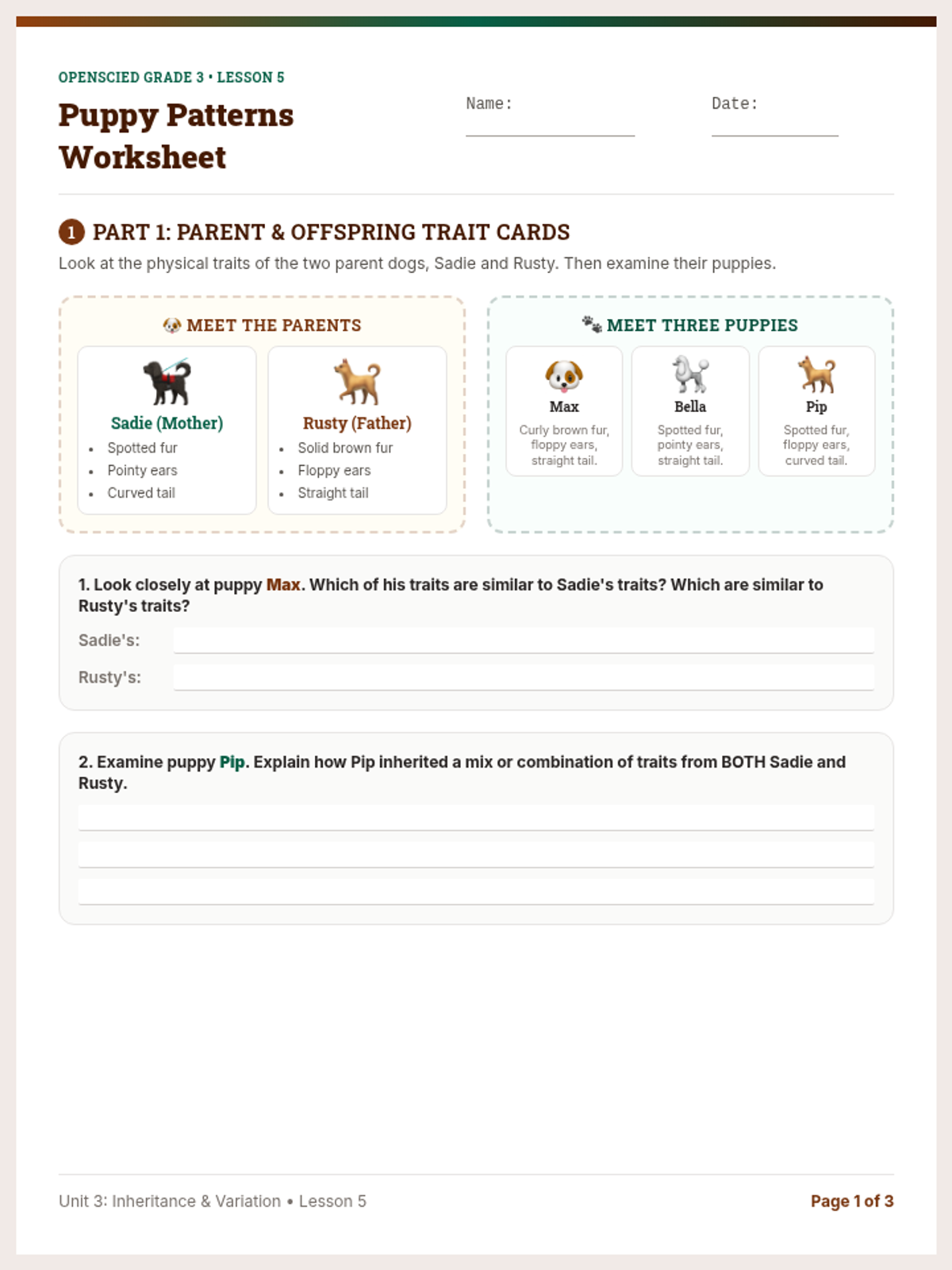
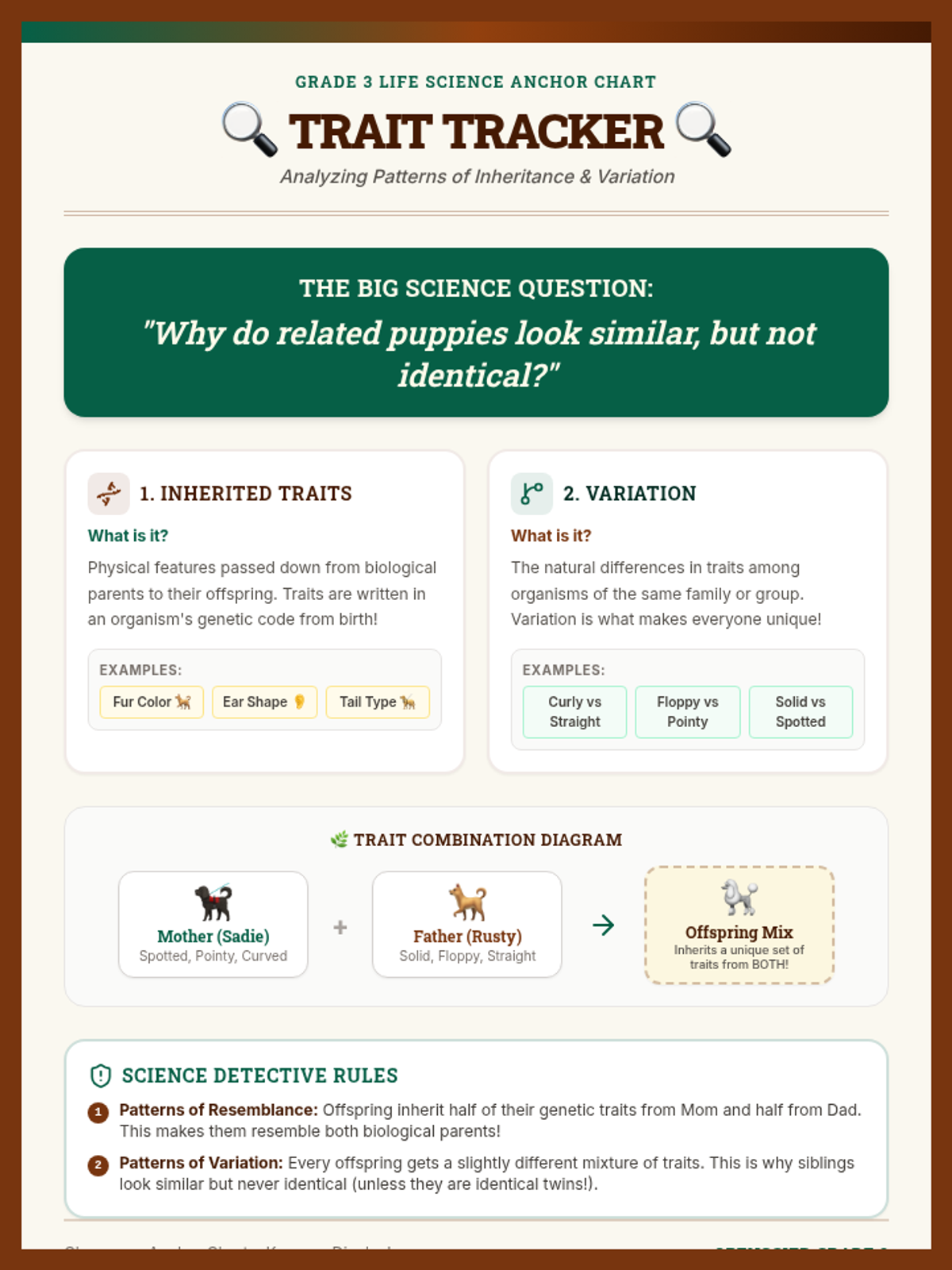
An OpenSciEd-aligned 3rd grade science lesson where students analyze and interpret data from parent dogs and their litters to discover patterns of inheritance and variation in physical traits.
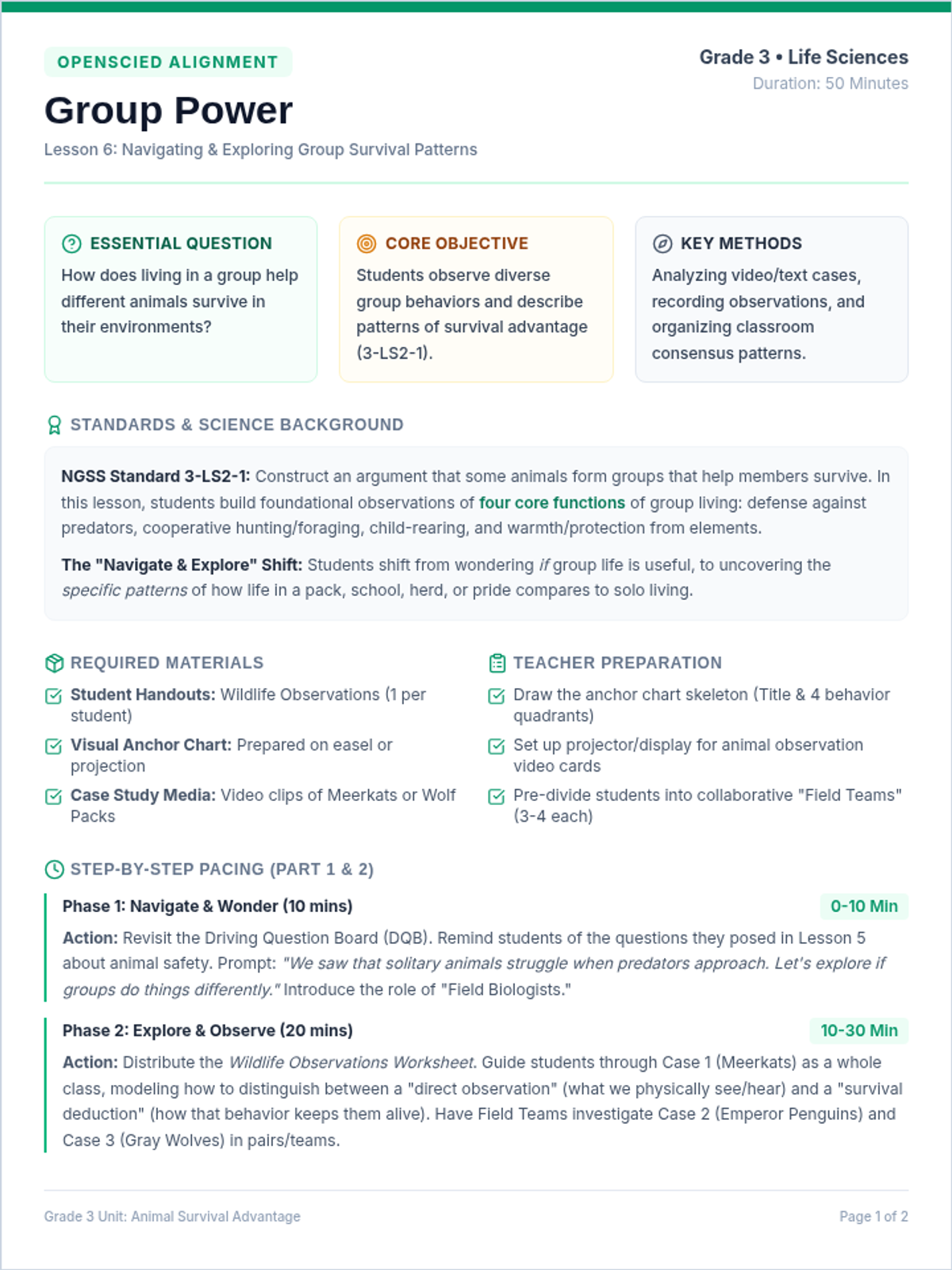
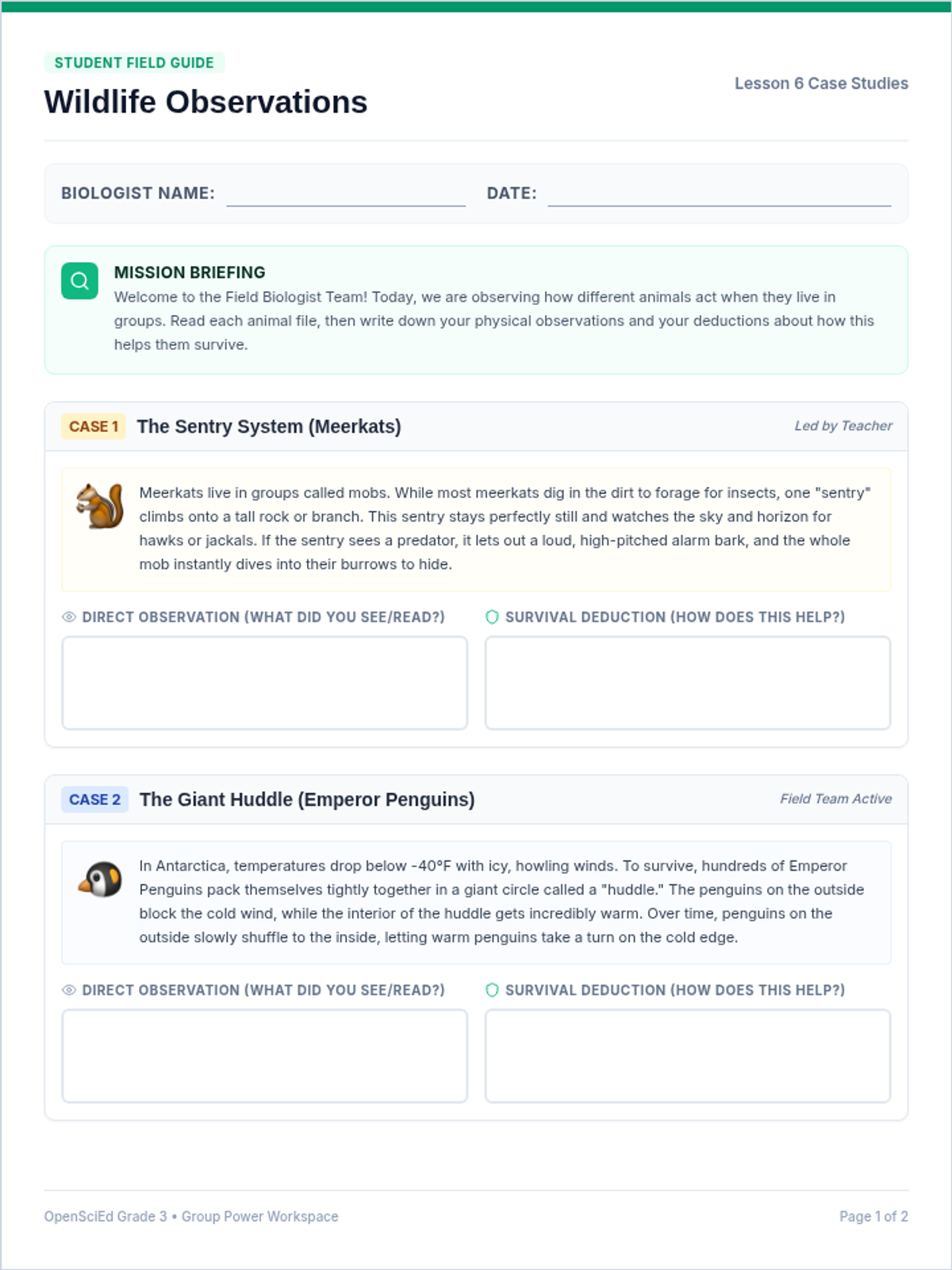
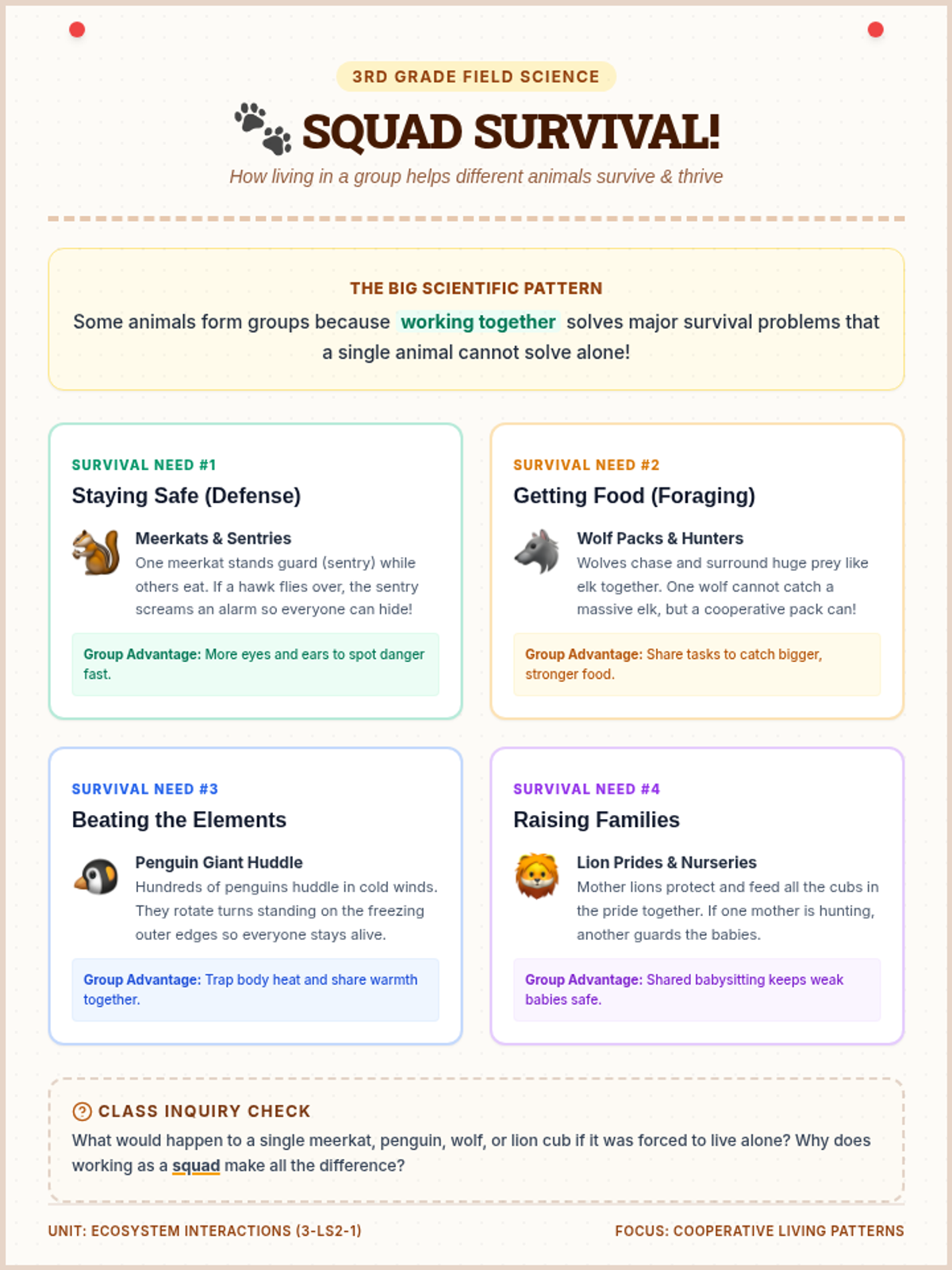
An OpenSciEd-aligned lesson where 3rd graders observe animal behaviors and describe patterns of how living in groups helps different species survive. Students analyze diverse wildlife examples to uncover the survival advantages of cooperative living.
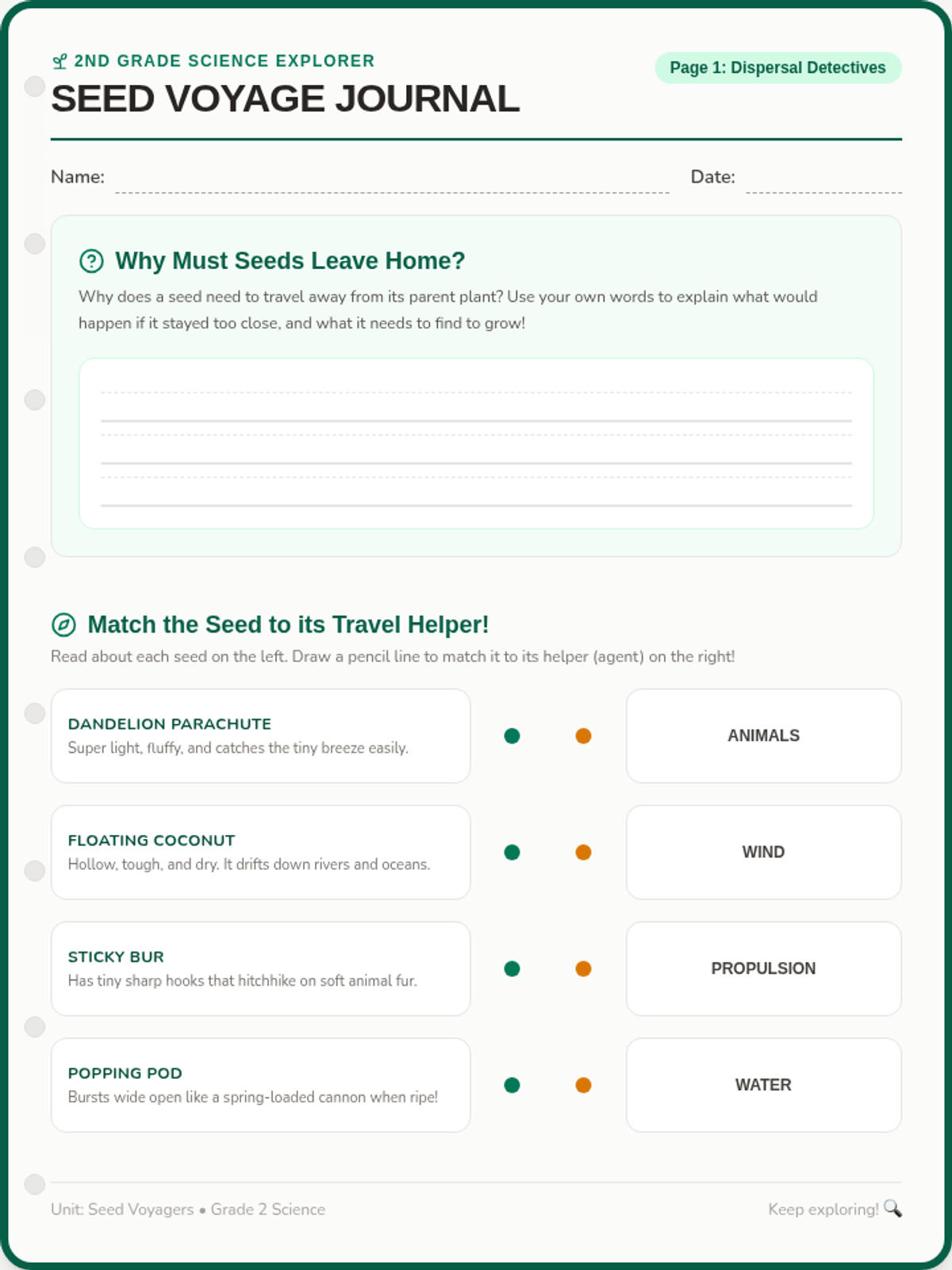
A hands-on science lesson designed for second-grade students to explore seed dispersal methods. Students learn about wind, water, animals, gravity, and propulsion through visual modeling, discussion, and a structured field journal.
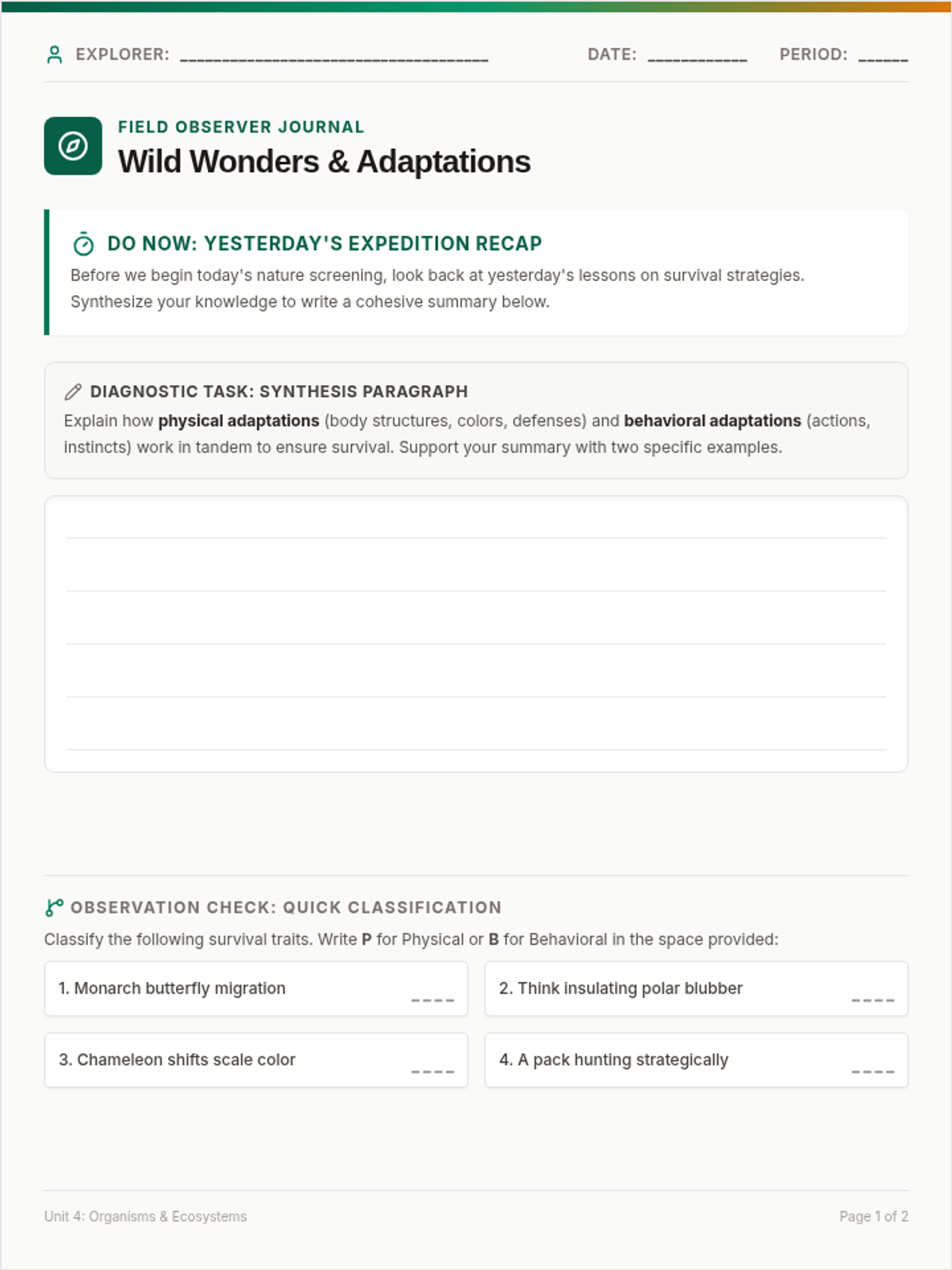
A lesson exploring how physical and behavioral traits help organisms survive in their environments, featuring a video documentary review and diagnostic summary.
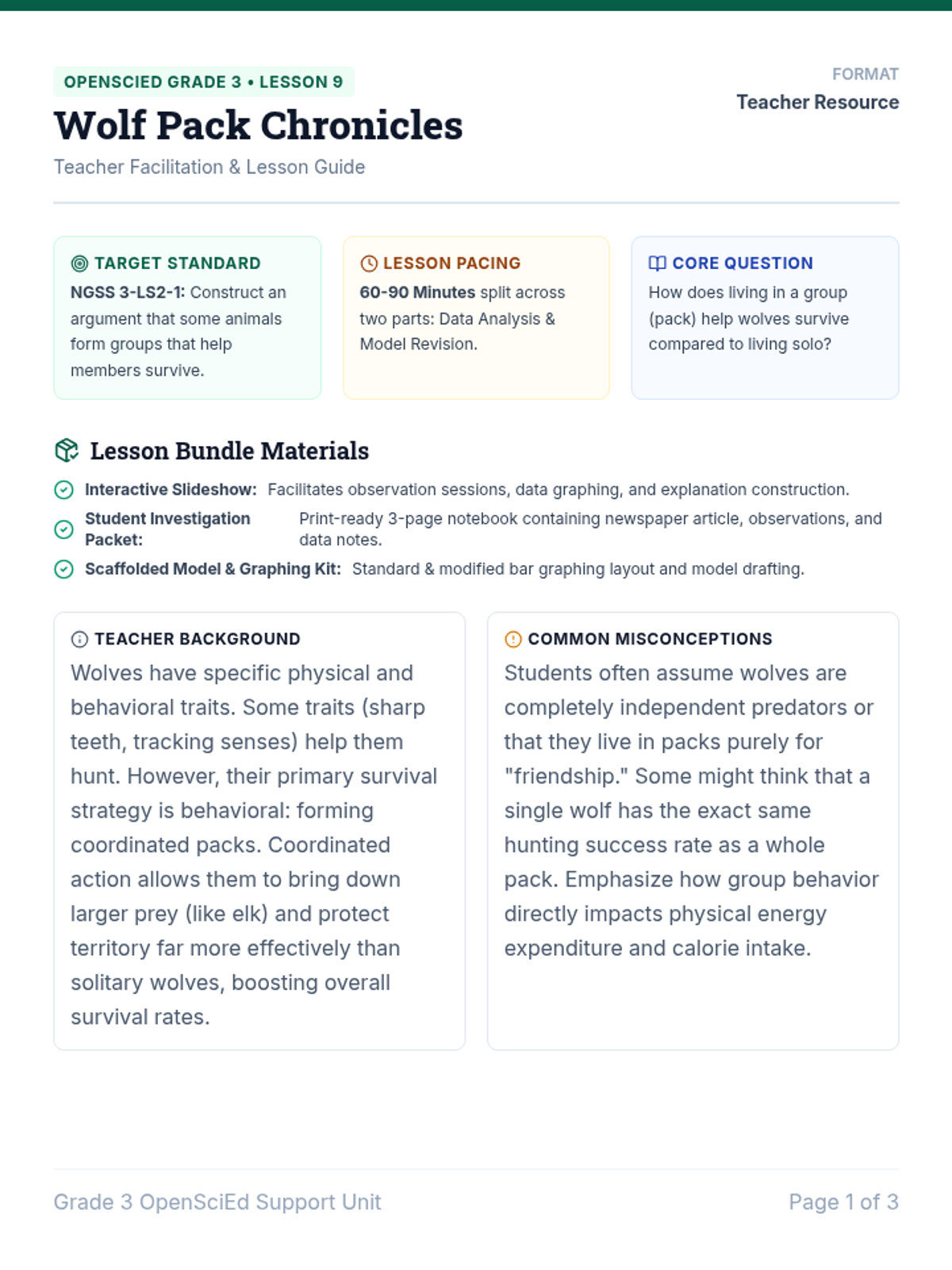
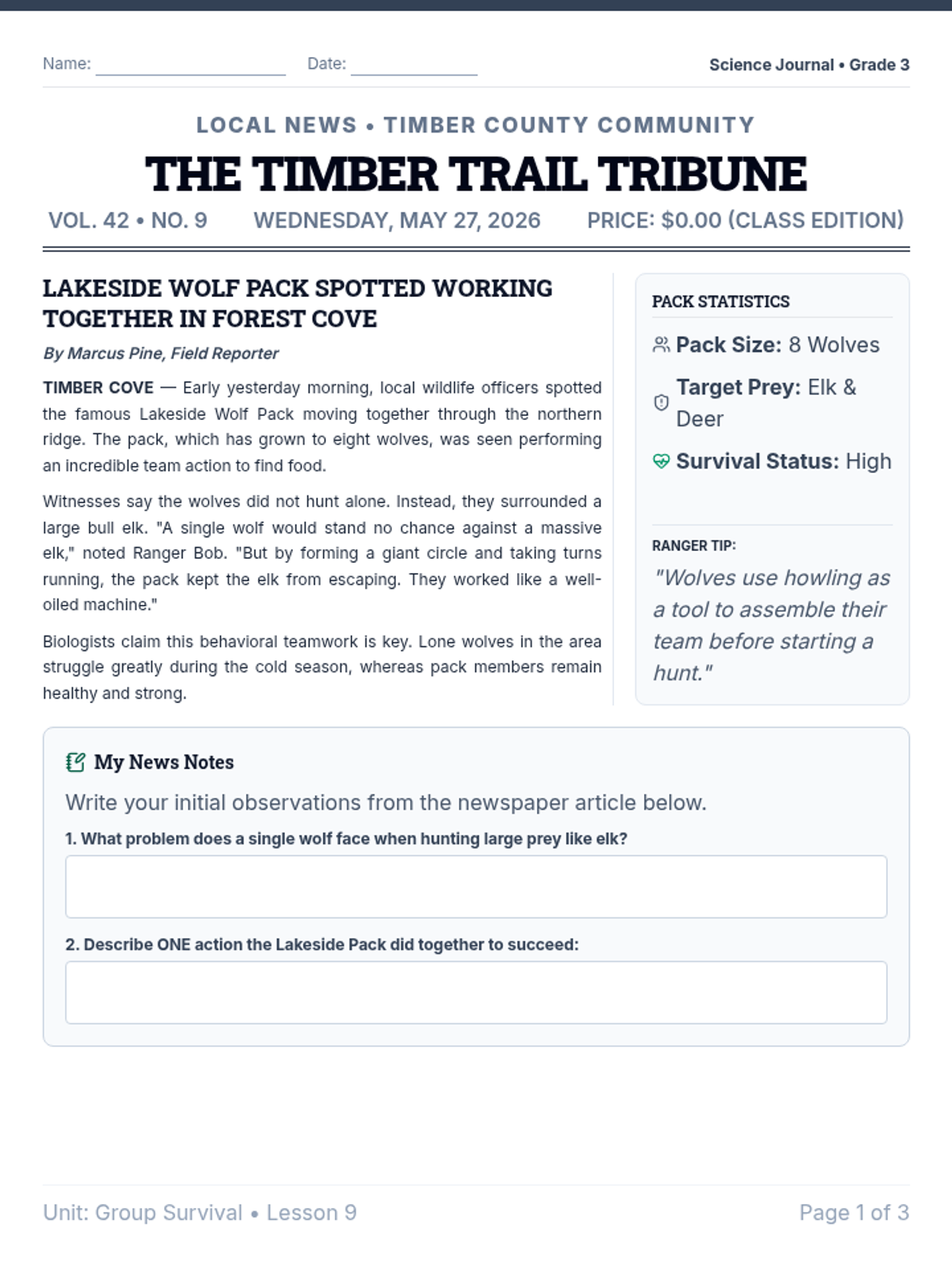
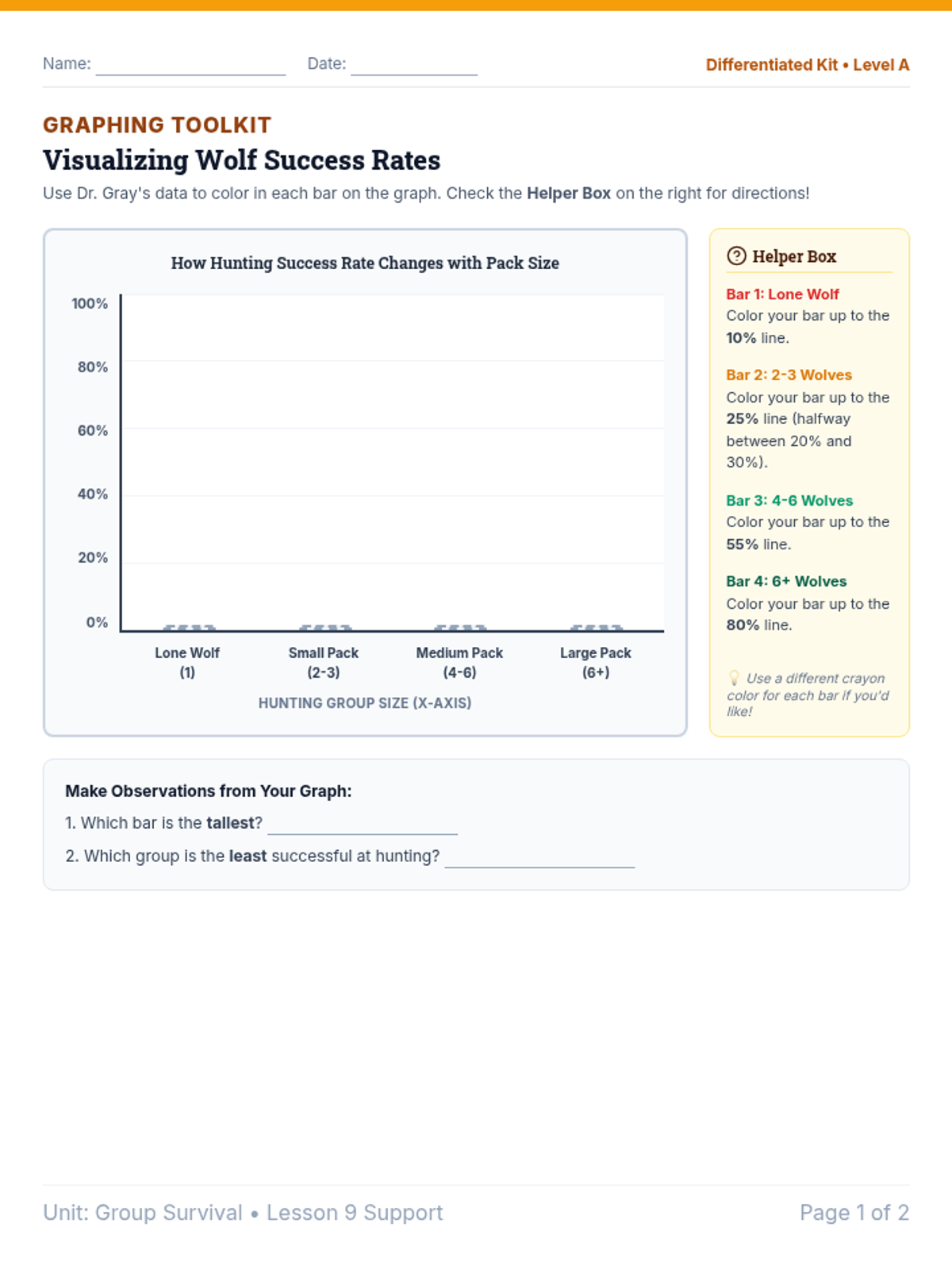
A third-grade OpenSciEd Lesson 9 investigation where students explore wolf traits and group survival. Students read a local newspaper article about a wolf pack, analyze expert data on traits, build a bar graph, and revise their models to explain how living in groups helps wolves survive.
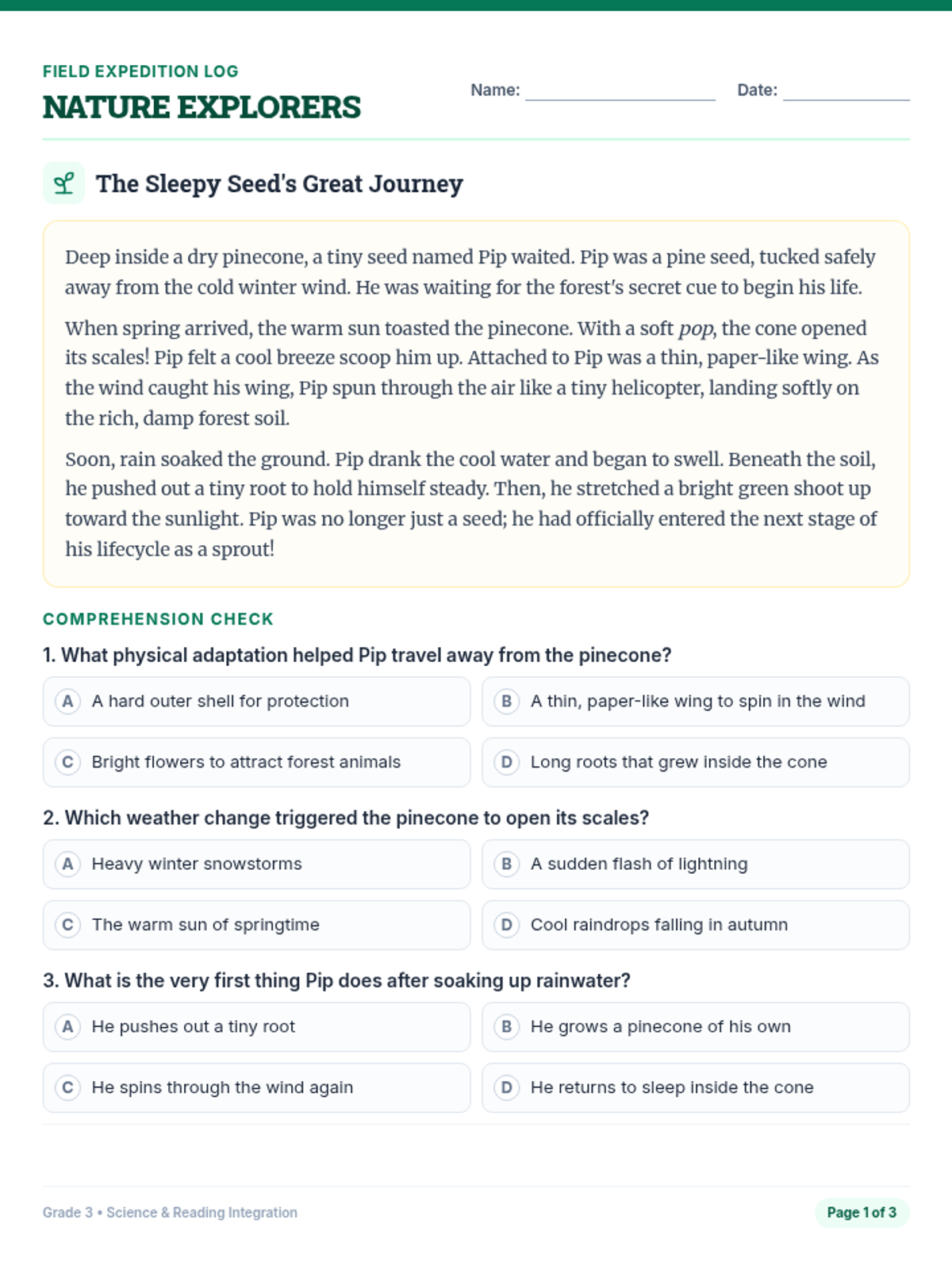
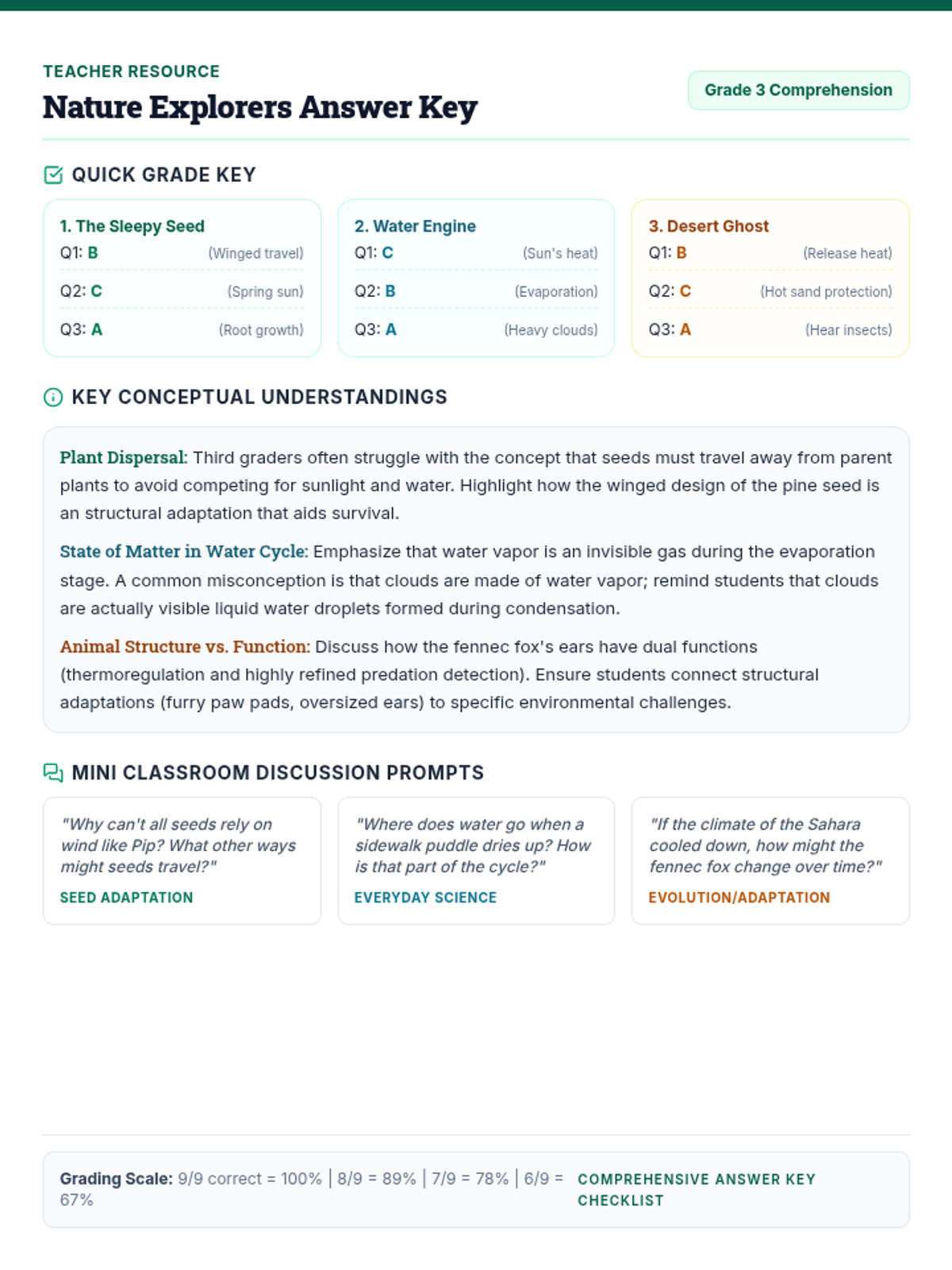
A comprehensive third-grade reading comprehension resource featuring engaging passages about plant lifecycles, weather patterns, and animal adaptations.
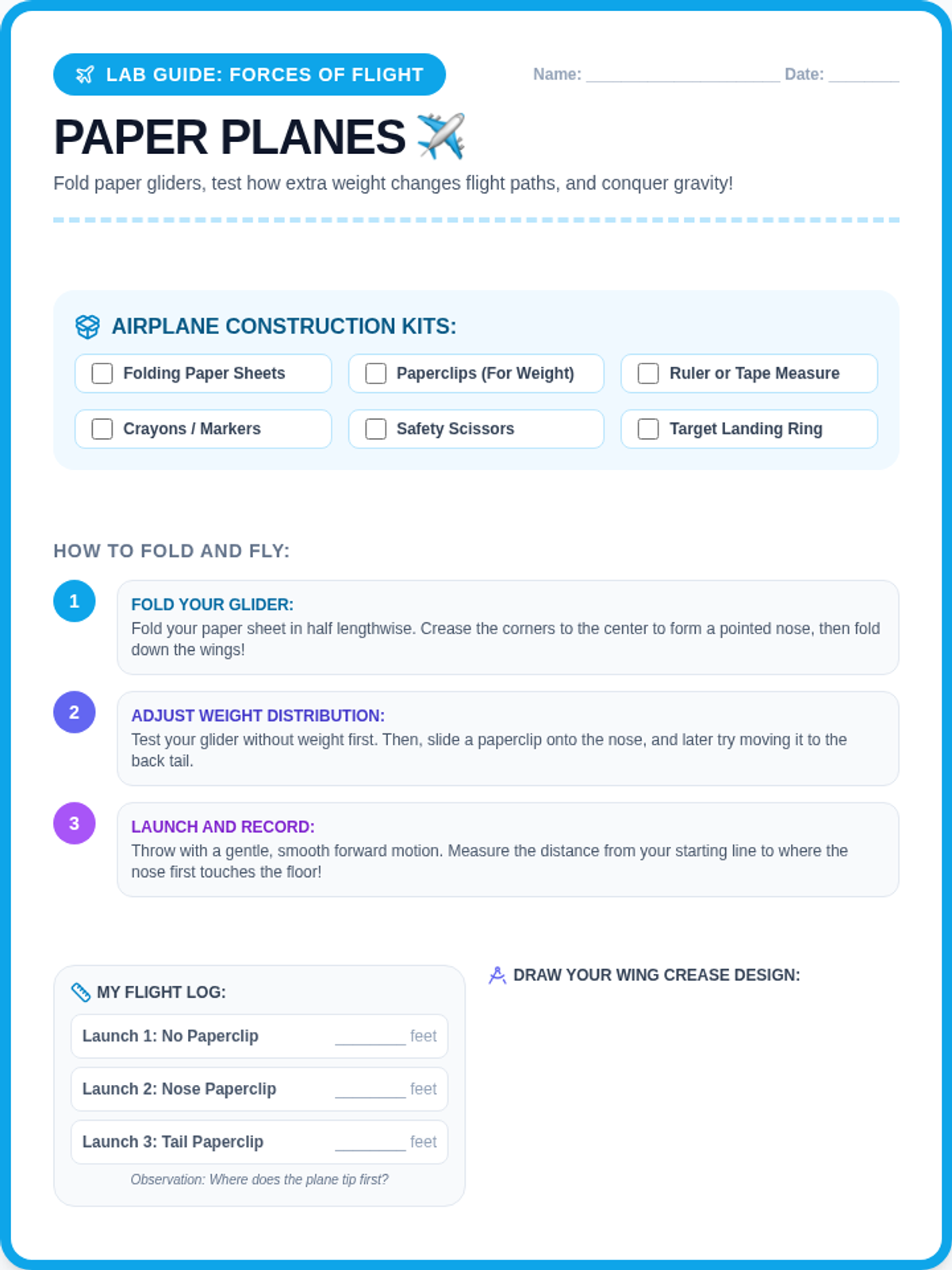
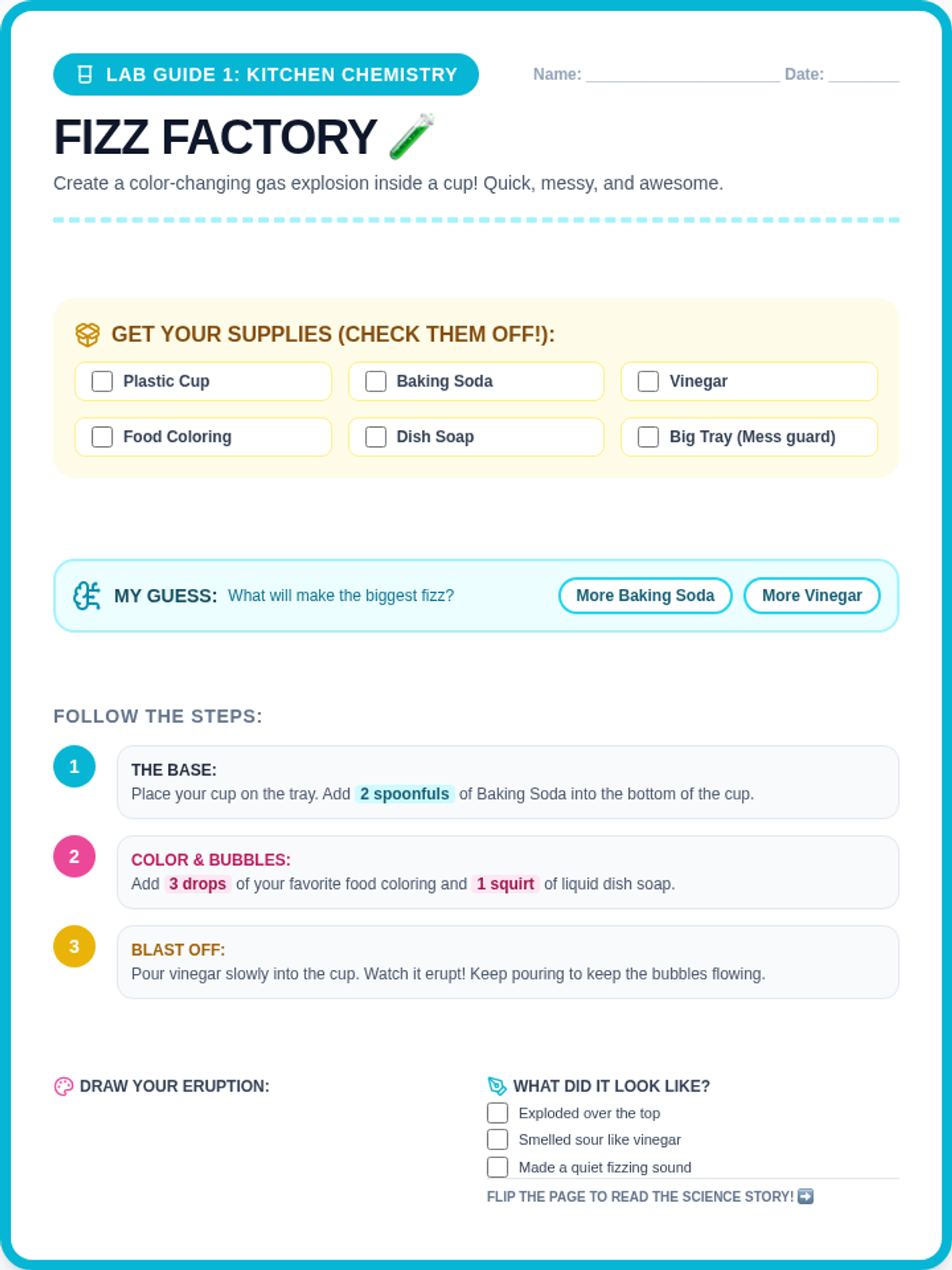
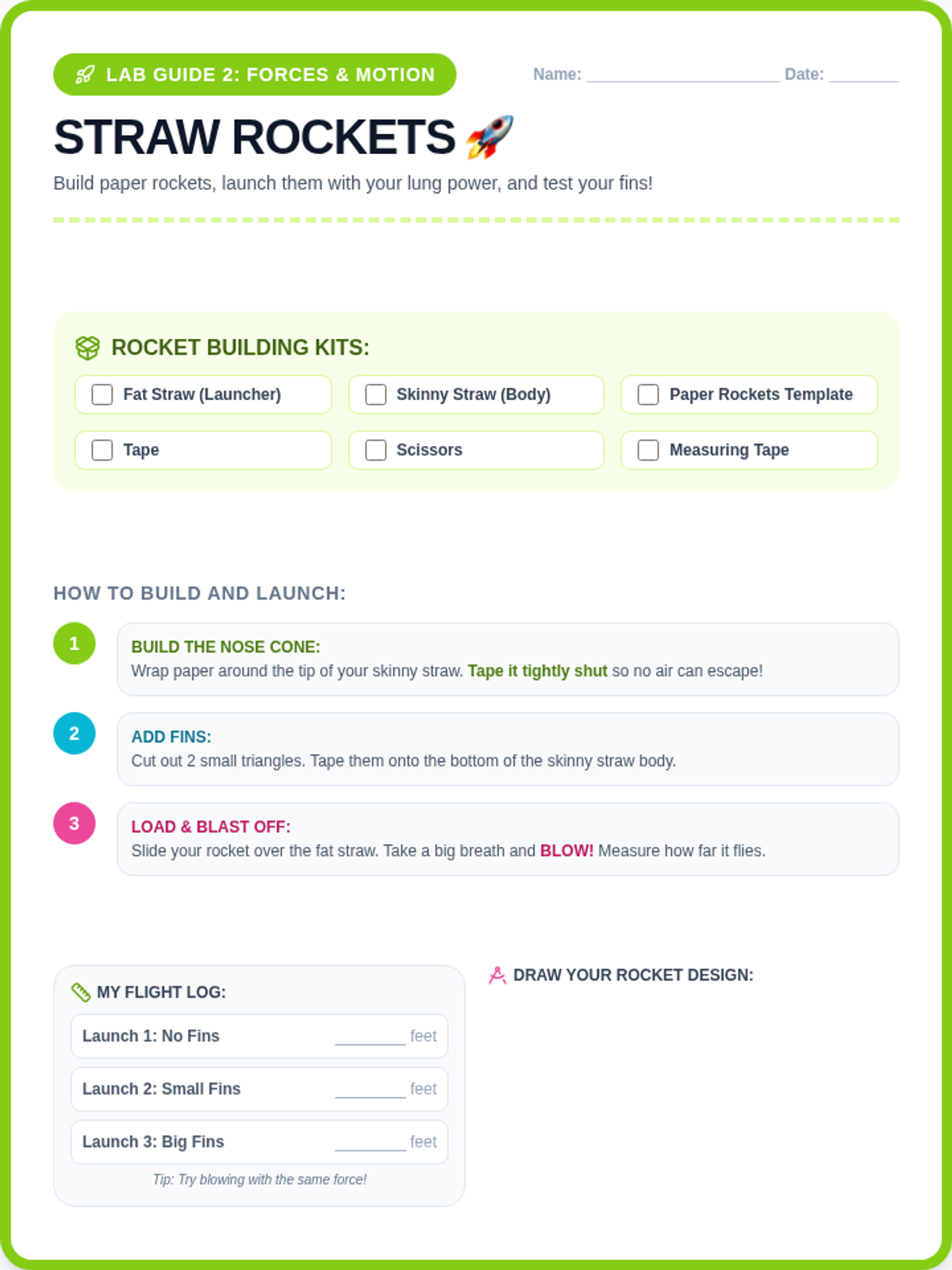
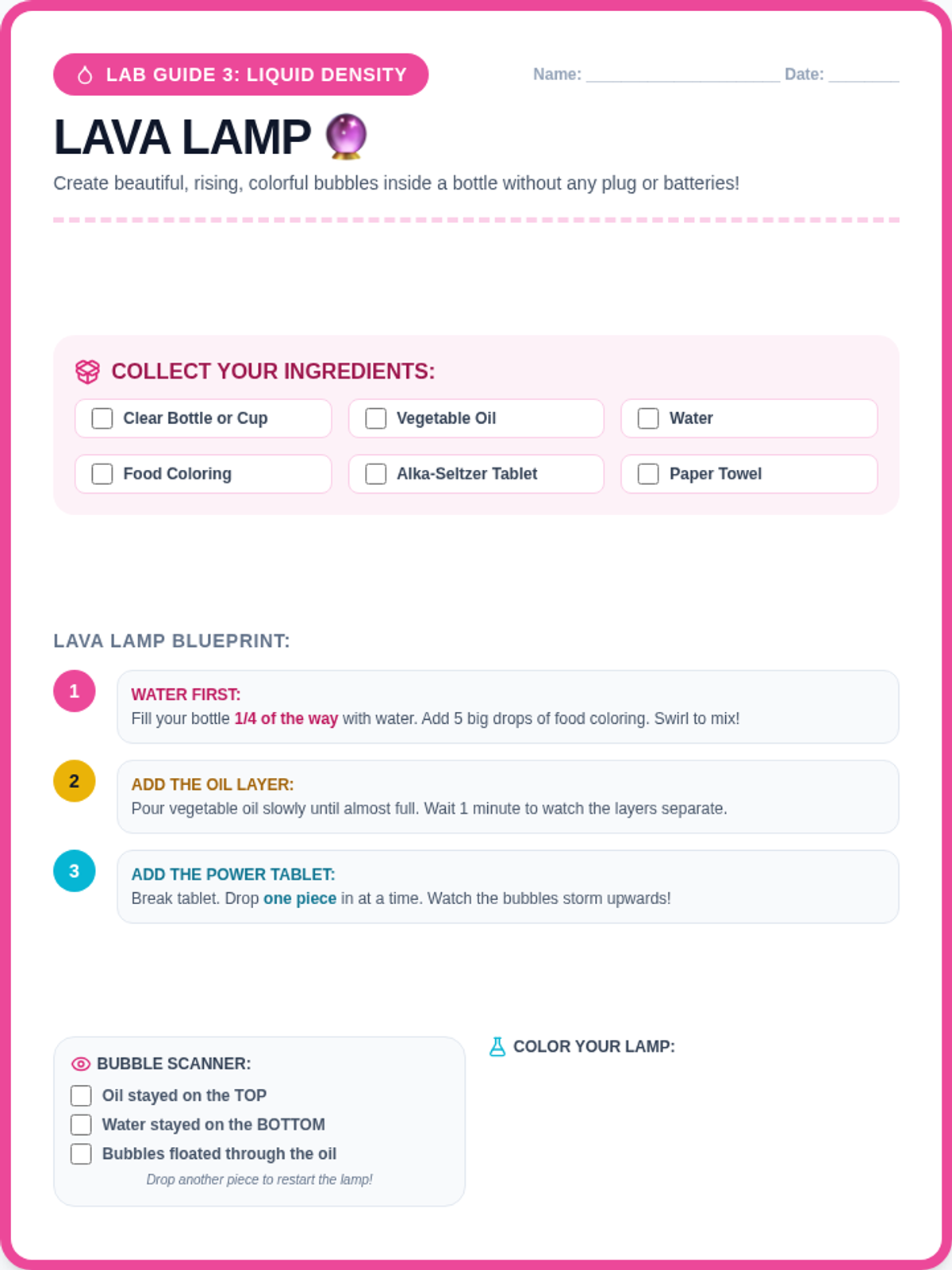
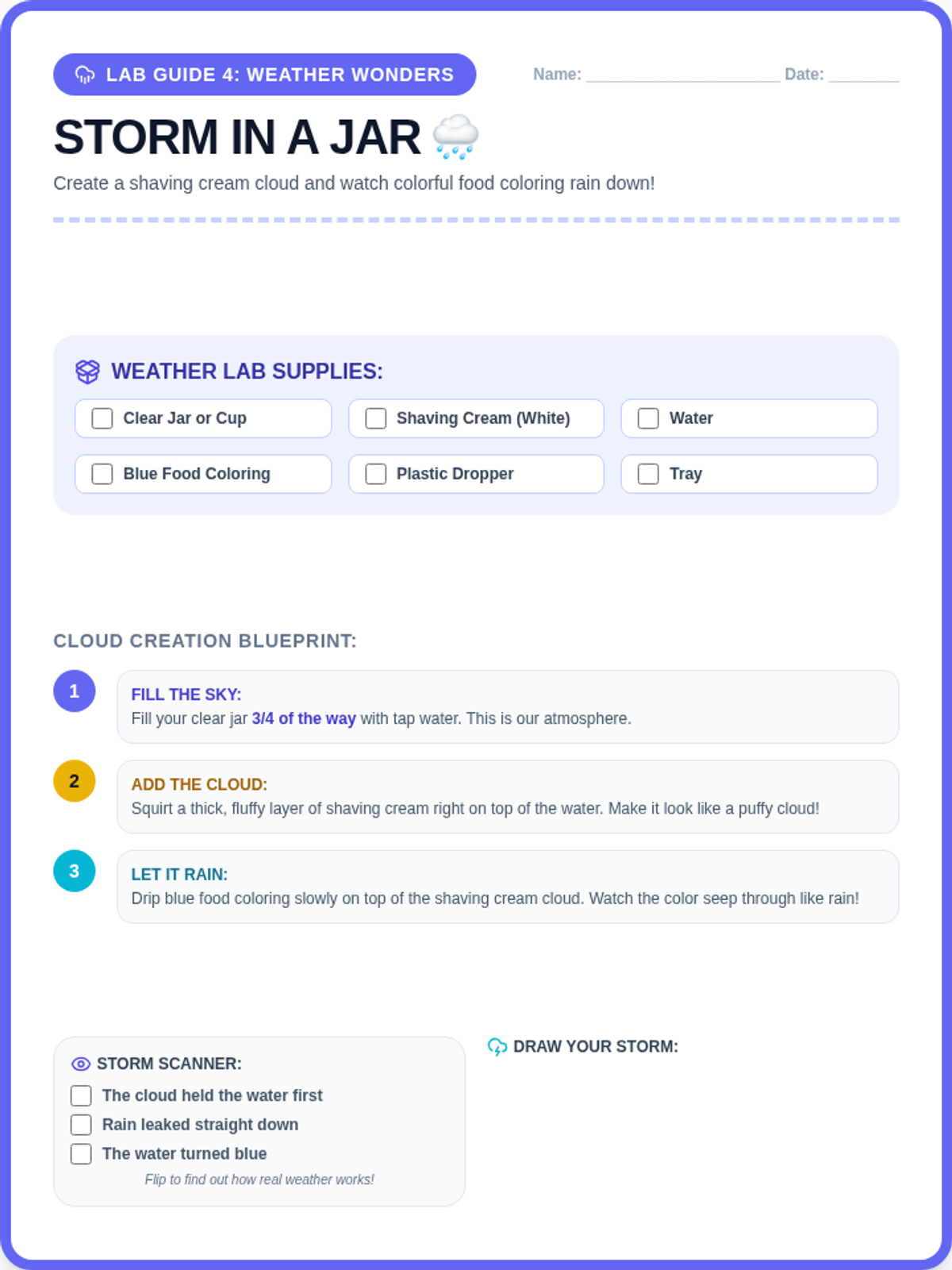
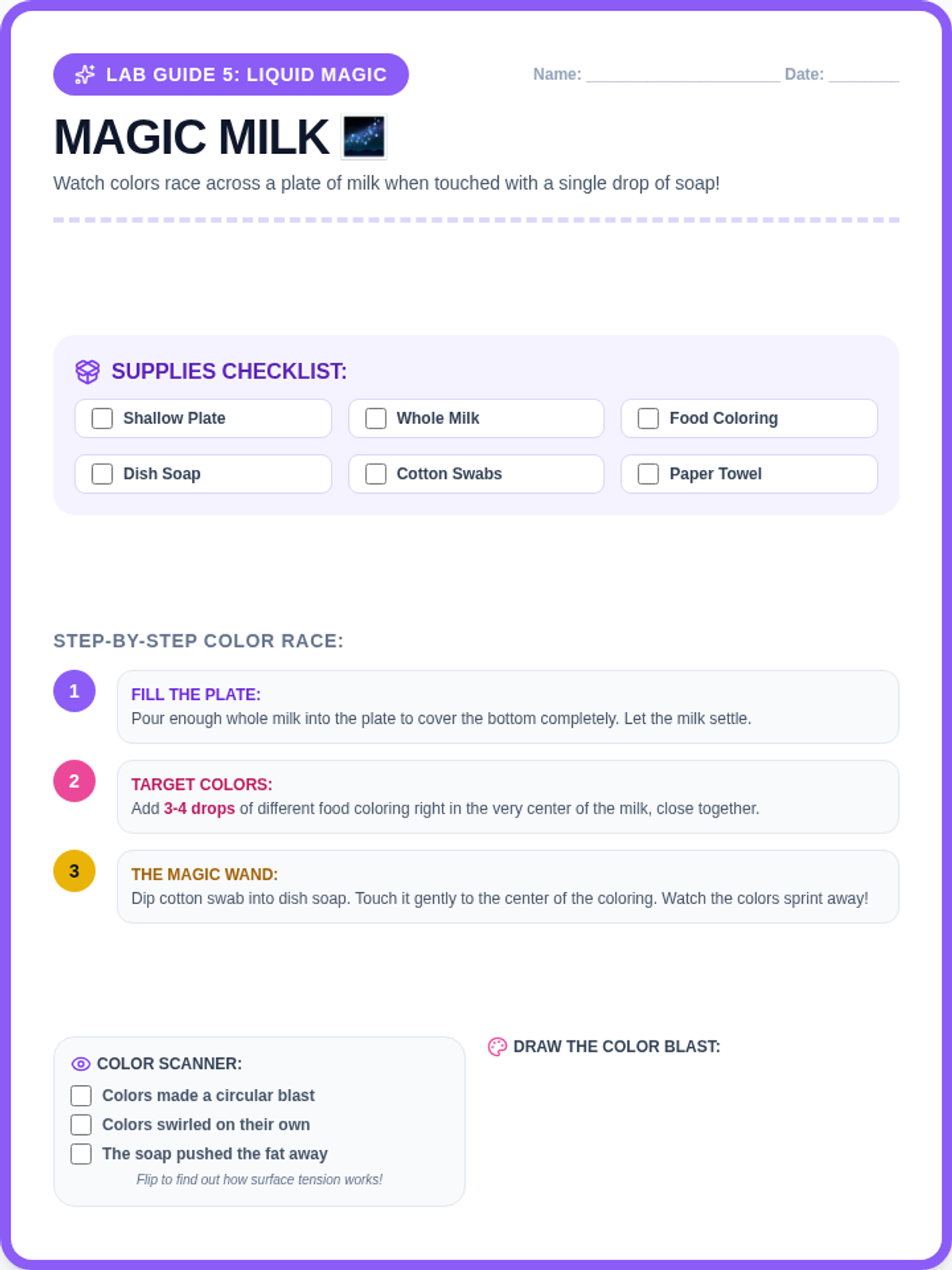
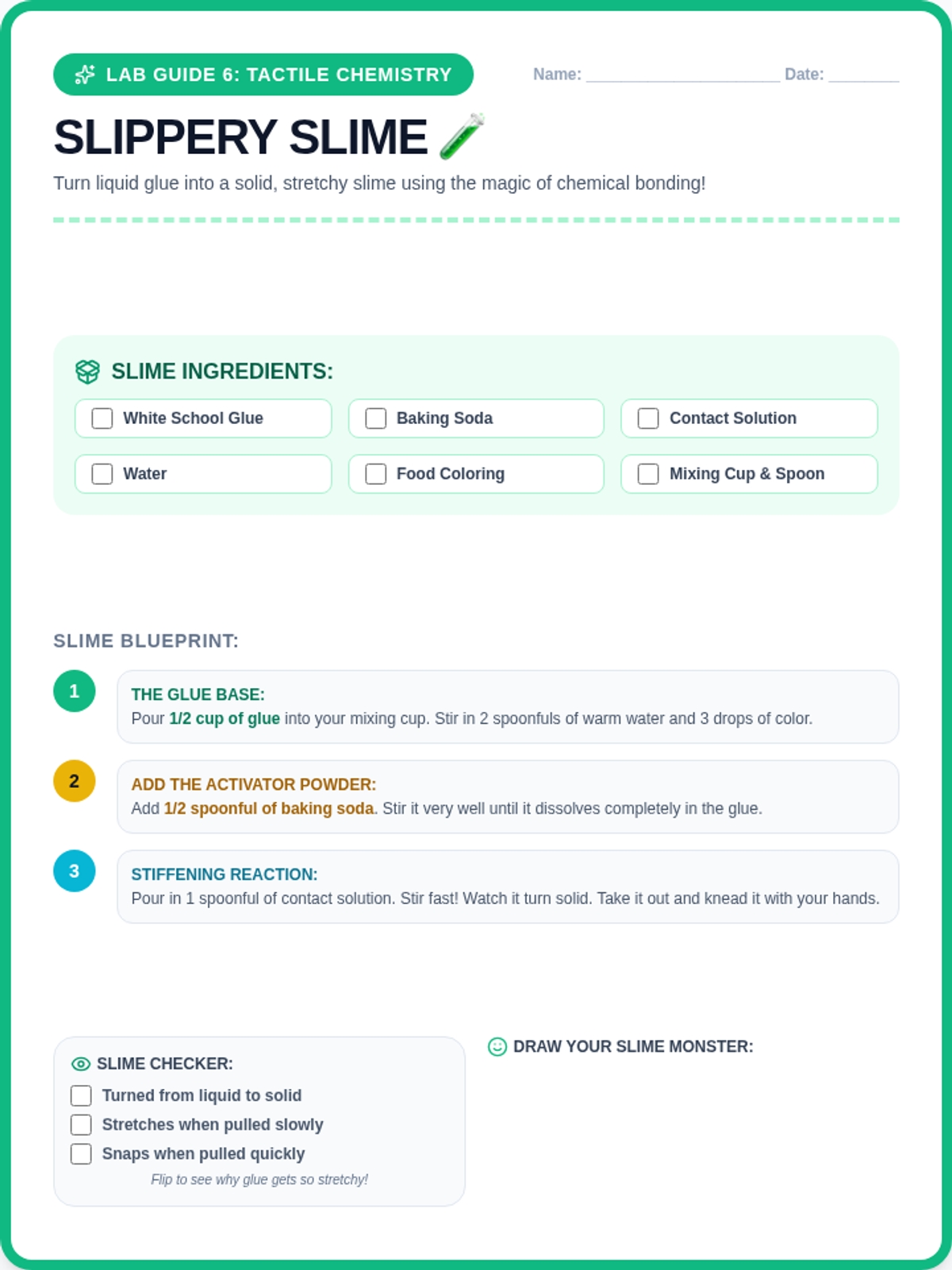
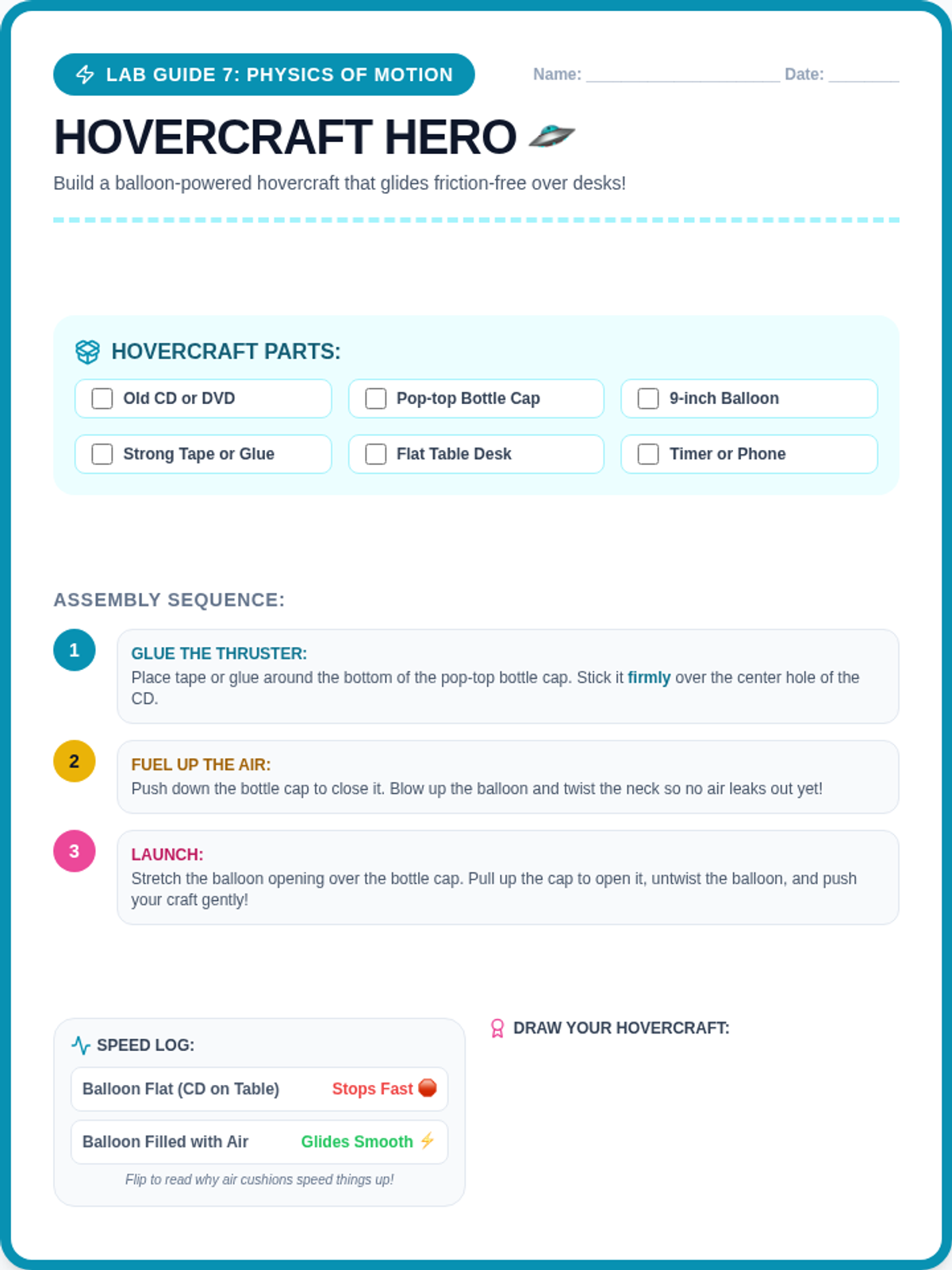
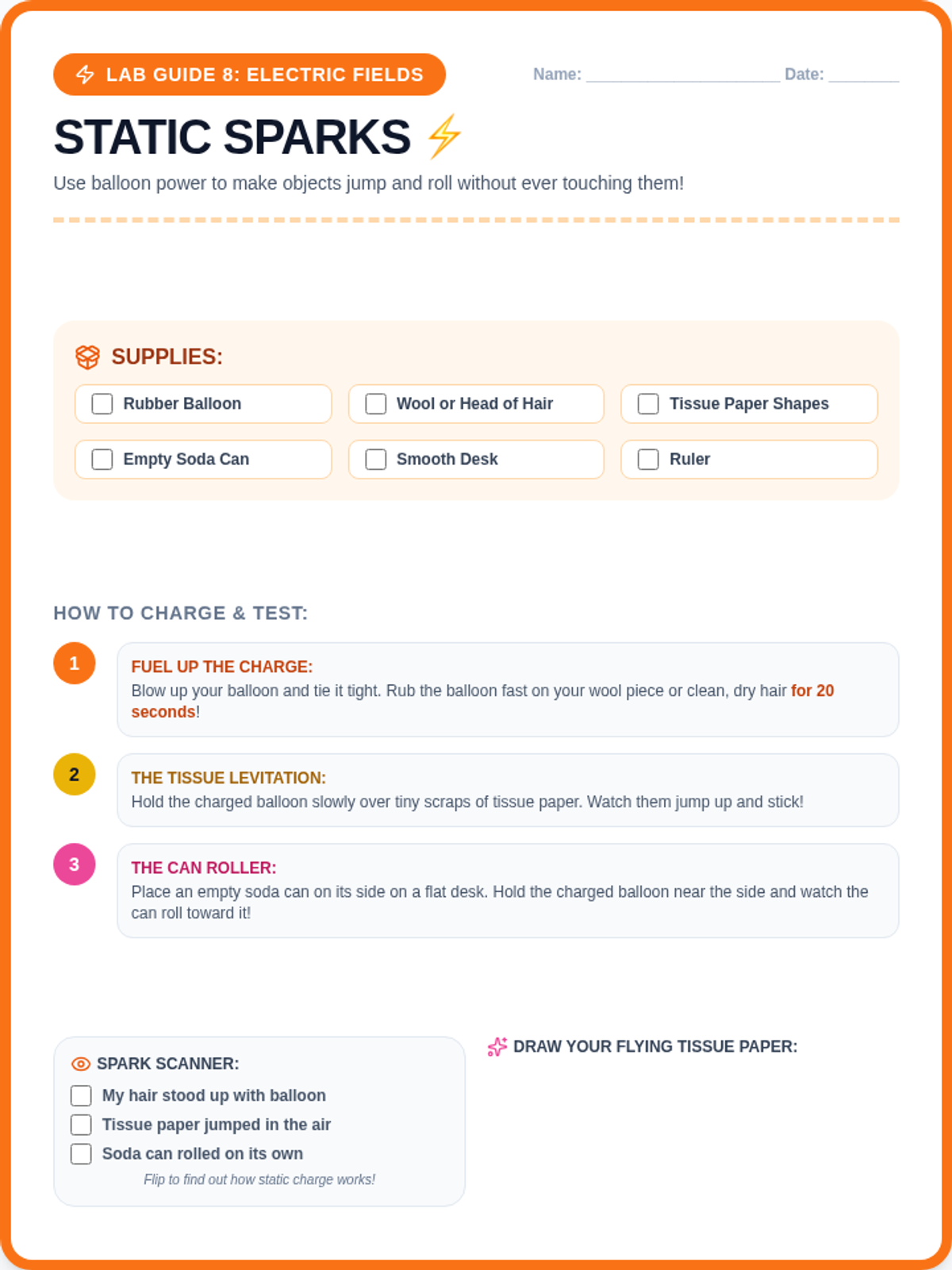
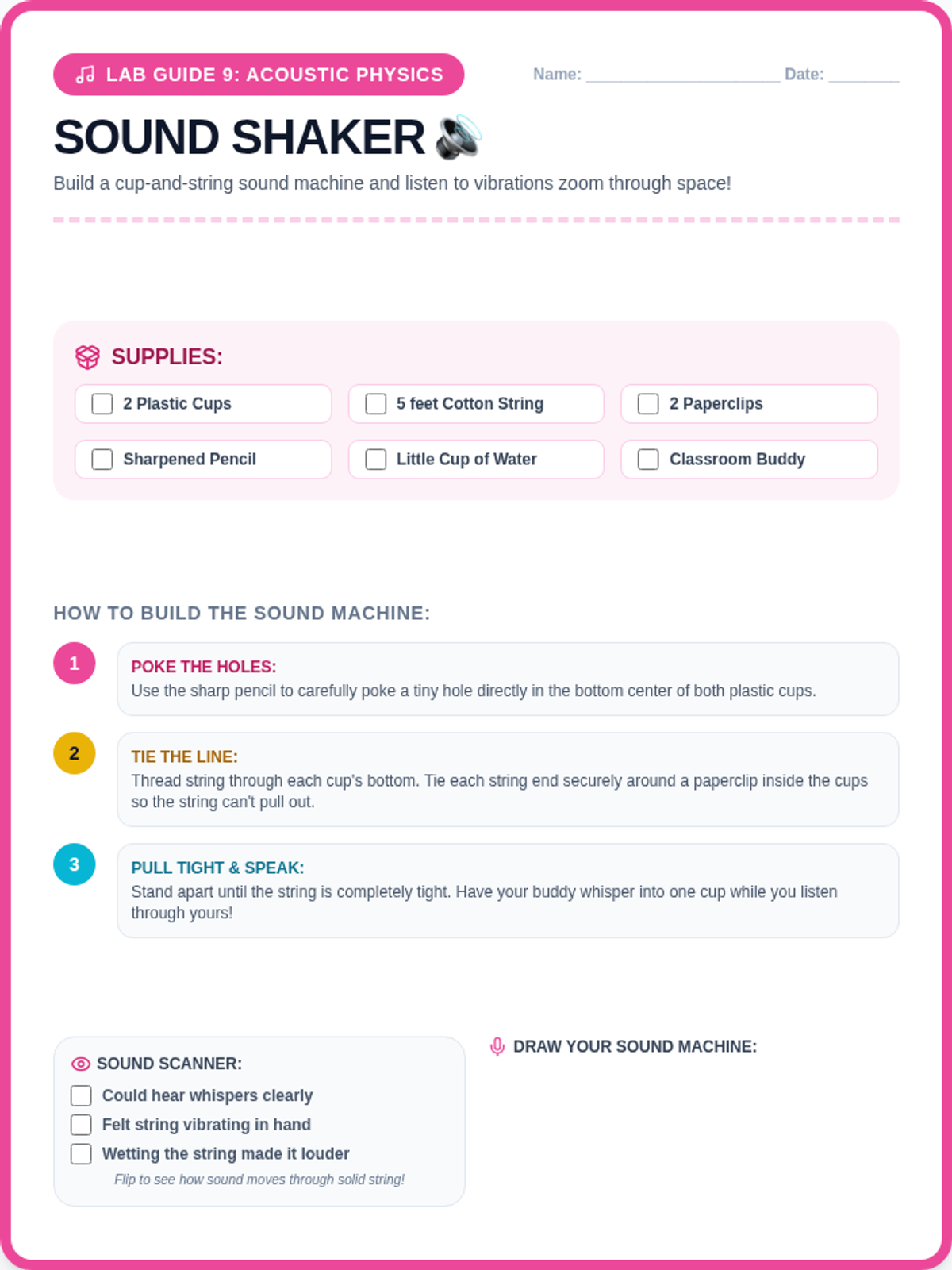
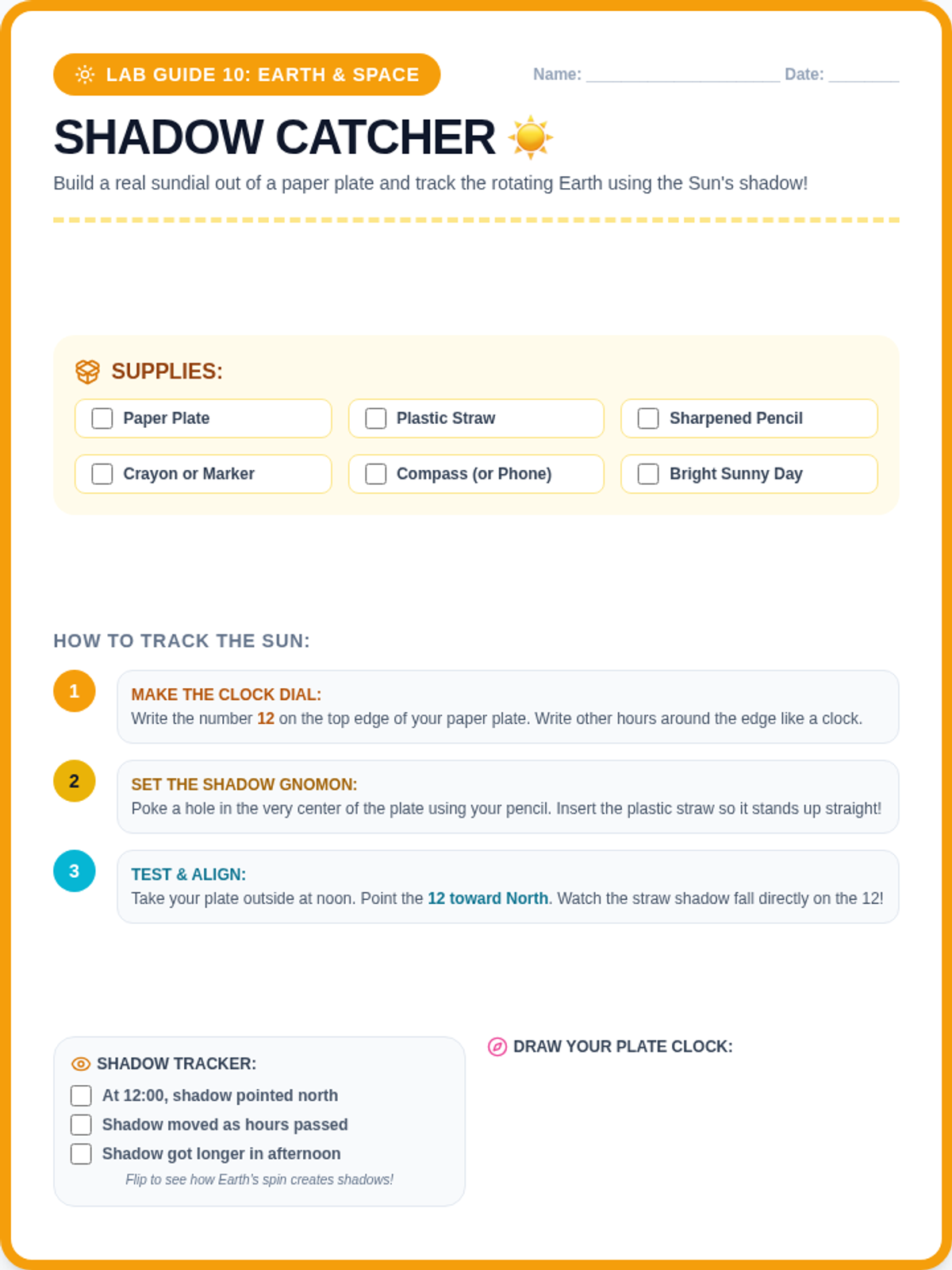
A hands-on, highly engaging, low-cost end-of-year science unit designed for 6th-grade students of lower academic levels. It features simplified, visual step-by-step guides for independent, sensory-rich experiments exploring kitchen chemistry, forces, and density.
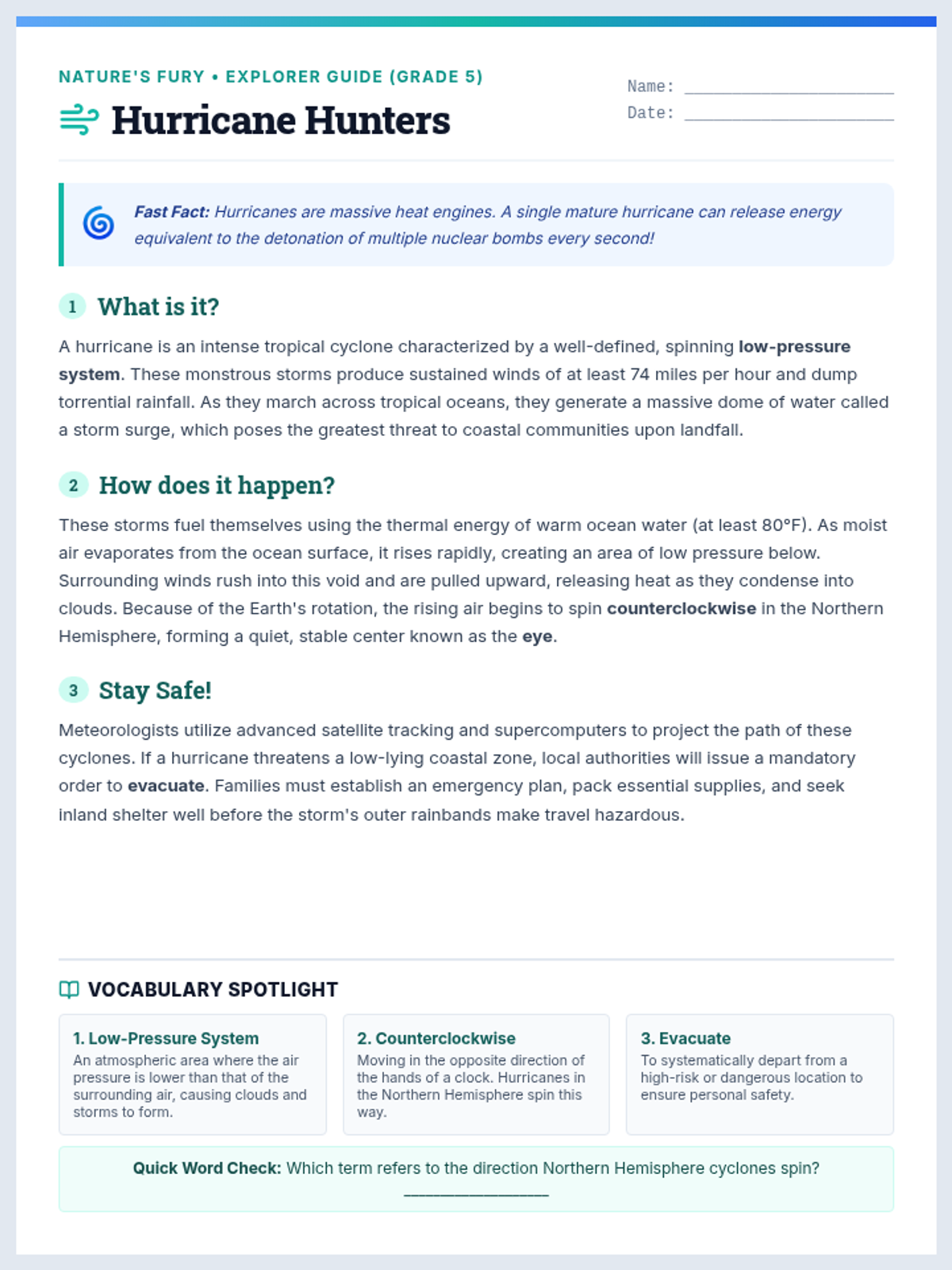
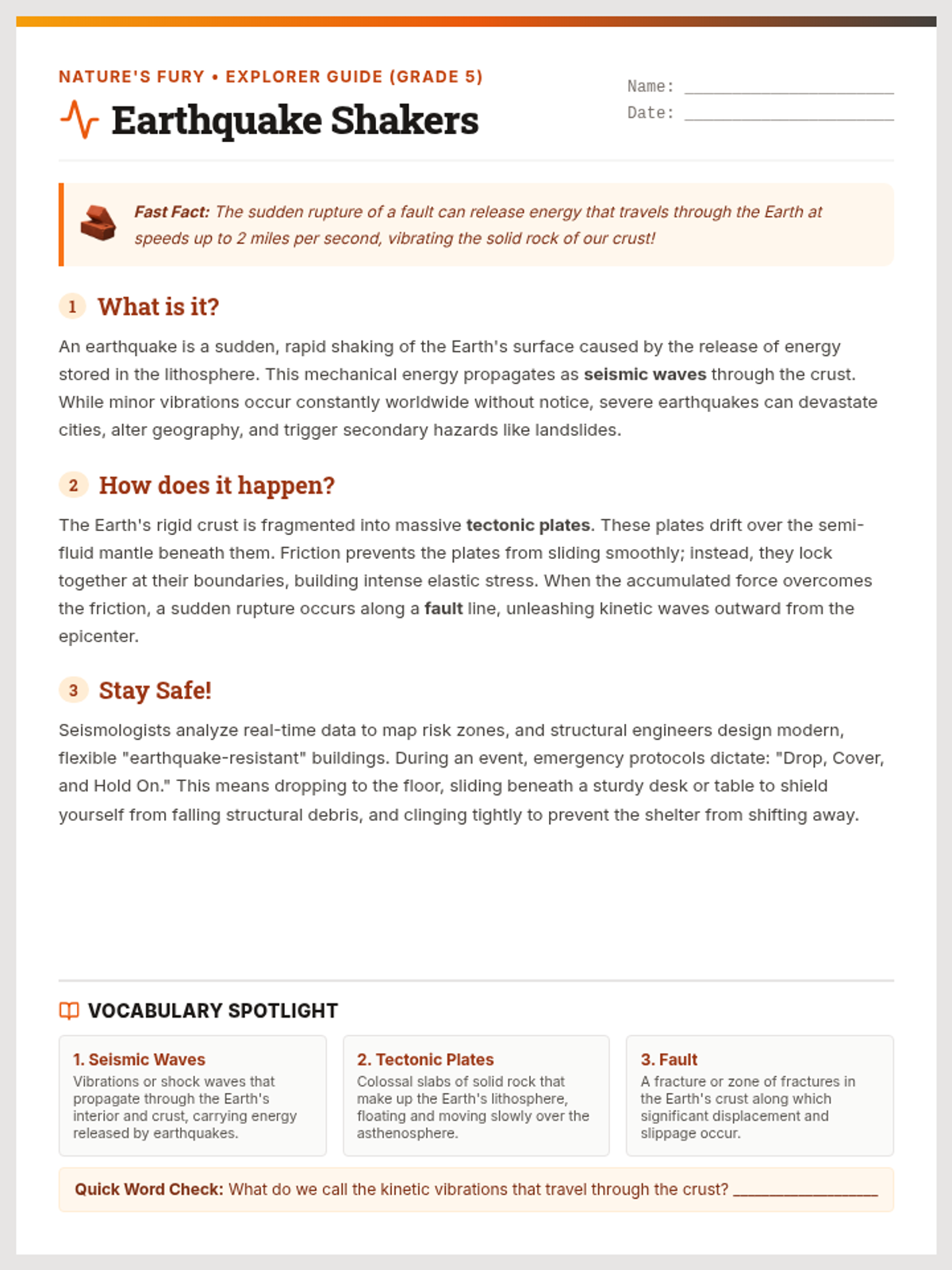
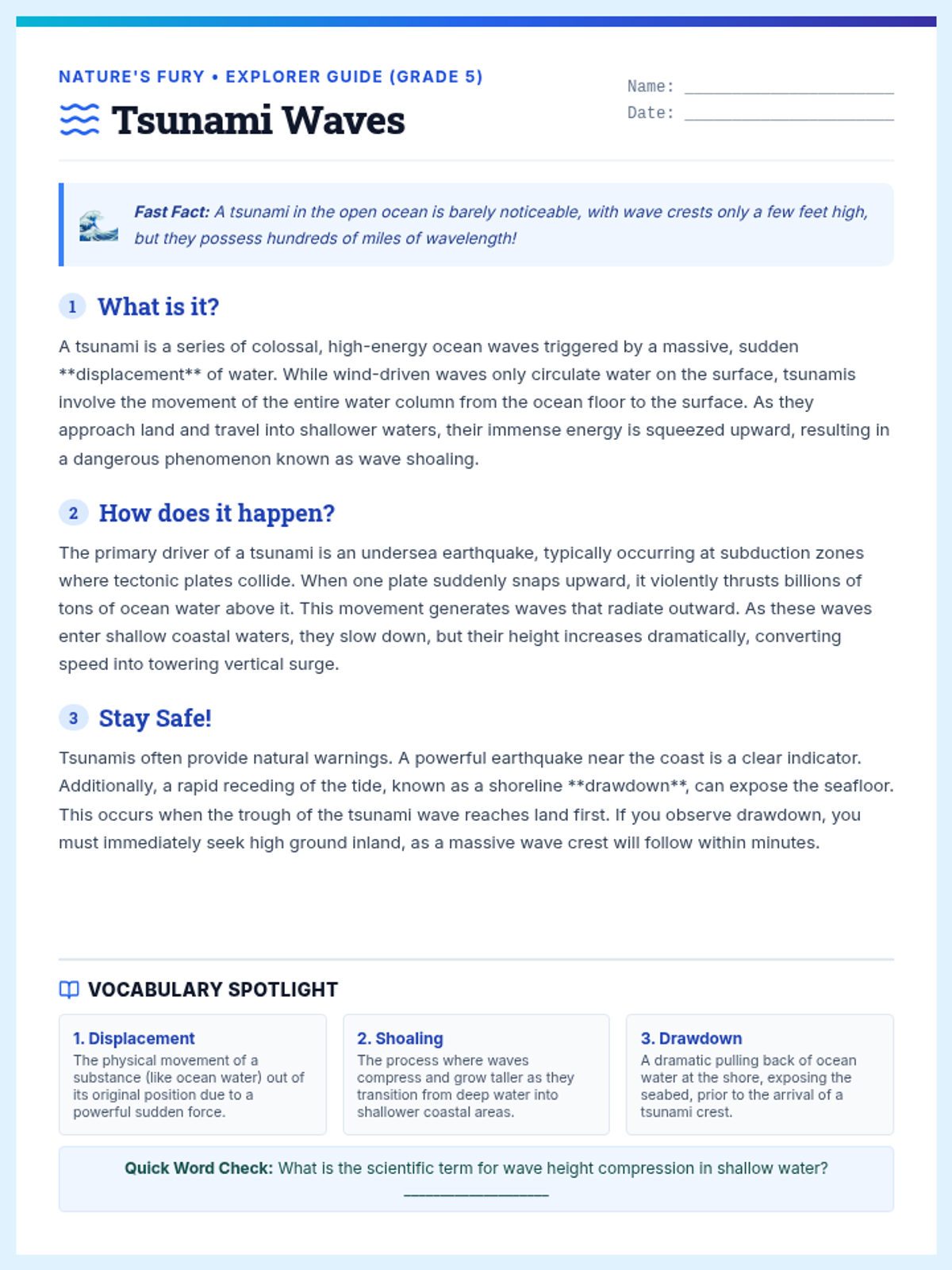
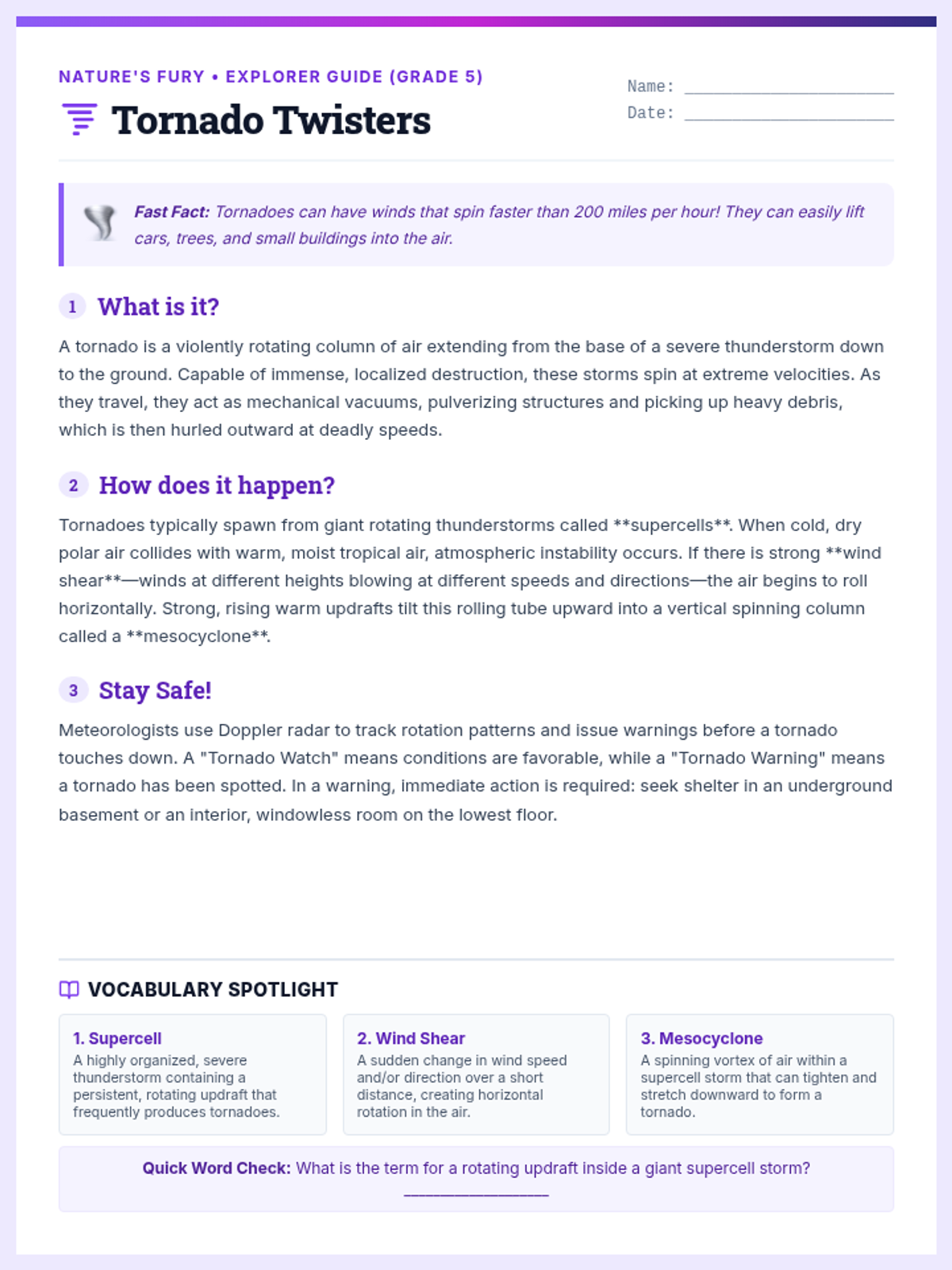
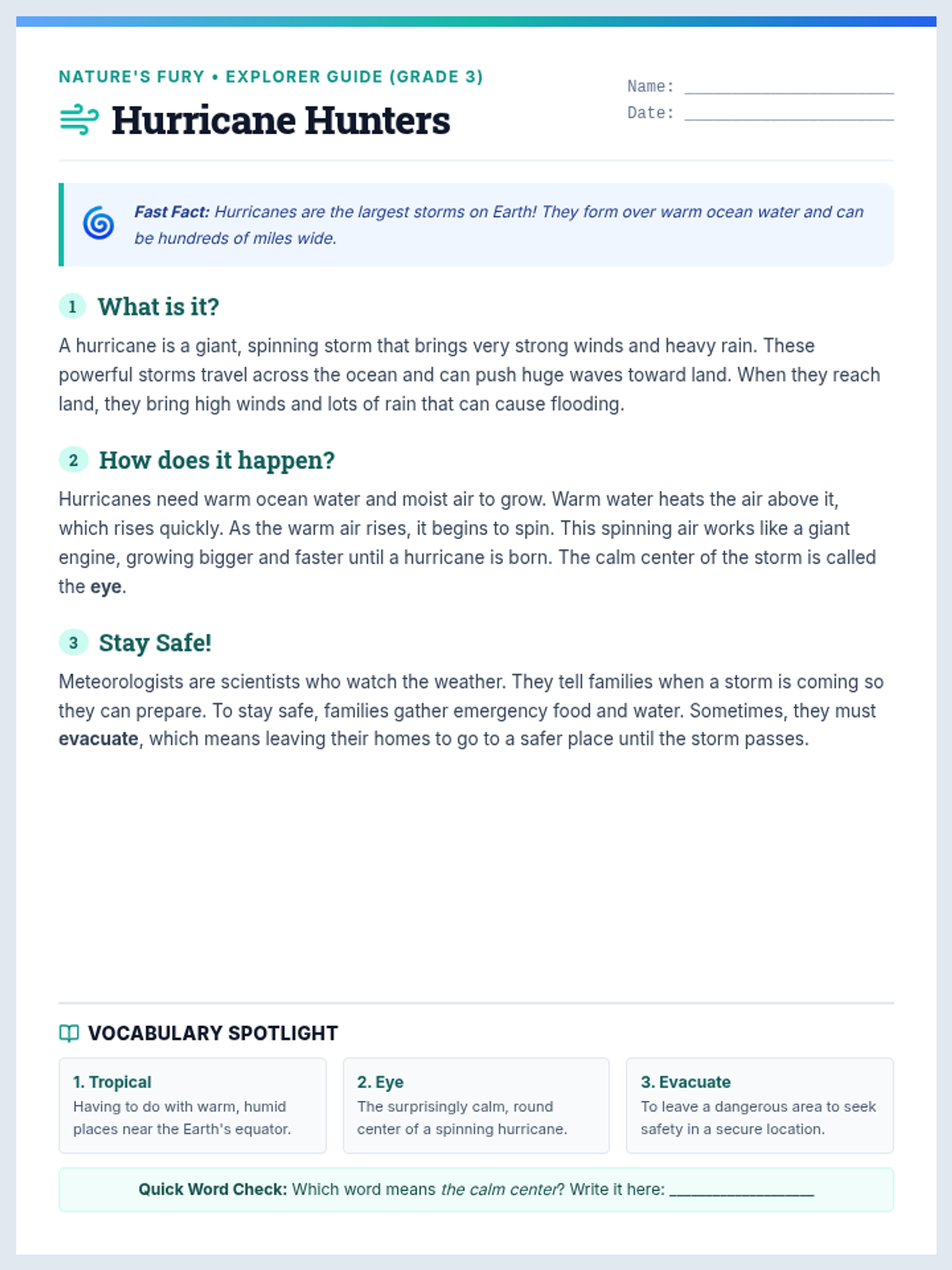
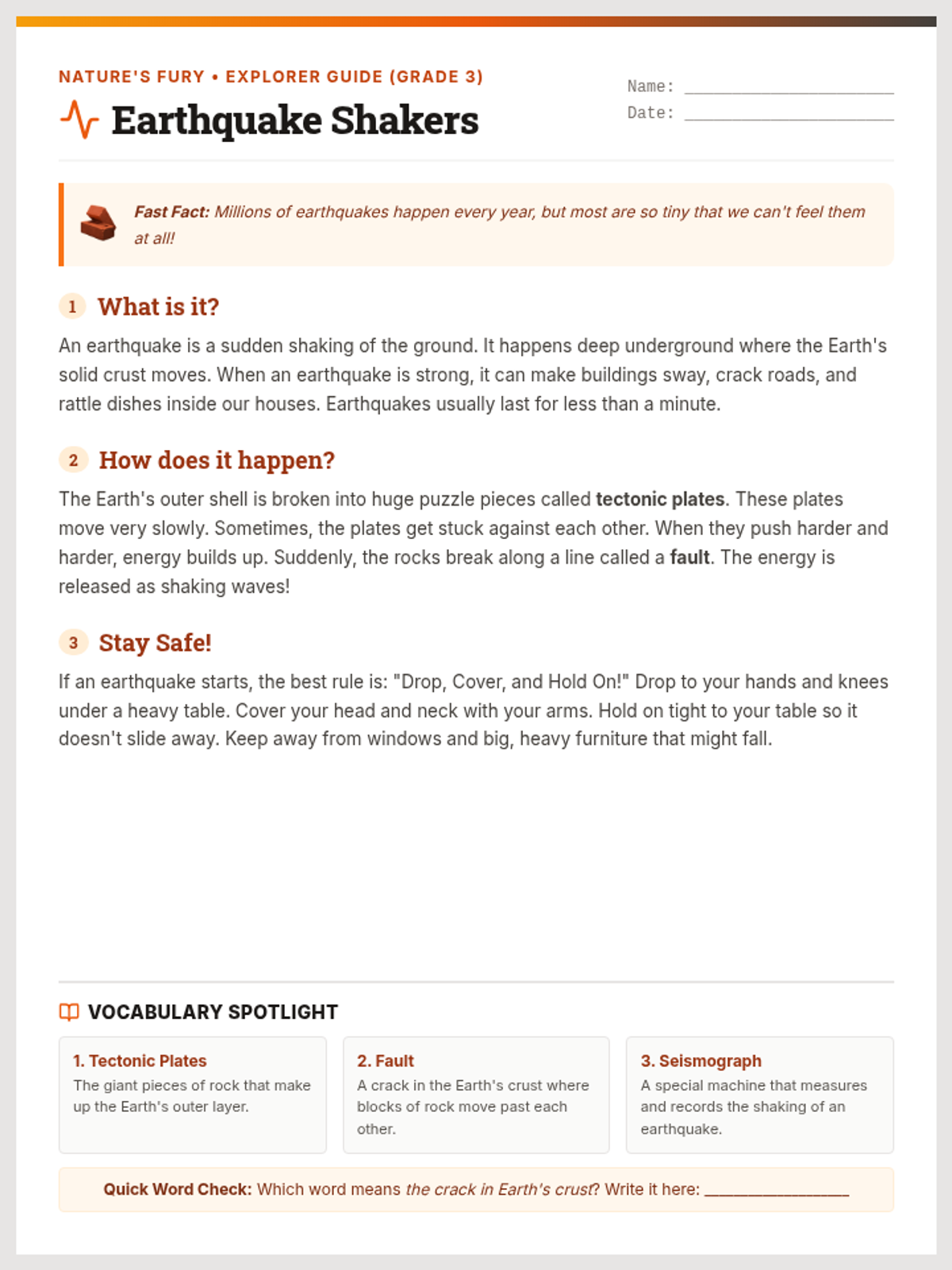
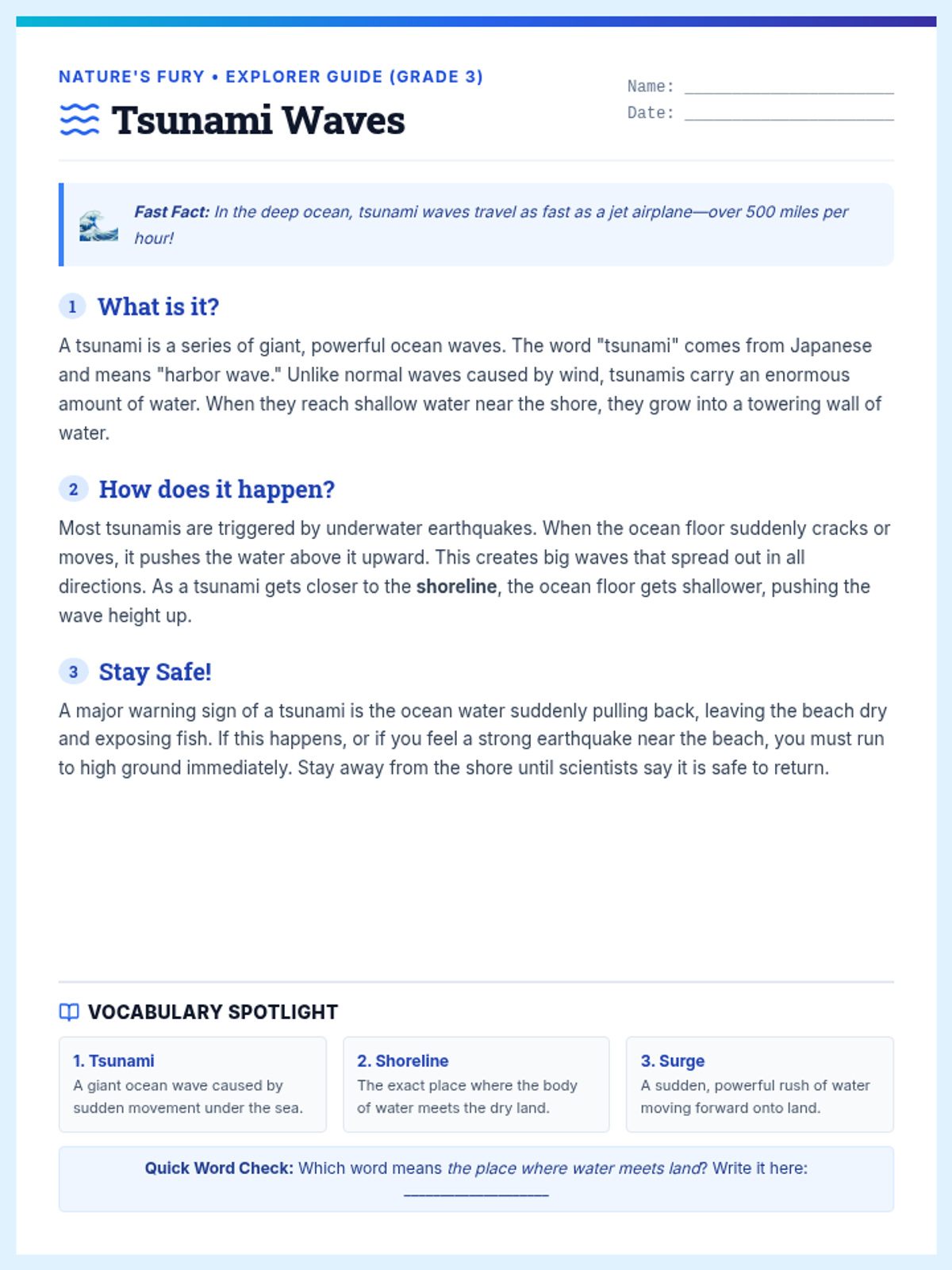
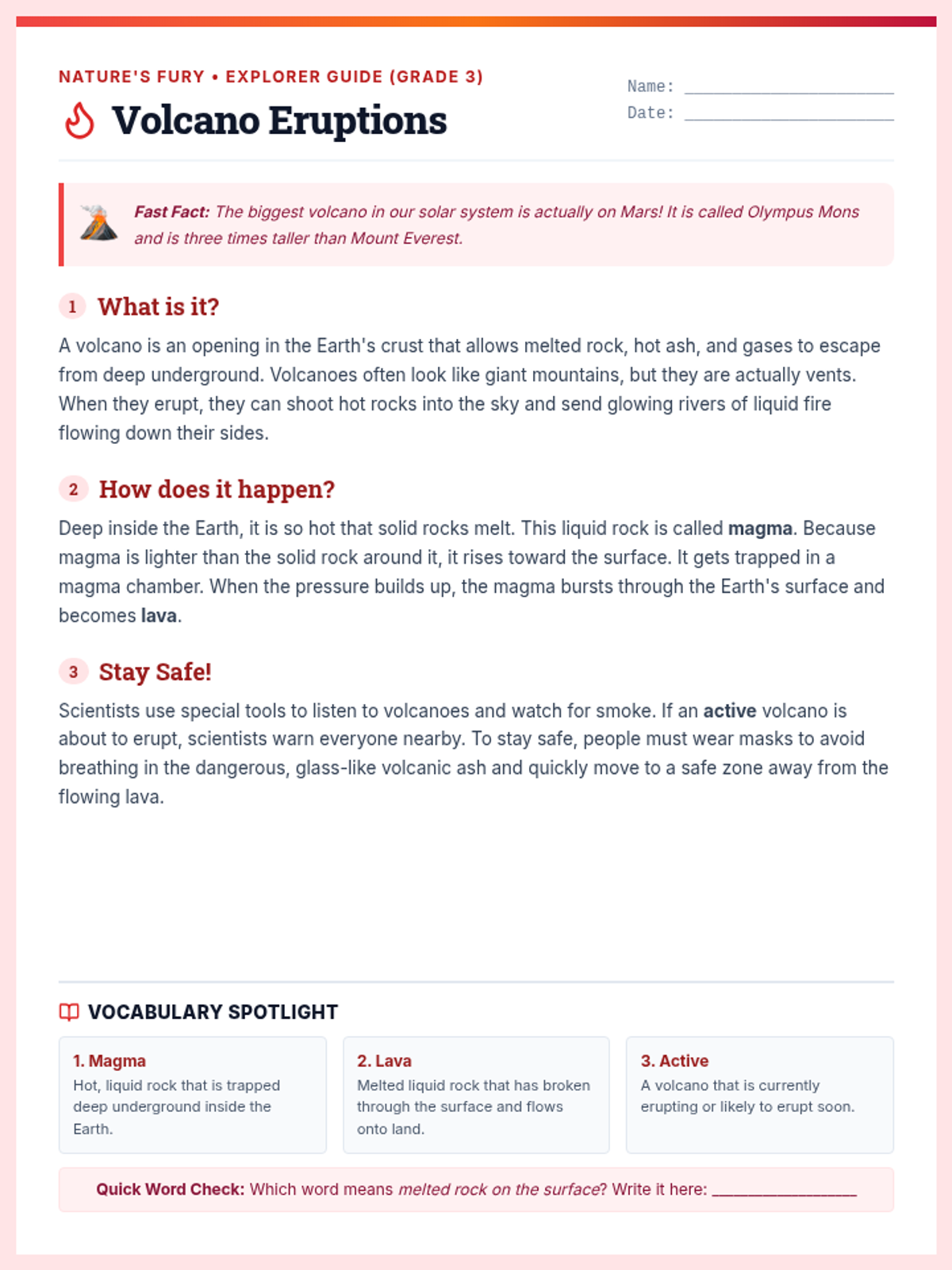
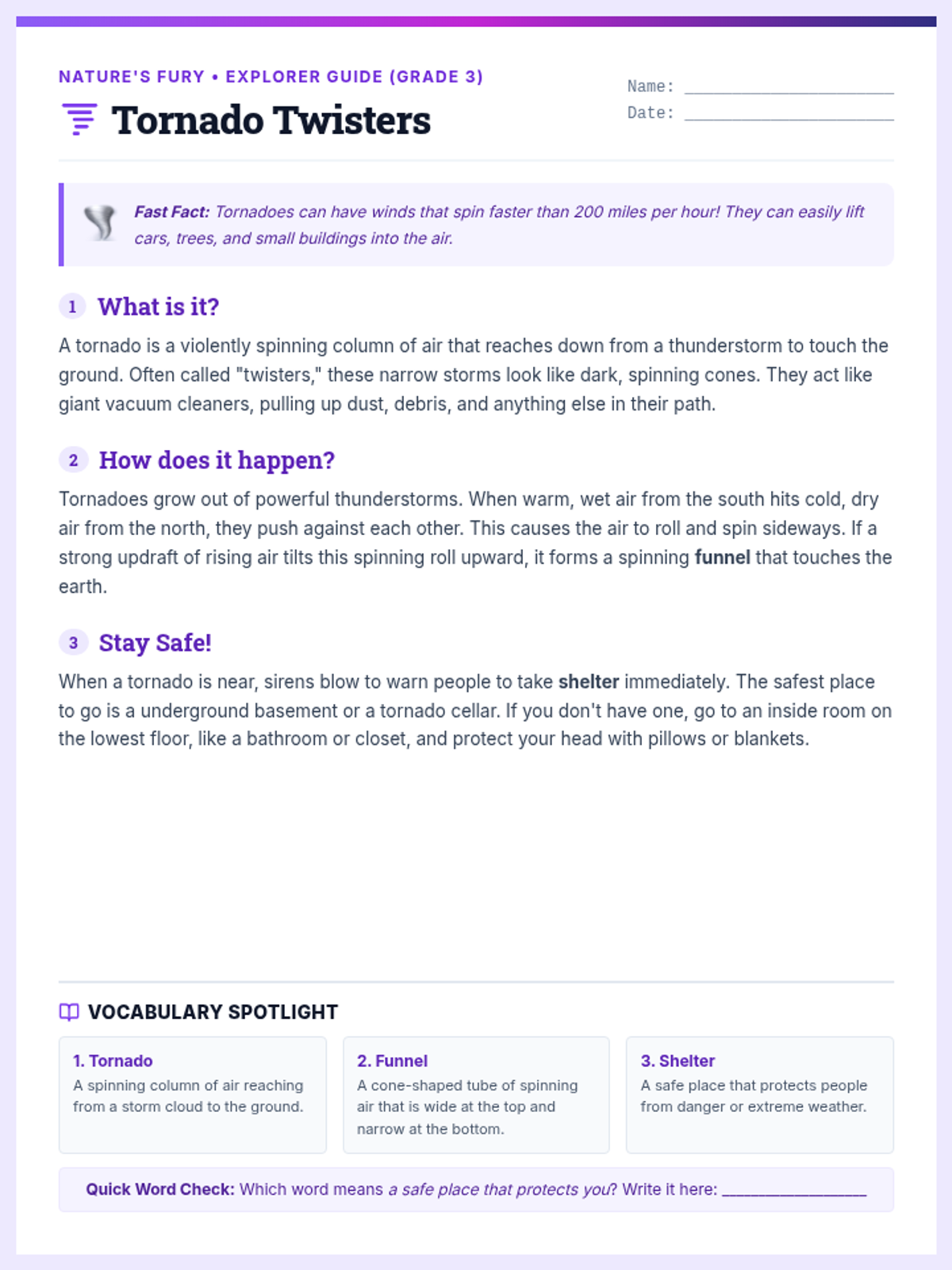
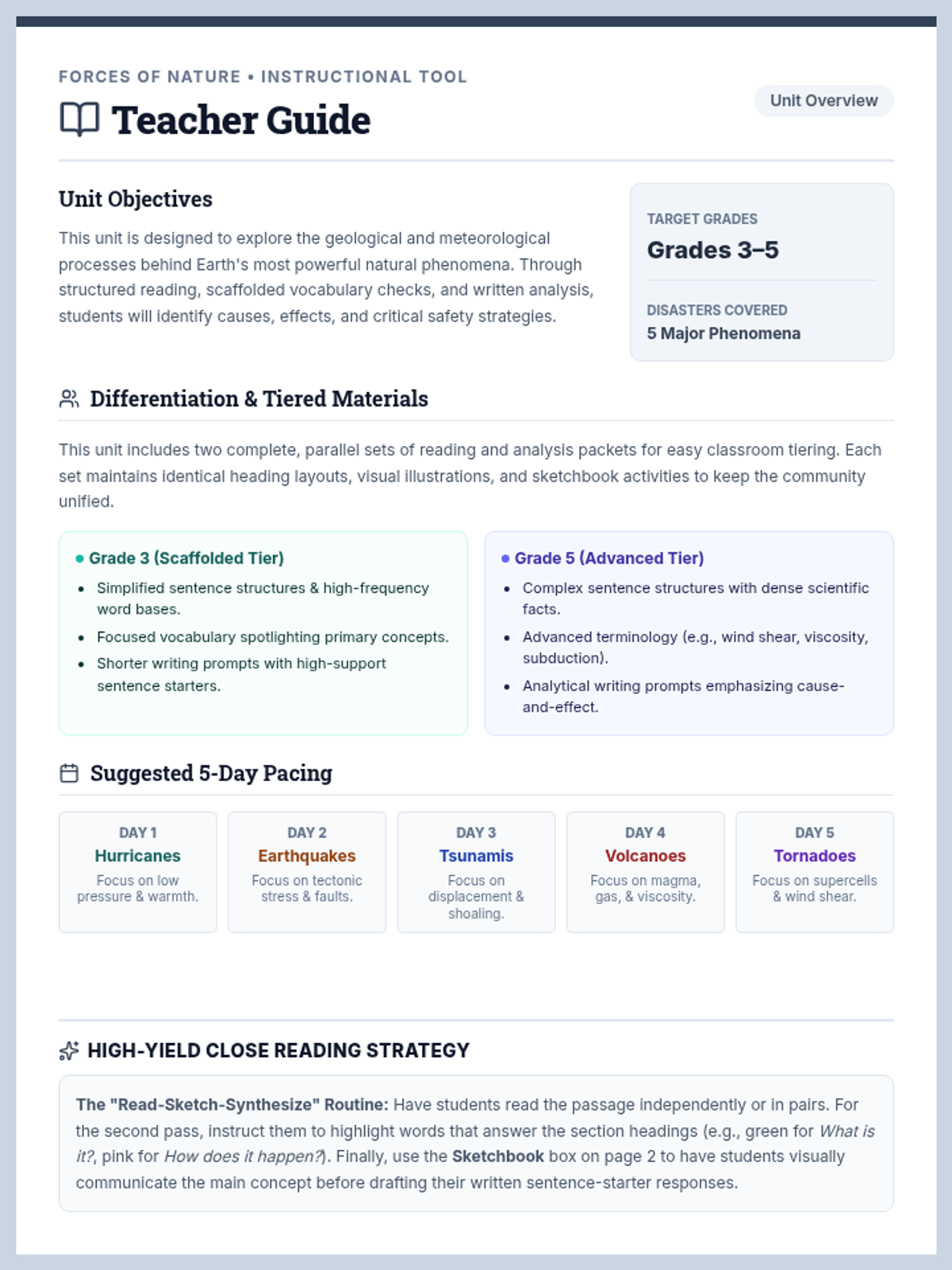
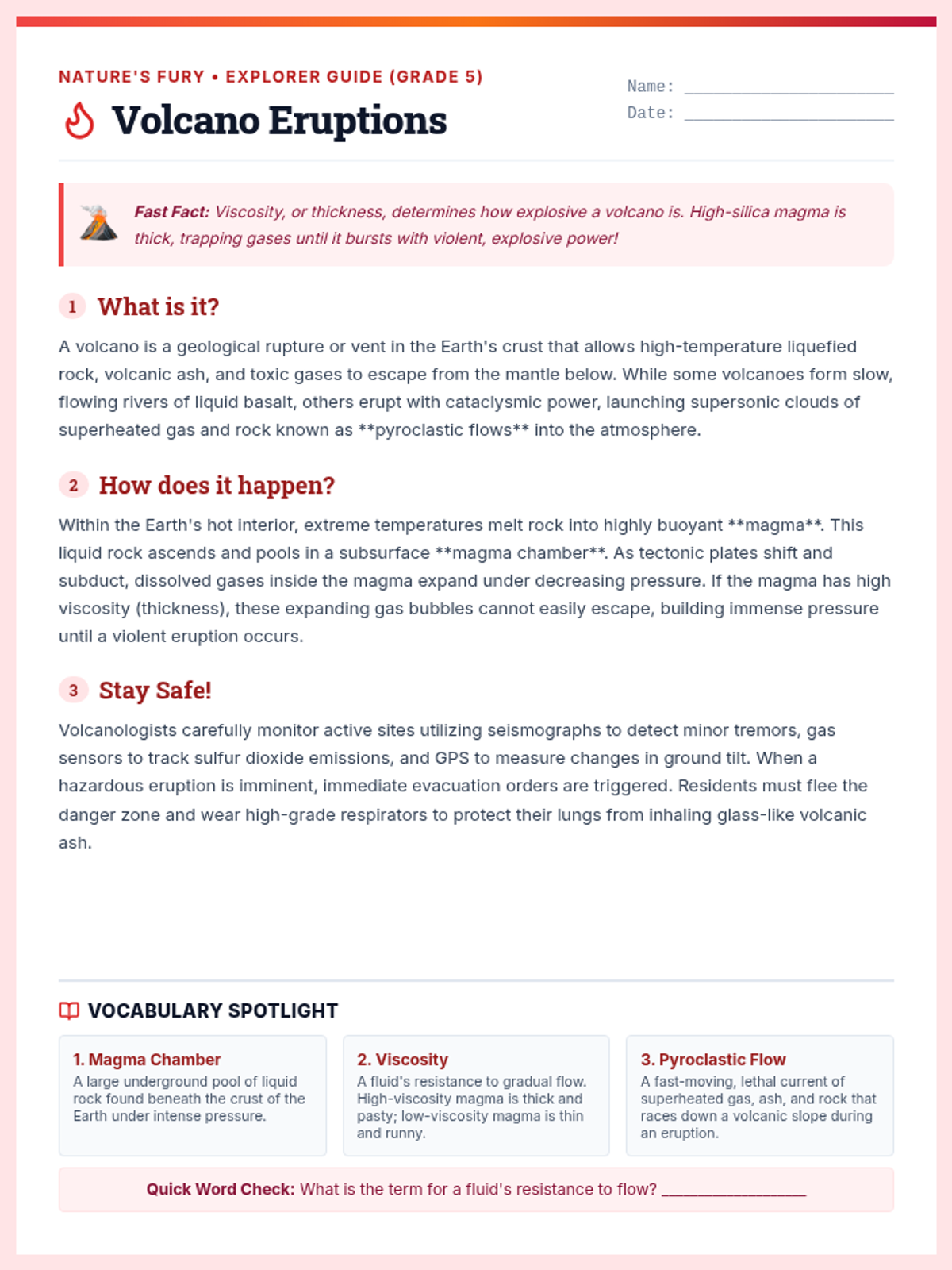
A science unit exploring five powerful natural disasters. Students read highly structured, scaffolded articles at both third-grade and fifth-grade reading levels, practice key vocabulary, and complete comprehension checks with sentence frames and starters.
An interactive, visually rich lesson preparing Florida students for severe storms and hurricanes. Covers emergency kit building, weather alerts, home action plans, and sensory coping strategies to reduce storm anxiety.
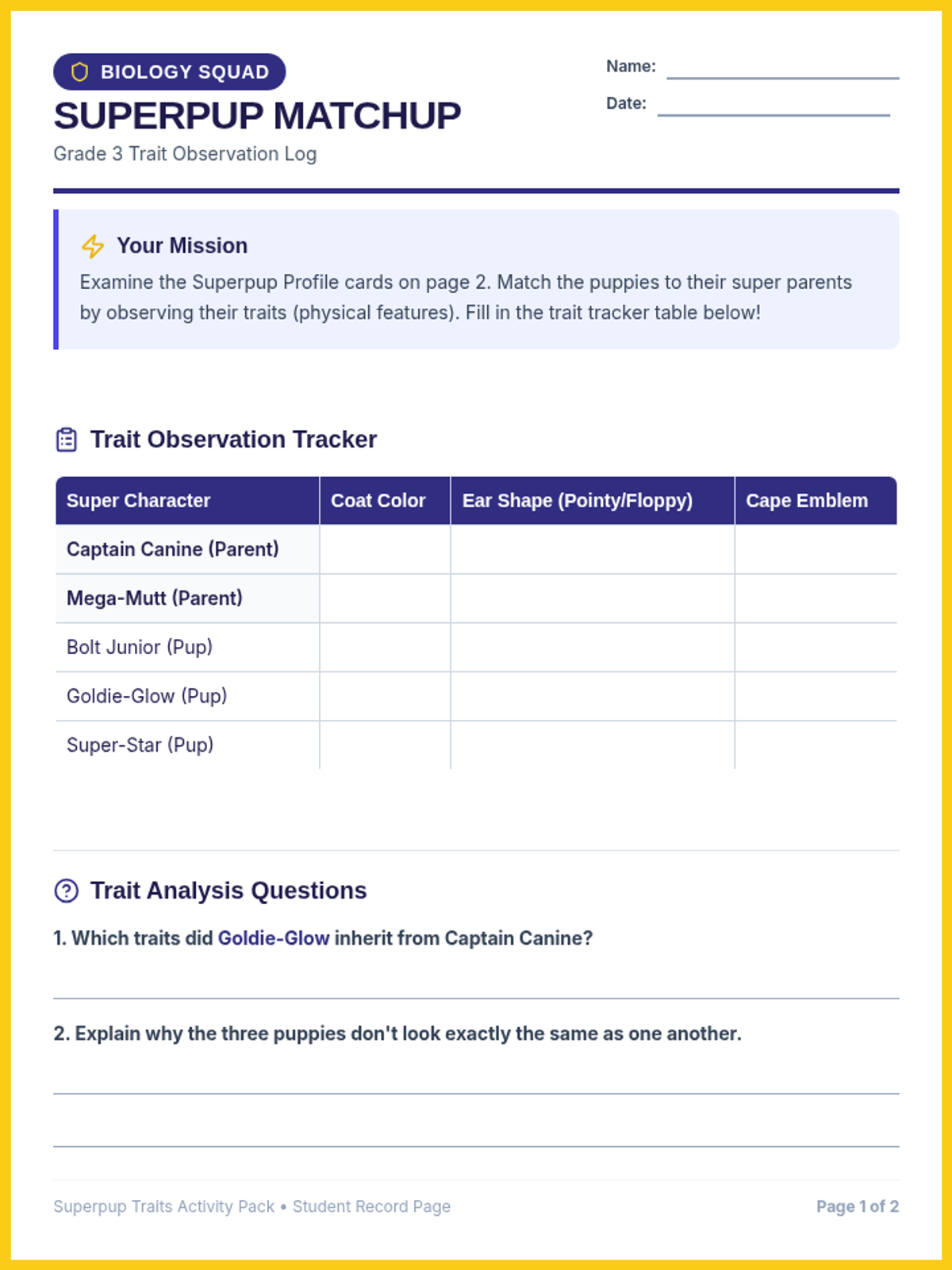
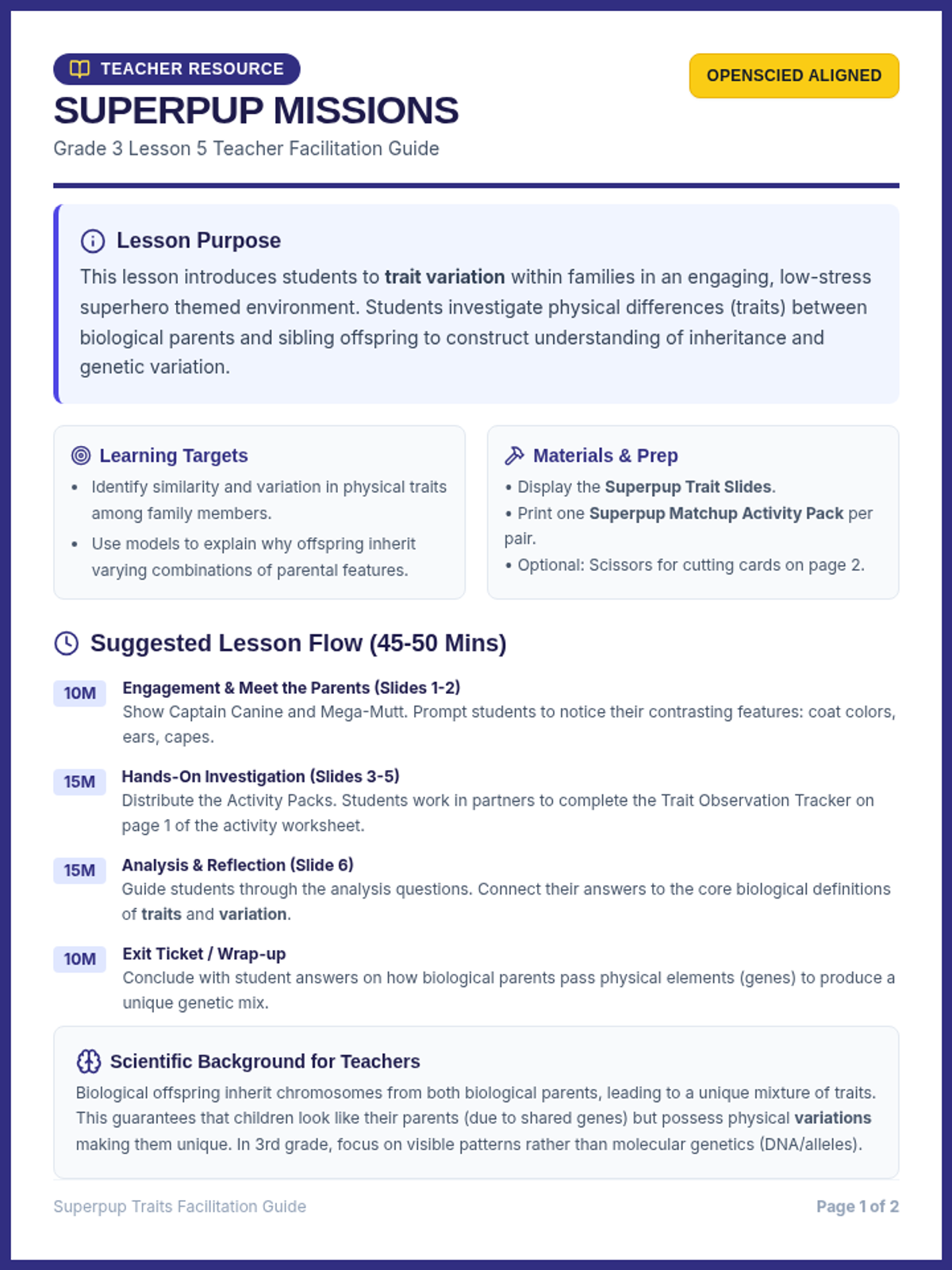
An engaging 3rd-grade science lesson exploring trait variation within families. Students observe and match cute superhero dogs to investigate how traits are inherited with variations.
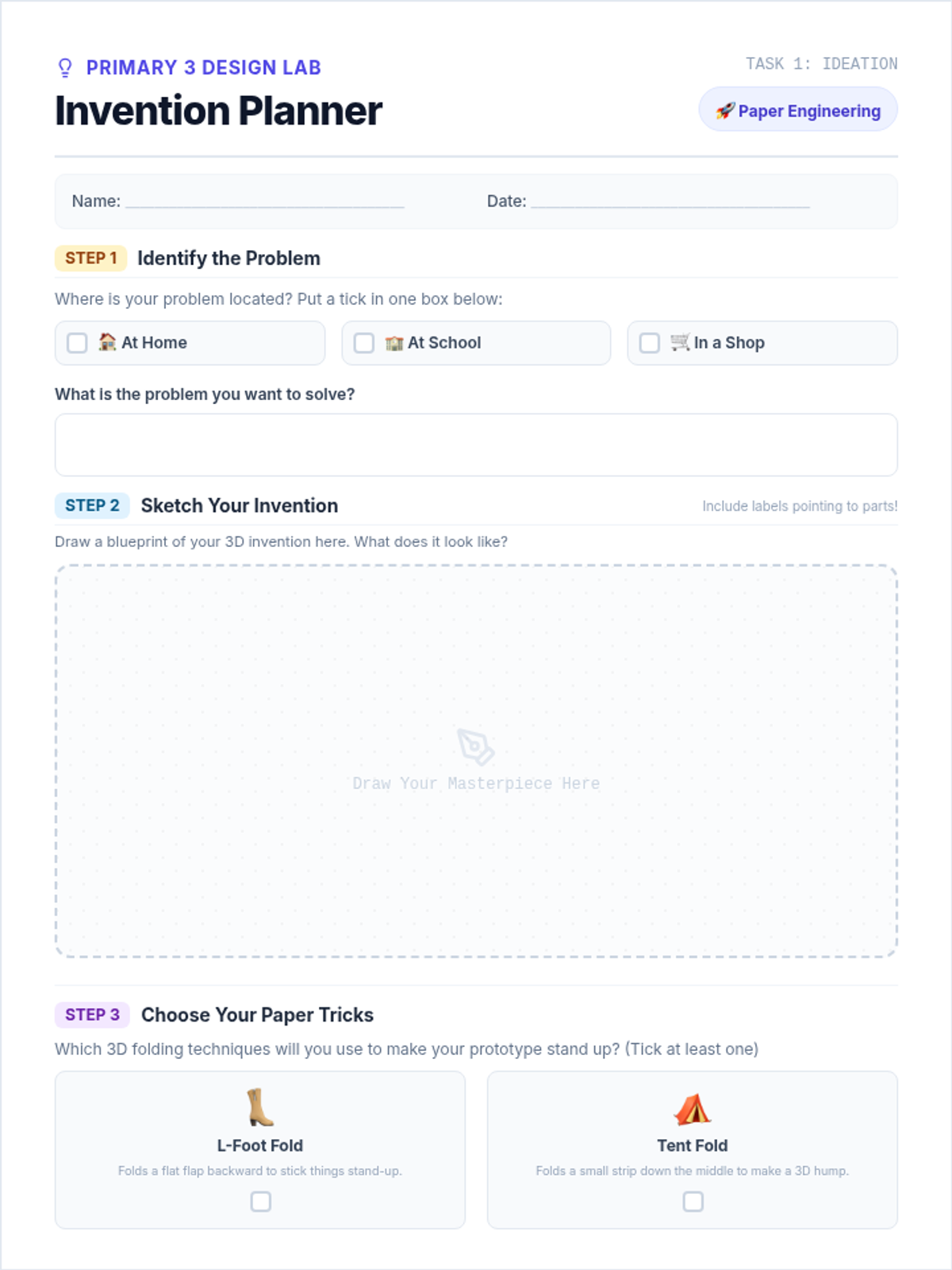
A lesson focused on designing a helpful paper-prototype invention for home, school, or shop, incorporating 3D paper-folding techniques for Primary 3 students.
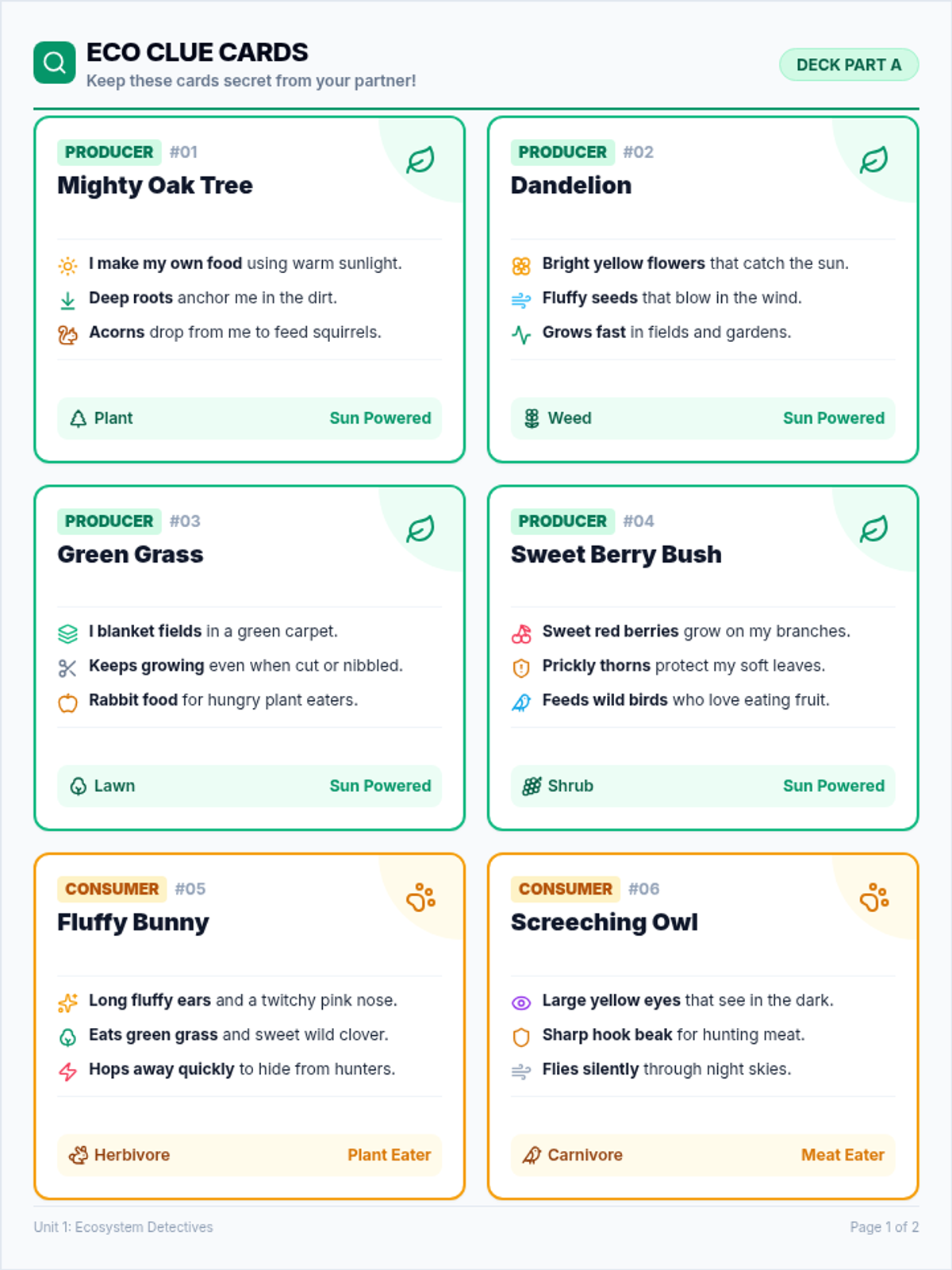
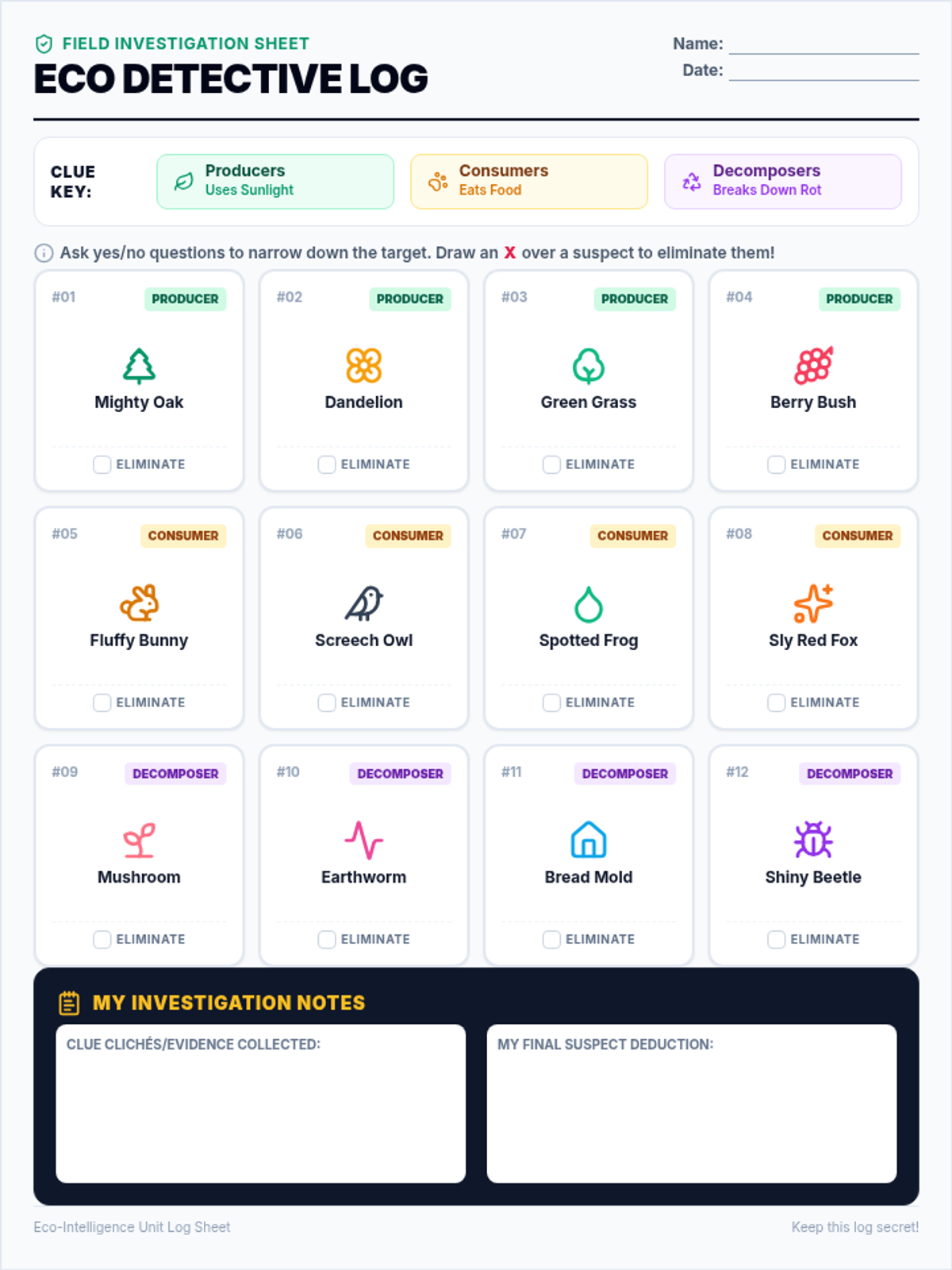
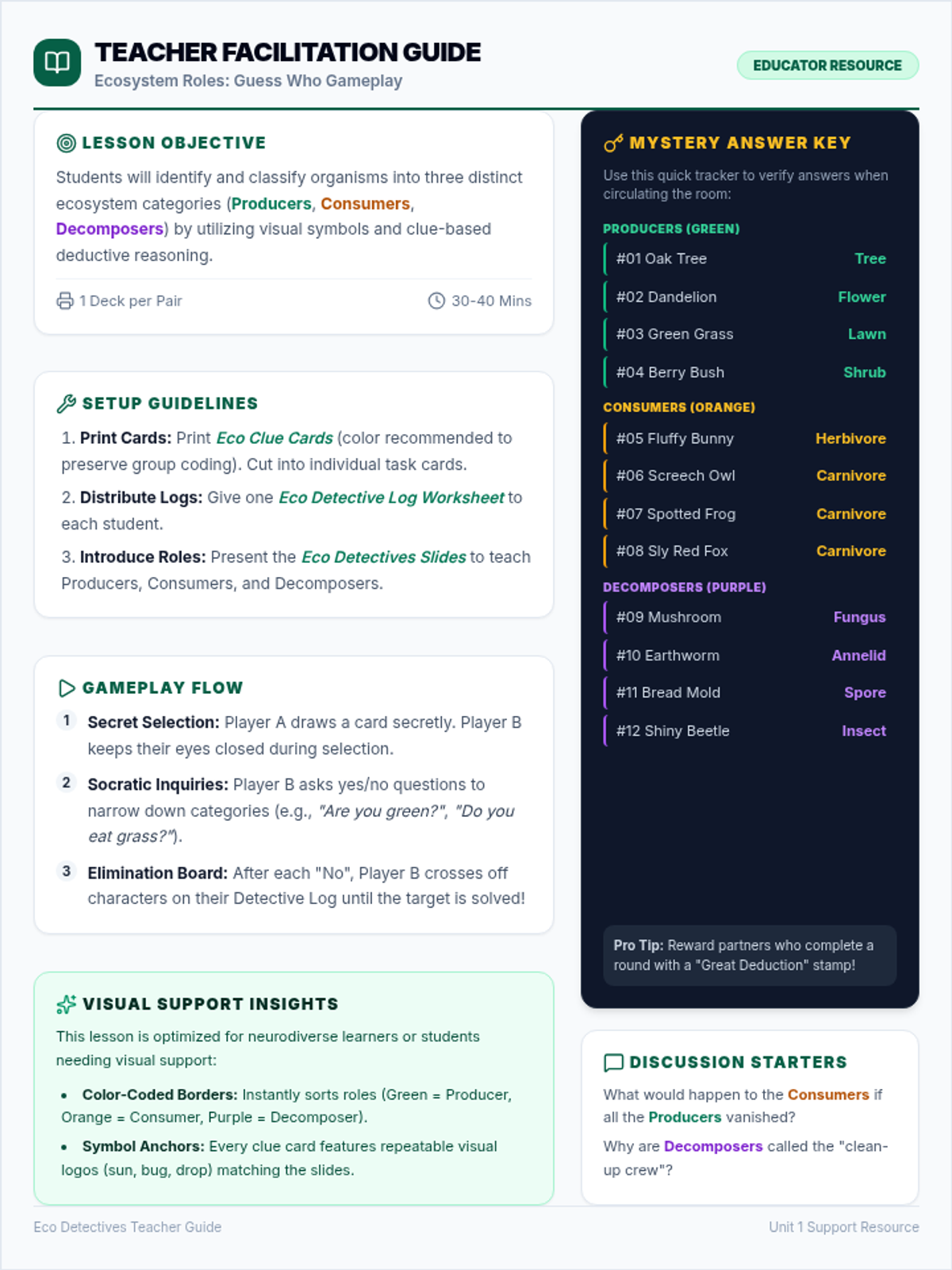
An interactive, visual-heavy lesson where students investigate ecosystem roles (producers, consumers, and decomposers) through an engaging 'Guess Who' style game. Includes visual-support clue cards, a detective tracking sheet, and a comprehensive teacher guide.
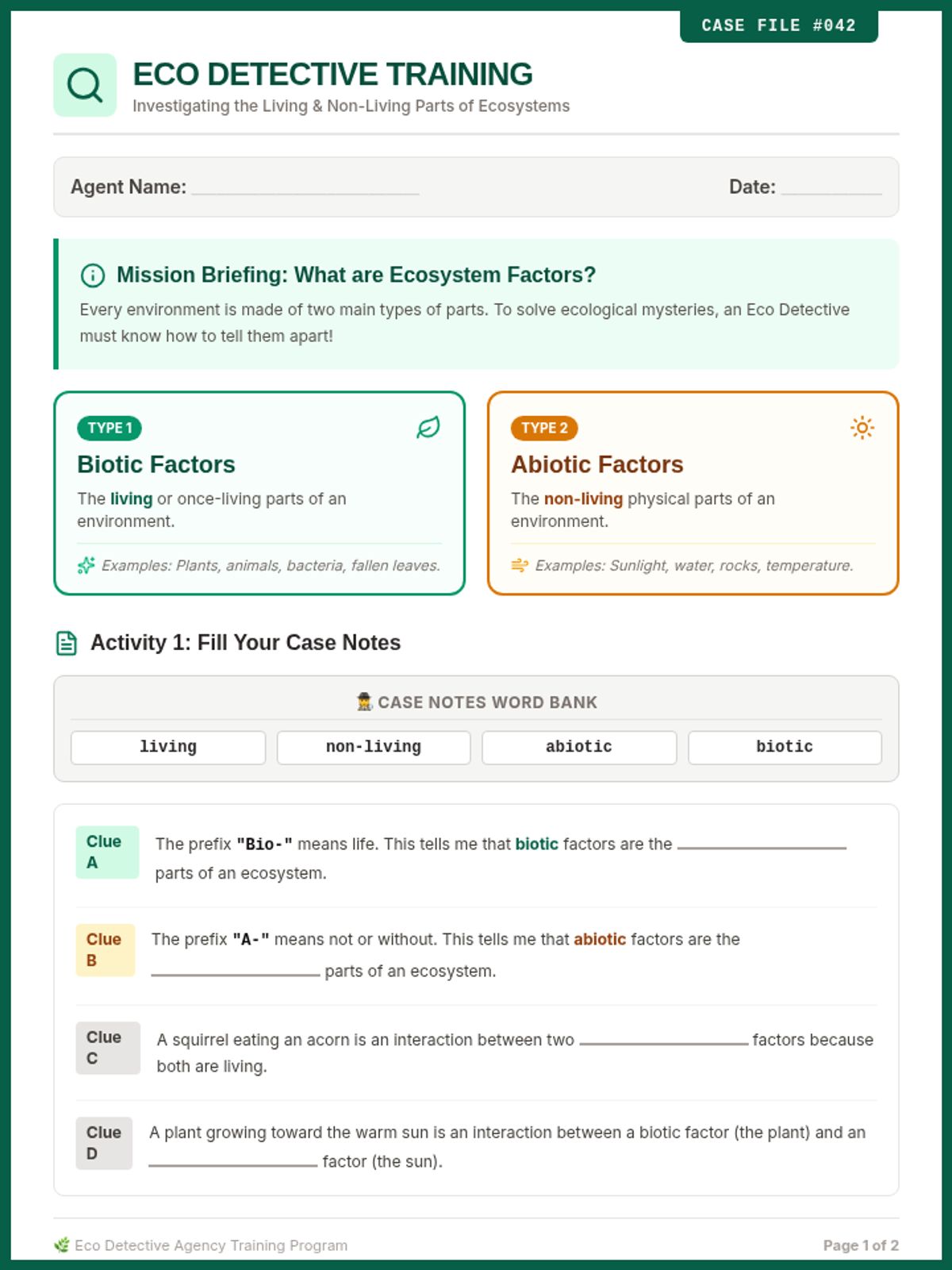
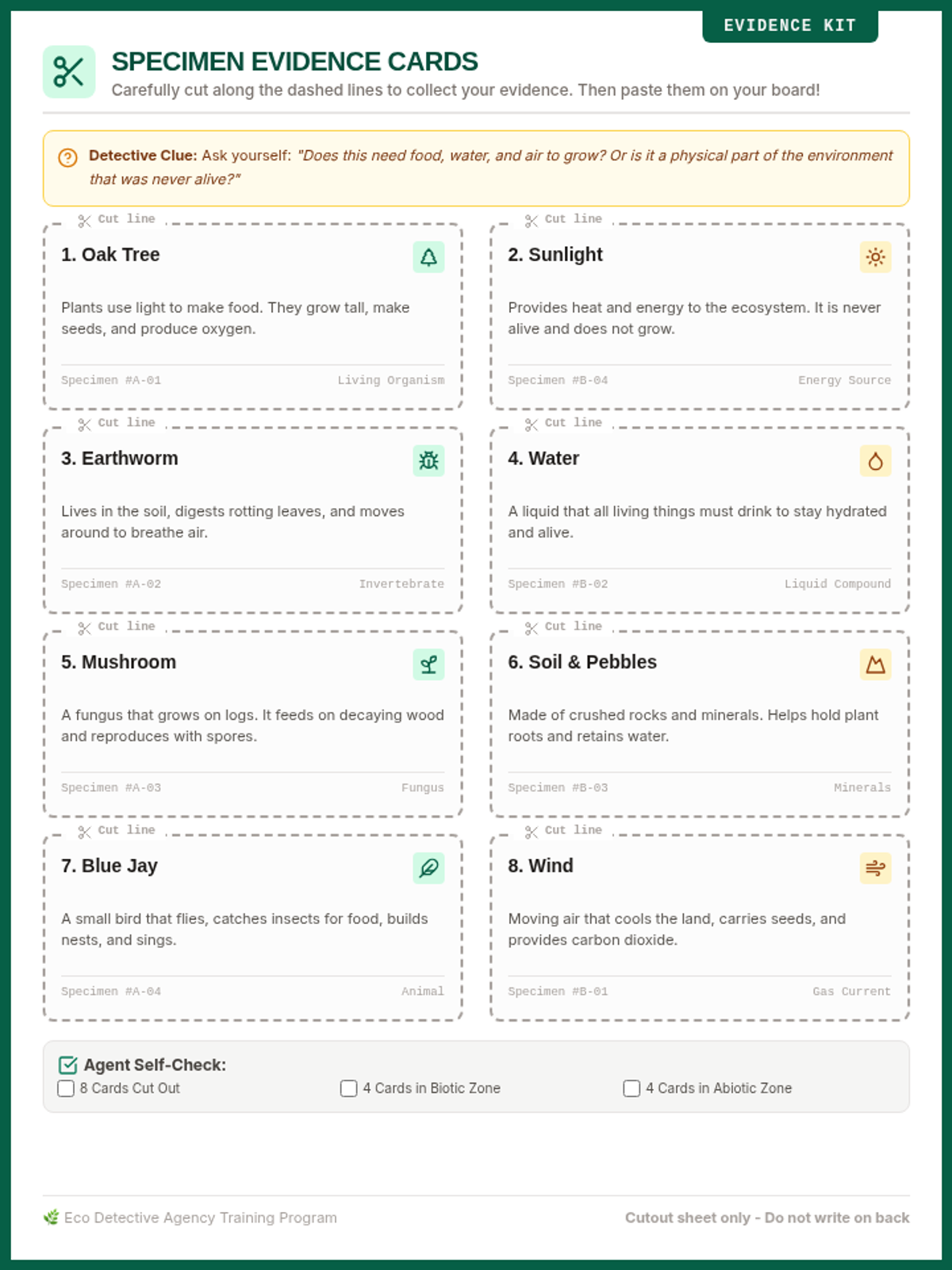
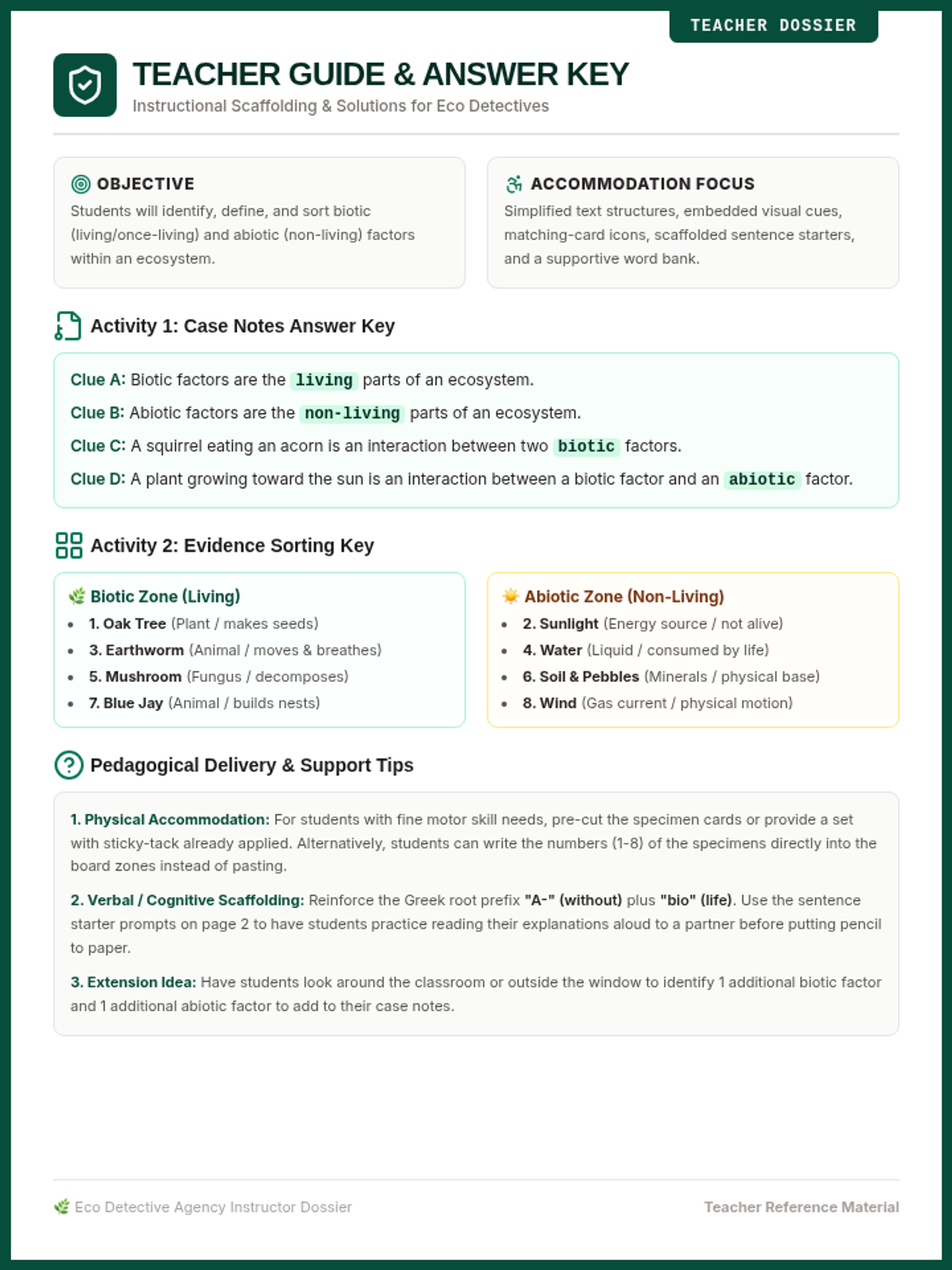
An interactive, scaffolded lesson introducing biotic and abiotic factors in ecosystems. Includes guided notes with sentence starters, a word bank, and a hands-on sorting activity designed for students requiring accommodation.
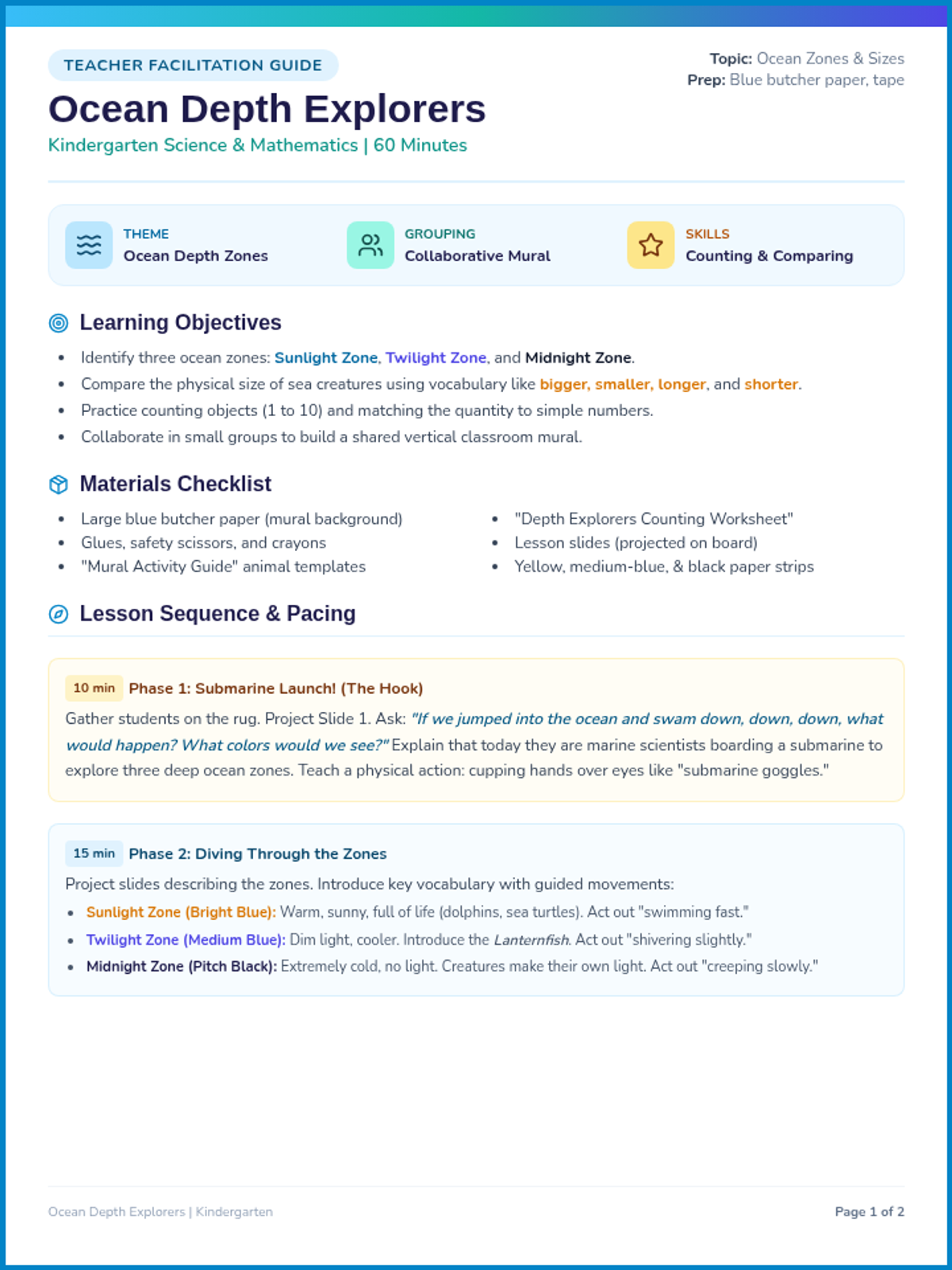
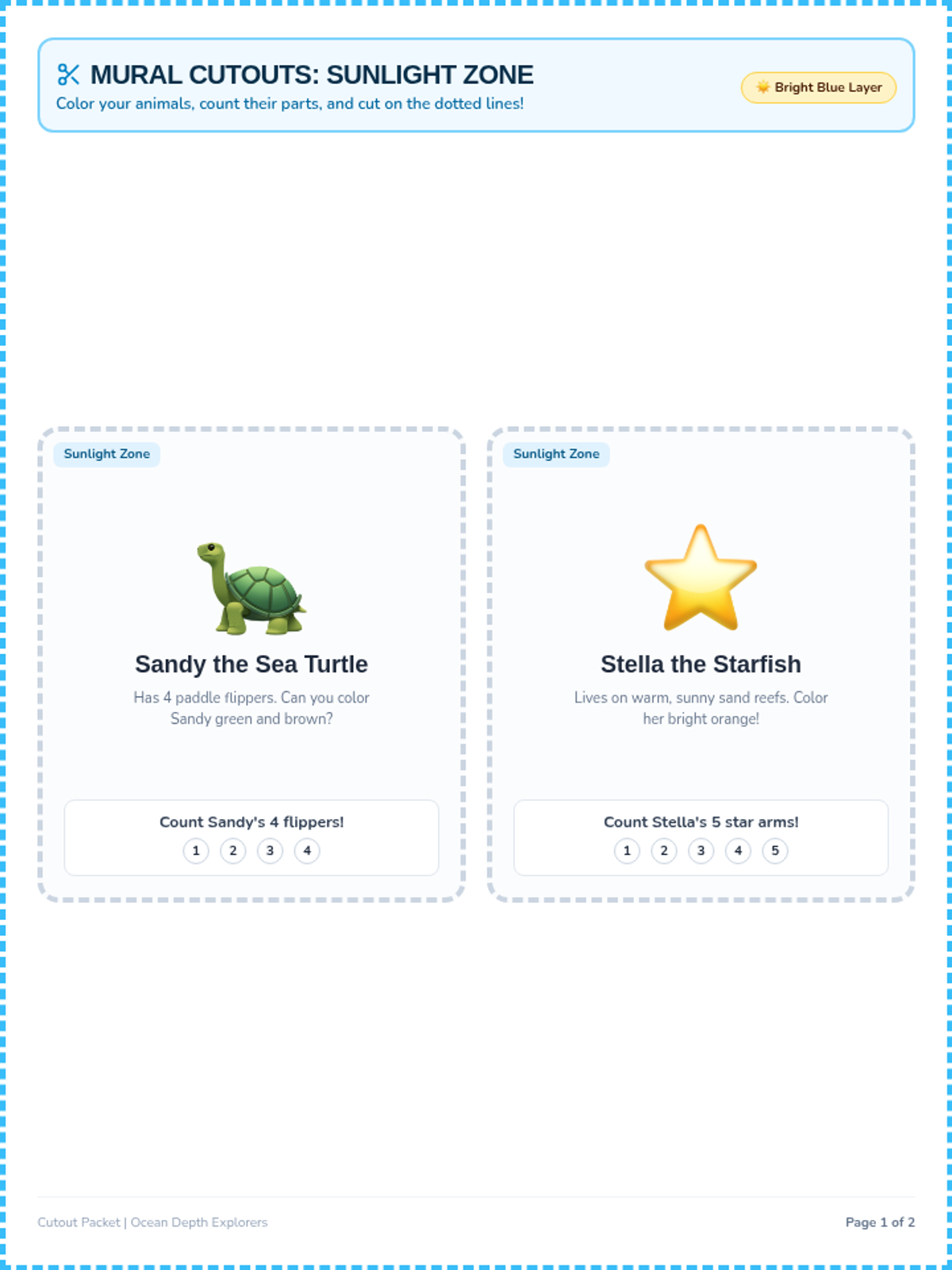
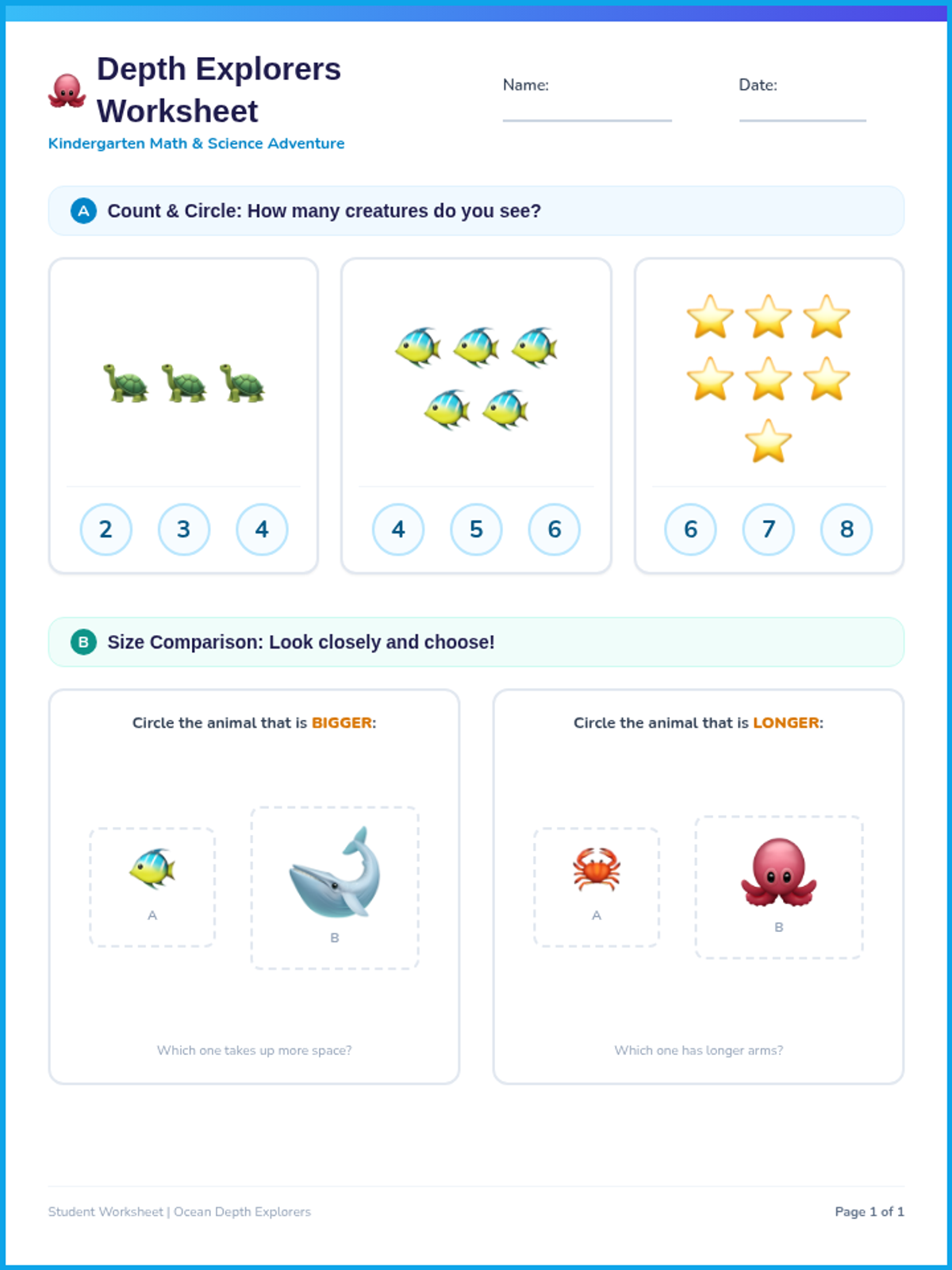
An interactive Kindergarten lesson where students explore ocean zones, compare marine animal sizes, and collaborate on a classroom ocean depth mural while practicing foundational counting and size comparison skills.
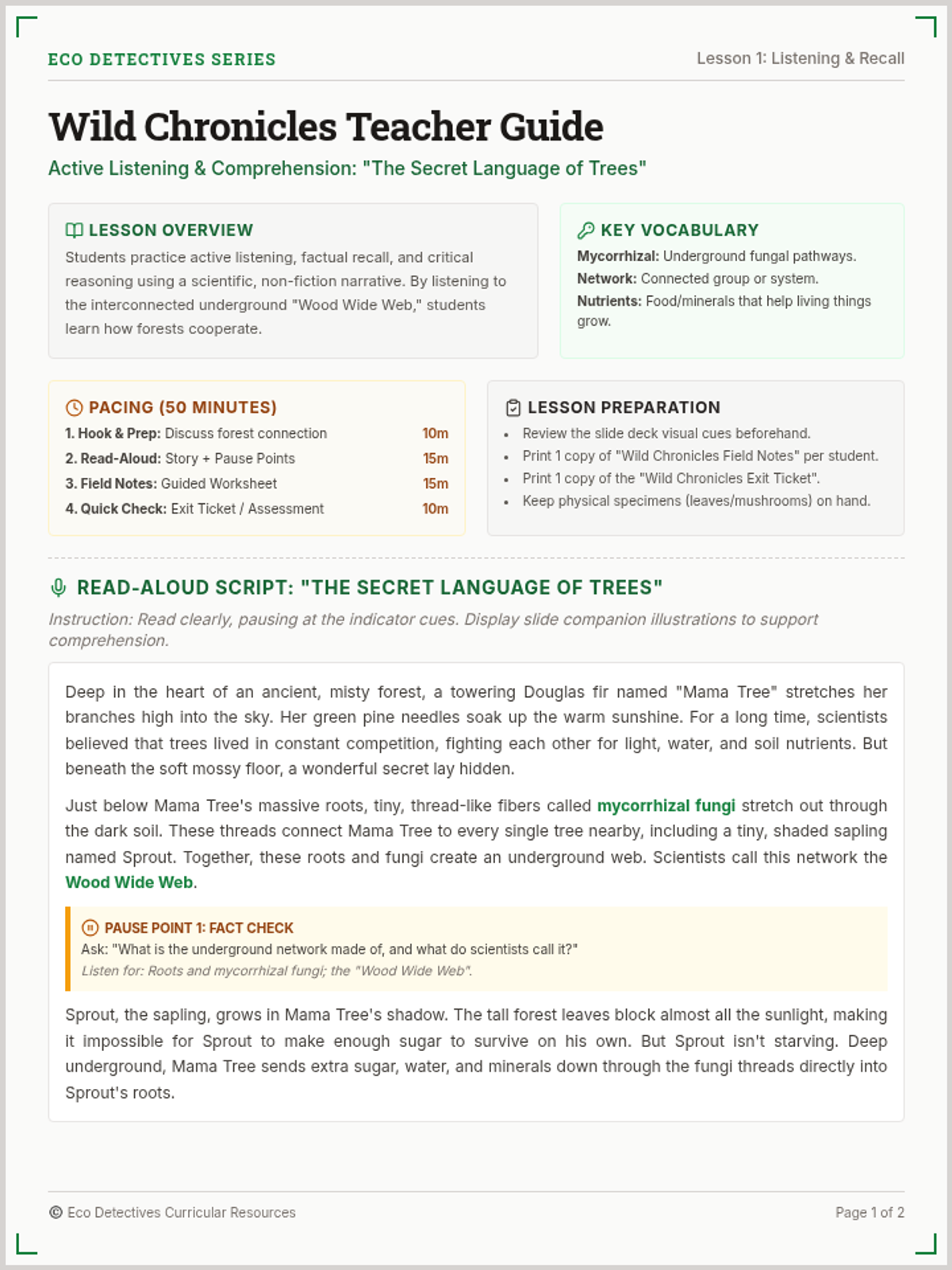
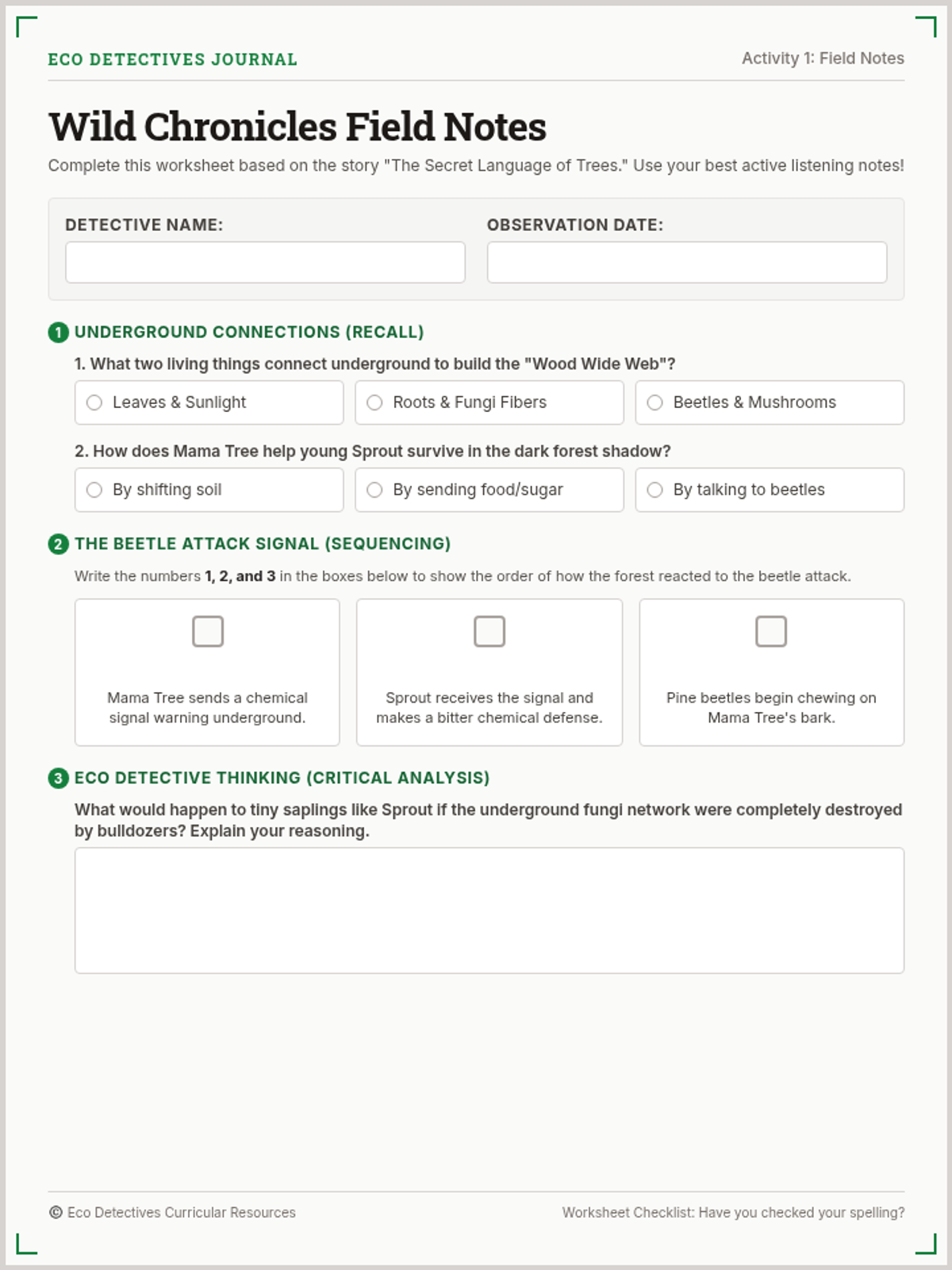
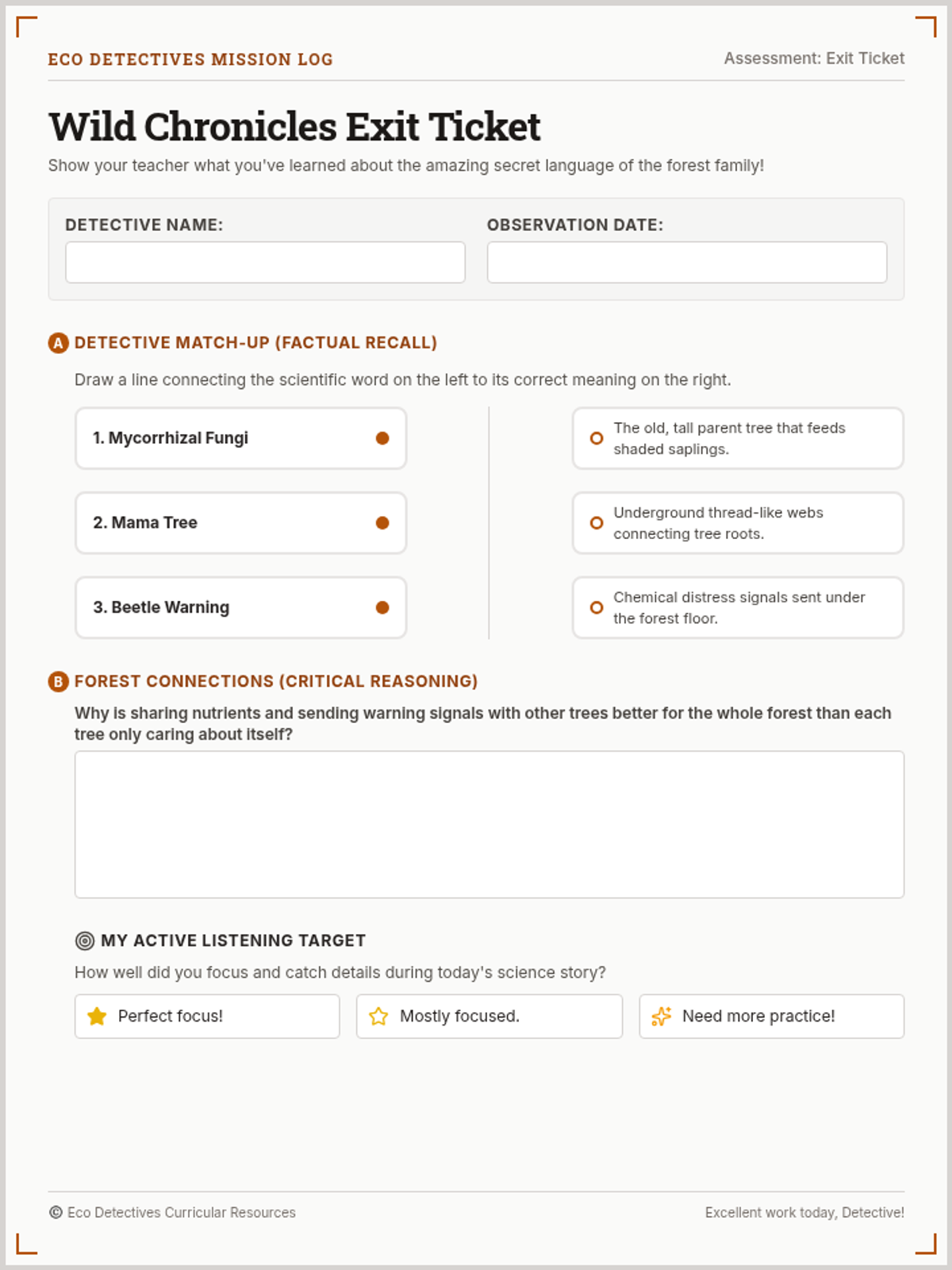
Students listen to 'The Secret Language of Trees', a non-fiction narrative about mycorrhizal networks, practicing active listening, recalling key facts, and thinking critically about ecosystem cooperation.
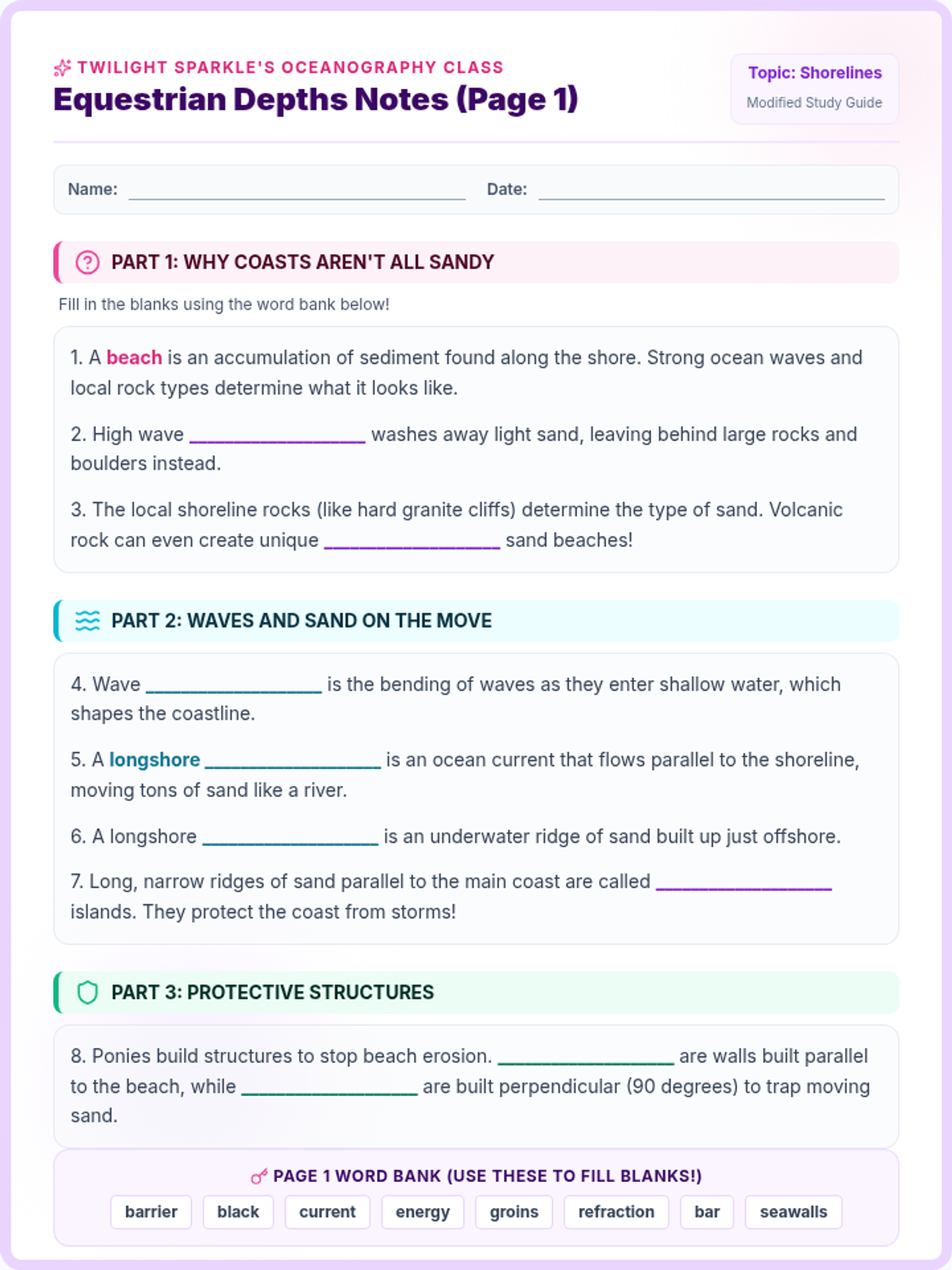
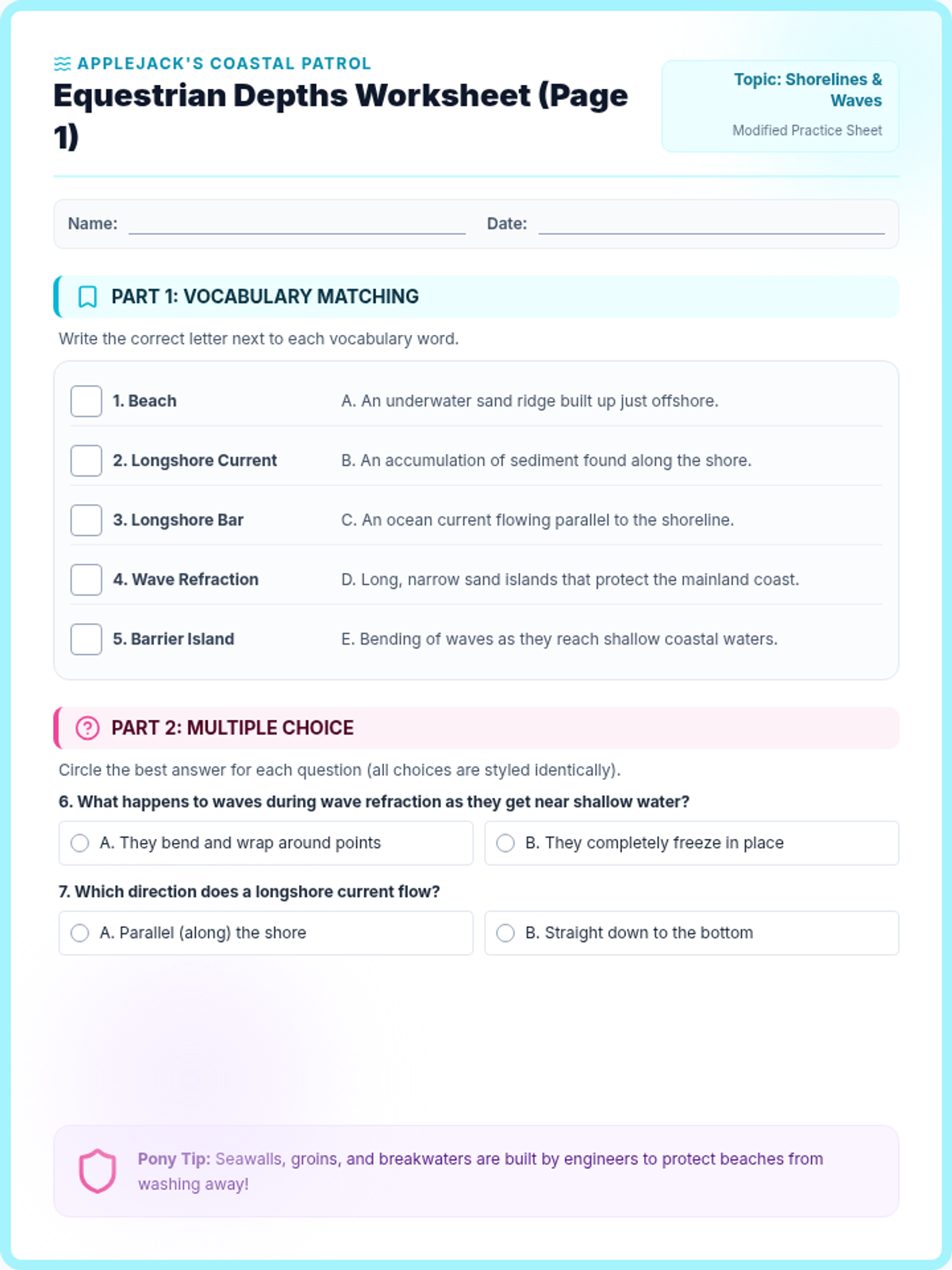
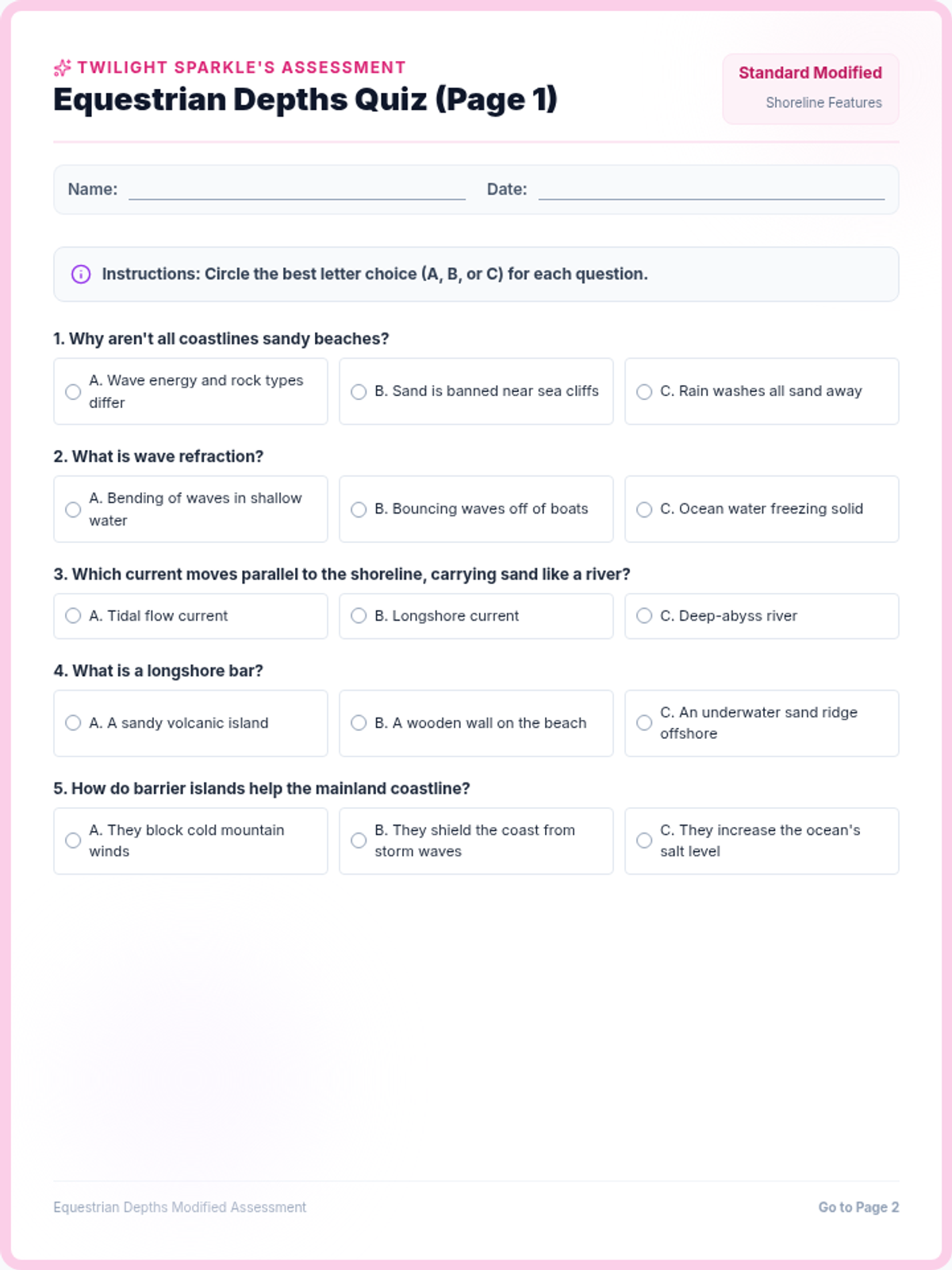
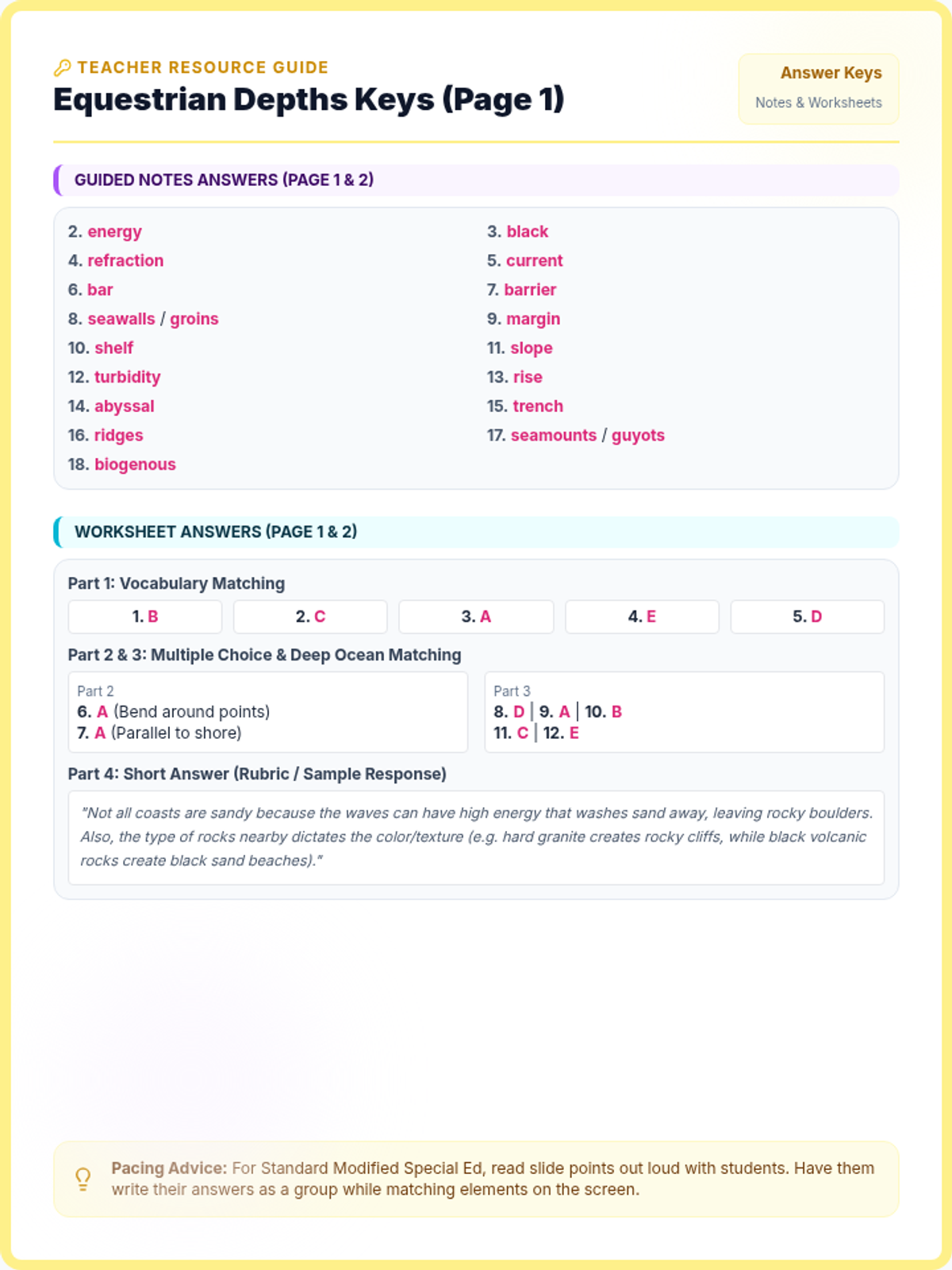
A lesson on oceanography covering shorelines, coastal features, and the deep seafloor, adapted with a friendly My Little Pony decorative theme and chunked, accessible text for Standard Modified Special Education students.
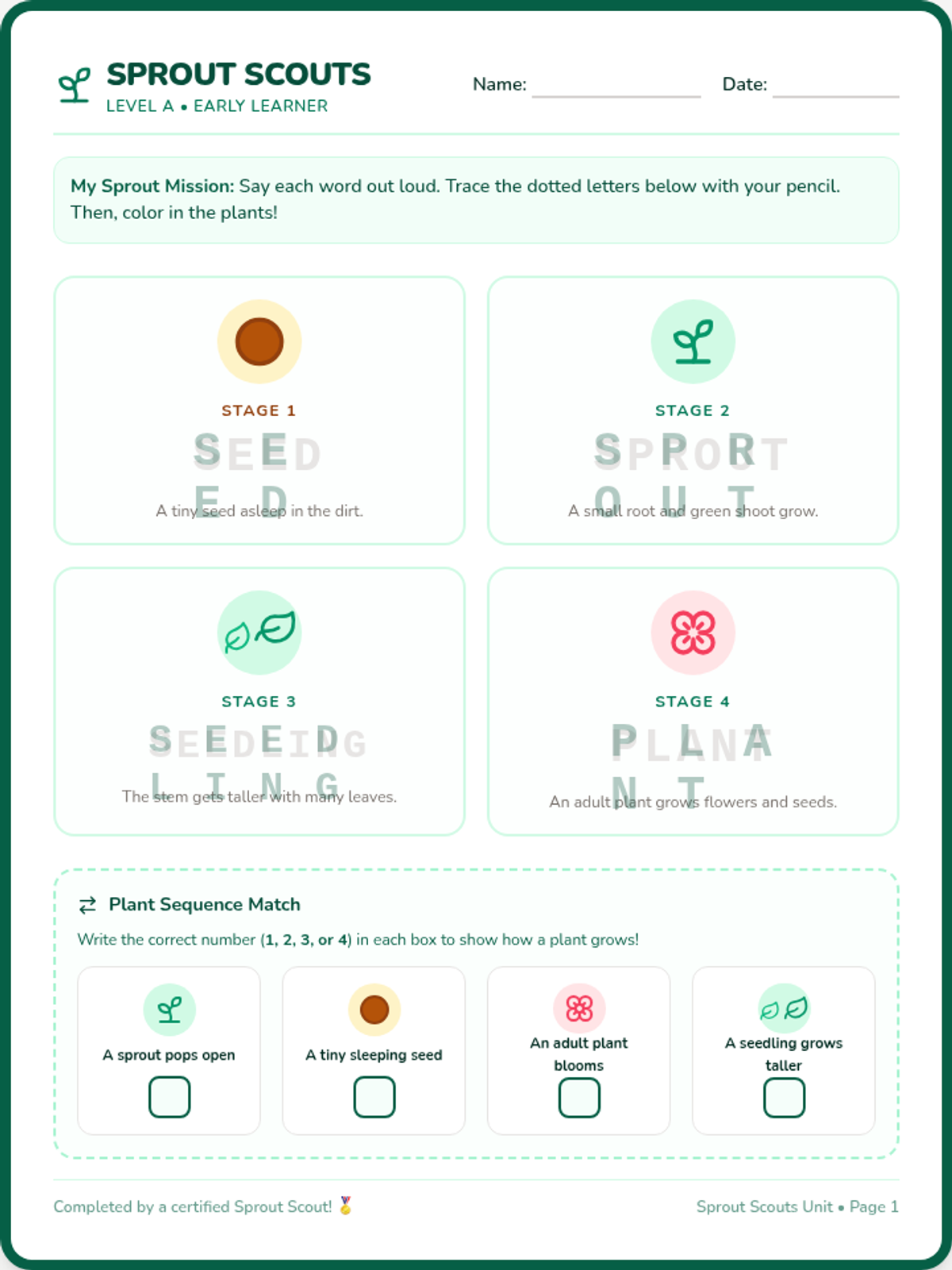
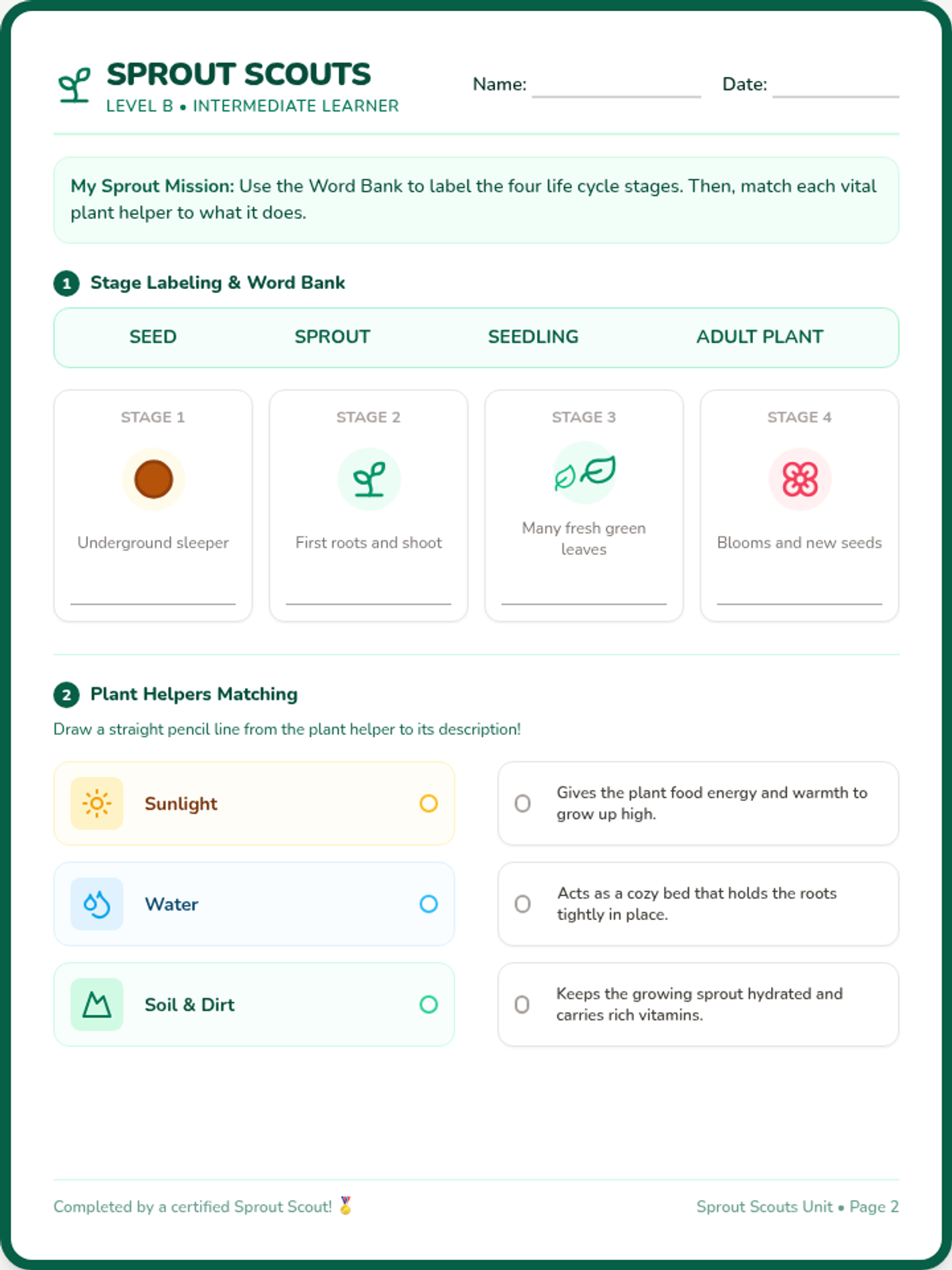
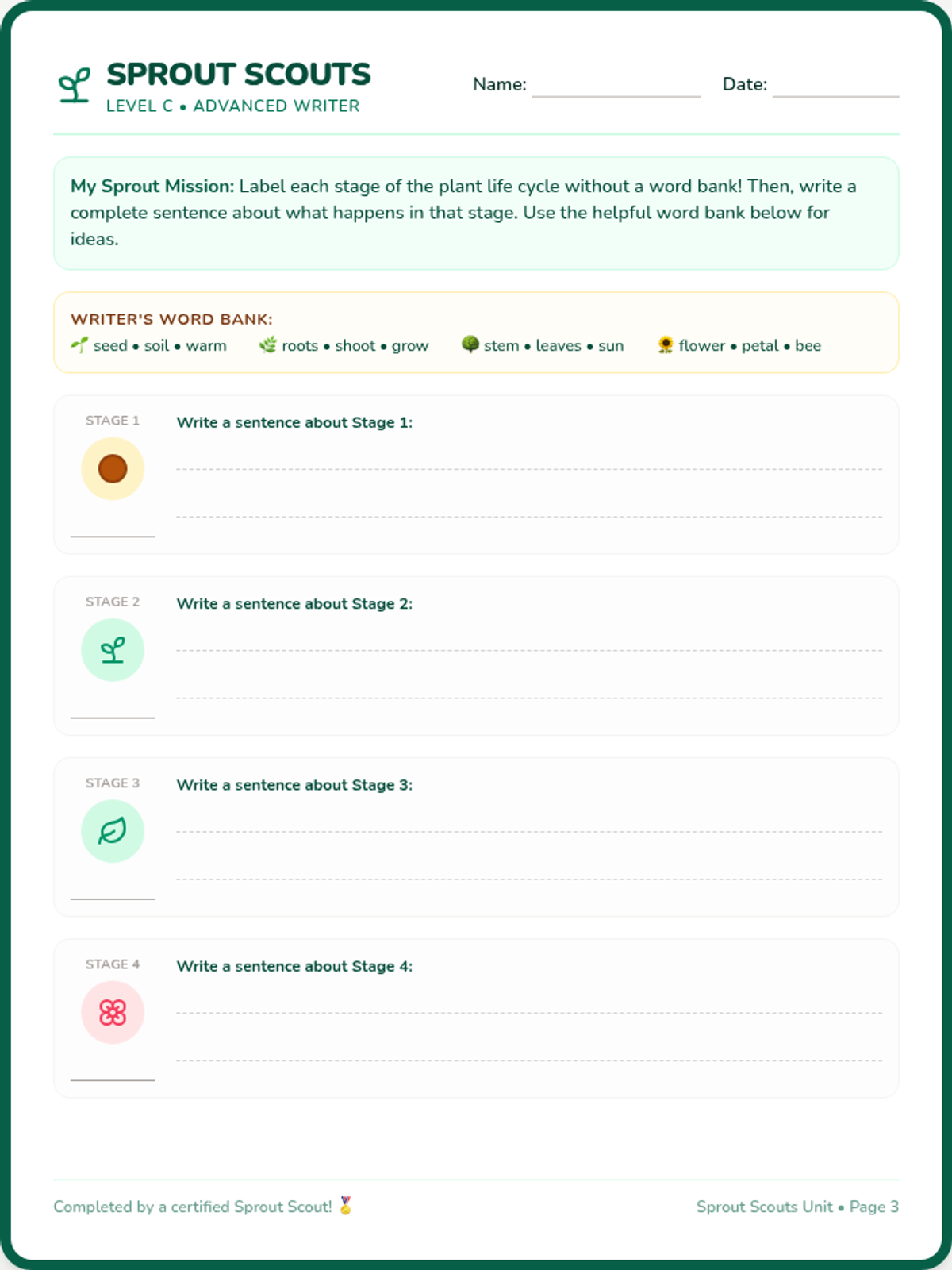
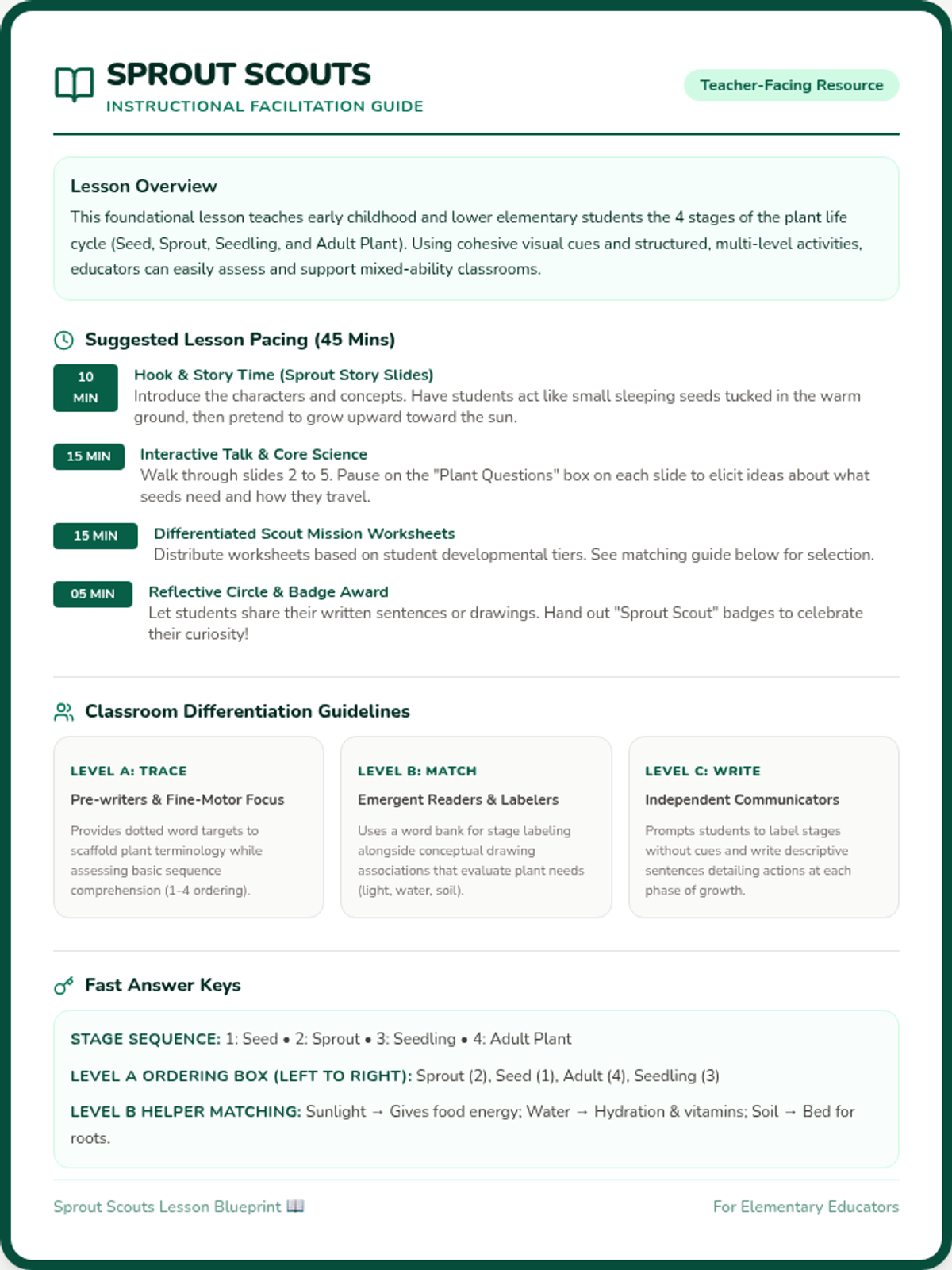
A foundational biology lesson exploring the simple life cycle of a plant from seed to sprout to adult. Includes interactive slides, a comprehensive teacher guide, and three tiers of differentiated worksheets to support early writers, matchers, and independent sentence-builders.
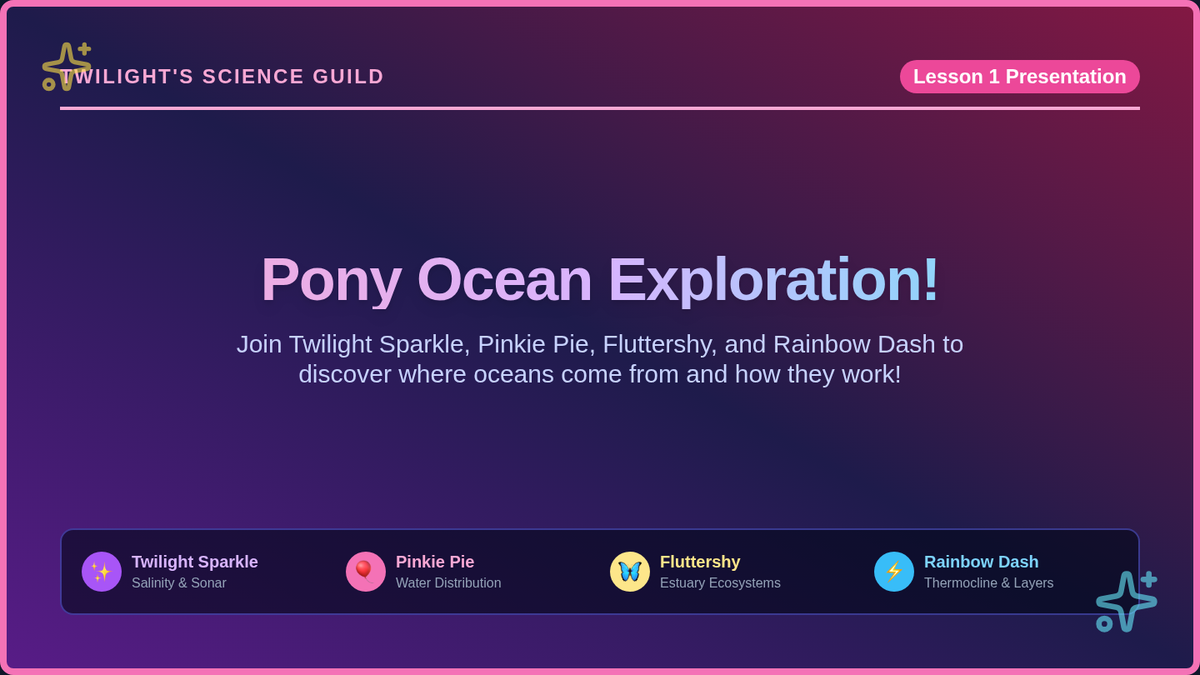
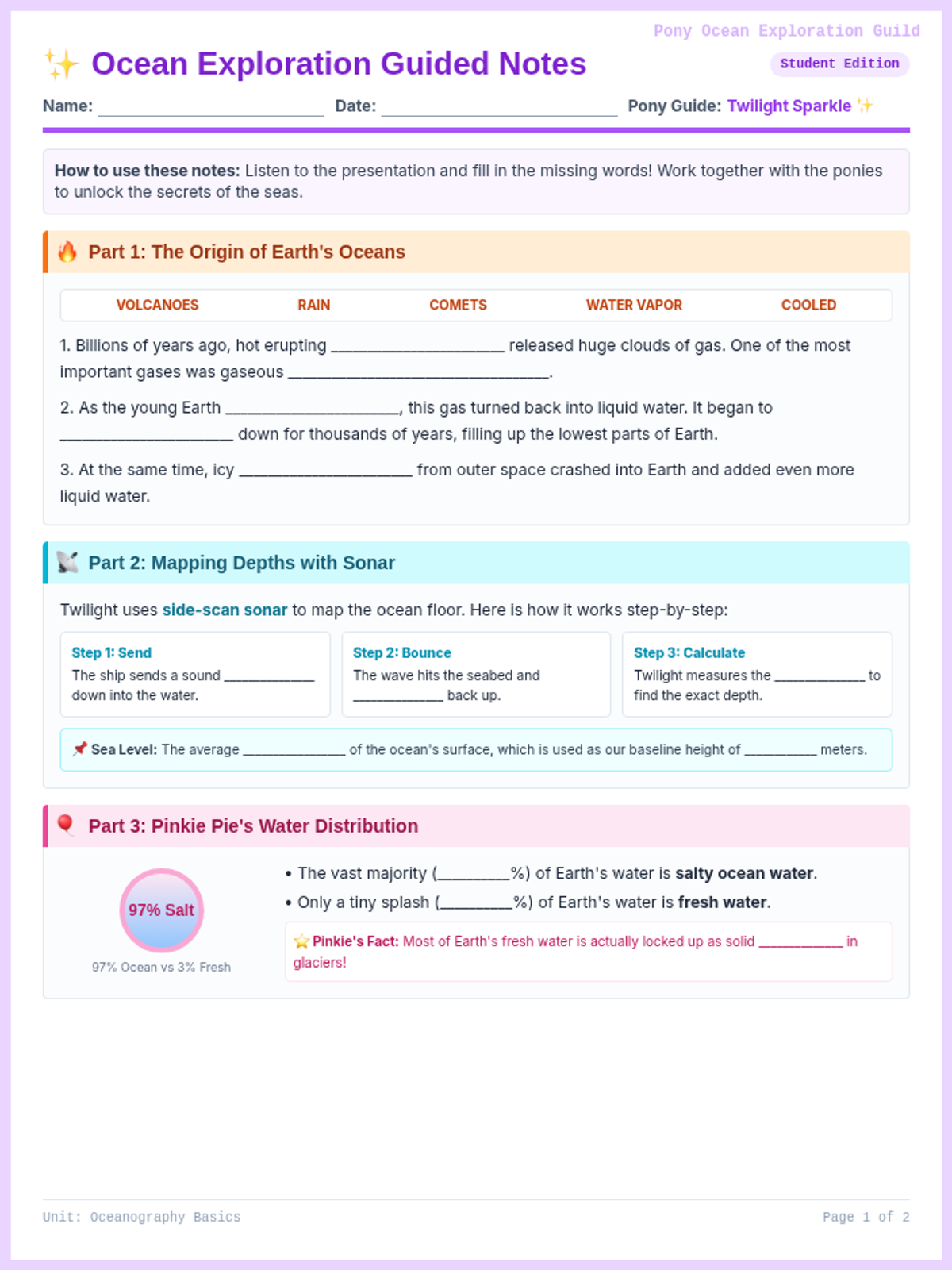
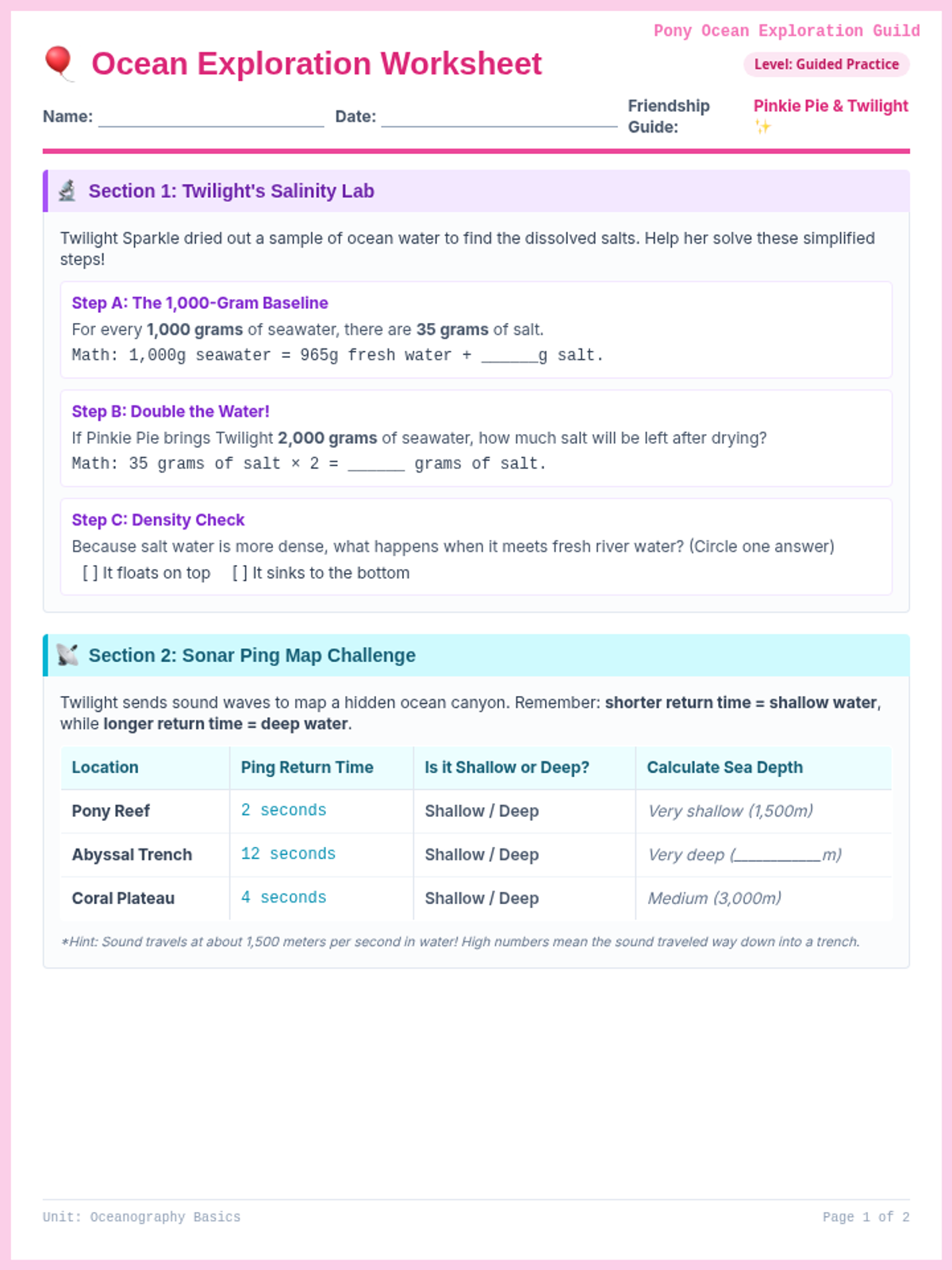
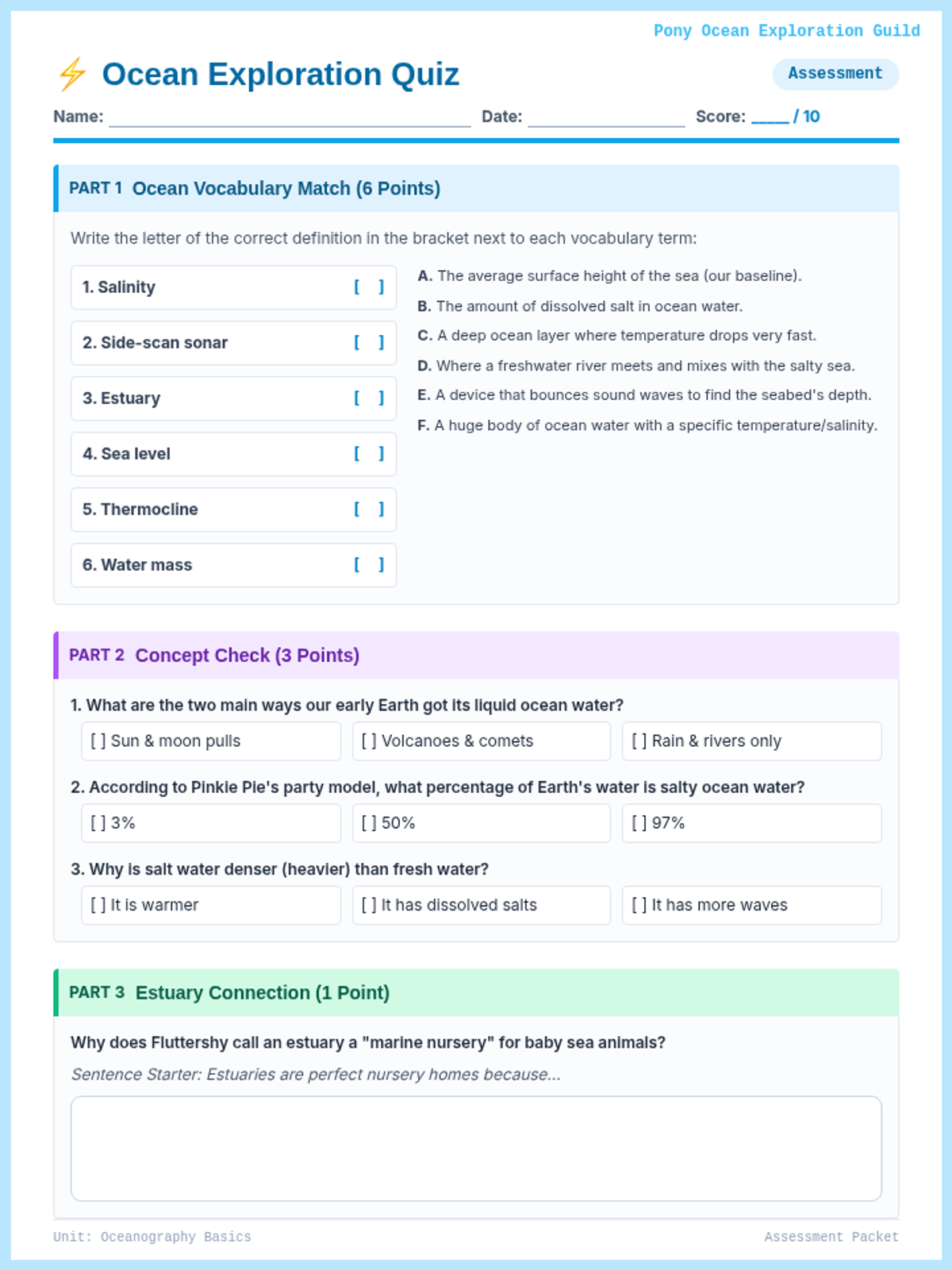
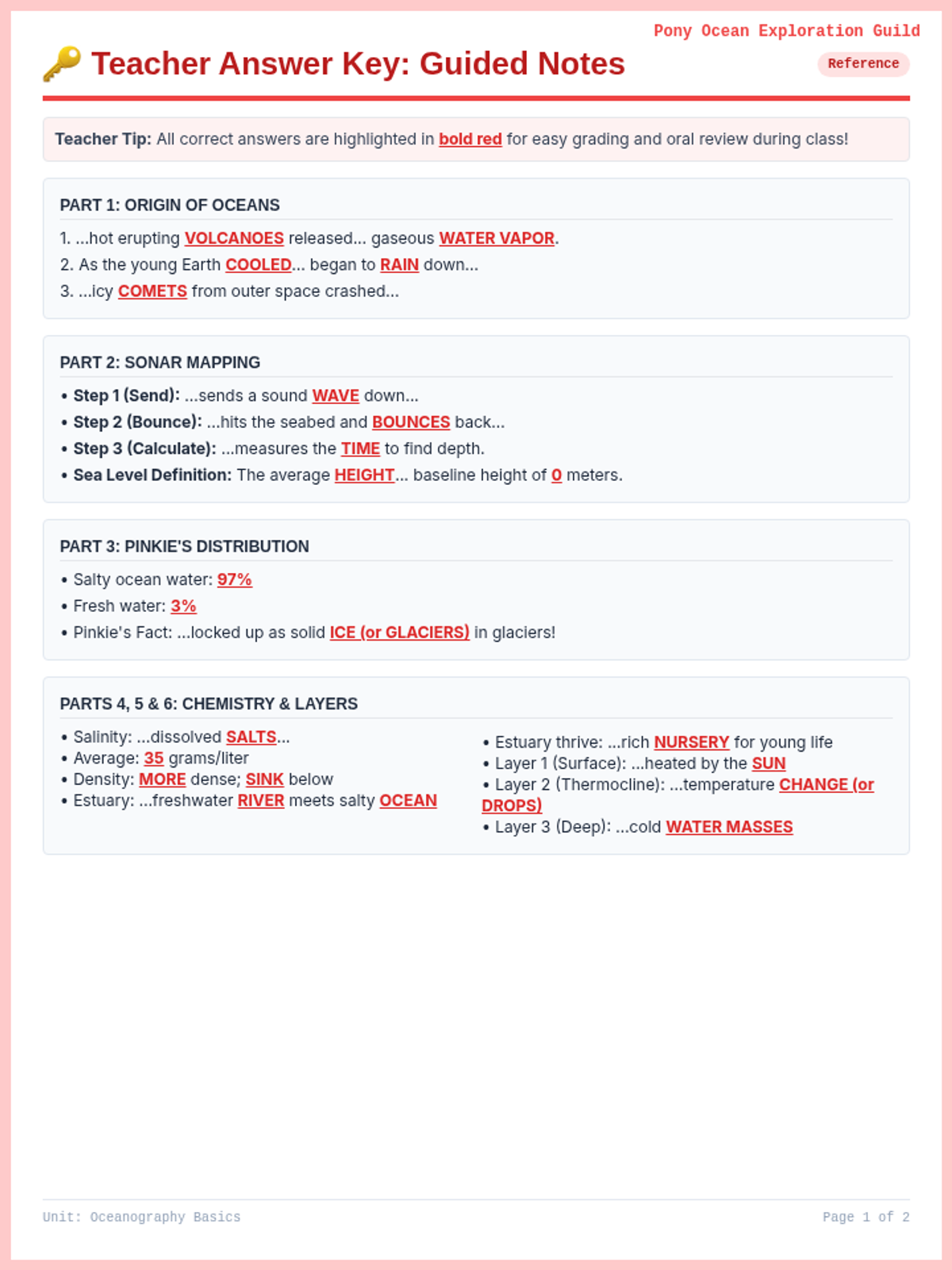
Join Twilight Sparkle, Pinkie Pie, Fluttershy, and Rainbow Dash as they explore the origin, composition, and structure of Earth's oceans. This lesson is highly visual, simplified, and carefully structured with guided practice, word banks, and sentence starters.
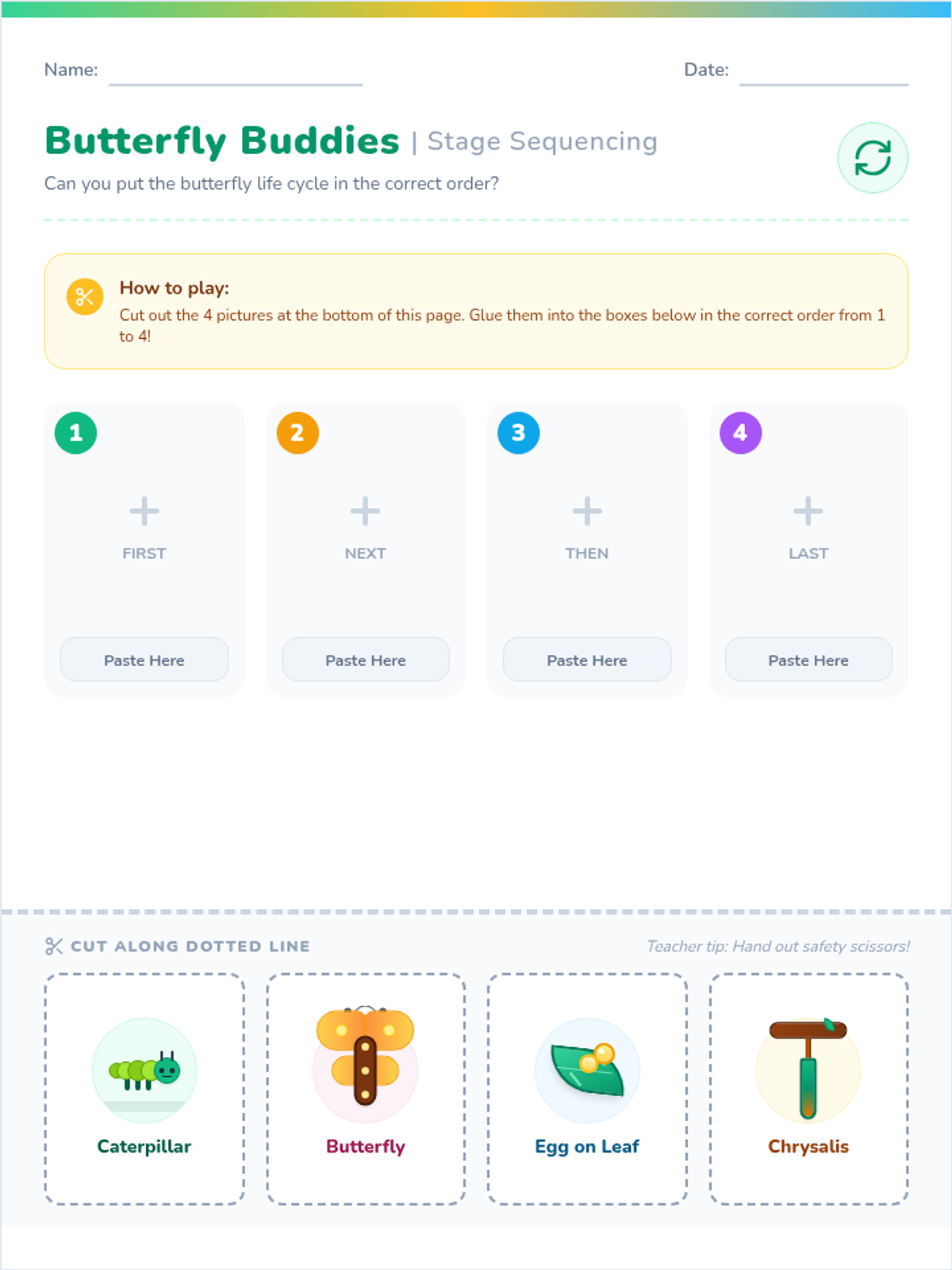
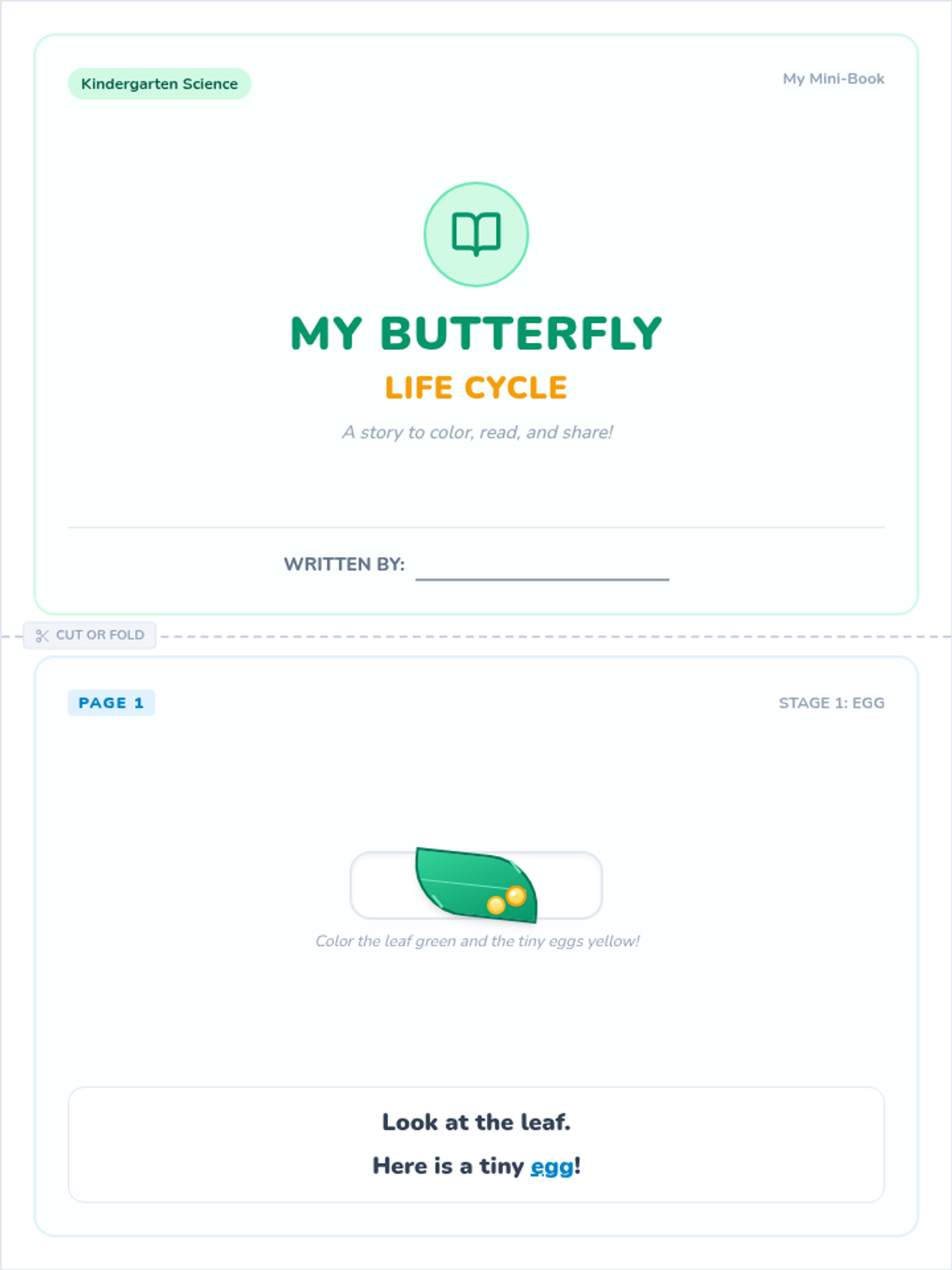
A friendly, hands-on kindergarten lesson exploring the four stages of a butterfly's life cycle: egg, caterpillar, chrysalis, and butterfly. Students learn through sequencing, labeling, coloring, and reading a foldable mini-booklet.
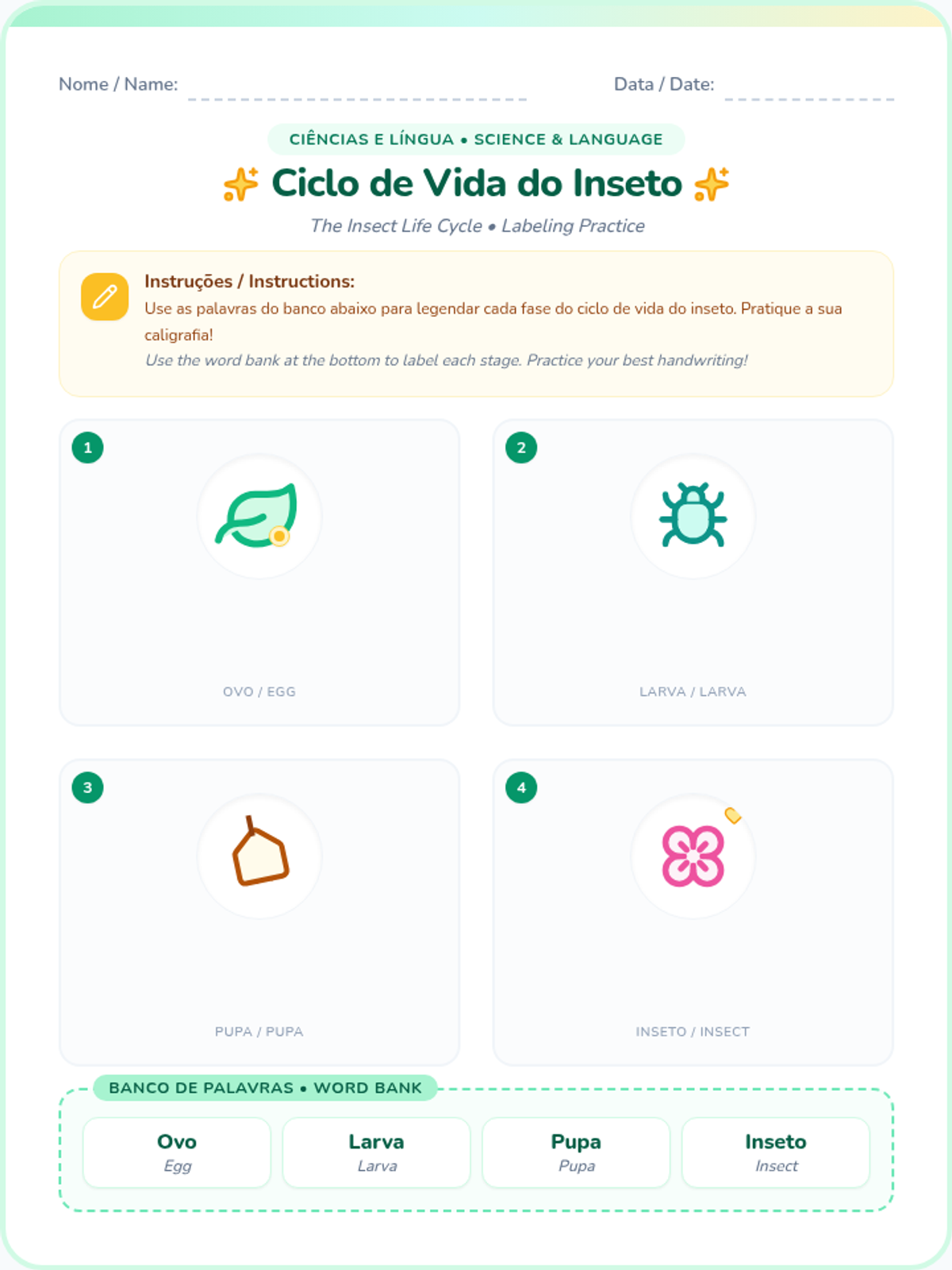
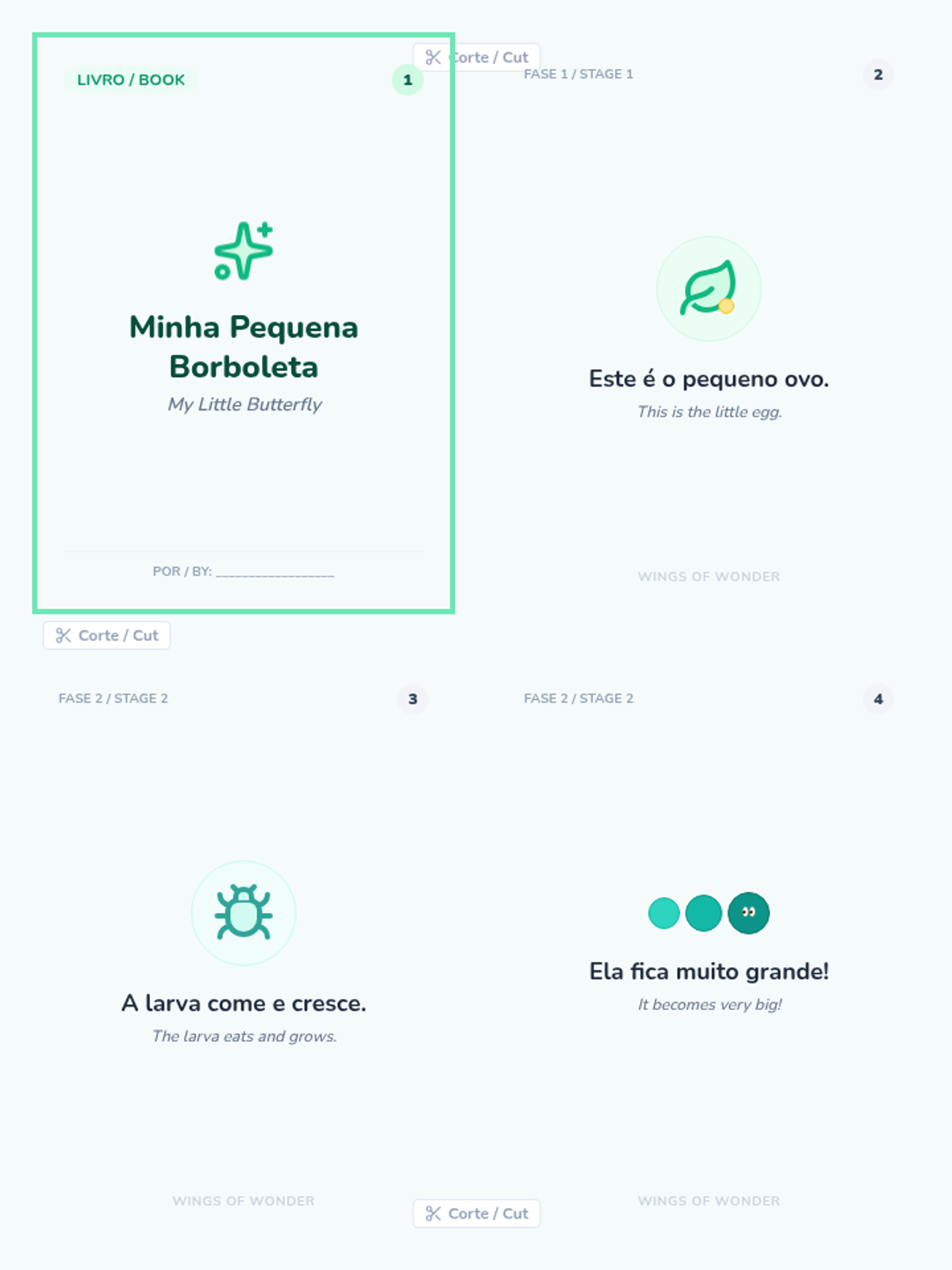
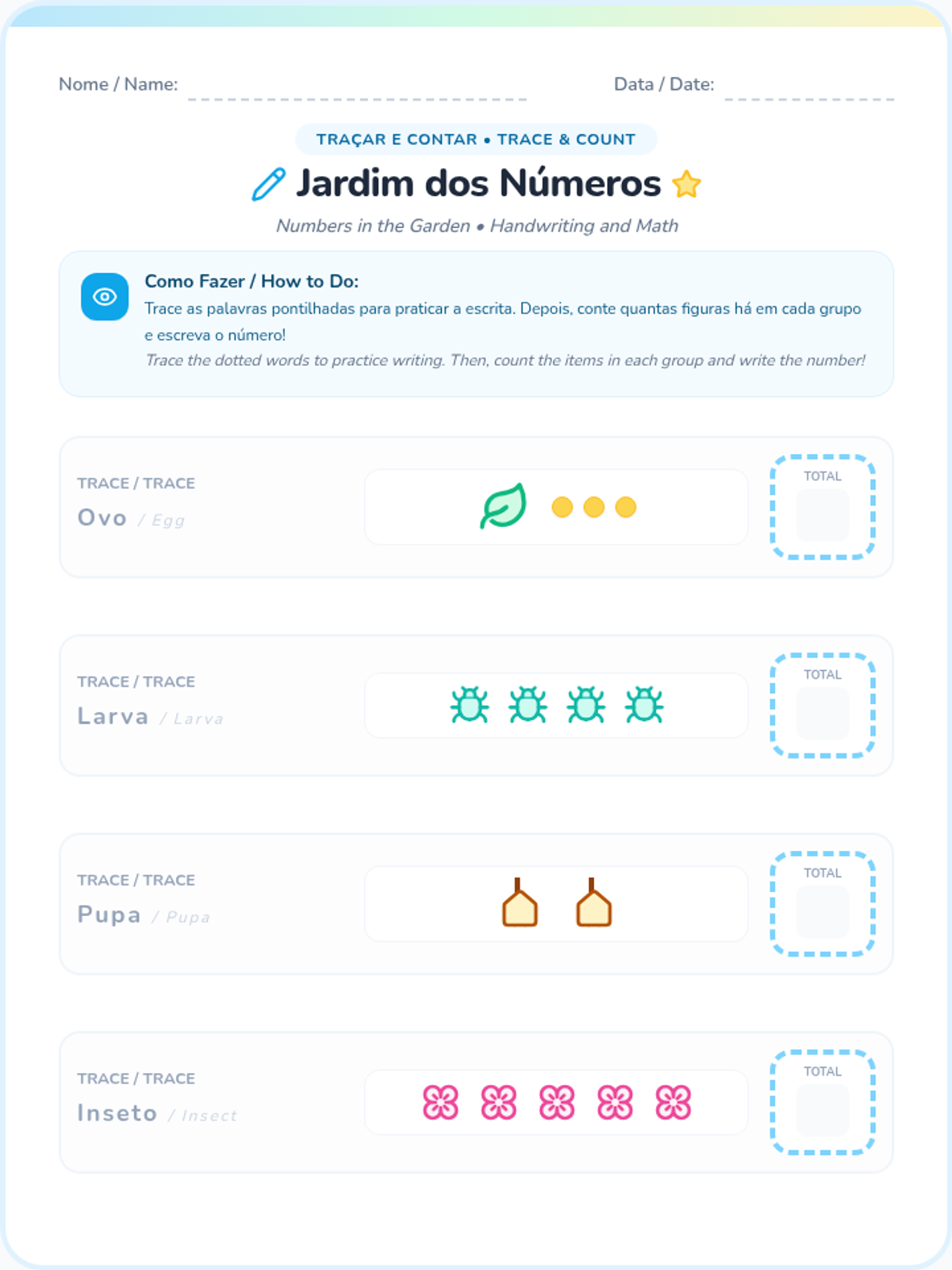
A bilingual kindergarten lesson exploring the magical life cycle of butterflies. Students practice sequencing, labeling, and reading simple bilingual English/Portuguese sentences.
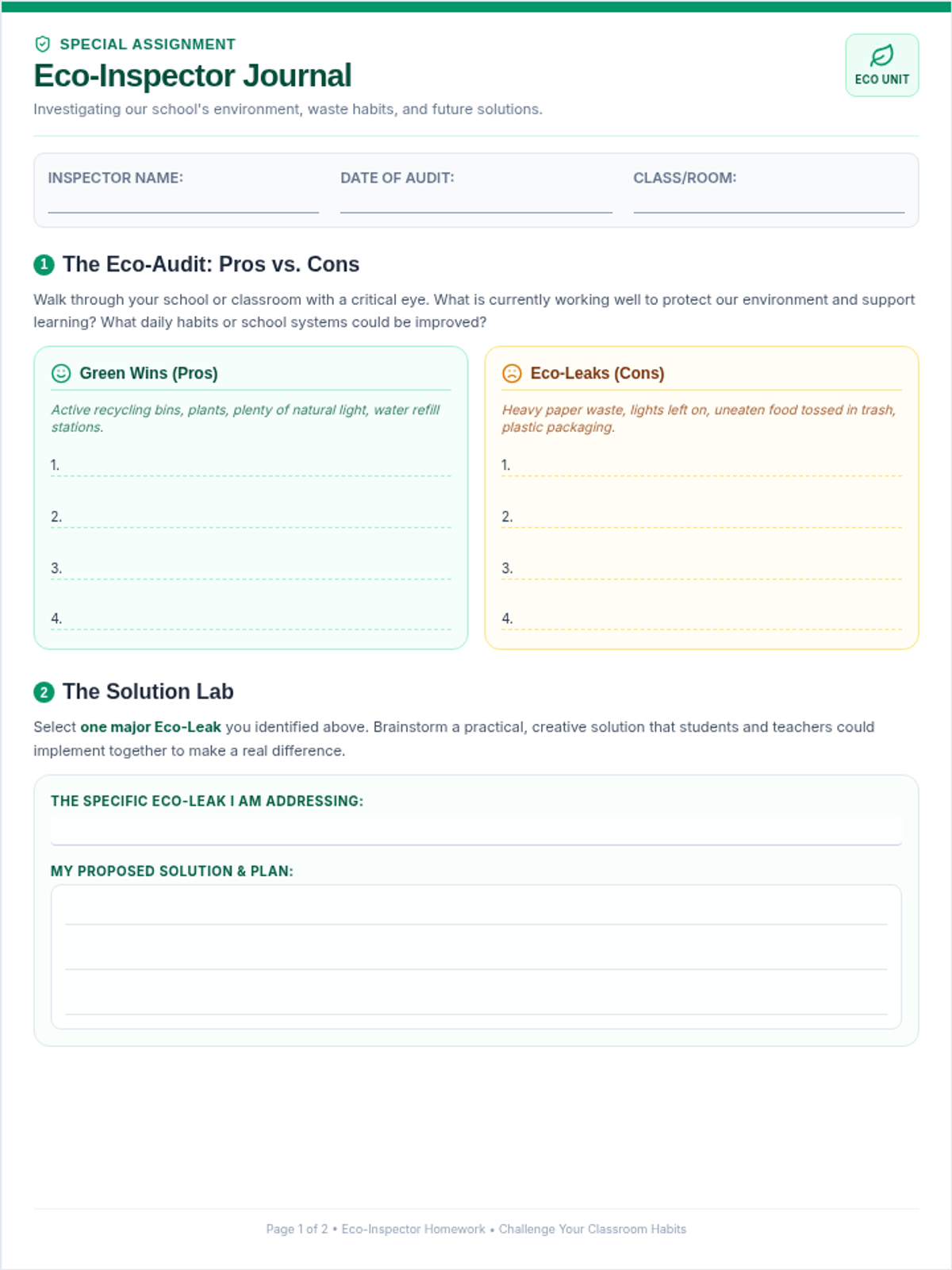
A homework-centered lesson where students investigate school environmental habits, conduct a mini-audit, and plan statistical data collection around waste and ecological impact.
A third-grade lesson aligned with OpenSciEd Lesson 8, focusing on identifying patterns in dog breeds (traits, environments, and behaviors) and synthesizing findings into a Claim-Evidence-Reasoning (CER) scientific explanation.
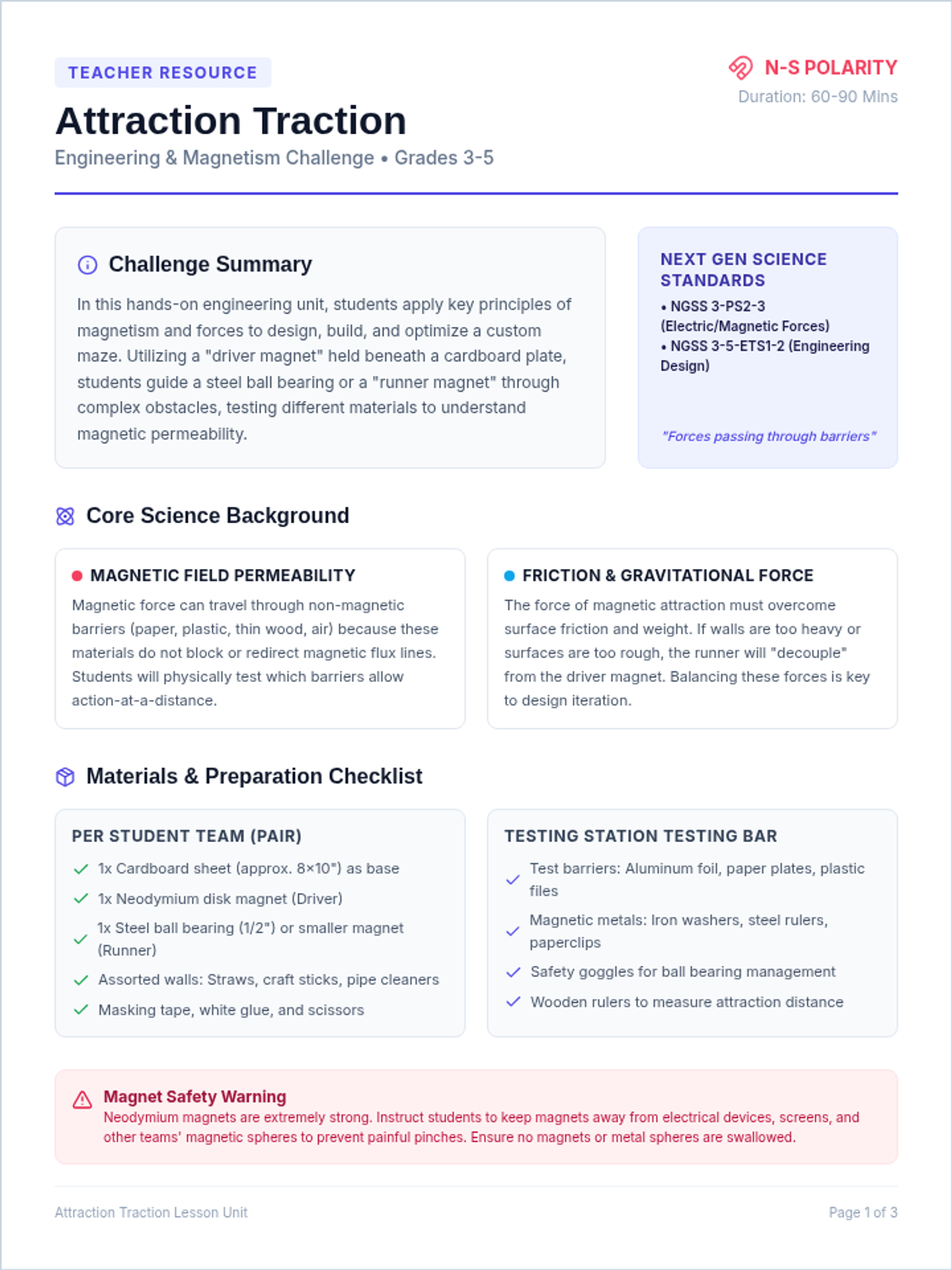
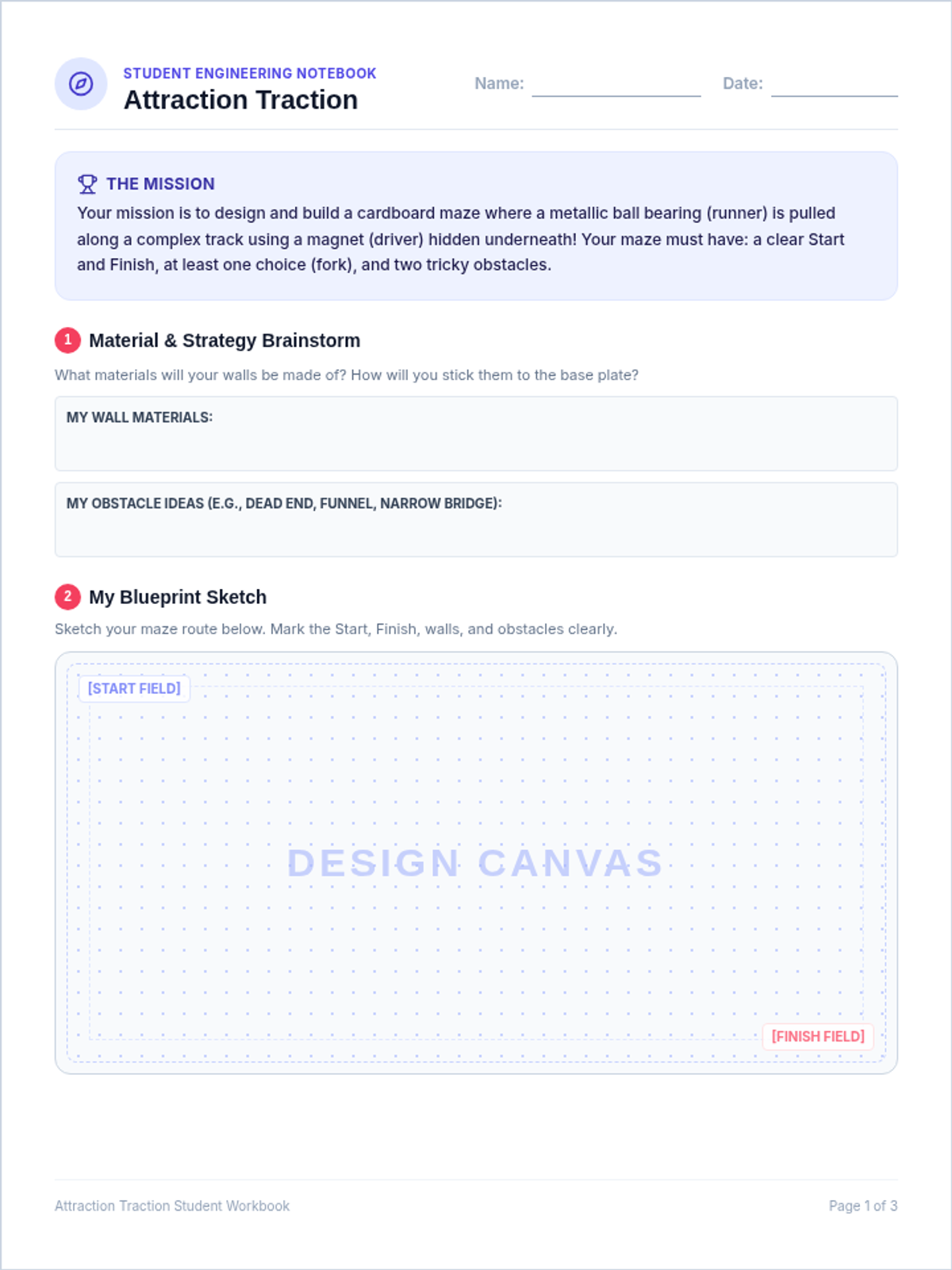
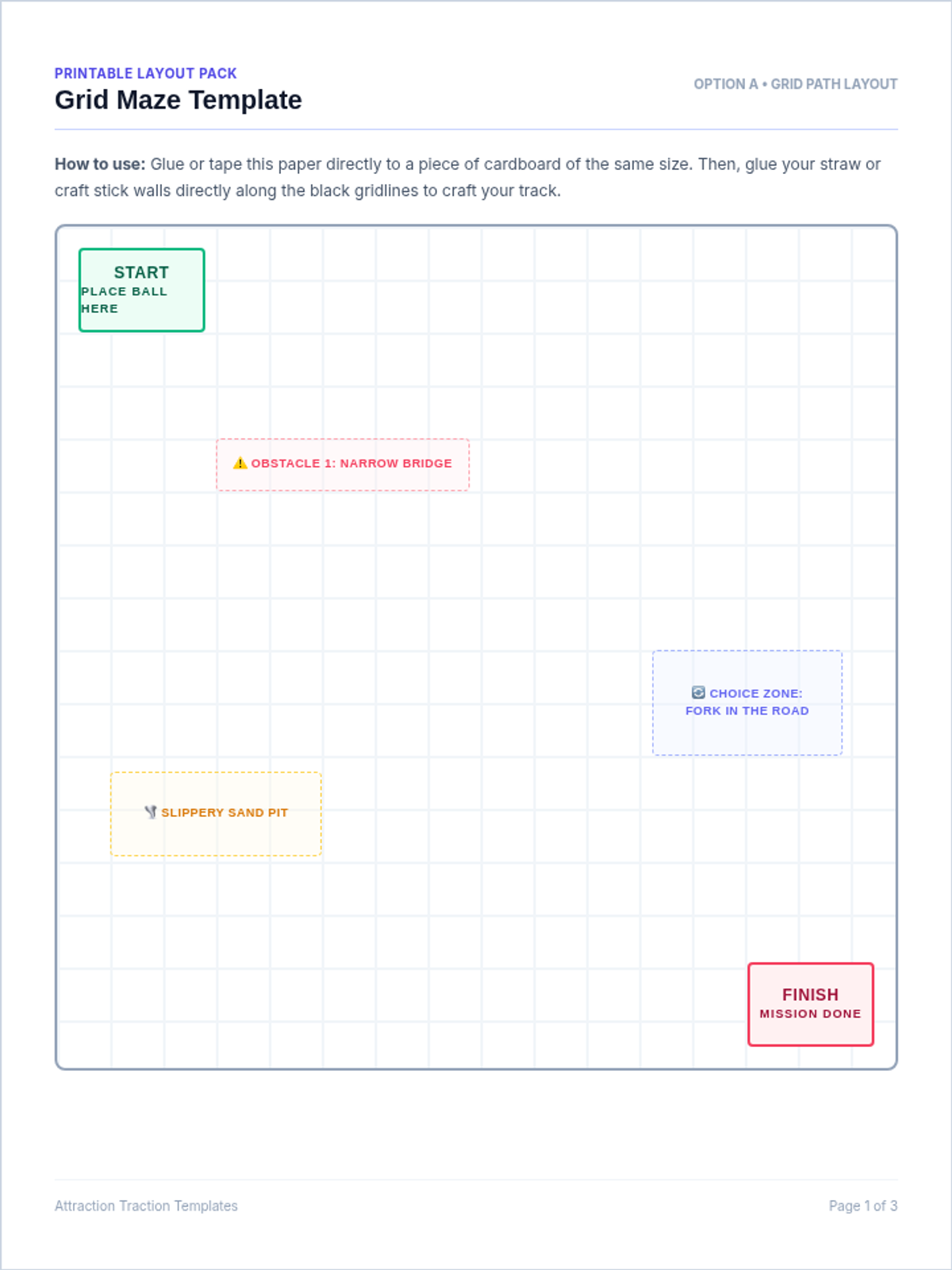
An engineering and physics lesson where students design, build, and test magnetic mazes to explore magnetic forces and the Engineering Design Process. Students investigate magnetic permeability and iterate on their designs to solve navigational challenges.
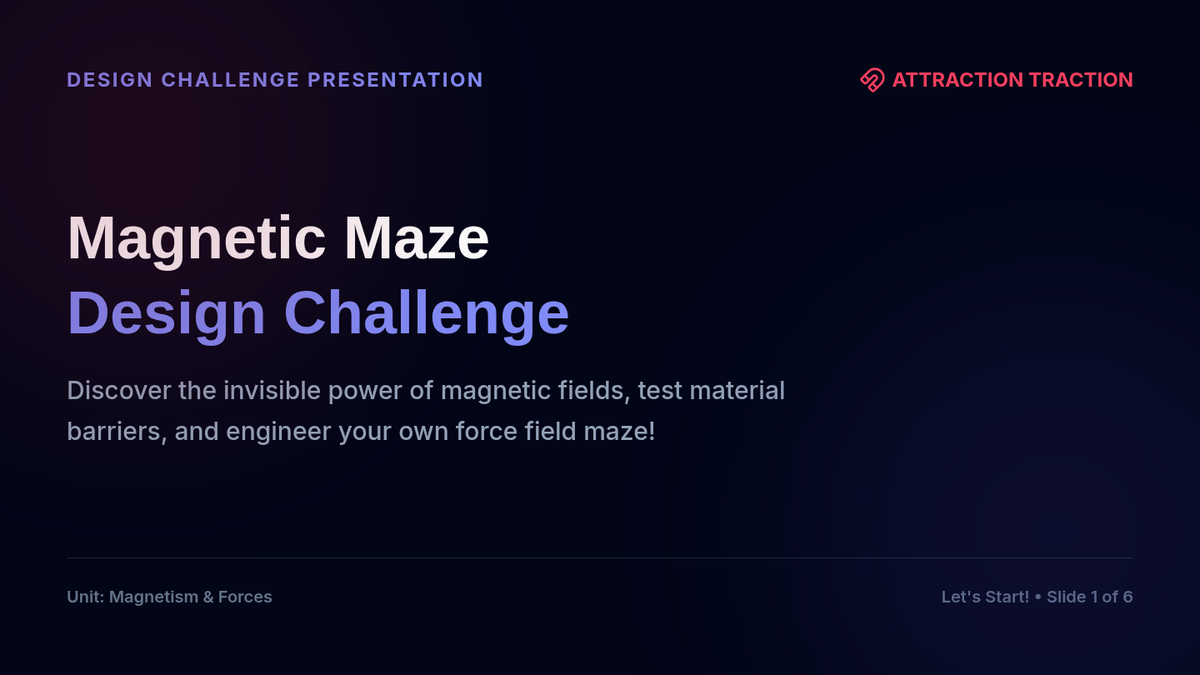
An upper elementary STEM lesson where students explore magnetic fields, poles, and non-contact forces by designing and building a physical magnet maze. Includes visual slides, a hands-on student design guide, and a comprehensive teacher lesson plan.
A highly engaging, hands-on lesson teaching the importance of precision, clarity, and chronological sequencing through the classic "Exact Instructions Challenge" using Marshmallow Fluff and Jelly. Students write step-by-step instructions, and the teacher follows them verbatim, humorously demonstrating how easily vague directions can go sticky.
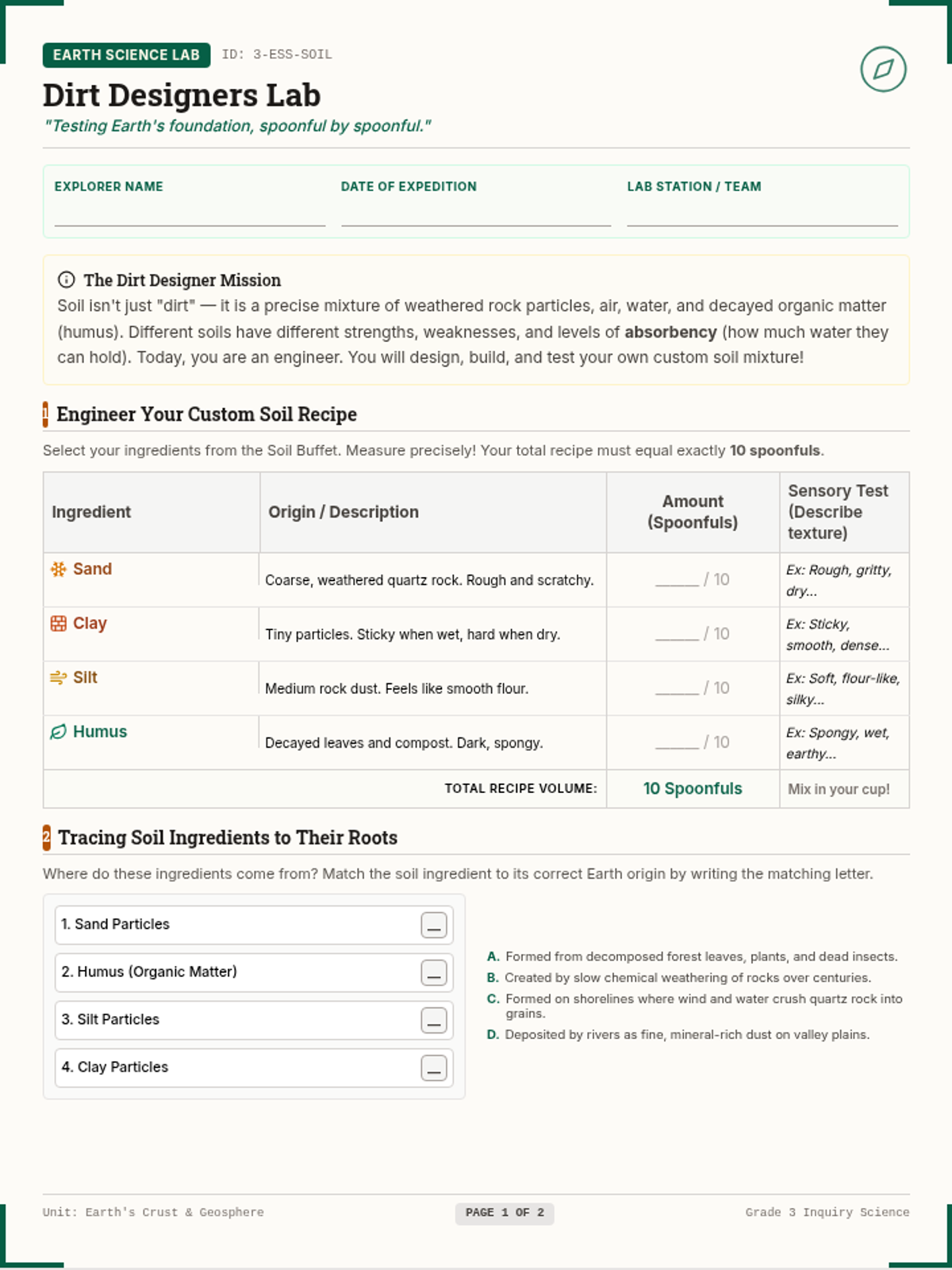
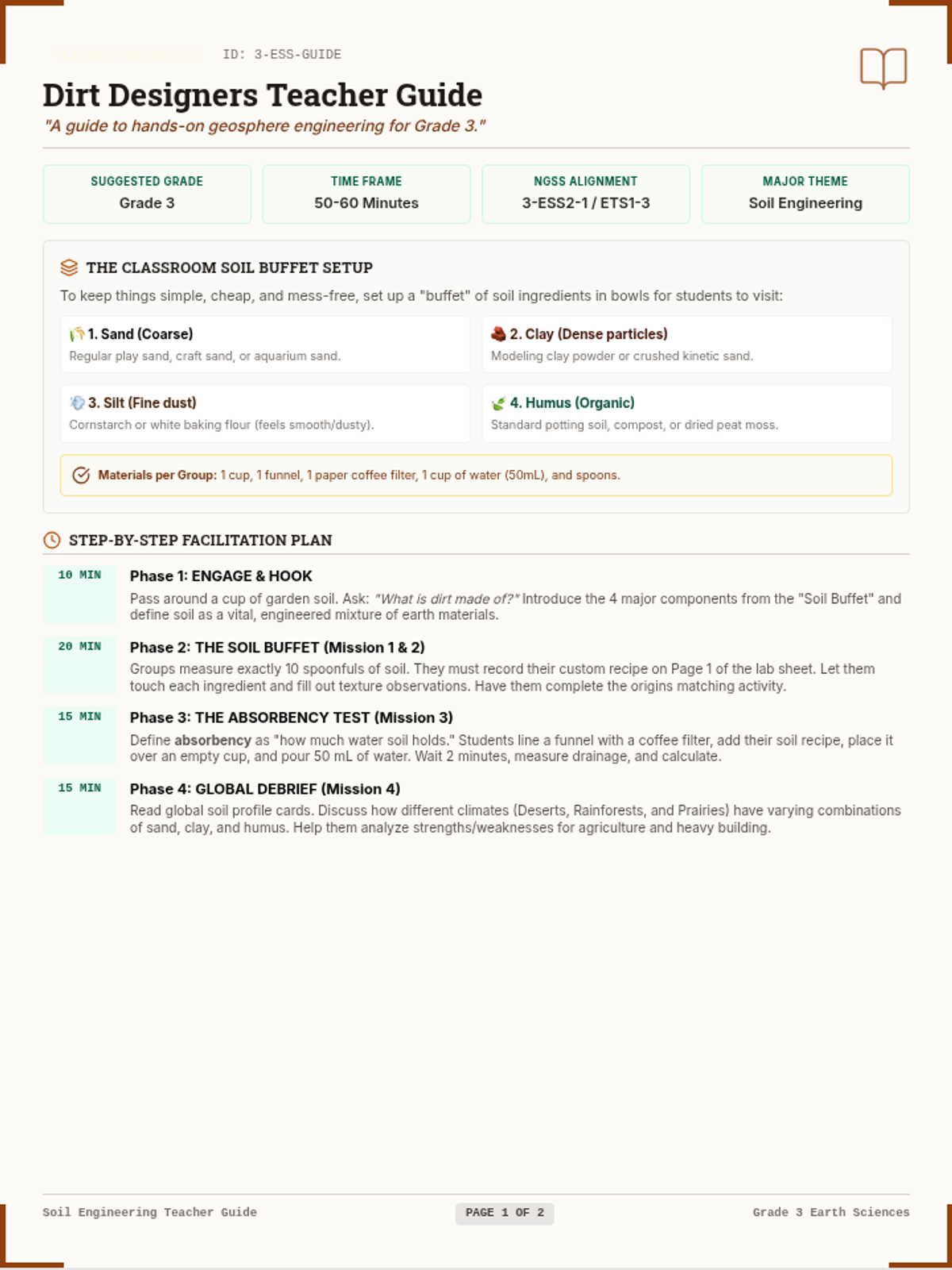
An inquiry-based science lesson where third graders engineer custom soil mixtures, test properties like absorbency, and explore global soil origins and characteristics.
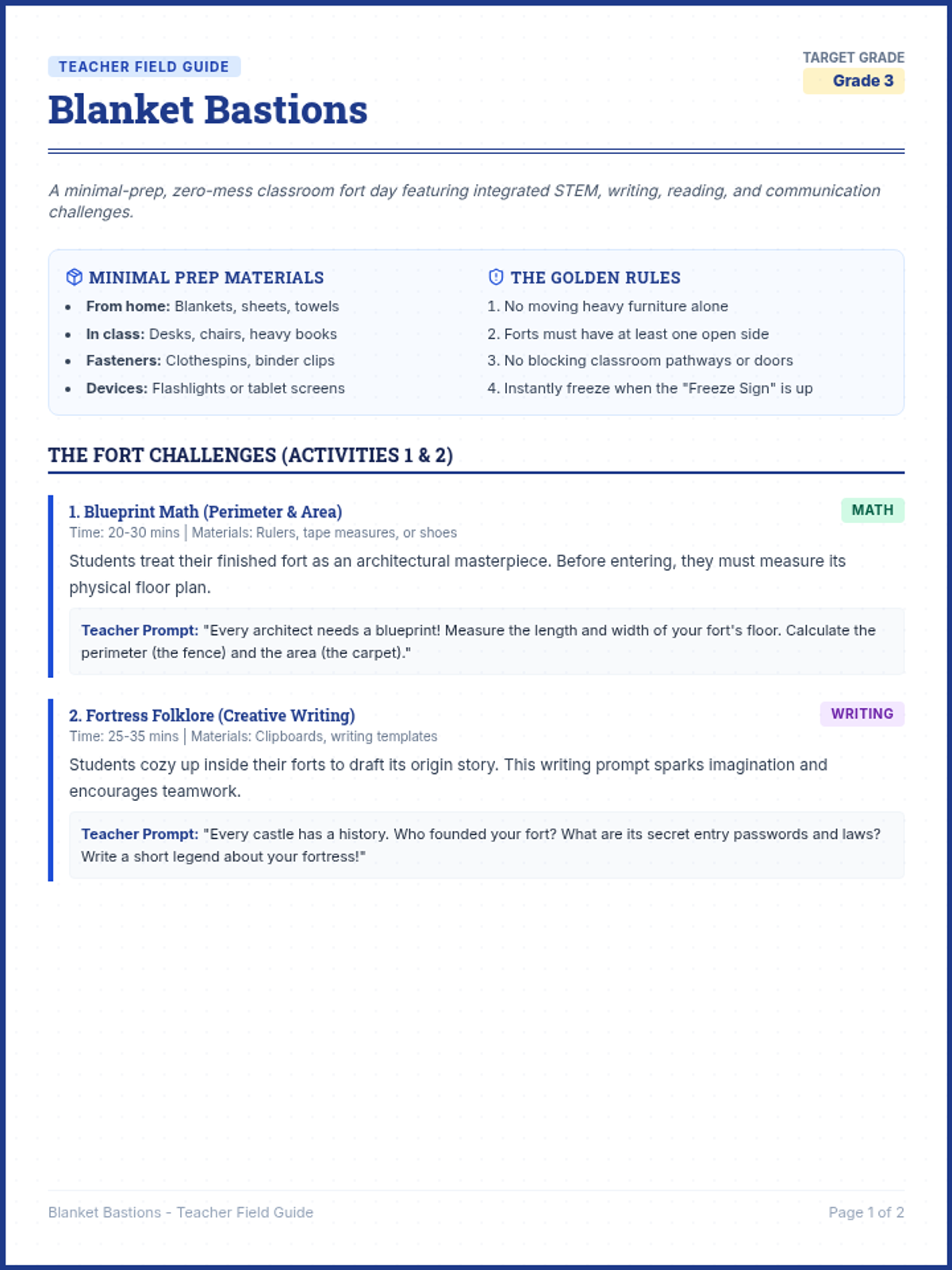
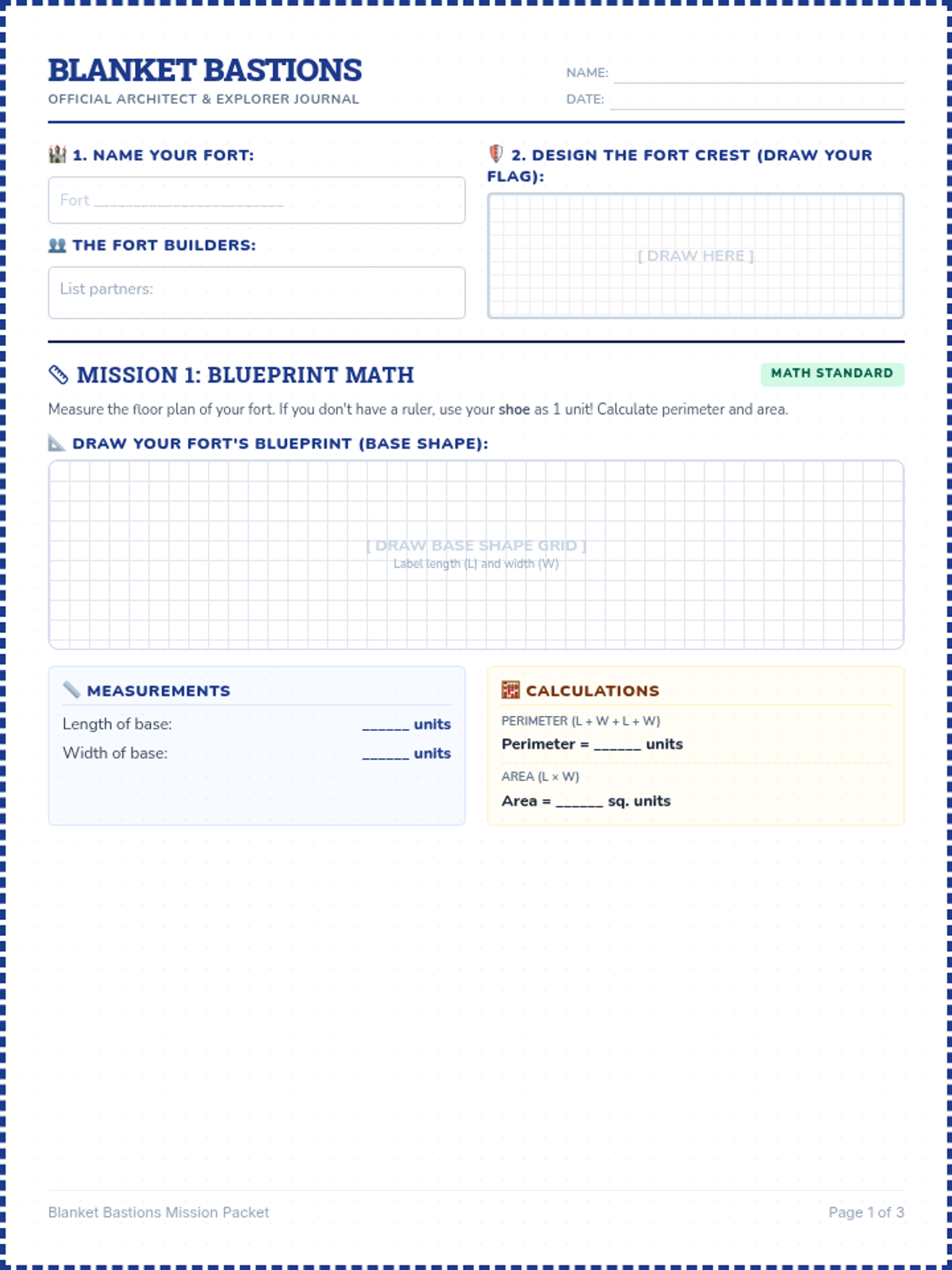
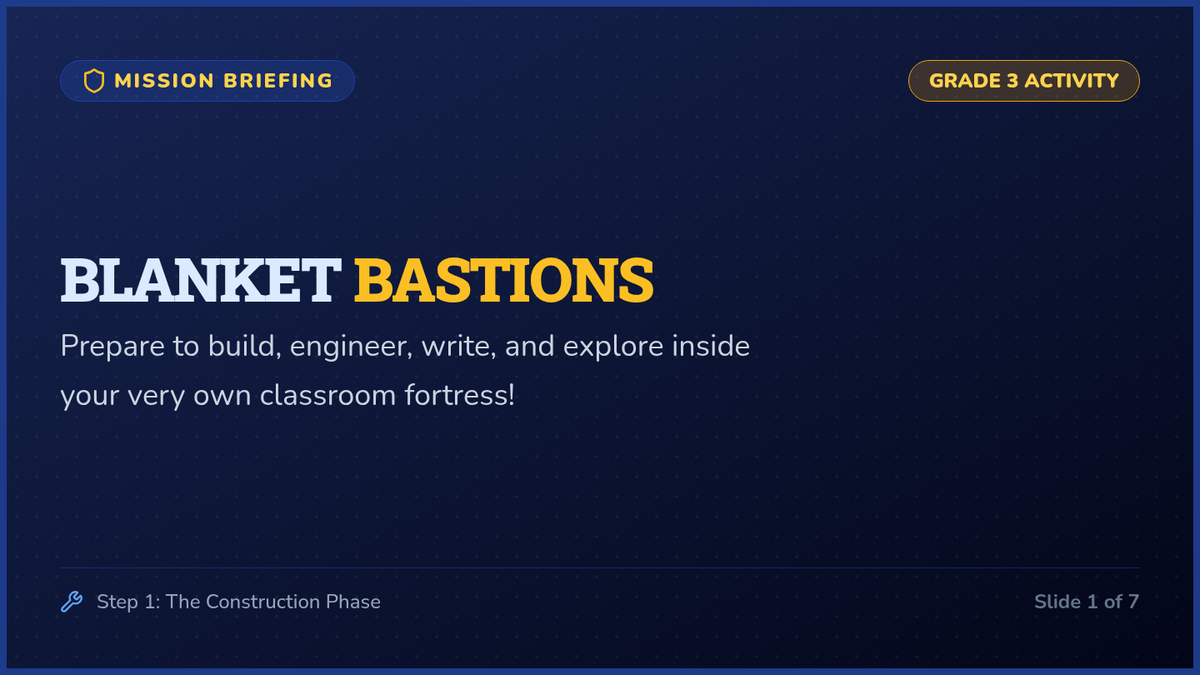
A multi-subject activity suite for third graders centered around building and playing in classroom blanket forts. Includes math, science, creative writing, reading, and team communication challenges that require minimal prep and create zero mess.
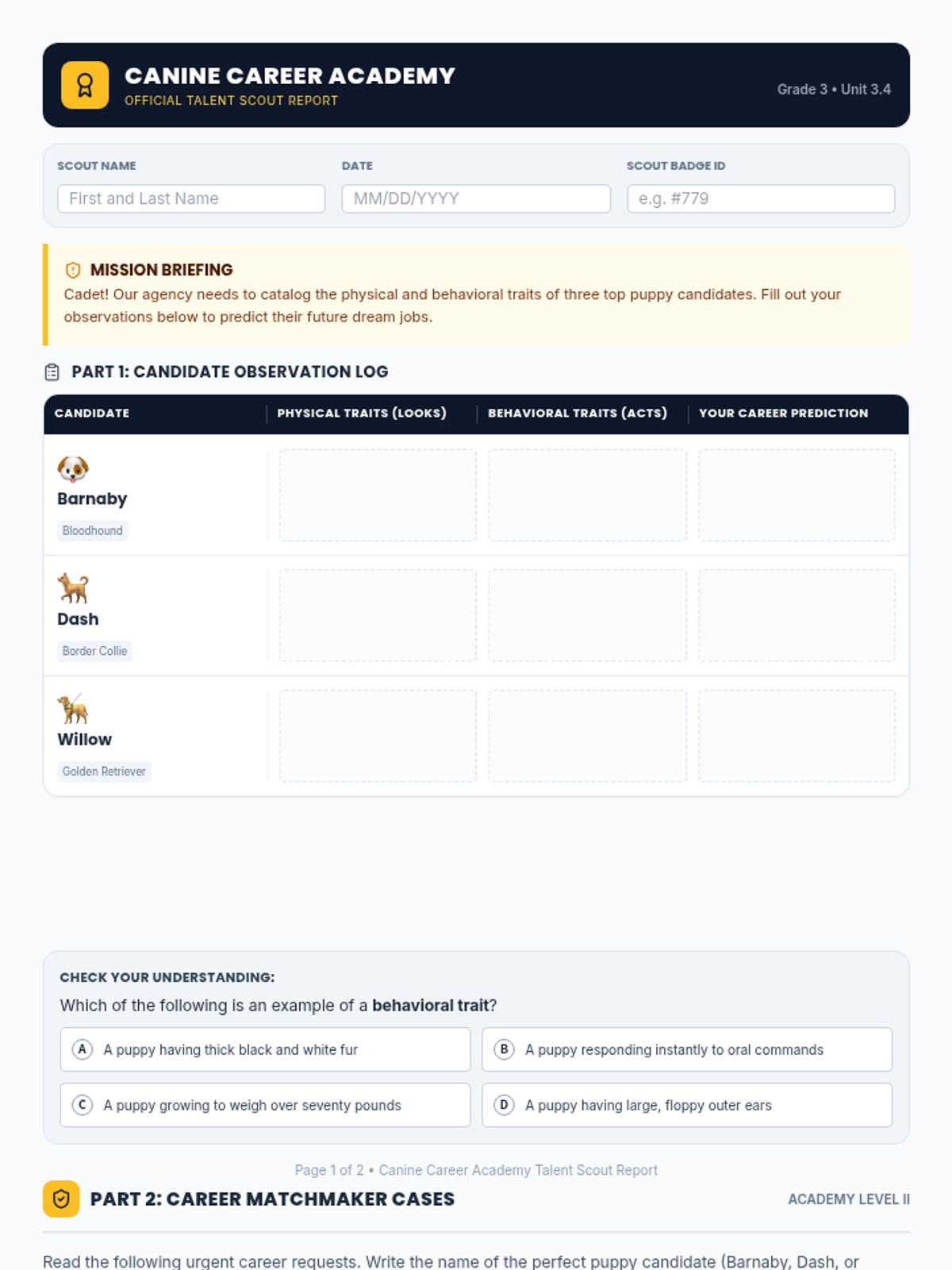
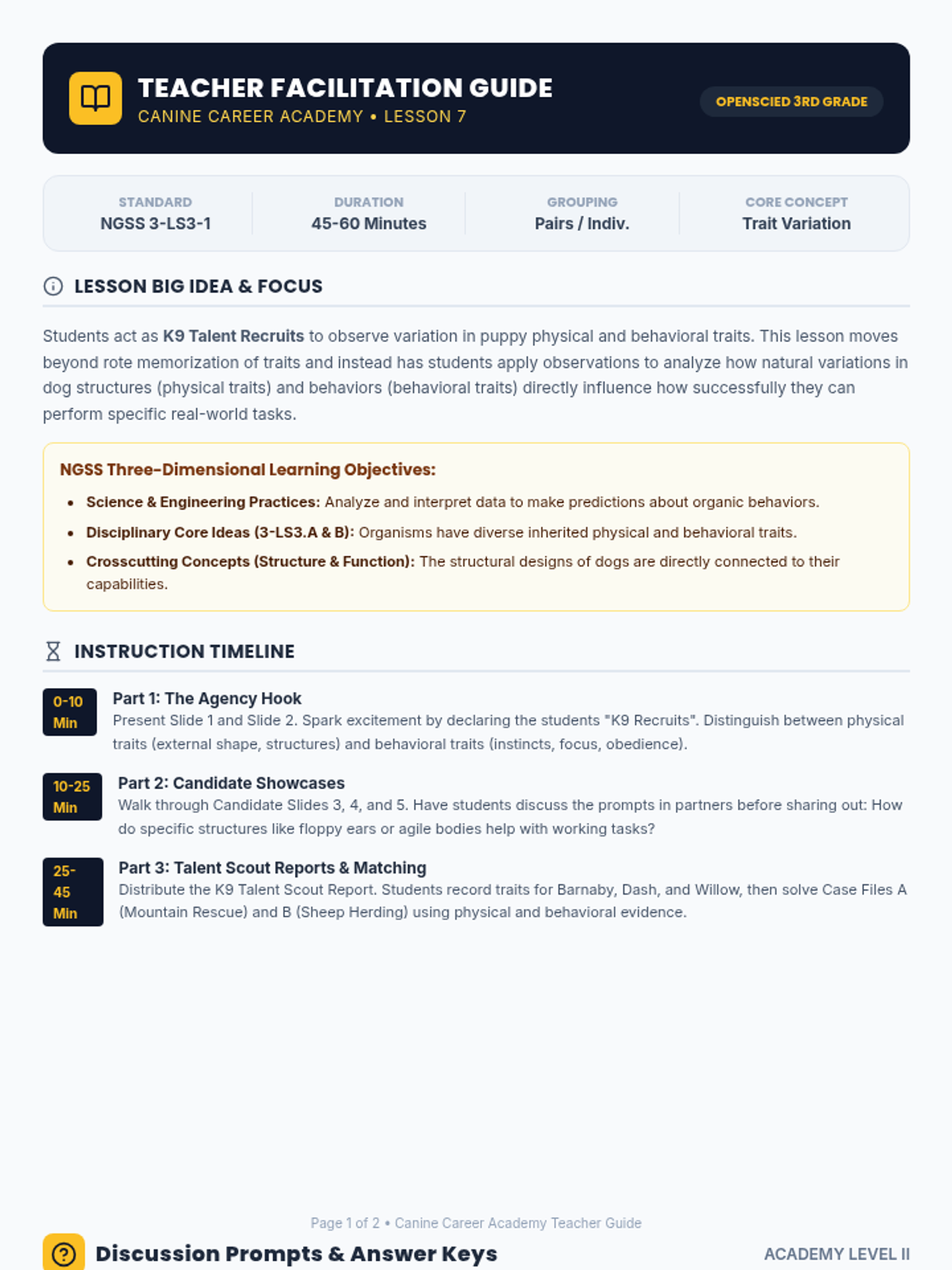
An engaging third-grade lesson where students act as canine talent scouts, observing physical and behavioral traits to predict and match dogs with specialized jobs.
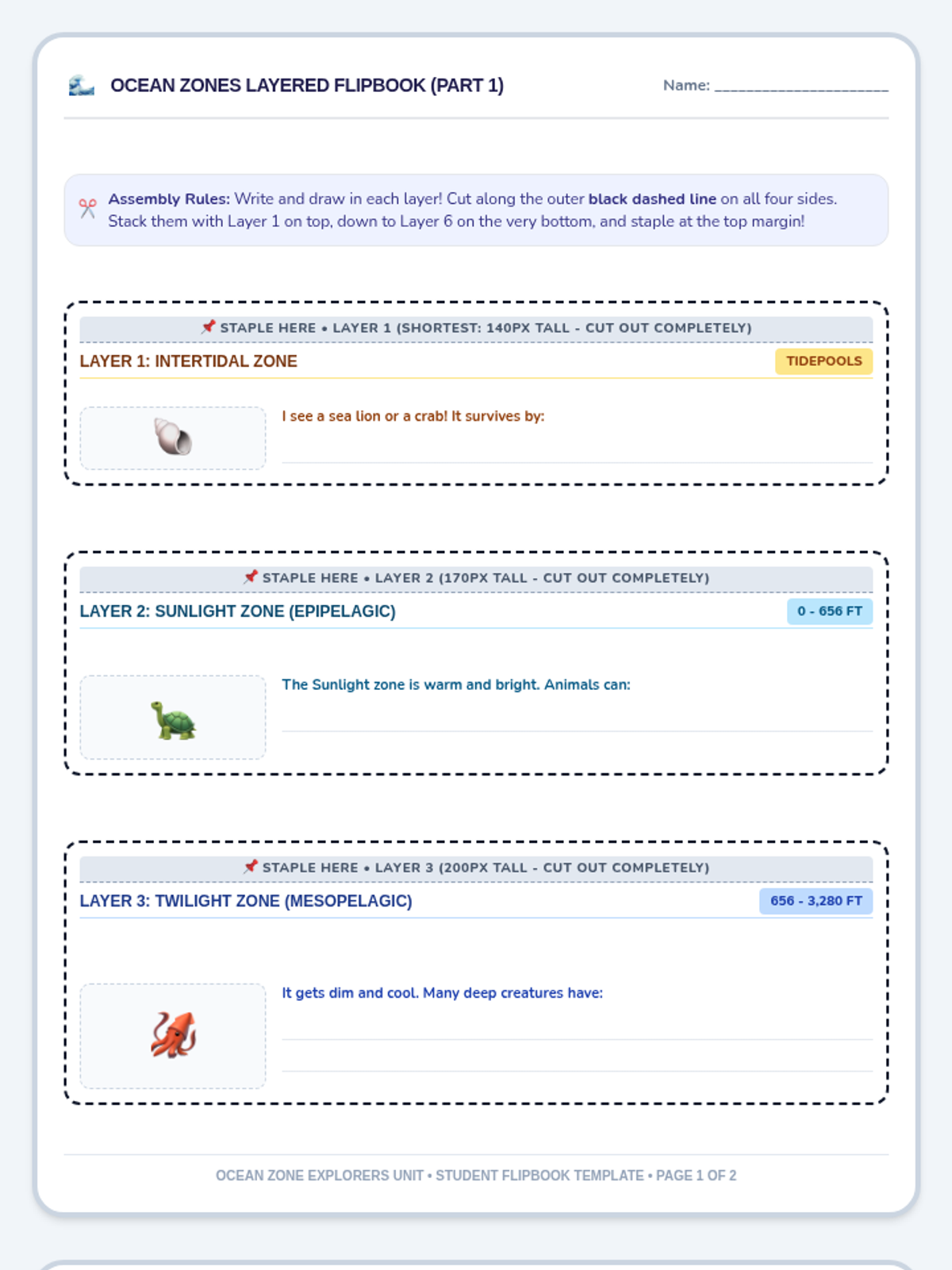
Express new expertise through a multi-page layered flipbook template and structured cooperative writing prompts.
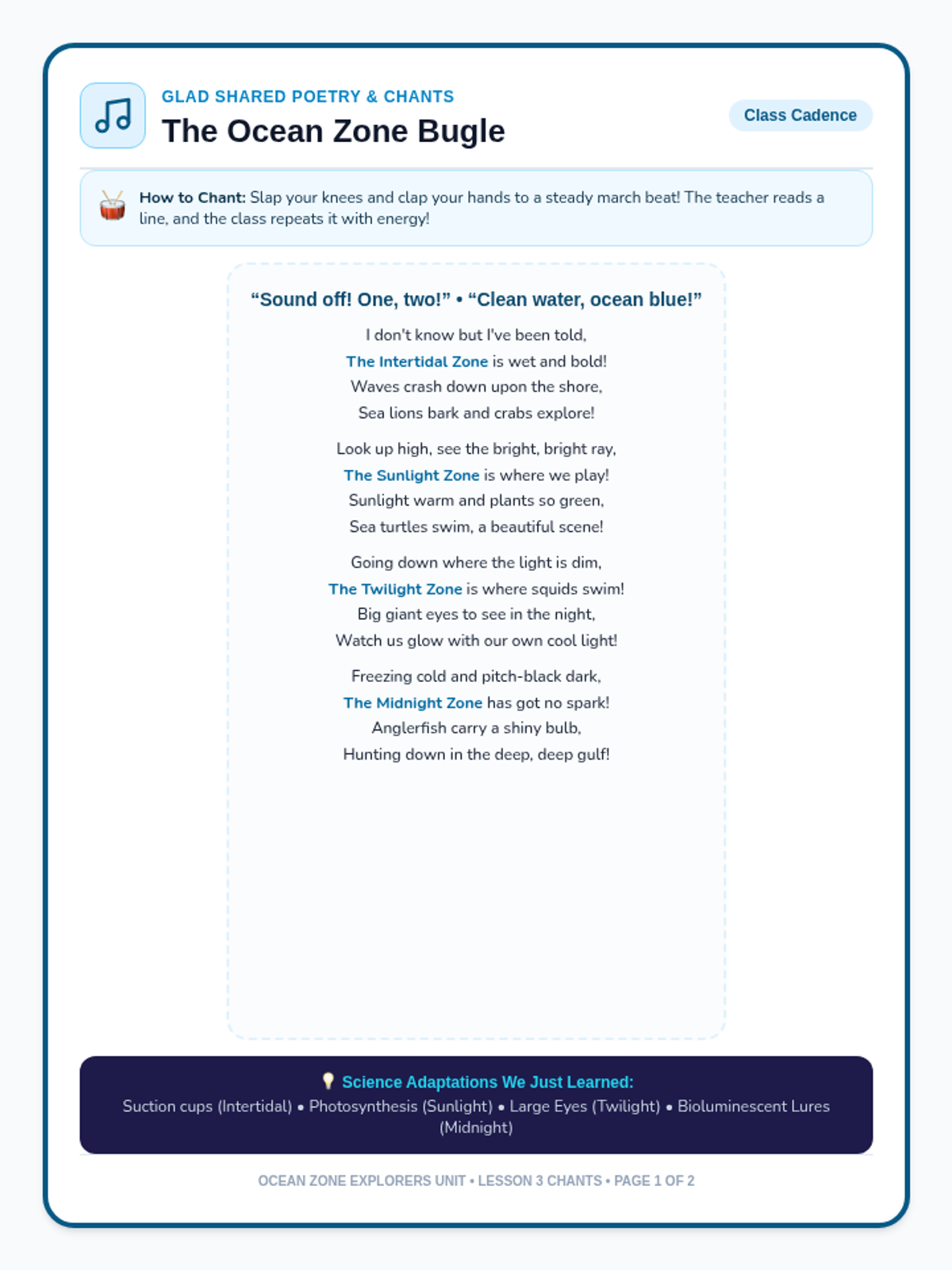
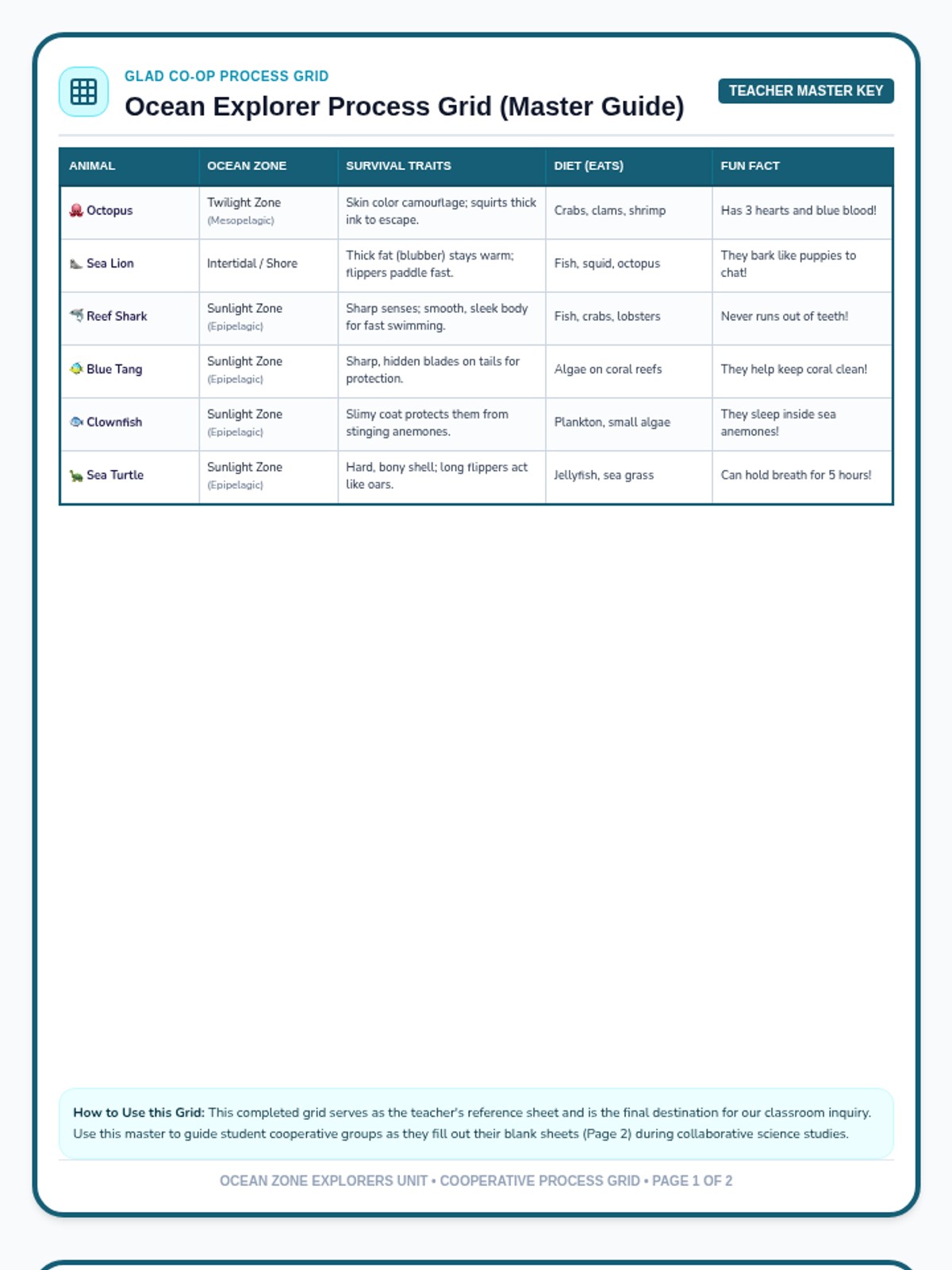
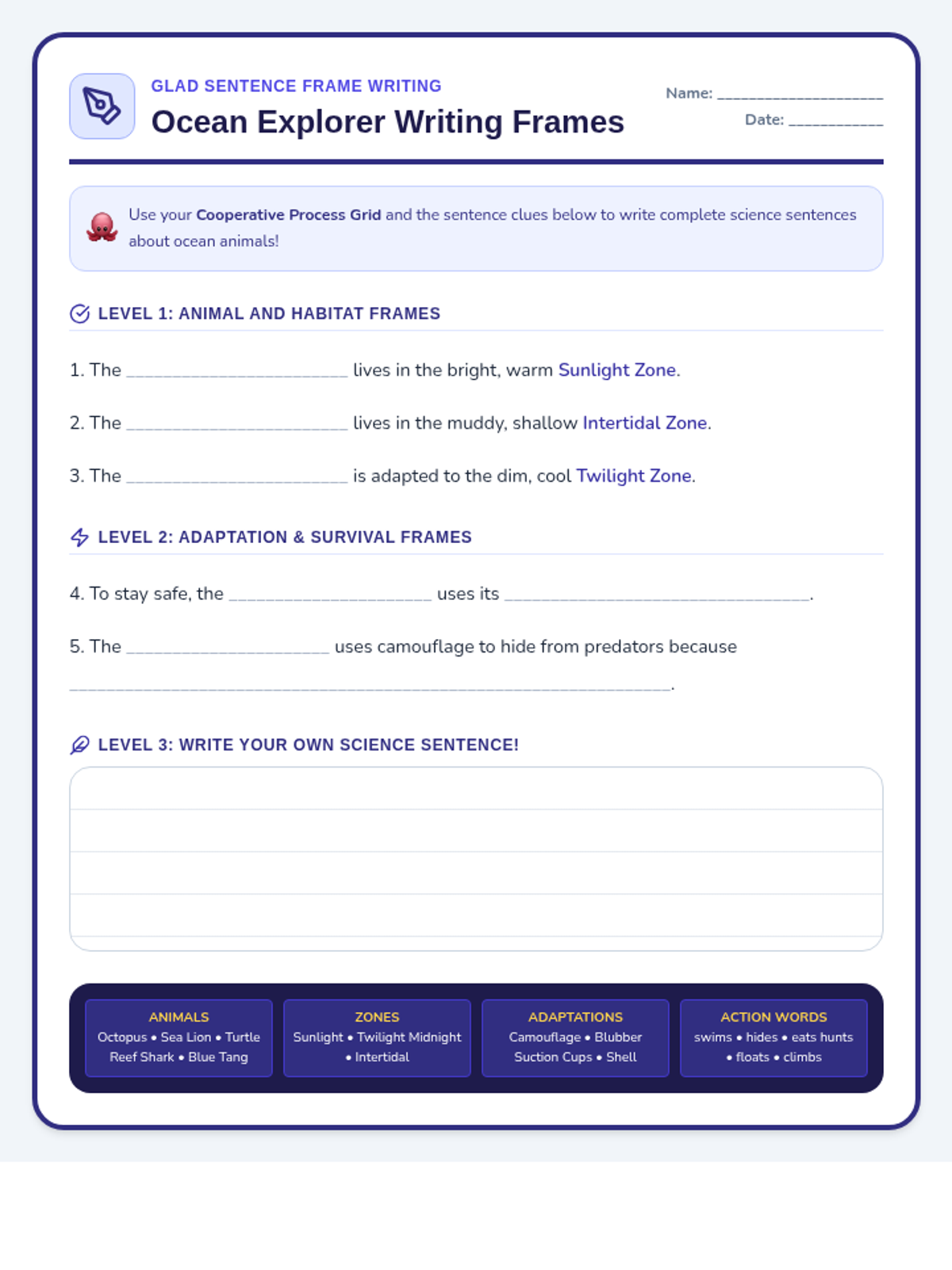
Sing and chant about ocean adaptations, fill out a collaborative Process Grid of focus animals, and use differentiated sentence frames for group writing.
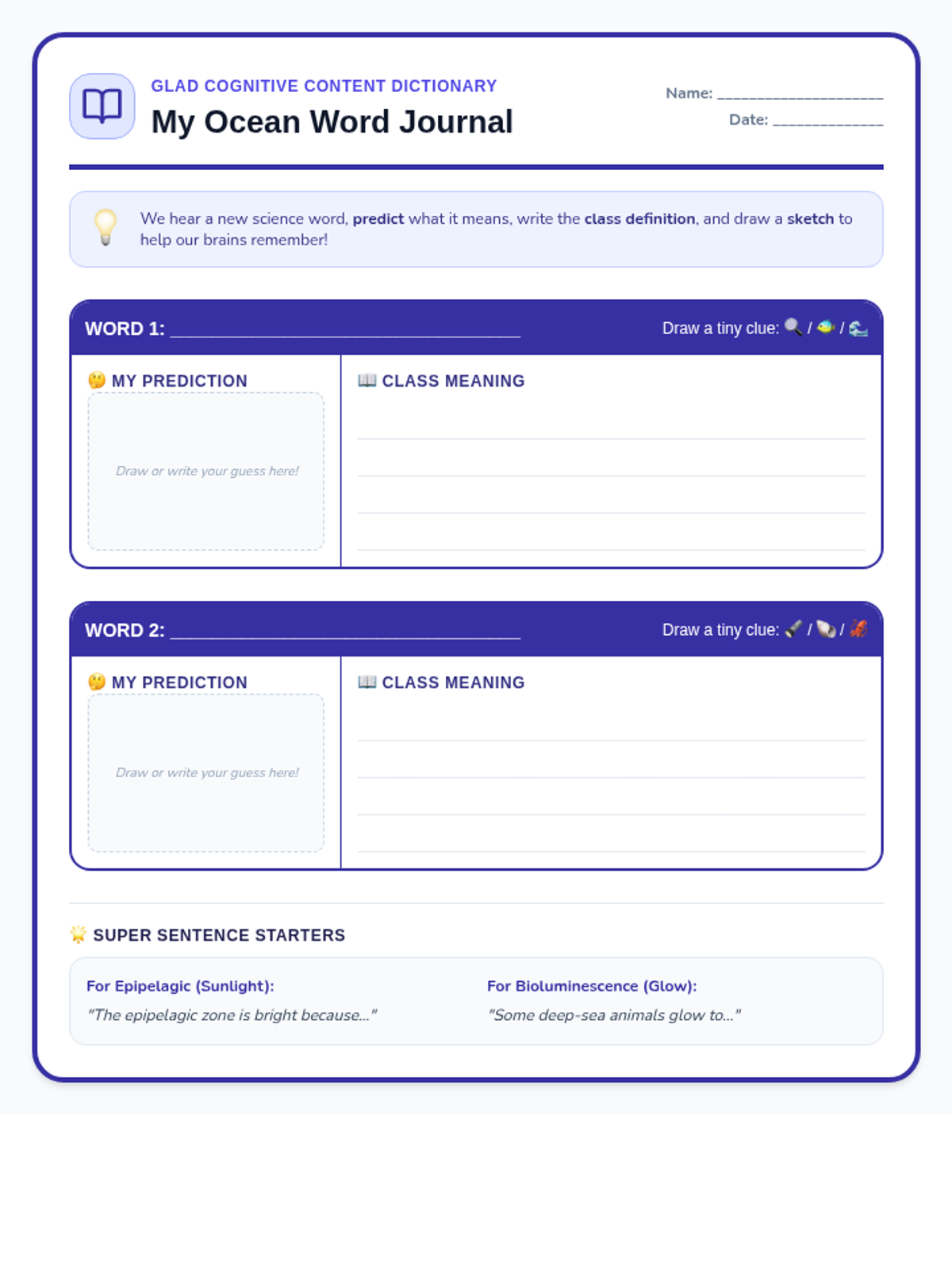
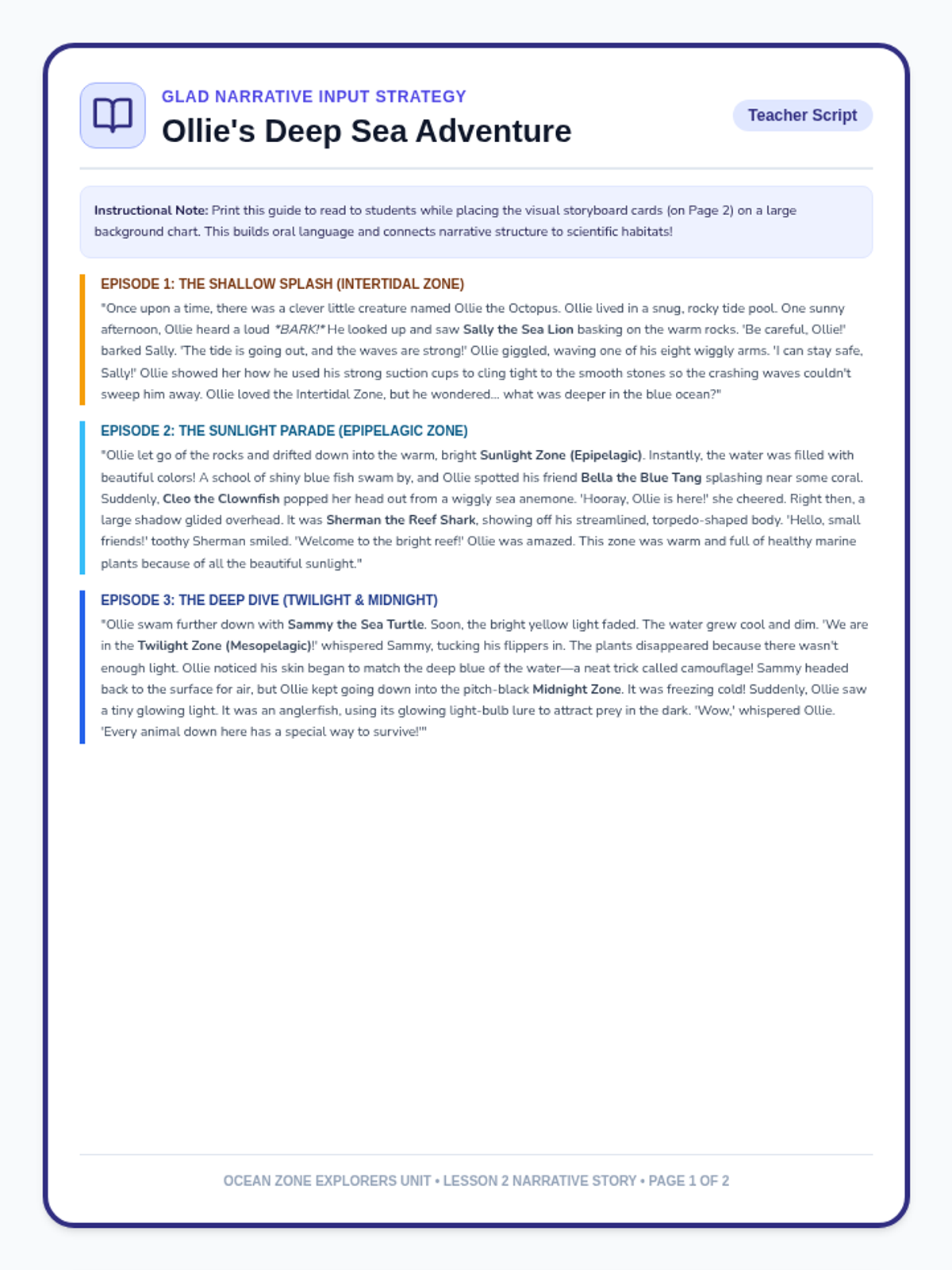
Build vocabulary and deep comprehension using a interactive Cognitive Content Dictionary (CCD) and the story of Ollie the Octopus's Deep Sea Adventure.
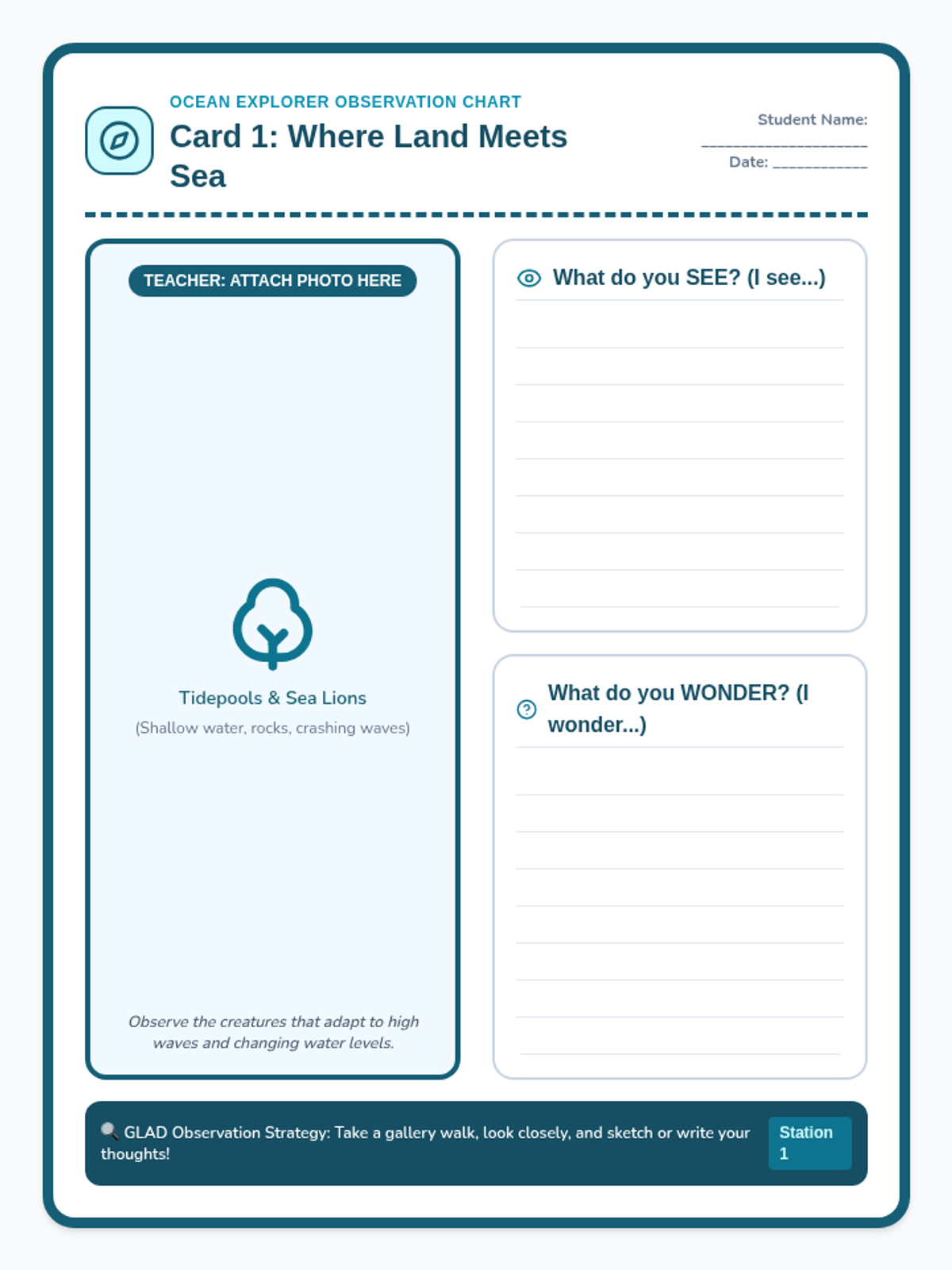
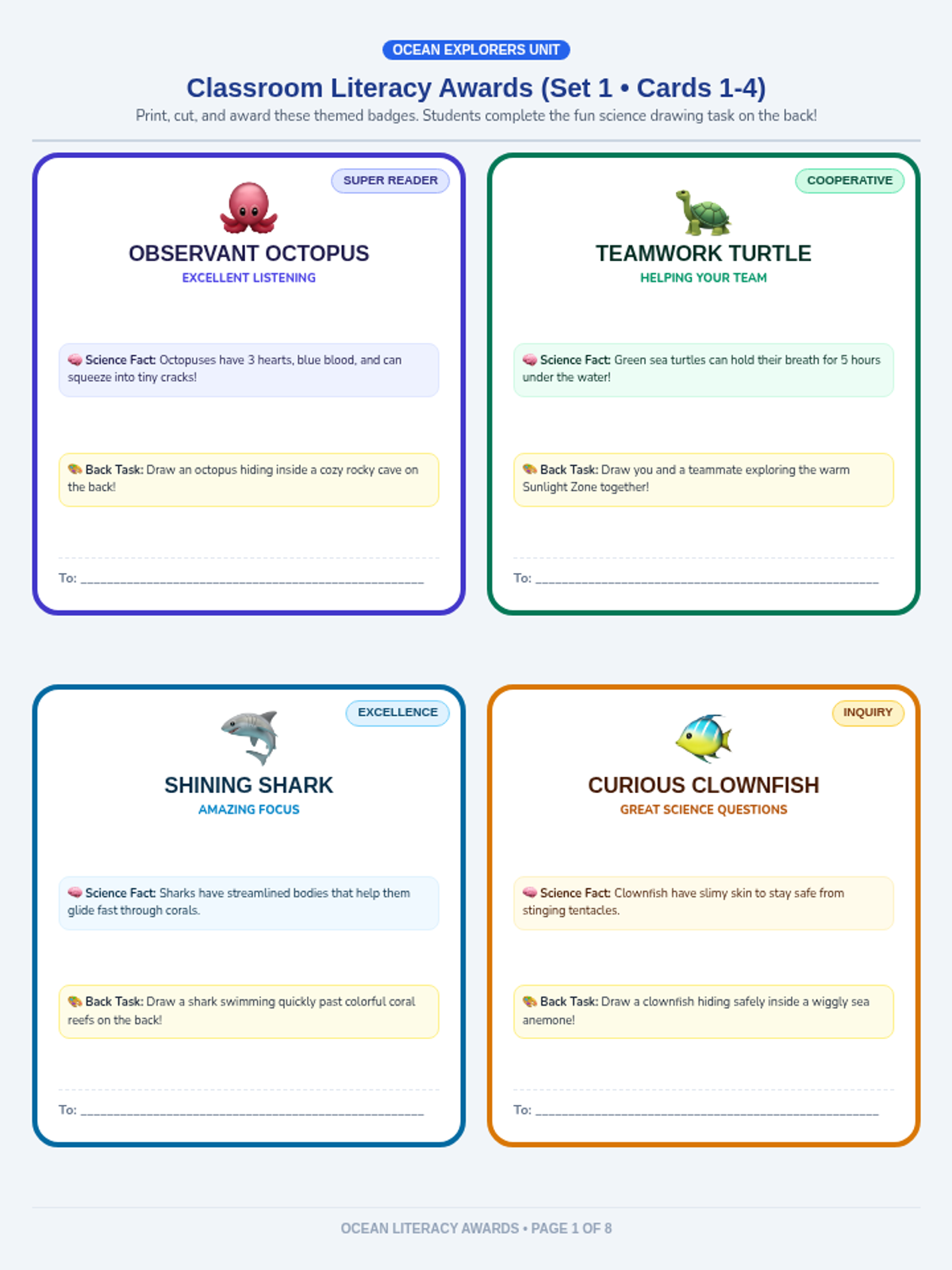
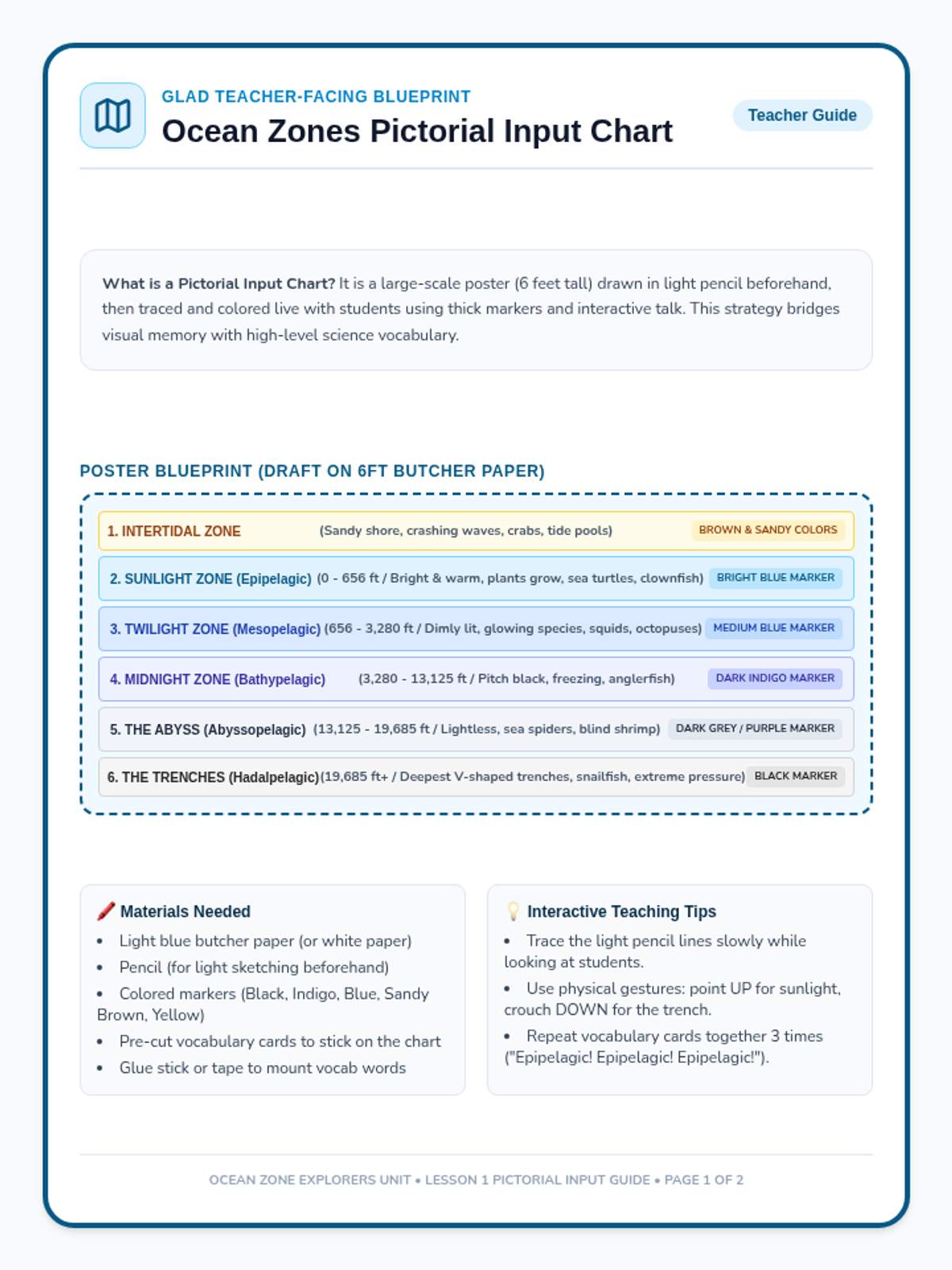
Spark curiosity with high-interest Observation Charts, positive-behavior Literacy Awards, and a large-scale visual blueprint for the multi-zone ocean chart.
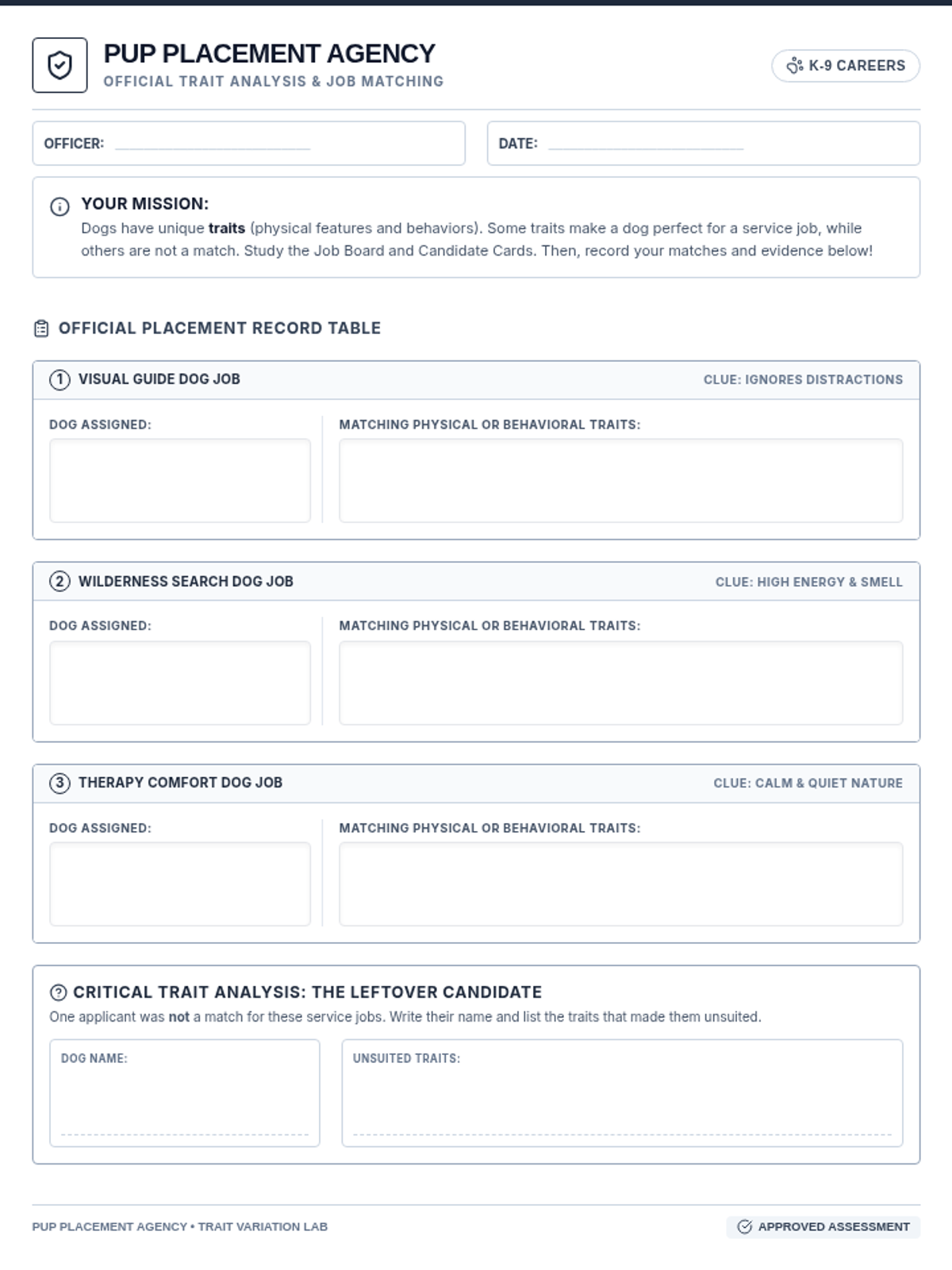
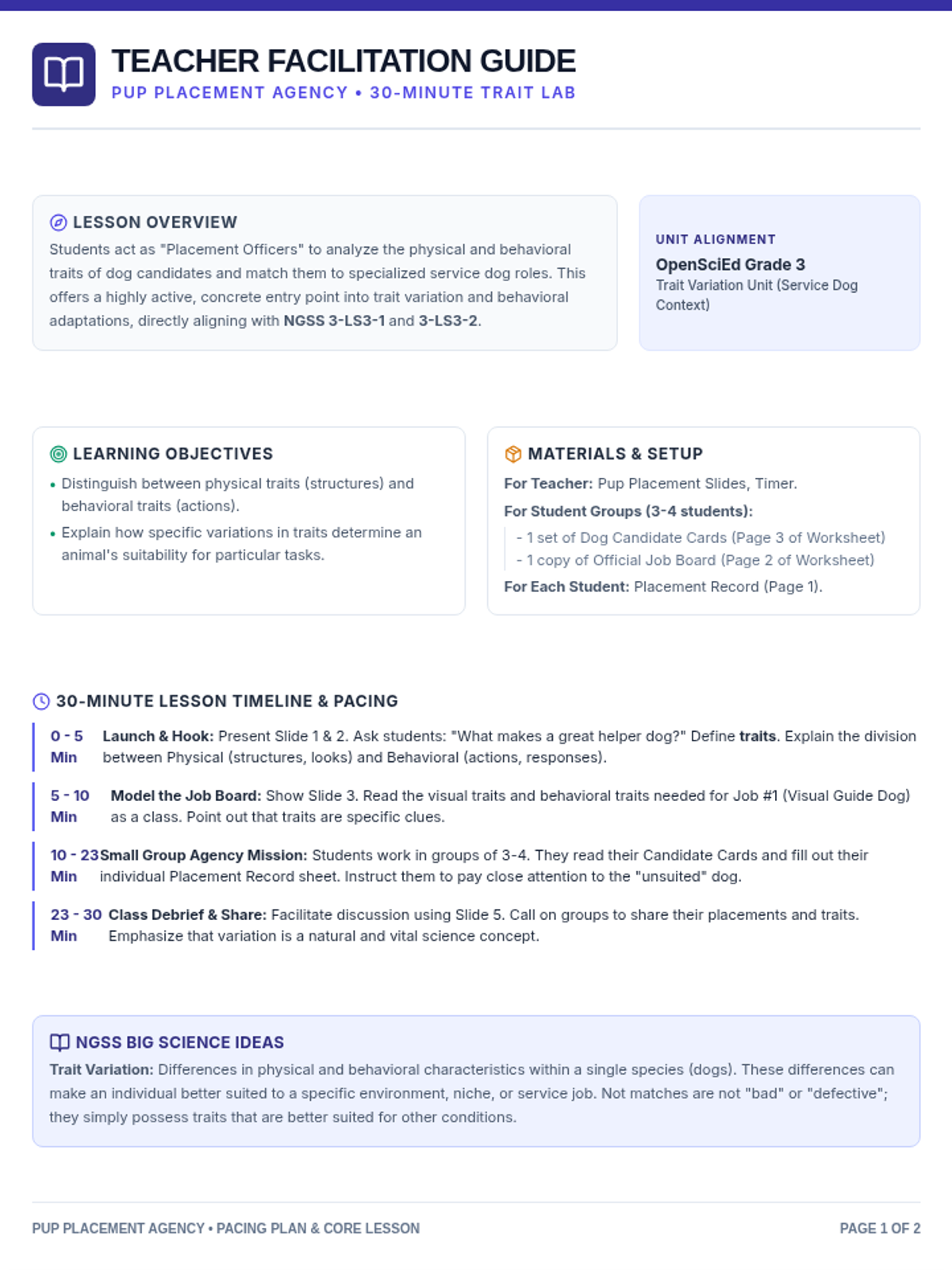
A highly differentiated 30-minute lesson where students act as 'Placement Officers' for the Pup Placement Agency. They analyze physical and behavioral traits of dog candidates and match them with appropriate service dog jobs, aligning with the OpenSciEd Grade 3 Trait Variation unit.
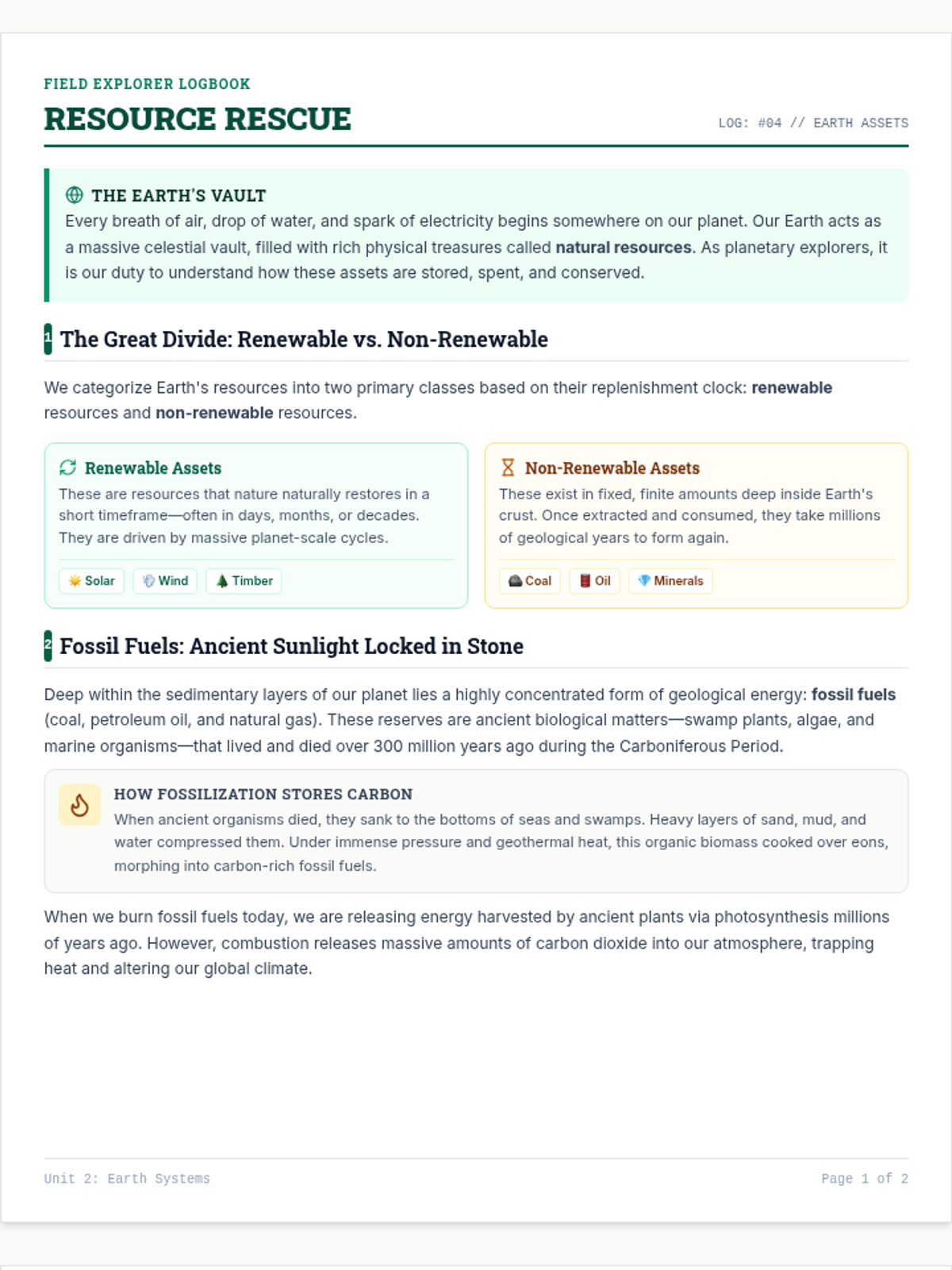
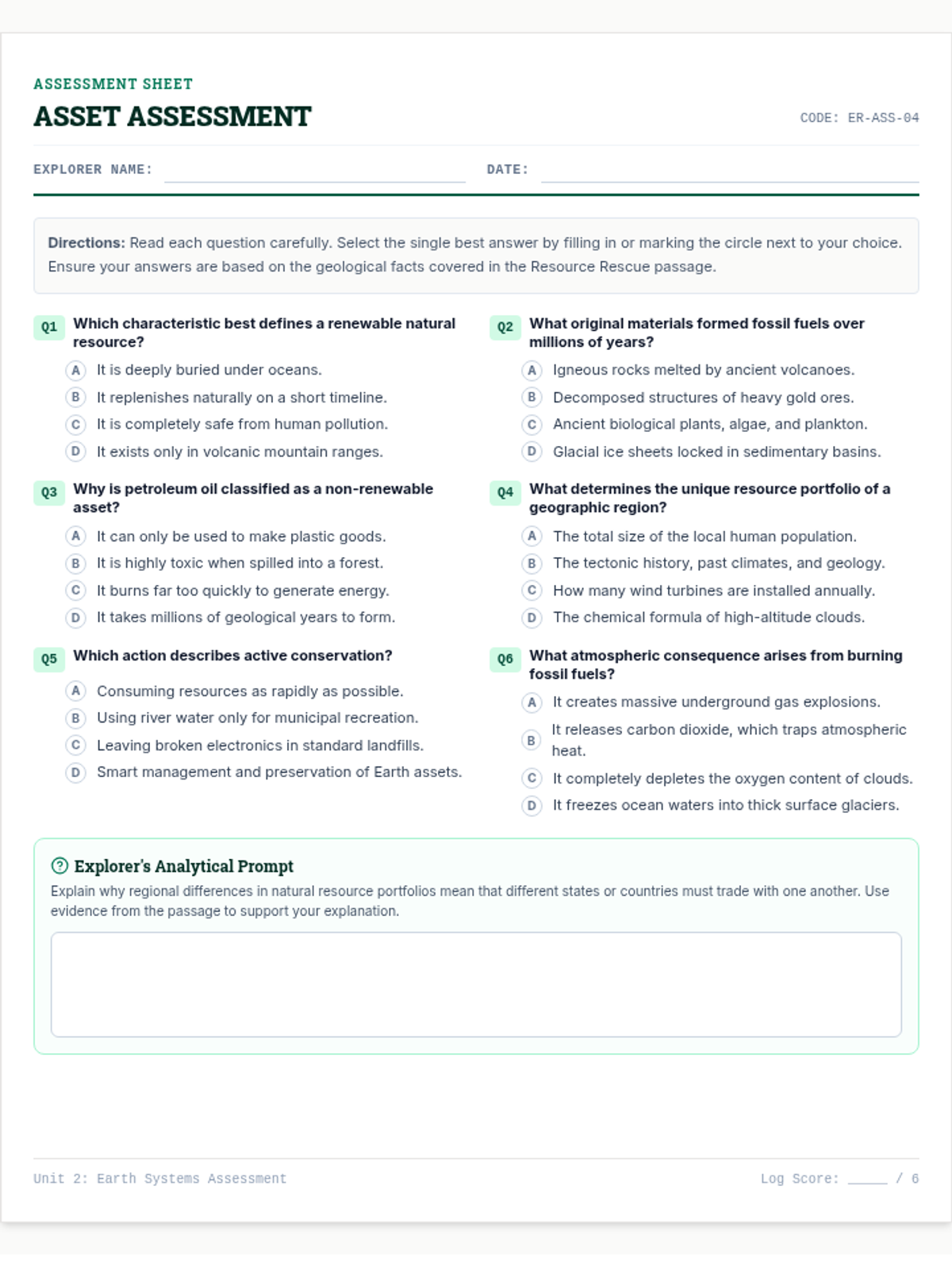
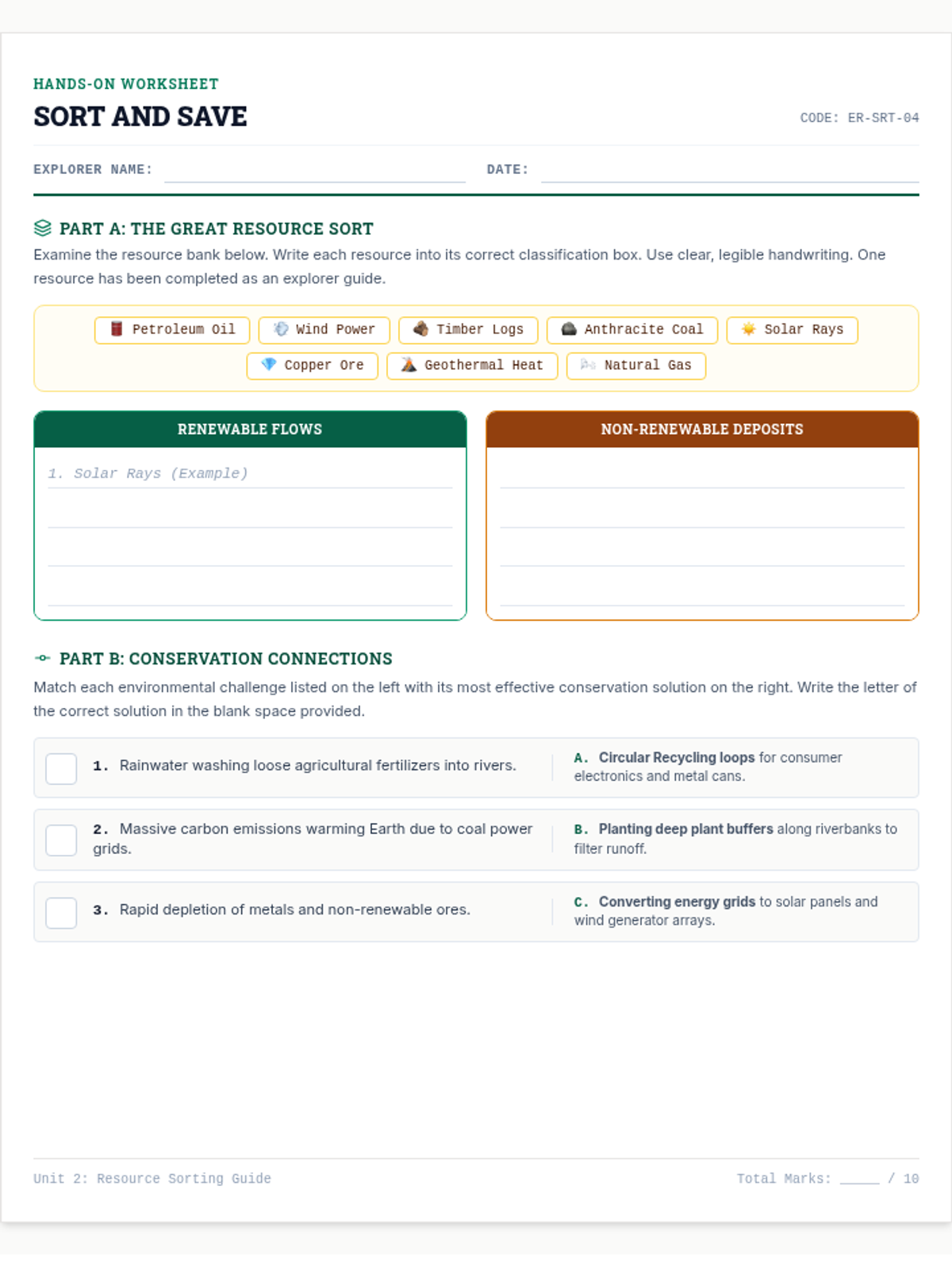
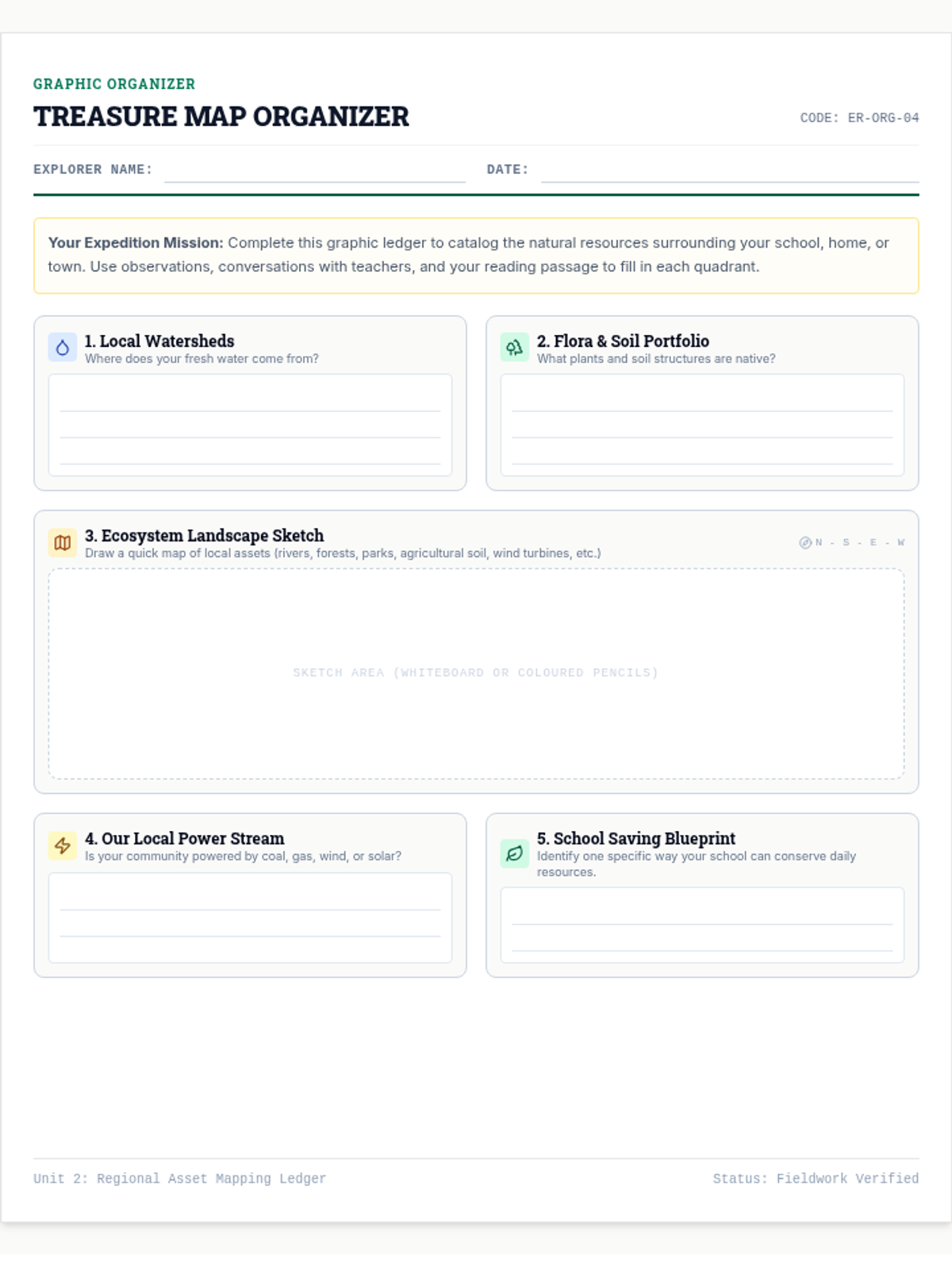
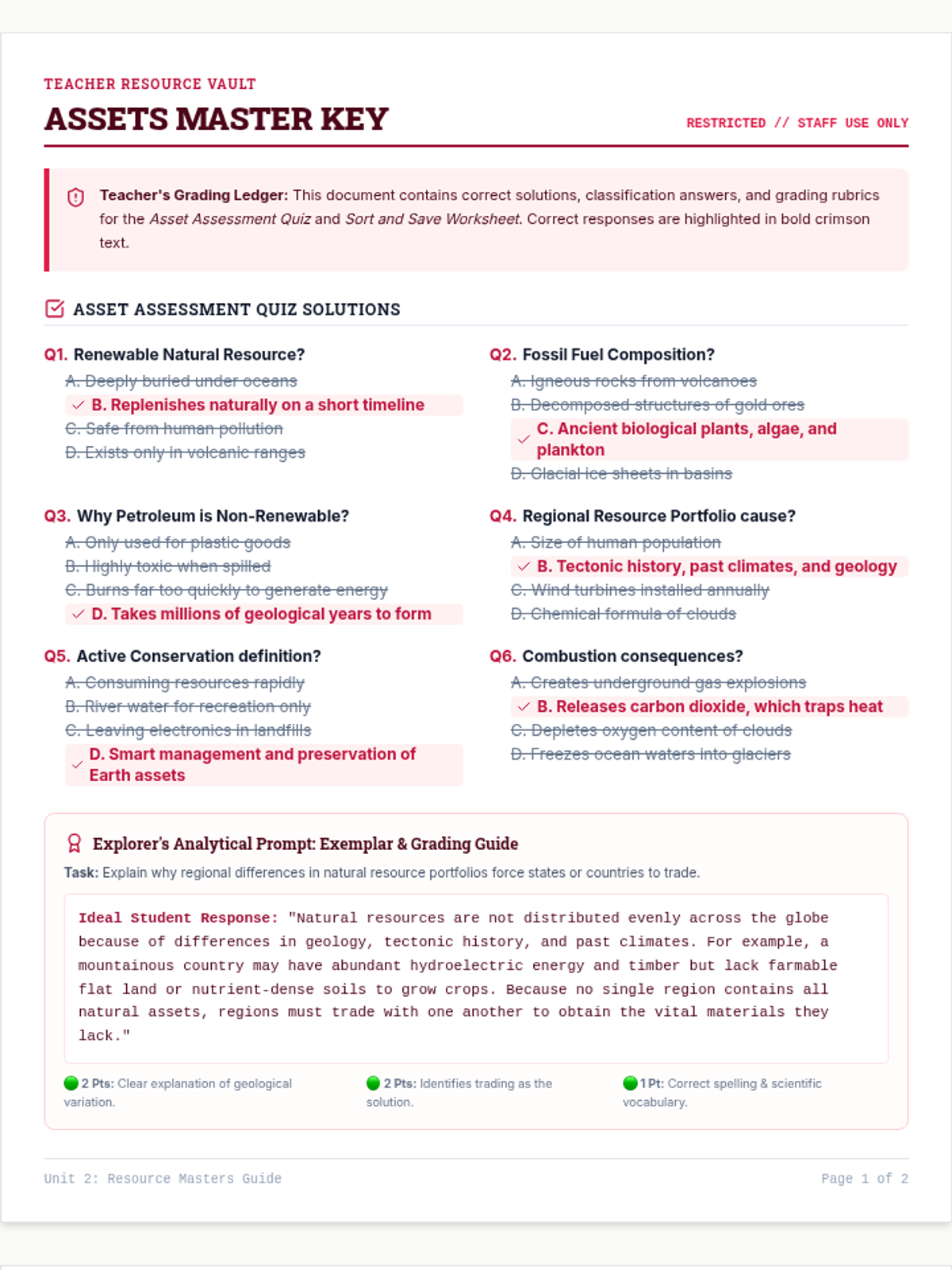
An engaging exploration of renewable and non-renewable natural resources, fossil fuels, and local conservation efforts through field-guide inspired readings, assessments, interactive sorting, and local mapping exercises.
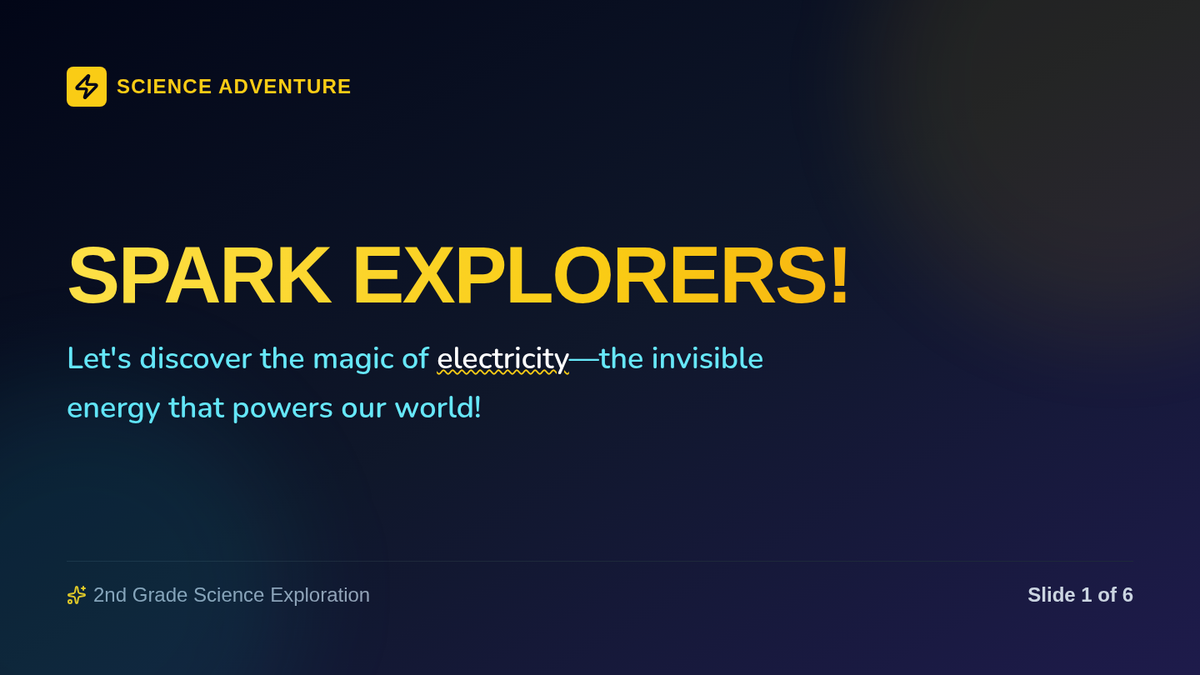
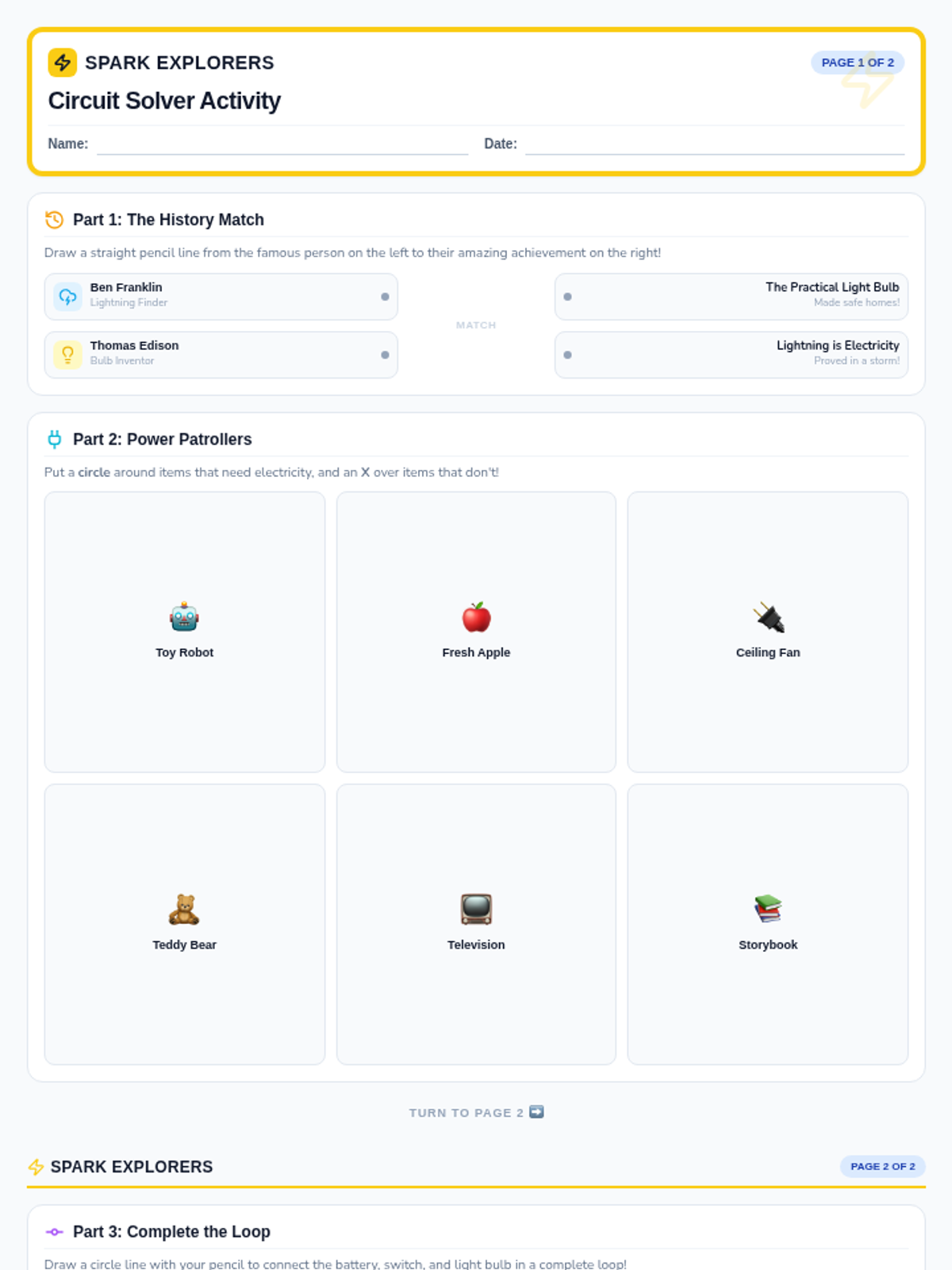
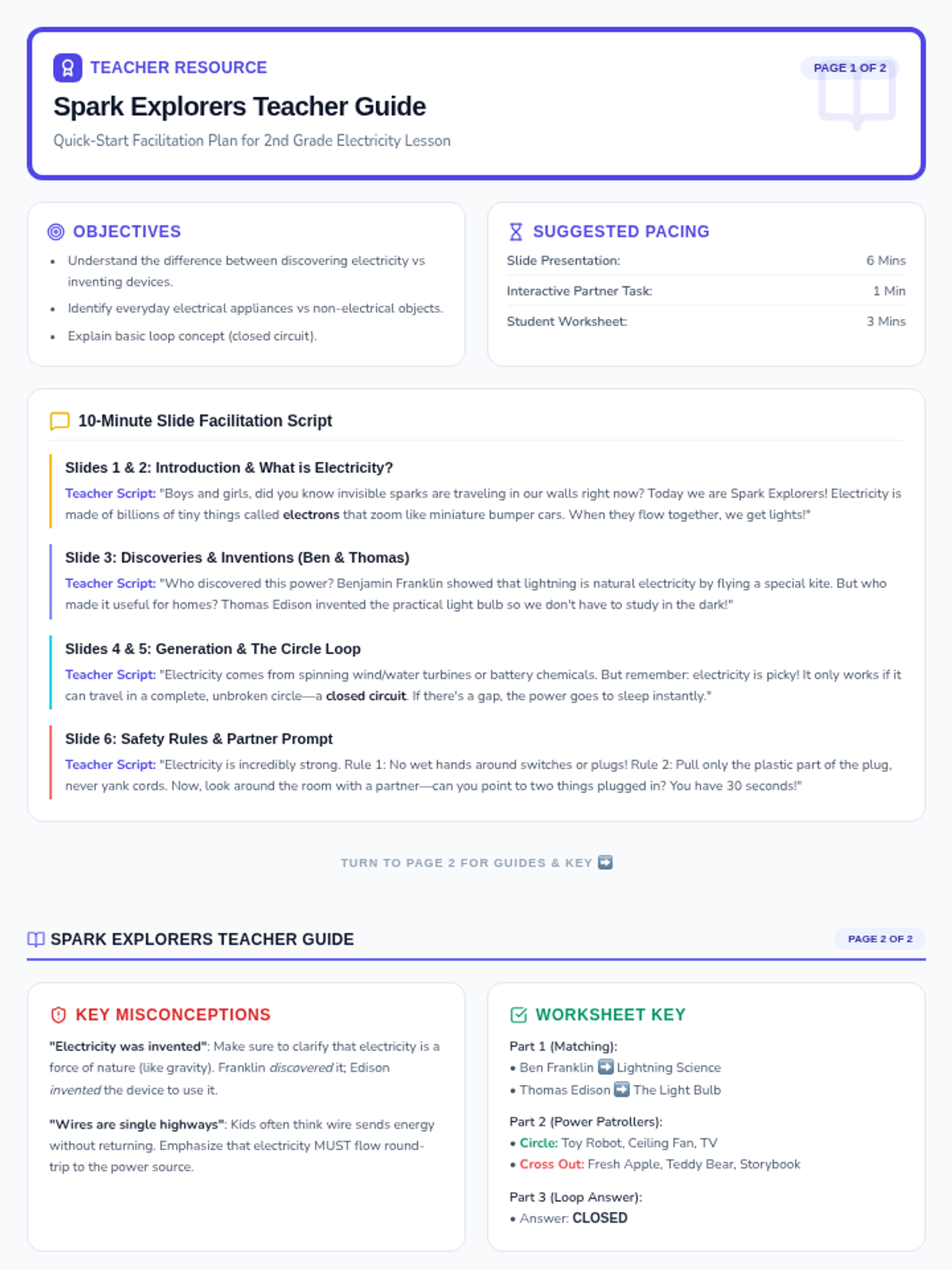
An engaging, kid-friendly lesson introducing 2nd graders to the wonders of electricity, exploring its discovery, how it works through simple circuits, and how it is generated safely.
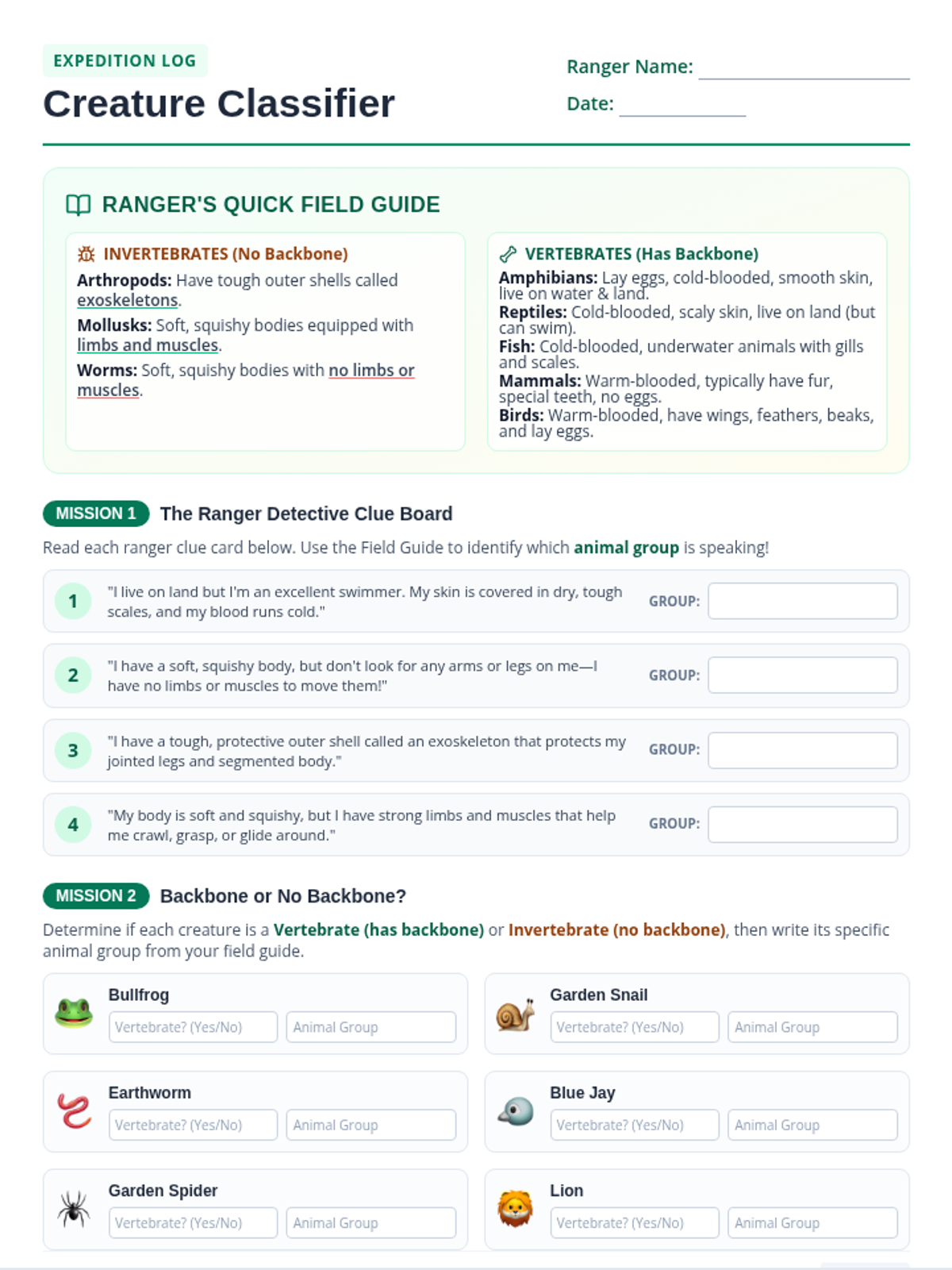
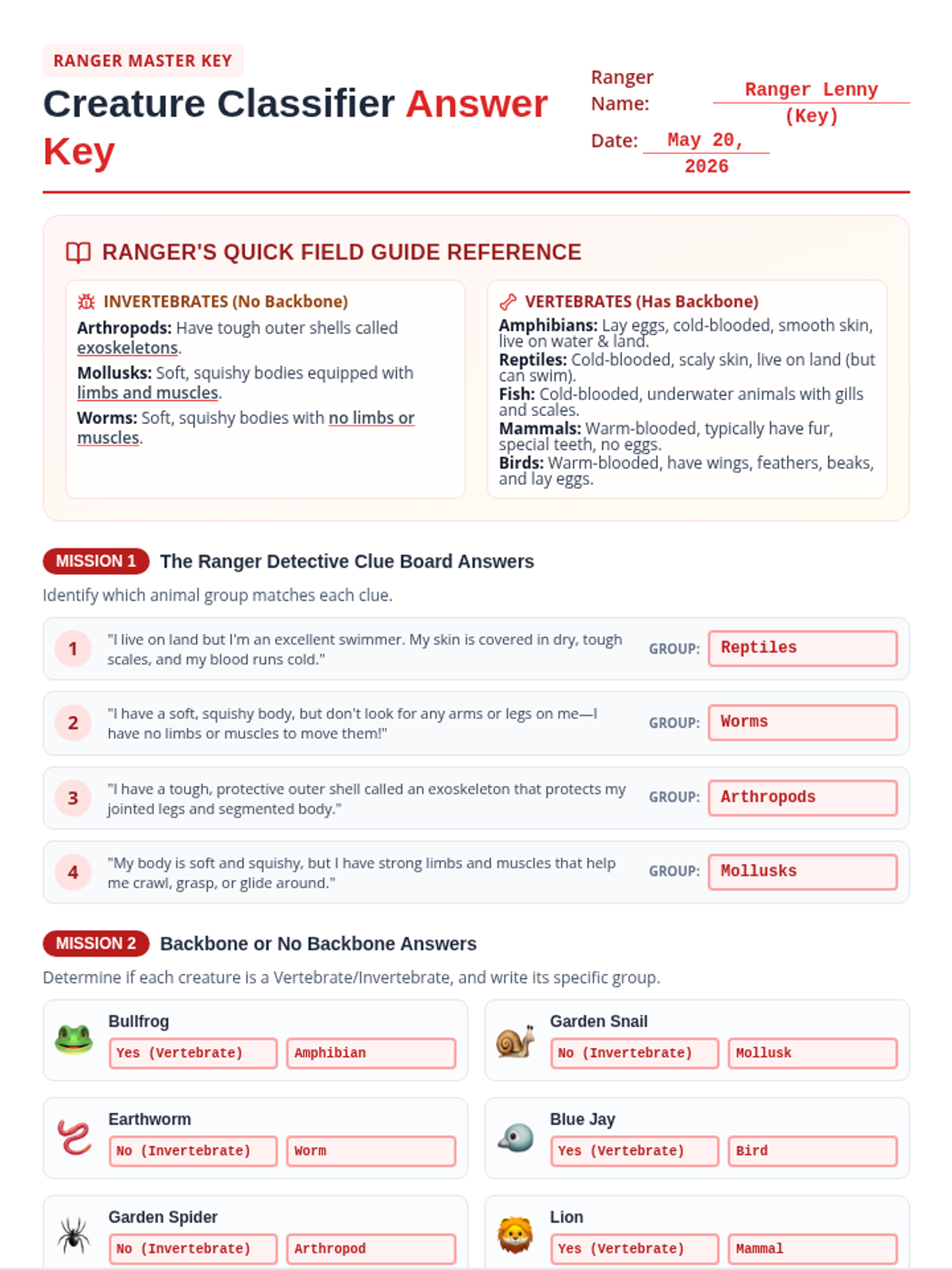
A hands-on science lesson for 3rd and 4th grade students focused on classifying animals into vertebrates and invertebrates. Students learn to distinguish between arthropods, mollusks, worms, amphibians, reptiles, fish, mammals, and birds using key physical characteristics.