A professional and heartfelt general appreciation flyer for Valenti's, recognizing their donation of 17 pizzas for Teacher Appreciation Week at West Lee Middle School. Updated with improved text contrast.
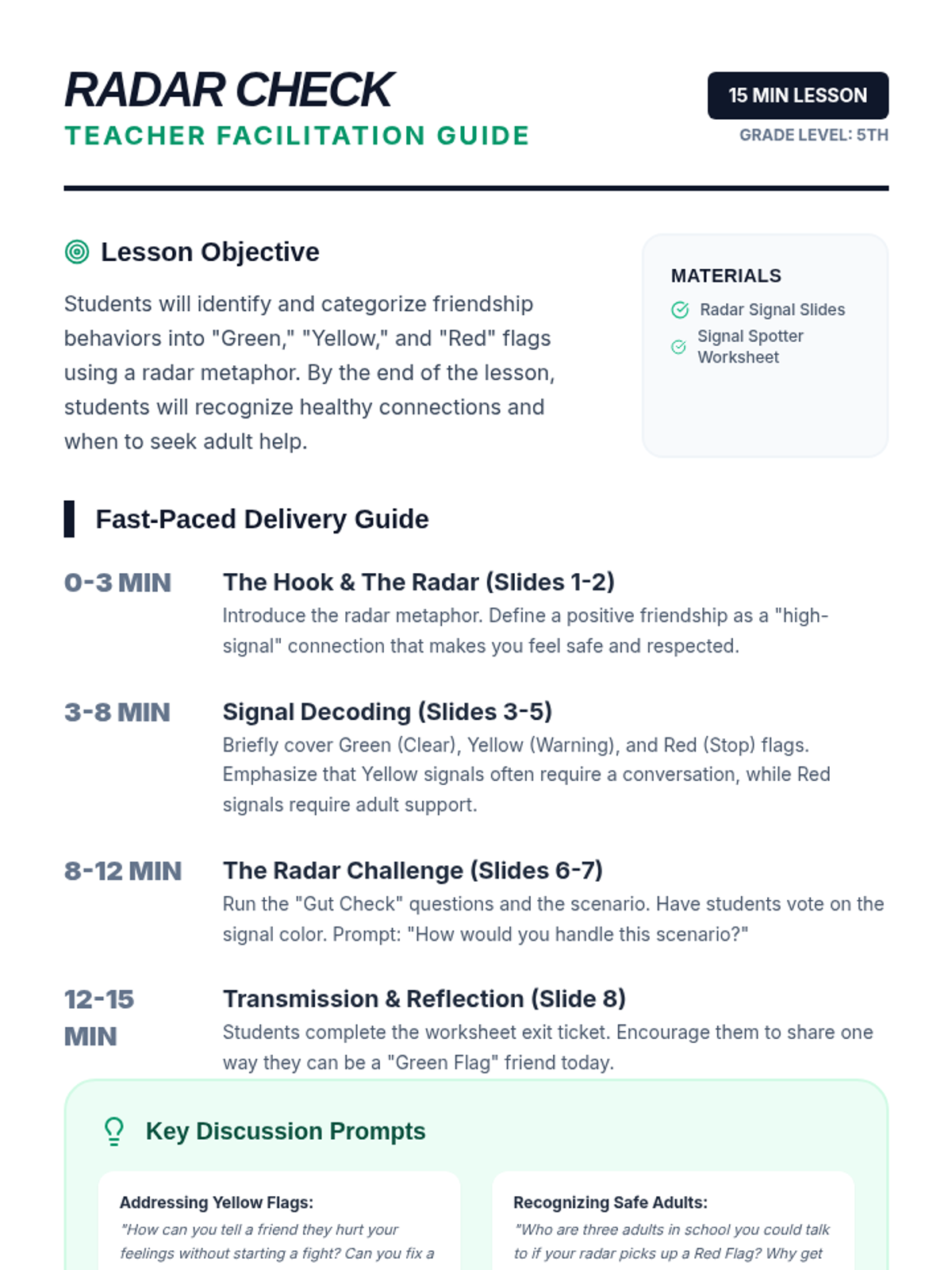
A comprehensive teacher's guide for the Friendship Radar lesson, including a 15-minute pacing guide, instructional objectives, and specific discussion prompts to deepen student understanding of social signals.
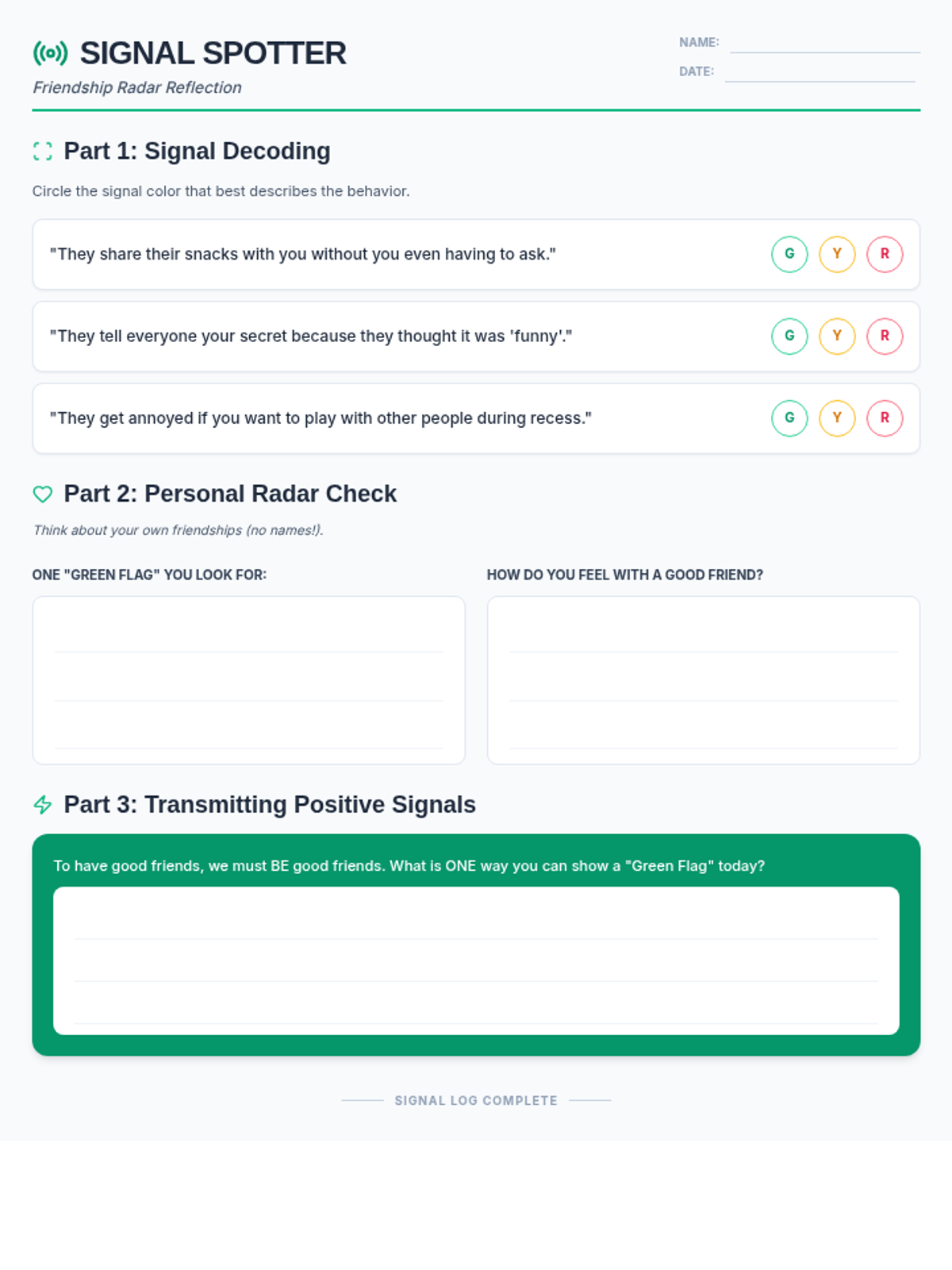
A student worksheet designed to reinforce the 'Radar Signal' metaphor. It includes a scenario-based identification section, personal reflection on friendship qualities, and a commitment to being a positive friend.
A vibrant 8-slide presentation deck that uses a 'Radar Signal' metaphor to teach 5th graders how to identify healthy (green), questionable (yellow), and unhealthy (red) friendship behaviors. Features clear icons, bold text, and a situational challenge.
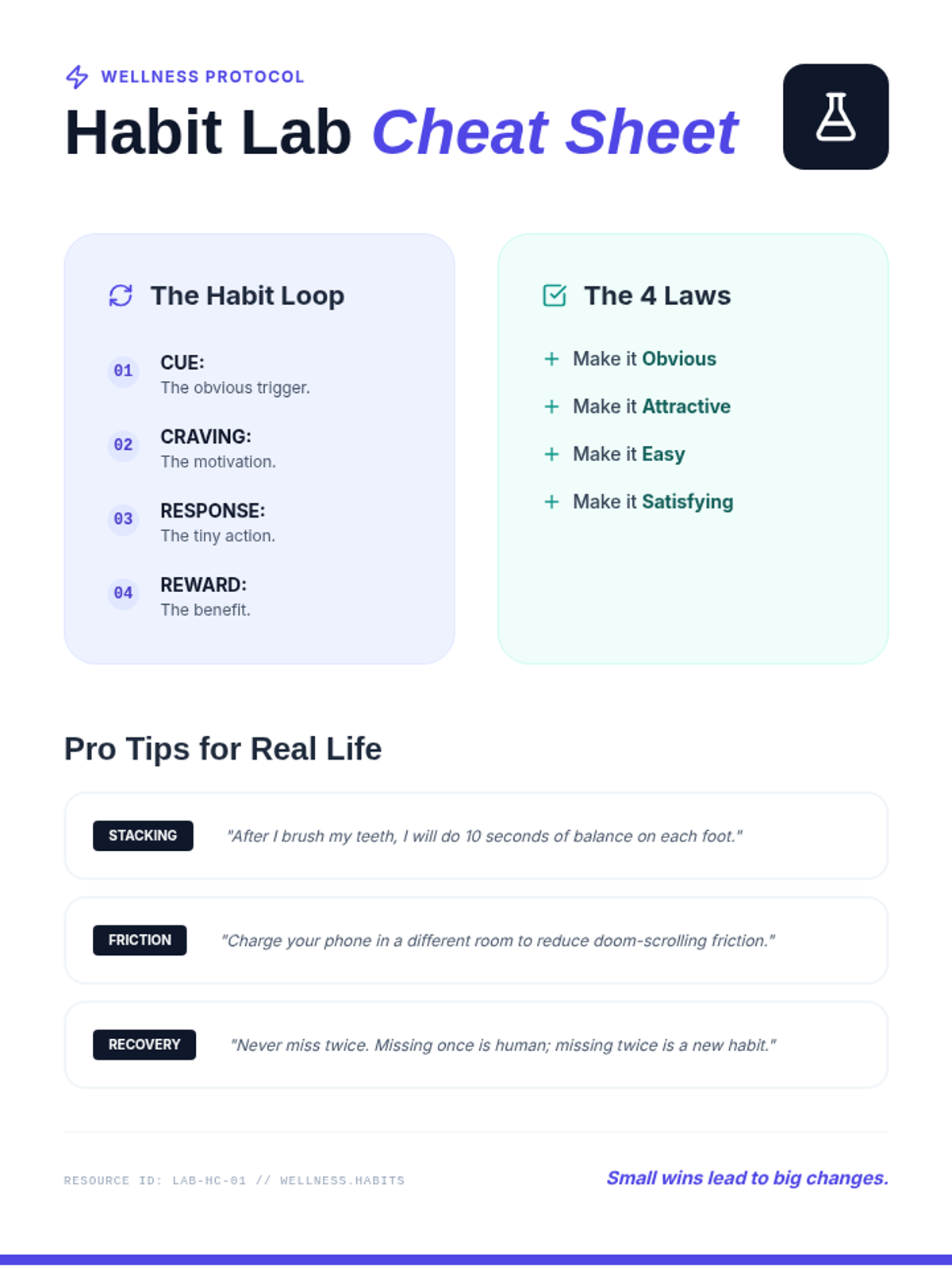
A concise one-page reference handout for participants, summarizing the habit loop, the four laws of behavior change, and practical strategies like habit stacking and environment design.
A high-impact visual presentation covering the core concepts of habit formation: the habit loop, identity-based habits, the 2-minute rule, and habit stacking. Designed for 16-21 year olds with a modern, clinical aesthetic.
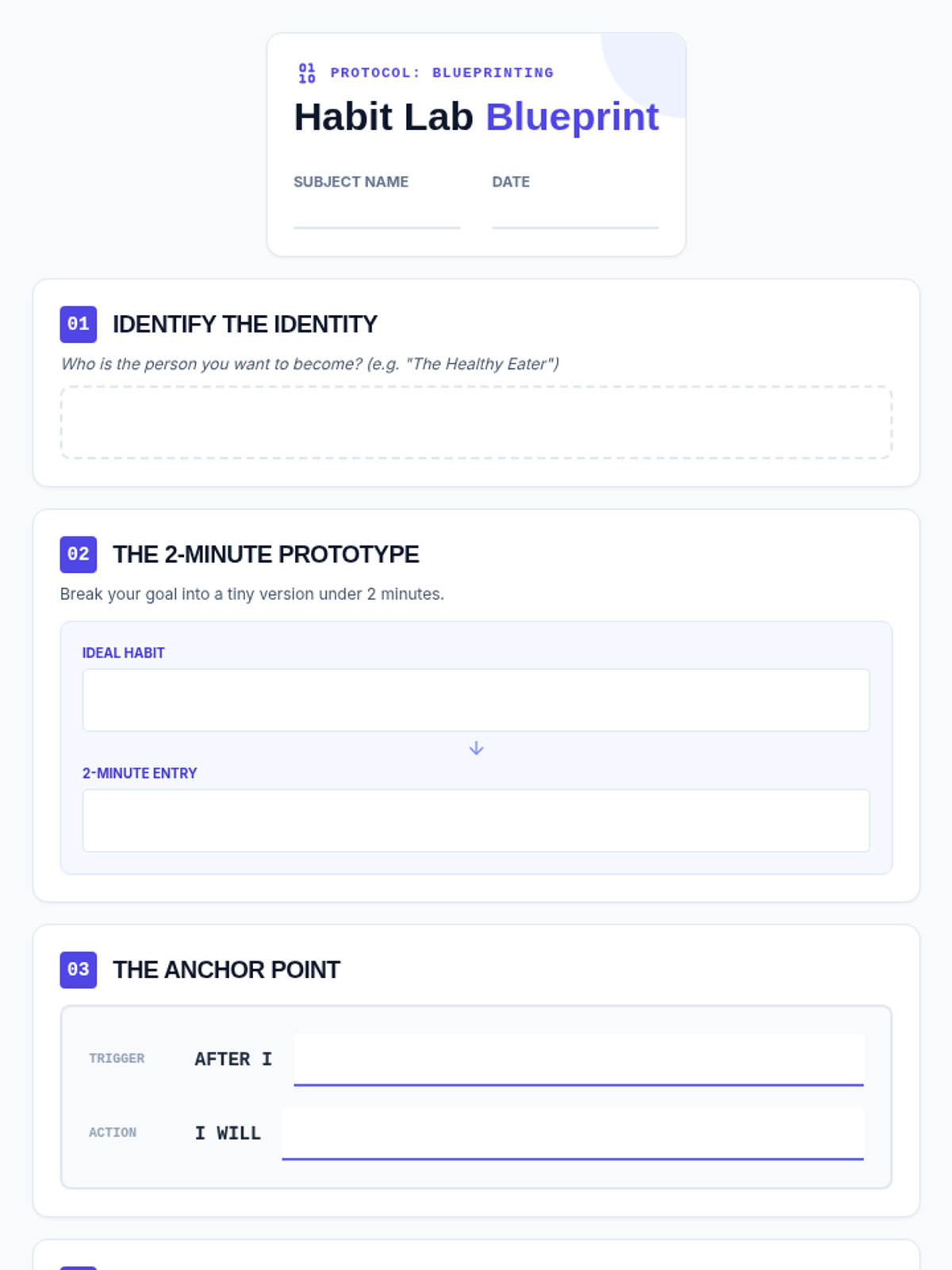
A structured worksheet for participants to design their own wellness habits using the 2-minute rule, habit stacking, and environmental design principles. Includes space for identifying identities and audit friction.
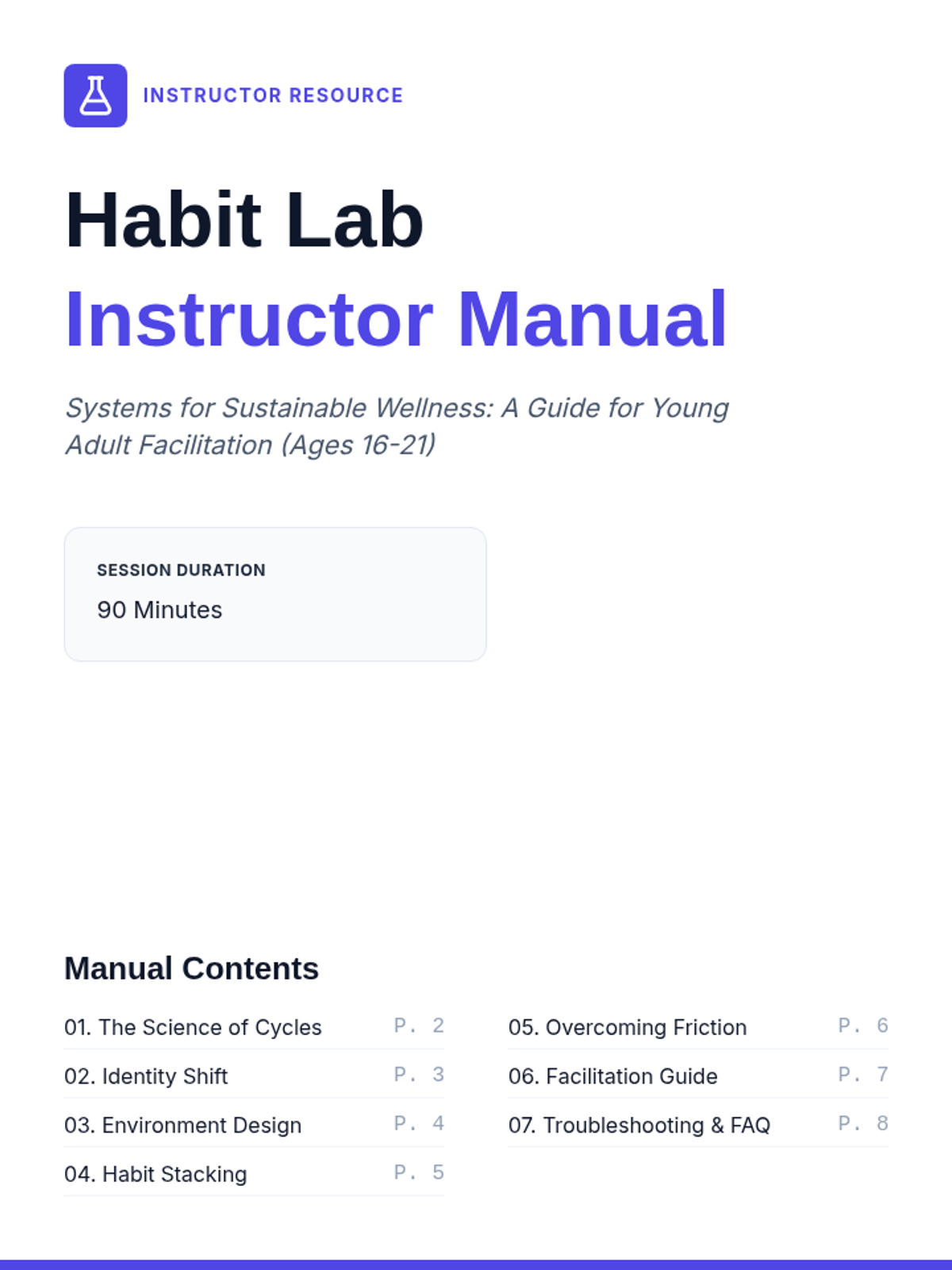
A comprehensive 8-page instructor manual for facilitating a habit formation workshop for young adults. It covers the neurological habit loop, identity-based habits, environment design, and practical facilitation strategies. Updated for a 90-minute session.
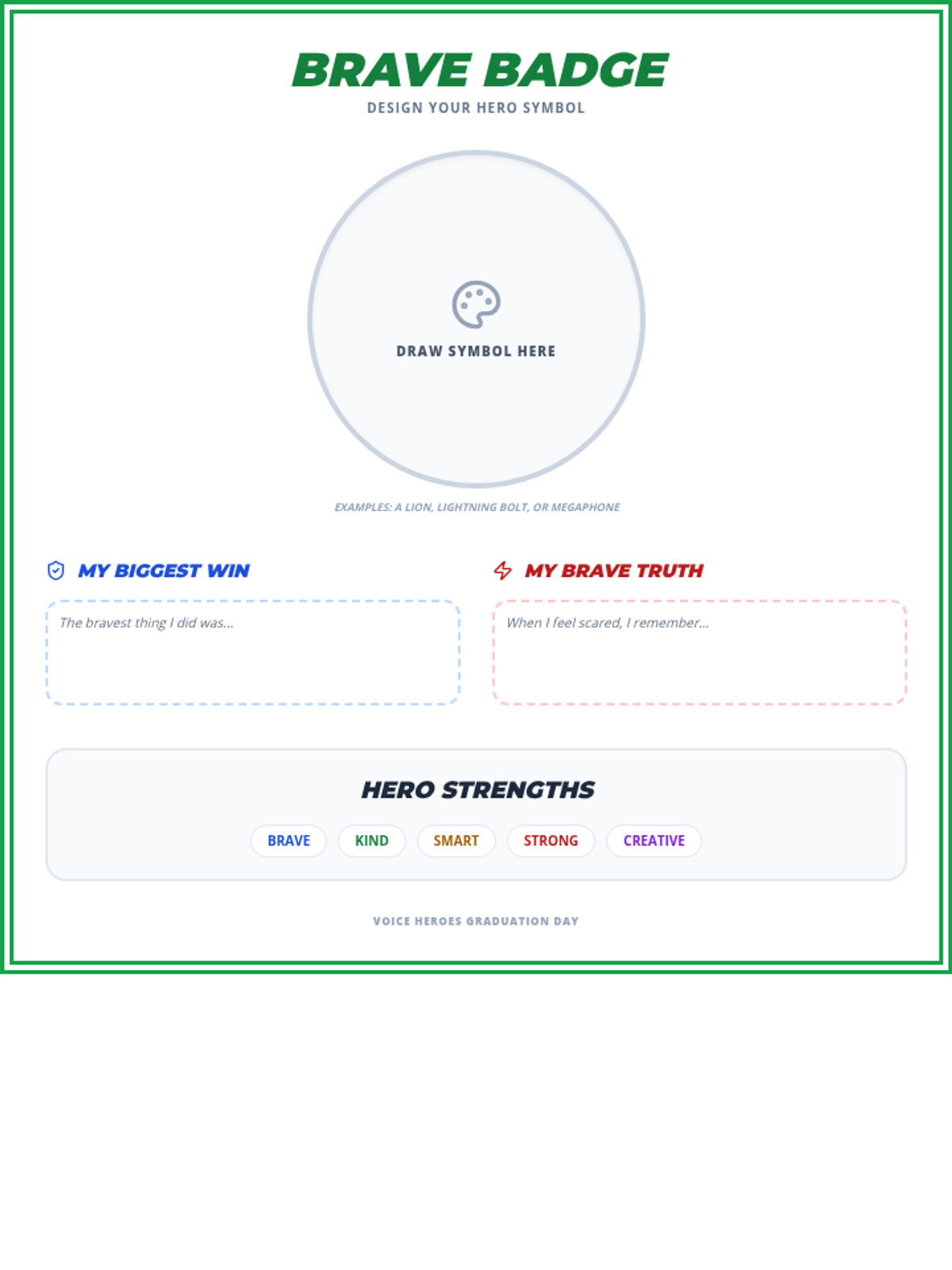
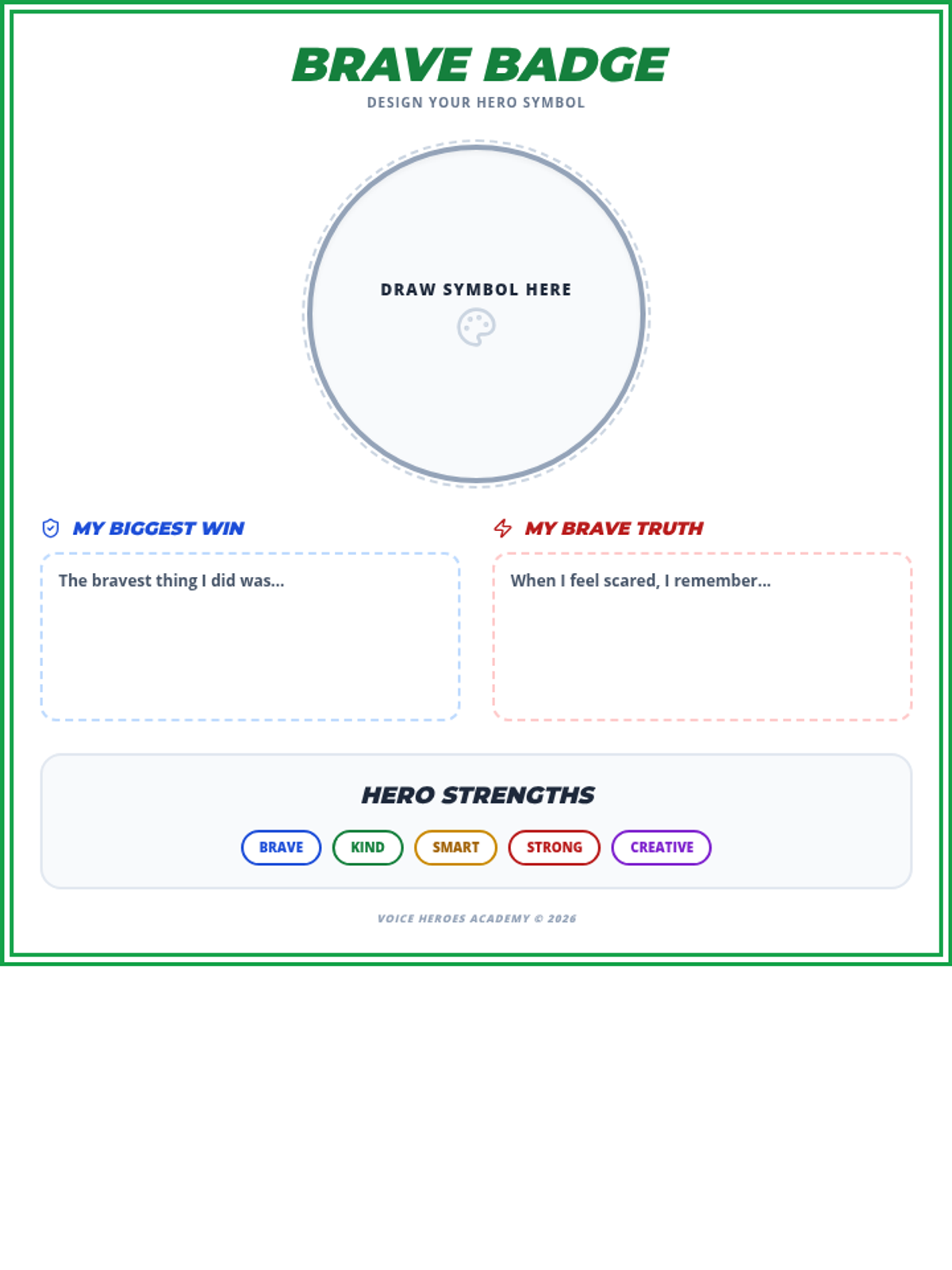
A student-facing activity where they design a personal 'Brave Badge' and reflect on their biggest wins and personal strengths from the counseling program.
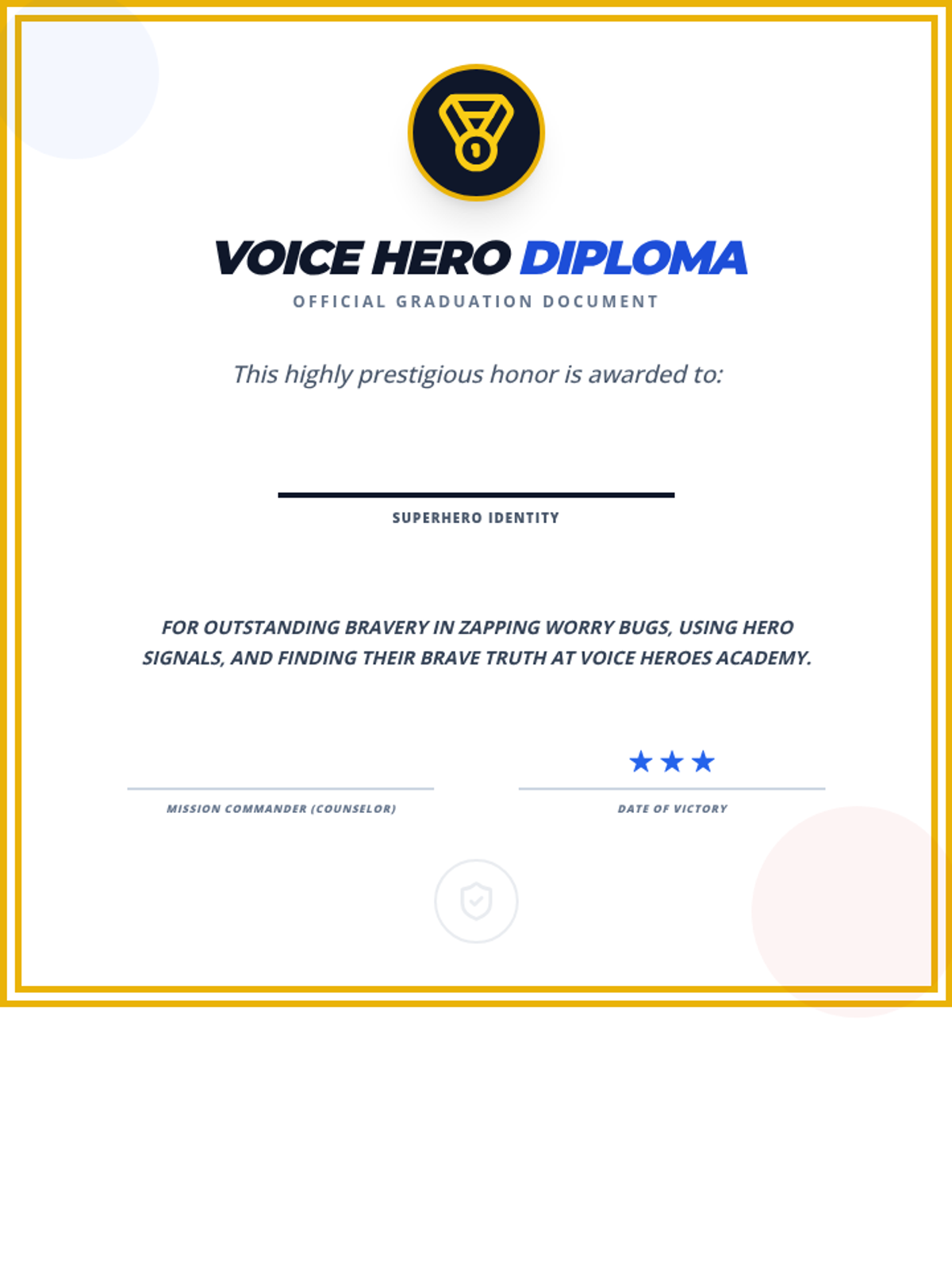
A formal 'Voice Hero Diploma' certificate to be presented to the student upon completion of the 4-week program.
Week 4 slides for celebrating progress, reinforcing self-esteem, and introducing the 'Brave Badge' project to mark the end of the 4-week program.
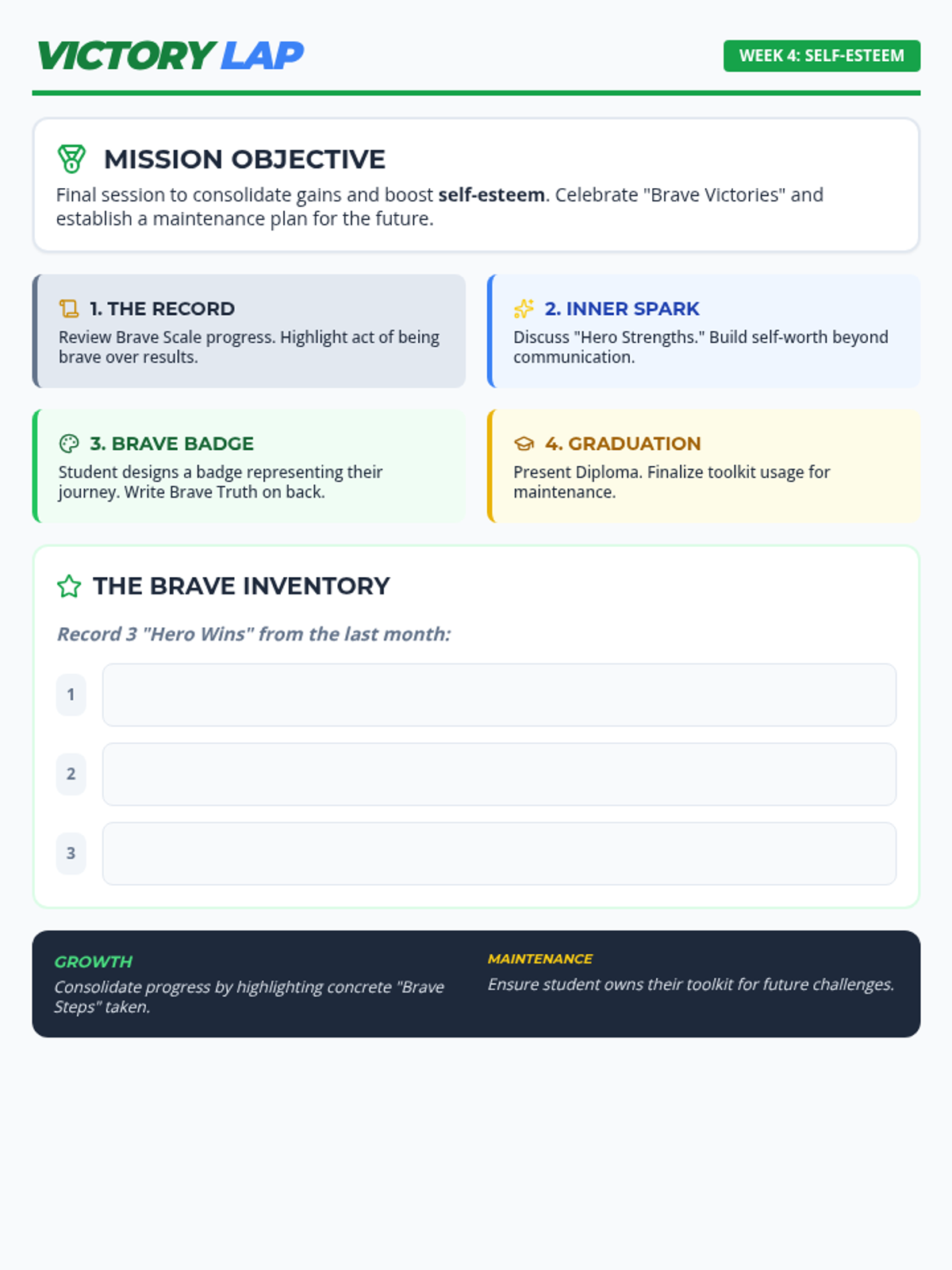
Final week facilitator guide focusing on reinforcing progress, building self-esteem, and creating a maintenance plan for students with selective mutism.
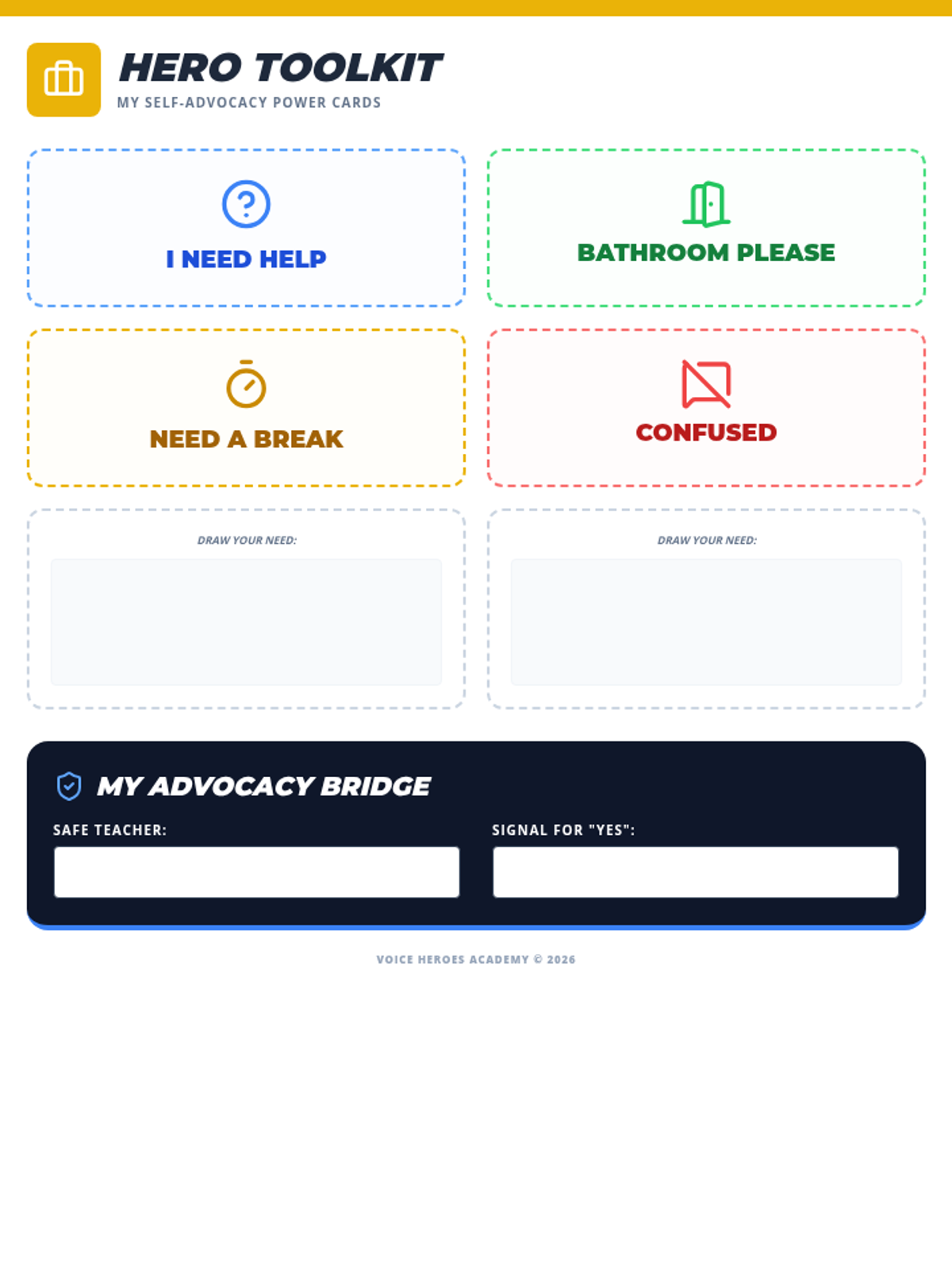
A set of printable advocacy cards (e.g., 'I Need Help', 'Bathroom Please') for students to use as non-verbal communication tools, plus a plan for sharing them with a teacher.
Slides for Week 3 focusing on self-advocacy. Teaches students about the 'Silence Trap' and introduces 'Hero Signals' and 'Advocacy Cards' as bridge tools for communication.
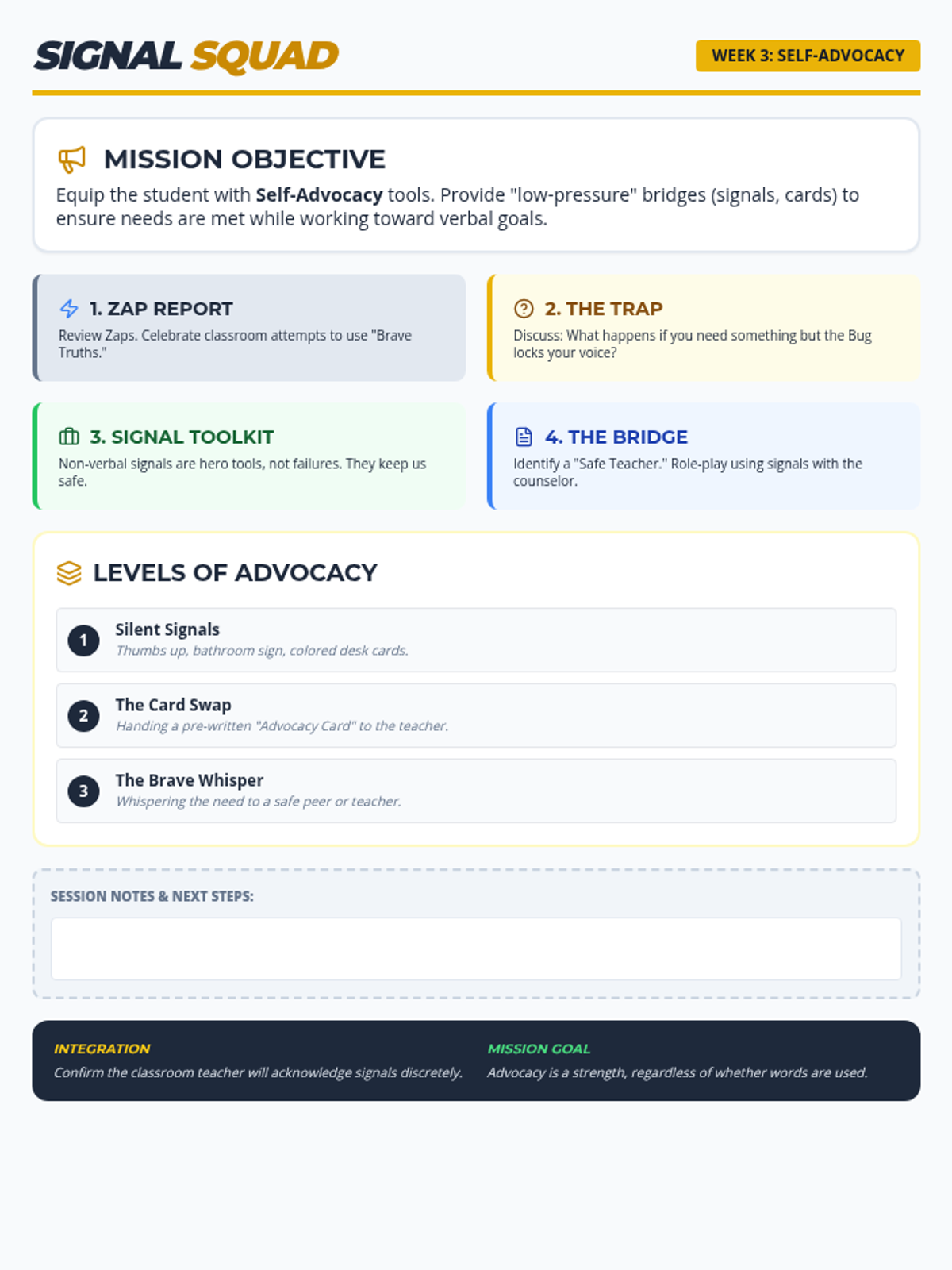
Facilitator guide for Week 3, focusing on teaching the student non-verbal and low-pressure verbal self-advocacy strategies to ensure their needs are met in school.
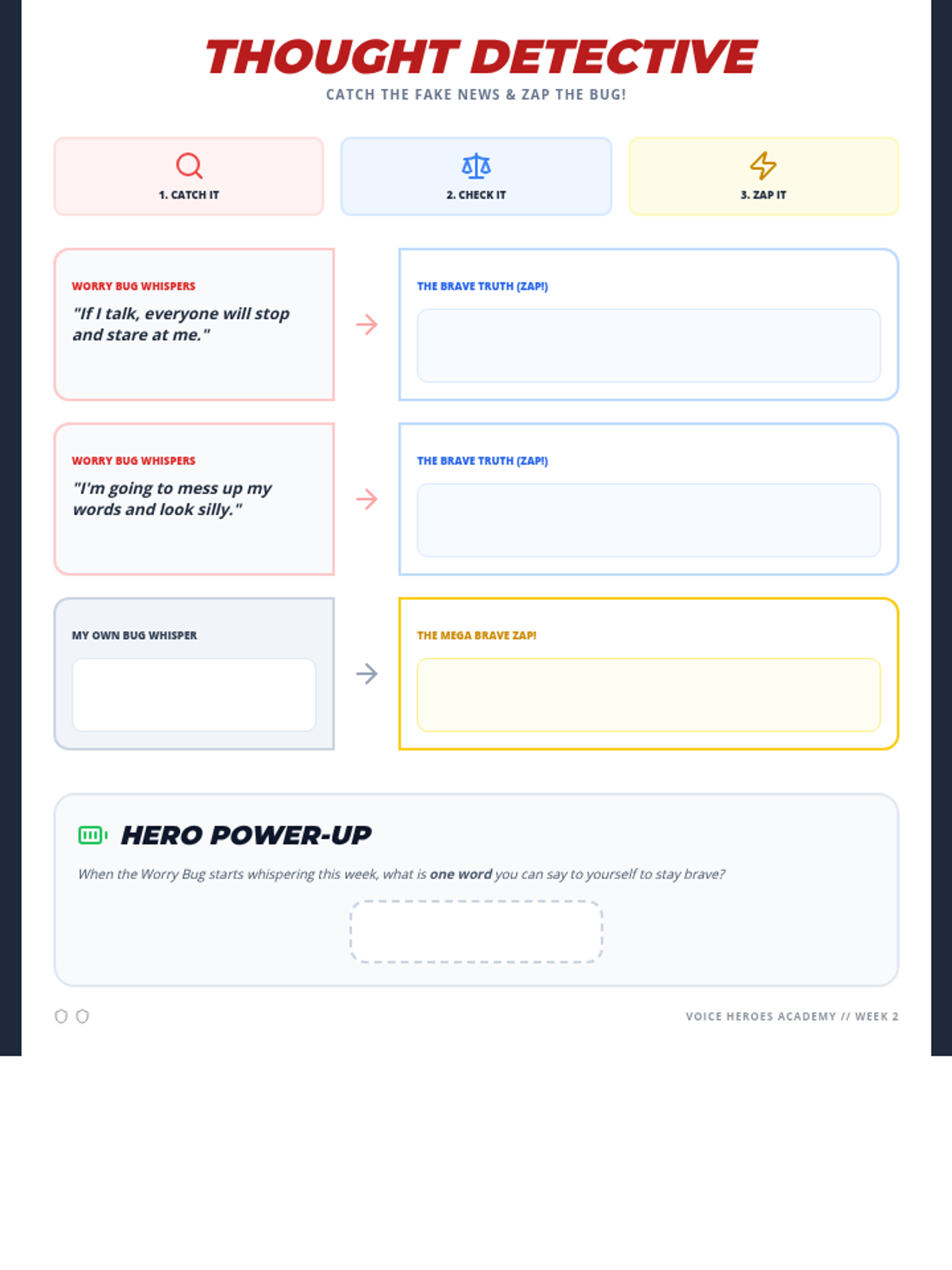
A worksheet for students to practice cognitive reframing. It includes pre-filled anxious thoughts to challenge and space for the student to write their own.
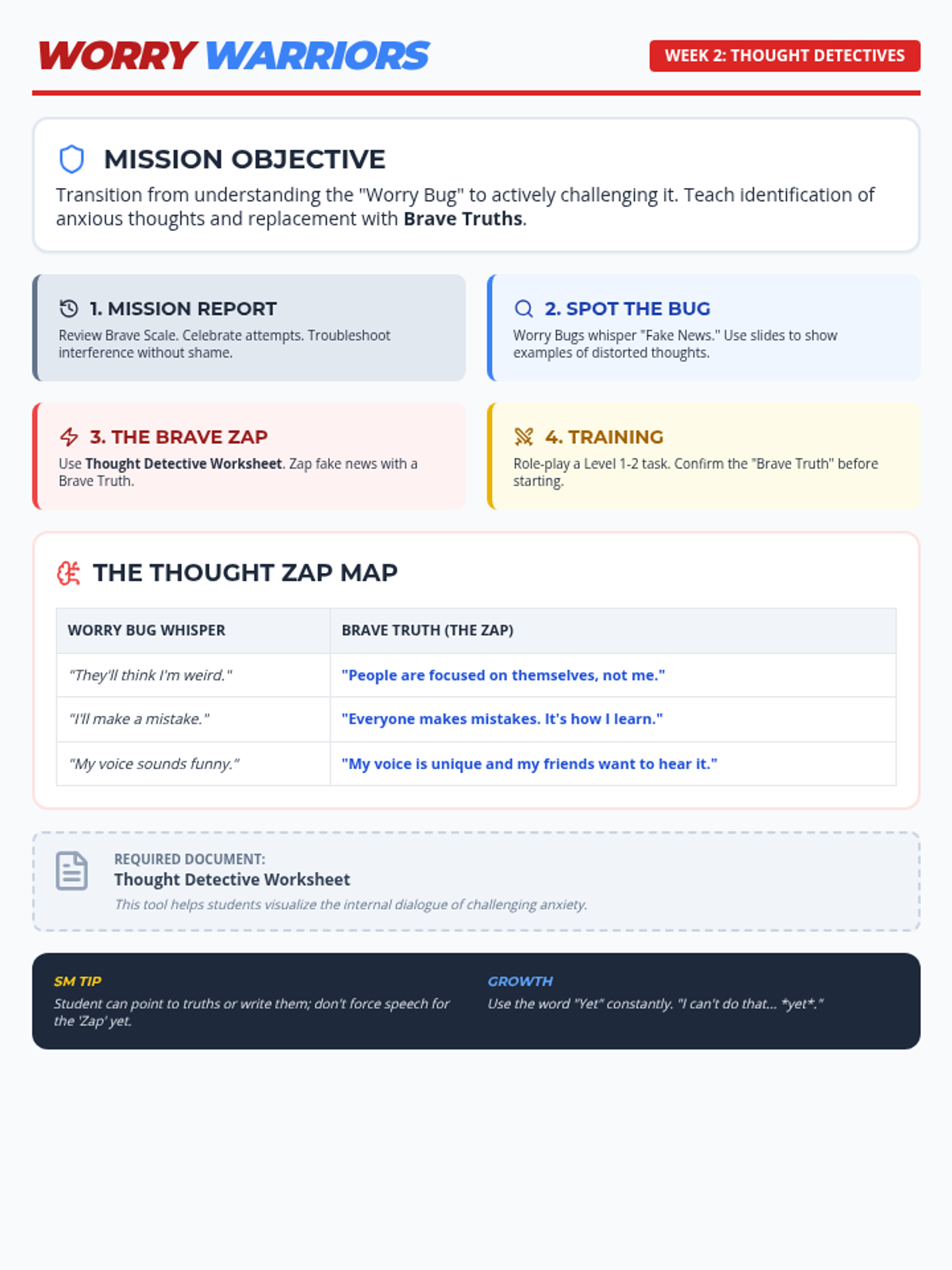
Slides for Week 2 focusing on identifying 'Worry Bug' whispers as fake news and using evidence-based 'Brave Truths' to zap anxious thoughts.
Week 2 counselor guide focusing on cognitive restructuring techniques for students with selective mutism, including the 'Thought Zap' strategy.
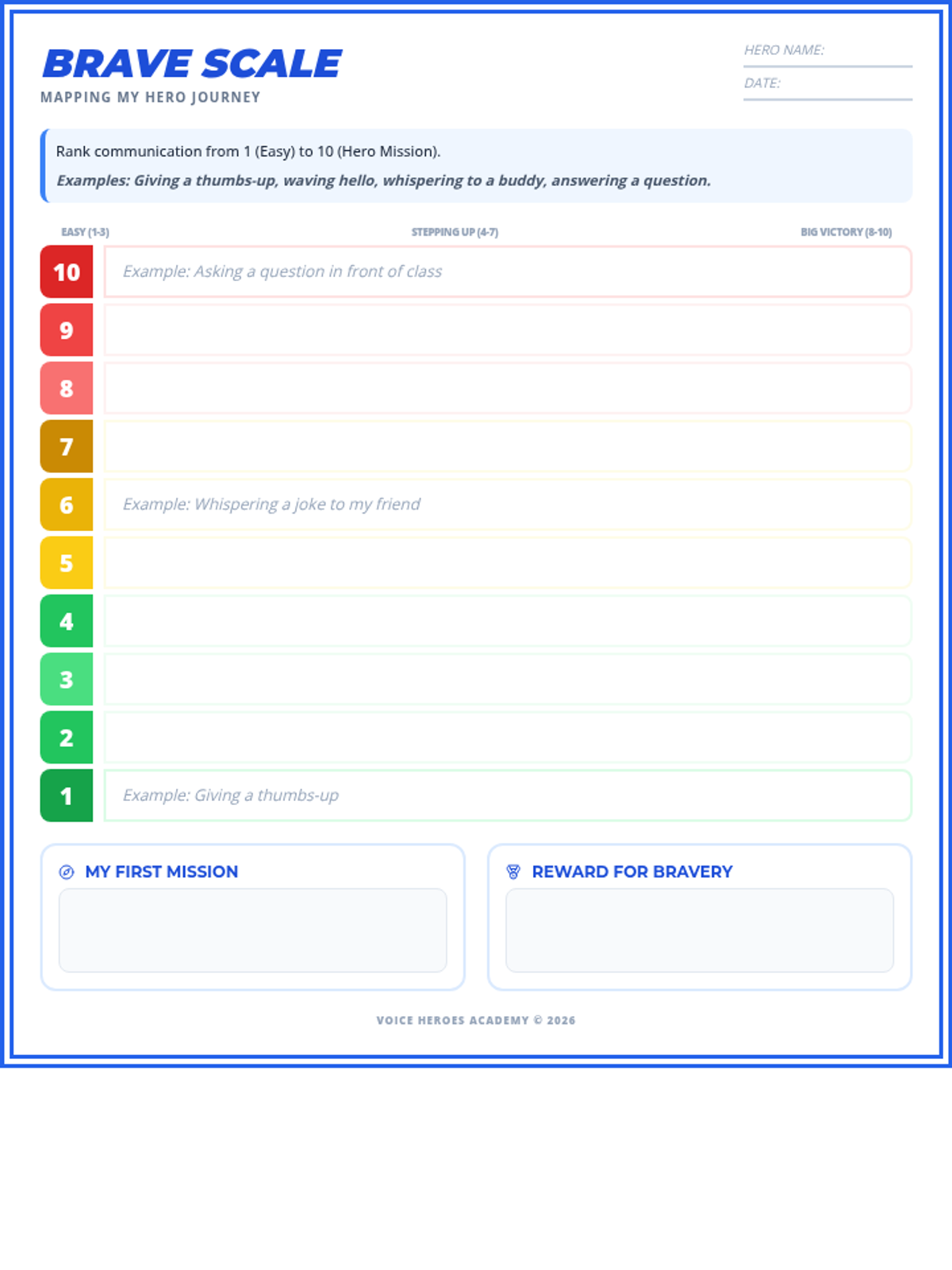
A student-facing worksheet for creating a fear hierarchy (Brave Scale). Includes space for ranking communication tasks and setting a first mission goal.
Visual presentation to introduce the 'Voice Hero' concept to the student, personify anxiety as the 'Worry Bug', and explain the fear hierarchy scale.
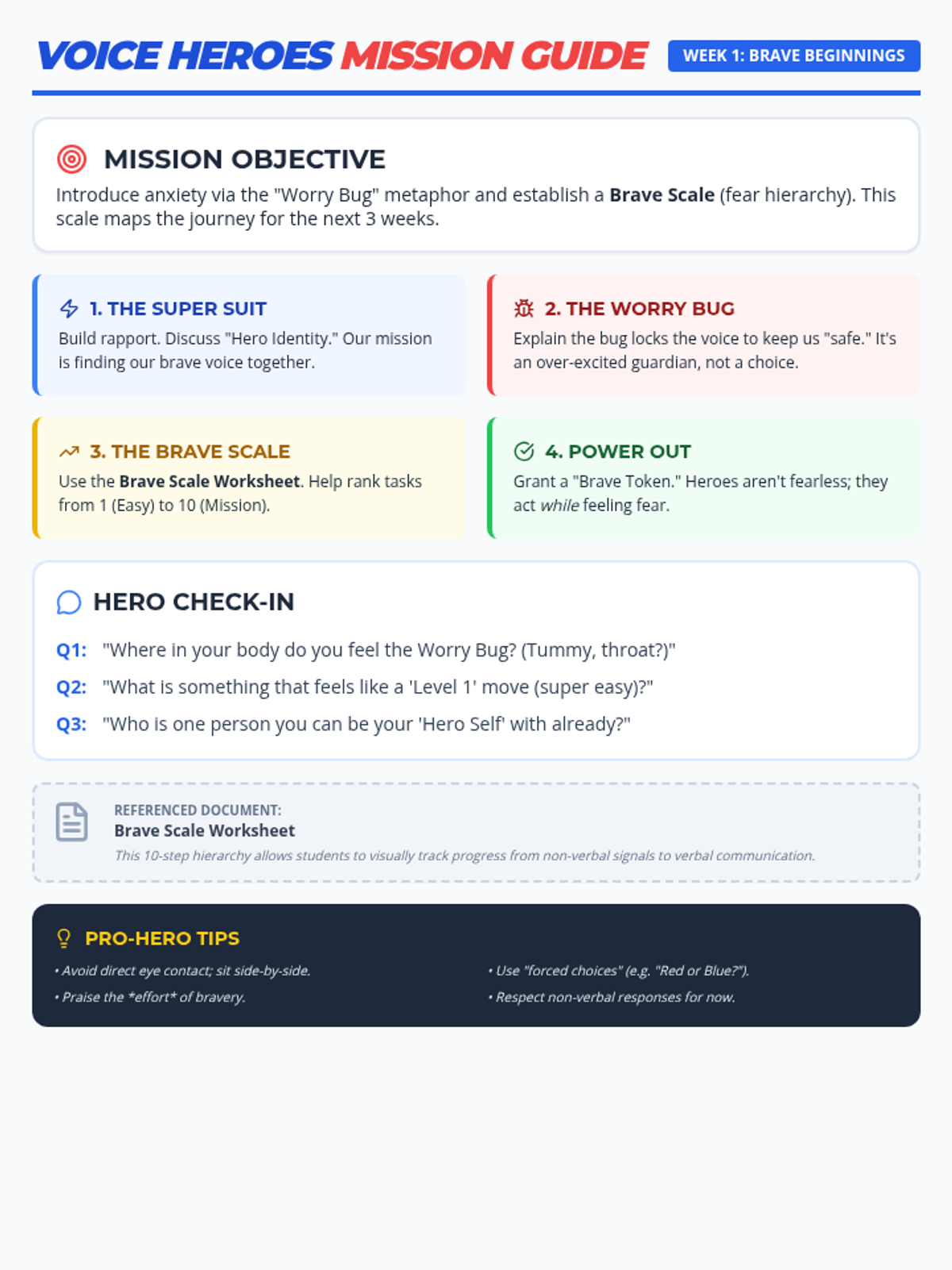
A detailed facilitator's guide for the first week of counseling, outlining session flow, psychoeducation talking points, and specific strategies for working with students with selective mutism.
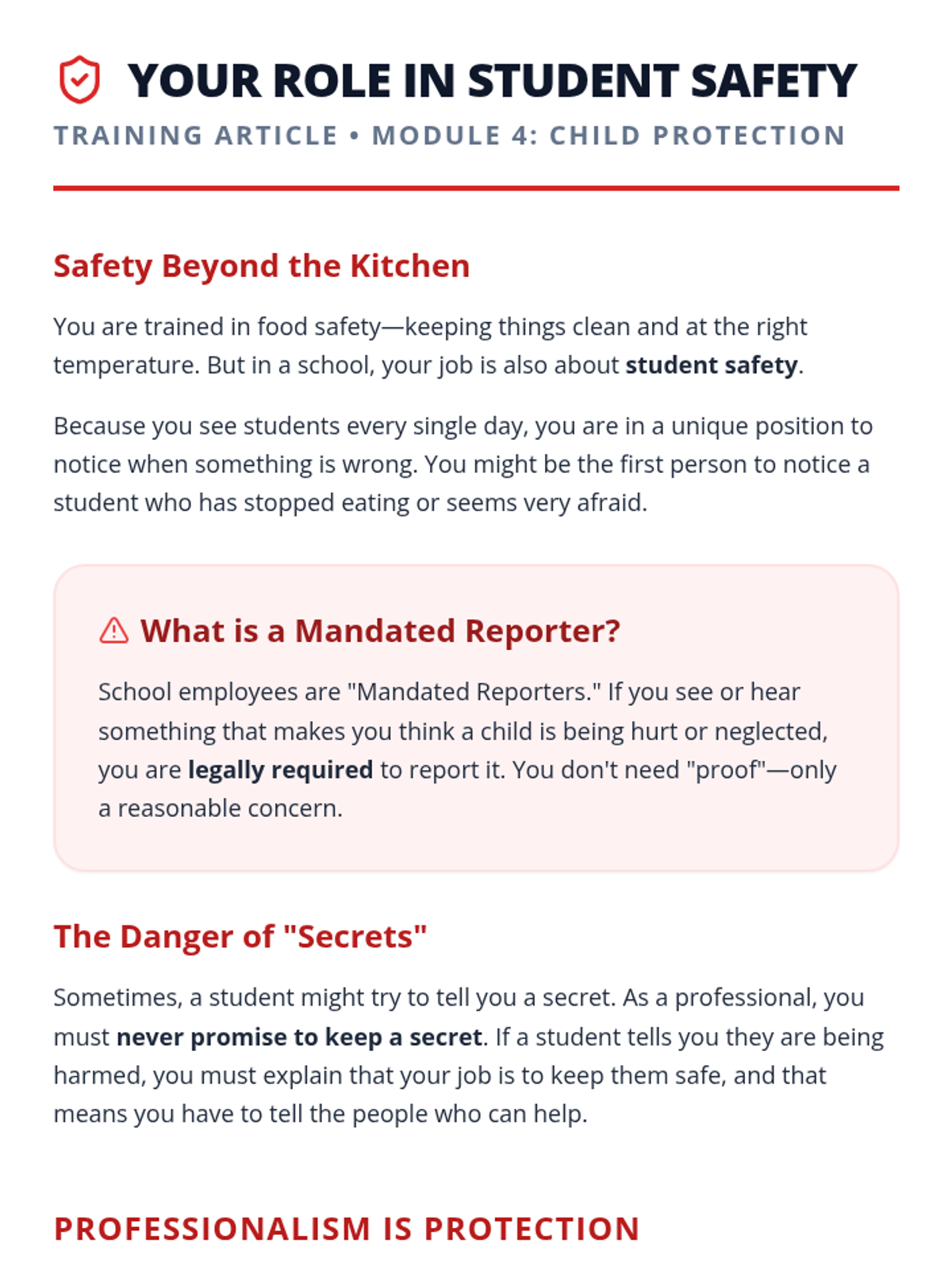
A training article for cafeteria staff on their role as mandated reporters, the legal importance of child protection, and maintaining professional boundaries. Revised for better page breaks and higher contrast text.
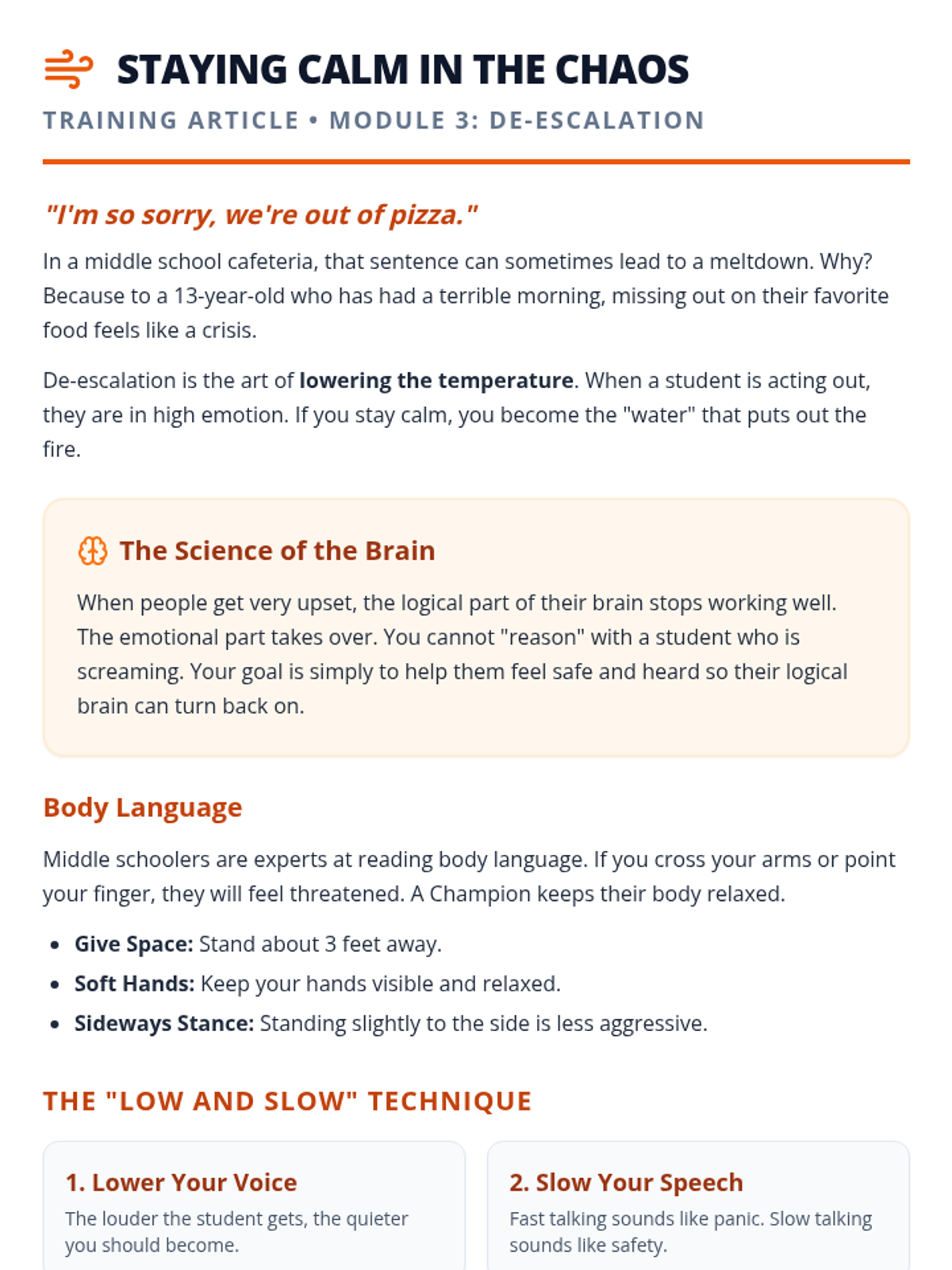
A training article for cafeteria staff on de-escalation techniques, body language, and the "Low and Slow" verbal strategy for managing upset middle schoolers. Revised for better page breaks and higher contrast text.
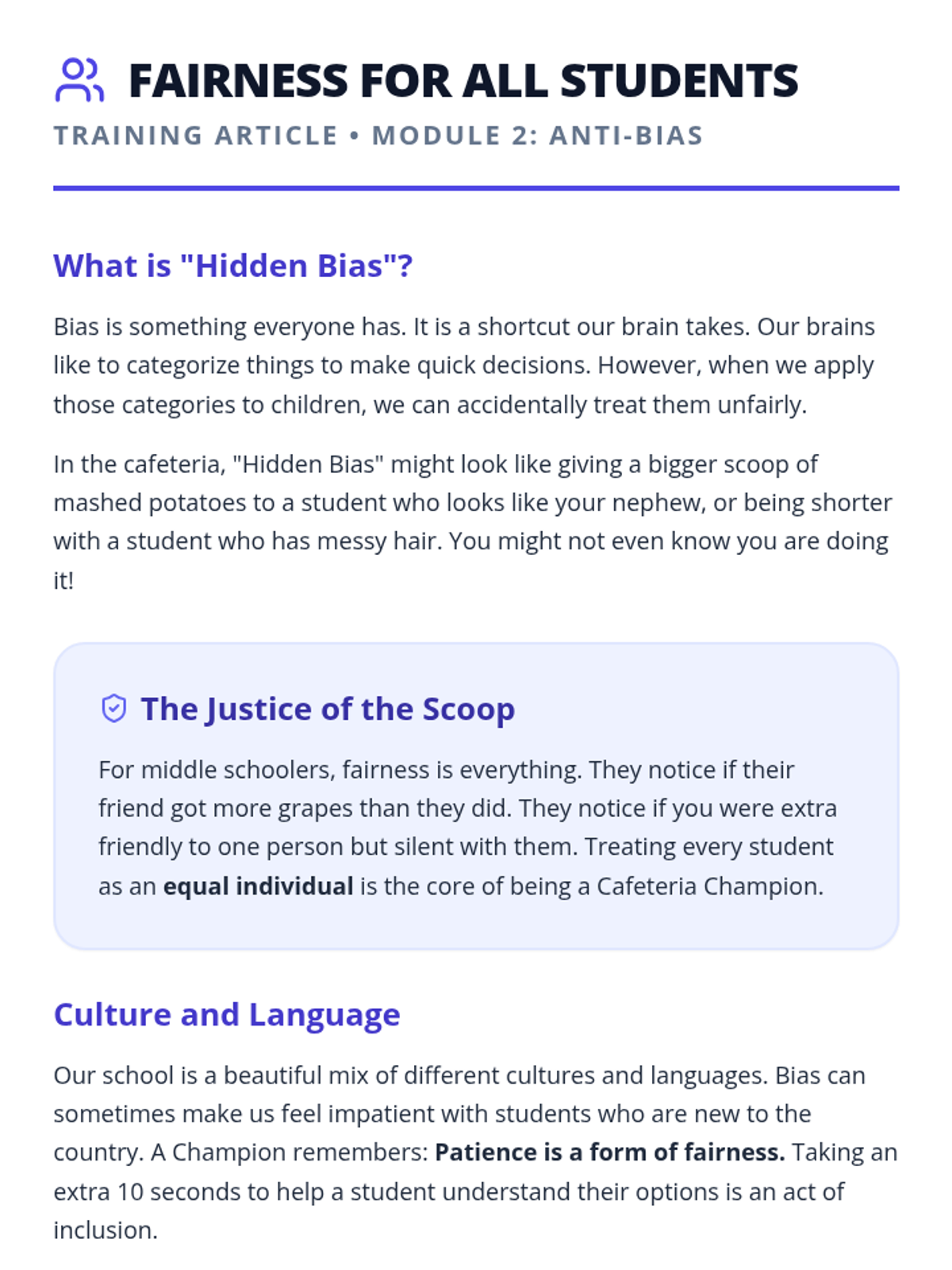
A training article for cafeteria staff about identifying hidden bias, the importance of fairness for middle schoolers, and strategies for inclusive service. Revised for better page breaks.