An elegant Certificate of Appreciation for local businesses, featuring the West Lee Middle School mascot and traditional school colors. Updated with specific donation details and ink-saving design.
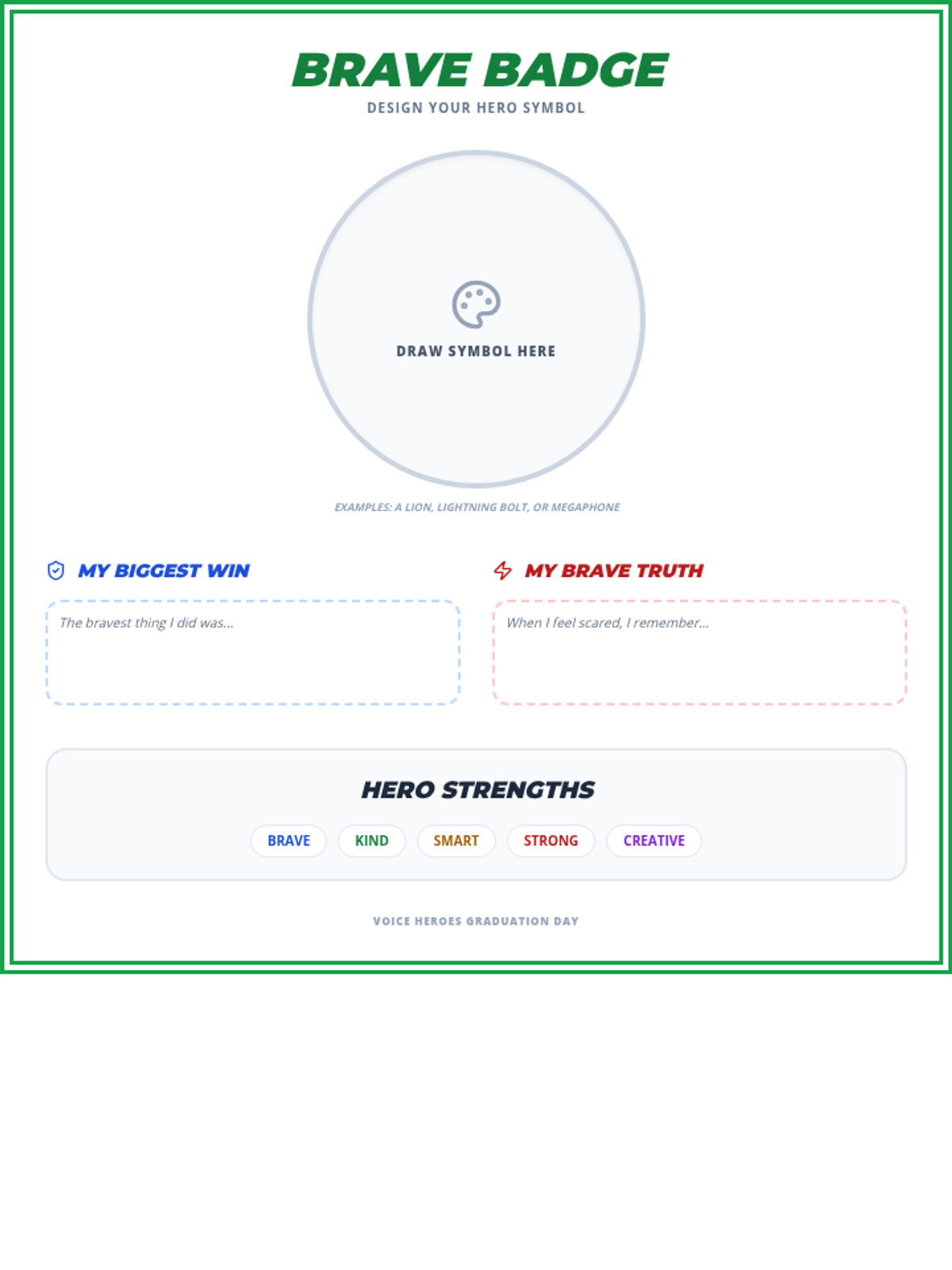
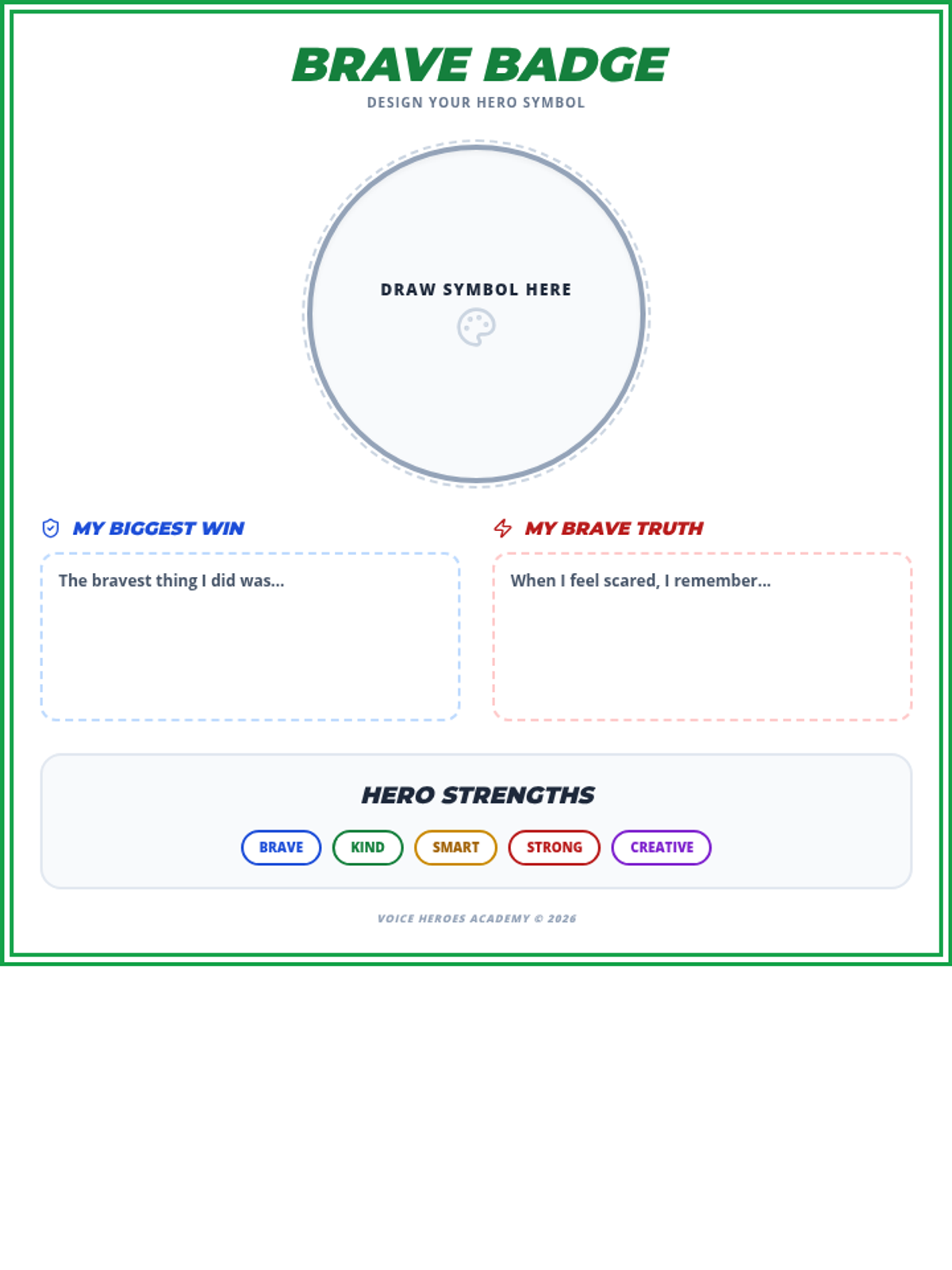
A student-facing activity where they design a personal 'Brave Badge' and reflect on their biggest wins and personal strengths from the counseling program.
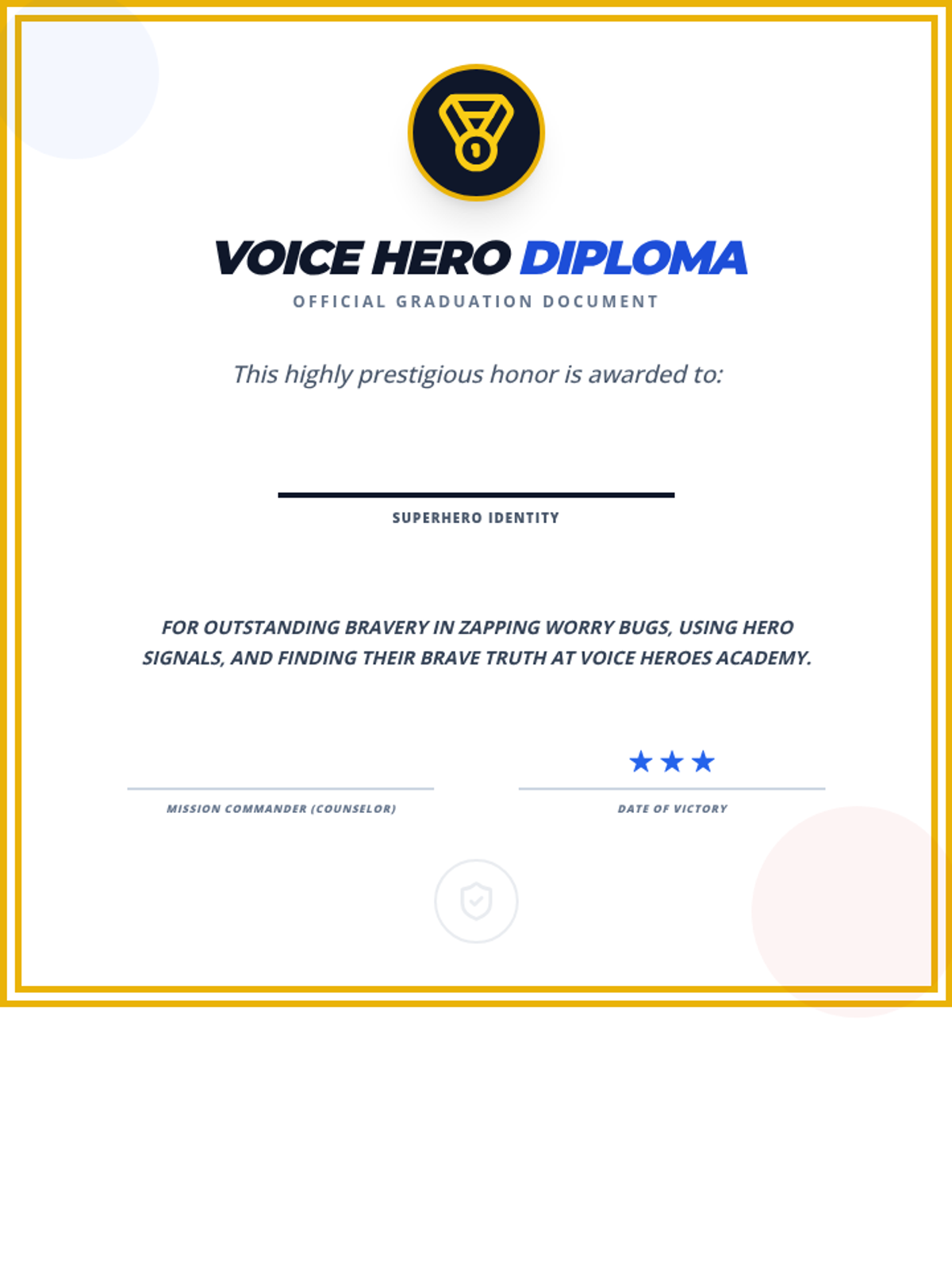
A formal 'Voice Hero Diploma' certificate to be presented to the student upon completion of the 4-week program.
Week 4 slides for celebrating progress, reinforcing self-esteem, and introducing the 'Brave Badge' project to mark the end of the 4-week program.
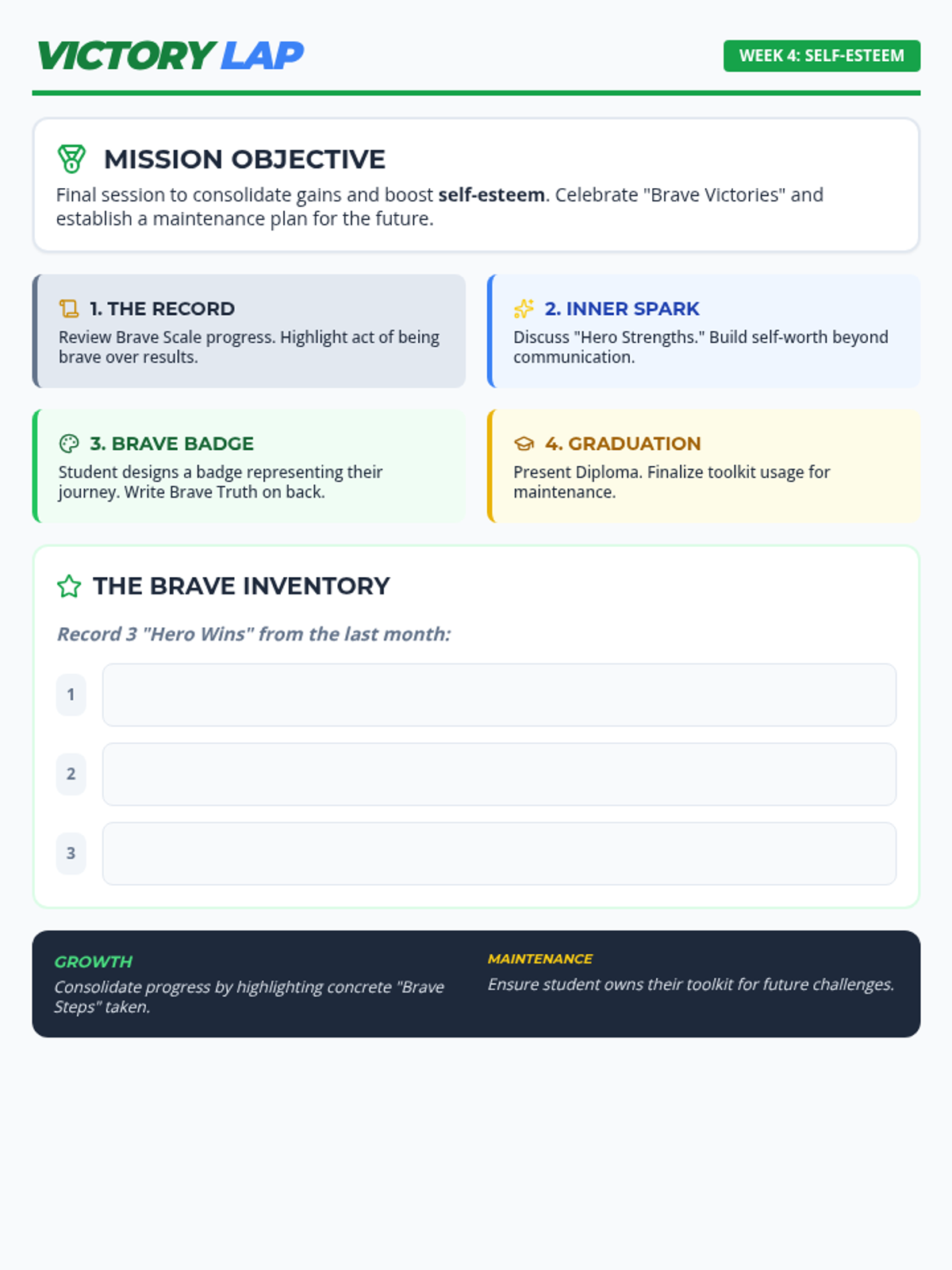
Final week facilitator guide focusing on reinforcing progress, building self-esteem, and creating a maintenance plan for students with selective mutism.
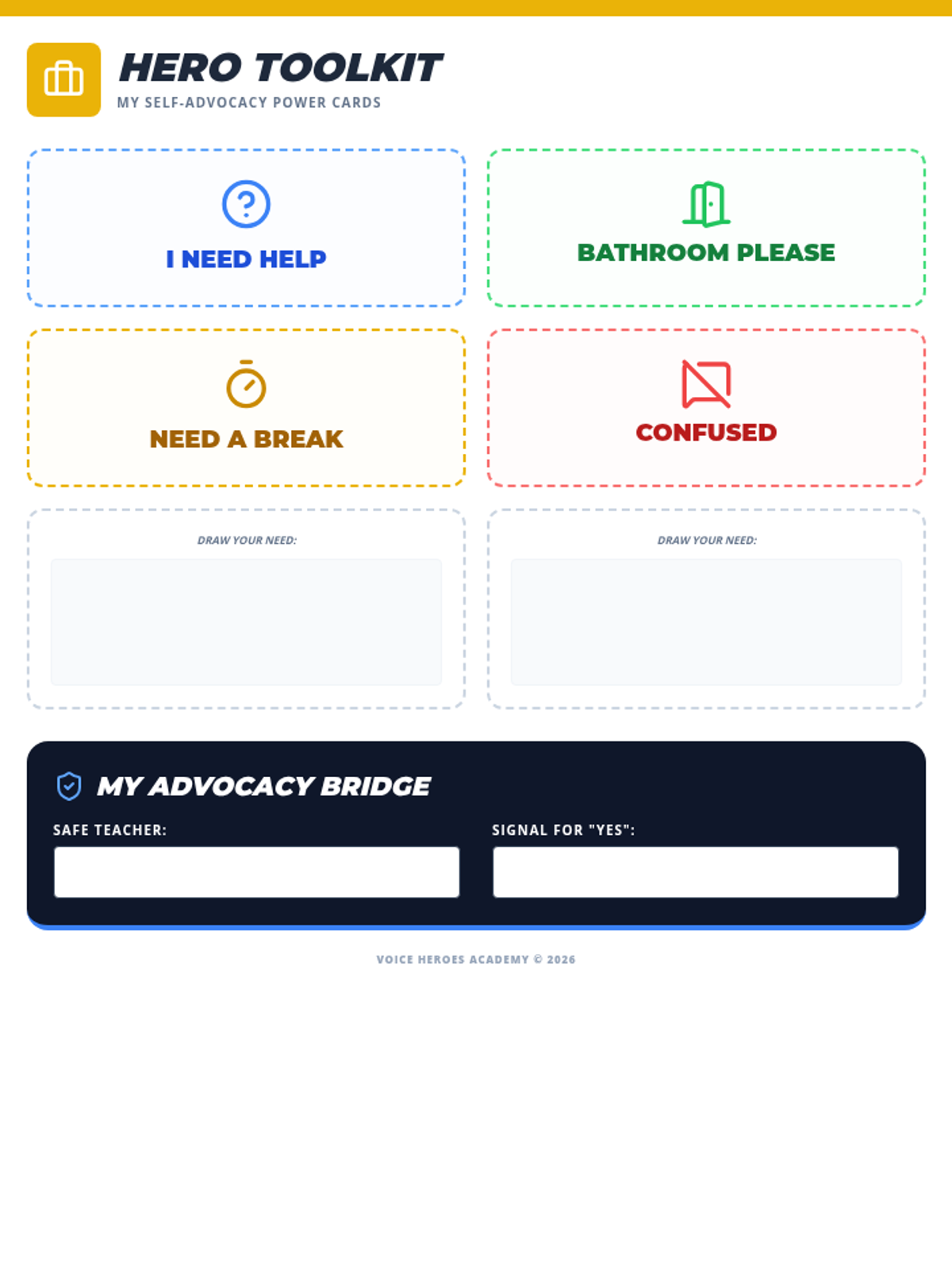
A set of printable advocacy cards (e.g., 'I Need Help', 'Bathroom Please') for students to use as non-verbal communication tools, plus a plan for sharing them with a teacher.
Slides for Week 3 focusing on self-advocacy. Teaches students about the 'Silence Trap' and introduces 'Hero Signals' and 'Advocacy Cards' as bridge tools for communication.
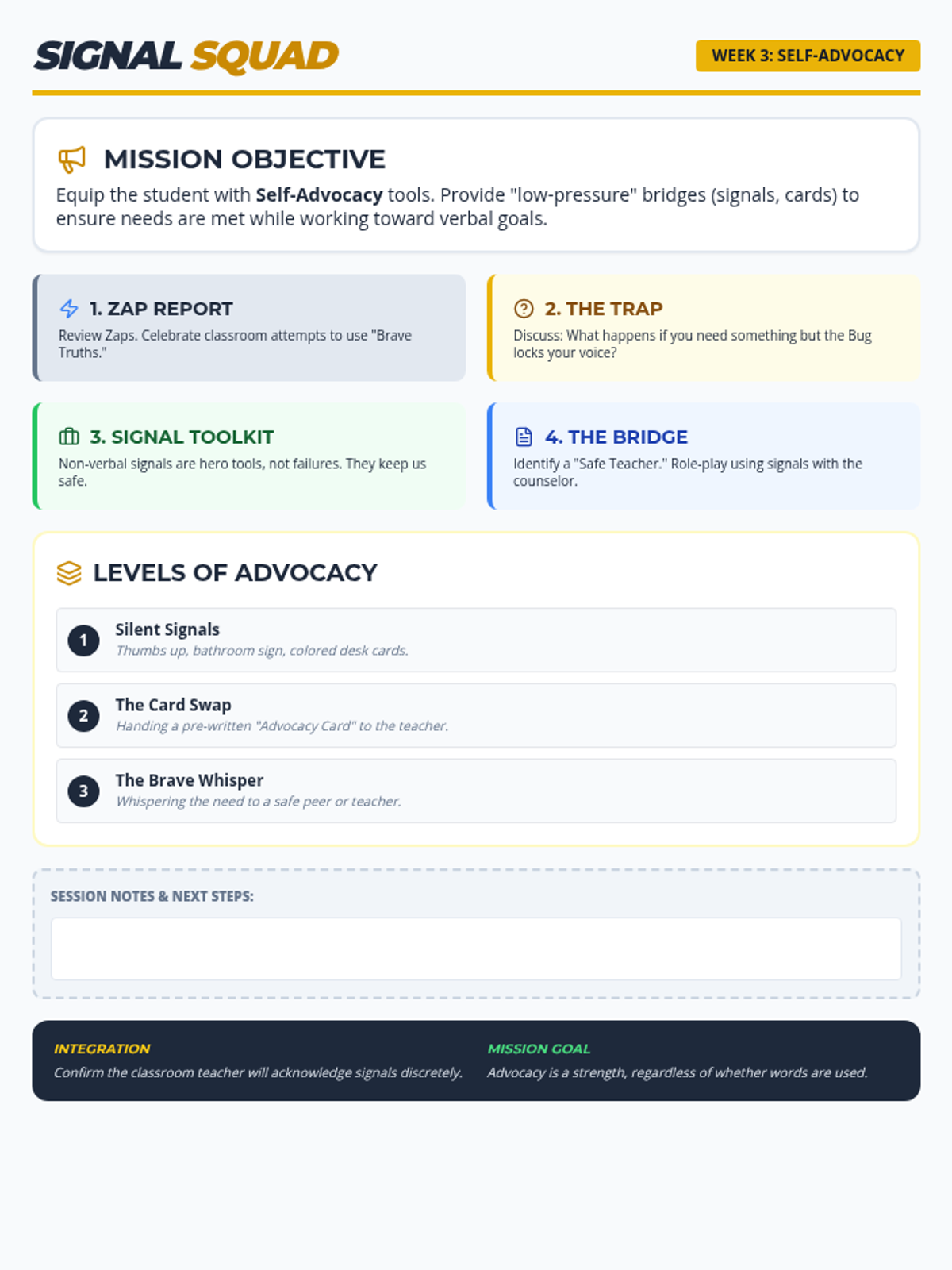
Facilitator guide for Week 3, focusing on teaching the student non-verbal and low-pressure verbal self-advocacy strategies to ensure their needs are met in school.
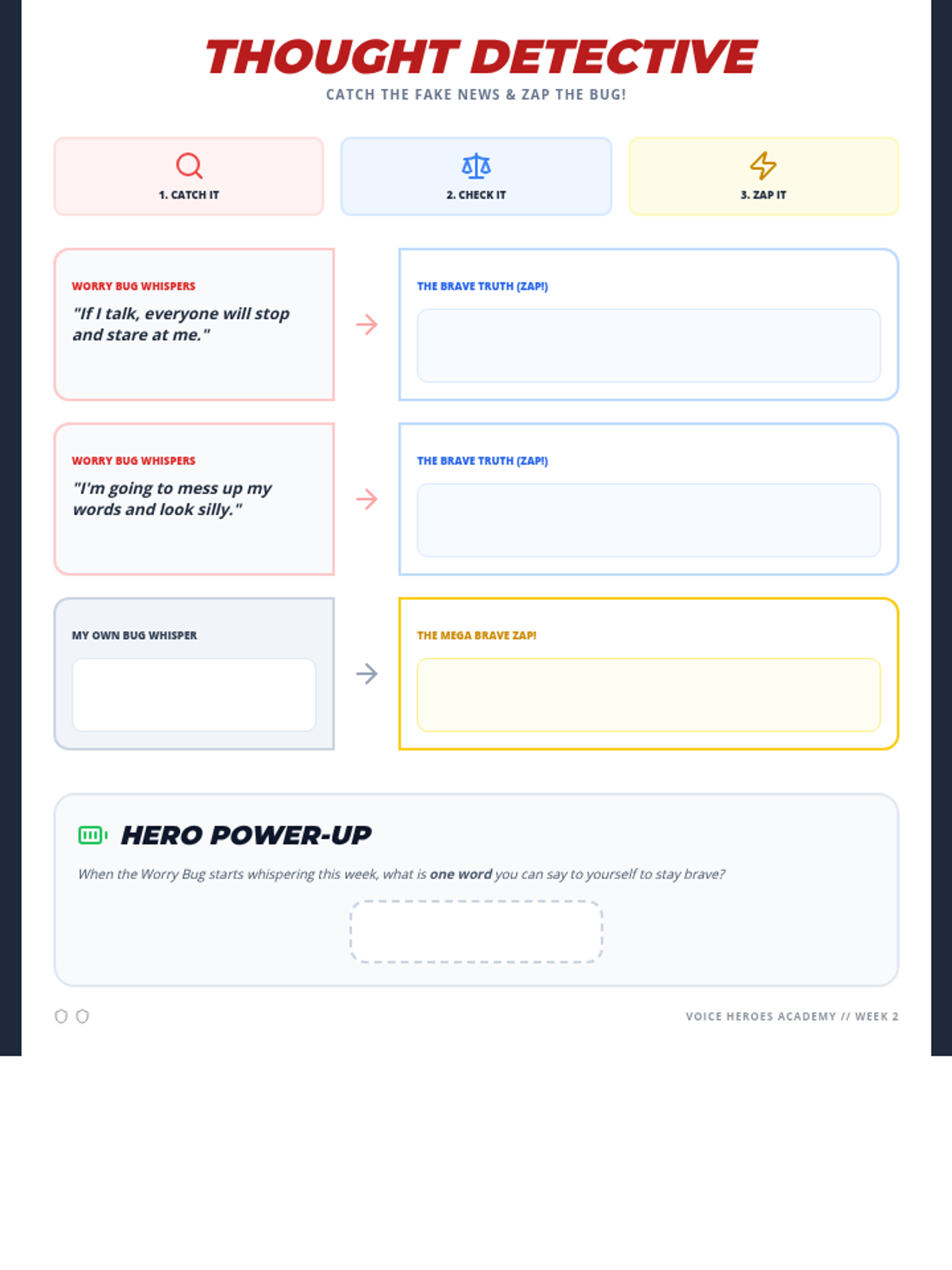
A worksheet for students to practice cognitive reframing. It includes pre-filled anxious thoughts to challenge and space for the student to write their own.
Slides for Week 2 focusing on identifying 'Worry Bug' whispers as fake news and using evidence-based 'Brave Truths' to zap anxious thoughts.
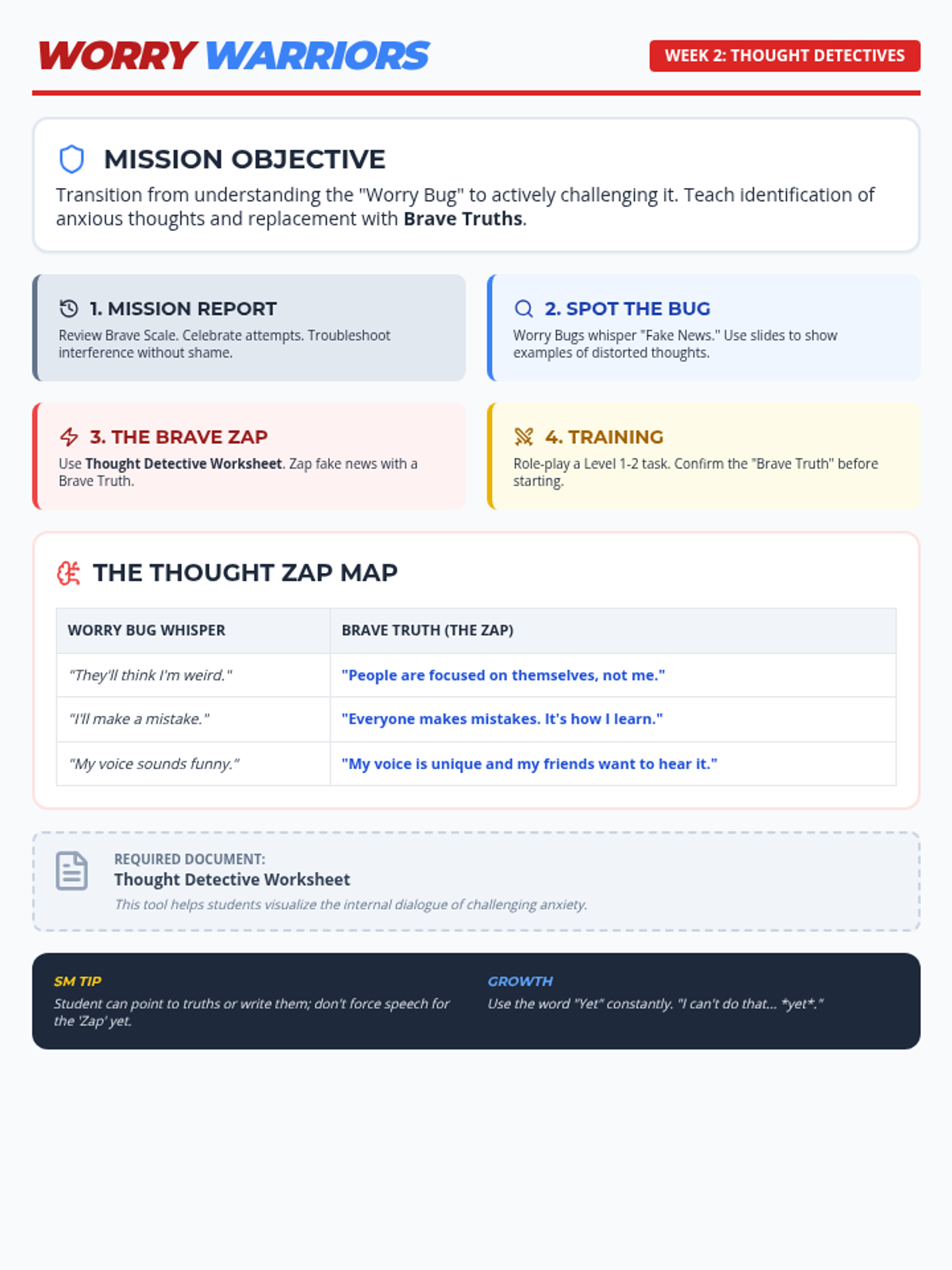
Week 2 counselor guide focusing on cognitive restructuring techniques for students with selective mutism, including the 'Thought Zap' strategy.
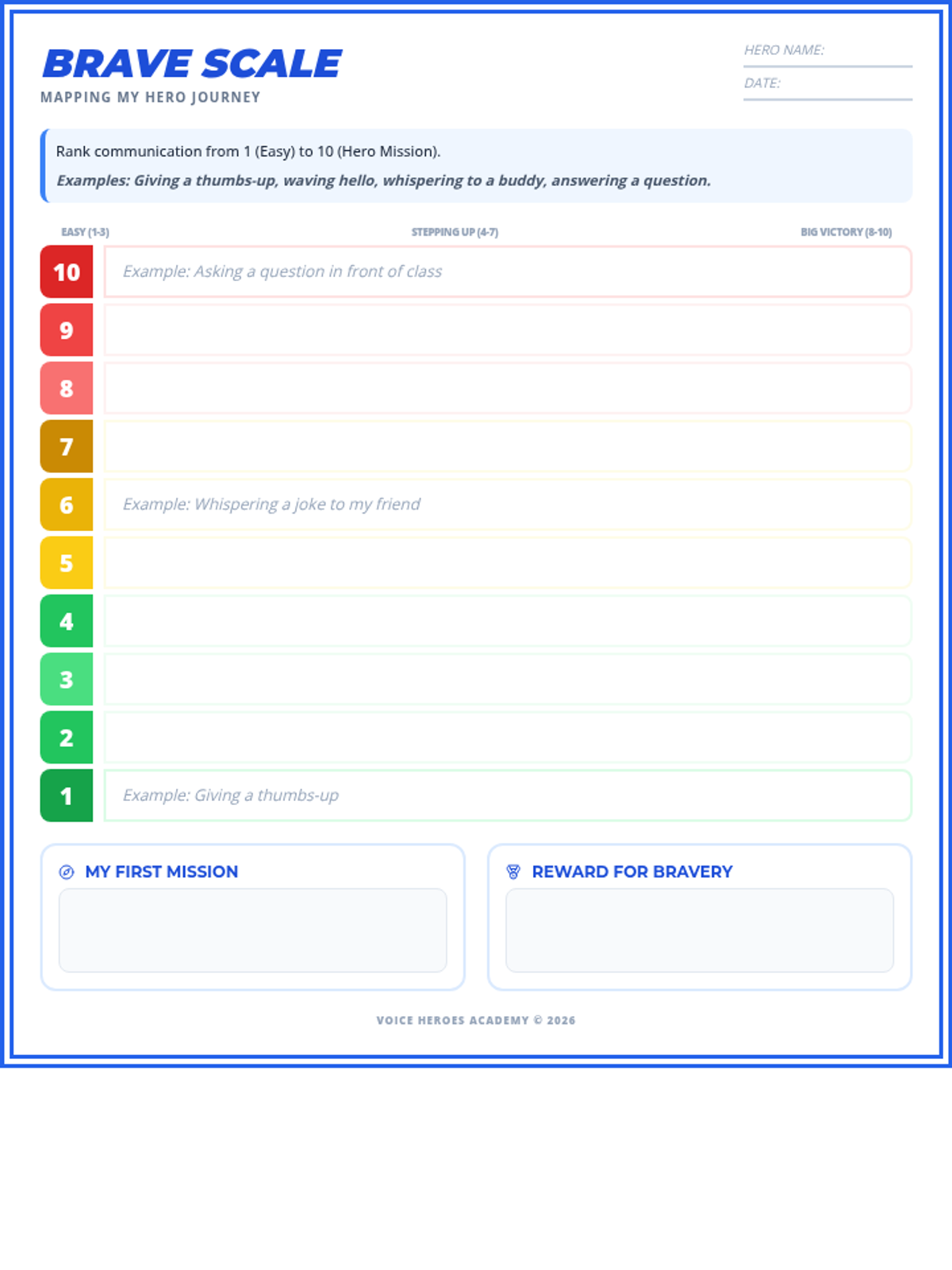
A student-facing worksheet for creating a fear hierarchy (Brave Scale). Includes space for ranking communication tasks and setting a first mission goal.
Visual presentation to introduce the 'Voice Hero' concept to the student, personify anxiety as the 'Worry Bug', and explain the fear hierarchy scale.
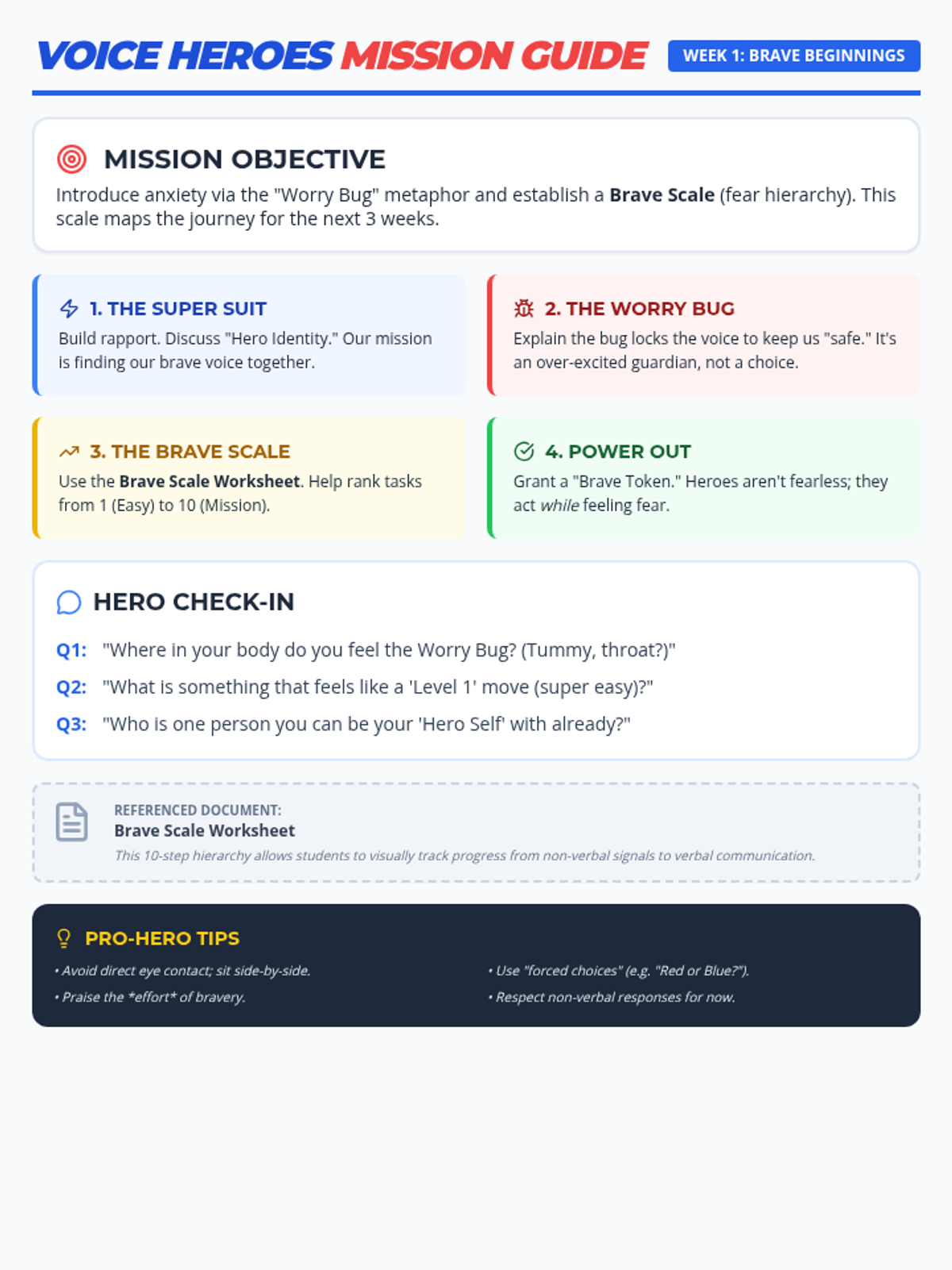
A detailed facilitator's guide for the first week of counseling, outlining session flow, psychoeducation talking points, and specific strategies for working with students with selective mutism.
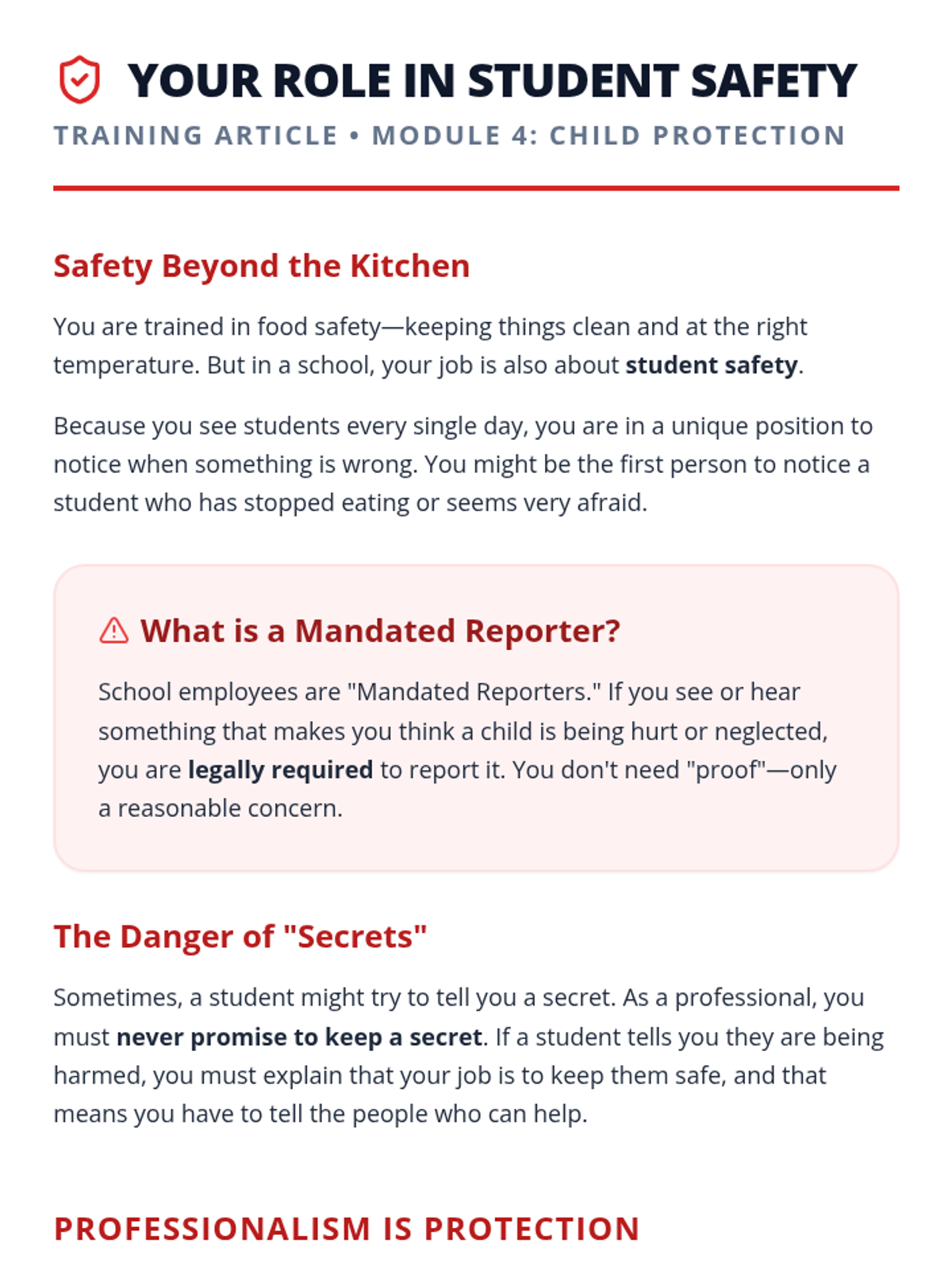
A training article for cafeteria staff on their role as mandated reporters, the legal importance of child protection, and maintaining professional boundaries. Revised for better page breaks and higher contrast text.
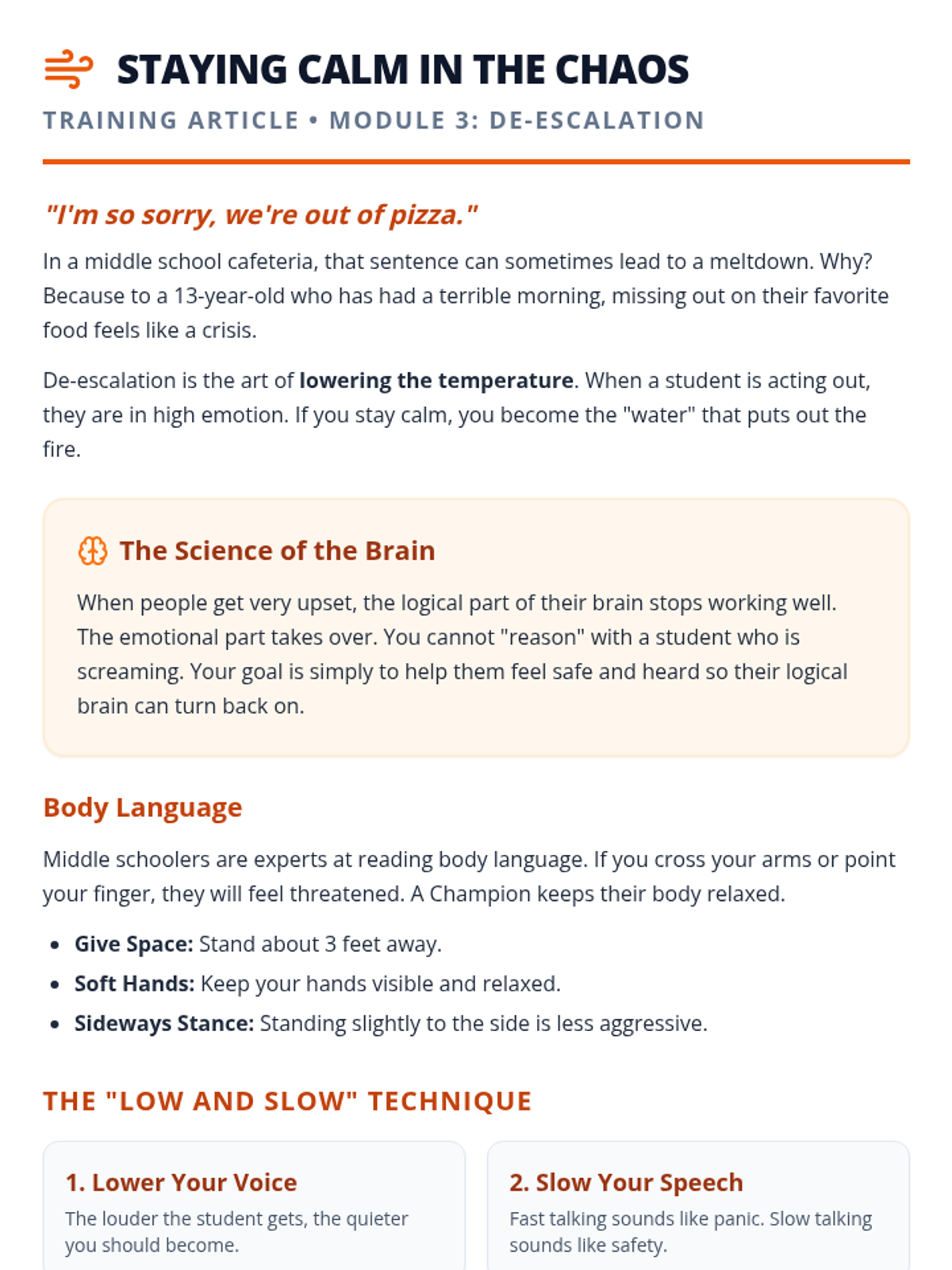
A training article for cafeteria staff on de-escalation techniques, body language, and the "Low and Slow" verbal strategy for managing upset middle schoolers. Revised for better page breaks and higher contrast text.
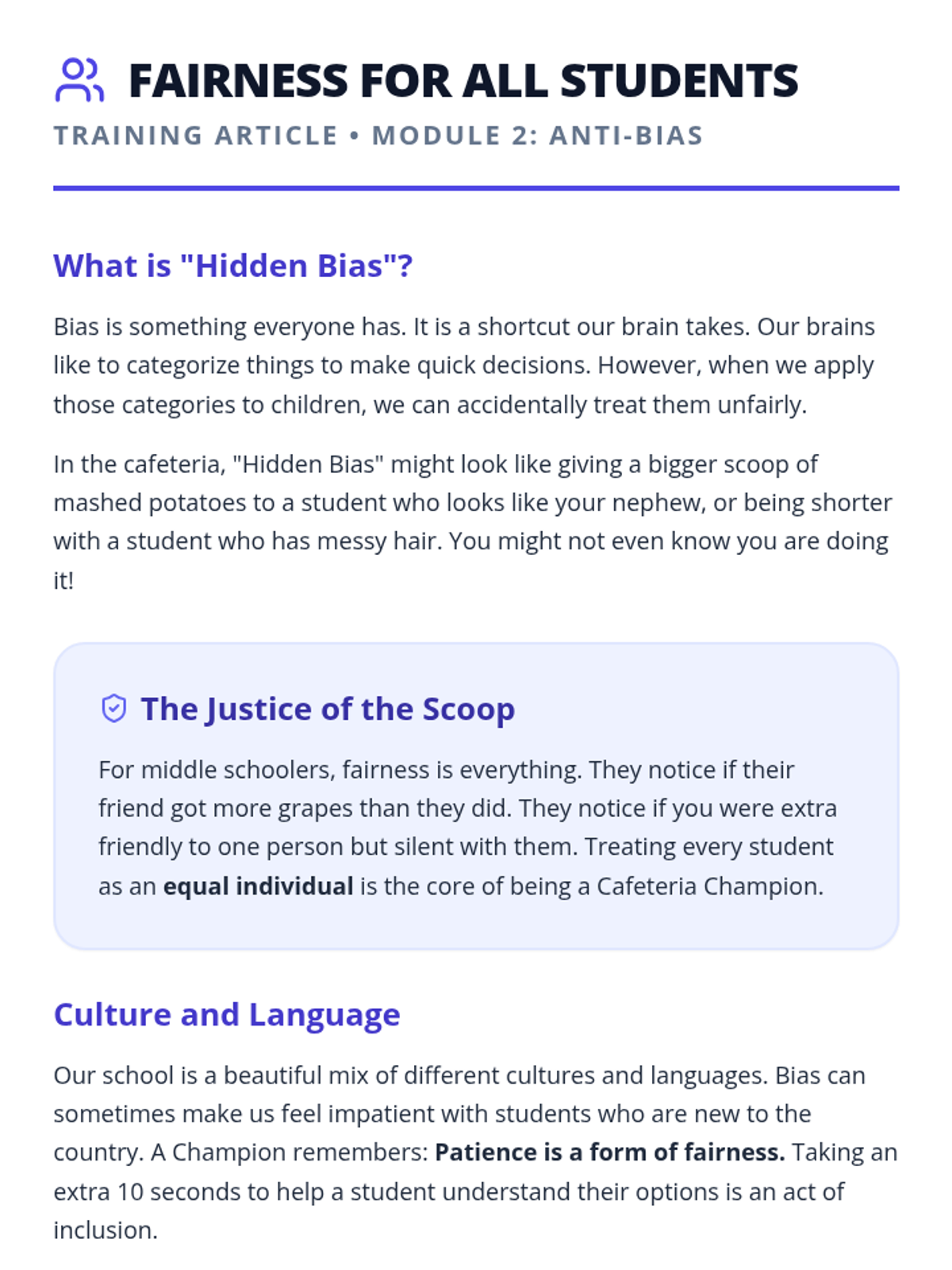
A training article for cafeteria staff about identifying hidden bias, the importance of fairness for middle schoolers, and strategies for inclusive service. Revised for better page breaks.
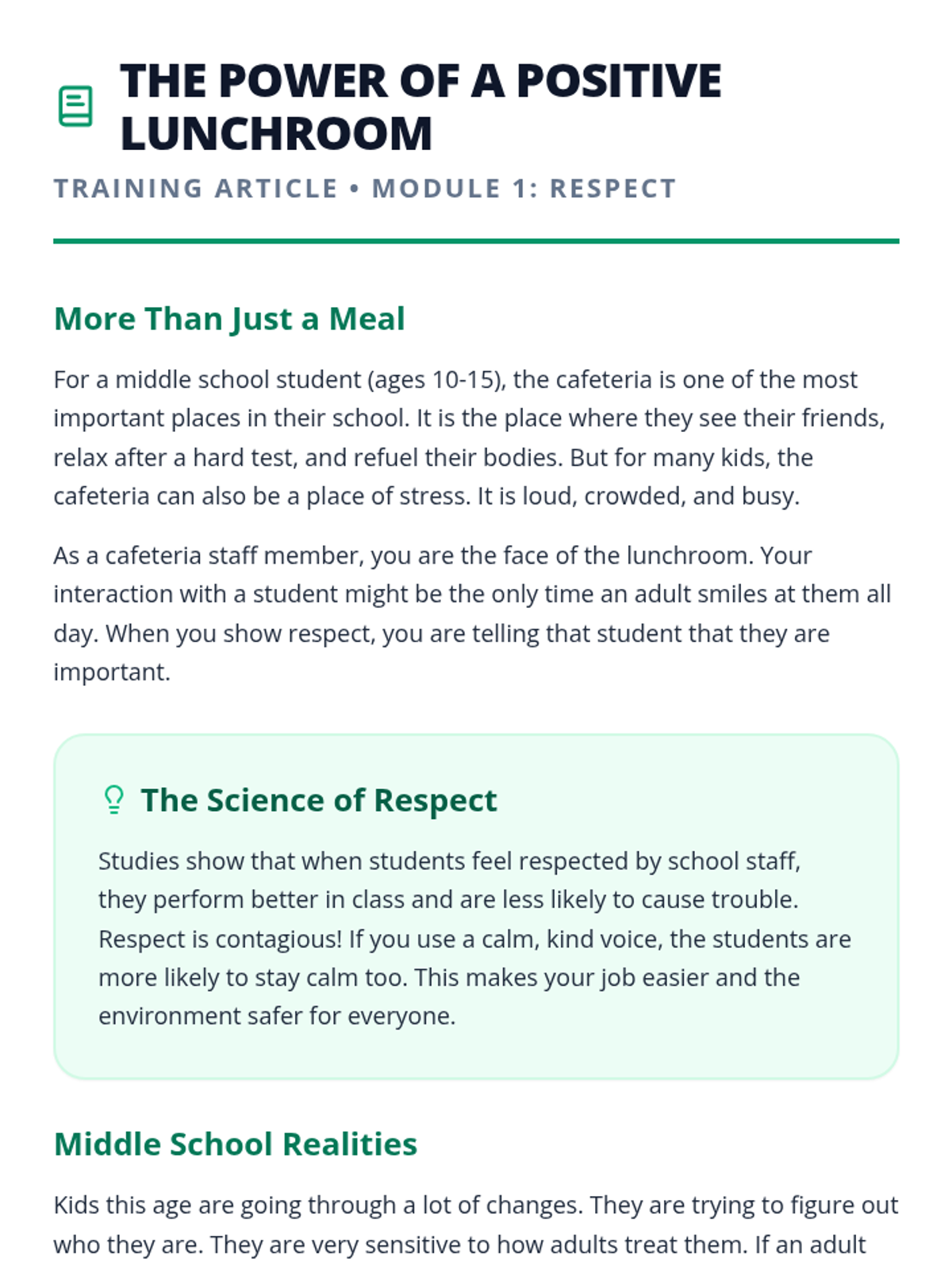
A training article for cafeteria staff on the importance of respectful interactions with middle schoolers and how a positive lunchroom environment improves student behavior.
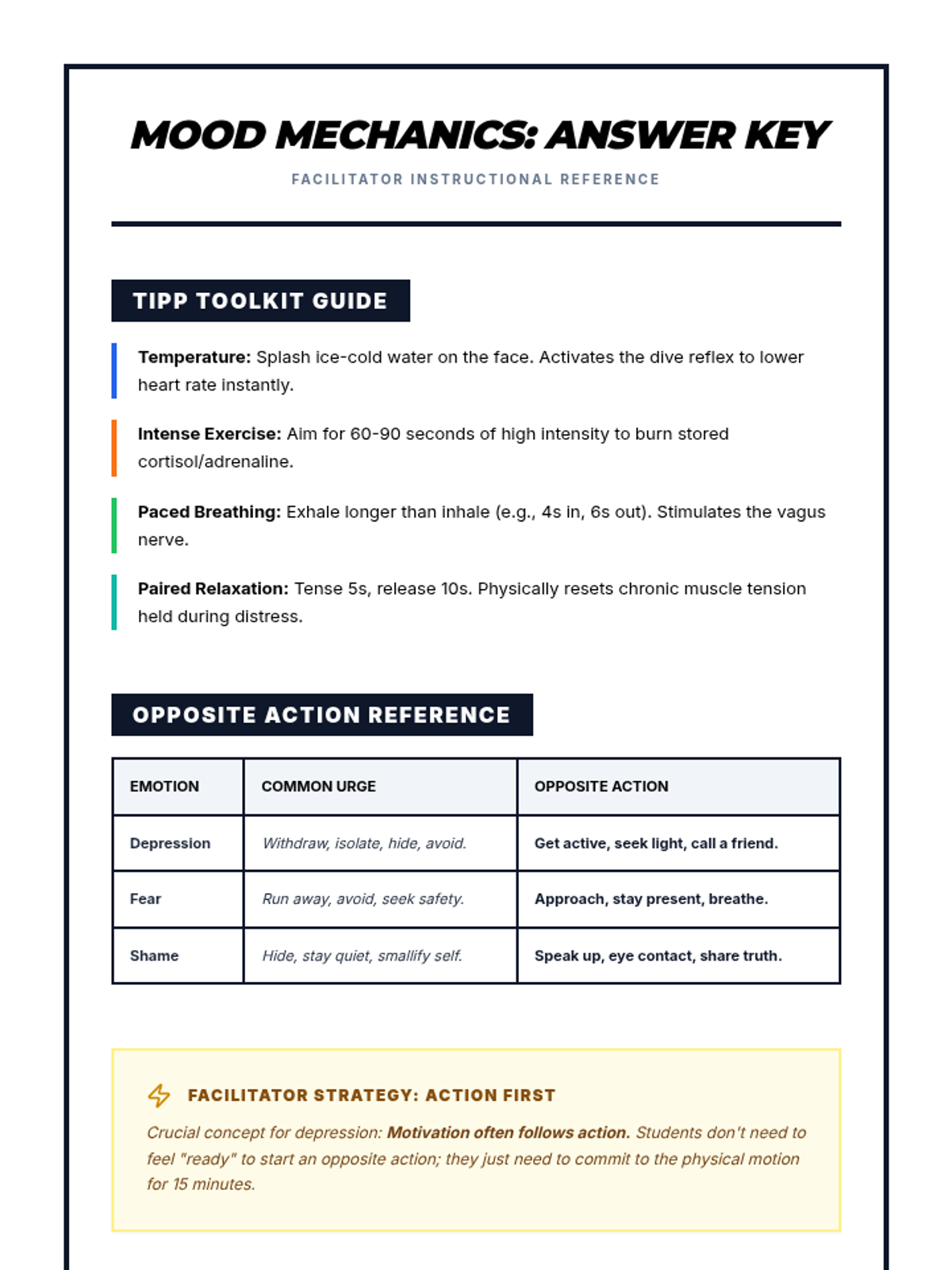
A teacher-facing resource providing example answers and instructional guidance for the TIPP Toolkit and Opposite Action worksheets, with a specific focus on behavioral activation for depression.
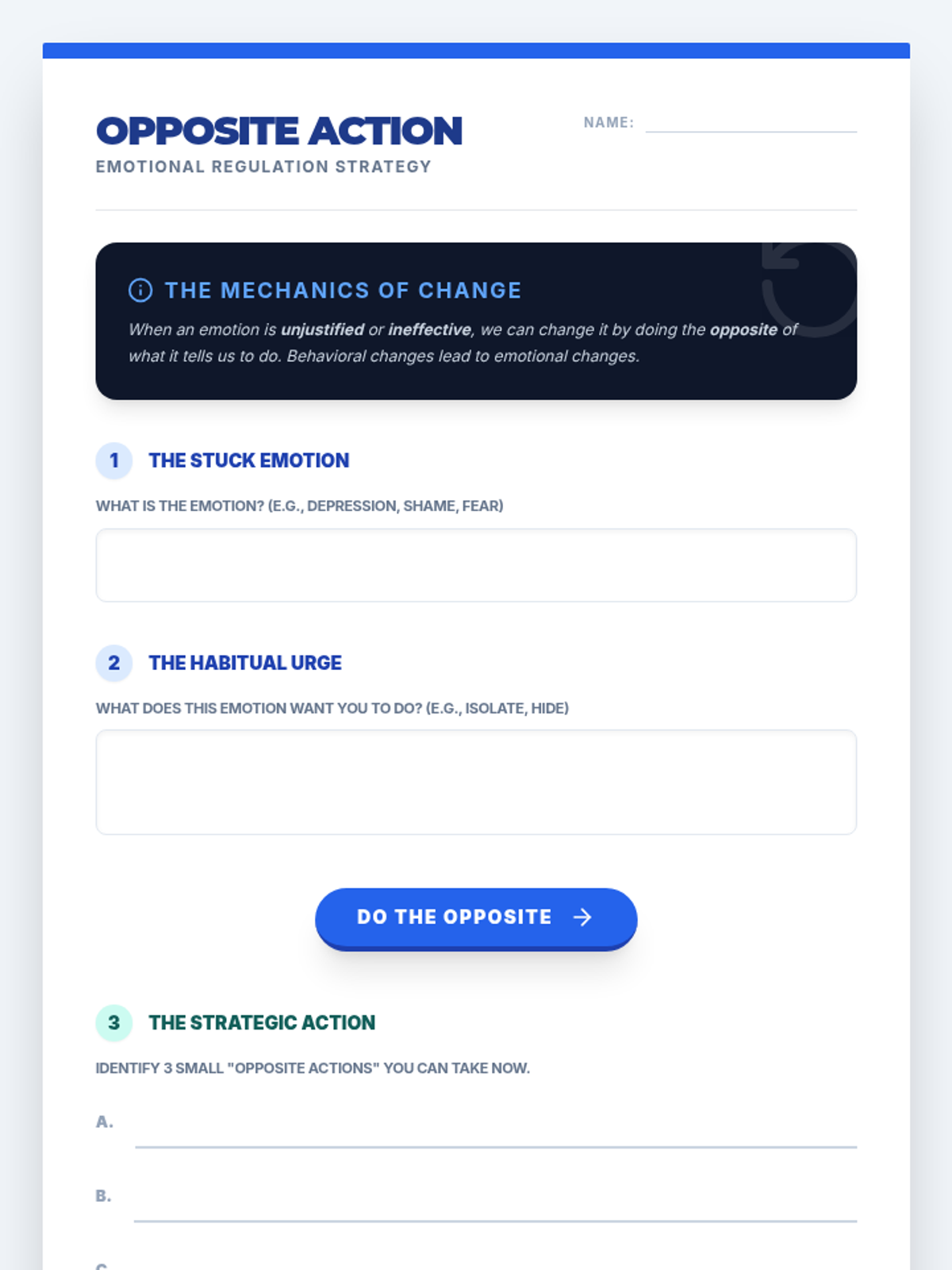
A student worksheet for identifying emotional urges associated with depression and planning 'Opposite Actions' to break negative behavioral cycles, featuring a step-by-step mapping process.
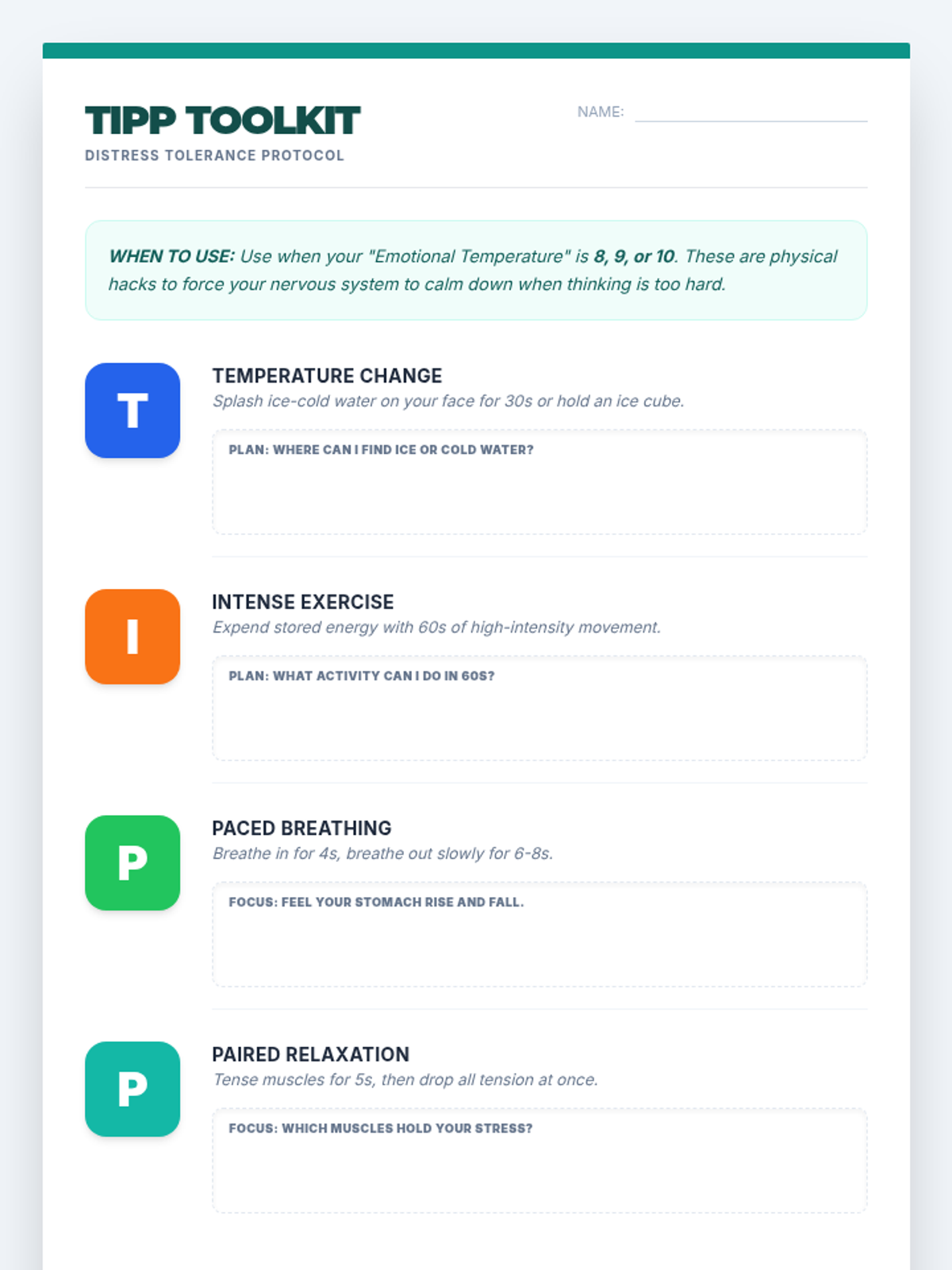
A structured student worksheet for practicing the TIPP (Temperature, Intense exercise, Paced breathing, Paired muscle relaxation) skill set, including planning areas for identifying personalized crisis interventions.
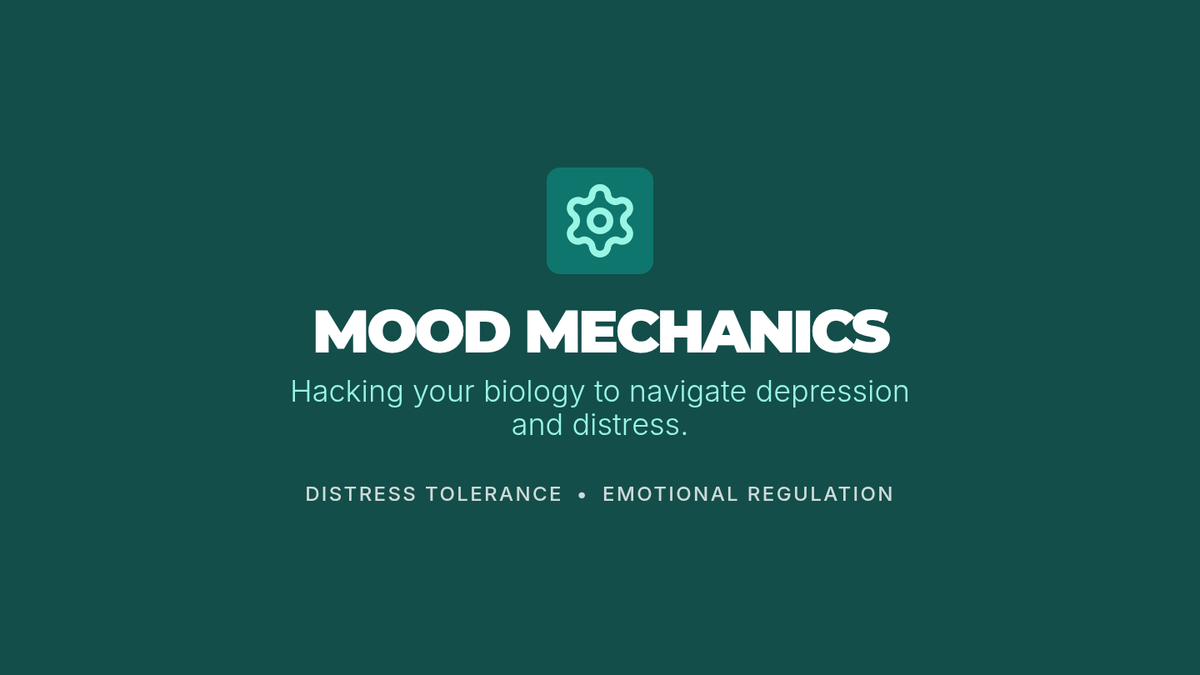
A visually engaging slide deck titled 'Mood Mechanics' that introduces students to Distress Tolerance (TIPP) and Emotional Regulation (Opposite Action) through metaphors of biological 'hacking' and car engine 'redlining'.
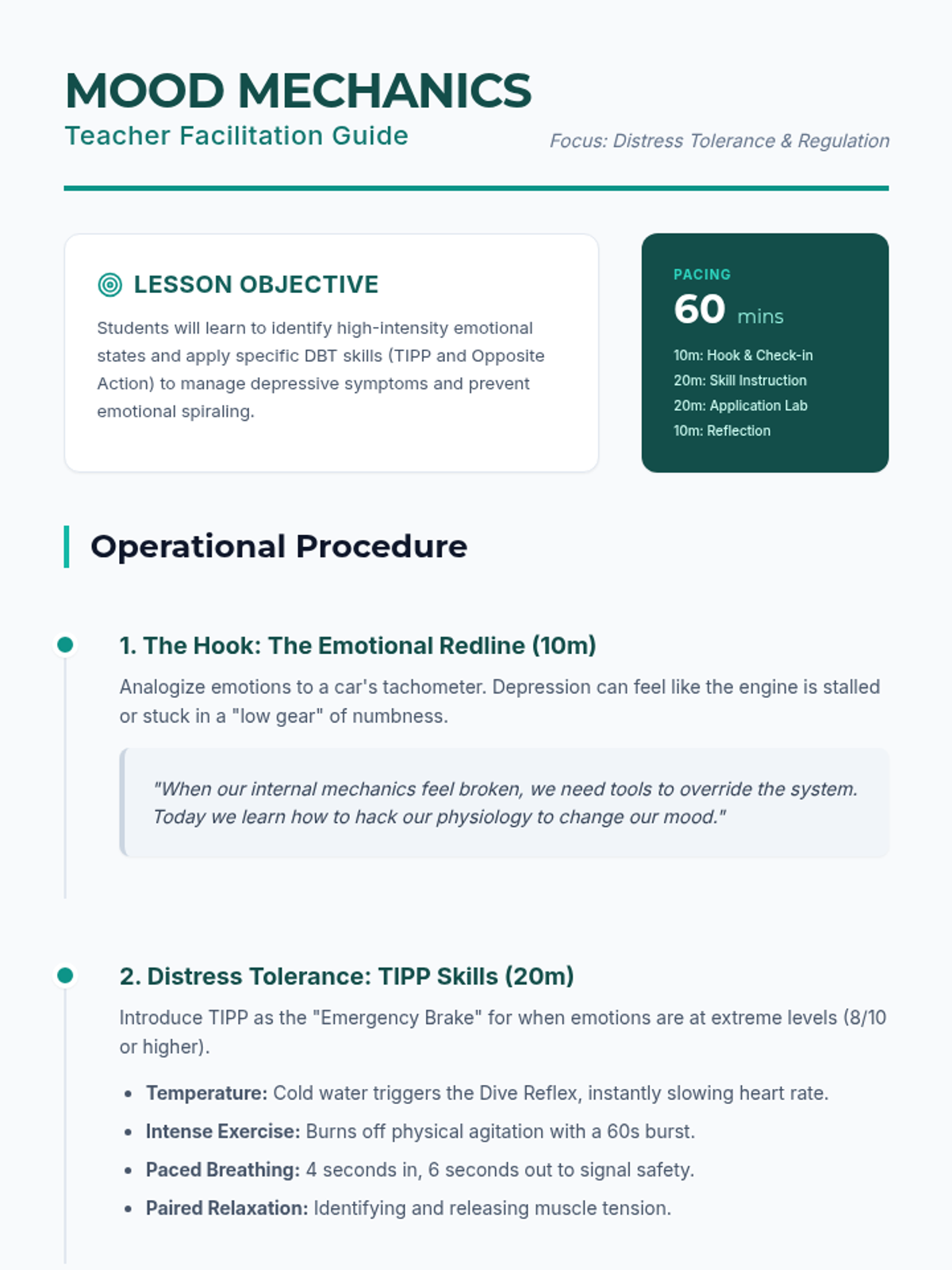
A comprehensive teacher guide for the Mood Mechanics lesson, featuring learning objectives, a detailed instructional sequence, and a toolkit of DBT skills (TIPP and Opposite Action) tailored for managing depression.
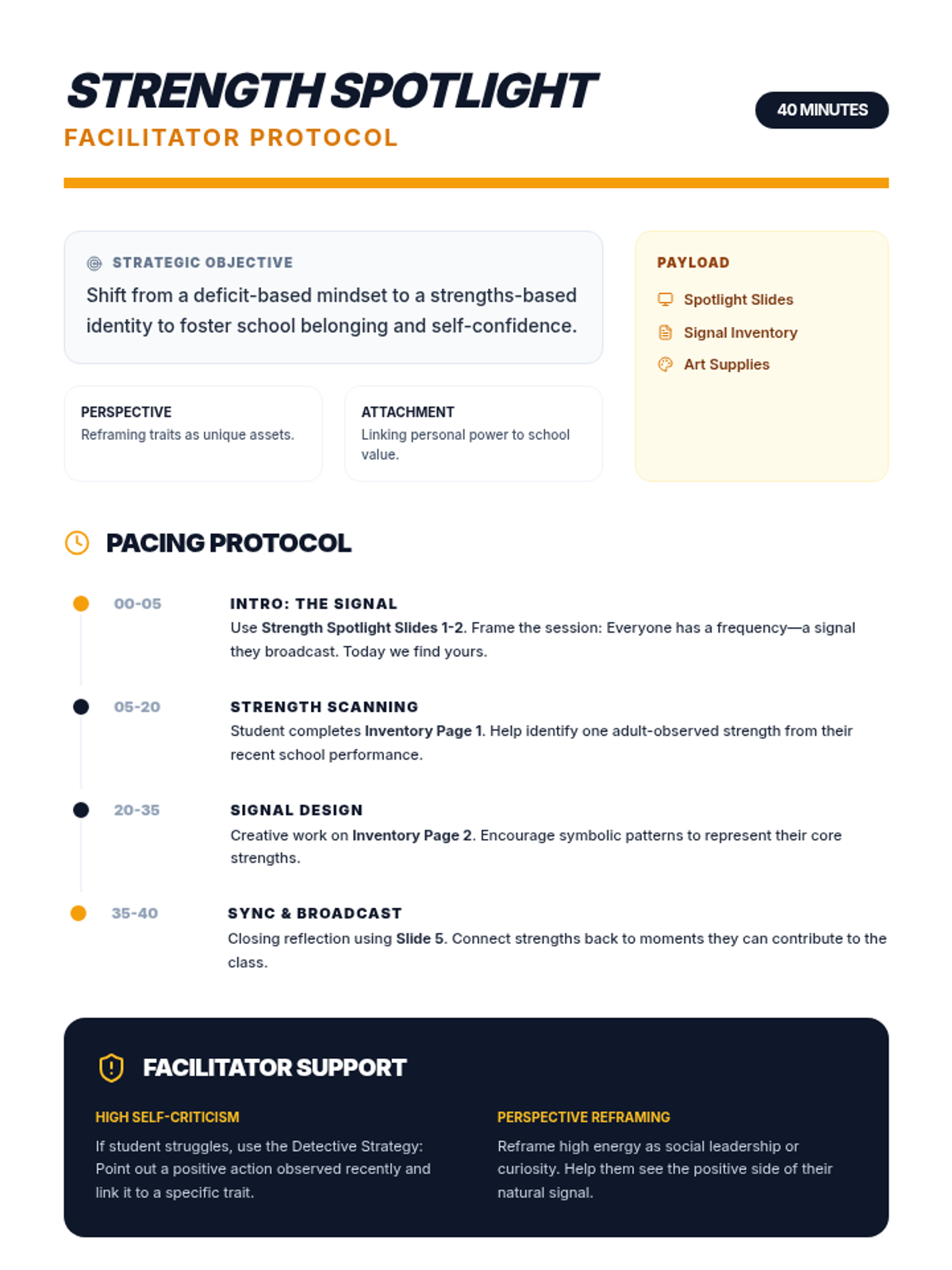
A professional facilitation guide for educators to lead the 40-minute 'Strength Spotlight' lesson. Revised to ensure logical flow across pages and clear pacing protocols. Includes strategic objectives and troubleshooting tips.