A comprehensive facilitation guide for teachers, outlining the timing, materials, and step-by-step procedures for the Shark Tank Showdown lesson.
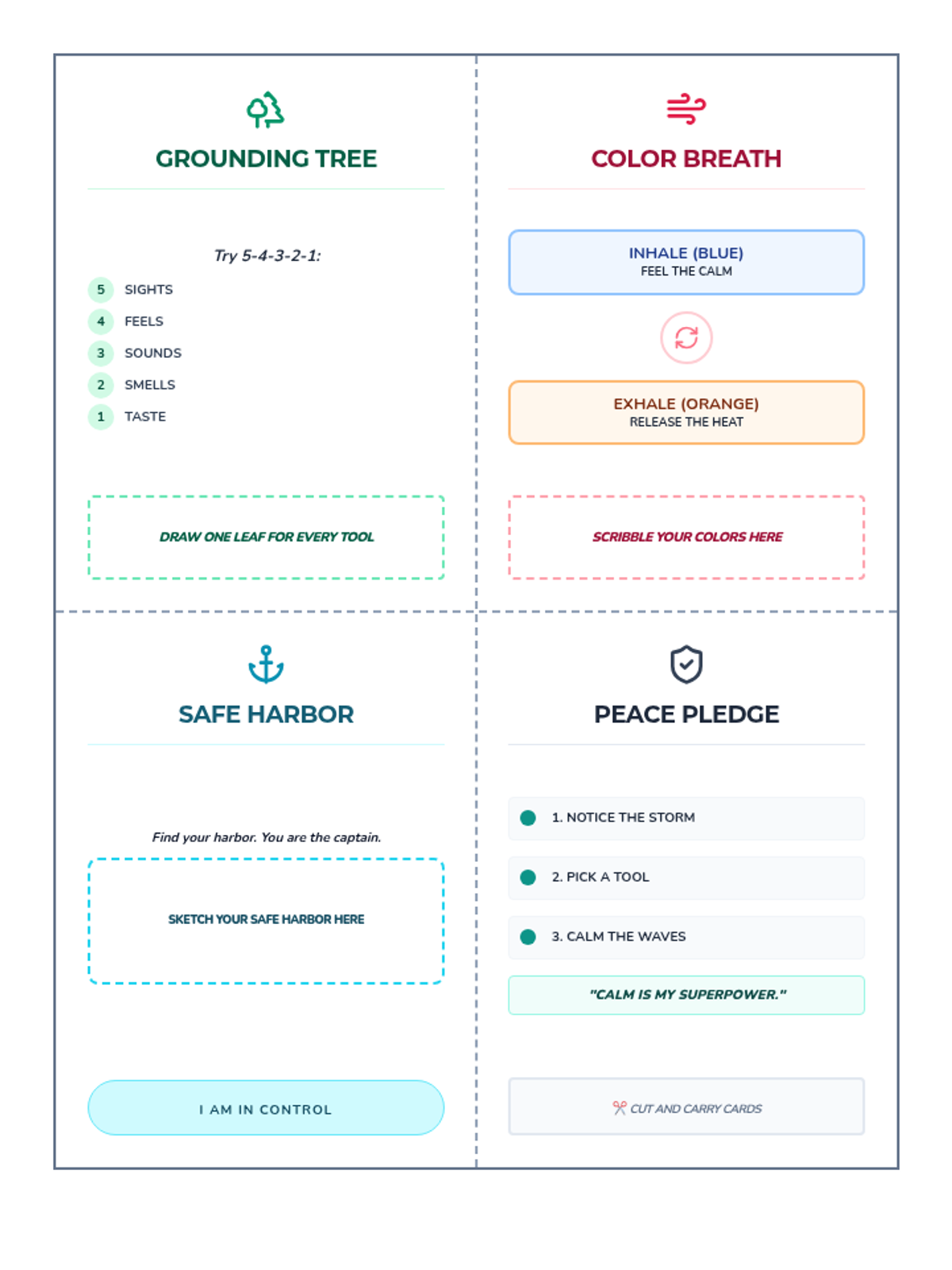
Four pocket-sized 'Pocket Peace Cards' that students can color, cut out, and carry to remind them of grounding, breathing, and visualization techniques for independent regulation.
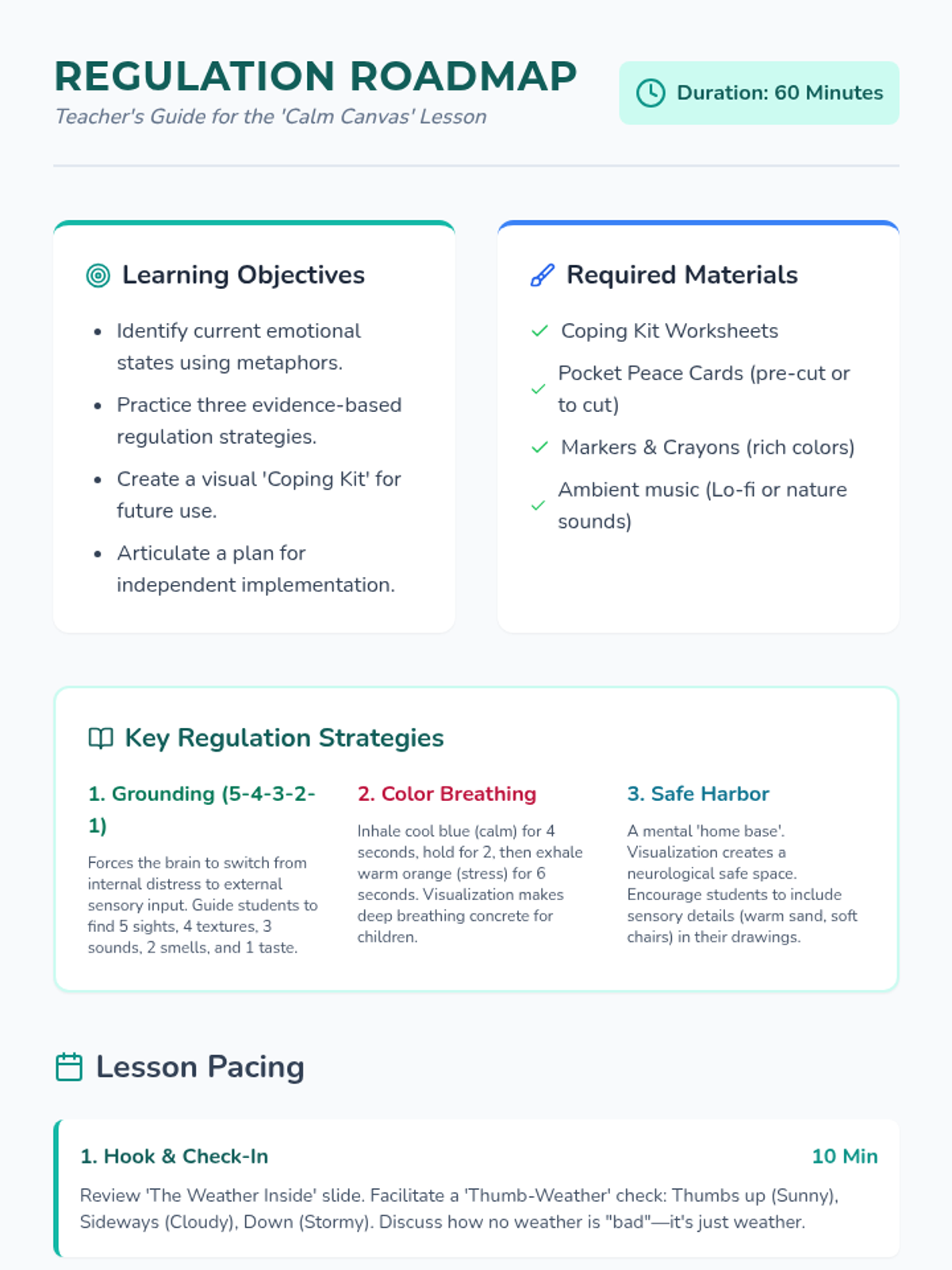
A teacher-facing lesson plan providing pacing, instructional strategies, and differentiation tips for implementing the Calm Canvas art and regulation lesson.
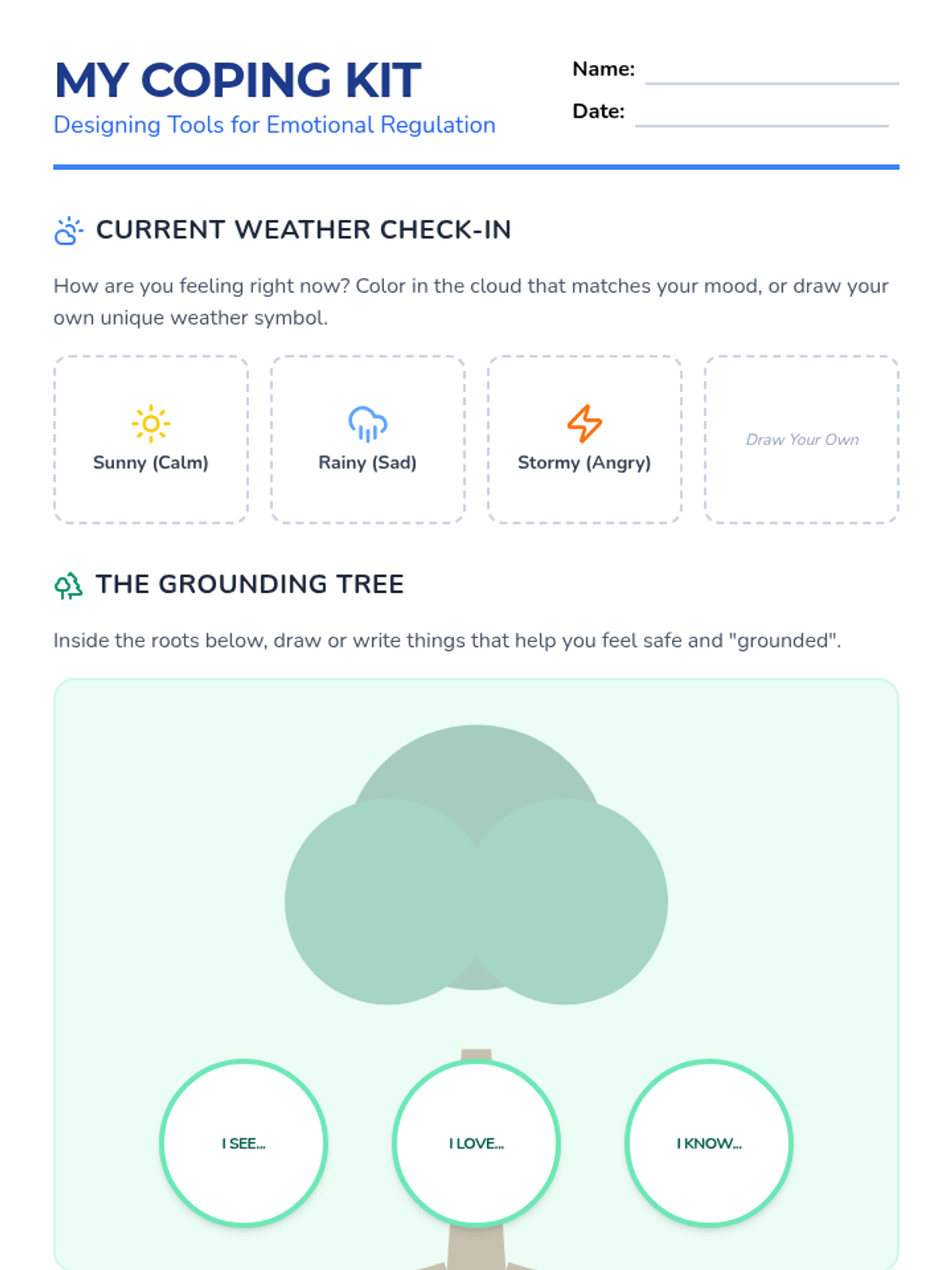
A two-page student worksheet that guides students through identifying their emotions and creatively drawing their own 'Coping Kit', featuring a 'Grounding Tree' and a 'Safe Harbor' visualization space.
A visual slide deck that introduces emotional regulation concepts through the metaphor of weather and 'The Safe Harbor', teaching three specific art-linked coping strategies.
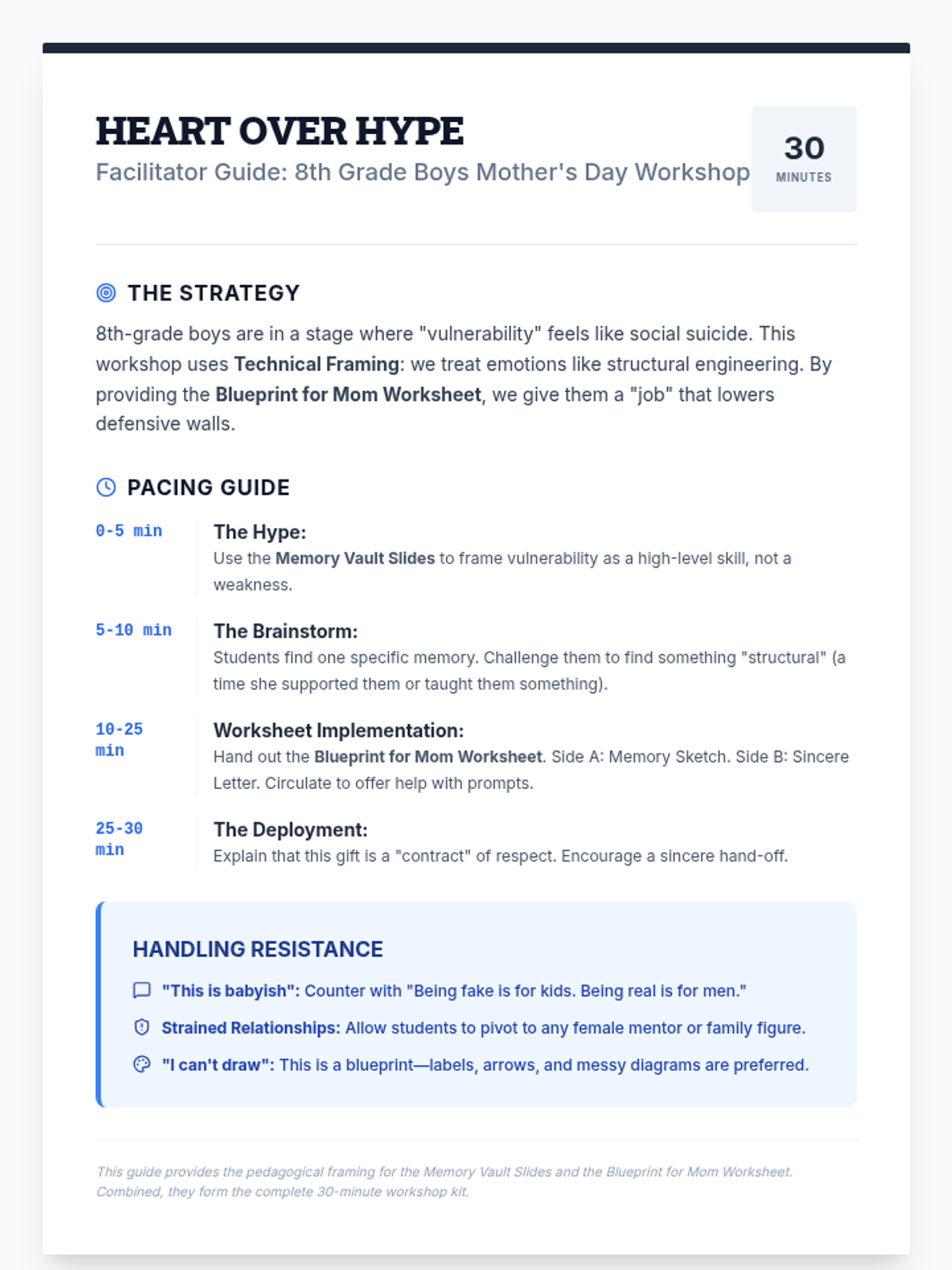
A facilitator guide for teachers leading a Mother's Day workshop for 8th-grade boys. It provides a 30-minute pacing guide, instructional strategies for overcoming emotional resistance, and a core philosophy of 'Technical Framing' to encourage vulnerability.
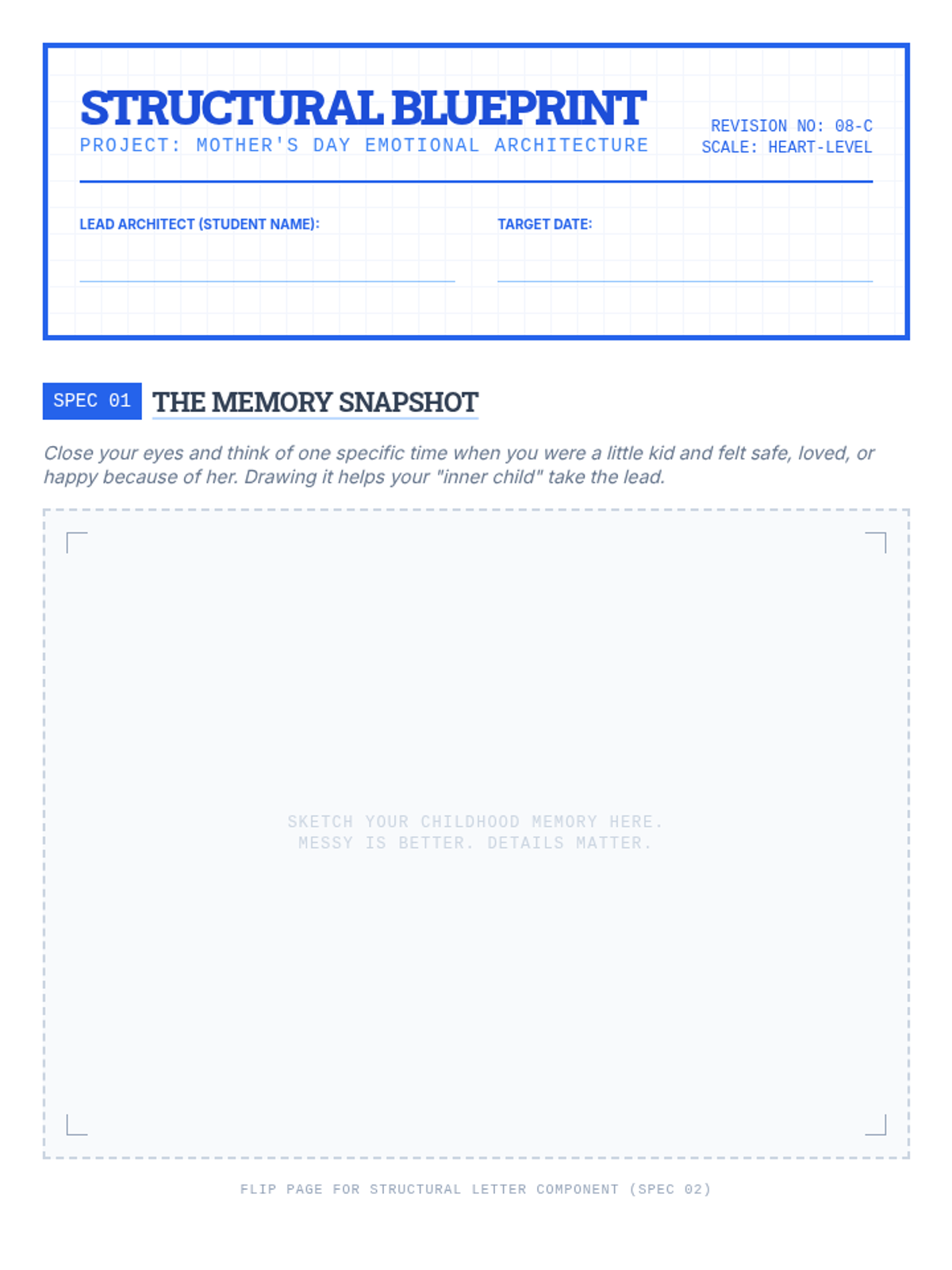
A double-sided student worksheet designed as a 'Structural Blueprint'. It guides students through sketching a childhood memory and writing a heartfelt, vulnerable letter to their mother, using technical prompts to frame emotional expression as a high-value skill.
A visual presentation for 8th-grade boys that frames Mother's Day as a 'Mission' requiring emotional bravery. It uses a technical blueprint aesthetic to make vulnerability feel like a skill to be mastered rather than a weakness.
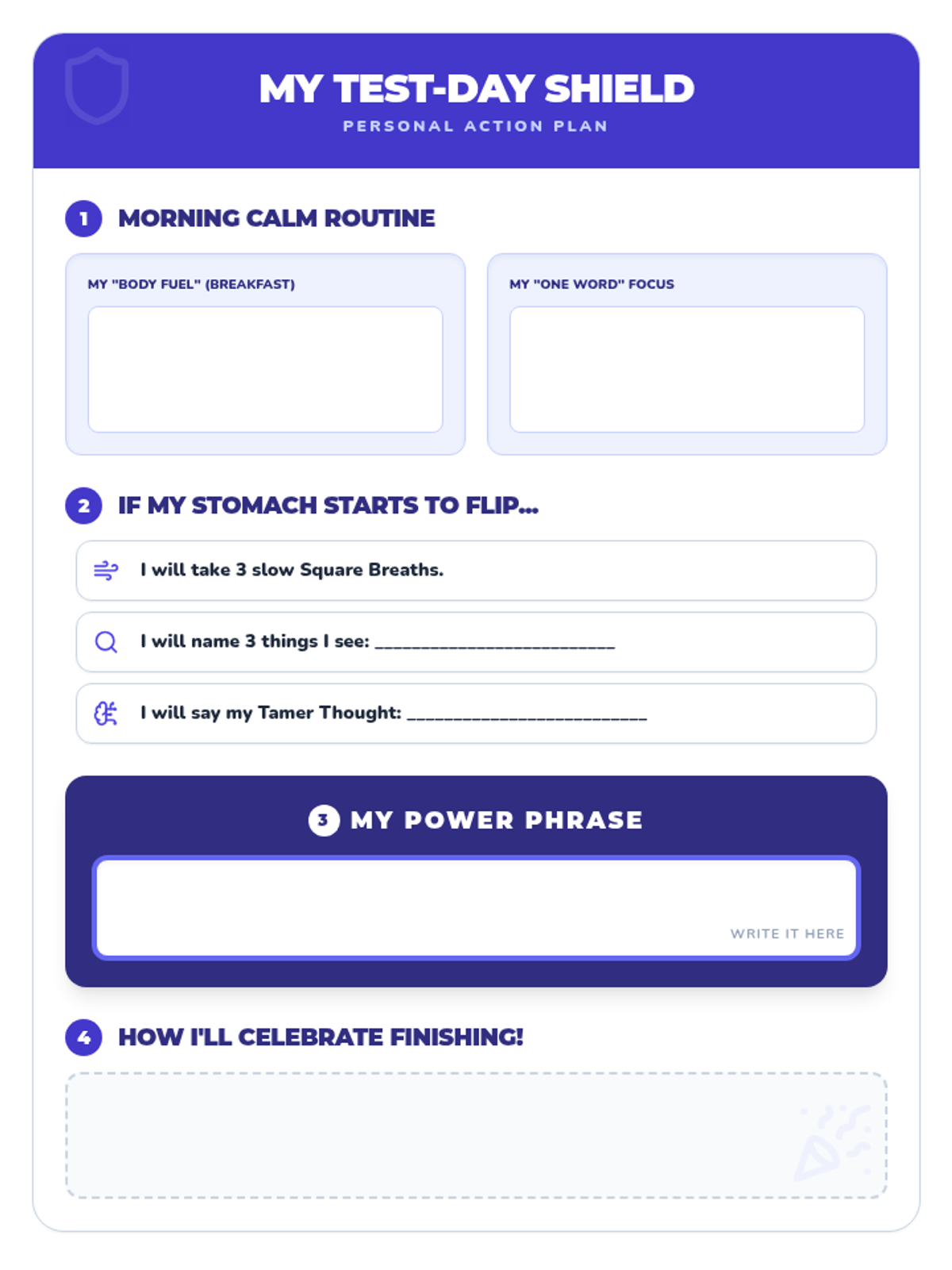
A summary action plan for students to keep in their folders or on their desks, outlining their specific routine and coping strategies for test days.
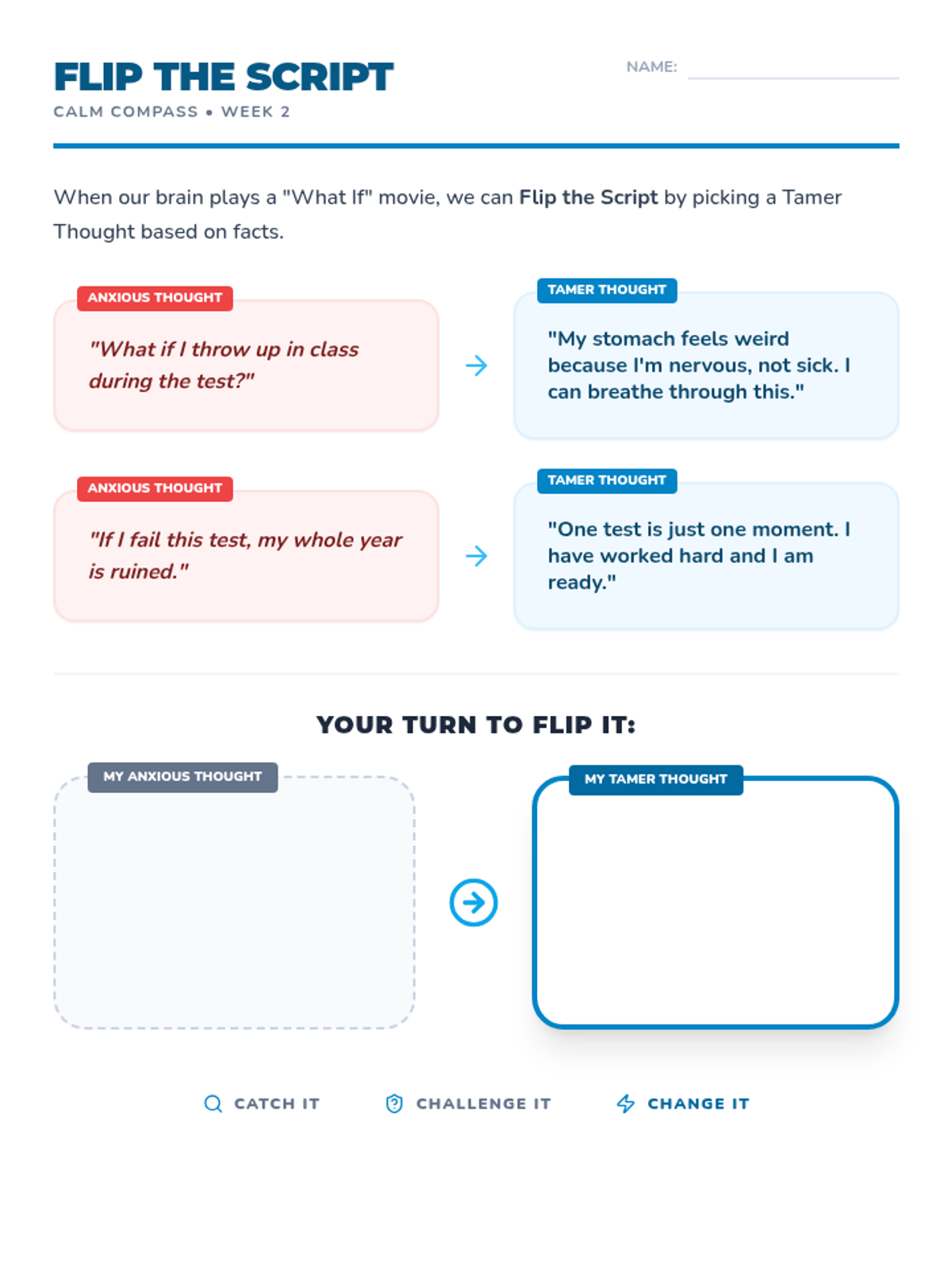
An activity sheet for cognitive reframing, helping students identify anxious 'what if' thoughts and replace them with helpful, evidence-based thoughts.
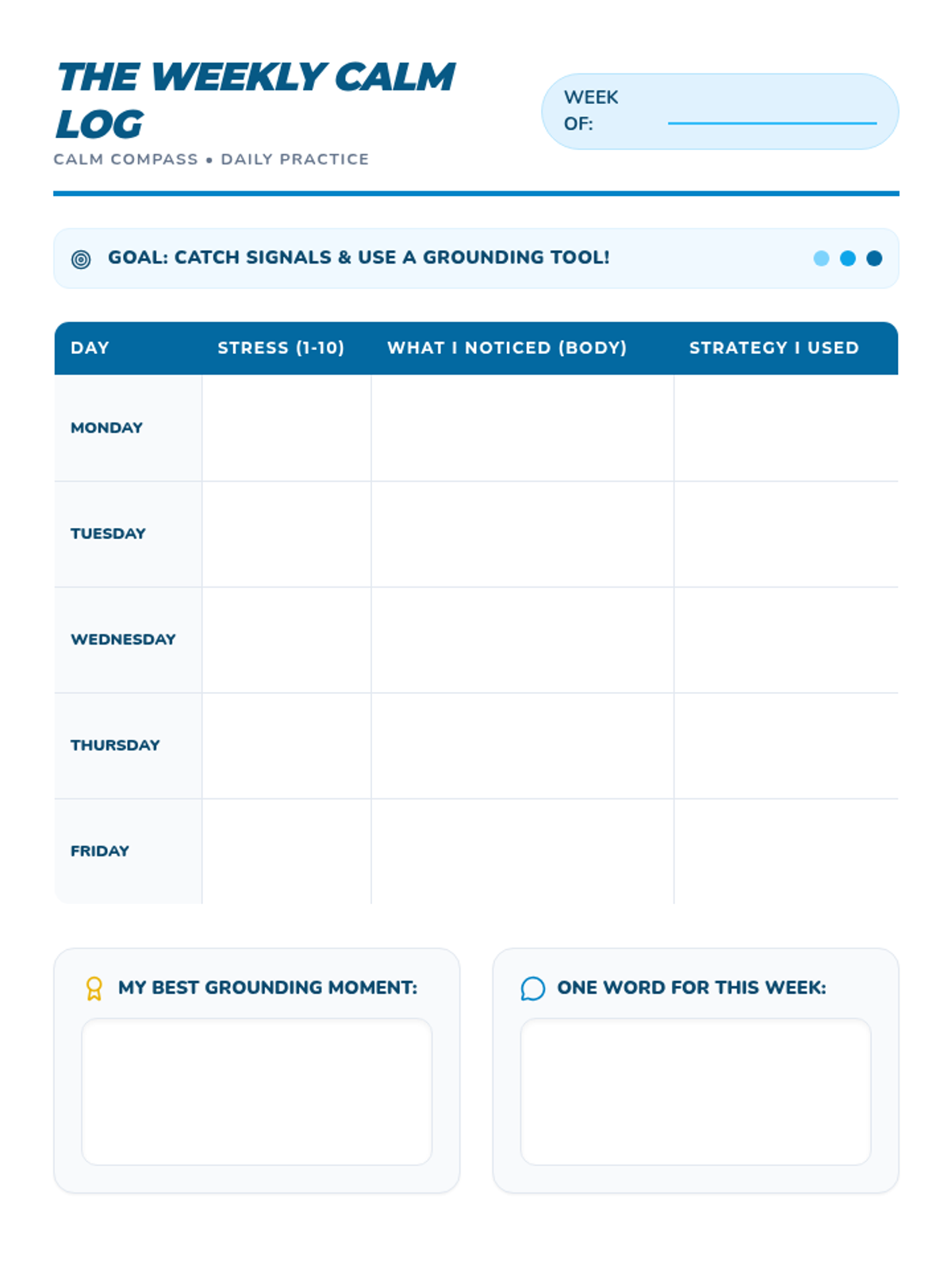
A weekly check-in log for students to track their anxiety levels, physical symptoms, and the coping strategies they utilized throughout the week.
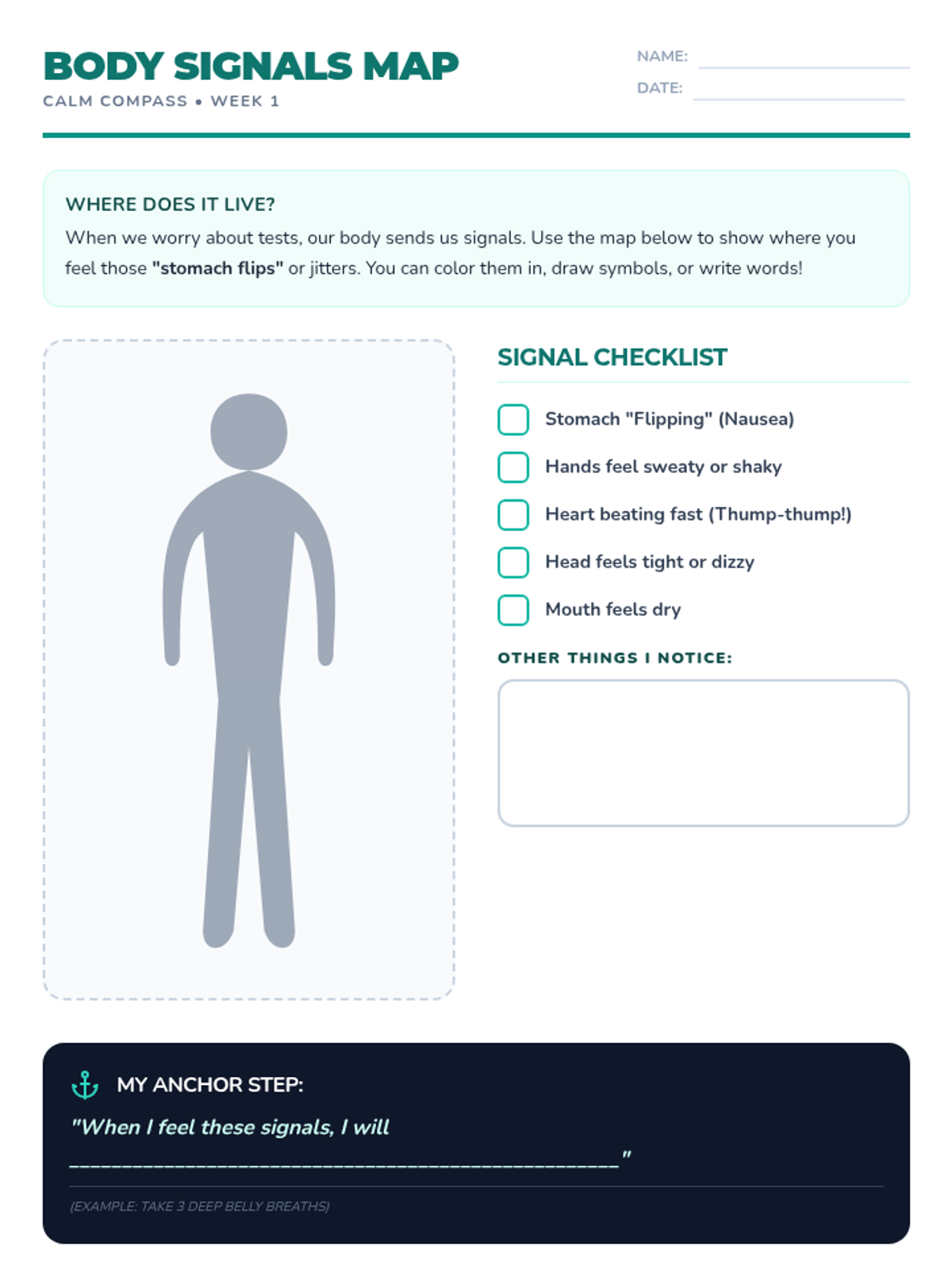
A printable worksheet featuring a body map for students to identify and visualize where they feel physical symptoms of anxiety.
A visual presentation to help students understand the physical mechanics of anxiety (the 'fire alarm' response) and learn the 5-4-3-2-1 grounding technique.
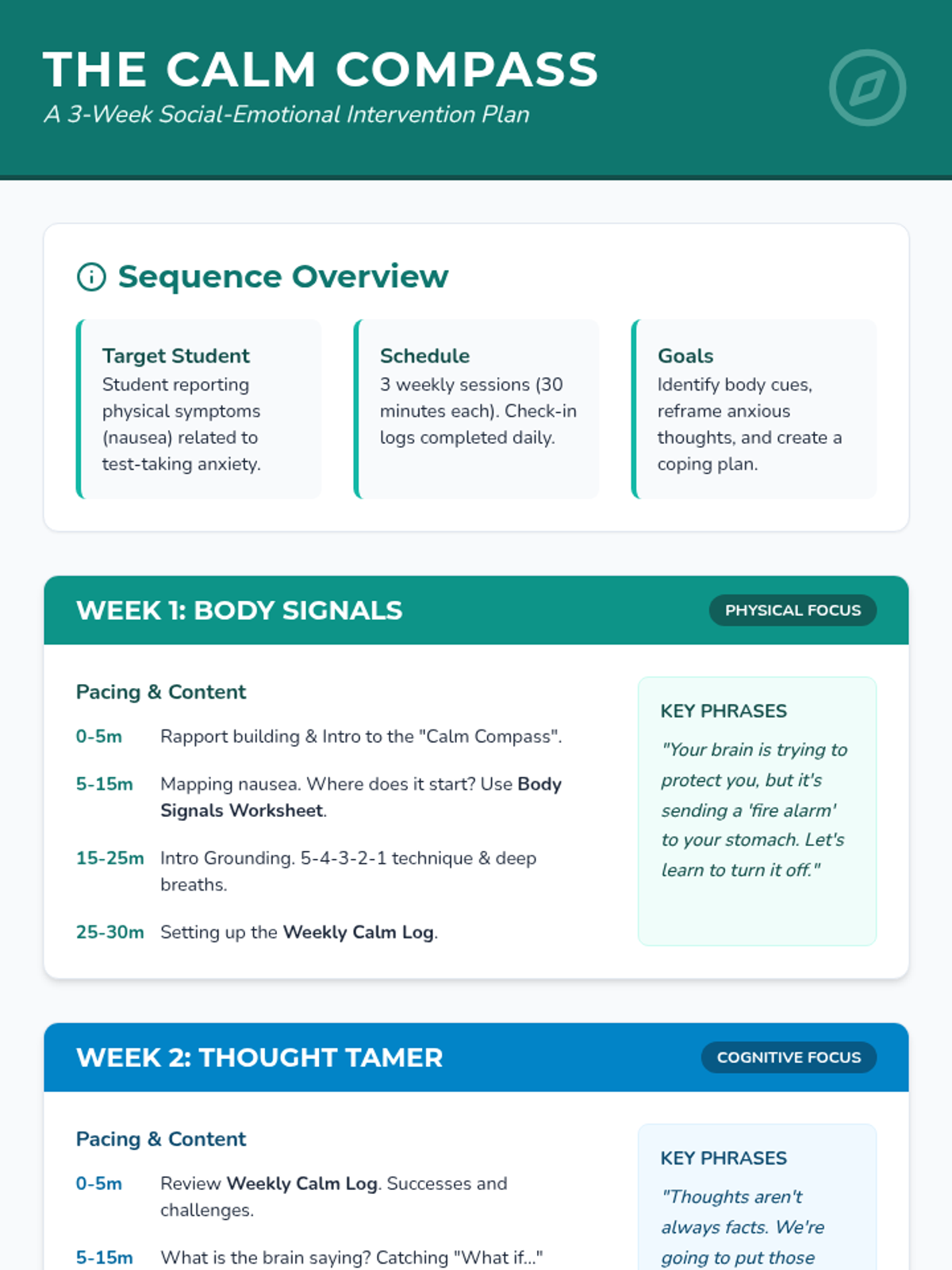
A detailed 3-week facilitator guide for a school social worker to implement a test anxiety intervention sequence. It includes session pacing, key talking points, and a materials checklist.
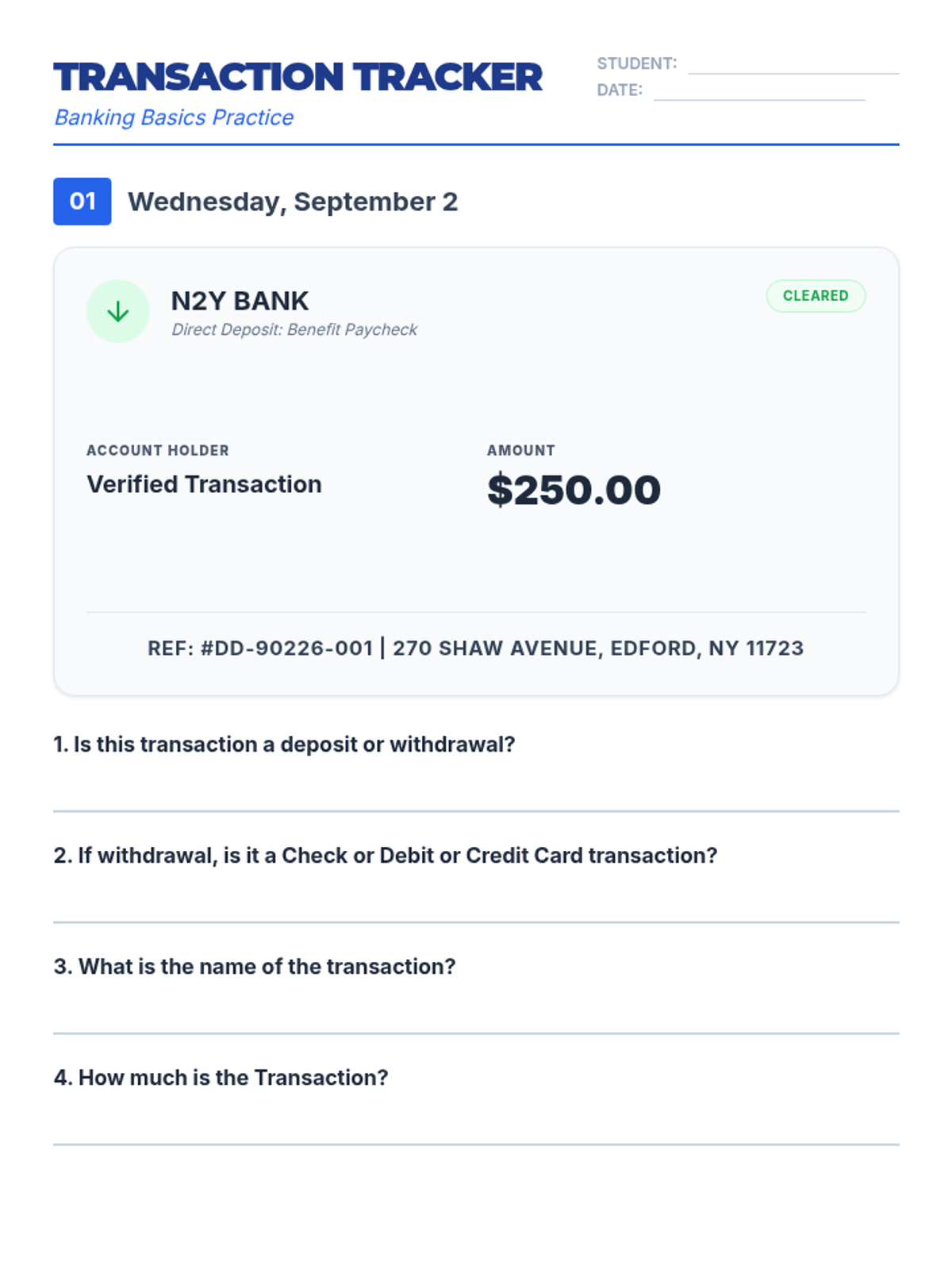
A complete September transaction tracker worksheet set including all 18 transaction records from the provided curriculum, featuring enlarged, high-contrast address fonts for better readability.
An instructional presentation for students on executive function skills. Covers the 1-2-3 Rule for prioritization, time estimation hacks (the buffer rule), and strategic environment mapping (school vs. home) using a high-impact mission-control aesthetic.
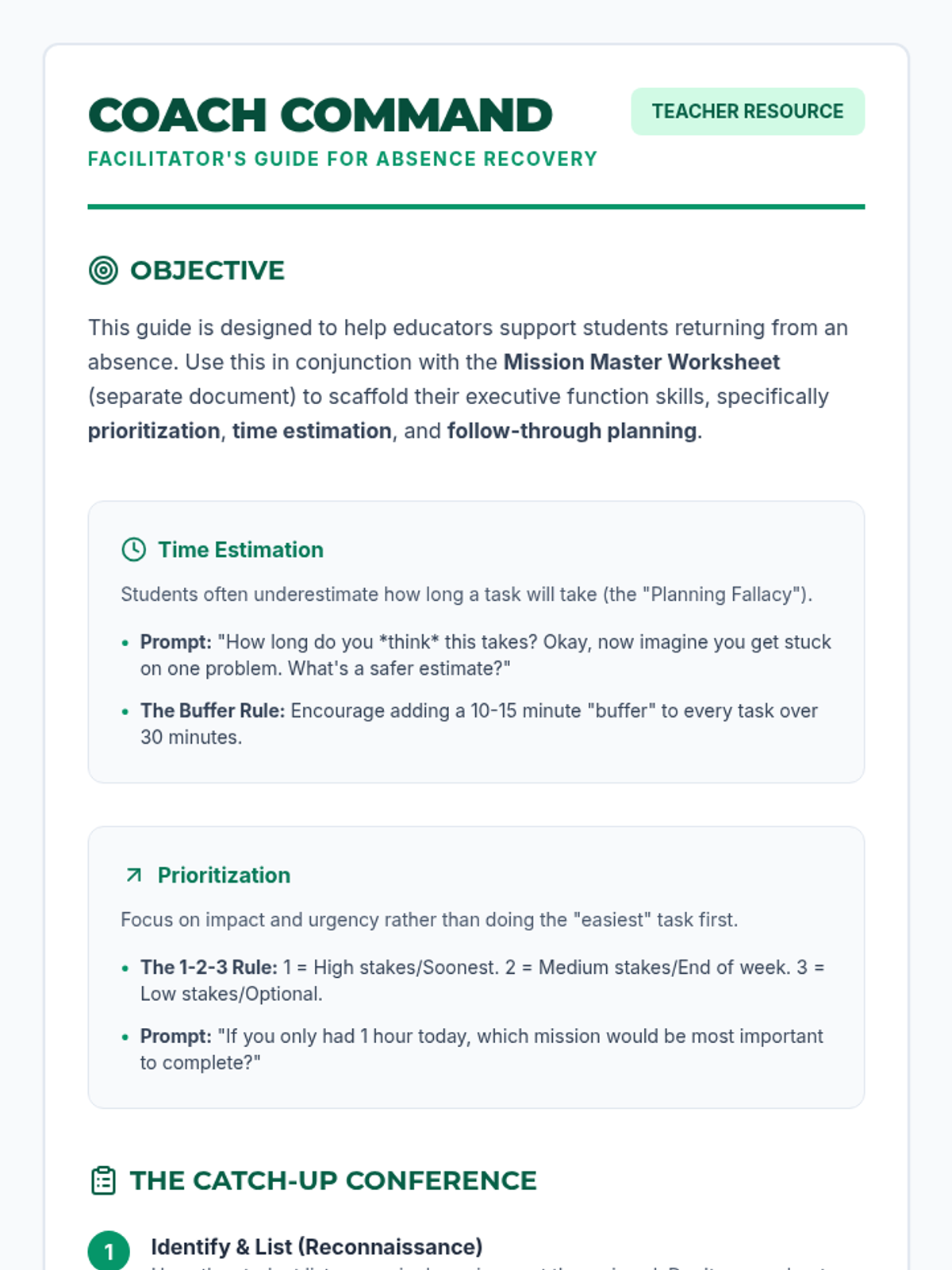
A teacher-facing guide to facilitate an absence-recovery conference. Provides specific coaching prompts for time estimation, prioritization techniques, and a step-by-step facilitation framework for supporting executive function skills.
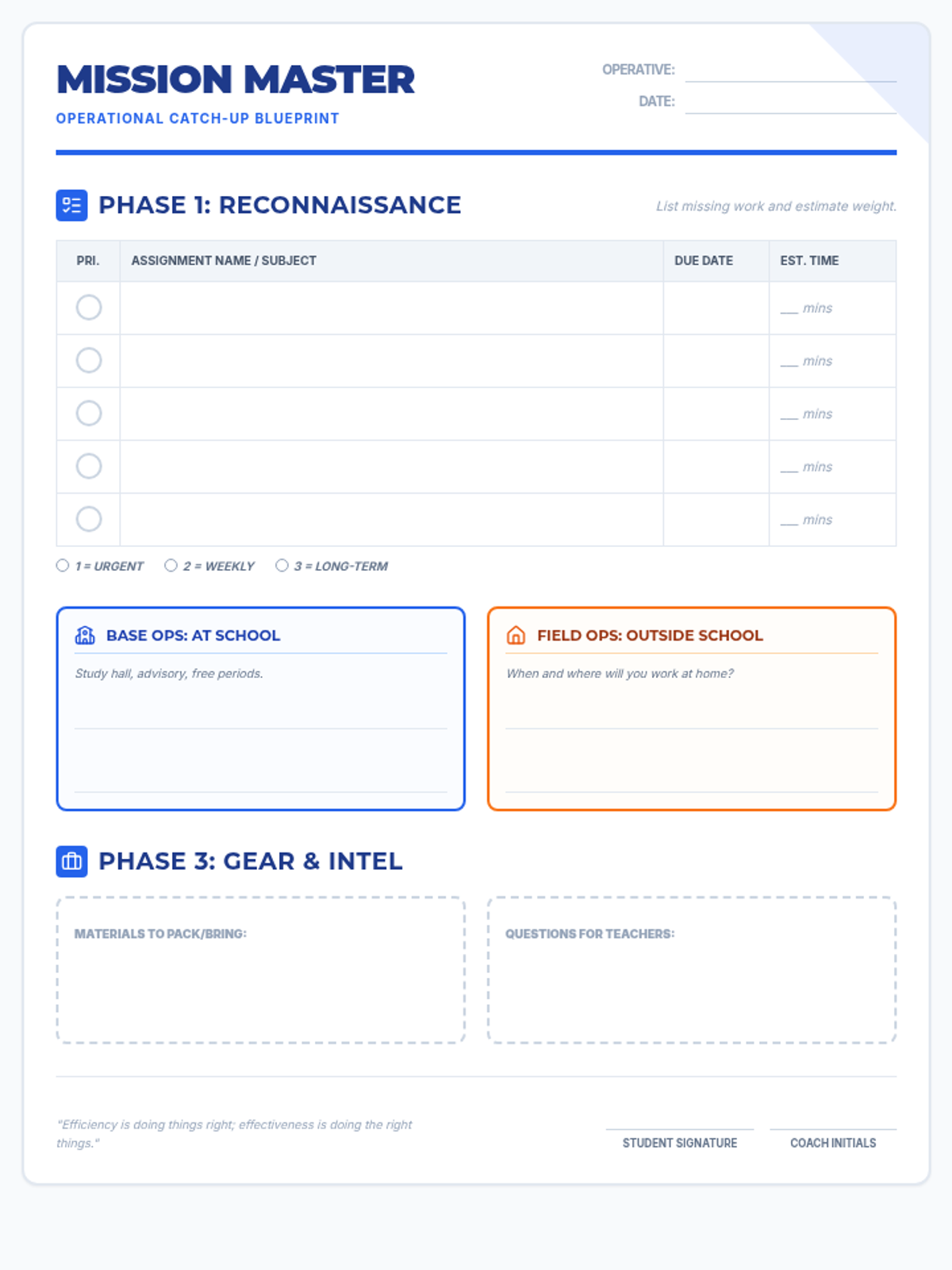
A structured student-facing planning tool for managing missing work after an absence. Includes sections for task prioritization, time estimation, and school vs. home action planning with a professional mission-control aesthetic.
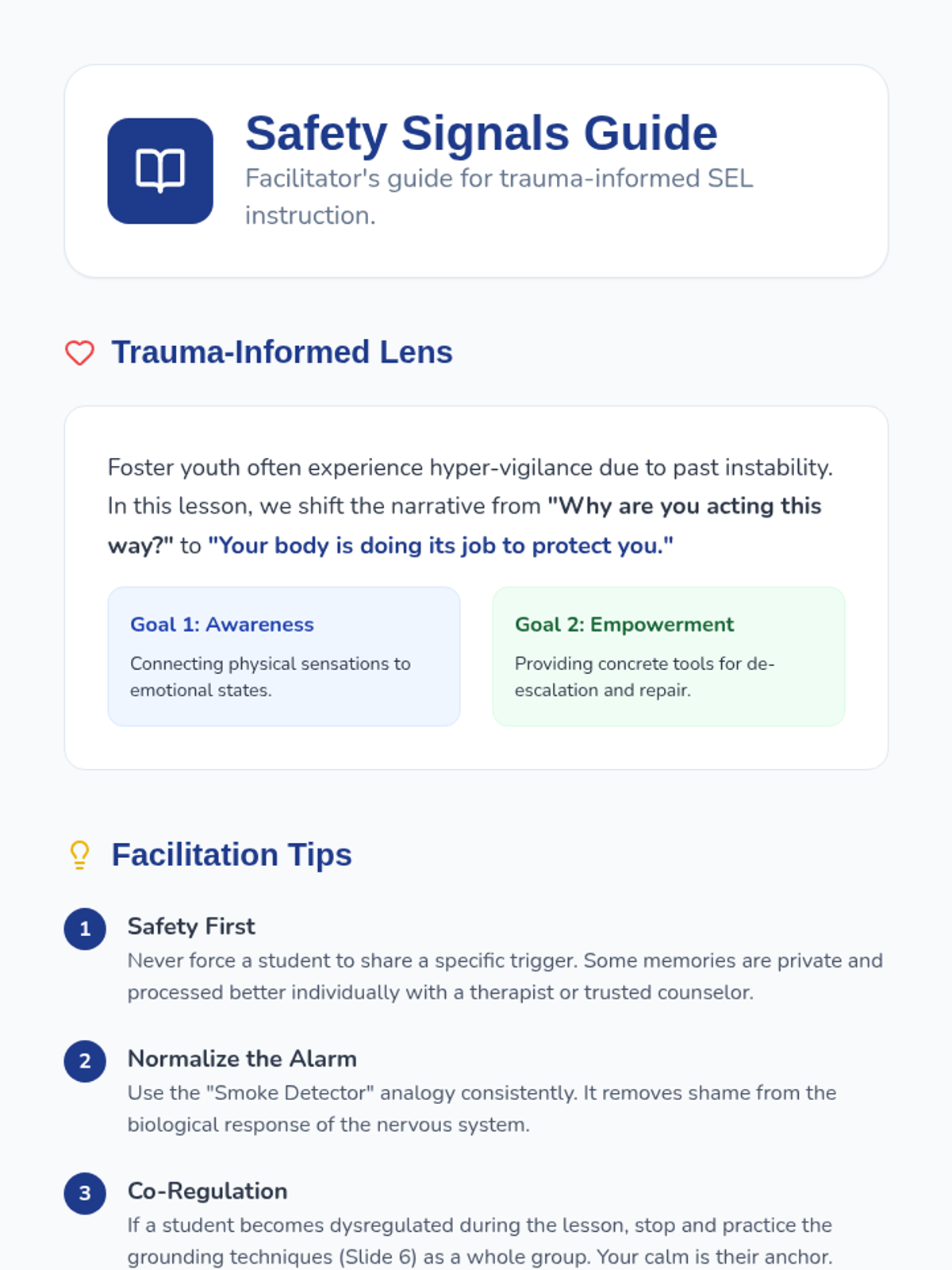
A comprehensive teacher's guide providing trauma-informed facilitation strategies, discussion prompts, and co-regulation techniques to support students during the Safety Signals lesson.
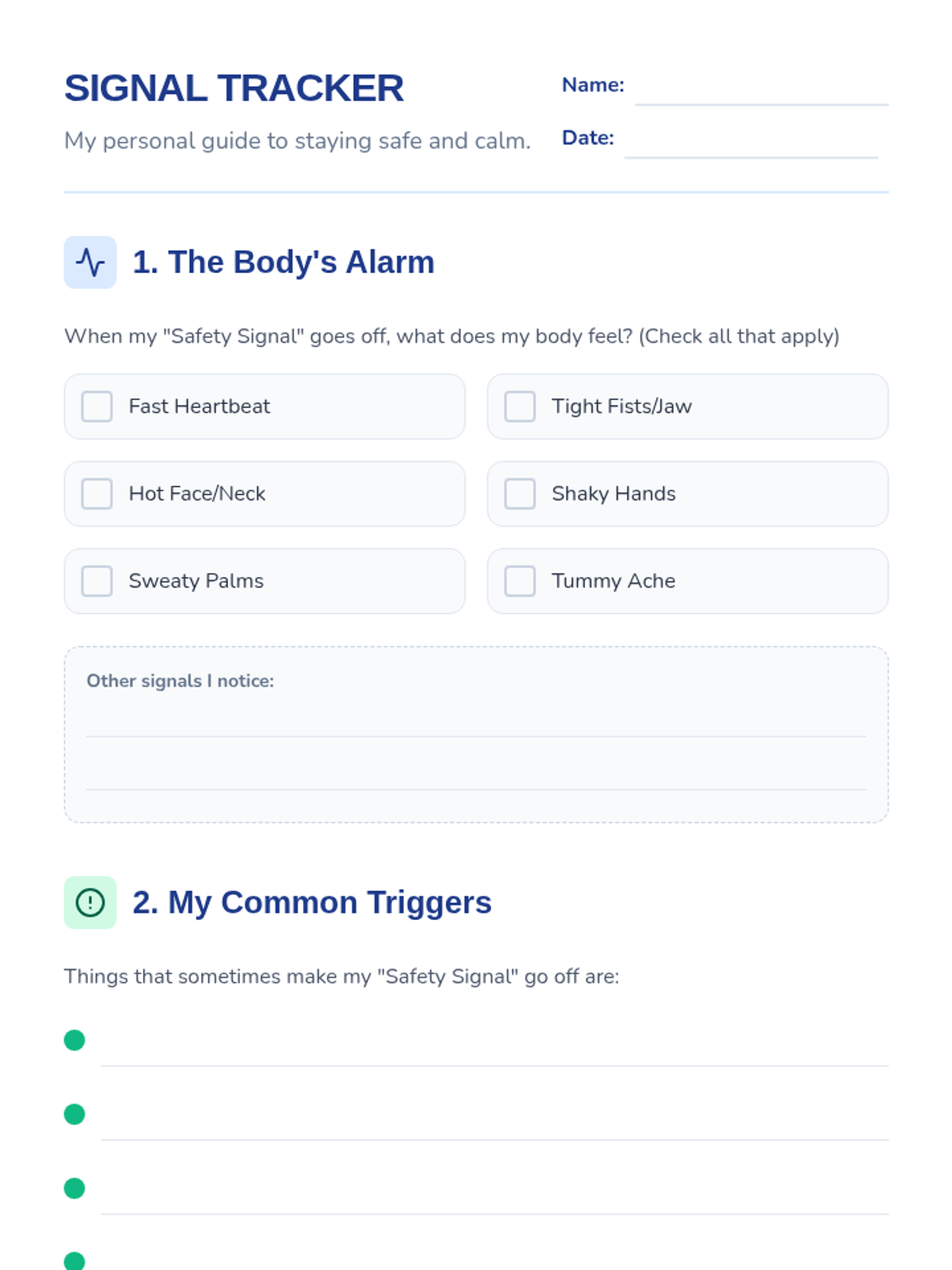
A printable worksheet for students to map their physical trauma responses, identify specific triggers, and create a personalized "Peace Plan" for self-regulation and communication.
A slide presentation designed for foster youth to help them identify personal trauma triggers (Safety Signals) and practice effective conflict resolution using "I-Statements" and grounding techniques.
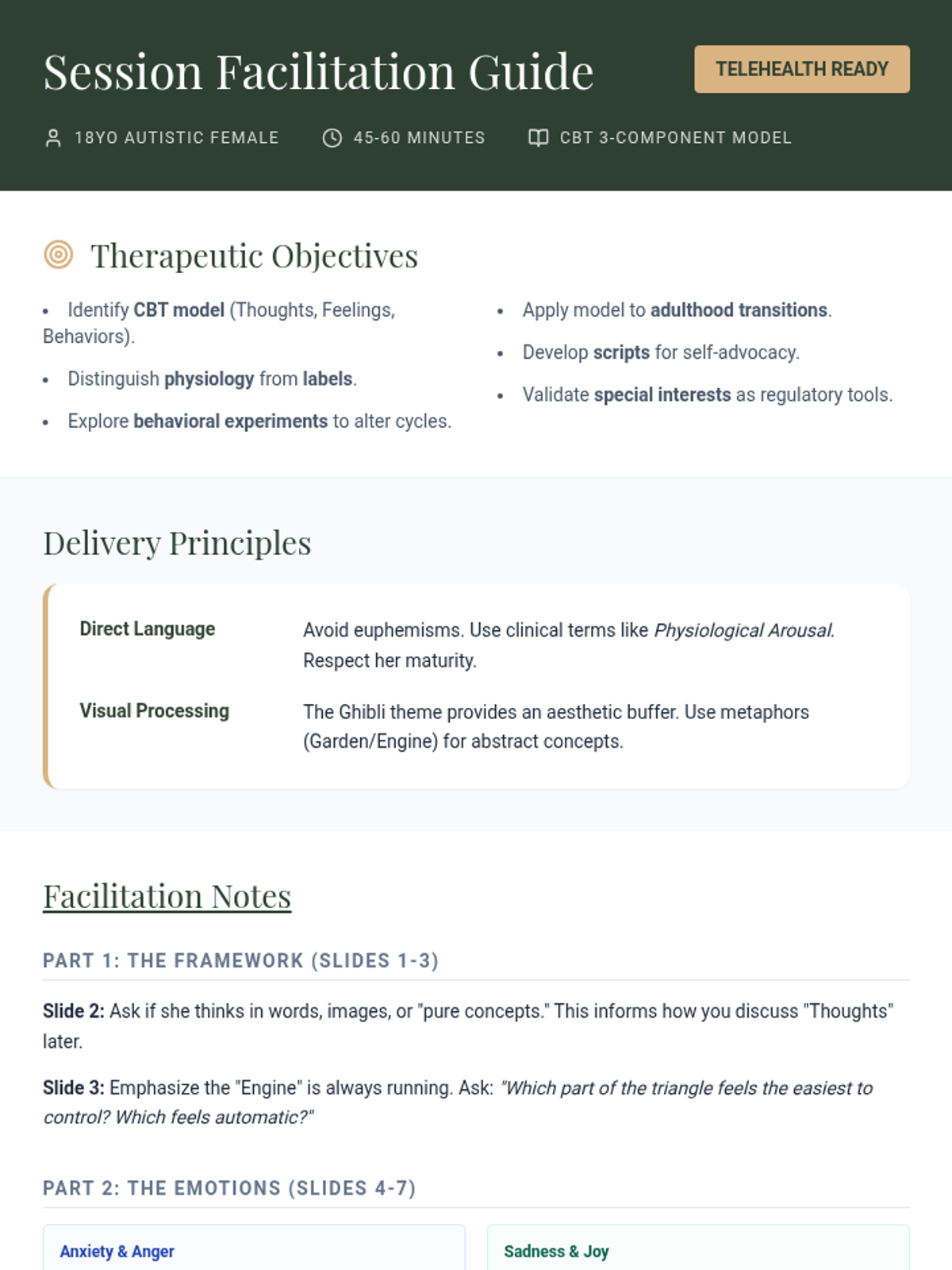
A facilitation guide for clinicians delivering the Internal Landscapes psychoeducation session via telehealth. Includes pacing notes, discussion prompts, and clinical delivery tips for working with autistic young adults.
A comprehensive slide deck for psychoeducation on the CBT 3-component model of emotions, featuring Studio Ghibli-inspired visuals and mature, direct language for an 18-year-old student. Includes interactive social story scenarios and practical communication tools.
An updated 15-slide presentation for telehealth, now featuring 6 interactive social stories. Each story focuses on identifying Thoughts, Feelings, and Behaviors in scenarios involving friendship betrayal, exclusion, family conflict, and disappointment.