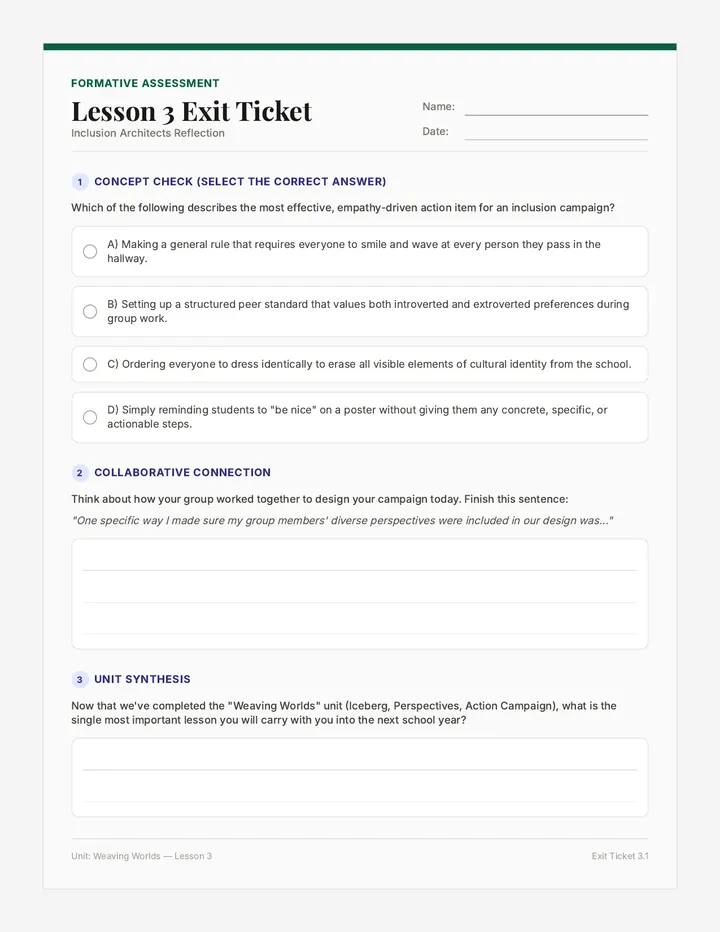
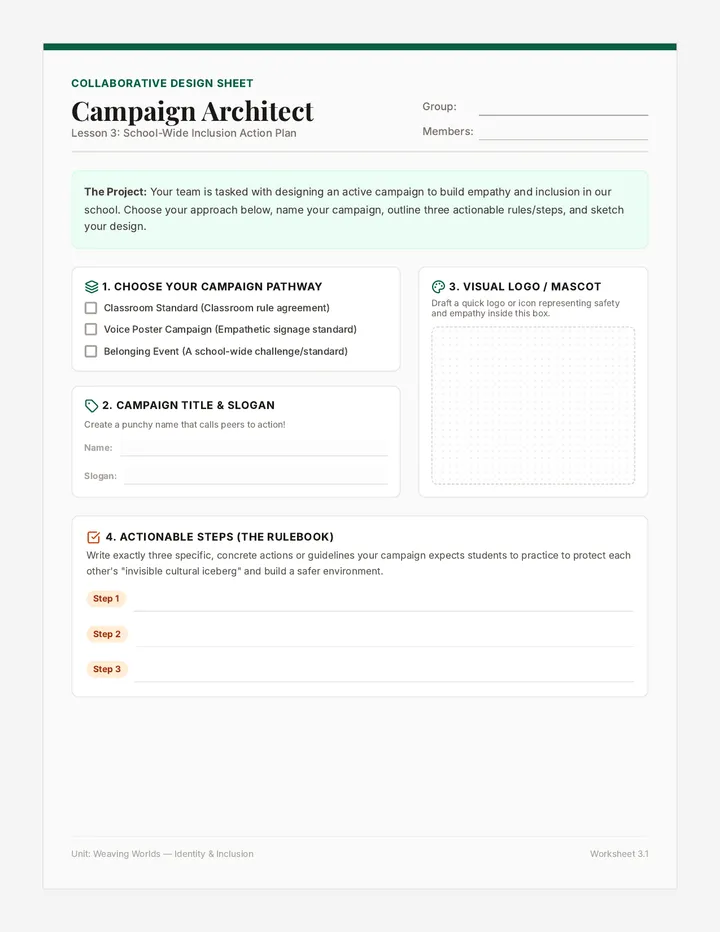
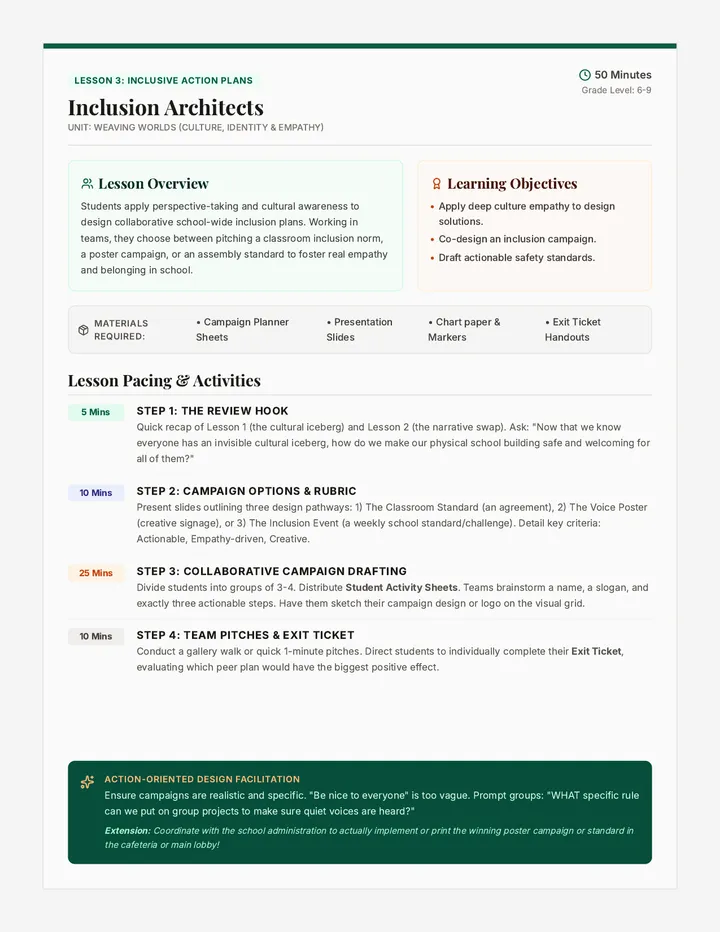
A warm and inviting flyer promoting wellness goodie bags for staff, featuring descriptions of a mental health journal and positive fruit gift with a clear "Limit: One per staff member" instruction and a "Grab one bag and enjoy!" call to action.
A teacher answer key providing recommended priorities and logical reasoning for the six schedule scramble scenarios, including sample social scripts using the V-F-P model.
A high-contrast, visual infographic poster designed for neurodivergent youth experiencing homelessness. It provides clear, direct guidance on public Wi-Fi safety, social media privacy, identifying predatory red flags, and safe protocols for meeting online friends in person.
A teacher facilitation guide providing objectives, discussion points for each scenario card, and a framework for teaching students how to politely decline invitations using the V-F-P model.
A step-by-step resolution worksheet that guides students through visualizing a conflict on a timeline, identifying the specific overlap, stating their chosen priority, and drafting a polite social message to decline.
A decision-making graphic organizer used to compare two conflicting events. It helps students weigh commitments based on consequences, flexibility, and social impact to determine a priority.
A set of 6 scenario cards featuring schedule conflicts common to high schoolers, including work, social, family, and extracurricular overlaps. Designed to be cut out and used for problem-solving discussions.
A high-impact infographic poster designed for display in staff lounges to remind educators of the distinct steps for urgent vs. non-urgent scholar wellness referrals.
A procedural flowchart for staff to distinguish between urgent self-harm concerns and non-urgent wellness referrals, including clear steps for immediate notification and form submission.
A teacher-facing discussion guide with specific prompts and facilitation tips to lead meaningful conversations about cognitive distortions and resilience.
A student worksheet for individual practice of the Pivot Technique, allowing students to identify their own distortions and practice reframing them with balanced statements.
An interactive set of scenario cards for the Distortion Detective activity, helping students identify specific cognitive distortions in realistic academic situations.
A visual slide deck to guide the Perspective Pivot lesson, featuring the 'Broken Lens' metaphor and the 3-step Pivot Technique.
A comprehensive lesson plan for teachers, outlining the instructional sequence, learning objectives, and differentiation strategies for the Perspective Pivot intervention.
A teacher facilitation guide for implementing the Goal Getter Weekly Check-in, providing instructional routines, goal examples, and strategy-focused discussion prompts.
A weekly goal check-in sheet for students to track self-created executive functioning goals, featuring a rating scale and four structured reflection prompts focused on strategy use.
A 15-day student journal with daily mood trackers, space for reflection on emotional causes, and creative drawing prompts to support self-expression.