Relatable classroom scenario cards for small group discussion, focused on identifying exclusion and practicing inclusion strategies. Designed to be cut out and used with the 'Perspective Pivot' activity.
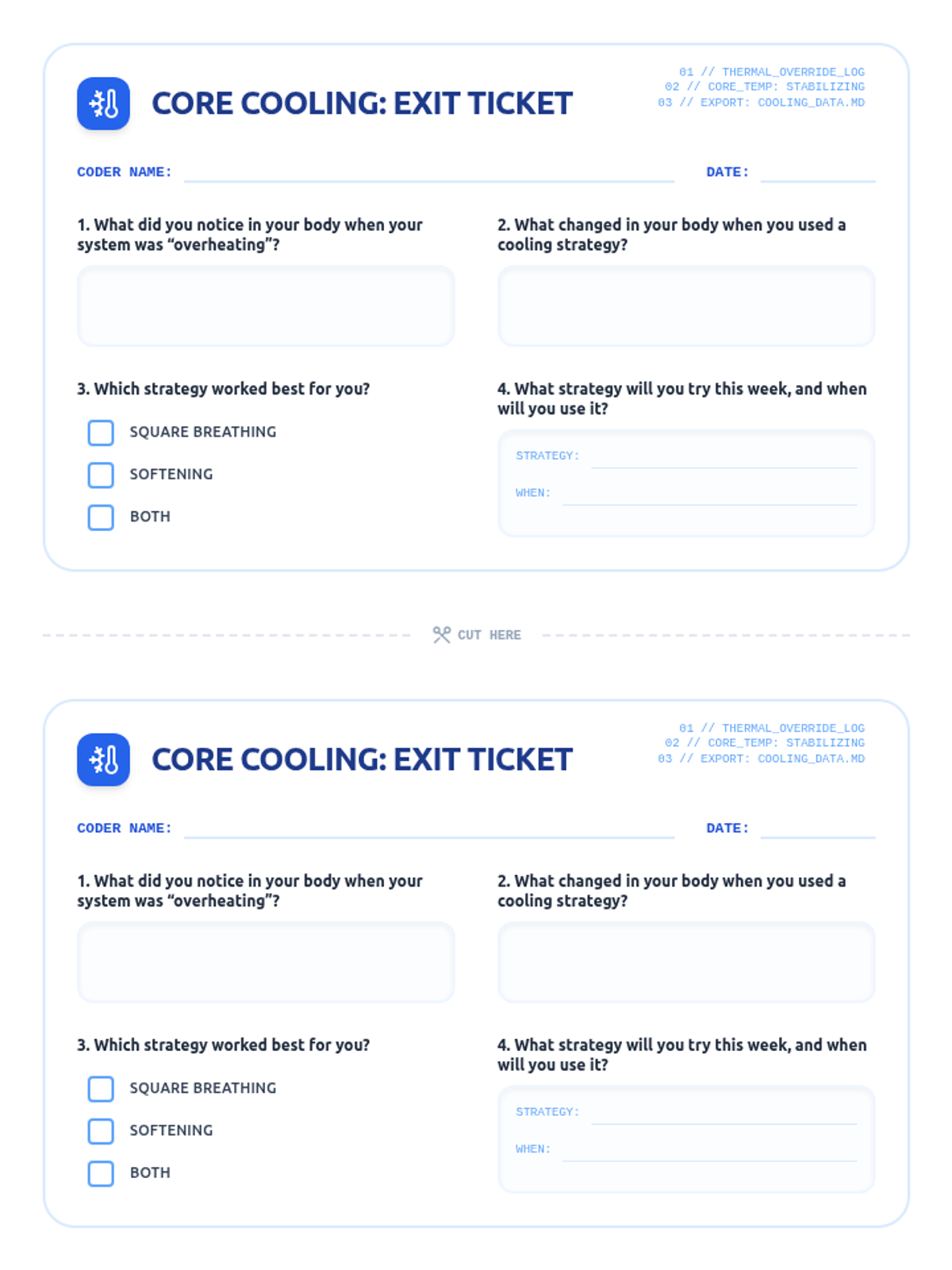
A half-page printable exit ticket (two per page) for the Core Cooling lesson, featuring reflection questions about physical sensations and emotional regulation strategies.
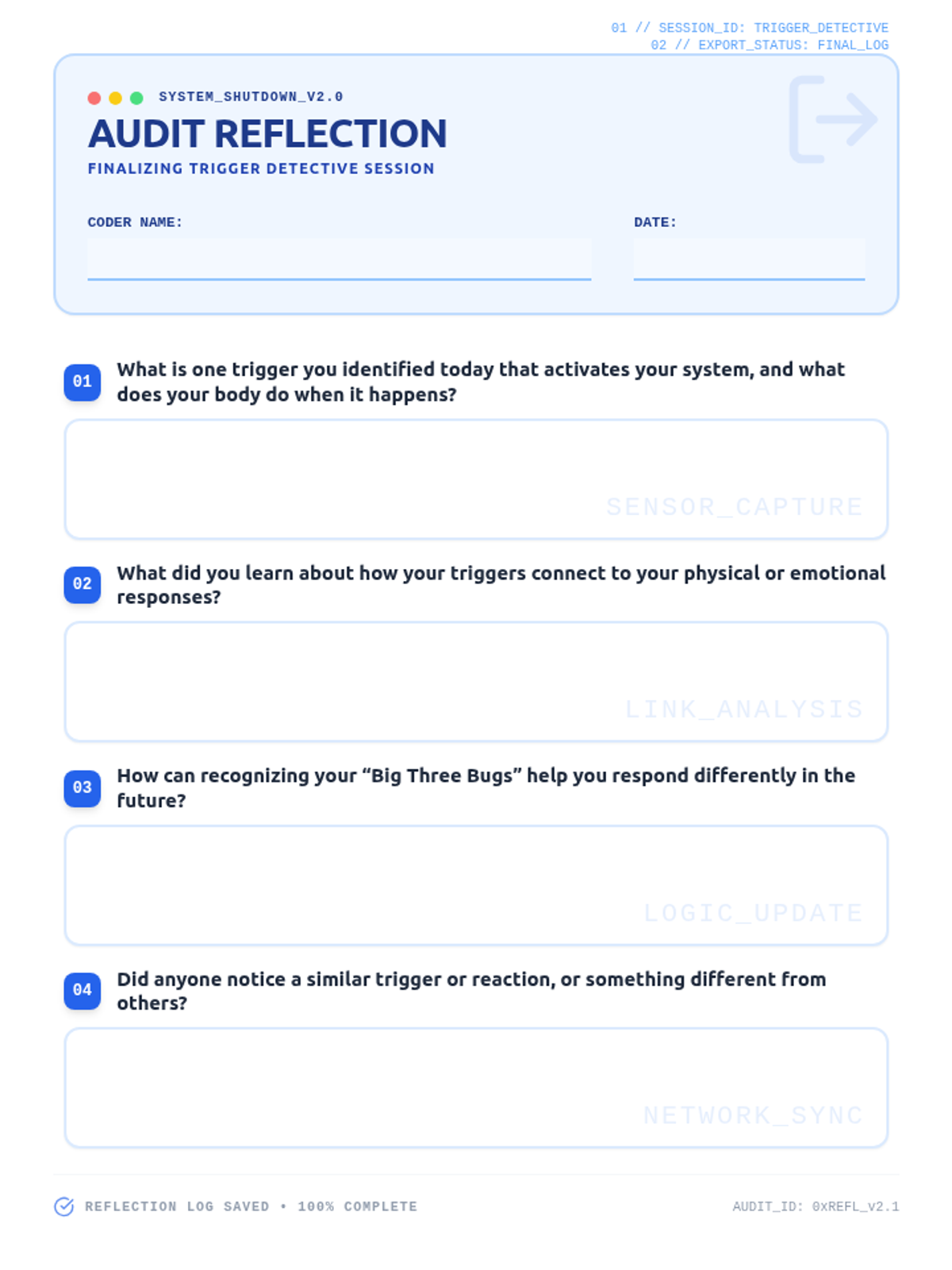
A standalone coding-themed exit ticket for the Trigger Detective session, featuring four reflection questions about identifying personal triggers, physical responses, and the "Big Three Bugs."
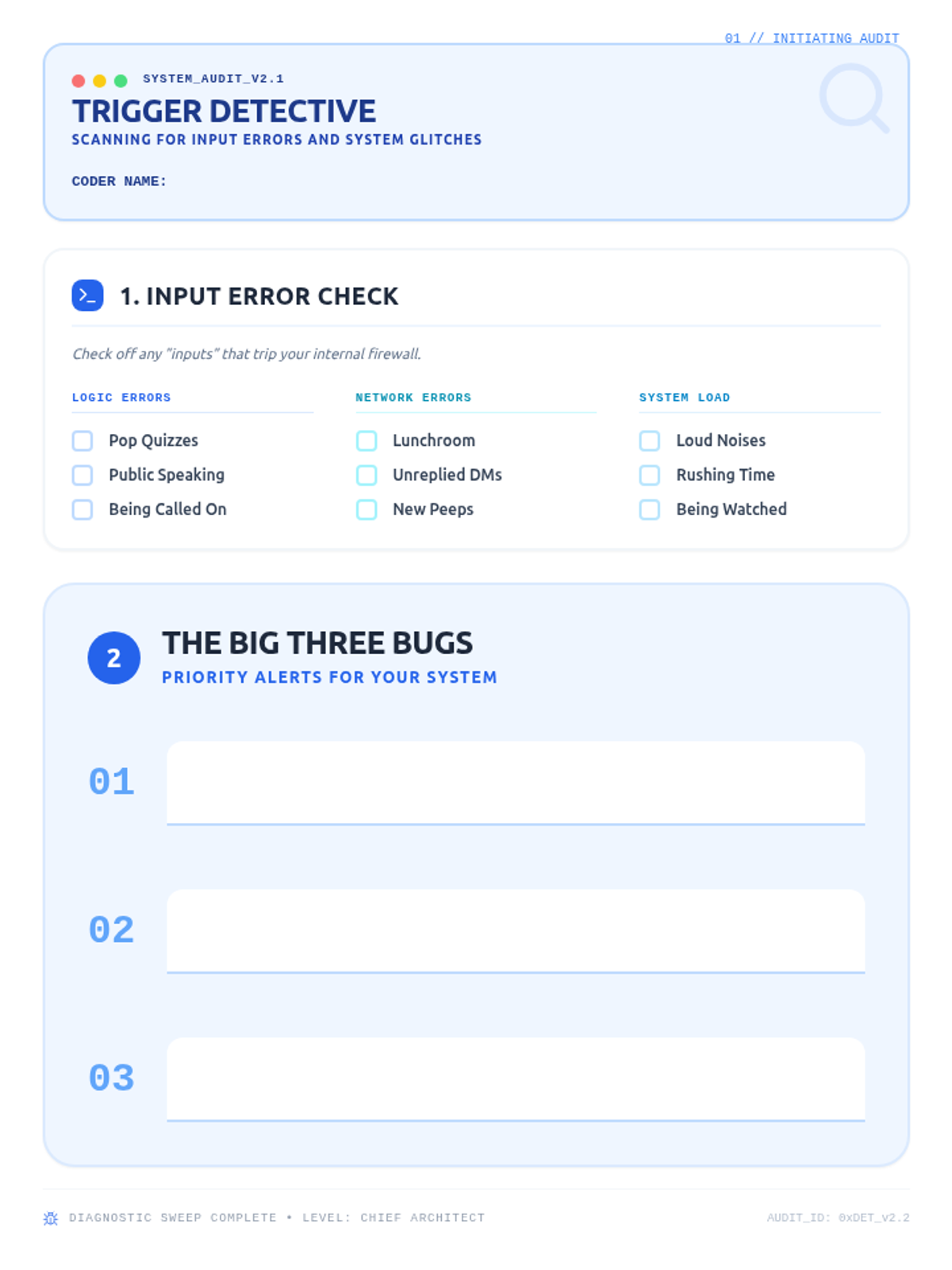
A refreshed Trigger Detective worksheet with a professional blue coding theme. It features an 'Input Error Check' grid for different stressors and a full-width 'Big Three Bugs' section for students to prioritize their triggers. Includes a second page with three detailed reflection questions for an end-of-session audit.
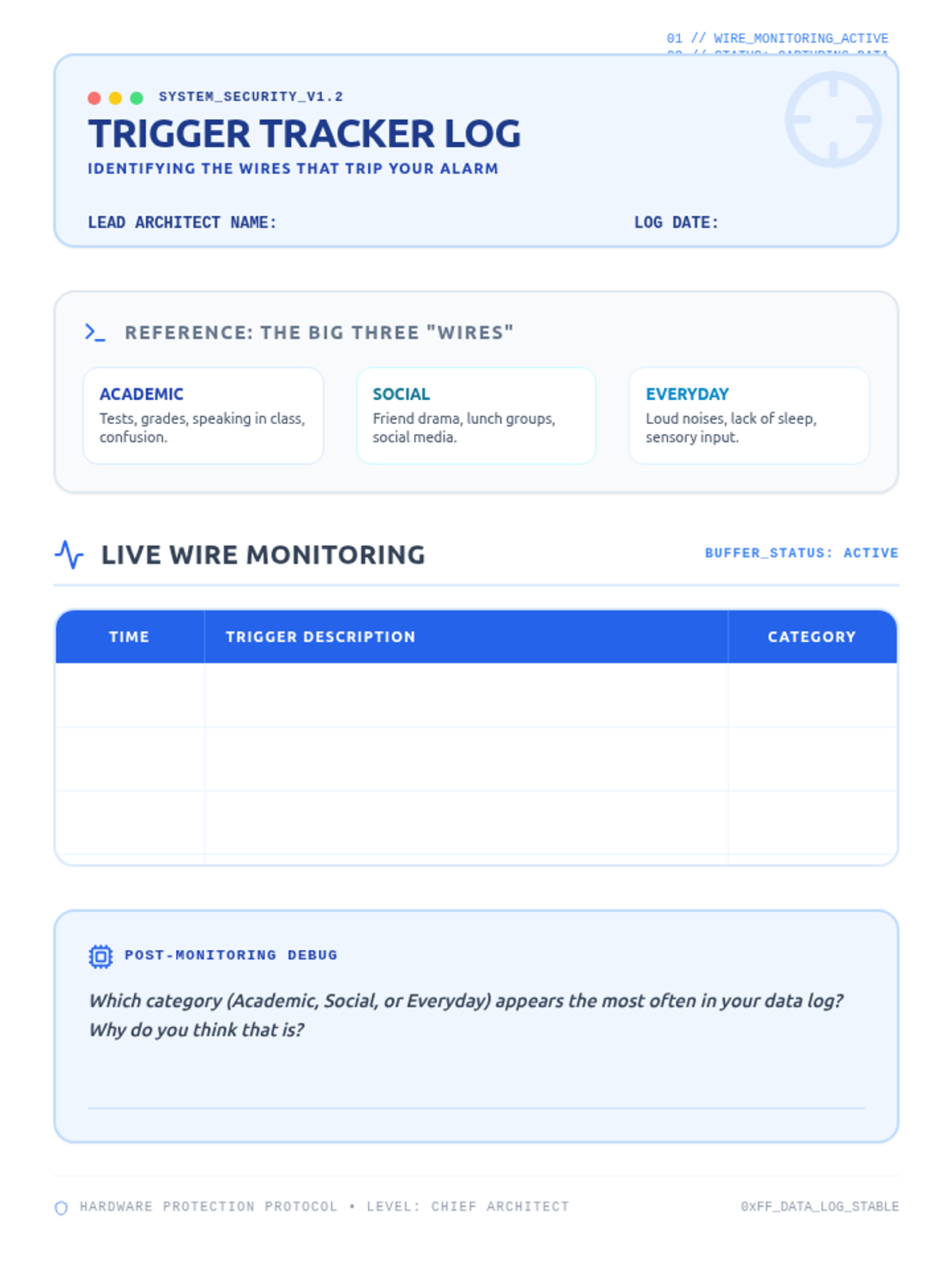
A student handout for tracking personal triggers ('wires') throughout the day, featuring a tracking log for time, trigger descriptions, and categories (Academic, Social, Everyday) within a light blue coding theme.
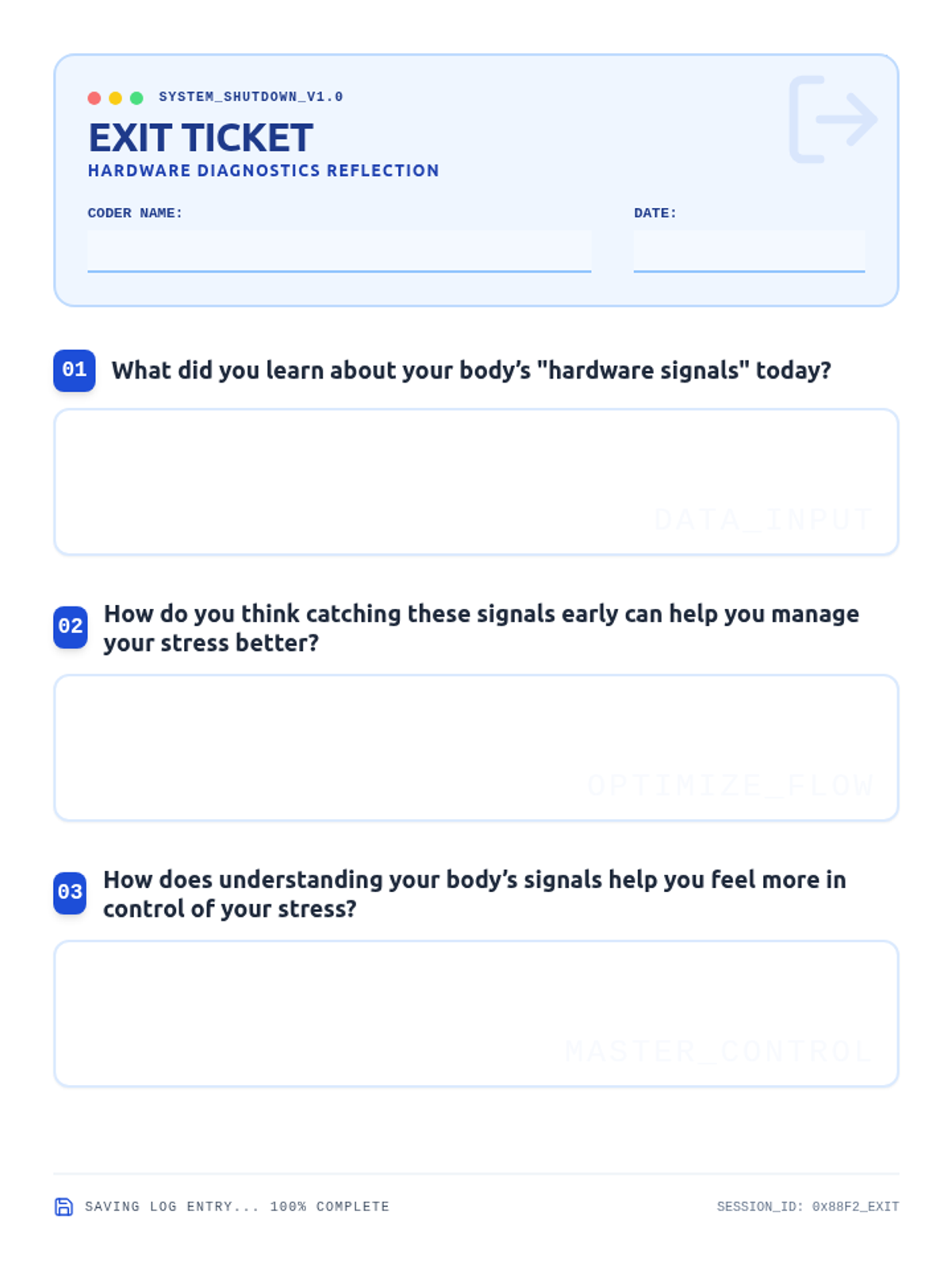
A coding-themed exit ticket for the Hardware Diagnostics lesson, featuring three reflection questions about identifying and managing body stress signals.
A 6-slide presentation teaching students about identifying physical body signals (hardware diagnostics) as the first step in managing stress, featuring a definition of "sensors" and a recreation of the 'My Symptoms of Anxiety' body map.
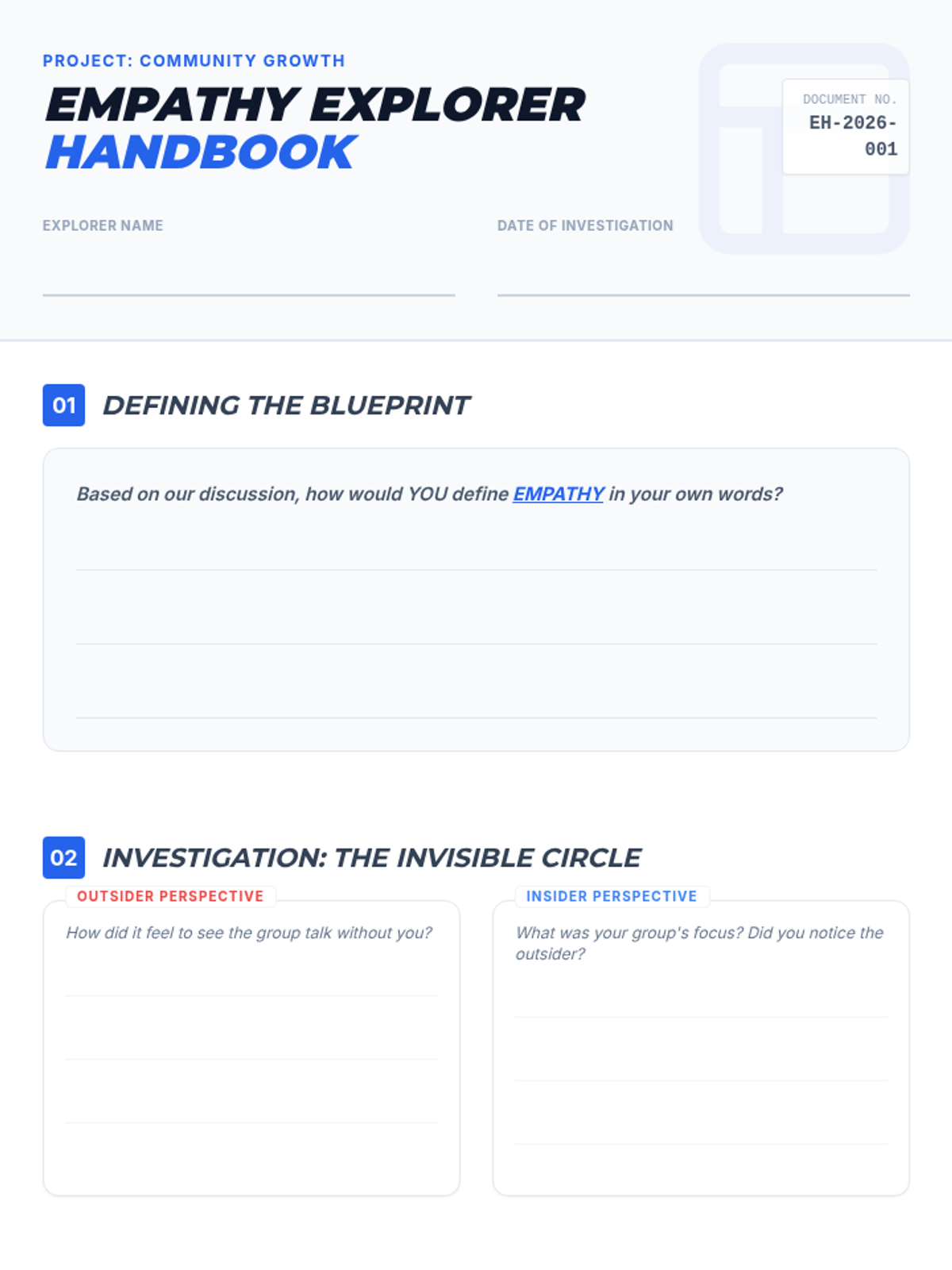
A student reflection booklet designed with a 'Community Blueprint' aesthetic, featuring guided prompts for empathy definition, activity debriefs, and personal inclusion goals.
A high-impact visual presentation using a 'Community Blueprint' aesthetic to teach empathy, define inclusion versus exclusion, and empower students to become 'Upstanders' in their classroom.