A comprehensive 90-minute facilitation guide for teachers, including talking points derived from the slide deck, instructional objectives, and a detailed pacing plan for the 'Hot Seat' simulation.
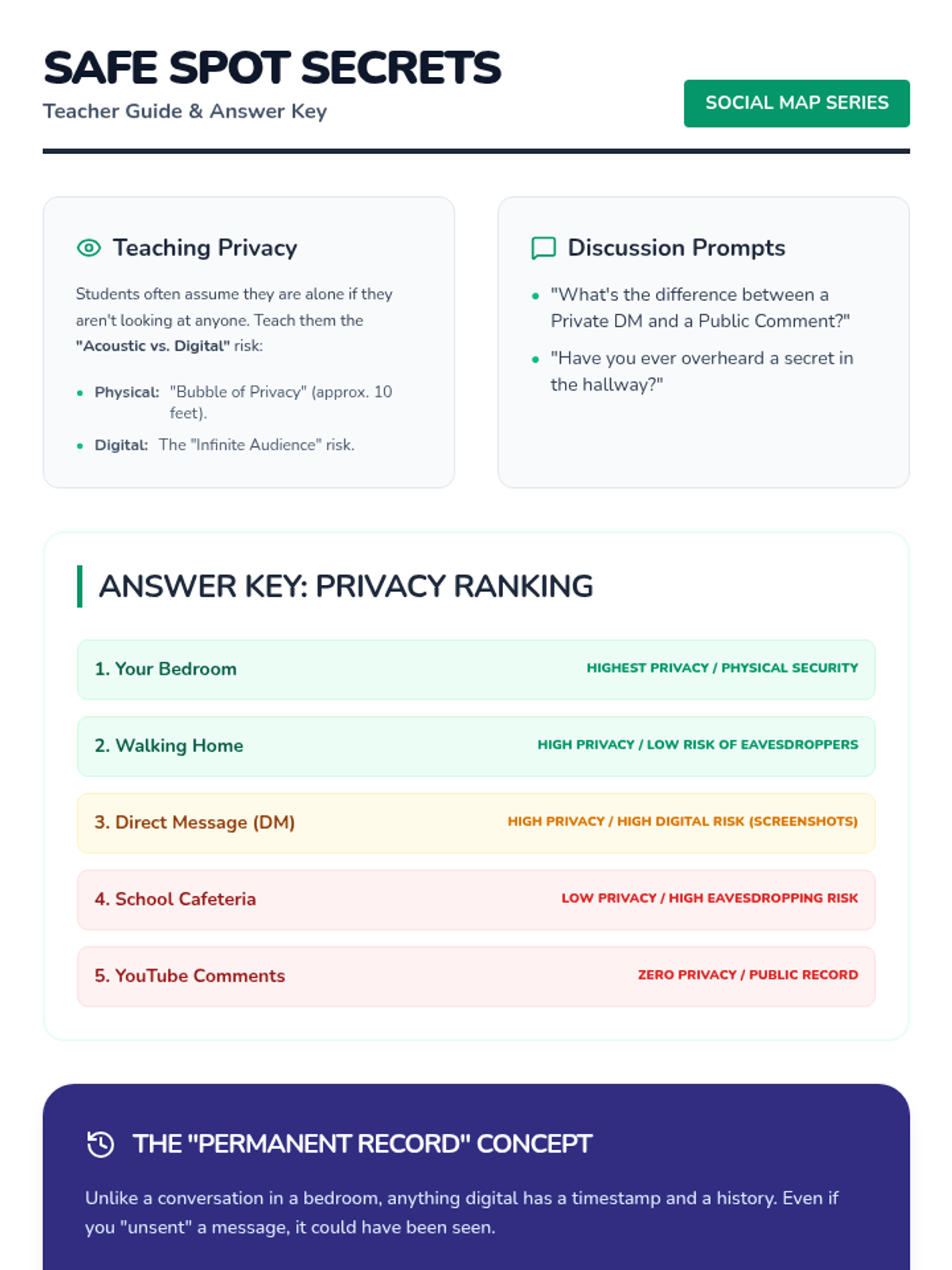
A teacher's guide for the Safe Spot Secrets lesson, providing rankings for common social environments and tips for teaching about the permanent nature of digital footprints. Consolidated to one page. Now includes rankings for classroom and hallway.
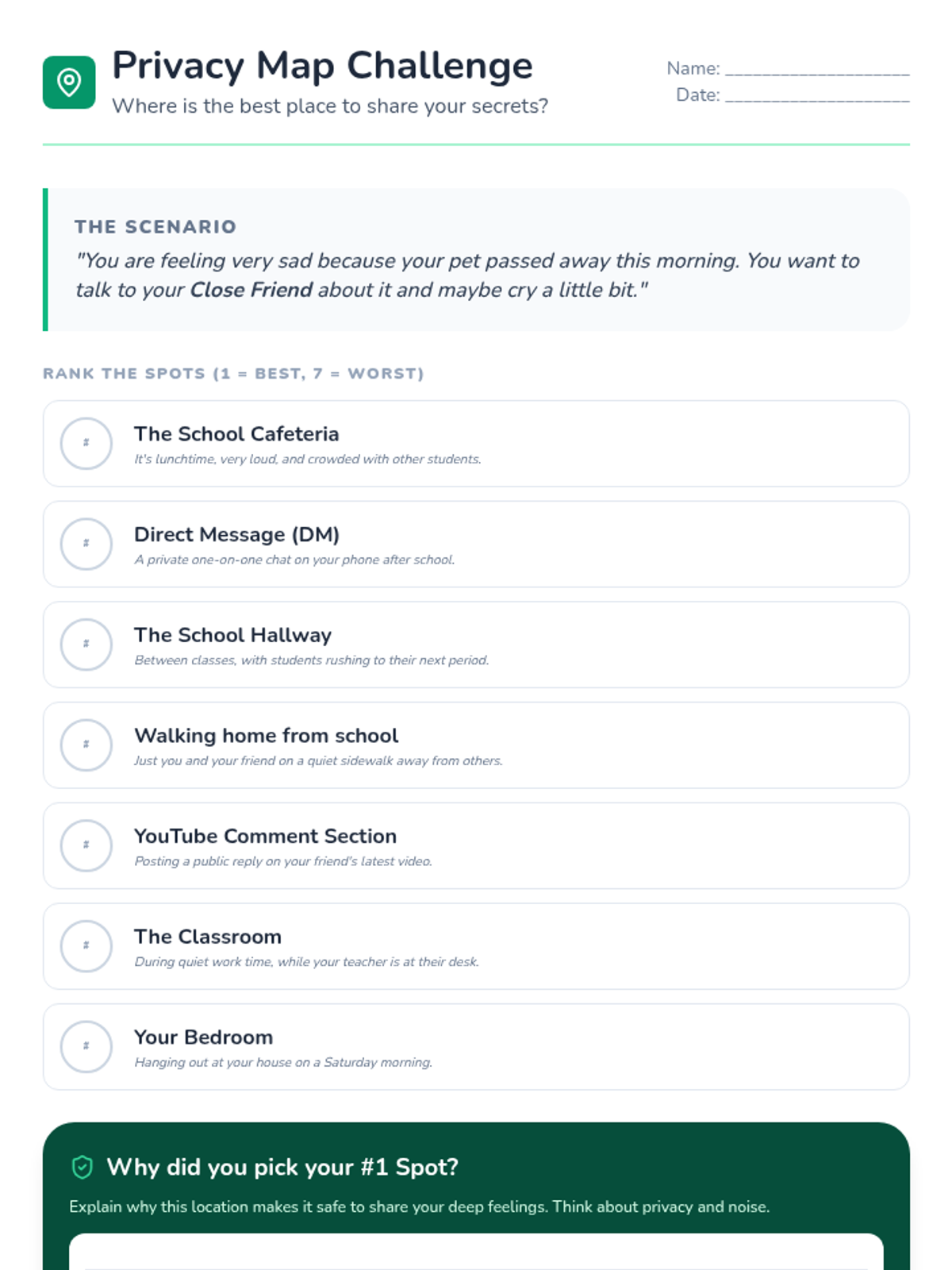
A worksheet where students rank various physical and digital locations based on their level of privacy and safety for sensitive conversations. Now includes classroom and hallway options. Revised for single-page layout and larger text.
A slide deck exploring the privacy levels of various physical and digital environments, helping students choose the best "safe spots" for sensitive conversations. Revised for better legibility and contrast.
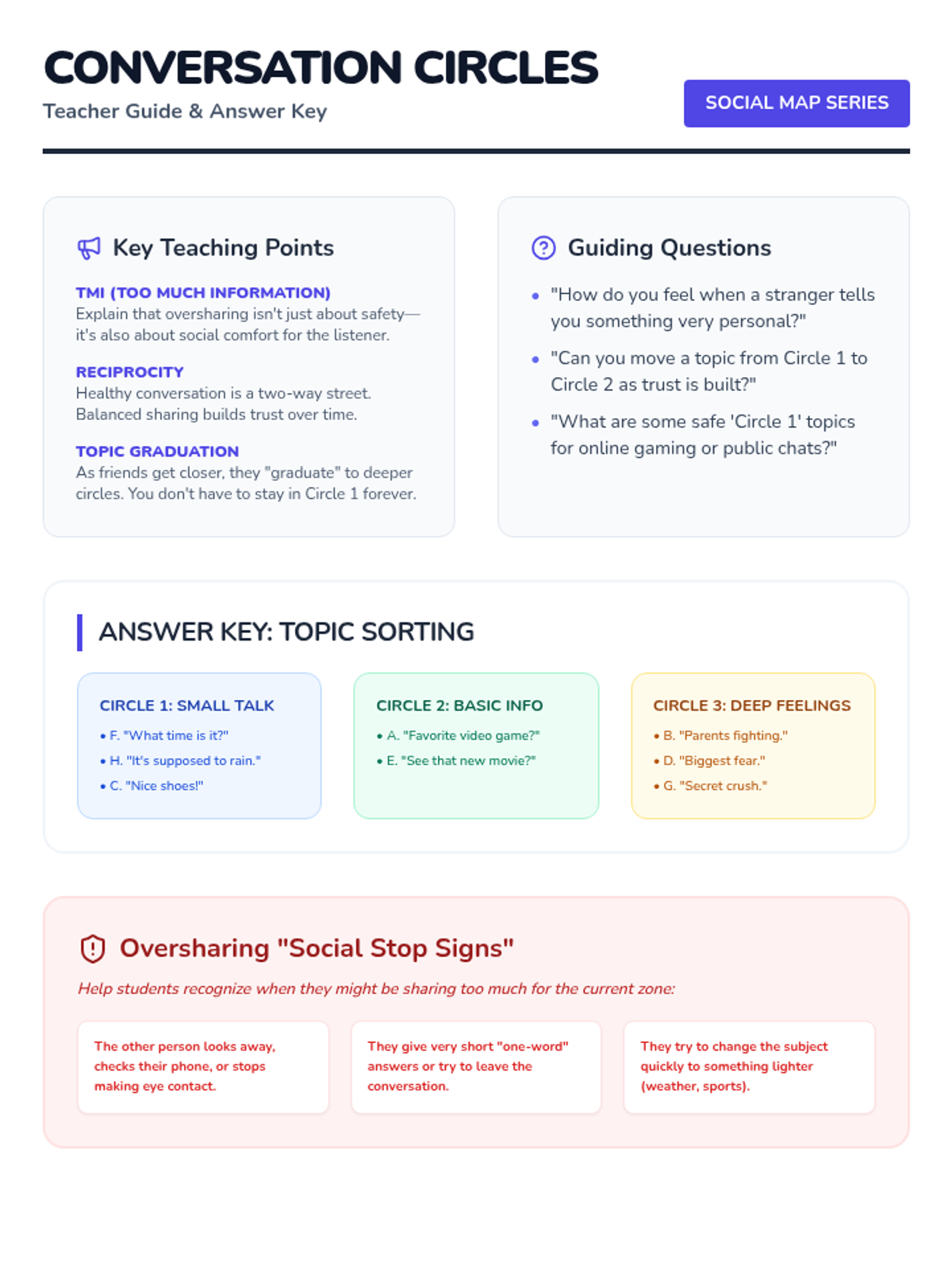
A teacher's guide for the Conversation Circles lesson, consolidated to a single page for ease of use. Includes keys and warning signs for oversharing.
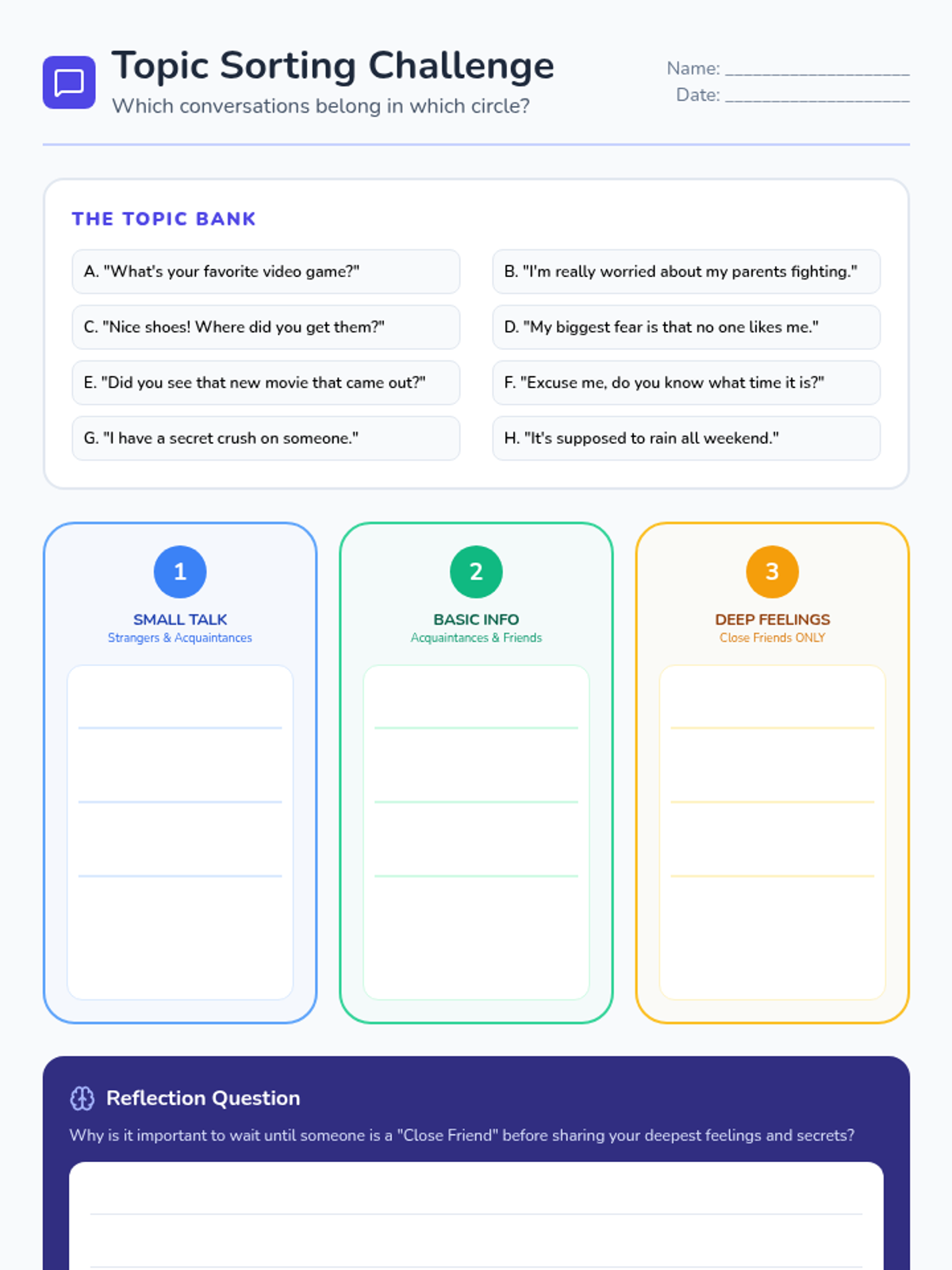
A sorting activity where students categorize different conversation topics into three levels of intimacy: Small Talk, Basic Info, and Deep Feelings. Improved spacing and layout.
A visual presentation for students that defines three levels of conversation topics and explains which friendship zones are appropriate for each, with a focus on avoiding oversharing. Revised for better contrast and clearer examples.
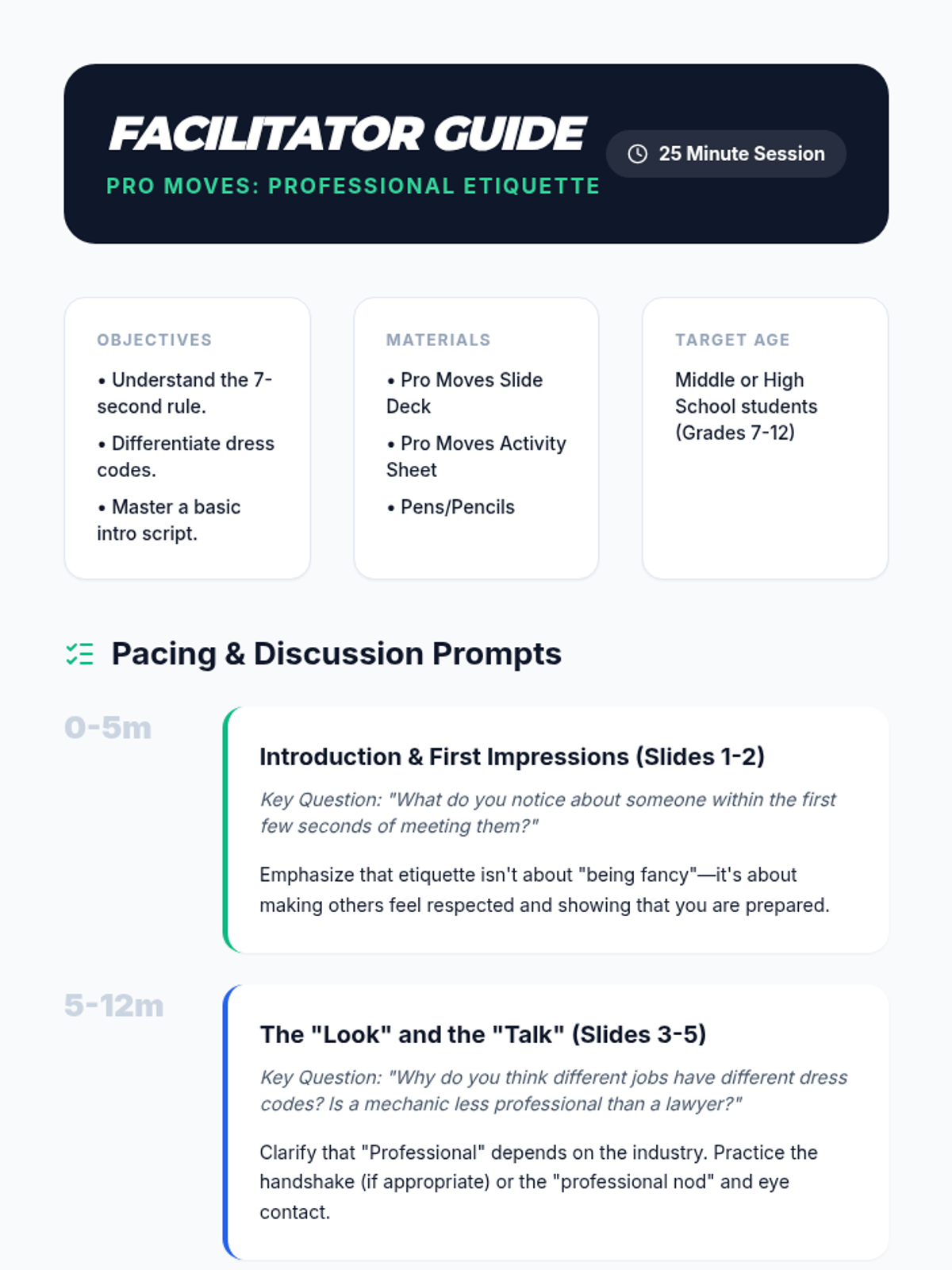
A comprehensive teacher's guide for the Pro Moves lesson, including pacing for a 25-minute session, discussion prompts for each slide, and specific guidance on facilitating student practice.
A refined 10-slide beach presentation featuring varied radial and linear "swirly" ombre backgrounds in blue and cream. It includes updated discussion questions, an expanded anchor toolbox, and a lighter, aesthetic yellow closing slide.
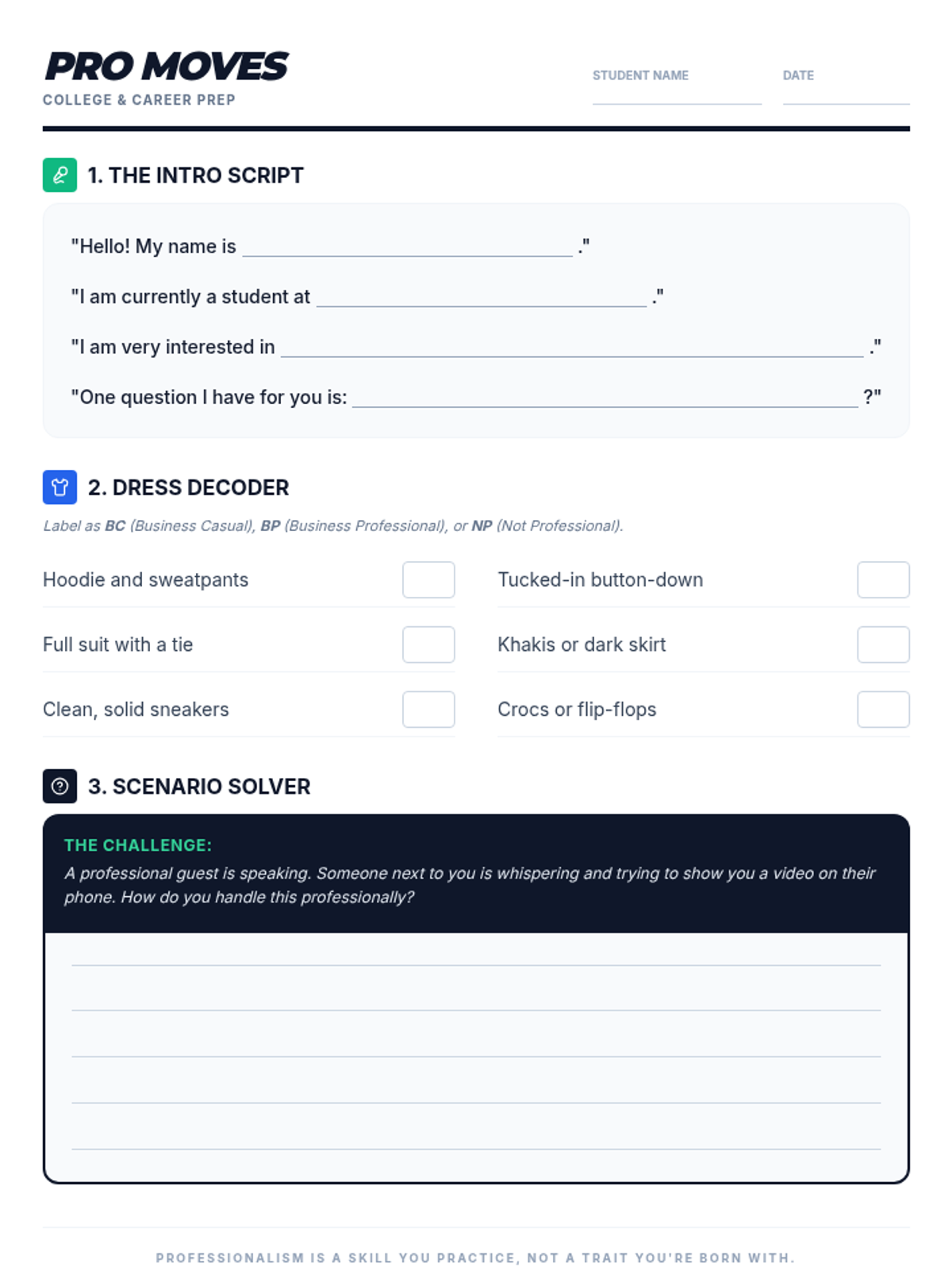
A polished activity sheet with improved layout flow. Features a robust intro script builder, a single-page dress code task, and an expanded scenario writing area with guided lines.
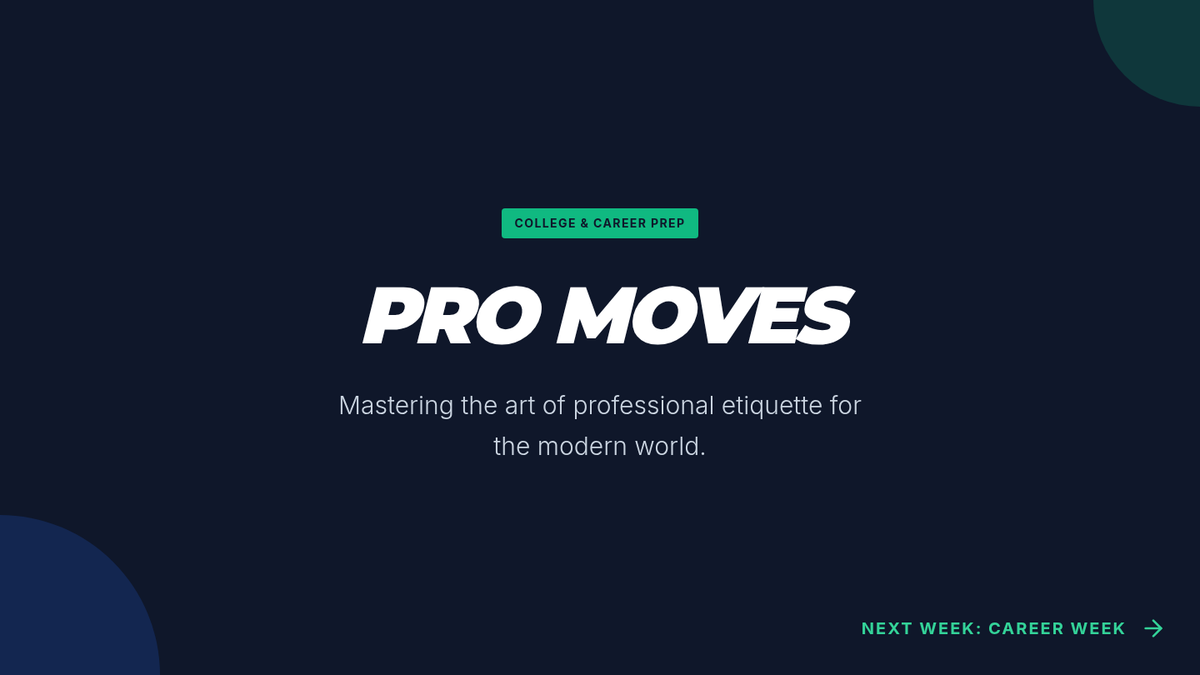
A refined 7-slide presentation for 15 minutes of instruction. Features improved layout stability, accessible color contrast, and cleaned placeholders for professional script practice.
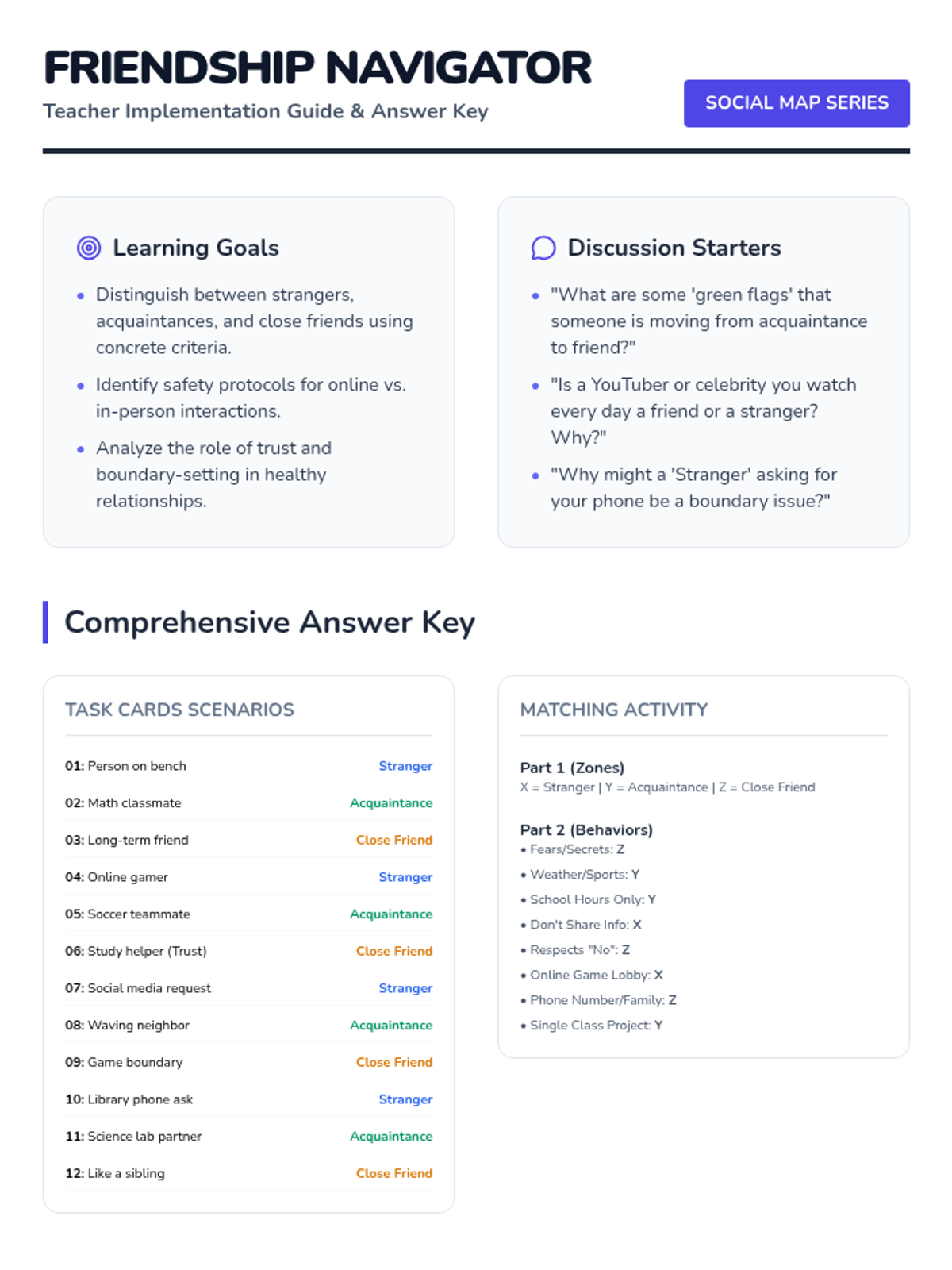
A teacher's guide for the Friendship Compass lesson, including learning objectives, discussion prompts, and an answer key with context. Polished styling and better page flow.
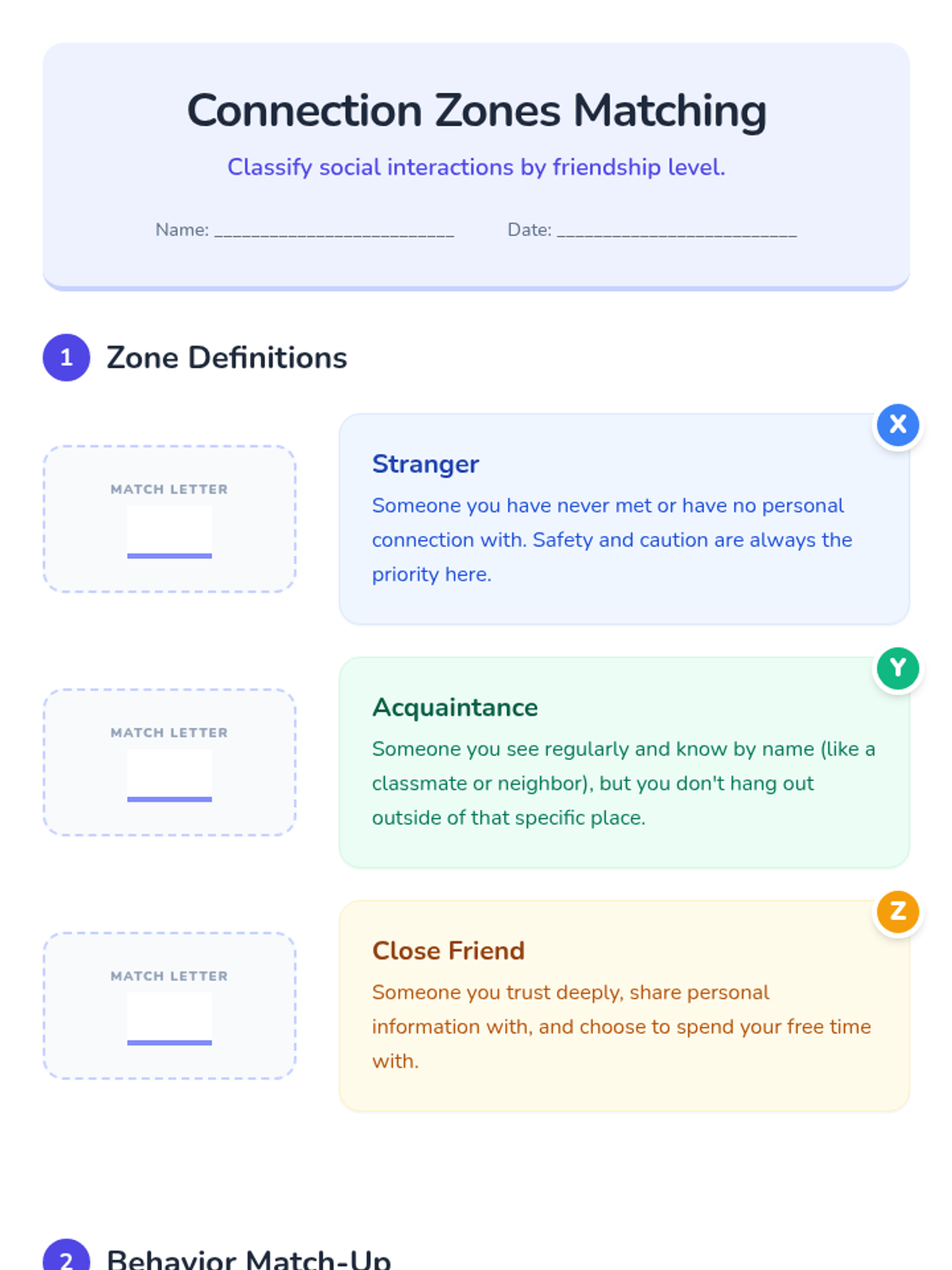
A matching activity where students define the three levels of friendship and categorize specific social behaviors into the correct "zone." Improved layout with consistent lettering and clear answer areas.
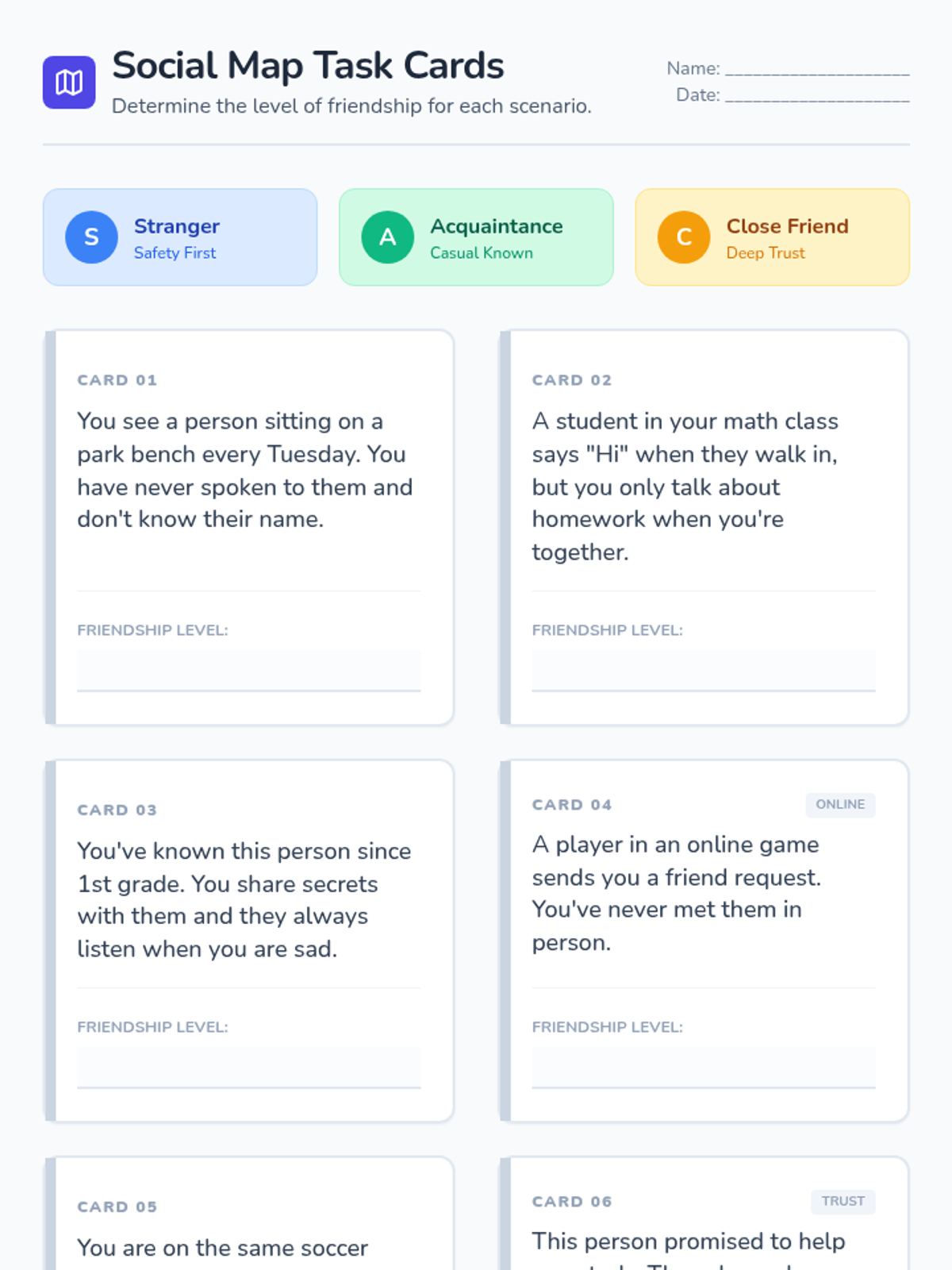
A set of 12 scenario-based task cards where students identify if a person is a stranger, acquaintance, or close friend, covering topics like online safety and personal boundaries. Now with improved card sizing and consistent color coding.
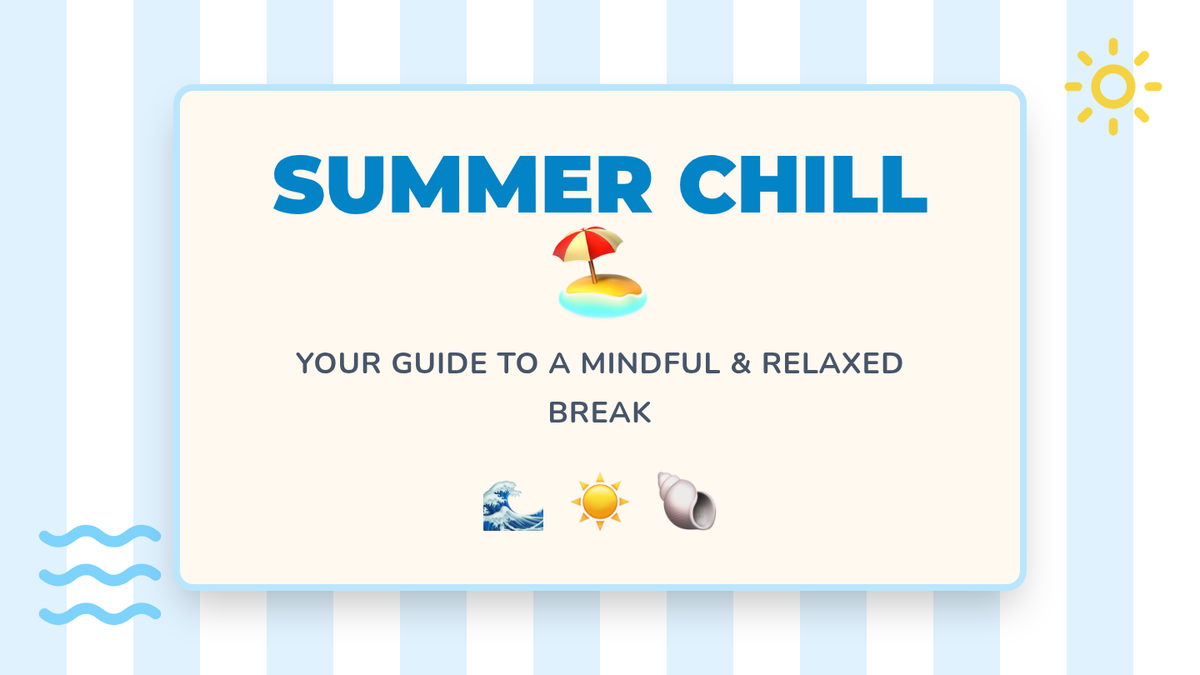
A revised 10-slide beach-themed presentation with vertical blue/white stripes on the title slide and blue/cream ombre backgrounds throughout. It features updated coping skills like visualization and an expanded anchoring toolbox, including tense-and-release and categories.
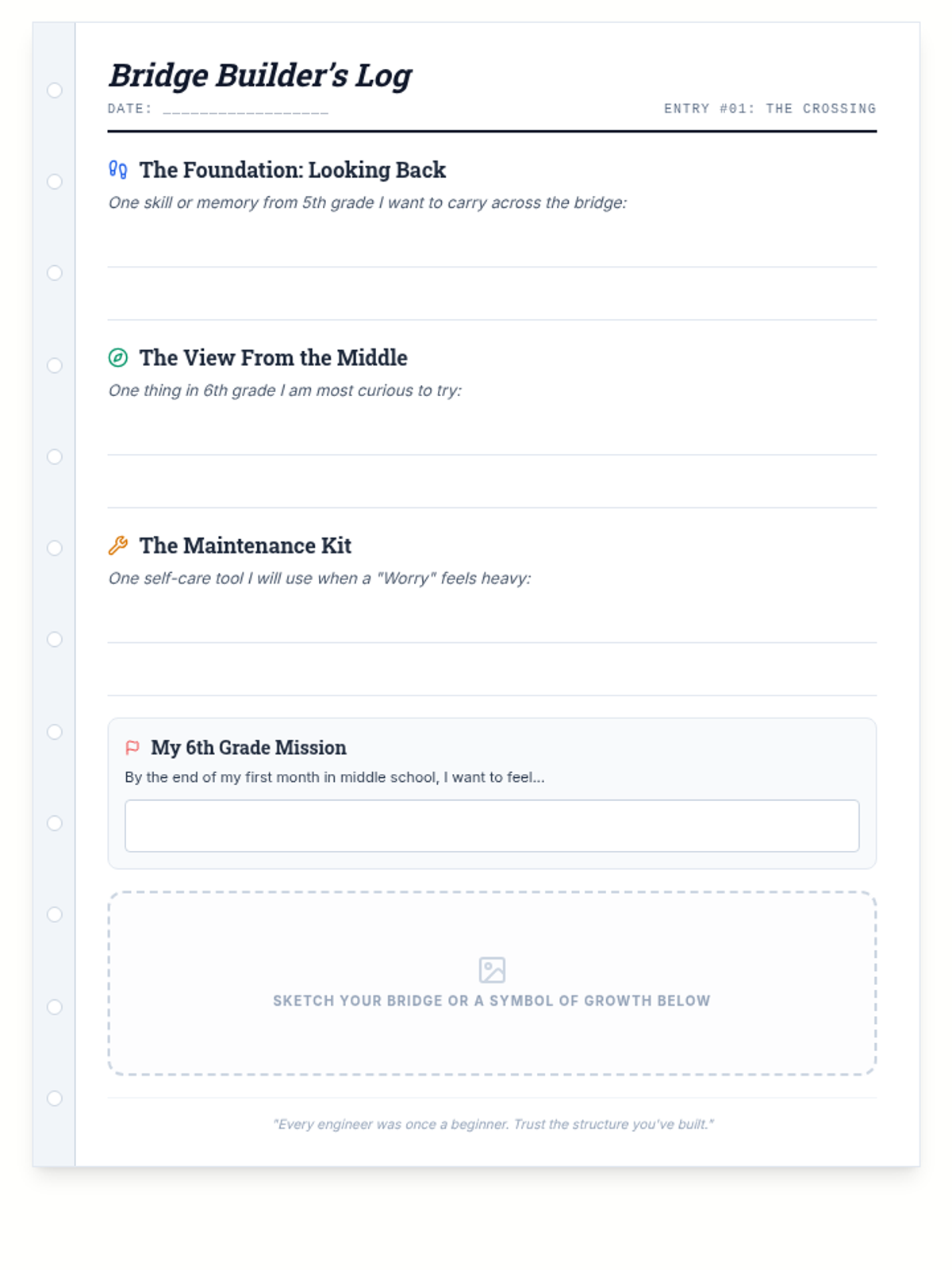
A reflective journal for students to document their 5th-grade growth and set personal goals for the transition to middle school. Revised for single-page print optimization and improved sketch space.
An 8-10 slide presentation with a beach theme, featuring mindfulness and coping techniques for students ages 9-16. It includes discussion prompts about summer plans and future reflections alongside specific skills like grounding and digital detox.
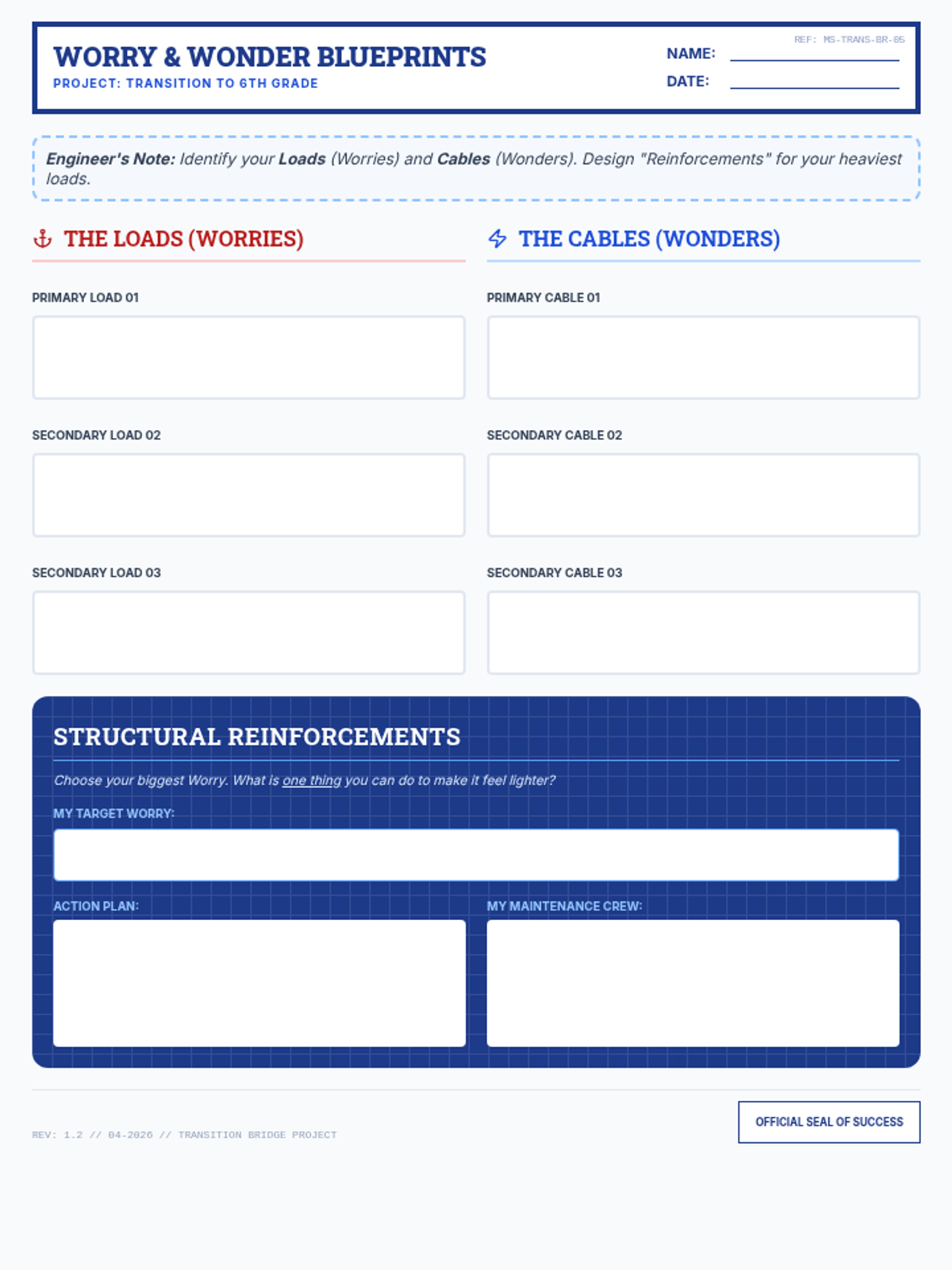
A student worksheet where they categorize their middle school feelings into 'Loads' (Worries) and 'Cables' (Wonders), and develop an 'Action Plan' for reinforcement. Revised for single-page print optimization and improved legibility.
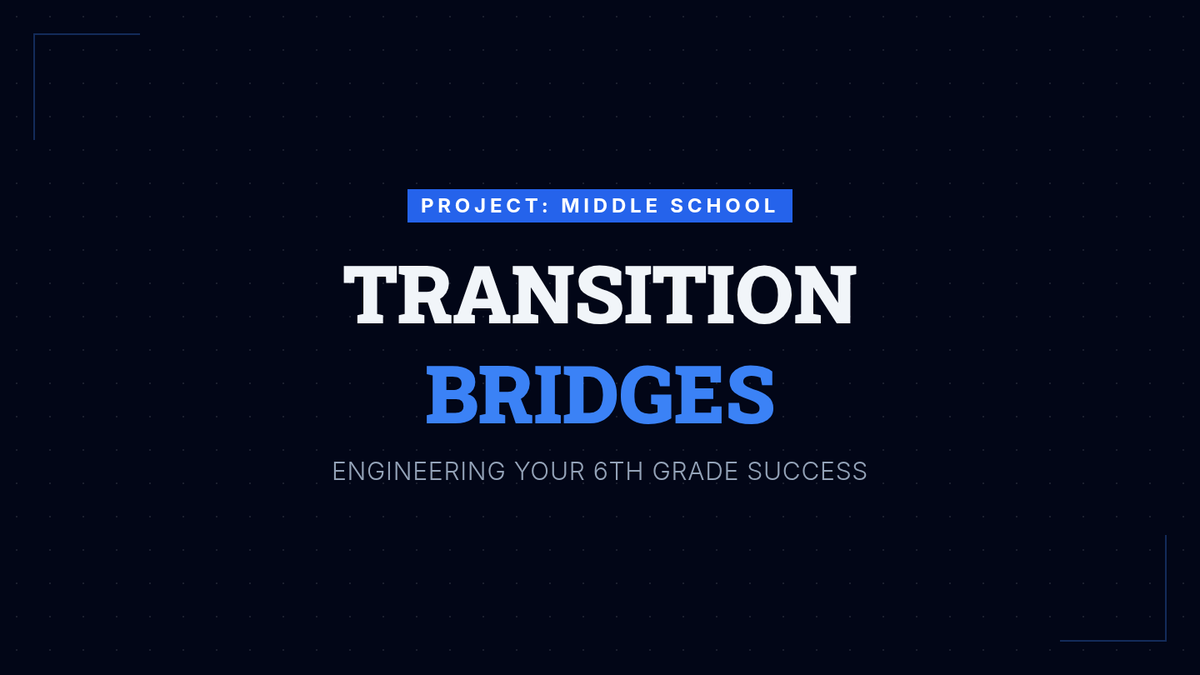
A visual presentation for 5th graders introducing the 'Worry vs. Wonder' framework, identifying common middle school transitions, and brainstorming coping strategies through a bridge-building metaphor.
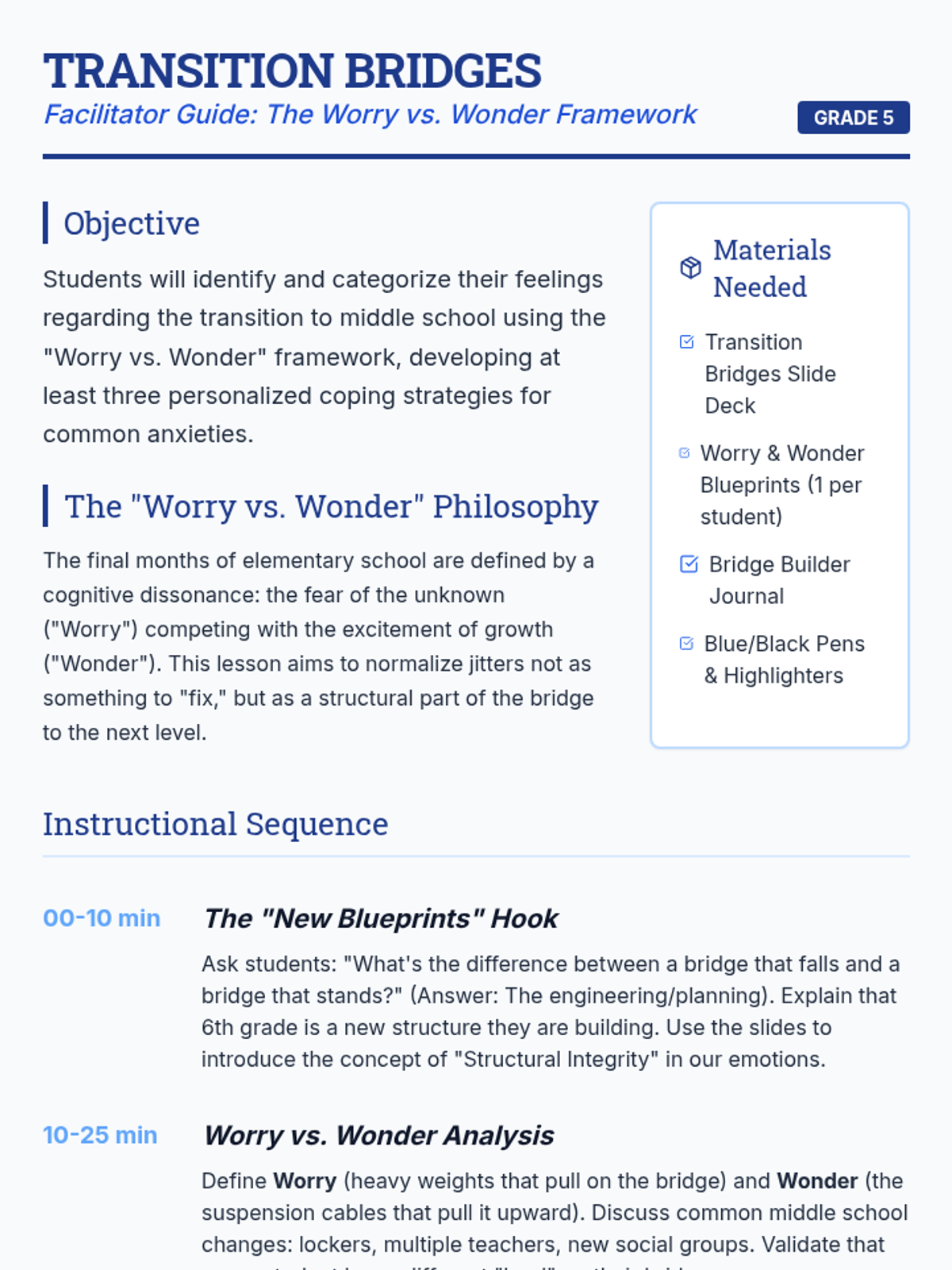
A comprehensive lesson plan for teachers, detailing the 'Worry vs. Wonder' framework, instructional sequence, and discussion prompts to facilitate a smooth 5th-to-6th grade transition.
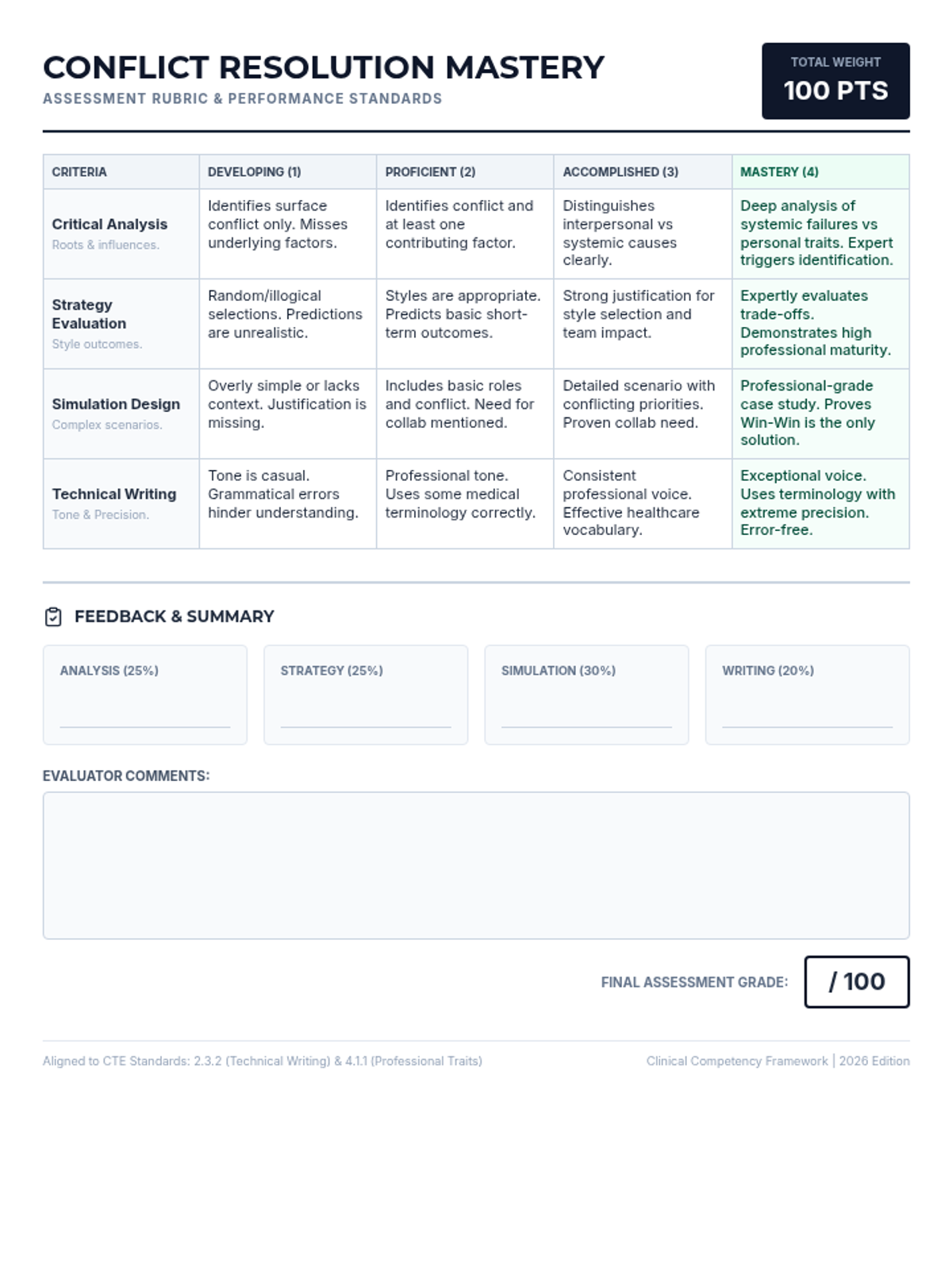
A comprehensive assessment rubric evaluating students on critical analysis, strategic prediction, simulation design, and professional technical writing skills within a healthcare context. Layout optimized for single-page printing.
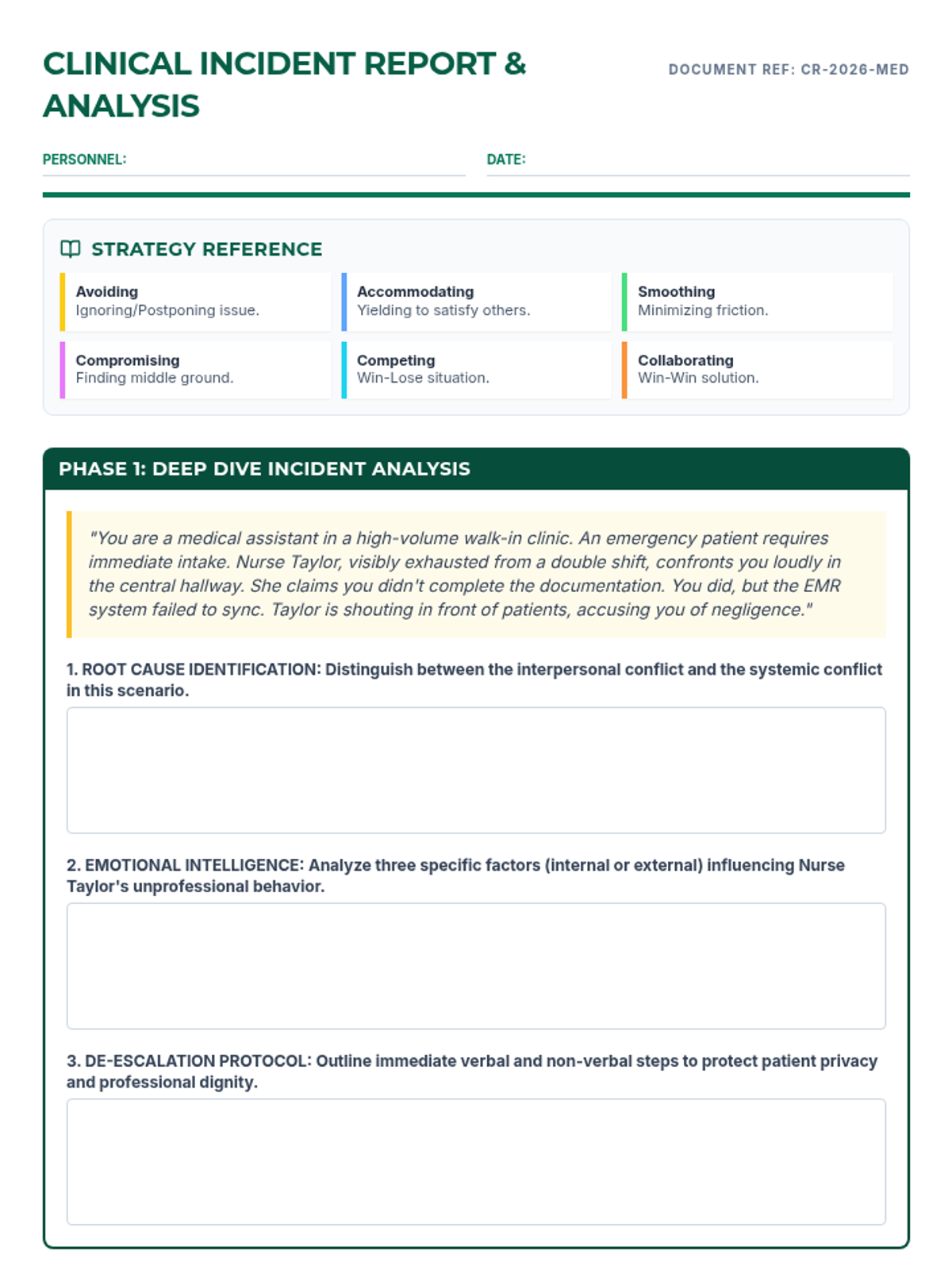
A challenging incident report style worksheet that tasks students with analyzing root causes of conflict, predicting strategic outcomes, and designing their own complex healthcare simulations with student-led inquiry questions.