A slide deck exploring the privacy levels of various physical and digital environments, helping students choose the best "safe spots" for sensitive conversations. Revised for better legibility and contrast.
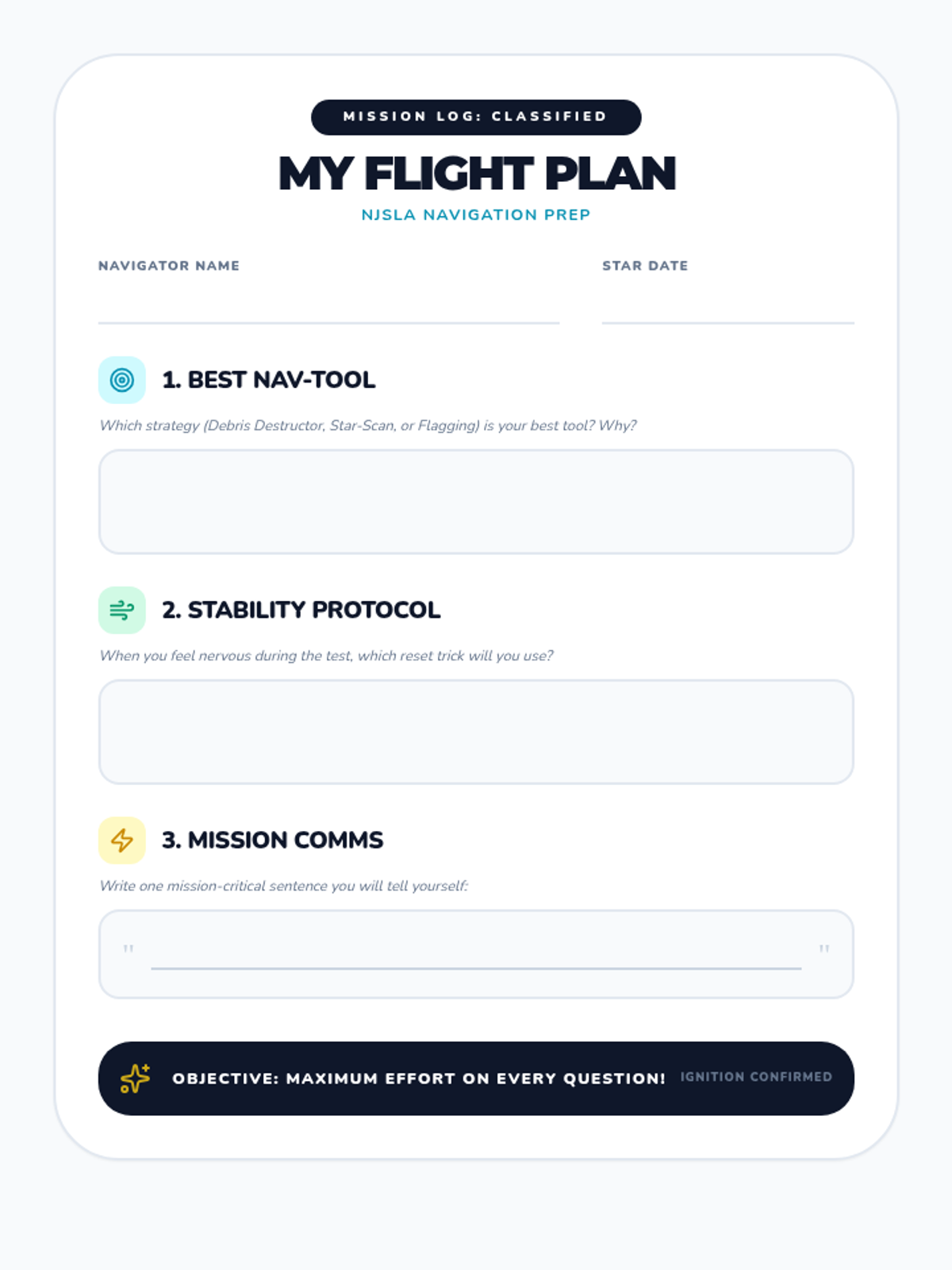
A reflection worksheet for students to create a personalized test-taking game plan, identifying their favorite strategies and anxiety-management techniques.
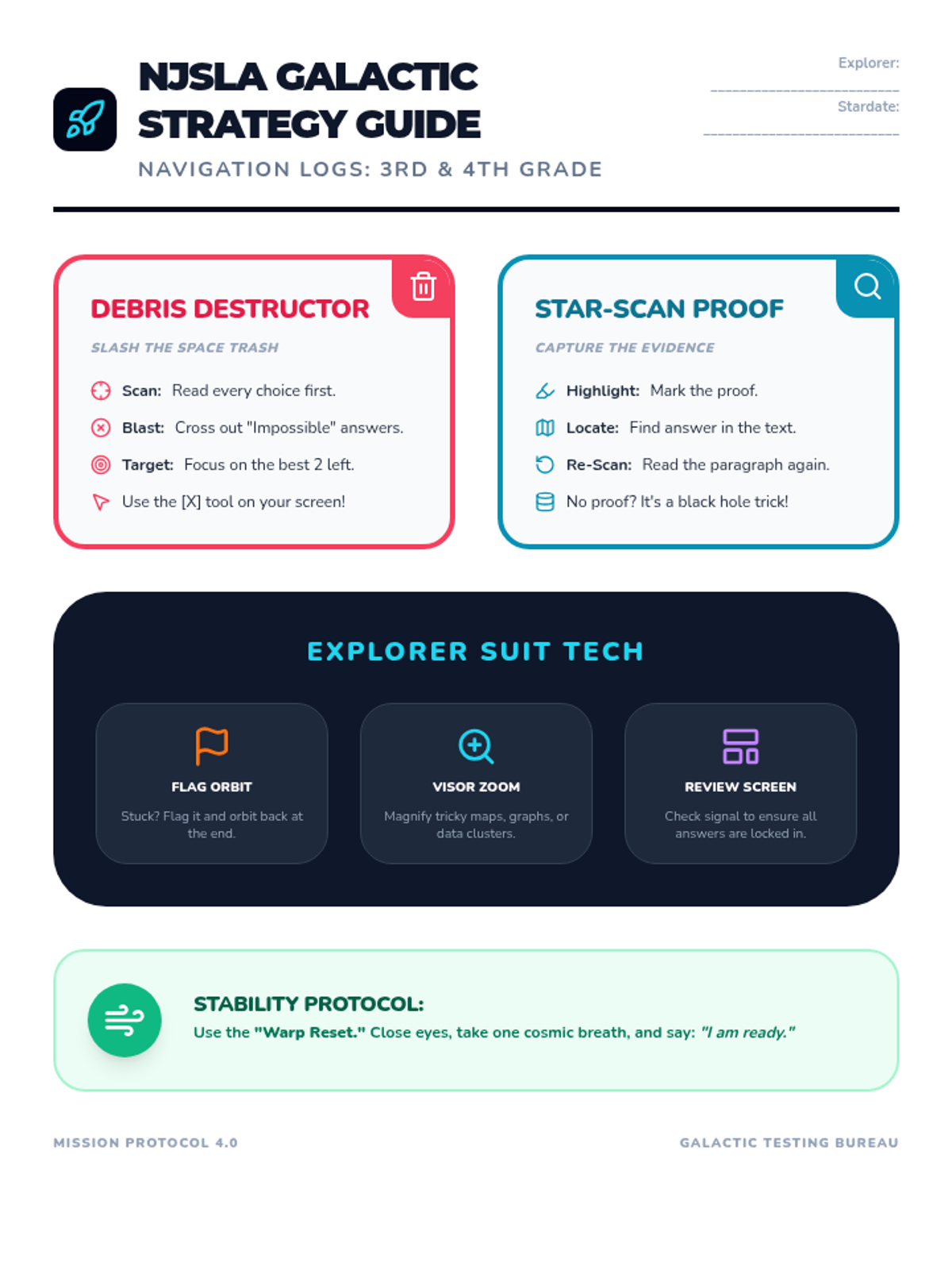
A comprehensive strategy guide for the NJSLA, detailing elimination techniques, text evidence strategies, and how to effectively use the assessment's digital tools.
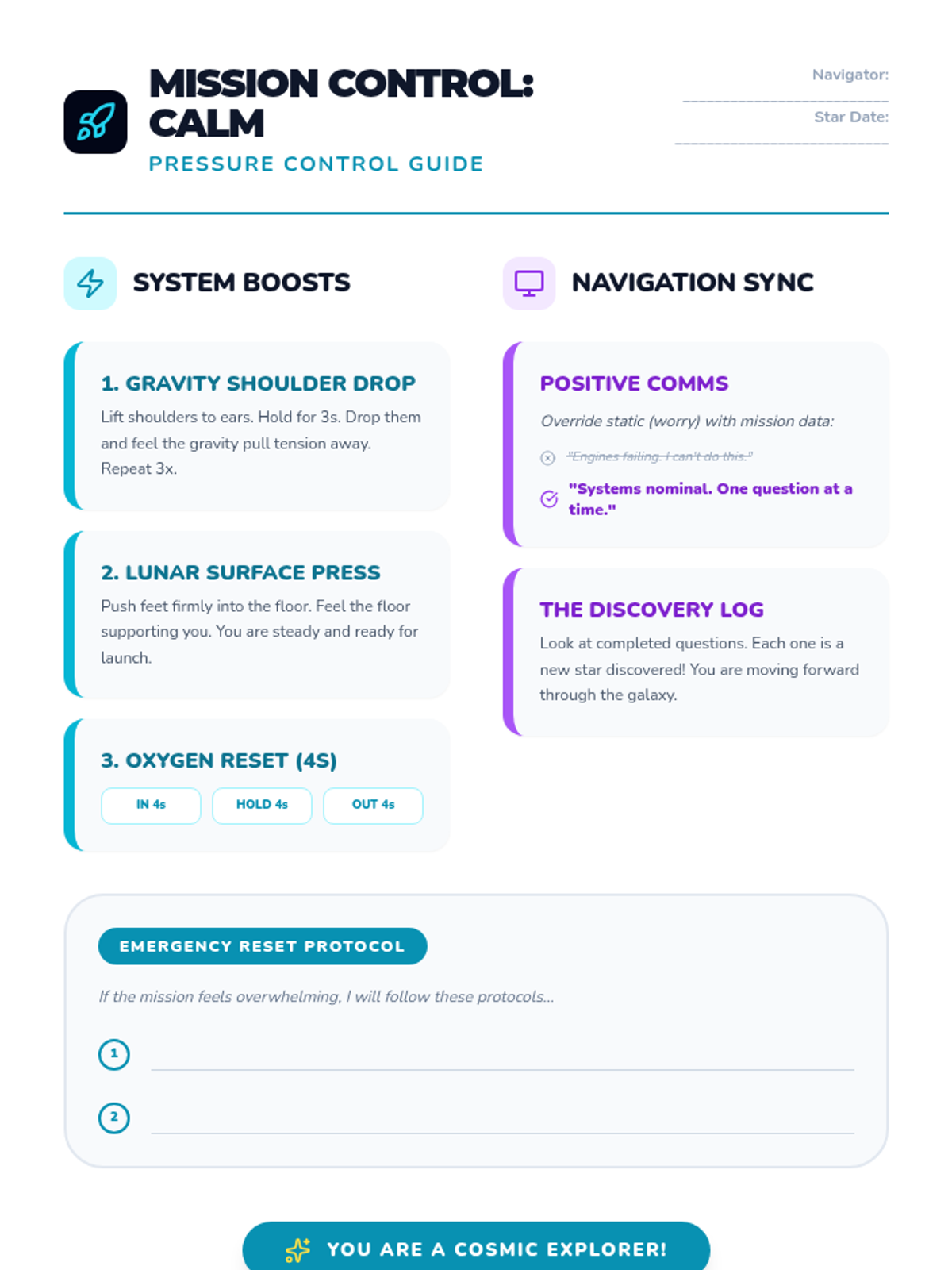
A handout focusing on physical and mental anxiety-management techniques specifically for the NJSLA, including breathing exercises and positive self-talk prompts.
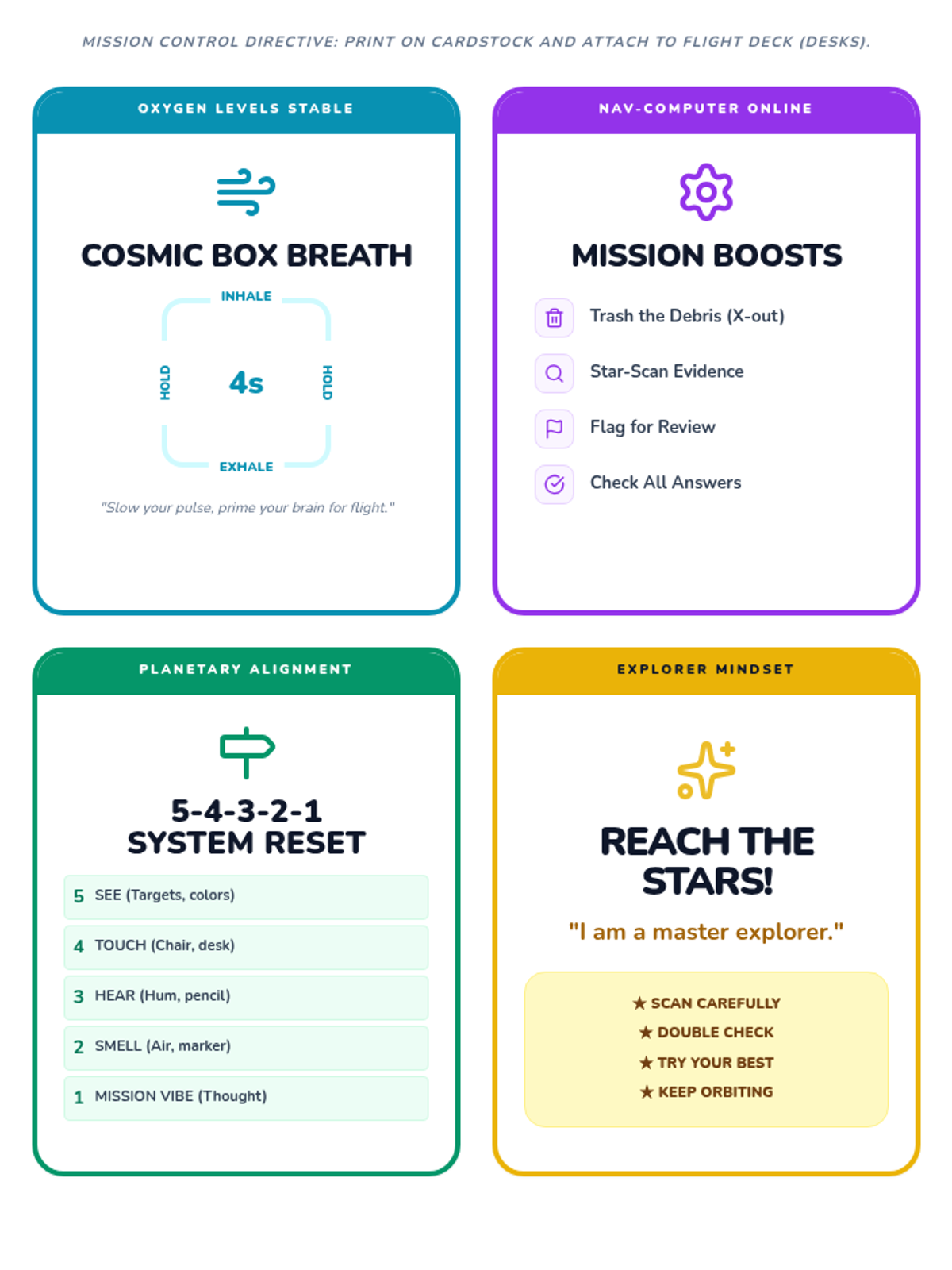
Printable desk cards for students to keep on their desks during the NJSLA, featuring quick reminders for breathing, strategy, grounding, and mindset.
A visually engaging slide presentation for 3rd and 4th graders, focusing on NJSLA test-taking strategies and anxiety management techniques like box breathing and grounding.
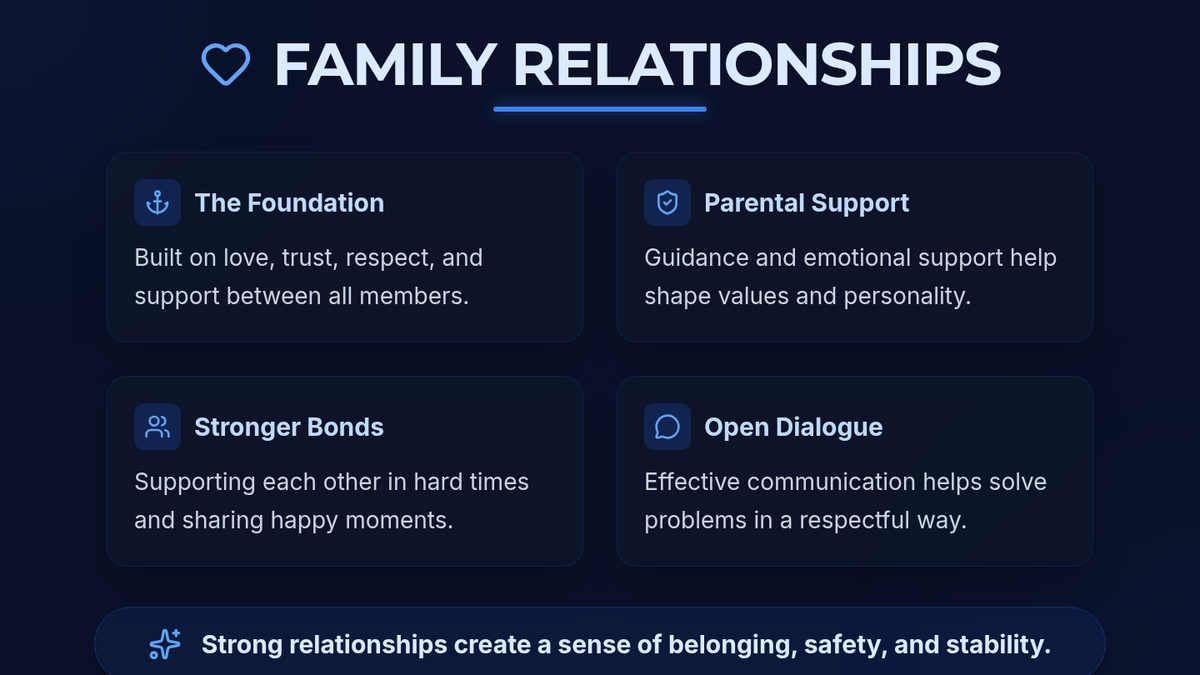
A professional English presentation slide on family relationships, featuring a deep navy blue theme with a lowered title for optimal visual balance.
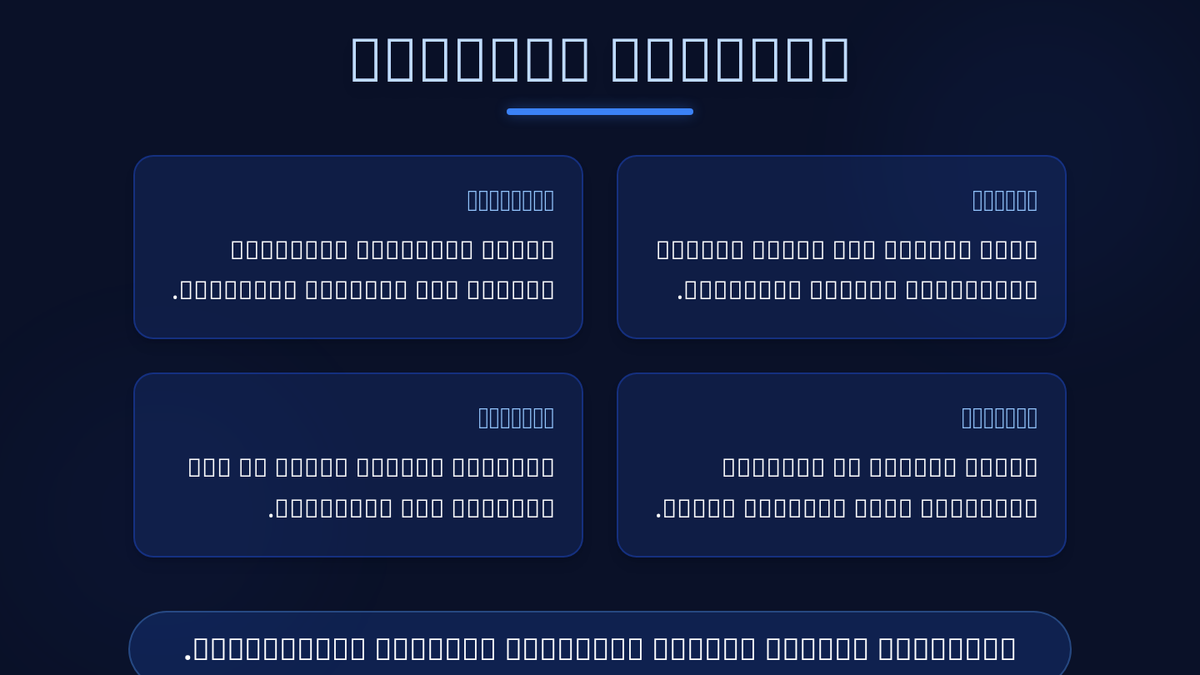
A visually striking educational slide in Arabic about family relationships, featuring a deep navy blue theme with a centered and lowered title for better visual balance. Body text contrast is improved for better legibility.
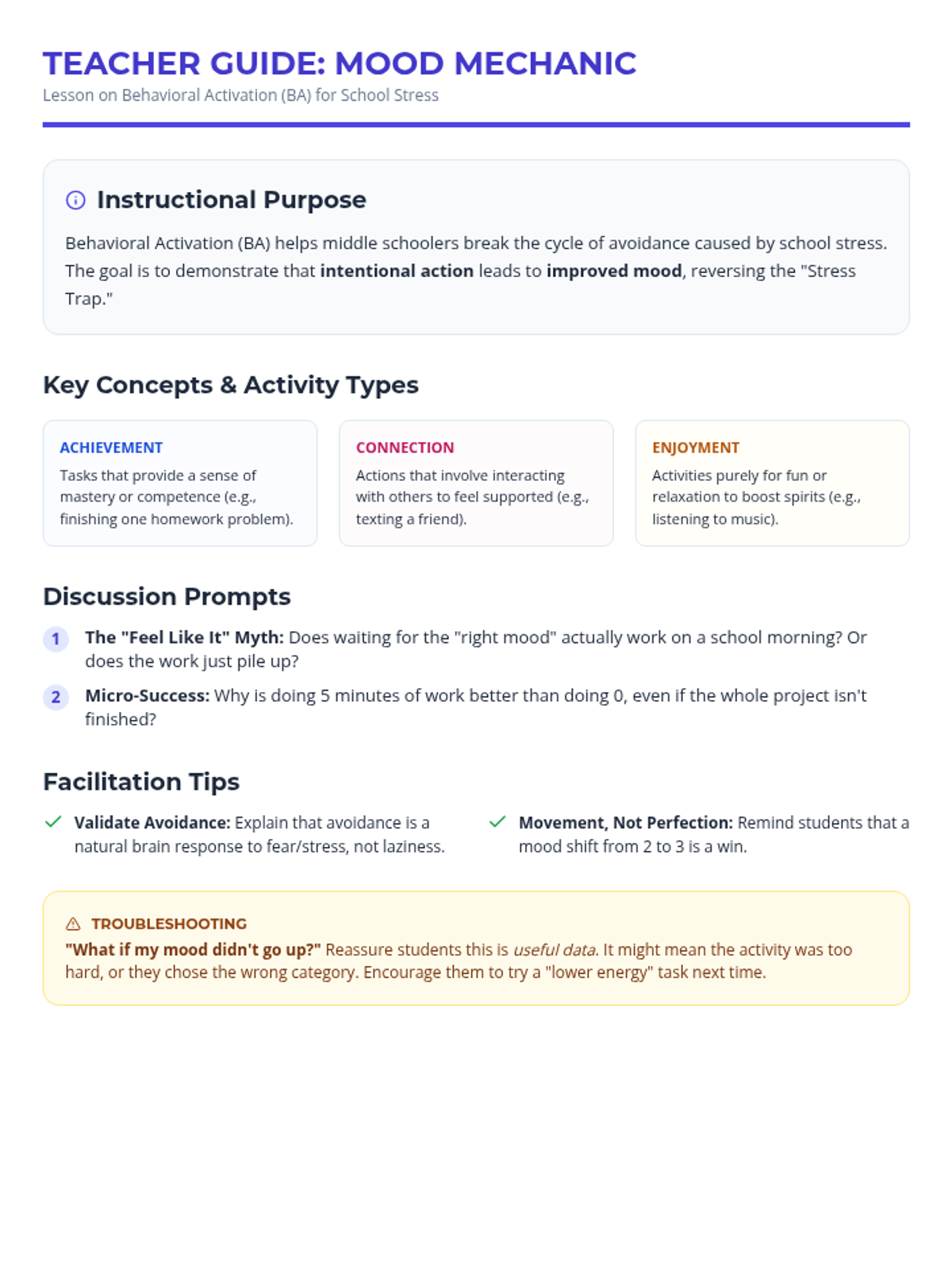
A comprehensive teacher guide for facilitating the 'Mood Mechanic' lesson, including instructional purpose, discussion prompts, and facilitation tips for Behavioral Activation.
A visual slide deck for teaching middle schoolers about Behavioral Activation, featuring the 'Stress Trap' cycle, the 'Action First' principle, and how to use mood scales.
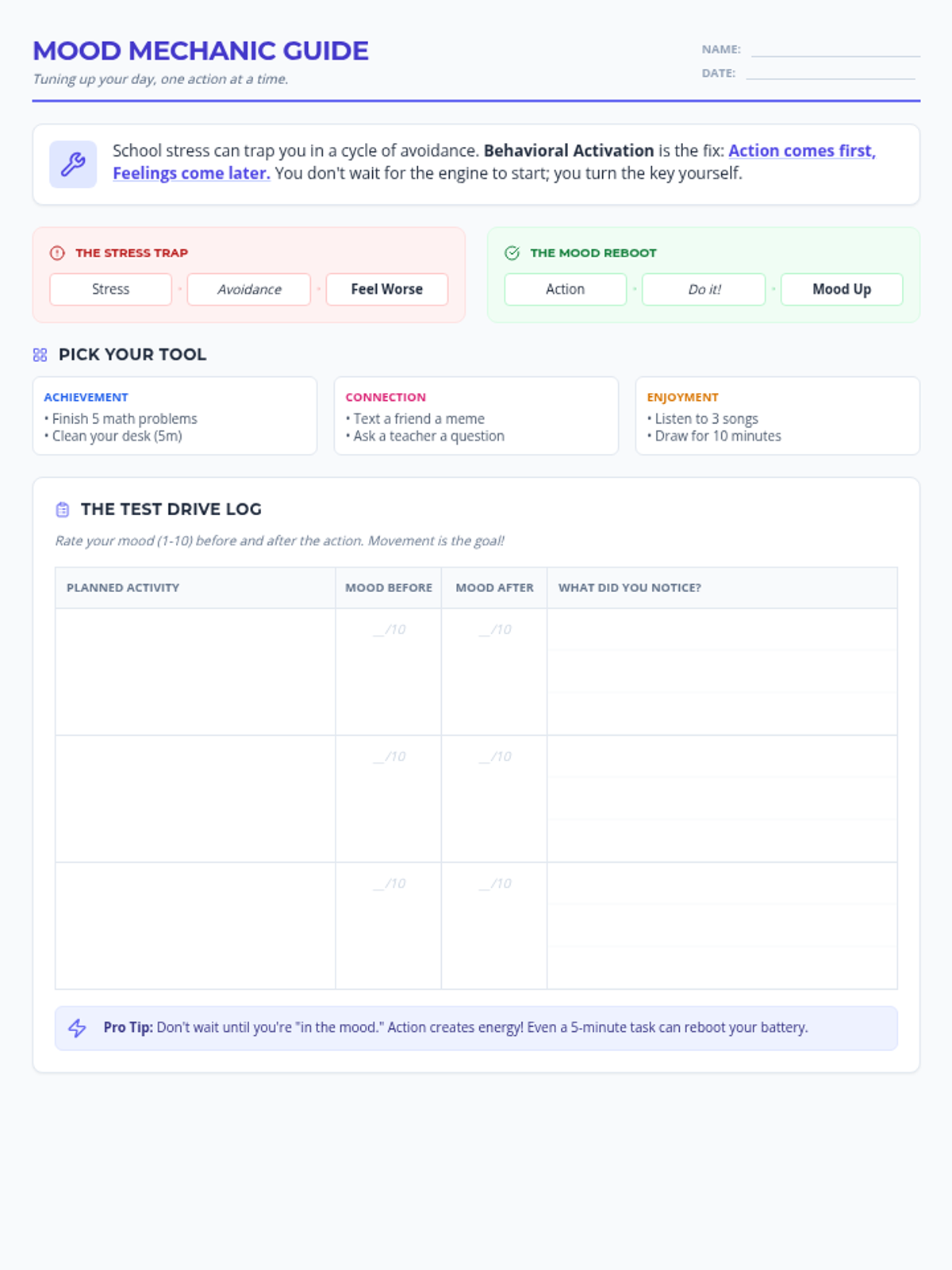
A student-friendly worksheet explaining the 'vicious cycle' of school stress and providing a 'Mood Mechanic' tracking log with before-and-after mood scales.
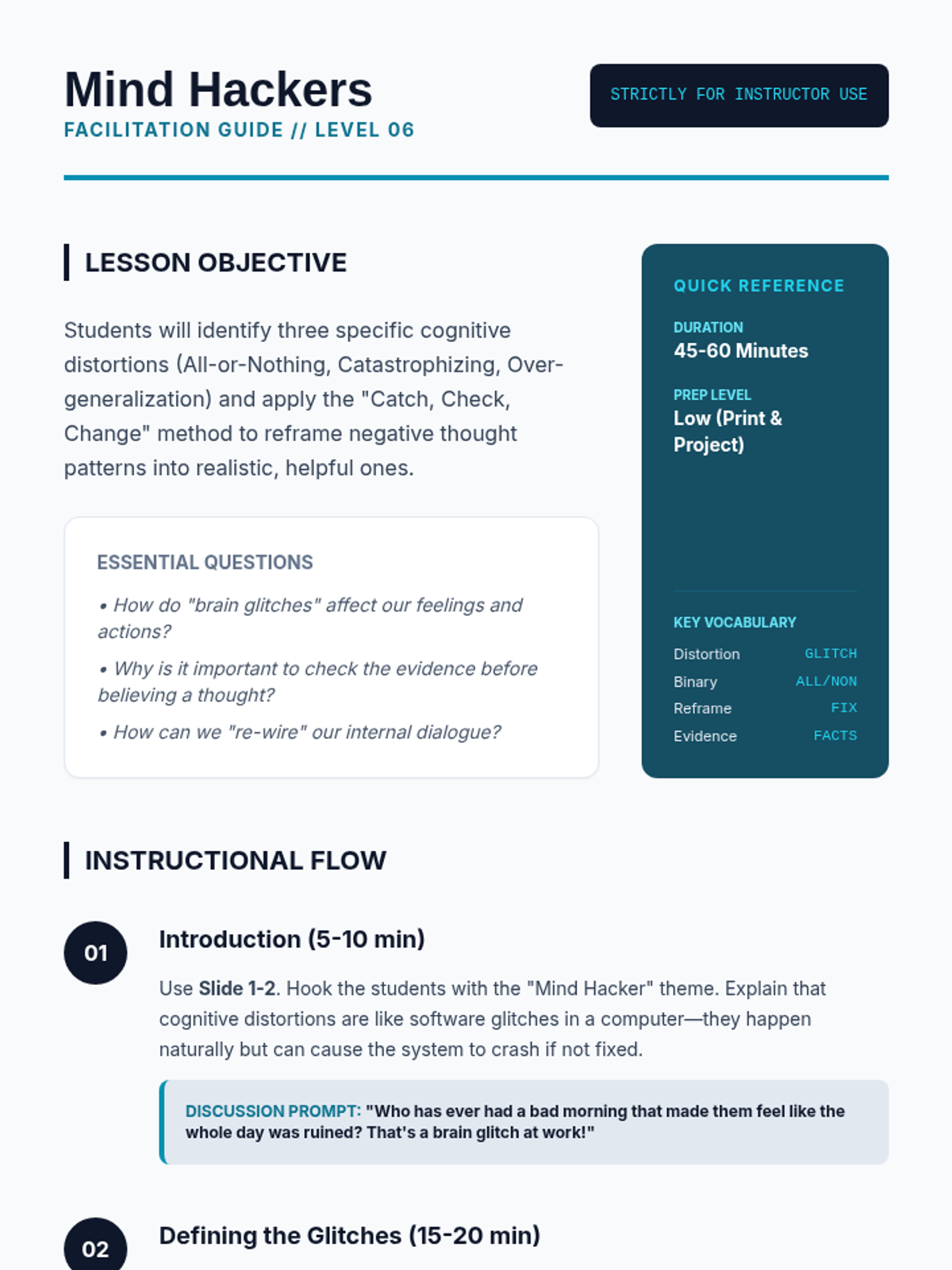
A facilitation guide for teachers to deliver the Mind Hackers lesson. Includes lesson objectives, pacing instructions, suggested scripts for slides, and a comprehensive answer key for the Thought Decoder worksheet. Revised for improved visual contrast and page flow.
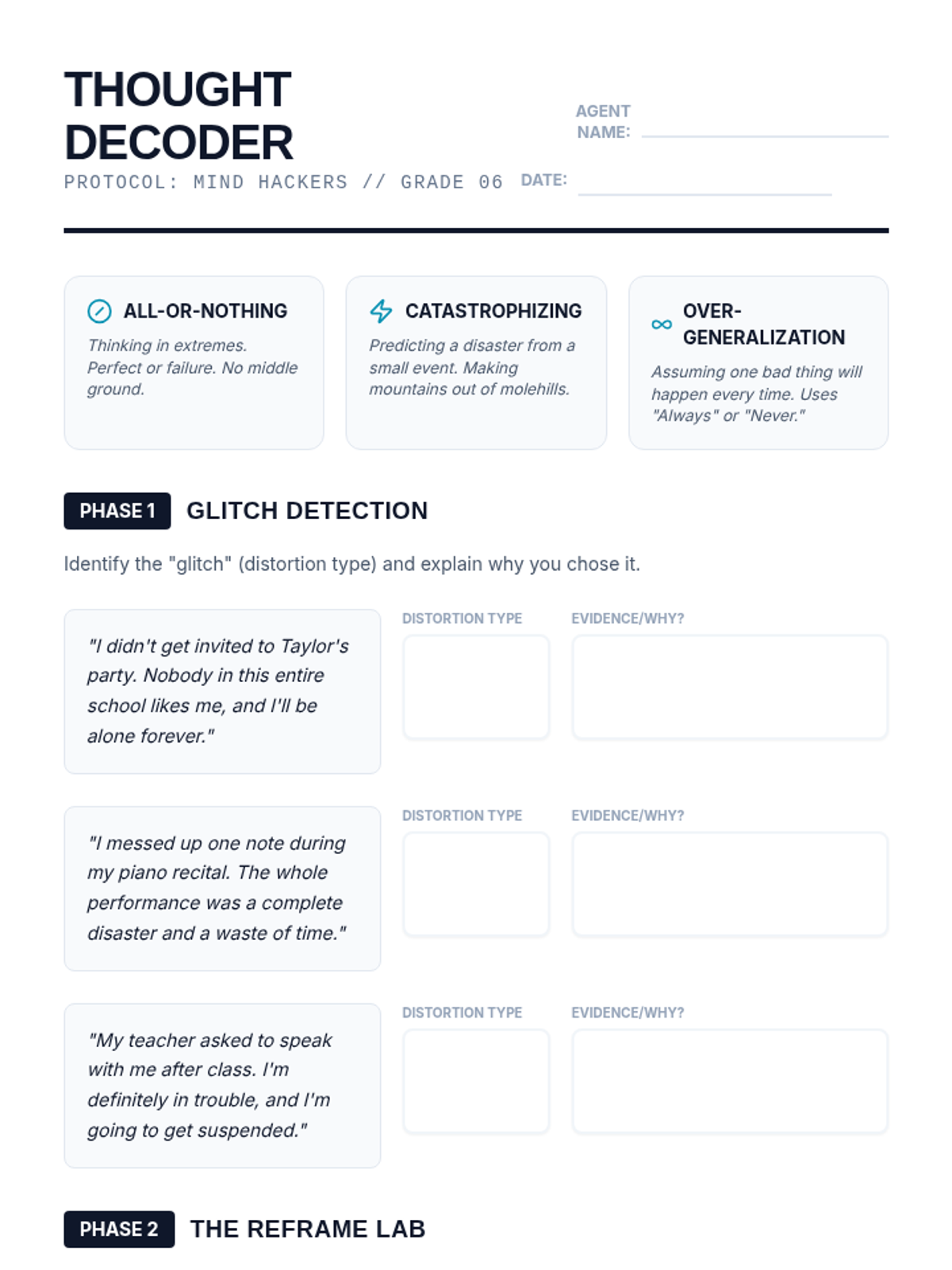
An interactive worksheet for 6th graders to practice identifying and reframing cognitive distortions. Includes a 'Glitch Detection' phase with scenarios and a 'Reframe Lab' for rewriting thoughts using the 3C method (Catch, Check, Change). Revised for better legibility, student work area guidance, and page flow.