A hands-on student worksheet for physically auditing and organizing a school bag and binder. Provides structured zones for sorting (Active, Archive, Trash) and a table for planning a subject-based labeling system.
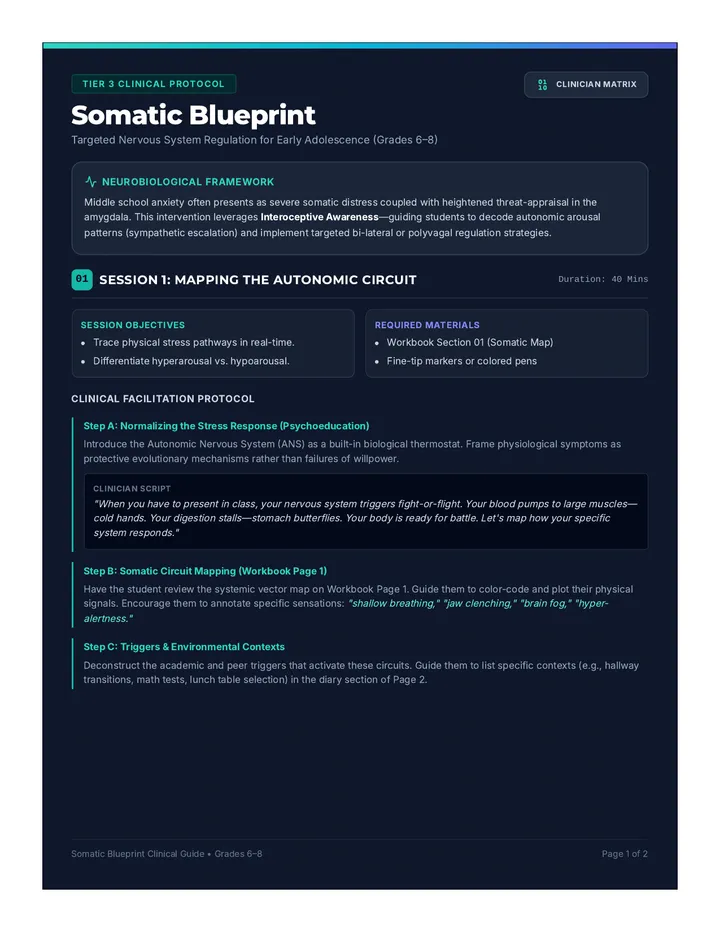
A clinical facilitation guide for mental health professionals working with children experiencing family-related trauma. It provides a theoretical overview of the Wise Owl and Guard Dog metaphors, symptoms navigation (guilt, revenge, hypervigilance), and somatic integration strategies. Designed as a professional companion to the Family Changes Guide.
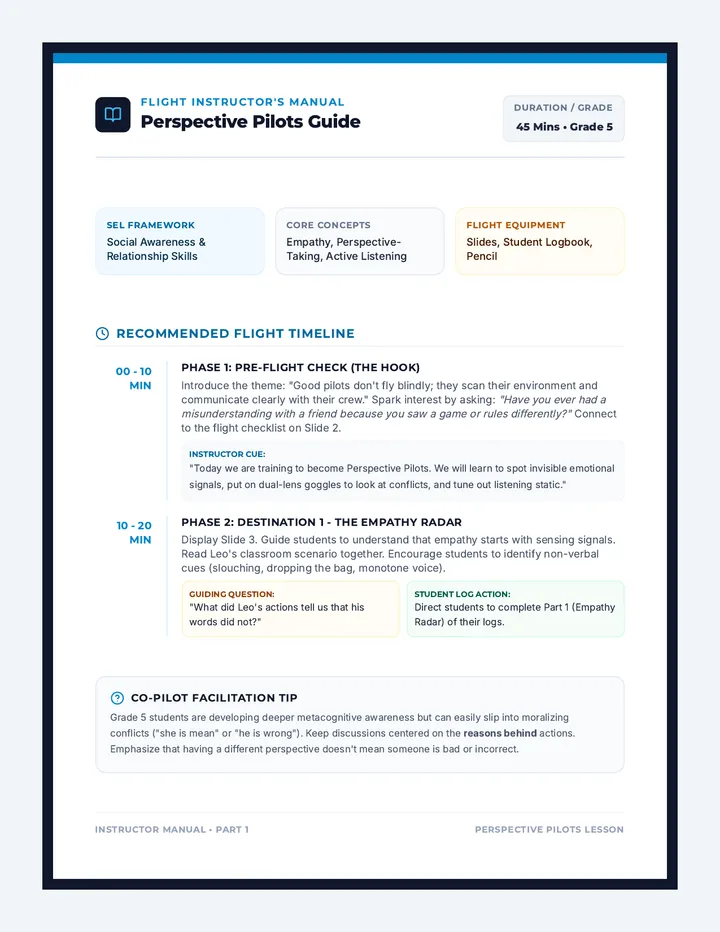
A teacher's companion guide for the Anxiety Atlas lesson, providing common examples of physiological sensations, cognitive distortions, and discussion prompts for classroom use.
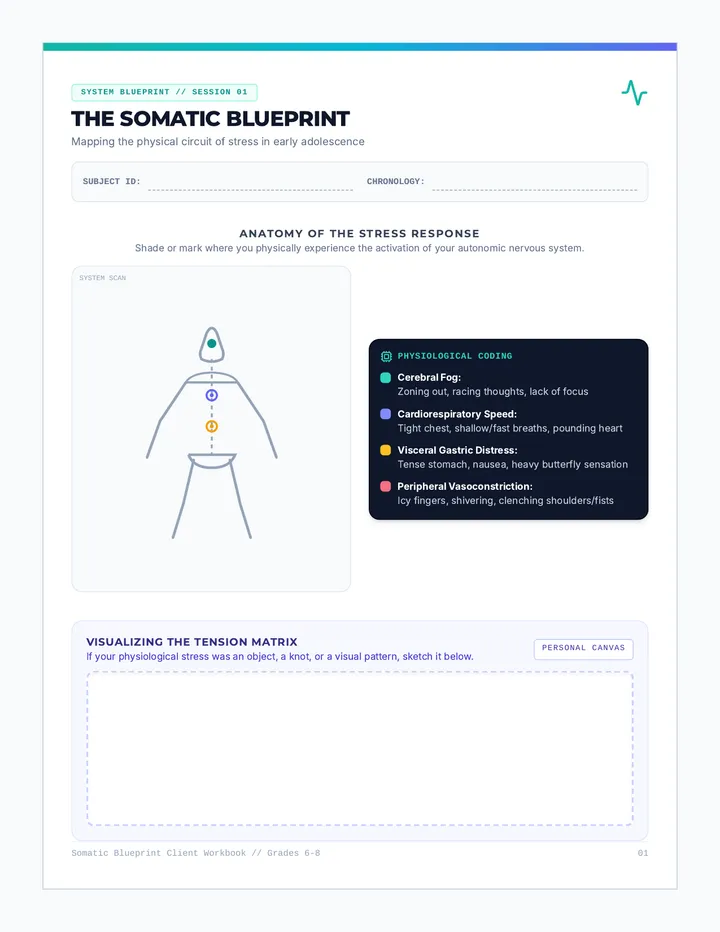
An interactive worksheet featuring a body map for labeling anxiety's physical sensations and sections for documenting catastrophic 'What-If' thoughts and symptom-focused worries.
A comprehensive instructional guide for teachers to lead the Careers in Gear 2026 preparation session. Includes a timed pacing guide, active learning exercises for handshakes/introductions, and discussion prompts.
A high-impact visual presentation to introduce high school students to the Careers in Gear 2026 event. Covers event logistics, professional etiquette, networking strategies, and the mandatory photo release form.
A student-facing activity sheet designed to prepare high schoolers for the Careers in Gear 2026 event. Includes sections for career mapping, practicing introductions, brainstorming questions, and a critical reminder for the photo release form.
A colorful, highly visual presentation designed for K-2 students that simplifies self-advocacy into a two-step 'Magic Trick' using friendly icons and clear examples.
A creative drawing activity where students illustrate a self-advocacy scenario using a three-panel comic strip format to practice assertive communication visually.
A revised student activity worksheet for positive self-talk, now featuring significantly larger writing areas and improved layout to ensure all content fits on a single page.
A revised reflective student worksheet themed as an architectural blueprint, now optimized for legibility with a light drawing area and improved page fitting.
A comprehensive teacher-facing session guide for an individual counseling session focused on self-image, using an architectural 'Inner Architect' theme.
A dynamic, high-contrast presentation deck that introduces the concept of self-advocacy, explores the three pillars of self-awareness, and teaches a practical communication formula.
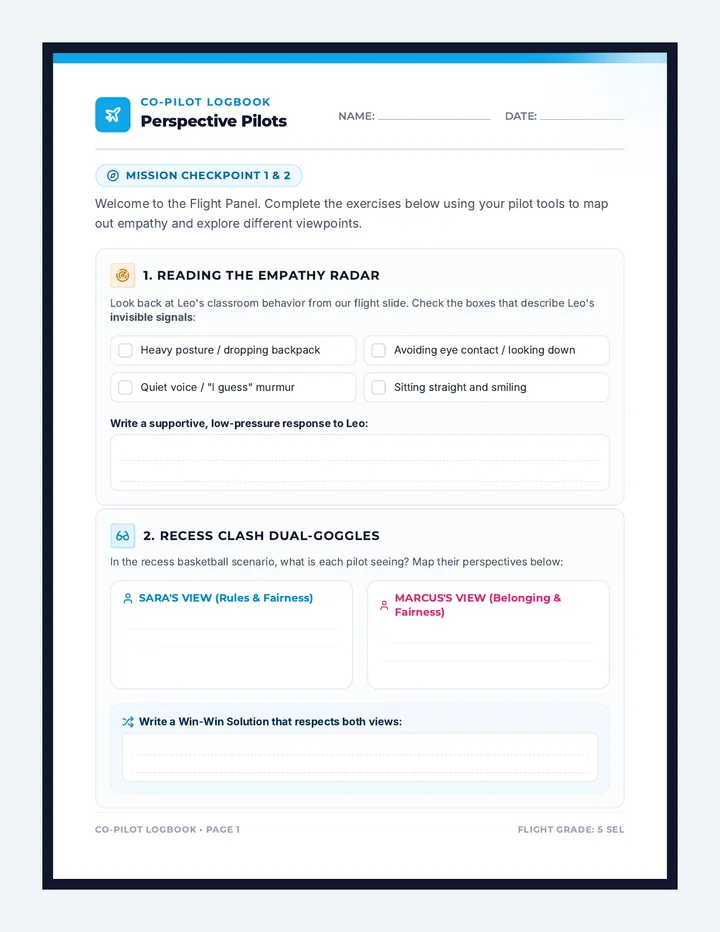
An interactive student worksheet designed to build self-advocacy skills through self-reflection and practical scenario-based exercises using a structured communication formula.
A comprehensive teacher's guide for introducing self-advocacy, featuring lesson objectives, discussion prompts, vocabulary, and an answer key for practice scenarios.
A printable sheet with two 'Map Markers' exit tickets, designed to assess student understanding of anxiety triggers and body signals at the end of the lesson. Consolidated to fit on a single page.
A visual anchor chart for classrooms or student folders, defining anxiety as a 'Body Alarm' and providing categories of common 'sparks' or triggers. Includes a student personalization section.
An engaging 6-slide presentation that introduces anxiety as an internal alarm system and explains the concept of triggers (sparks) through a 'Mindful Map' theme.
A 30-minute lesson plan for teachers, outlining the flow of the Mindful Map lesson on anxiety and triggers. Includes objectives, vocabulary, and a timed delivery guide.
An actionable worksheet that guides students through the process of breaking down a daunting task into a 'ridiculous first step' and a 5-minute goal to overcome academic avoidance.
A personal reflection journal designed to help students identify their emotional triggers for procrastination and practice shifting from self-criticism to self-compassion.
A set of sorting cards featuring realistic academic scenarios. Students analyze each case to identify underlying psychological triggers like perfectionism, fear of failure, or overwhelm.
An engaging, high-contrast slide deck that explains the psychological roots of procrastination, the brain science of avoidance, and actionable strategies like the 5-minute rule.