A small group lesson focused on developing organizational systems for school work. Students learn a three-step method (Sort, Label, Store) and create a personalized plan for managing their binders and backpacks.
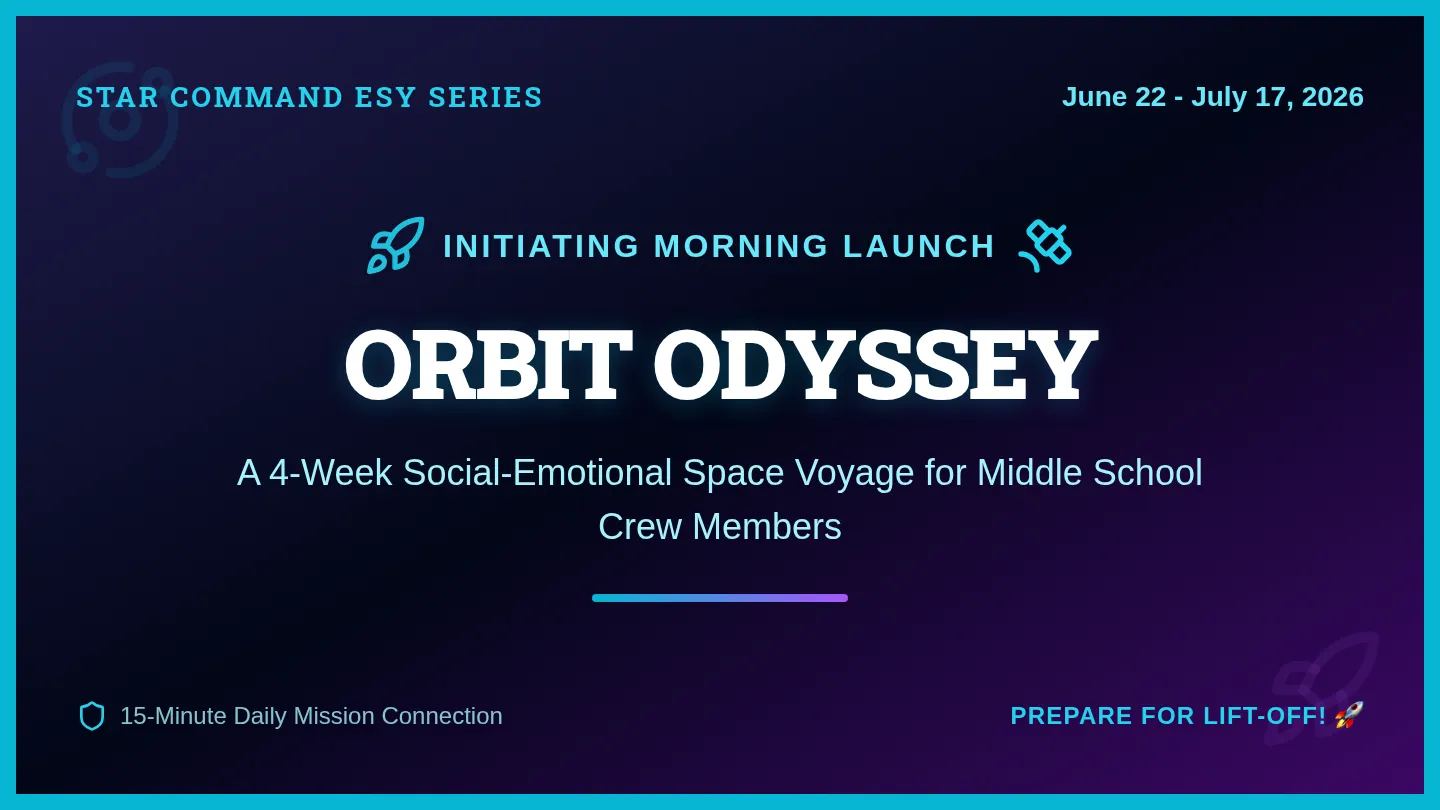
The foundational implementation of the Social Compass program, covering policy, instructional assessment, and team training.
A comprehensive set of materials to facilitate a formal family meeting and establish clear behavioral expectations following a conflict involving verbal bullying.
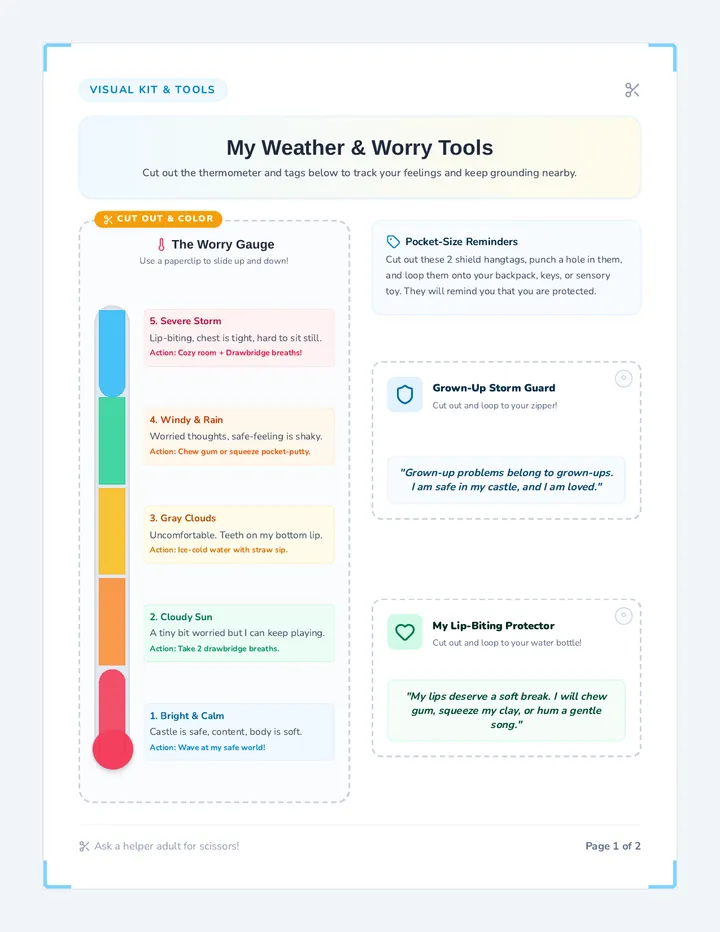
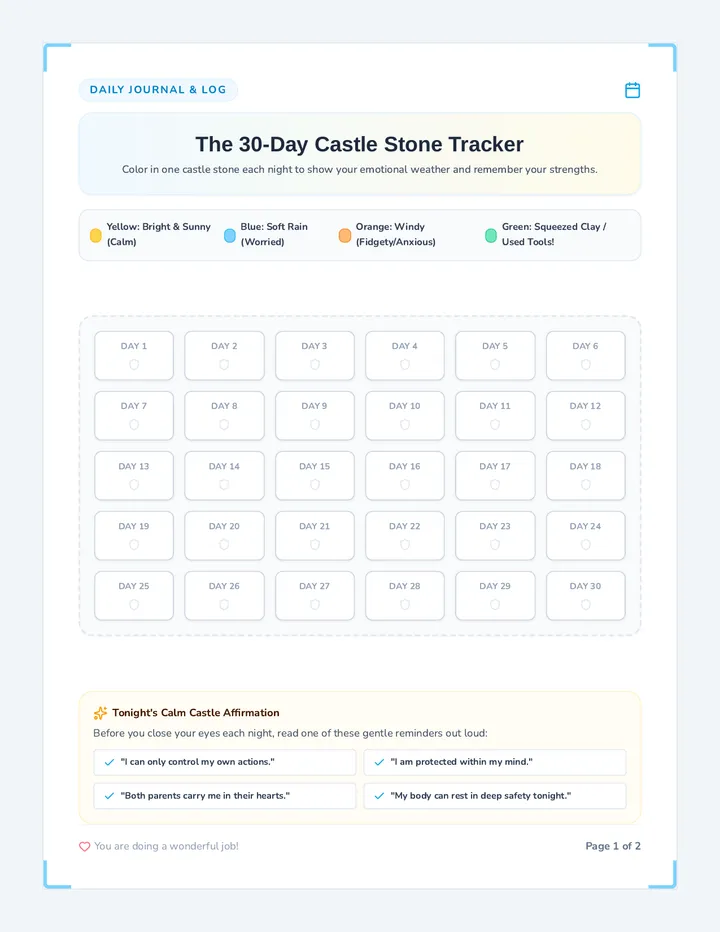
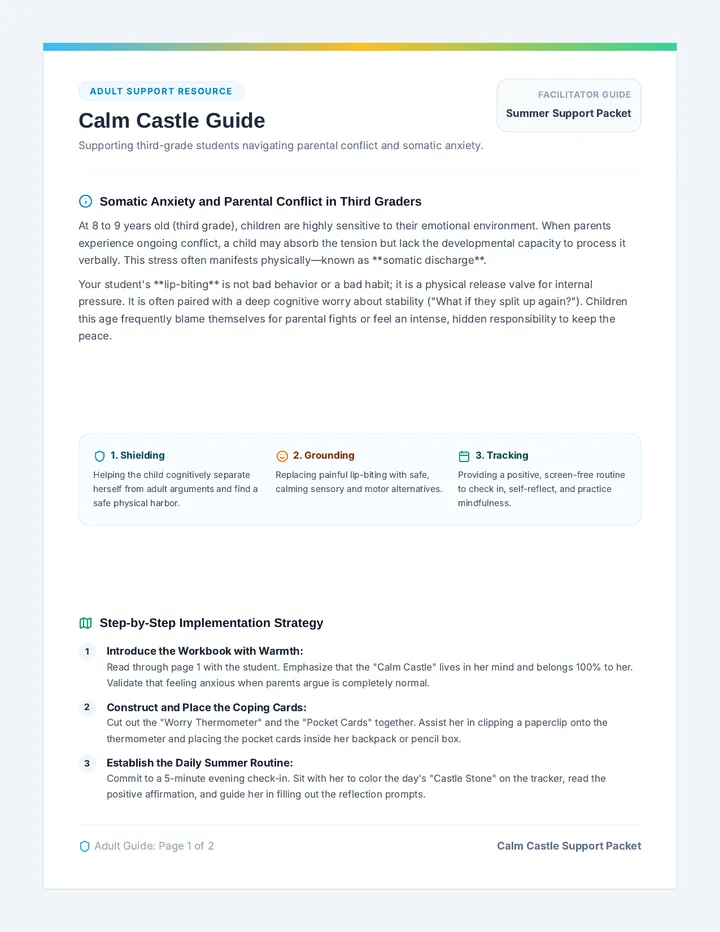
A set of resources designed to support children and their caregivers through the trauma of family changes, focusing on brain-based metaphors and clinical best practices.
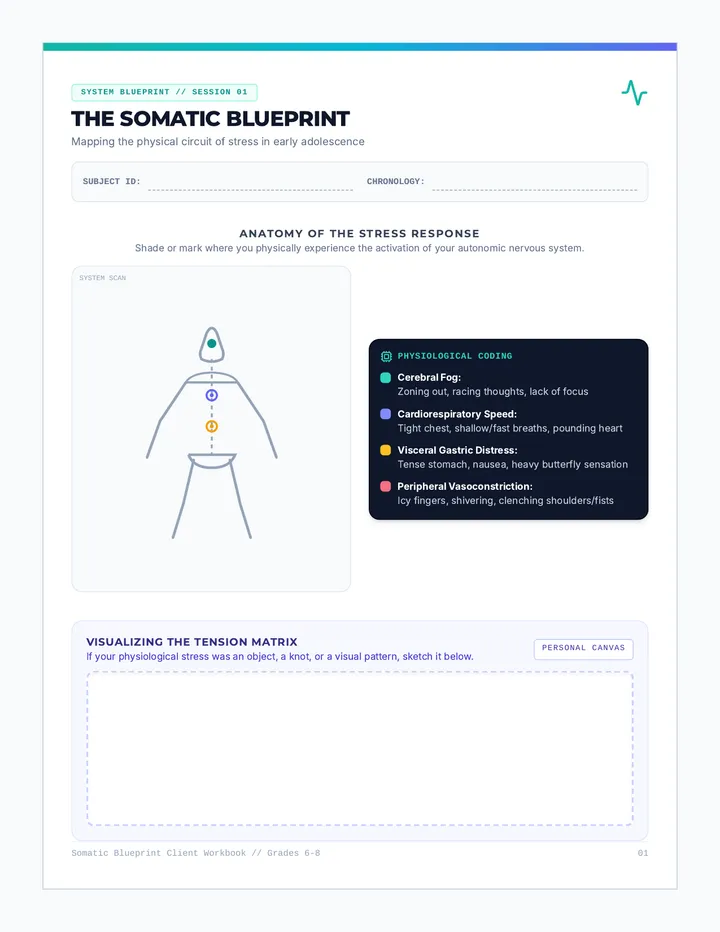
A lesson focused on identifying the physical sensations of anxiety and the cognitive 'what-if' loops that accompany them, featuring a body-mapping activity.
A preparation lesson for the Careers in Gear 2026 event, focusing on career interest identification, professional communication, and logistical readiness.
A focused counseling session designed to help students identify their internal strengths and practice positive self-talk through an 'Inner Architect' theme.
An introductory lesson that defines self-advocacy, explores its importance, and provides students with practical frameworks to communicate their needs effectively.
A 30-minute introductory lesson helping students understand anxiety as an internal alarm system and identifying the specific 'sparks' or triggers that set it off. Students will create a personal 'Mindful Map' of their triggers.
This lesson reframes procrastination as an emotional regulation challenge rather than a time management failure. Students use a psychological lens to identify triggers like perfectionism and fear of failure, replacing shame with actionable momentum strategies.
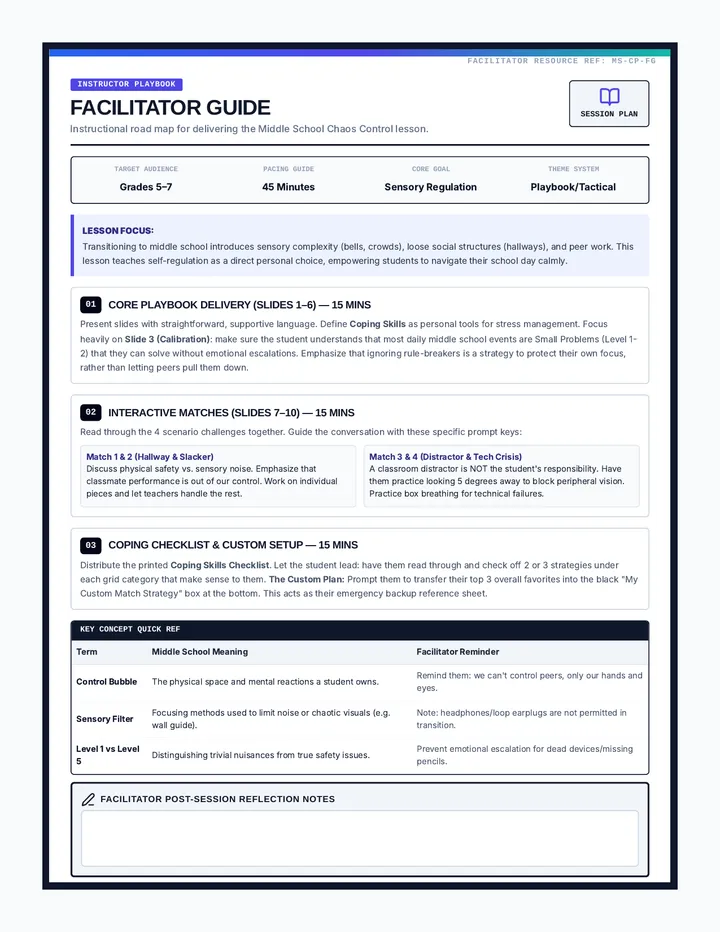
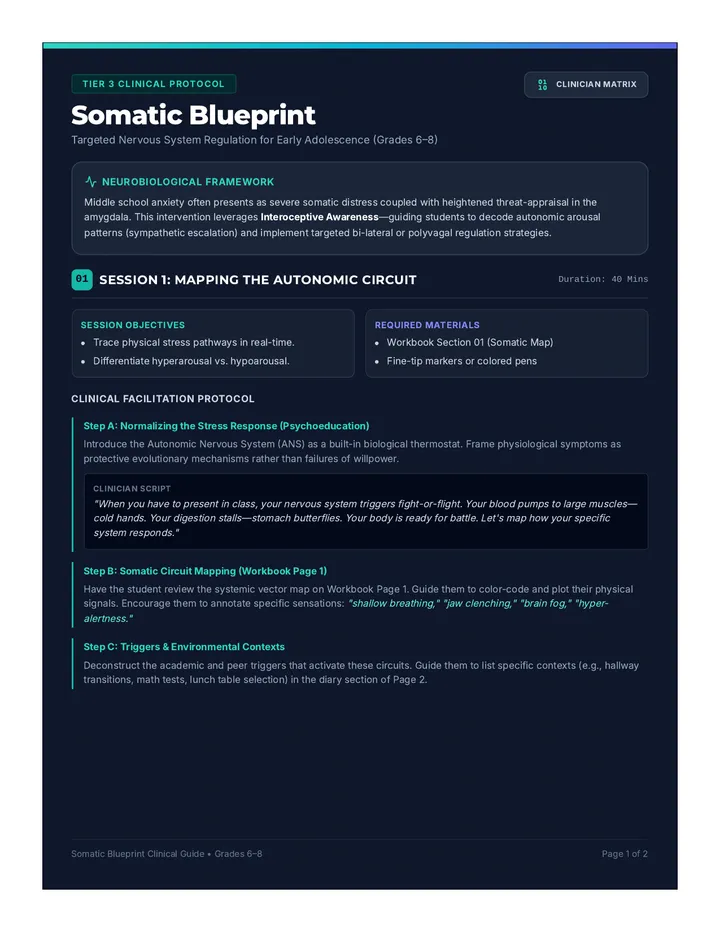
This lesson introduces students to somatic grounding techniques to regulate the nervous system, moving from 'fight-or-flight' to 'rest-and-digest' through practical, body-based tools.
A foundational lesson for Kindergarten students to learn how to identify their feelings and use 'I feel' statements to advocate for their needs in the classroom.
A comprehensive support package for 1st-grade students experiencing the loss of a pet, including a social story, teacher guidance, student activities, and parent support.
This lesson explores the dynamic between the individual student and the whole class, using an ecosystem metaphor to understand how personal actions shape the collective environment. Students will reflect on their contributions and the importance of a supportive classroom community.
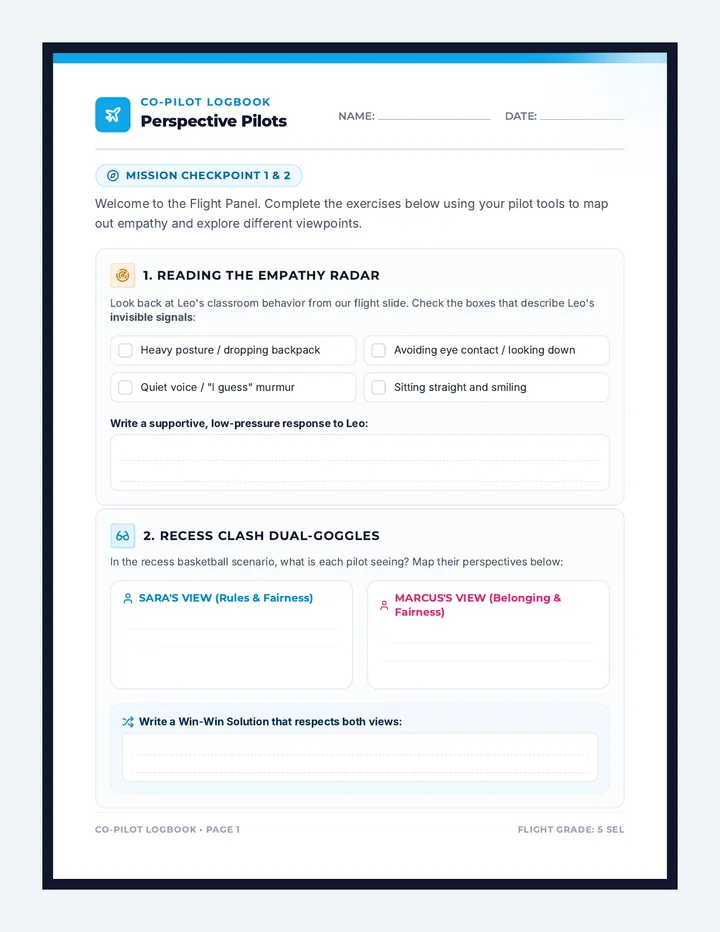
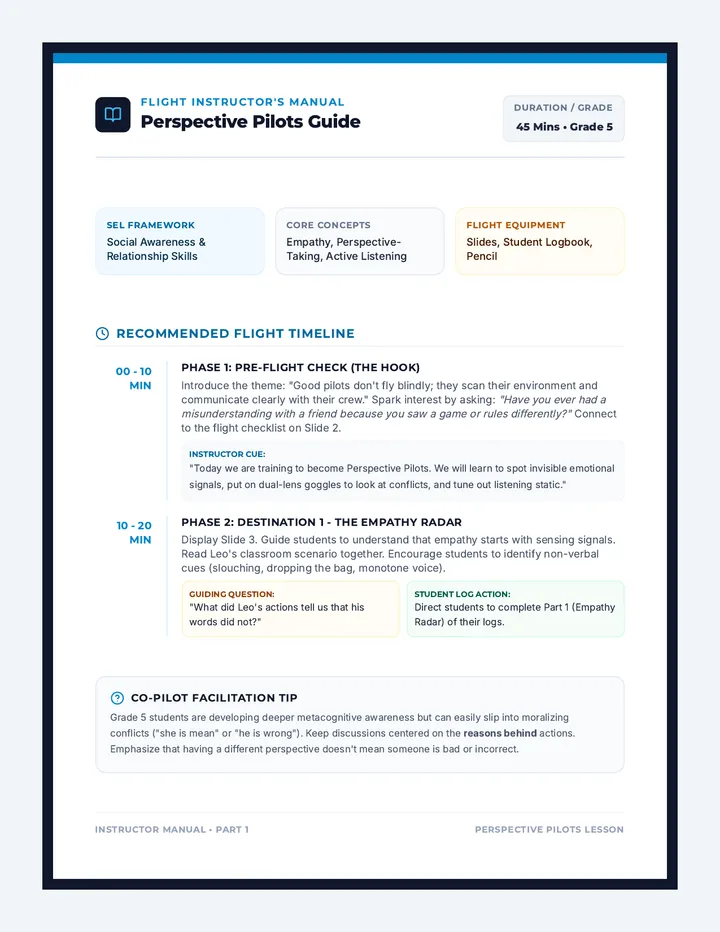
A 45-minute social-emotional learning lesson focused on developing perspective-taking skills and identifying emotional cues in others. Students act as 'Human Decoders' to analyze social situations and build stronger connections.
A comprehensive lesson for teens and adults on the concept of 'Emotional Consent' and learning to gauge someone's capacity before sharing heavy or stressful information.
A comprehensive workshop designed for parents to understand childhood PTSD, learn supportive strategies, and discover resources for family healing.
A comprehensive lesson on social etiquette, respect, and digital citizenship tailored for 6th-grade students transitioning into middle school social dynamics.
A quick, 15-minute presentation for parents on supporting children with PTSD, focusing on home strategies, resilience, and school partnership.
A quick, high-impact growth mindset activity designed for 8th-grade leadership students to analyze and rebuild their mental frameworks using an architectural blueprint theme. This self-contained lesson is perfect for sub plans, focusing on the 'Power of Yet' and reframing leadership challenges.
A final review and scenario-based assessment to earn 'Master Scientist' status.
Students explore how their reactions affect the people around them and the classroom environment.
Students learn when and how to appropriately ask for help for larger problems.
Students build a toolkit of calming strategies for small to medium problems.
Students identify the physical warning signs in their bodies before a big reaction happens.
Students practice matching specific reaction levels to corresponding problem levels.