A refined teacher guide with a consolidated pacing guide, detailed answer keys including question context, and optimized page flow.
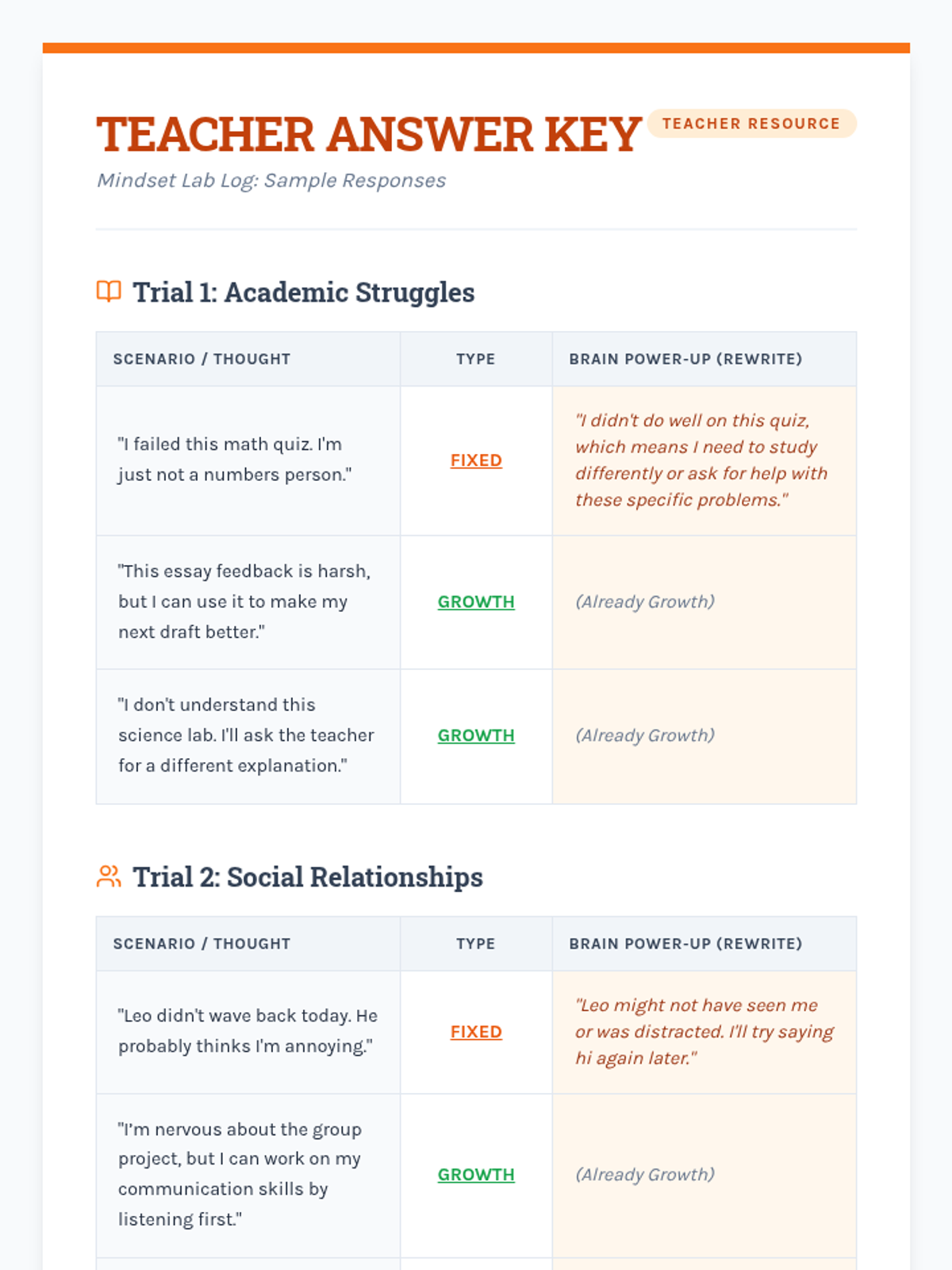
A teacher answer key for the Mindset Lab Log Worksheet, providing sample "Brain Power-Up" rewrites for fixed mindset scenarios.
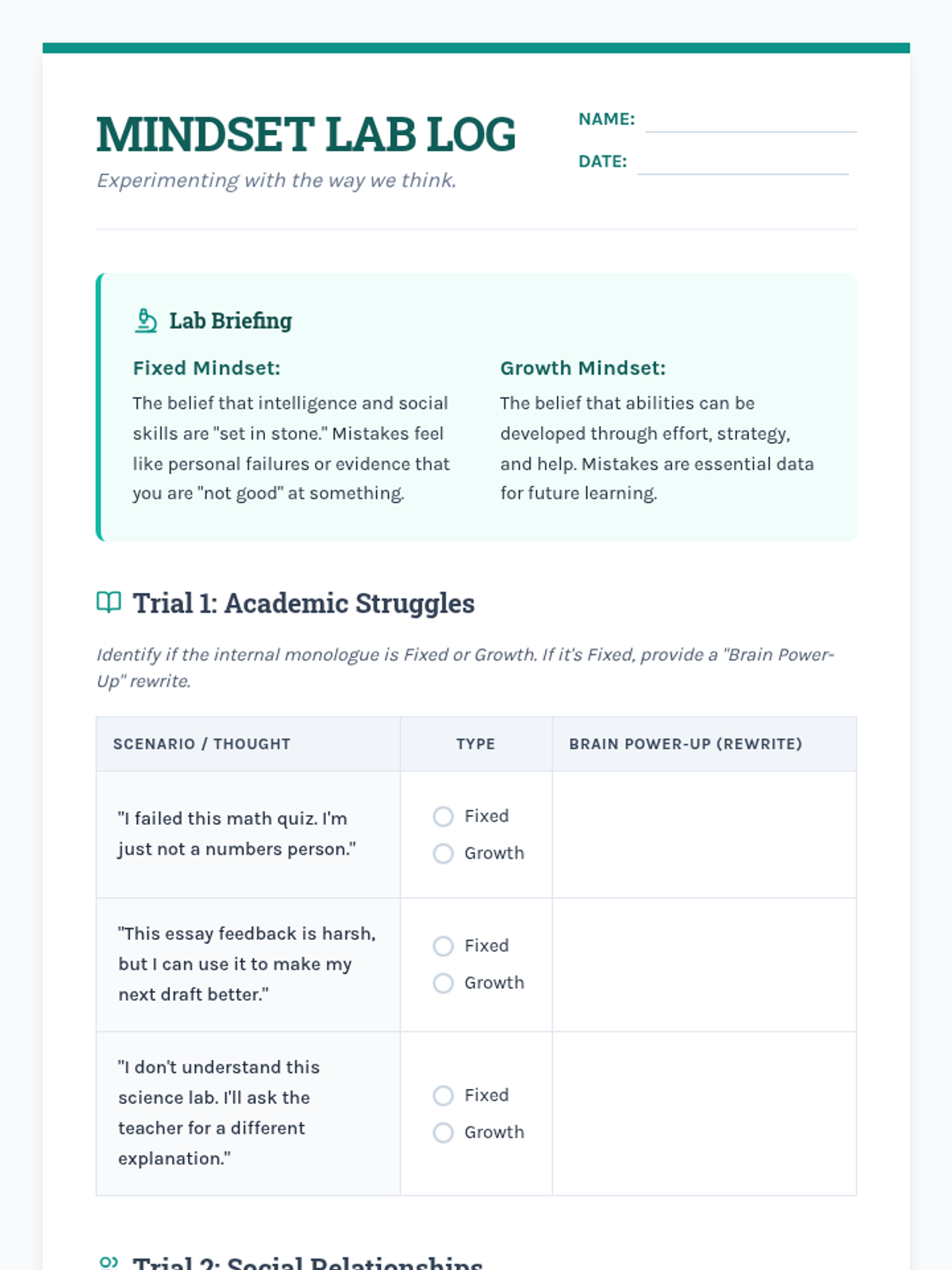
A student worksheet featuring a "Mindset Lab" theme where students categorize academic and social scenarios as fixed or growth mindsets and rewrite the fixed mindset thoughts.
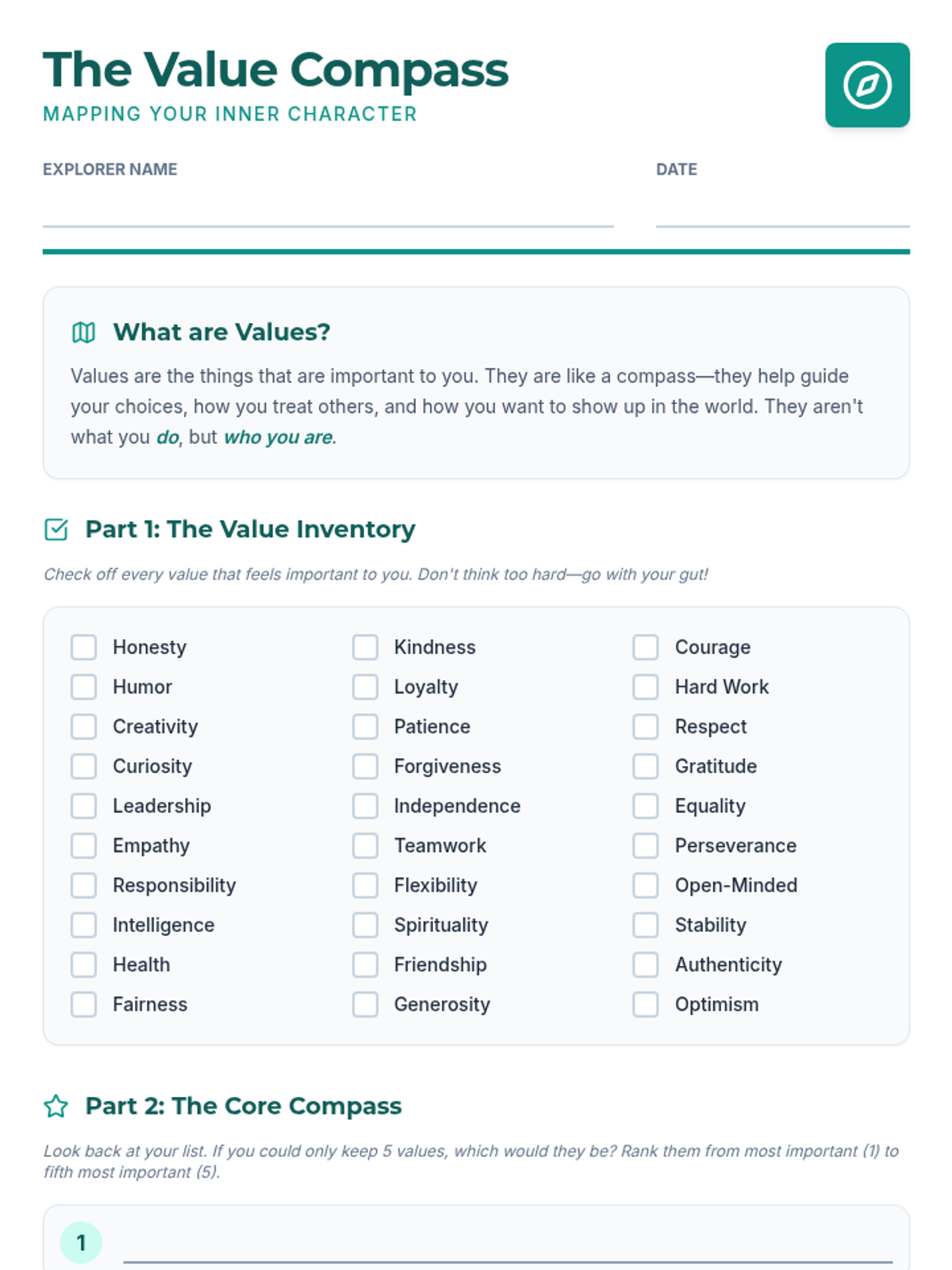
A comprehensive value identification worksheet for middle schoolers featuring a 30-item character trait checklist, a top-5 ranking system, and reflection prompts to help students map their personal compass.
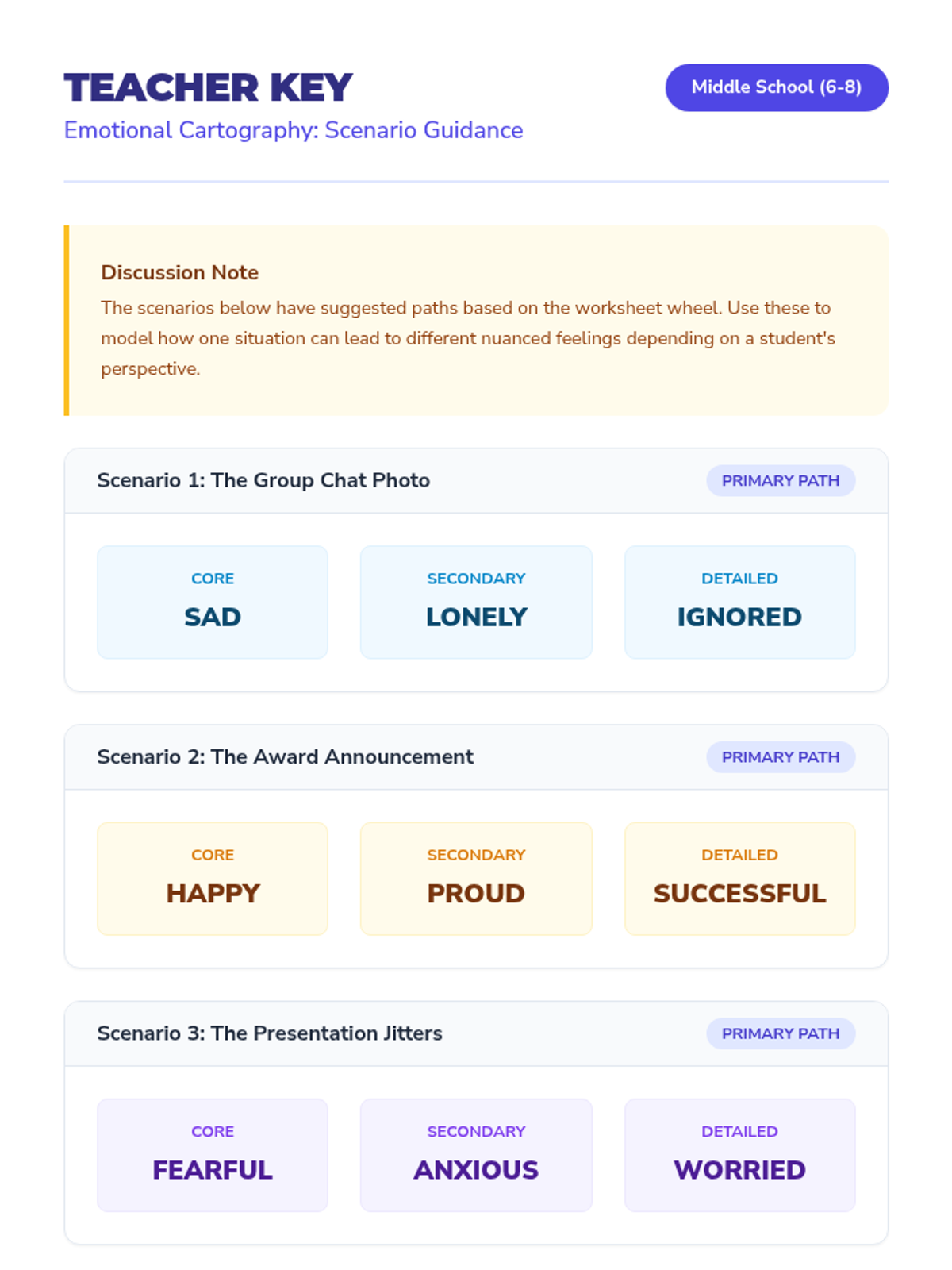
An optimized teacher key with clear paths and teaching strategies. Fixed page break issues and improved contrast for printing.
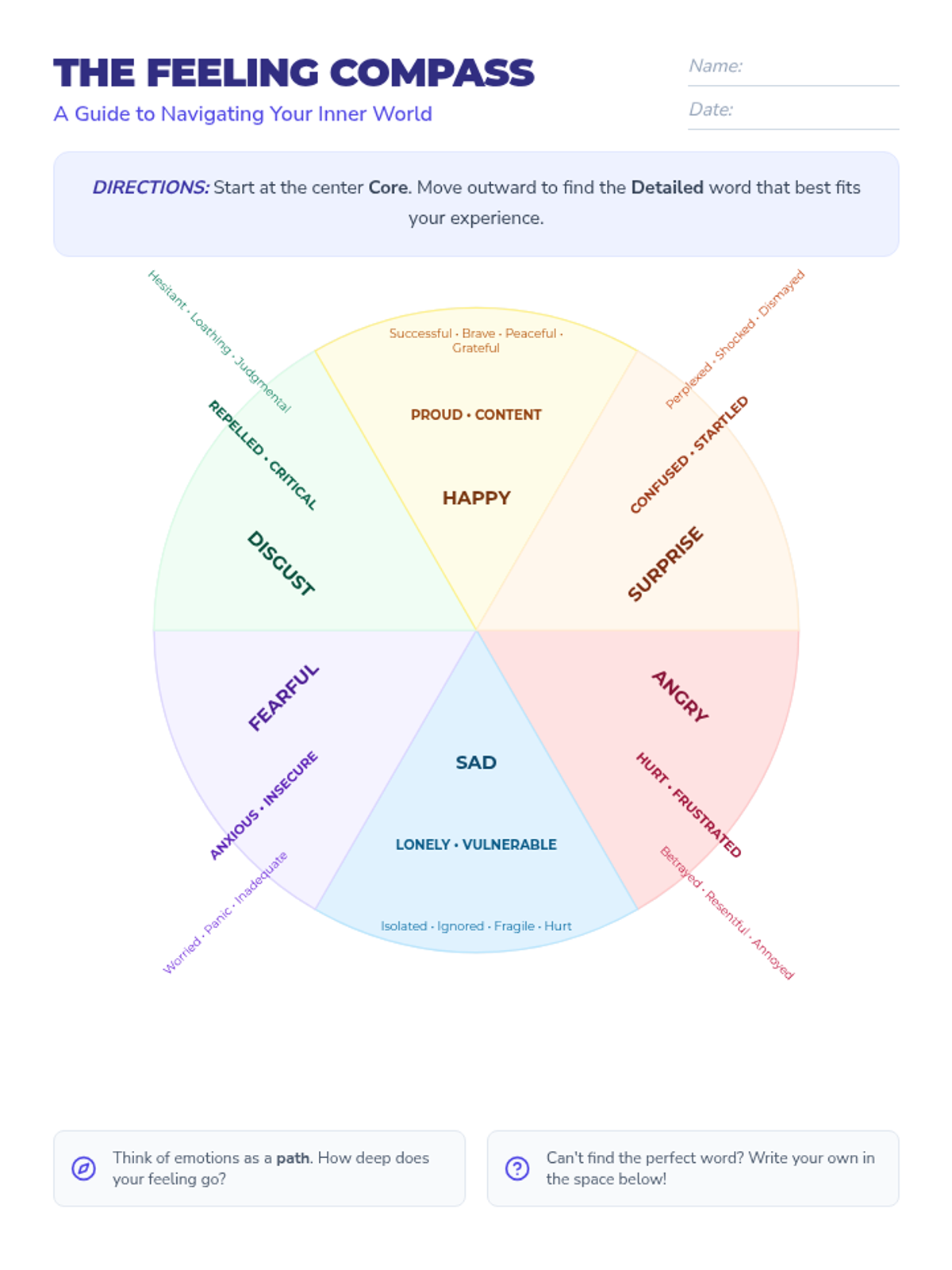
A refined two-page worksheet with a legible 3-layer feelings wheel and scenario activities. Optimized for printing with clear text paths and appropriate work area contrast.
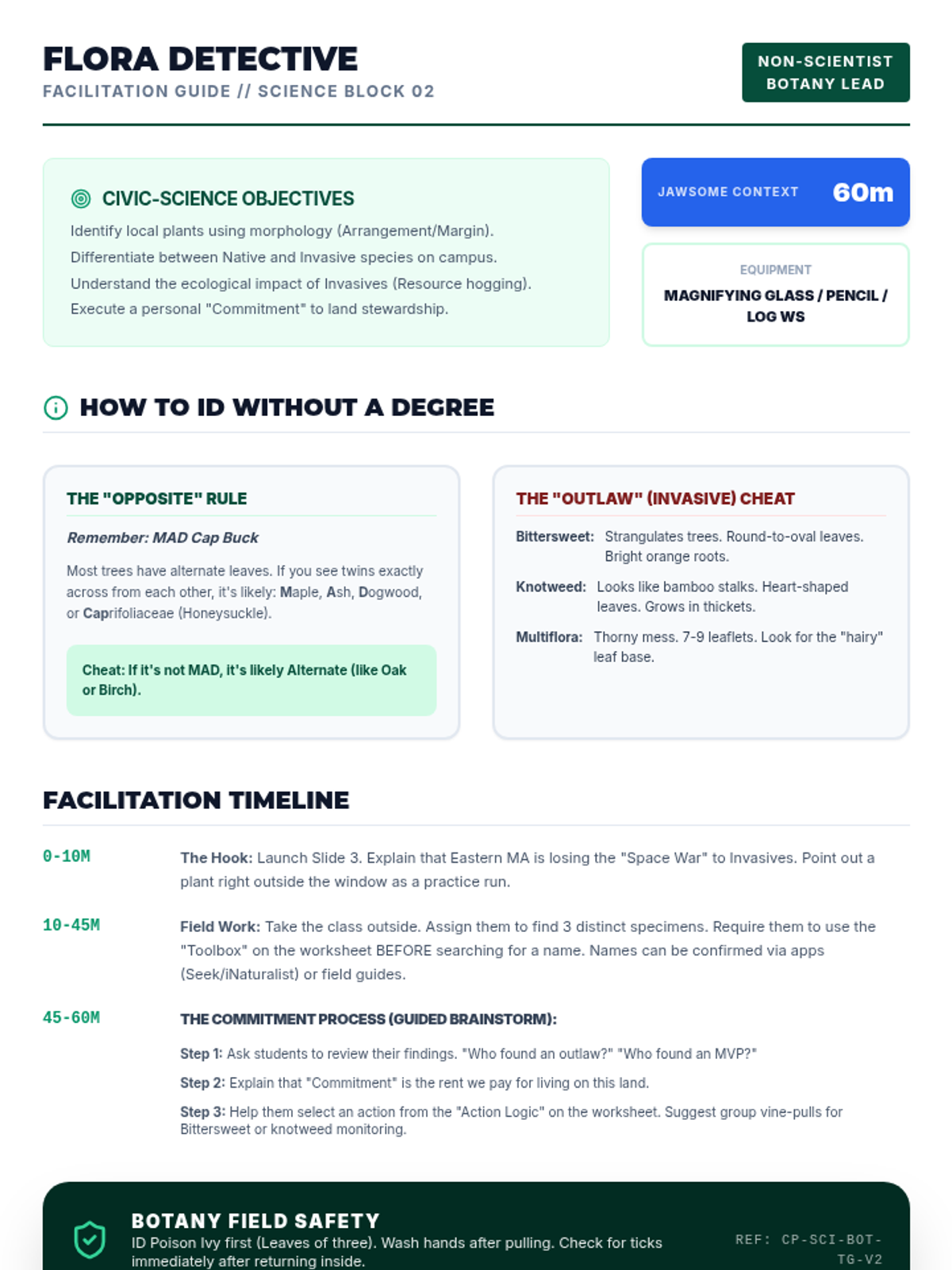
A facilitation guide for teachers to lead a 60-minute plant identification lab, featuring "non-scientist" cheat sheets for leaf arrangement and common Eastern MA invasive species. Revised to include commitment-derivation instructions and improved footer contrast.
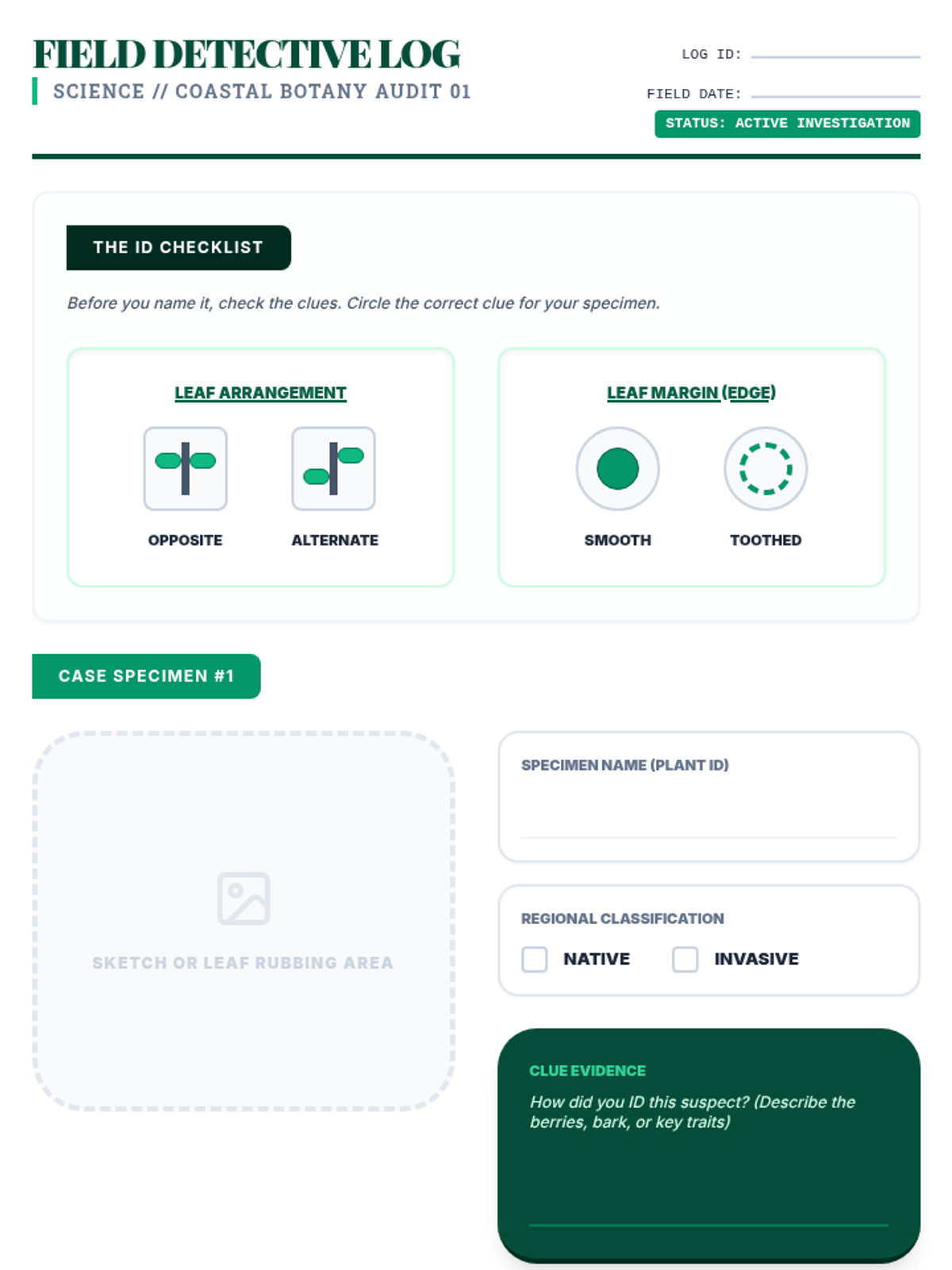
A scientific naturalist log worksheet for a plant identification lab, featuring classification keys for leaf arrangement and margins, sketch areas, and a regional stewardship commitment section. Revised to improve diagrams and handwriting space.
A visually engaging slide deck for a plant identification and classification lab, focusing on Cape Cod flora, leaf morphology, and the distinction between native and invasive species. Revised to fix icon clipping and improve transition labels.
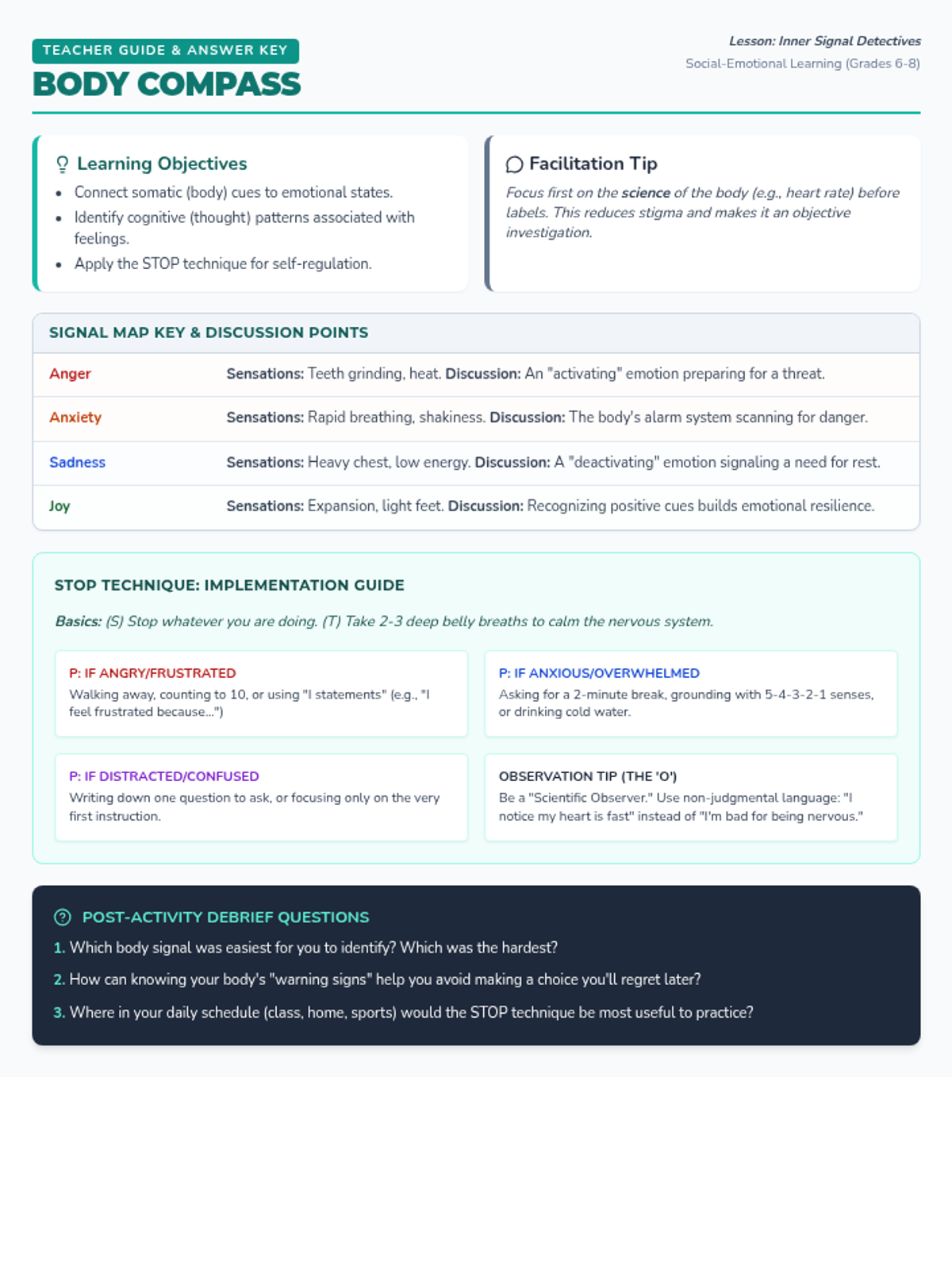
A teacher's answer key and facilitation guide for the "Body Compass" worksheet, including learning objectives, discussion prompts for the Signal Map, and sample self-regulation actions for the STOP technique.
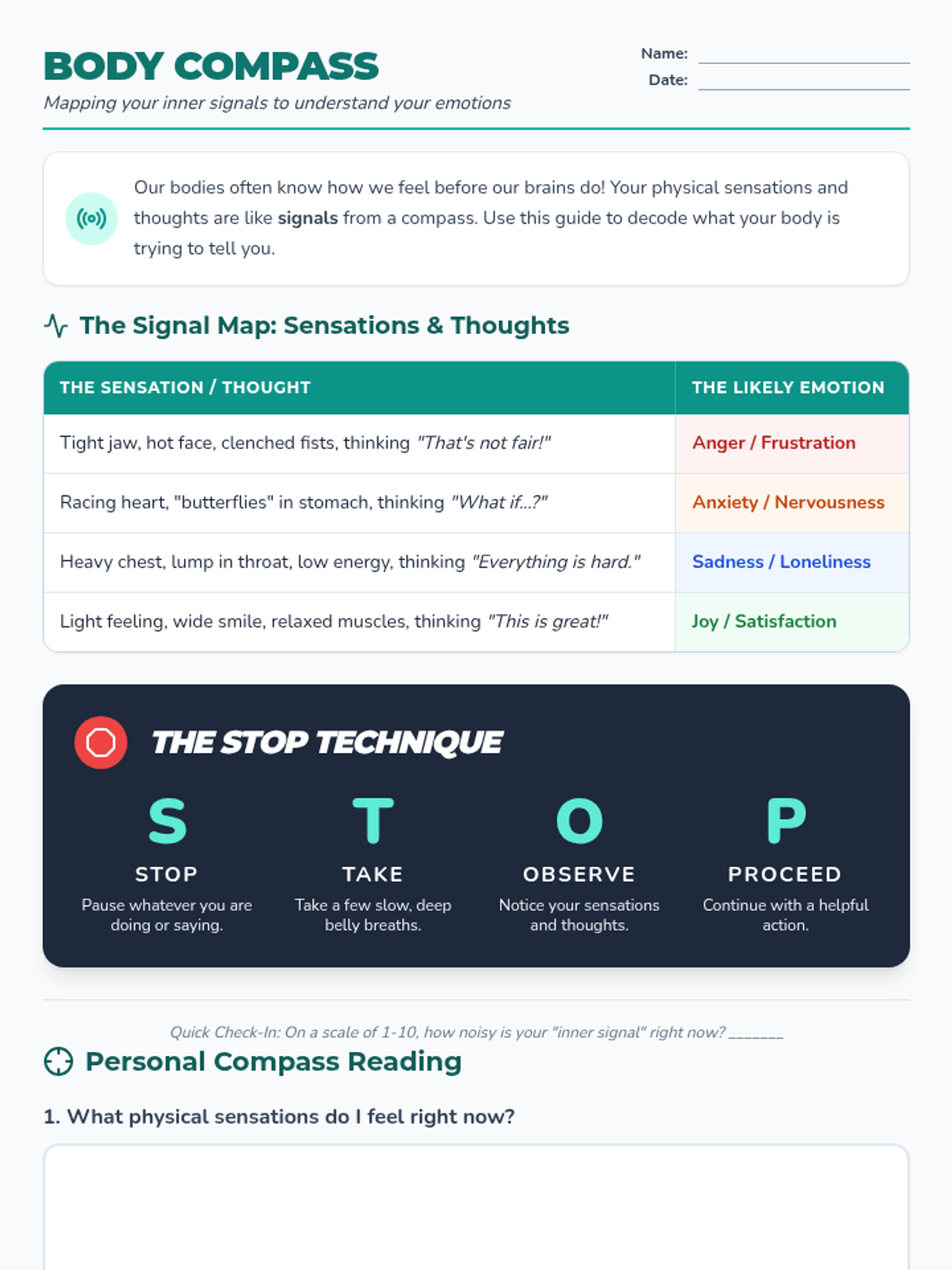
A student worksheet titled "Body Compass" that helps students map physical sensations and thoughts to specific emotions, featuring an interactive mapping activity and an introduction to the STOP technique.
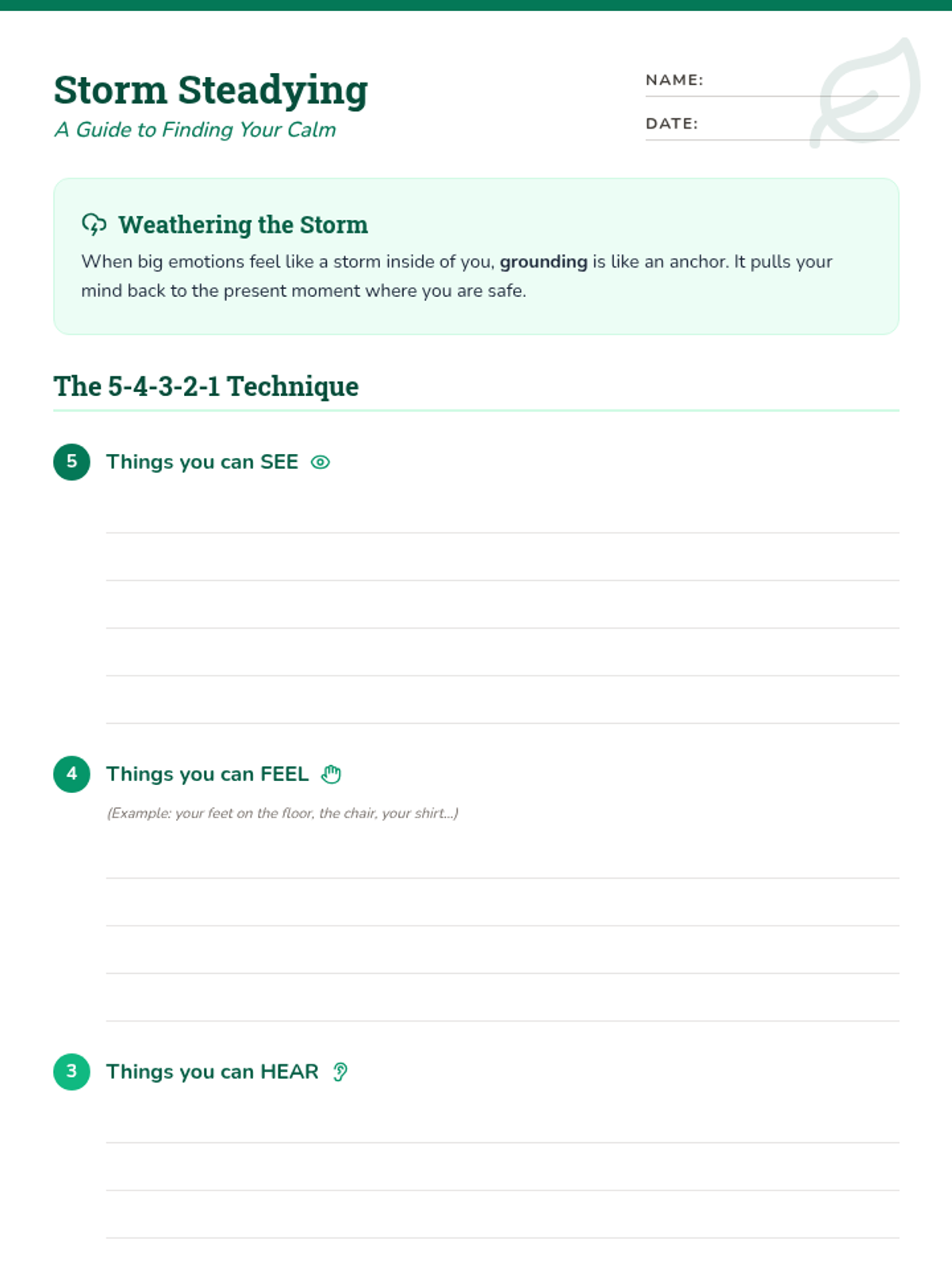
A two-page student worksheet for a counseling session focused on the 5-4-3-2-1 grounding technique. It features a calming "nature notebook" aesthetic with sections for students to record their sensory observations and reflect on their emotional state.
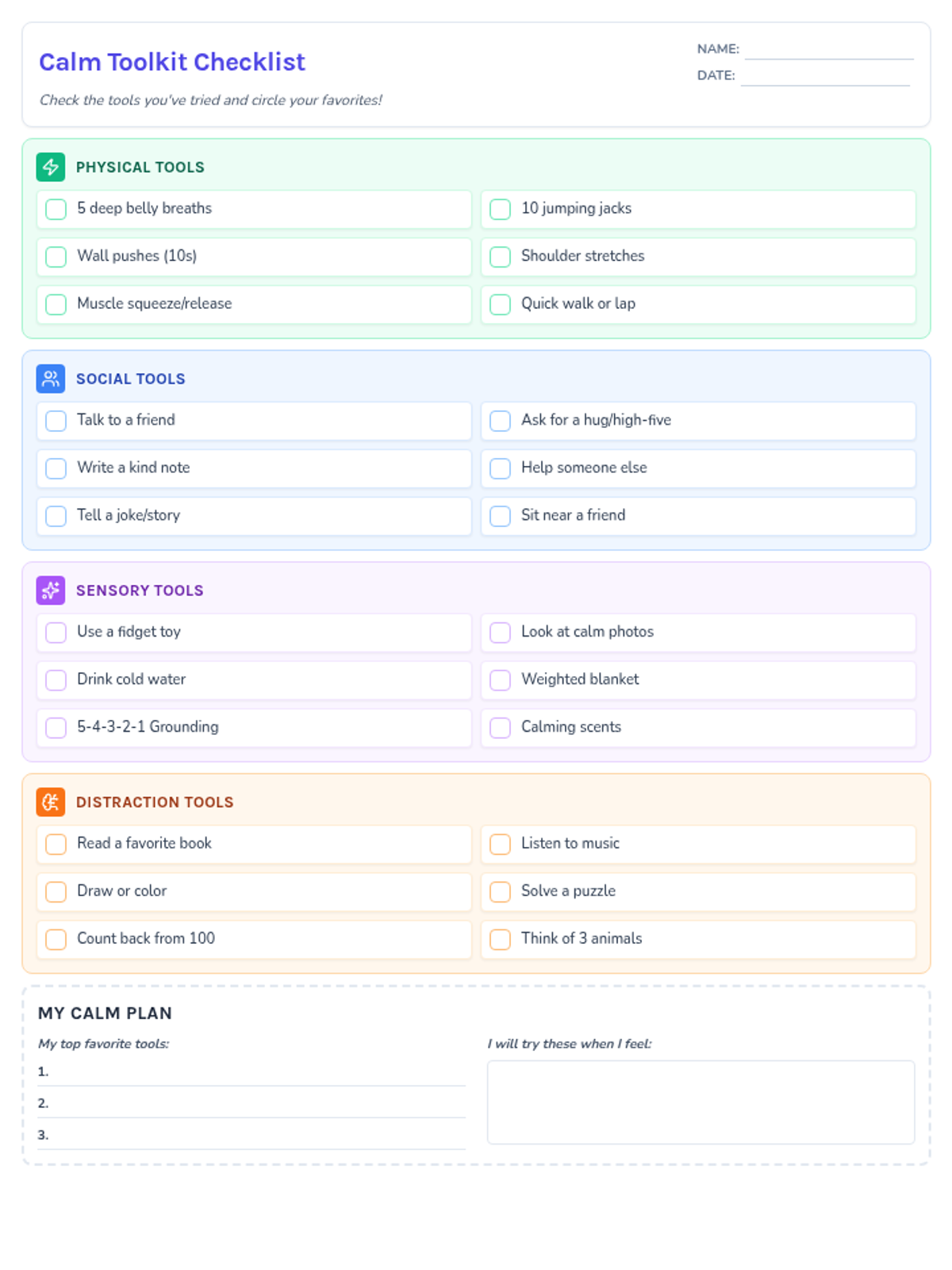
A compact, one-page student-friendly checklist for identifying coping skills across physical, social, sensory, and distraction categories. Designed to fit on a single page with a clear visual hierarchy and reflection space.
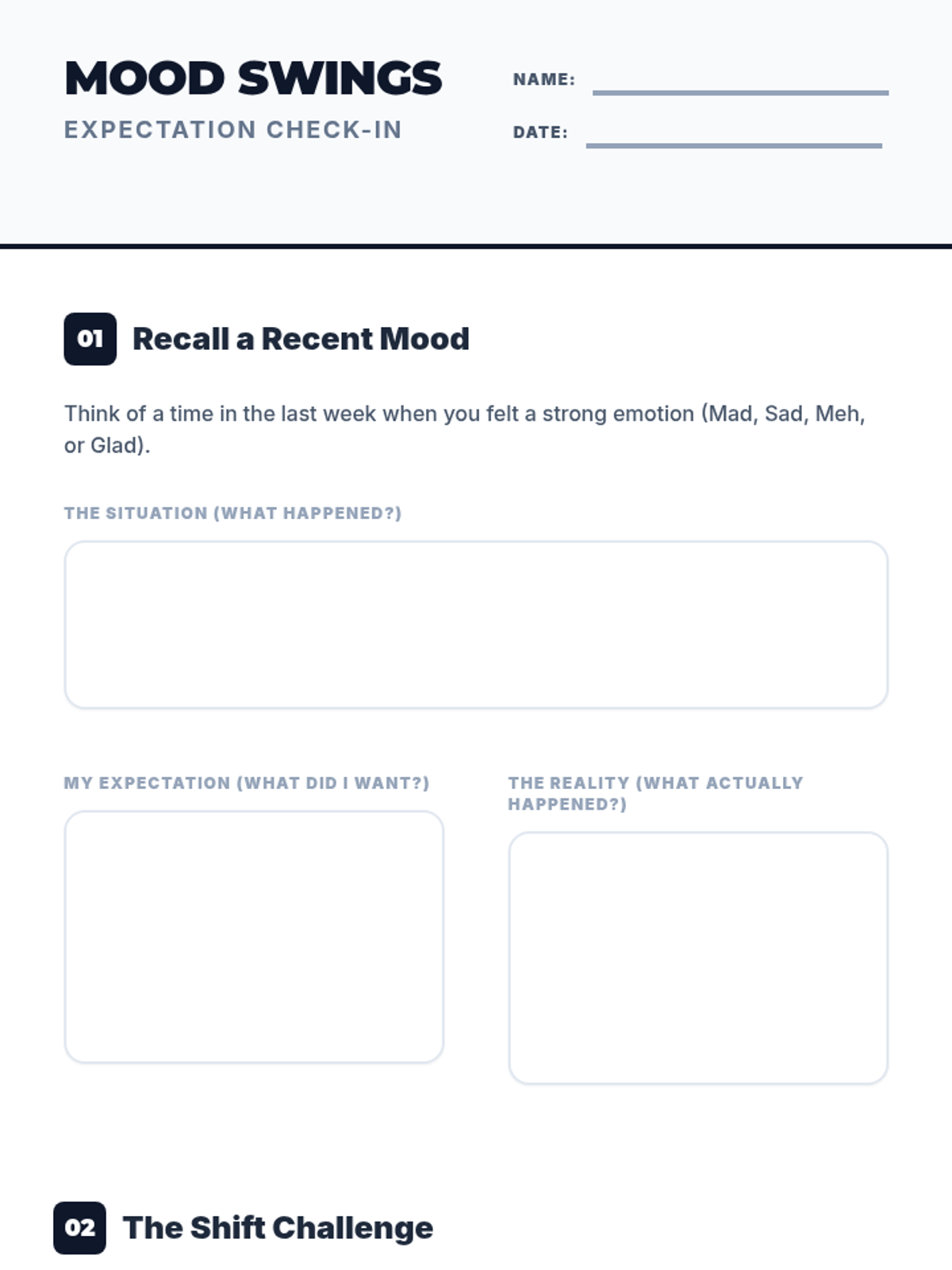
A student worksheet designed for self-reflection and analysis of the four emotions (Mad, Sad, Meh, Glad) in real-life contexts.
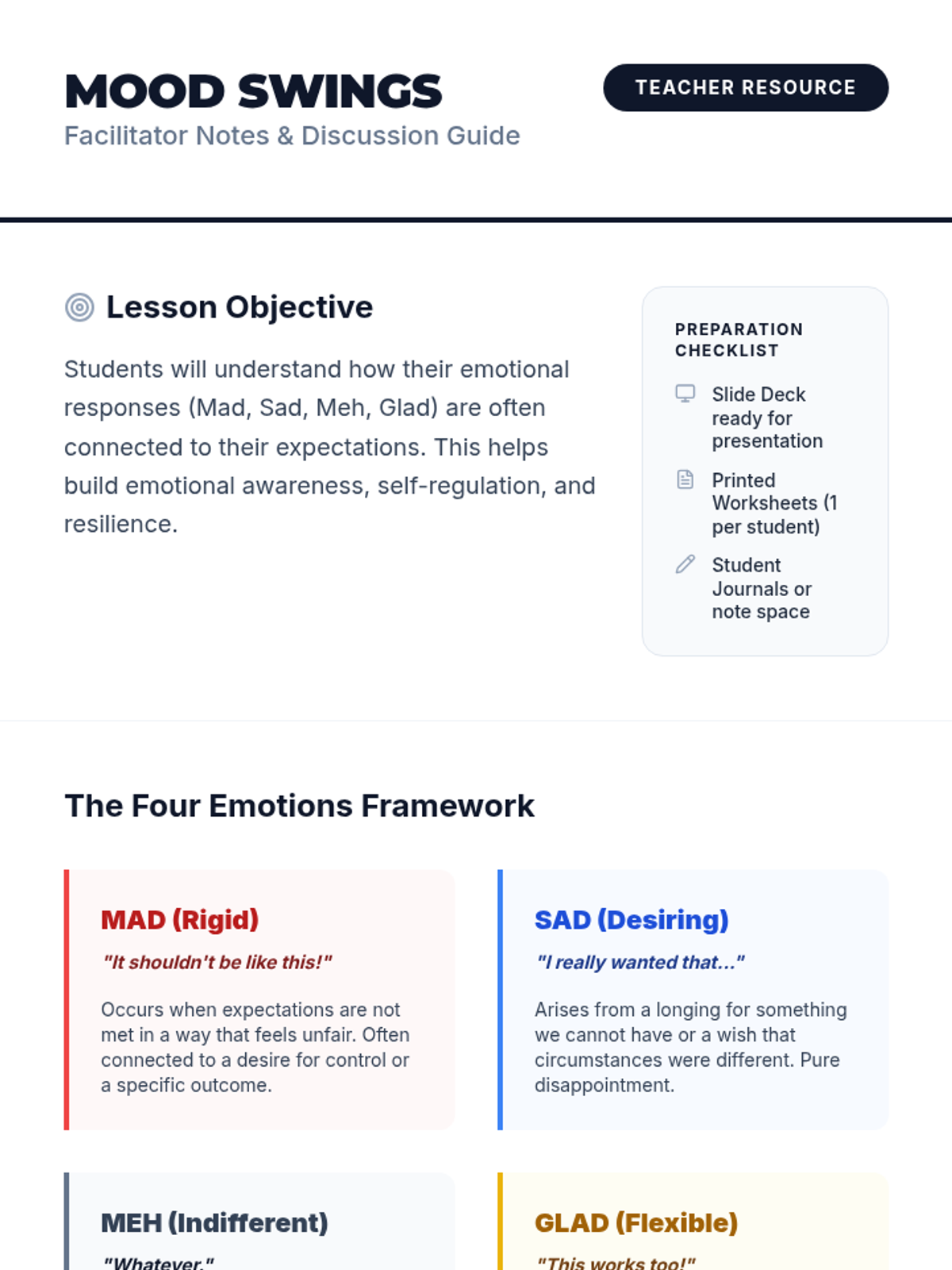
A teacher-facing facilitator guide with discussion prompts, scenario breakdowns, and instructional tips for teaching the Mood Swings lesson.
An engaging slide deck for 8th-grade students exploring the connection between expectations and emotions through the Mad-Sad-Meh-Glad framework, including a scenario activity.
A high-energy, graphic novel-style slideshow (16:9) for middle schoolers. Features 'Bulldog' themed scenarios, comic book layouts, and powerful visual metaphors to teach emotional resilience and self-control.
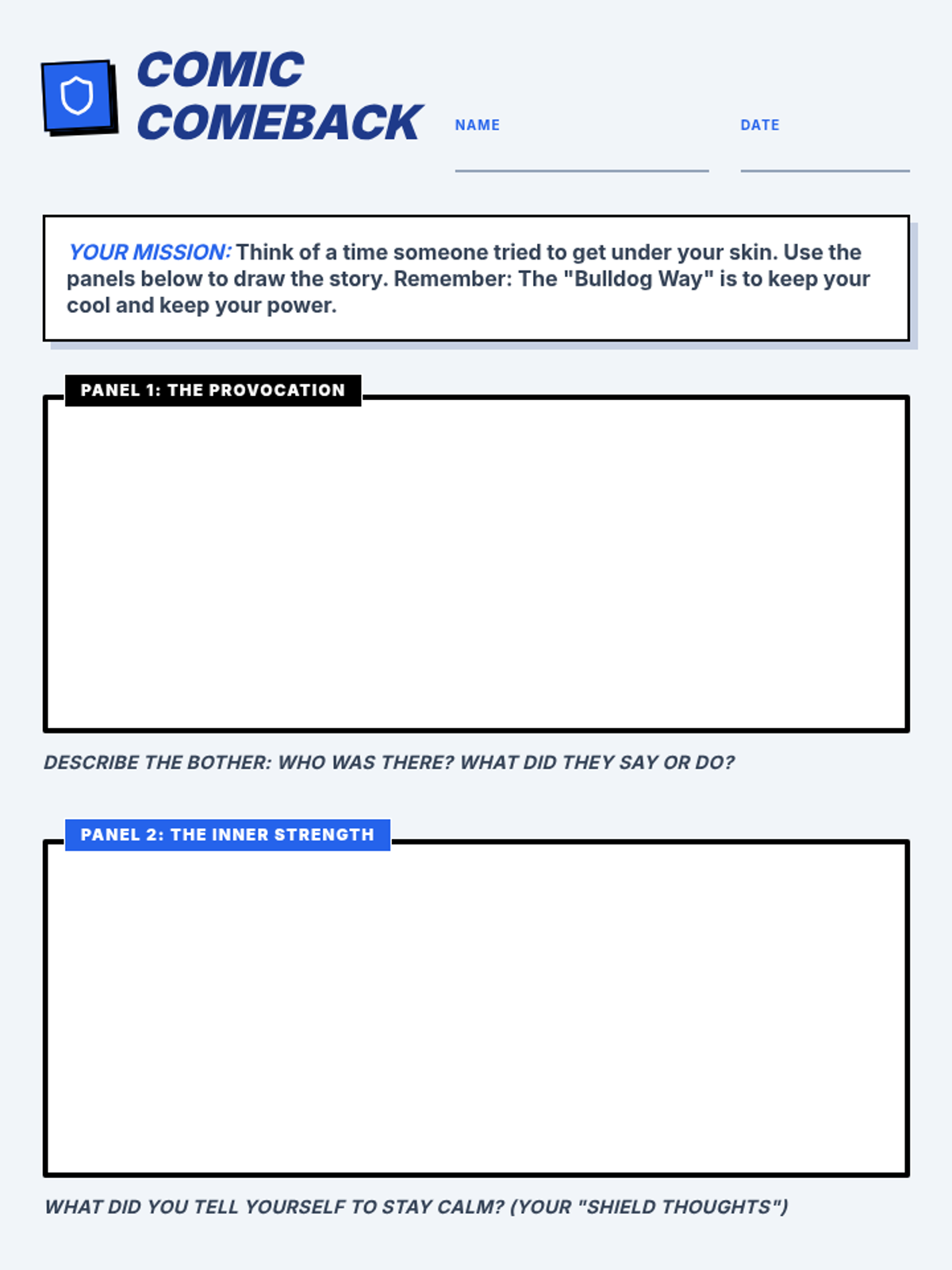
A graphic novel-themed worksheet where students create their own comic strip to practice responding calmly to provocation, including reflection questions on emotional power and self-control.
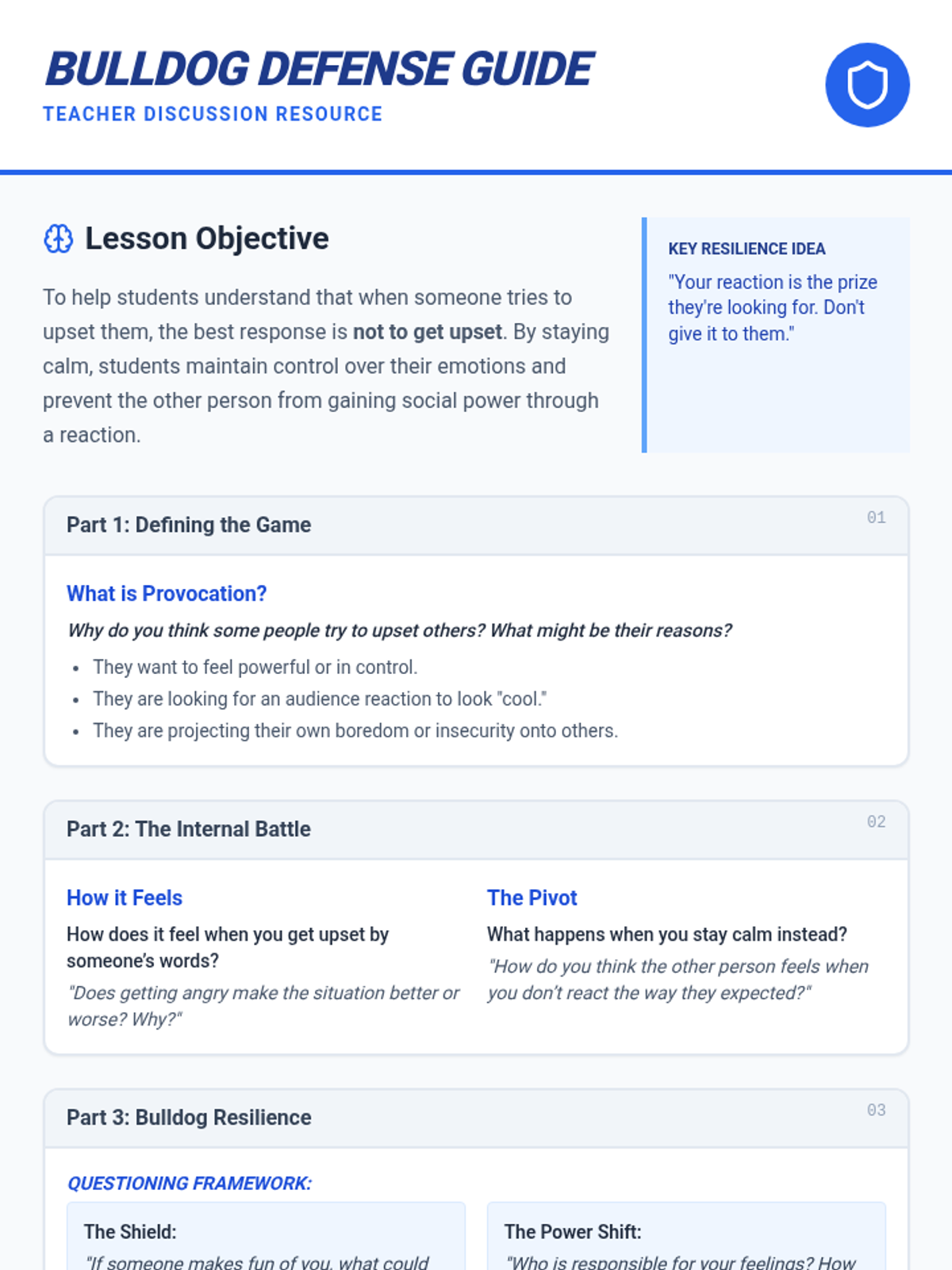
A comprehensive teacher's guide for the "Bulldog Grit" lesson, featuring discussion prompts, key objectives, and facilitation tips centered on emotional resilience and self-control.
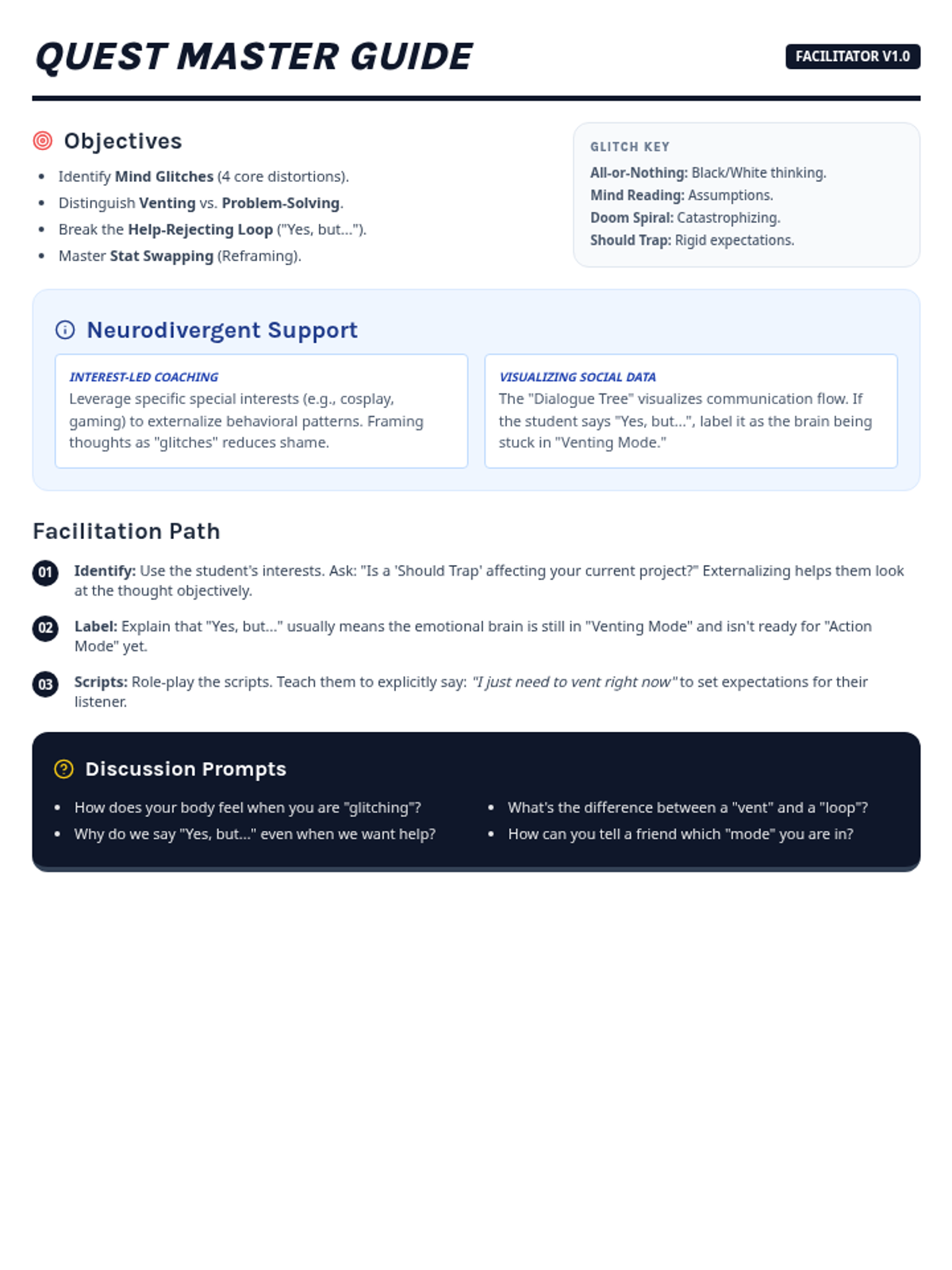
A teacher-facing guide for facilitating CBT-based social-emotional learning for neurodivergent students. Includes discussion prompts, session objectives, and specific strategies for addressing help-rejecting behaviors.
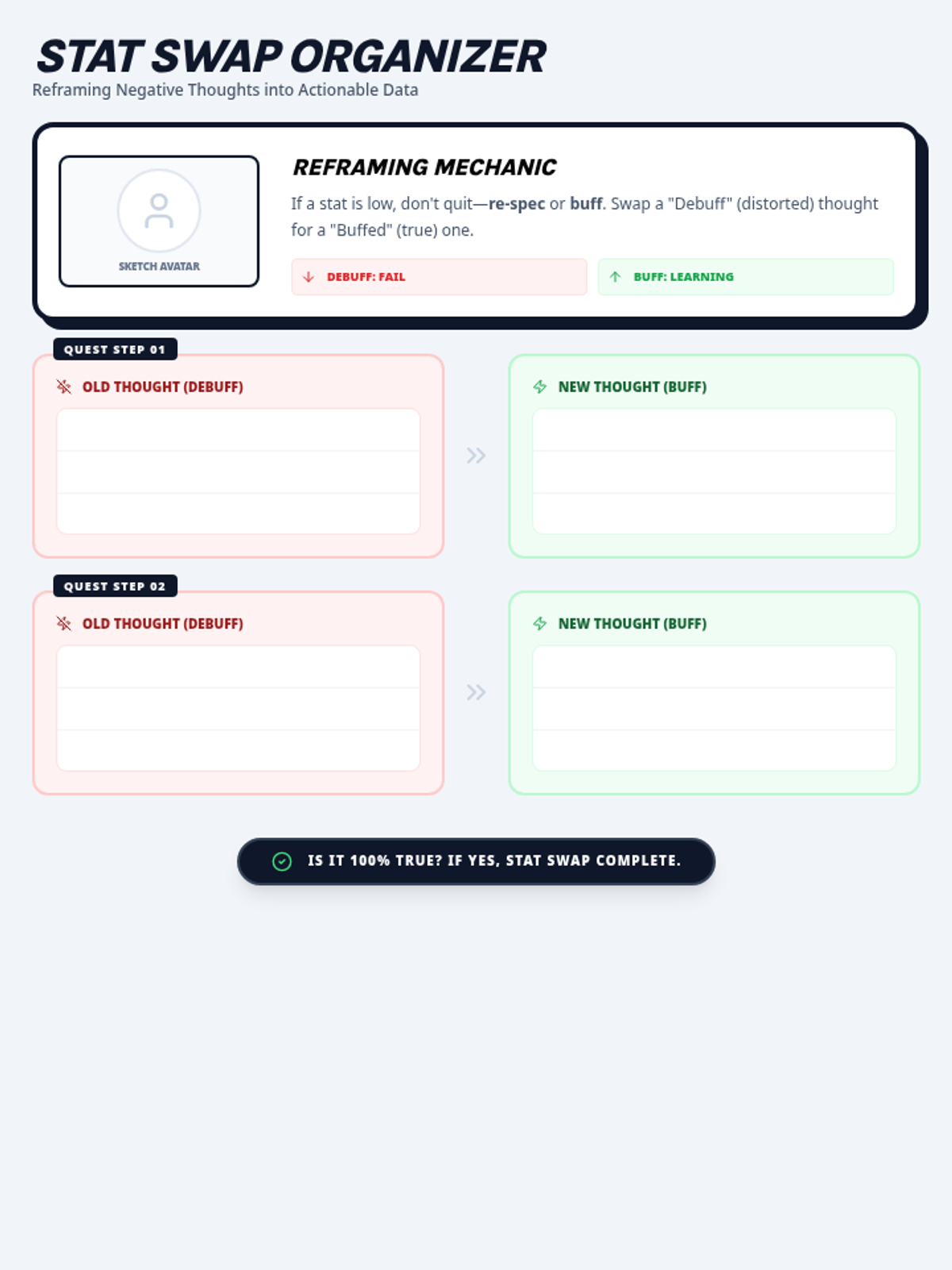
A graphic organizer for reframing thoughts, styled as an RPG character sheet. It helps students 'stat swap' negative thoughts (debuffs) into realistic, helpful ones (buffs).
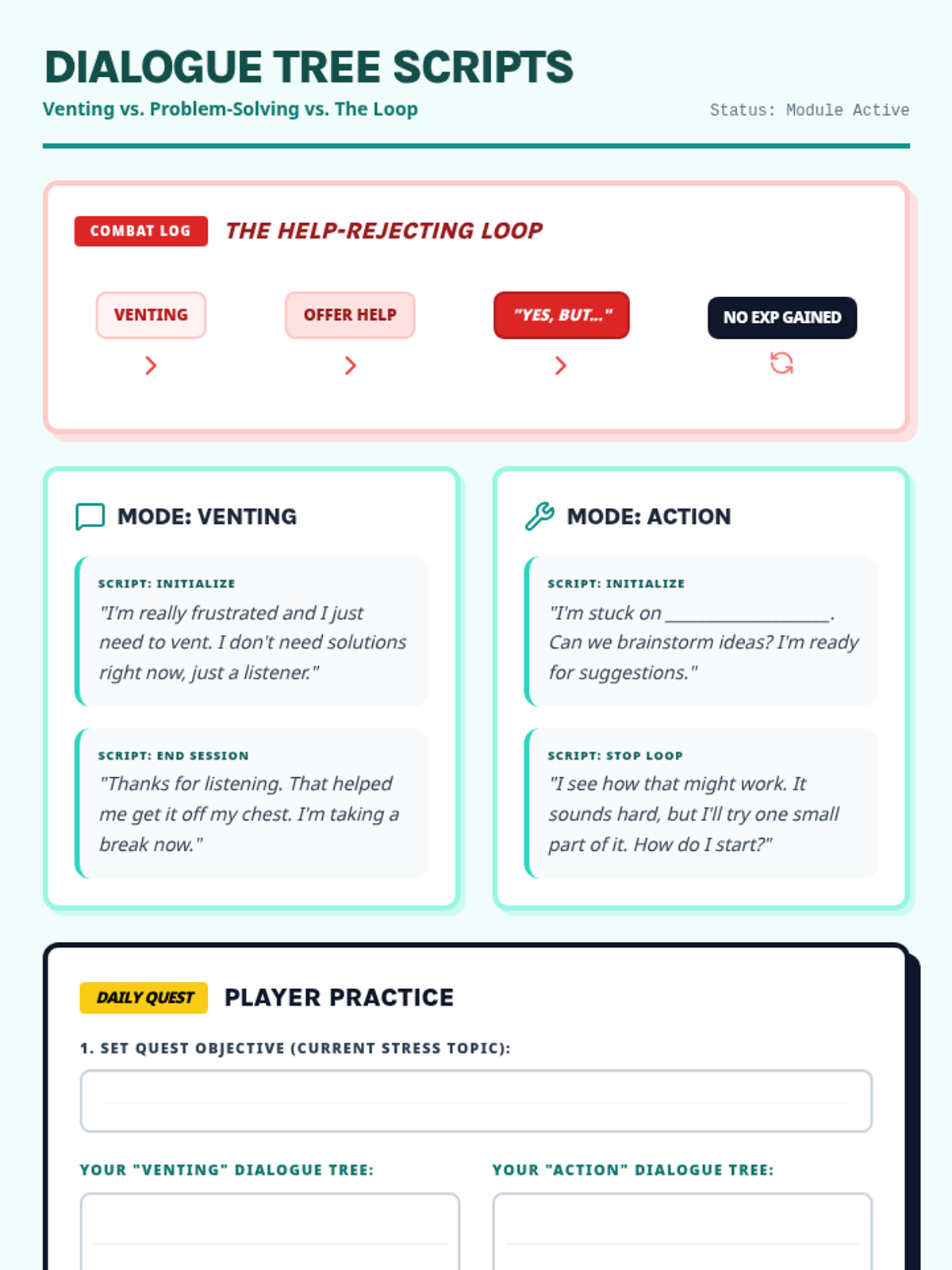
A social scripts handout that identifies the 'Help-Rejecting Loop' and provides templates for distinguishing between venting and problem-solving. Uses an RPG-inspired 'Dialogue Tree' theme.
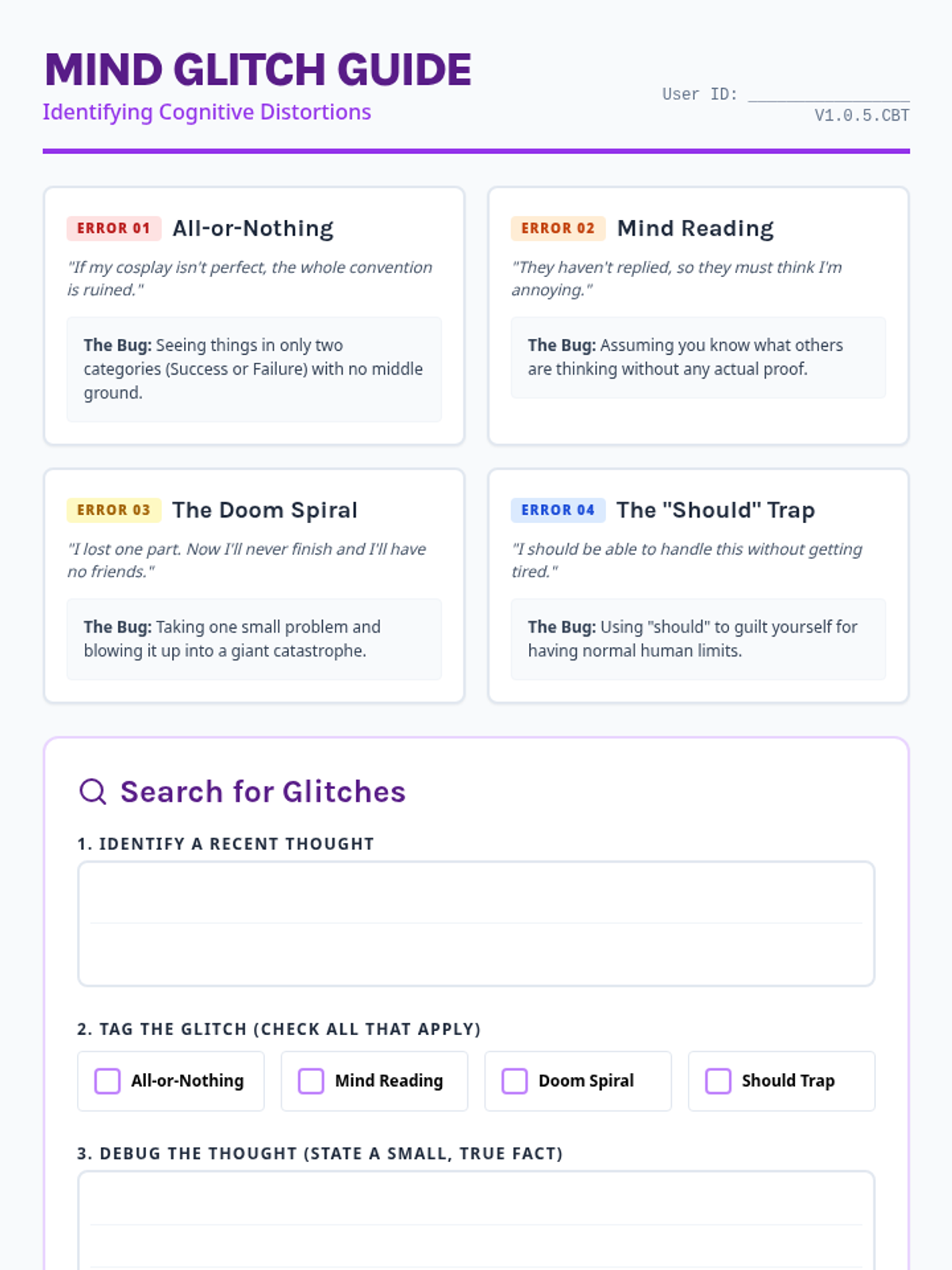
A worksheet designed to help neurodivergent students identify common cognitive distortions (Mind Glitches) using a technology/system-error theme. Includes a checklist and space for personal reflection.