A teacher's answer key for the Multiple Choice version of the Cash Choices Activity, including logical distractors and pedagogical notes for adults with IDD.
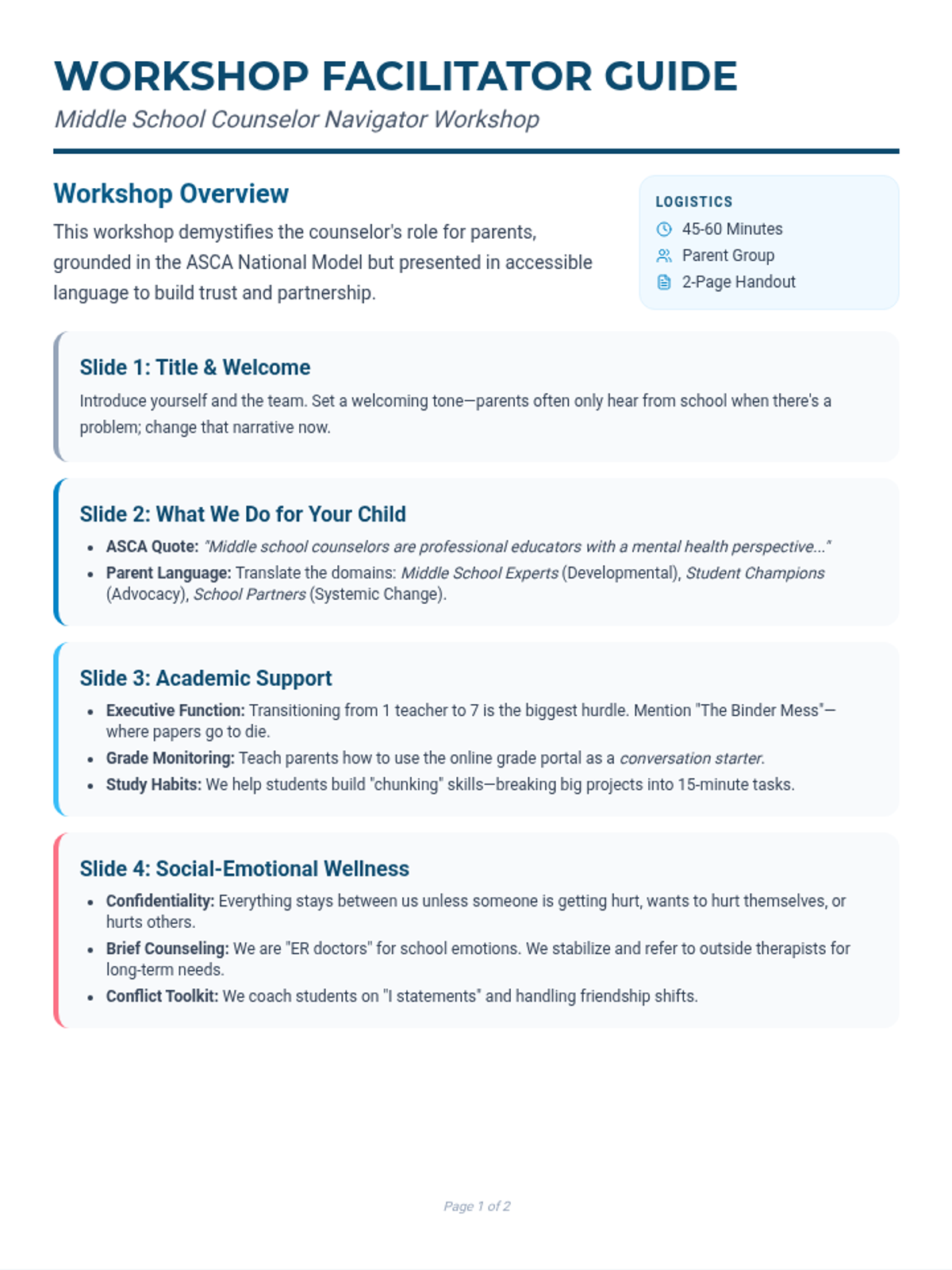
A detailed facilitator guide for the counselor workshop, updated with parent-friendly speaker notes, improved executive function tips, and fixed page layout.
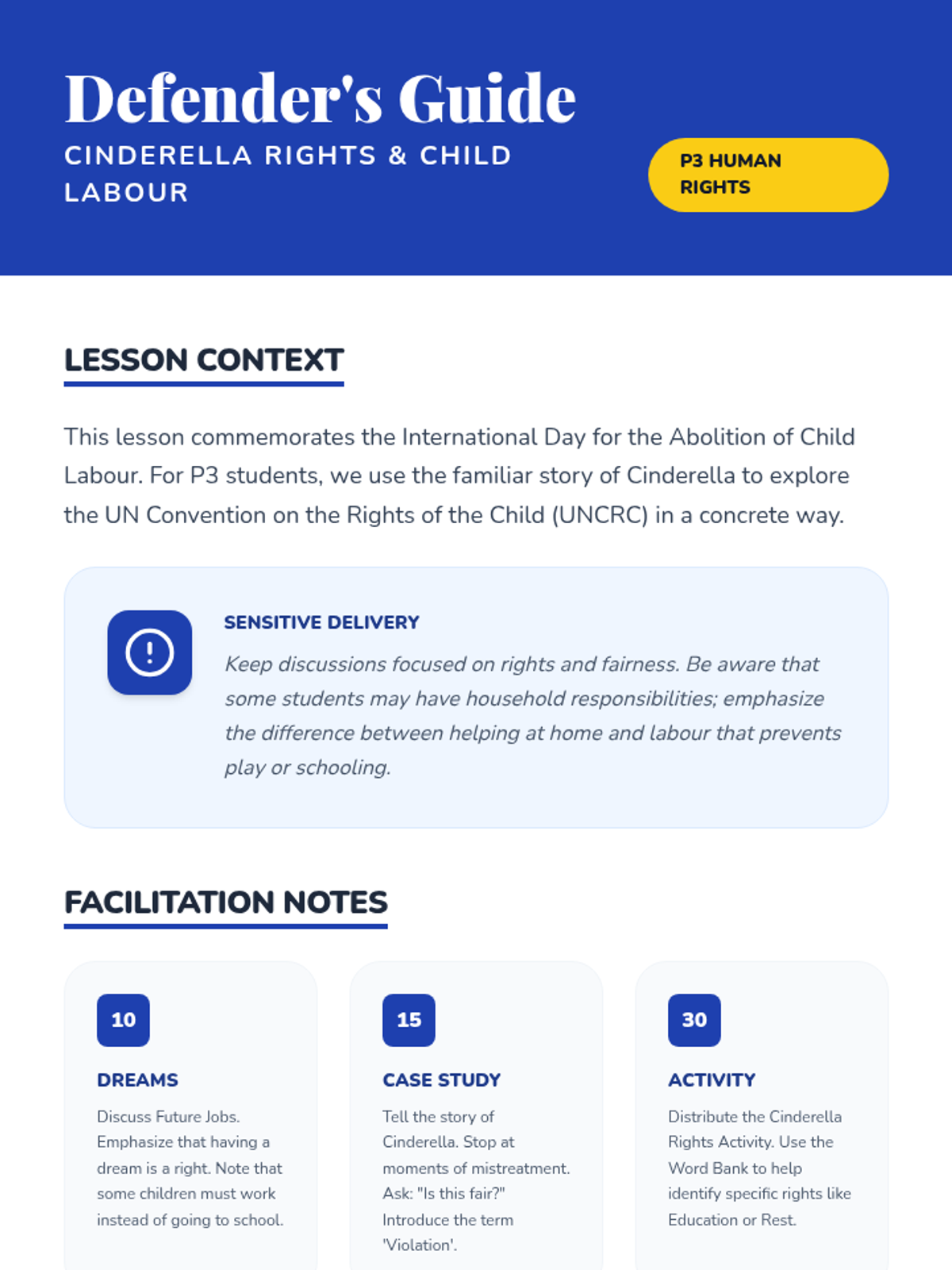
Teacher's guide for the Cinderella Rights lesson, providing historical context, facilitation tips, and a 'Rights Cheat Sheet' for the activity.
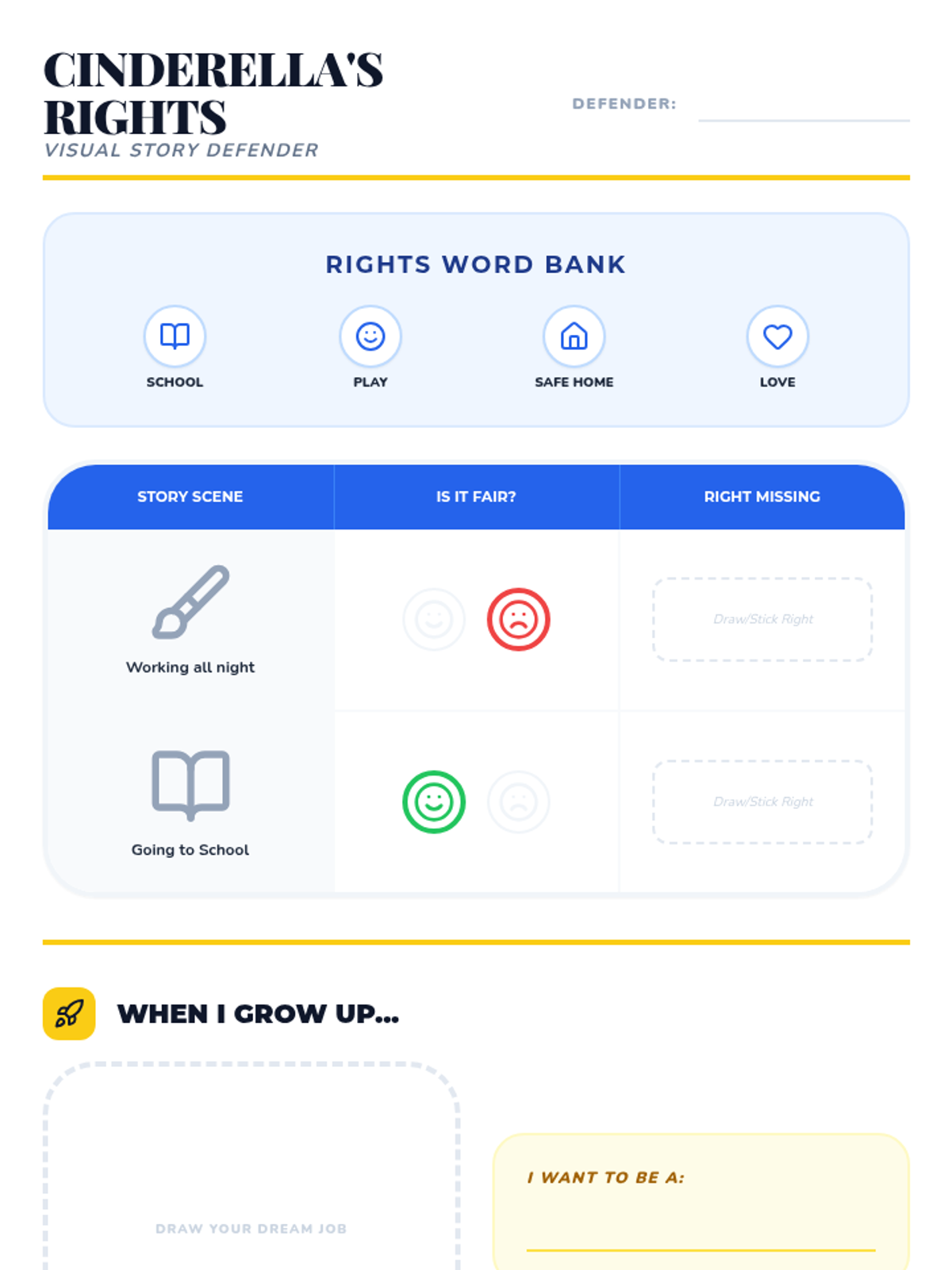
A visual, low-literacy activity where students identify fair vs unfair rights in Cinderella's life using symbols, and draw their dream job.
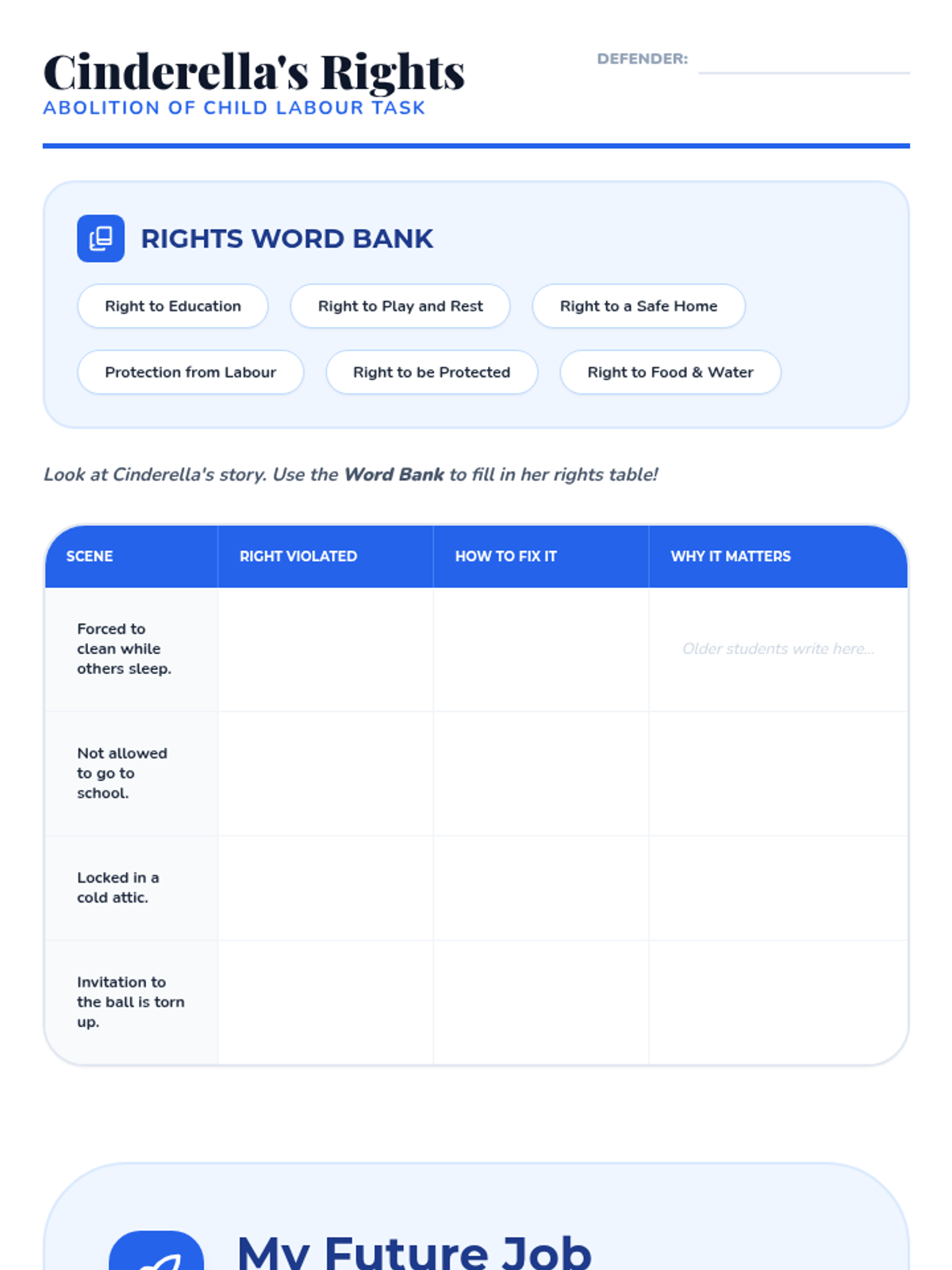
A worksheet where students analyze Cinderella's life using a rights table, identifying violations and solutions, plus a drawing space for their future dreams.
Slides for the Cinderella Rights lesson, covering child labour, future dreams discussion, and a case study of Cinderella's rights.
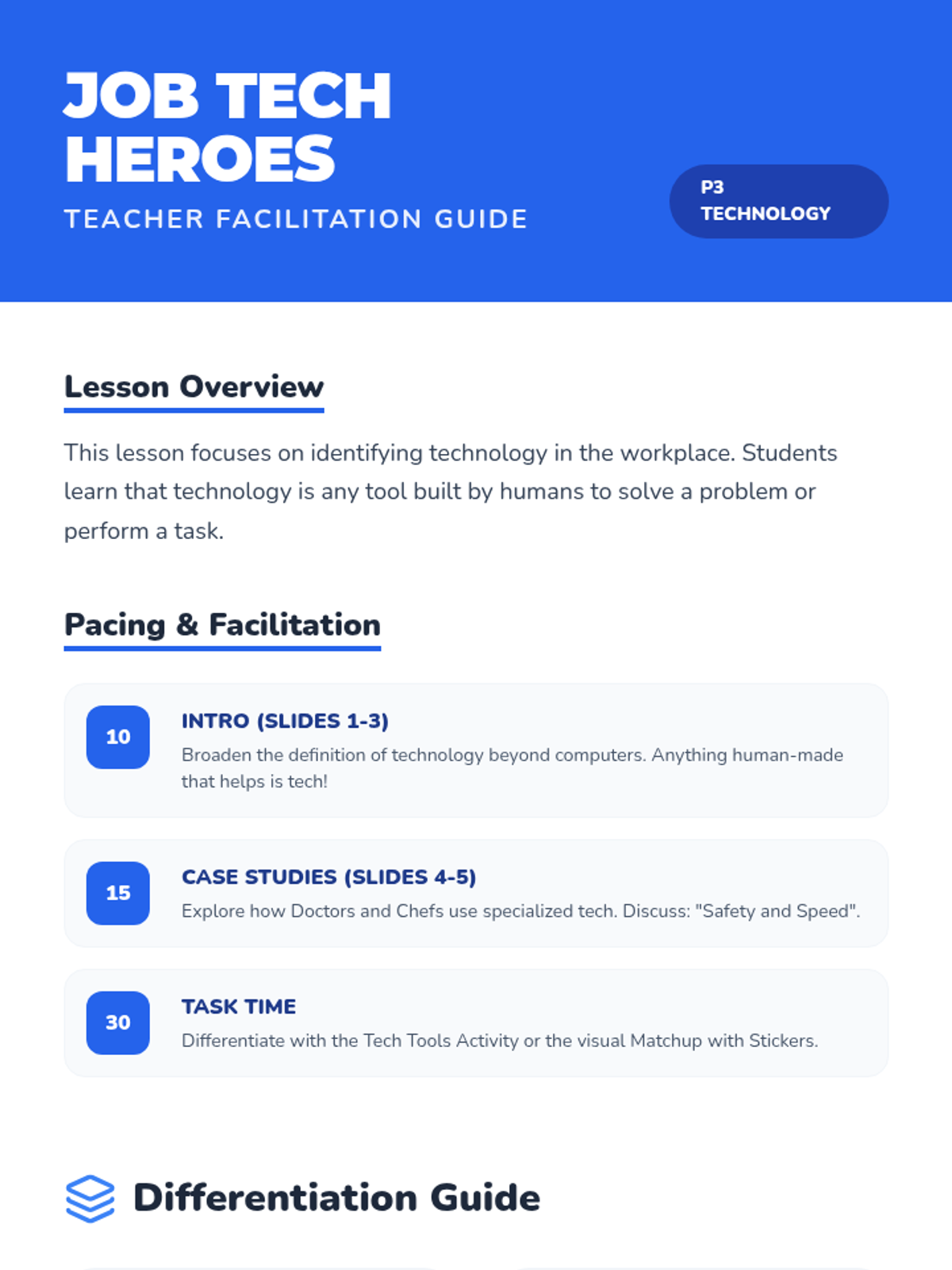
A comprehensive teacher facilitation guide for the P3 Technology lesson. Includes pacing, differentiation tips, and deep-thinking discussion questions about the role of technology in work.
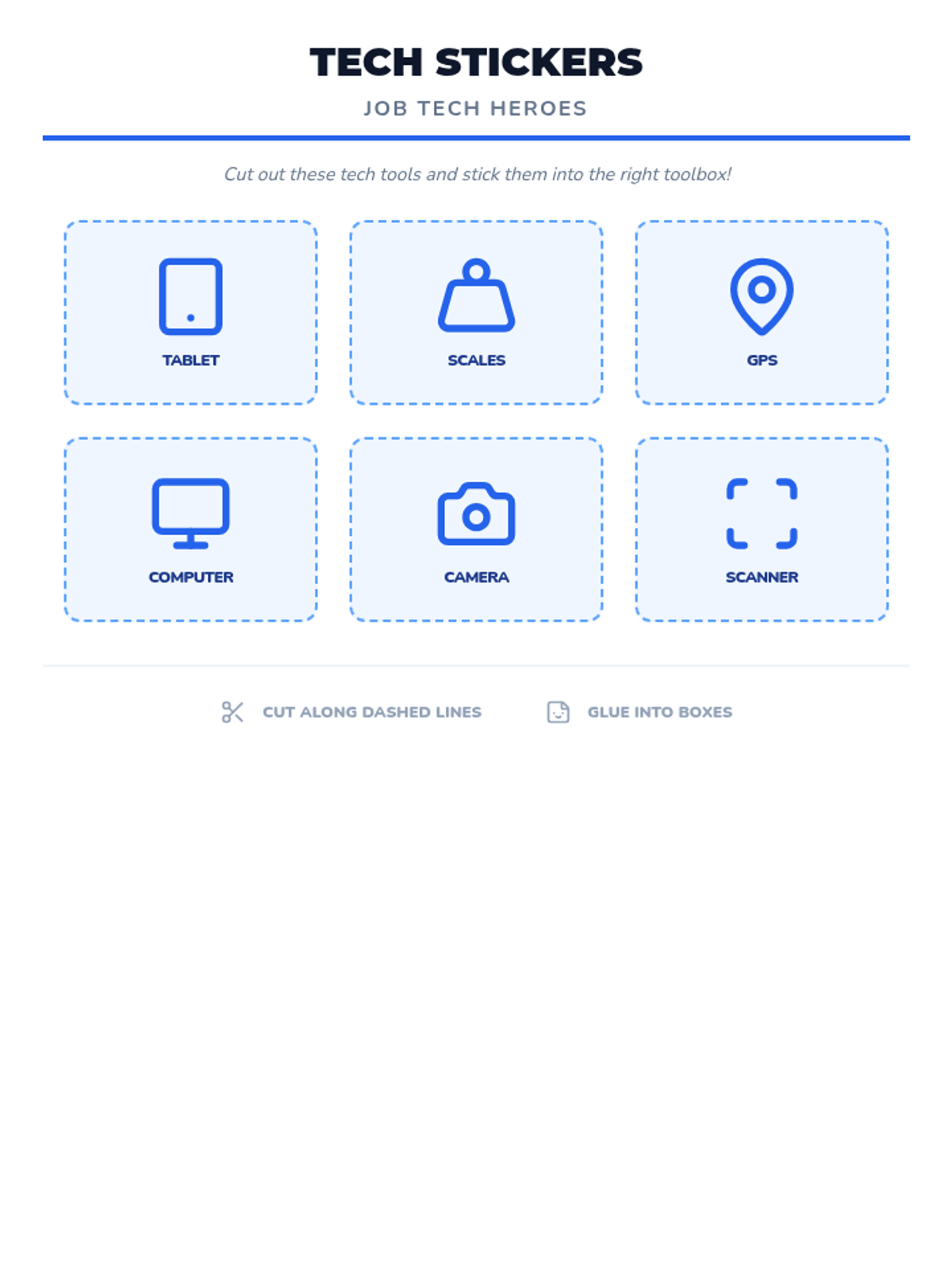
Printable cut-out sheet for the Technology in Jobs lesson. Features clear icons and labels of various tech tools used by workers for the matching activity.
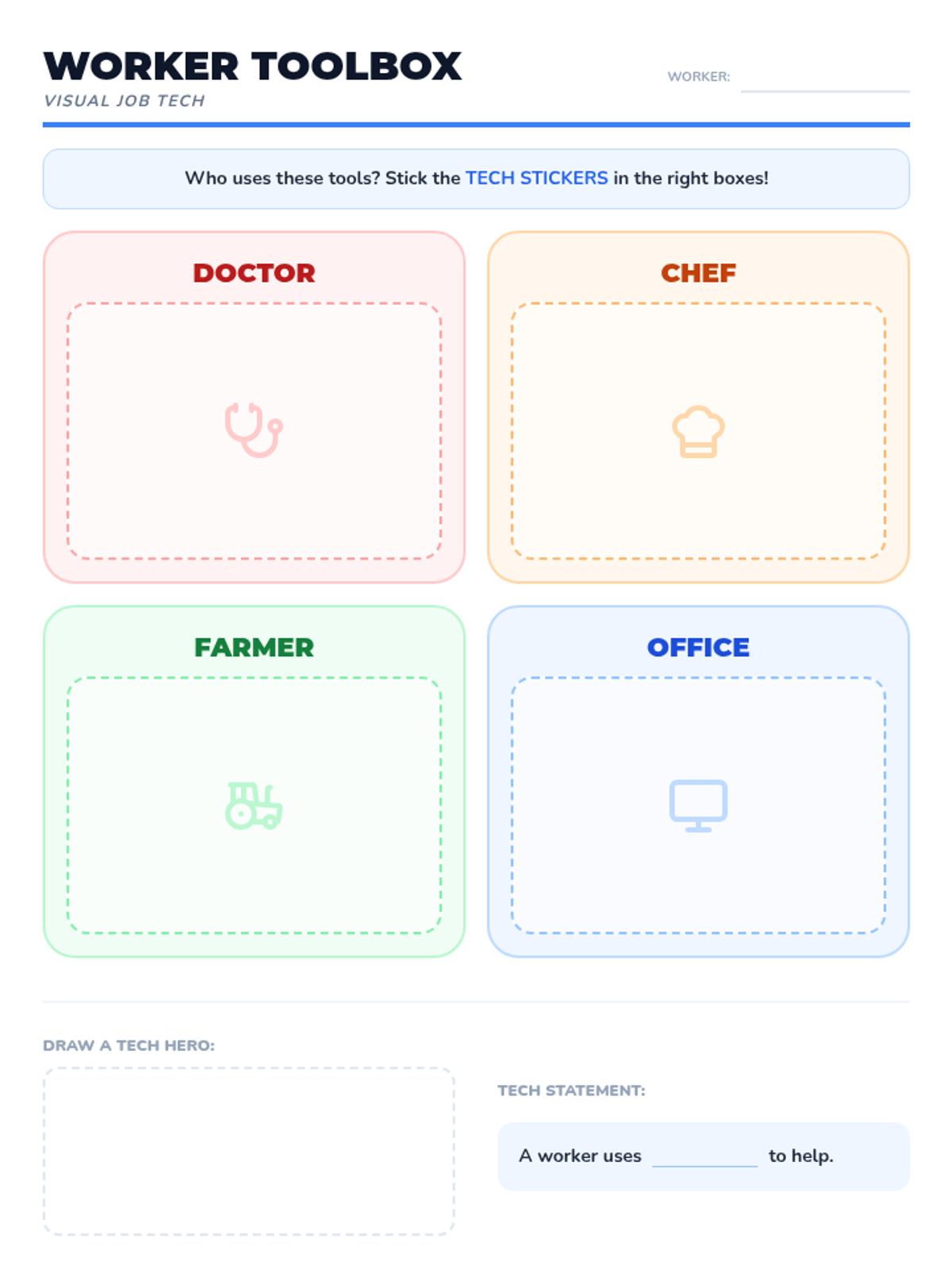
A highly visual, low-literacy activity for the Technology in Jobs lesson. Students use stickers to match technology tools to specific workers (Doctor, Chef, Farmer, Office Worker).
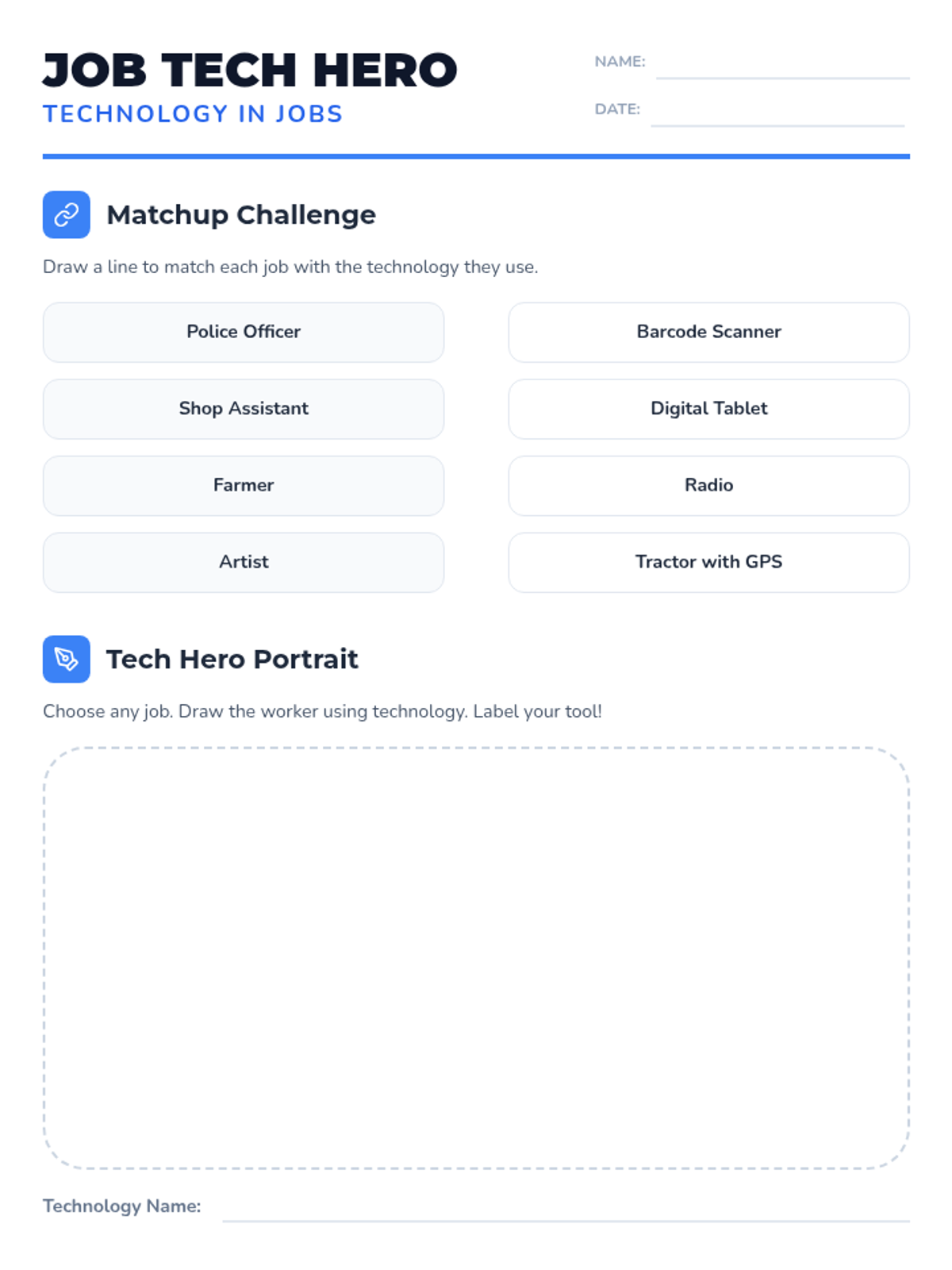
A standard P3 activity for the Technology in Jobs lesson. Includes a matching task, a drawing and labeling section, a fill-in-the-blanks statement, and a critical thinking extension.
Engaging slides for a P3 technology lesson about how different workers (Doctors, Chefs, etc.) use technology to help them in their jobs. Includes a clear definition of technology and task instructions.
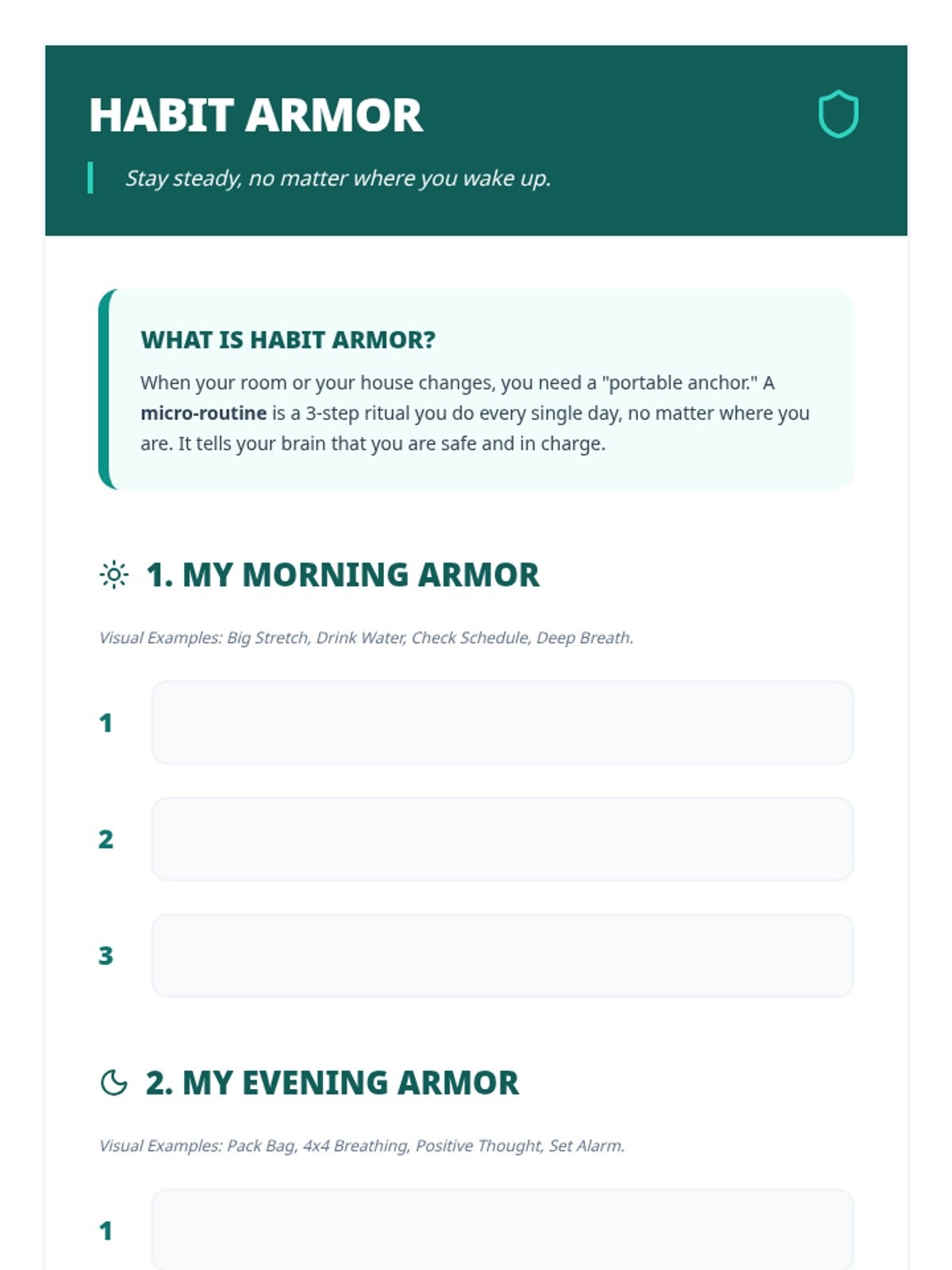
Student workbook for the Habit Armor lesson, featuring templates for creating portable morning and evening micro-routines.
Slide deck for the Habit Armor lesson, illustrating the cognitive benefits of micro-routines and presenting templates for portable morning and evening habits.
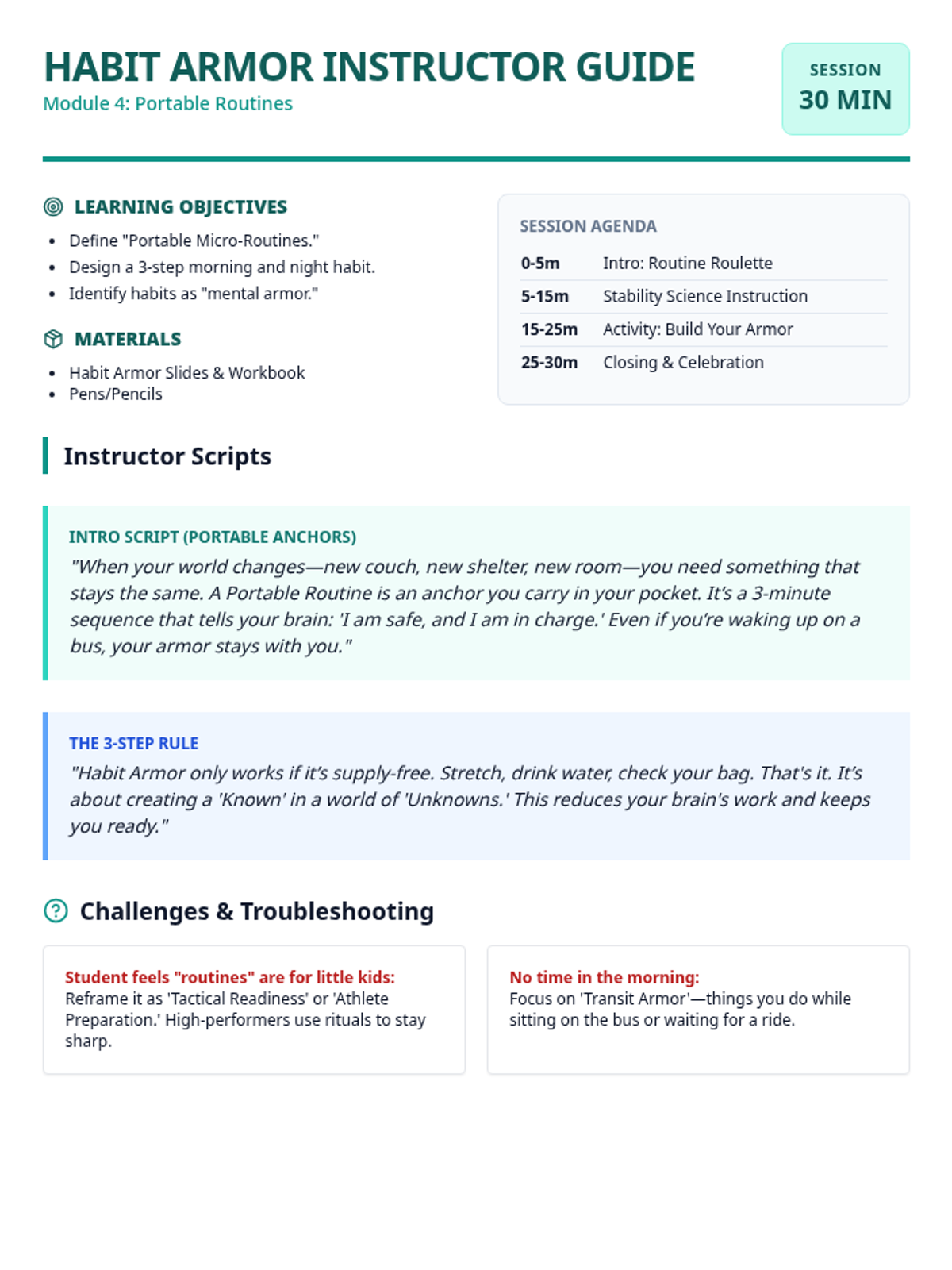
Instructor guide for the Habit Armor lesson, focusing on creating simple, portable micro-routines to provide a sense of agency and stability during housing transitions.
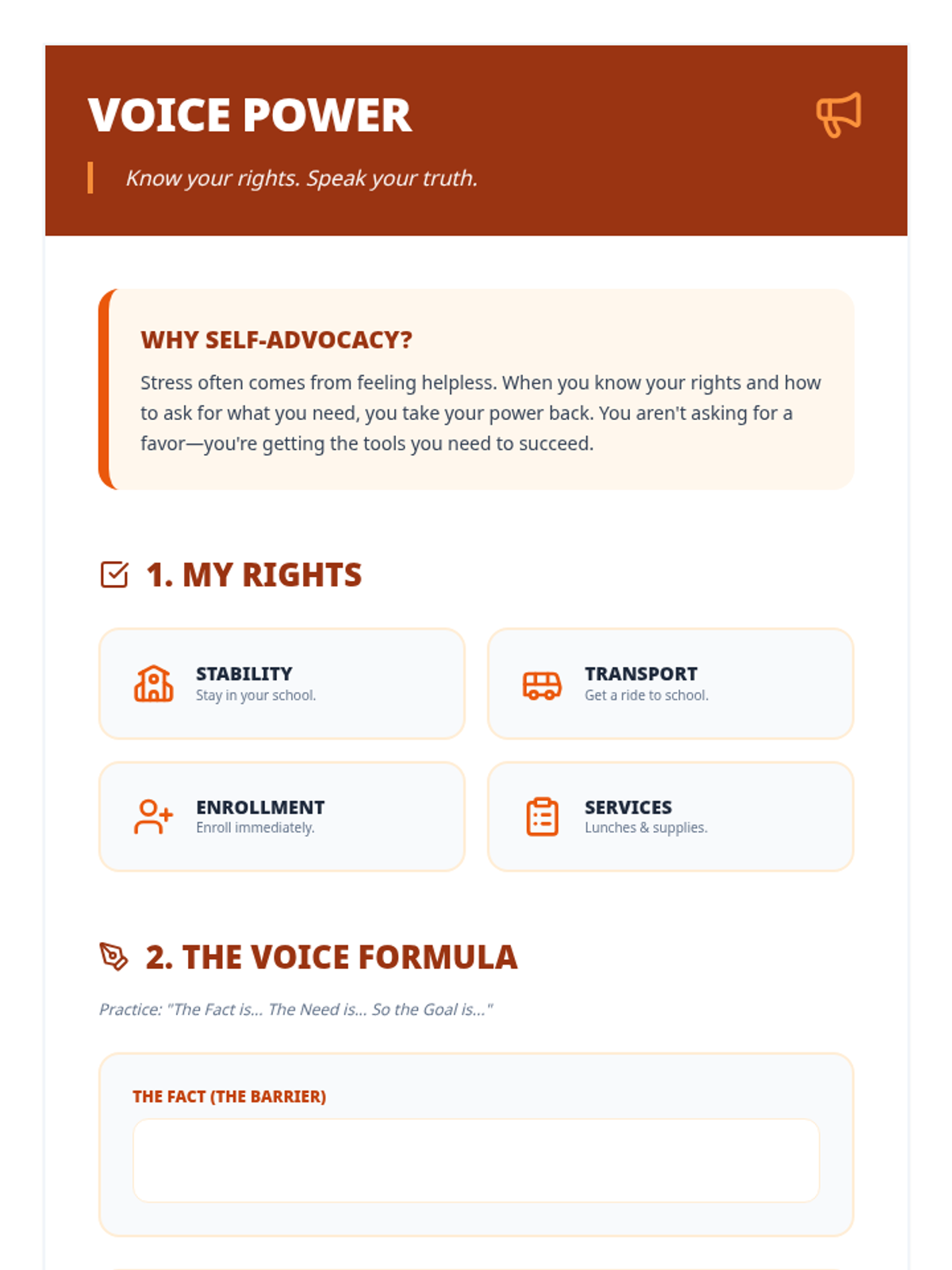
Student workbook for the Voice Power lesson, featuring a rights identification activity and a template for practicing the self-advocacy formula.
Slide deck for the Voice Power lesson, explaining McKinney-Vento rights and teaching the "Fact + Need + Goal" self-advocacy formula.
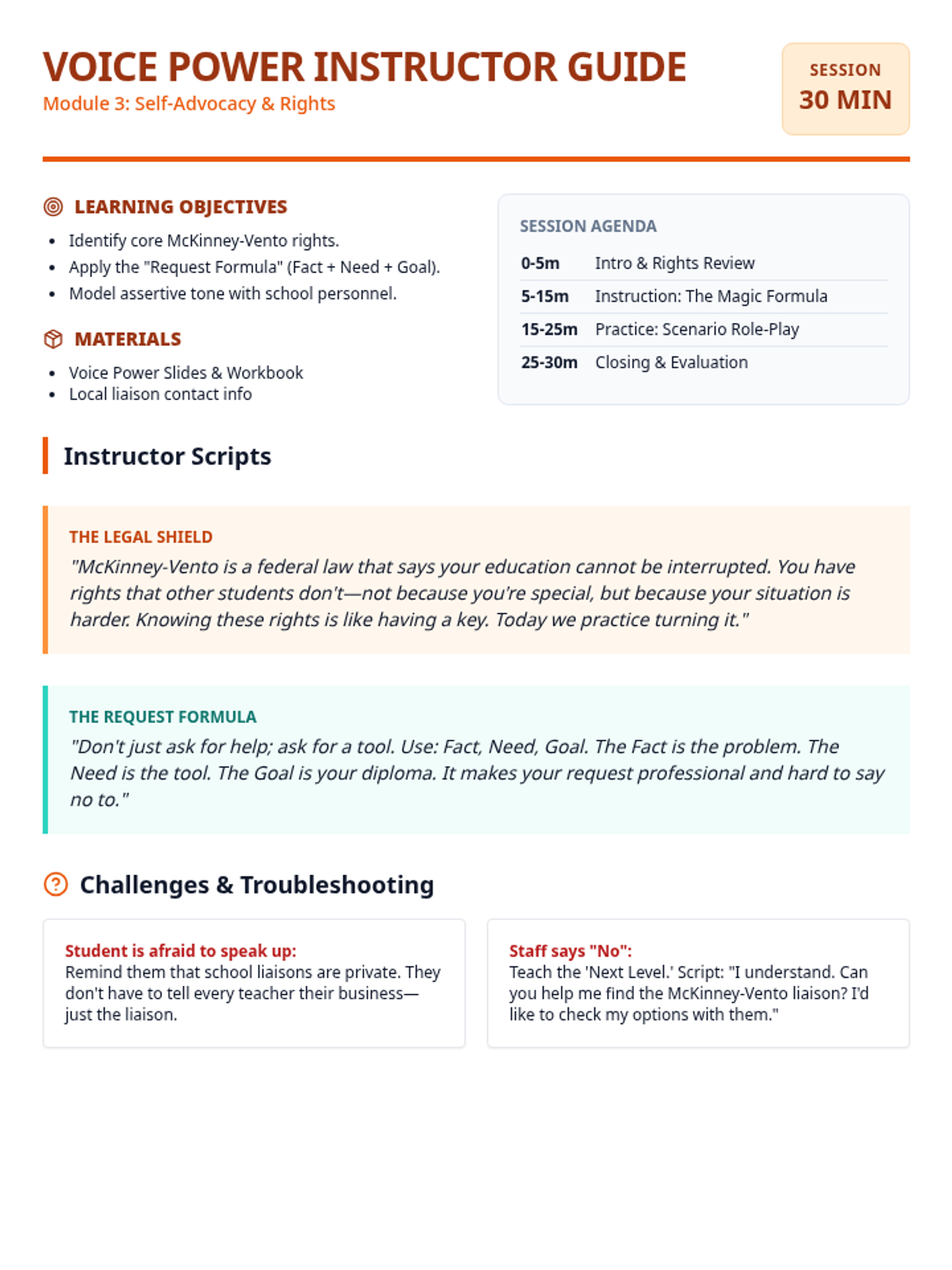
Instructor guide for the Voice Power lesson, focusing on self-advocacy scripts, understanding McKinney-Vento rights, and reducing stress through assertive requests.
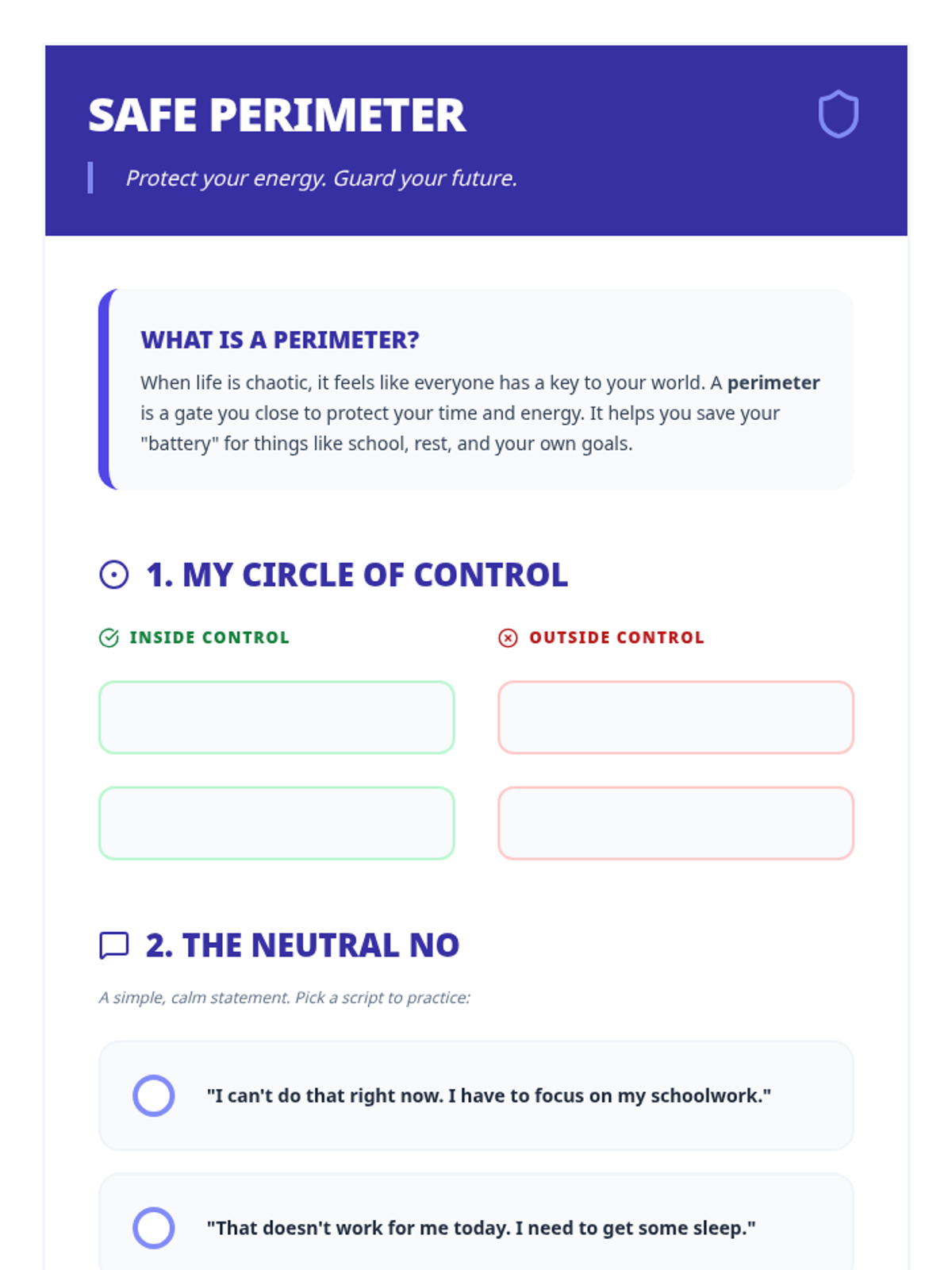
Student workbook for the Safe Perimeter lesson, featuring control circle mapping, boundary script selection, and an energy protection planning area.
Slide deck for the Safe Perimeter lesson, featuring visual metaphors for spheres of control and scripts for setting assertive, neutral boundaries.
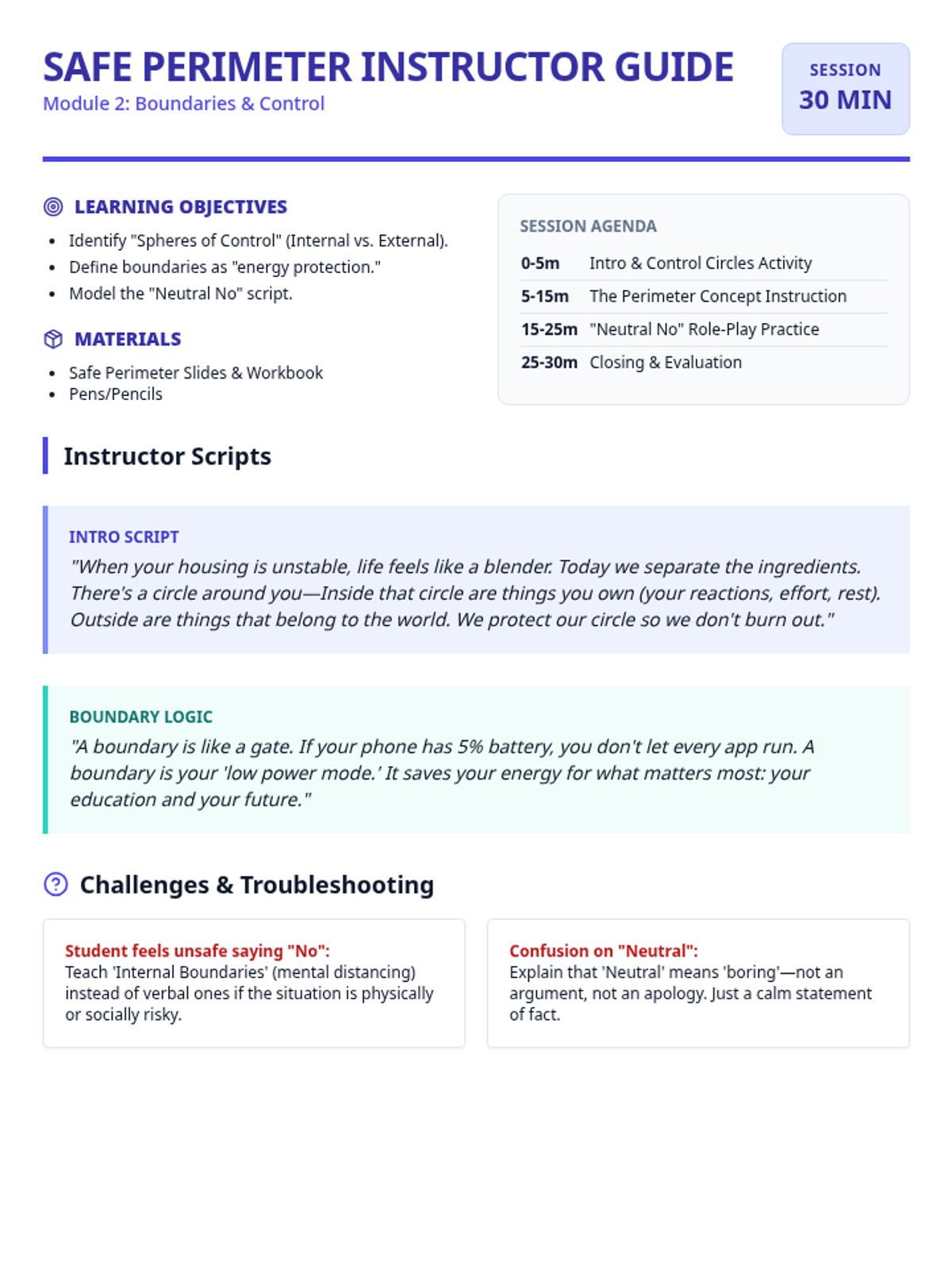
Instructor guide for the Safe Perimeter lesson, focusing on control circles, the "Neutral No" technique, and mental boundary setting for students in high-instability environments.
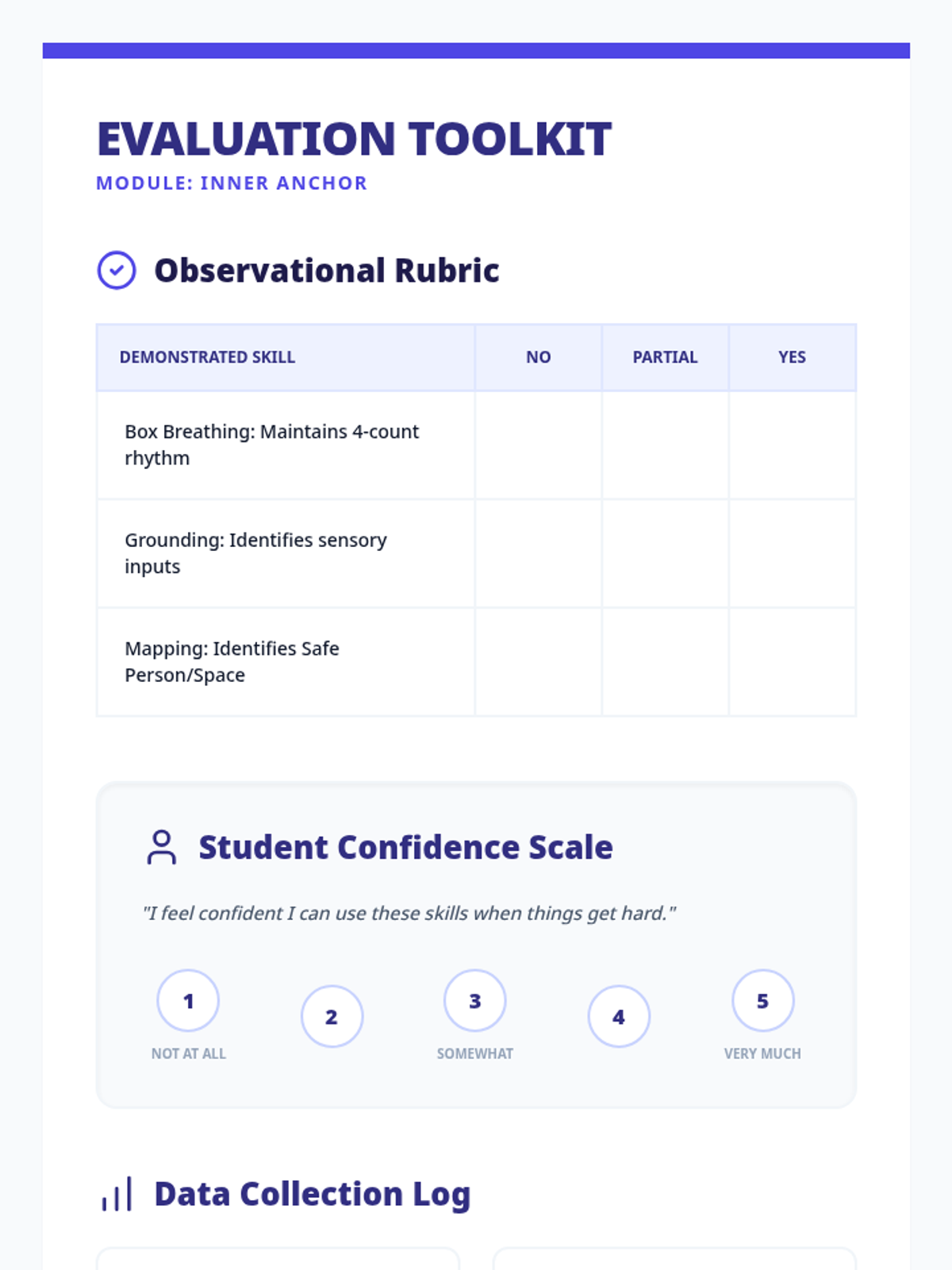
Outcome measures and evaluation toolkit for the Inner Anchor session, including observational rubrics, student confidence scales, and program metrics logs.
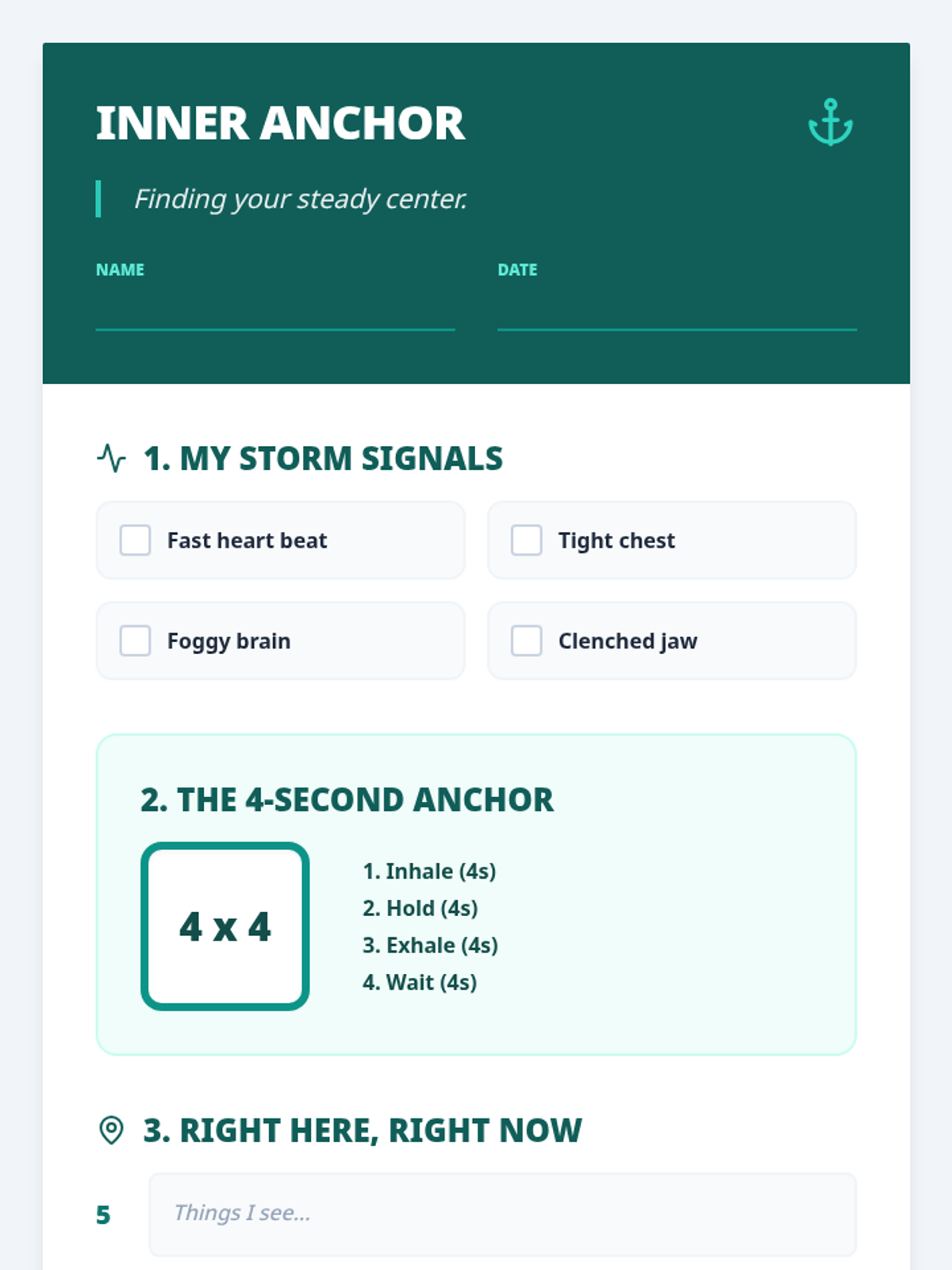
Student participant workbook featuring a body scan checklist, visual breathing guide, grounding exercise, and a minimalist coping plan.
Visual slide deck for the Inner Anchor stress management session, featuring clear, high-contrast instructional visuals for breathing and grounding techniques.
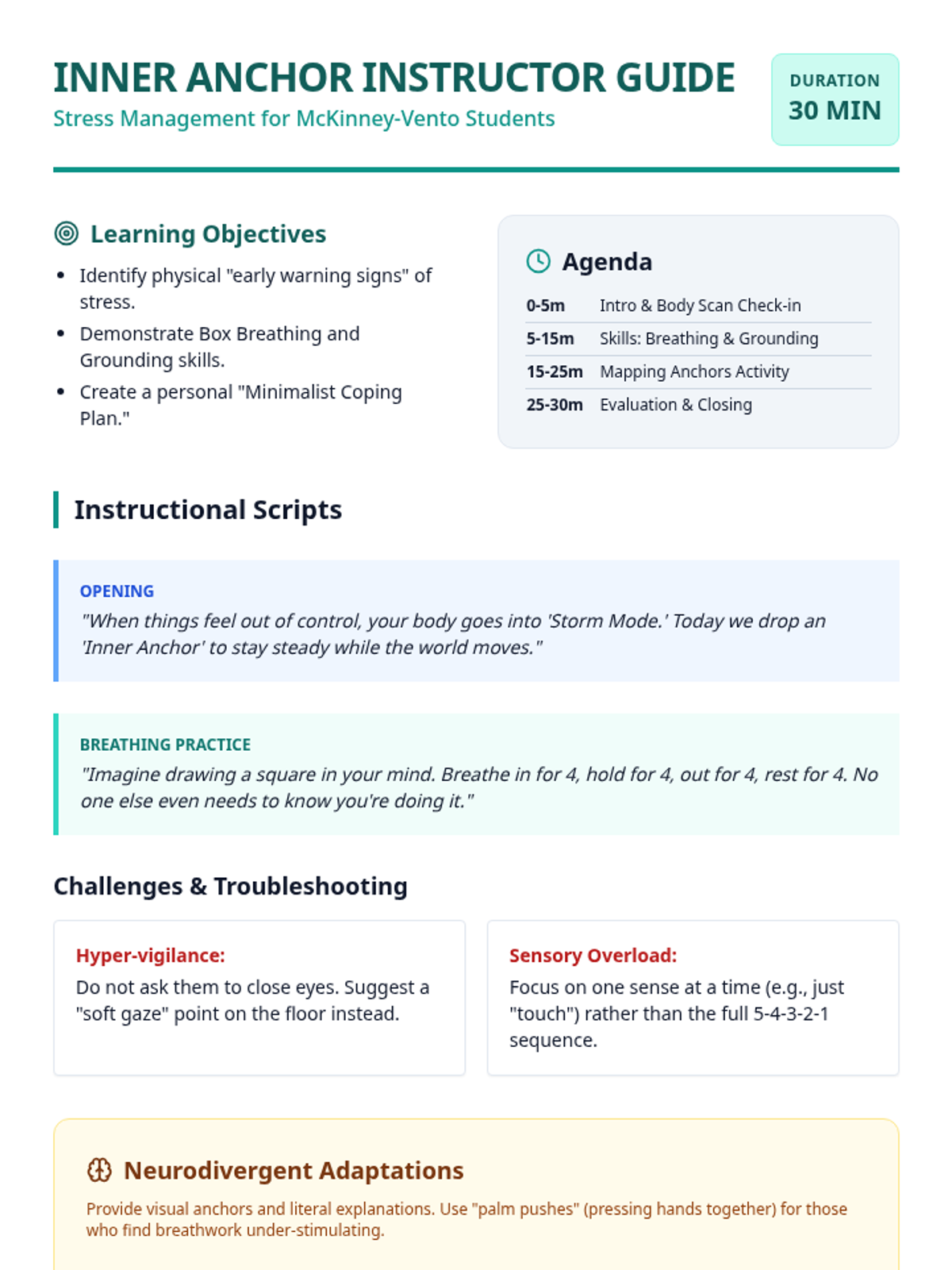
A comprehensive instructor manual for a 30-minute stress management session, including scripts, neurodivergent adaptations, and a fidelity checklist.
A set of slides for a parent workshop explaining the middle school counselor's role, updated with parent-friendly language for the essential roles while maintaining ASCA alignment.