A student activity worksheet for 2nd graders to practice matching problem sizes with appropriate reactions and reflect on their own experiences. Revised for better layout, handwriting support, and meaningful activity design.
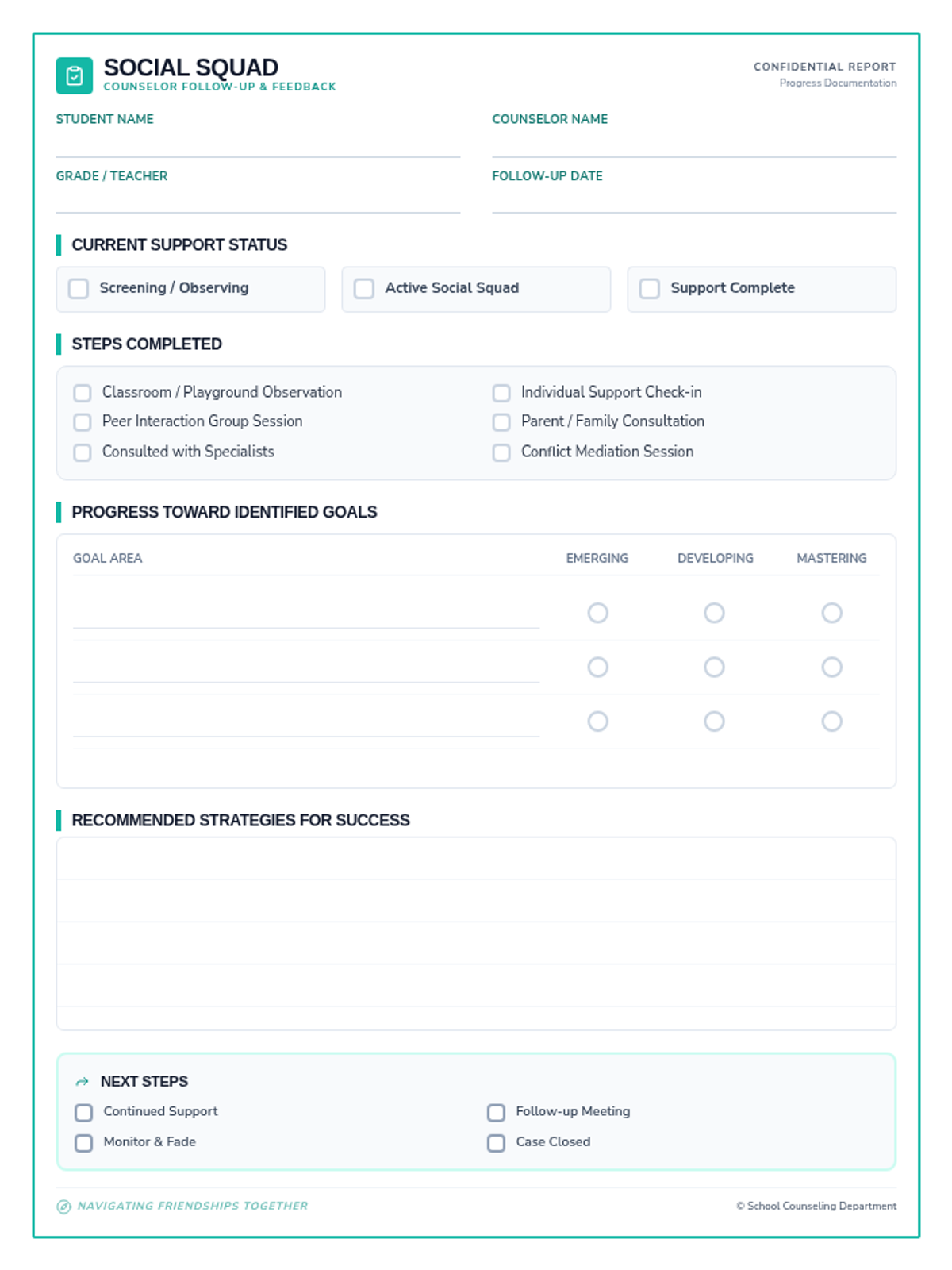
A revised school counselor follow-up and feedback form. It features a new introductory referral sentence, detailed intervention logs with dates and goals, a dedicated 'At this time' status section, and a professional closing message inviting continued collaboration. Now includes 'Outside Referral' in next steps.
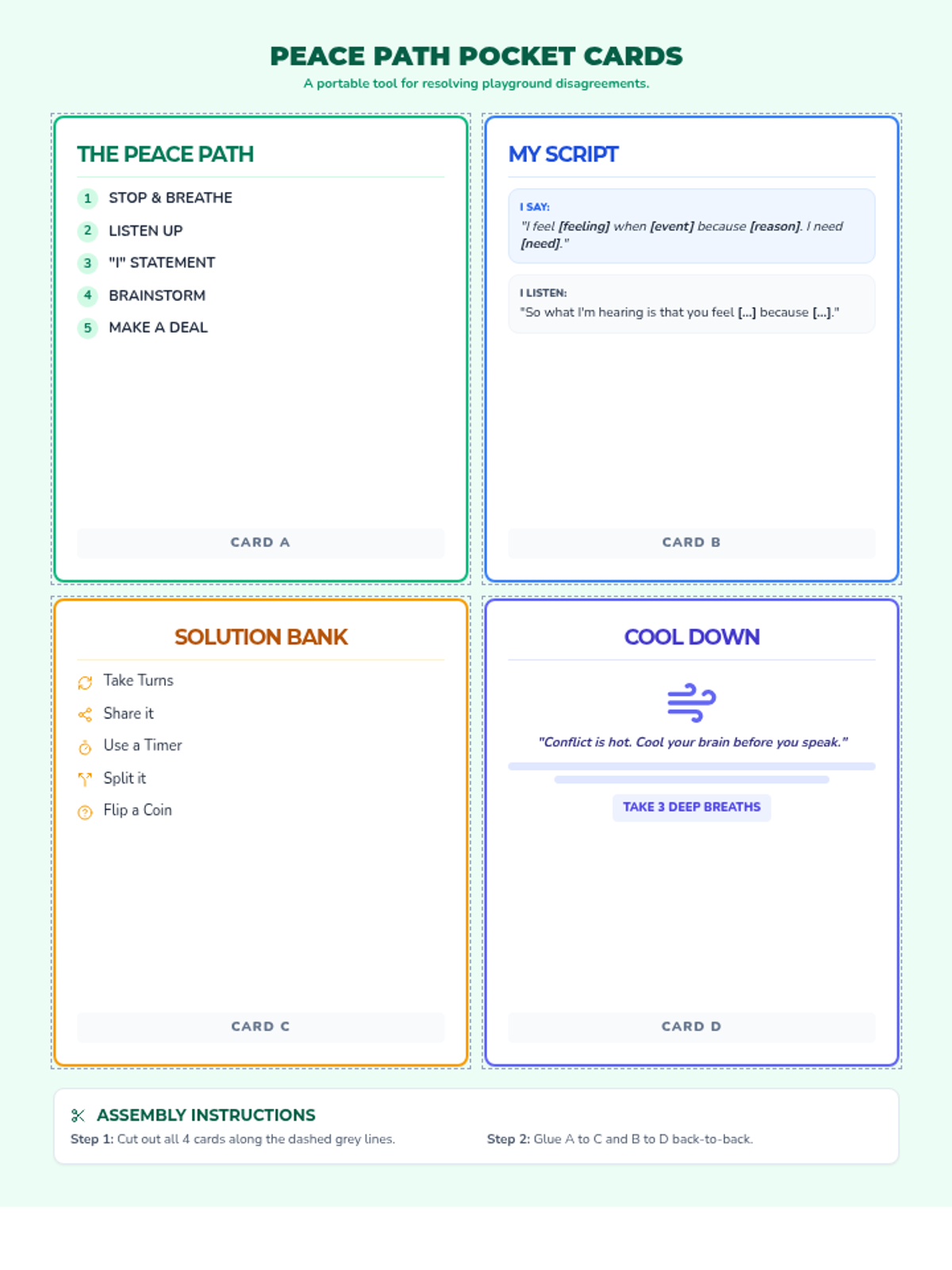
A printable resource featuring four portable 'Pocket Cards'. Revised to fit on a single page, improved contrast for printing, and added clear cutting guides.
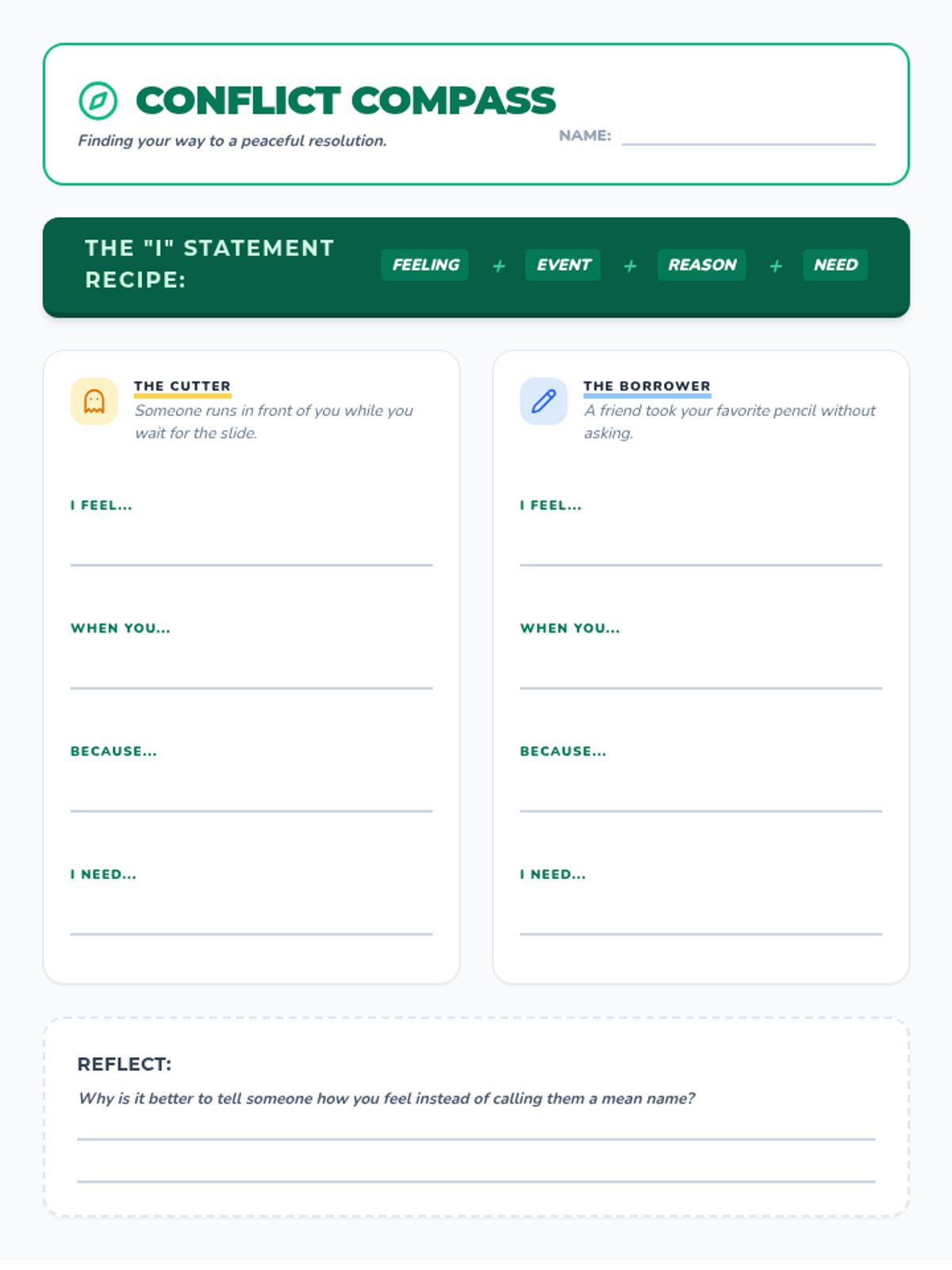
A student worksheet focused on practicing 'I' statements and applying the Peace Path Protocol to specific conflict scenarios. Revised for better layout consistency, increased writing space, and improved contrast. Final version fits on one page.
A visual slide deck to guide students through the steps of the Peace Path Protocol, featuring clear headings, icons, and practice scenarios. Revised for better text contrast and layout alignment.
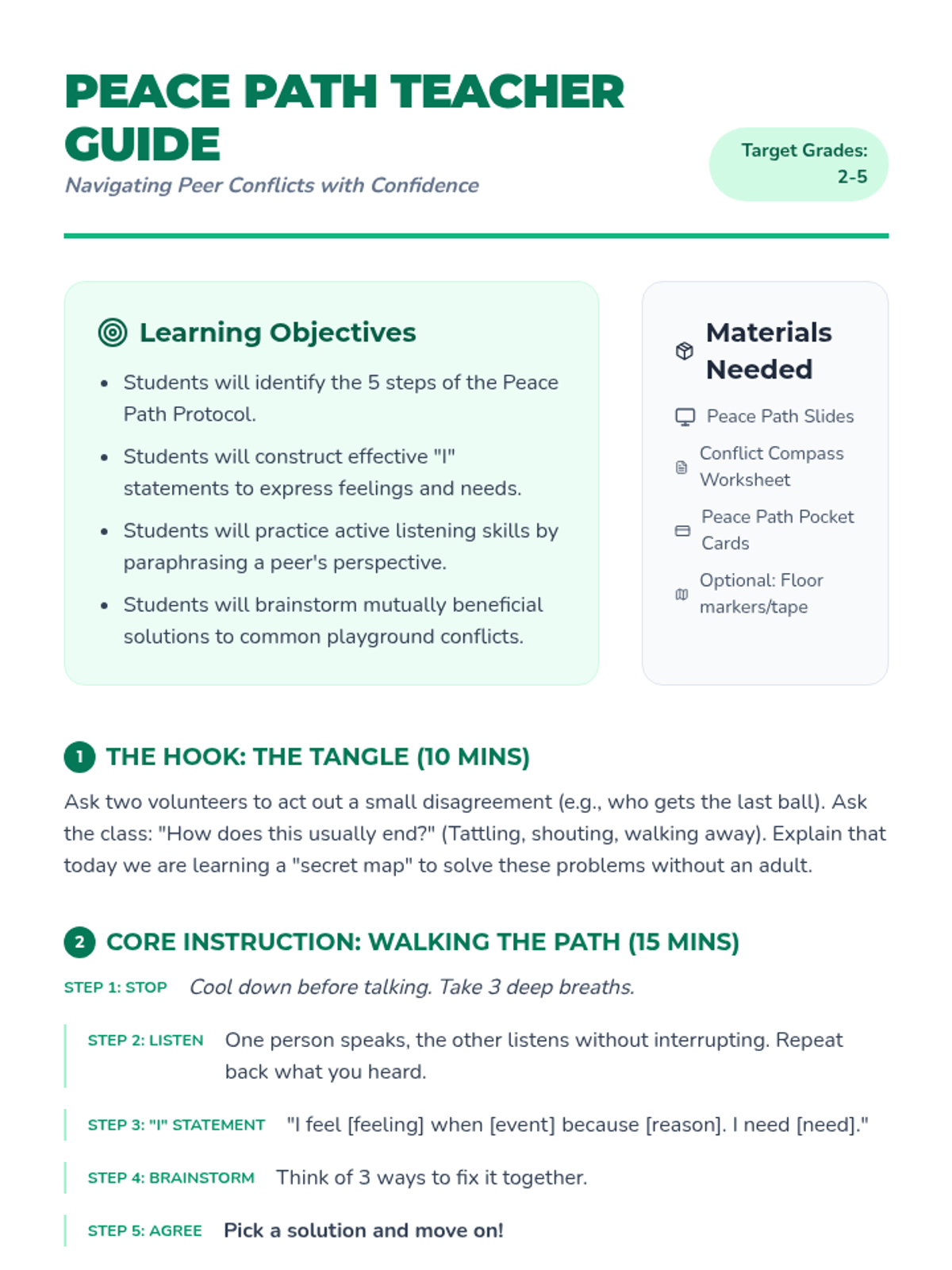
A detailed lesson plan for teachers to introduce the Peace Path Protocol, including learning objectives, a hook, step-by-step instruction, and practice scenarios.
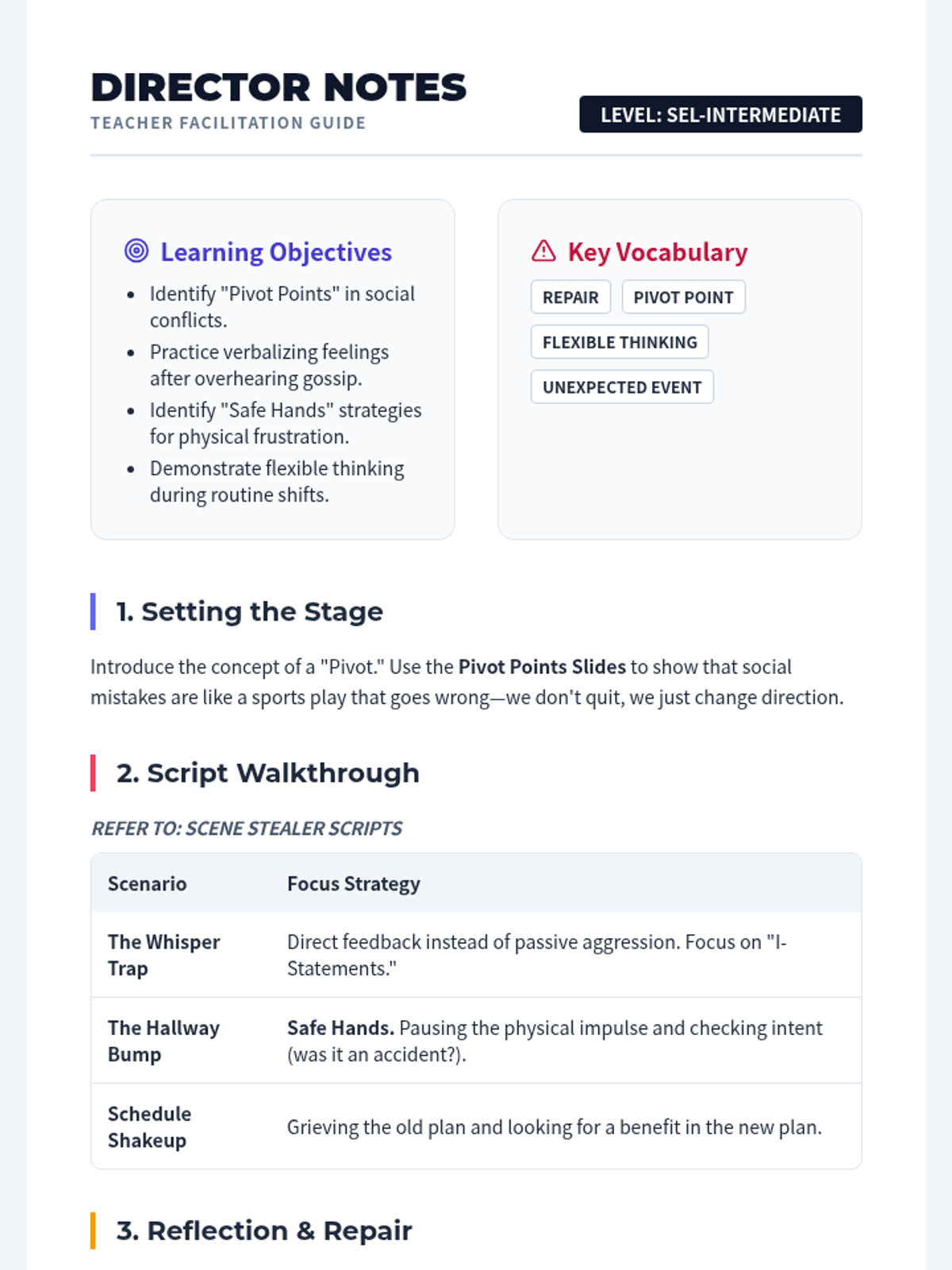
A teacher's guide for facilitating the "Social Pivot" lesson. Includes learning objectives, key vocabulary, facilitation steps for roleplay, and tips for handling sensitive social scenarios like physical aggression.
A visual slide deck introducing the concept of the "Social Pivot." It defines social repair and outlines the three key scenarios (overhearing gossip, physical impulses, and routine changes) with strategies for handling each.
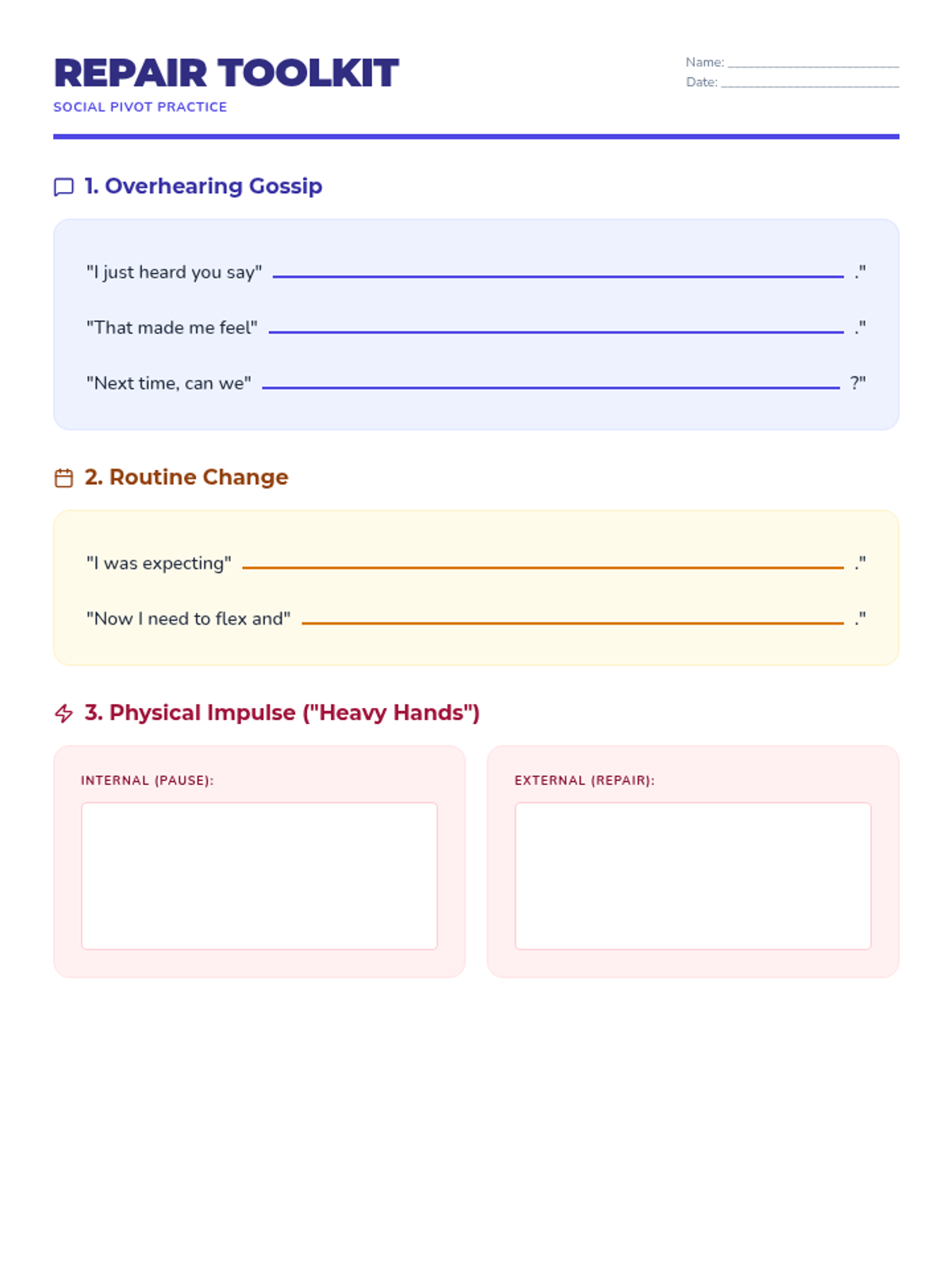
A student worksheet to practice "Social Pivot" phrases. It provides fill-in-the-blank templates for repairing relationships after overhearing gossip, managing physical impulses, and adapting to changes in routine.
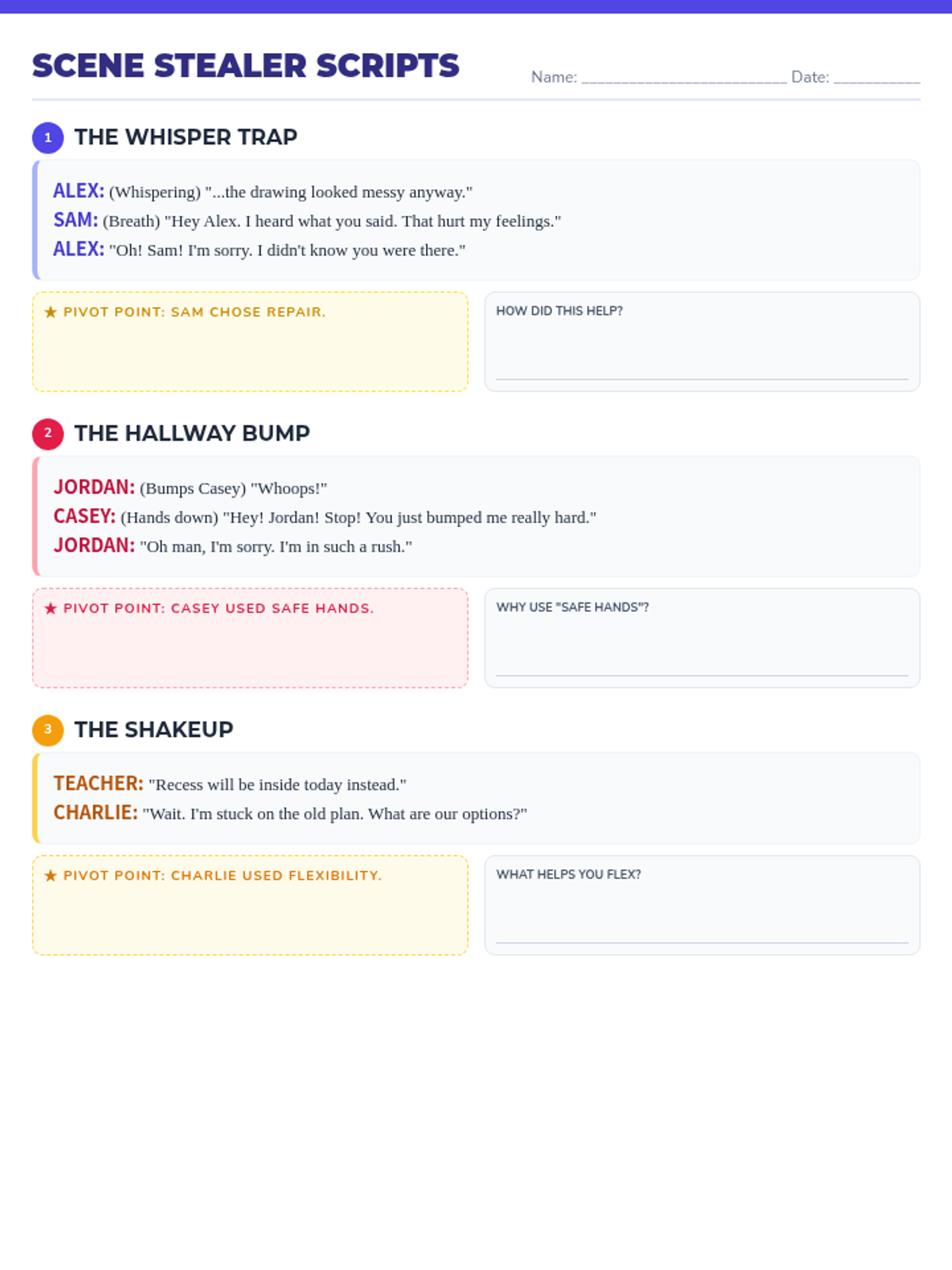
A set of three two-person dialogue scripts focusing on social thinking challenges: overhearing gossip, managing physical aggression impulses, and handling unexpected routine changes. Each script includes a "Pivot Point" where students practice repair and flexible thinking.