A concise assessment tool for students to complete at the end of the lesson. It gathers data on their Holland Code results, chosen career clusters, and their confidence level regarding future planning.
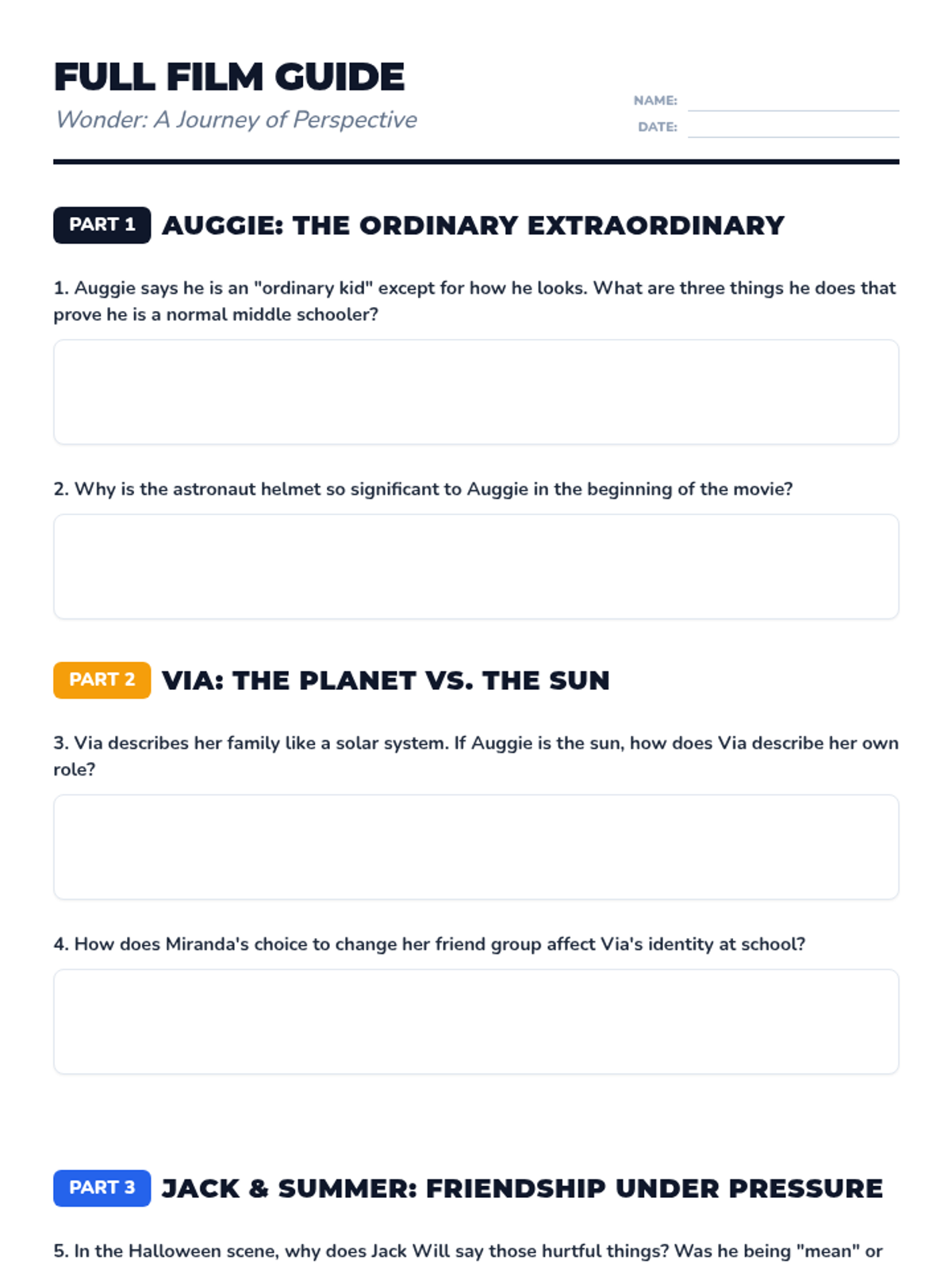
A comprehensive guided viewing worksheet for the full movie Wonder, structured by character perspective with analytical questions on empathy, friendship, and perspective.
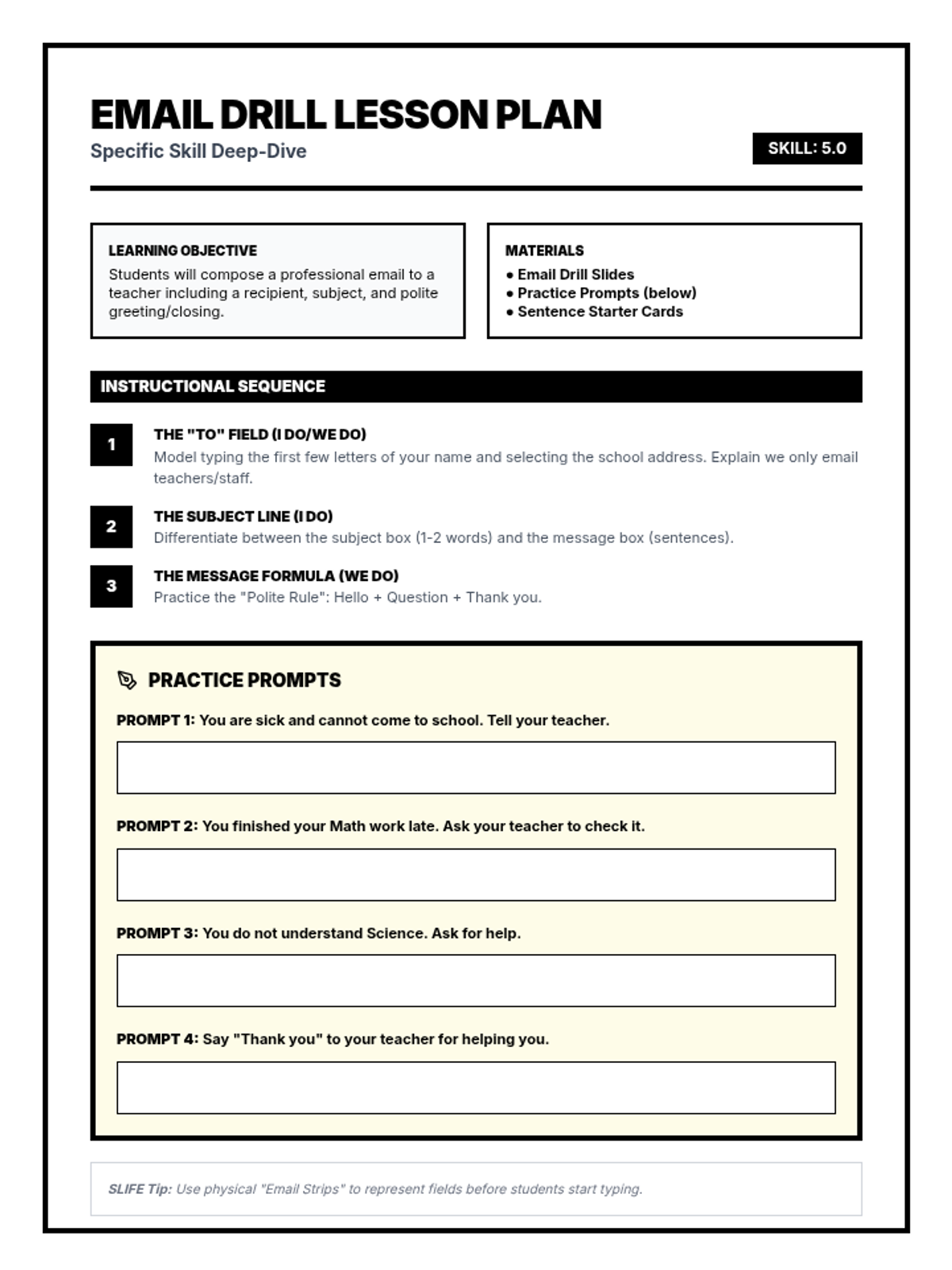
A detailed teacher's lesson plan for instructing SLIFE students on professional school email etiquette, including a 3-step instructional routine and specific practice prompts.
A high-contrast, visual-first slide deck for SLIFE students focusing on the specific structure and etiquette of writing professional school emails to teachers.
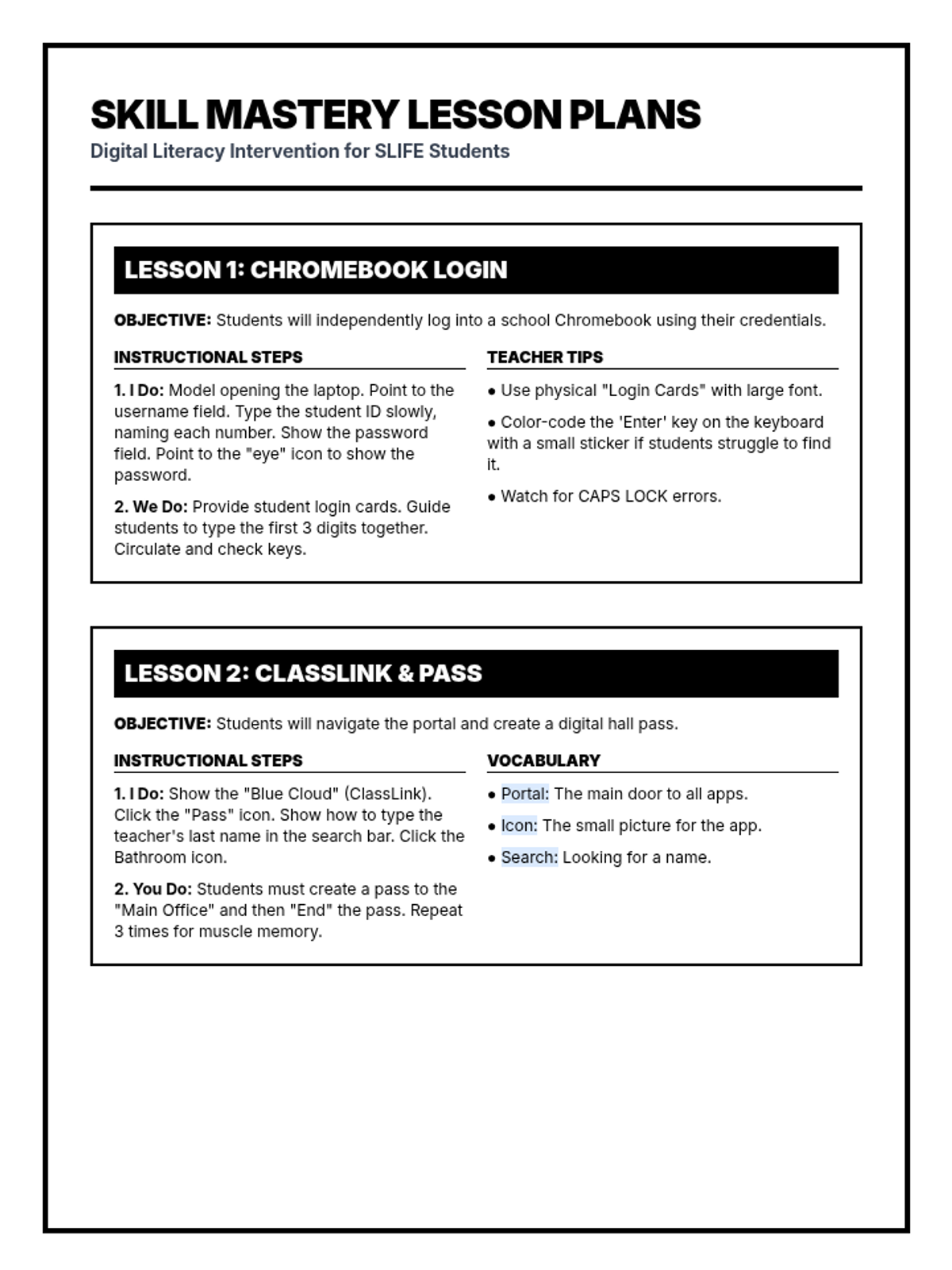
A structured set of teacher-facing lesson plans for the Tech Navigator intervention, providing step-by-step instructional routines for Chromebook login, ClassLink, Canvas, PowerSchool, and email mastery.
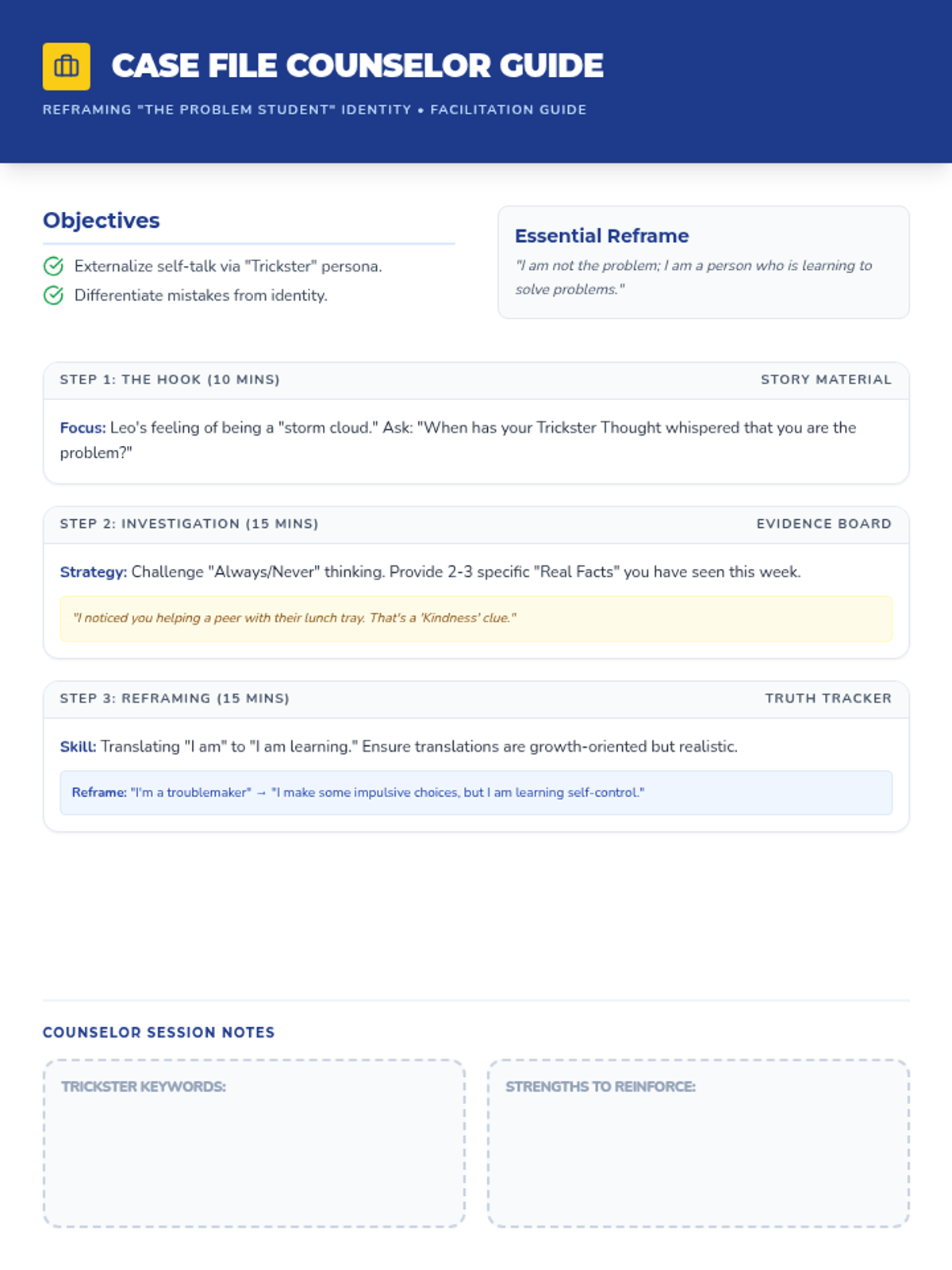
A counselor-facing facilitation guide for a 1:1 session. Includes pacing, key discussion prompts, and strategies for helping students separate their identity from their behavioral challenges.
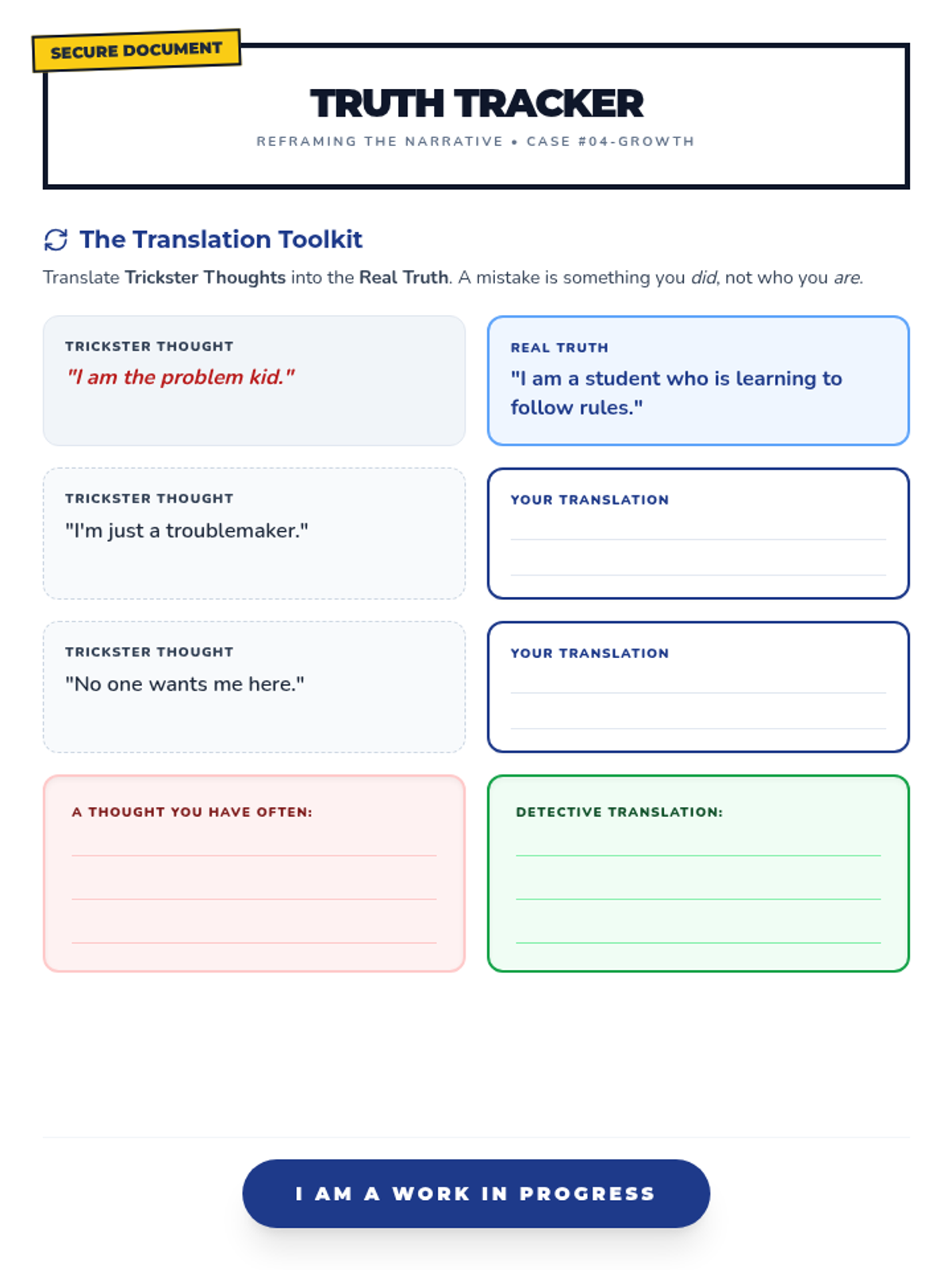
A reframing worksheet that guides students through the process of 'translating' negative, identity-based thoughts into growth-oriented, factual statements. Features a 'Detective Toolkit' visual theme.
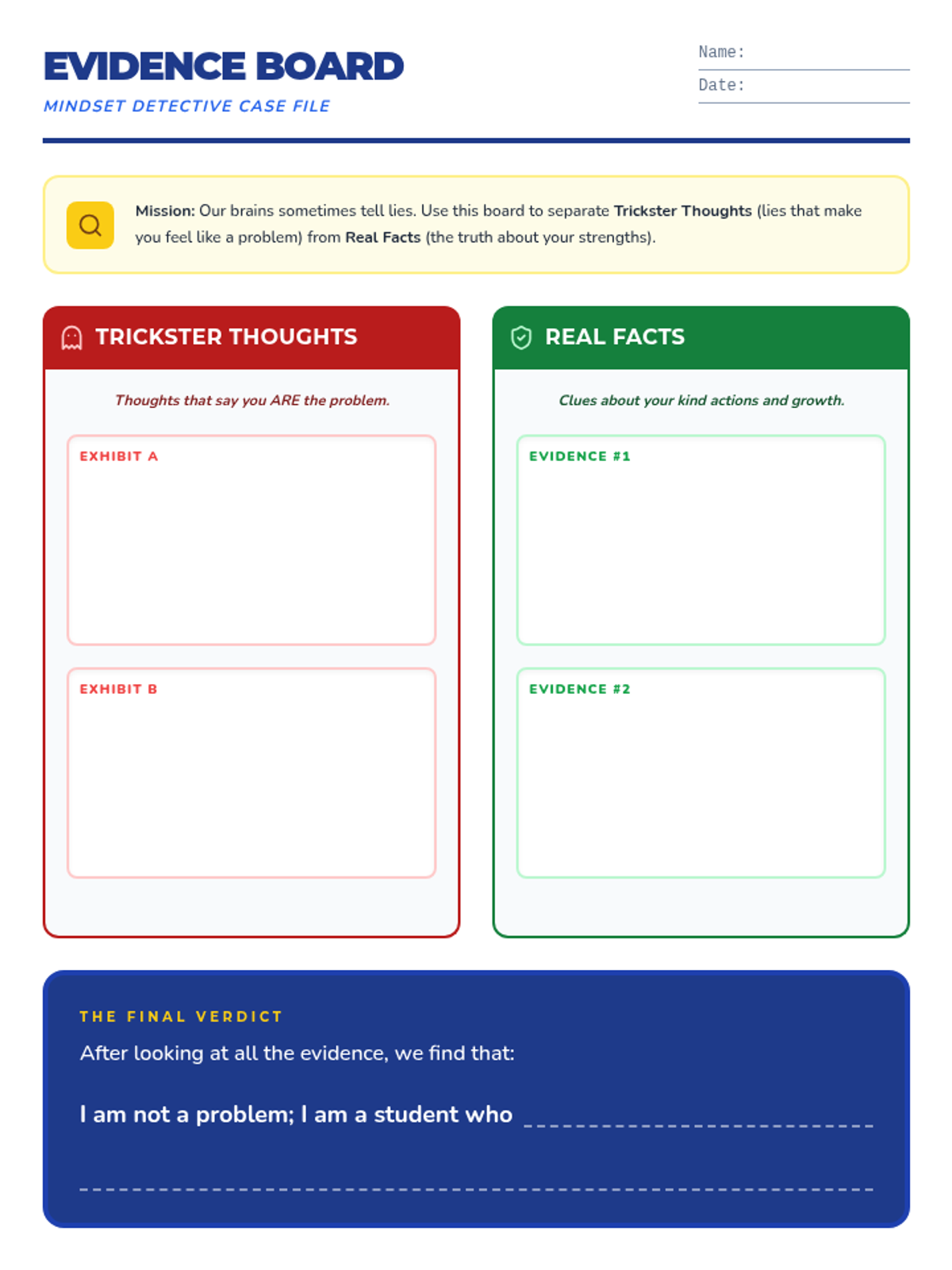
An interactive evidence board worksheet for students to categorize their negative self-talk as 'Trickster Thoughts' and counter them with 'Real Facts' about their strengths and positive behaviors.
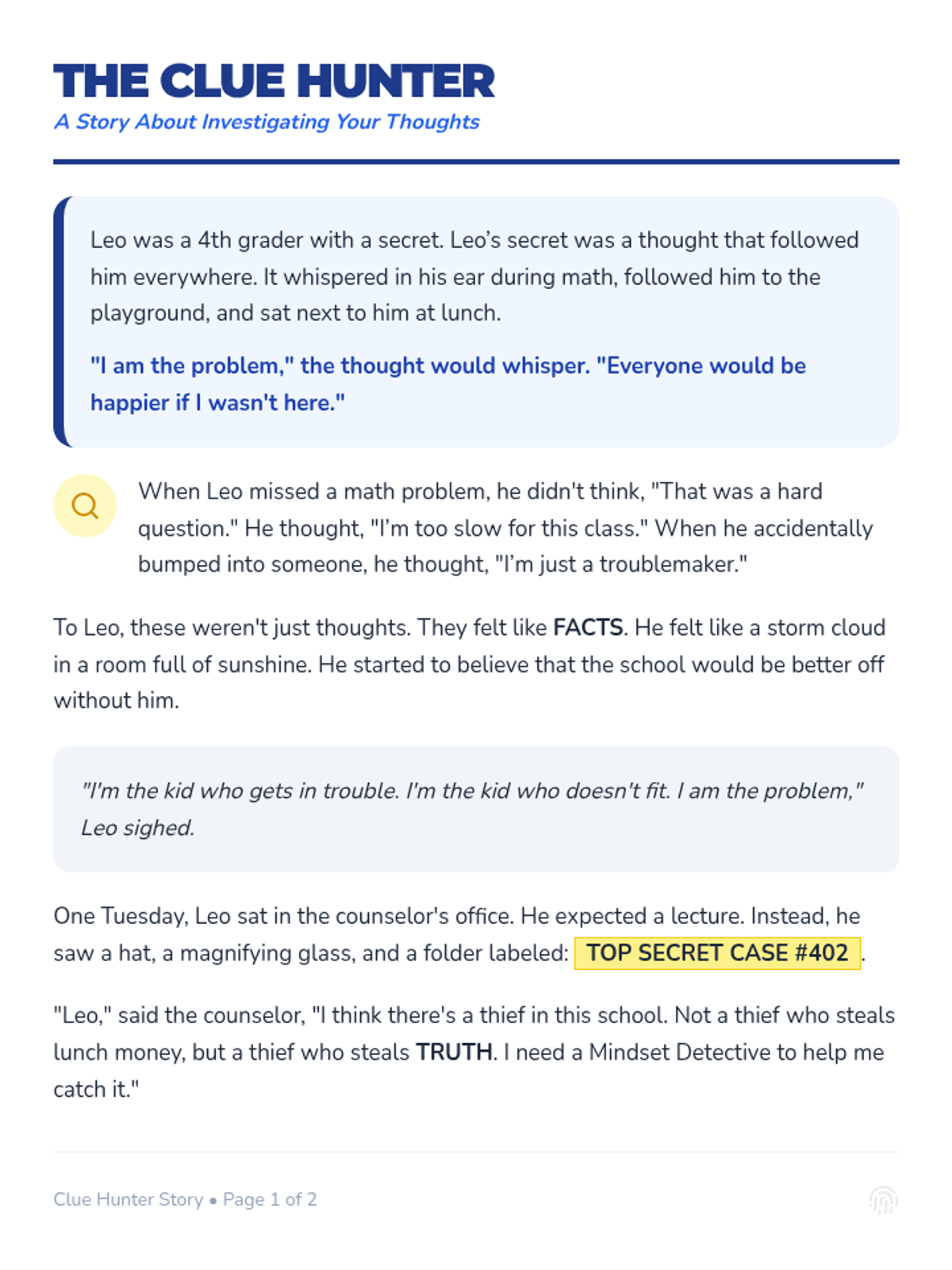
A two-page social story about a student named Leo who learns to differentiate between 'Trickster Thoughts' (identity-based negative self-talk) and 'Detective Facts' (situational reality and personal strengths). Includes discussion questions for 1:1 sessions.
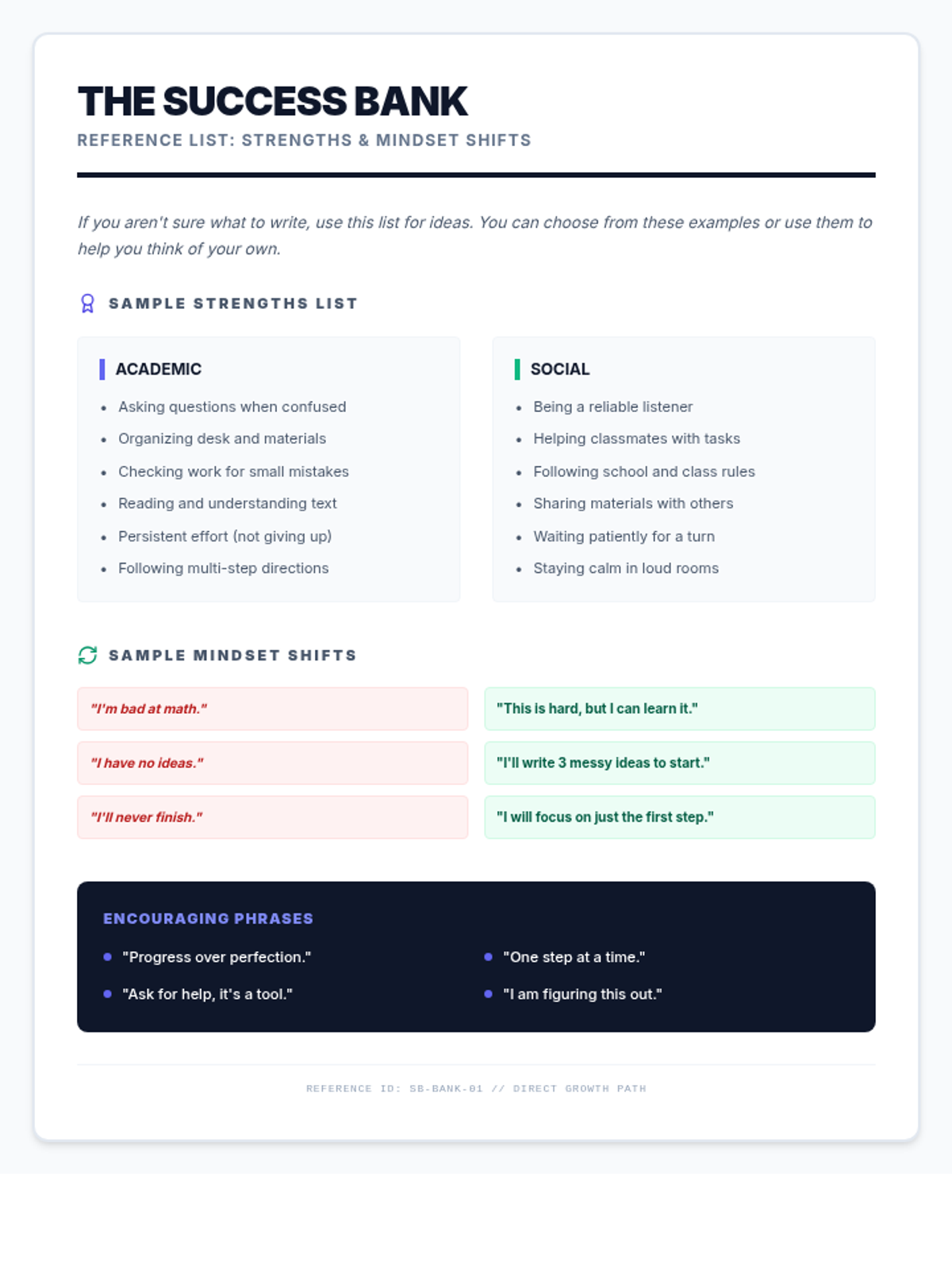
A reference sheet for the student containing concrete examples of academic and social strengths, growth mindset shifts, and encouraging phrases. Designed to support students who struggle to generate their own responses. Revised for single-page layout.
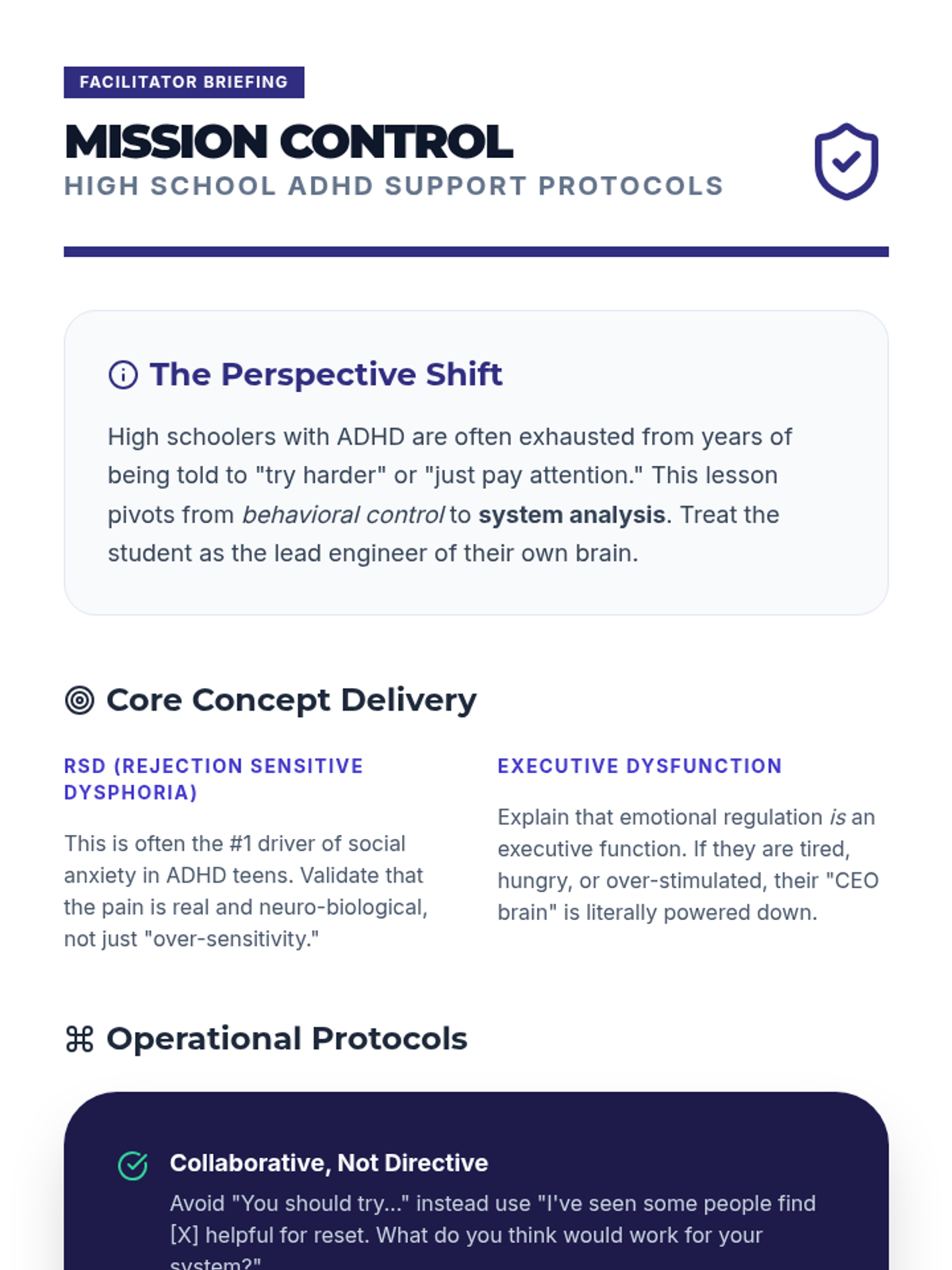
A facilitator's guide for supporting high schoolers with ADHD, focusing on autonomy, validation, and advanced cognitive strategies like RSD management and executive function audits.
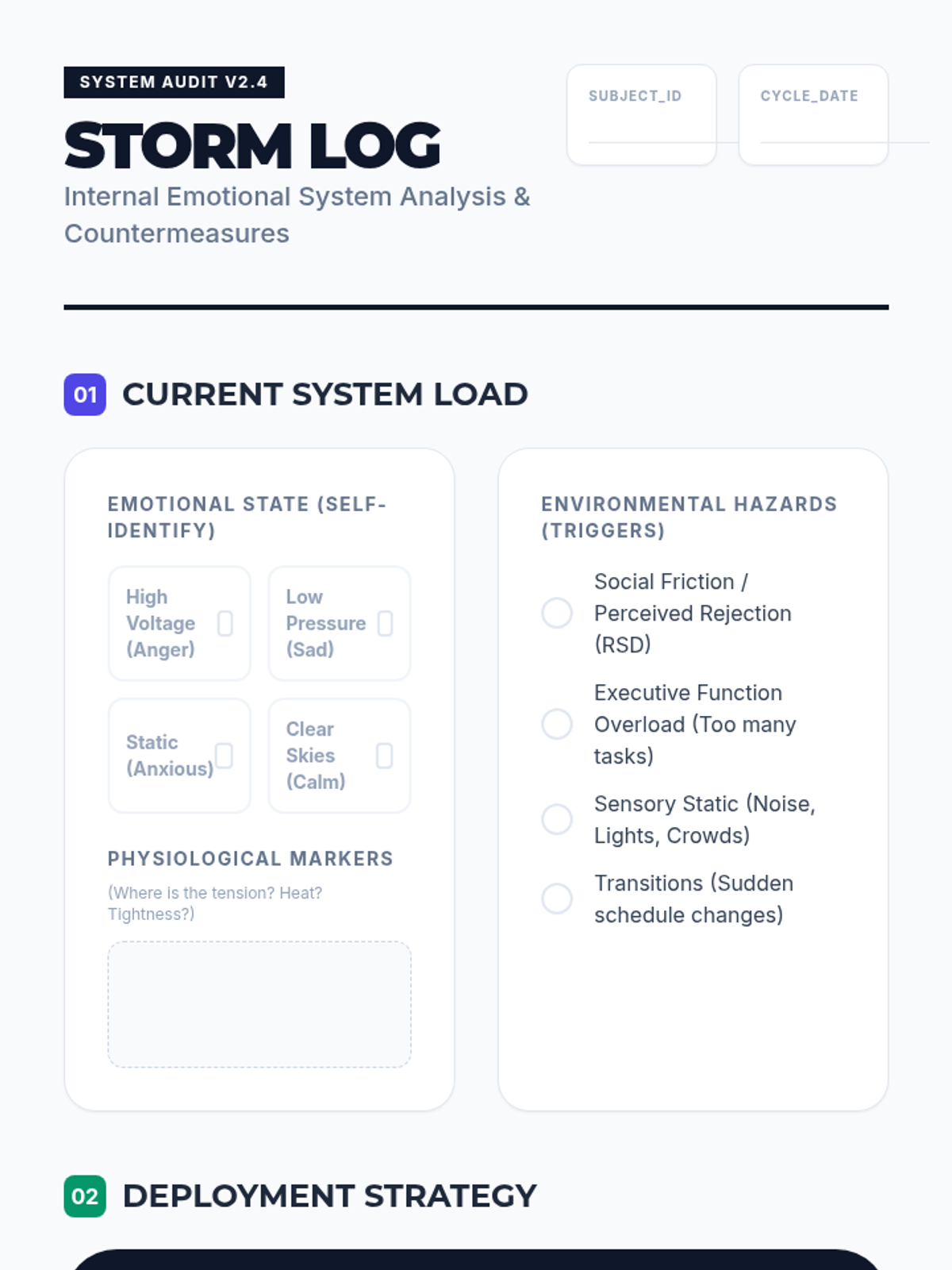
A data-driven self-audit for high schoolers to track their emotional triggers and systemic responses using a professional, high-tech diagnostic theme.
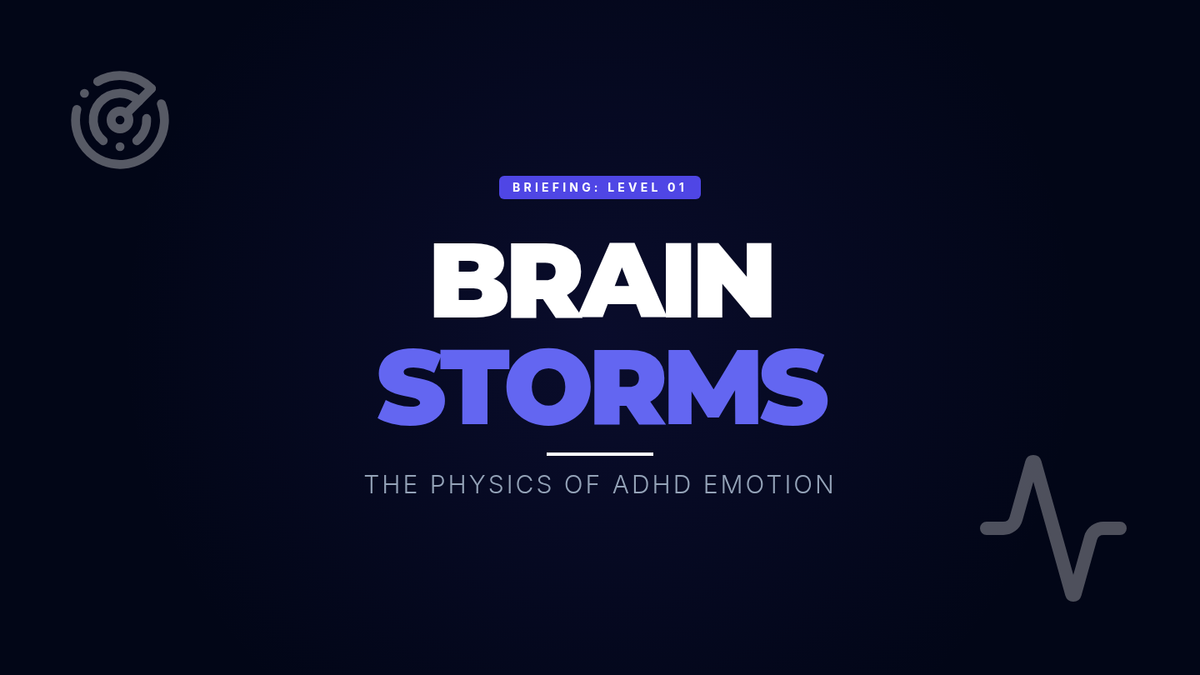
A professional-grade briefing for high schoolers on the mechanics of the ADHD brain and emotional regulation, featuring neuroscience-based explanations and advanced coping strategies.
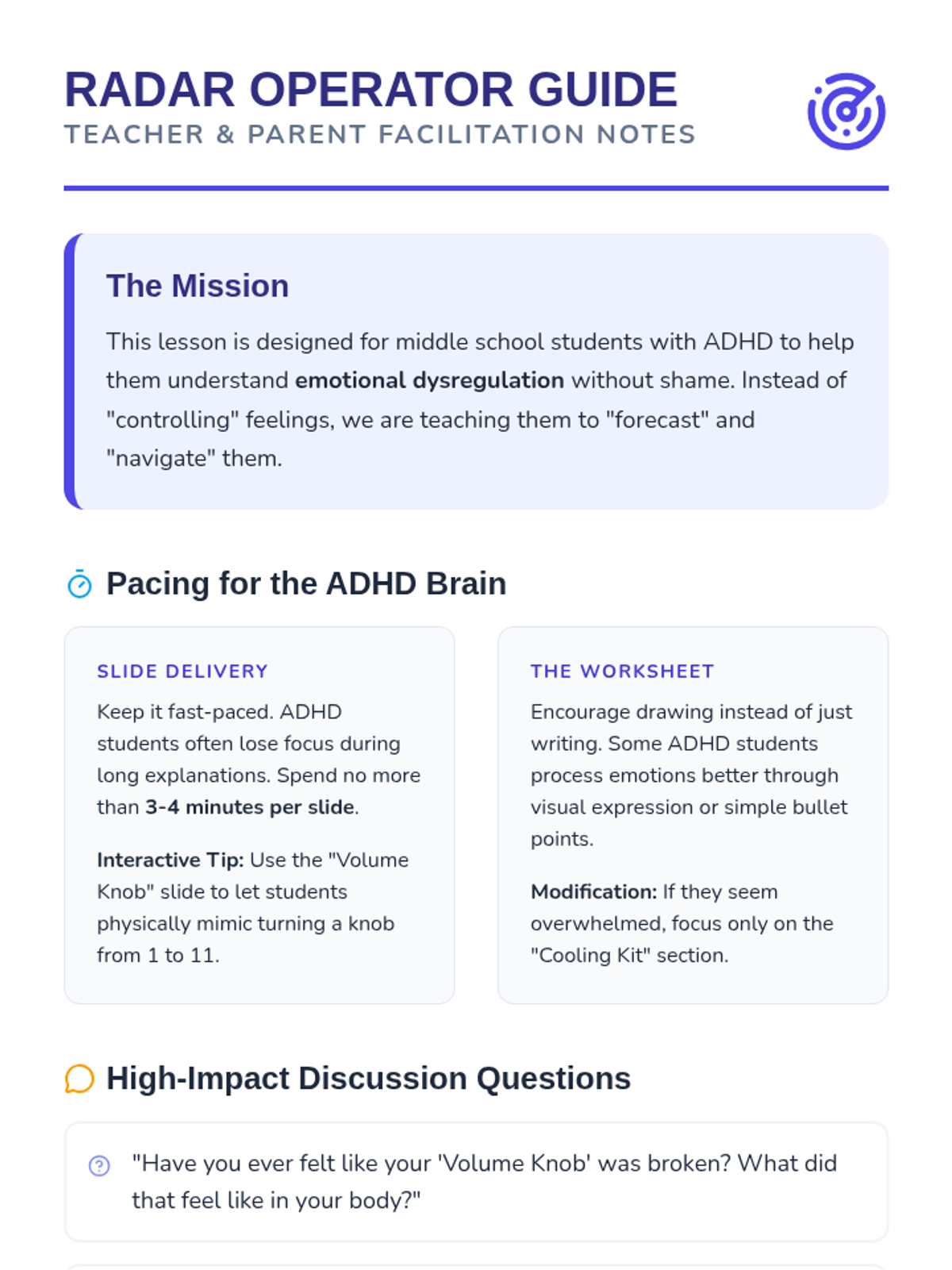
A guide for educators and parents to facilitate the "Brain Storms" lesson, featuring pacing tips, discussion prompts, and strategies for validating ADHD-driven emotions.
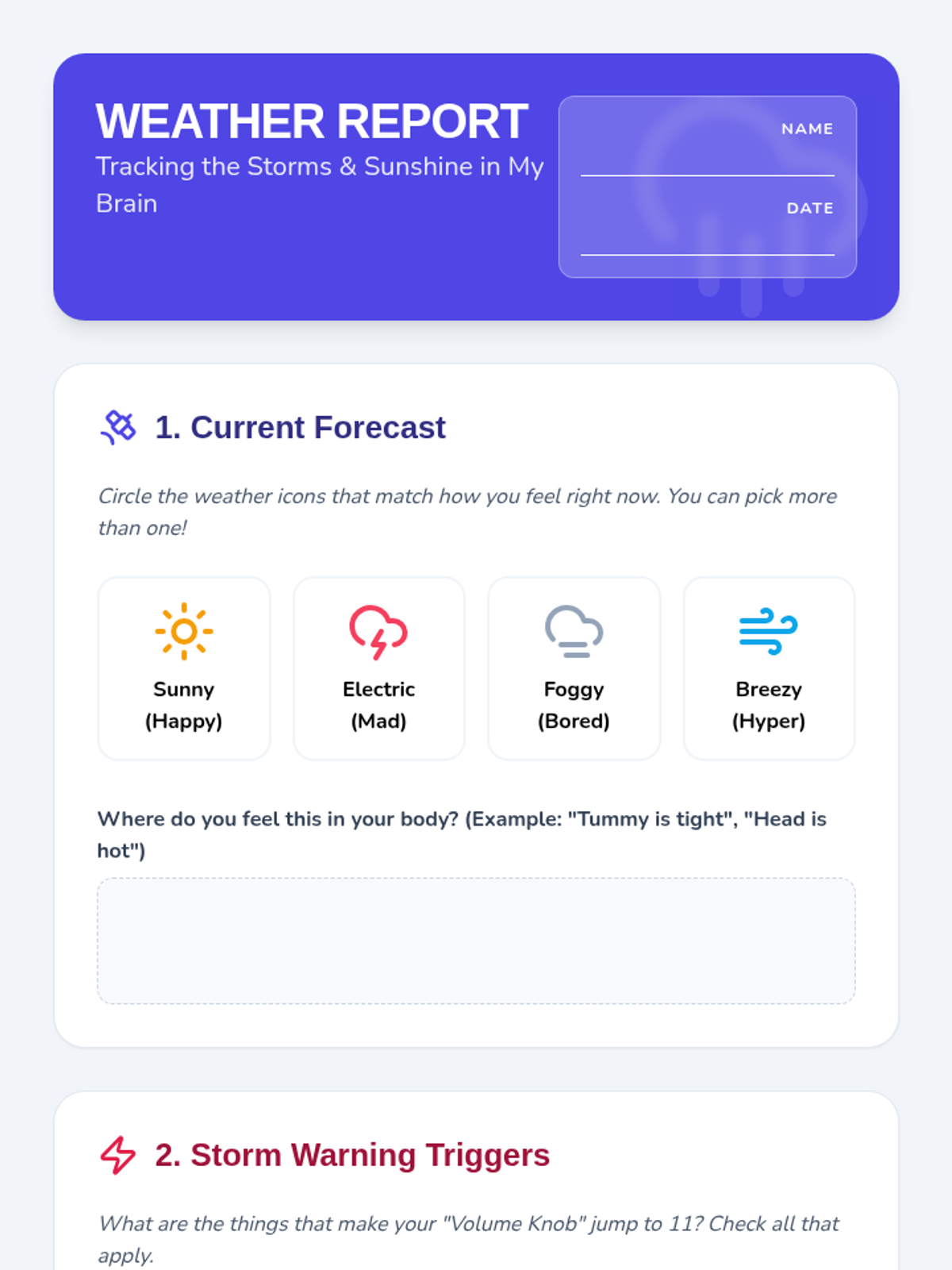
A self-reflection worksheet for students with ADHD to identify their personal emotional triggers, physical warning signs, and favorite regulation strategies using a weather-tracking theme.
An engaging slide deck using a weather metaphor to help middle schoolers with ADHD understand emotional dysregulation, brain function, and coping strategies.
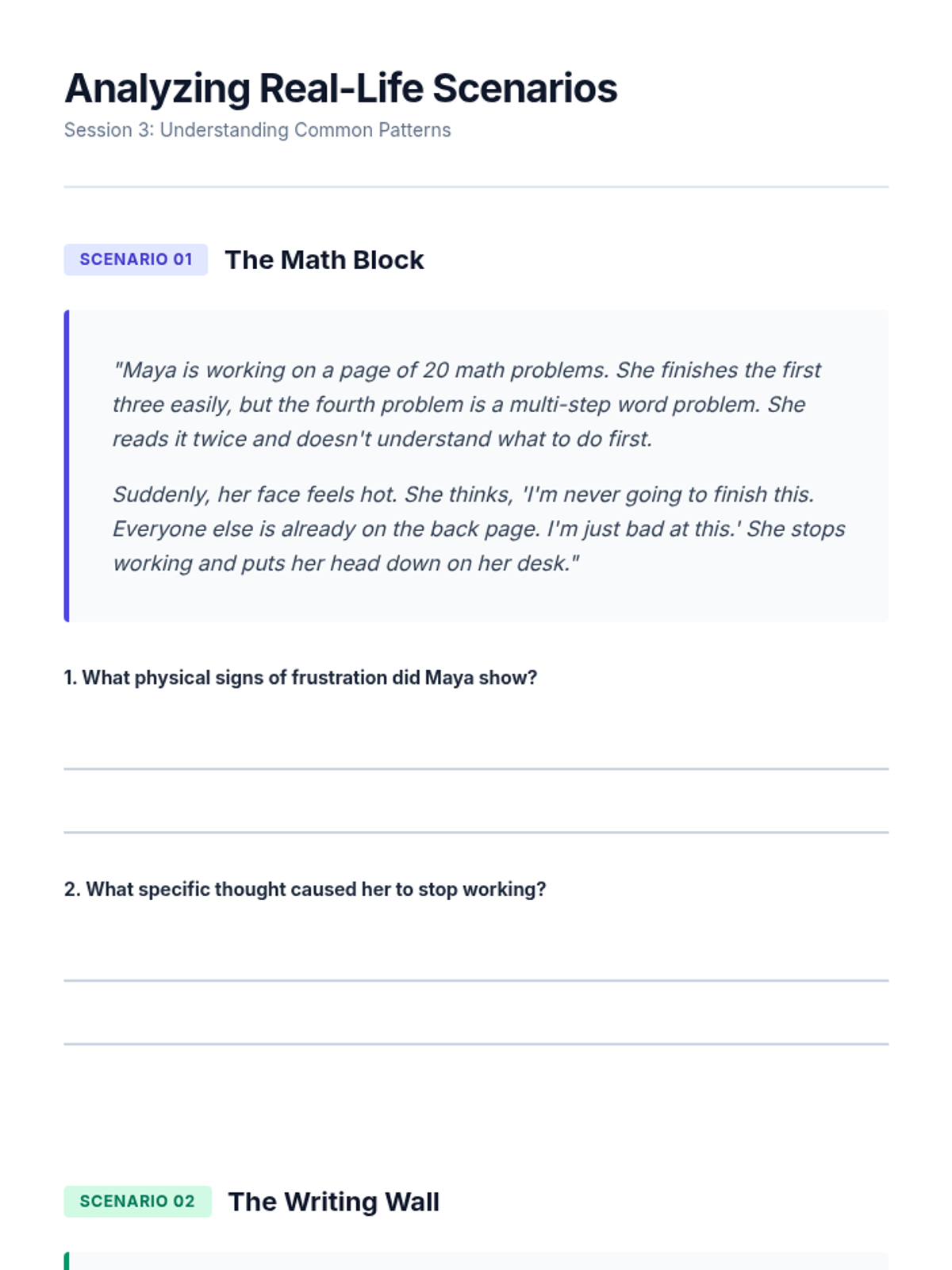
A collection of straightforward social stories (scenarios) for Session 3. Features realistic math and writing challenges. Revised for better writing space, darker lines, and corrected page breaks.
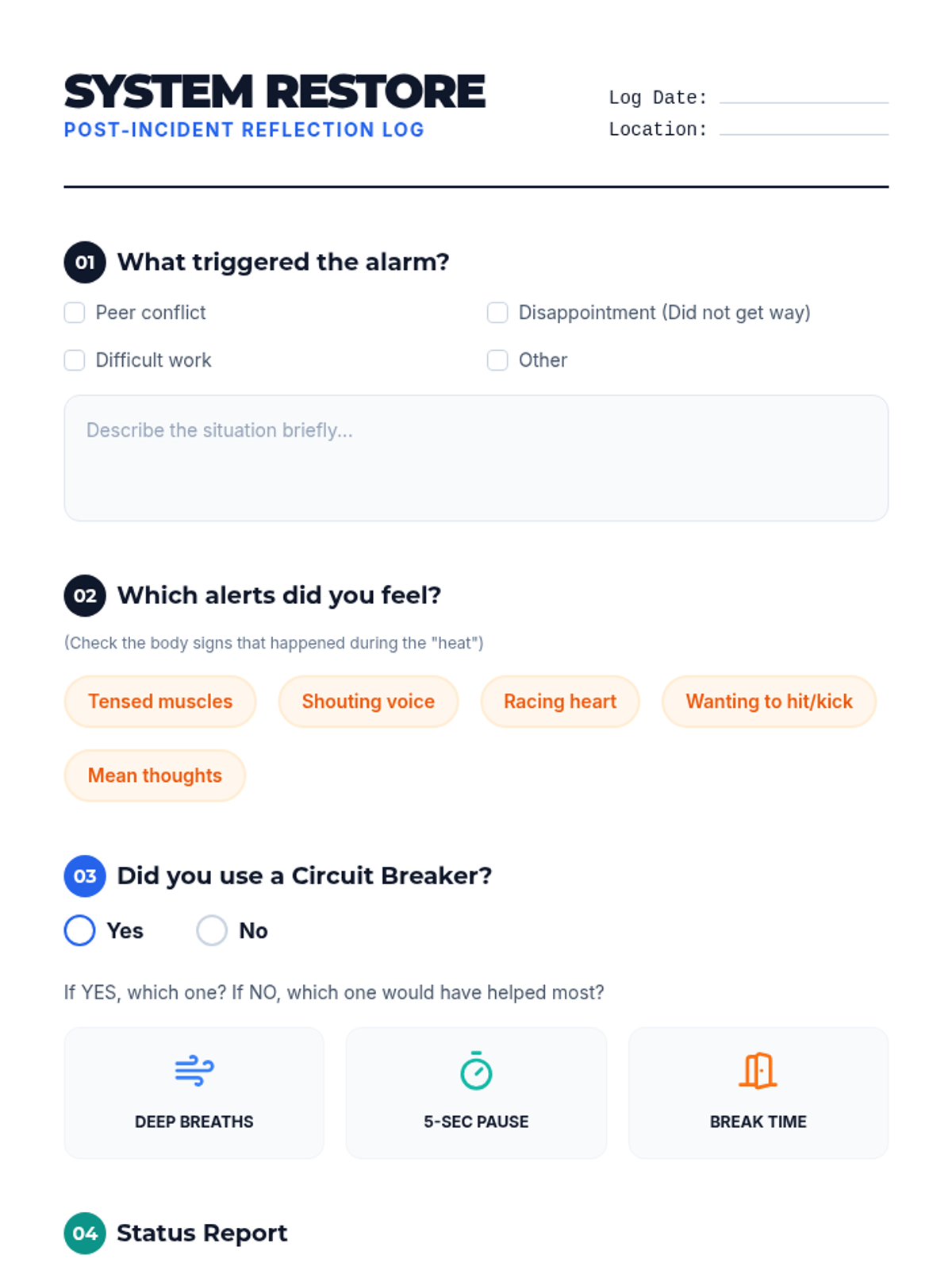
A reflective post-incident worksheet for students to process an anger episode, identify triggers and body signals, and evaluate their use of coping strategies.
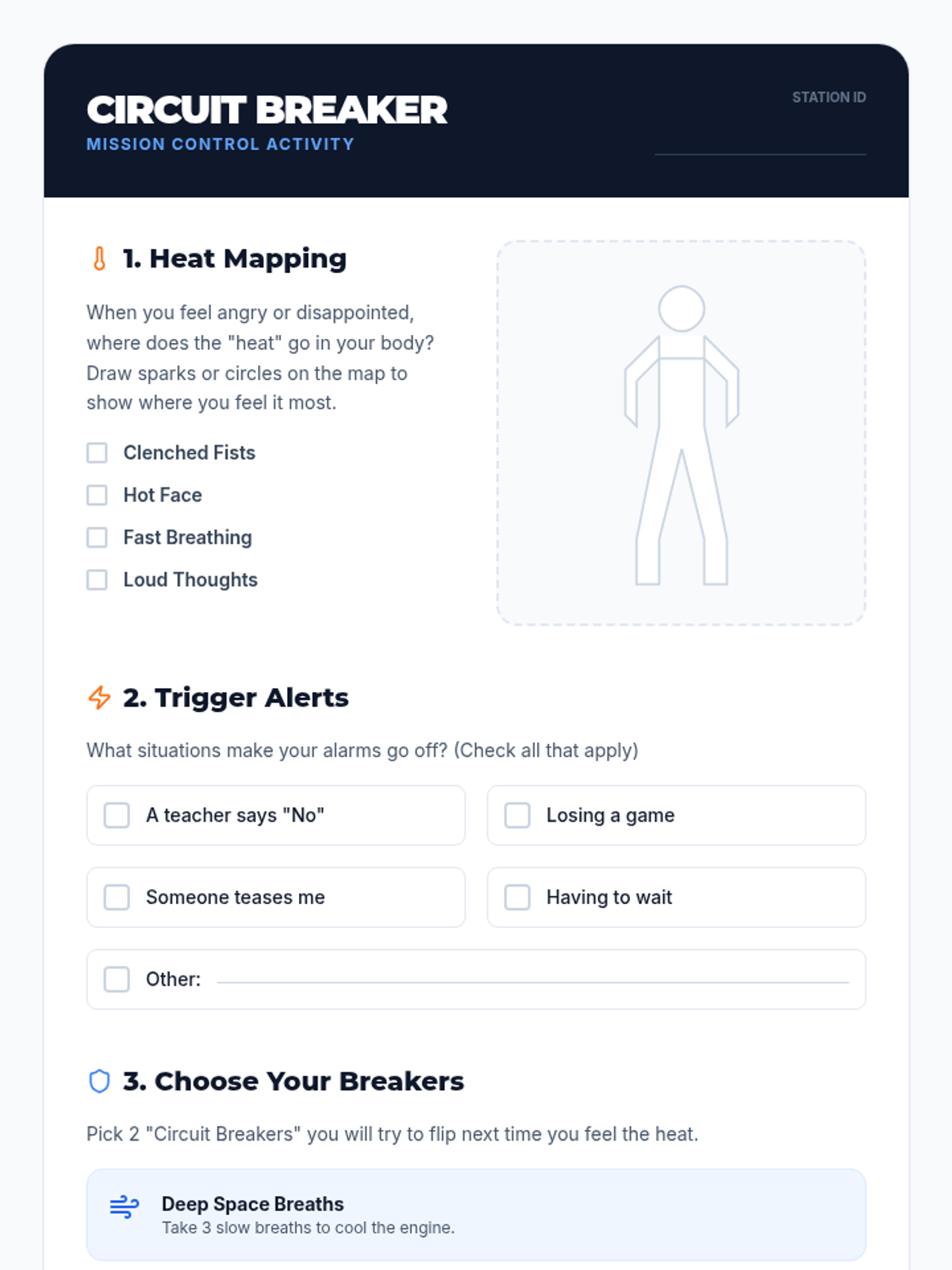
A student worksheet to help identify physical warning signs of anger and select specific 'Circuit Breaker' strategies to use during conflict or disappointment.
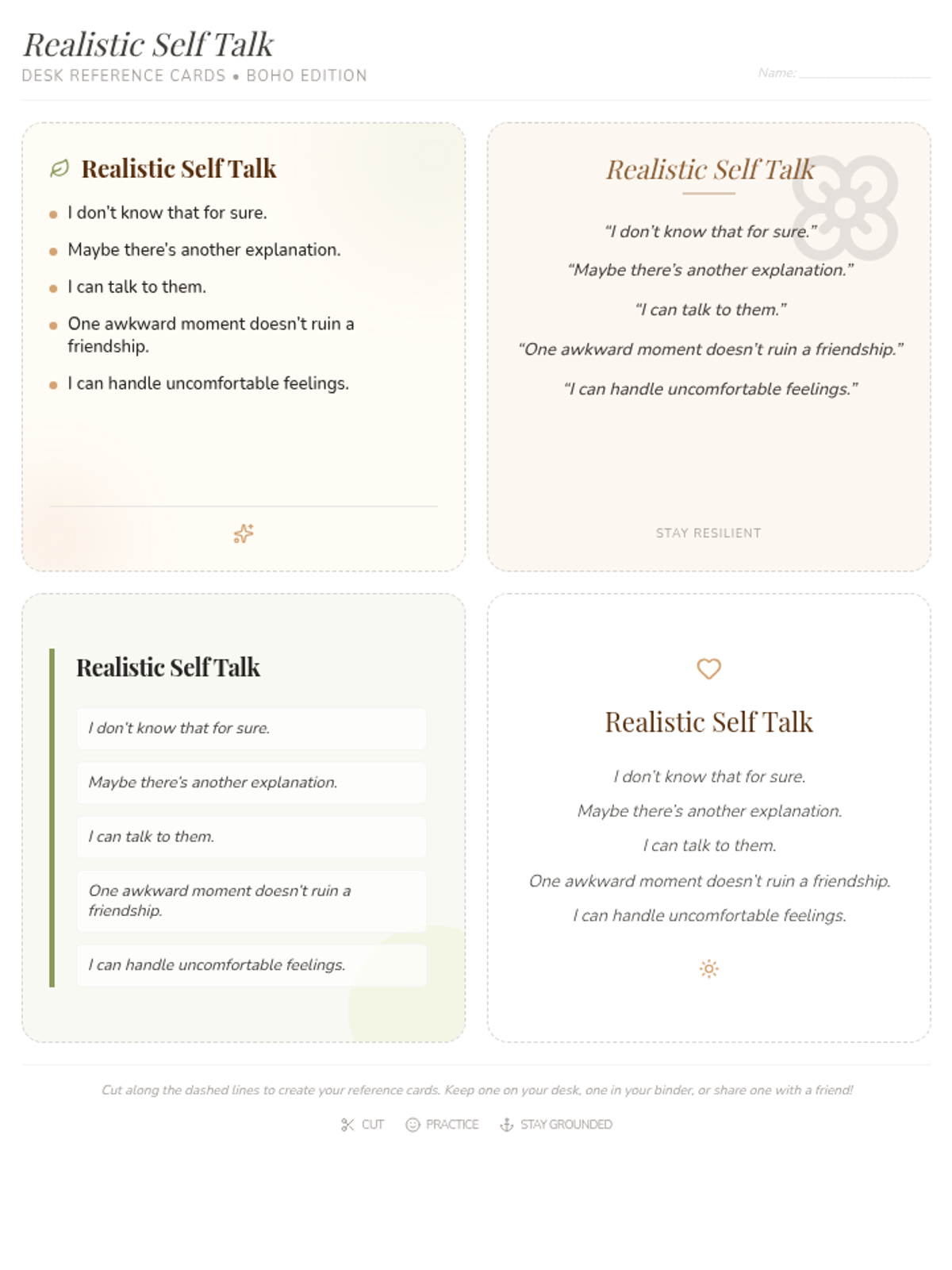
A collection of four printable boho-chic desk reference cards featuring an emotional identification section and realistic self-talk prompts. Designed for a mature elementary student to support emotional regulation and resilience. Optimized for 8.5x11 printing.