A detailed facilitation guide for teachers. Includes a step-by-step lesson plan, read-aloud discussion questions, strategies to teach Bullying vs. Mean Moments, and an answer/guidance key for the scenario role-play cards.
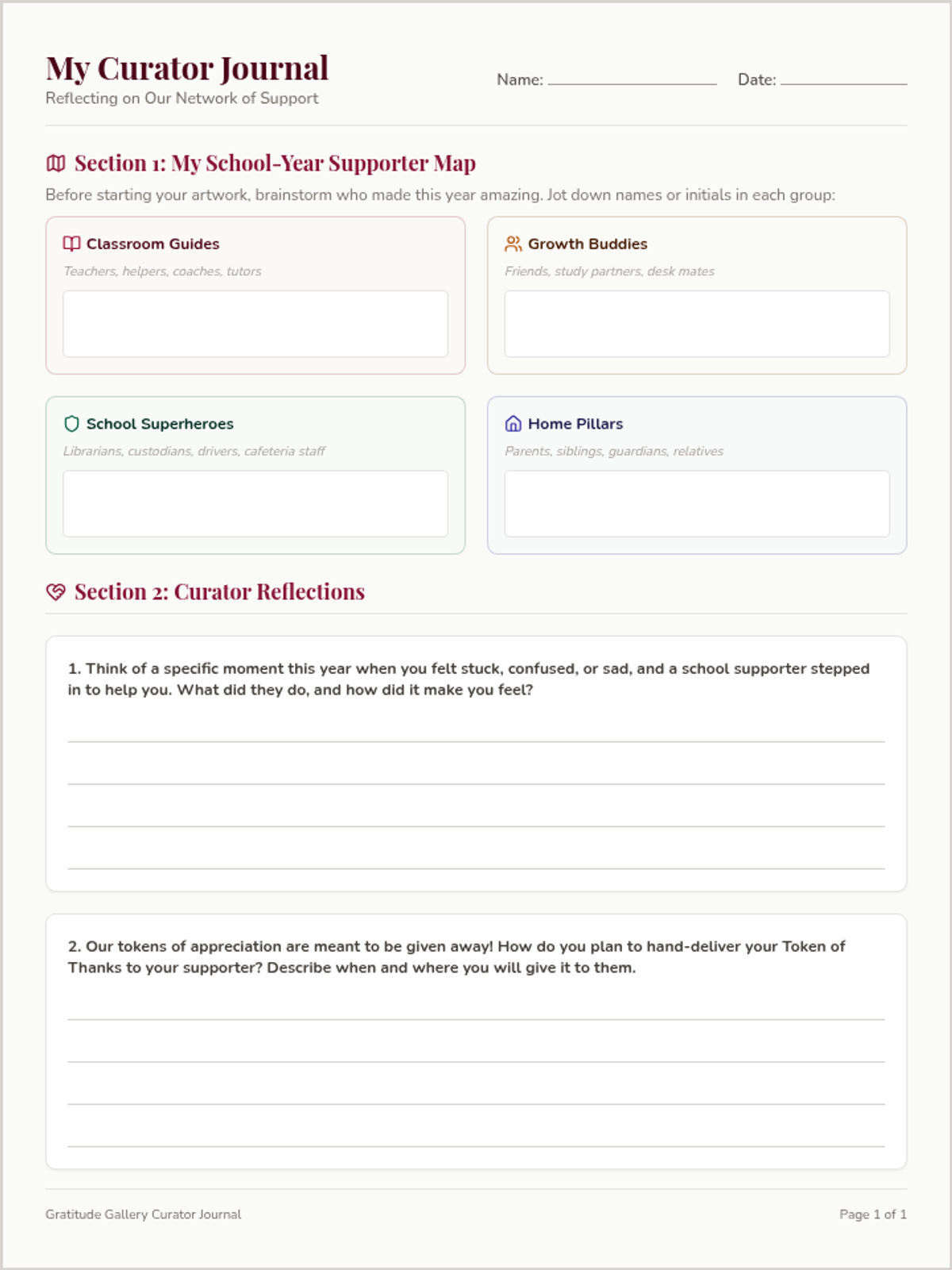
A student-facing reflective journal page containing guided brainstorming prompts to identify key supporters and write-in sections to plan the delivery of their gratitude tokens.
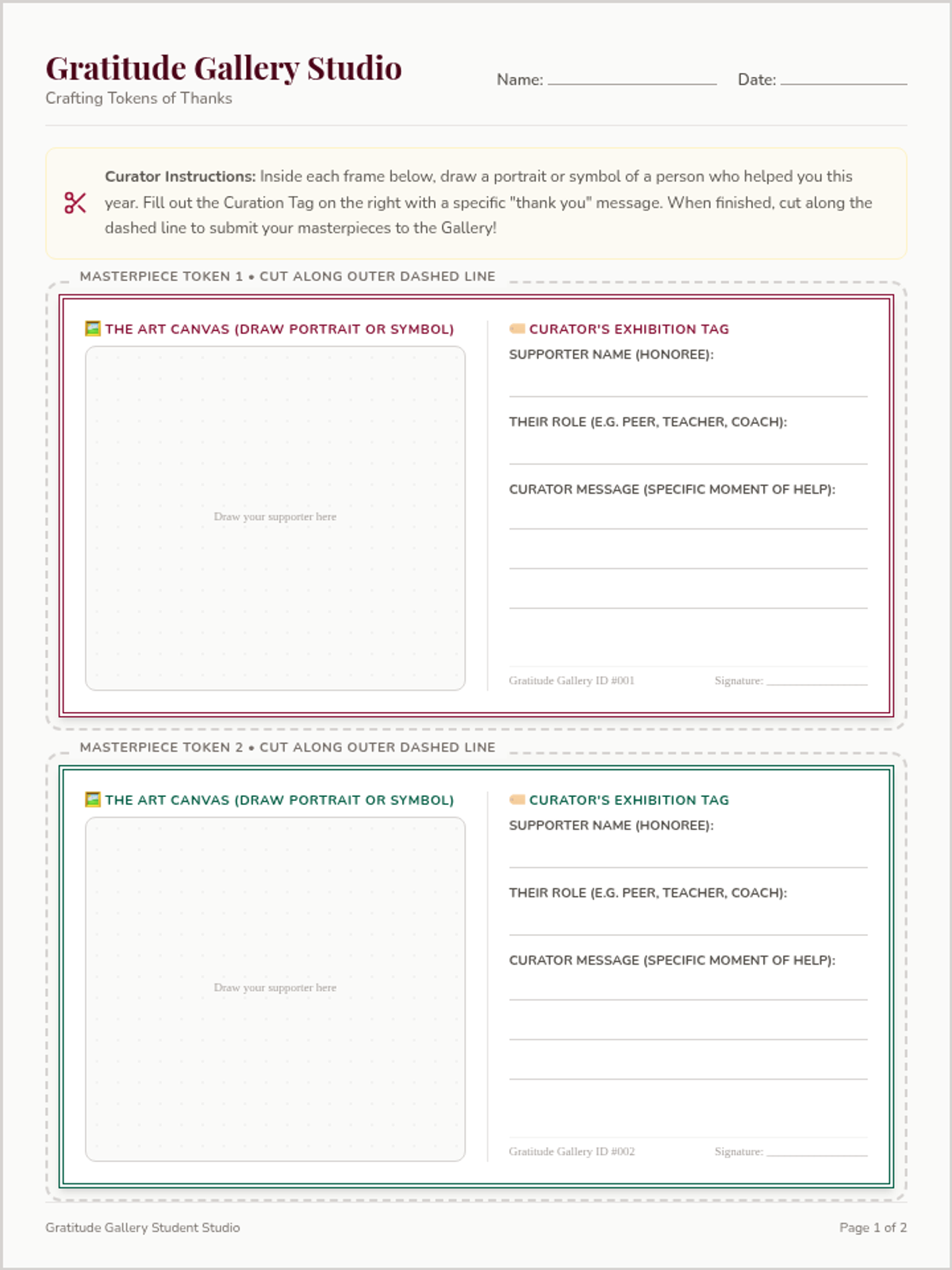
A student-facing activity sheet featuring printable museum-style frames and curation tags where students design, draw, and write personalized appreciation tokens to cut out and display in the gallery.
An elegant, visual slide presentation with large text and warm museum curation theme to guide students through defining gratitude, brainstorming school supporters, and reviewing guidelines for their gallery walk.
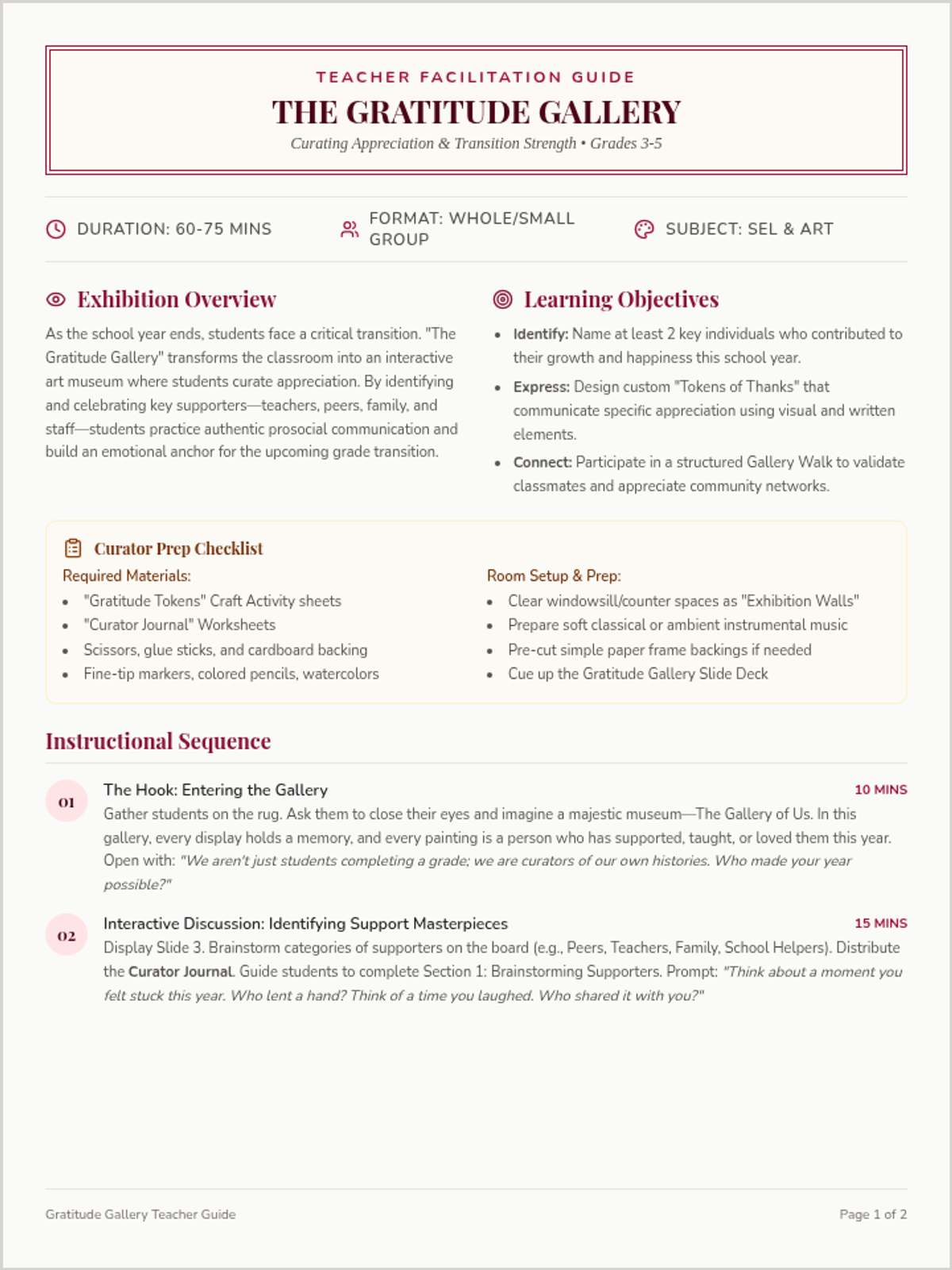
A comprehensive teacher facilitation guide containing step-by-step instructions, discussion prompts, pacing, materials checklists, and differentiation ideas to help educators lead students through the Gratitude Gallery experience.
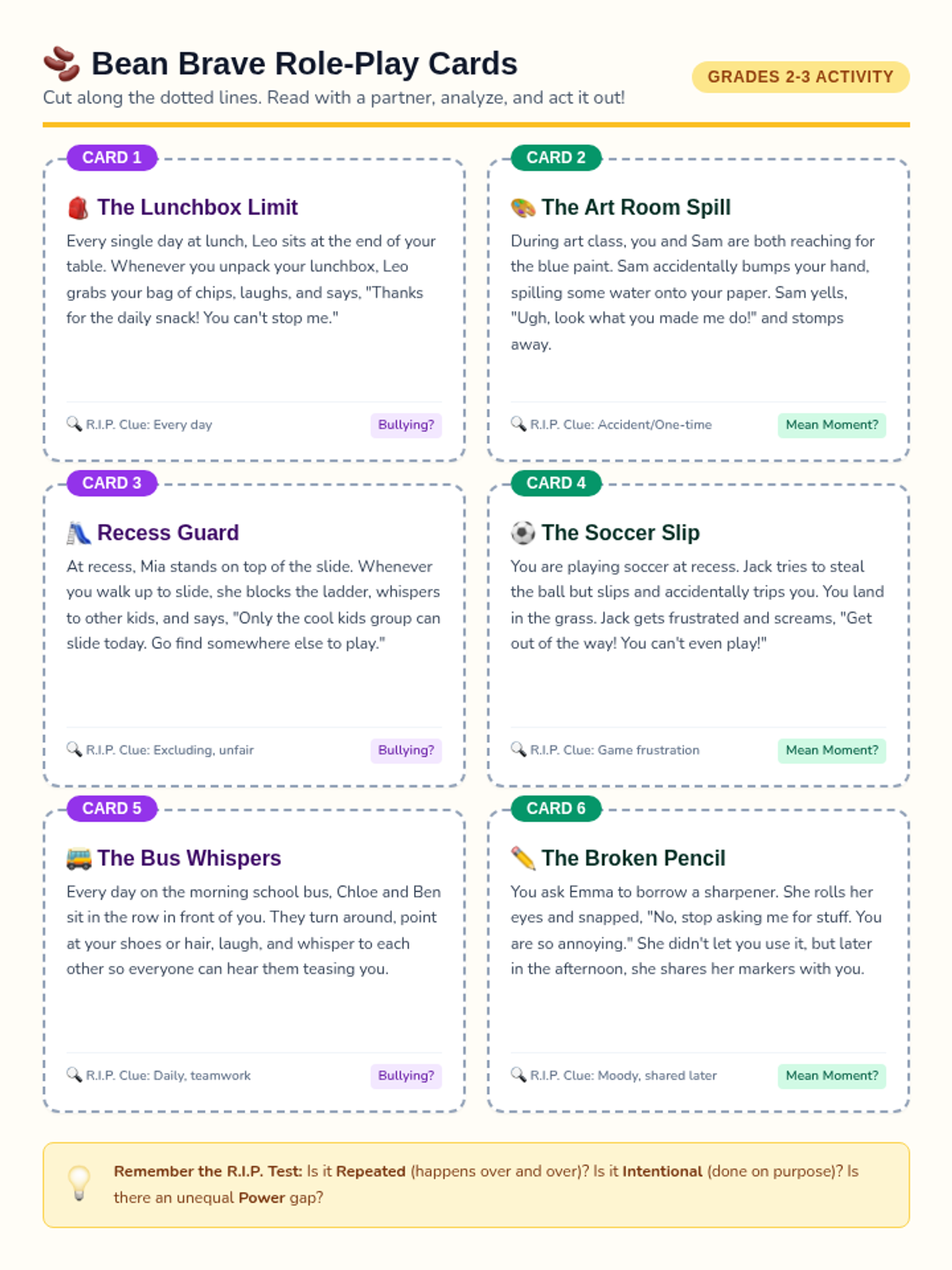
A set of printable role-play scenario cards and an accompanying detective recording sheet. Students analyze scenarios to distinguish between mean moments and bullying, then practice and write about their 'Bully Bean' responses.
A colorful, interactive slide deck for presenting the 'Bully Beans' lesson. Designed with high-contrast, larger-than-24px text, and interactive discussion prompts for 2nd and 3rd grade students to learn the difference between bullying and mean moments.
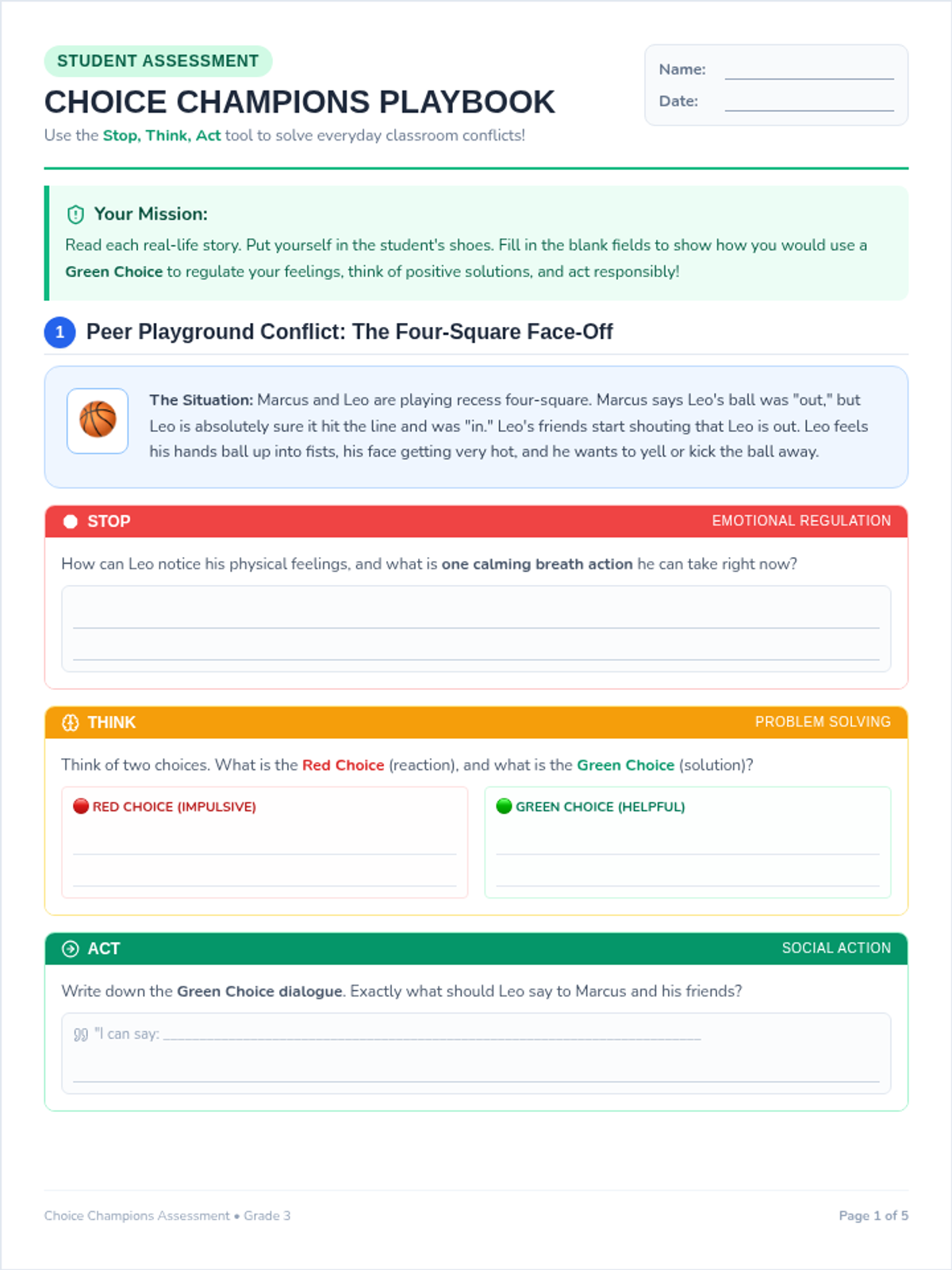
An expanded 5-page student assessment workbook for third-grade students. It uses a child-friendly 'Choice Champions' theme to walk students through five realistic social conflict scenarios representing playground rule disputes, negative peer feedback, adult authority disagreements, and transition management. Each page is designed with spacious, clear handwriting fields and emotional regulation prompts.
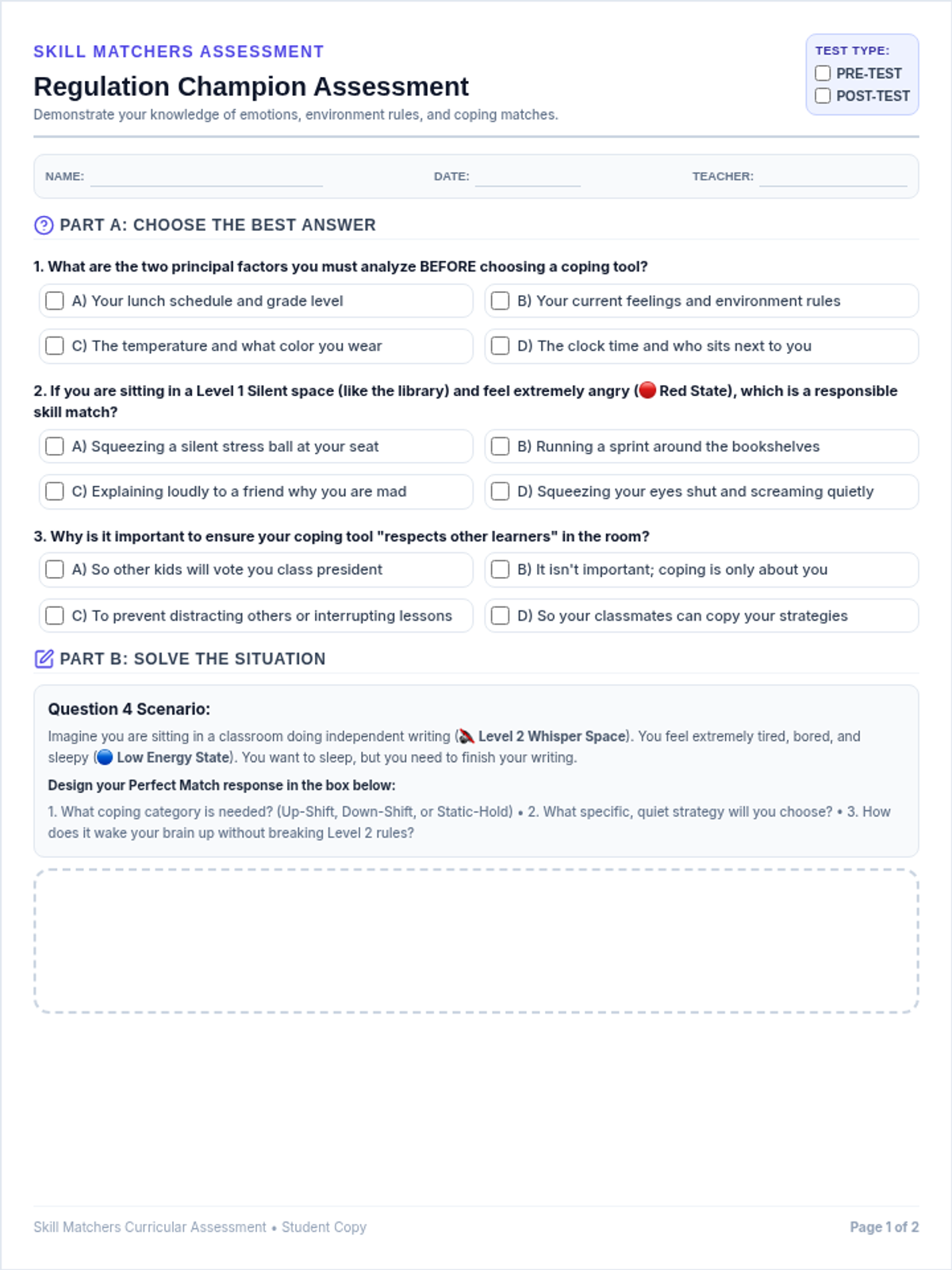
A dual-purpose, identical 5-item pre/post-unit assessment and grading rubric designed to measure students' self-awareness, social awareness, and situational self-regulation strategies.
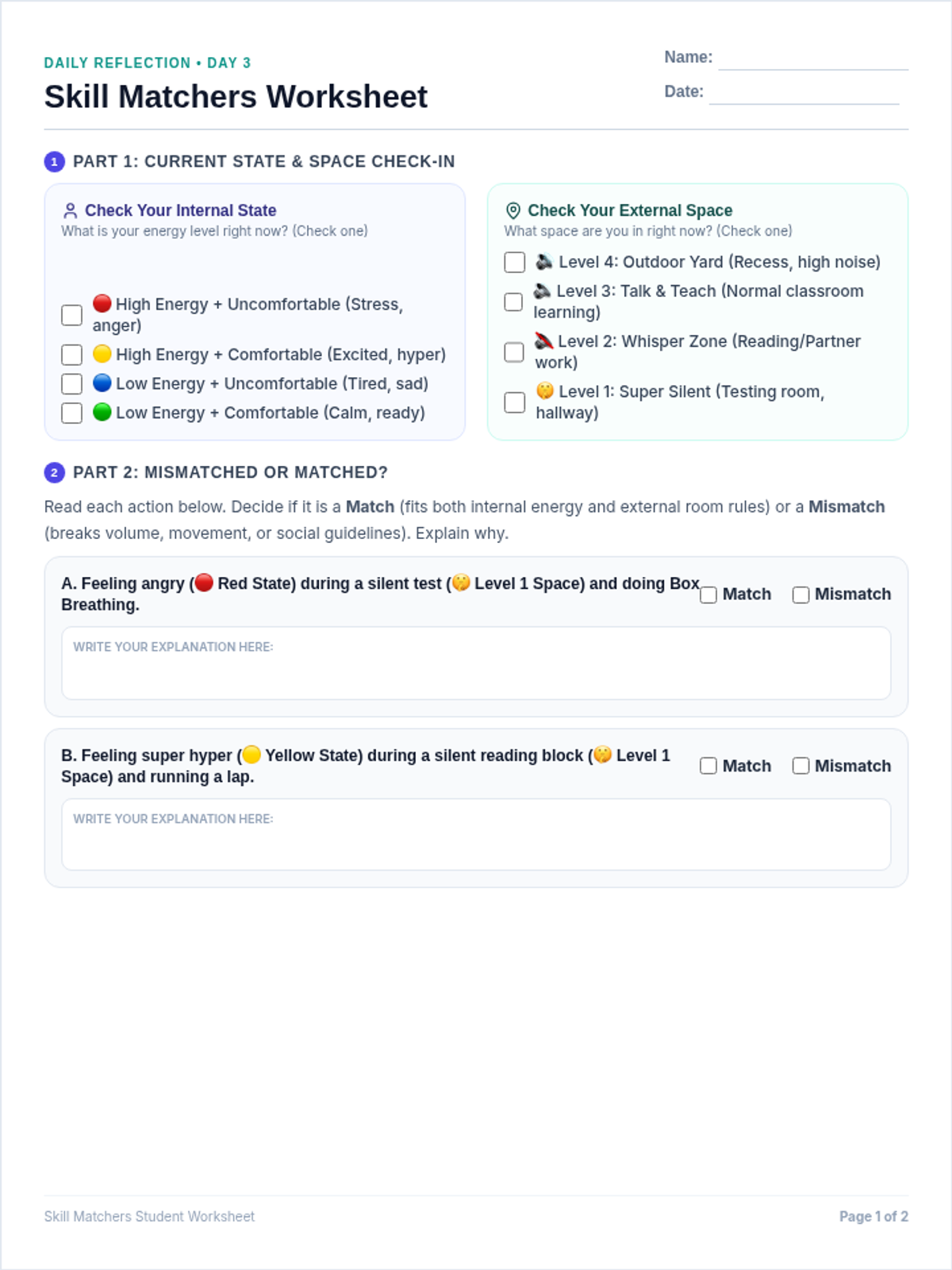
A 2-page student worksheet containing daily emotional checks, situation matching, and scenario profile analysis to master matching coping tools with physical environments.
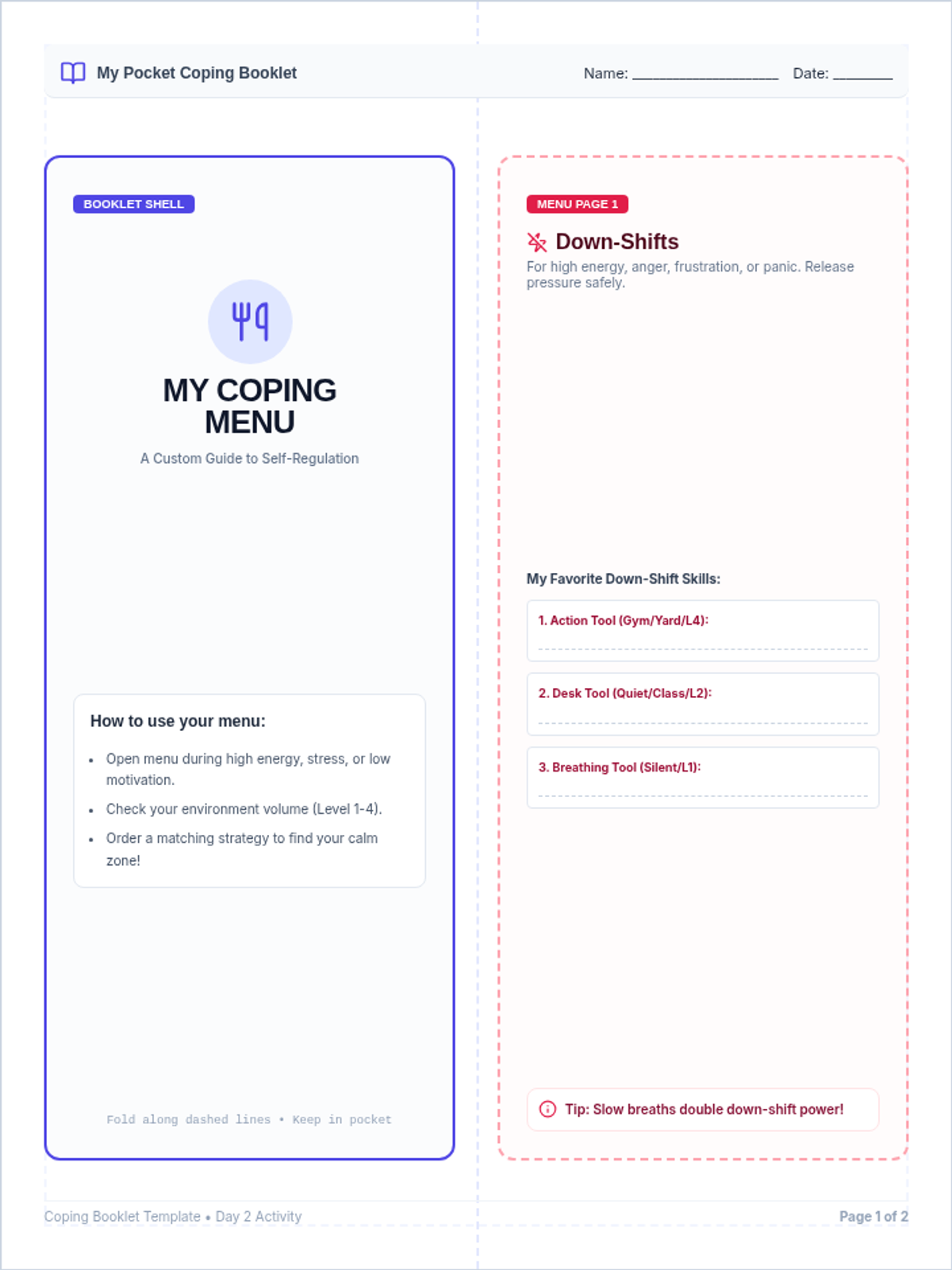
A customizable, foldable 4-panel pocket-sized coping strategies booklet allowing students to catalog their personalized sensory, movement, and cognitive self-regulation tools.
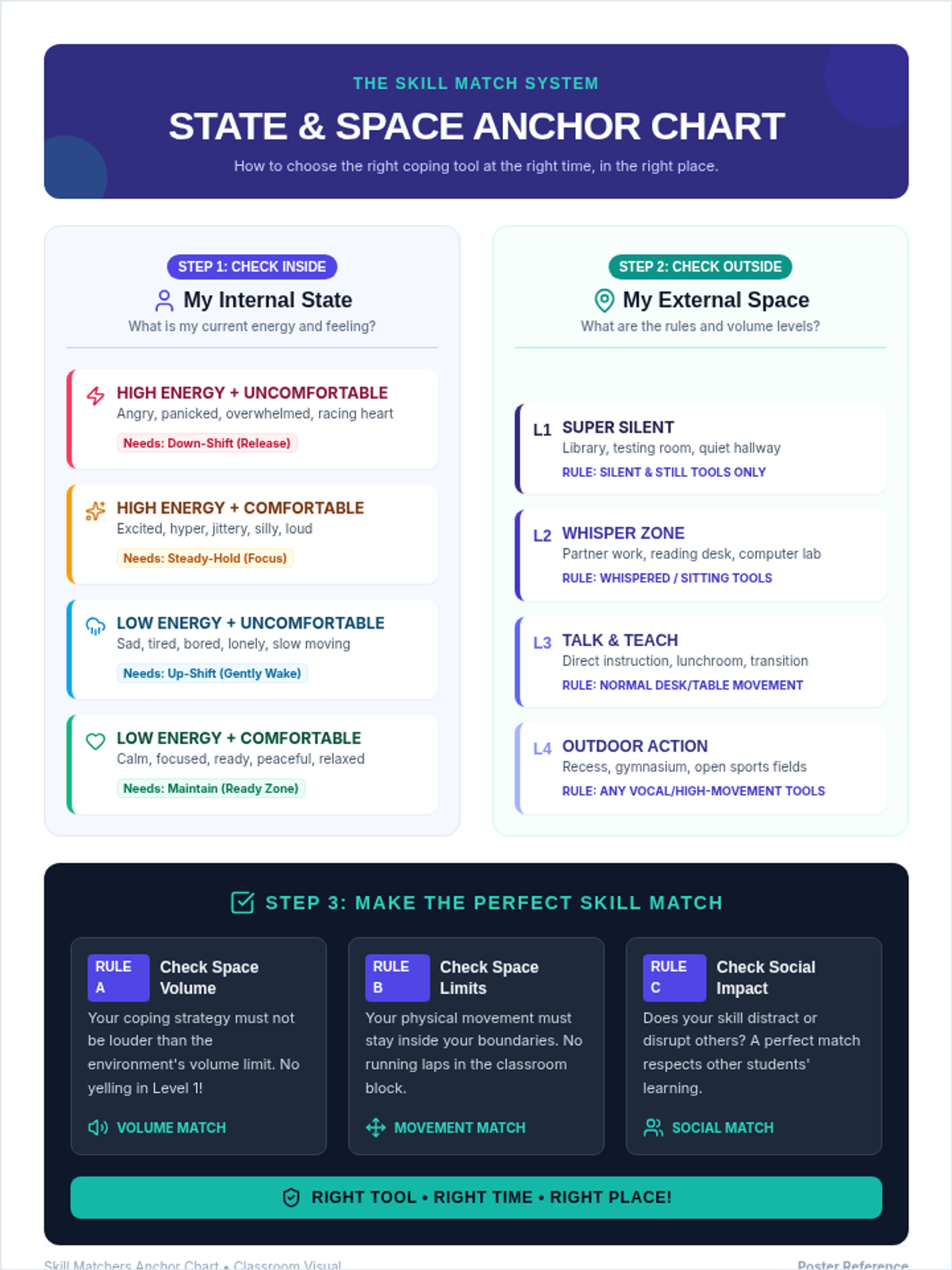
A visually engaging, high-contrast anchor chart poster illustrating internal emotional states, external space limits, and the decision rules for making a perfect coping skill match.
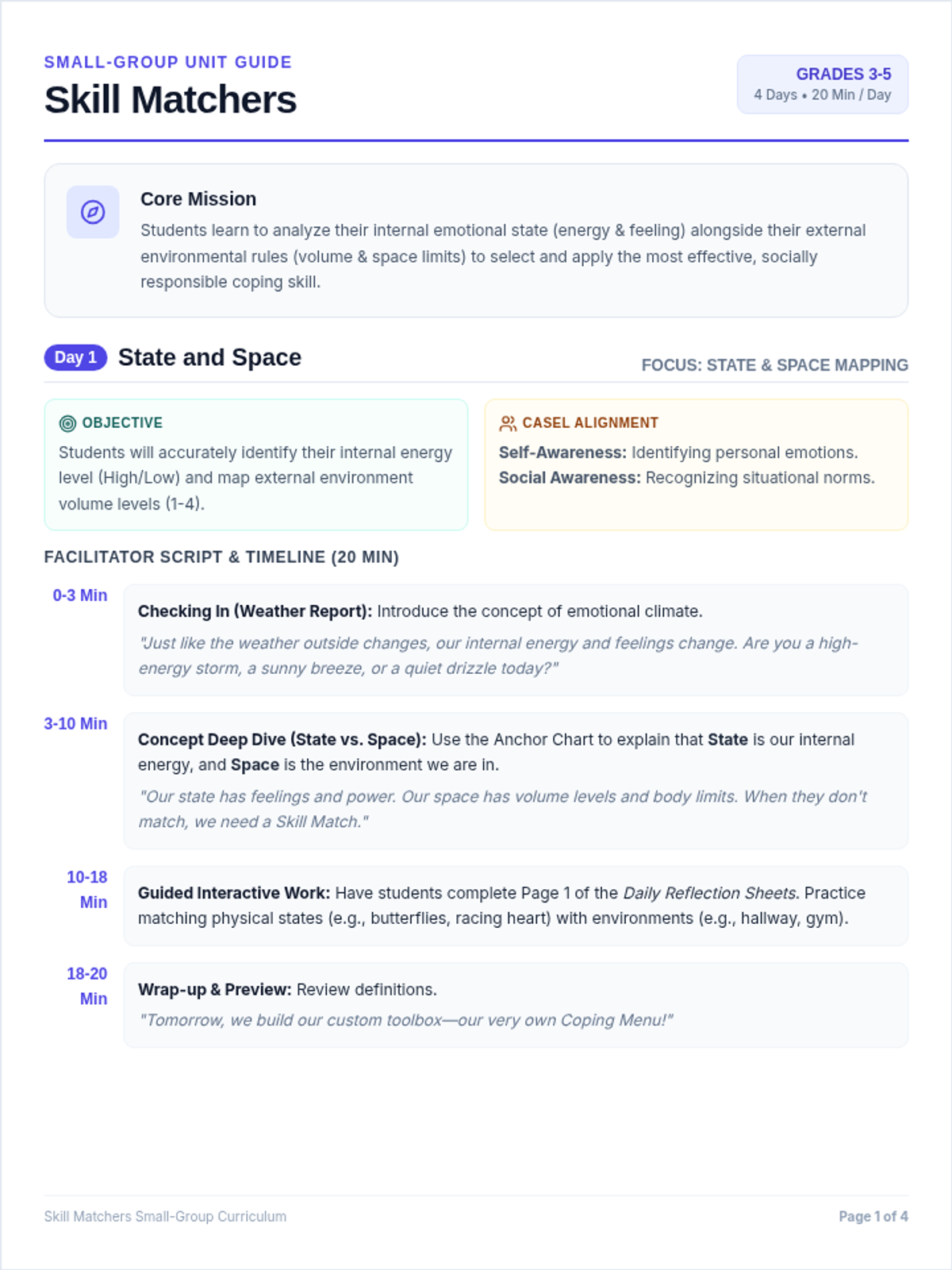
A comprehensive 4-day lesson guide with 20-minute timestamps, explicit facilitator prompts, and direct CASEL alignment for small group emotional regulation instruction.
A high-impact, superhero-themed 11-slide presentation for the 6-8 grade-band Classroom STAR expectations. Designed in Marley Park green and yellow colors, with minimum 24px font size for back-of-the-room legibility, heavy comic-book borders, and structured Hook-Discover-Practice-Commit routines.
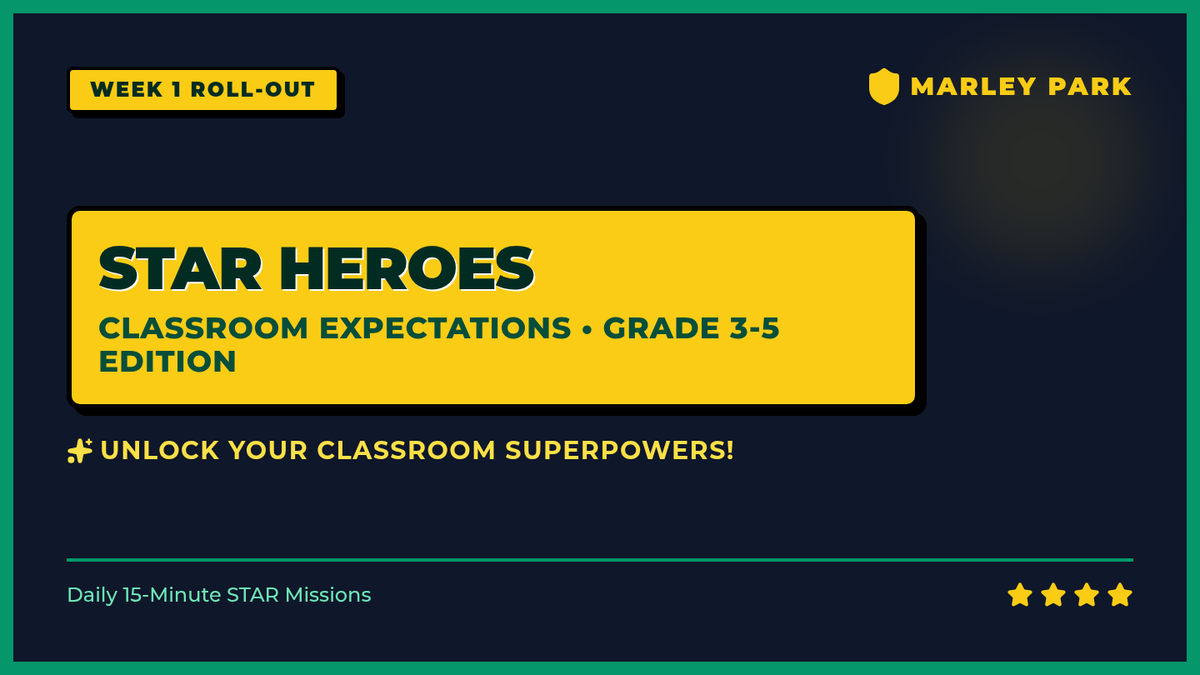
A high-impact, superhero-themed 11-slide presentation for the 3-5 grade-band Classroom STAR expectations. Designed in Marley Park green and yellow colors, with minimum 24px font size for back-of-the-room legibility, heavy comic-book borders, and structured Hook-Discover-Practice-Commit routines.
A high-impact, superhero-themed 11-slide presentation for the K-2 grade-band Classroom STAR expectations. Designed in Marley Park green and yellow colors, with minimum 24px font size for back-of-the-room legibility, heavy comic-book borders, and structured Hook-Discover-Practice-Commit routines.
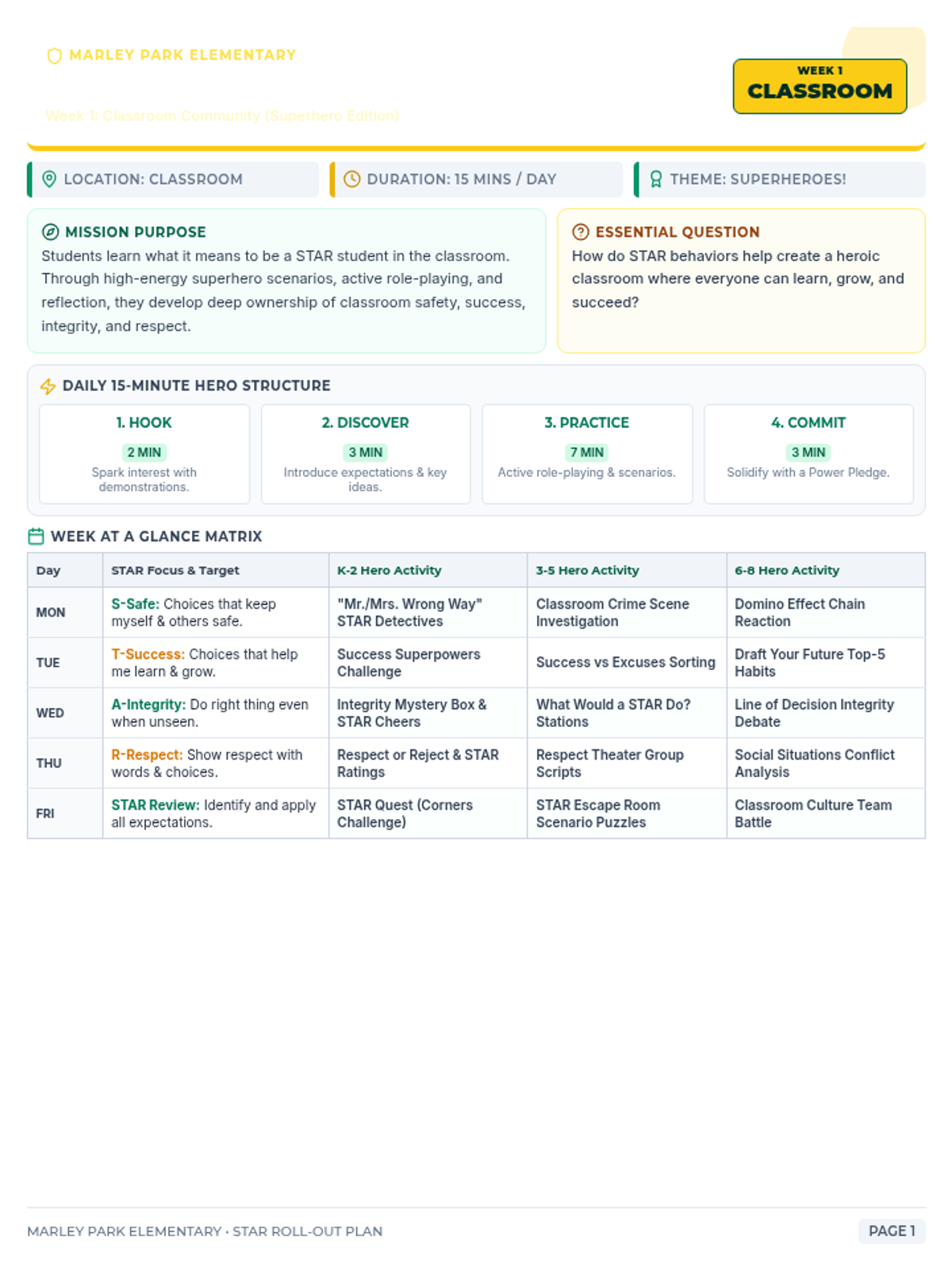
A printable, comprehensive 2-page teacher facilitation guide for the Week 1 STAR Classroom expectations. Features the Marley Park green and yellow colors, a superhero theme, detailed daily lesson structures, active learning strategies across K-2, 3-5, and 6-8 bands, look-fors, and success criteria.
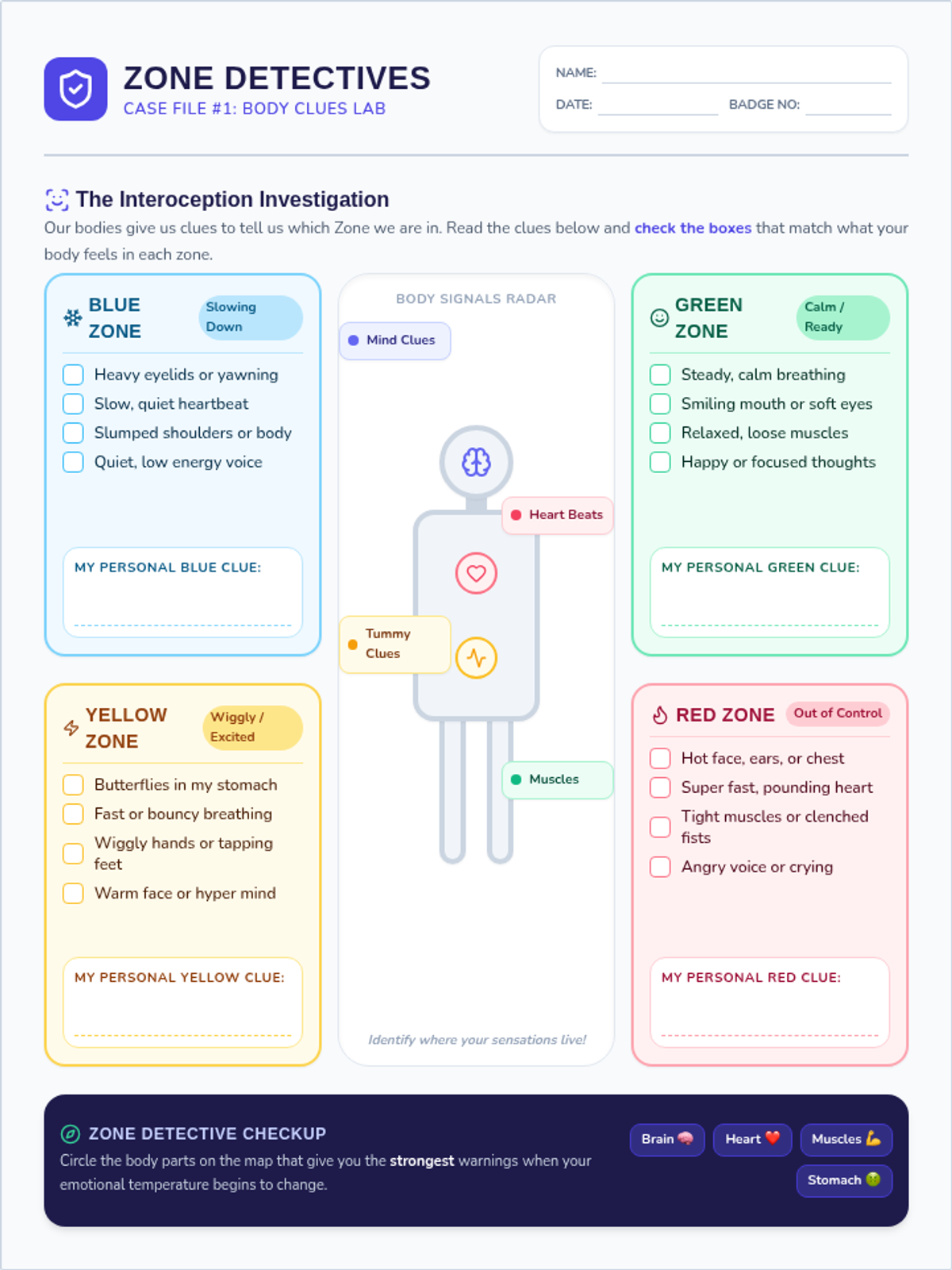
A 2-page highly visual student self-report assessment portfolio. Page 1 maps body clues (interoceptive awareness) across the four self-regulation zones. Page 2 evaluates strategy matching, includes a creative drawing space for a favorite coping tool blueprint, and ends with a self-confidence reflection scale.
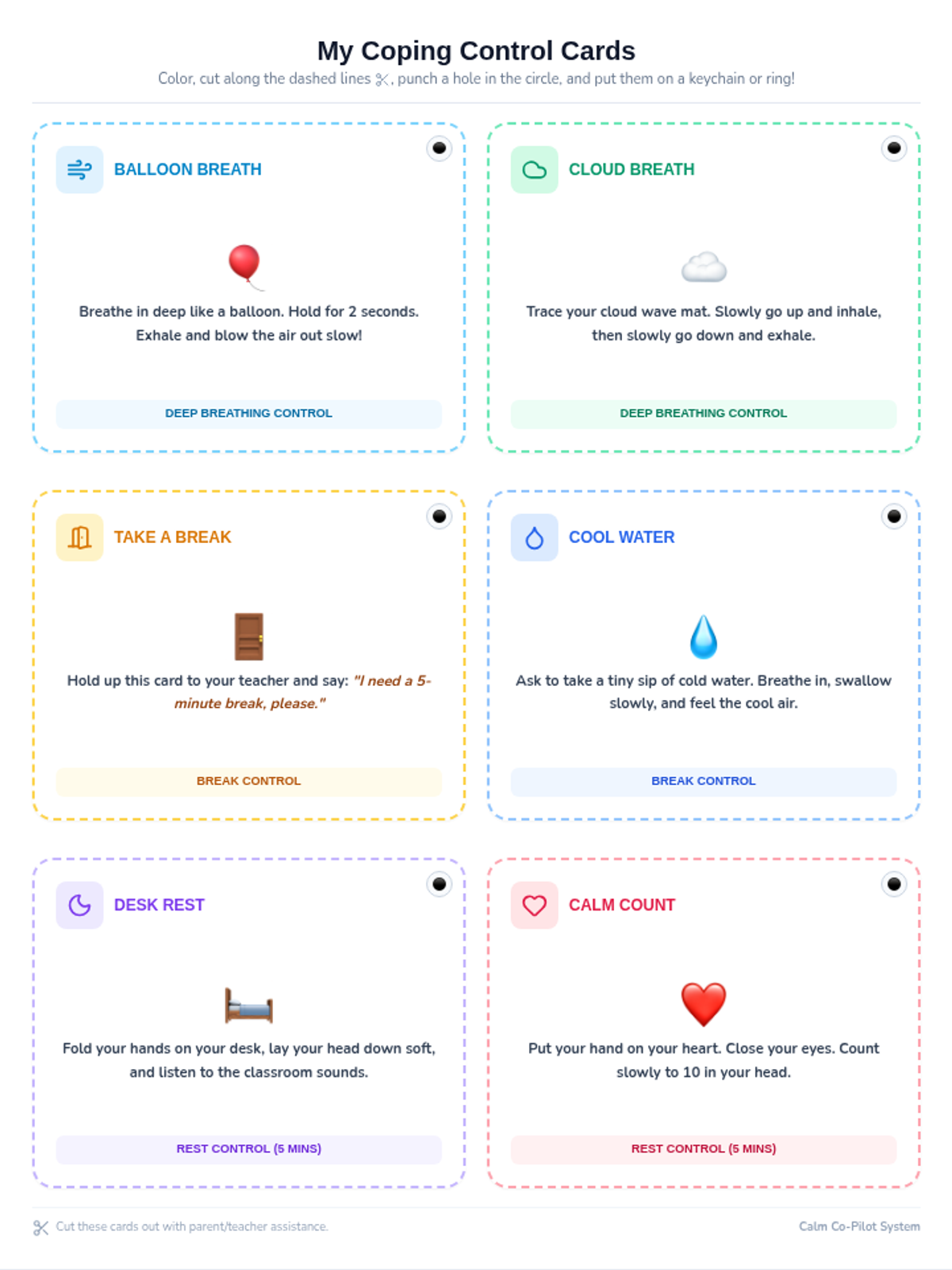
A sheet of 6 printable, pocket-sized visual coping cards featuring deep breathing, break requests, and structured resting prompts for K-2 students.
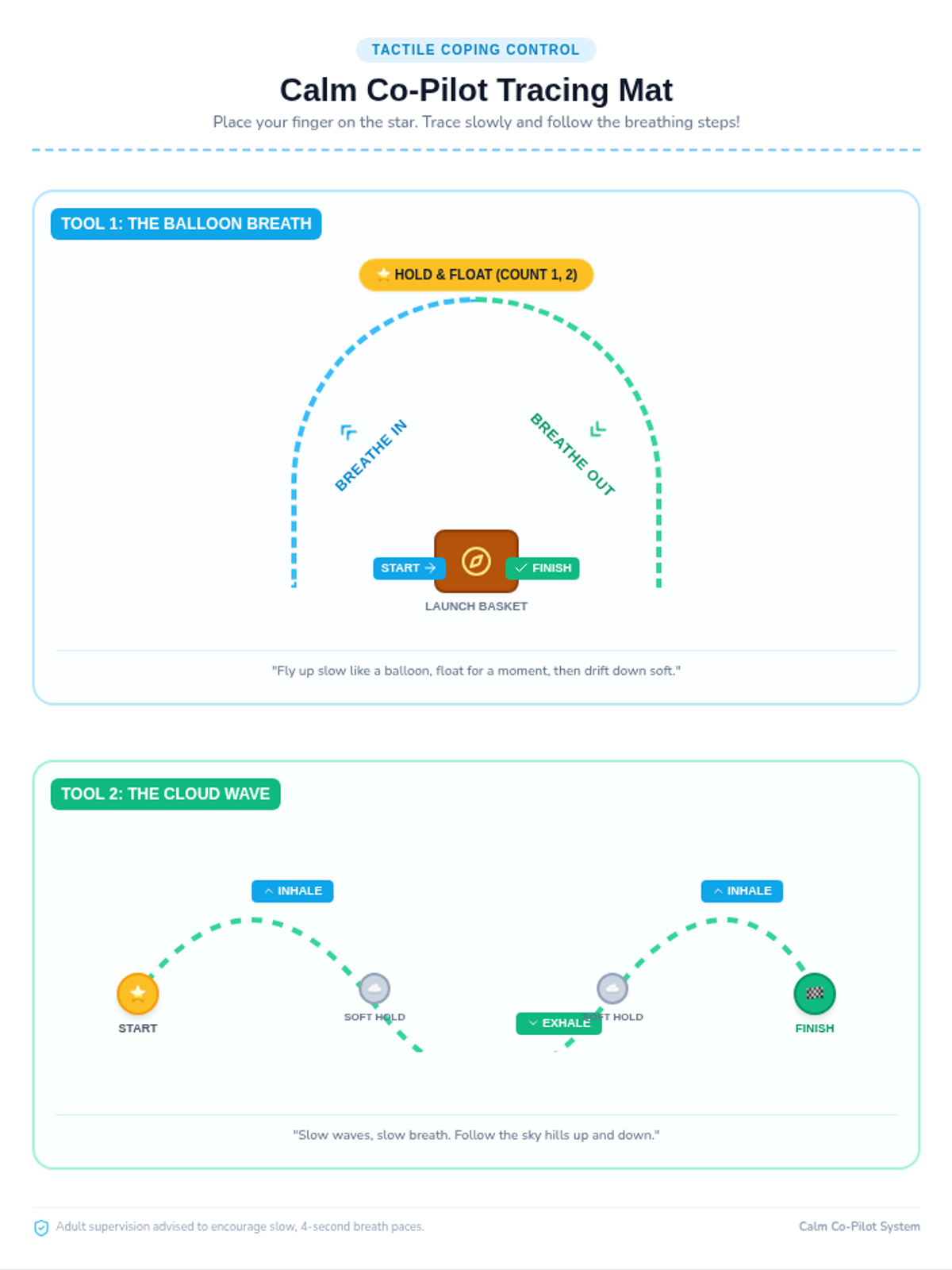
A physical finger-tracing breathing mat featuring a Hot Air Balloon and wavy Soft Cloud trace paths to anchor tactile, paced deep breathing exercises.
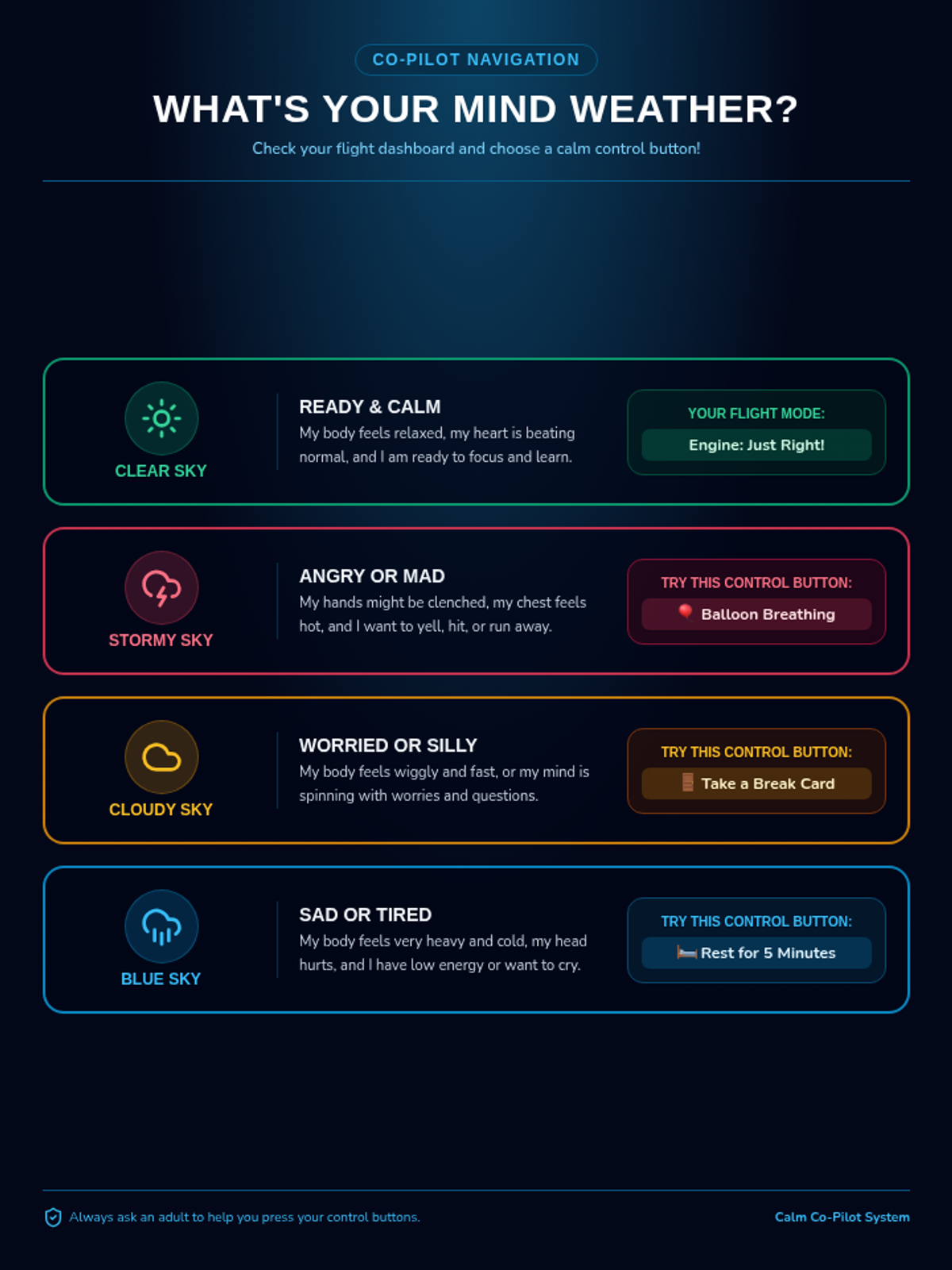
A colorful classroom anchor chart matching emotional weather states (Clear, Stormy, Cloudy, and Blue Skies) with actionable coping control tools for young learners.
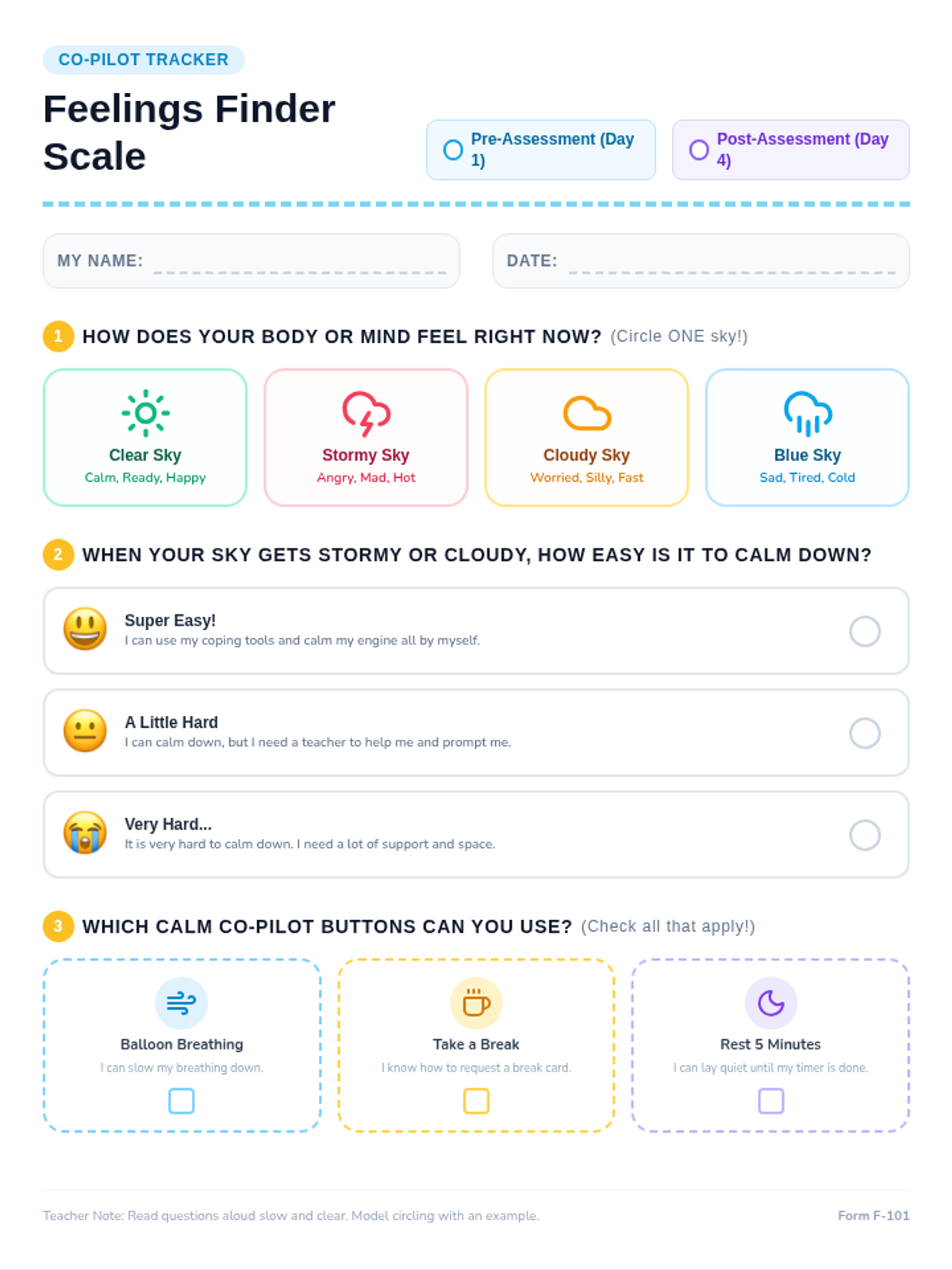
An emoji-based pre and post assessment self-report sheet for K-2 students. Includes visual scale cards for current feeling, regulation ease, and favored coping skills.
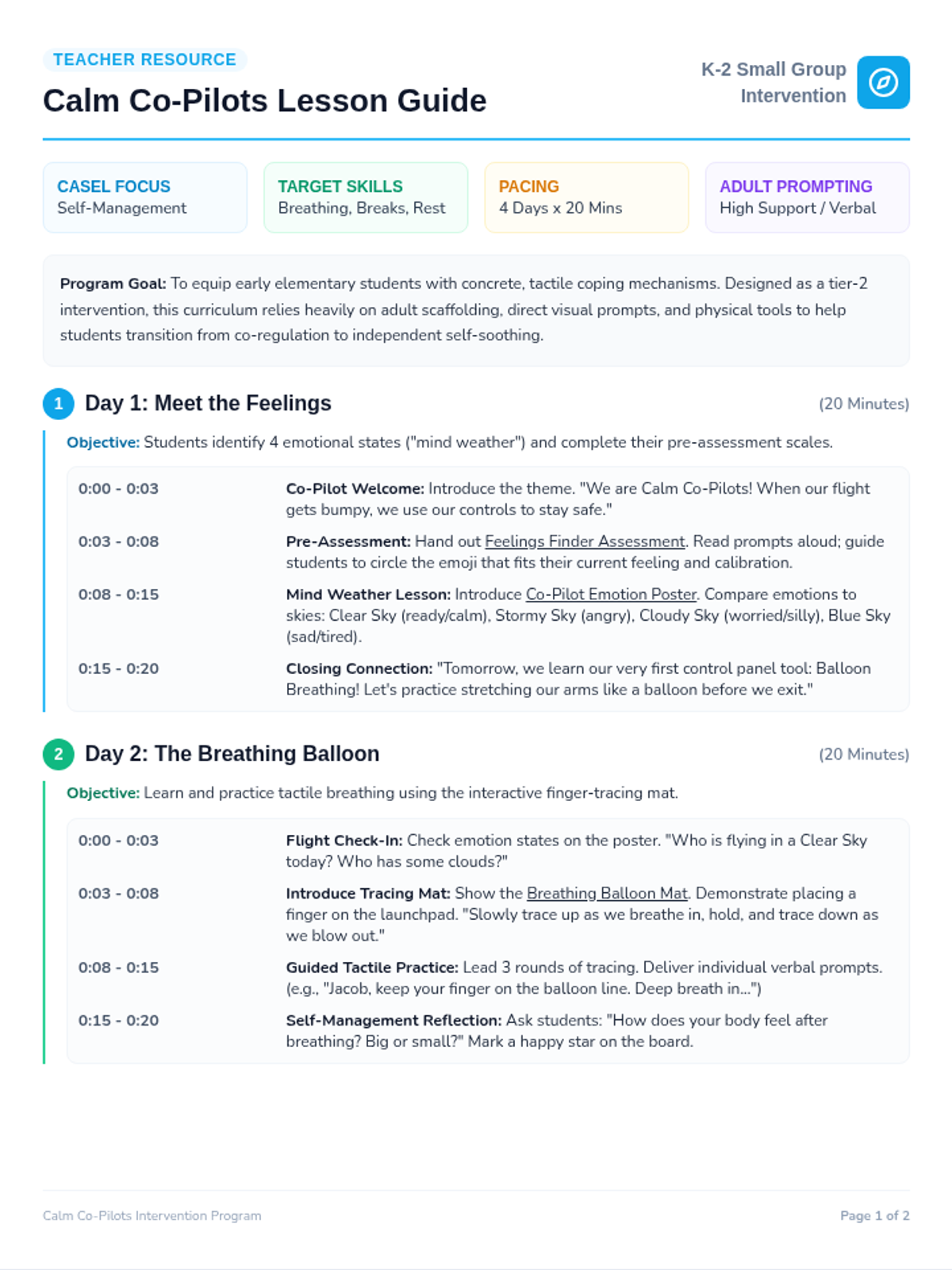
A comprehensive 2-page teacher's guide for the Calm Co-Pilots small group intervention. Aligned with CASEL Self-Management, it outlines Day 1-4 plans with 20-minute timestamps, adult prompting scripts, and facilitation notes.
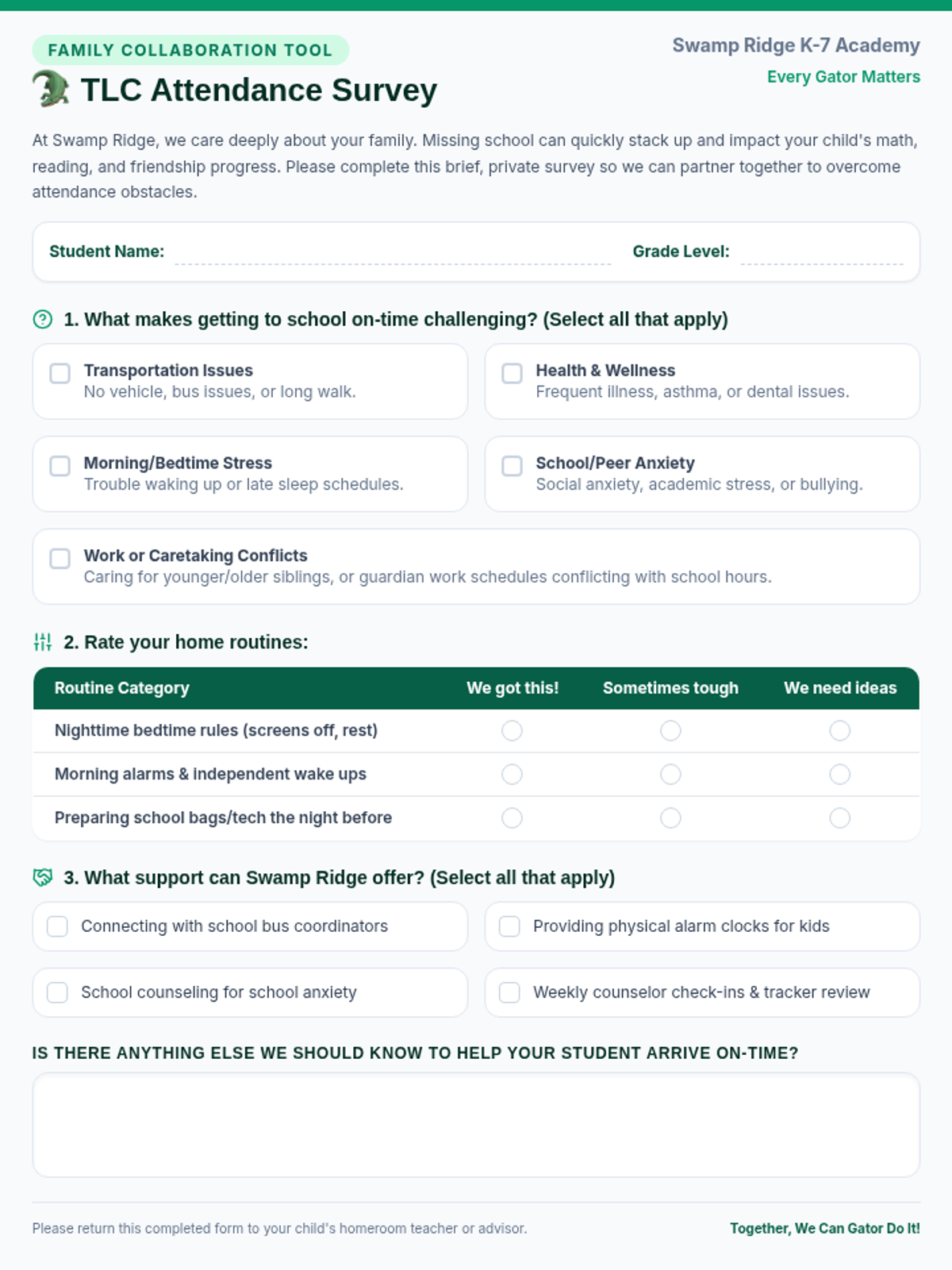
An empathetic, parent-facing needs assessment survey to identify school-attendance barriers. Features non-judgmental checkboxes and writing spaces with white backgrounds to help school staff partner with families of chronically absent K-7 students.
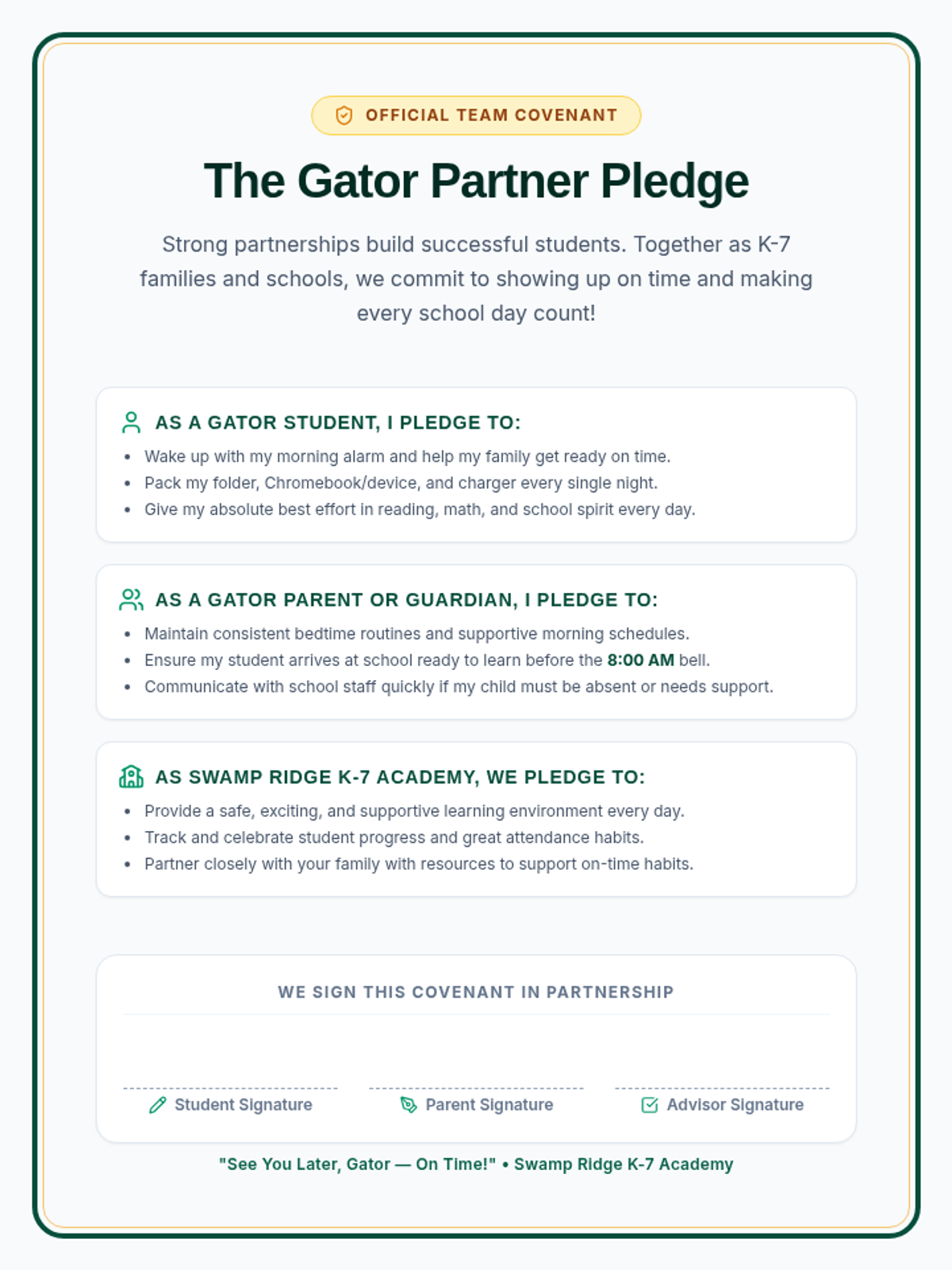
A positive, encouraging partnership pledge card for families to sign together. Features dedicated sections for the student, parent, and school commitments with a polished swamp-themed certificate border and handwriting-ready signature lines.
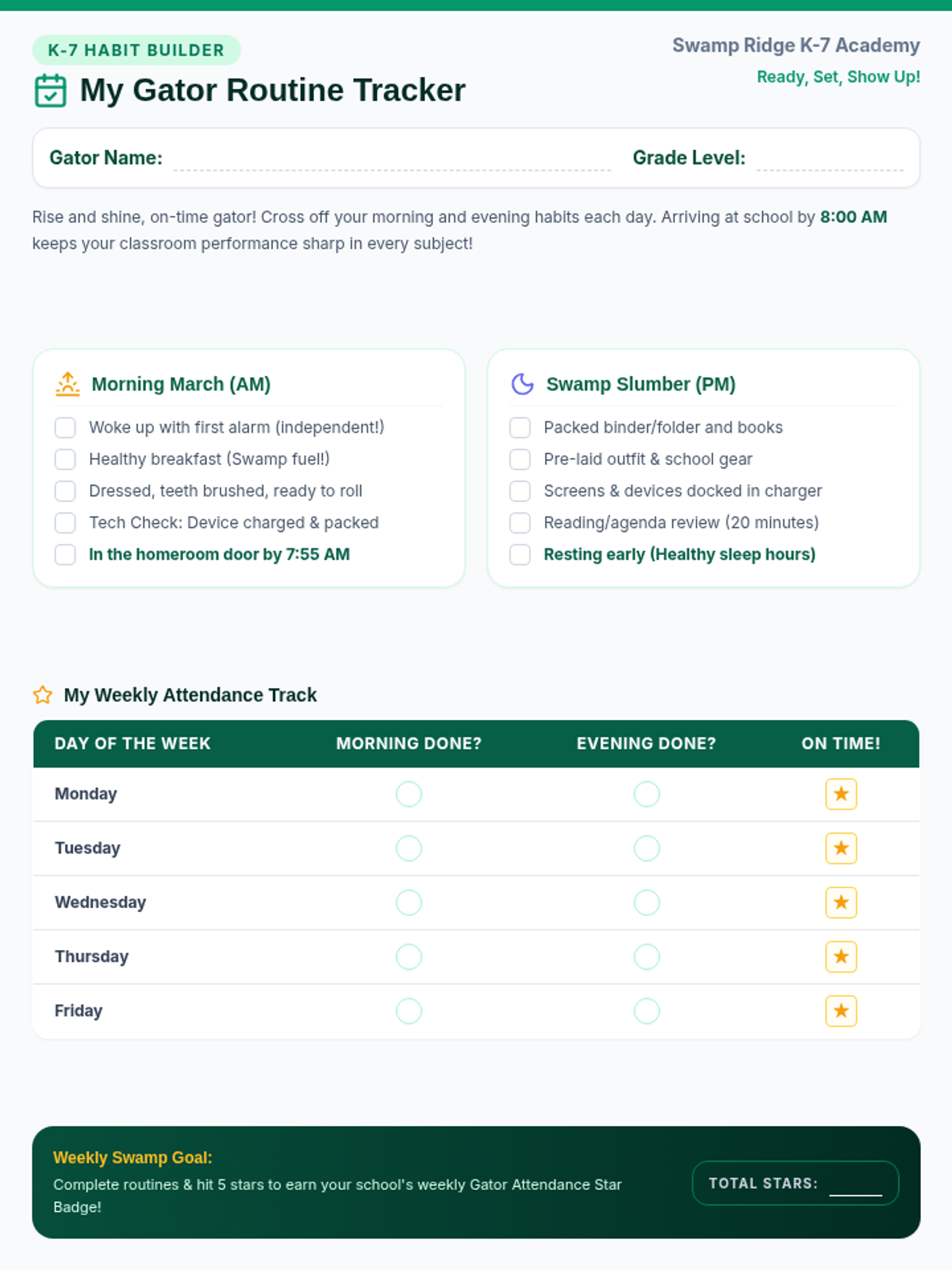
A K-7 daily morning and bedtime routine tracker. Features checklist tables with white backgrounds for easy writing or drawing, gator paw-print motifs, and a Monday-through-Friday progress grid to encourage on-time arrival.
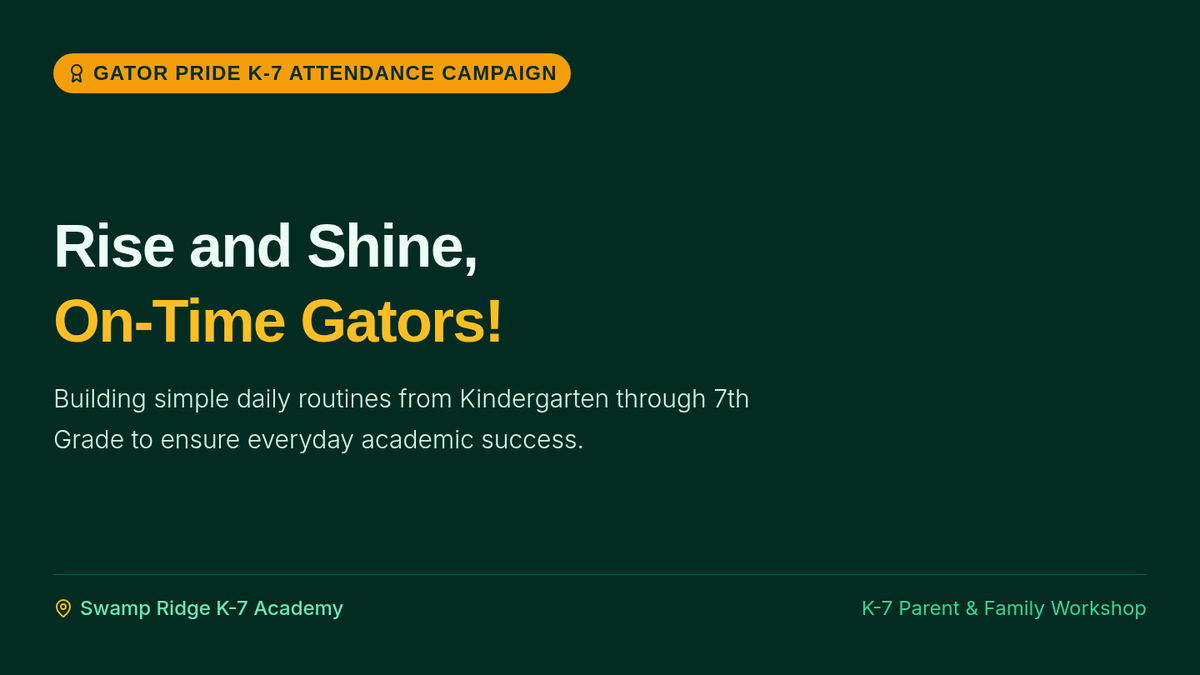
An engaging, high-impact 16:9 presentation designed for parents of K-7 students. Uses a cohesive gator-themed aesthetic to explain the academic consequences of chronic absence (specifically in reading, math, and school transition) and outlines actionable bedtime and morning routines to ensure prompt daily arrival.
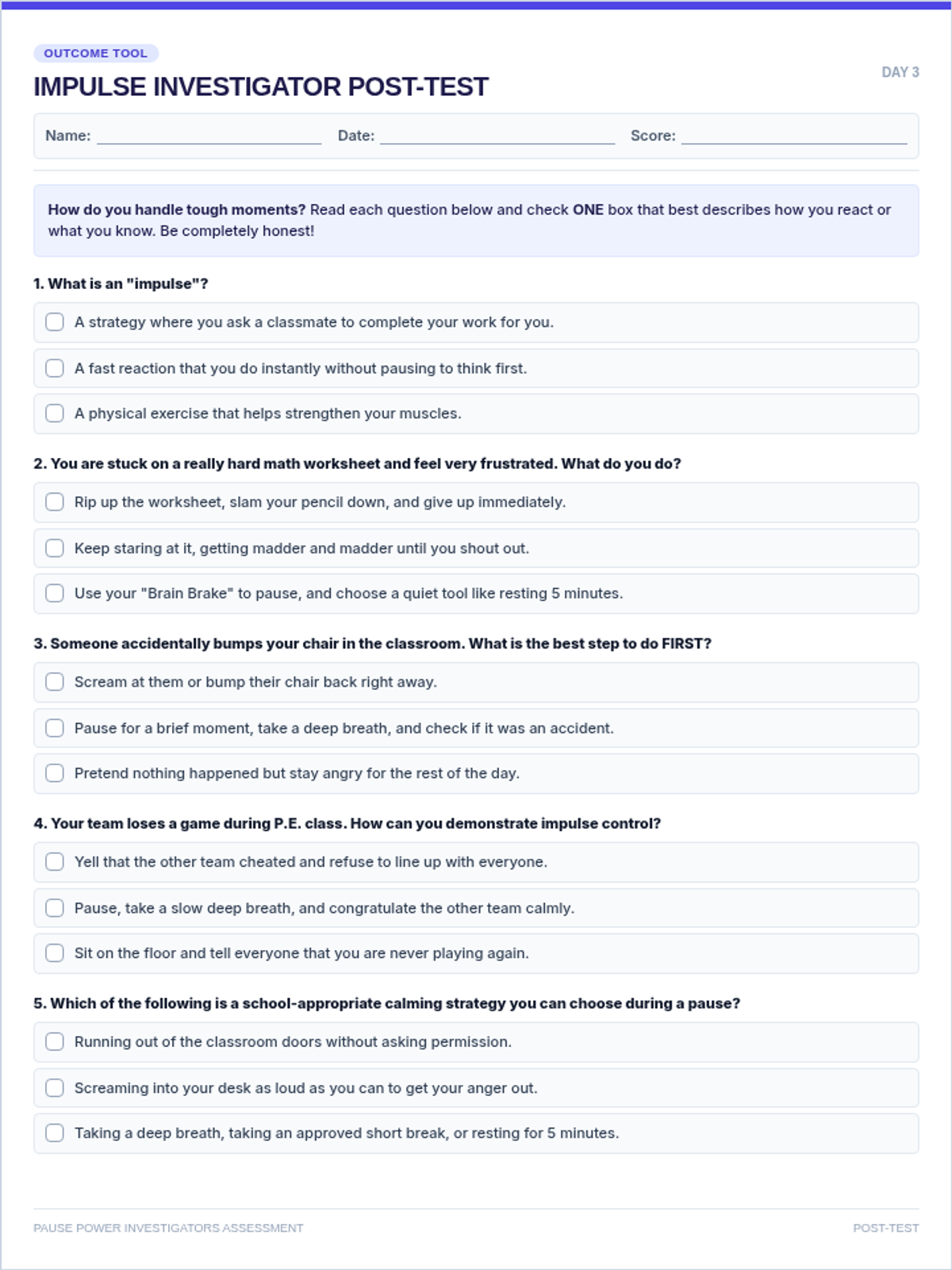
The student outcome post-test for the Pause Power curriculum, identical in question content and formatting to the pre-test to ensure clinical outcome evaluation validity.
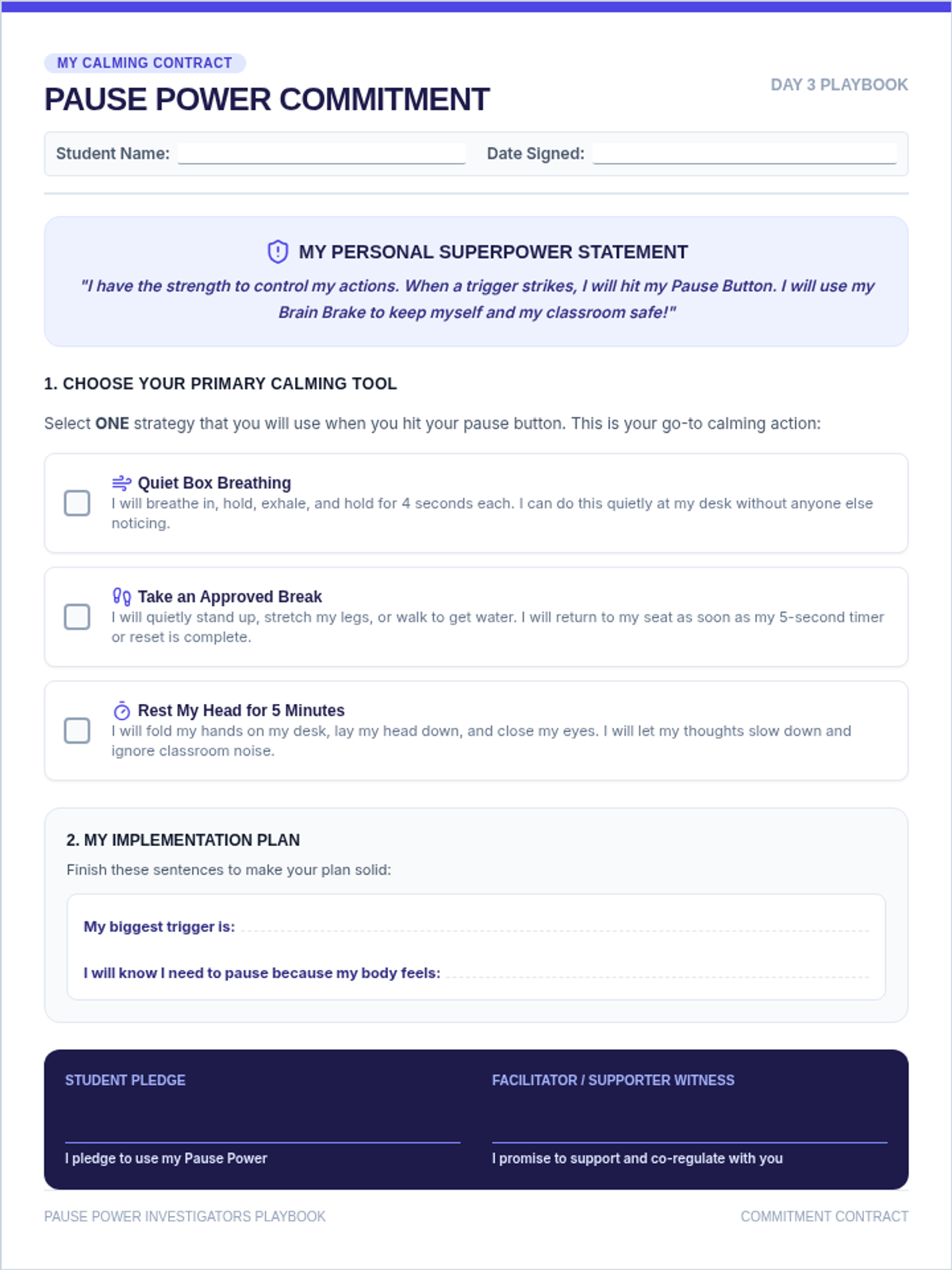
A personal student commitment contract for Day 3 of the Pause Power intervention. Students choose their primary calming strategy, define their action plan, and sign alongside the facilitator.
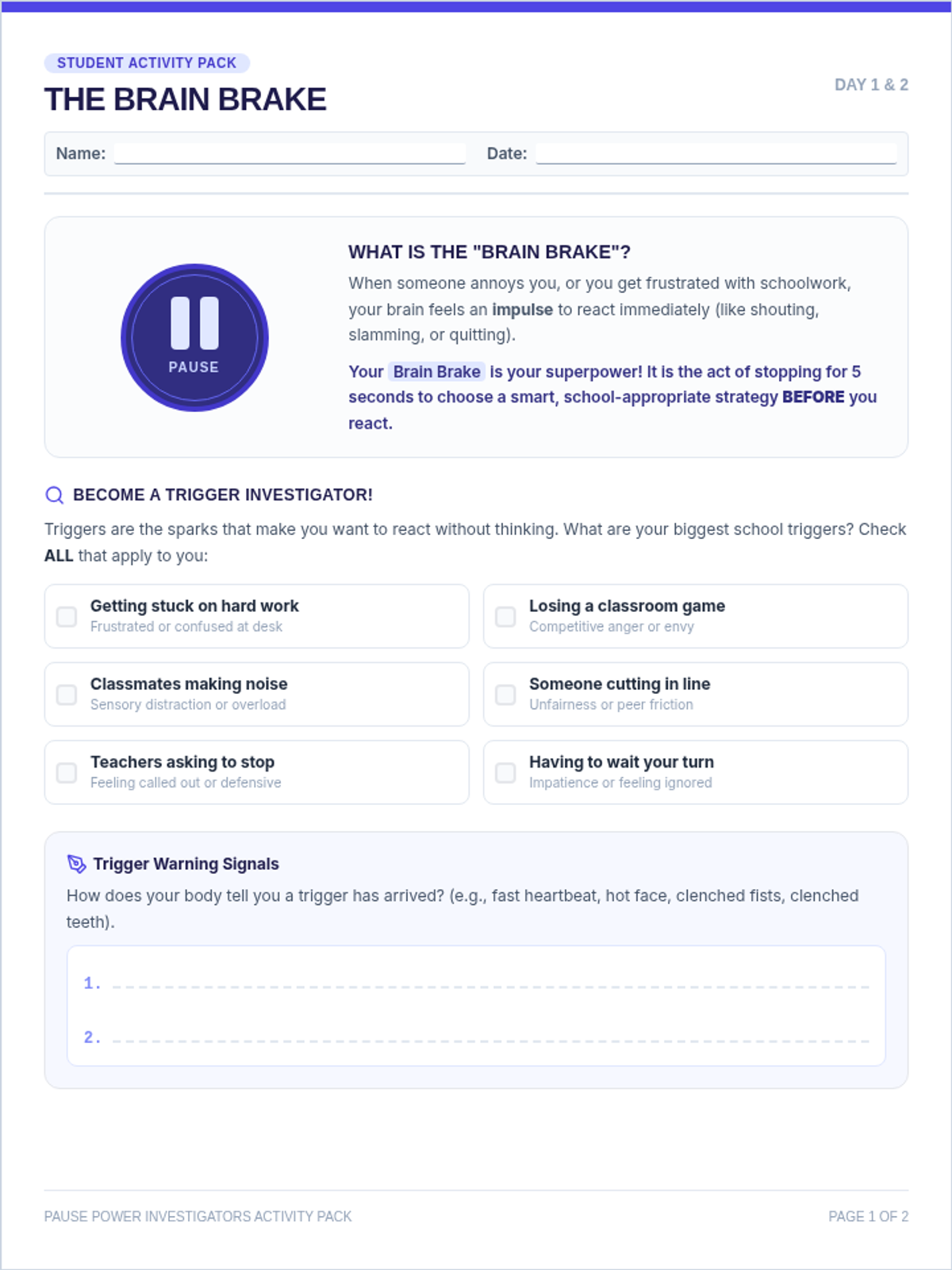
A 2-page student activity pack for the Pause Power curriculum. Page 1 features a custom "Pause Button" trigger map, and Page 2 is a "Calm Down Toolbox" with practice guides for deep breathing, taking a break, and resting.
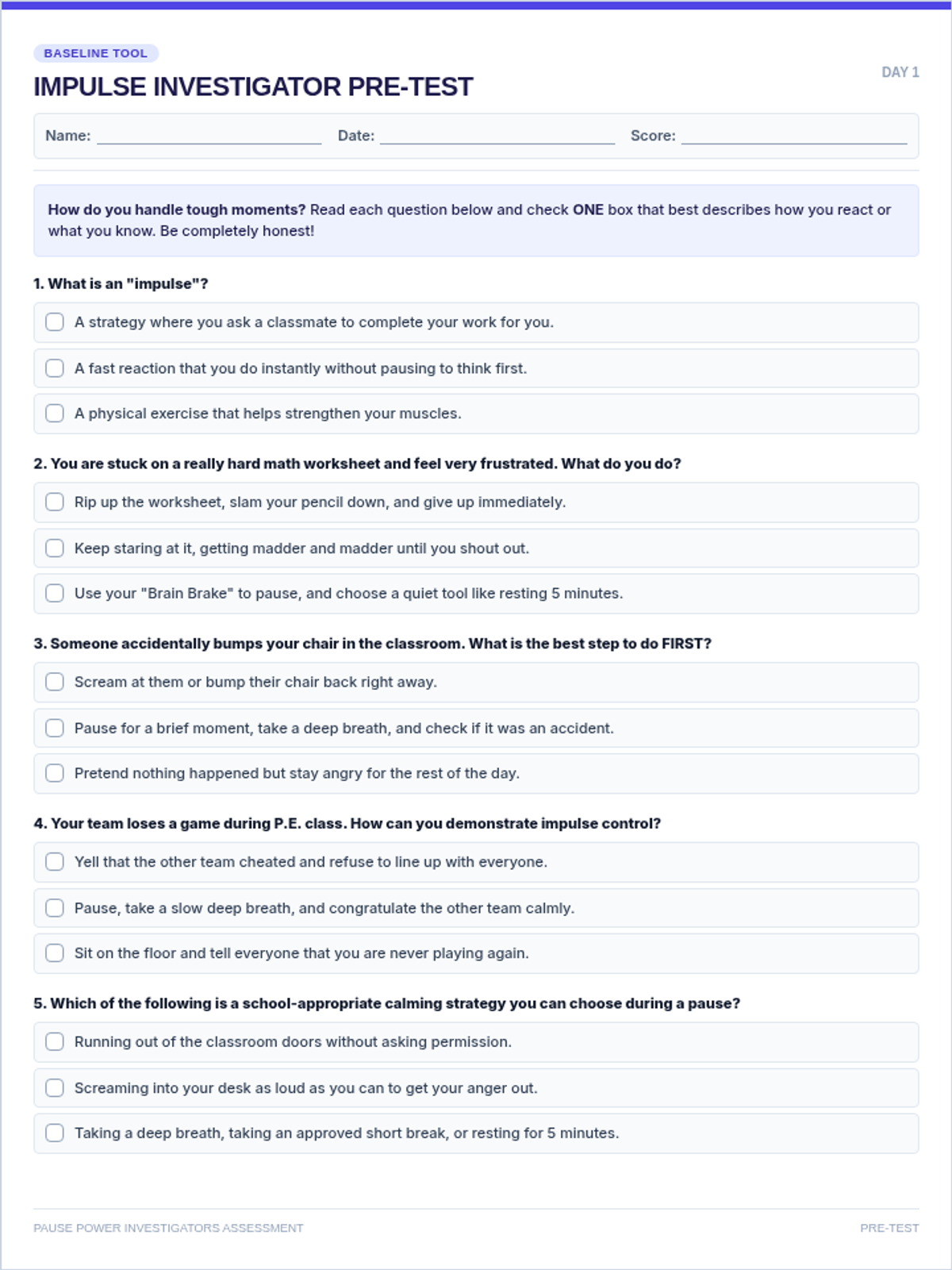
The student baseline pre-test for the Pause Power curriculum. Includes 5 scenario-based questions assessing impulse awareness, reaction styles, and familiarity with school-appropriate calming strategies.
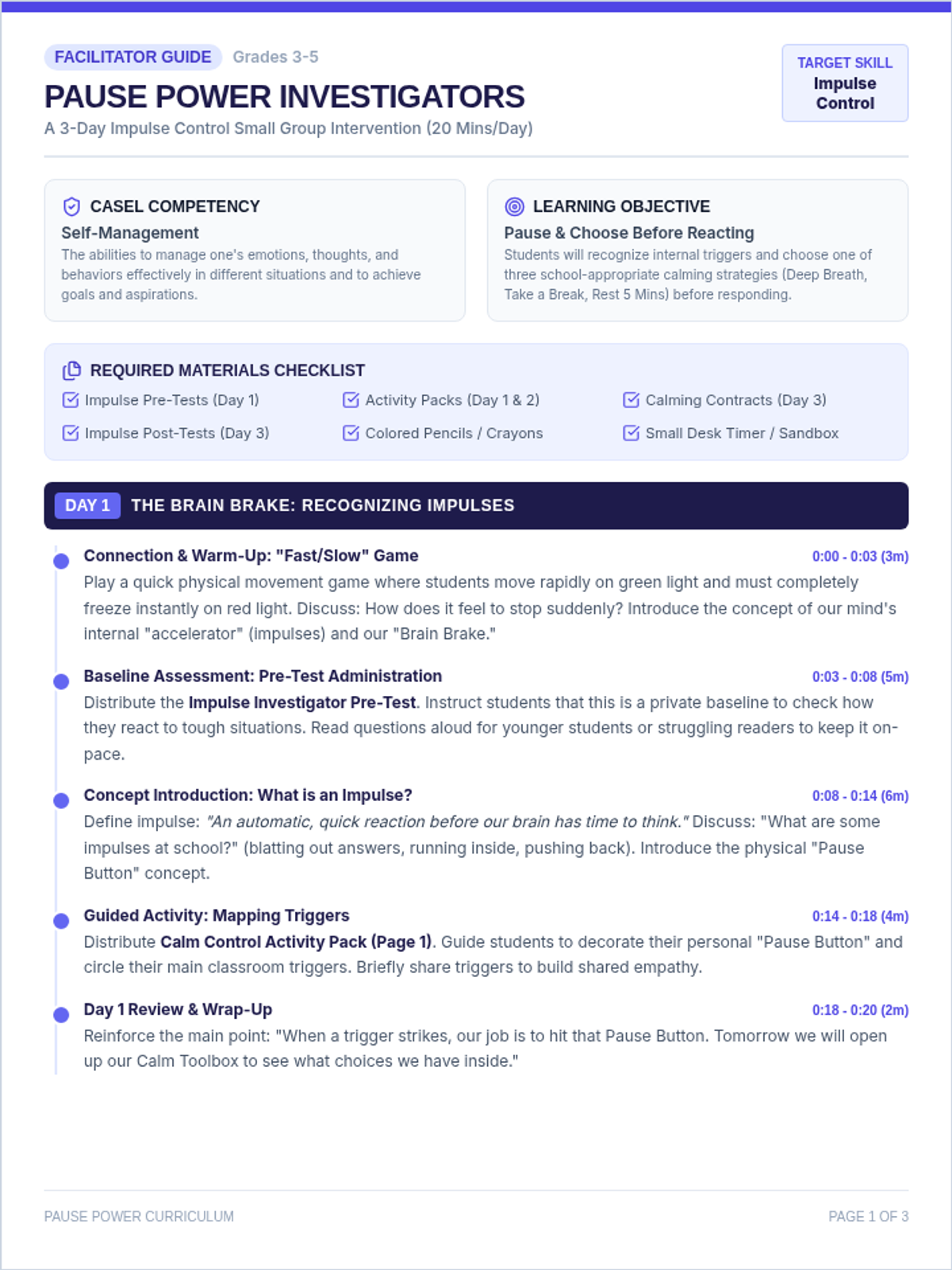
A comprehensive, 3-page teacher facilitation guide for the 3-day Pause Power small group SEL intervention. Includes CASEL alignment details, lesson plans with minute-by-minute timestamps for all three 20-minute days, and scoring rubrics.
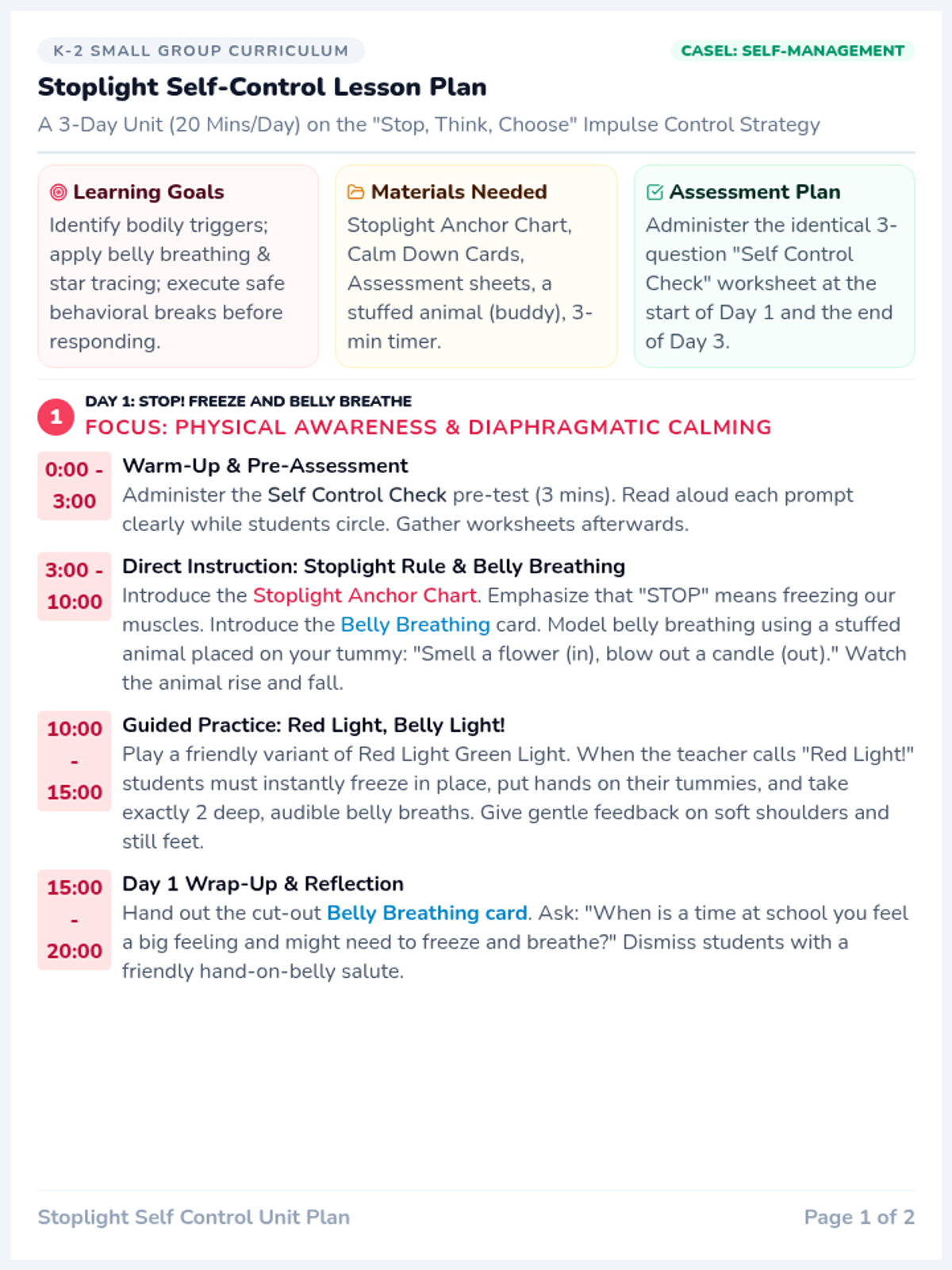
A highly structured 2-page teacher facilitation guide for a 3-day small group unit. Features exact minute-by-minute breakdowns, materials lists, CASEL alignment, day-by-day procedural scripts, and extension prompts.
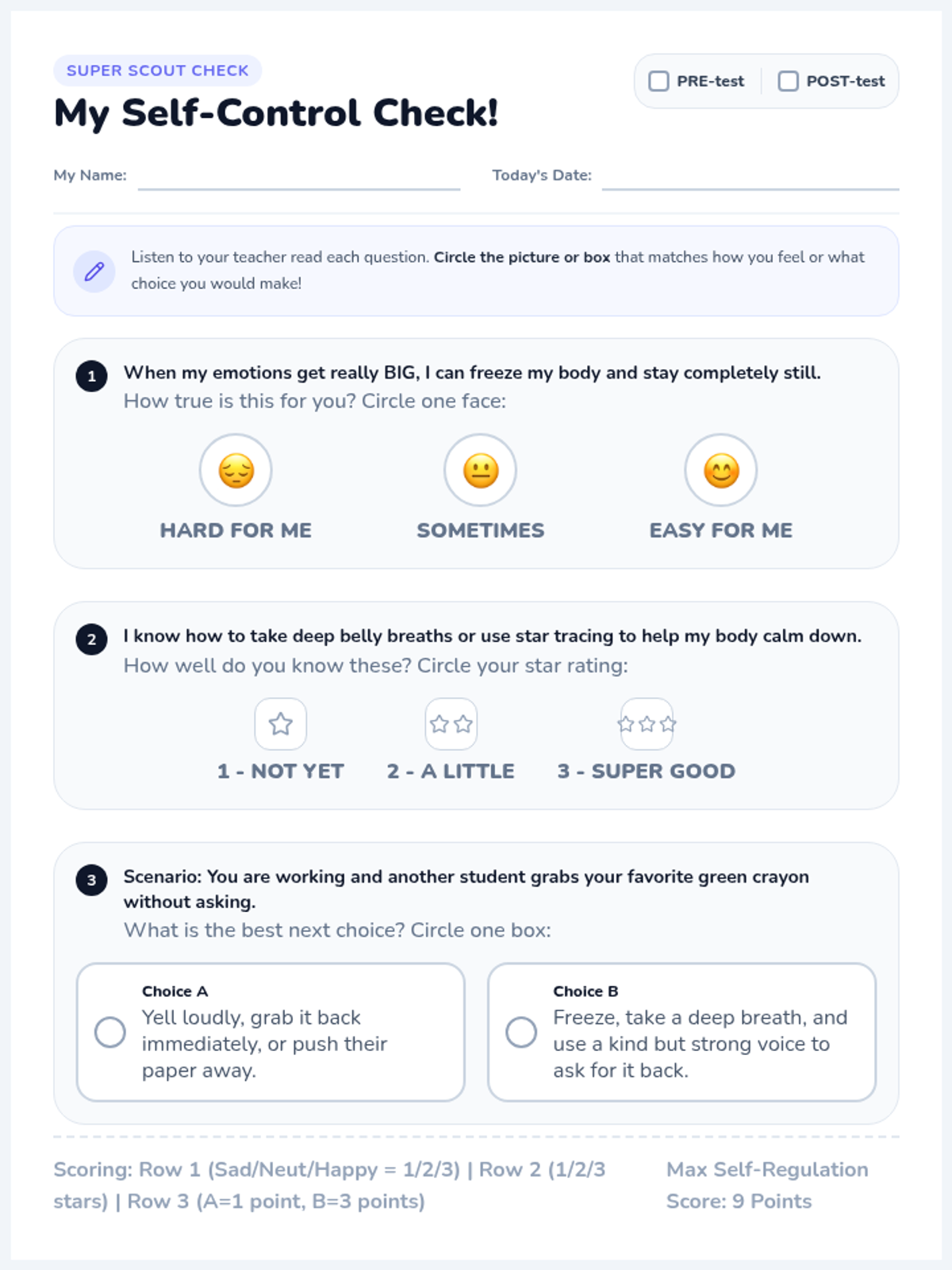
An identical Pre/Post self-assessment quiz designed for students in grades K-2, featuring high-readability visual icons, rating scales, and scenario-based questions to measure self-regulation and stop-think-choose knowledge.