A 2-page student activity pack for the Pause Power curriculum. Page 1 features a custom "Pause Button" trigger map, and Page 2 is a "Calm Down Toolbox" with practice guides for deep breathing, taking a break, and resting.
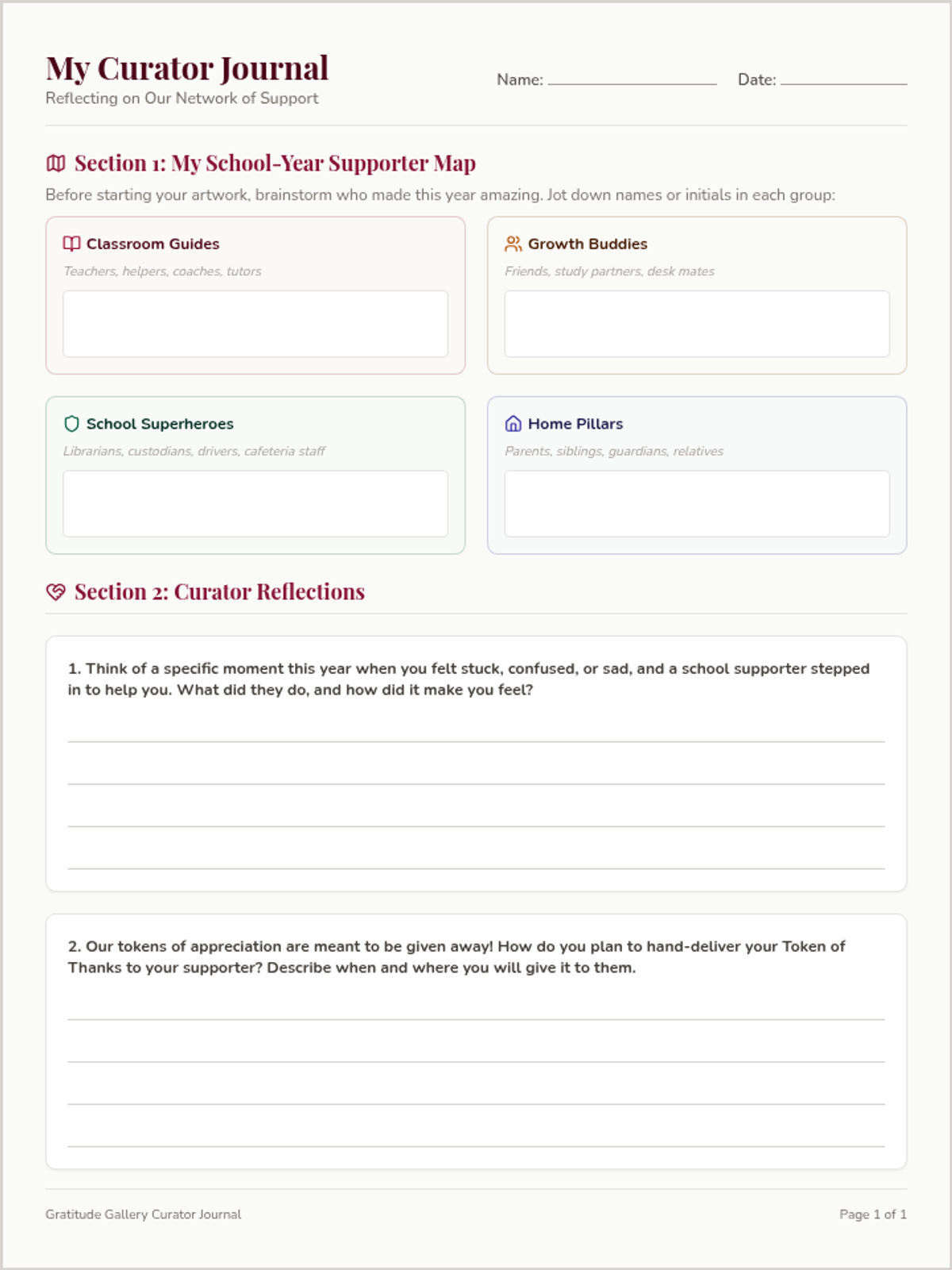
A student-facing reflective journal page containing guided brainstorming prompts to identify key supporters and write-in sections to plan the delivery of their gratitude tokens.
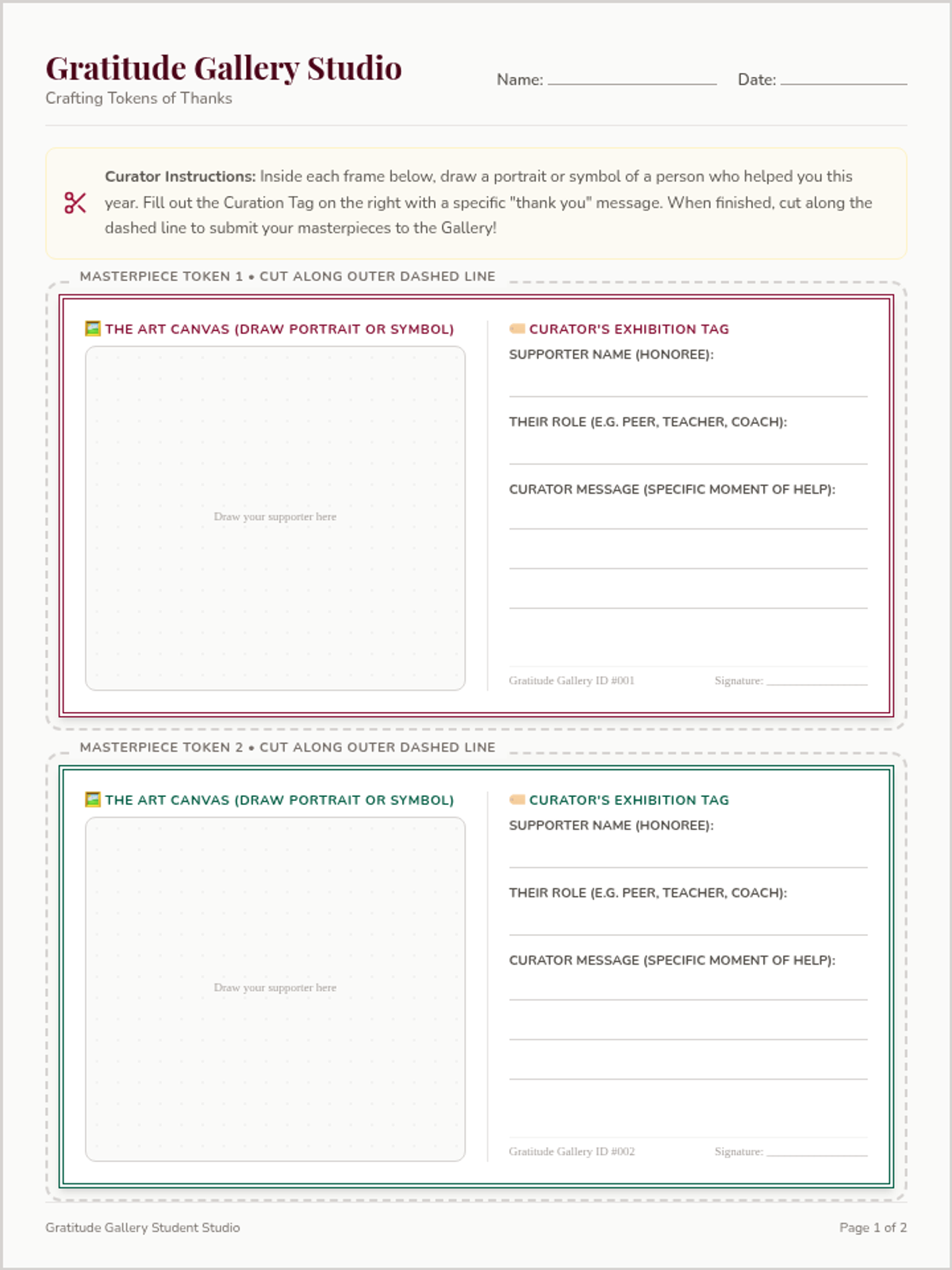
A student-facing activity sheet featuring printable museum-style frames and curation tags where students design, draw, and write personalized appreciation tokens to cut out and display in the gallery.
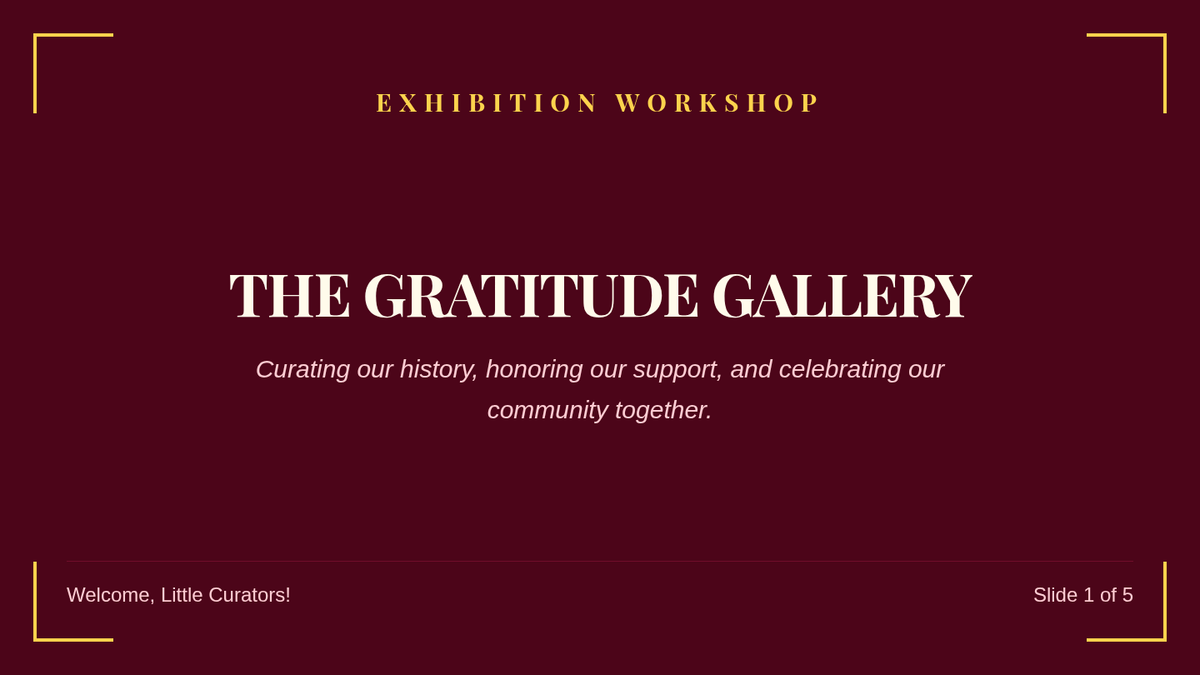
An elegant, visual slide presentation with large text and warm museum curation theme to guide students through defining gratitude, brainstorming school supporters, and reviewing guidelines for their gallery walk.
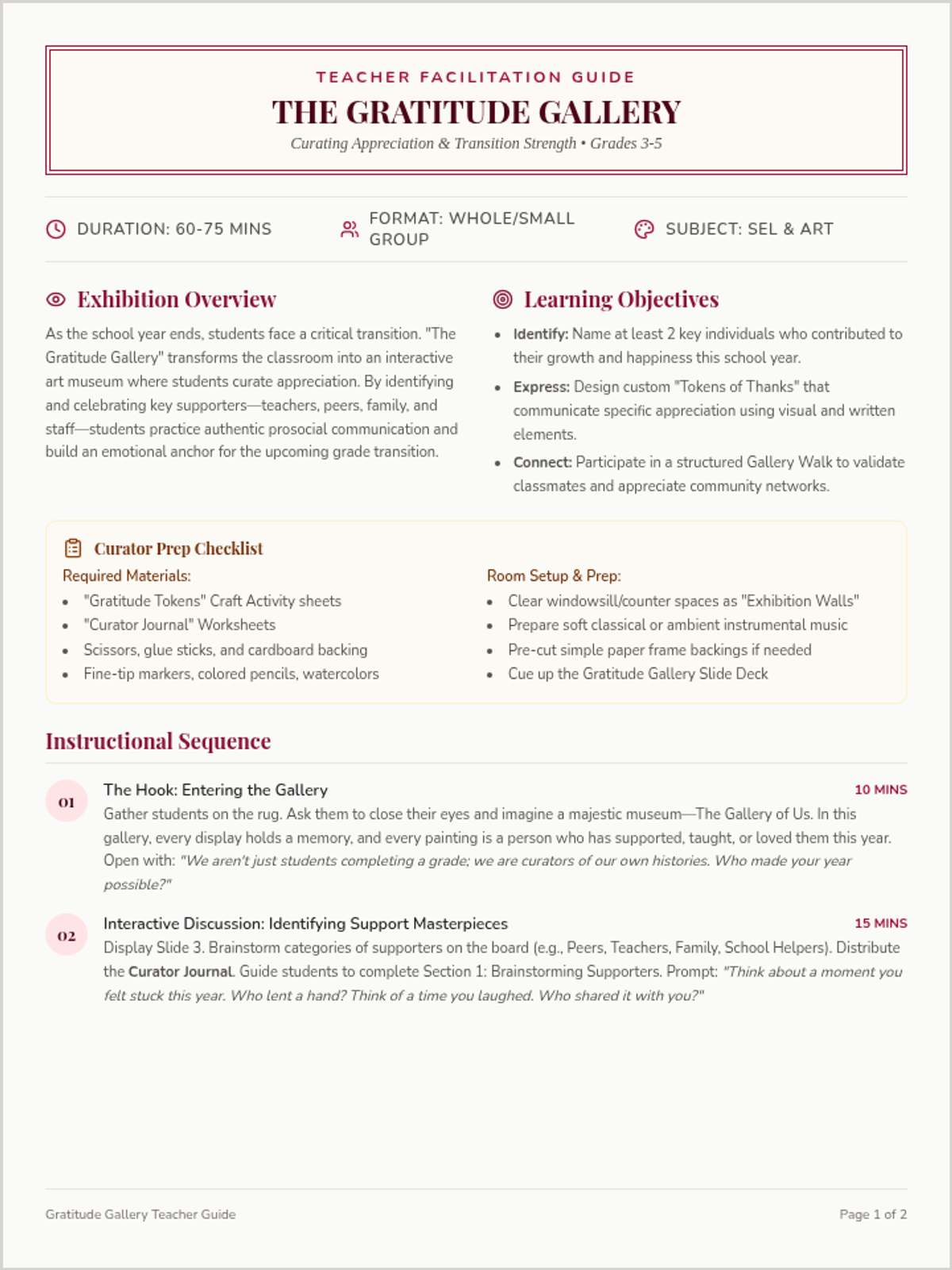
A comprehensive teacher facilitation guide containing step-by-step instructions, discussion prompts, pacing, materials checklists, and differentiation ideas to help educators lead students through the Gratitude Gallery experience.
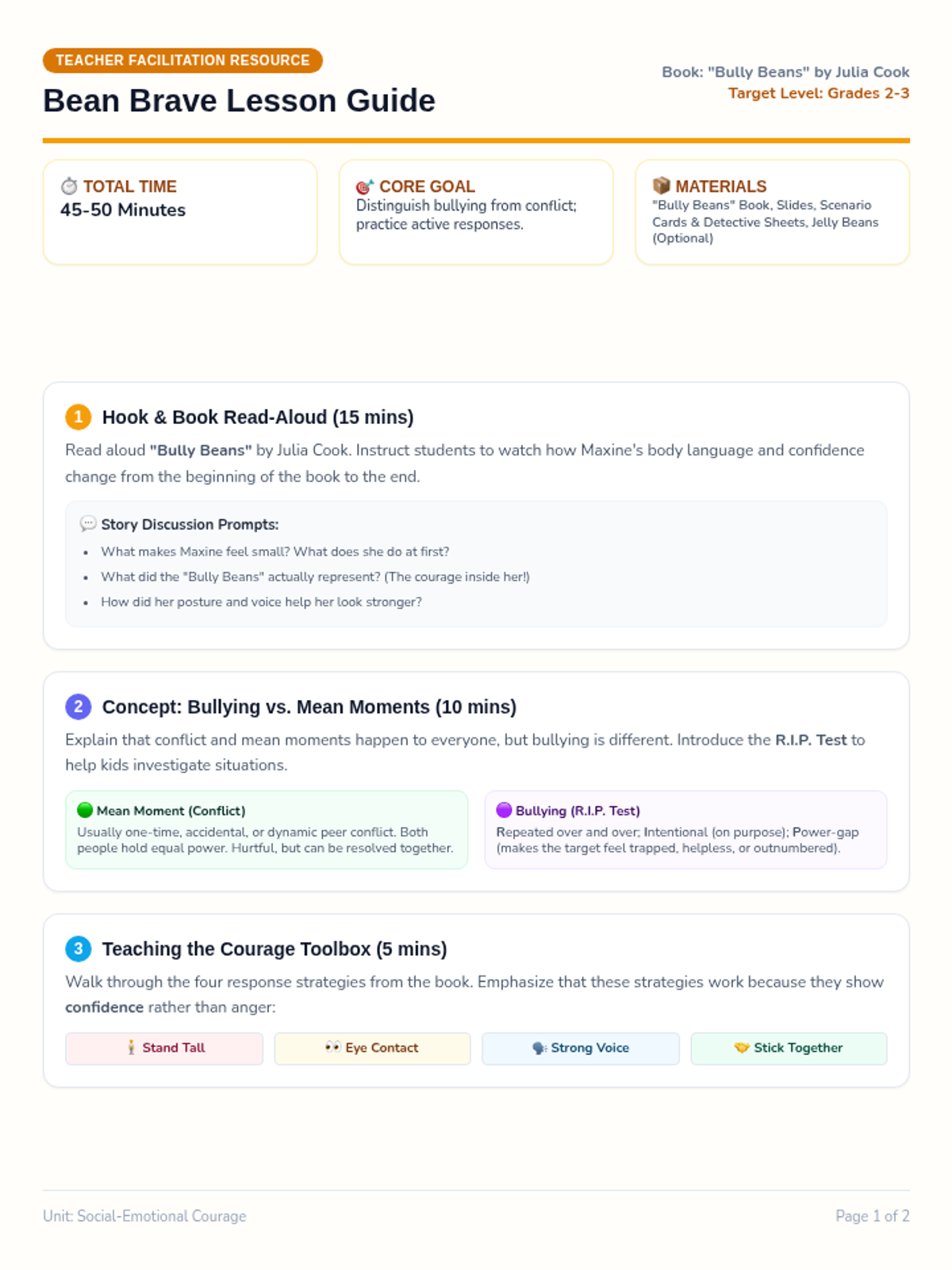
A detailed facilitation guide for teachers. Includes a step-by-step lesson plan, read-aloud discussion questions, strategies to teach Bullying vs. Mean Moments, and an answer/guidance key for the scenario role-play cards.
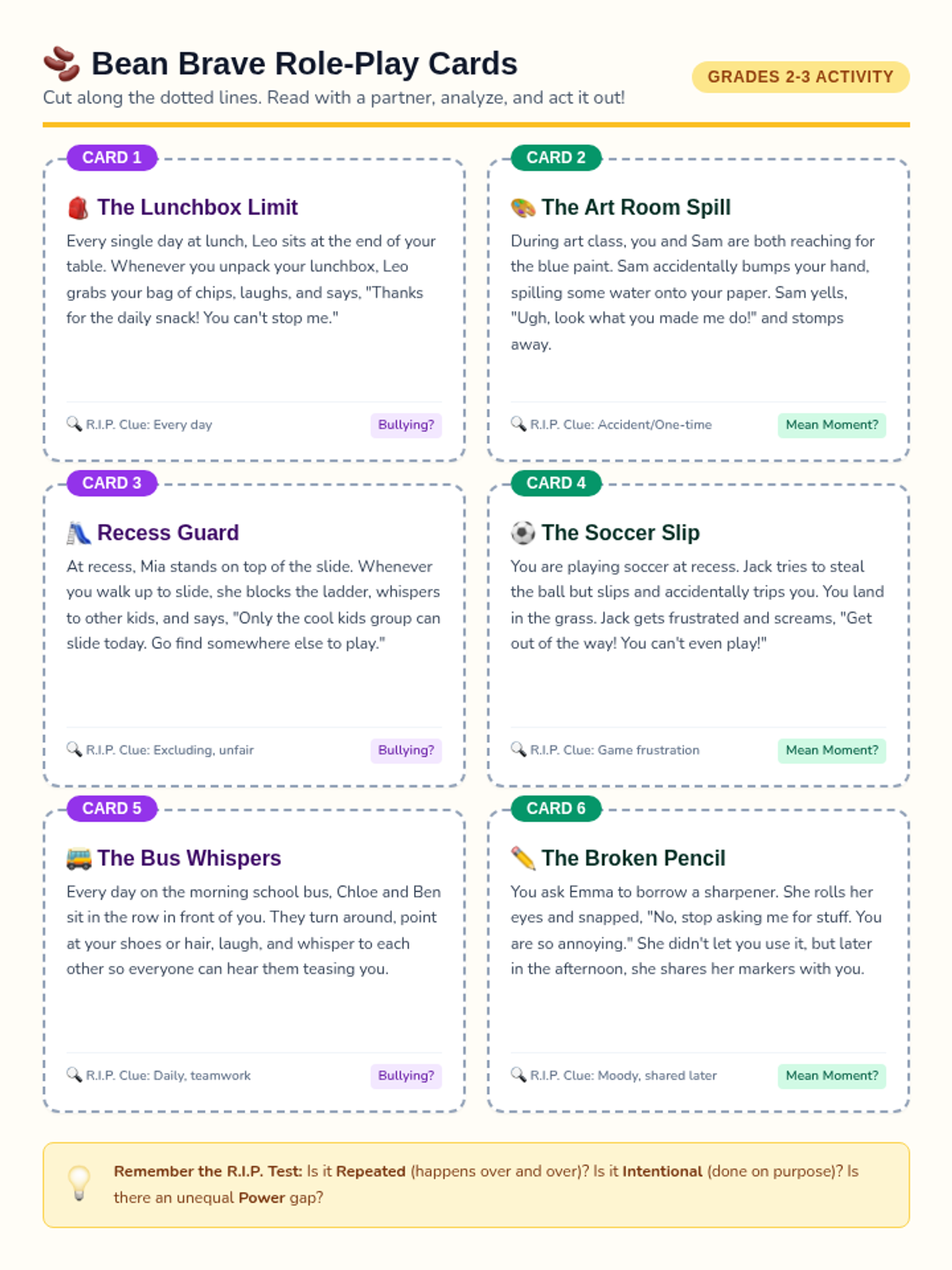
A set of printable role-play scenario cards and an accompanying detective recording sheet. Students analyze scenarios to distinguish between mean moments and bullying, then practice and write about their 'Bully Bean' responses.
A colorful, interactive slide deck for presenting the 'Bully Beans' lesson. Designed with high-contrast, larger-than-24px text, and interactive discussion prompts for 2nd and 3rd grade students to learn the difference between bullying and mean moments.
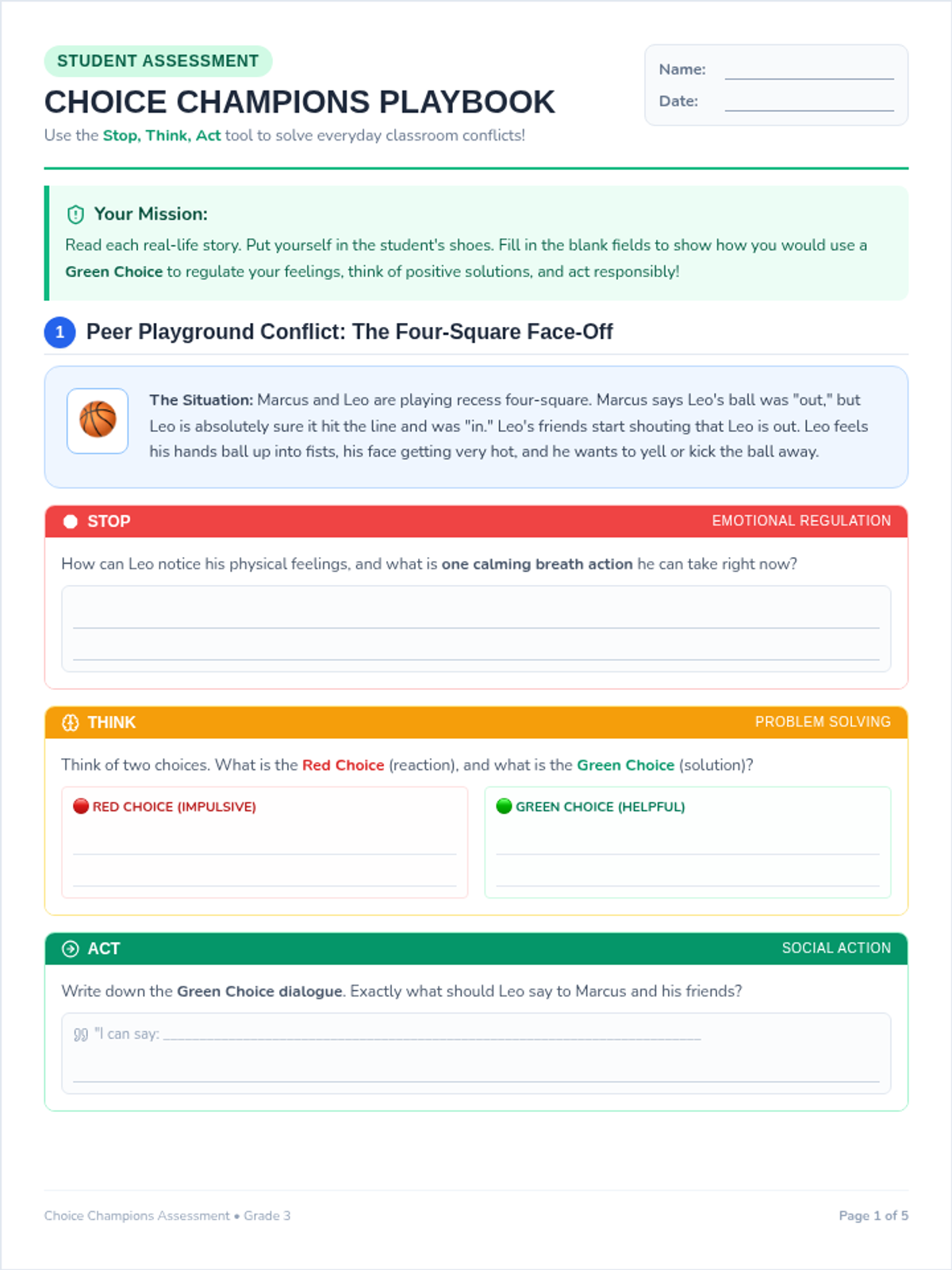
An expanded 5-page student assessment workbook for third-grade students. It uses a child-friendly 'Choice Champions' theme to walk students through five realistic social conflict scenarios representing playground rule disputes, negative peer feedback, adult authority disagreements, and transition management. Each page is designed with spacious, clear handwriting fields and emotional regulation prompts.
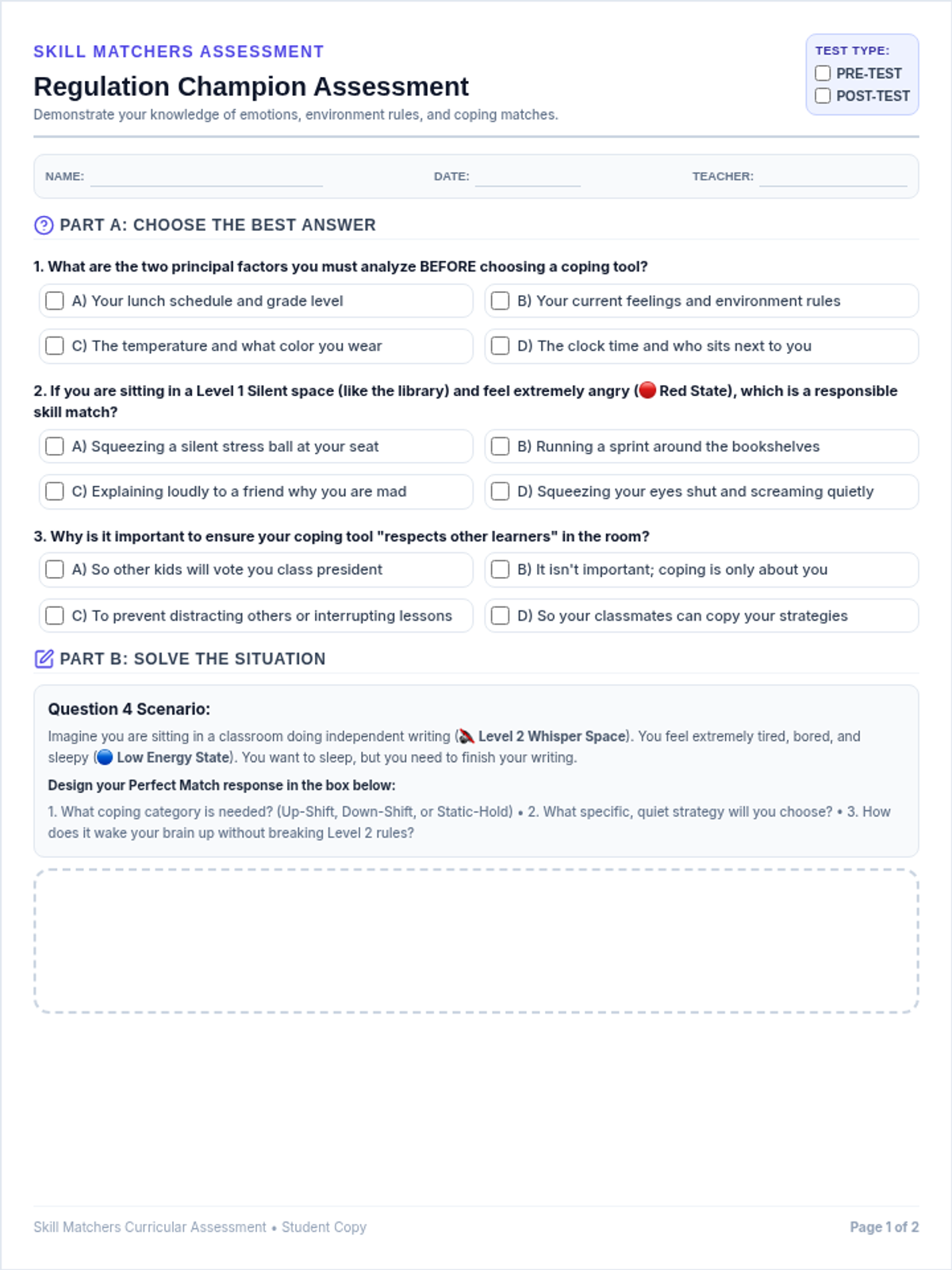
A dual-purpose, identical 5-item pre/post-unit assessment and grading rubric designed to measure students' self-awareness, social awareness, and situational self-regulation strategies.
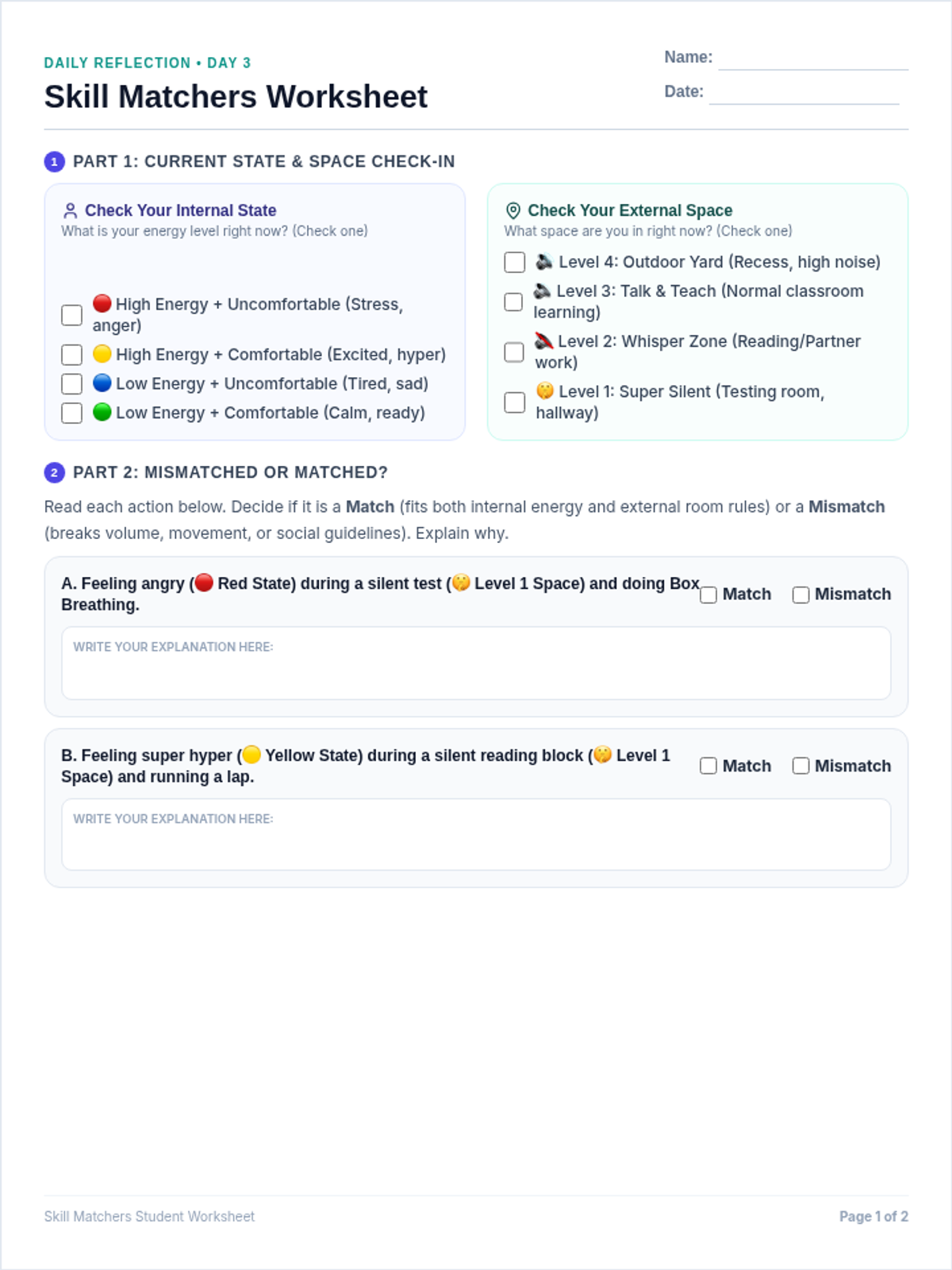
A 2-page student worksheet containing daily emotional checks, situation matching, and scenario profile analysis to master matching coping tools with physical environments.
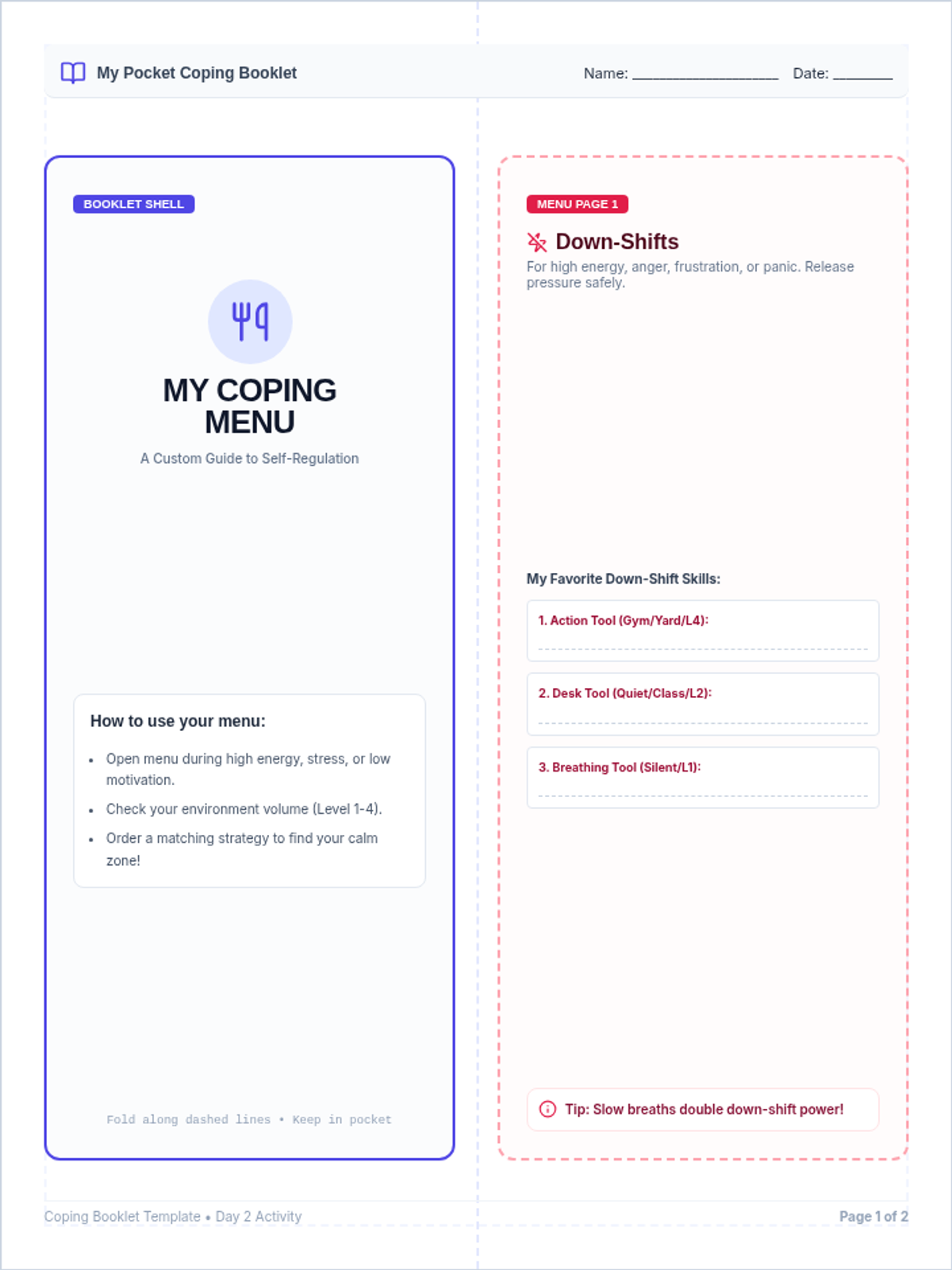
A customizable, foldable 4-panel pocket-sized coping strategies booklet allowing students to catalog their personalized sensory, movement, and cognitive self-regulation tools.
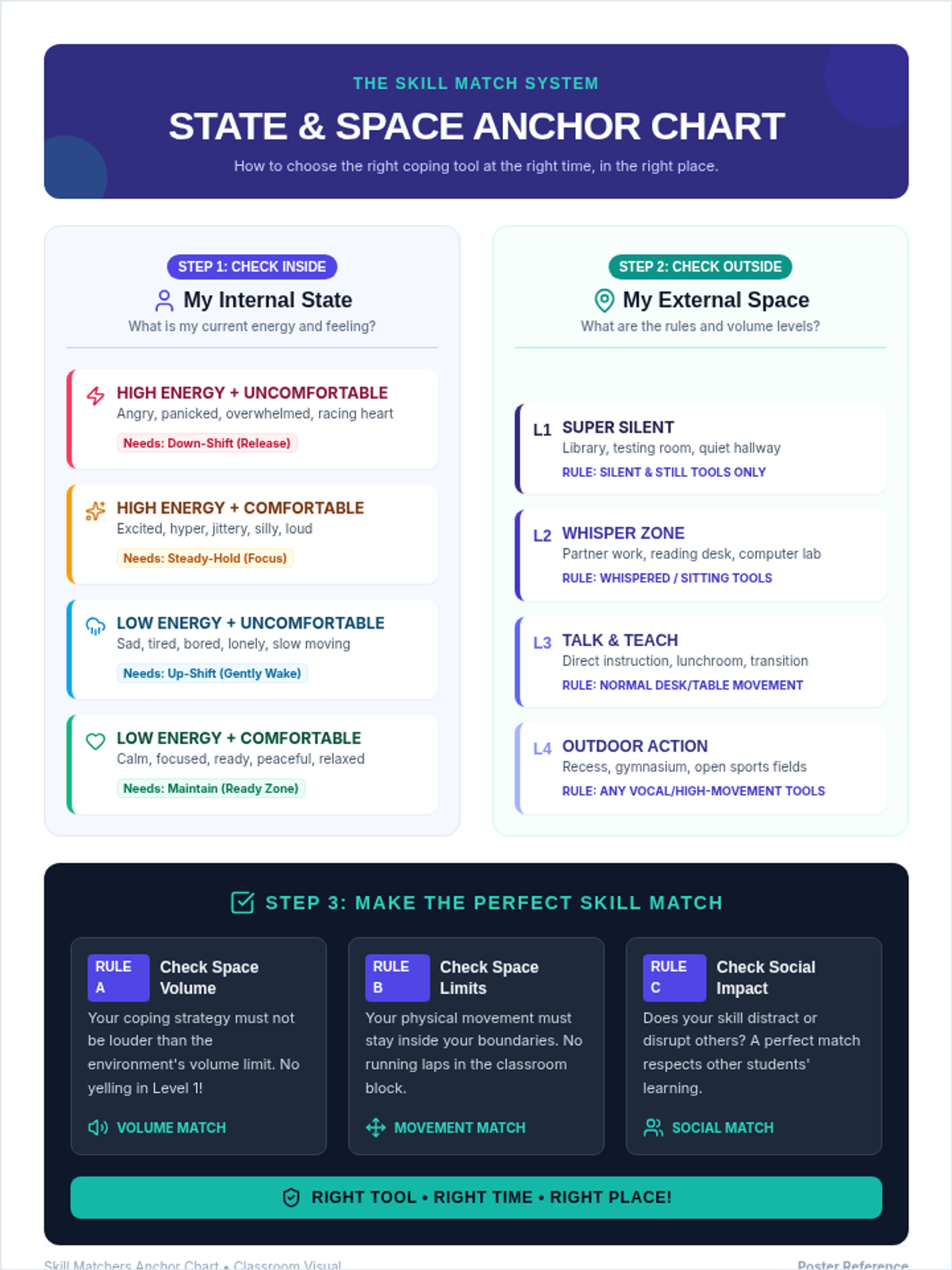
A visually engaging, high-contrast anchor chart poster illustrating internal emotional states, external space limits, and the decision rules for making a perfect coping skill match.
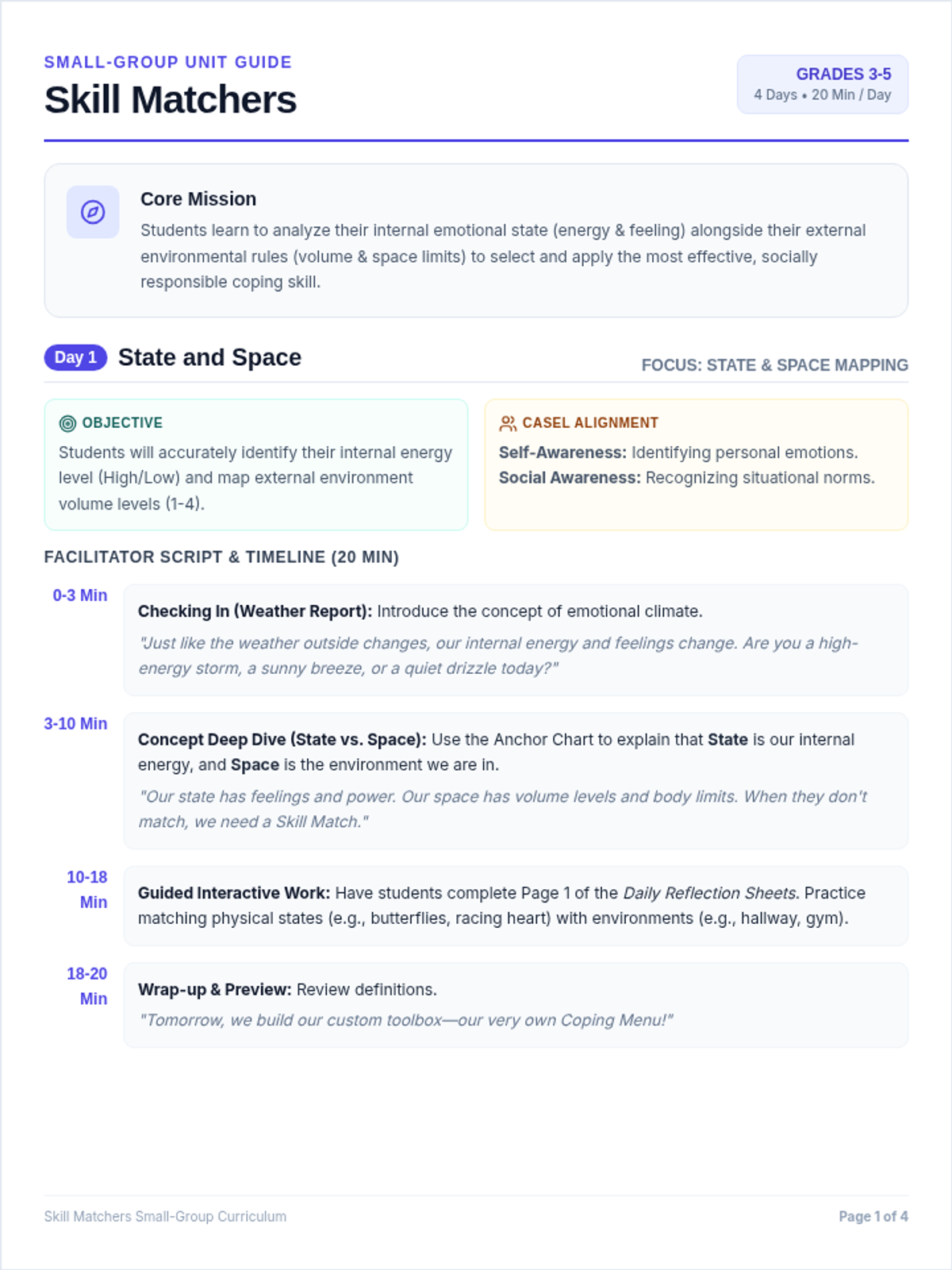
A comprehensive 4-day lesson guide with 20-minute timestamps, explicit facilitator prompts, and direct CASEL alignment for small group emotional regulation instruction.
A high-impact, superhero-themed 11-slide presentation for the 6-8 grade-band Classroom STAR expectations. Designed in Marley Park green and yellow colors, with minimum 24px font size for back-of-the-room legibility, heavy comic-book borders, and structured Hook-Discover-Practice-Commit routines.
A high-impact, superhero-themed 11-slide presentation for the 3-5 grade-band Classroom STAR expectations. Designed in Marley Park green and yellow colors, with minimum 24px font size for back-of-the-room legibility, heavy comic-book borders, and structured Hook-Discover-Practice-Commit routines.
A high-impact, superhero-themed 11-slide presentation for the K-2 grade-band Classroom STAR expectations. Designed in Marley Park green and yellow colors, with minimum 24px font size for back-of-the-room legibility, heavy comic-book borders, and structured Hook-Discover-Practice-Commit routines.
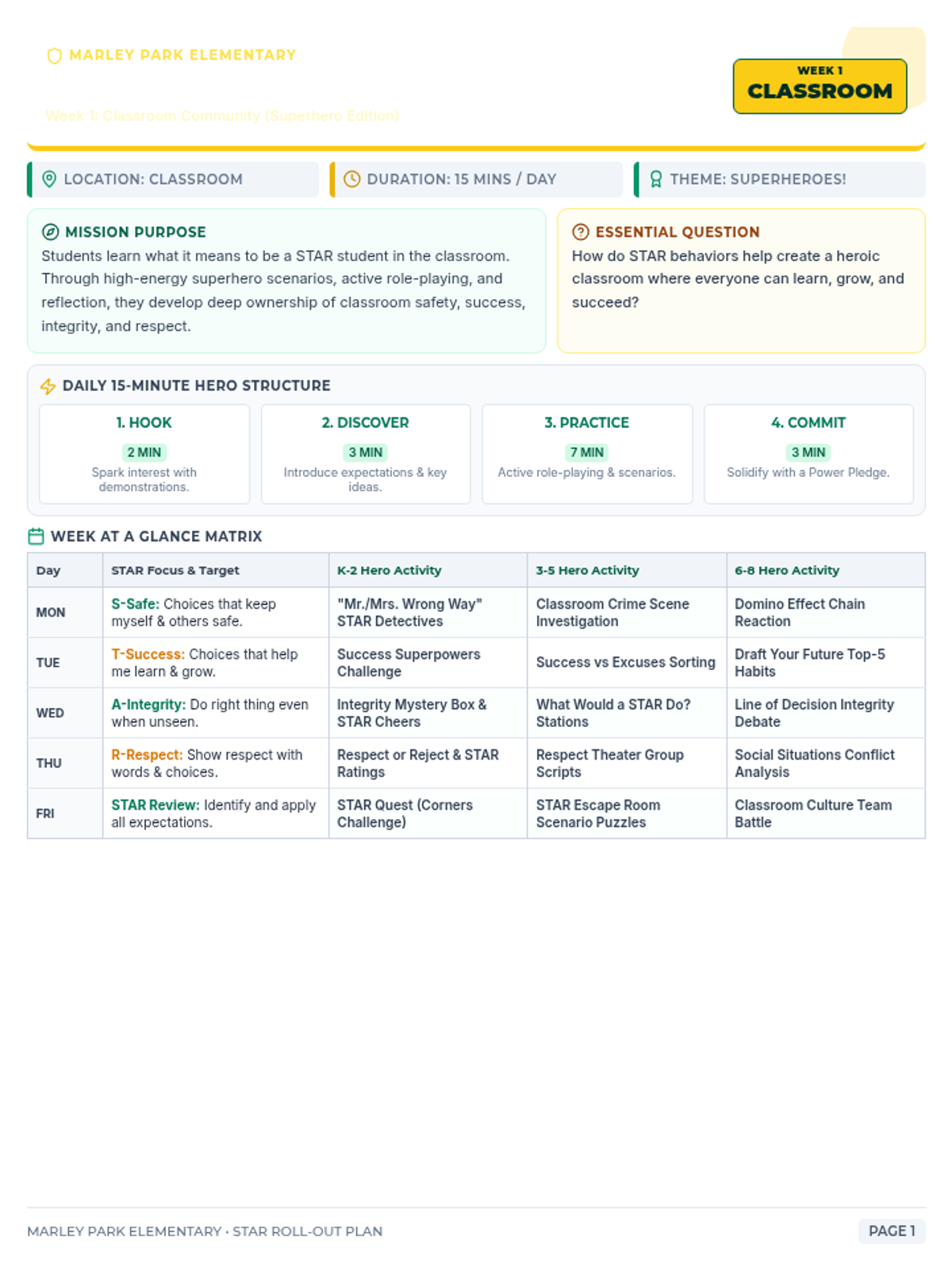
A printable, comprehensive 2-page teacher facilitation guide for the Week 1 STAR Classroom expectations. Features the Marley Park green and yellow colors, a superhero theme, detailed daily lesson structures, active learning strategies across K-2, 3-5, and 6-8 bands, look-fors, and success criteria.