A 15-minute Tier 3 intervention for Pre-K learners to explore cause-and-effect thinking and conditional language using 'if' through playful scenarios.
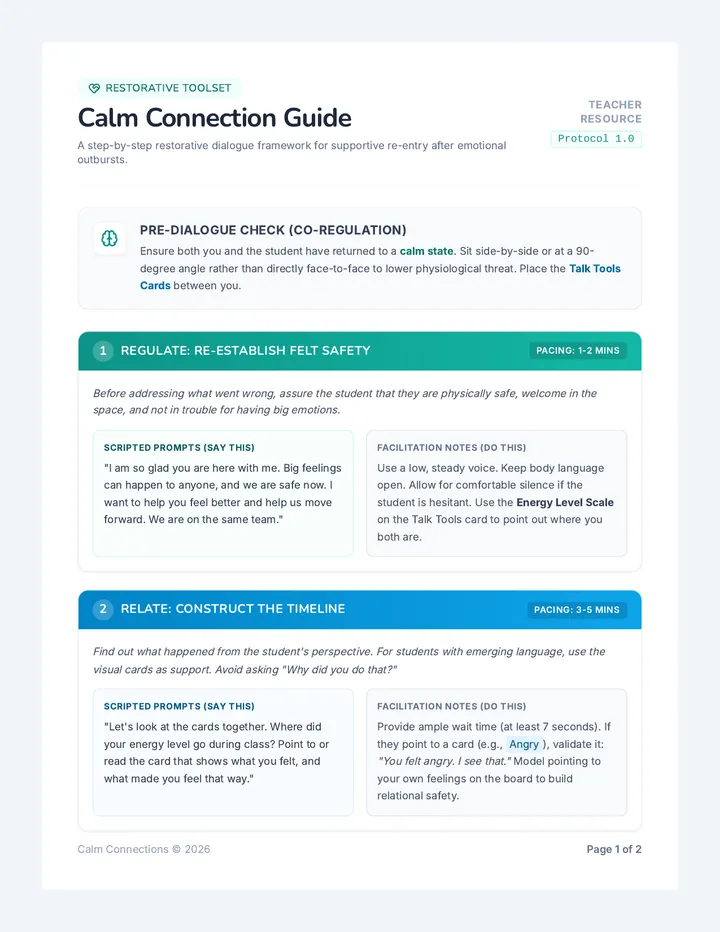
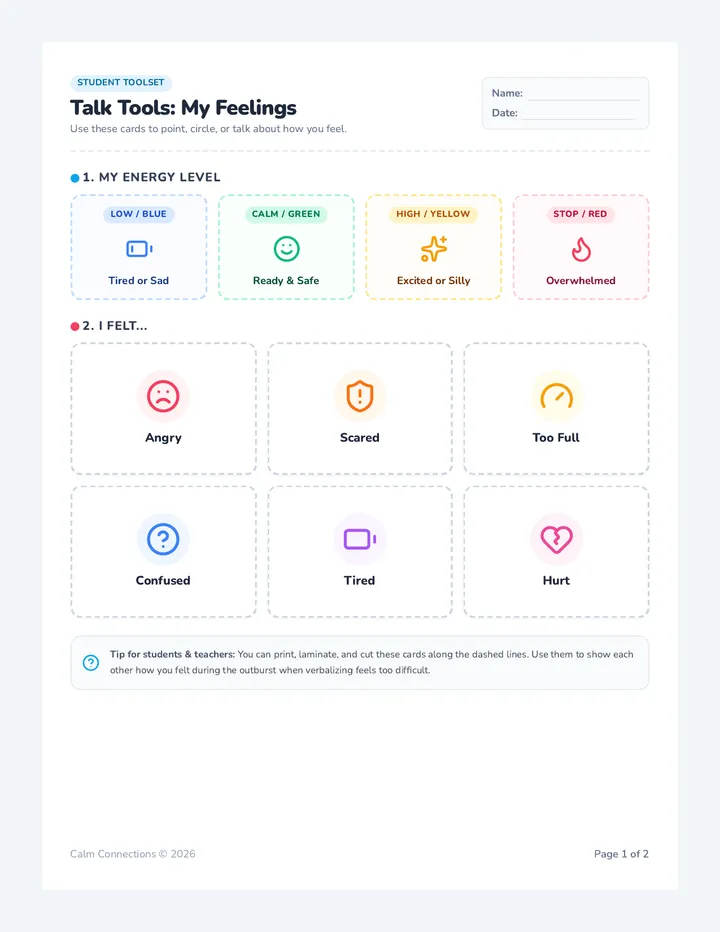
A comprehensive restorative dialogue system designed to repair relationships and re-integrate students after emotional outbursts, featuring a teacher scripting guide and highly visual student communication support cards.
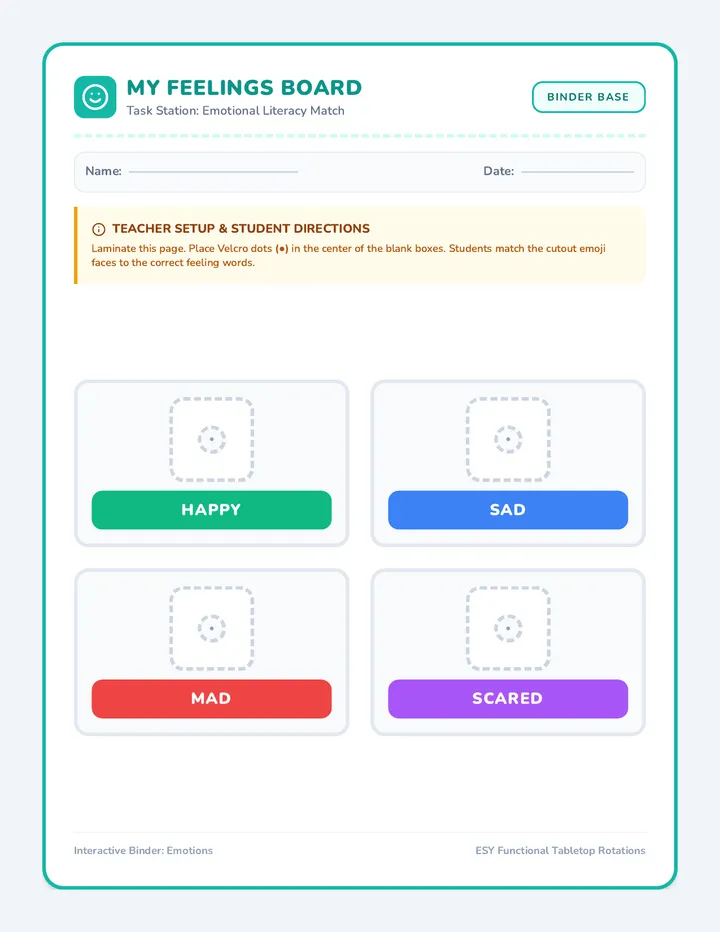
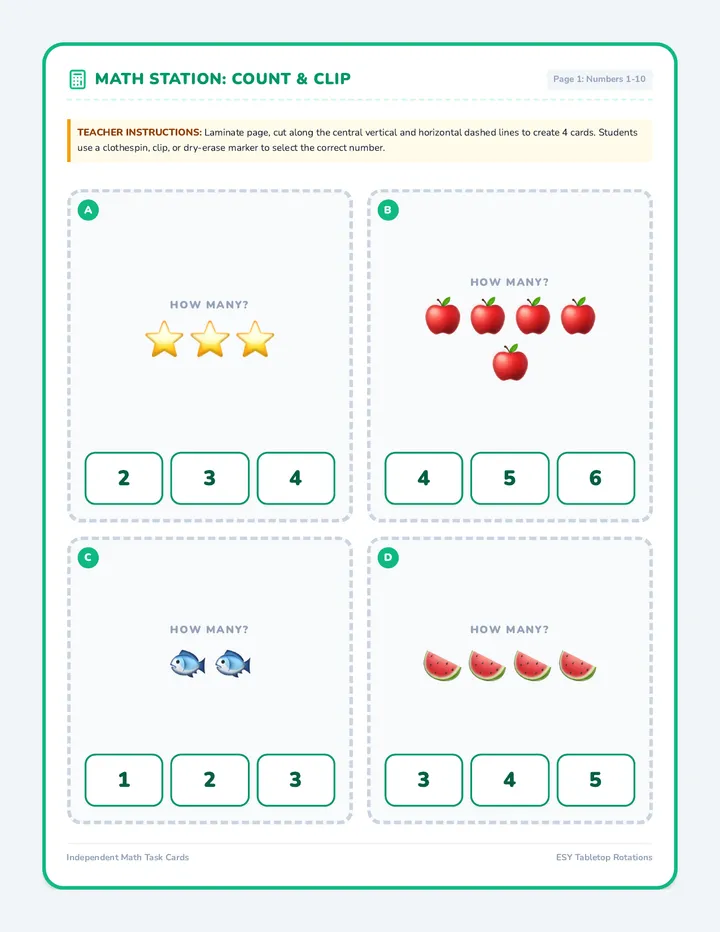
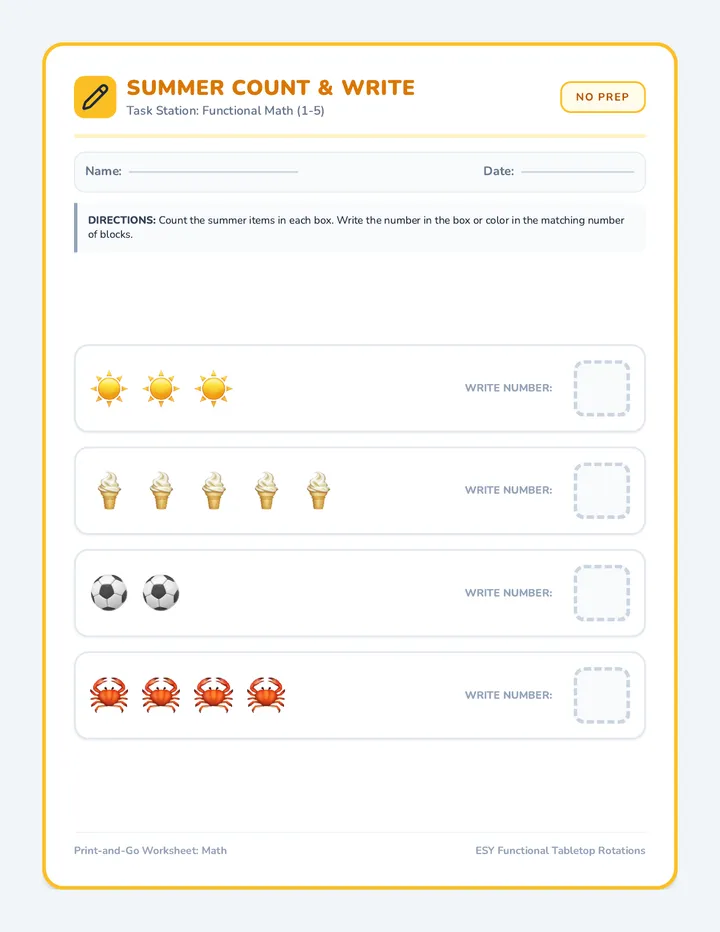
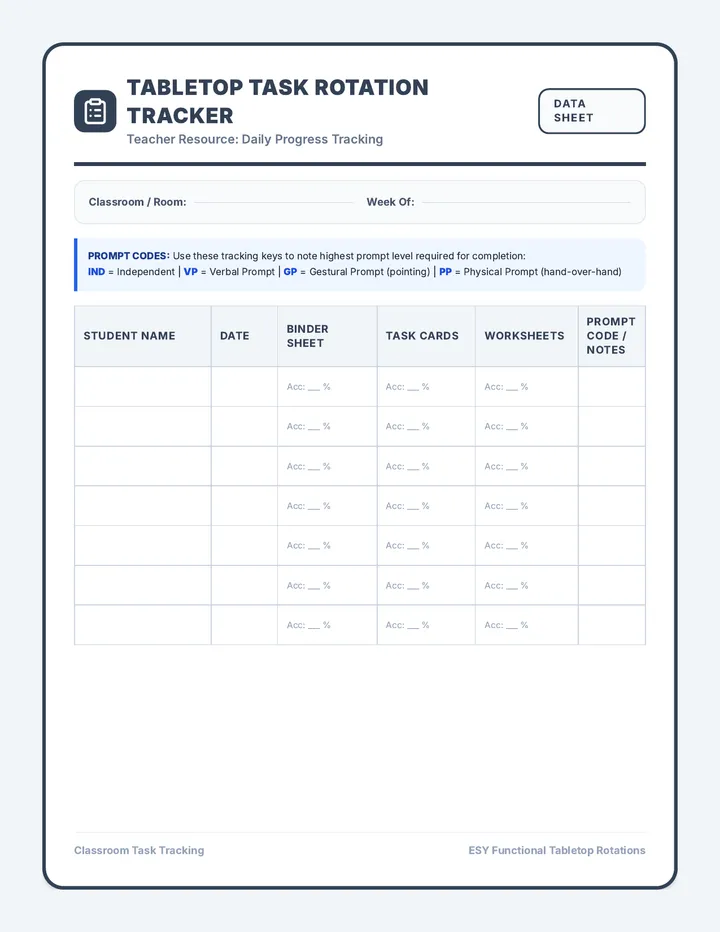
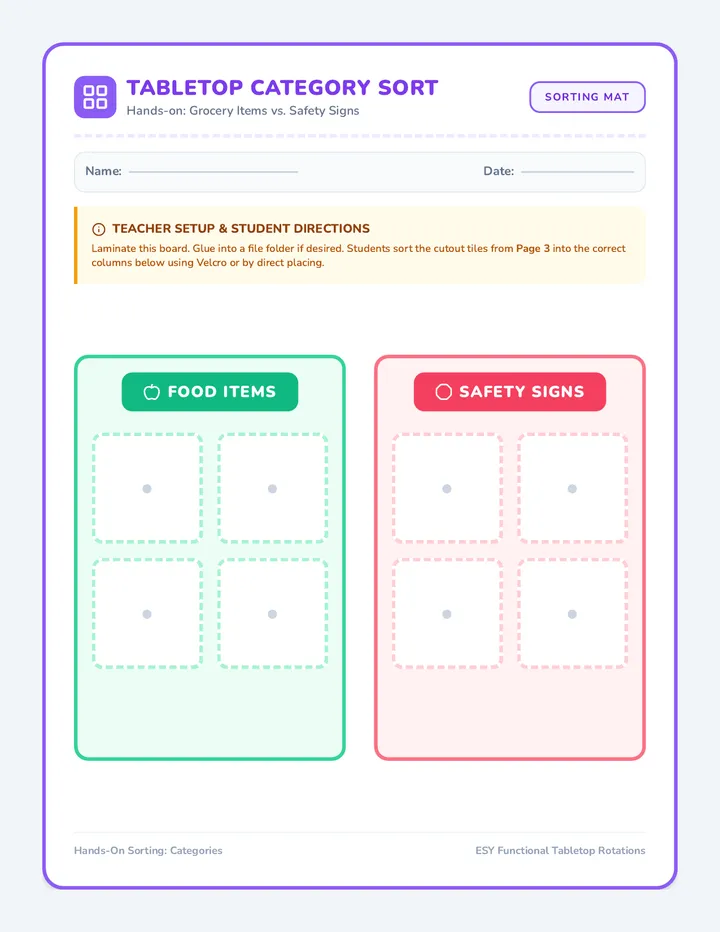
A cohesive suite of tabletop task stations, reusable binder sheets, print-and-go worksheets, and teacher data tracking sheets designed for ESY students with mild/moderate disabilities and autism. Focuses on functional math (counting objects), emotional literacy (identifying emotions), and functional sight words.
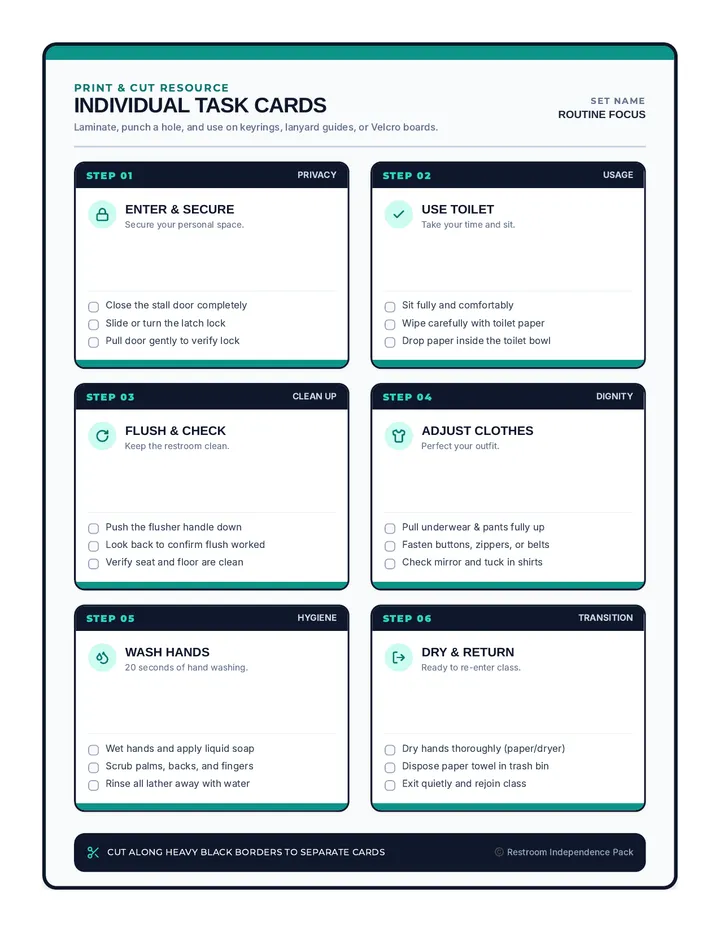
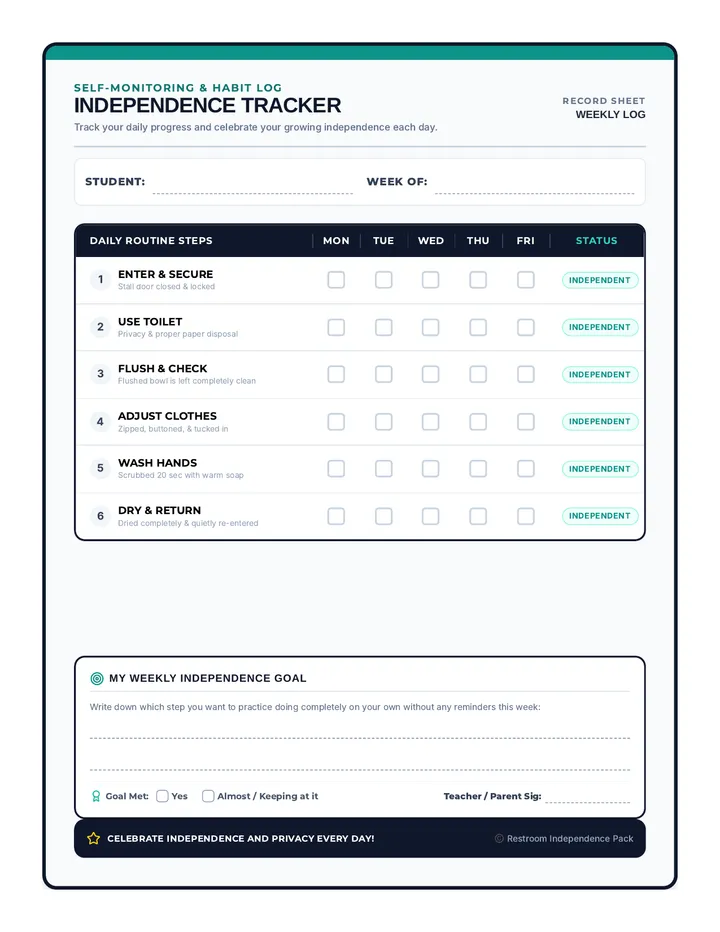
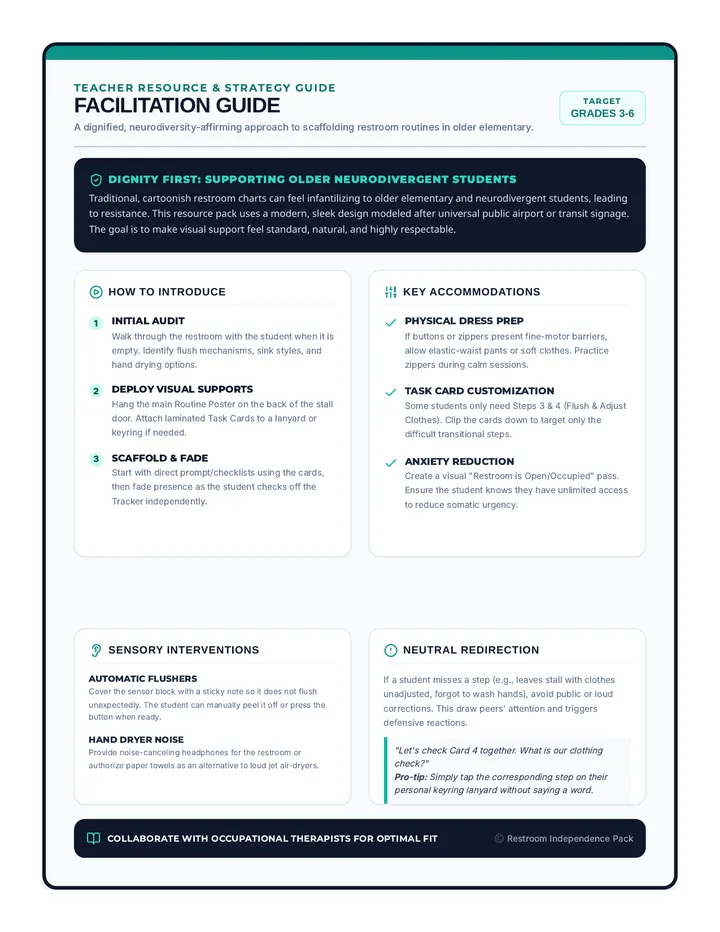
A complete visual support and routine mastery pack designed for older elementary and neurodivergent students. Includes a wall poster, individual task cards, a progress tracker, and a comprehensive implementation guide to foster dignity and privacy.
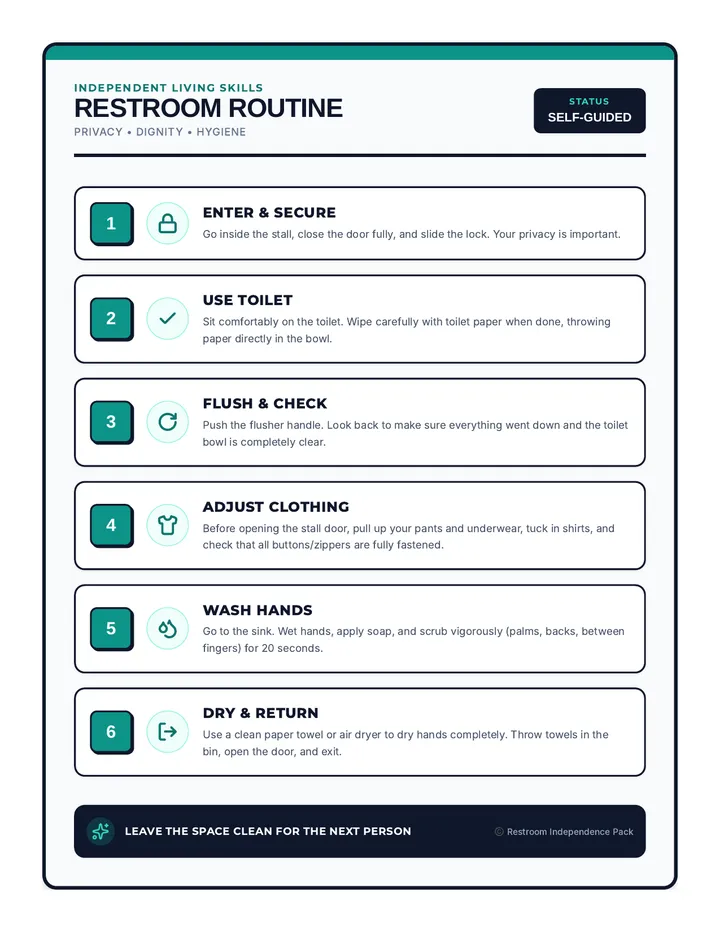
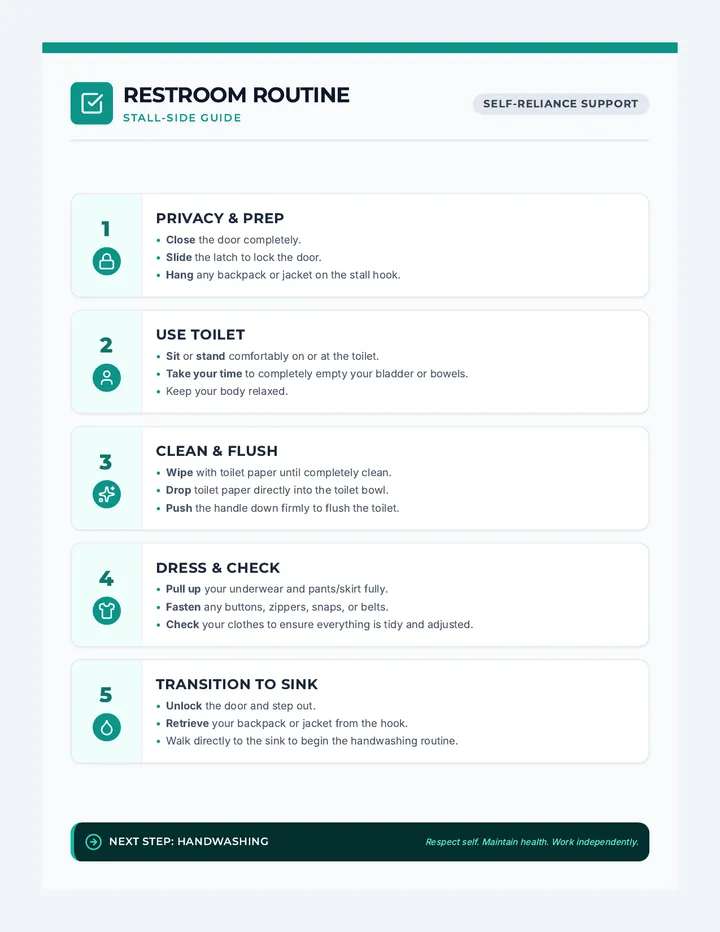
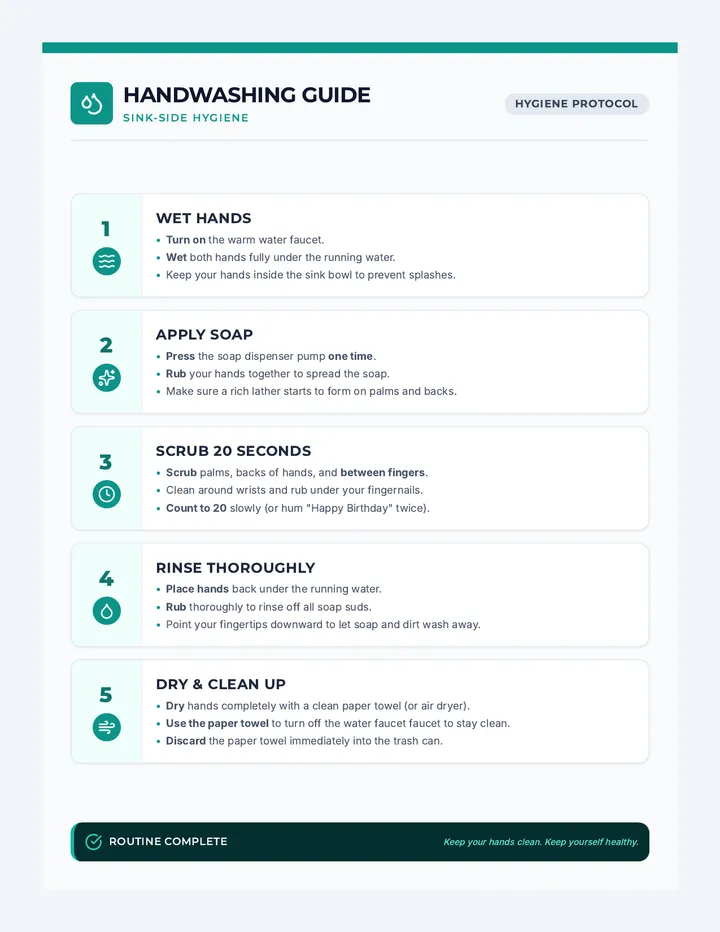
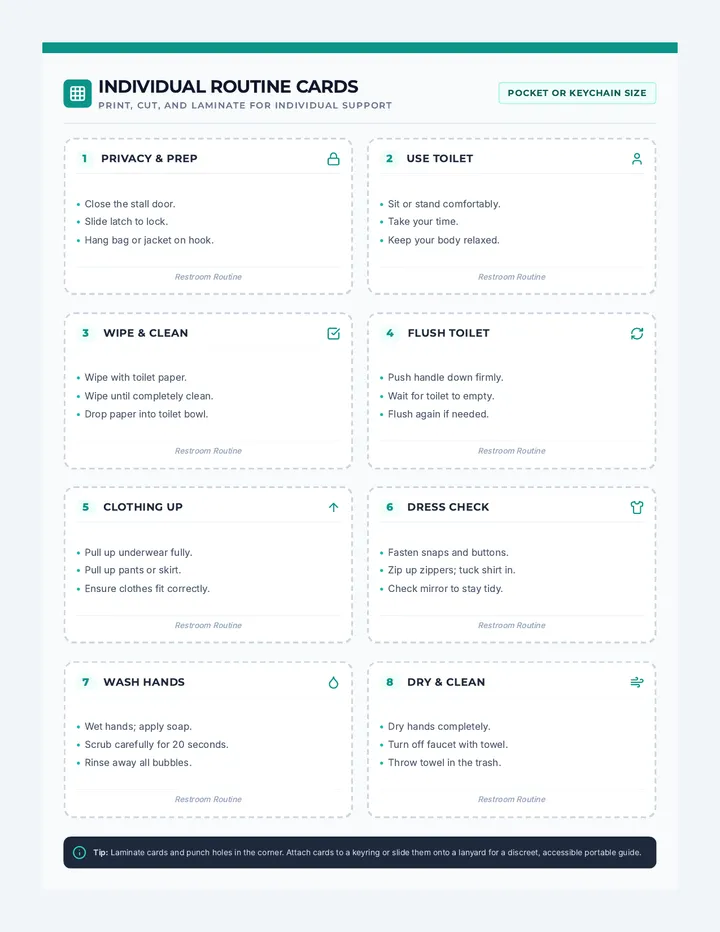
A comprehensive visual support system designed for older elementary and neurodivergent students to promote bathroom independence. Includes a stall-side routine poster, a sink-side handwashing guide, and printable individual visual support cards styled with a clean, modern aesthetic.
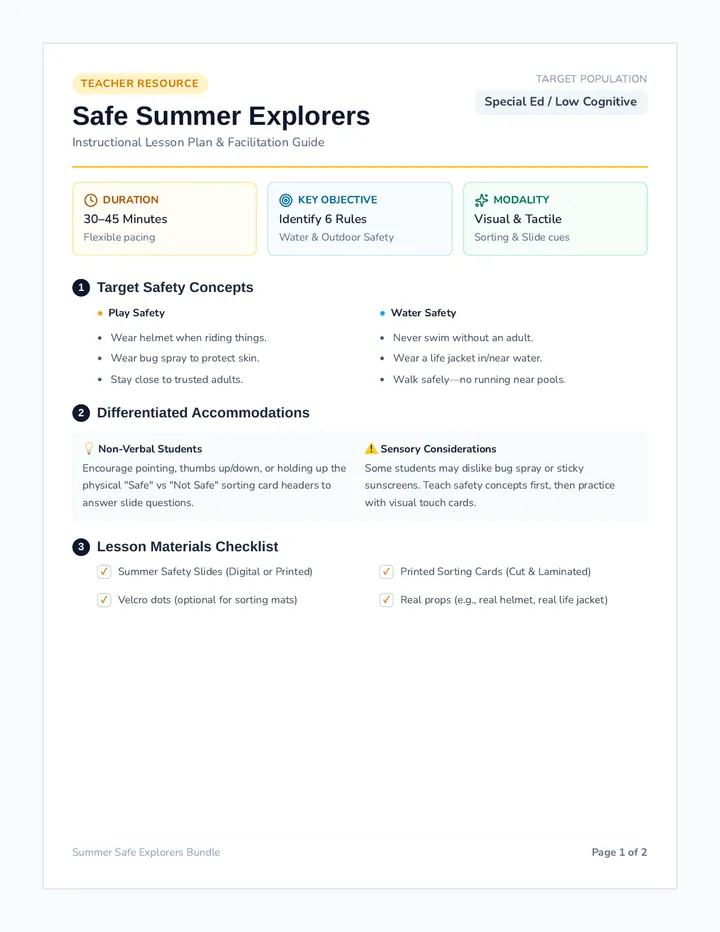
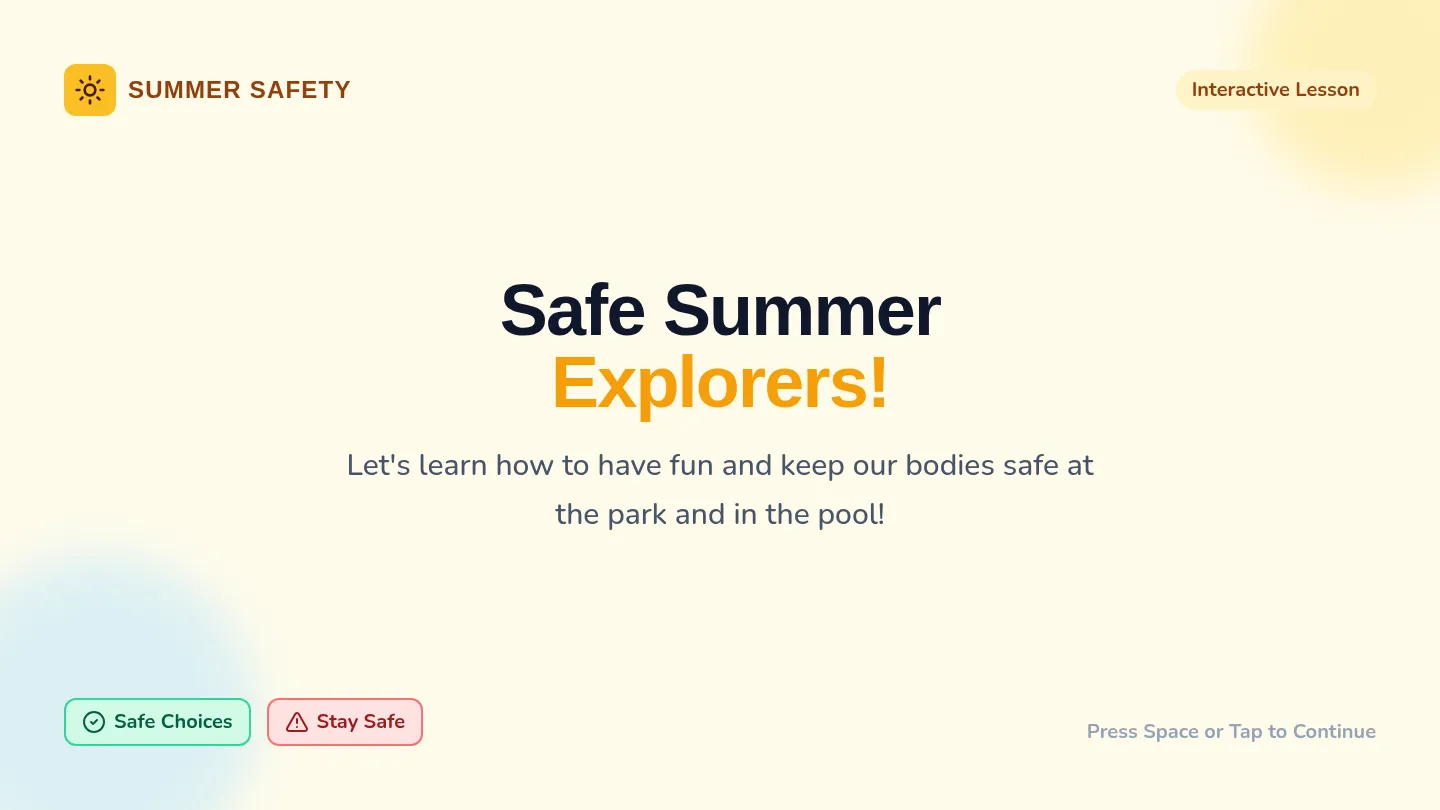
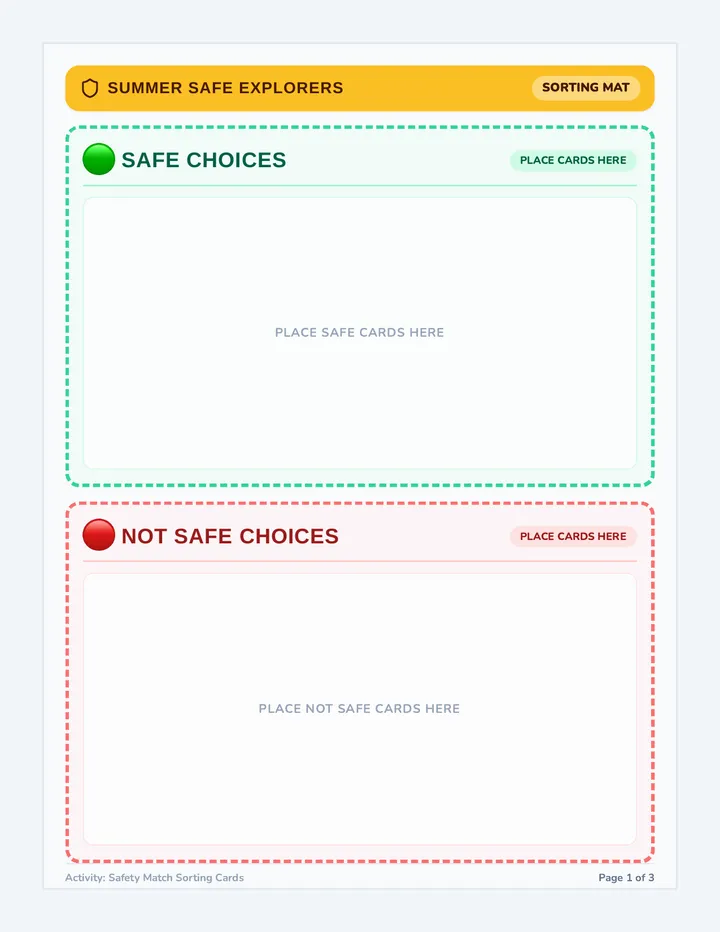
A highly visual, structured summer safety lesson designed for students with special needs and lower cognitive abilities, focusing on outdoor play and water safety rules through interactive sorting and clear visual cues.
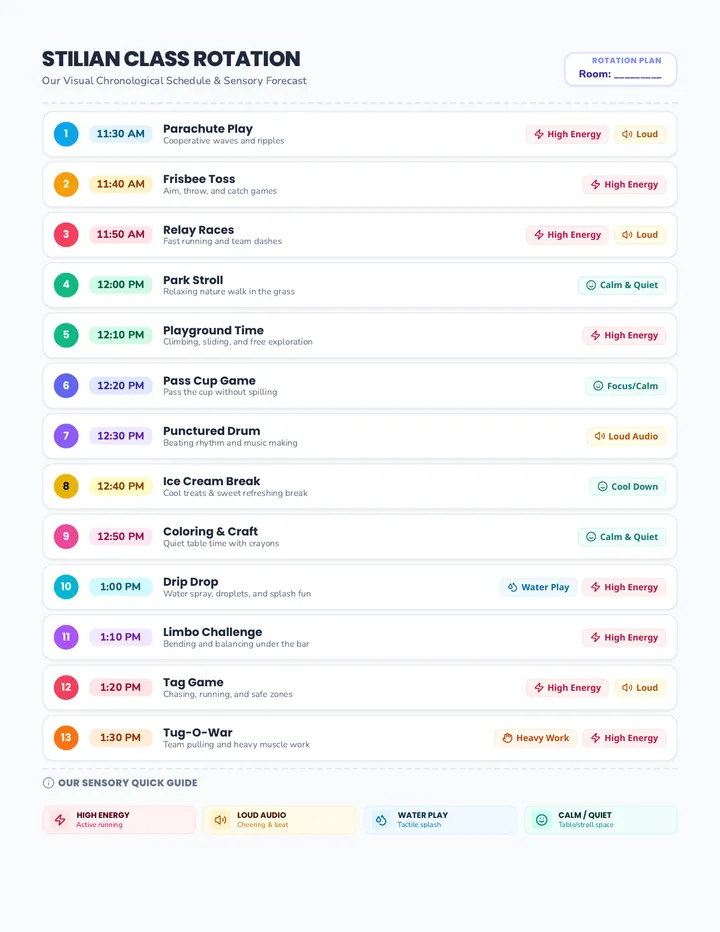
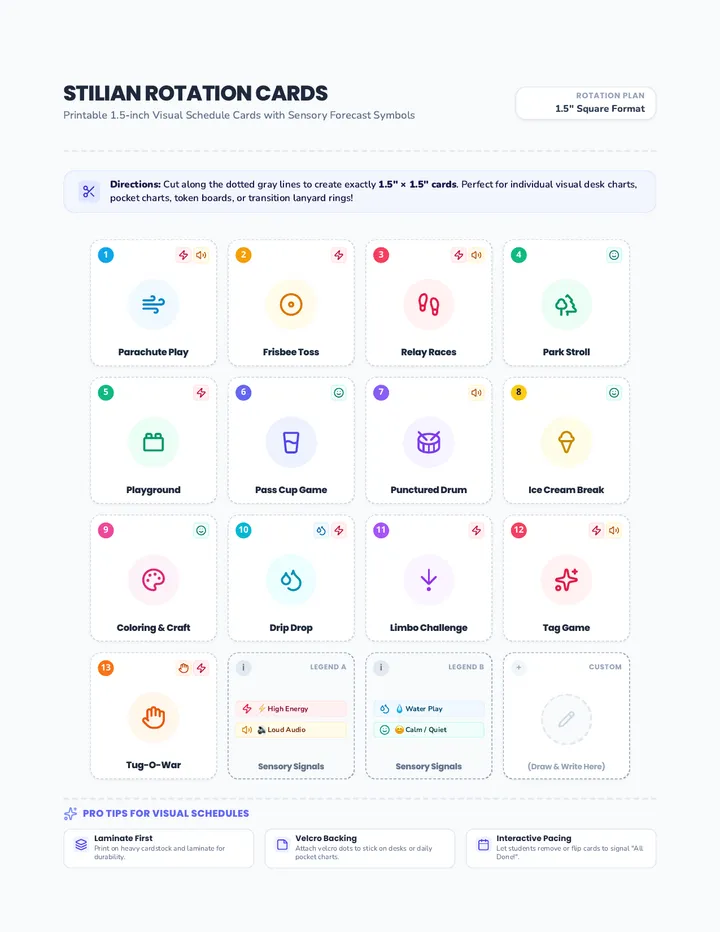
A sensory-friendly class rotation framework containing visual schedules and portable schedule cards to help students navigate activity transitions with confidence.
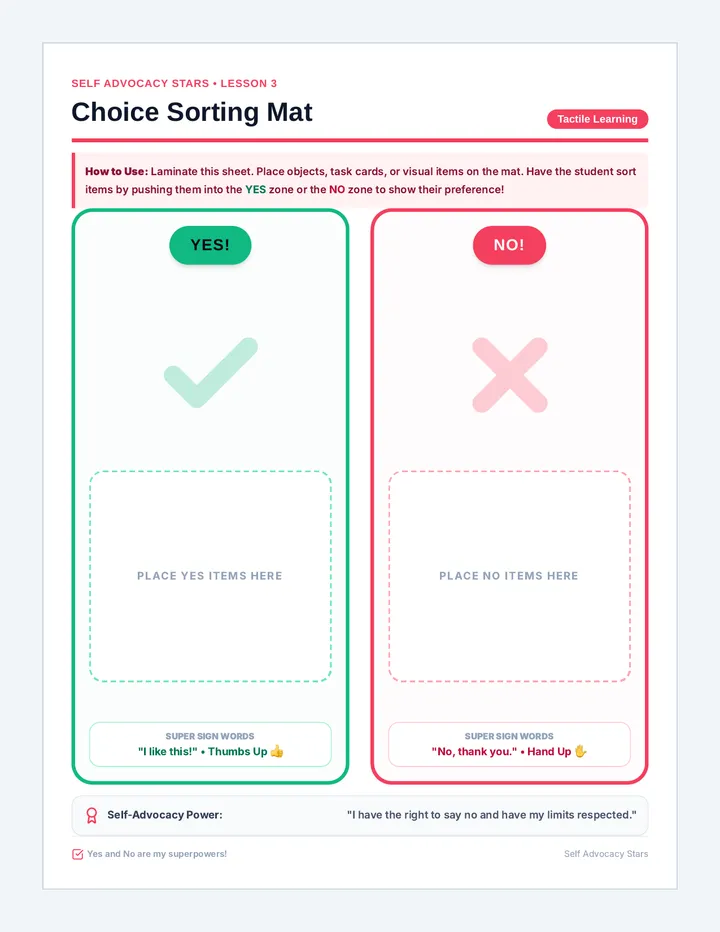
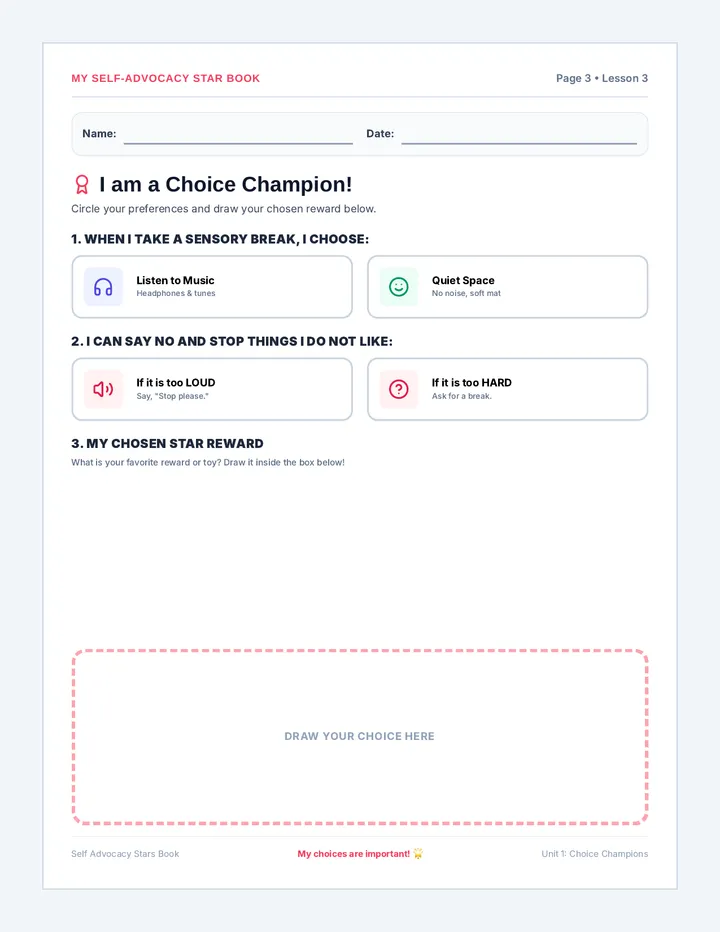
Students practice making independent choices, expressing preferences, and setting boundaries (saying "yes" or "no") using structured choice boards, tactile sorting mats, and interactive role-play.
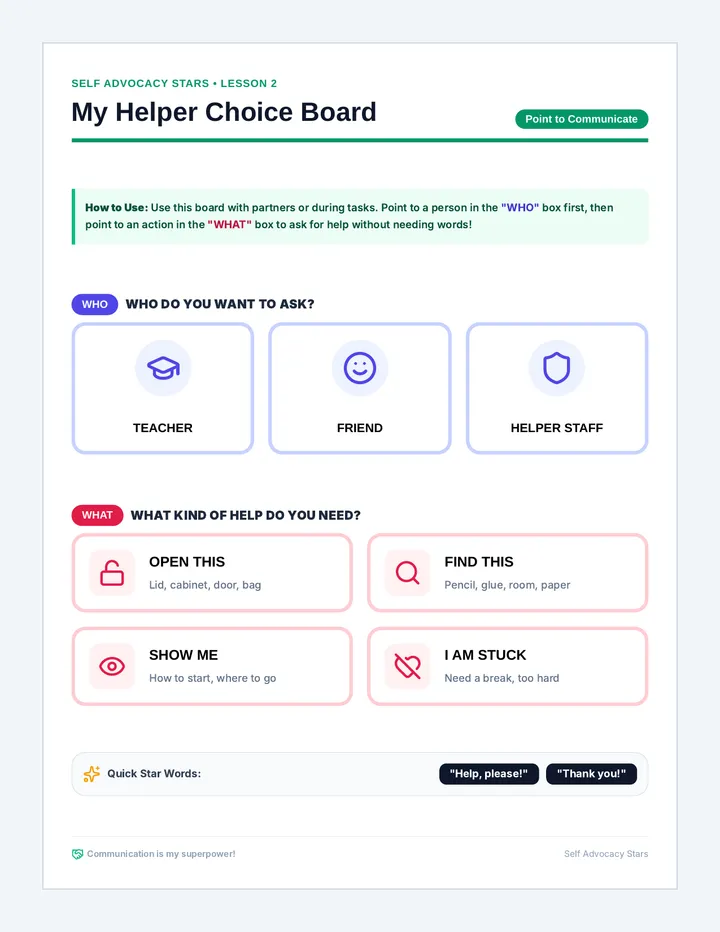
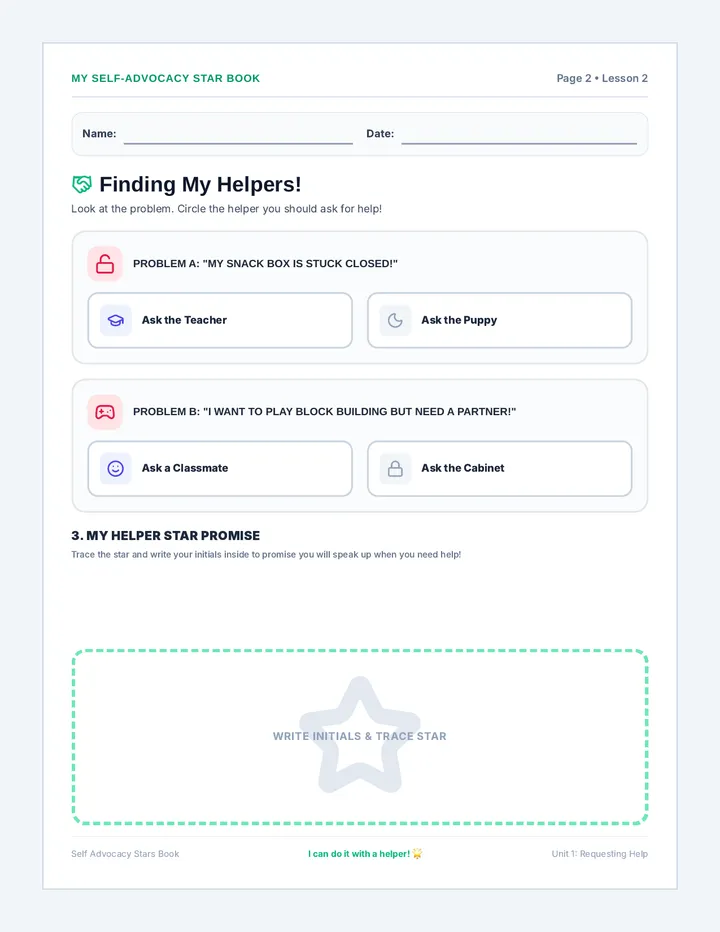
Students practice identifying when they need help, who to ask (teachers, peers, or helpers), and how to communicate that need using visual phrase cards and guided collaborative practice.
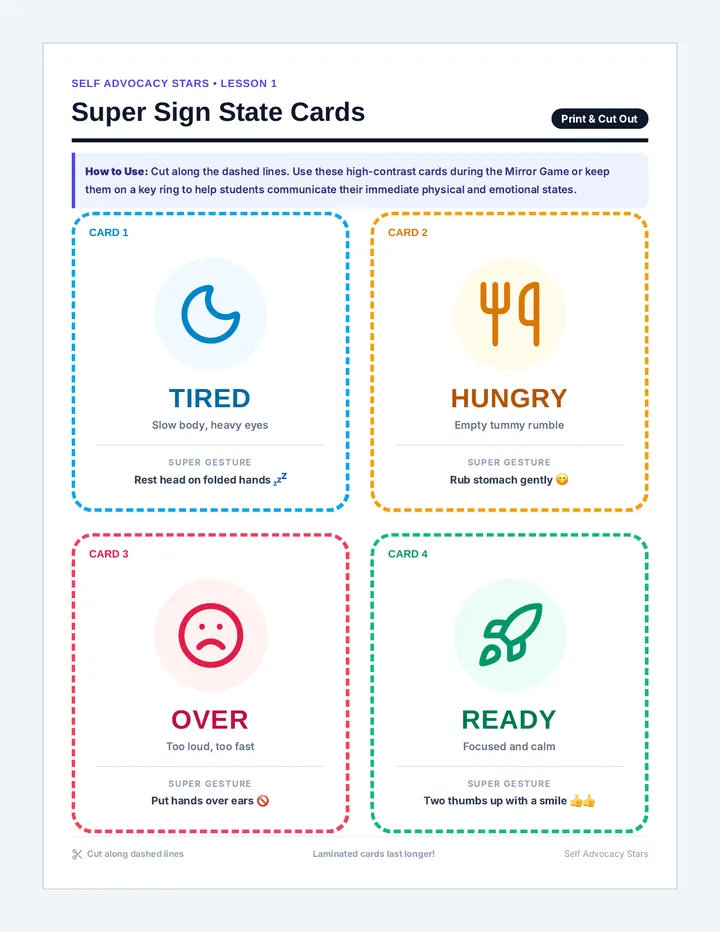
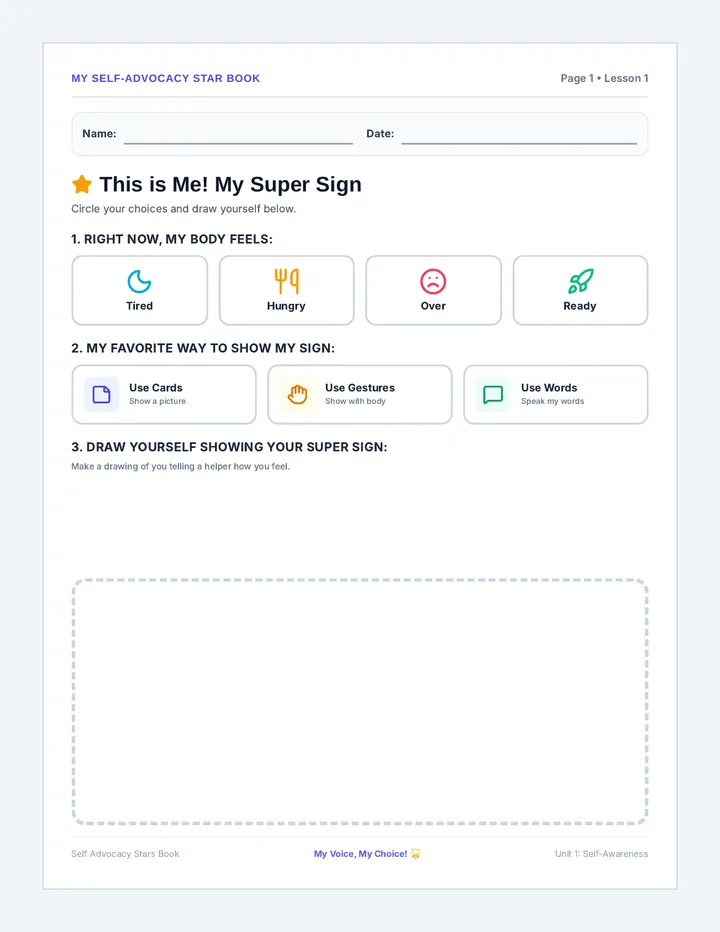
Students learn to recognize and communicate physical and emotional states (like tired, hungry, overwhelmed, or ready to learn) using simple gestures, vocalizations, or visual symbol cards.
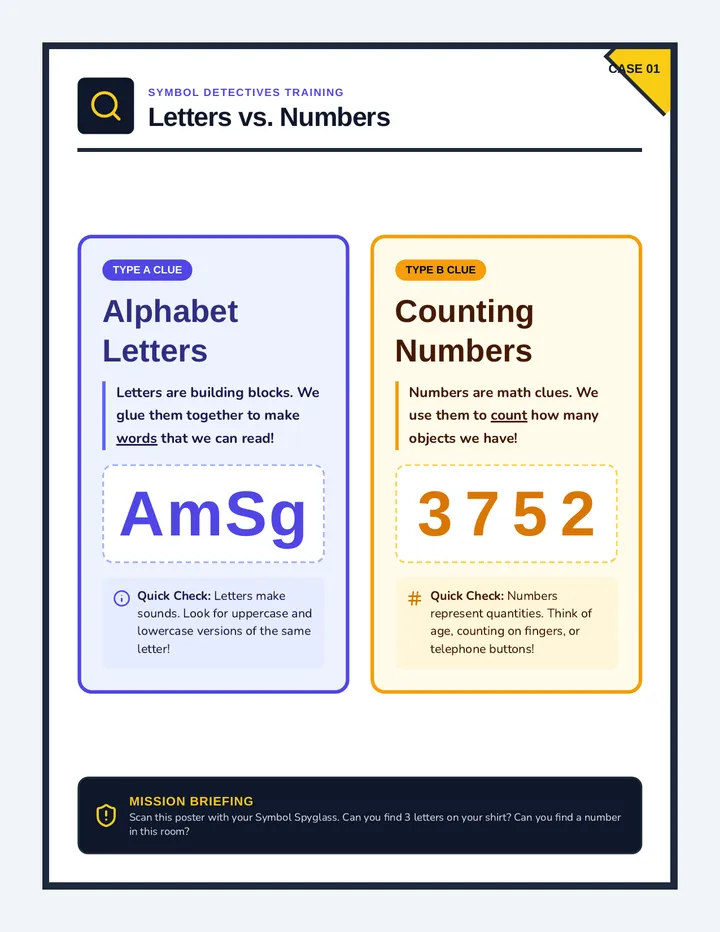
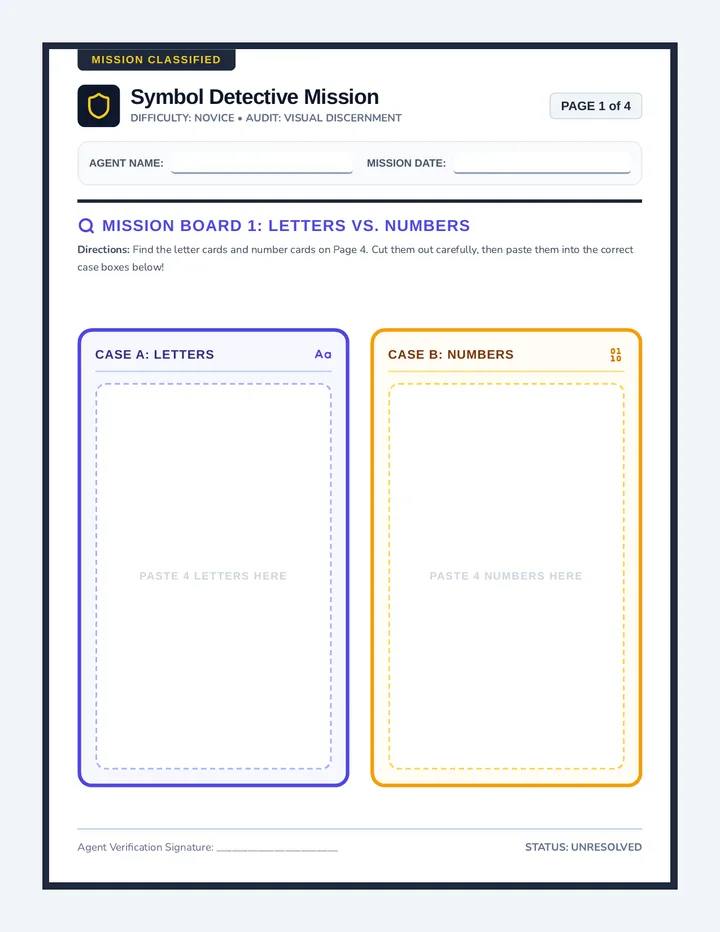
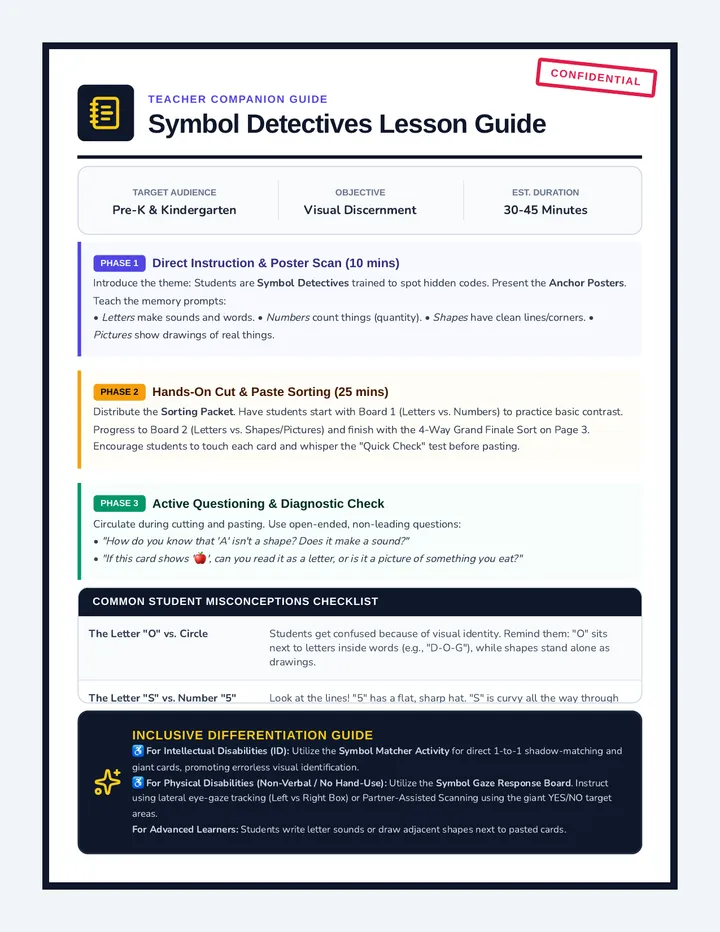
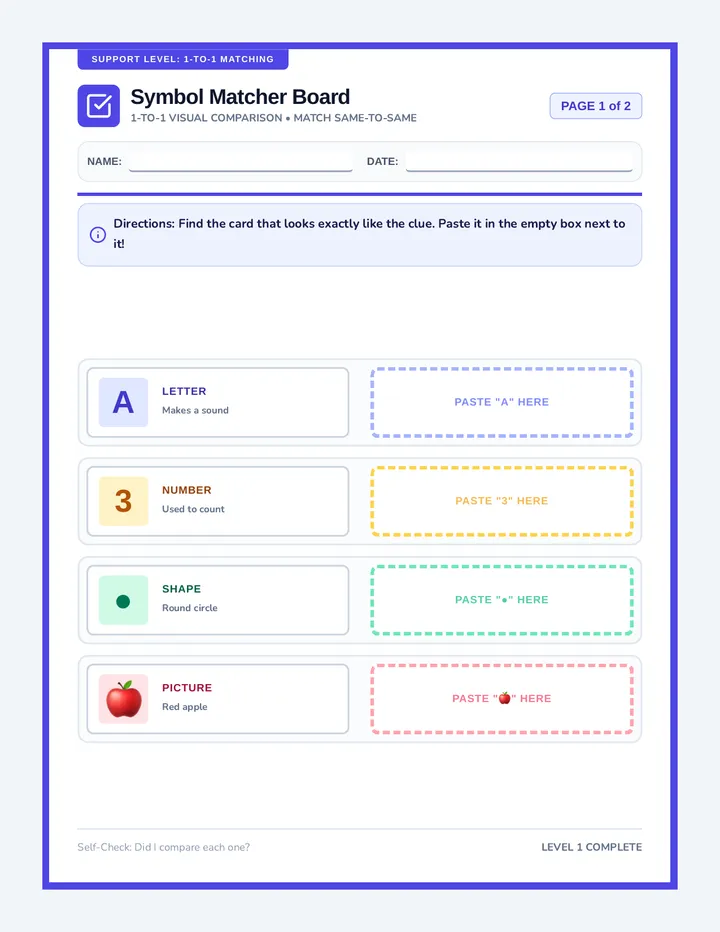
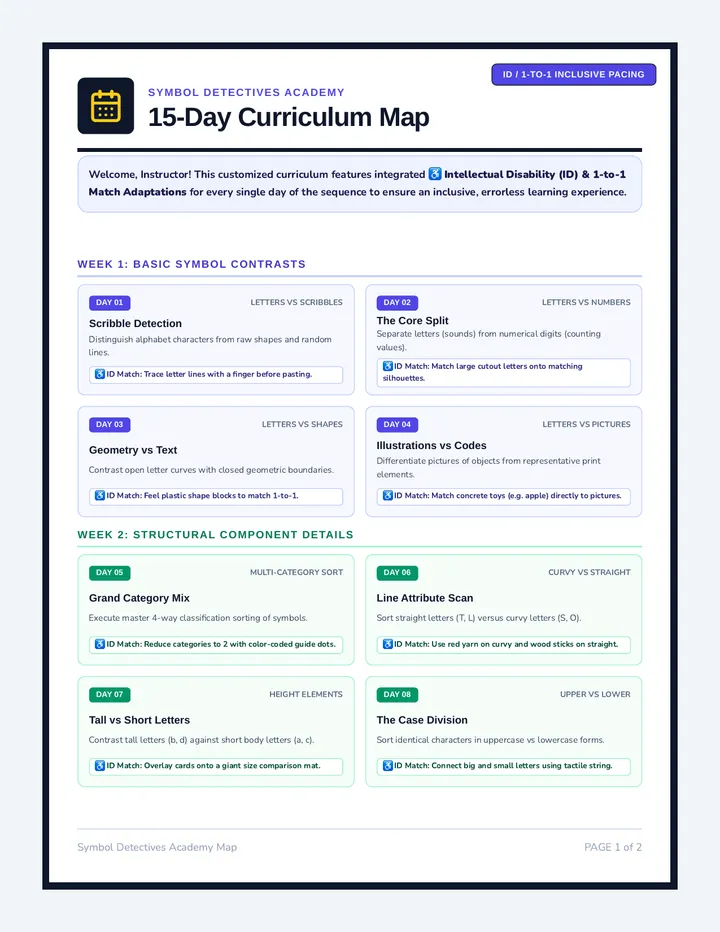
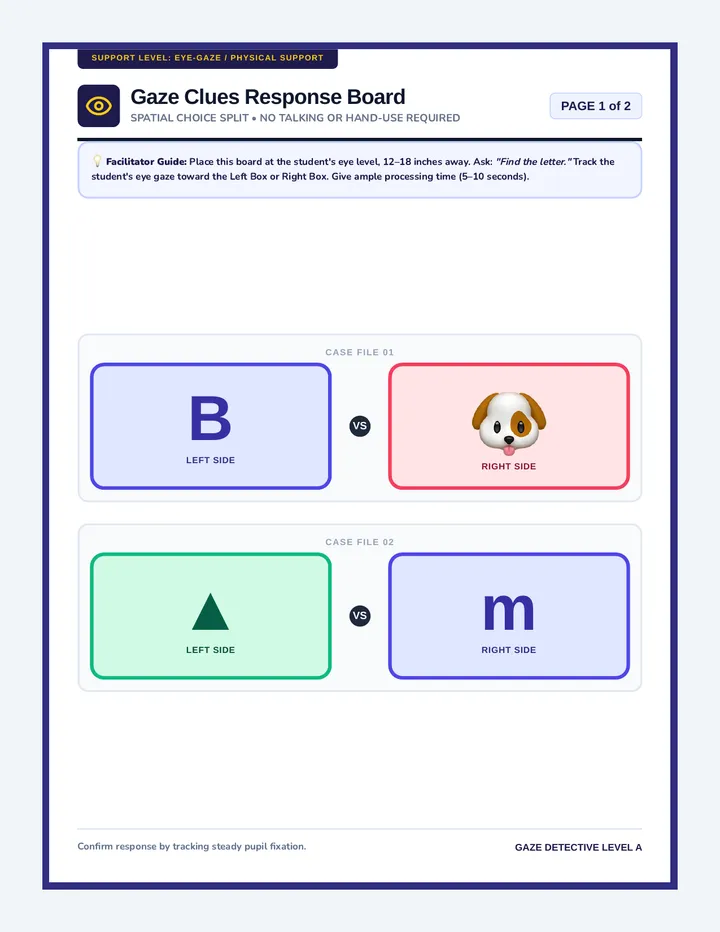
A foundational visual discernment lesson helping early learners distinguish alphabet letters from numbers, shapes, and environmental pictures through anchor charts, guided group games, and hands-on cut-and-paste sorting activities.
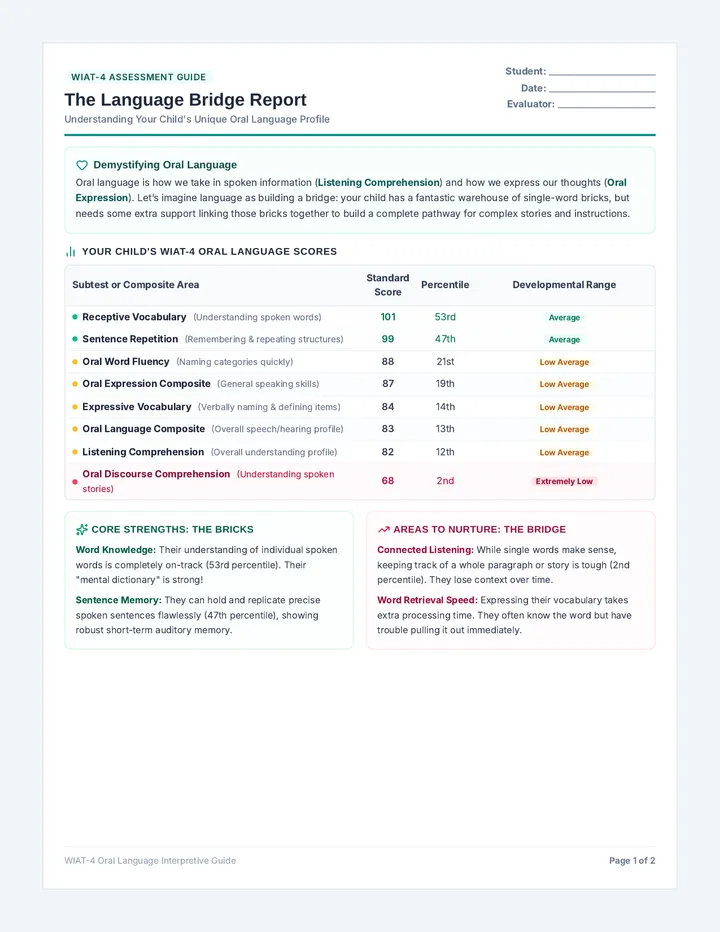
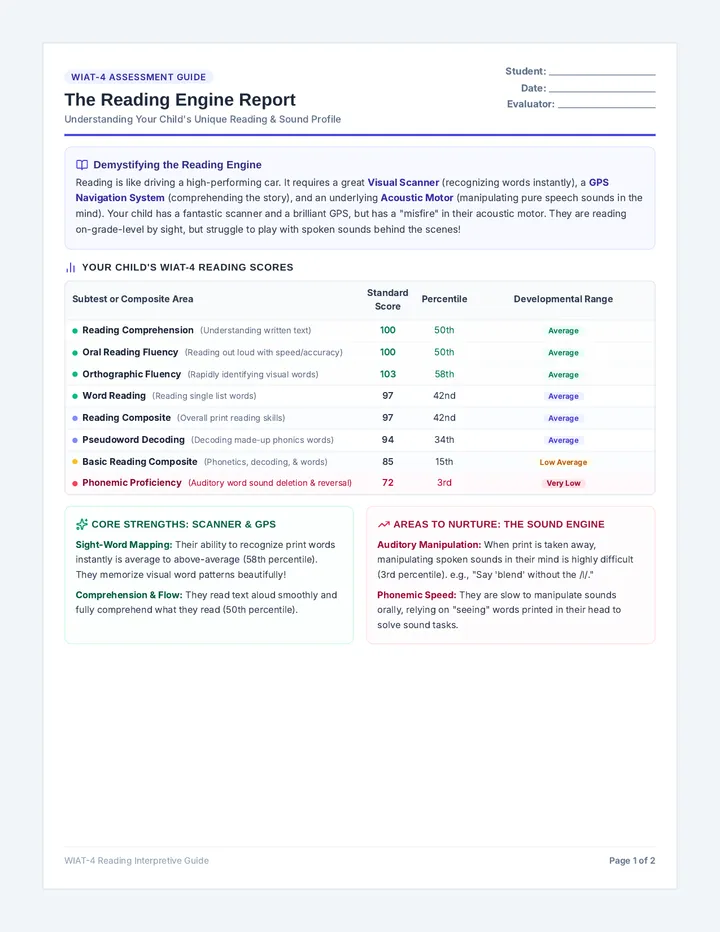
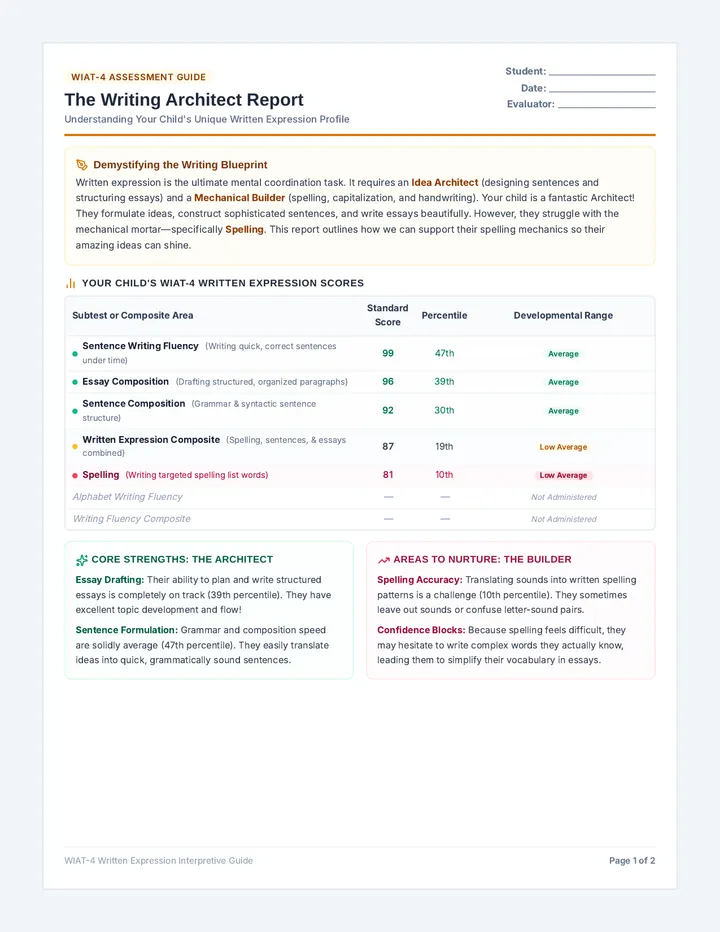
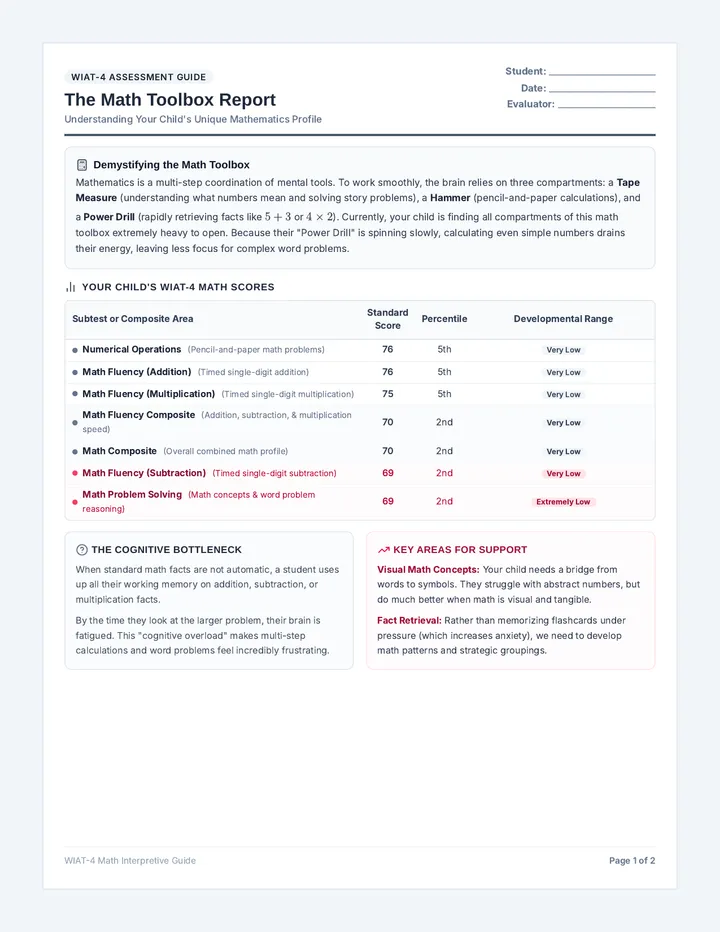
A set of parent-friendly guides translating psychoeducational test scores into positive, actionable home support roadmaps.
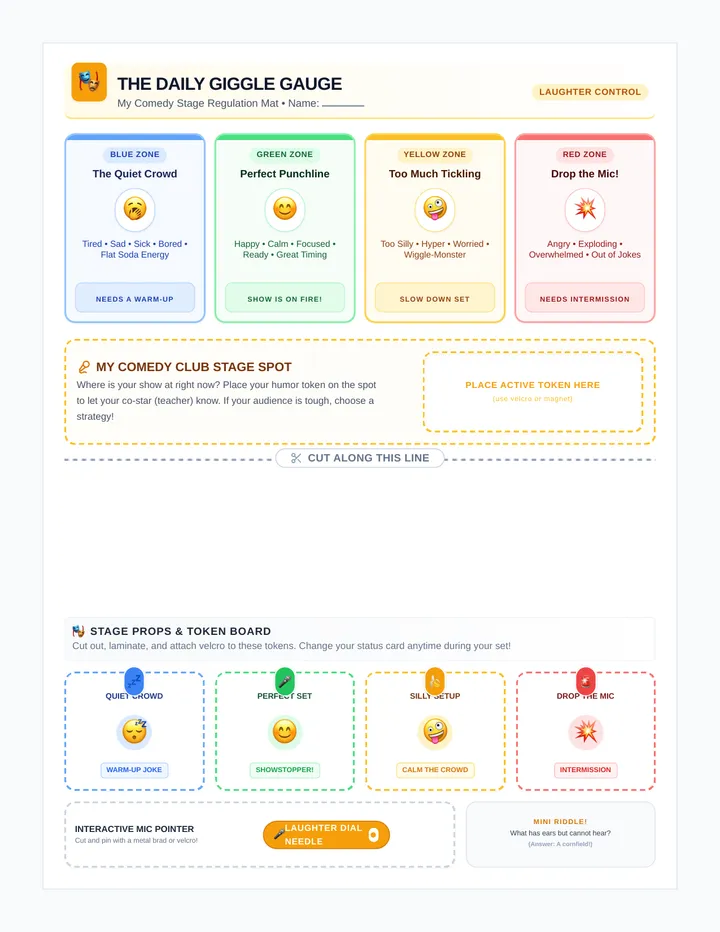
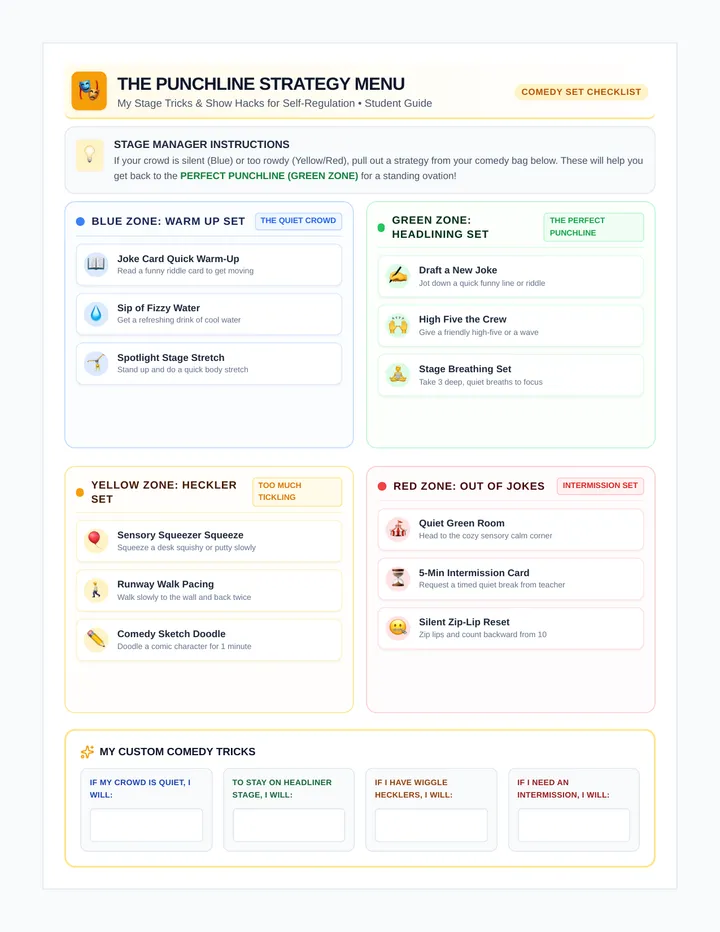
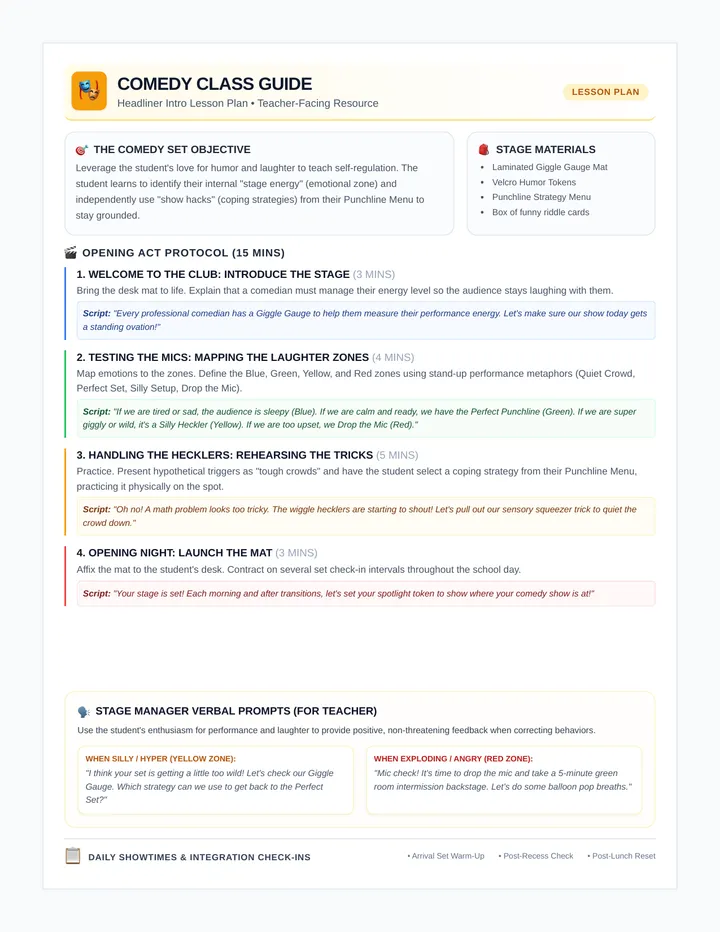
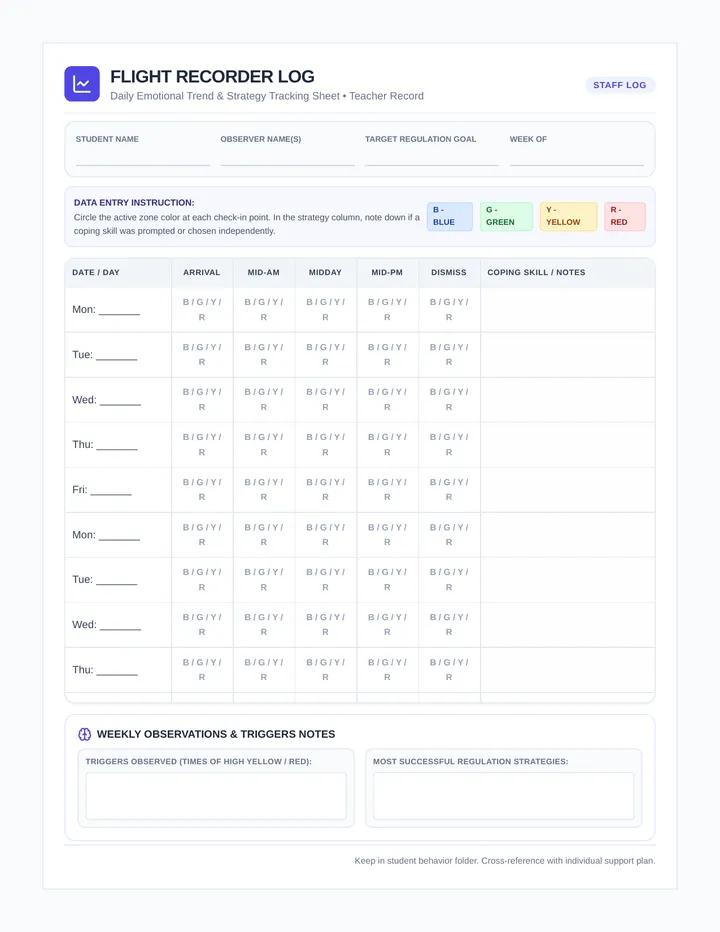
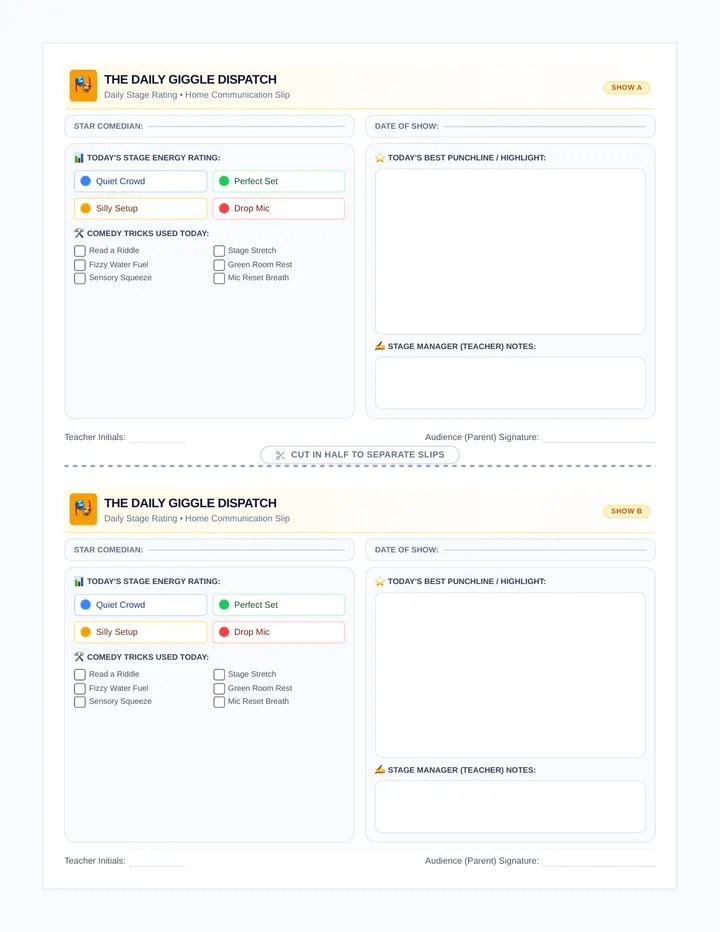
A simple, kid-friendly daily emotional regulation check-in system based on the Zones of Regulation model. Features a clean student desk mat, a coping strategy menu, a teacher instruction guide, and tracking logs.
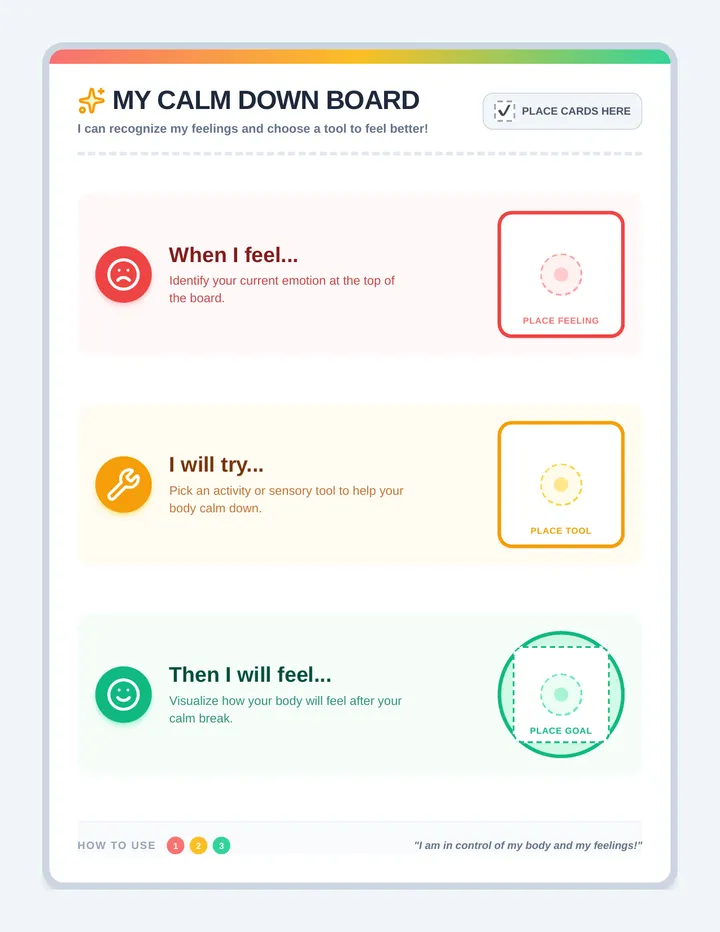
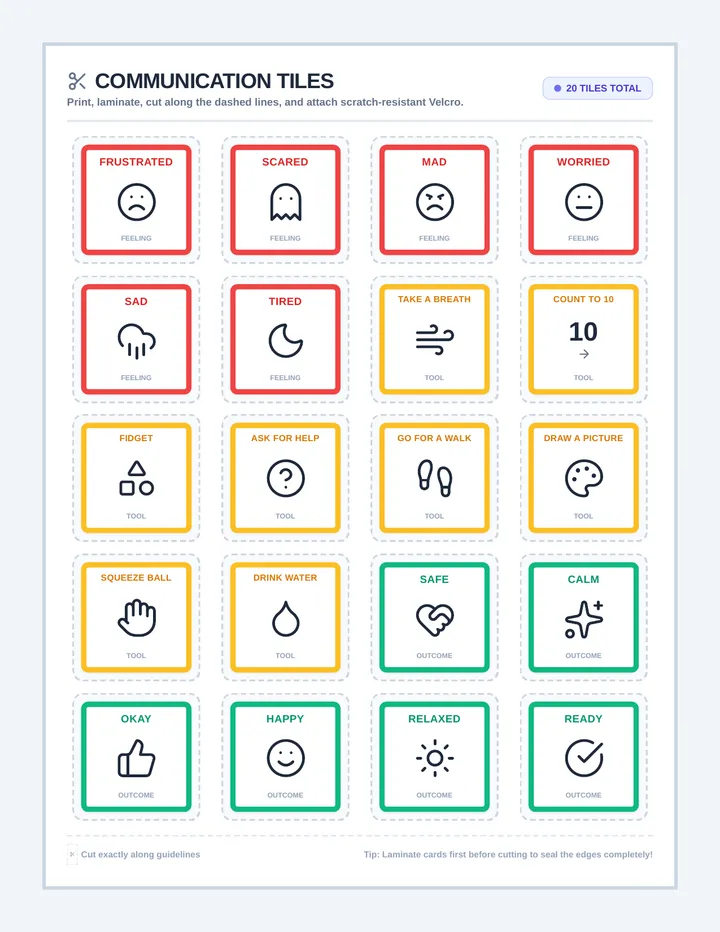
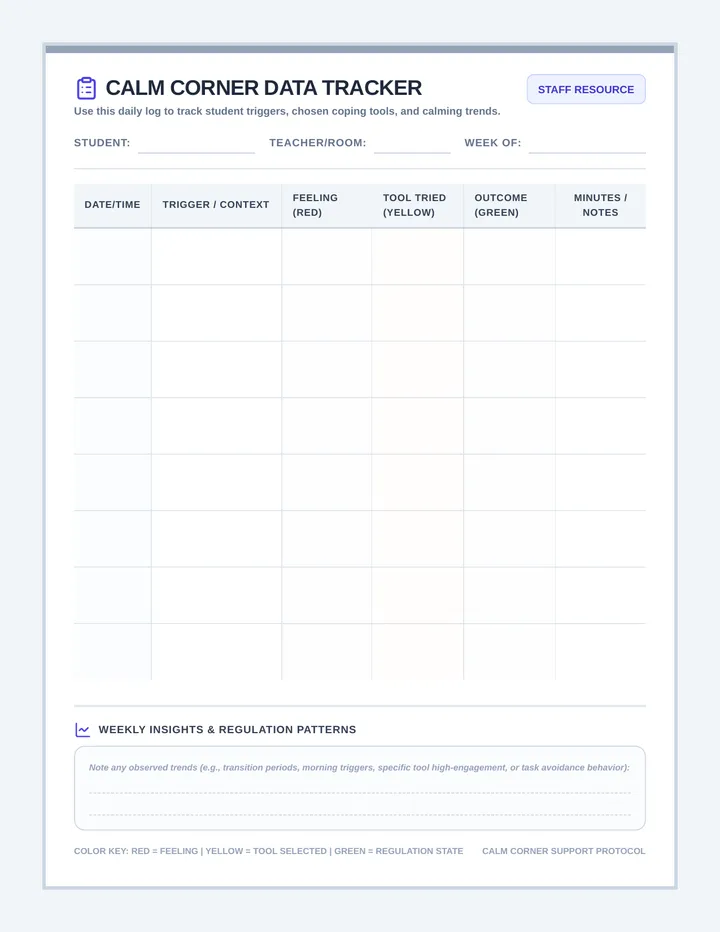
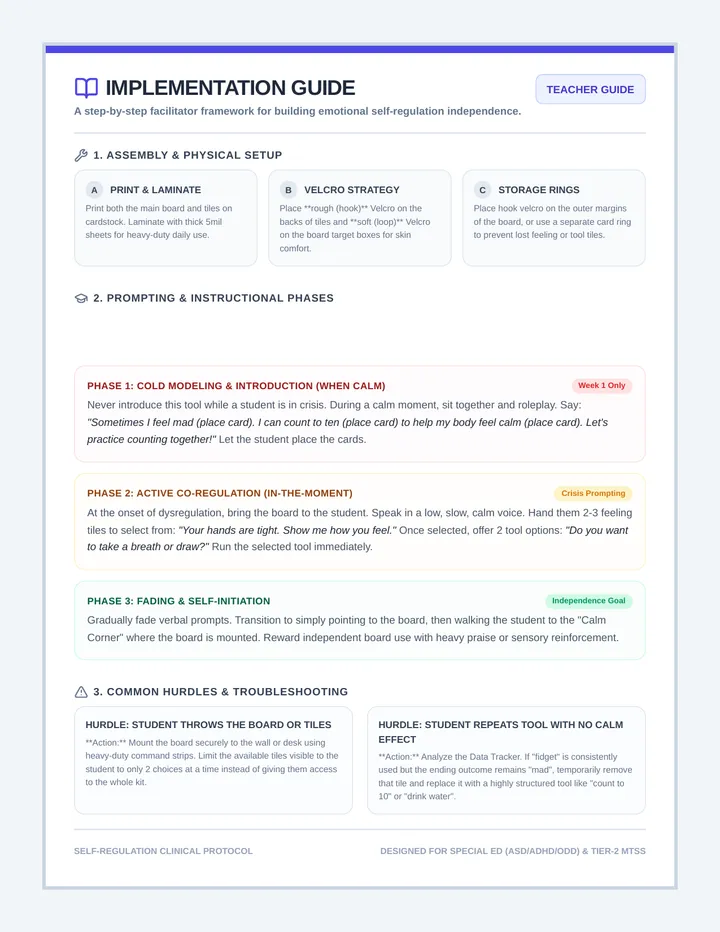
A comprehensive visual support bundle designed for student emotional self-regulation, featuring an interactive board, PECS-style communication cards, a data tracker, and a step-by-step implementation guide.
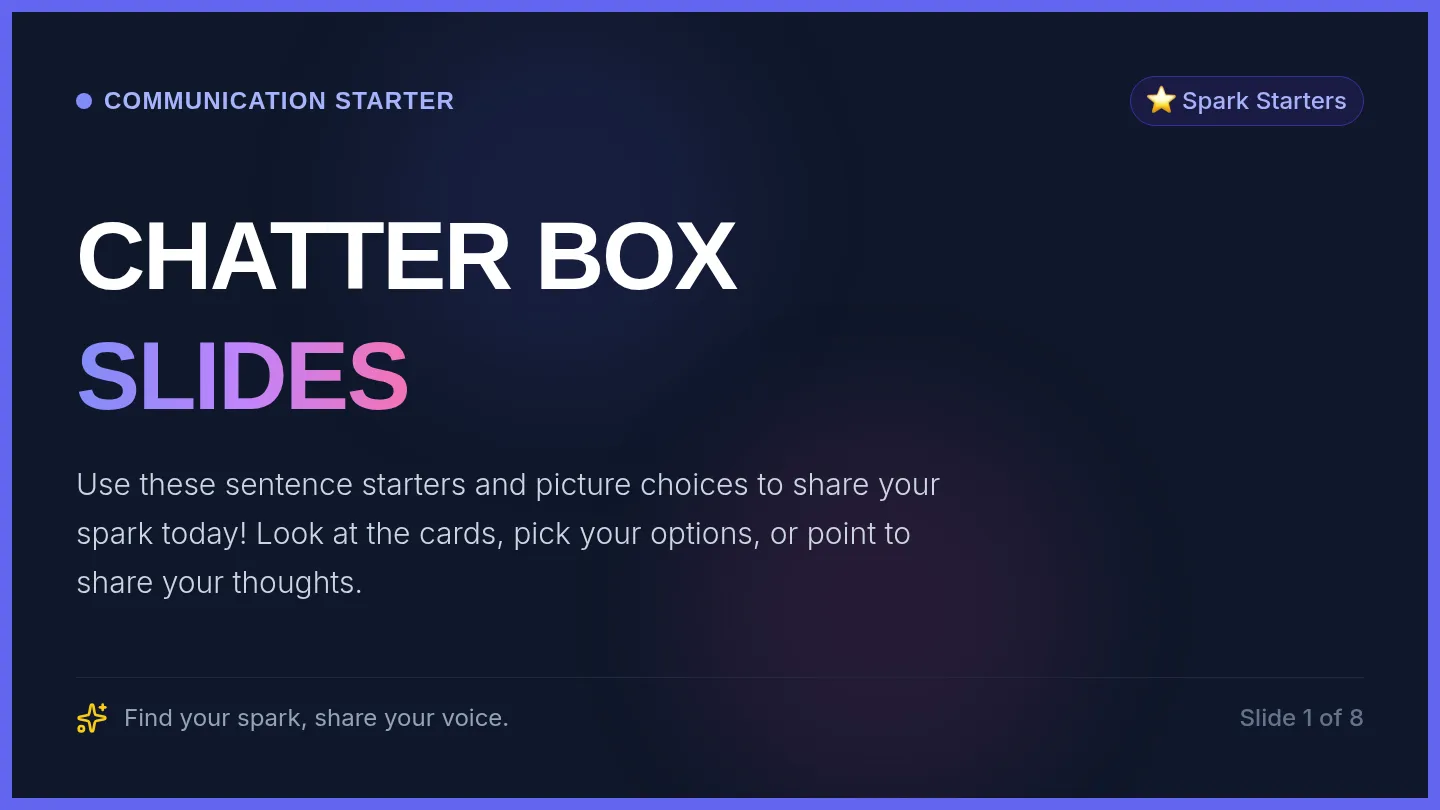
An introductory get-to-know-you lesson utilizing visual sentence starters and structured options to support students of all communication styles in sharing their preferences, feelings, and strengths.
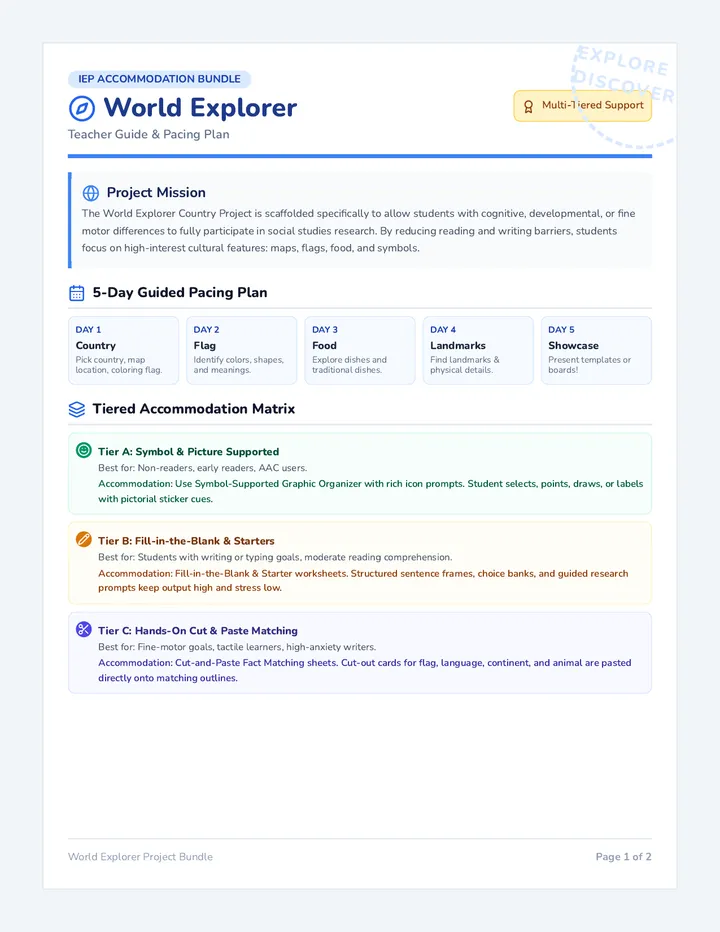
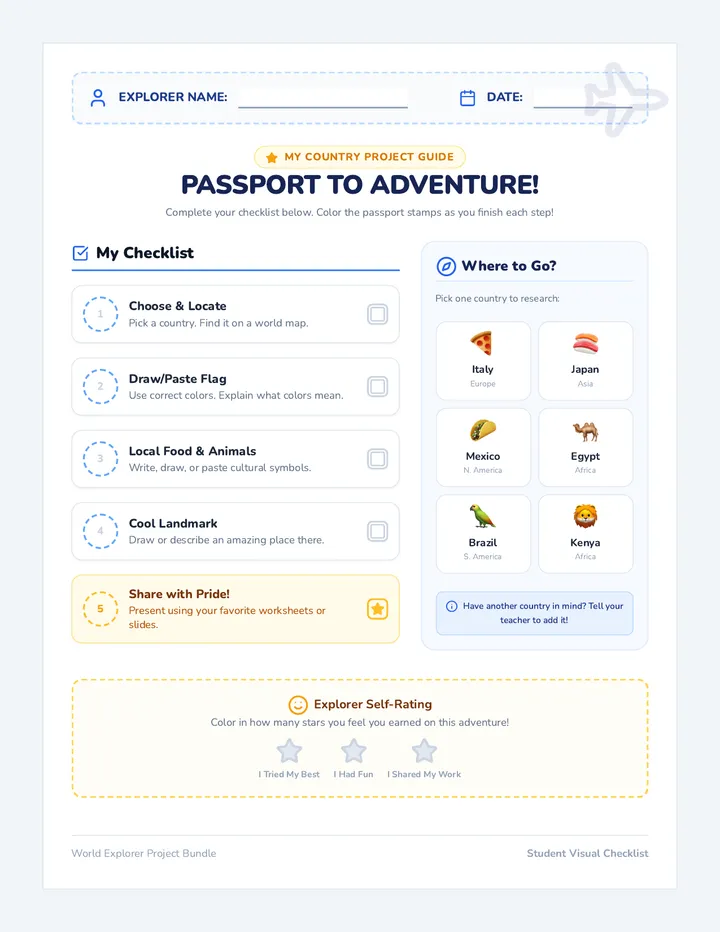
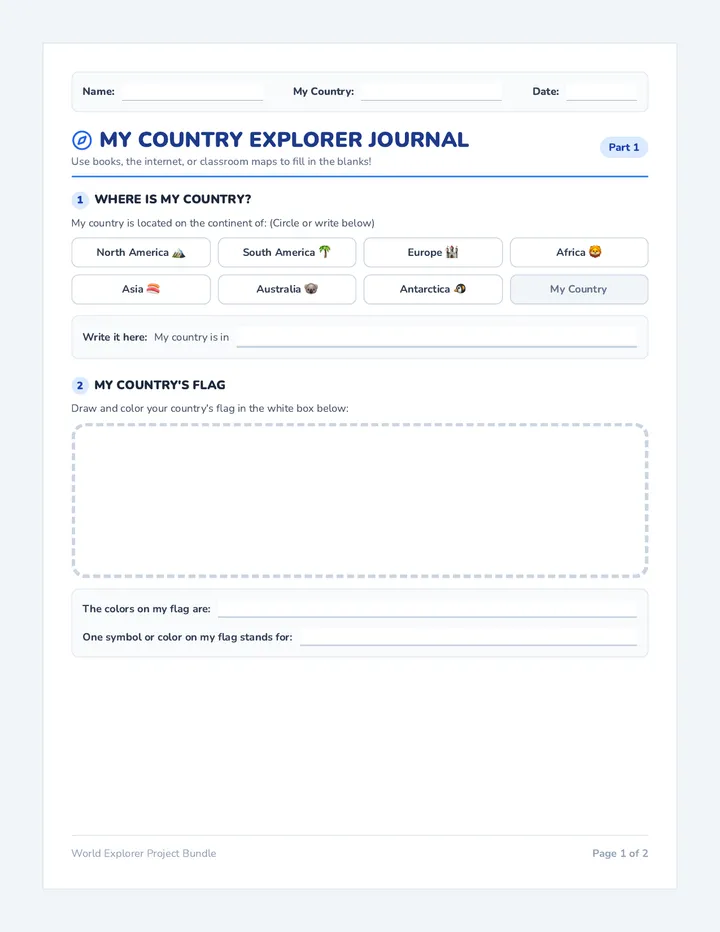
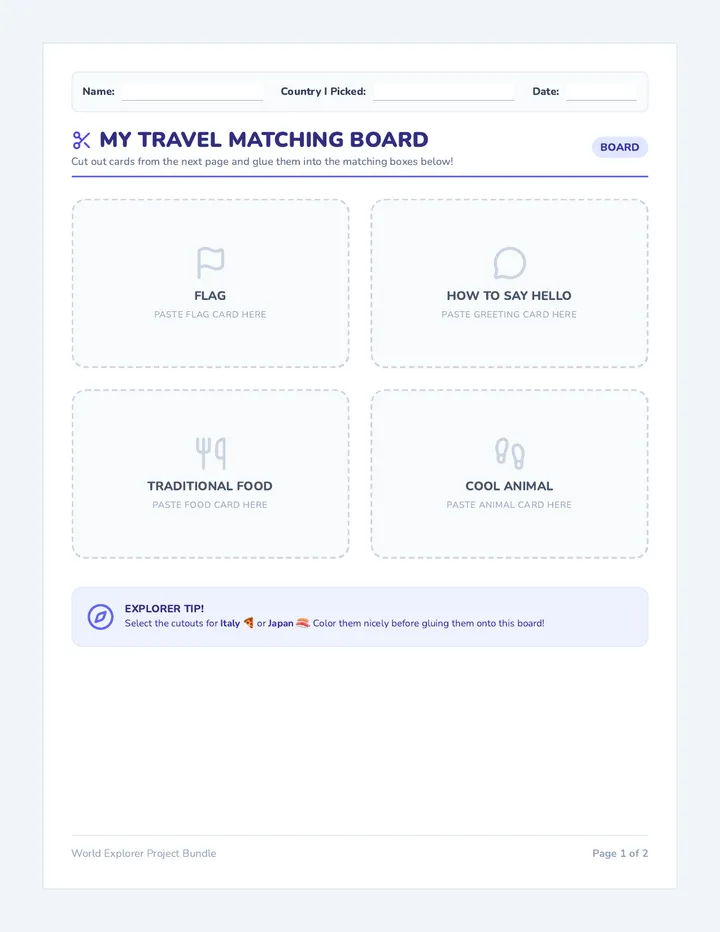
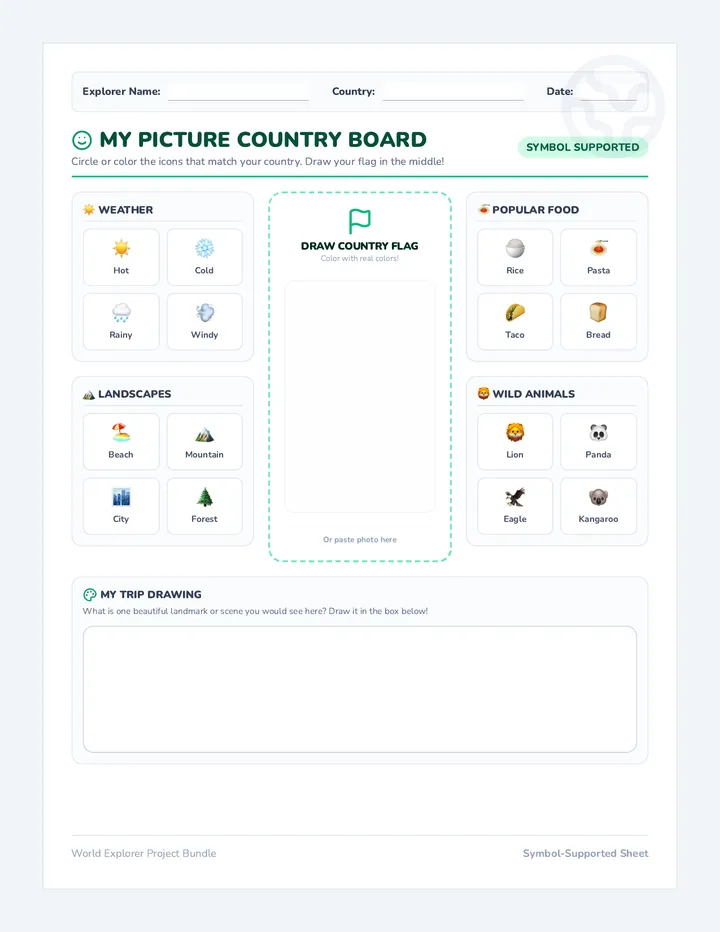
A highly visual, scaffolded country research project bundle modified specifically for IEP students. Includes teacher instructions, simplified visual rubrics, tiered student worksheets, hands-on matching activities, and a friendly presentation template.
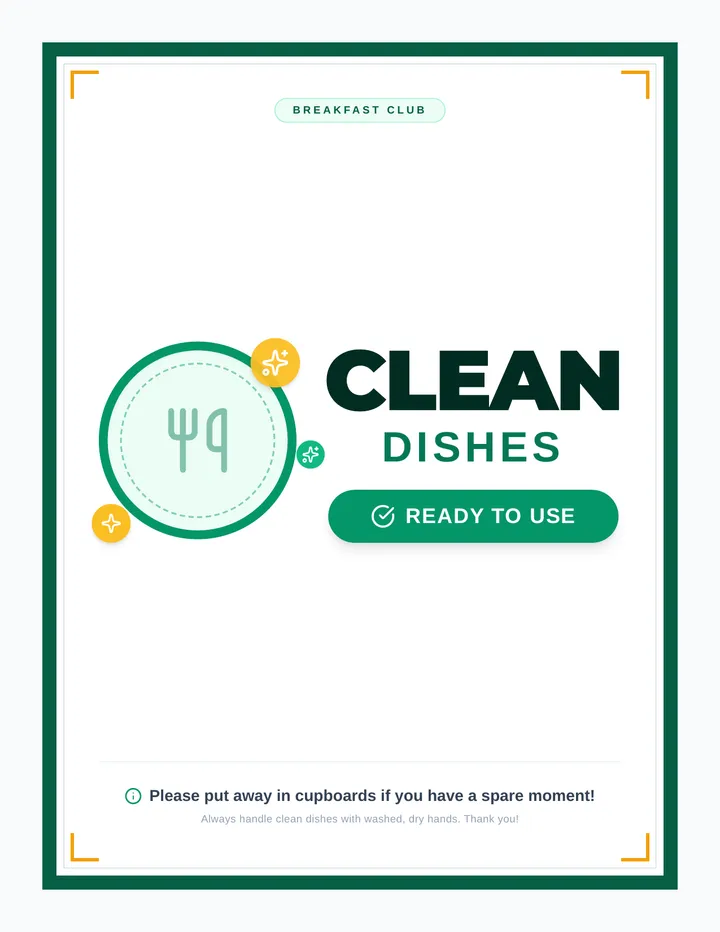
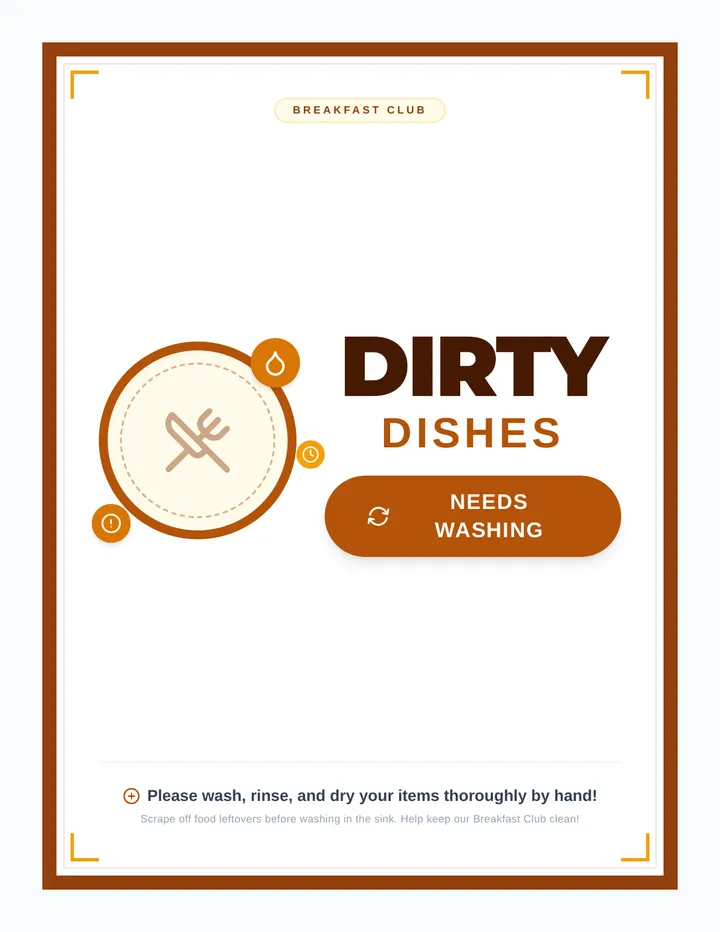
A pair of visually striking, high-contrast printable signs to organize any kitchen or classroom space. Features separate, elegant layouts for clean and dirty dishes to maintain perfect organization.
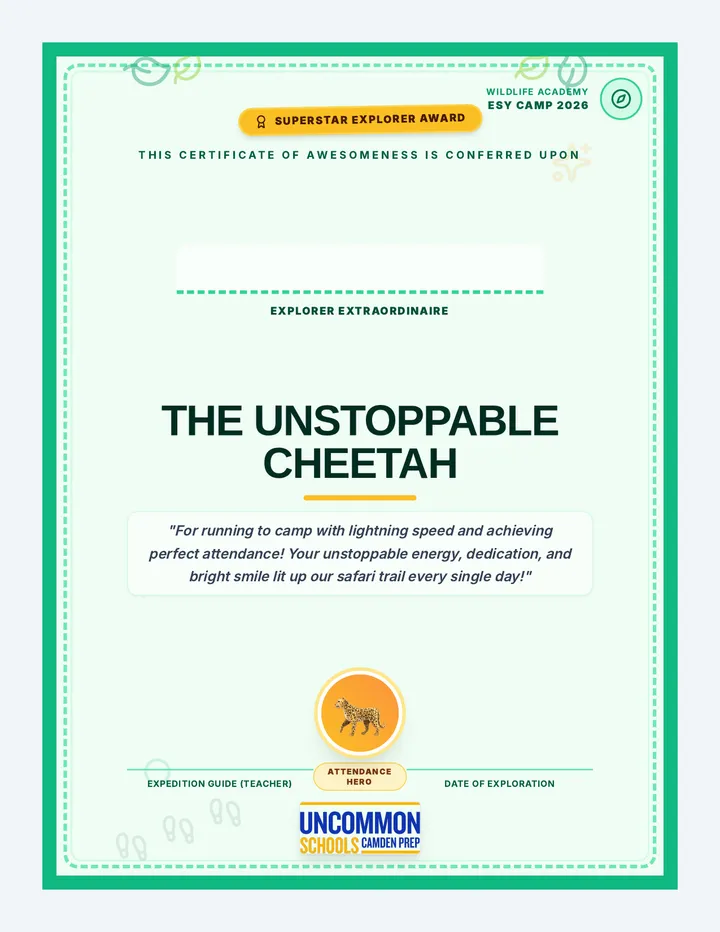
An end-of-summer-school reward program celebrating students' growth, teamwork, academic, and social achievement under a vibrant wildlife explorer theme.
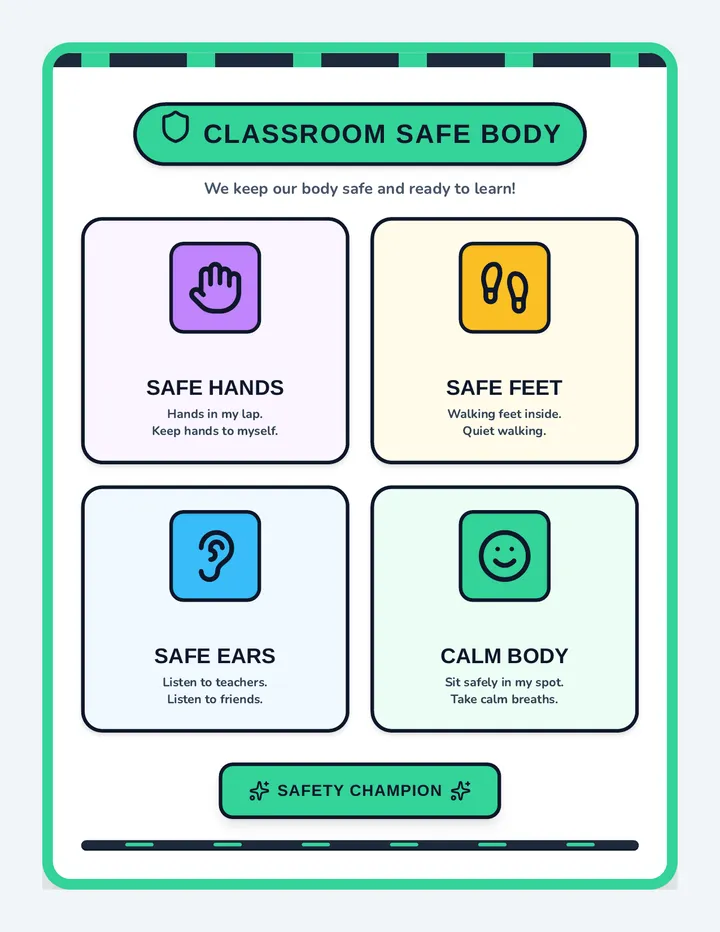
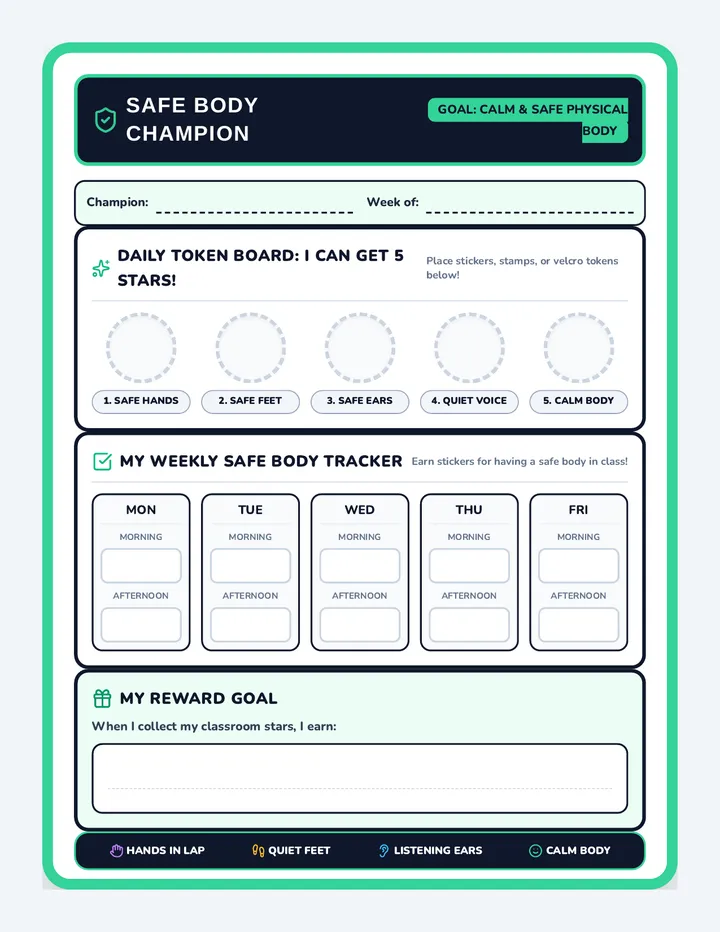
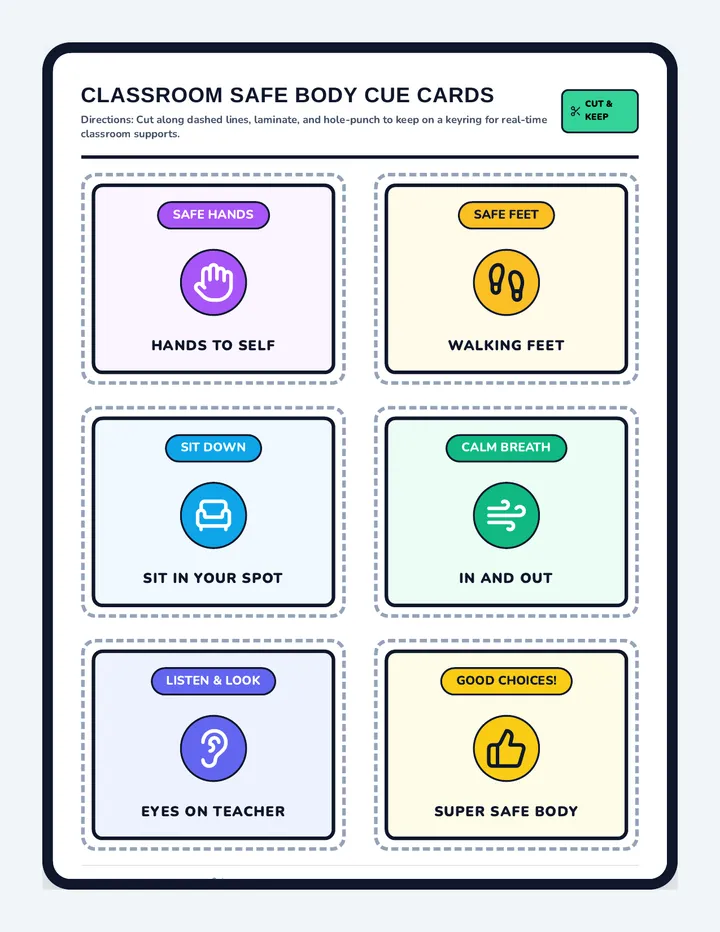
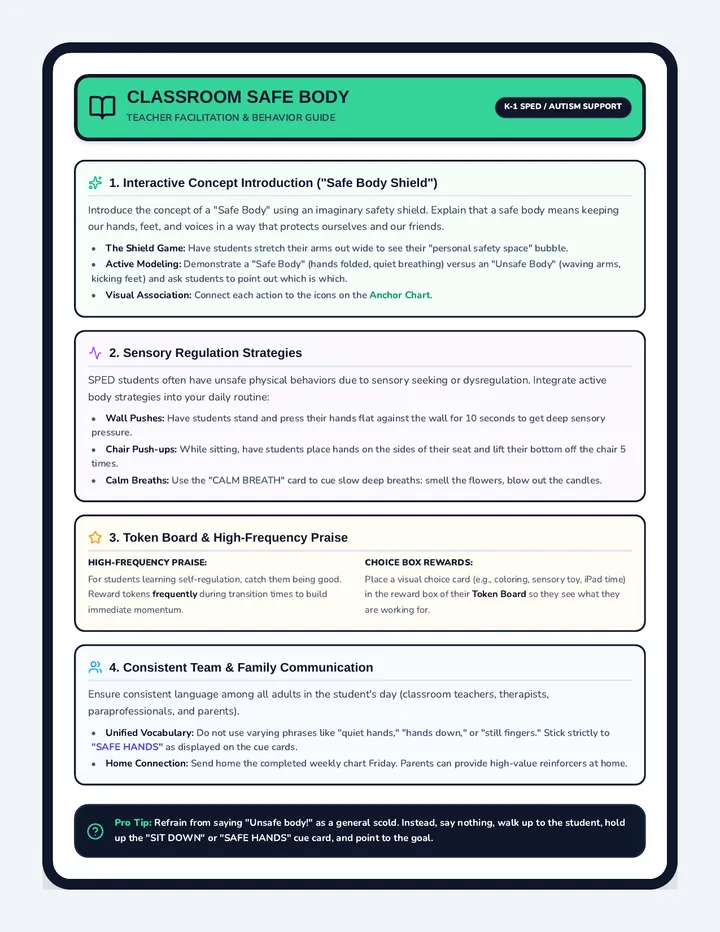
A visual support and behavior management lesson designed for Kindergarten and 1st Grade SPED students to teach, model, and reinforce physical boundaries and self-regulation in the classroom environment.
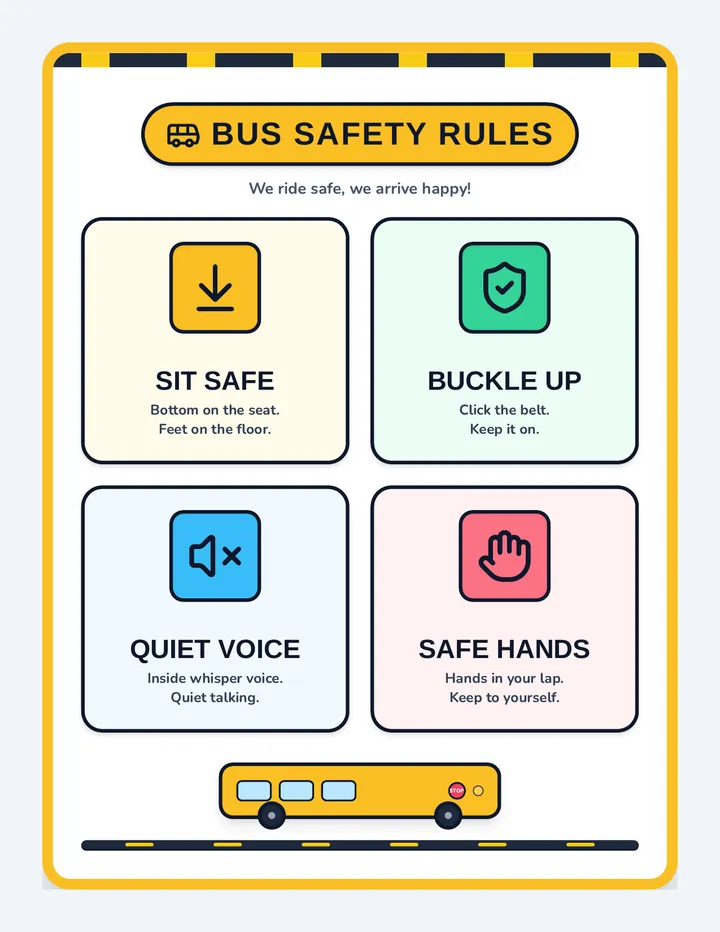
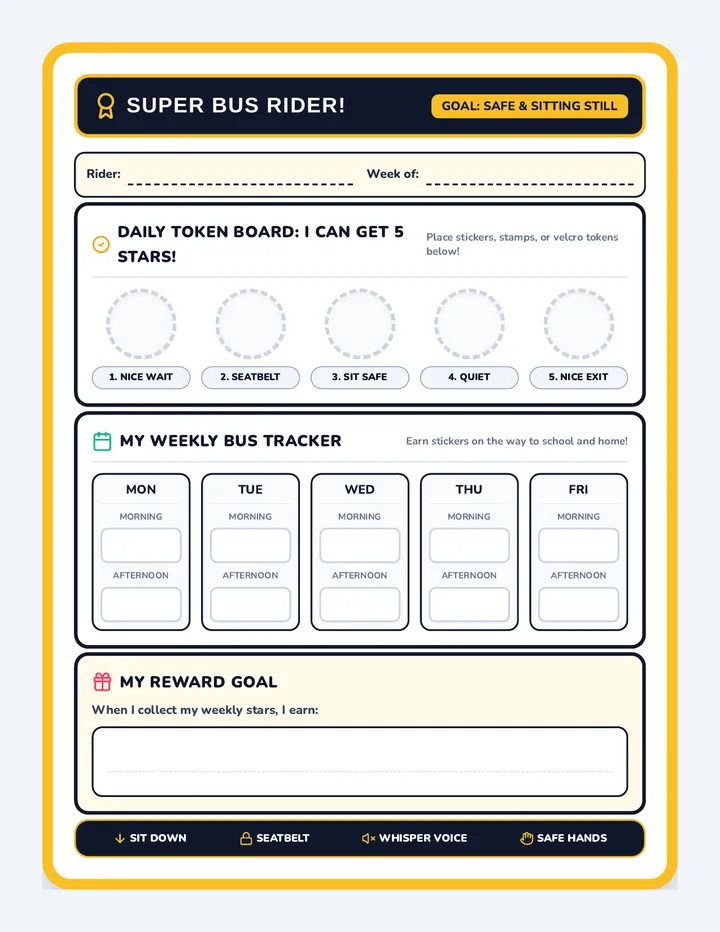
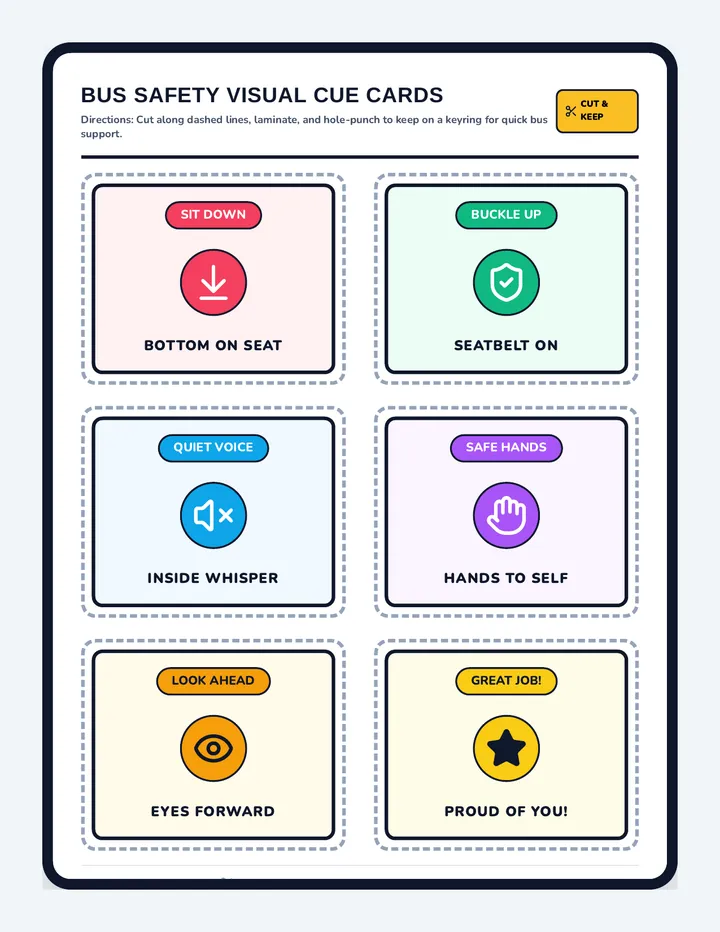
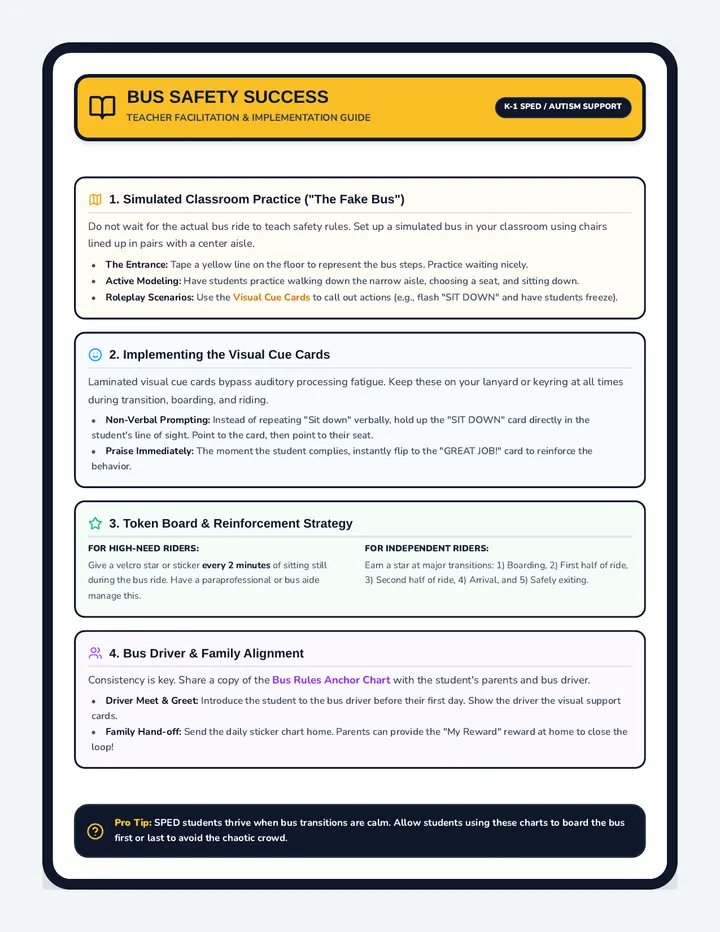
A visual support and behavior management lesson designed for Kindergarten and 1st Grade SPED students, focusing on essential bus safety rules, active modeling, and positive reinforcement tracking.
A comprehensive hands-on scissor skills unit starting with hand-strengthening, safety rules, and non-scissor activities, progressing to basic snipping, continuous path cutting, and complex shape maneuvering.
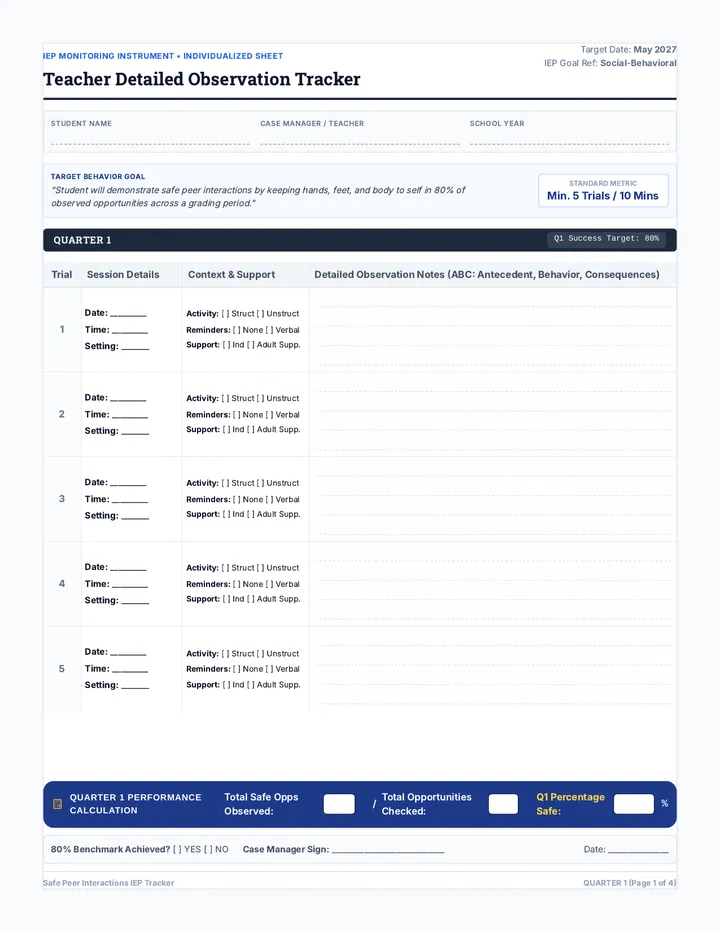
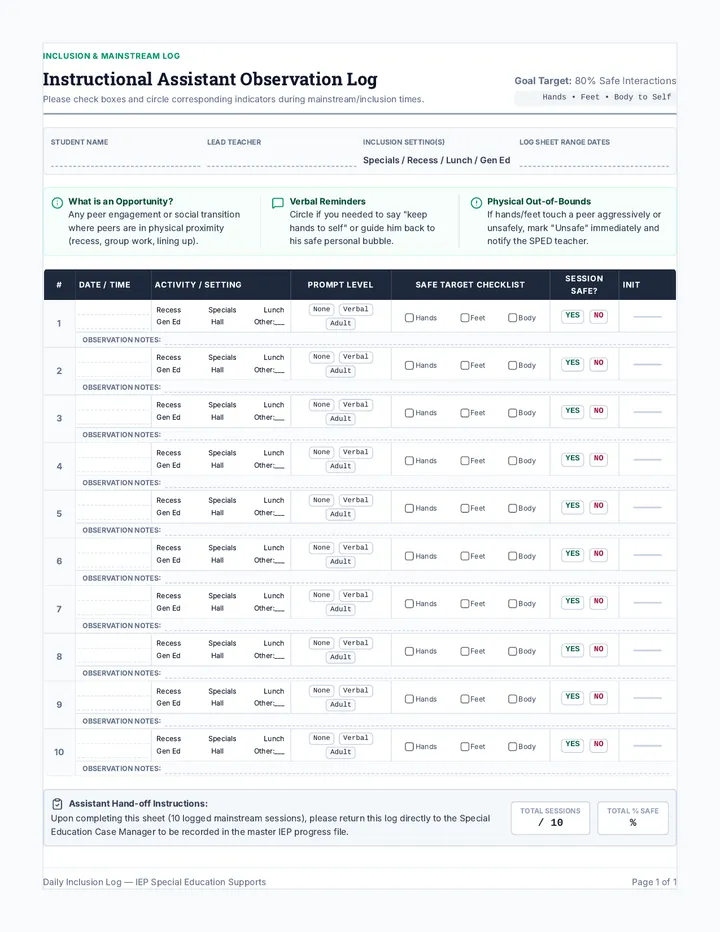
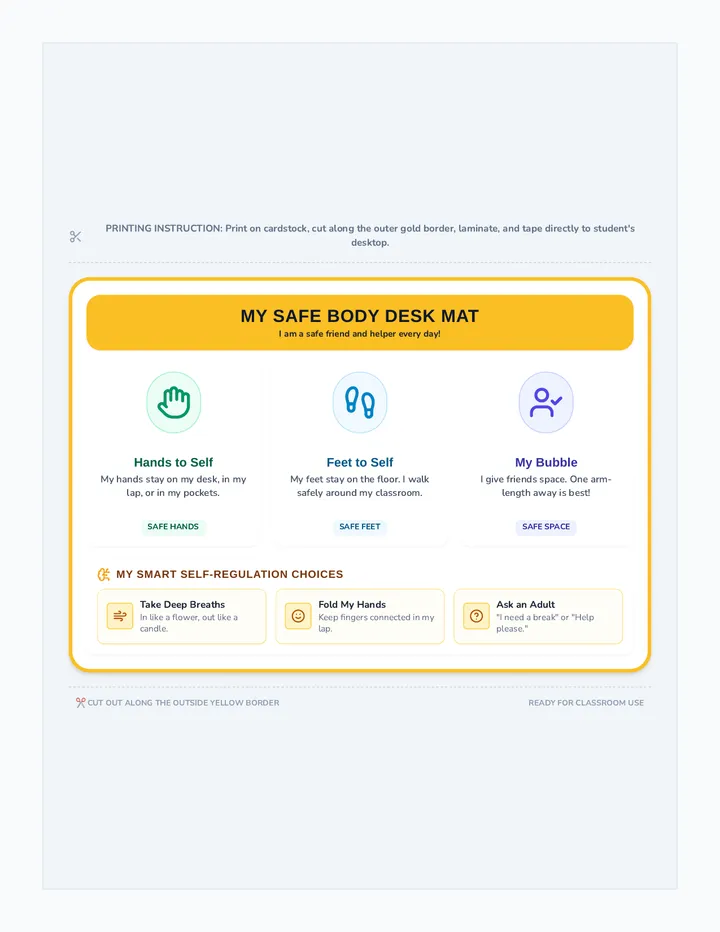
A comprehensive tracking and visual support system designed to monitor and reinforce safe peer interactions (keeping hands, feet, and body to self) in compliance with an IEP goal. Includes a teacher-led detailed observation packet, an easy-to-use assistant log for inclusion times, and a student-facing desktop visual regulation mat.
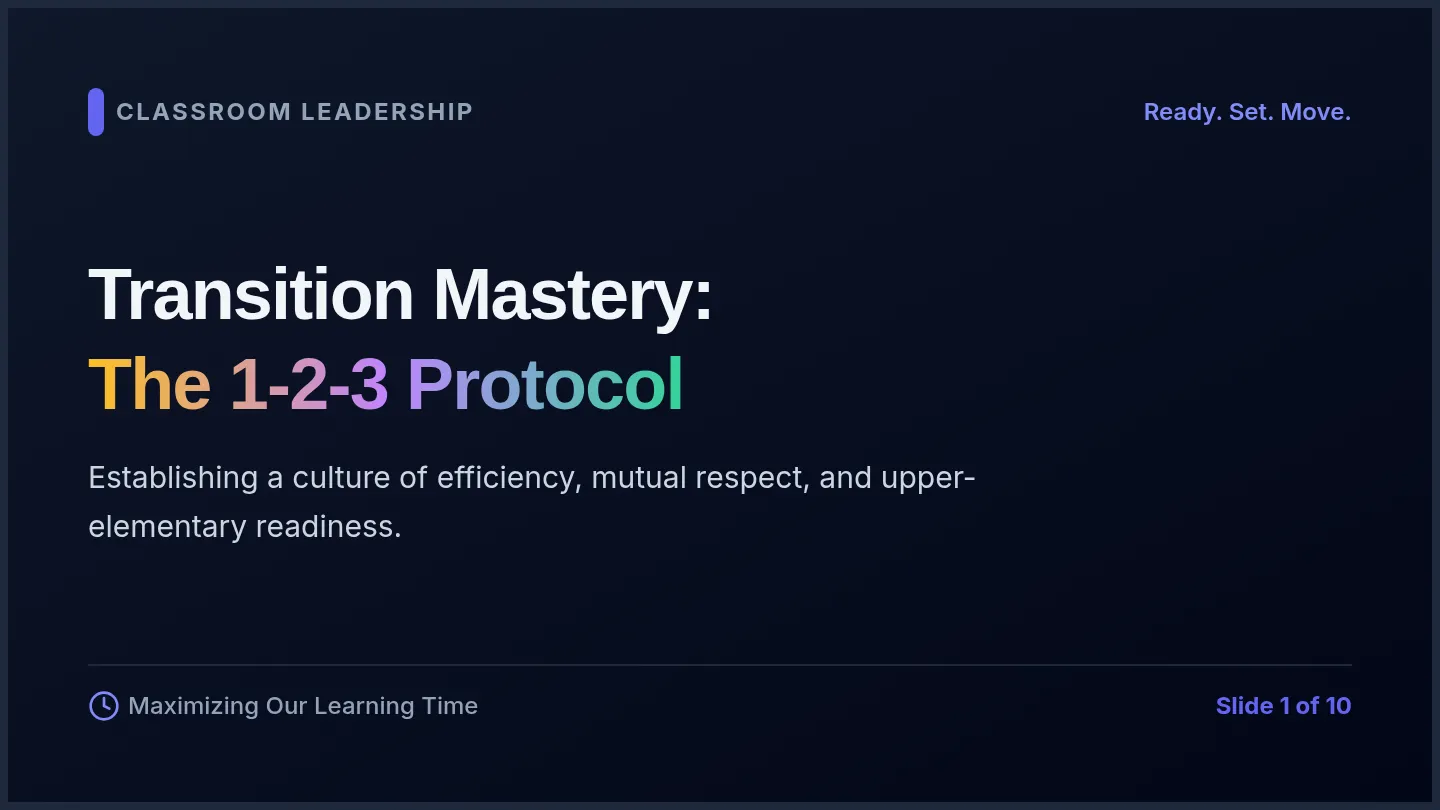
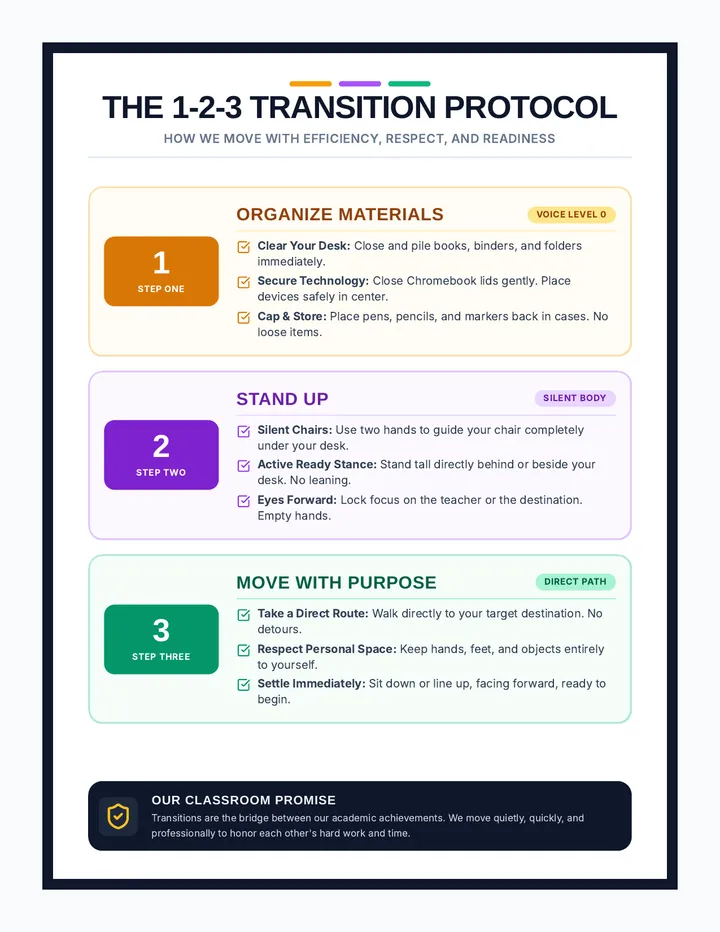
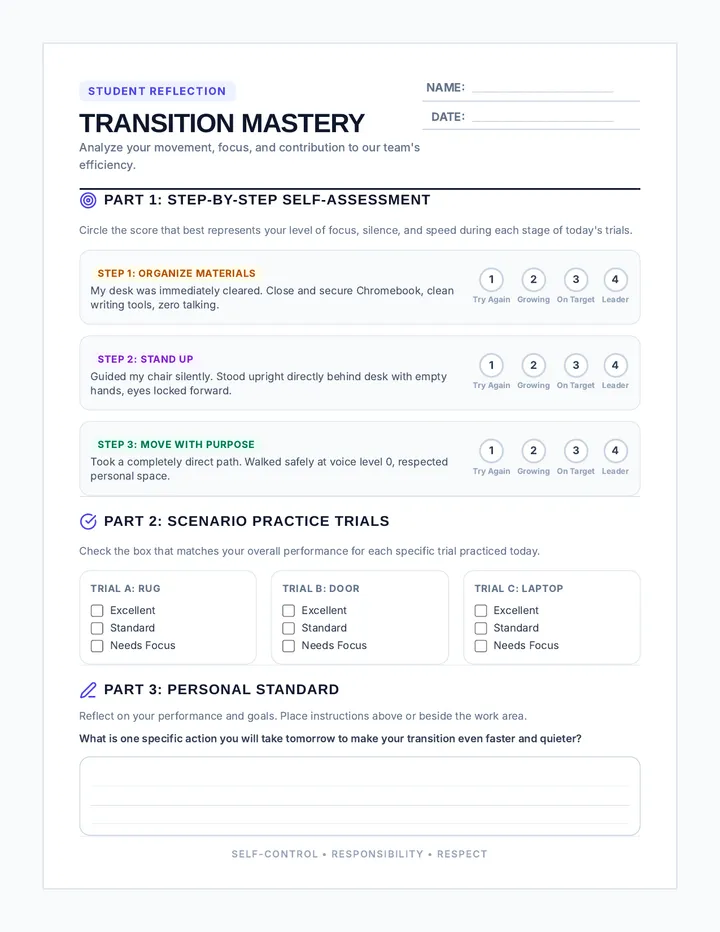
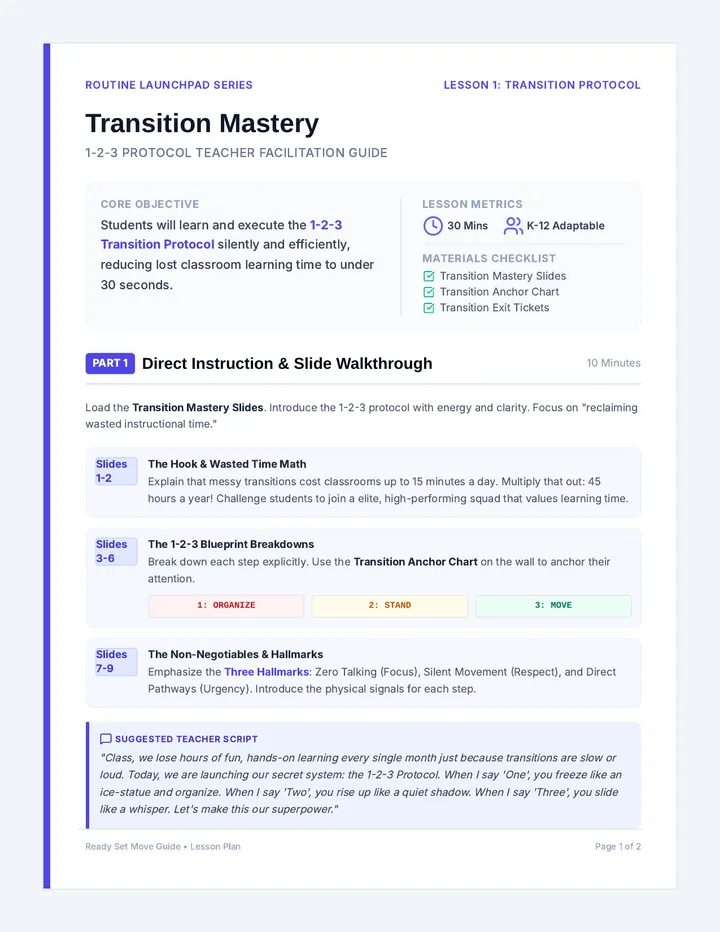
This lesson introduces and structures the '1, 2, 3' transition protocol (1: Organize, 2: Stand, 3: Move) to establish class-wide efficiency. Through modeling, guided practice, and independent application, students master essential classroom routines.
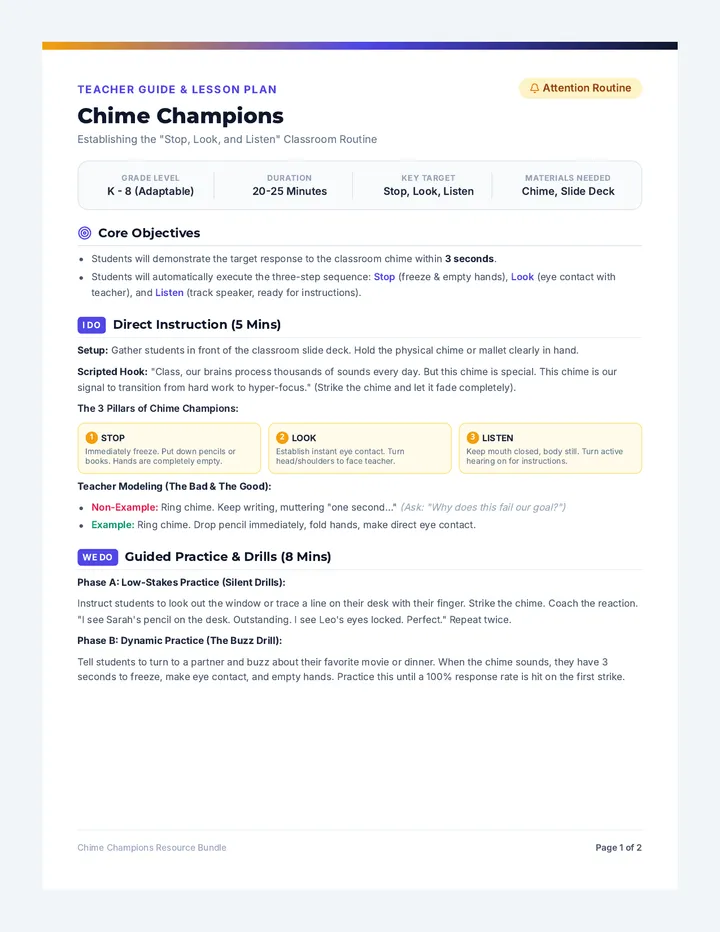
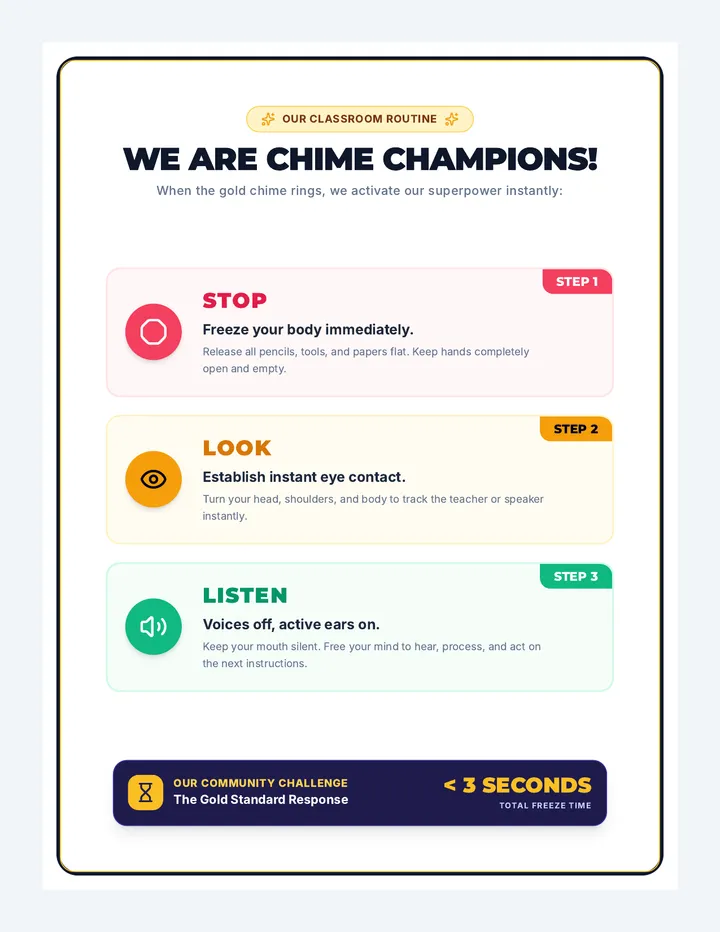
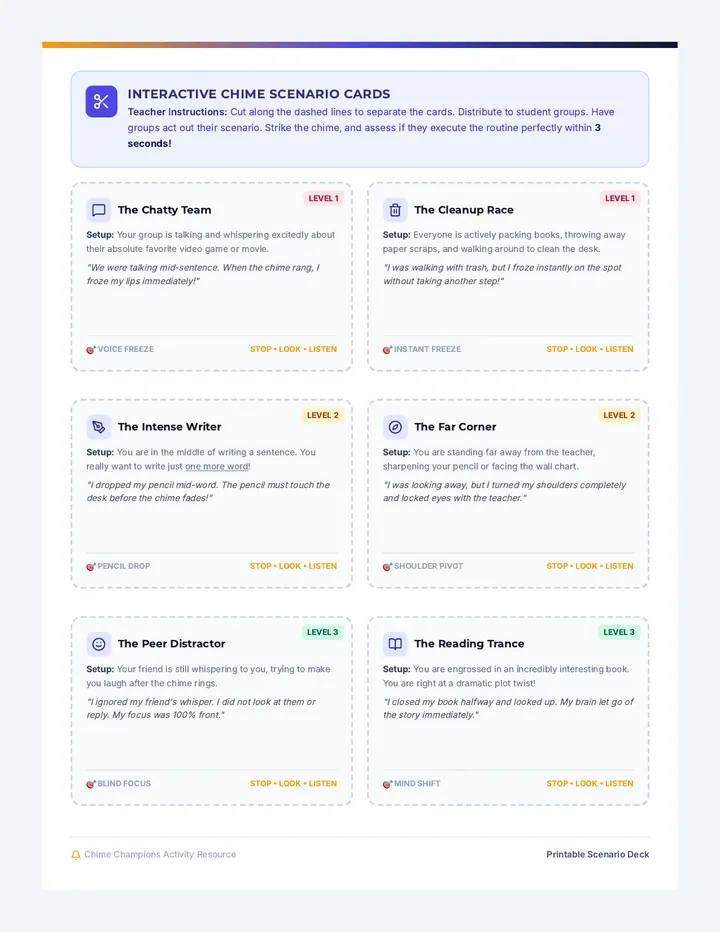
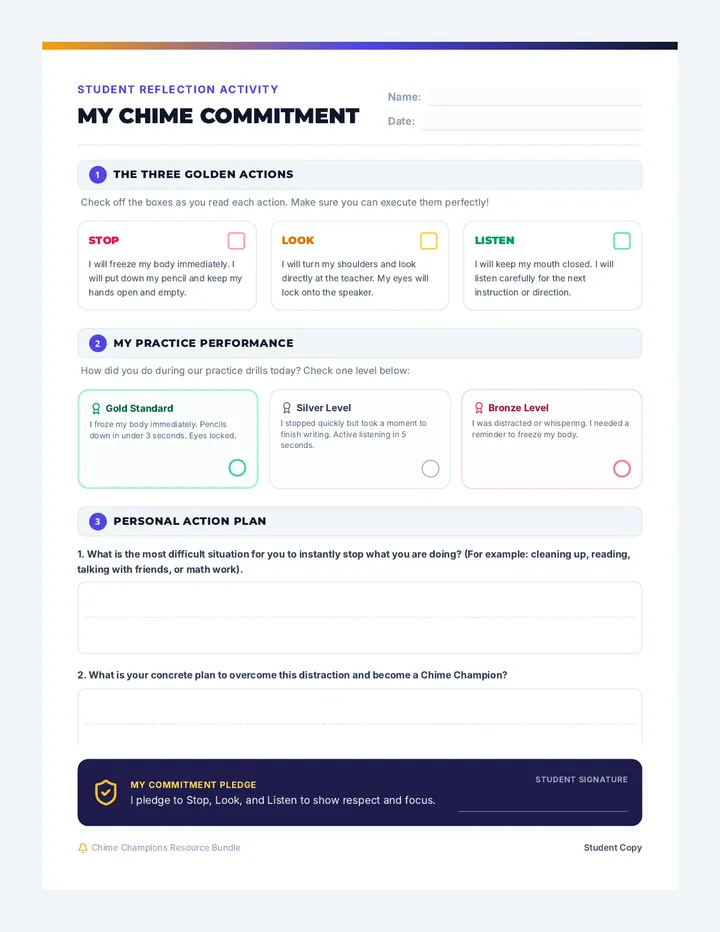
A structured mini-lesson and resource bundle to teach, practice, and master the classroom chime routine. Features a clear 'I Do, We Do, You Do' progression to establish the immediate 'Stop, Look, and Listen' behavior.
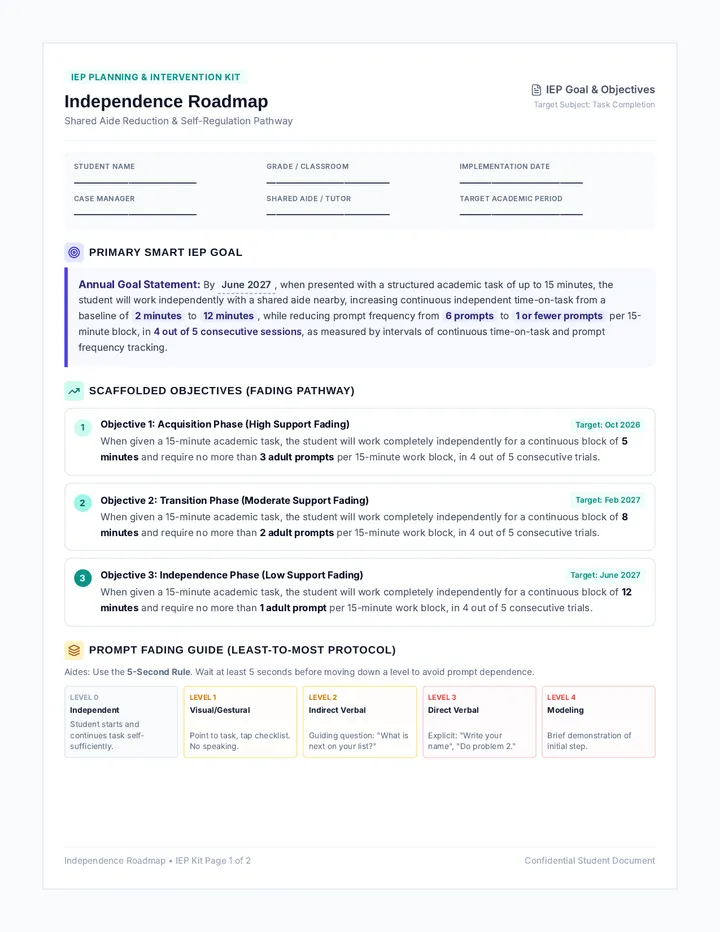
A comprehensive IEP goal planning and progress tracking system designed to transition a student from shared aide dependence to independent classroom work completion.
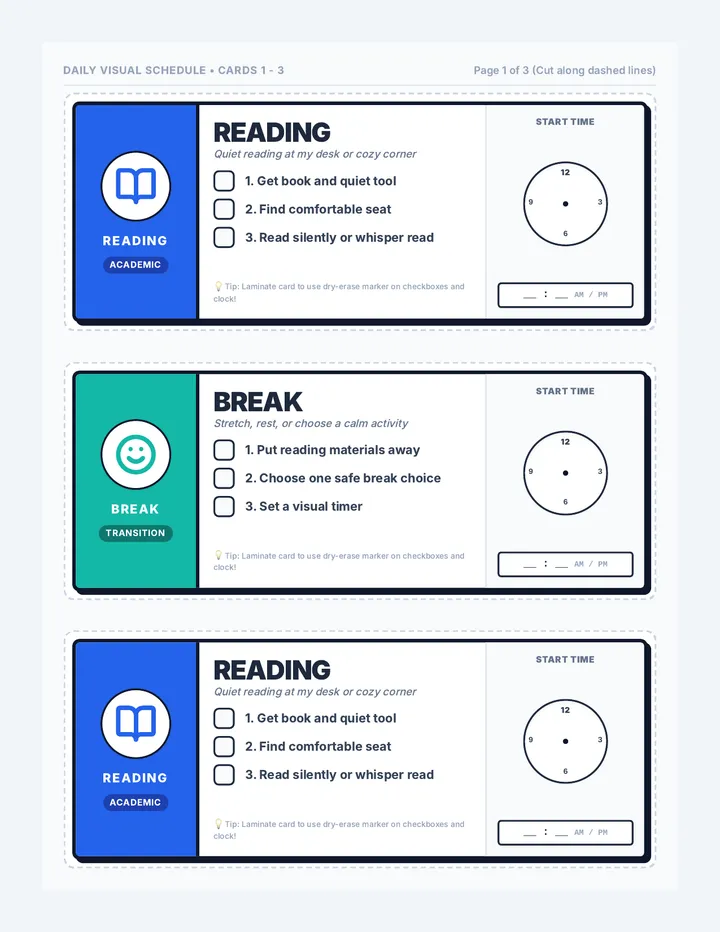
A lesson focused on establishing, presenting, and reinforcing daily routines and transitions for neurodivergent and concrete learners using structured visual schedule supports.
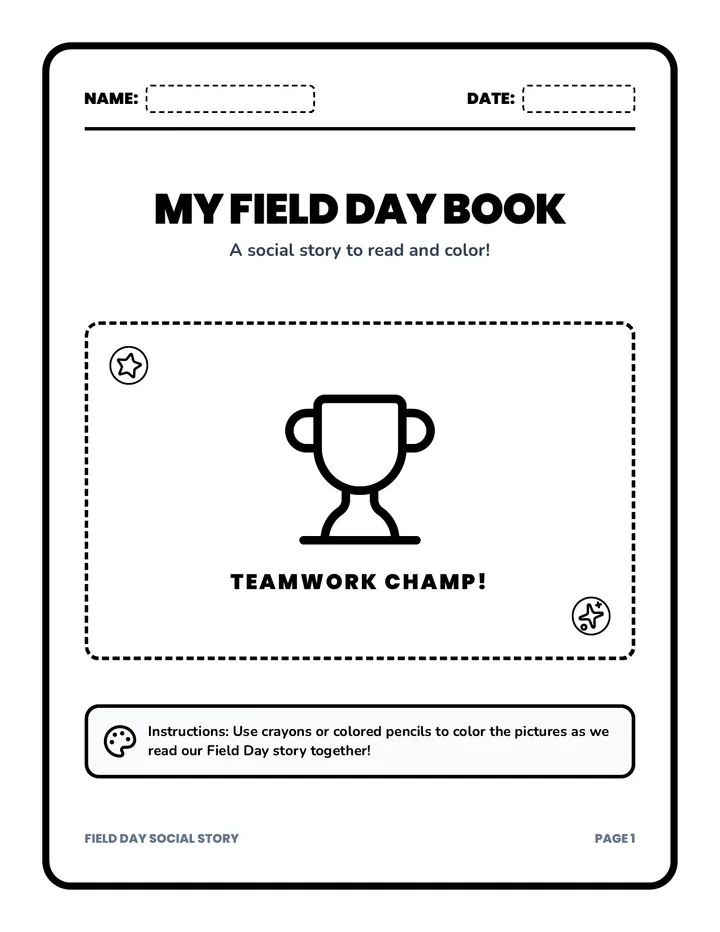
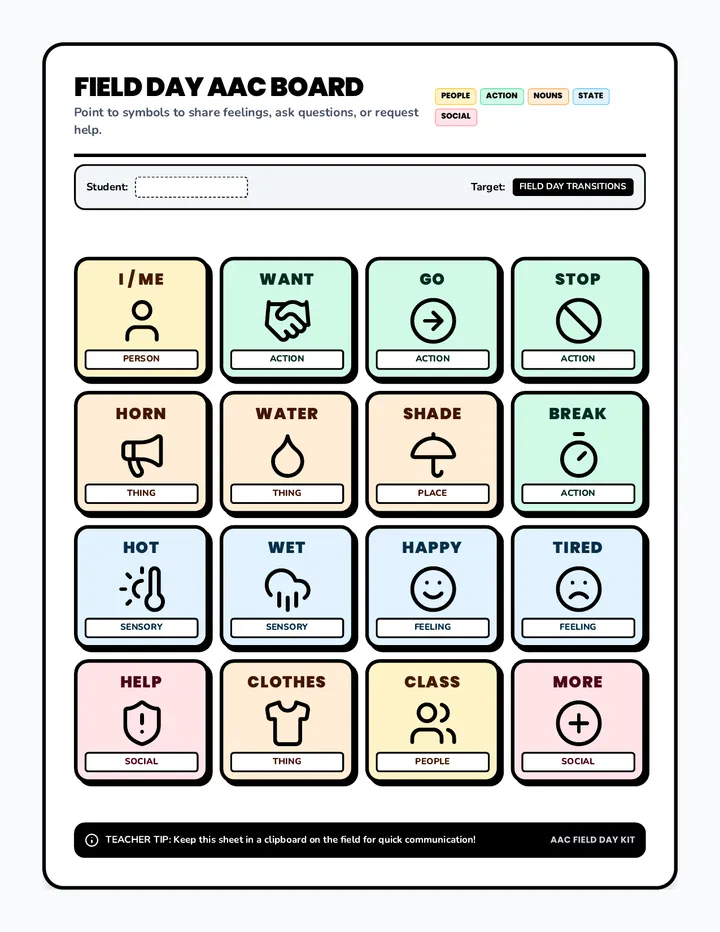
A single-session social story lesson designed to prepare students for the sensory and behavioral expectations of school Field Day using visual, colorable-style line art.
A rapid, high-energy 15-minute PBIS behavior review lesson designed to align with school-wide expectations. Students learn core behaviors through muscle-memory motions, test their skills as 'STAR Detectives', and demonstrate mastery across four active practice stations.
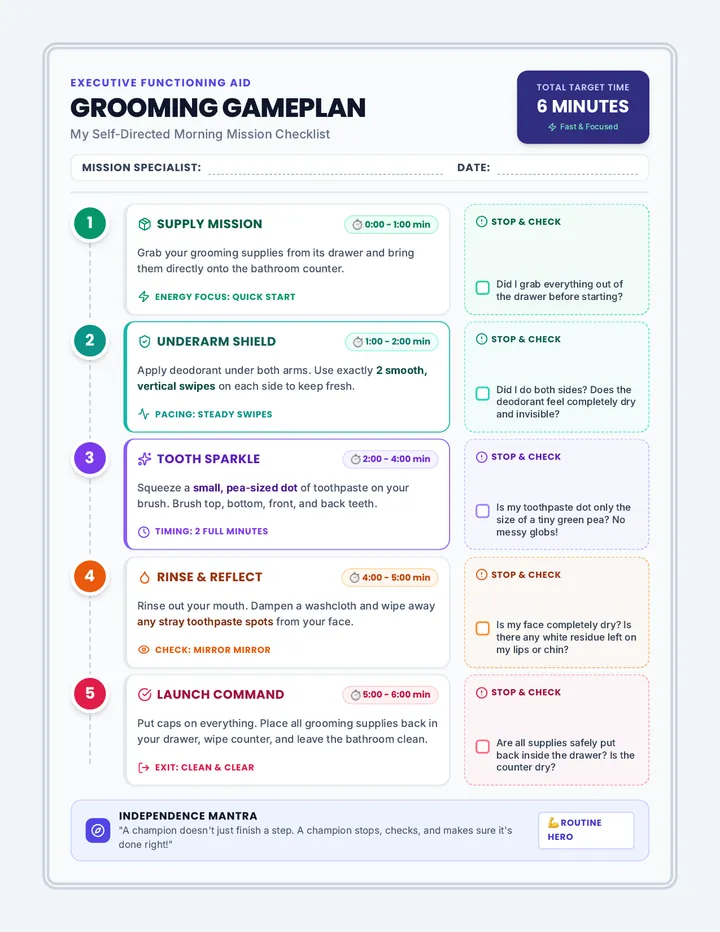
A lesson designed to build executive functioning skills, self-monitoring, and personal independence during morning routines.
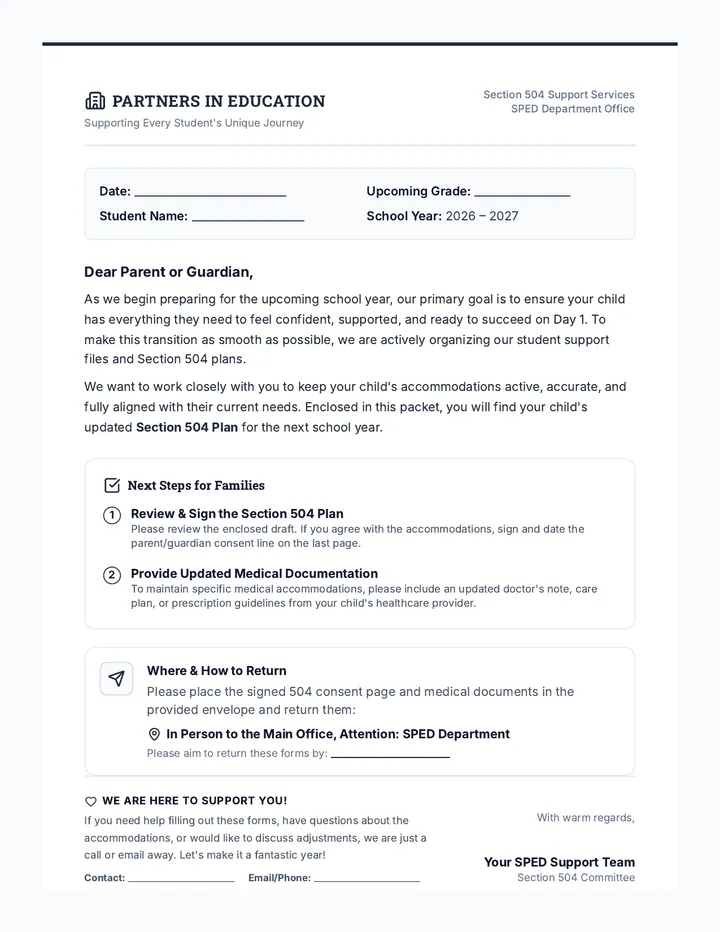
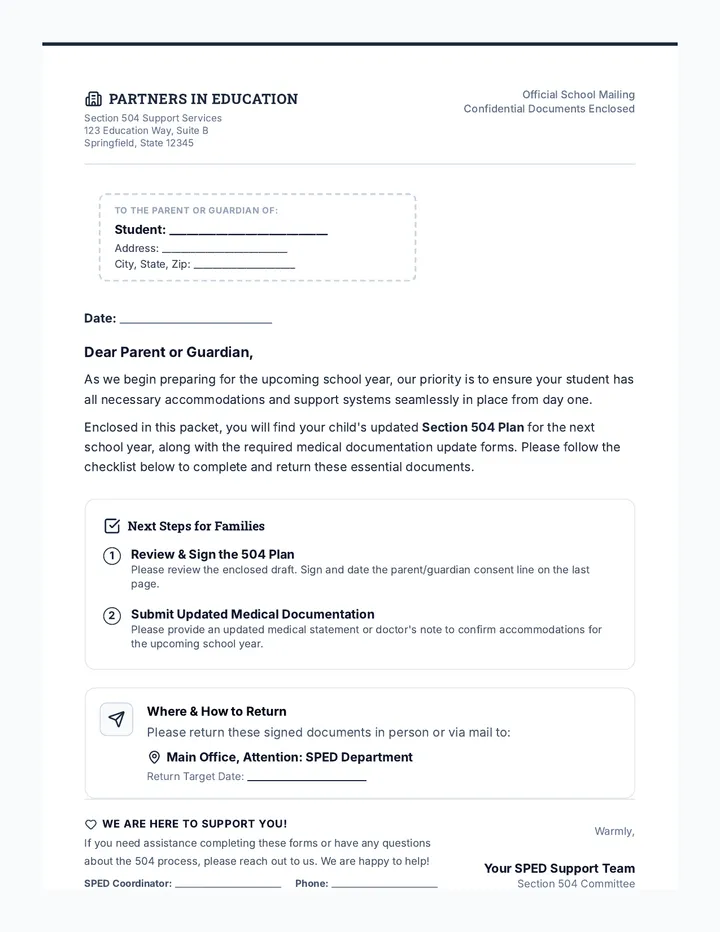
A set of student and parent-facing materials designed to accompany the distribution and collection of Section 504 plans and required medical documentation for the upcoming school year.
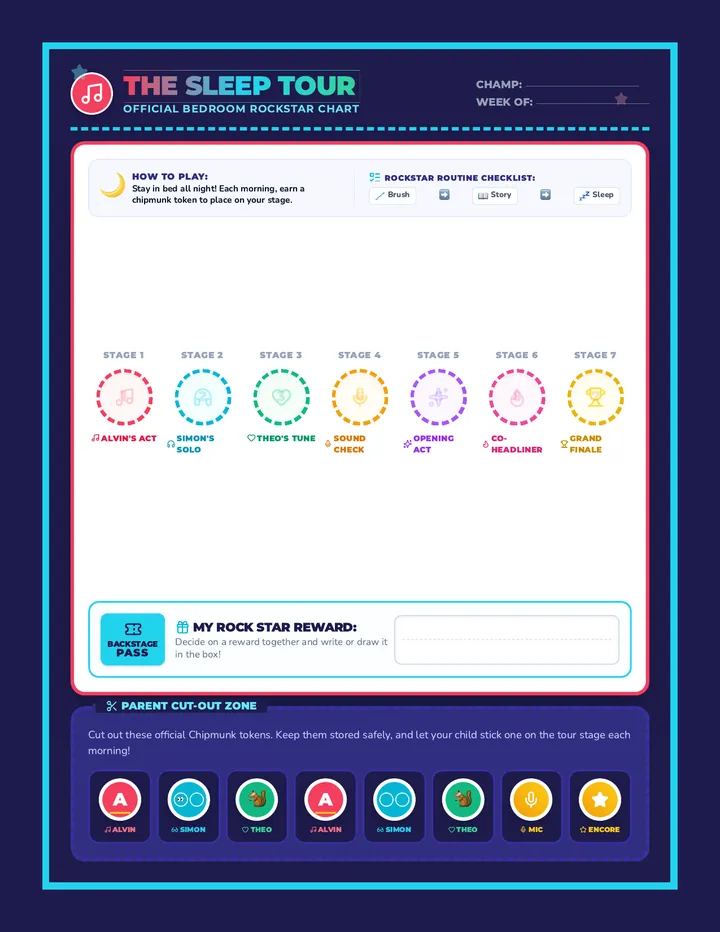
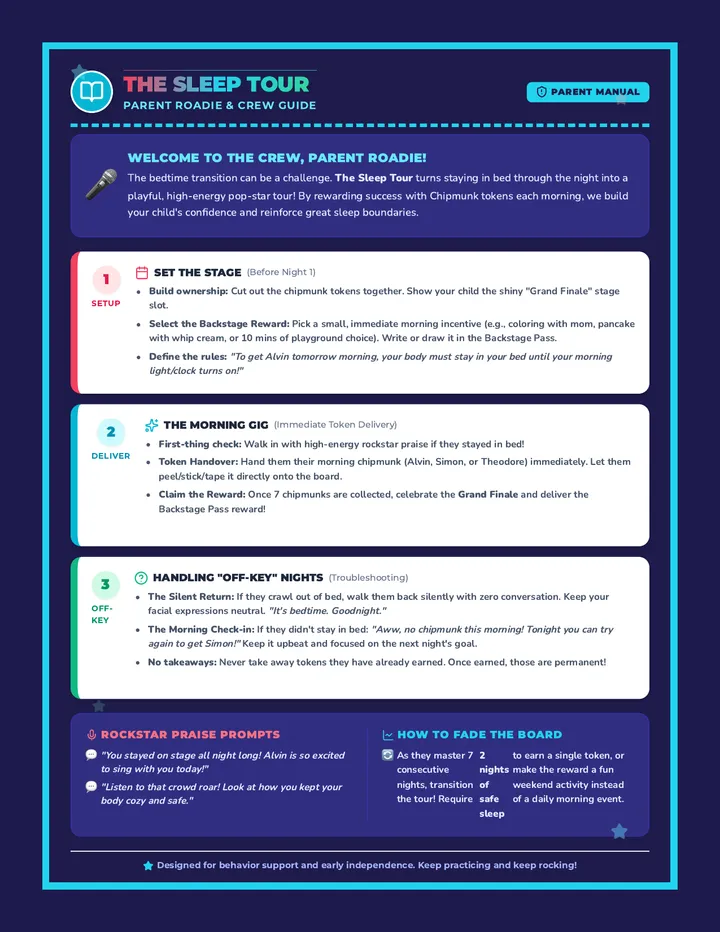
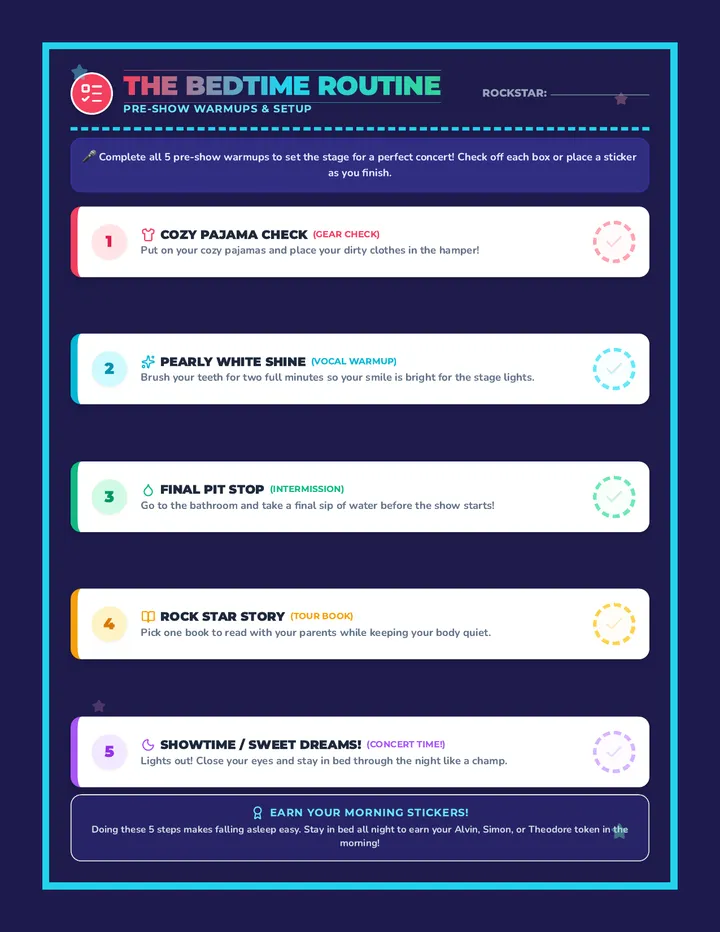
A bedtime token economy system designed to help young children stay in bed through the night using an engaging Alvin and the Chipmunks theme. Includes a printable token board and a step-by-step parent implementation guide.
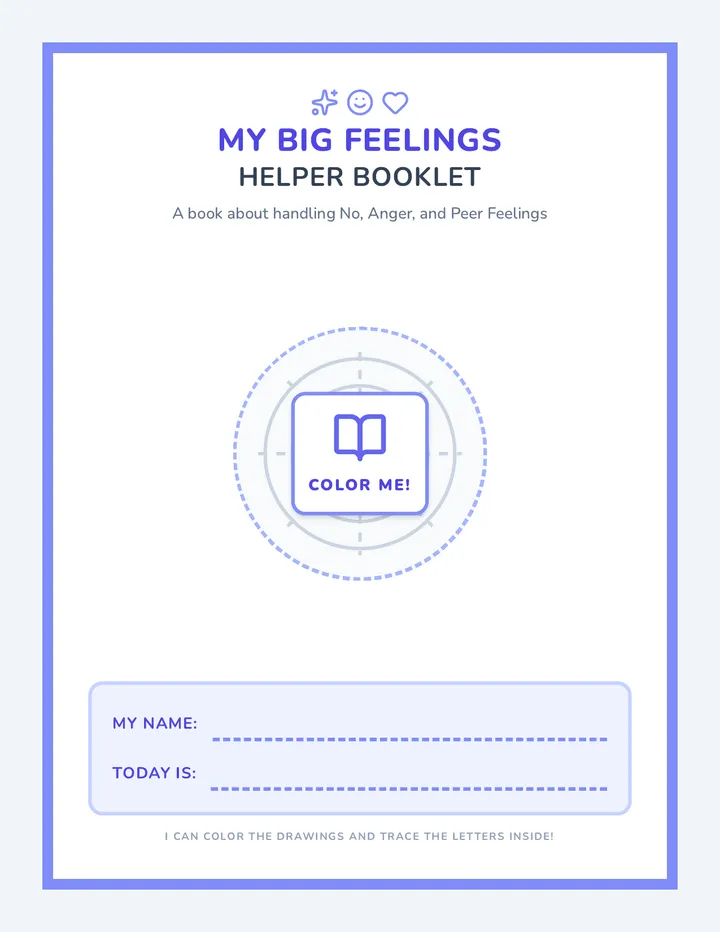
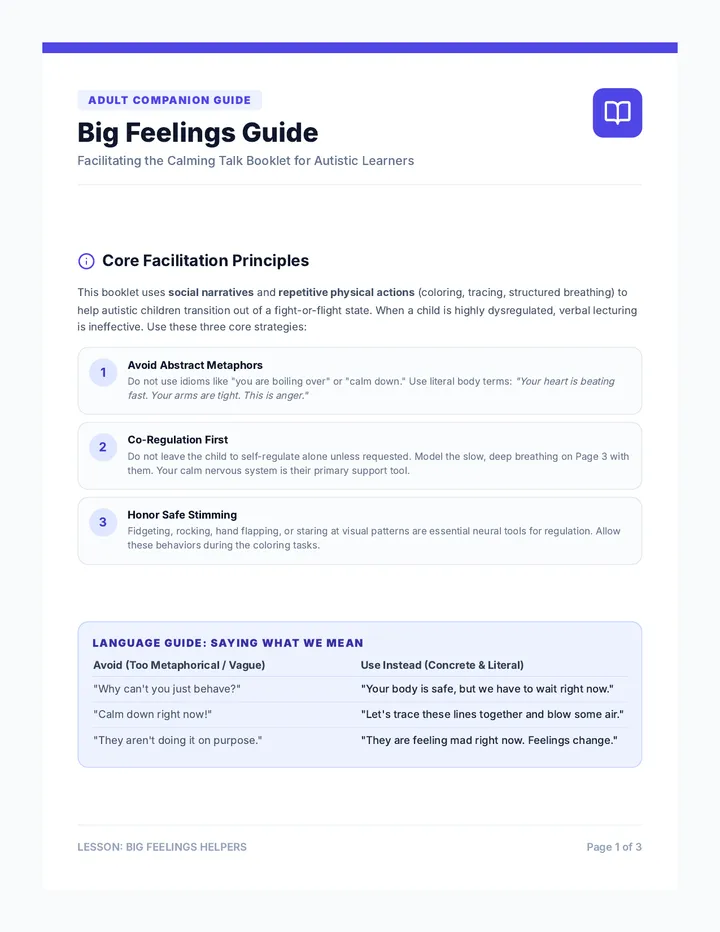
A supportive social narrative and positive self-talk booklet designed specifically for autistic children to cope with anger, the word 'no', and friendship anxieties. Includes clear visual scenes, concrete language, and calming coloring pages with traceable phrases.
A lesson package focused on preparing elementary students for the unique social, emotional, and sensory challenges of Field Day, featuring a projectable social story slide deck.
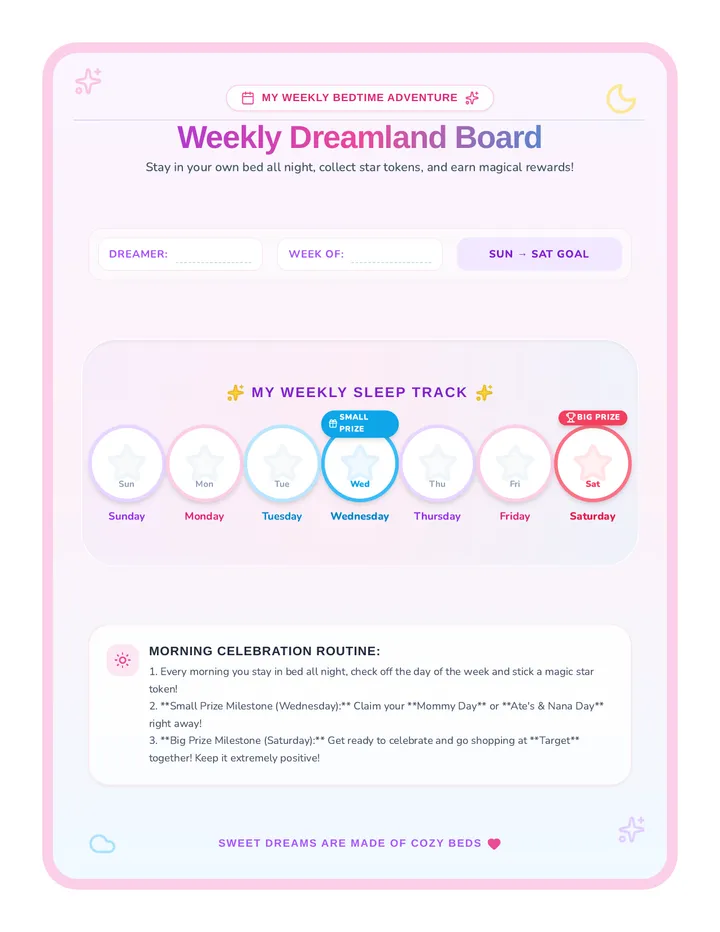
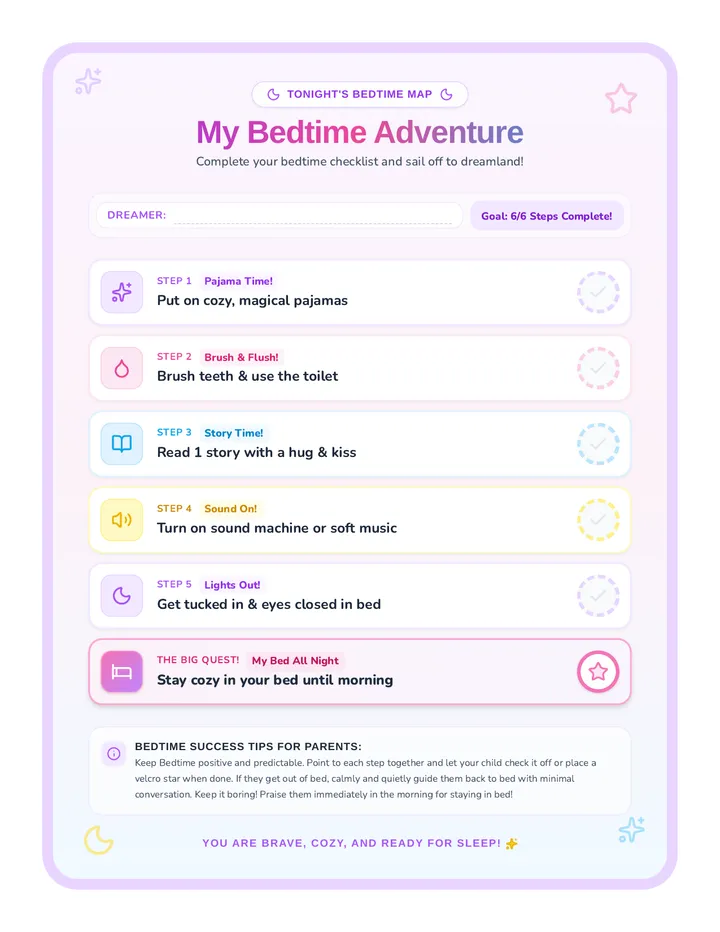
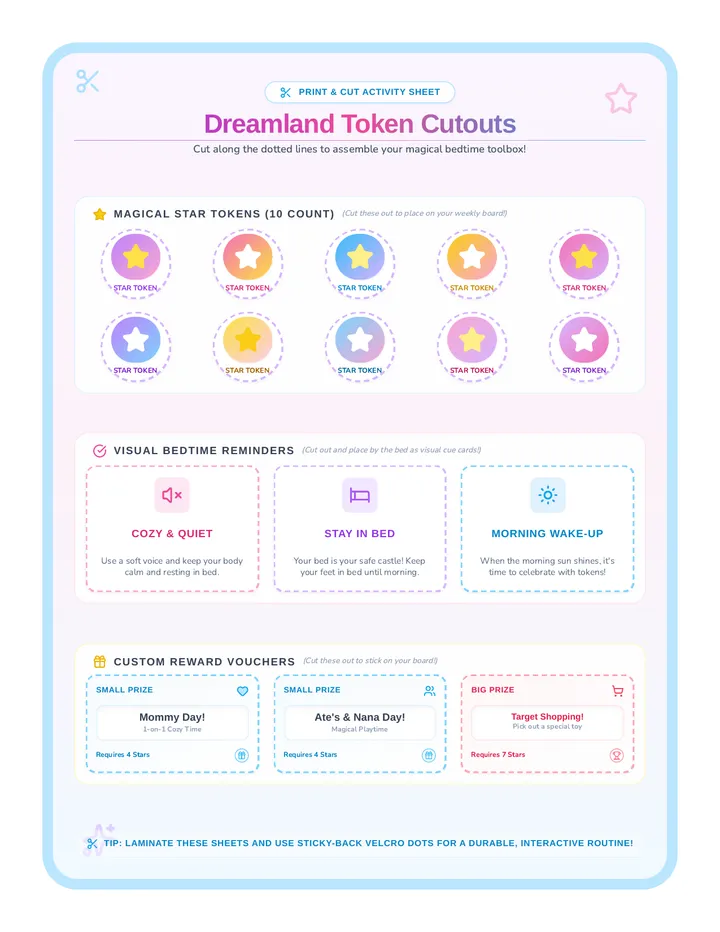
A magical unicorn-themed bedtime routine bundle designed to help children build healthy sleep habits and stay in their own bed all night. Includes a 5-token board, a customizable bedtime visual schedule, and printable token cutouts.
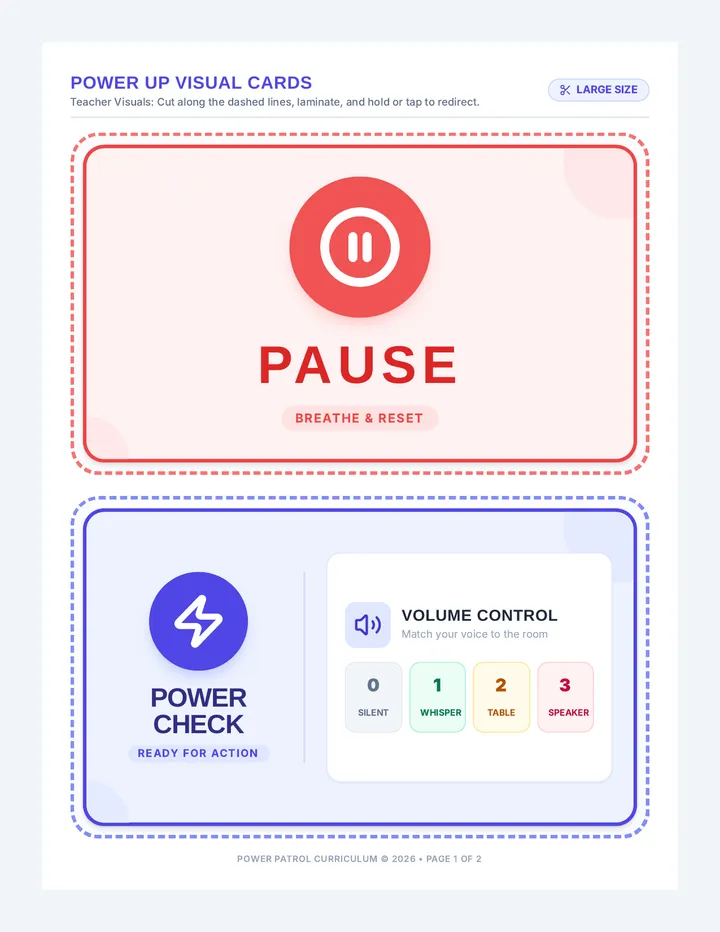
This lesson introduces self-regulation strategies using visual 'Pause' and 'Power Check' cards to help students monitor and control their body movement, personal space, and vocal volume.
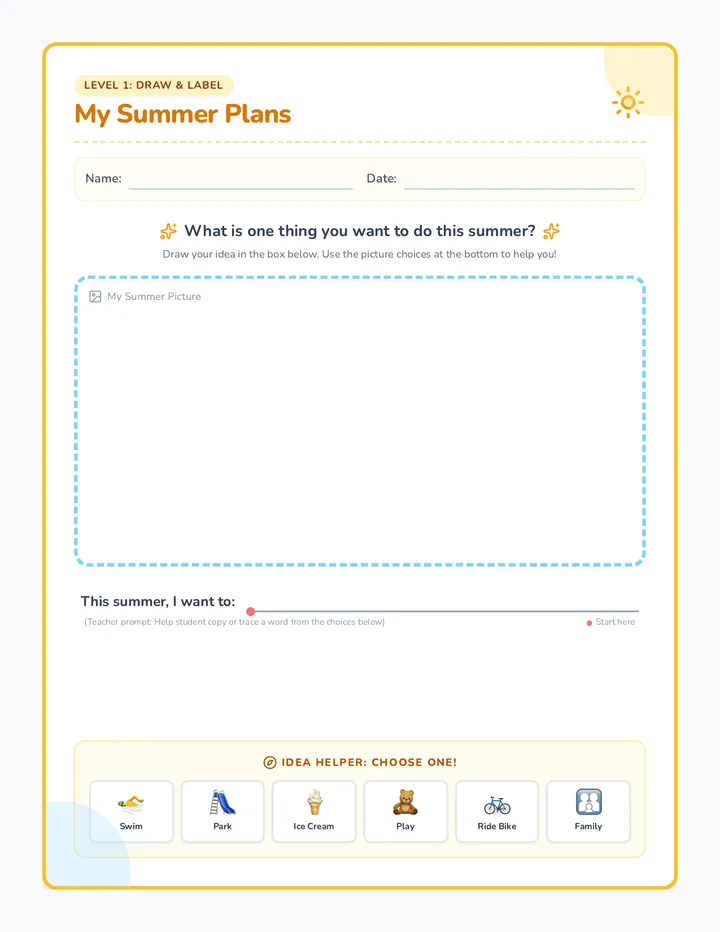
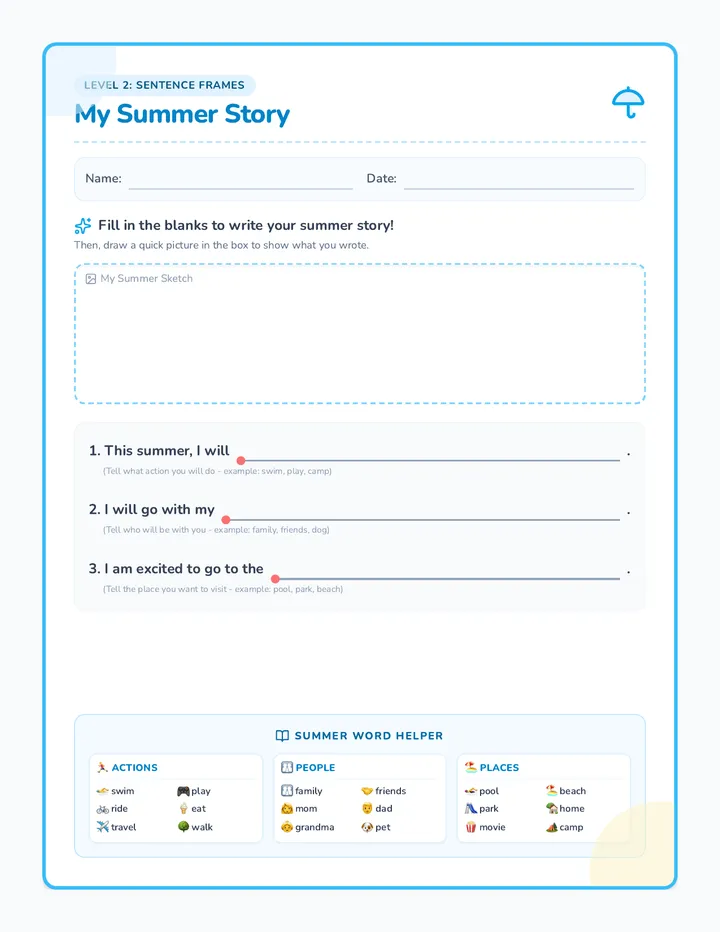
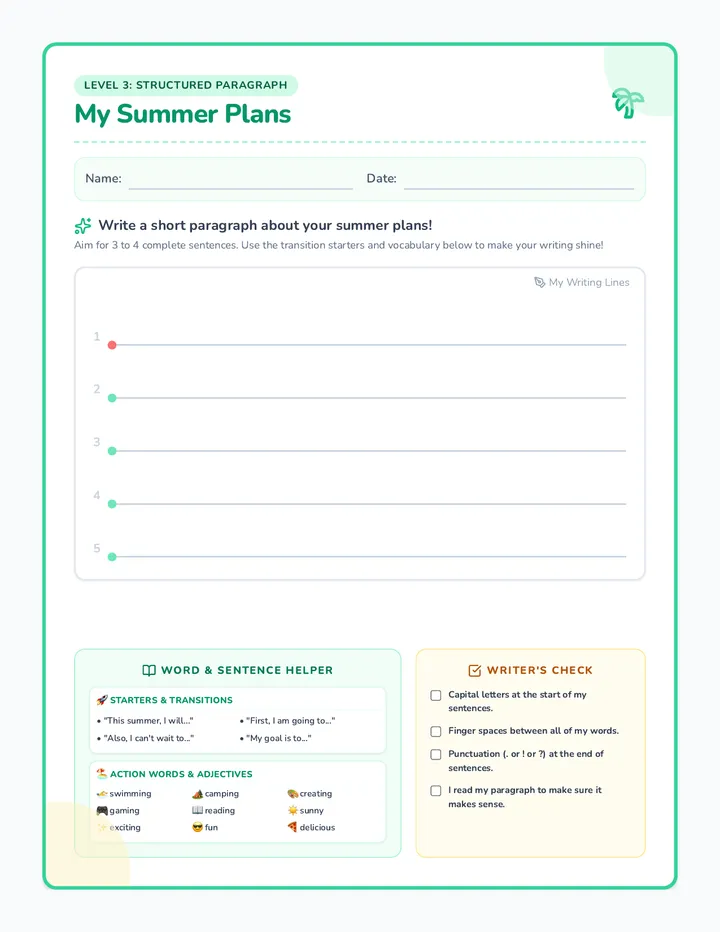
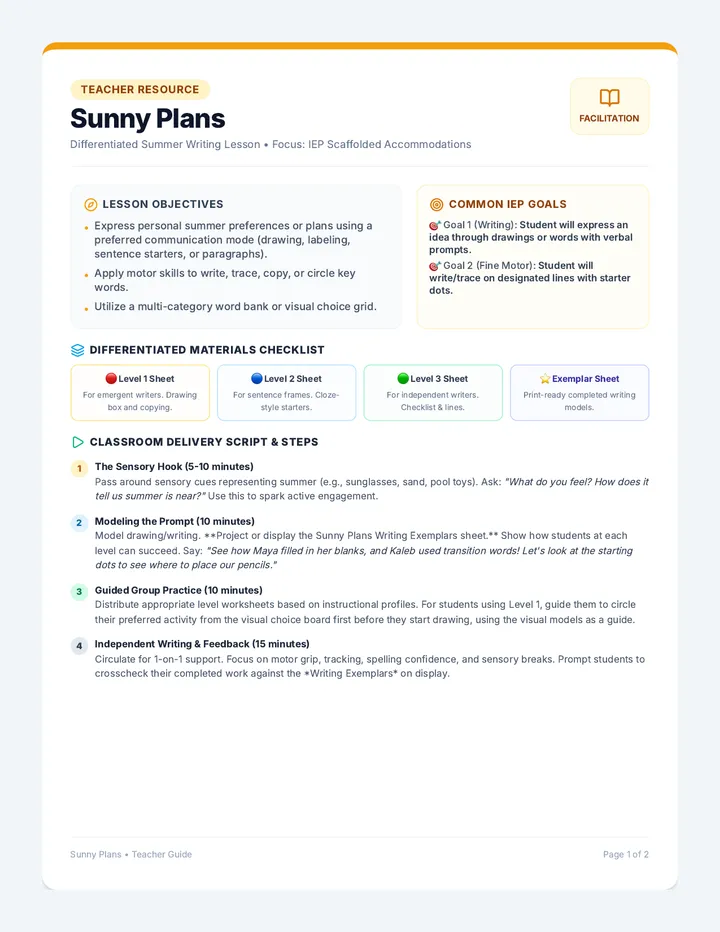
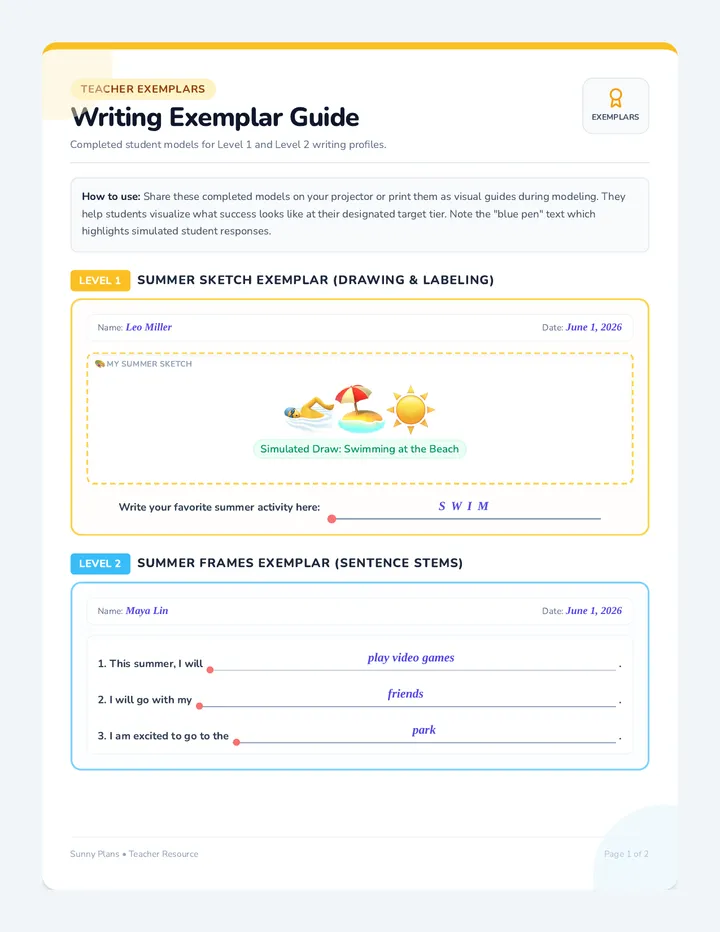
A differentiated writing lesson designed for students with IEPs and diverse learning needs to express their plans for summer break. It features three levels of scaffolded student worksheets (drawing/labeling, sentence frames, and structured writing) alongside a comprehensive teacher facilitation guide.
A 1-to-1 intervention lesson designed to help students master multi-step cleaning instructions while ignoring external and internal distractions. Includes a visual board game, specialized scenario cards, and self-regulation visual supports.
A post-test and reflection lesson designed for students with lower cognitive abilities to evaluate their coping skills from the past year and set gentle goals for the next school year using visual emojis and guided drawing/writing templates.
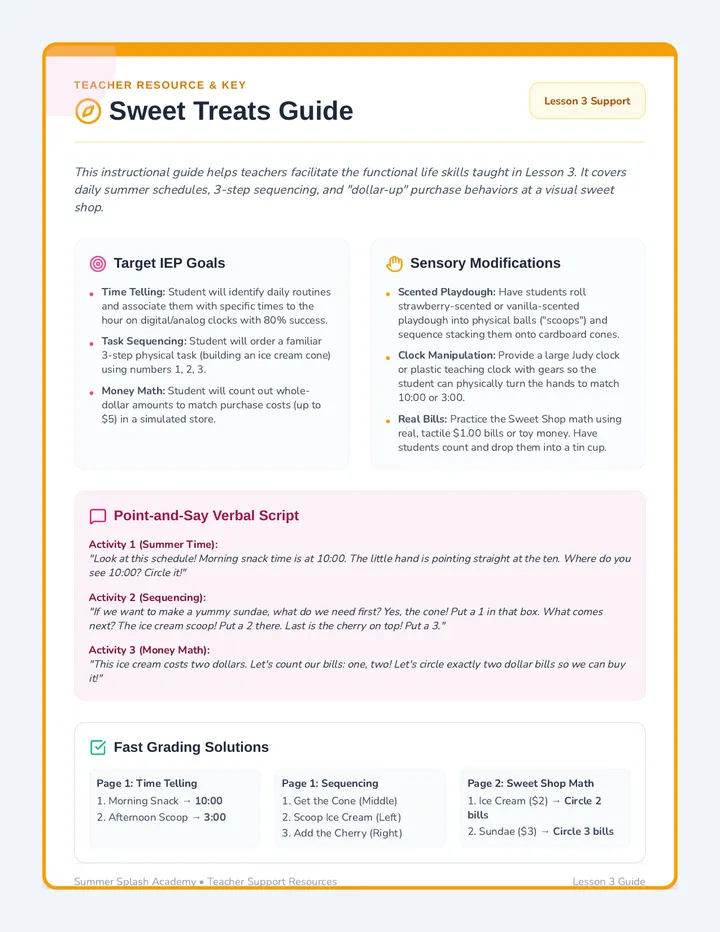
Develops functional basic life skills using ice cream themes. Students learn daily summer routines, practice telling time, complete an ice cream sequencing activity, and practice basic money math at a visual ice cream parlor.
Focuses on social-emotional learning through outdoor themes. Students practice identifying camper emotions, discovering self-regulation strategies with a 'campfire breathing' activity, and understanding positive social interactions on the trail.