A 1-to-1 intervention lesson designed to help students master multi-step cleaning instructions while ignoring external and internal distractions. Includes a visual board game, specialized scenario cards, and self-regulation visual supports.
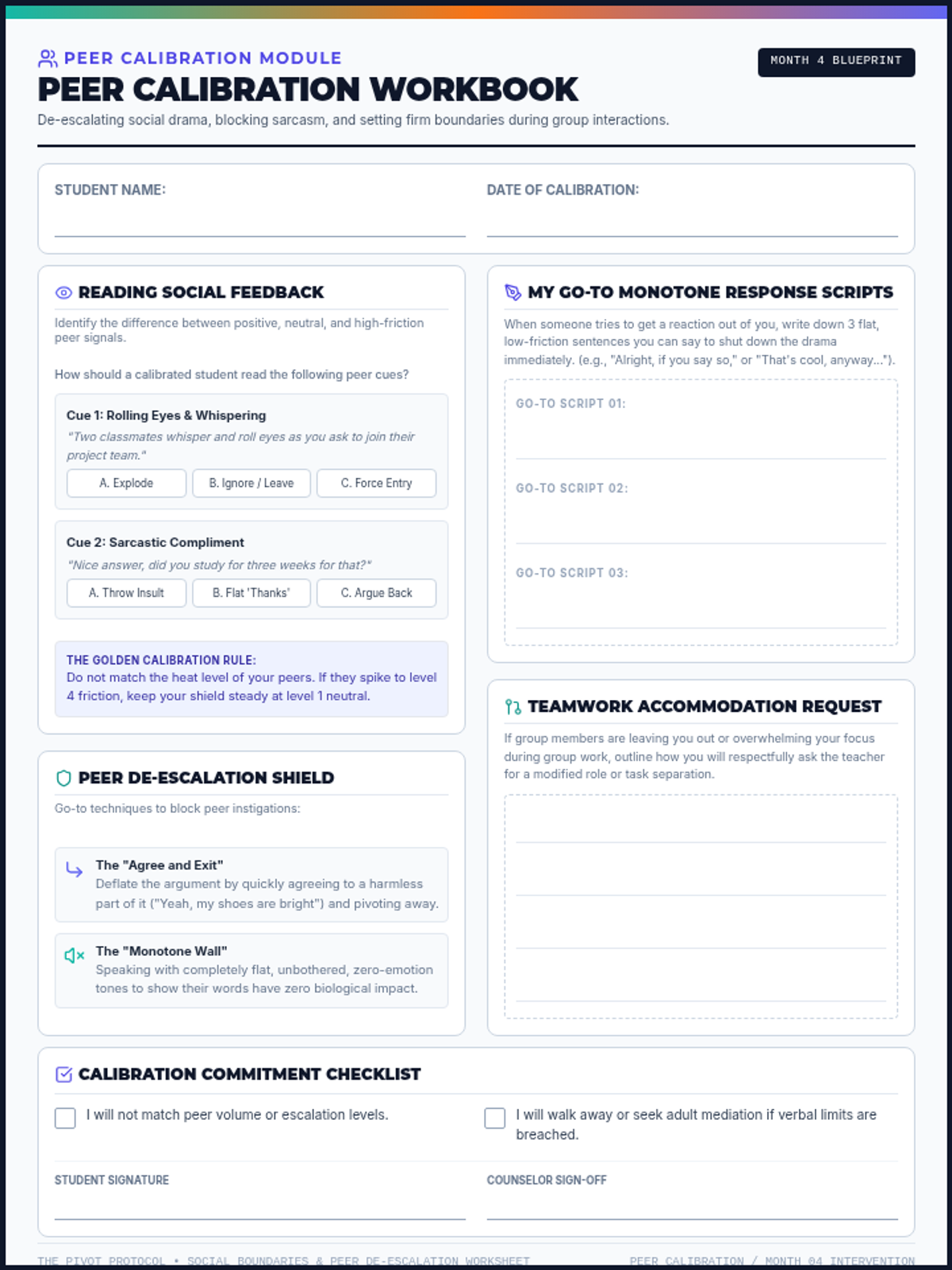
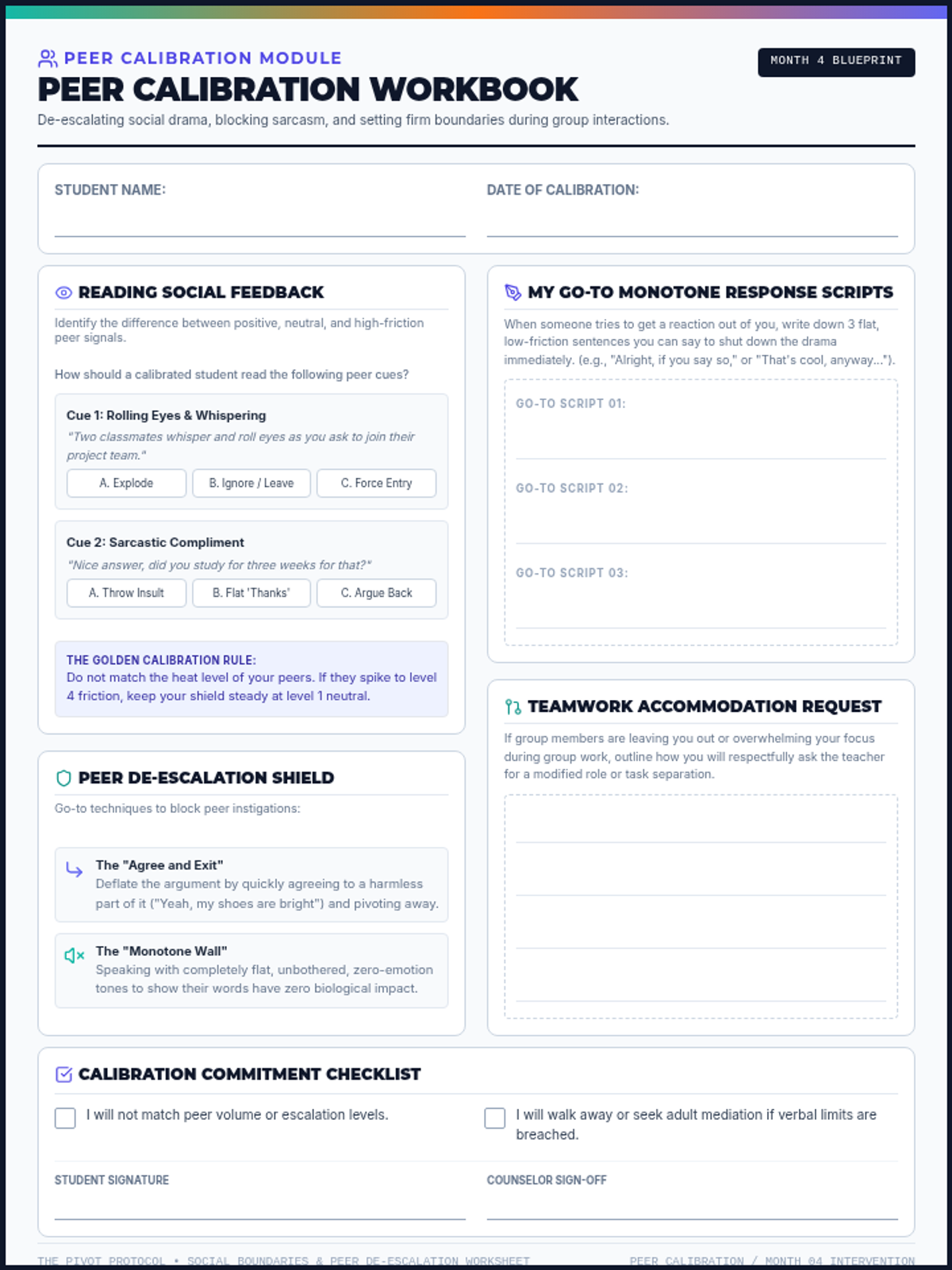
Month 4 focus on peer-to-peer conflict resolution, de-escalating social tension, responding to sarcasm, and reading social feedback cues without dysregulating.
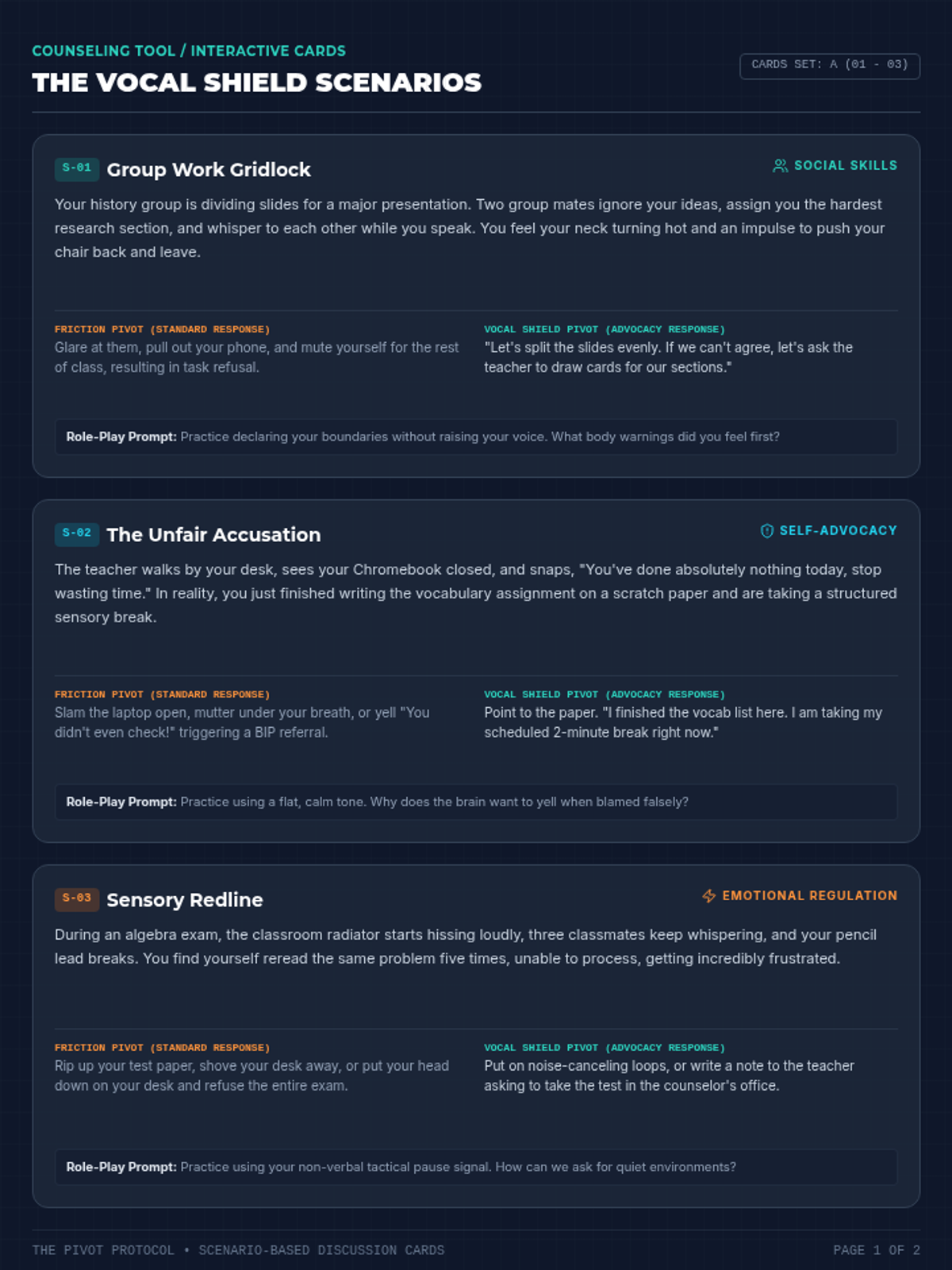
Addresses social skills, self-advocacy with teachers, navigating peer-to-peer conflict, and reading social feedback cues without dysregulating.
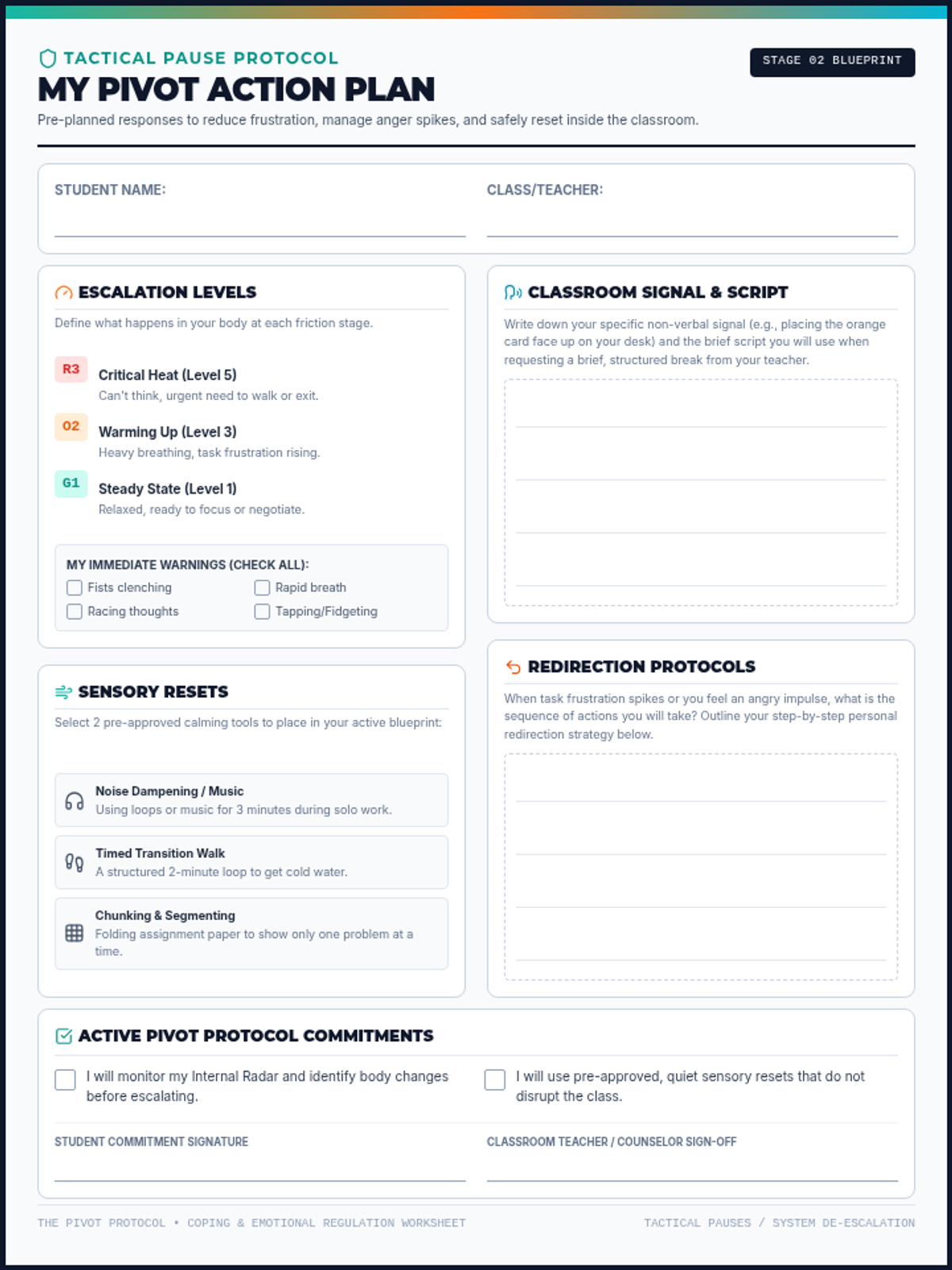
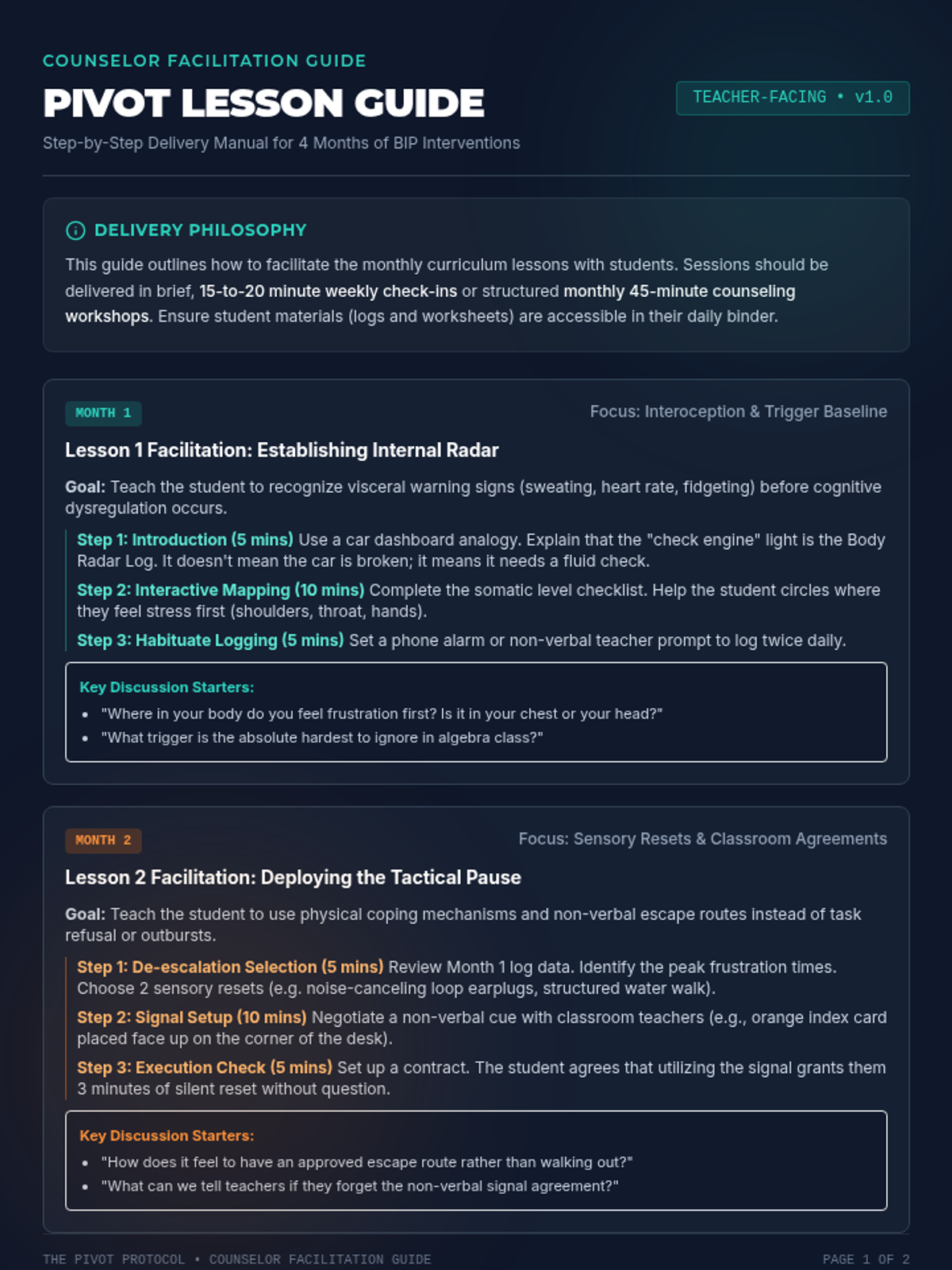
Focuses on calming techniques, active anger management, and frustration tolerance when triggers spike, introducing personalized 'Pivot Plans' for classroom situations.
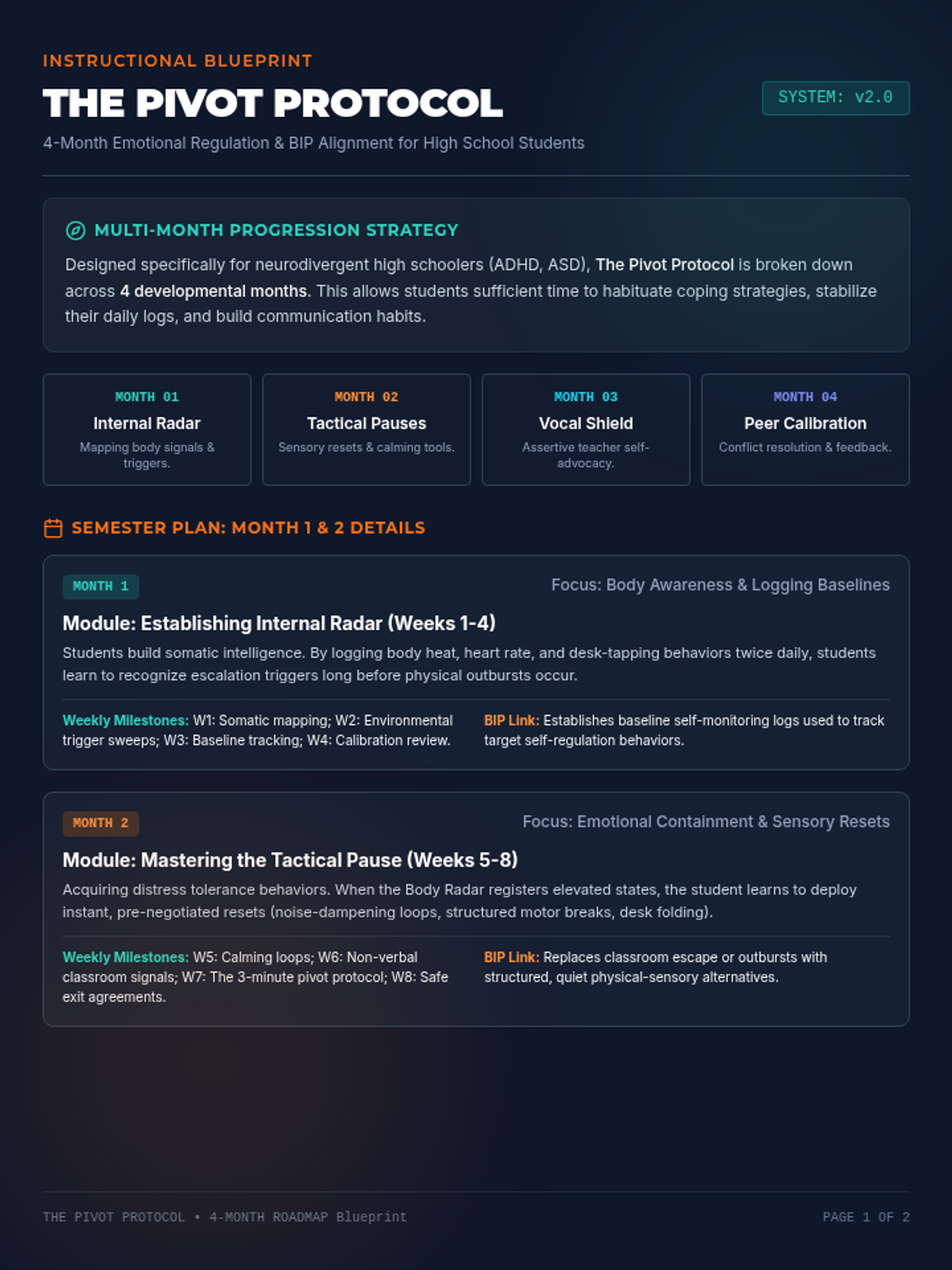
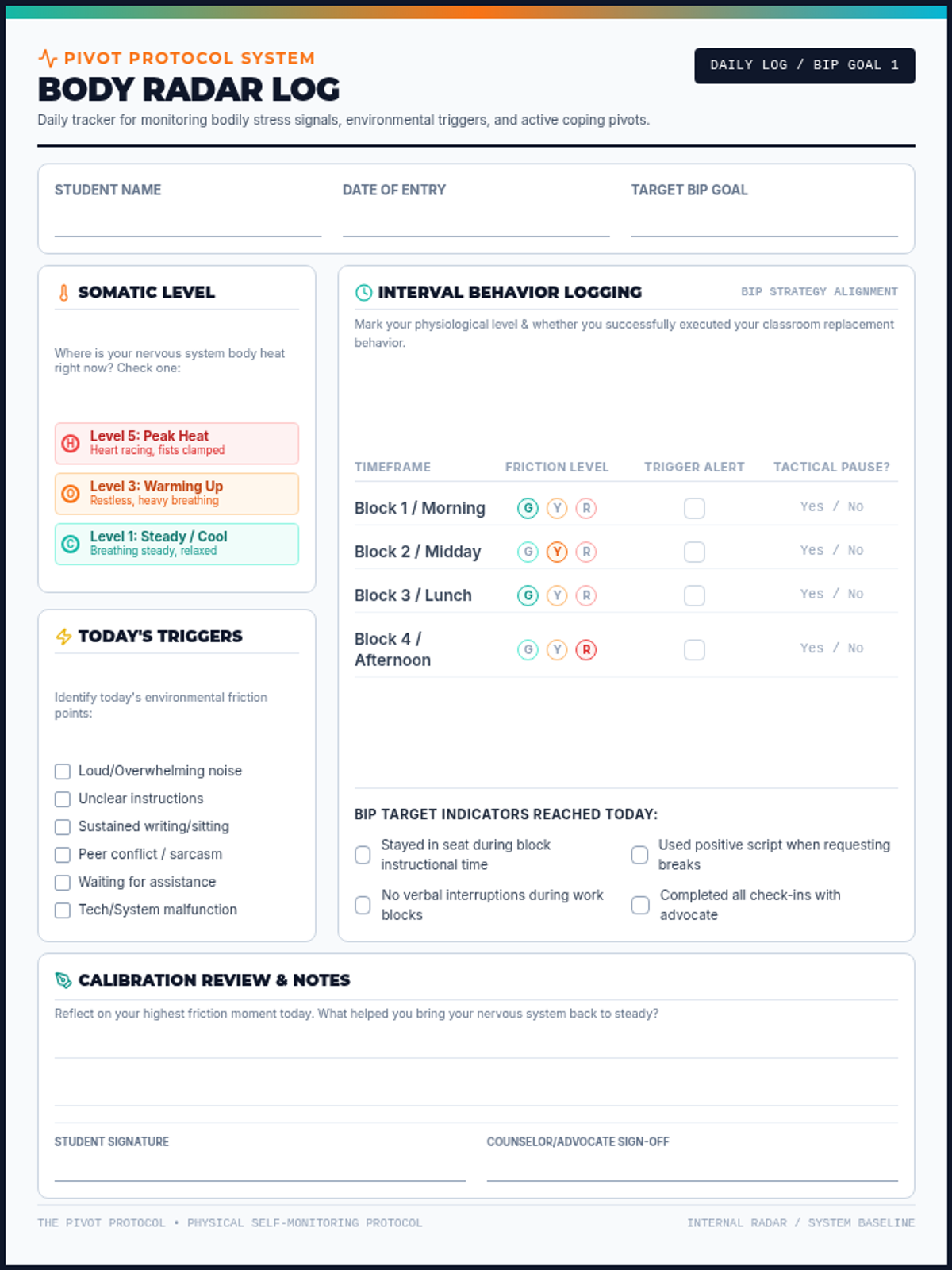
Establishes the foundation of self-awareness by helping students map their physical trigger responses ('Internal Radar') and setting up their baseline self-monitoring daily tracker.
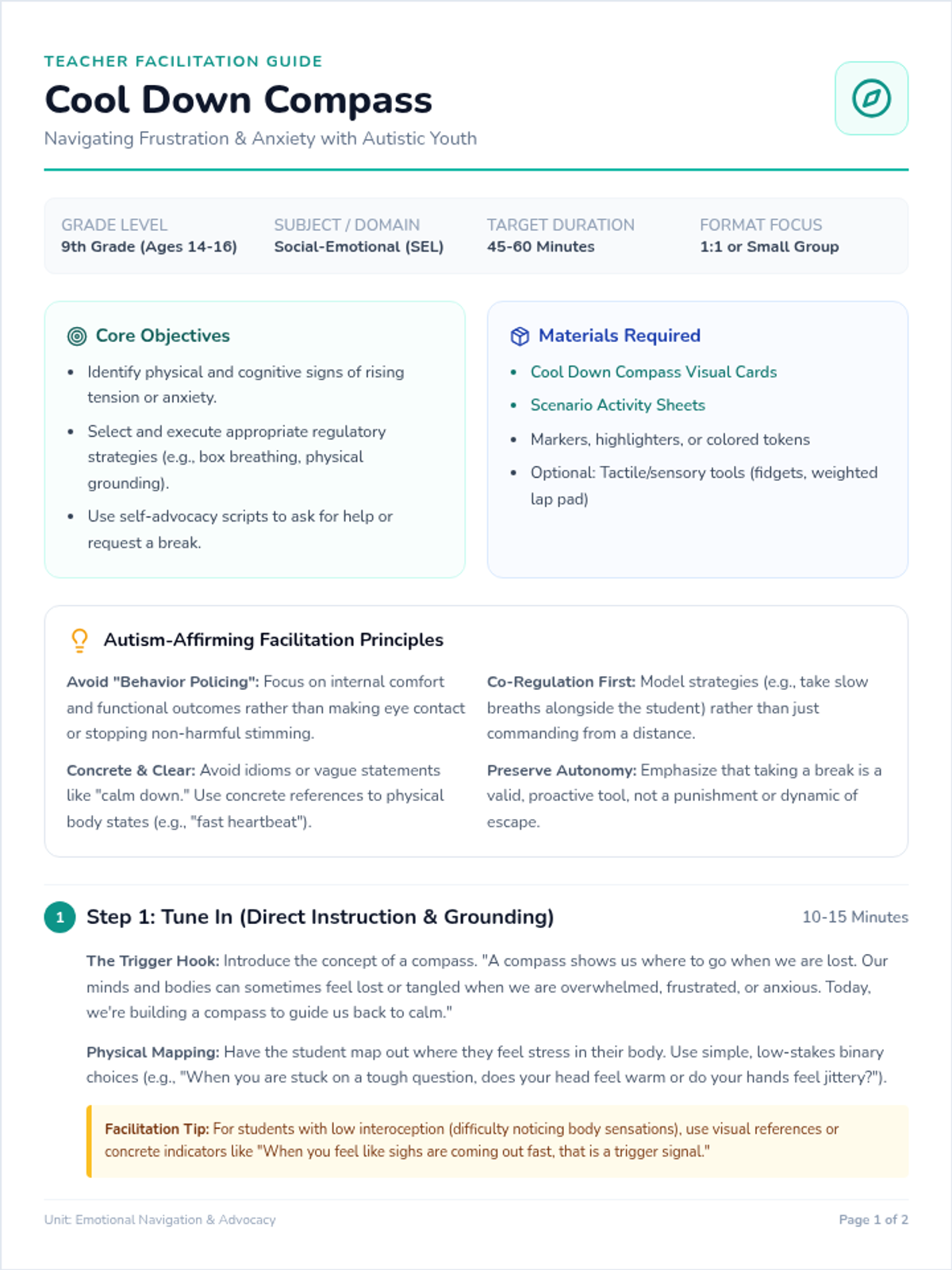
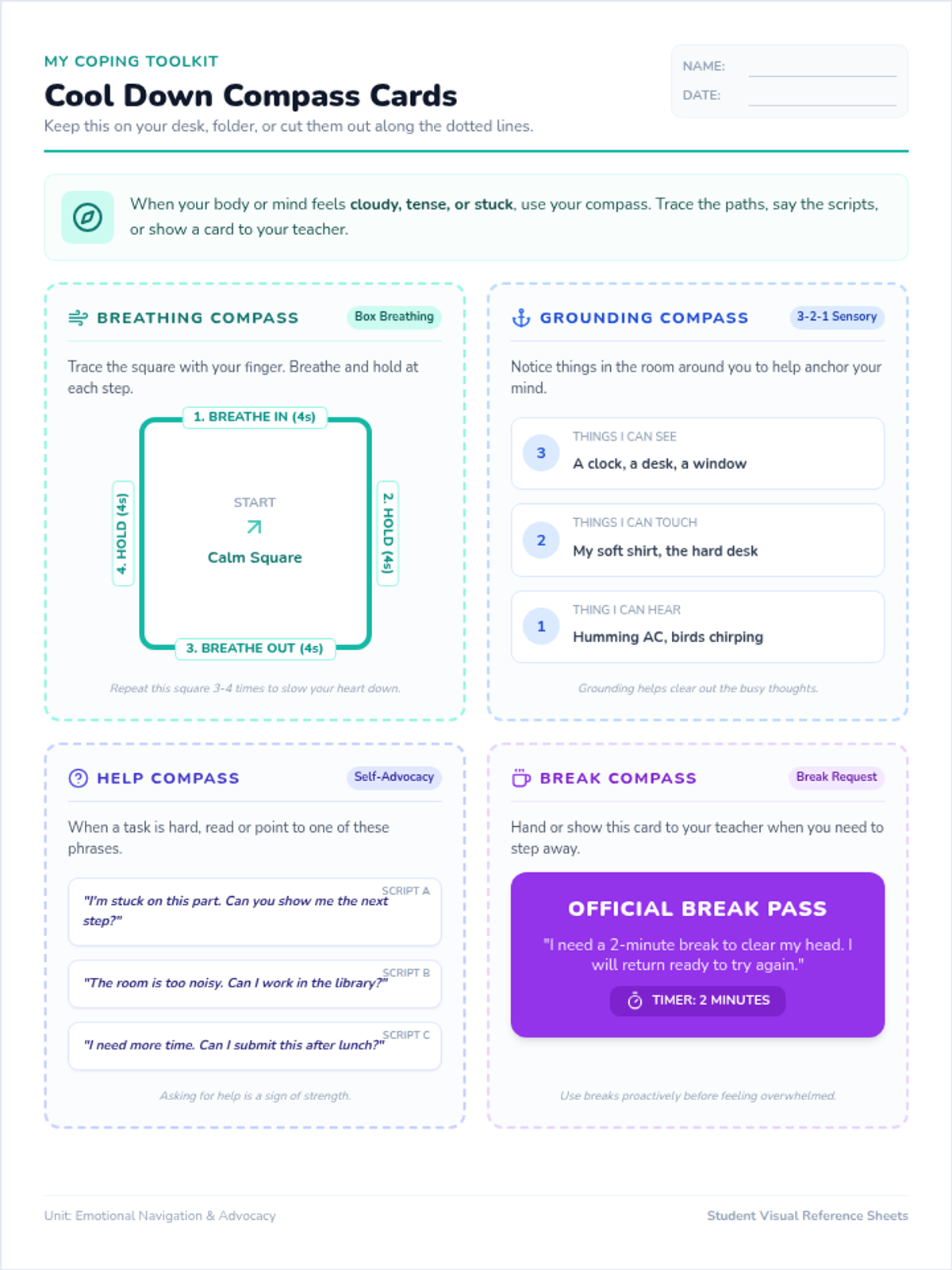
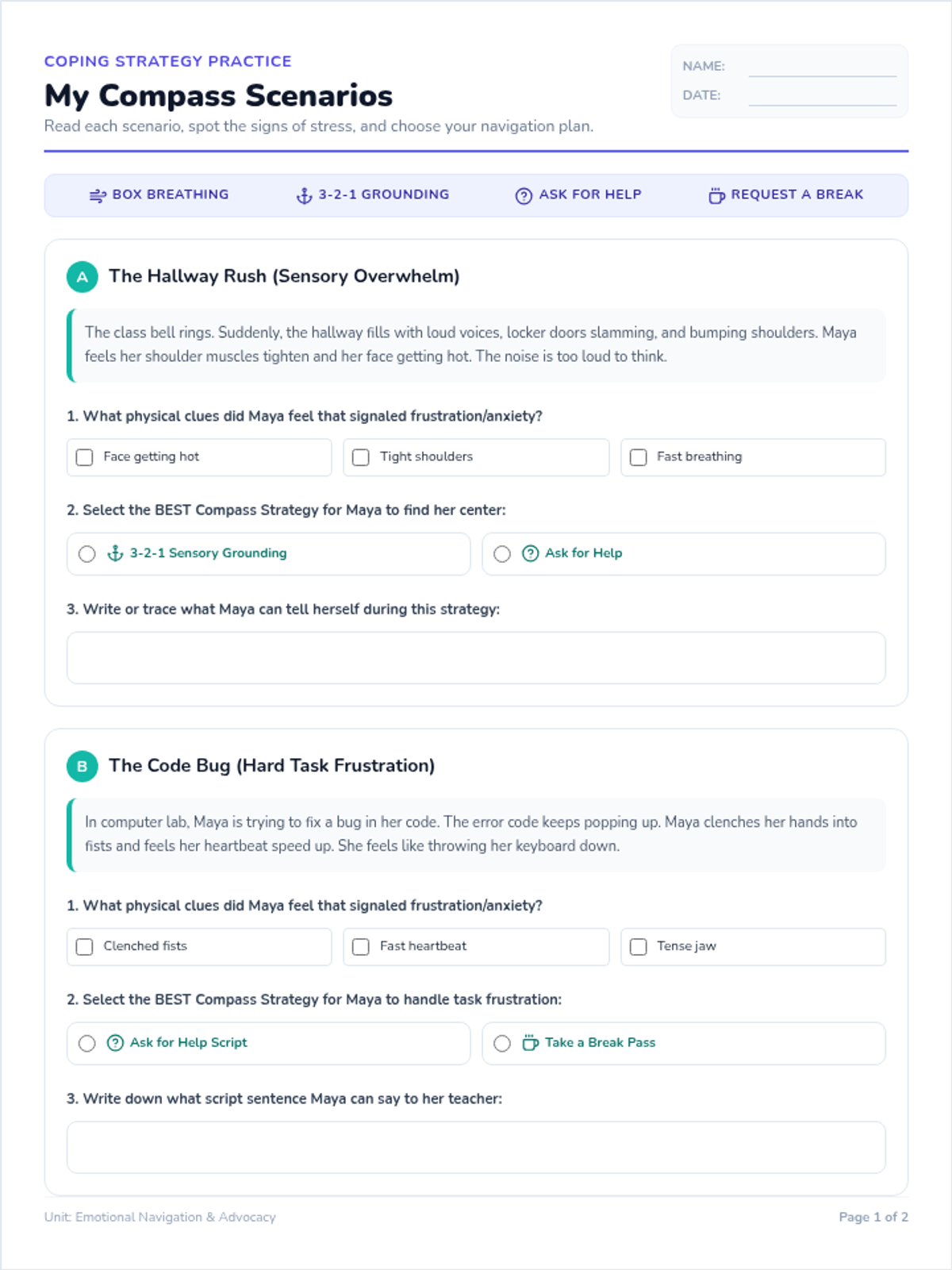
A comprehensive social-emotional learning lesson designed for 9th-grade students with autism to recognize triggers of anxiety or frustration and employ concrete coping strategies (breathing, physical grounding, self-advocacy, and requesting breaks). Includes teacher facilitation guides, visual strategy cards, and structured scenario worksheets.
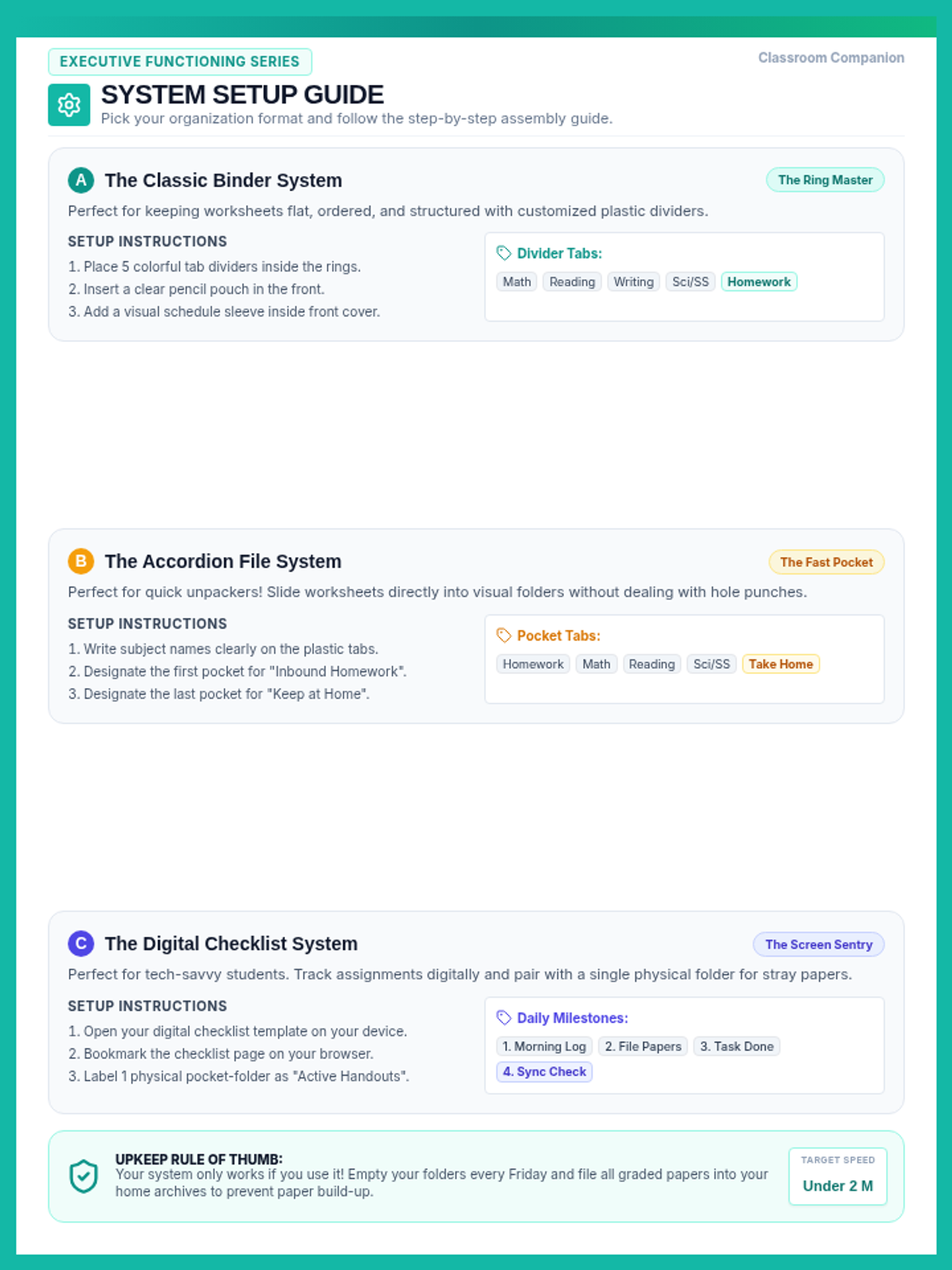
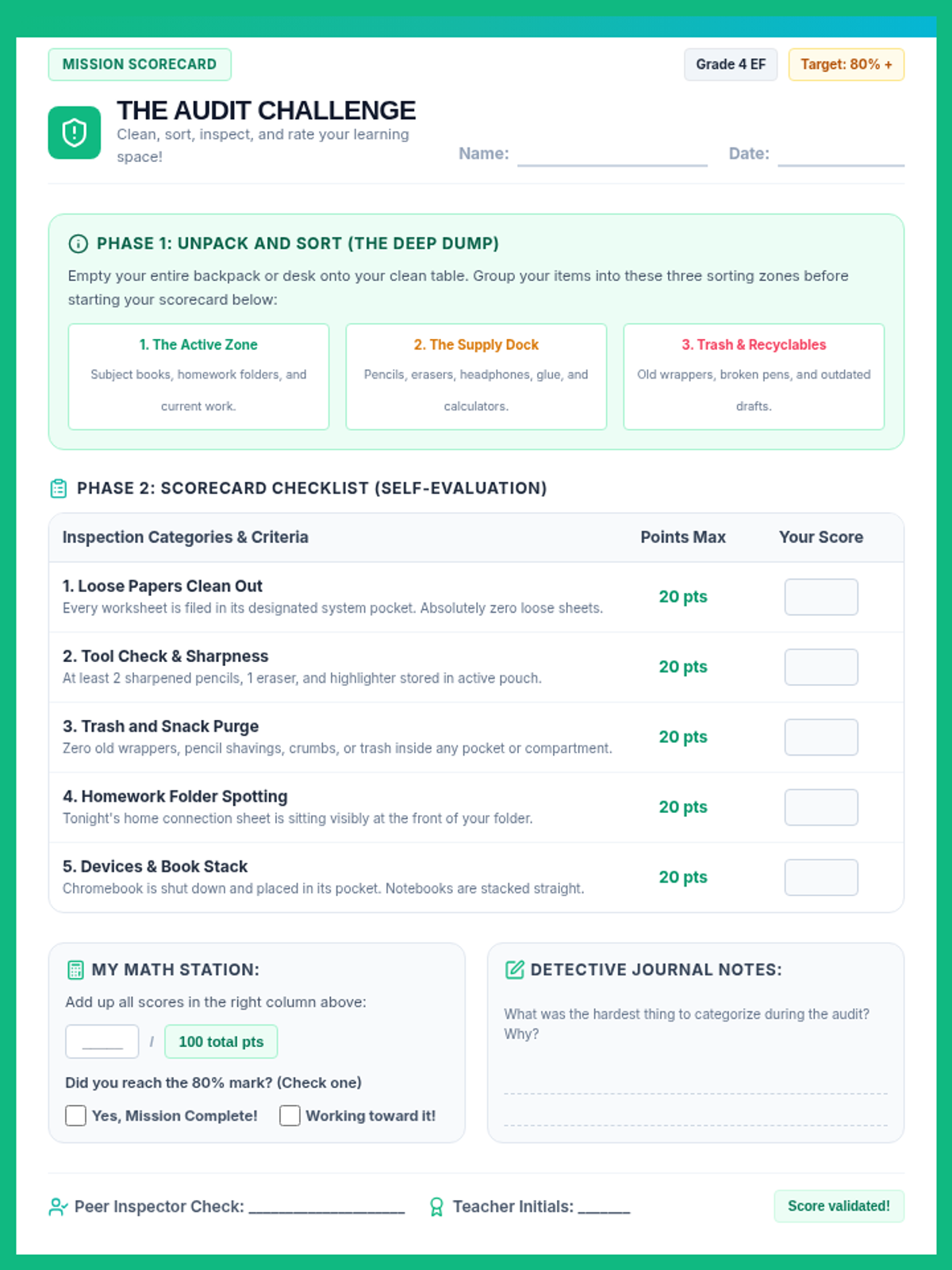
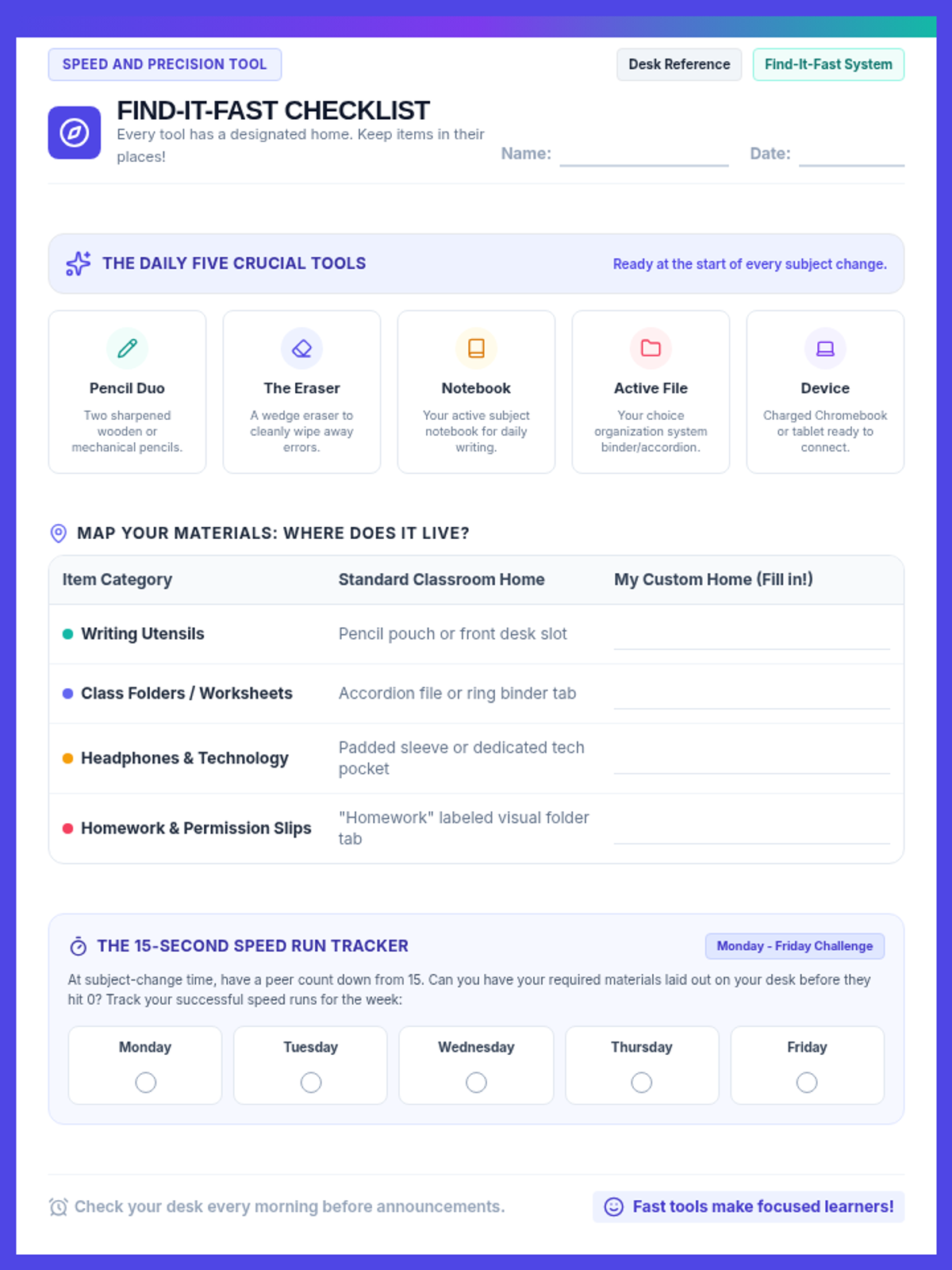
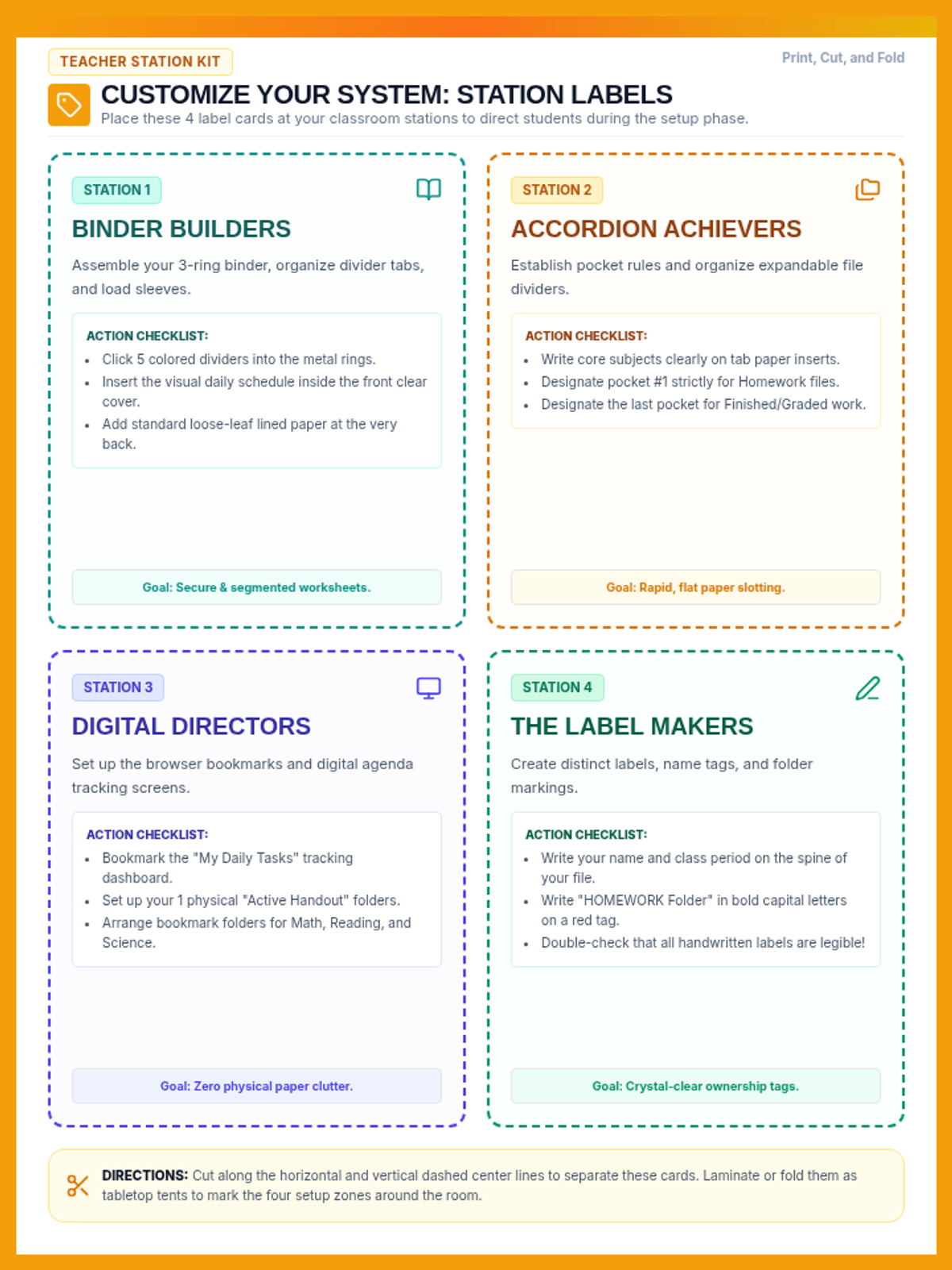
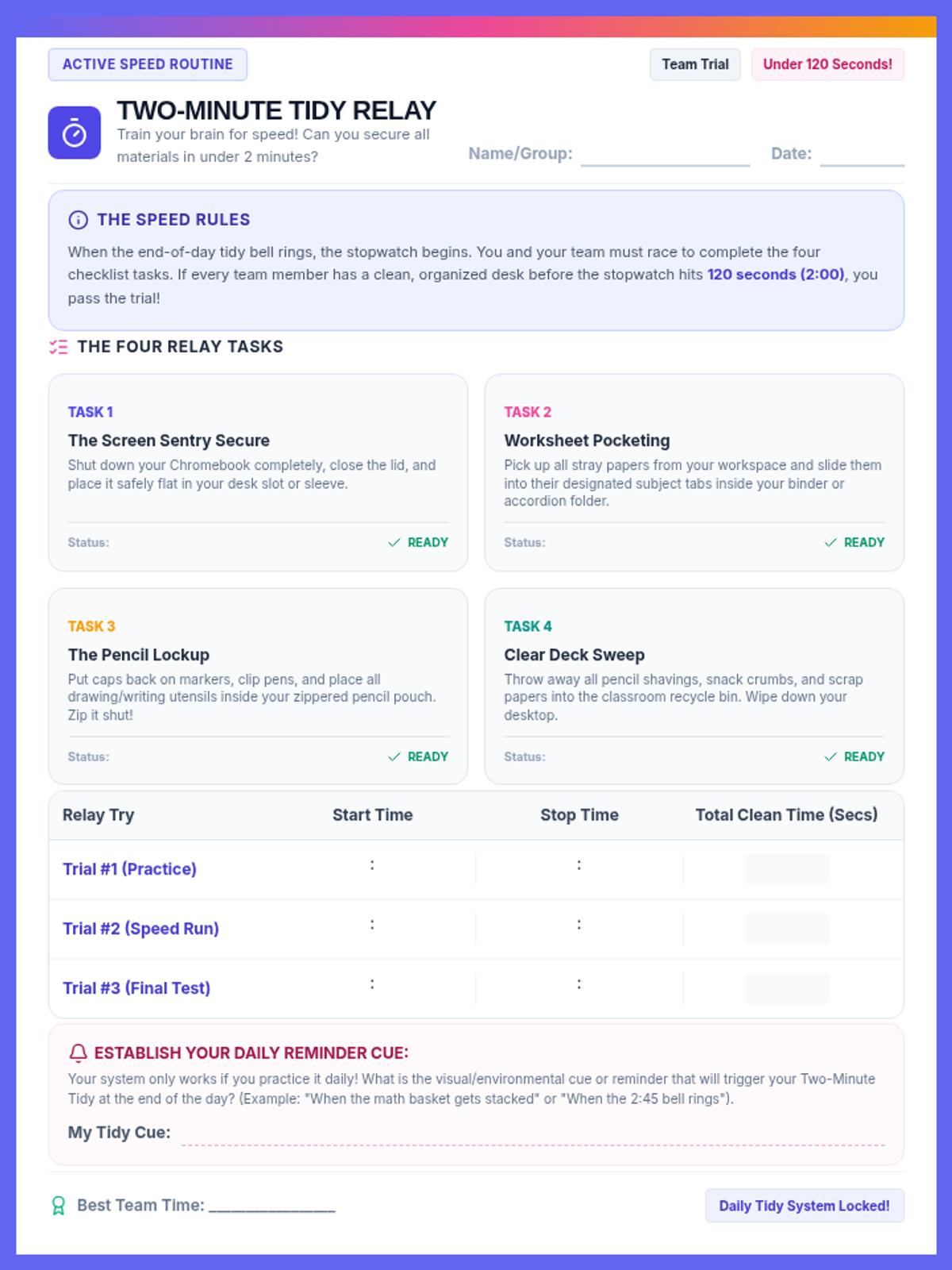
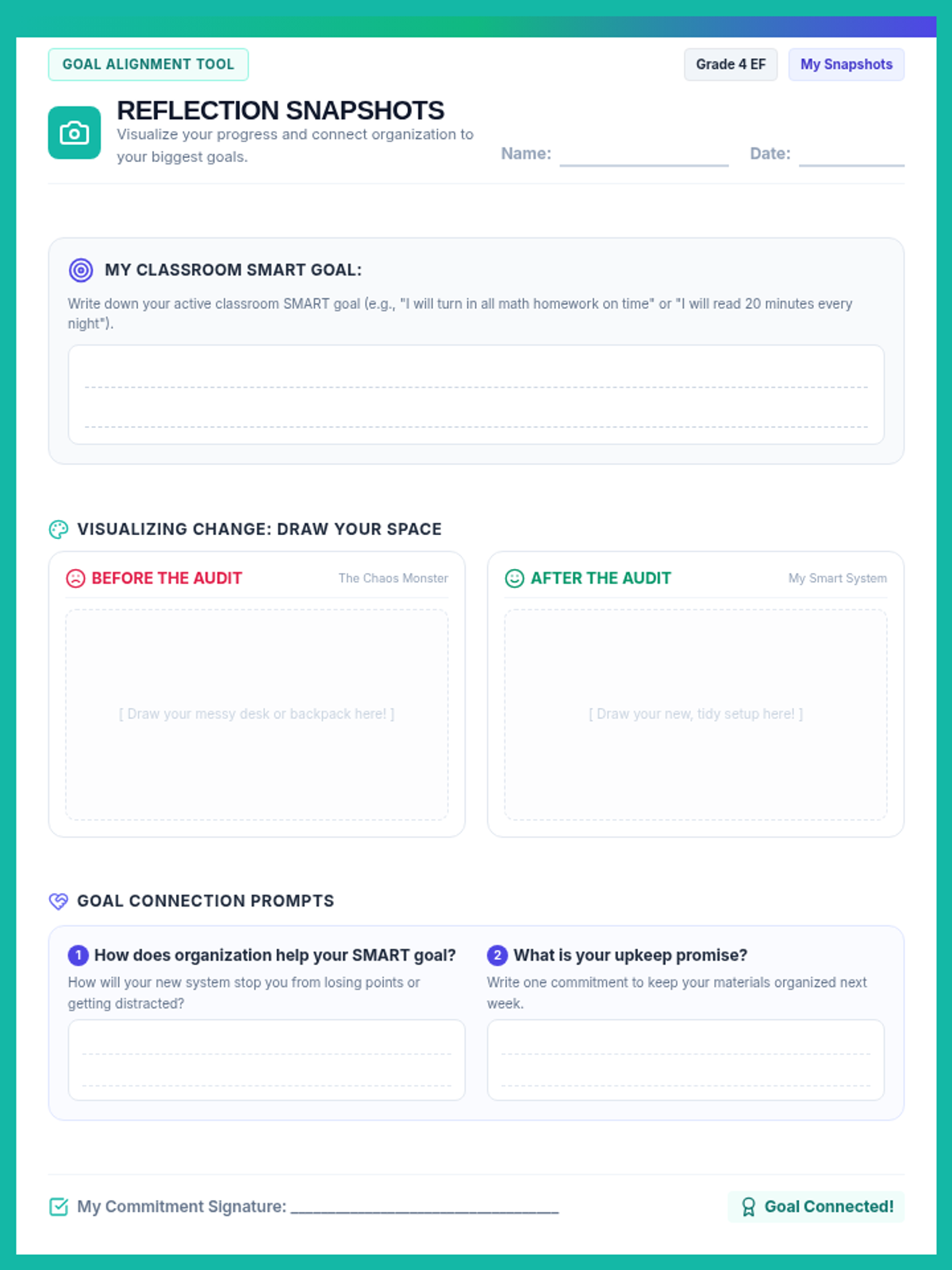
A 45-minute active executive functioning lesson for 4th graders to choose, set up, and test an organization system (binder, accordion file, or digital tracker) and establish routines like a backpack audit and a two-minute tidy relay.
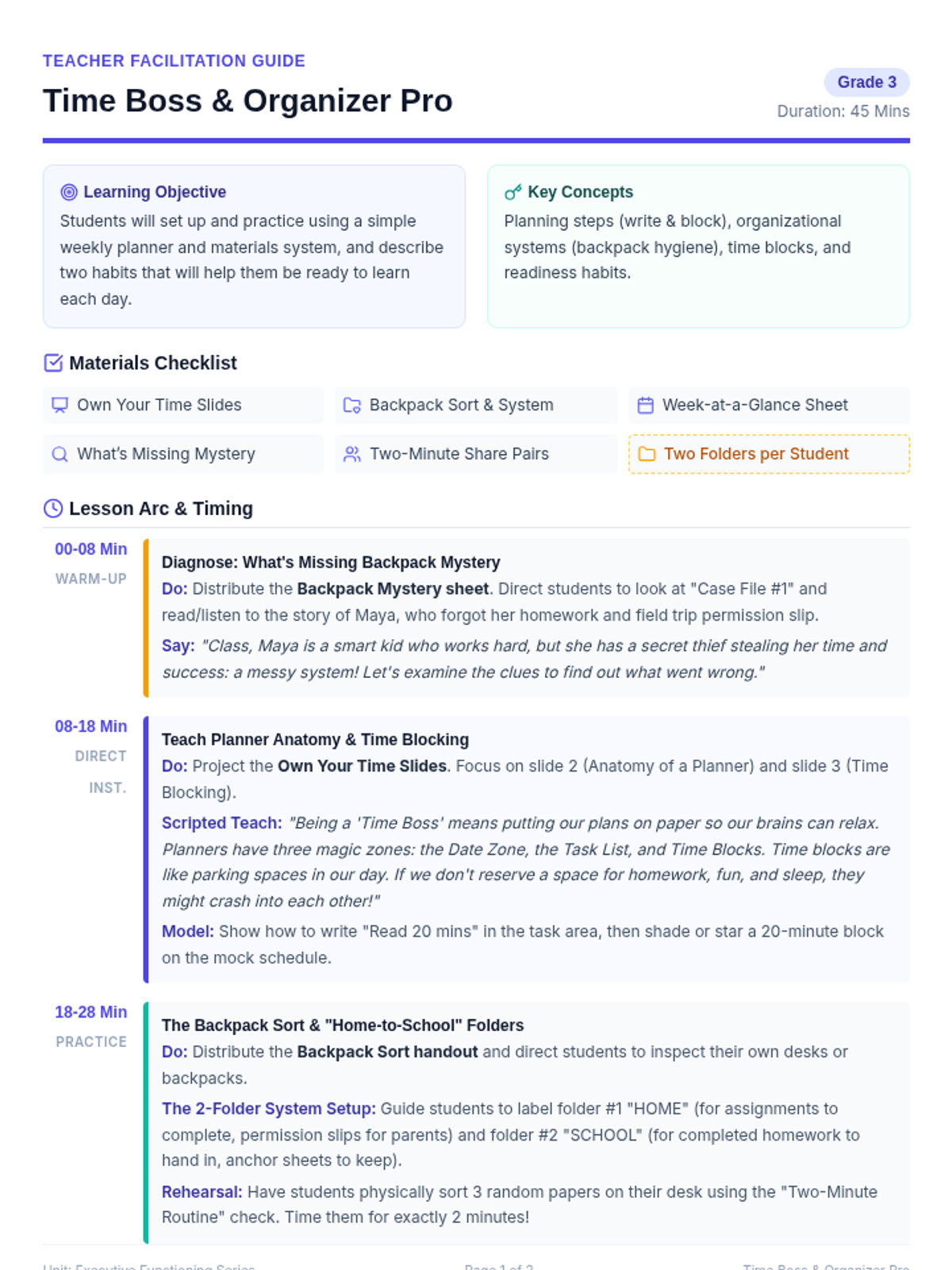
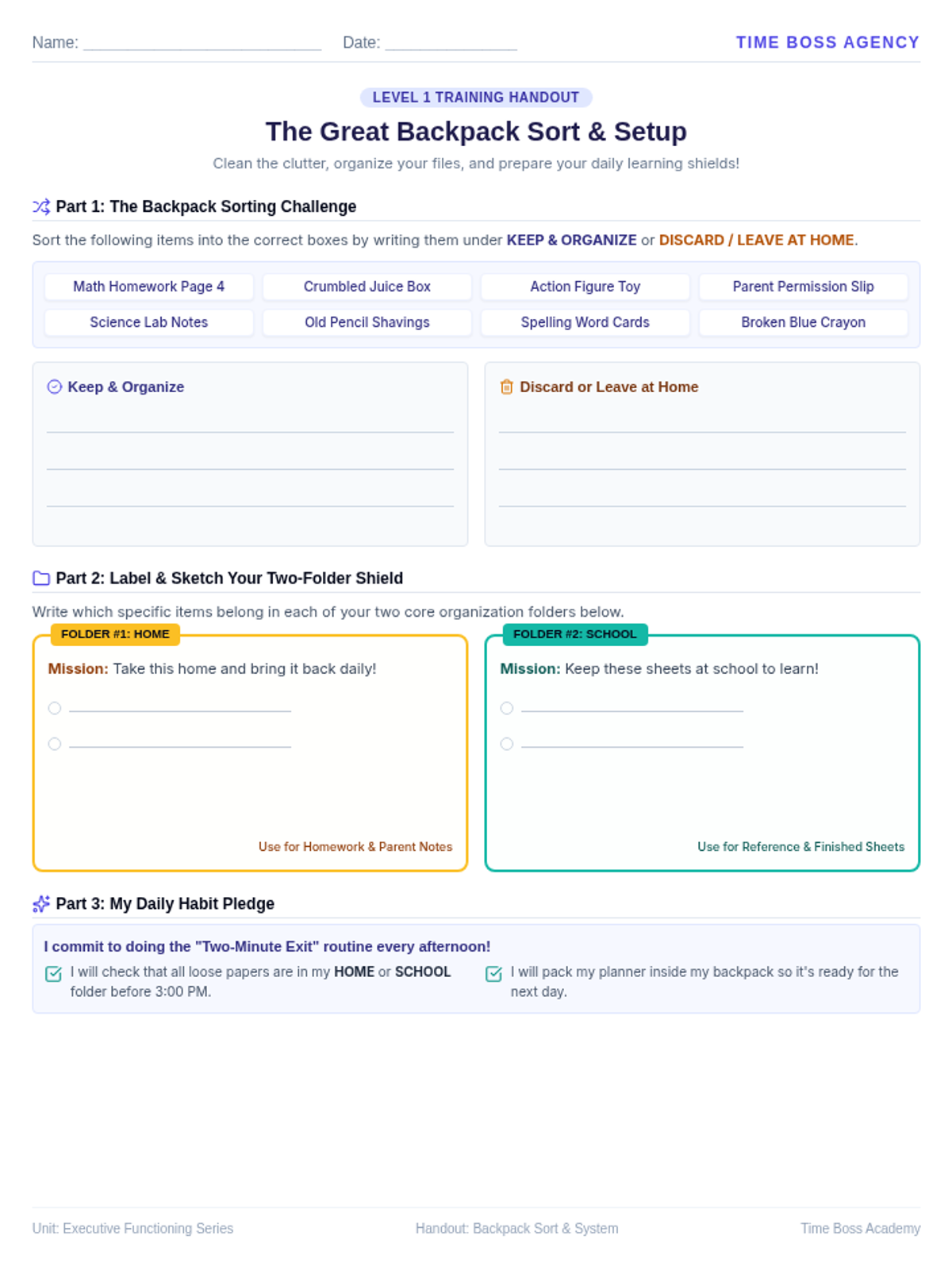
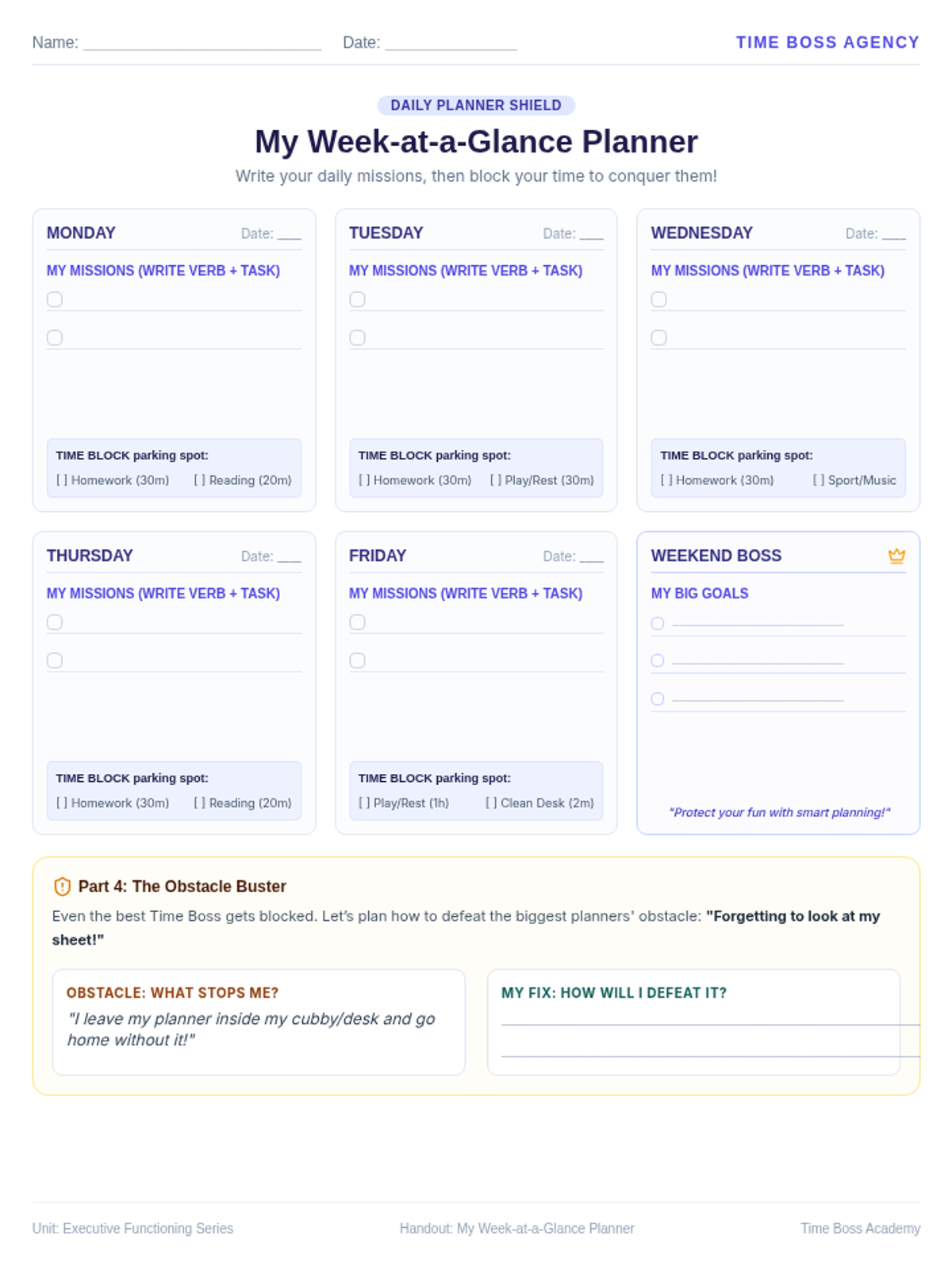
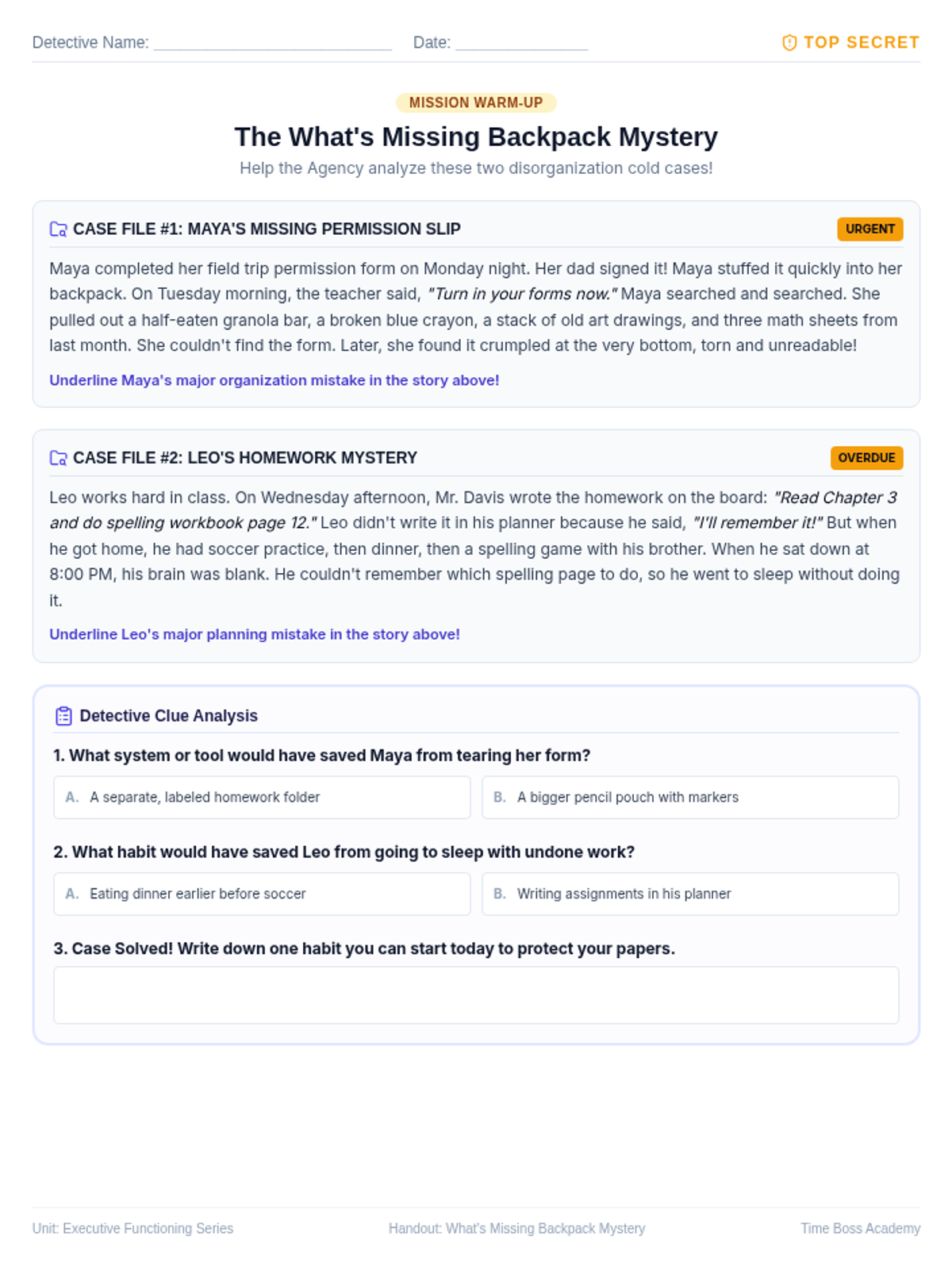
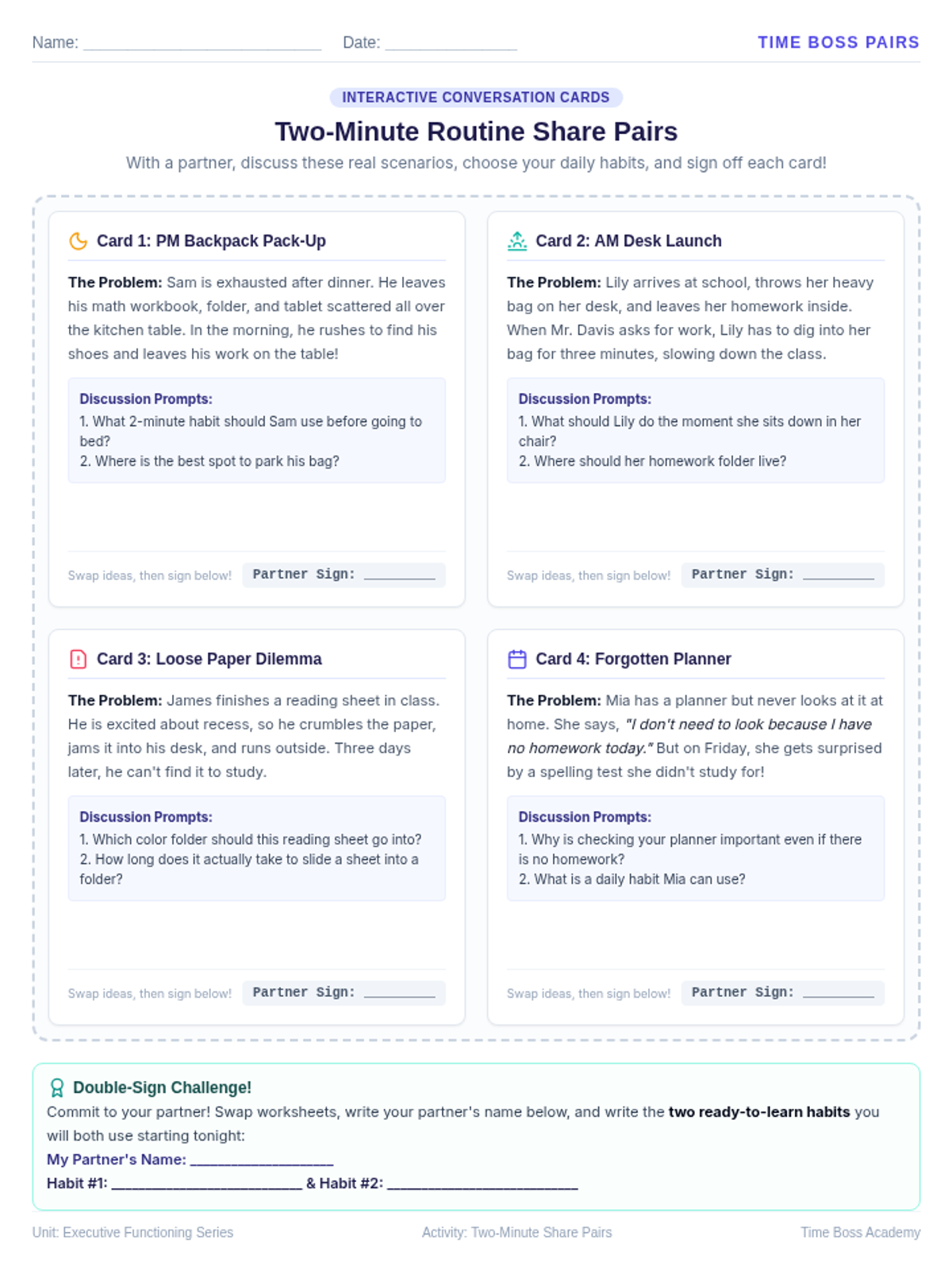
A comprehensive lesson for 3rd graders to master executive functioning skills. Students learn to use a weekly planner, establish material organization systems (the 'Backpack Sort'), and develop daily readiness habits through engaging activities like a classroom mystery and discussion cards.
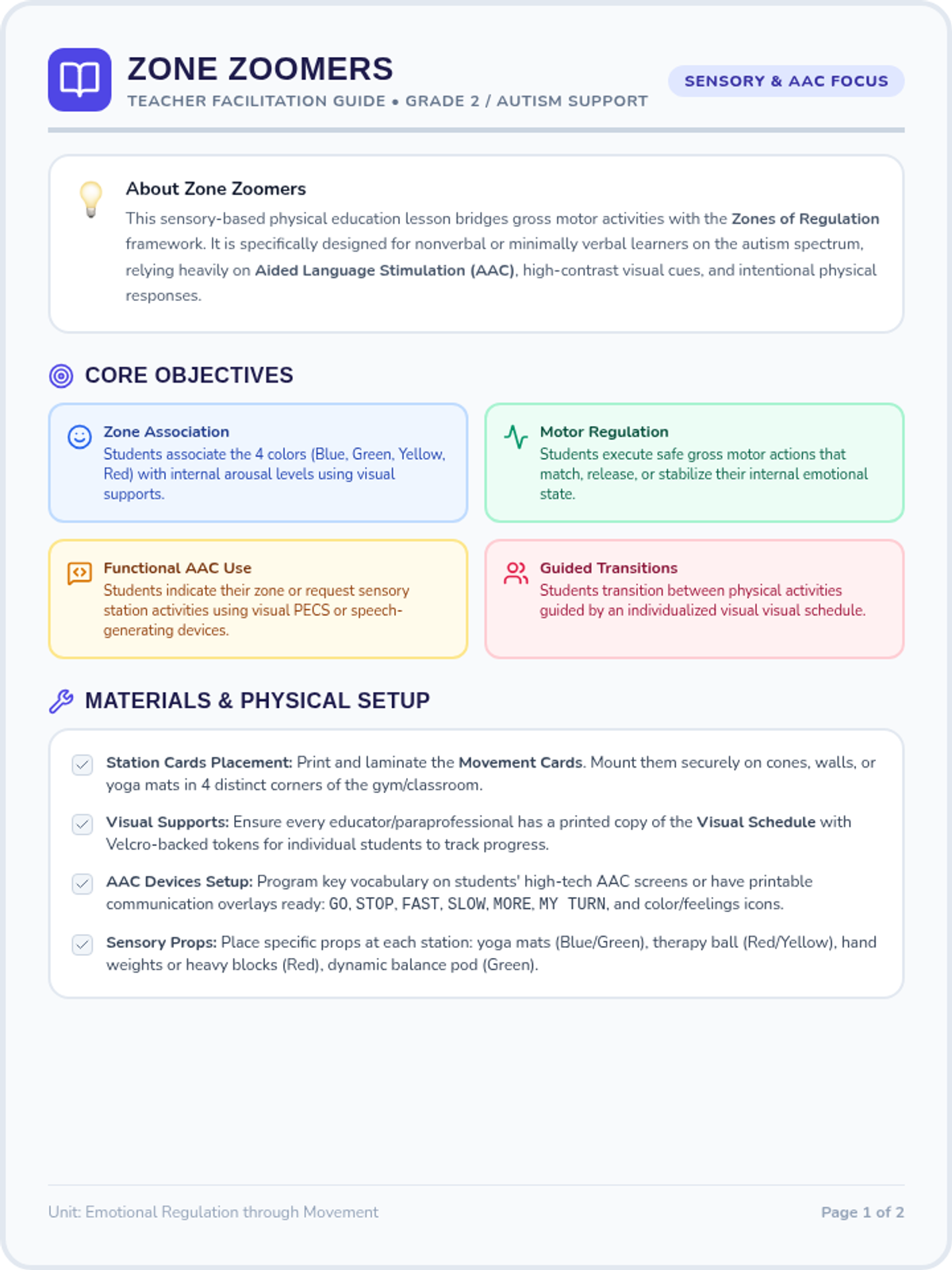
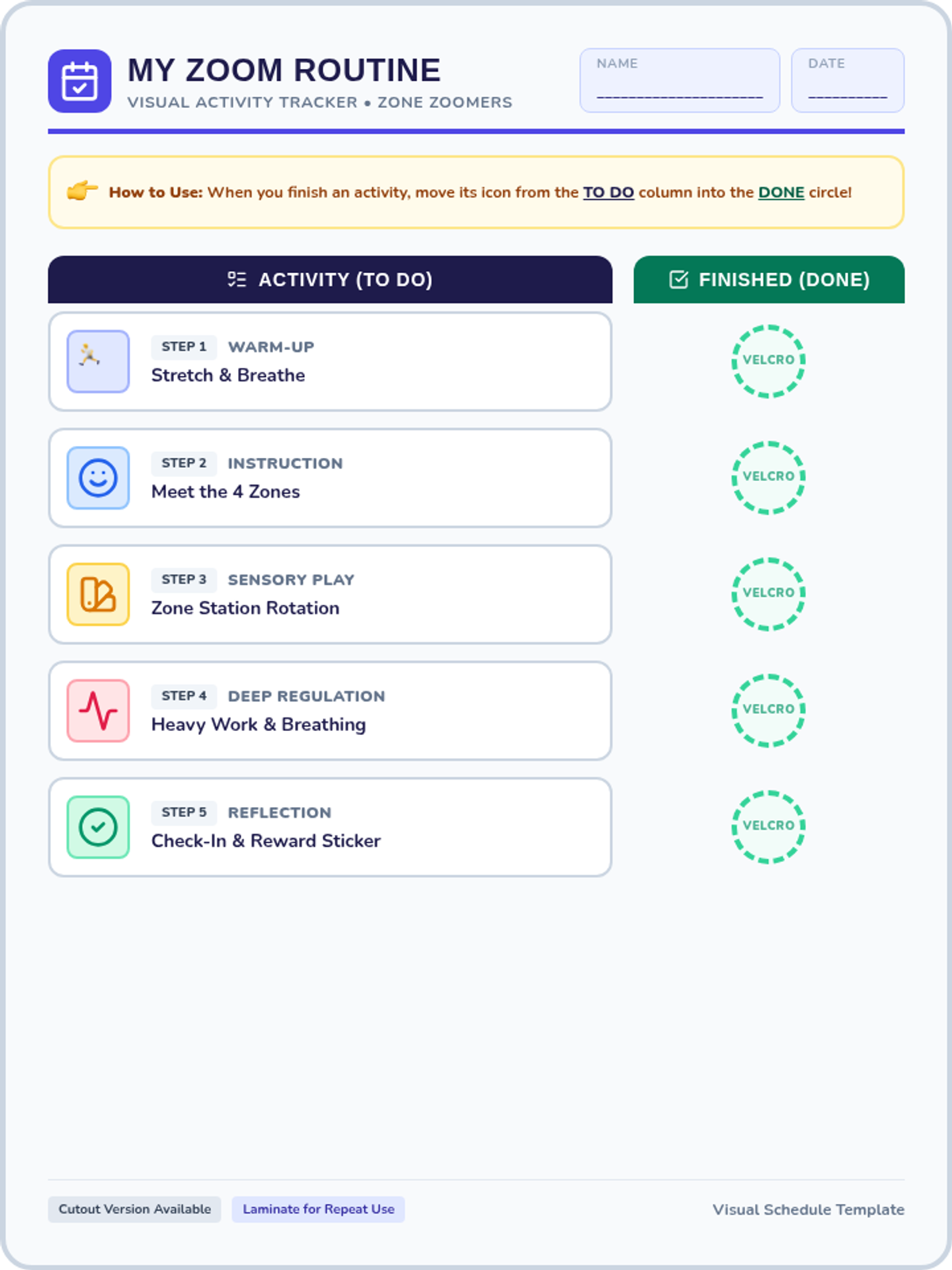
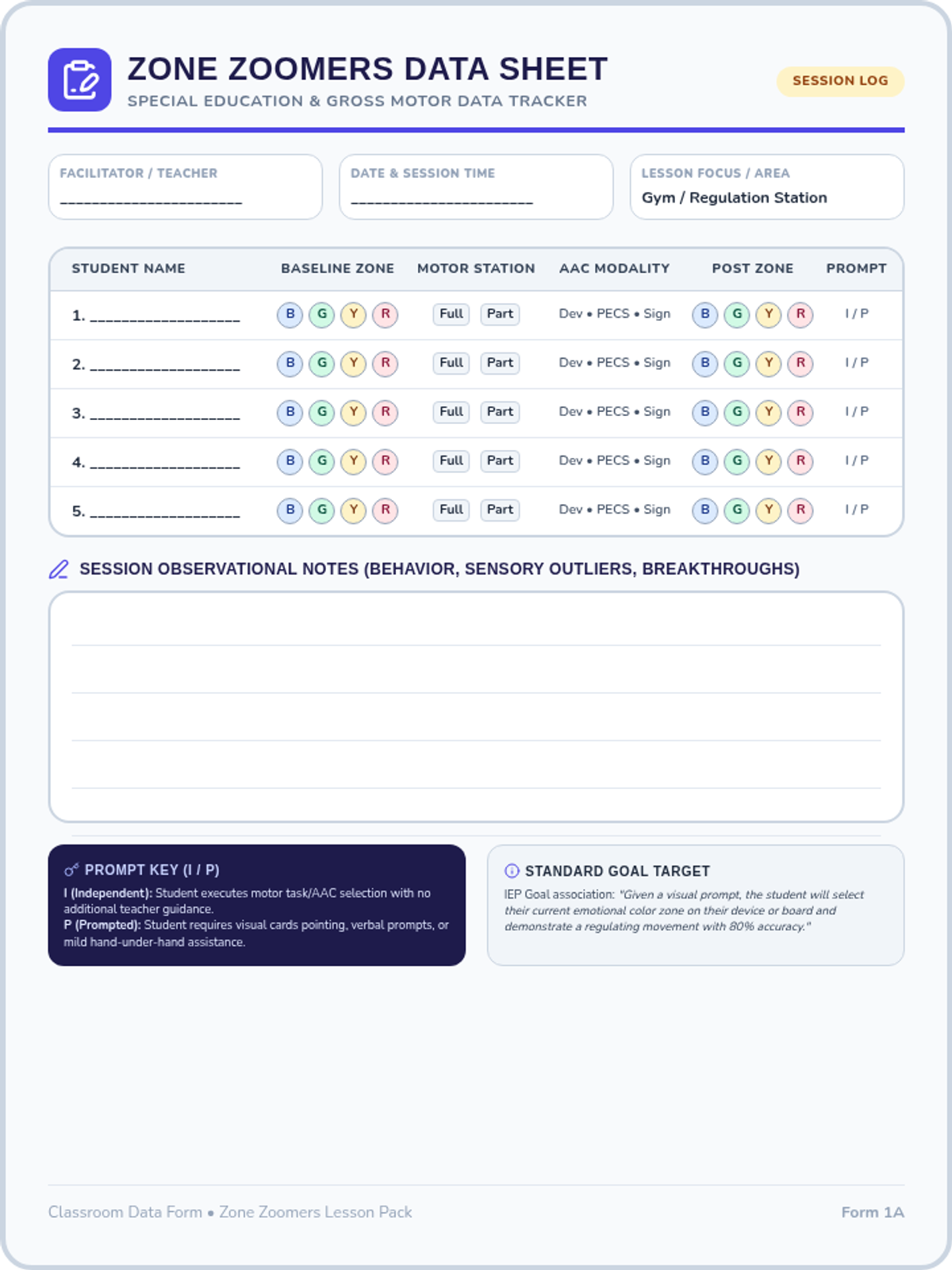
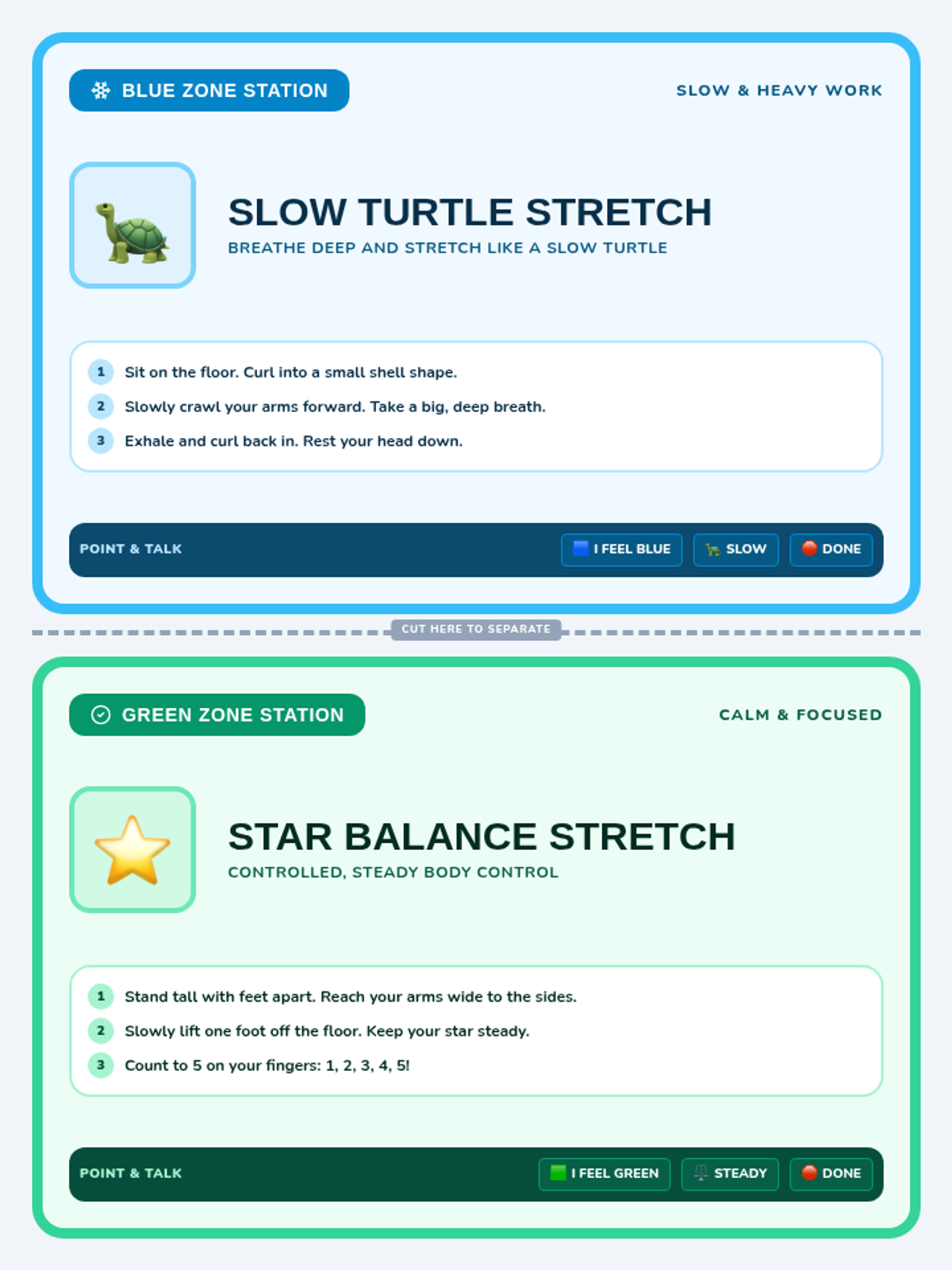
A high-energy, sensory-friendly physical lesson on emotional regulation for Grade 2. It connects the Zones of Regulation to gross motor movements and AAC communication supports, helping nonverbal and autistic learners identify and regulate their states through movement.
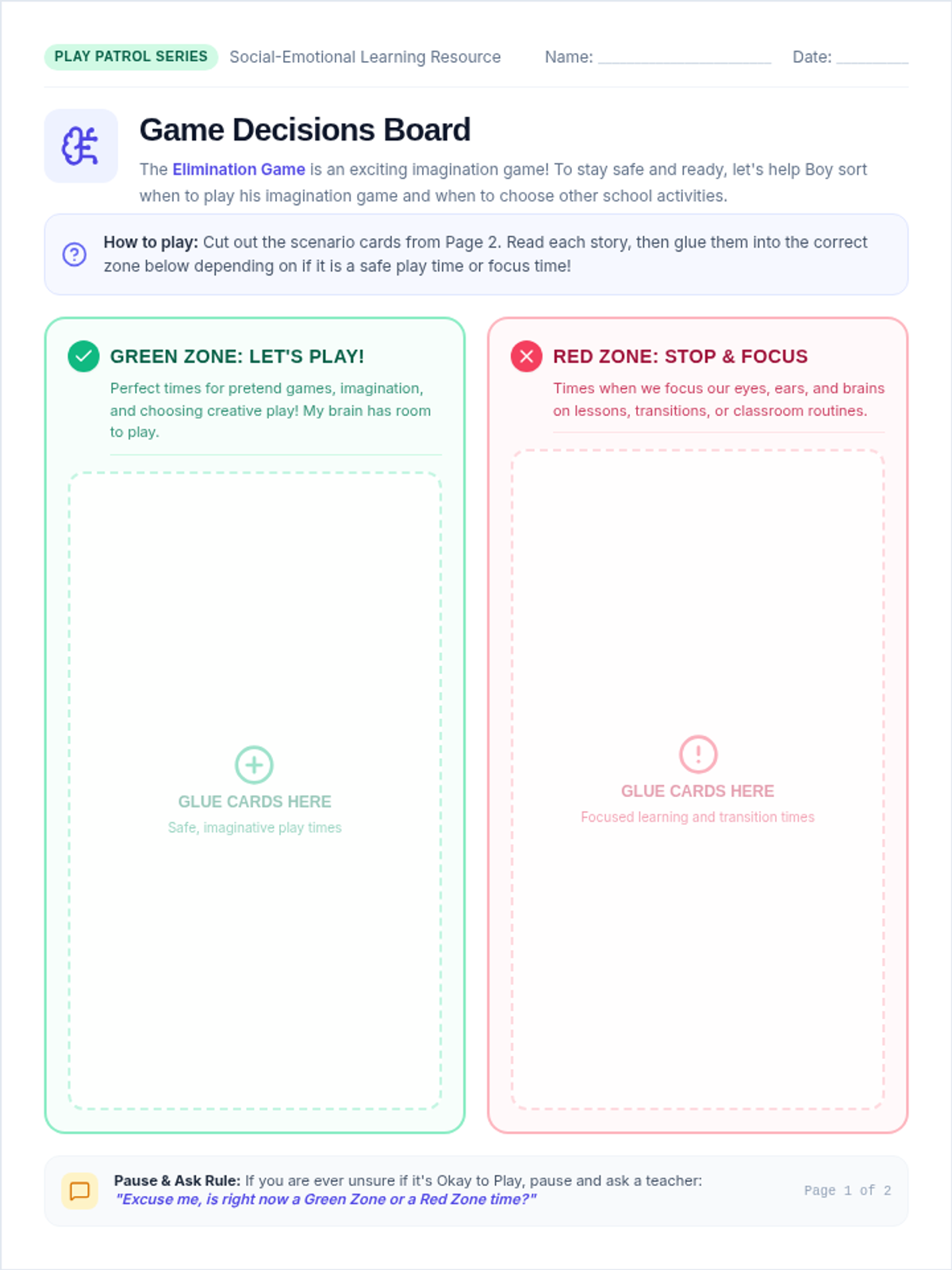
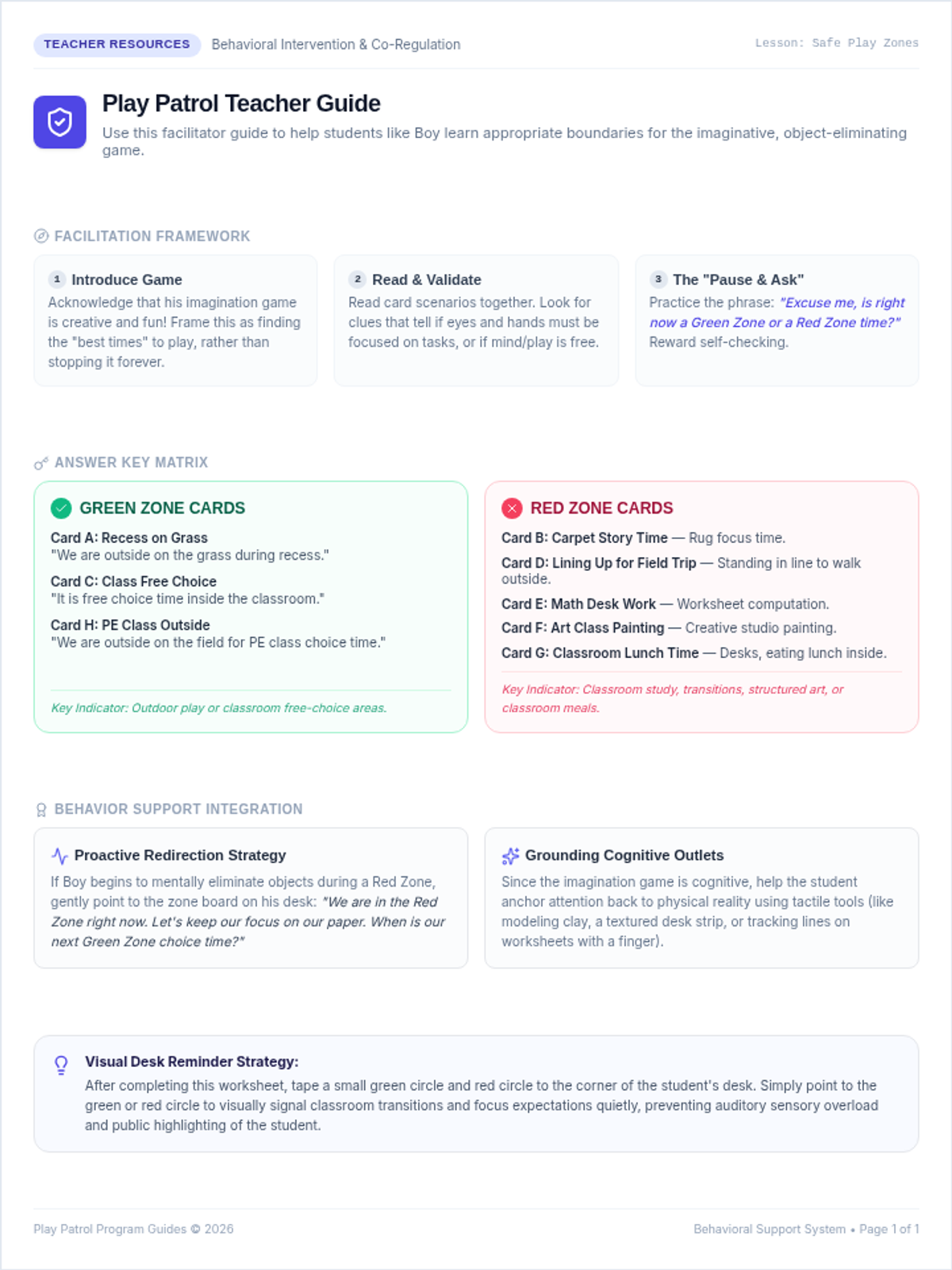
This lesson helps students learn appropriate boundaries for high-energy games, specifically the "elimination game", by sorting social narratives into 'safe play' and 'learning/transition' times.
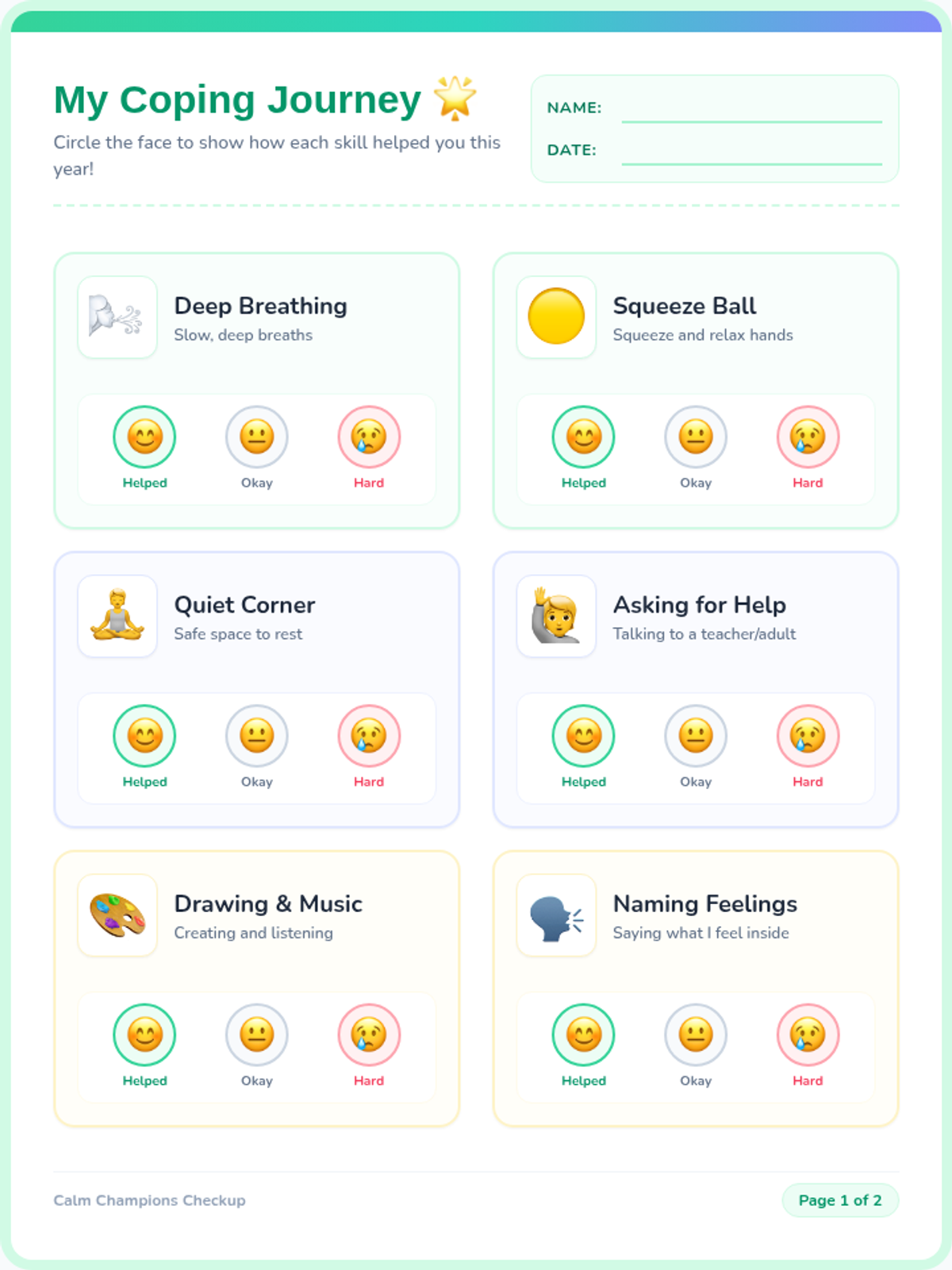
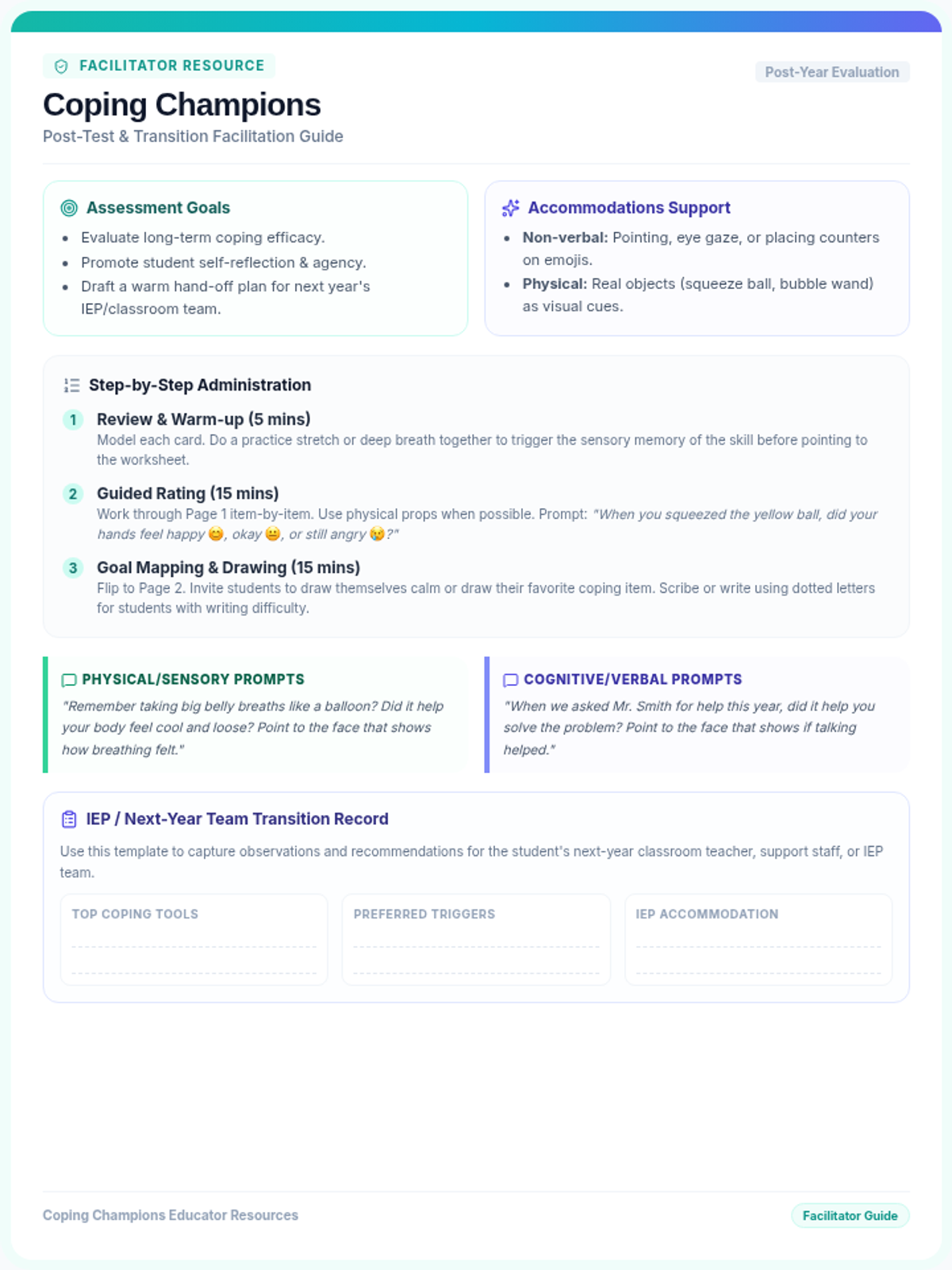
A post-test and reflection lesson designed for students with lower cognitive abilities to evaluate their coping skills from the past year and set gentle goals for the next school year using visual emojis and guided drawing/writing templates.
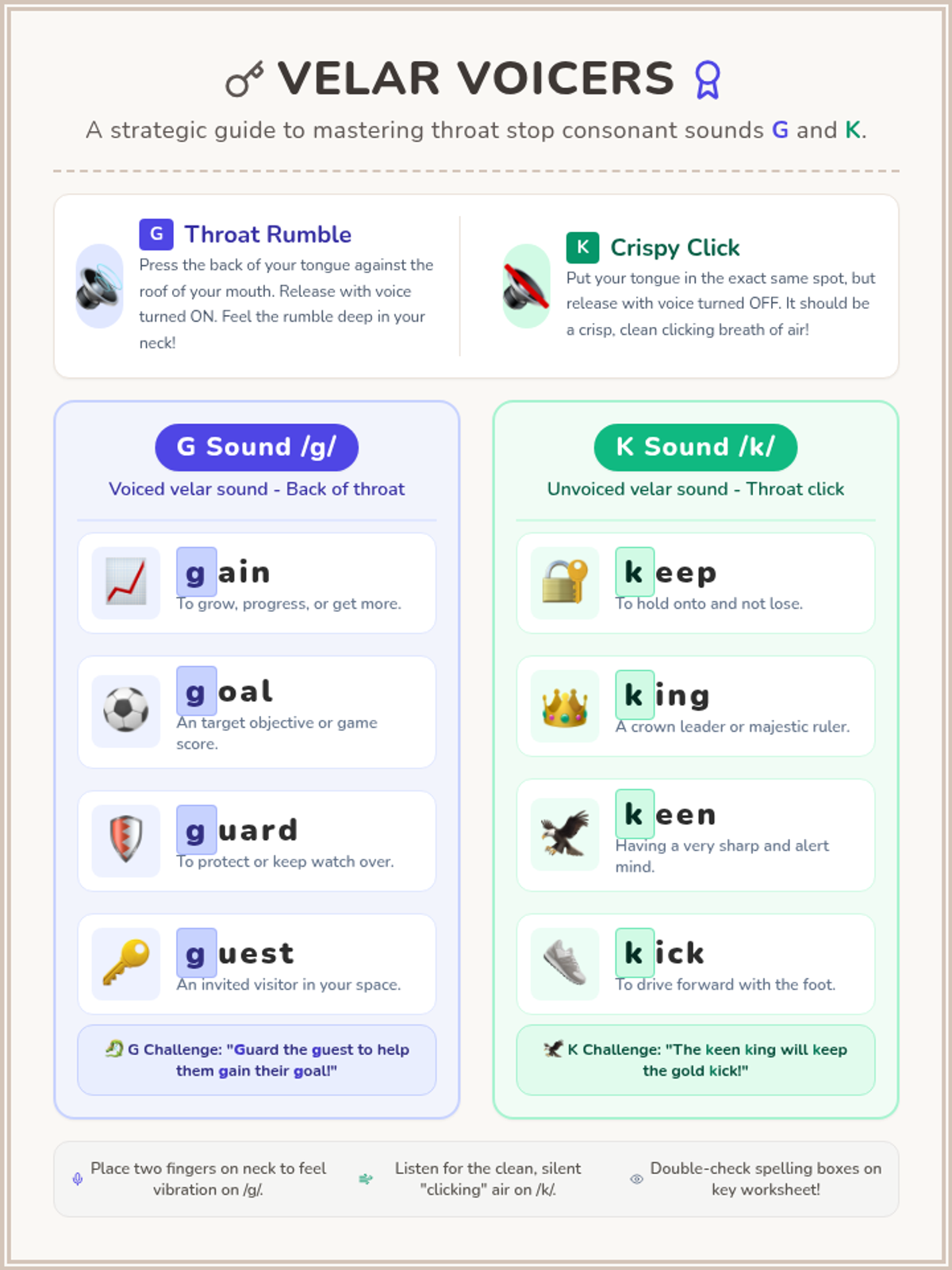
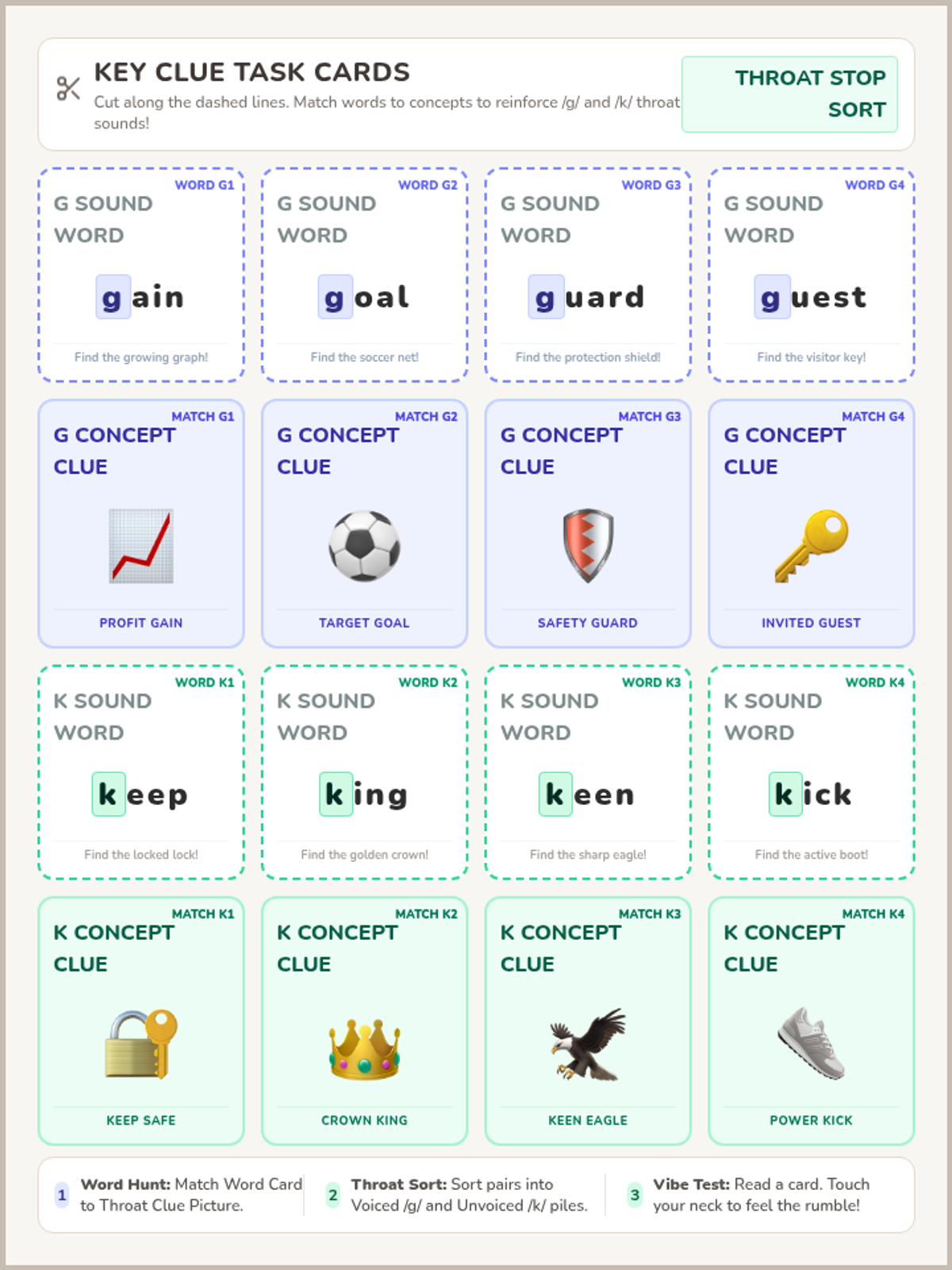
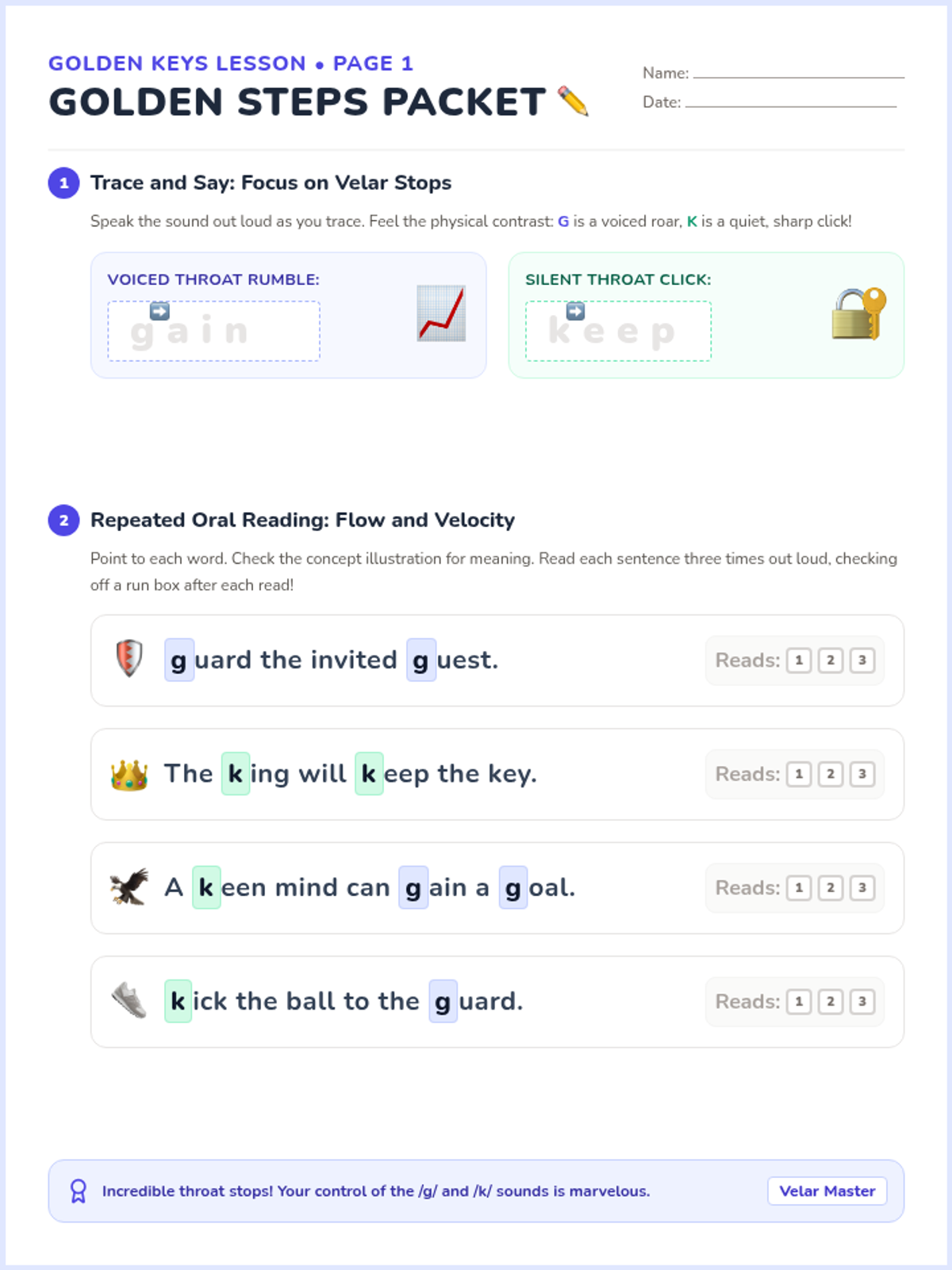
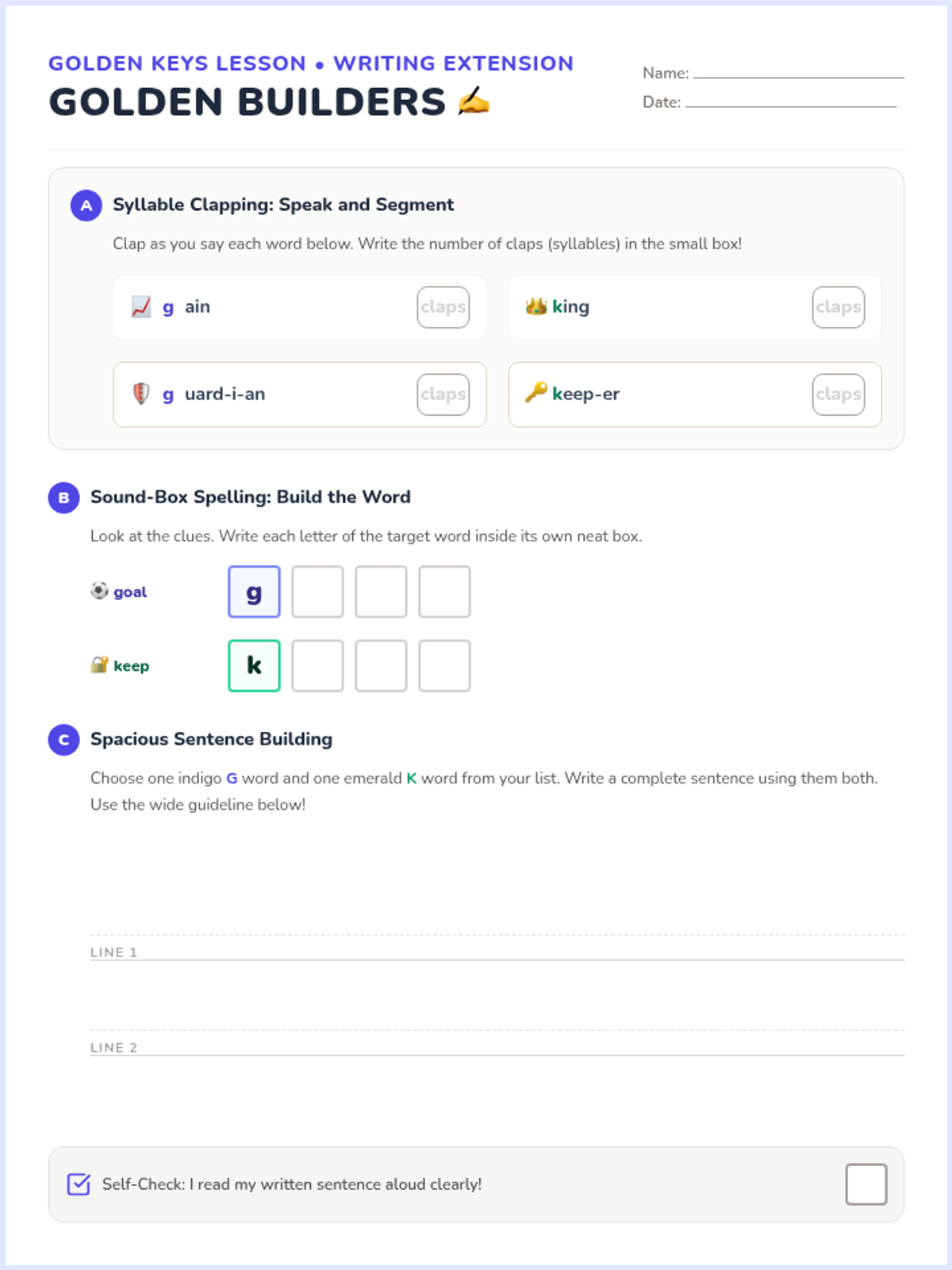
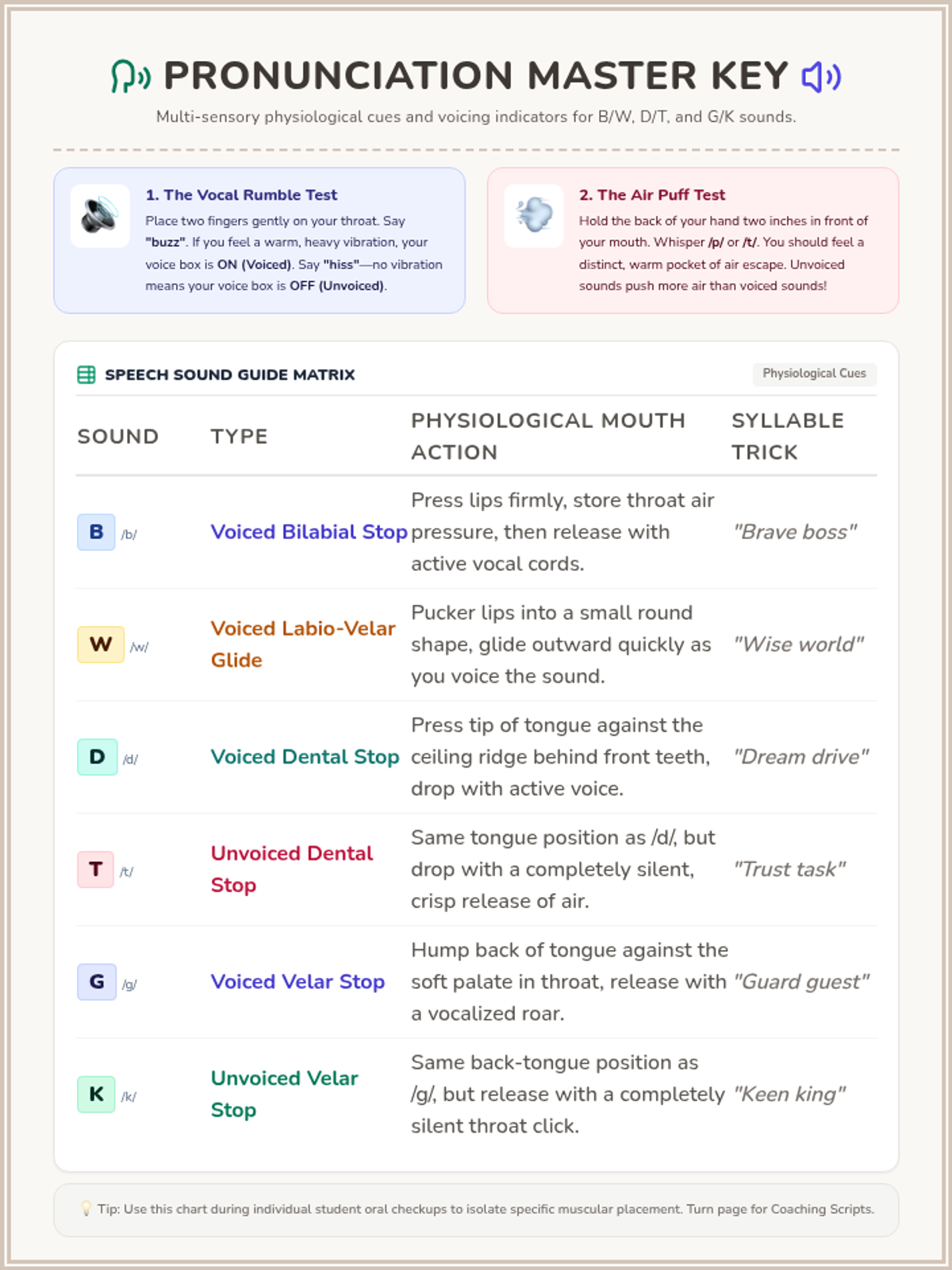
A structured phonics and oral reading lesson contrasting G and K sounds. Features visual voicing indicators, multi-sensory tracing sheets, and high-interest interactive task cards.
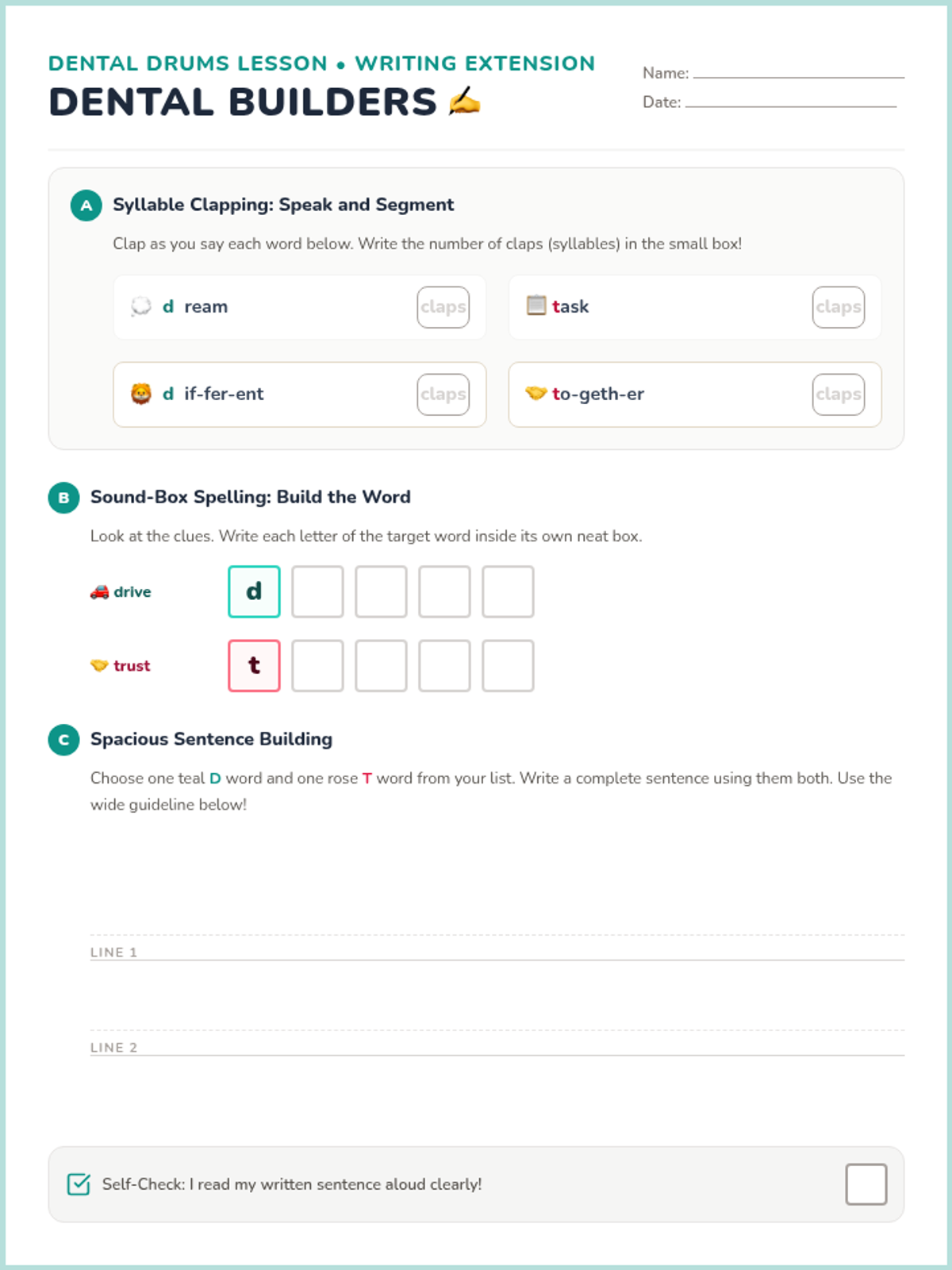
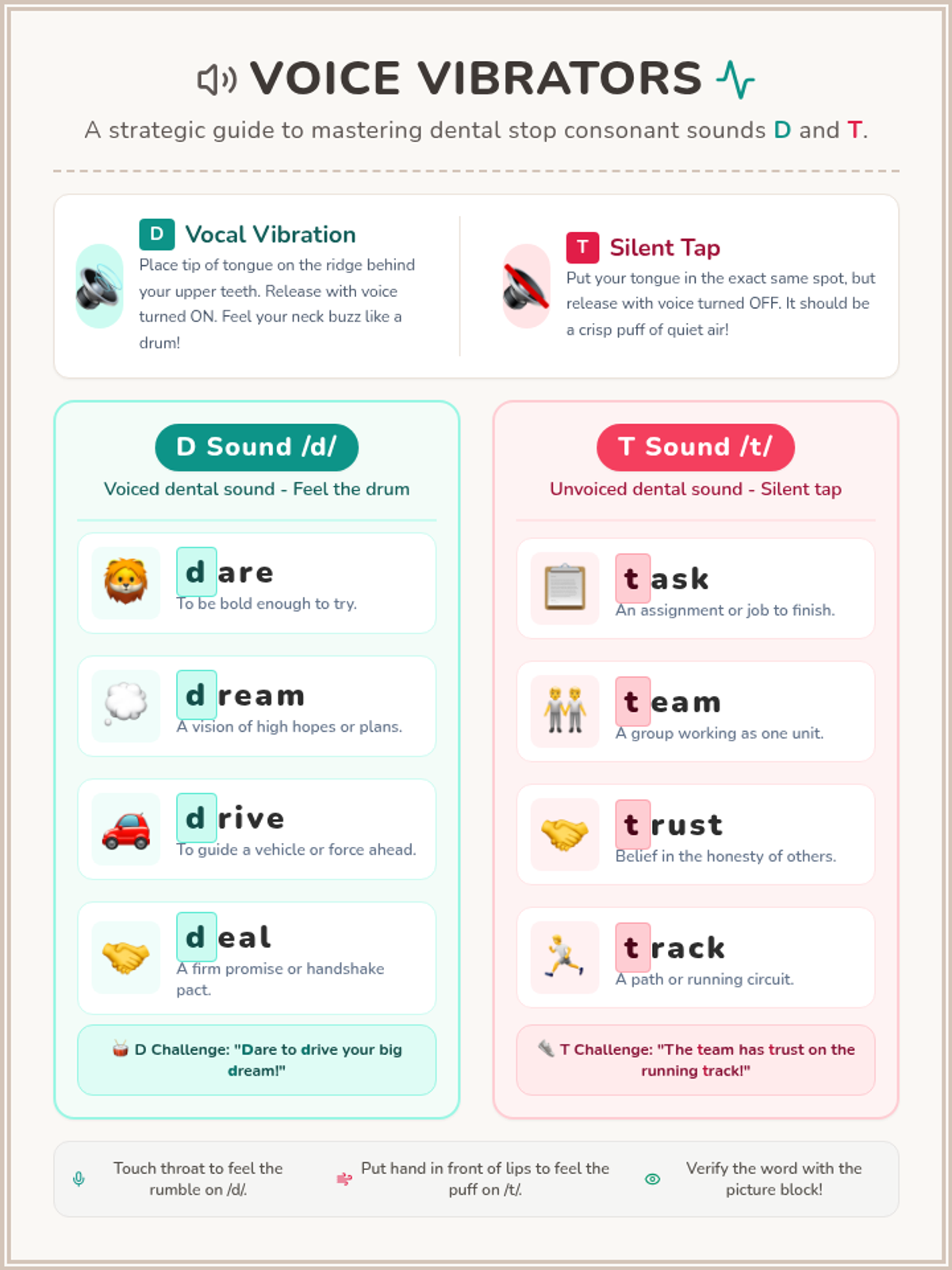
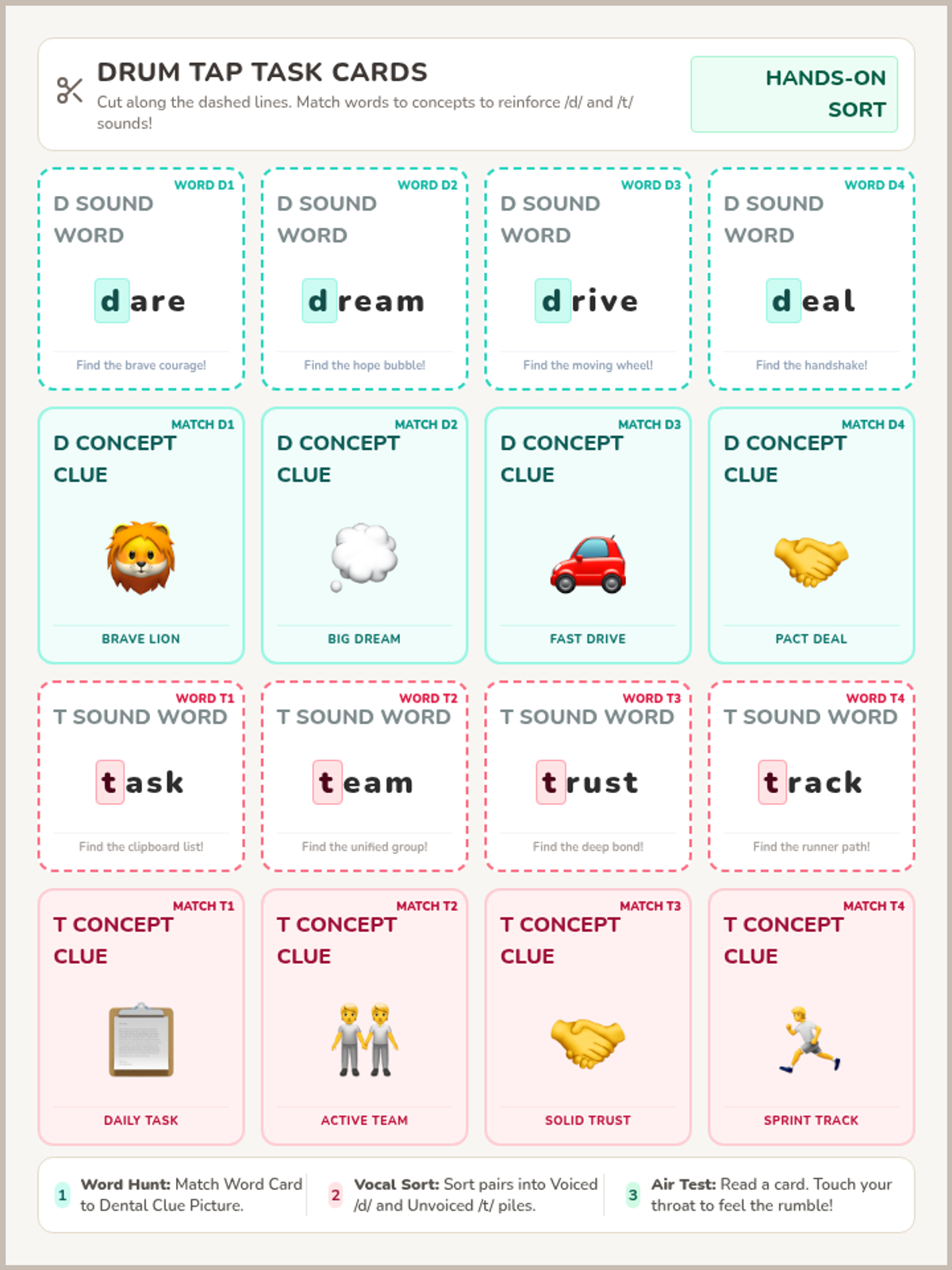
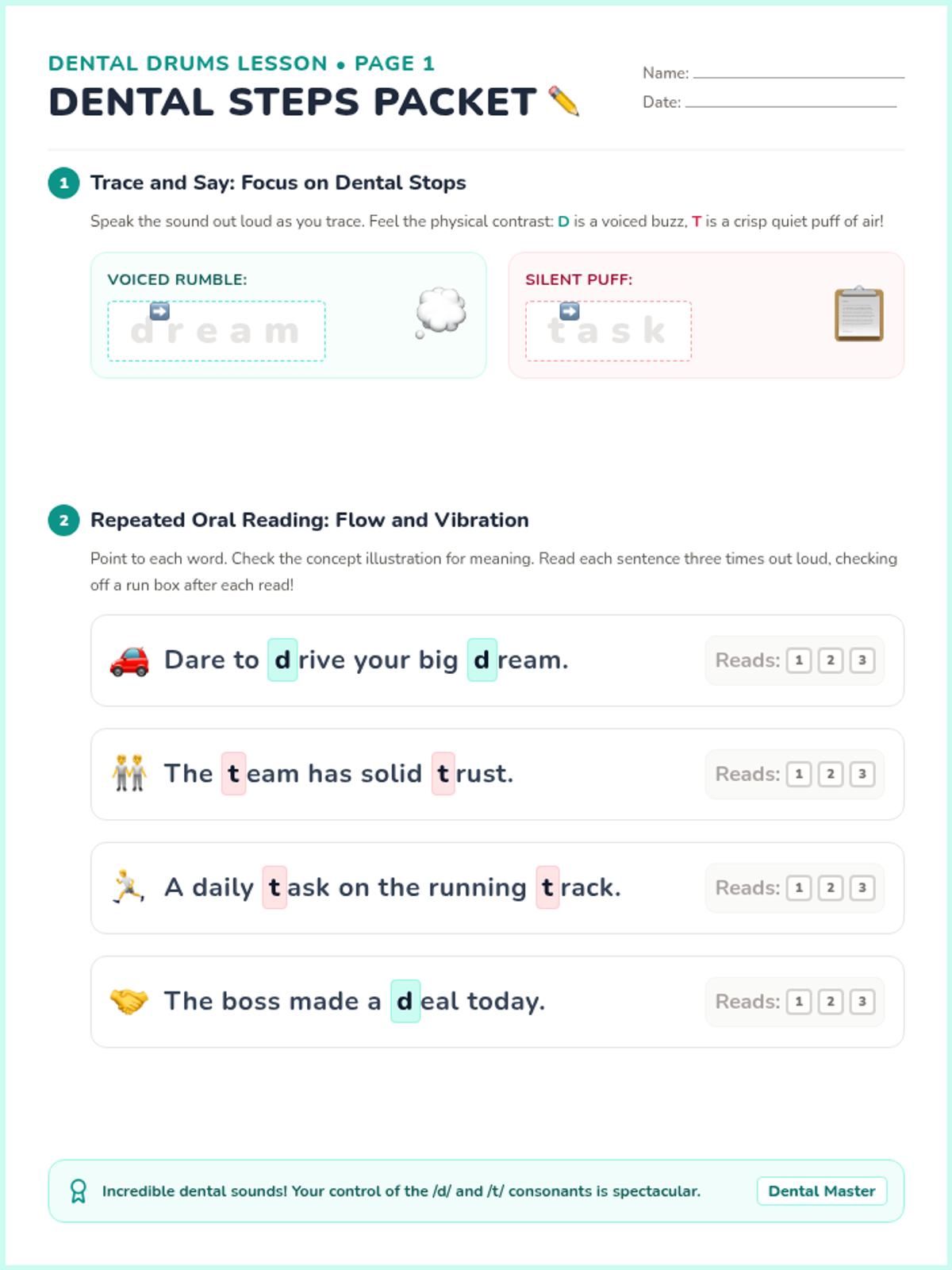
A structured phonics and oral reading lesson contrasting D and T sounds. Features heavy picture scaffolding, voice-vibration indicators, and dyslexia-friendly physical activity resources.
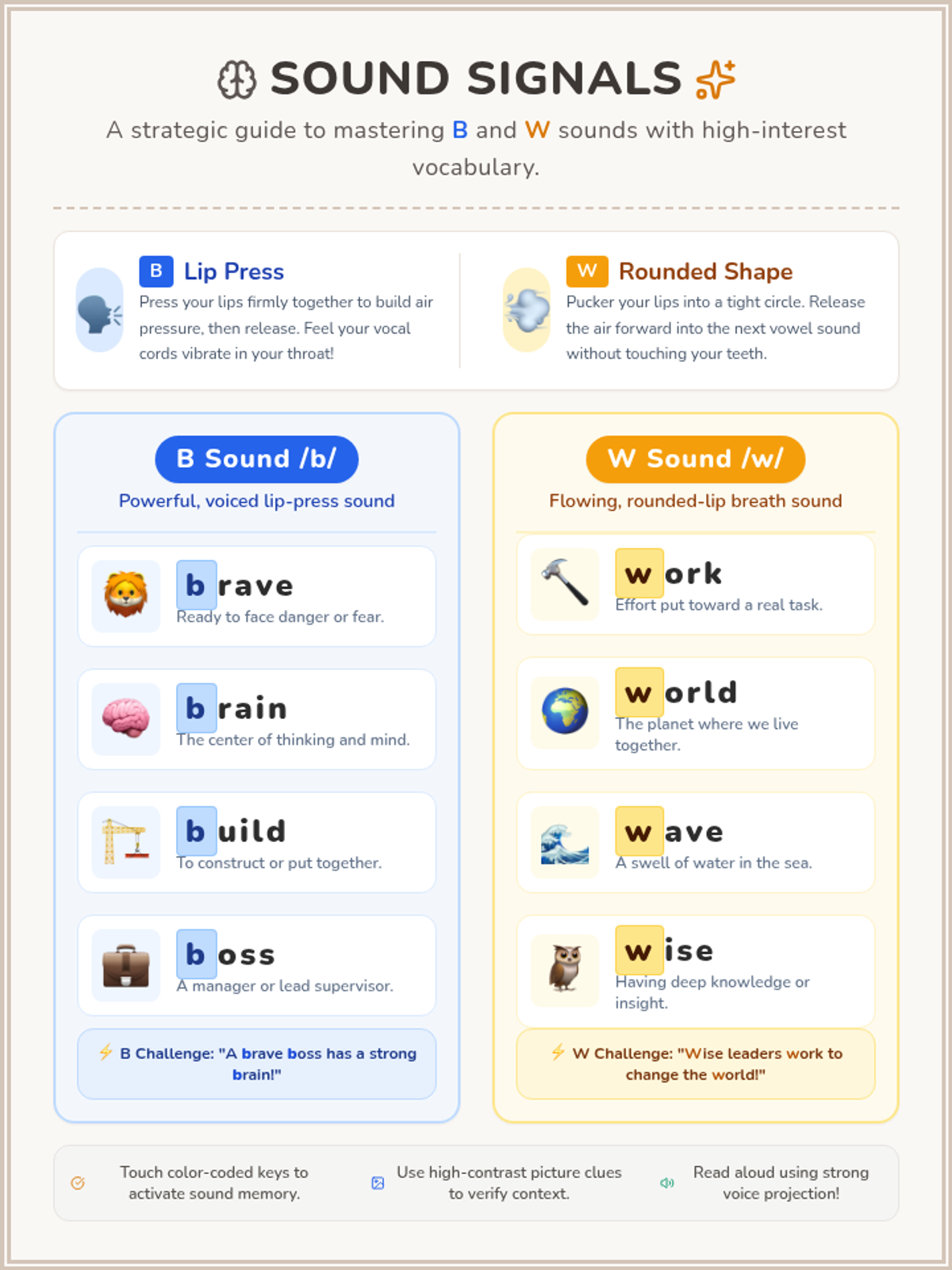
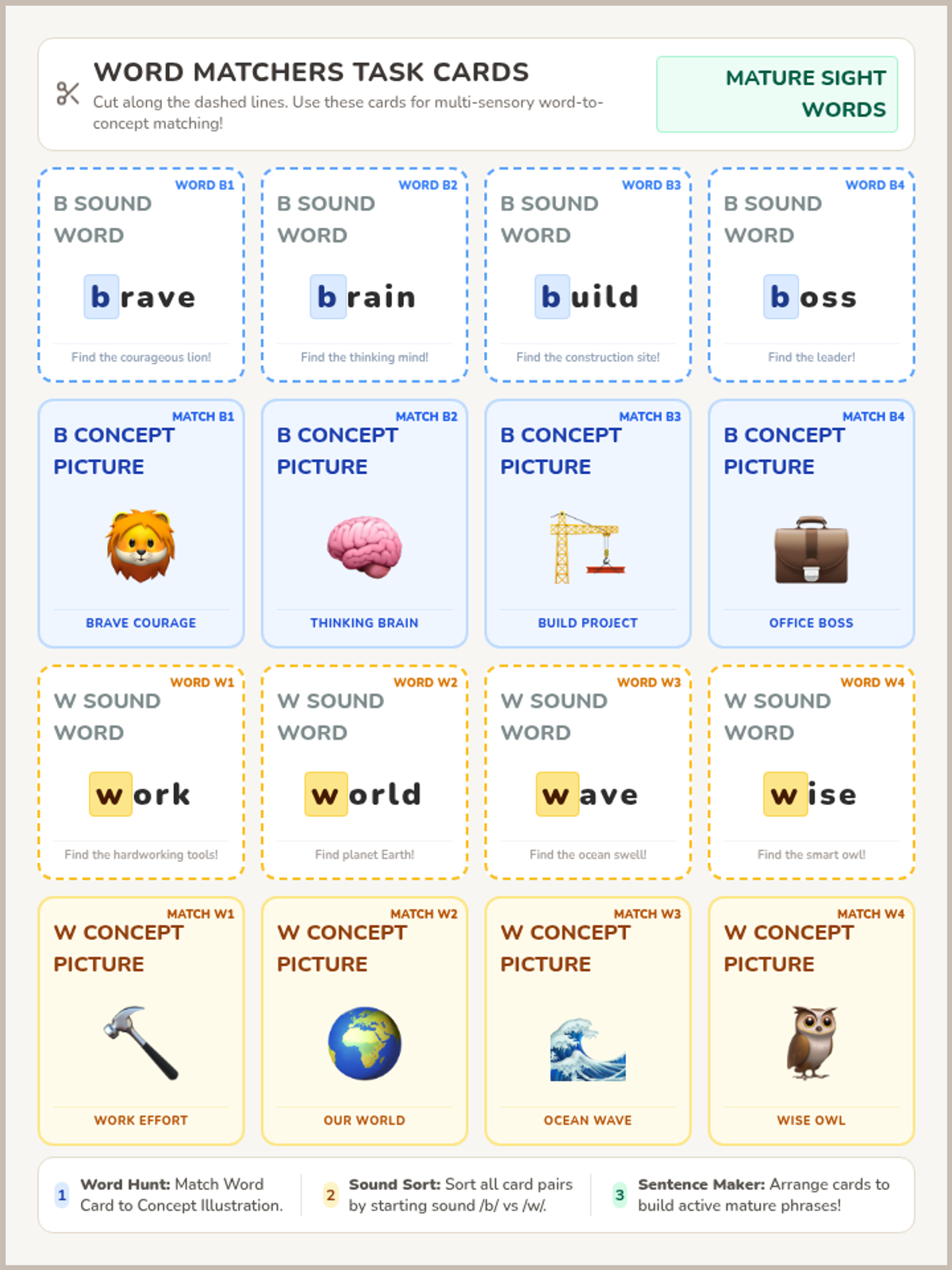
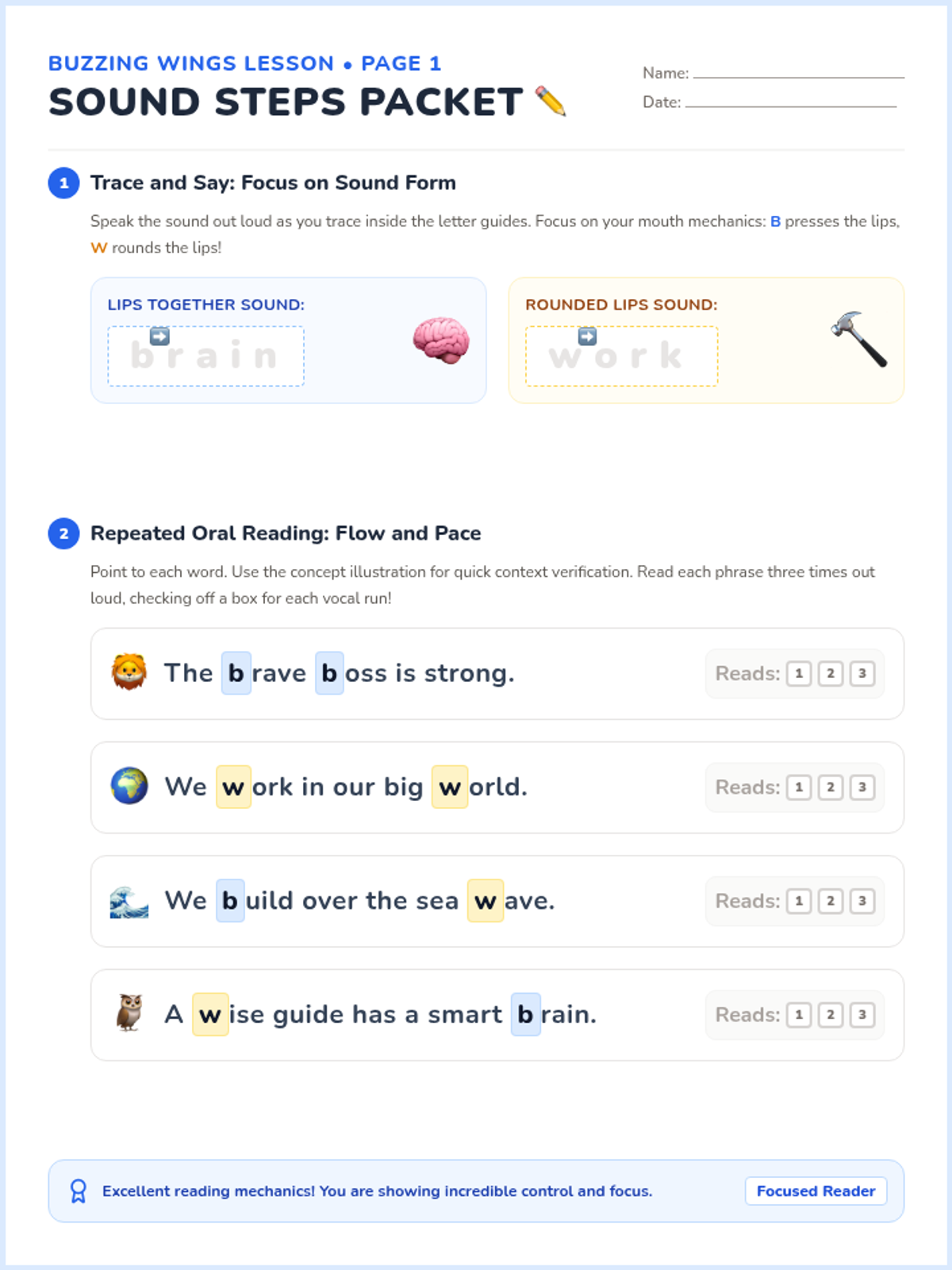
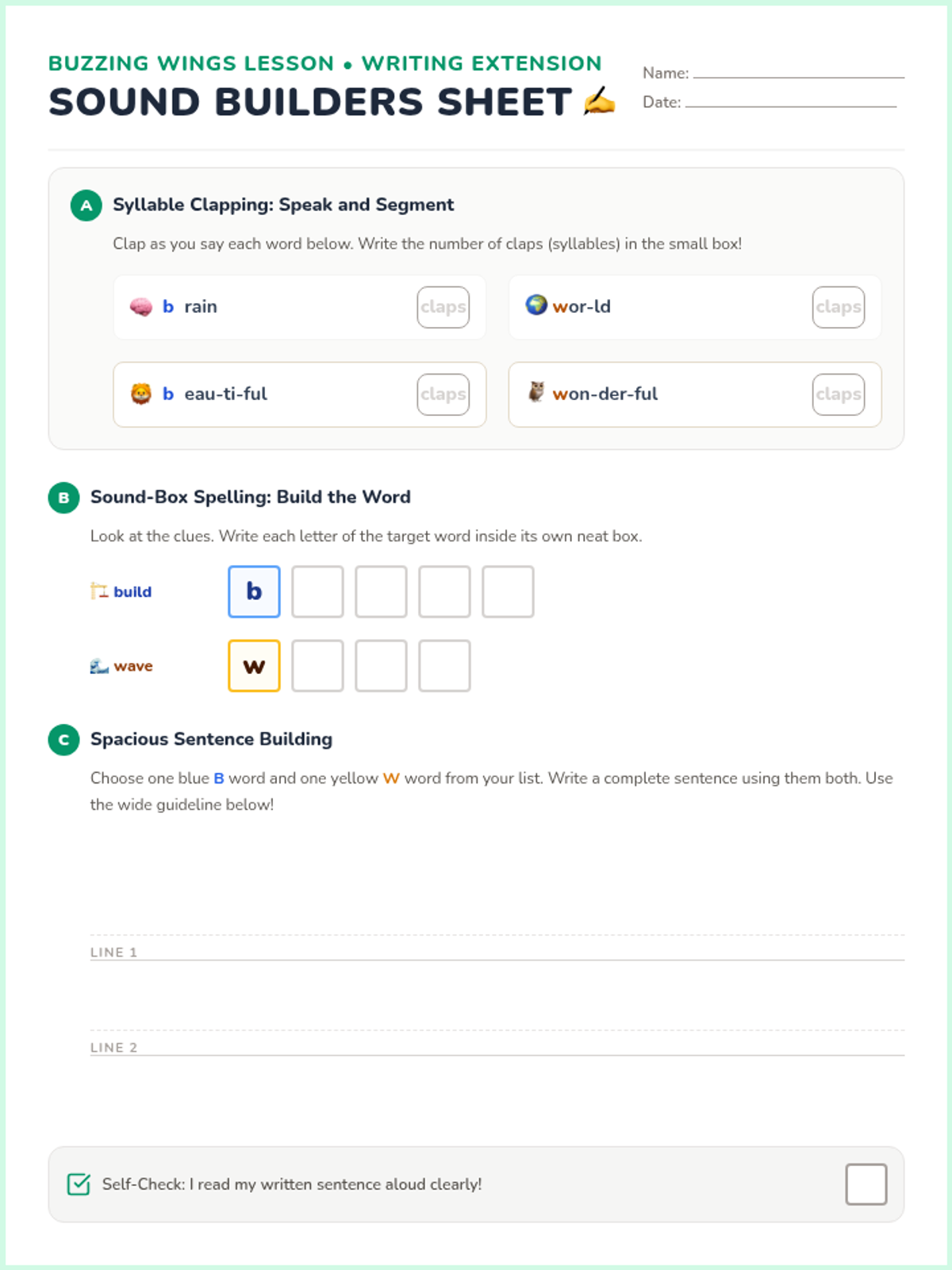
An hour-long structured reading lesson focusing on B and W letter-sound association and common sight words. Designed with dyslexia-friendly spacing, color-coded highlights, and picture scaffolding to support struggling oral readers.
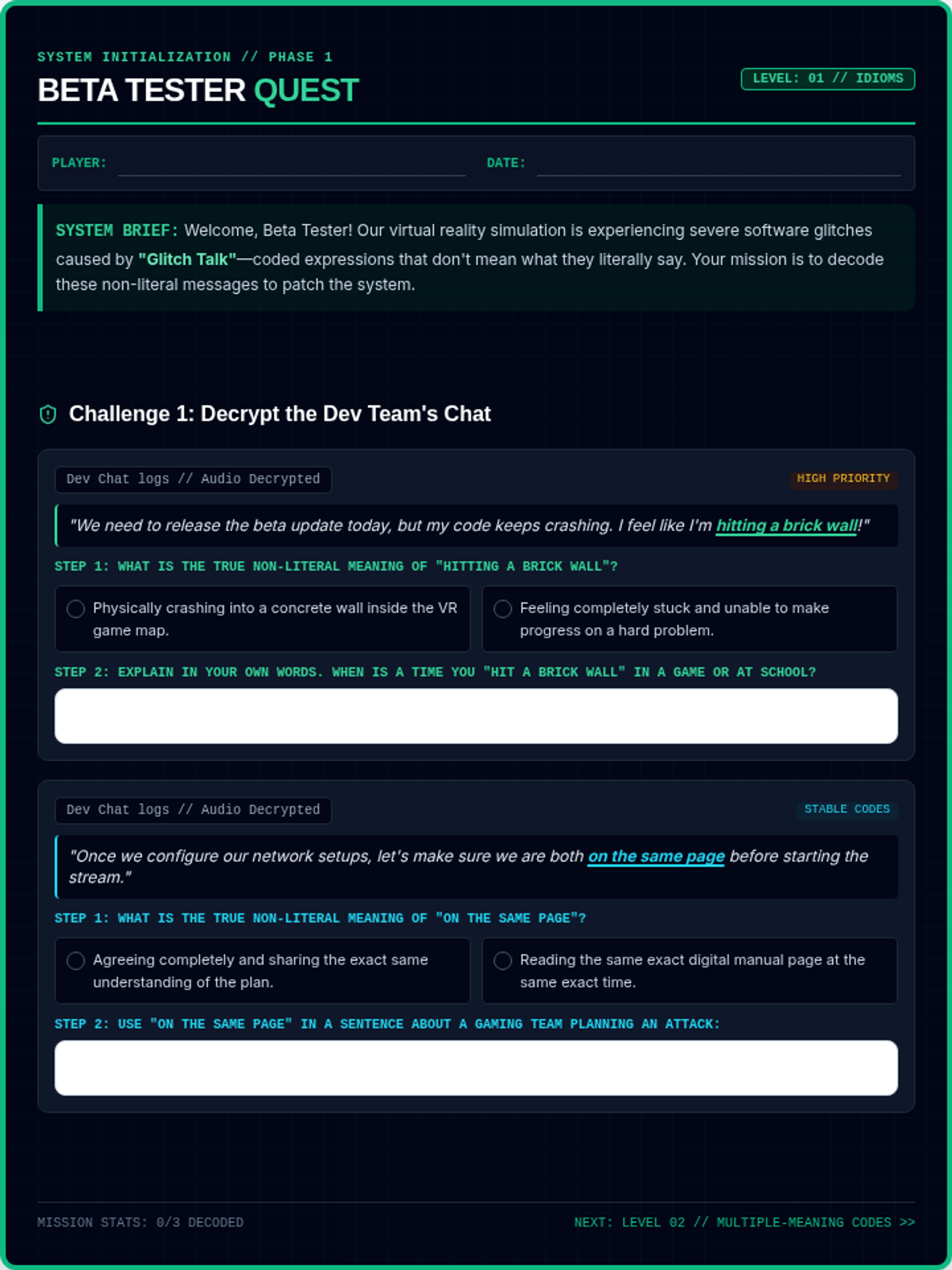
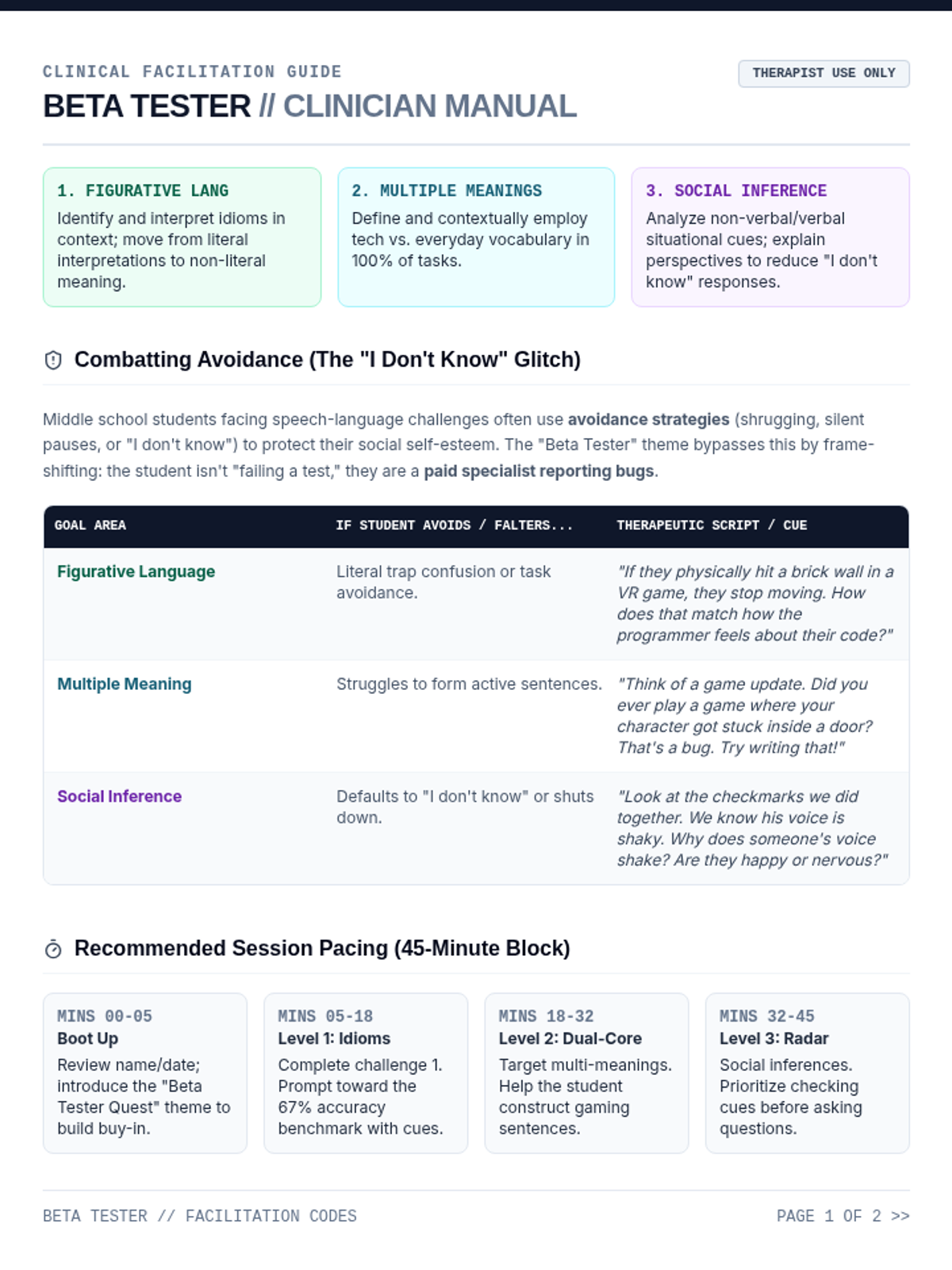
A highly engaging gaming and technology-themed speech-language therapy unit targeting figurative language, multiple-meaning words, and social inference for middle school students, featuring structured scaffolding to support active participation.
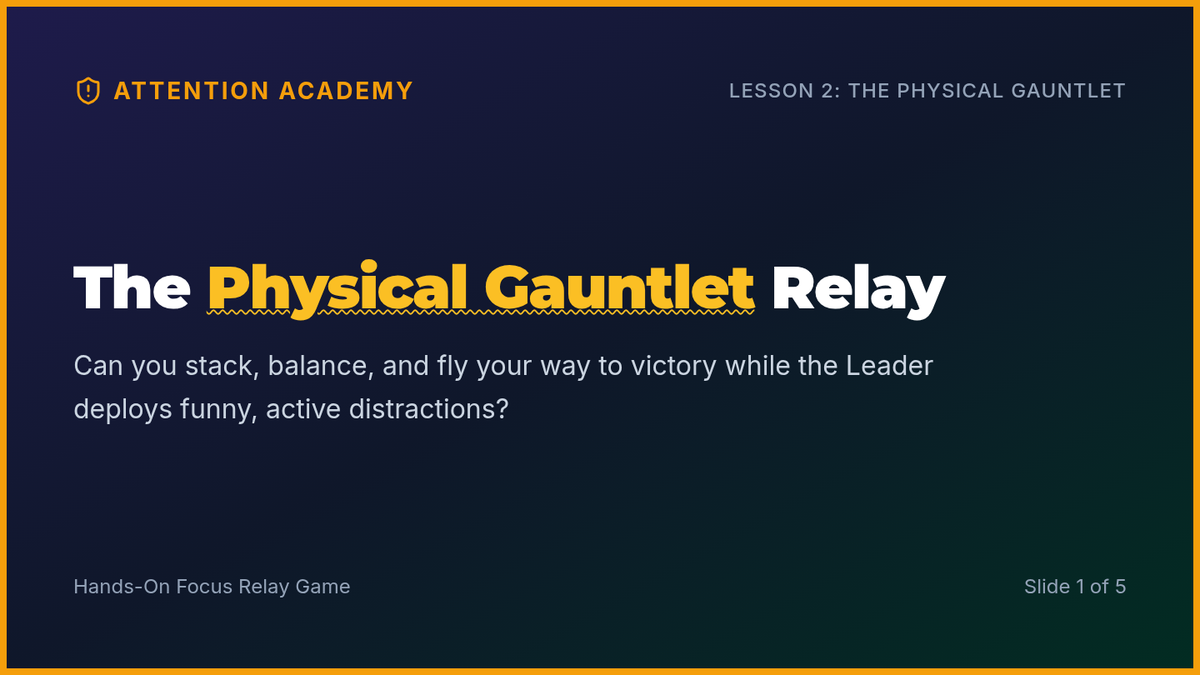
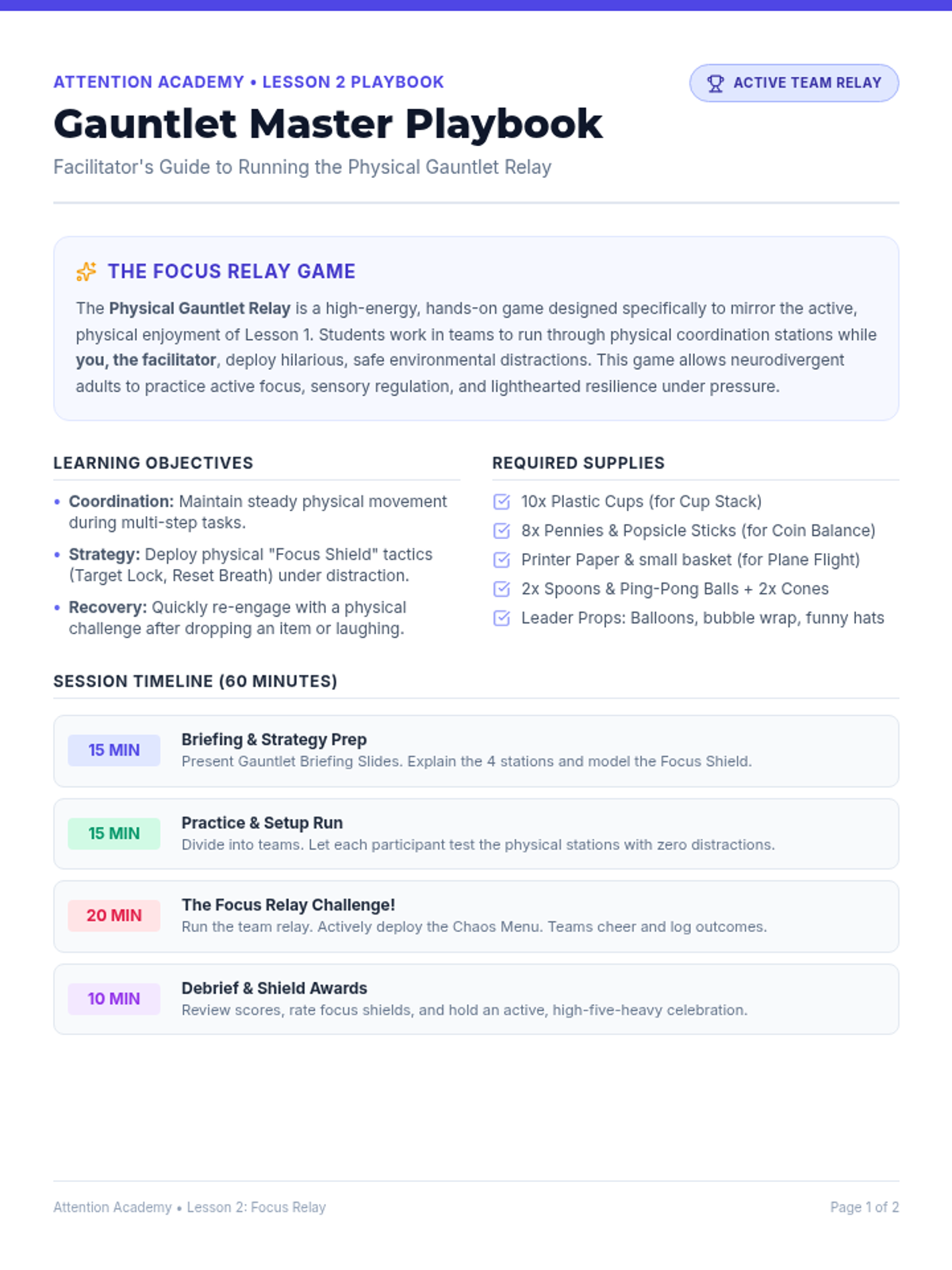
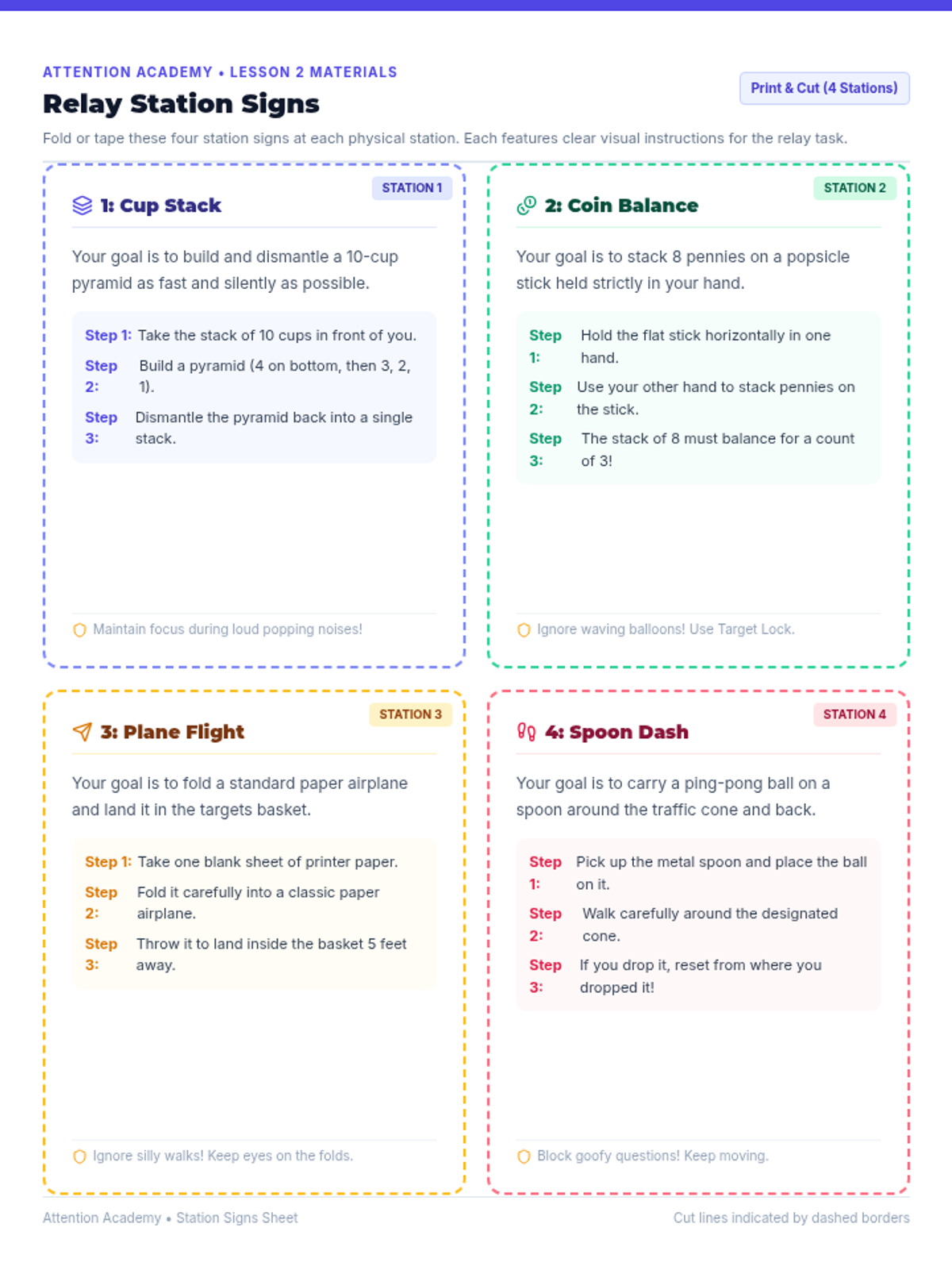
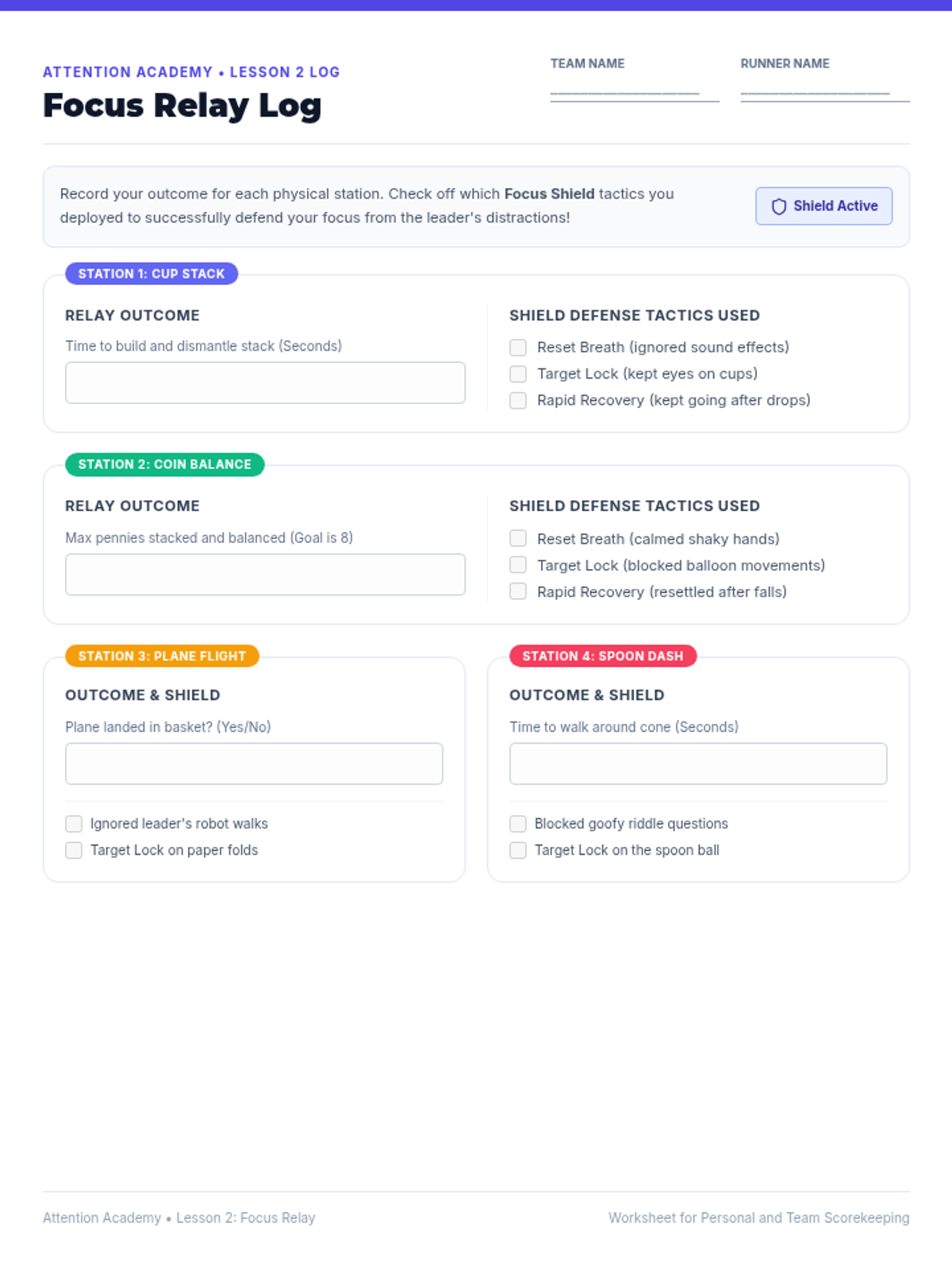
A high-energy team-based relay game where participants complete physical coordination challenges while the leader deploys humorous, safe distractions. Teams earn points for speed, accuracy, and focus recovery.
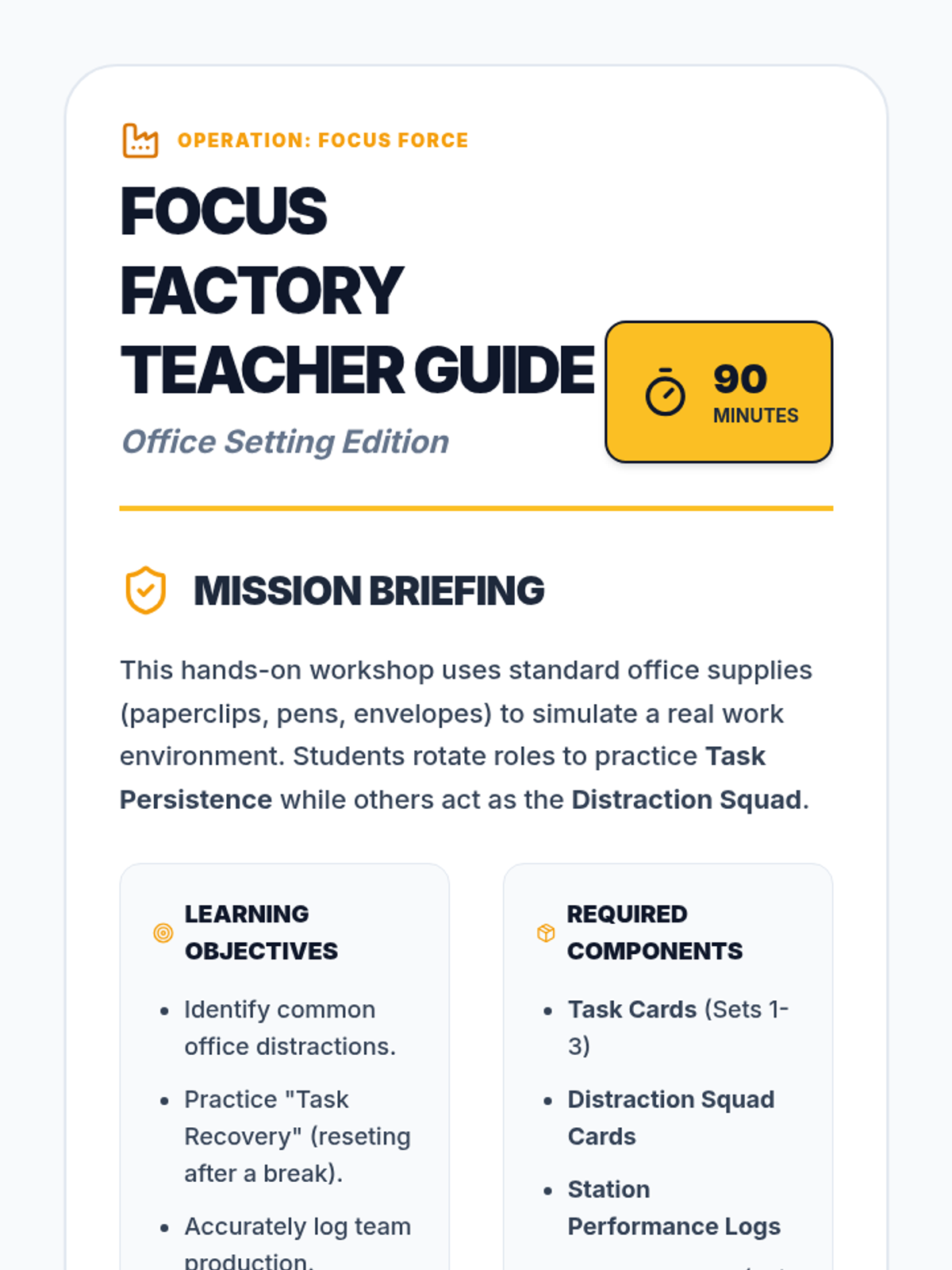
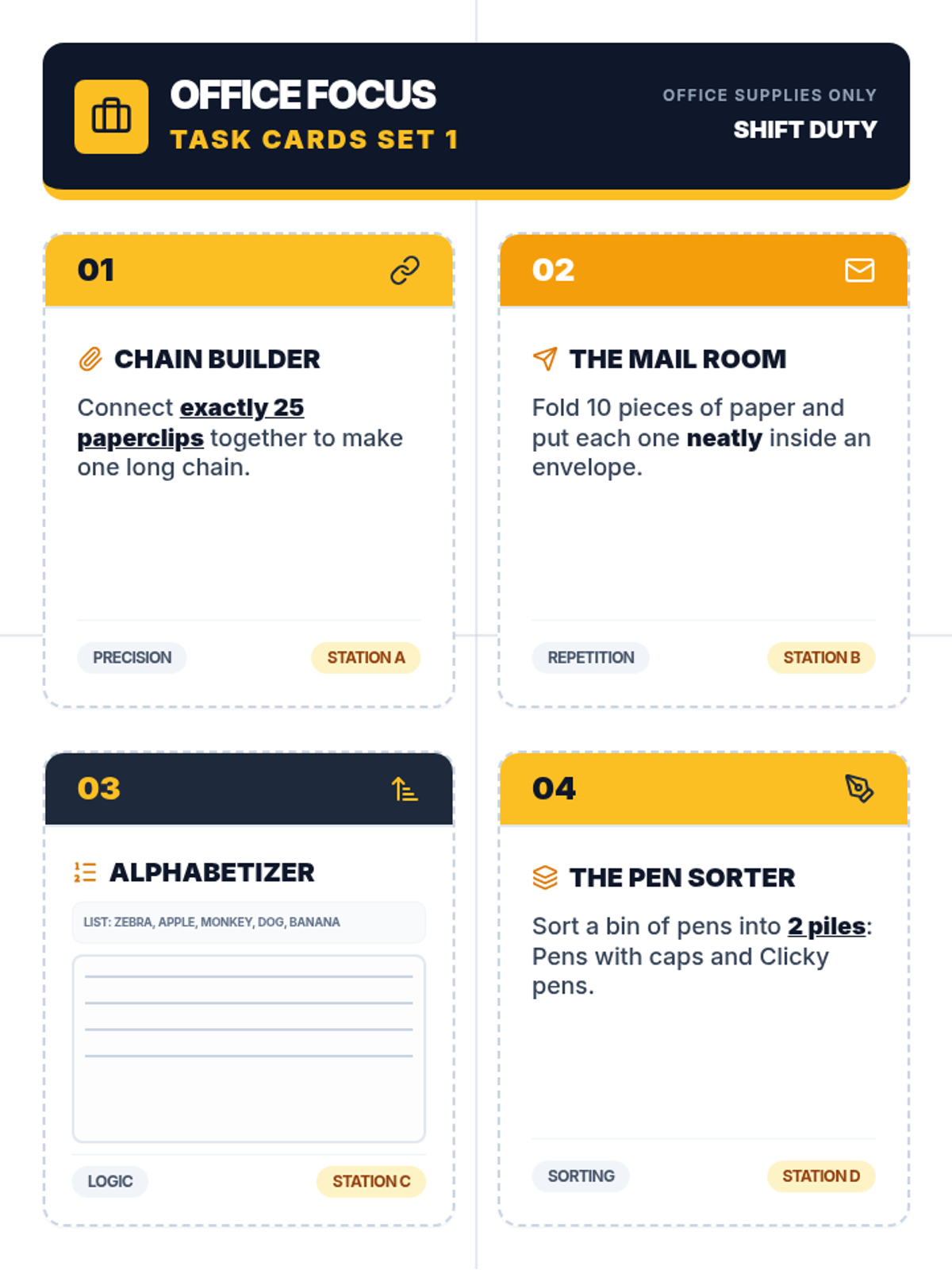
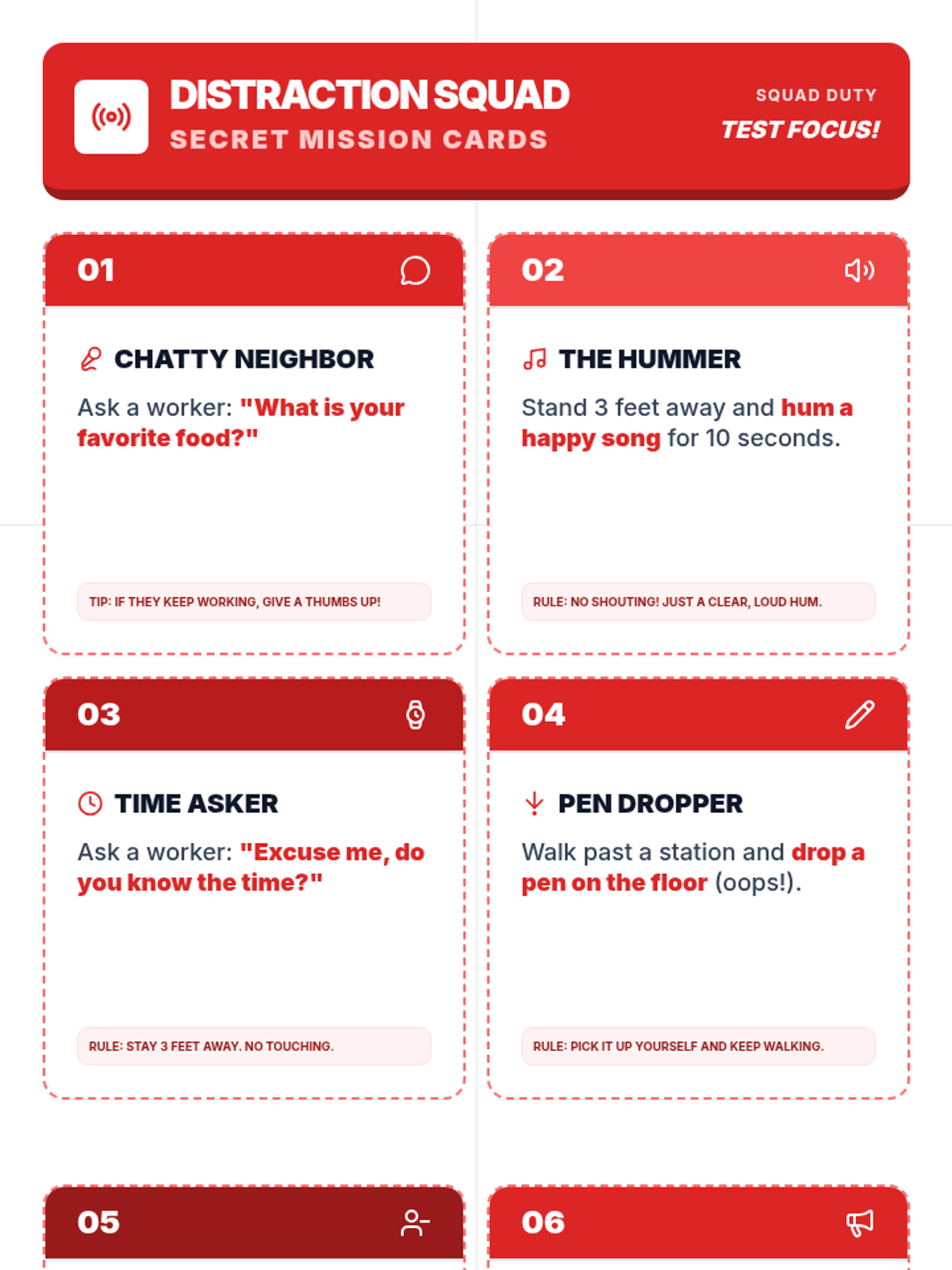
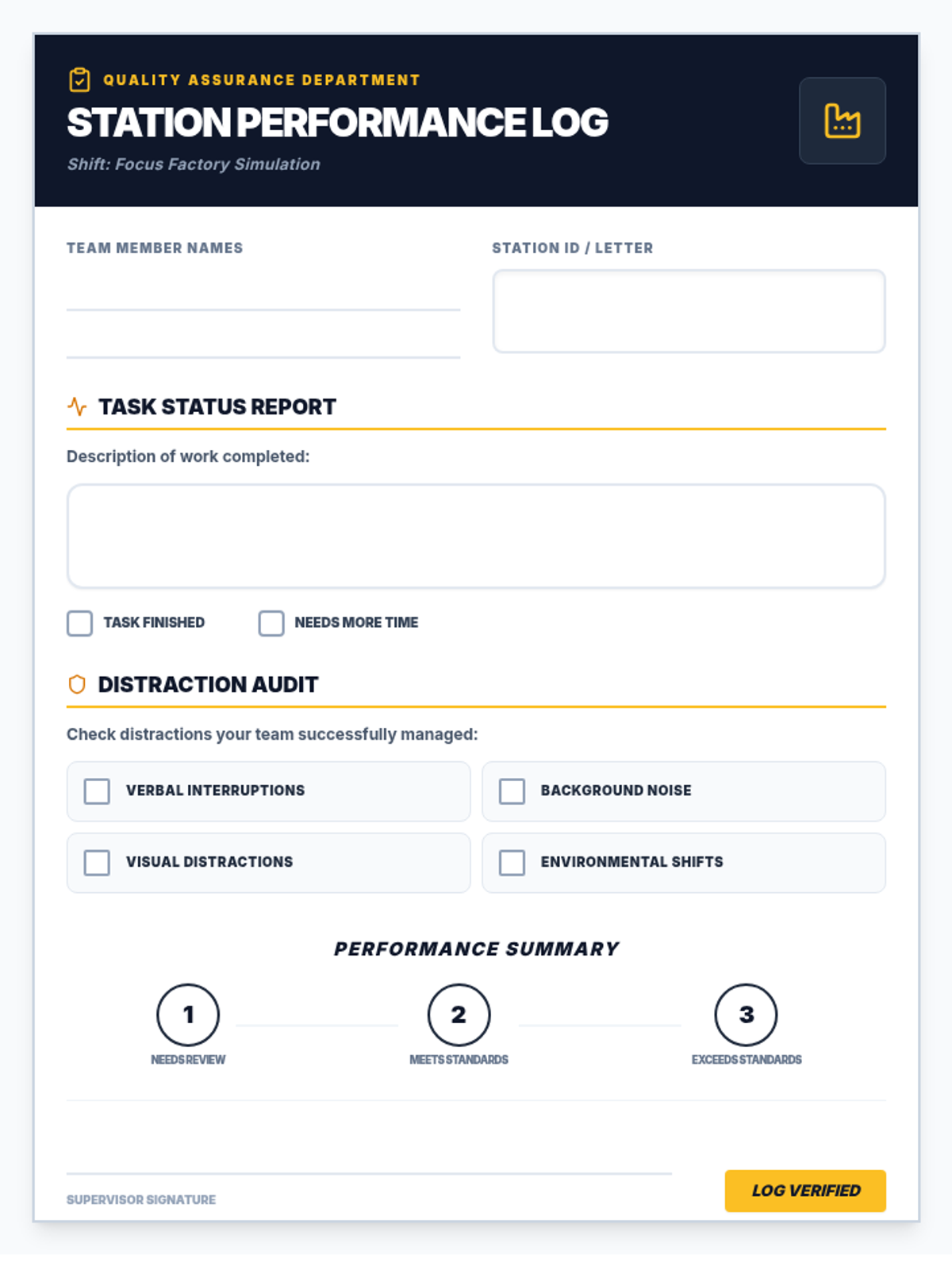
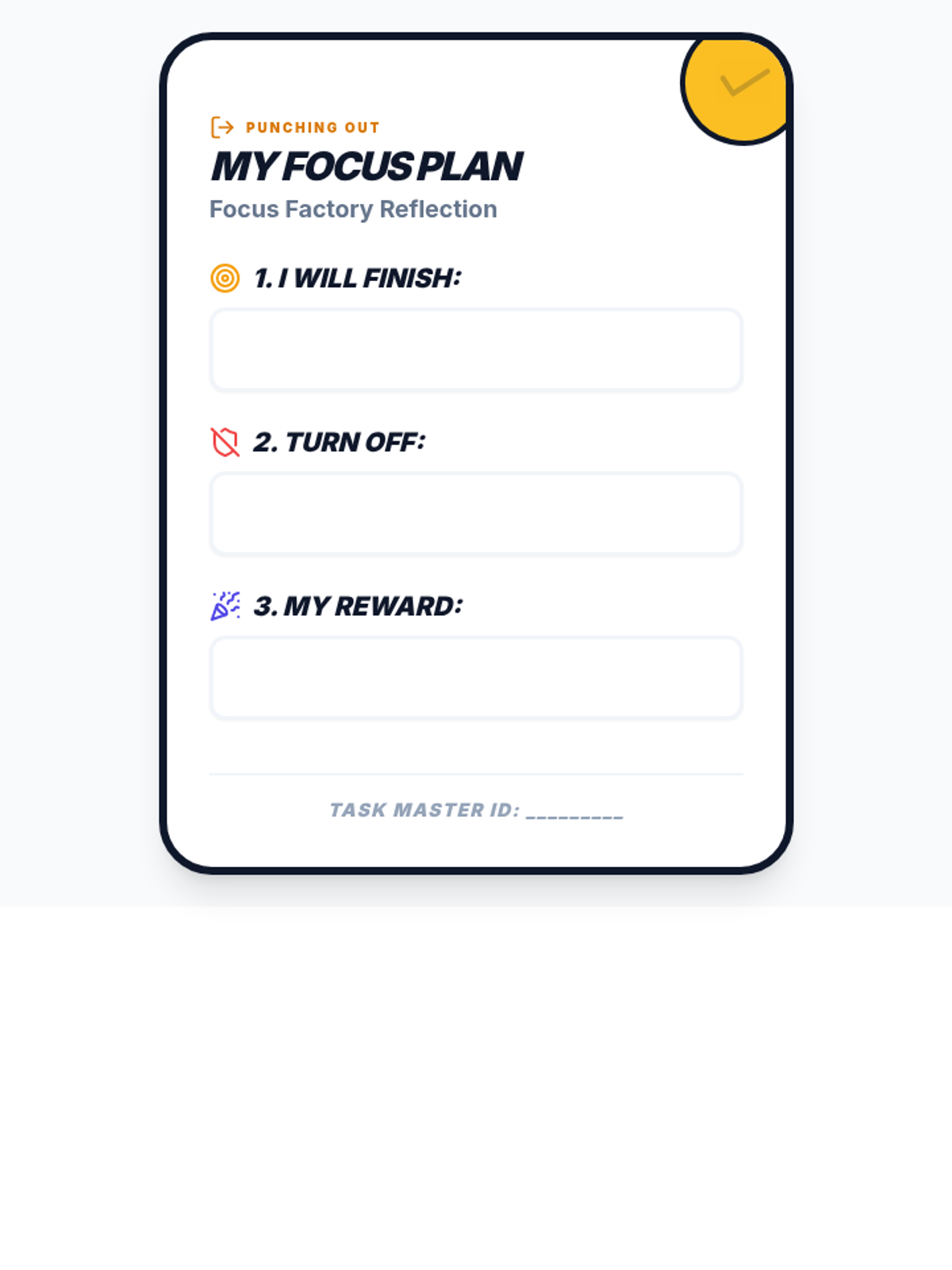
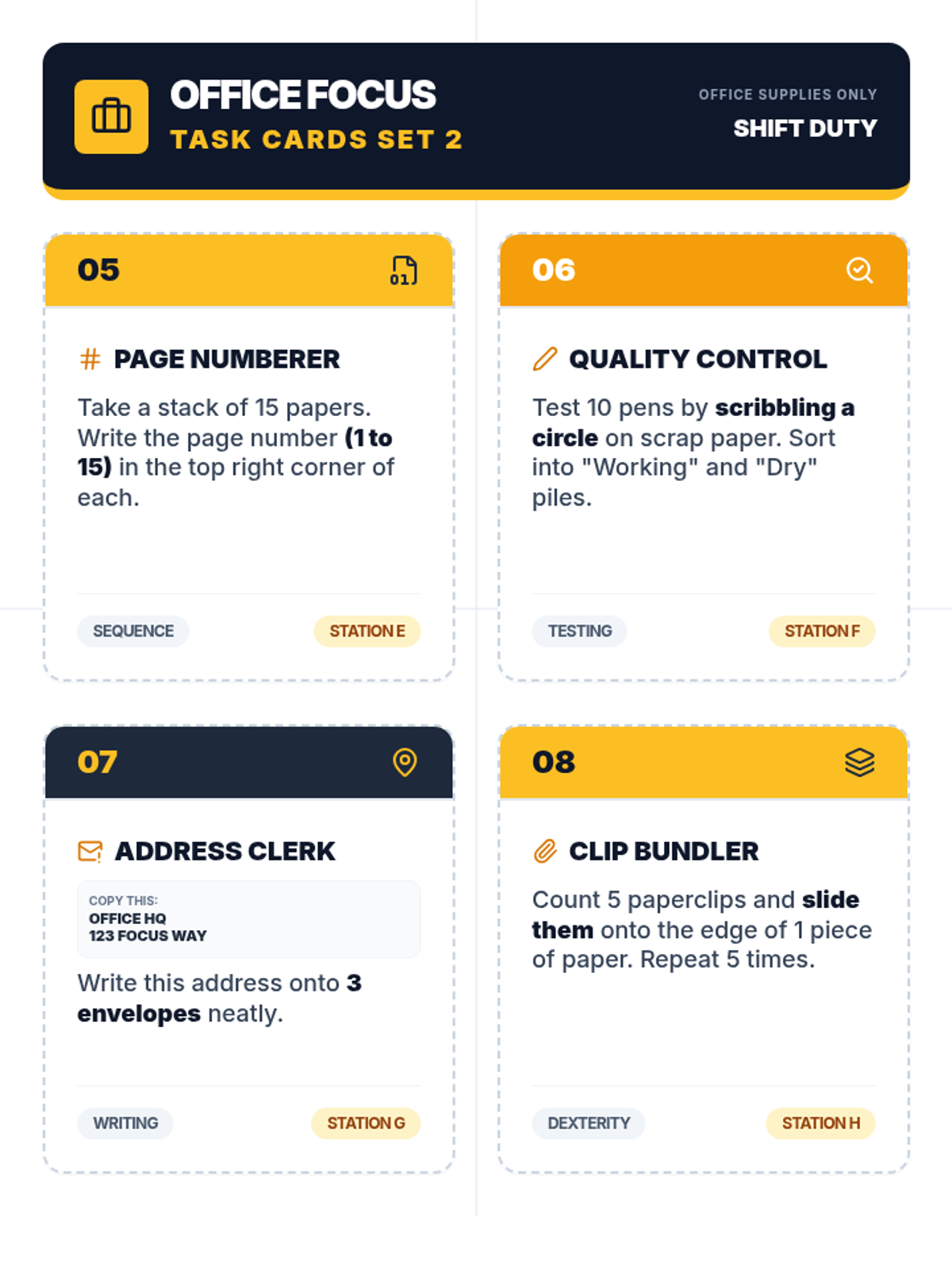
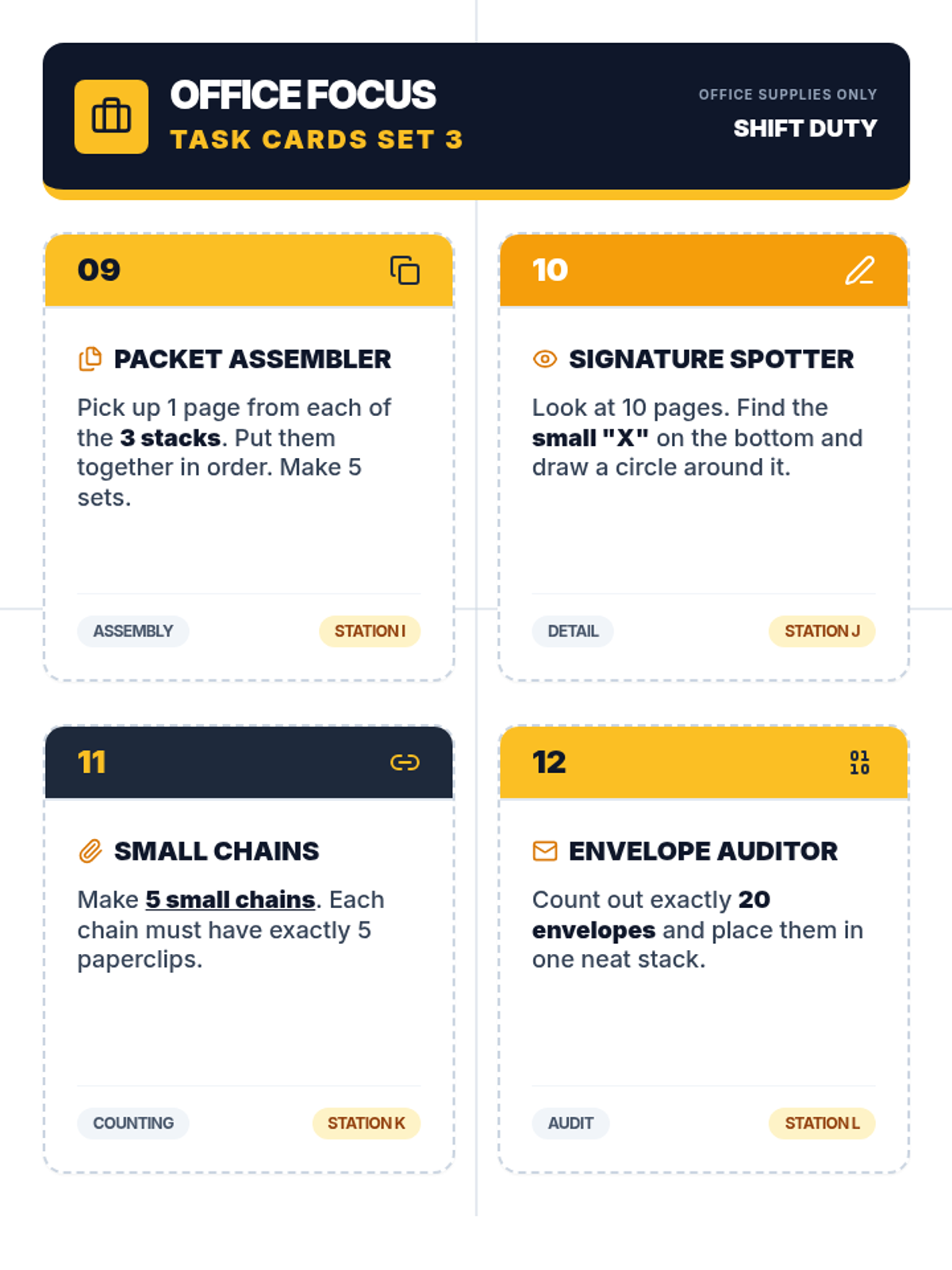
A high-energy, hands-on workshop where students practice executive functioning skills through a 'Focus Factory' simulation. Students rotate between being 'Task Workers' completing physical tasks and 'Distraction Squad' members trying to (kindly) test their peers' focus.
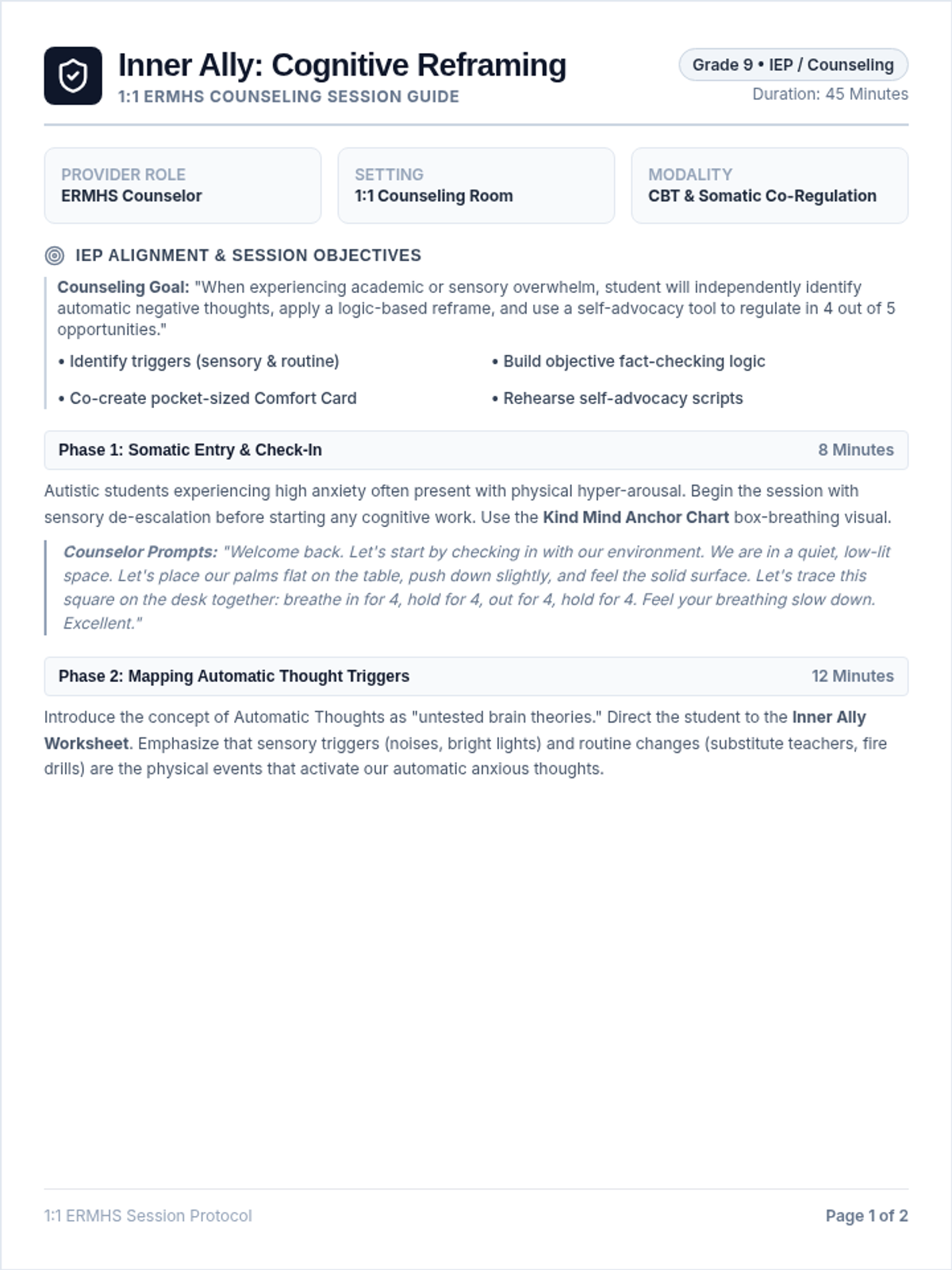
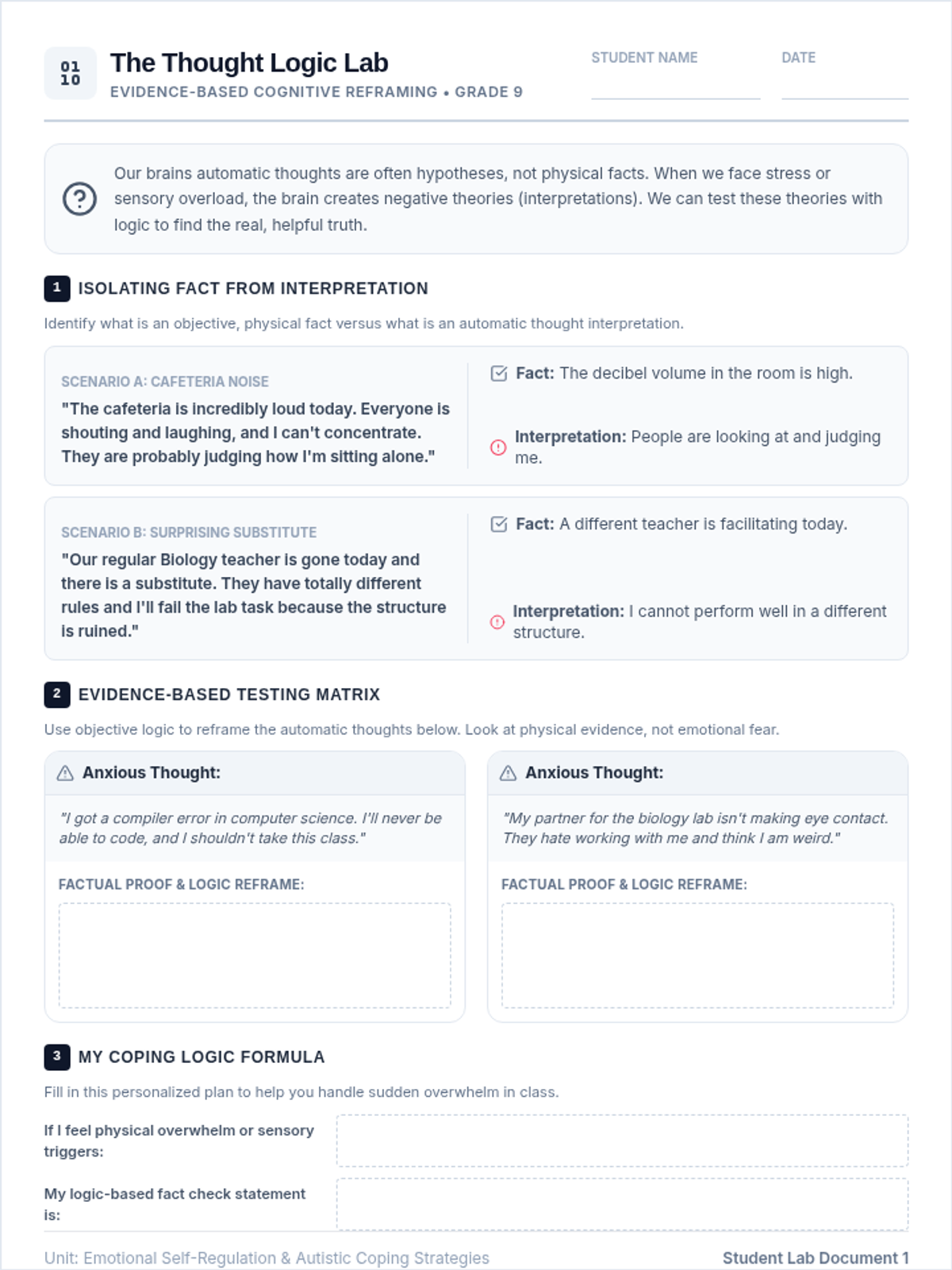
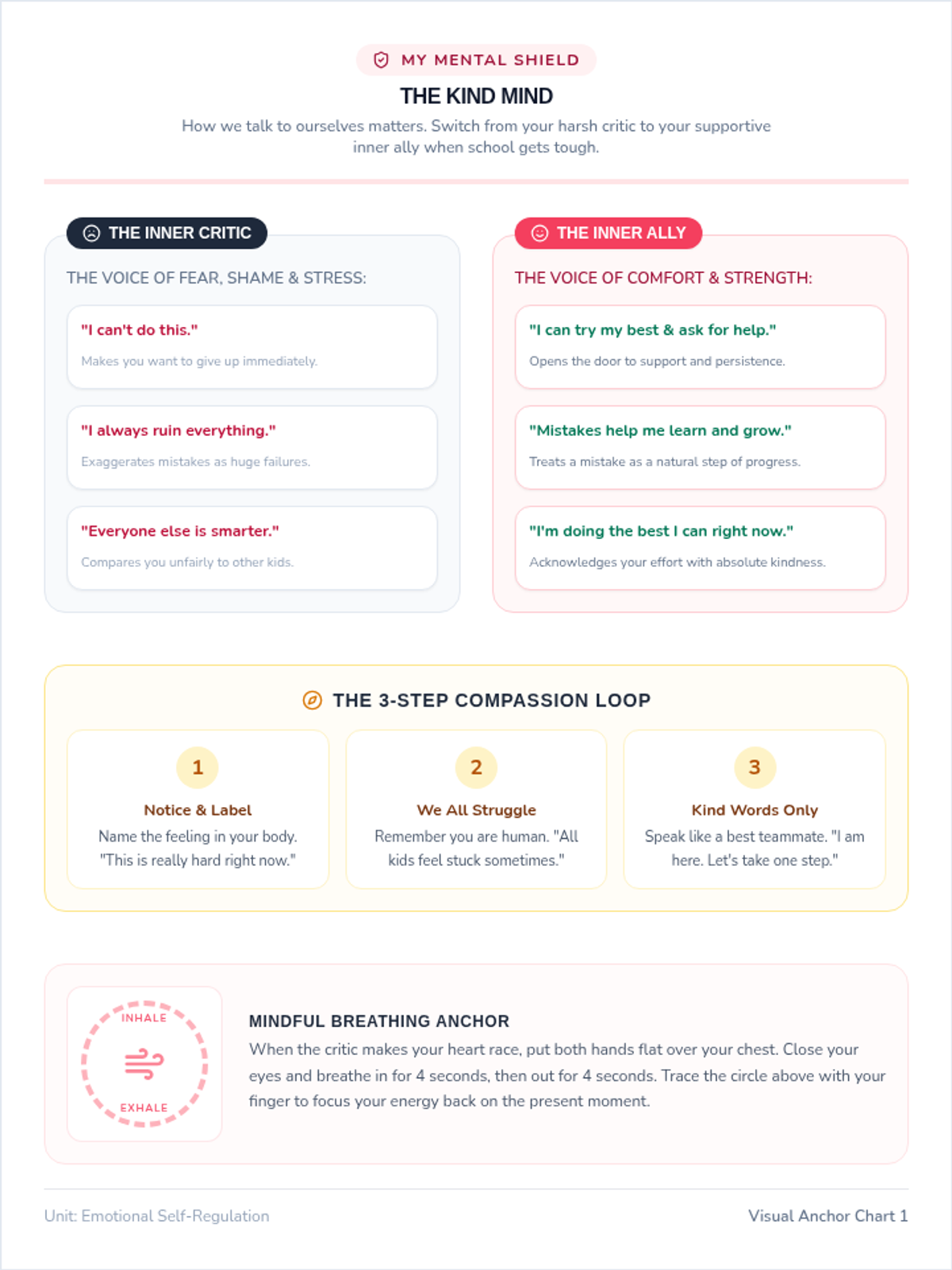
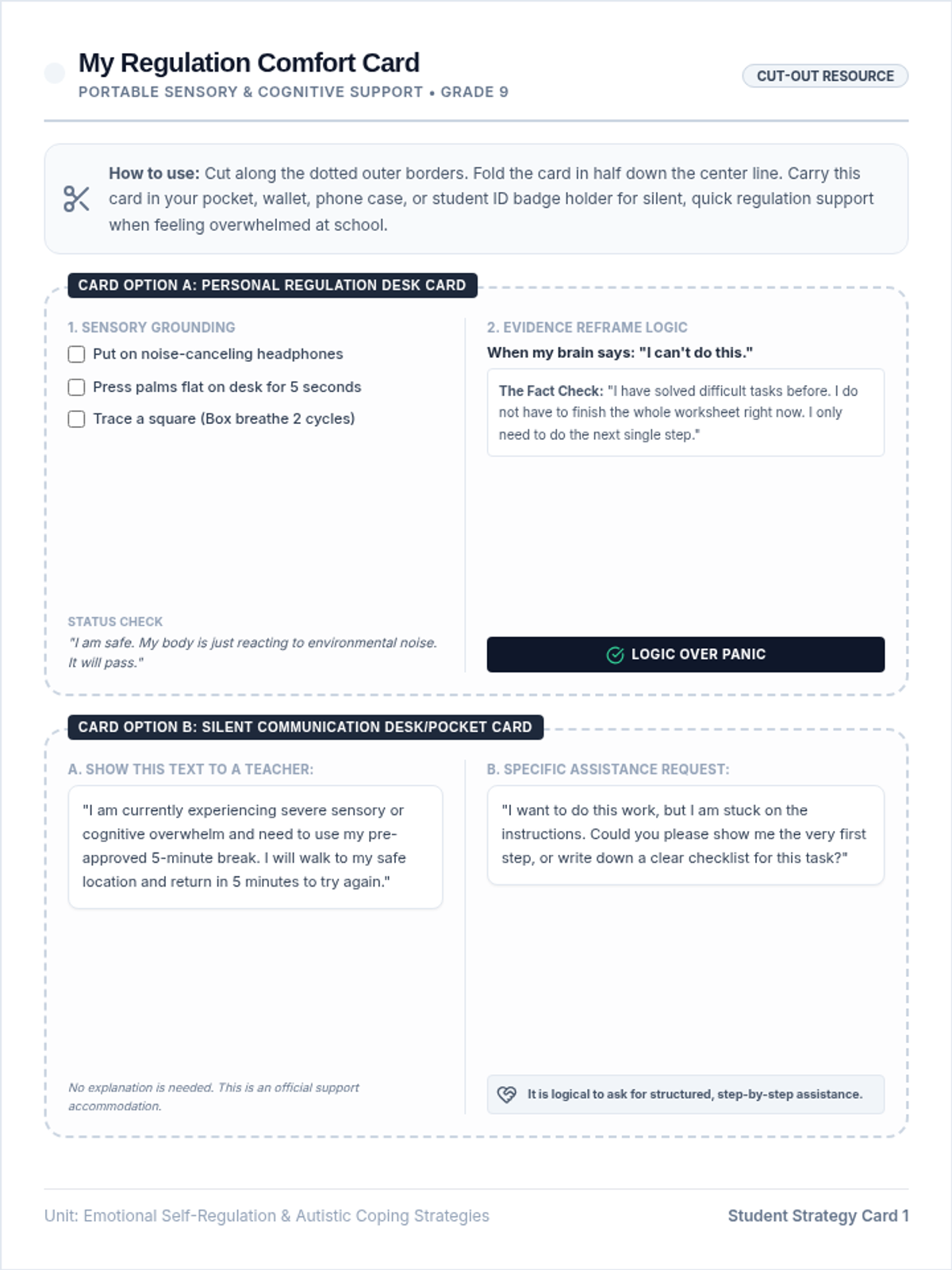
A 1:1 ERMHS (Educationally Related Mental Health Services) counseling session designed for a 9th-grade autistic student. Emphasizes evidence-based cognitive-behavioral reframing, co-regulation, factual evidence testing, and co-creating a discrete pocket-sized regulation comfort card.
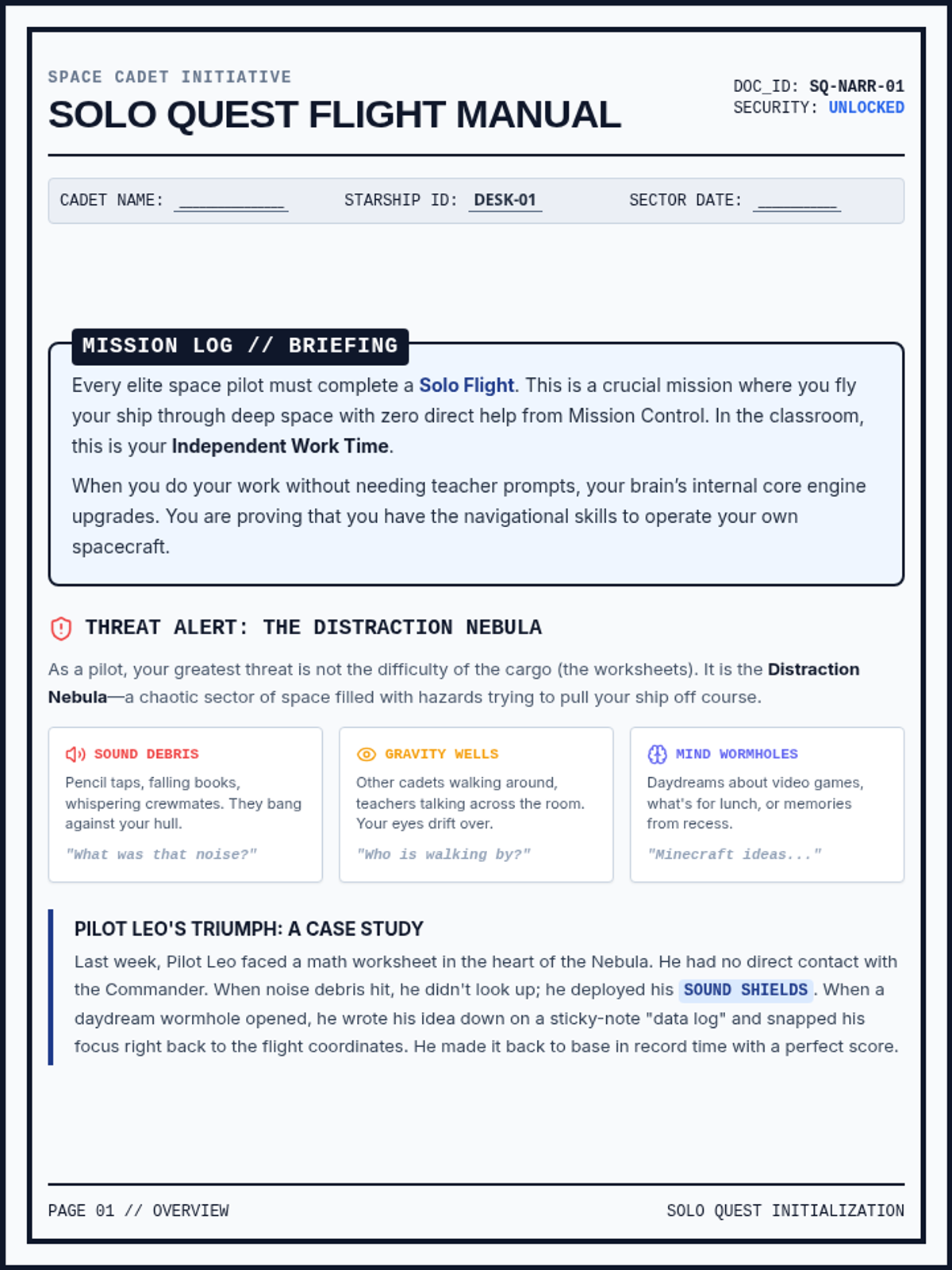
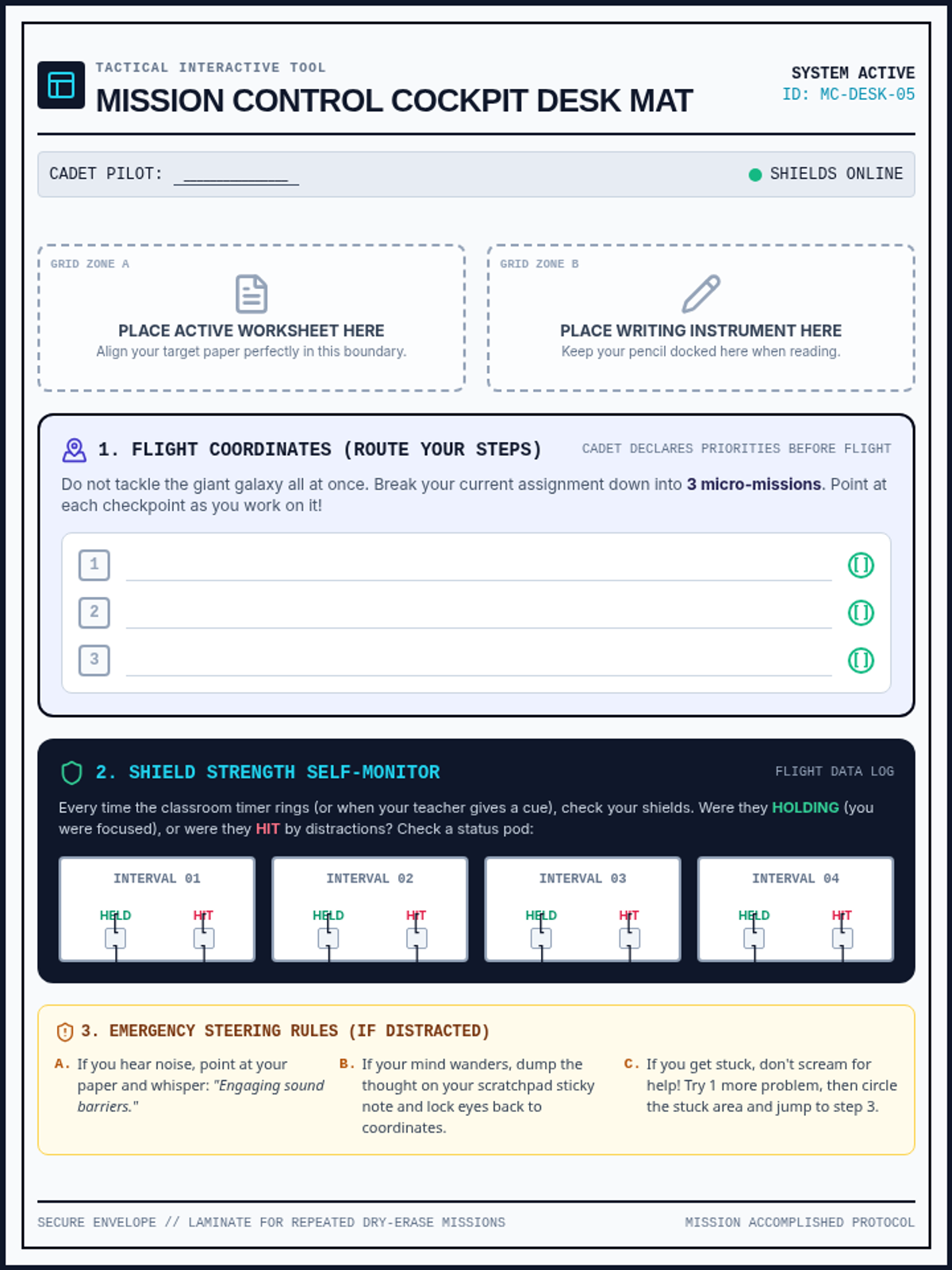
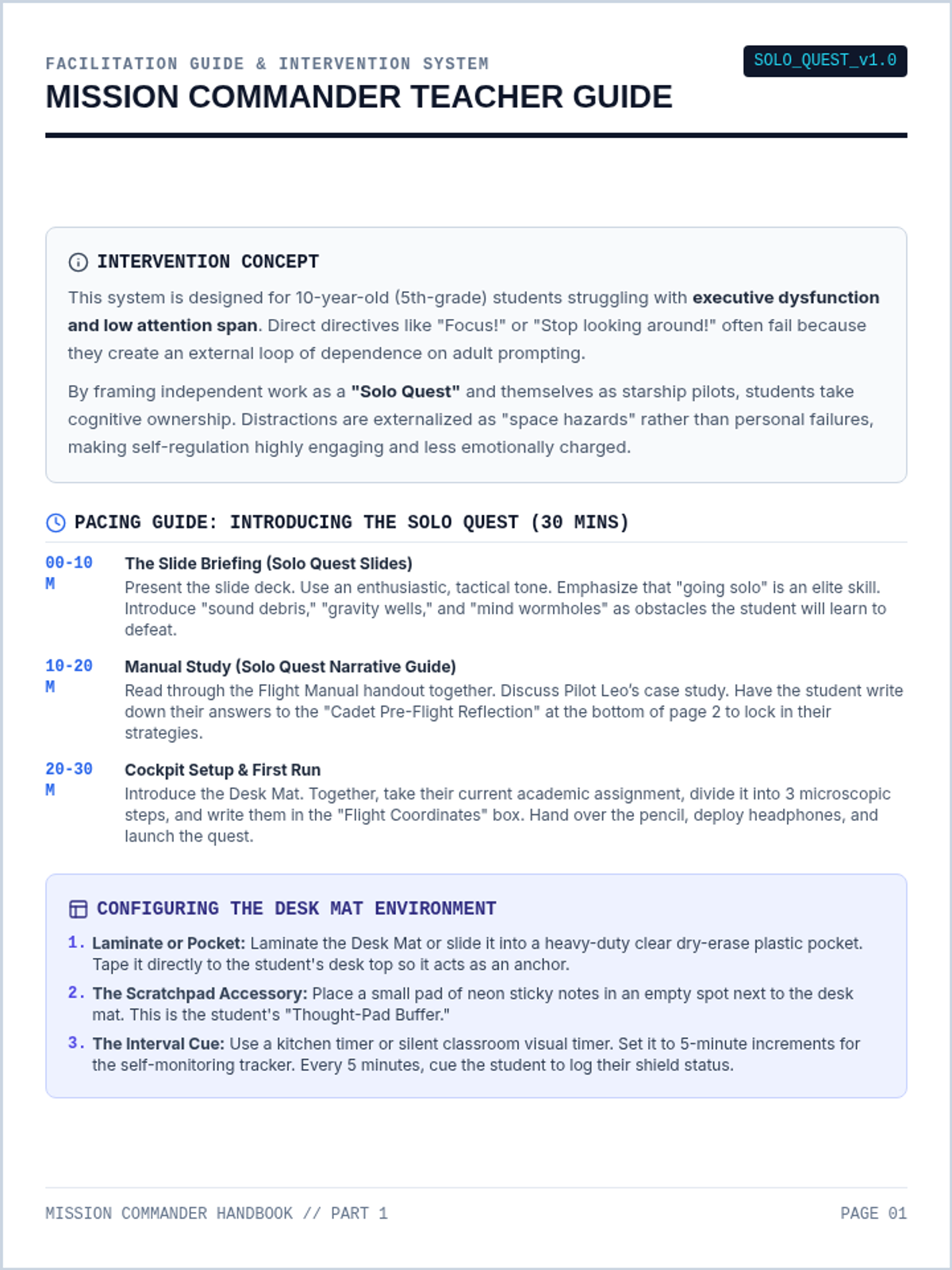
An executive functioning and focus intervention lesson designed to help students build independence during independent work. Framed as a tactical 'solo mission', the lesson guides students through managing distractions and planning tasks with low adult prompting.
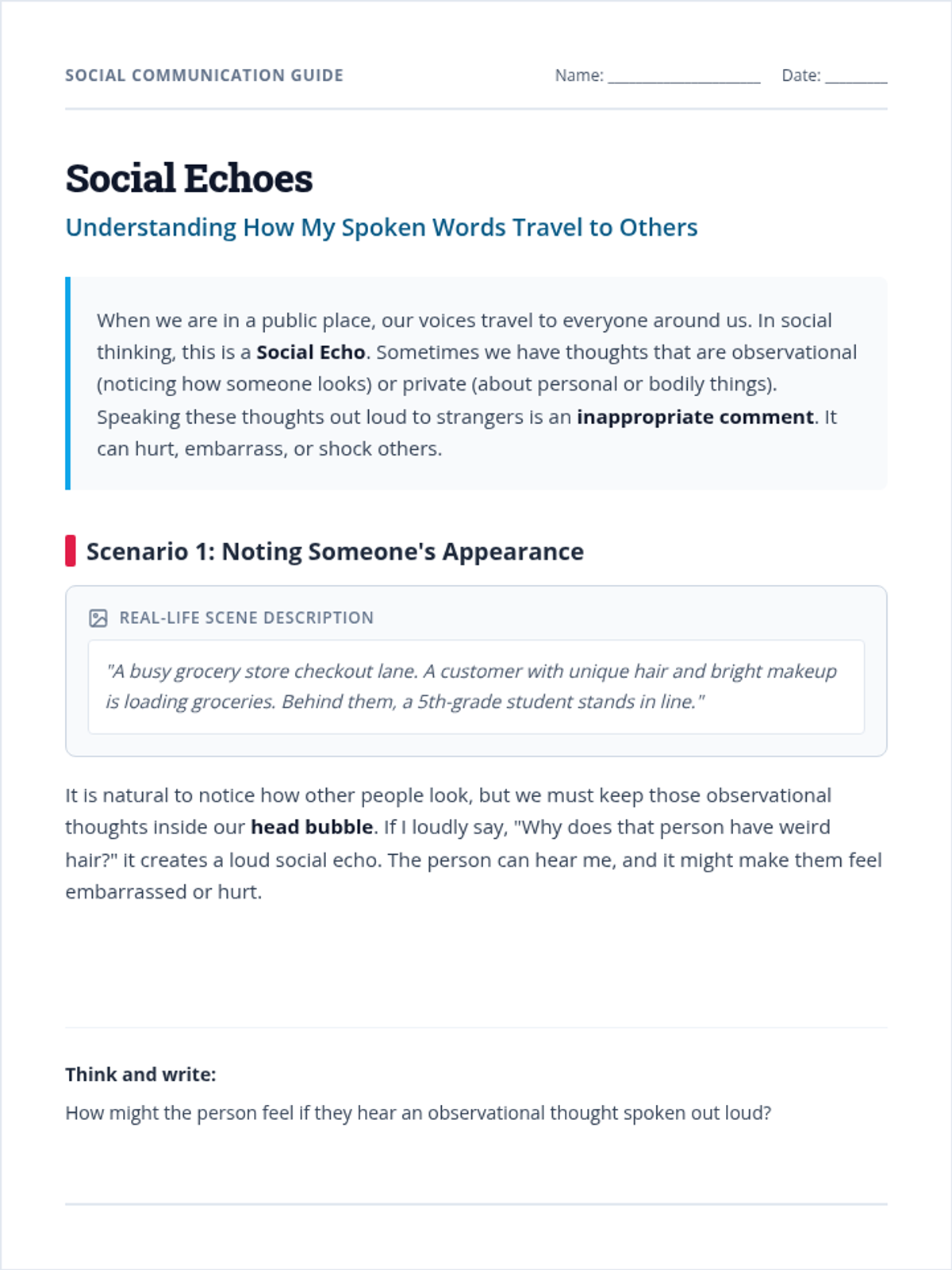
A social communication lesson designed for 5th-grade students with autism, focusing on understanding how our spoken words affect people around us in public, unfamiliar settings.
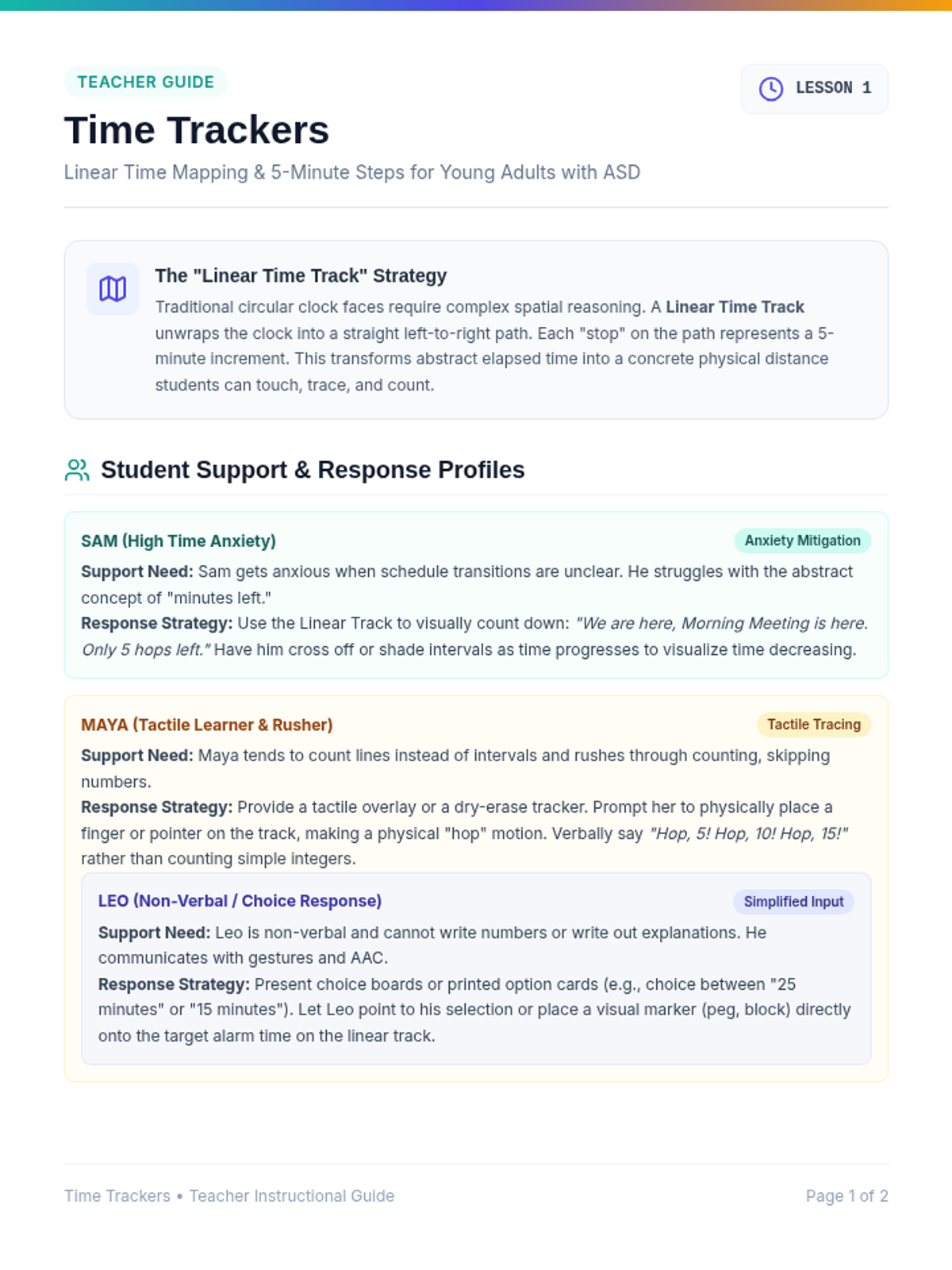
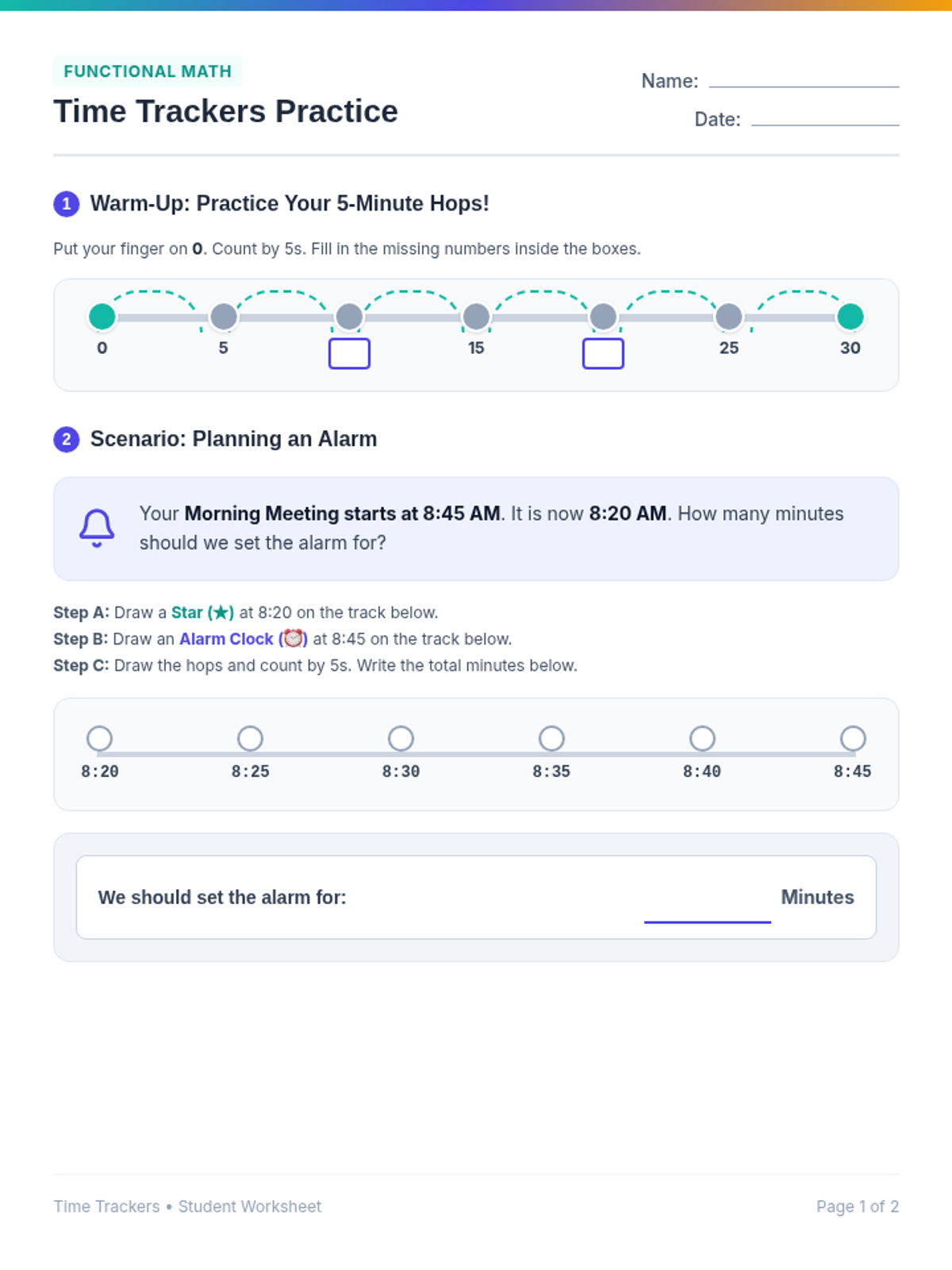
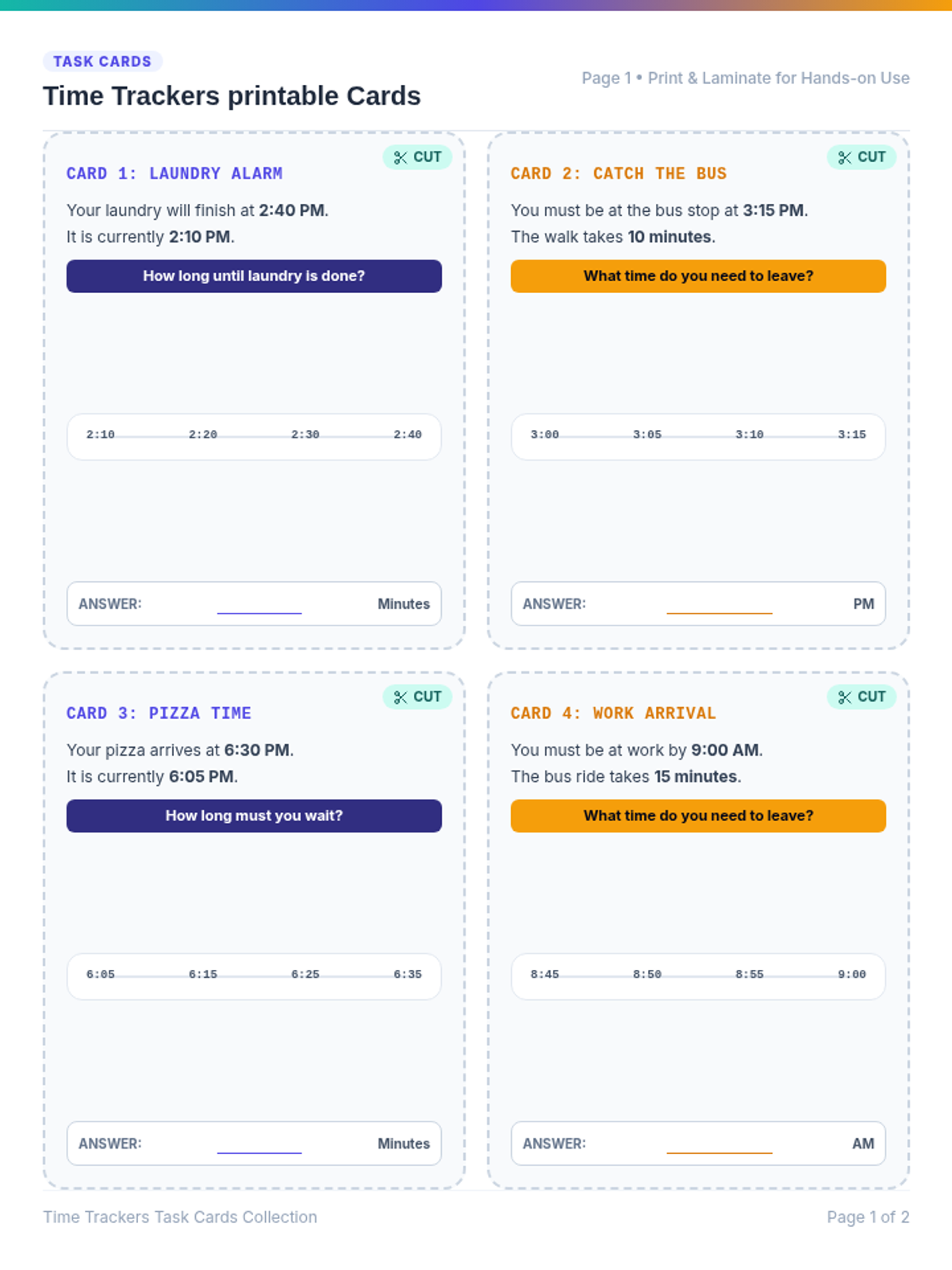
A highly visual functional math lesson designed for young adults with ASD and low cognitive functioning. It introduces linear time tracks and 5-minute counting strategies to solve real-world daily scheduling problems like setting alarms and planning departure times.
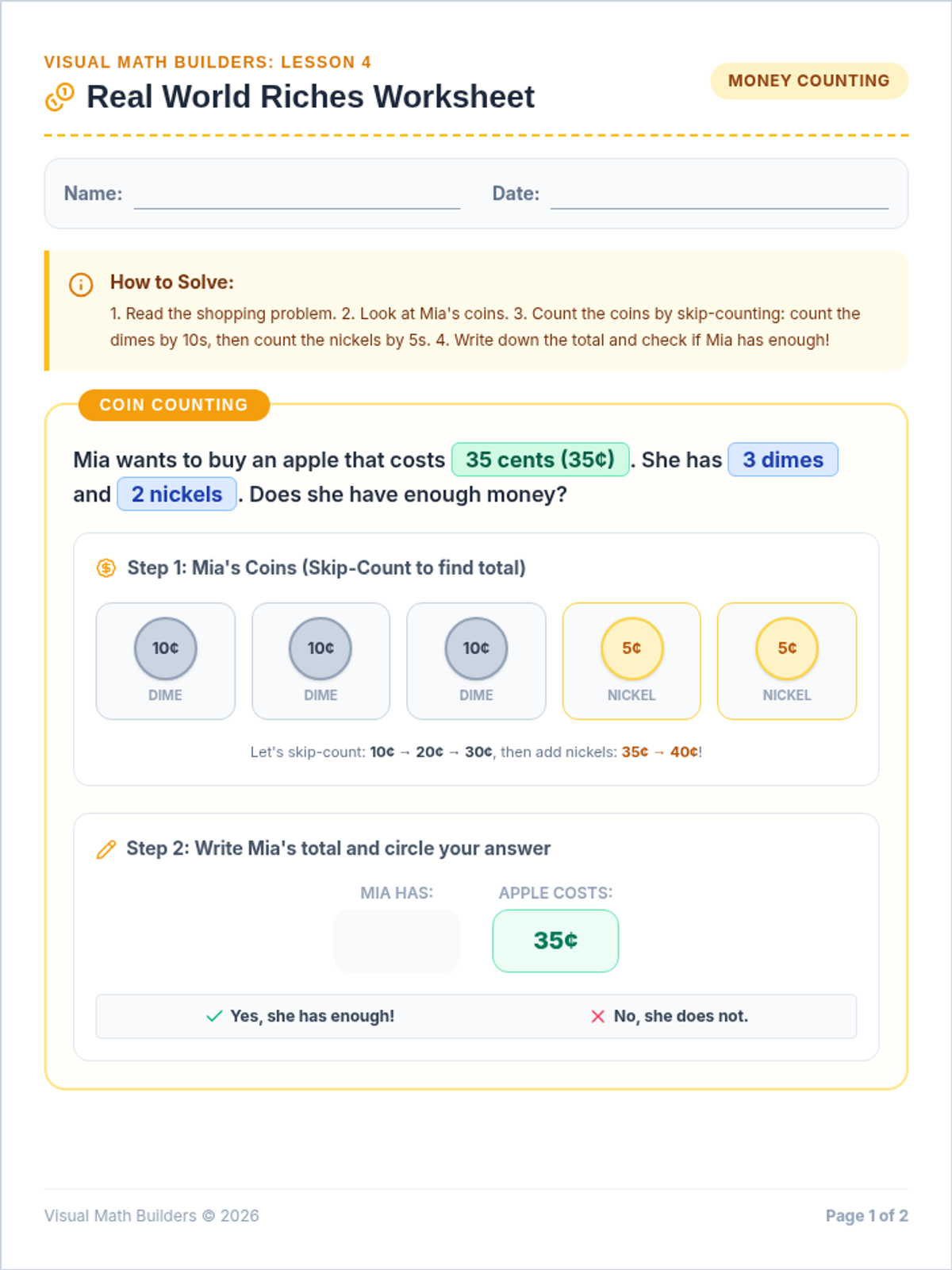
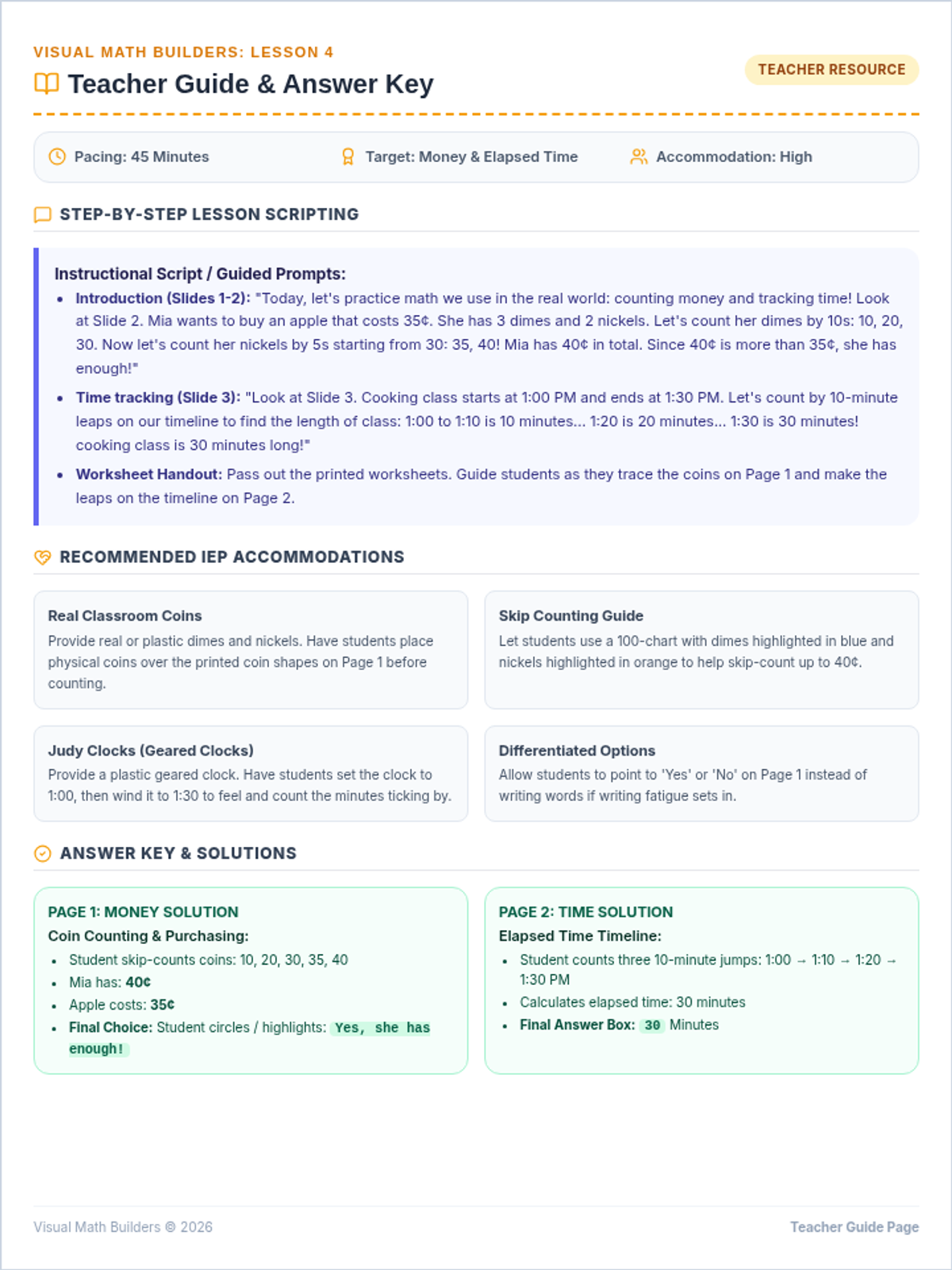
Targets practical, real-world application of math with highly visual scaffolding for coin counting, purchasing decisions, and elapsed time scenarios.