A lesson focused on establishing, presenting, and reinforcing daily routines and transitions for neurodivergent and concrete learners using structured visual schedule supports.
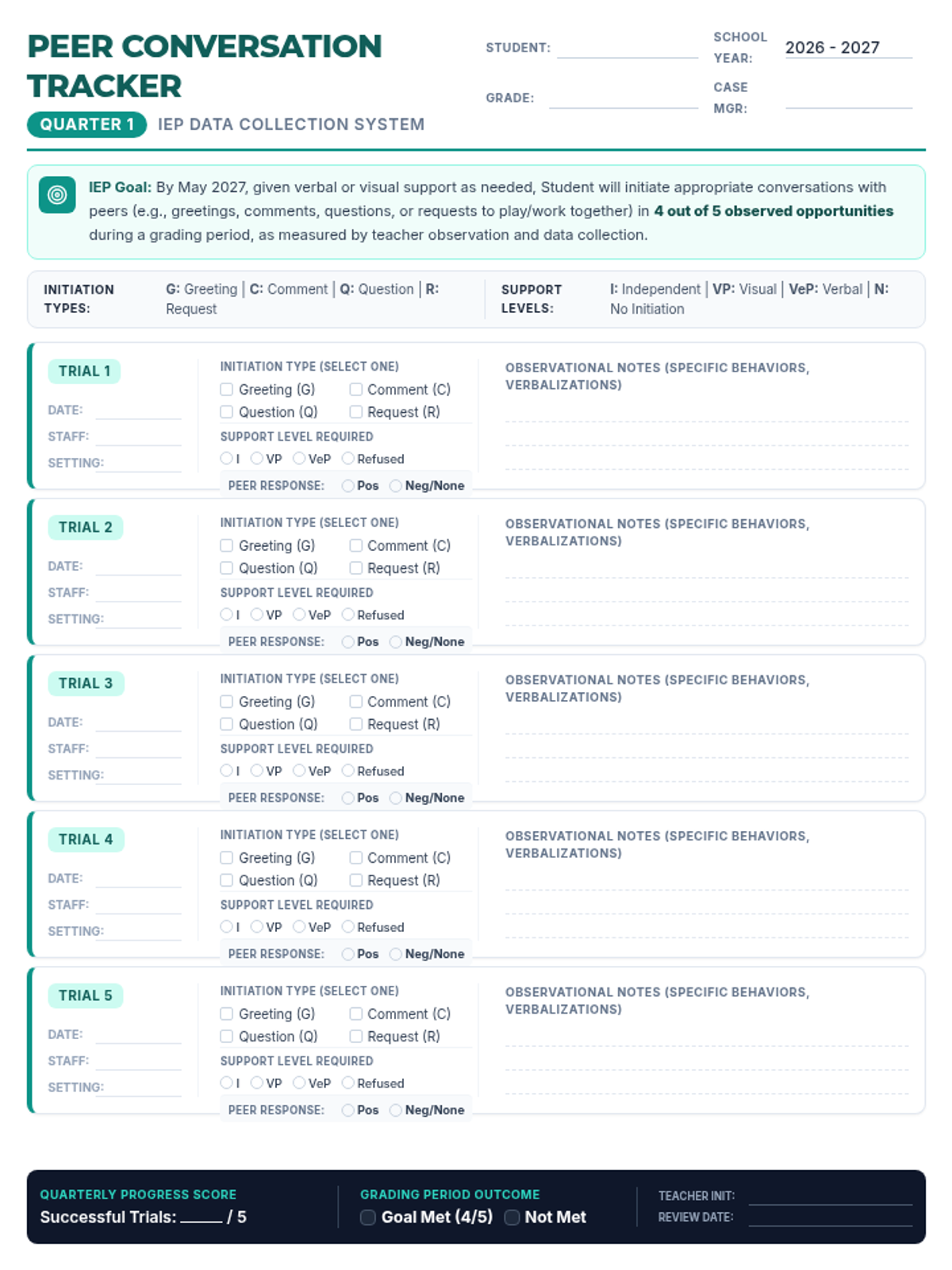
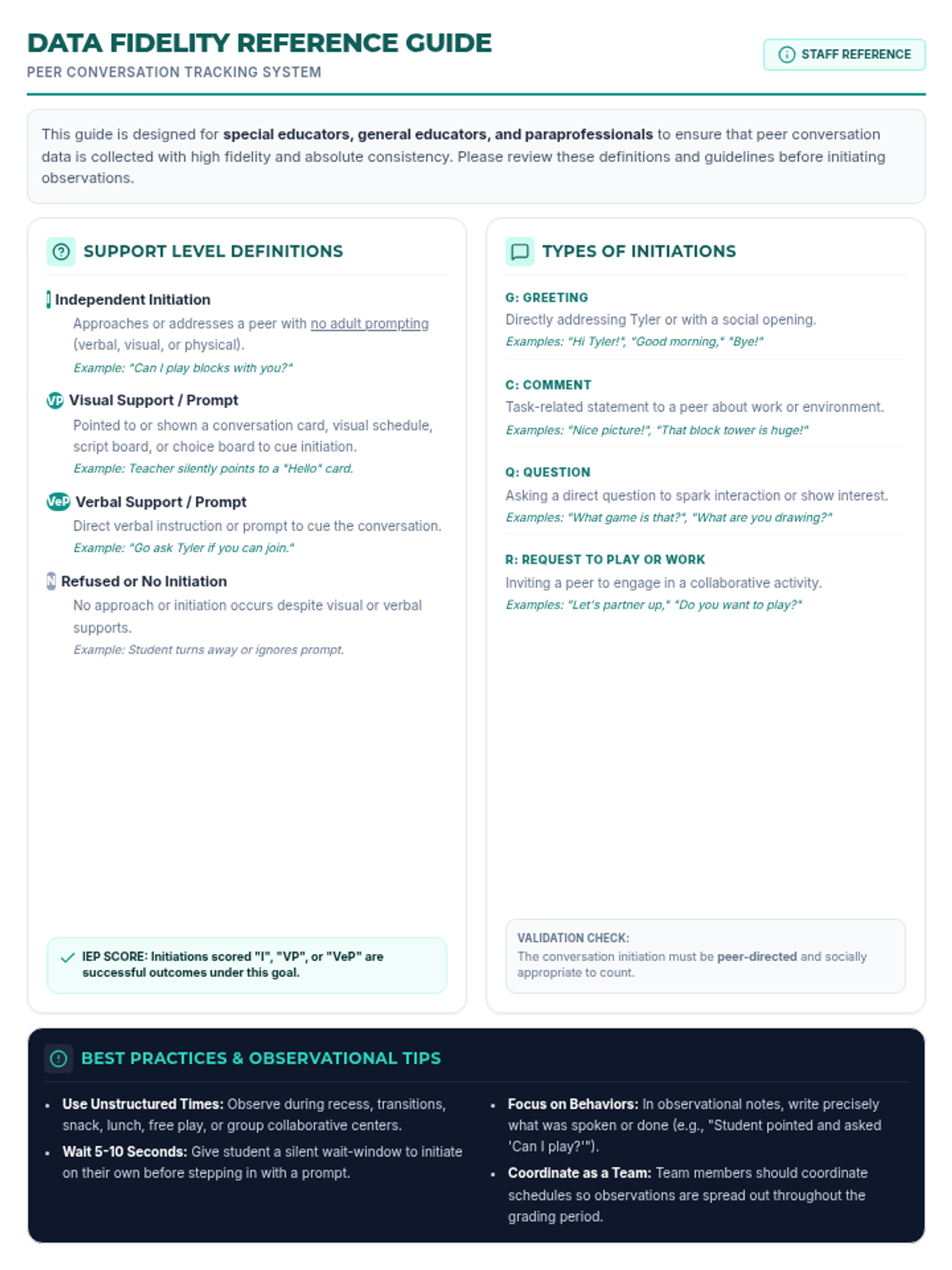
A collection of highly structured data tracking sheets for monitoring and recording student progress on IEP social skills goals, specifically focusing on peer conversational initiations with varying levels of prompt supports.
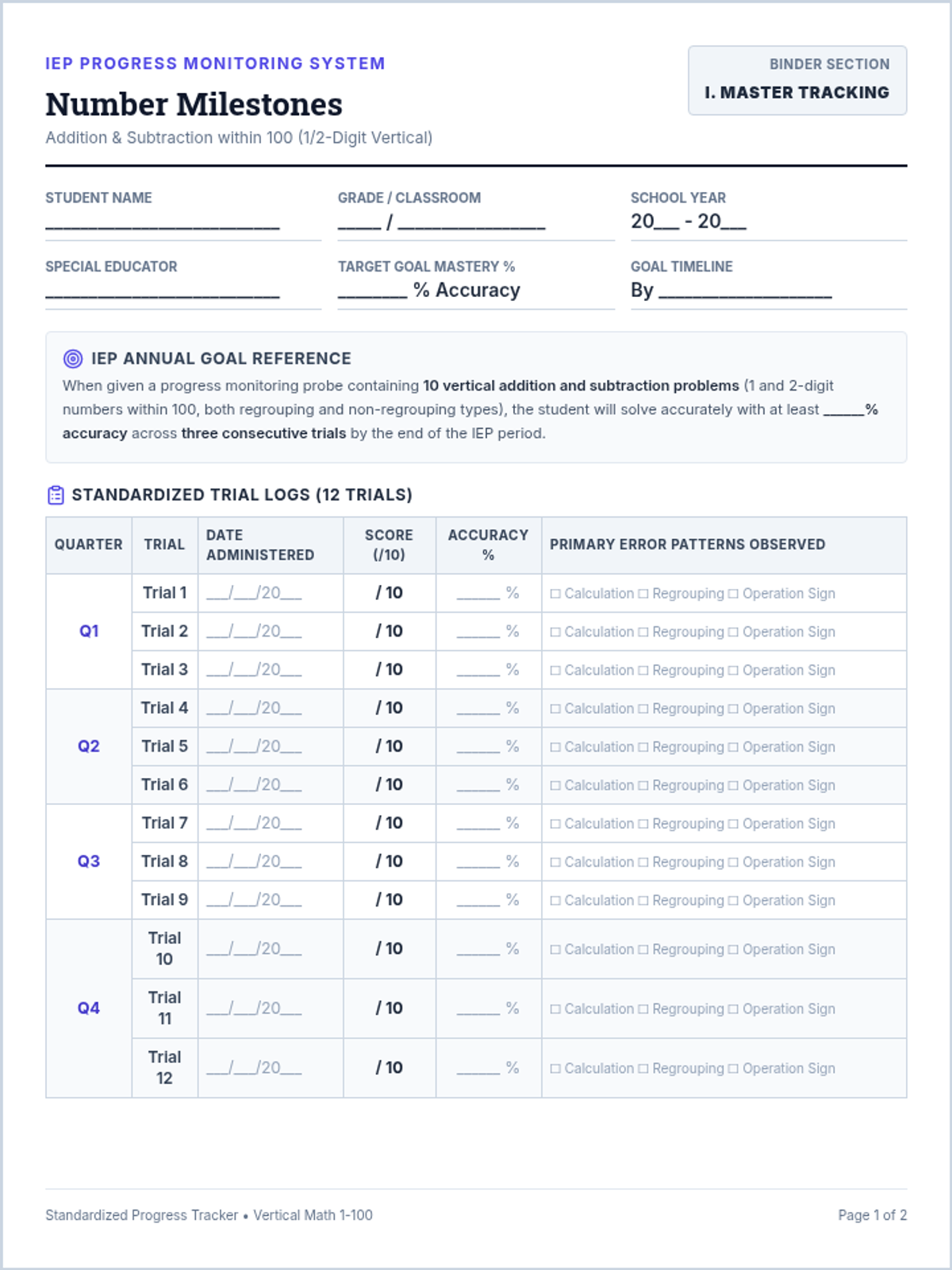
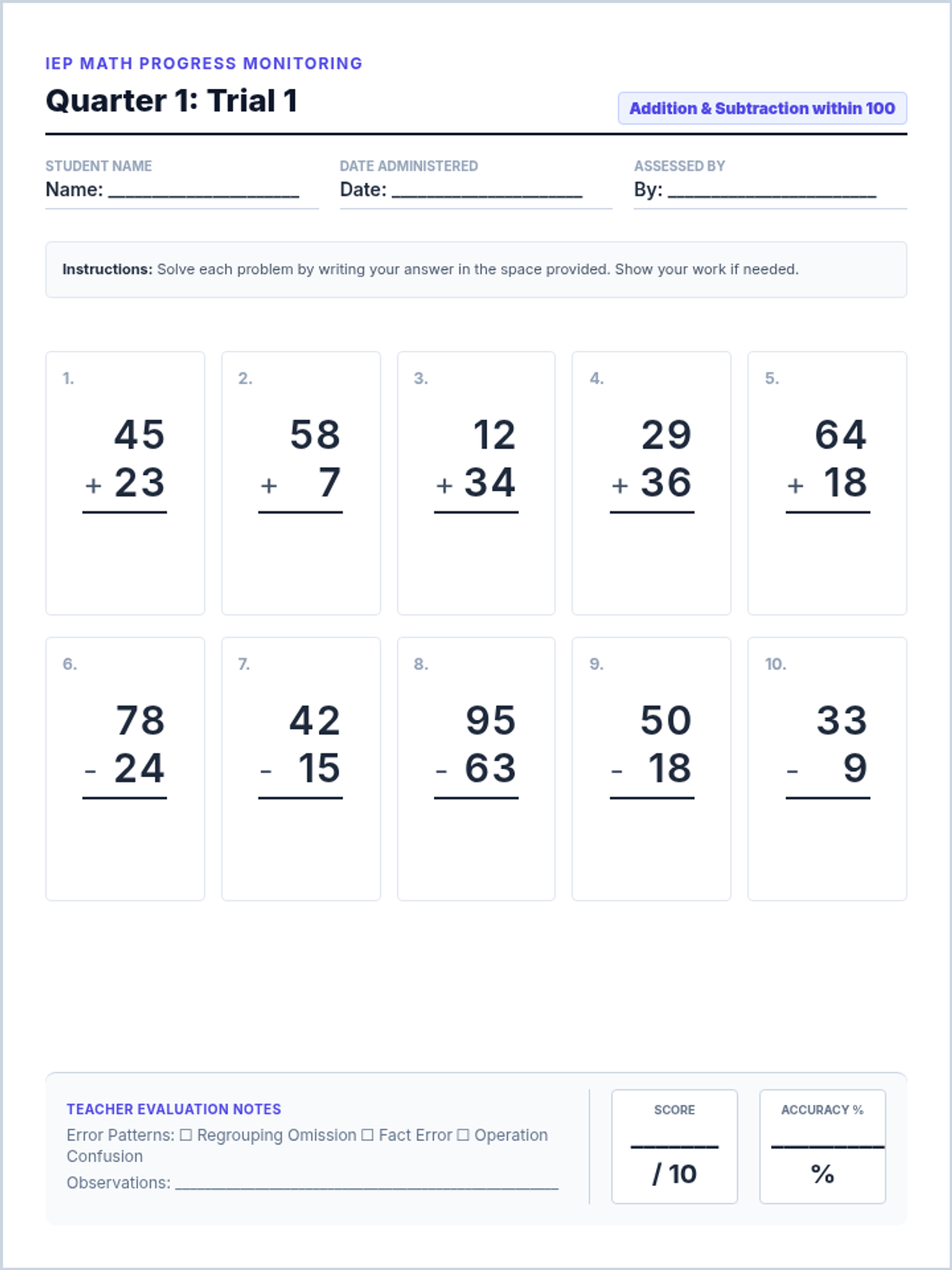
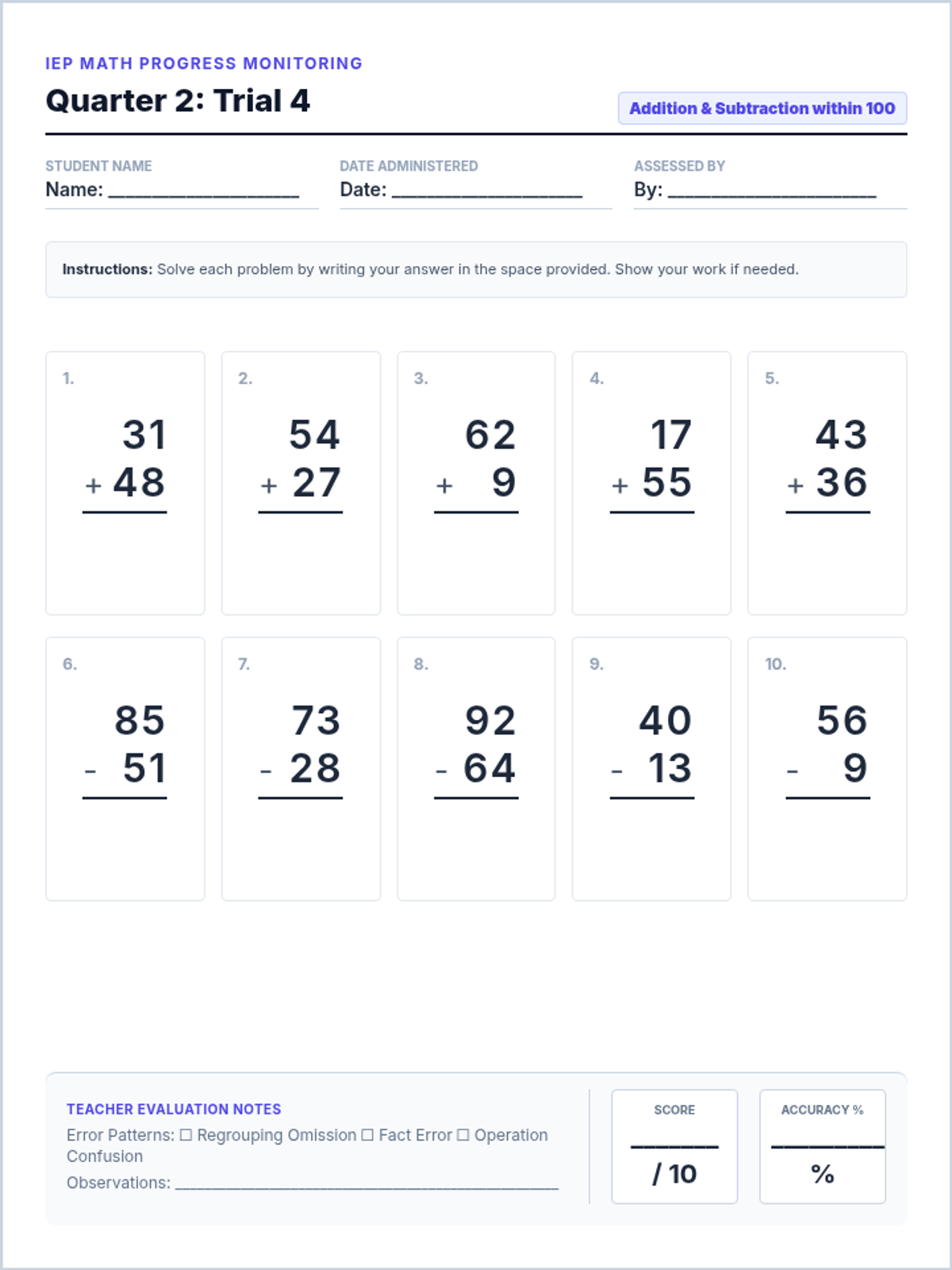
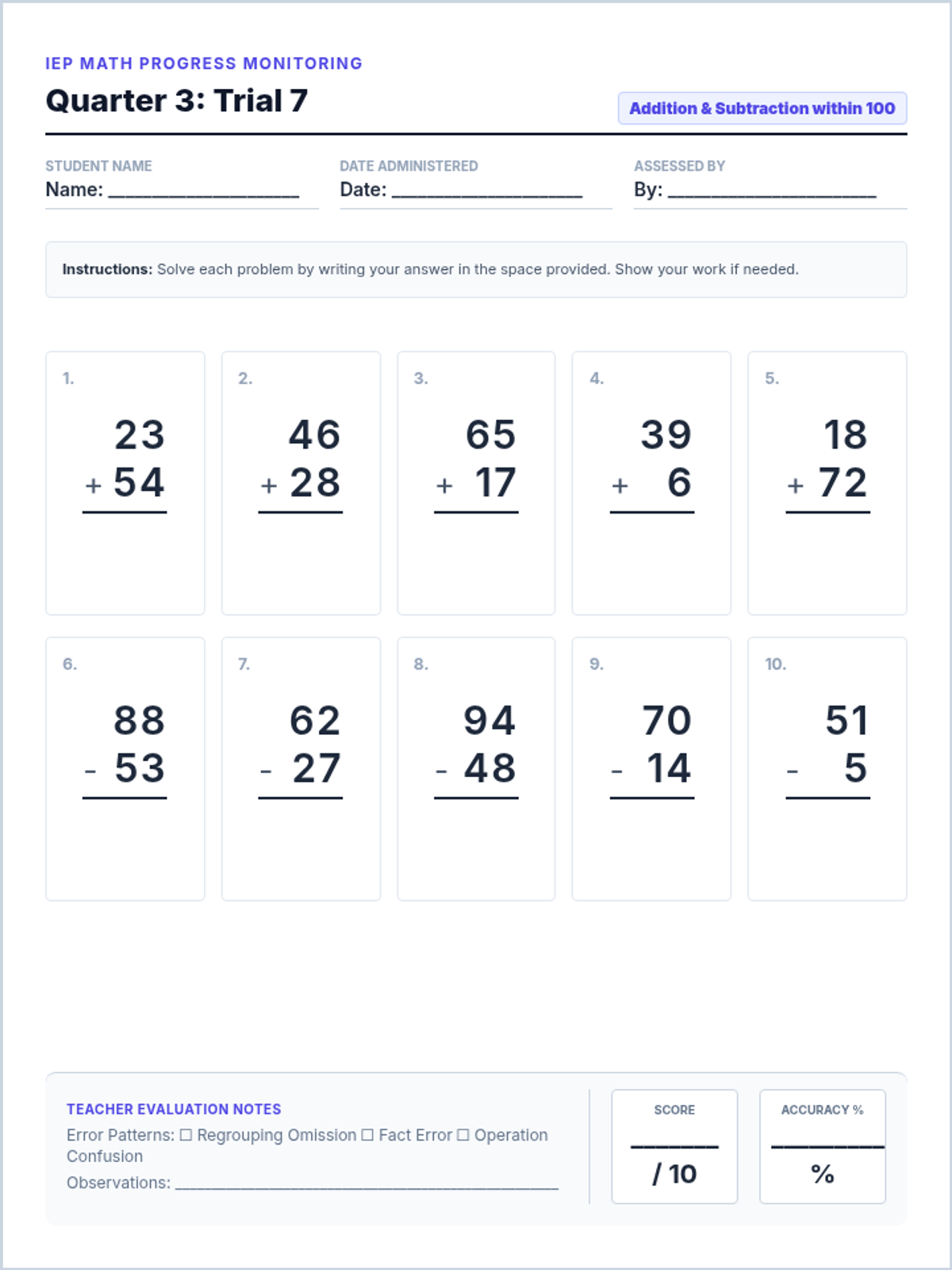
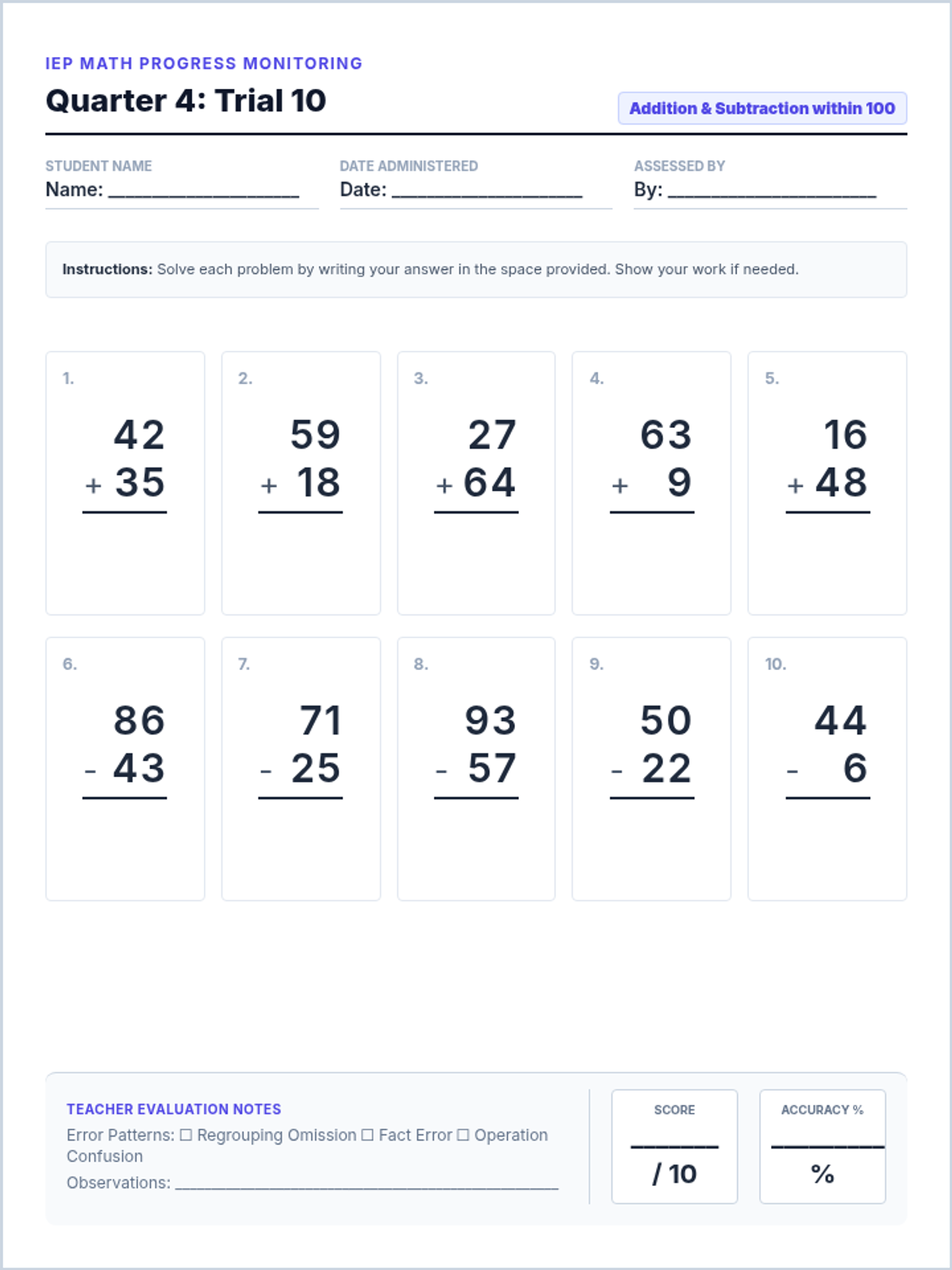
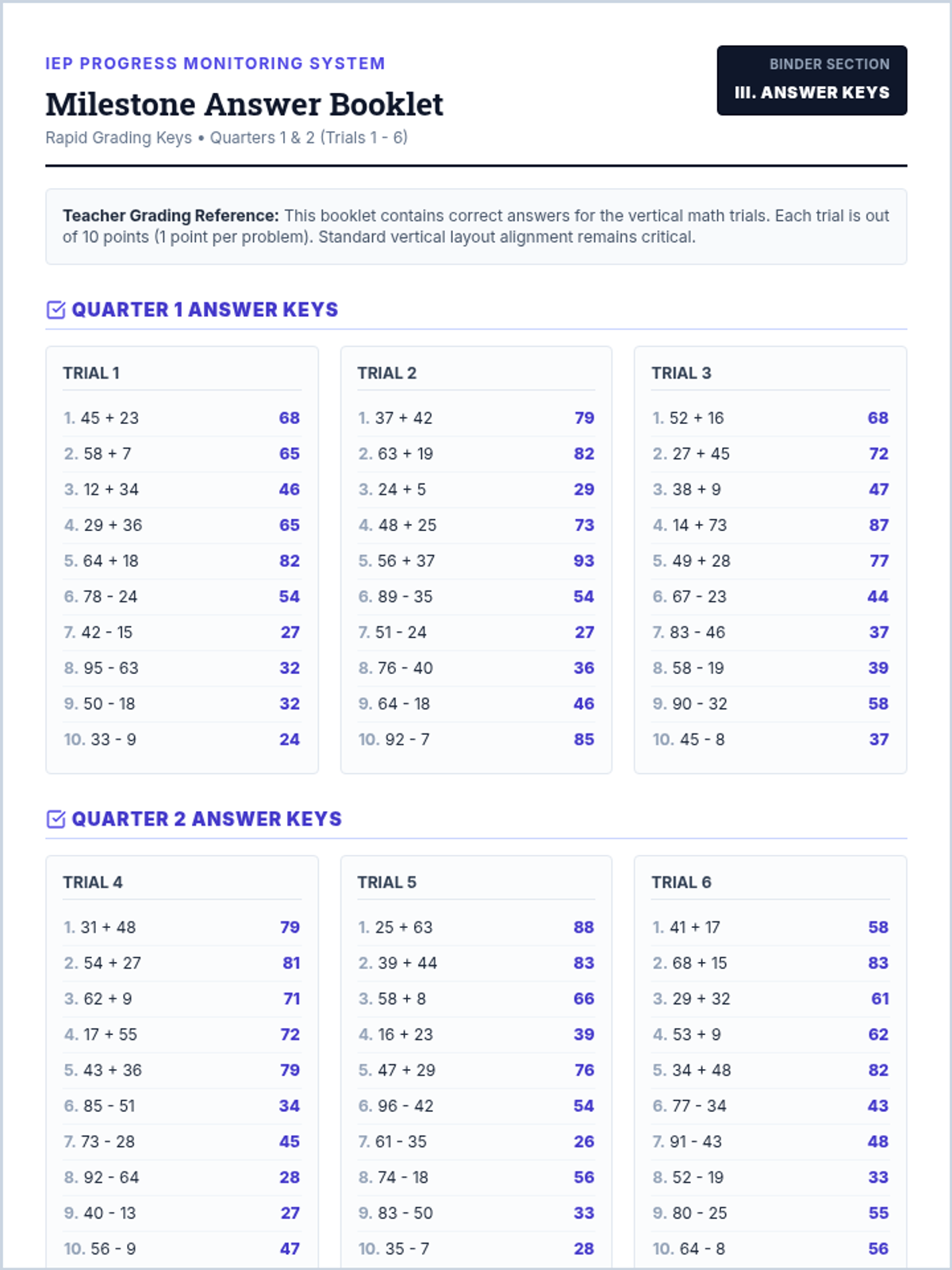
A systematic progress monitoring tracking binder for tracking student mastery of 1 and 2-digit vertical addition and subtraction within 100, featuring 12 standardized trials across four quarters, IEP goal tracking data sheets, and a complete teacher answer booklet.
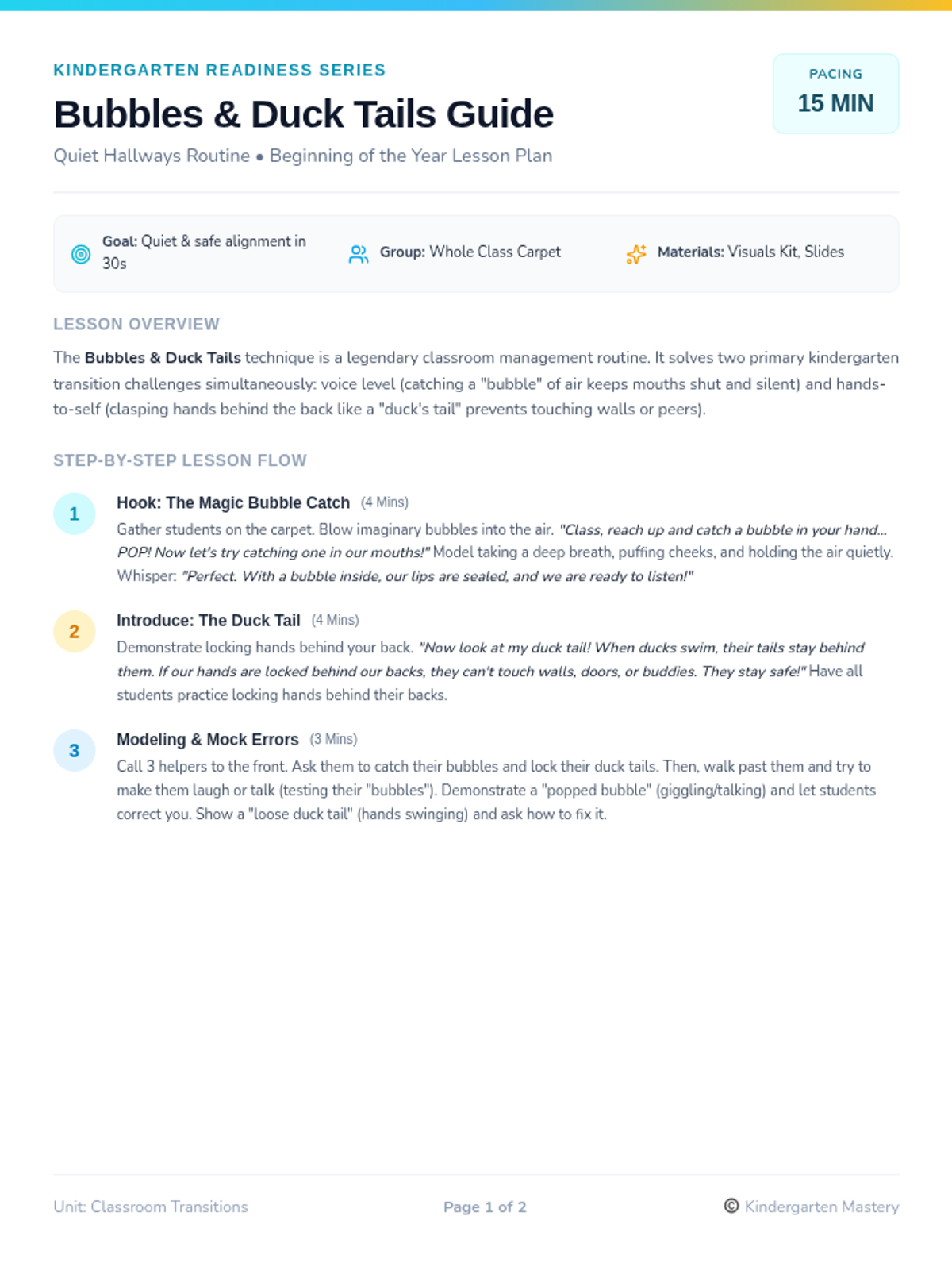
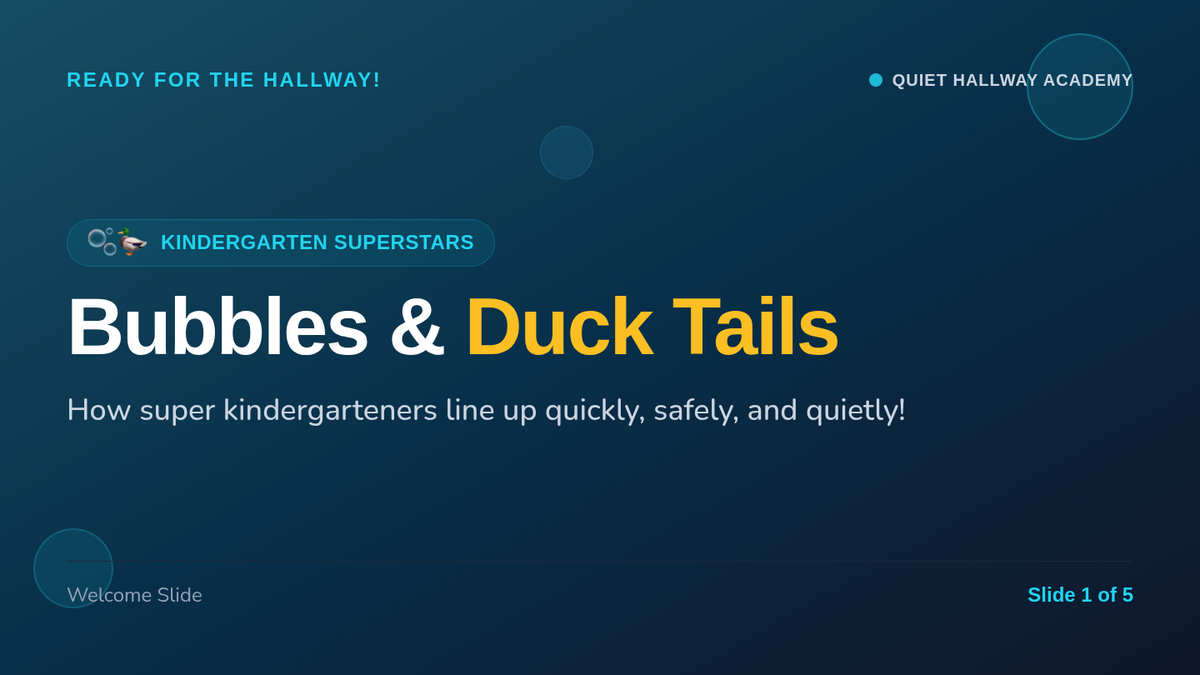
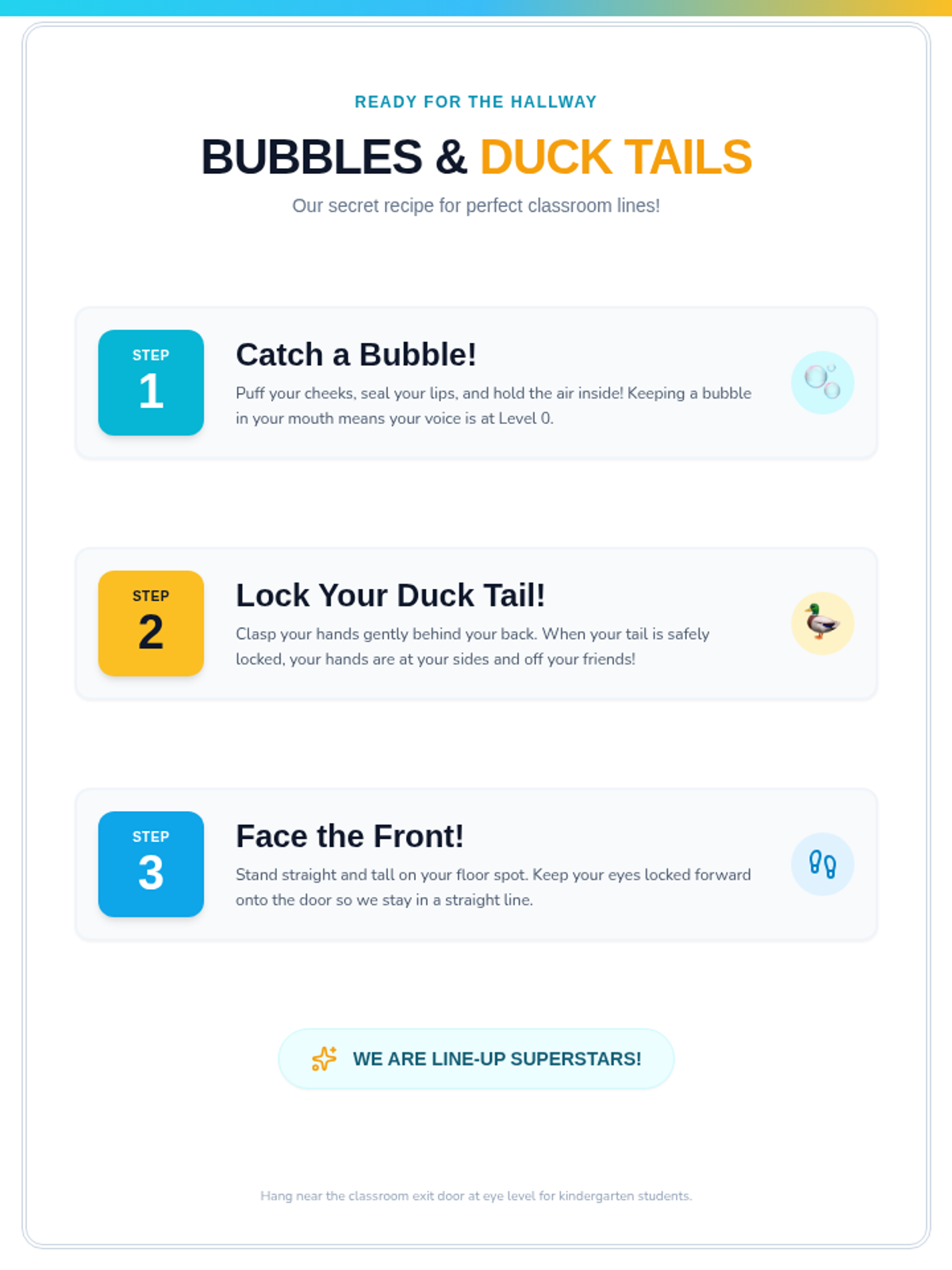
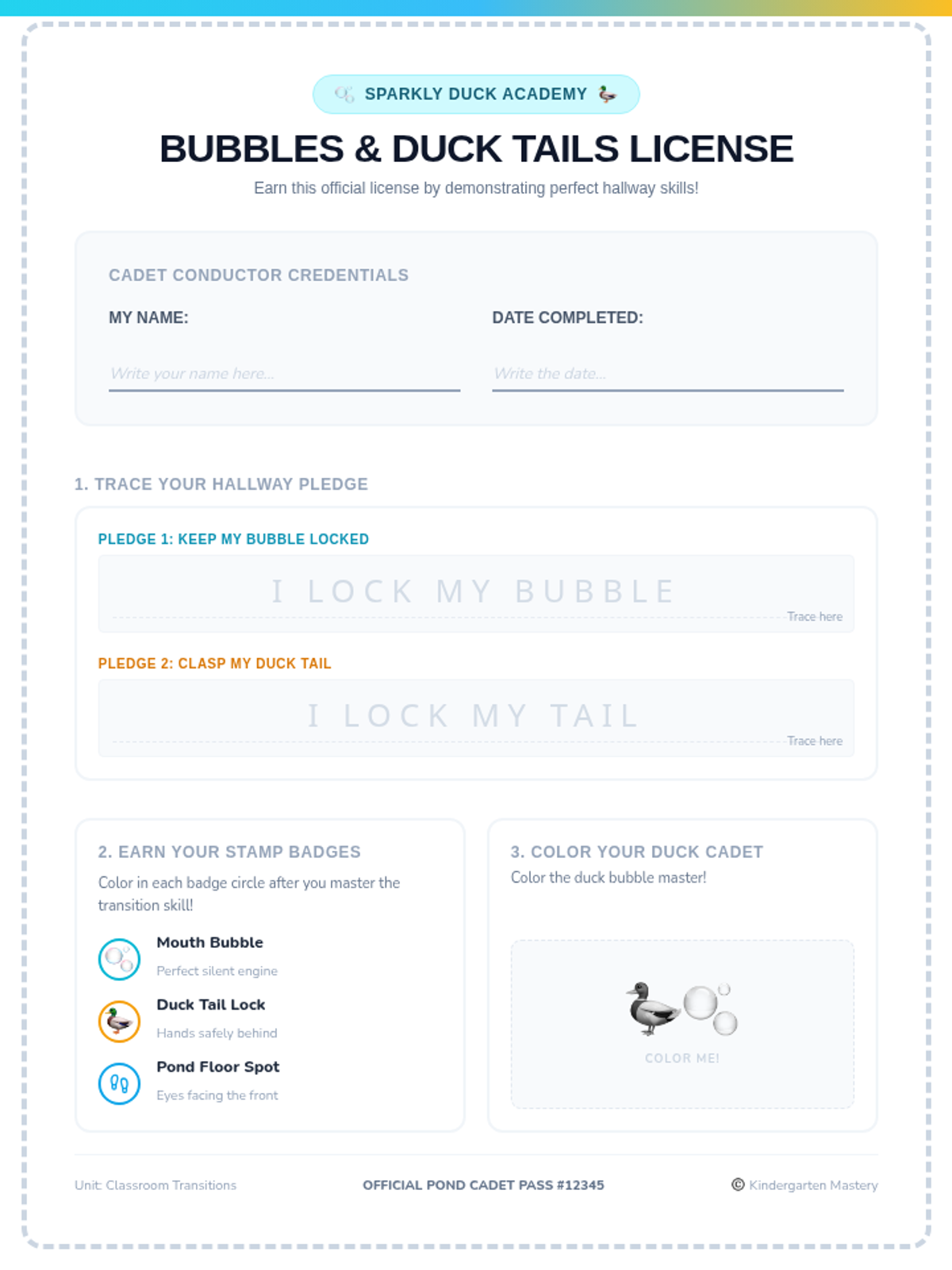
A structured, high-engagement lesson designed to teach beginning-of-the-year kindergarteners how to line up quickly and quietly using the 'Bubbles & Duck Tails' routine. Includes interactive slides, printable visual reminders, a 15-minute carpet lesson plan, and student certificates.
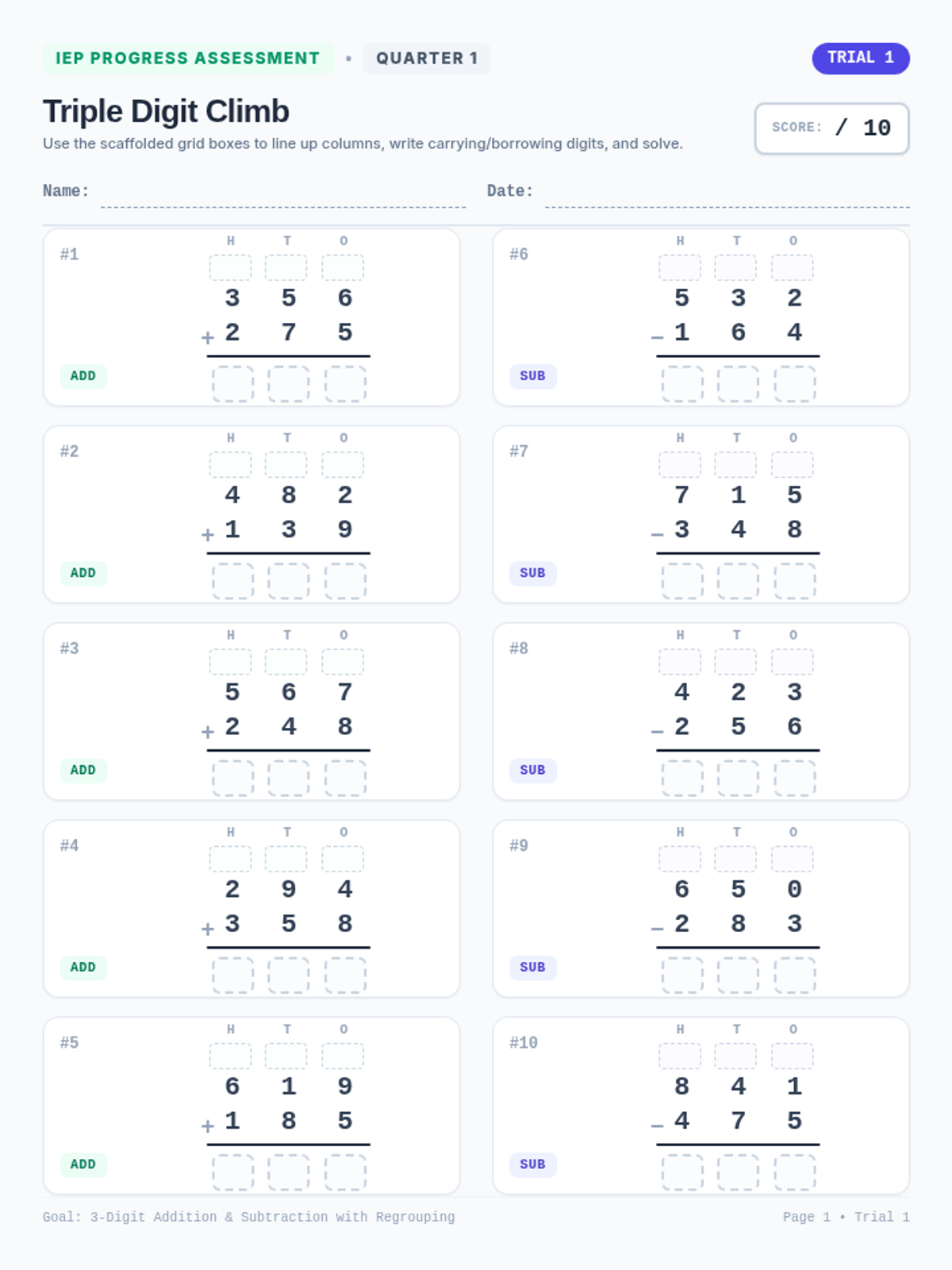
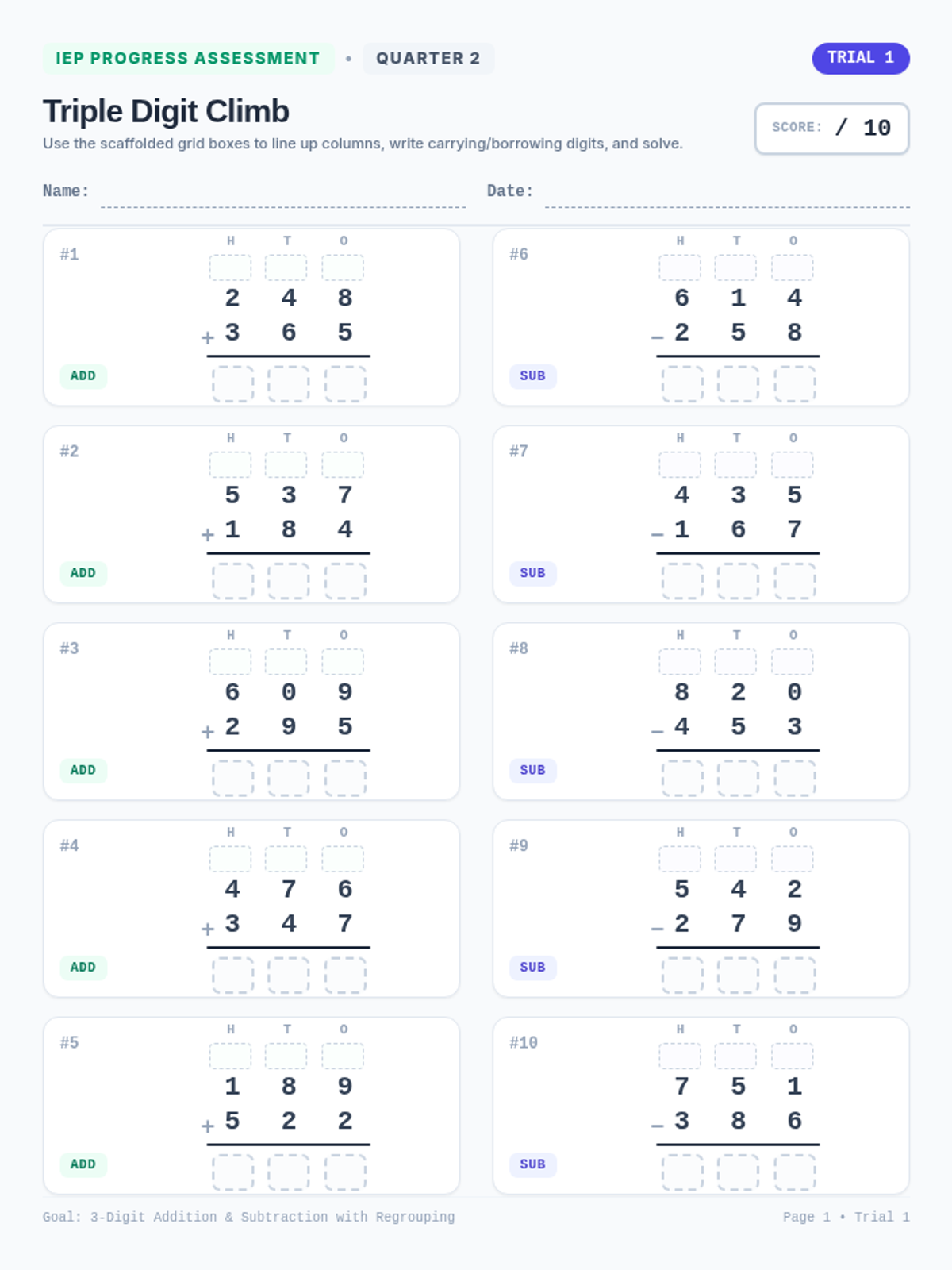
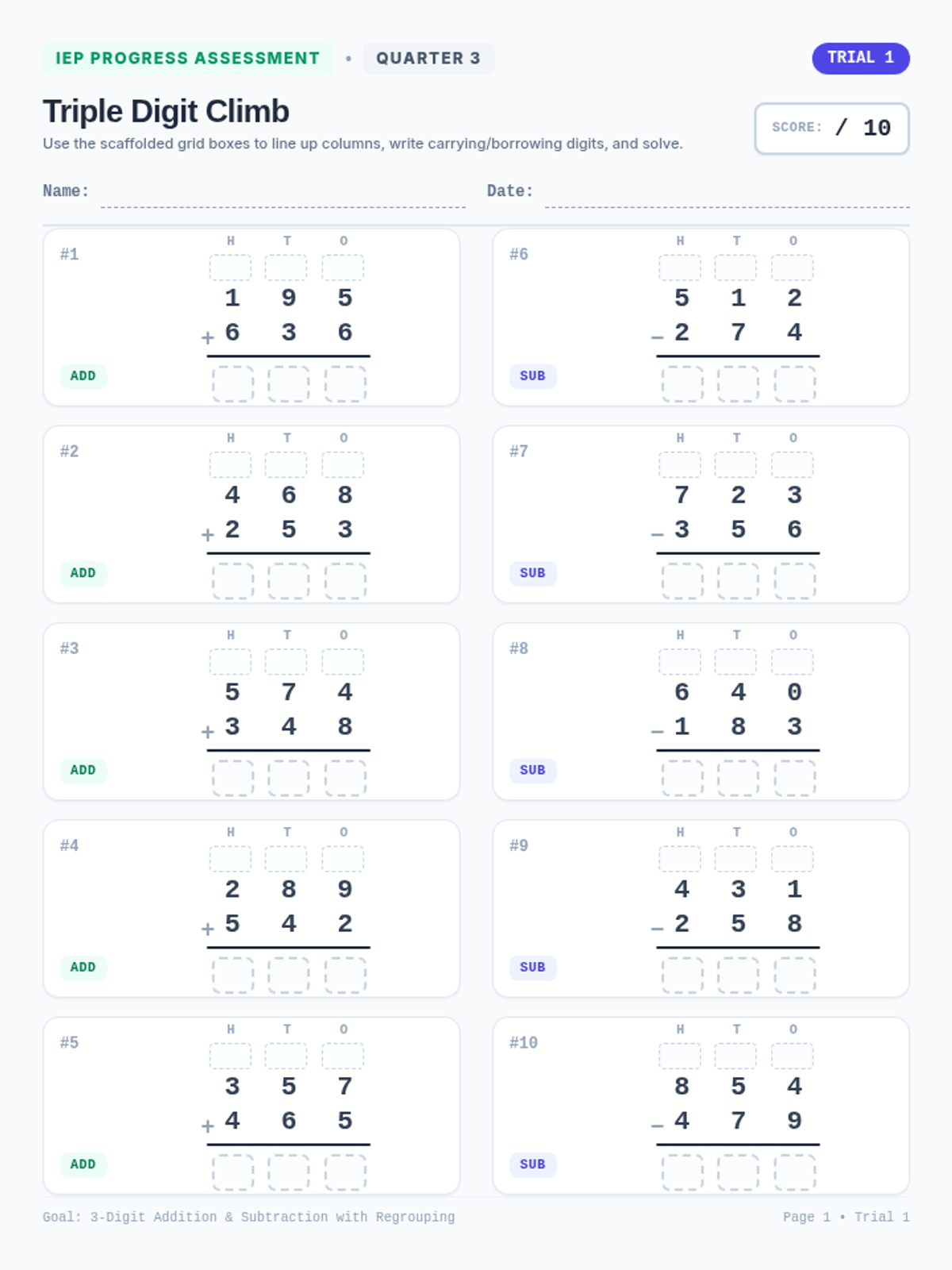
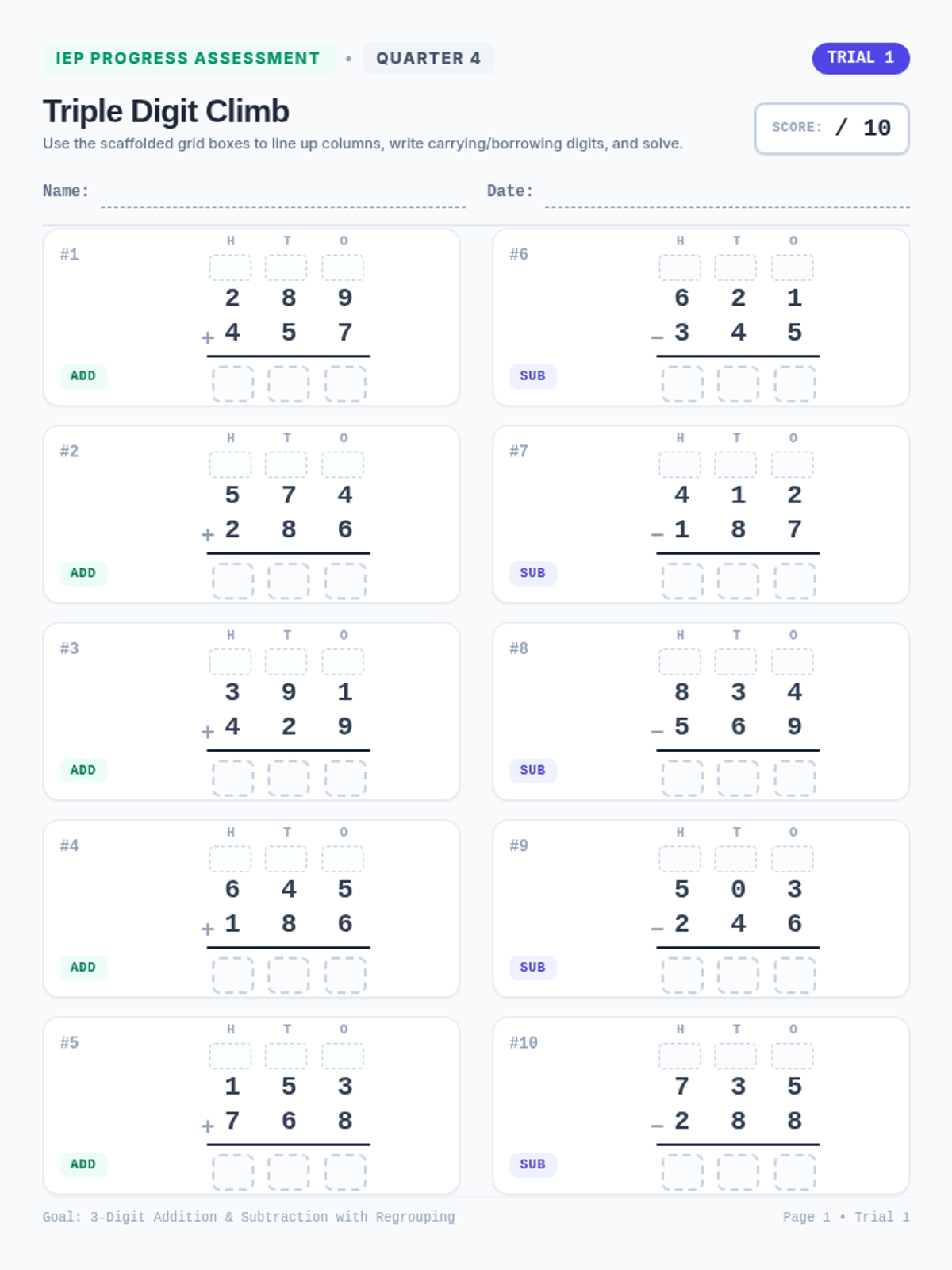
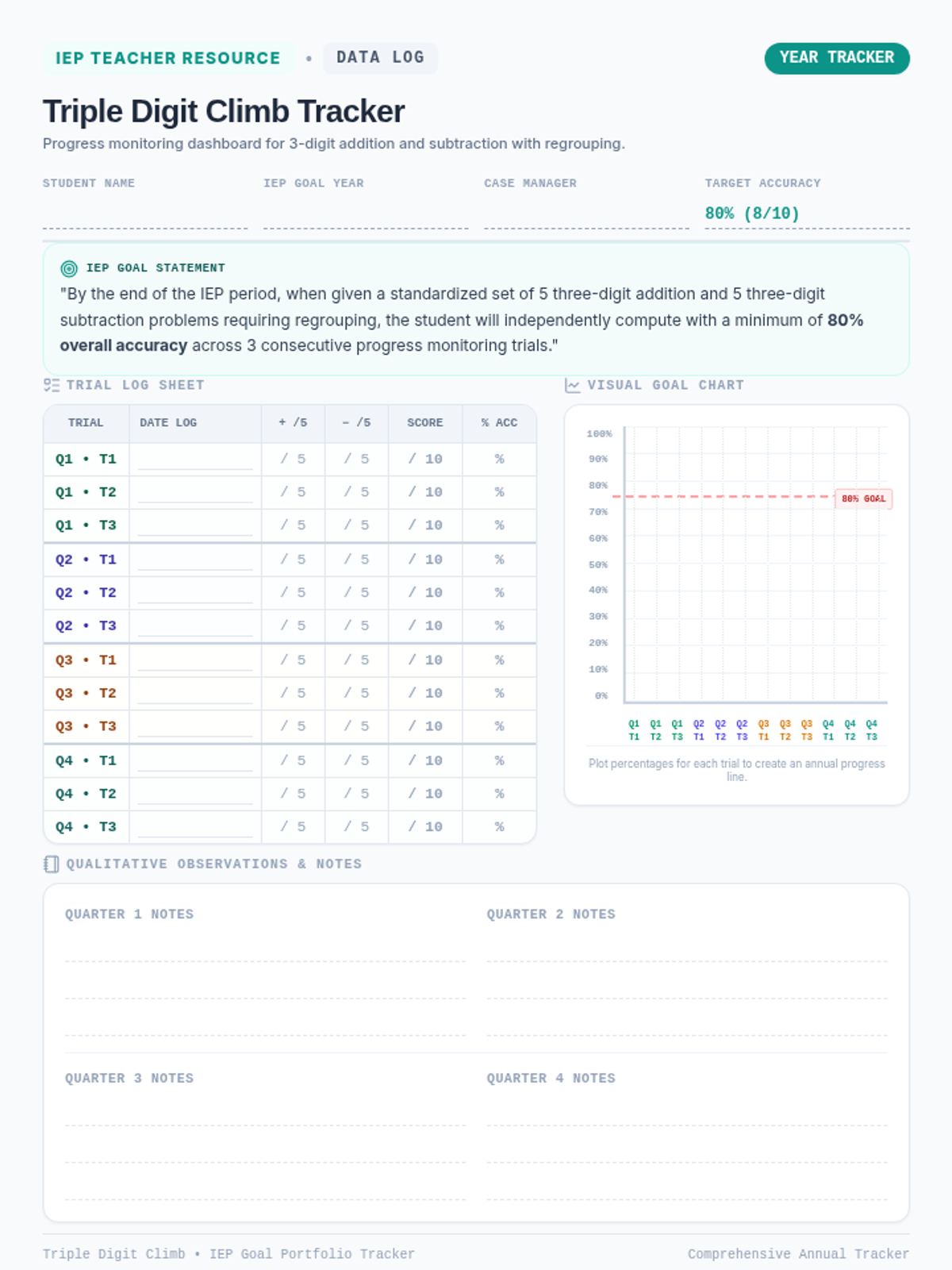
A progress monitoring assessment program for an IEP goal focusing on three-digit addition and subtraction with regrouping. Features clean grids, large fonts, and minimal clutter.
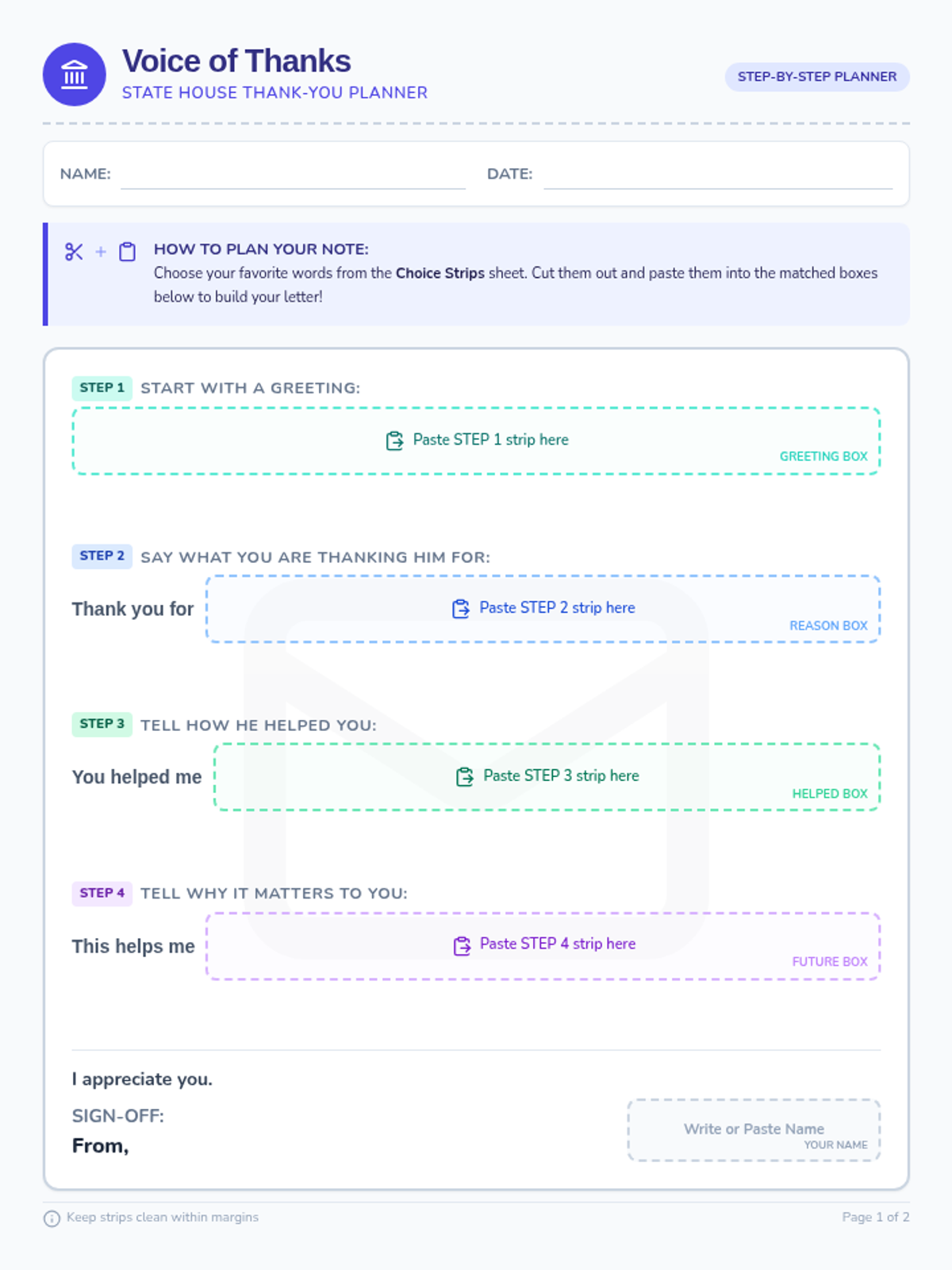
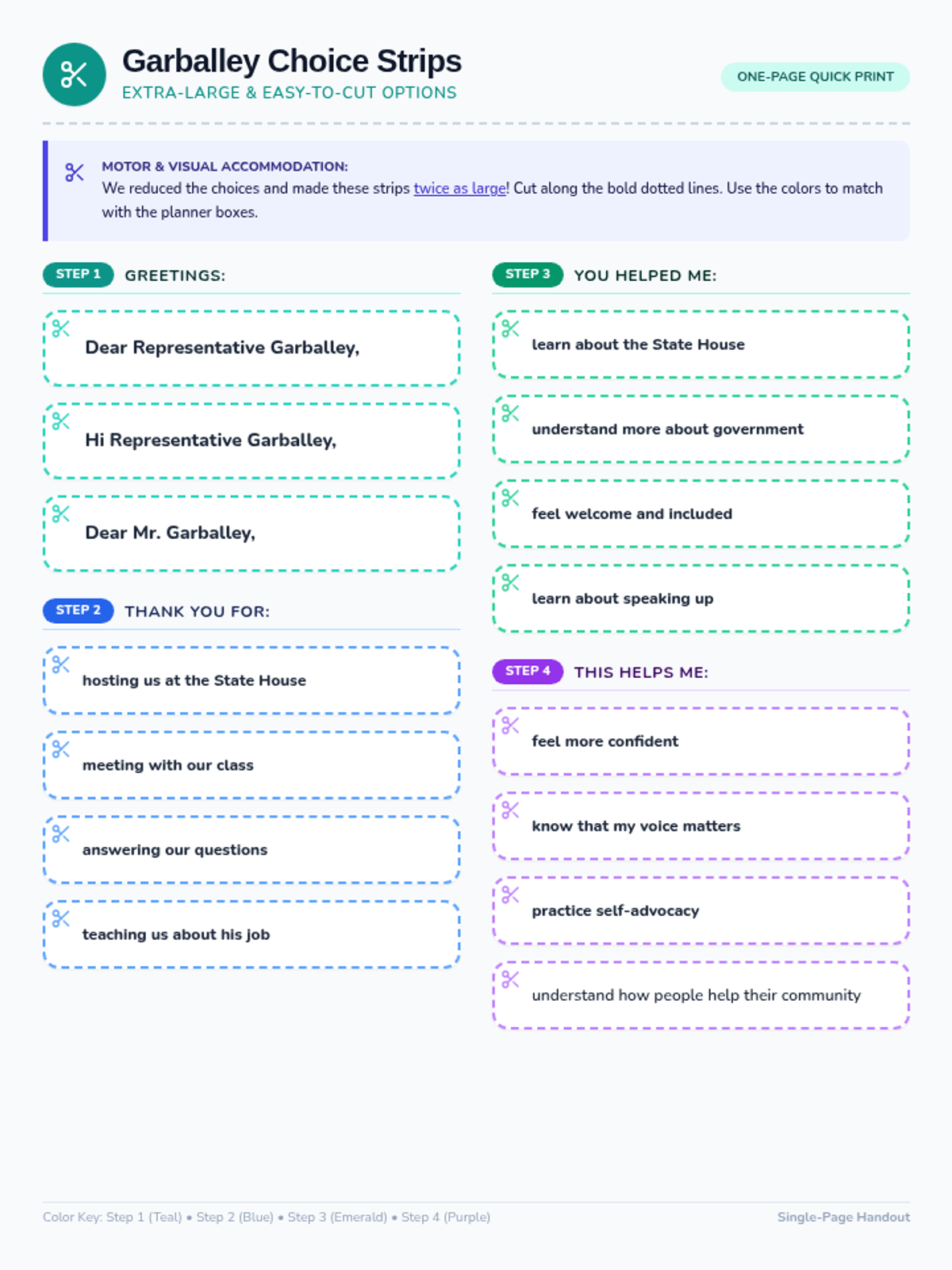
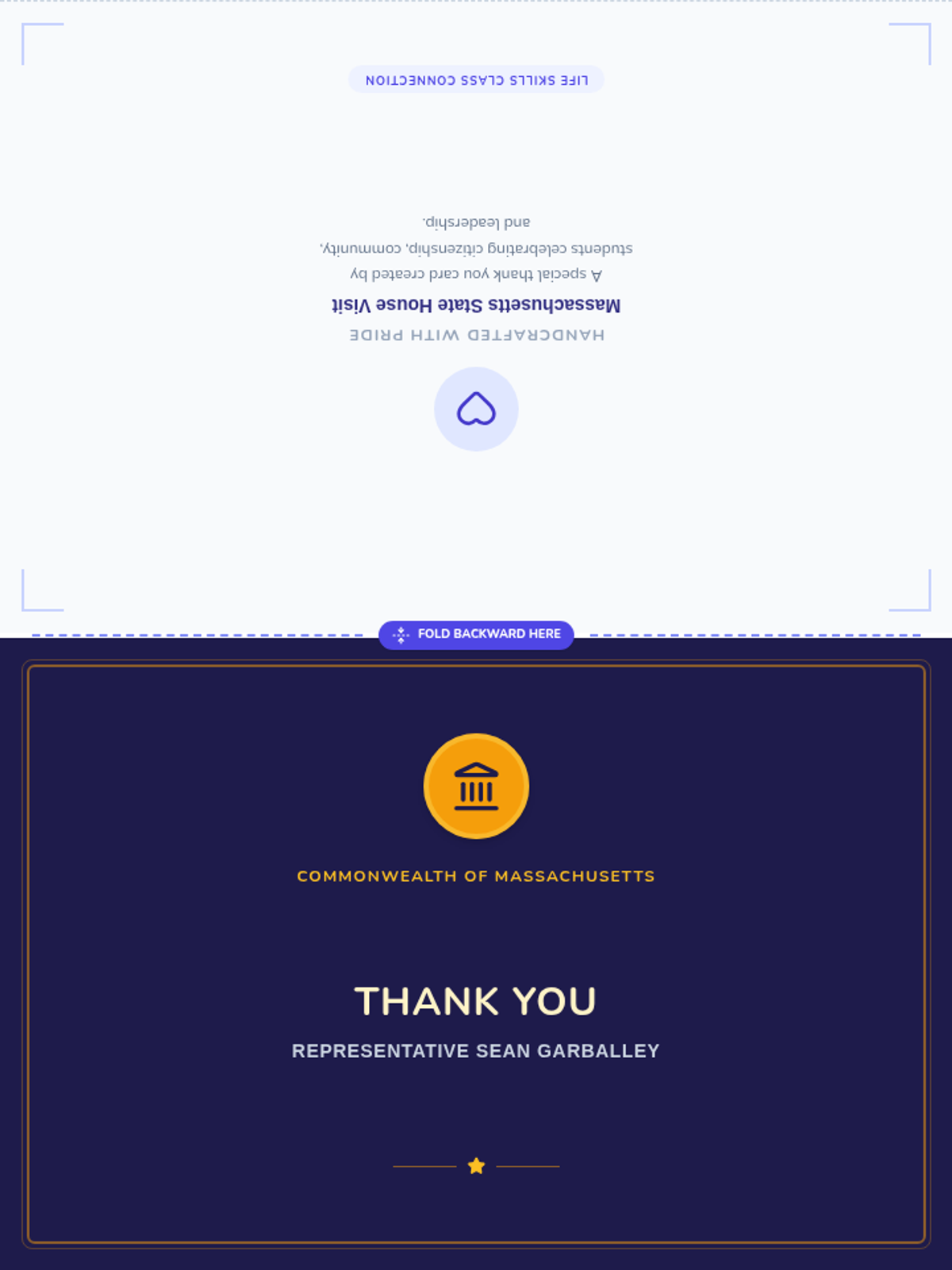
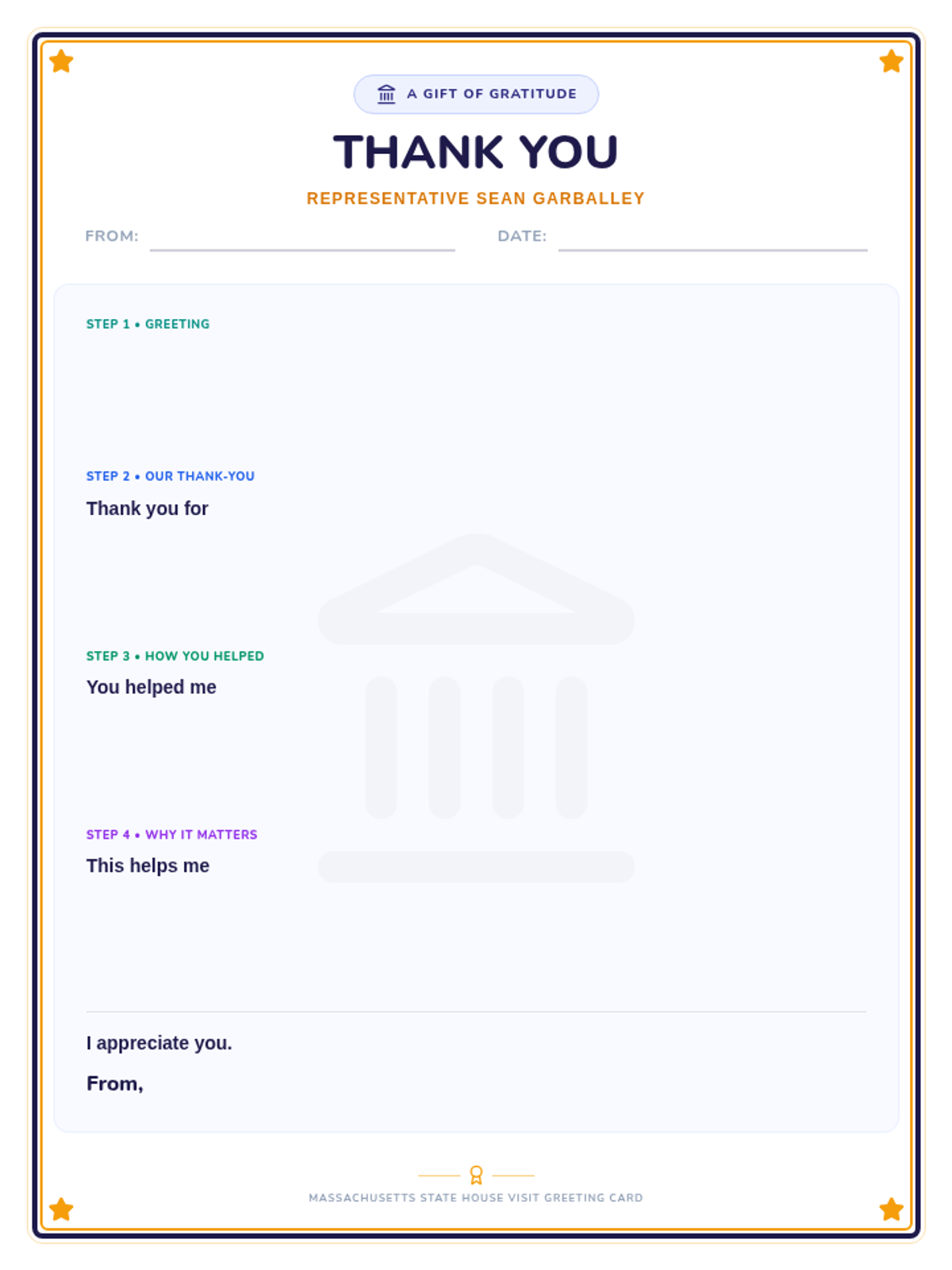
A life-skills-focused lesson where students learn to write a formal thank-you note to State Representative Sean Garballey using visual planners, errorless cut-and-paste choice strips, and a printable fold-over greeting card. This lesson scaffold is optimized for students with diverse fine-motor and cognitive needs.
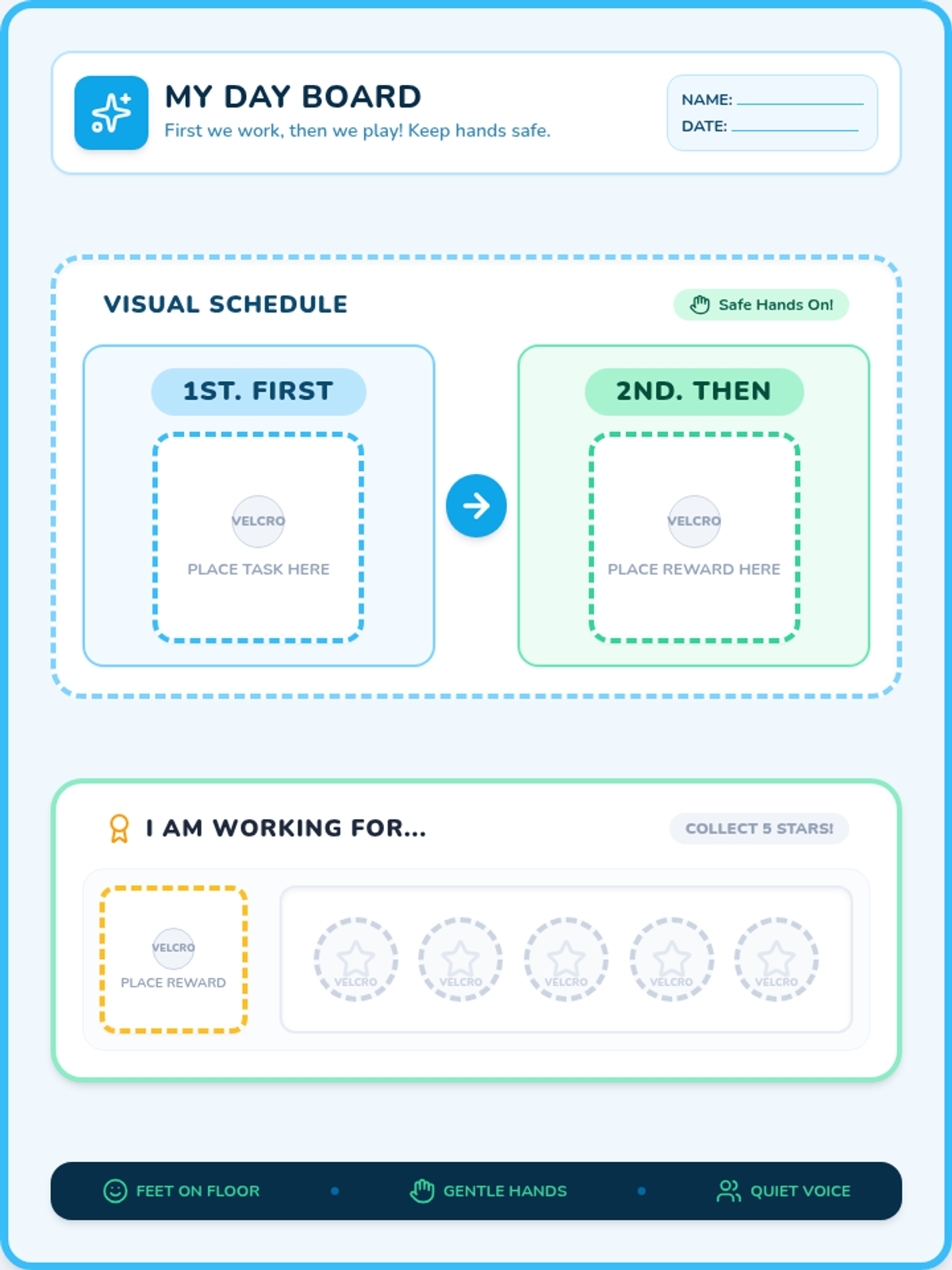
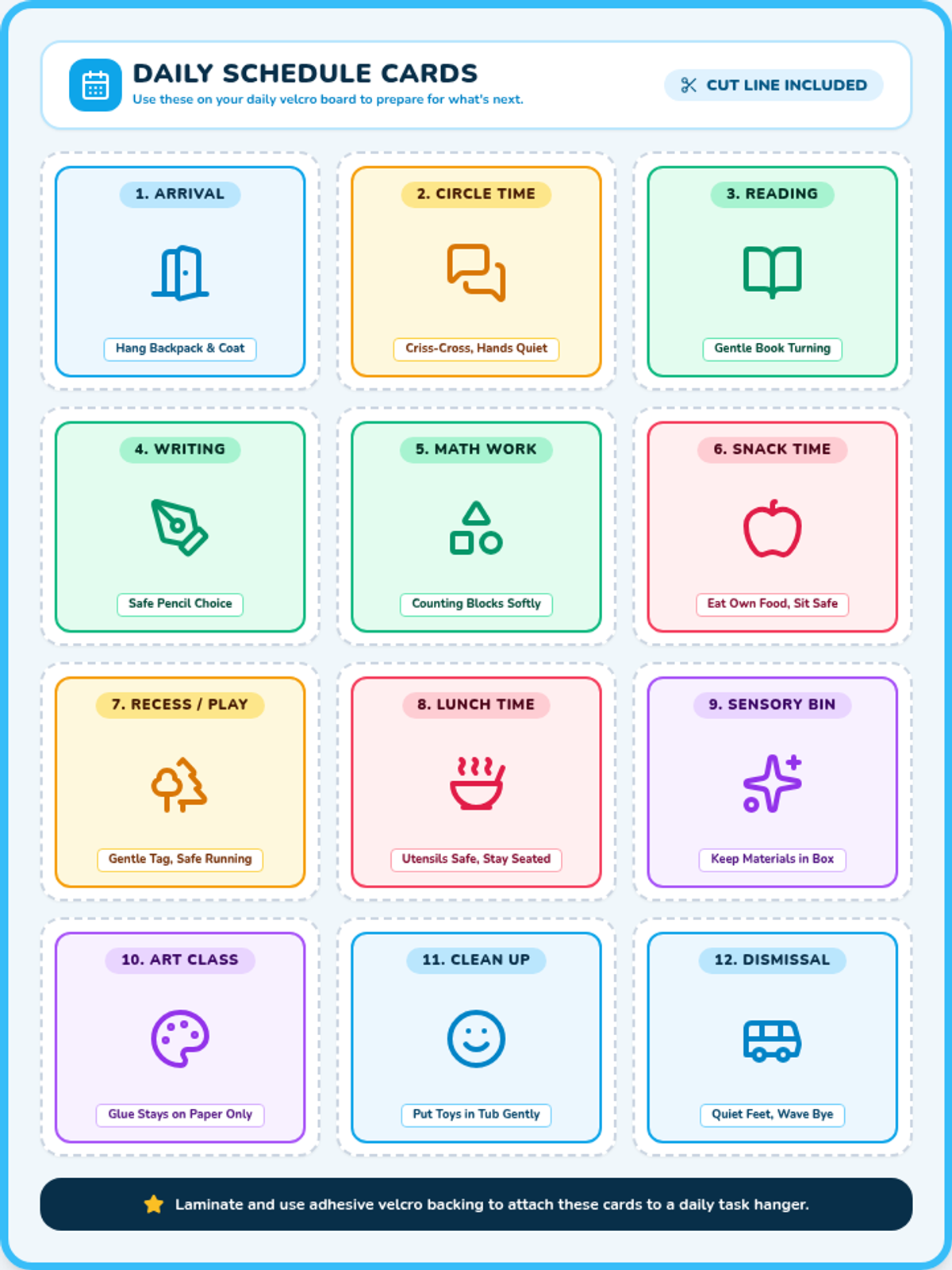
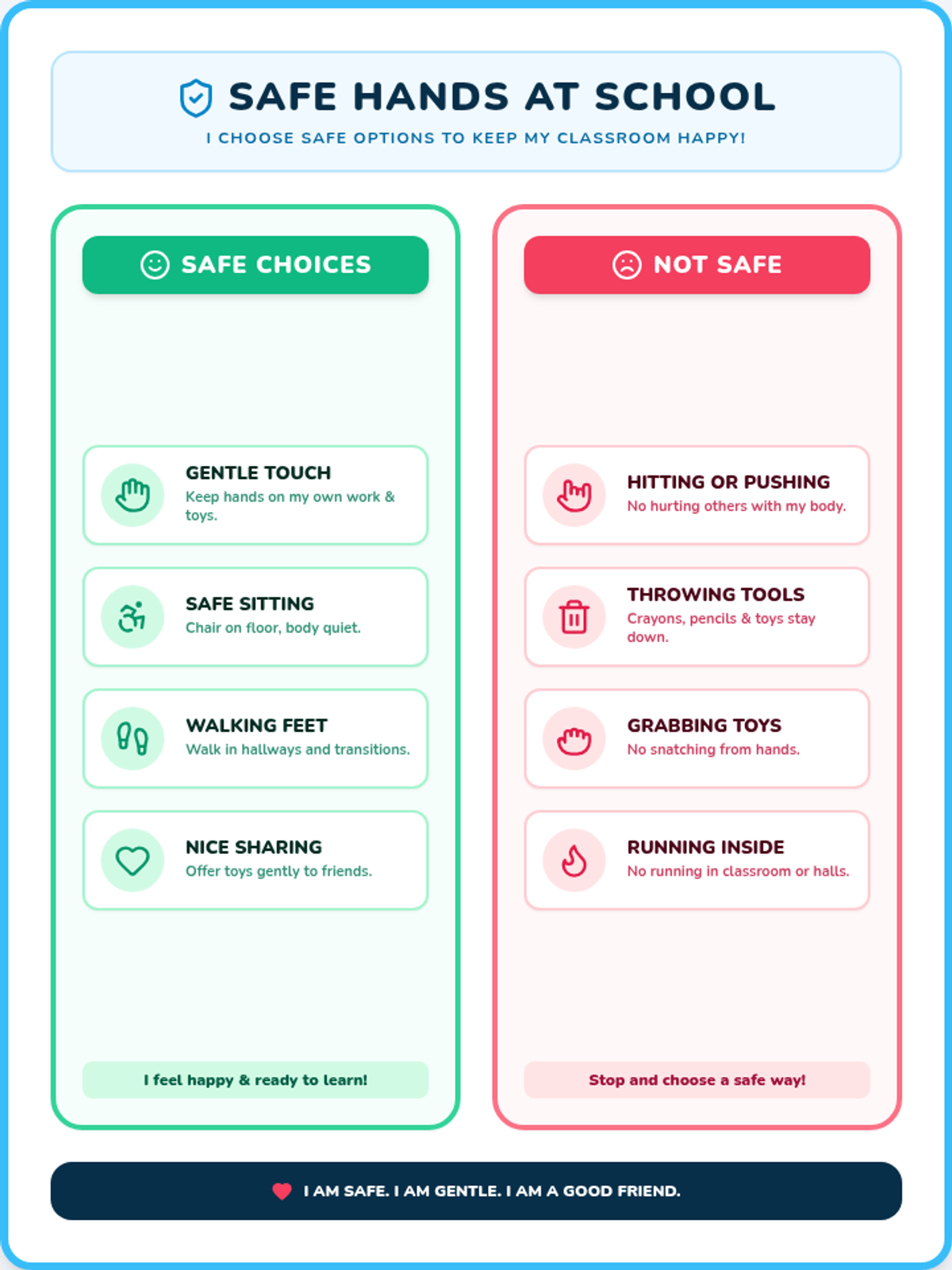
A comprehensive visual support system designed for a non-verbal kindergartener, focusing on safe choices, gentle hands, and structured routines. Includes a First-Then board, daily schedule cards, behavioral expectation cards, and visual routine anchor charts.
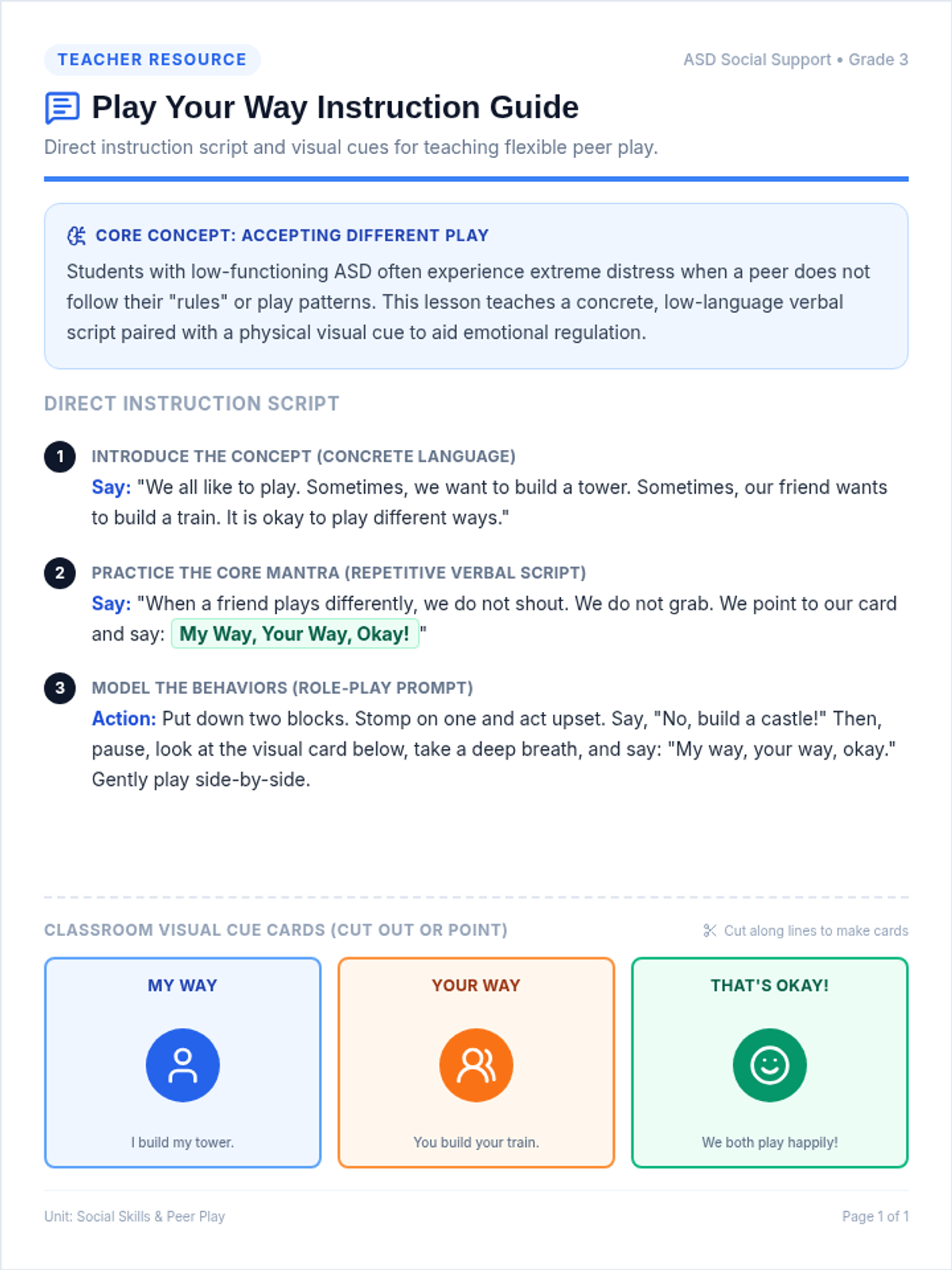
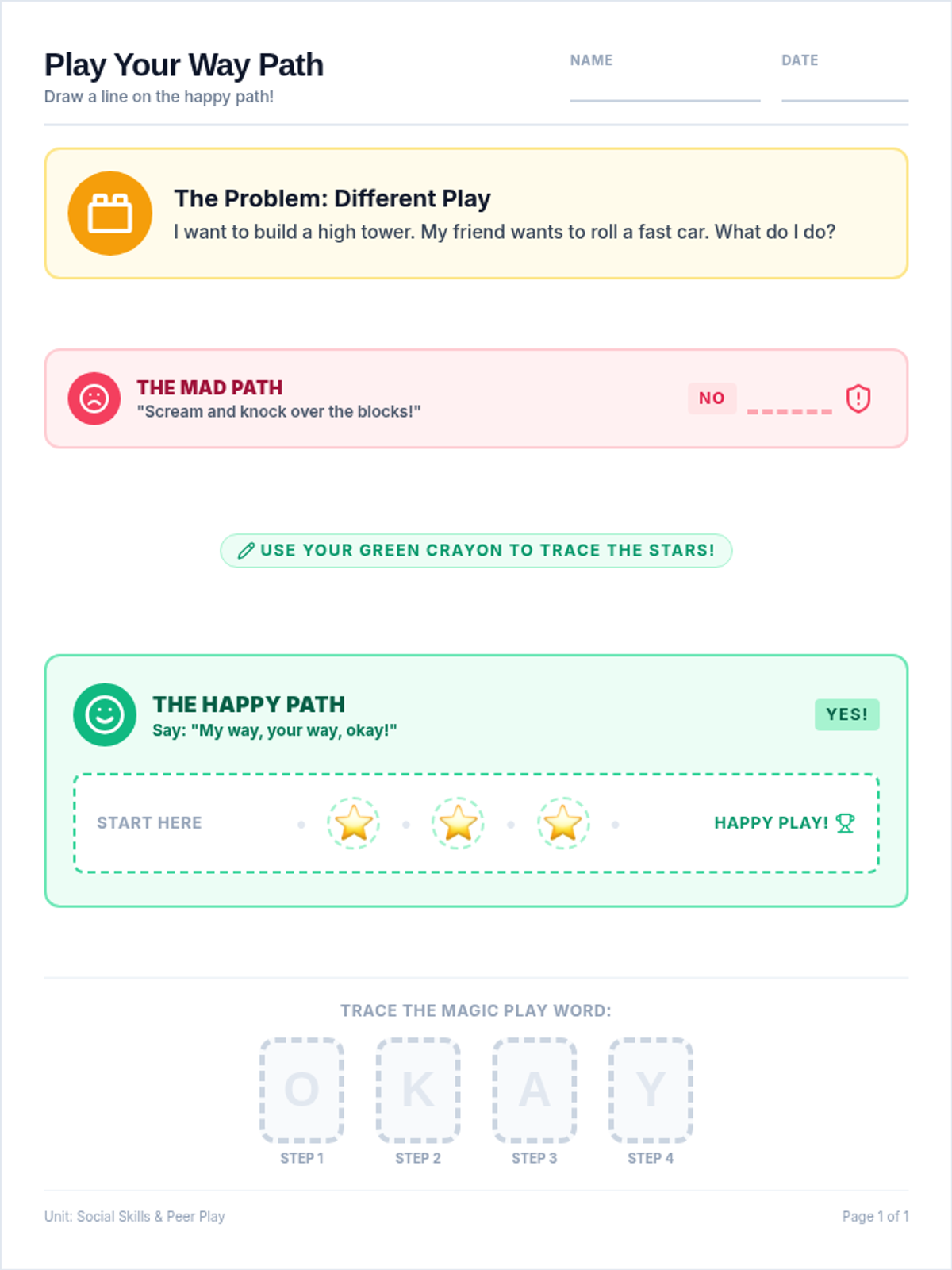
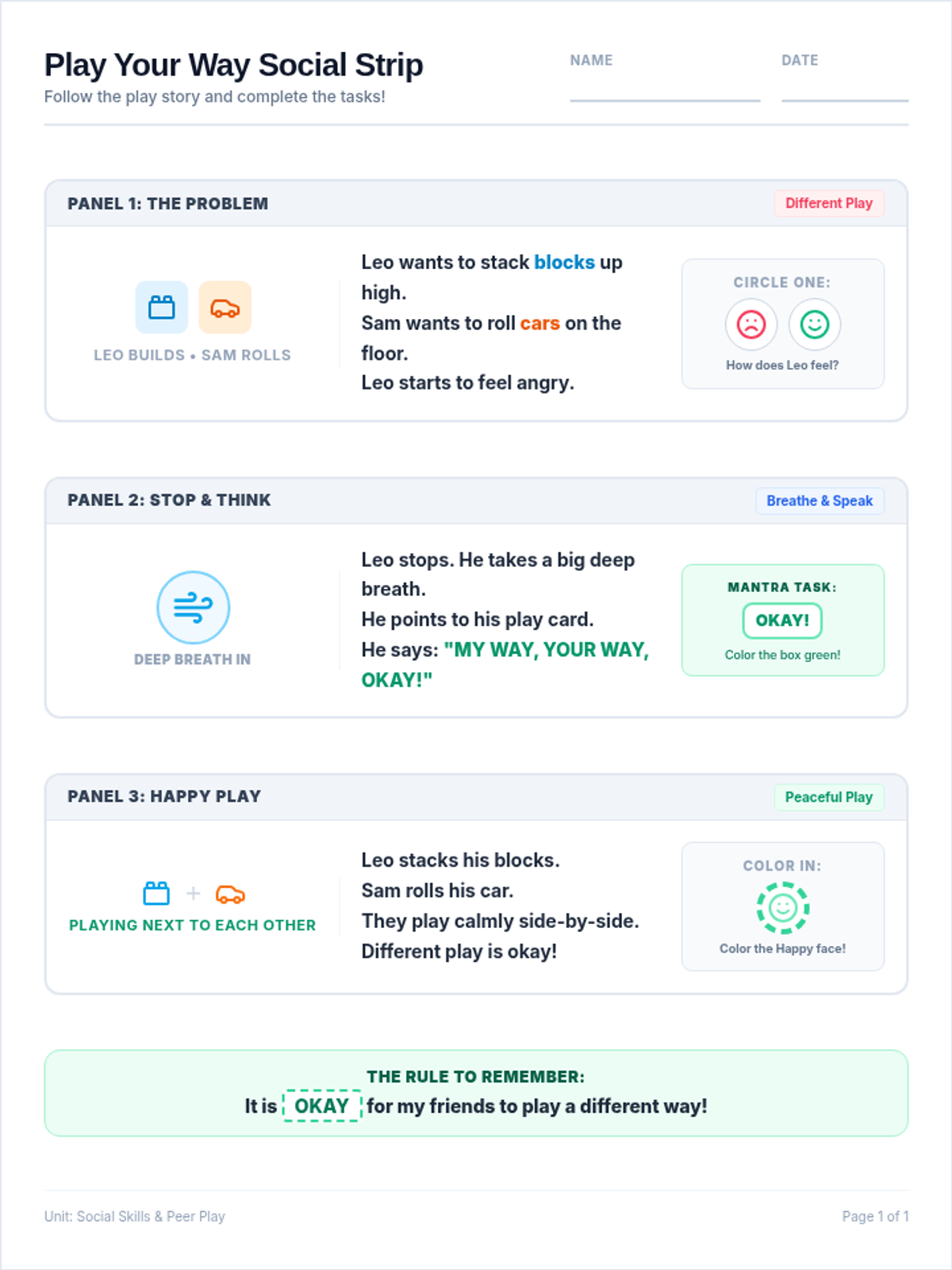
A highly structured social skills lesson designed for third graders with low-functioning autism (ASD), focusing on accepting when a peer plays a game differently. Includes a direct-instruction teacher script with visual cues, a trace-and-color path worksheet, and a visual social scenario comic strip.
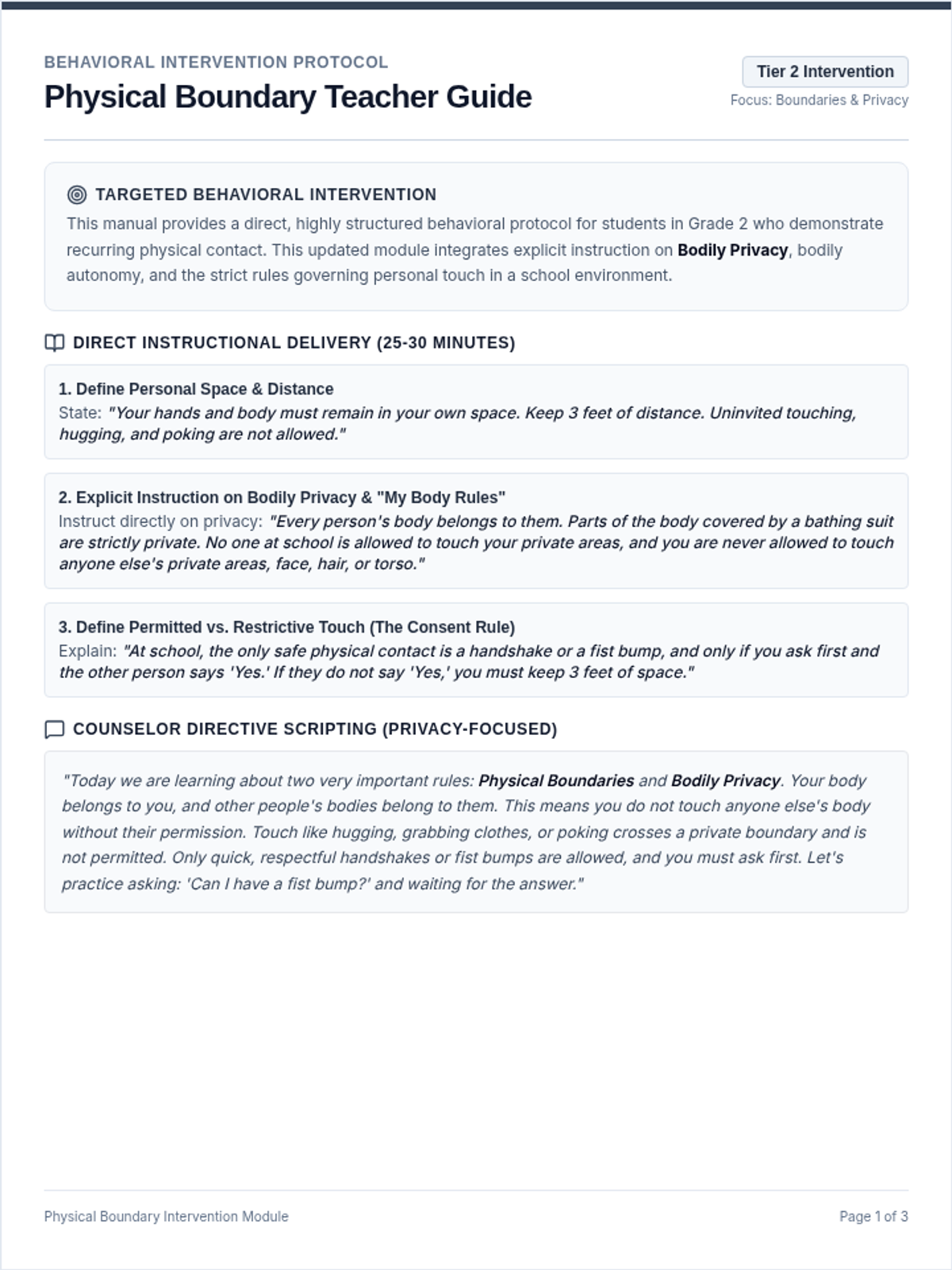
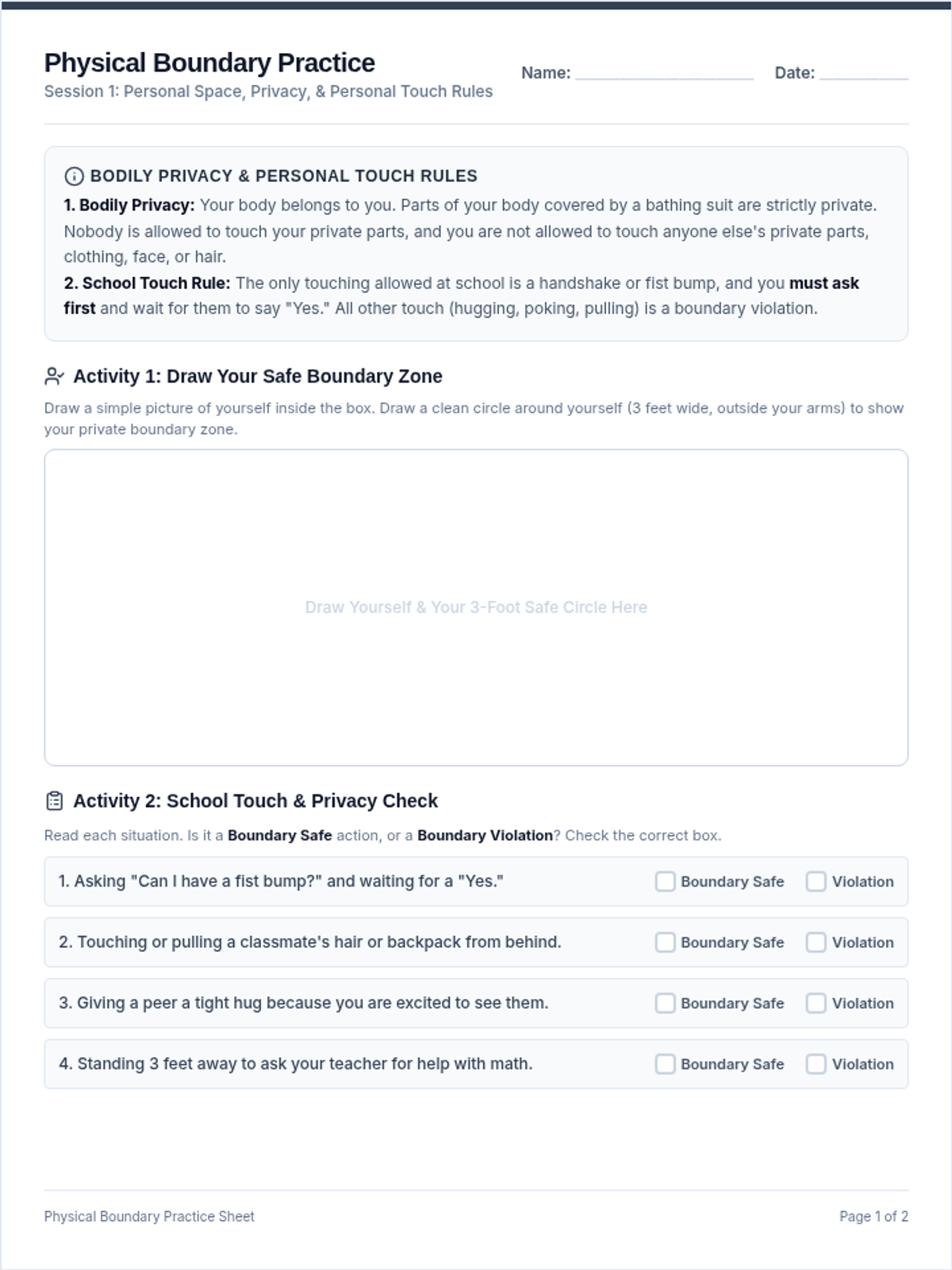
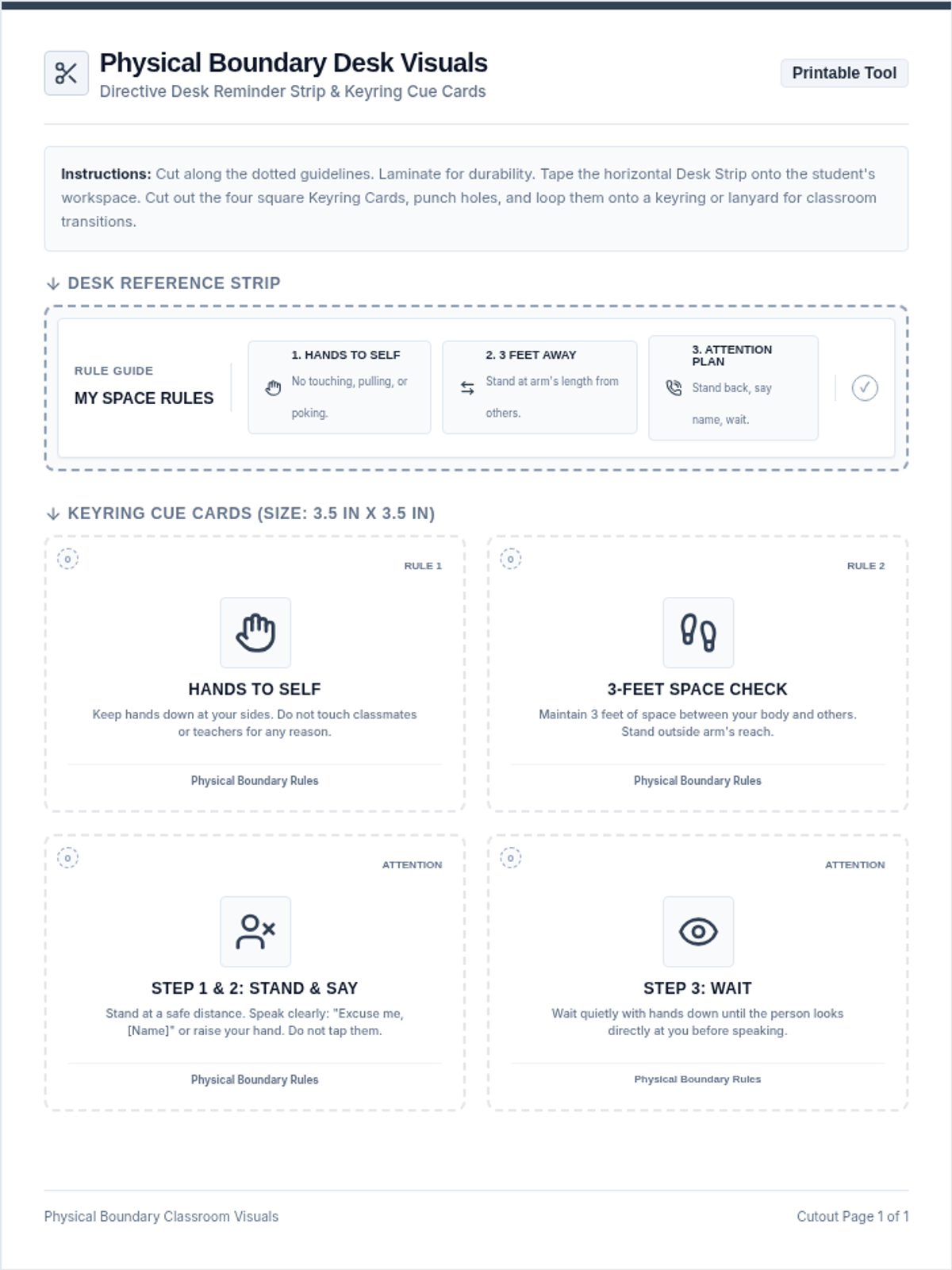
A directive behavioral intervention lesson designed for 2nd-grade students to learn explicit physical boundary limits, replace inappropriate touching of peers and adults, and practice structured attention-seeking replacement actions. Includes a professional guidance packet with de-escalation scripts, student workbooks, and desk visual reminders.
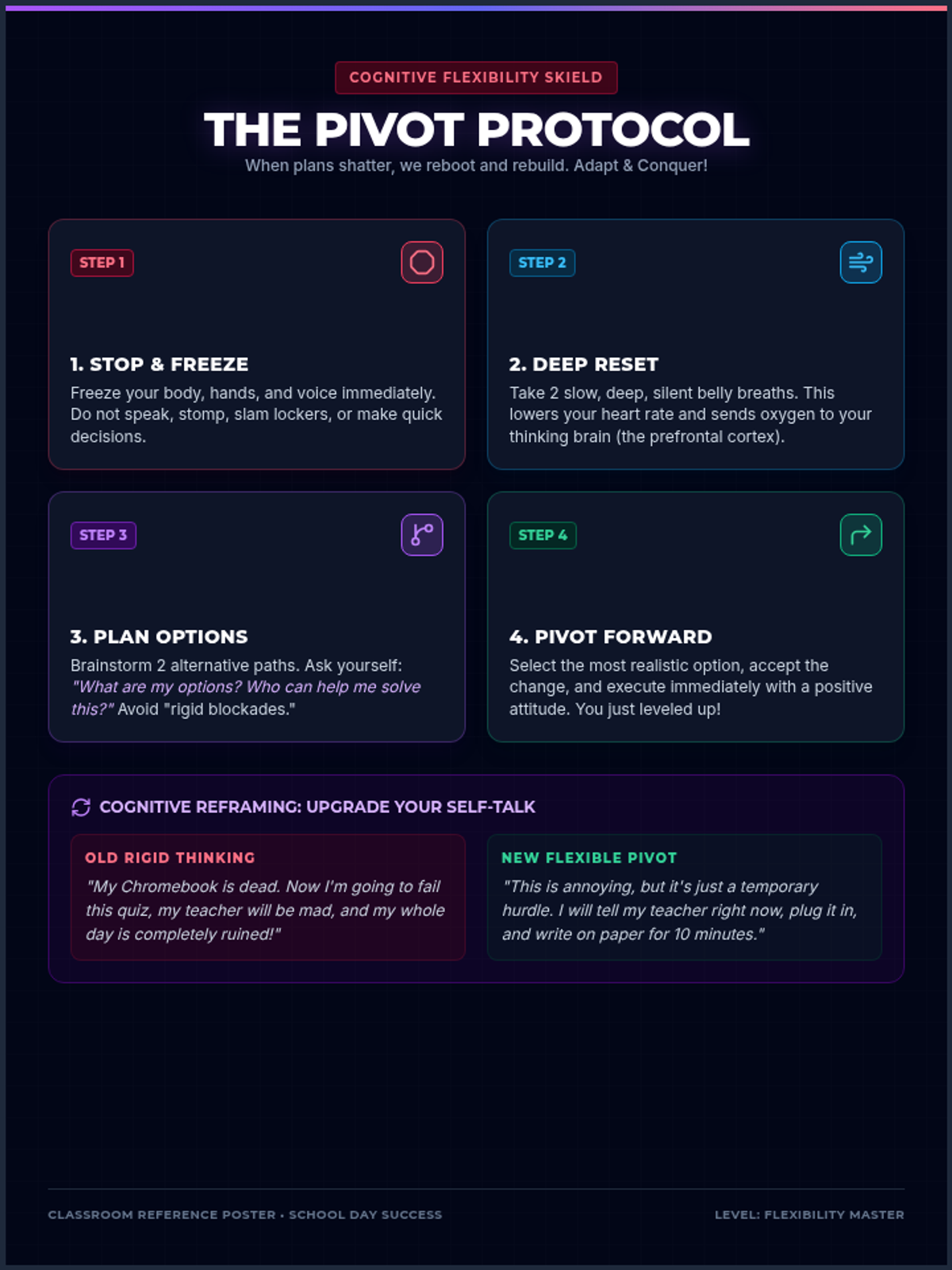
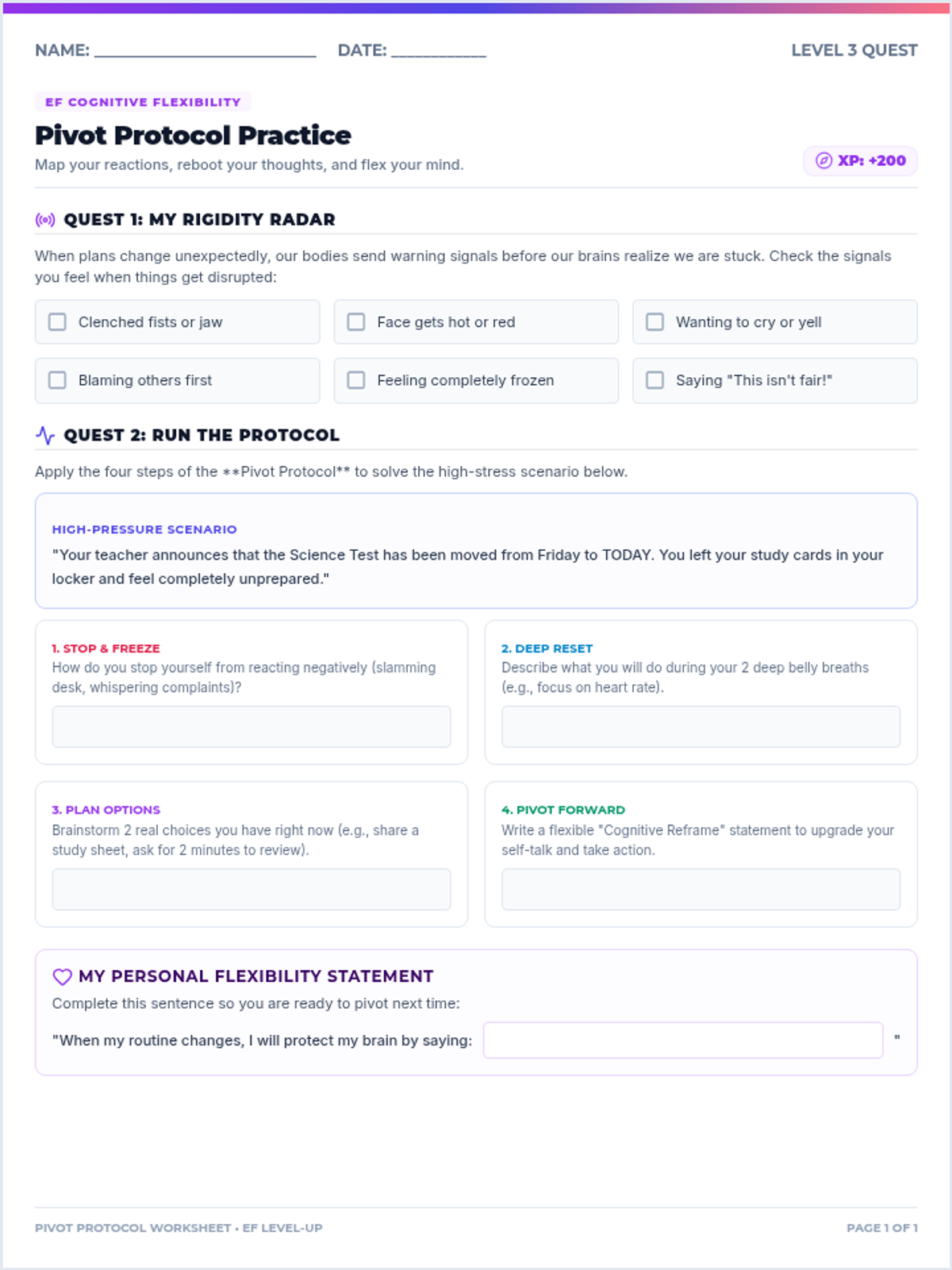
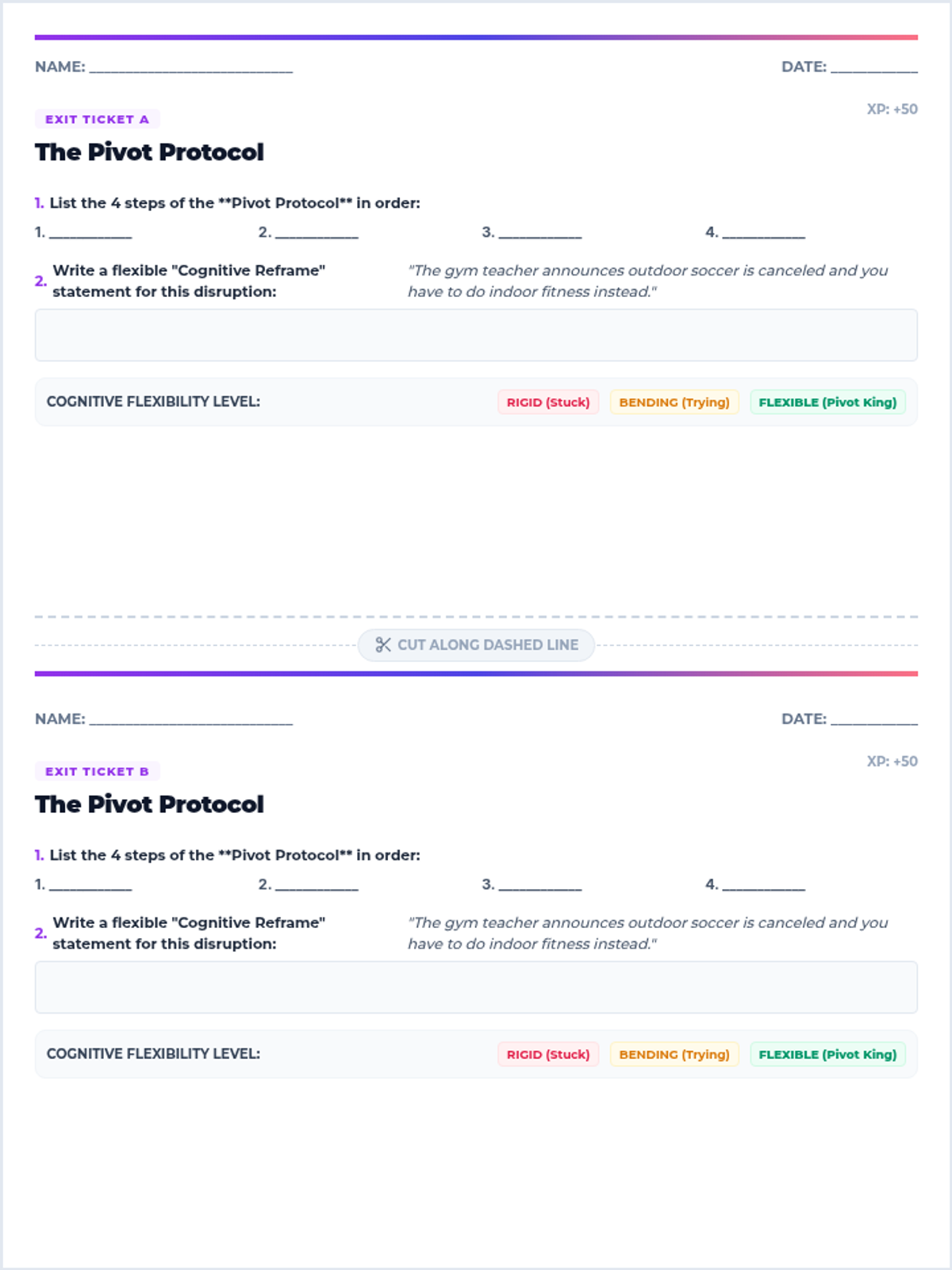
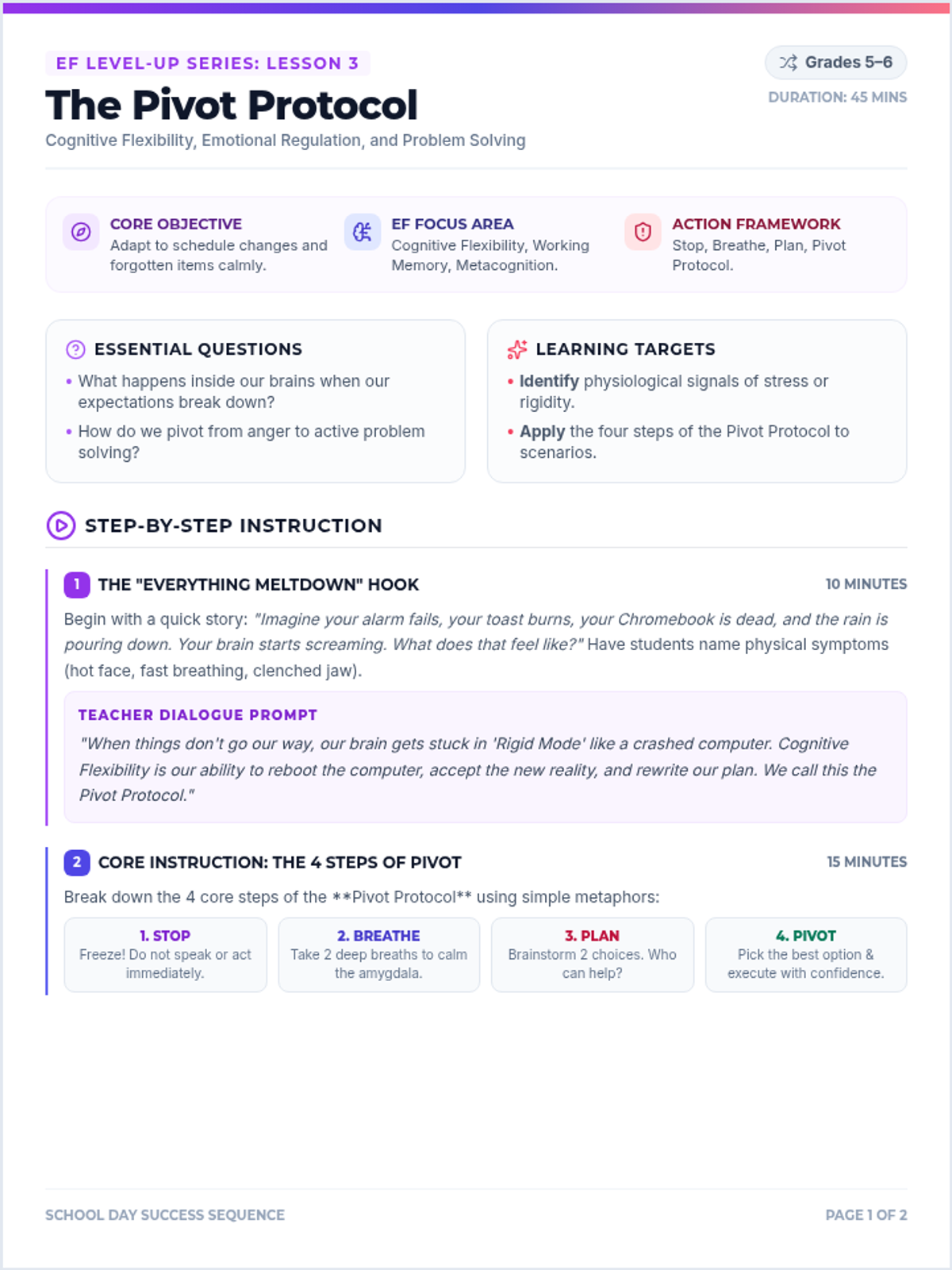
Focuses on cognitive flexibility, teaching students how to adapt to unexpected morning disruptions, schedule changes, or forgotten items using a step-by-step coping and problem-solving framework.
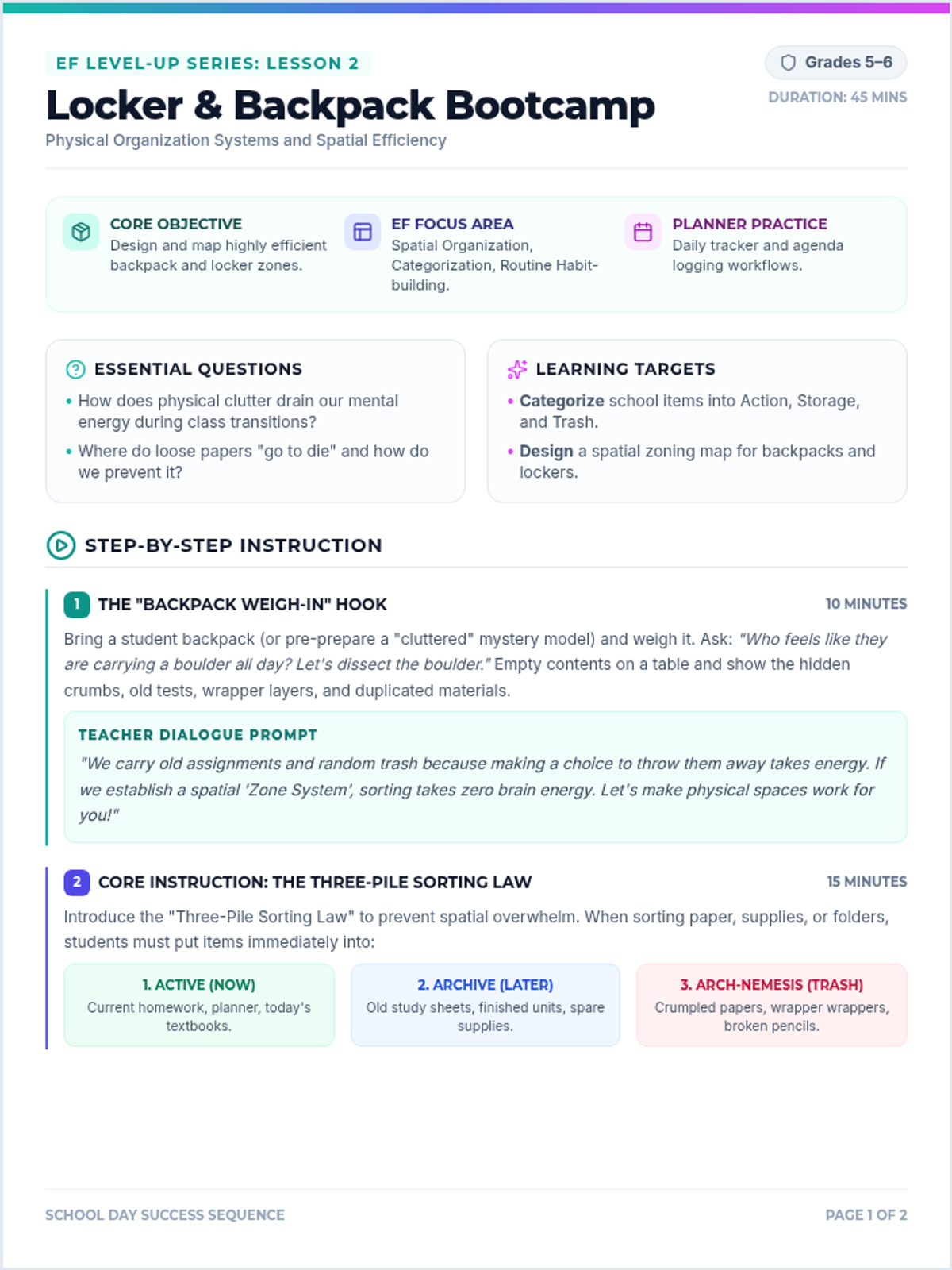
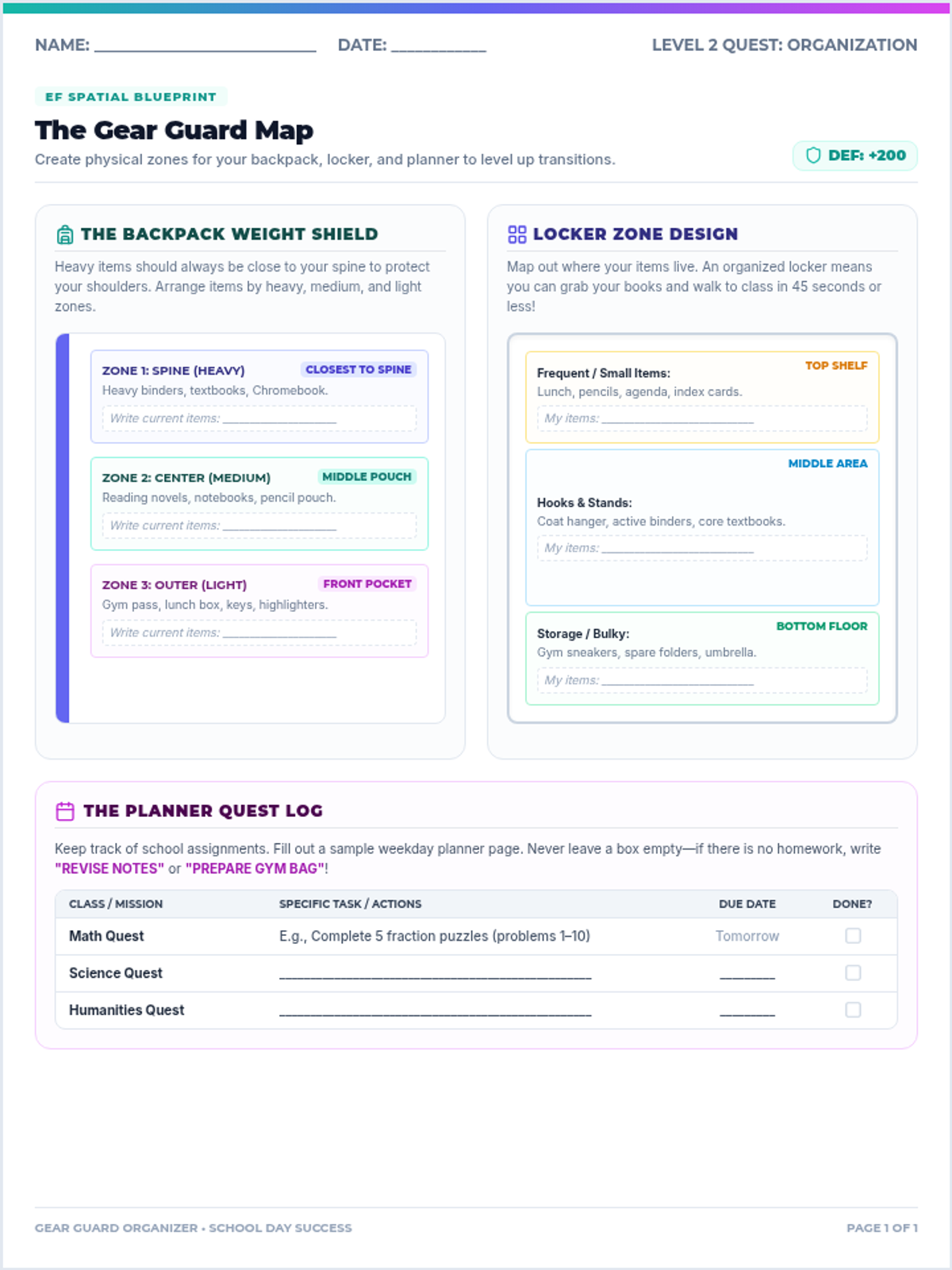
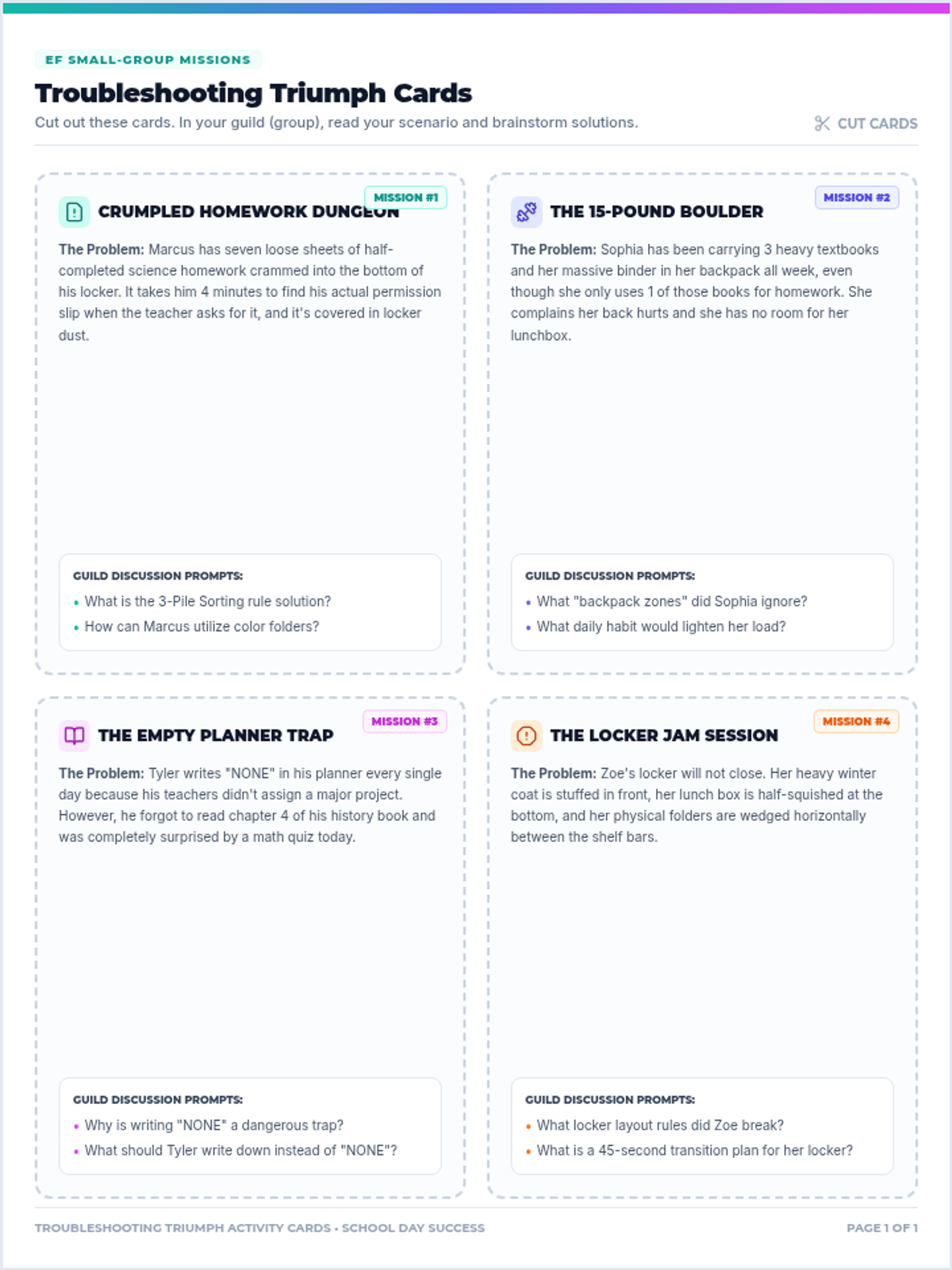
Focuses on organization and order, helping students design efficient physical systems for their backpacks, desks, and lockers, alongside practicing planner management.
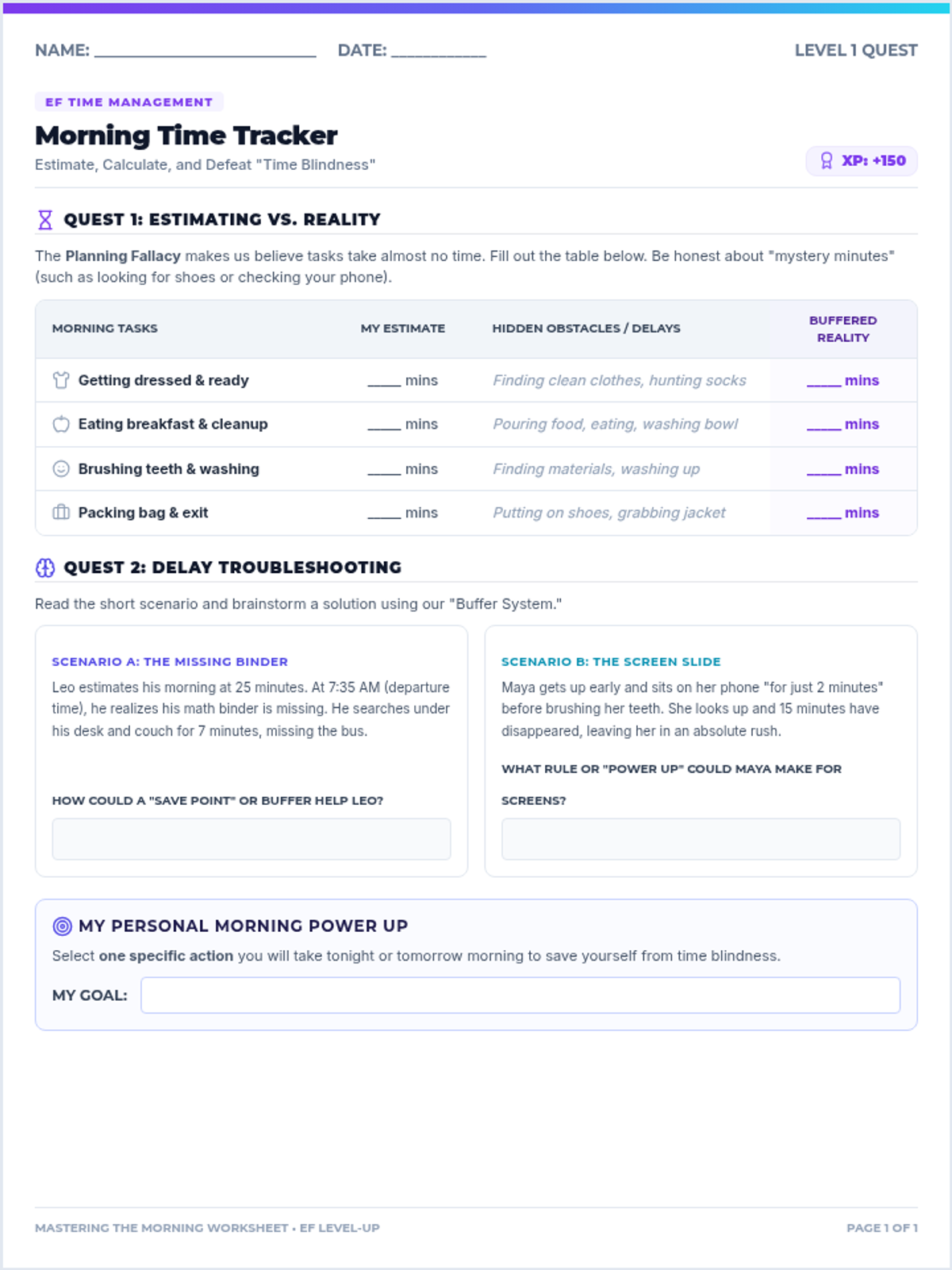
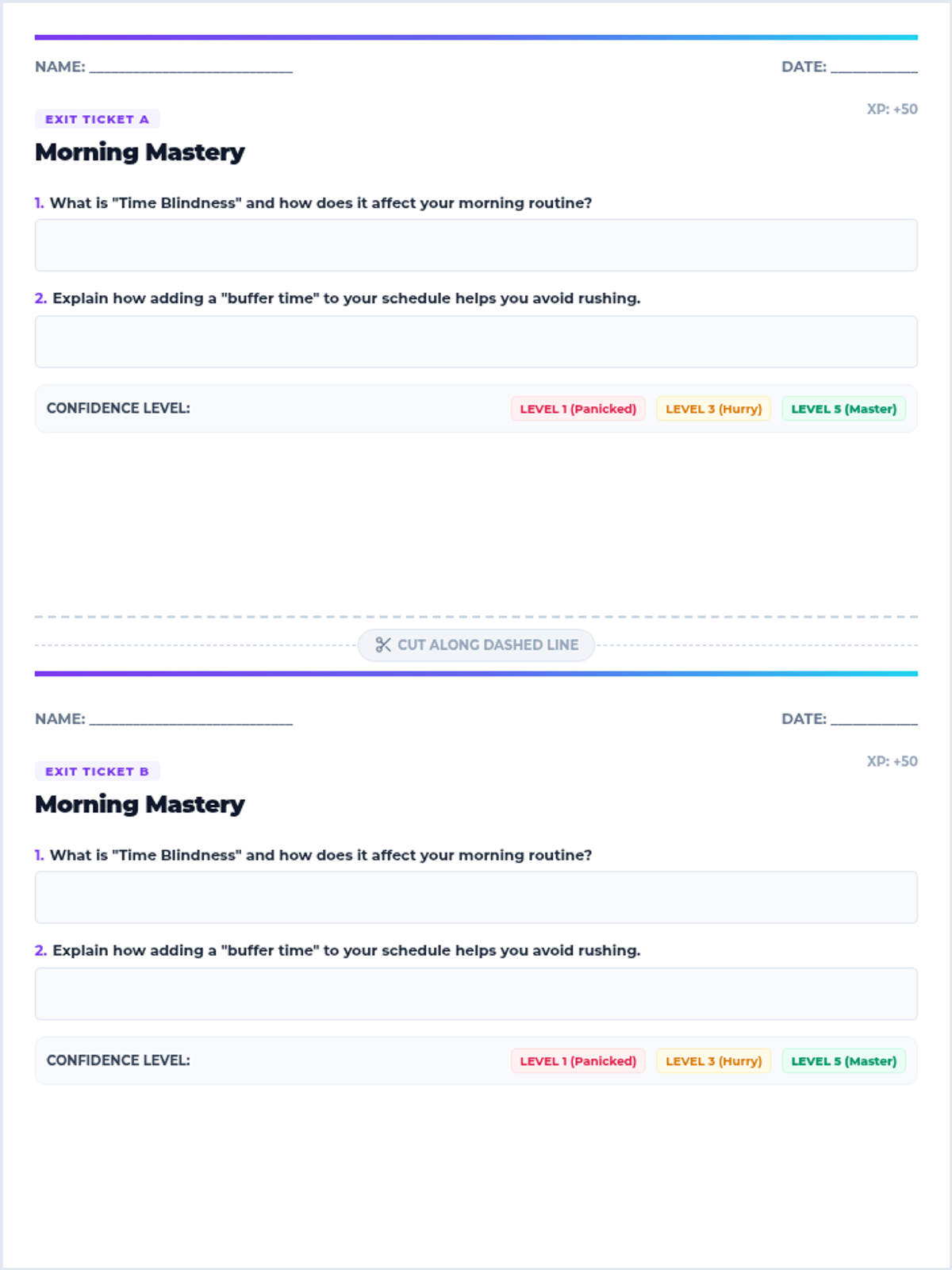
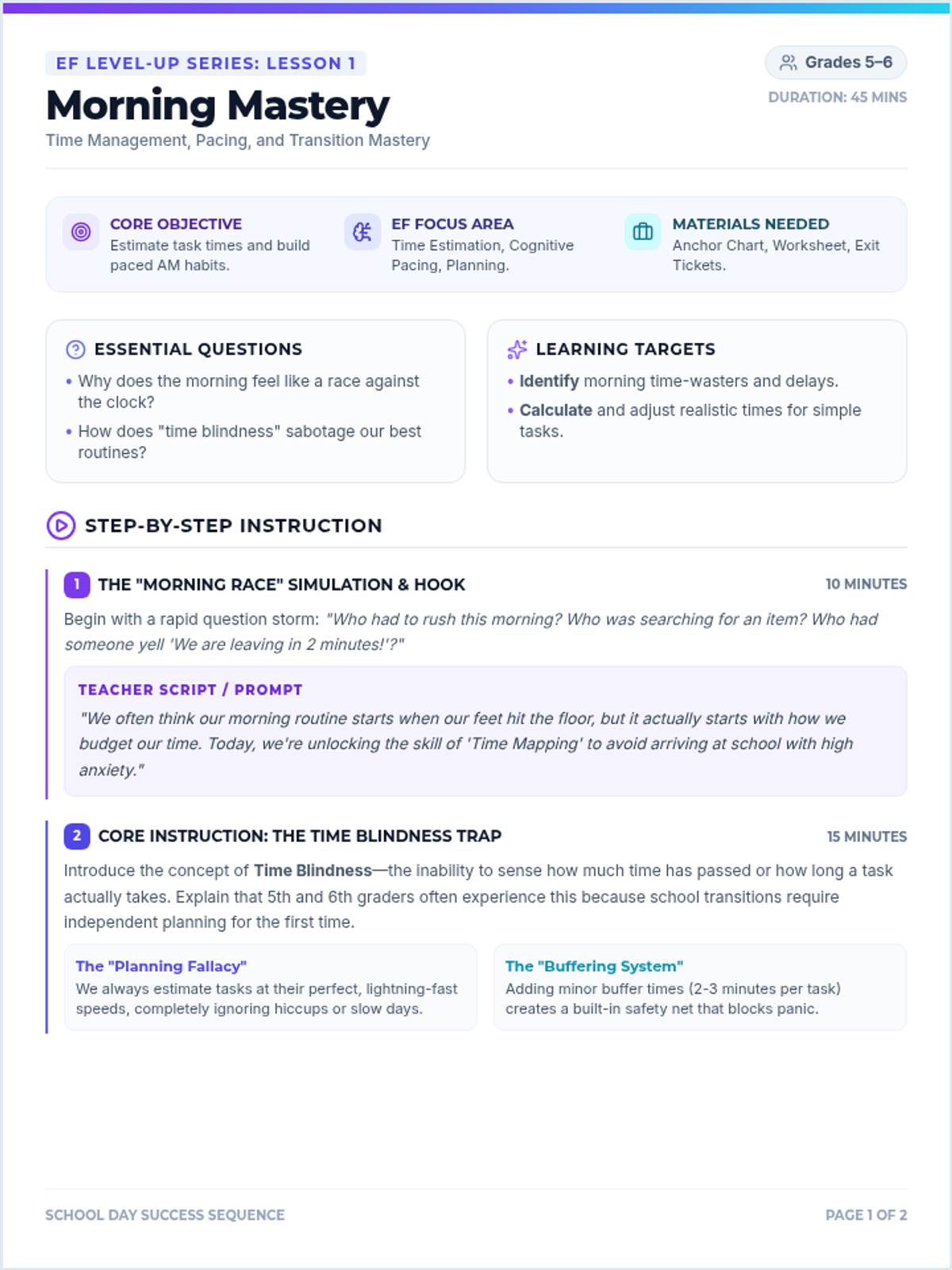
Focuses on time management, estimating task durations, and establishing efficient morning routines to arrive at school ready to learn without transition delays.
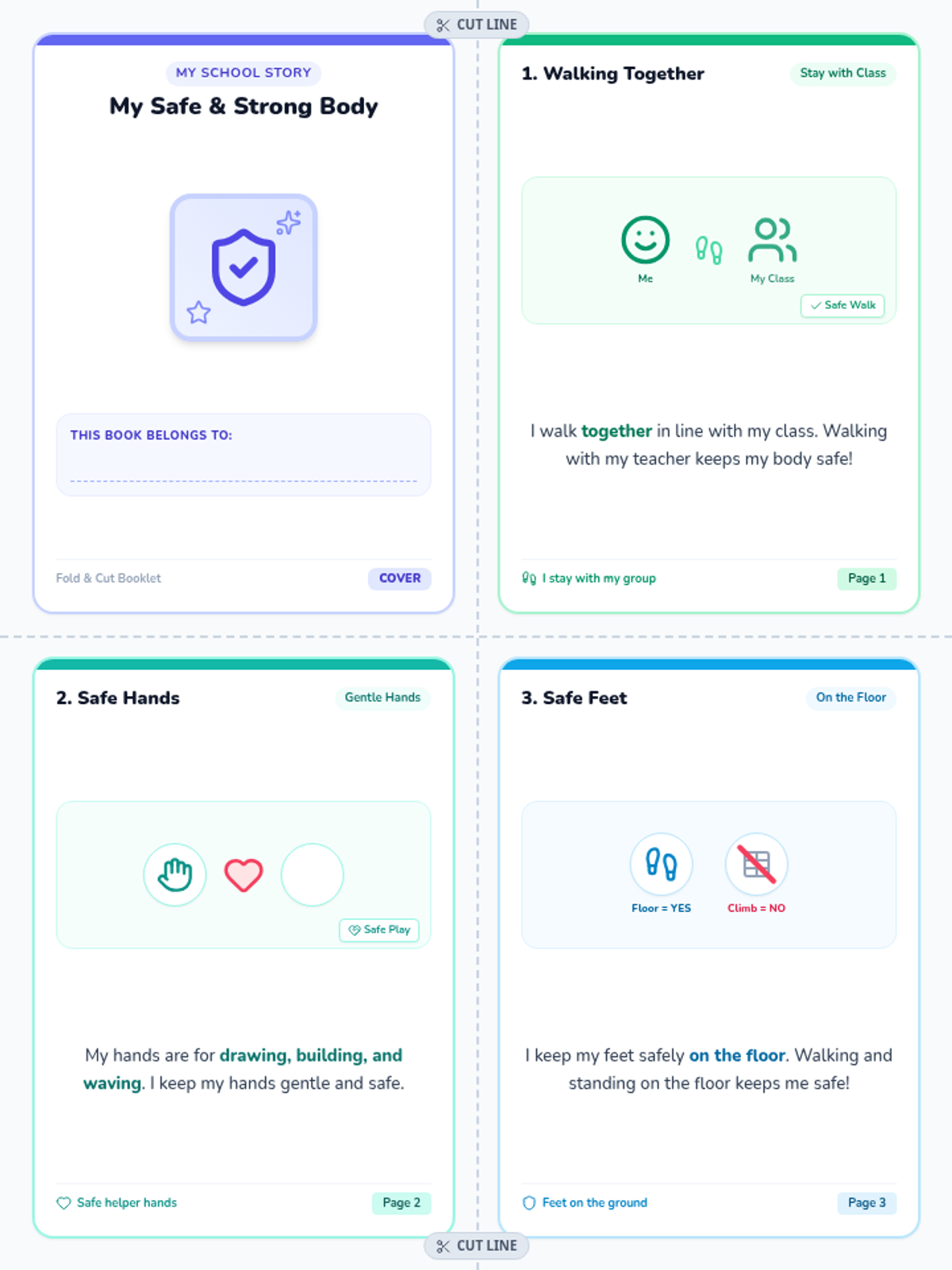
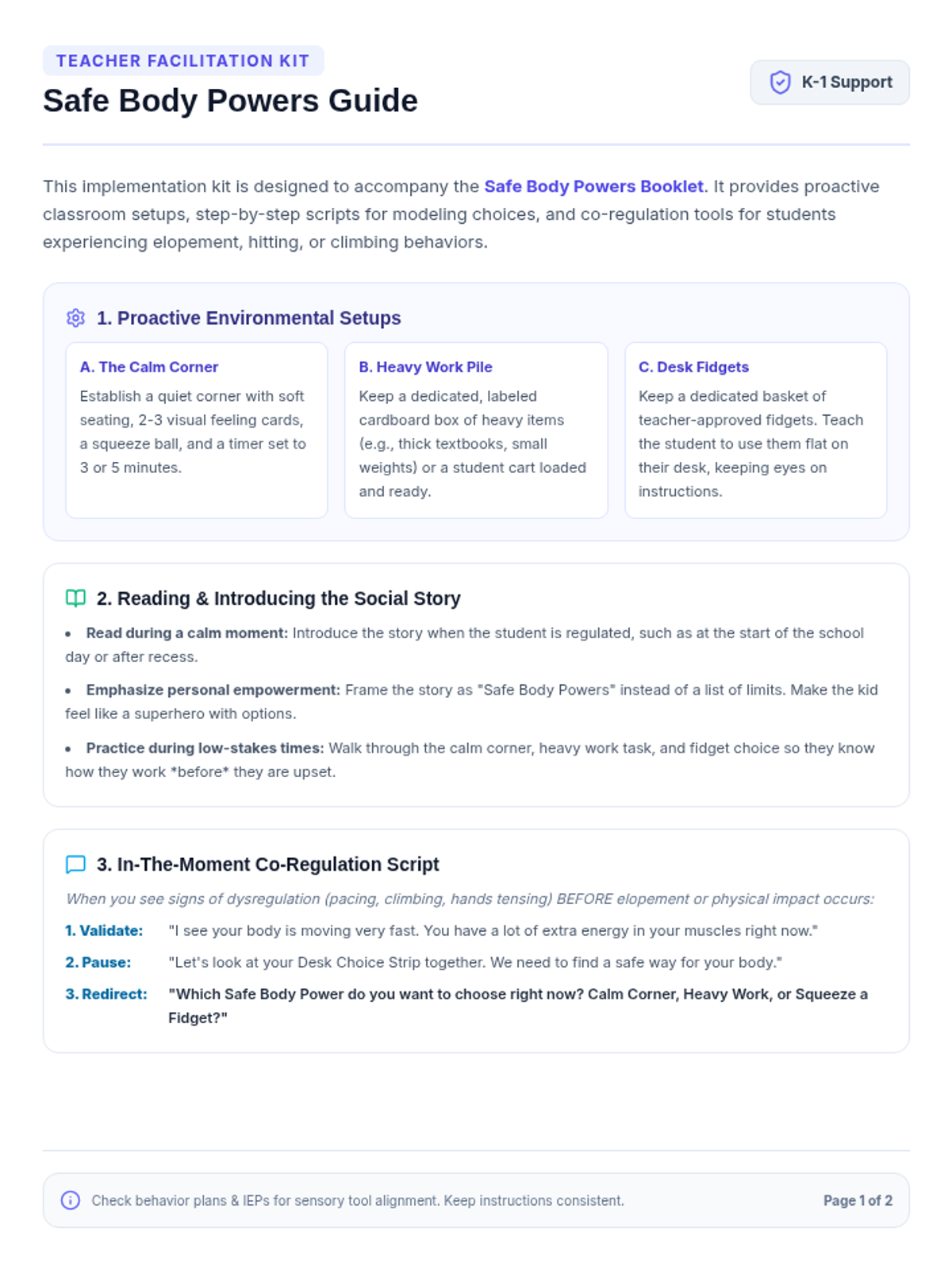
A supportive social story and teacher facilitation kit designed to help kindergarteners develop self-regulation, stay with their class, maintain a safe body, and choose safe physical outlets instead of eloping, hitting, or climbing.
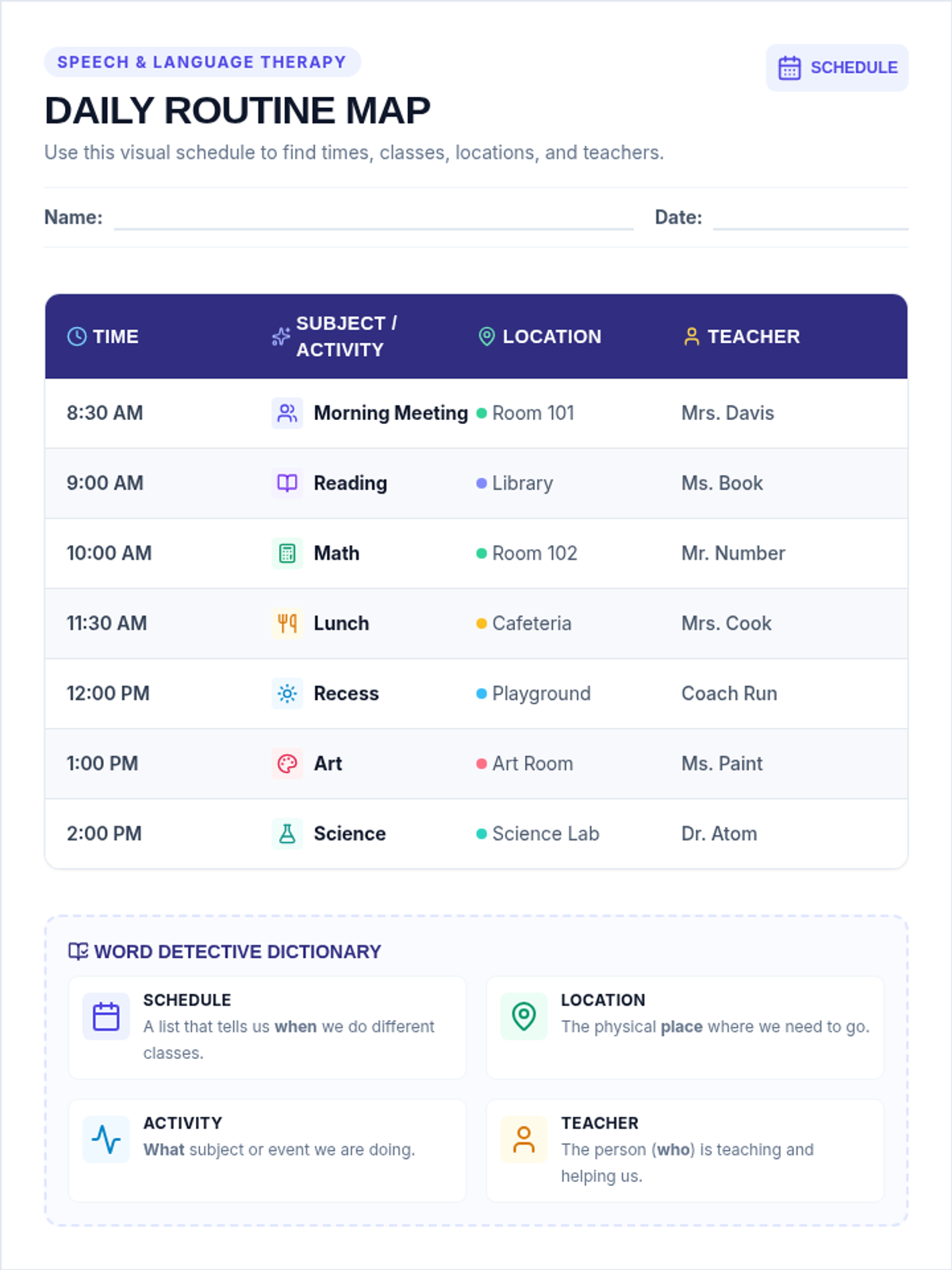
A speech-language therapy lesson designed to teach minimally verbal autistic students how to read and comprehend a school visual schedule, building academic vocabulary and independence.
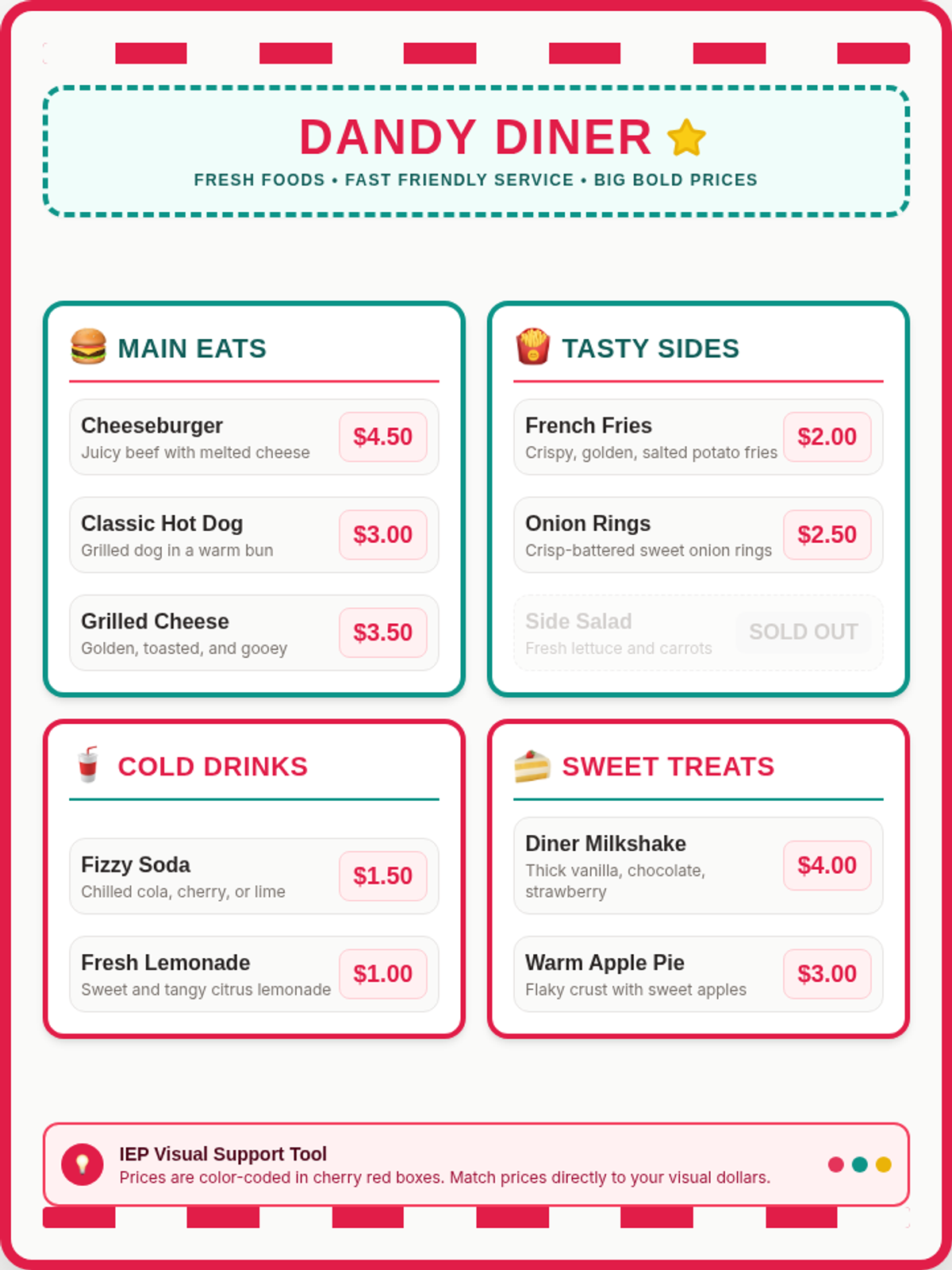
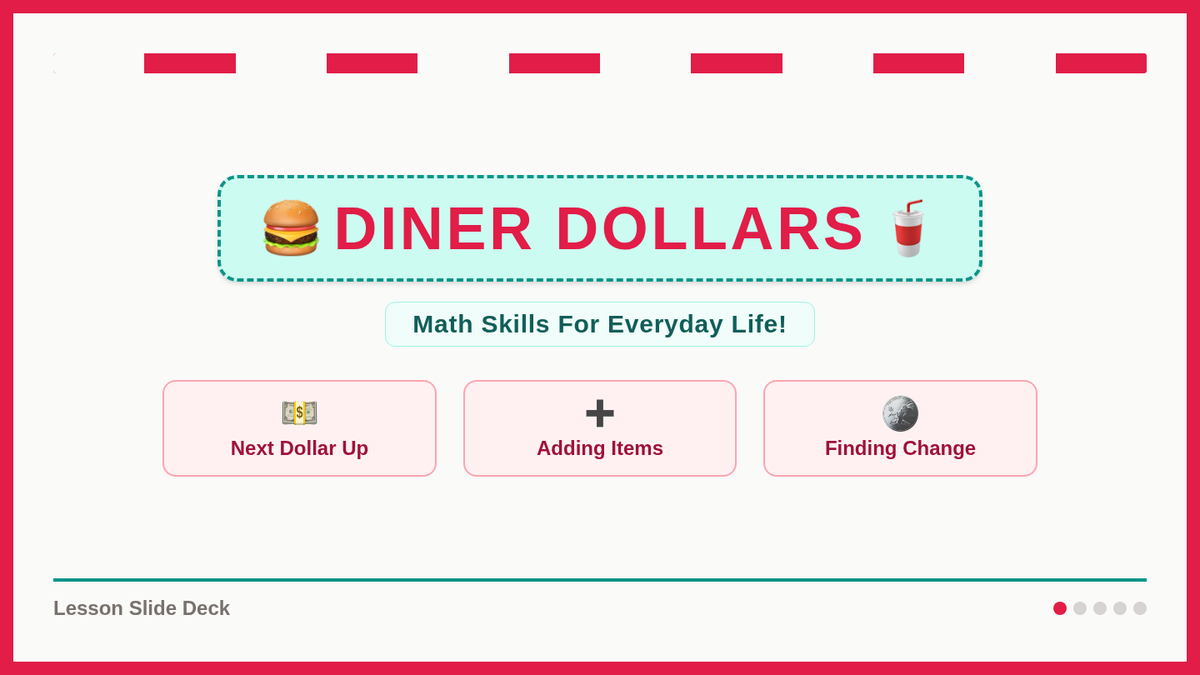
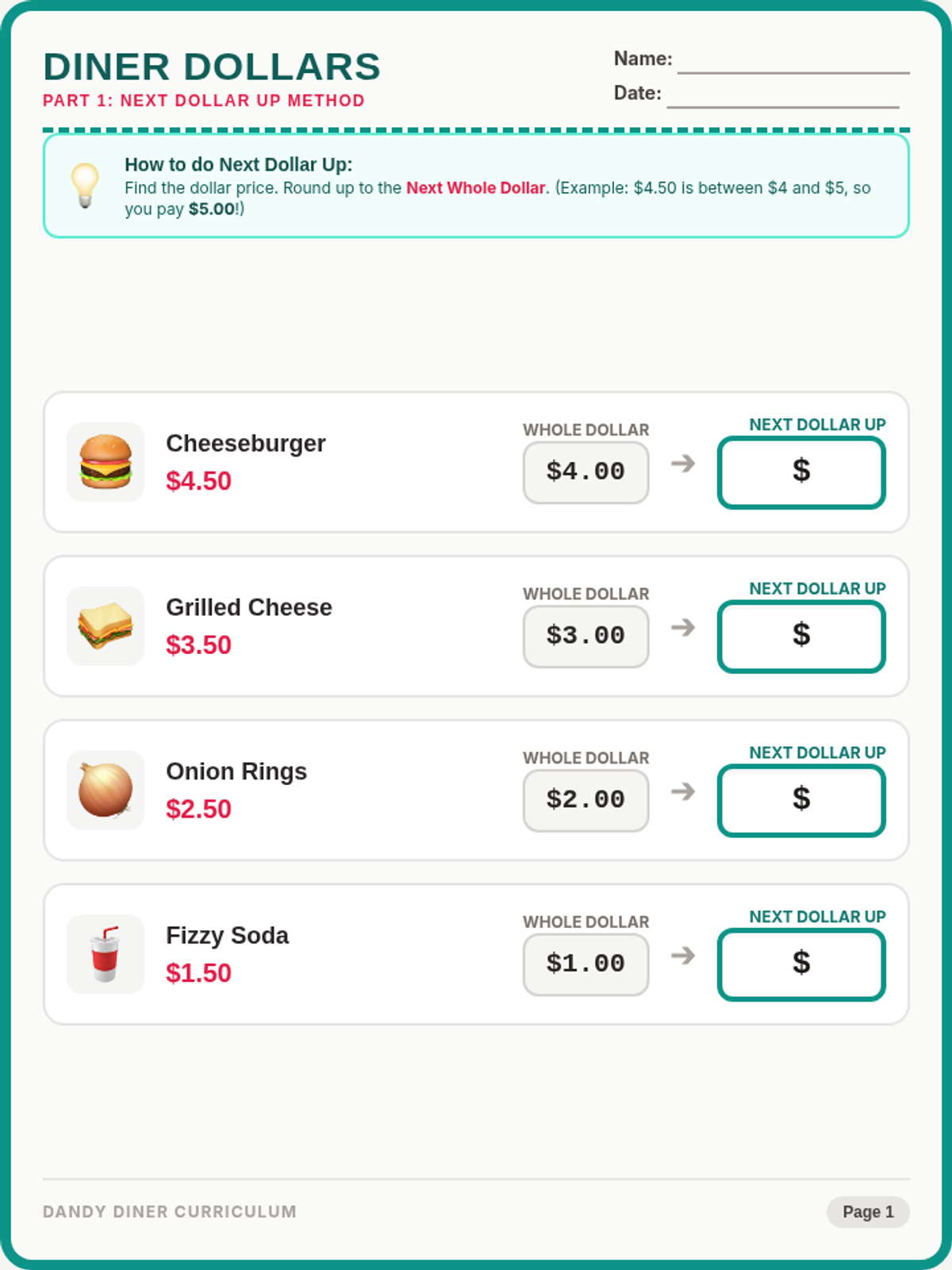
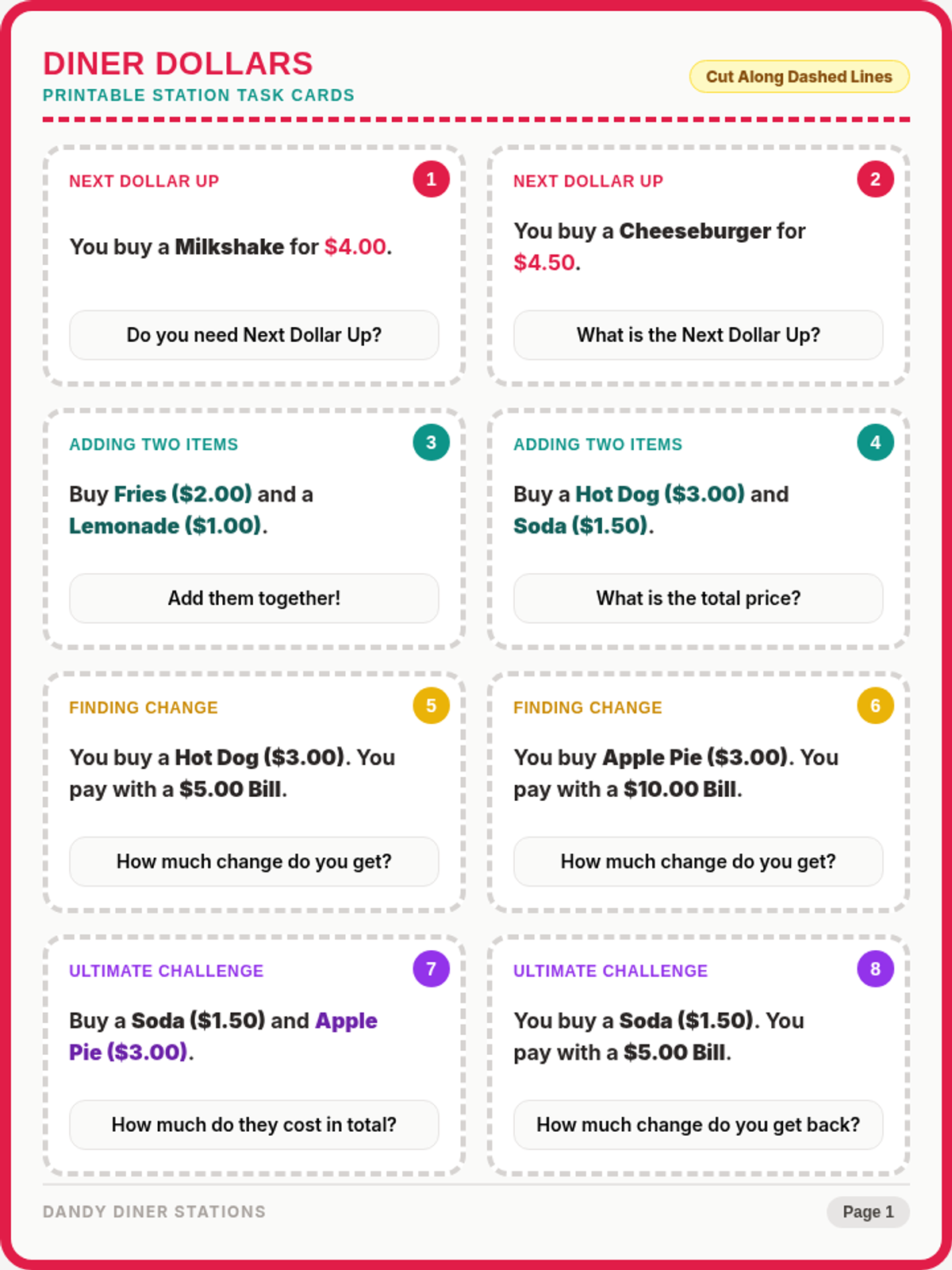
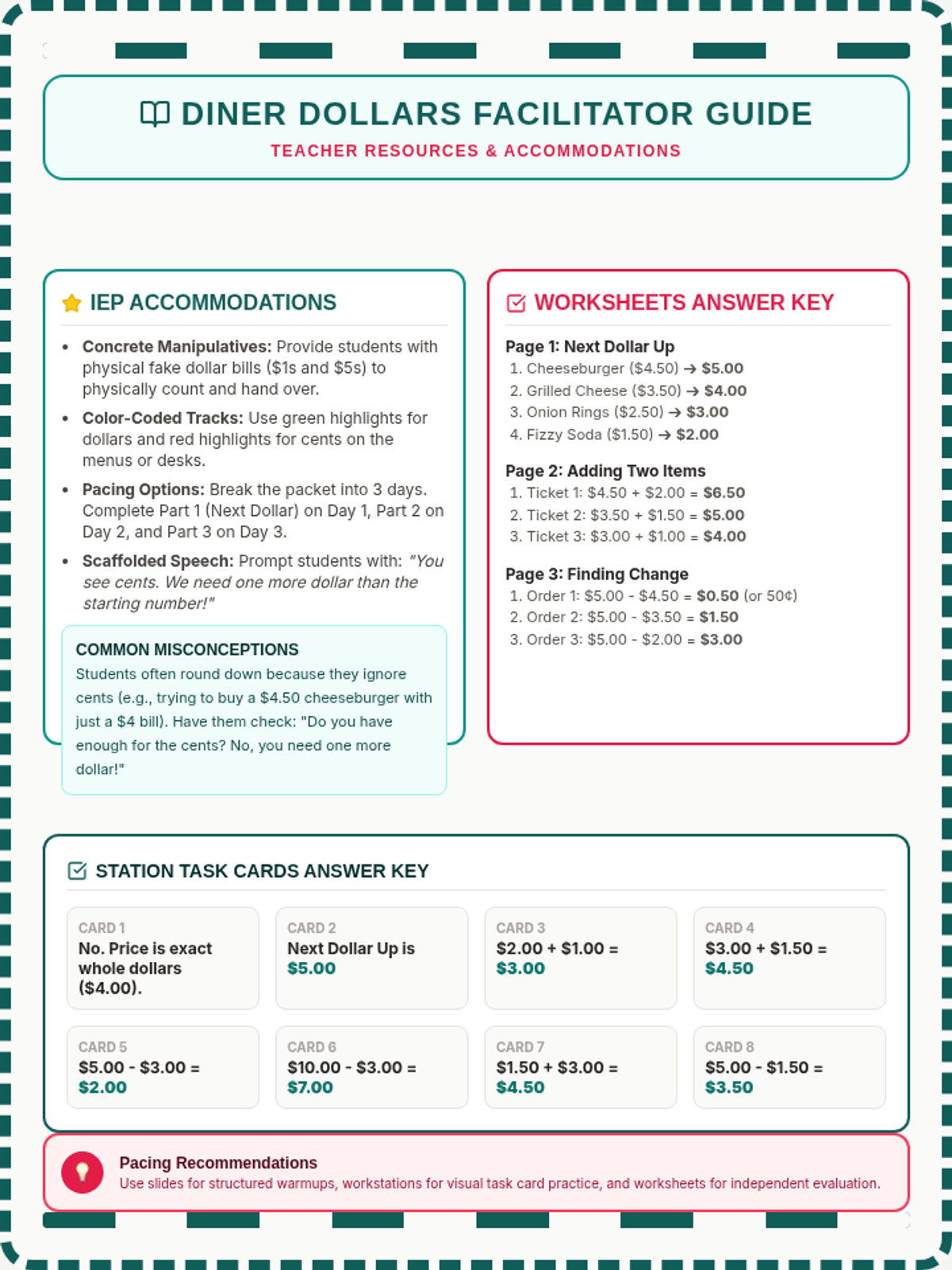
A comprehensive, highly scaffolded menu math lesson tailored for IEP students. Using a friendly retro diner theme, it covers the Next Dollar Up method, simple decimal addition of two items, and calculating change using concrete visual supports.
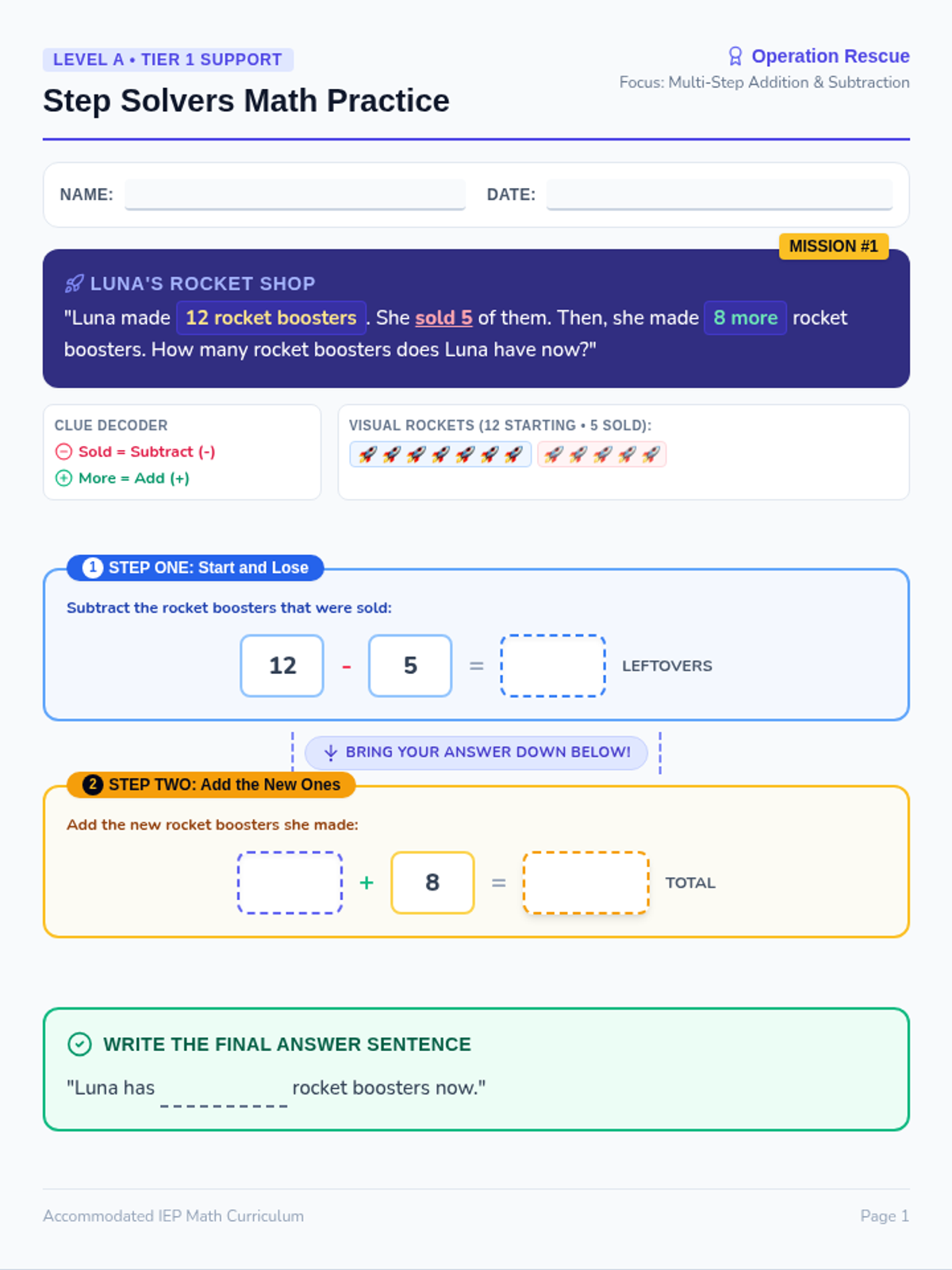
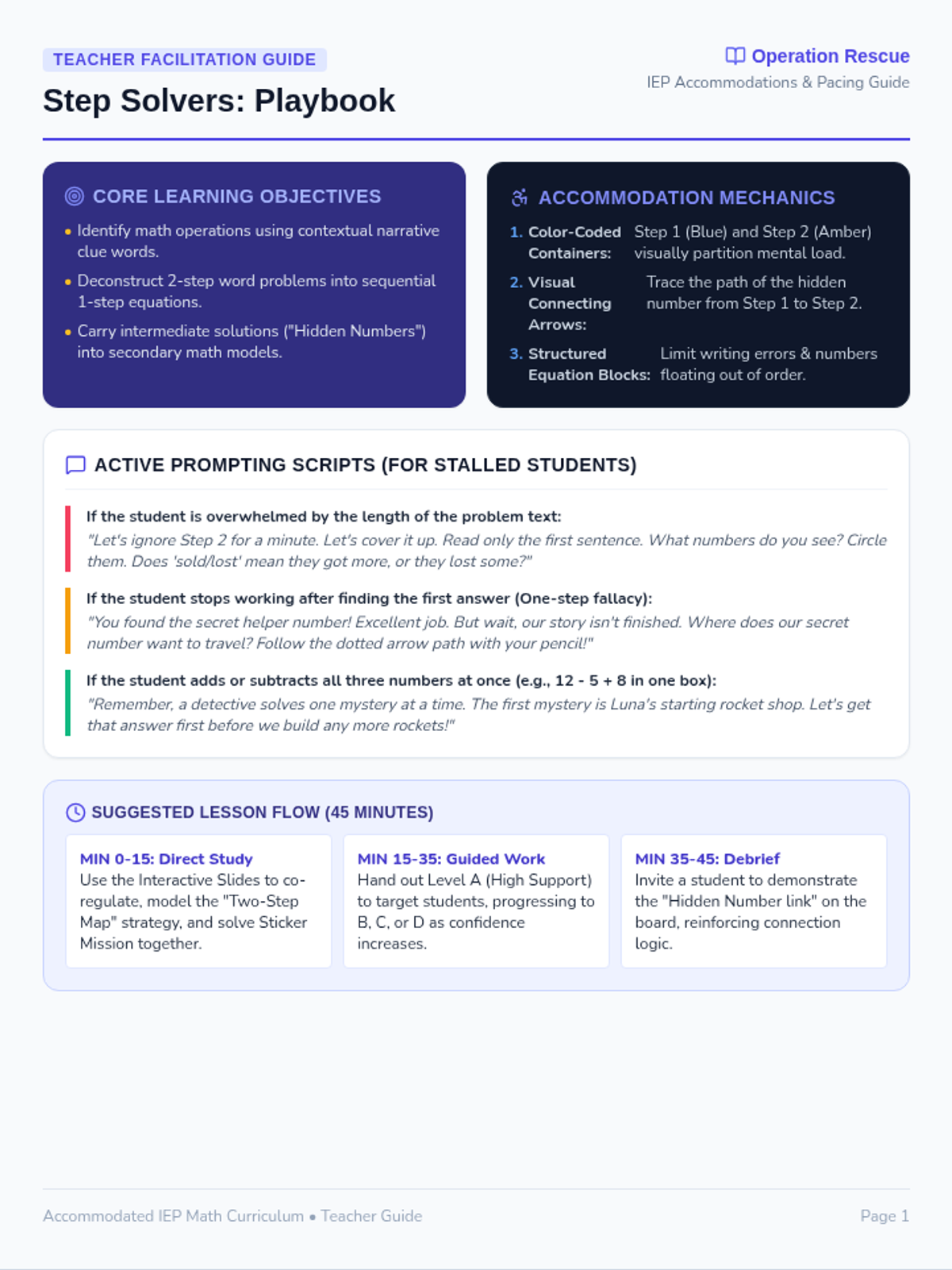
A modified math lesson on solving multi-step word problems, specifically designed for students with IEP accommodations. It features highly structured visual graphic organizers, pictorial supports, and sentence frames to break down complex multi-step problems into manageable, sequential steps.
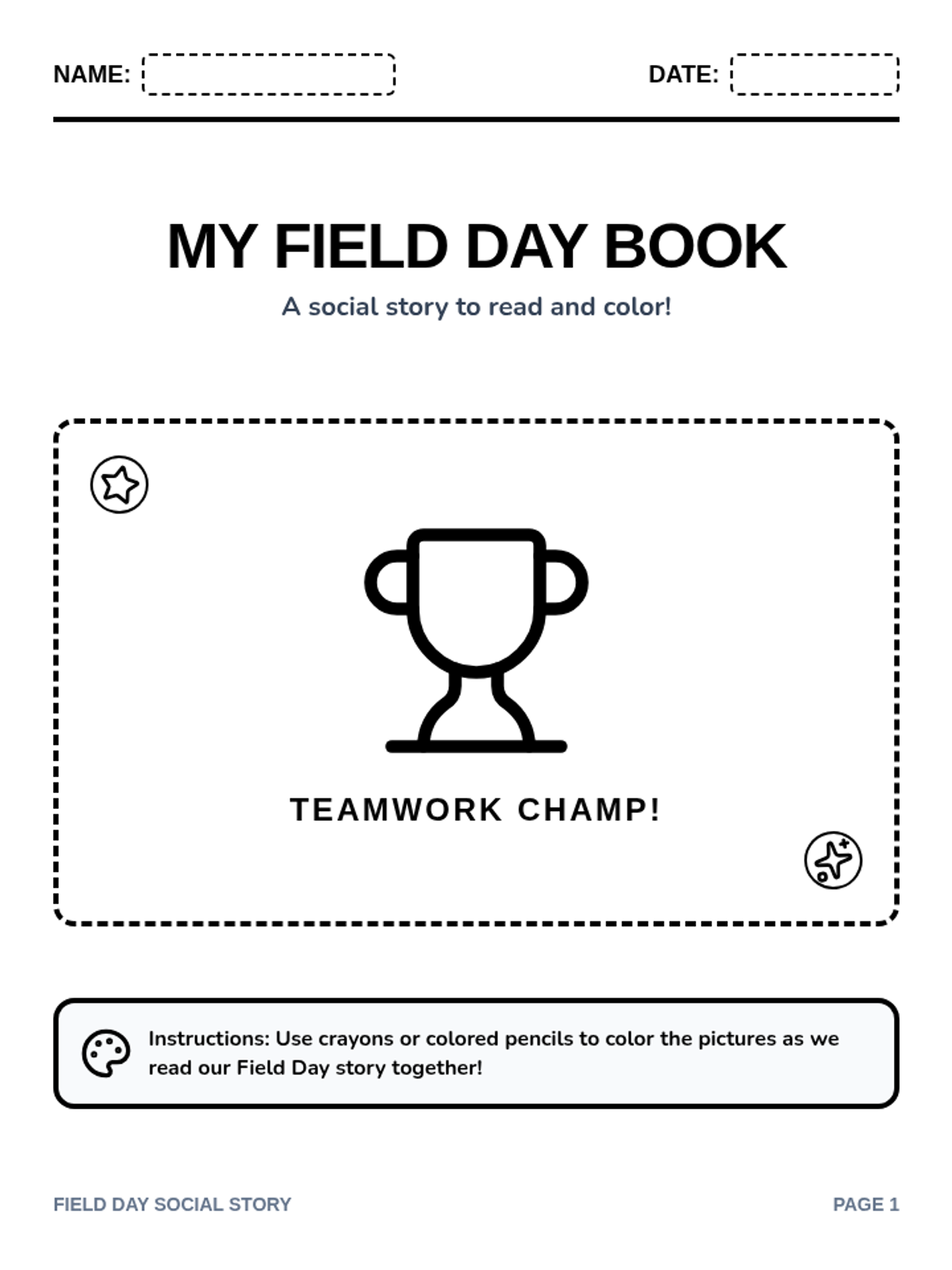
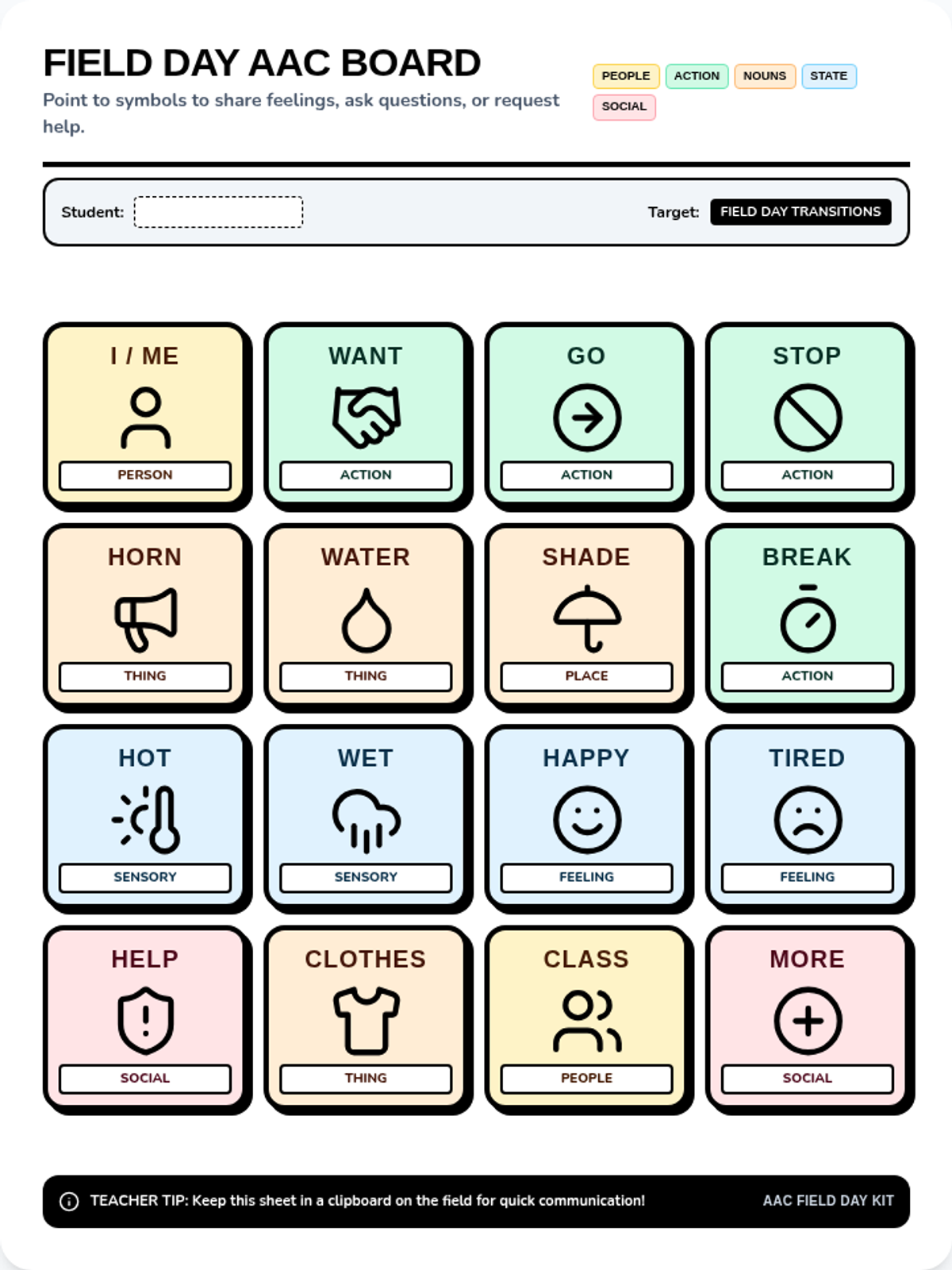
A single-session social story lesson designed to prepare students for the sensory and behavioral expectations of school Field Day using visual, colorable-style line art.
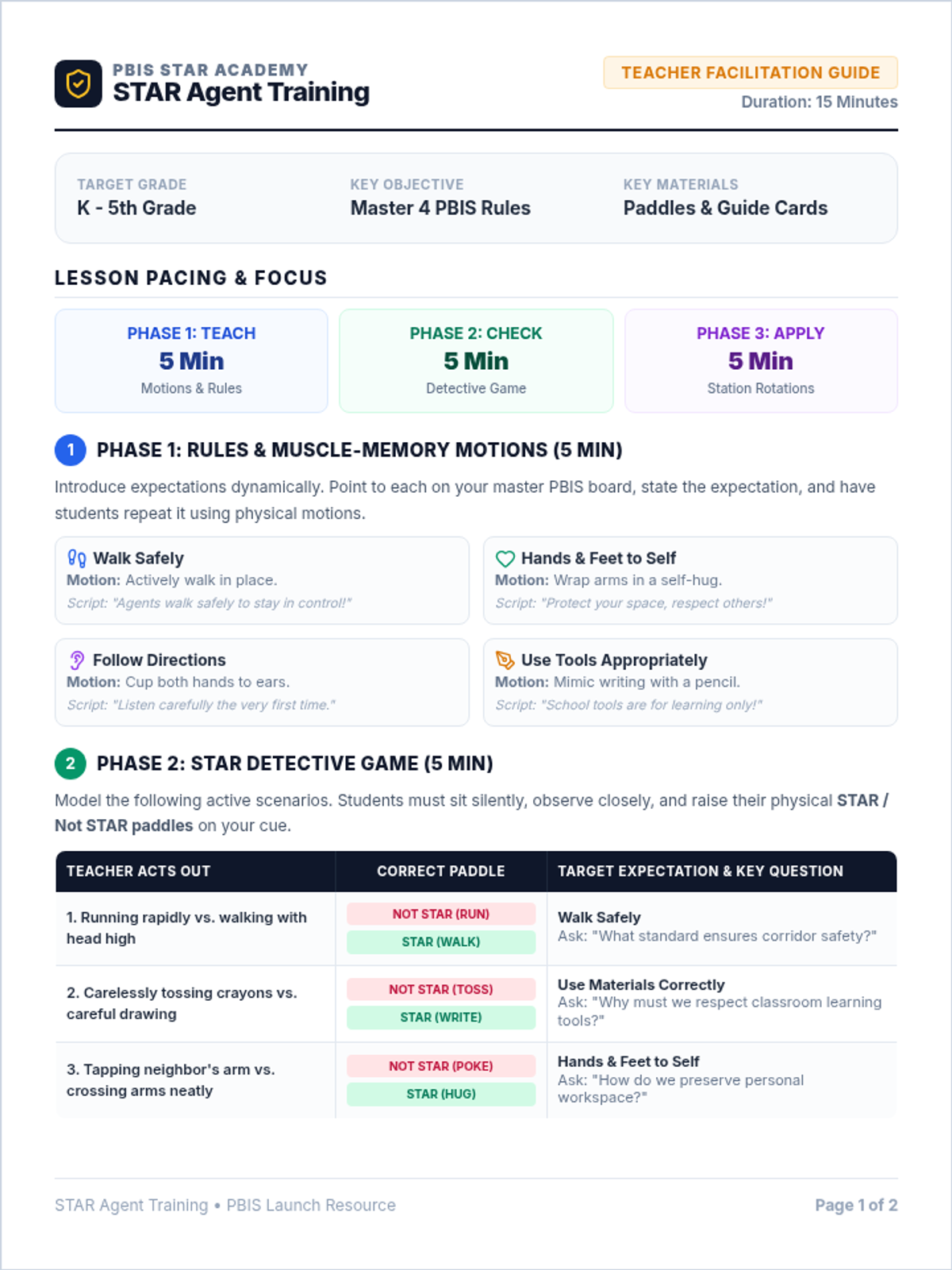
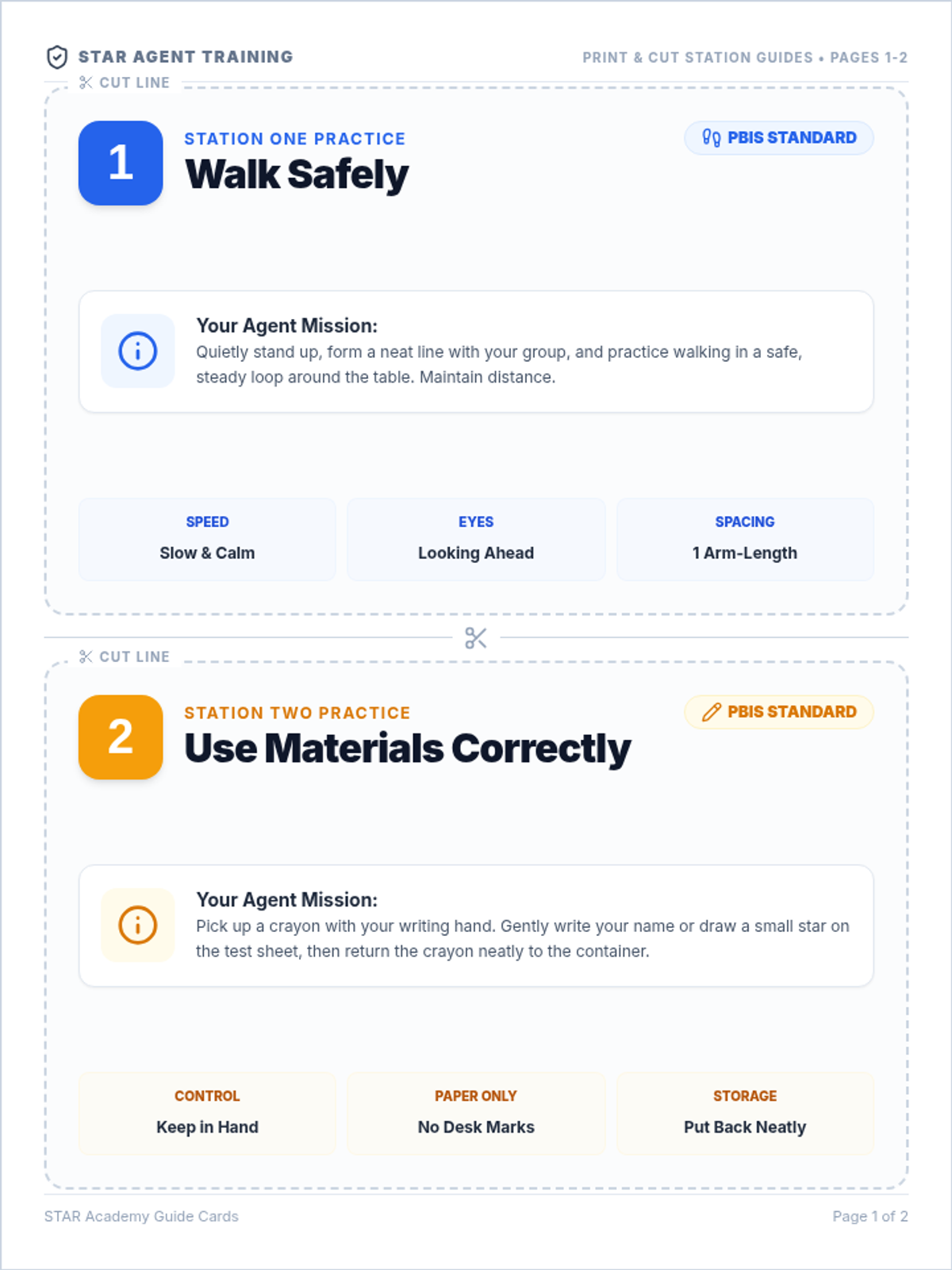
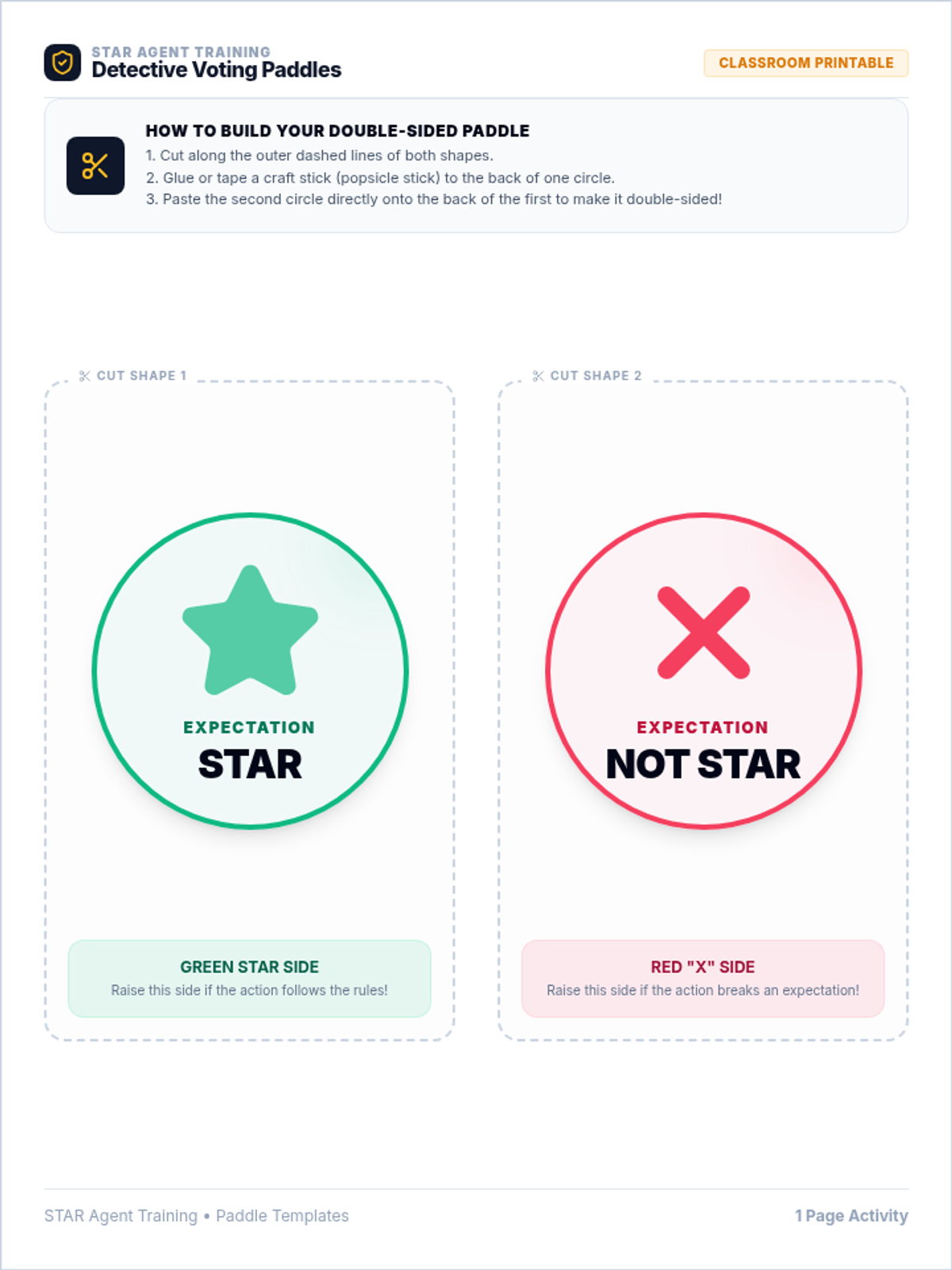
A rapid, high-energy 15-minute PBIS behavior review lesson designed to align with school-wide expectations. Students learn core behaviors through muscle-memory motions, test their skills as 'STAR Detectives', and demonstrate mastery across four active practice stations.
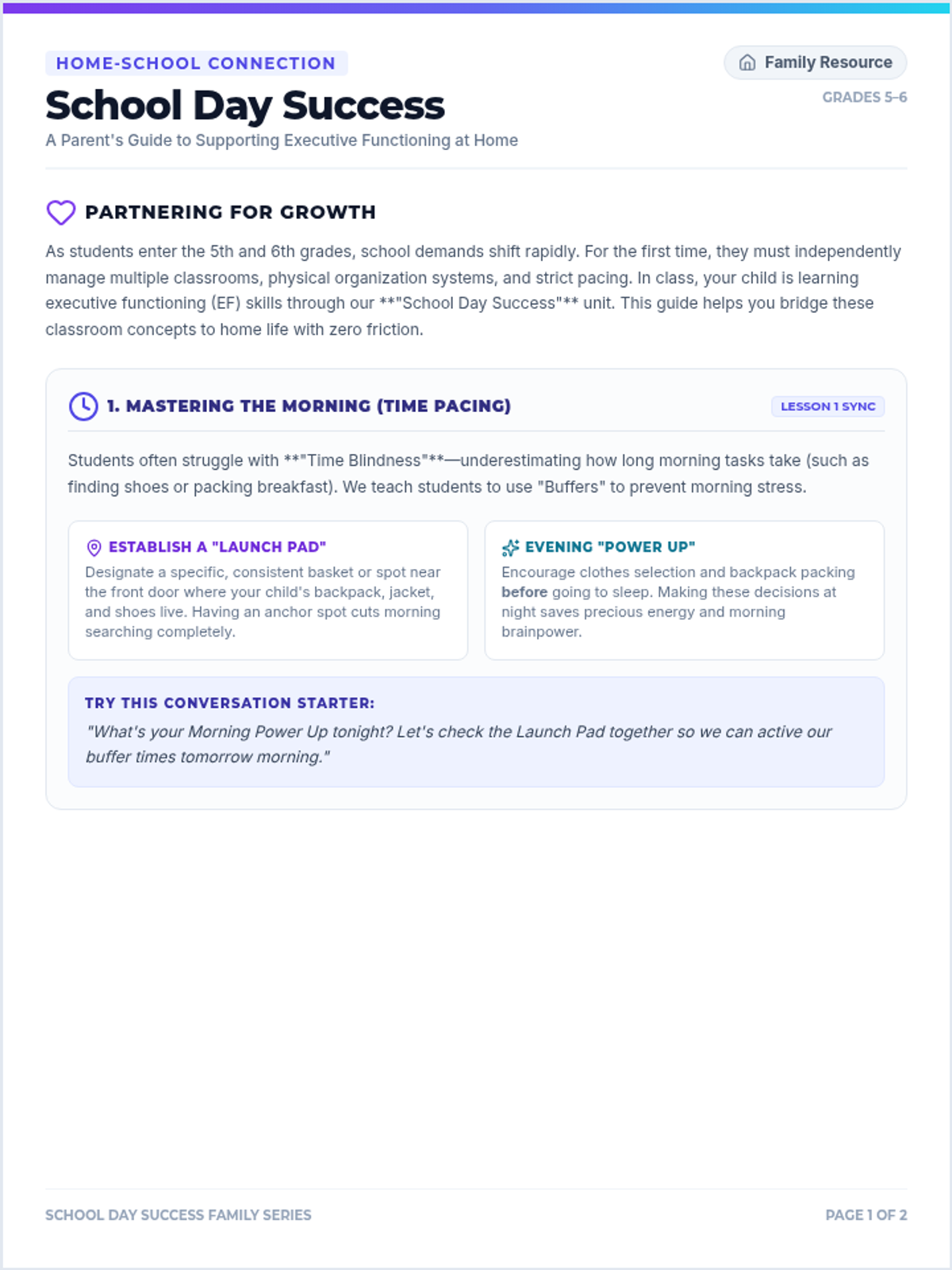
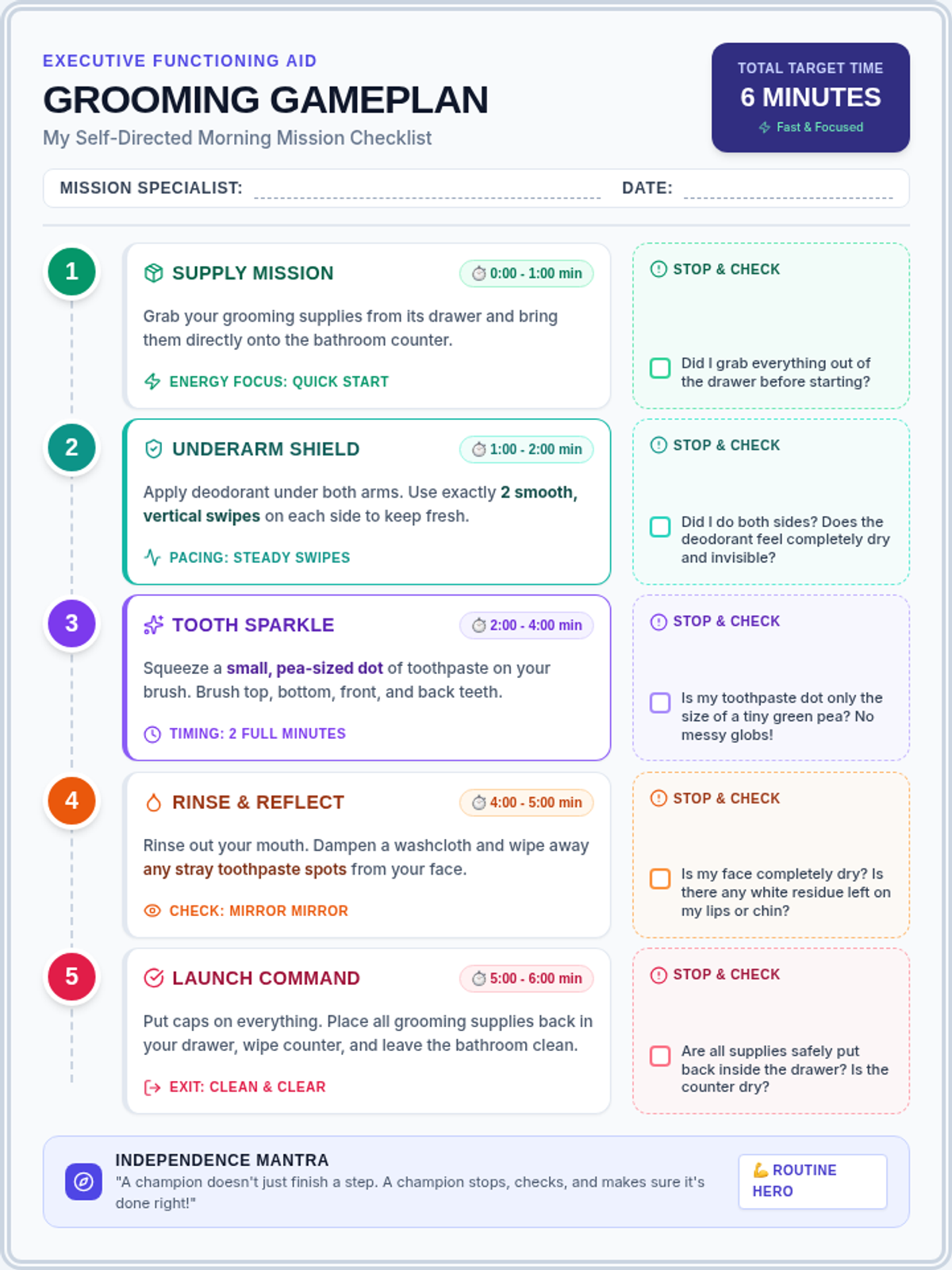
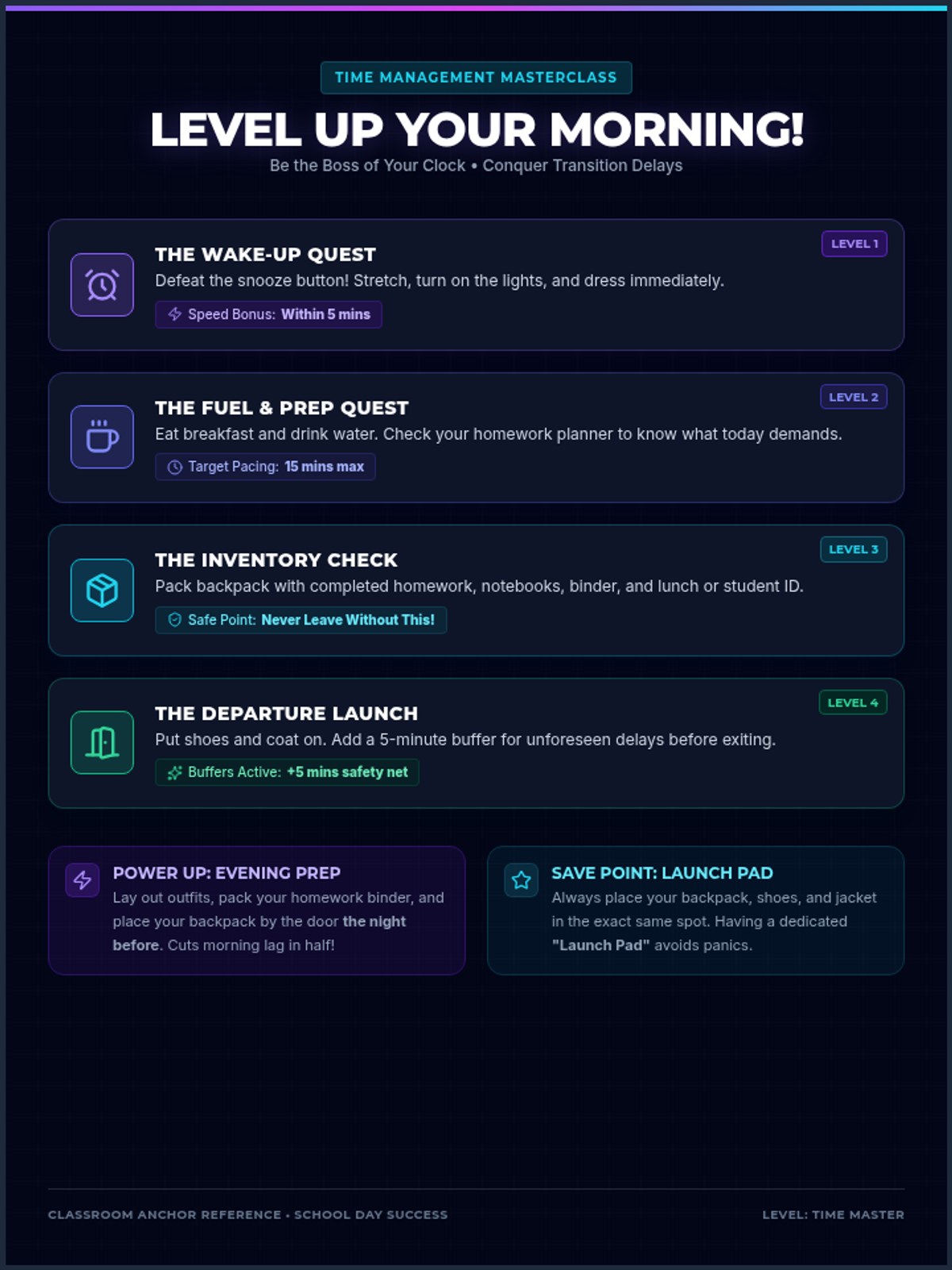
A lesson designed to build executive functioning skills, self-monitoring, and personal independence during morning routines.
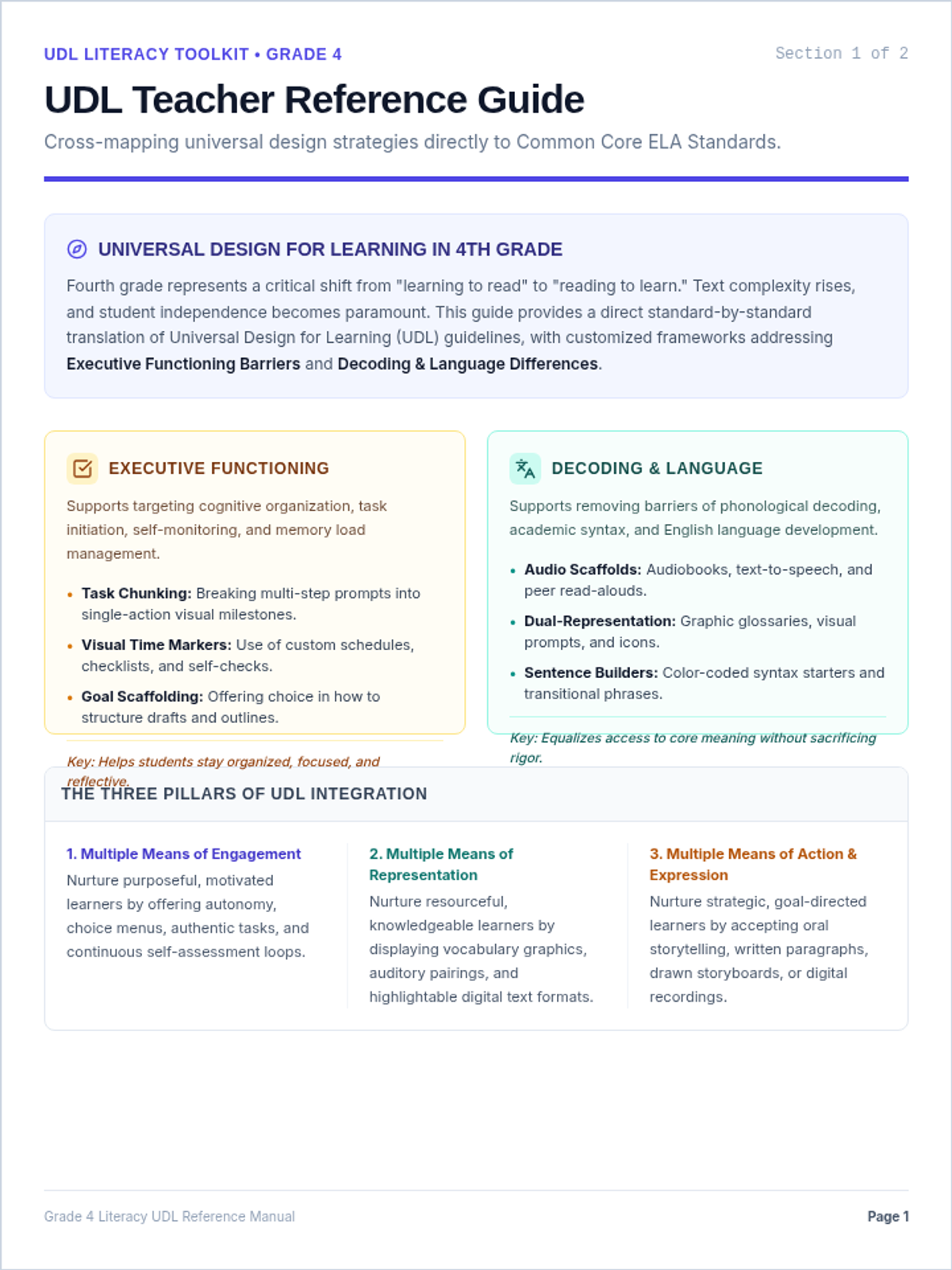
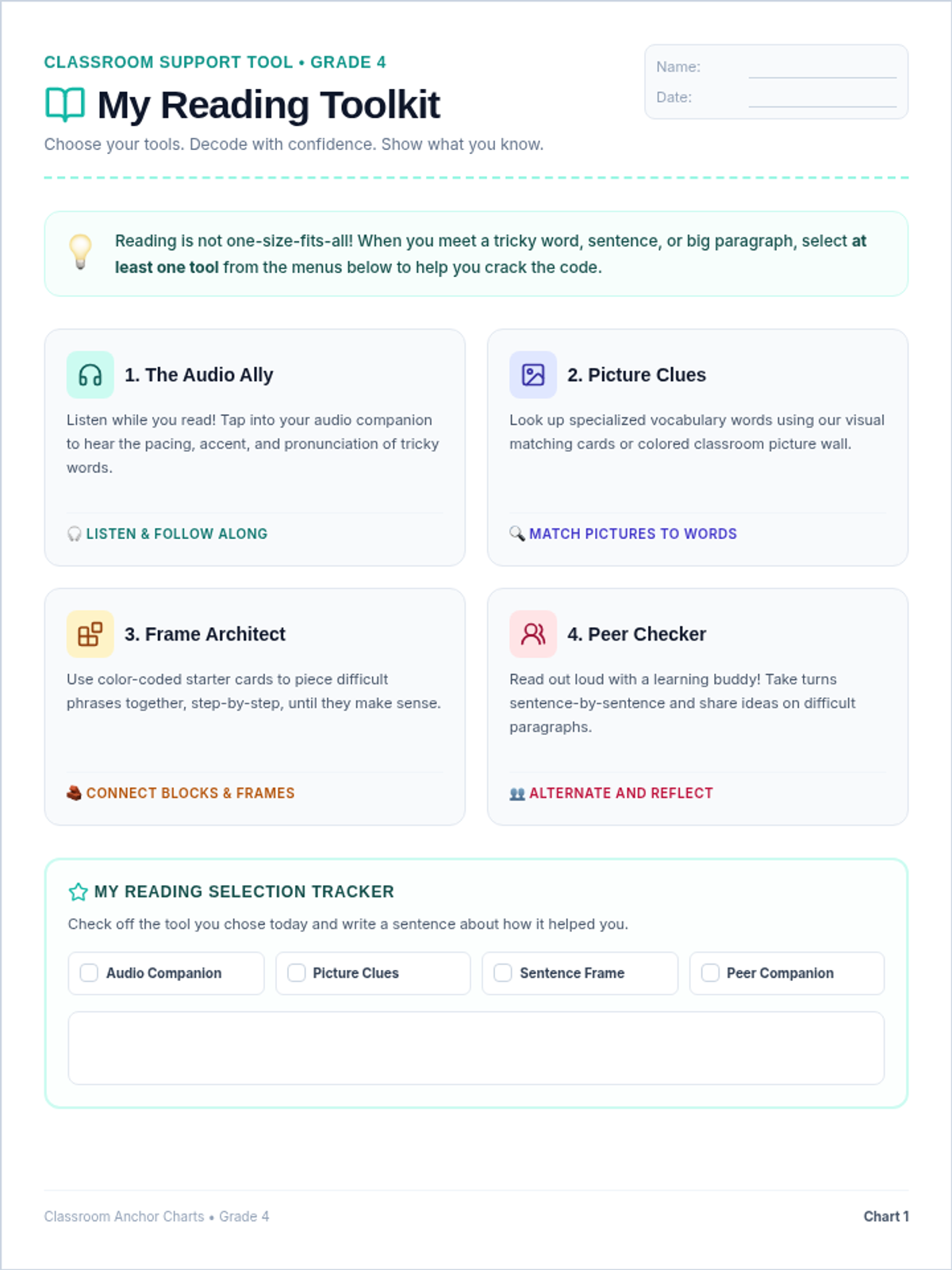
A cohesive suite of UDL materials designed for fourth-grade classrooms. It features a comprehensive Teacher Reference Guide linking universal design strategies to CCSS narrative and informational literacy standards, alongside student-facing Classroom Anchor Charts providing visual support menus for decoding and executive functioning.
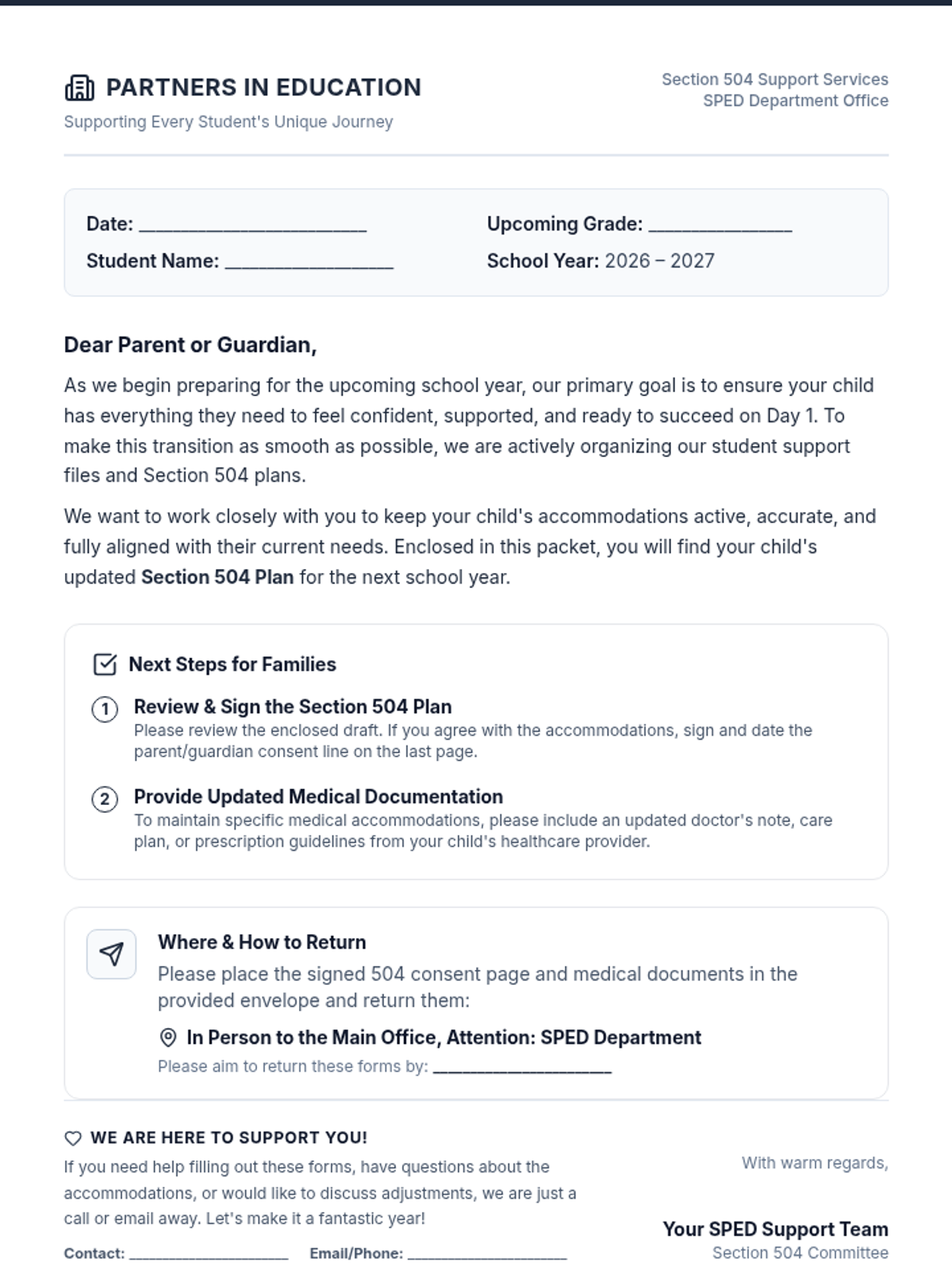
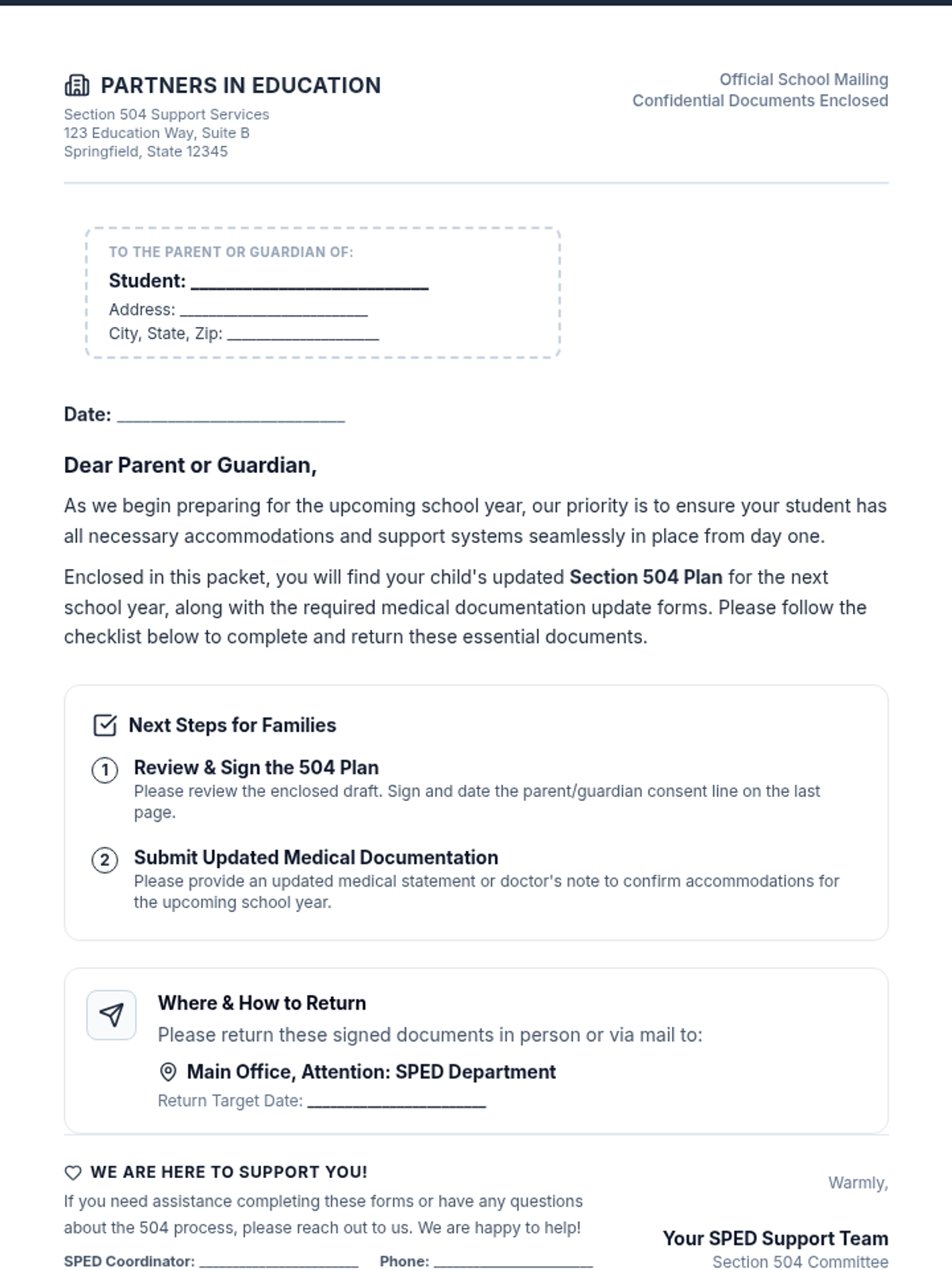
A set of student and parent-facing materials designed to accompany the distribution and collection of Section 504 plans and required medical documentation for the upcoming school year.
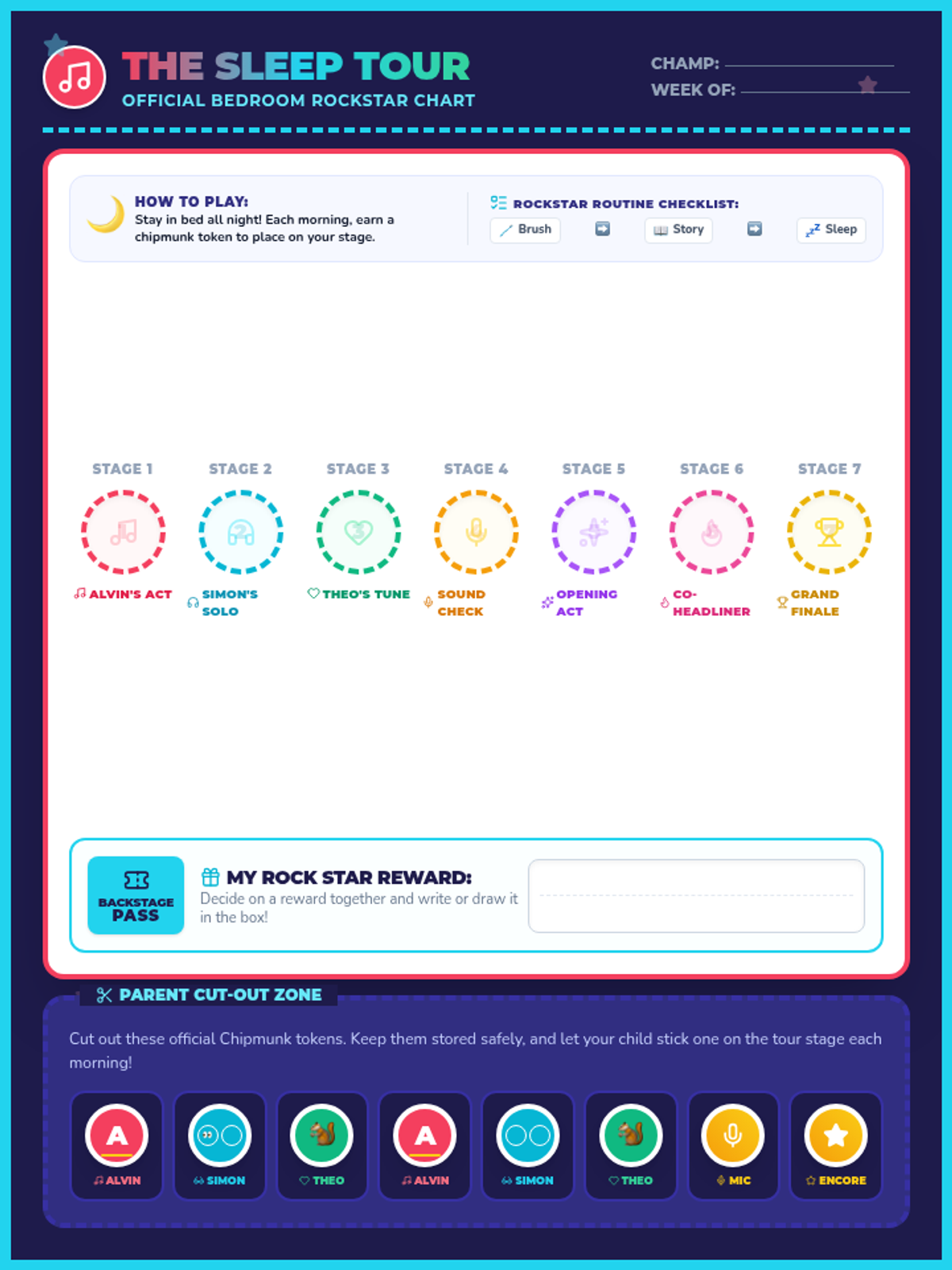
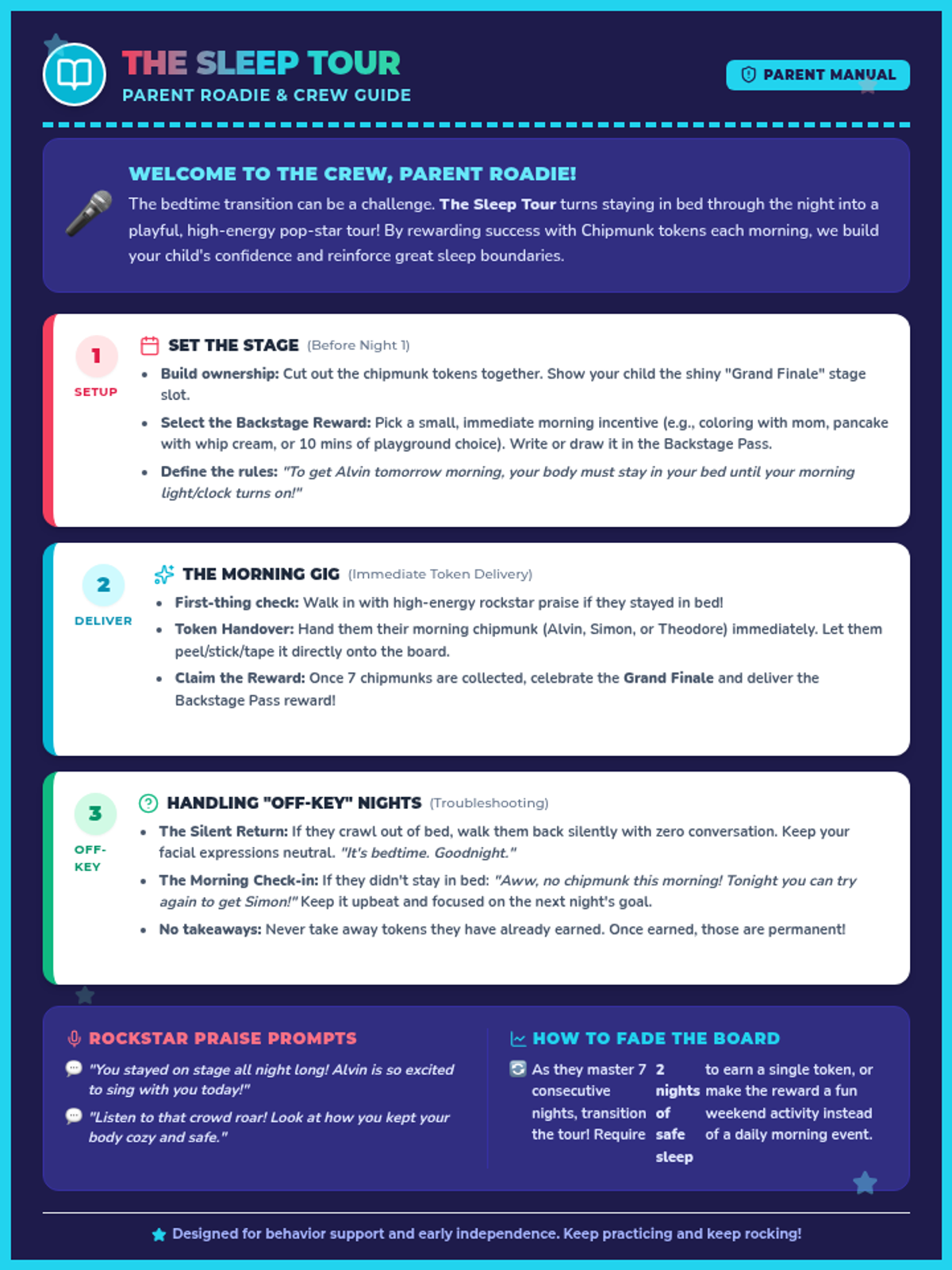
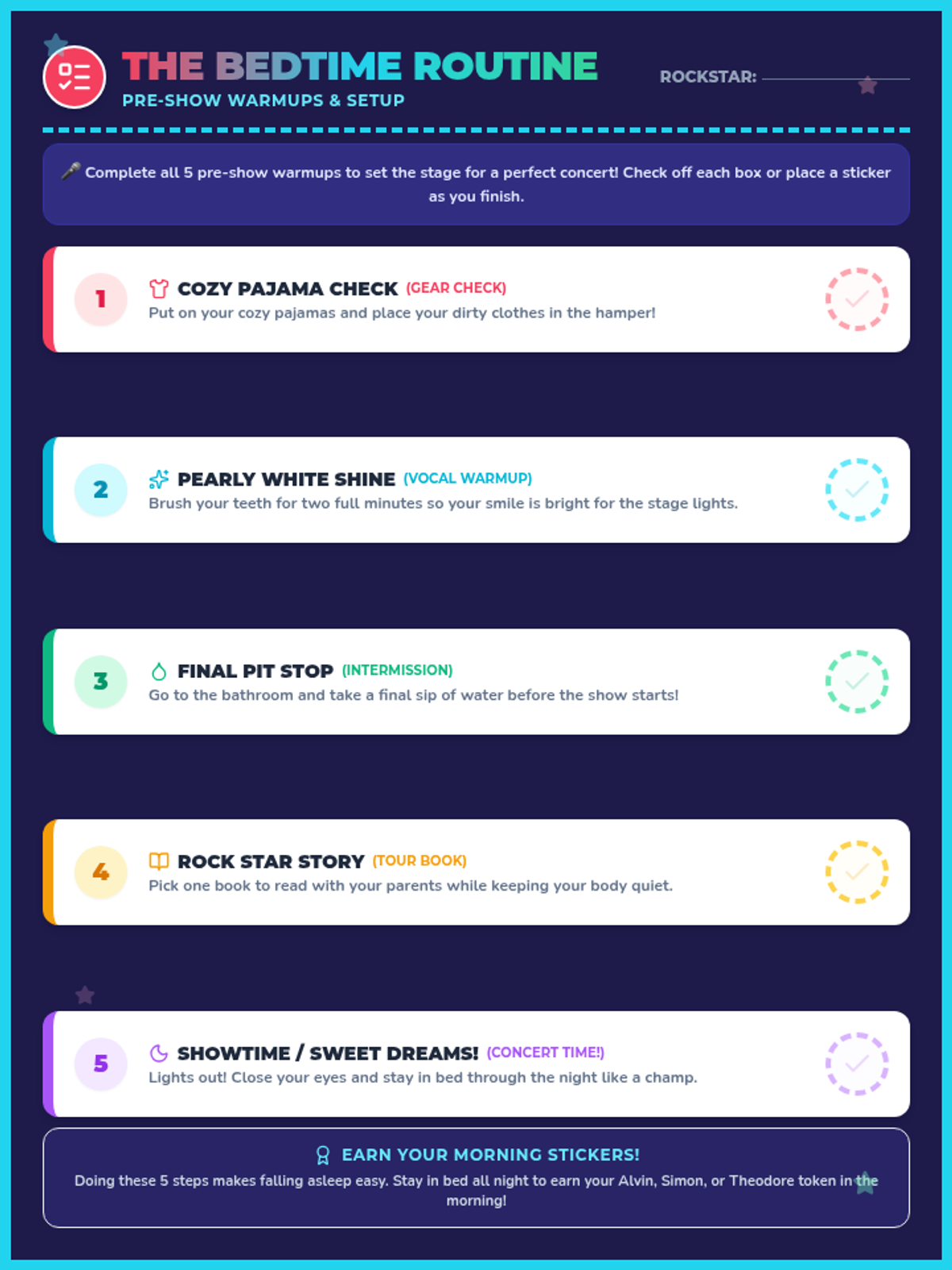
A bedtime token economy system designed to help young children stay in bed through the night using an engaging Alvin and the Chipmunks theme. Includes a printable token board and a step-by-step parent implementation guide.
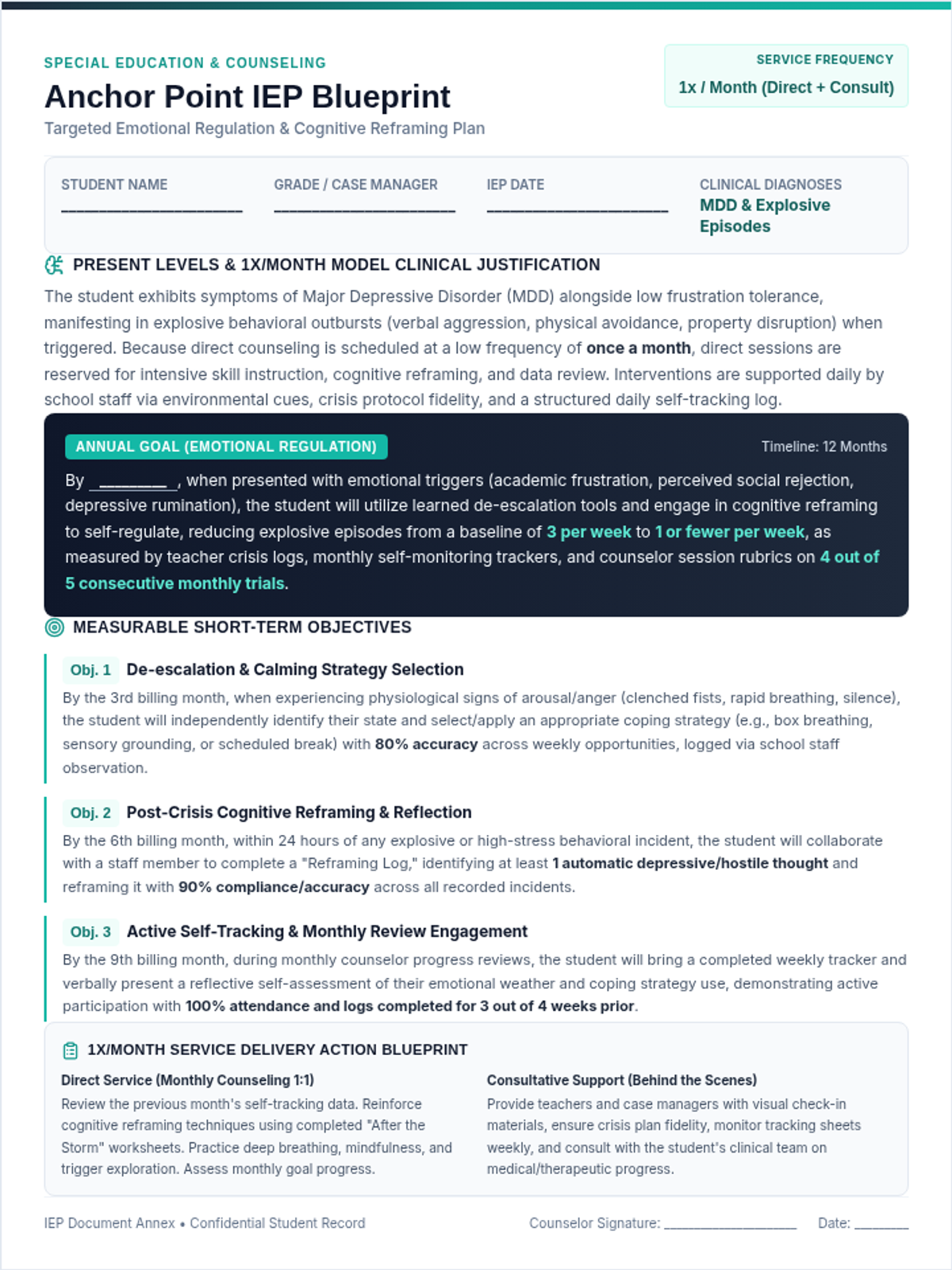
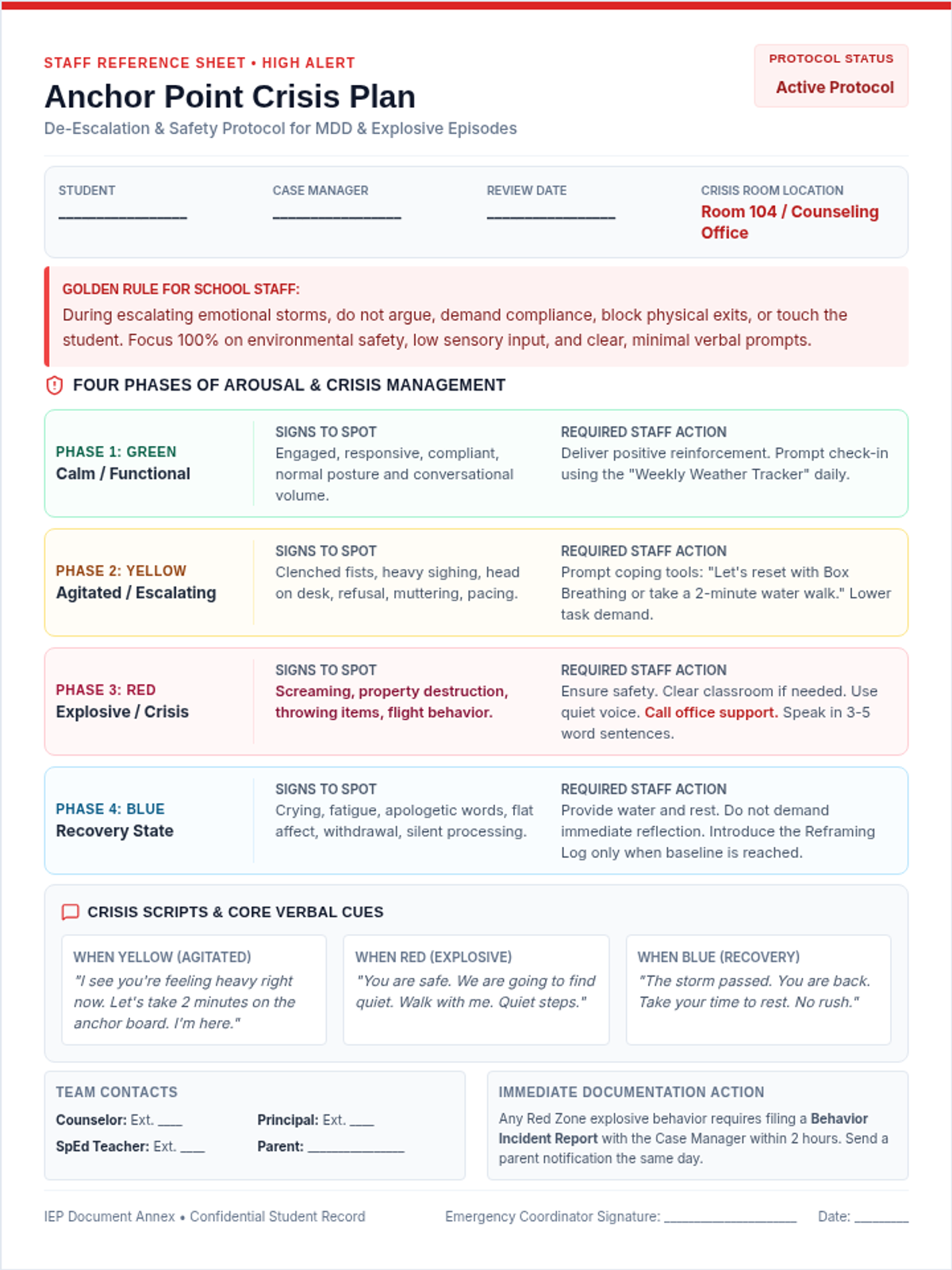
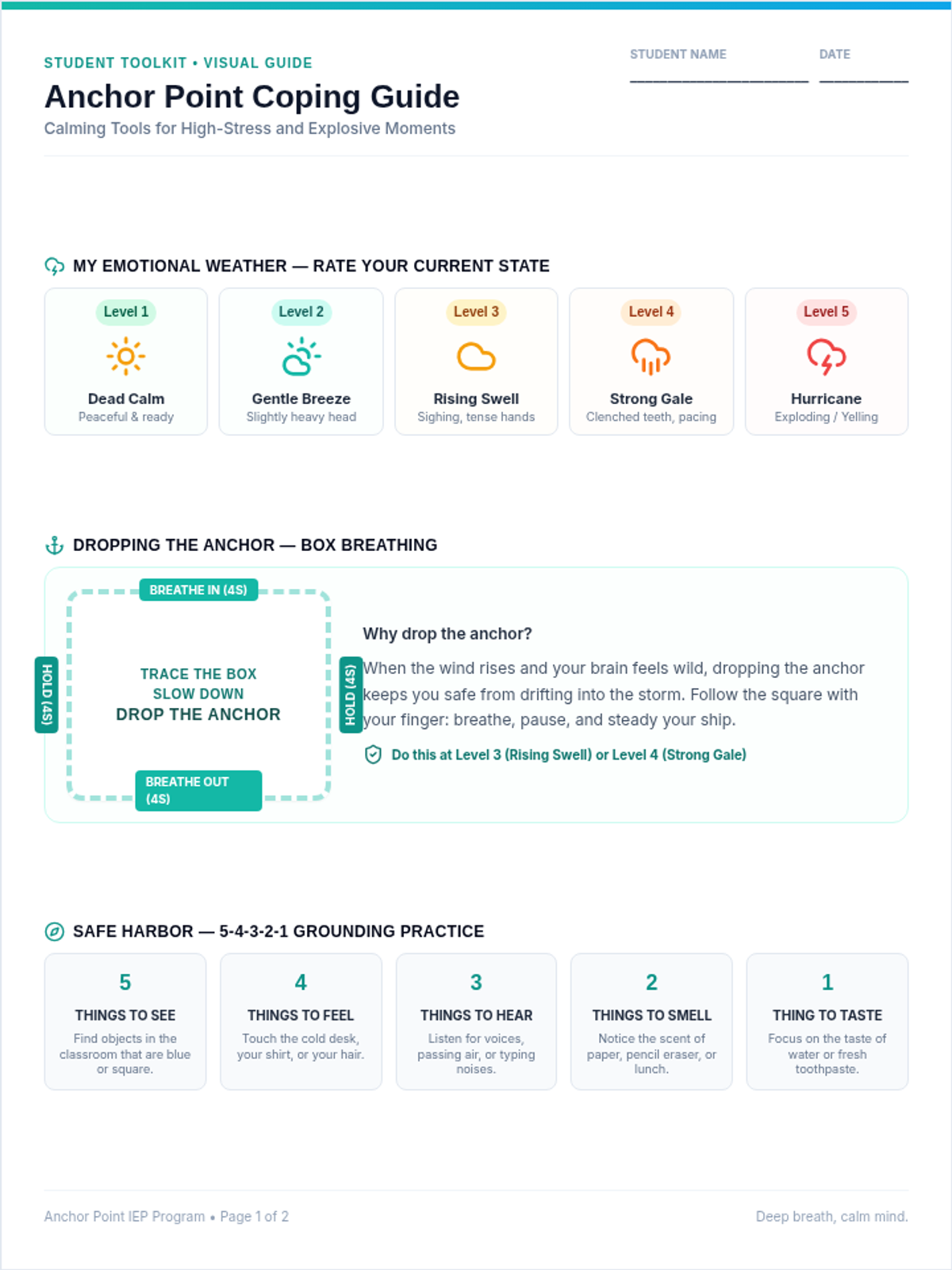
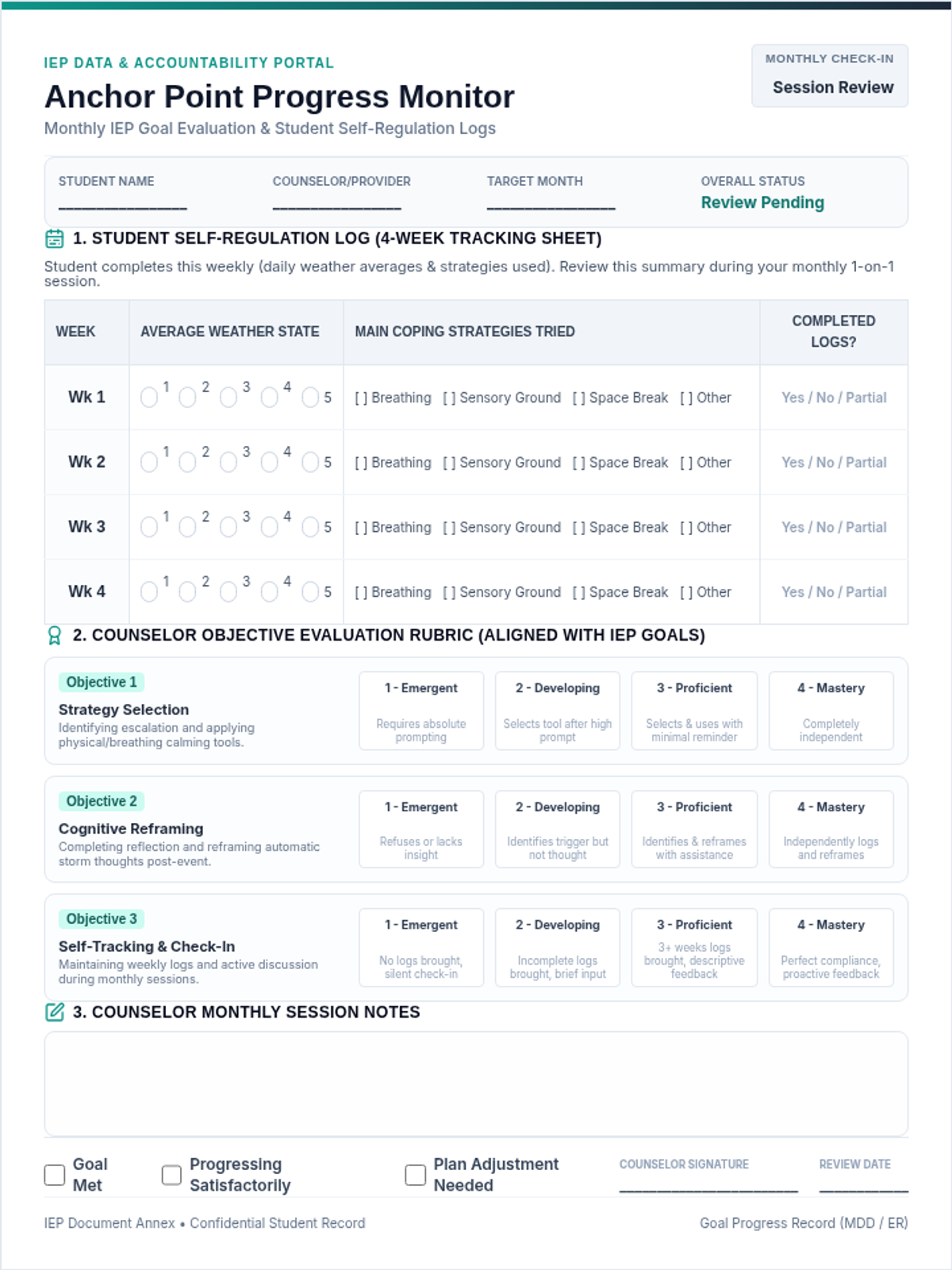
A comprehensive emotional regulation support package designed for students with Major Depressive Disorder and explosive episodes, optimized for a once-a-month counseling and consultation model. It contains the legal IEP goal blueprints, an actionable crisis plan, a student coping and reframing workbook, and progress monitoring tracking tools.
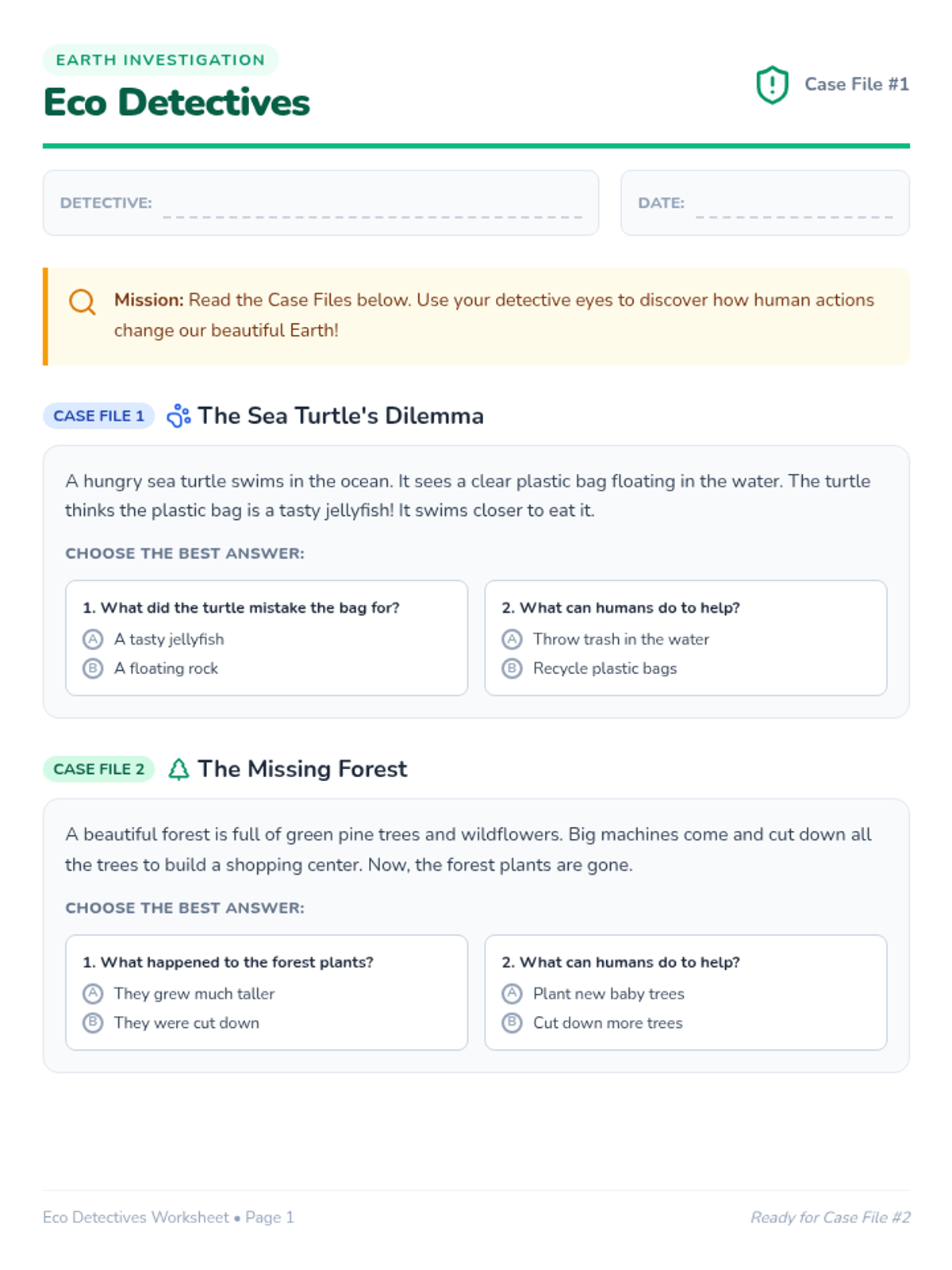
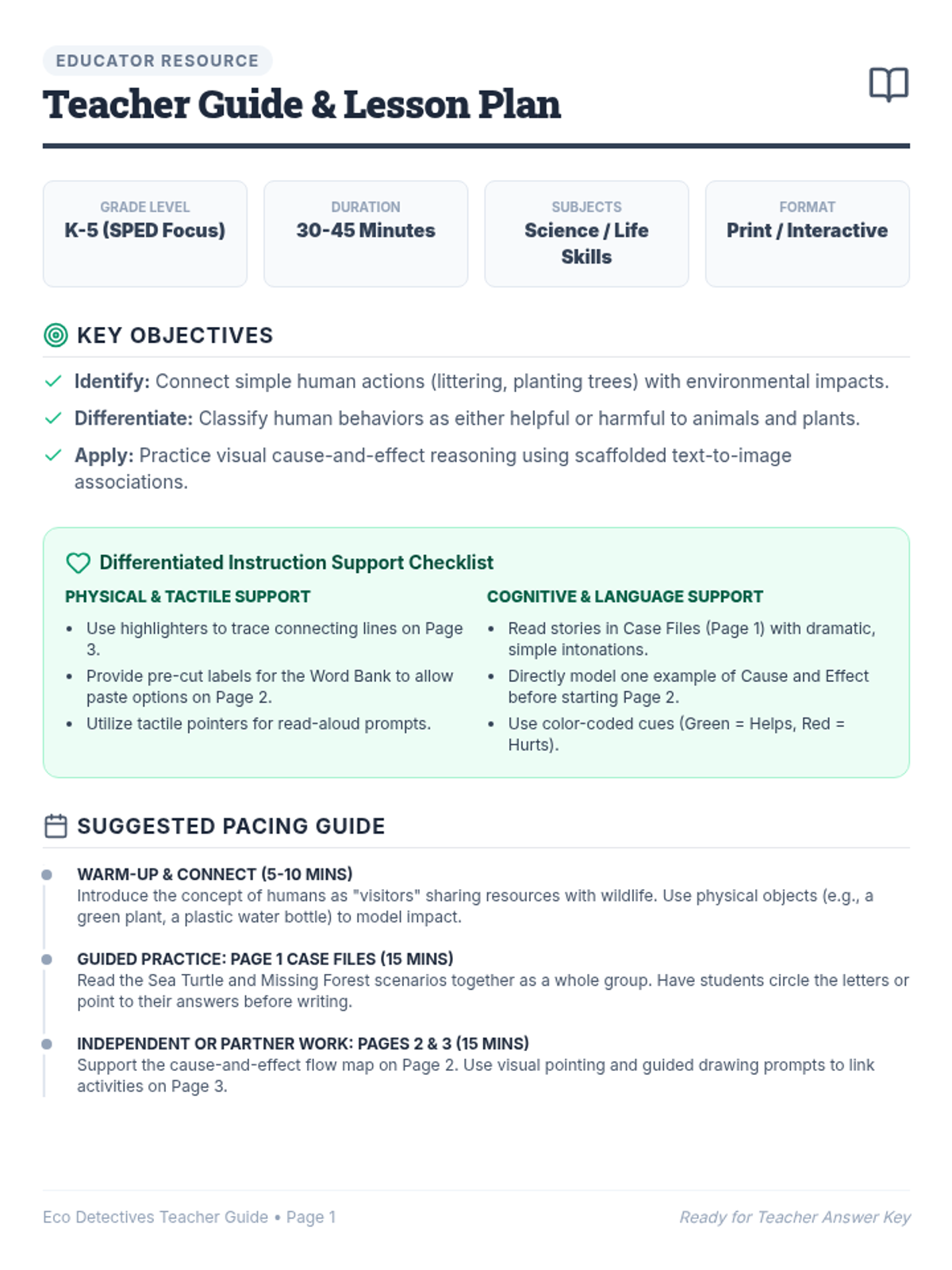
An engaging lesson on how human actions impact animals, plants, and the environment. This lesson includes a highly structured, scaffolded student worksheet and a comprehensive teacher guide with differentiation tips and answer keys.
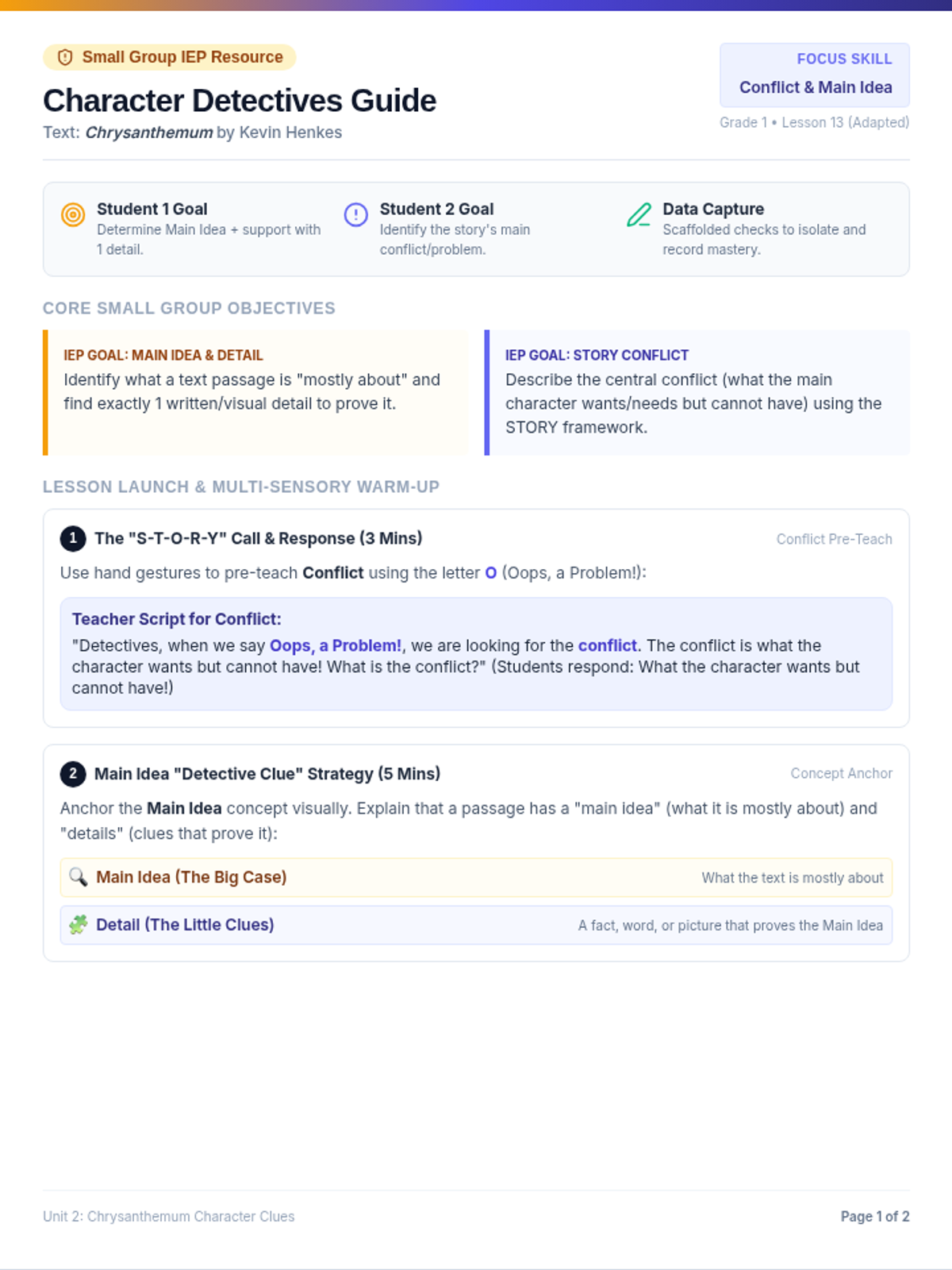
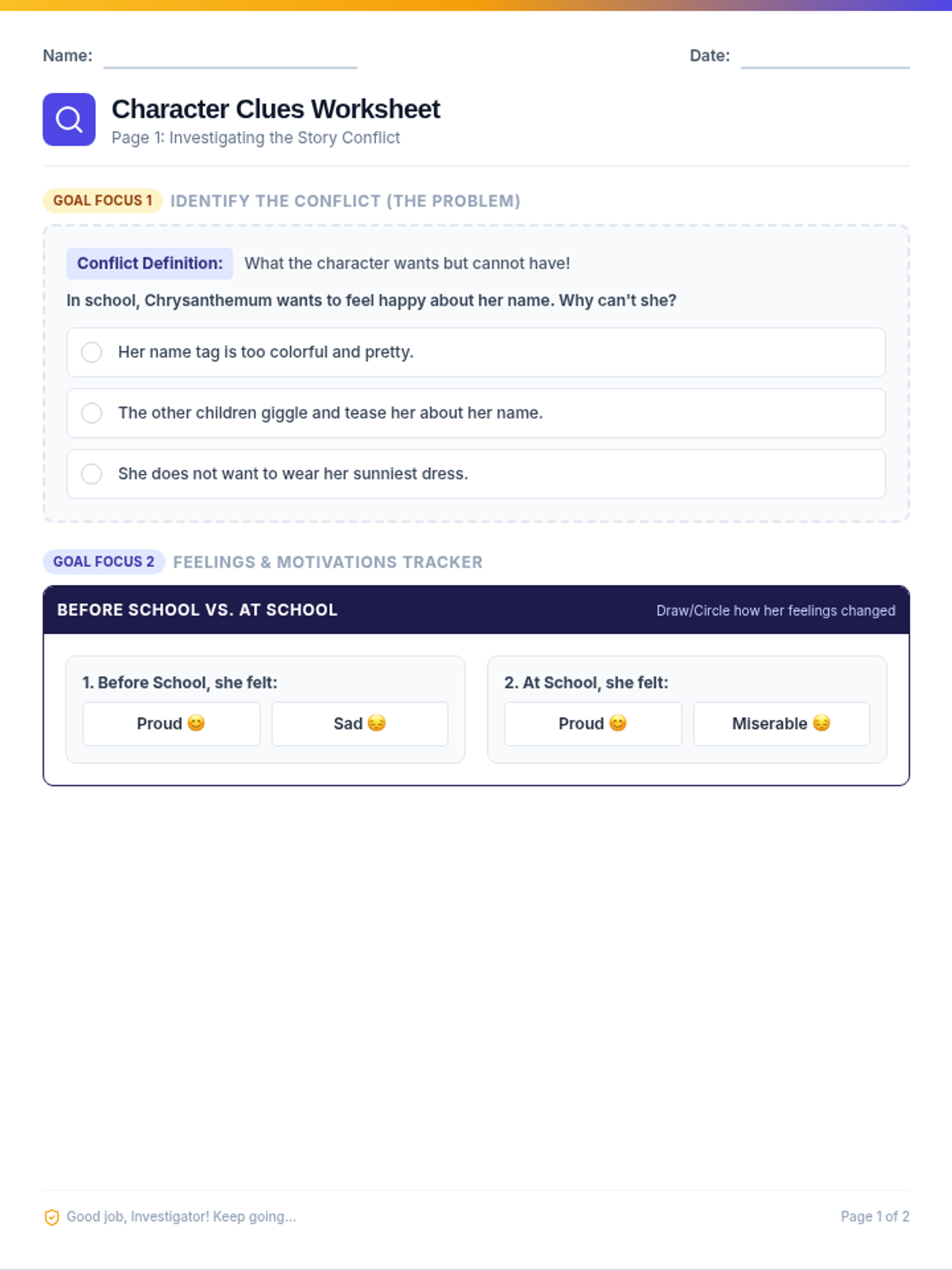
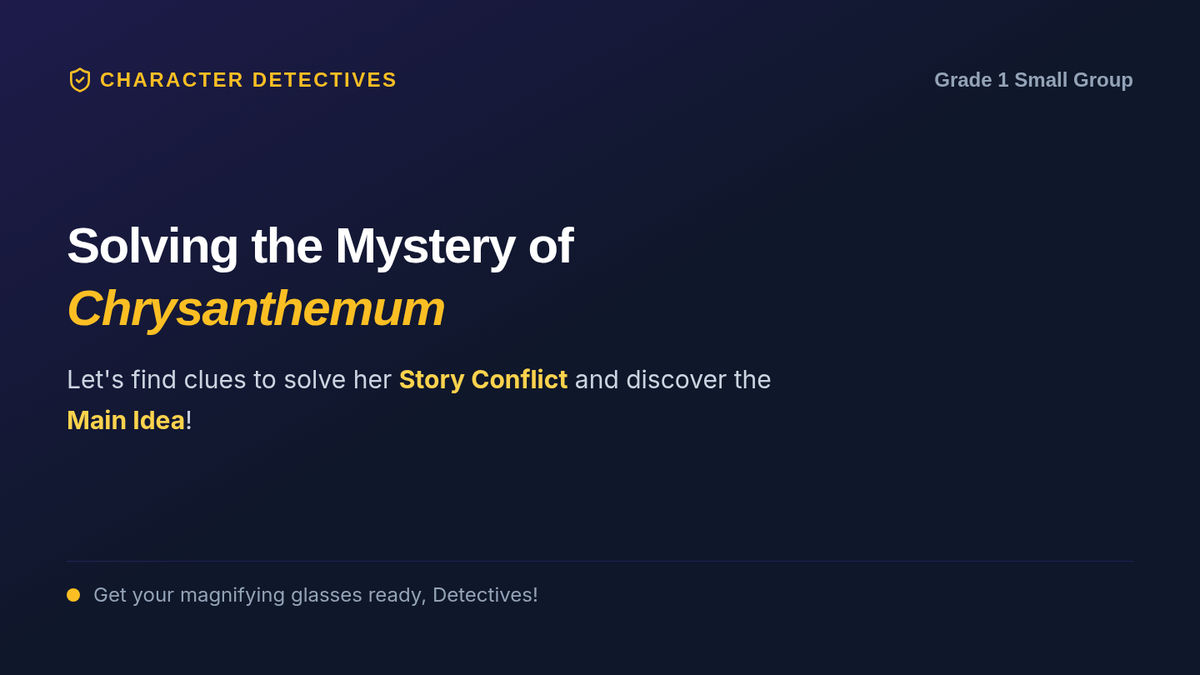
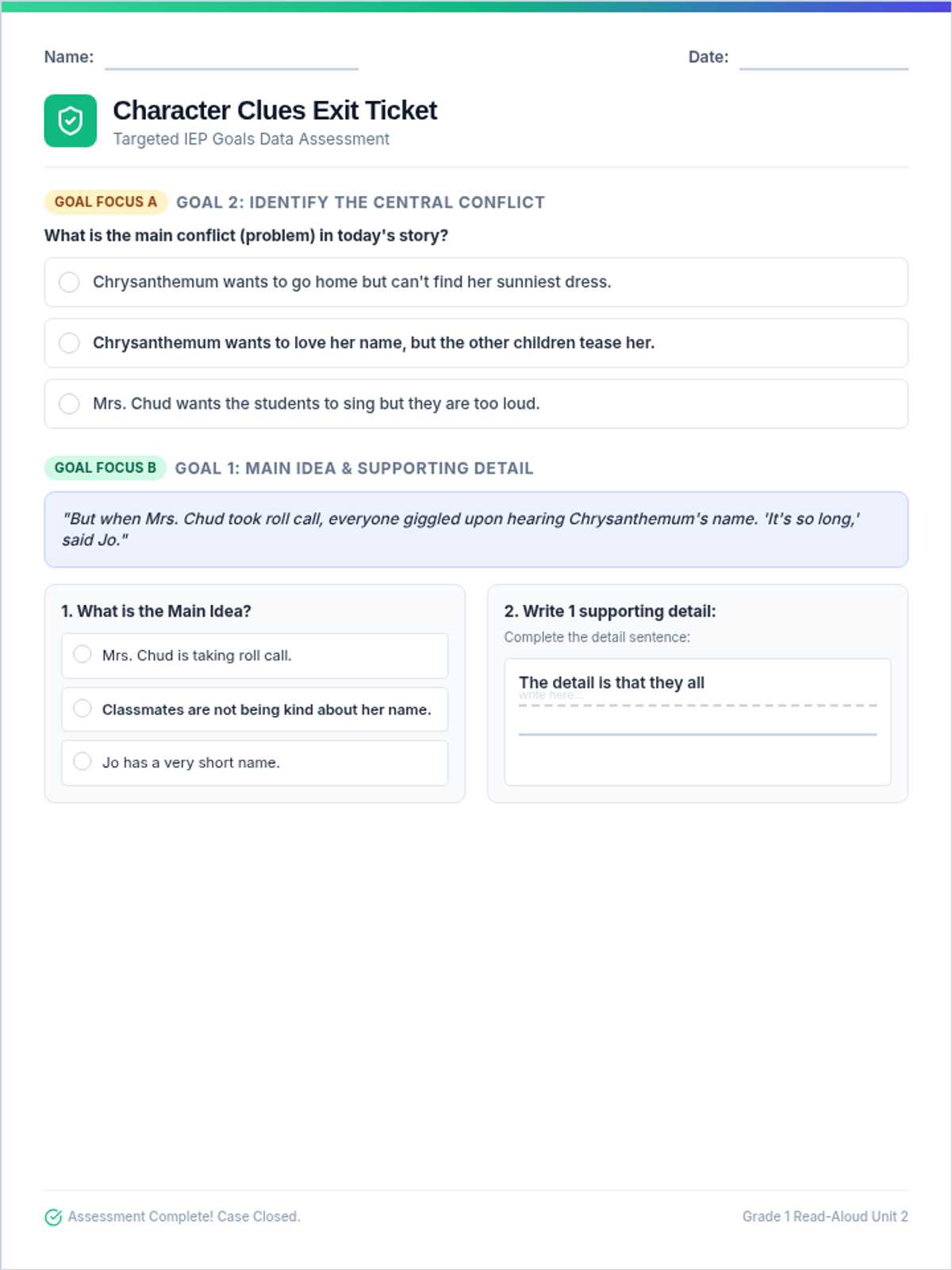
An accommodated small-group lesson on Chrysanthemum focused on character feelings, actions, and motivations. It includes step-by-step scaffolding, visual organizers, and IEP tracking tips to support diverse learners.
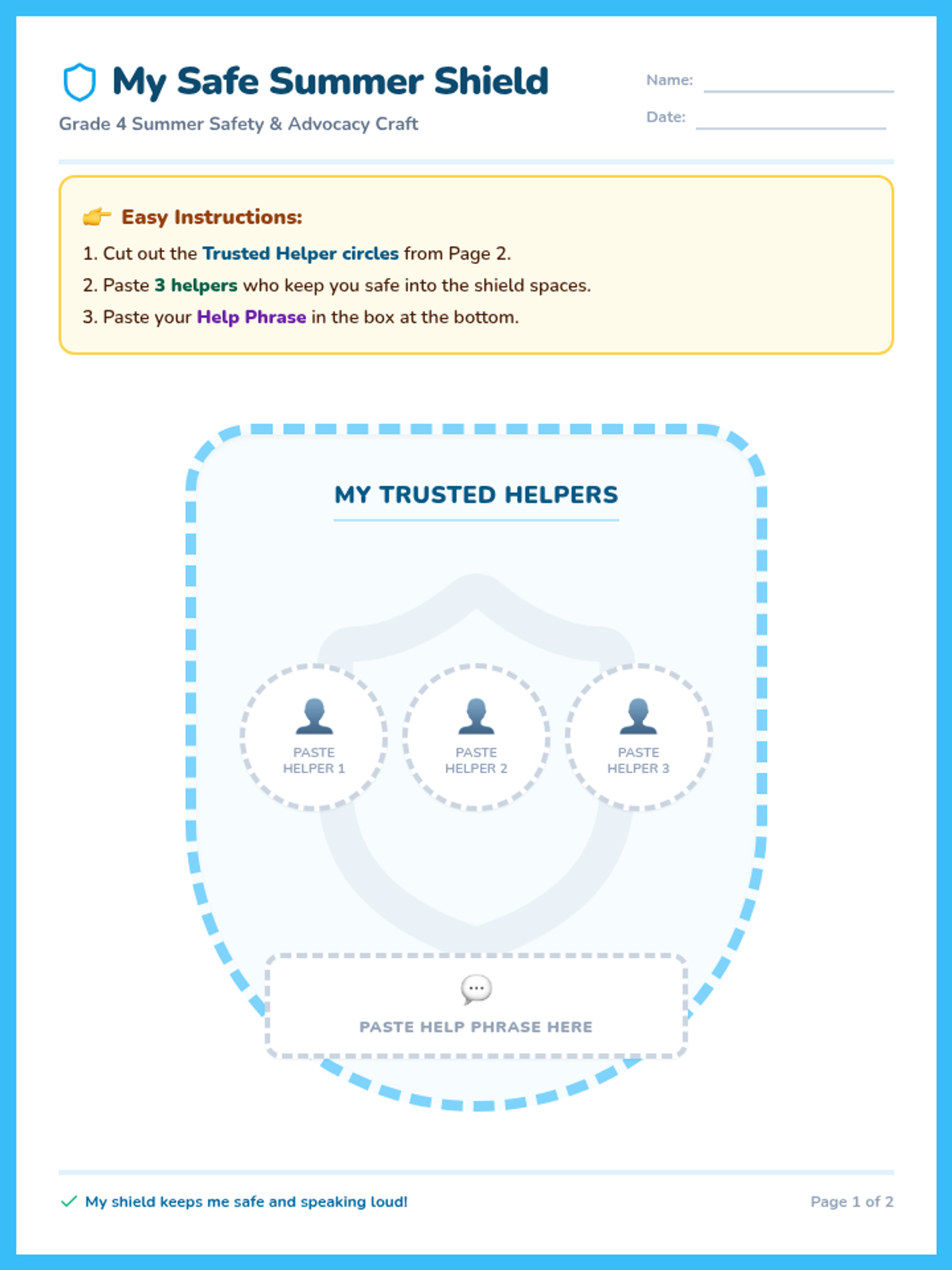
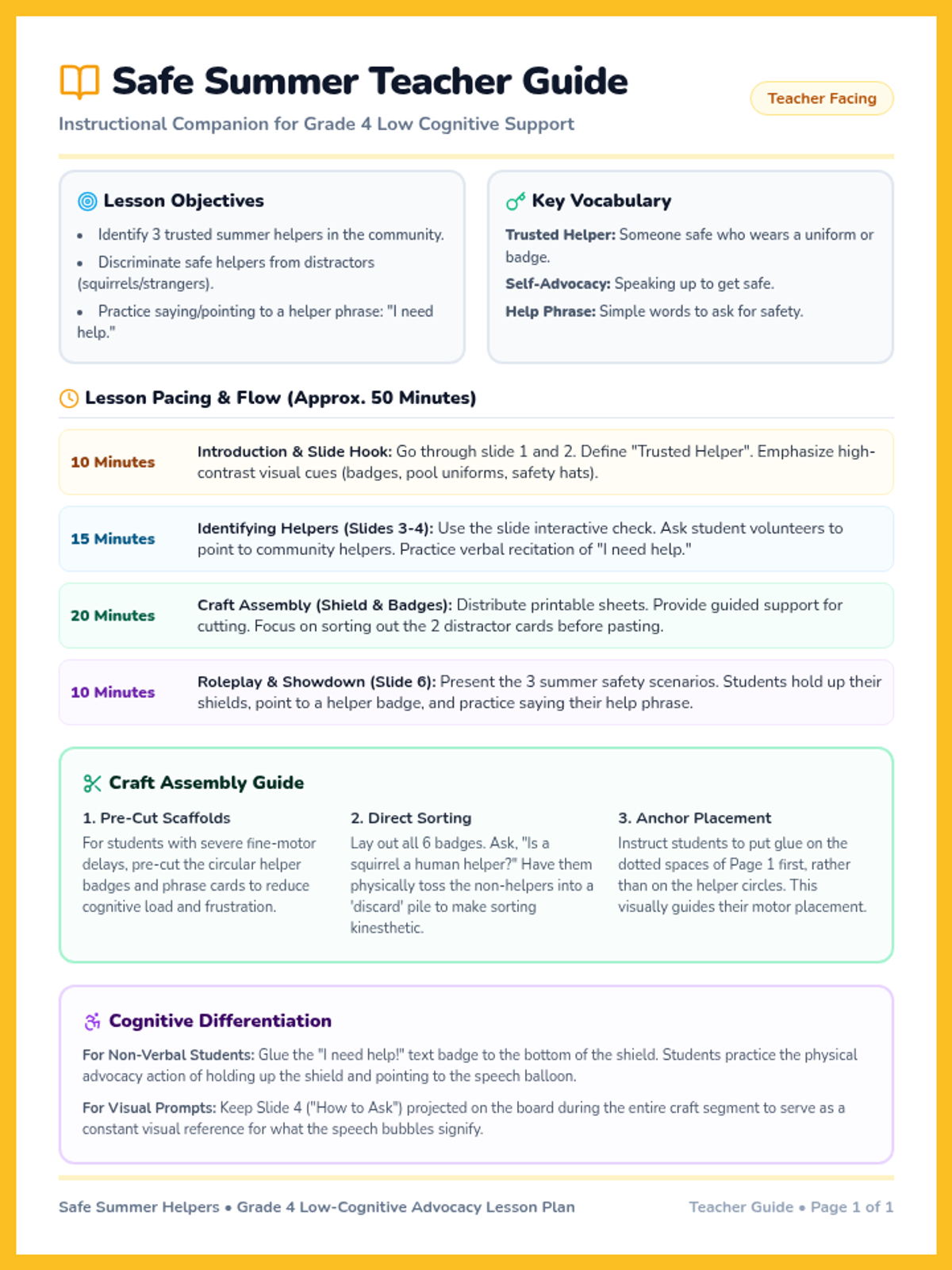
A hands-on, highly visual summer safety and self-advocacy lesson designed for Grade 4 students with low cognitive abilities. Students identify trusted adults, assemble a 'Safe Summer Shield' craft, and practice simple, direct phrases to ask for help in real-world summer scenarios.
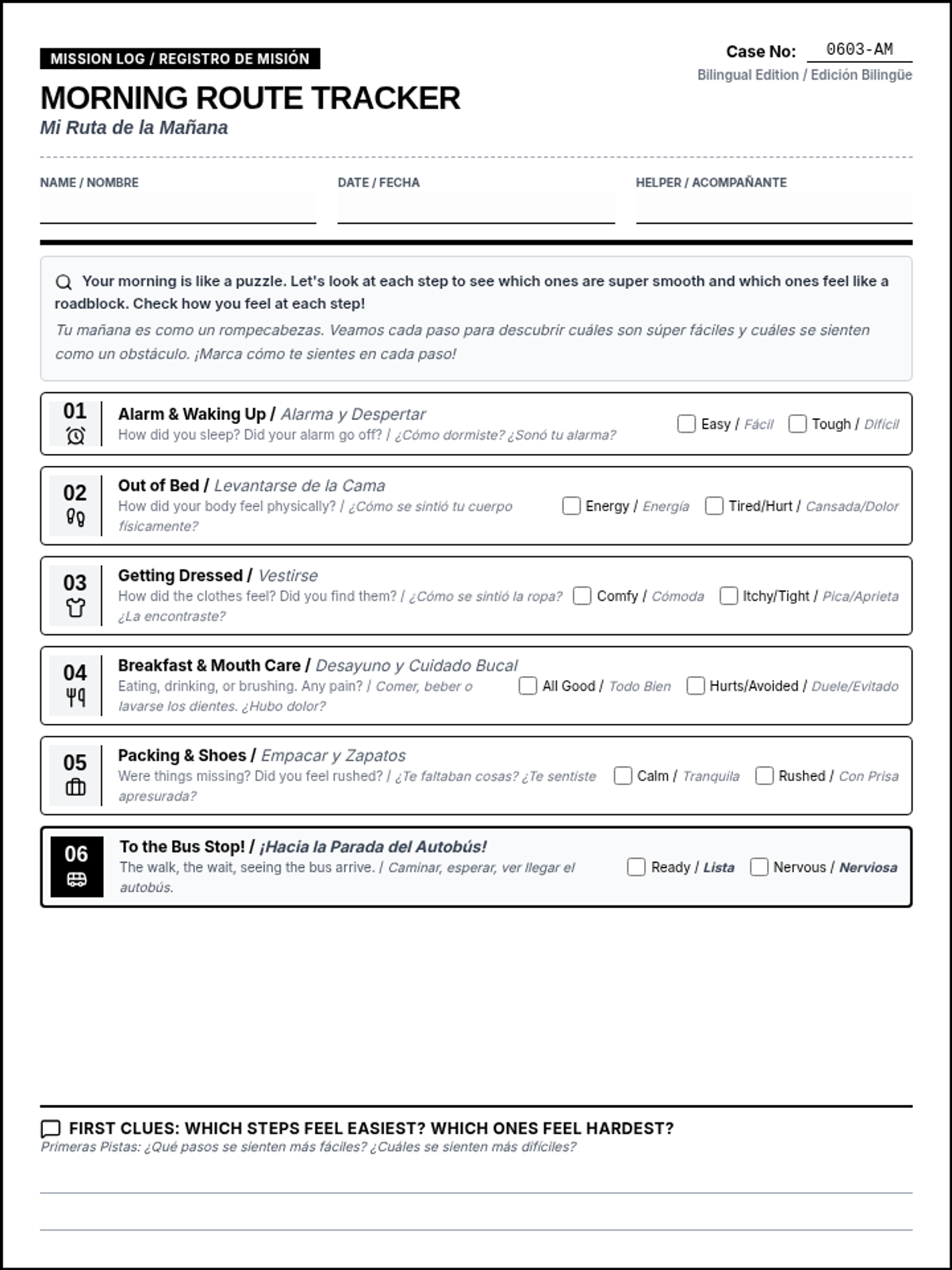
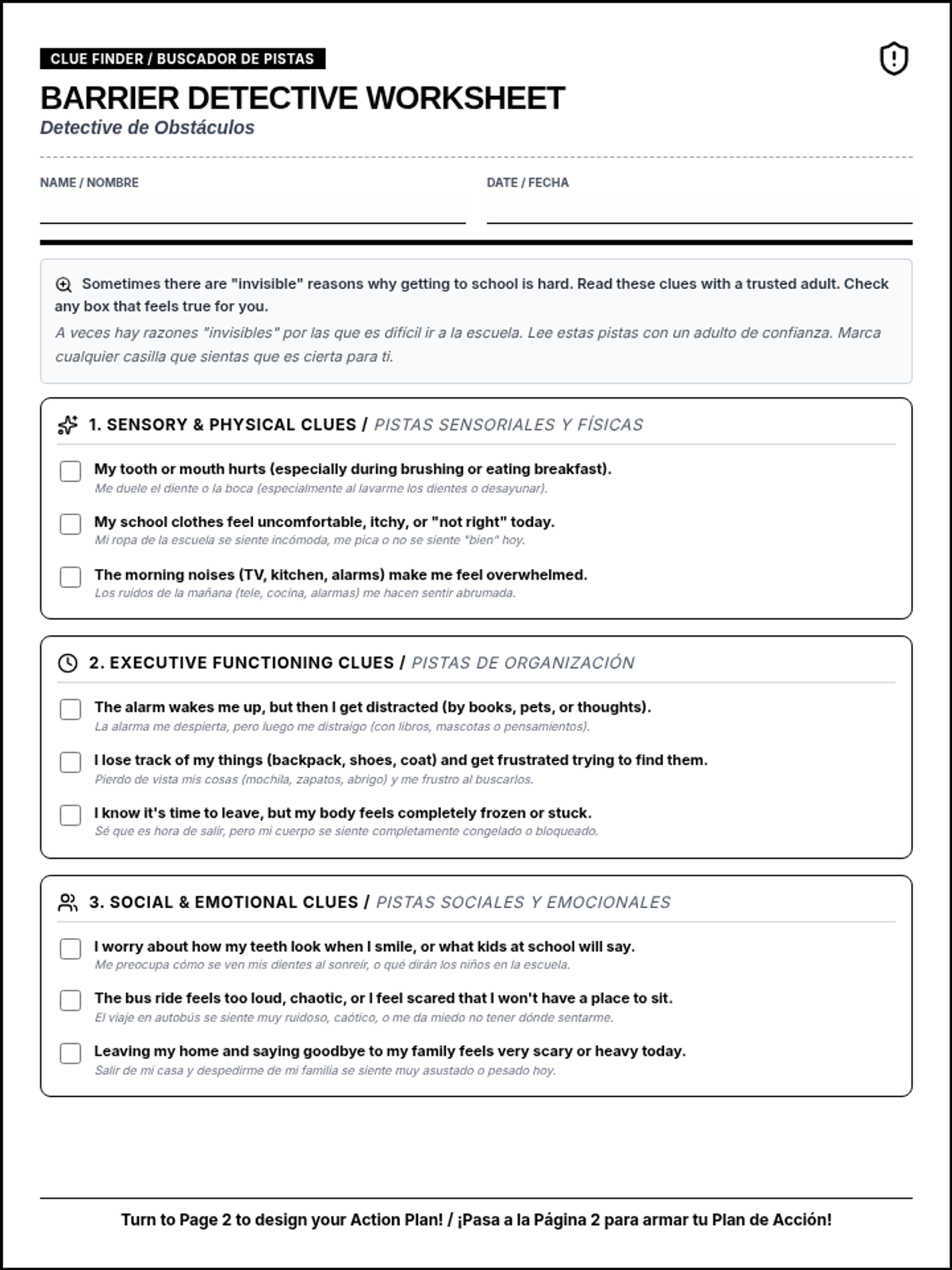
A supportive, bilingual diagnostic resource set to help an 11-year-old student uncover specific physical, sensory, emotional, and executive functioning barriers in her morning routine.
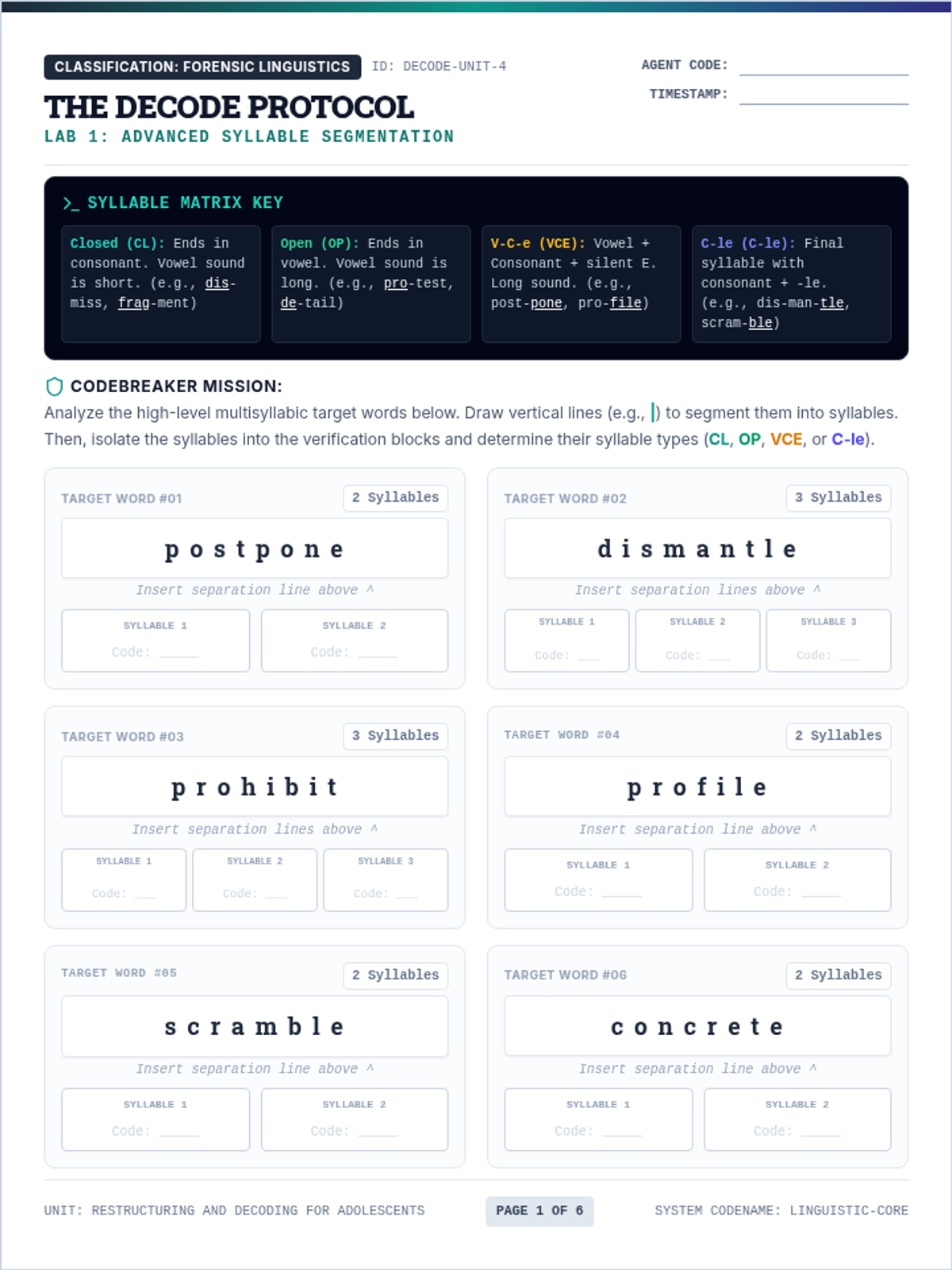
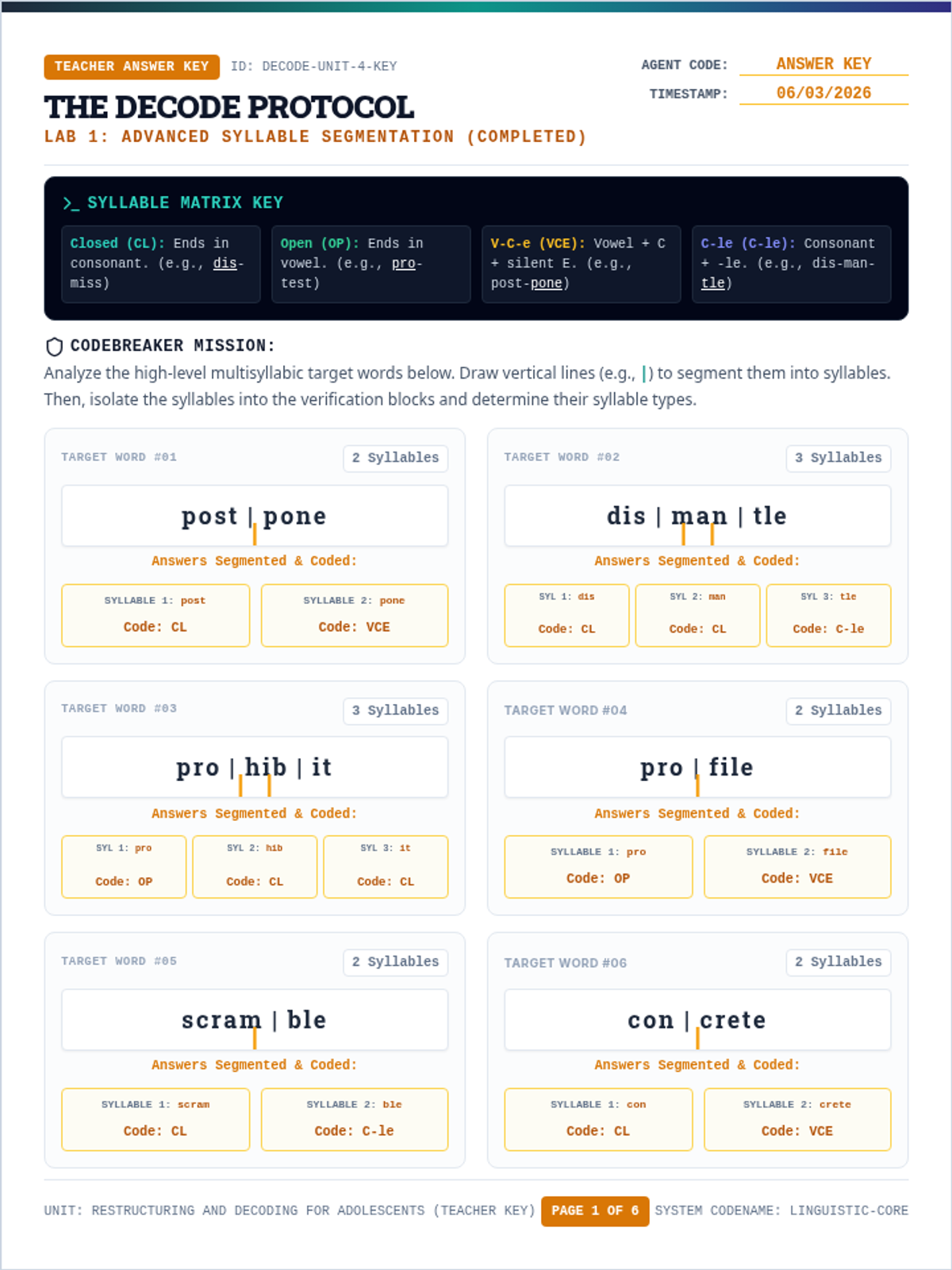
A comprehensive phonics and syllable review unit focusing on vowel teams, r-controlled vowels, syllable division, and affix-based word building. Includes a multi-page student review packet and a corresponding teacher answer key.
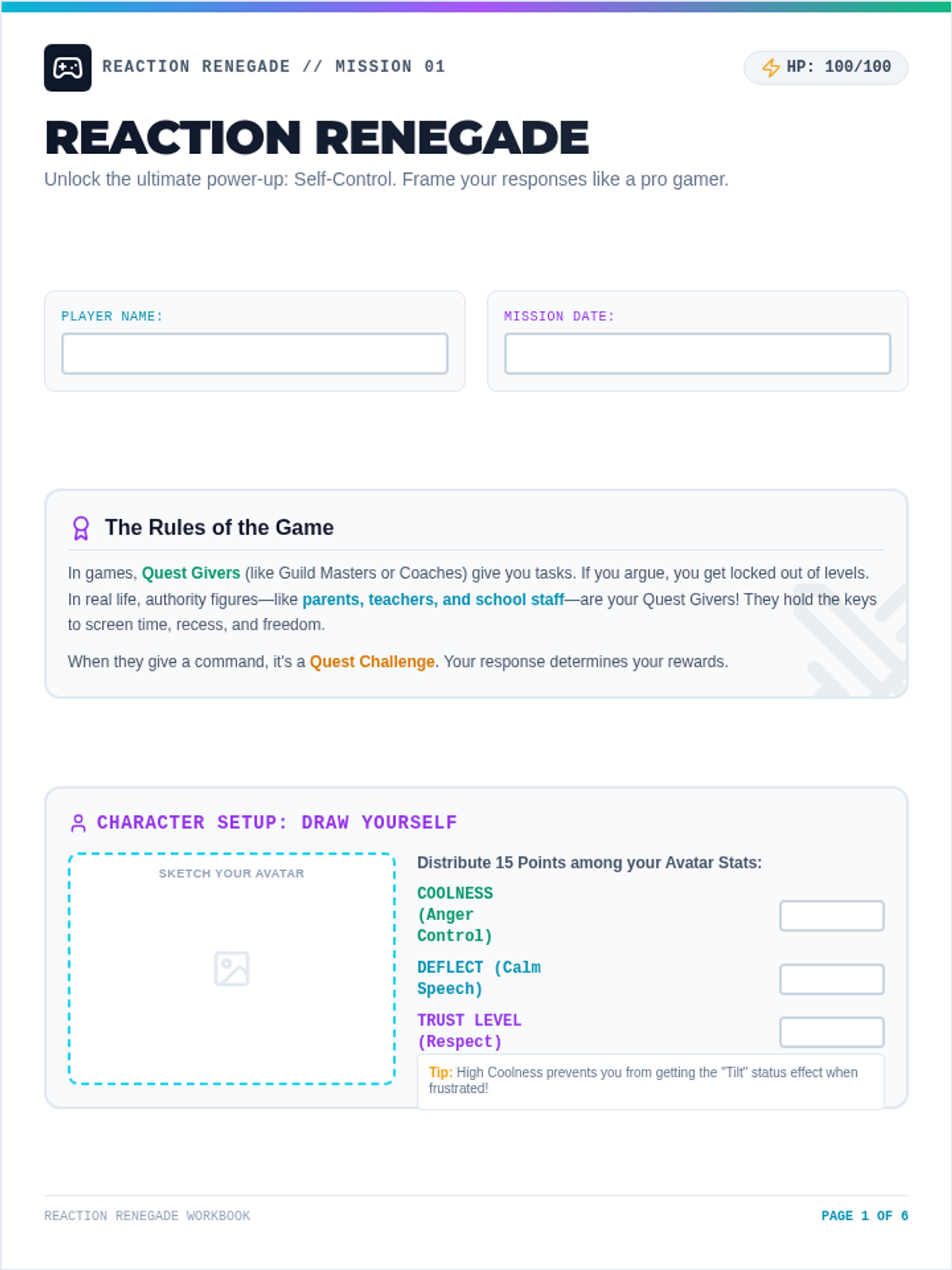
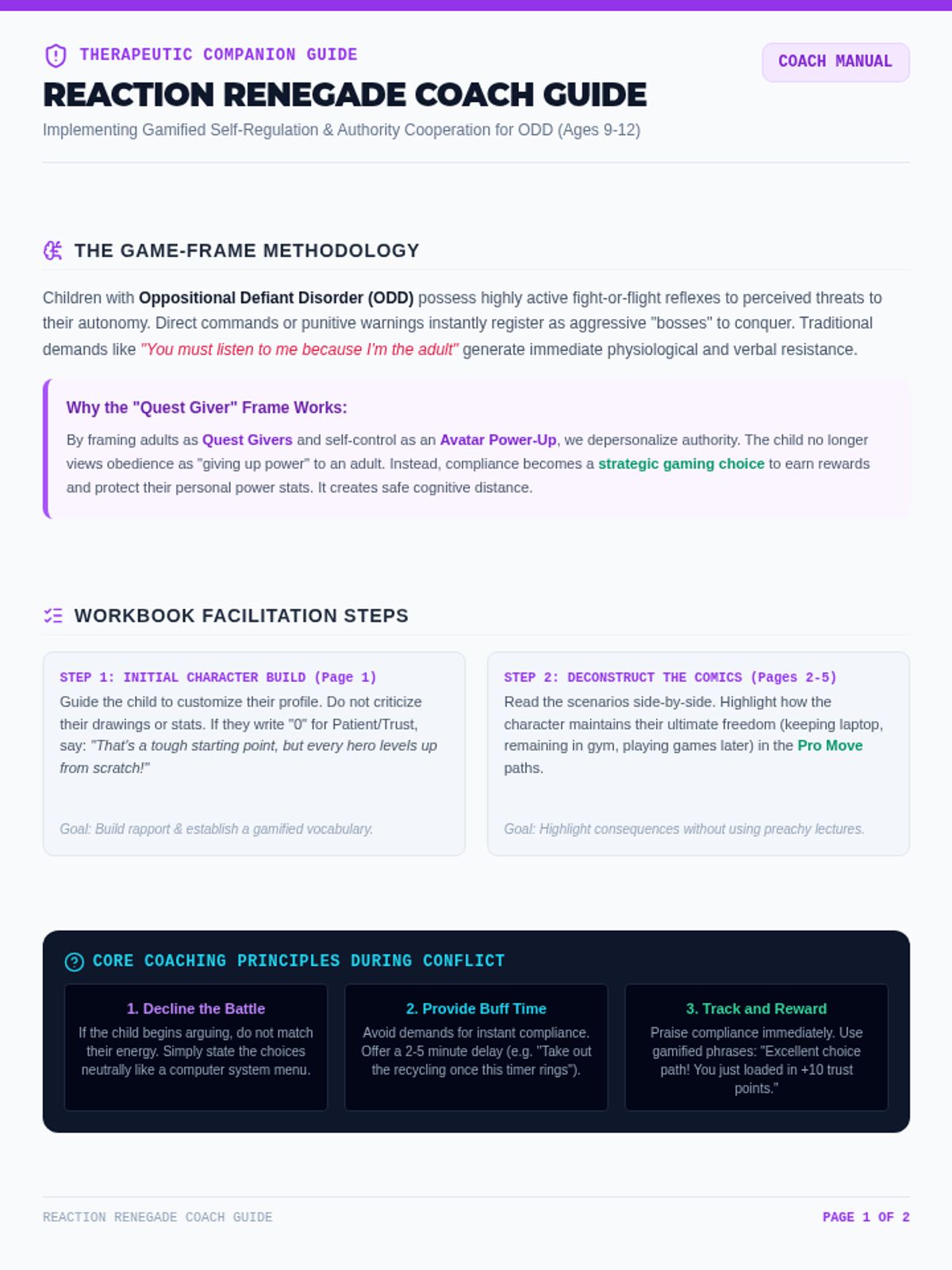
A gamified social-emotional learning lesson designed for a 10-year-old boy with Oppositional Defiant Disorder (ODD), framing self-control and respect for authority as powerful video game upgrades. The lesson features comic-strip decision paths and interactive strategy cards to encourage positive choices with teachers and parents.
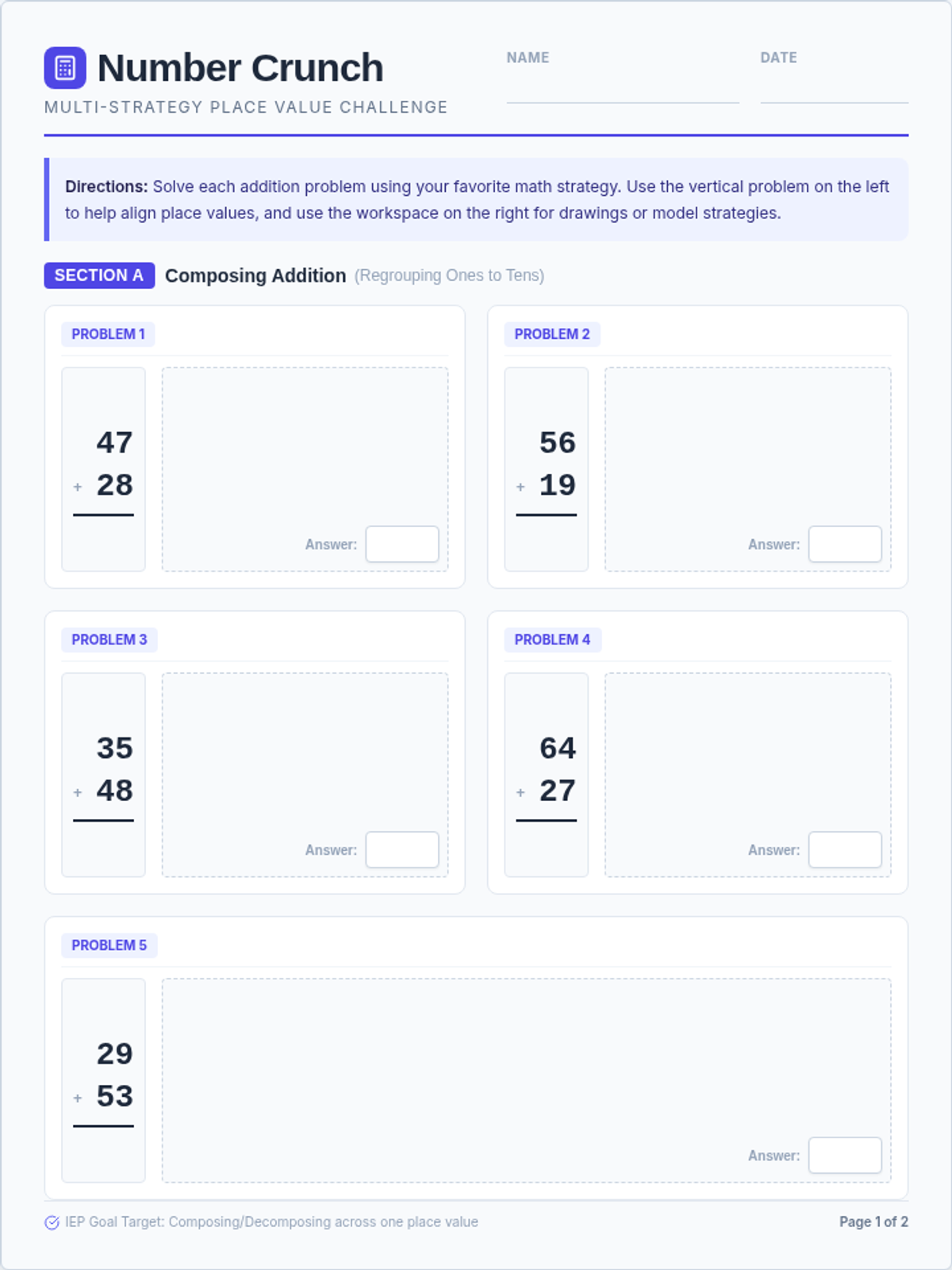
A targeted lesson focused on building student confidence and accuracy in composing and decomposing numbers across a single place value in addition and subtraction, utilizing their preferred problem-solving strategy.
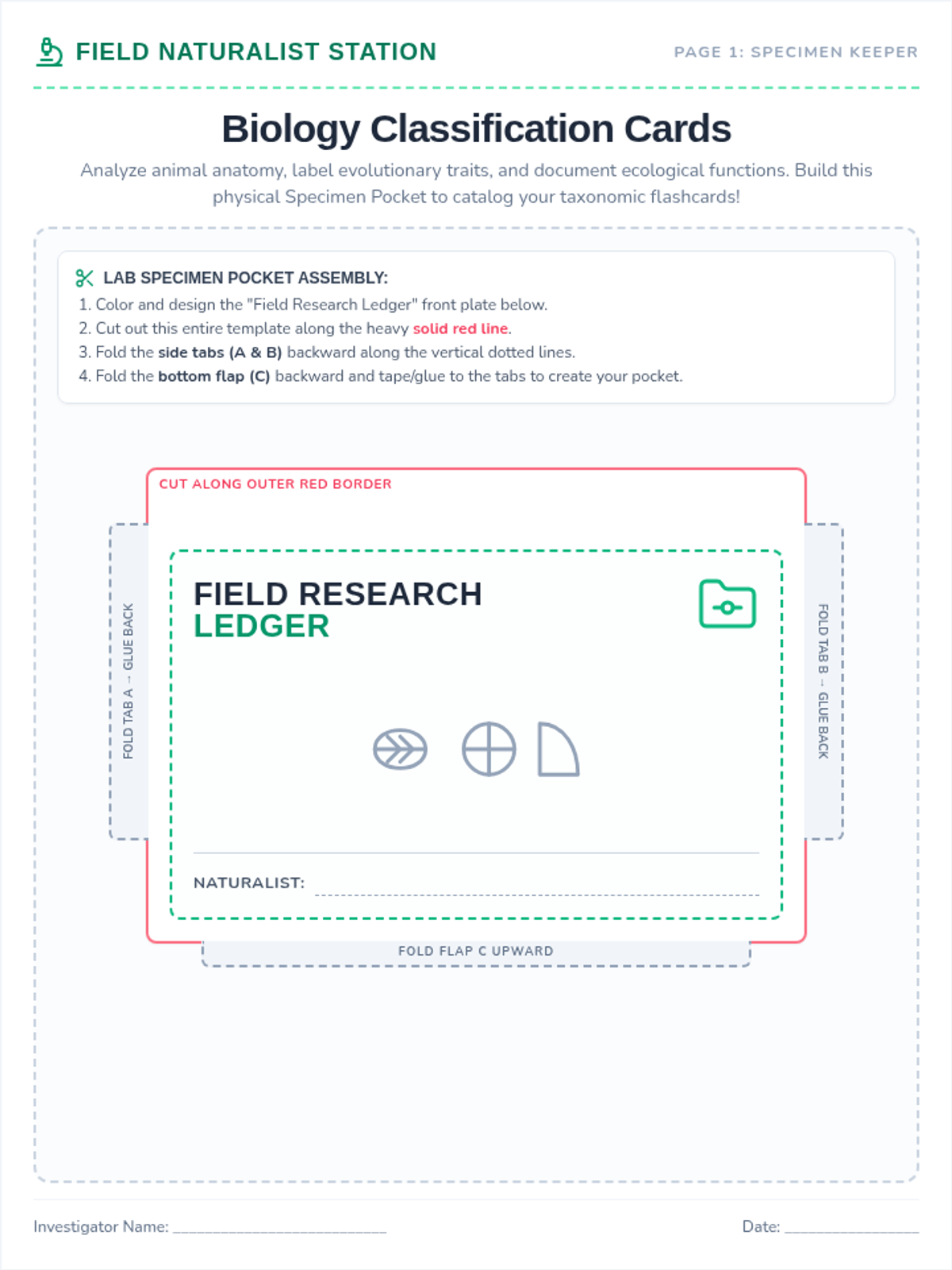
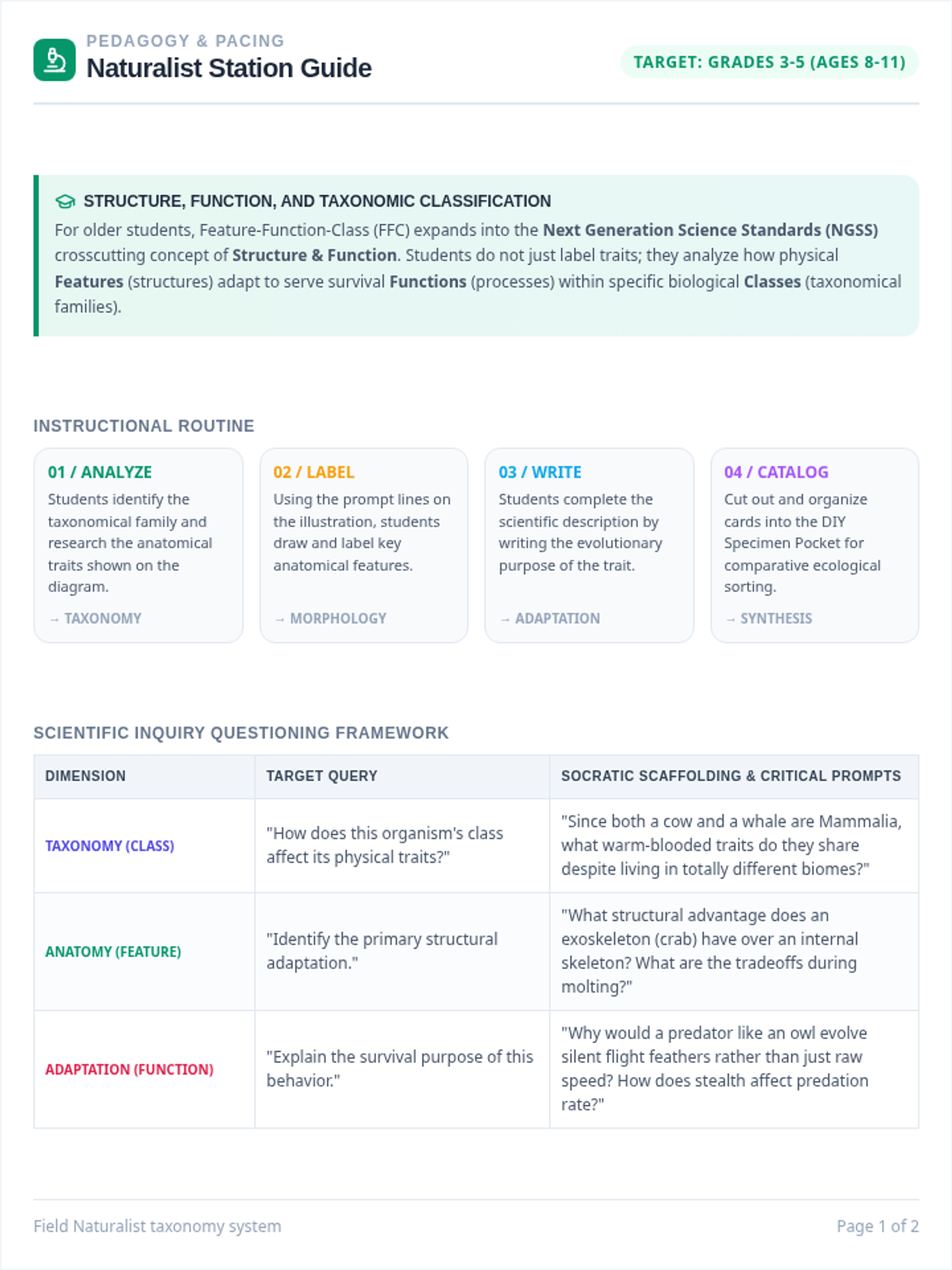
A biology and taxonomy sorting system designed for older kids (Grades 3-5). Students analyze evolutionary adaptations, label critical anatomical features, and categorize specimens by their taxonomic classes, habitats, and ecological functions.
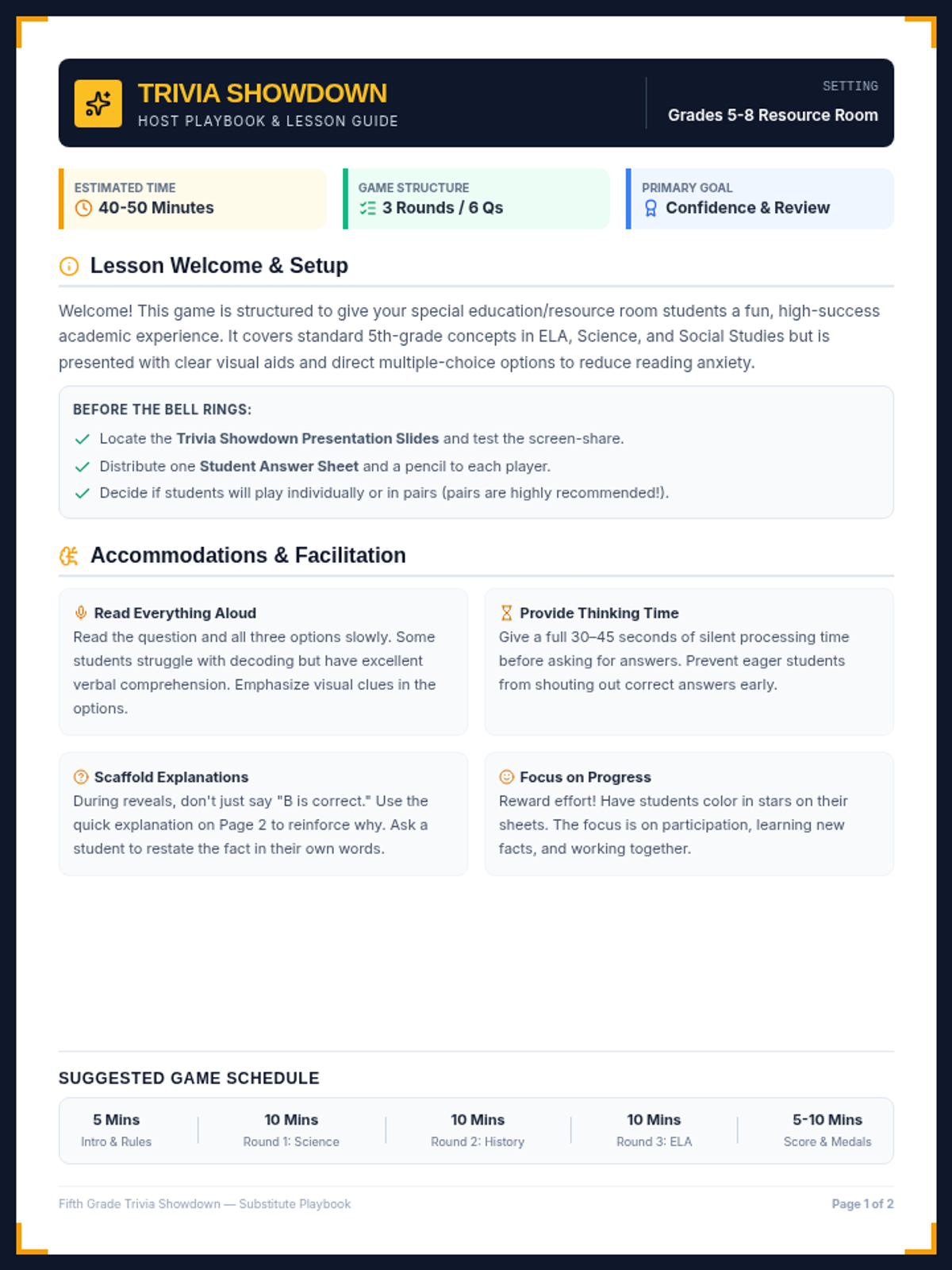
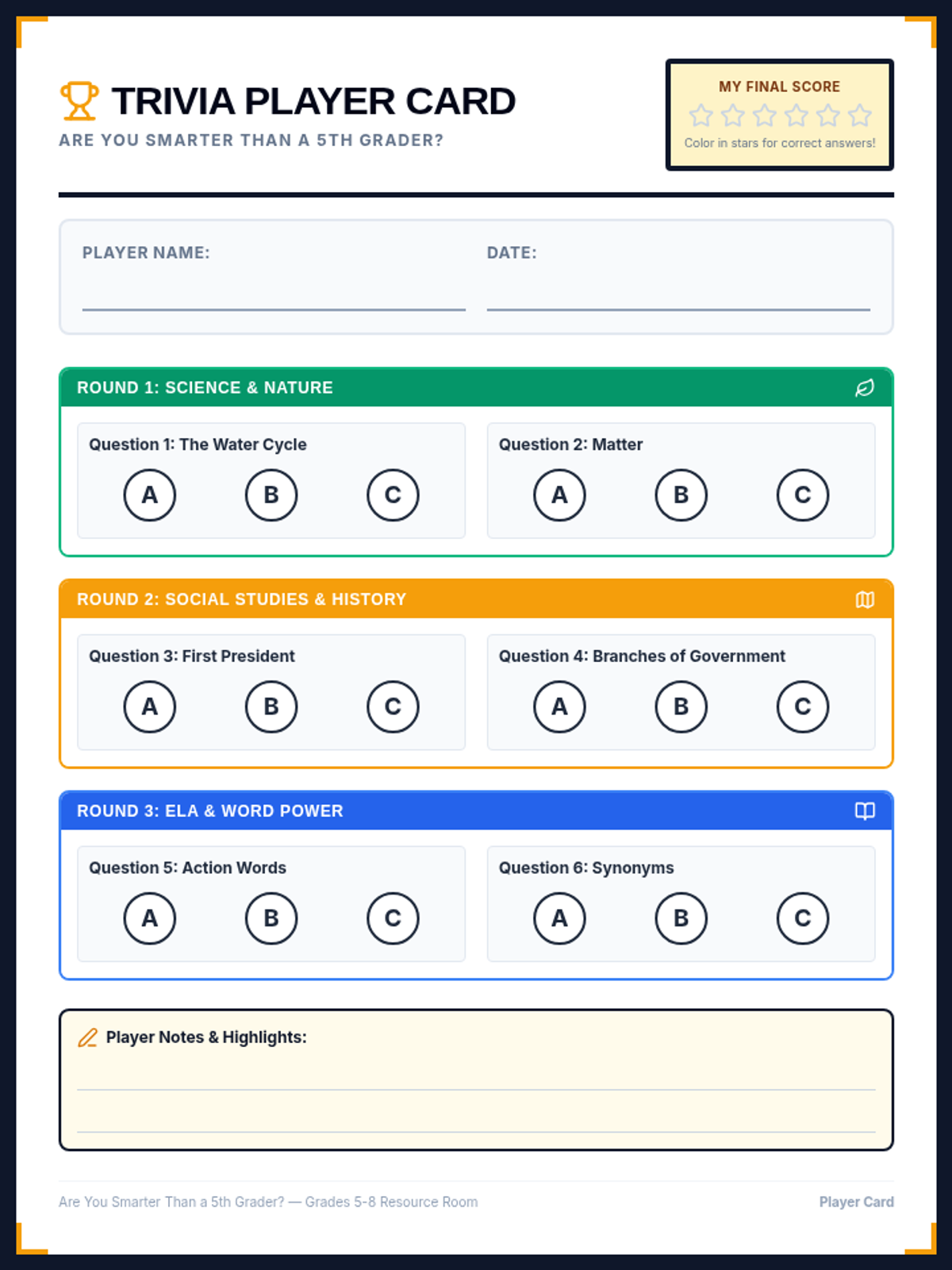
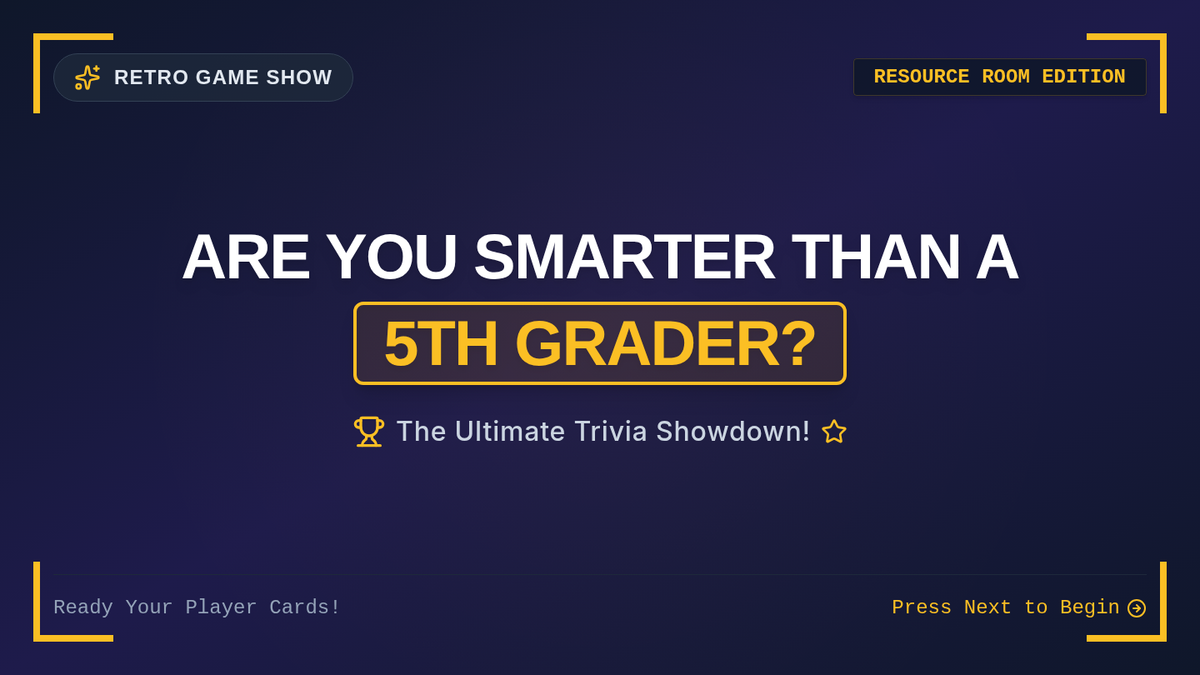
A retro game-show themed trivia lesson for resource room students in grades 5-8, featuring accessible 5th-grade level questions in Science, Social Studies, and ELA. Includes a slide presentation, printable student answer sheets, and a substitute teacher guide.
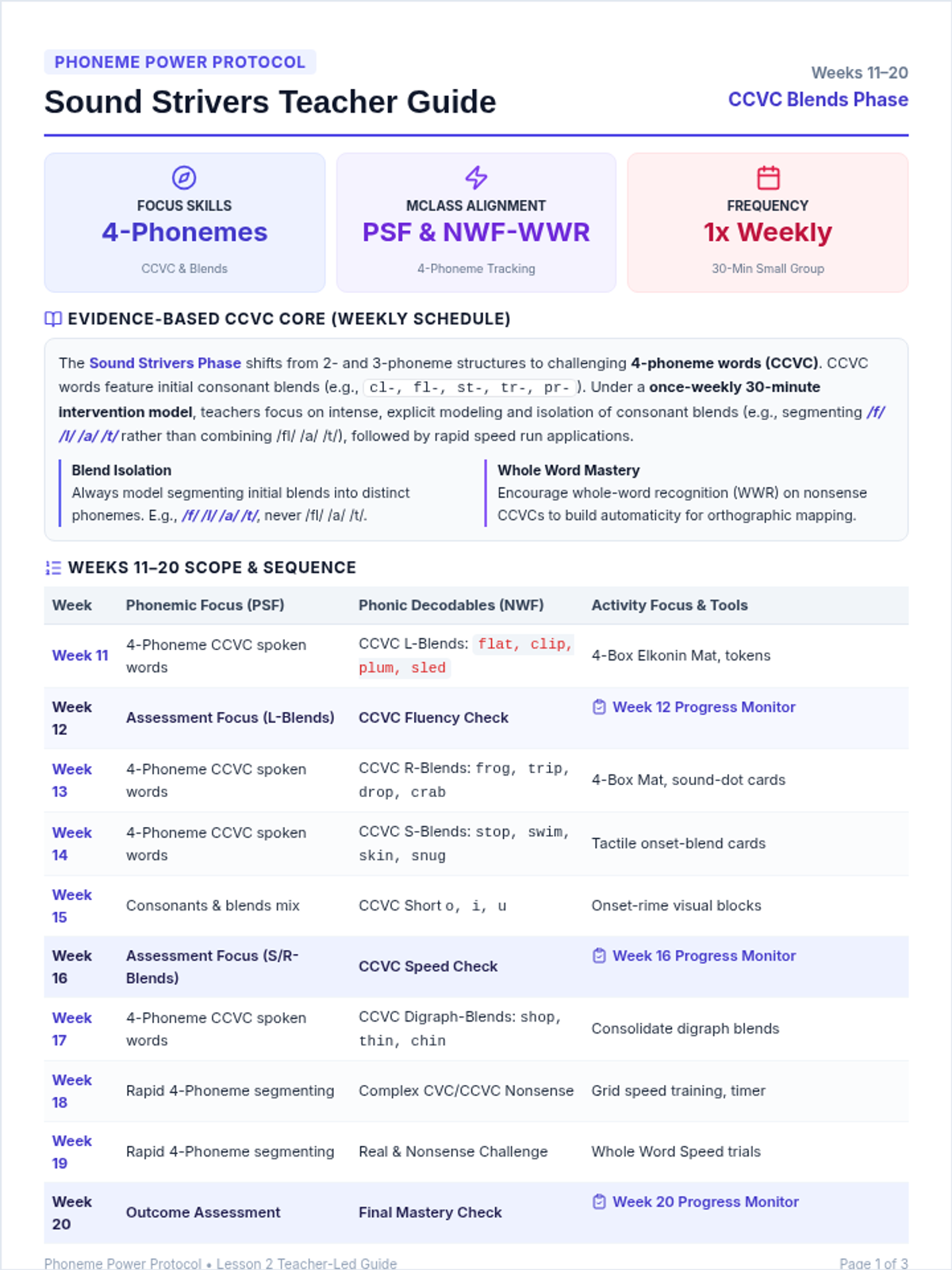
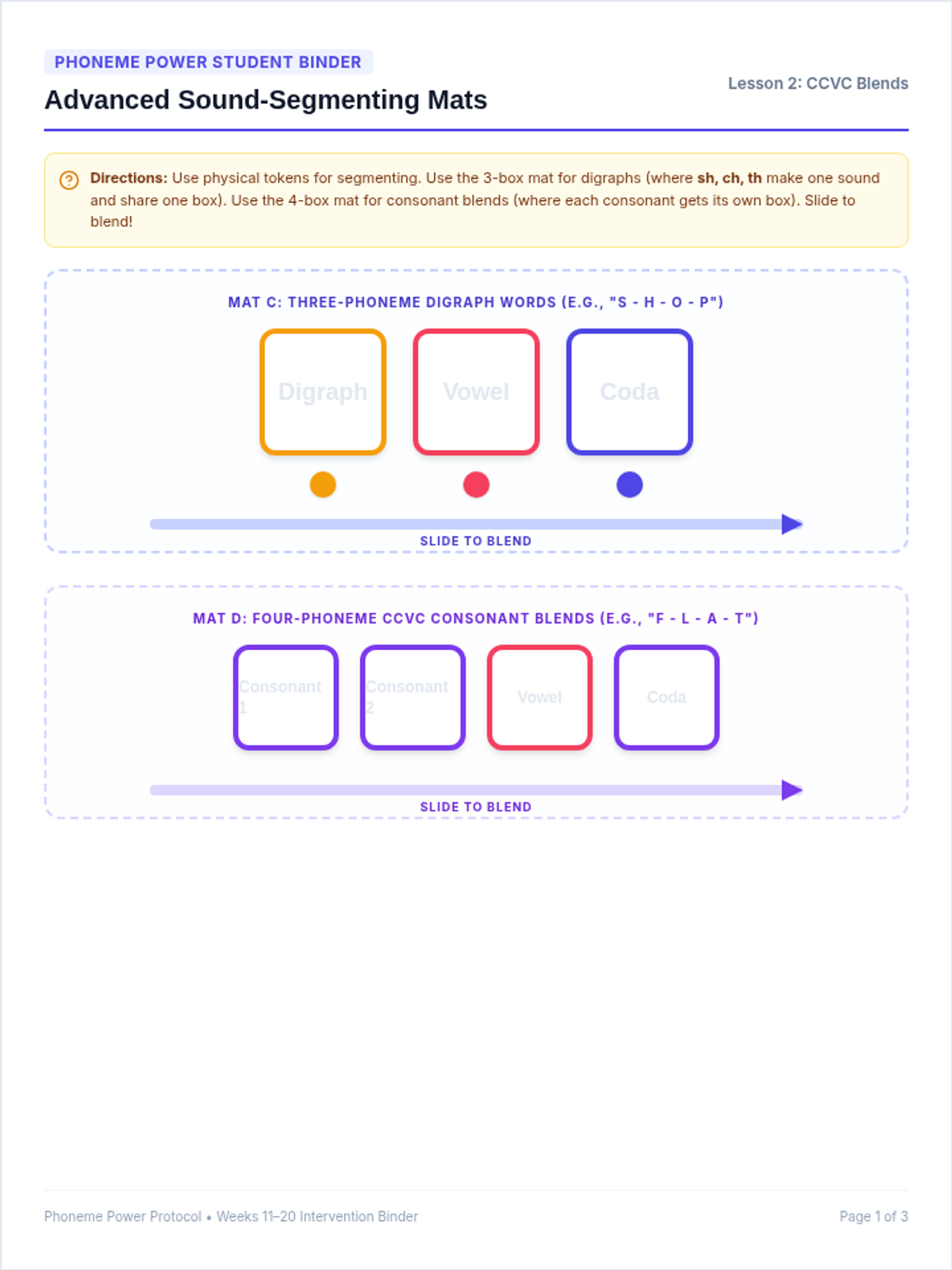
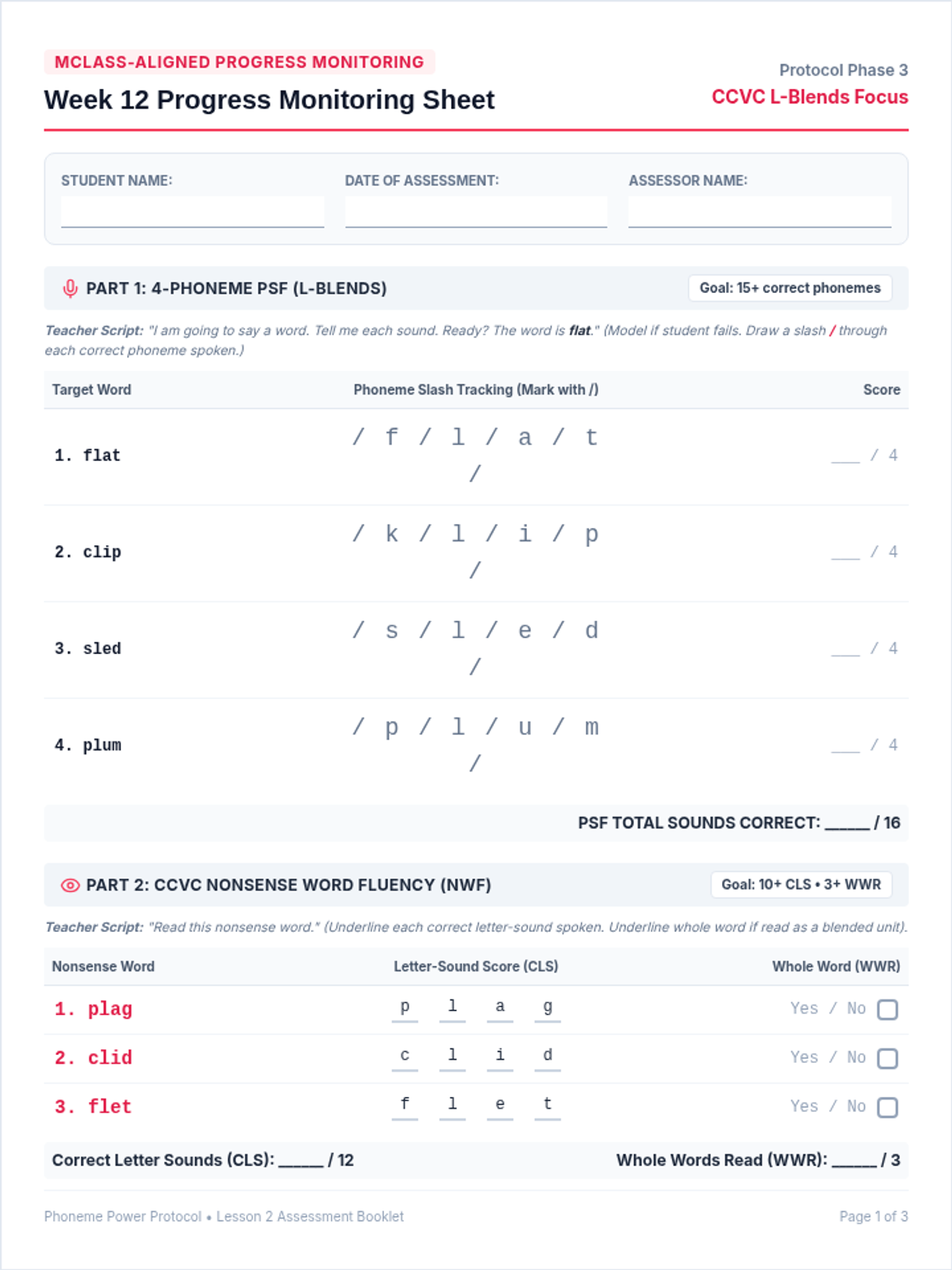
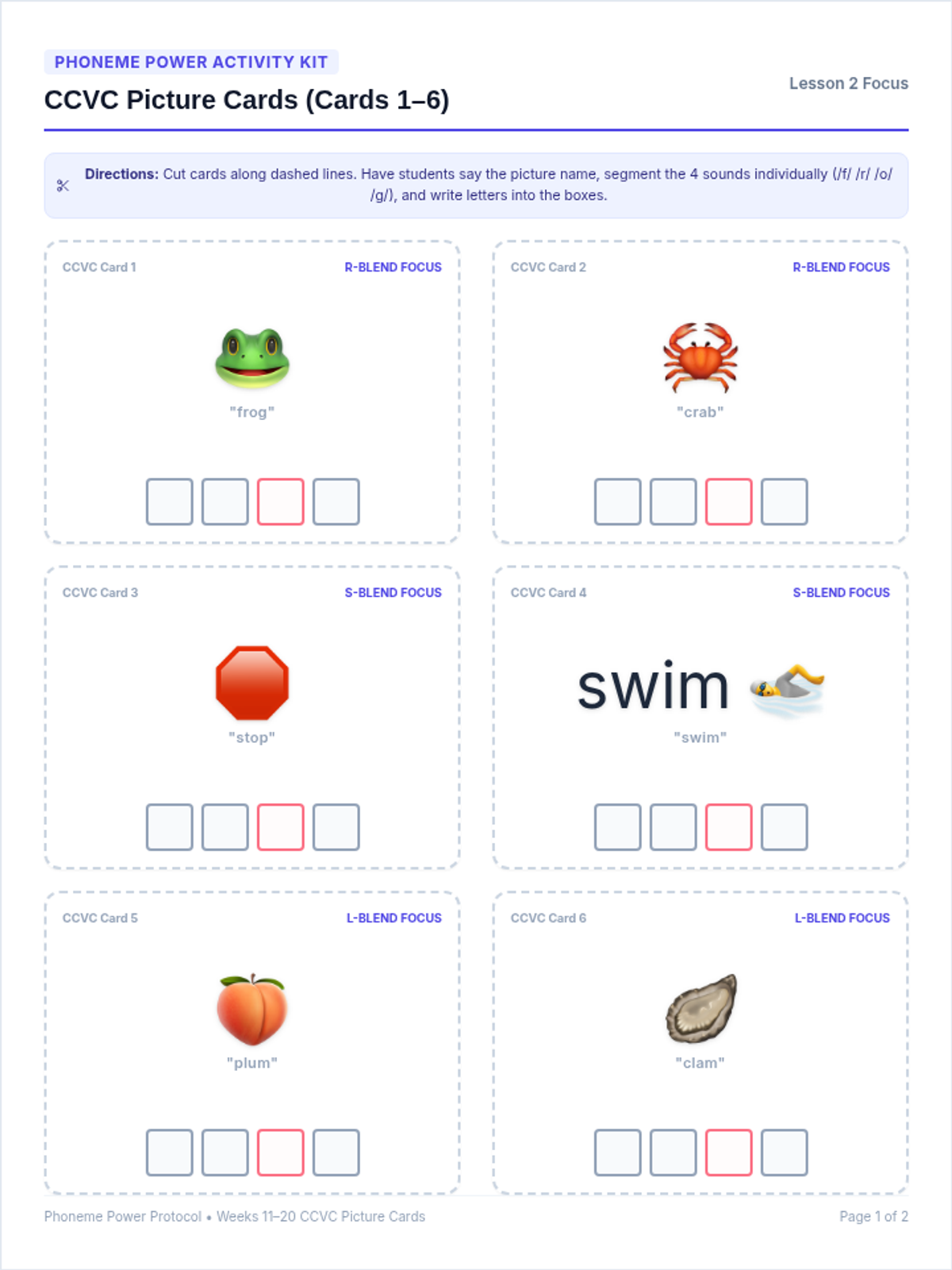
Weeks 11-20 of the Phoneme Power Protocol intervention, focusing on CCVC (consonant blends) and complex CVC words. Includes systematic small-group routines for 4-phoneme words, visual 4-box Elkonin mats, tactile onset-rime blending cards, and progress monitoring scoring sheets for Weeks 12, 16, and 20.
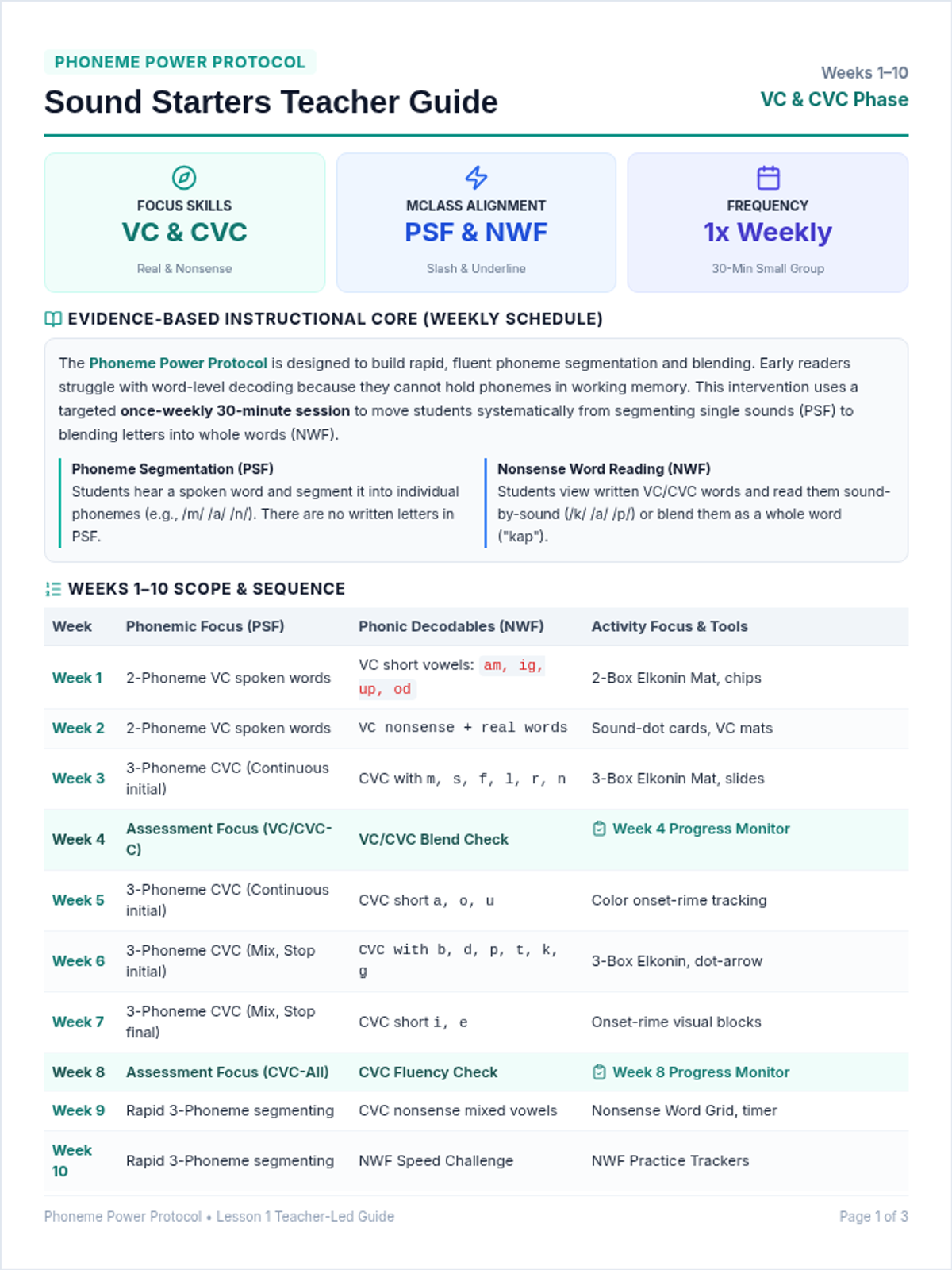
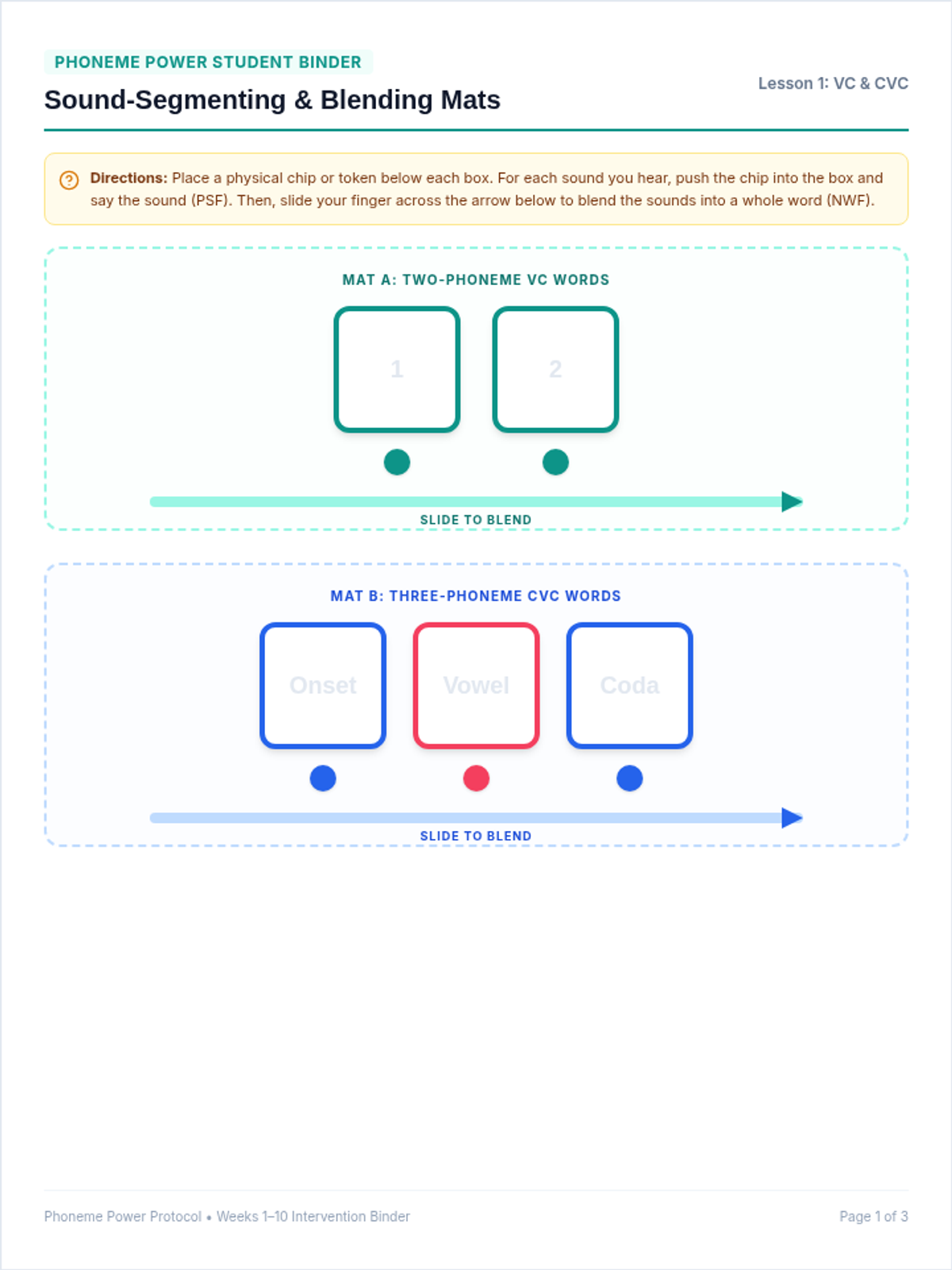
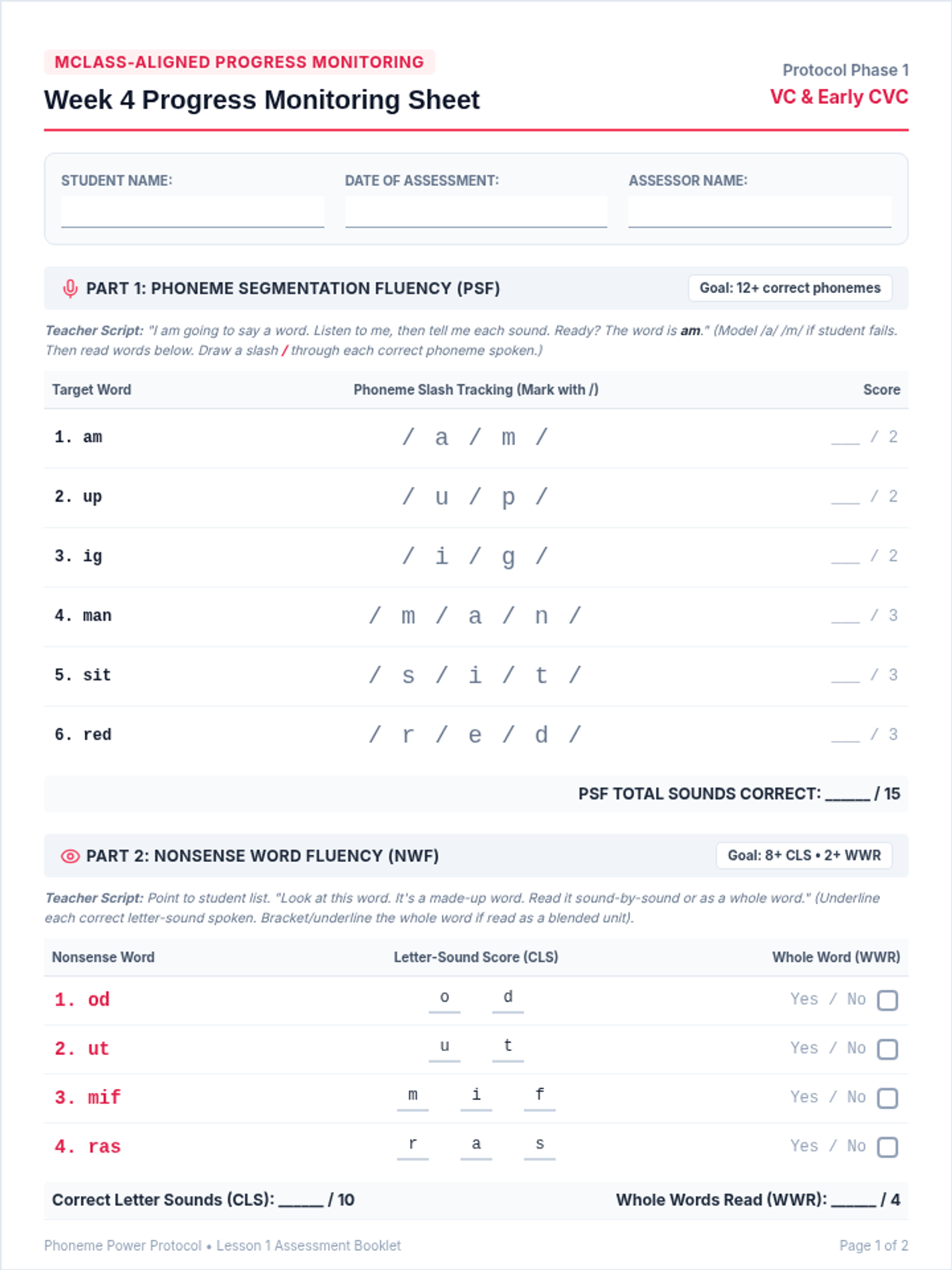
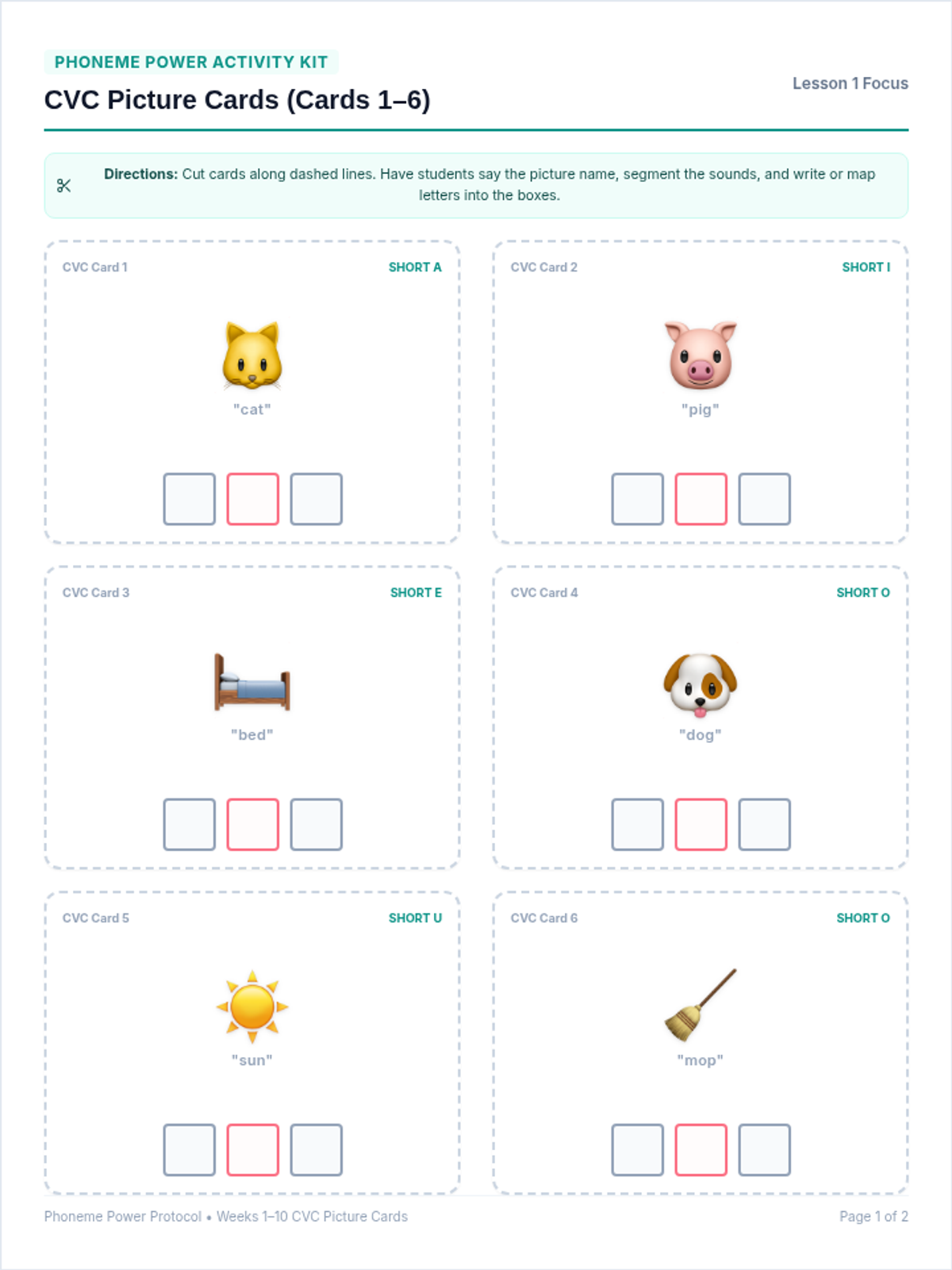
Weeks 1-10 of the Phoneme Power Protocol intervention, focusing on VC and CVC words. Includes systematic routines for segmenting individual sounds (PSF) and blending phonemes into nonsense and real words (NWF) using 2-box and 3-box Elkonin mats, color-coded word cards, and progress monitoring at Weeks 4 and 8.
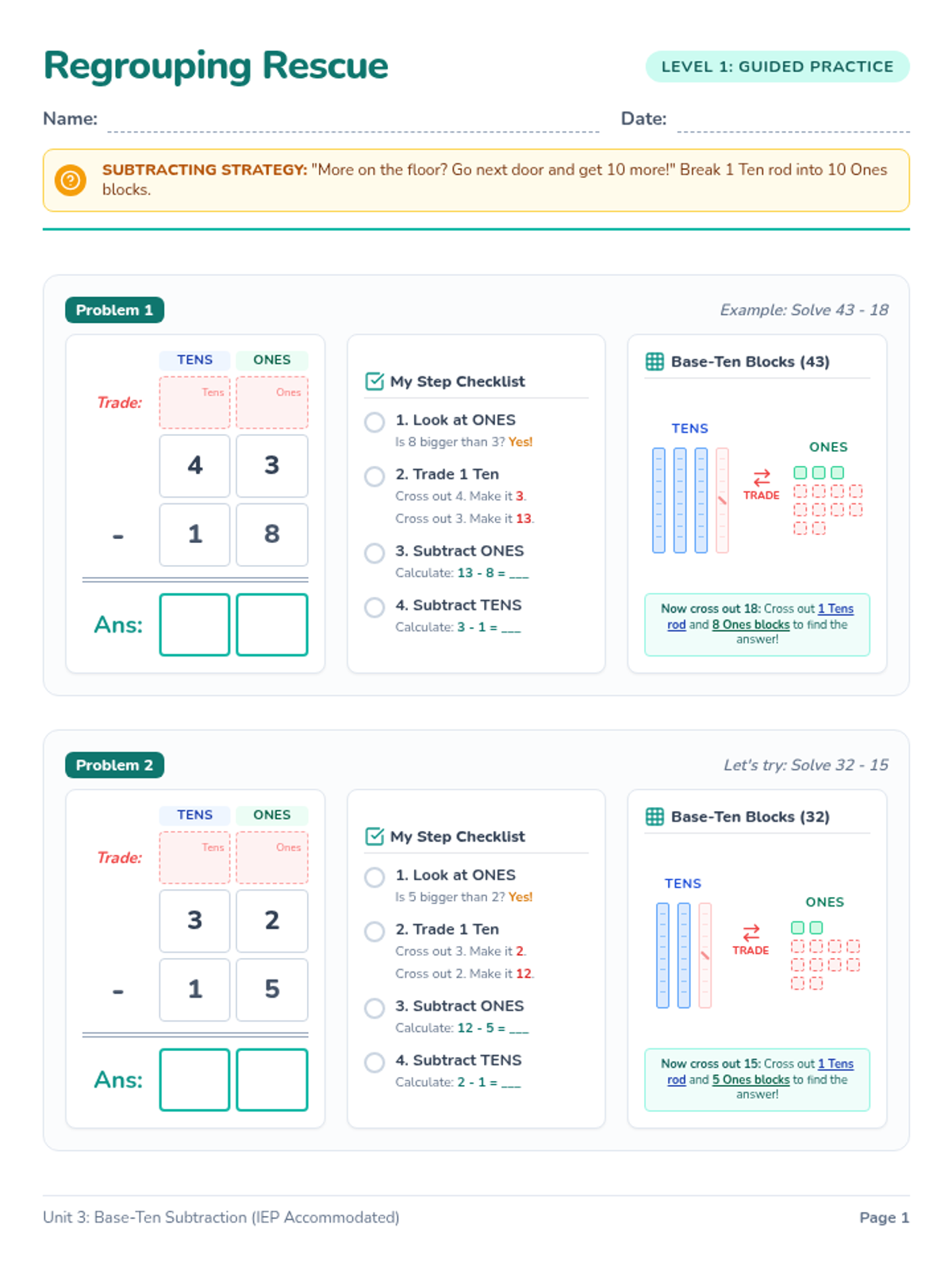
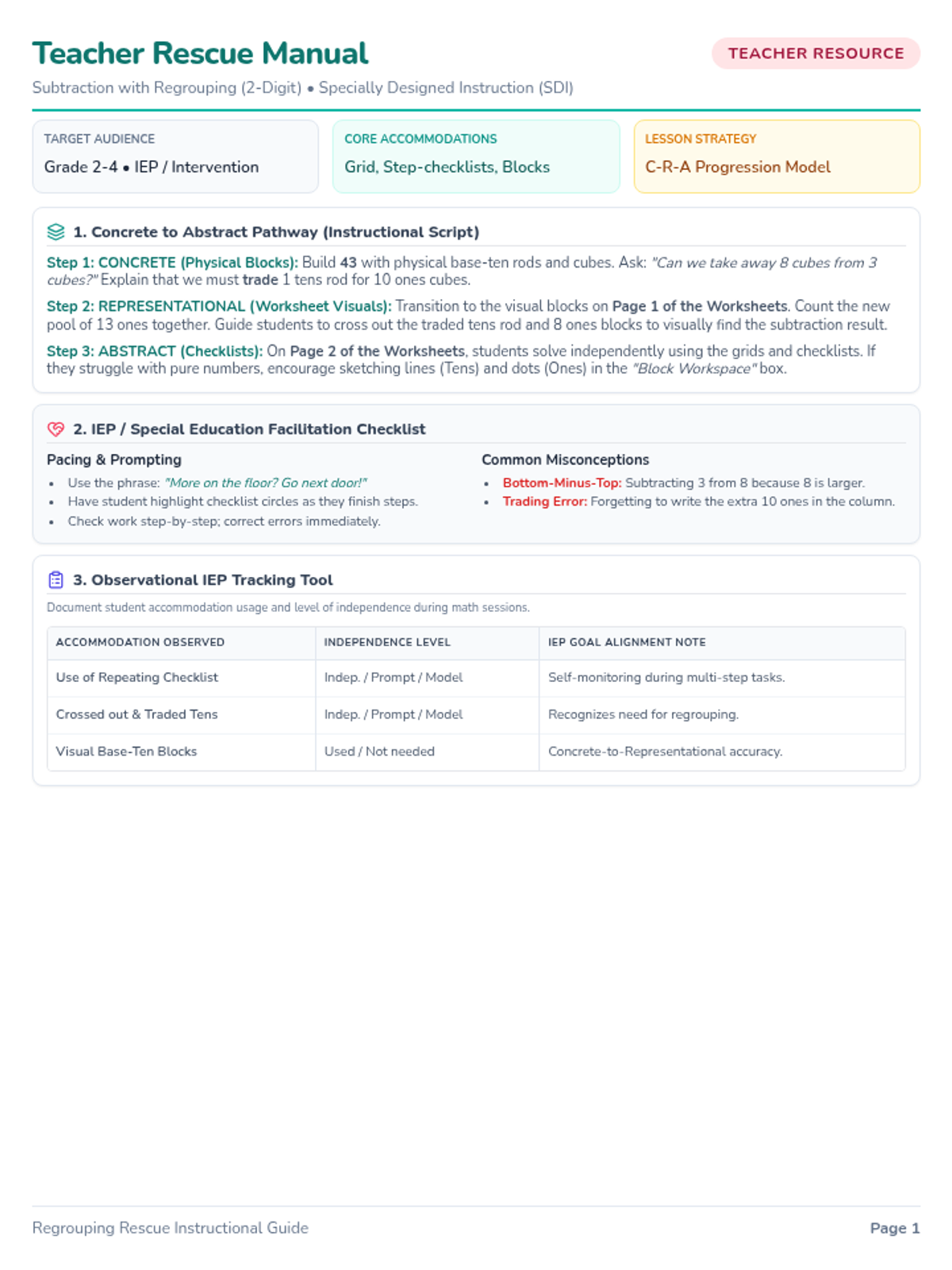
A highly-structured, research-backed lesson on subtracting two-digit numbers with regrouping, specifically designed with IEP accommodations. Includes grid-aligned practice sheets with repeating step-by-step visual checklists and built-in base-ten visual blocks to support concrete-representational-abstract transitions.
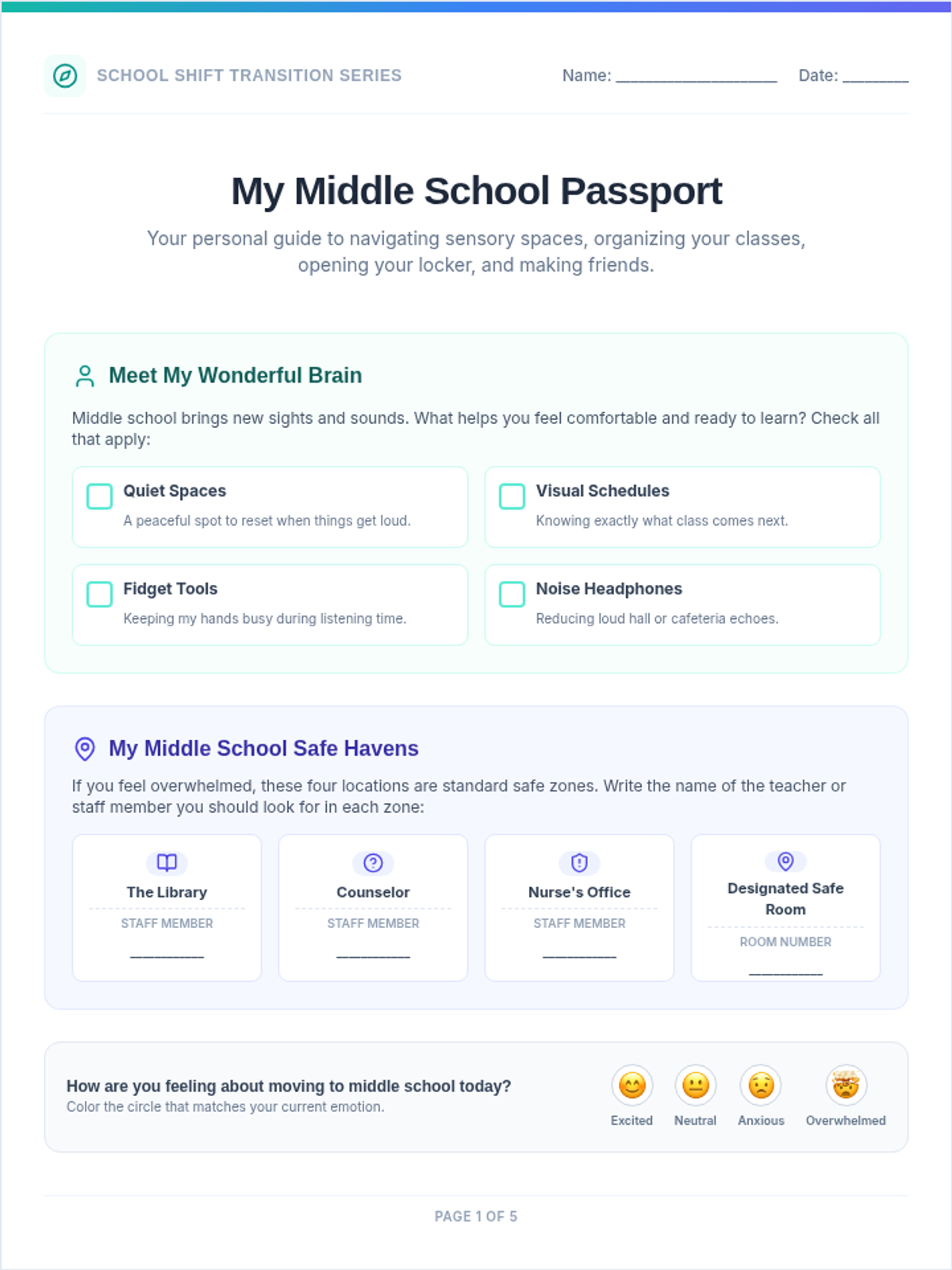
A transition lesson designed specifically for middle school students with ASD, focusing on navigating sensory changes, learning social scripts, practicing physical tasks like locker combinations, and organizing multiple classes.
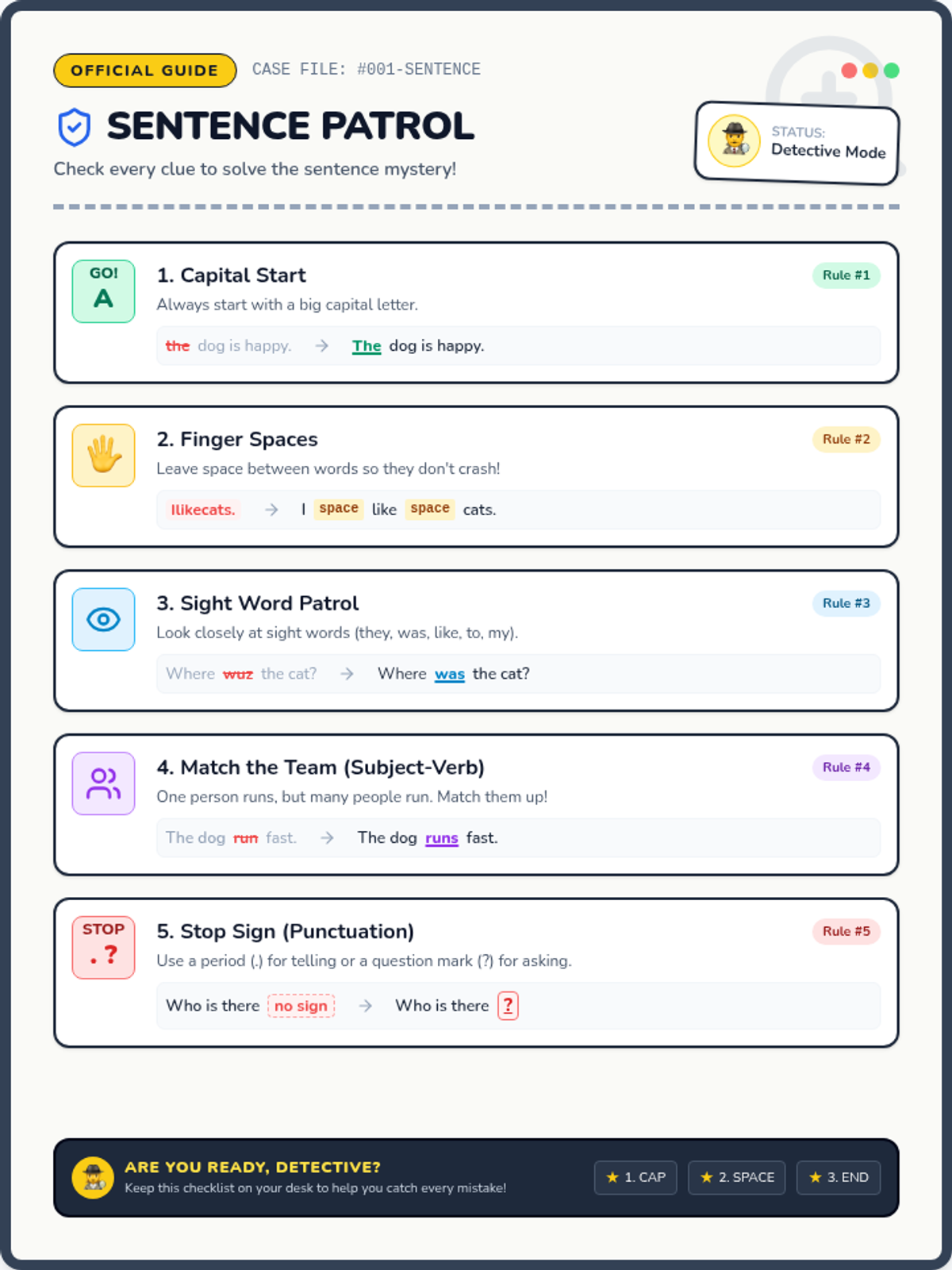
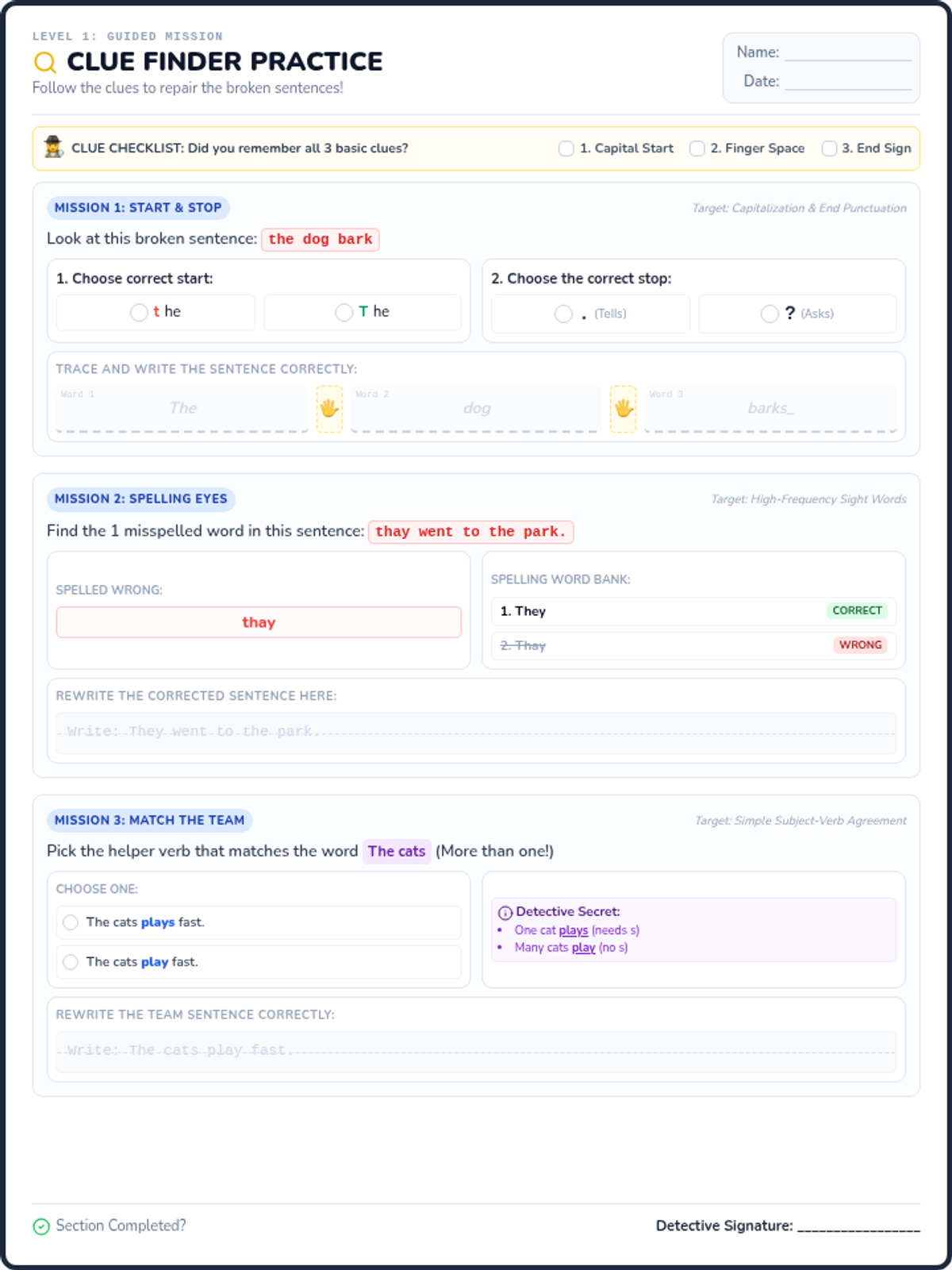
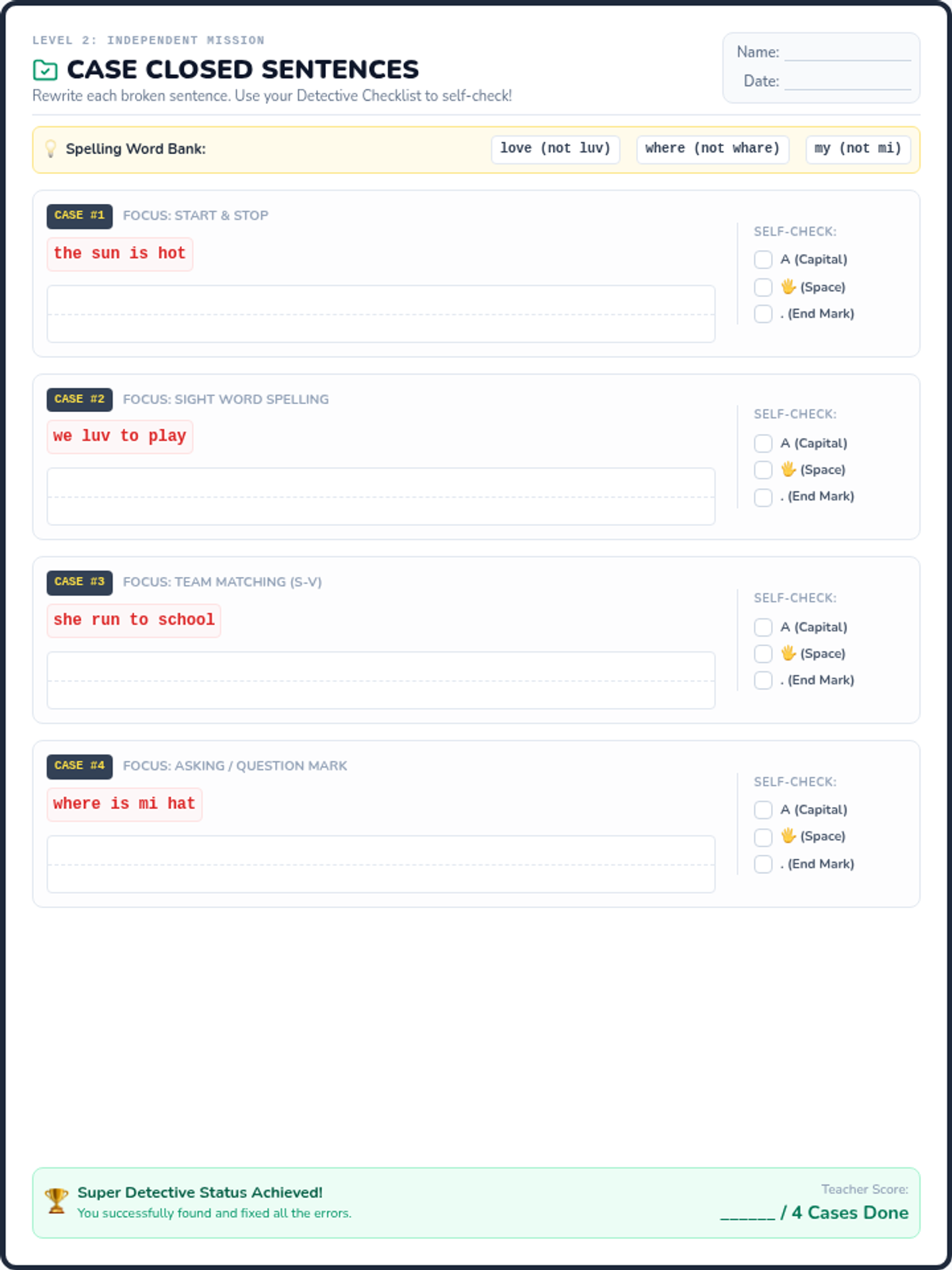
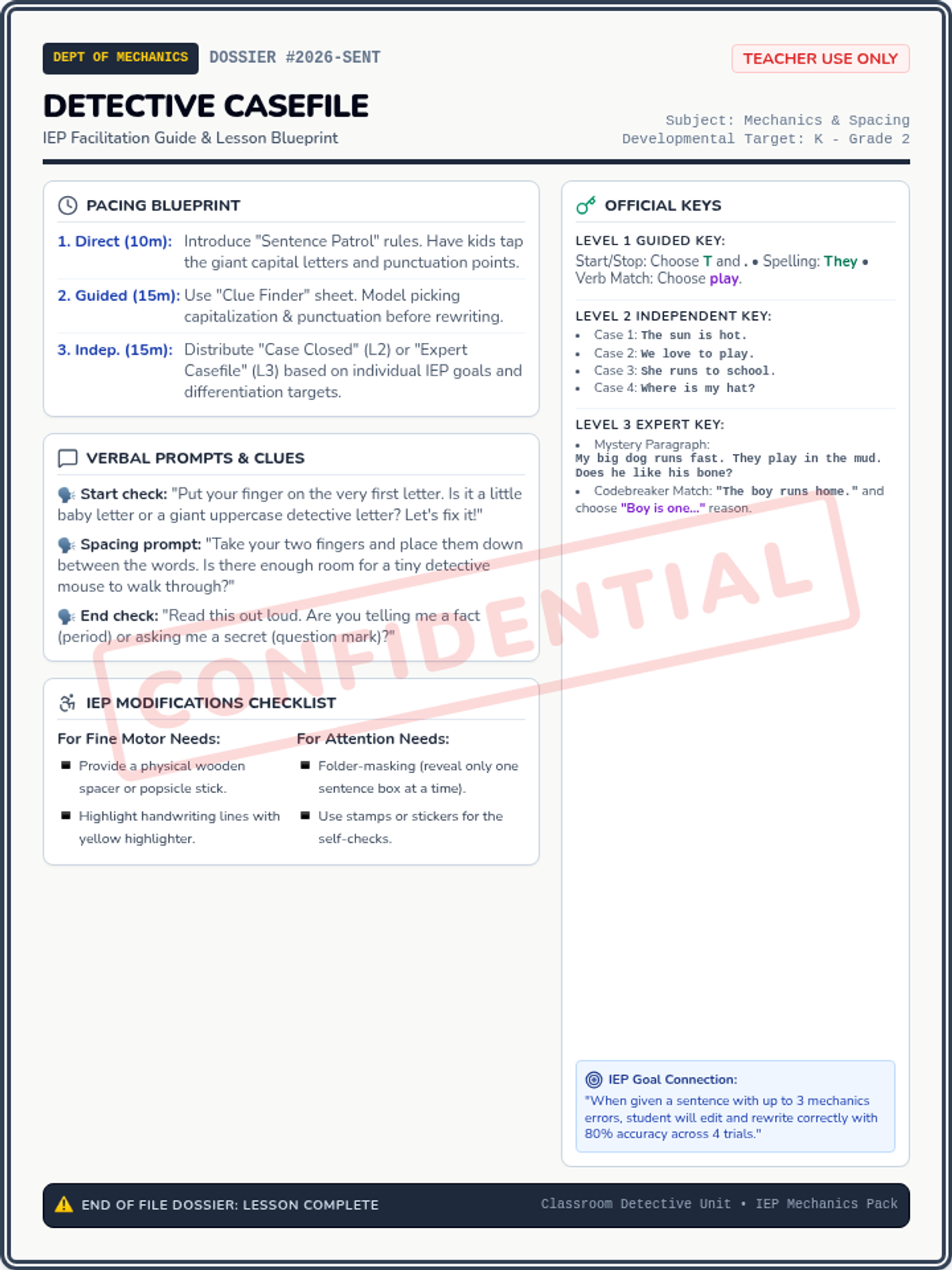
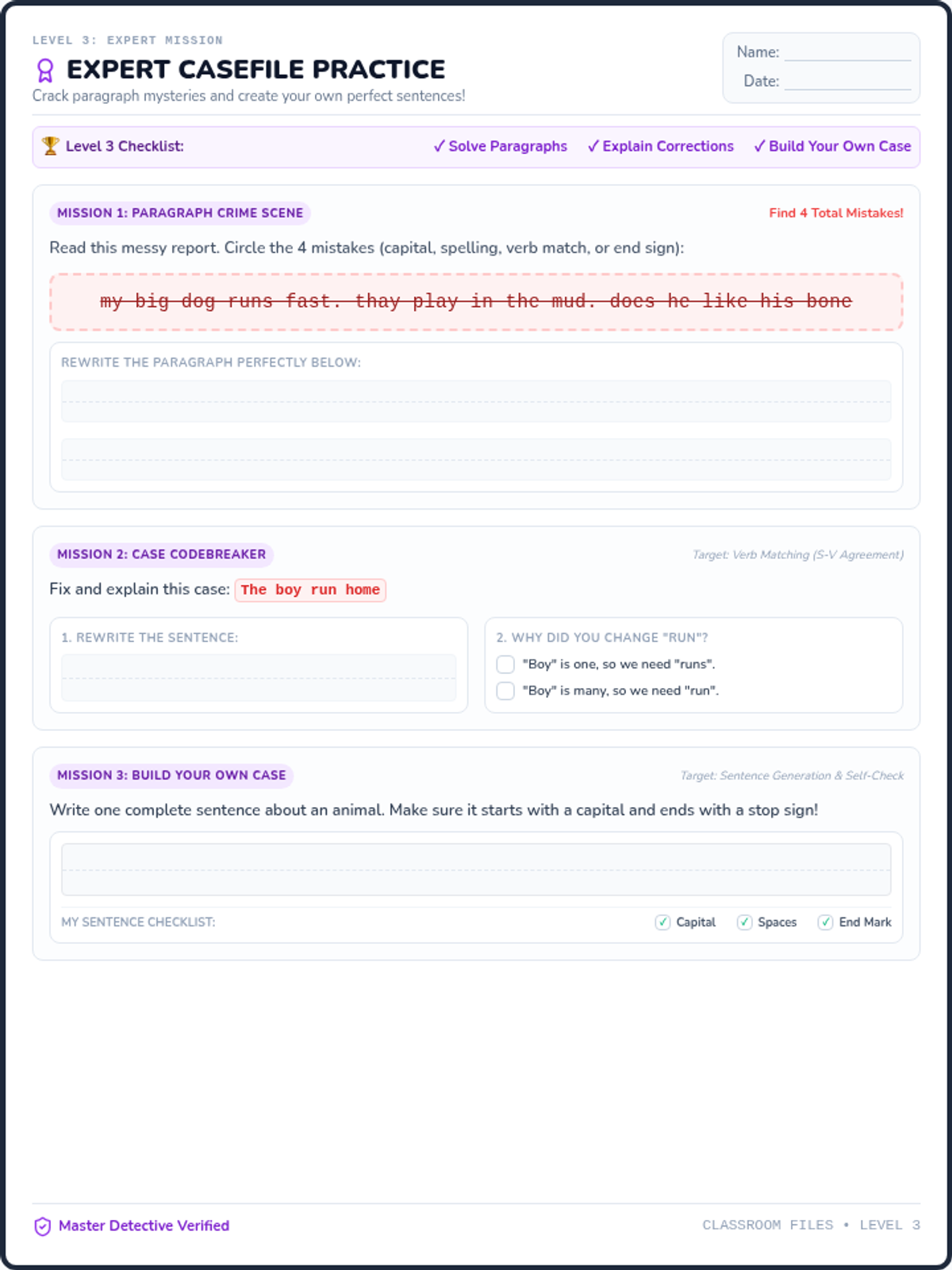
A comprehensive, highly structured lesson bundle designed for IEP students to master sentence correction. It covers capitalization, end punctuation, sight word spelling, spacing, and simple subject-verb agreement through scaffolding, visual aids, and interactive elements.
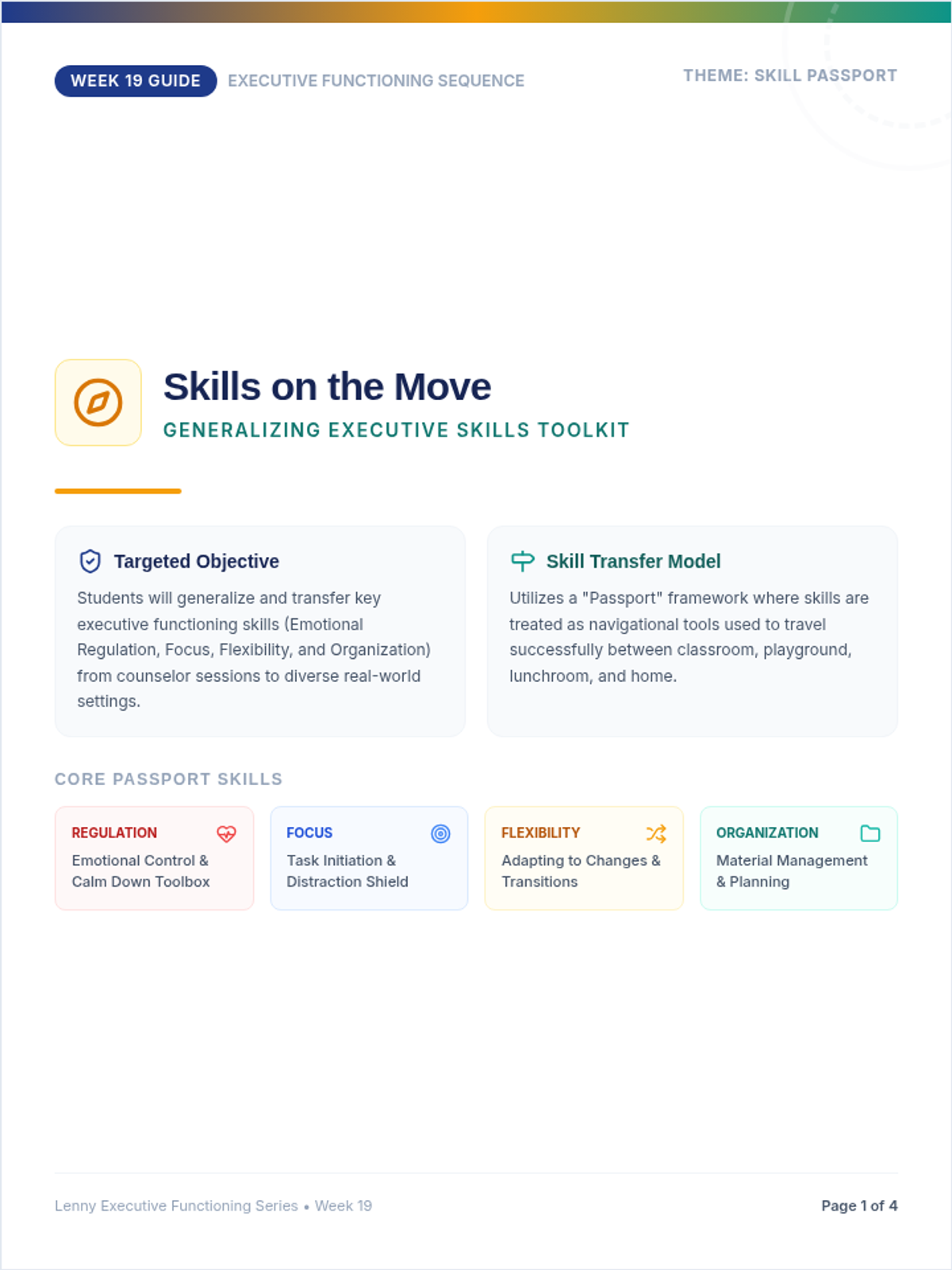
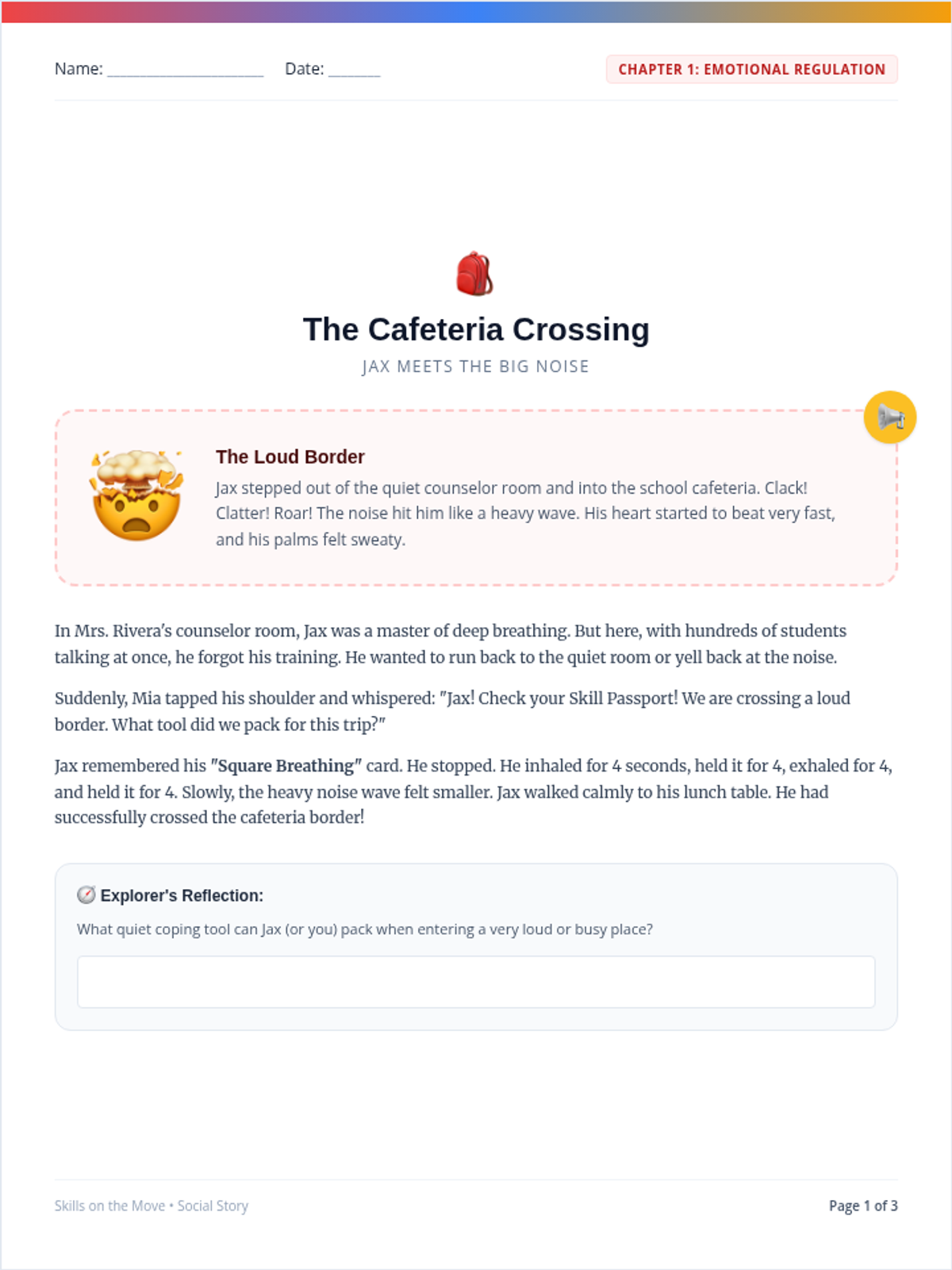
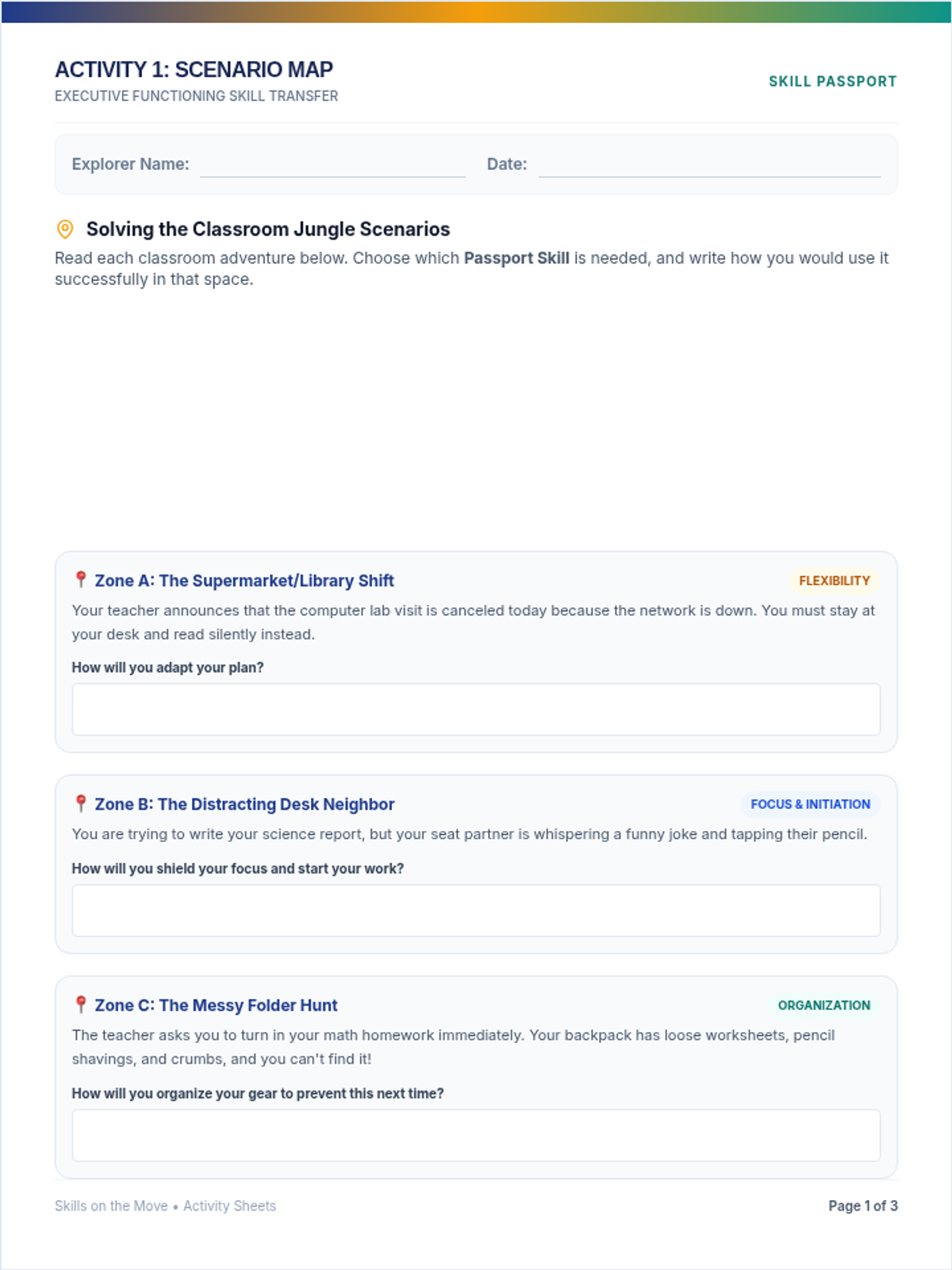
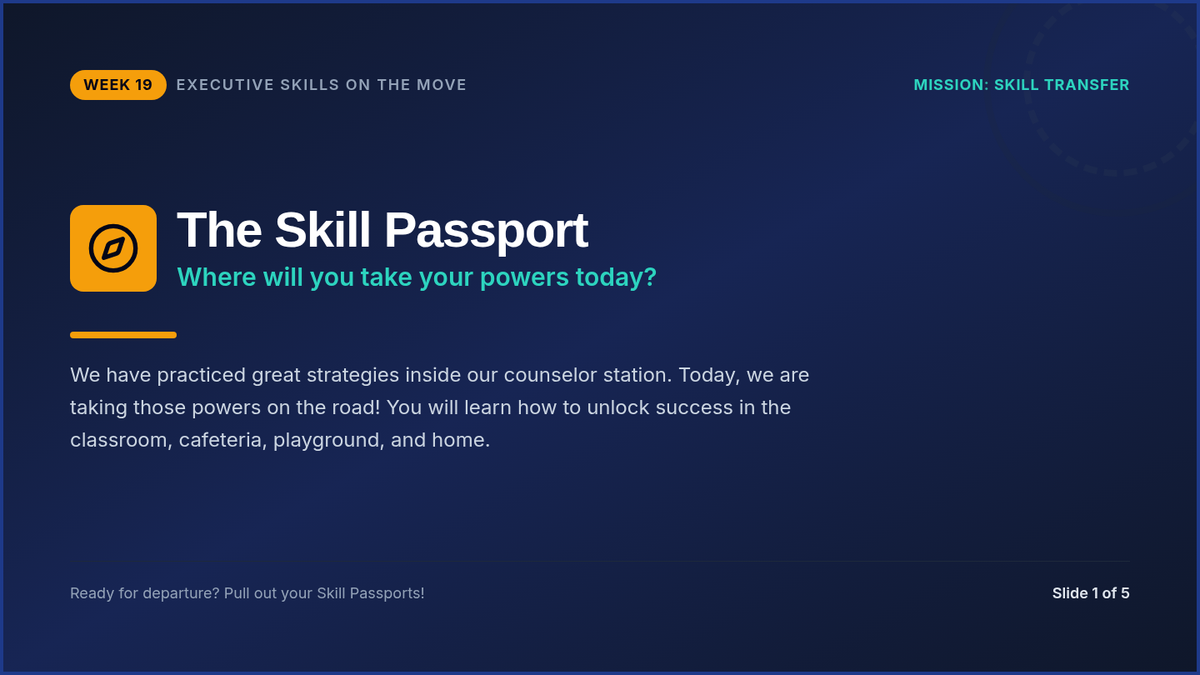
A comprehensive lesson designed to help students generalize and transfer their executive functioning skills—including emotional regulation, focus, flexibility, and organization—across various settings.