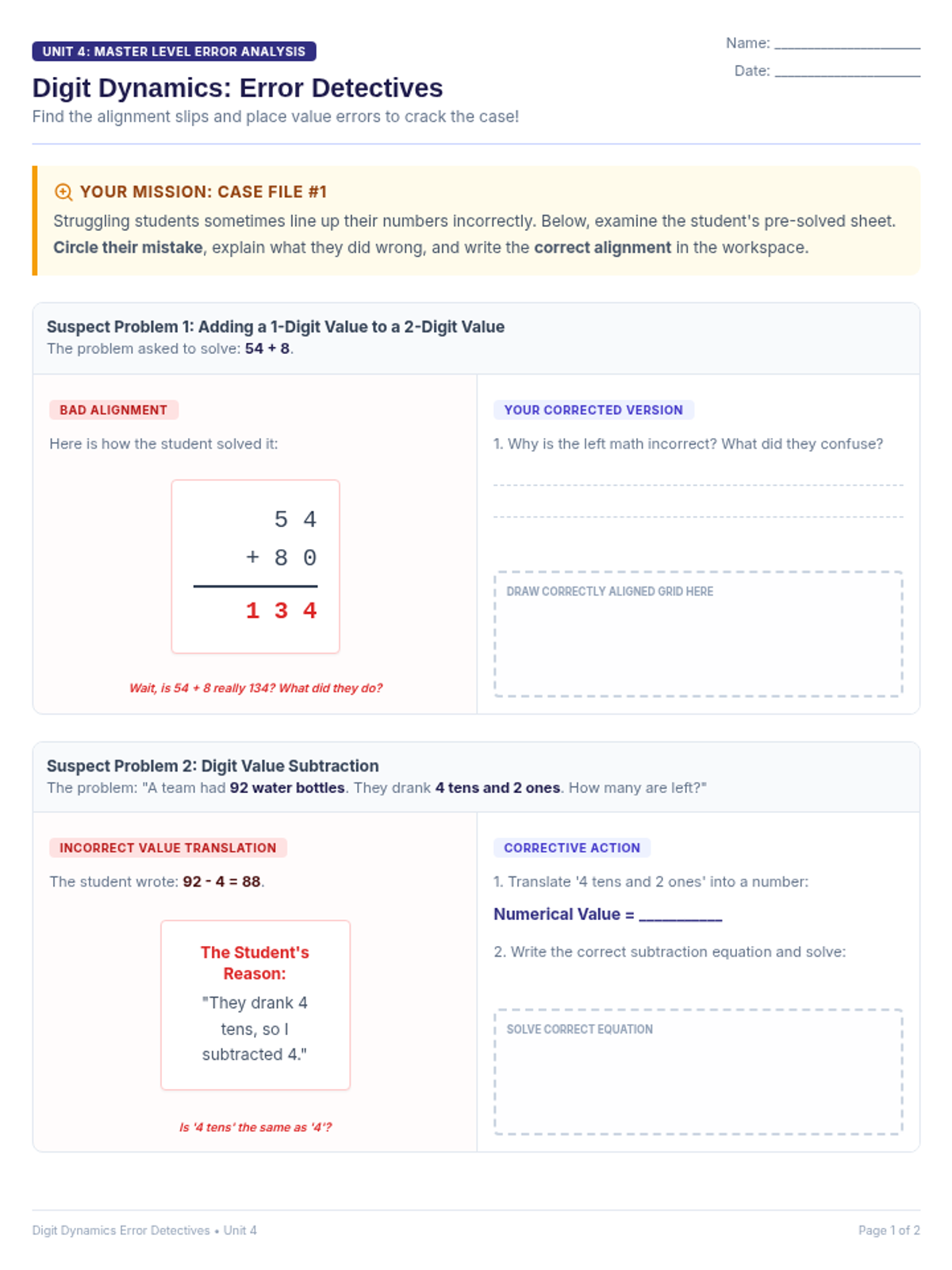
A targeted lesson focused on building student confidence and accuracy in composing and decomposing numbers across a single place value in addition and subtraction, utilizing their preferred problem-solving strategy.
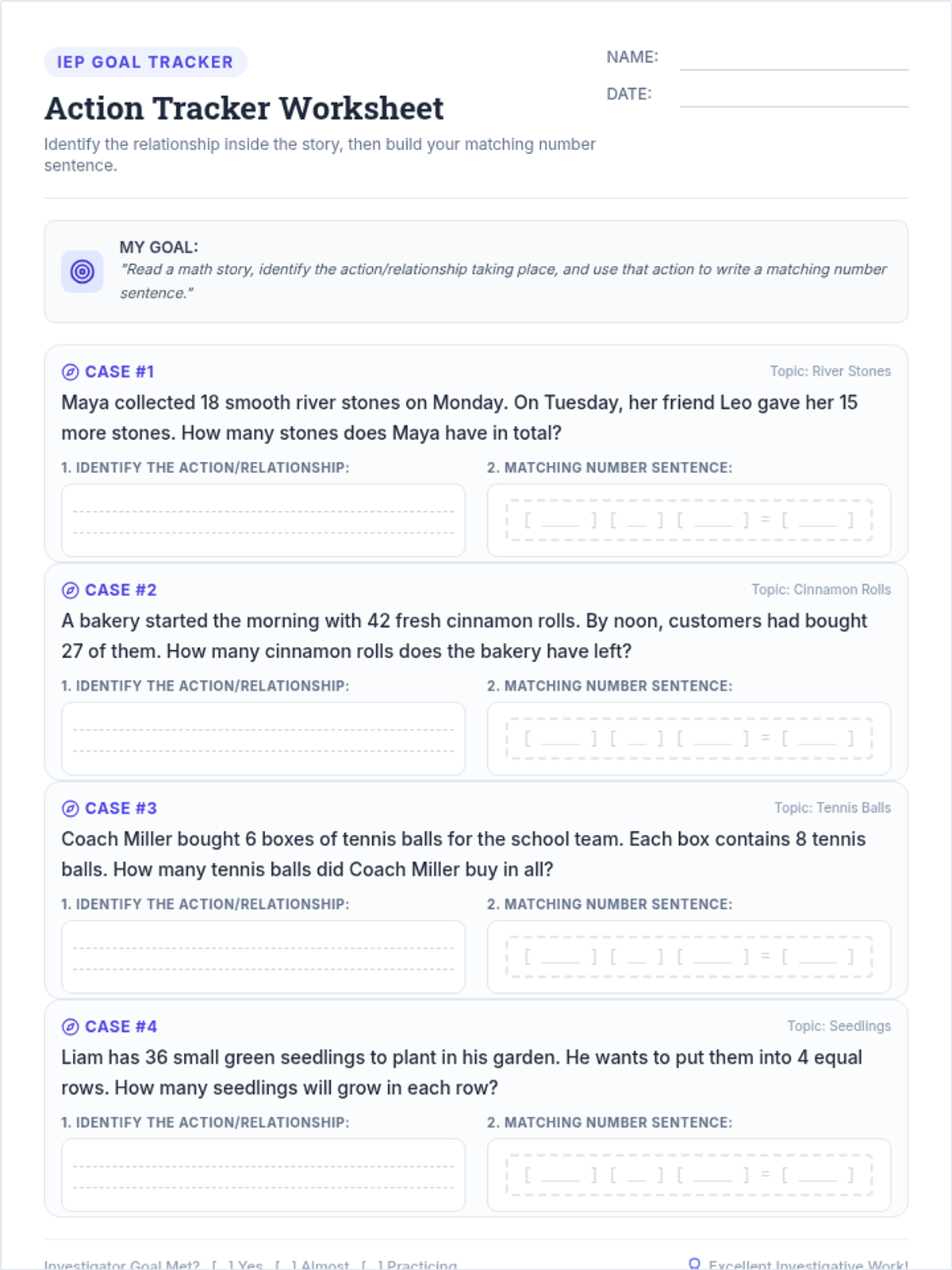
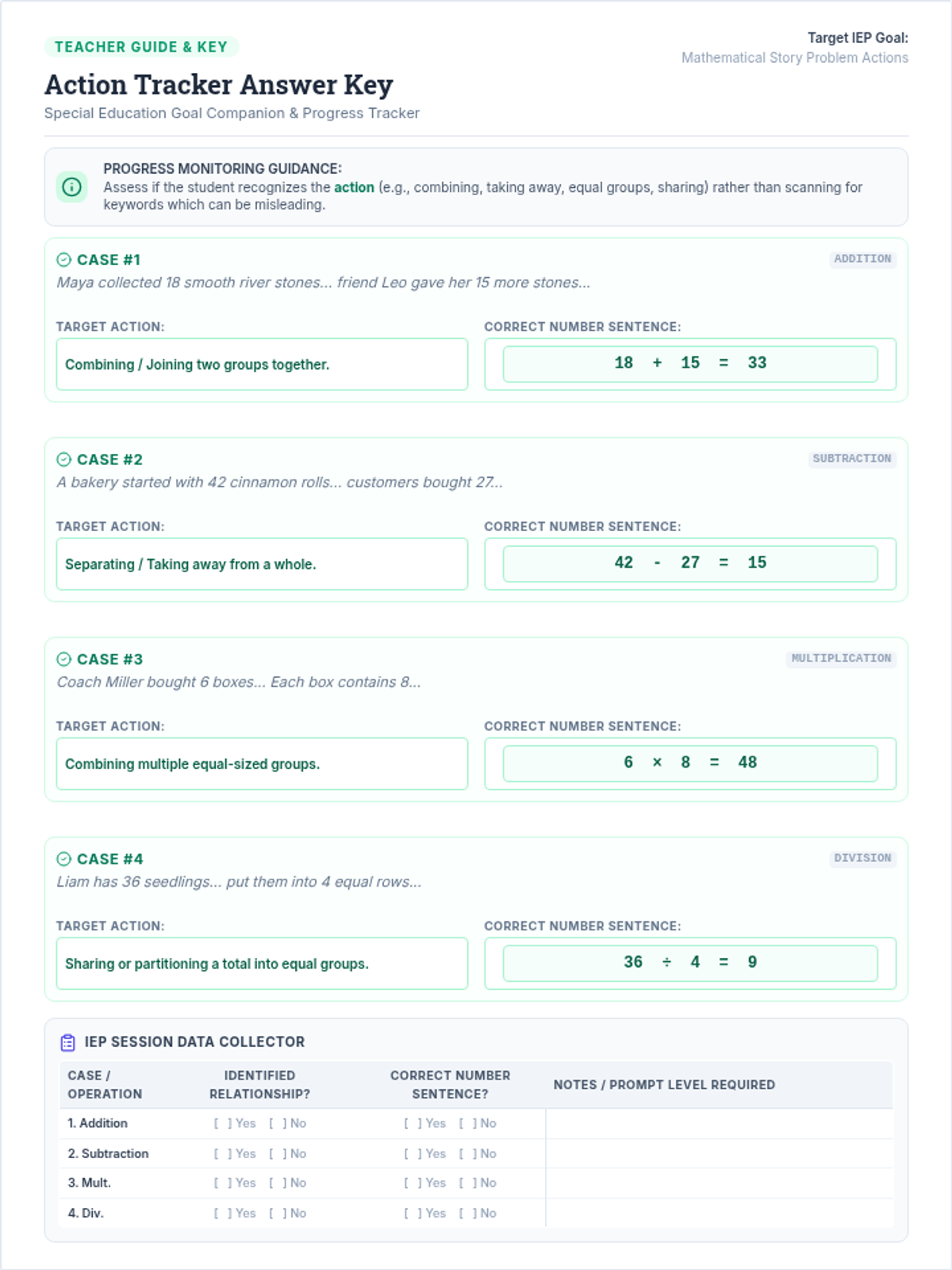
A targeted lesson designed to help students analyze word problems, identify the underlying action or relationship (joining, separating, grouping, or sharing), and translate them into correct number sentences across all four basic operations.
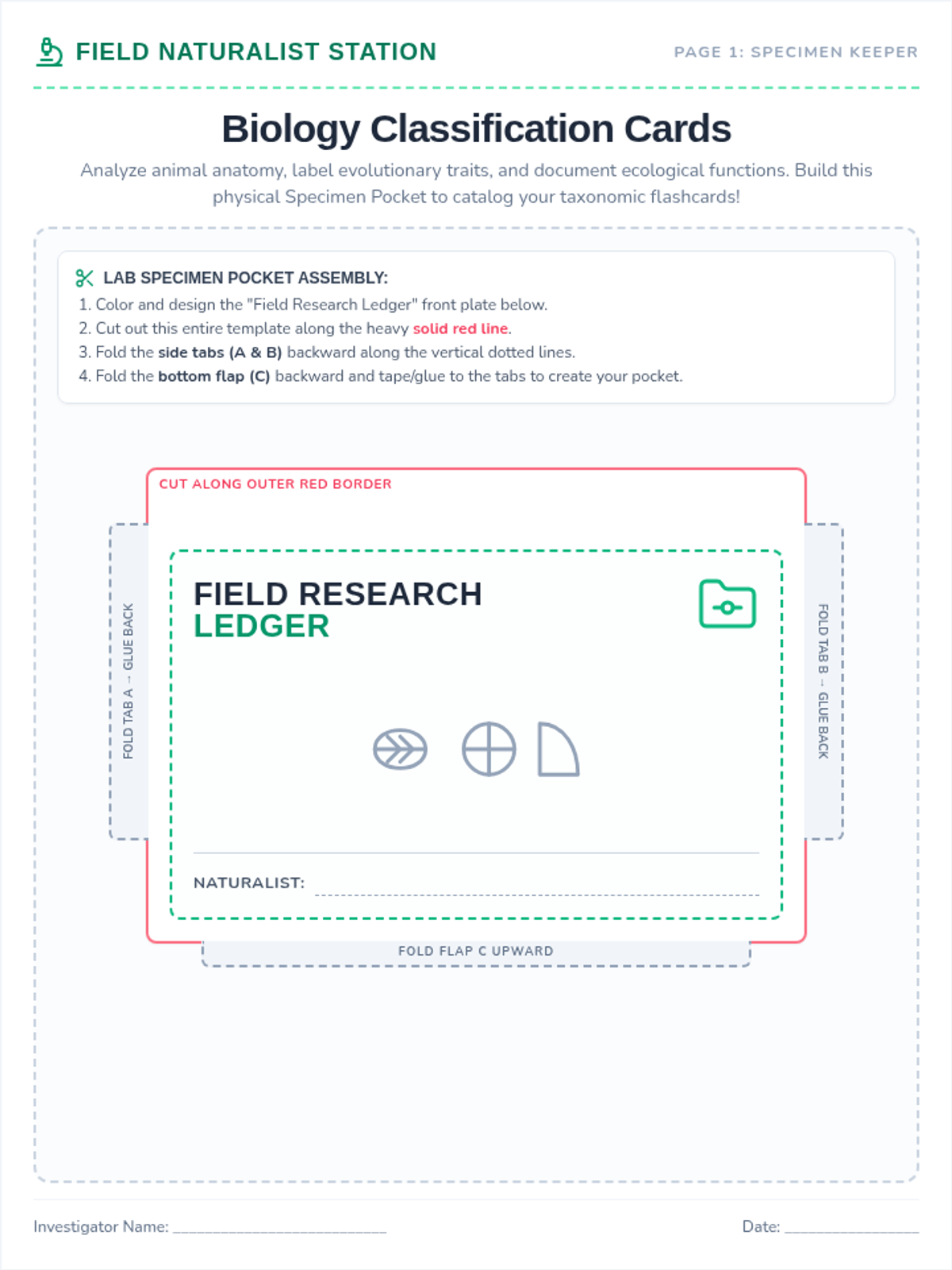
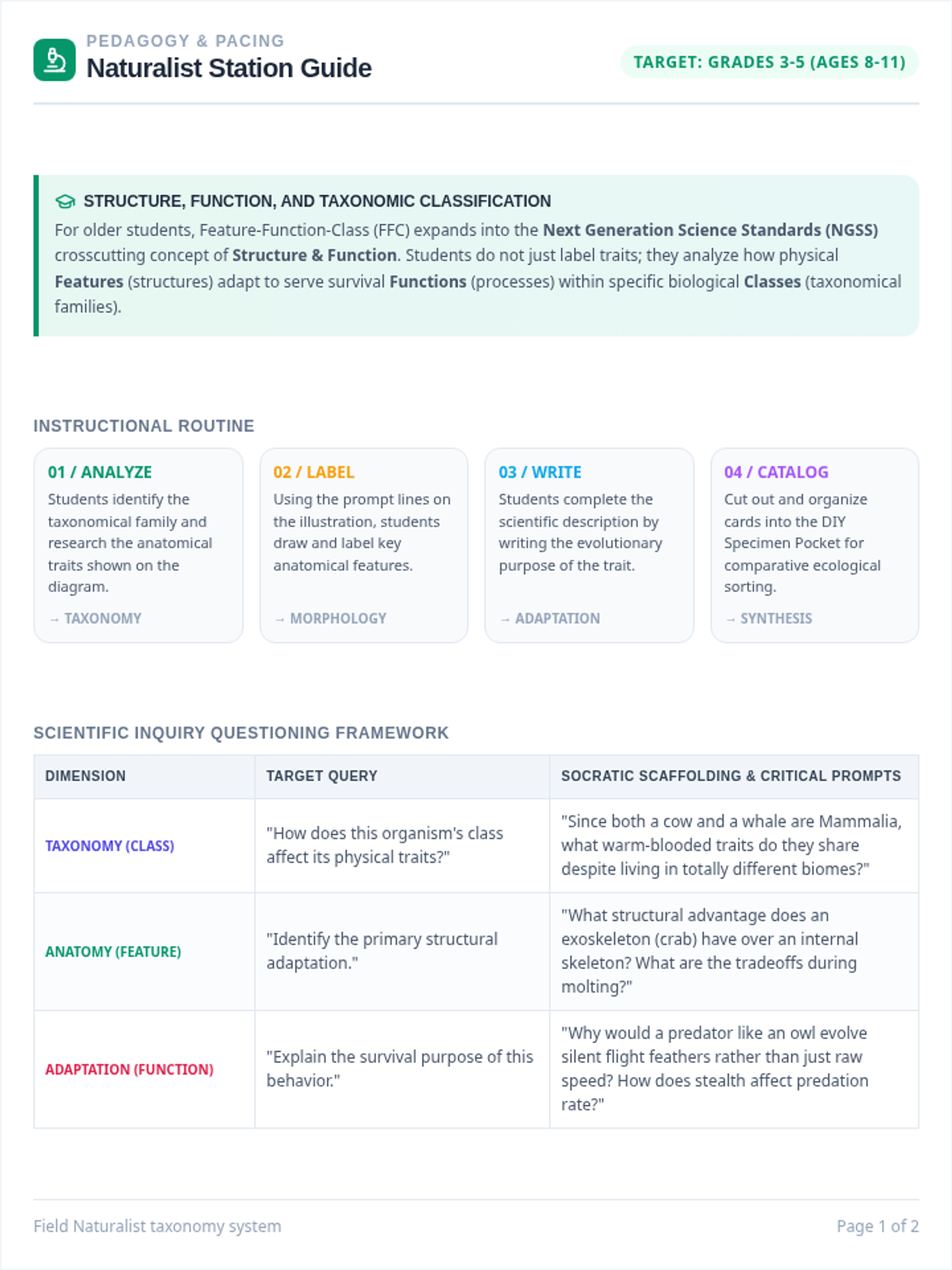
A biology and taxonomy sorting system designed for older kids (Grades 3-5). Students analyze evolutionary adaptations, label critical anatomical features, and categorize specimens by their taxonomic classes, habitats, and ecological functions.
Weeks 16-20 (Sessions 31-40) focusing on advanced problem solving, error analysis, self-regulation checklists for 80% accuracy, and the Session 36 Progress Monitoring milestone.
Weeks 11-15 (Sessions 21-30) focusing on multi-step addition and subtraction word problems (sums/differences 50-100) using visual schemas and Session 27 Progress Monitoring.
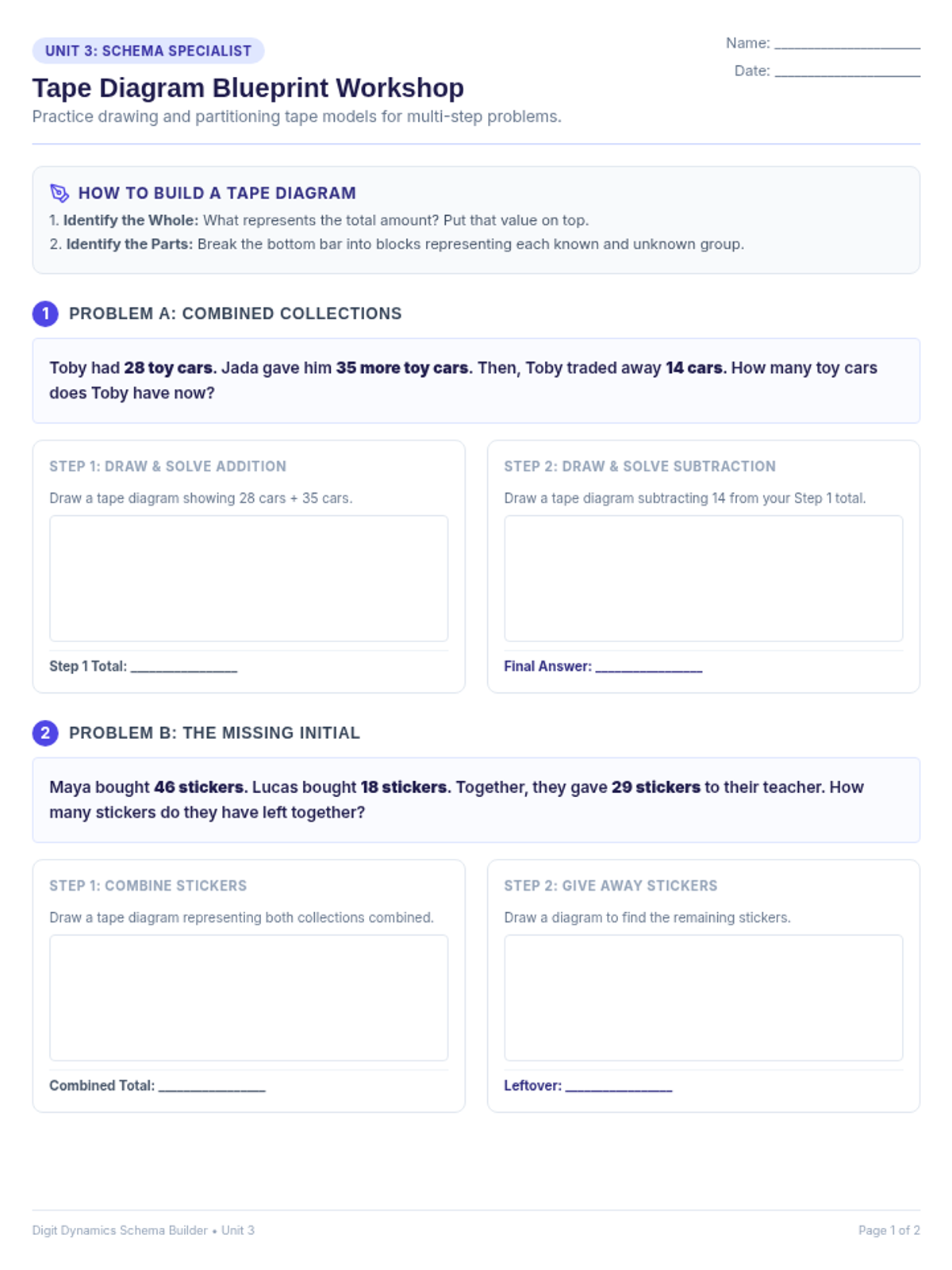
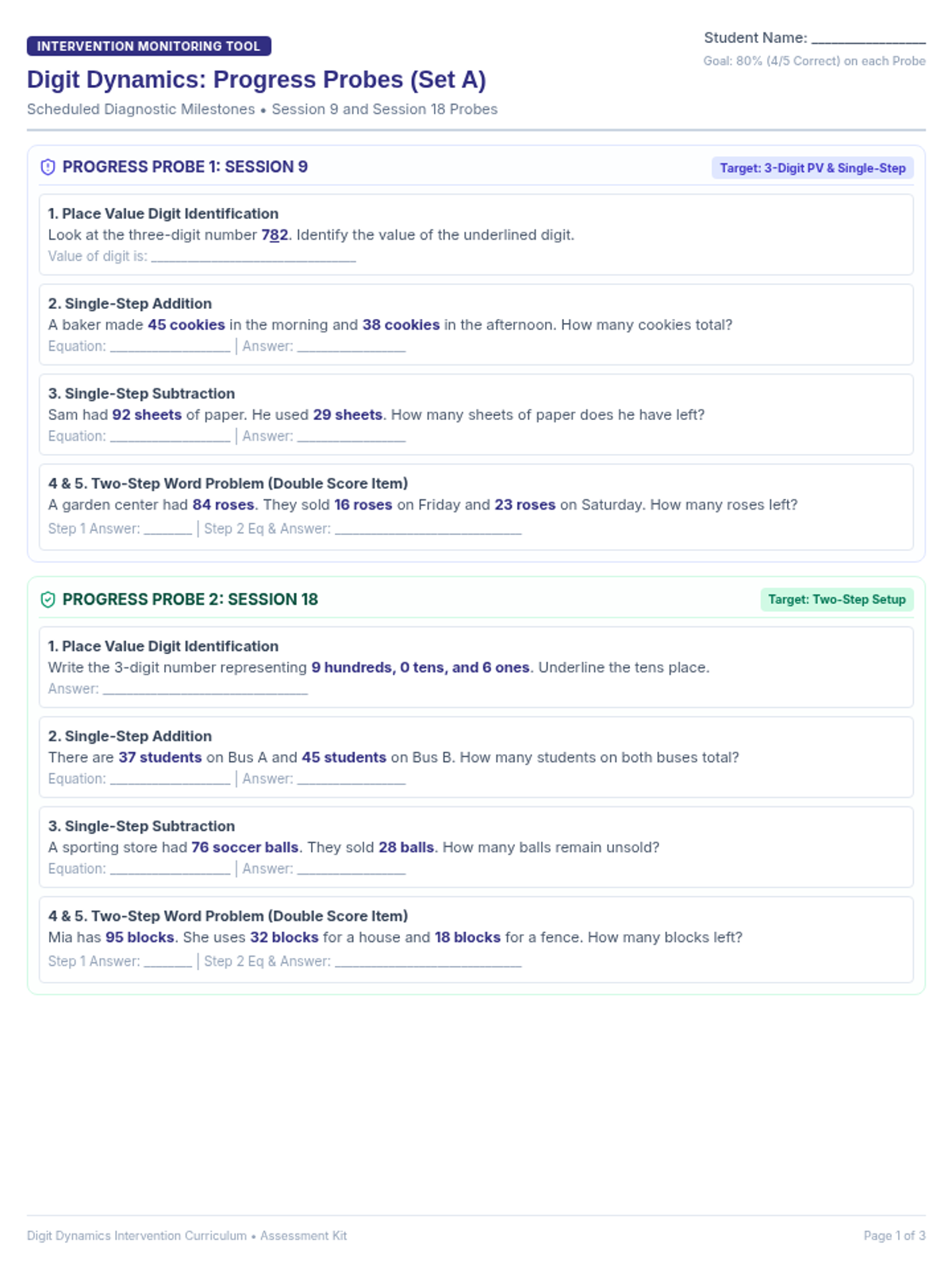
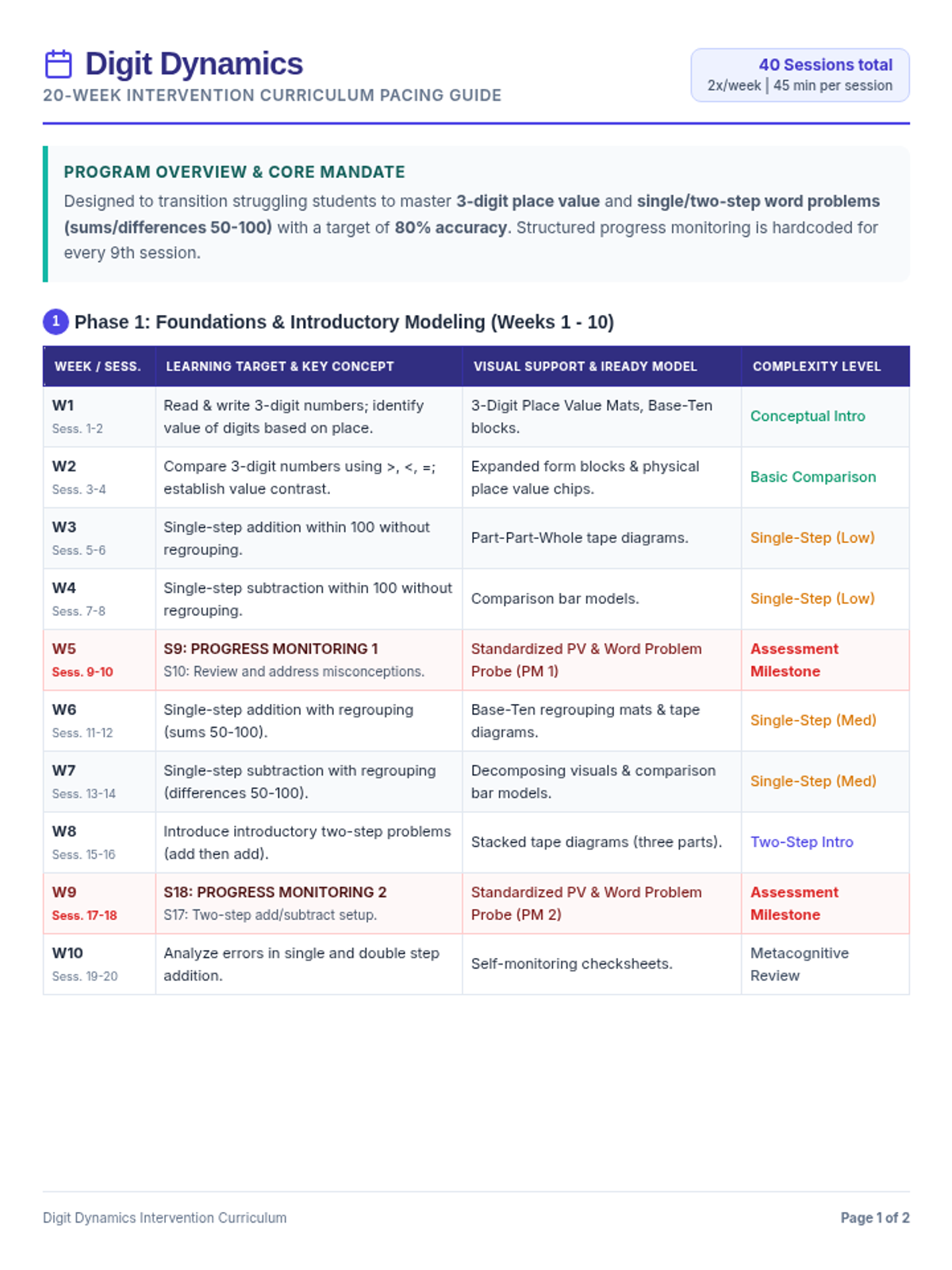
Weeks 6-10 (Sessions 11-20) focusing on introducing bar models and tape diagrams to represent addition and subtraction word problems within 100, plus Session 18 Progress Monitoring.
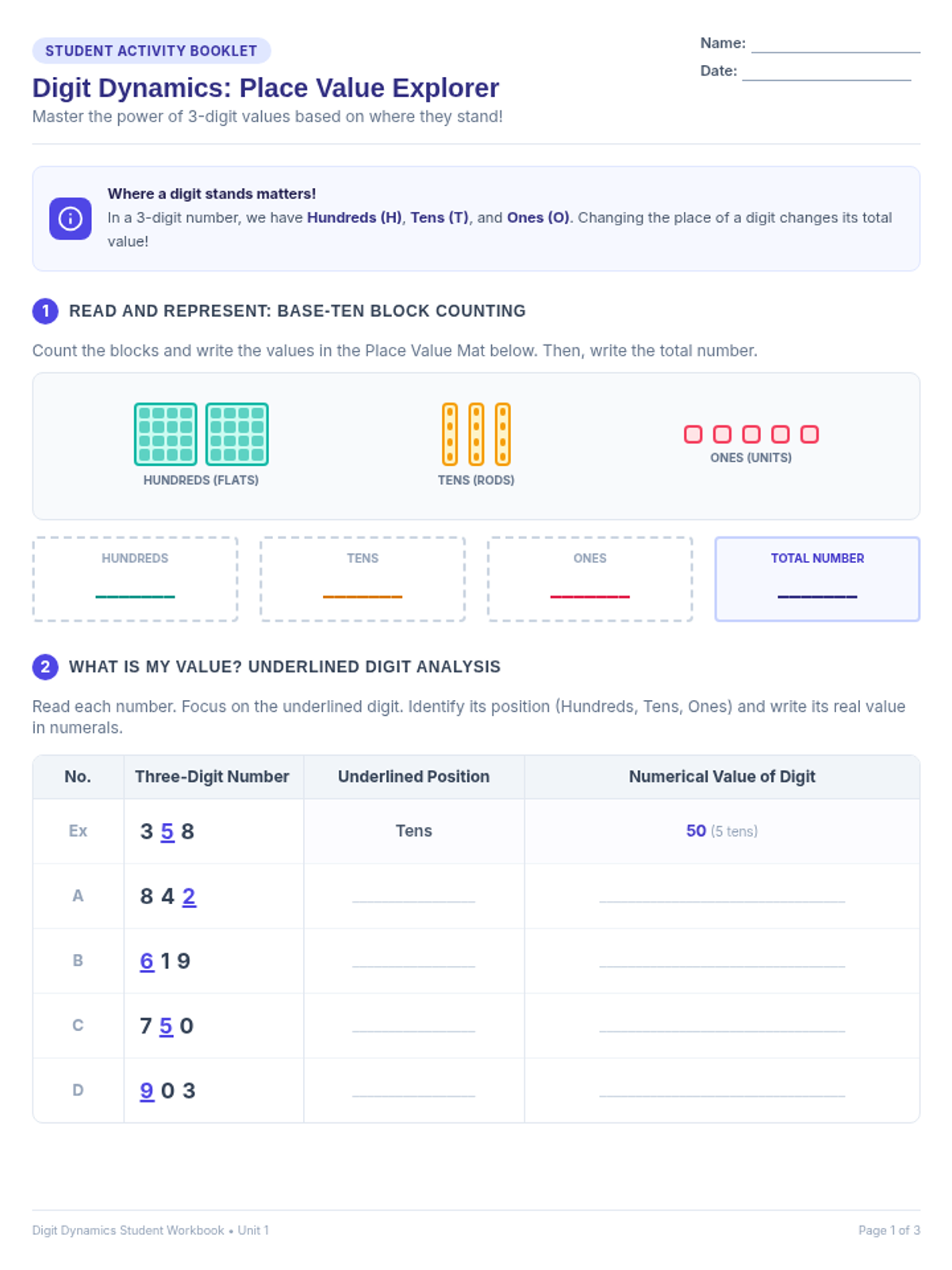
Weeks 1-5 (Sessions 1-10) focusing on 3-digit place value foundations, base-ten visual modeling, and single-step operations. Includes the Session 9 Progress Monitoring milestone.
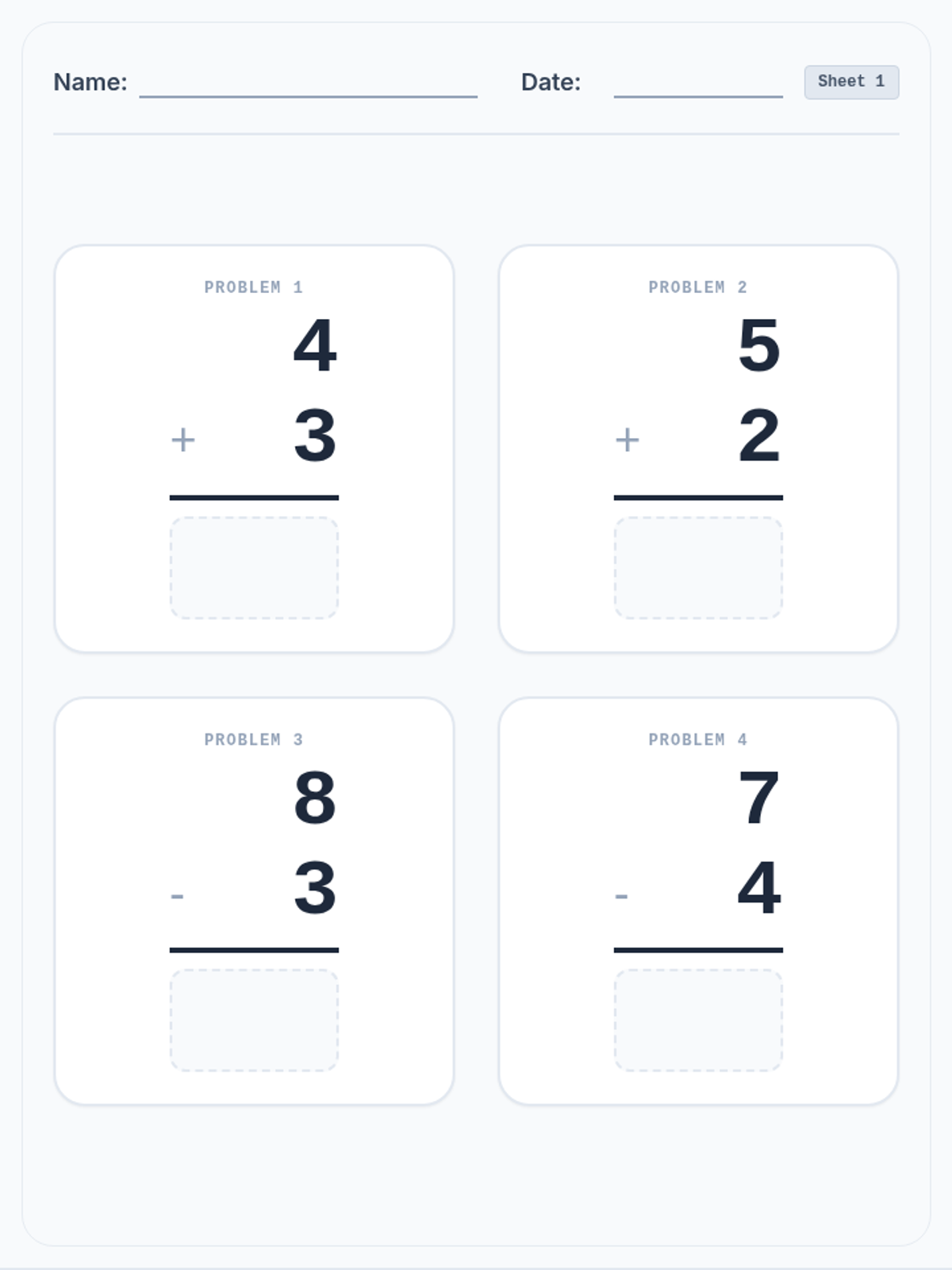
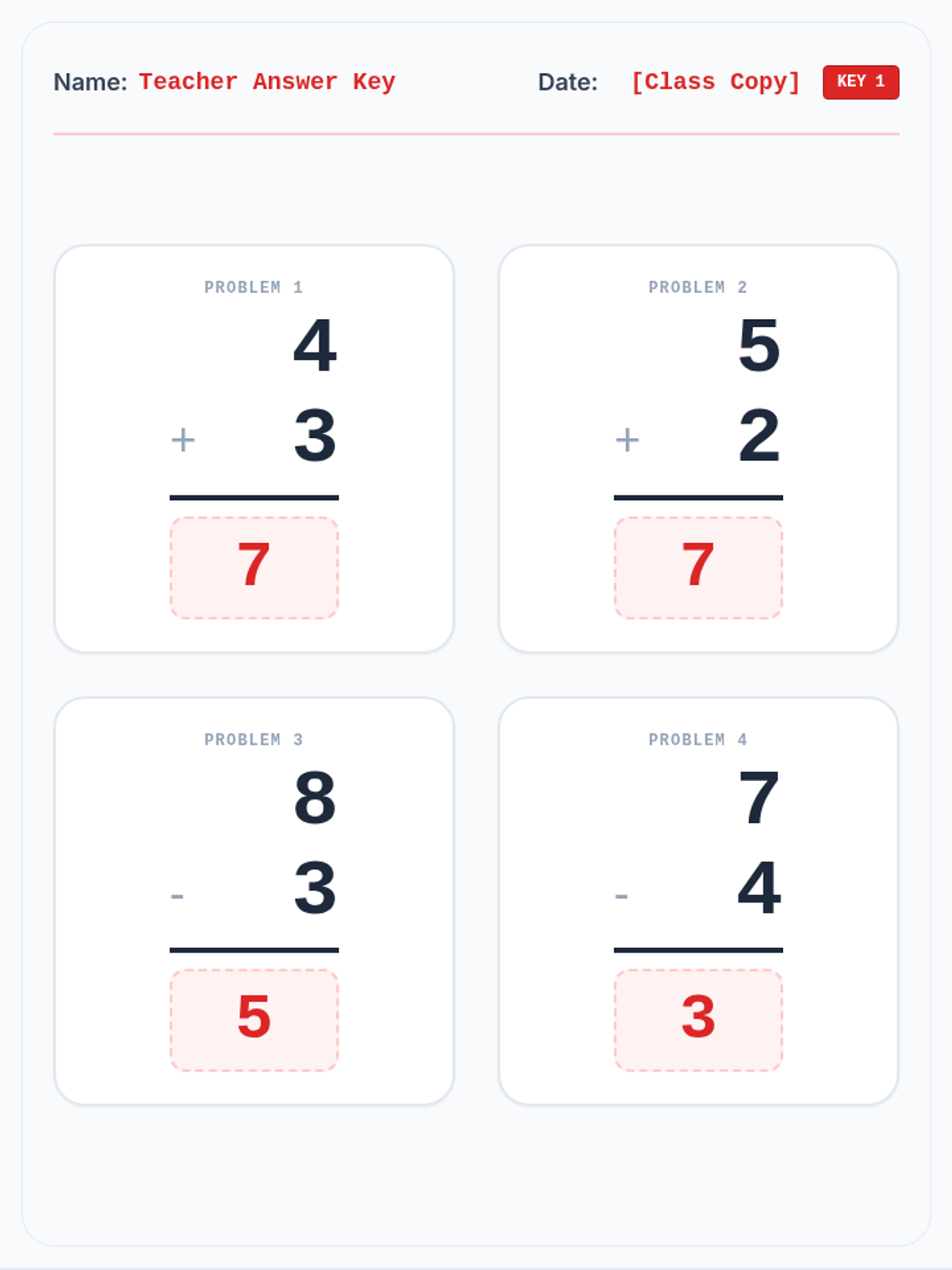
A collection of 20 high-frequency printable math worksheets designed to build addition and subtraction fluency within 20, containing standard vertical algorithm problems.
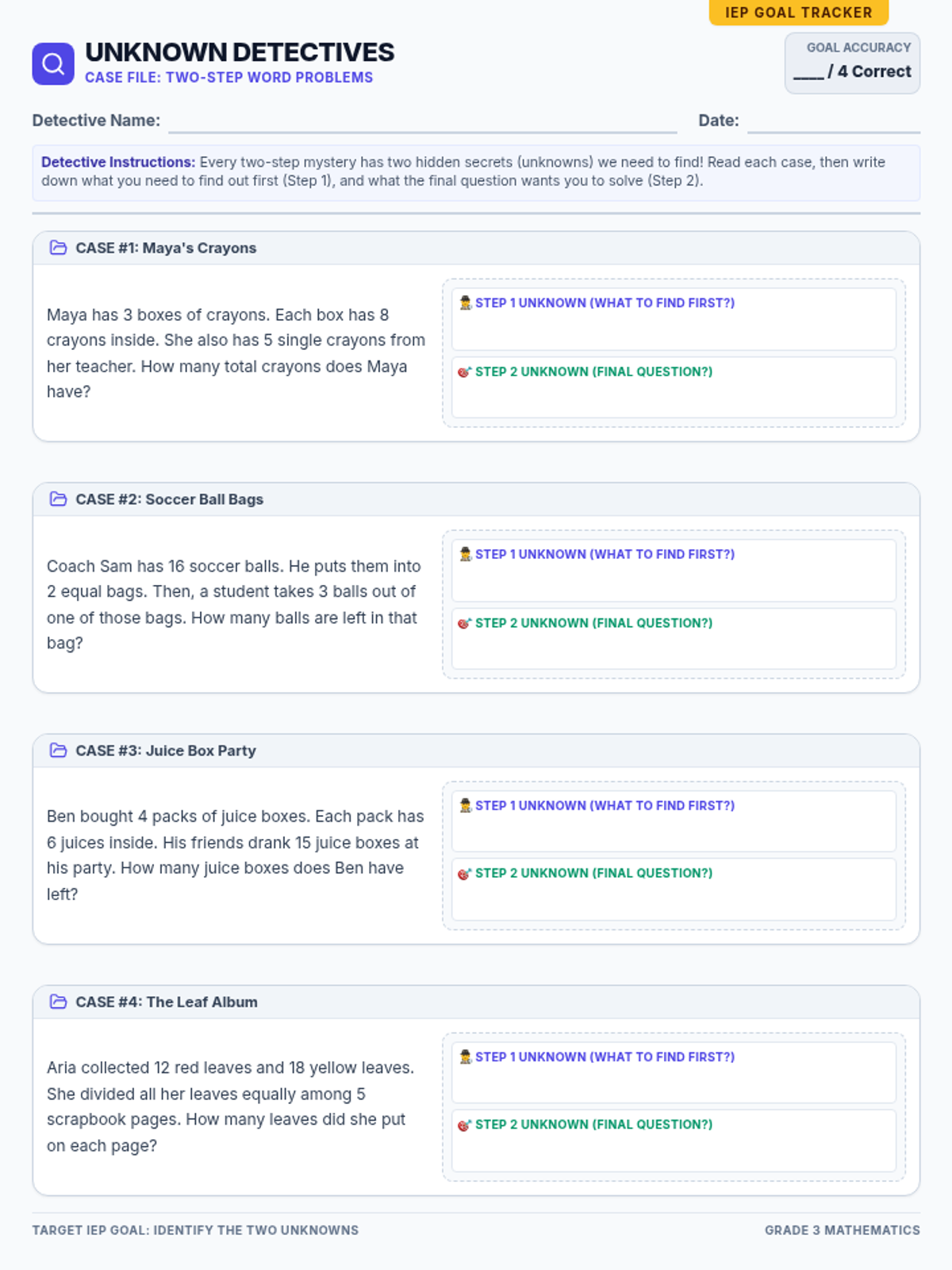
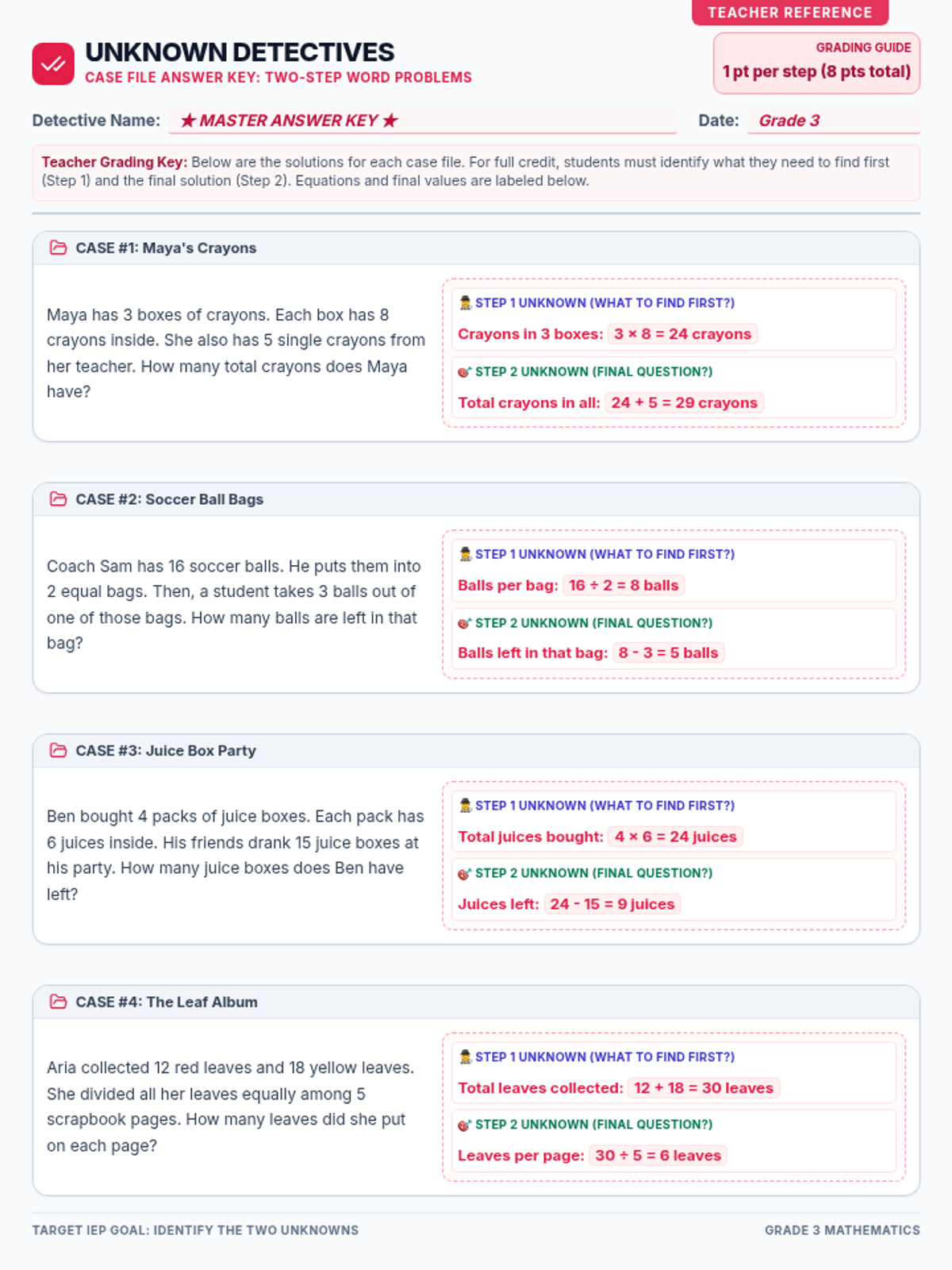
A math lesson for 3rd-grade students focused on solving two-step word problems by breaking them down into separate unknowns. Students act as 'detectives' to discover hidden values in structured case files.
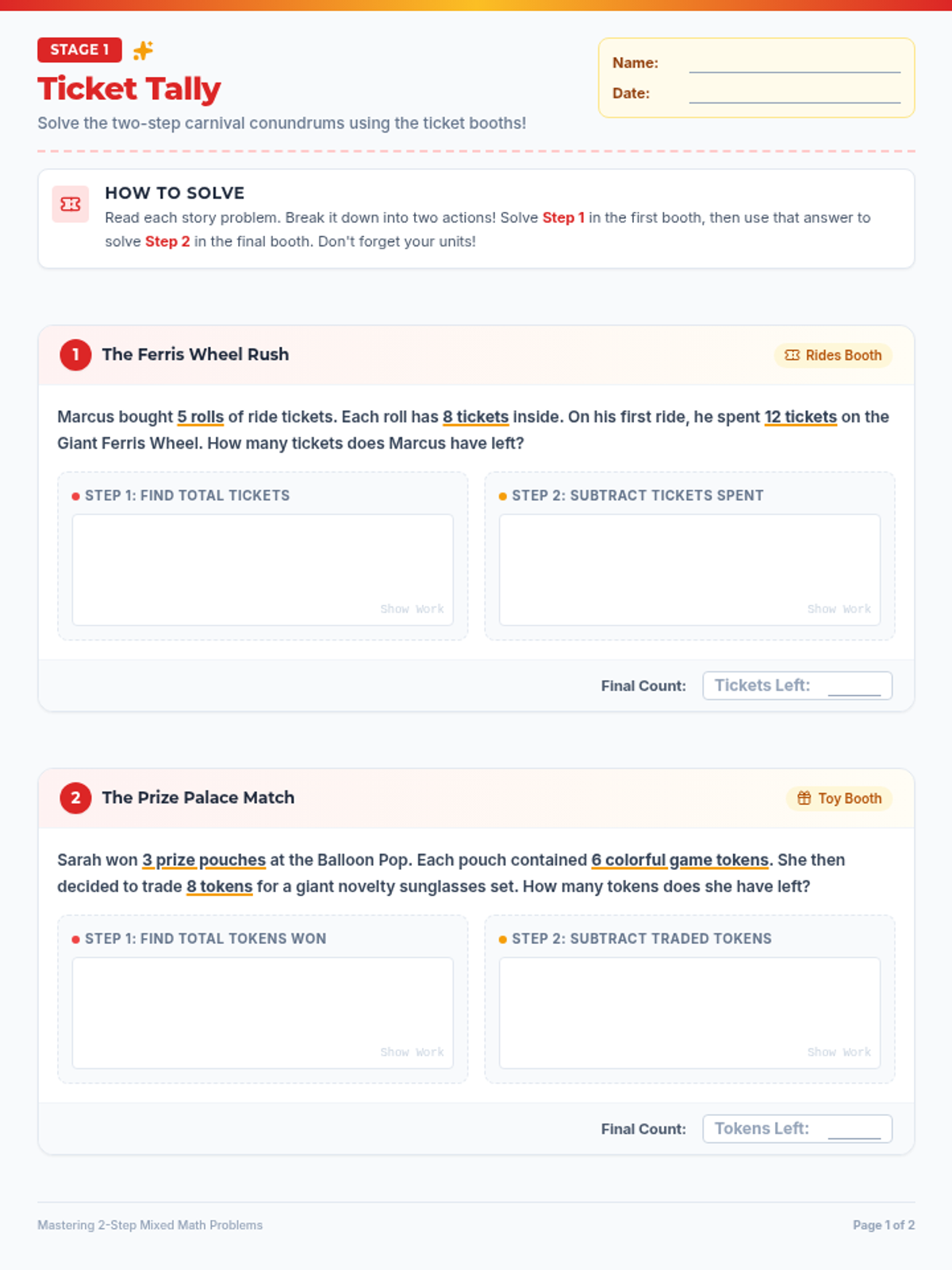
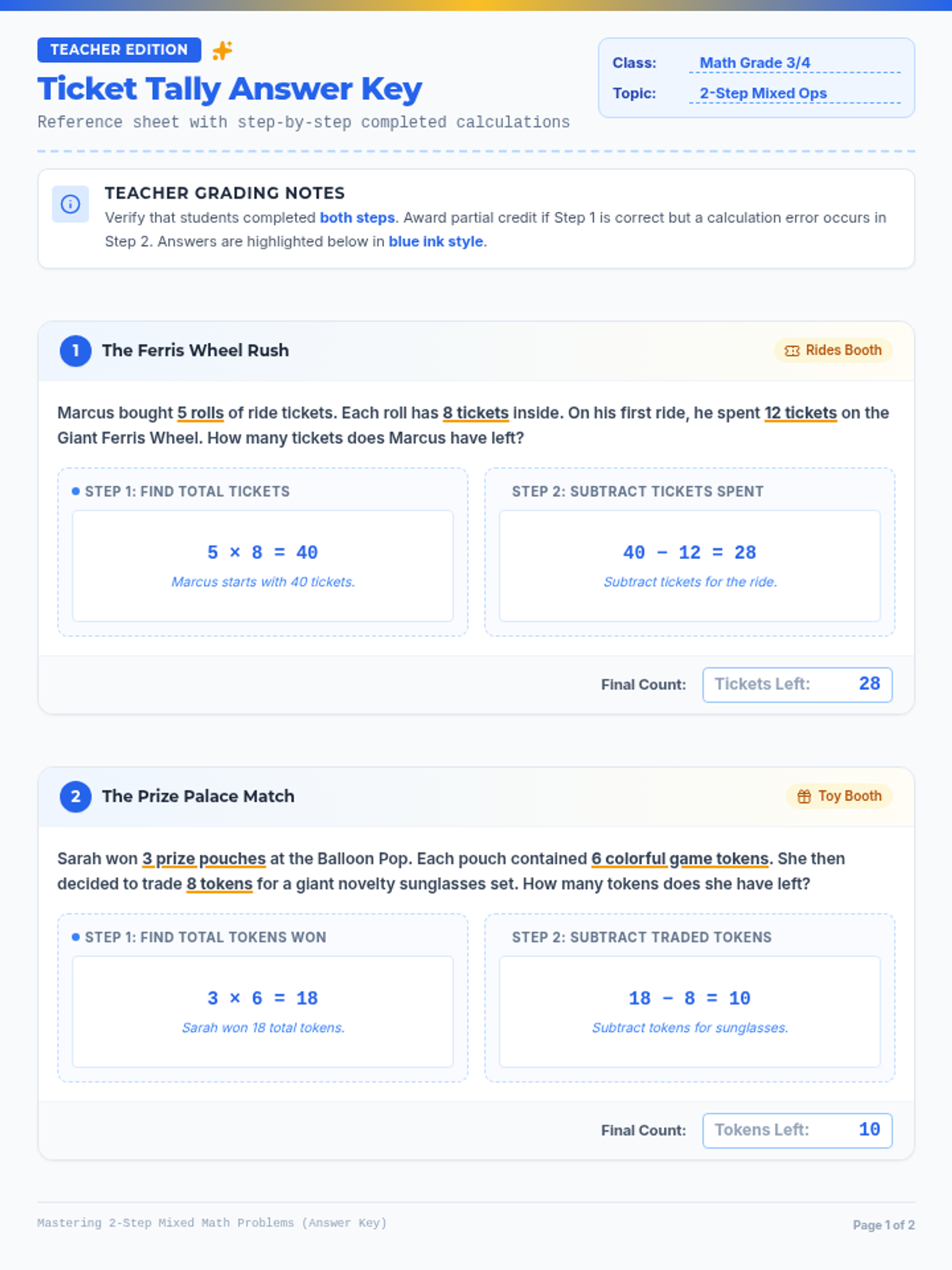
A mathematics lesson focused on breaking down and solving two-step mixed operation word problems. Students use structured graphic organizers themed around carnival ticket purchases, ride costs, and prize booths to master multi-step problem solving.
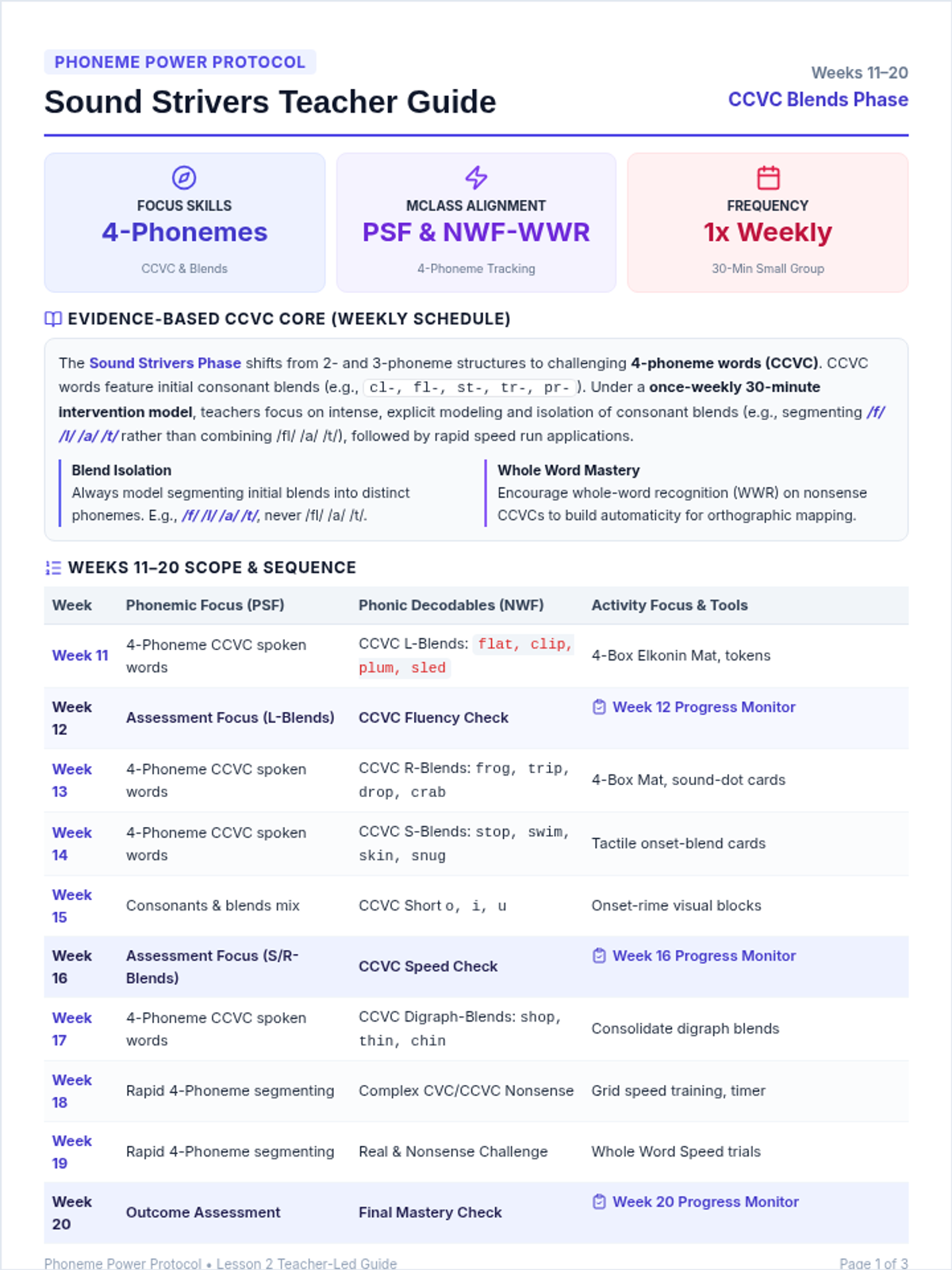
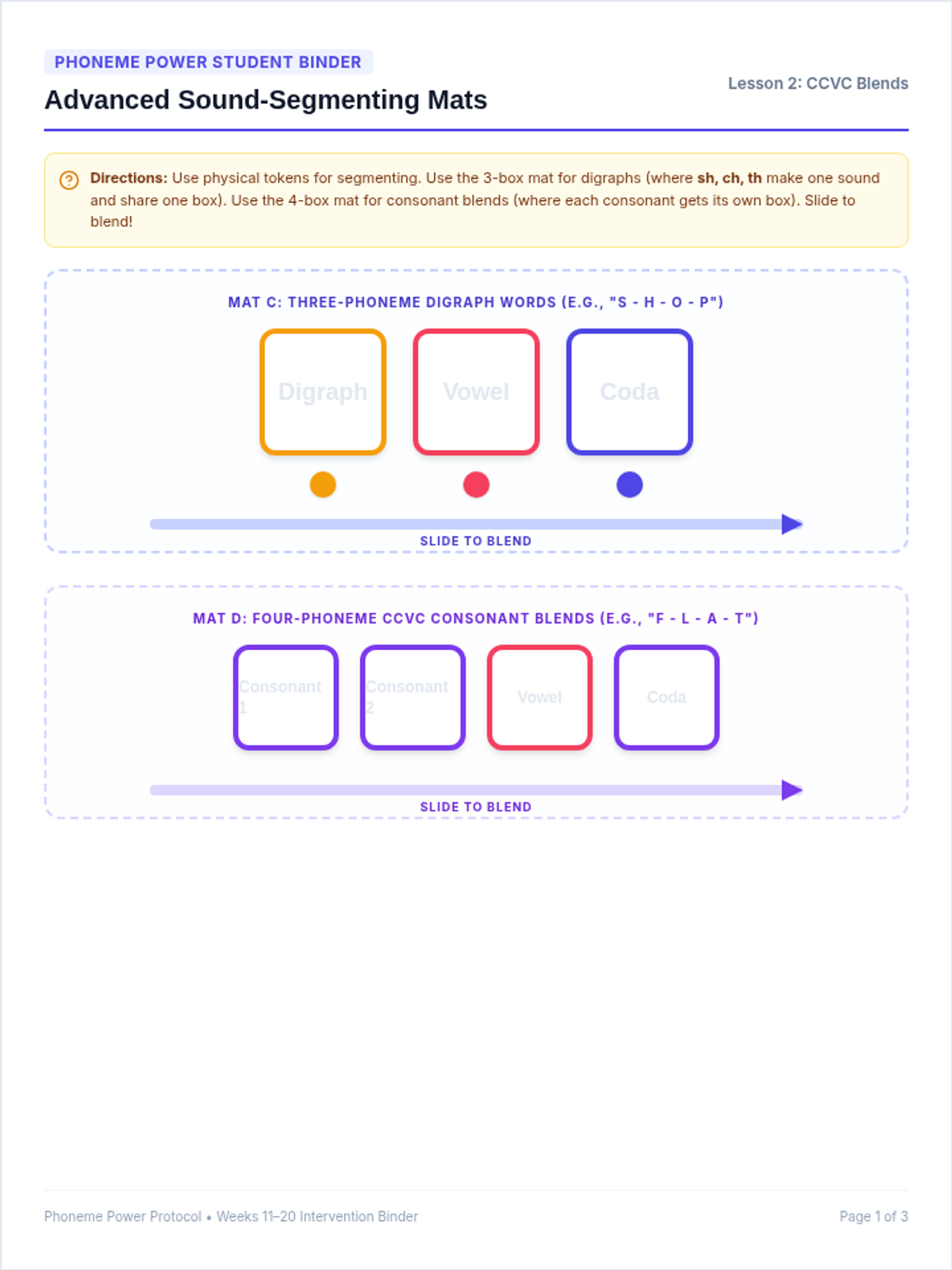
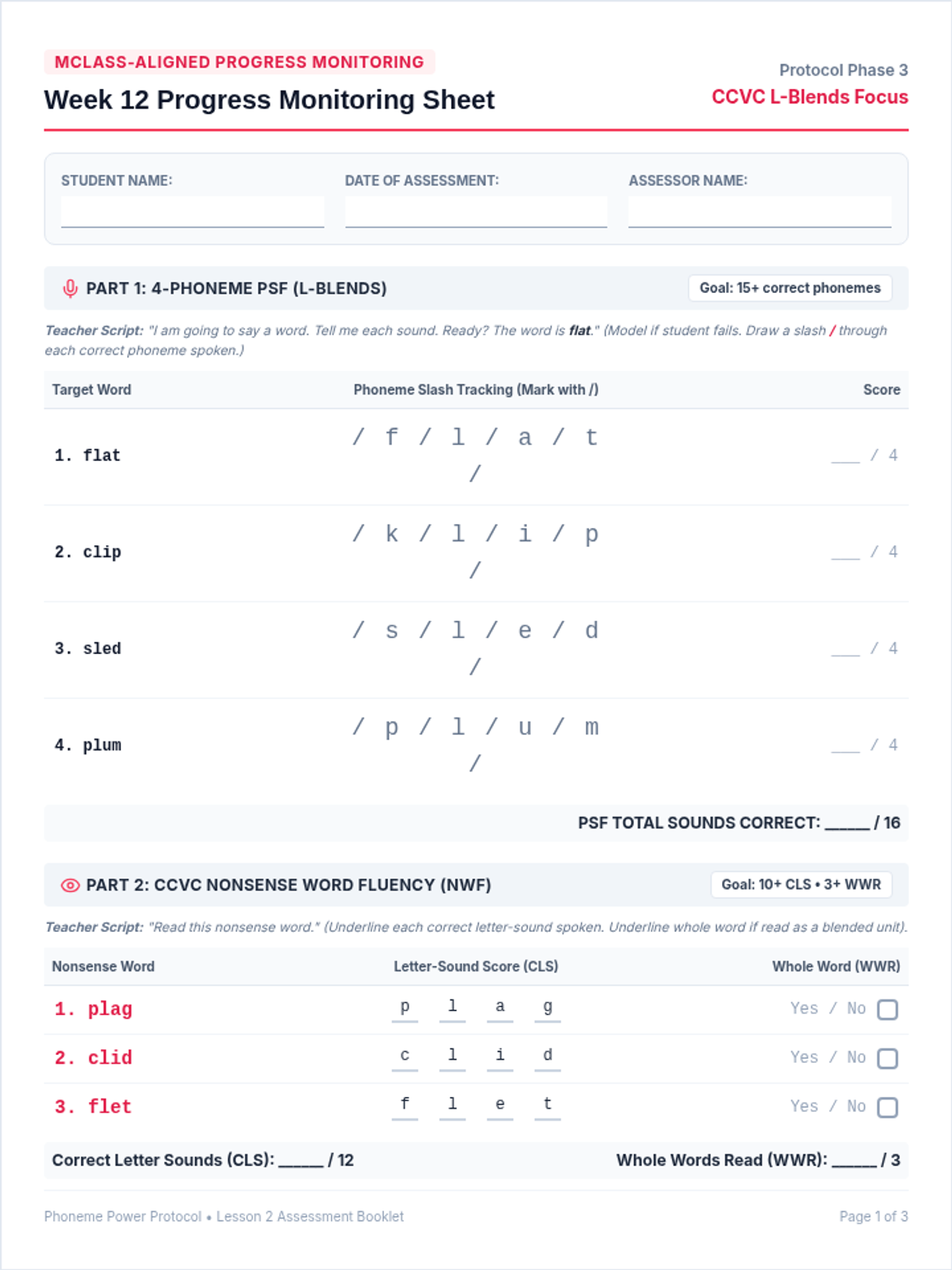
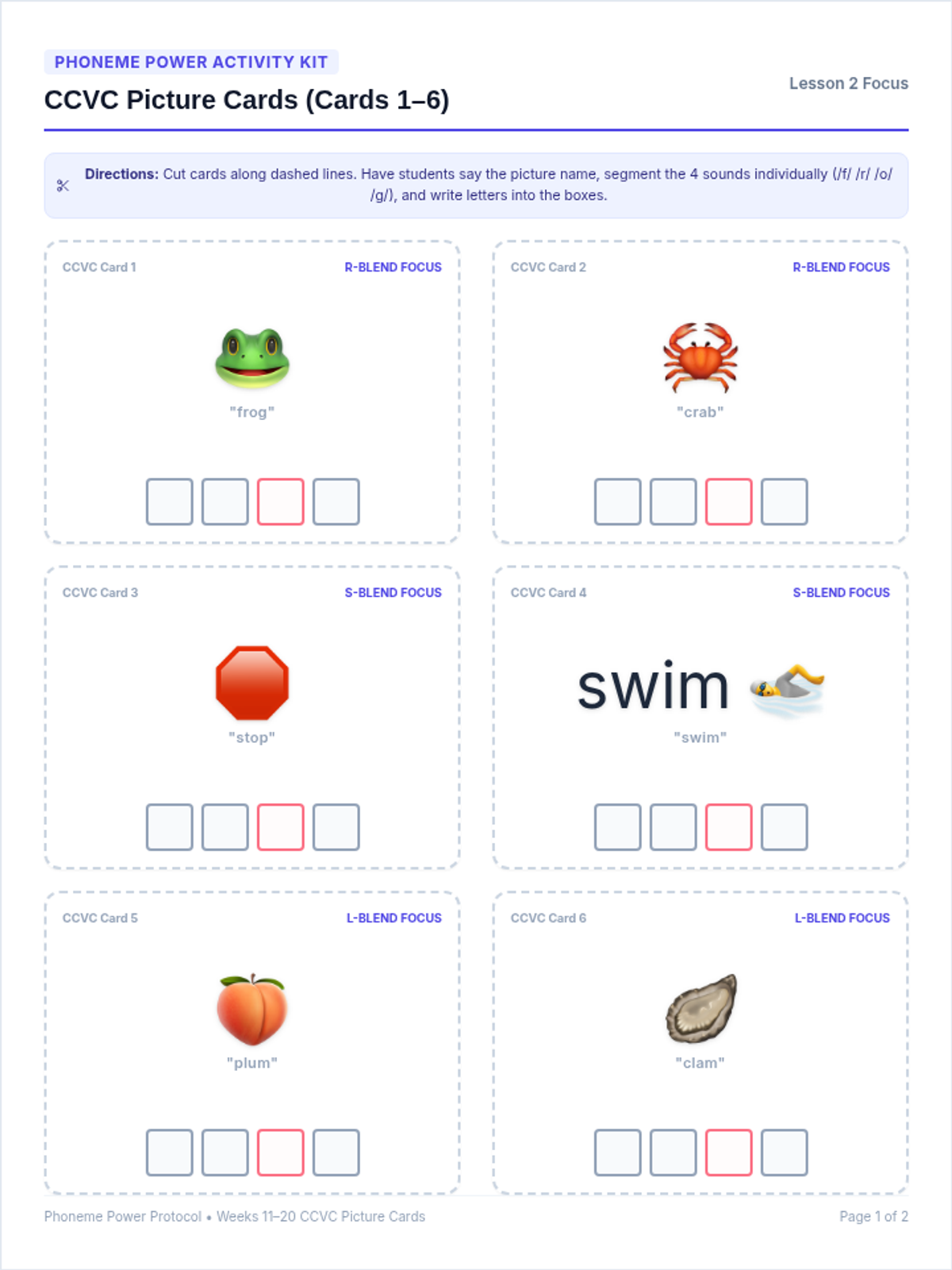
Weeks 11-20 of the Phoneme Power Protocol intervention, focusing on CCVC (consonant blends) and complex CVC words. Includes systematic small-group routines for 4-phoneme words, visual 4-box Elkonin mats, tactile onset-rime blending cards, and progress monitoring scoring sheets for Weeks 12, 16, and 20.
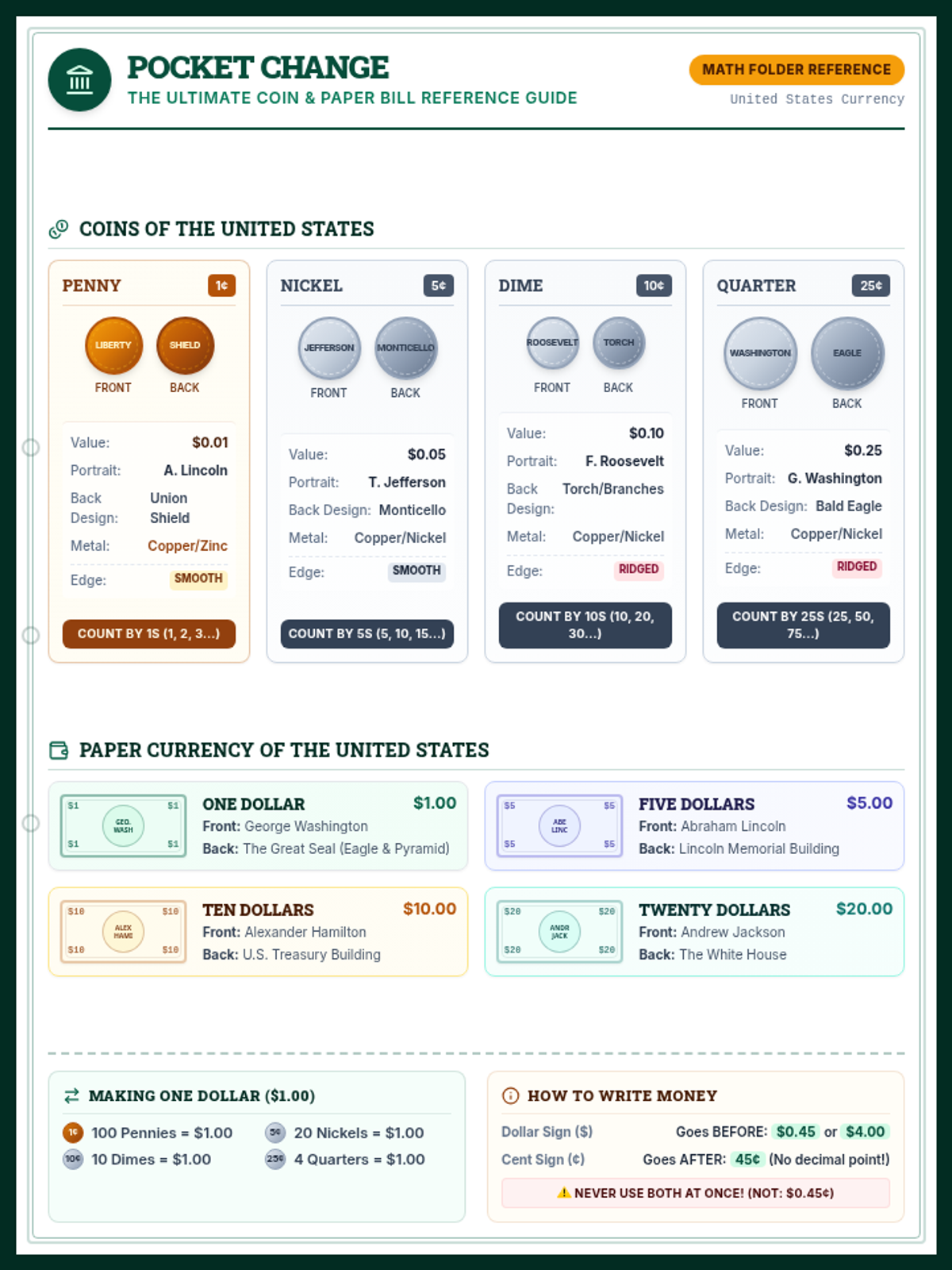
A comprehensive lesson on identifying and understanding US coins and bills, their values, and their key visual features.
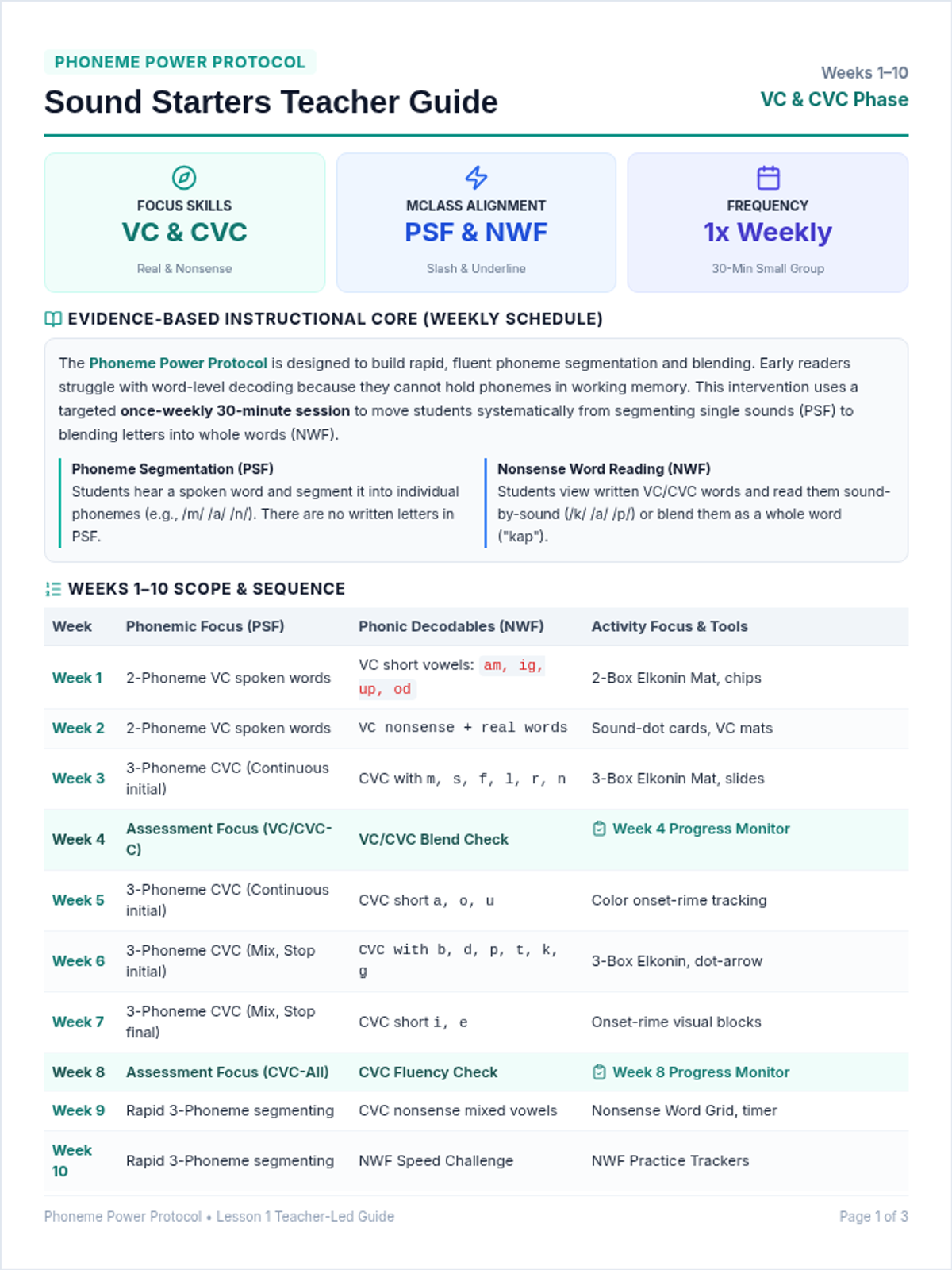
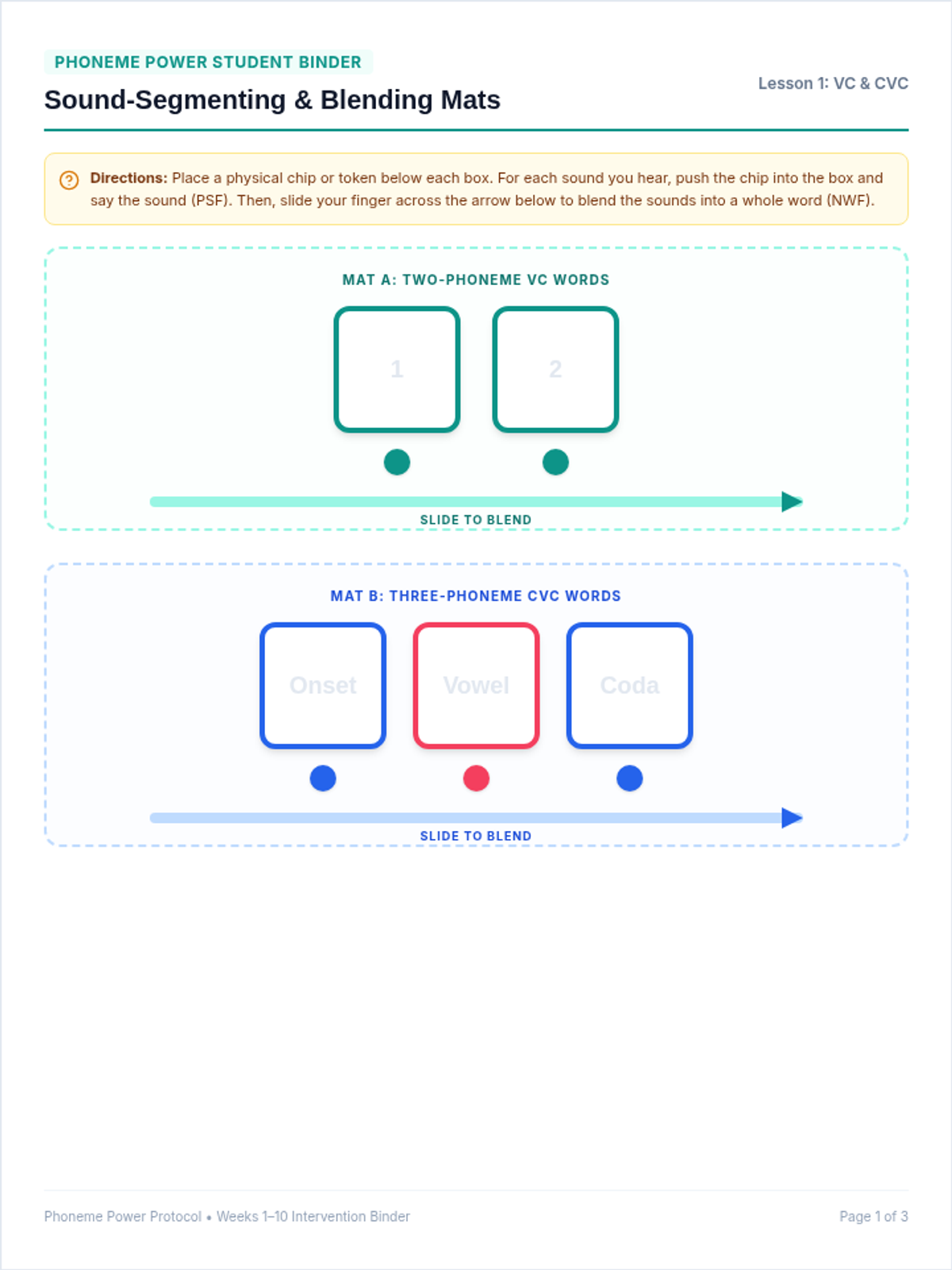
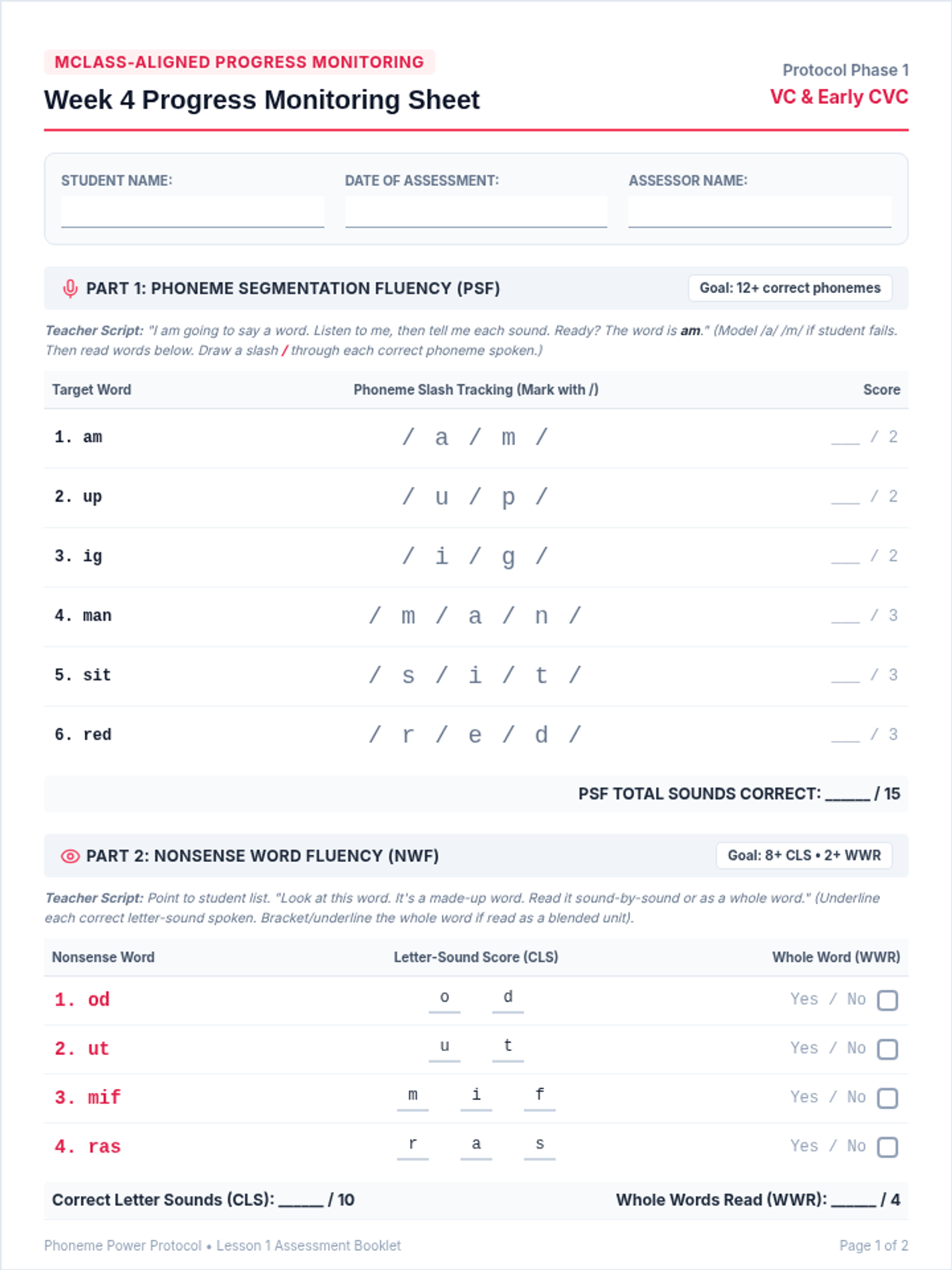
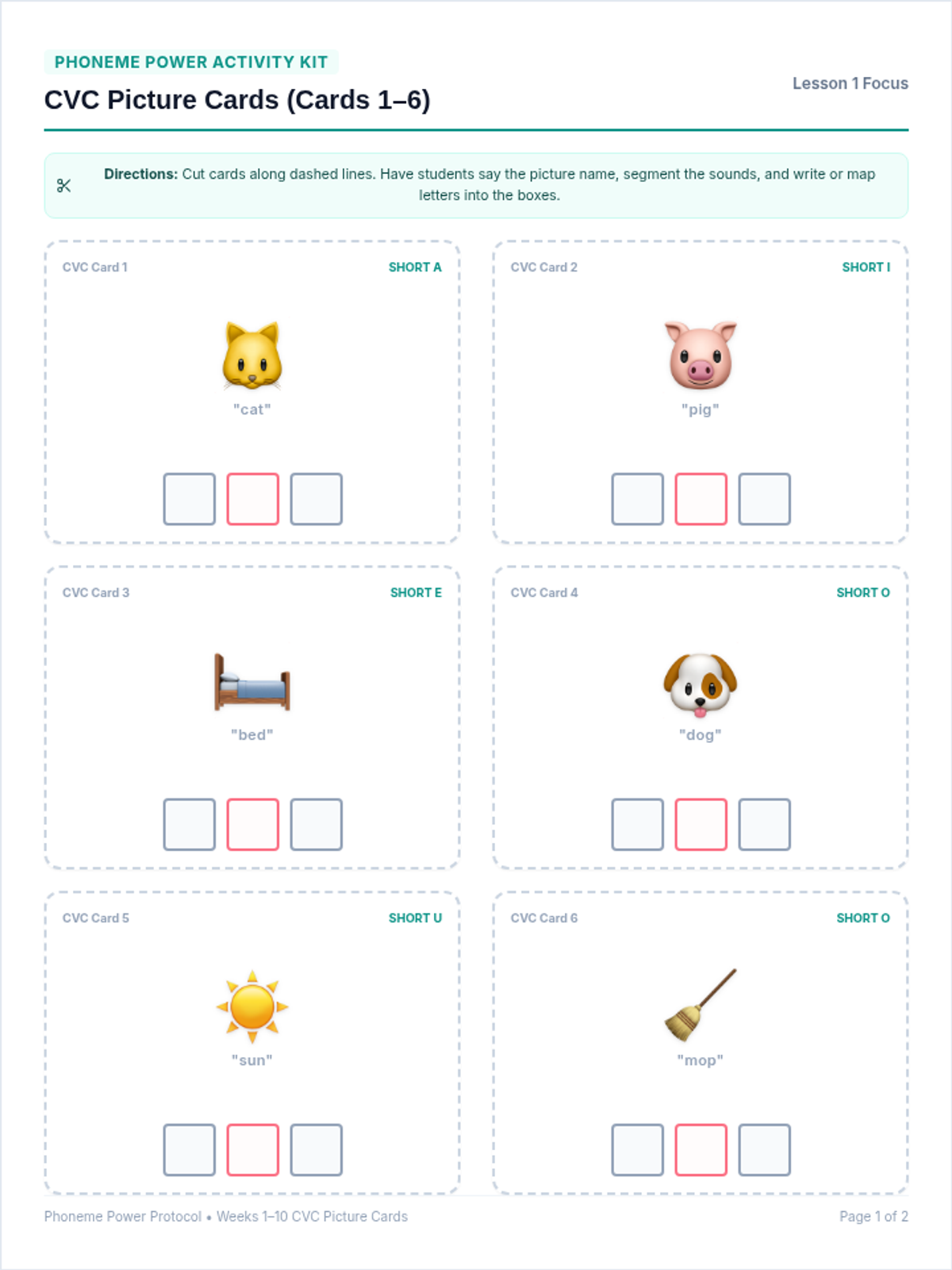
Weeks 1-10 of the Phoneme Power Protocol intervention, focusing on VC and CVC words. Includes systematic routines for segmenting individual sounds (PSF) and blending phonemes into nonsense and real words (NWF) using 2-box and 3-box Elkonin mats, color-coded word cards, and progress monitoring at Weeks 4 and 8.
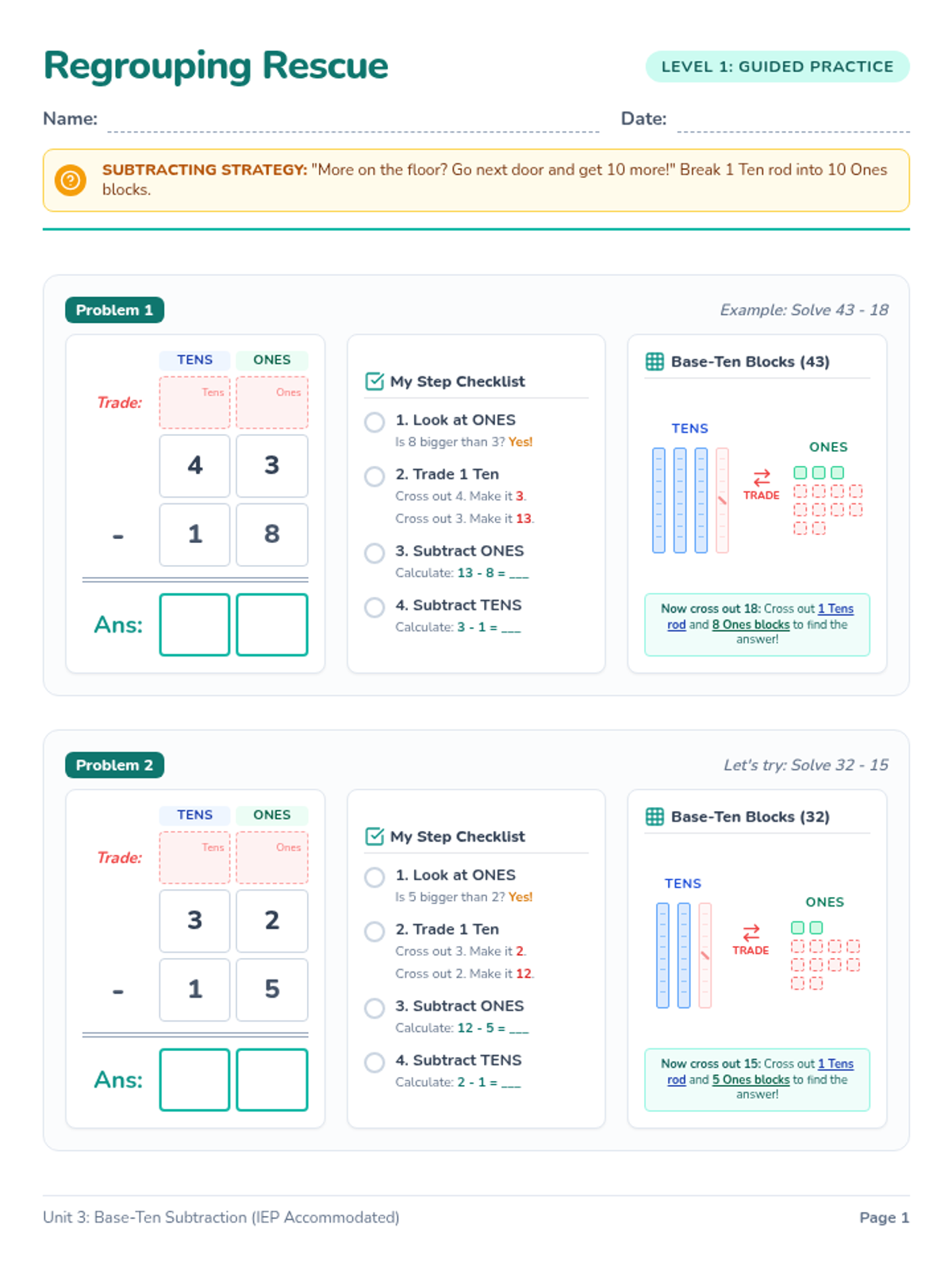
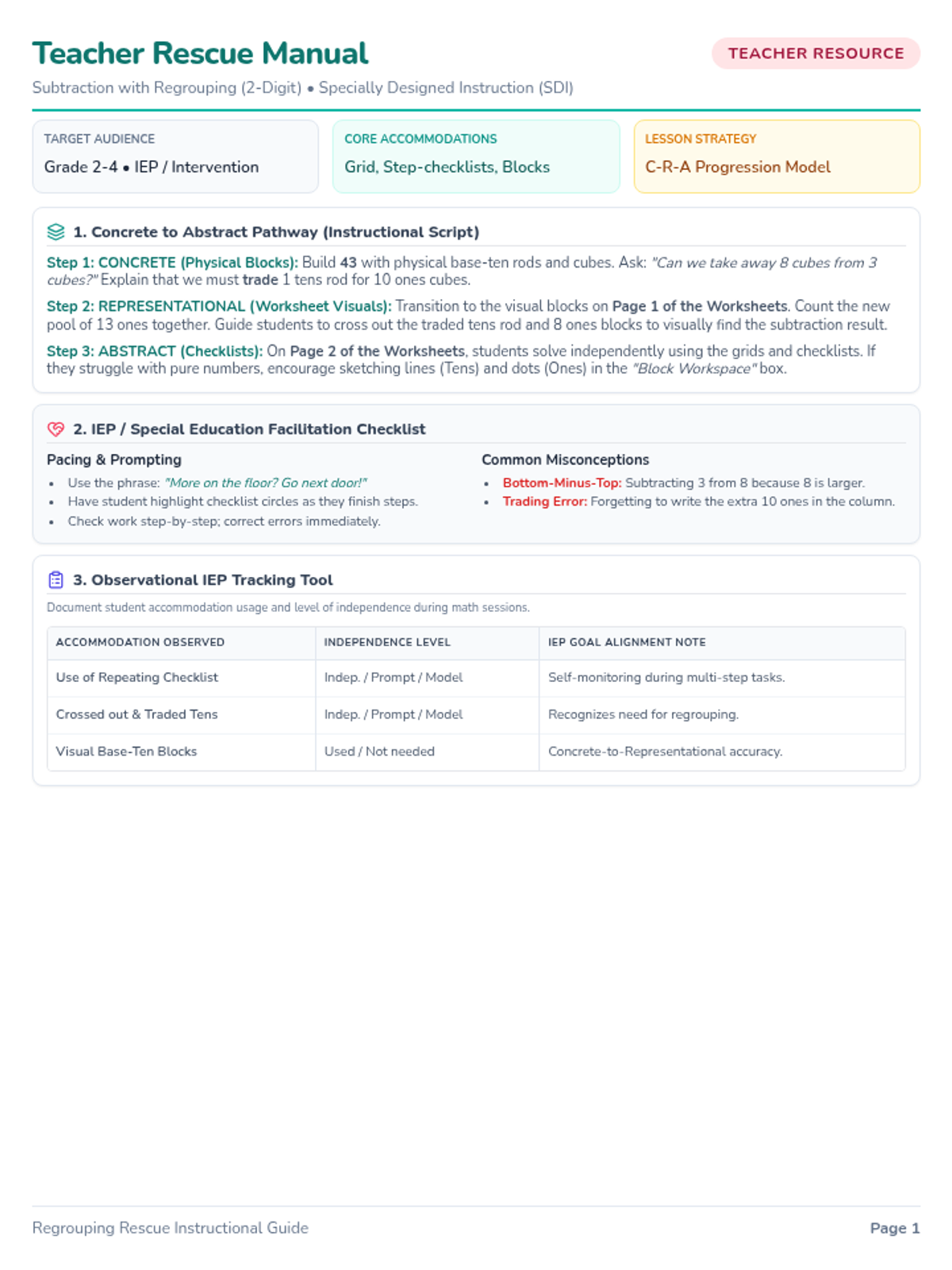
A highly-structured, research-backed lesson on subtracting two-digit numbers with regrouping, specifically designed with IEP accommodations. Includes grid-aligned practice sheets with repeating step-by-step visual checklists and built-in base-ten visual blocks to support concrete-representational-abstract transitions.
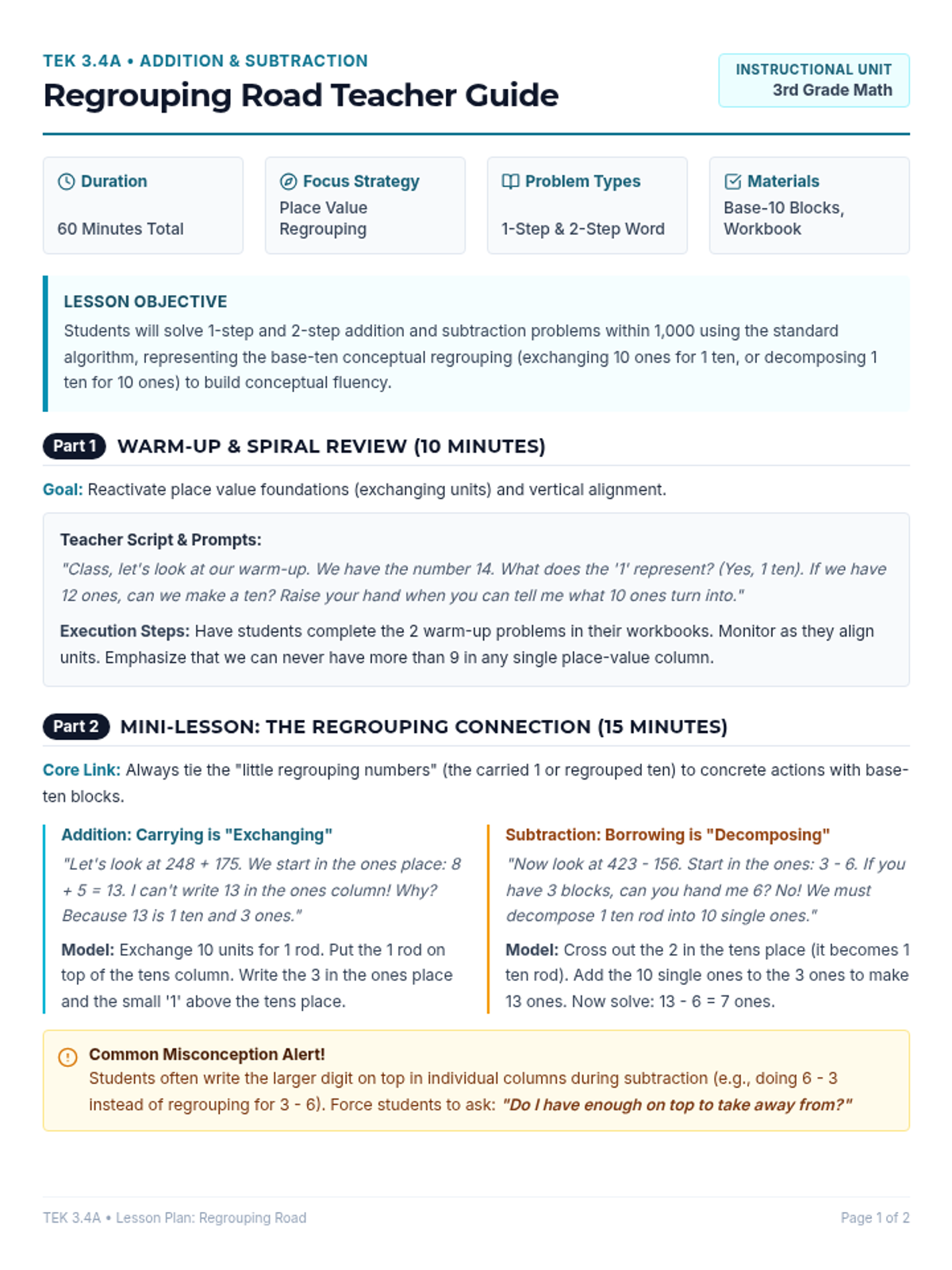
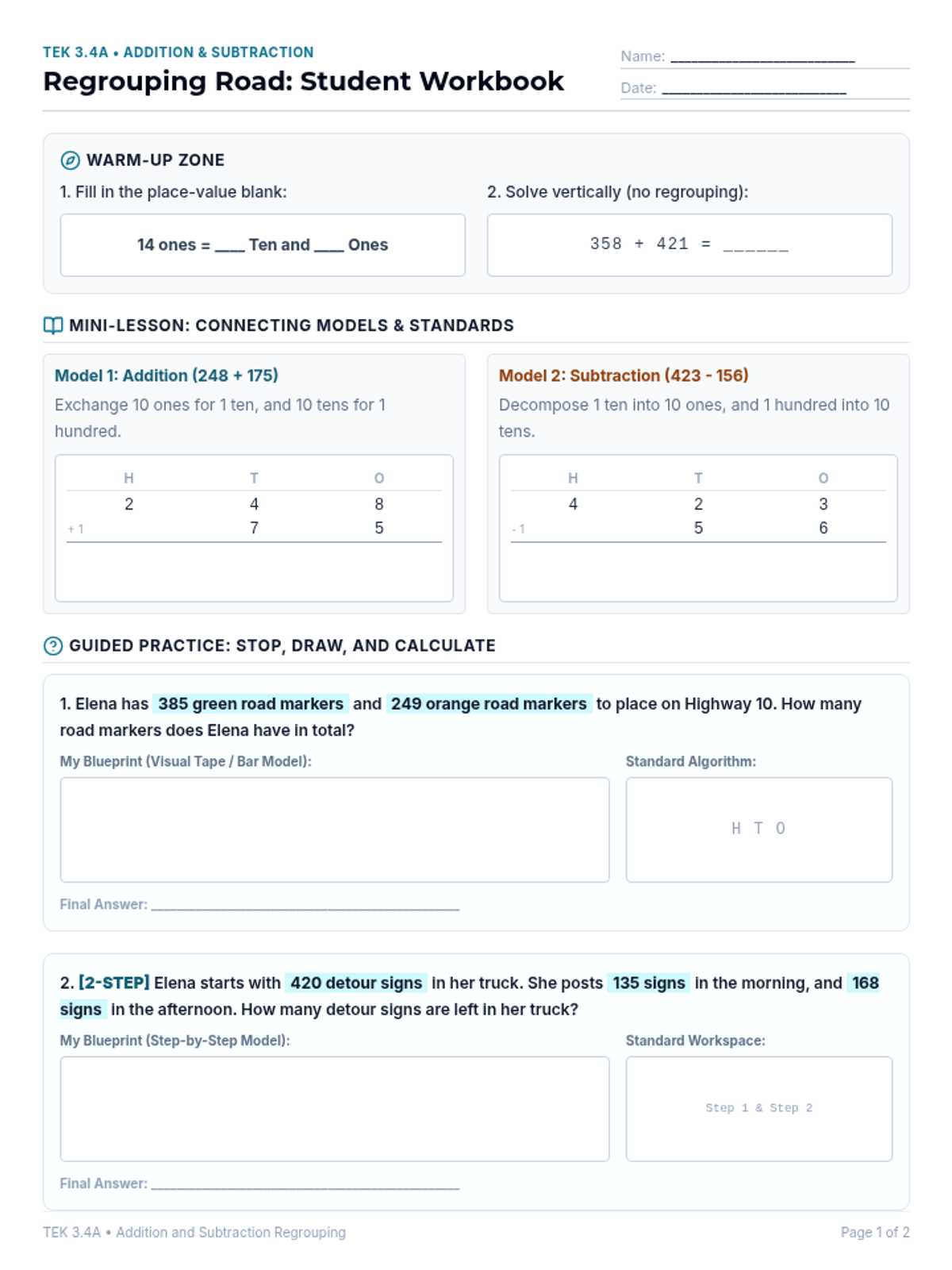
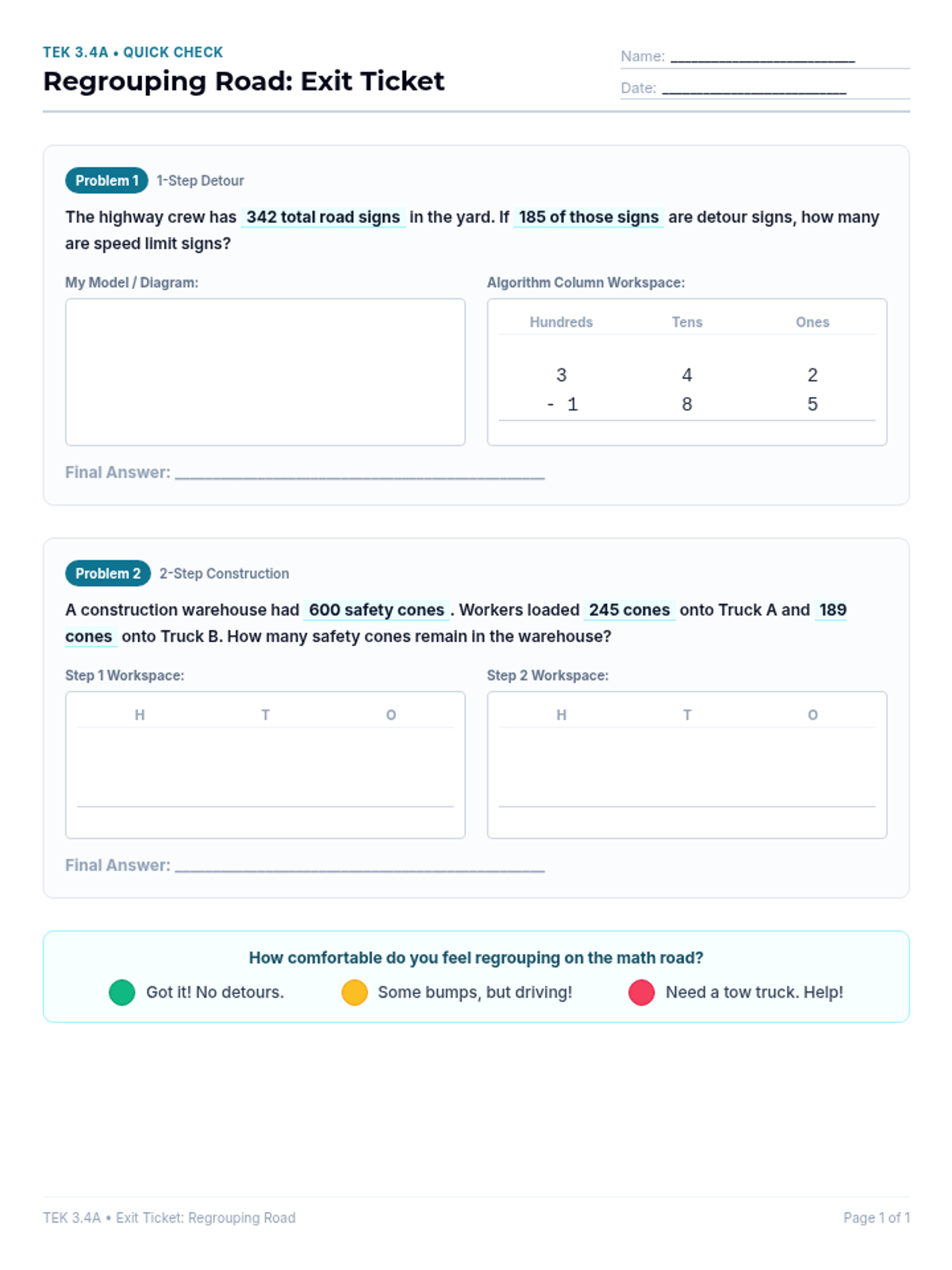
This lesson guides 3rd-grade students through the standard addition and subtraction algorithms with regrouping, grounded in place value understanding. It features a step-by-step teacher script, visual base-ten block links, and a progression from simple one-step to challenging two-step word problems aligned with TEK 3.4A.
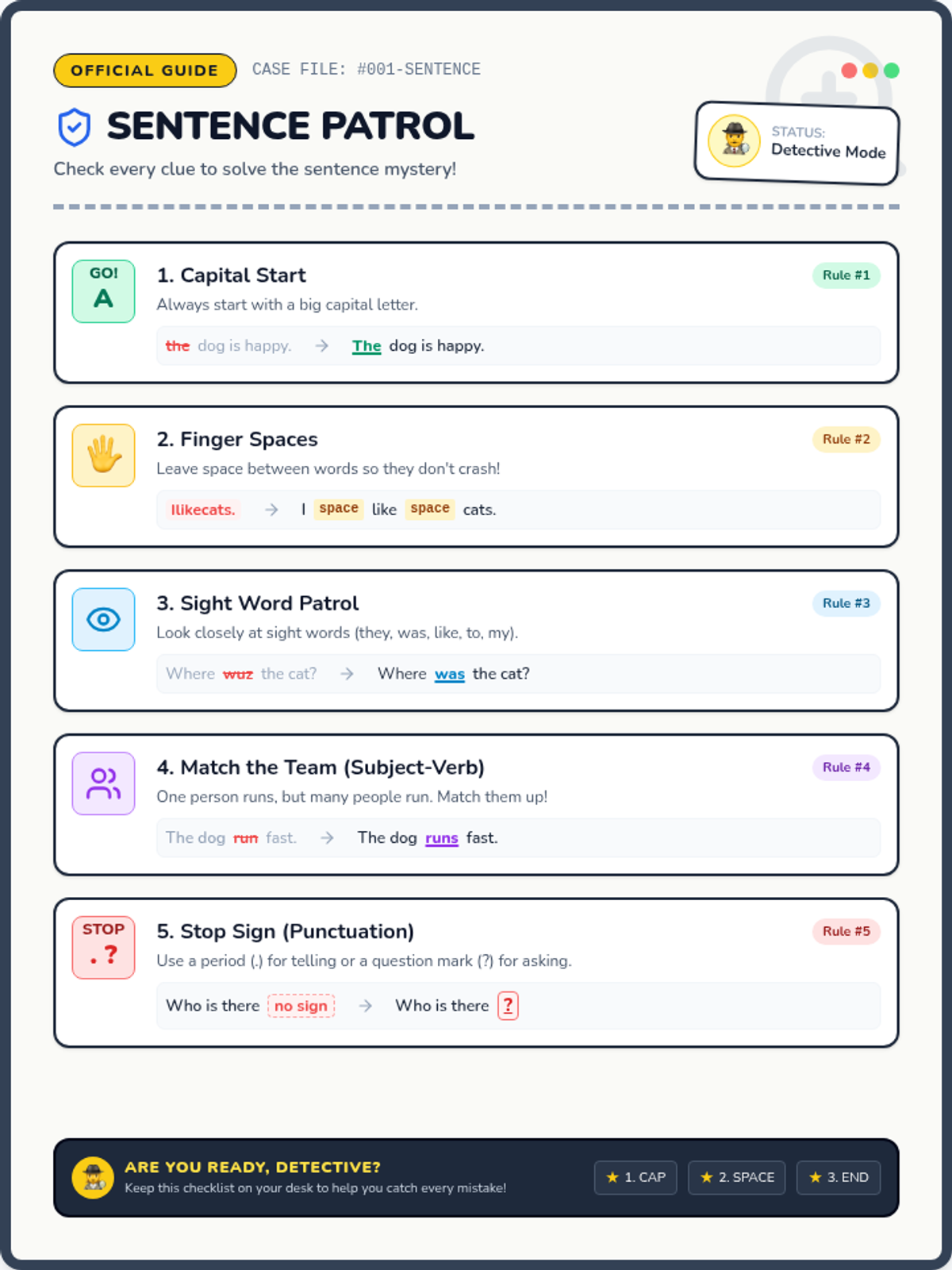
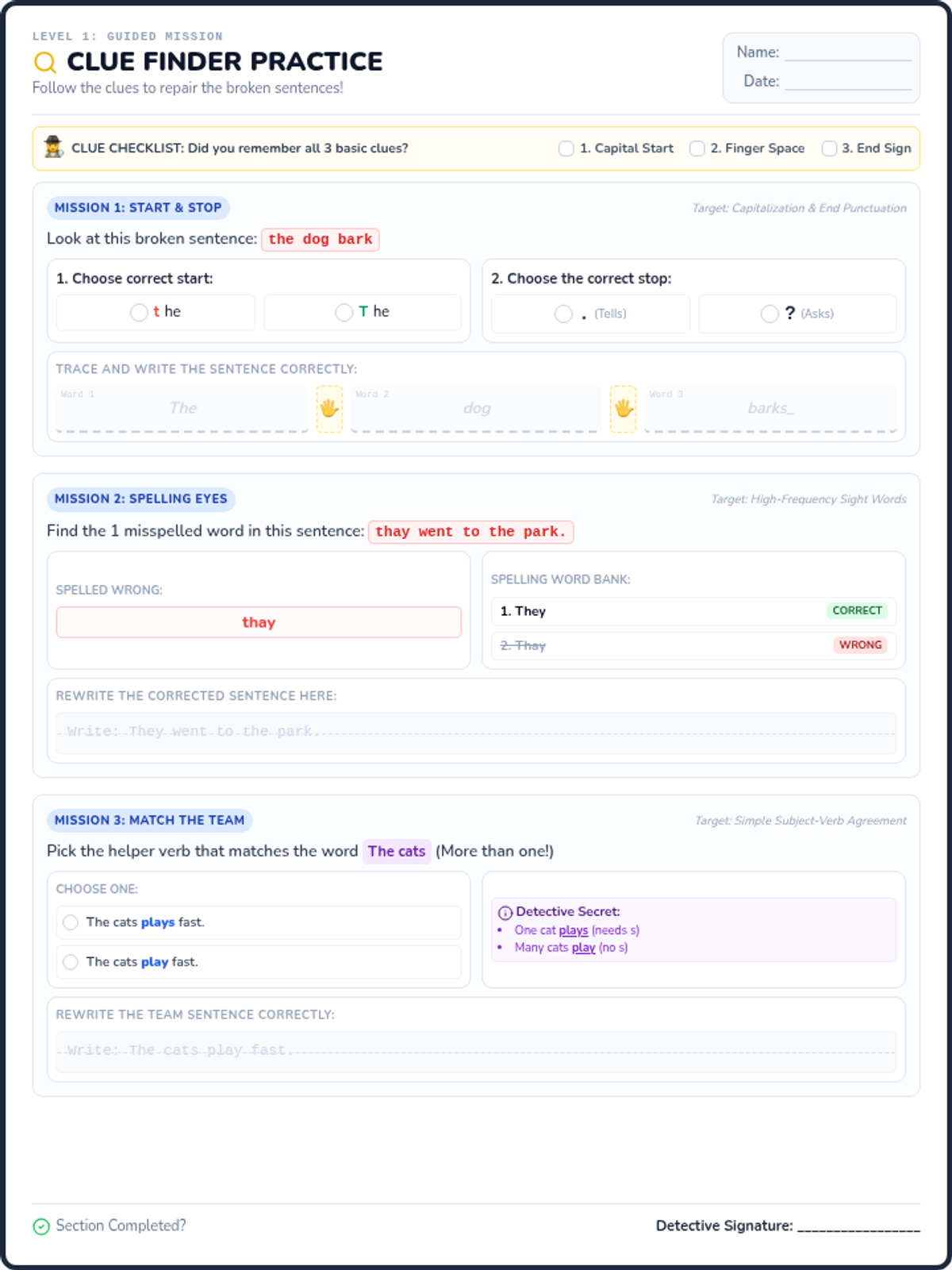
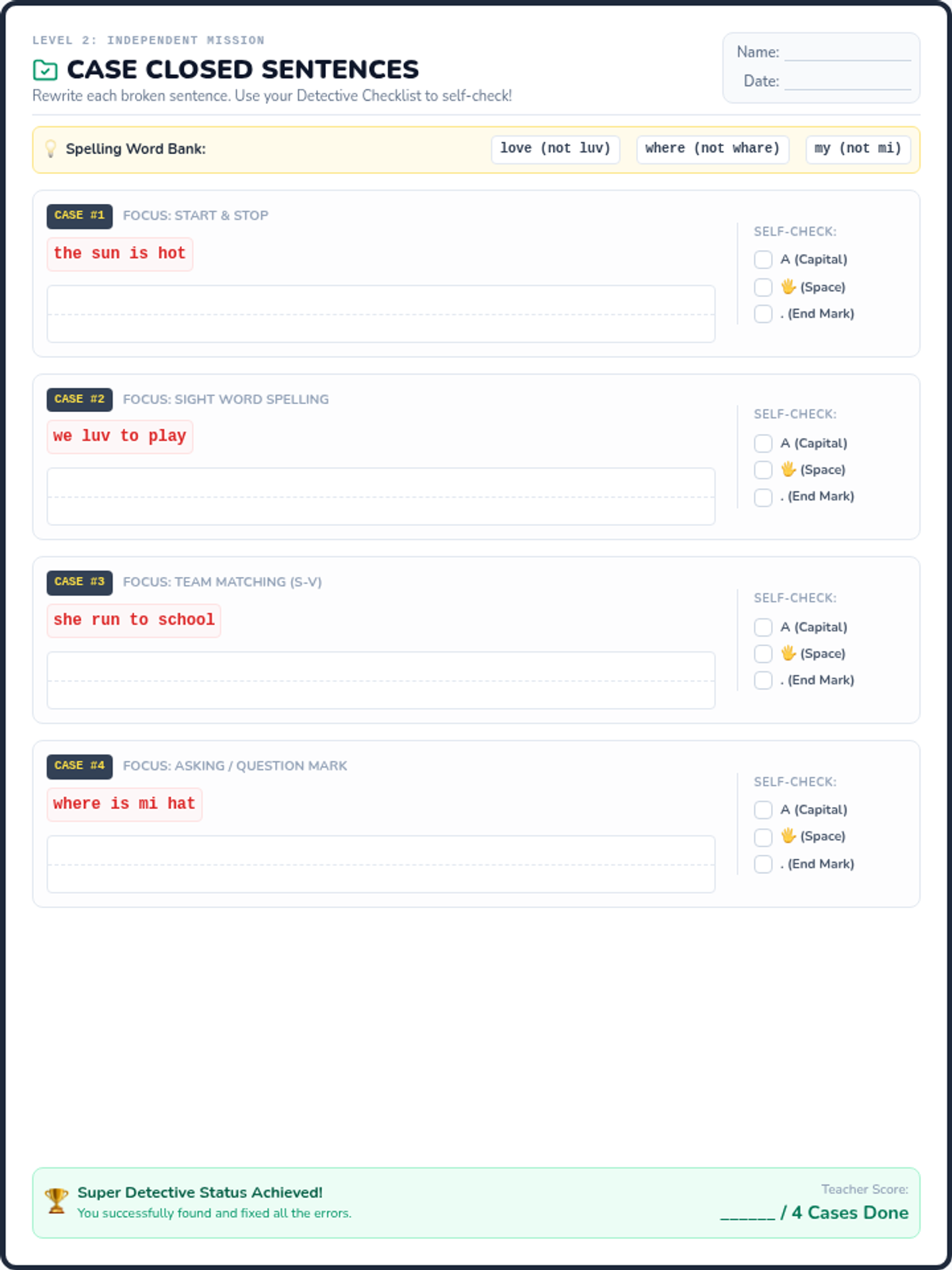
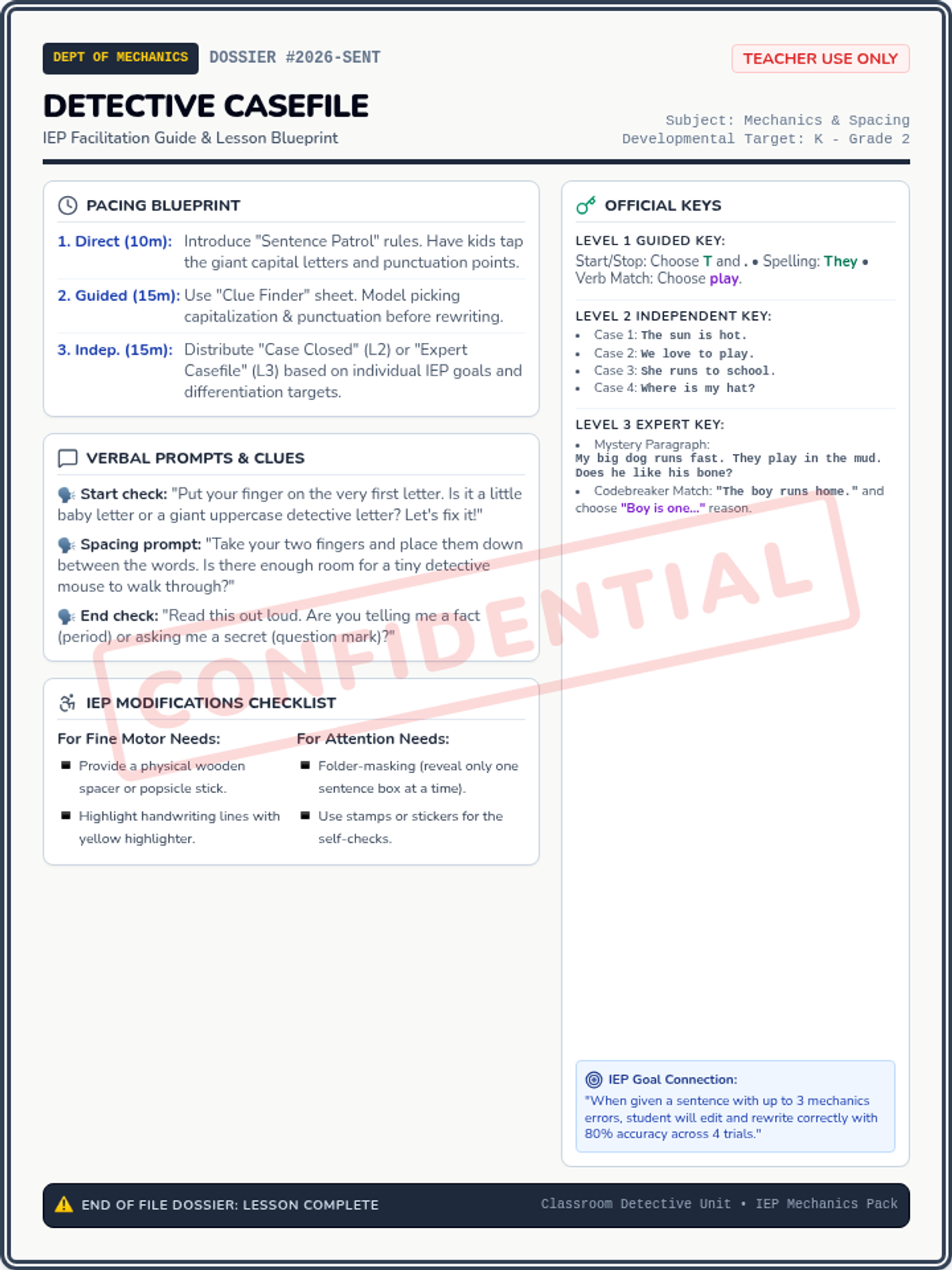
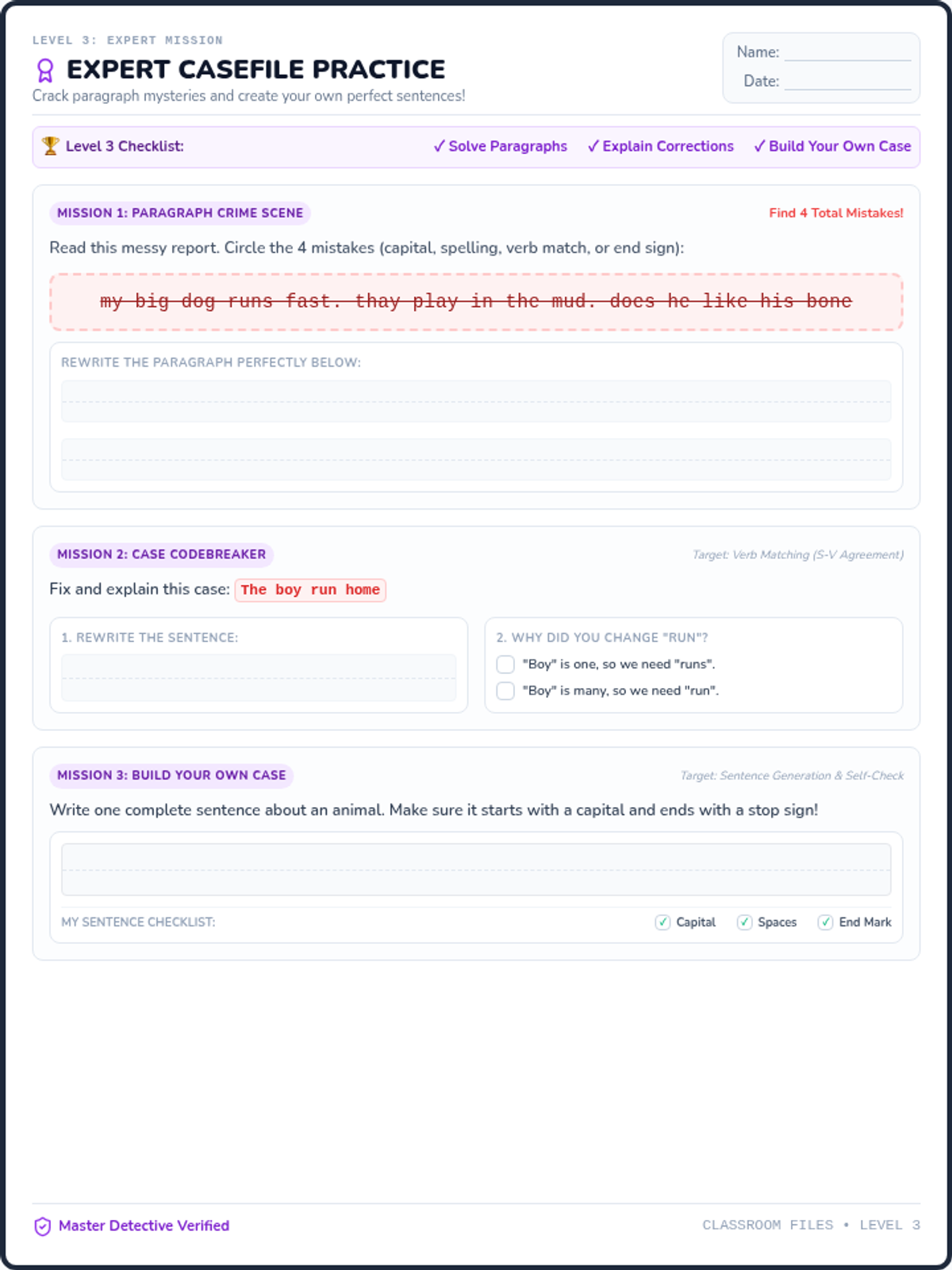
A comprehensive, highly structured lesson bundle designed for IEP students to master sentence correction. It covers capitalization, end punctuation, sight word spelling, spacing, and simple subject-verb agreement through scaffolding, visual aids, and interactive elements.
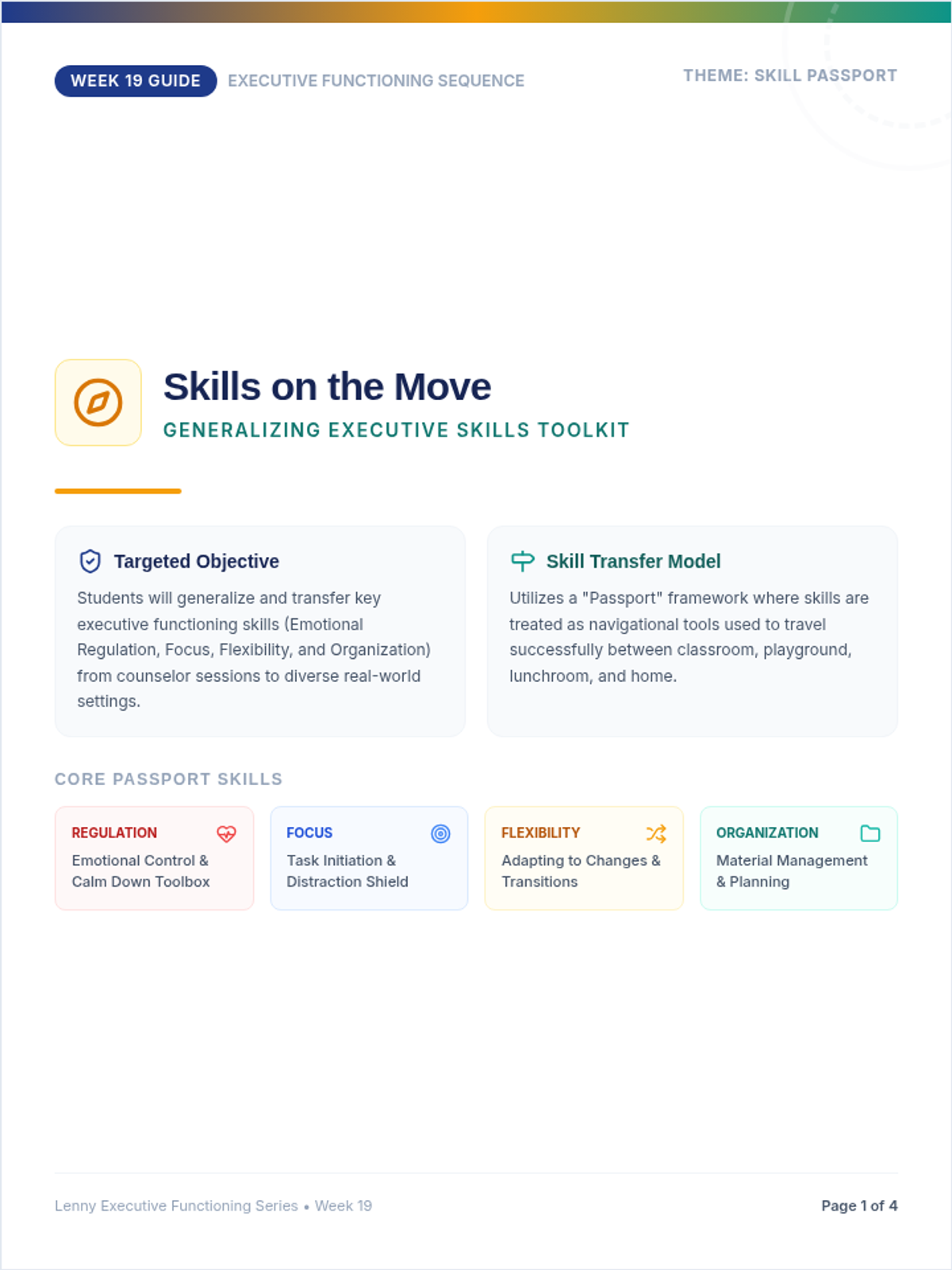
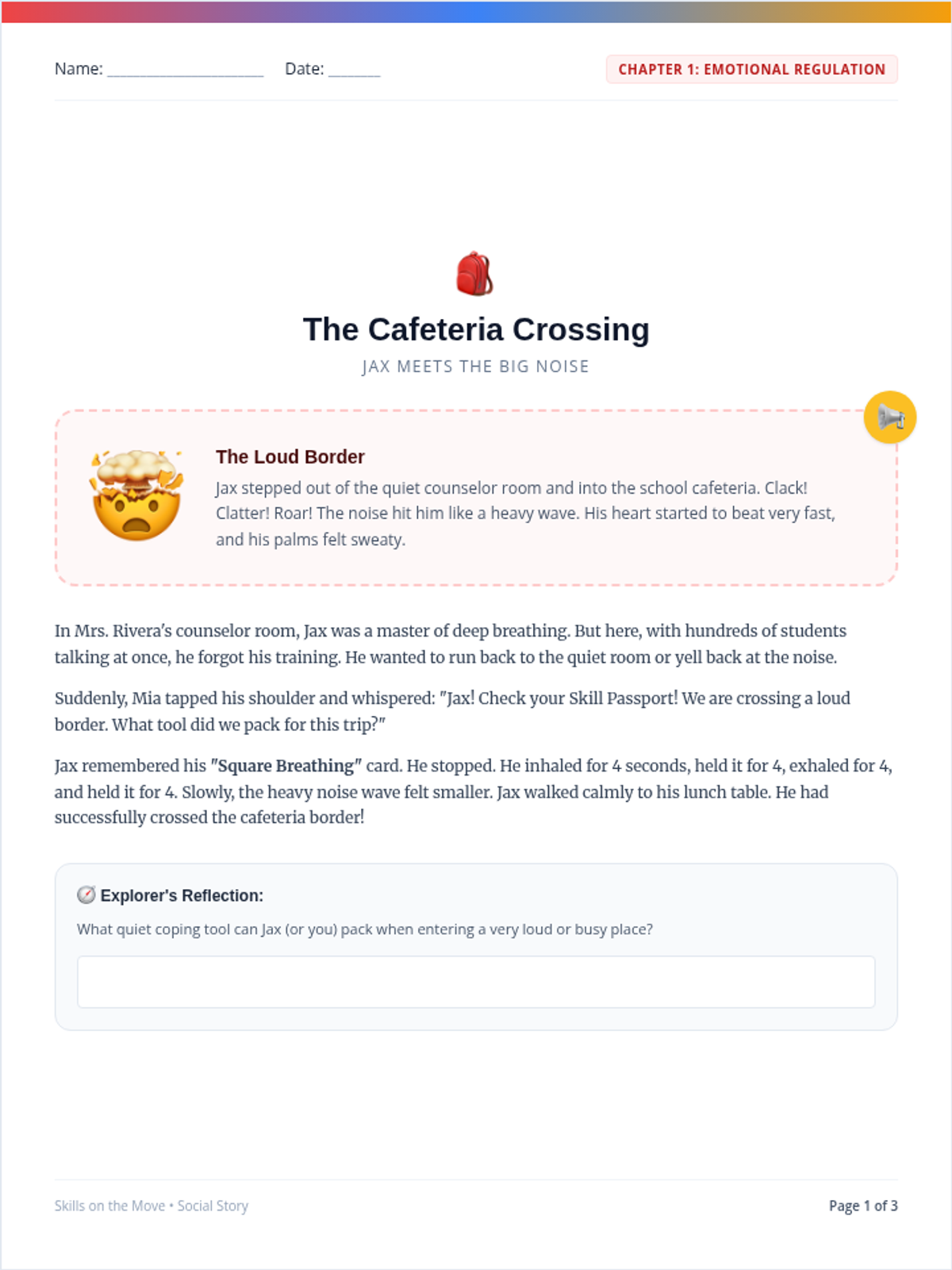
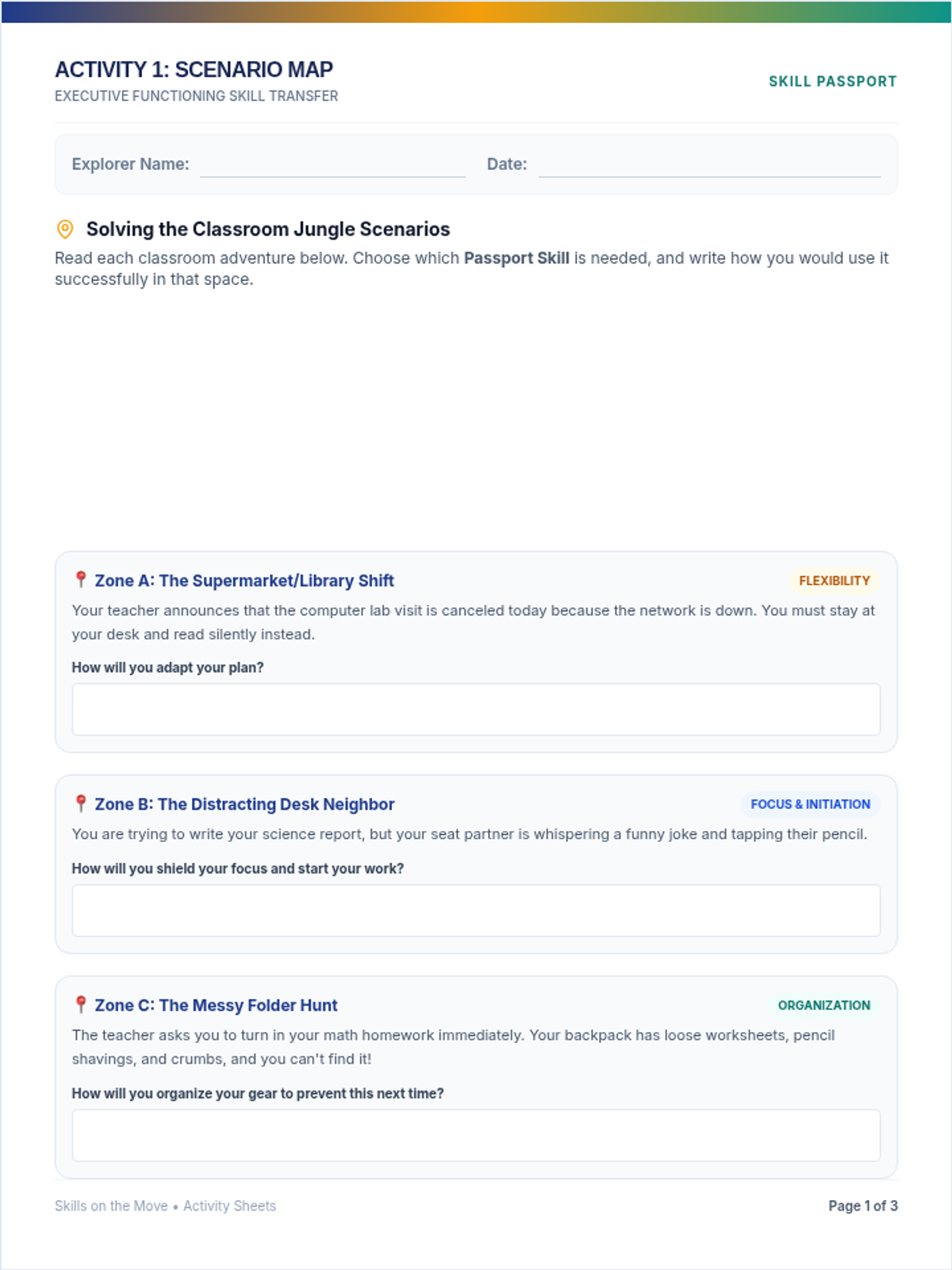
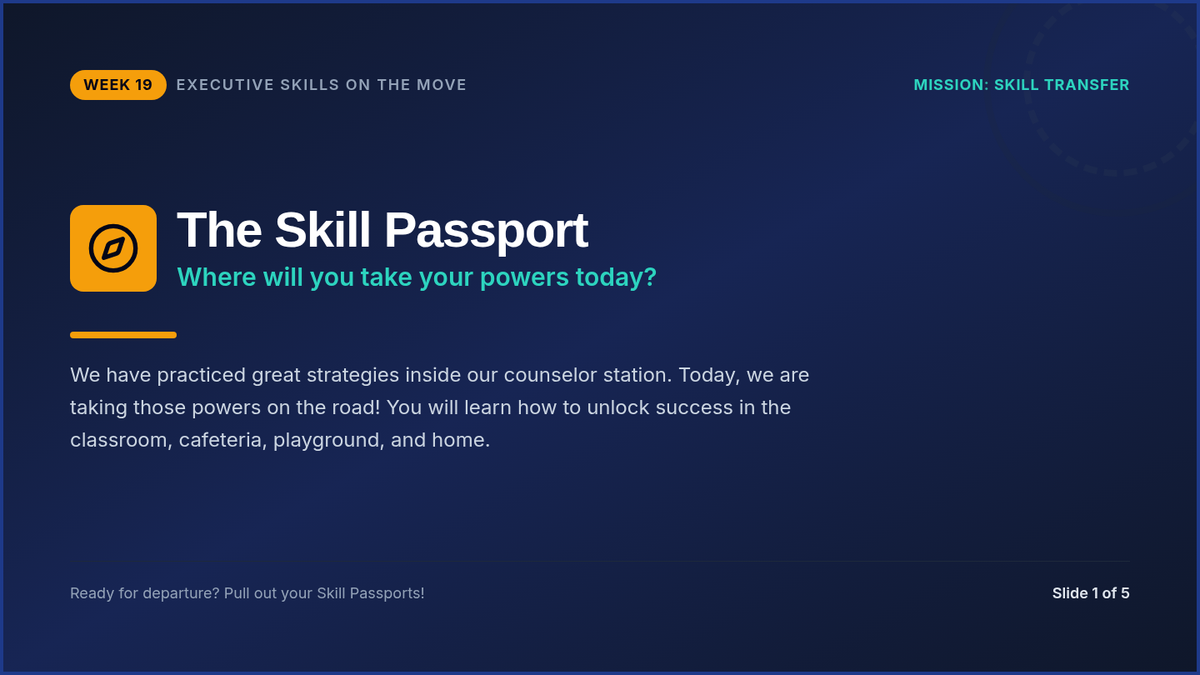
A comprehensive lesson designed to help students generalize and transfer their executive functioning skills—including emotional regulation, focus, flexibility, and organization—across various settings.
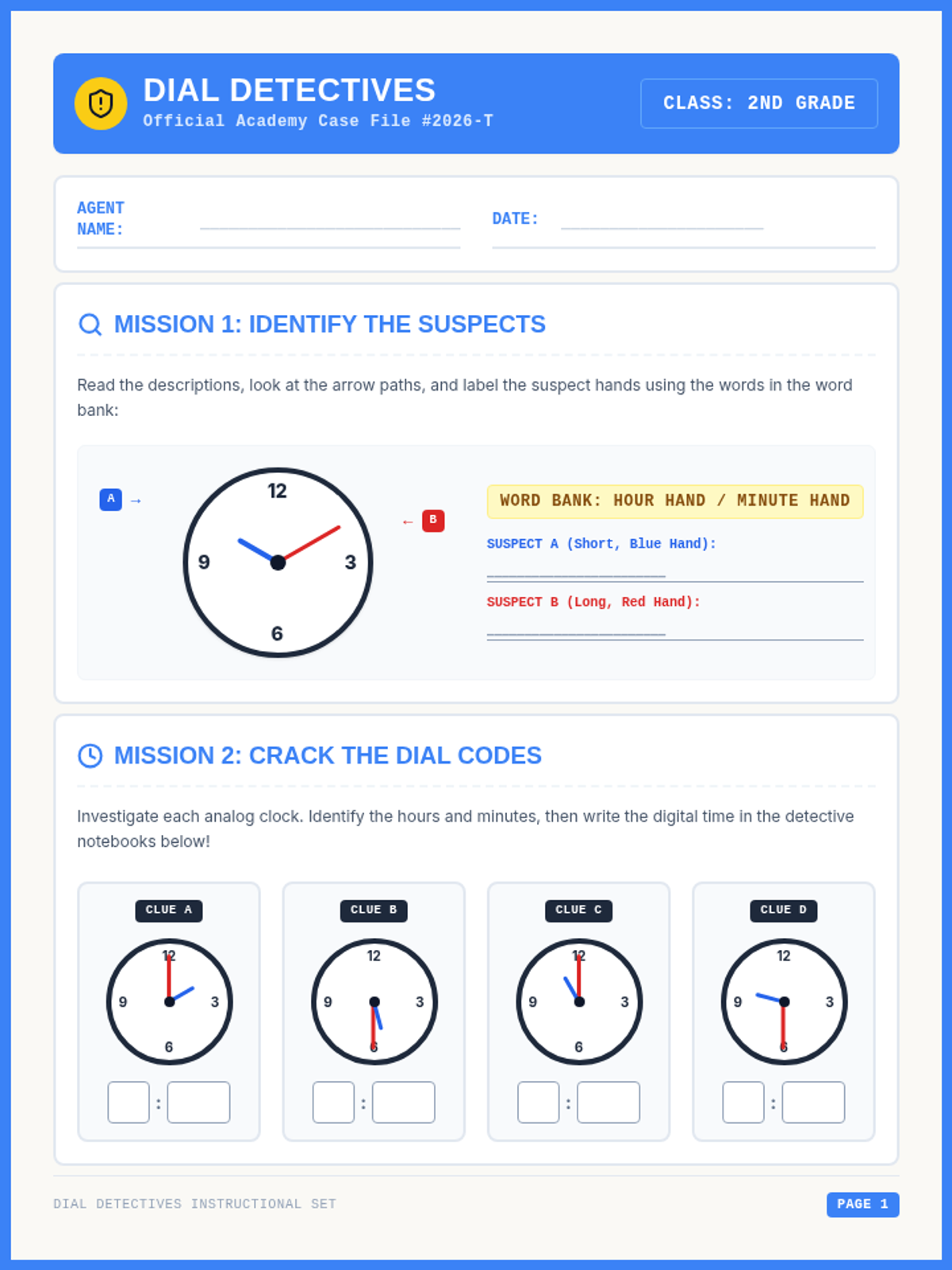
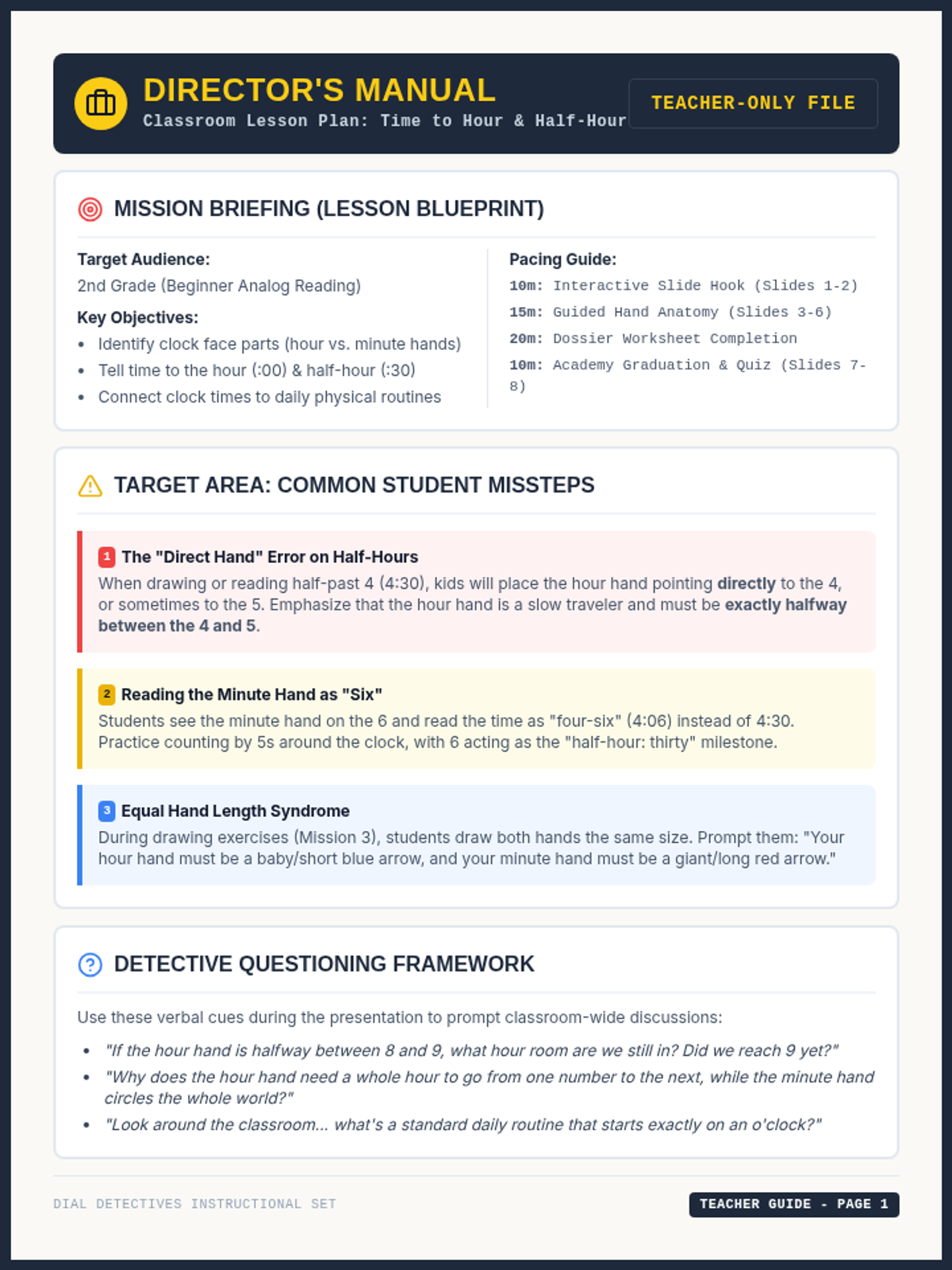
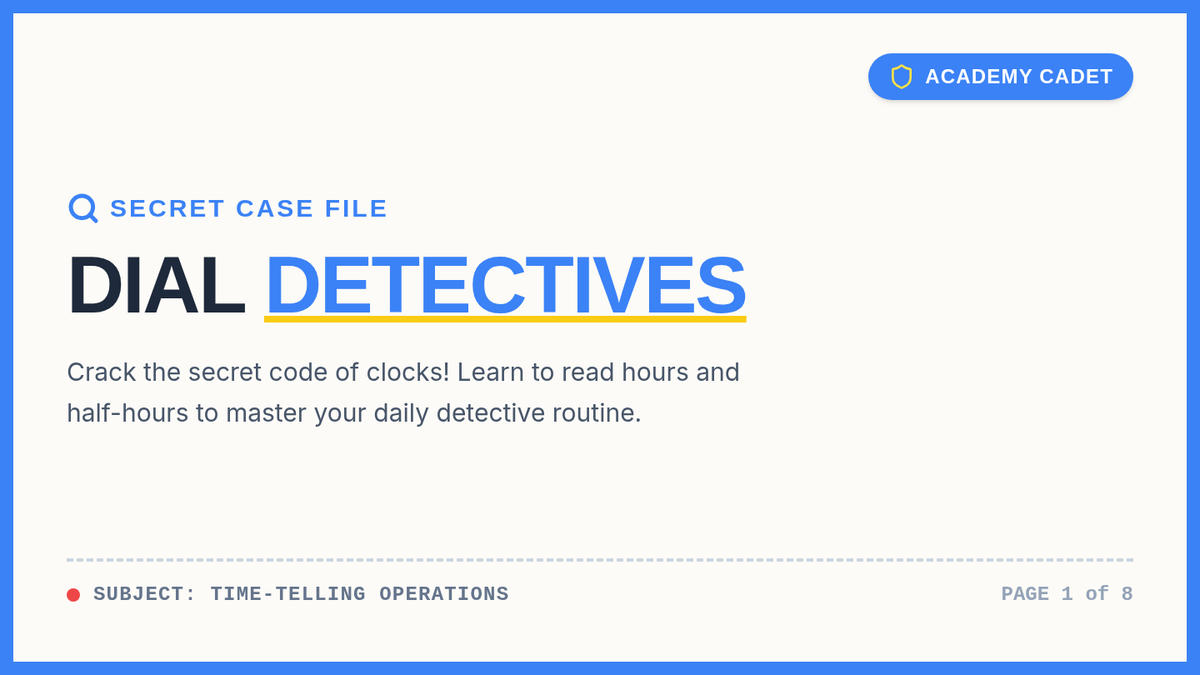
A second-grade beginner's lesson on reading analog clocks to the hour and half-hour, connecting time-telling to daily routines through a fun detective-themed investigation.
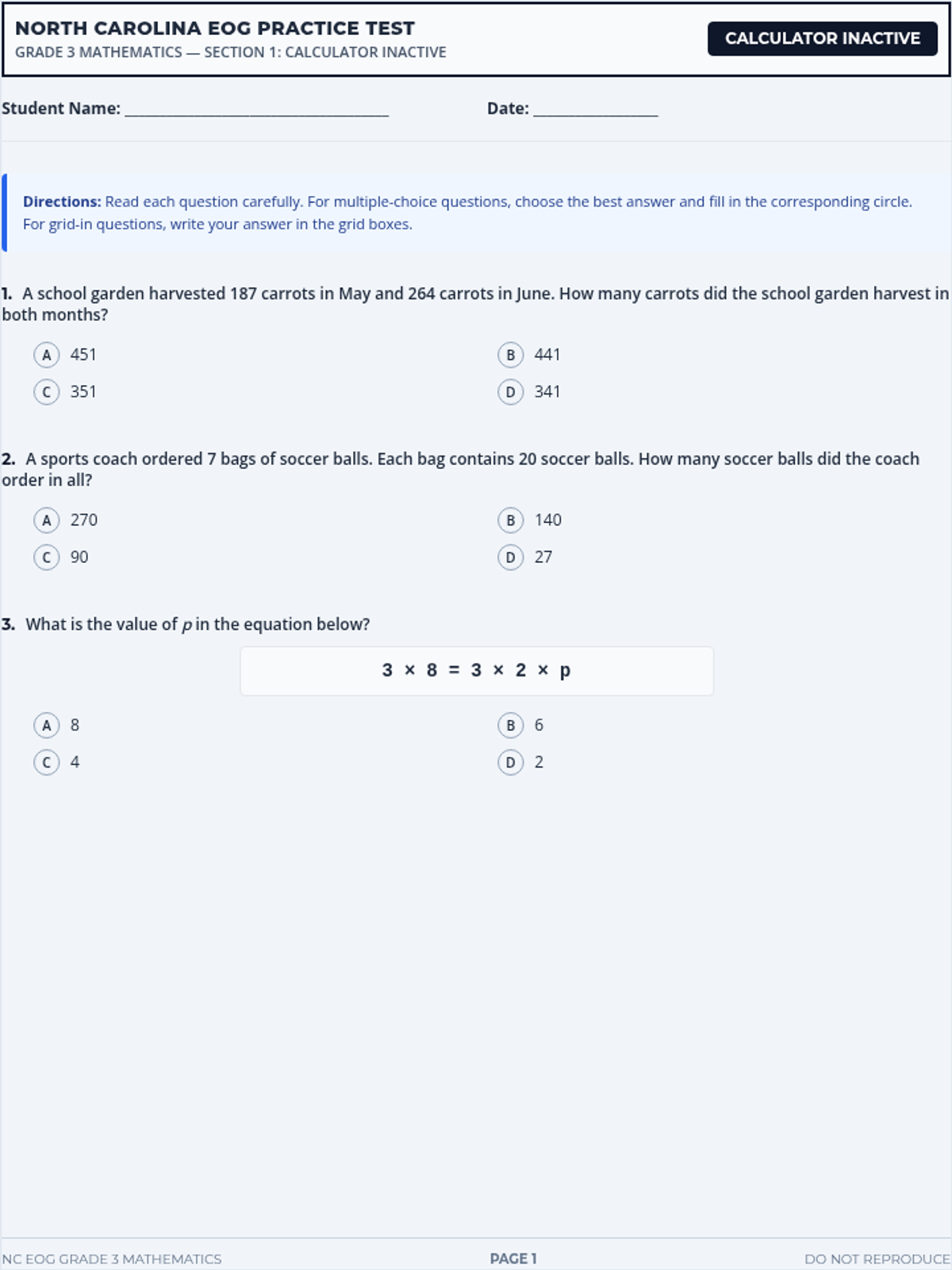
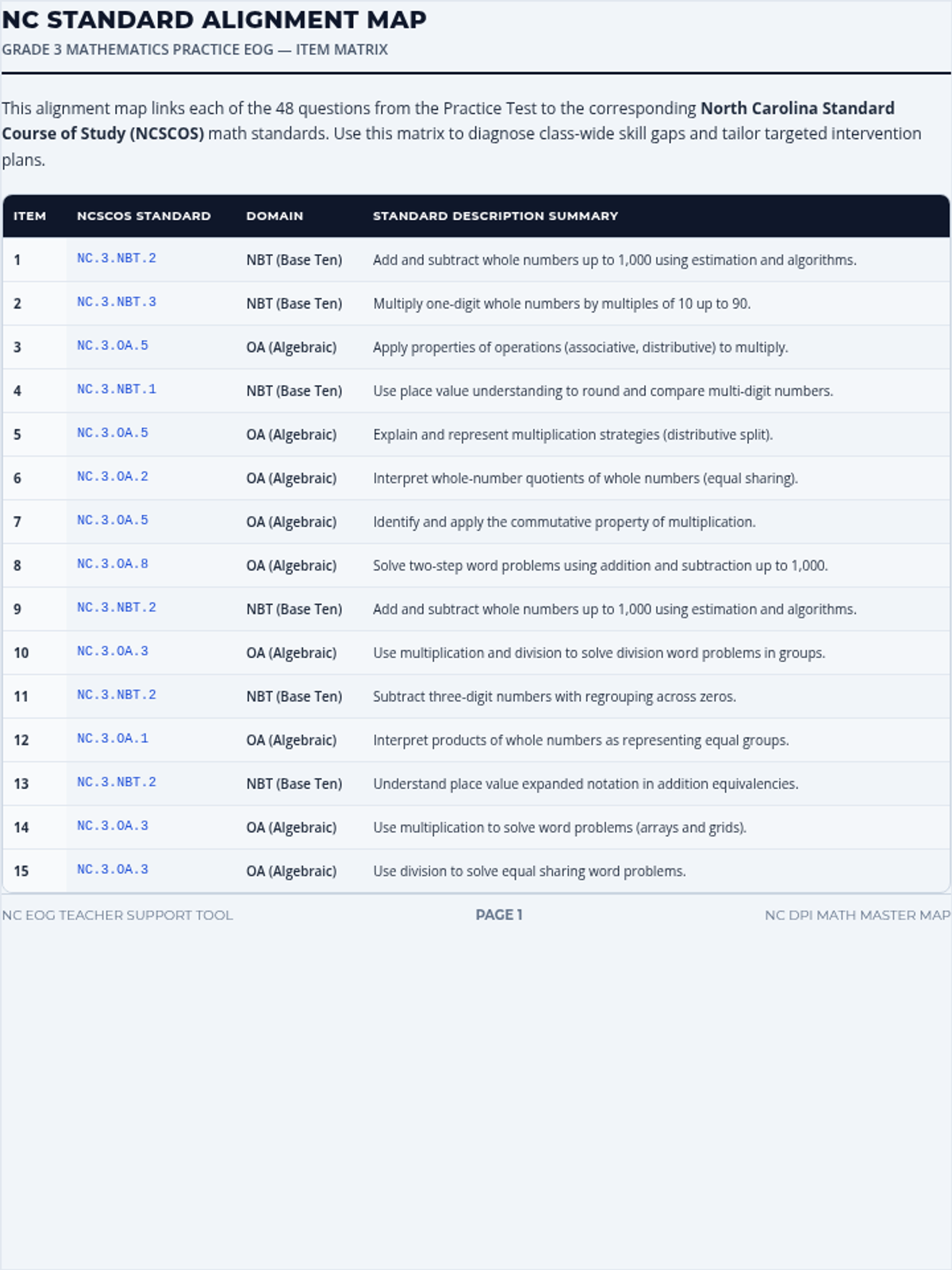
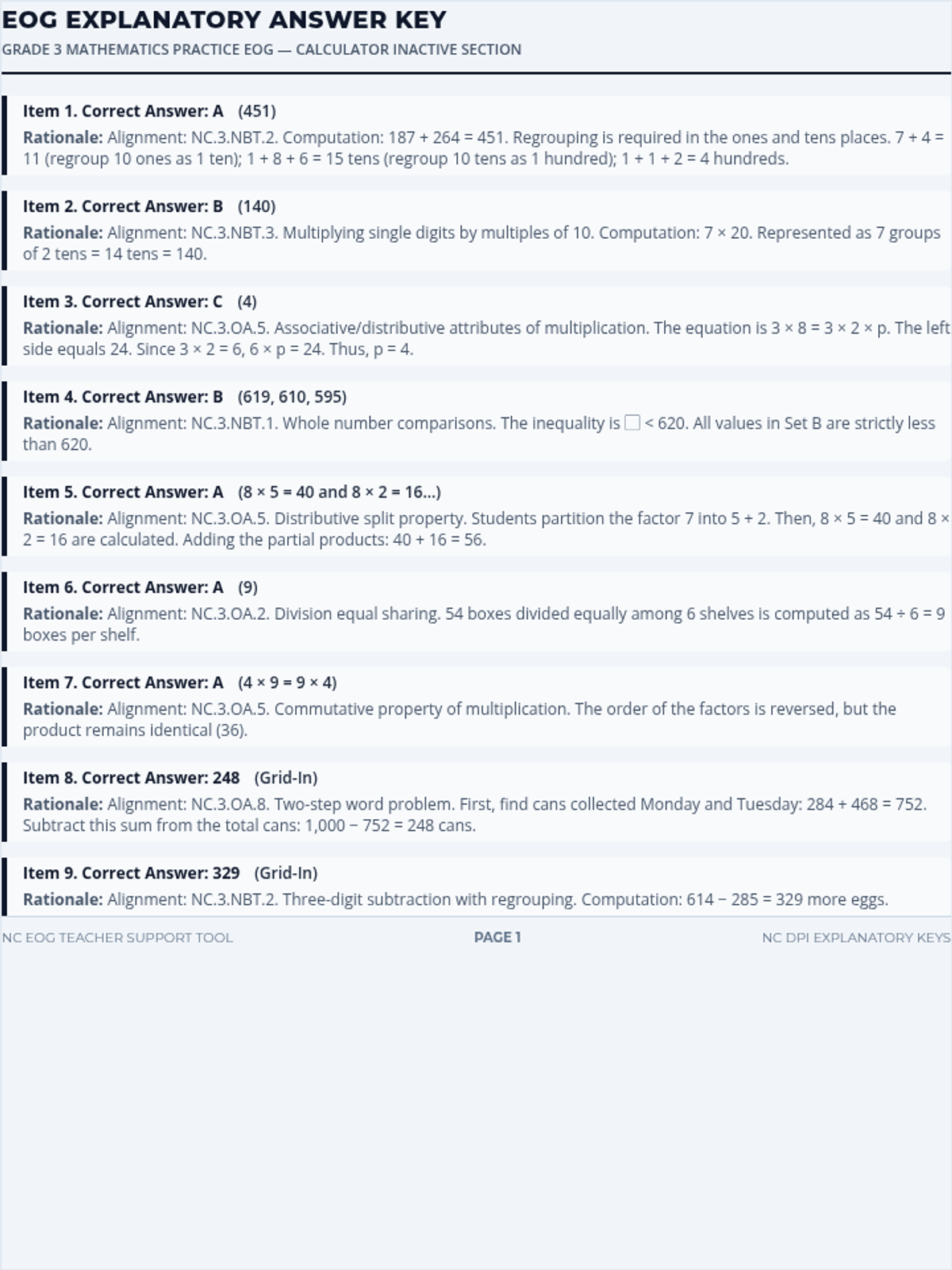
A comprehensive practice package designed for 3rd-grade students preparing for the North Carolina End-of-Grade (EOG) Mathematics assessment. It includes a complete 48-question exam covering all highly-tested standard course of study domains, an interactive student grid, an item-to-standard alignment map, and a full explanatory answer key.