An engaging lesson on how human actions impact animals, plants, and the environment. This lesson includes a highly structured, scaffolded student worksheet and a comprehensive teacher guide with differentiation tips and answer keys.
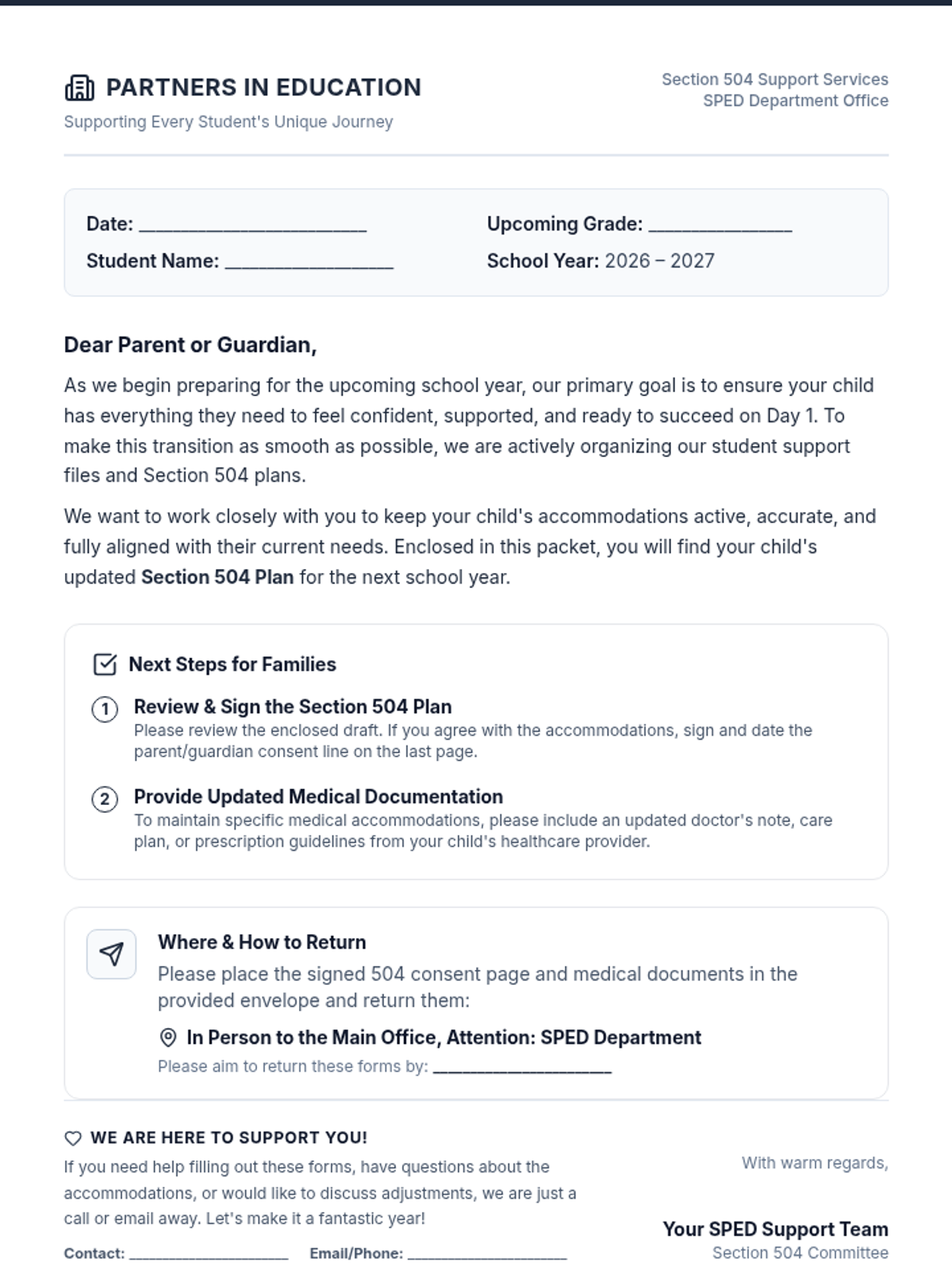
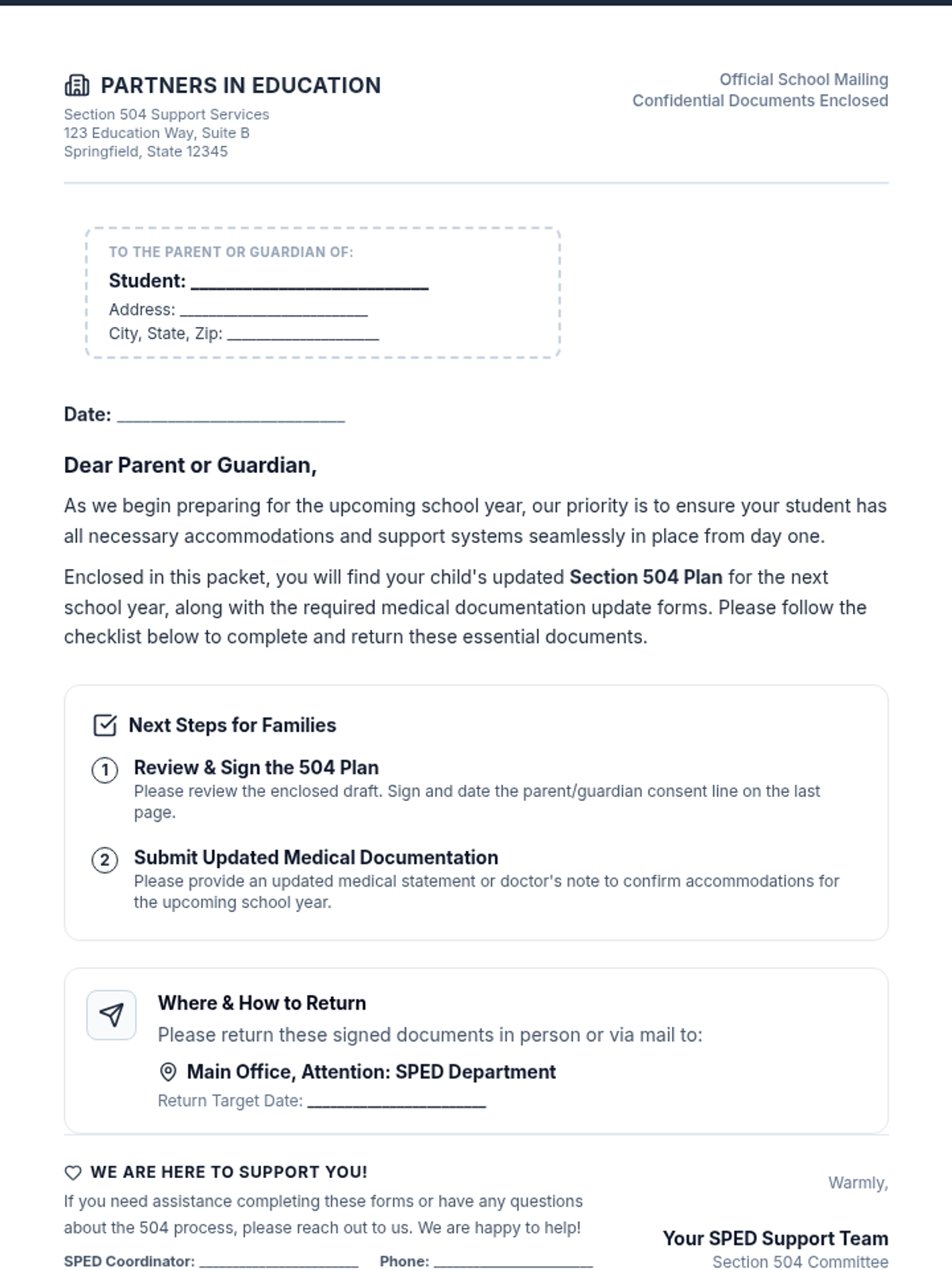
A set of student and parent-facing materials designed to accompany the distribution and collection of Section 504 plans and required medical documentation for the upcoming school year.
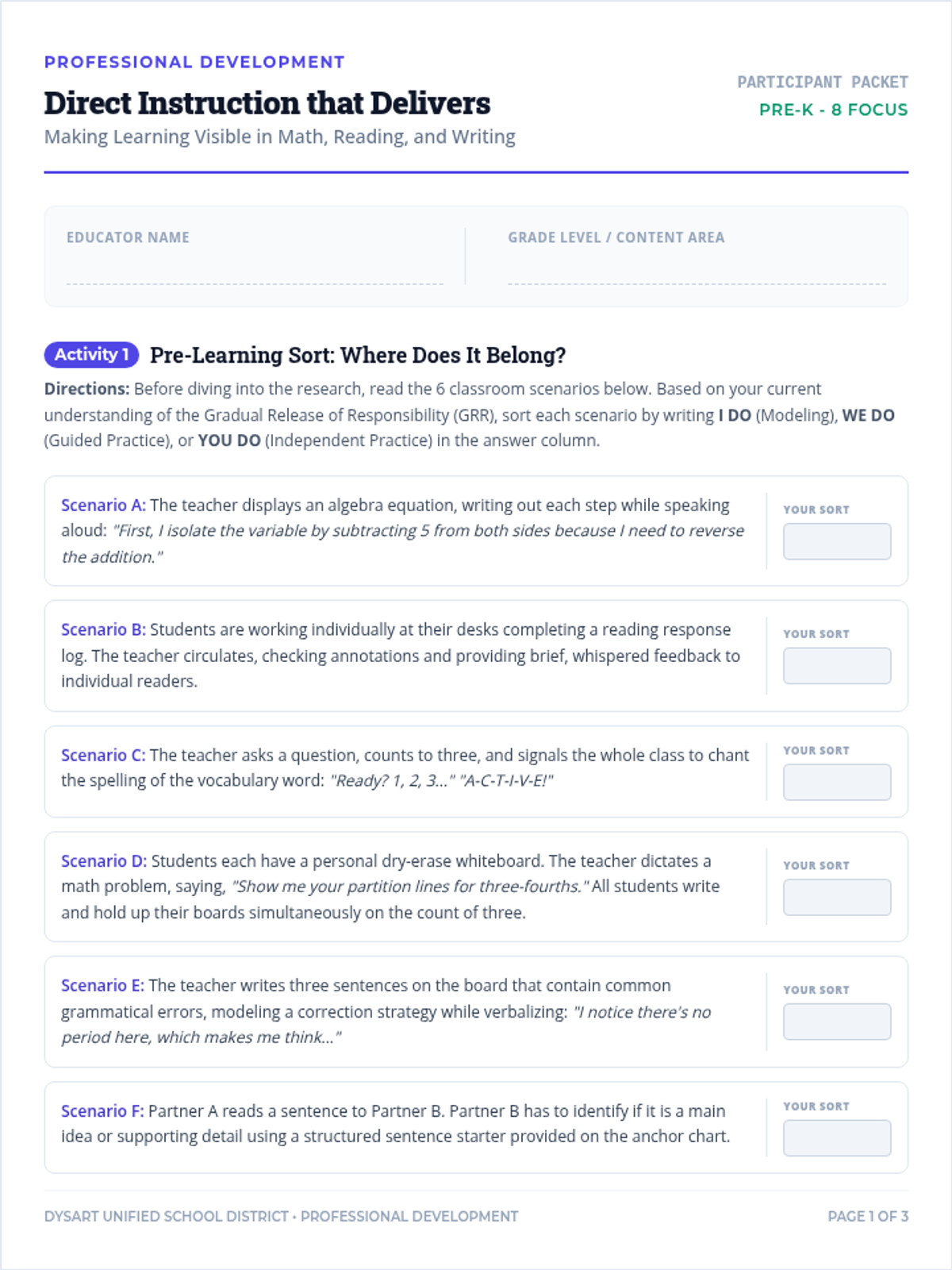
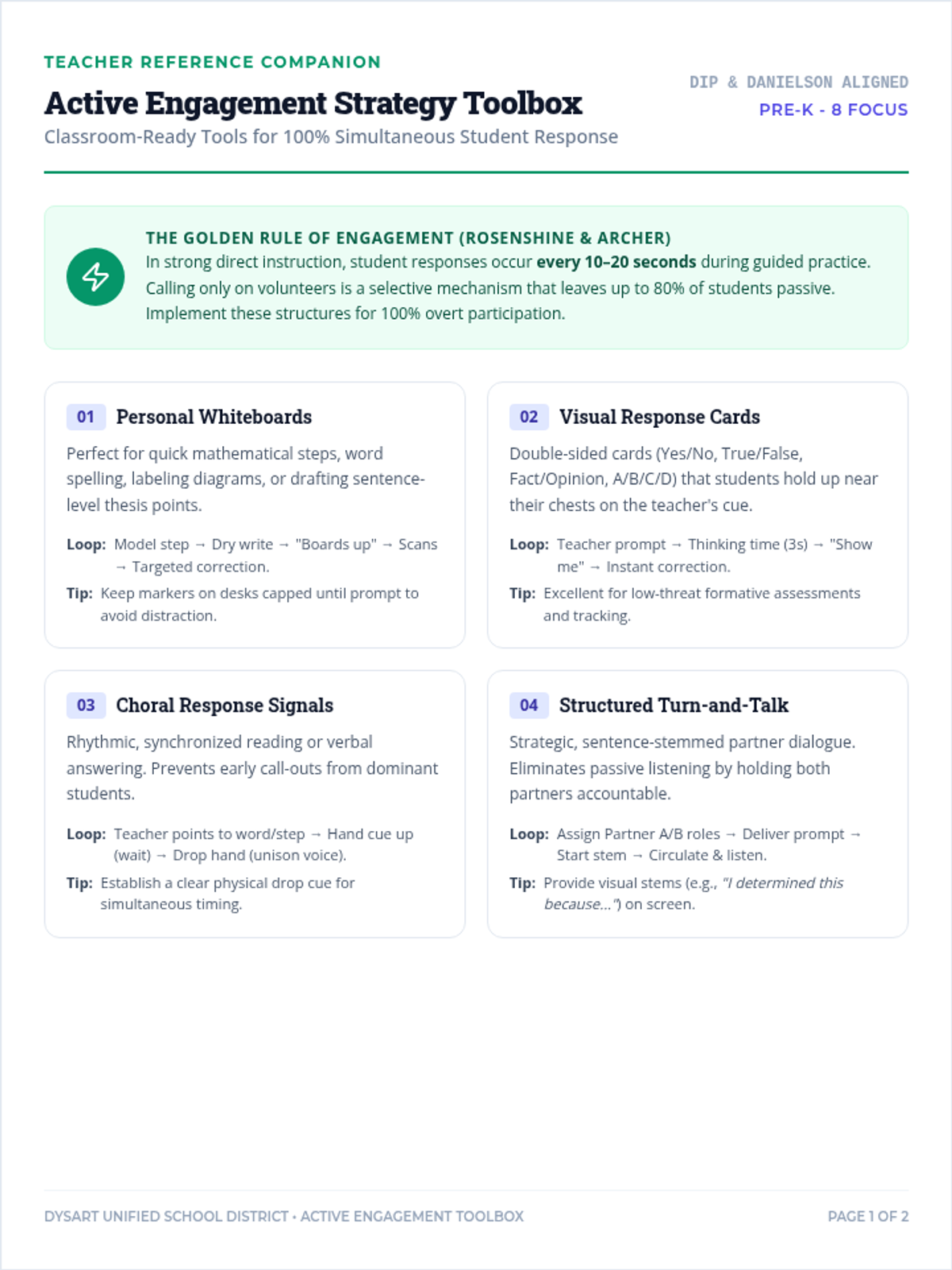
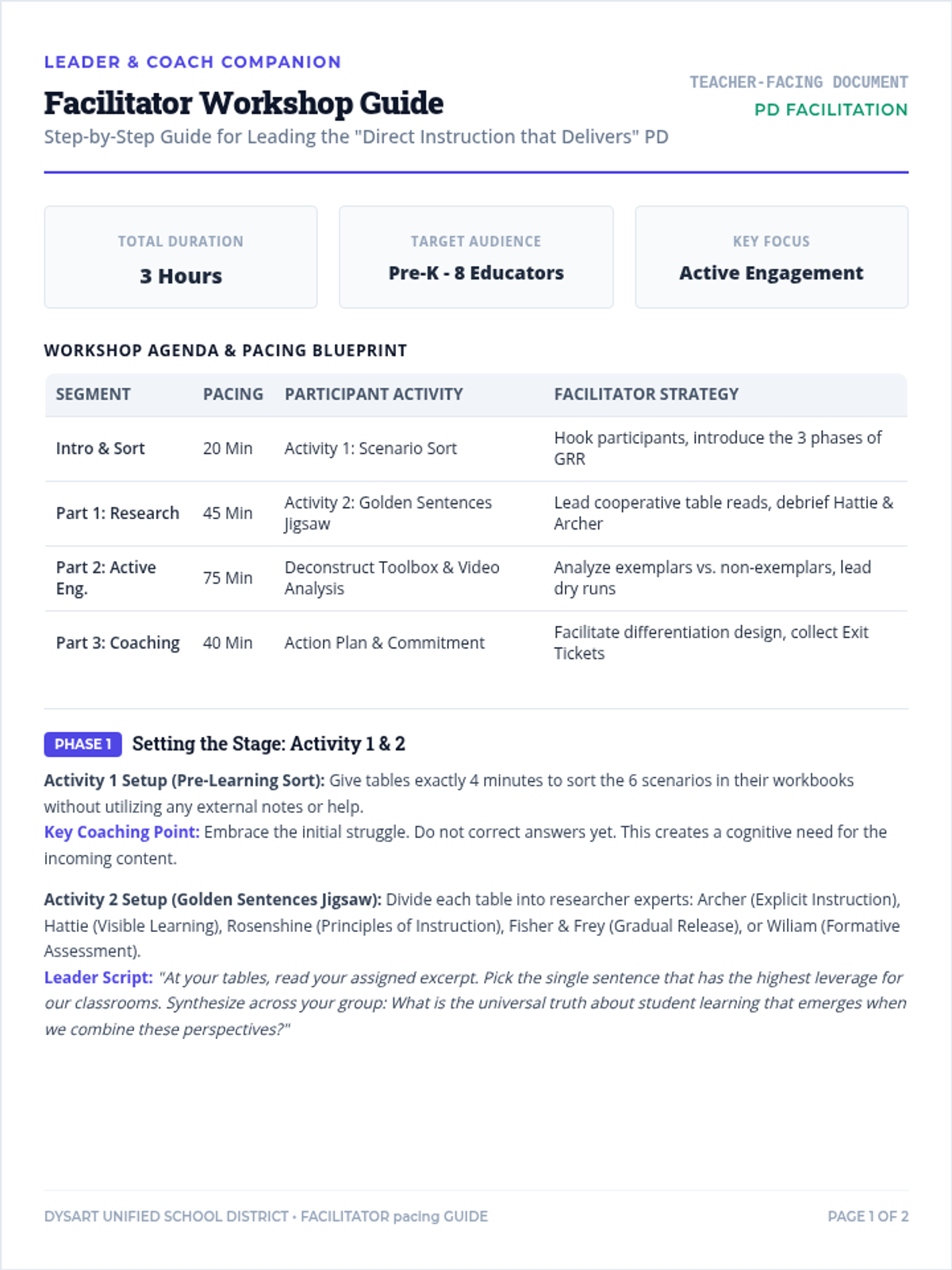
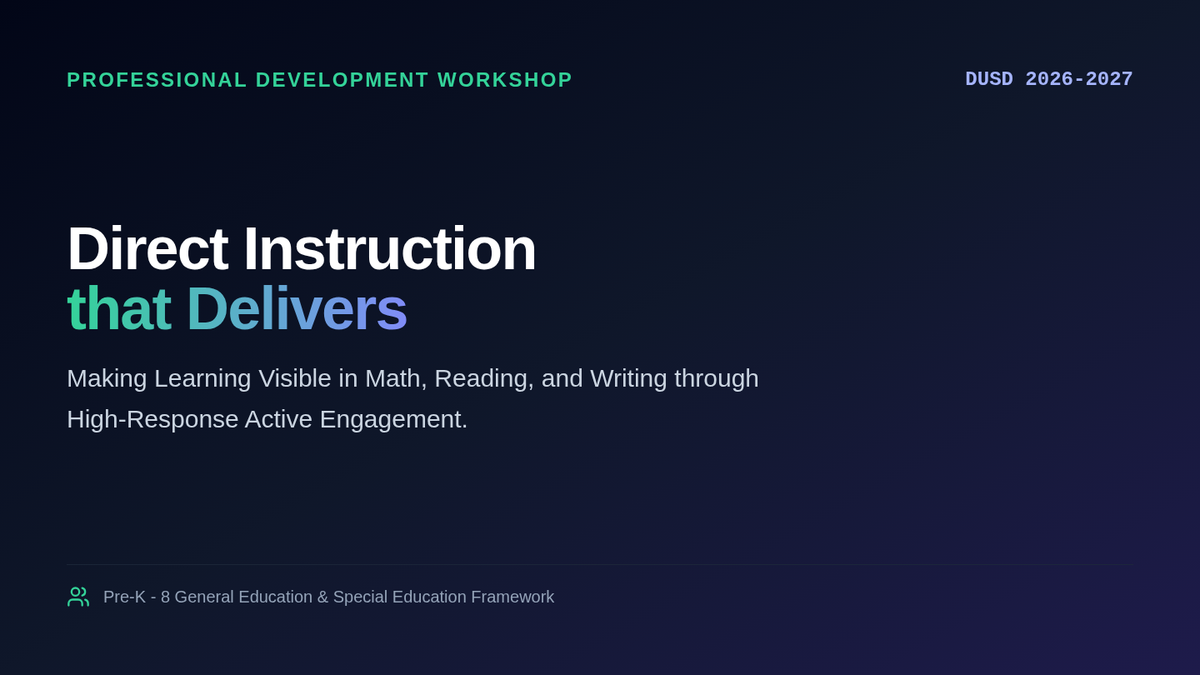
An active, research-grounded professional development workshop designed for Pre-K-8 general education and special education teachers. This session transforms traditional 'lecture-heavy' direct instruction into an engaging, multi-sensory, high-response framework with practical classroom-ready strategies.
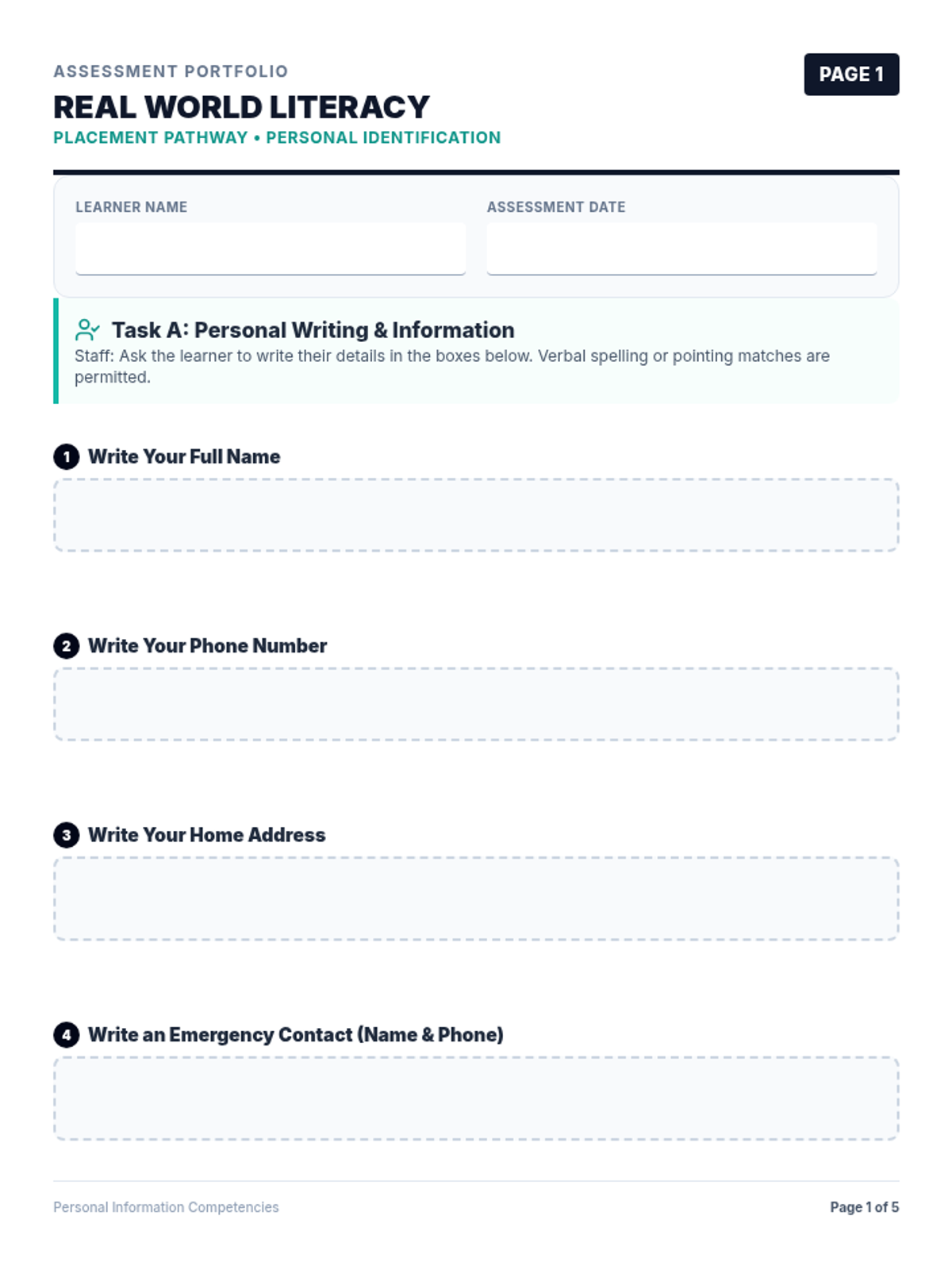
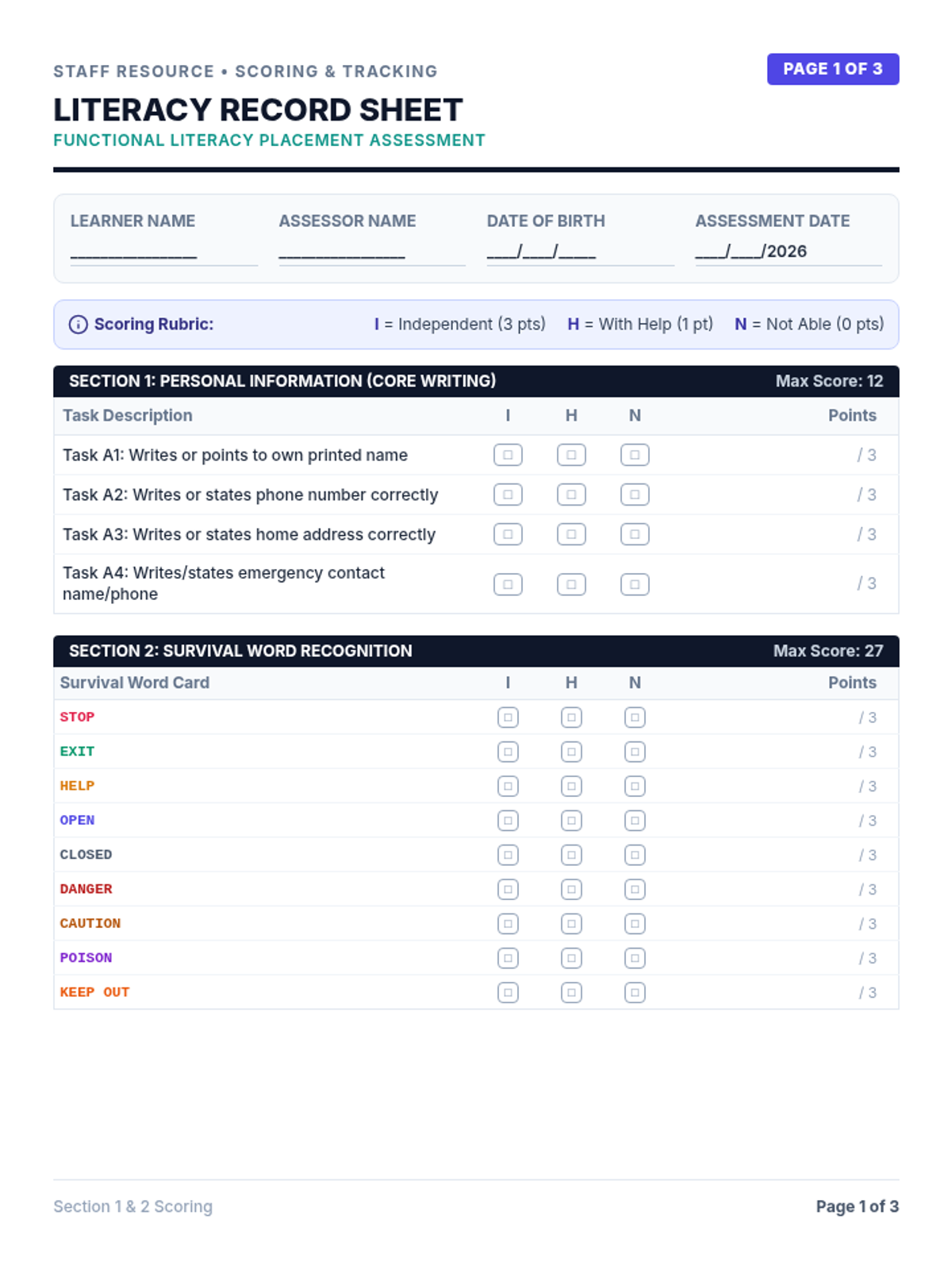
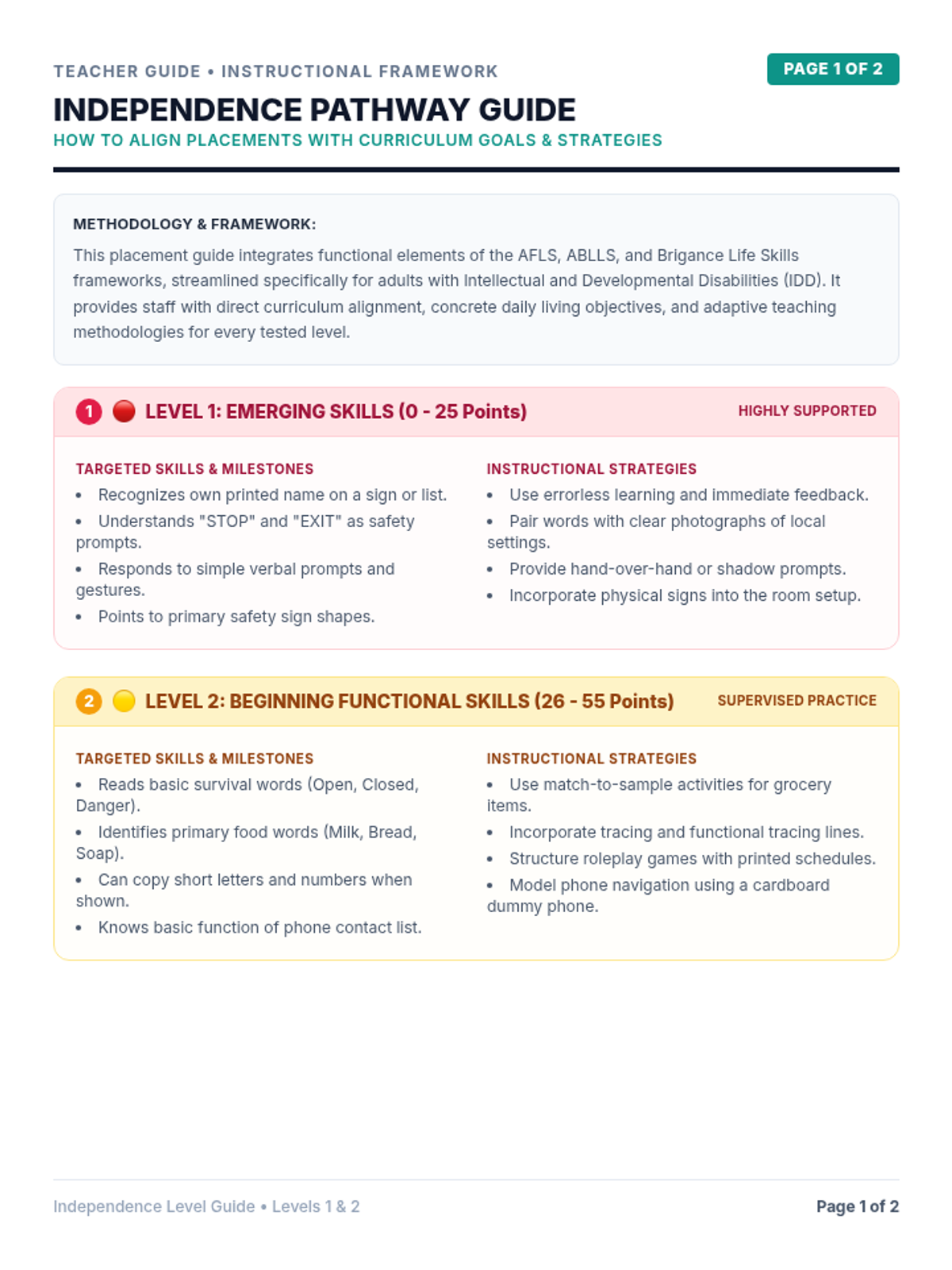
A comprehensive assessment, scoring tracker, and placement guide designed for adults with intellectual and developmental disabilities (IDD) to evaluate and support functional reading, writing, and independence skills.
A science-backed exploration of sensory self-regulation, analyzing how physical micro-movements, somatosensory inputs, and attention regulation theories help students optimize focus and calm in high school and beyond.
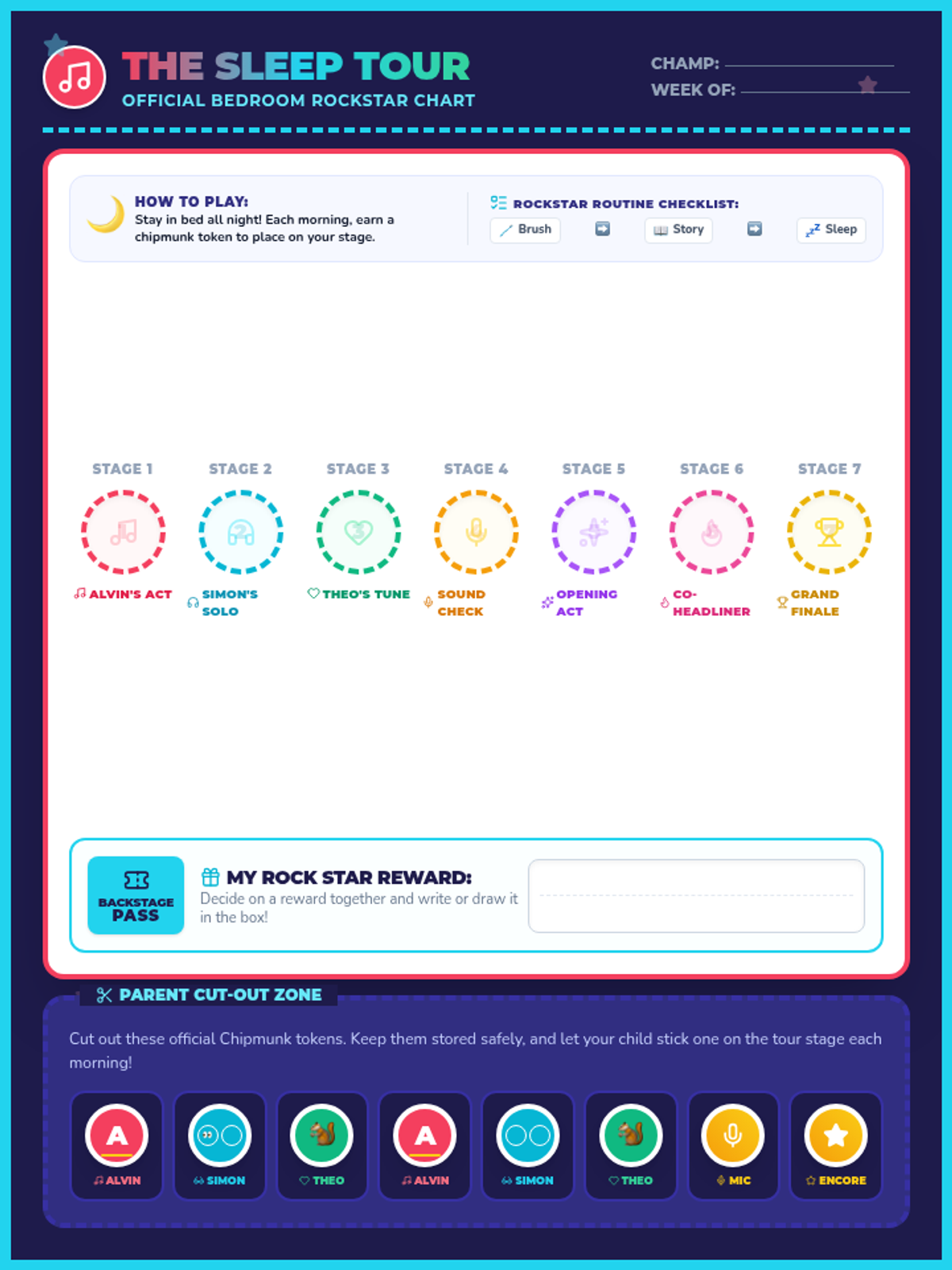
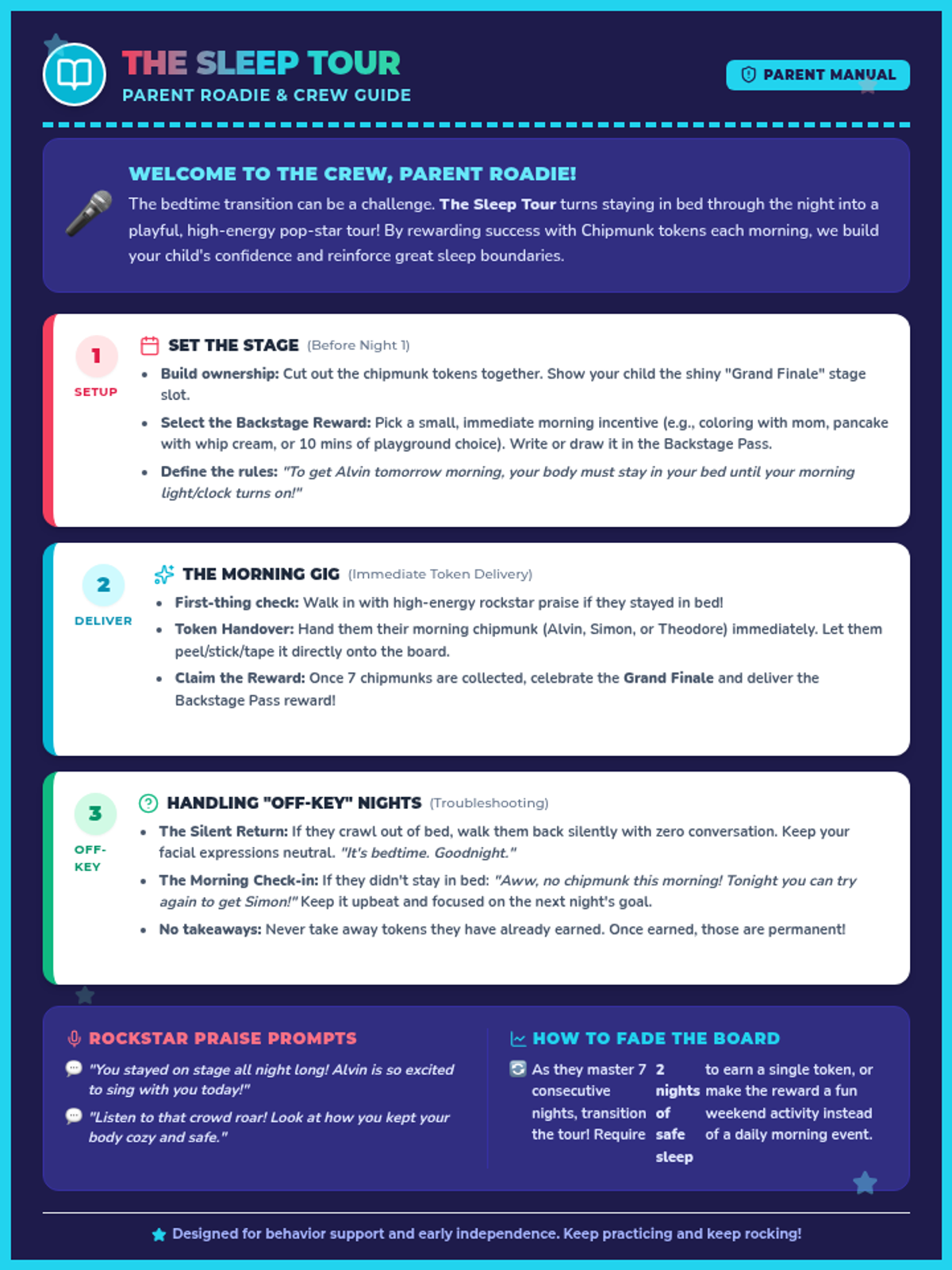
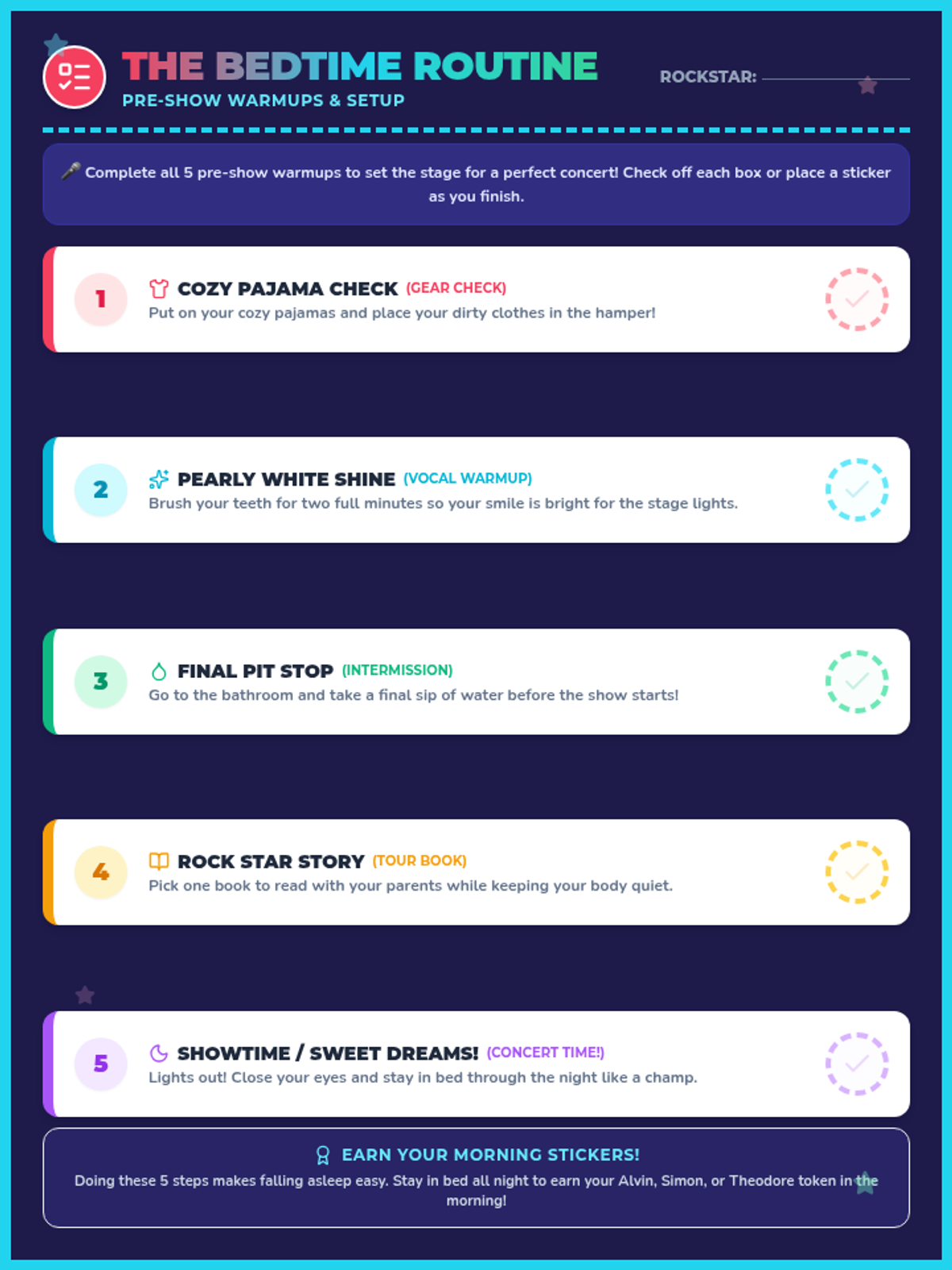
A bedtime token economy system designed to help young children stay in bed through the night using an engaging Alvin and the Chipmunks theme. Includes a printable token board and a step-by-step parent implementation guide.
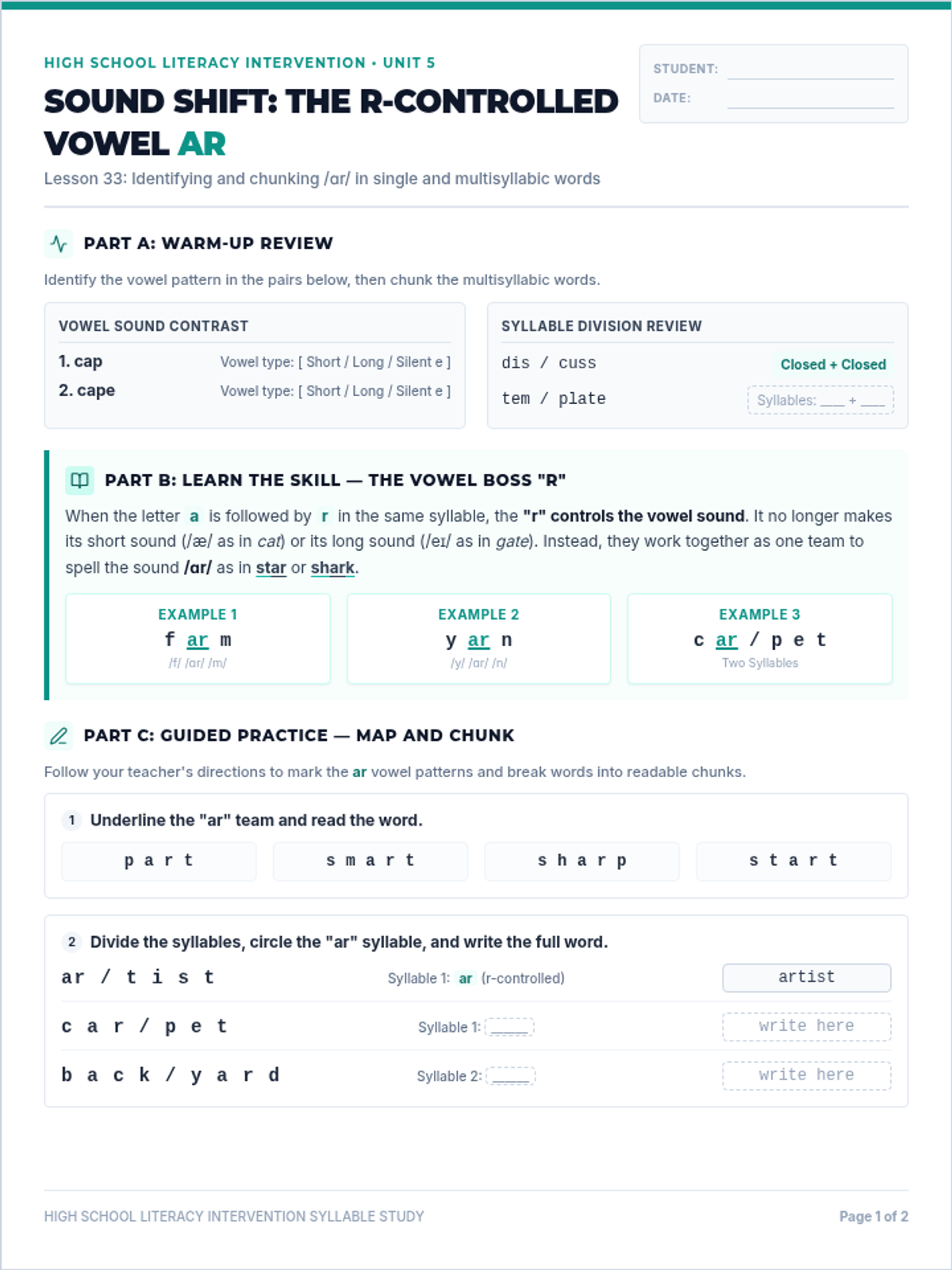
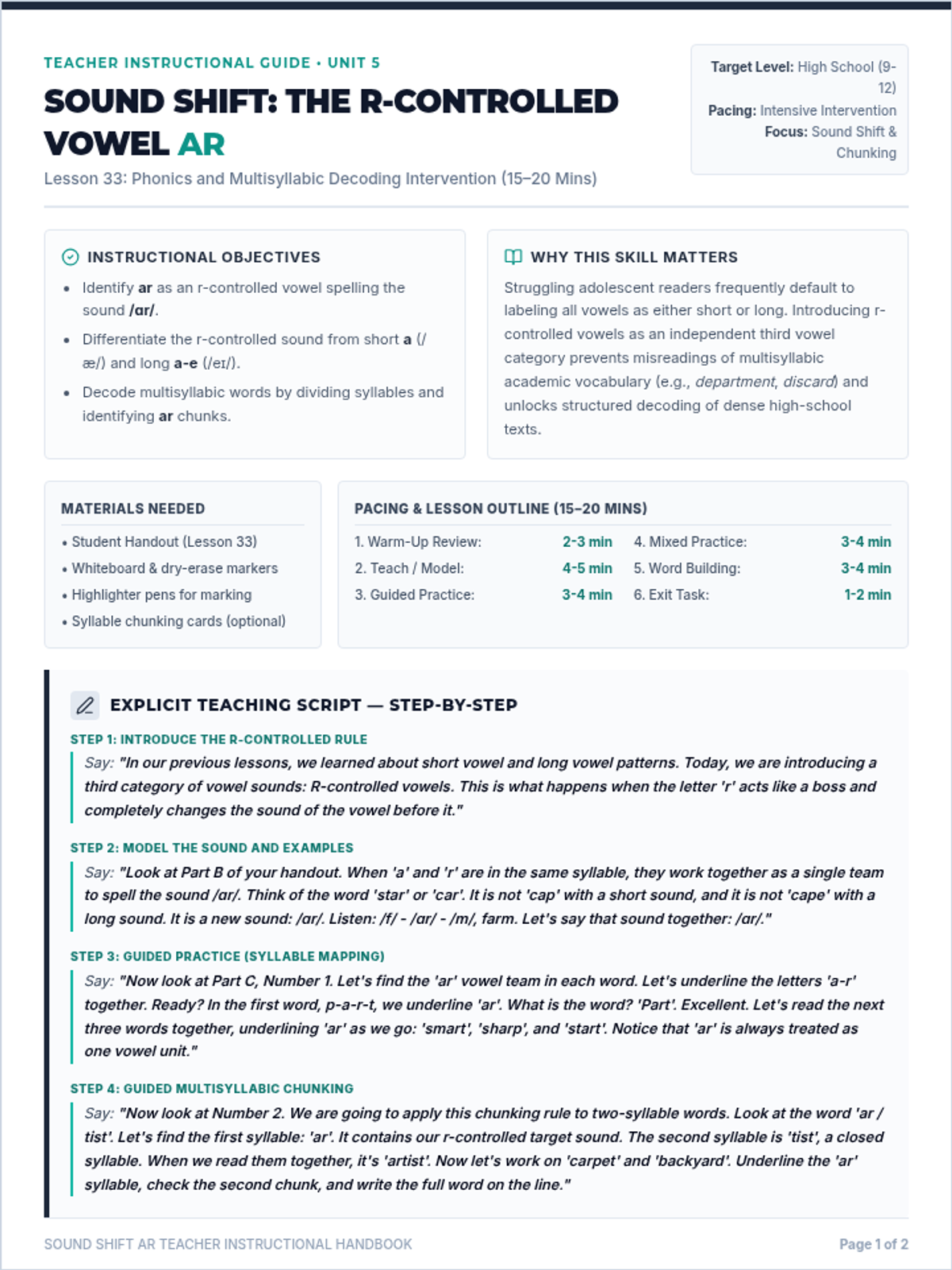
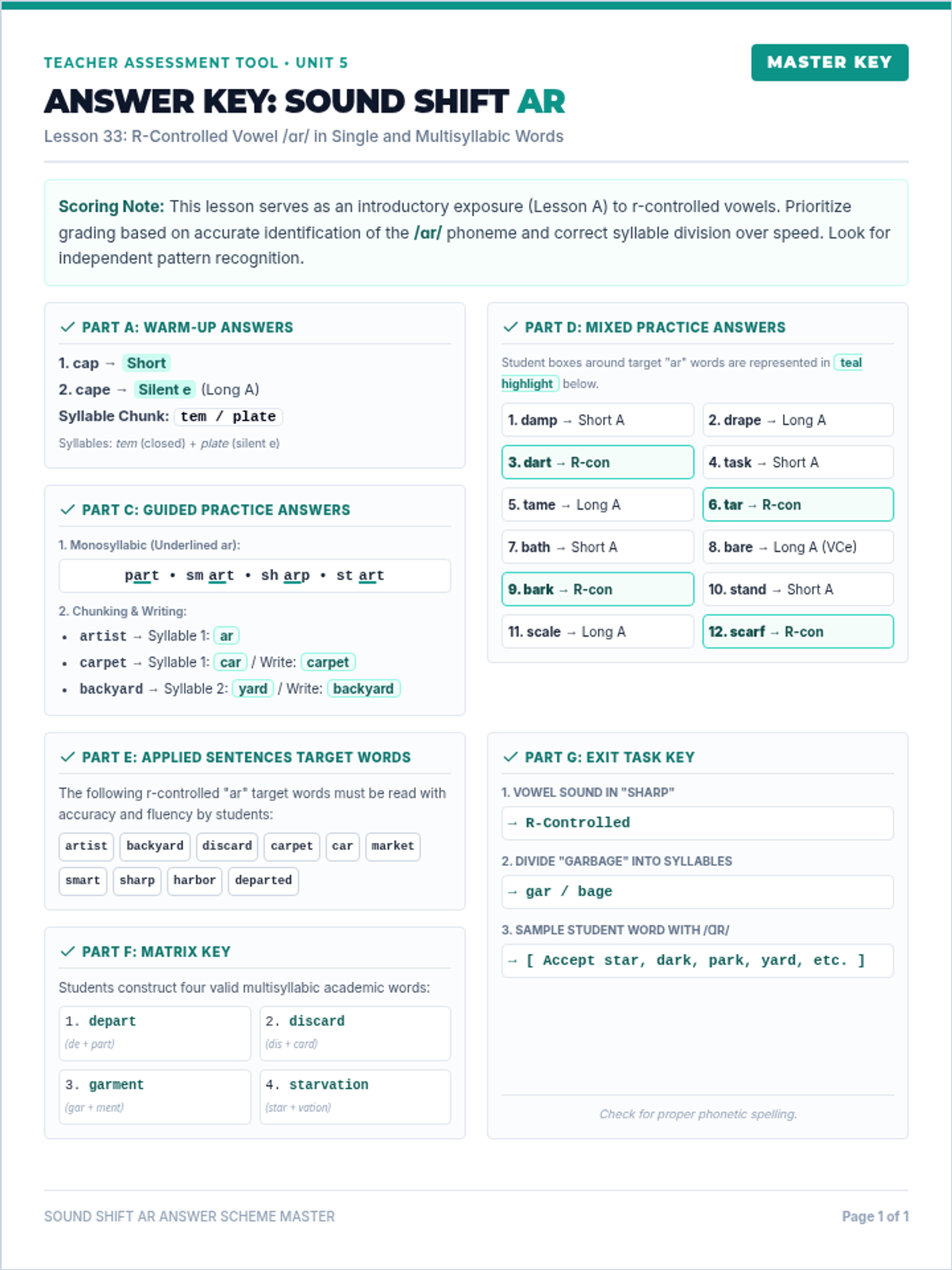
An intensive reading intervention lesson designed for high schoolers. It introduces the r-controlled vowel 'ar' (/ɑr/) as a third vowel sound distinct from short and long vowels, applying it in both monosyllabic and multisyllabic words with explicit chunking strategies.
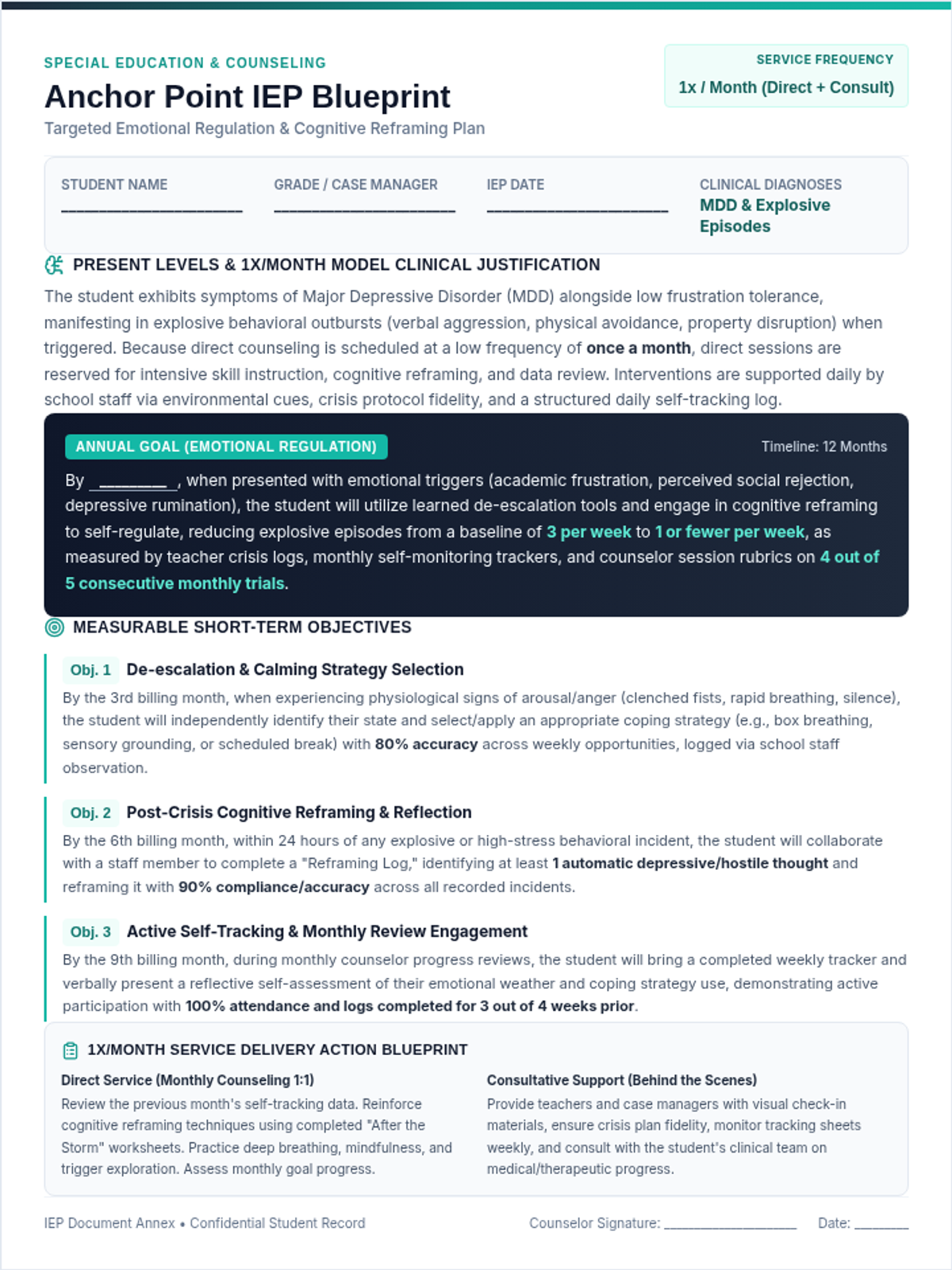
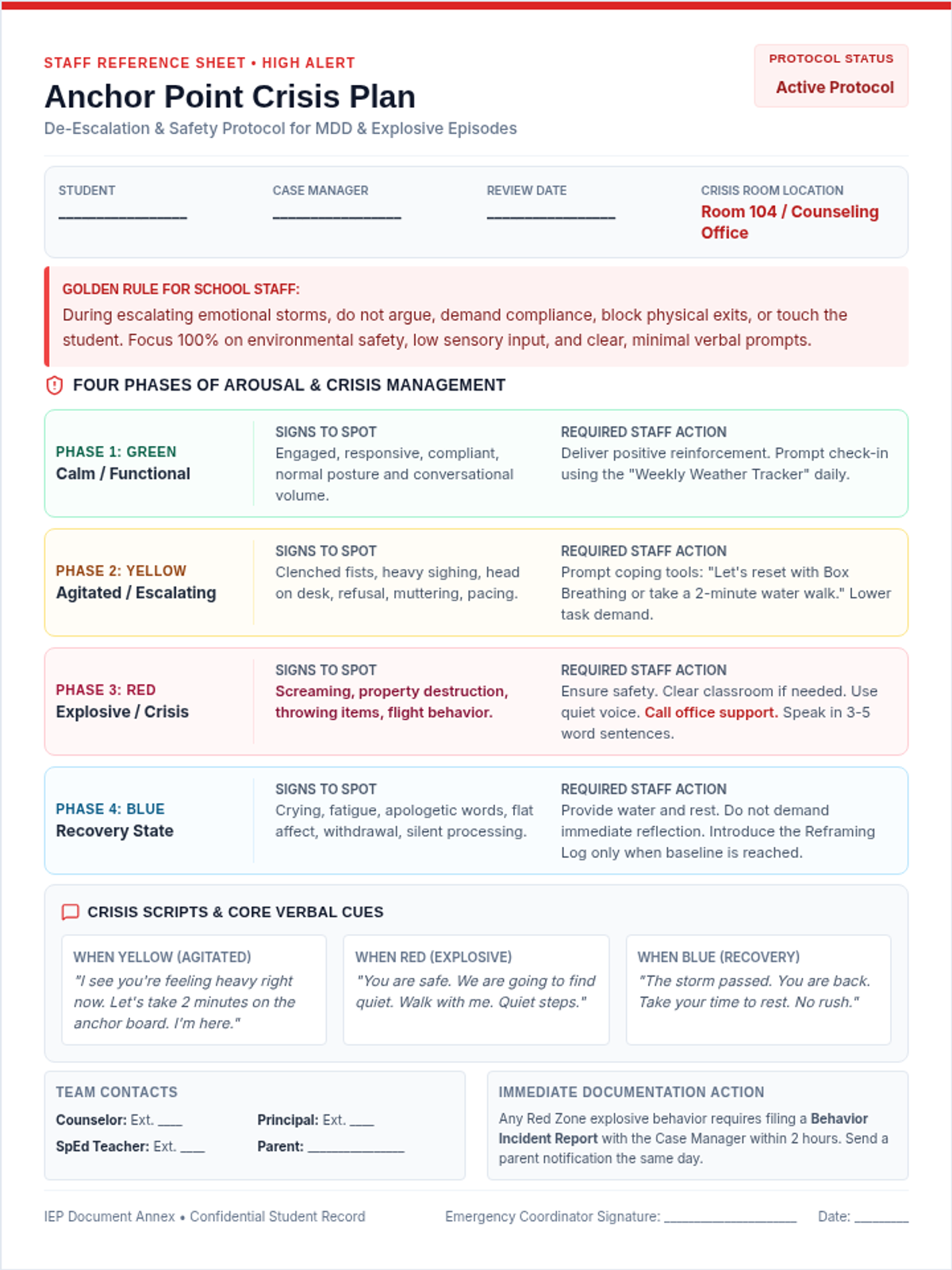
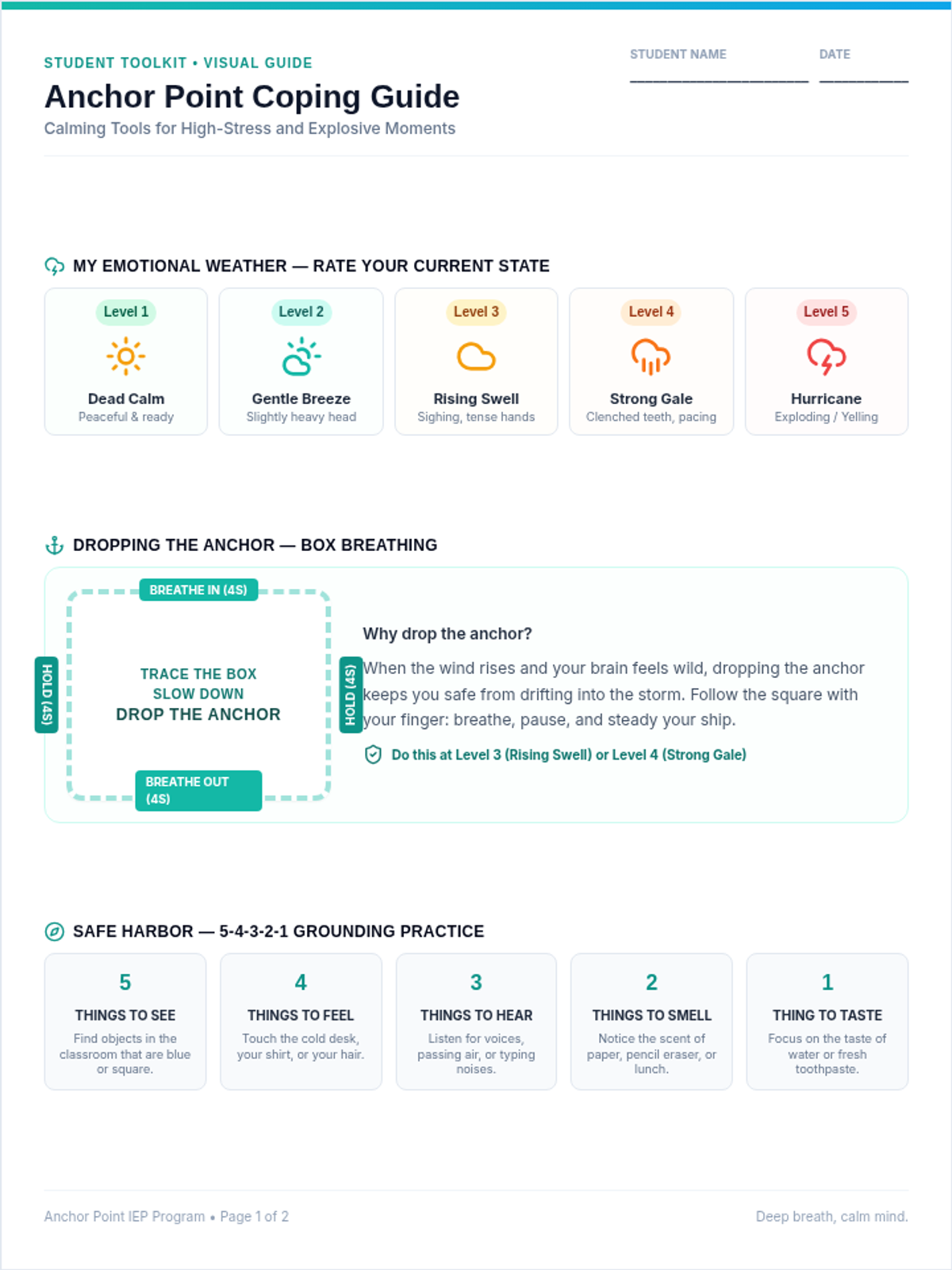
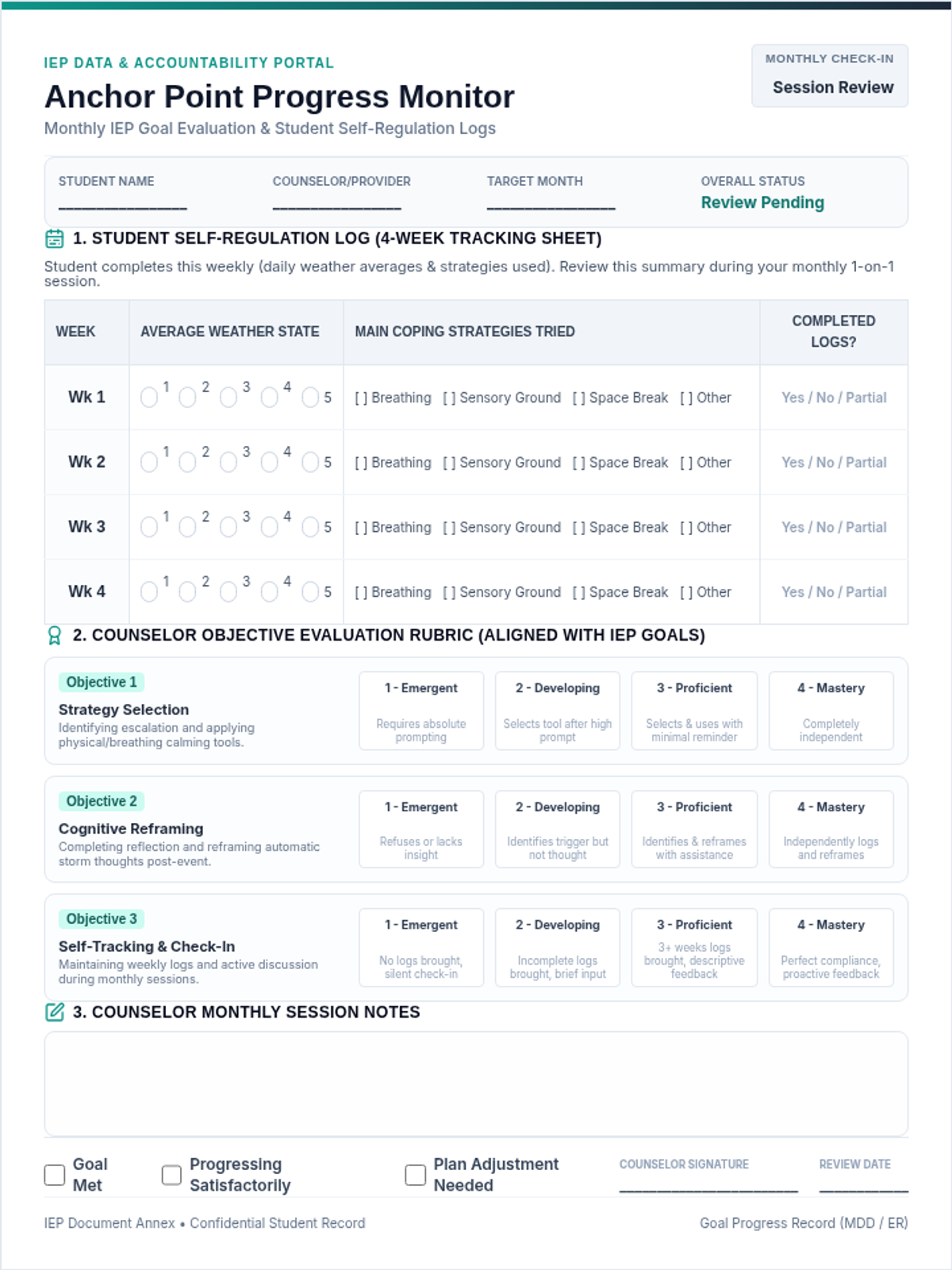
A comprehensive emotional regulation support package designed for students with Major Depressive Disorder and explosive episodes, optimized for a once-a-month counseling and consultation model. It contains the legal IEP goal blueprints, an actionable crisis plan, a student coping and reframing workbook, and progress monitoring tracking tools.
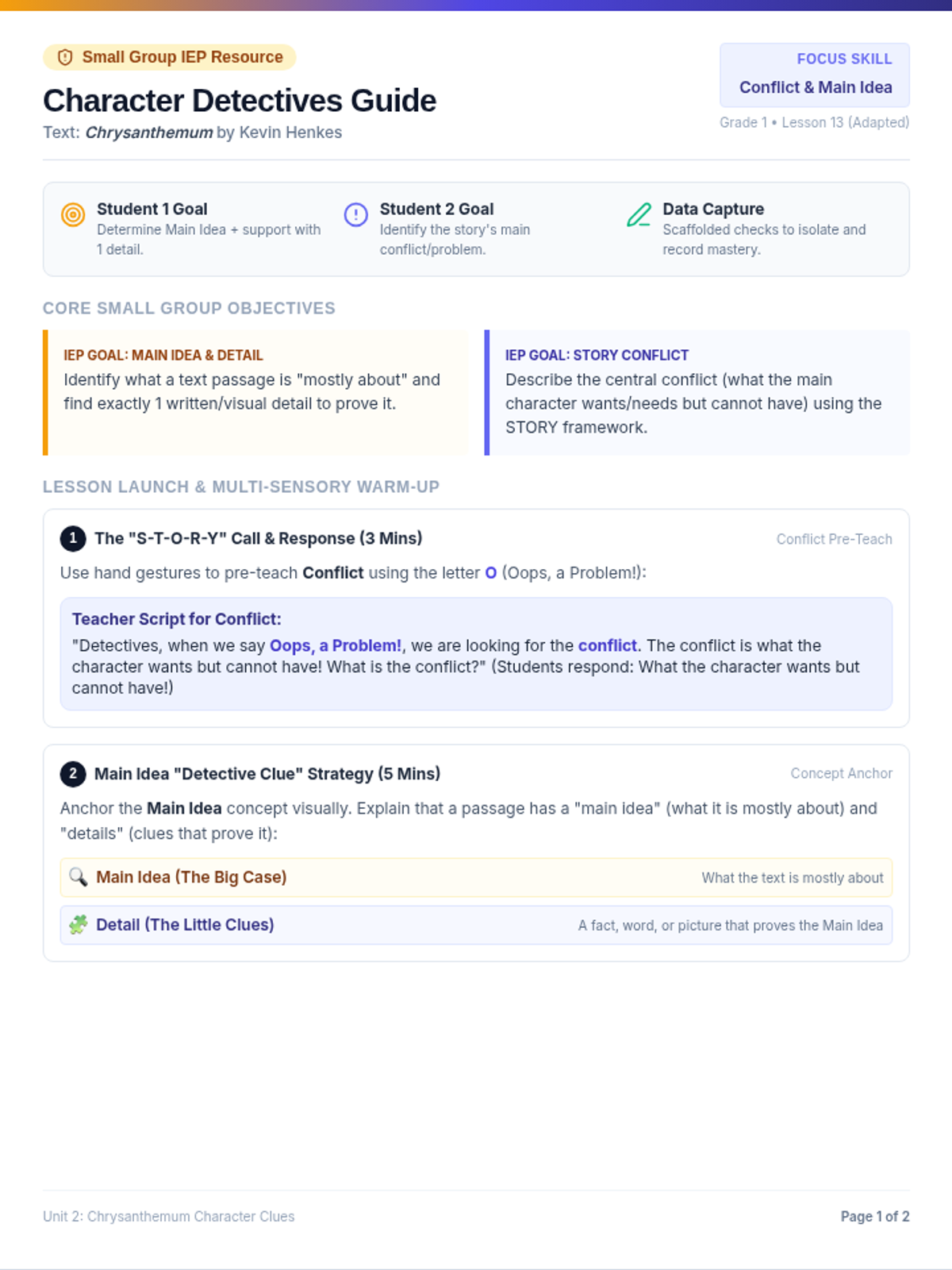
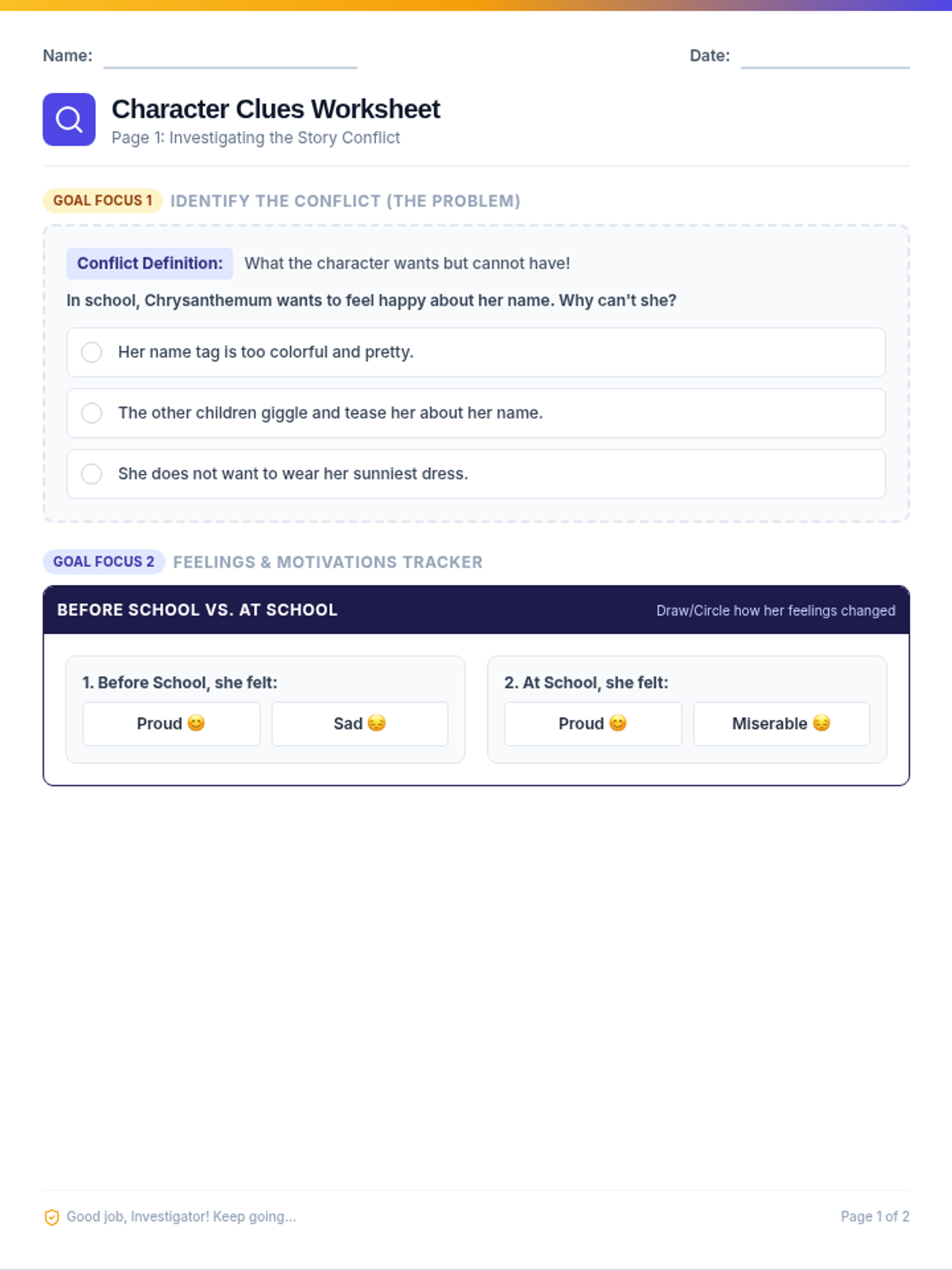
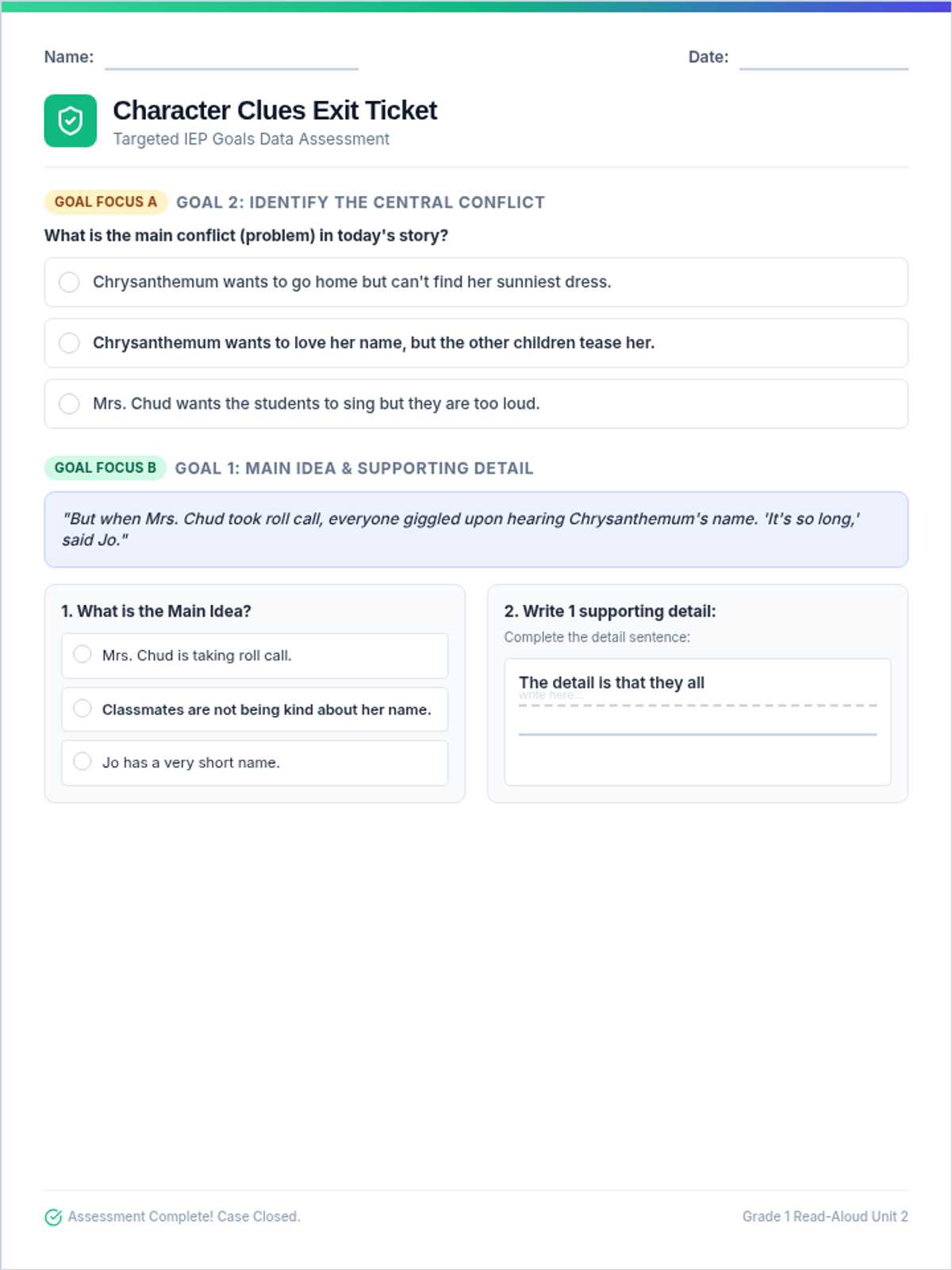
An accommodated small-group lesson on Chrysanthemum focused on character feelings, actions, and motivations. It includes step-by-step scaffolding, visual organizers, and IEP tracking tips to support diverse learners.
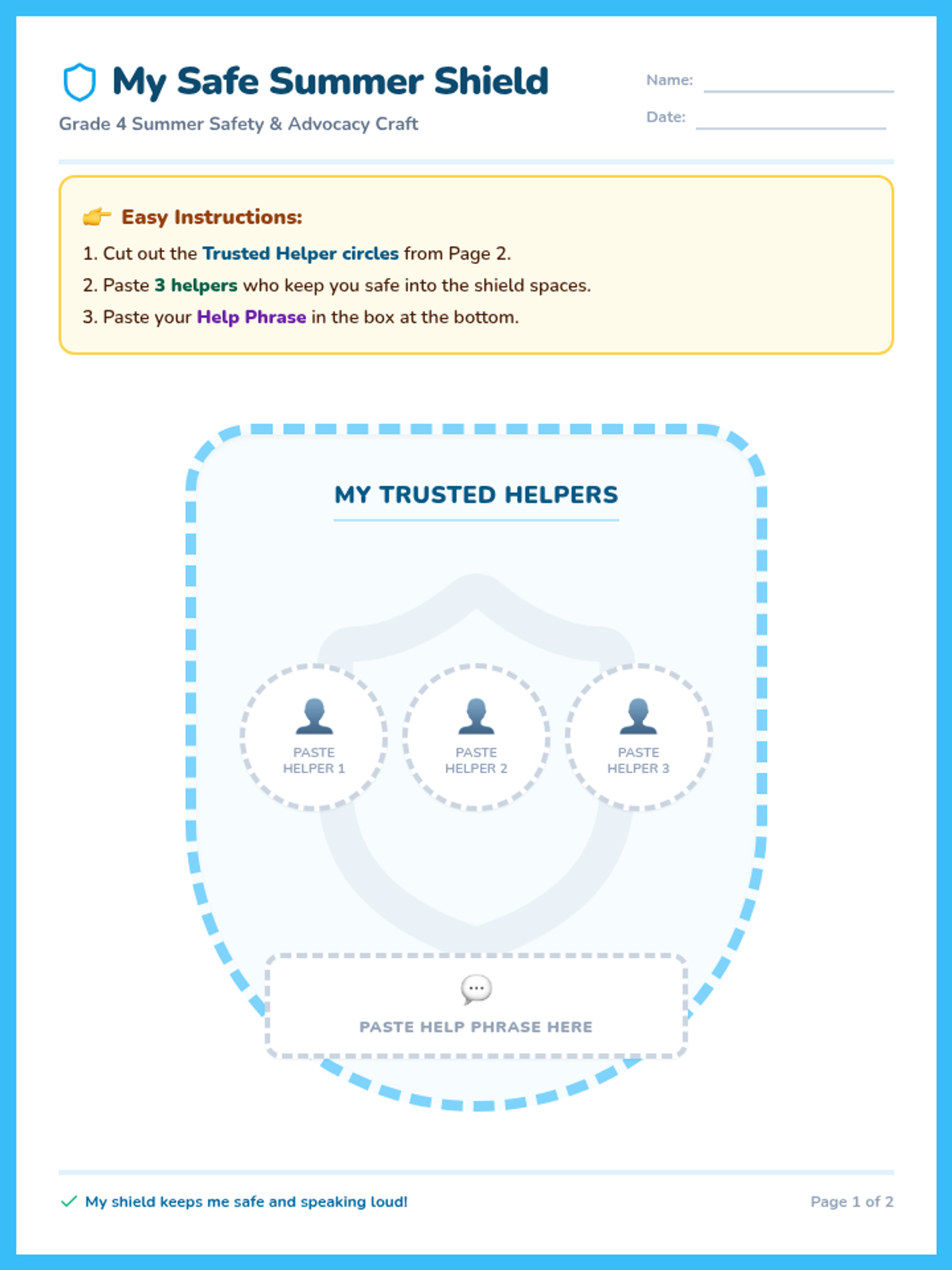
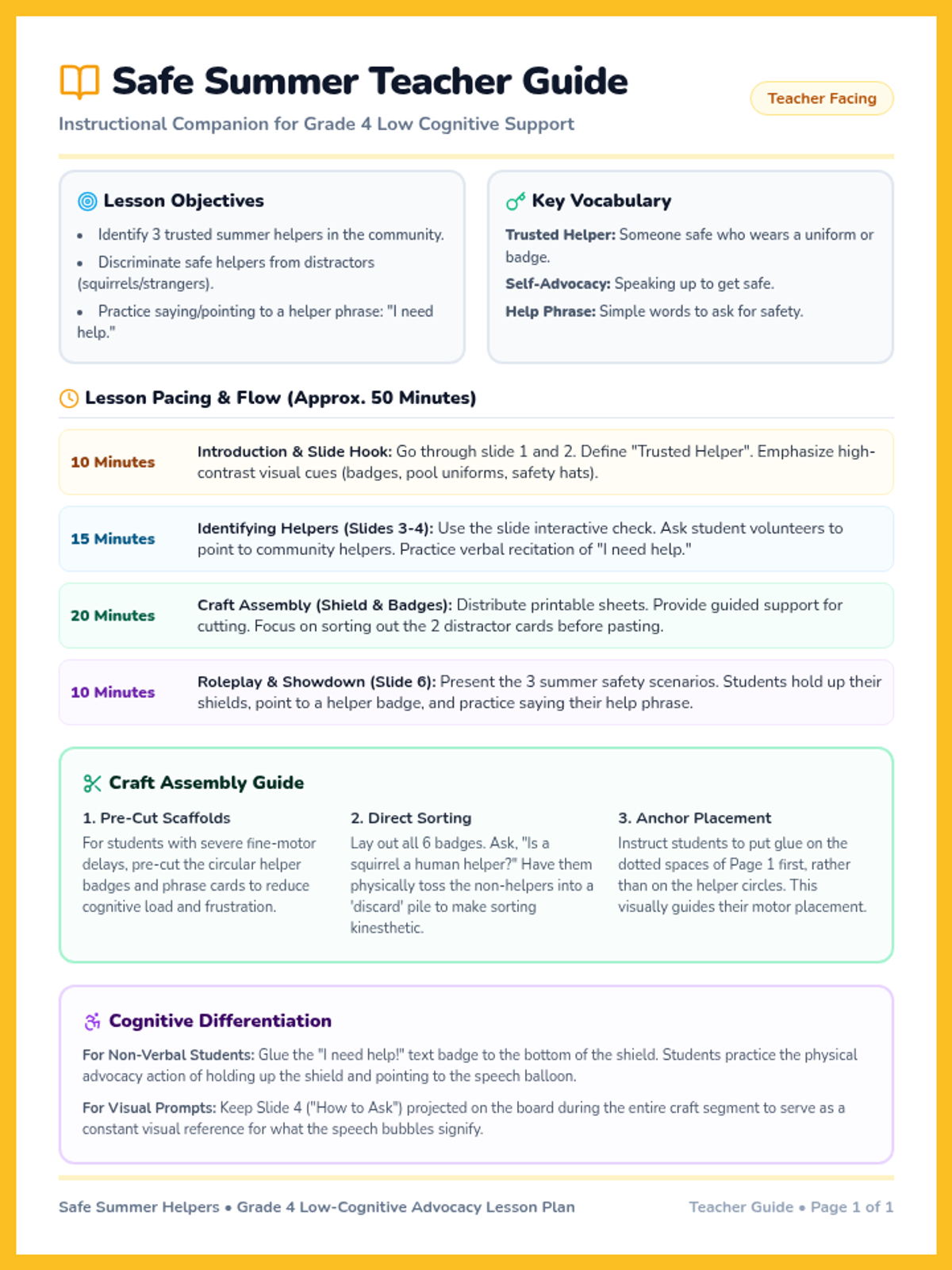
A hands-on, highly visual summer safety and self-advocacy lesson designed for Grade 4 students with low cognitive abilities. Students identify trusted adults, assemble a 'Safe Summer Shield' craft, and practice simple, direct phrases to ask for help in real-world summer scenarios.
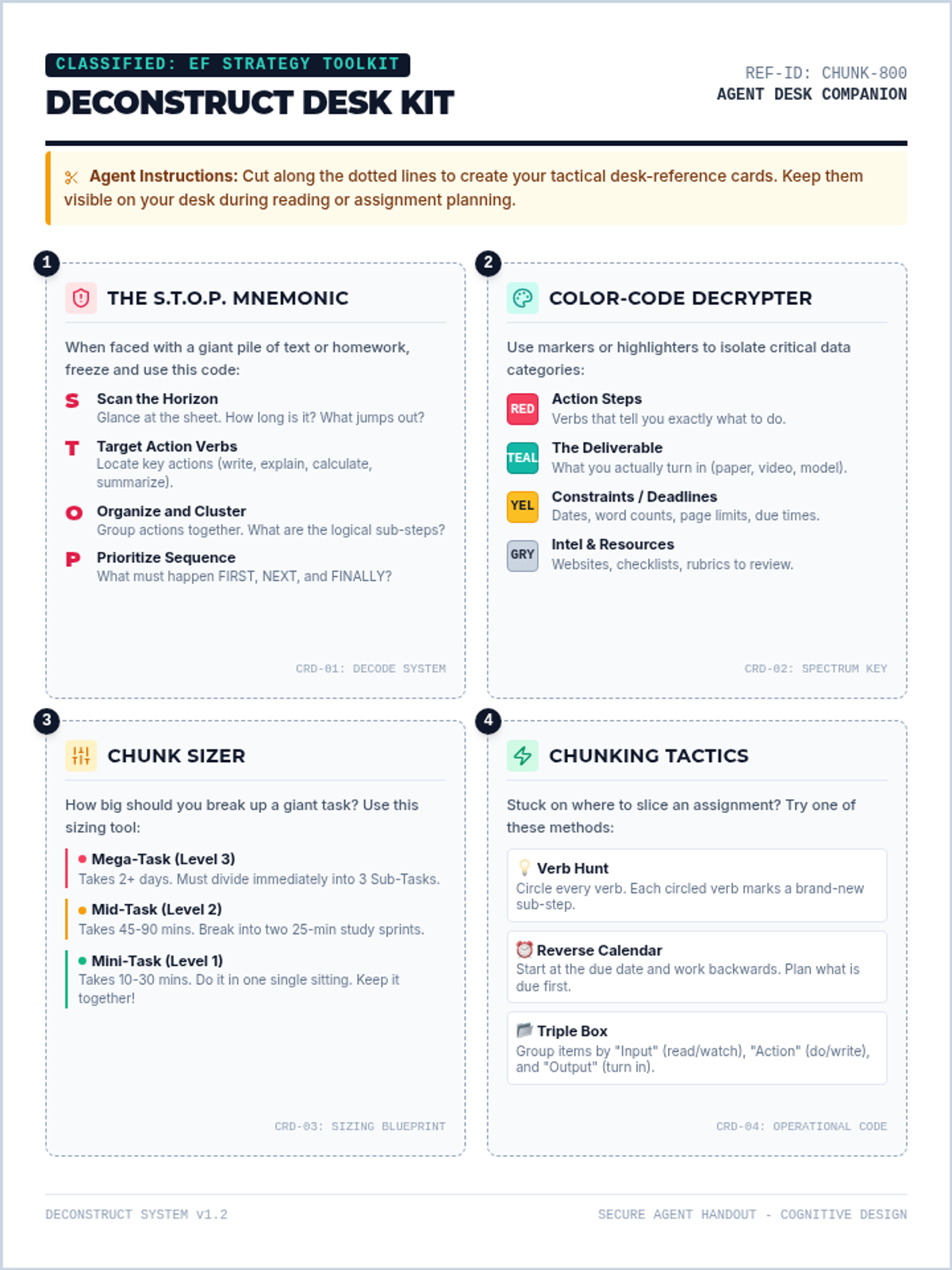
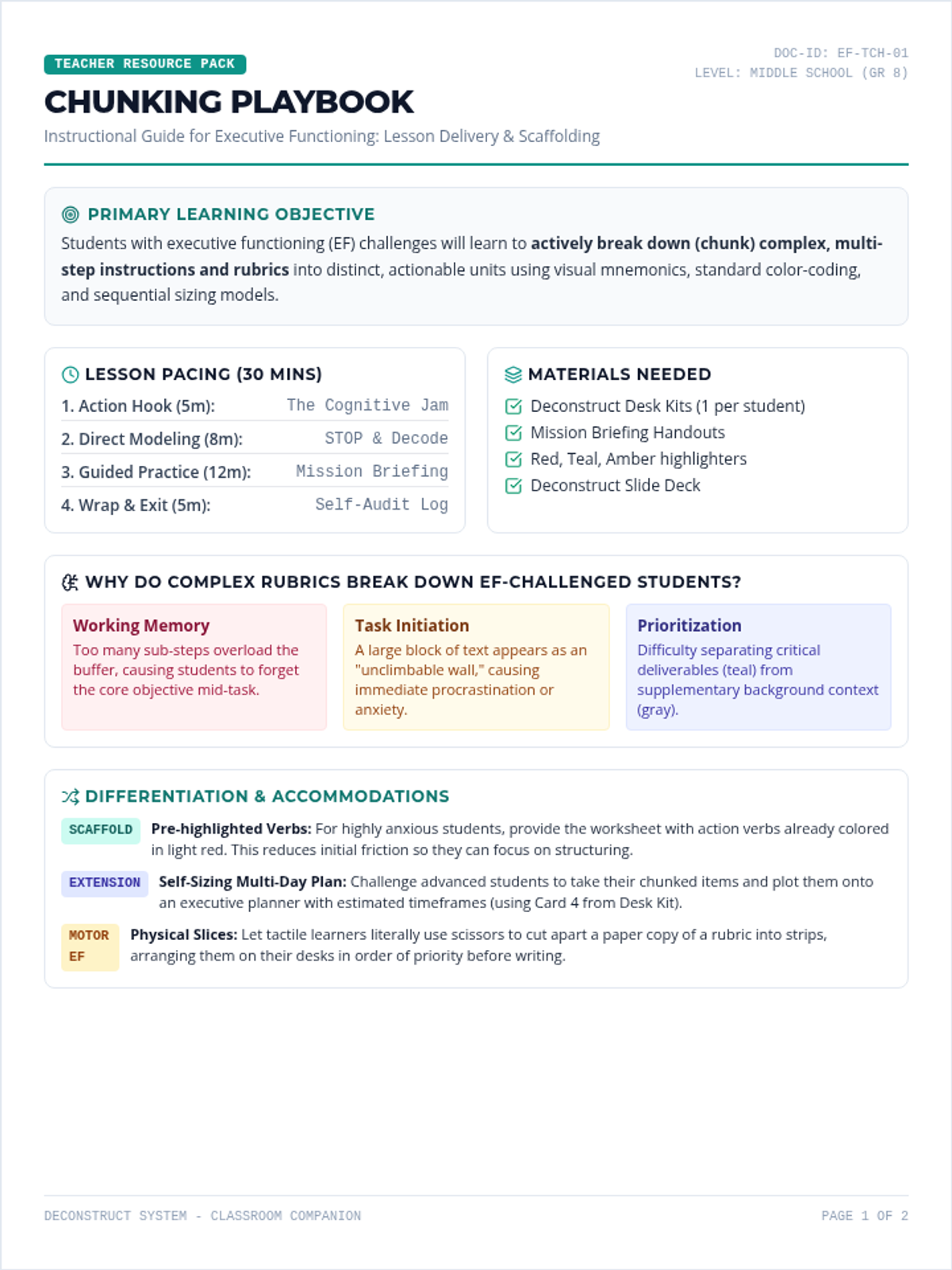
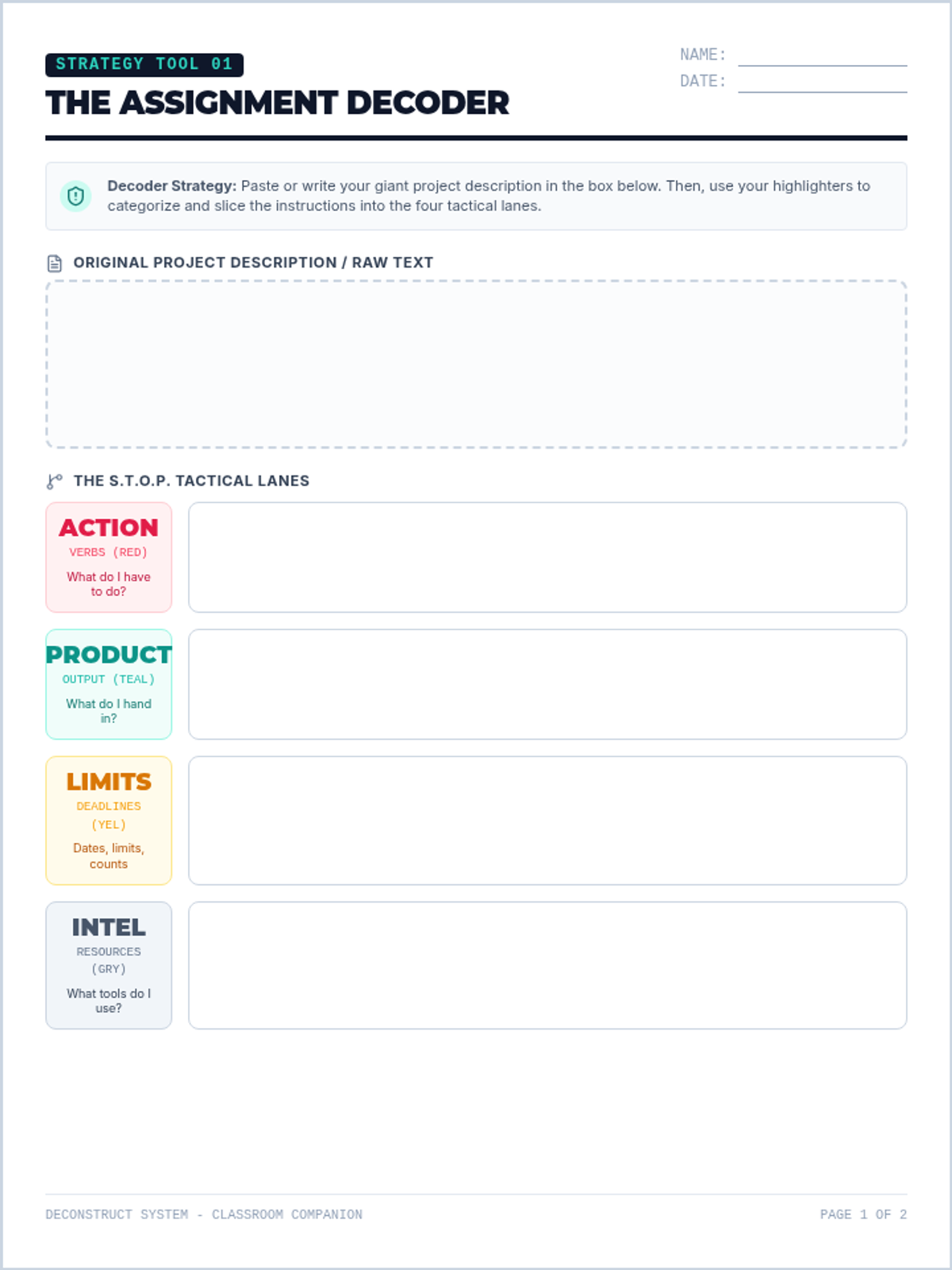
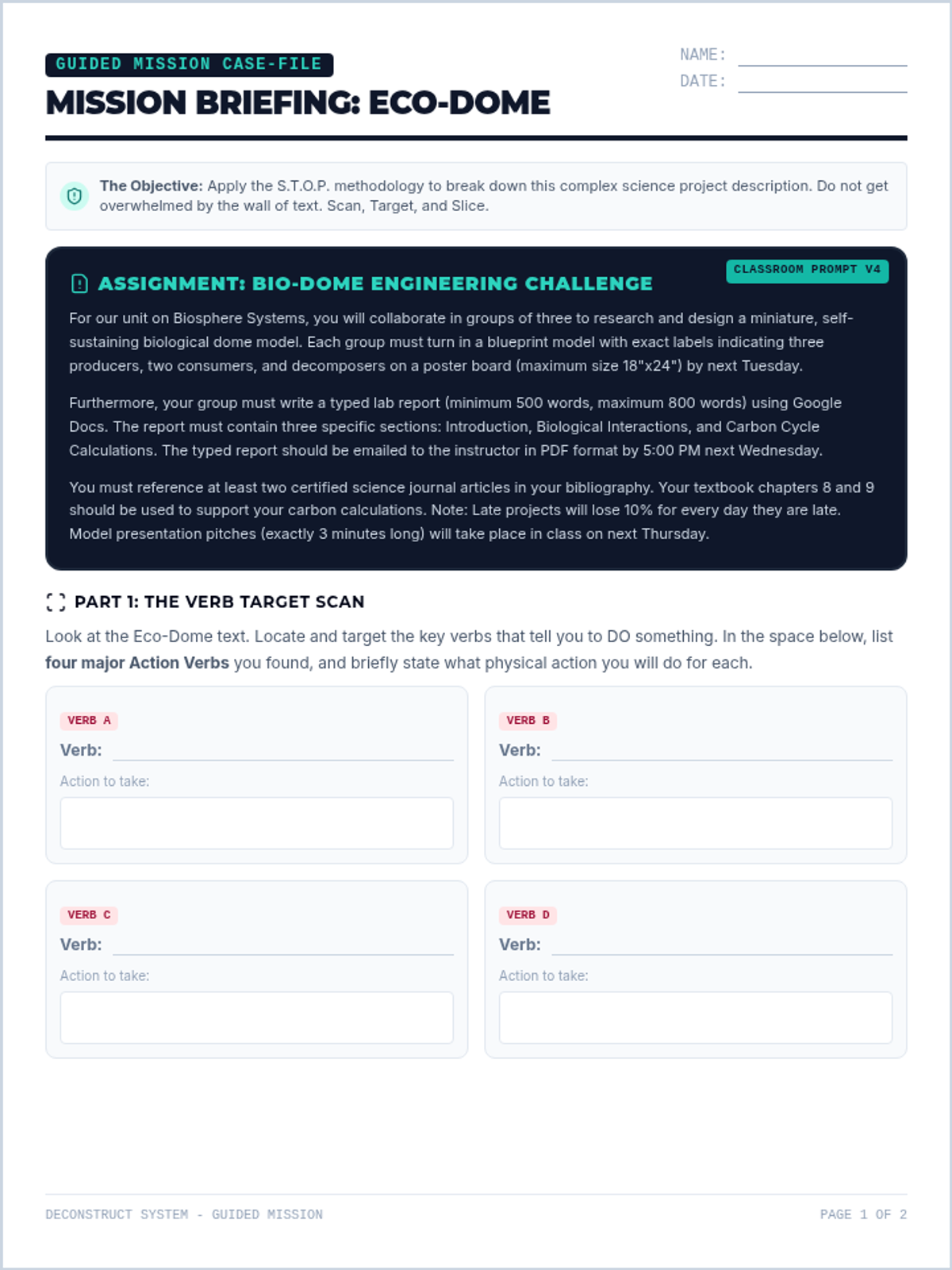
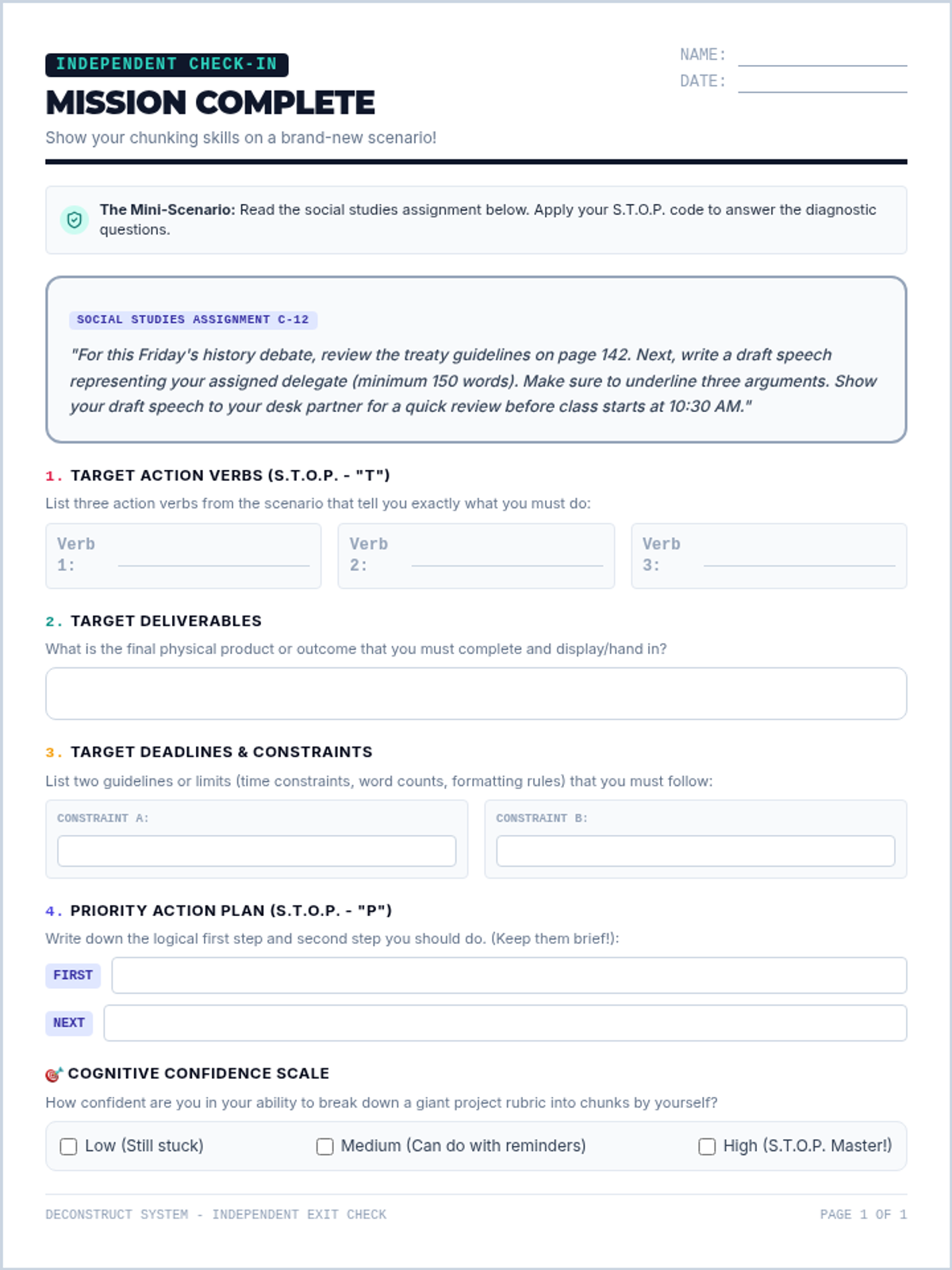
A comprehensive executive functioning lesson designed for 8th-grade students to master chunking. Students learn to decode, categorize, and prioritize multi-step project rubrics and long-form texts using specialized templates and desk toolkits.
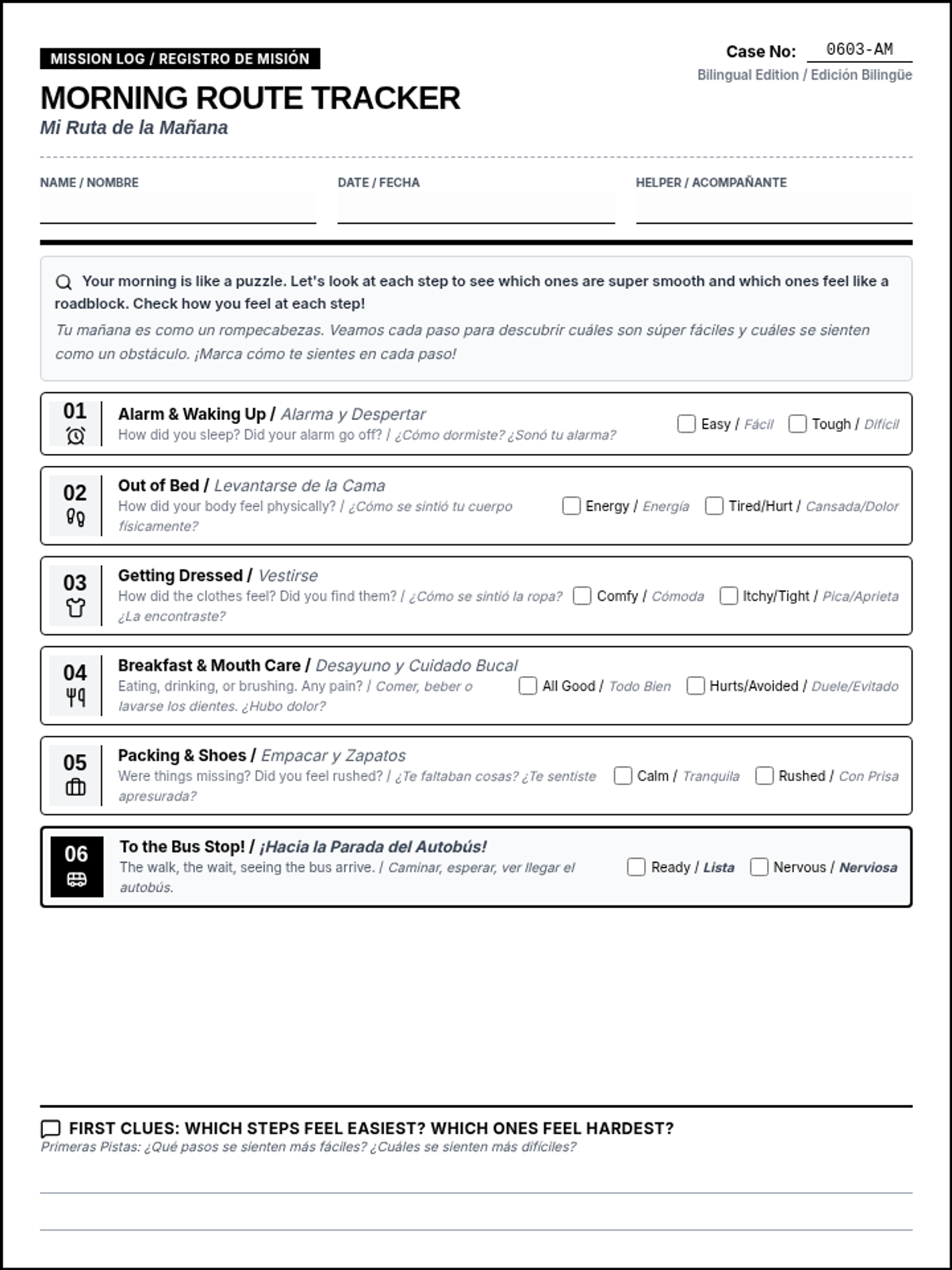
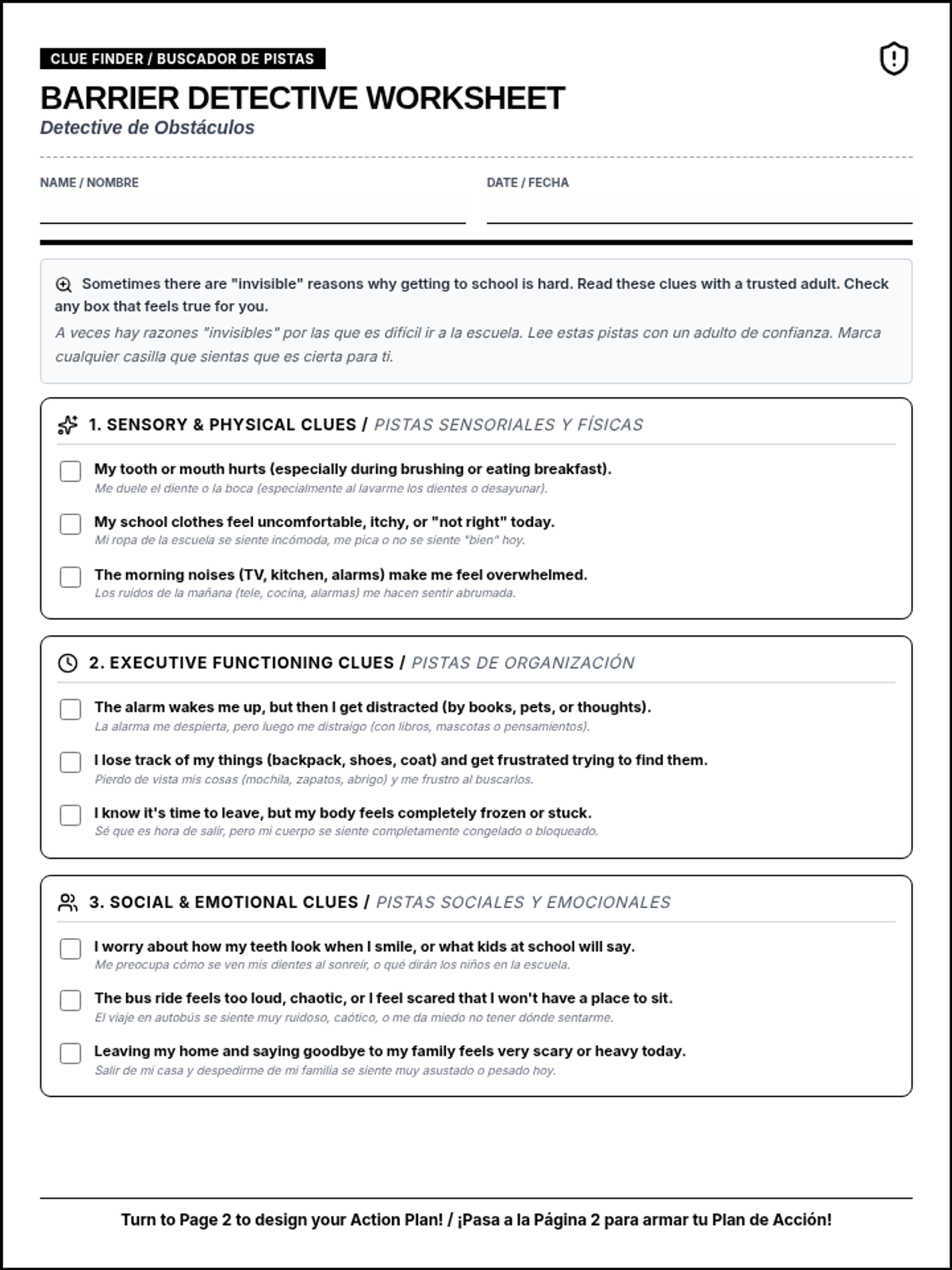
A supportive, bilingual diagnostic resource set to help an 11-year-old student uncover specific physical, sensory, emotional, and executive functioning barriers in her morning routine.
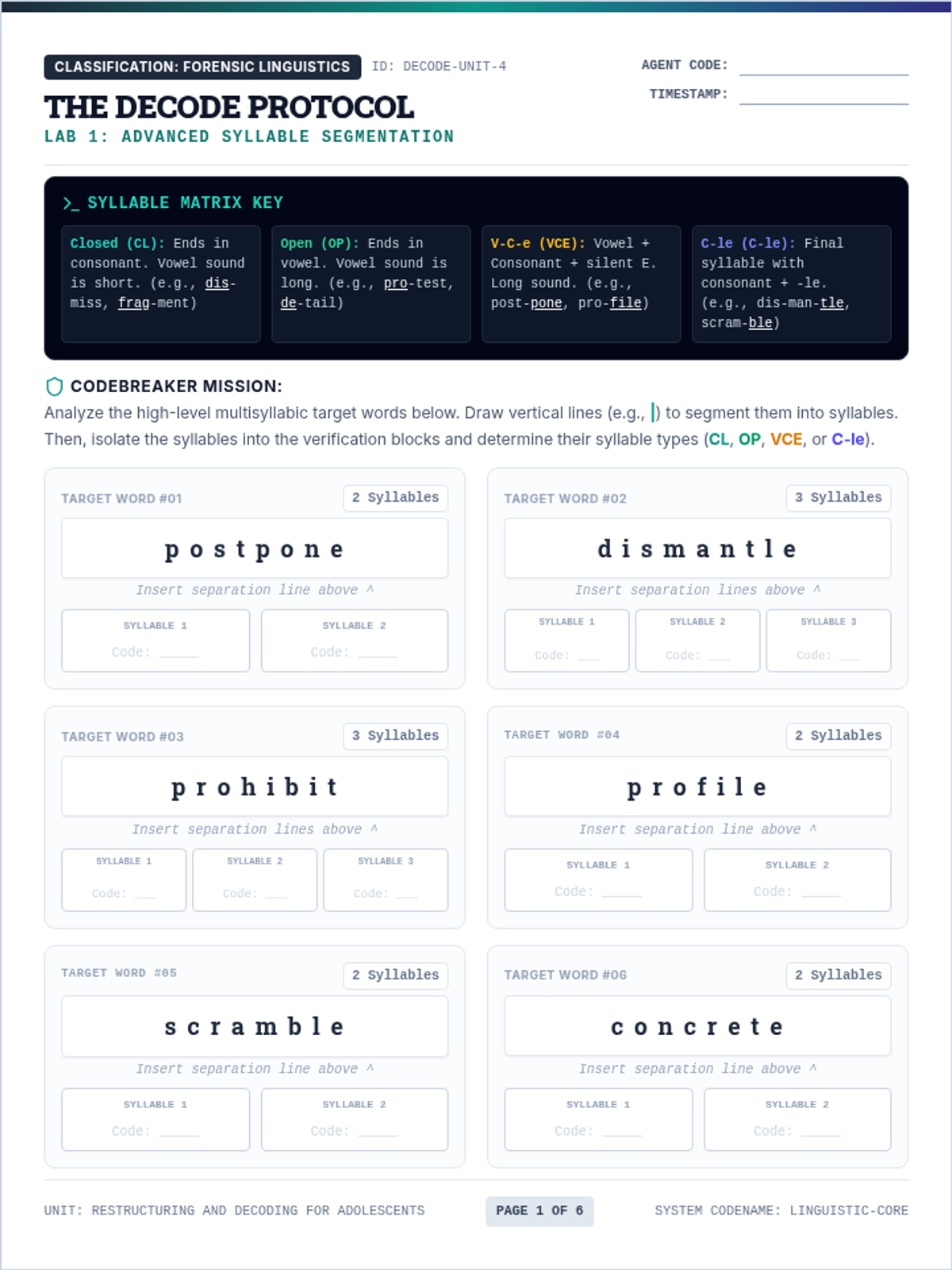
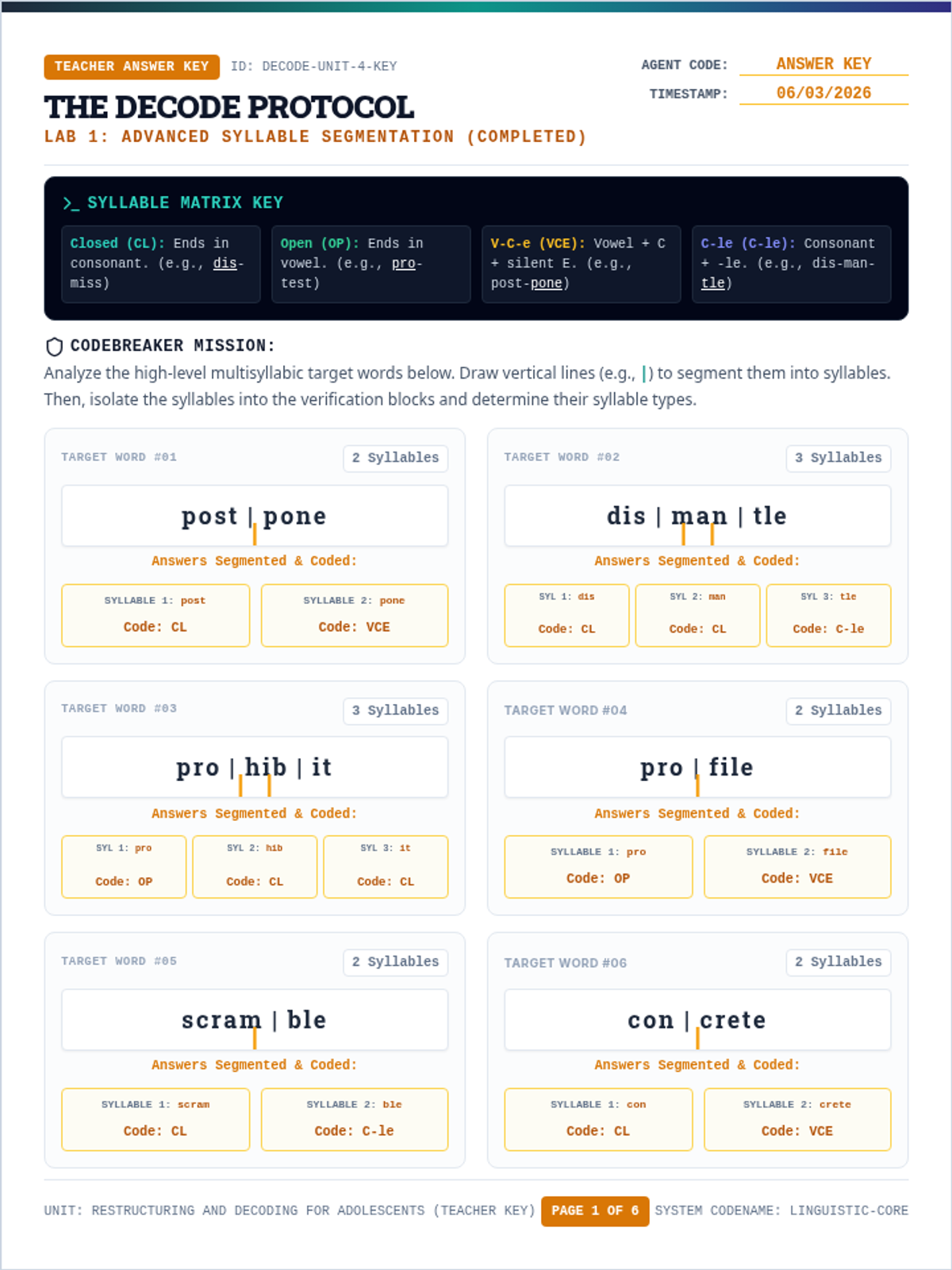
A comprehensive phonics and syllable review unit focusing on vowel teams, r-controlled vowels, syllable division, and affix-based word building. Includes a multi-page student review packet and a corresponding teacher answer key.
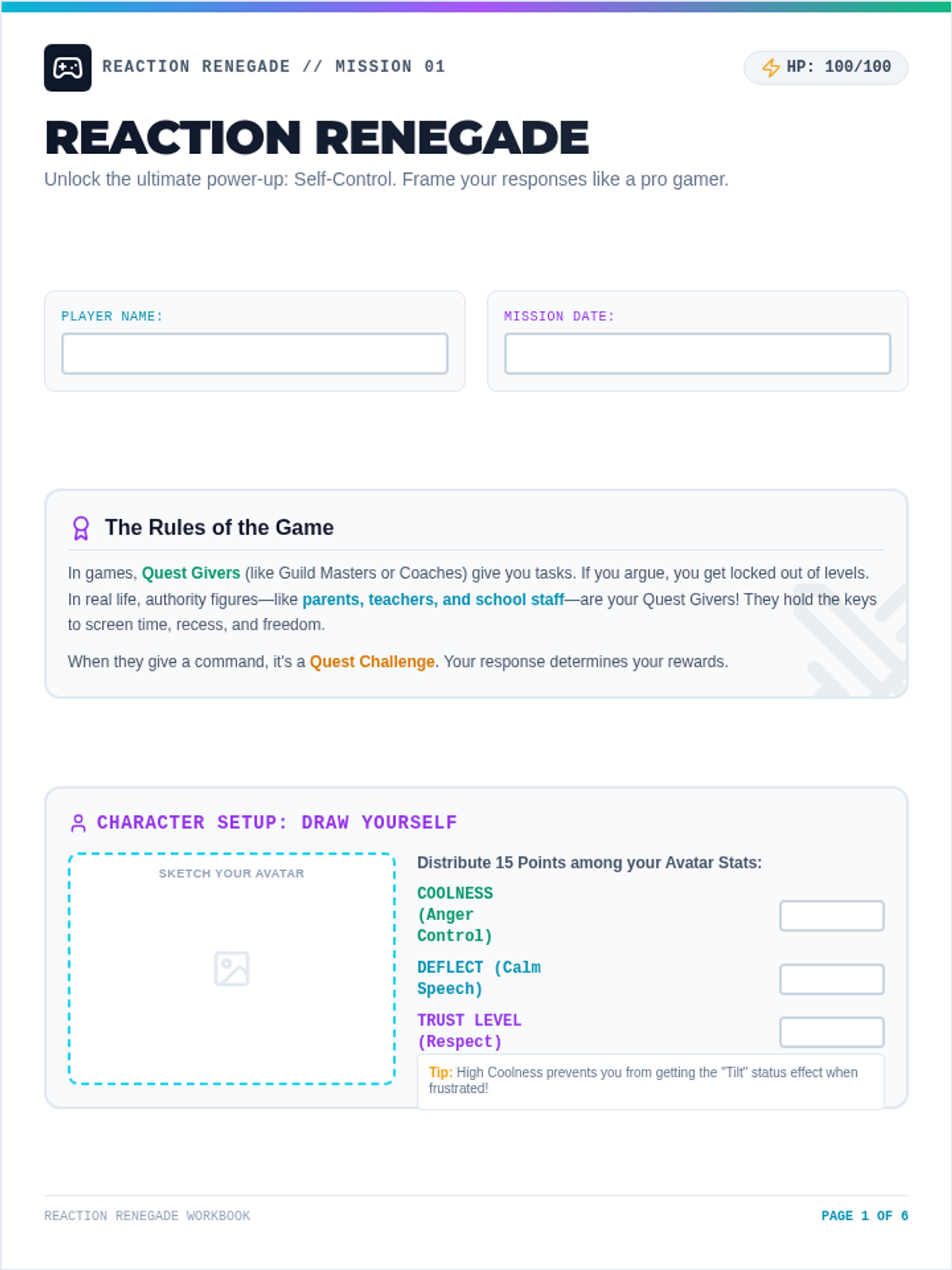
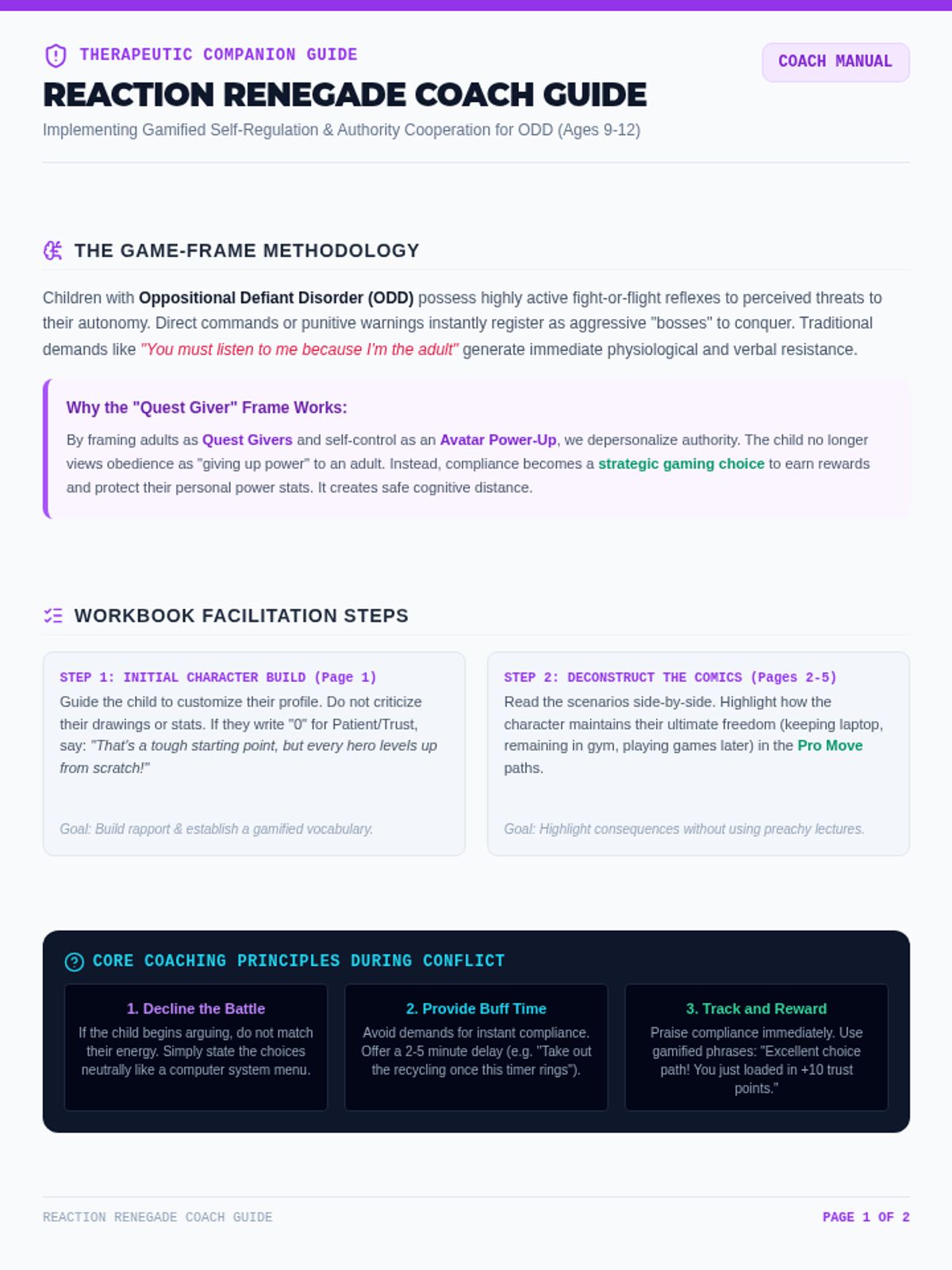
A gamified social-emotional learning lesson designed for a 10-year-old boy with Oppositional Defiant Disorder (ODD), framing self-control and respect for authority as powerful video game upgrades. The lesson features comic-strip decision paths and interactive strategy cards to encourage positive choices with teachers and parents.
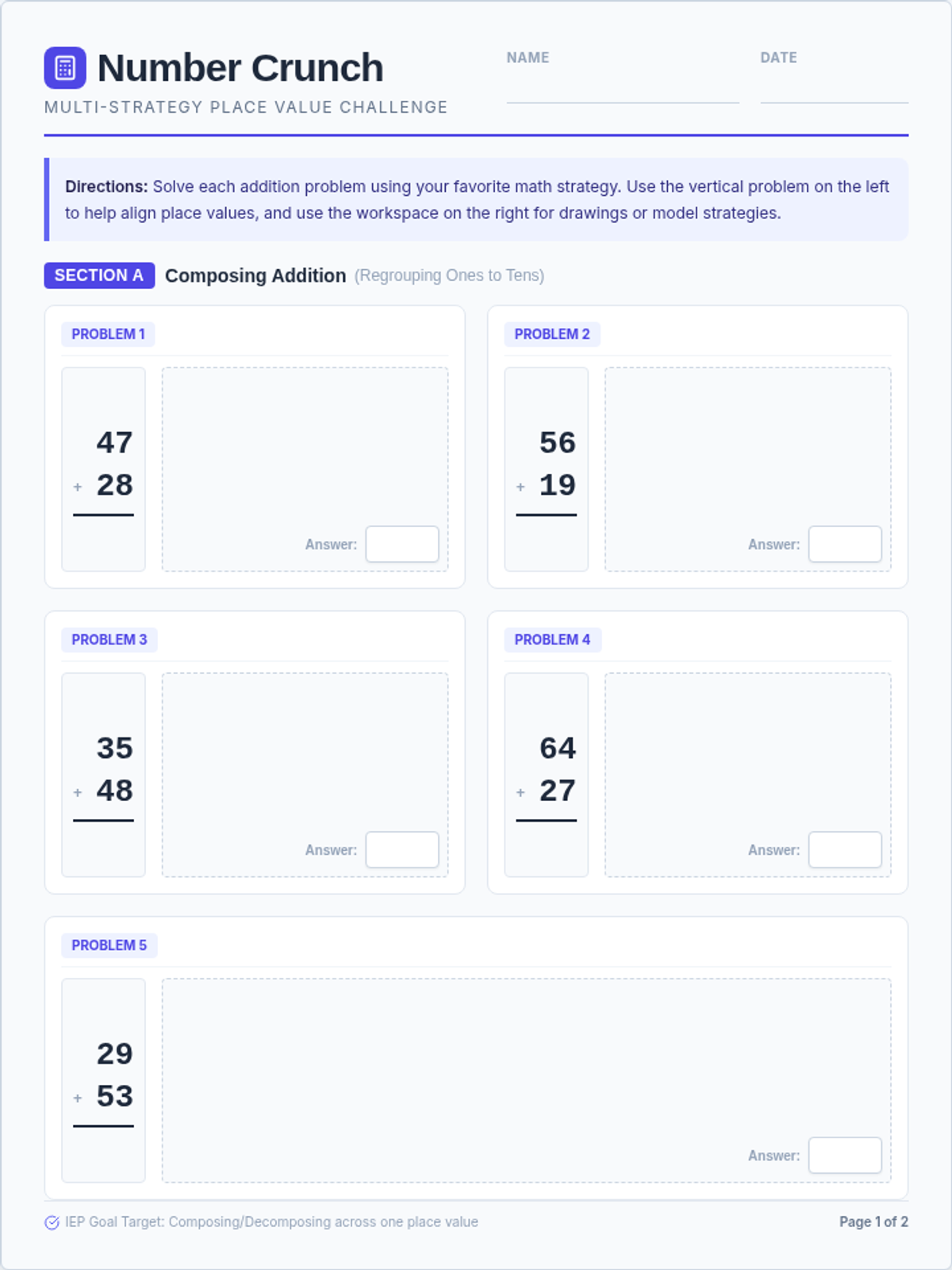
A targeted lesson focused on building student confidence and accuracy in composing and decomposing numbers across a single place value in addition and subtraction, utilizing their preferred problem-solving strategy.
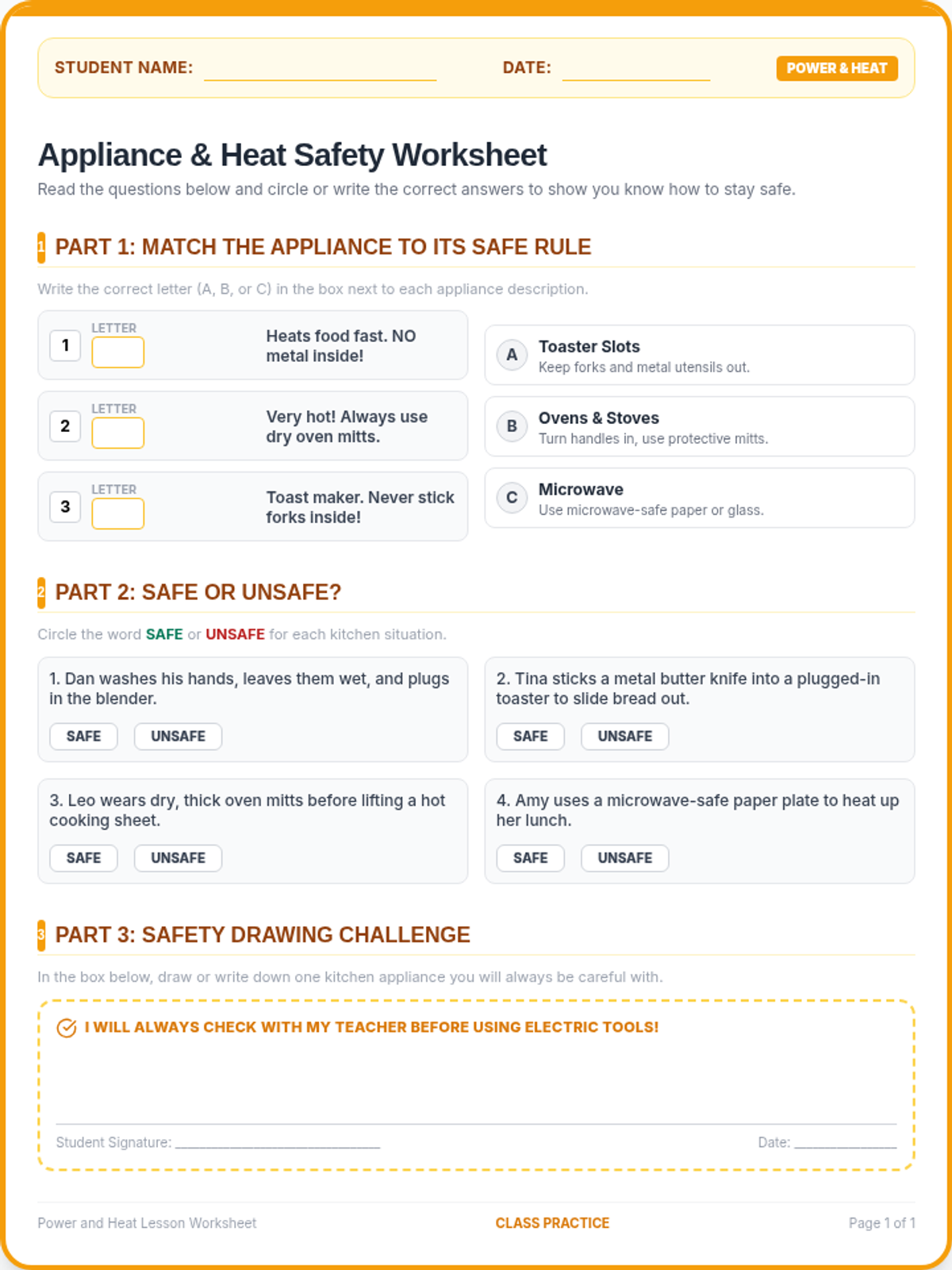
A comprehensive lesson focusing on heat safety, general kitchen appliances (microwaves, ovens, toasters, blenders), and electrical safety. It includes interactive visual slides and a matching worksheet tailored for high school special needs students.
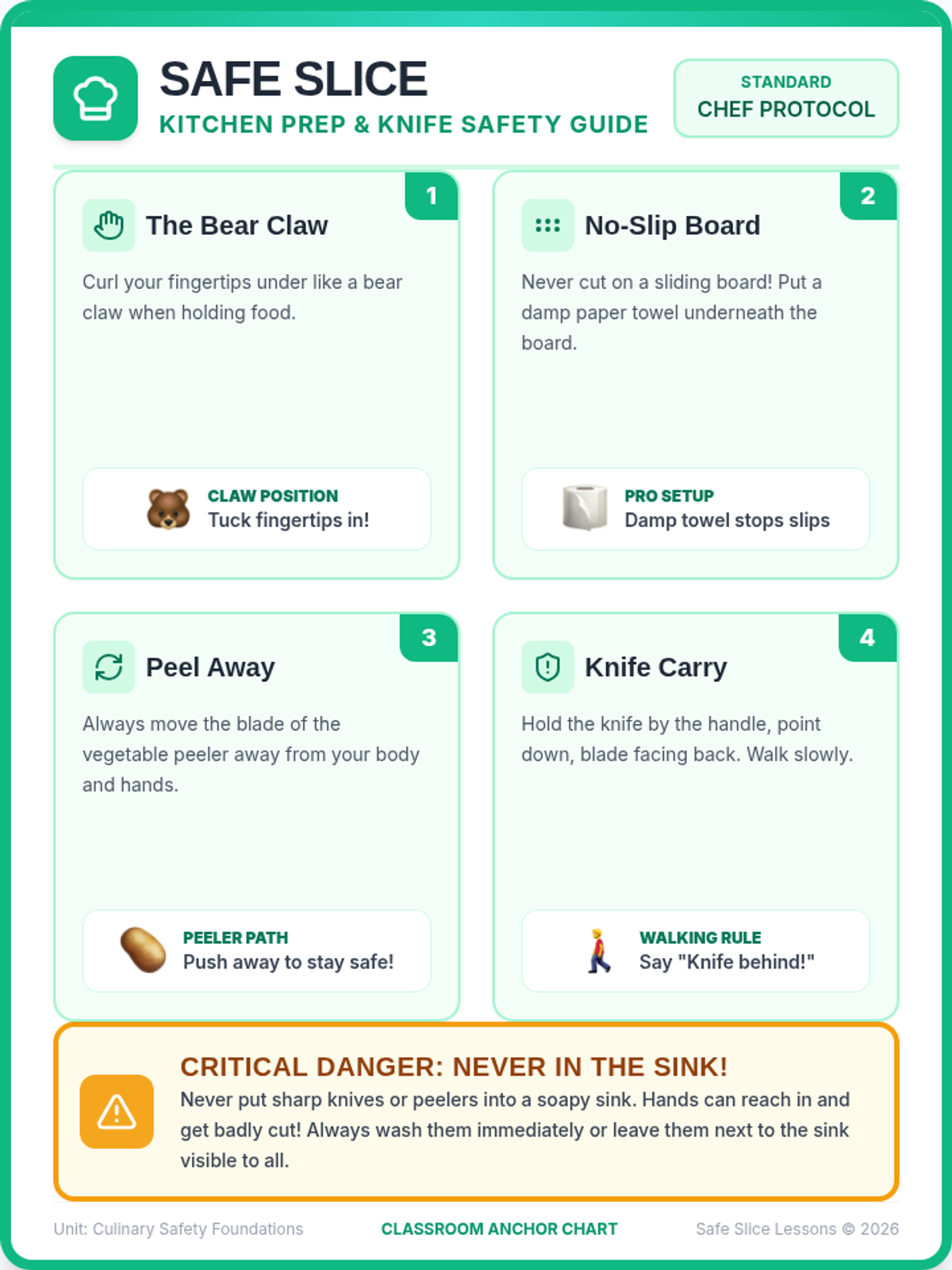
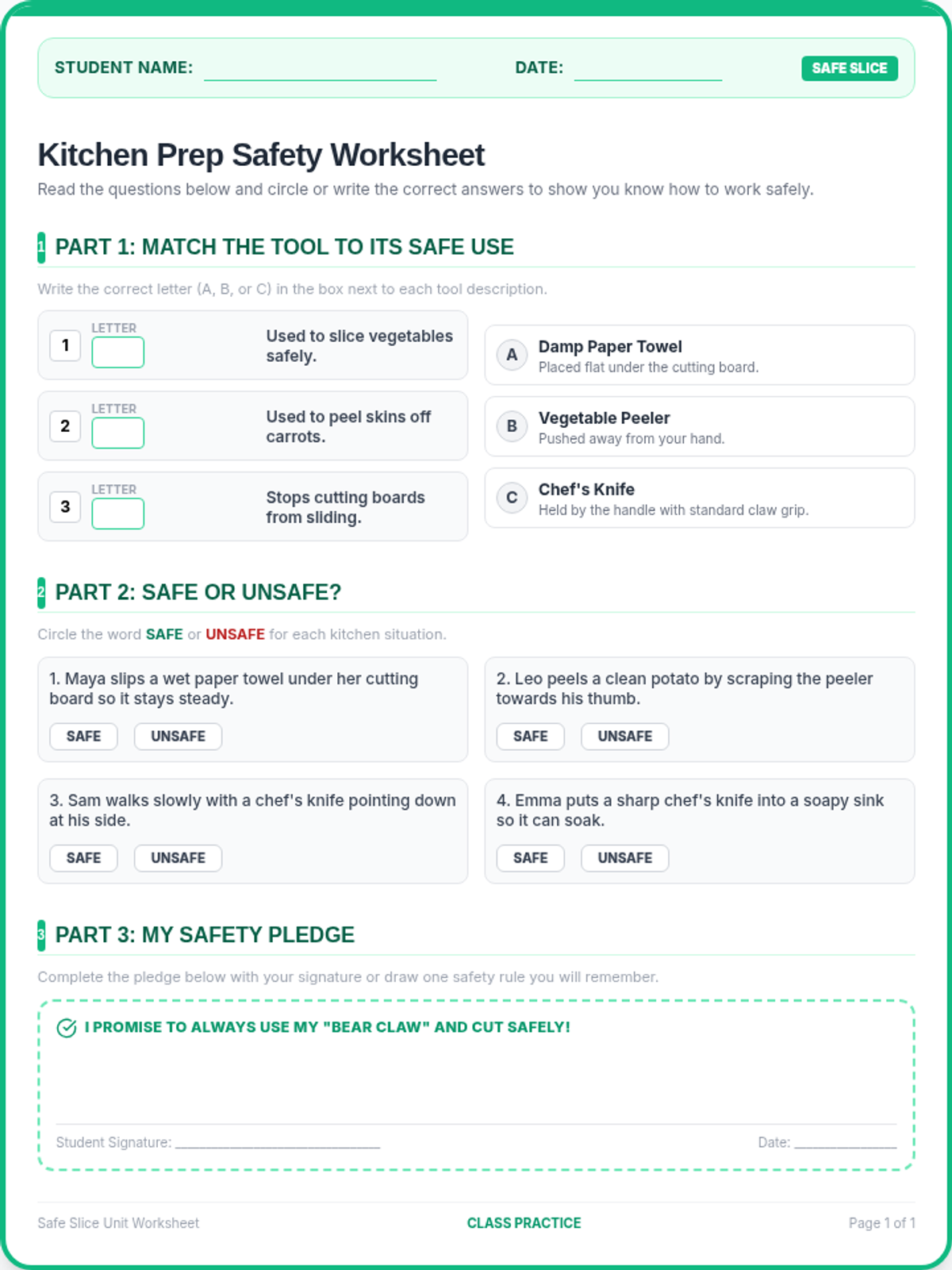
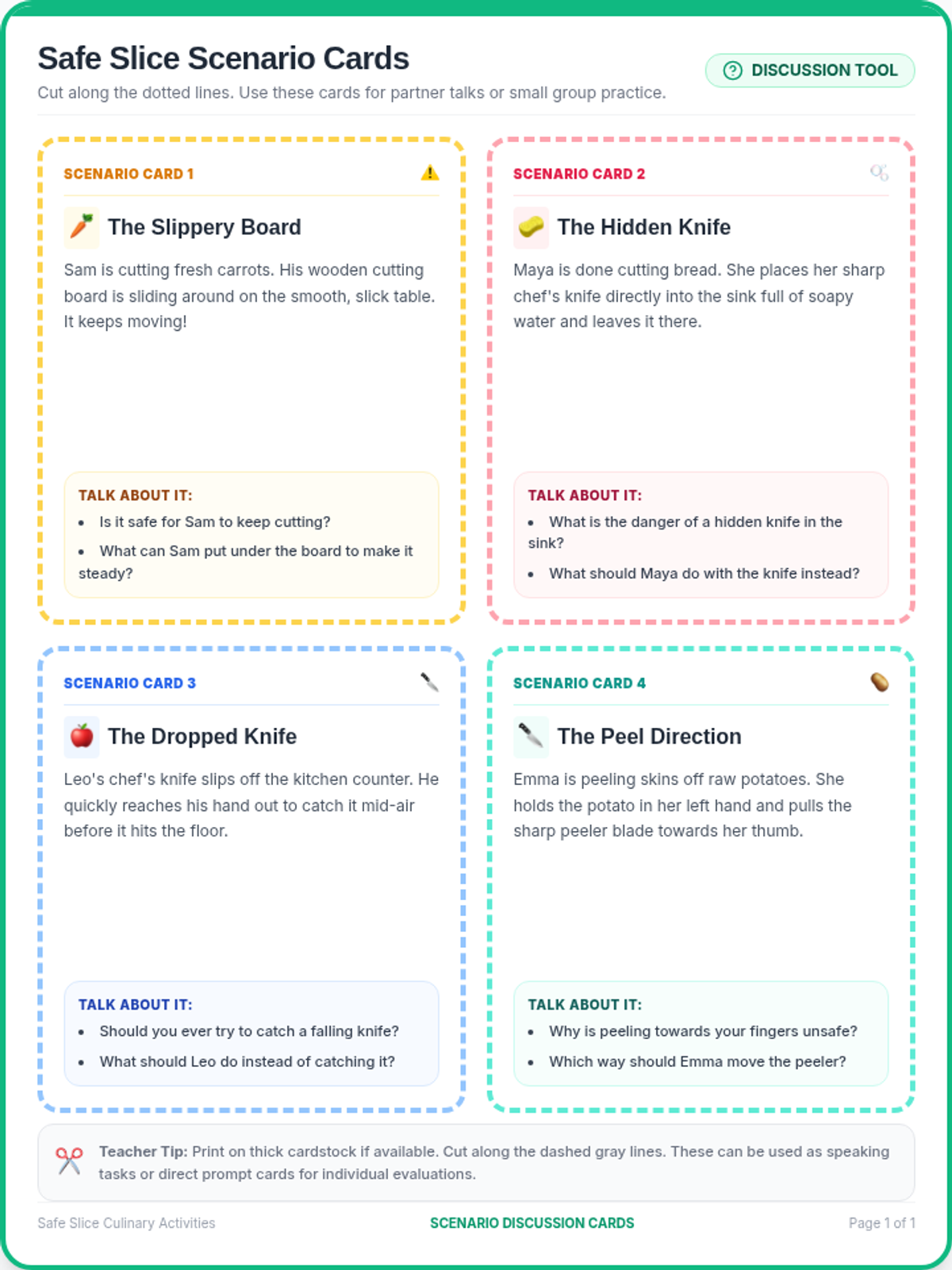
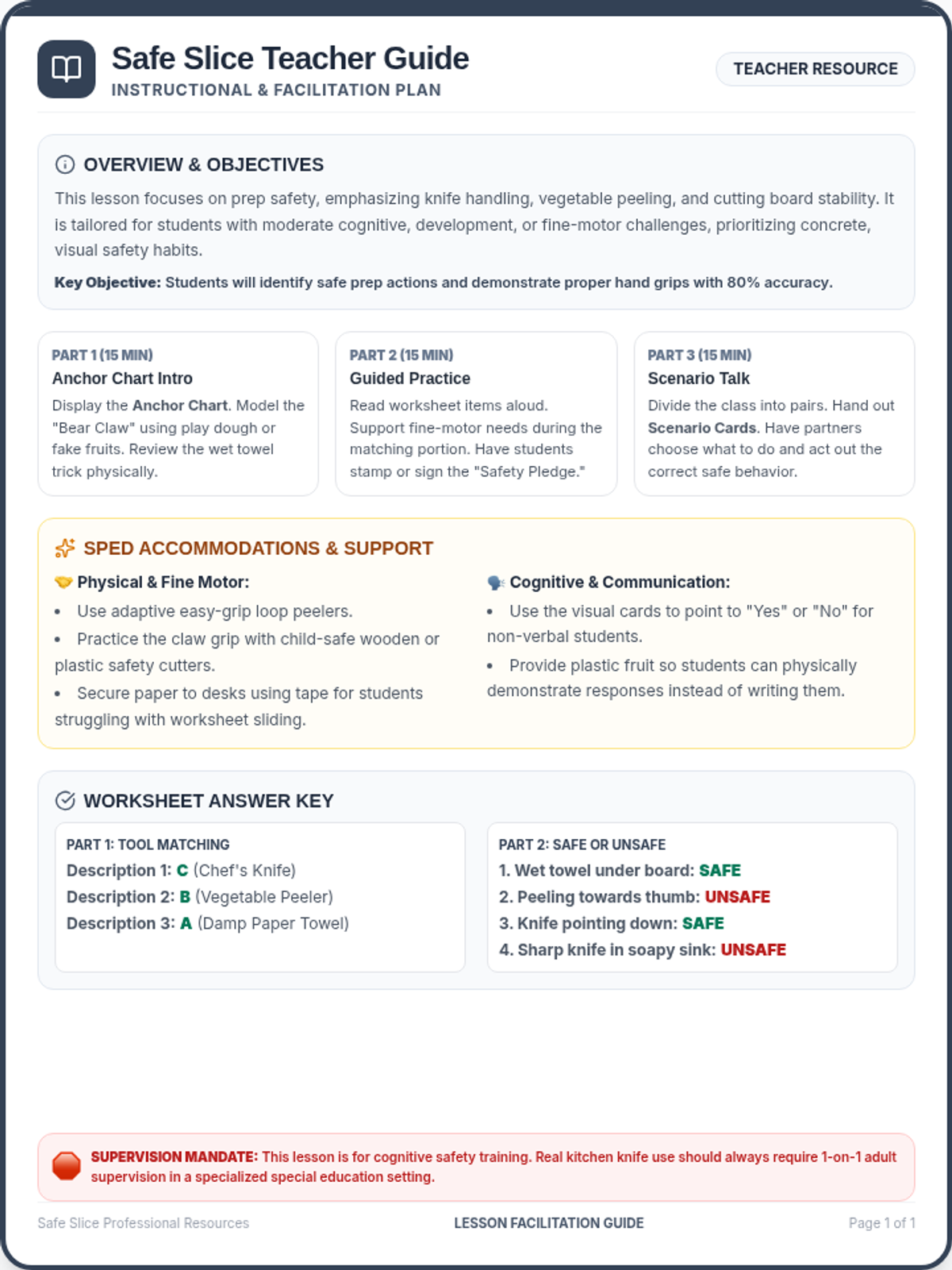
A comprehensive kitchen safety lesson focusing on cutting and preparation tools, designed for high school special education students. It includes visual guides, matching practice, and real-world scenario cards to teach knife safety, peeling, and cutting board stability.
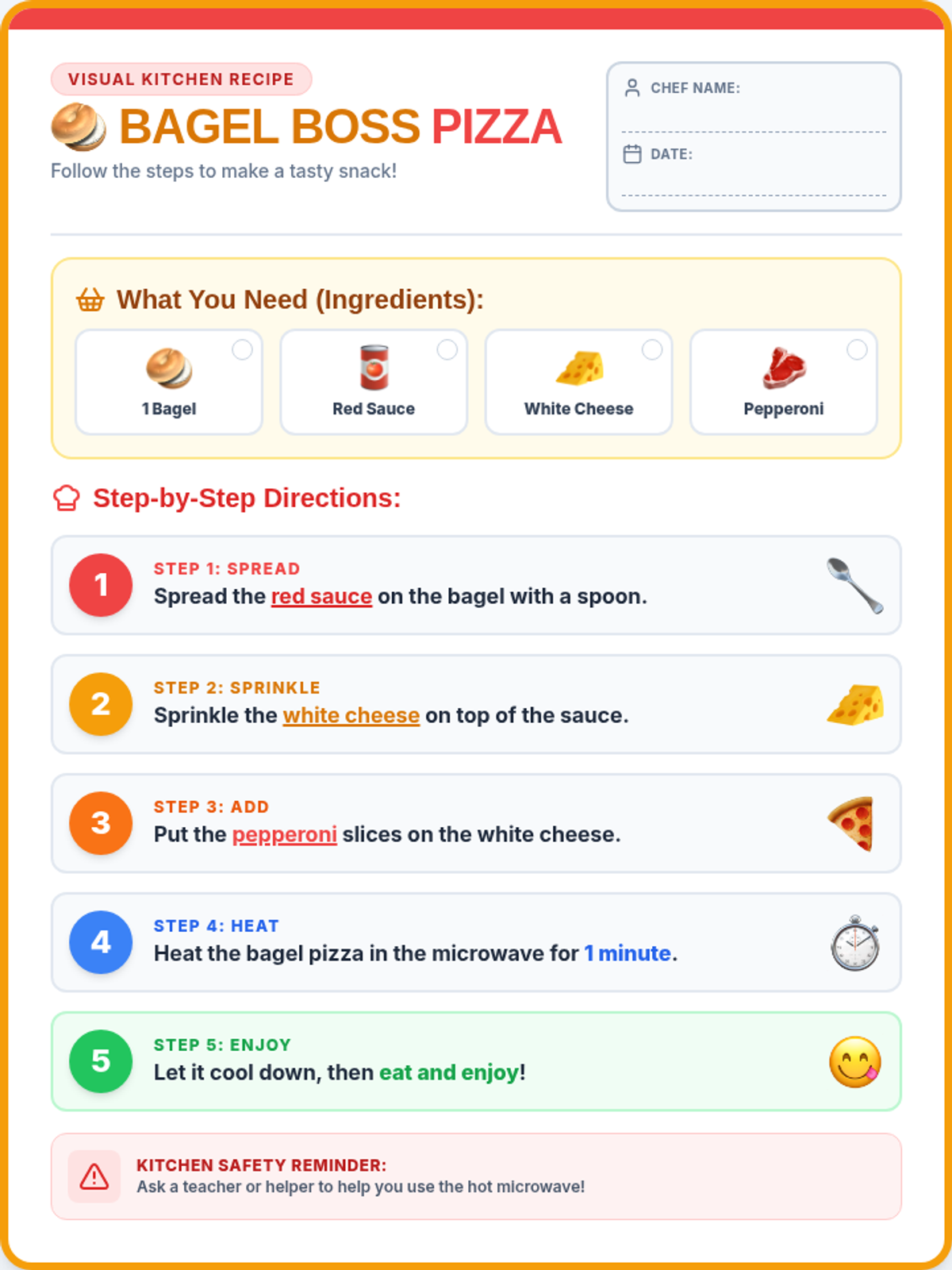
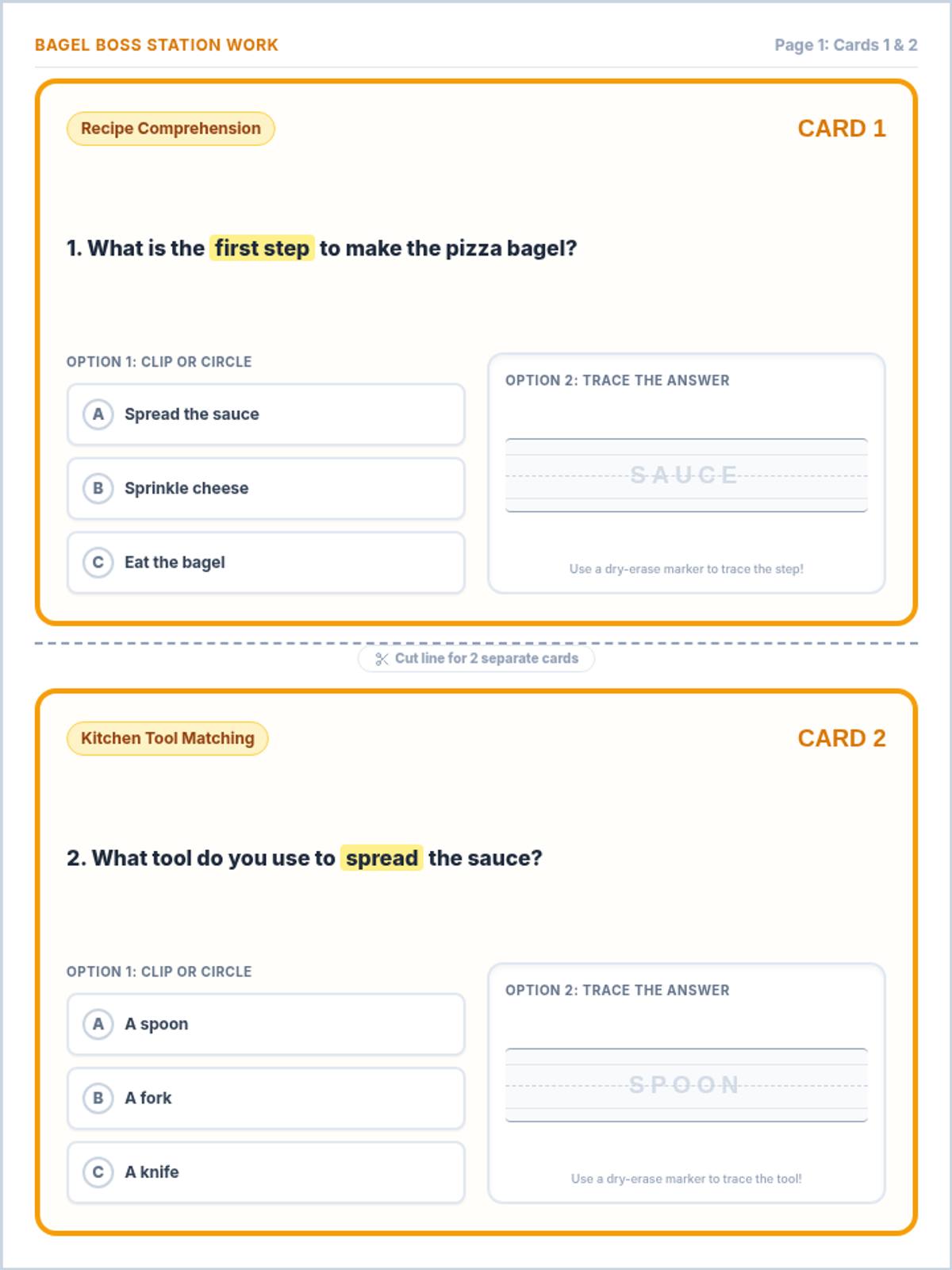
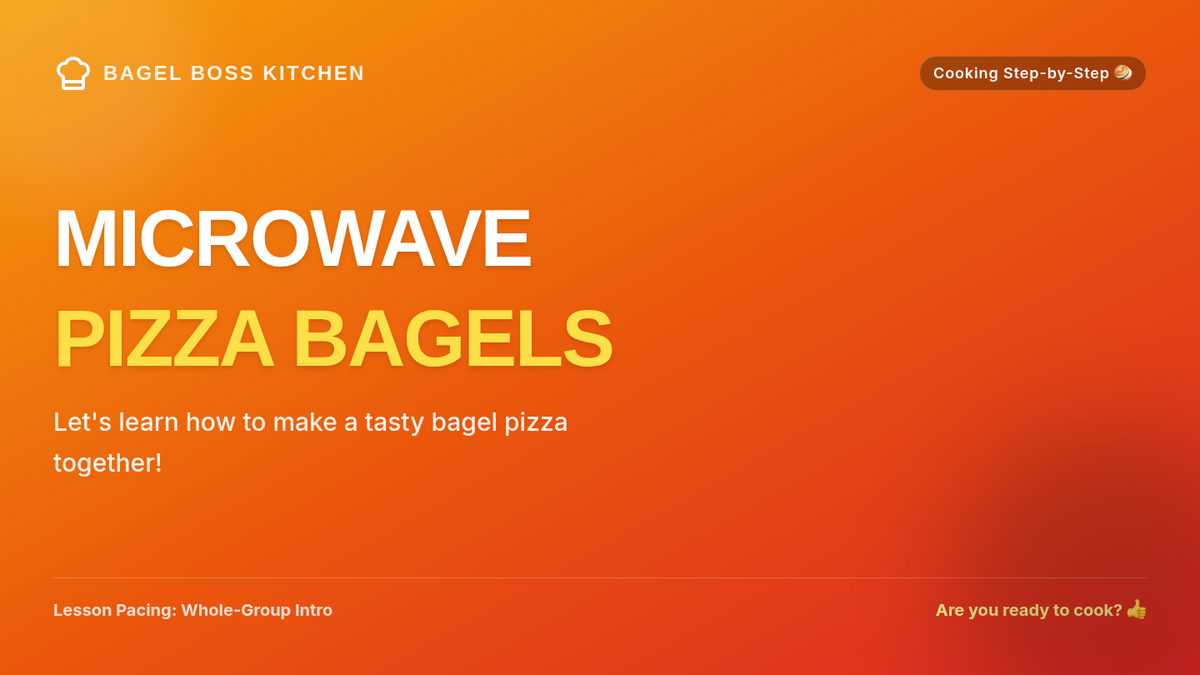
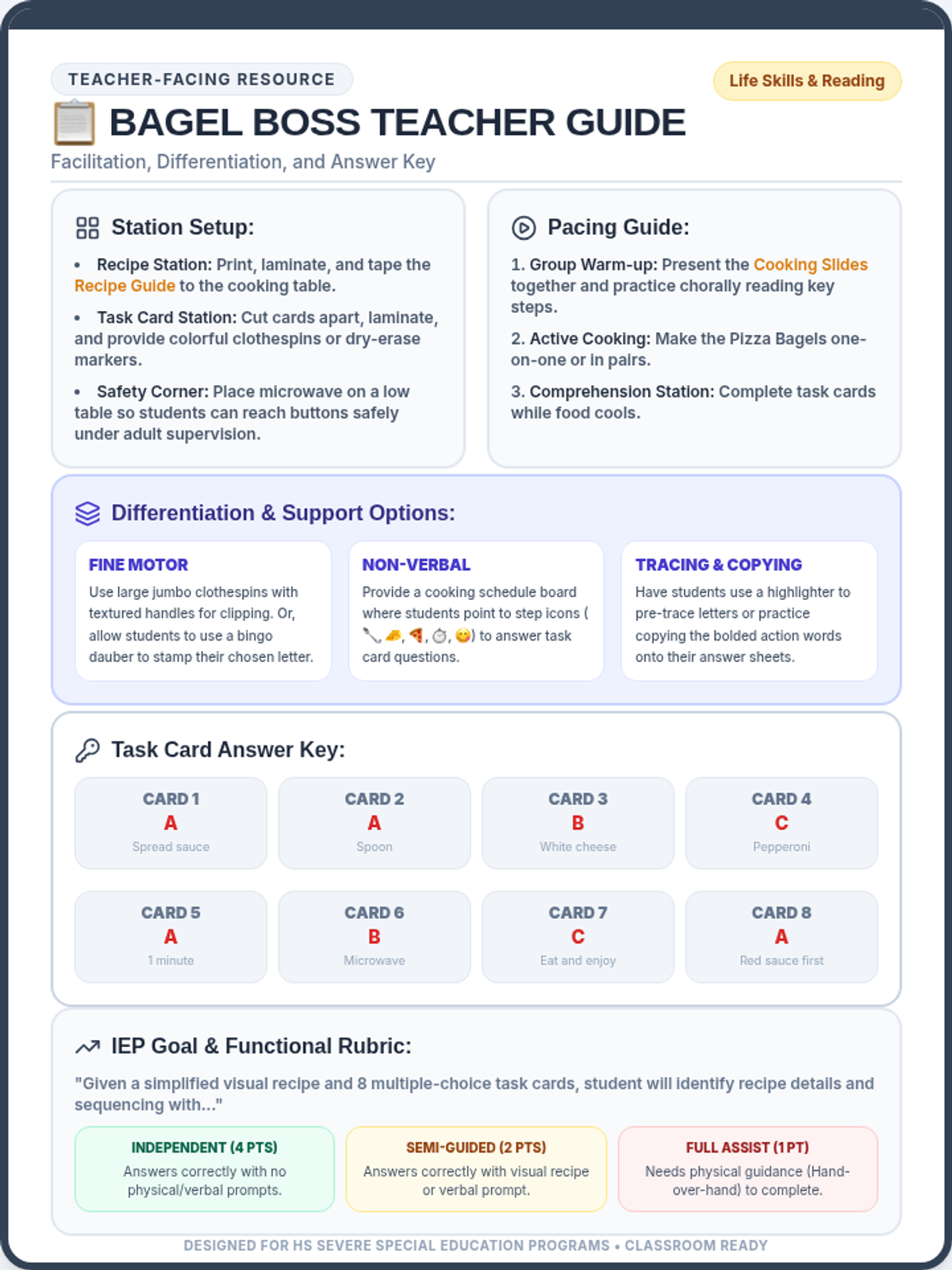
A highly visual, step-by-step cooking and comprehension lesson for students with severe special needs. Students learn to read a simplified recipe for Pizza Bagels and answer functional text comprehension questions using reusable task cards with tracing, copying, or clip-card options.
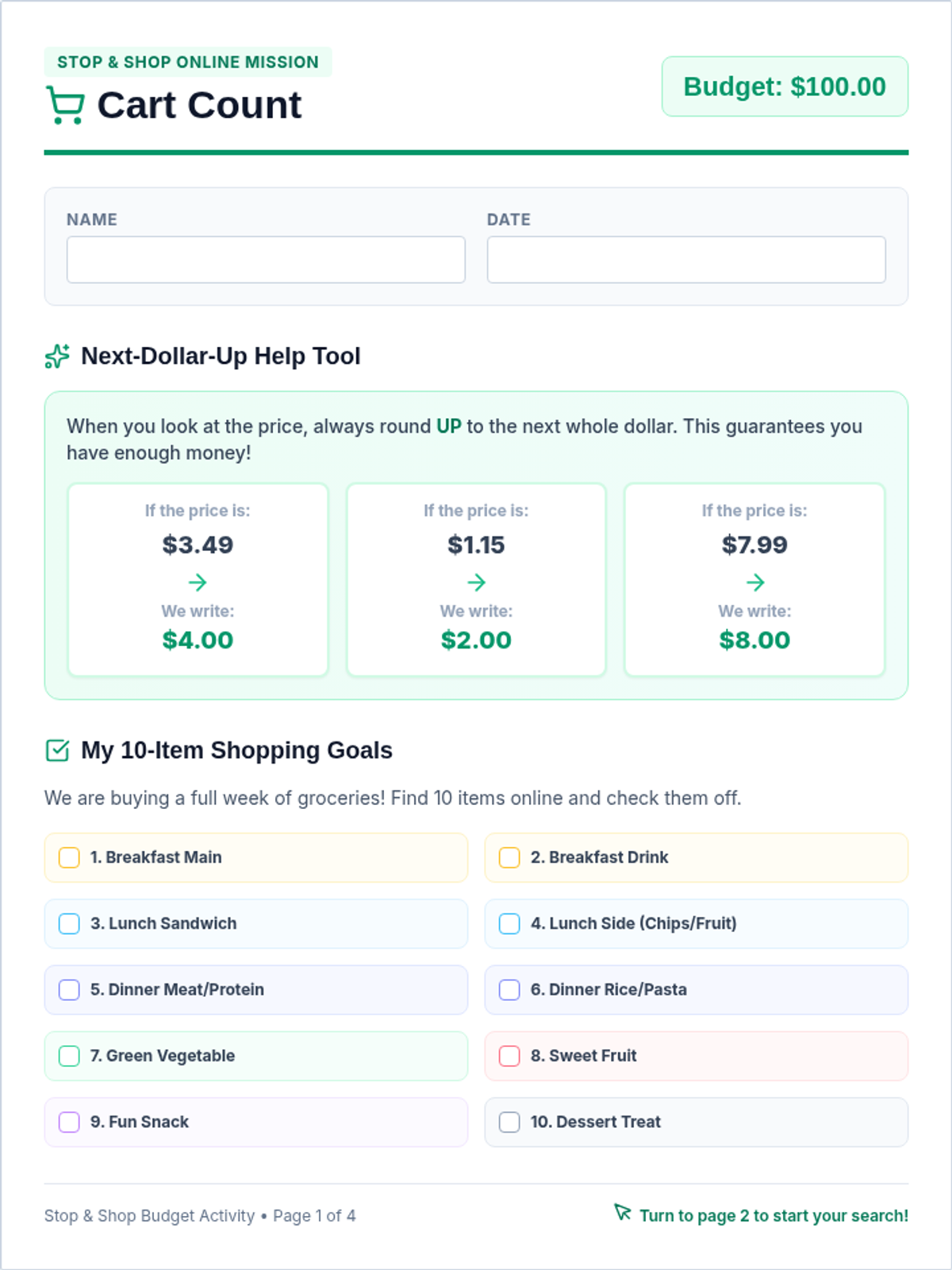
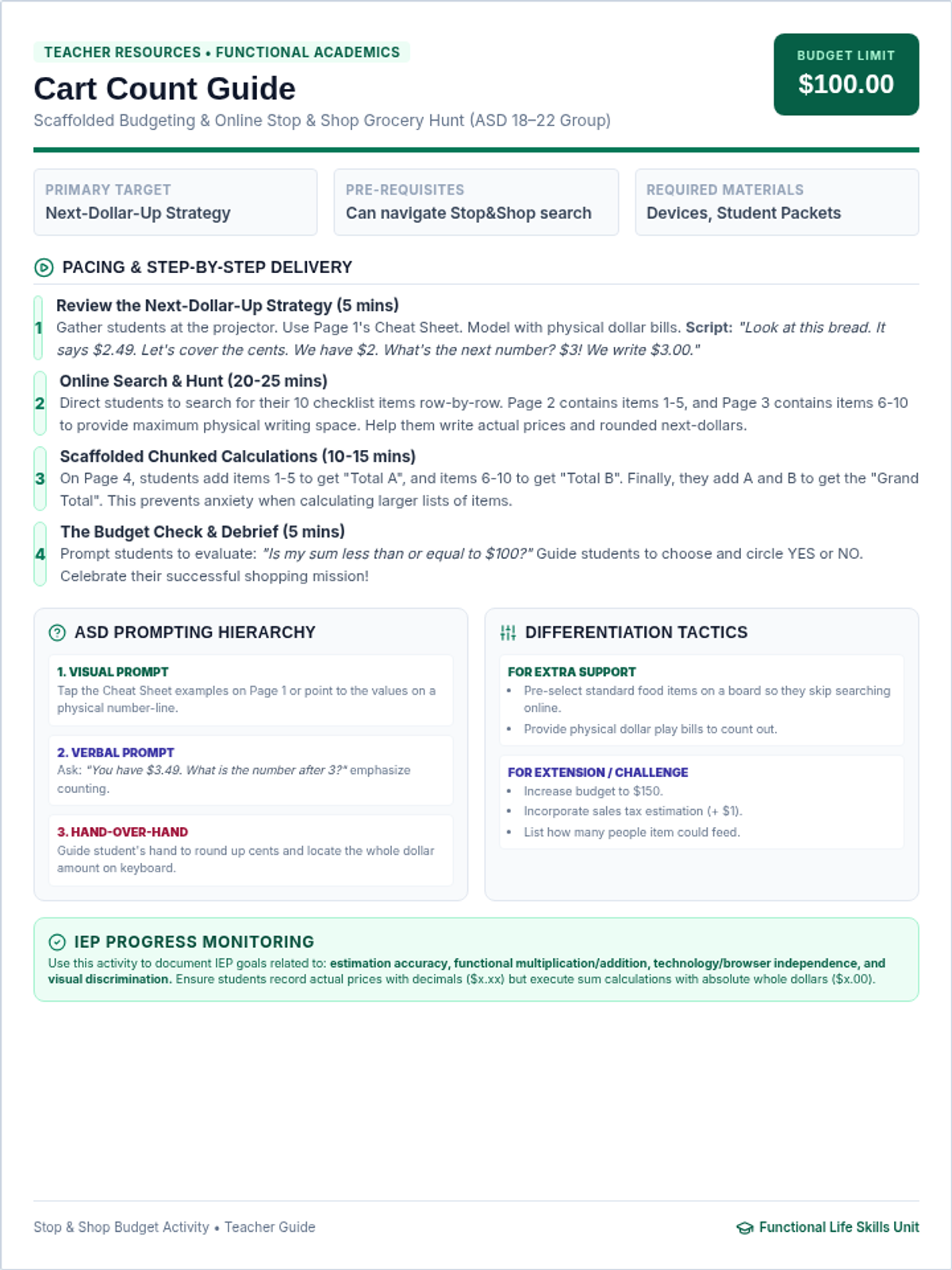
A highly scaffolded functional math lesson where students use the next-dollar-up estimation strategy to shop online at Stop & Shop, planning meals and staying strictly within a budget.
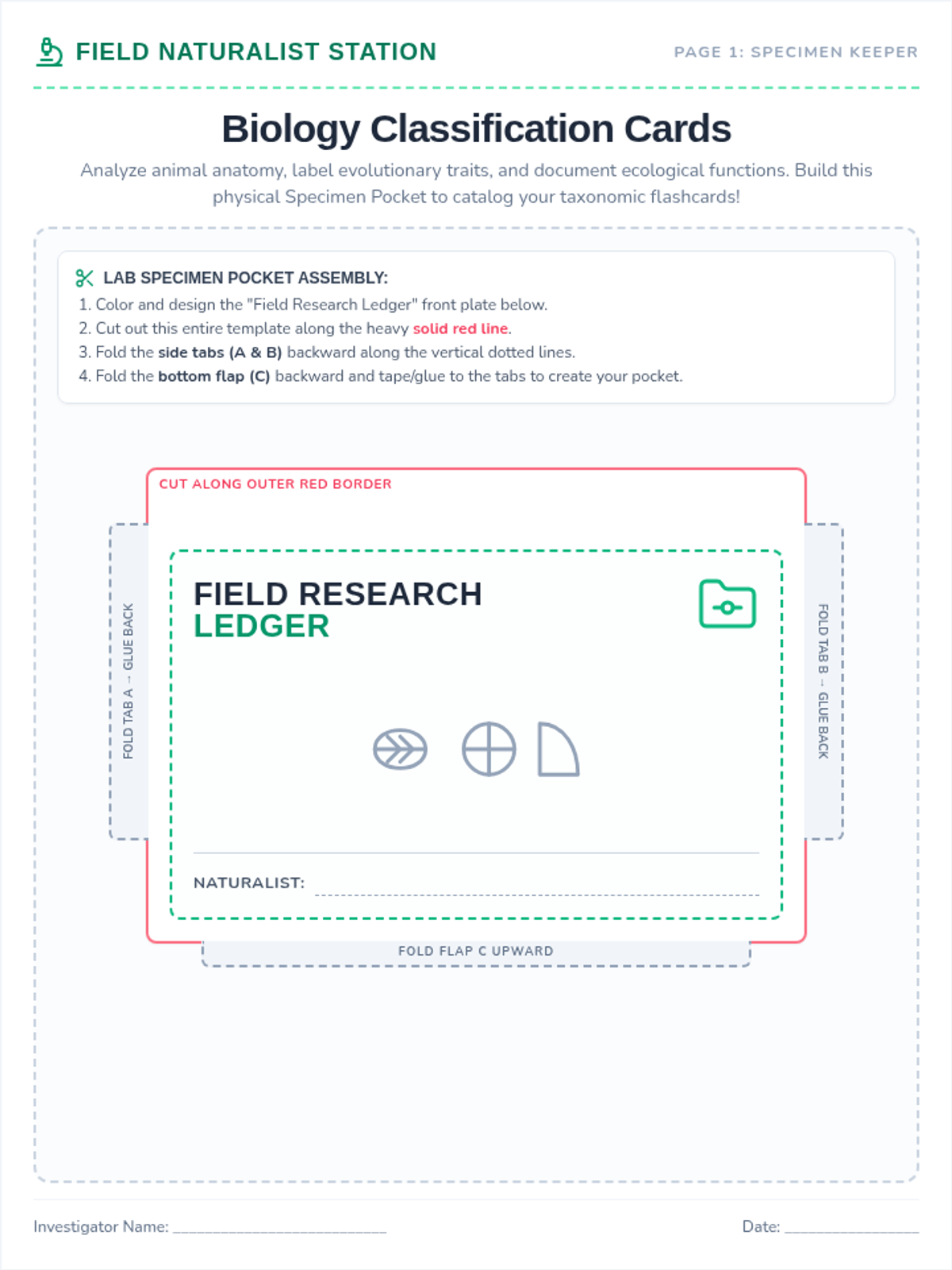
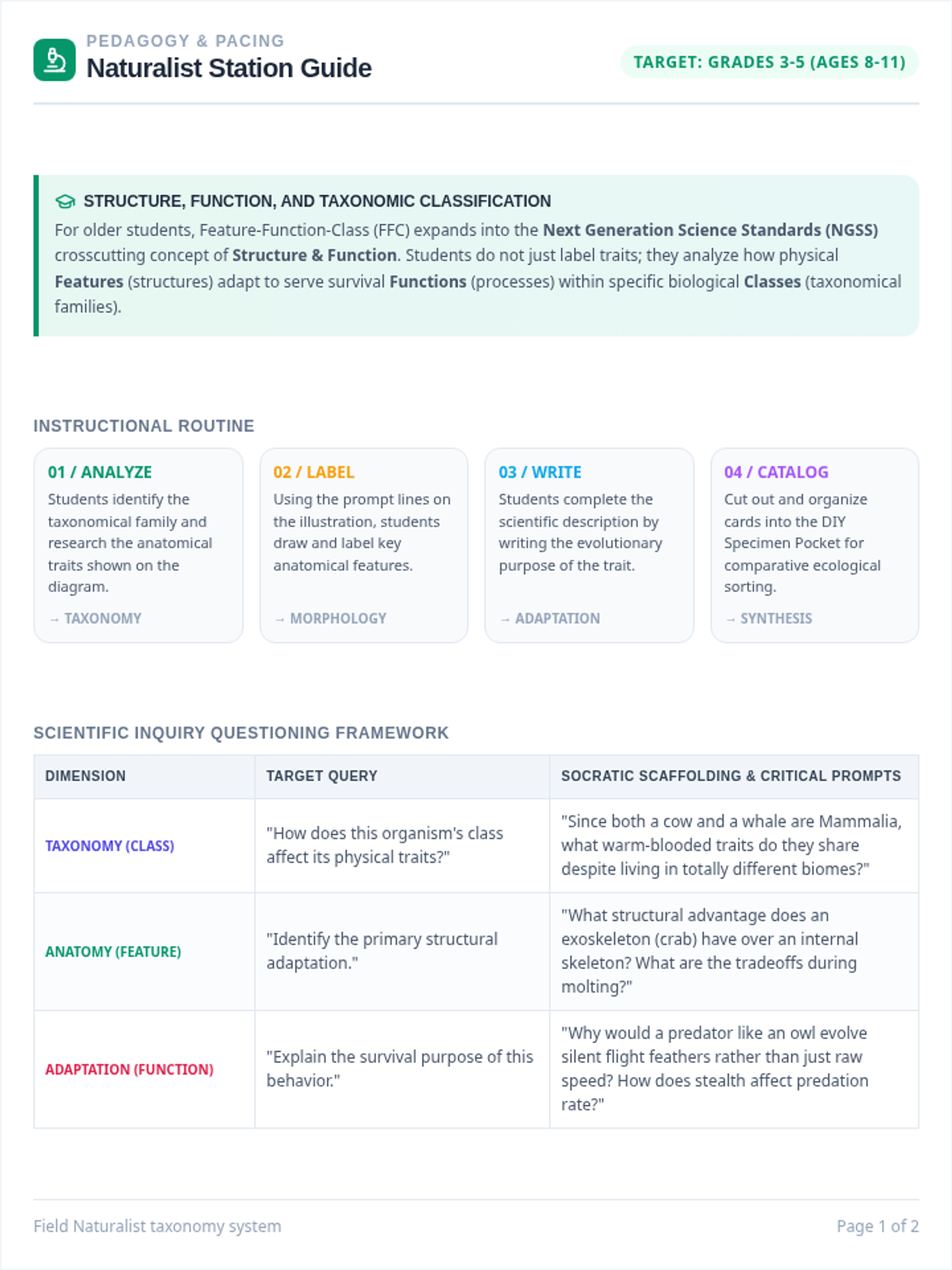
A biology and taxonomy sorting system designed for older kids (Grades 3-5). Students analyze evolutionary adaptations, label critical anatomical features, and categorize specimens by their taxonomic classes, habitats, and ecological functions.
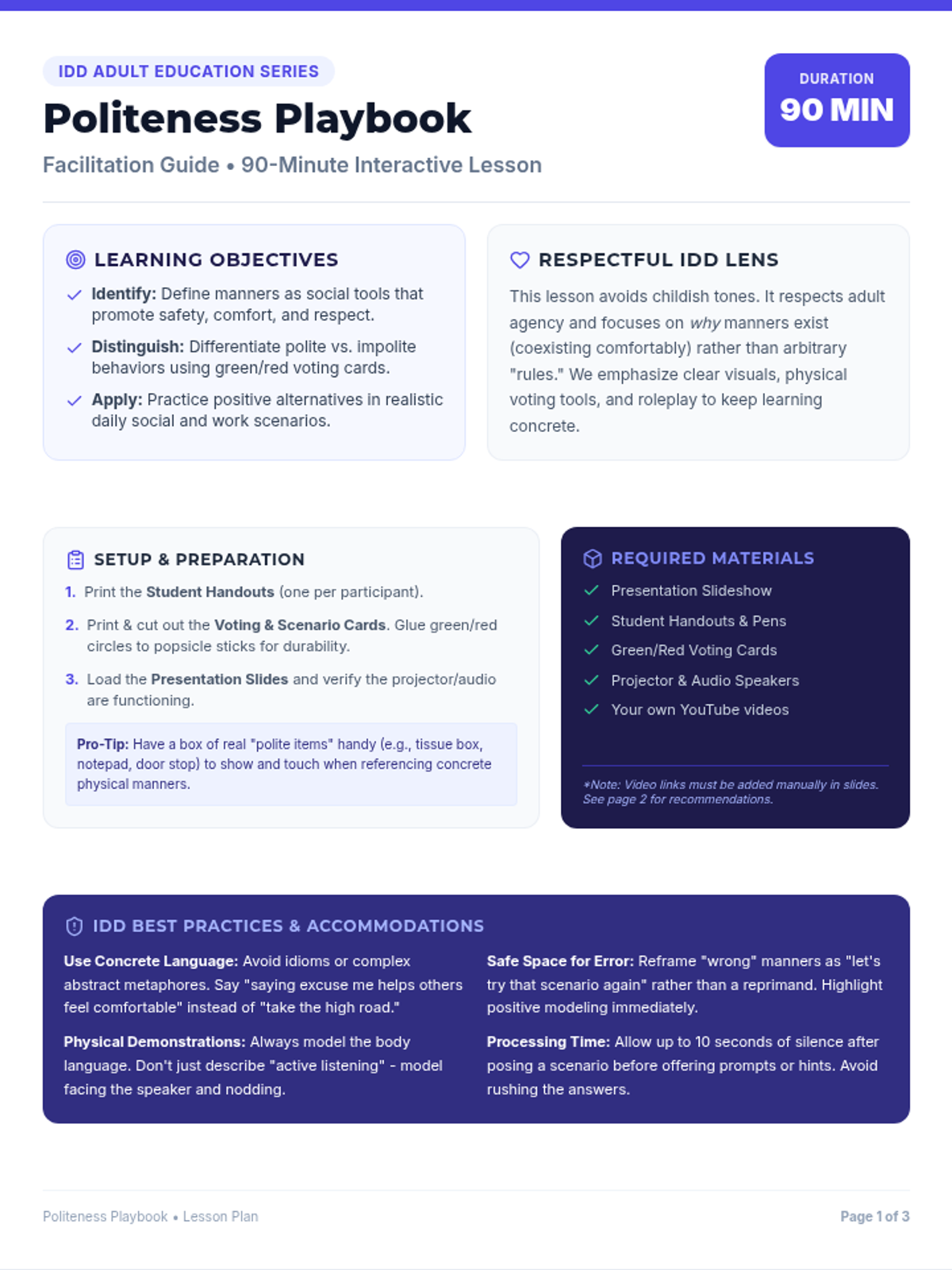
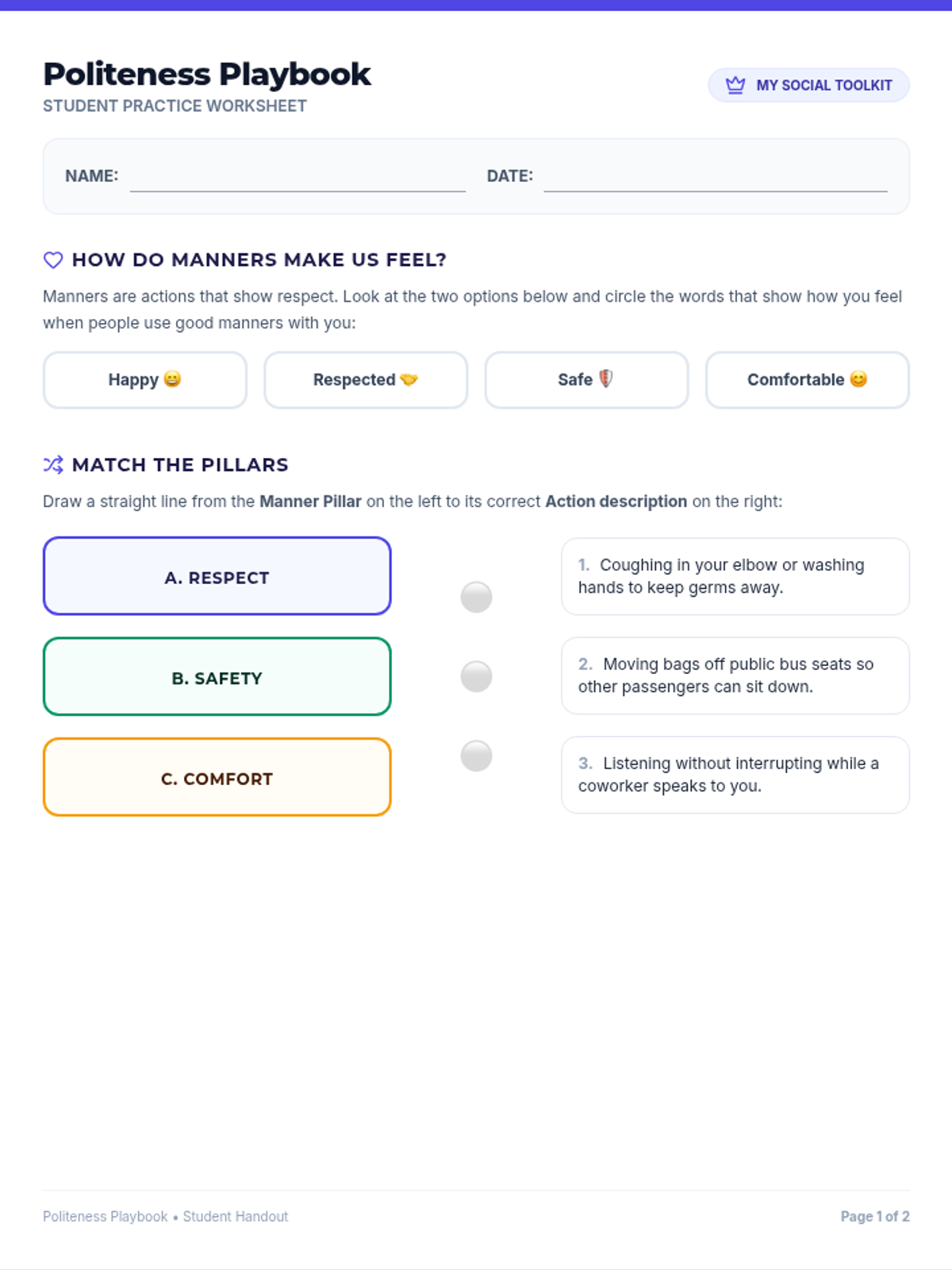
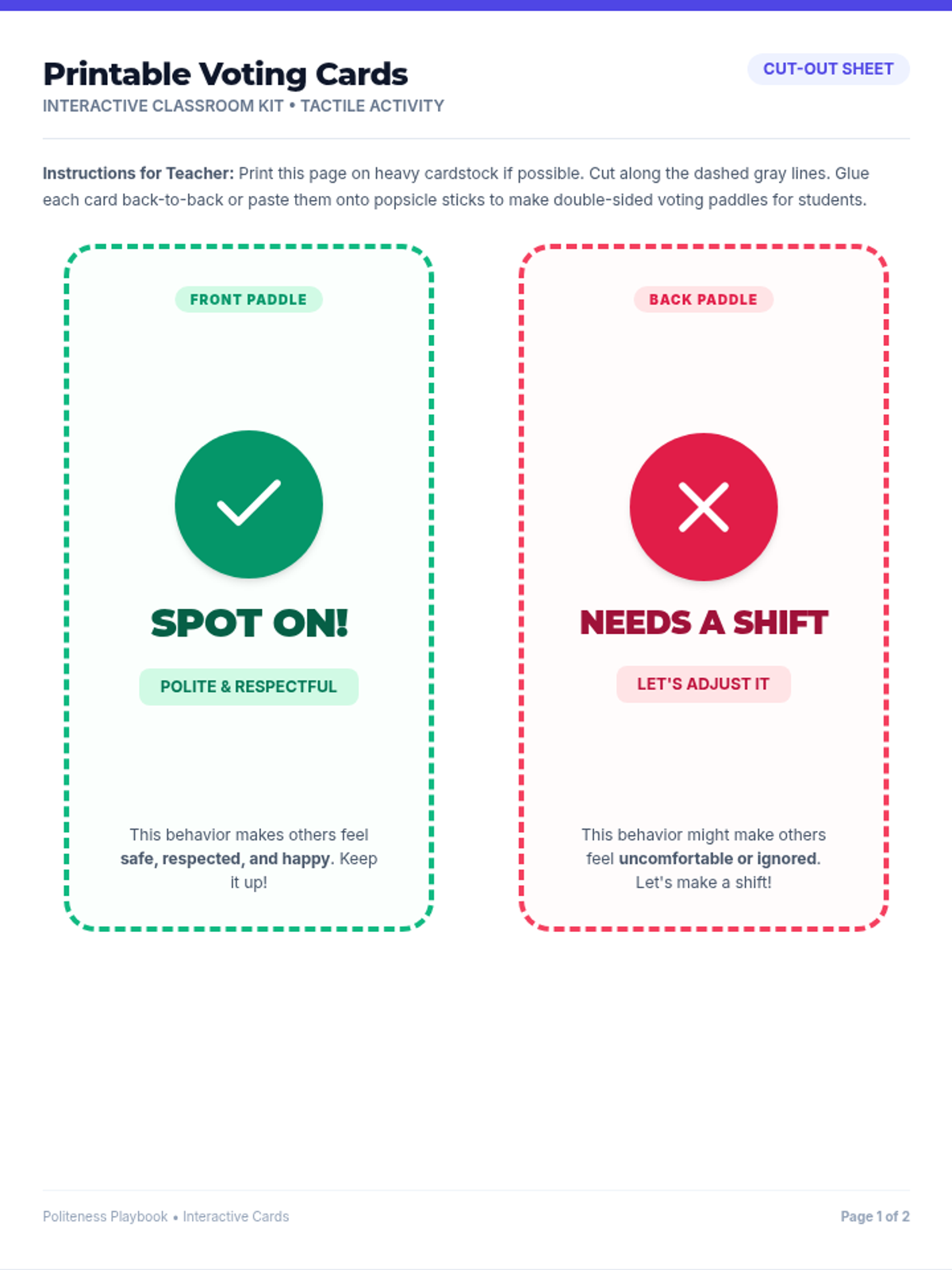
A 90-minute interactive lesson on social manners and respect designed specifically for adults with intellectual and developmental disabilities (IDD), featuring slides, a complete activity guide, scenario cards, and a facilitation plan.
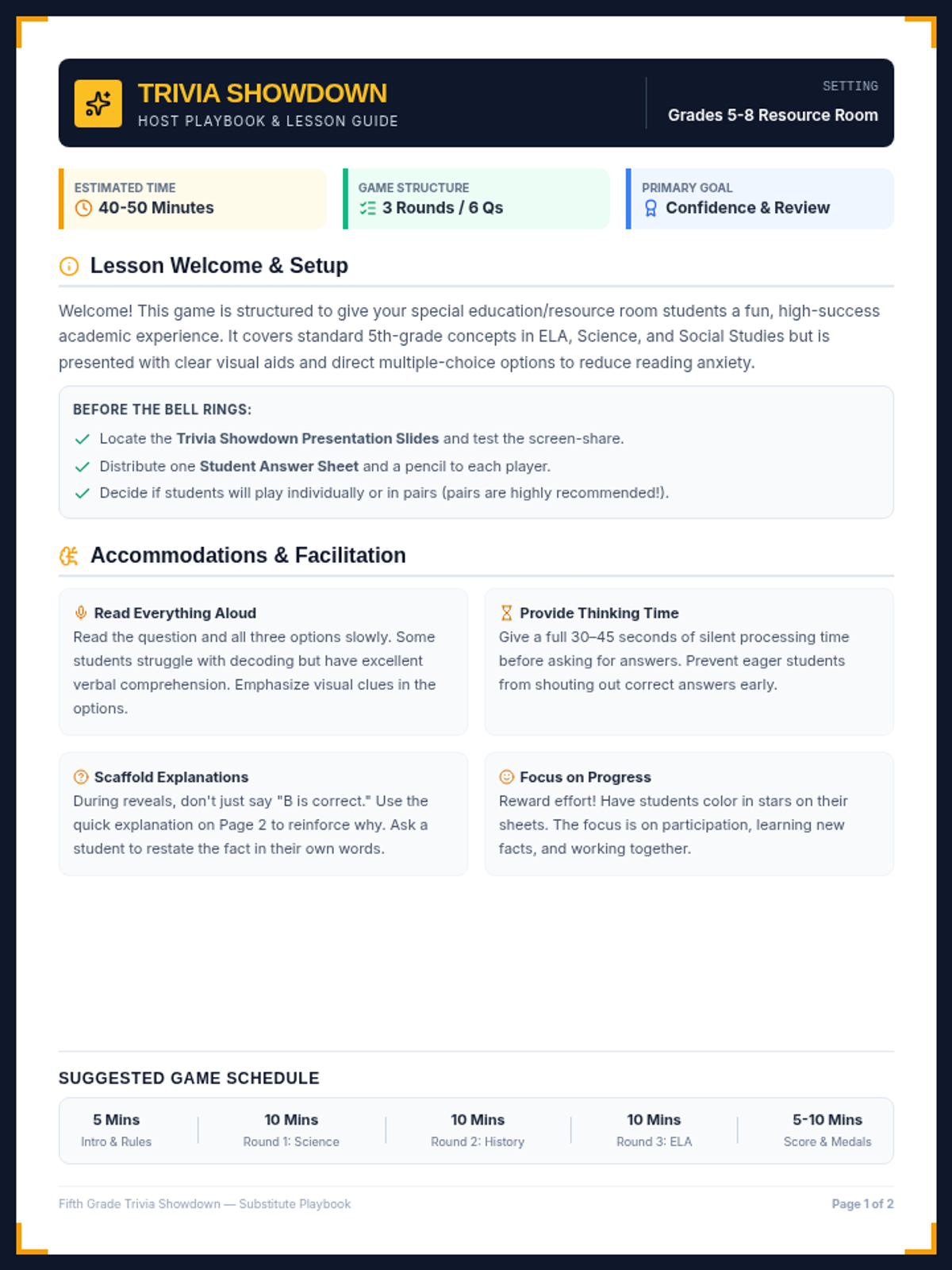
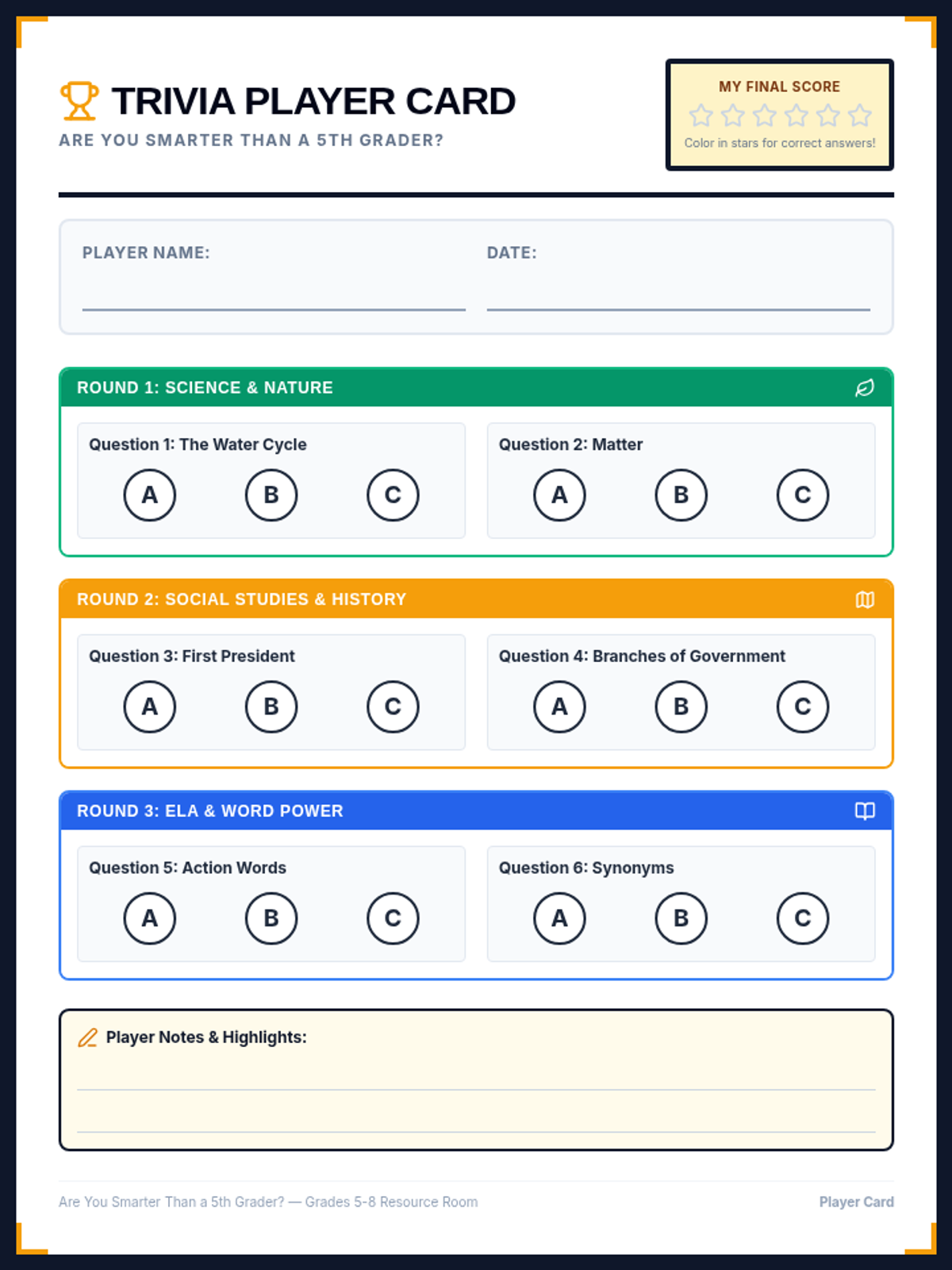
A retro game-show themed trivia lesson for resource room students in grades 5-8, featuring accessible 5th-grade level questions in Science, Social Studies, and ELA. Includes a slide presentation, printable student answer sheets, and a substitute teacher guide.
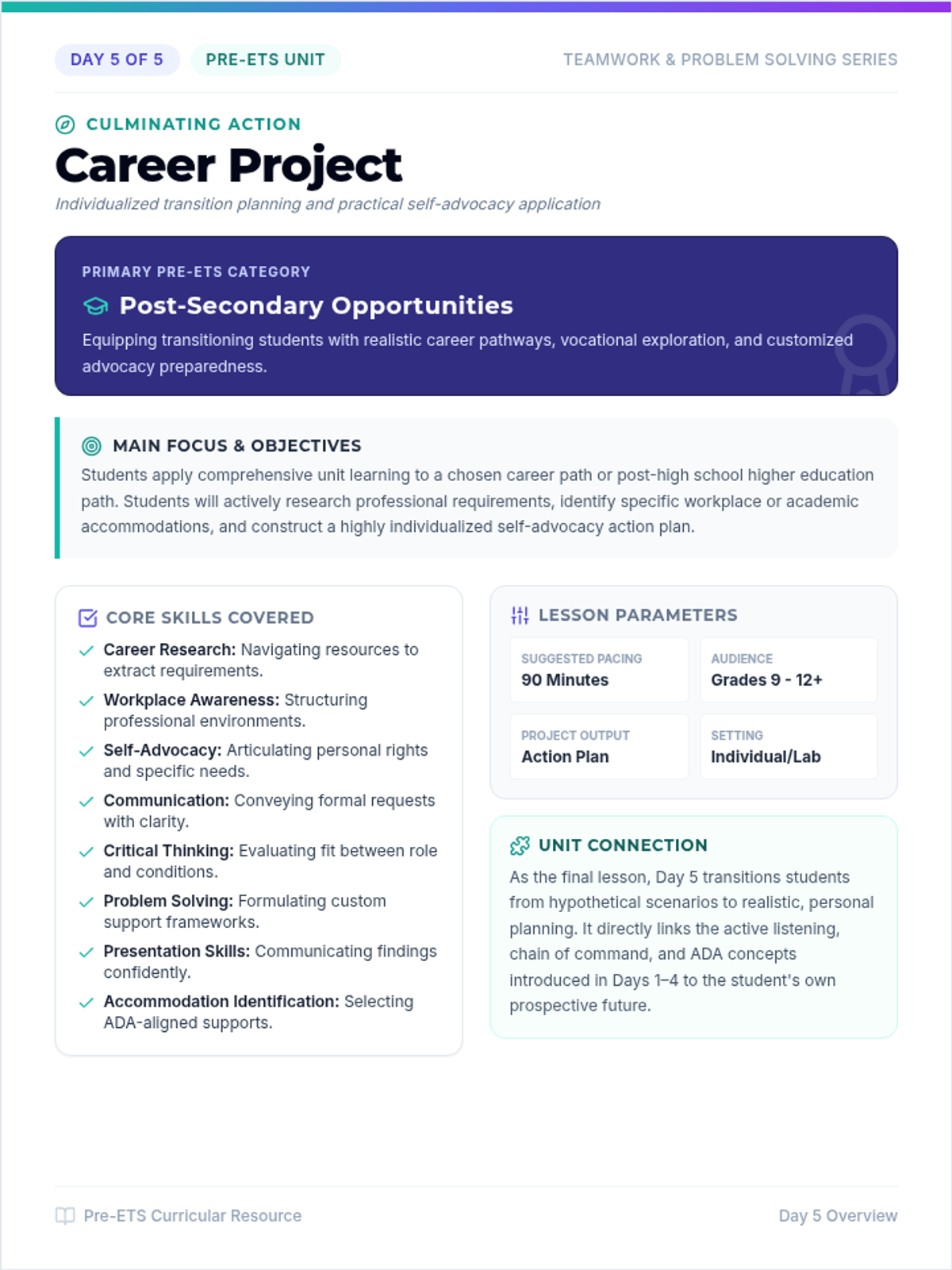
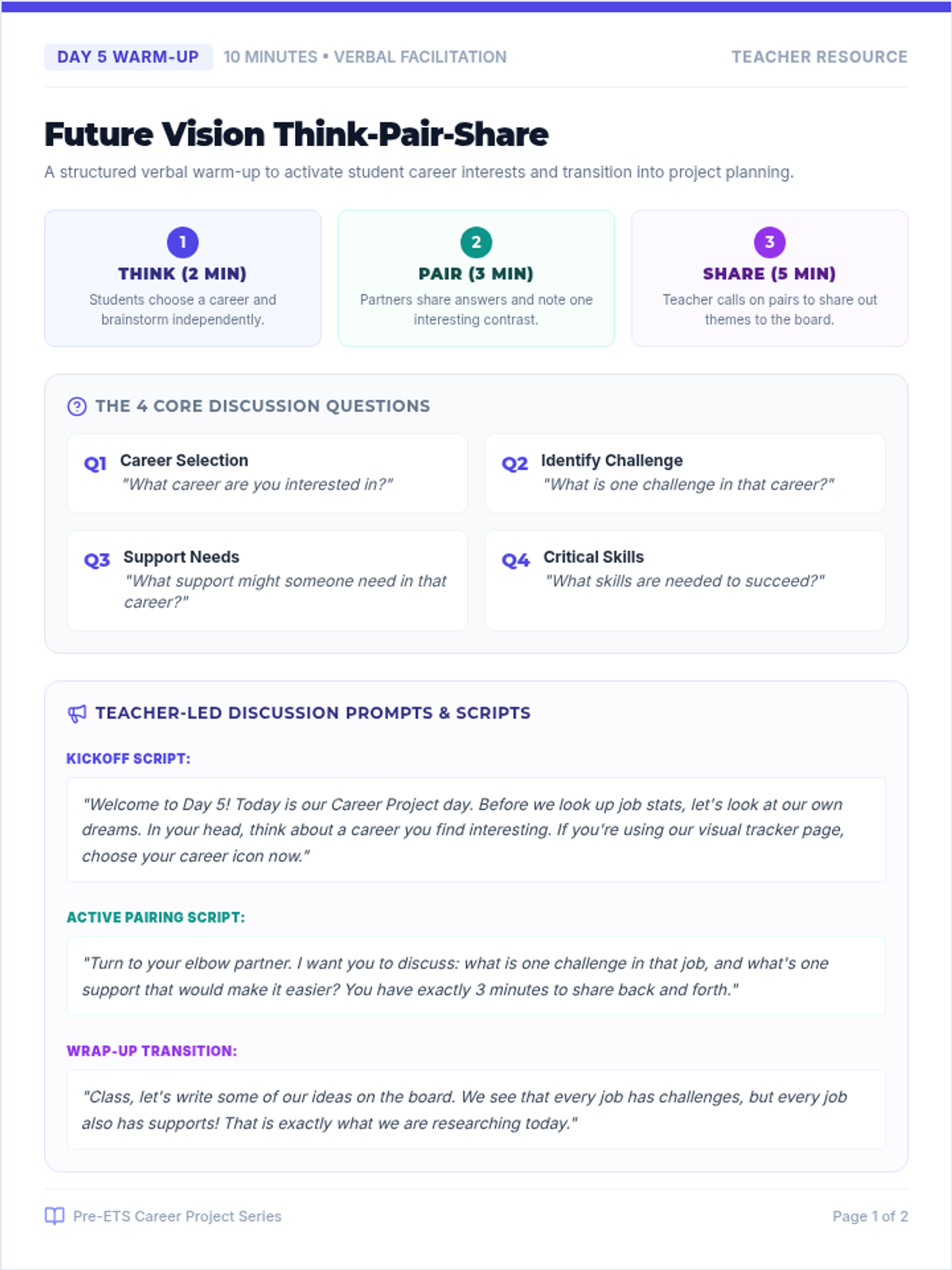
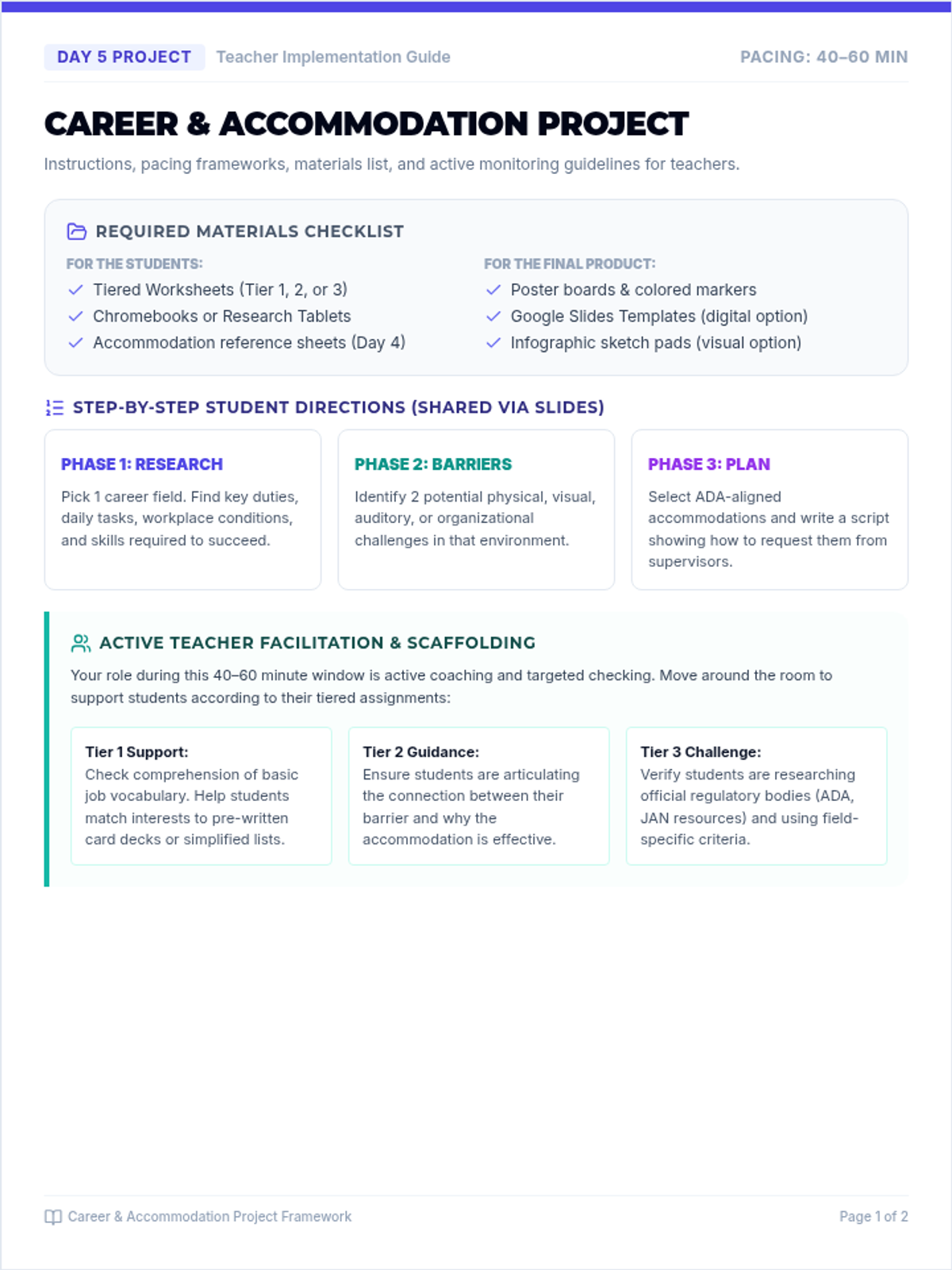
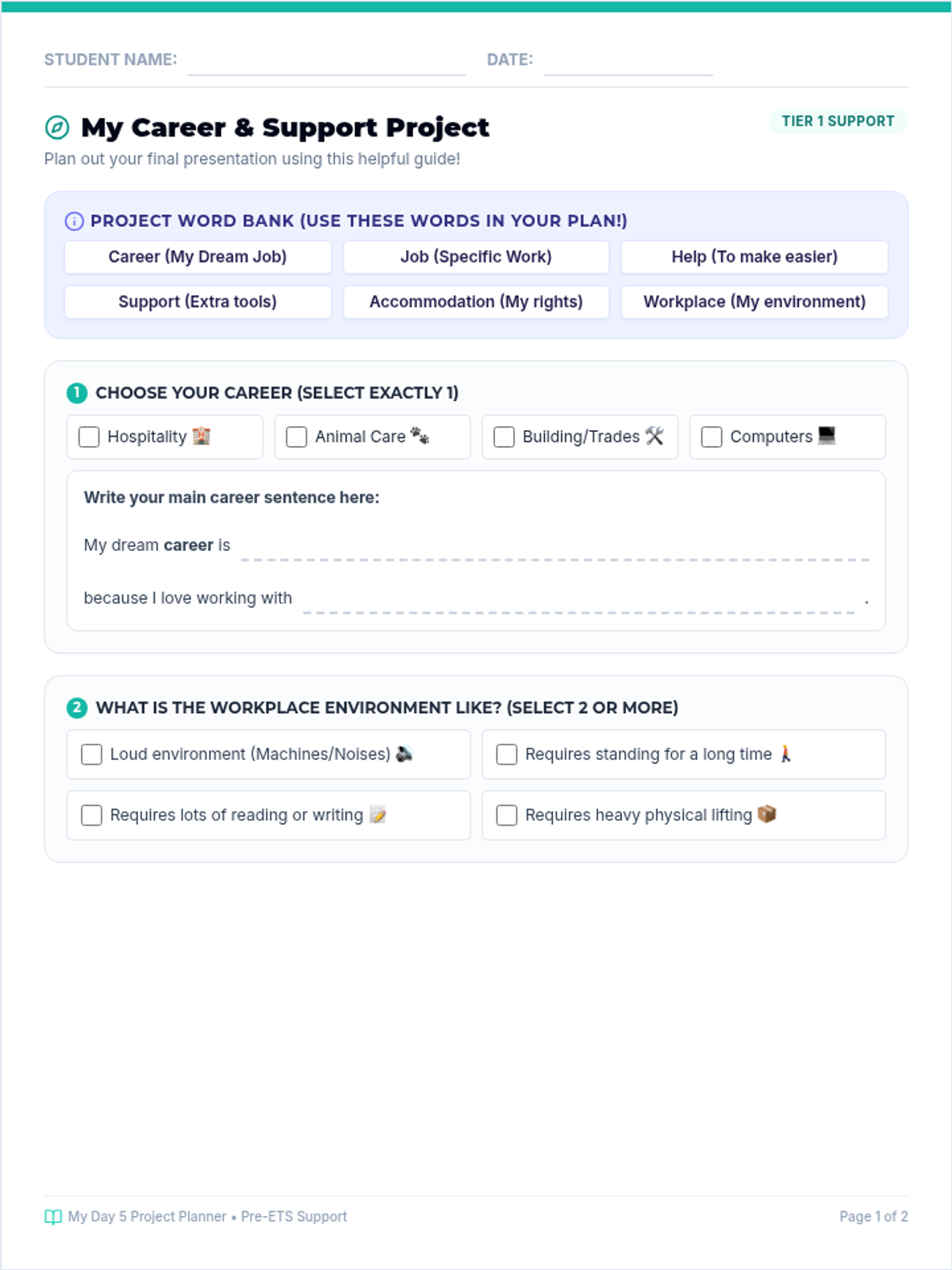
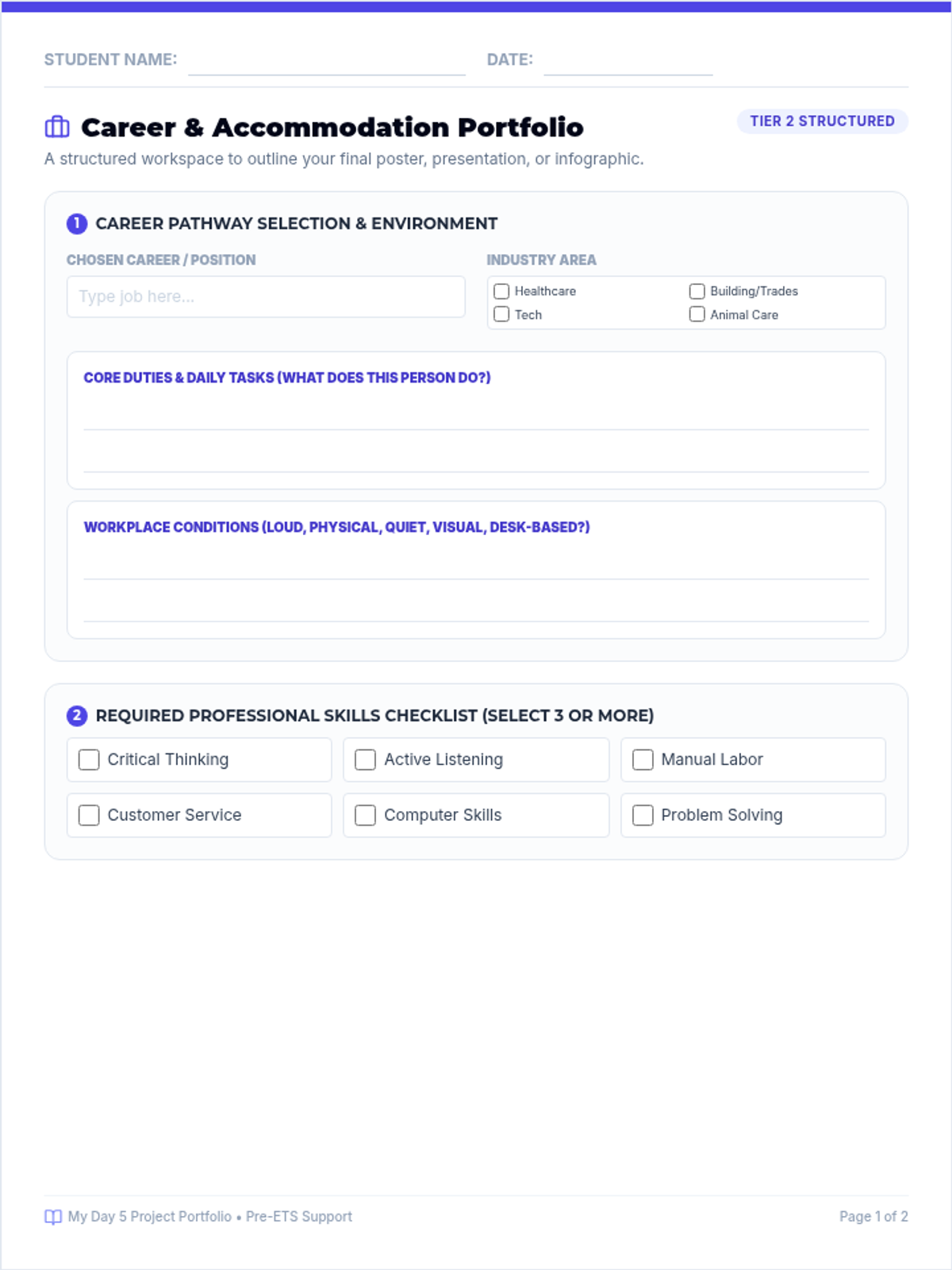
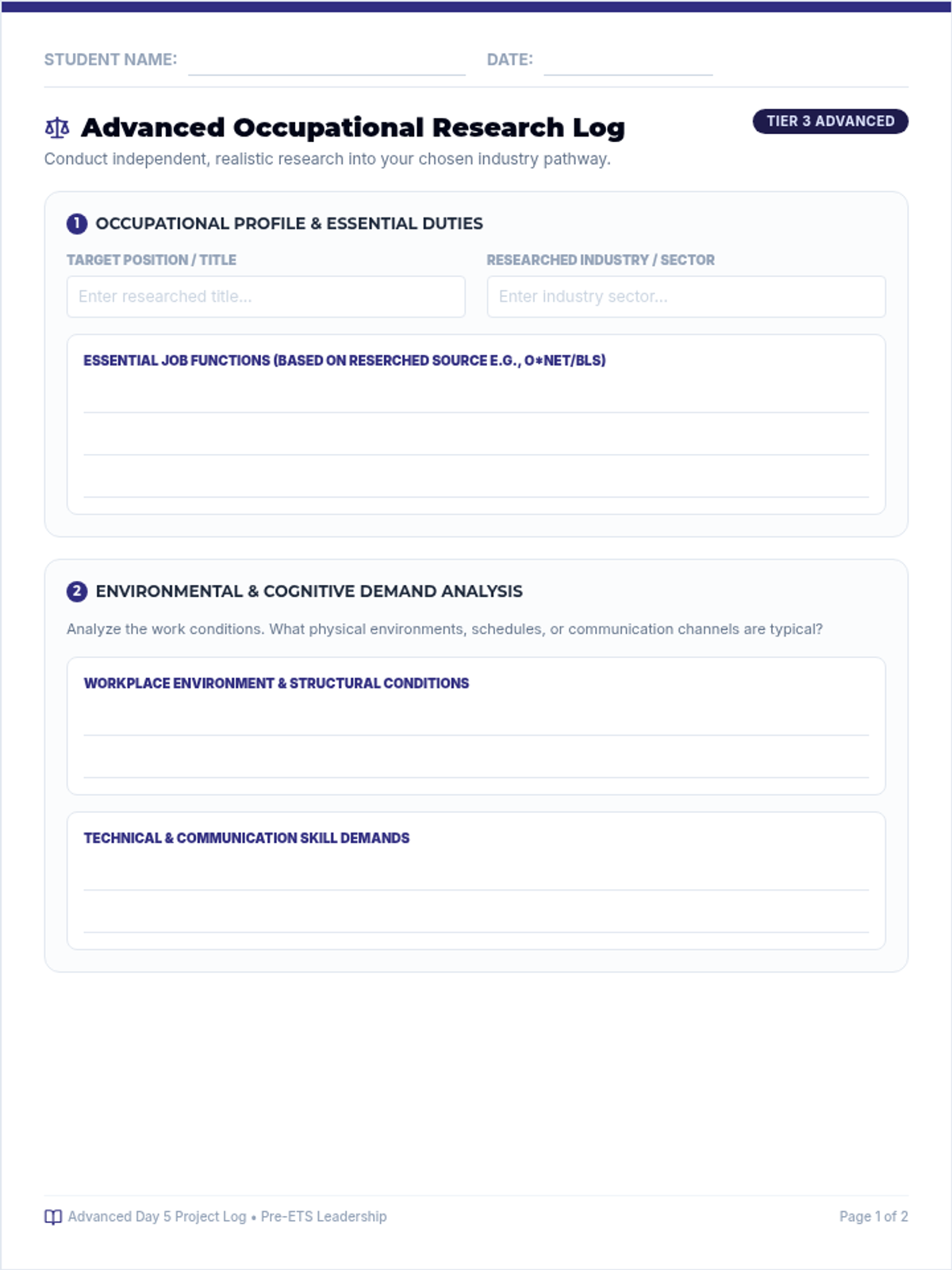
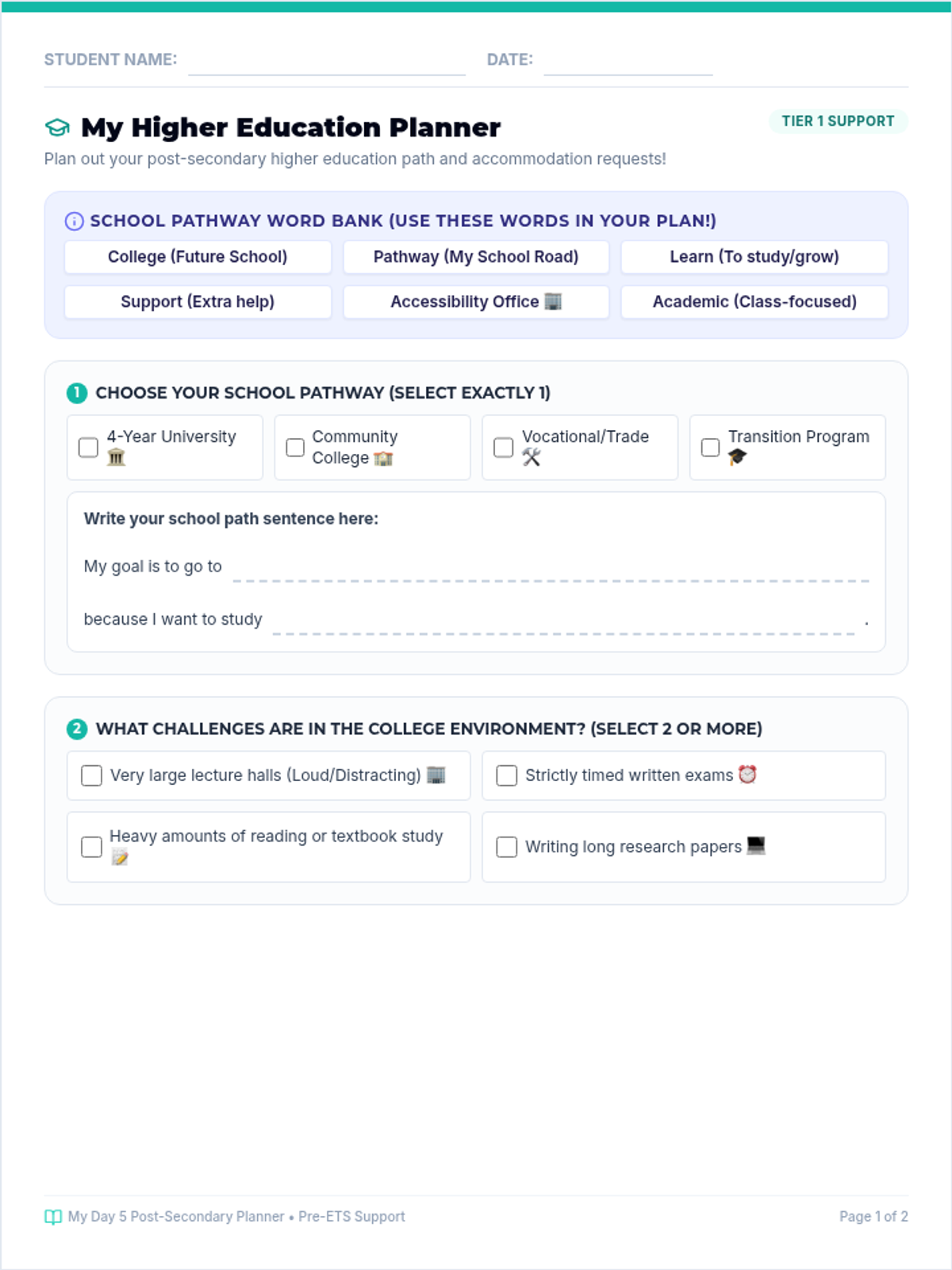
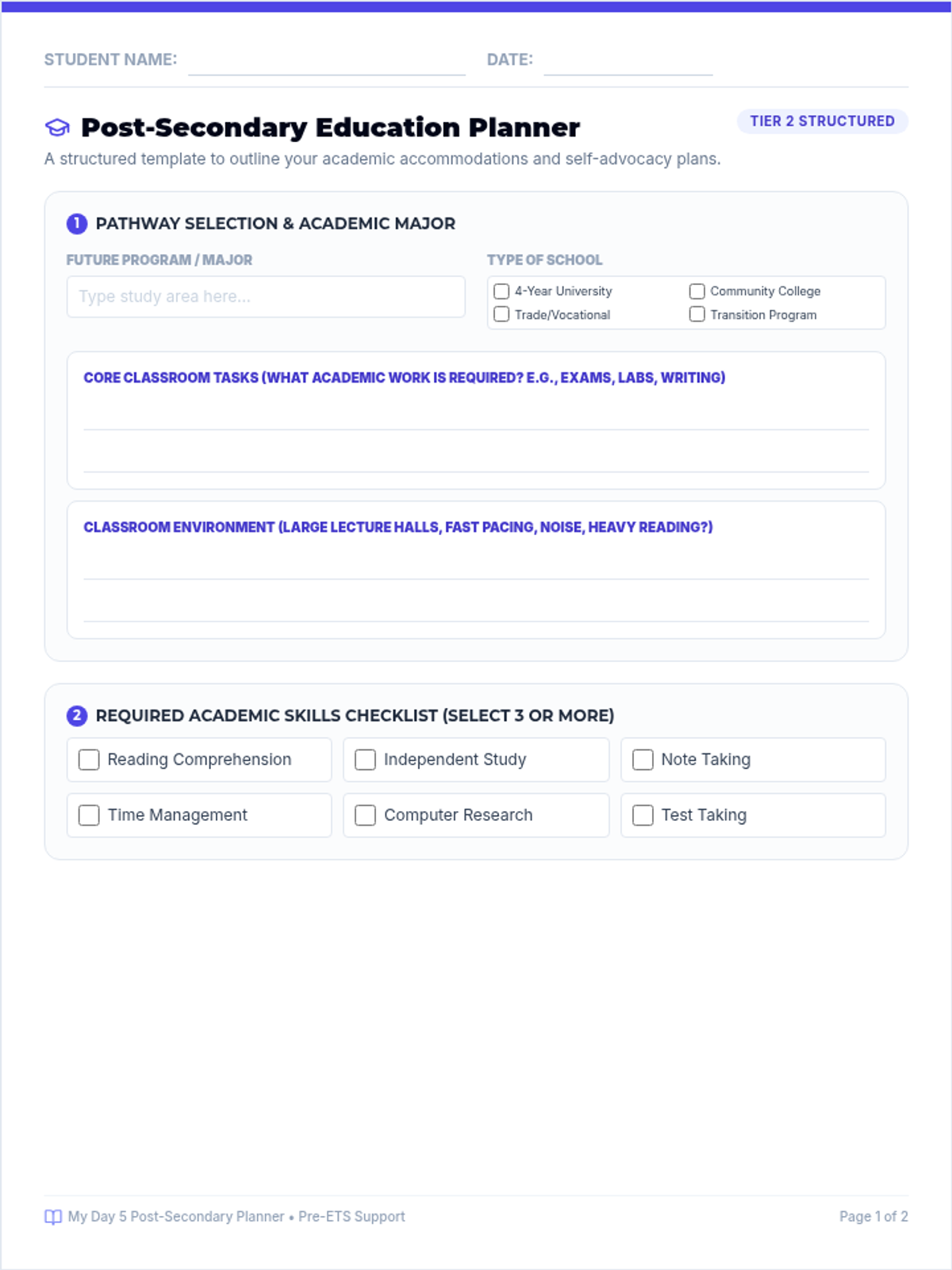
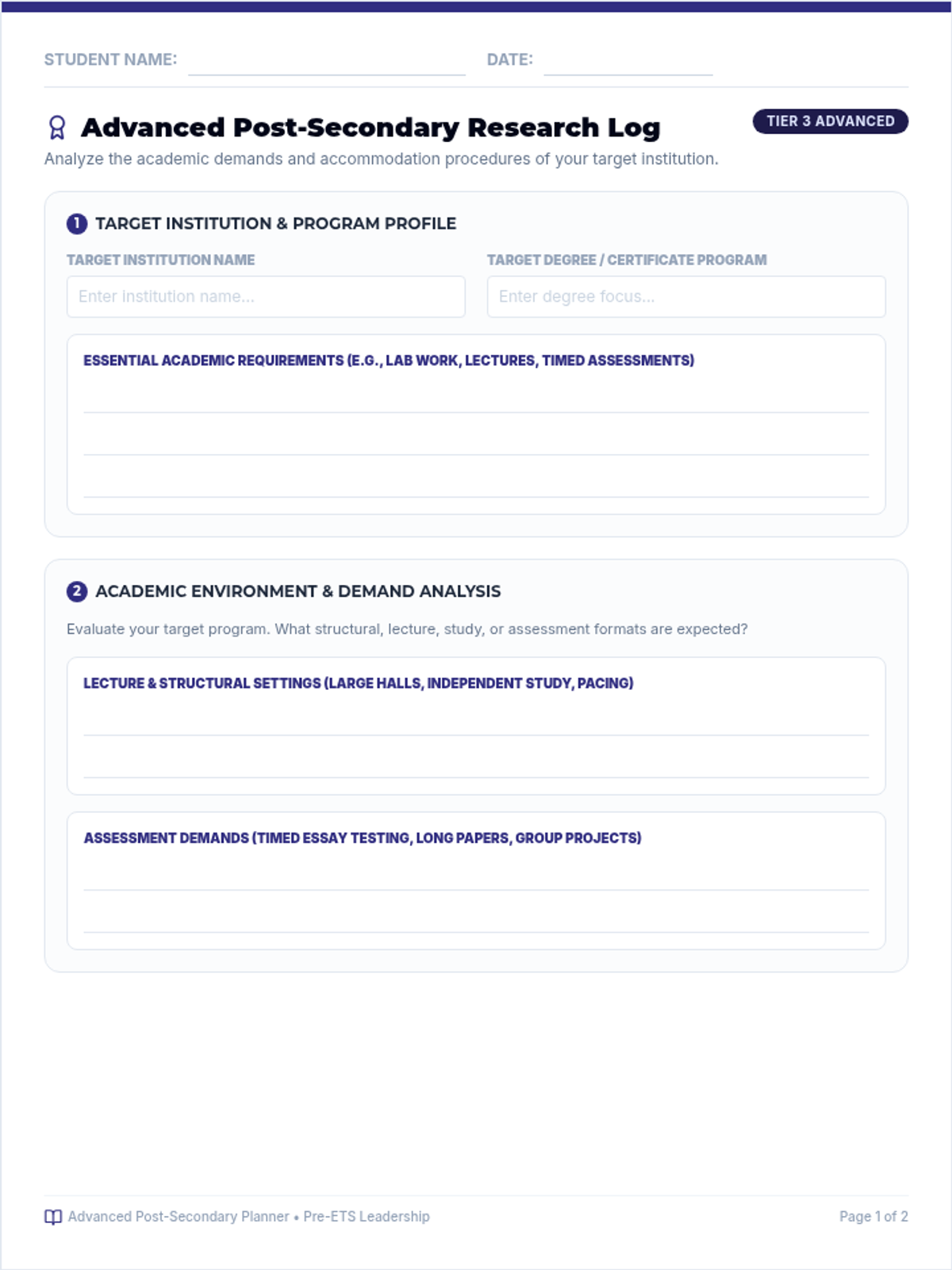
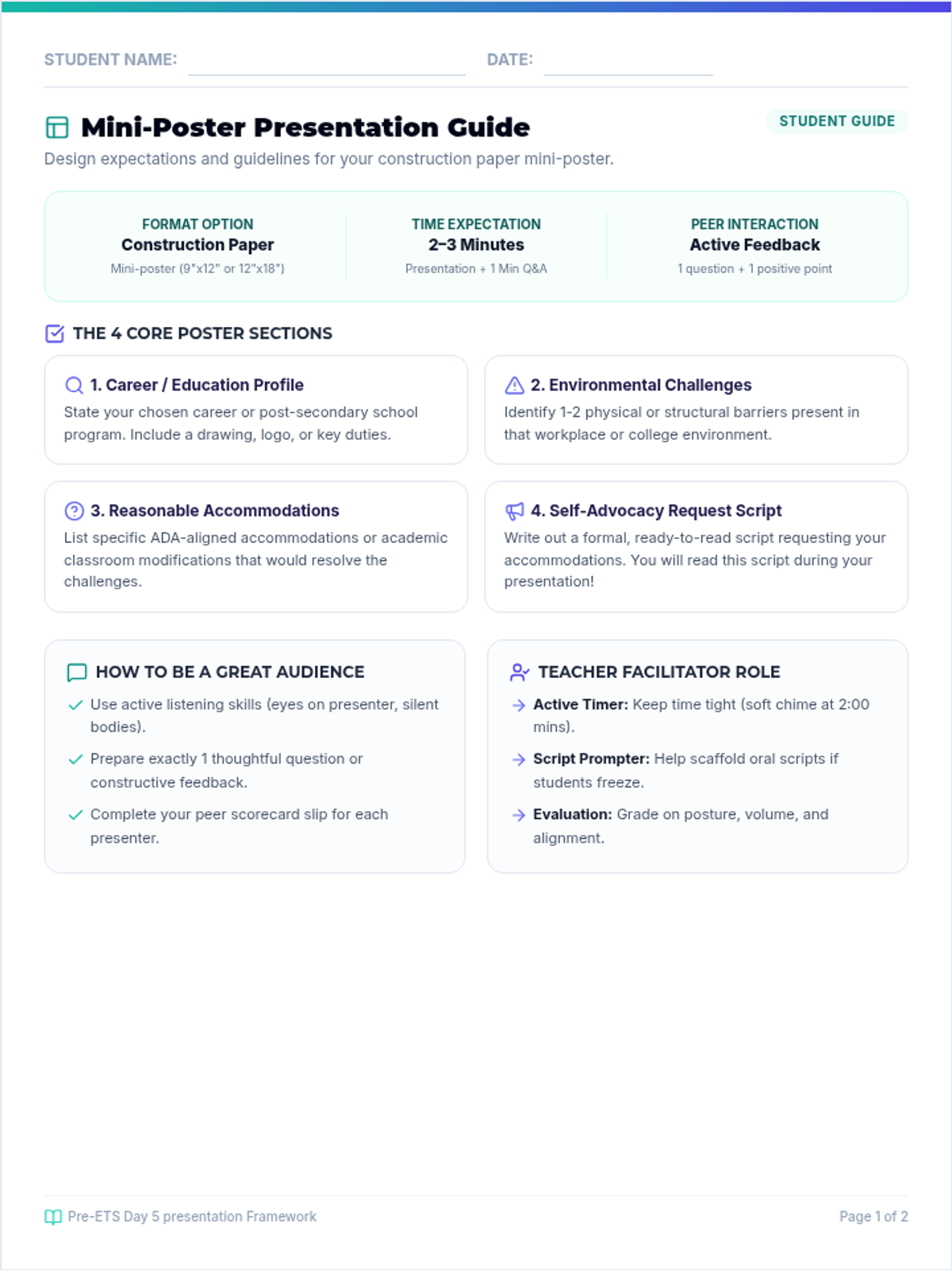
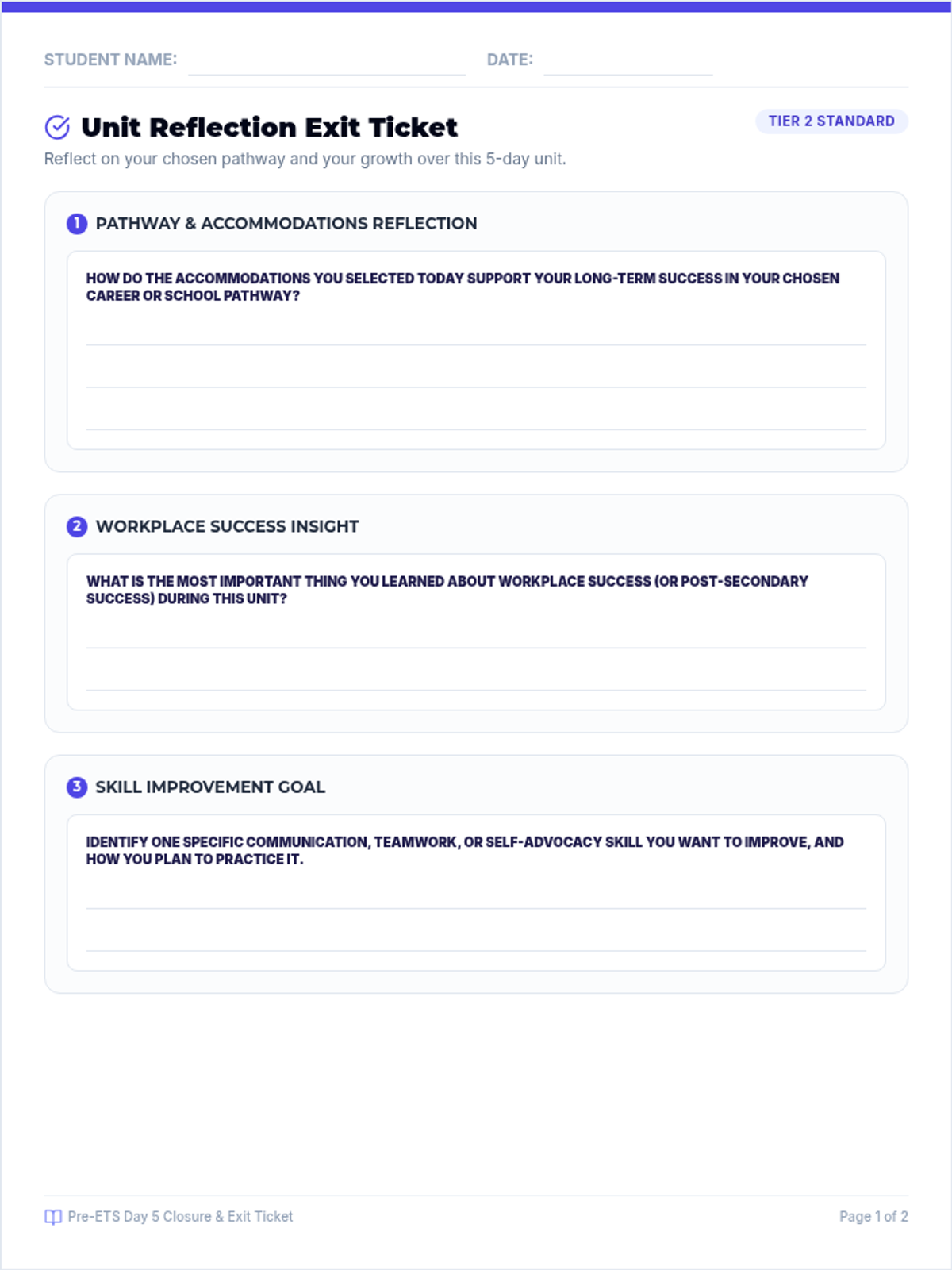
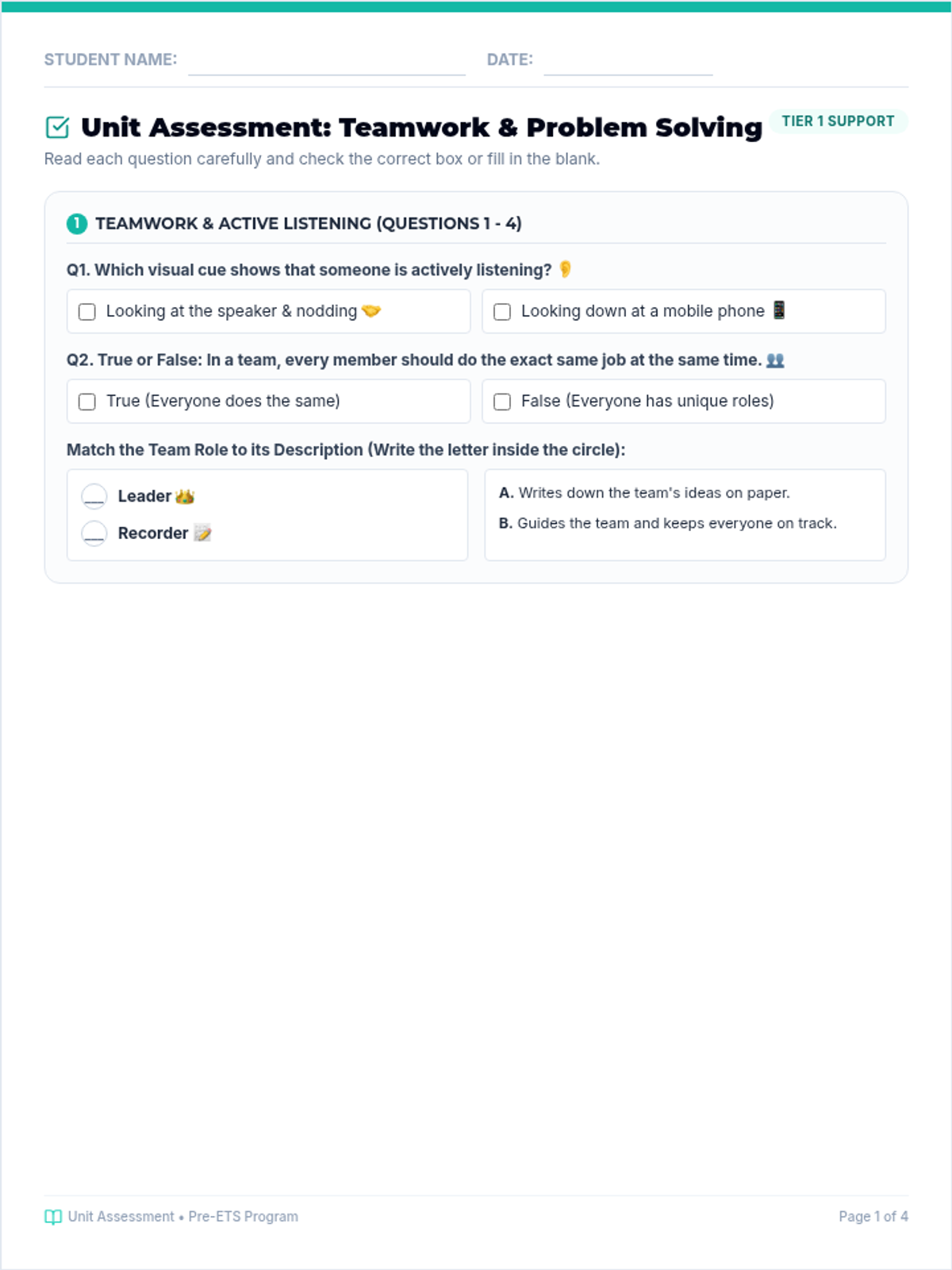
Students apply unit learning to a chosen career or post-secondary education path, identifying workplace accommodations and constructing a self-advocacy plan.
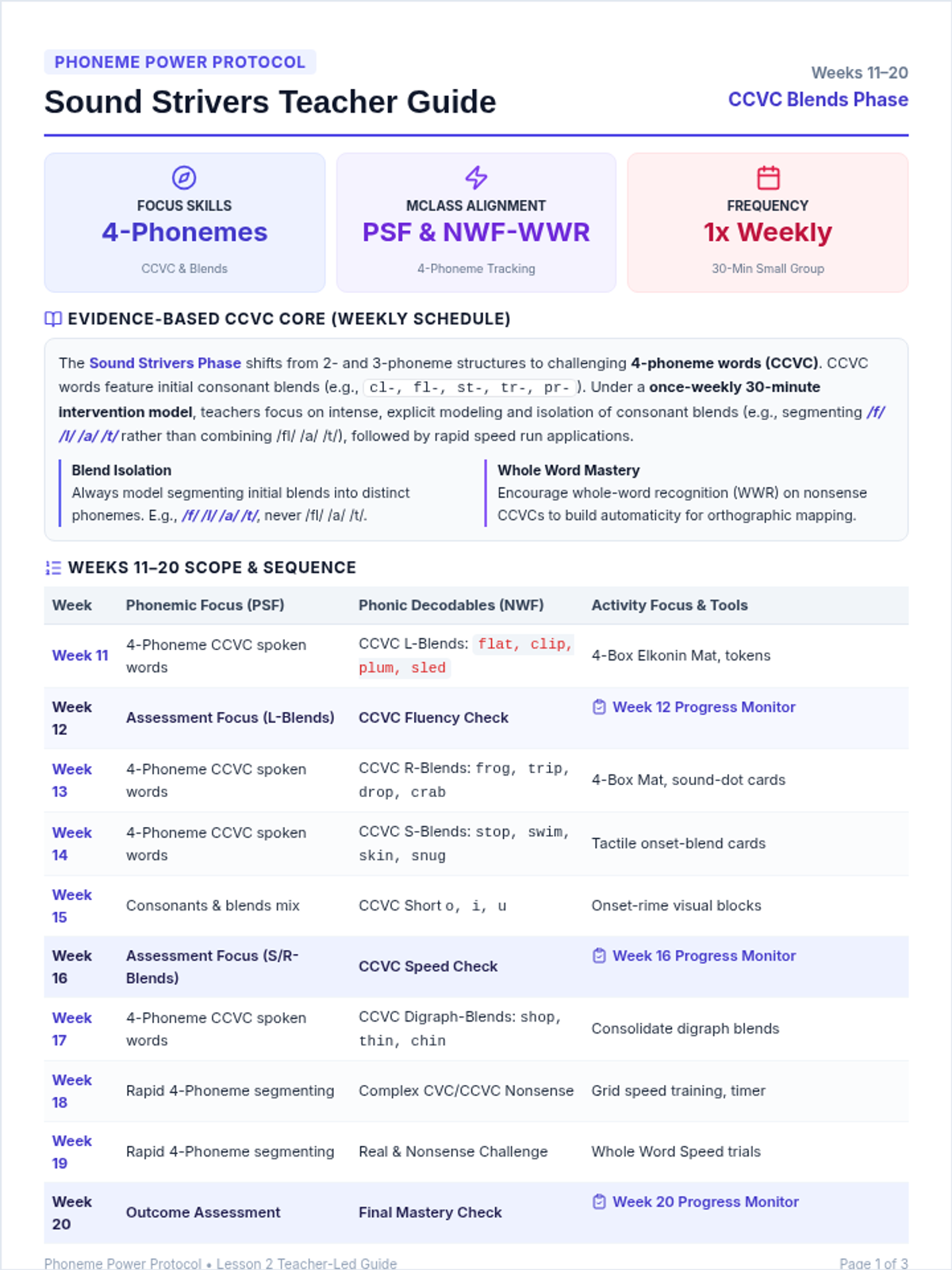
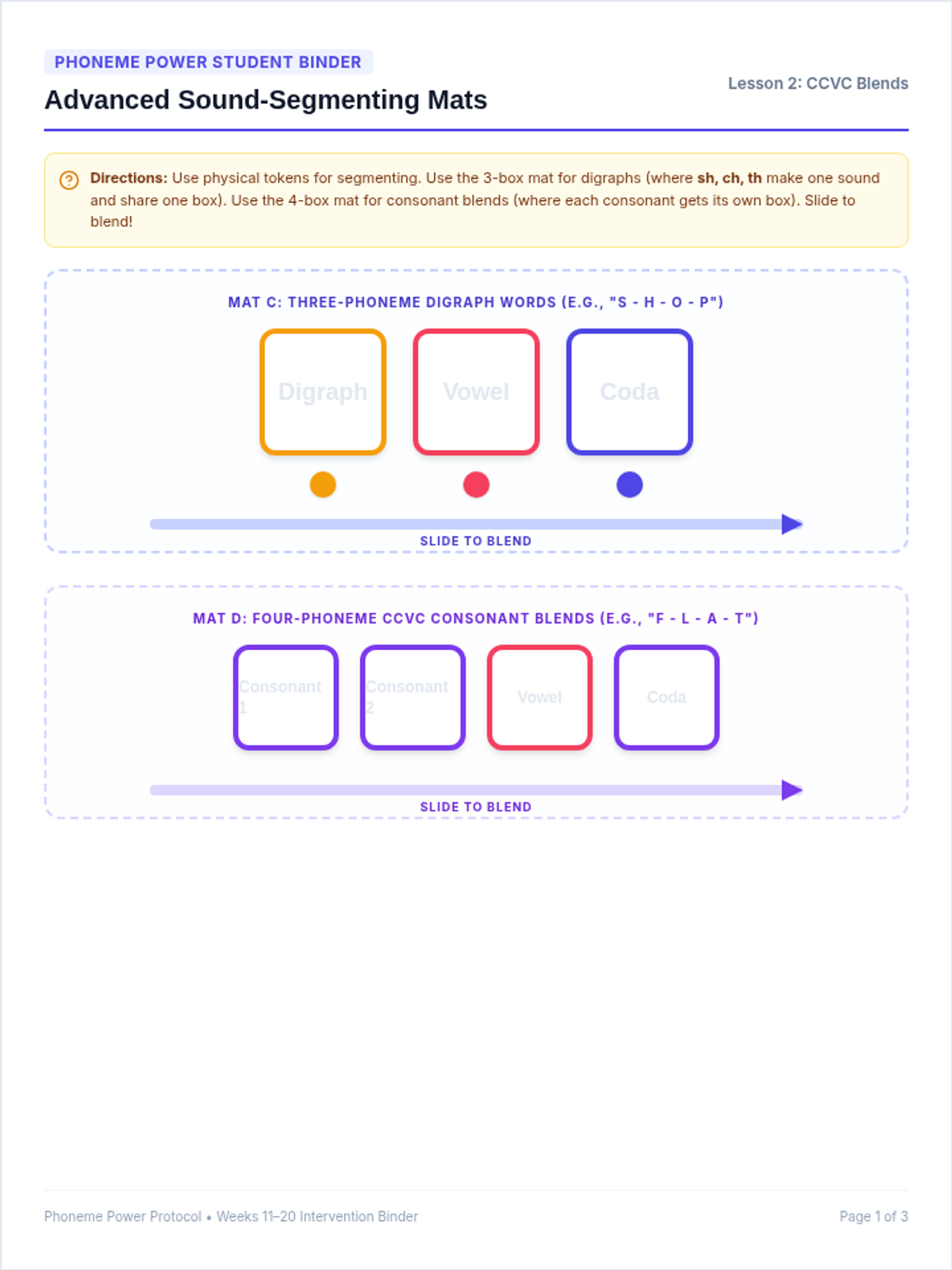
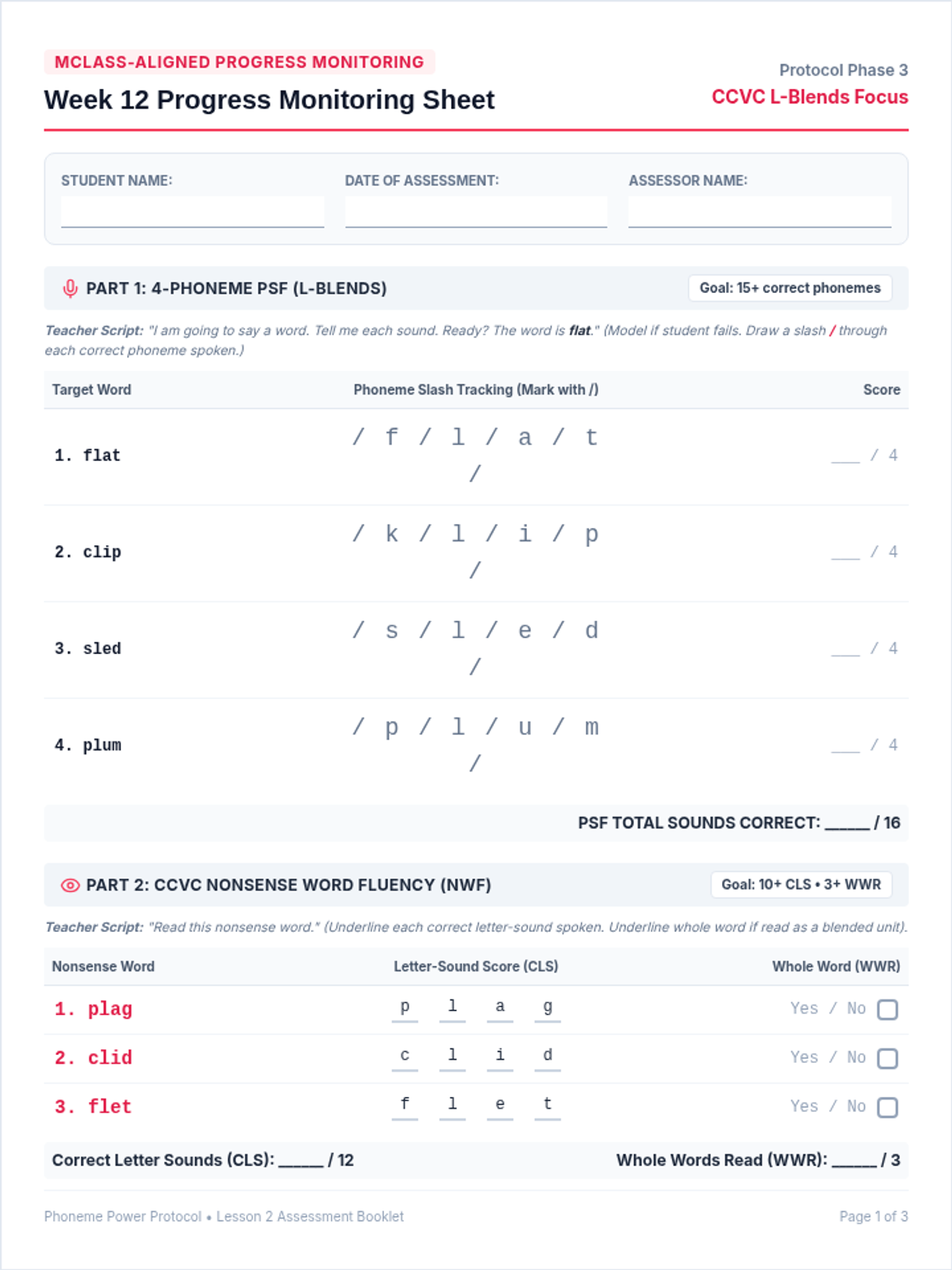
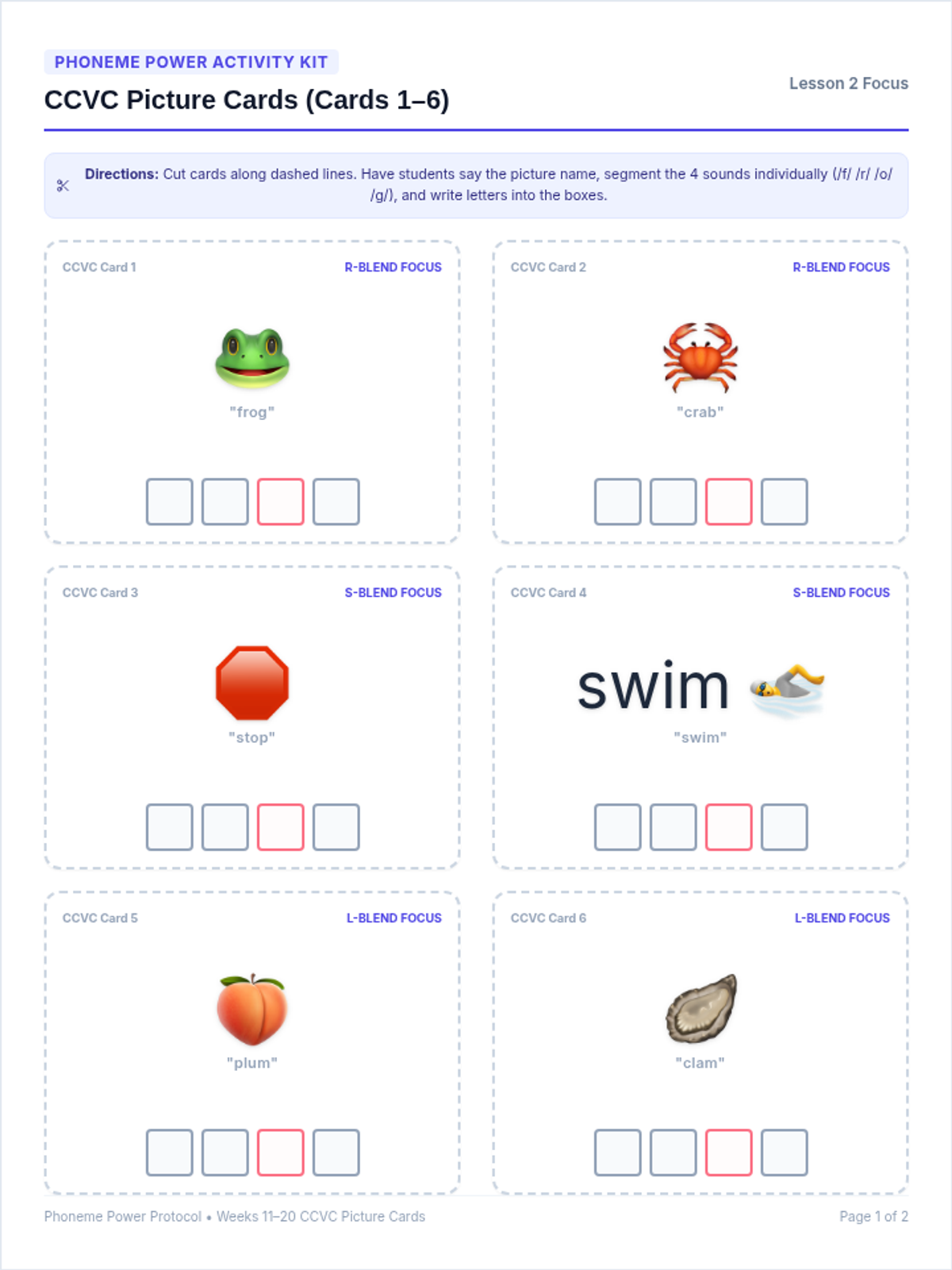
Weeks 11-20 of the Phoneme Power Protocol intervention, focusing on CCVC (consonant blends) and complex CVC words. Includes systematic small-group routines for 4-phoneme words, visual 4-box Elkonin mats, tactile onset-rime blending cards, and progress monitoring scoring sheets for Weeks 12, 16, and 20.
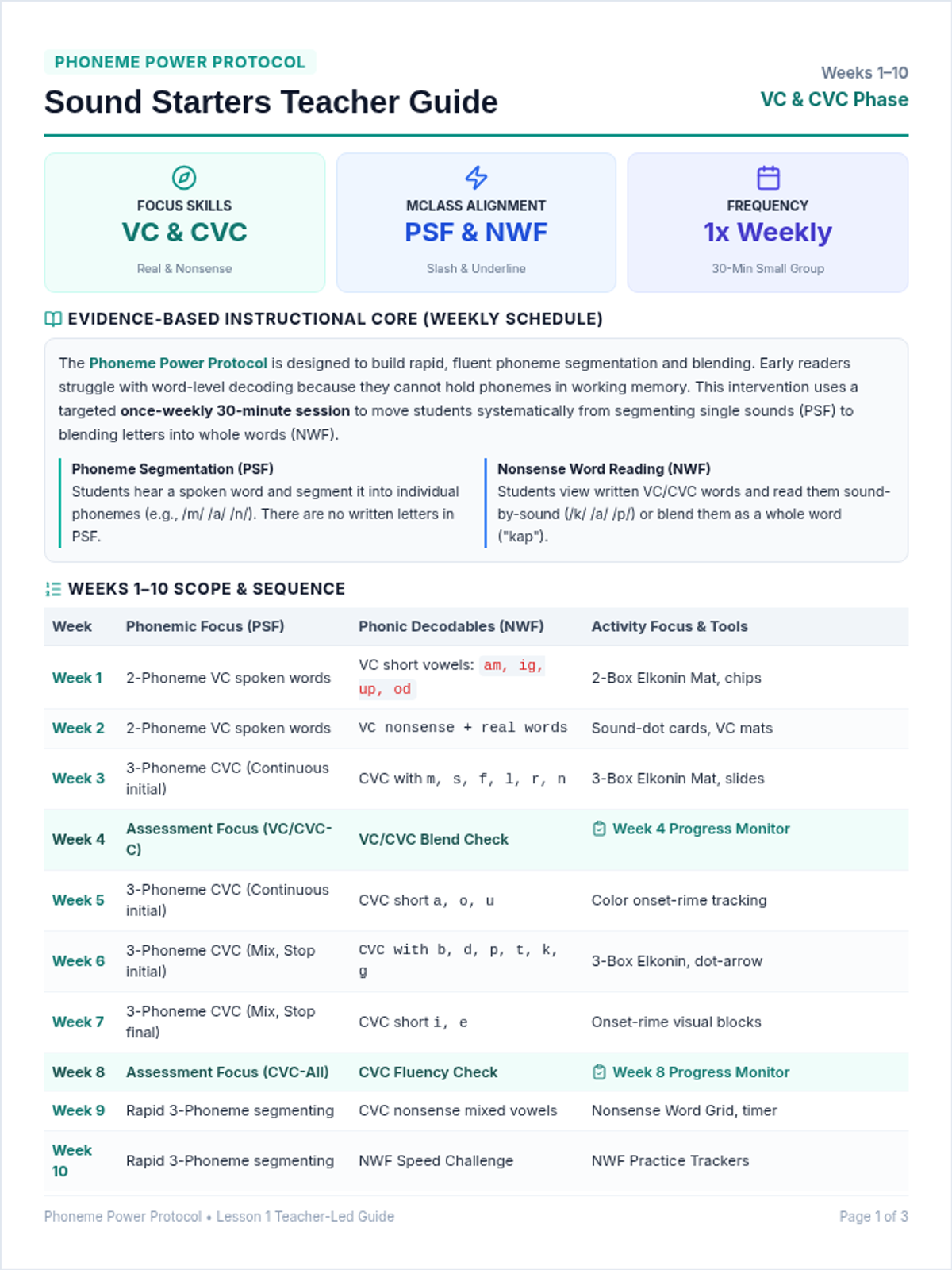
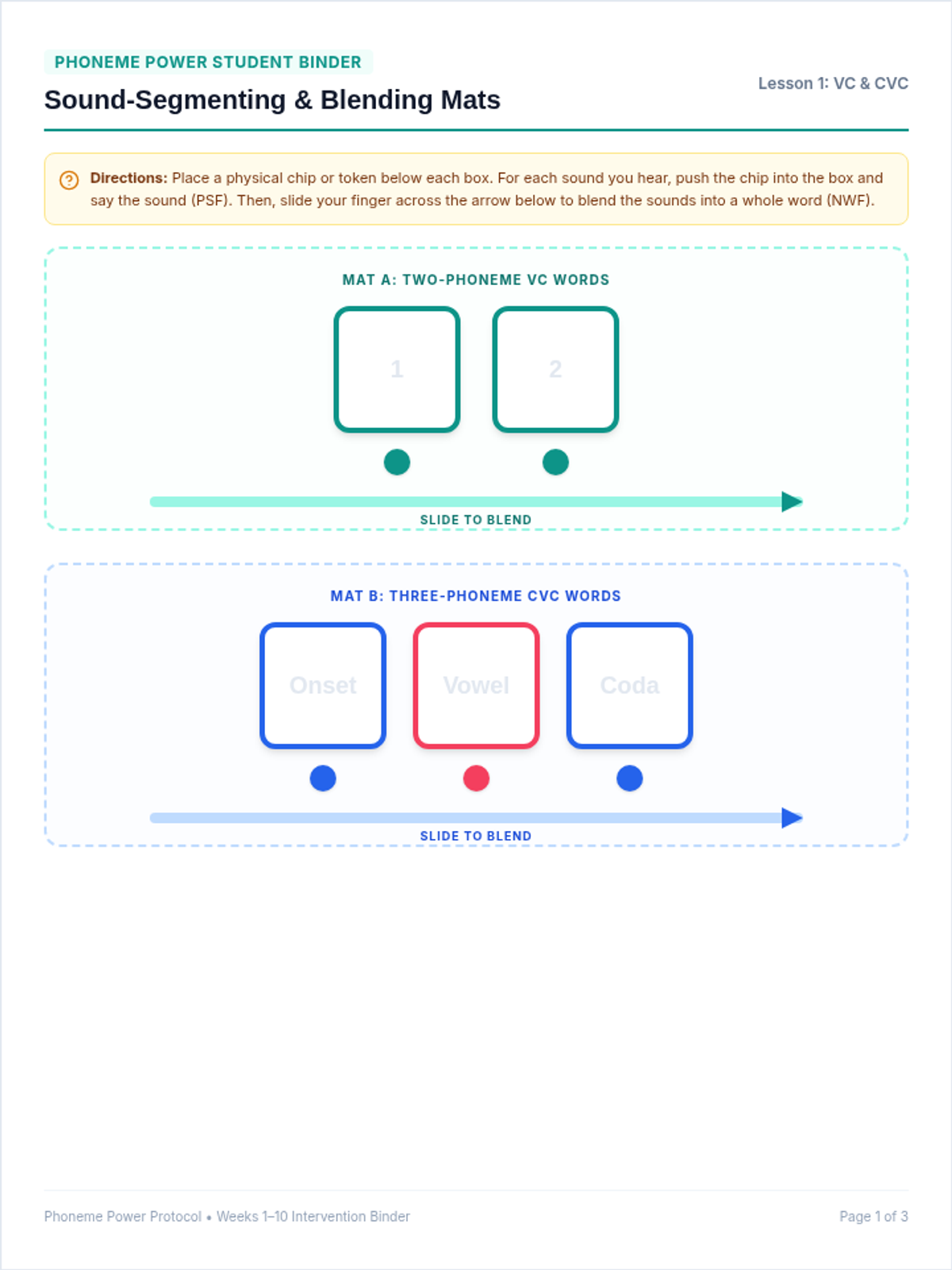
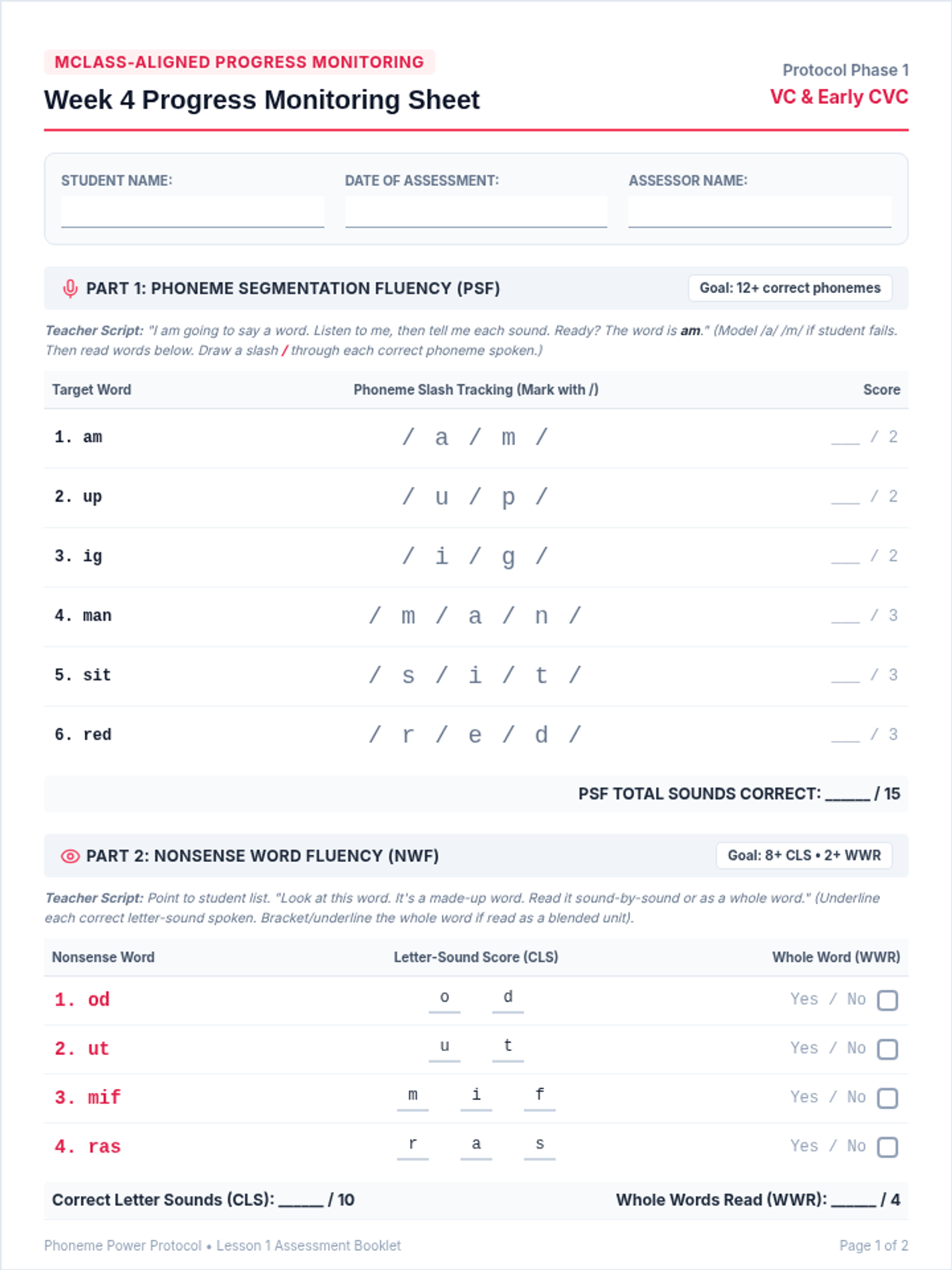
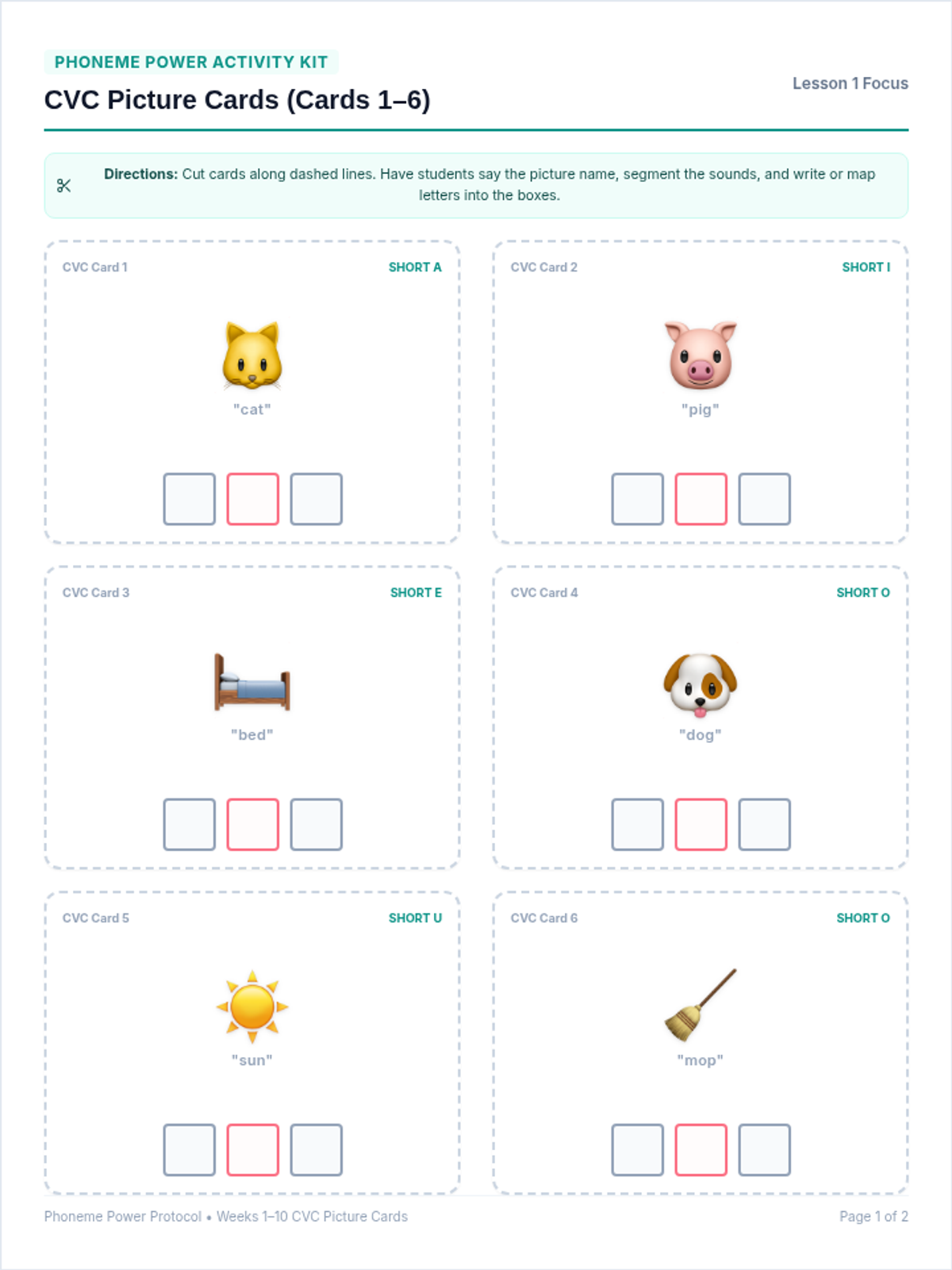
Weeks 1-10 of the Phoneme Power Protocol intervention, focusing on VC and CVC words. Includes systematic routines for segmenting individual sounds (PSF) and blending phonemes into nonsense and real words (NWF) using 2-box and 3-box Elkonin mats, color-coded word cards, and progress monitoring at Weeks 4 and 8.
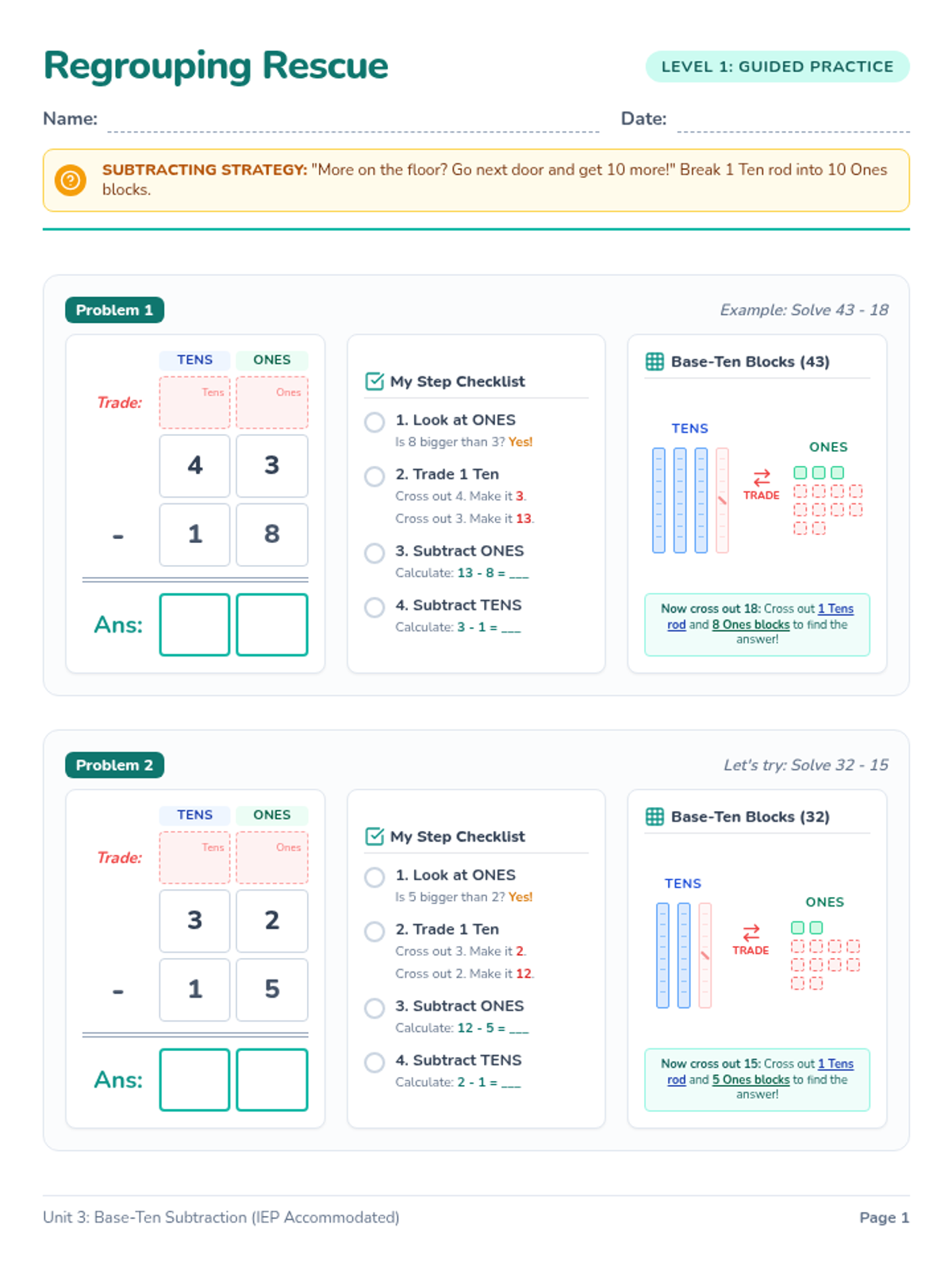
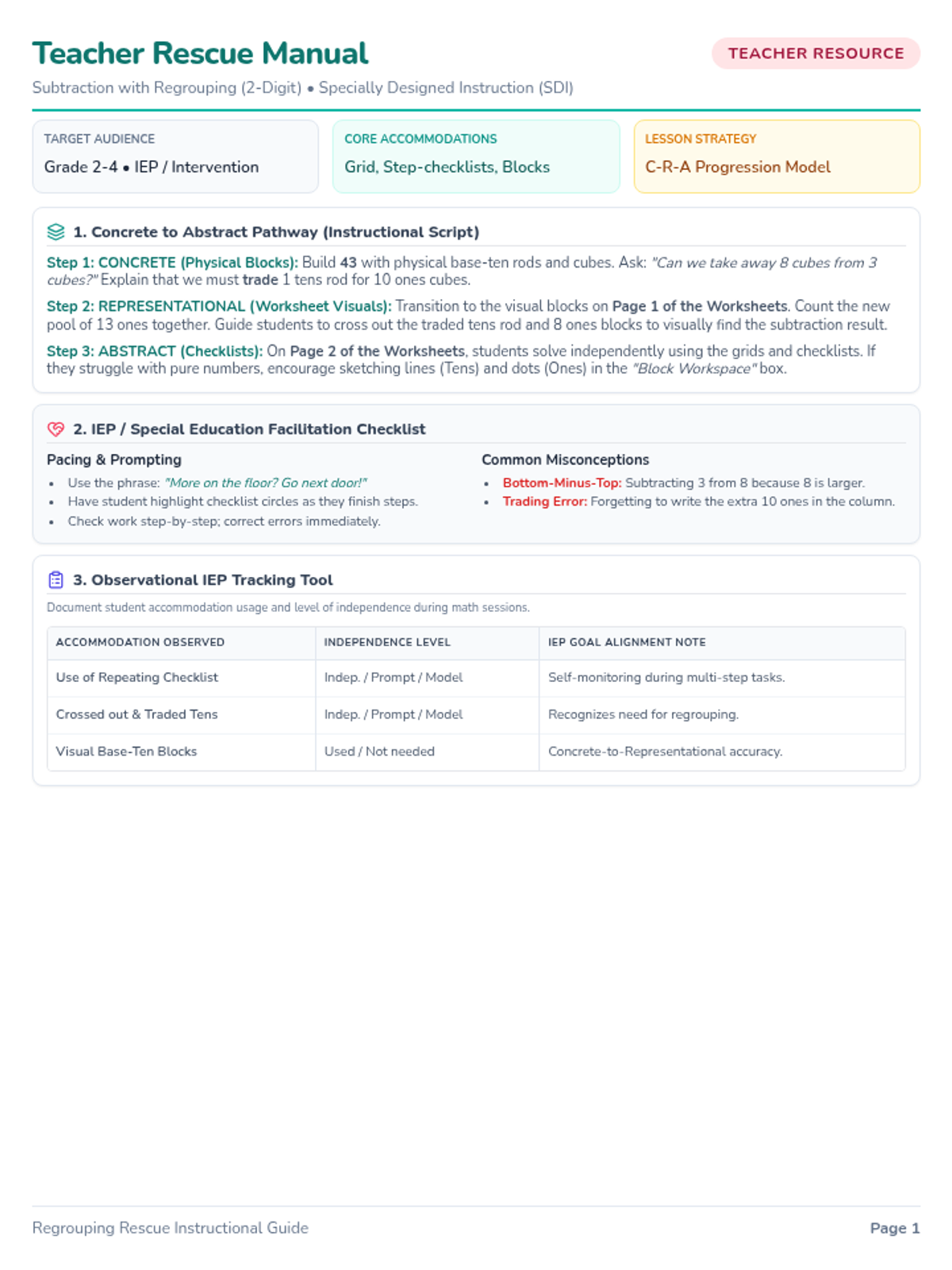
A highly-structured, research-backed lesson on subtracting two-digit numbers with regrouping, specifically designed with IEP accommodations. Includes grid-aligned practice sheets with repeating step-by-step visual checklists and built-in base-ten visual blocks to support concrete-representational-abstract transitions.
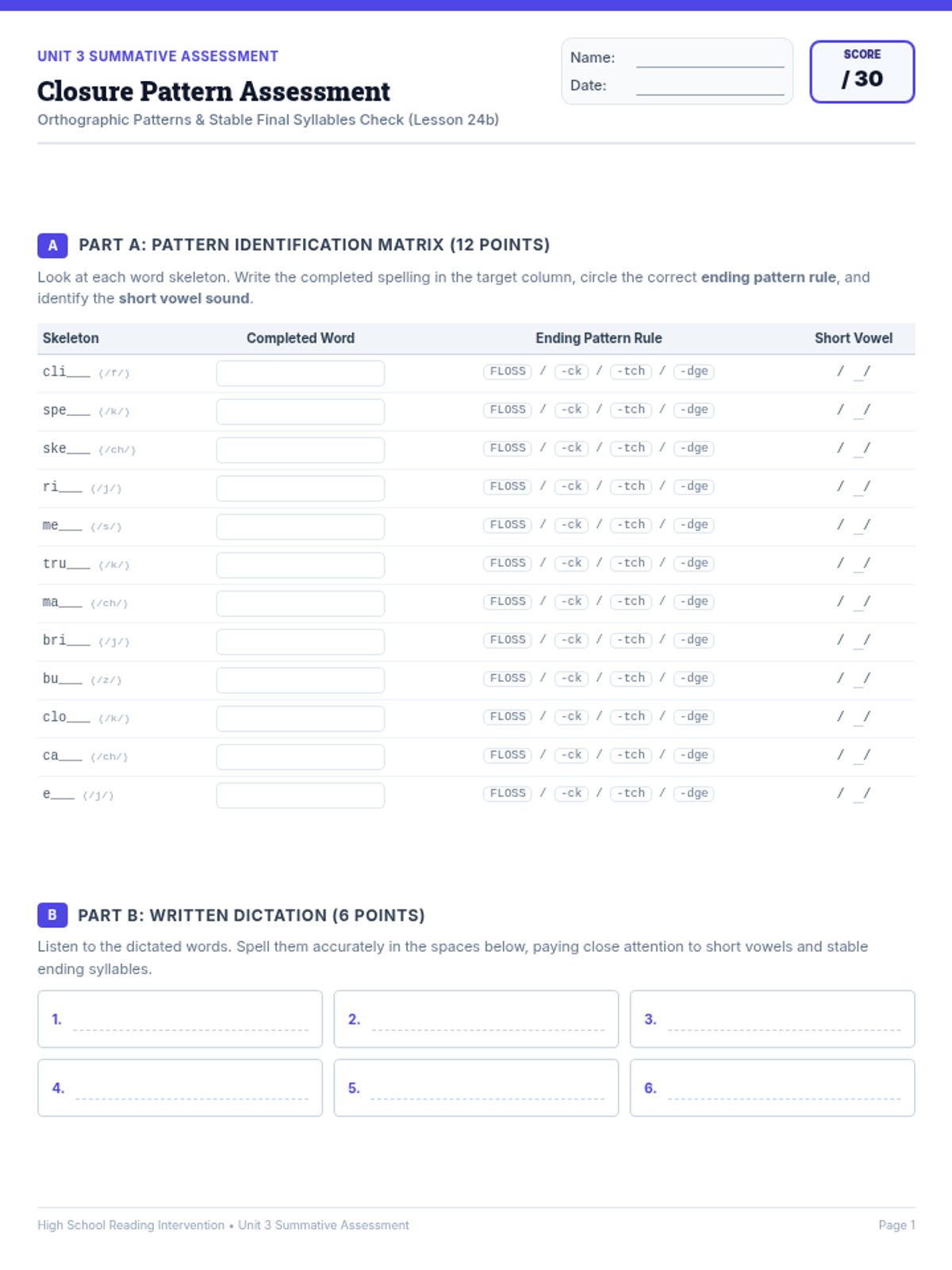
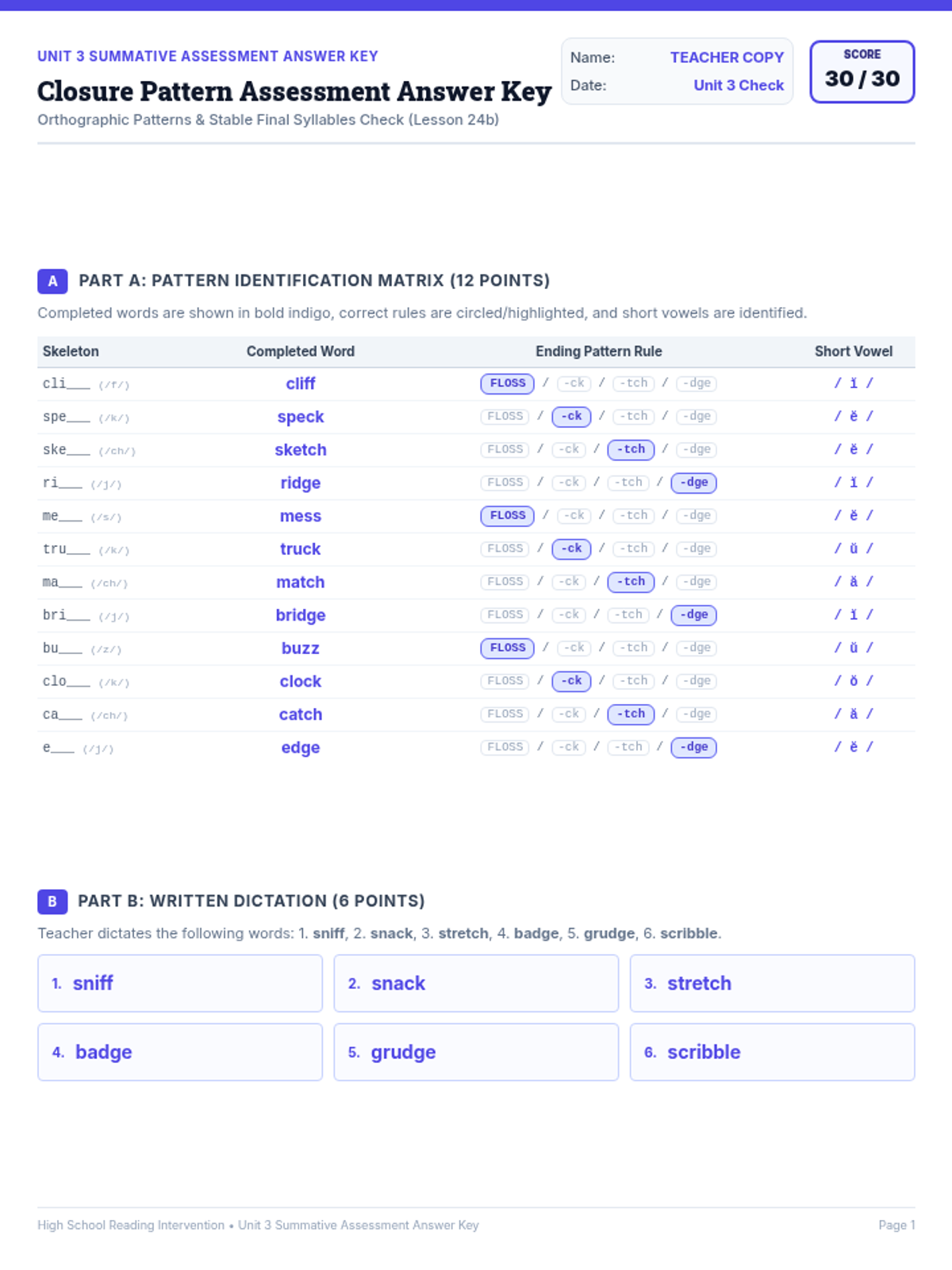
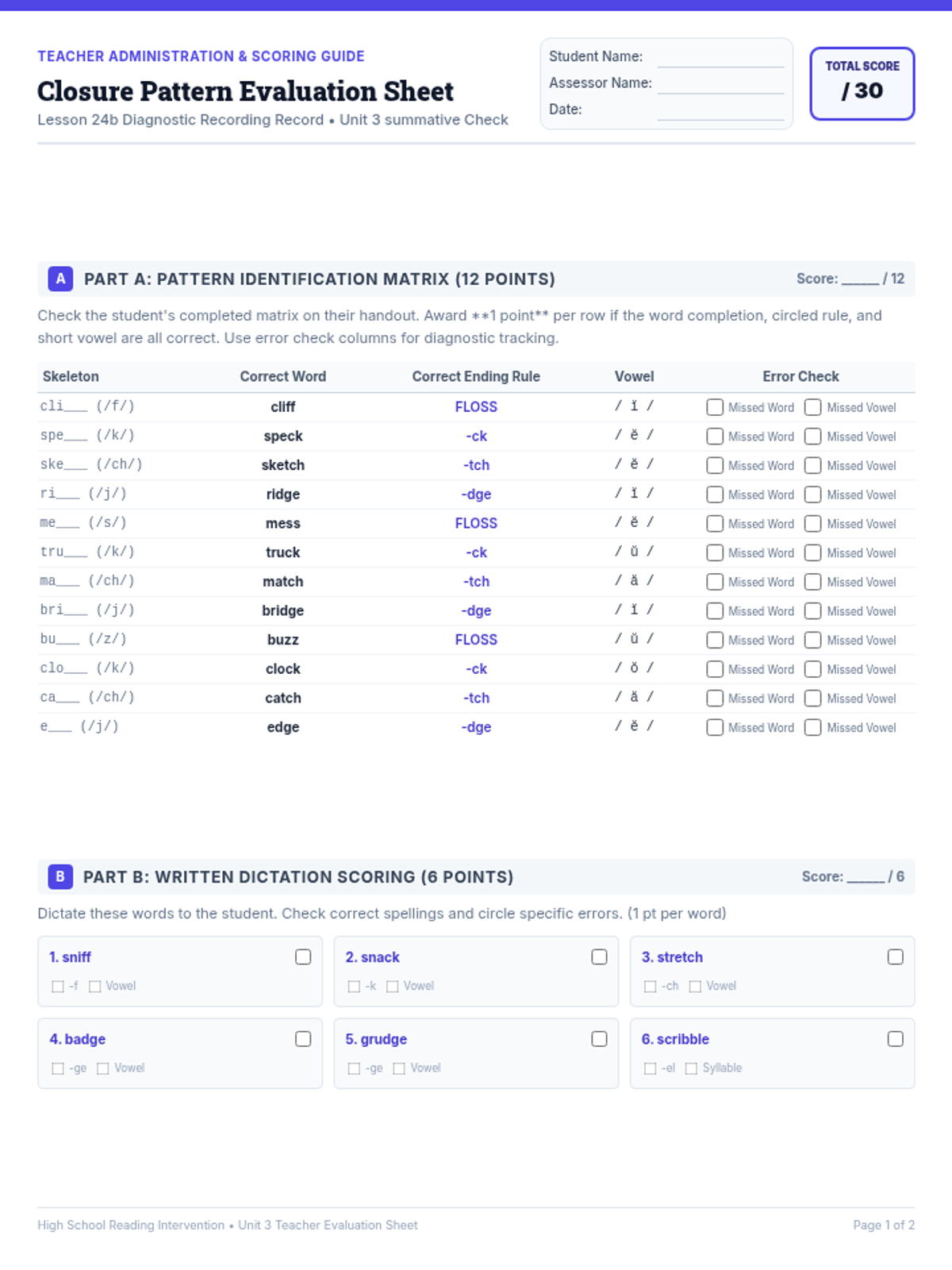
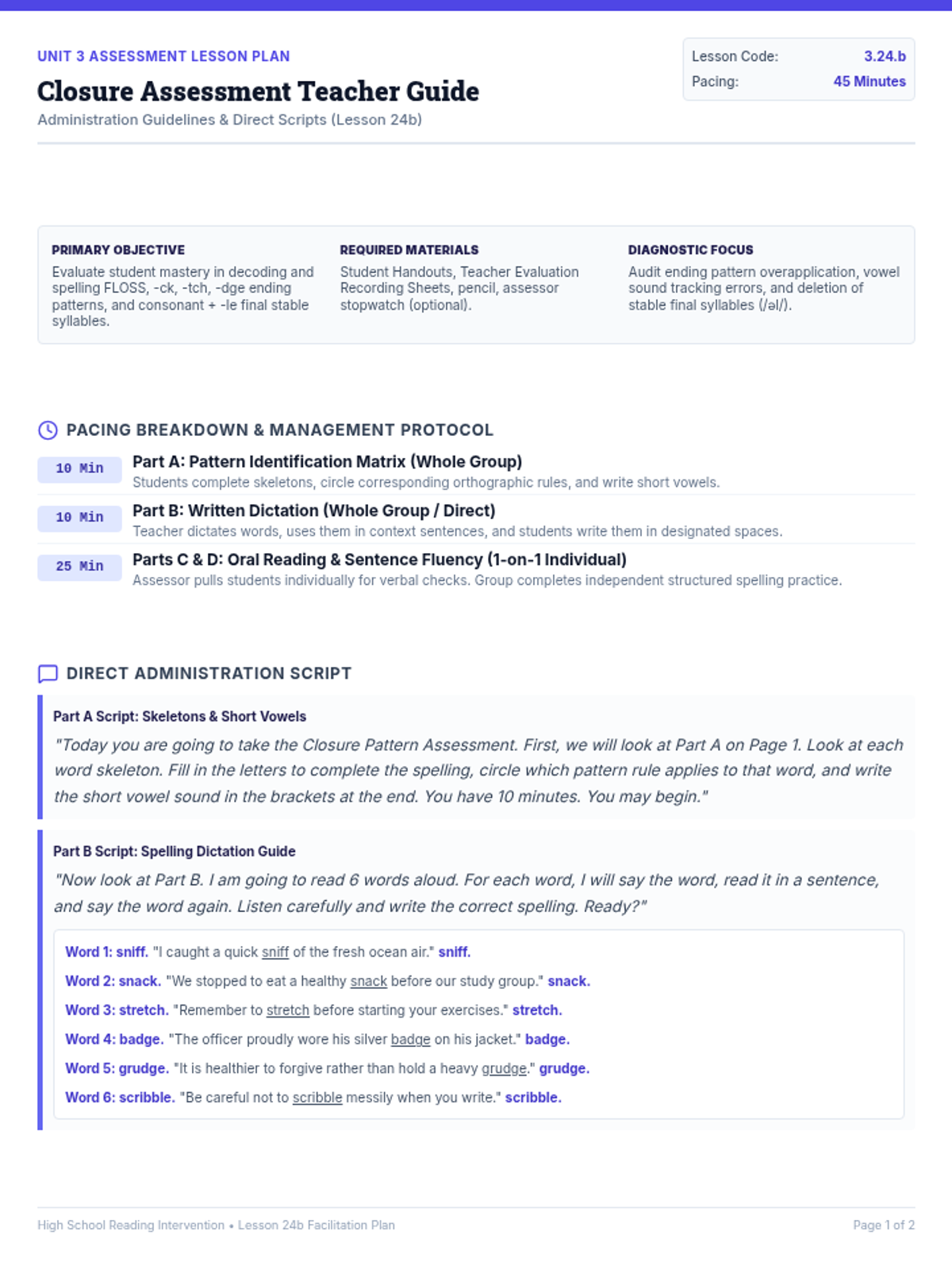
An intensive summative assessment lesson designed to check student mastery of FLOSS, -ck, -tch, -dge, and -le decoding and spelling patterns.
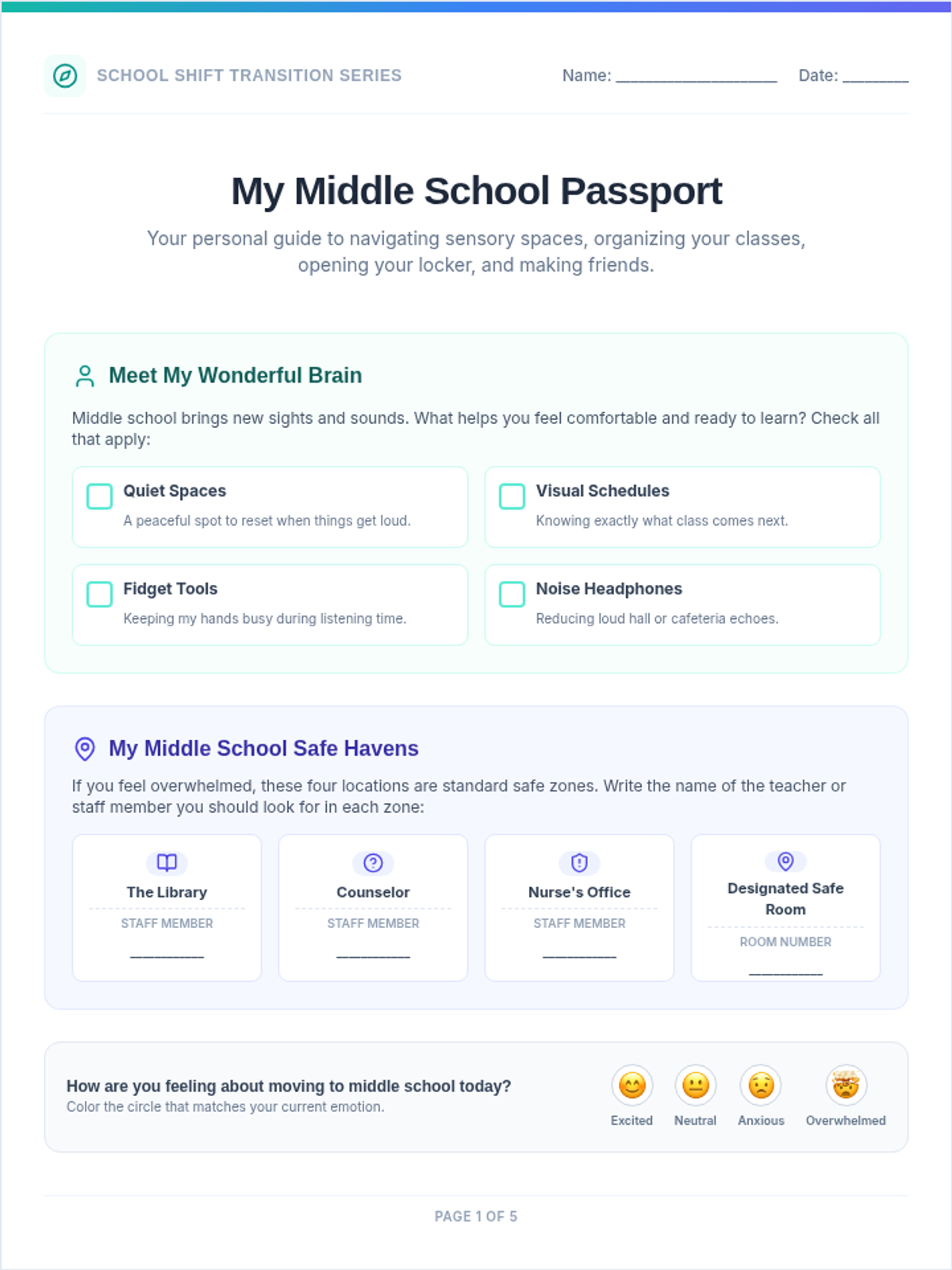
A transition lesson designed specifically for middle school students with ASD, focusing on navigating sensory changes, learning social scripts, practicing physical tasks like locker combinations, and organizing multiple classes.
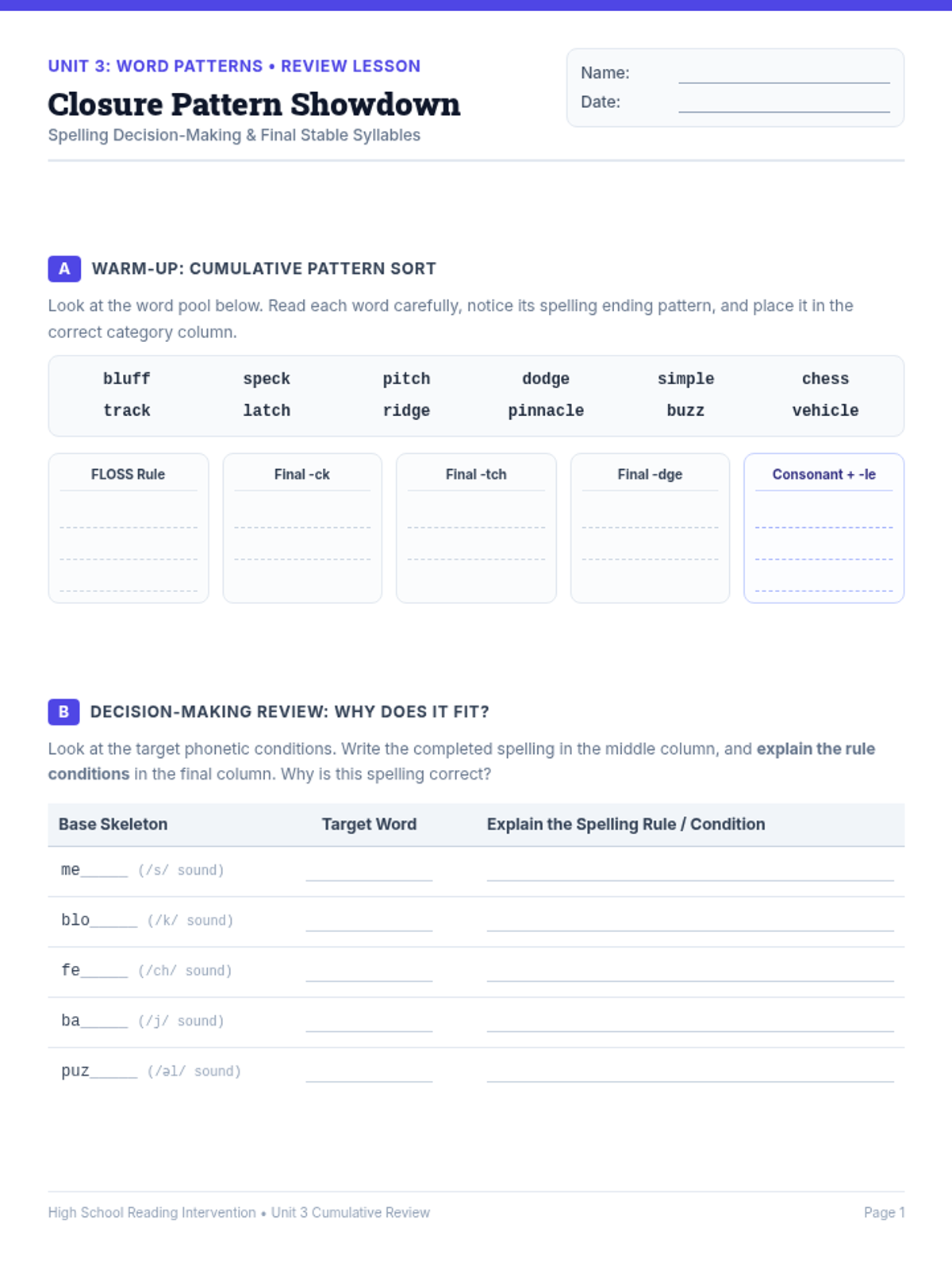
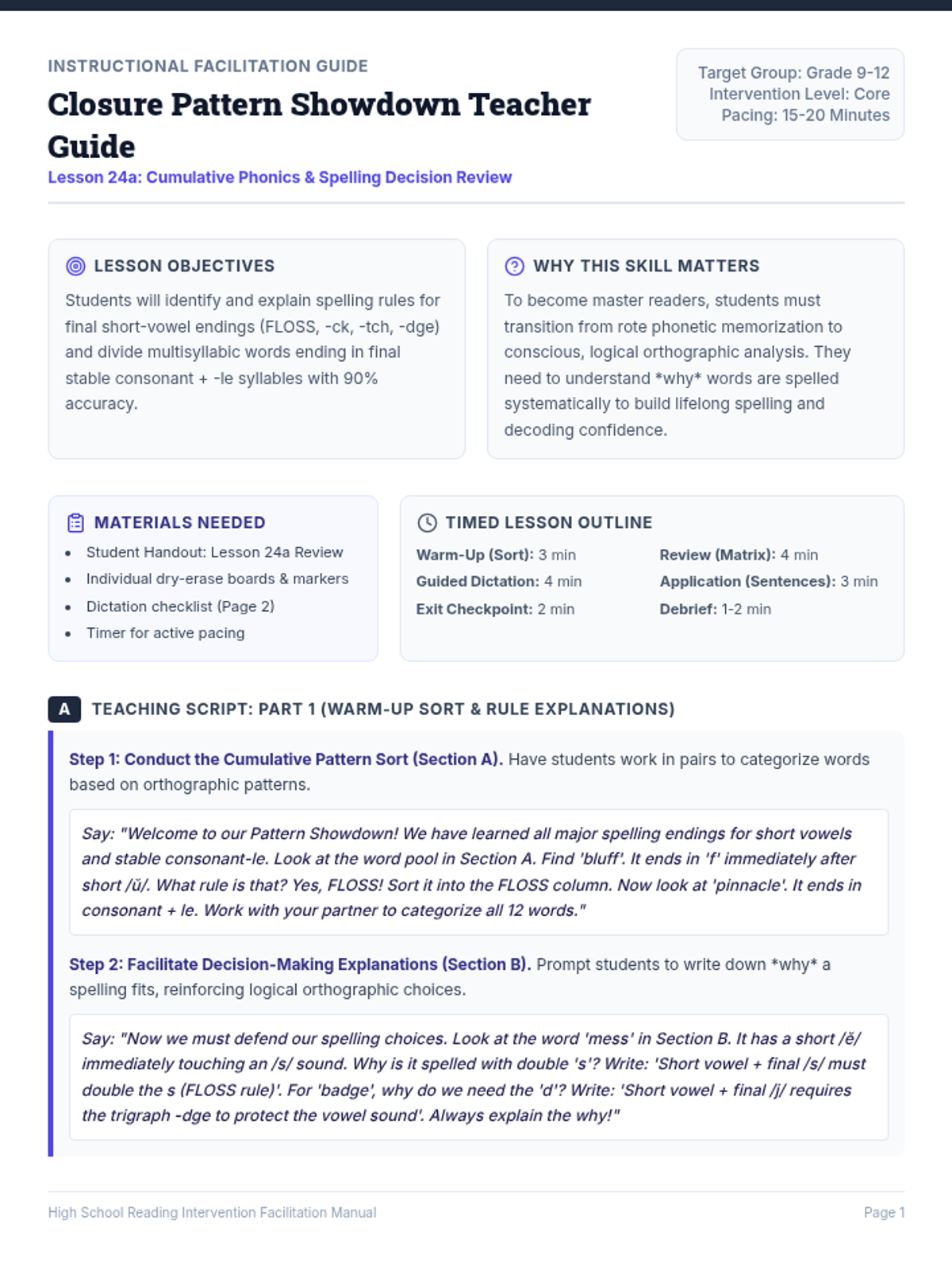
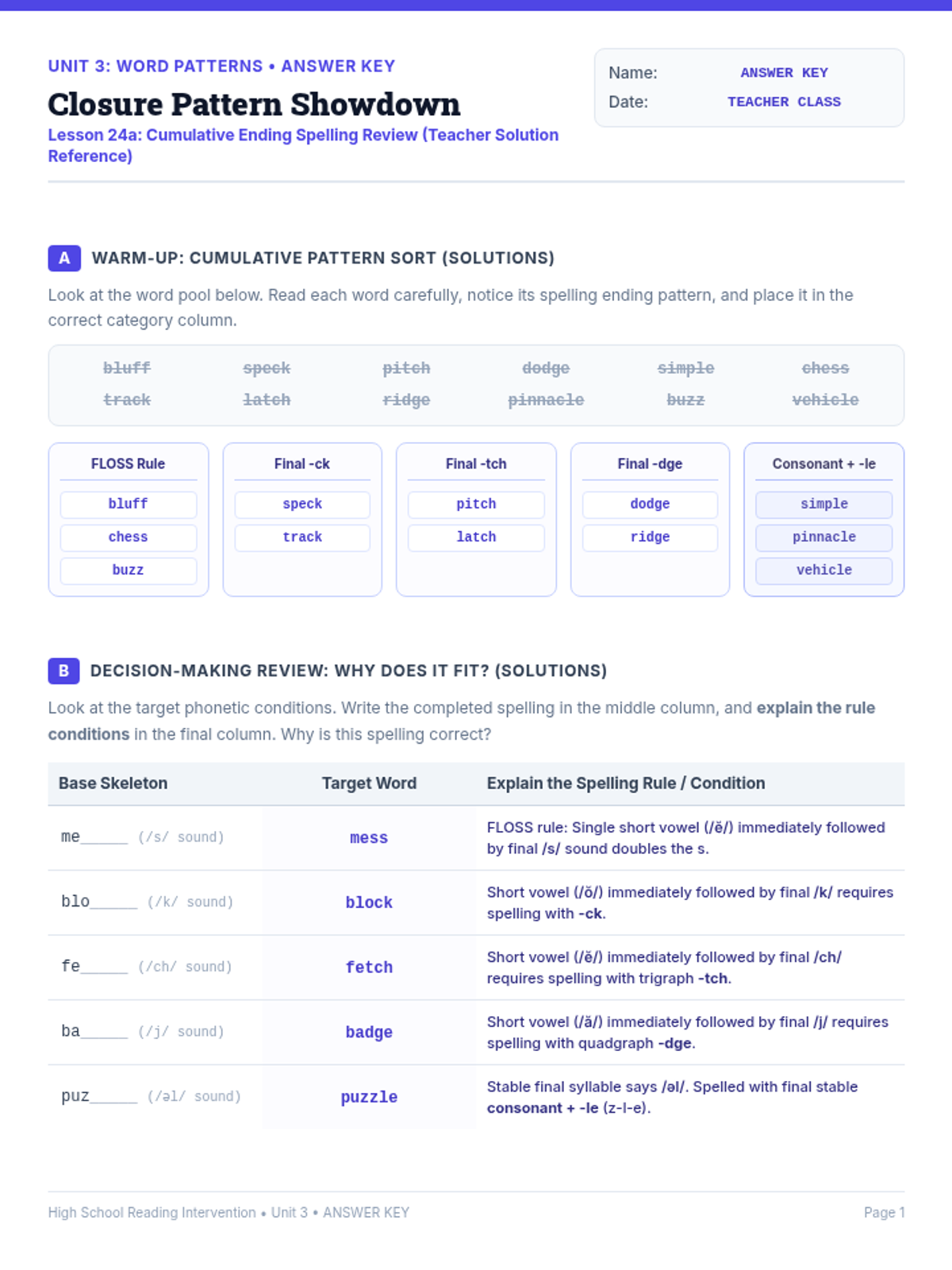
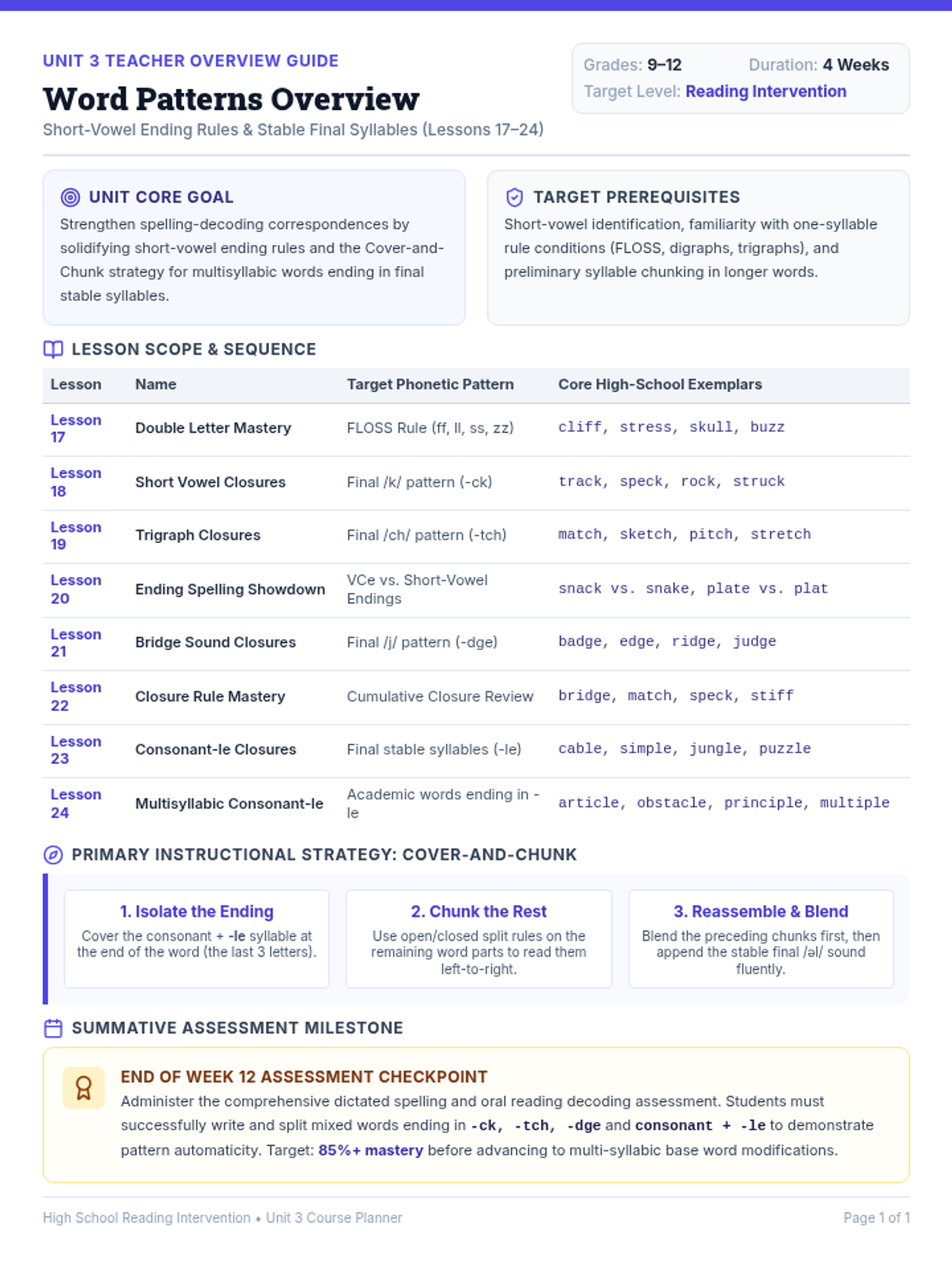
A cumulative review and decision-making lesson consolidating all short-vowel ending rules (FLOSS, -ck, -tch, -dge) and stable final syllables (consonant + -le) to cement orthographic reasoning and decoding precision.
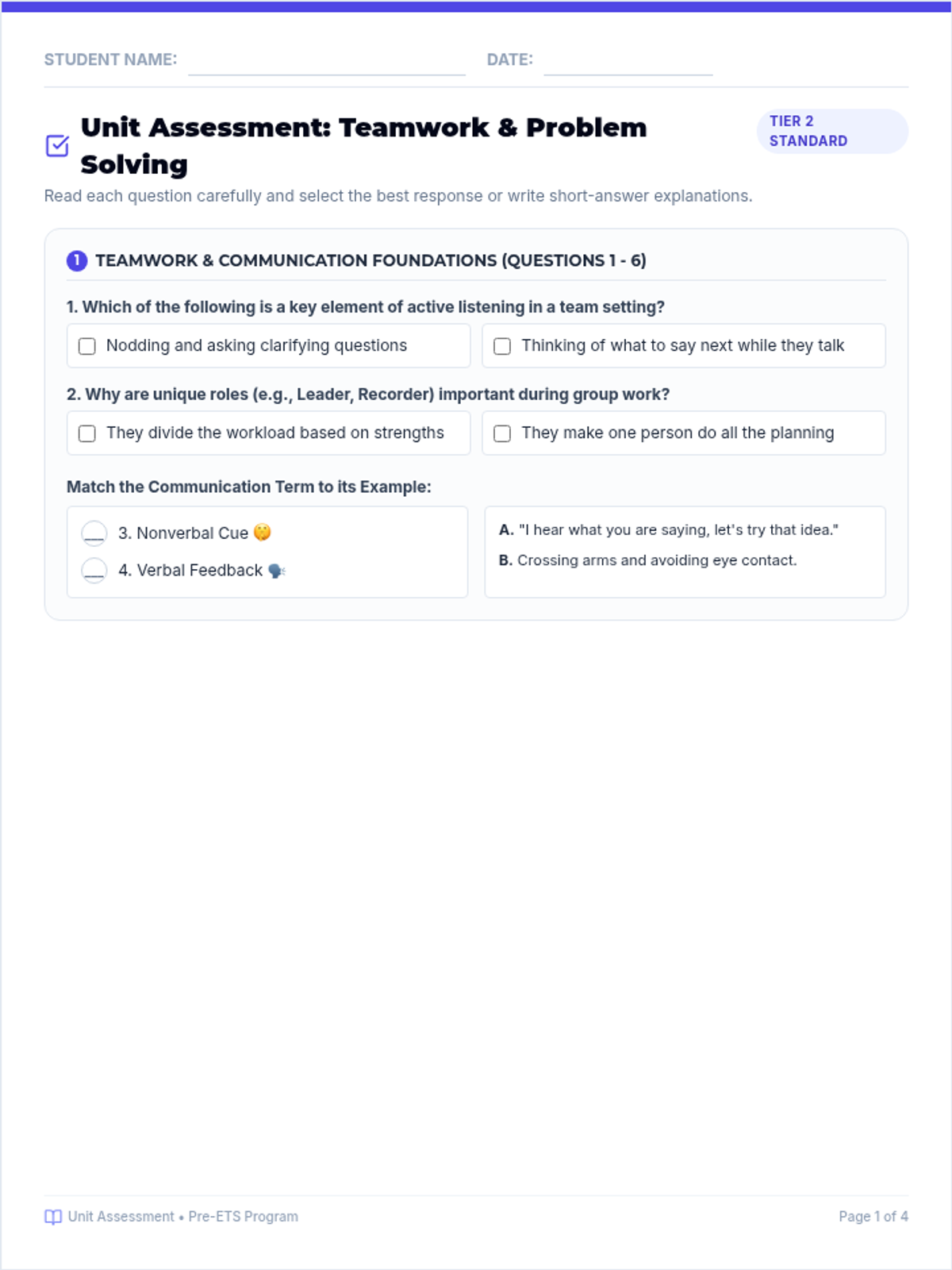
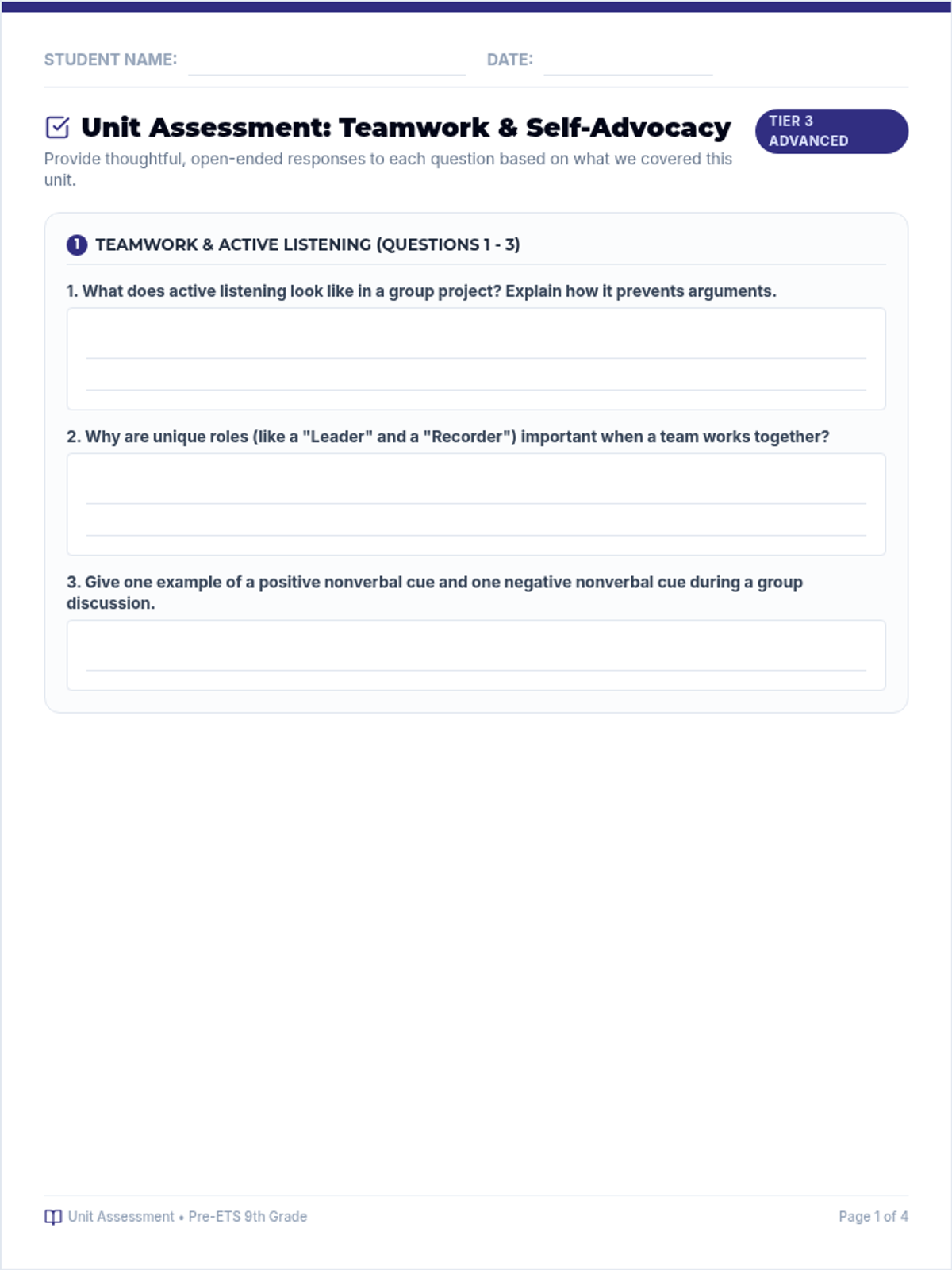
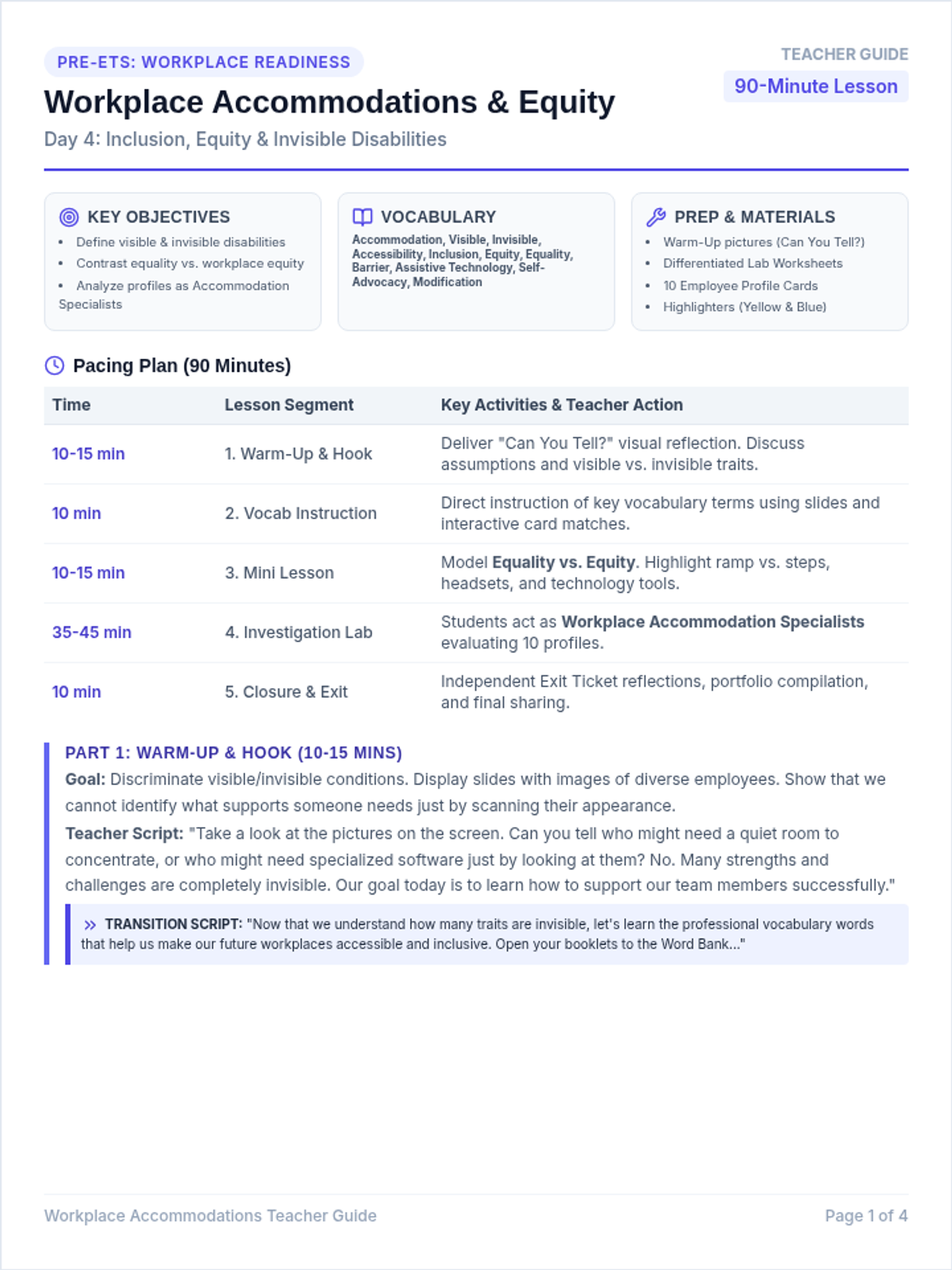
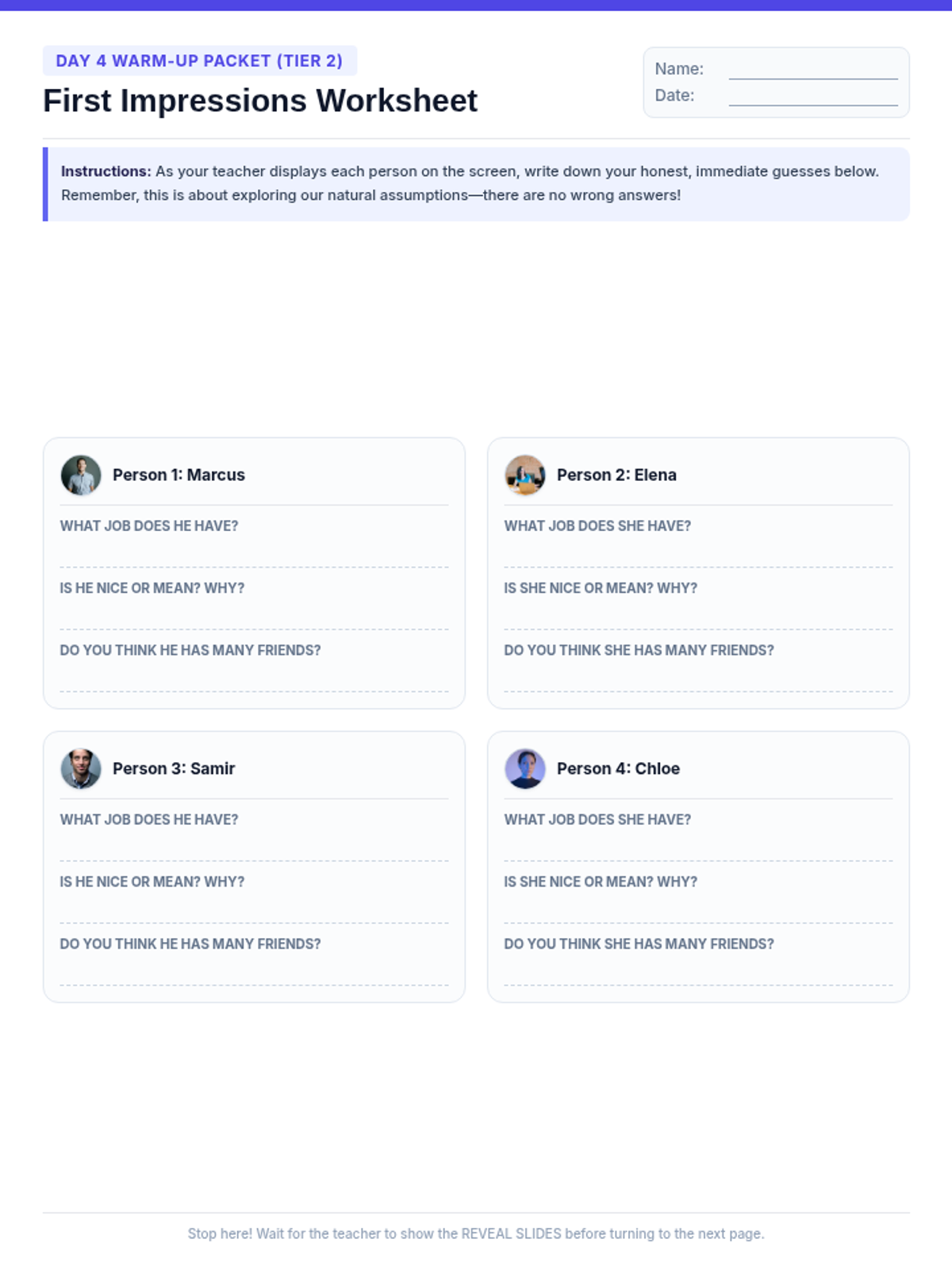
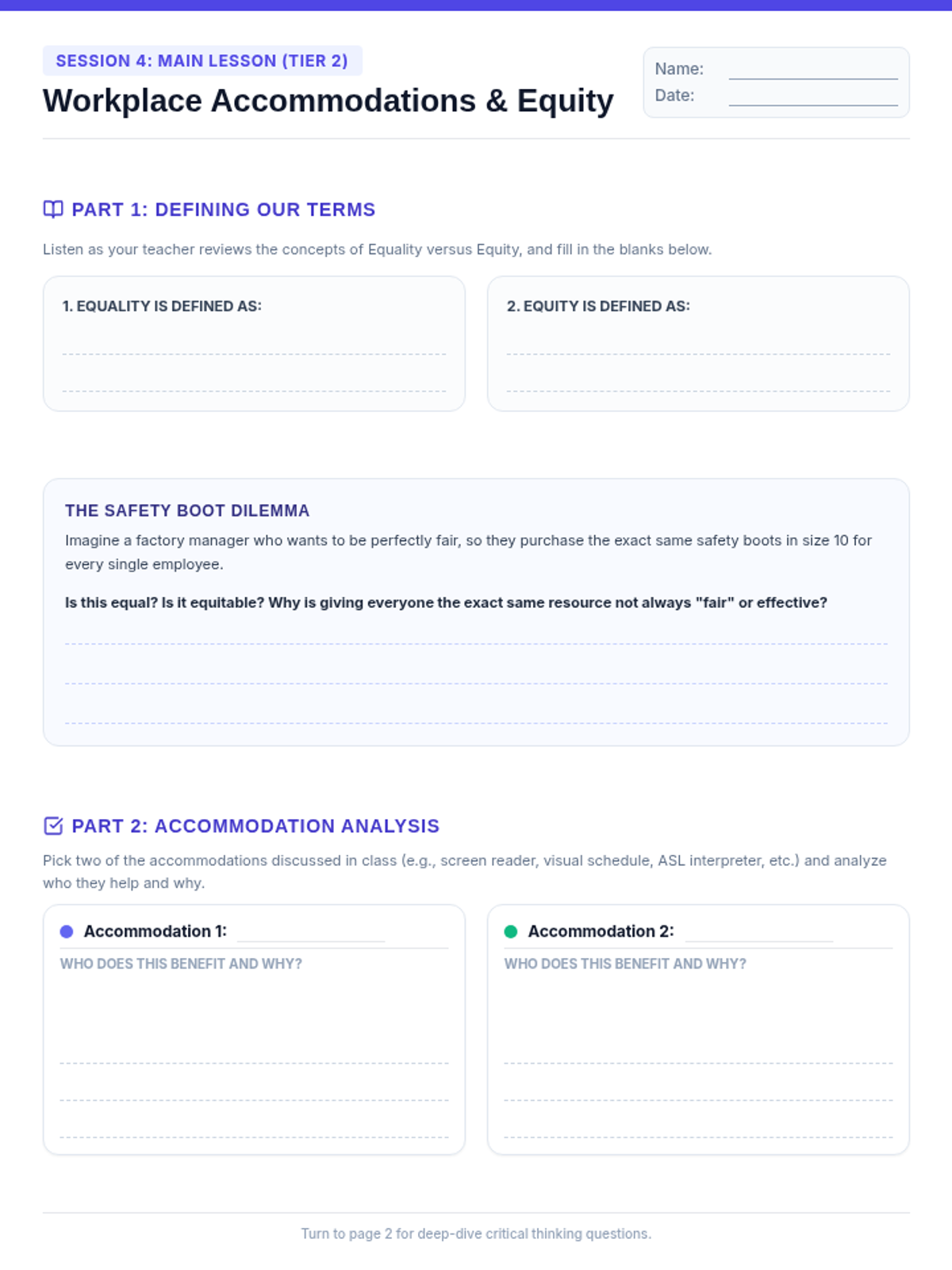
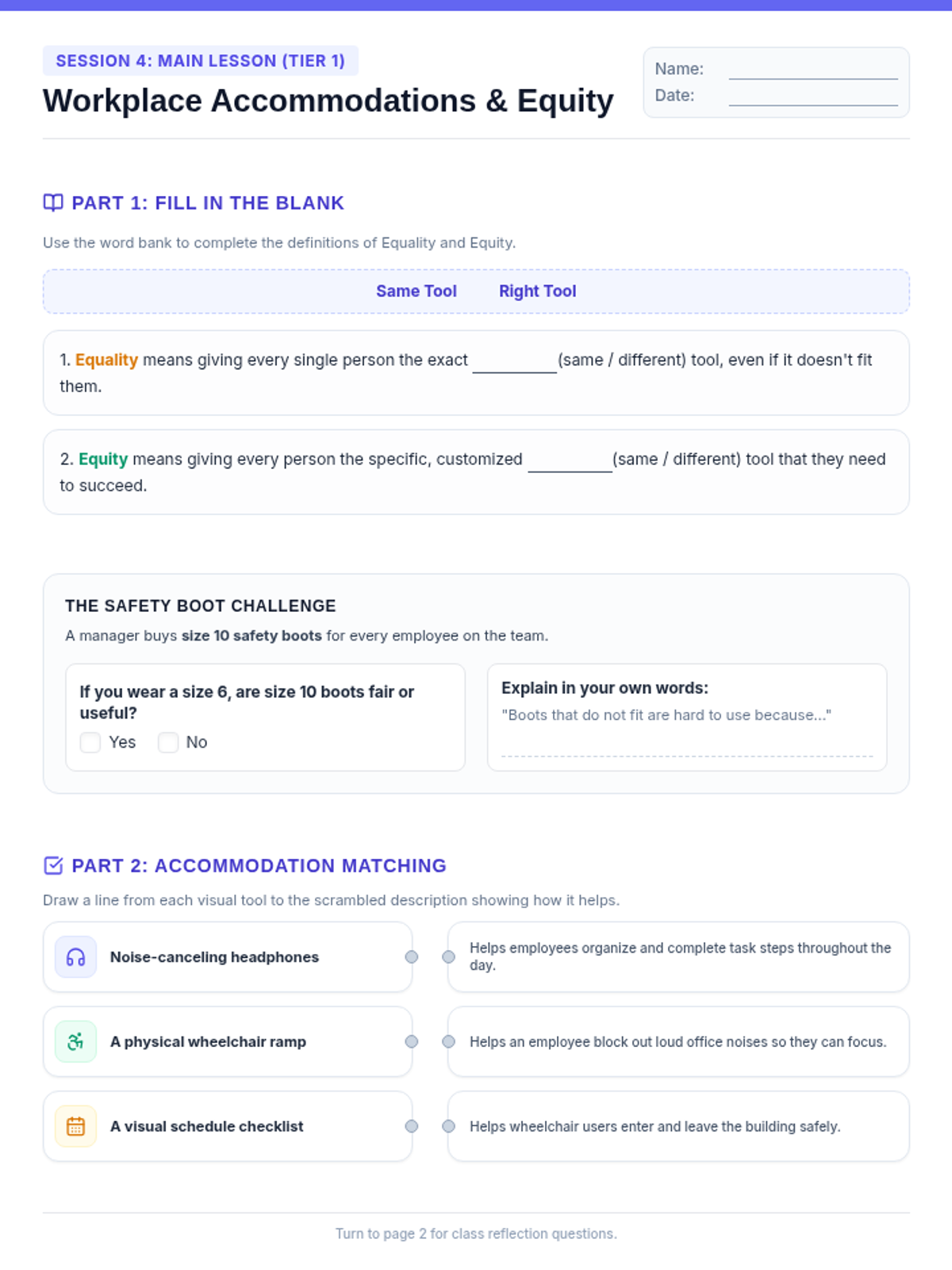
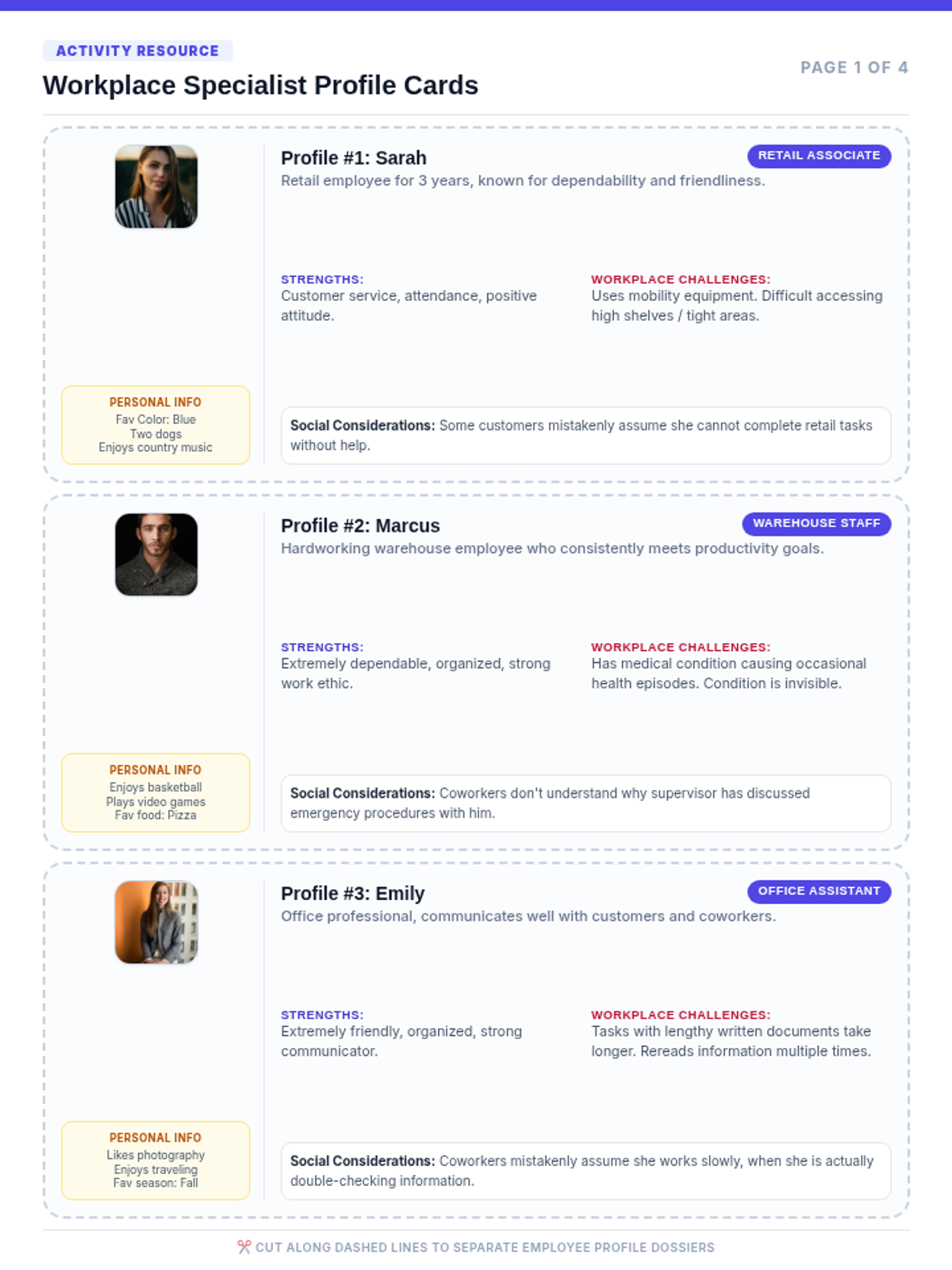
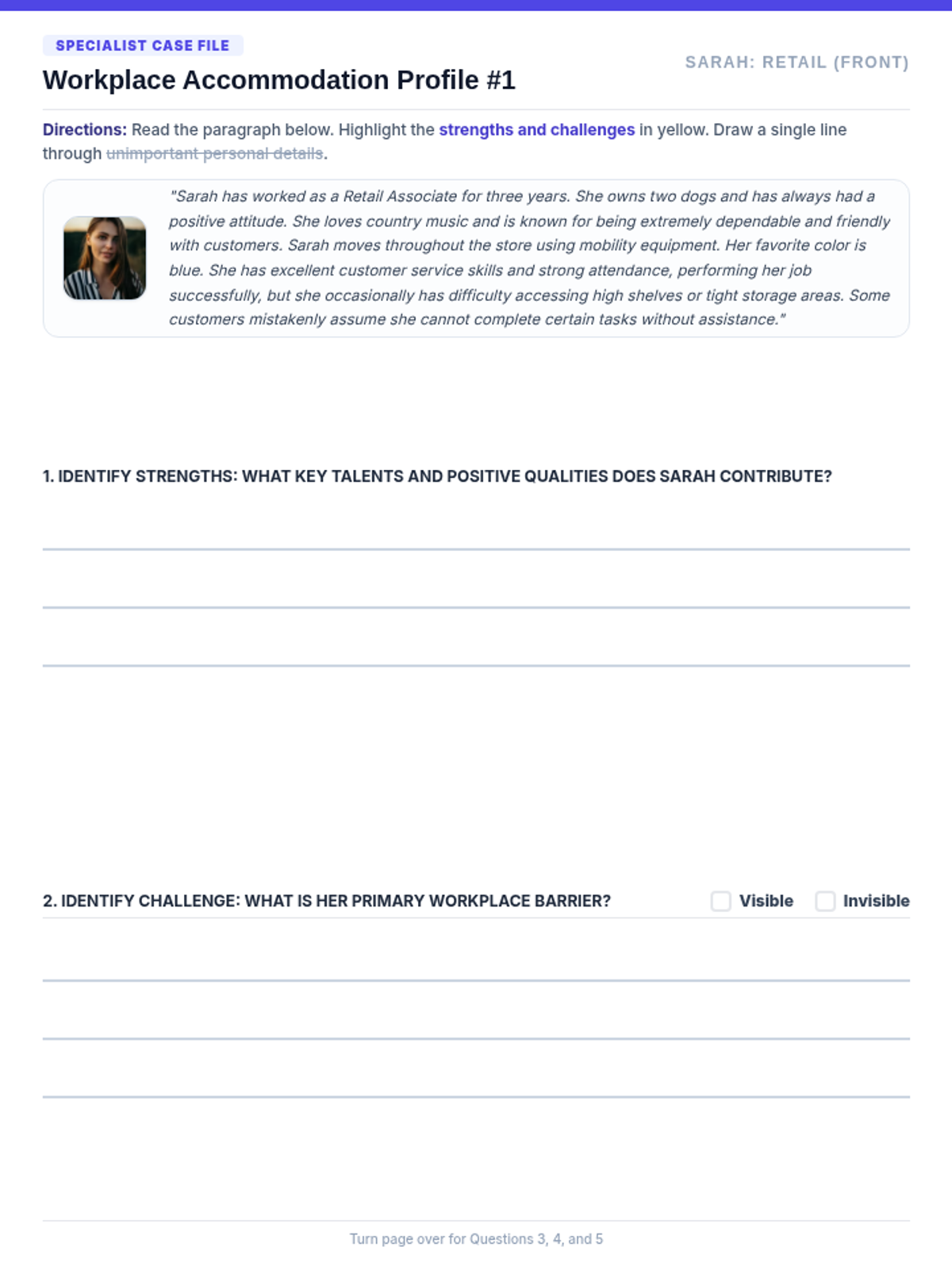
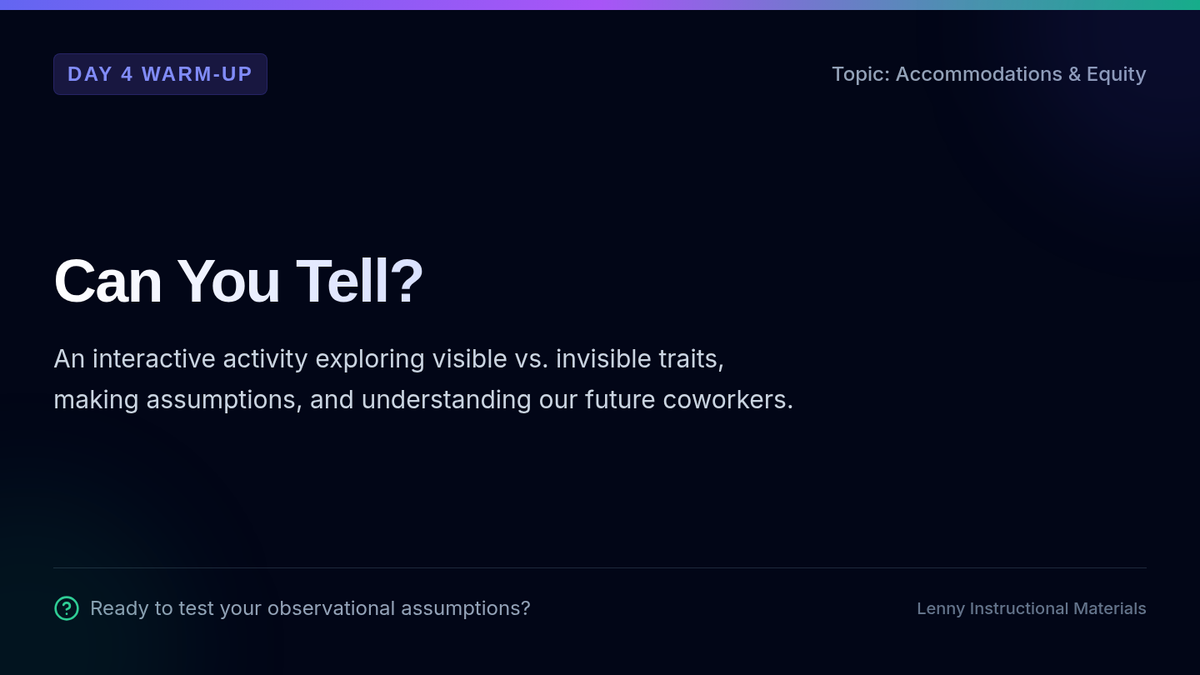
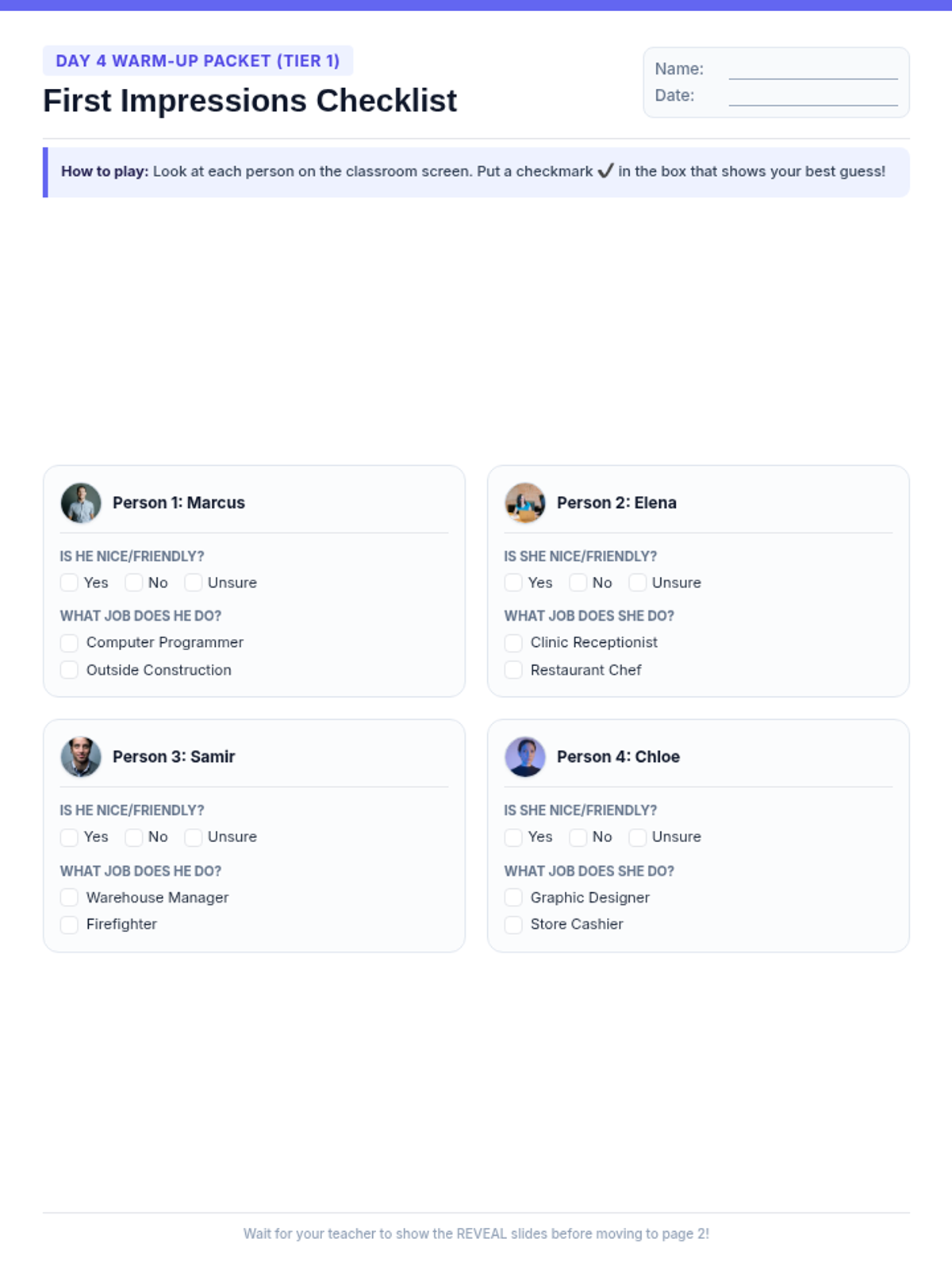
Under the Pre-ETS category of Counseling on Post-Secondary Opportunities, this lesson equips transitioning high school students with knowledge of workplace accommodations, visible/invisible disabilities, and self-advocacy. Students explore equity rights to prepare for post-secondary career and vocational opportunities.
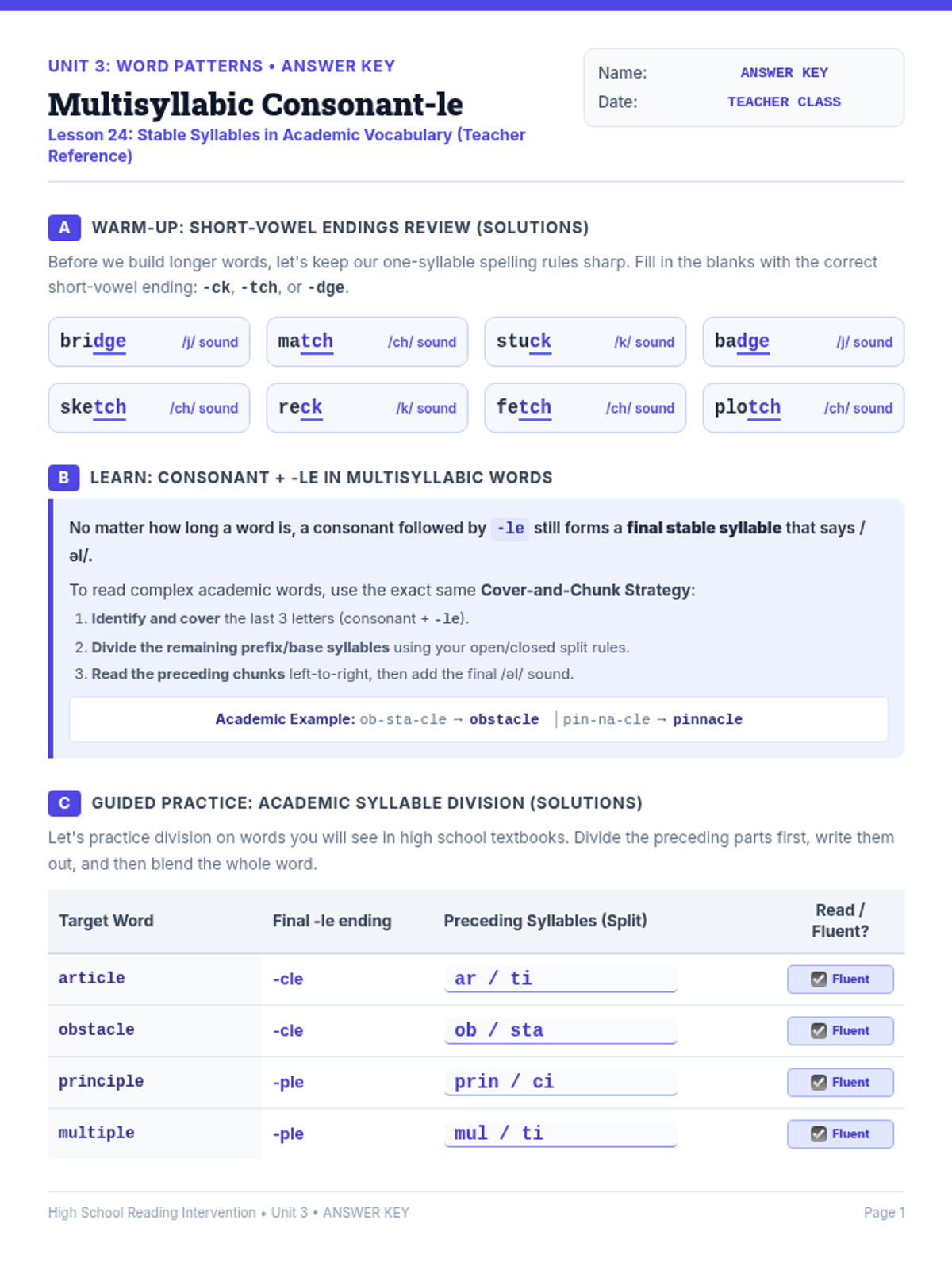
Focuses on decoding and spelling longer, academic multisyllabic words ending in consonant + -le, while spiraling previously learned short-vowel spelling patterns (-ck, -tch, -dge) during warm-ups and comparative activities.
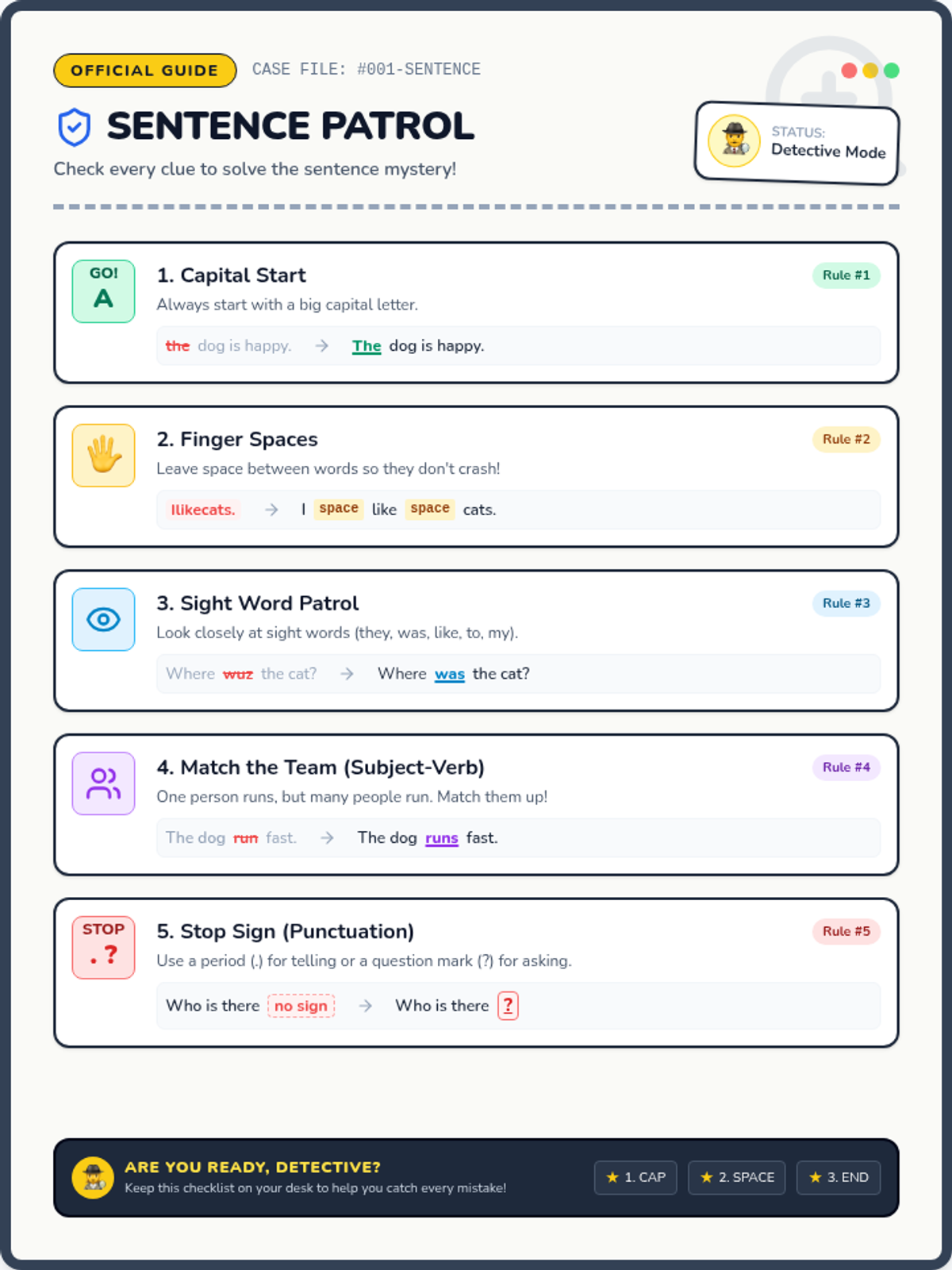
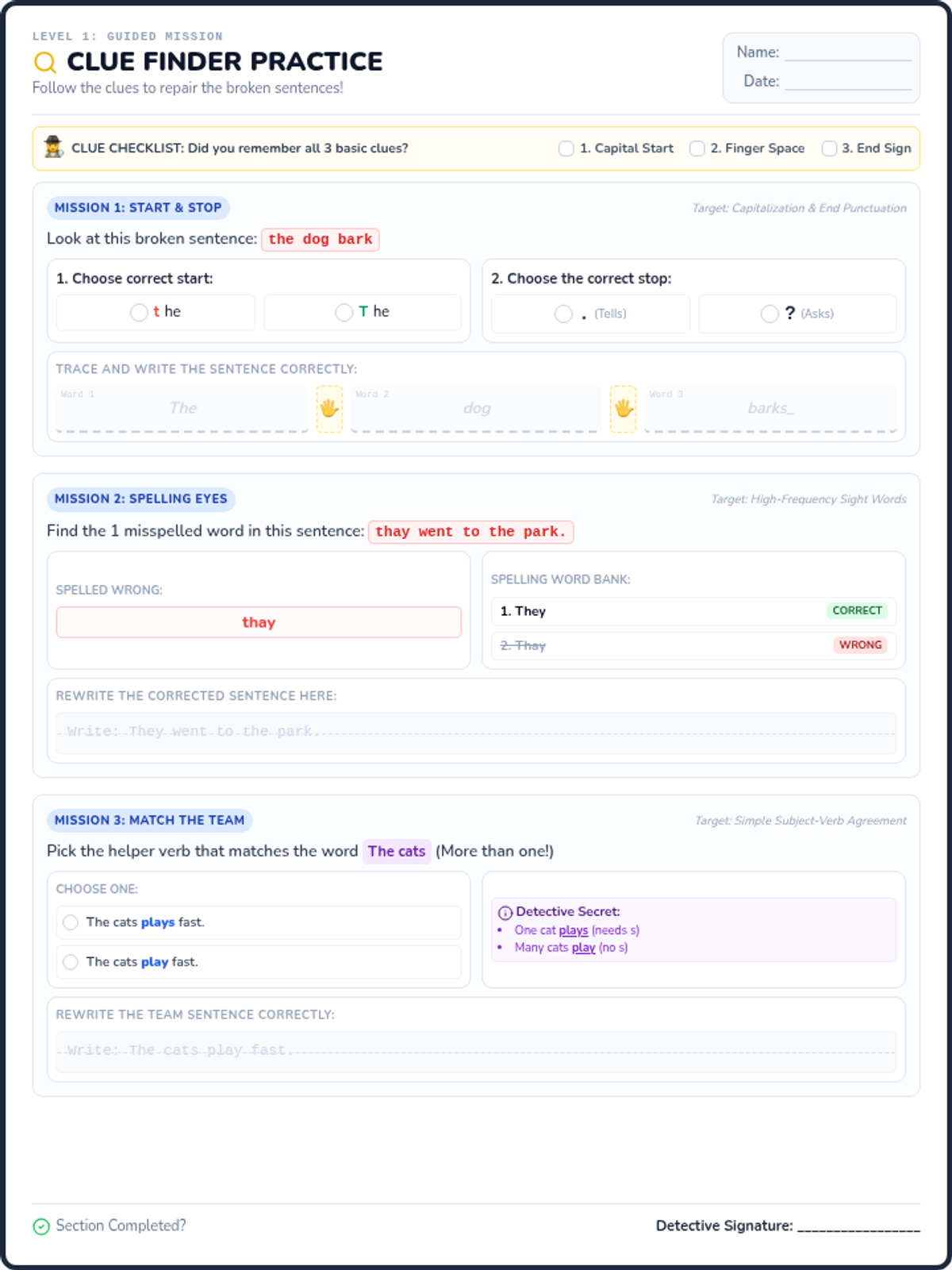
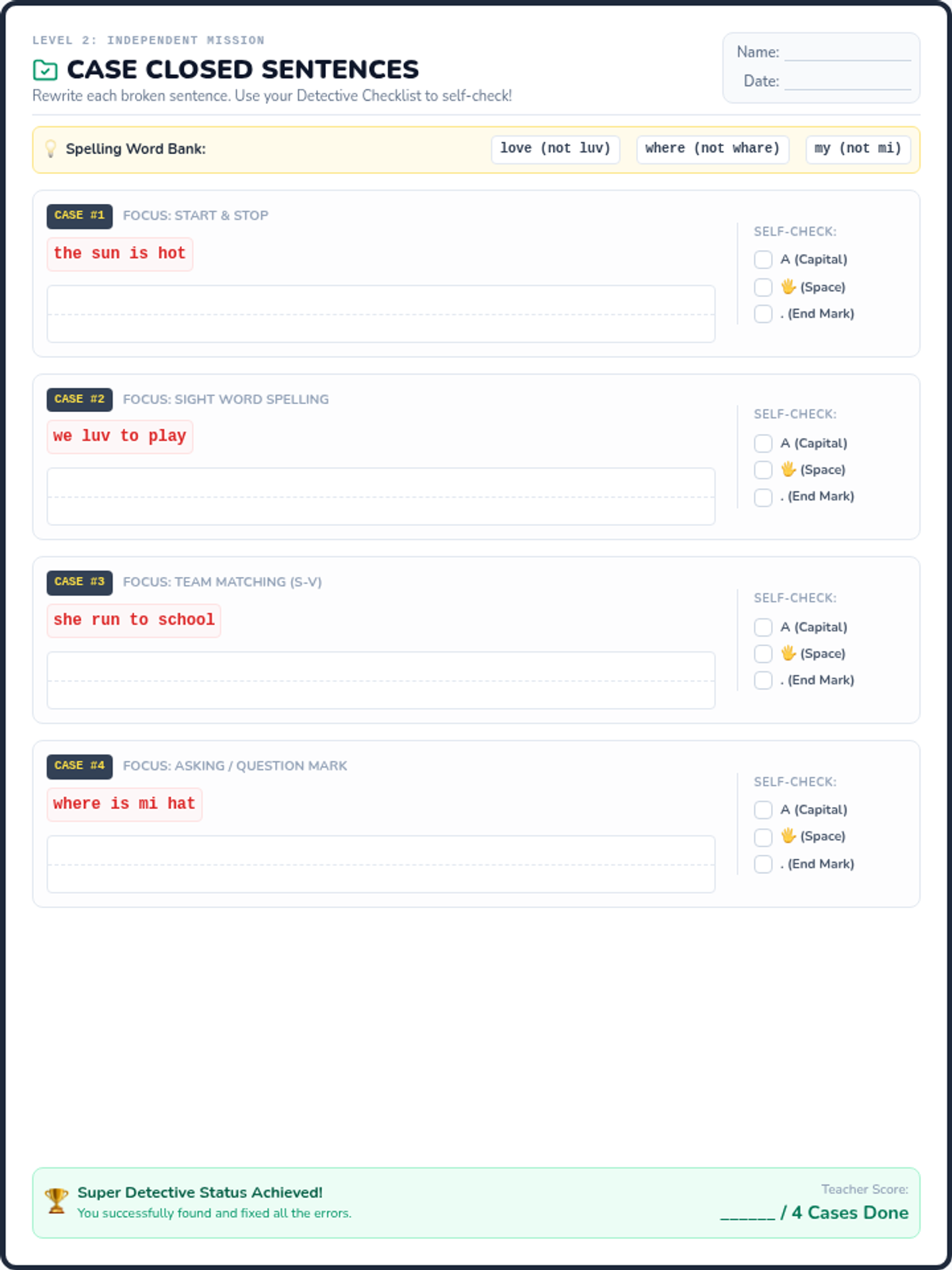
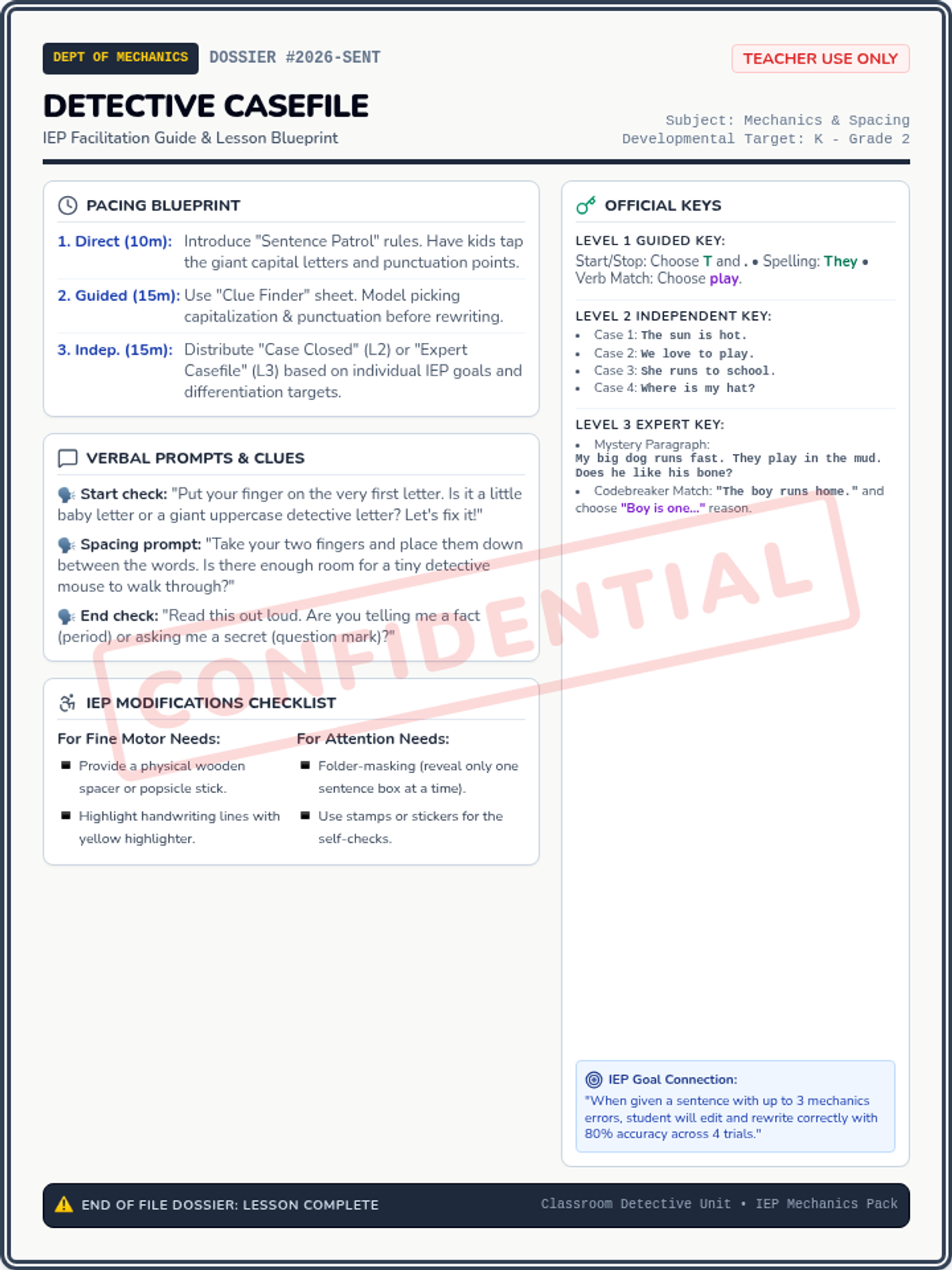
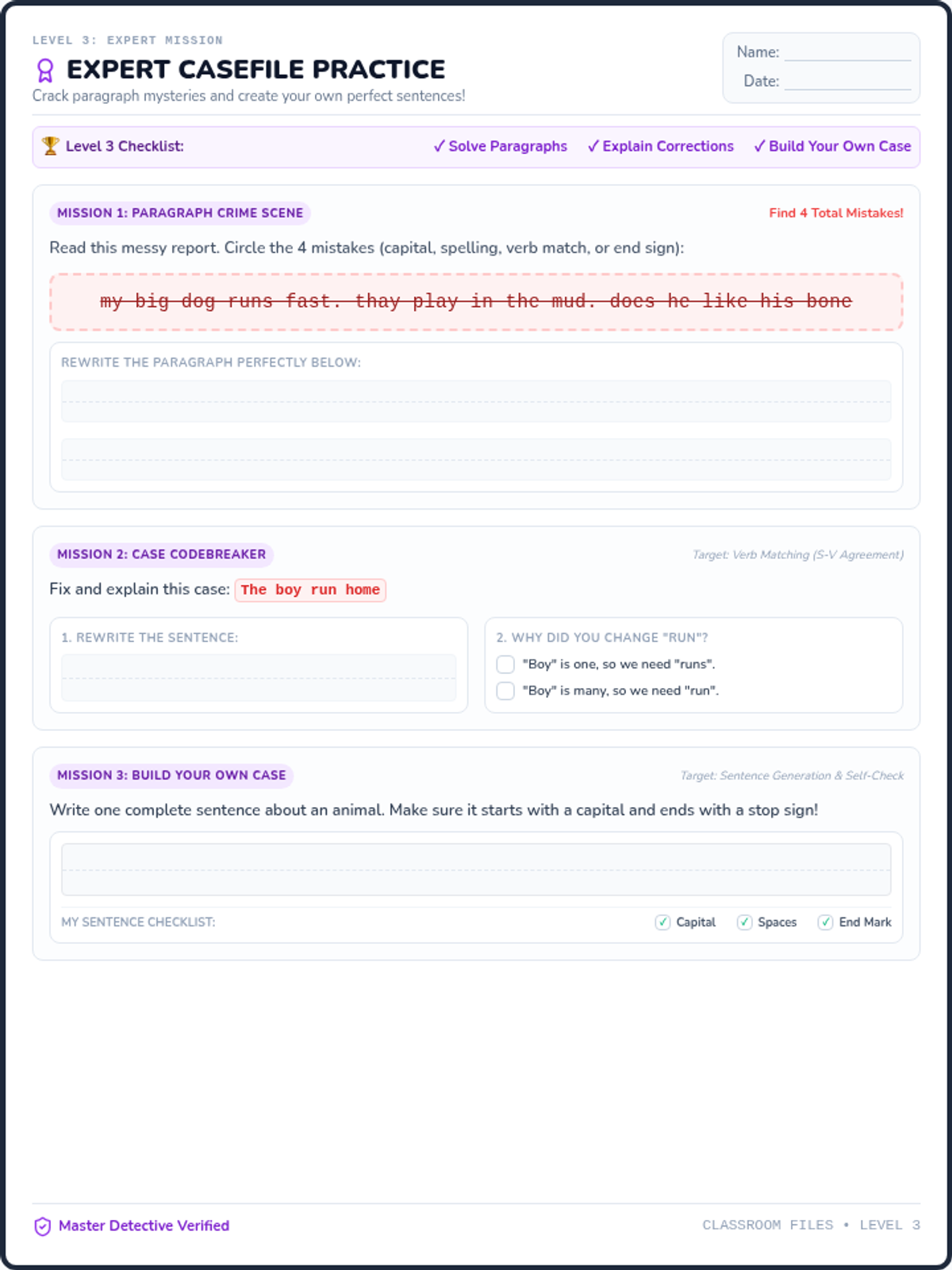
A comprehensive, highly structured lesson bundle designed for IEP students to master sentence correction. It covers capitalization, end punctuation, sight word spelling, spacing, and simple subject-verb agreement through scaffolding, visual aids, and interactive elements.
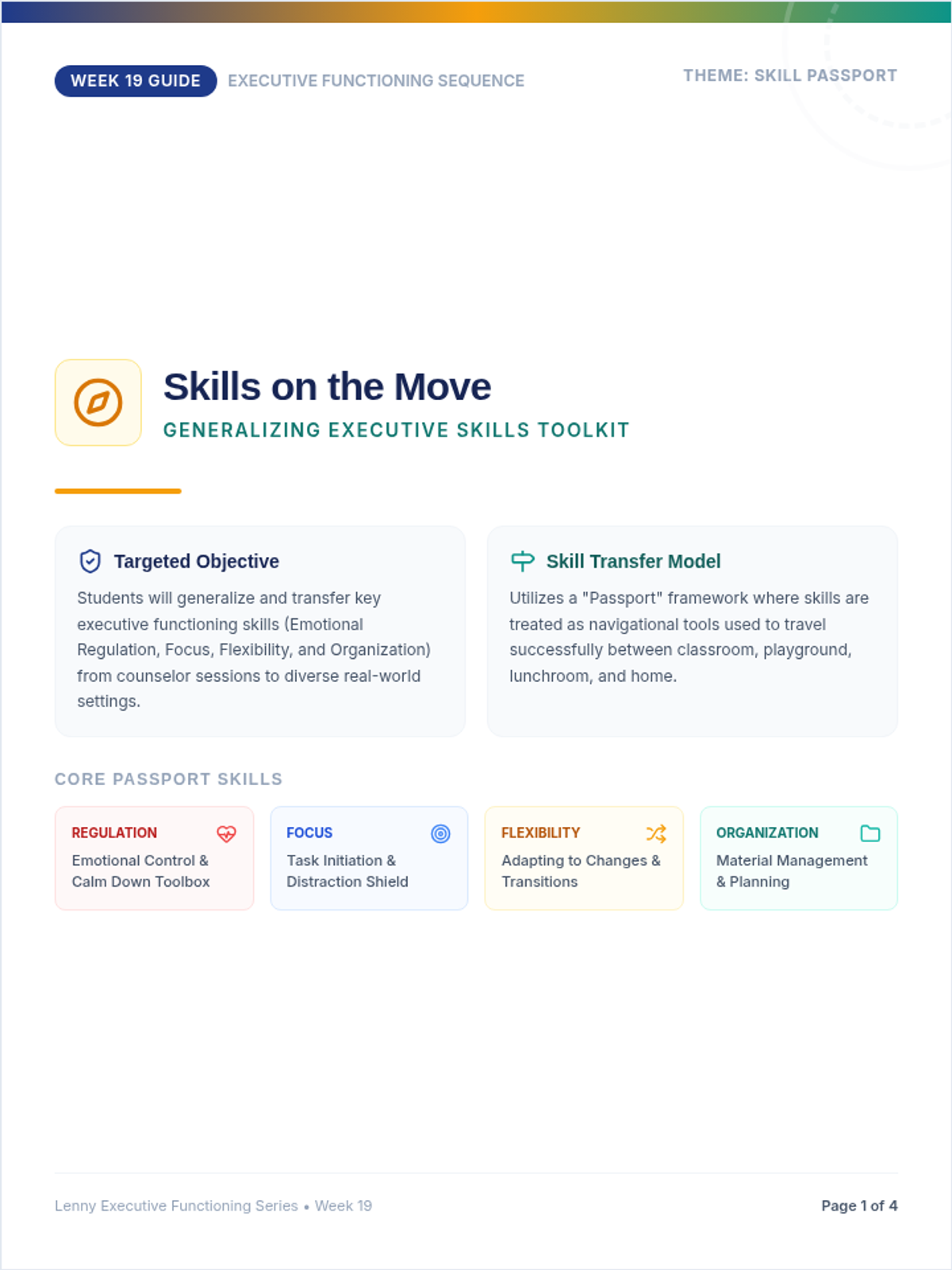
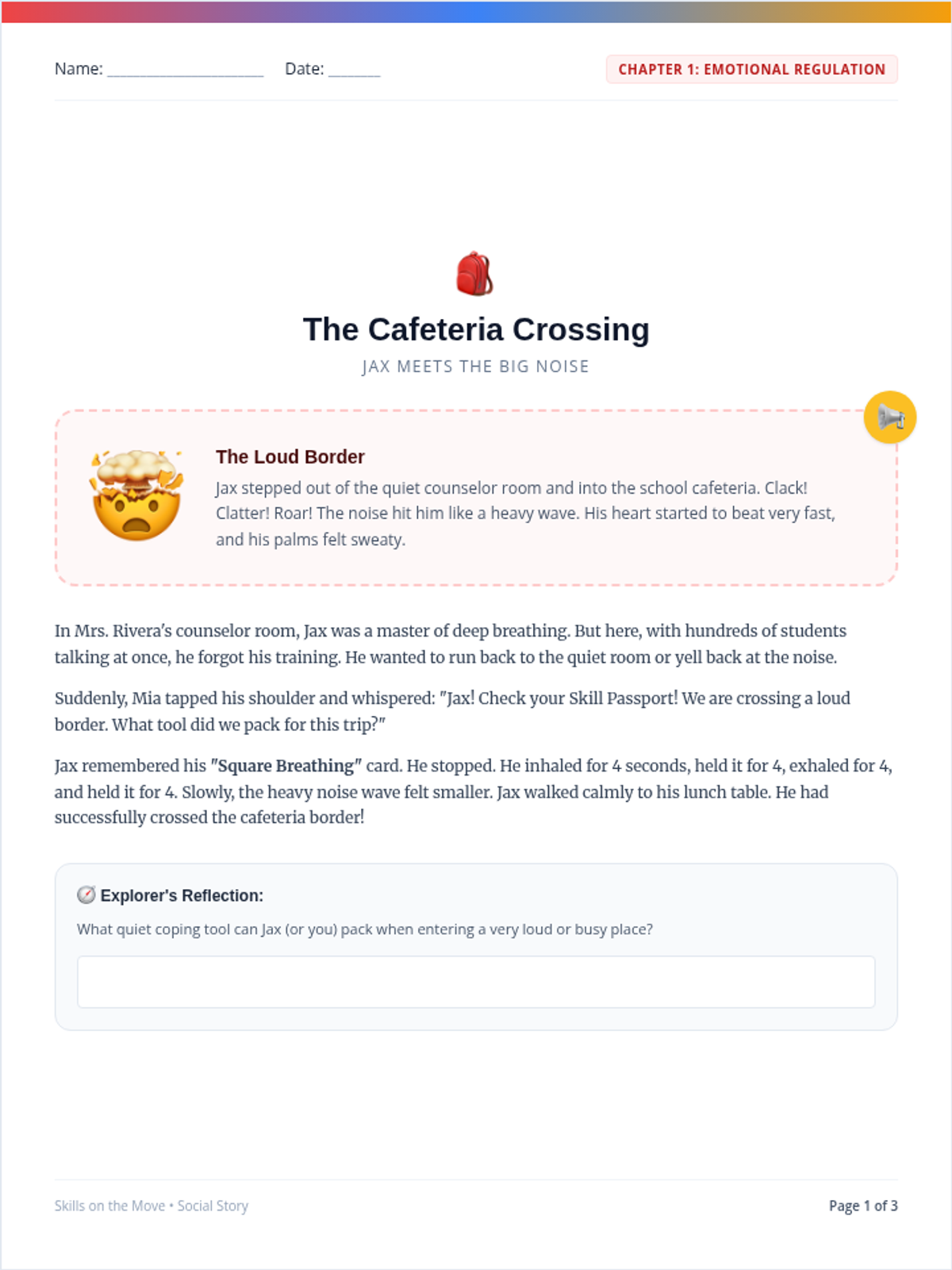
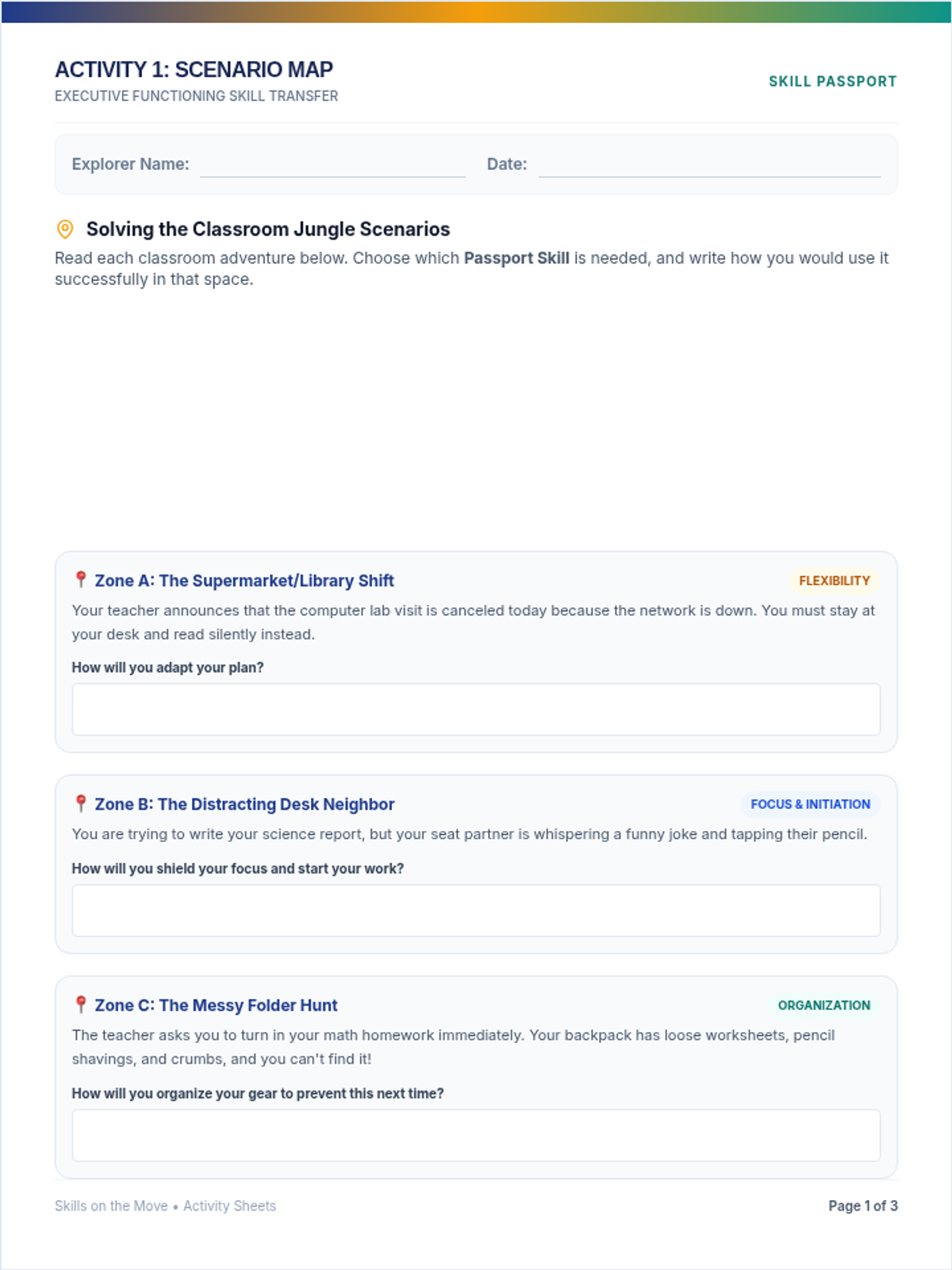
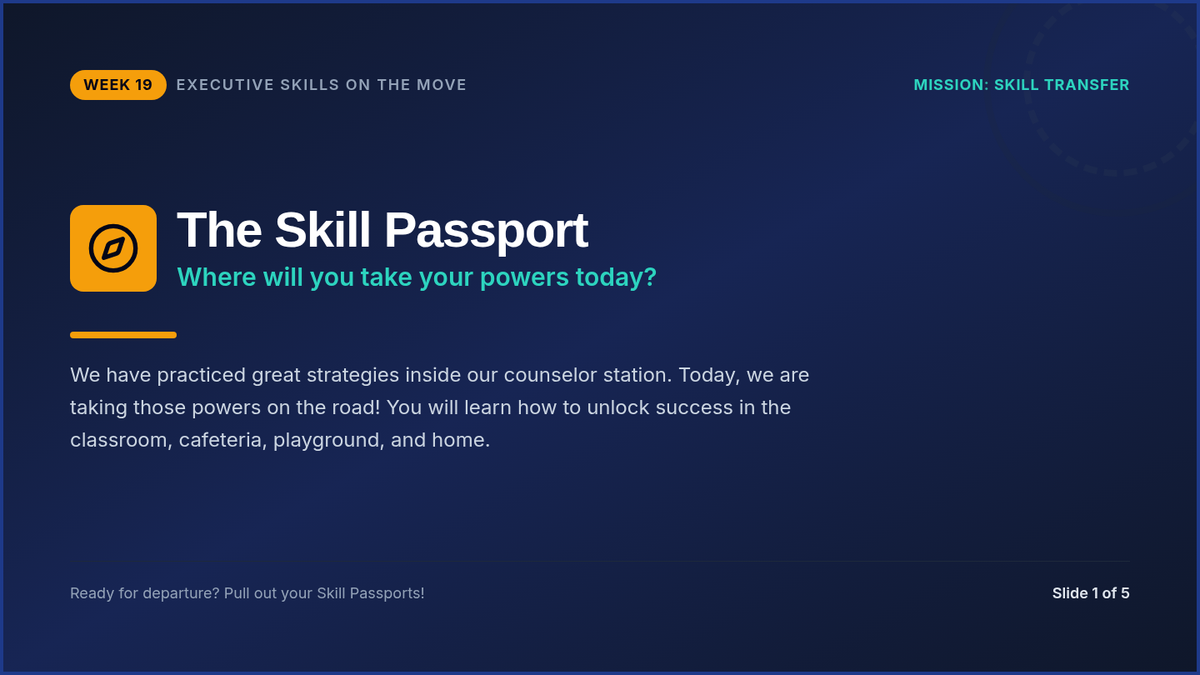
A comprehensive lesson designed to help students generalize and transfer their executive functioning skills—including emotional regulation, focus, flexibility, and organization—across various settings.
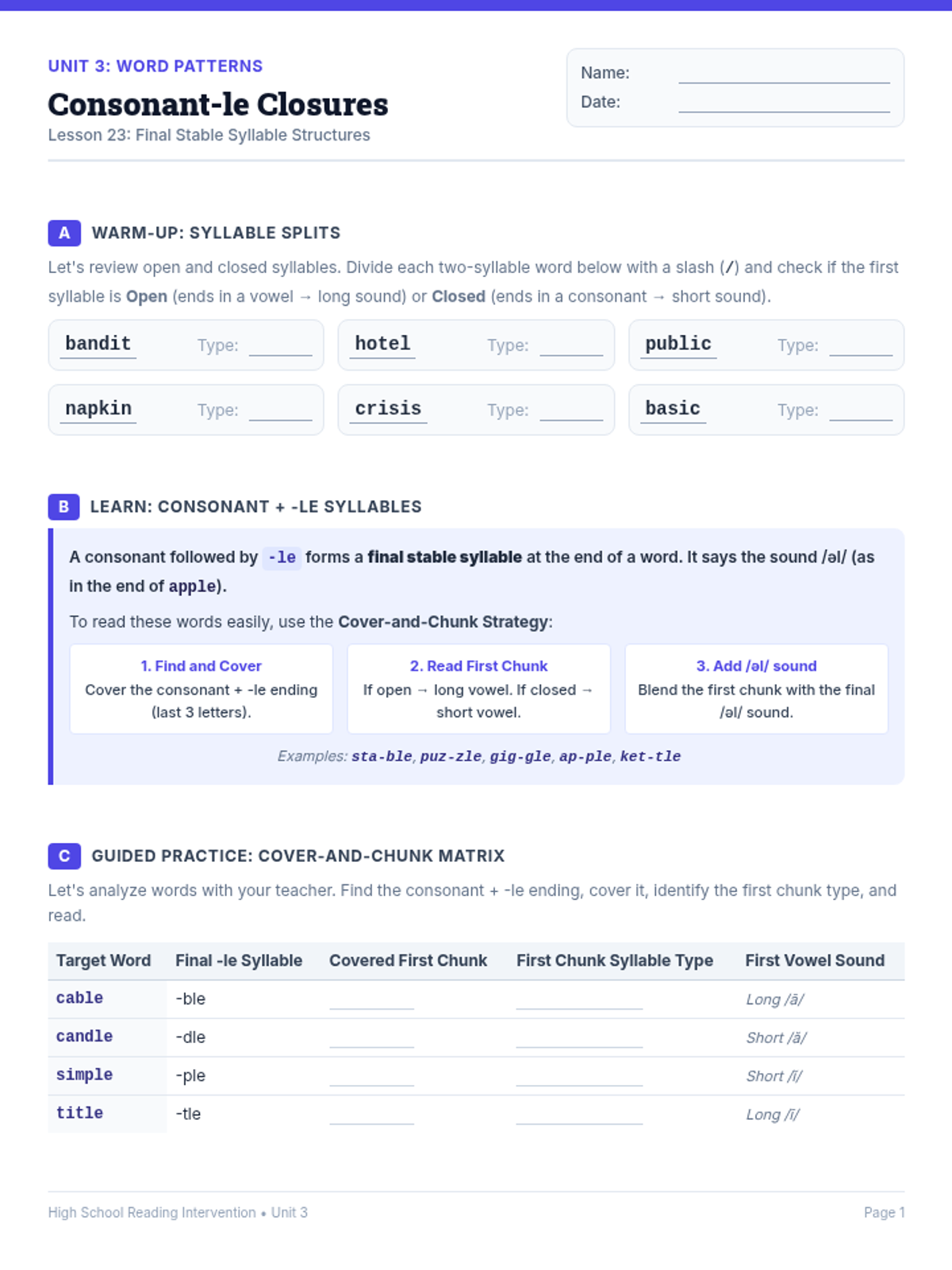
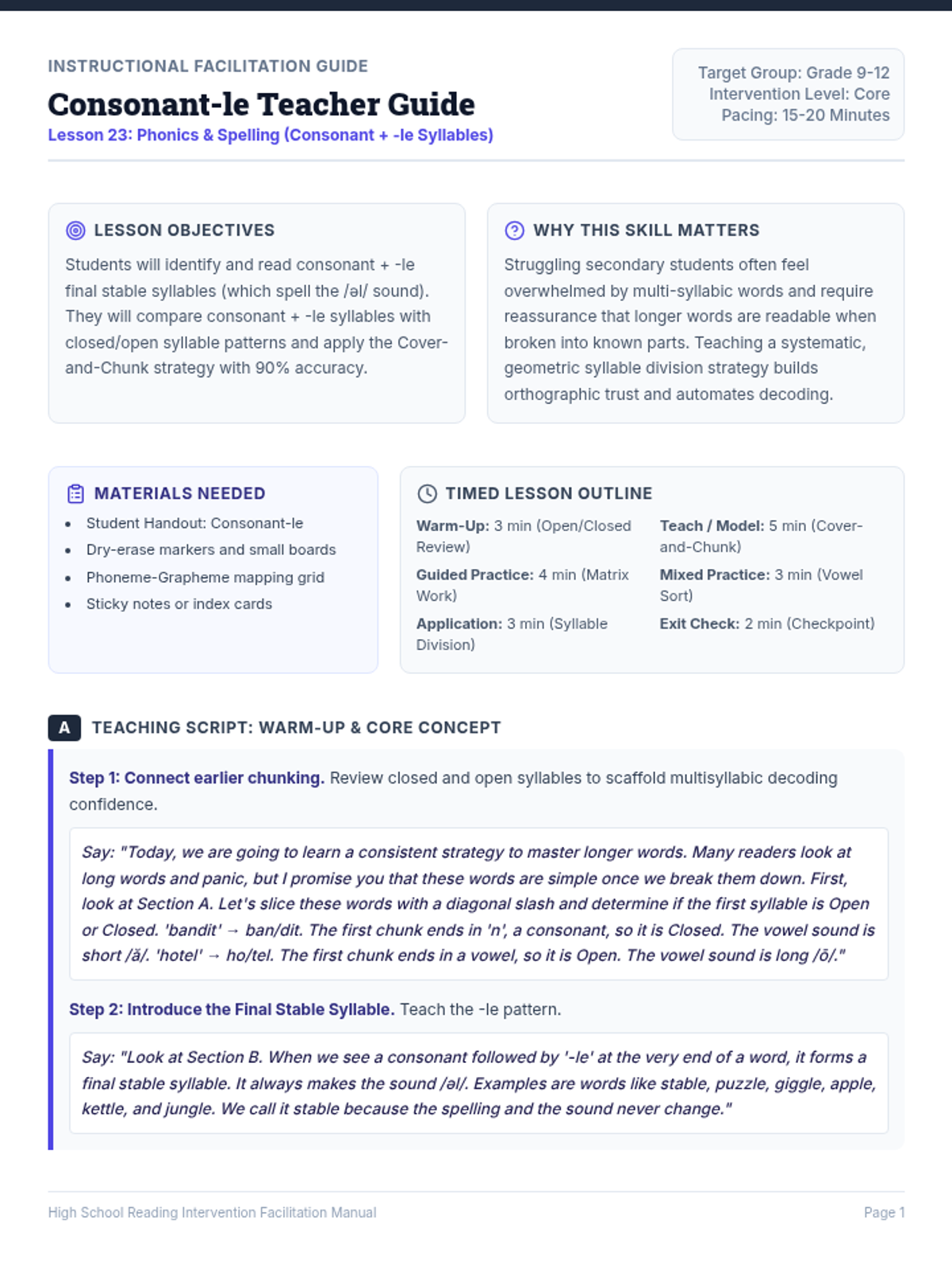
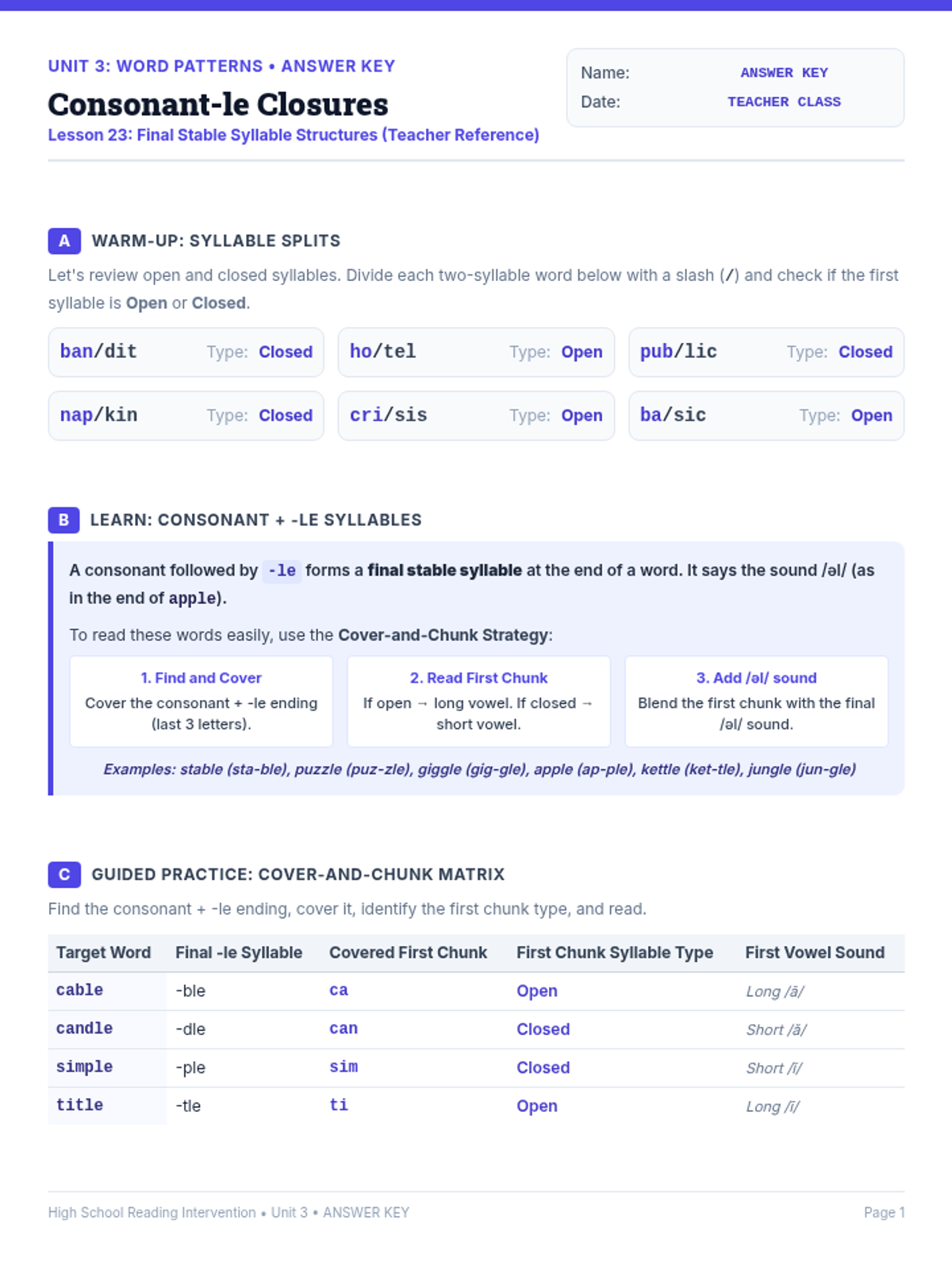
Introduces the final stable syllable consonant + -le, teaching a consistent cover-and-chunk strategy while spiraling open and closed syllable prerequisites.
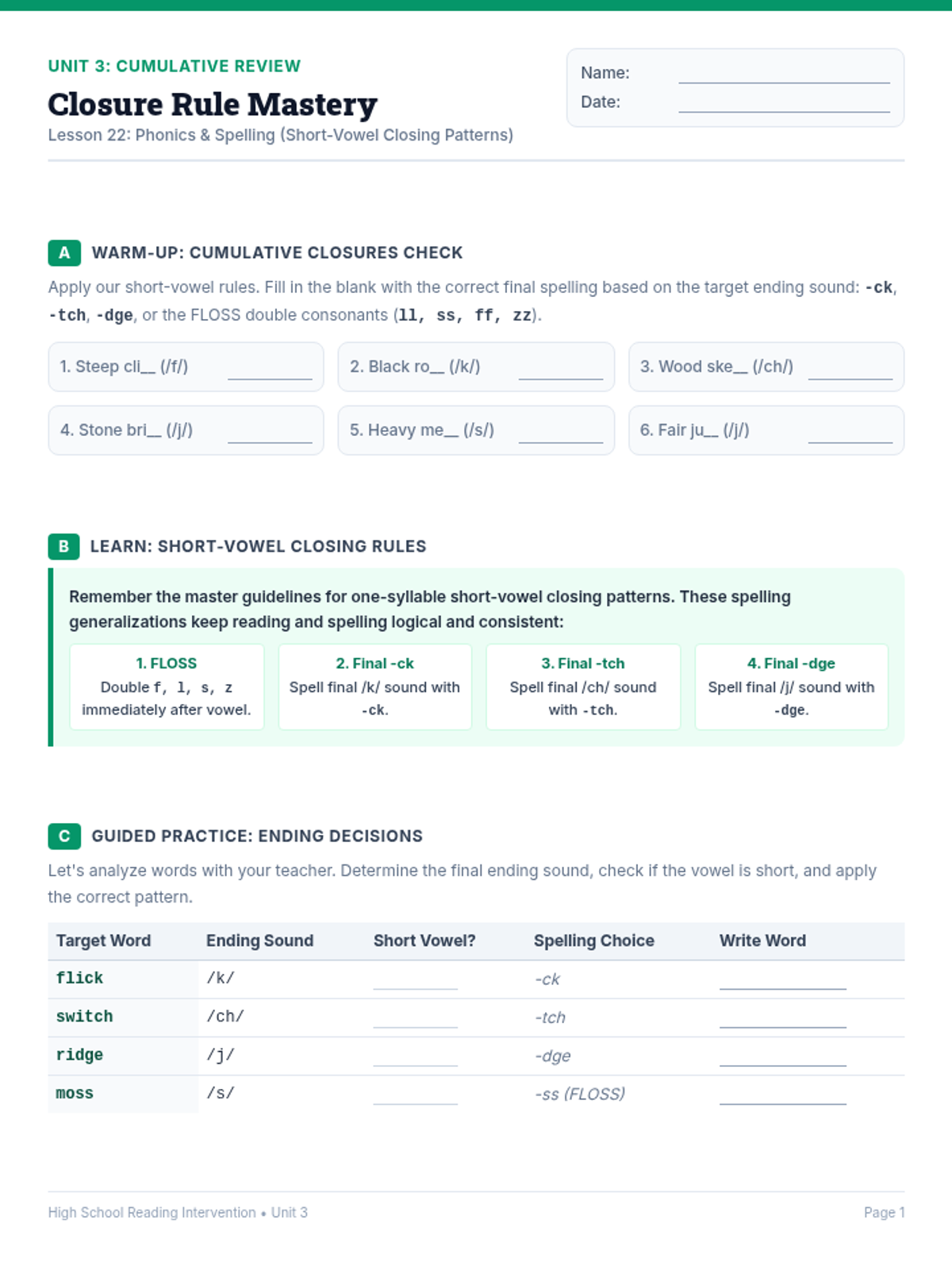
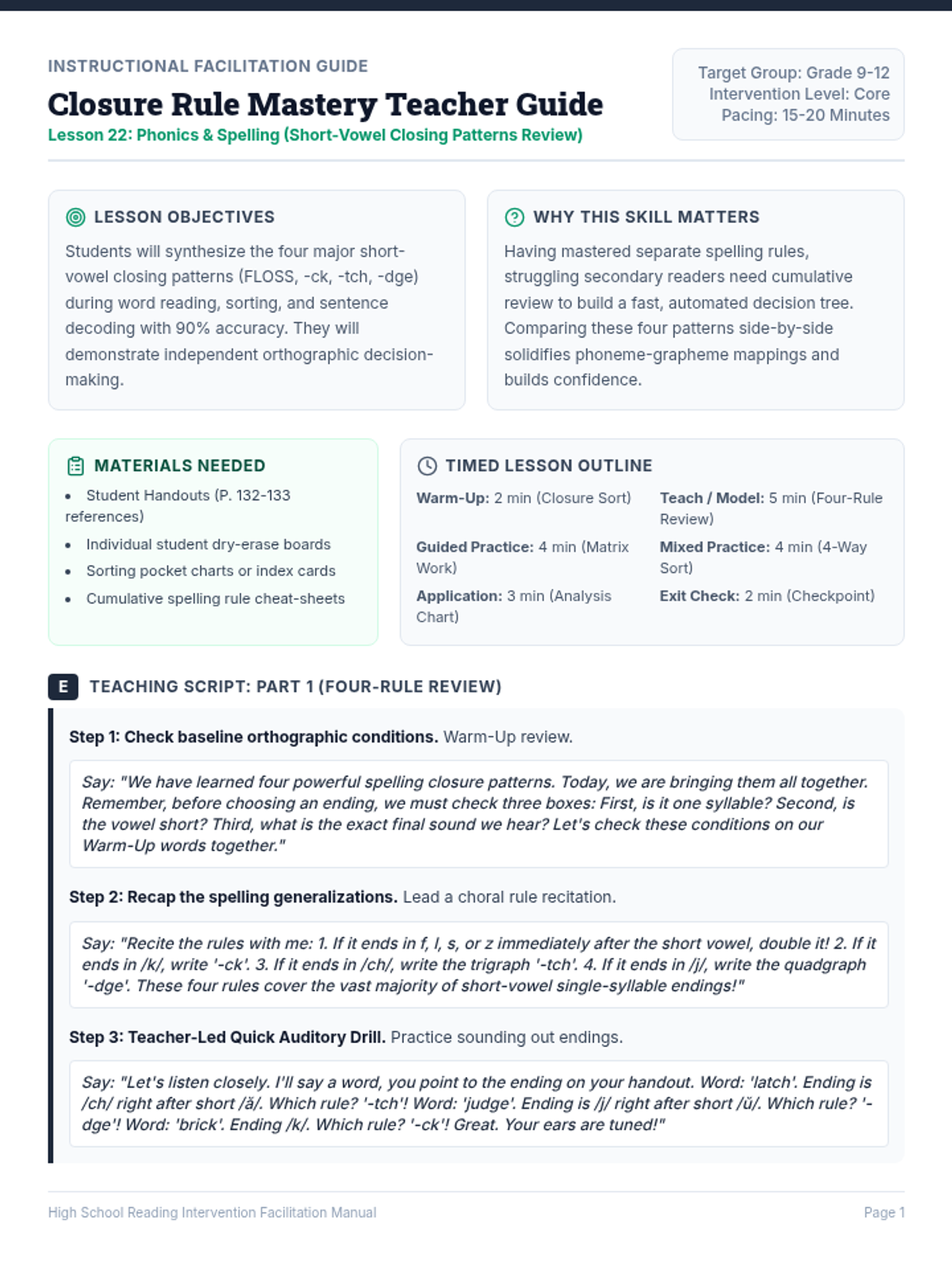
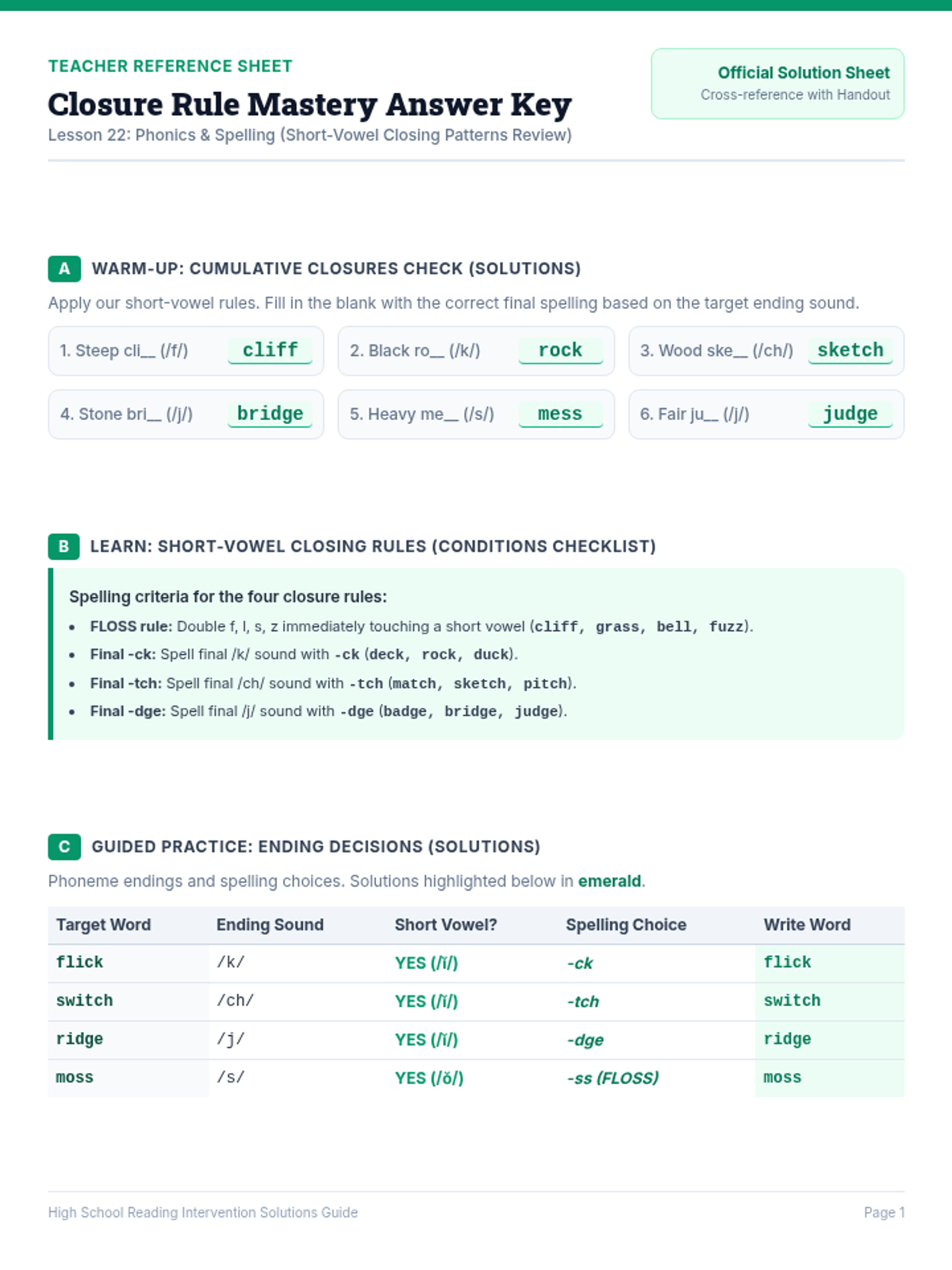
An intensive review and comparative lesson integrating all four major short-vowel closing patterns (FLOSS, -ck, -tch, -dge) to cement master-level orthographic decoding and spelling logic.
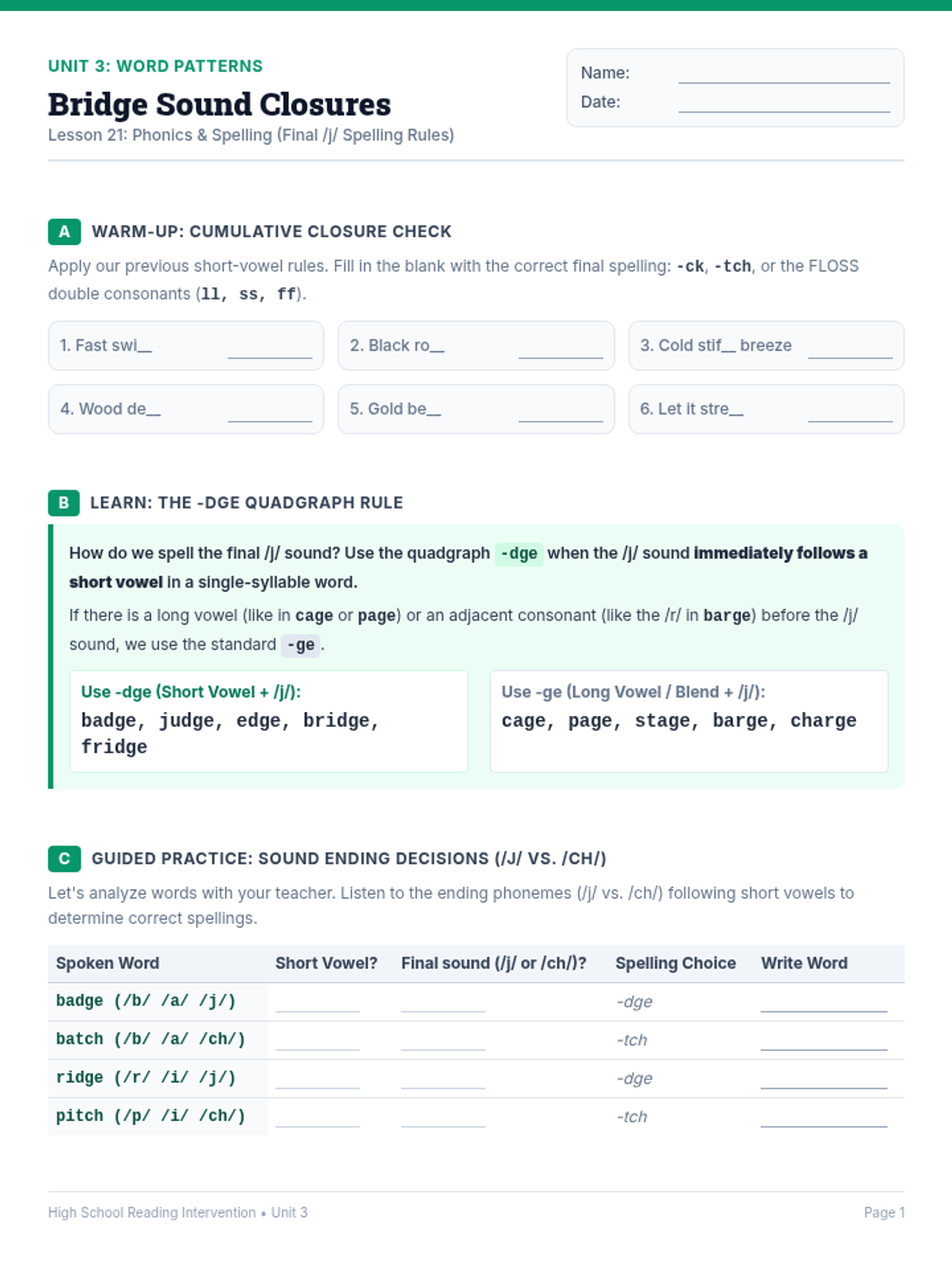
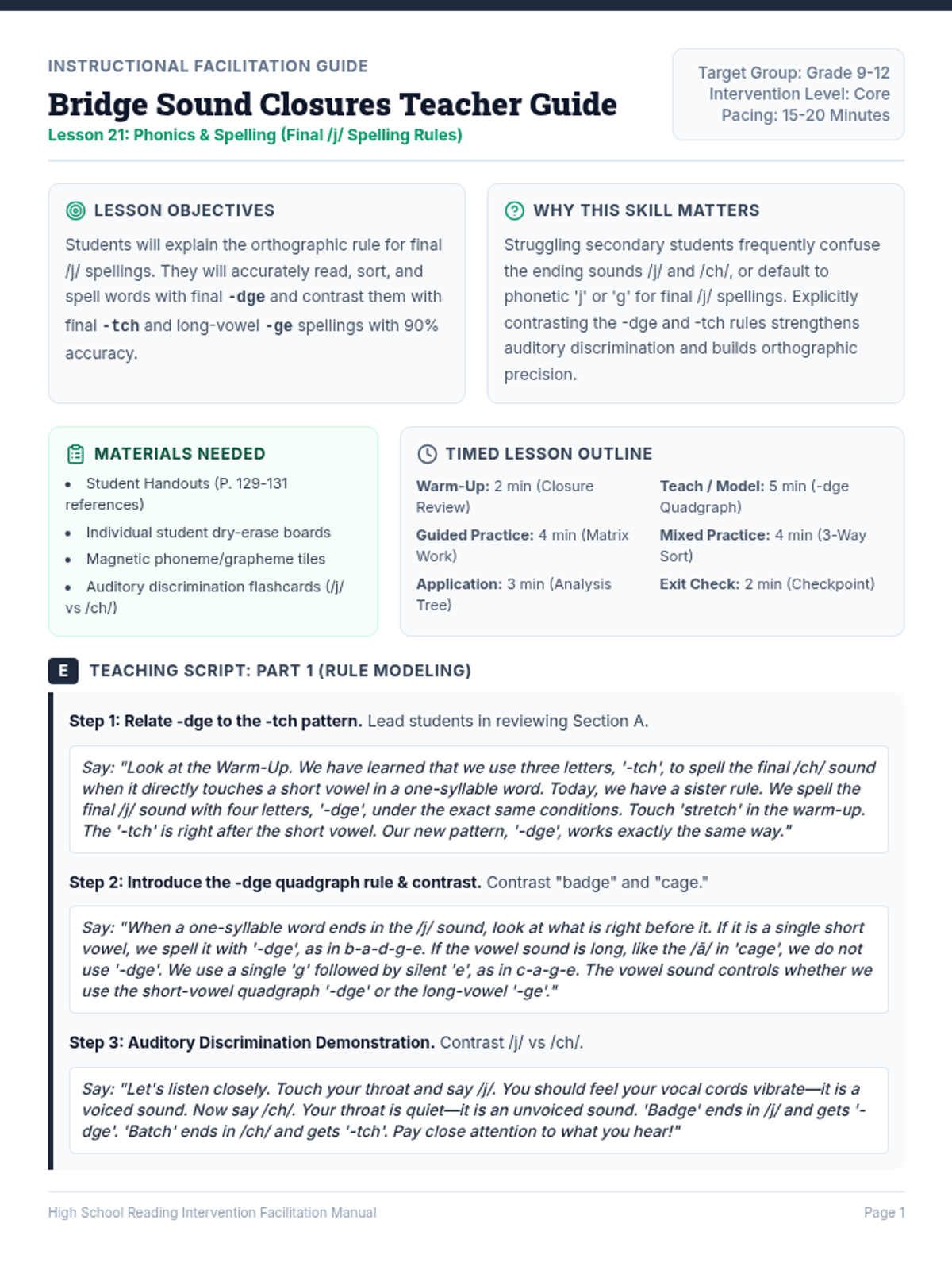
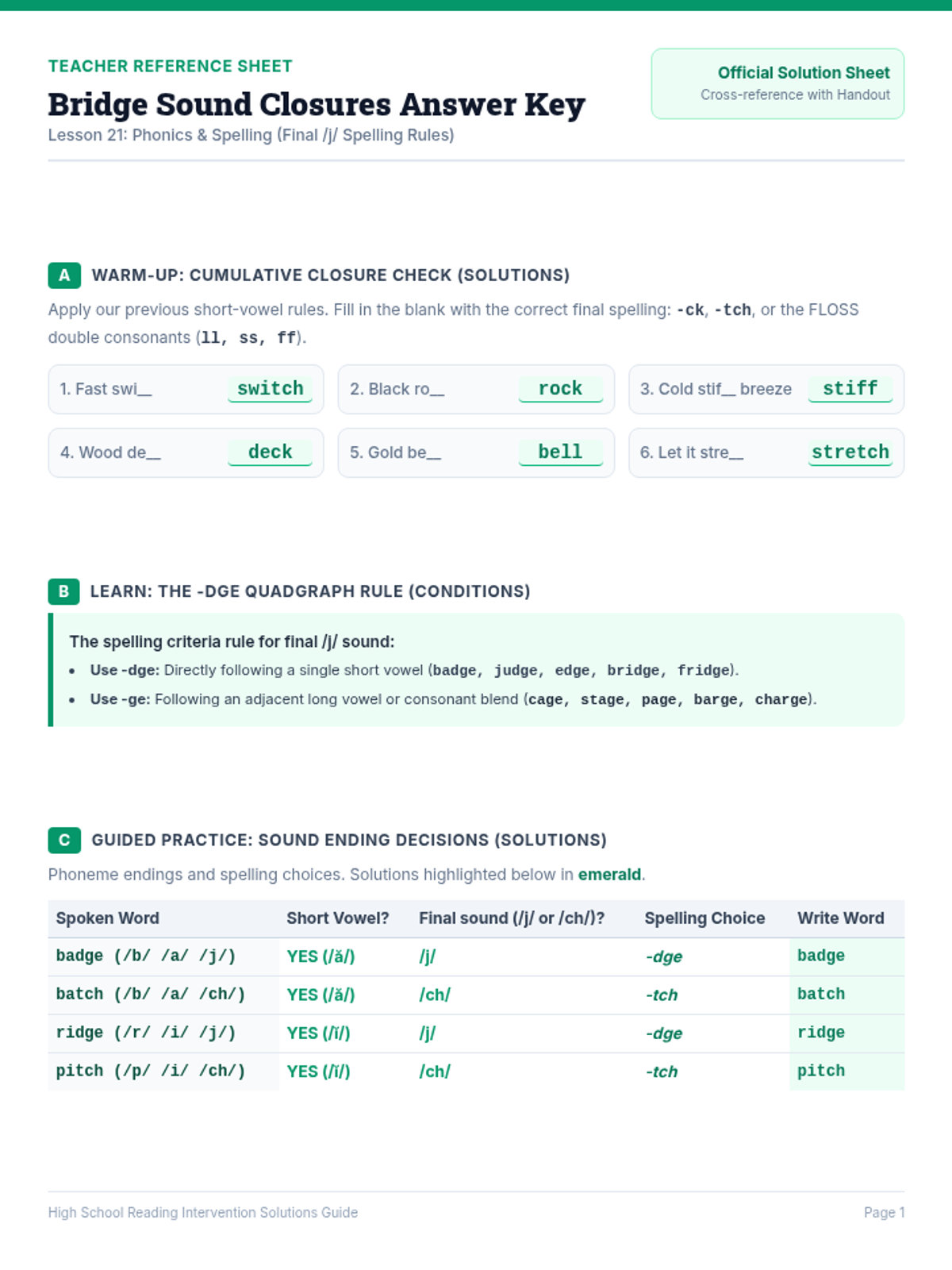
Introduces the spelling pattern -dge for the final /j/ sound following short vowels, contrasting it with the -tch trigraph to strengthen phoneme-level auditory discrimination.
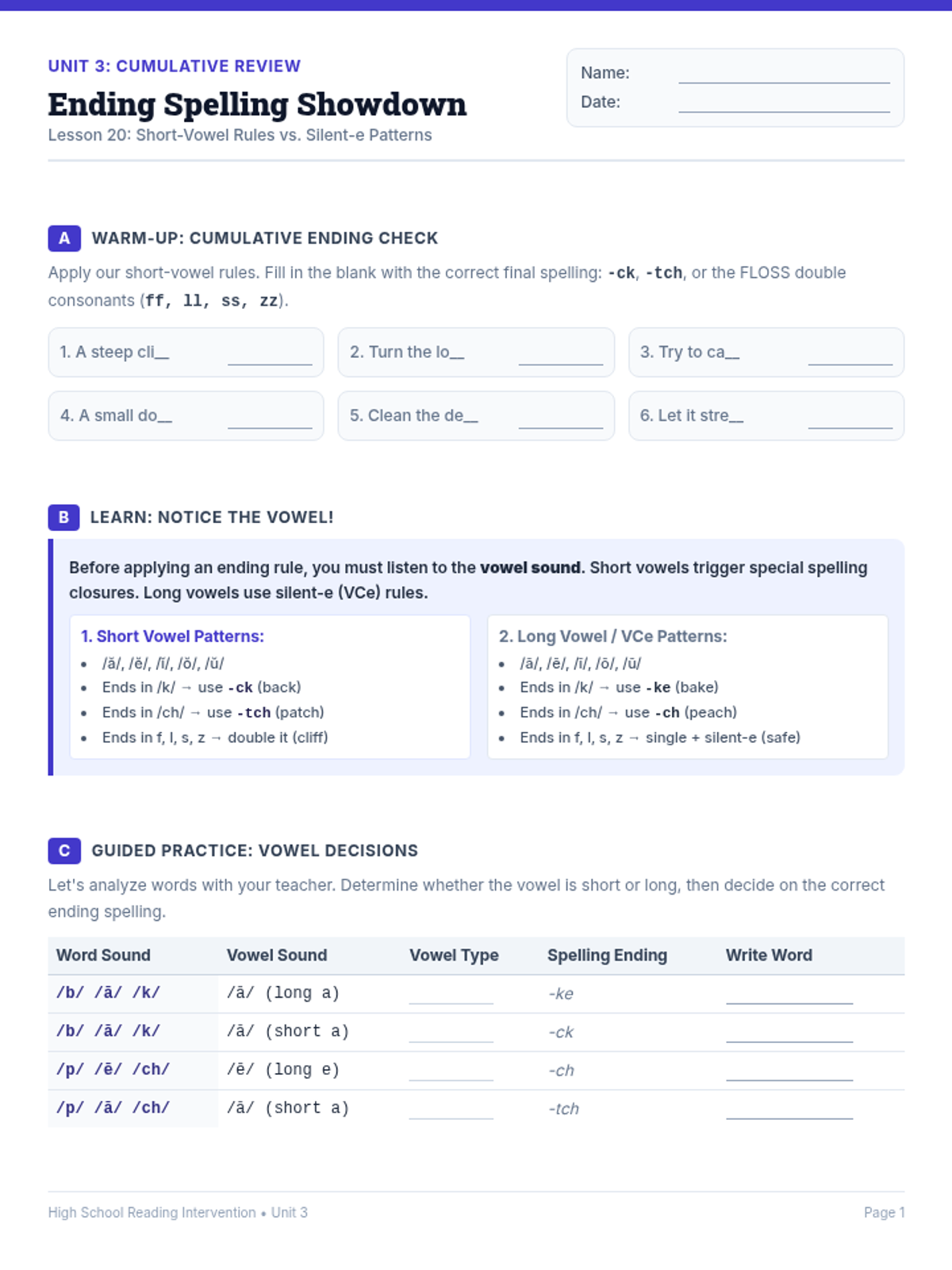
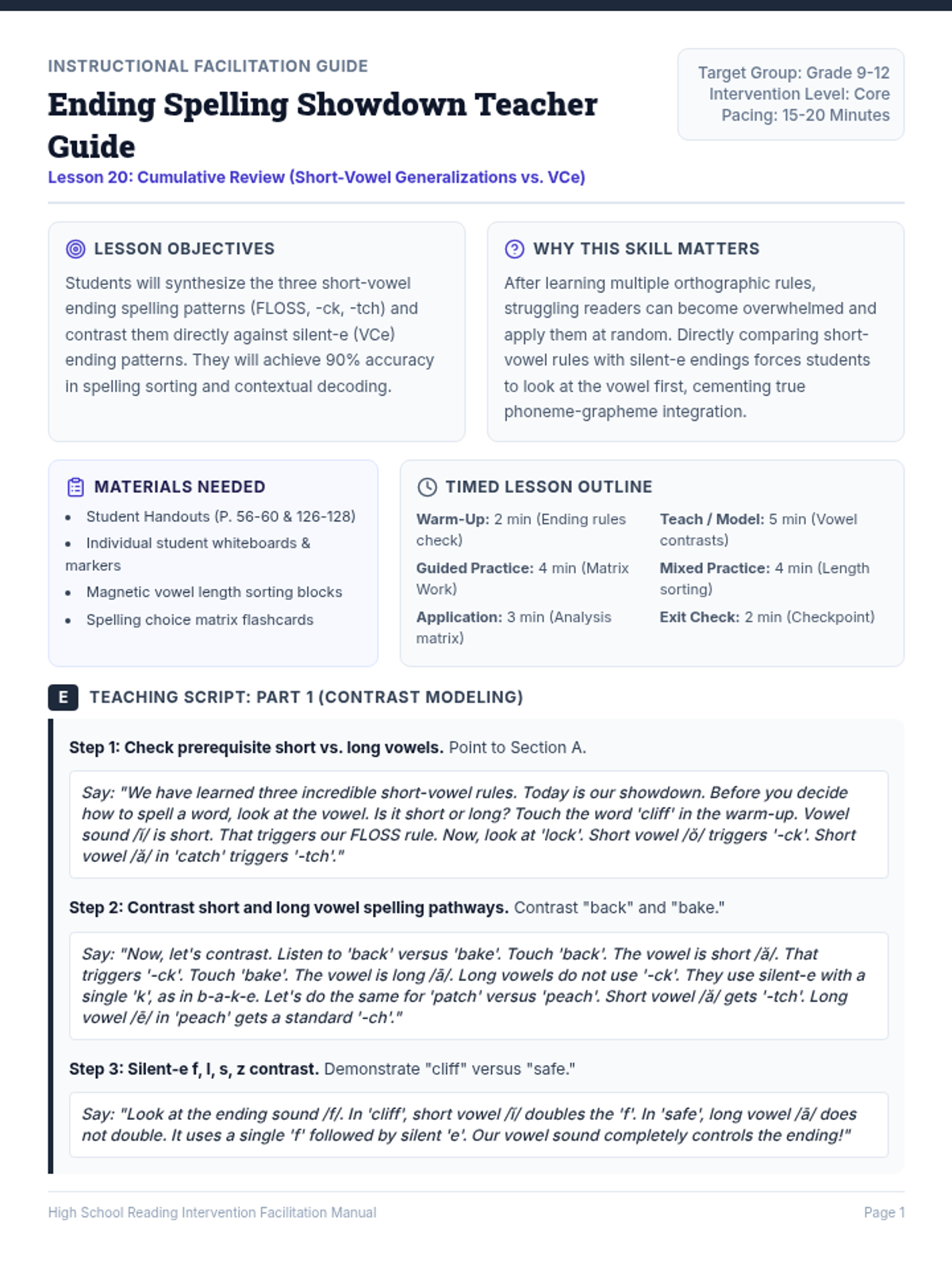
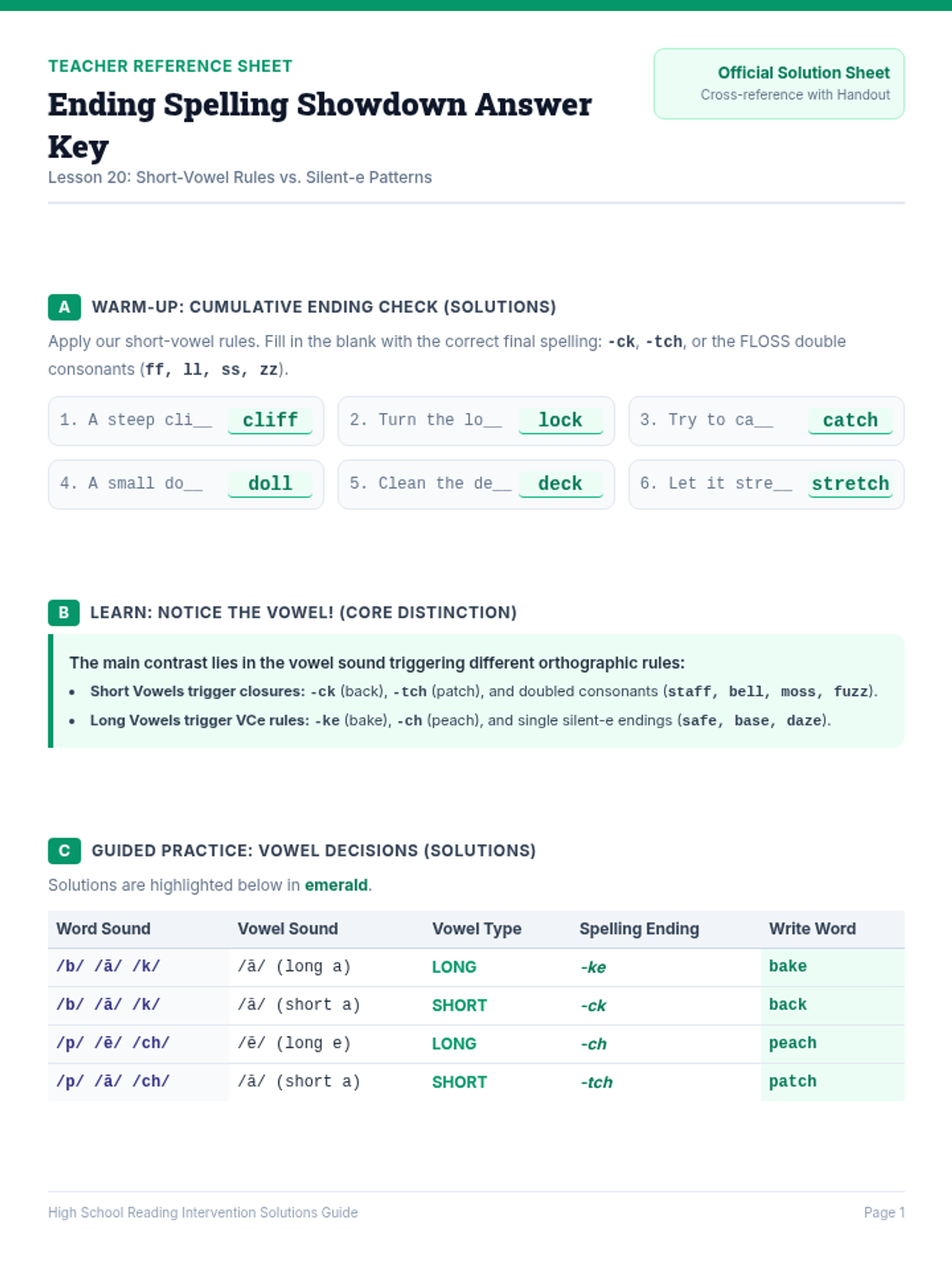
A cumulative practice and review lesson contrasting the short-vowel spelling rules (FLOSS, -ck, -tch) with VCe silent-e patterns to build master-level orthographic decoding and vowel recognition.
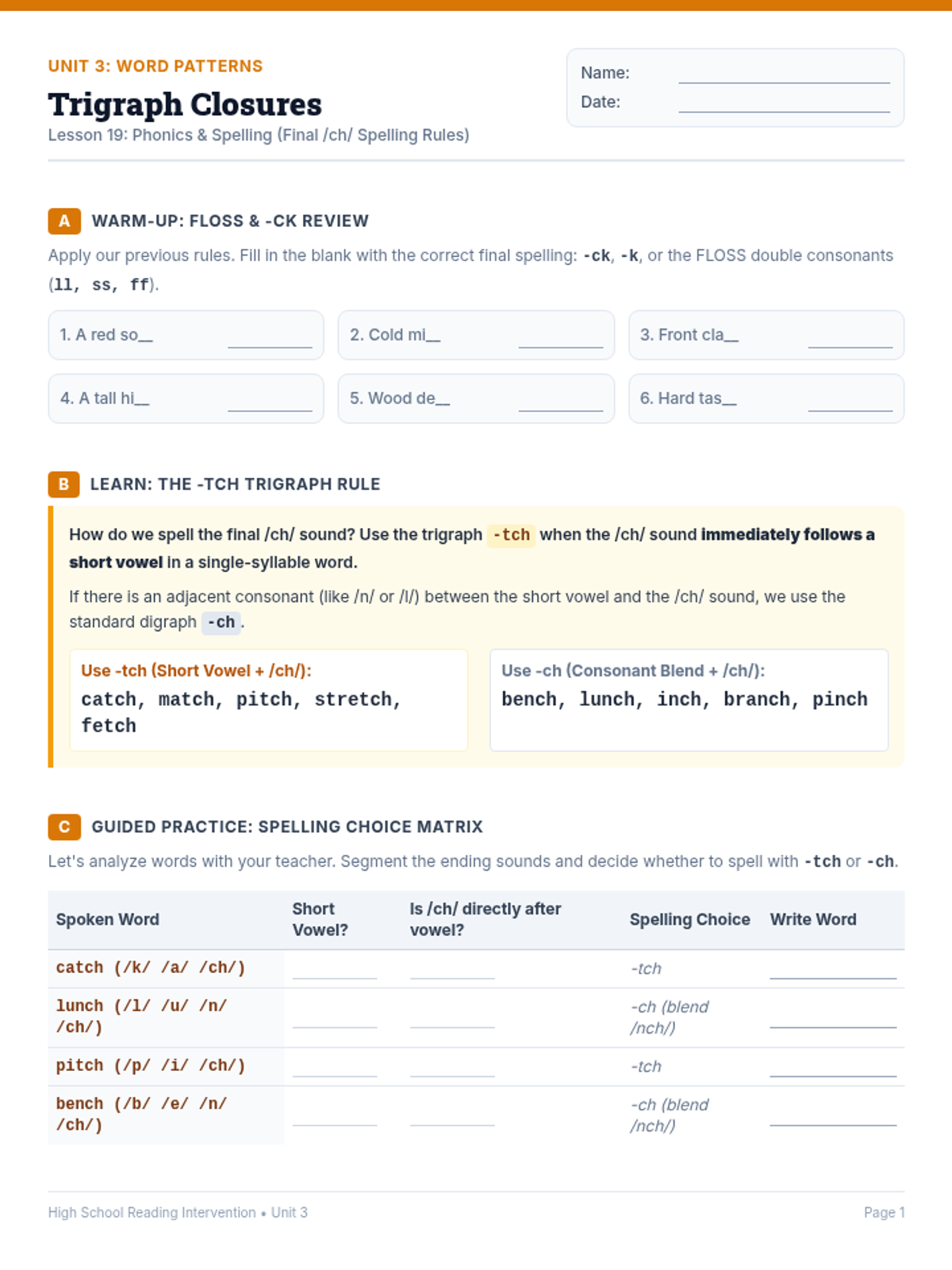
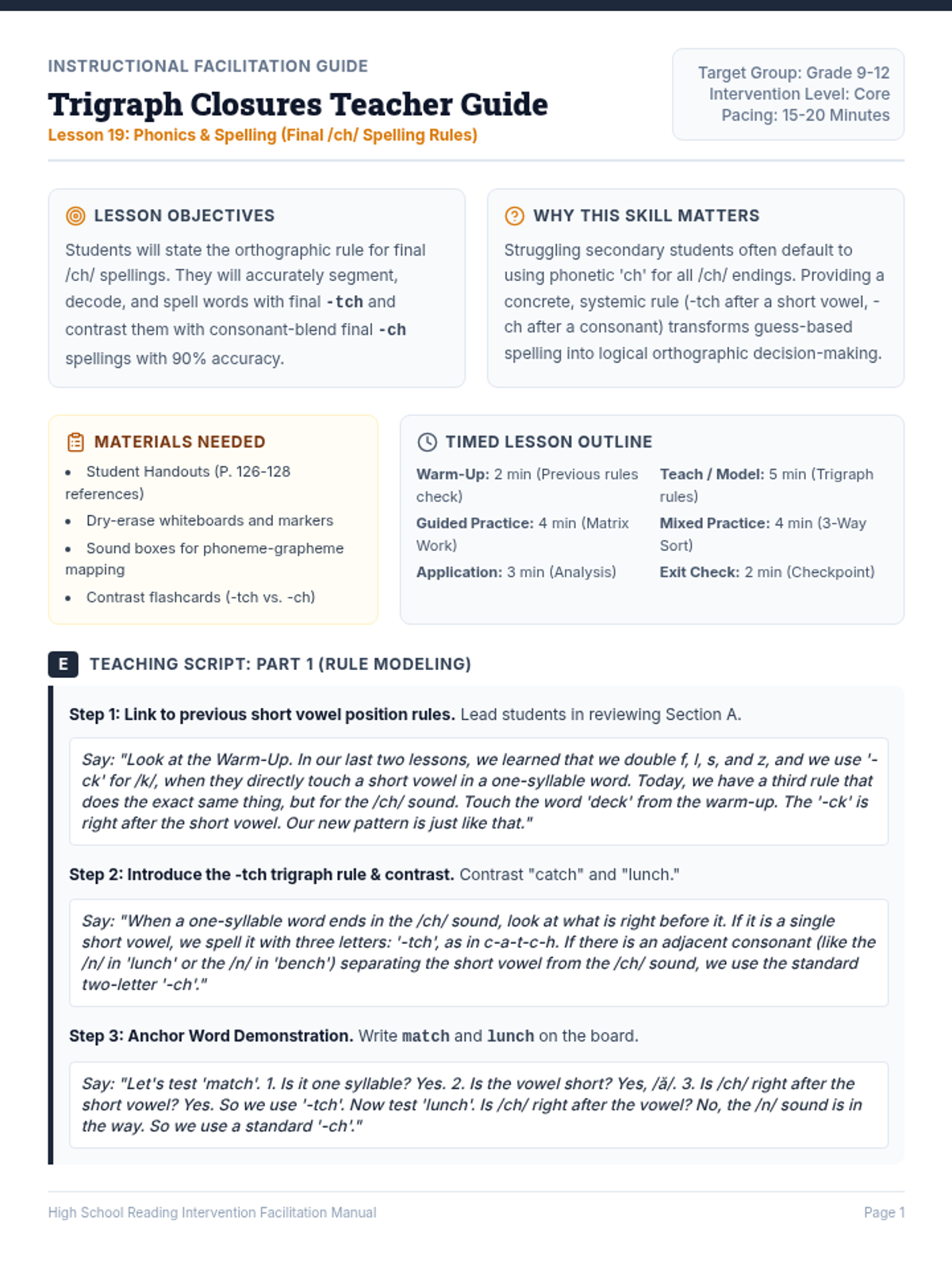
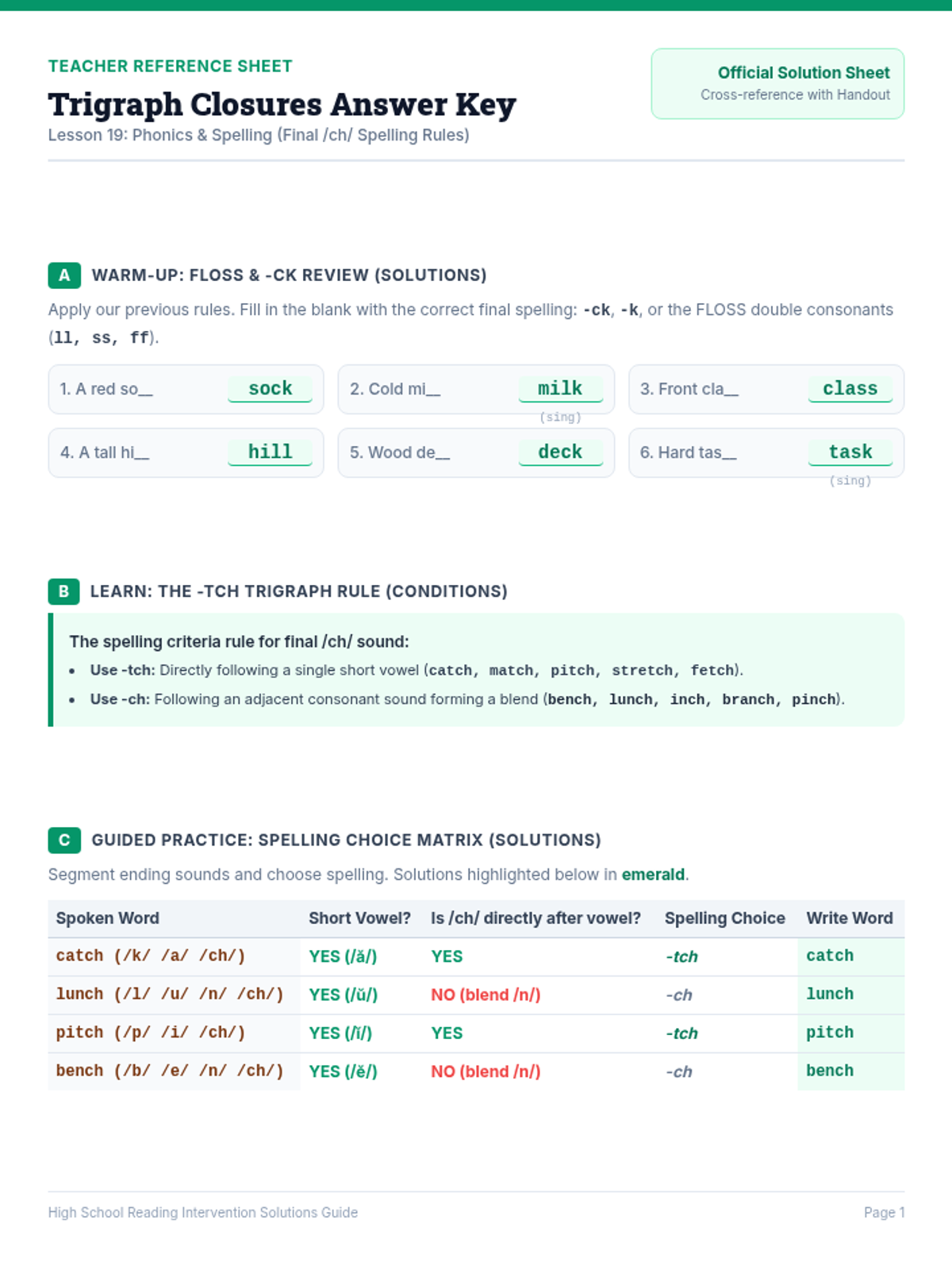
Introduces the spelling pattern -tch for the final /ch/ sound following short vowels, comparing and contrasting it with the -ck spelling rule for final /k/ sounds to build orthographic precision.
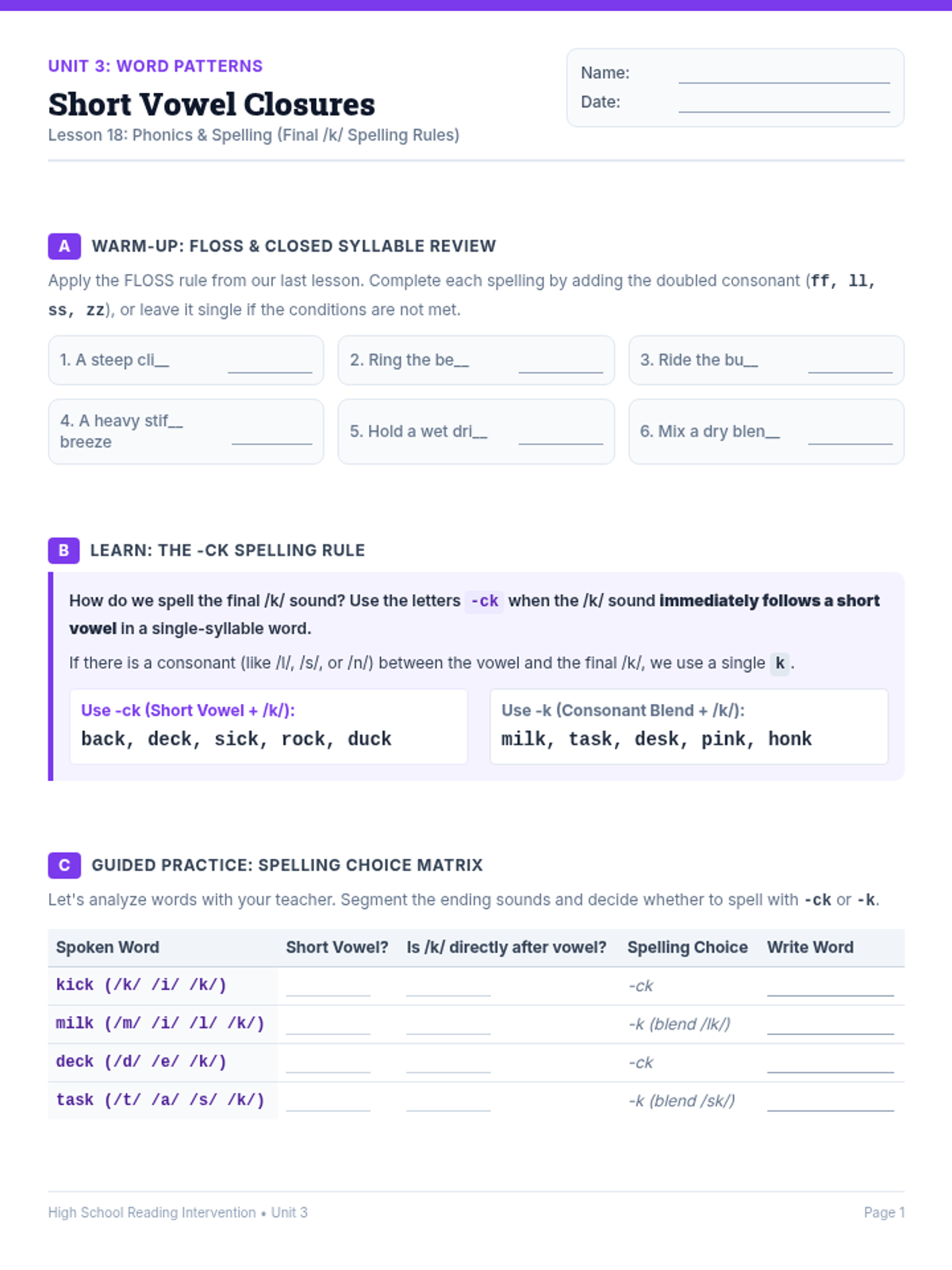
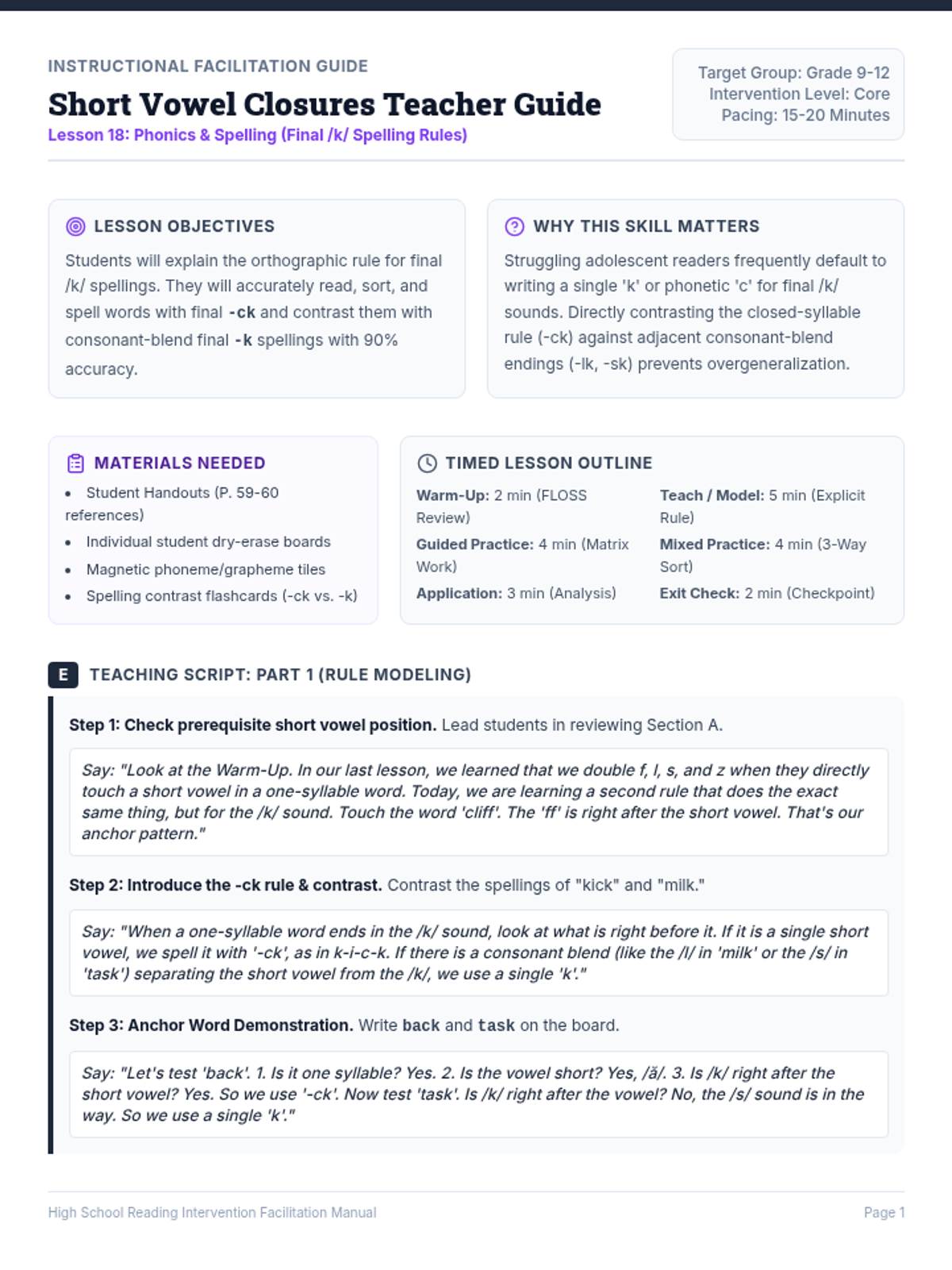
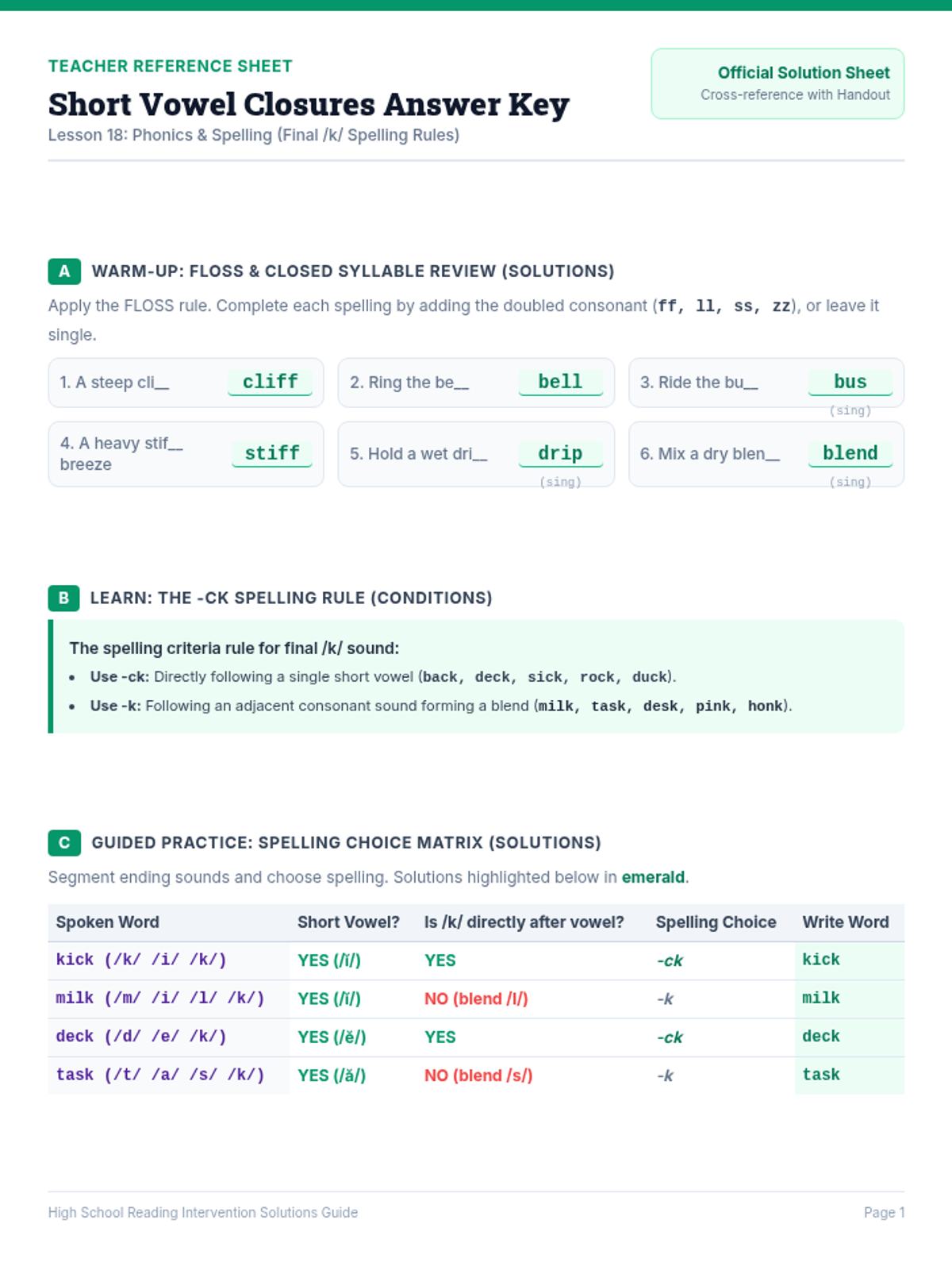
Introduces the spelling pattern -ck for the final /k/ sound following short vowels, contrasting it with the FLOSS rule to build systematic orthographic decision-making.
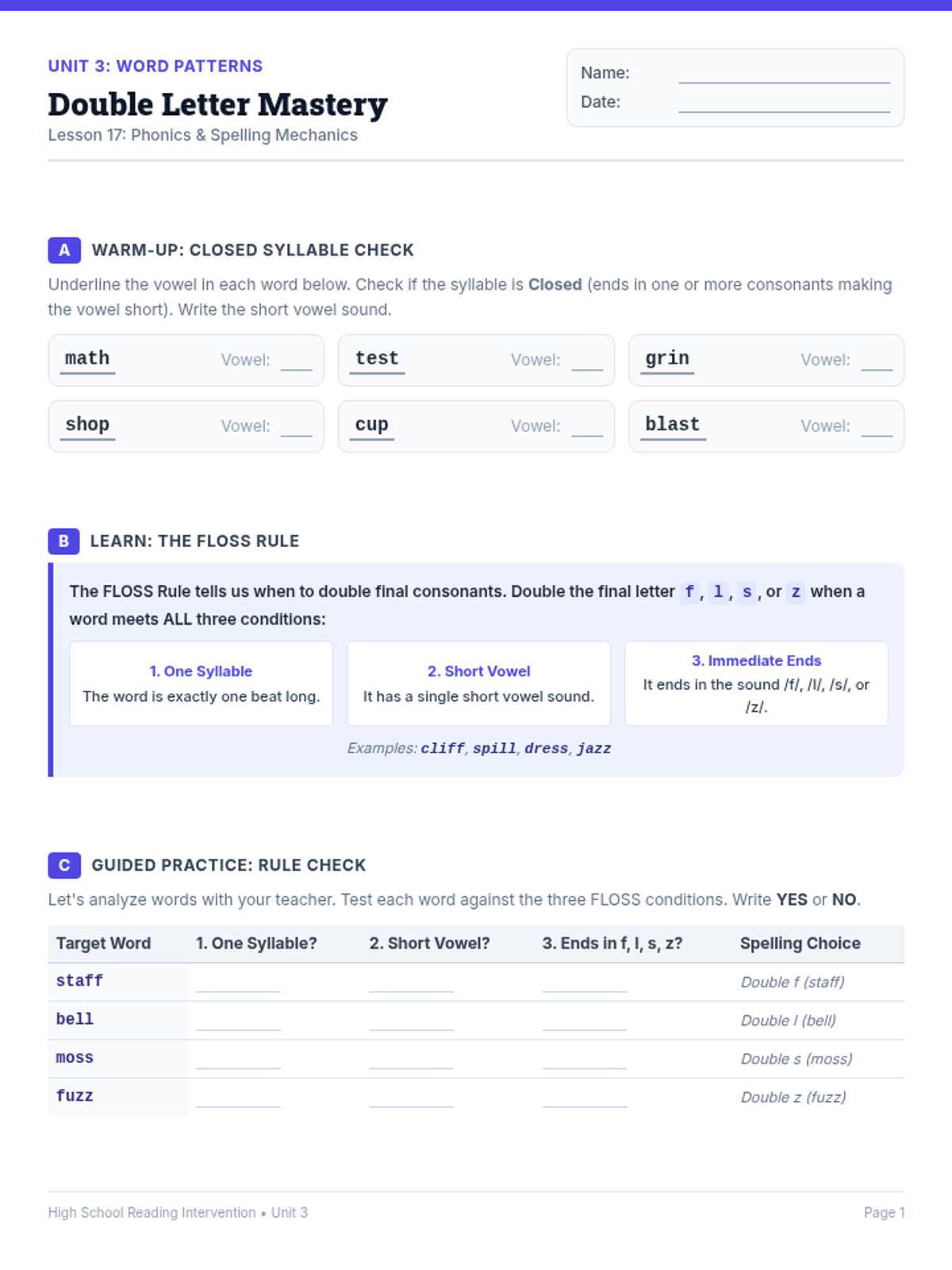
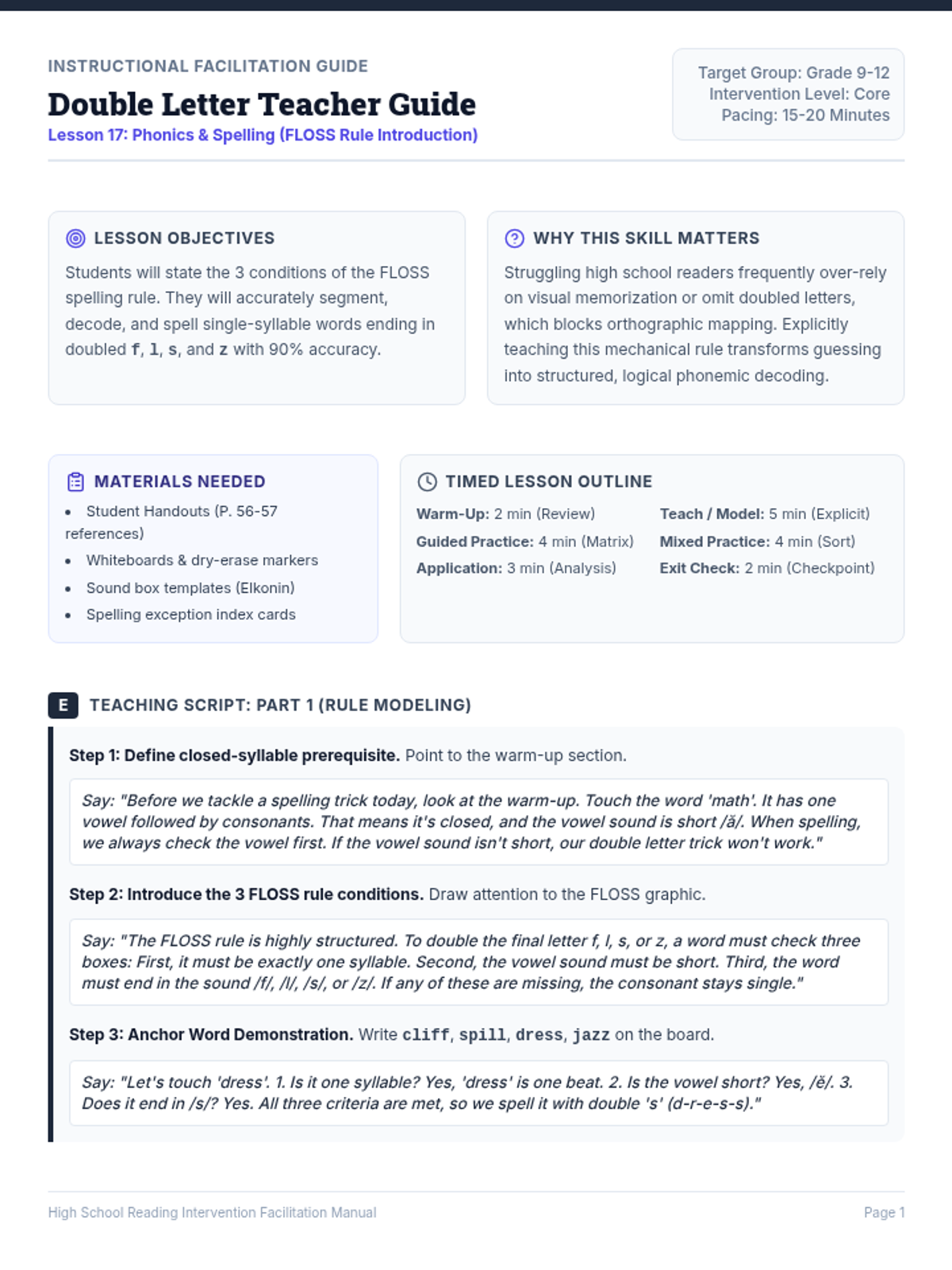
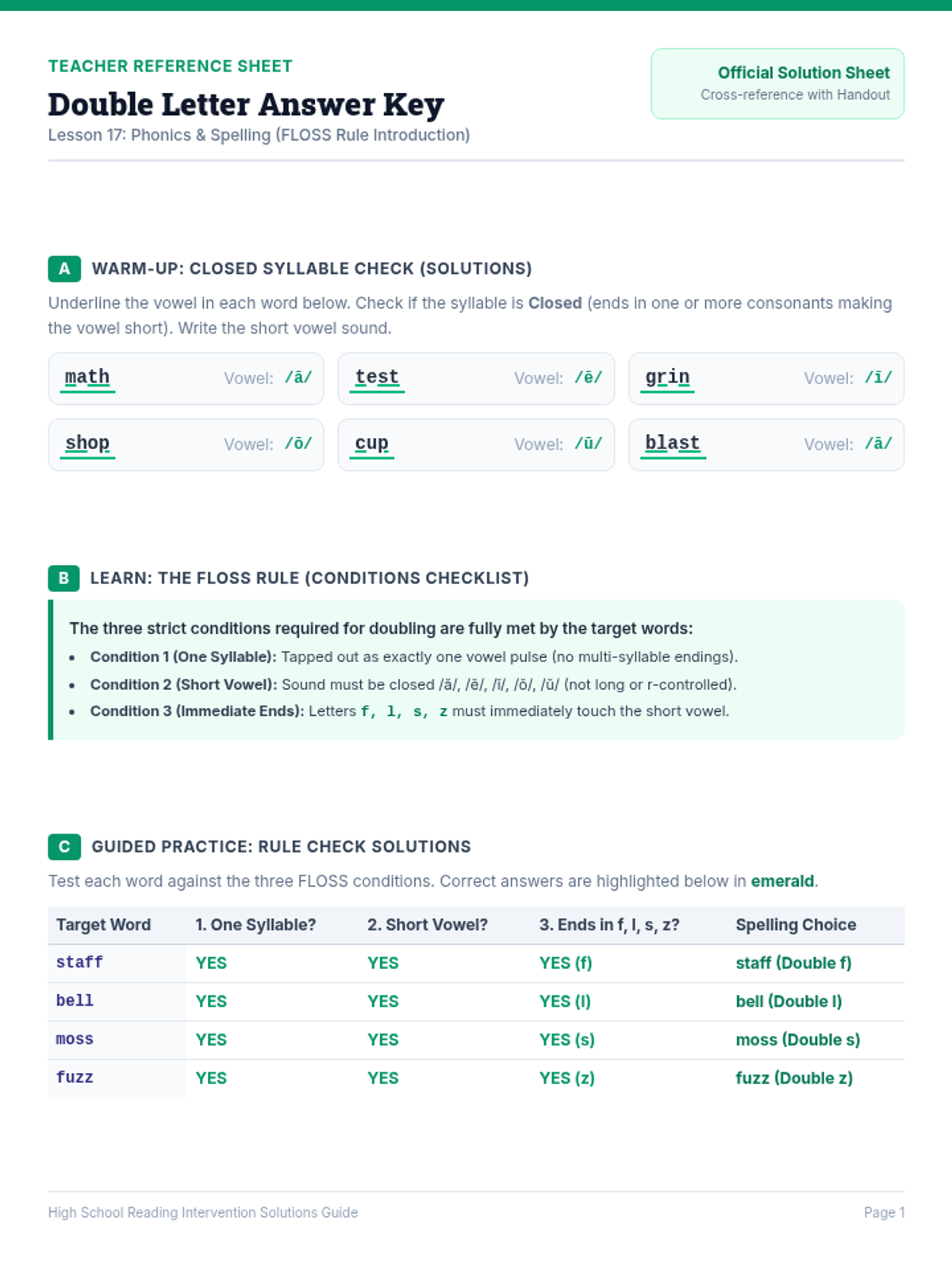
Introduces the FLOSS rule for single-syllable words containing short vowels, emphasizing the conditions under which final f, l, s, and z are doubled, while spiraling closed-syllable patterns.
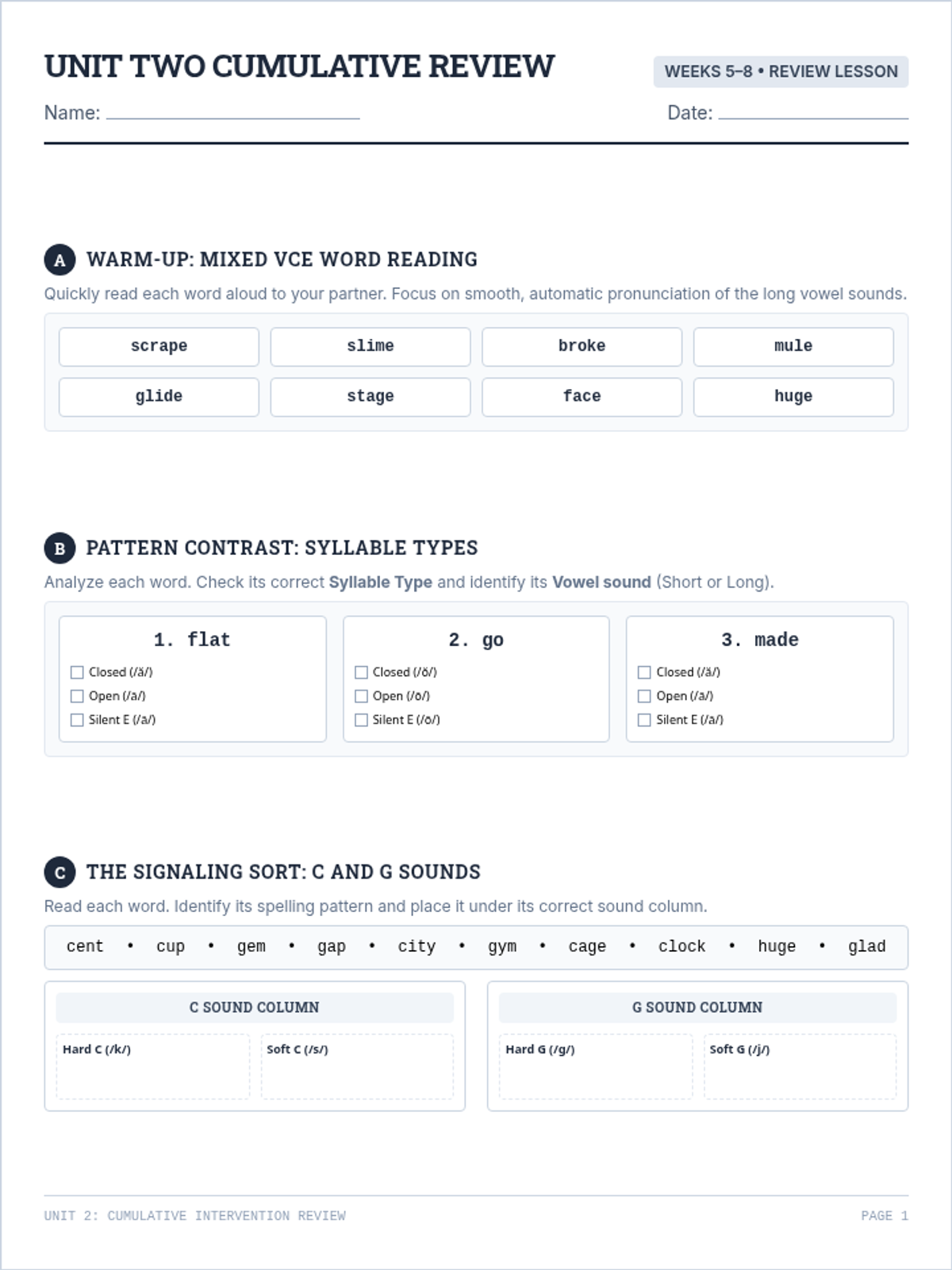
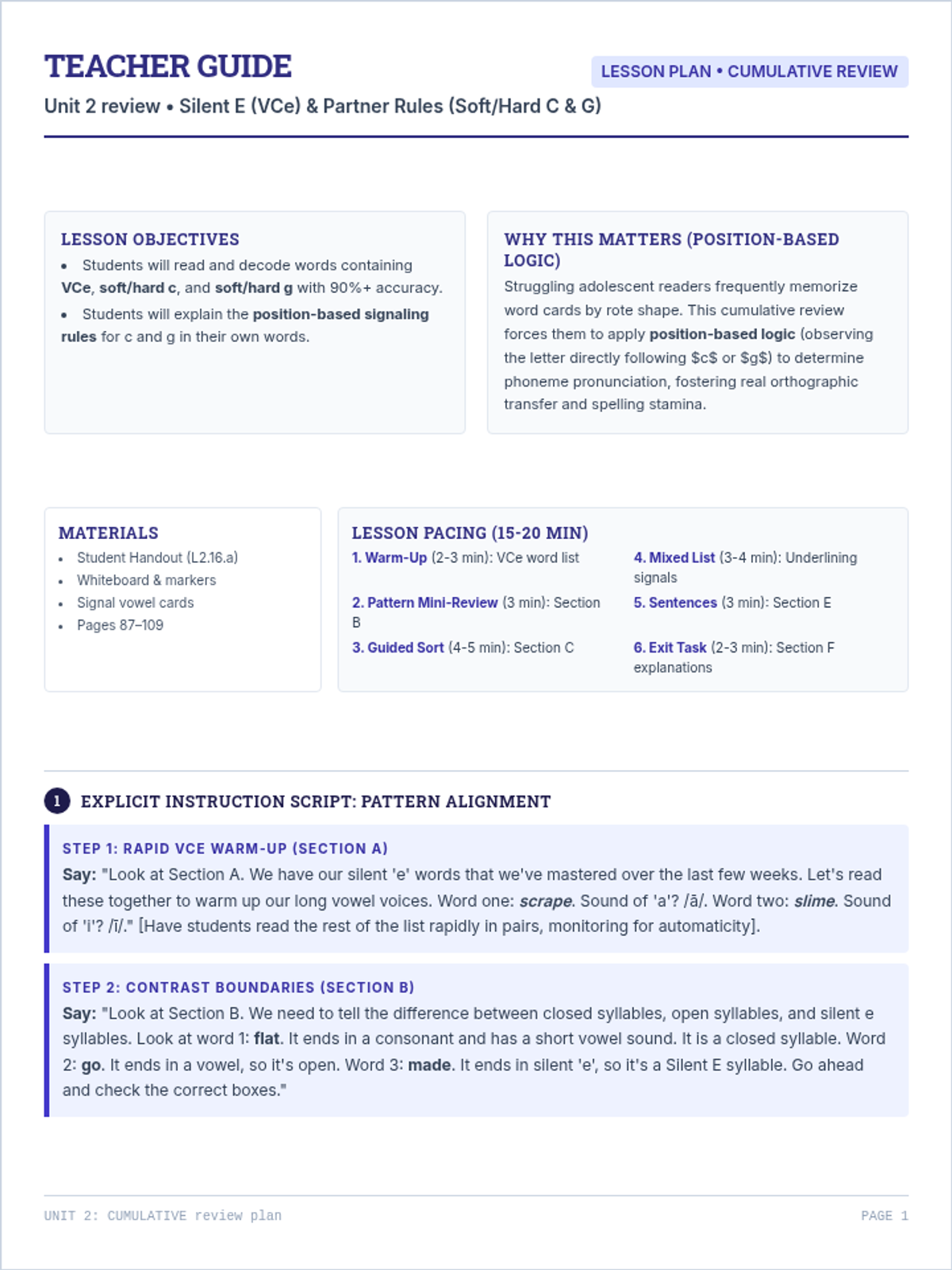
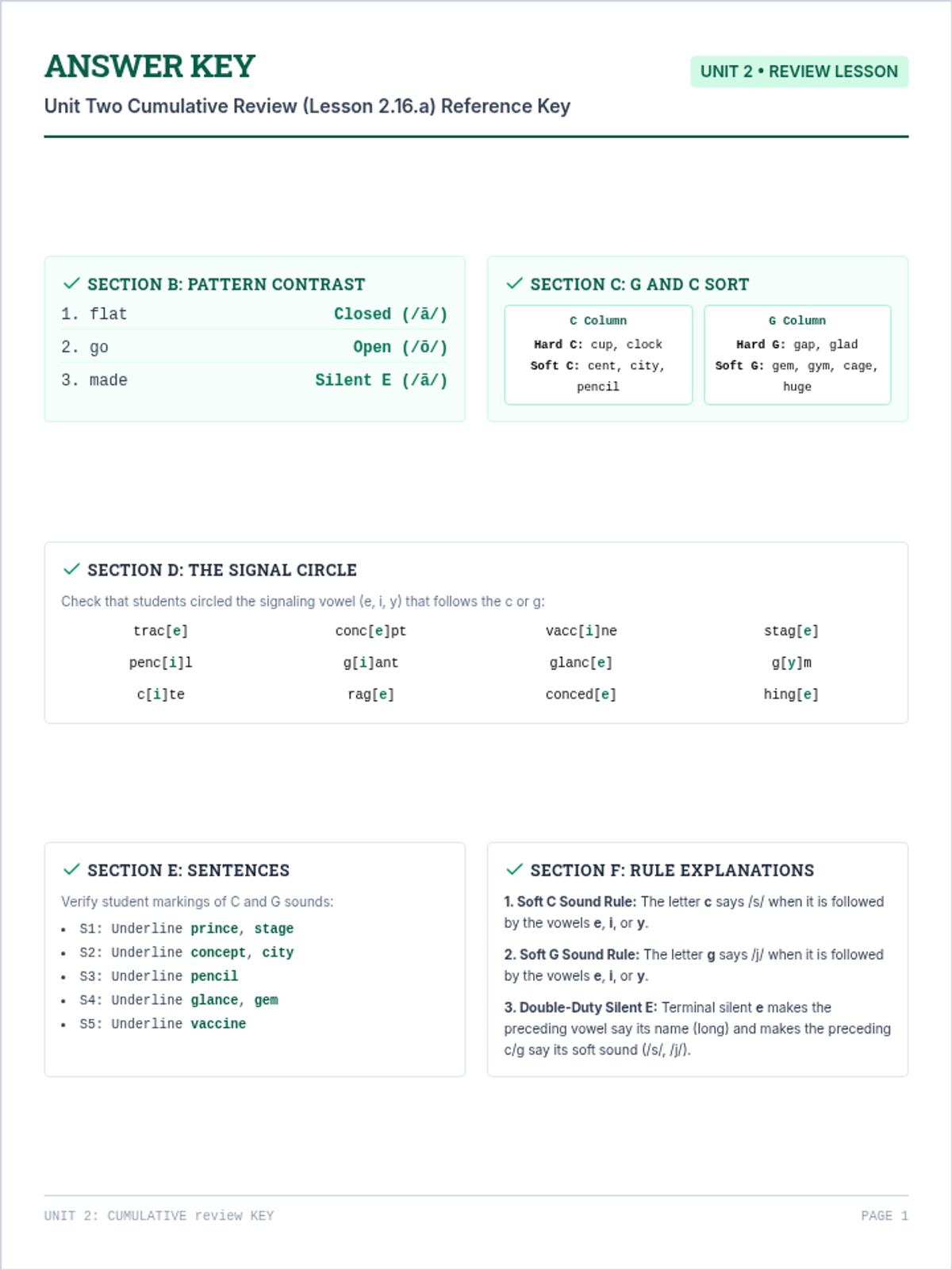
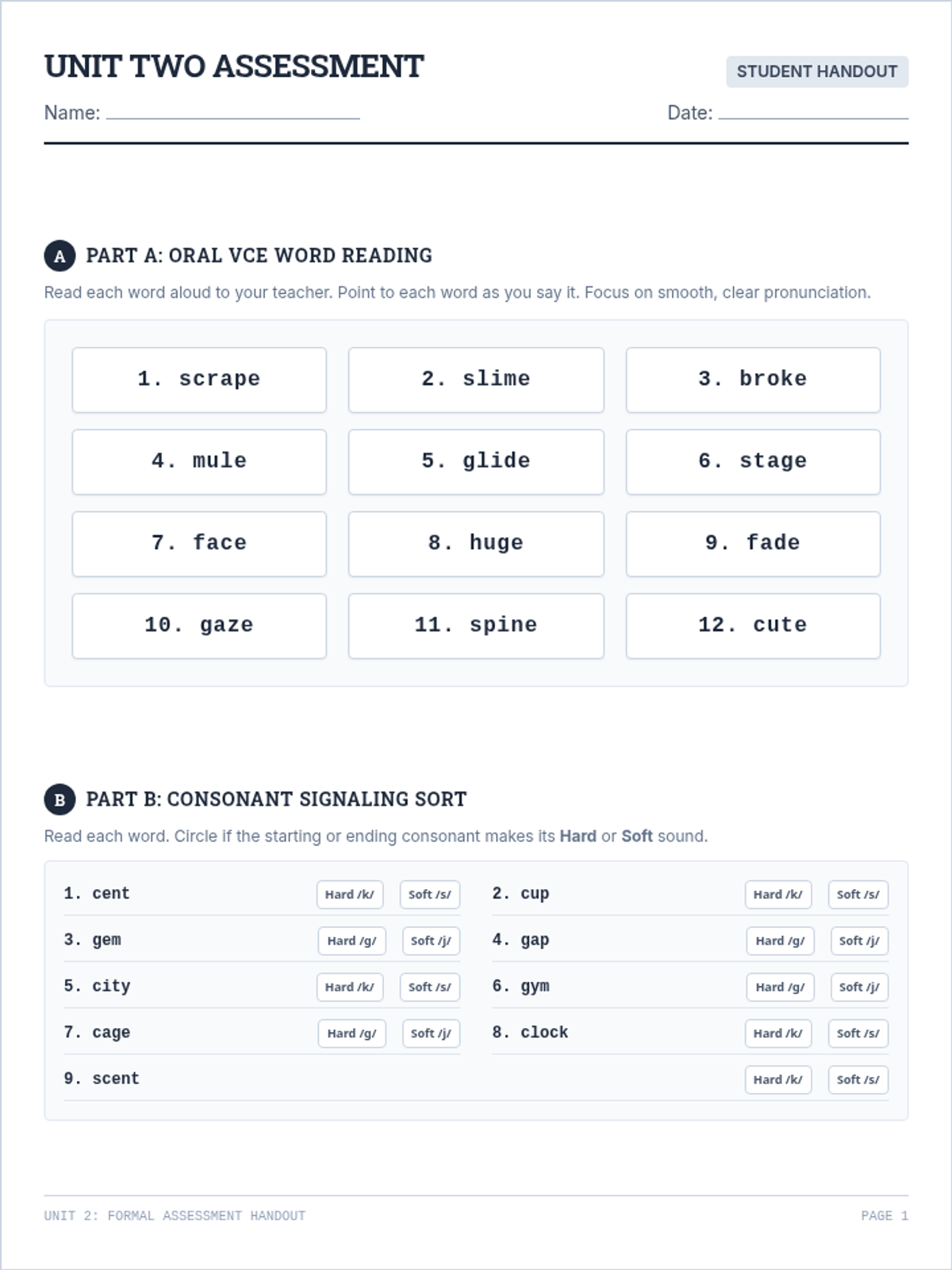
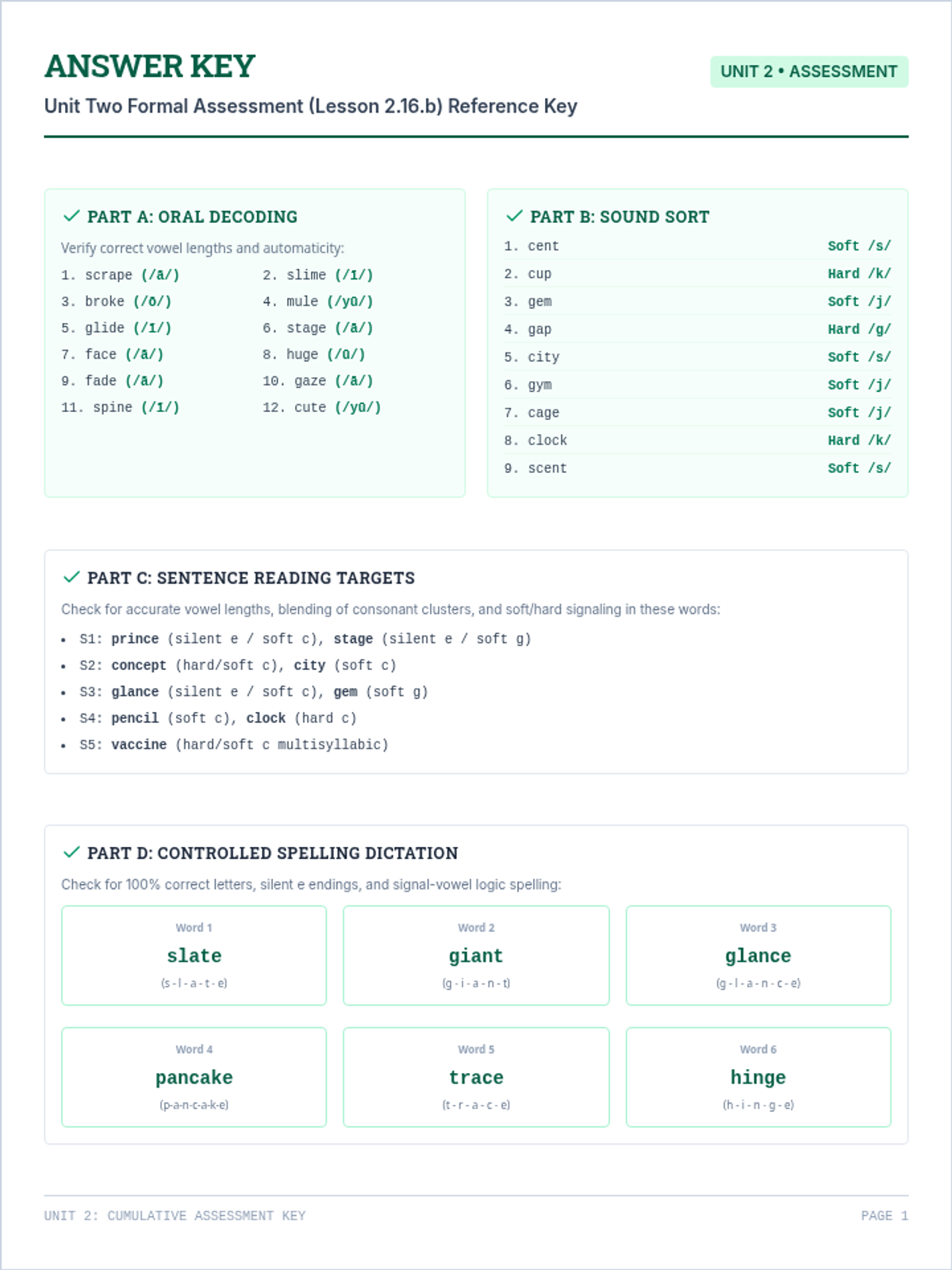
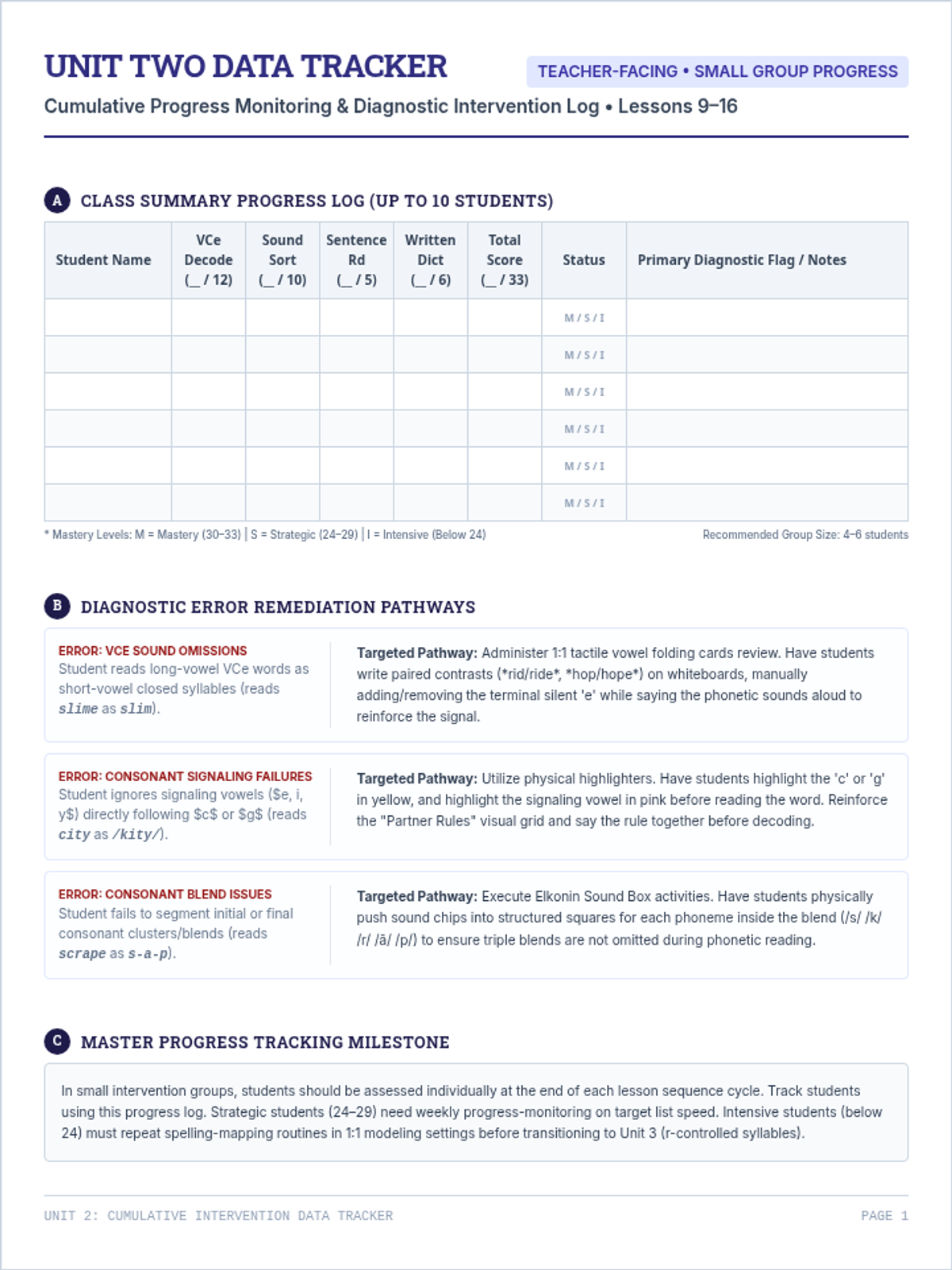
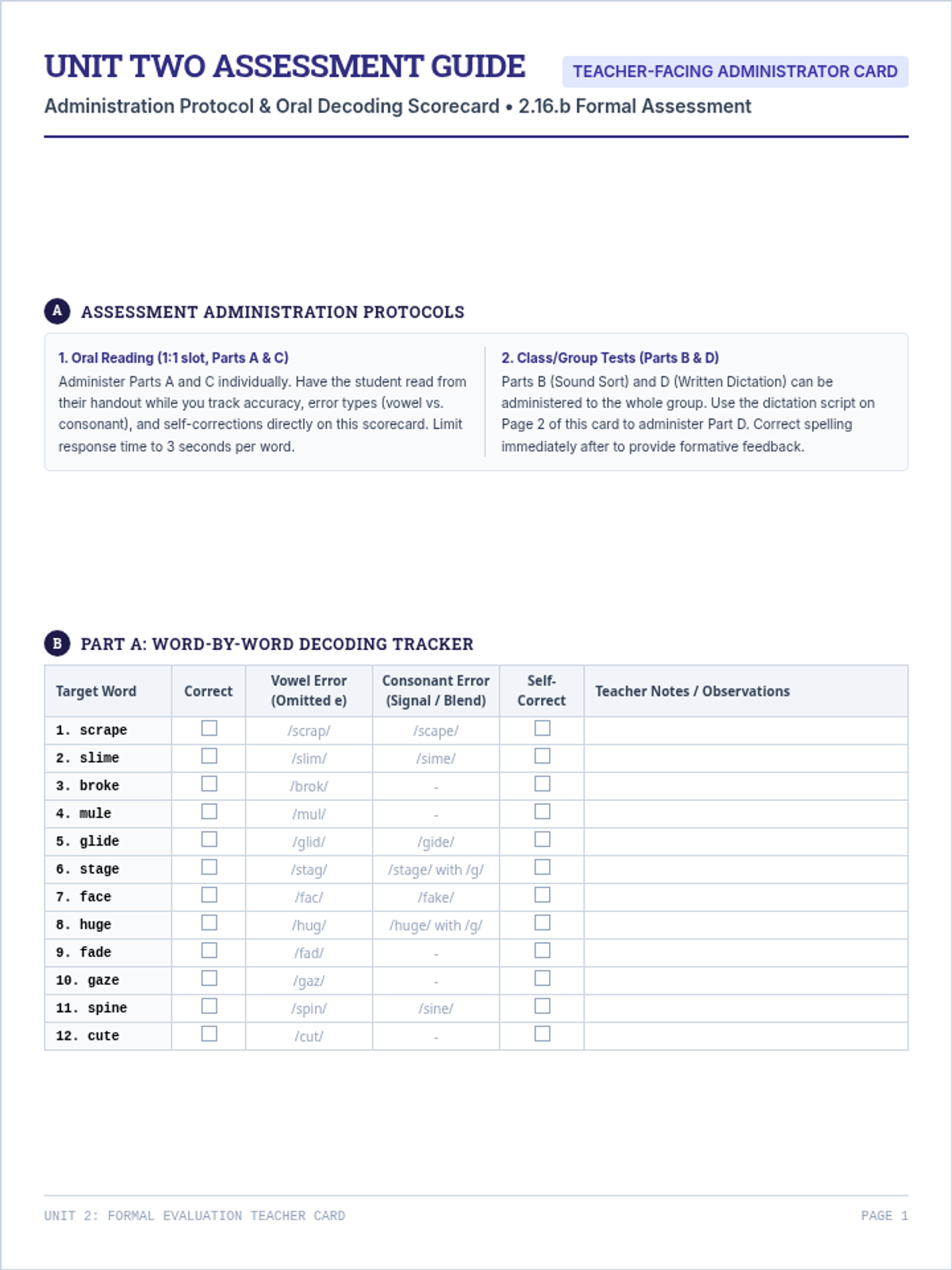
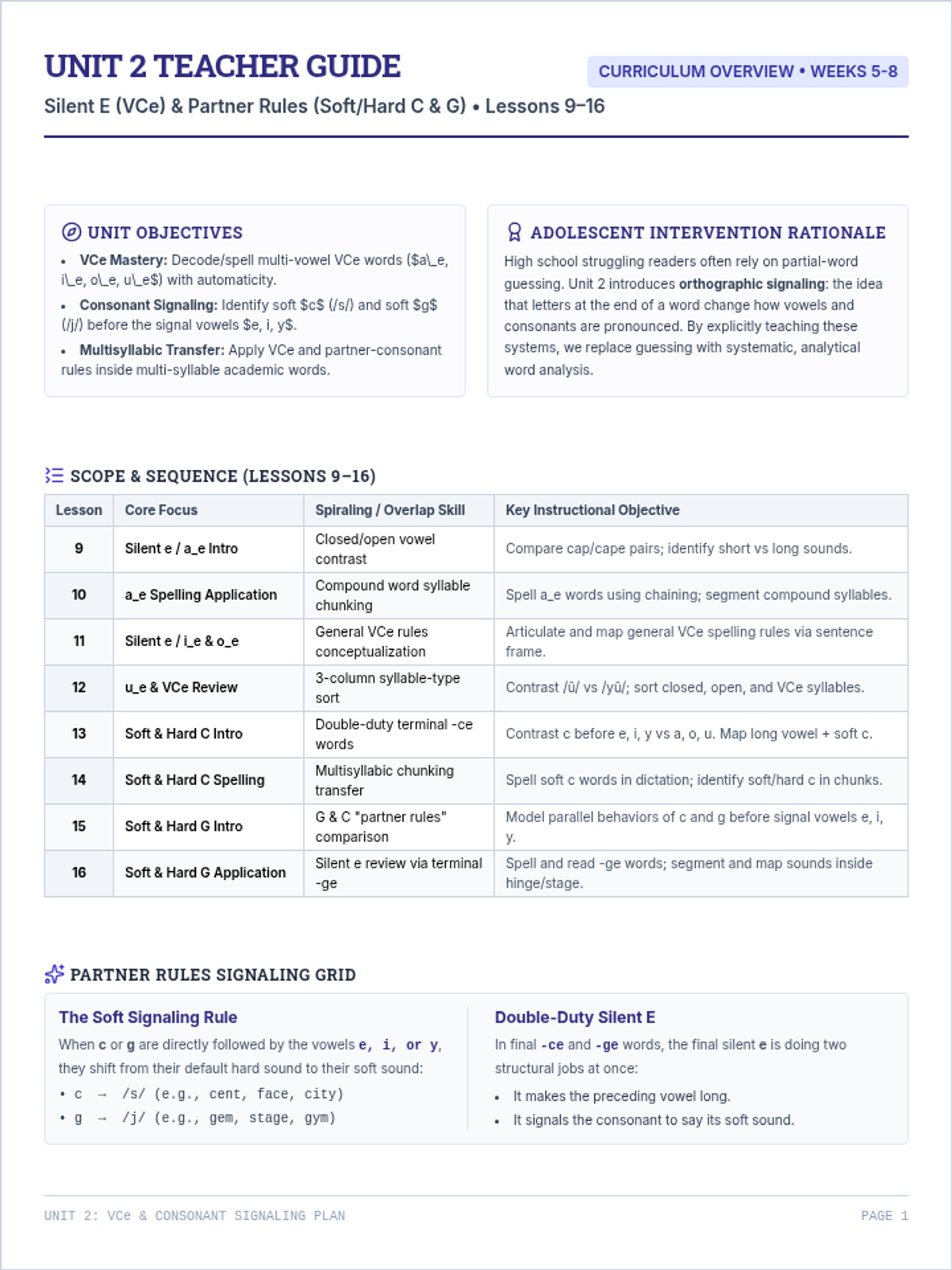
A cumulative review lesson covering Unit 2 (Lessons 9-16). Students practice reading and spelling silent e/VCe words, soft/hard c, and soft/hard g patterns, and explain the position-based sound logic. Designed for high school students.
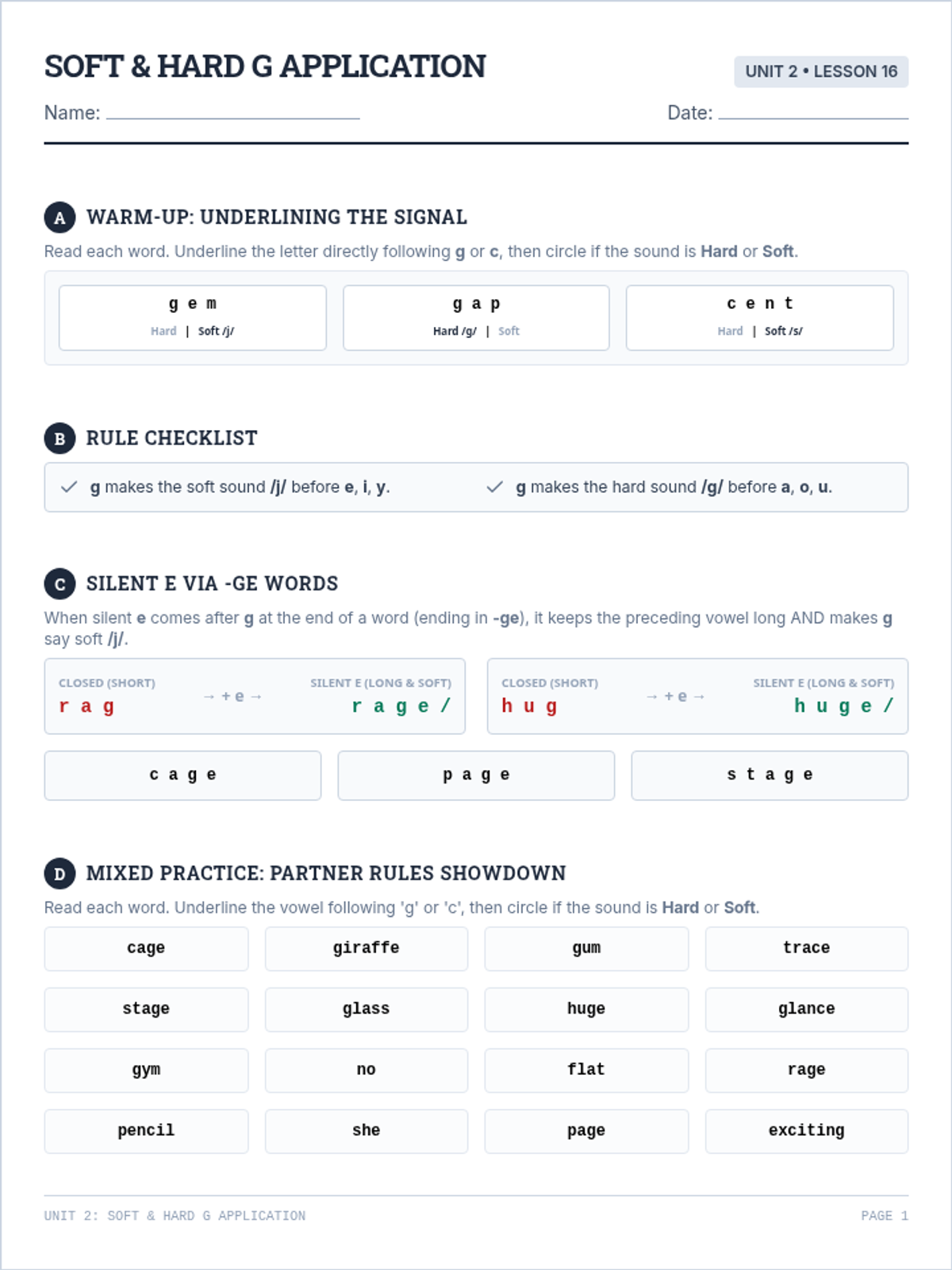
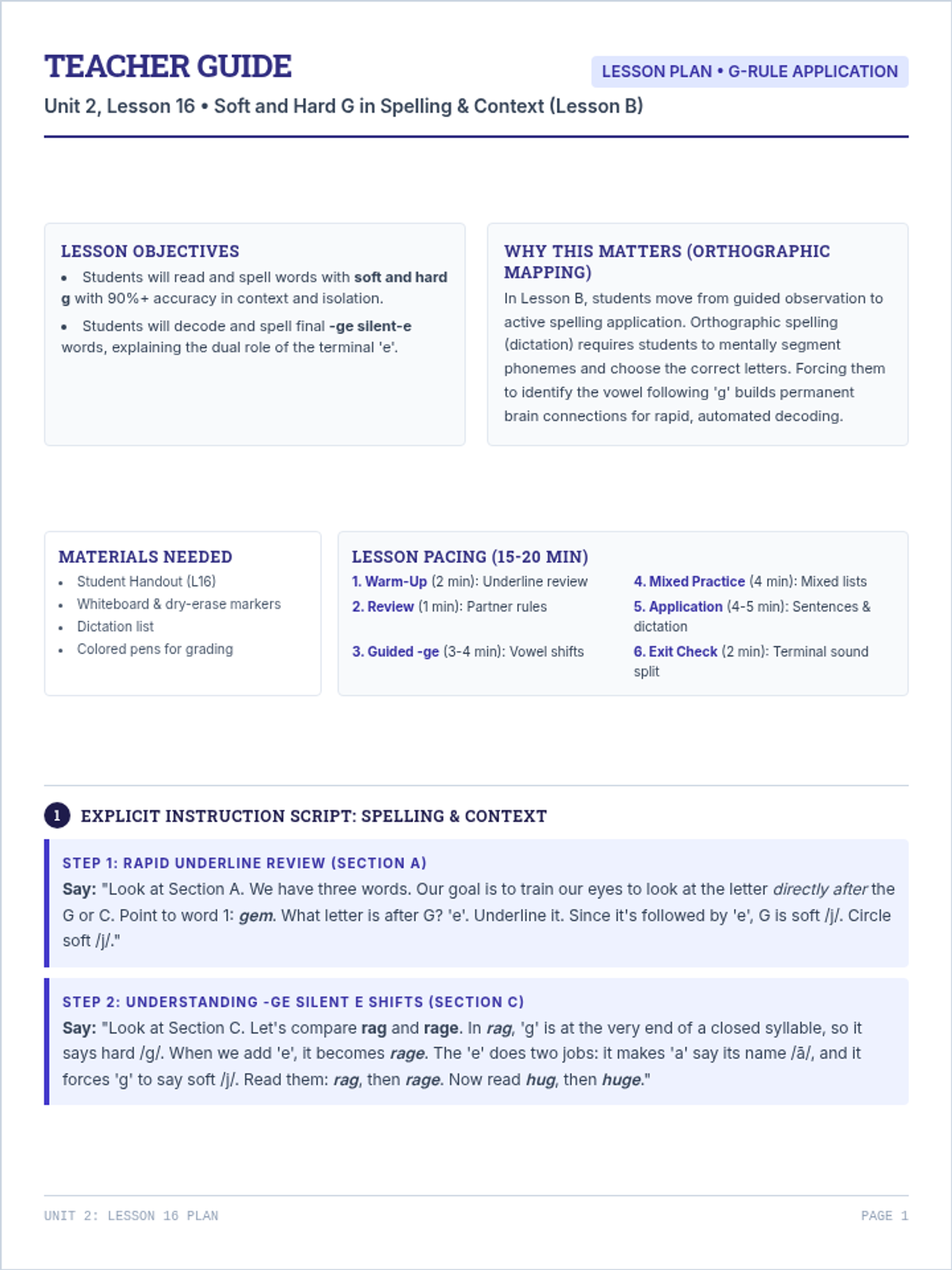
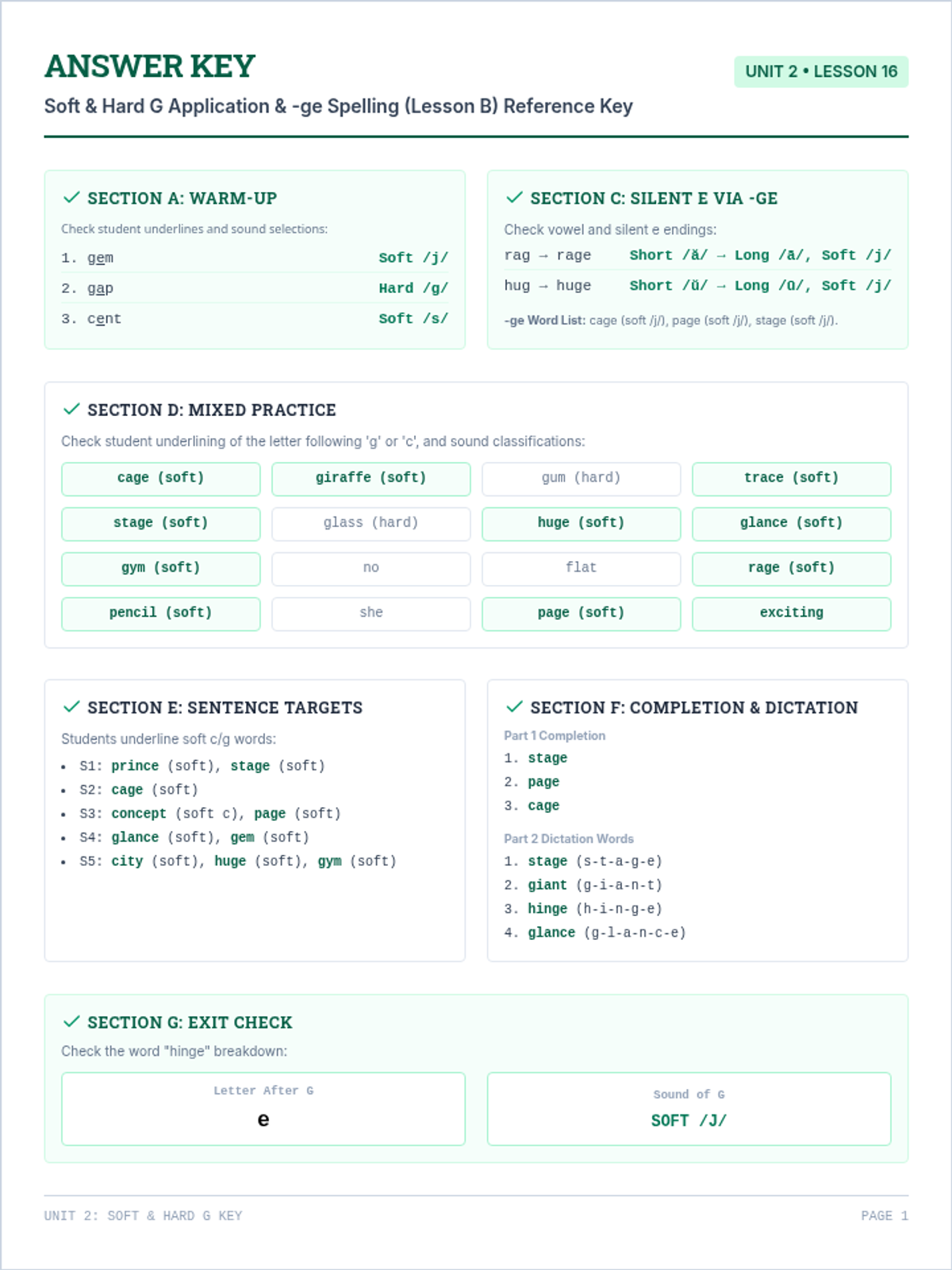
Lesson 16 of the sequence. Focuses on the application of soft/hard g and c rules in spelling, dictation, and -ge silent-e words using structured vowel-signaling strategies. Designed for high school students.
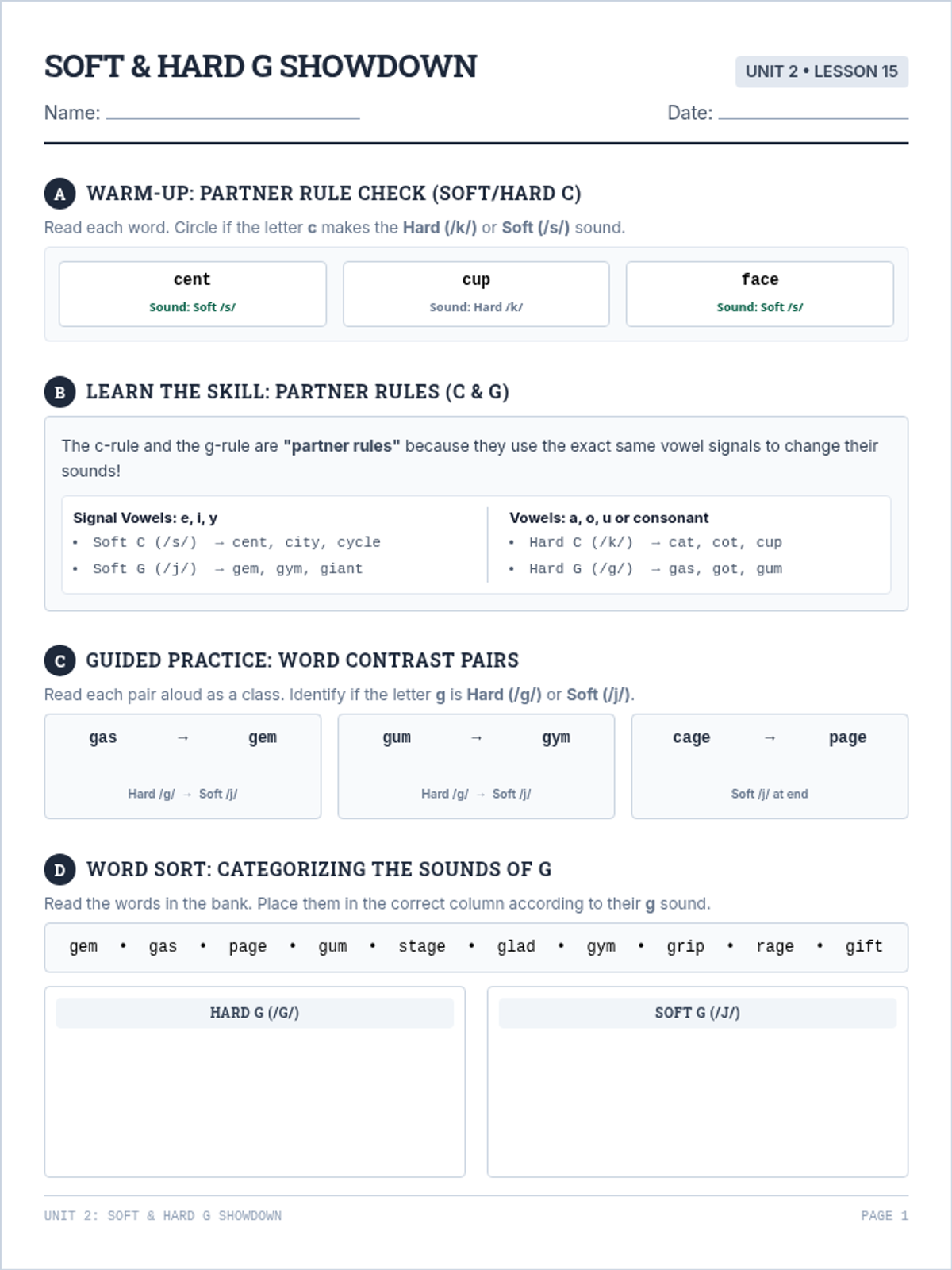
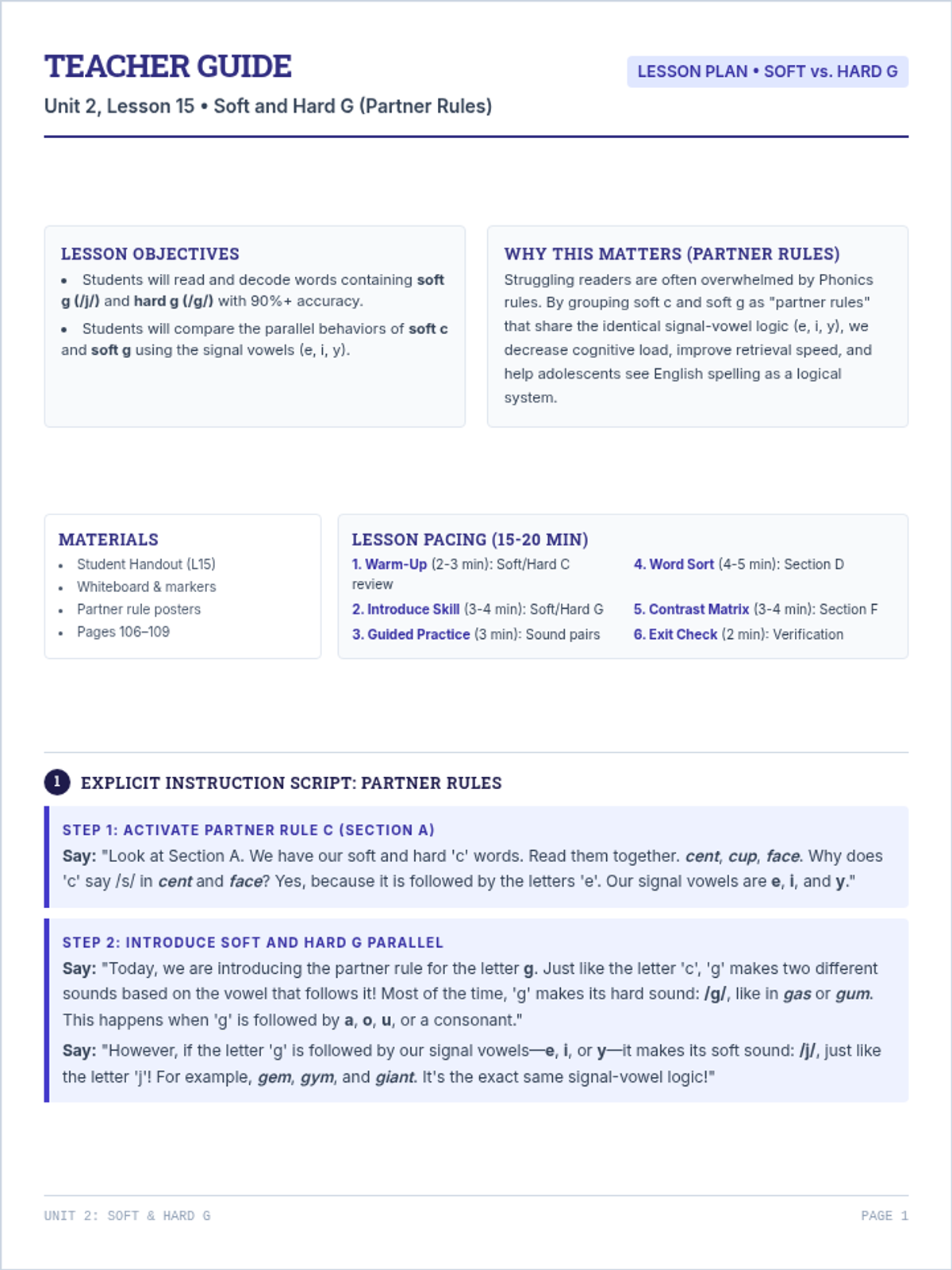
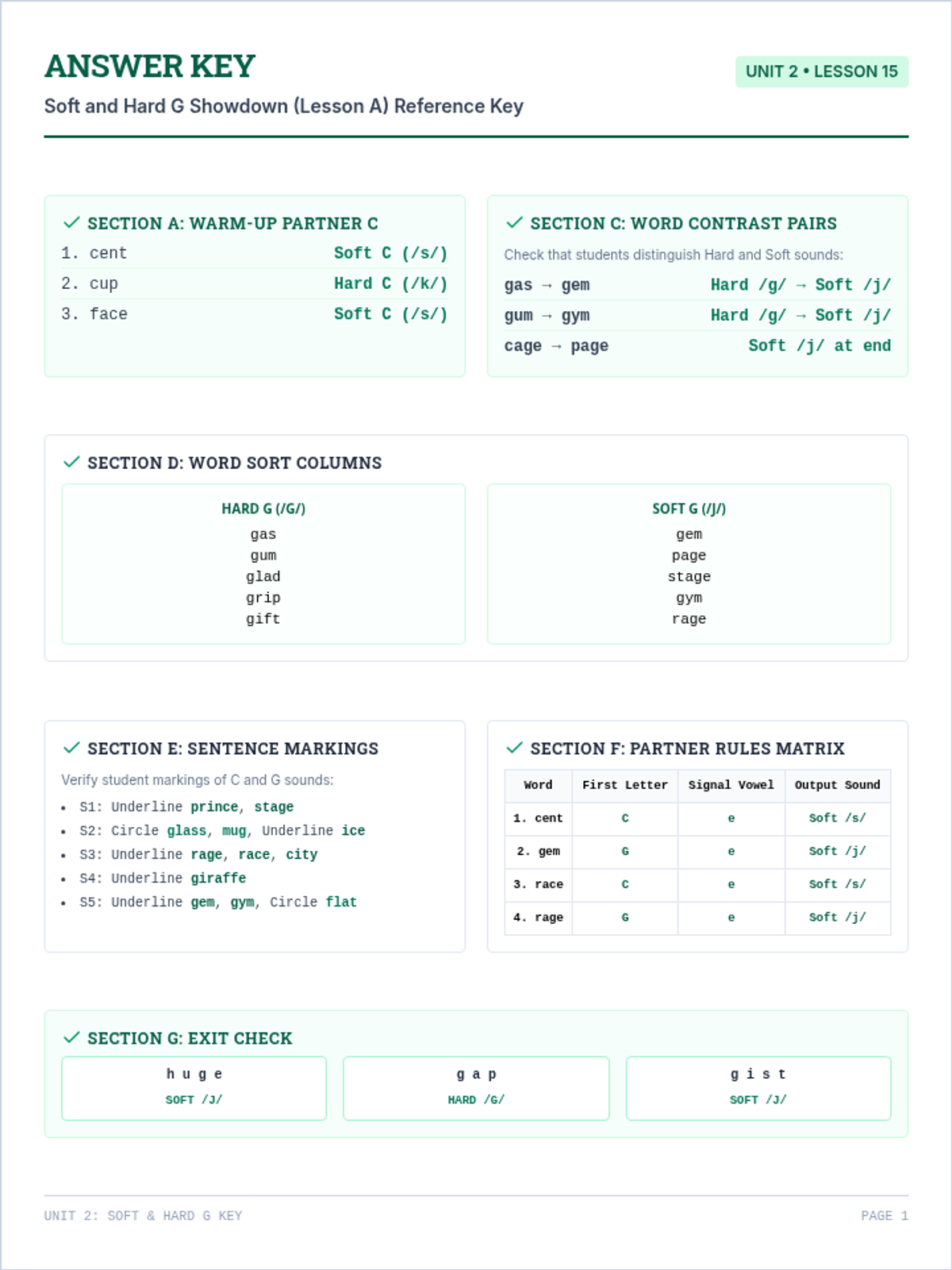
Lesson 15 of the sequence. Introduces soft g (/j/) and hard g (/g/), drawing explicit parallels to the hard/soft c rules as "partner rules" and reviews vowel signaling. Designed for high school students.
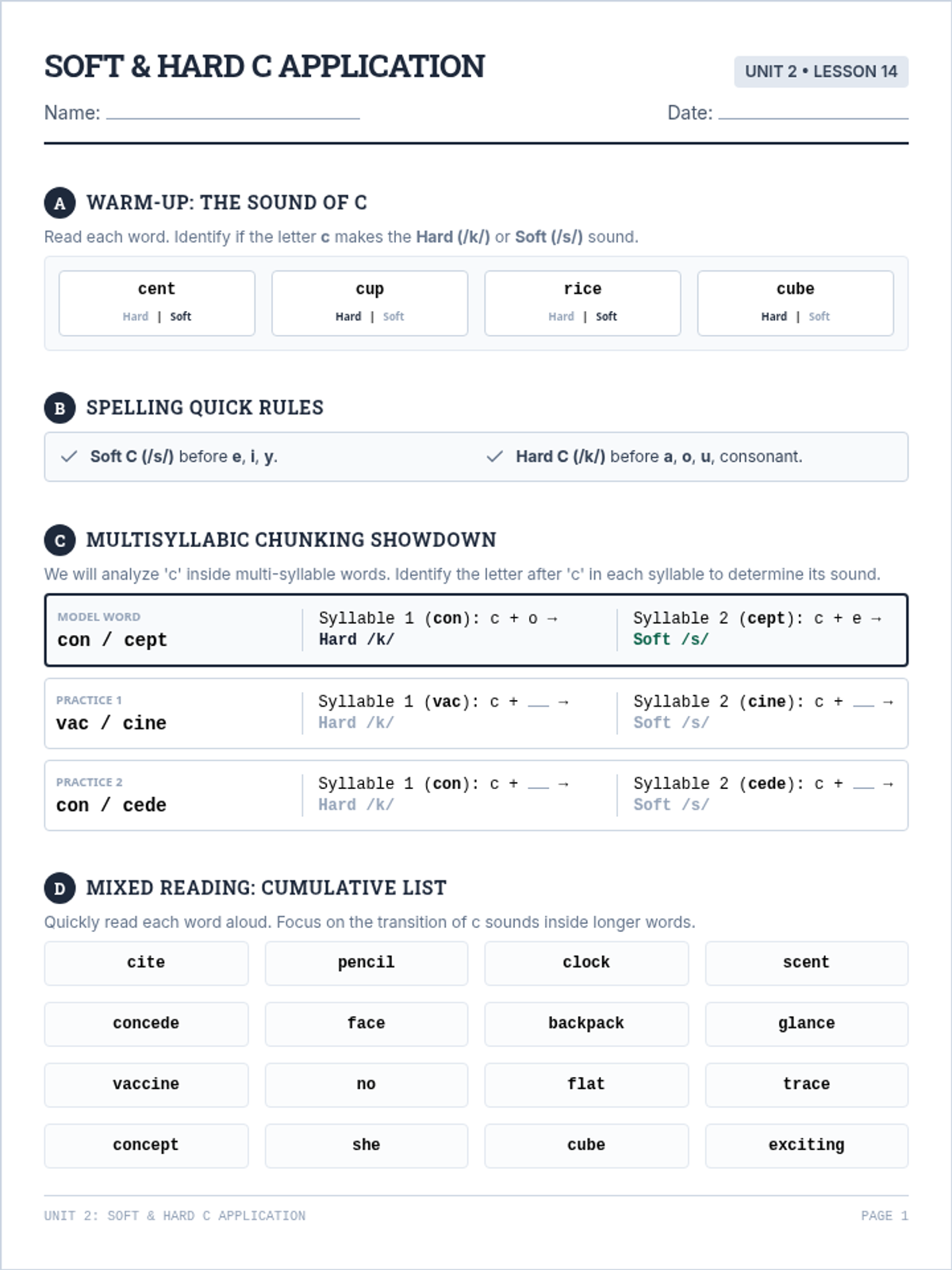
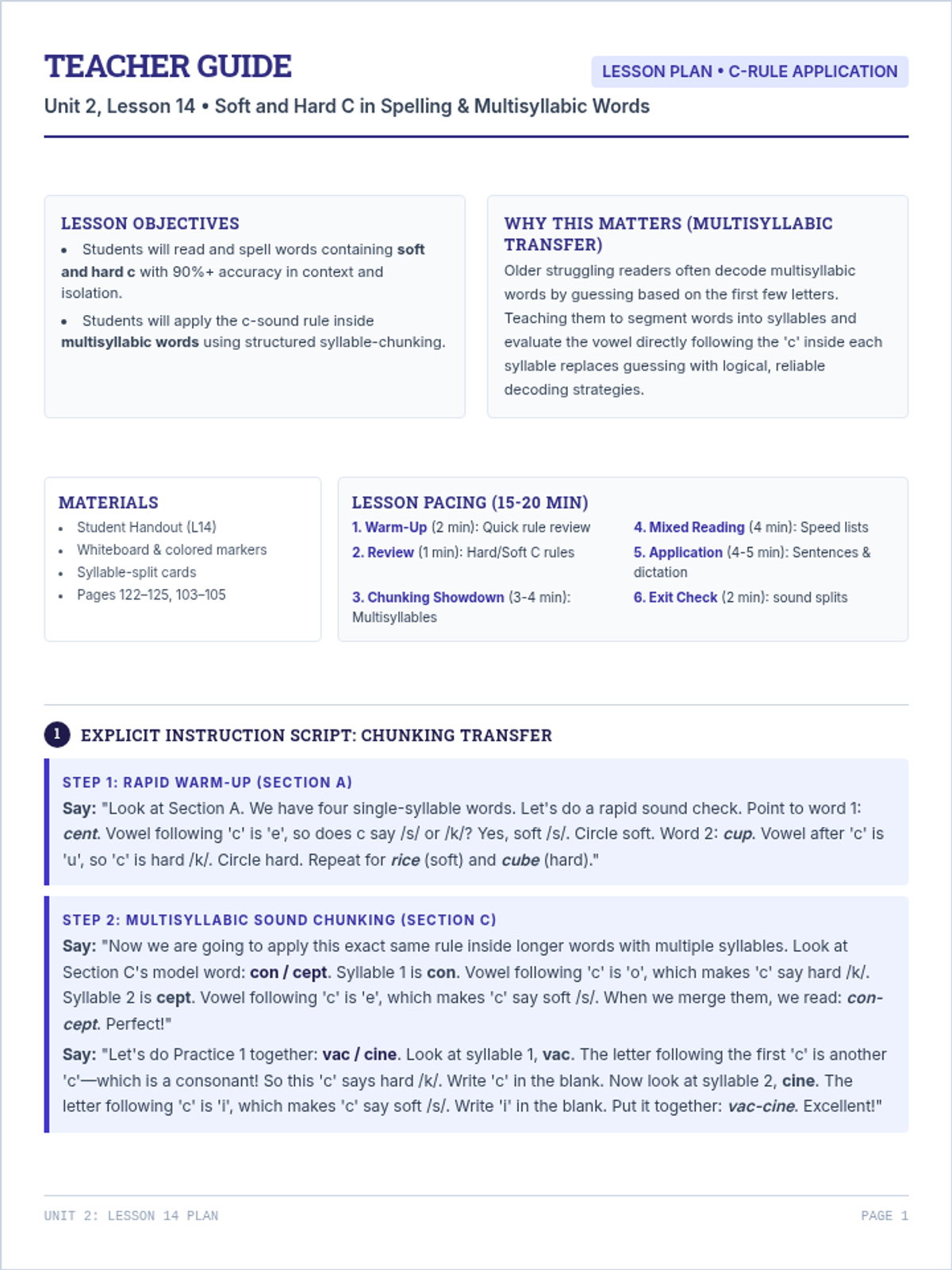
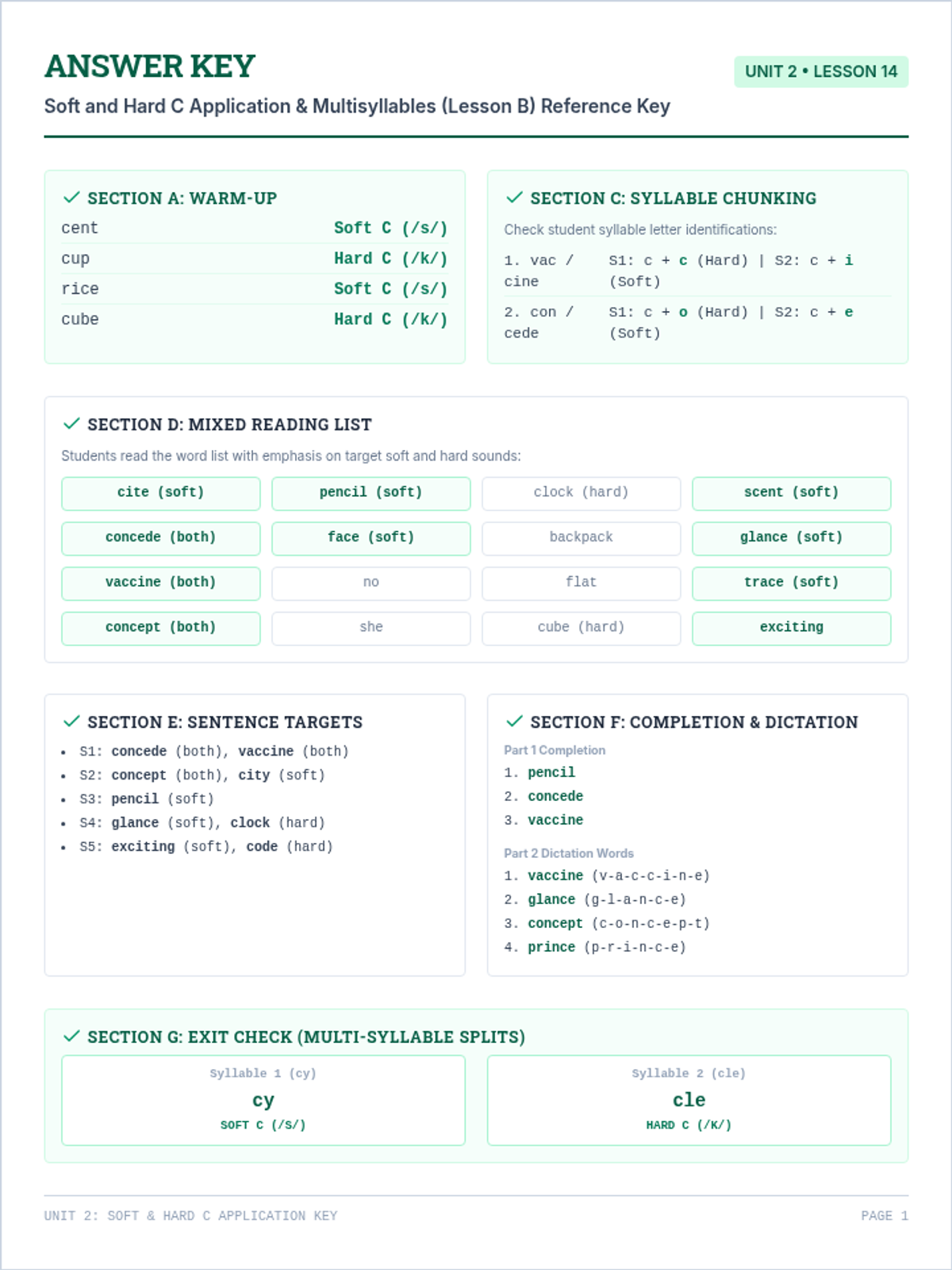
Lesson 14 of the sequence. Focuses on the application of soft and hard c rules in spelling, dictation, and multisyllabic words using structured chunking strategies. Designed for high school students.
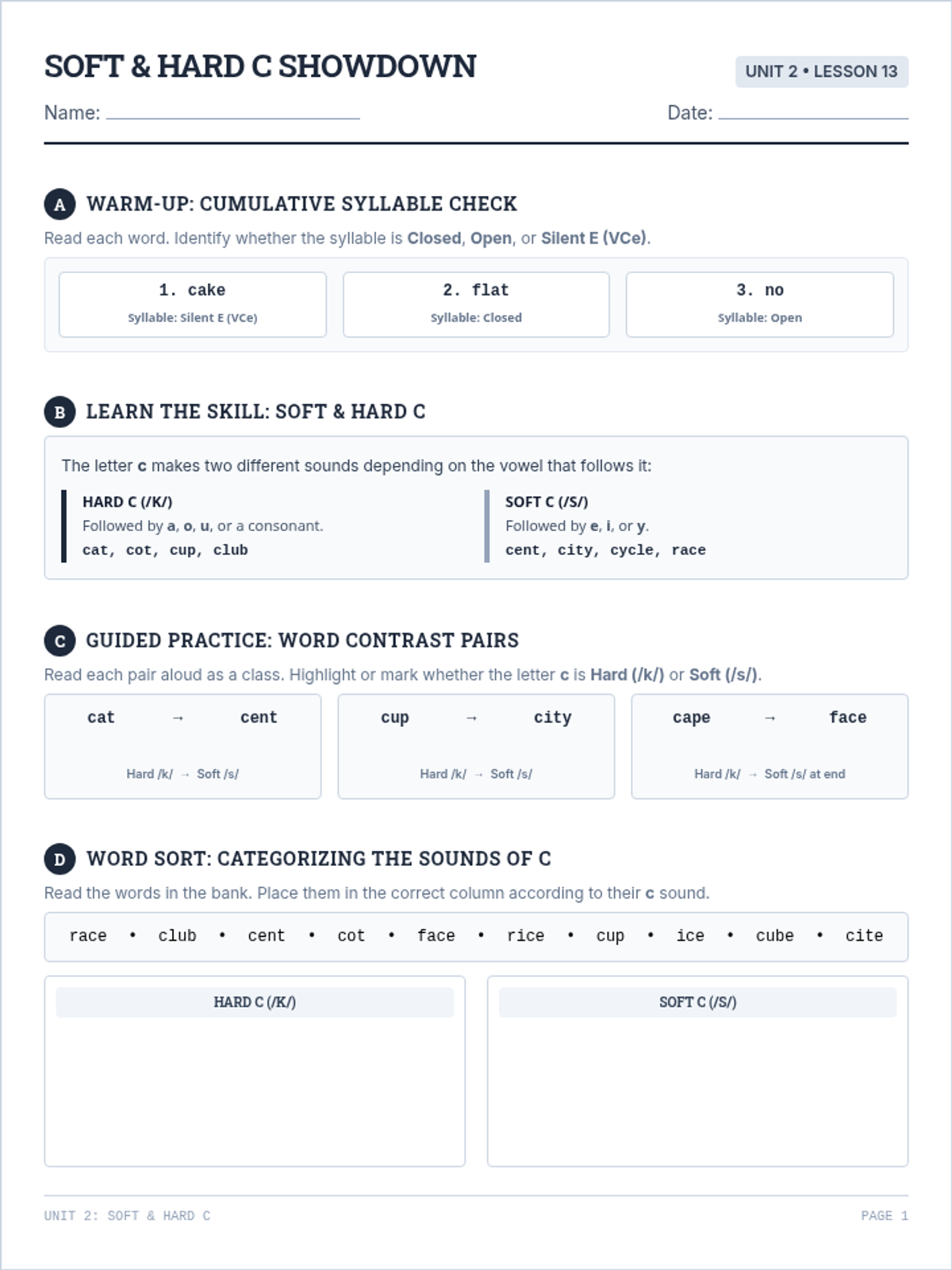
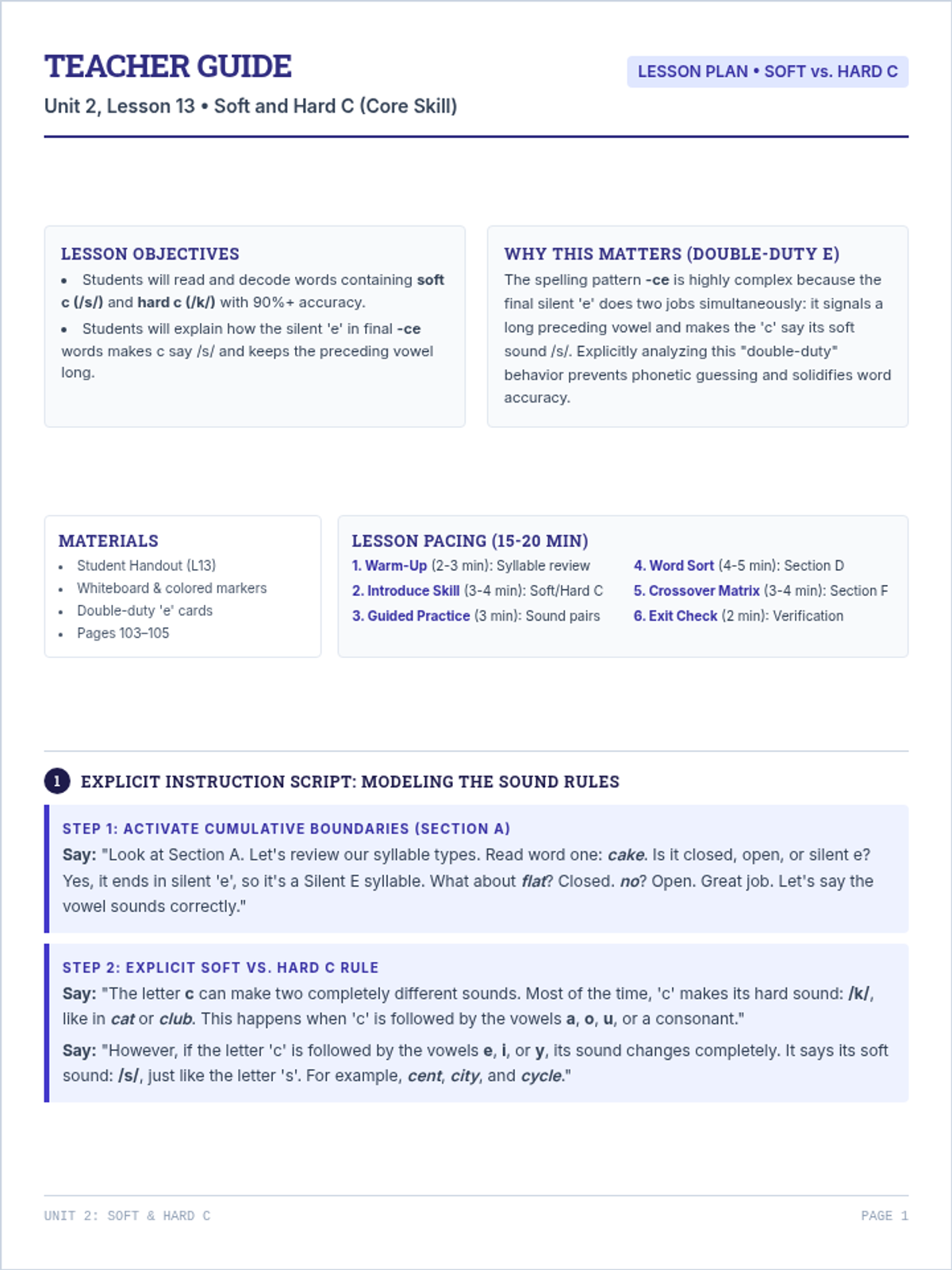
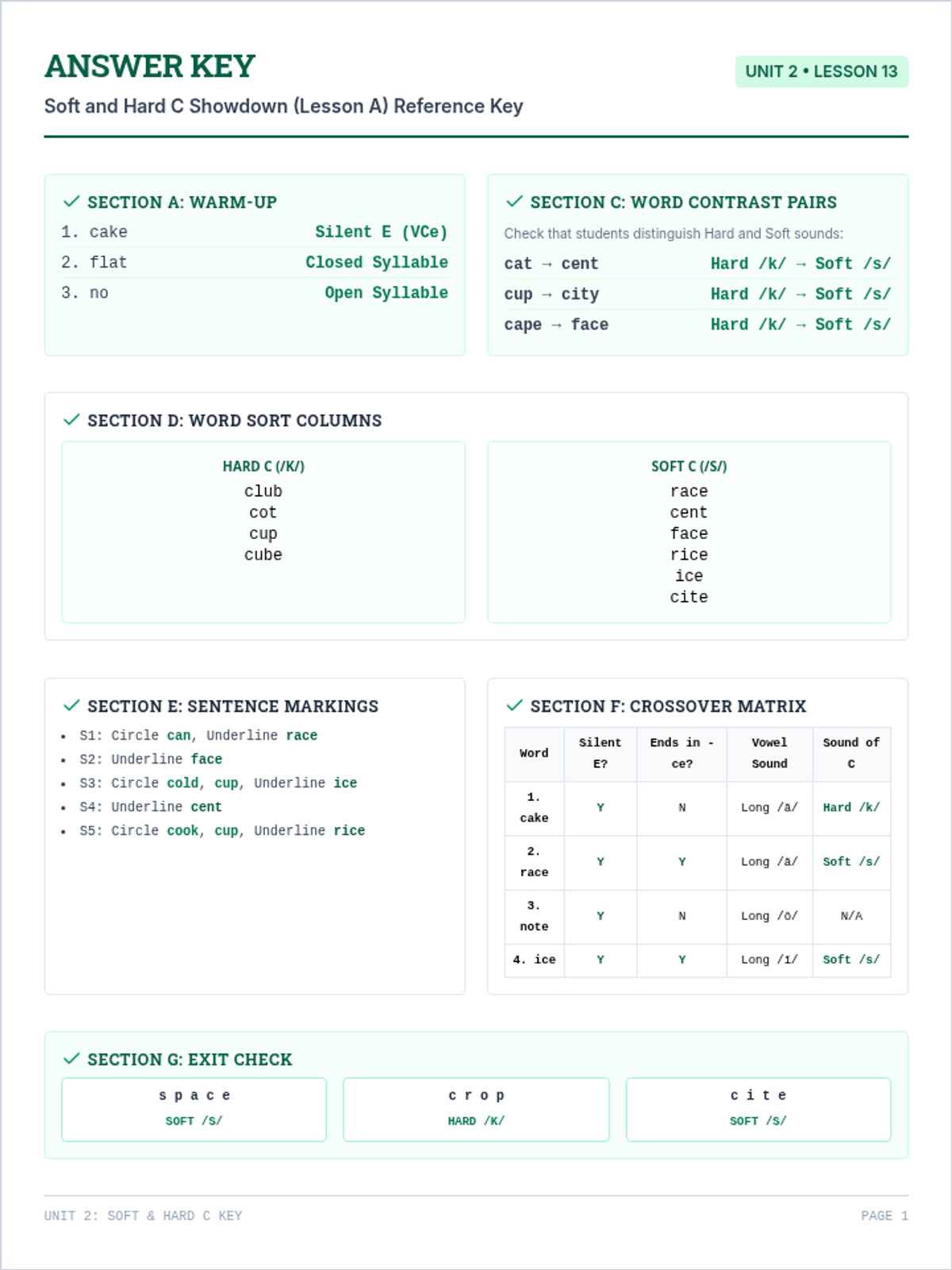
Lesson 13 of the sequence. Introduces soft c (/s/) and hard c (/k/), explicitly contrasting them, and reviews VCe syllables through words ending in -ce. Designed for high school students.
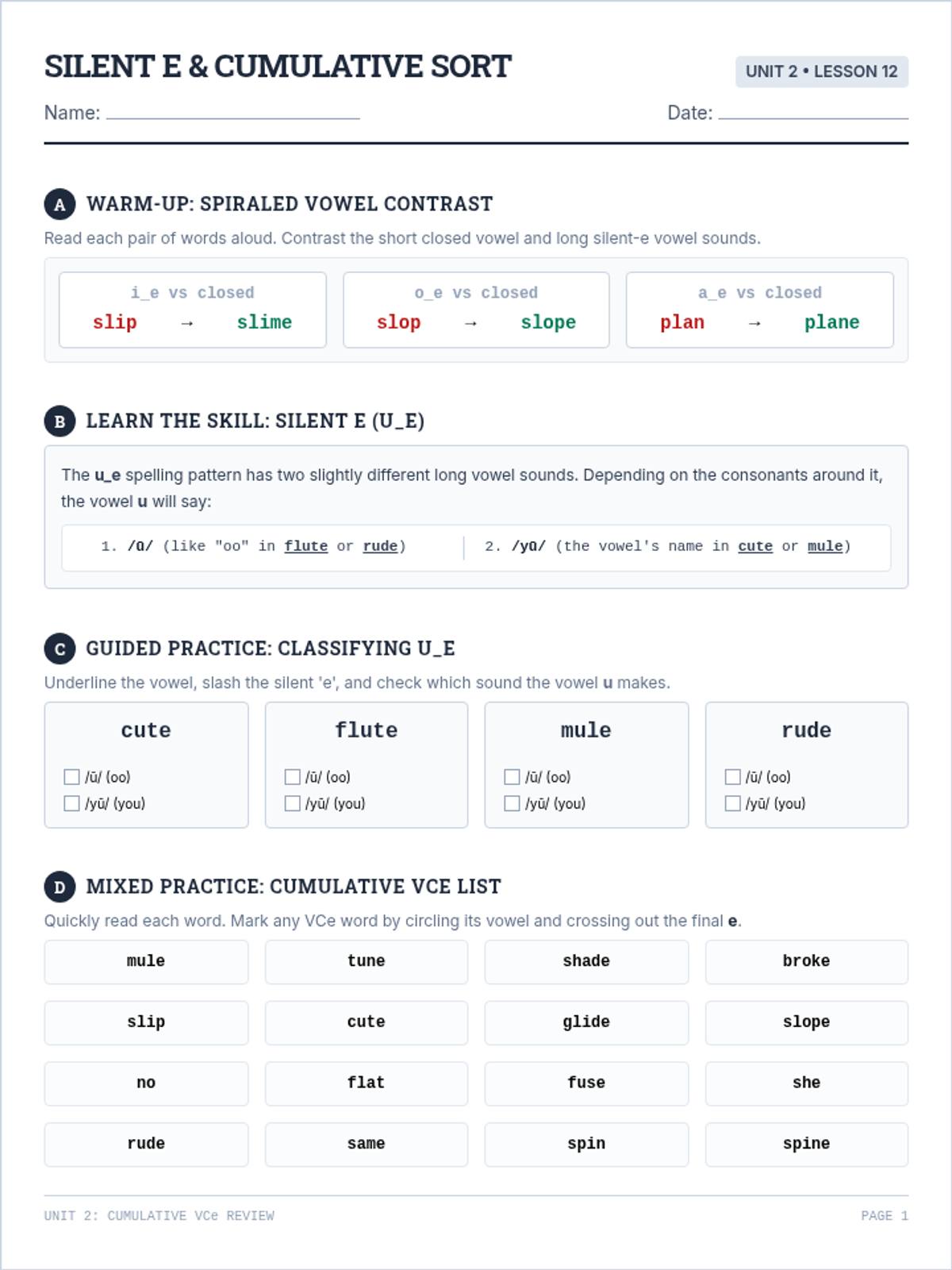
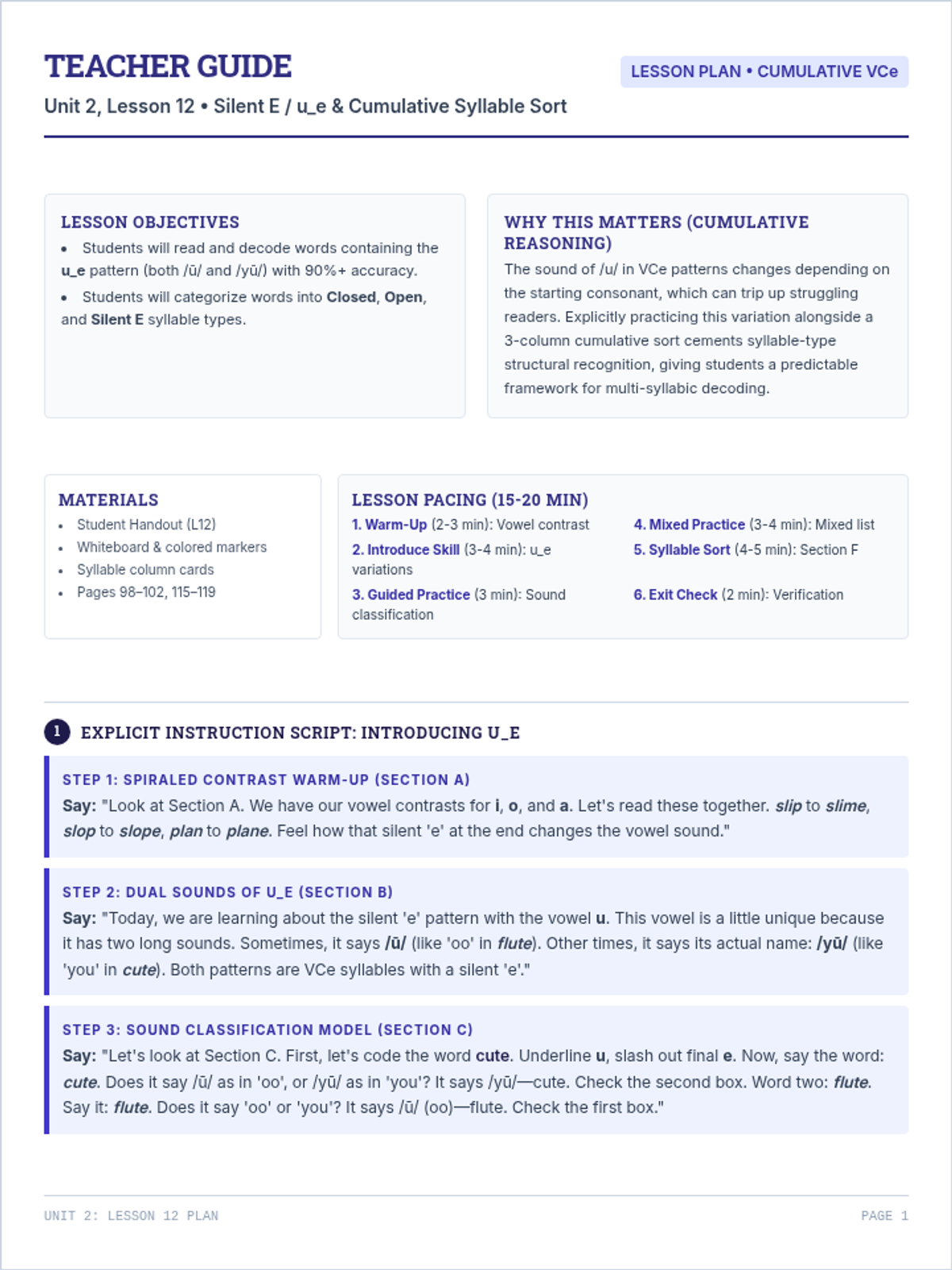
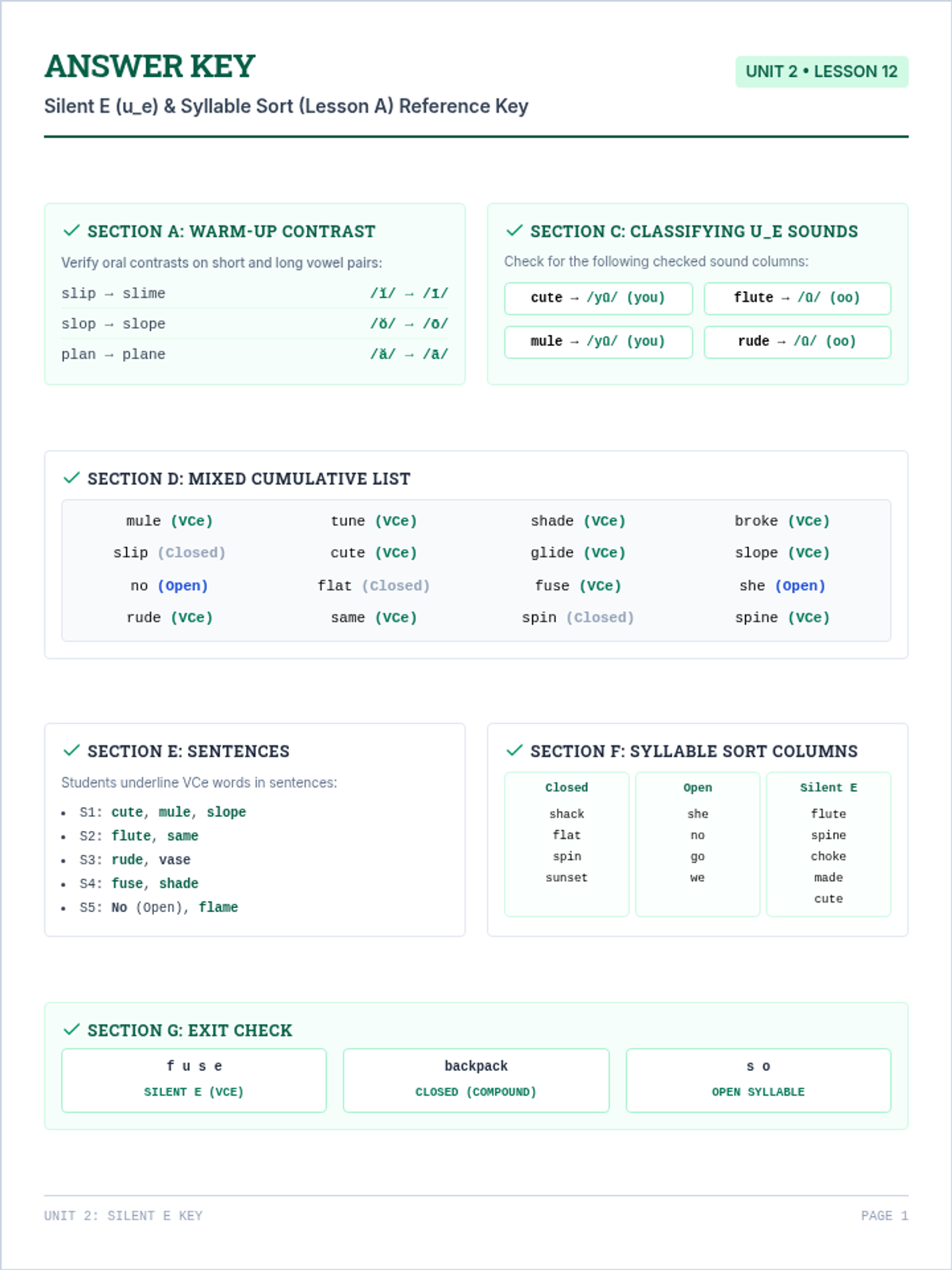
Lesson 12 of the silent e sequence. Introduces the u_e silent e pattern (including /ū/ vs /yū/ variations), reviews a_e, i_e, and o_e patterns, and finishes with a 3-column syllable-type sort. Designed for high school students.
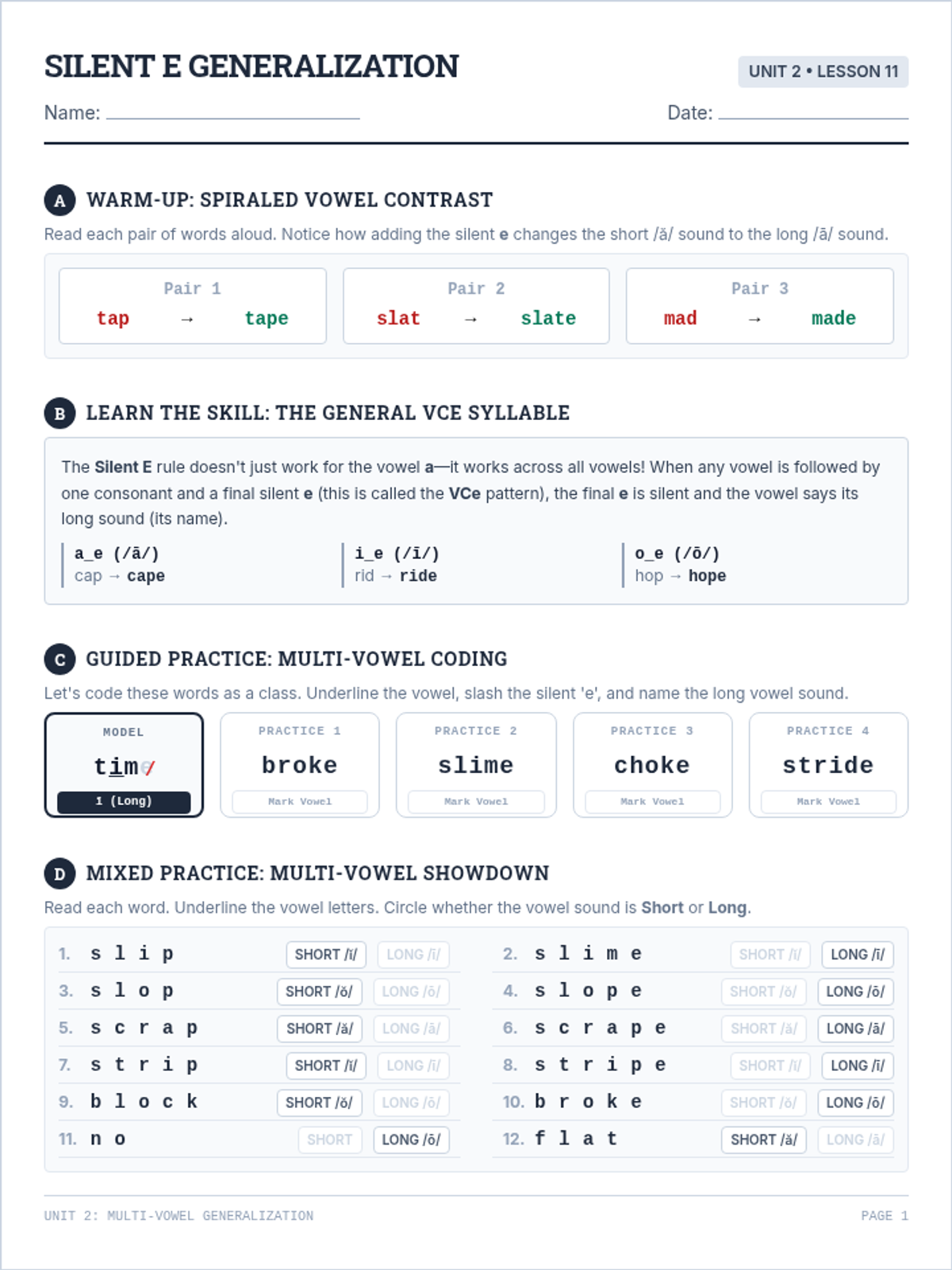
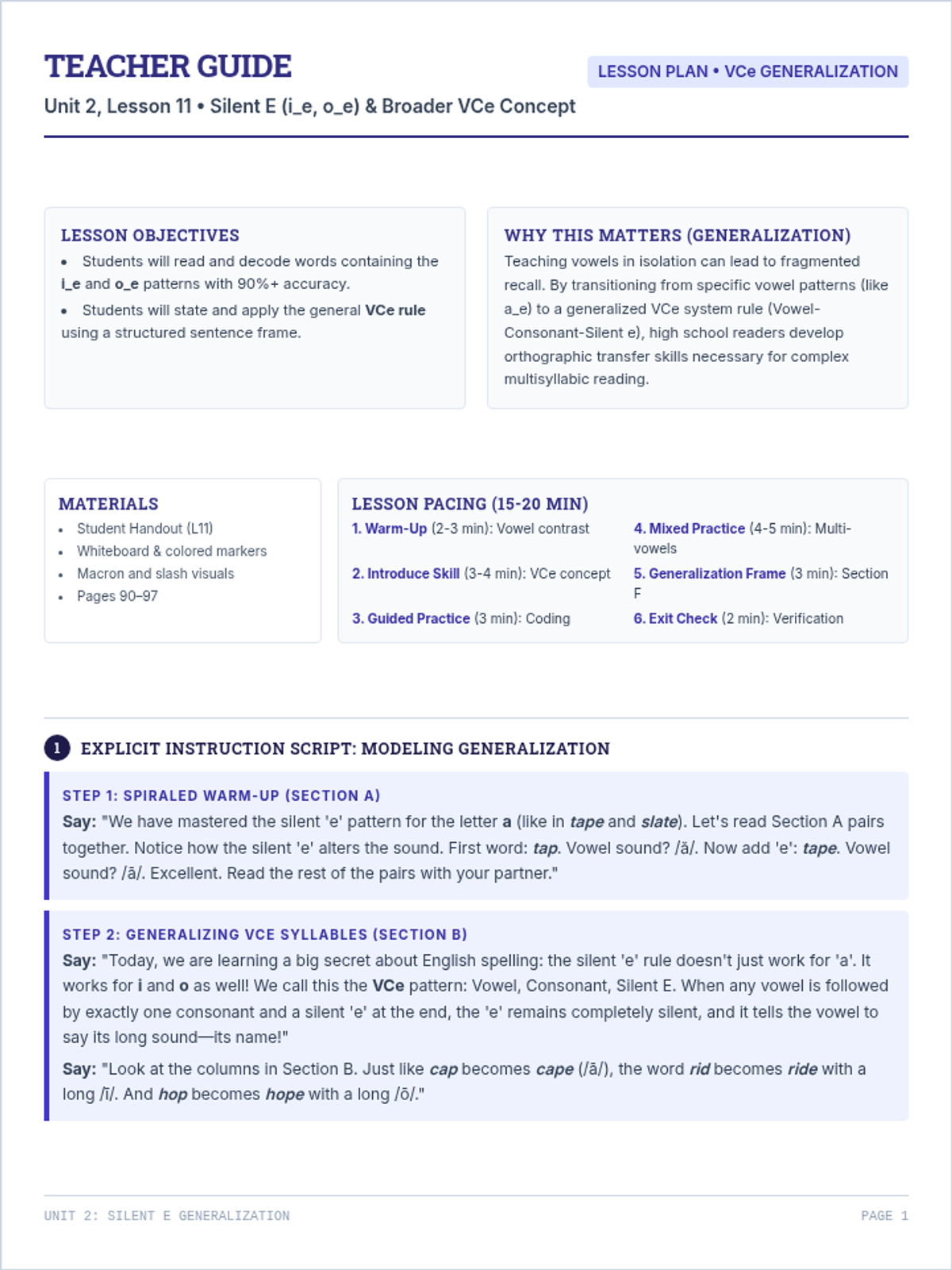
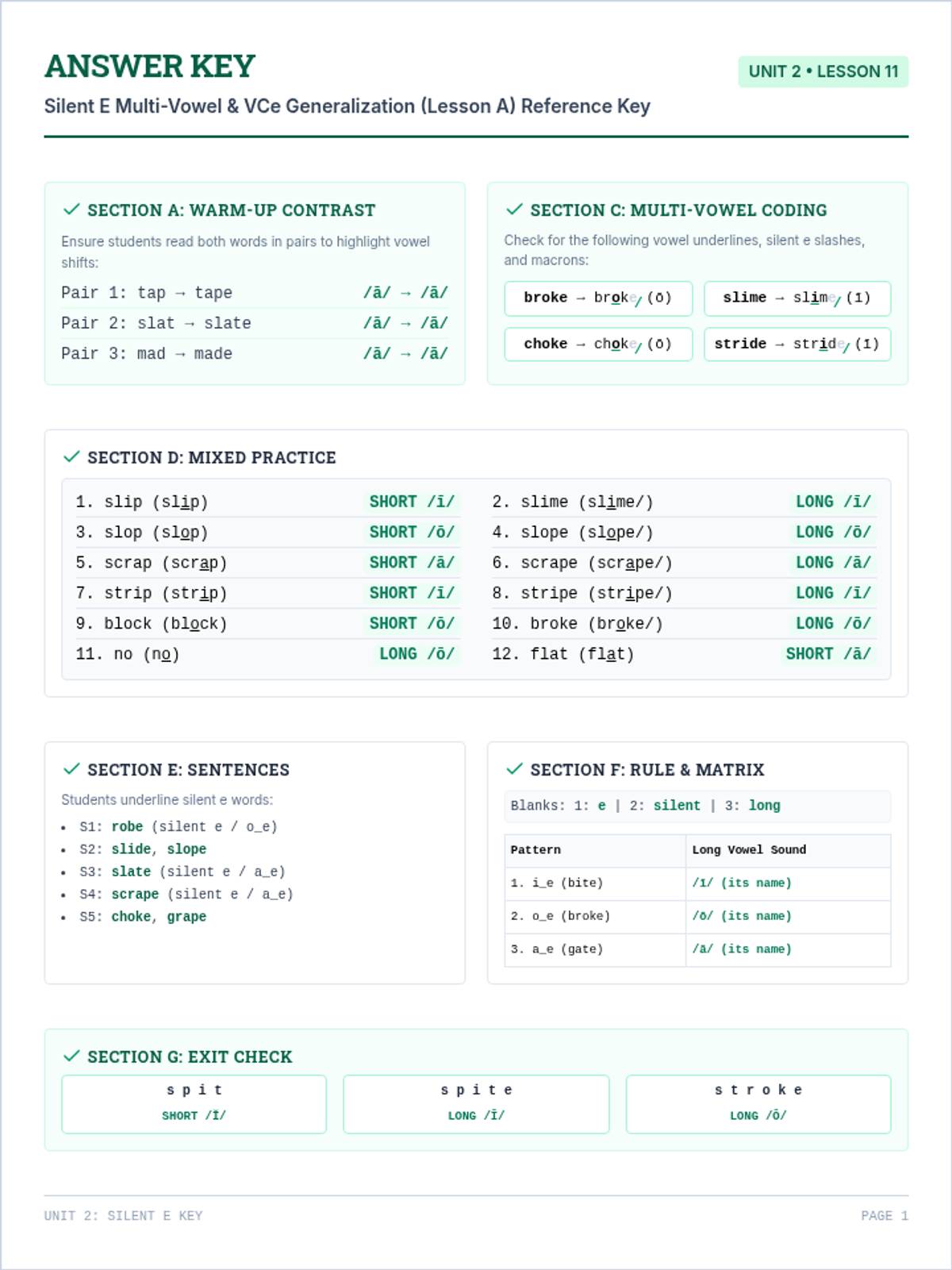
Lesson 11 of the silent e sequence. Introduces the i_e and o_e patterns, spirals a_e, and guides students to articulate the general VCe syllable rule using a structured sentence frame. Designed for high school students reading below grade level.
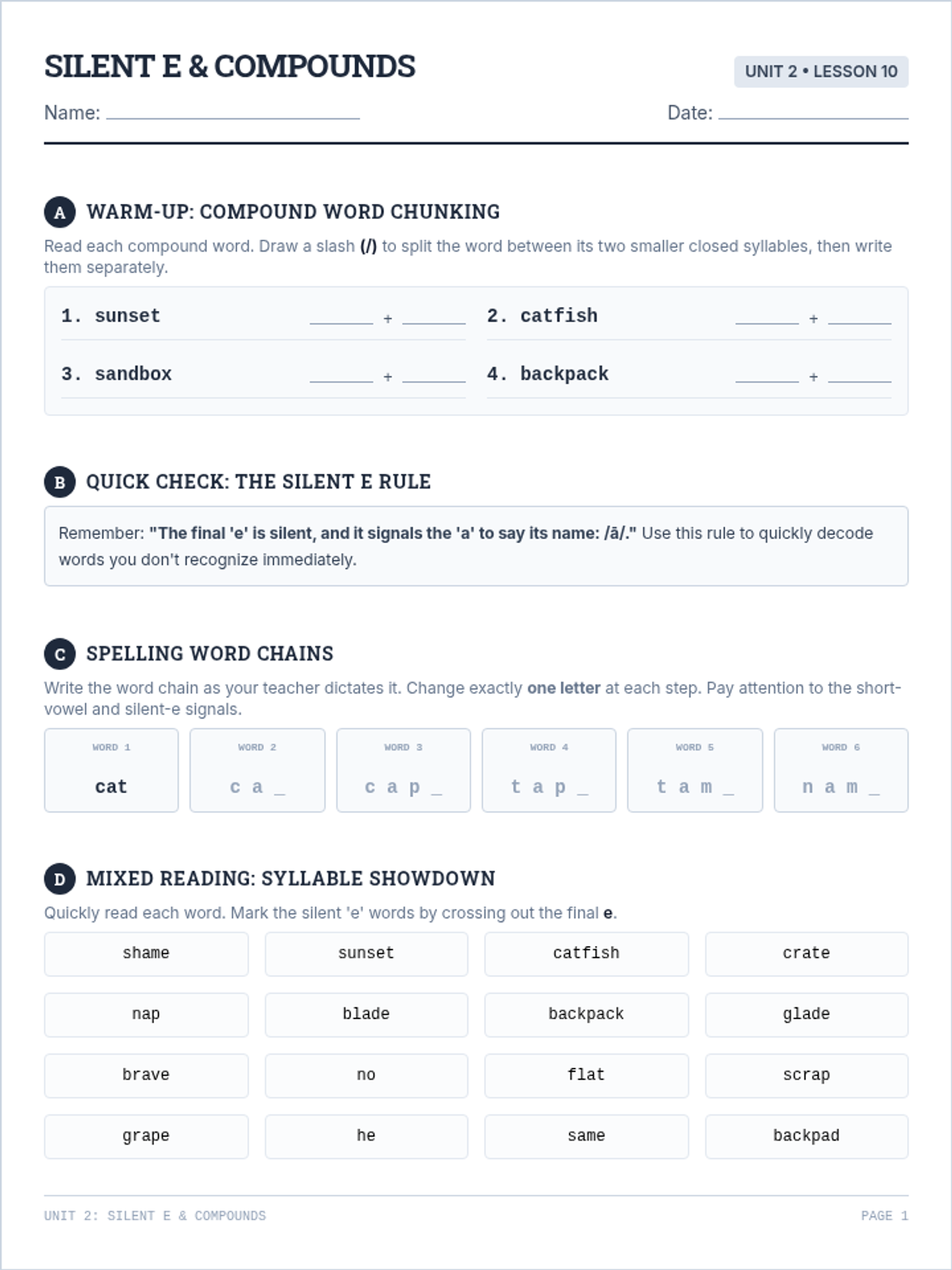
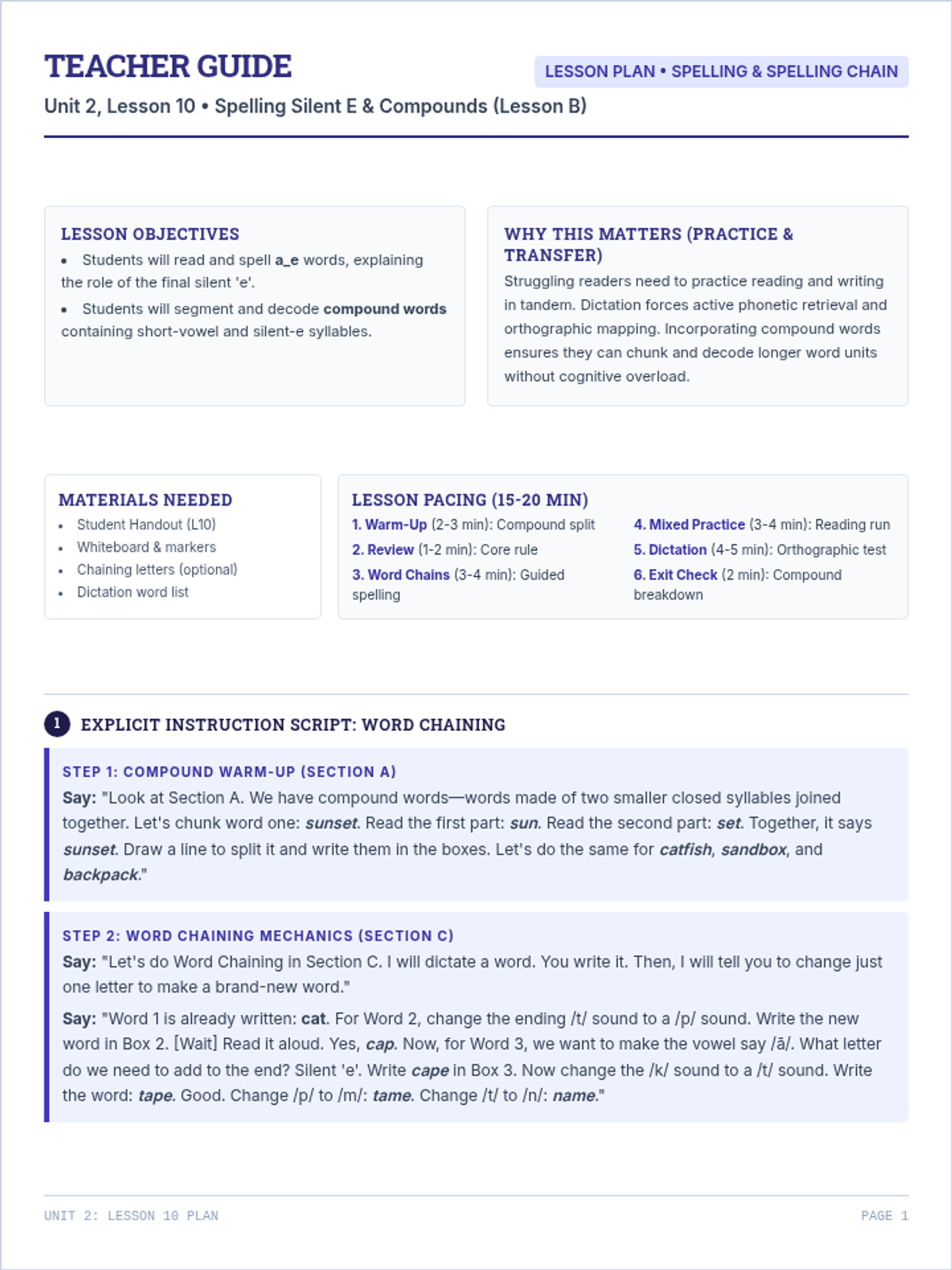
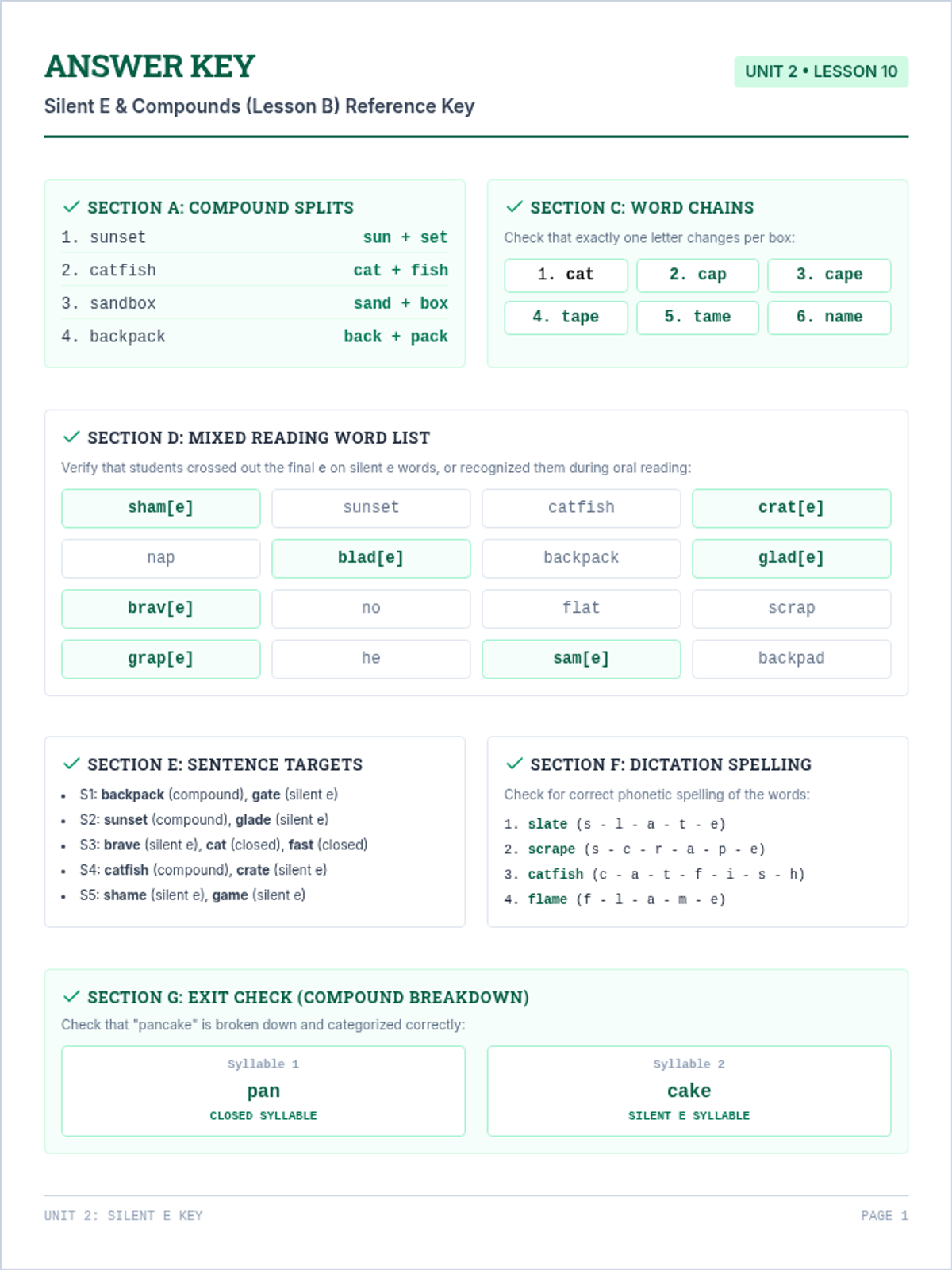
Lesson B of the silent e sequence. Students practice reading and spelling a_e words with less direct explanation, featuring compound word chunking in the warm-up, oral spelling chains, and a dictation assessment.
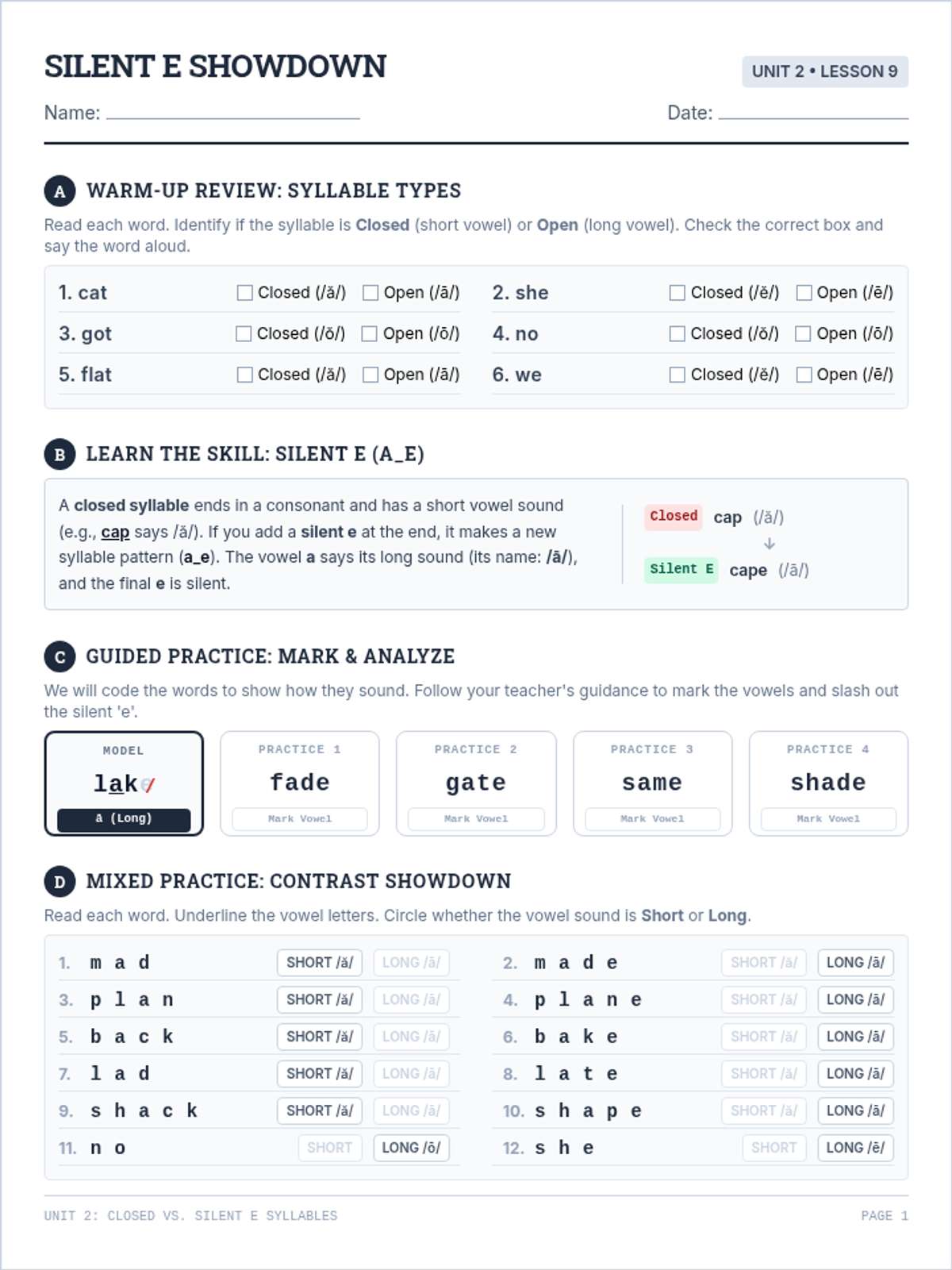
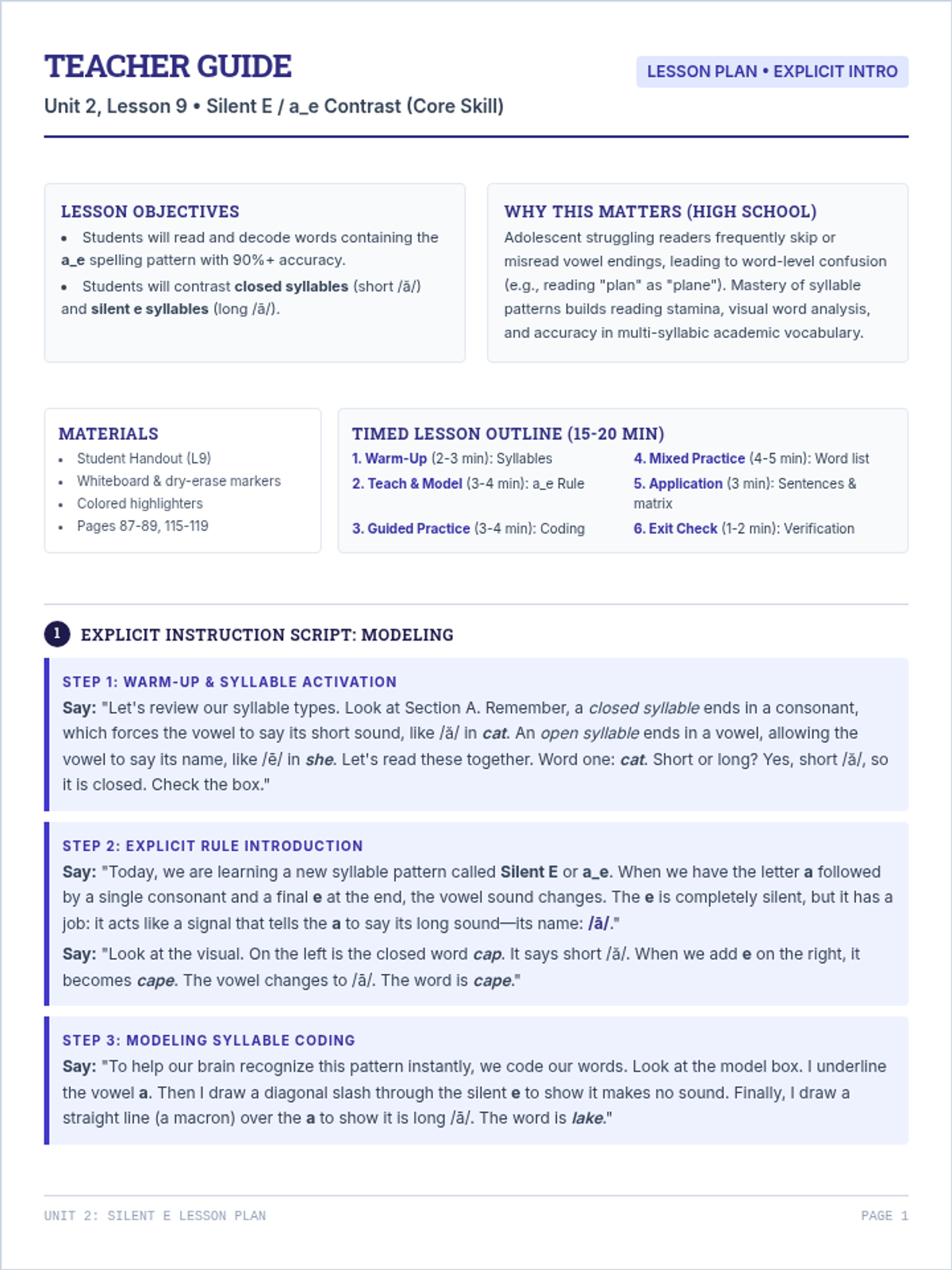
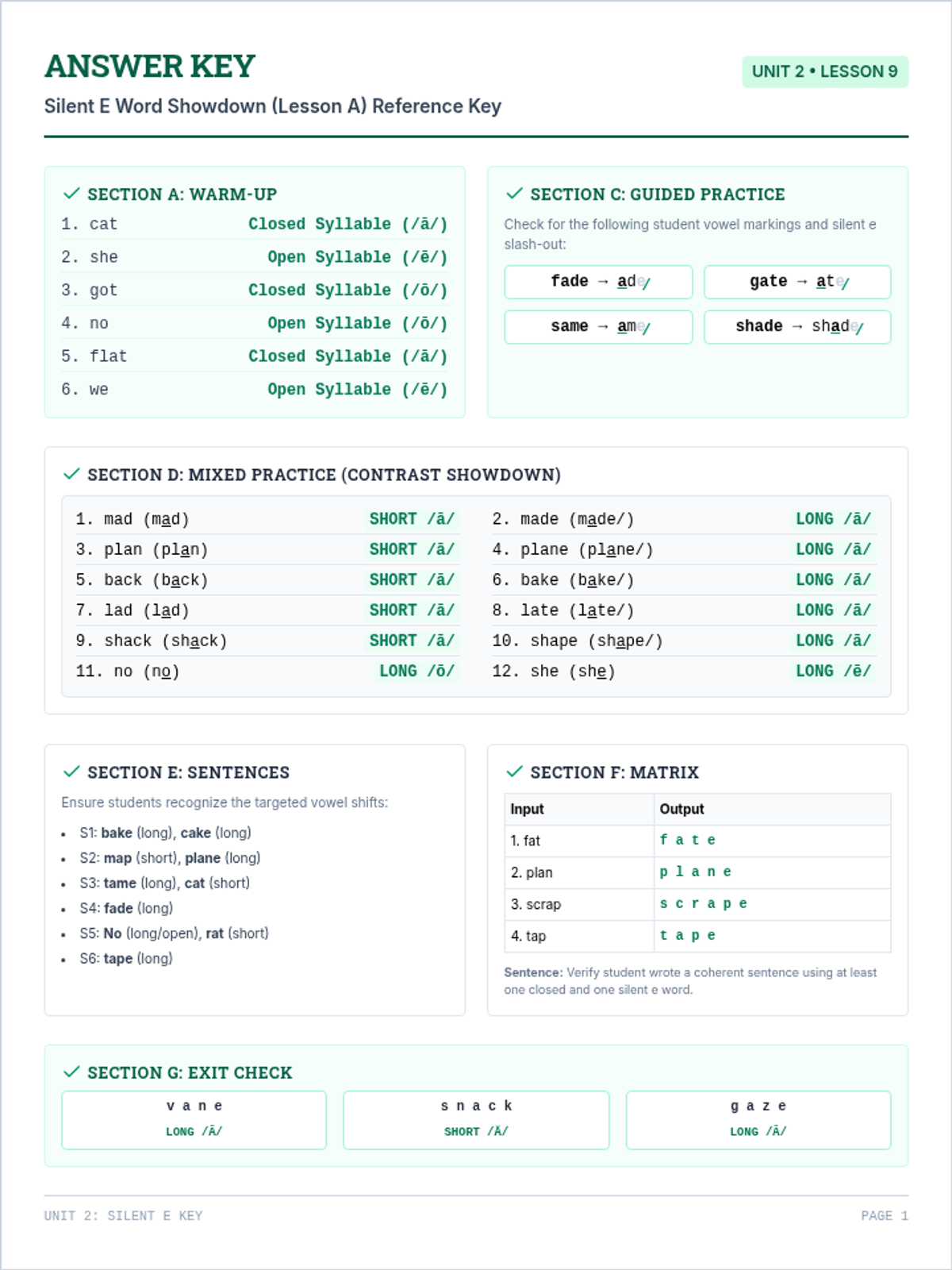
A structured reading intervention lesson introducing the silent e (a_e) spelling pattern and contrasting it with short-vowel closed syllables. Designed with explicit instruction and highly scaffolded practice for high school students reading below grade level.
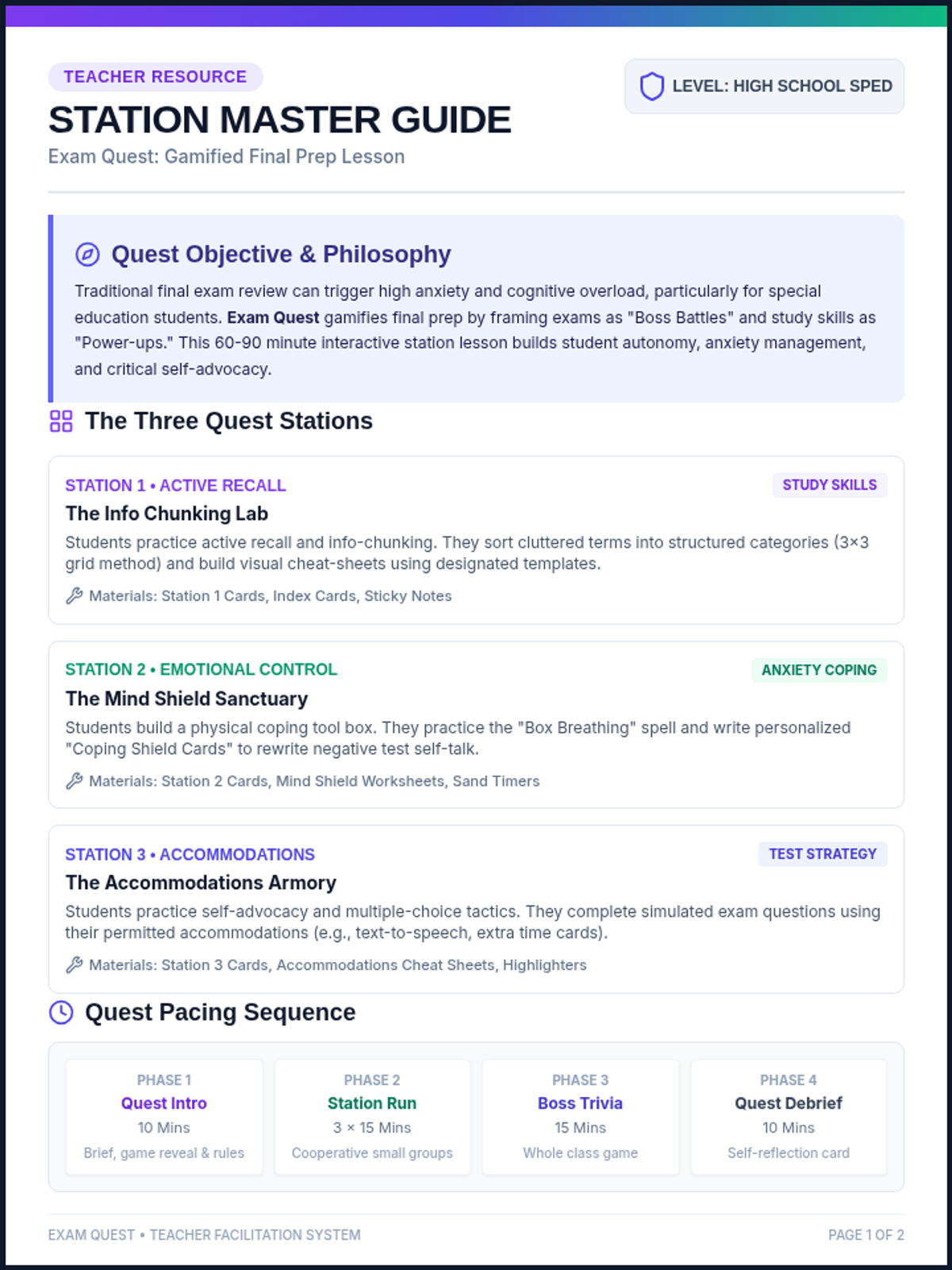
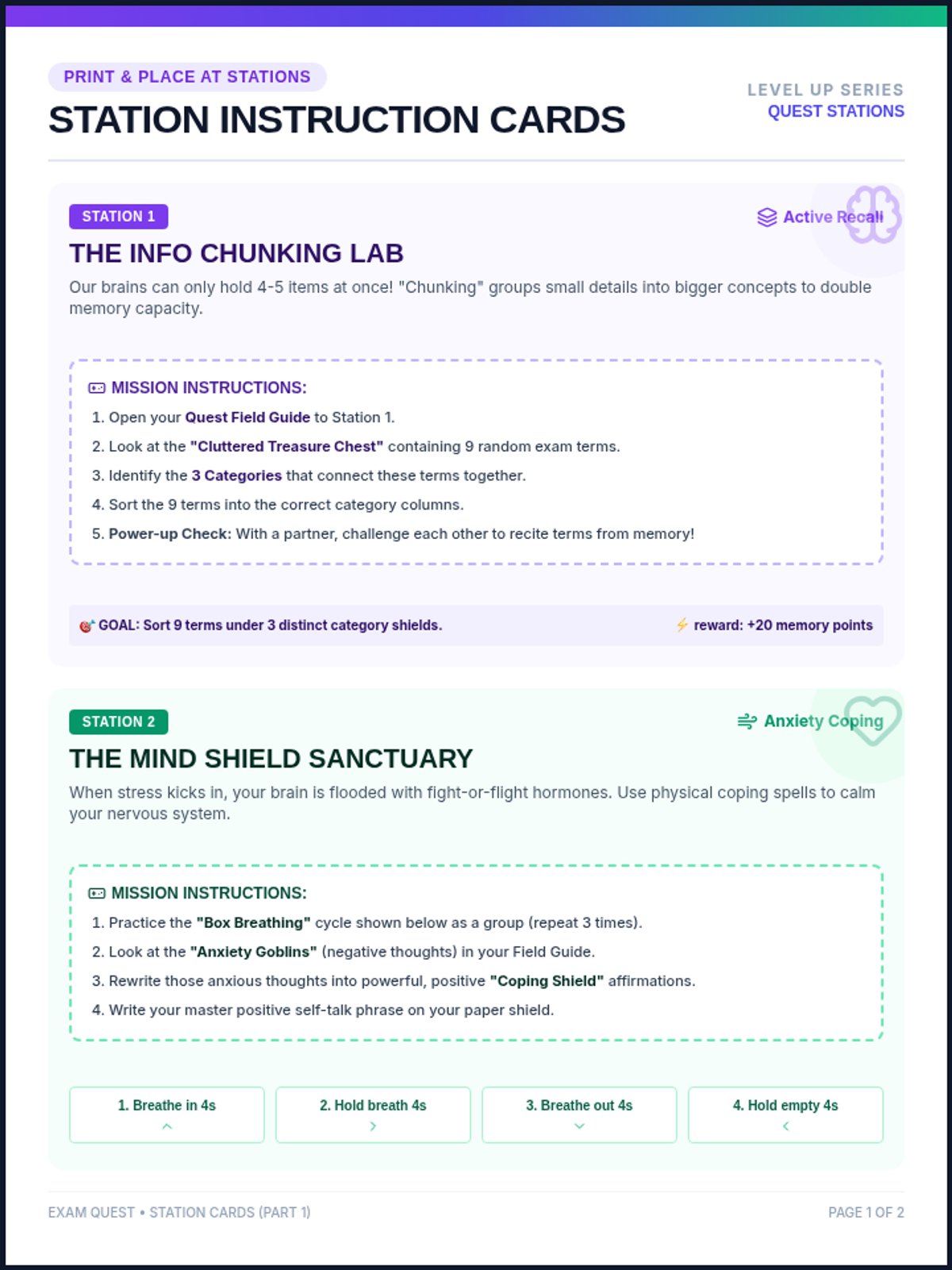
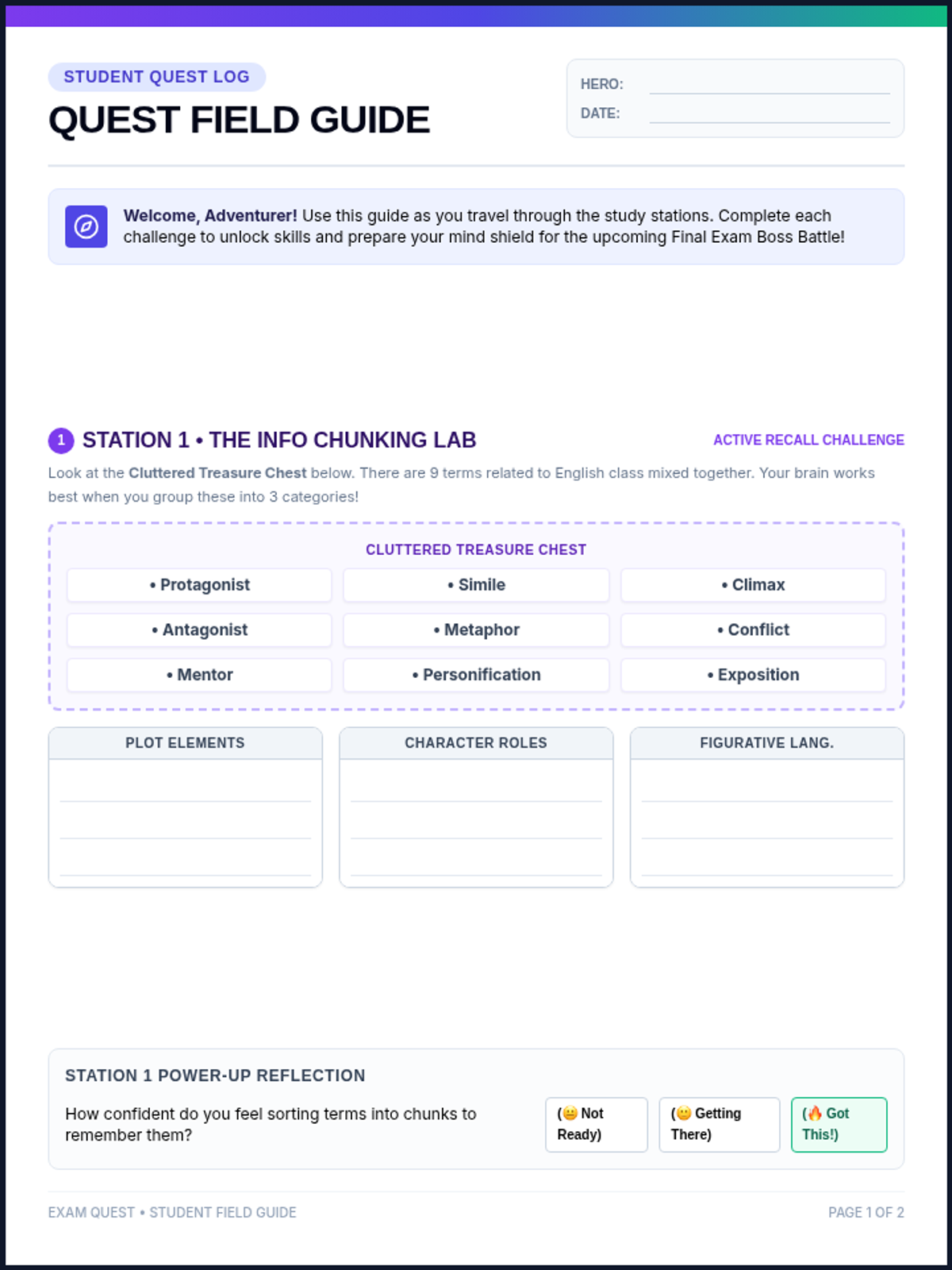
A hands-on, highly supportive final exam preparation lesson designed for special education high school students. It uses a gamified 'level up' adventure theme to teach study organization, anxiety management, and effective accommodations use across interactive study stations and cooperative review activities.
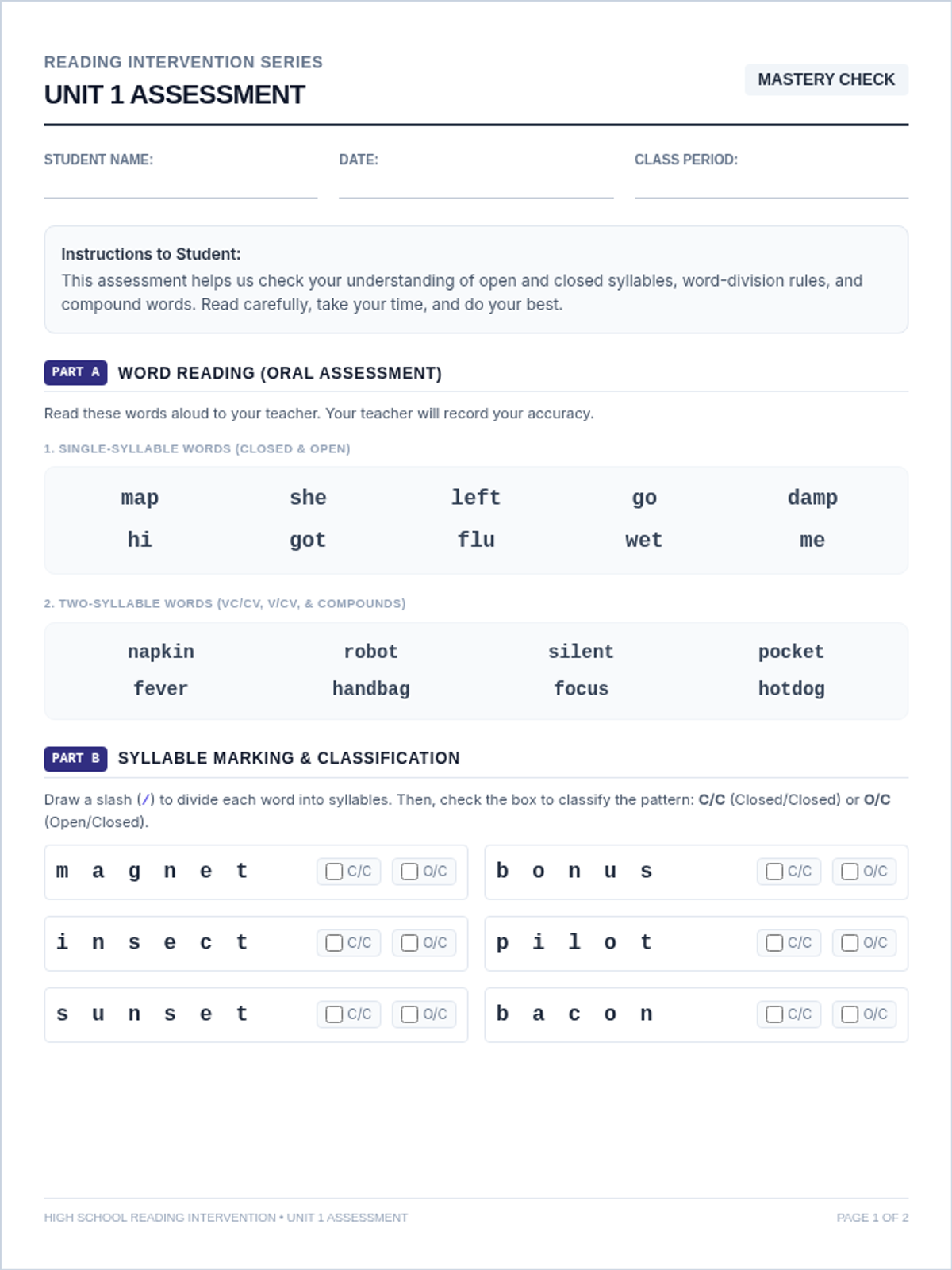
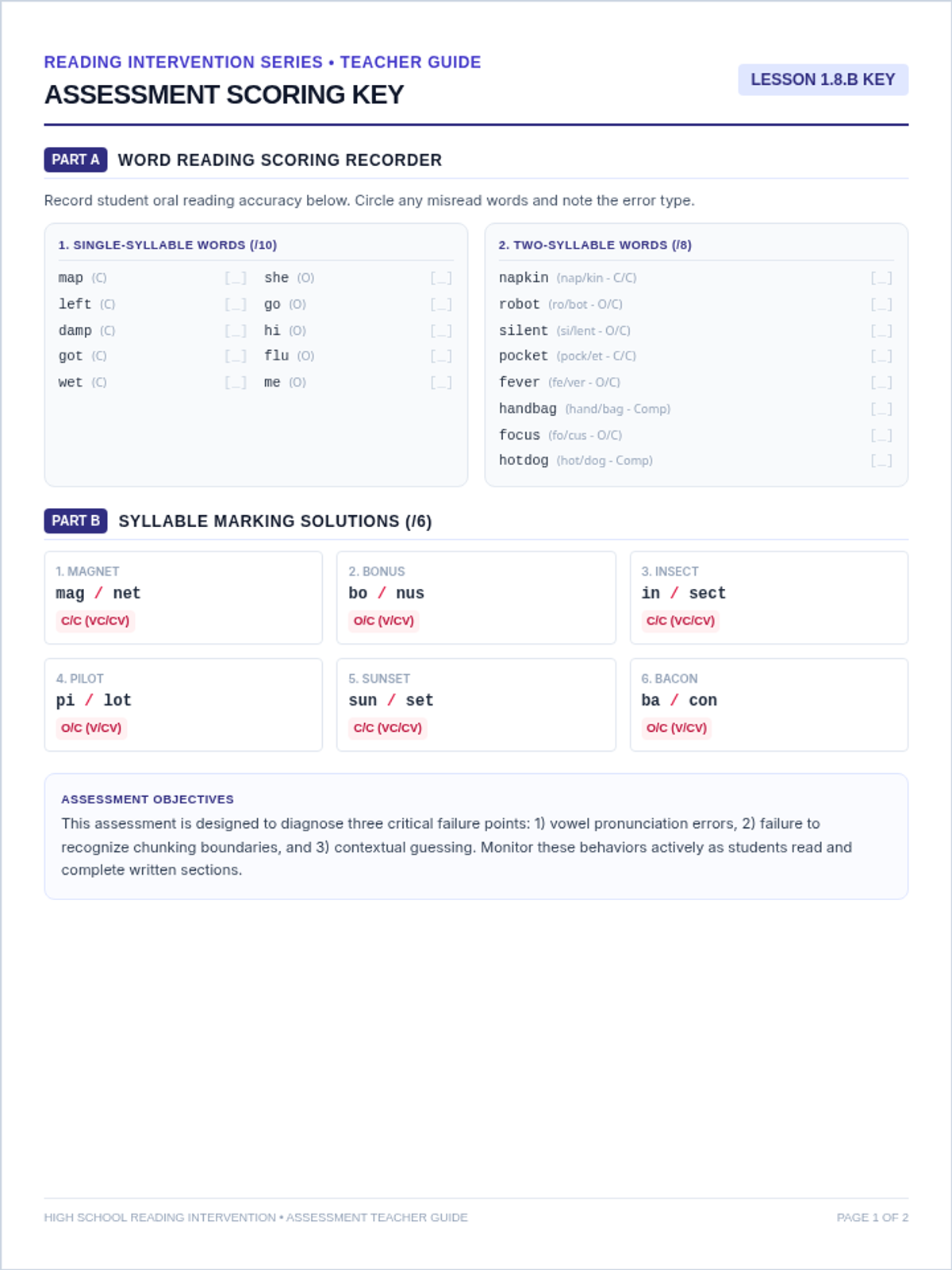
A formal end-of-unit mastery check assessing student decoding of closed and open syllables, multisyllabic word division patterns (VC/CV and V/CV), and compound word recognition in isolation and context.