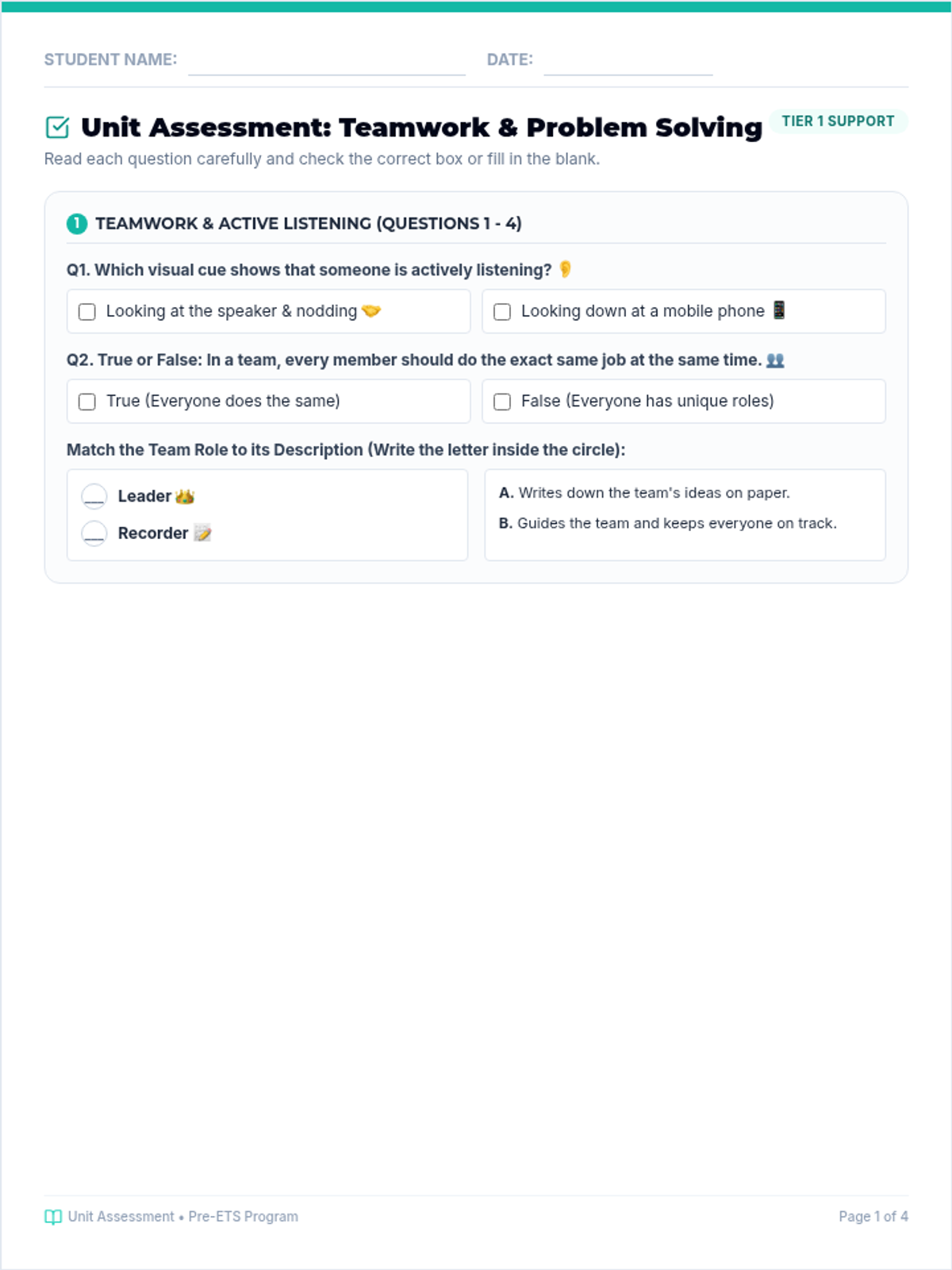
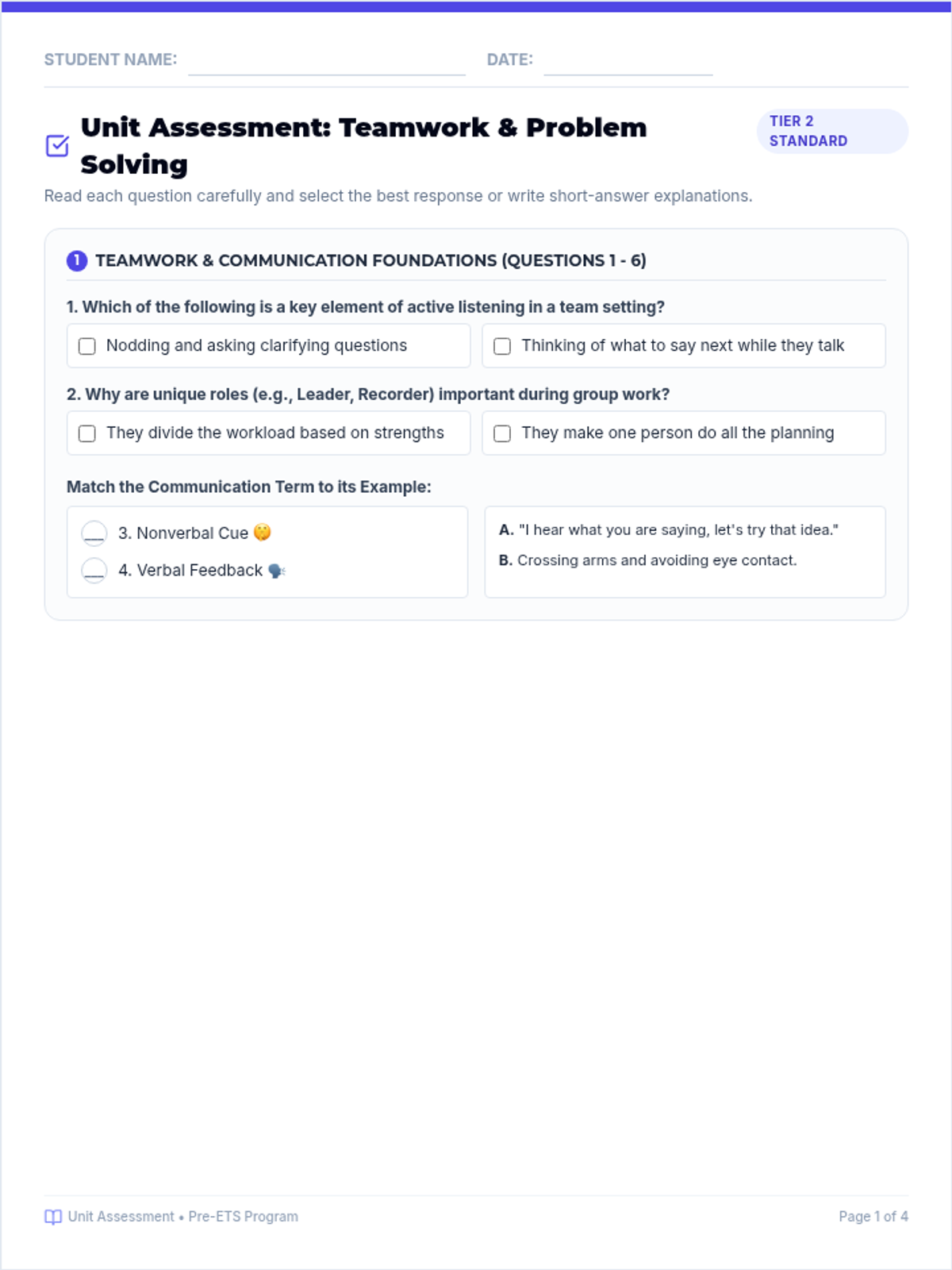
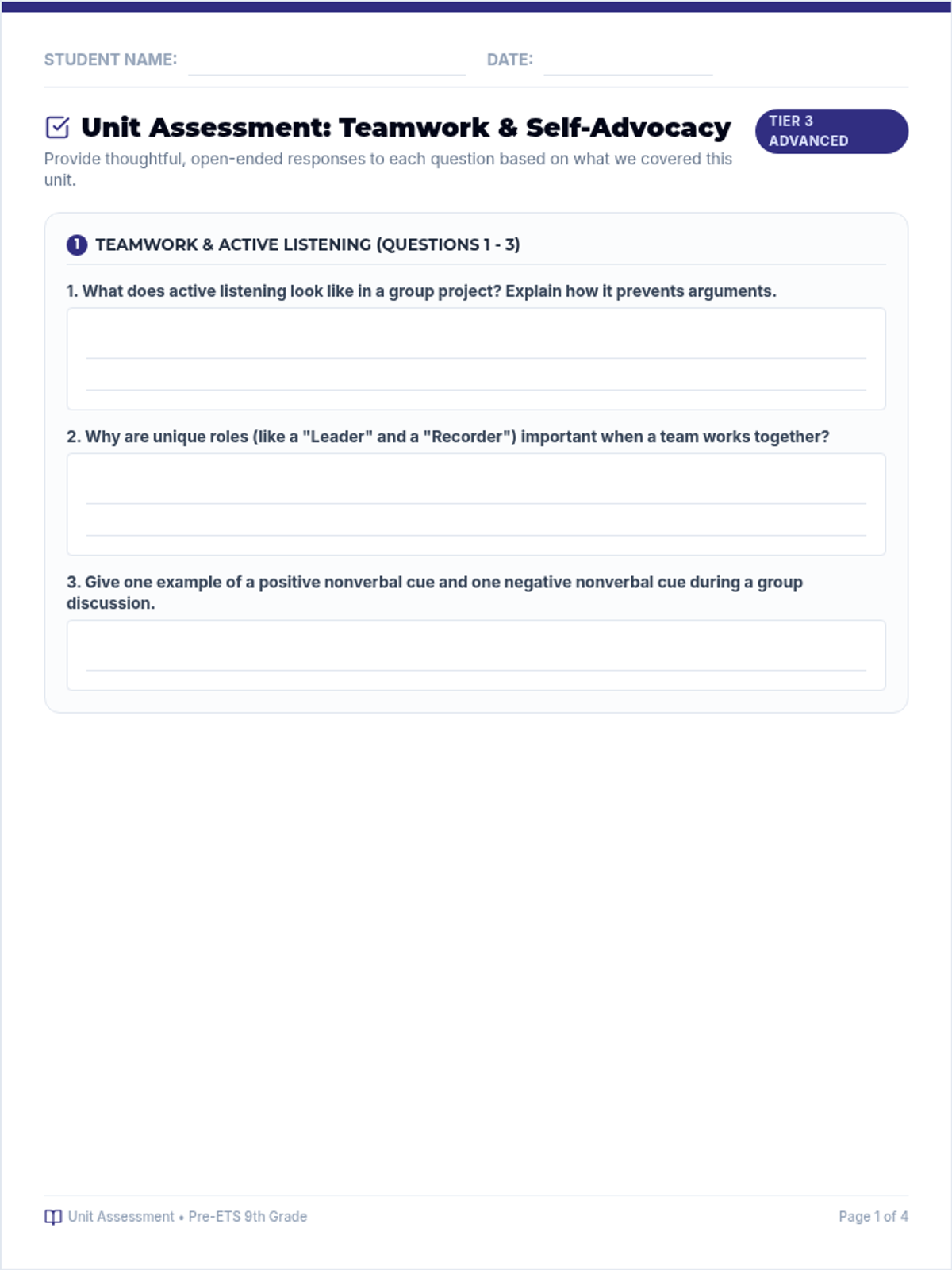
A formal end-of-unit mastery check assessing student decoding of closed and open syllables, multisyllabic word division patterns (VC/CV and V/CV), and compound word recognition in isolation and context.
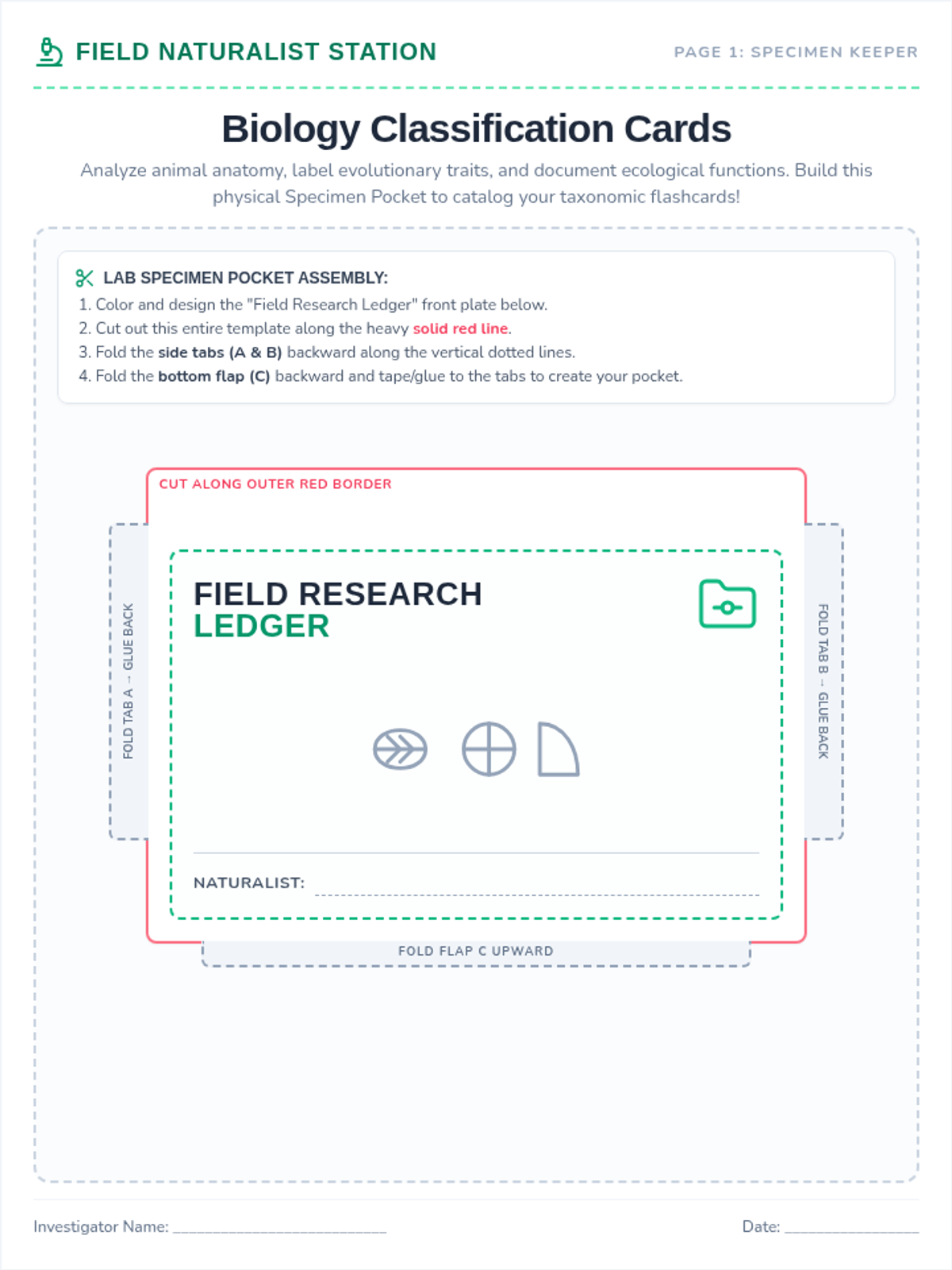
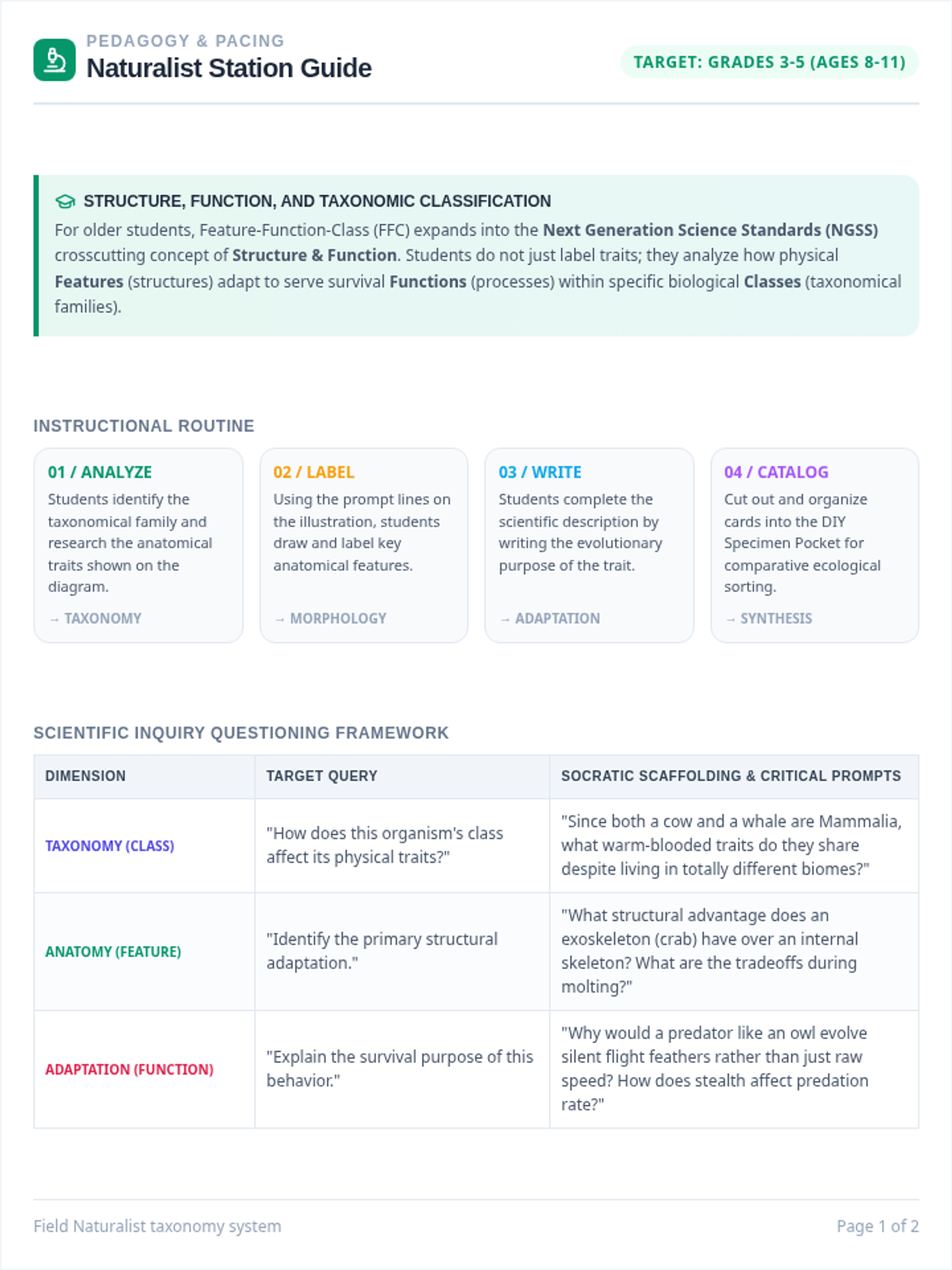
A comprehensive early childhood vocabulary and cognitive sorting system focused on Feature-Function-Class (FFC) identification. Students trace animal names, color visual outlines, and sort critters by their habitats, physical features, and biological behaviors.
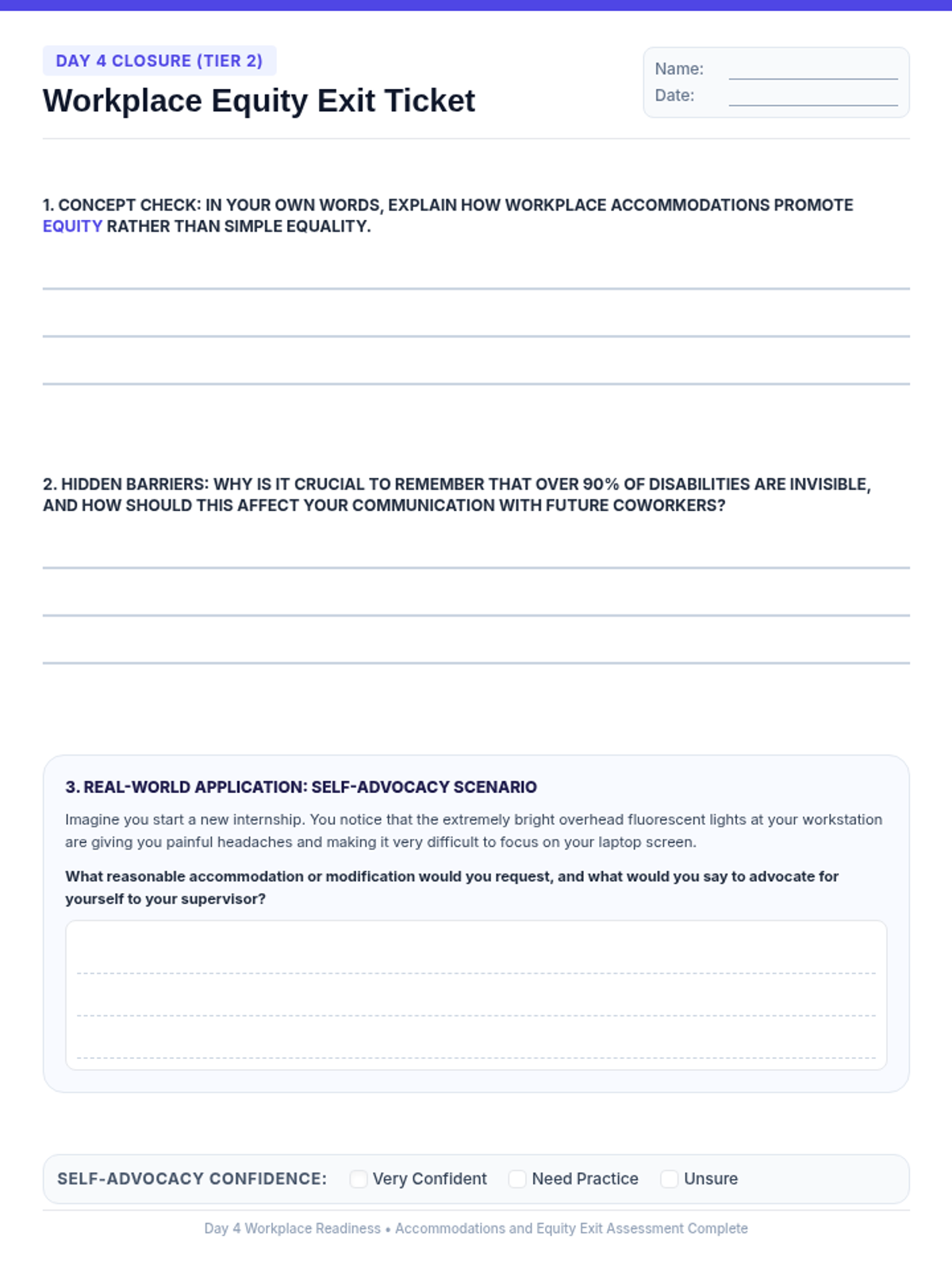
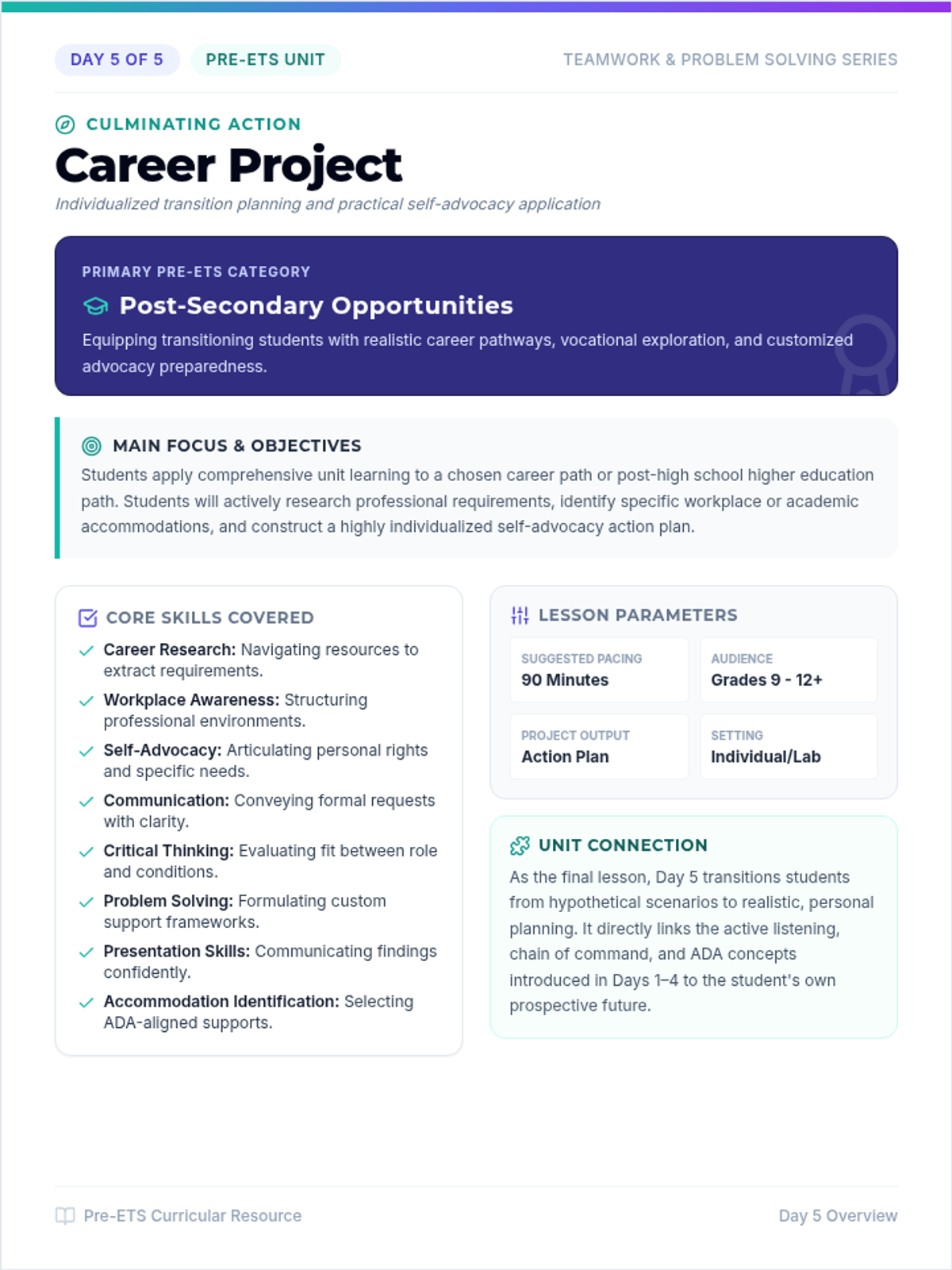
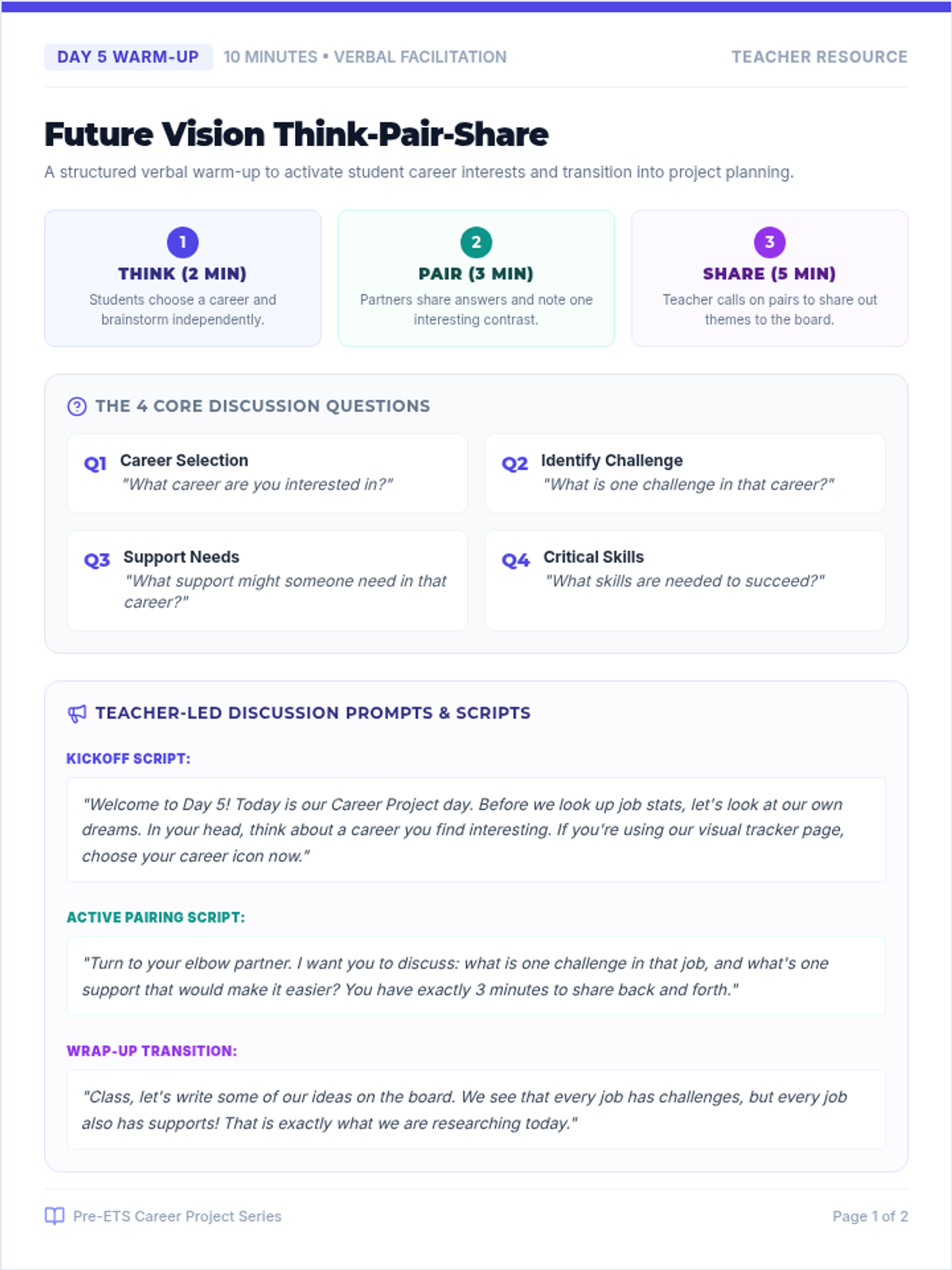
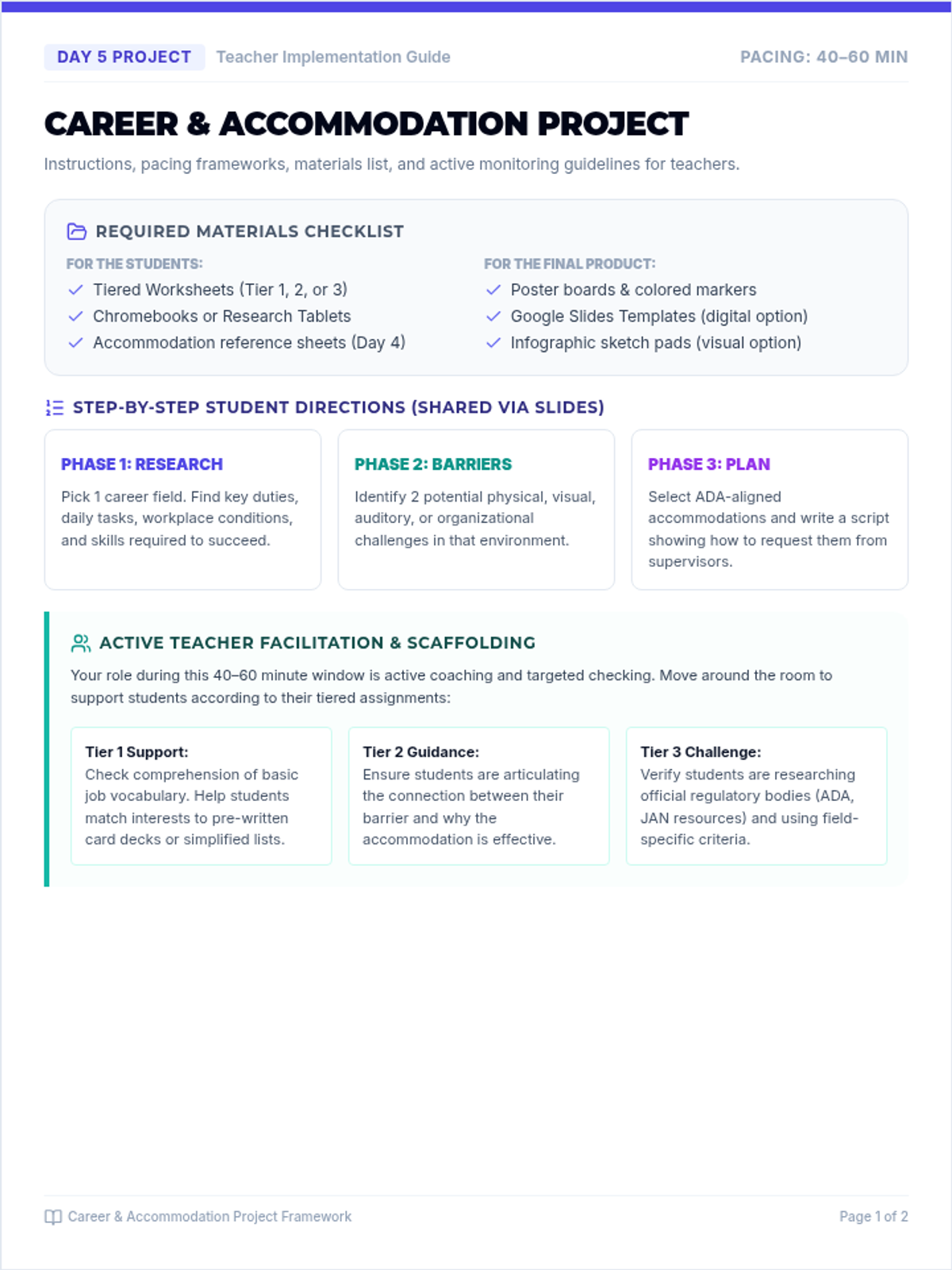
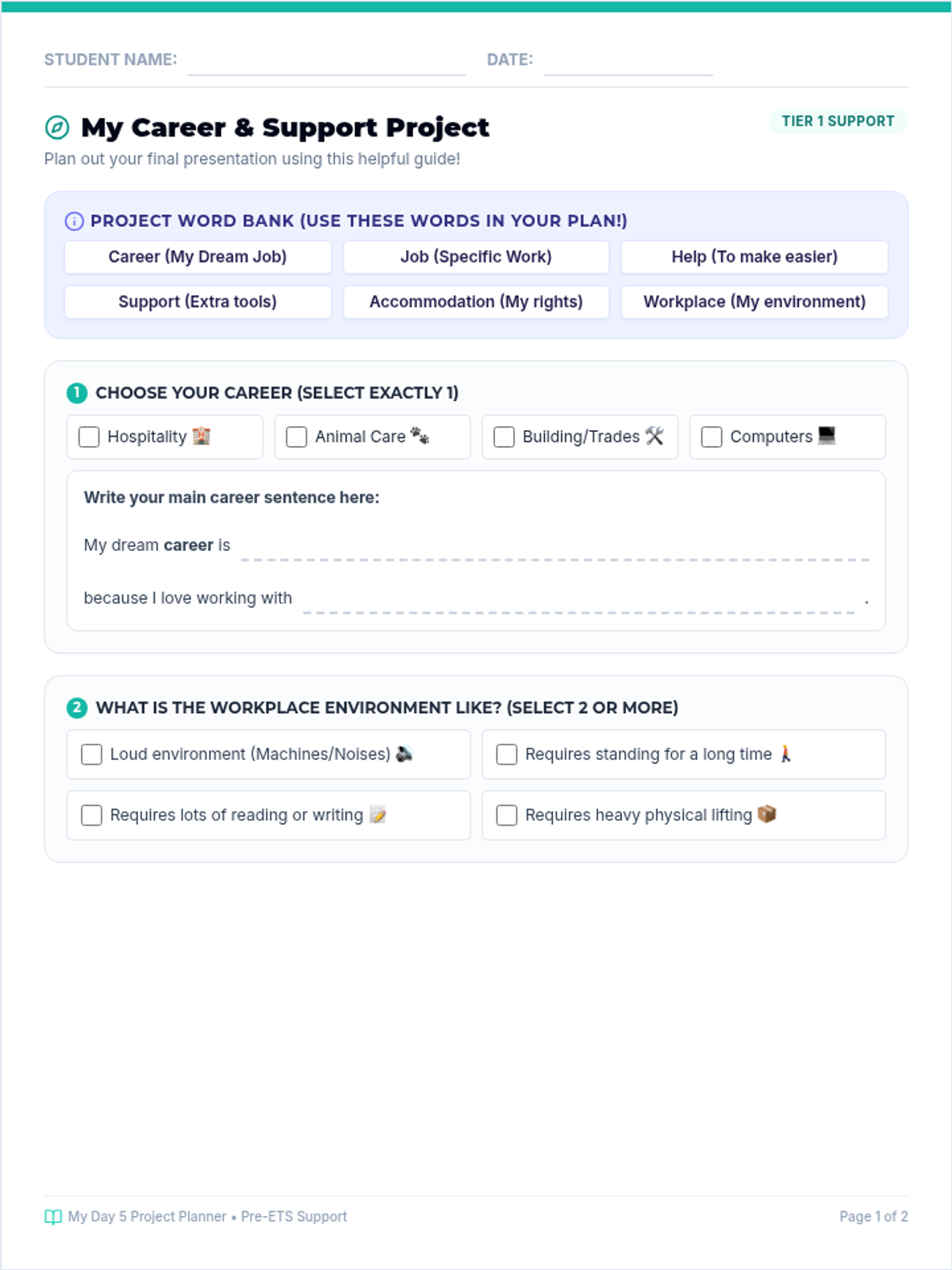
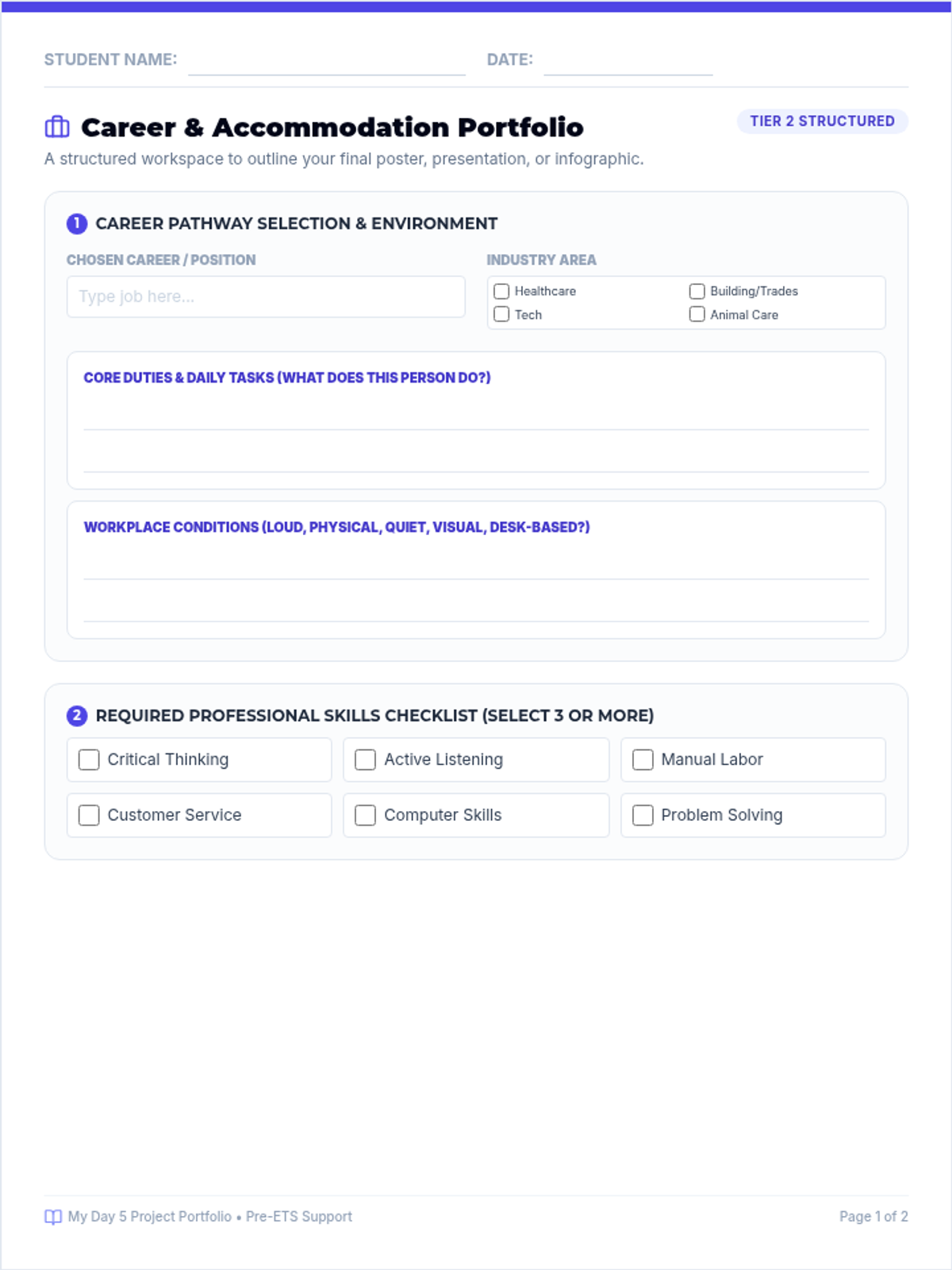
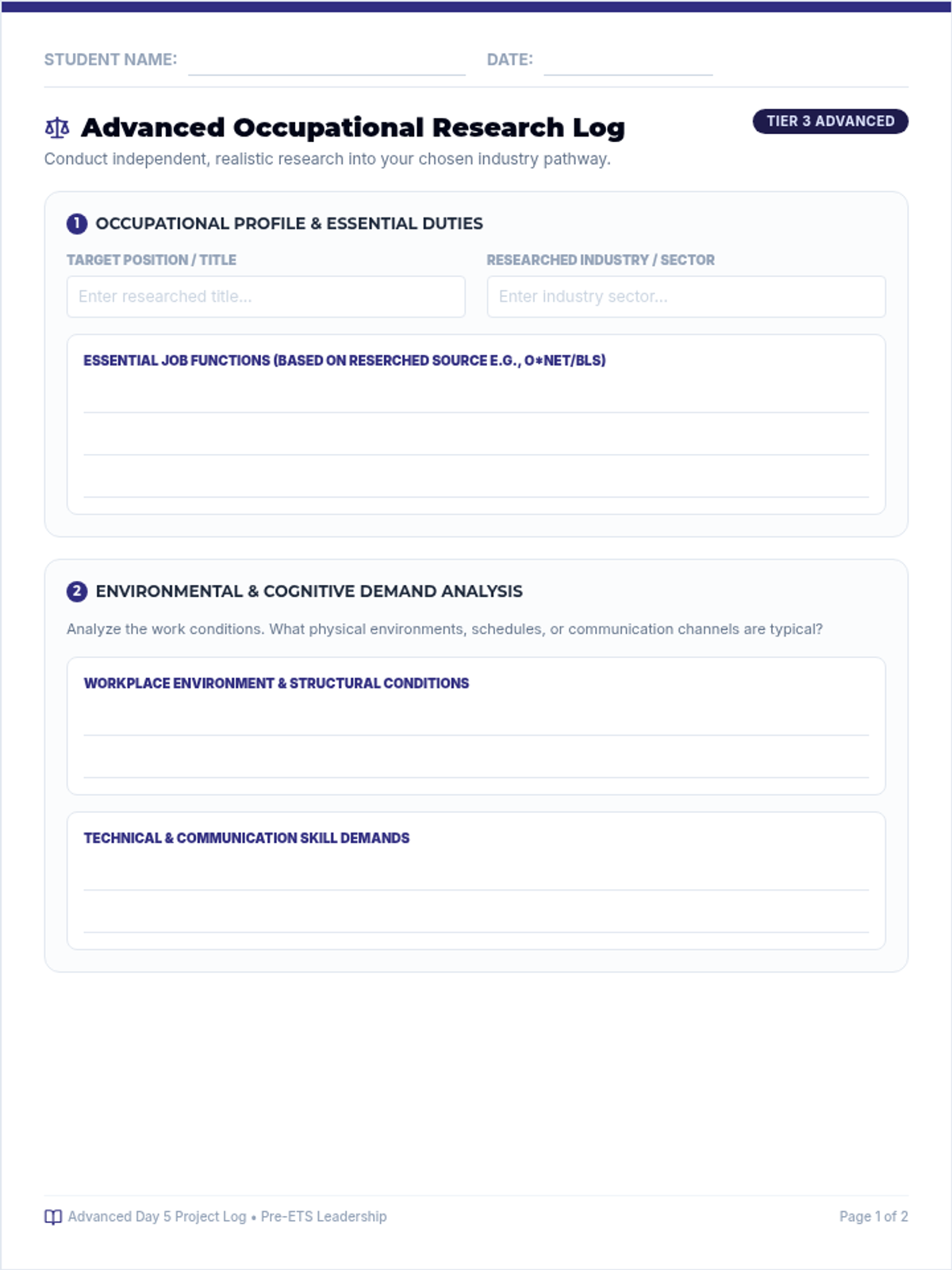
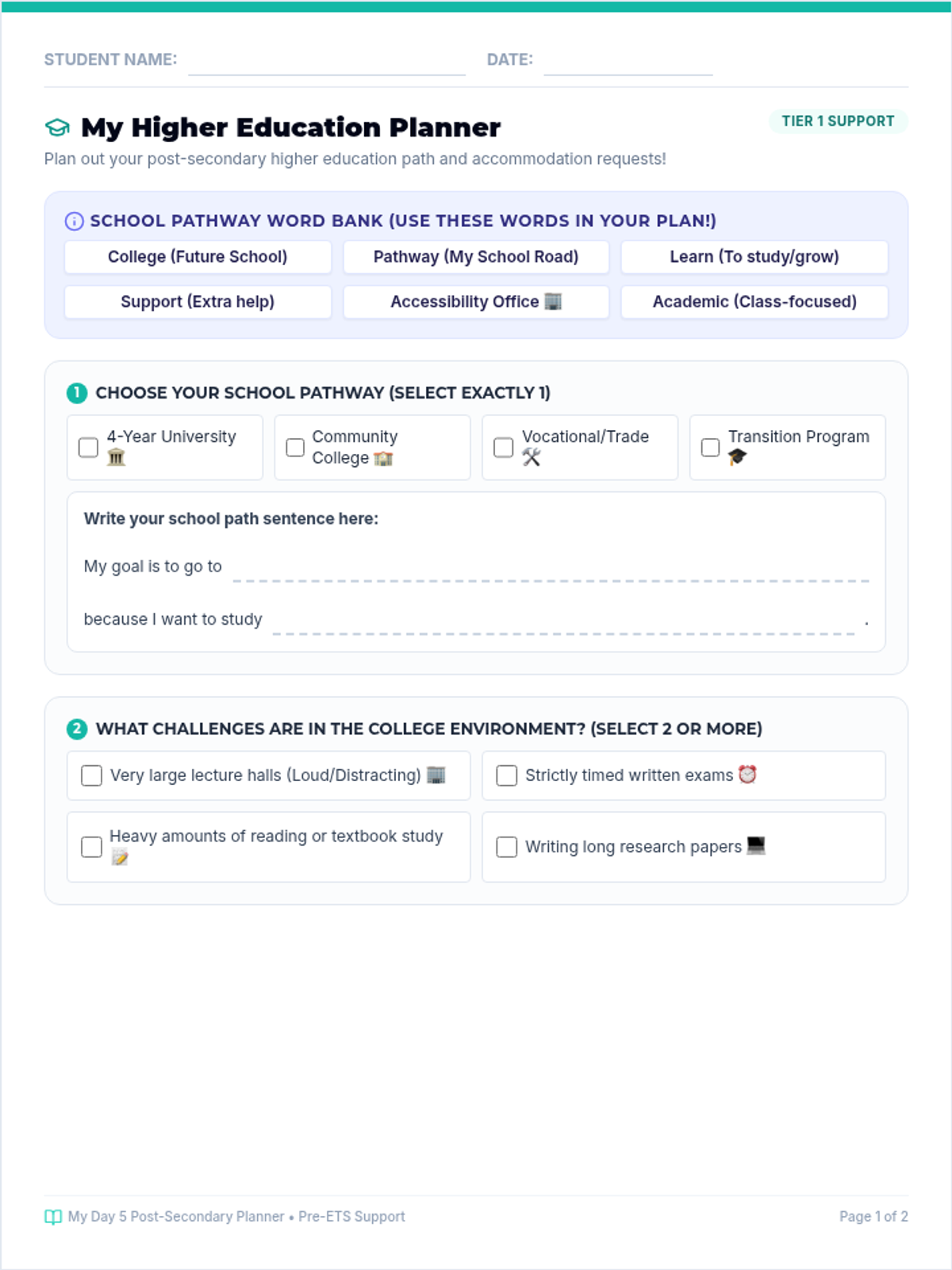
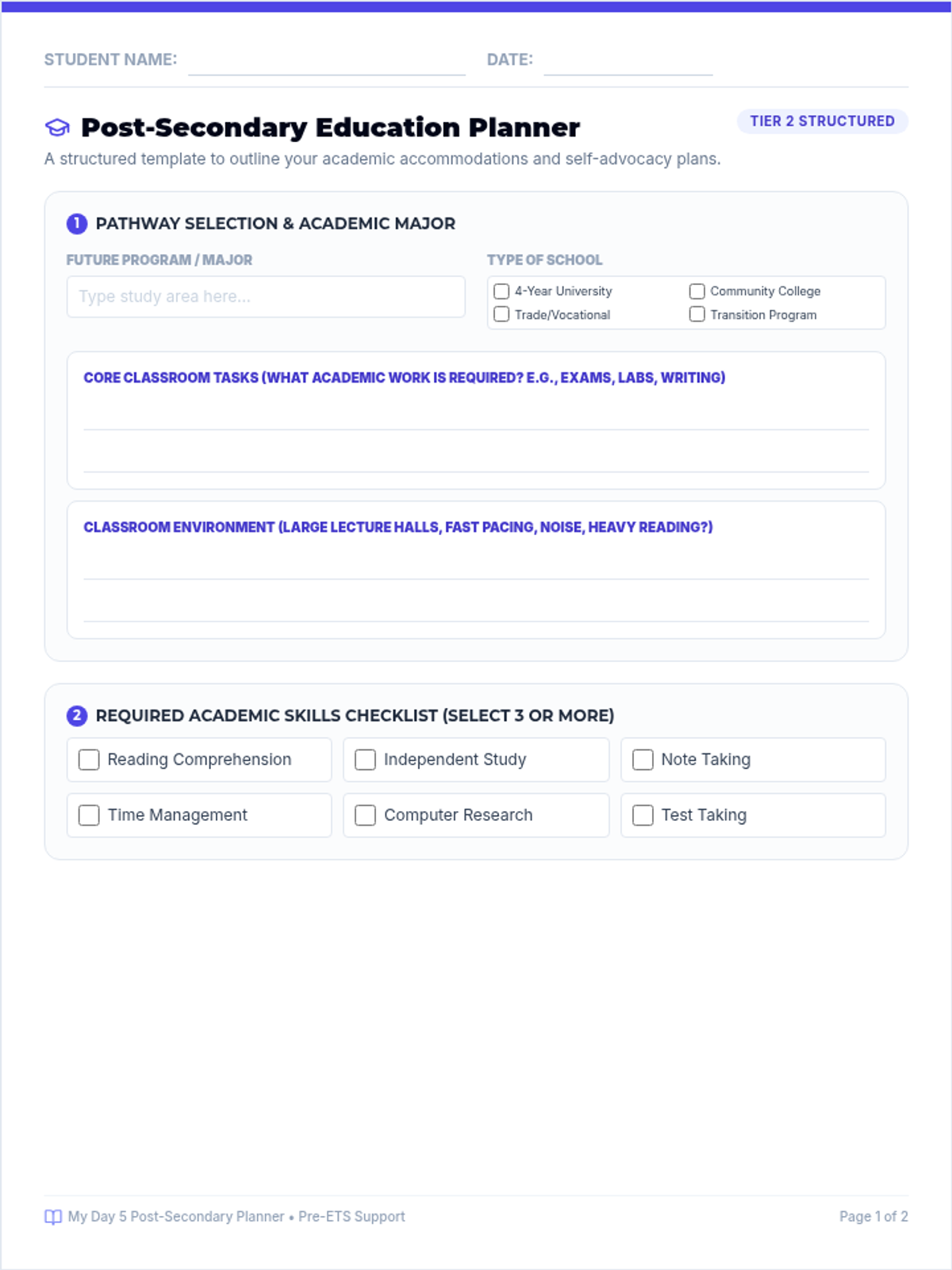
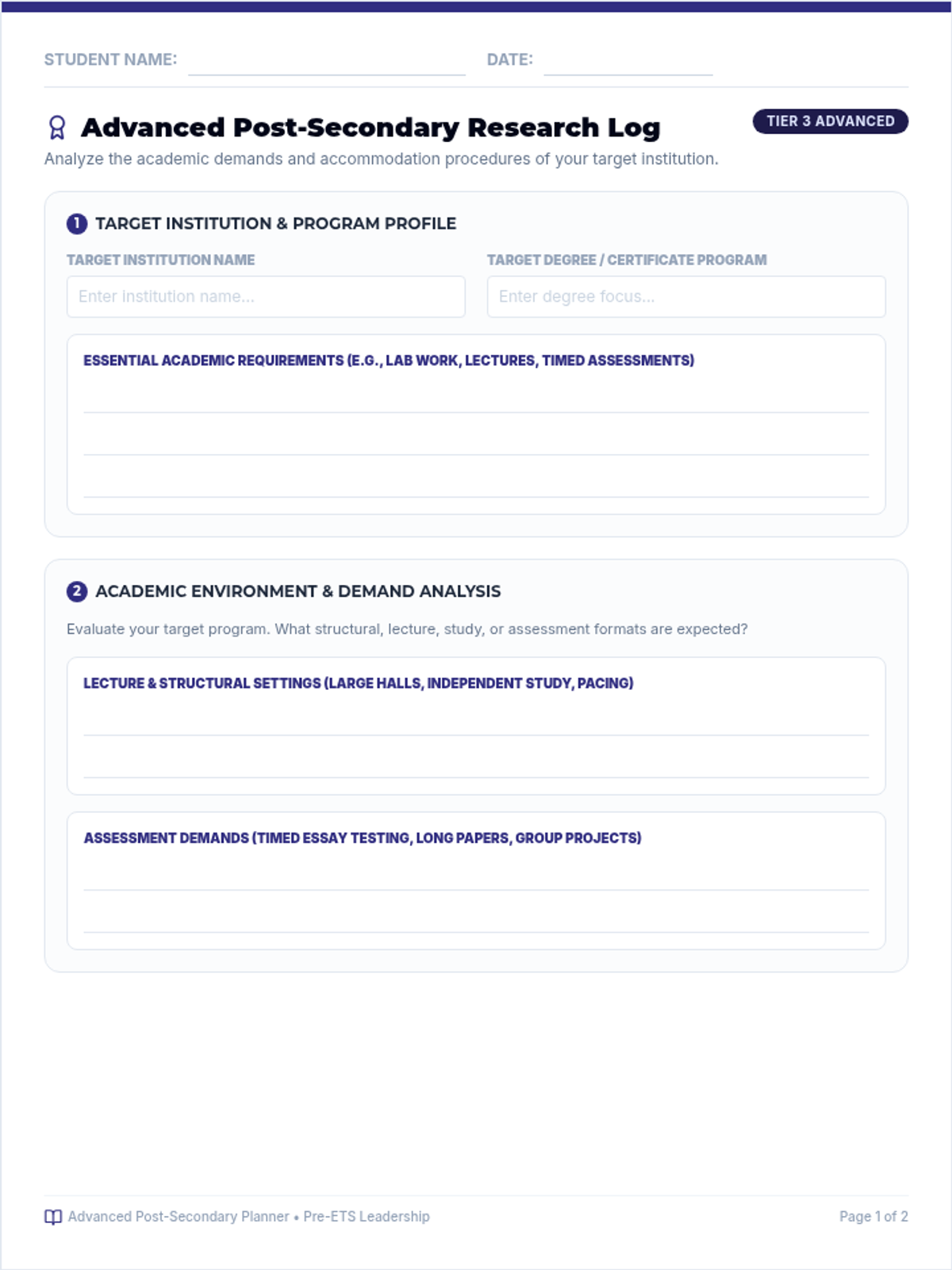
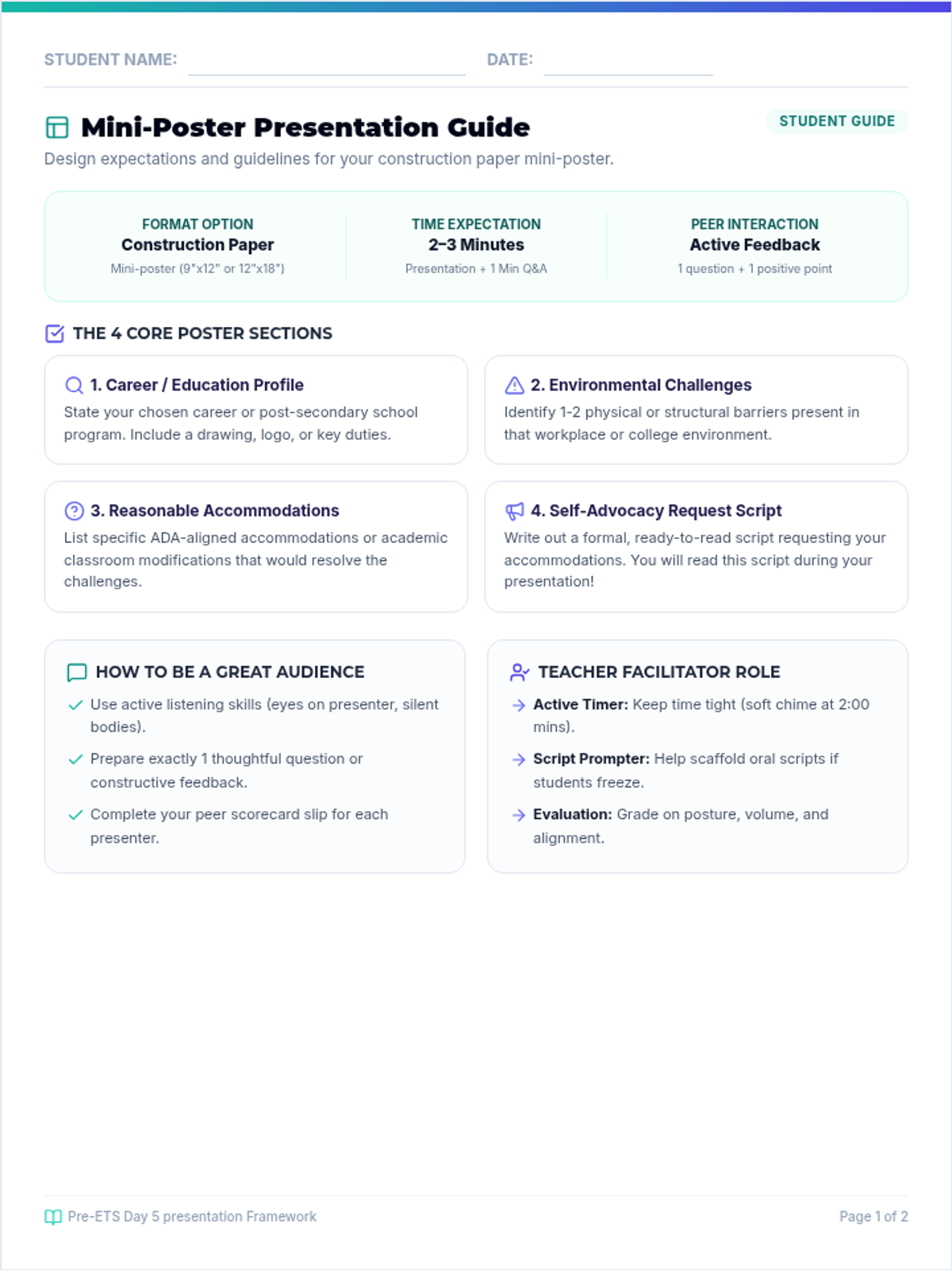
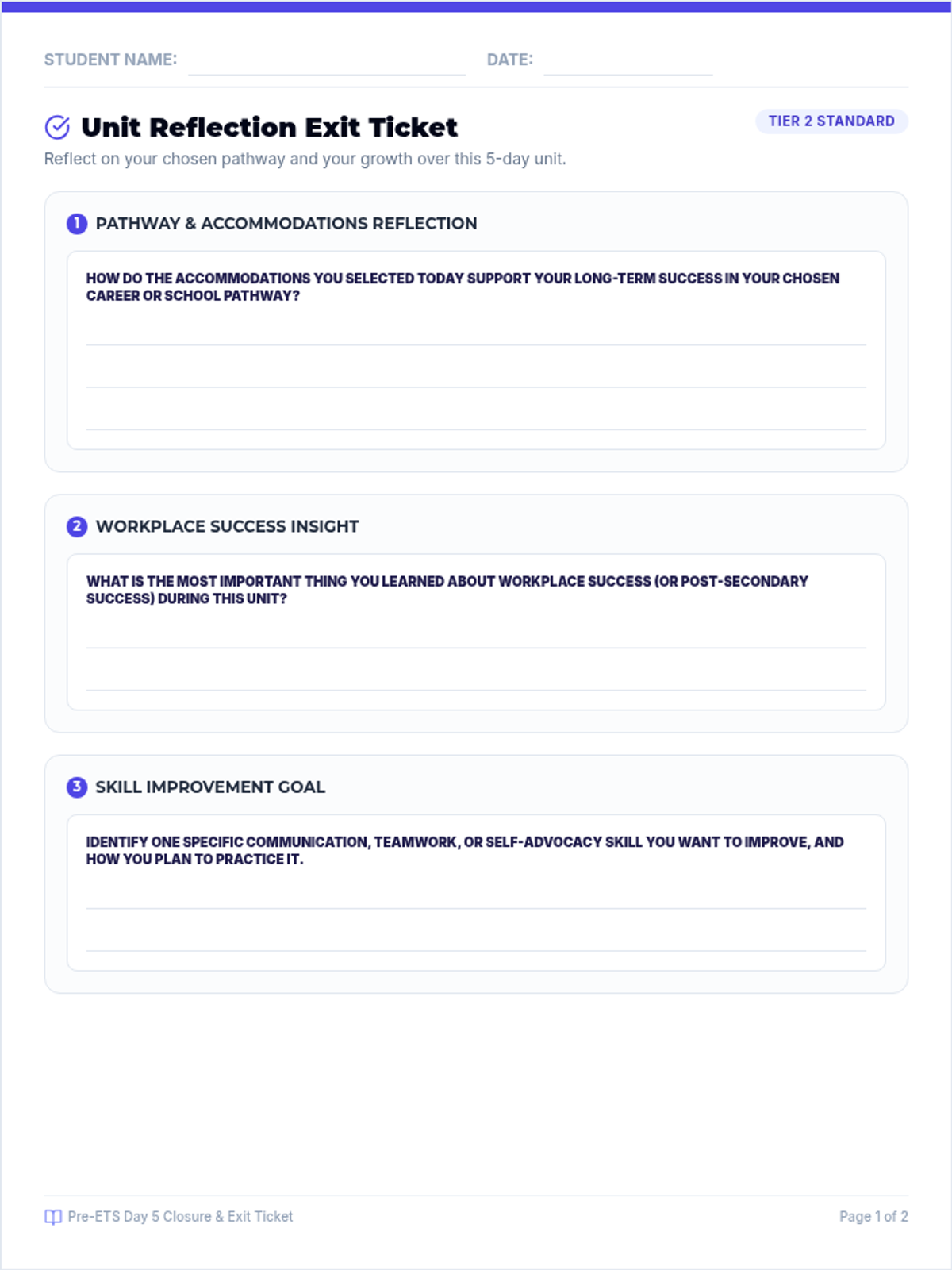
Students apply unit learning to a chosen career or post-secondary education path, identifying workplace accommodations and constructing a self-advocacy plan.
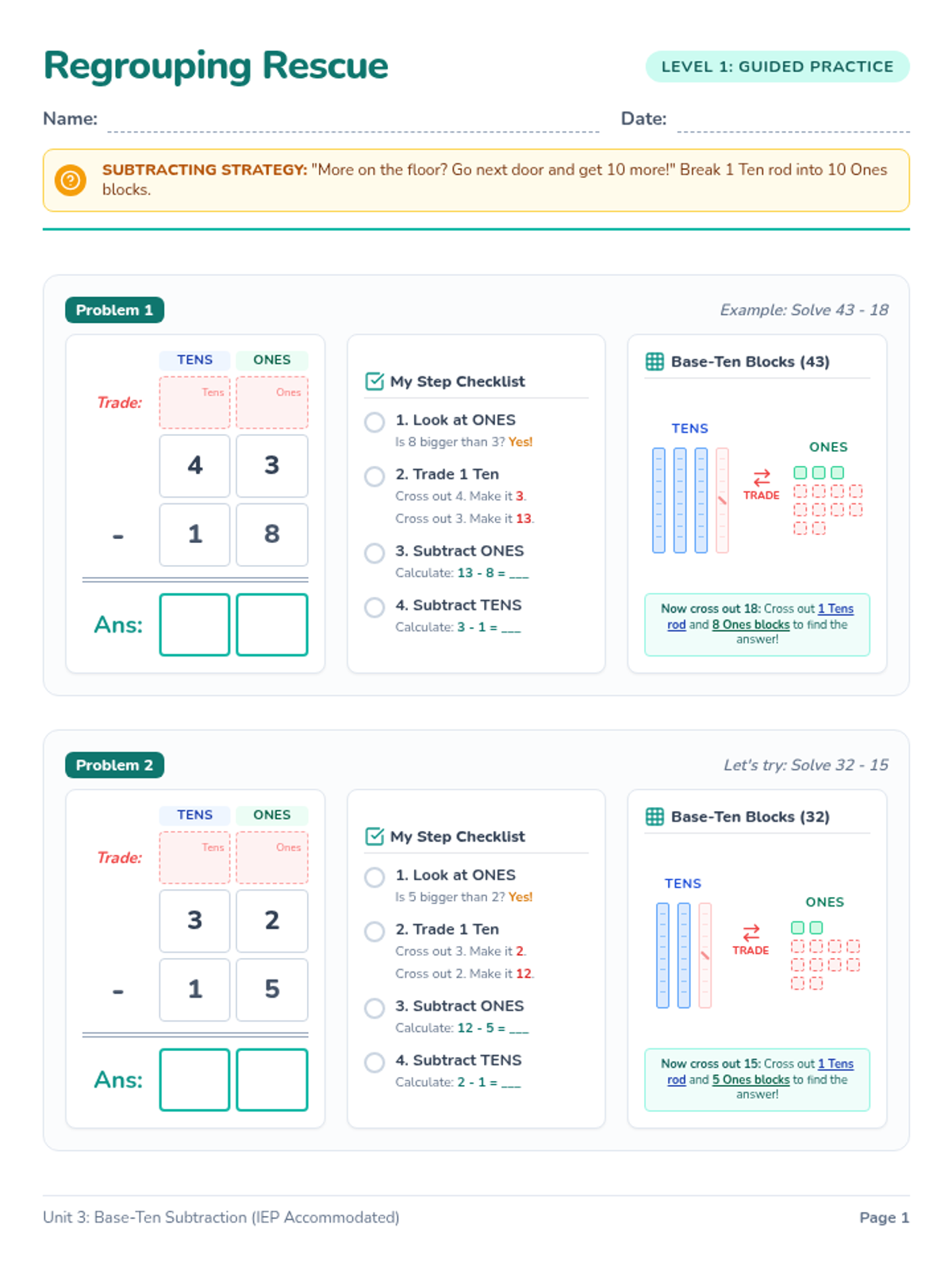
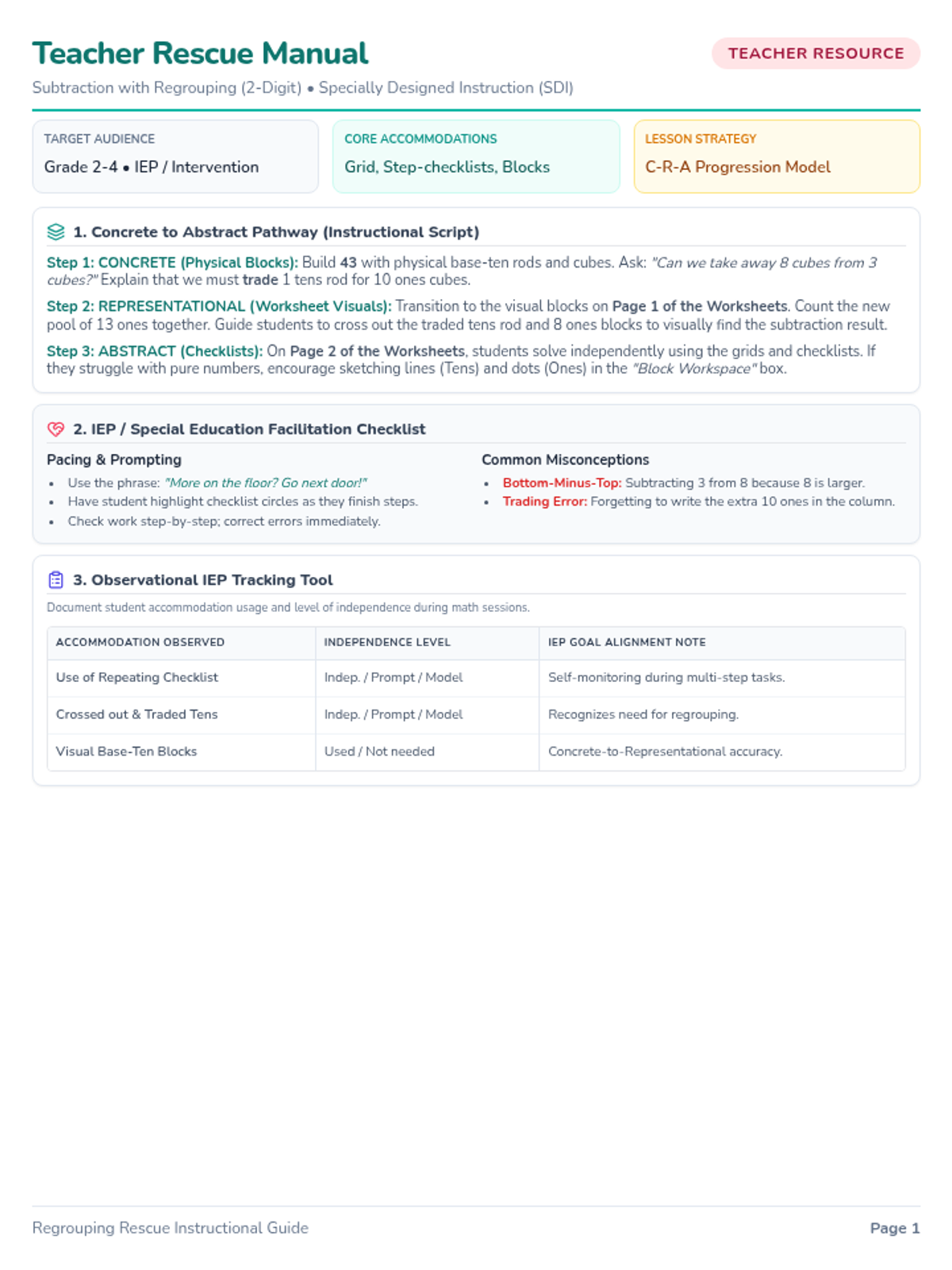
A highly-structured, research-backed lesson on subtracting two-digit numbers with regrouping, specifically designed with IEP accommodations. Includes grid-aligned practice sheets with repeating step-by-step visual checklists and built-in base-ten visual blocks to support concrete-representational-abstract transitions.
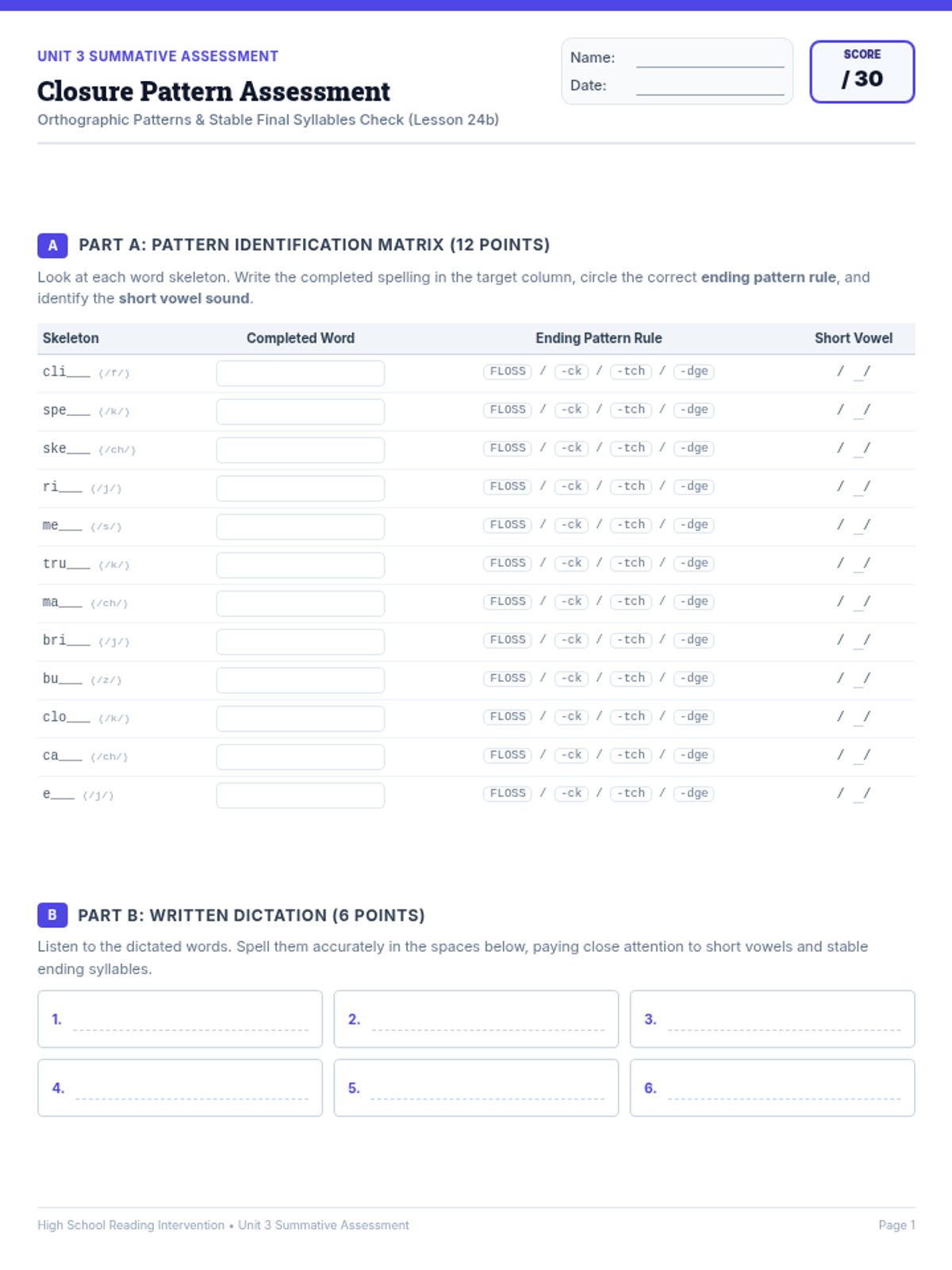
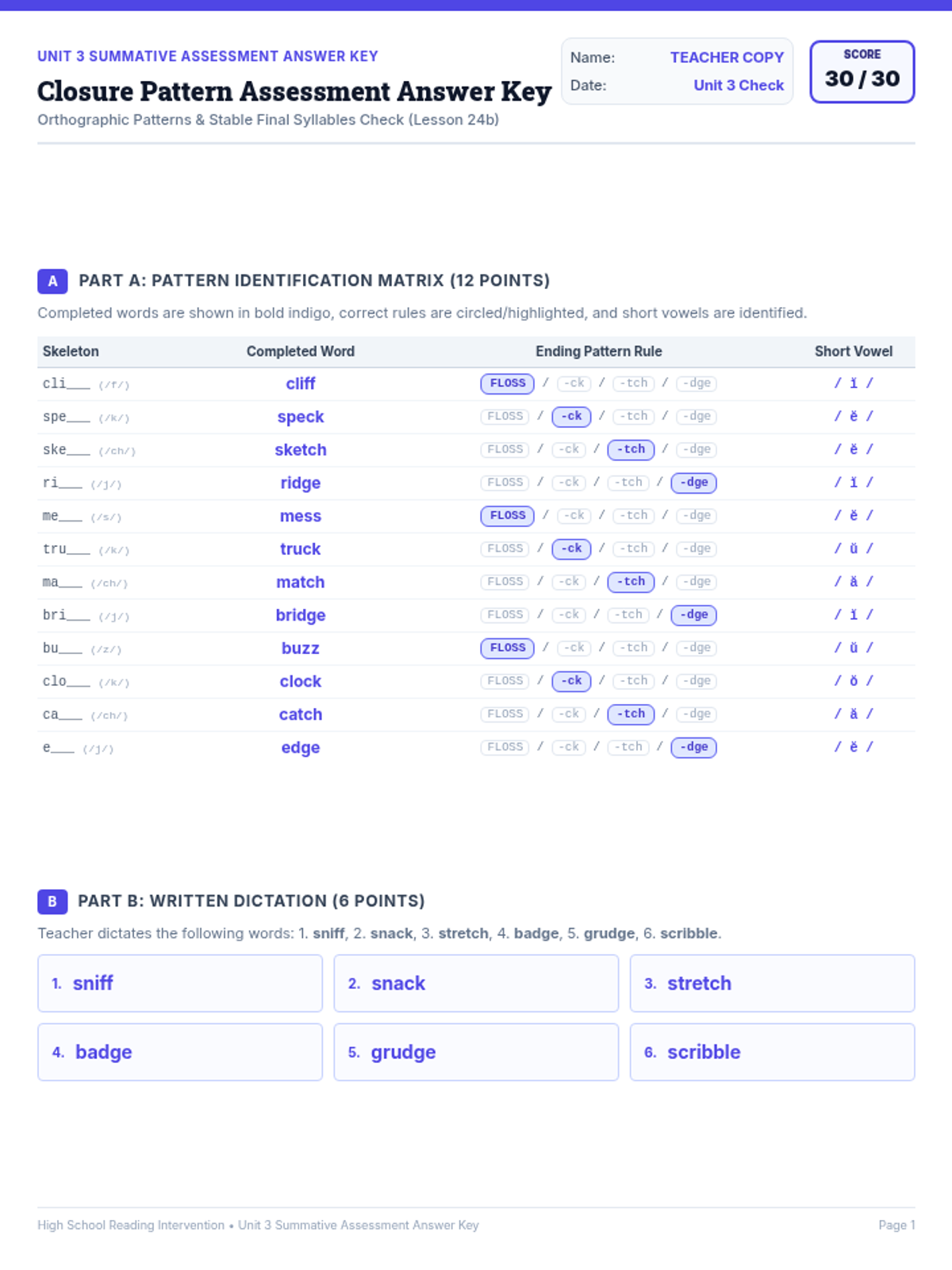
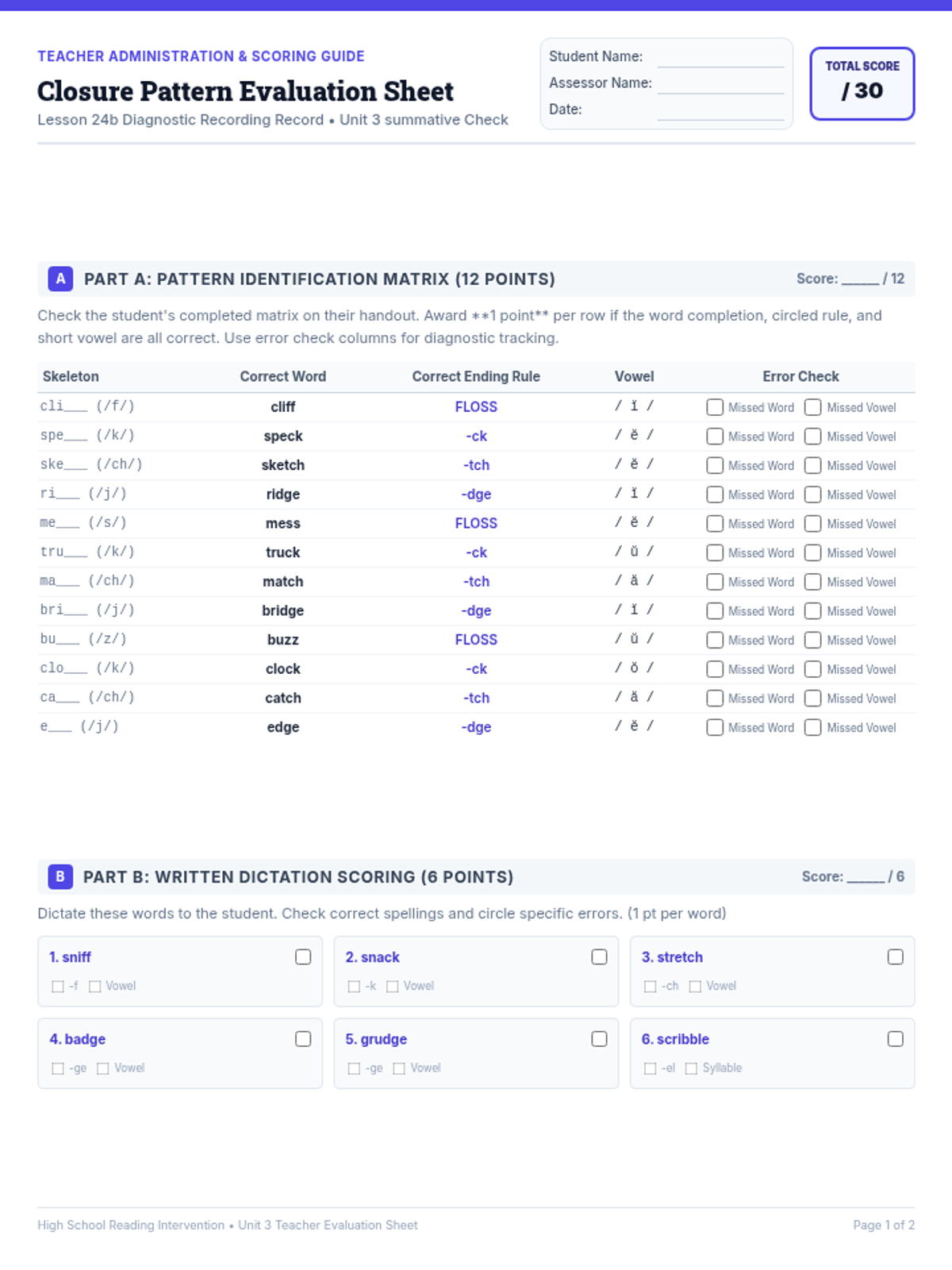
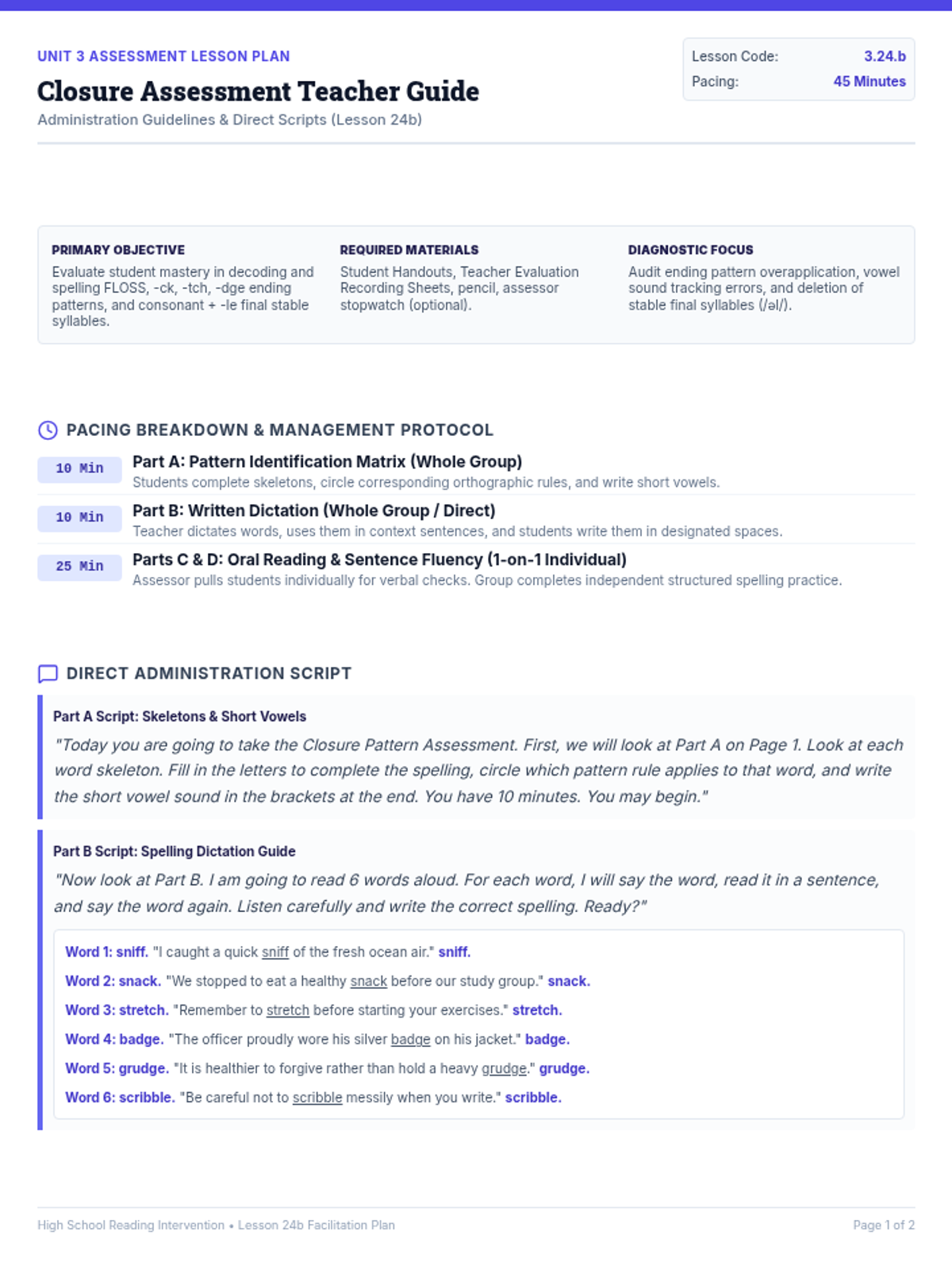
An intensive summative assessment lesson designed to check student mastery of FLOSS, -ck, -tch, -dge, and -le decoding and spelling patterns.
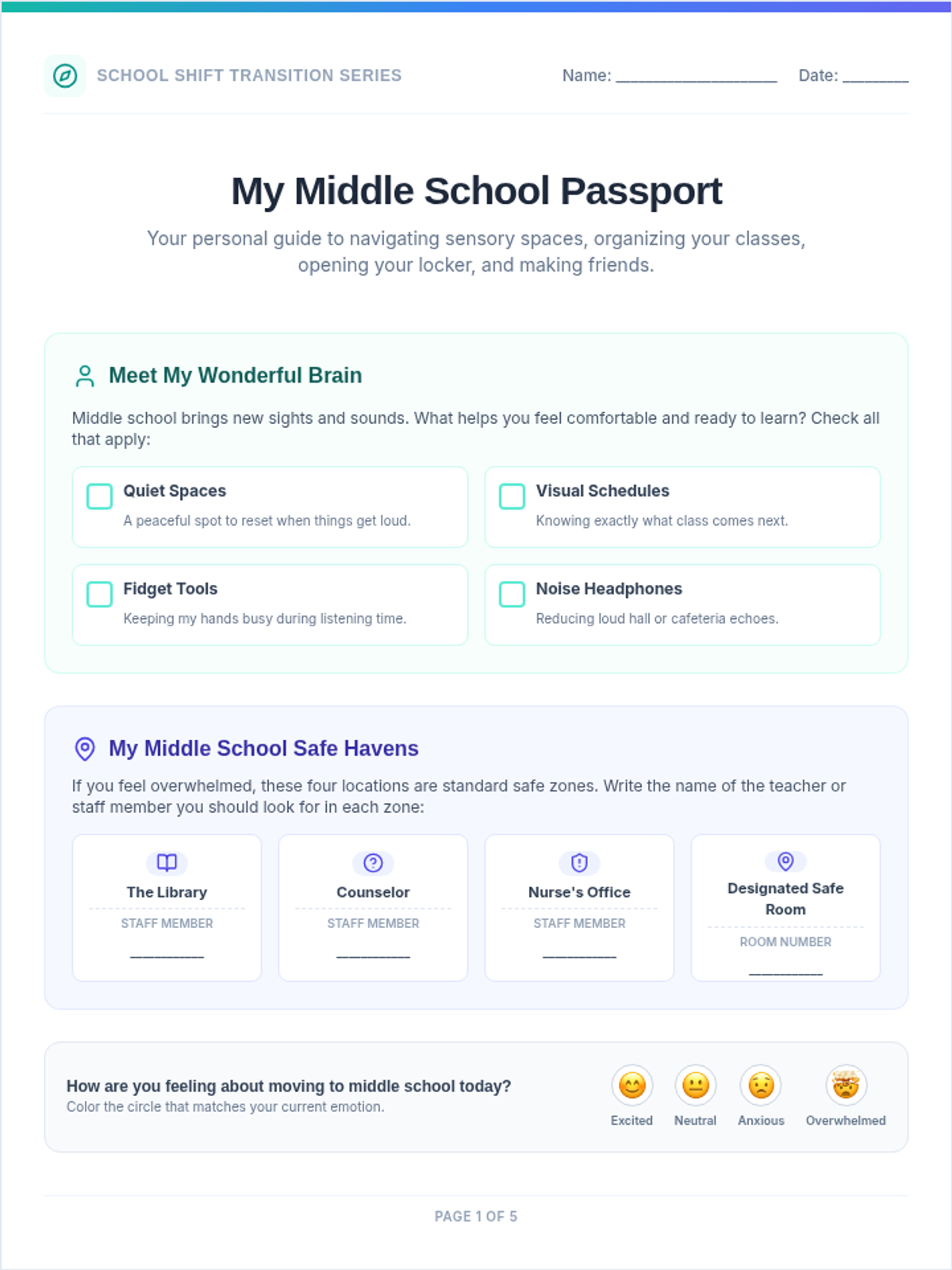
A transition lesson designed specifically for middle school students with ASD, focusing on navigating sensory changes, learning social scripts, practicing physical tasks like locker combinations, and organizing multiple classes.
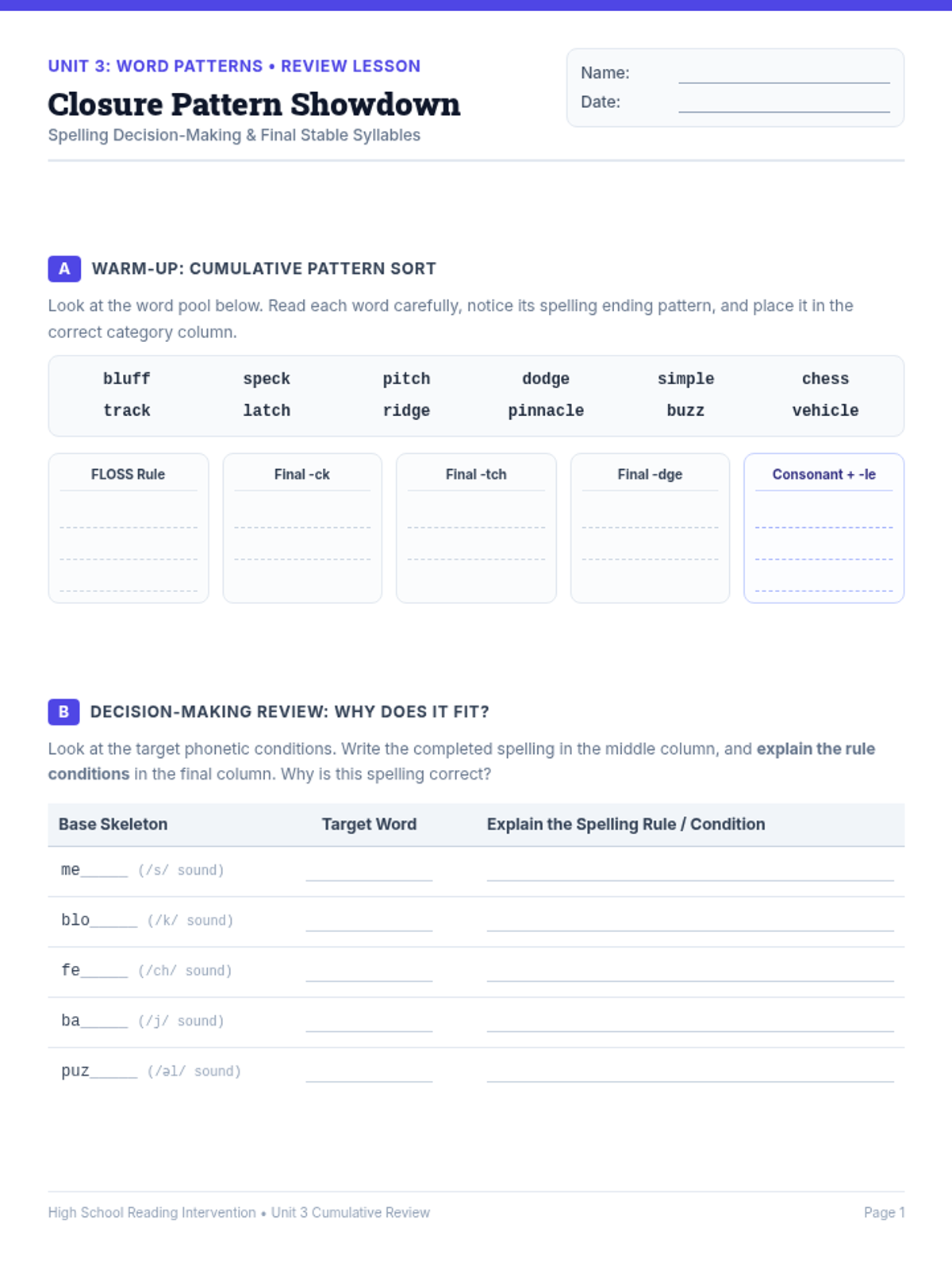
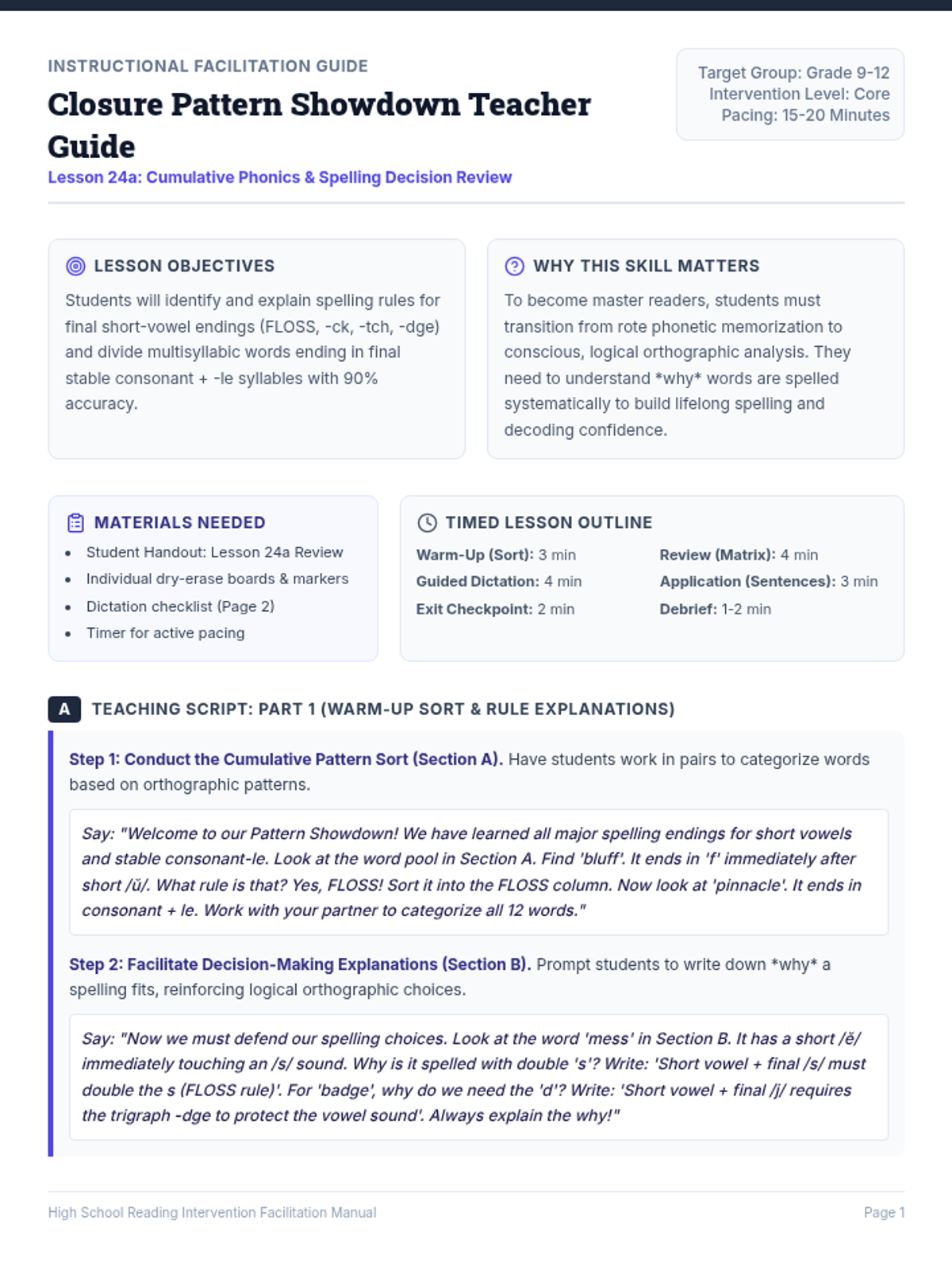
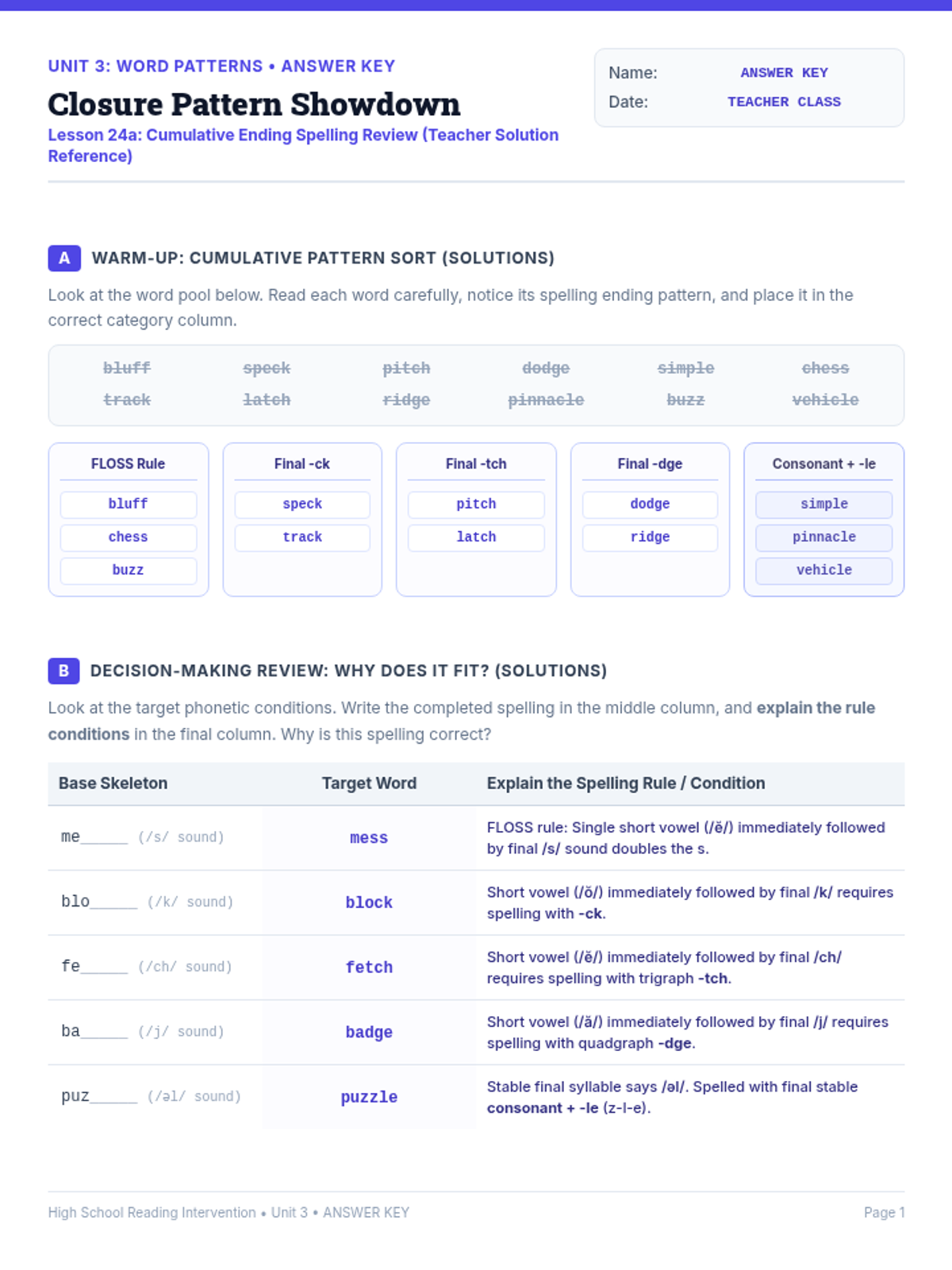
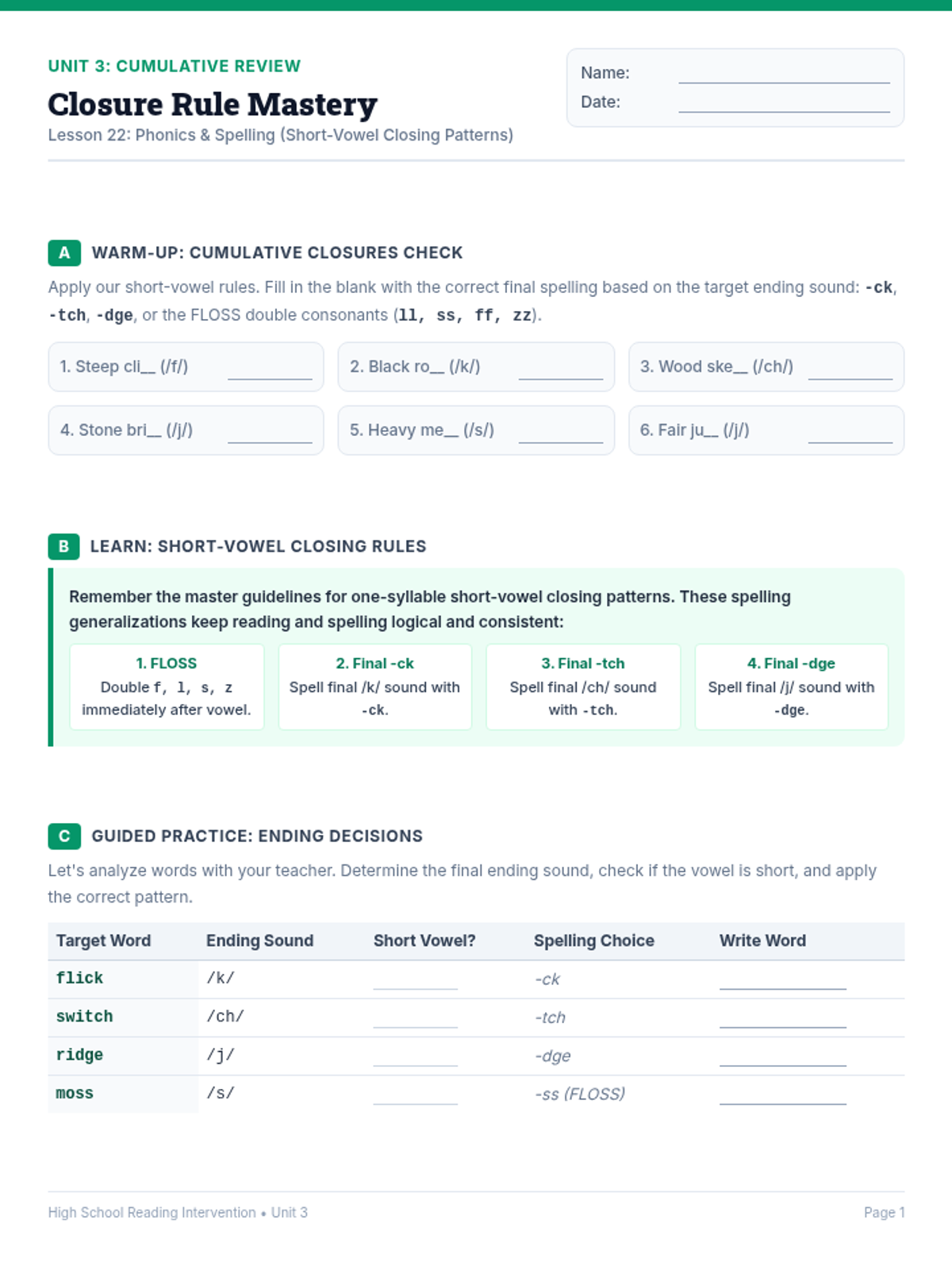
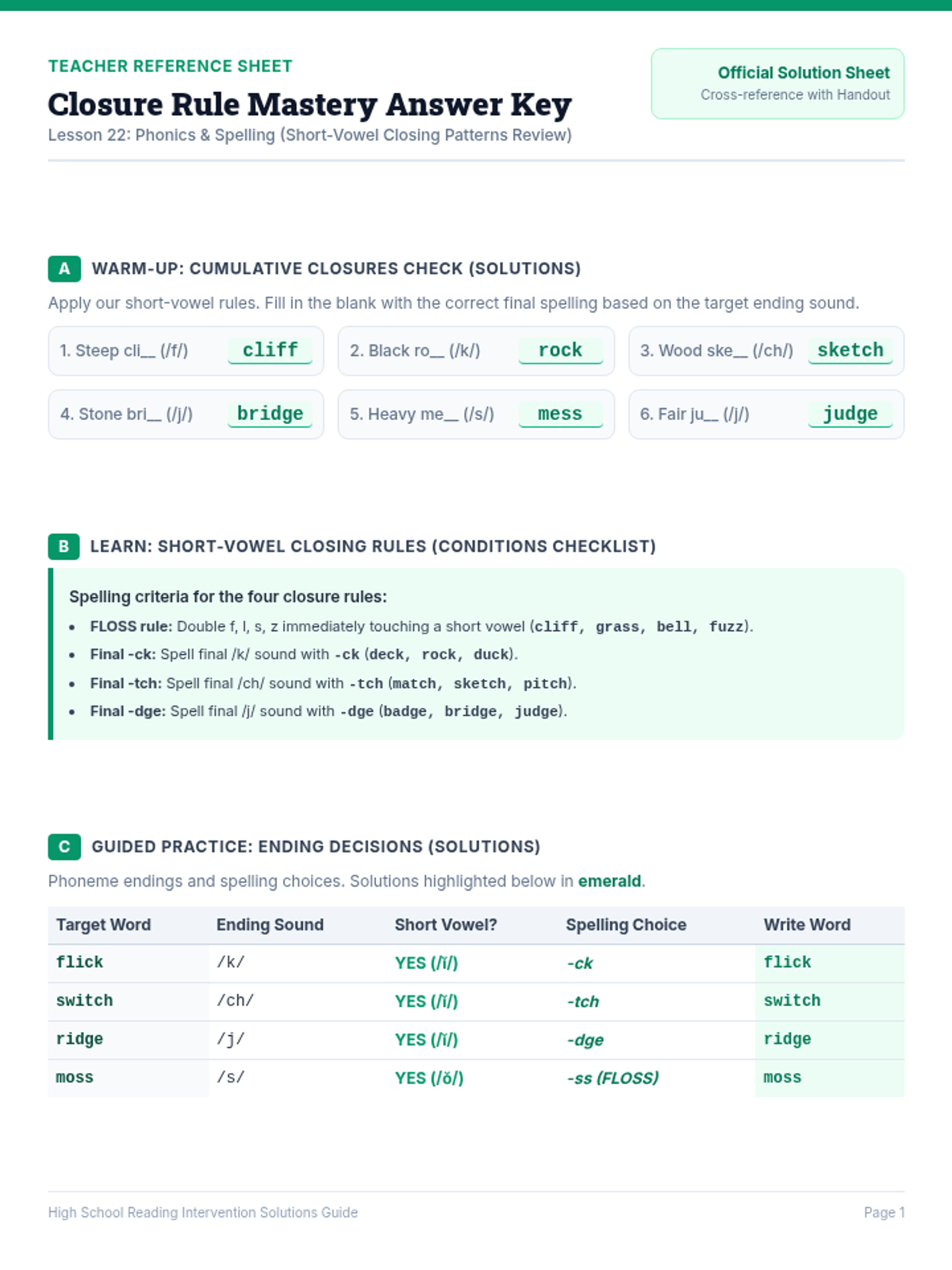
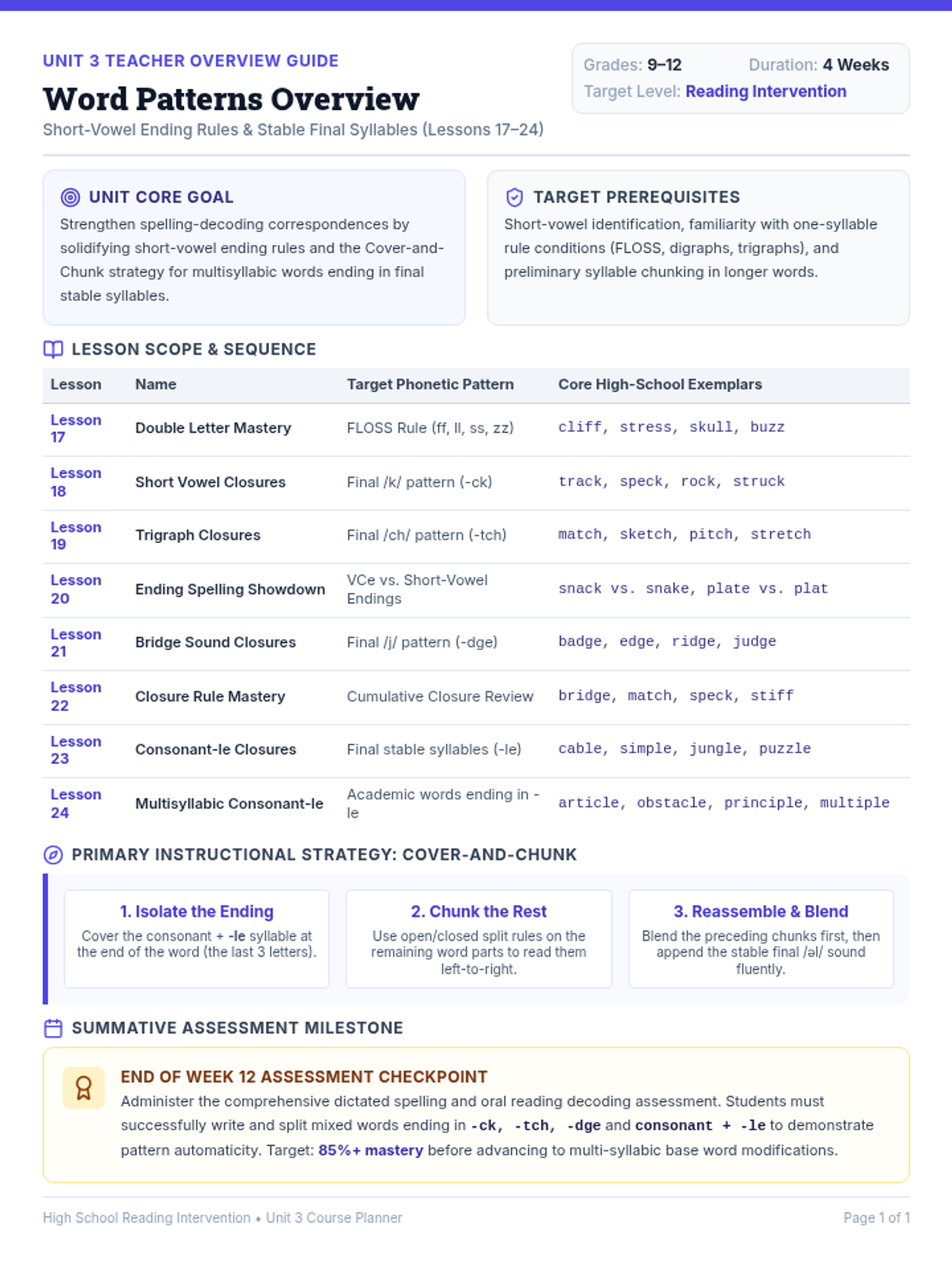
A cumulative review and decision-making lesson consolidating all short-vowel ending rules (FLOSS, -ck, -tch, -dge) and stable final syllables (consonant + -le) to cement orthographic reasoning and decoding precision.
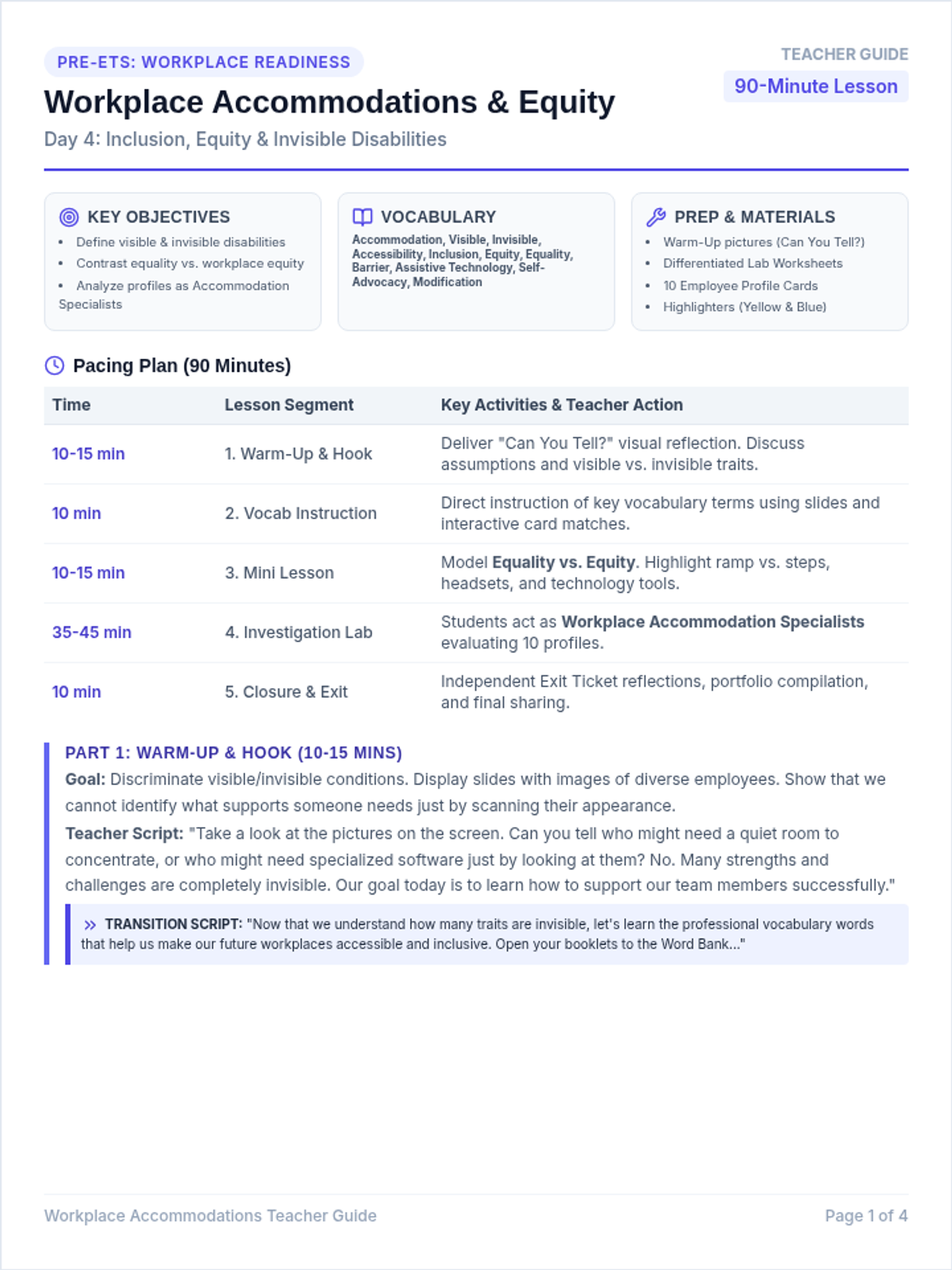
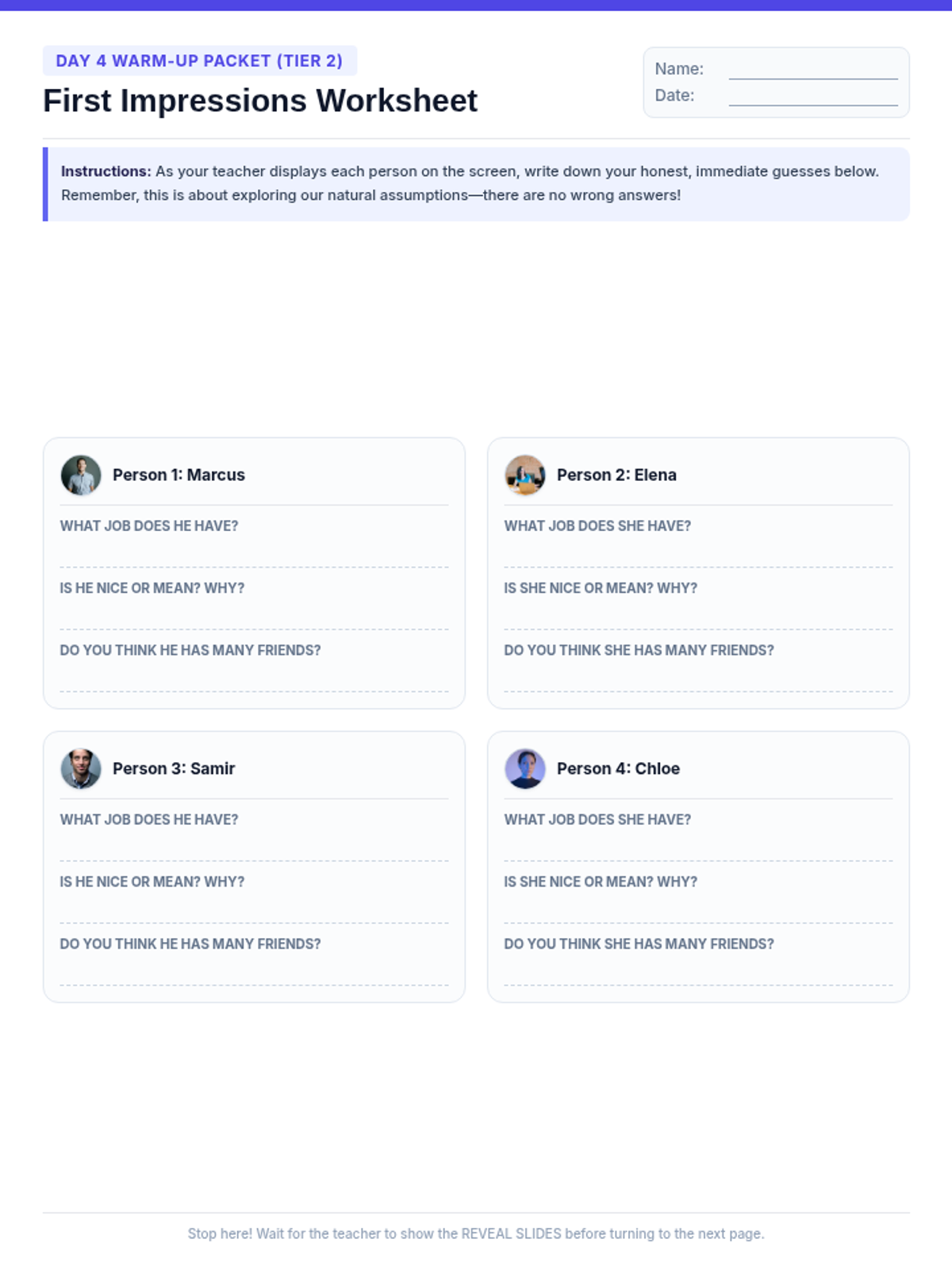
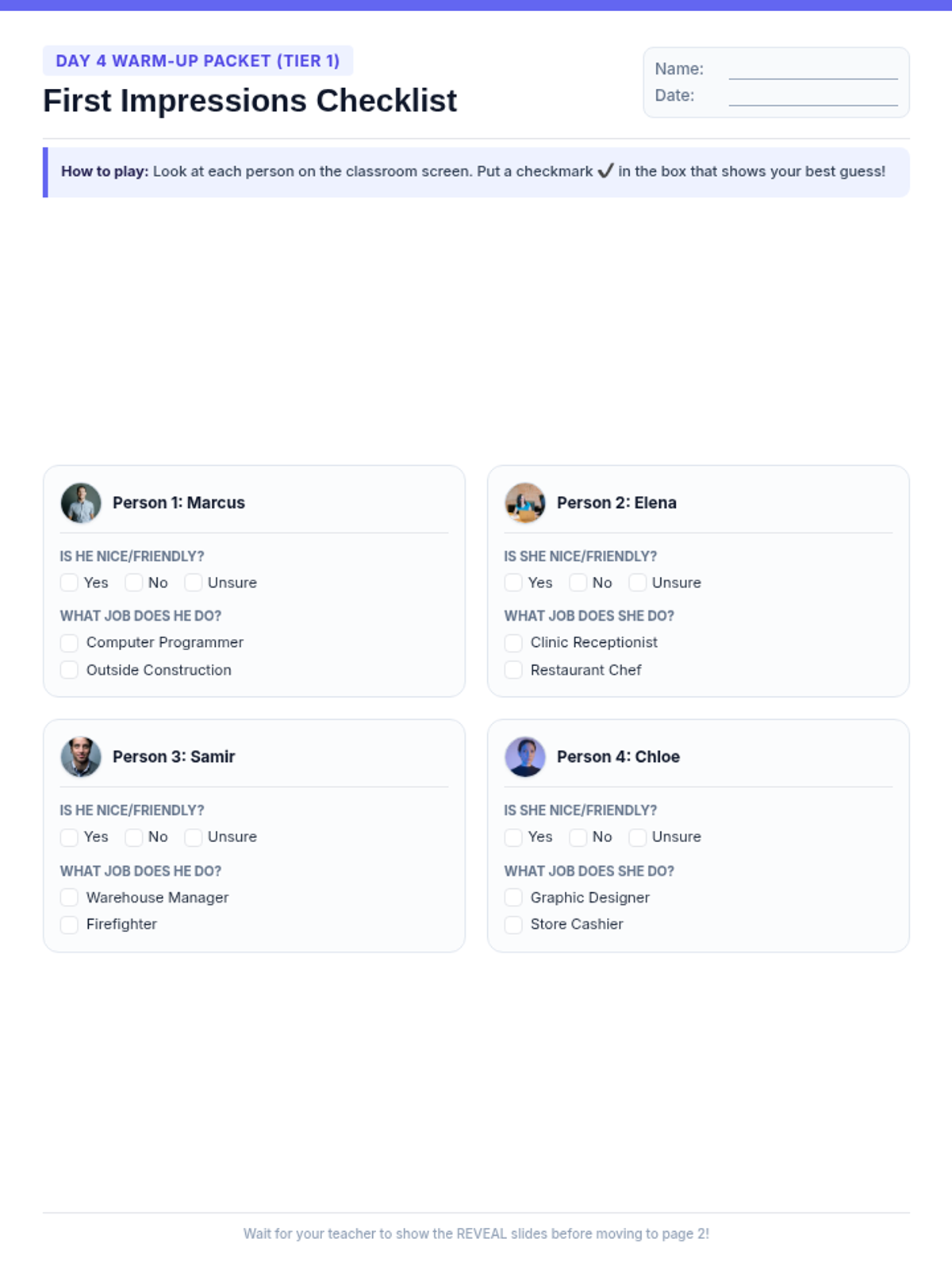
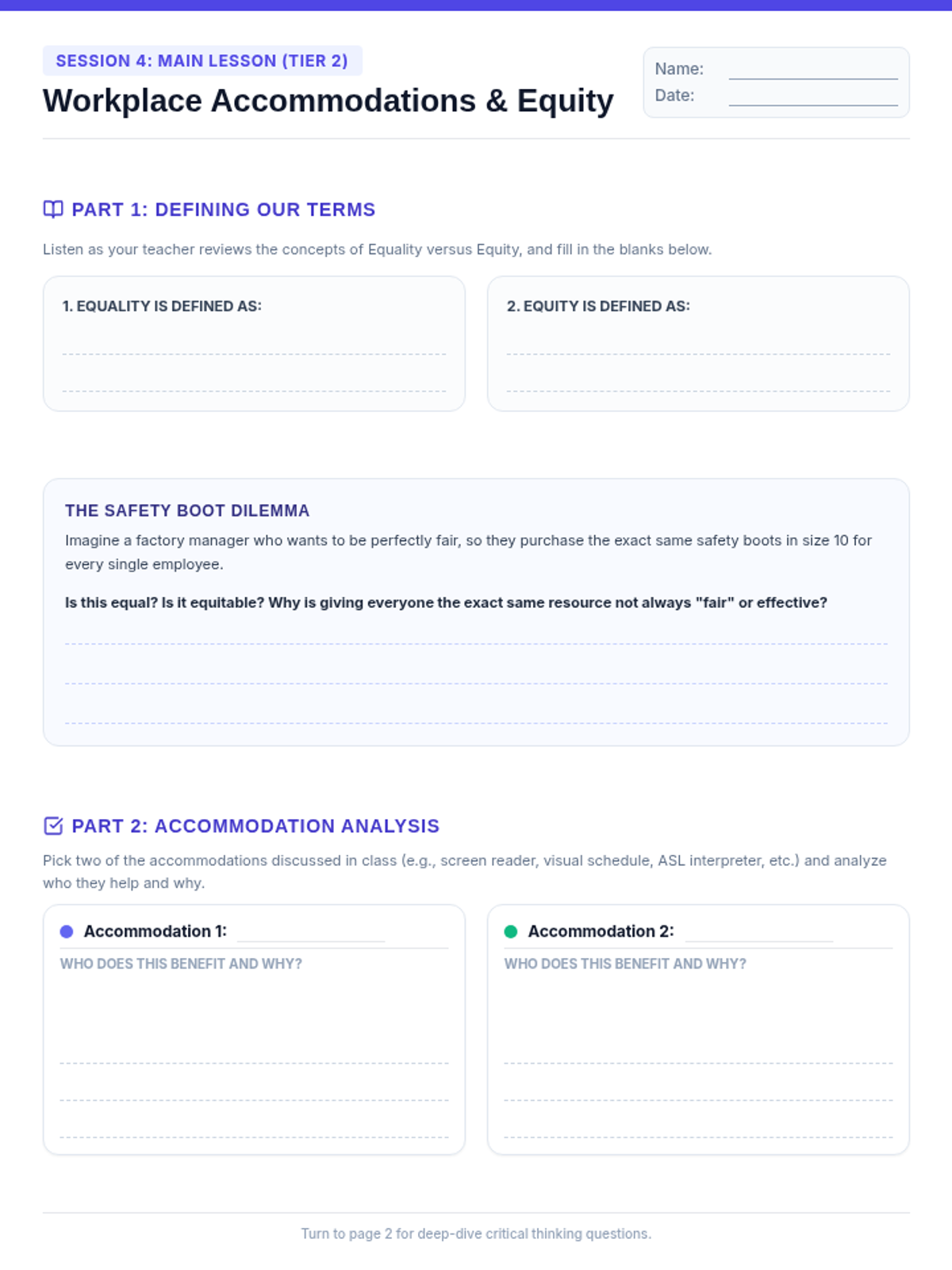
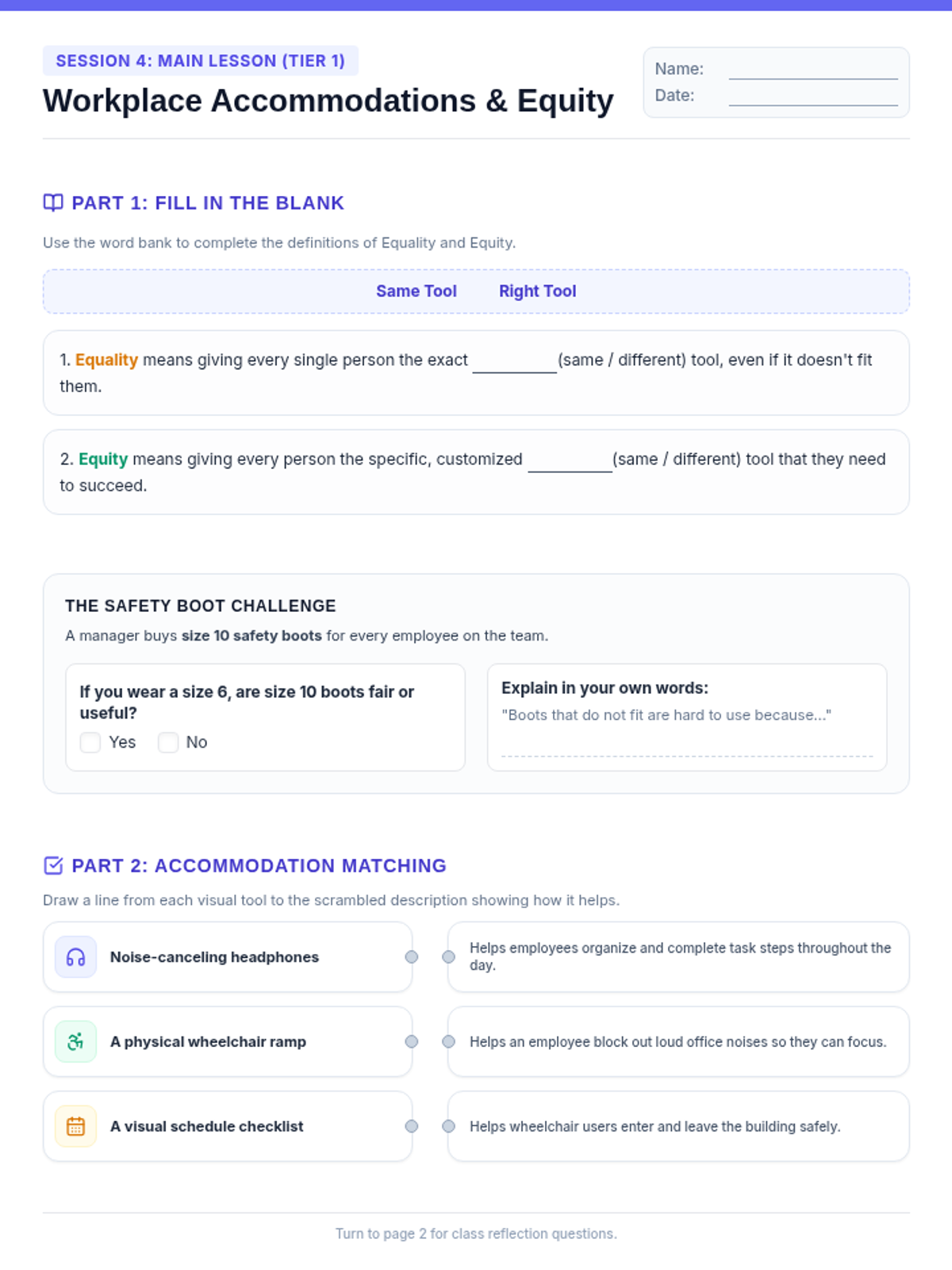
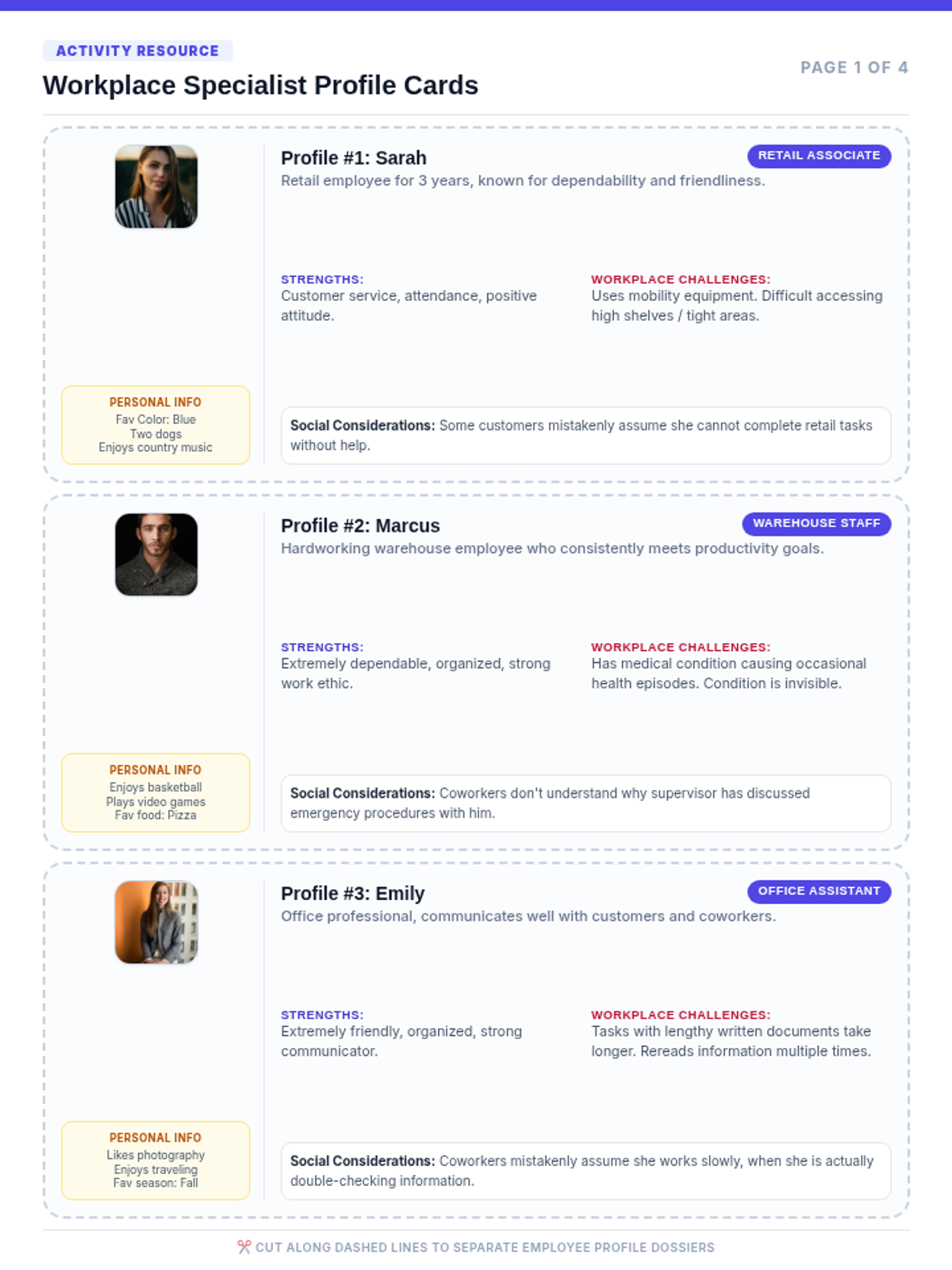
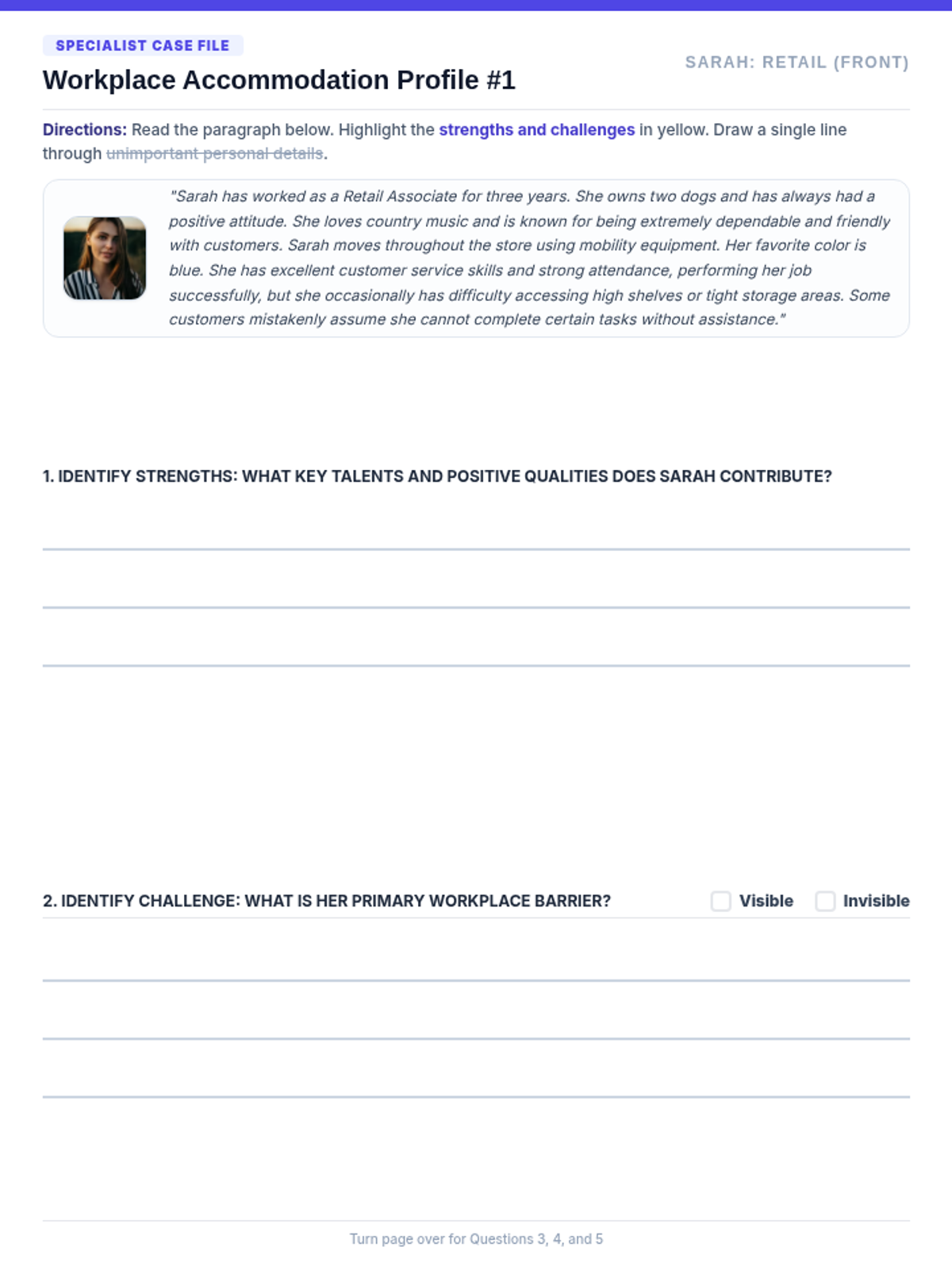
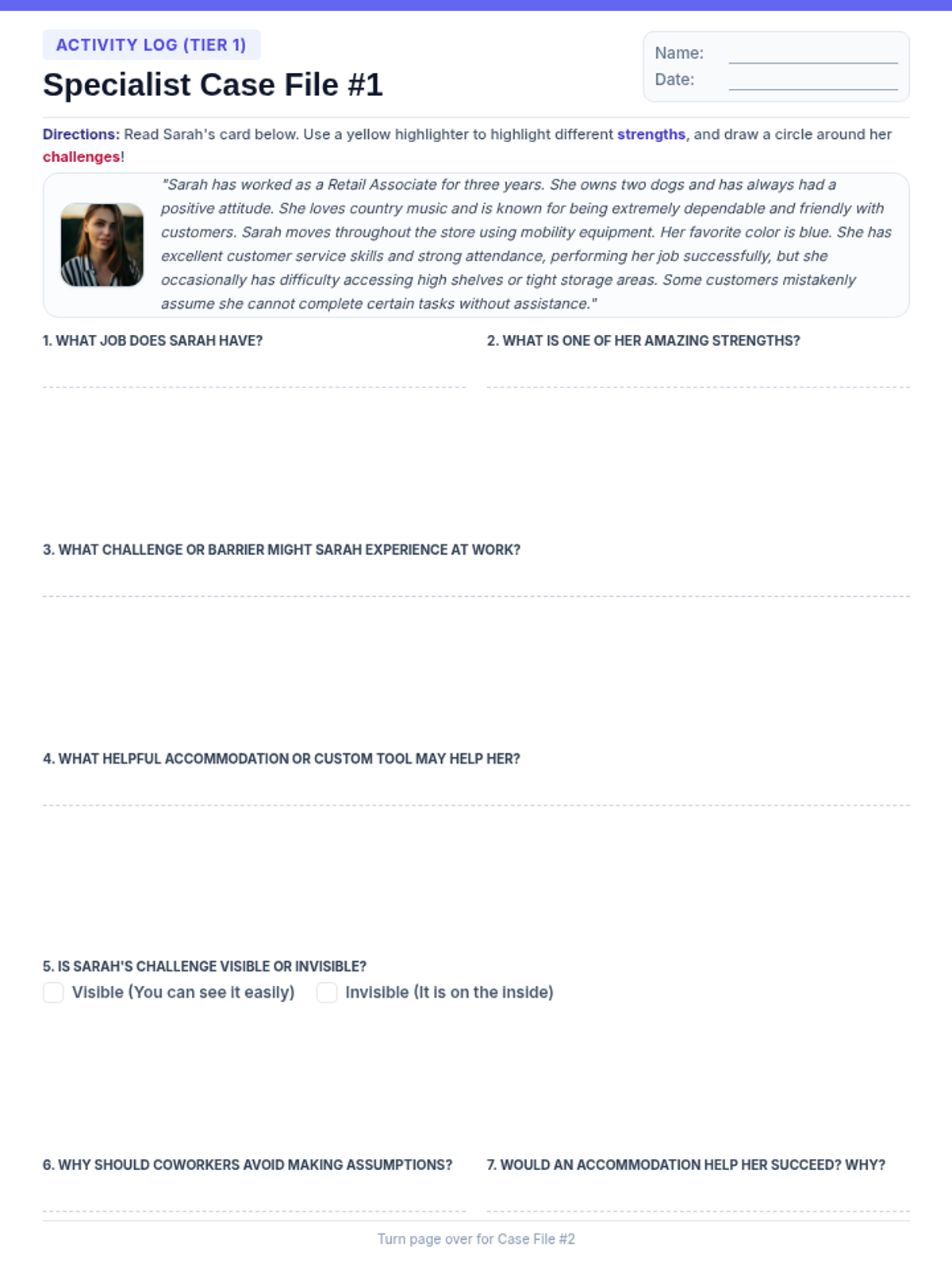
Under the Pre-ETS category of Counseling on Post-Secondary Opportunities, this lesson equips transitioning high school students with knowledge of workplace accommodations, visible/invisible disabilities, and self-advocacy. Students explore equity rights to prepare for post-secondary career and vocational opportunities.
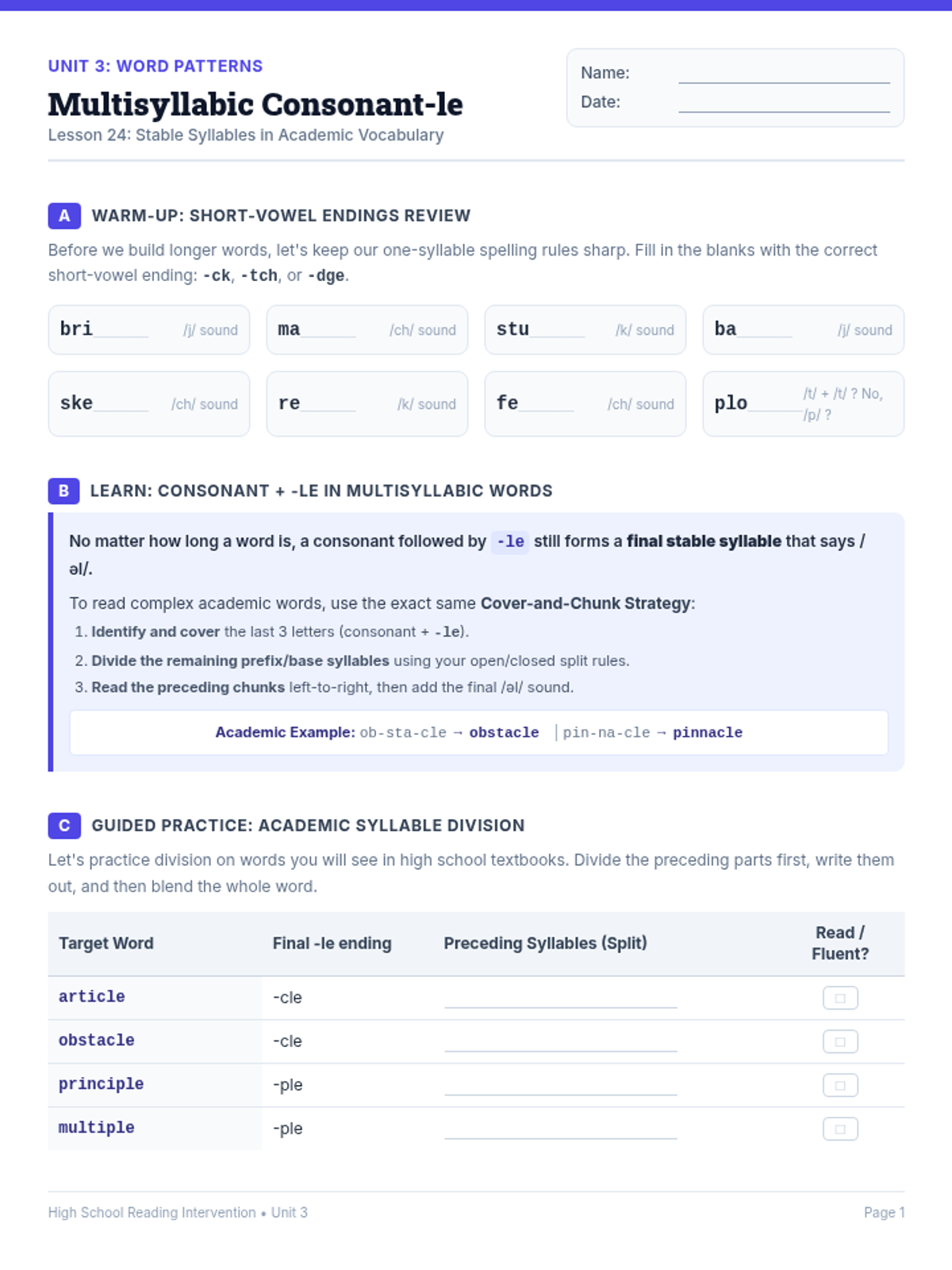
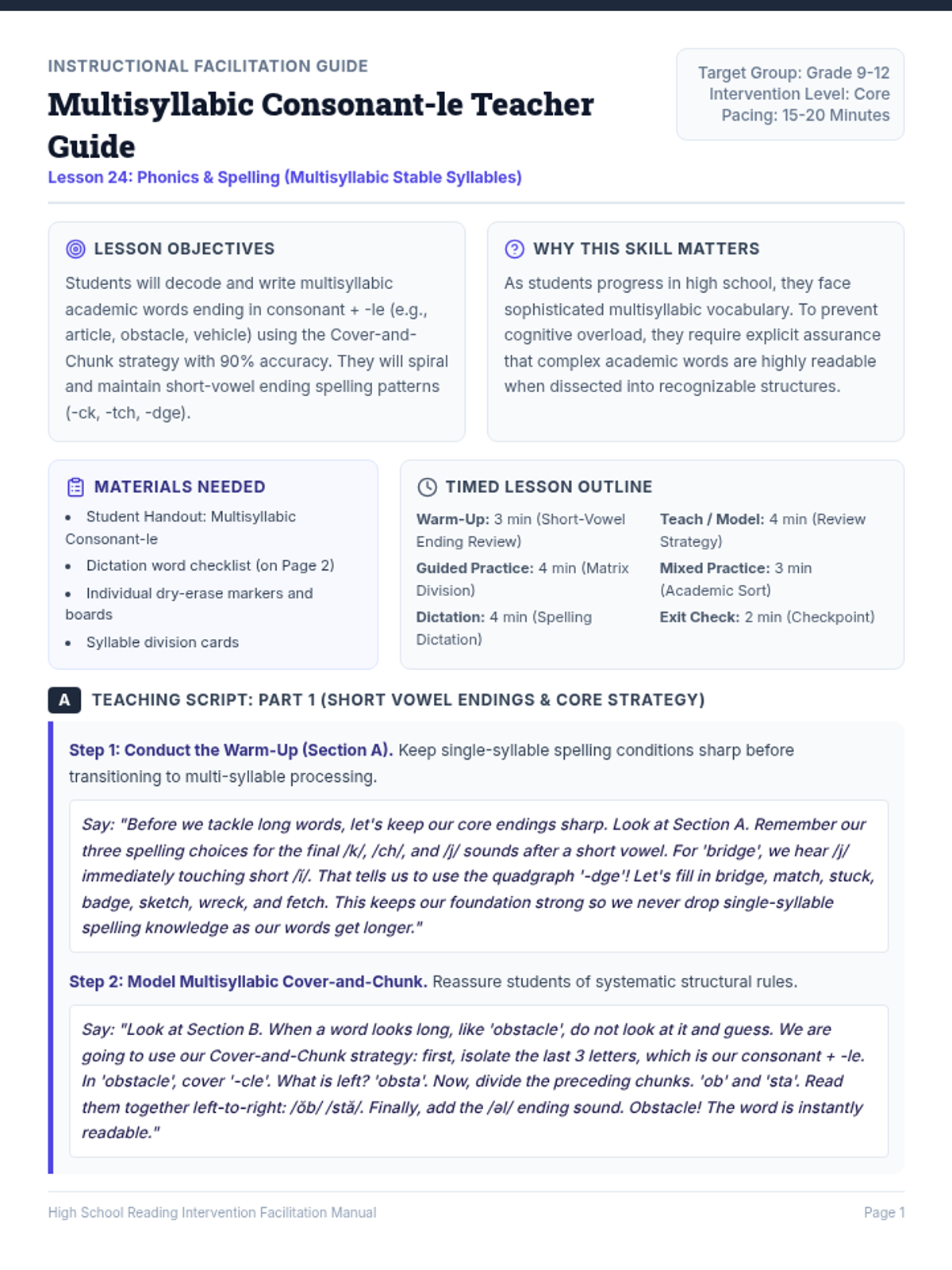
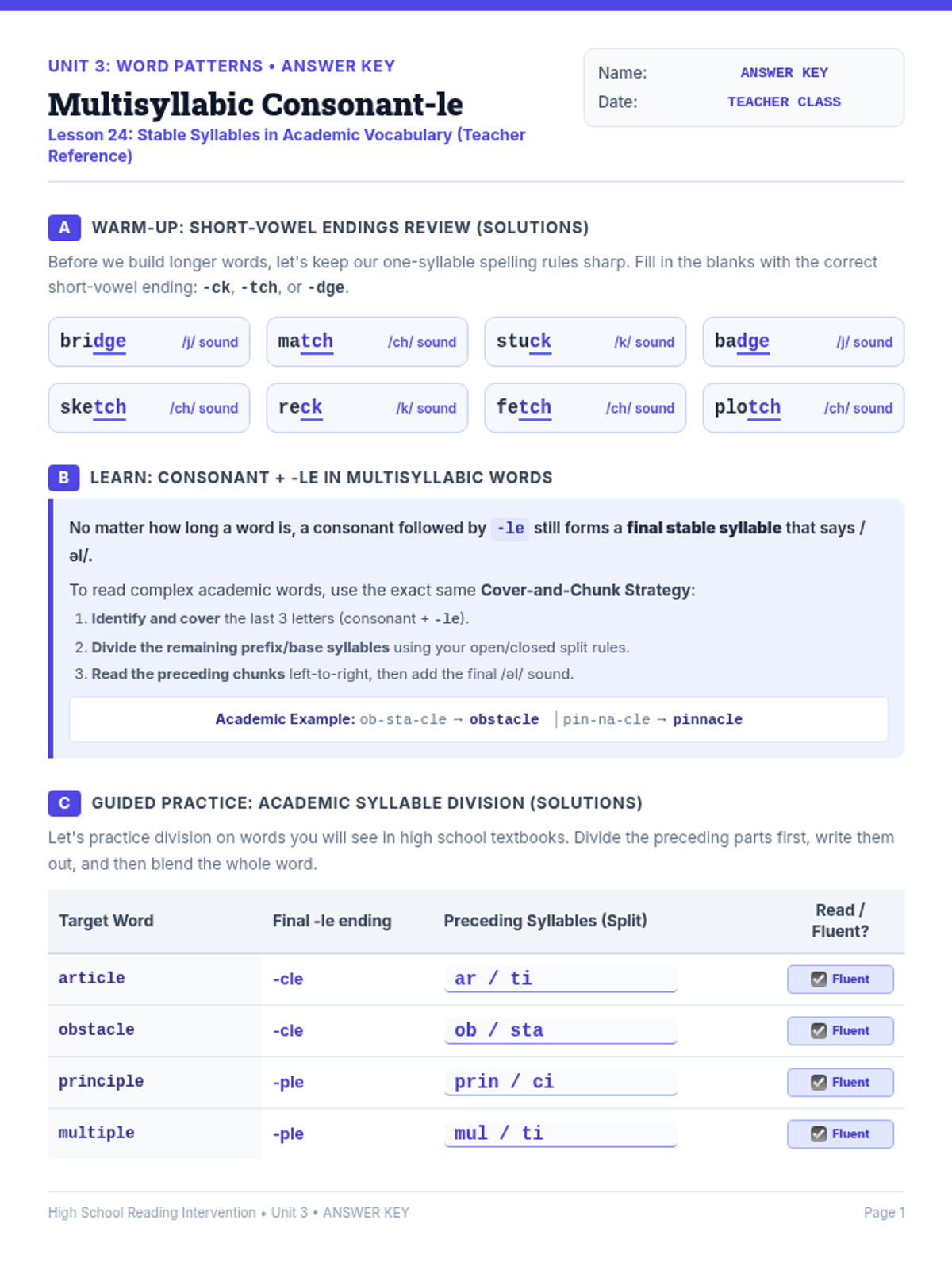
Focuses on decoding and spelling longer, academic multisyllabic words ending in consonant + -le, while spiraling previously learned short-vowel spelling patterns (-ck, -tch, -dge) during warm-ups and comparative activities.
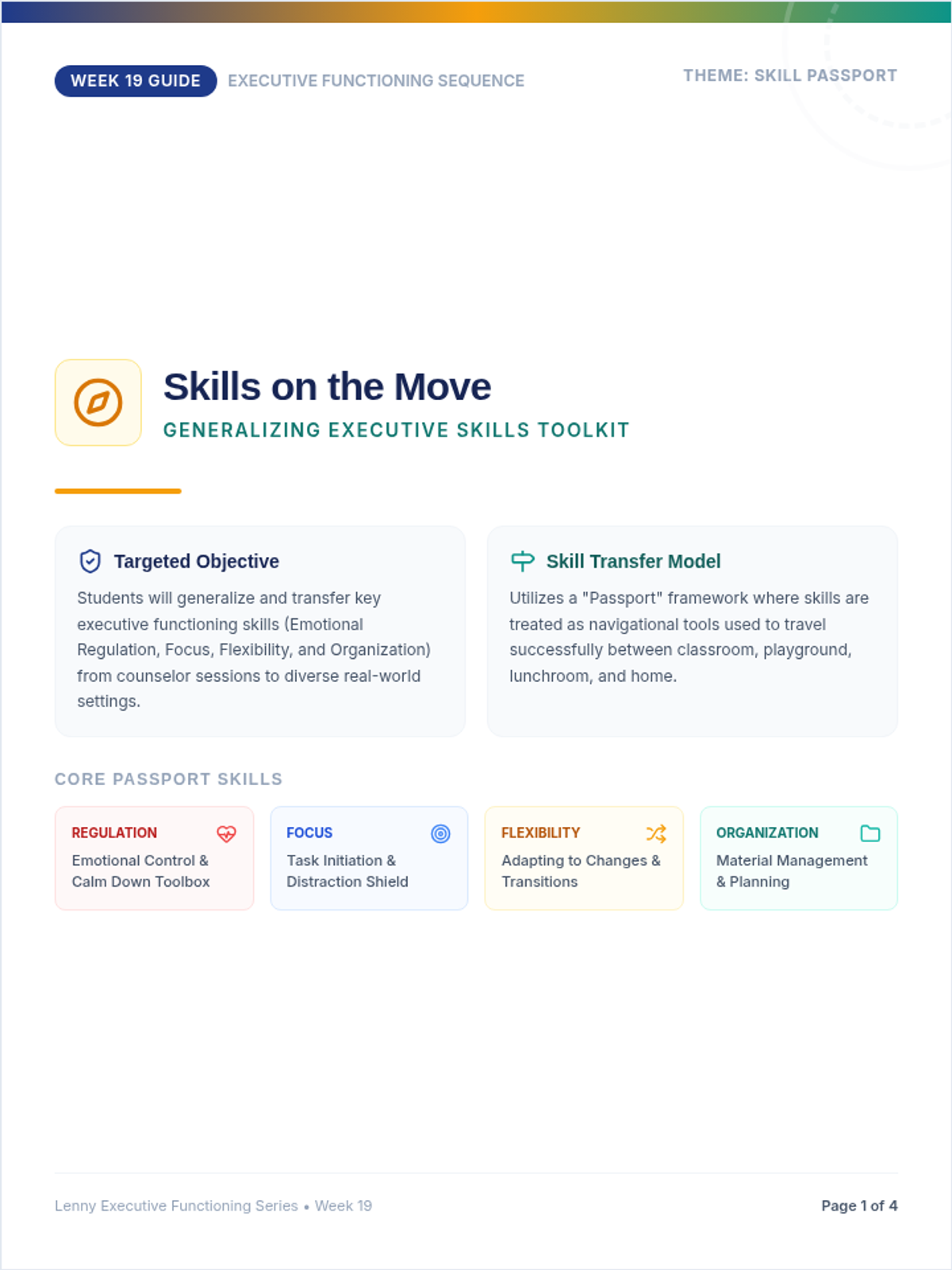
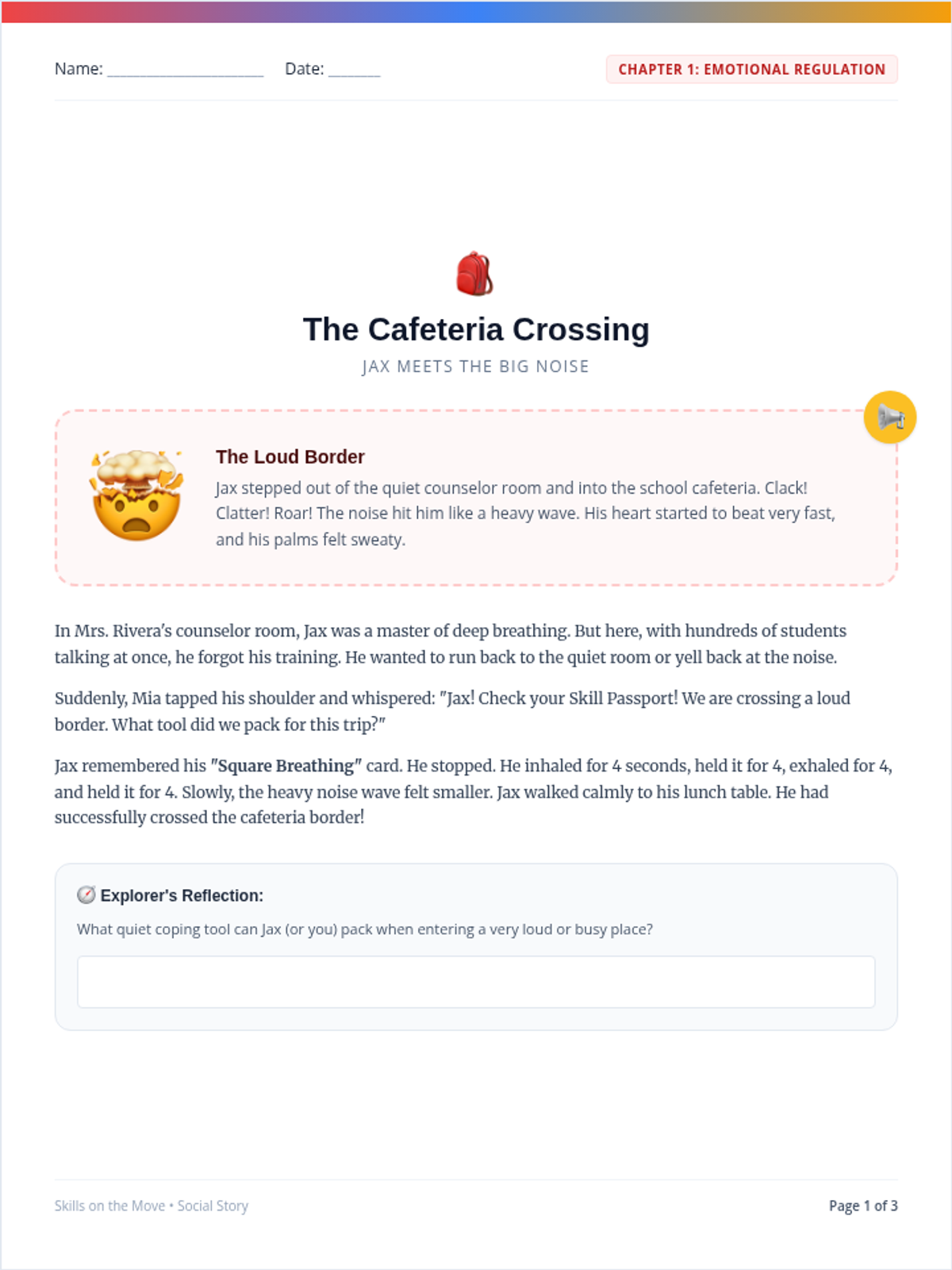
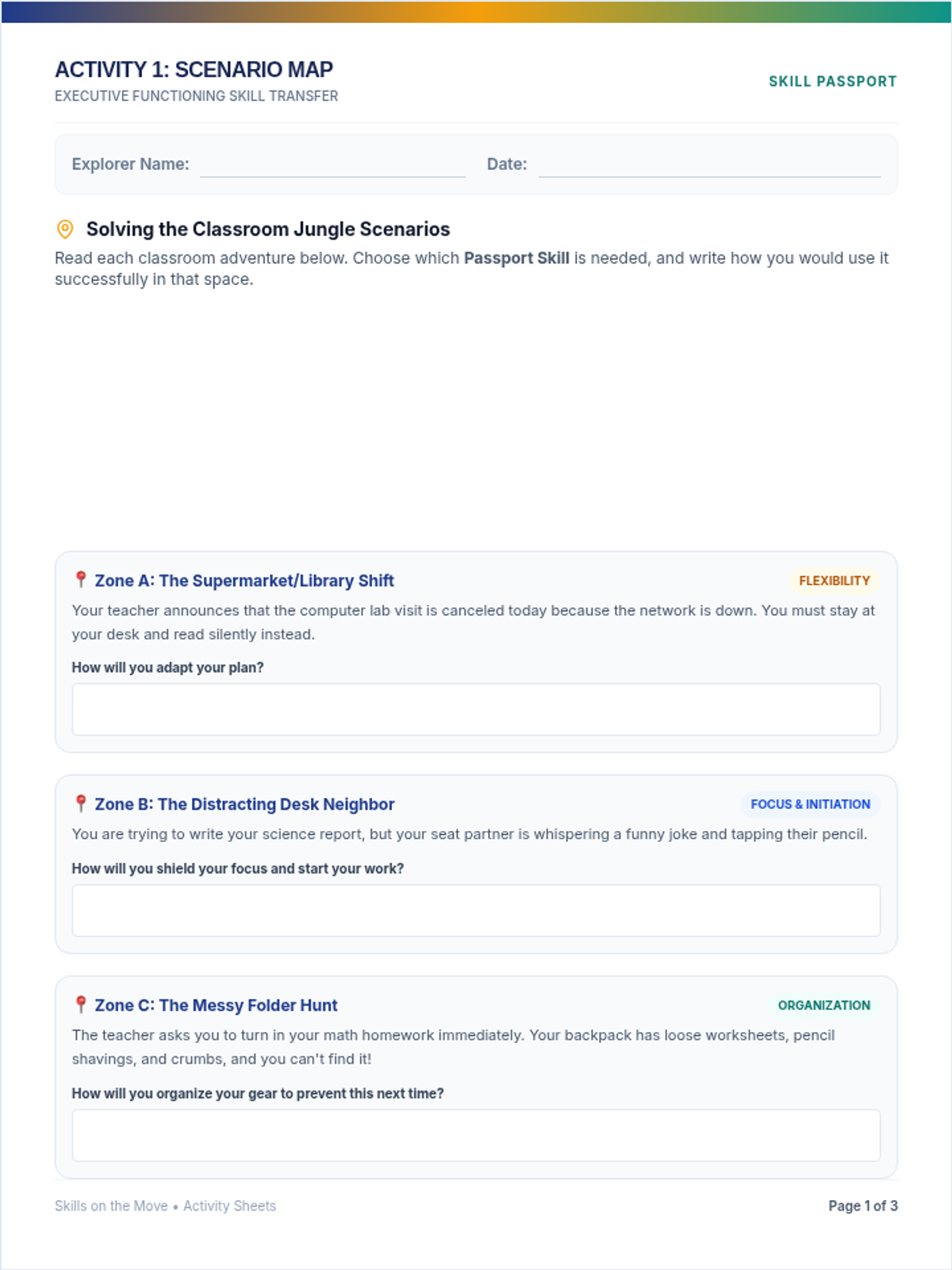
A comprehensive lesson designed to help students generalize and transfer their executive functioning skills—including emotional regulation, focus, flexibility, and organization—across various settings.
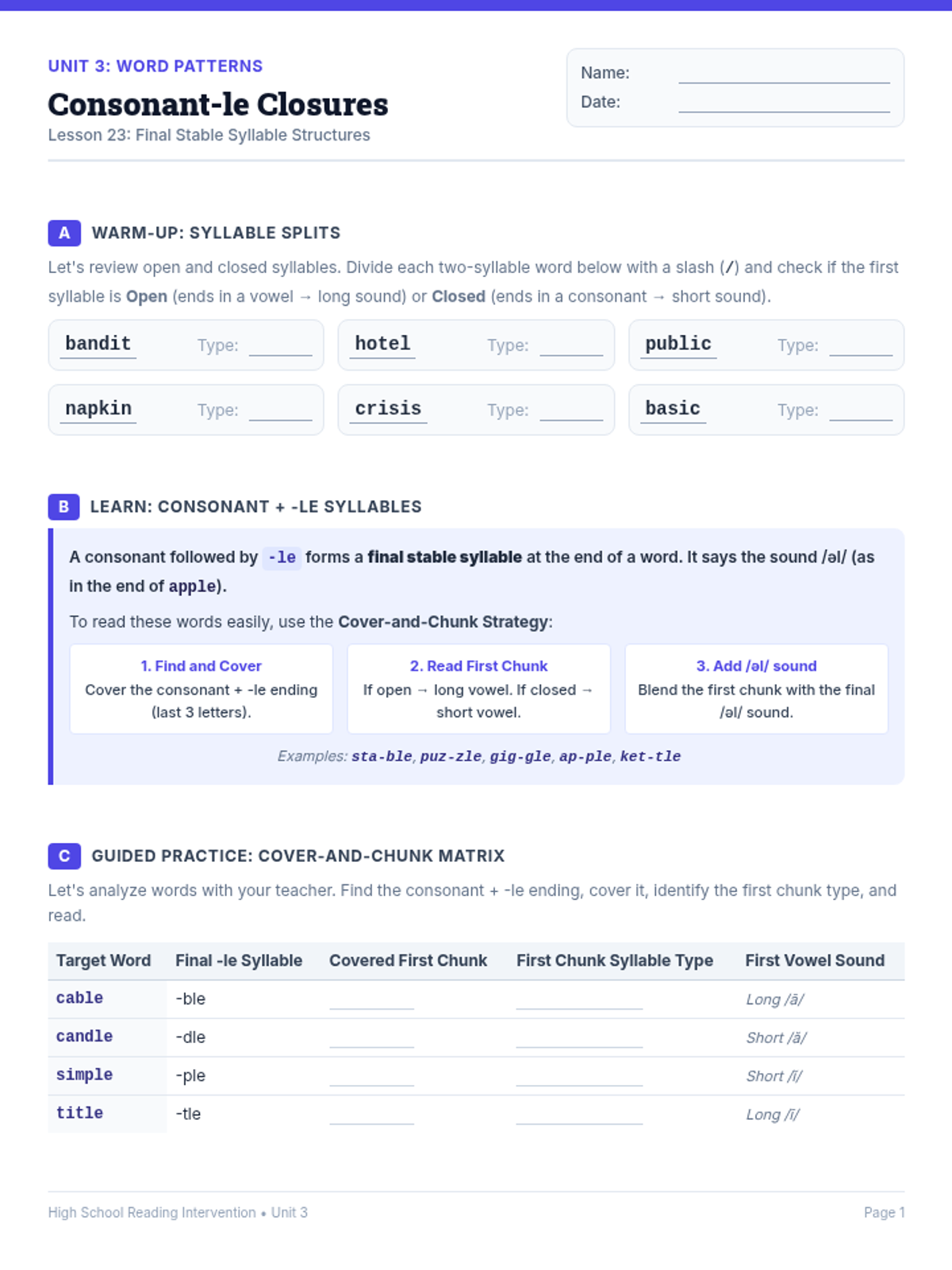
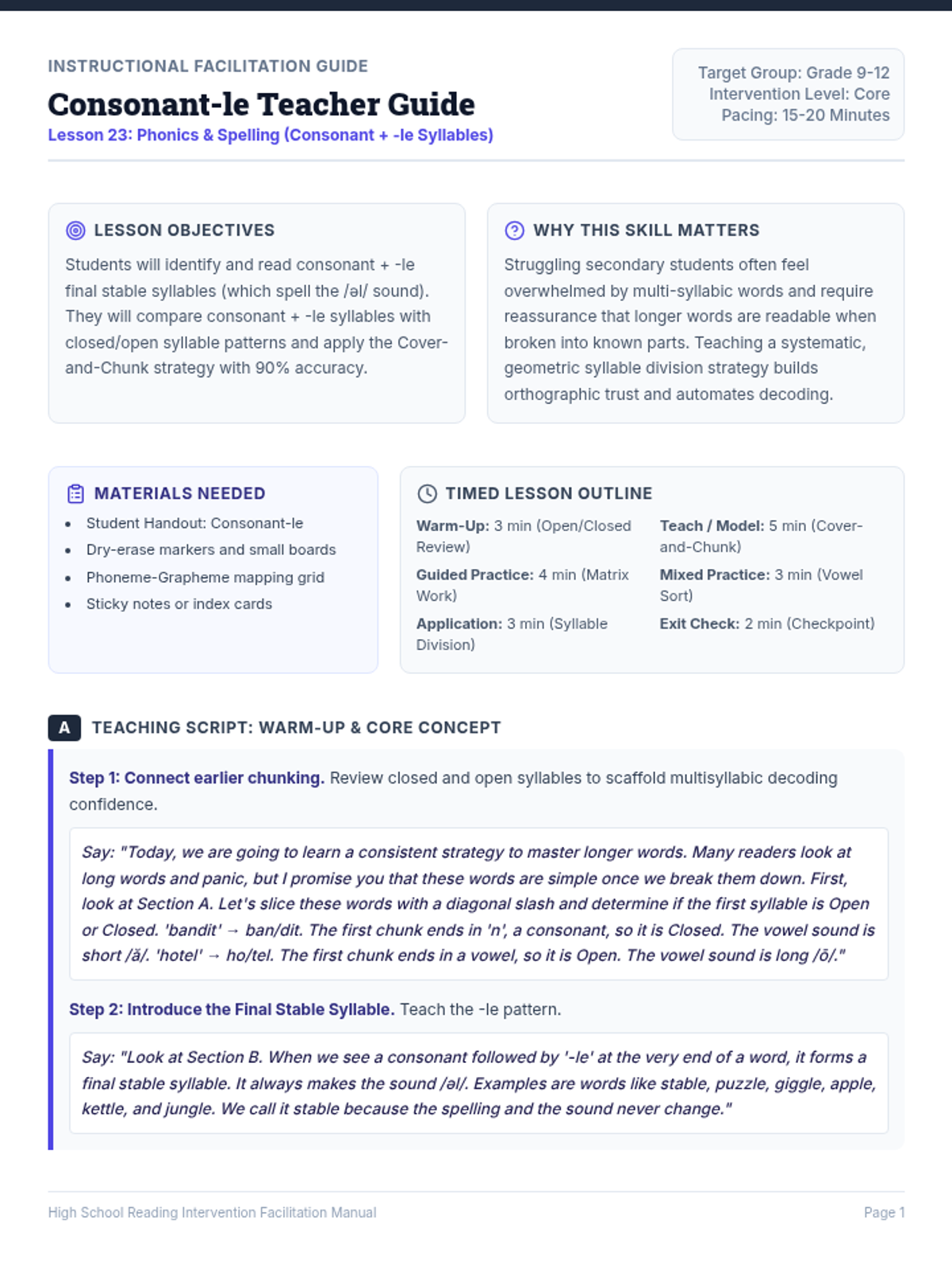
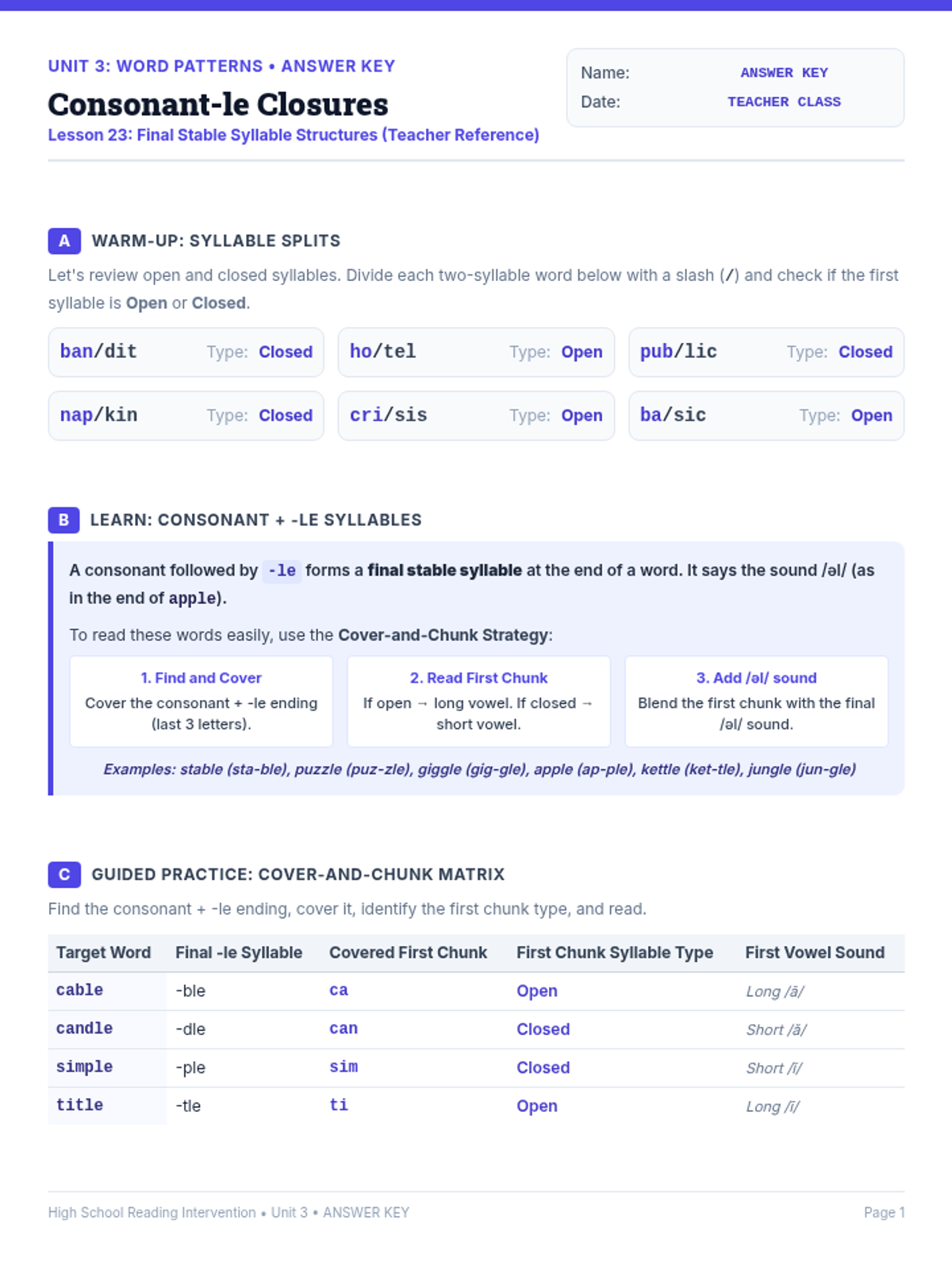
Introduces the final stable syllable consonant + -le, teaching a consistent cover-and-chunk strategy while spiraling open and closed syllable prerequisites.
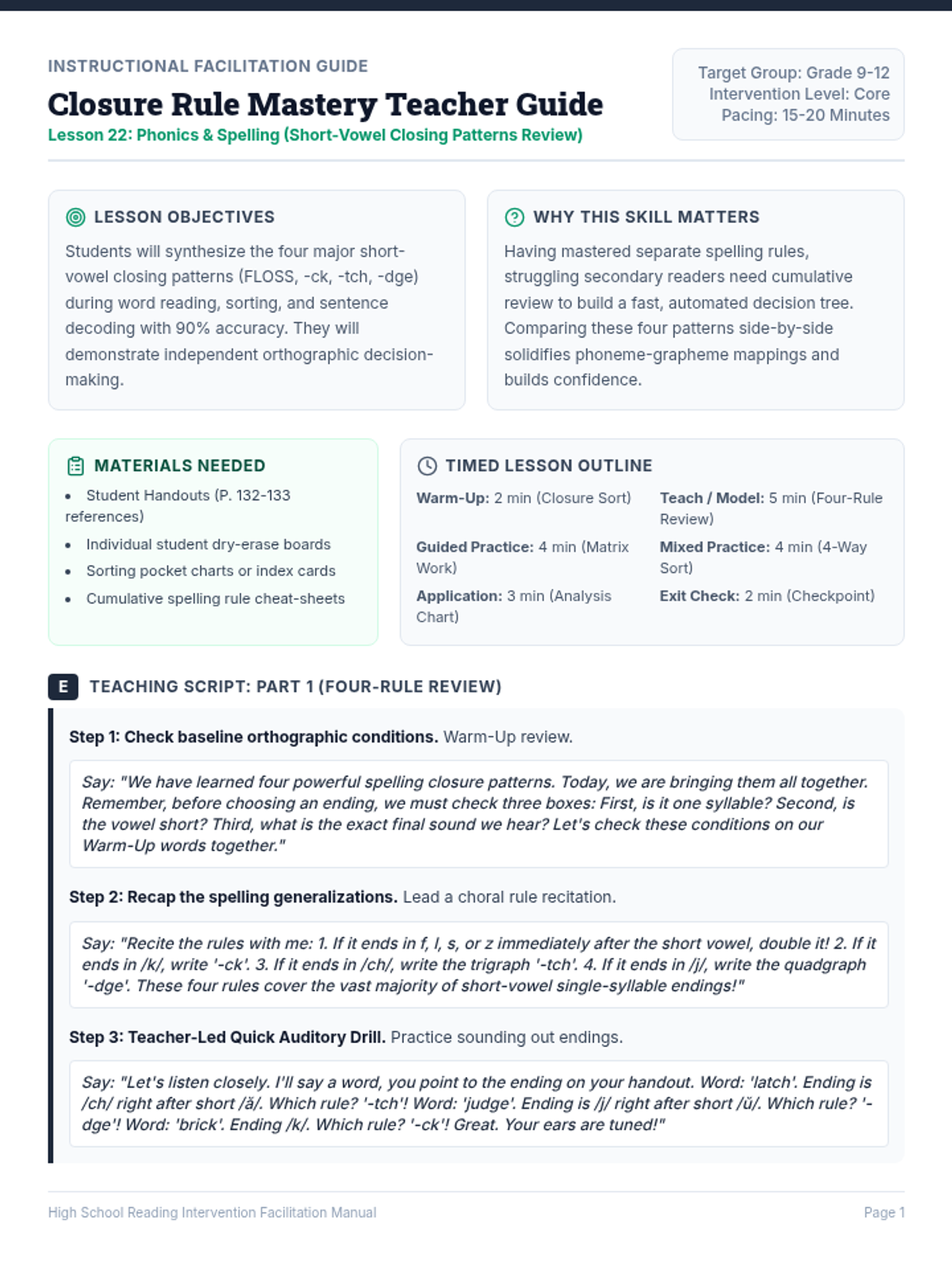
An intensive review and comparative lesson integrating all four major short-vowel closing patterns (FLOSS, -ck, -tch, -dge) to cement master-level orthographic decoding and spelling logic.
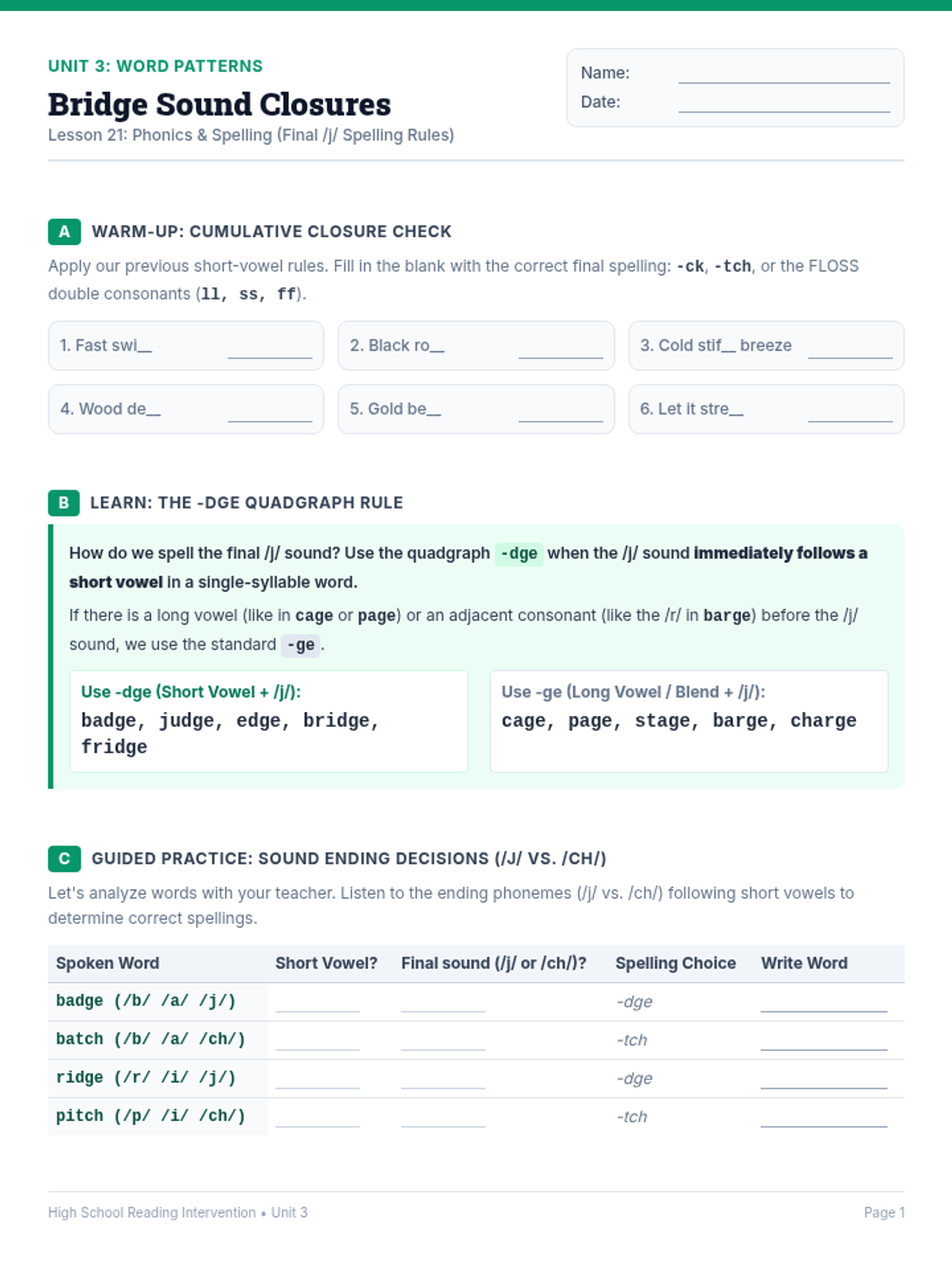
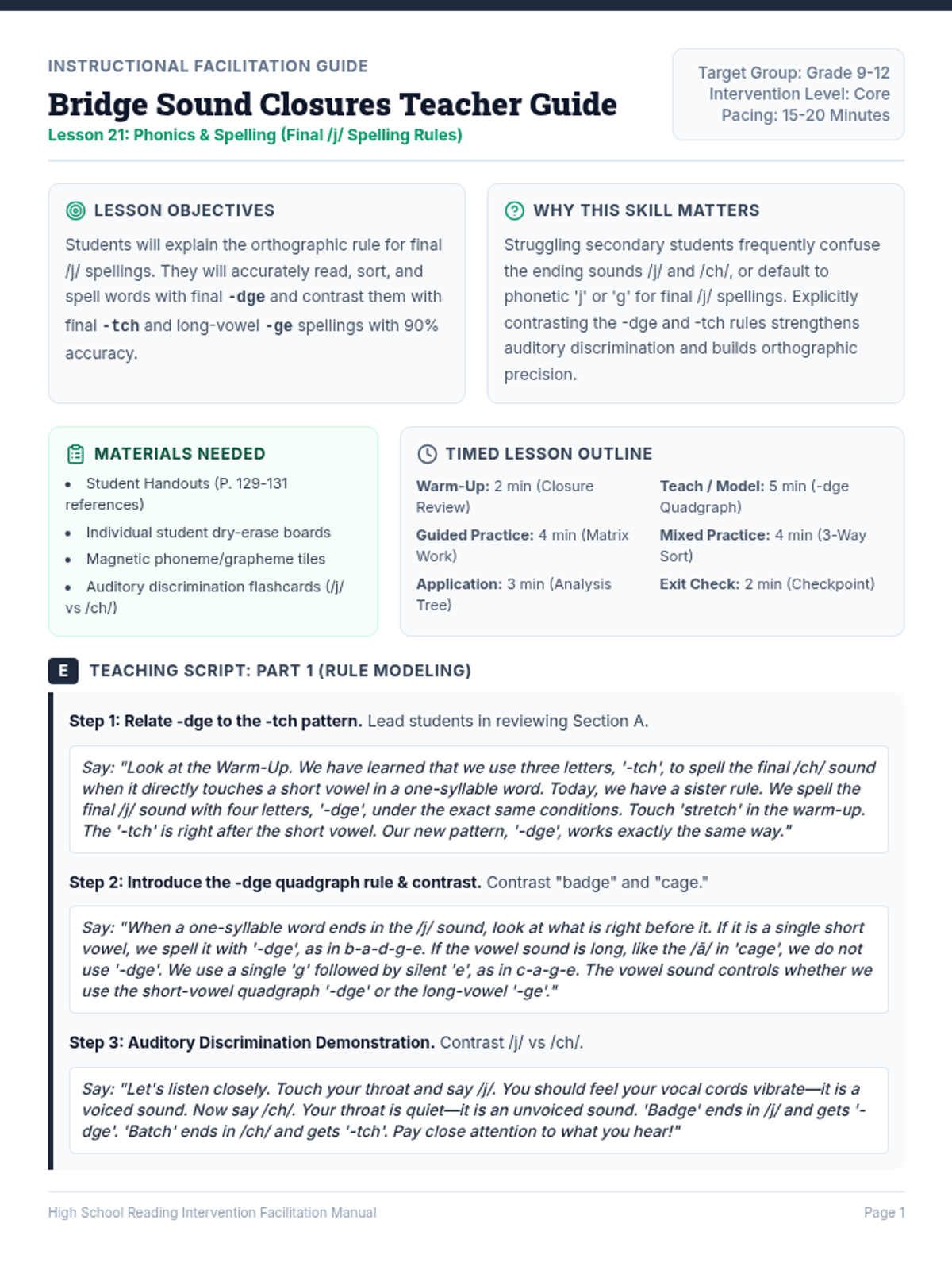
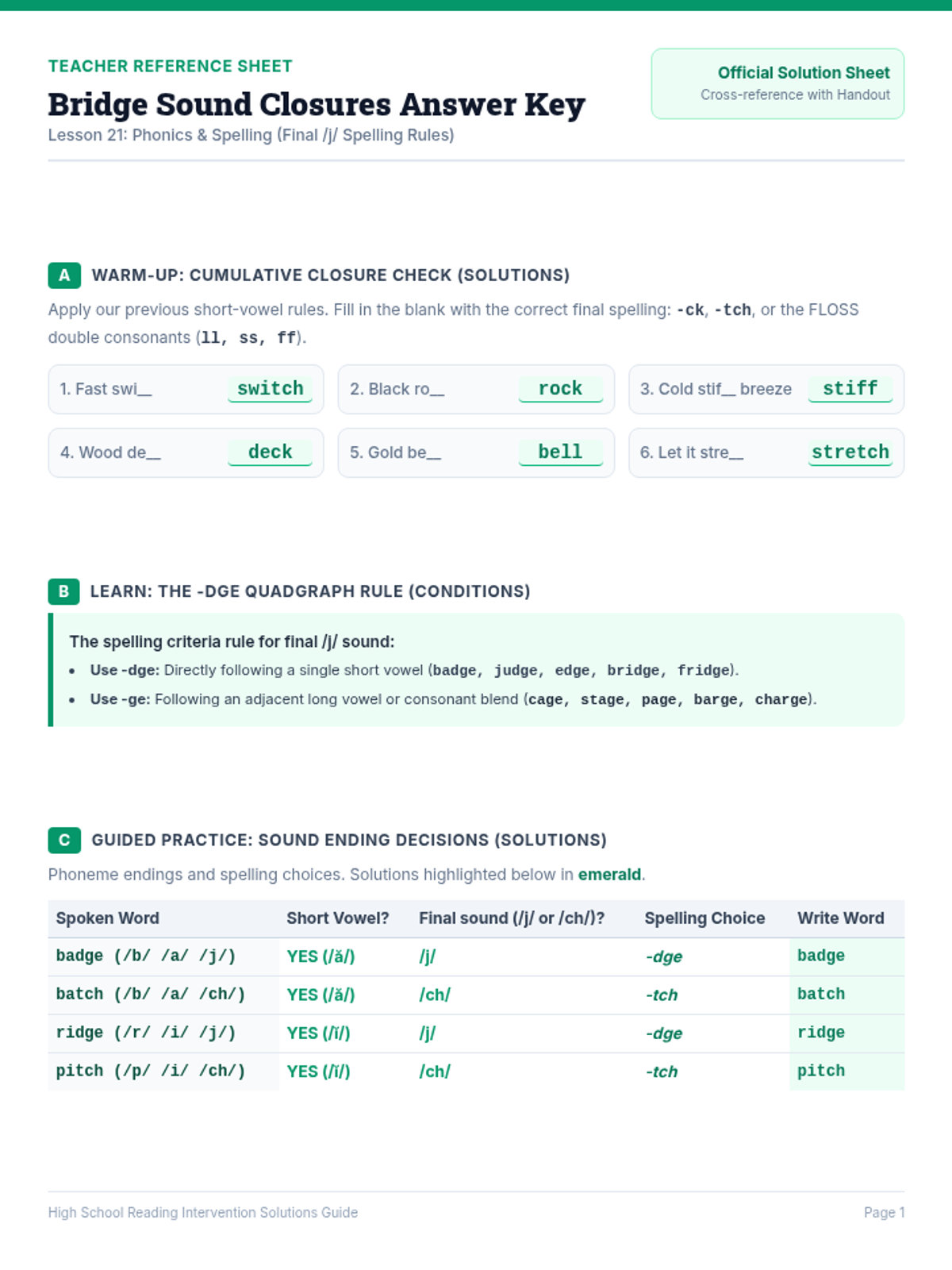
Introduces the spelling pattern -dge for the final /j/ sound following short vowels, contrasting it with the -tch trigraph to strengthen phoneme-level auditory discrimination.
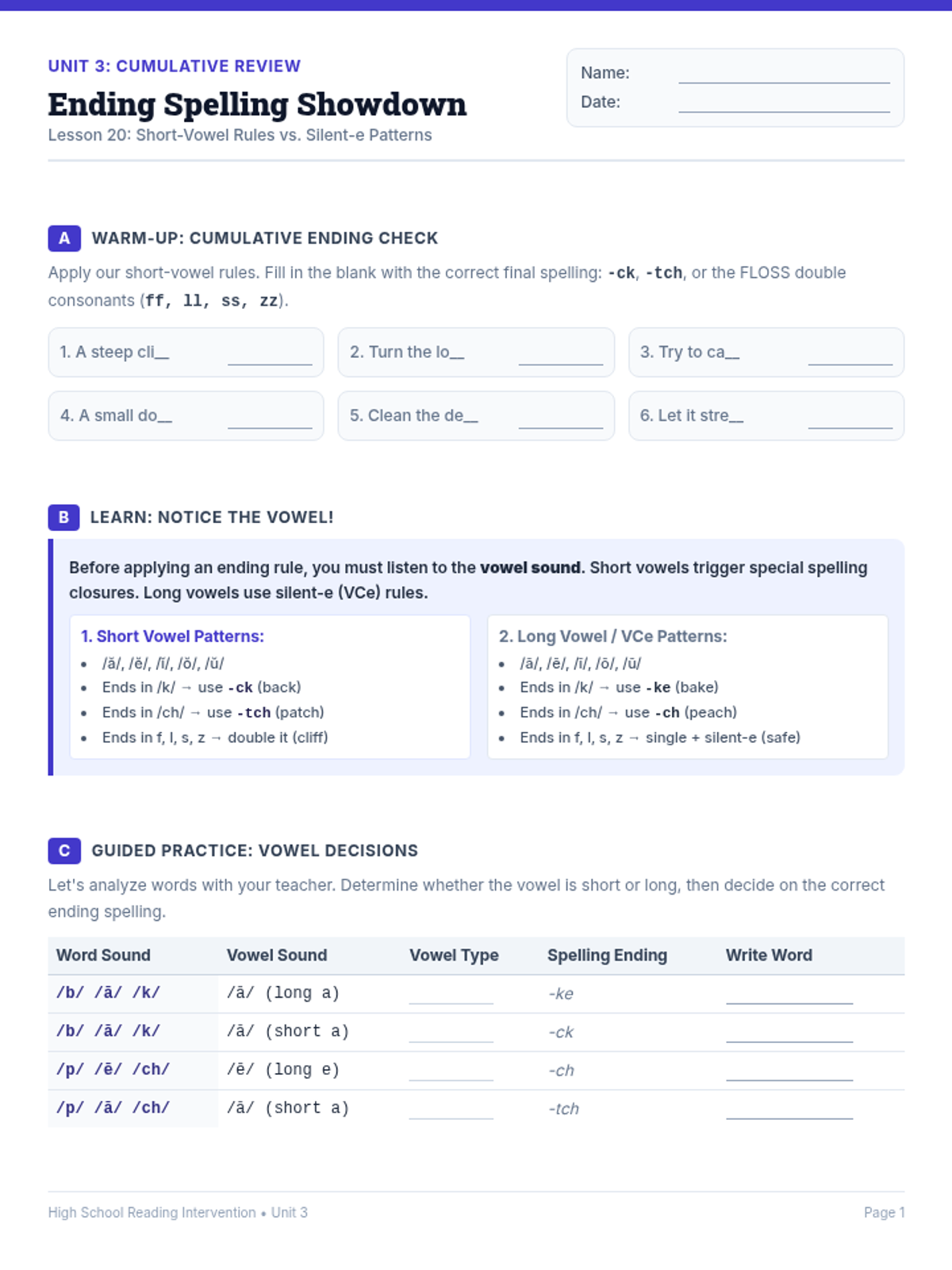
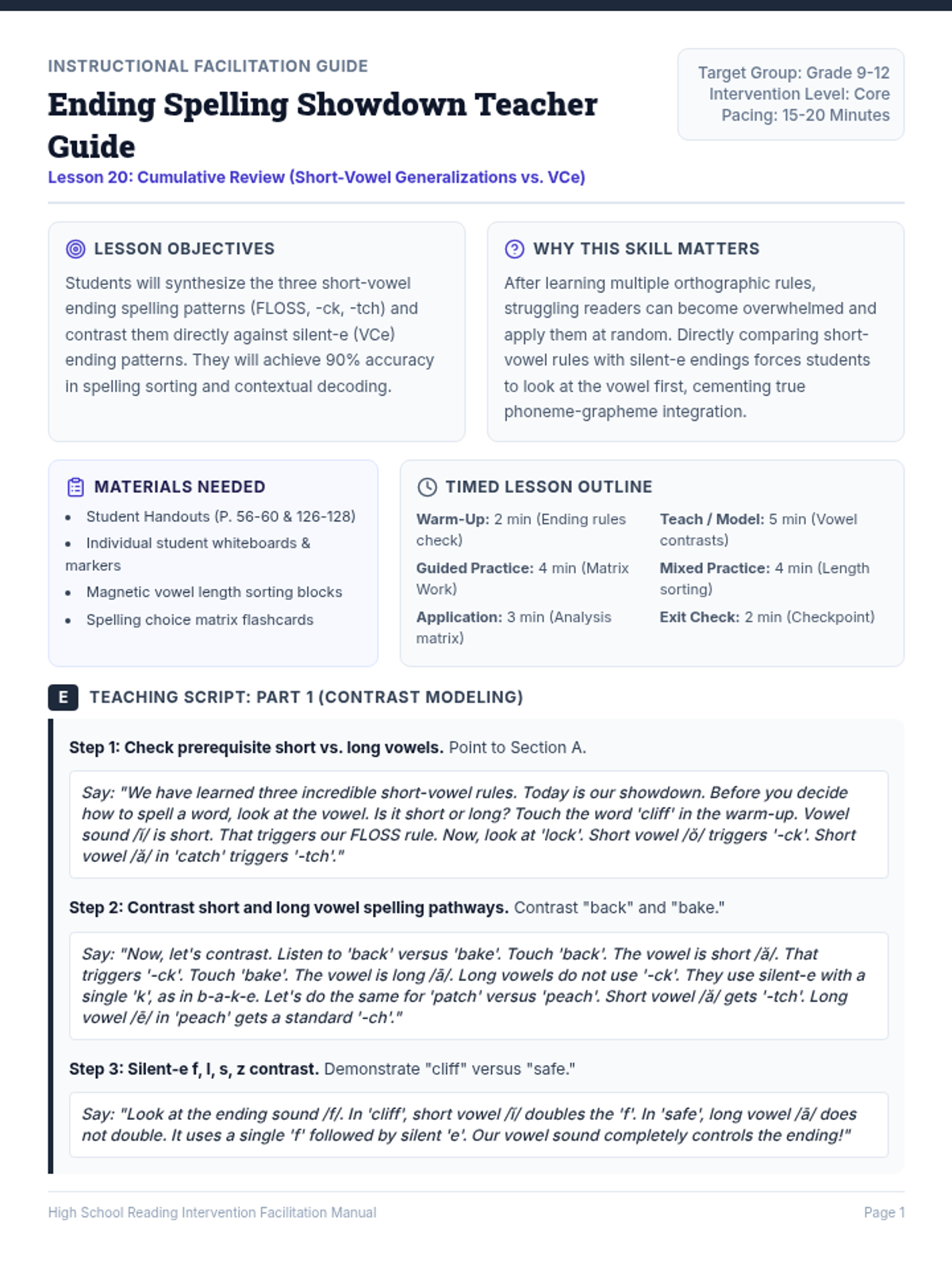
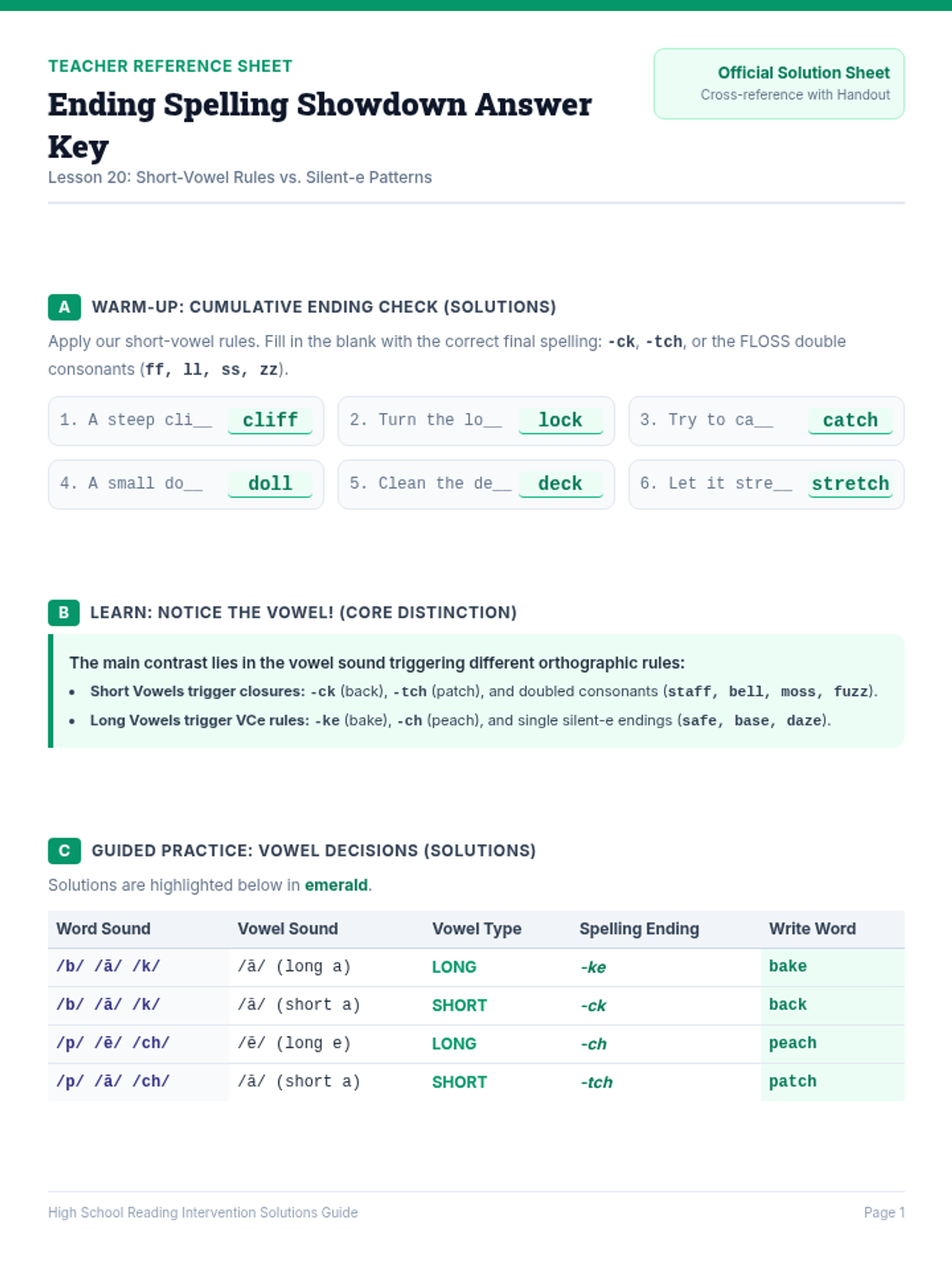
A cumulative practice and review lesson contrasting the short-vowel spelling rules (FLOSS, -ck, -tch) with VCe silent-e patterns to build master-level orthographic decoding and vowel recognition.
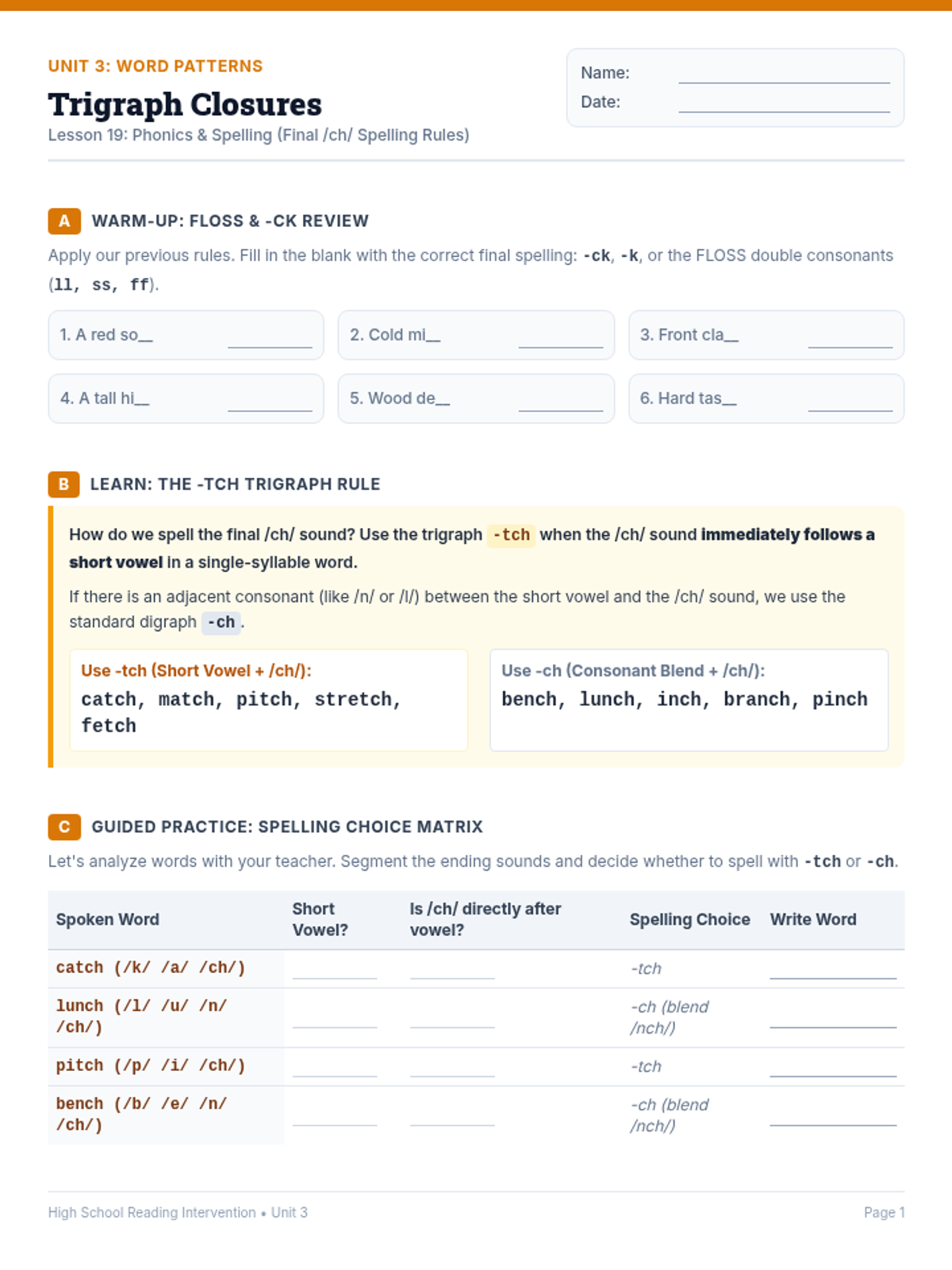
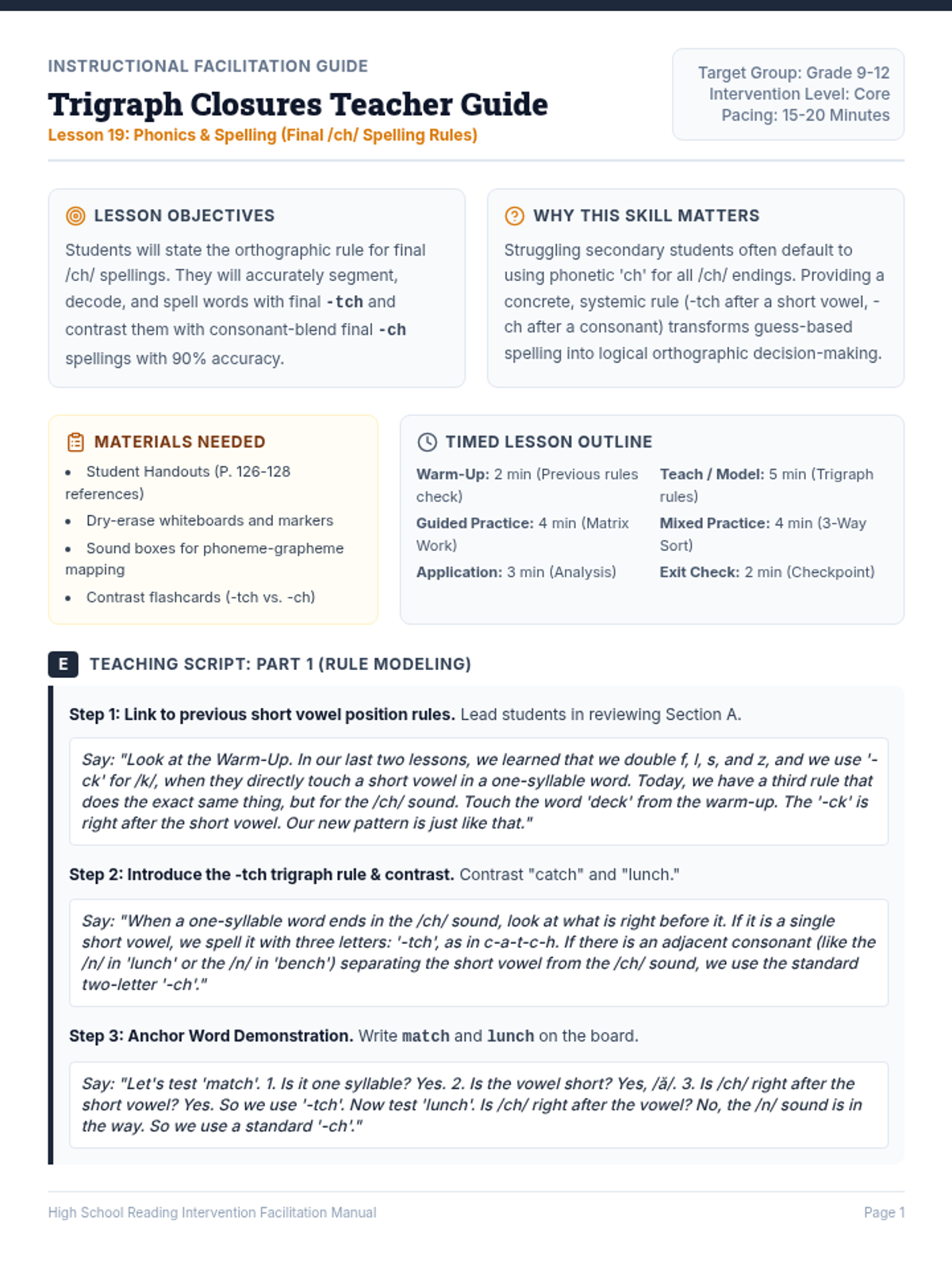
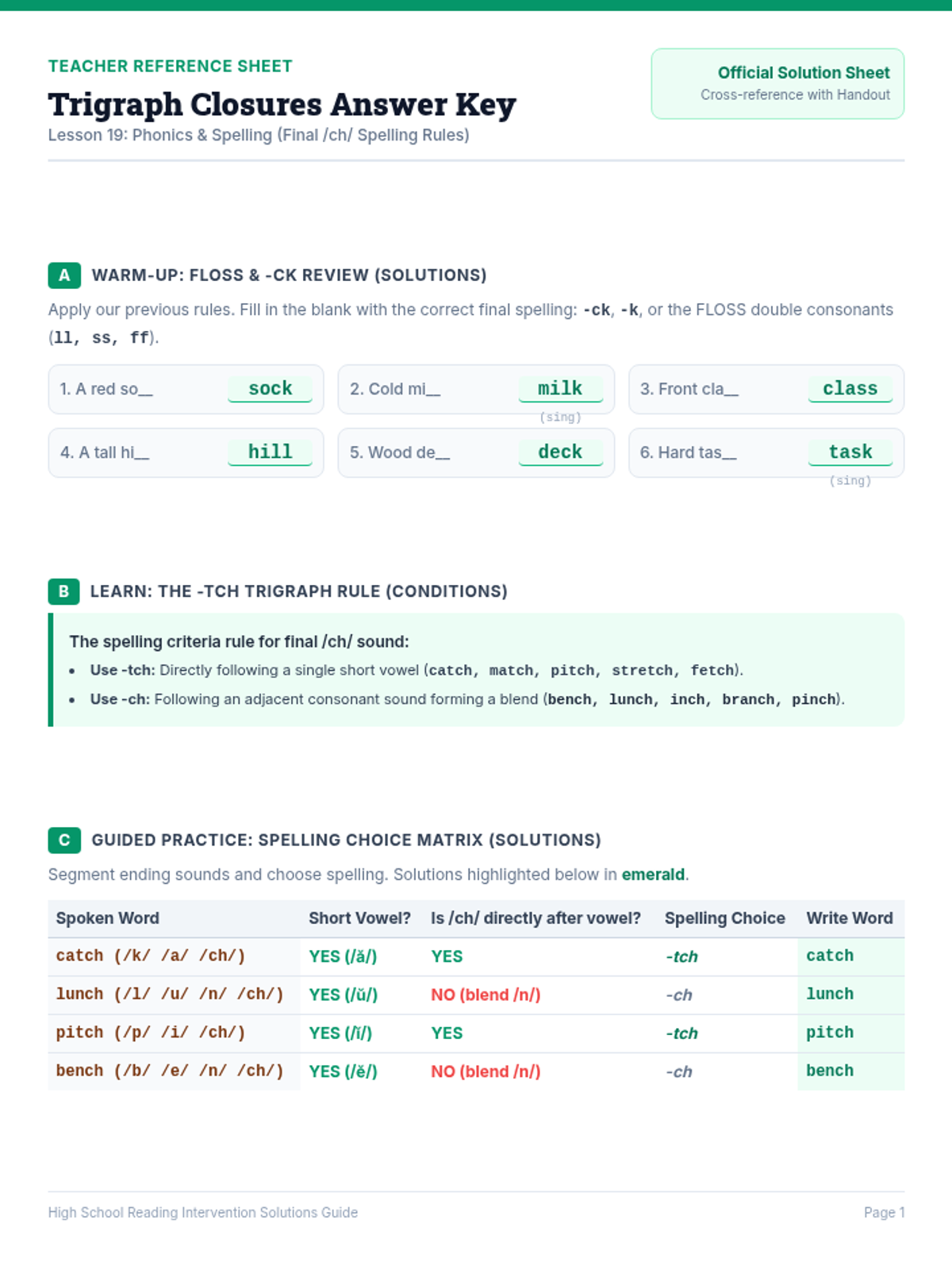
Introduces the spelling pattern -tch for the final /ch/ sound following short vowels, comparing and contrasting it with the -ck spelling rule for final /k/ sounds to build orthographic precision.
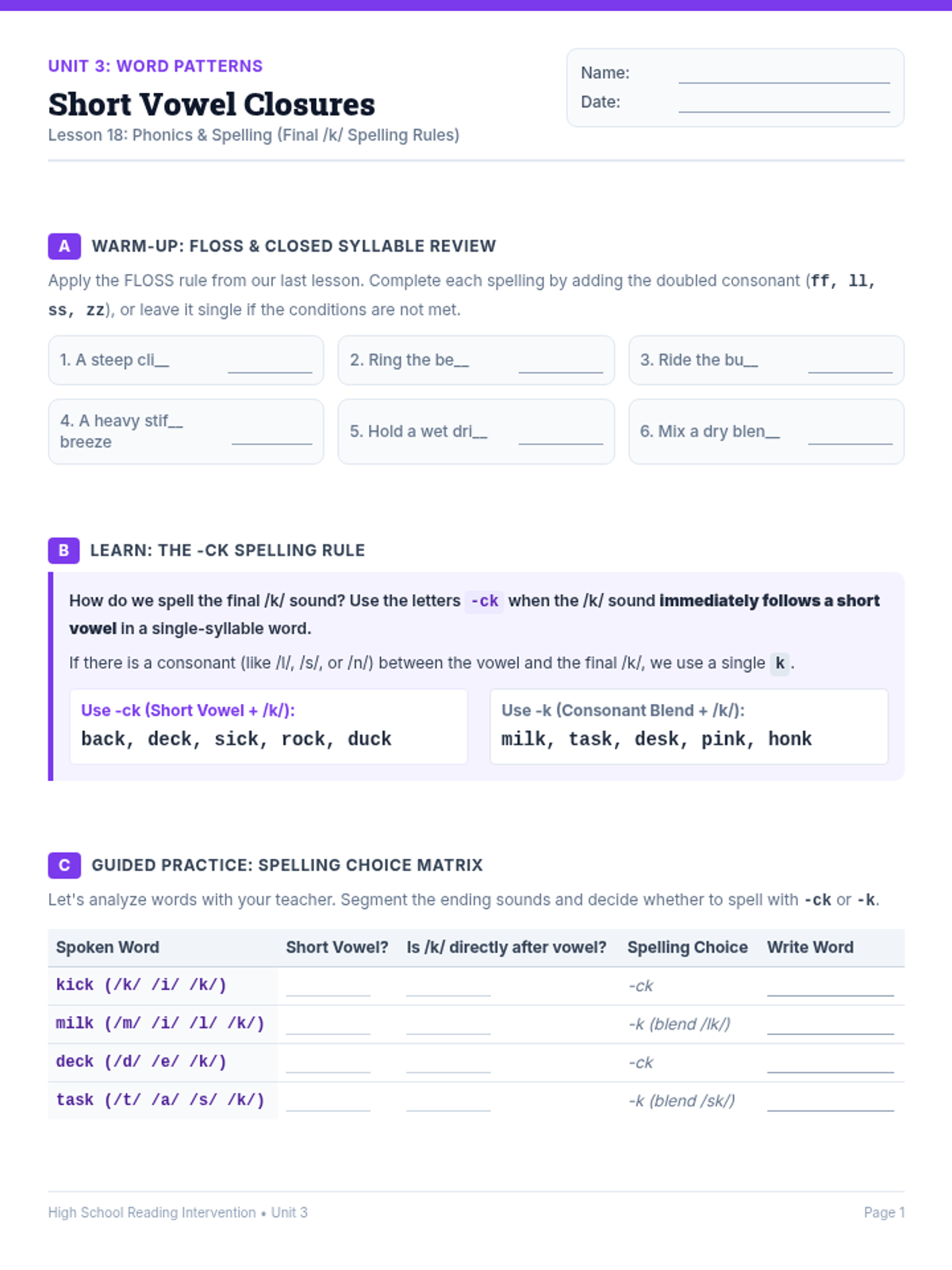
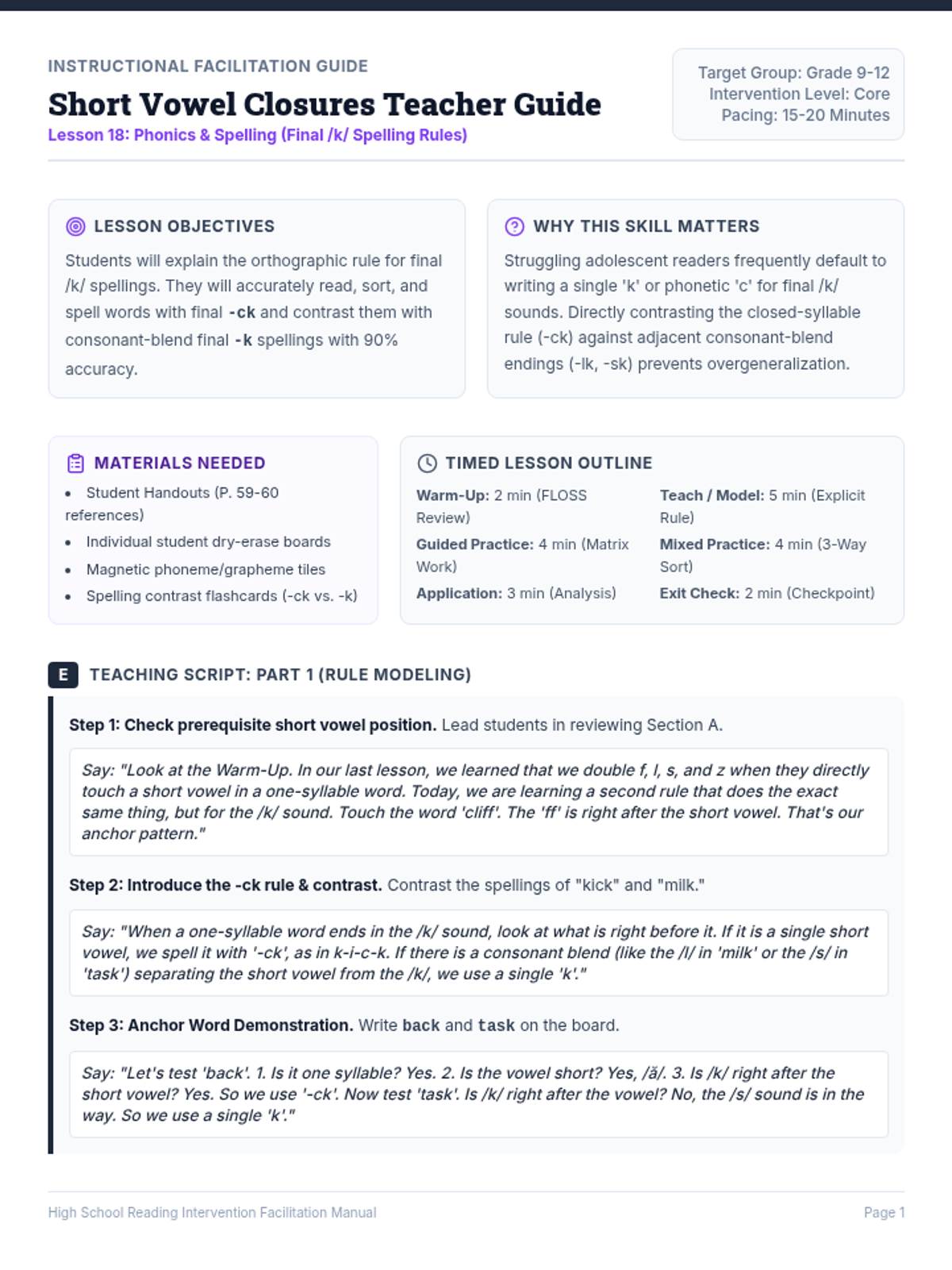
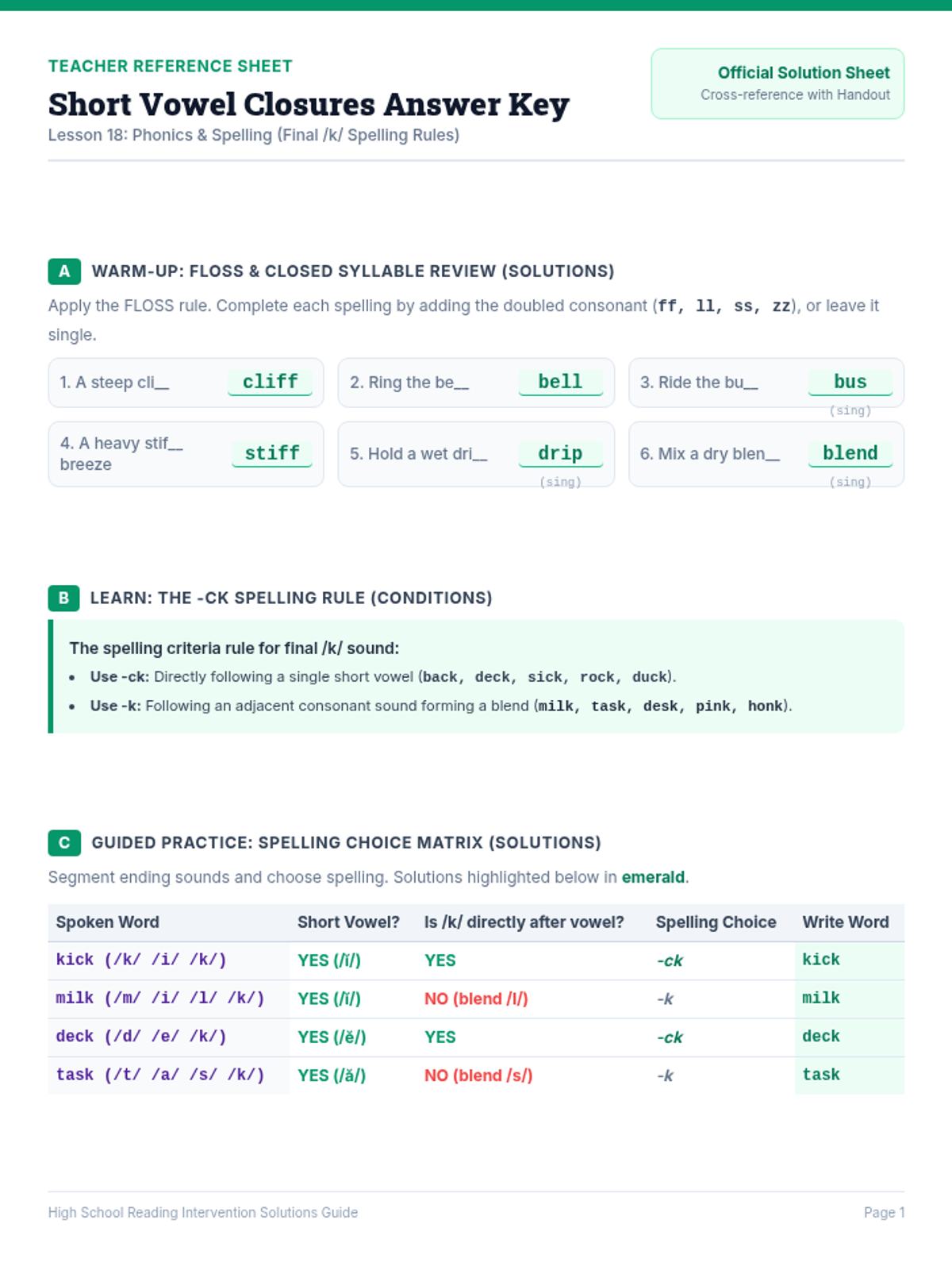
Introduces the spelling pattern -ck for the final /k/ sound following short vowels, contrasting it with the FLOSS rule to build systematic orthographic decision-making.
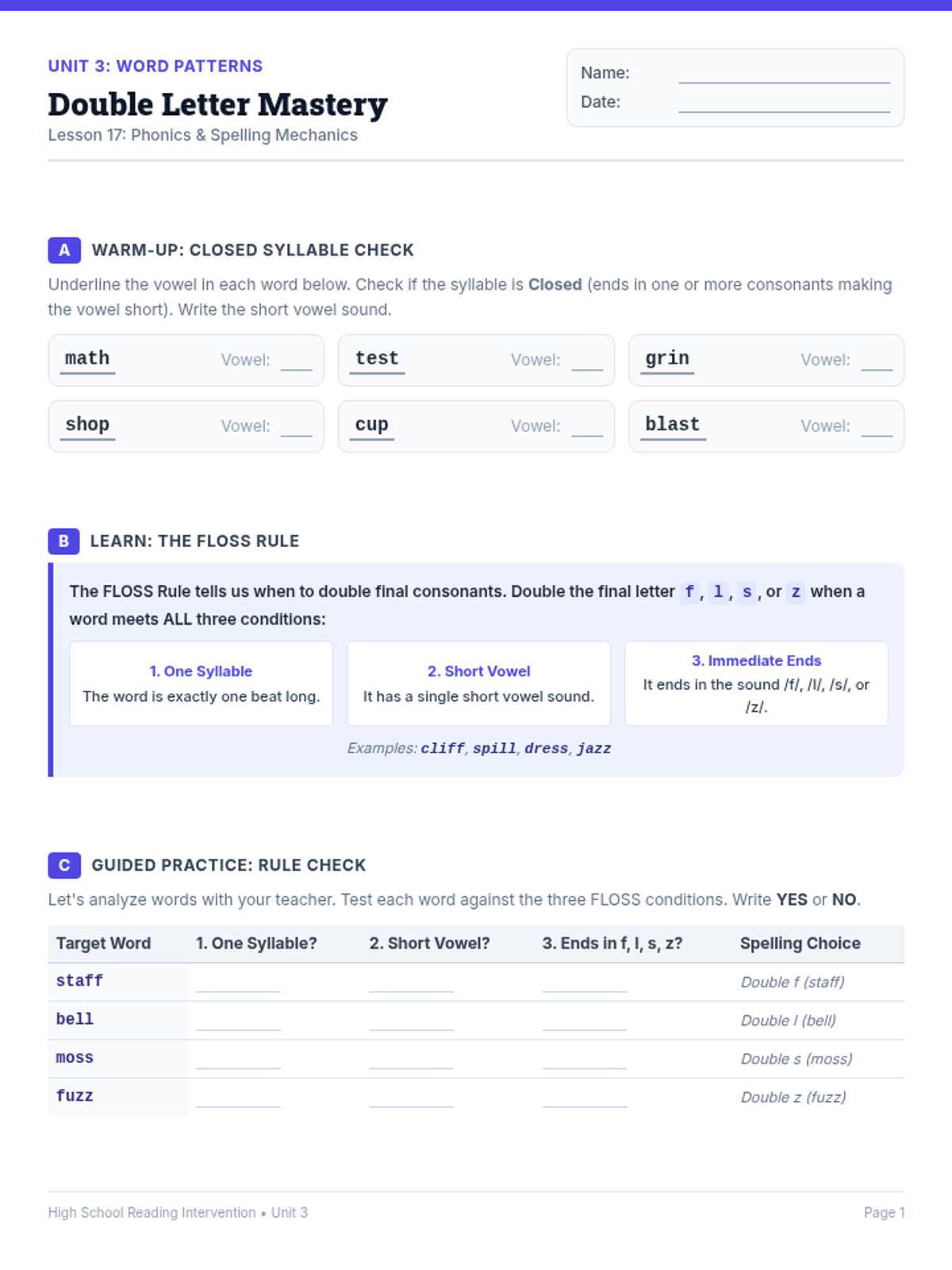
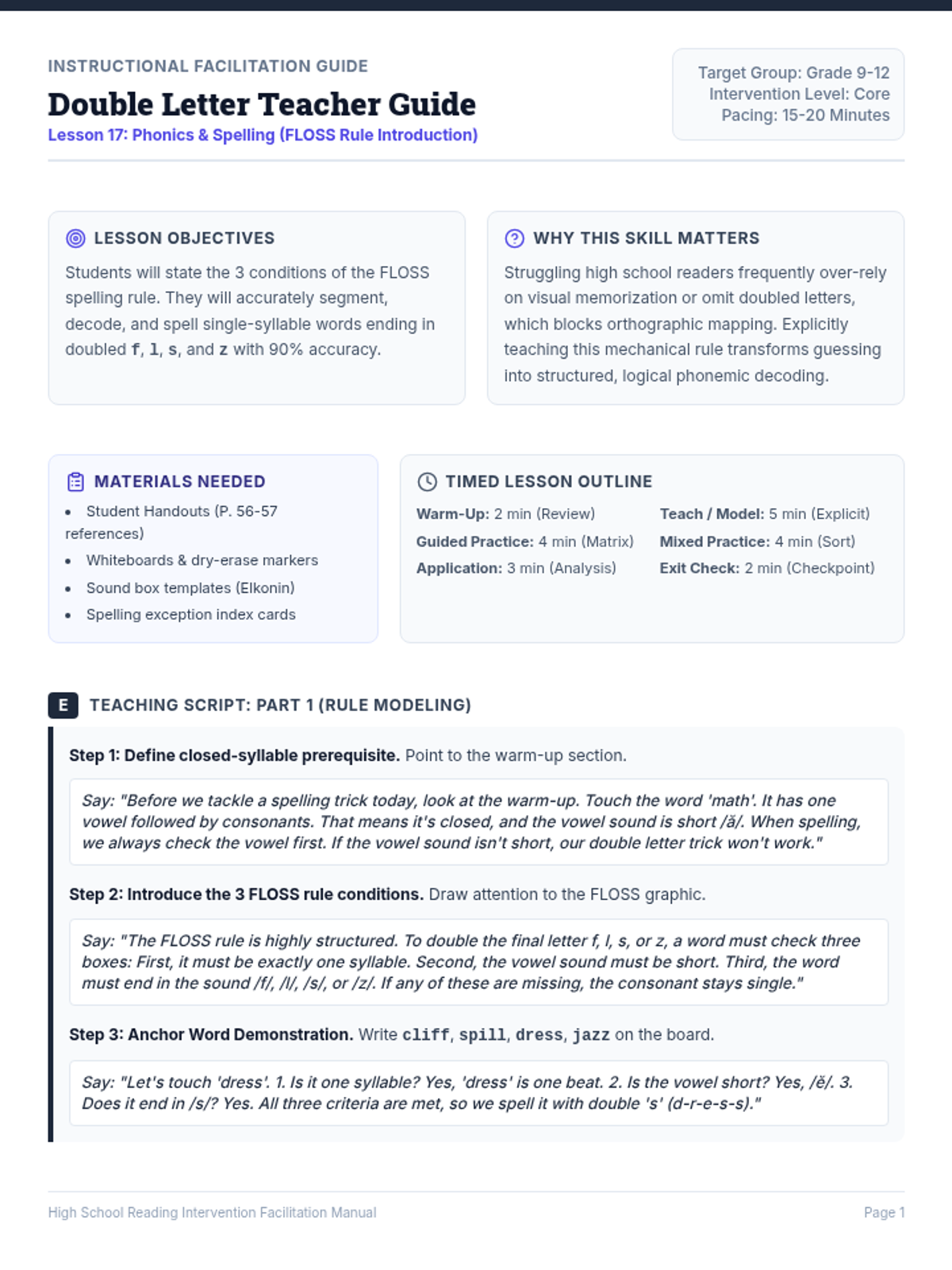
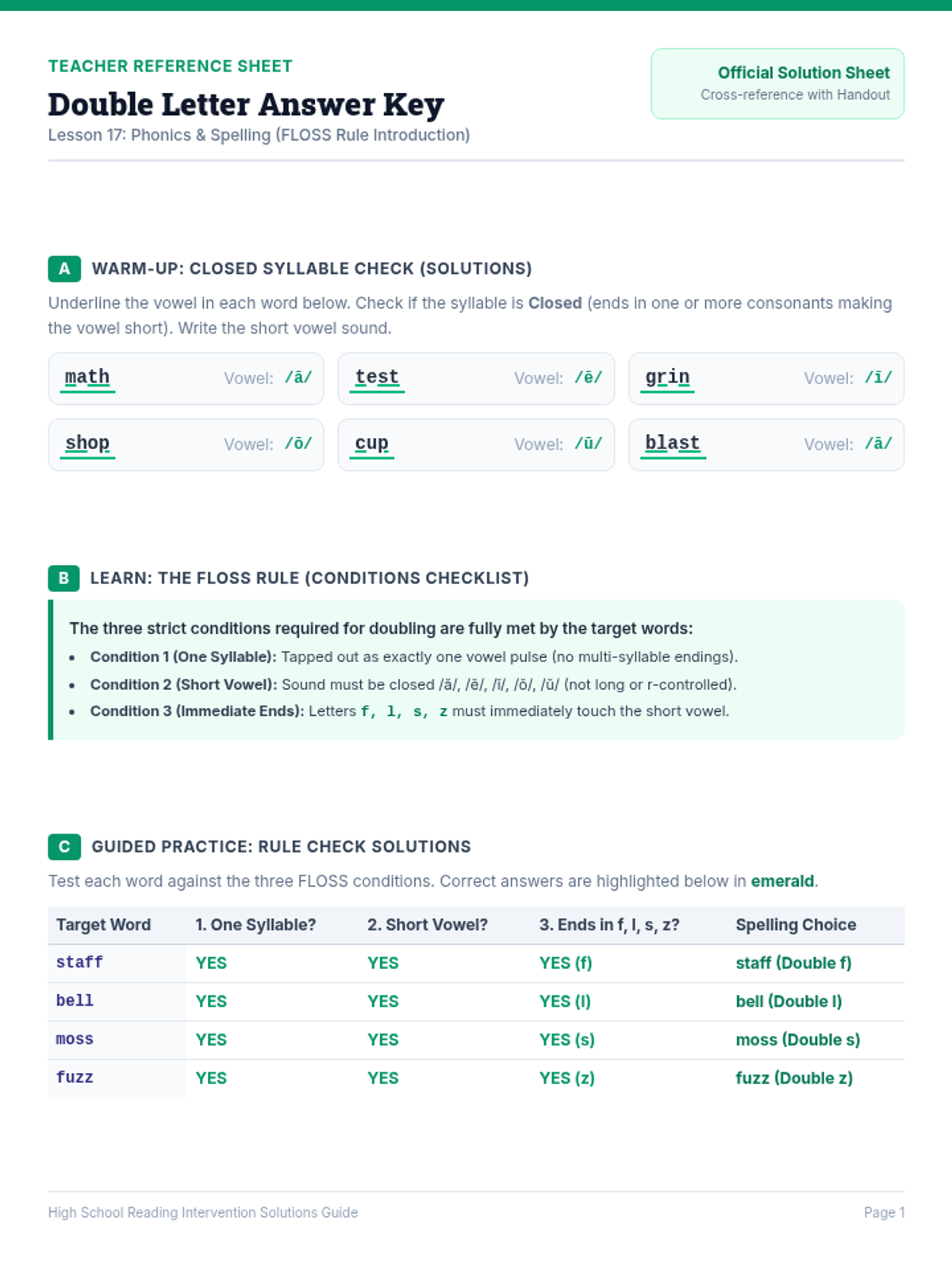
Introduces the FLOSS rule for single-syllable words containing short vowels, emphasizing the conditions under which final f, l, s, and z are doubled, while spiraling closed-syllable patterns.