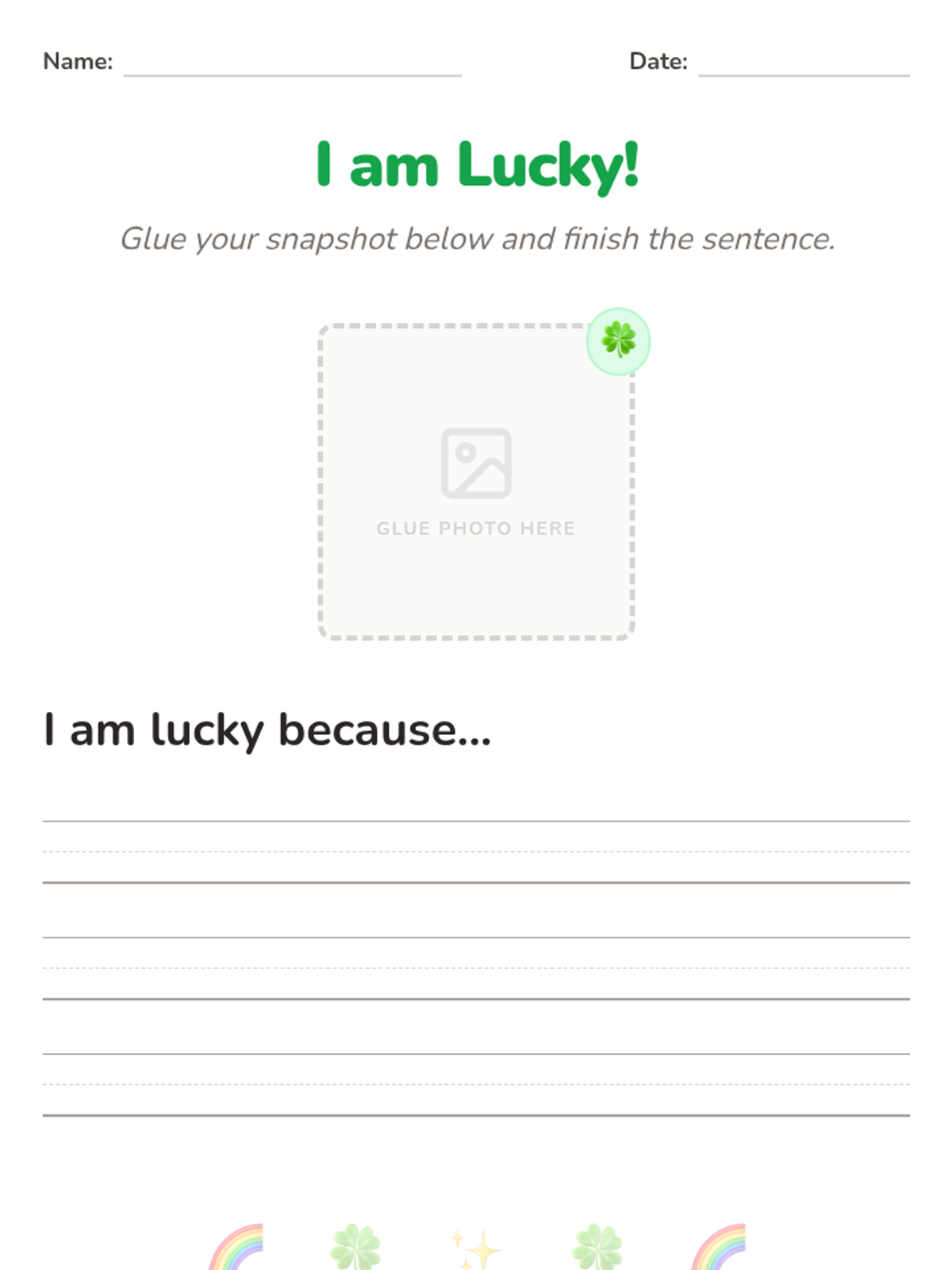
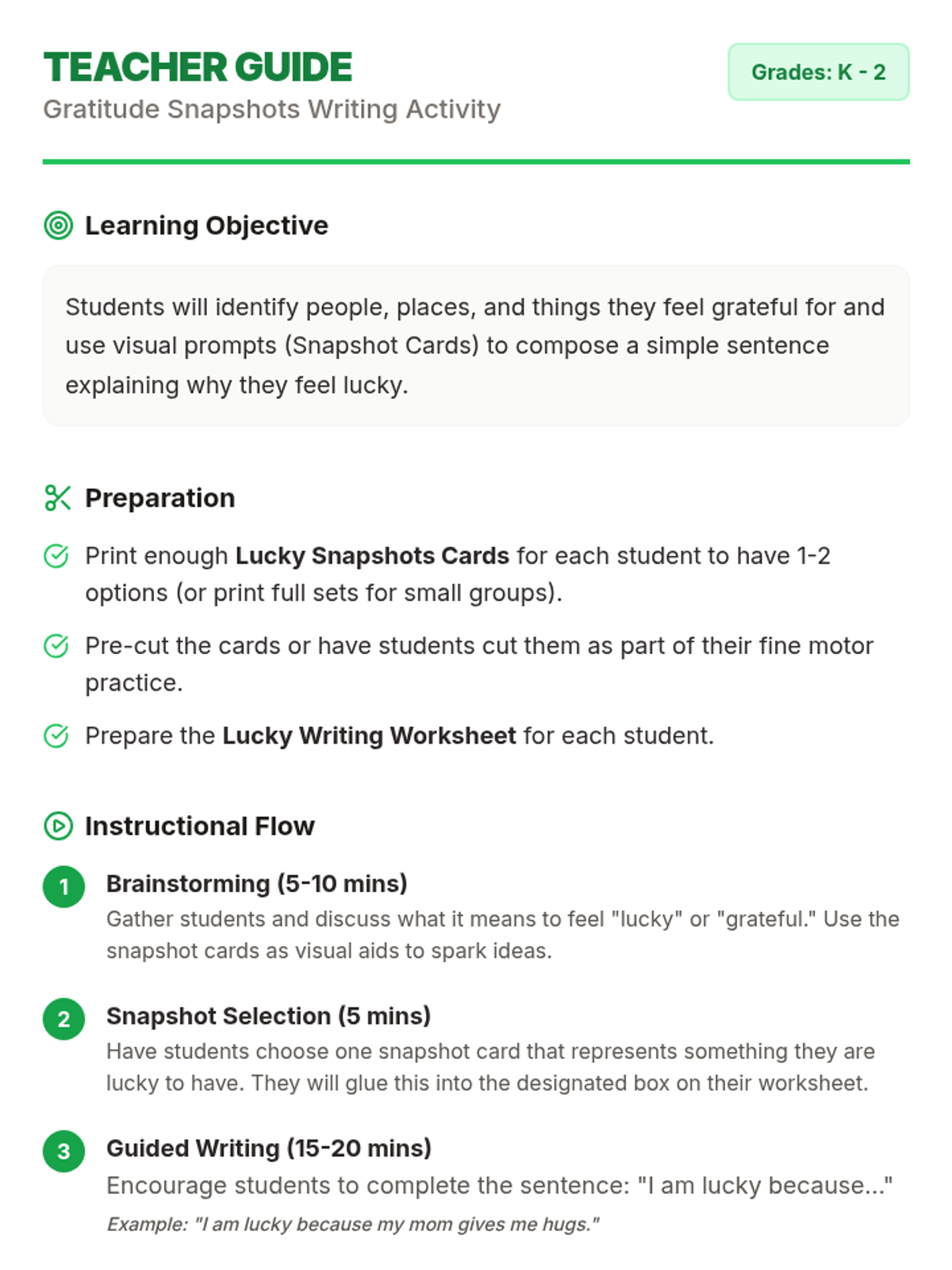
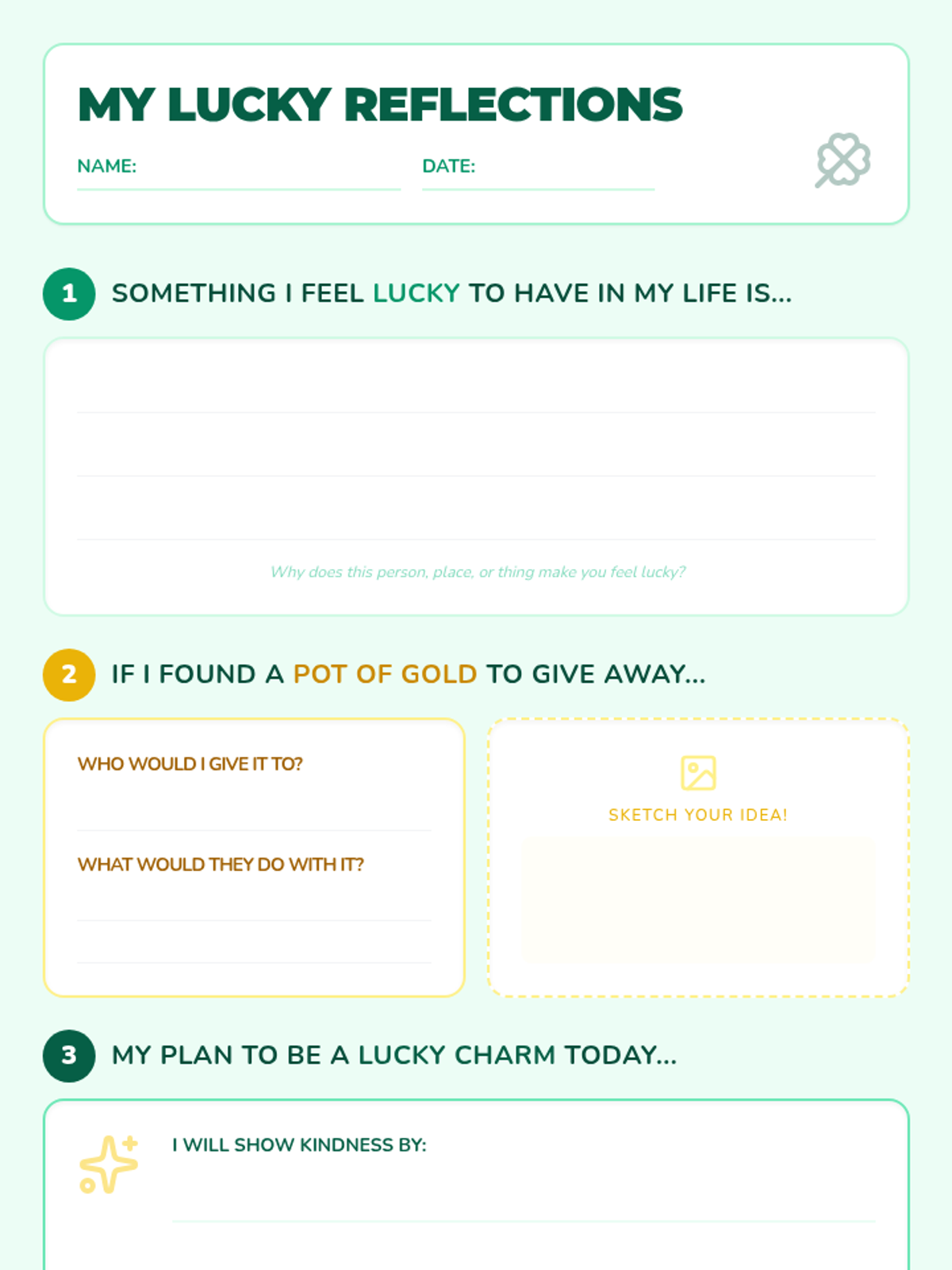
A heartwarming 30-minute lesson where Grade 2 students craft winter-themed cards to express gratitude and kindness, fostering empathy and classroom community.
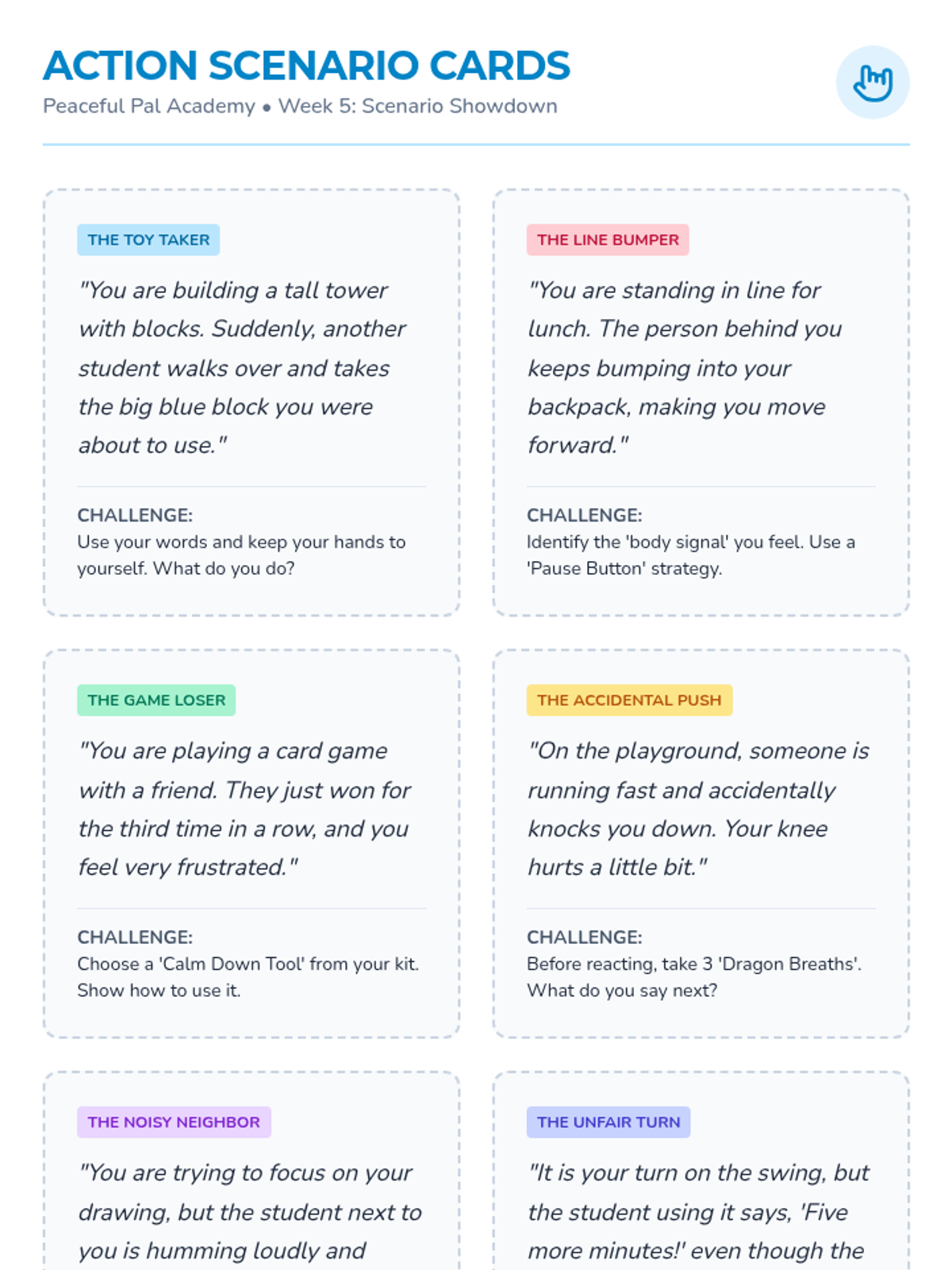
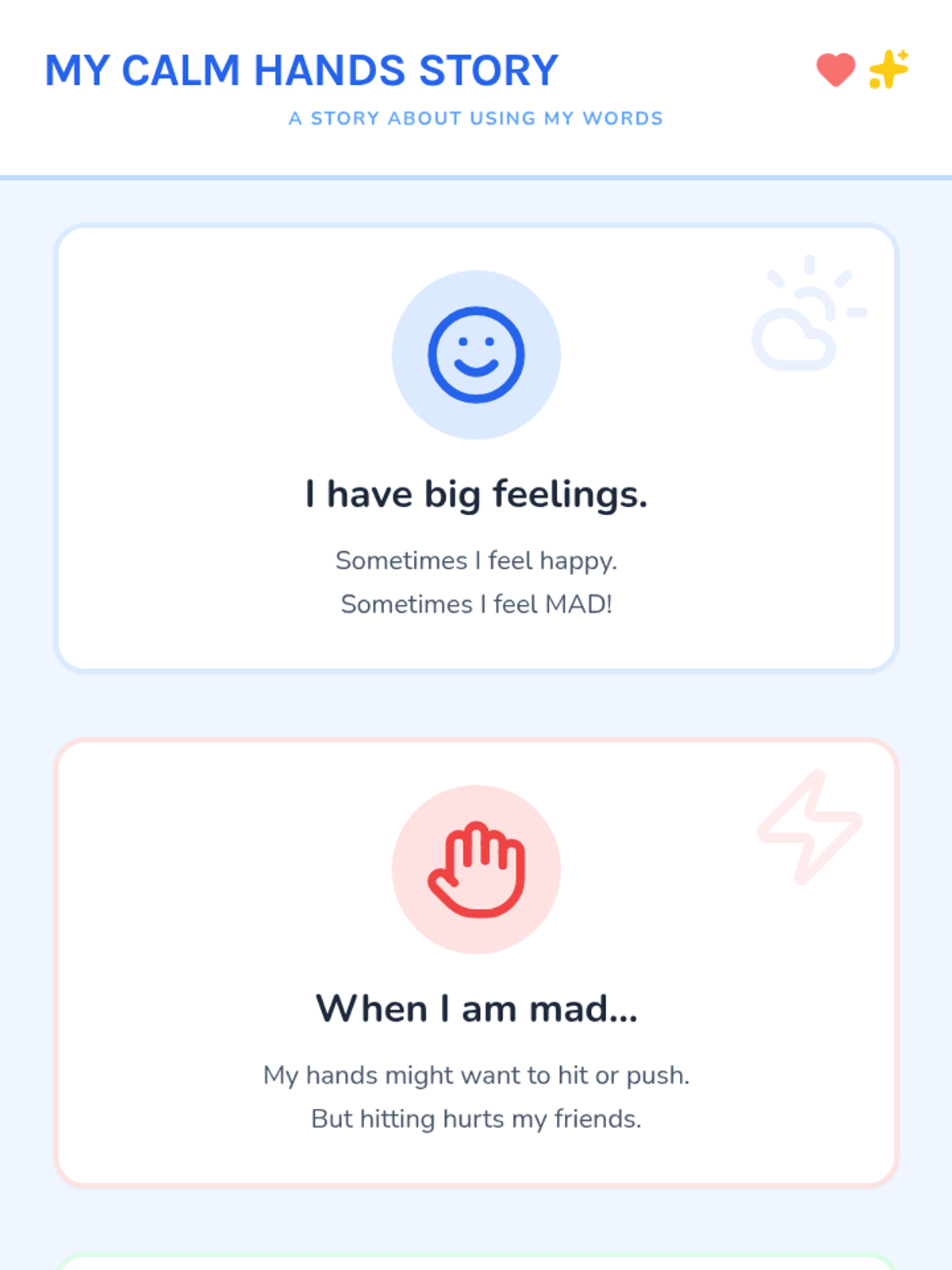
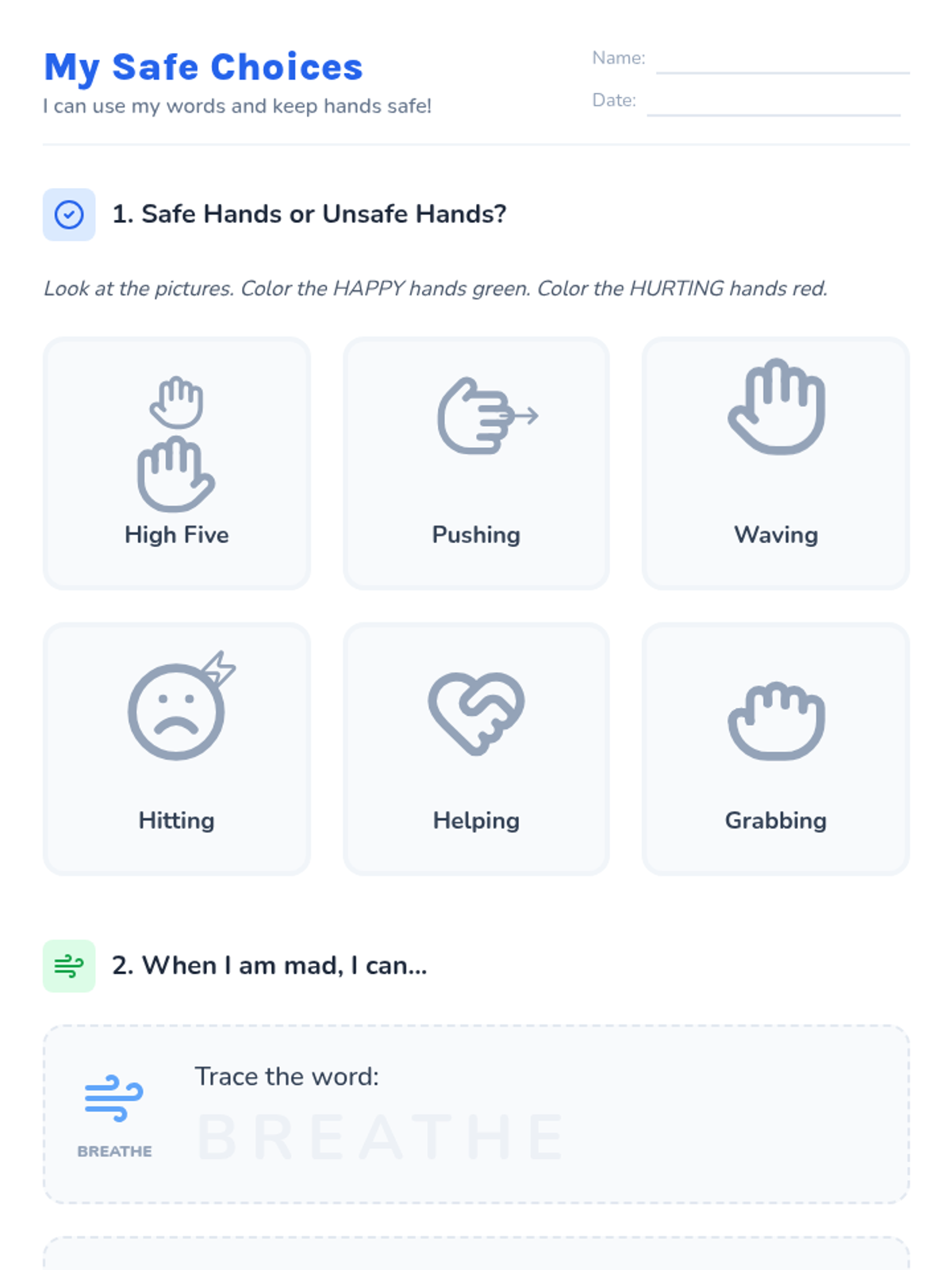
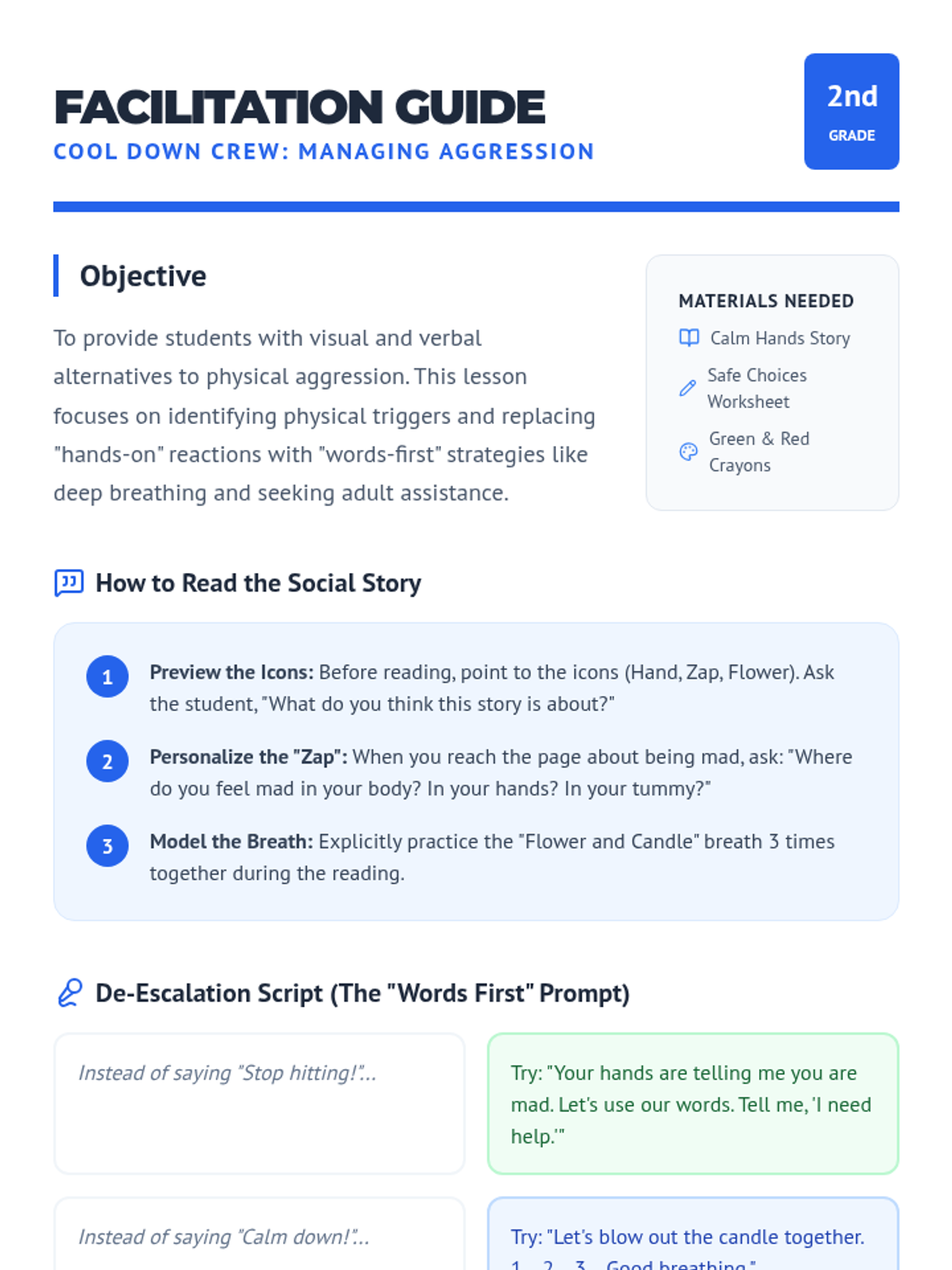
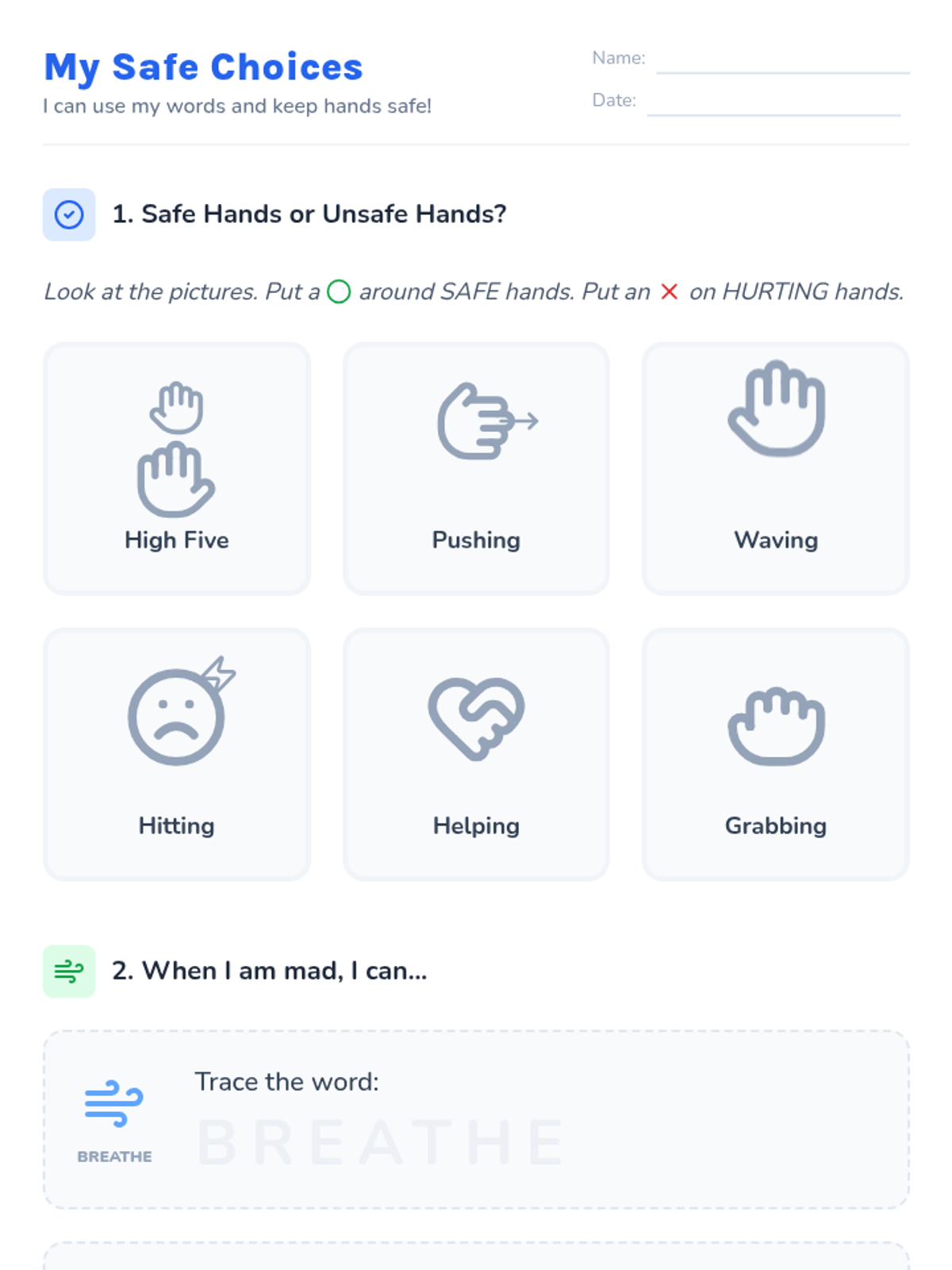
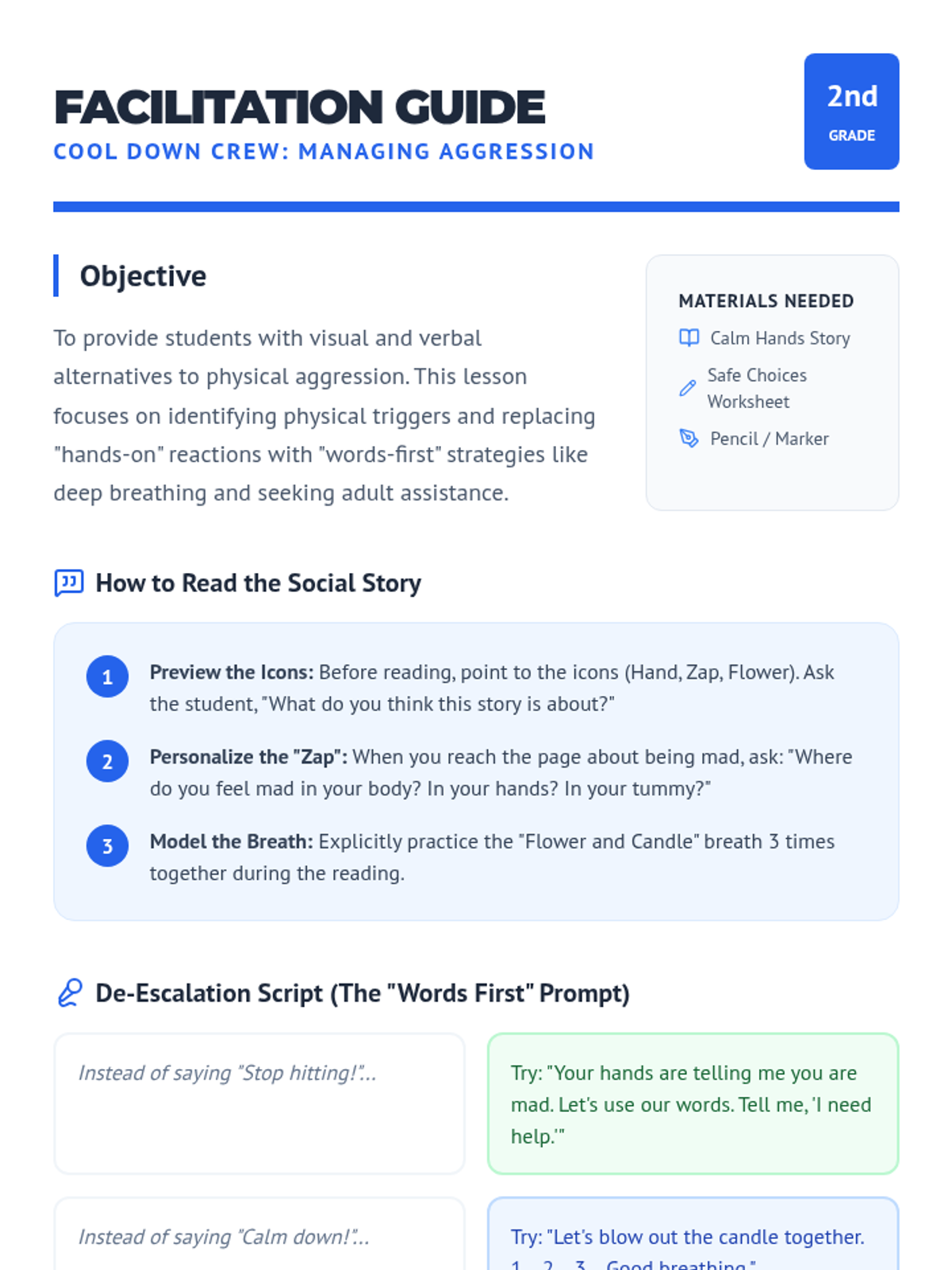
A lesson designed for early childhood students to understand why we use gentle hands, identify the feelings that make it hard to stay gentle, and learn positive alternatives to hitting or pushing.
Focuses on reframing disappointments as learning opportunities and setting new goals to move forward with confidence.
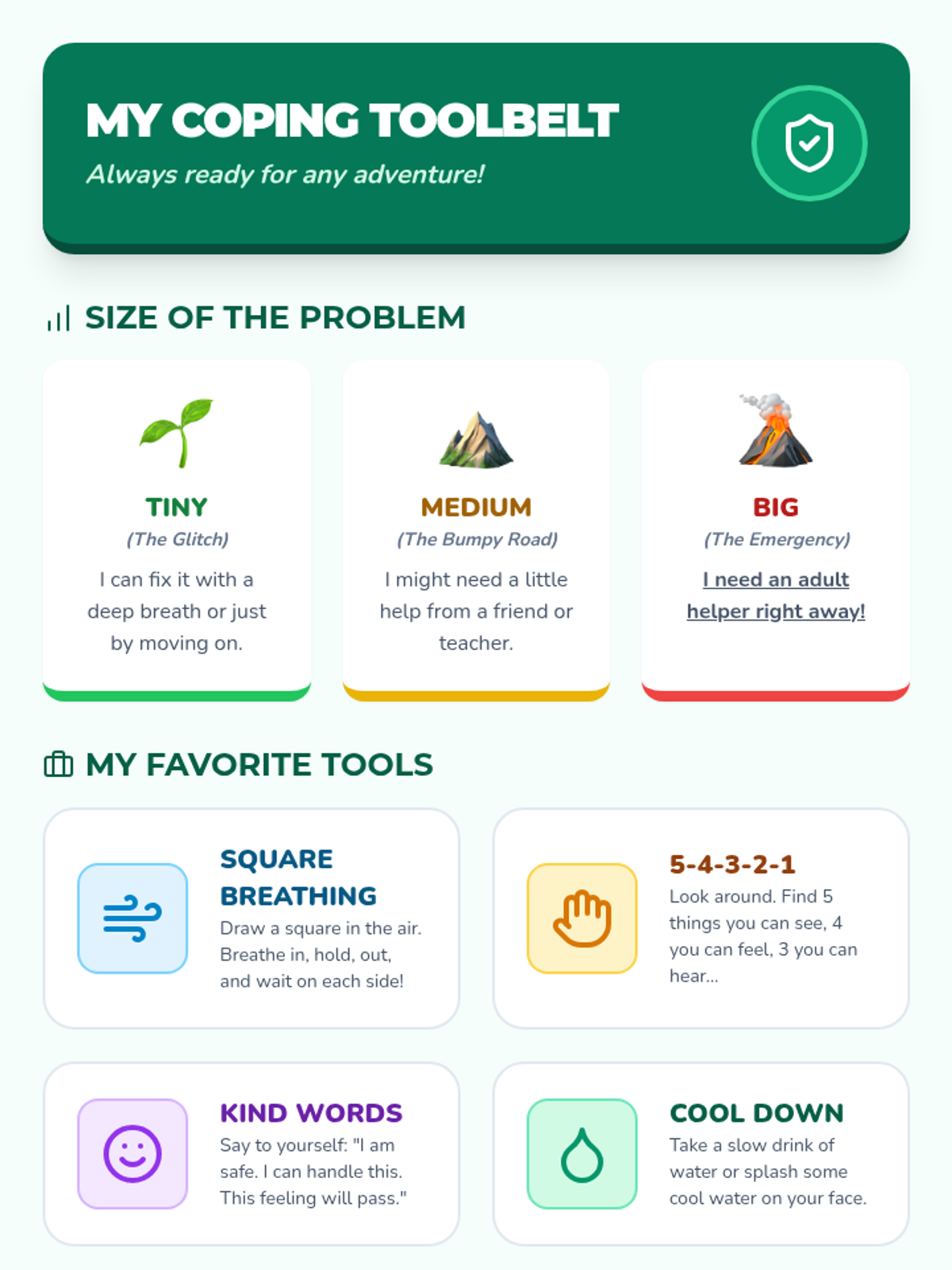
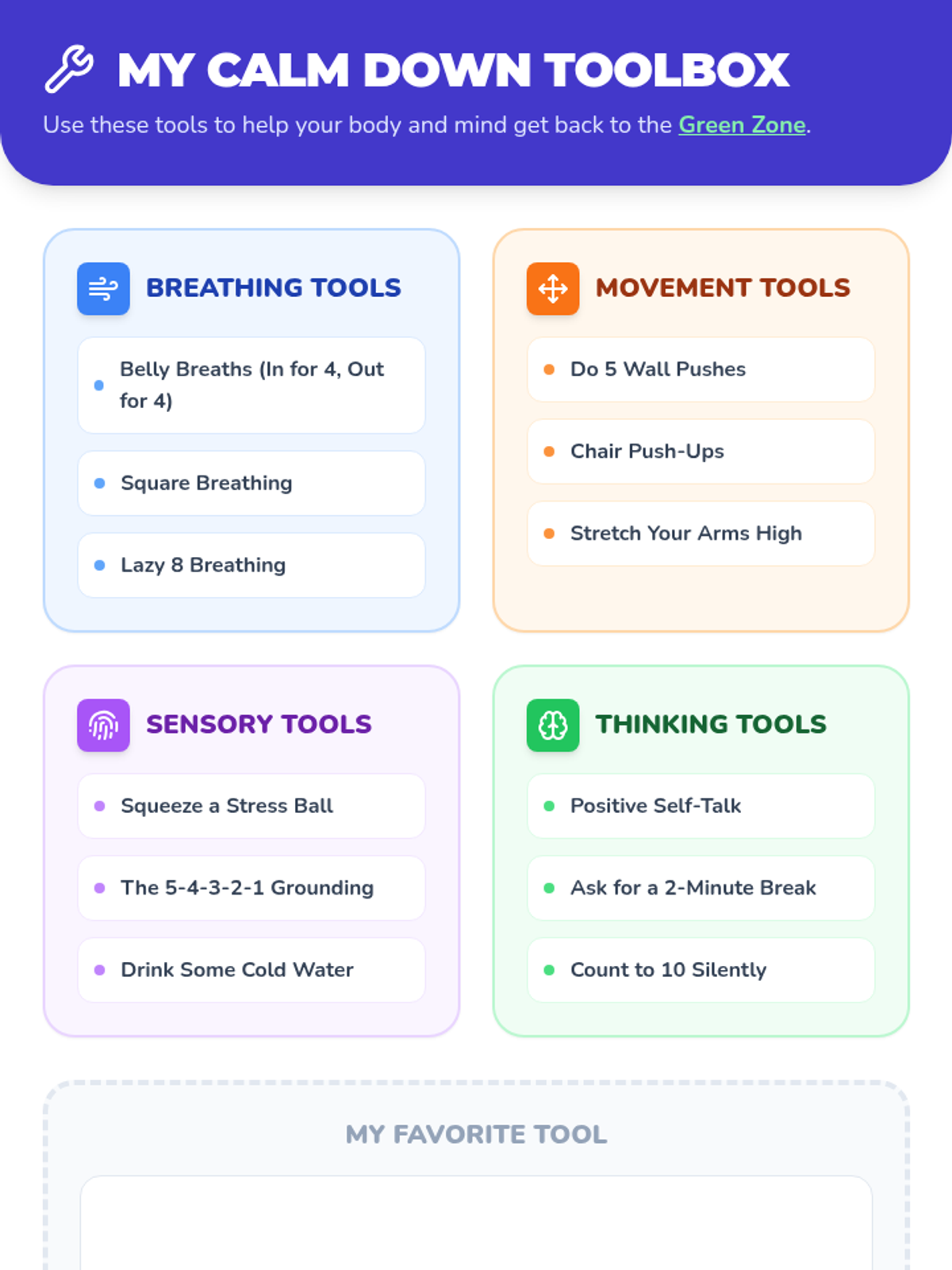
Provides students with a range of practical coping strategies (the 'Bounce Tools') to help them manage difficult emotions in the moment.
Explores the physical sensations of disappointment and introduces a 'Disappointment Scale' to help students gauge the intensity of their feelings.
An introduction to identifying disappointment, distinguishing it from other emotions, and recognizing common triggers in daily life.
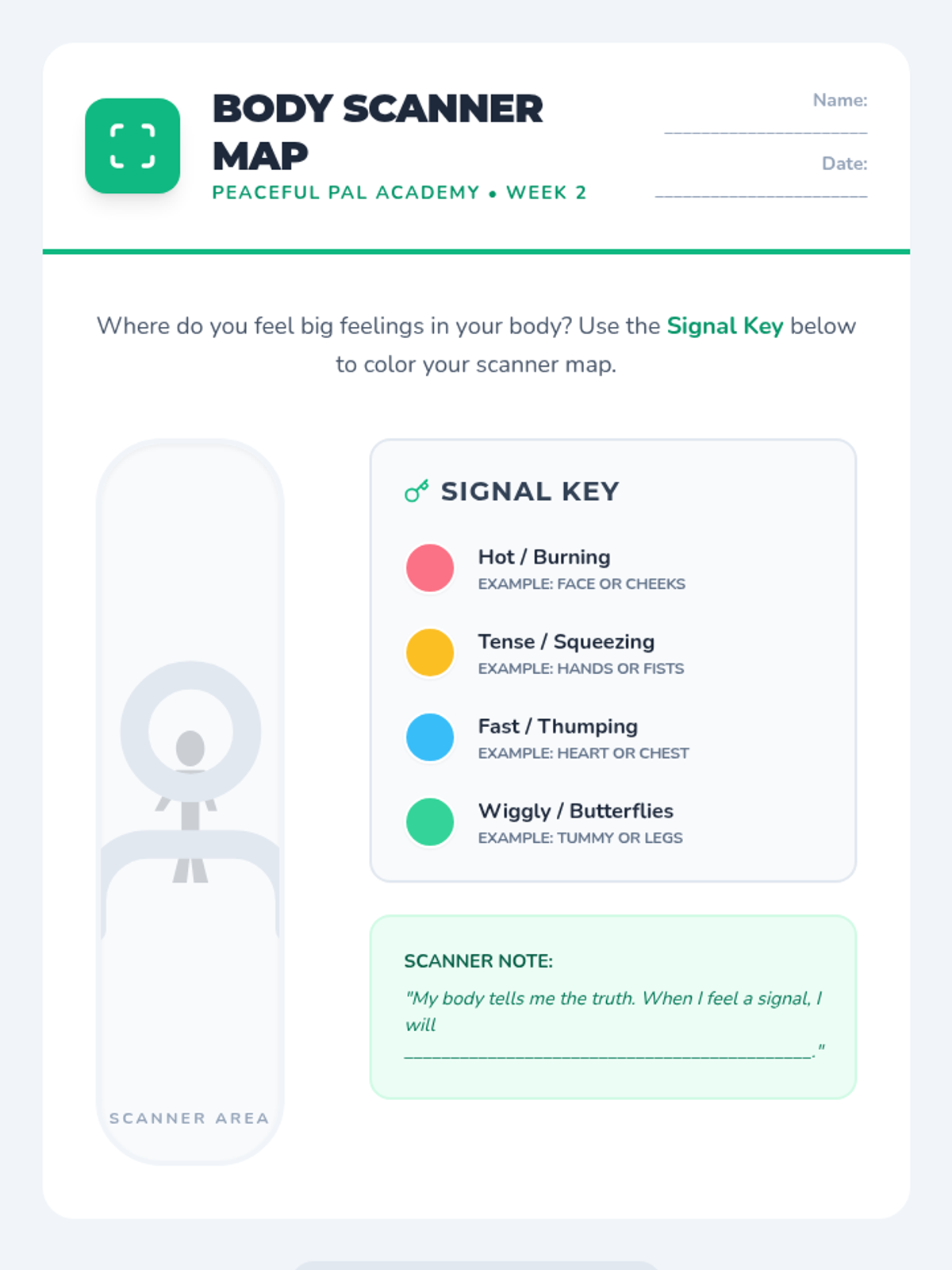
A small group lesson for elementary students focused on recognizing the physical signals of anger in the body and learning initial coping strategies. Students act as 'Body Detectives' to identify where they feel anger before it boils over.
A lesson focused on developing a growth mindset toward change, equipping students with practical strategies for adapting to new routines and communicating their feelings effectively.
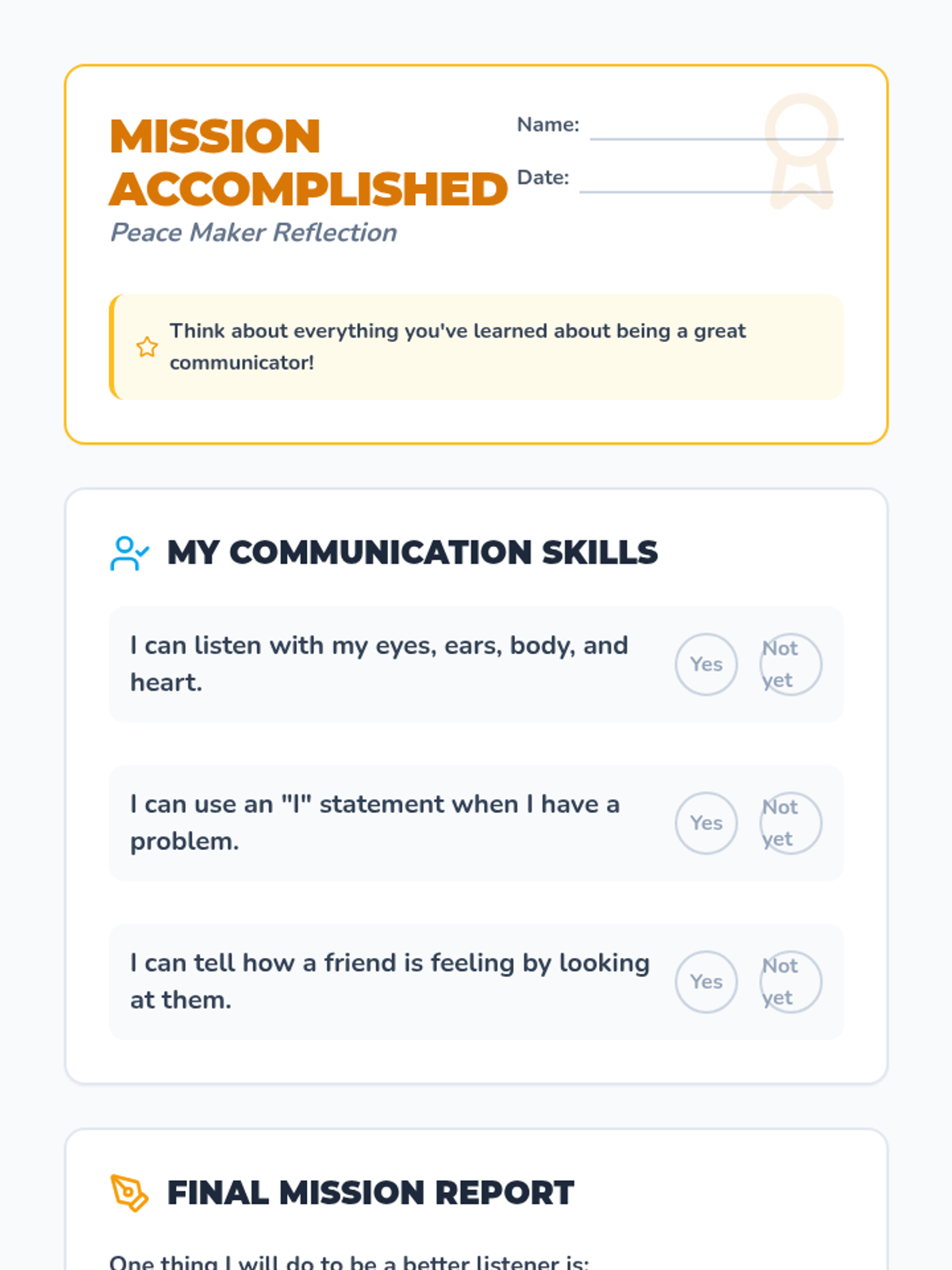
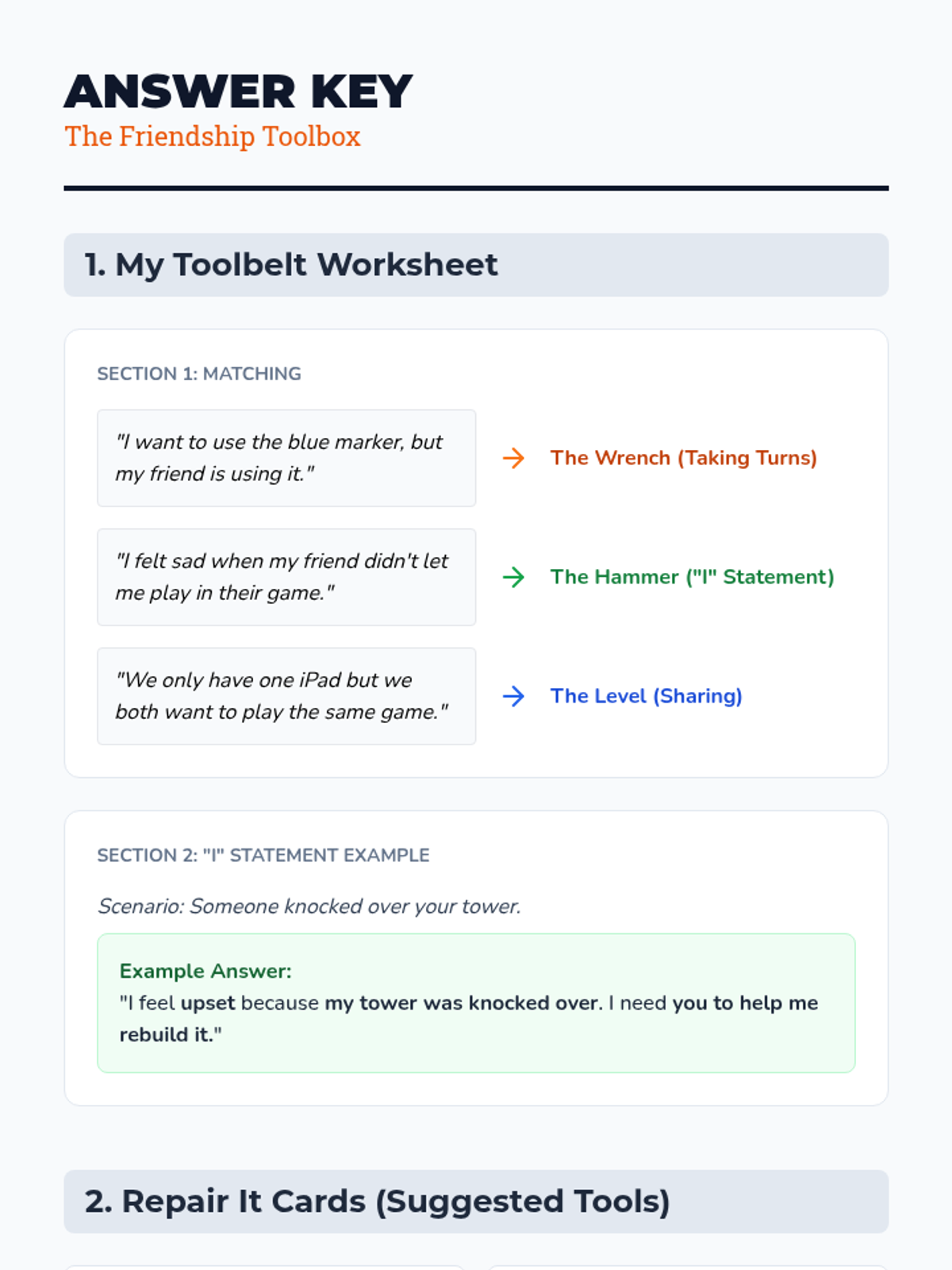
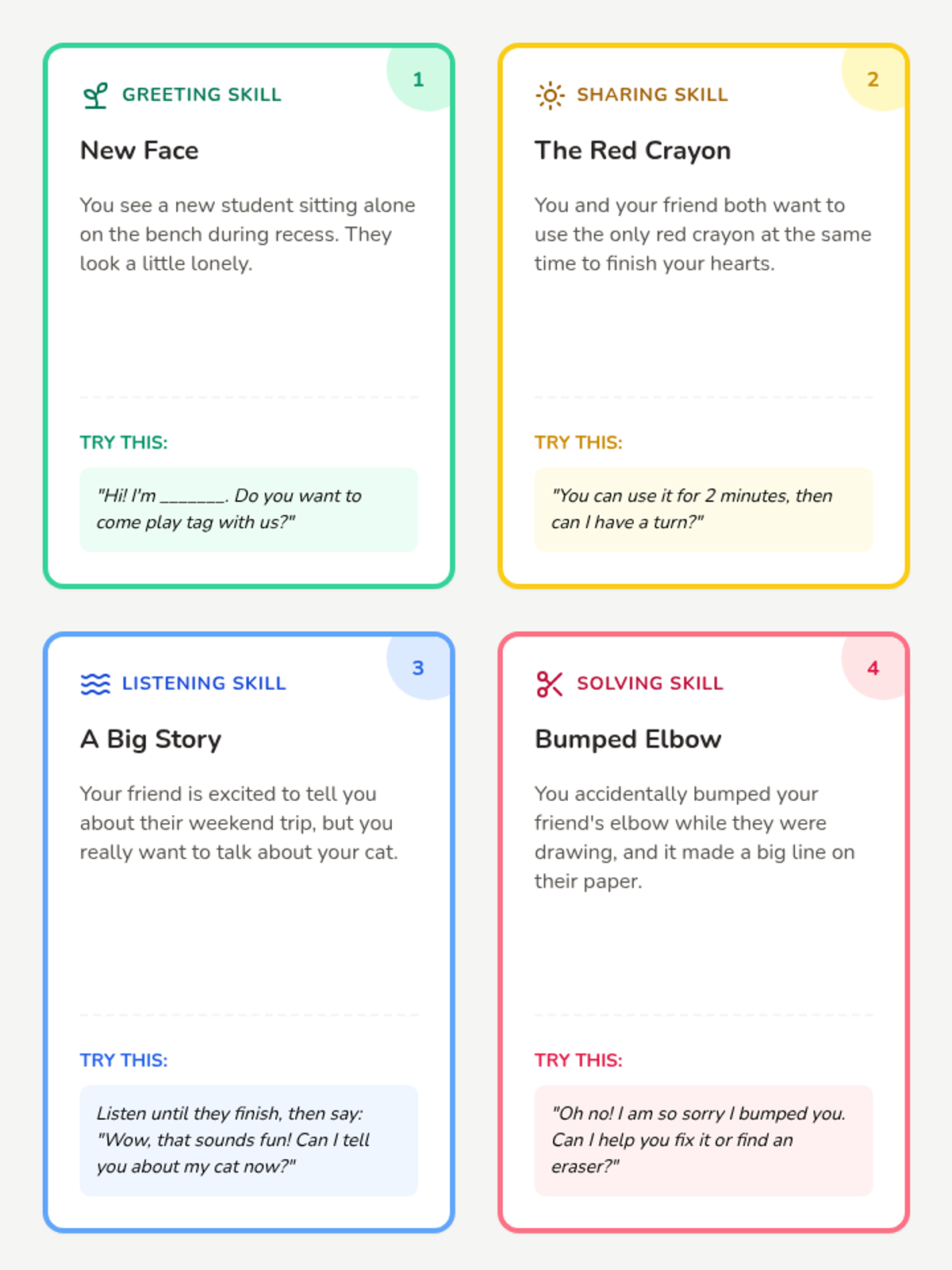
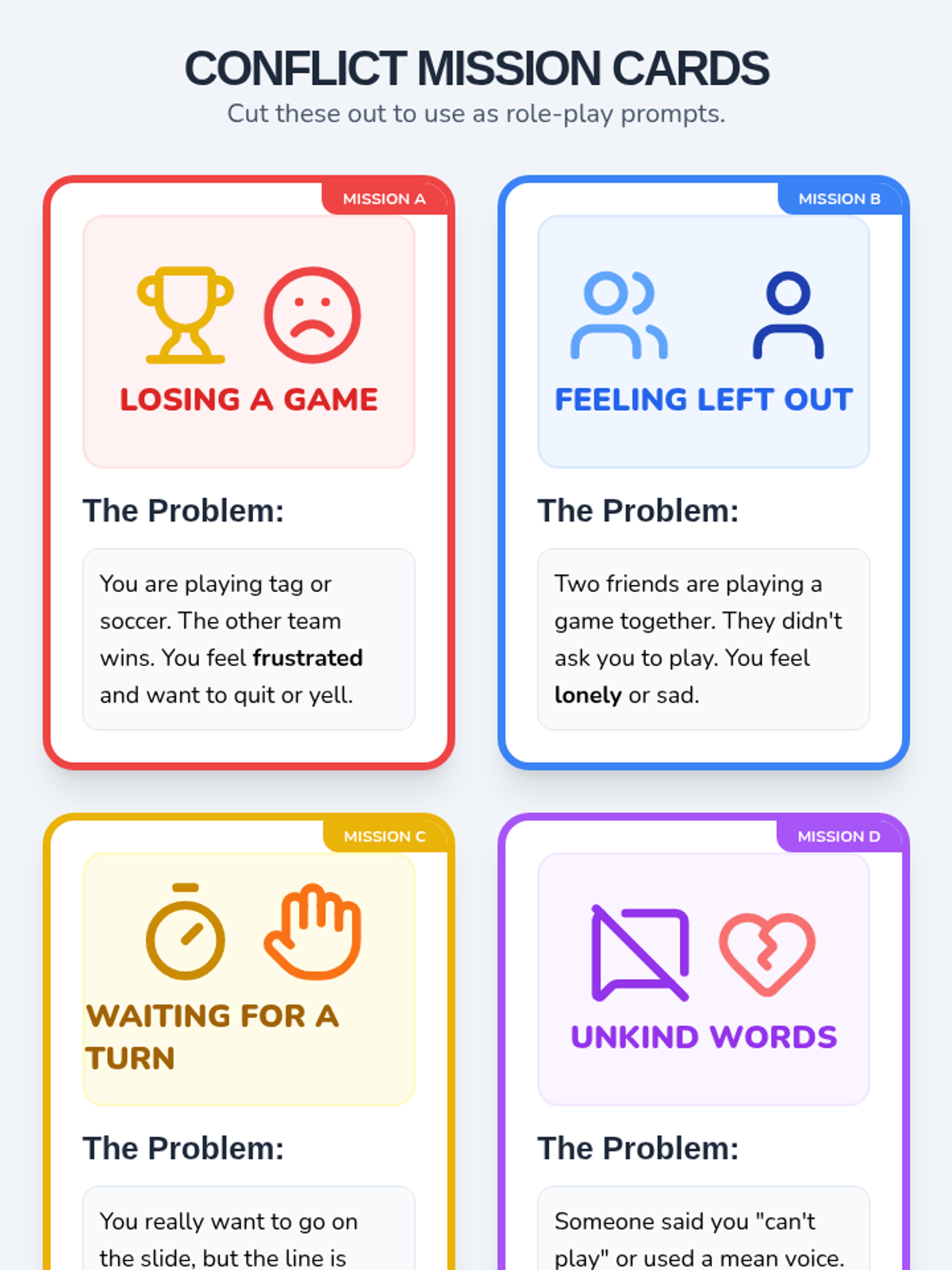
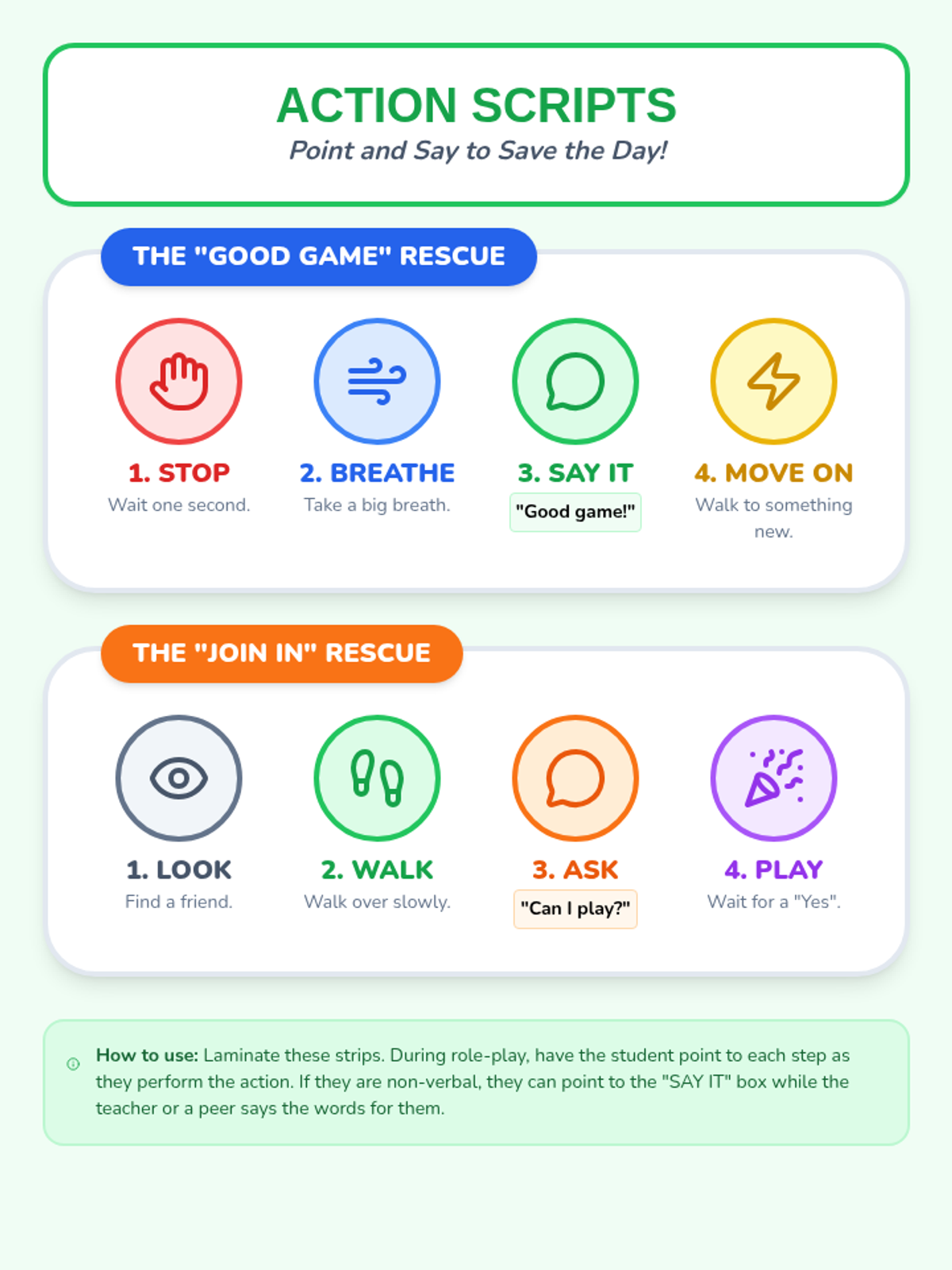
A small group session for 2nd graders focused on resolving sharing conflicts peacefully through role-play and collaborative problem-solving.
A game-inspired goal-setting activity designed for parent-teacher conferences, focusing on identifying student strengths and growth areas through a 'future quest' lens.
A supportive set of resources designed to help a student understand and adjust to getting a colostomy bag, focusing on reducing anxiety and building confidence through a social story and reflective activities.
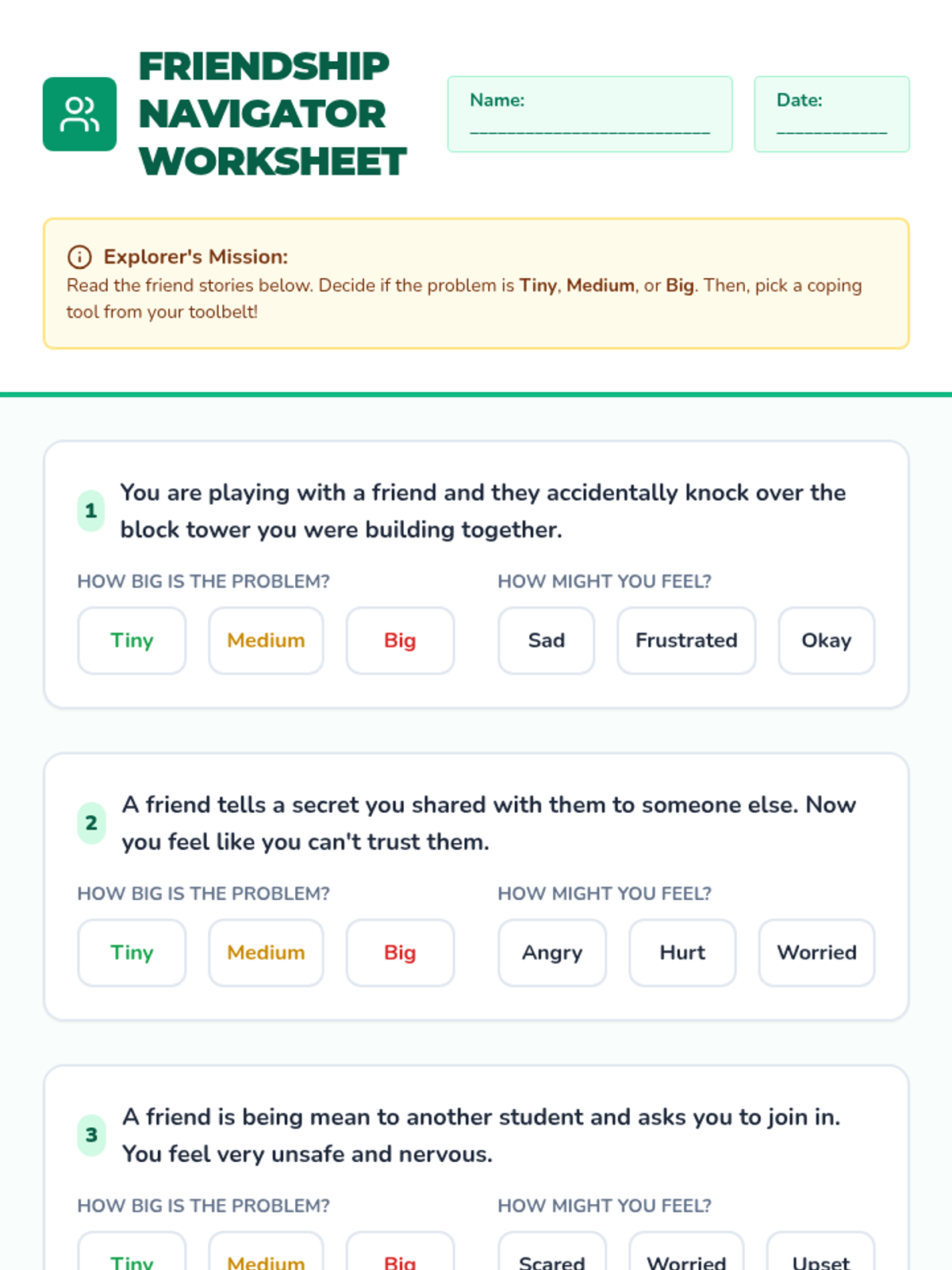
Students identify and match basic emotions to common social scenarios, developing empathy and emotional literacy through a detective-themed exploration.
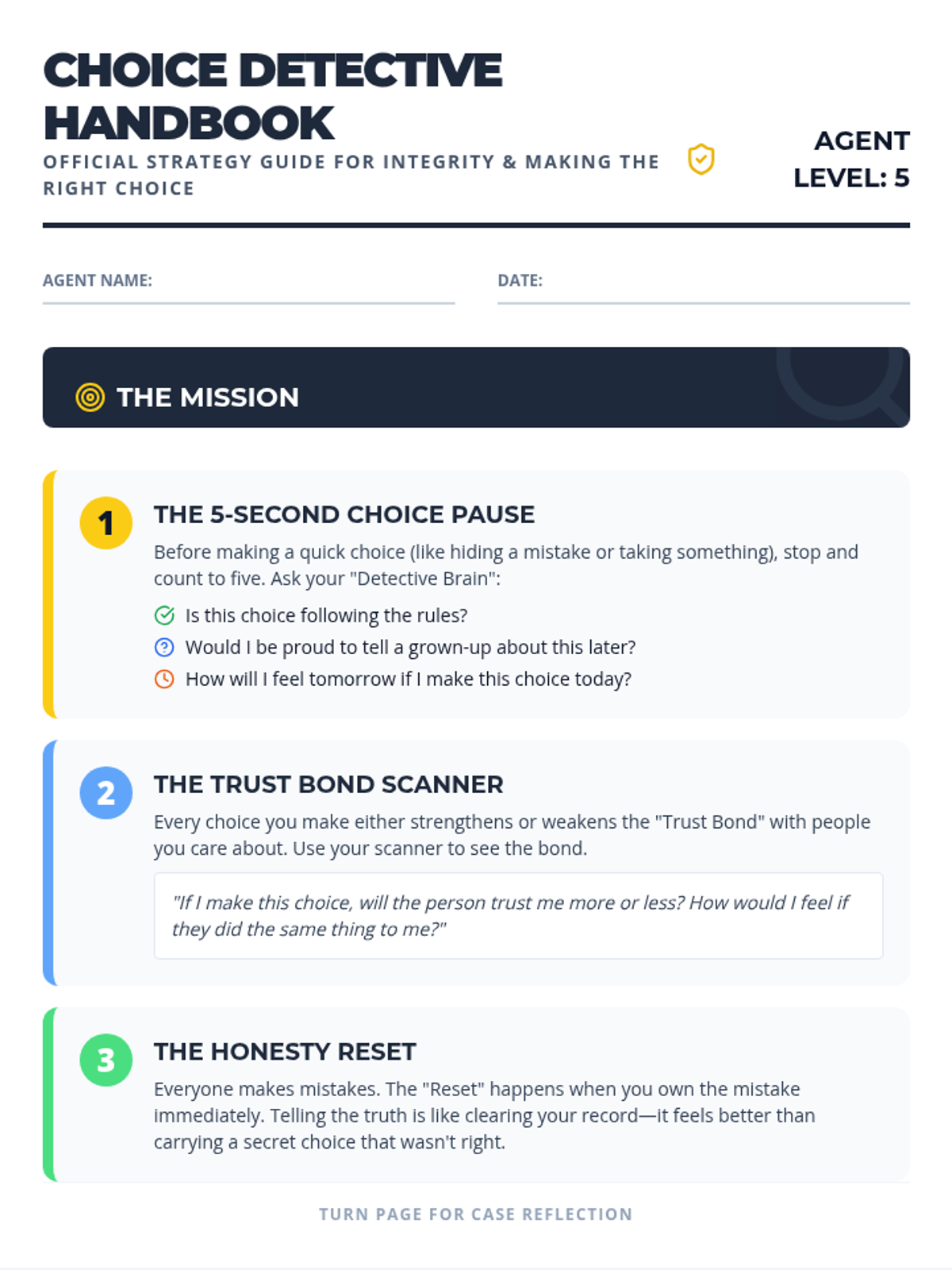
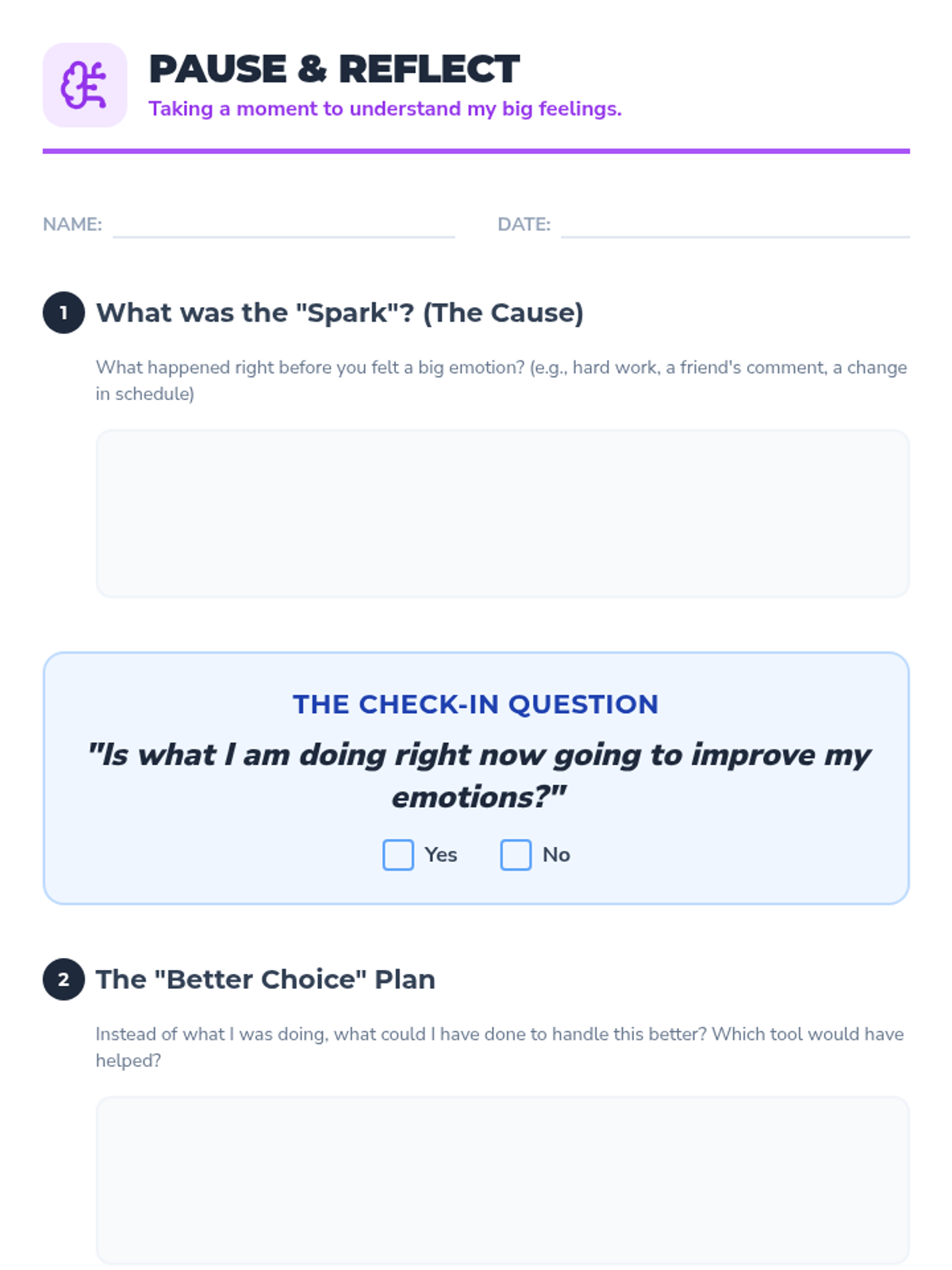
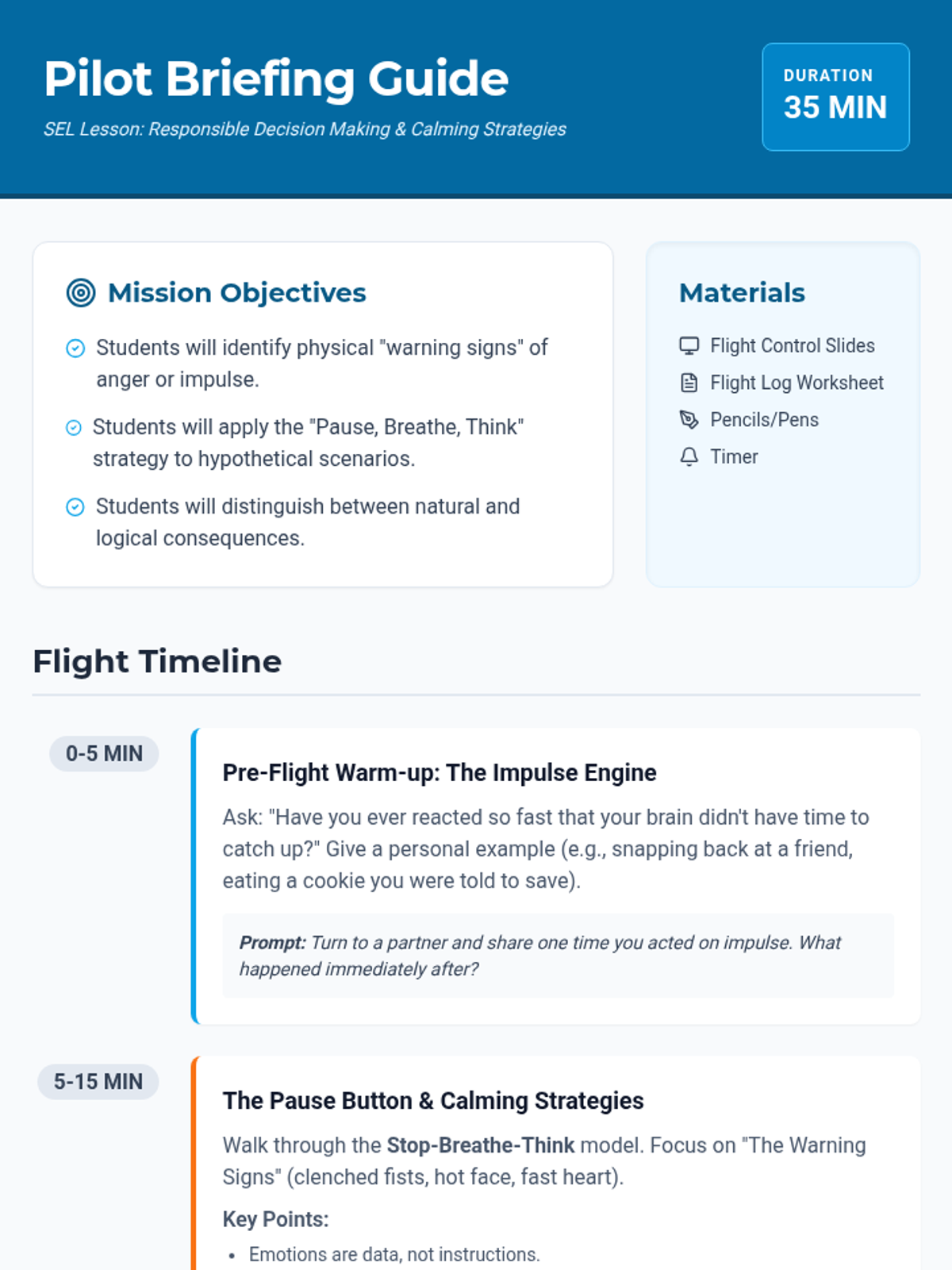
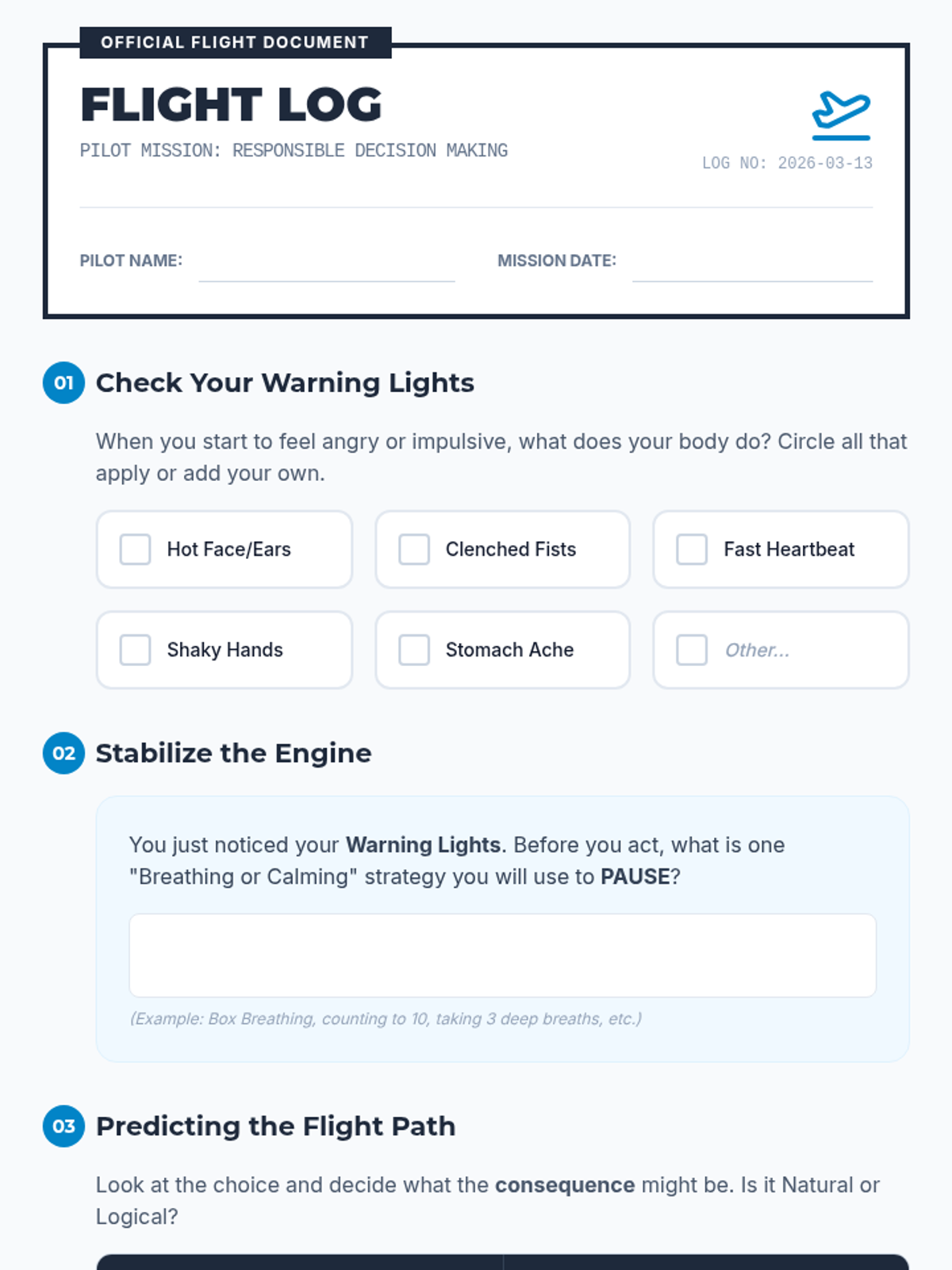
A comprehensive lesson teaching students the 'Pause Button' technique to improve impulse control. Using a detective theme, students learn to identify triggers and practice self-regulation through interactive scenarios and visual tools.
A comprehensive lesson teaching students the mechanics of sending mail, the etiquette of timing for letters and bills, and a hands-on Valentine's Day mailing project.
A small group lesson teaching the 'Stop and Think' technique using a 'Brain Remote Control' analogy to help students manage impulses and make better choices.
A lesson focused on creating sensory tools to help students manage big emotions and practice mindfulness through hands-on crafting.
A short, impactful community-building lesson based on the "I Wish My Teacher Knew" project. Students share personal insights, needs, or stories with their teacher to build trust, empathy, and a stronger classroom community.
A comprehensive toolkit for parents of 2nd-4th graders to manage hyperactivity and impulsivity through positive reinforcement and school collaboration.
A high-energy social-emotional learning lesson that teaches 2nd graders to identify and practice respectful behaviors through role-playing and active sorting.
A lesson that introduces the concept of taking pride in one's work through a social story and identifying the consequences of rushing versus working with care.
A specialized lesson designed for 2nd-grade students to build skills in following multi-step directions, self-monitoring, and maintaining focus through a fun detective-themed set of activities.
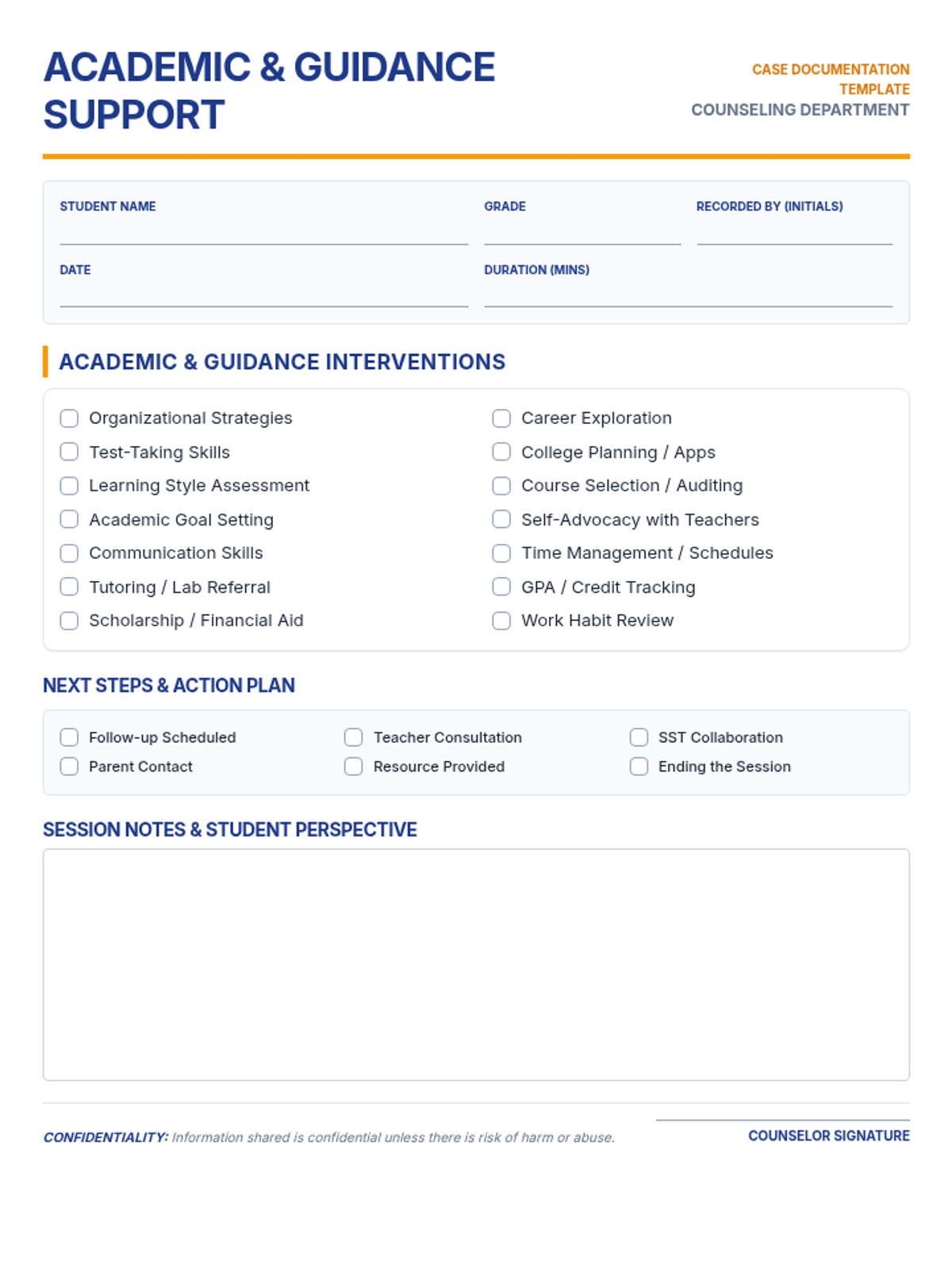
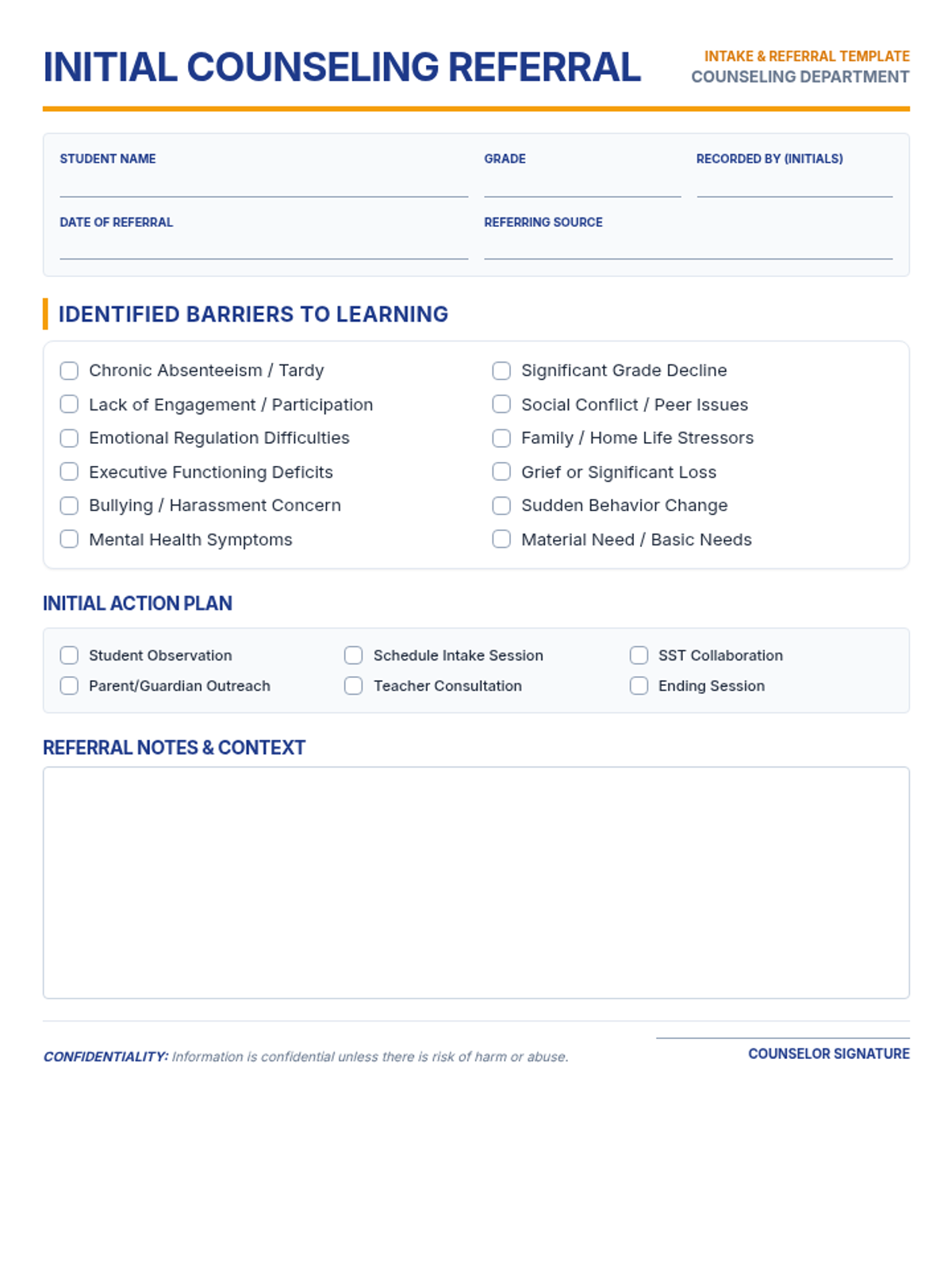
A set of translated resources for school social workers to obtain parental consent for school-based counseling services.
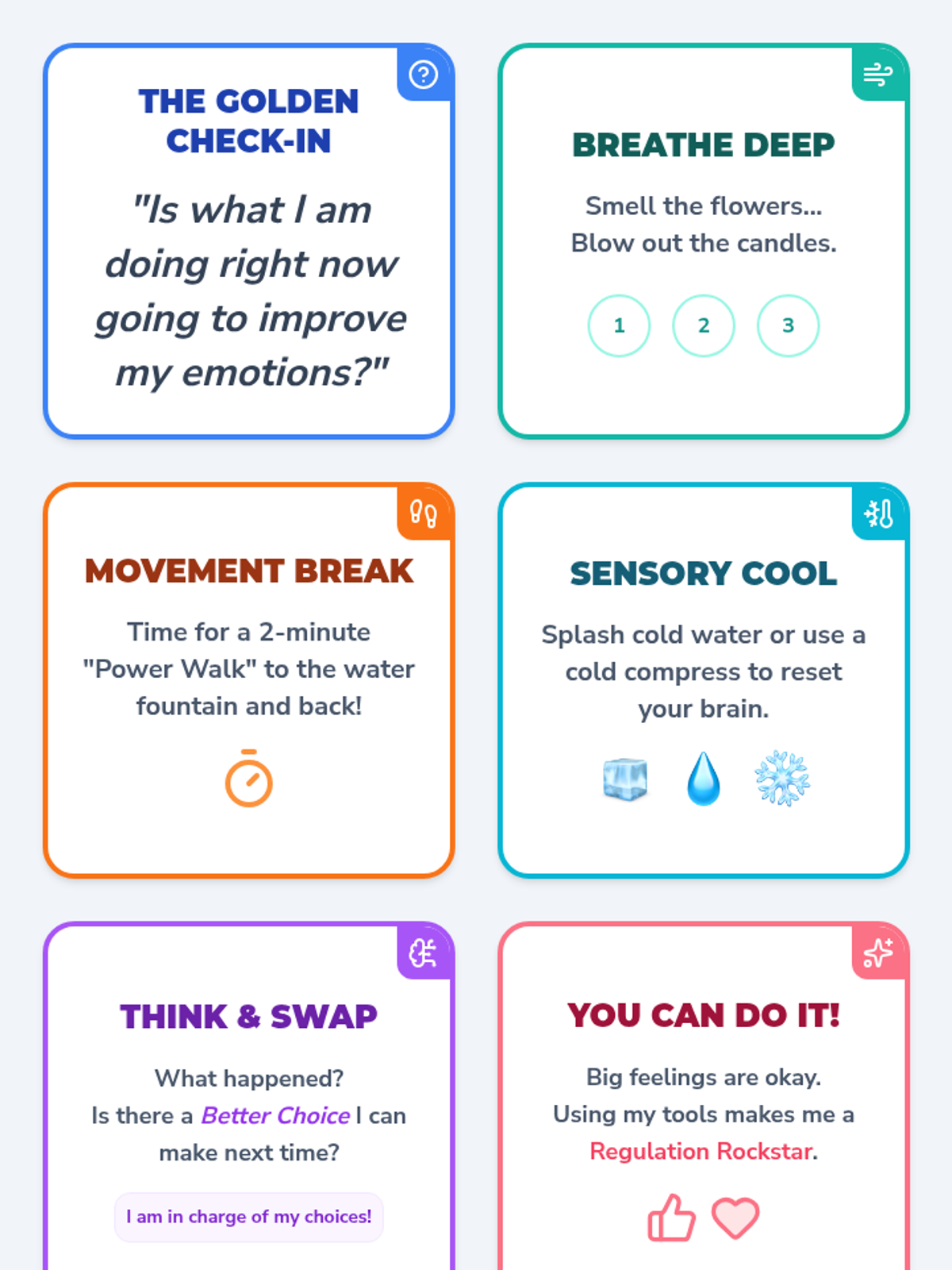
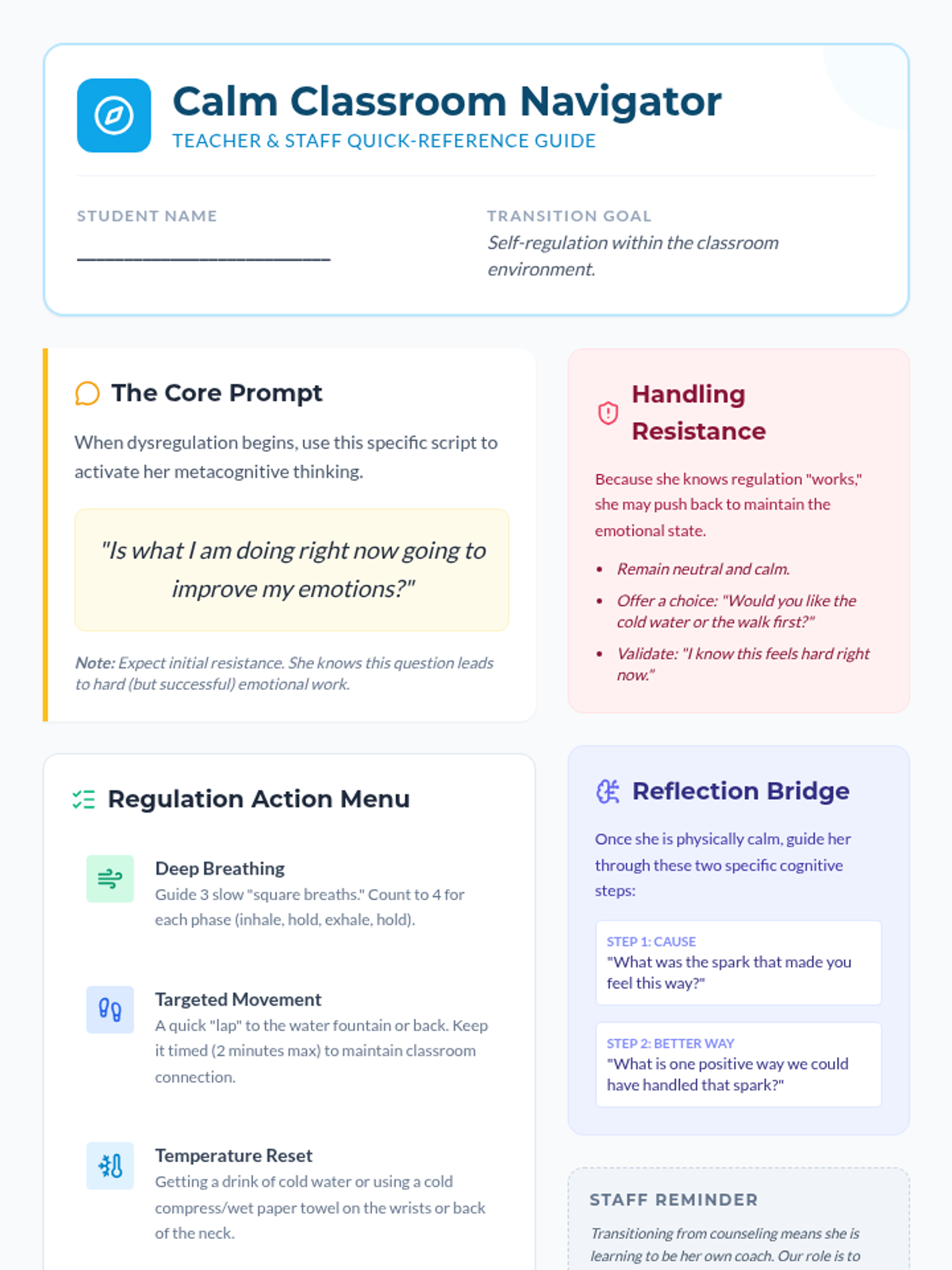
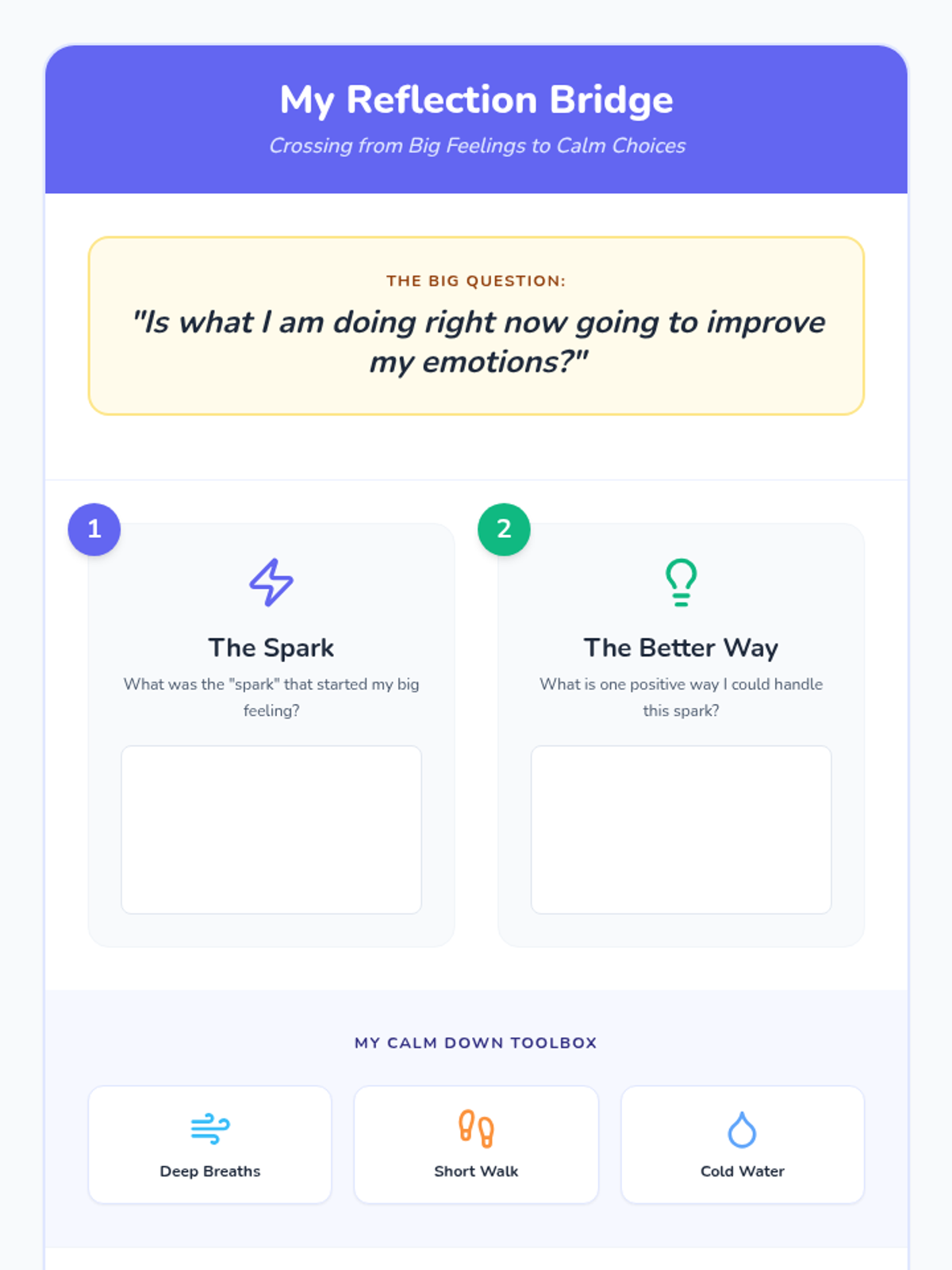
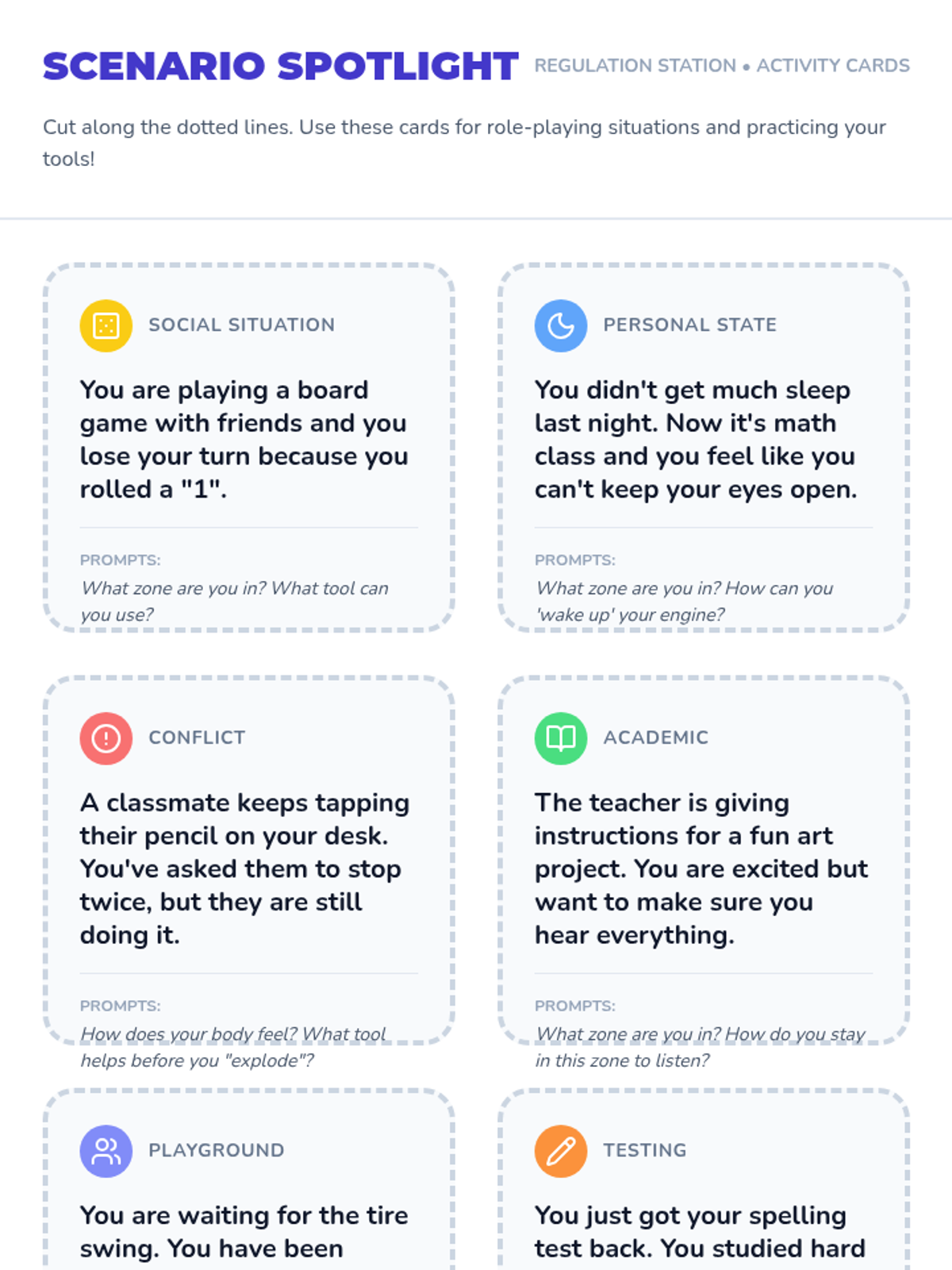
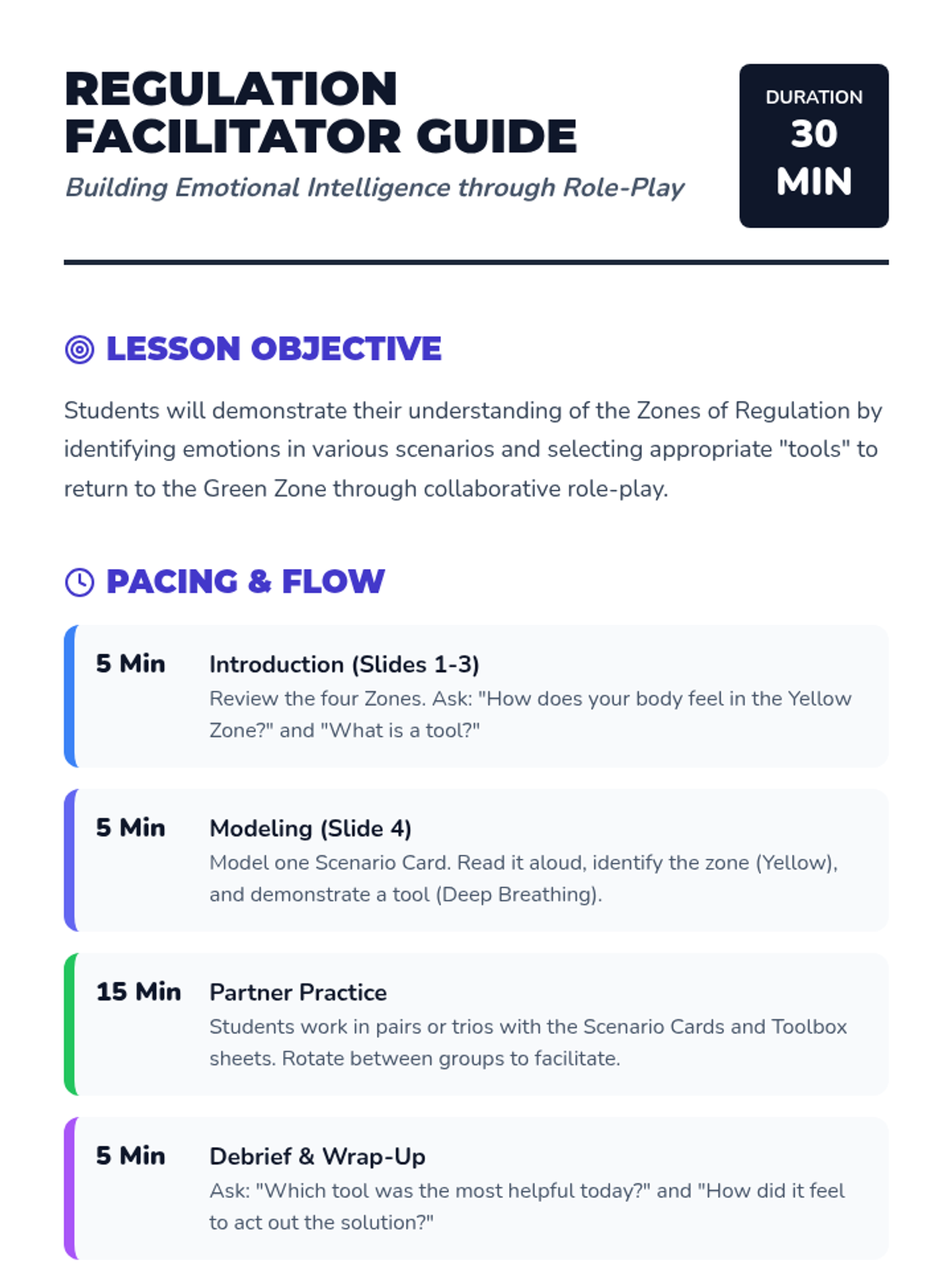
A lesson focused on self-regulation and managing emotions using the metaphor of a 'Remote Control' to help students navigate their feelings. Students will learn to identify their current 'channel' and use strategies to switch to a more comfortable state.
Focuses on food preparation and nutrition. Students follow visual recipes to prepare taco ingredients and identify healthy food groups.
Focuses on the financial and social aspects of grocery shopping. Students calculate costs, manage a budget, and learn the social expectations of visiting a store.
Students celebrate their progress, review key skills, and receive their 'Chief Investigator' status.
Students apply their skills to a challenging group task and reflect on their perseverance.
Students practice identifying when they need help and how to ask for it effectively as part of perseverance.
Students build a mental 'toolkit' of strategies to use when they feel stuck or frustrated.
Students explore how their internal thoughts impact their feelings and ability to persevere.
Students learn about growth mindset and the power of the word 'yet' when facing difficult tasks.
Students identify things that are hard for them and learn to view 'weaknesses' as areas for growth.
Students define 'strengths' and identify their own personal talents and skills using the Investigator theme.