A technical problem-solving lesson where students diagnose and resolve shortcut conflicts or system errors, using help menus and resetting accessibility settings.
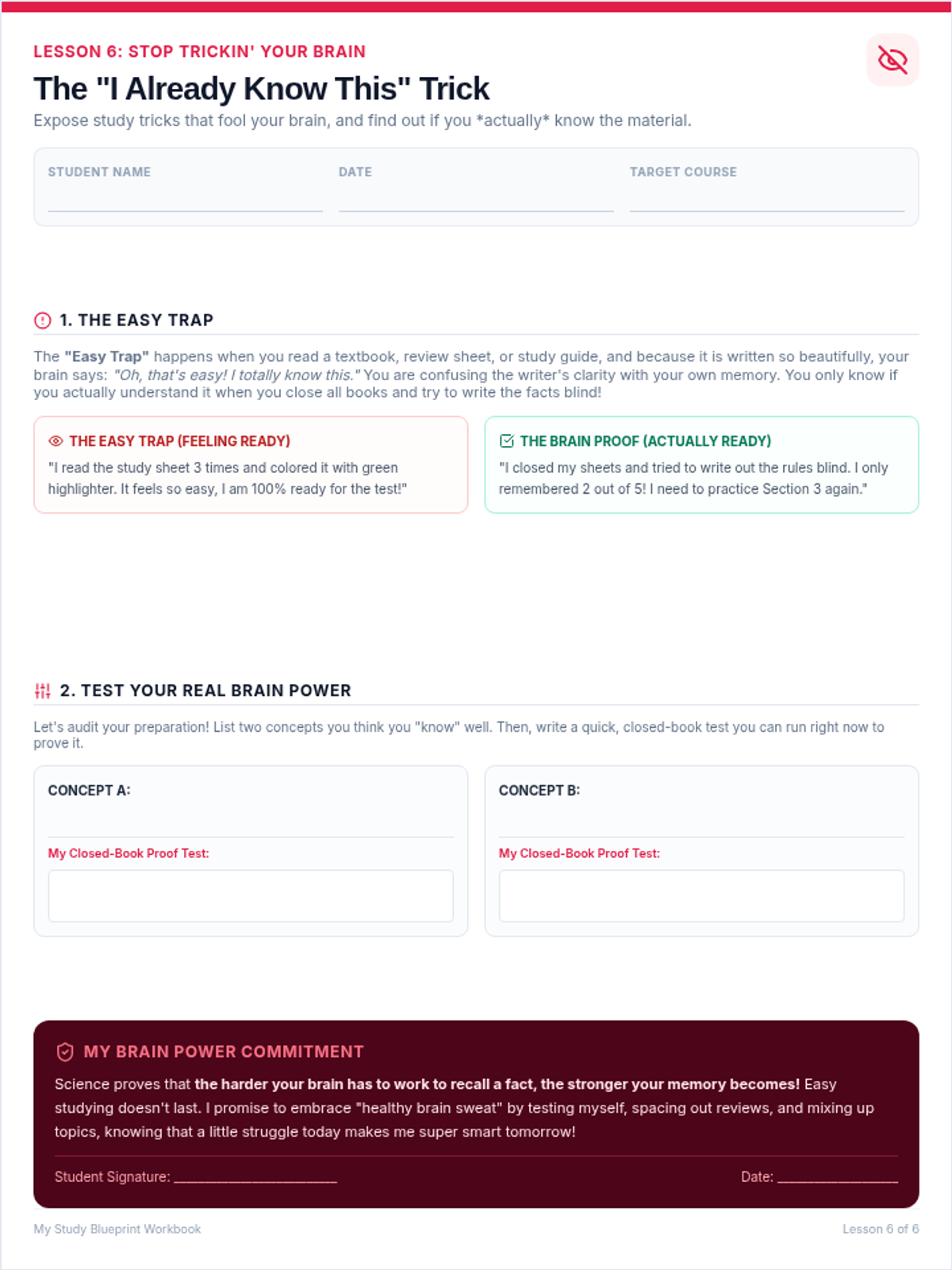
A lesson exposing cognitive biases in studying. Students learn to calibrate their progress honestly, avoid the fluency illusion, and build an error-correcting growth mindset.
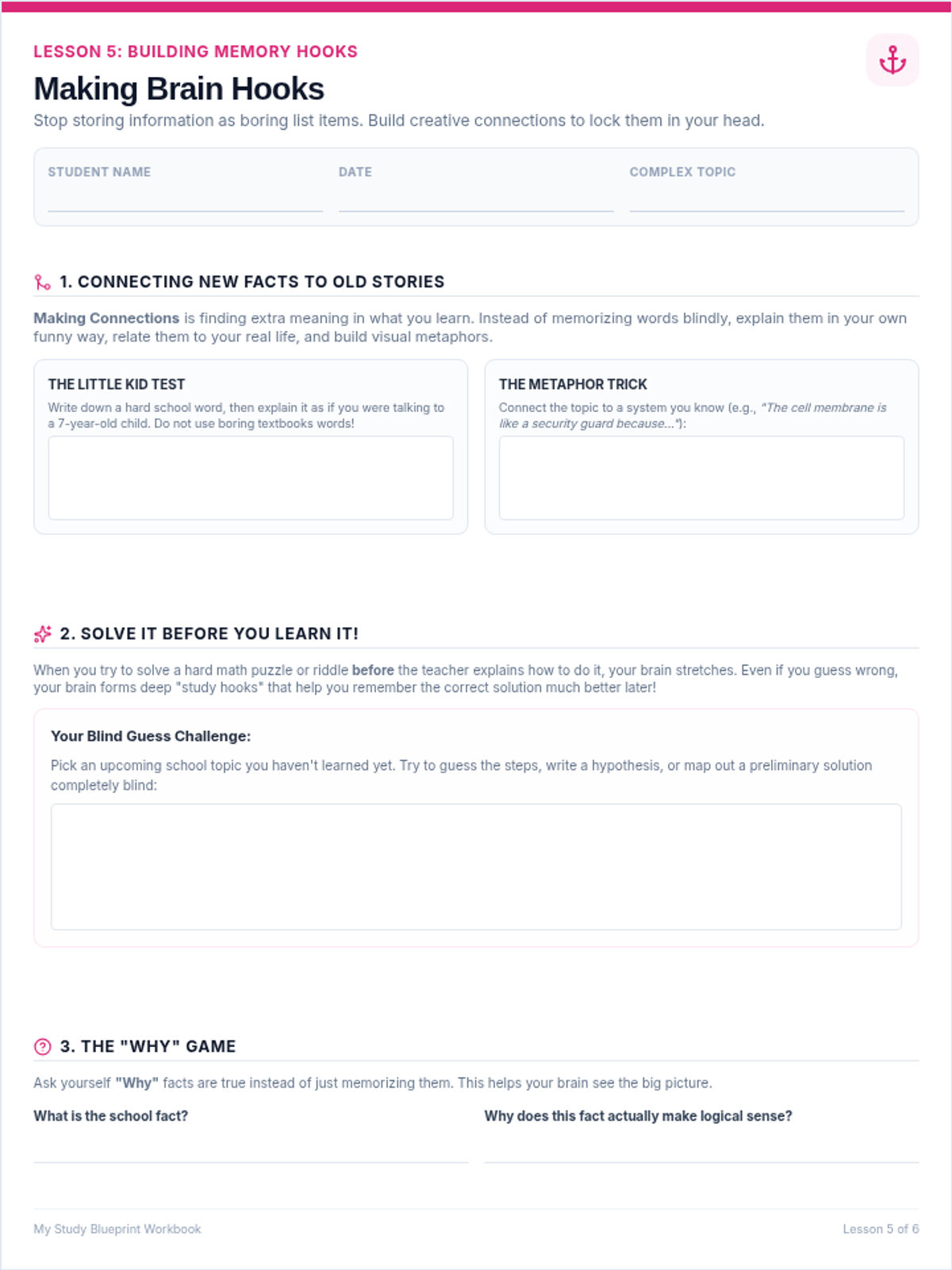
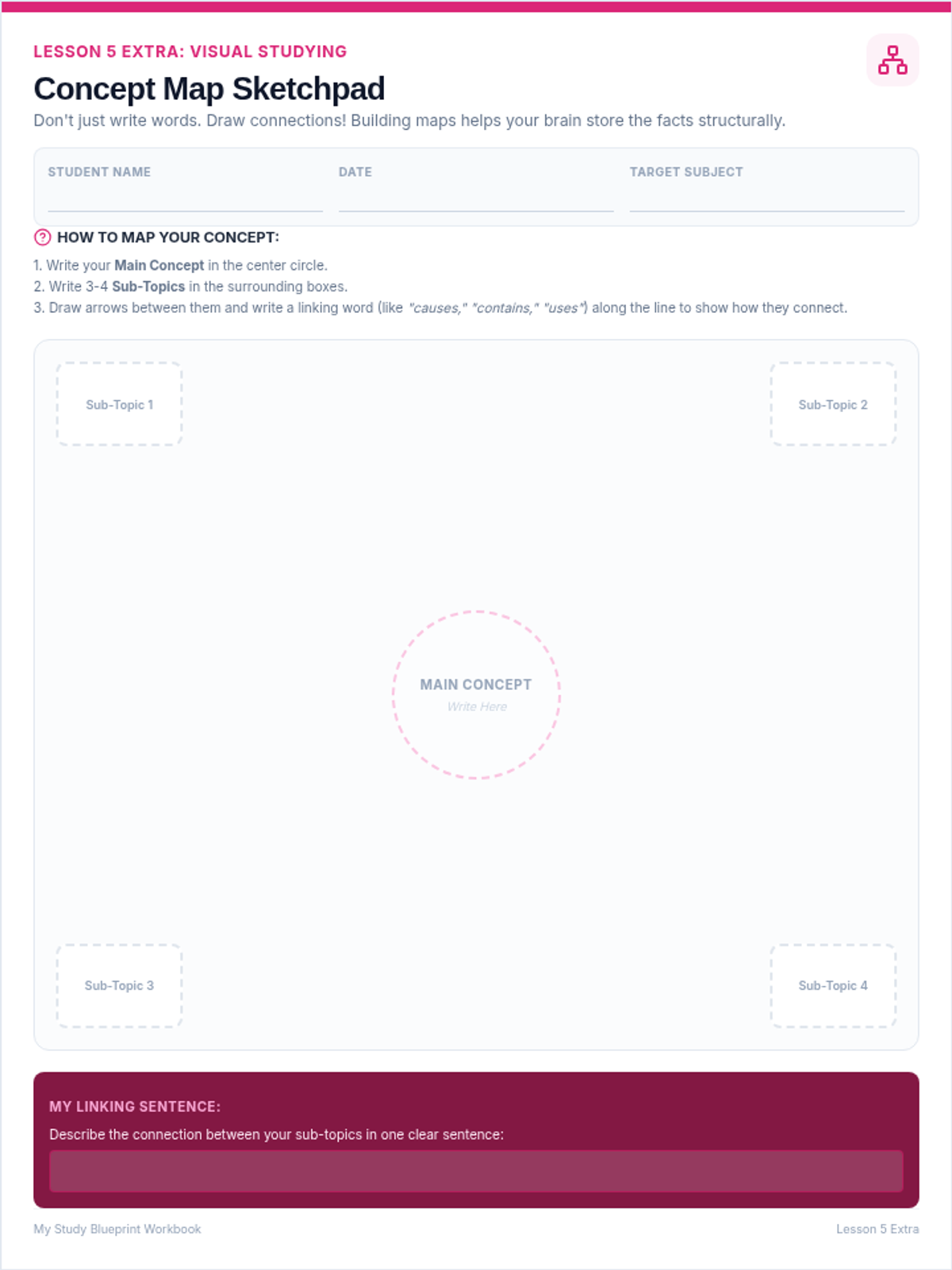
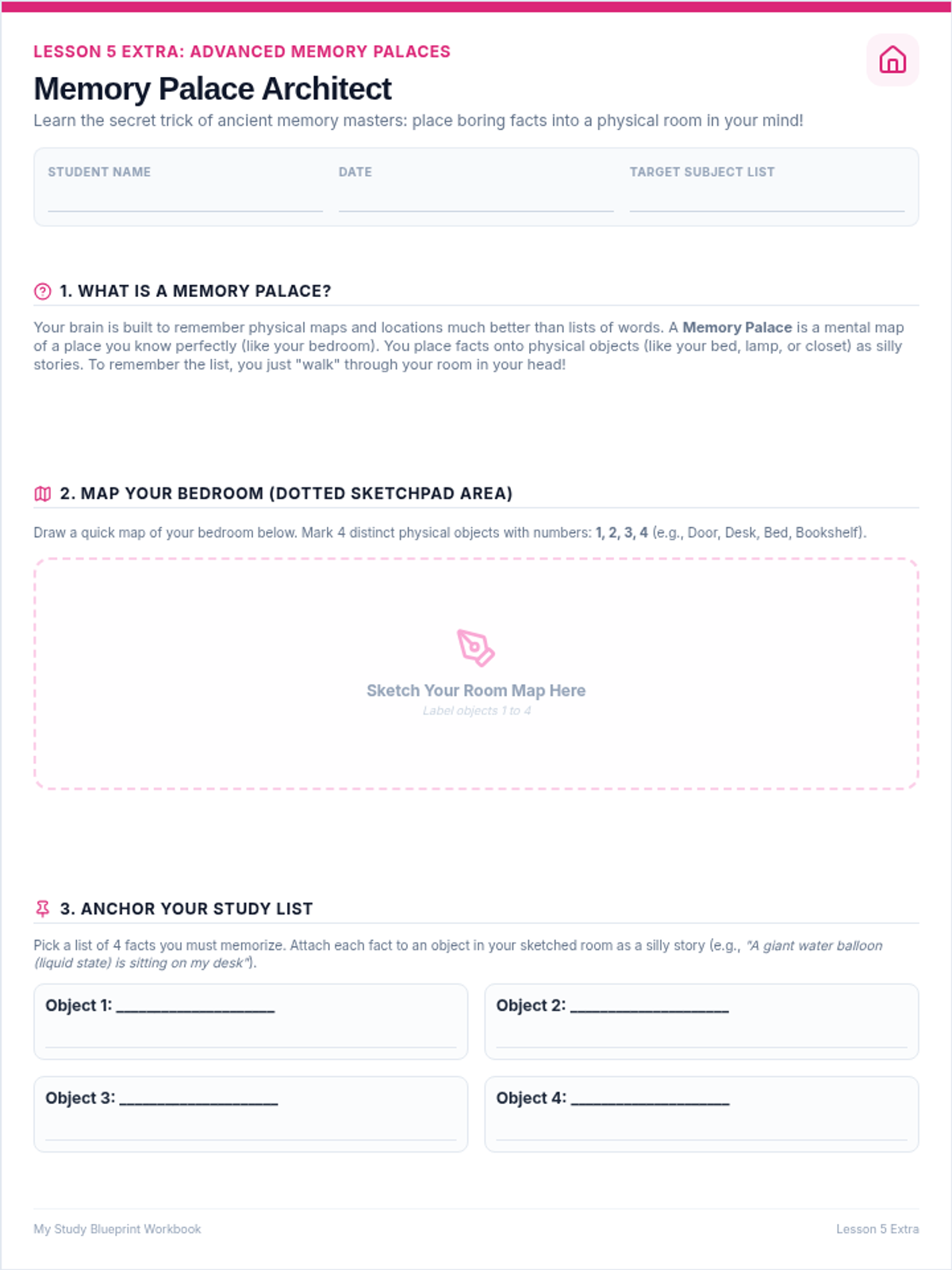
A lesson on elaboration and generation. Students learn how to build memory hooks by connecting concepts to real-world analogies and solving problems before being taught.
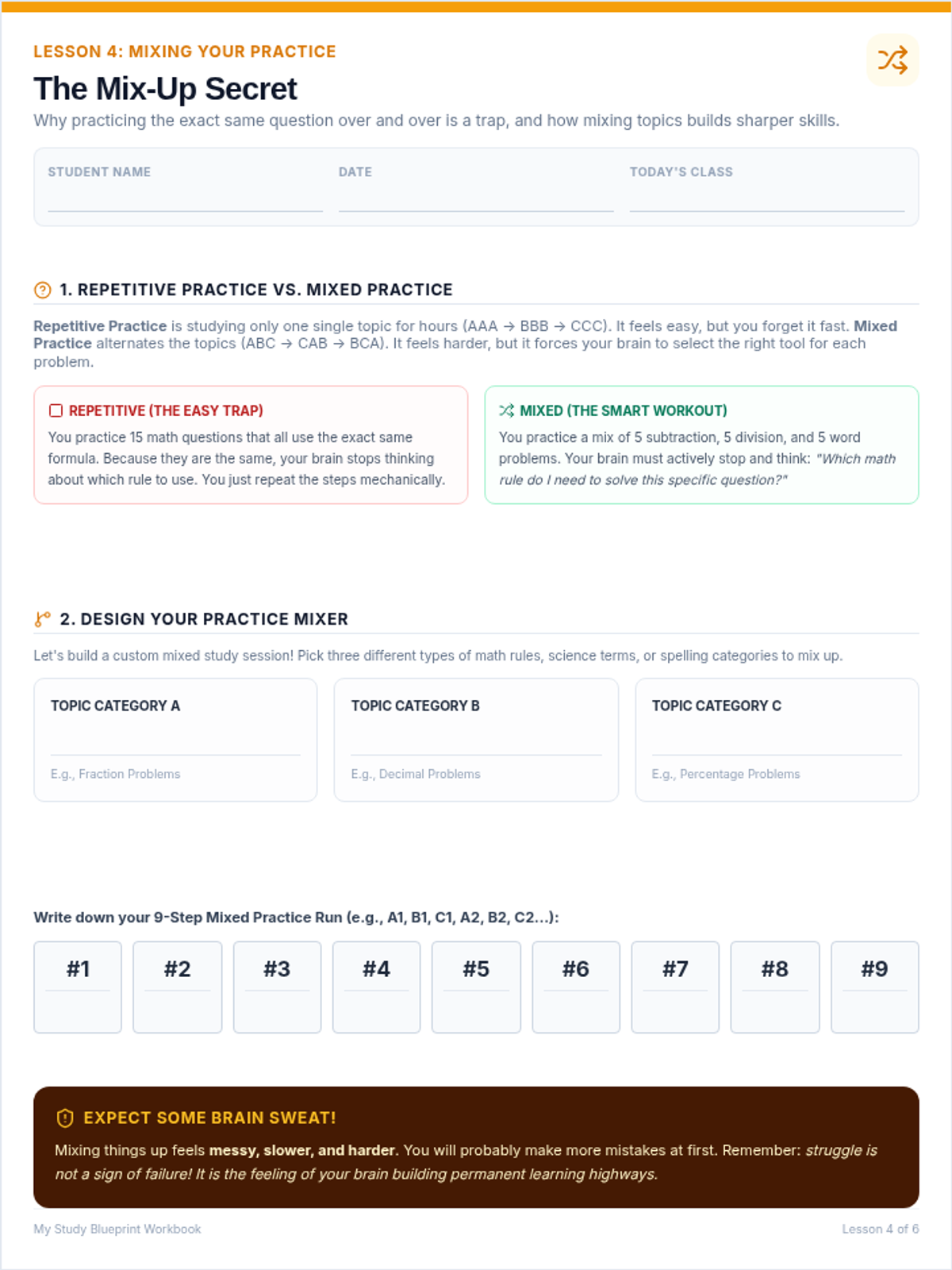
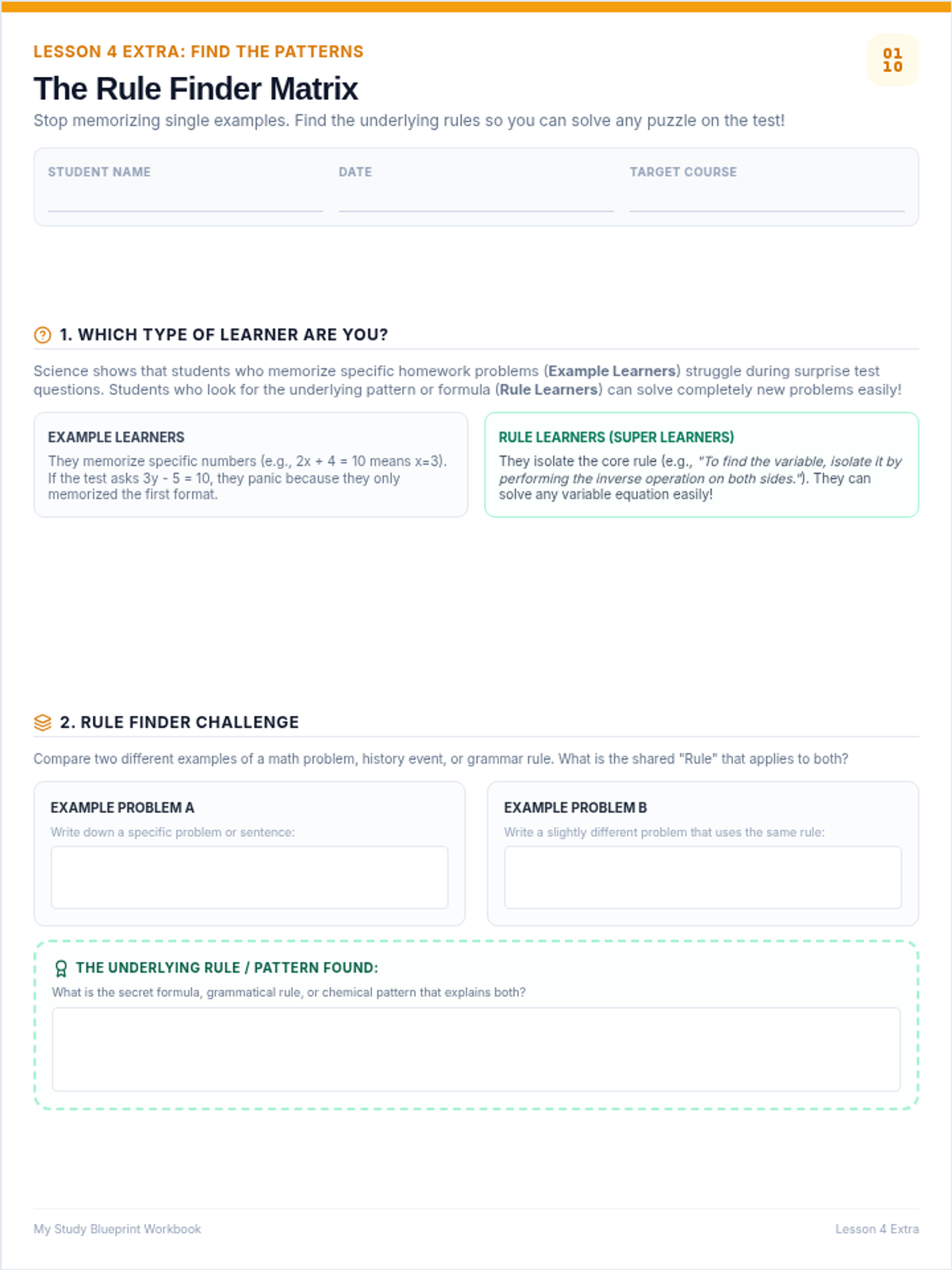
A lesson introducing interleaving and variation. Students learn why blocking practice feels productive but fails, and how mixing up skills builds durable real-world mastery.
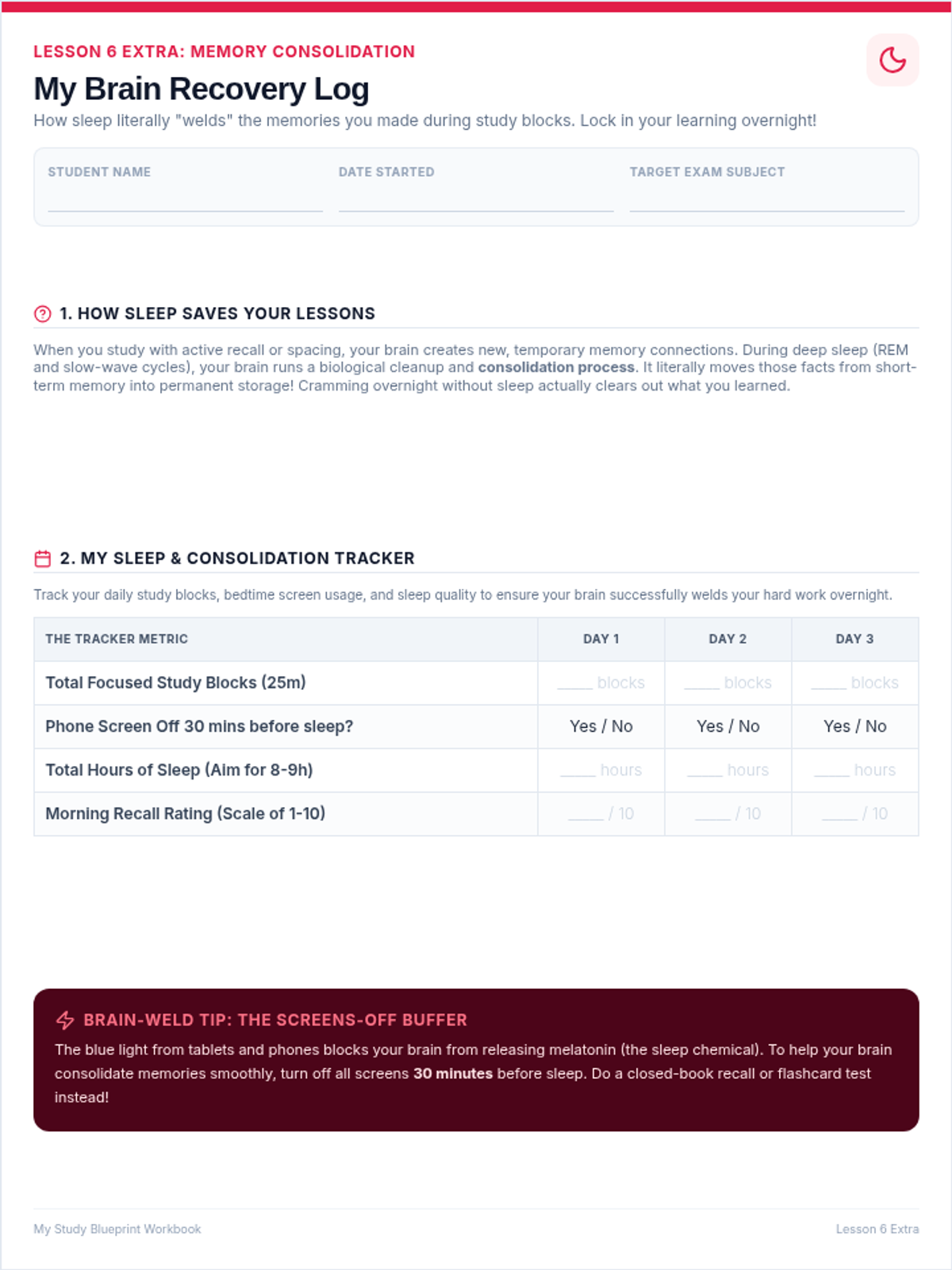
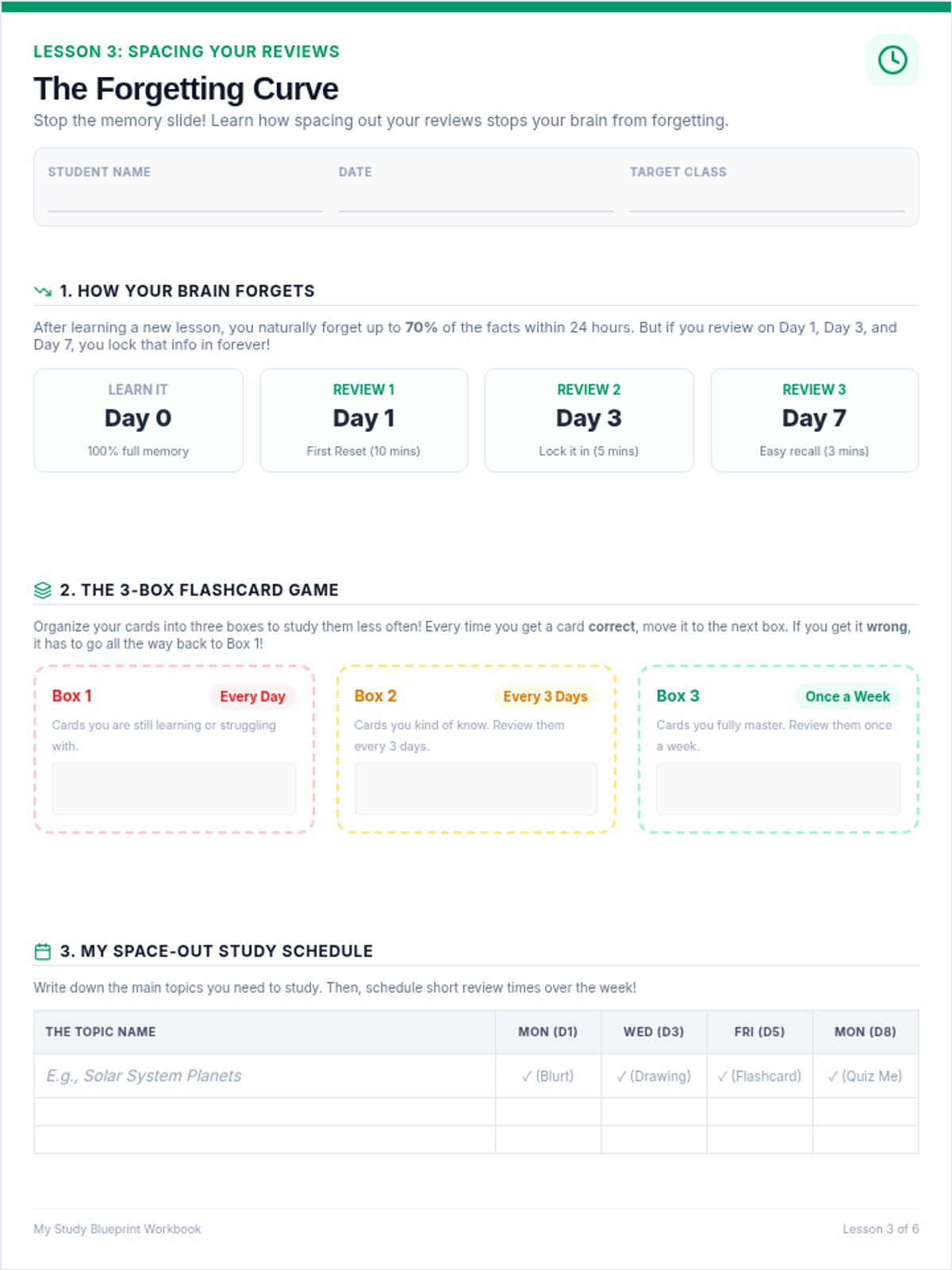
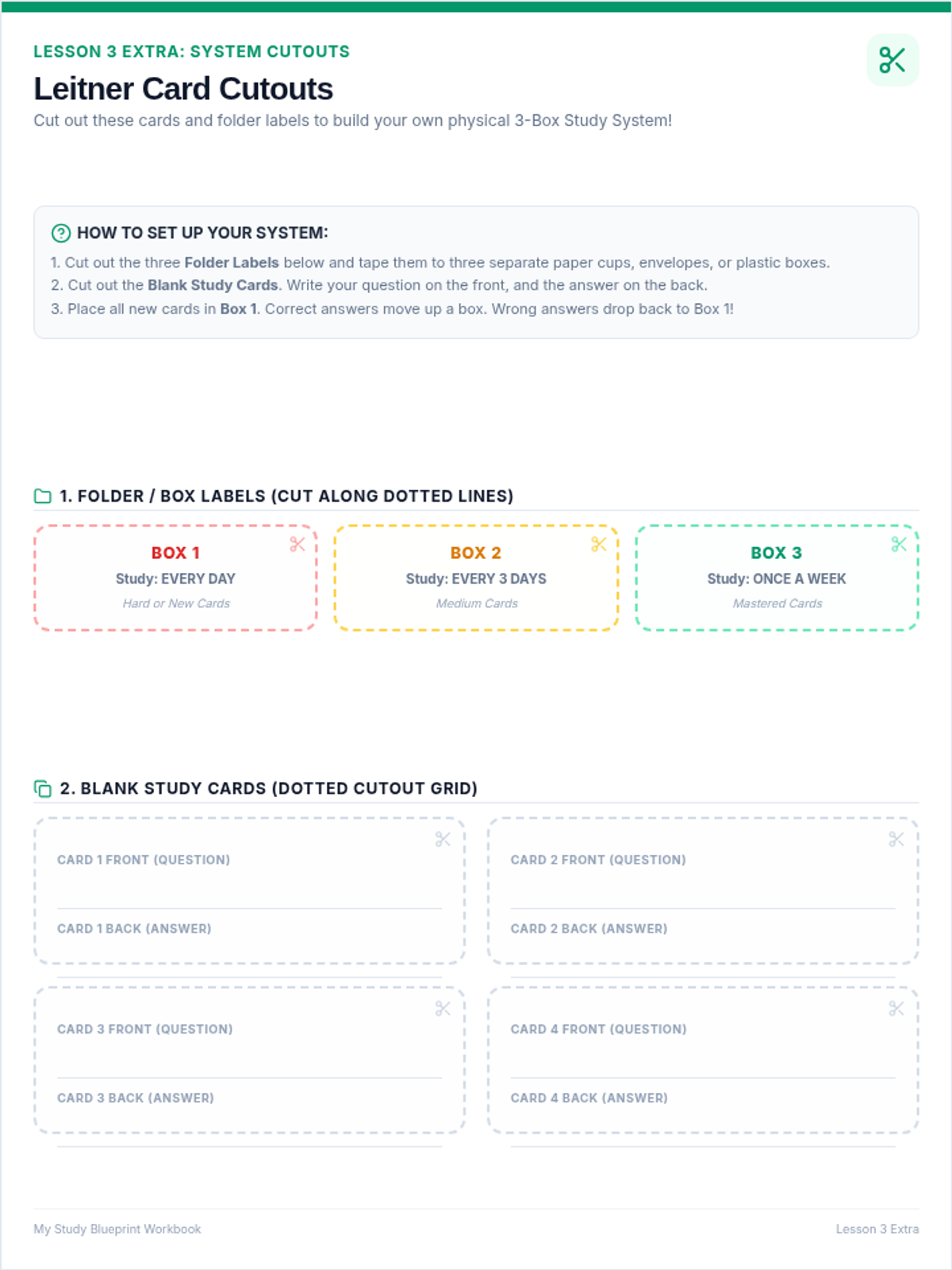
A lesson focused on beating the natural forgetting curve. Students learn how spacing out their study blocks triggers memory consolidation and how to schedule long-term retention.
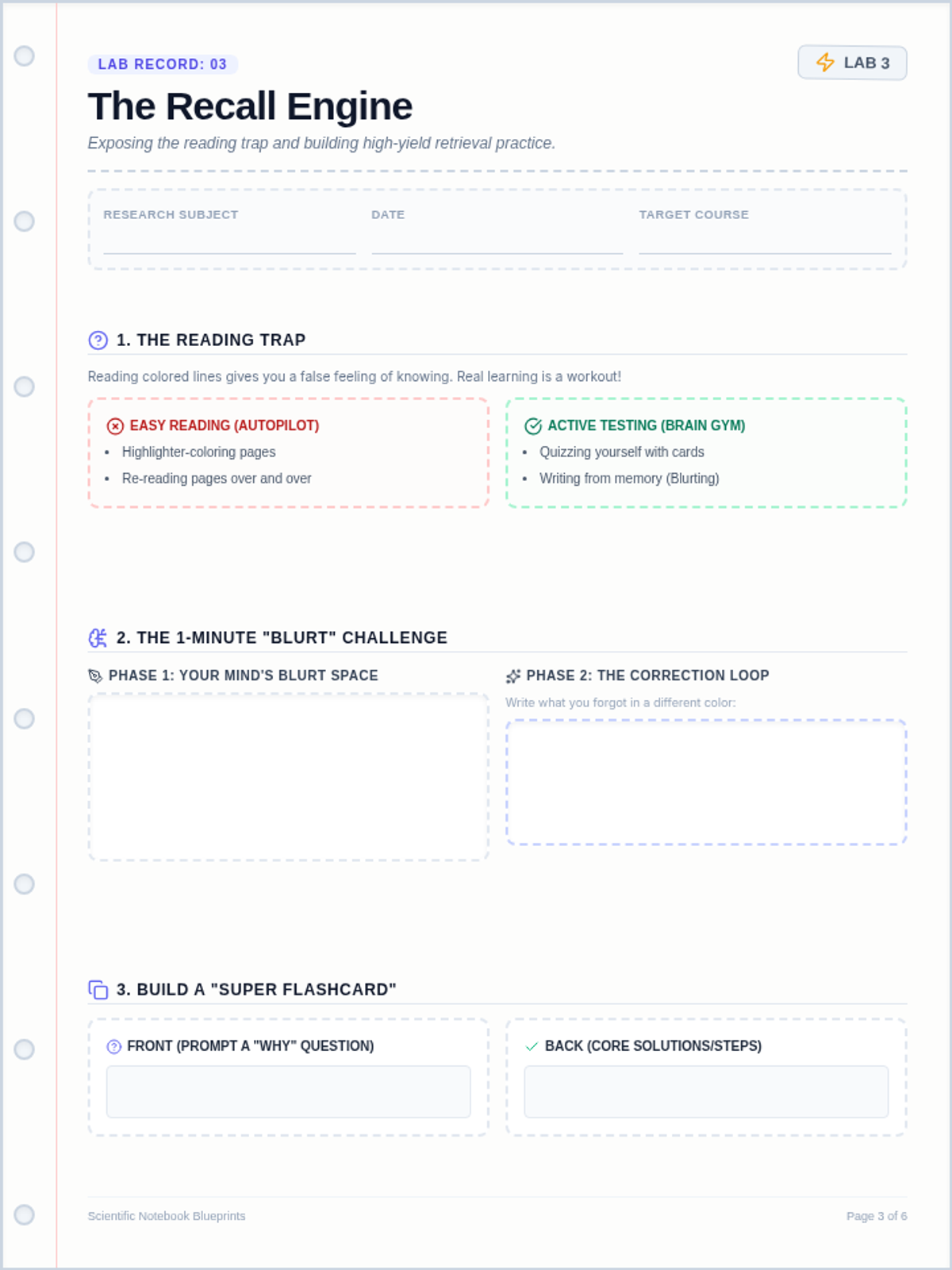
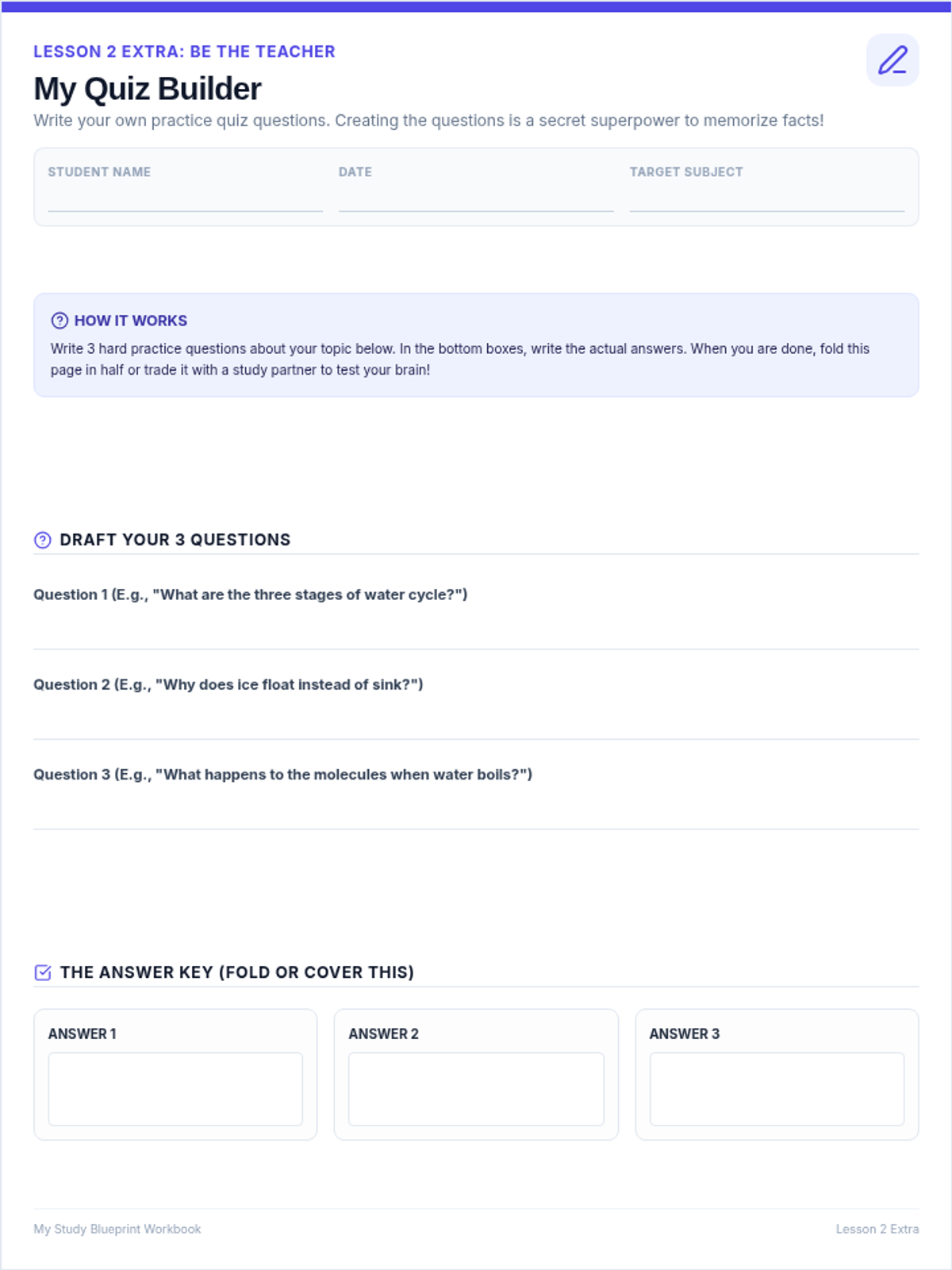
A lesson centered on the primary driver of memory retention: retrieval practice. Students discover why passive reading is a cognitive illusion and learn to build effortful self-testing habits.
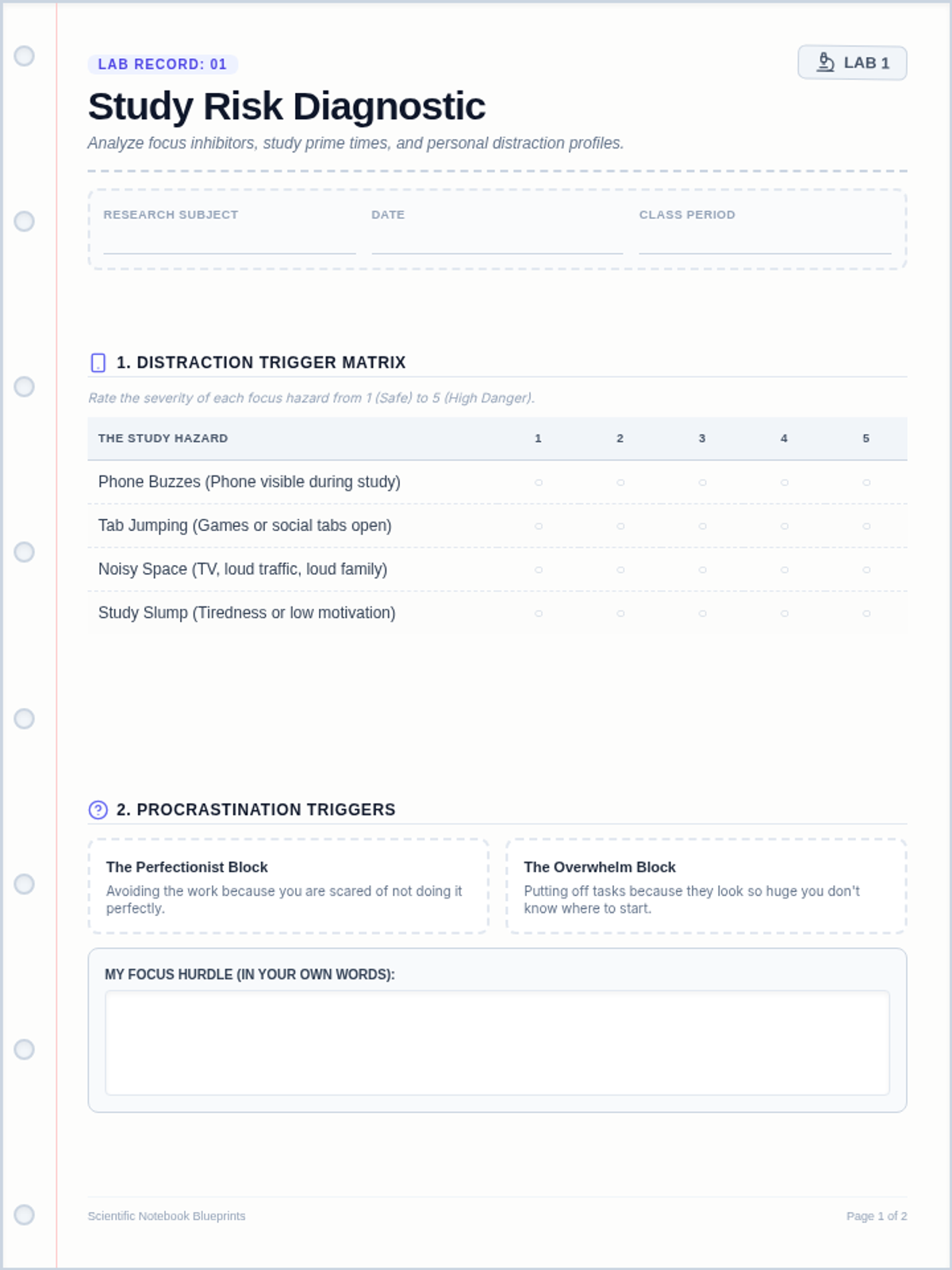
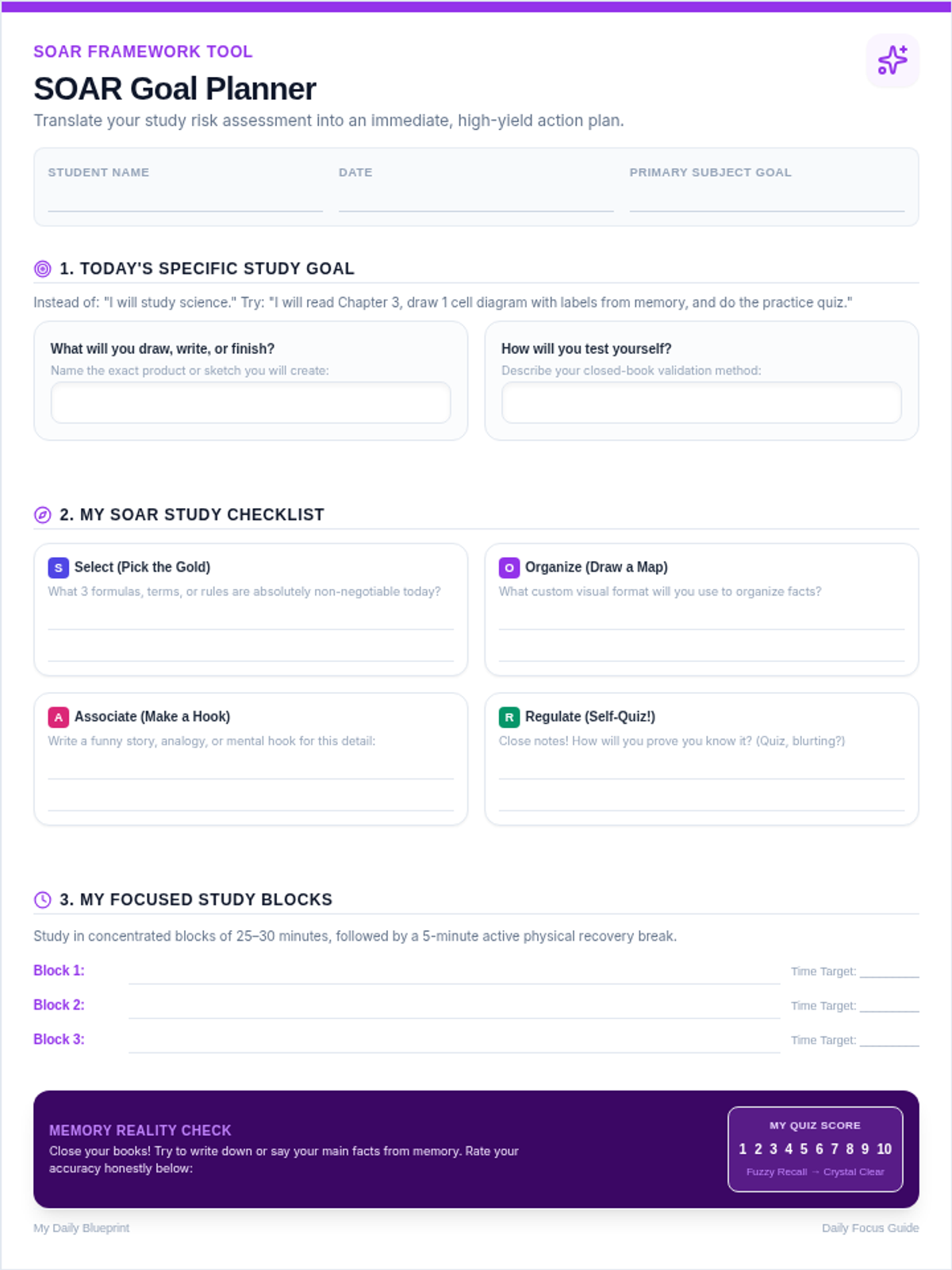
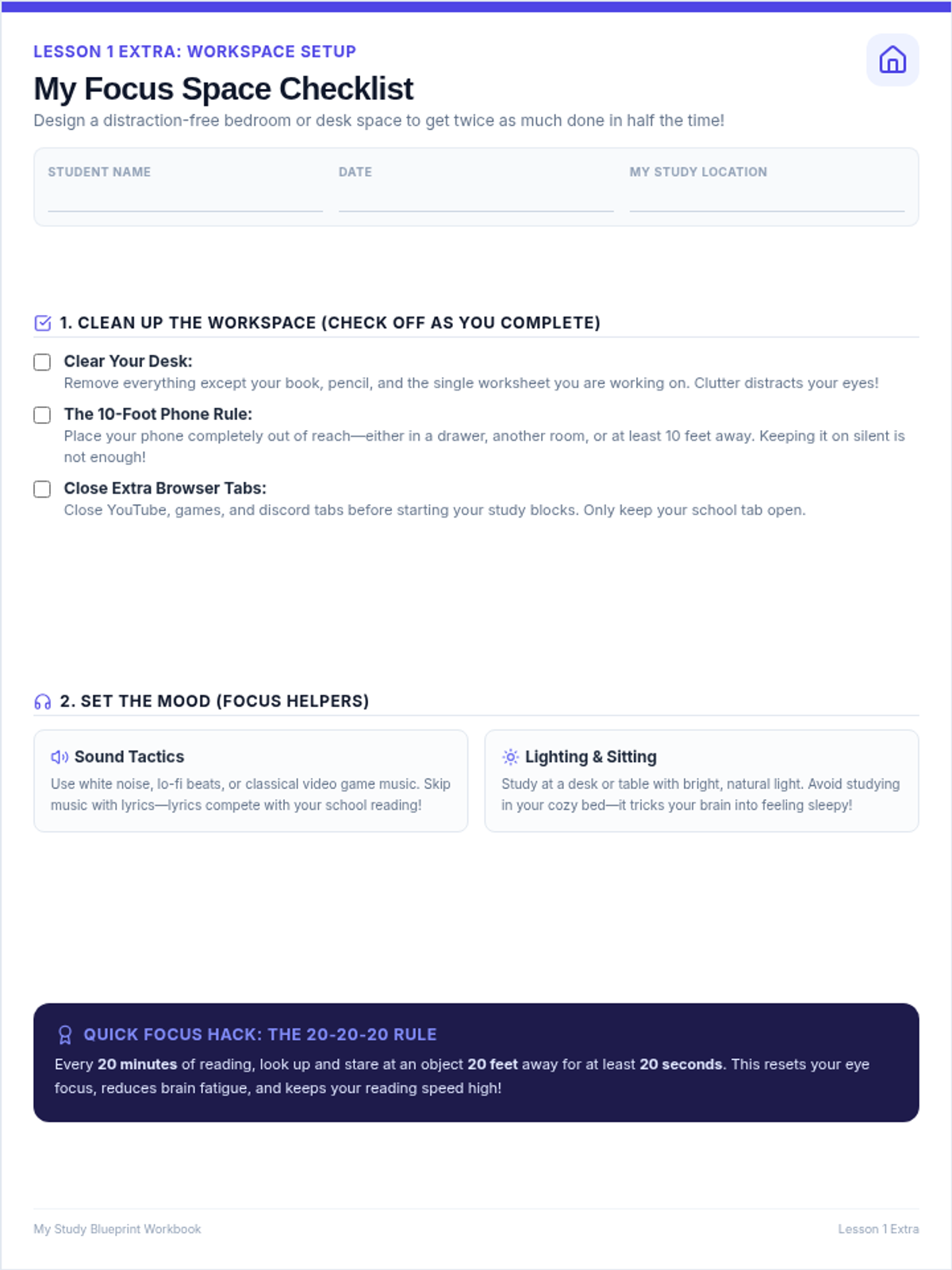
A complete mini-unit lesson designed to help students master study skills, identify personal academic risk factors (why they can't focus), discover their study prime time, and apply the SOAR framework through a structured study risk assessment and goal planning process.
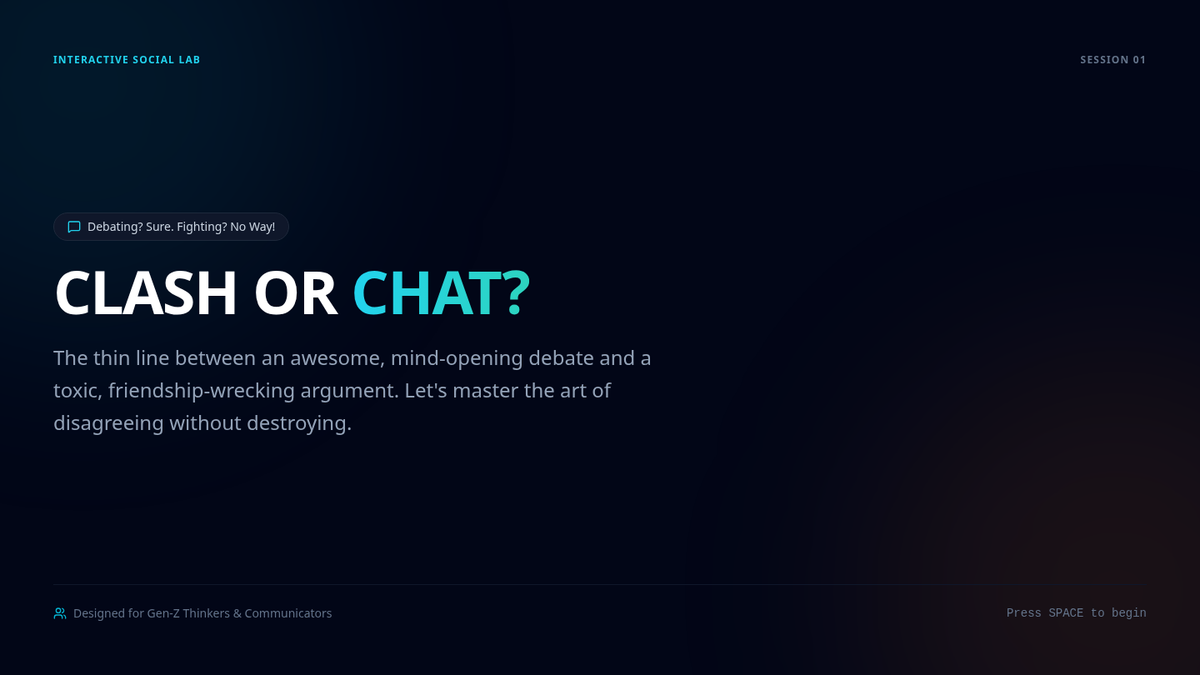
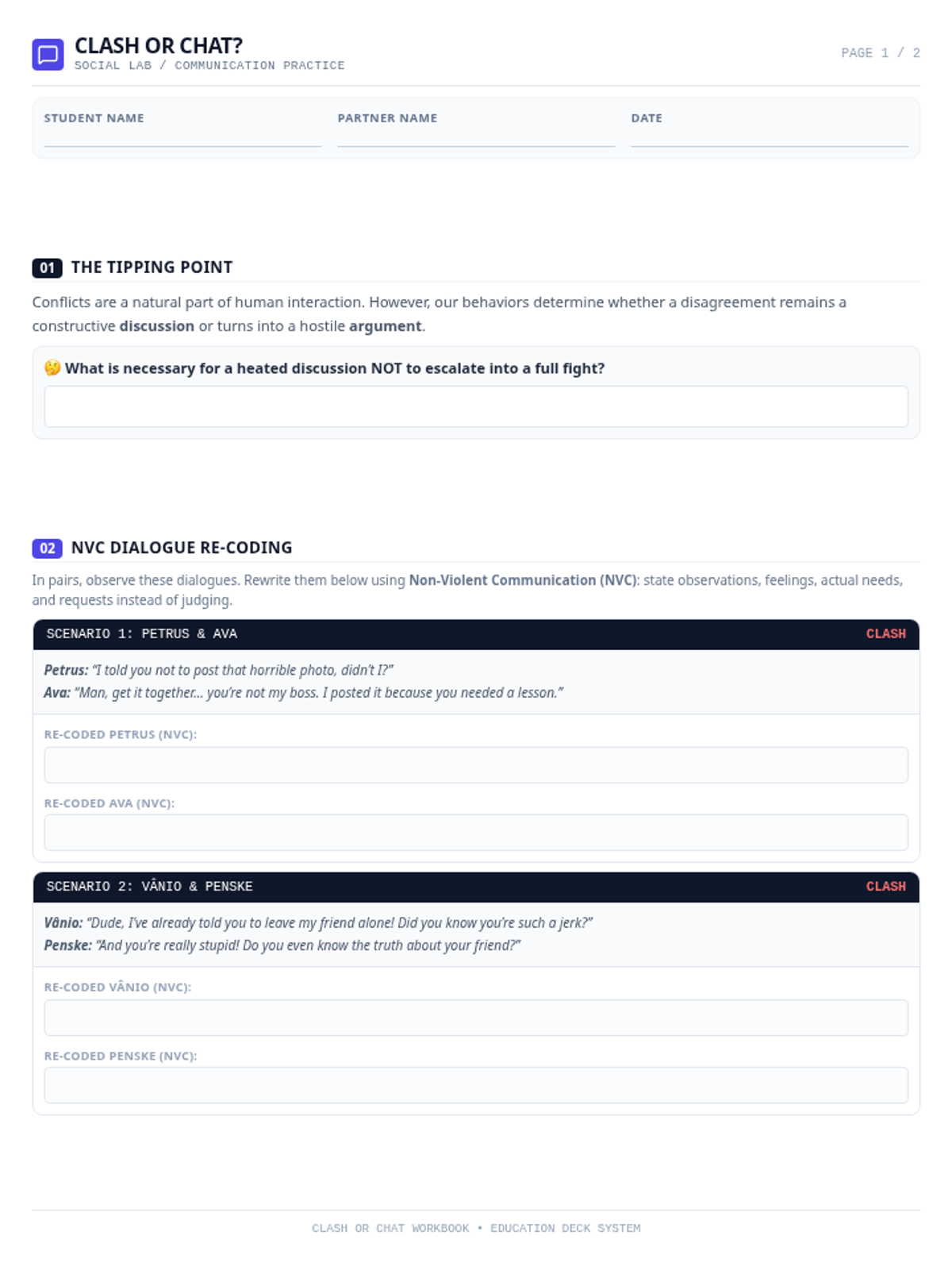
An interactive lesson designed for 16-year-olds to explore the thin line between a healthy discussion and a destructive argument. Students practice non-violent communication, analyze body language, and learn how to challenge ideas without attacking individuals.
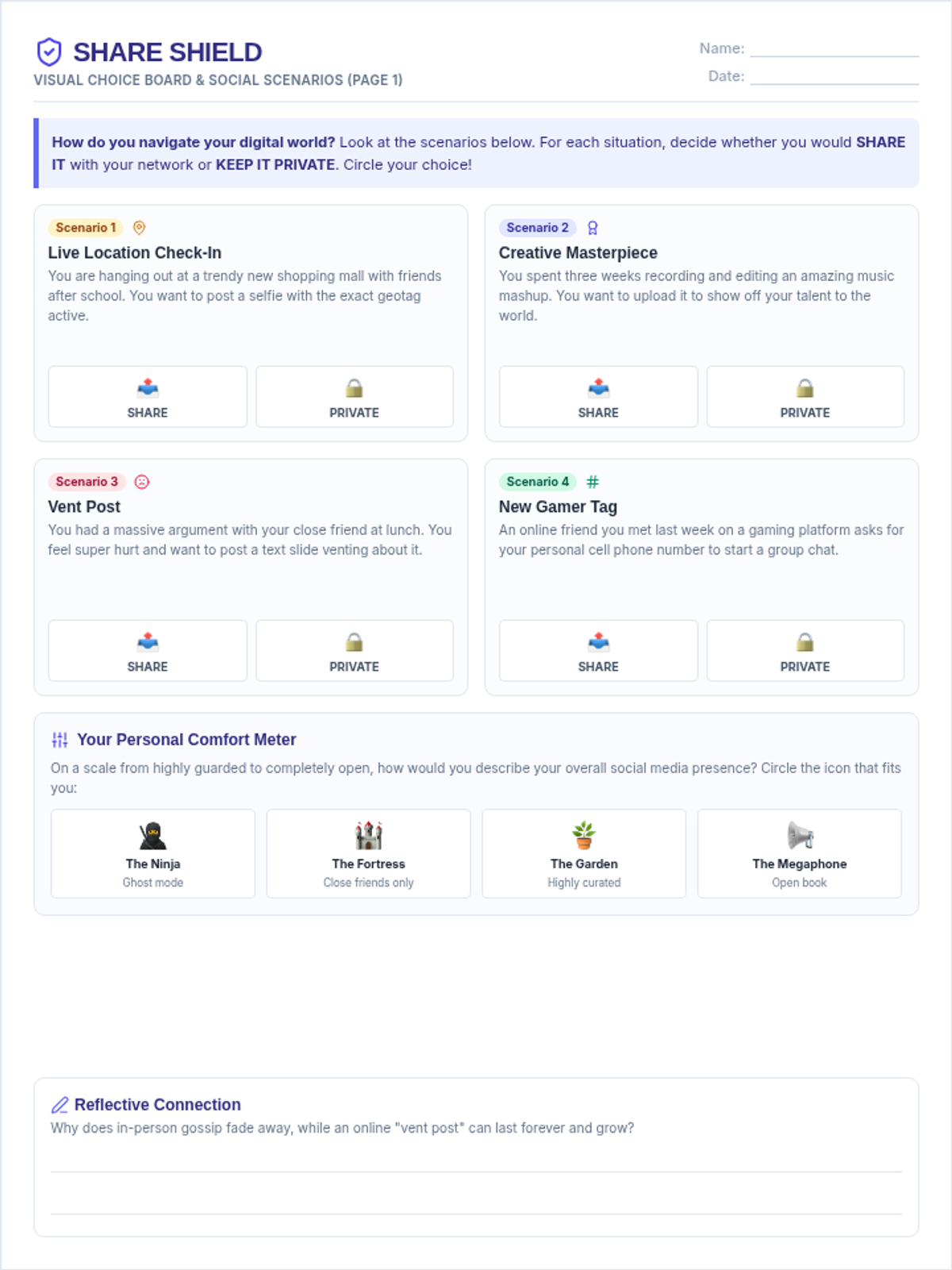
A lesson exploring the boundary between public and private spaces on social media, using a visual choice board icebreaker, concrete social scenarios, and a video reflection to build digital citizenship.
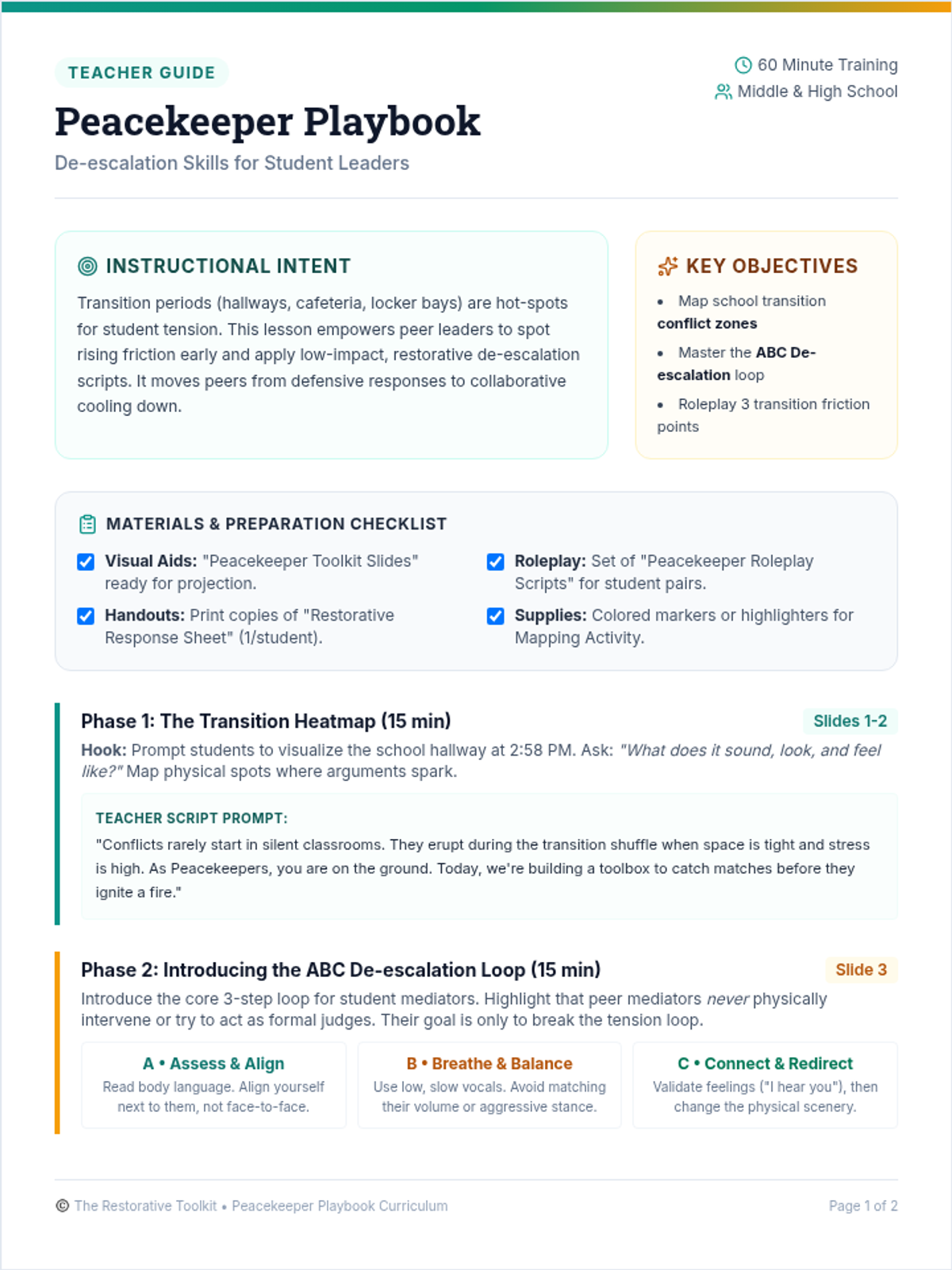
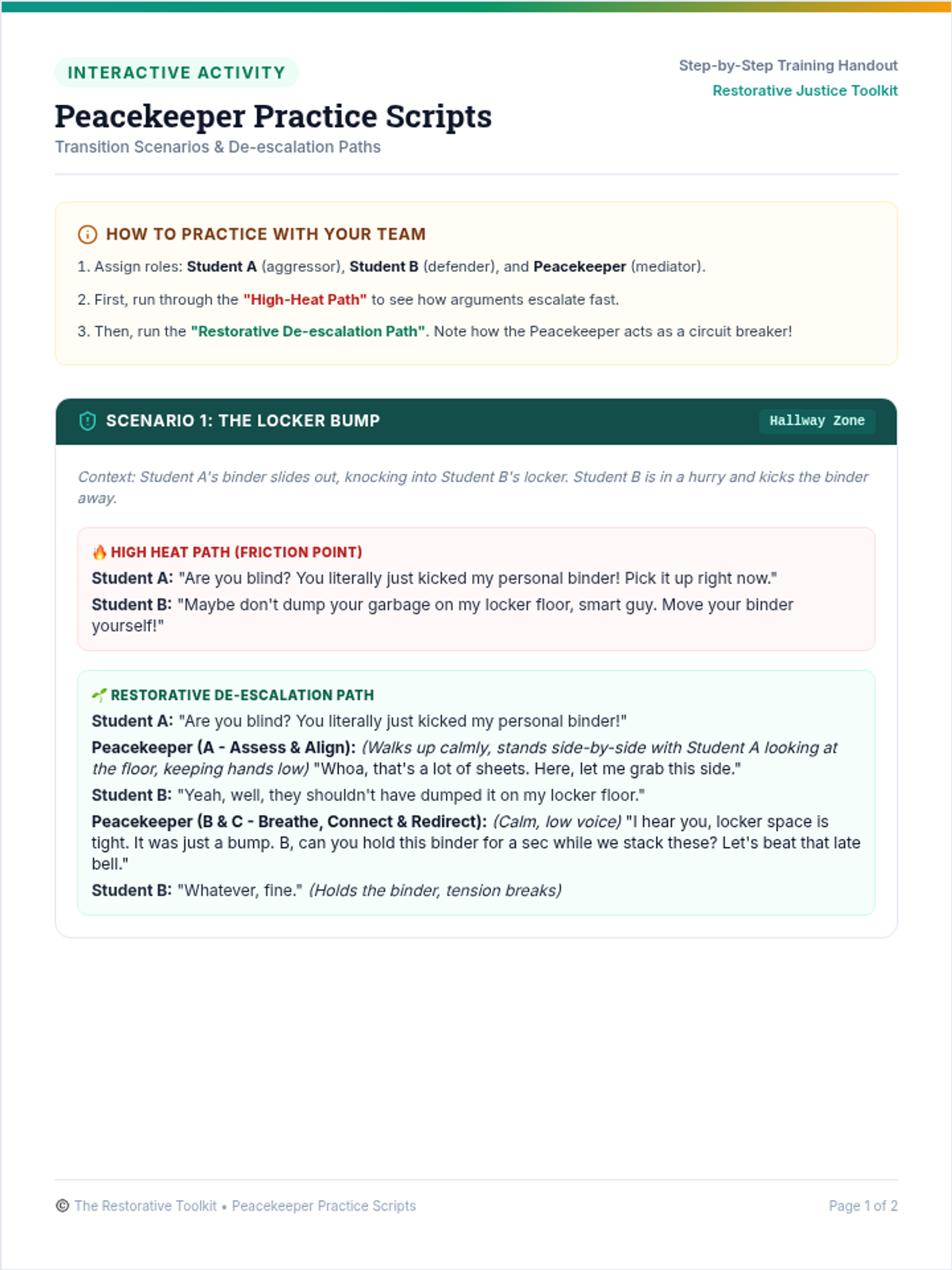
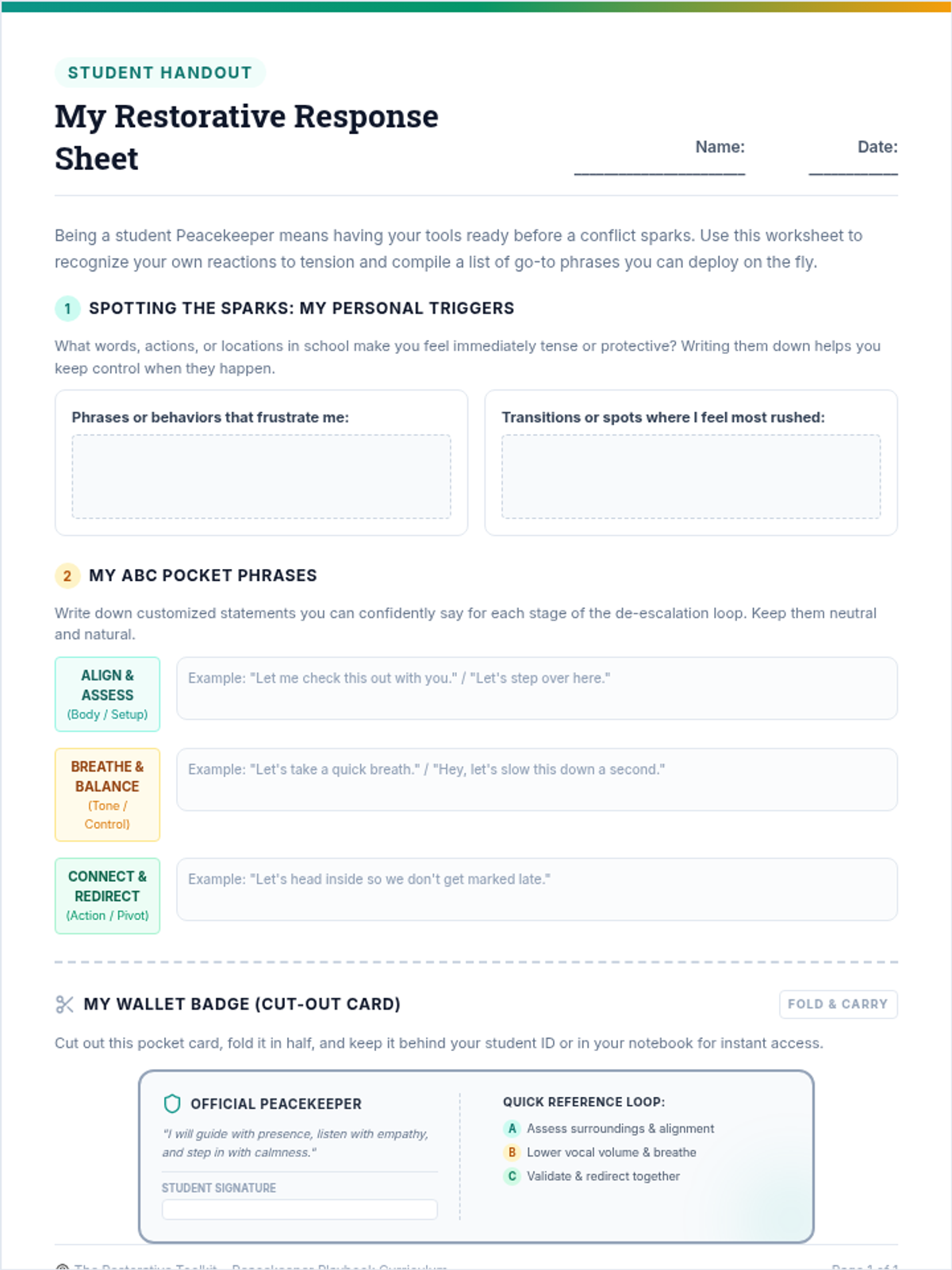
An interactive, student-led curriculum empowering middle and high school leaders to de-escalate minor peer conflicts during high-stress transition periods, building sustainable restorative justice skills.
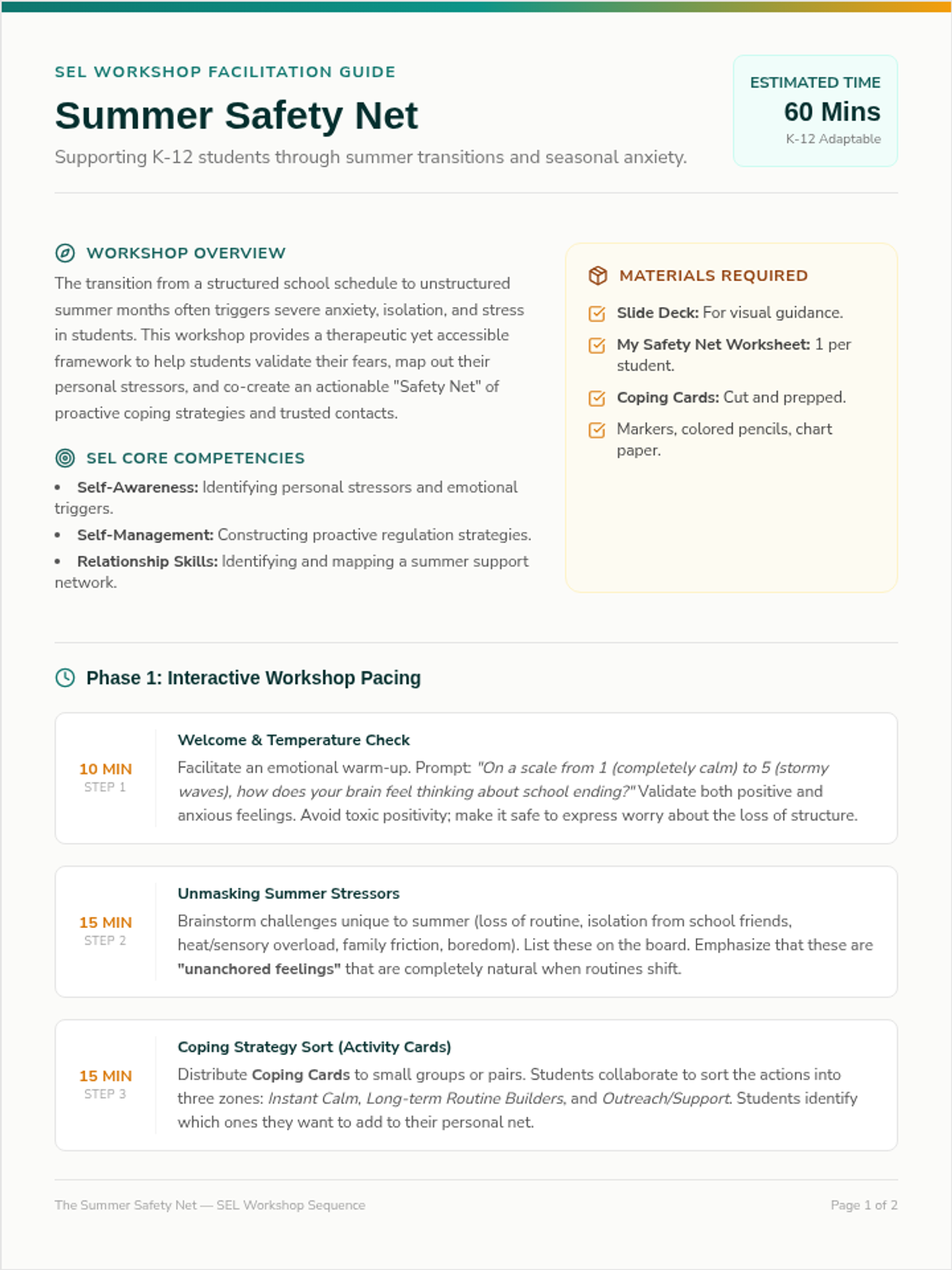
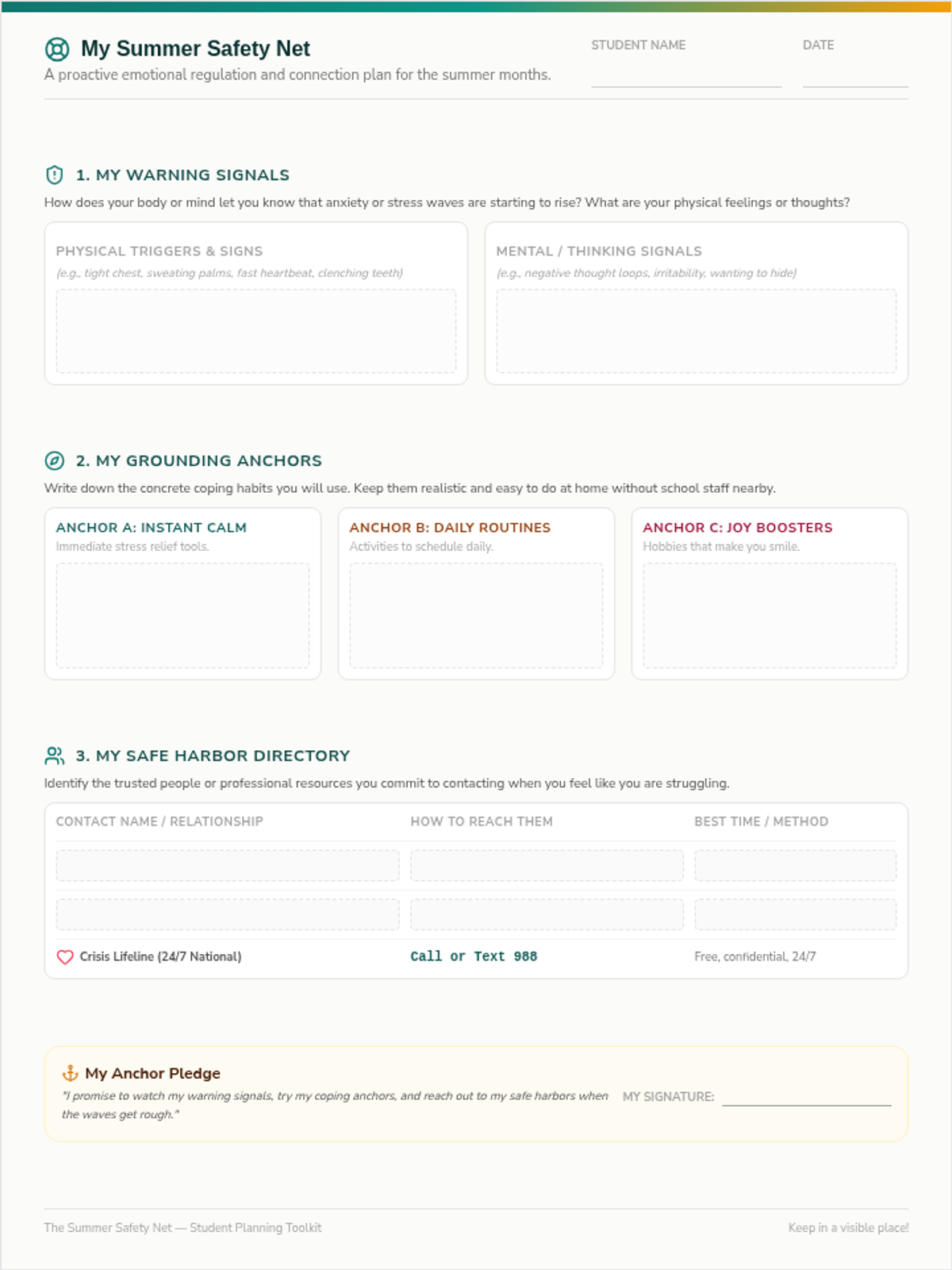
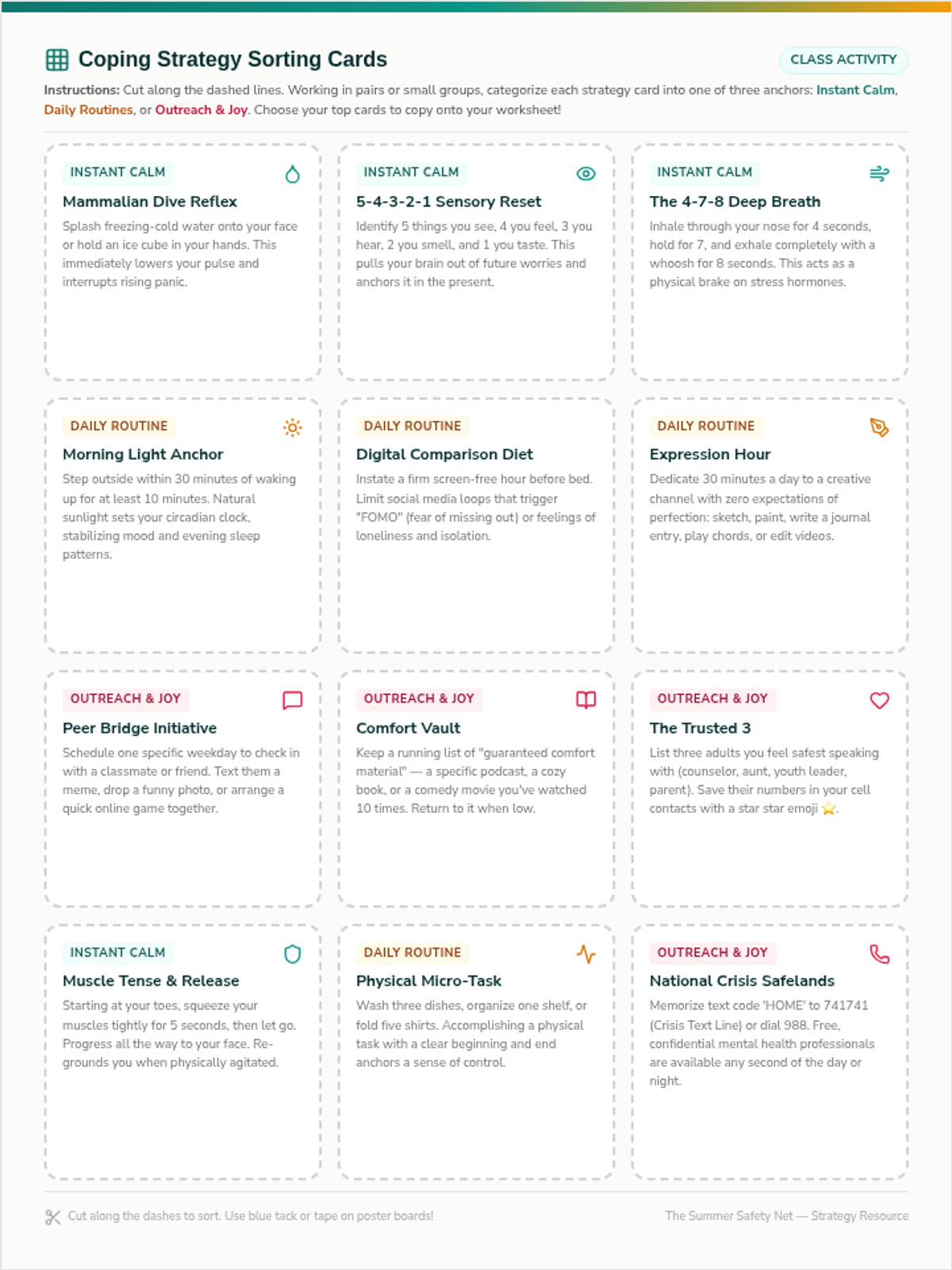
A collaborative mental health workshop designed to help students navigate summer transition anxiety by identifying stressors, mapping coping strategies, and co-creating a personalized proactive emotional regulation plan.
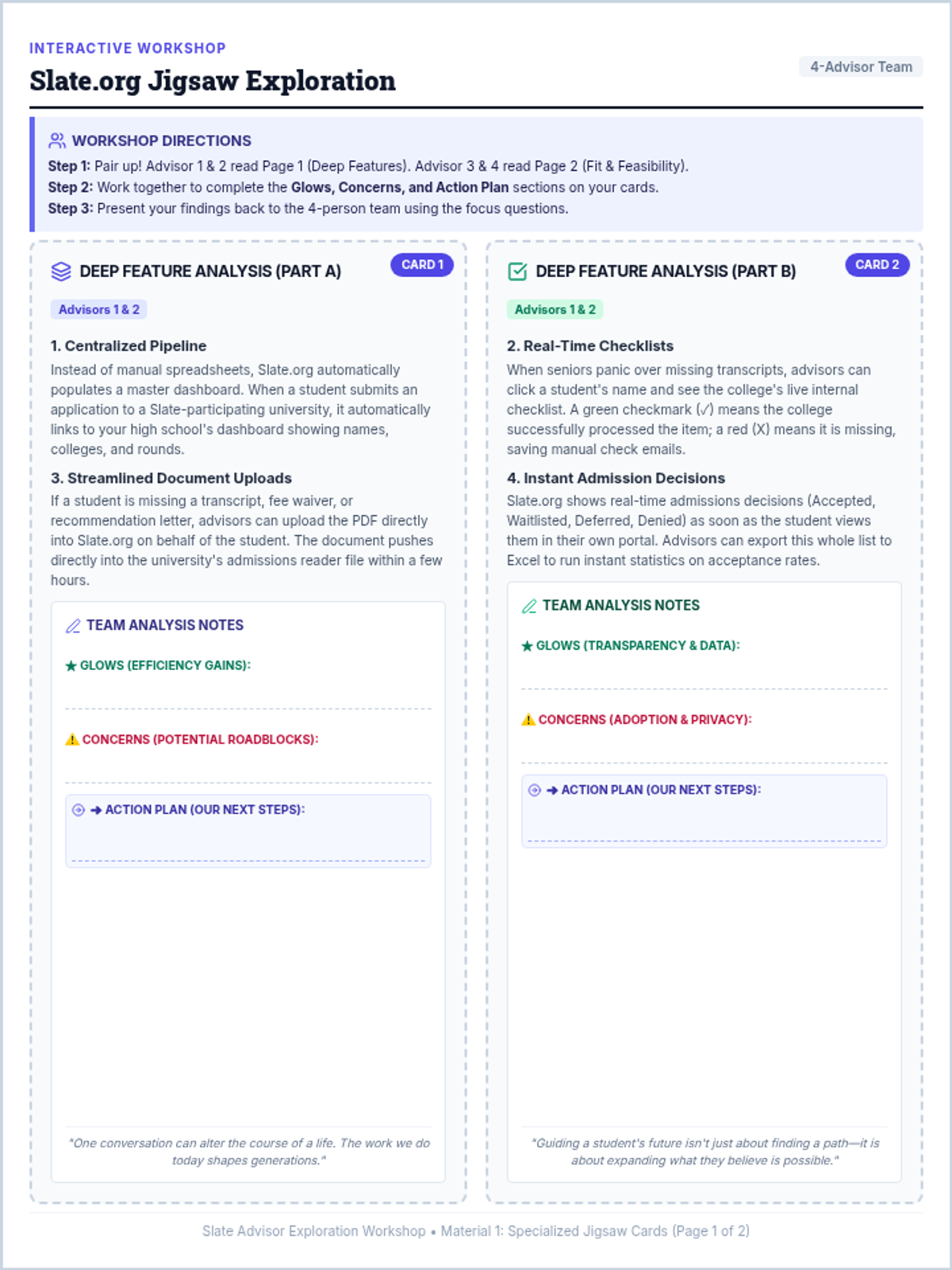
A focused workshop session for College and Career Advisors (CCAs) to evaluate and master Slate.org for senior tracking, comparing it to existing district tools and analyzing its core backend features.
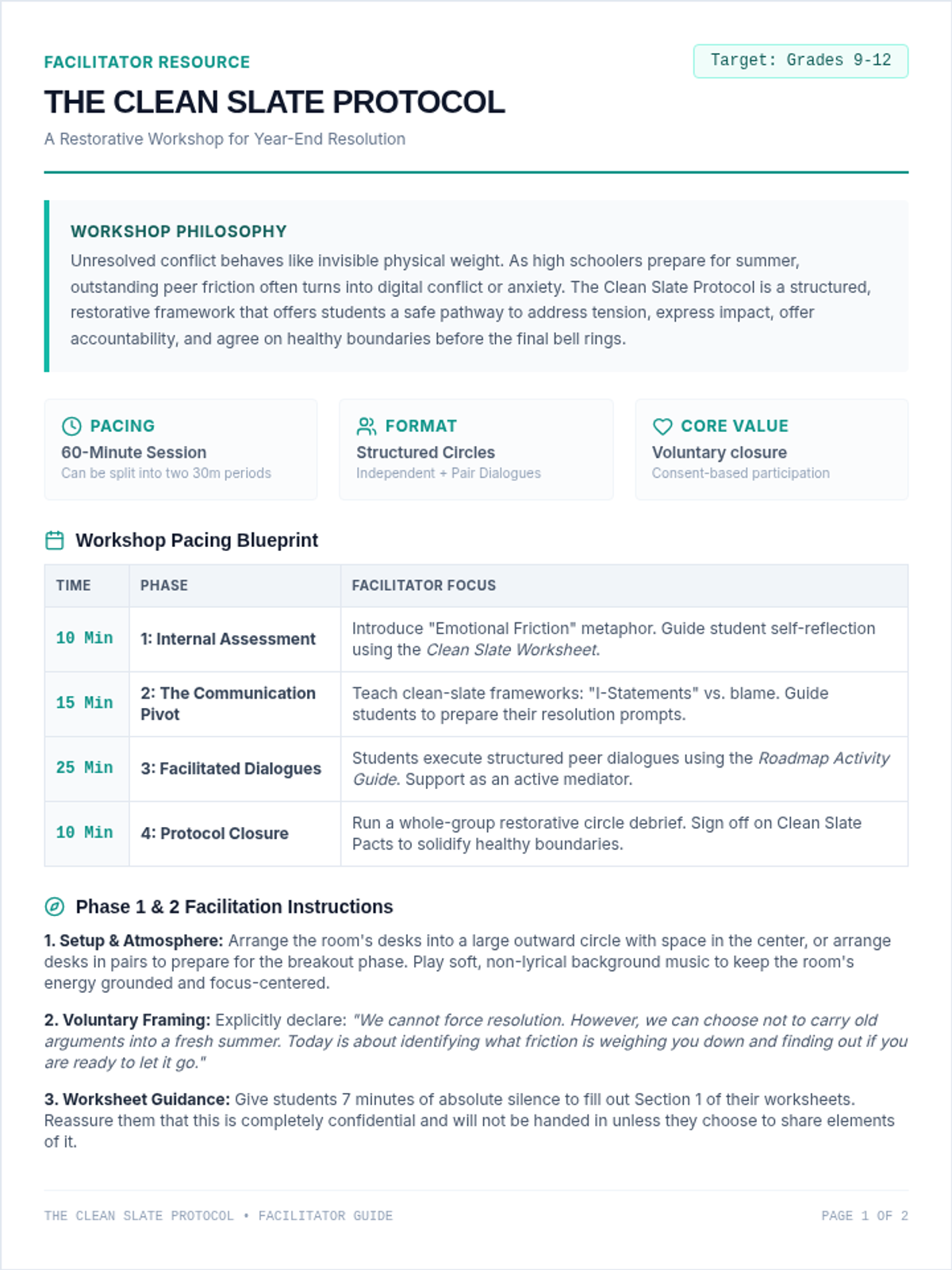
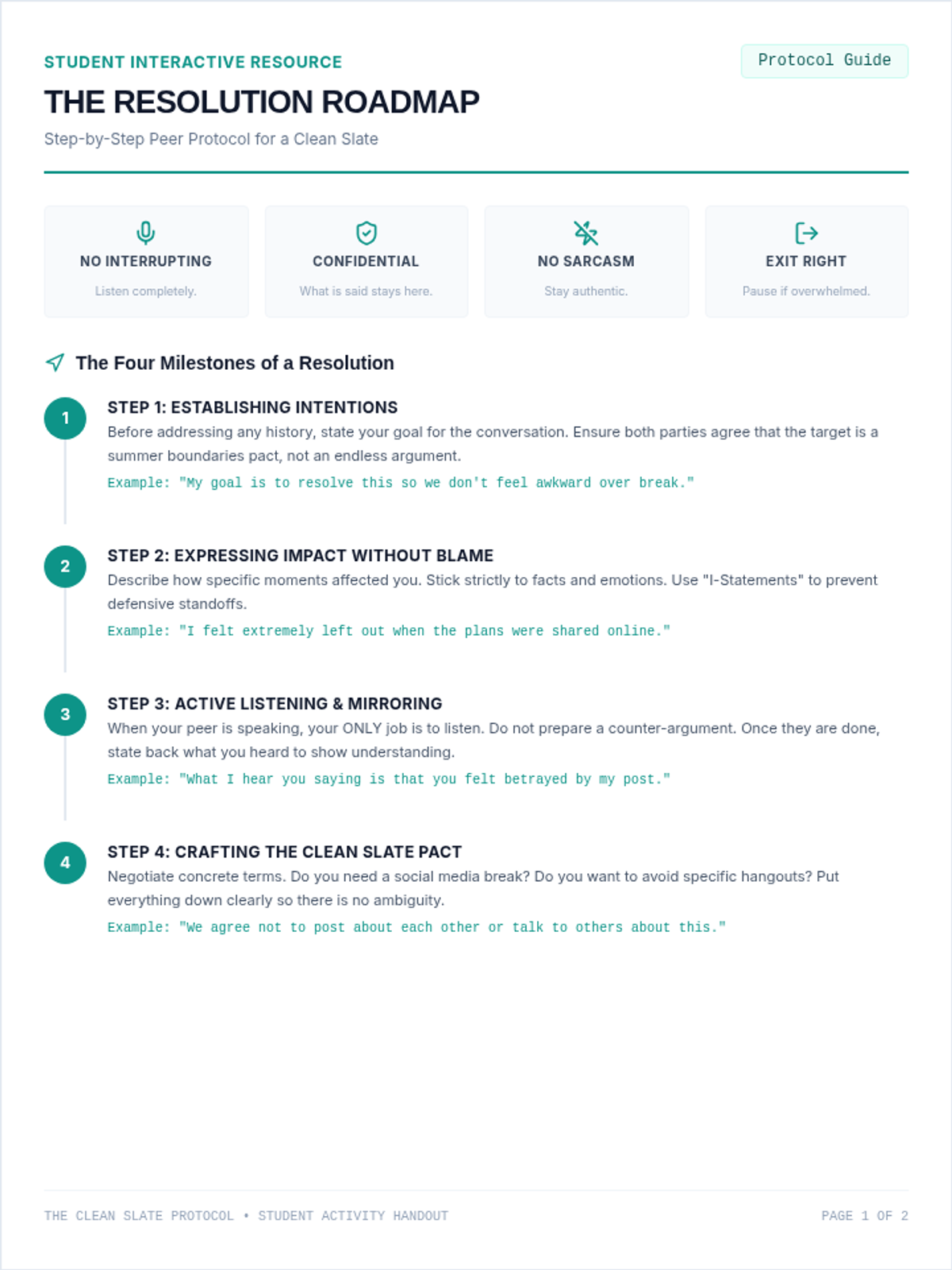
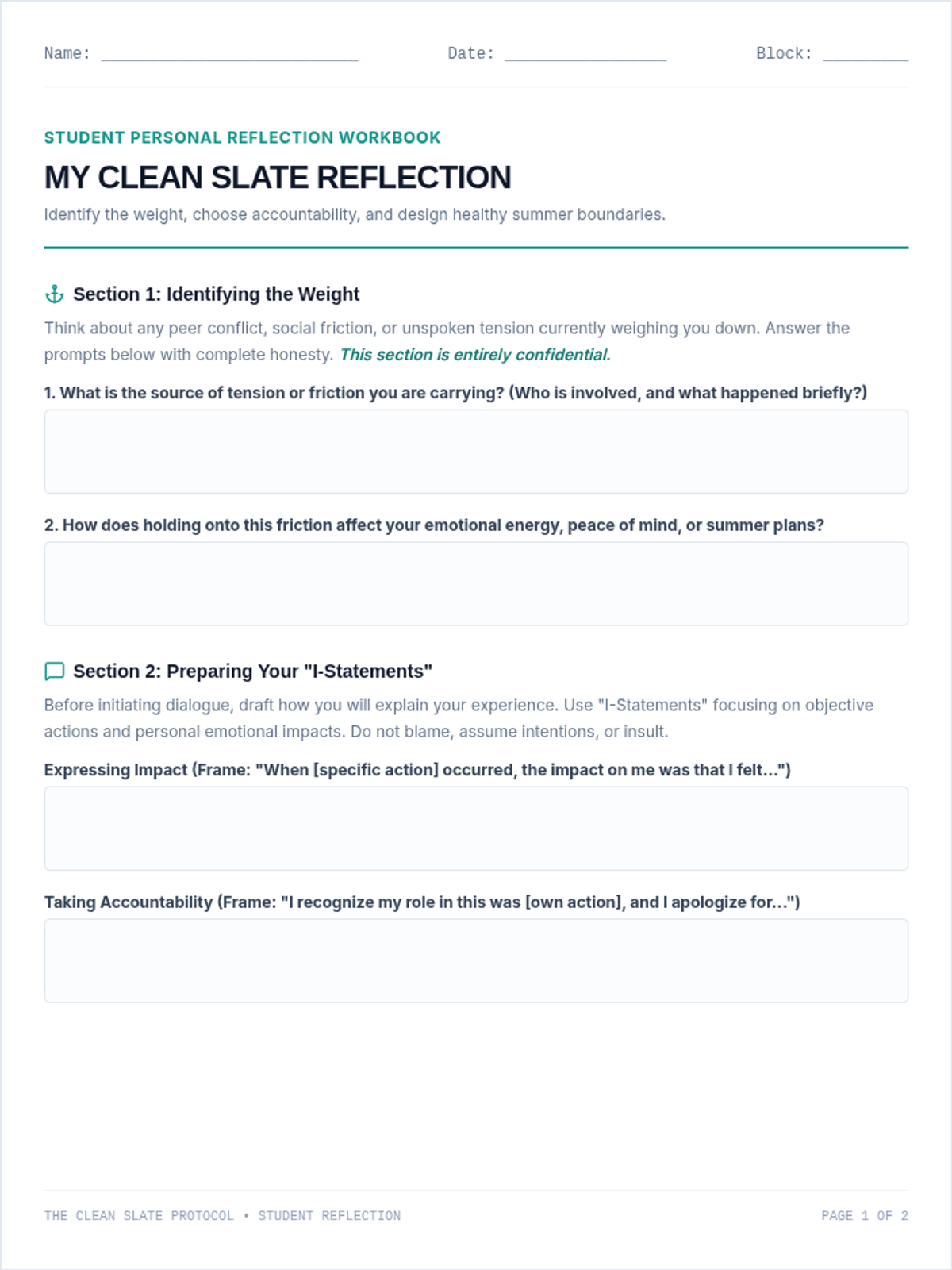
A restorative conflict-resolution workshop designed to help high schoolers resolve outstanding peer friction before summer break, allowing them to depart with a sense of peace and closure. This workshop provides step-by-step guidance, structured reflection, and concrete resolution tools.
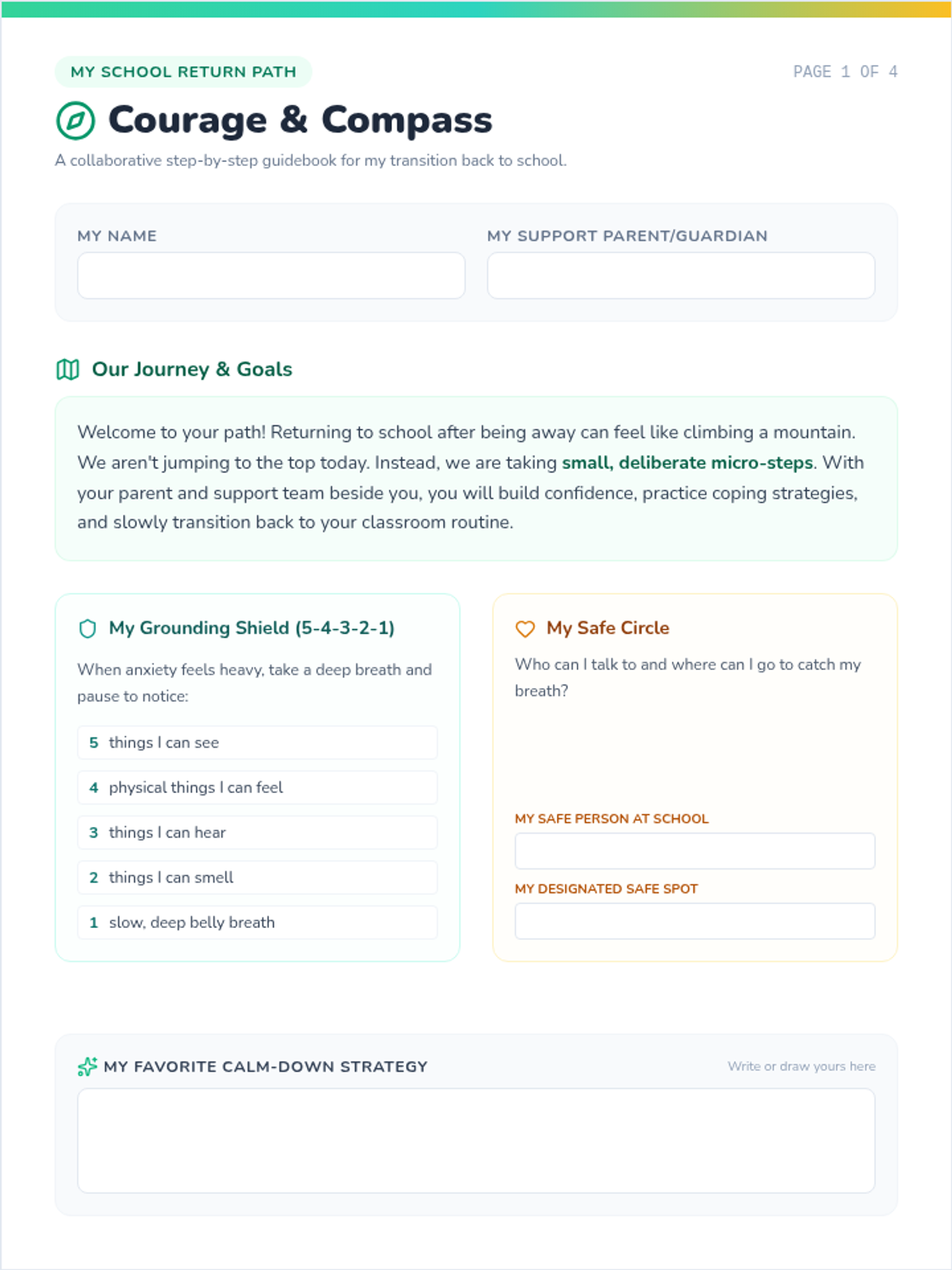
A collaborative, student-centered lesson framework to support students transitioning back to school after anxiety-related absences using a graduated exposure pathway.
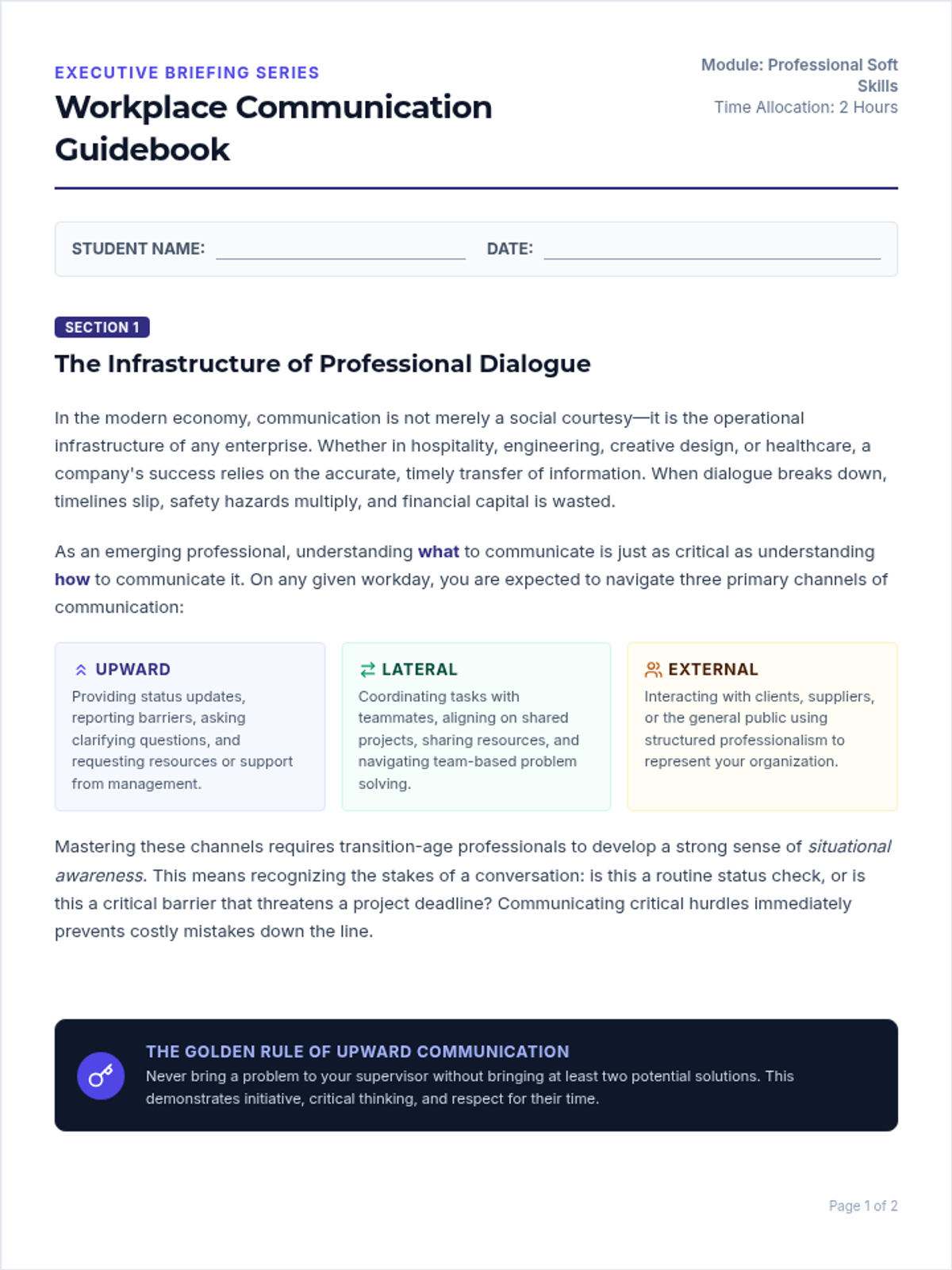
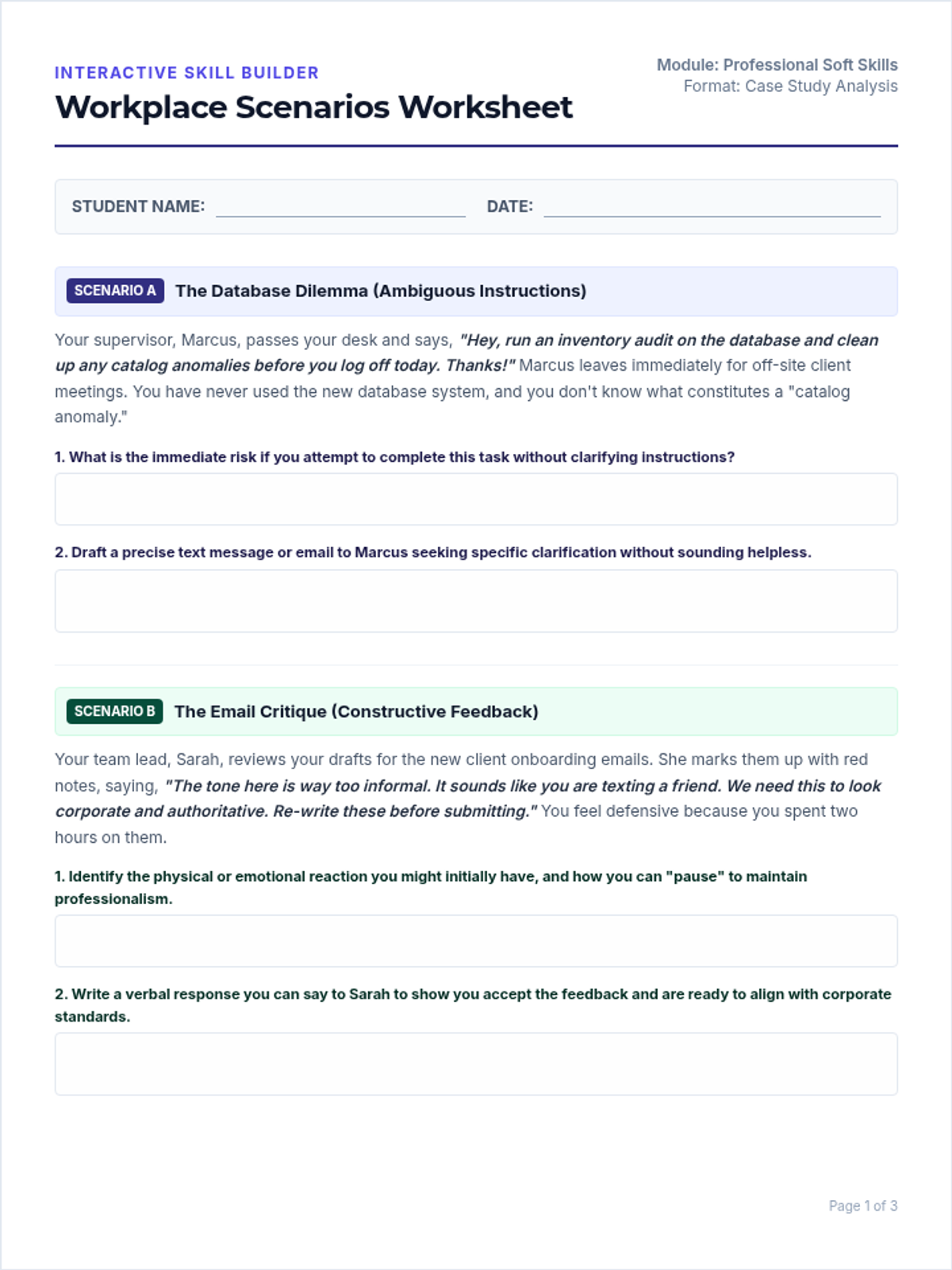
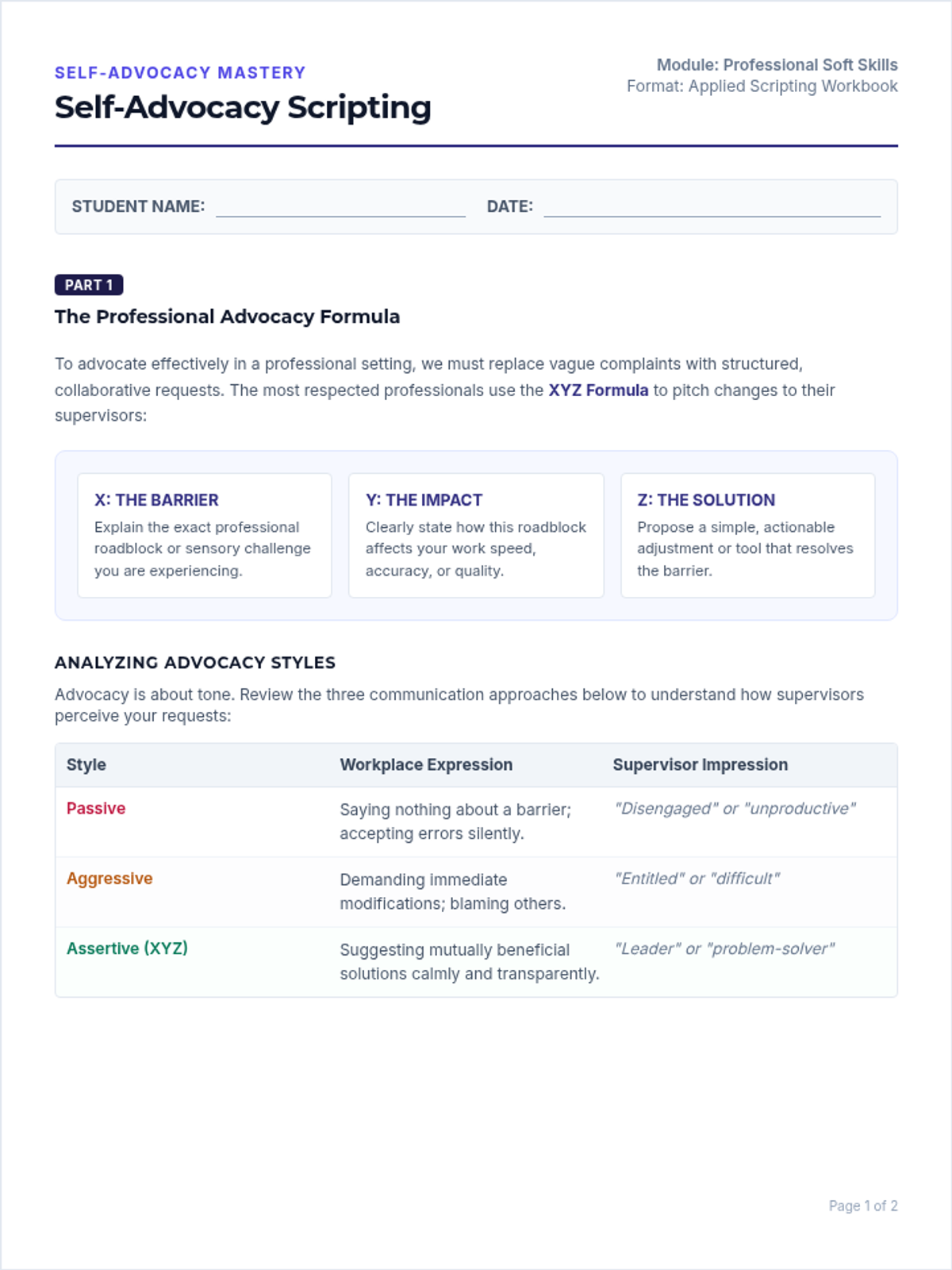
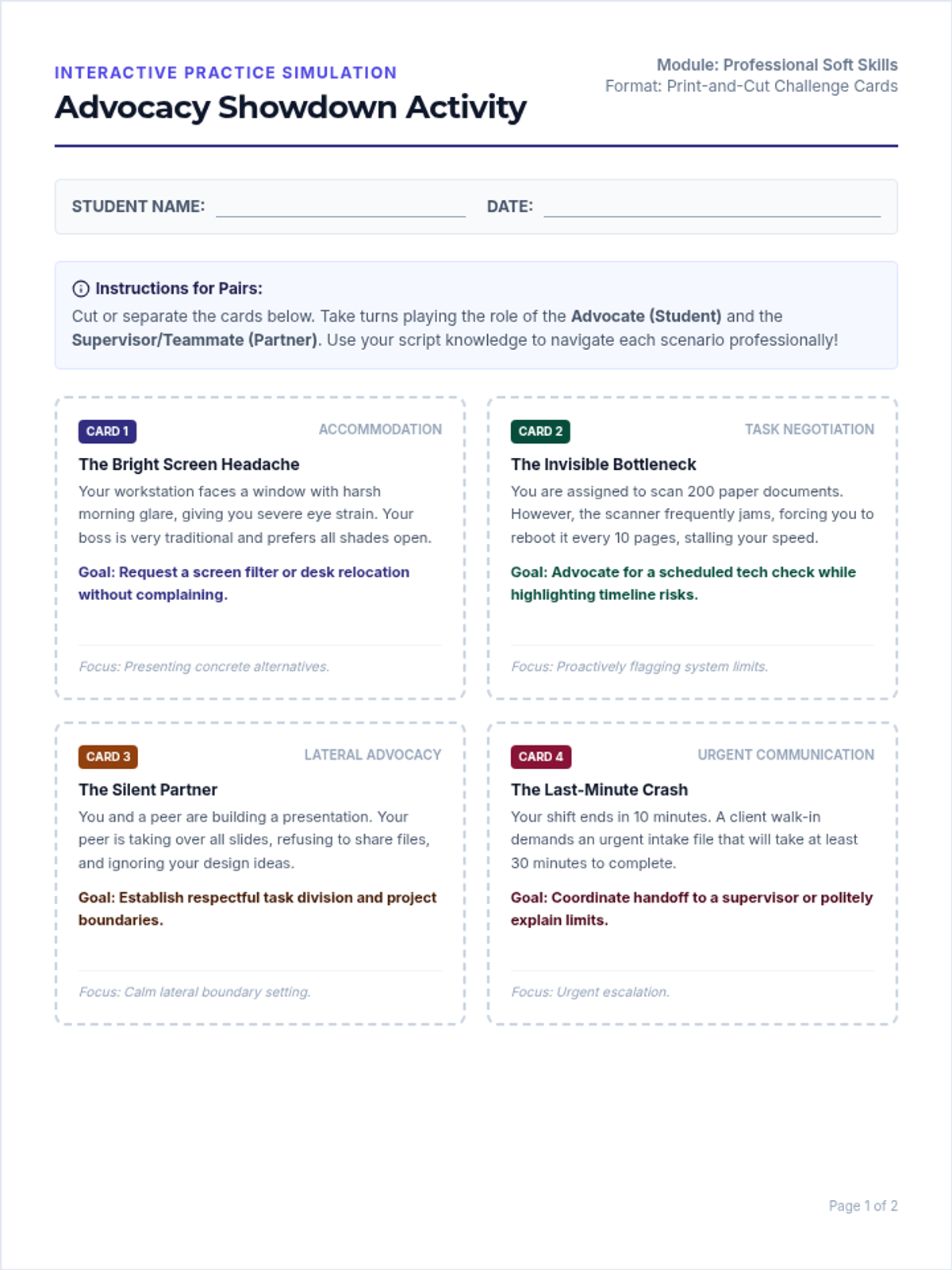
An advanced 2-hour lesson bundle for transition-age youth focusing on professional communication, workplace advocacy, and navigating accommodation requests with confidence and clarity.
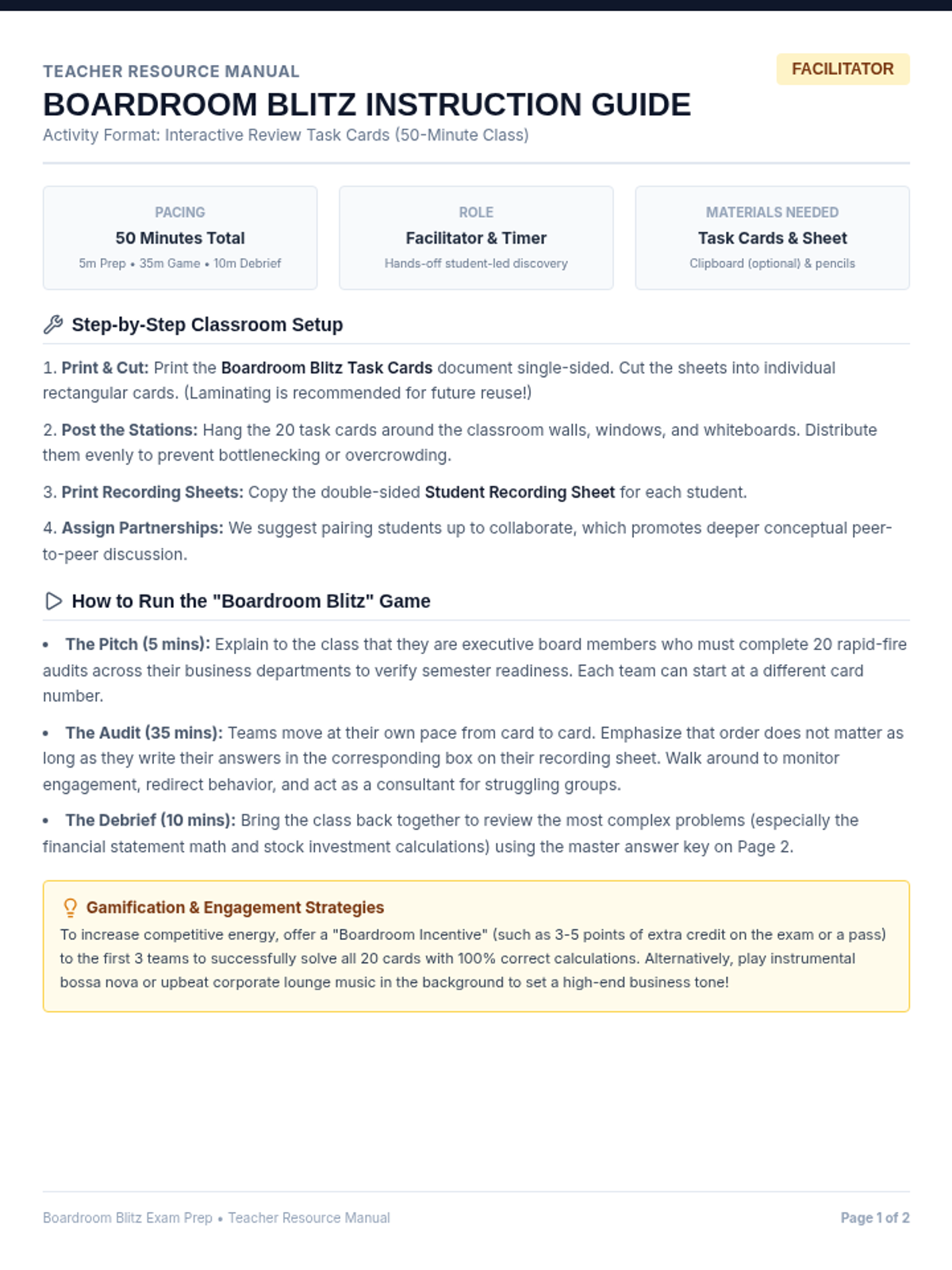
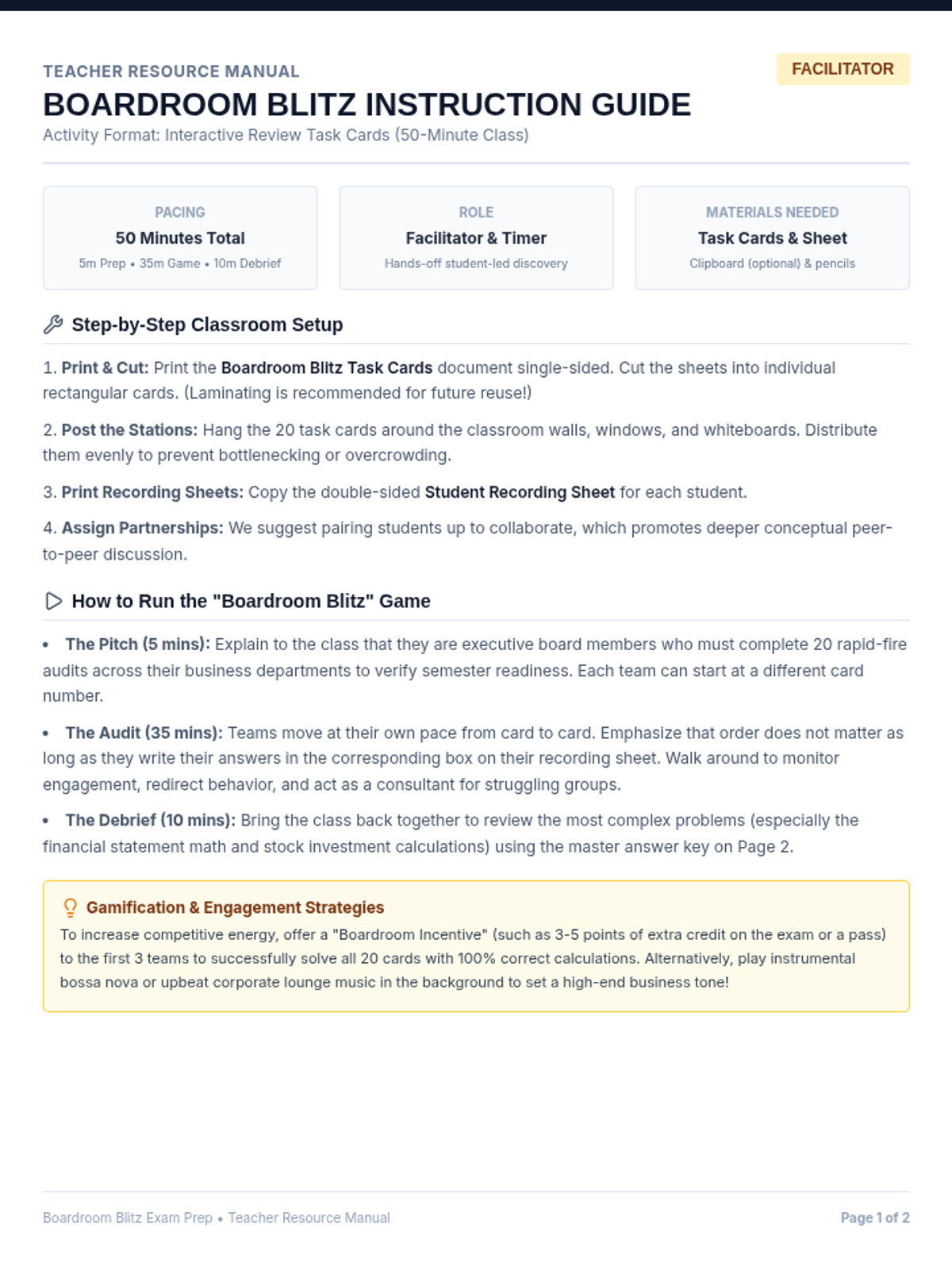
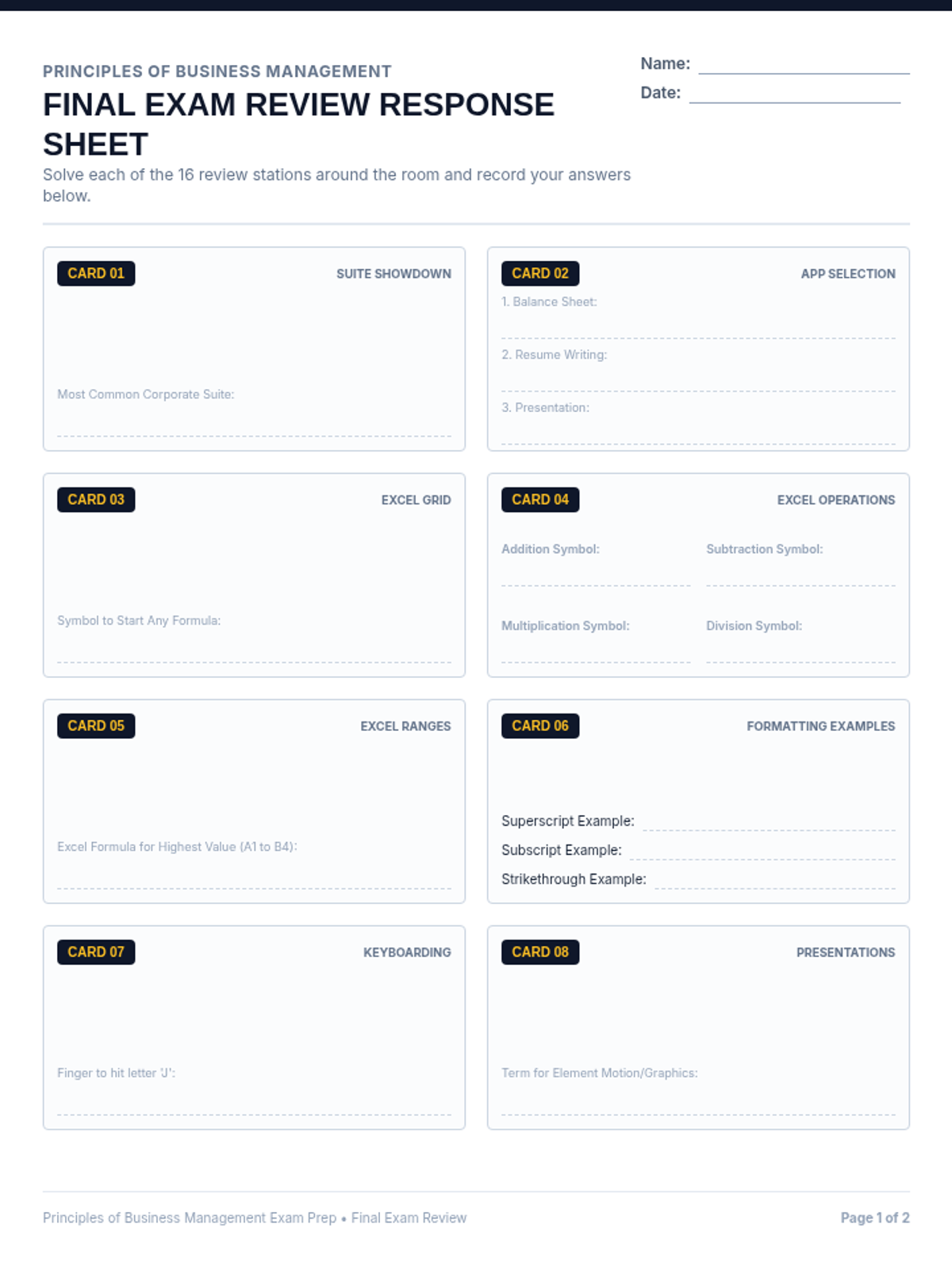
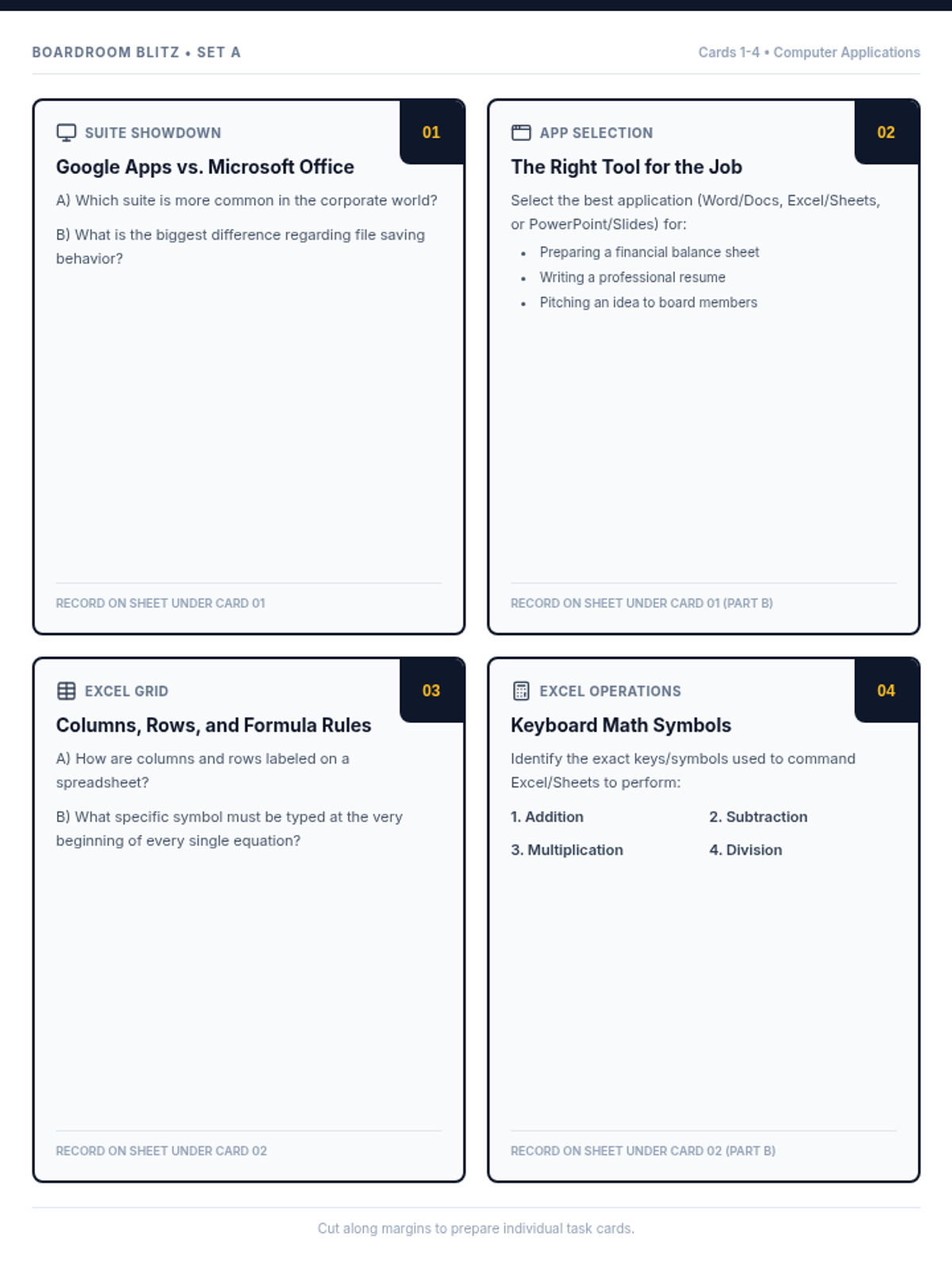
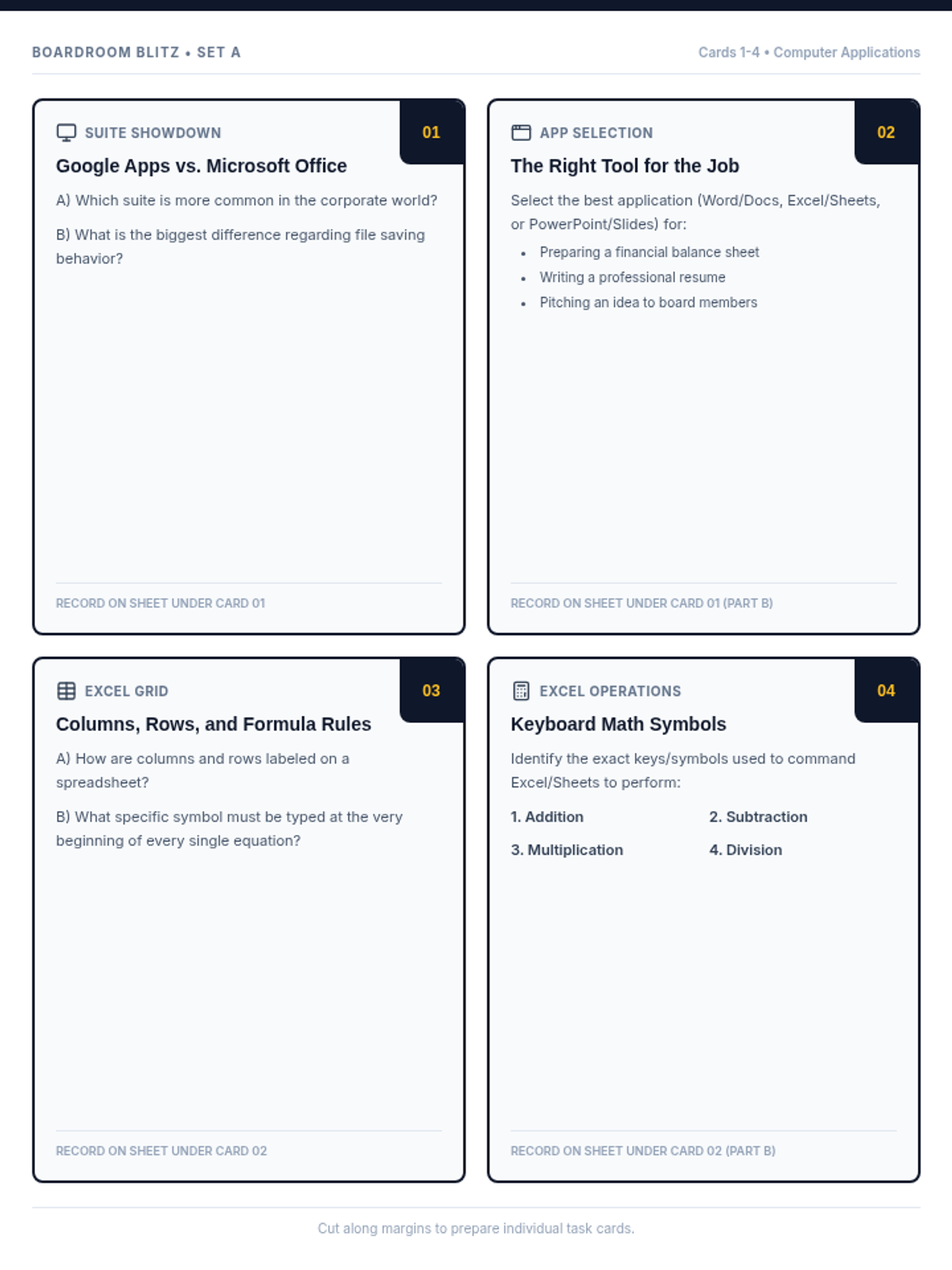
An engaging, student-led classroom game designed to review all semester 2 concepts for Principles of Business Management, including Computer Applications, HR, Business Organizations, Financial Management, and Financing.
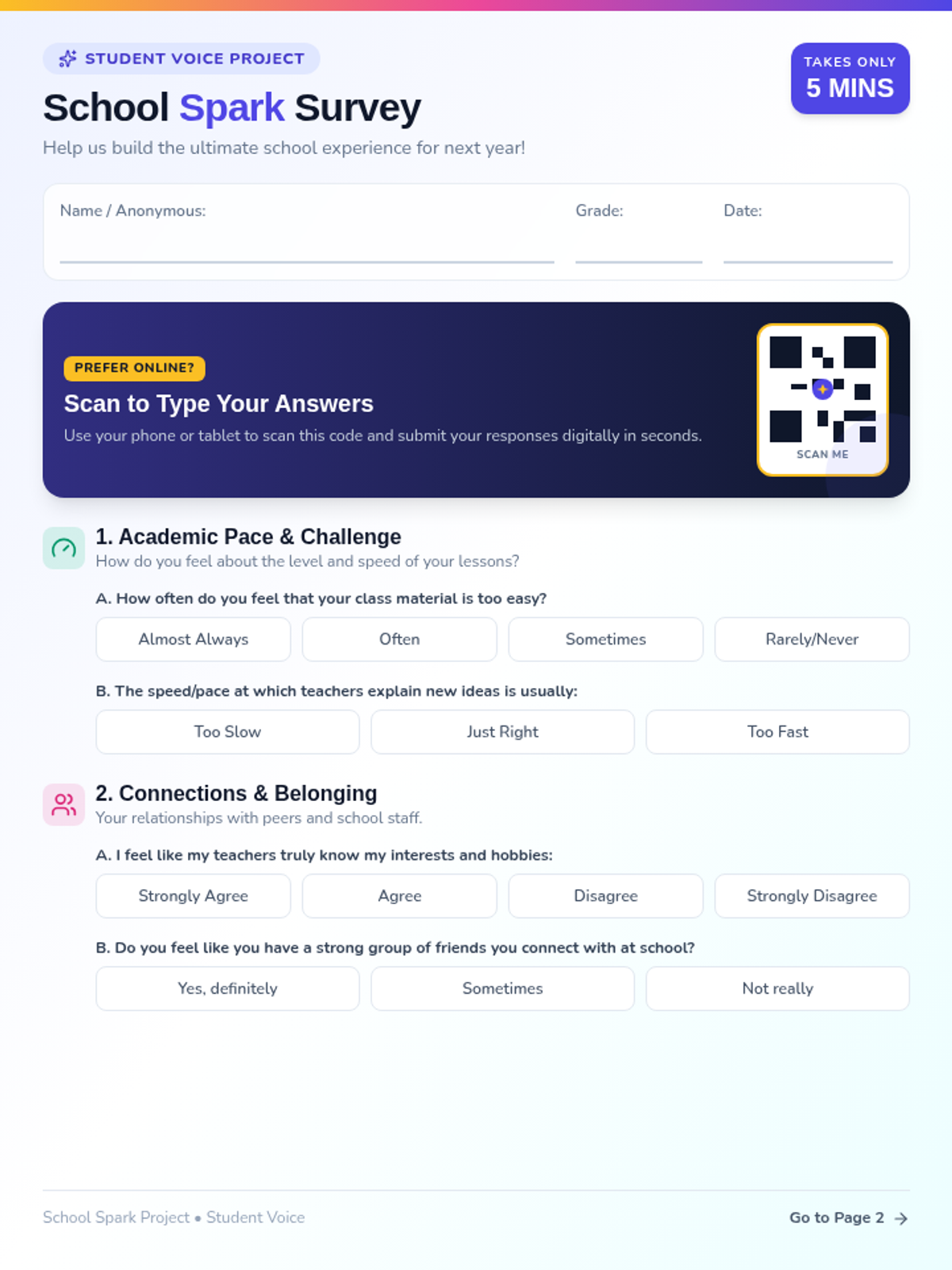
A lesson designed to check in with disengaged or bored students, gathering their insights through a creative survey to design a highly engaging, personalized experience for the upcoming school year.
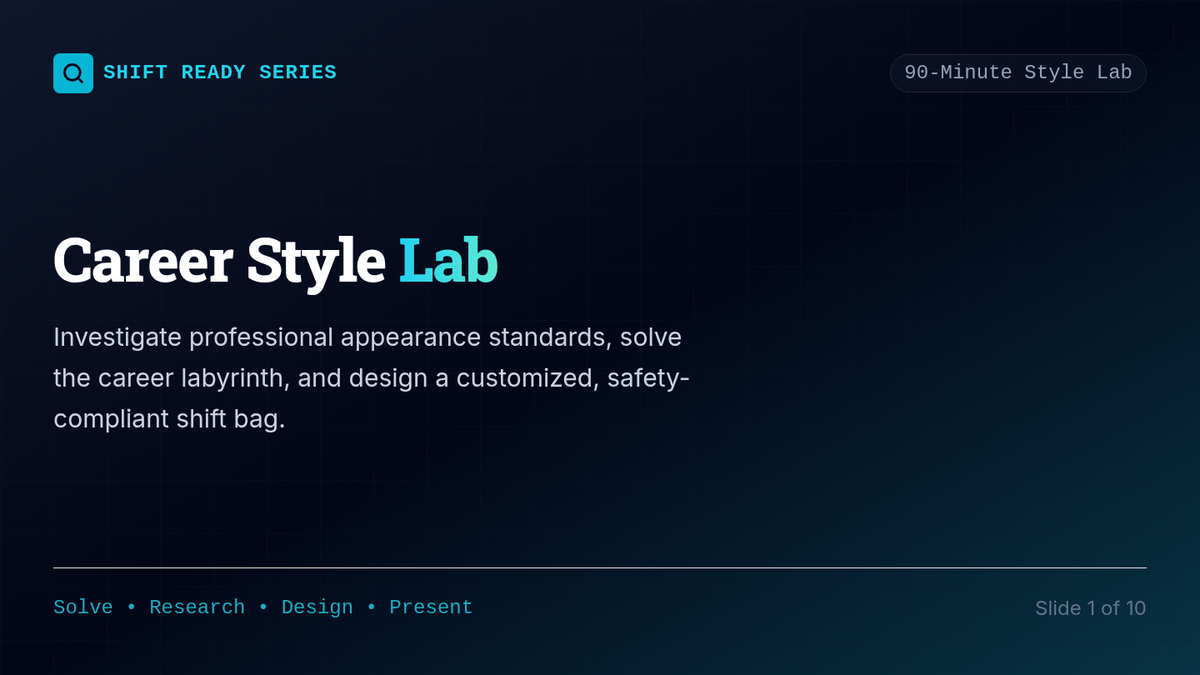
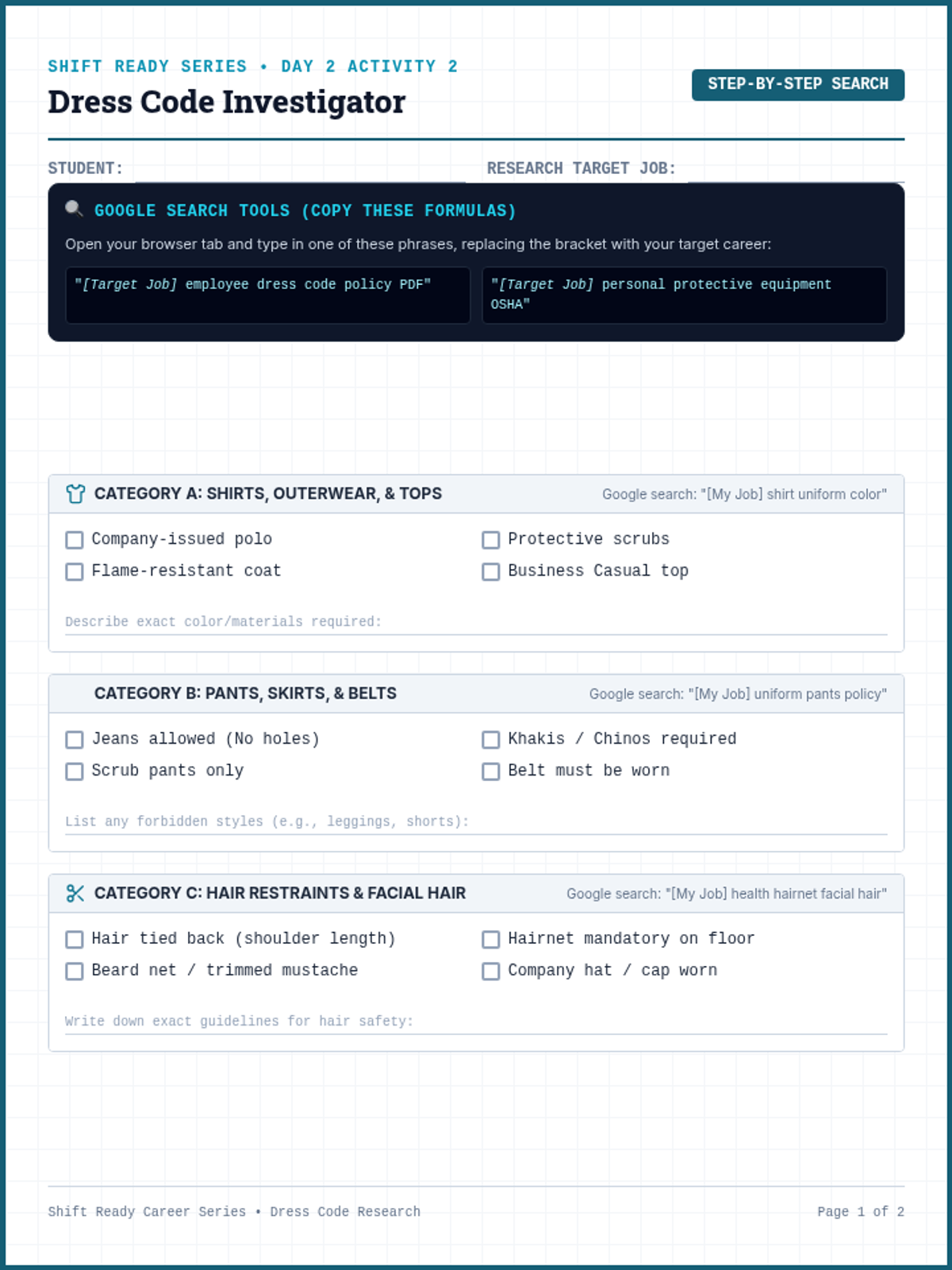
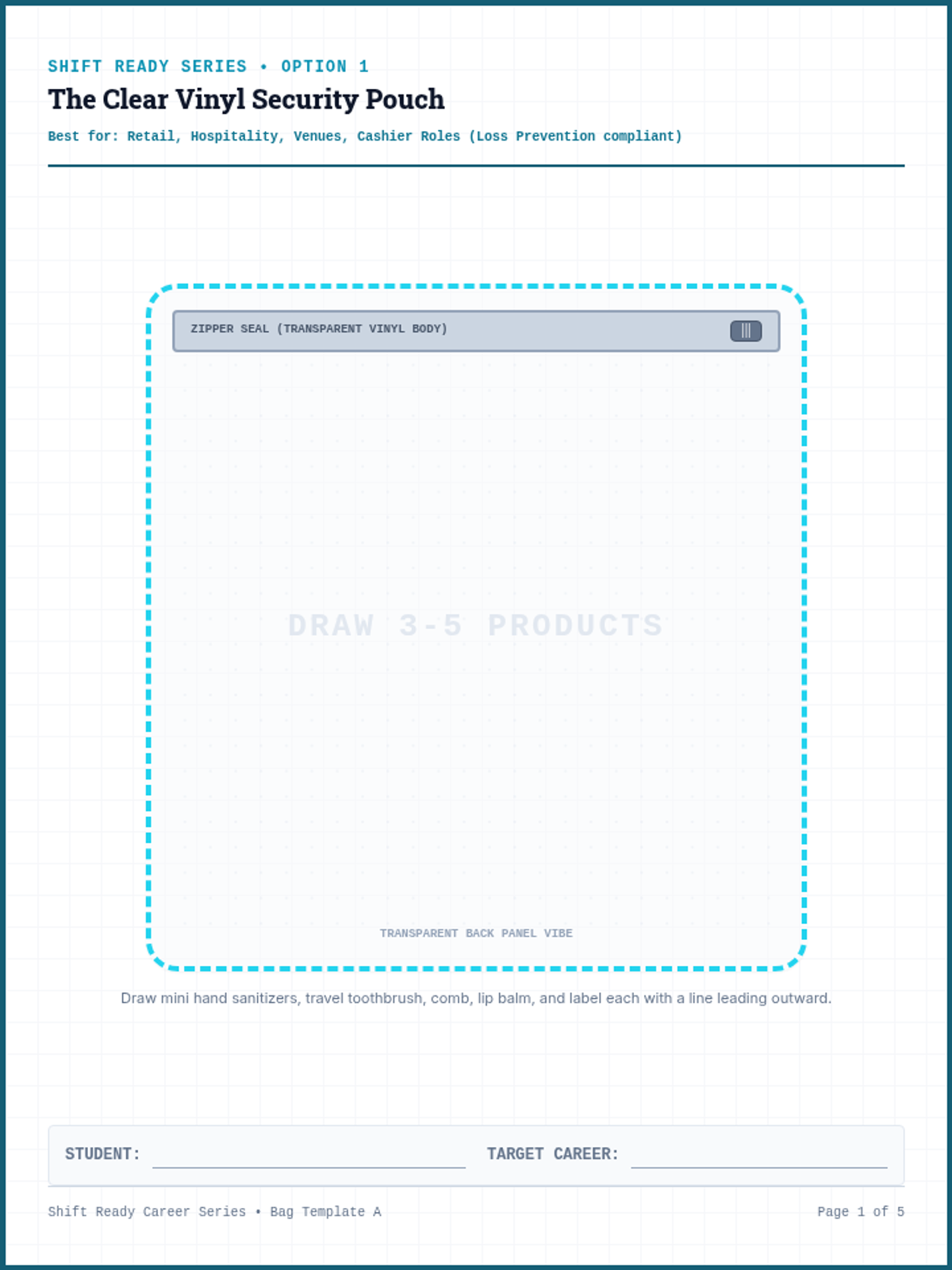
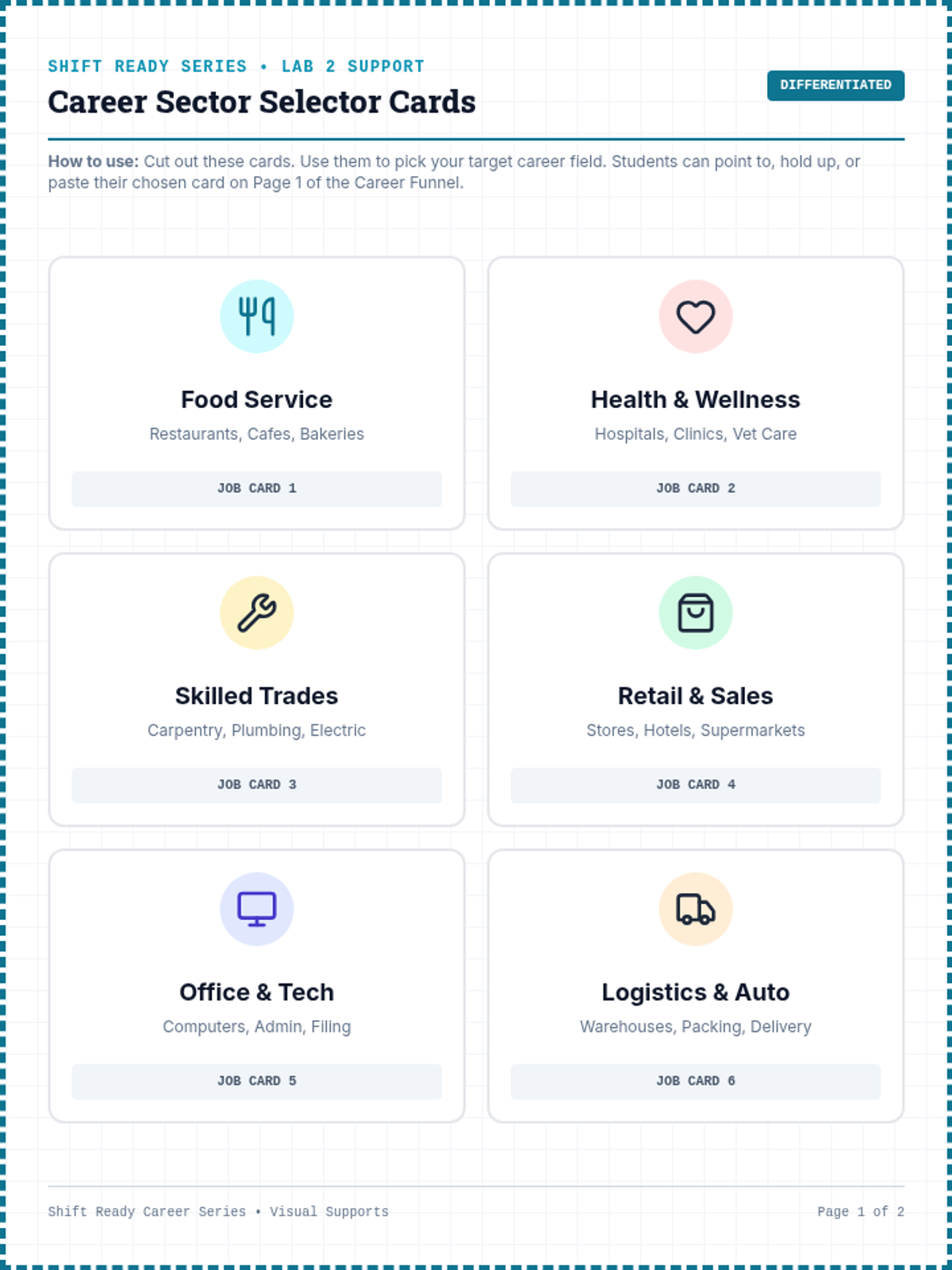
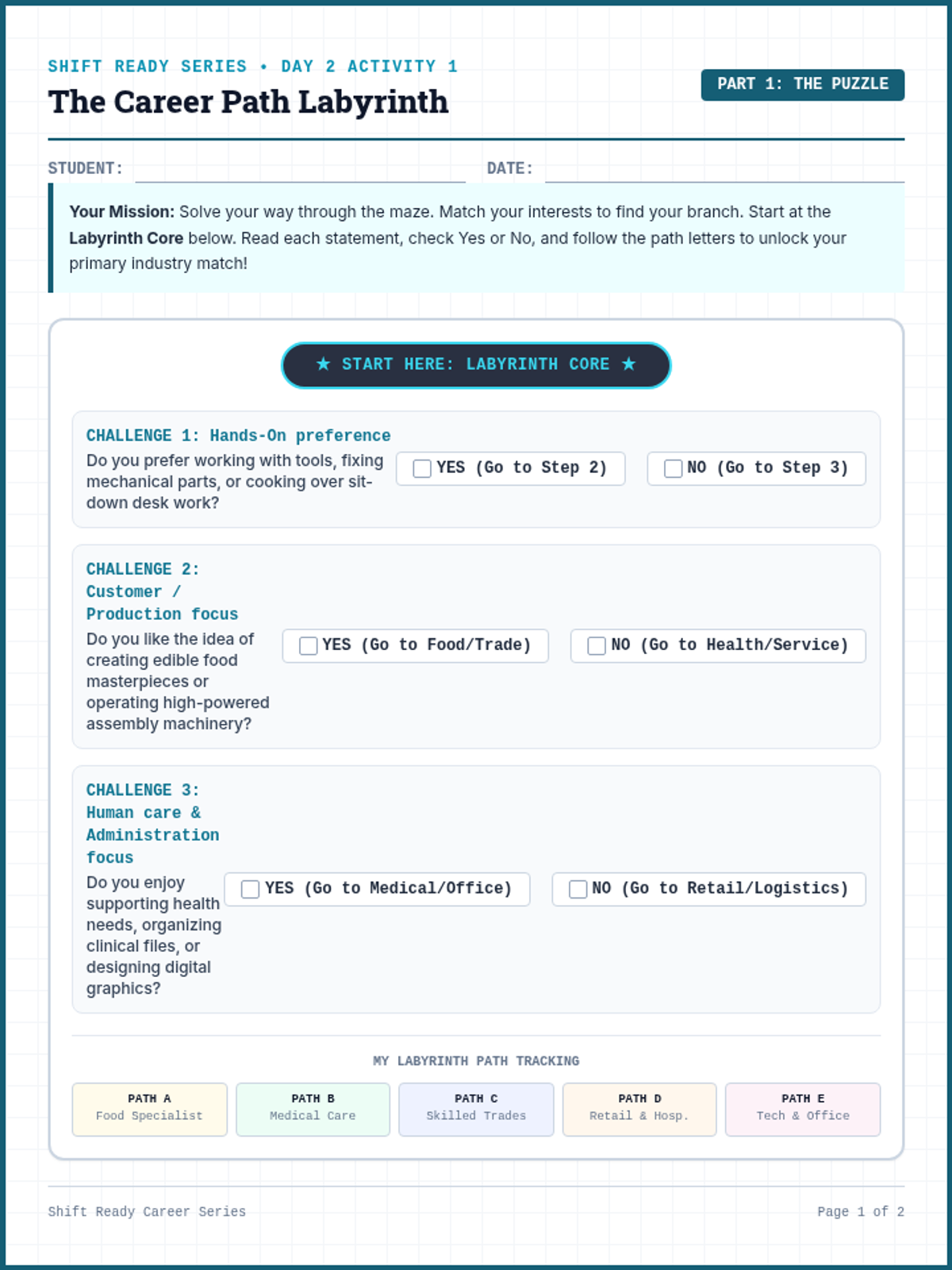
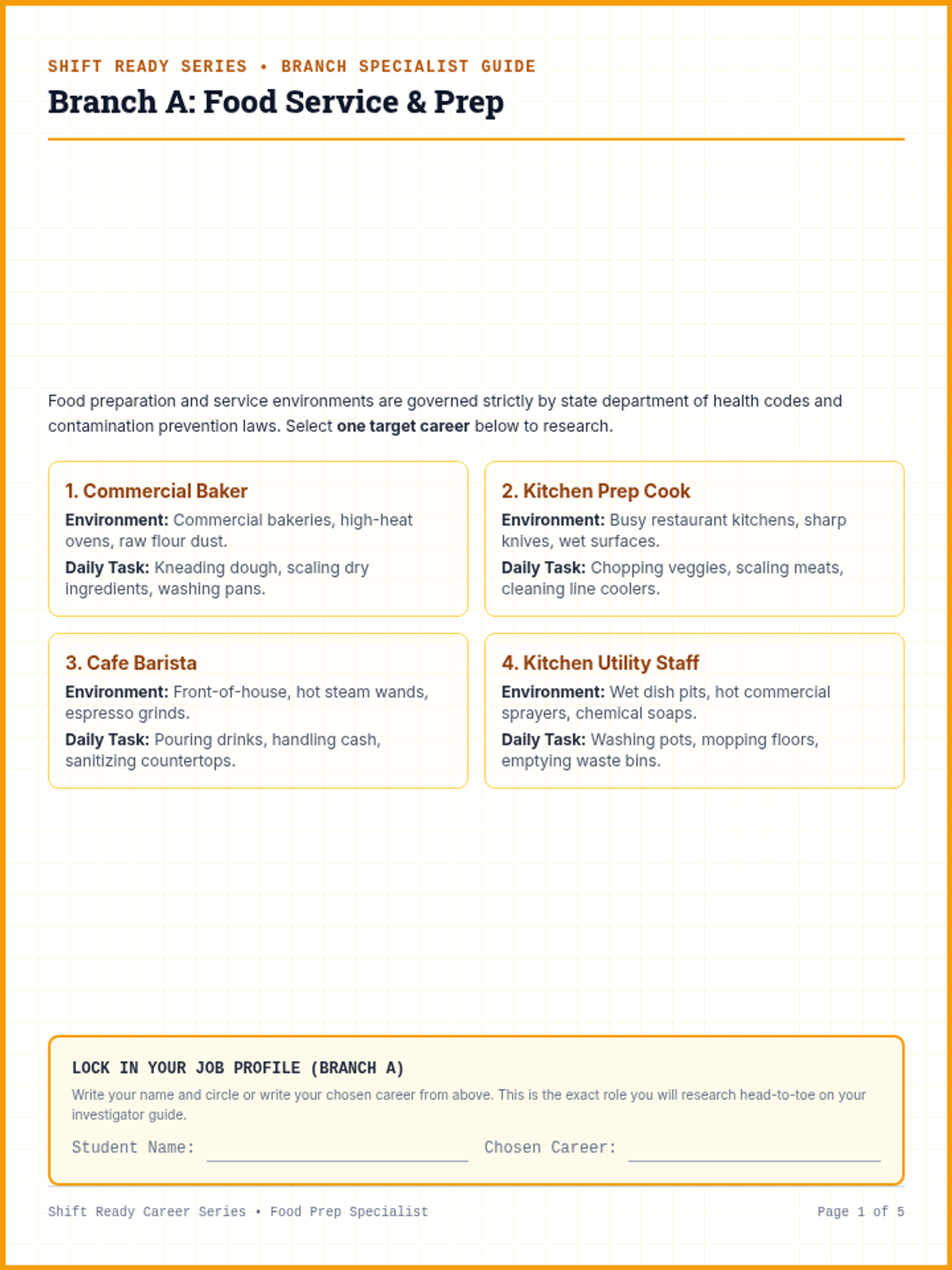
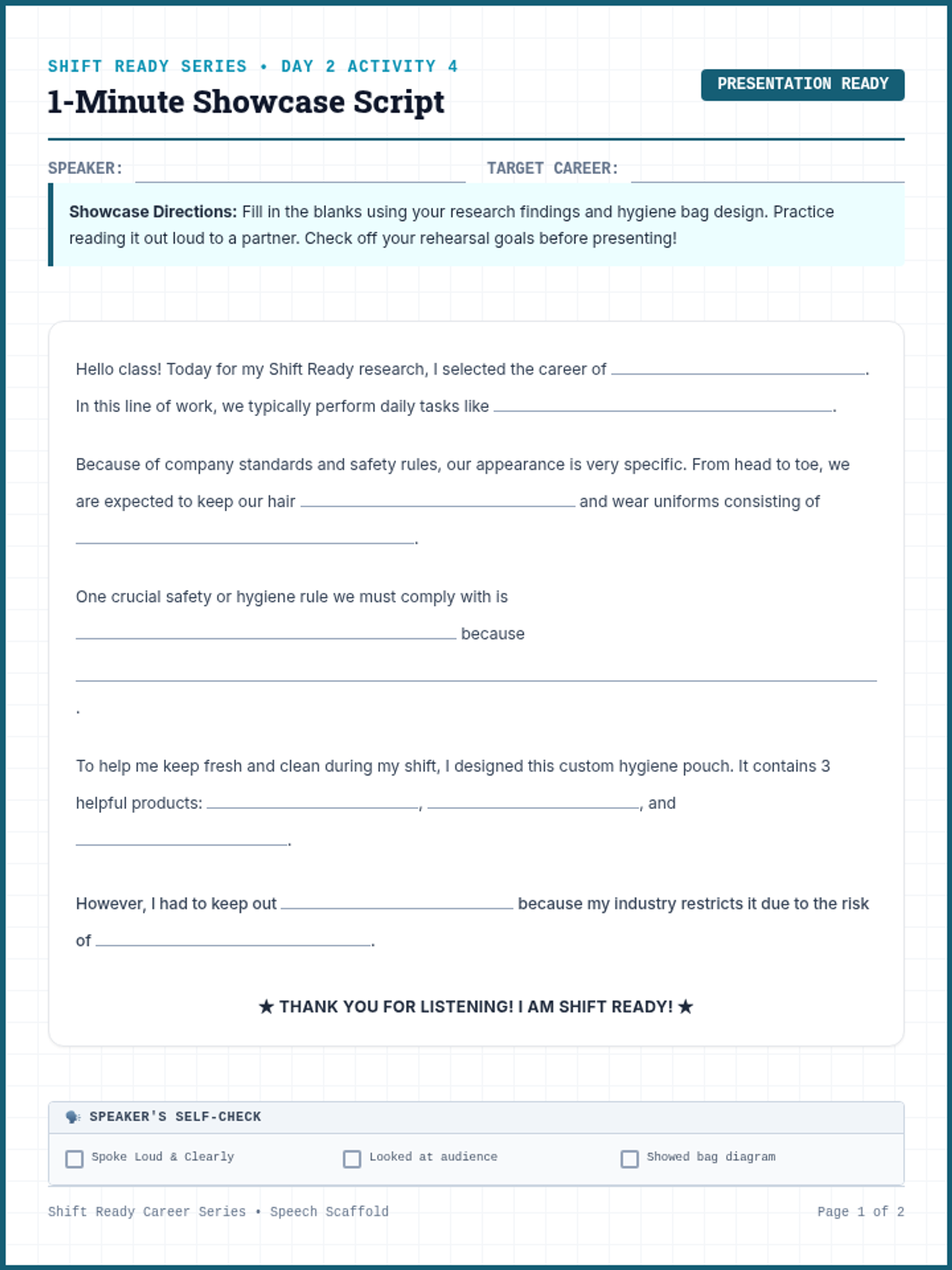
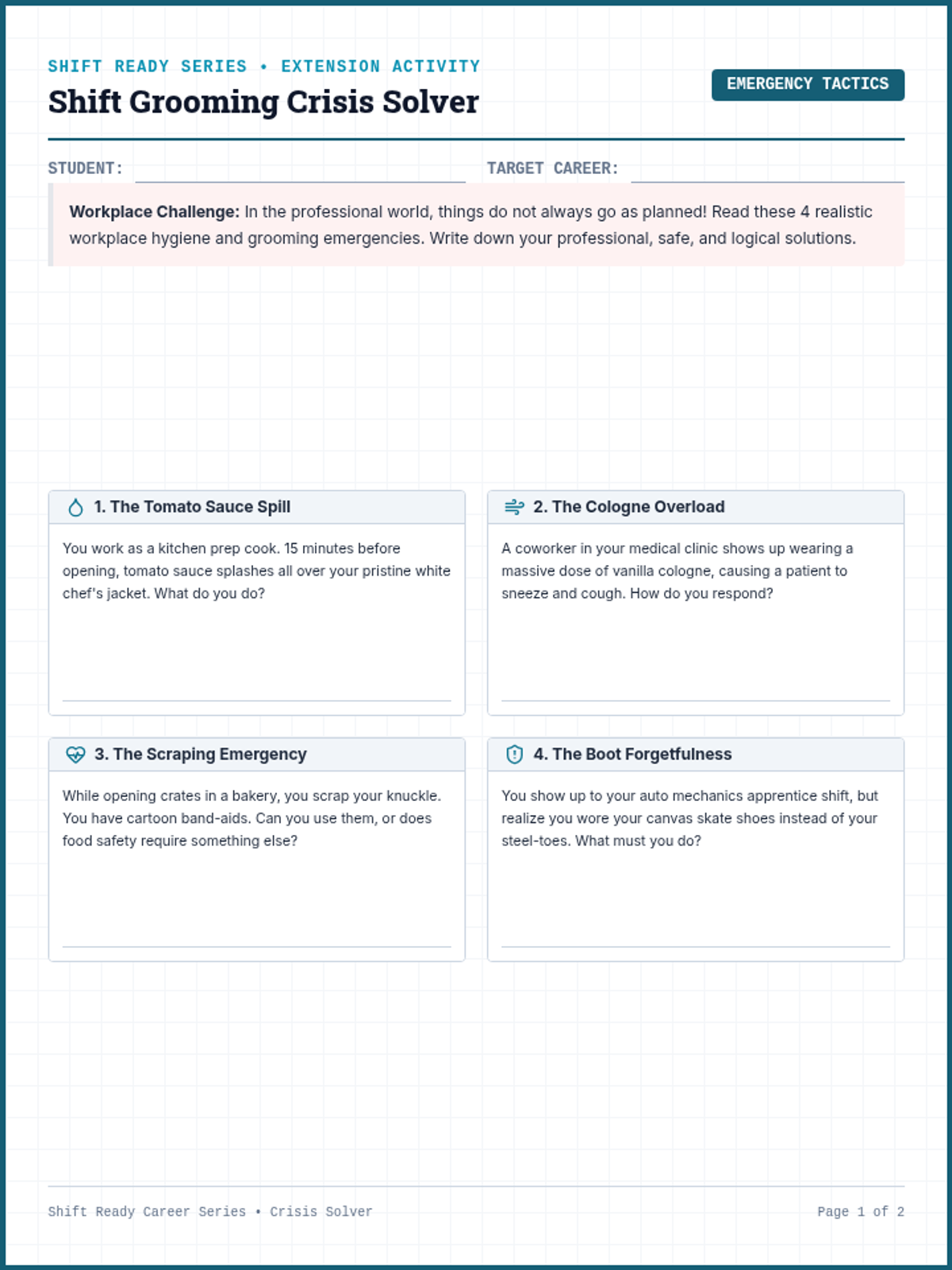
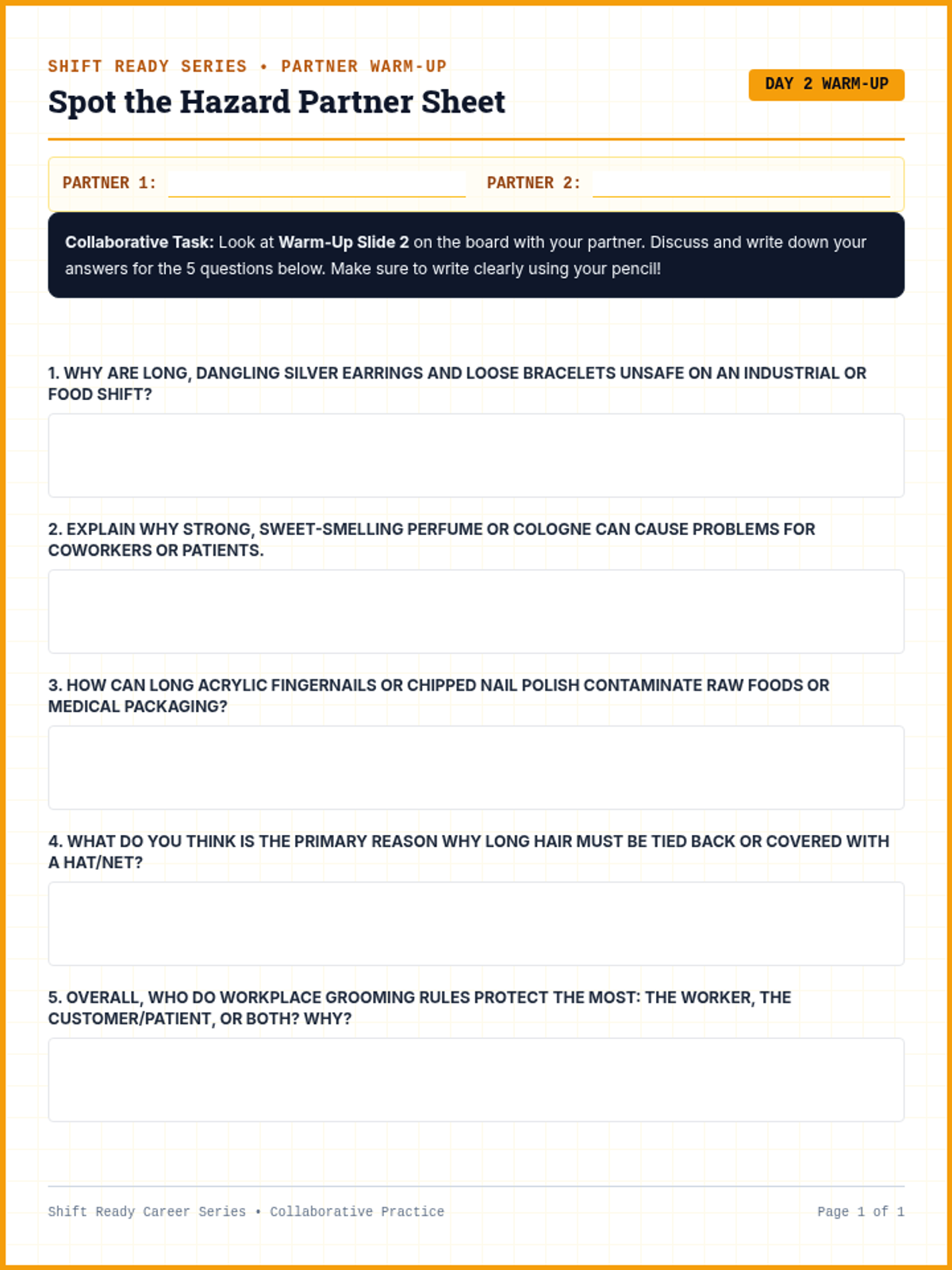
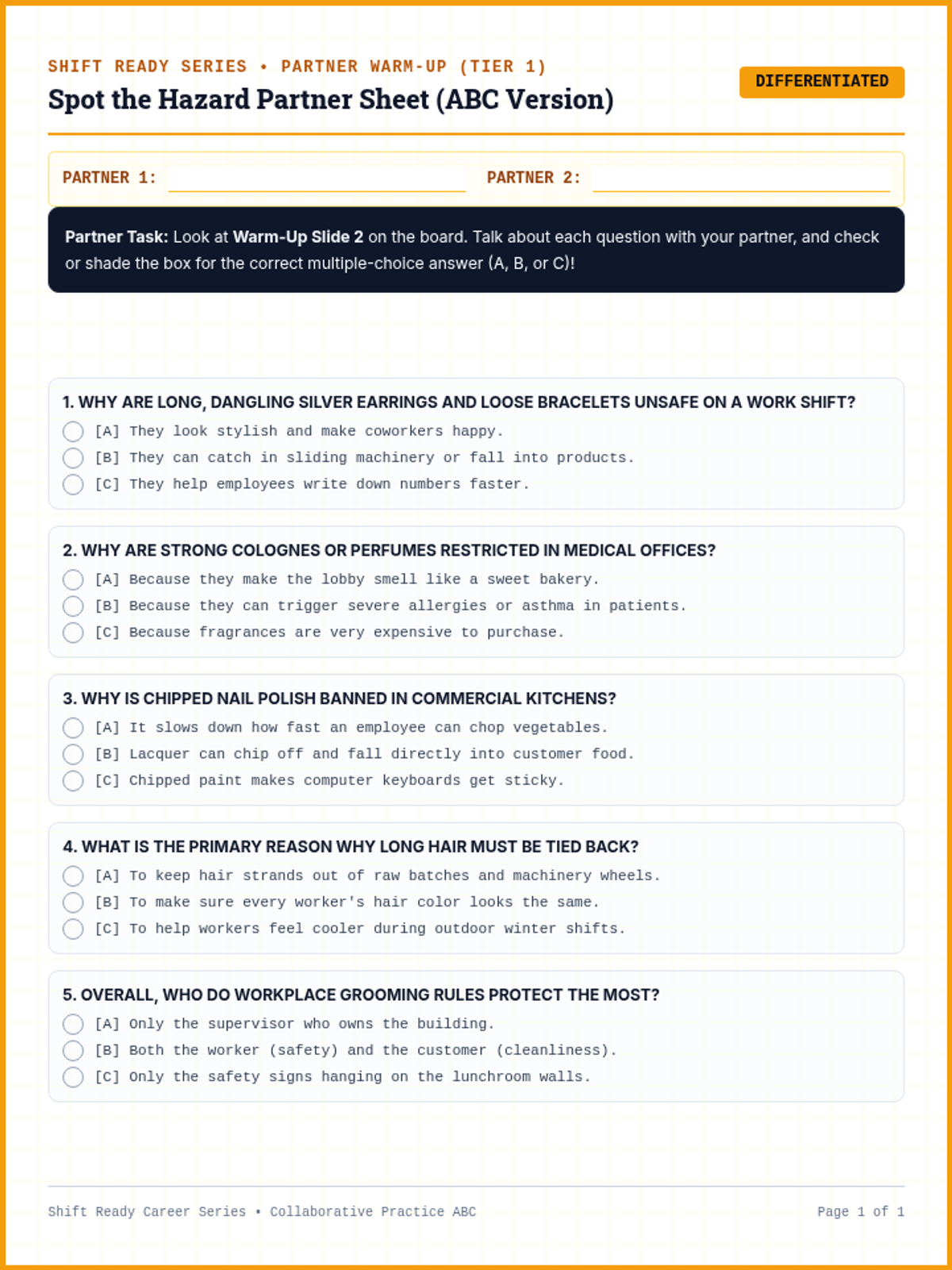
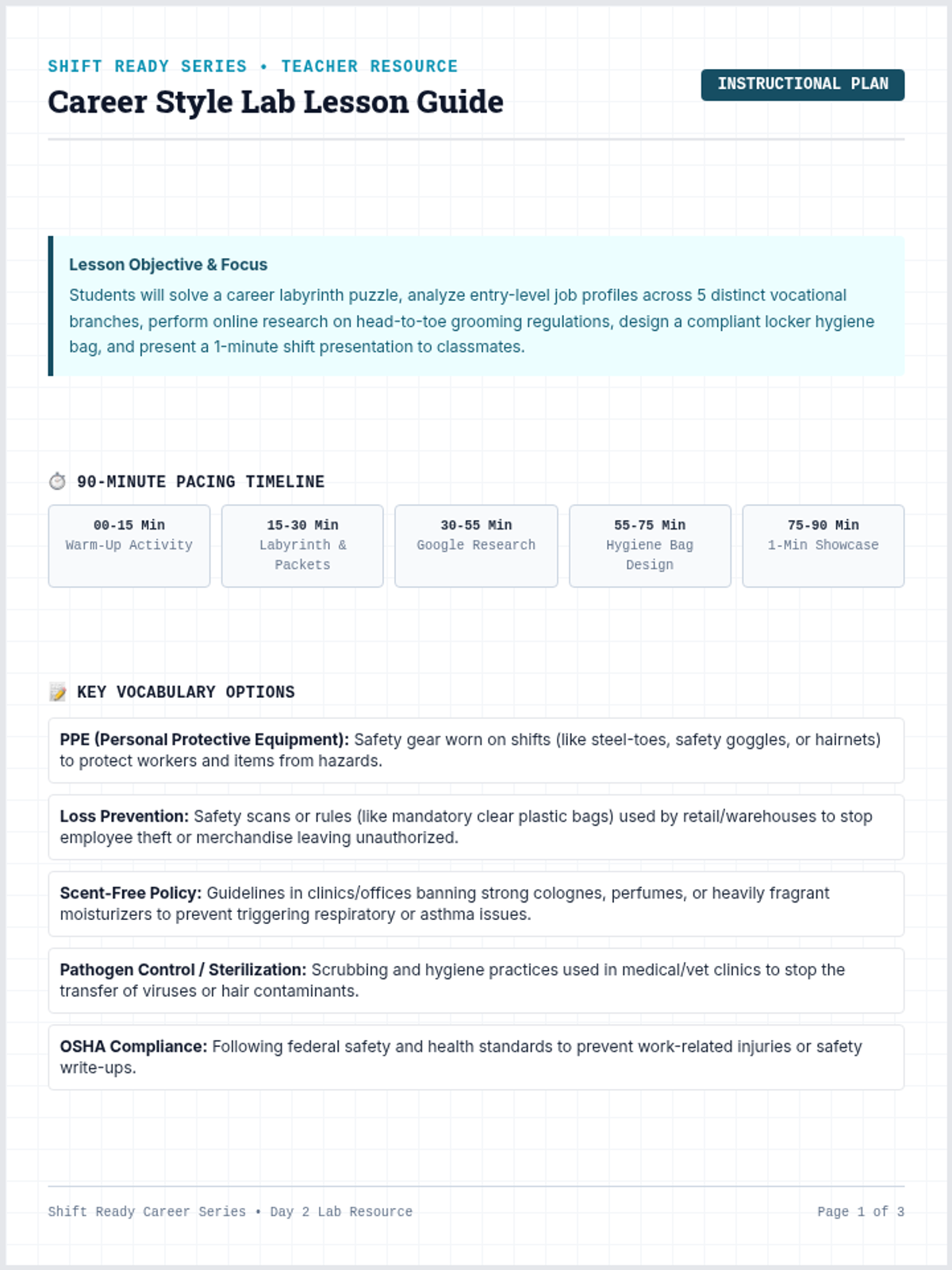
A guided research lesson for transition students to narrow down a career interest, research hygiene/apparel rules from head to toe, design a workplace-appropriate grooming bag, and present findings using a structured 1-minute presentation script.
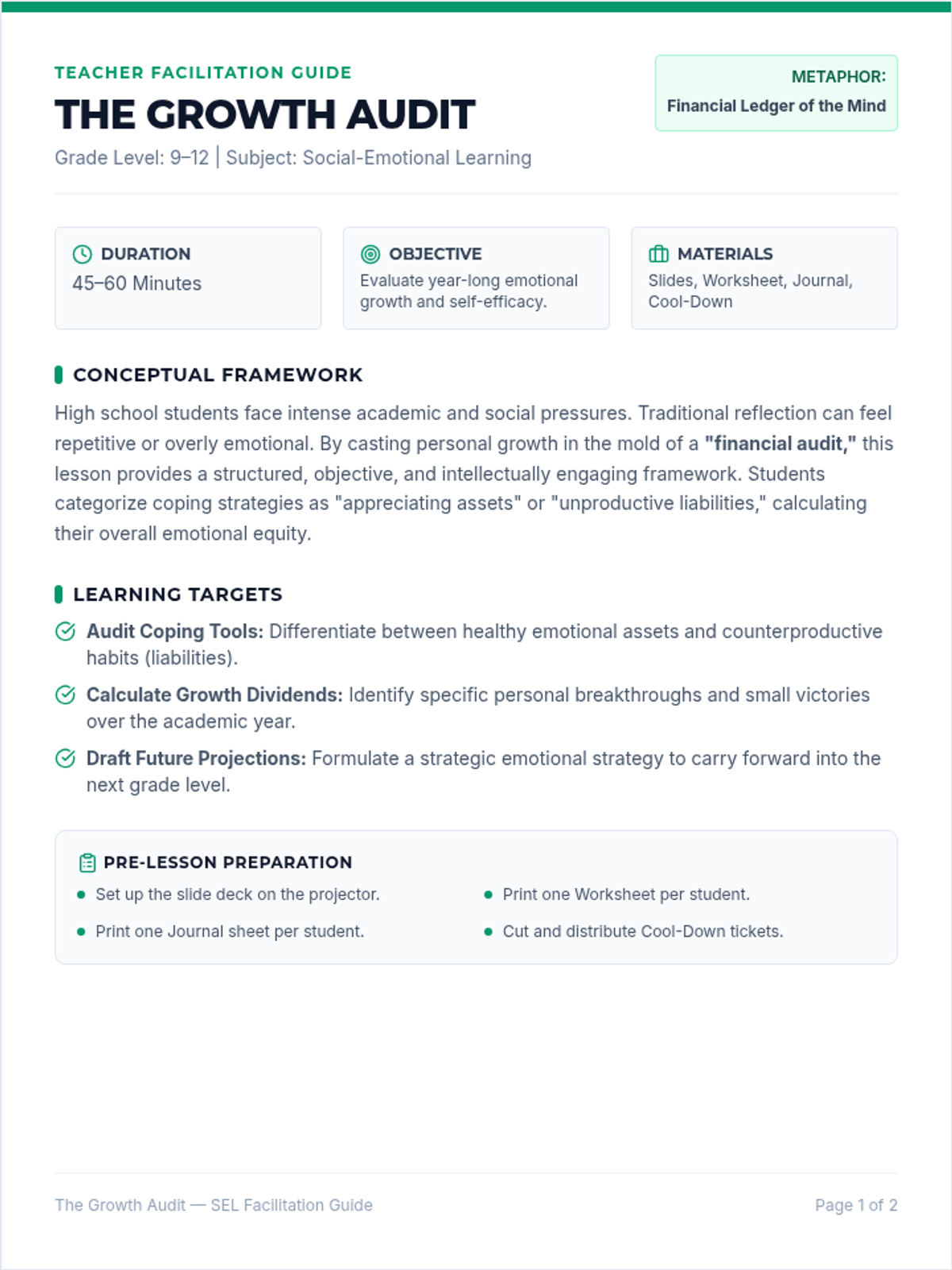
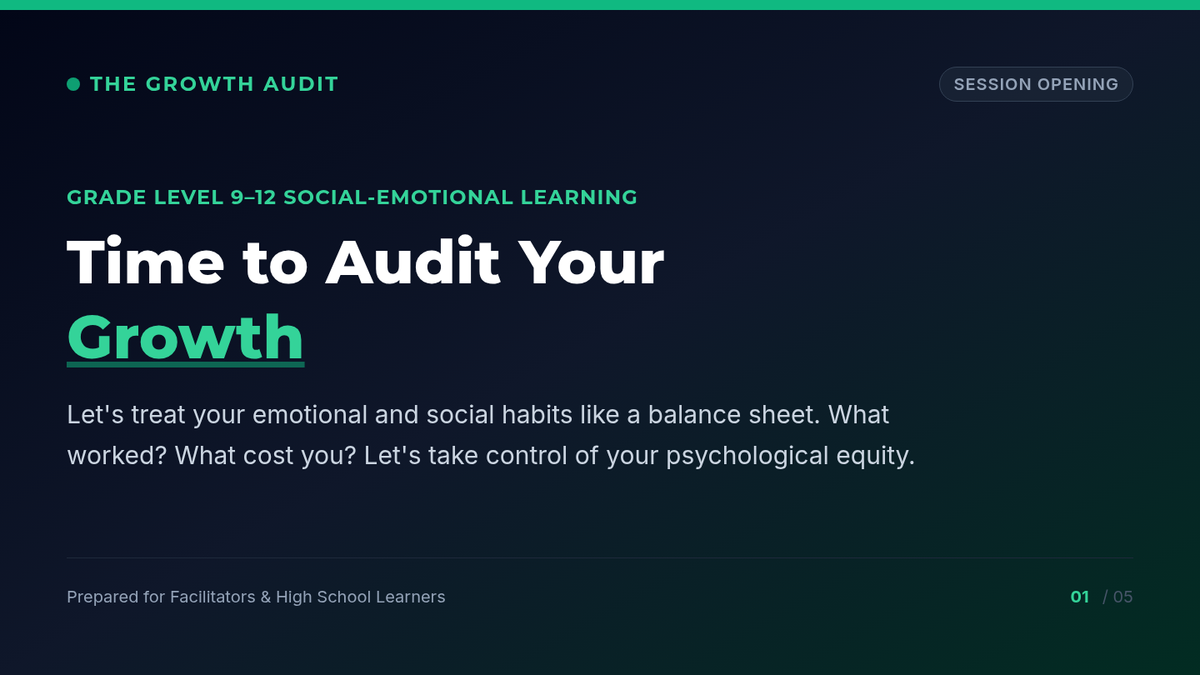
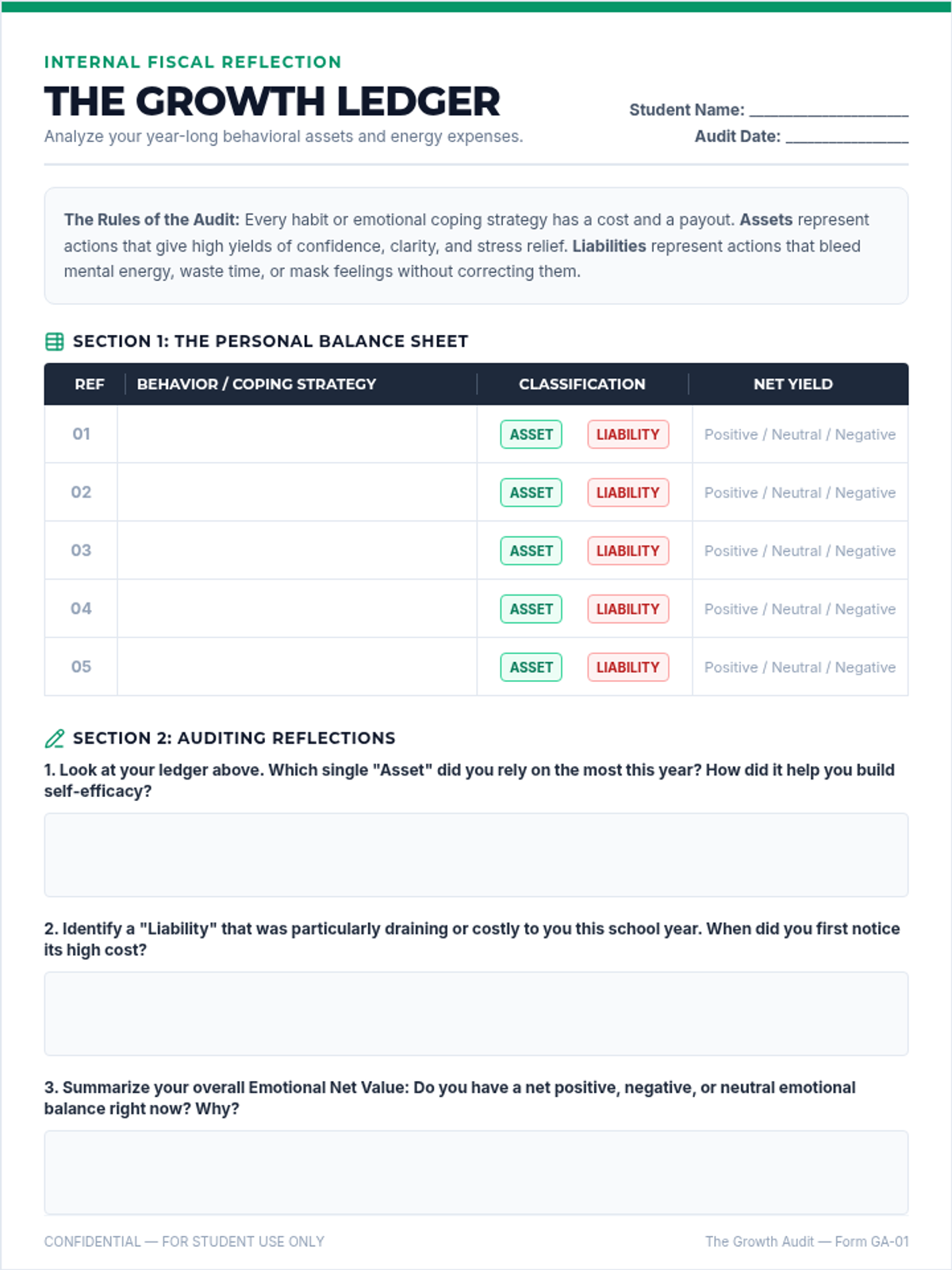
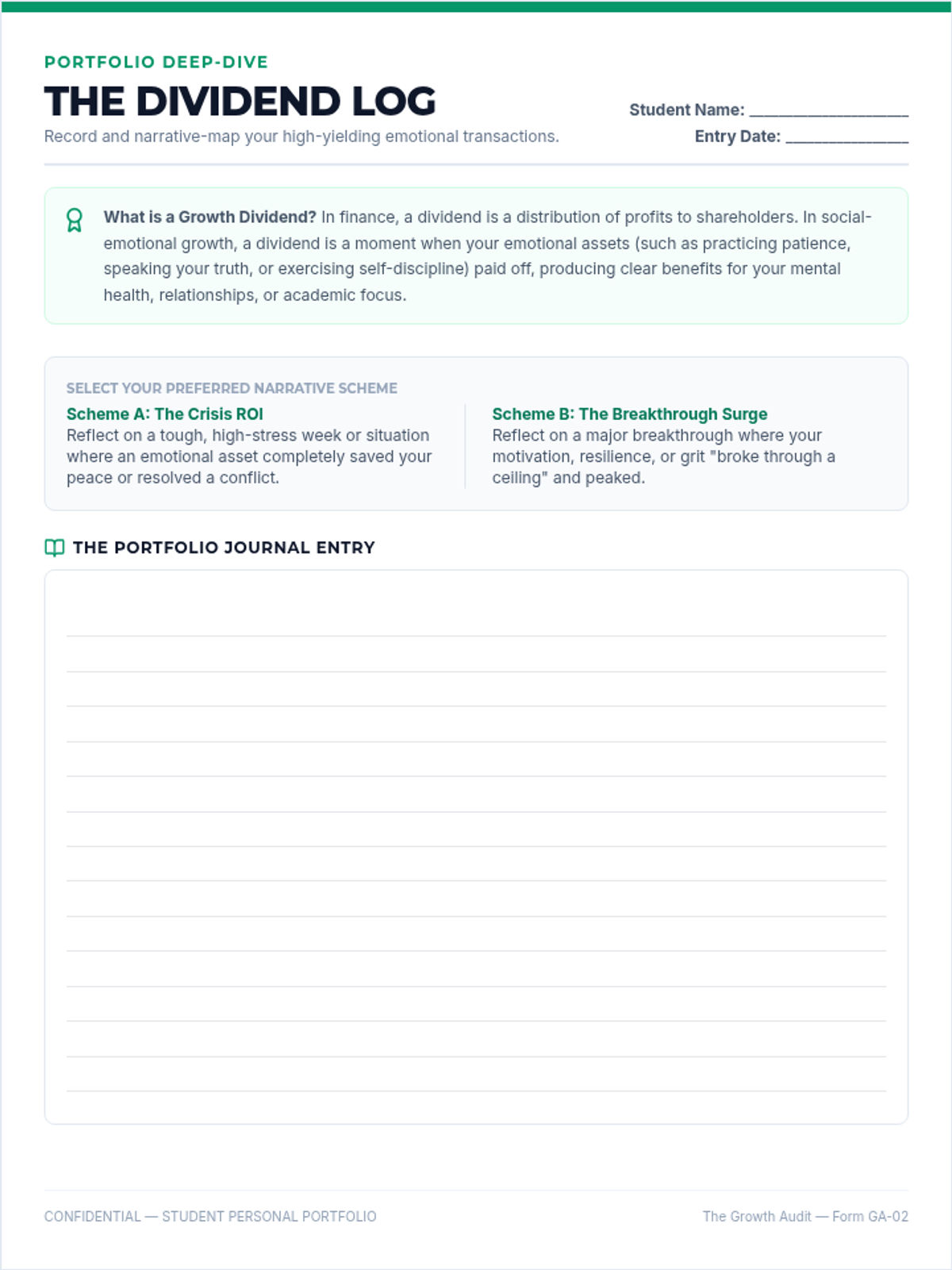
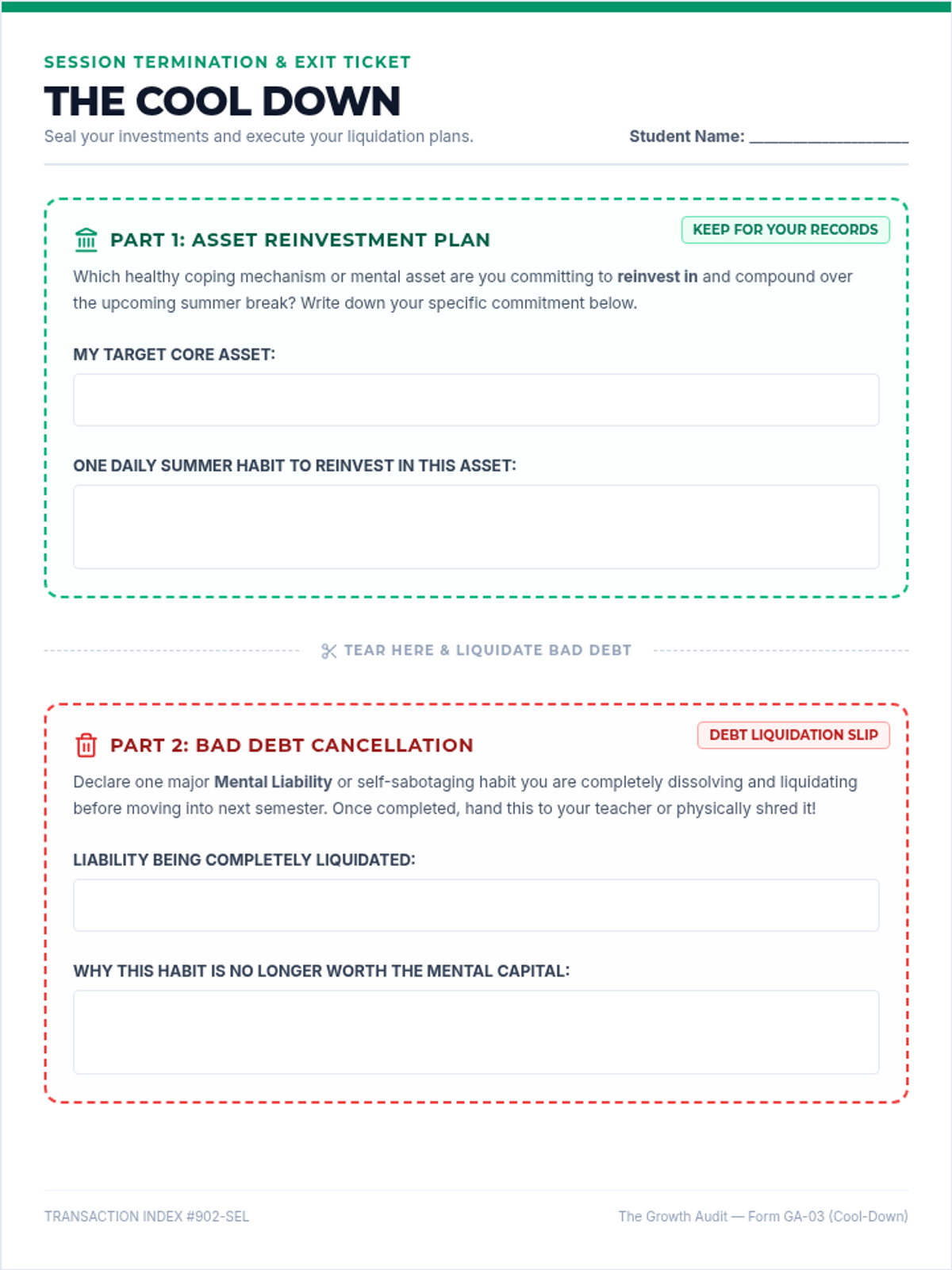
A reflective Social-Emotional Learning session for high school students (grades 9-12) to audit, analyze, and celebrate their personal and social growth over the school year using analytical financial metaphors.
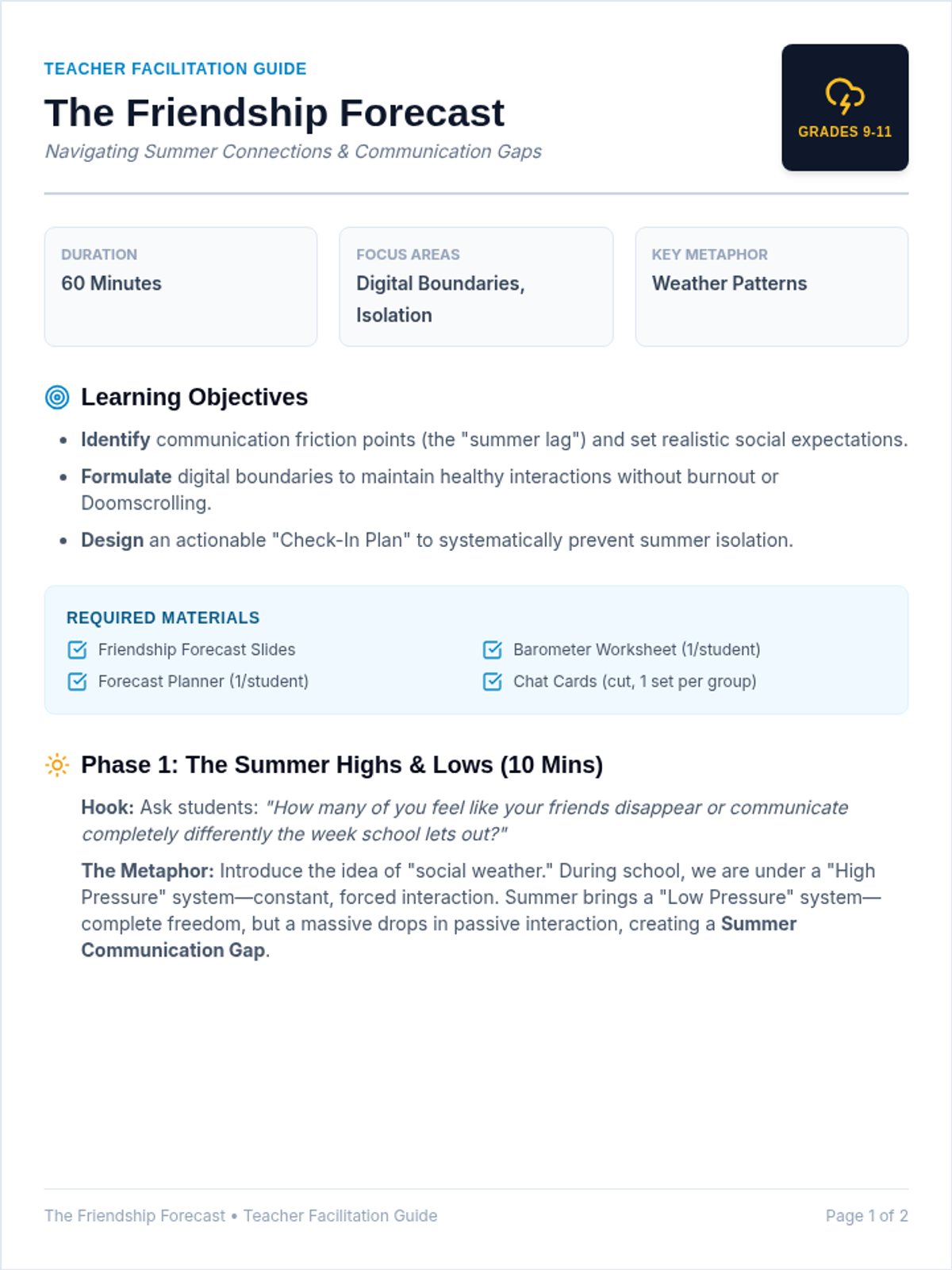
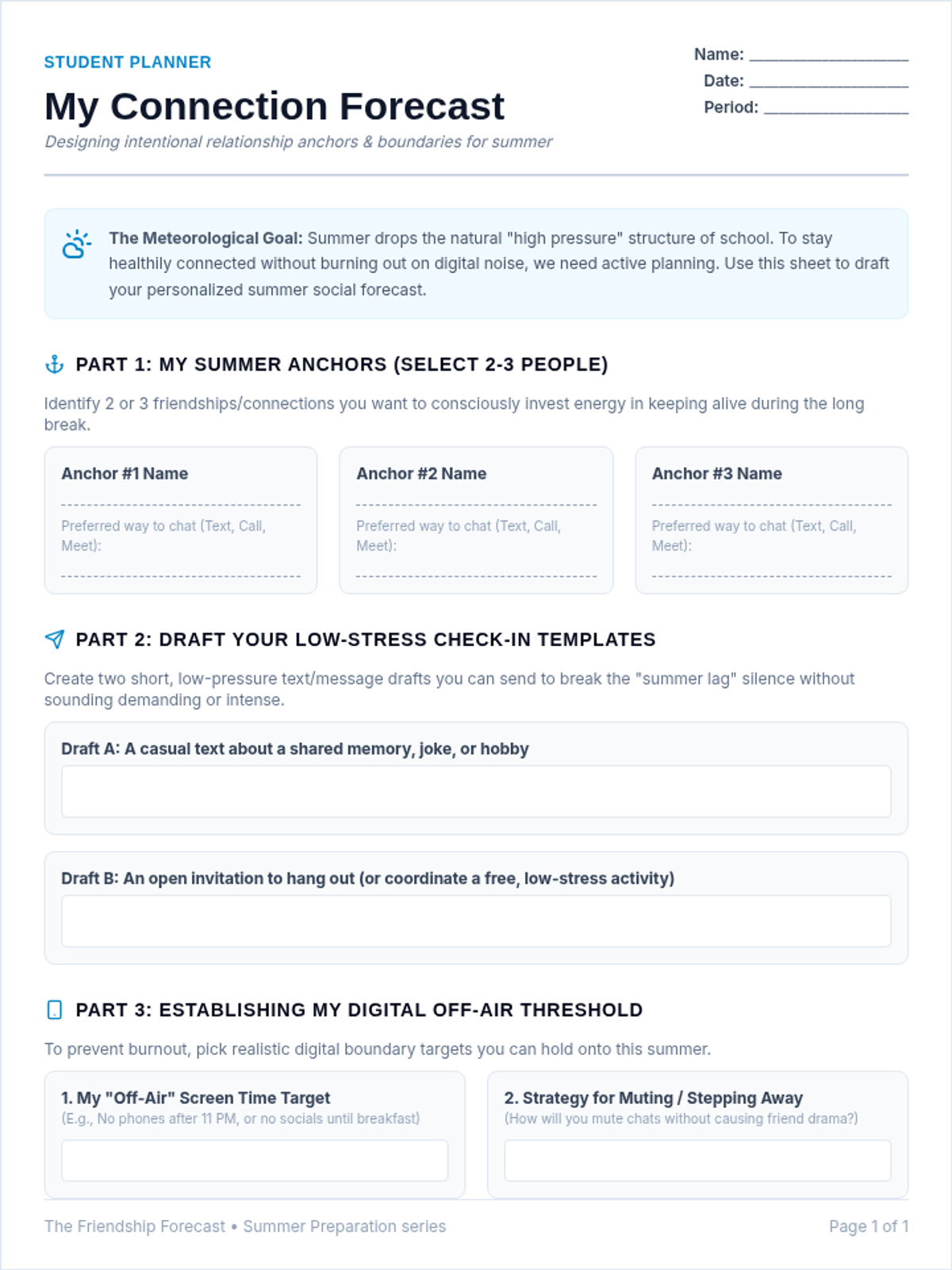
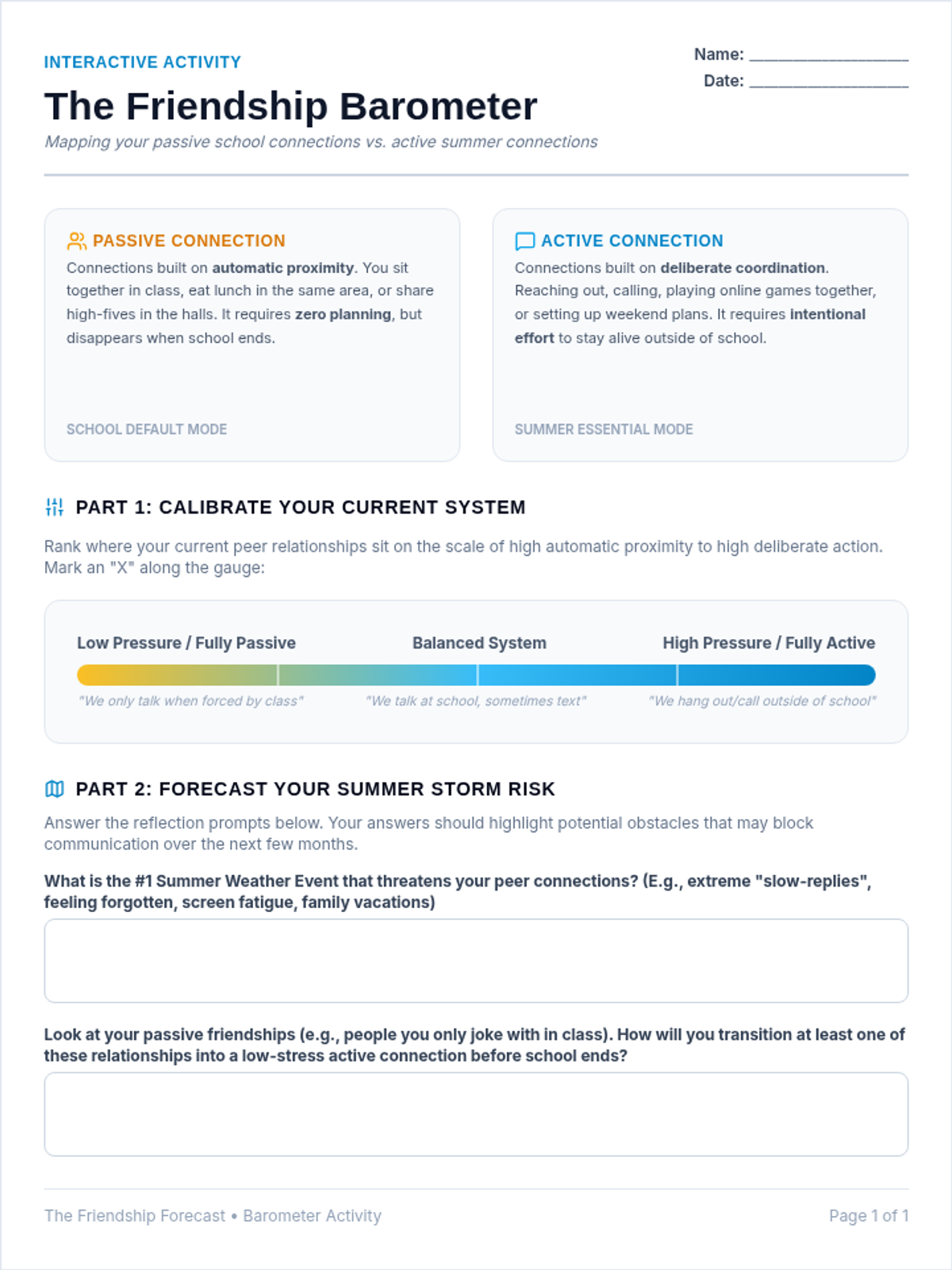
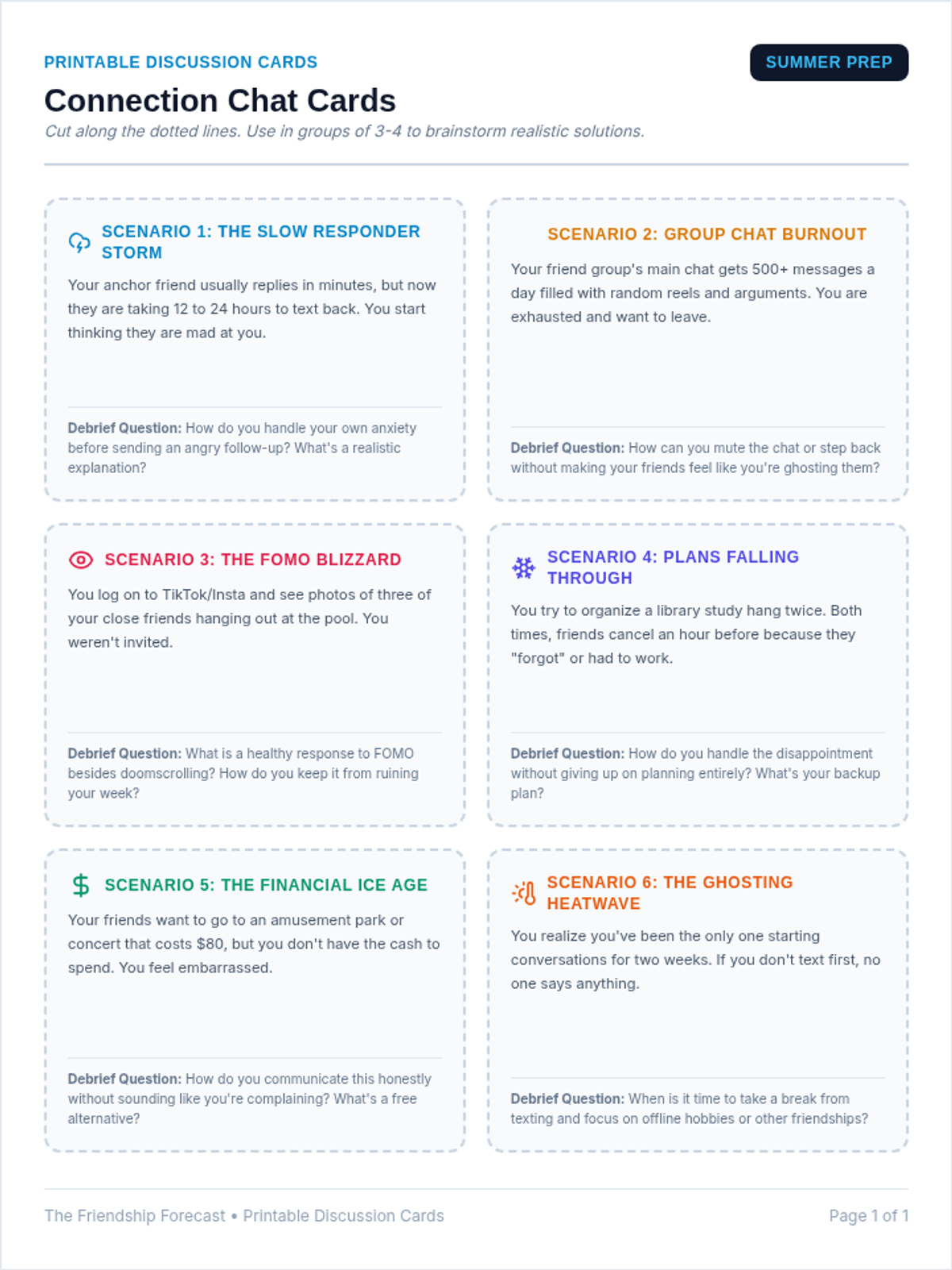
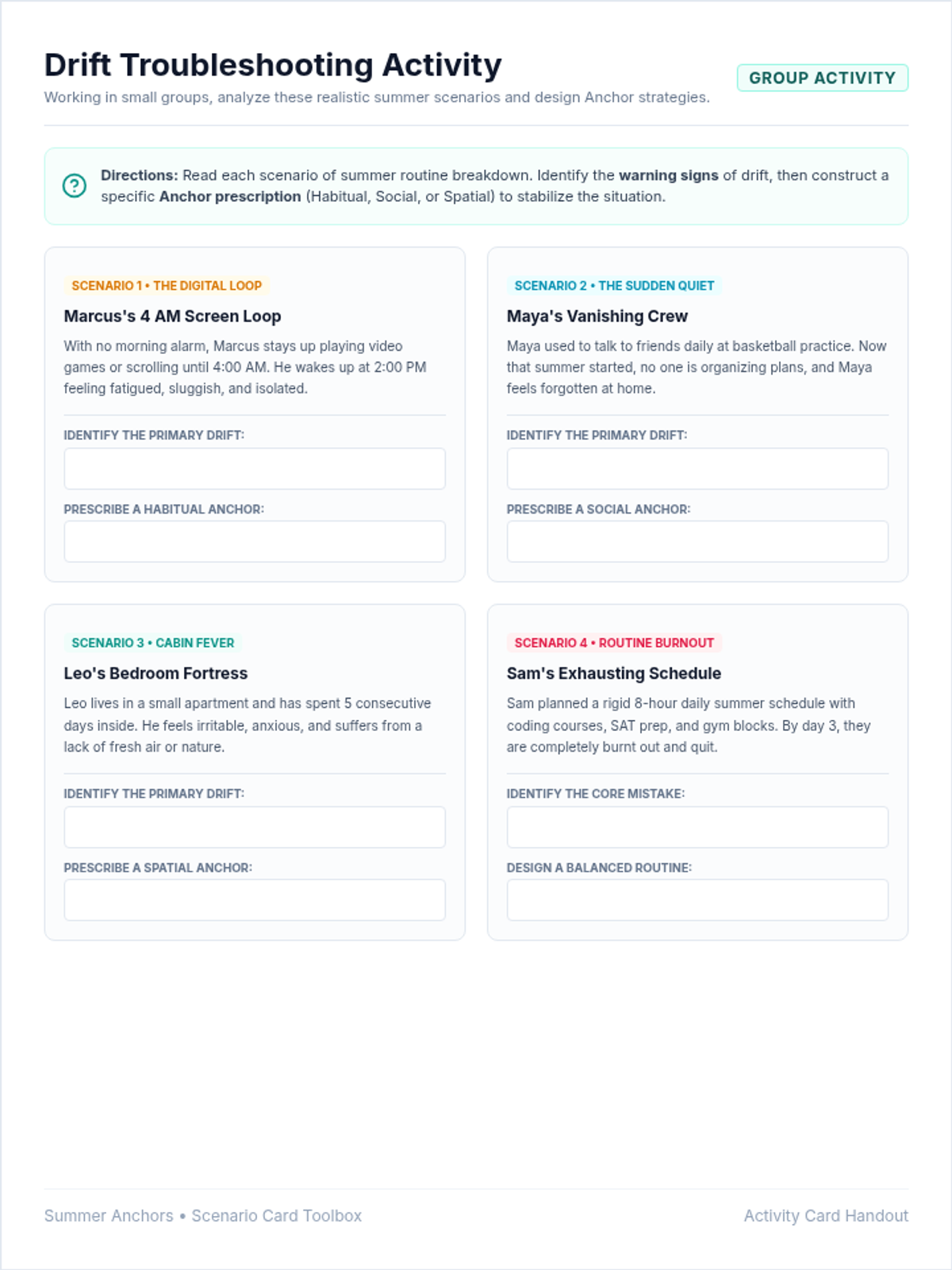
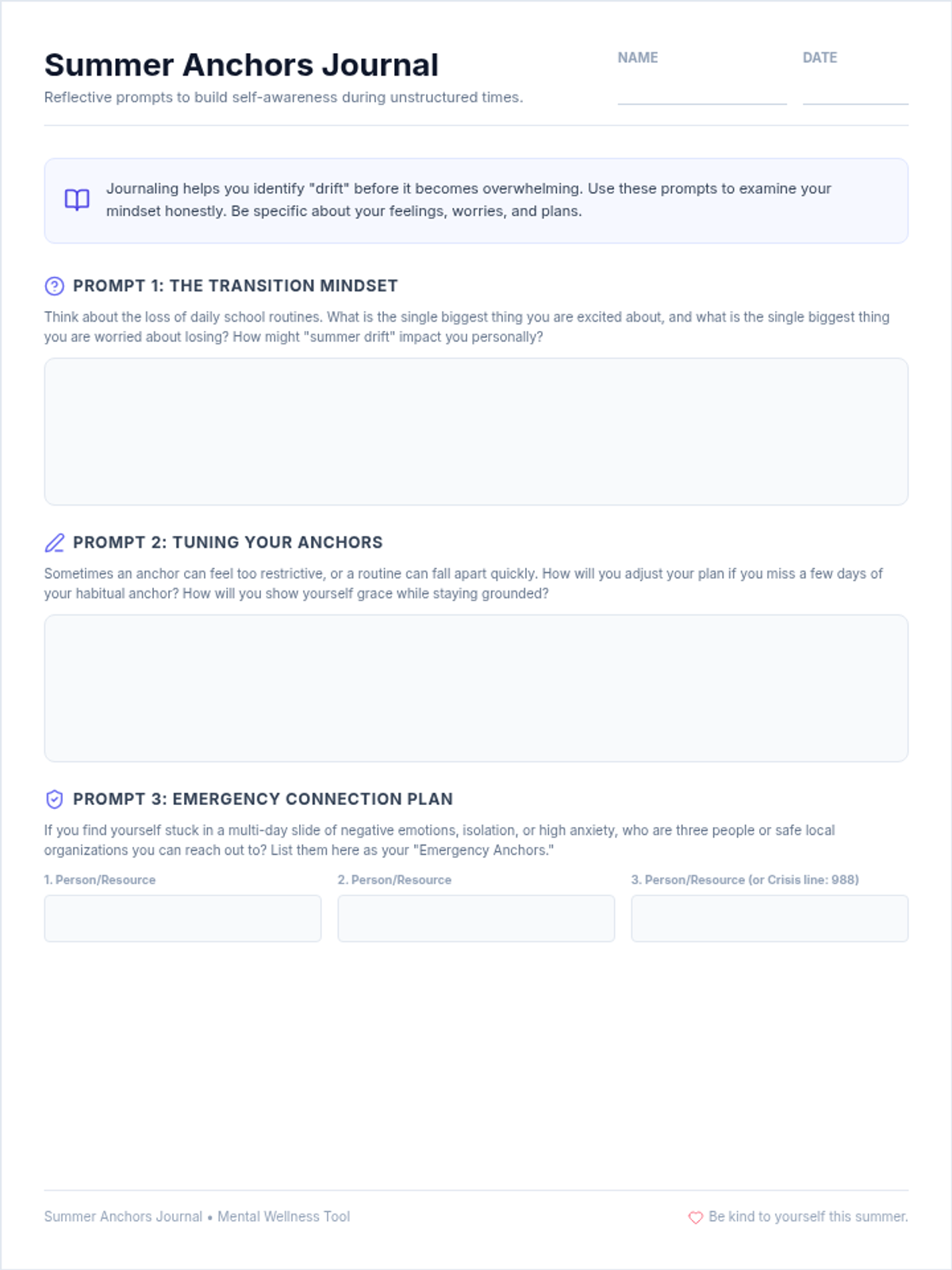
A interactive social-emotional workshop for 9th-11th graders to help them manage relationships, digital boundaries, and avoid isolation over the summer break. Includes a comprehensive lesson plan, presentation slides, a planning worksheet, a boundary activity, and printable discussion cards.
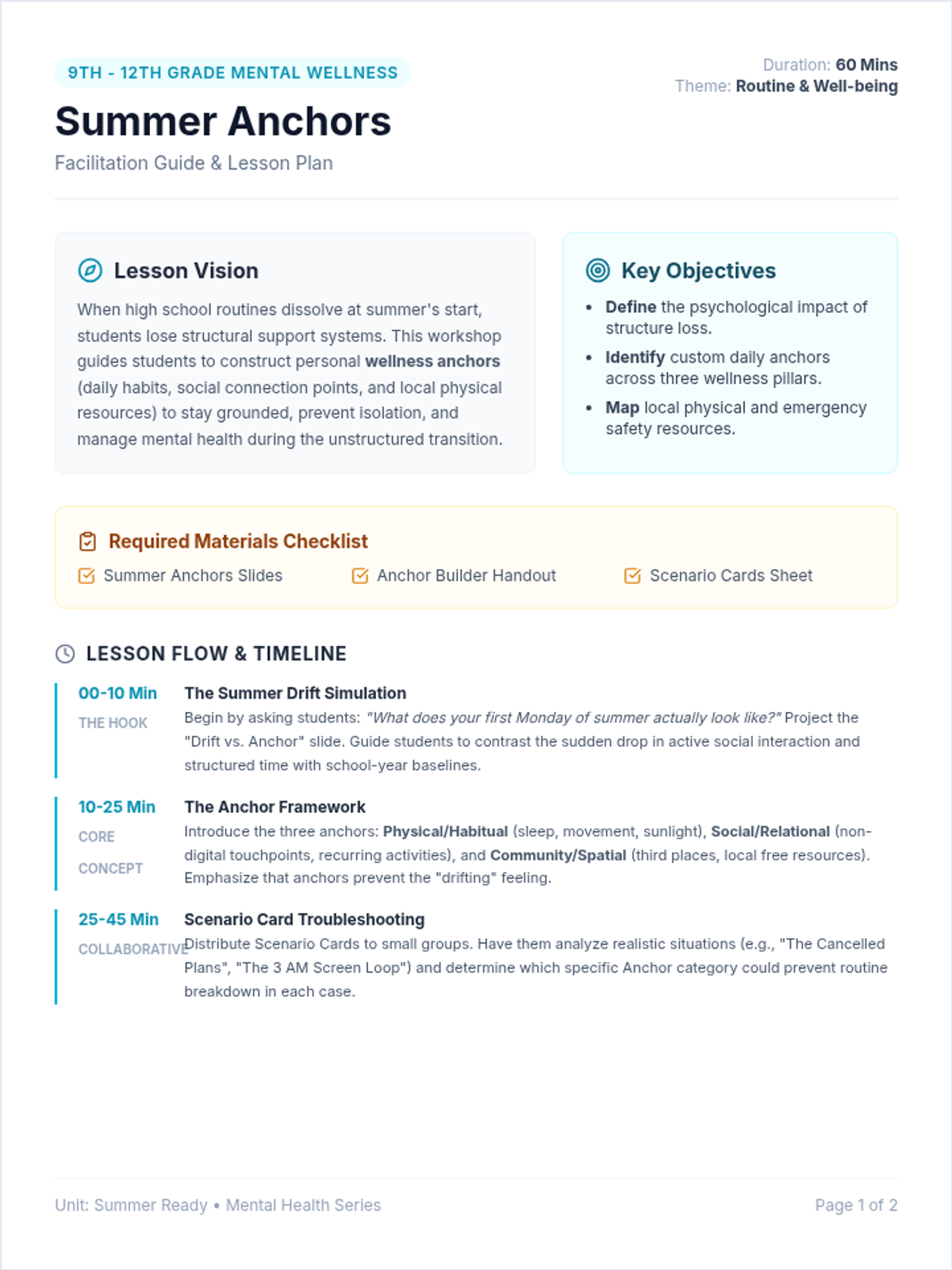
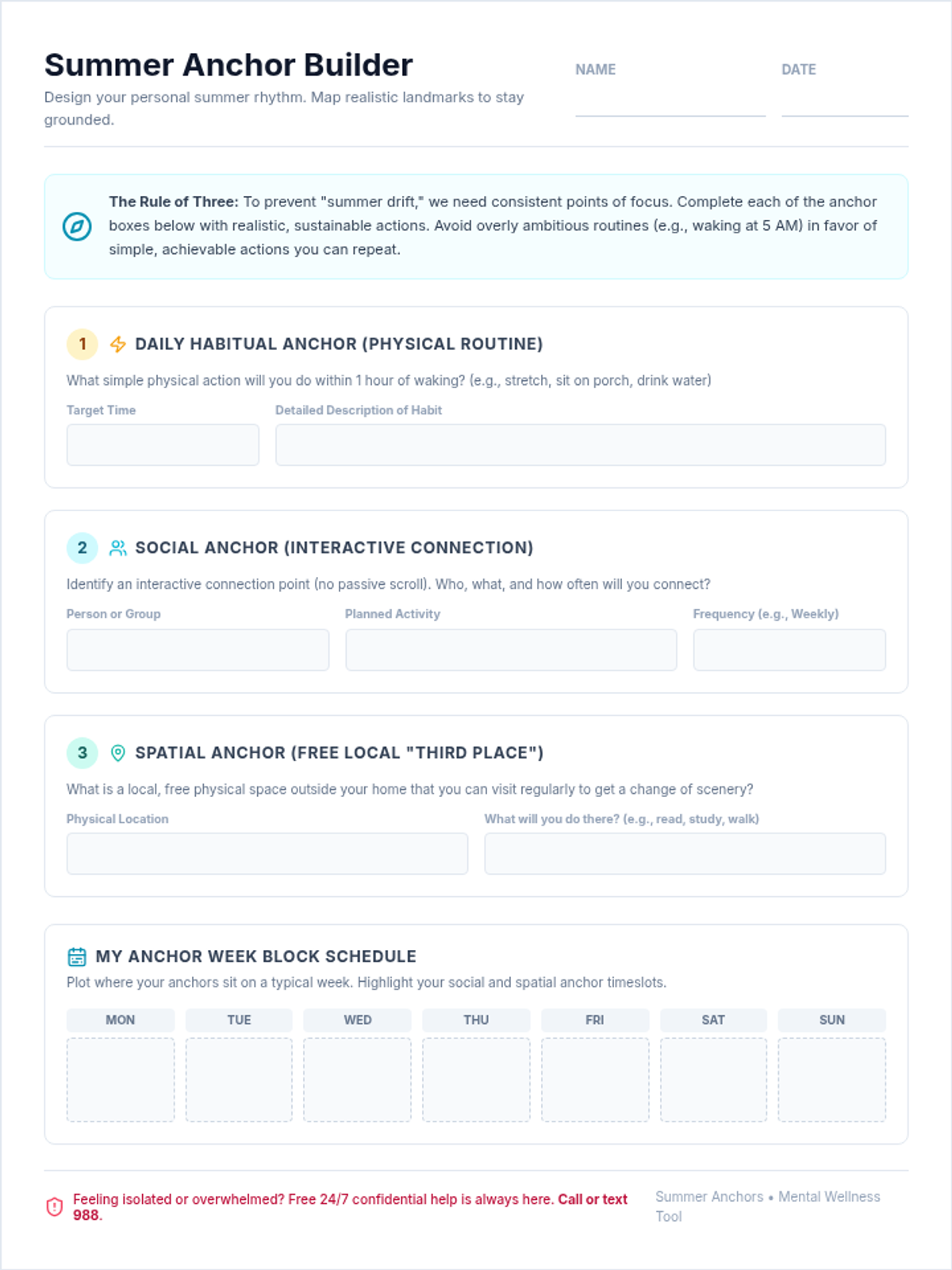
A comprehensive lesson designed for 9th-12th Grade students to establish daily wellness 'anchors'—essential habits, social connections, and community resources—to structure their summer break and support mental well-being when school routines dissolve.
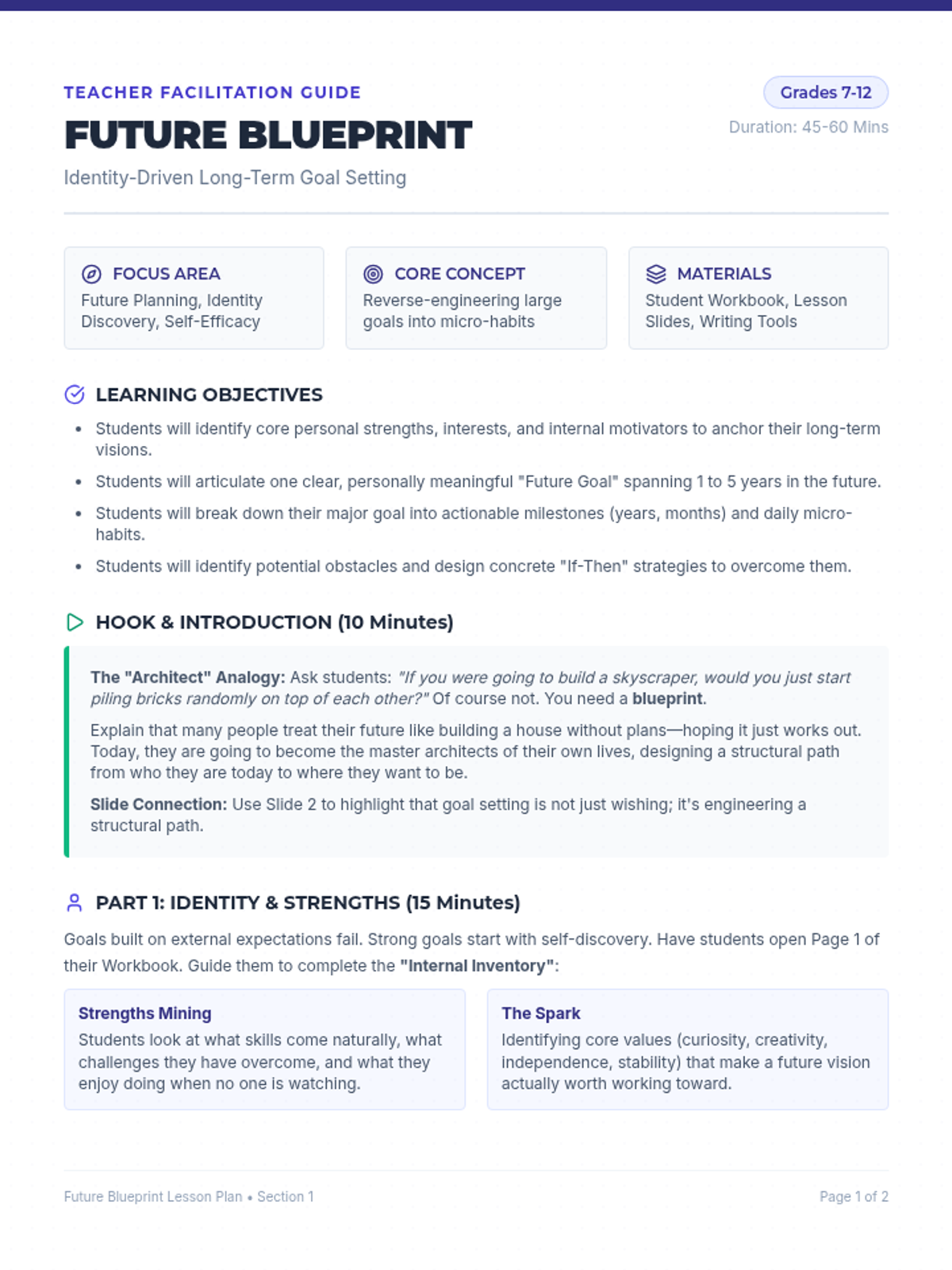
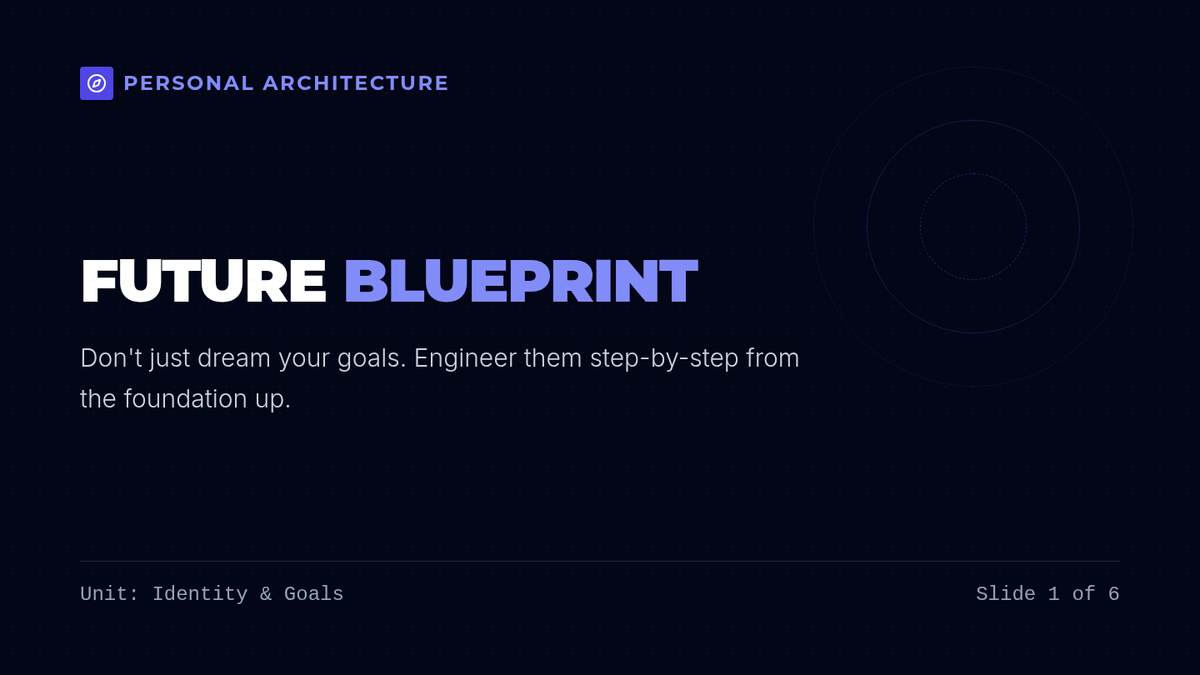
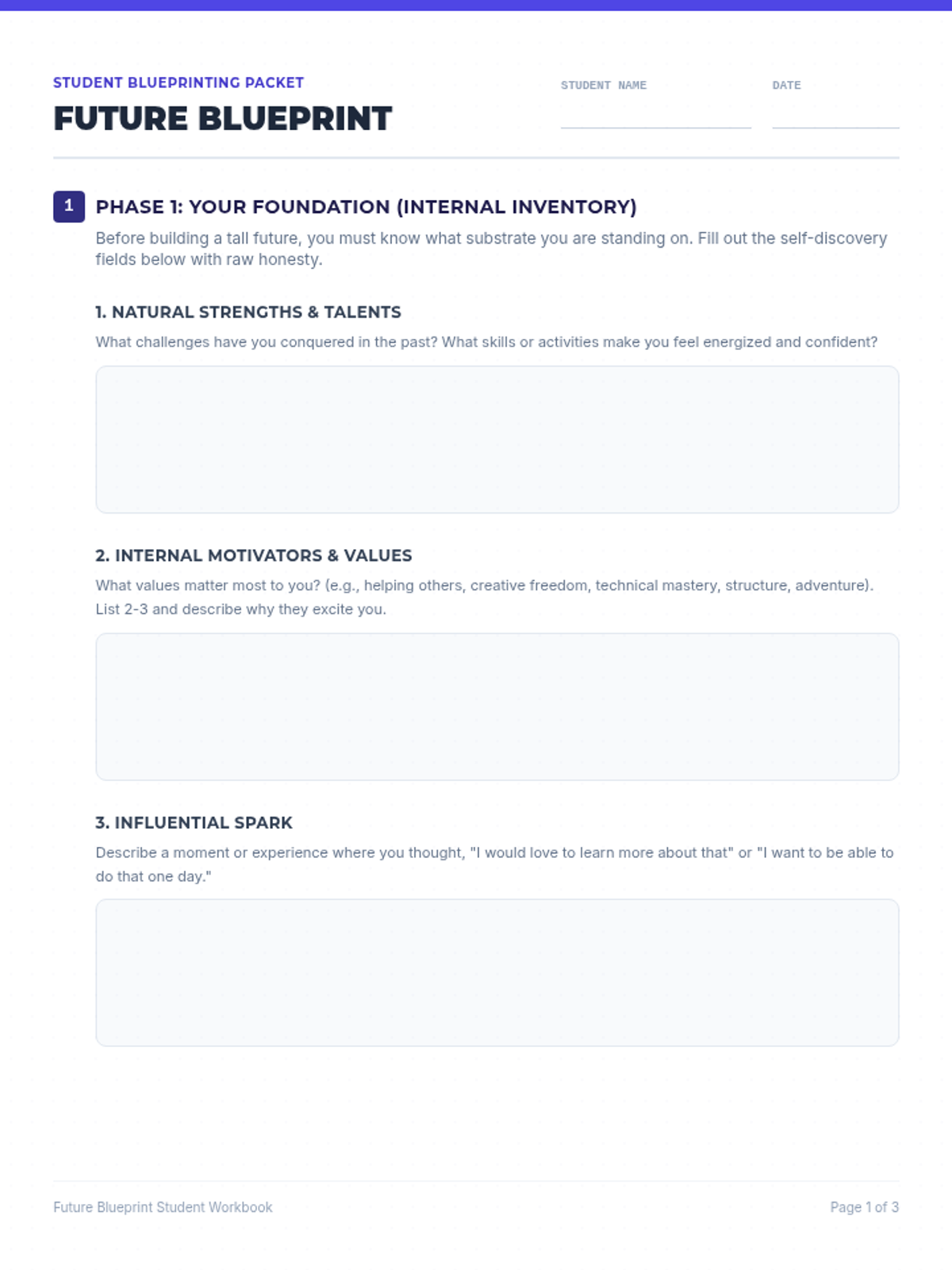
A comprehensive lesson guiding students through identity exploration, strengths mapping, and structuring long-term personal goals into actionable milestones and daily habits.
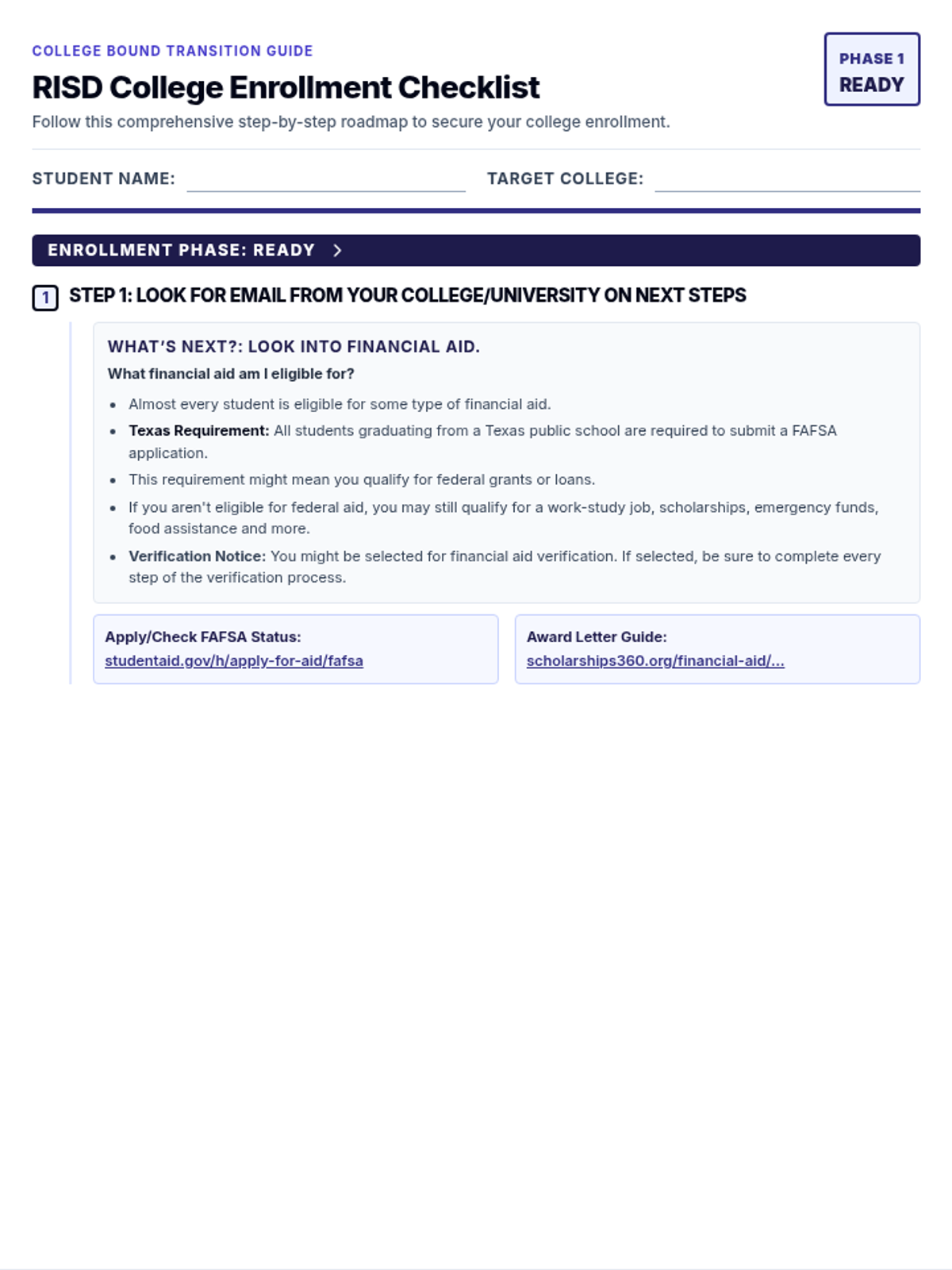
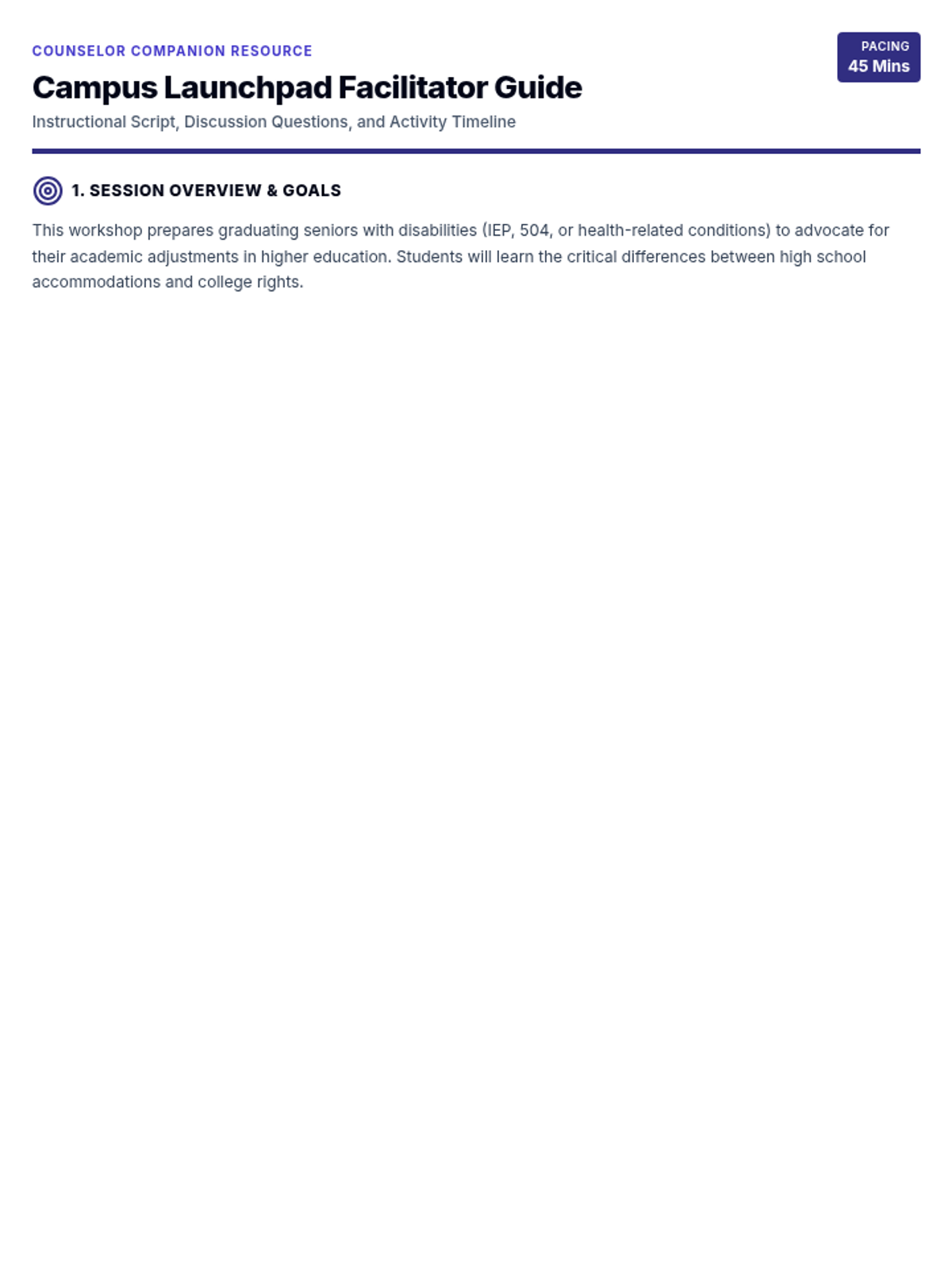
A transition lesson designed to help graduating high school seniors navigate college campus resources, master self-advocacy, and successfully secure academic adjustments.
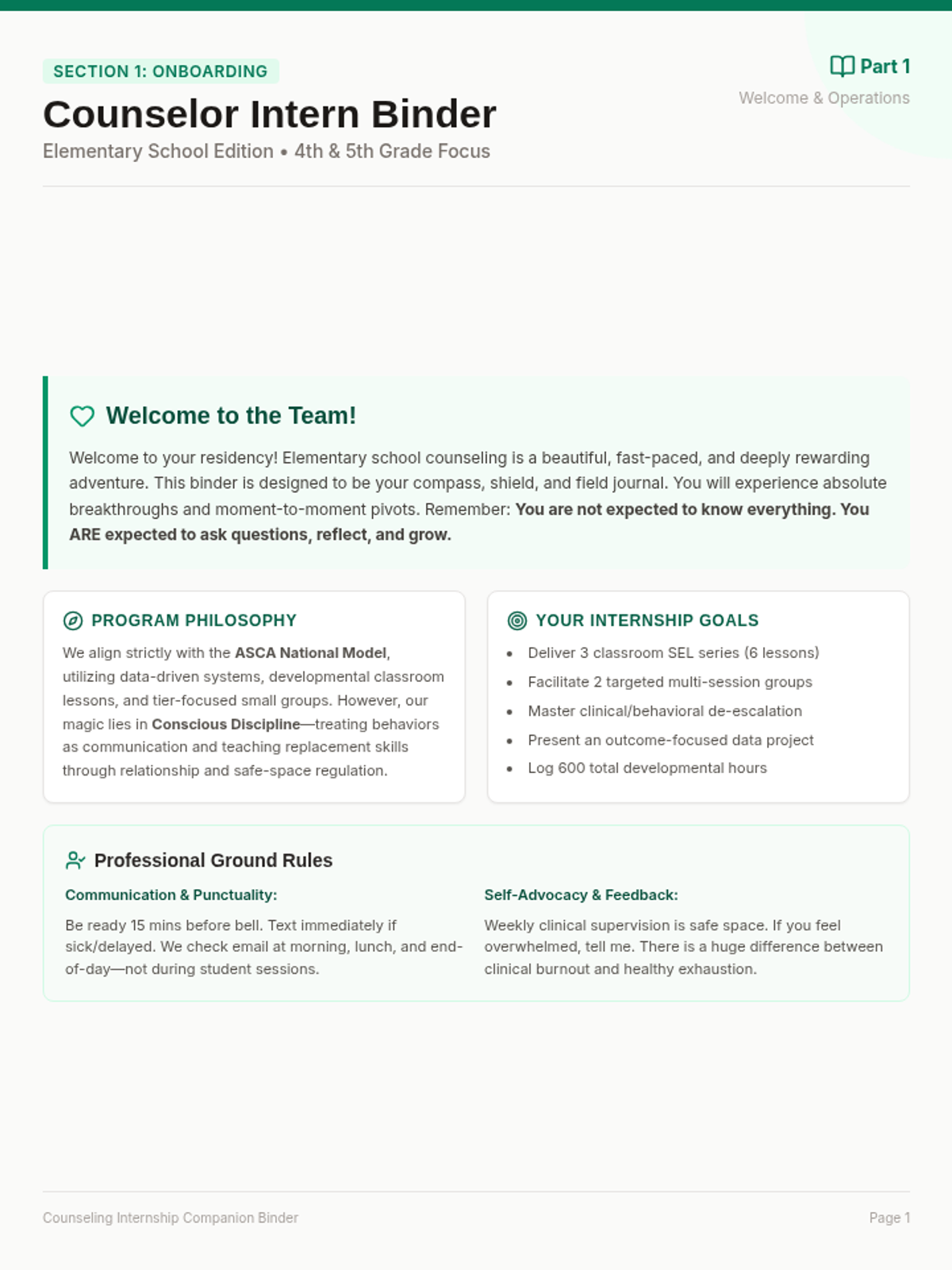
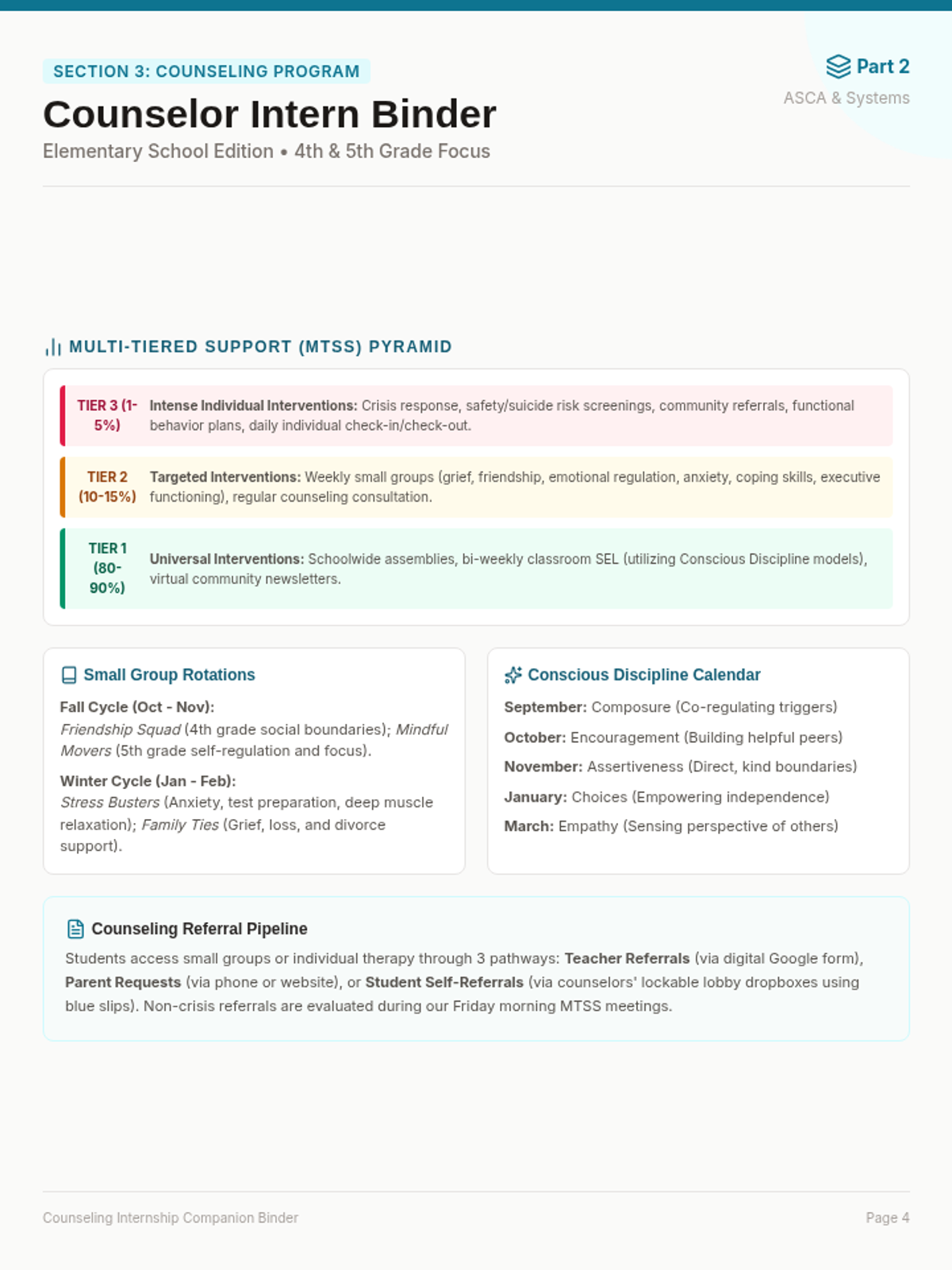
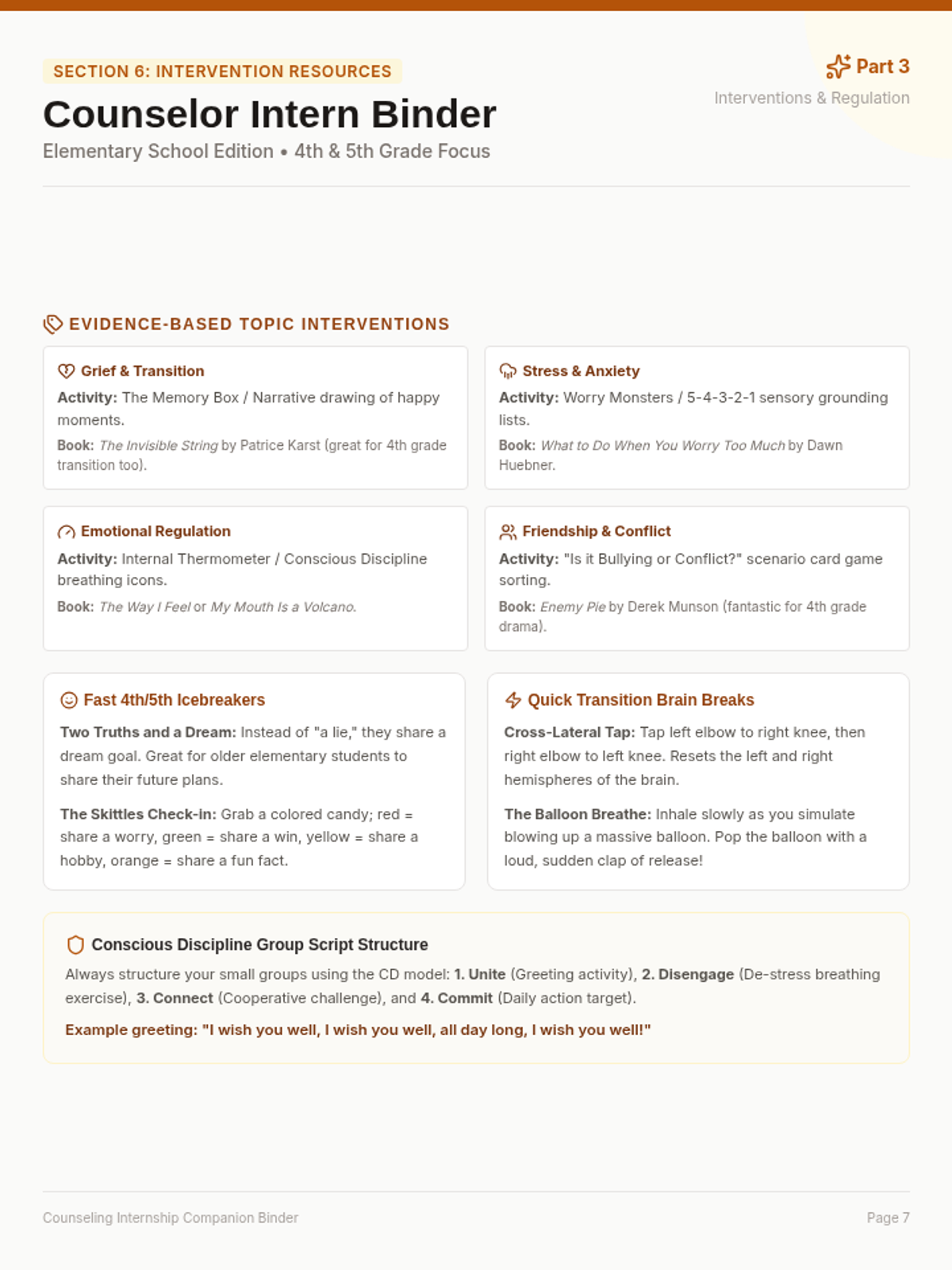
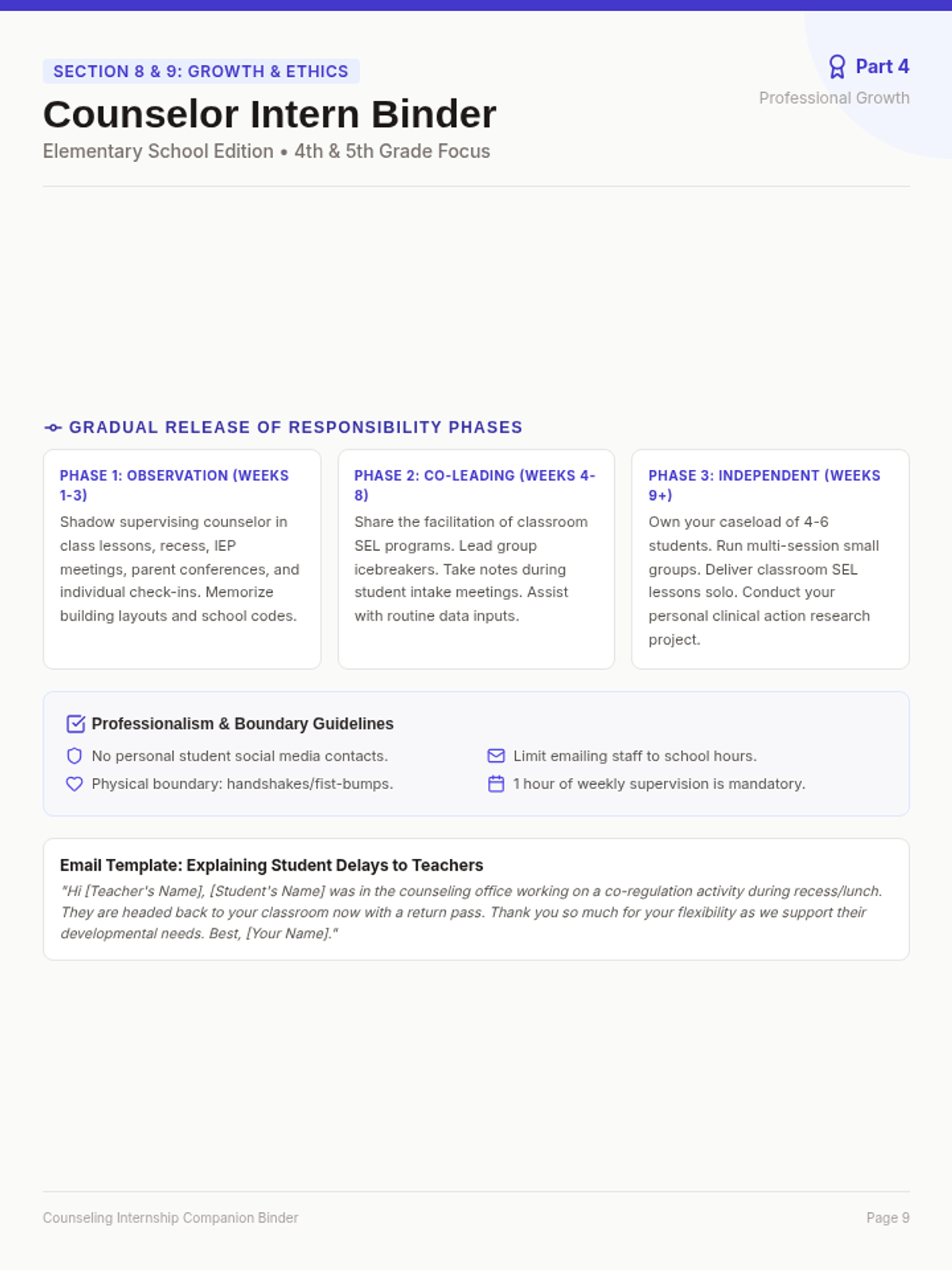
The complete suite of internship binder materials designed to welcome, guide, and support school counseling interns through clinical expectations, daily operations, and self-care.
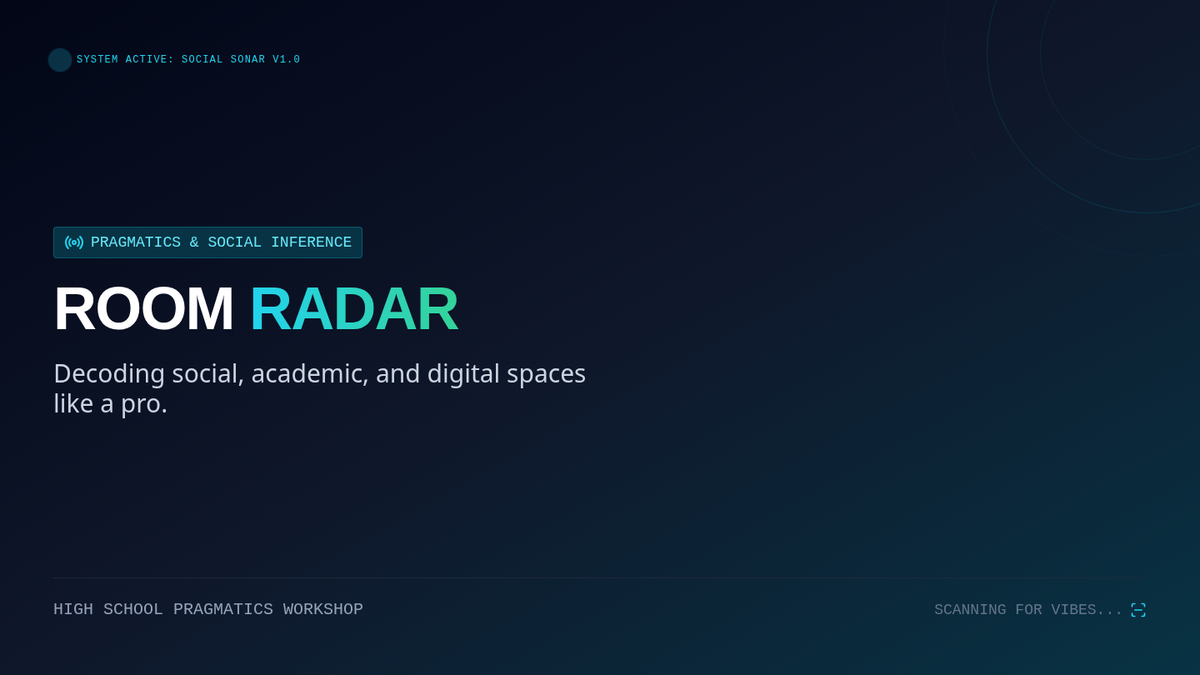
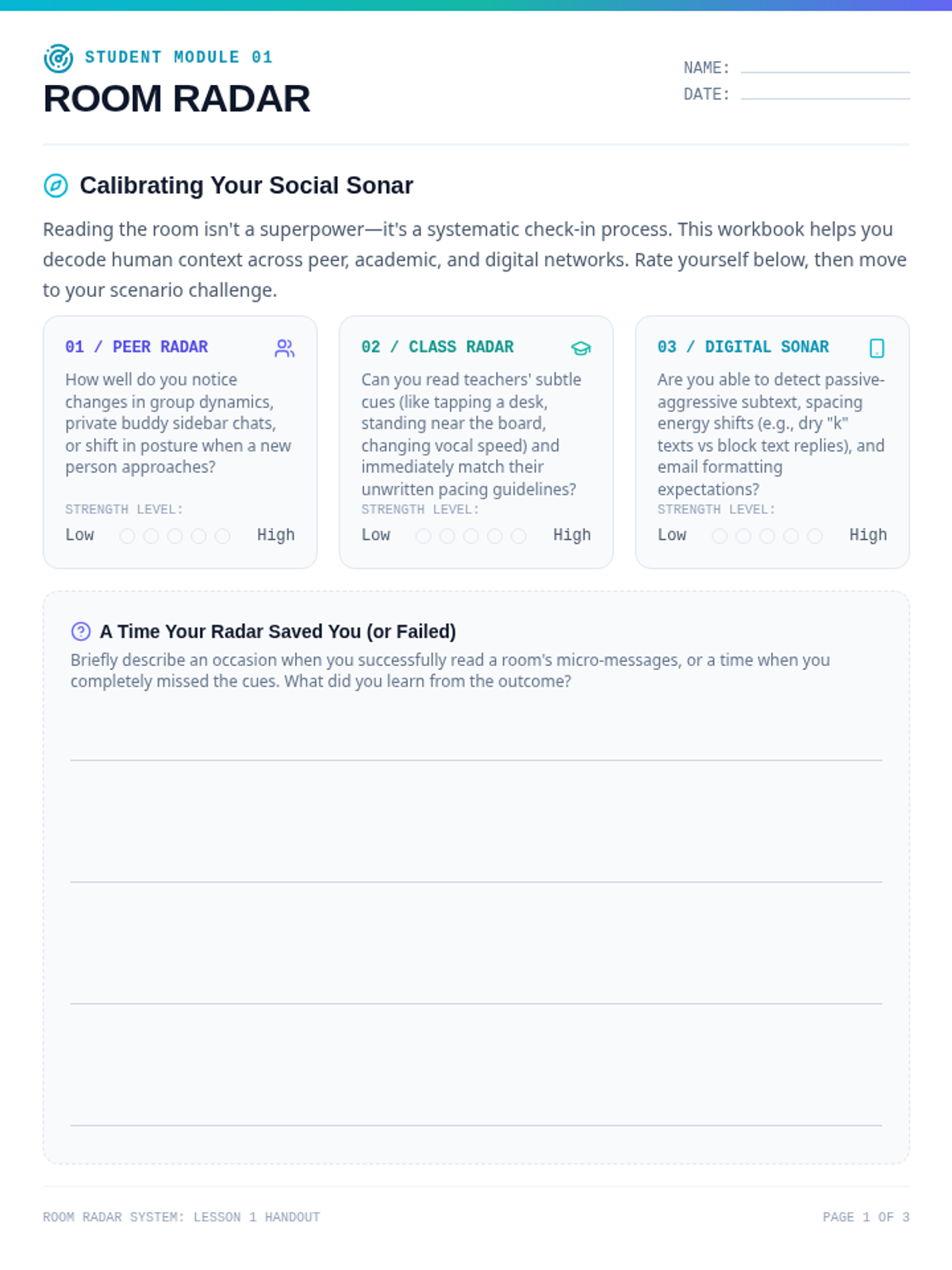
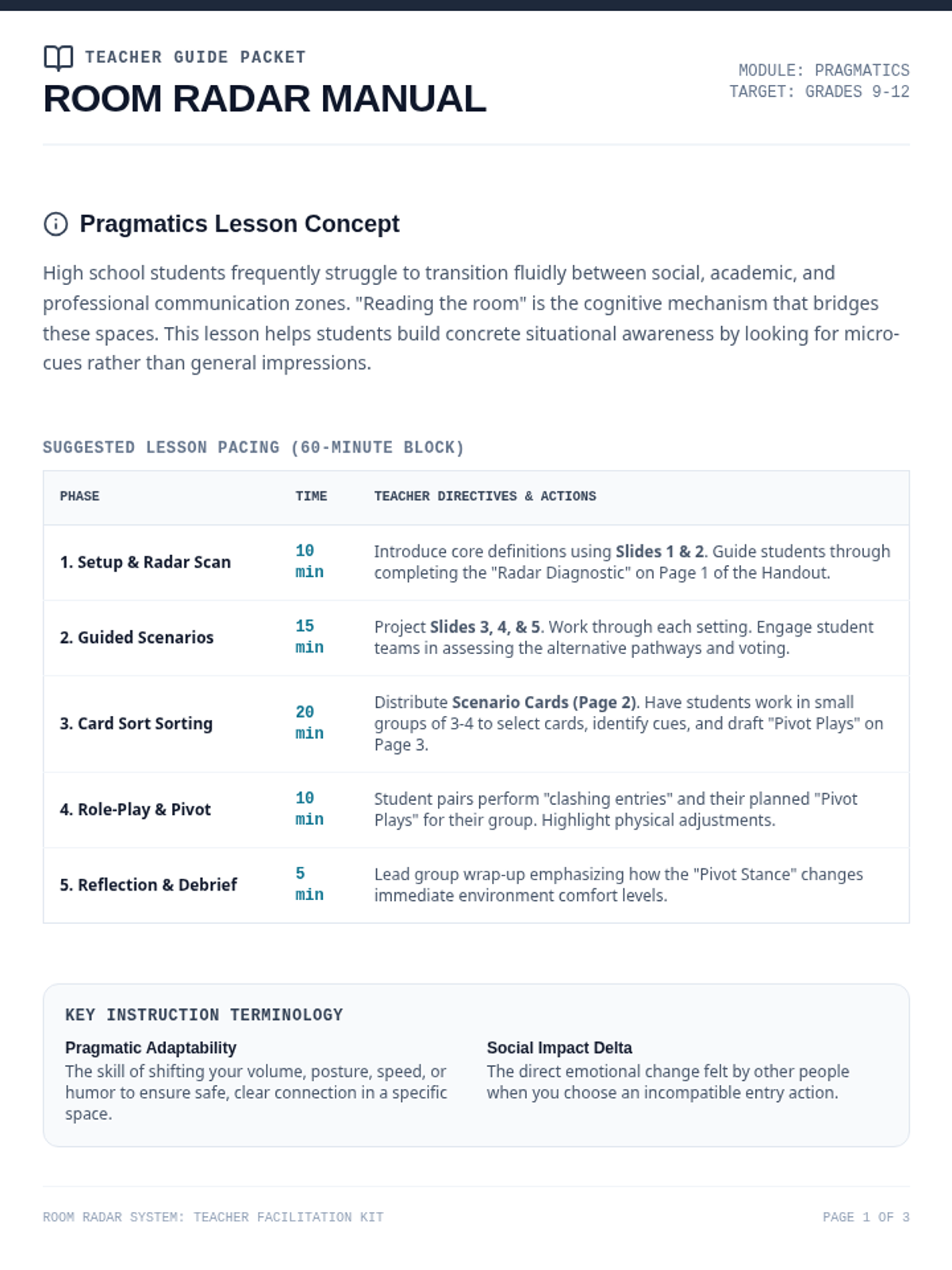
A high school pragmatics lesson focused on 'reading the room' in social, academic, and digital spaces. Students learn to analyze subtle social cues, decode contexts, and adapt their behavior appropriately using interactive slides, scenario-based role-play cards, and structured reflection.
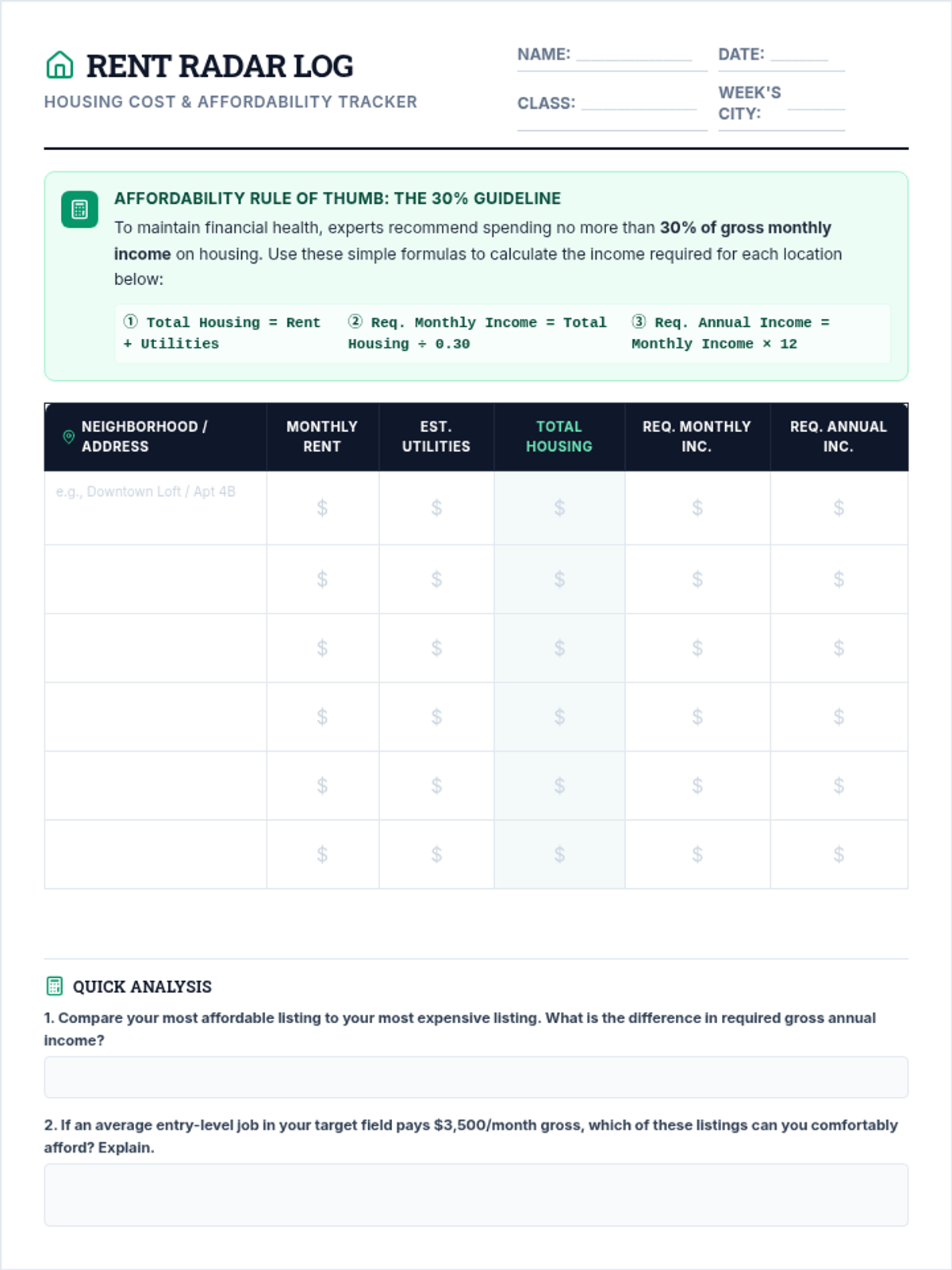
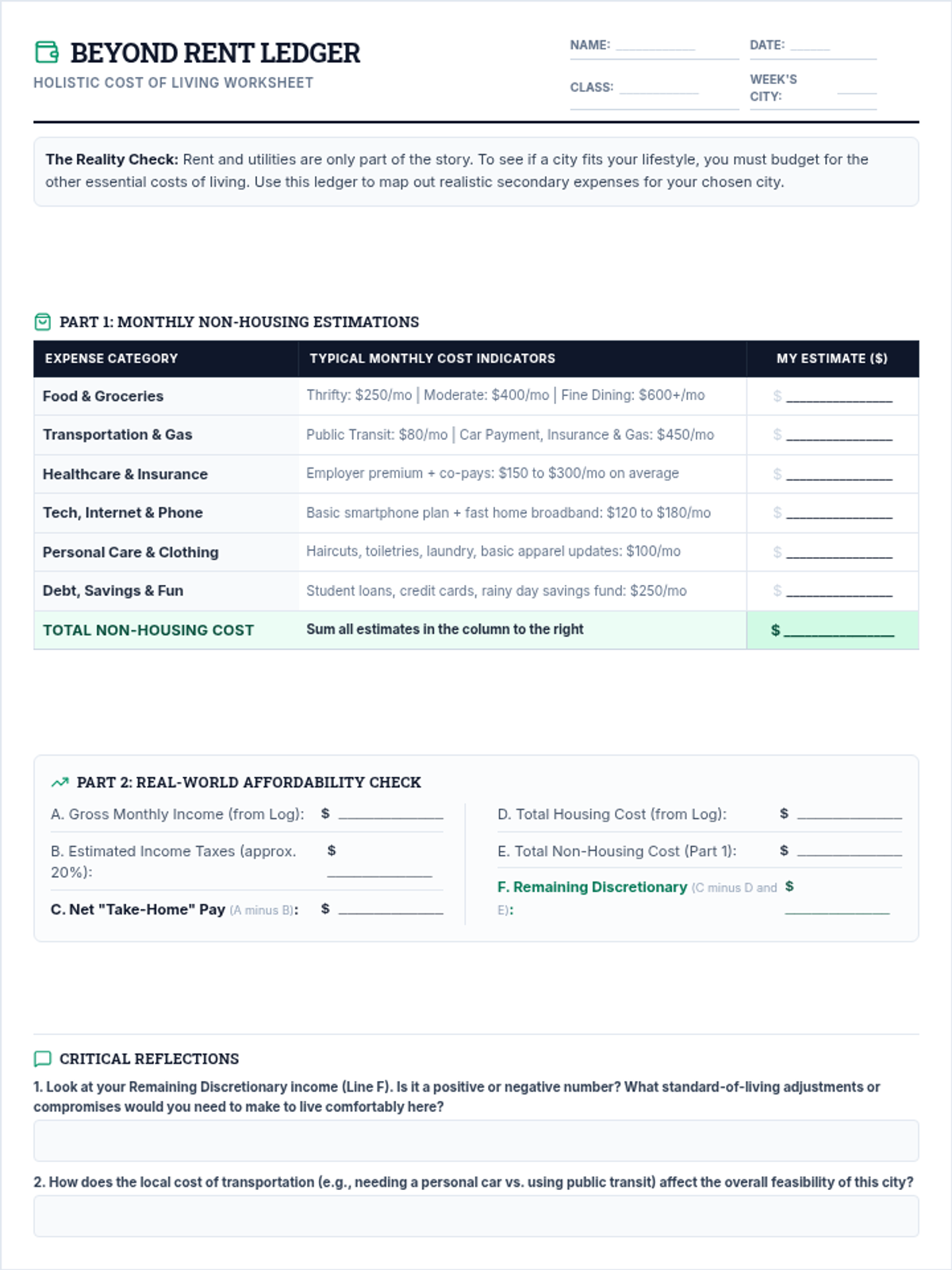
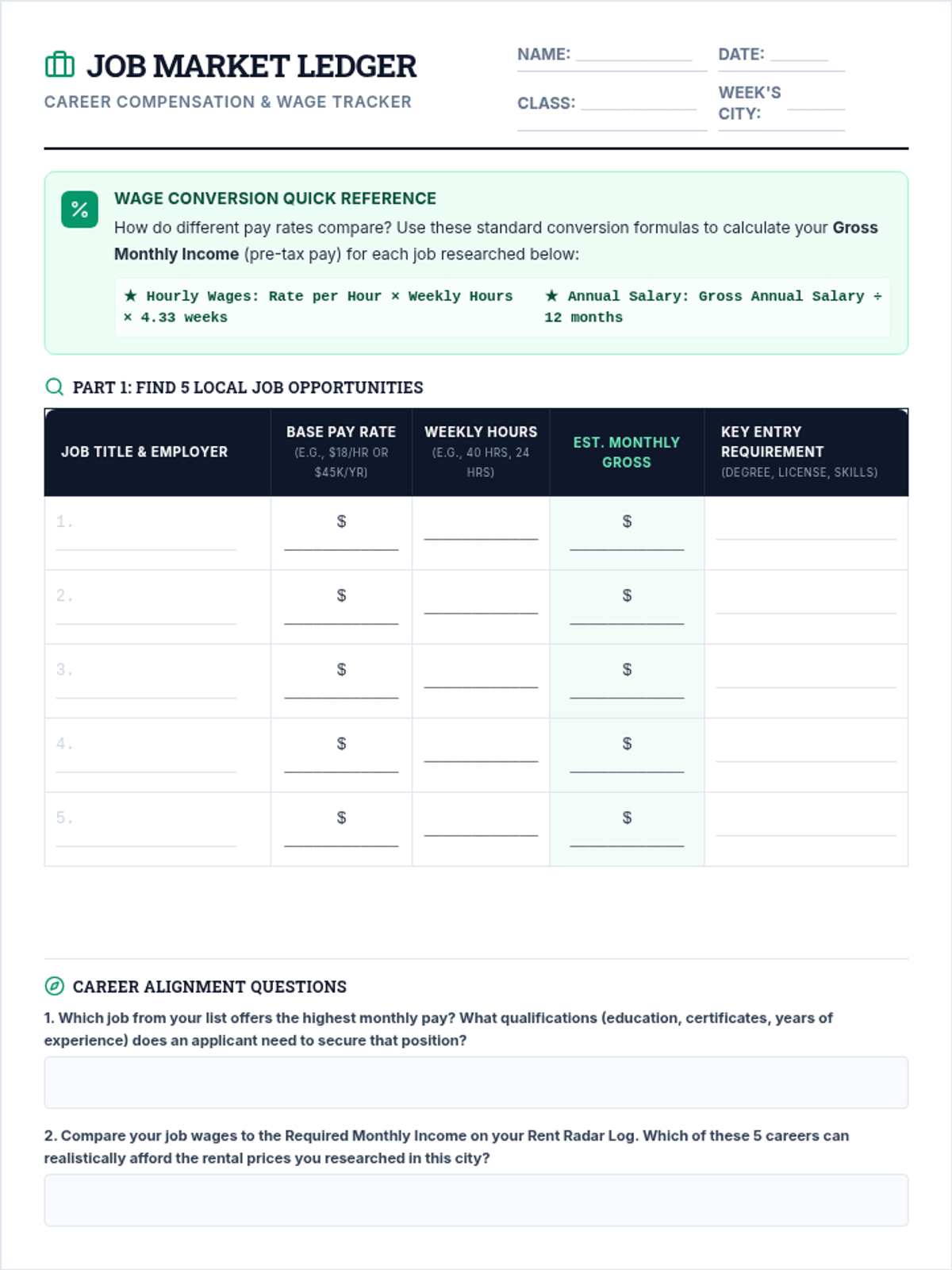
A recurring financial literacy project where students analyze housing costs nationwide, calculate affordability metrics, and budget for holistic living expenses.
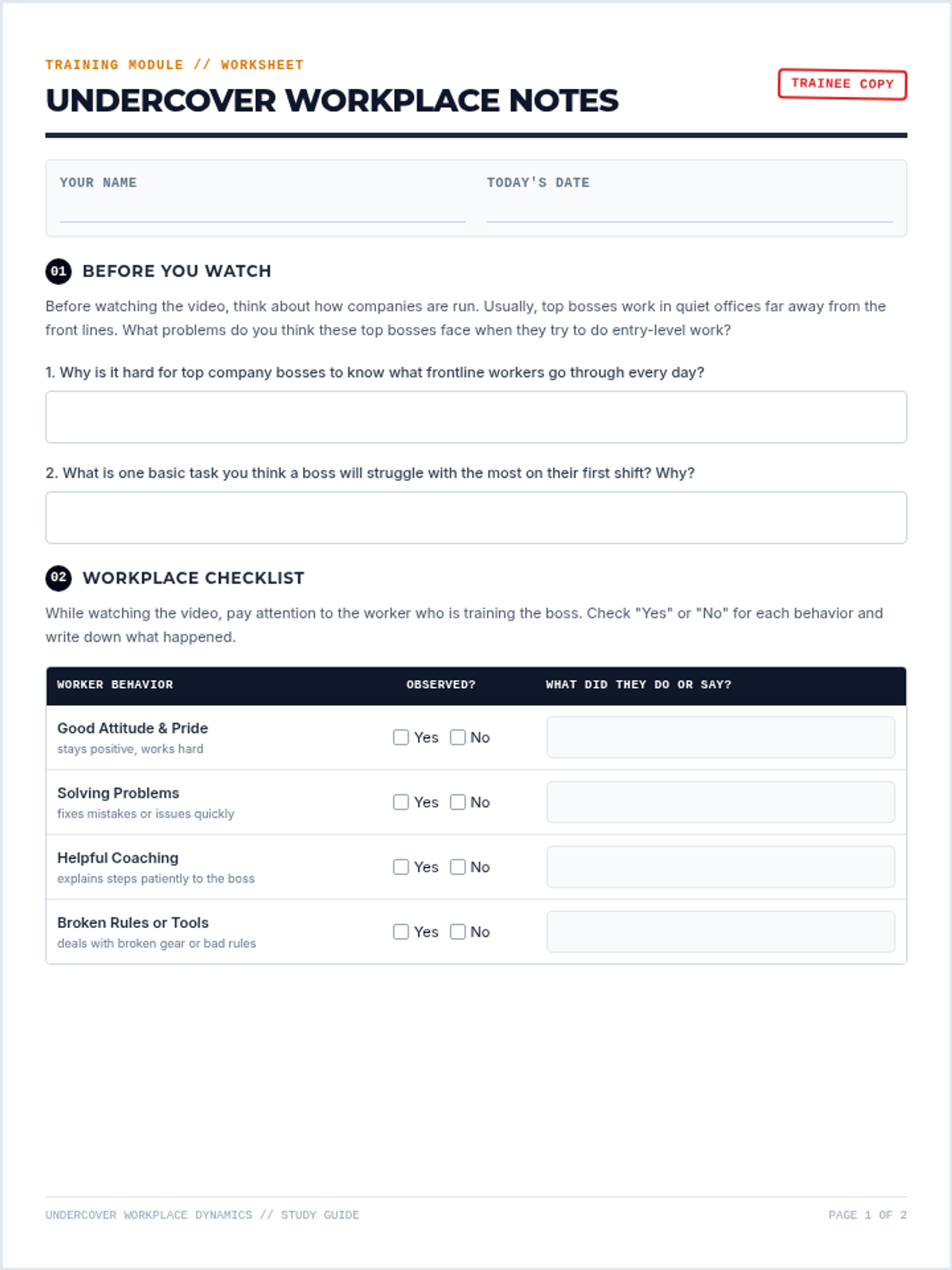
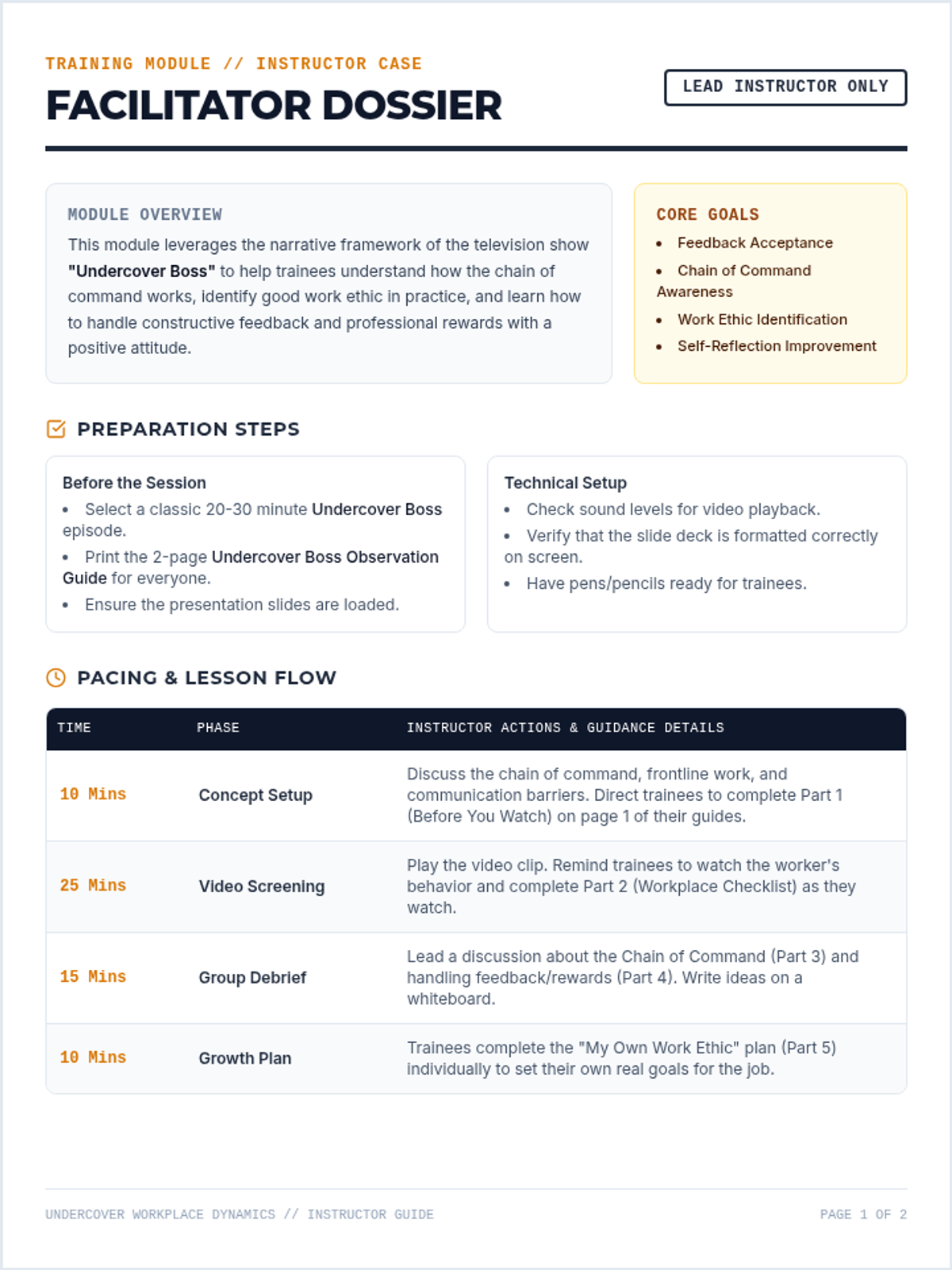
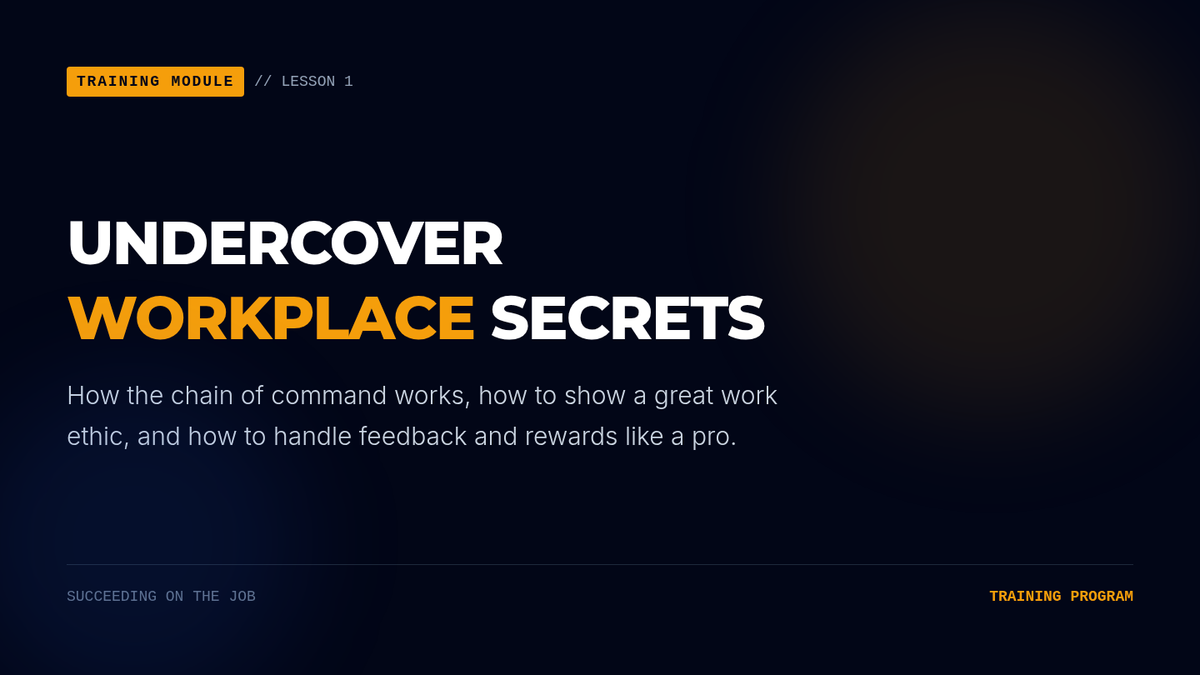
An employment training module centered around the dynamics of 'Undercover Boss'. Trainees analyze workplace hierarchy, identify strong work ethic, and study how feedback and rewards shape career success using a structured observation format.
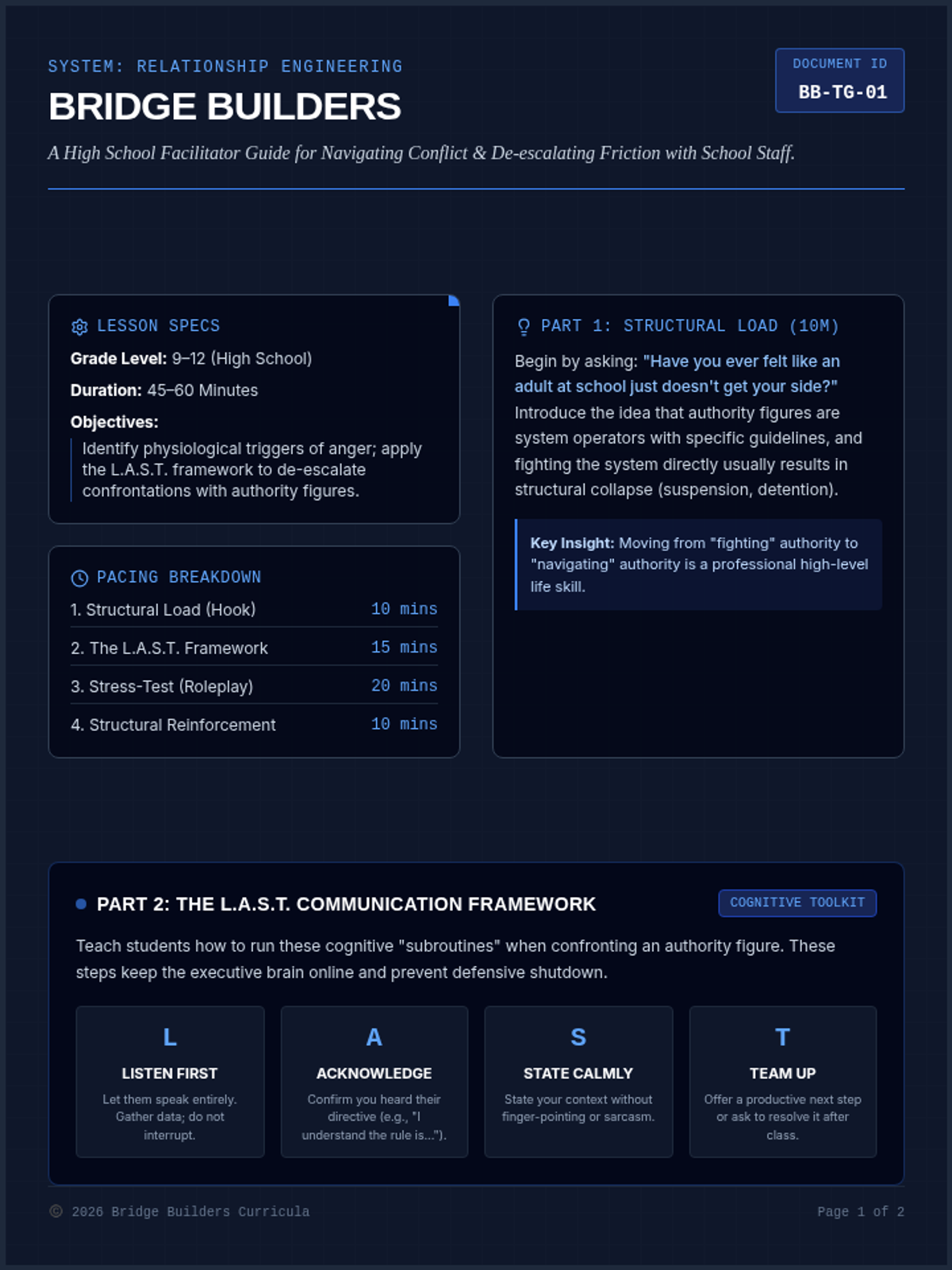
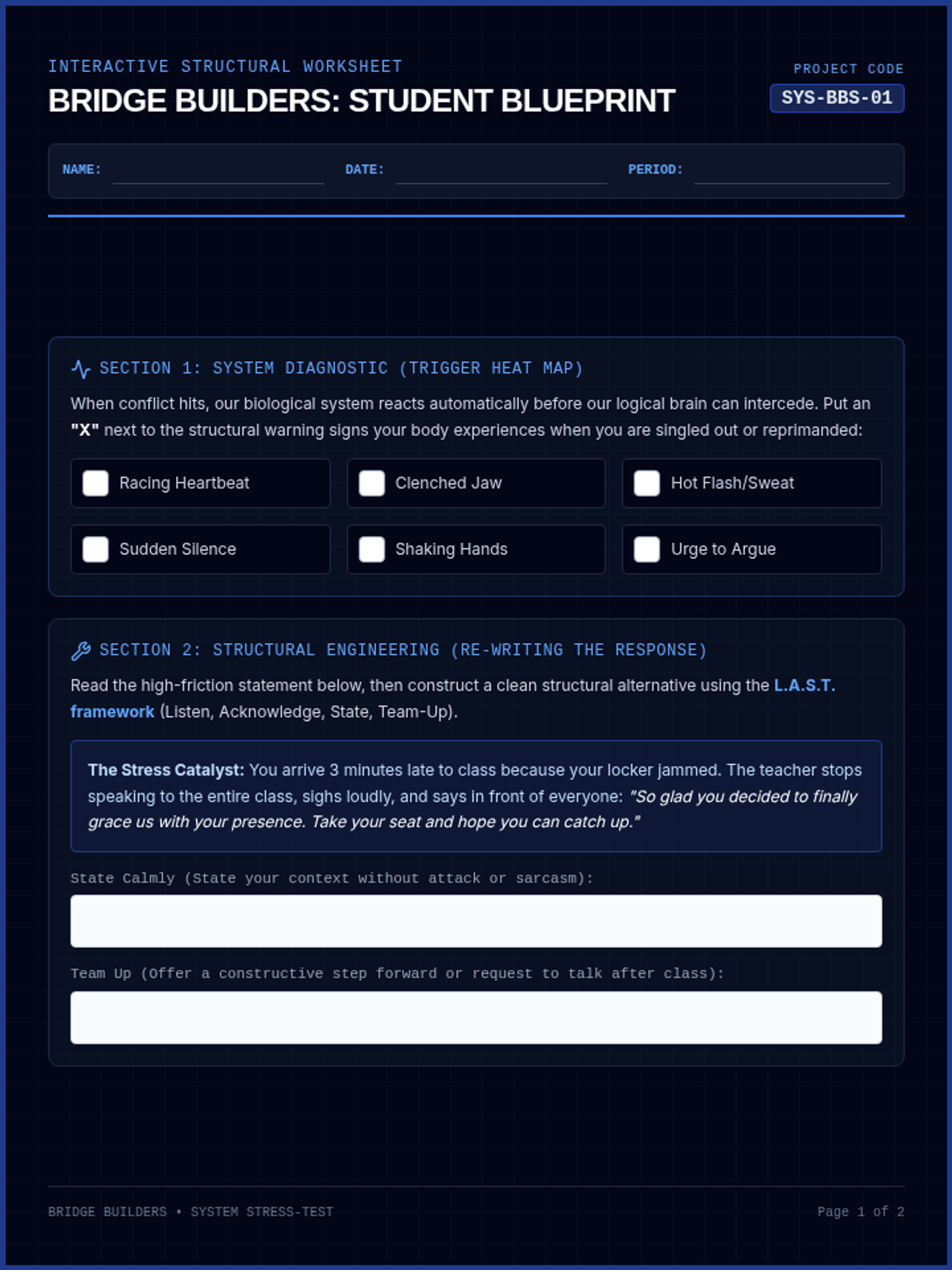
A high school lesson focused on navigating relationships with school authority and staff. Students learn active listening, de-escalation strategies, and productive communication frameworks to express frustration constructively.
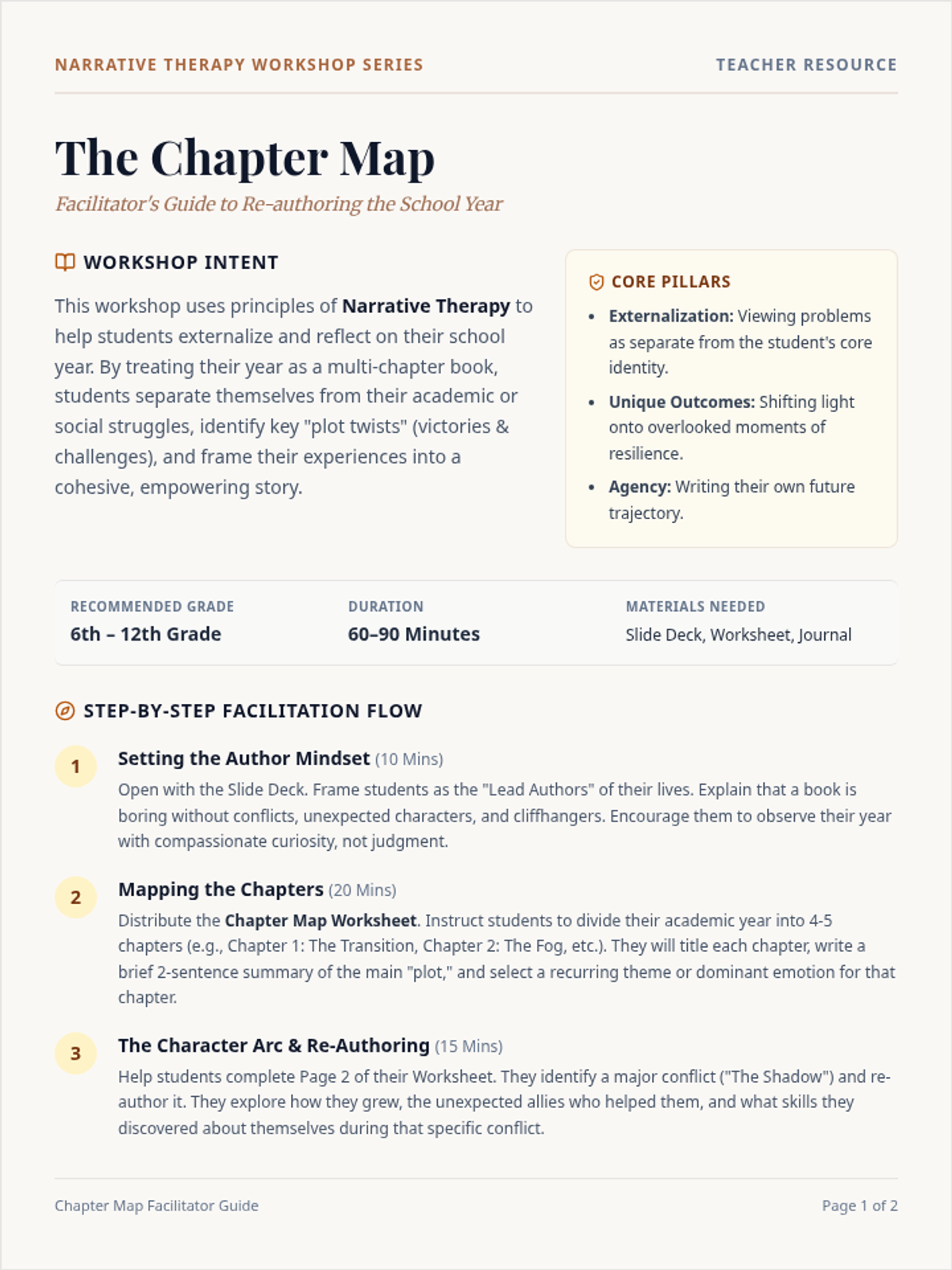
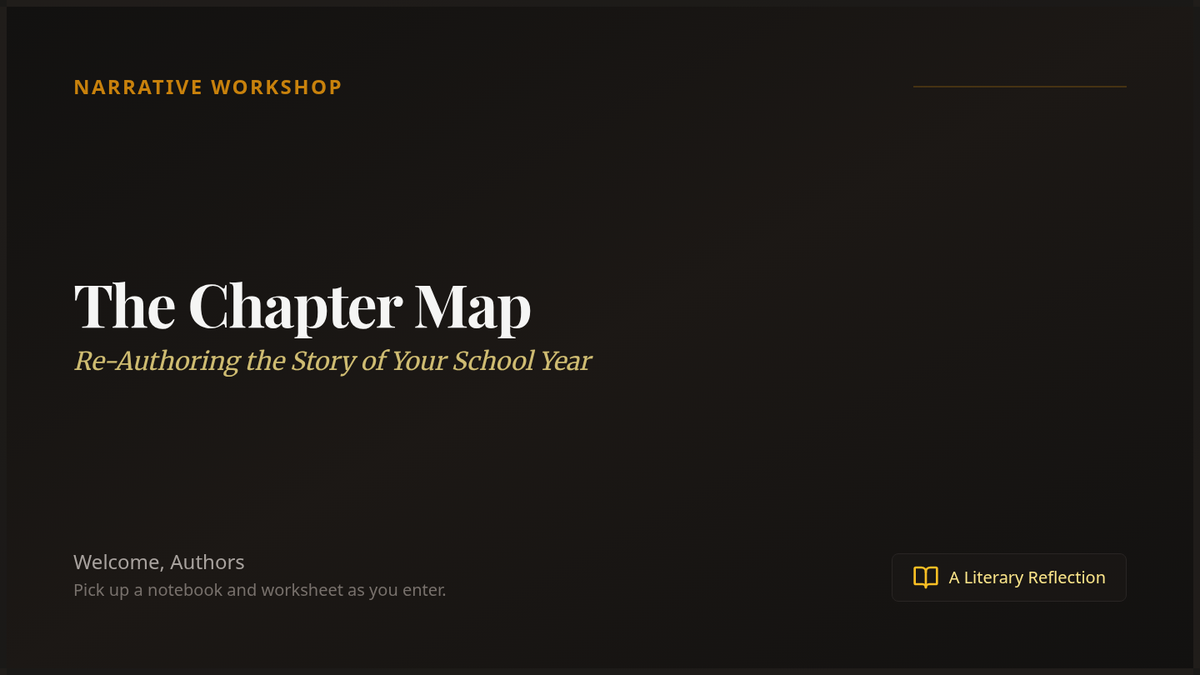
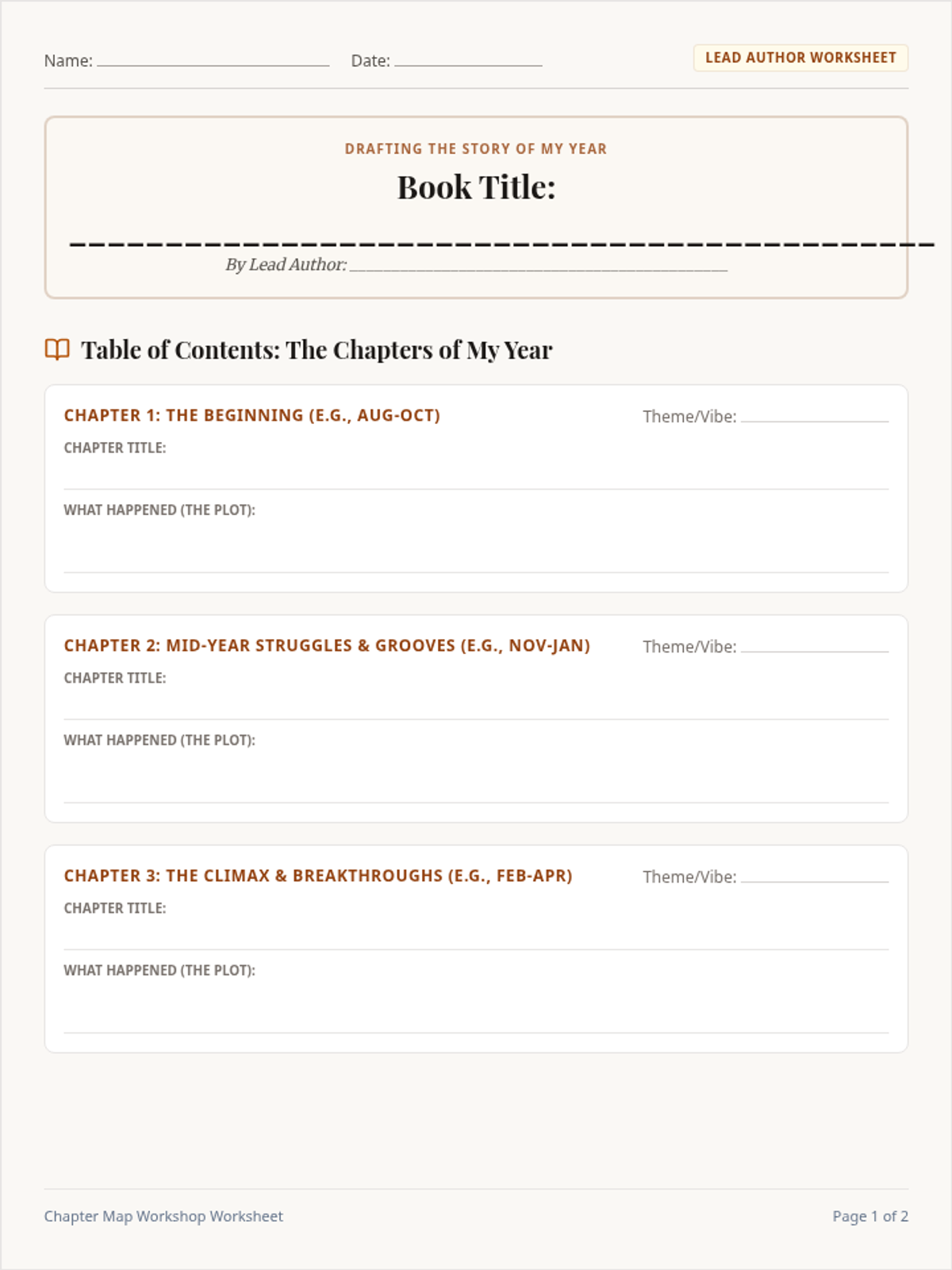
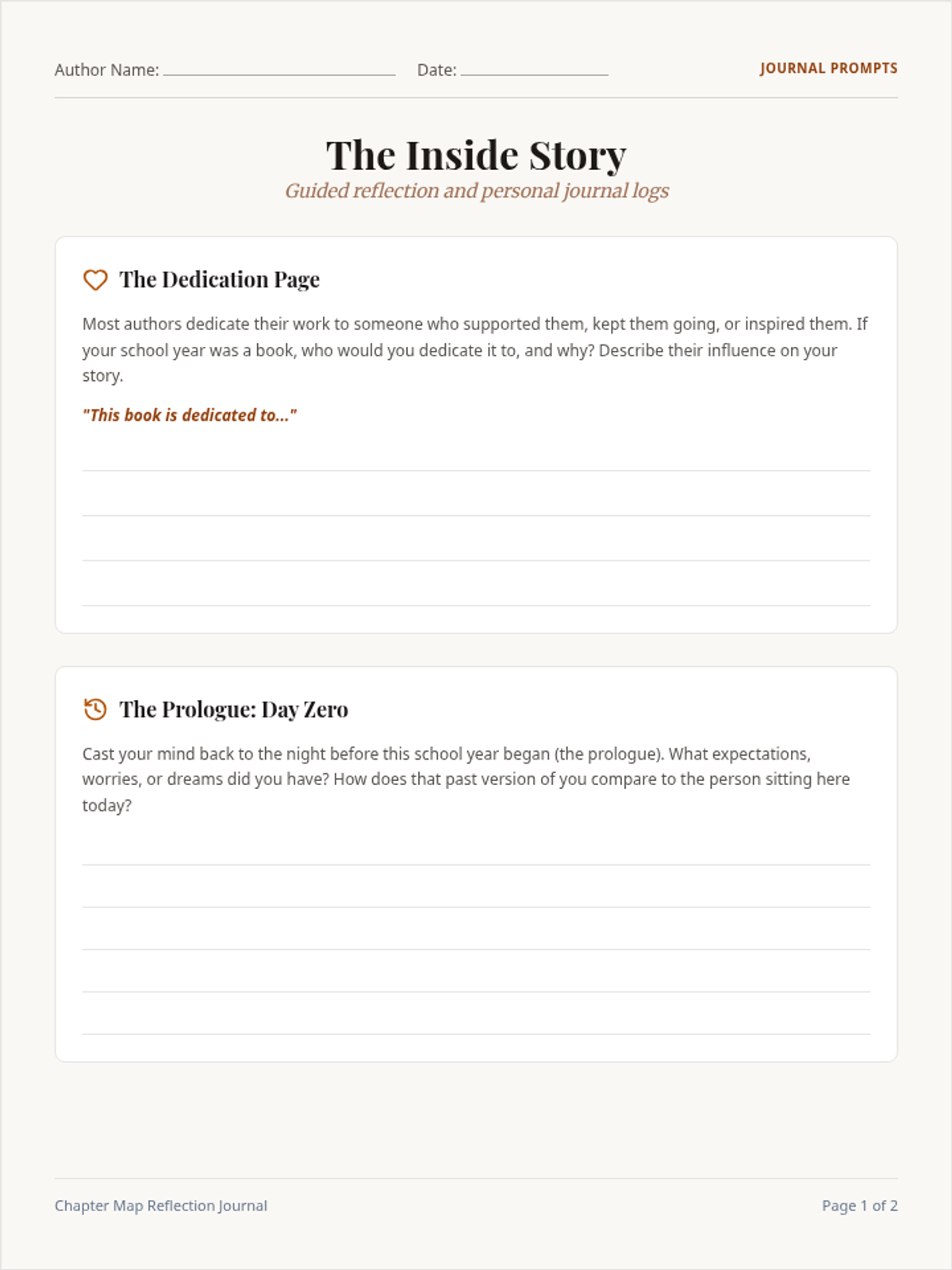
A narrative-therapy-inspired workshop where middle and high school students map out their school year as a book with chapters to synthesize challenges, victories, and closures.
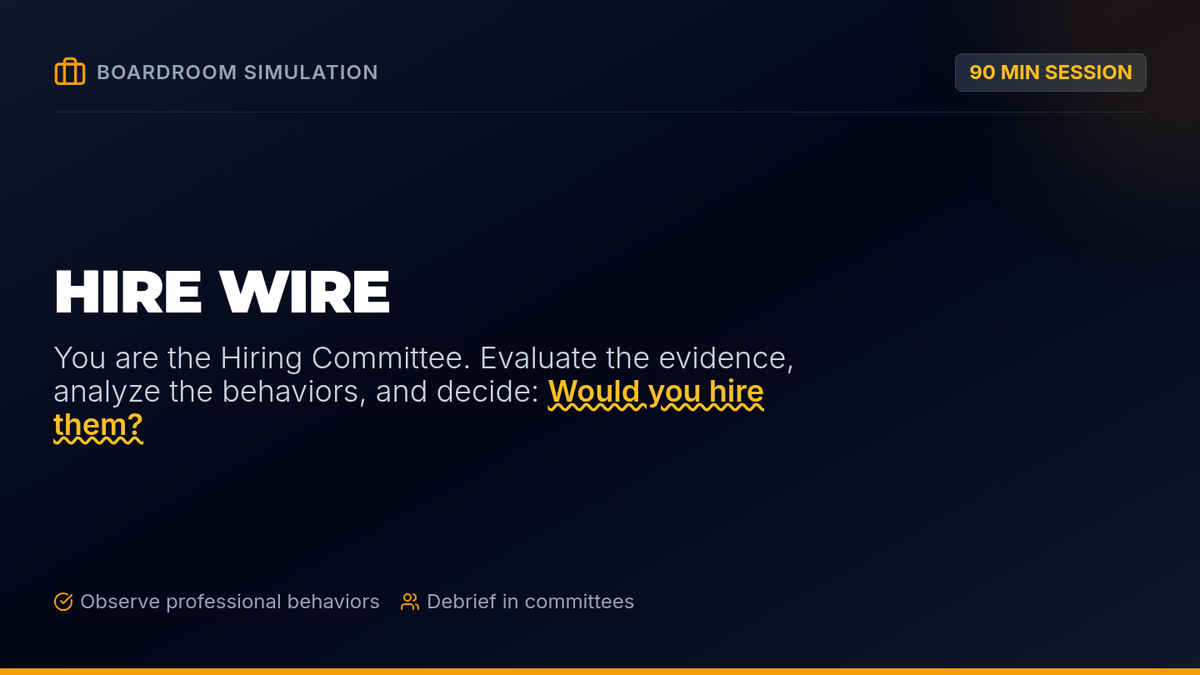
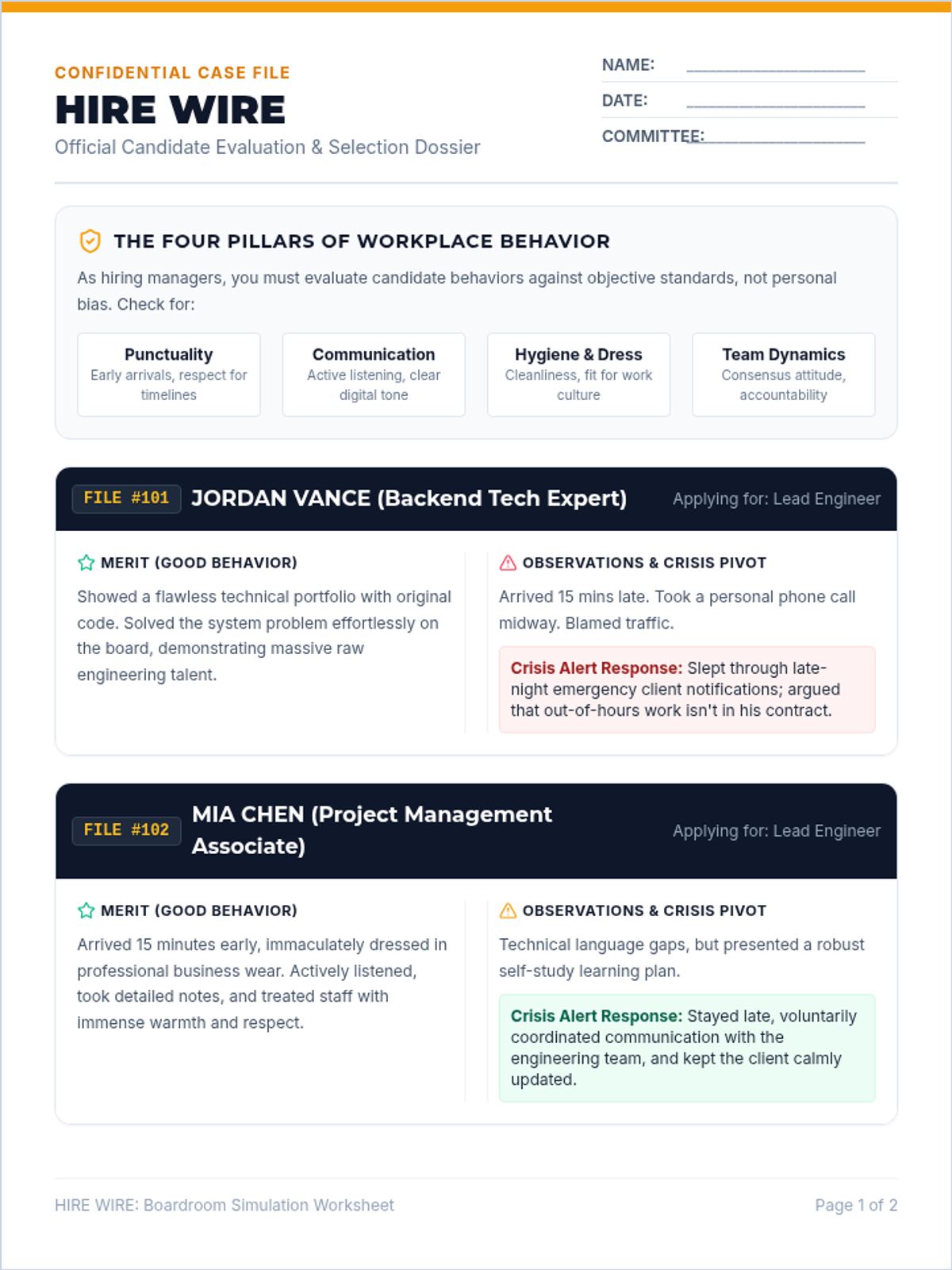
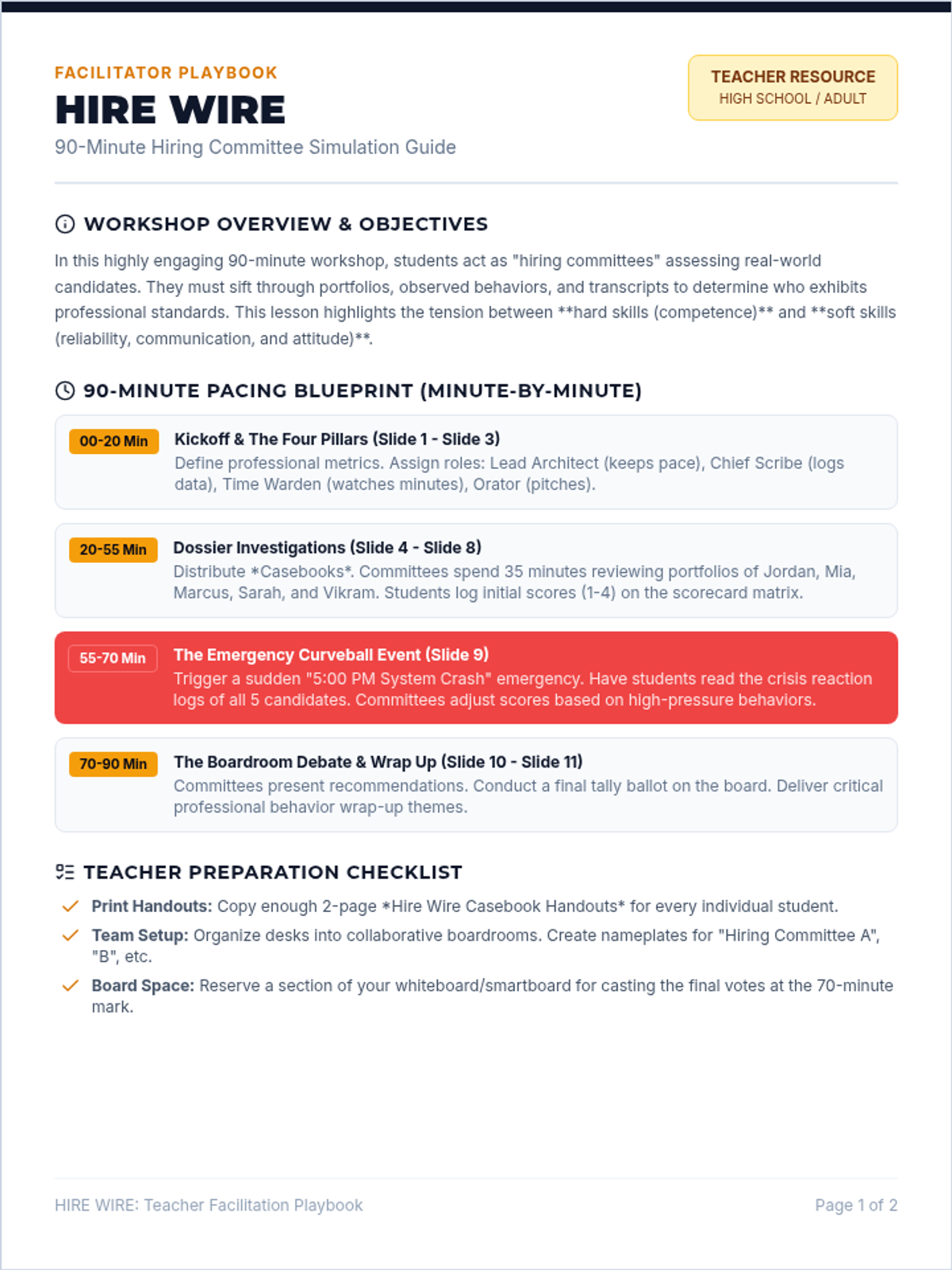
An interactive 90-minute workshop where students play the role of hiring managers or clients, analyzing four candidate dossiers featuring a mix of positive and negative professional traits to make evidence-based hiring decisions.