A 30-minute introductory lesson on time management skills, focusing on task estimation and prioritization using visual tools and hands-on activities.
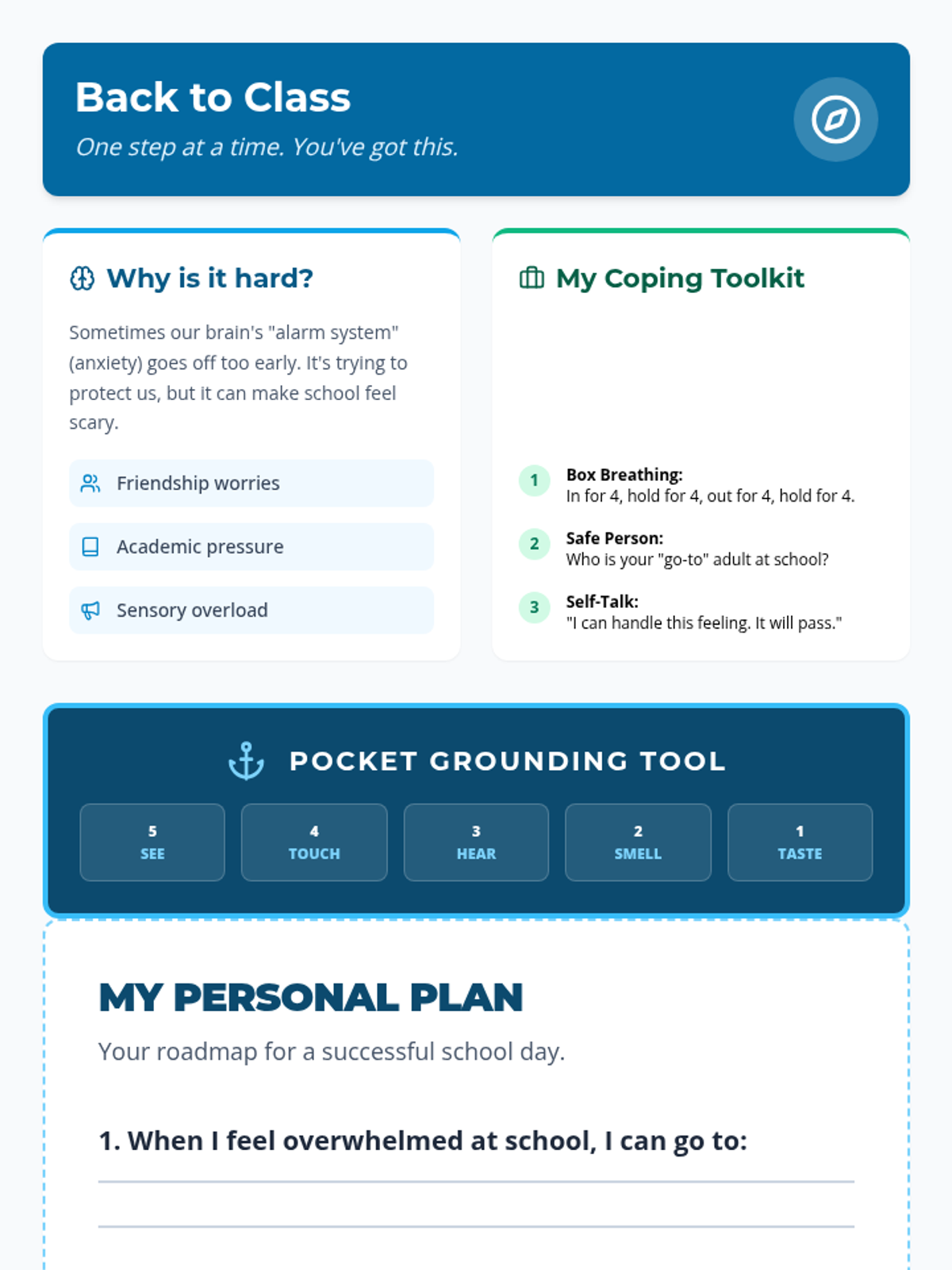
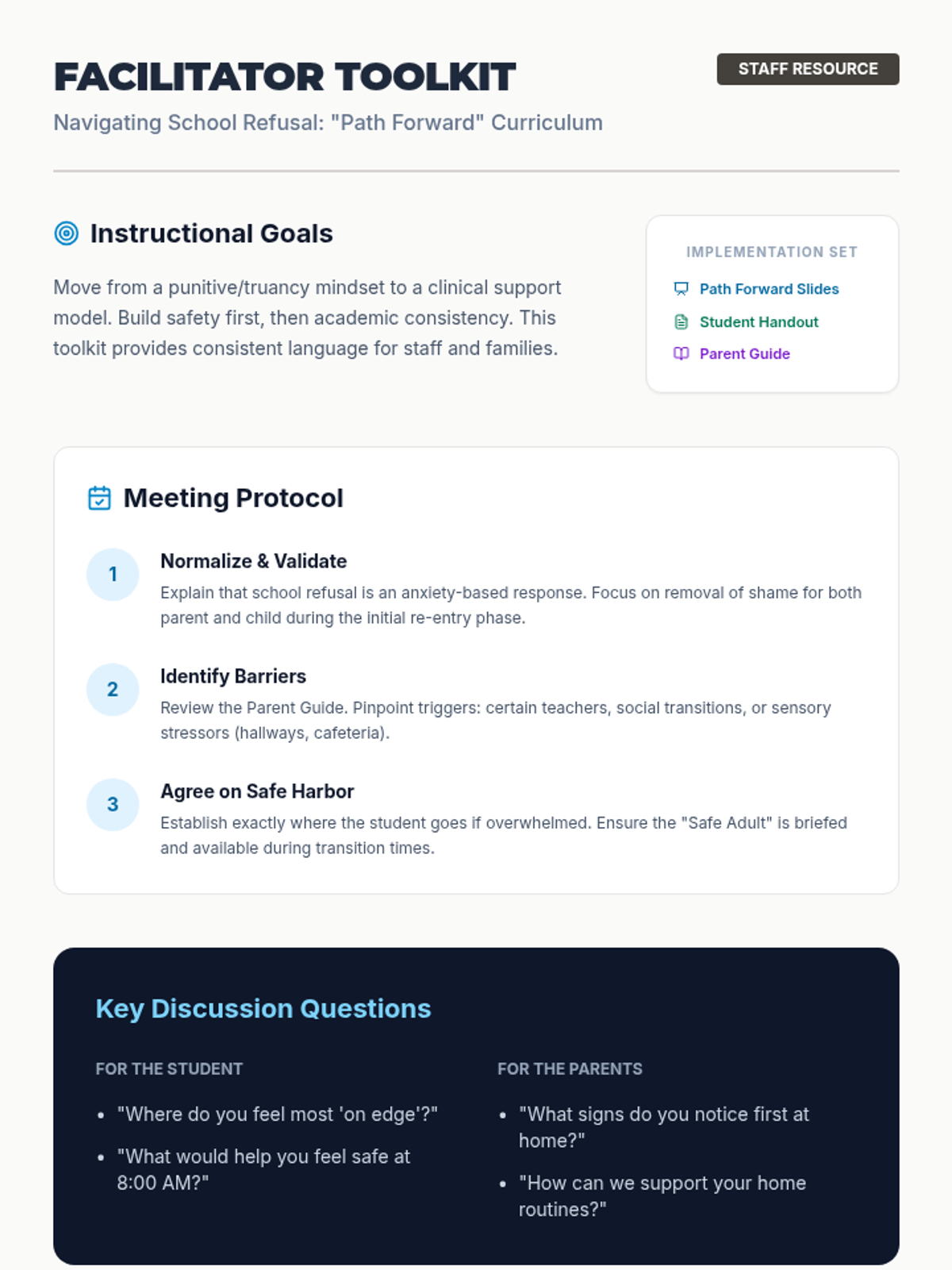
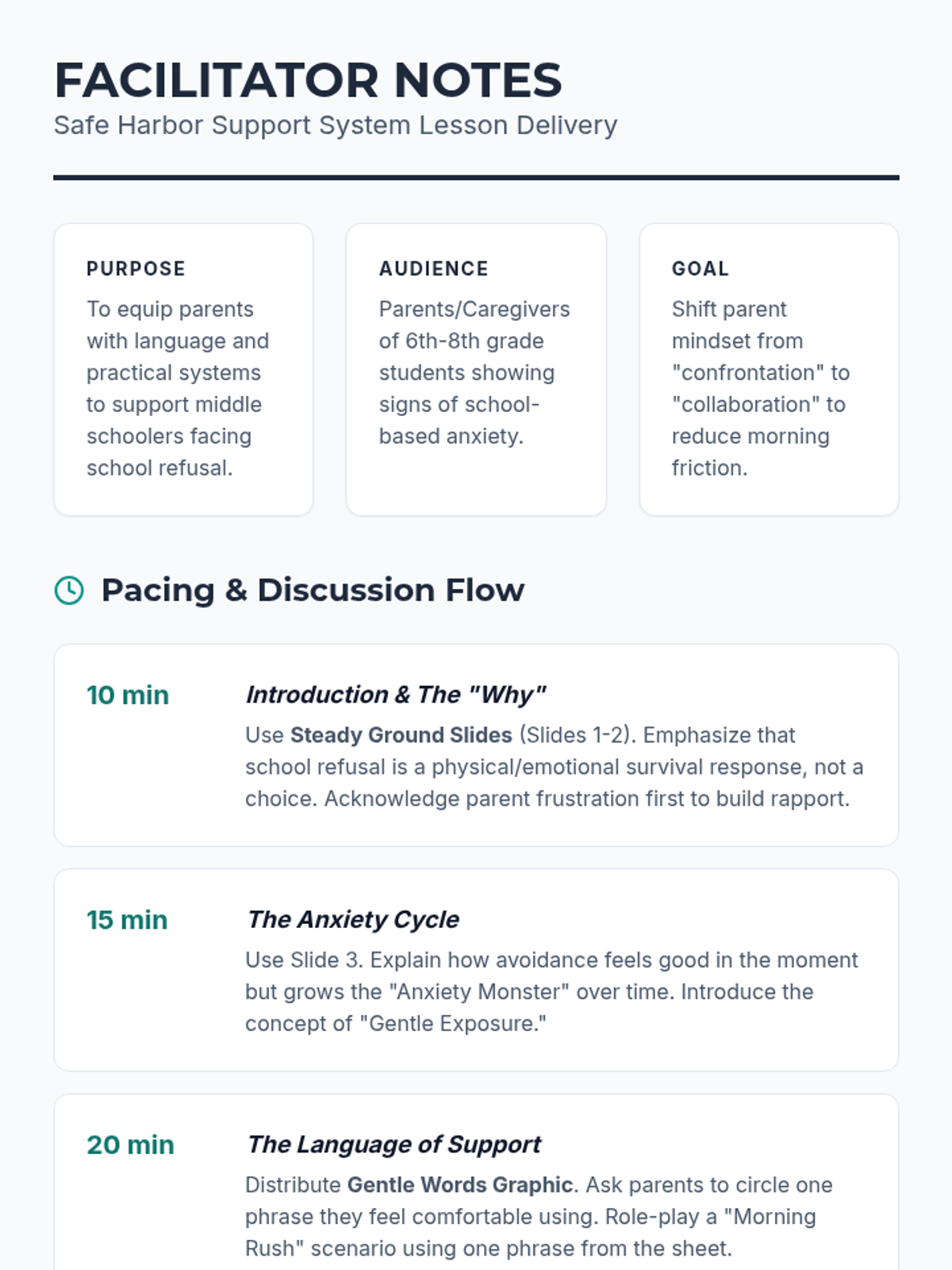
A comprehensive toolkit for middle schoolers and parents to understand and navigate school refusal, focusing on anxiety triggers, early warning signs, and collaborative coping strategies.
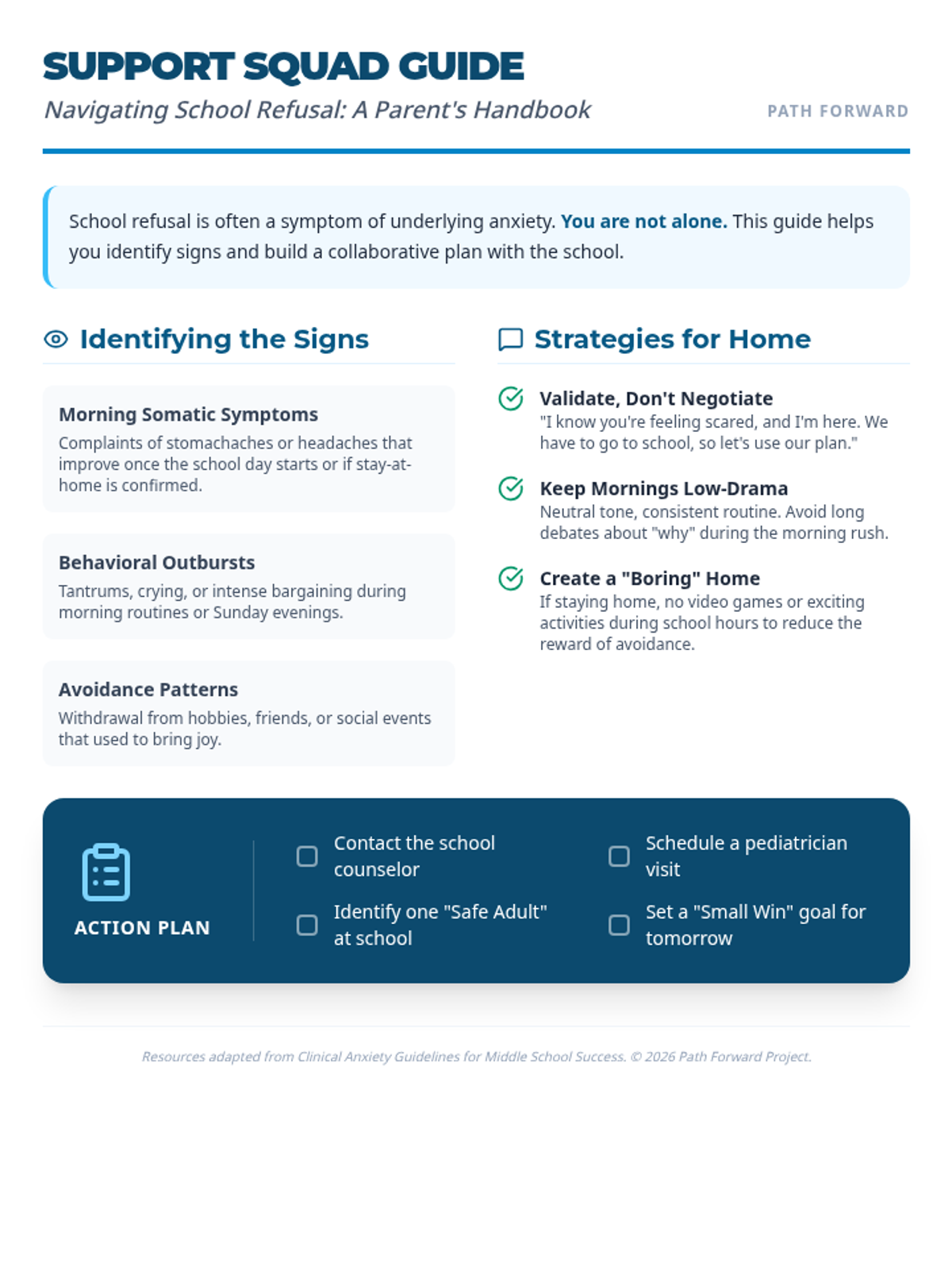
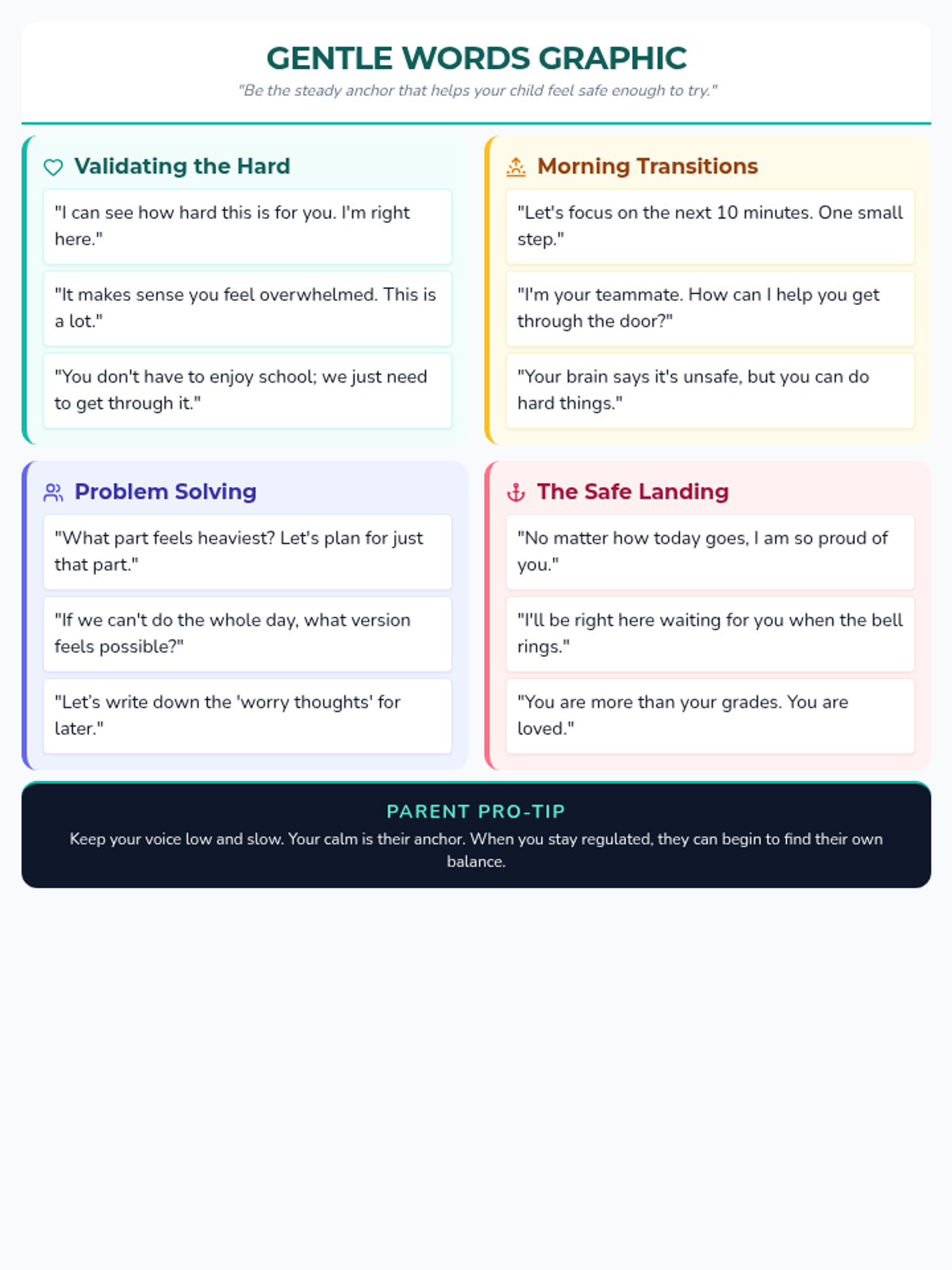
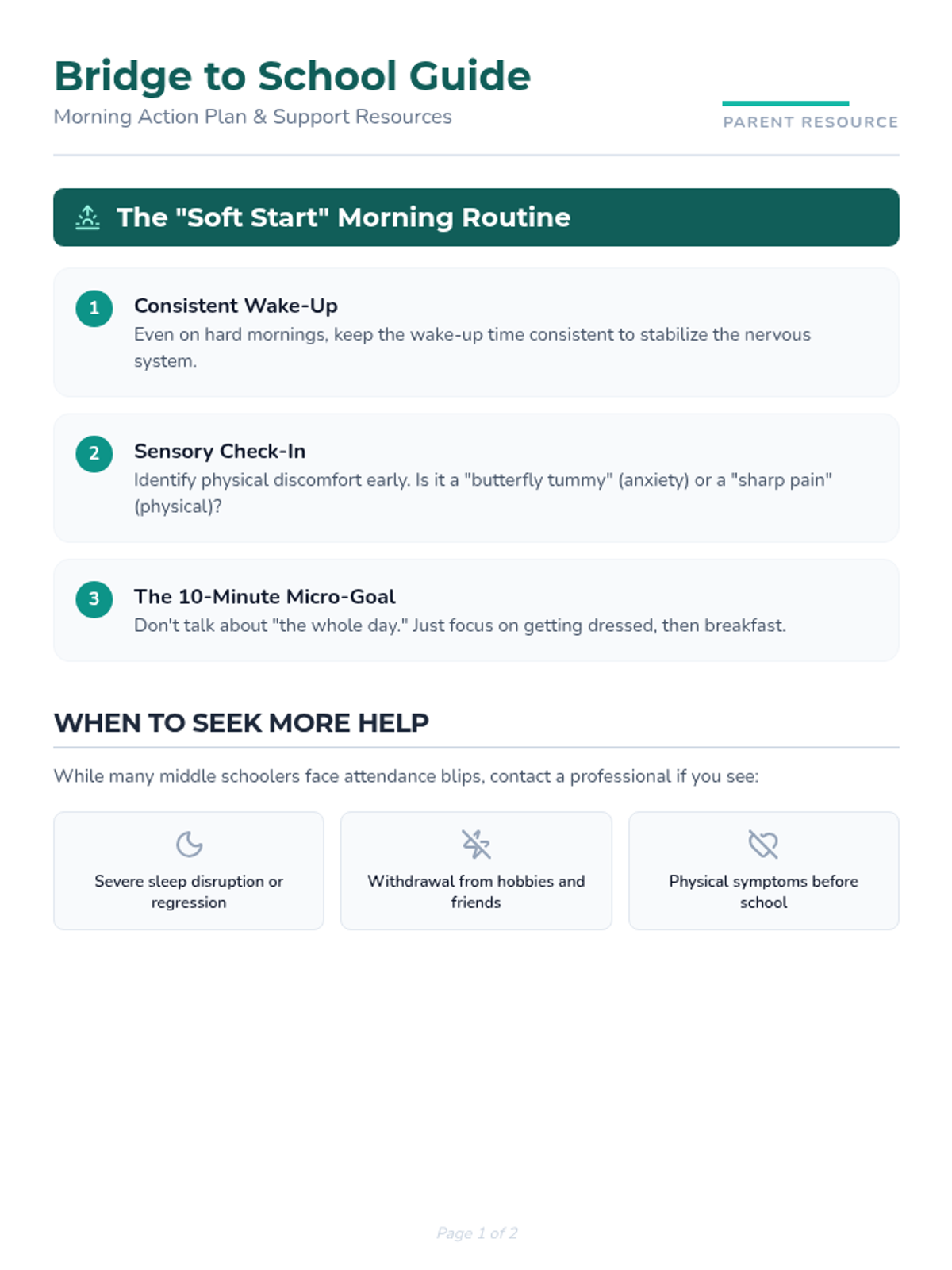
A comprehensive resource pack for middle school parents navigating child anxiety and school refusal, focusing on empathetic communication and practical morning strategies.
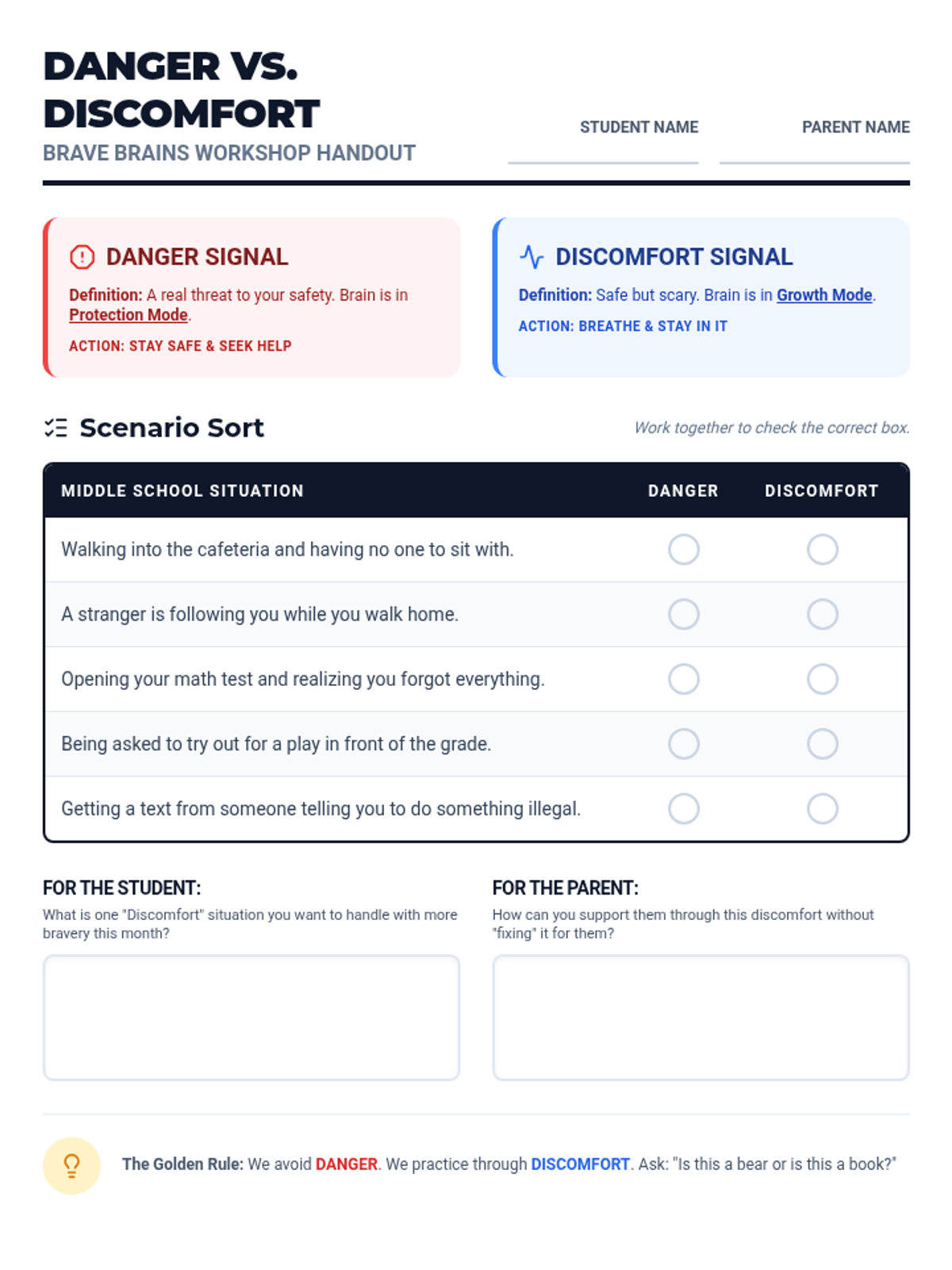
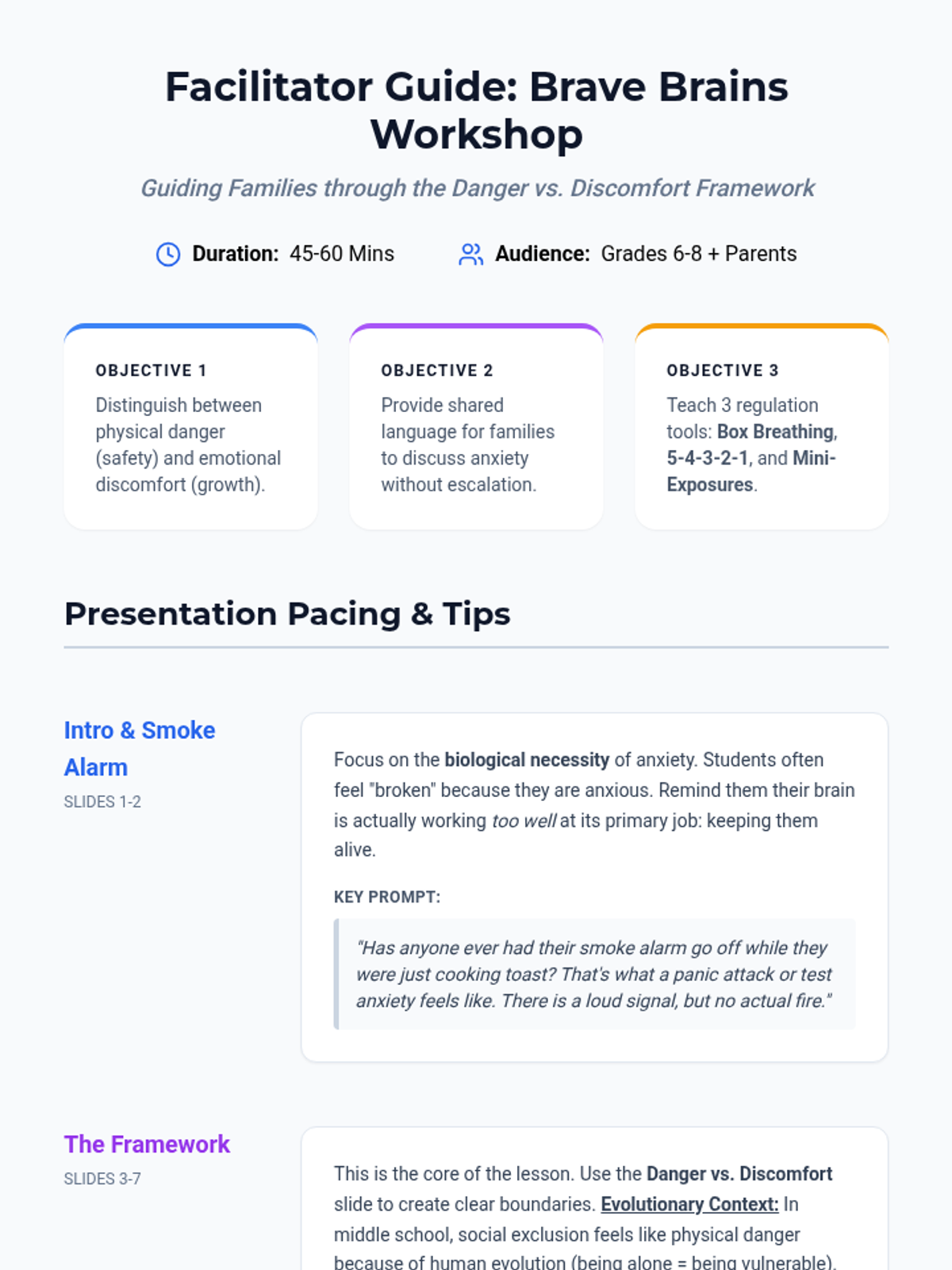
An introductory session for students and parents focused on identifying the difference between safety threats and growth-oriented discomfort.
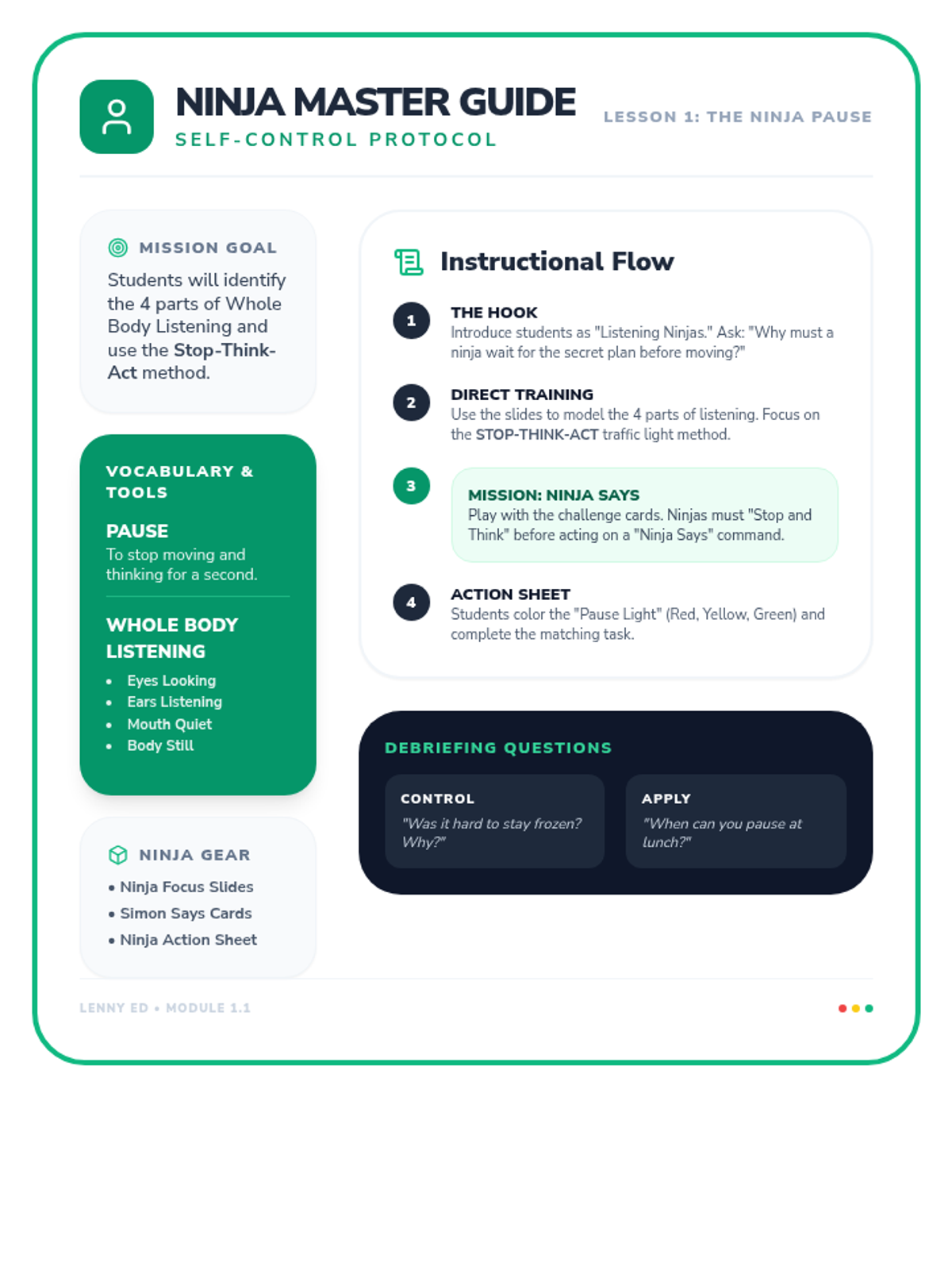
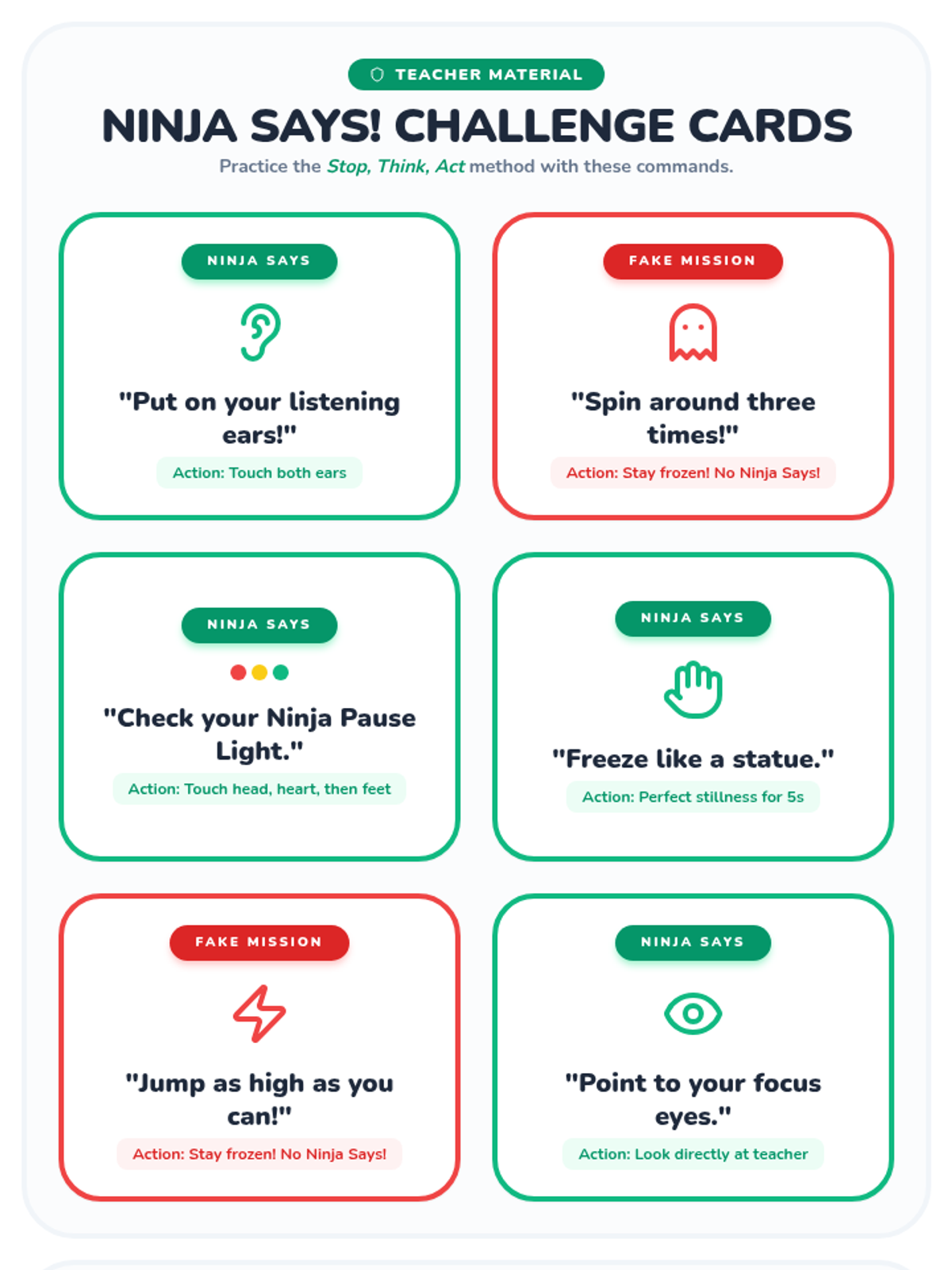
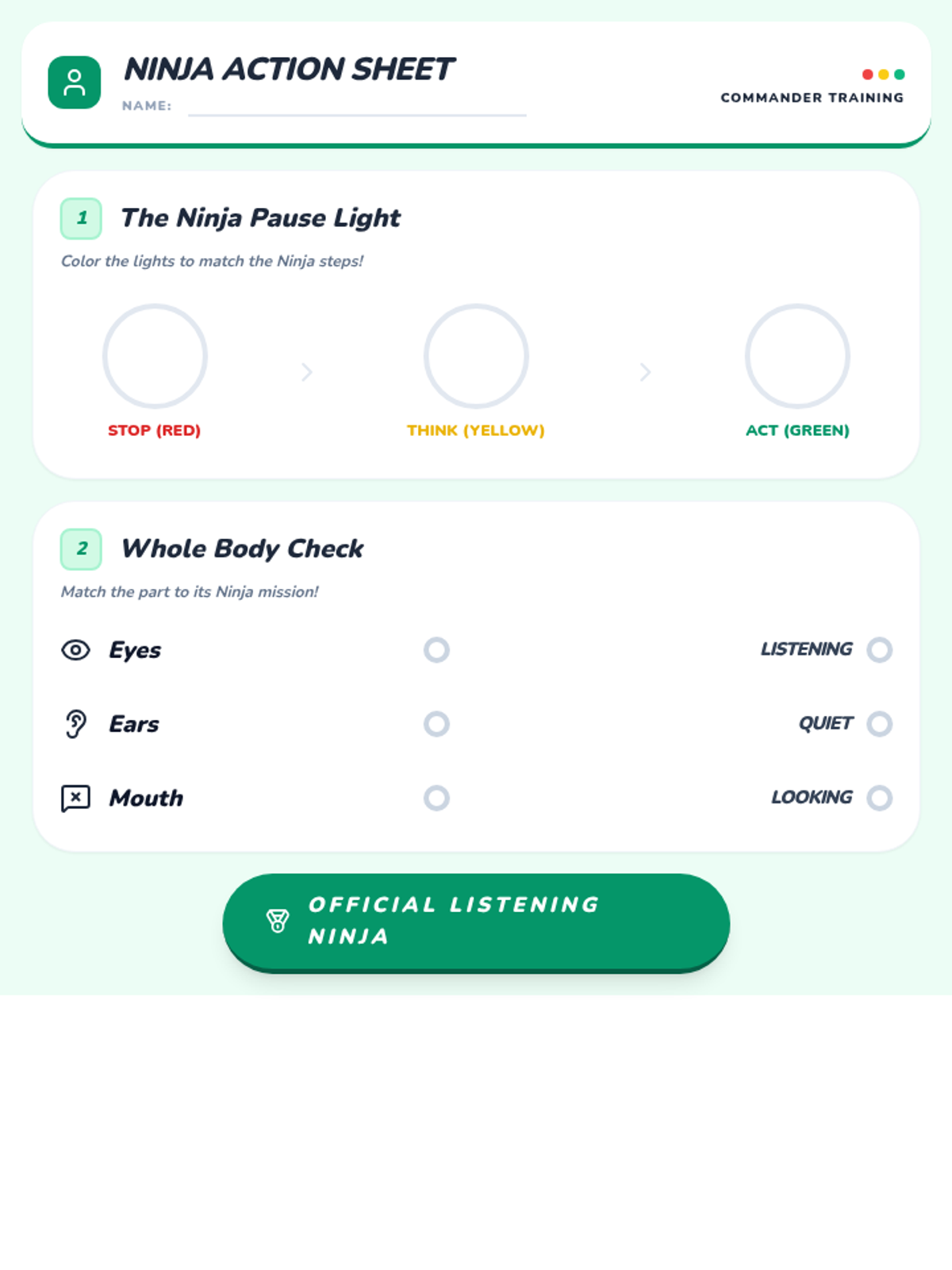
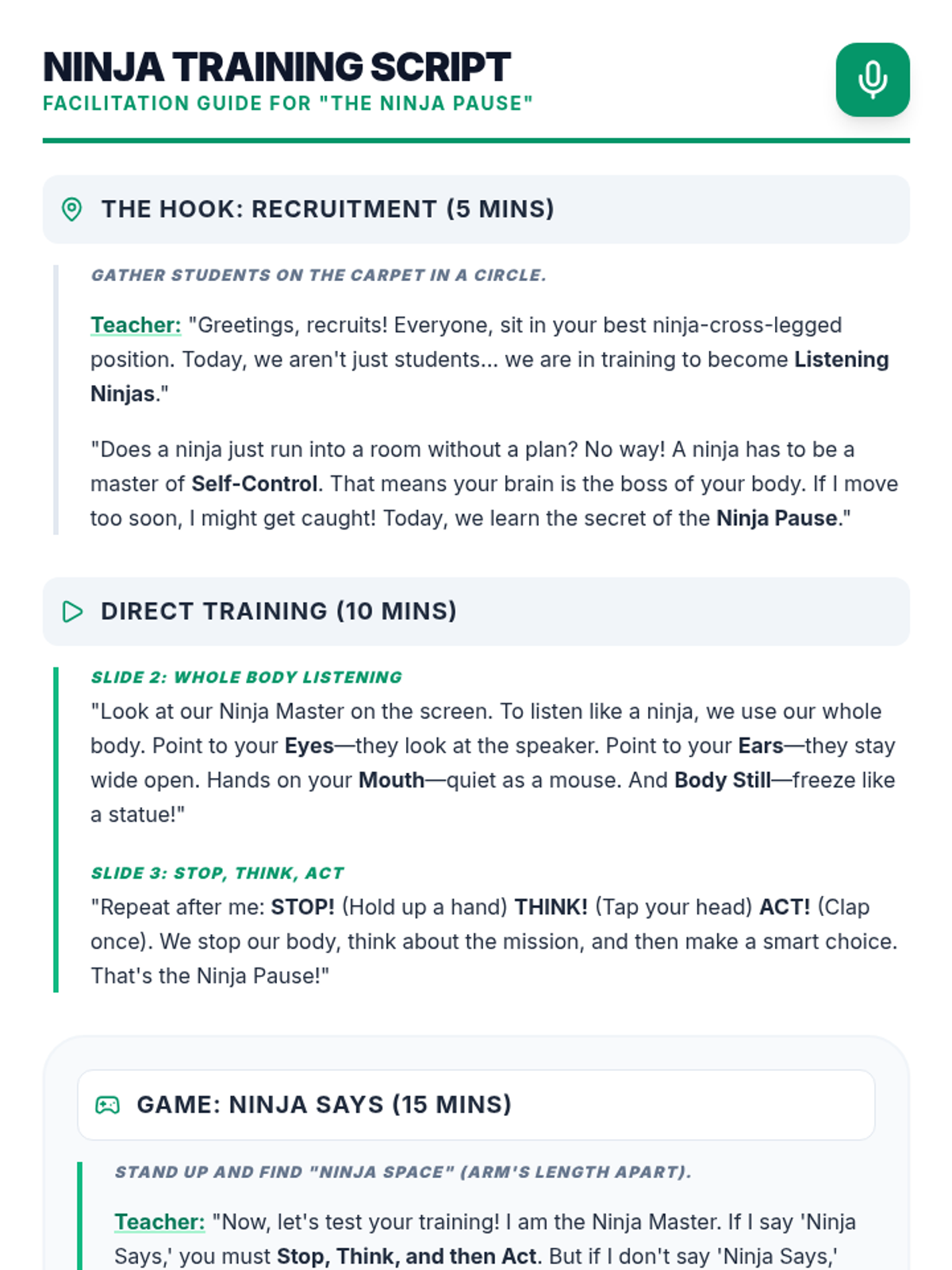
An introductory lesson on 'Whole Body Listening' and the 'Stop, Think, Act' method, featuring a Ninja-themed presentation and a specialized version of Simon Says.
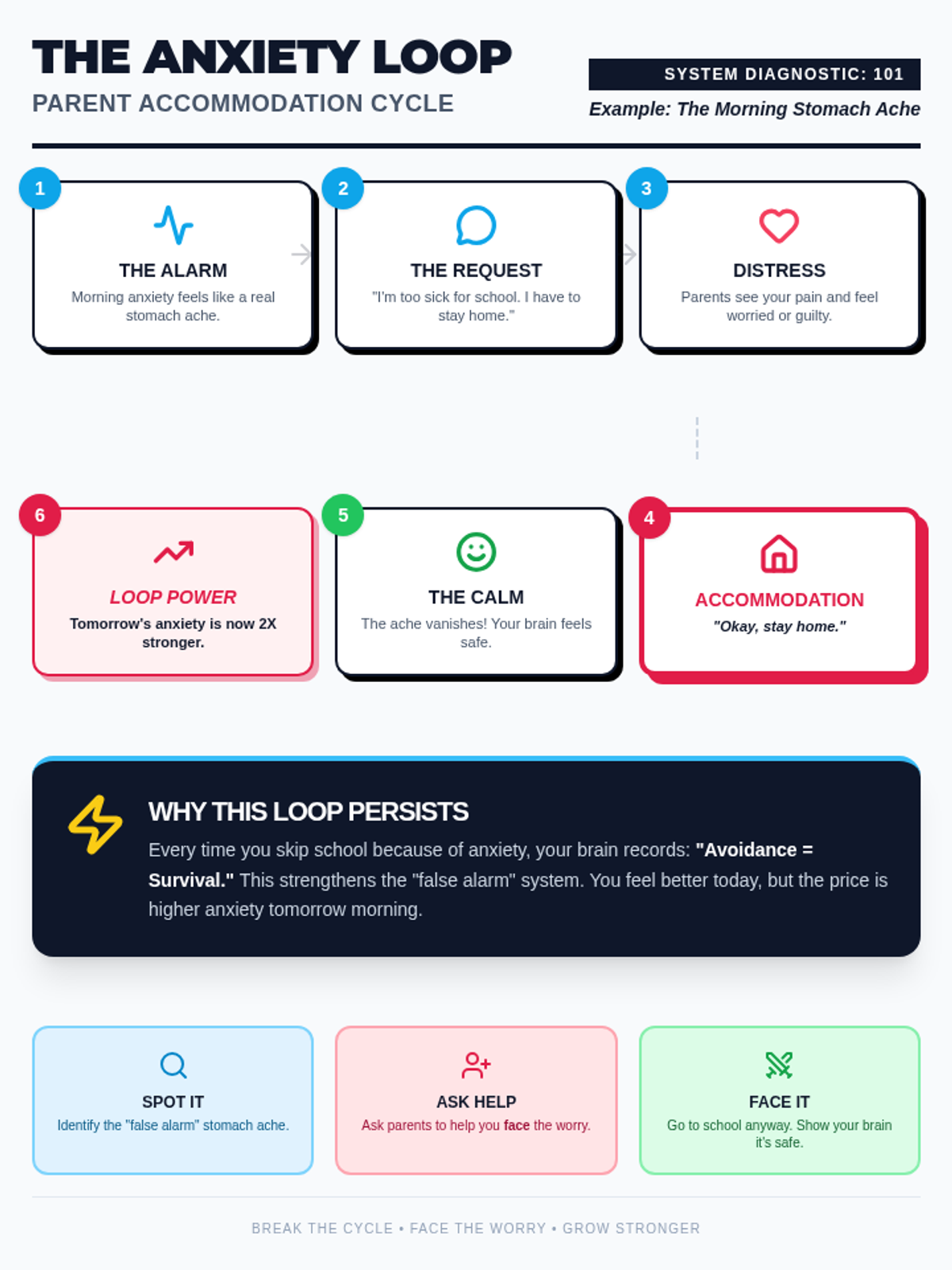
A lesson designed to help middle school students understand the Parent Accommodation Cycle through the lens of a daily morning stomach ache, focusing on how patterns of avoidance reinforce anxiety.

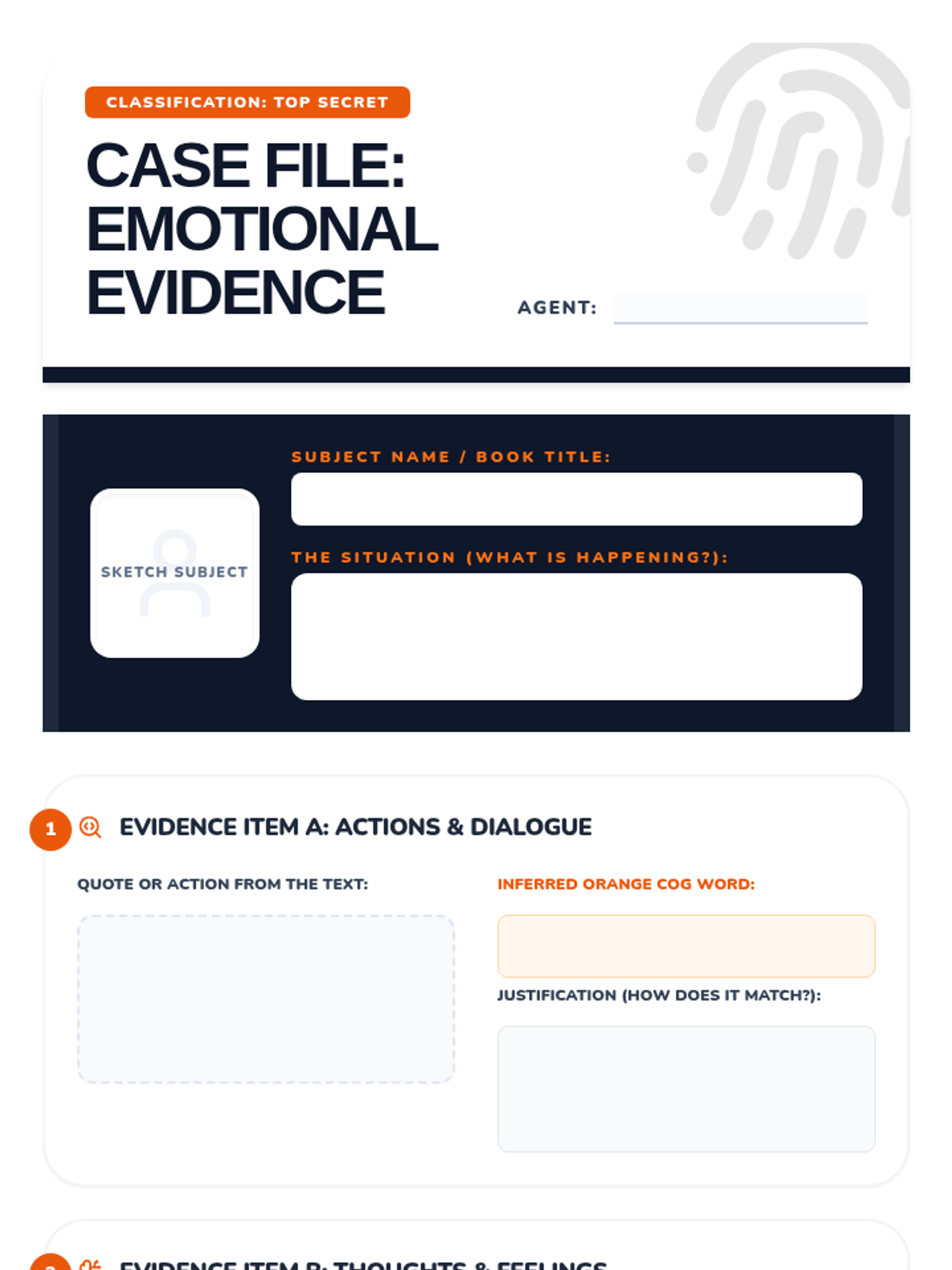
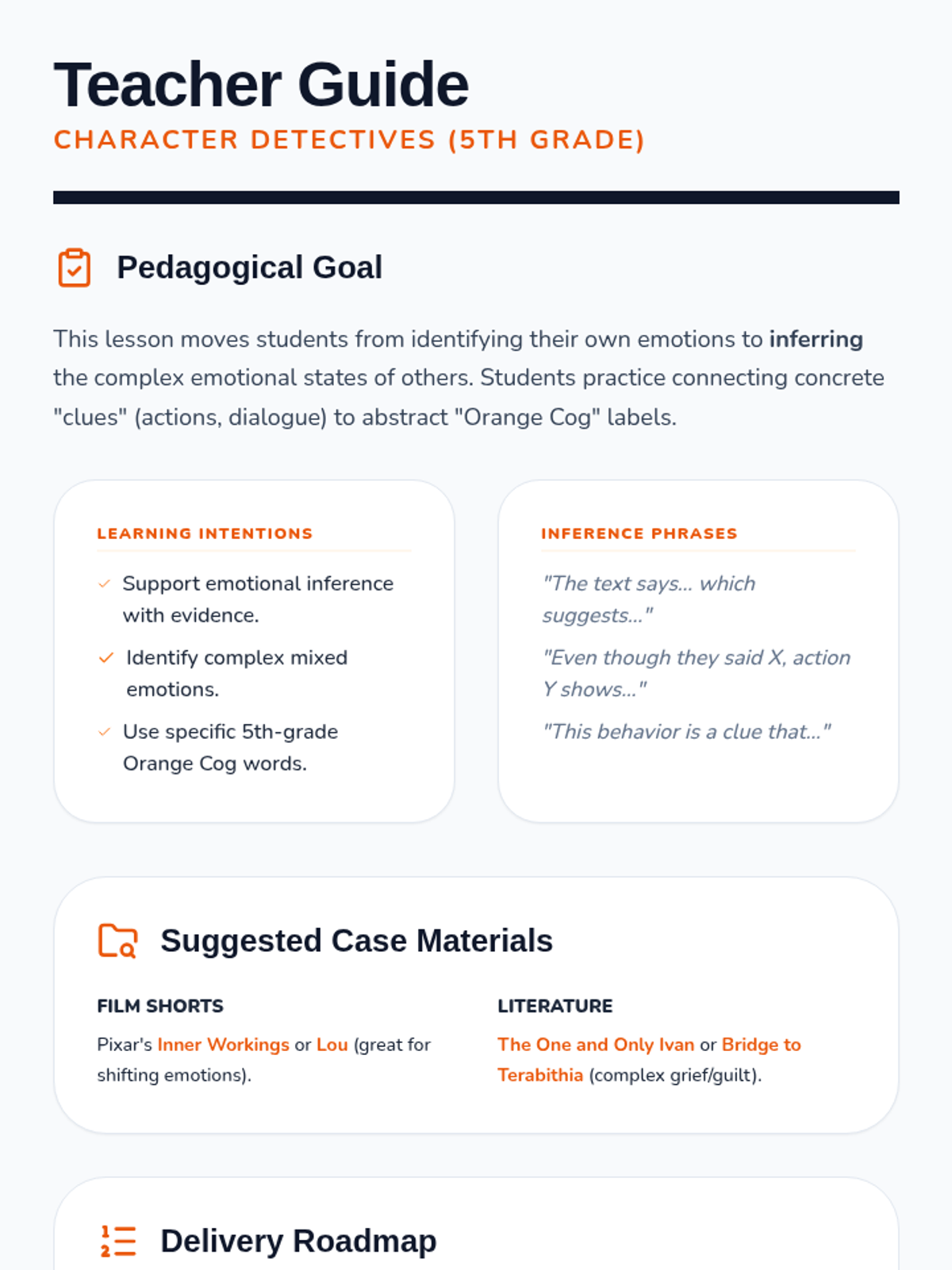
A lesson for 5th graders to apply the 'Orange Cog' by analyzing characters in stories or films, identifying their complex emotions through actions, dialogue, and inner thoughts.
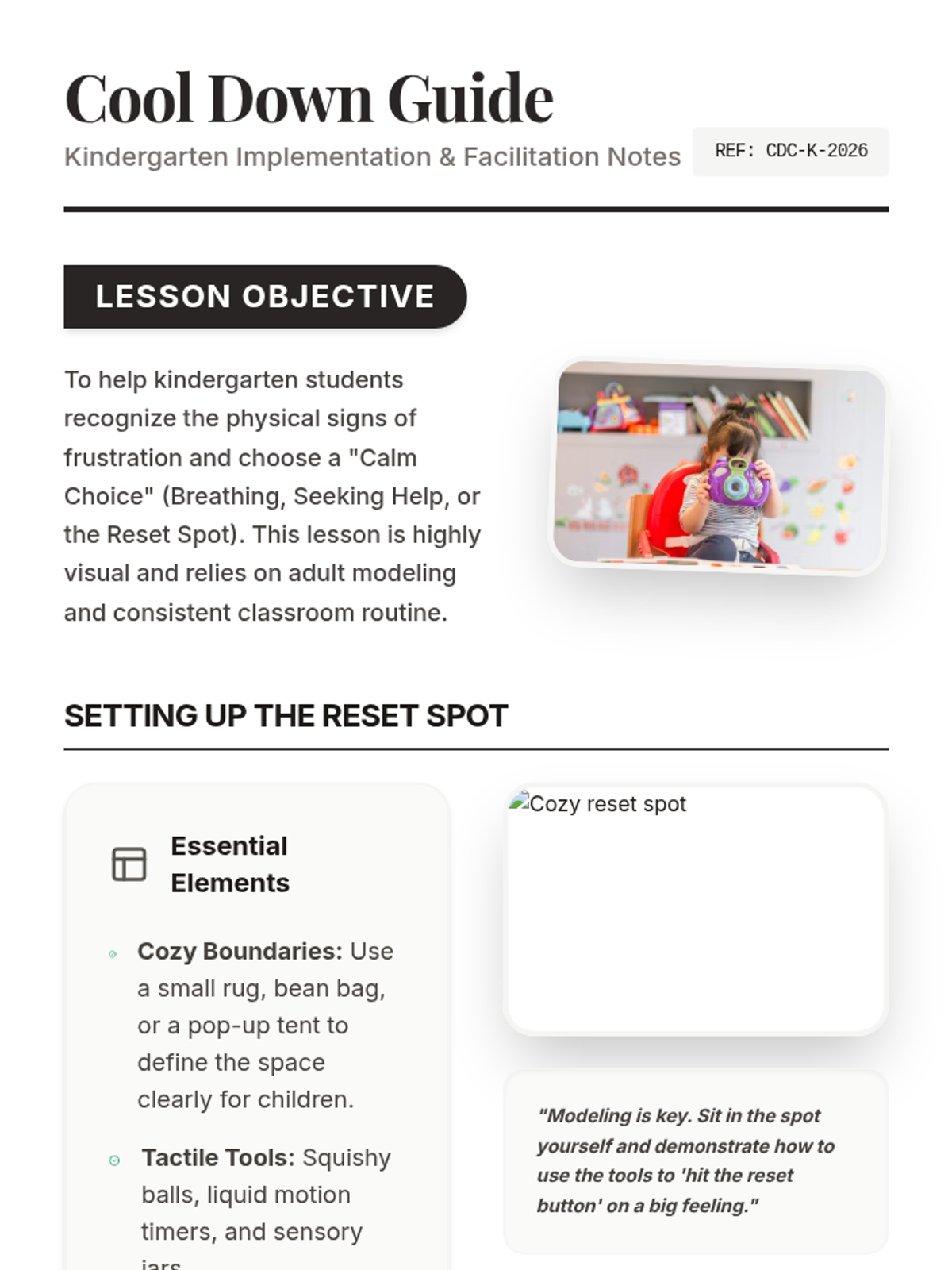
A comprehensive lesson on emotional regulation, teaching students practical strategies for managing frustration through breathing, seeking support from trusted adults, and utilizing a designated cool-down space.
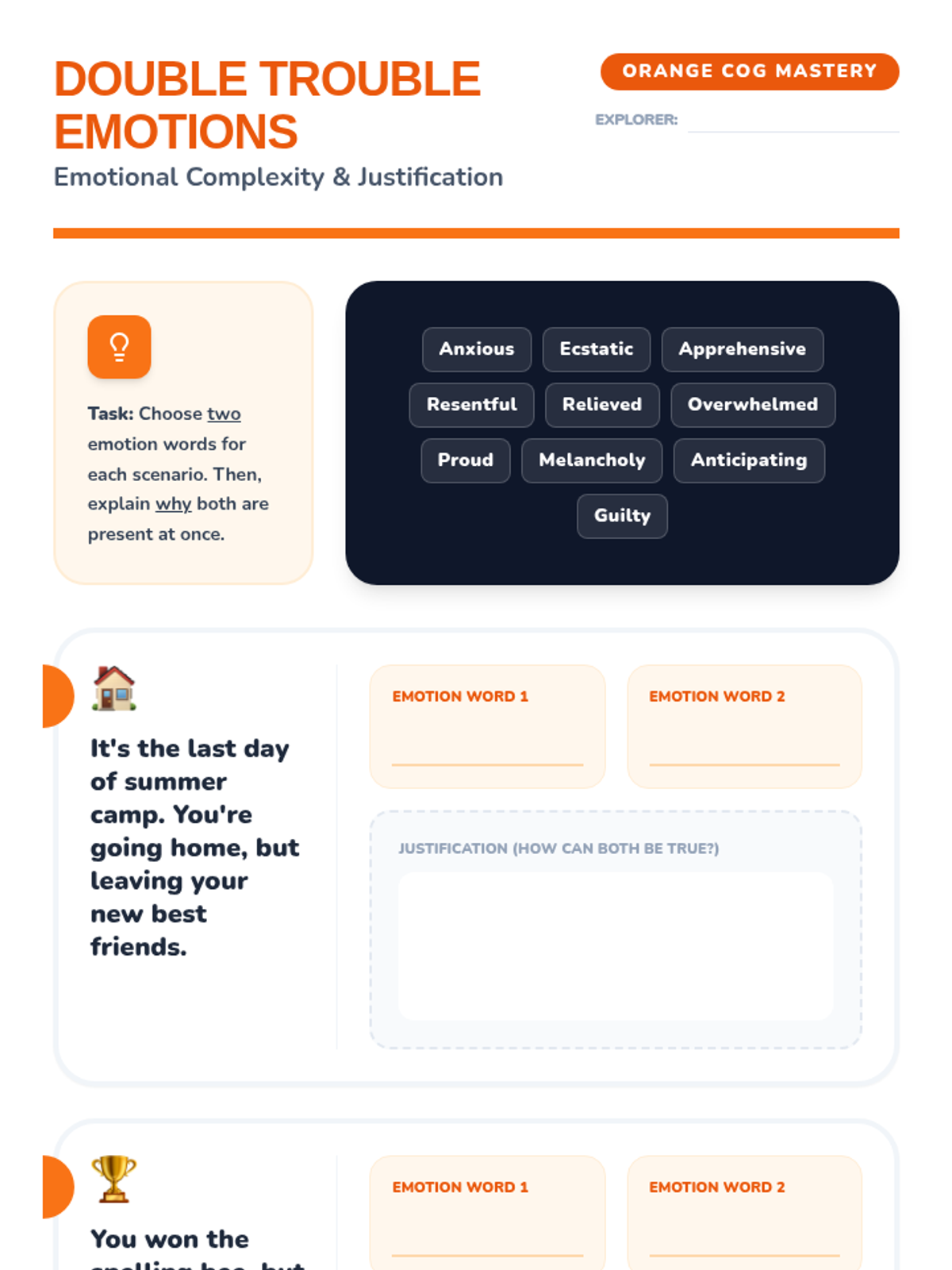
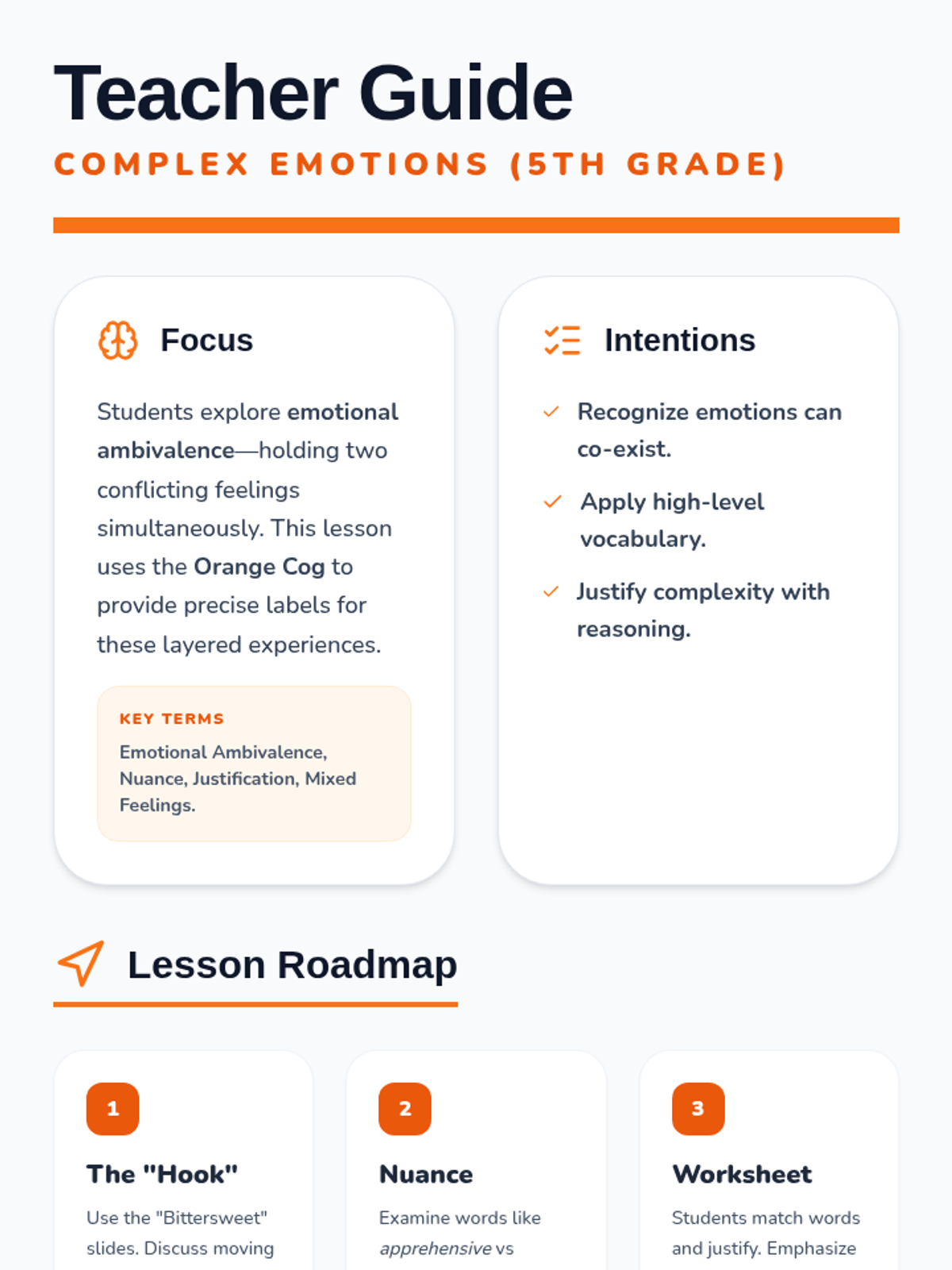
A lesson for 5th graders exploring emotional complexity, specifically how multiple 'Orange Cog' words can describe a single experience, featuring matching tasks with written justifications.
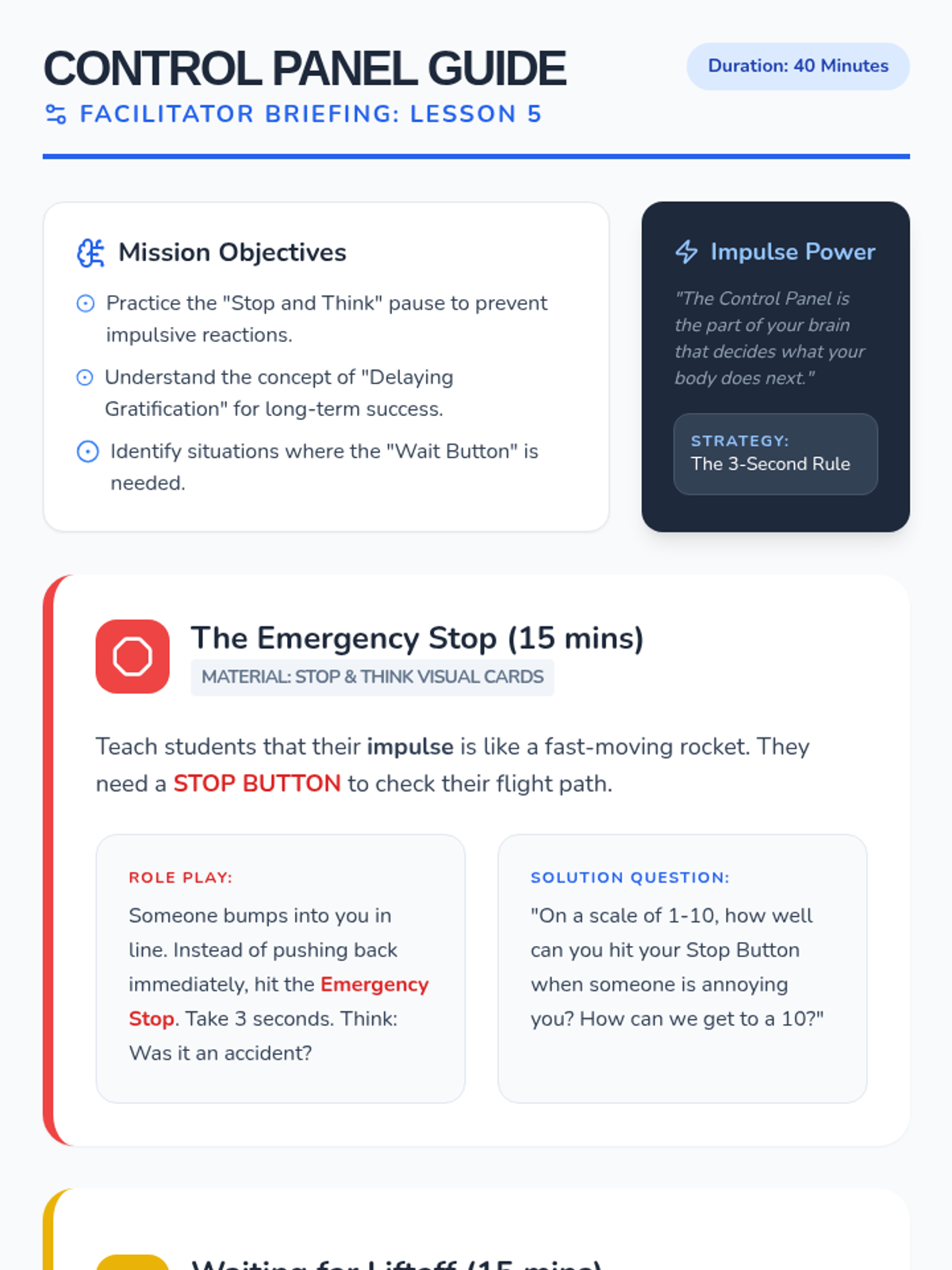
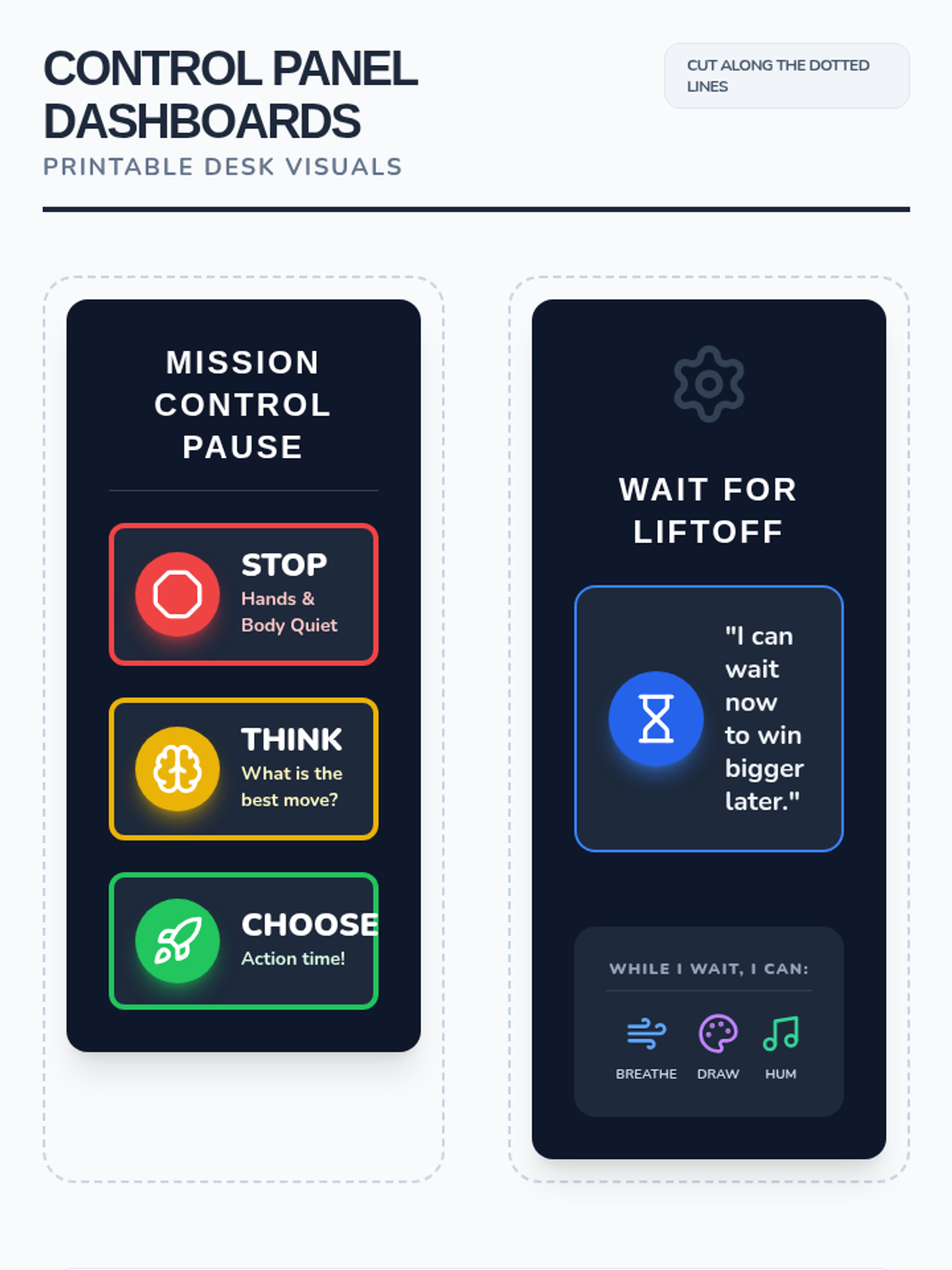
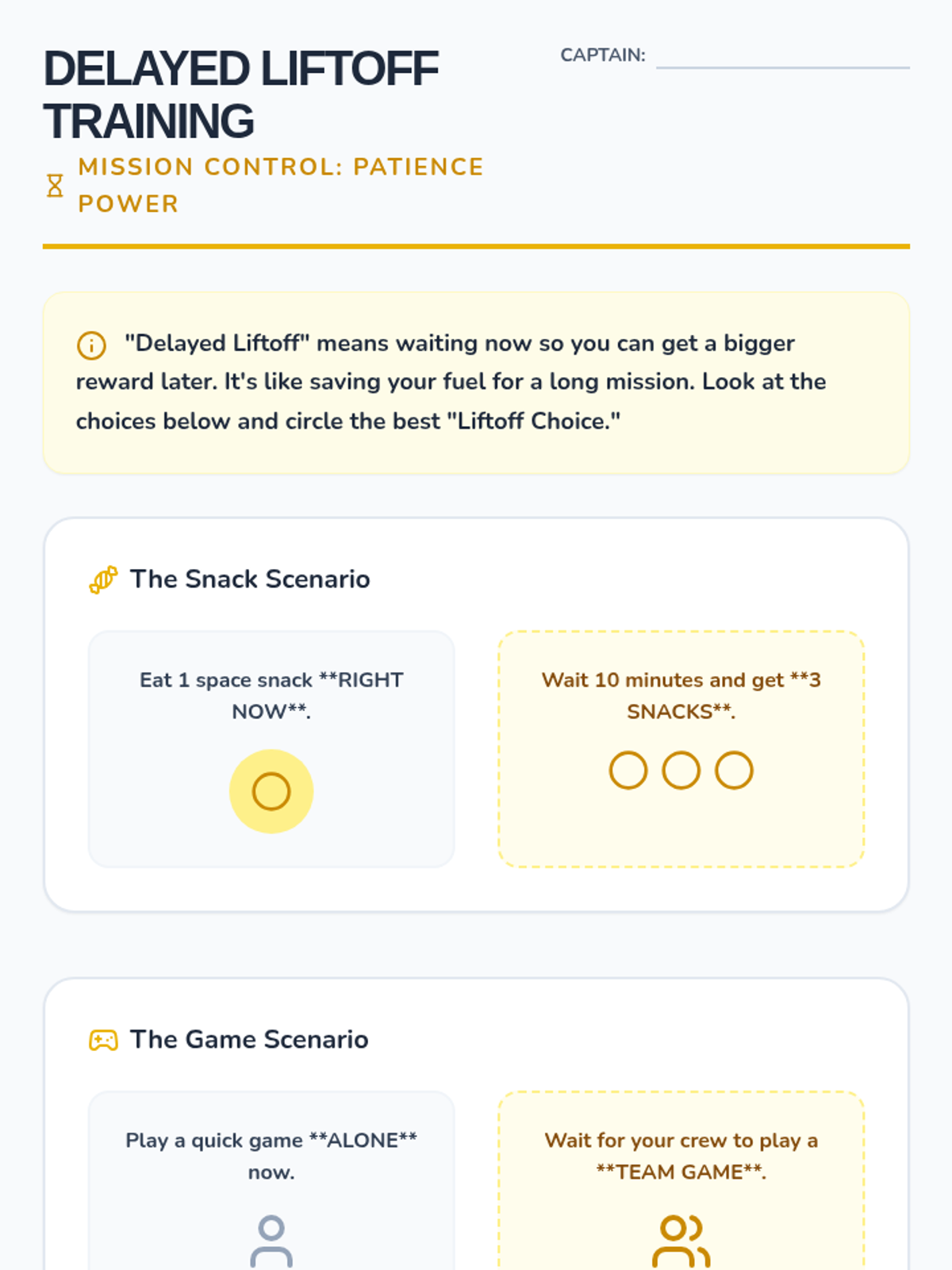
Focusing on the 'Control Panel' of the brain: practicing the 'Stop and Think' pause and developing the ability to delay gratification for long-term mission success.
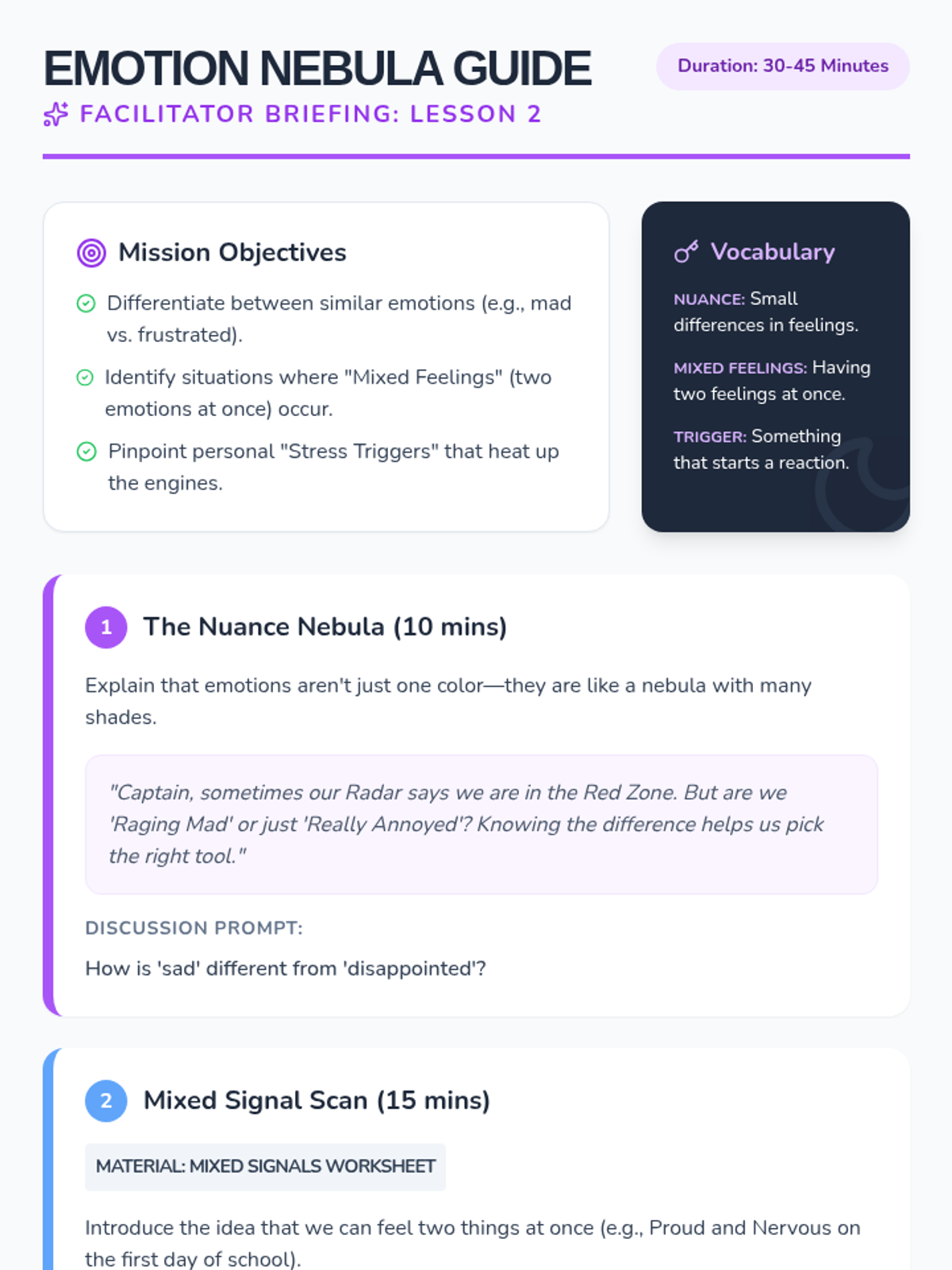
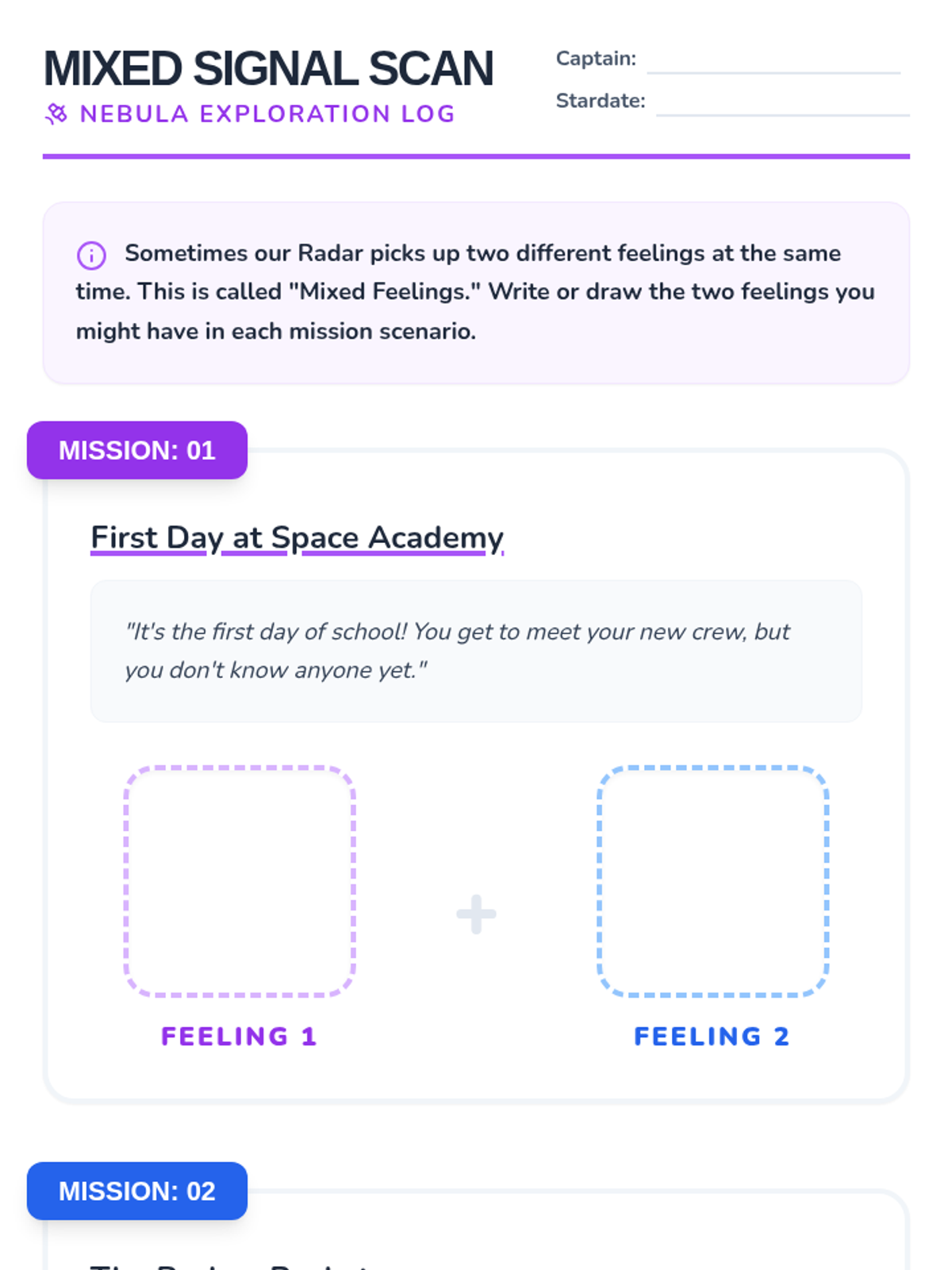
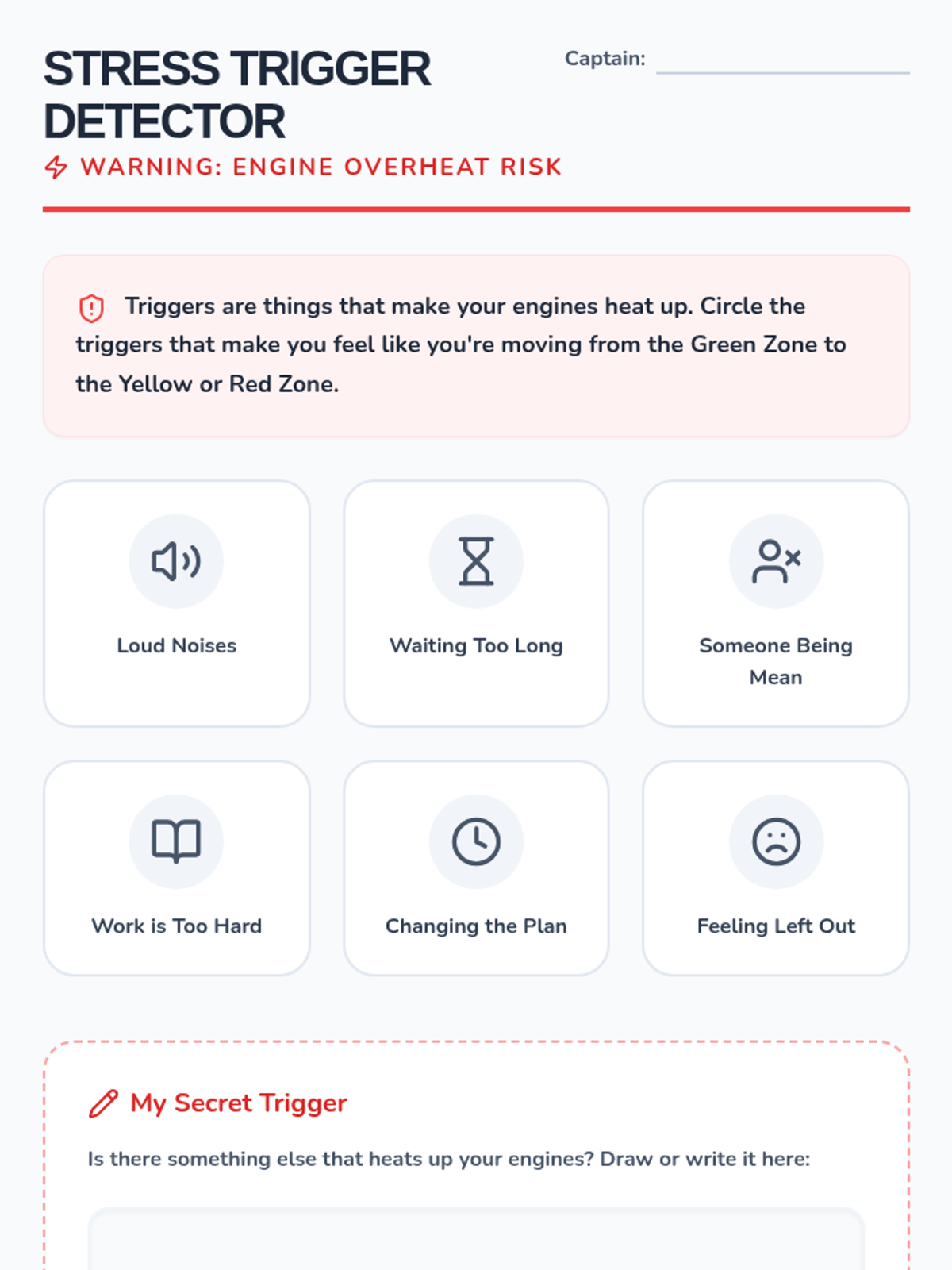
Exploring the 'Emotion Nebula' to identify nuanced feelings (frustrated vs. angry), mixed emotions (excited and nervous), and personal stress triggers.
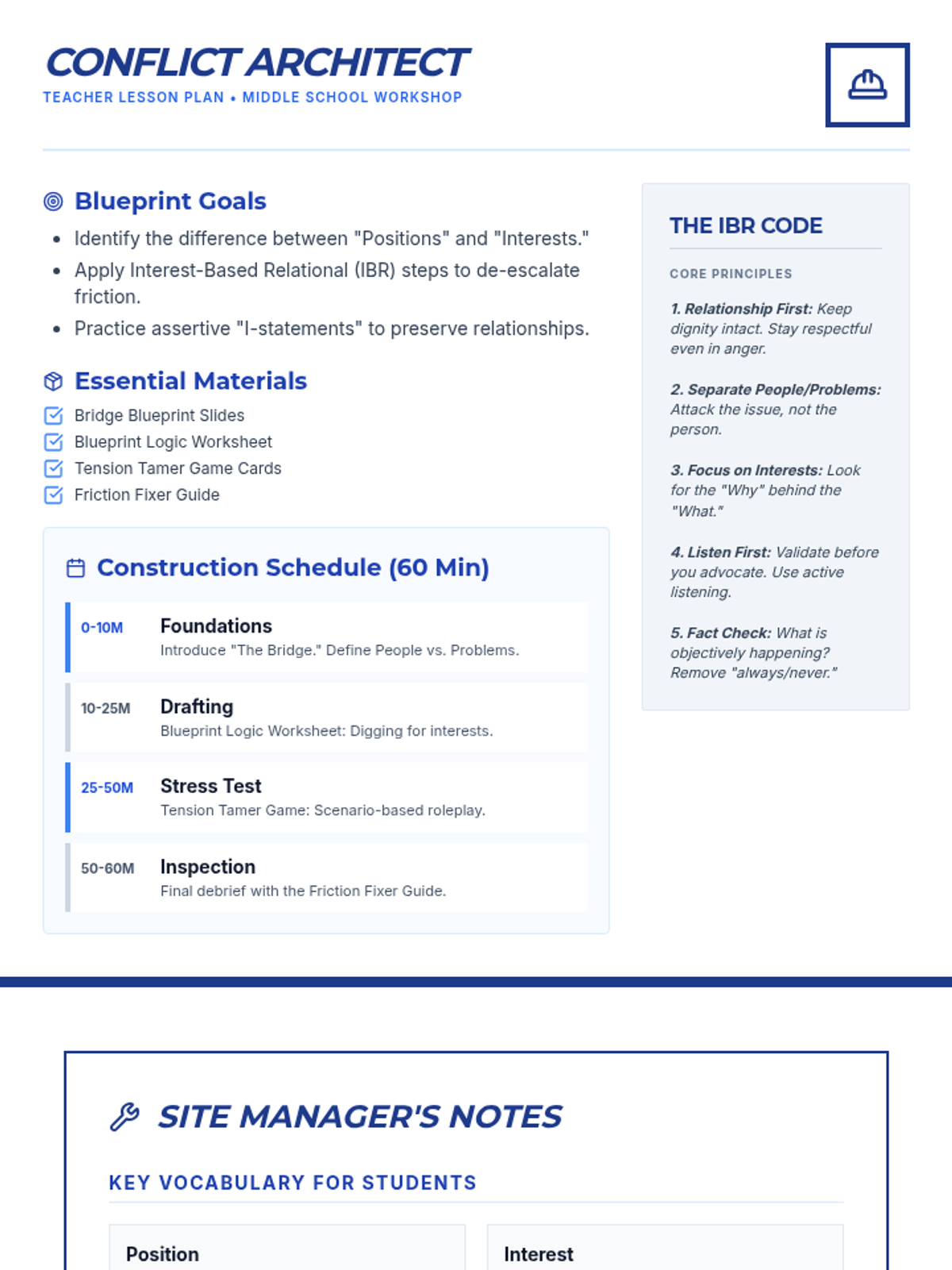
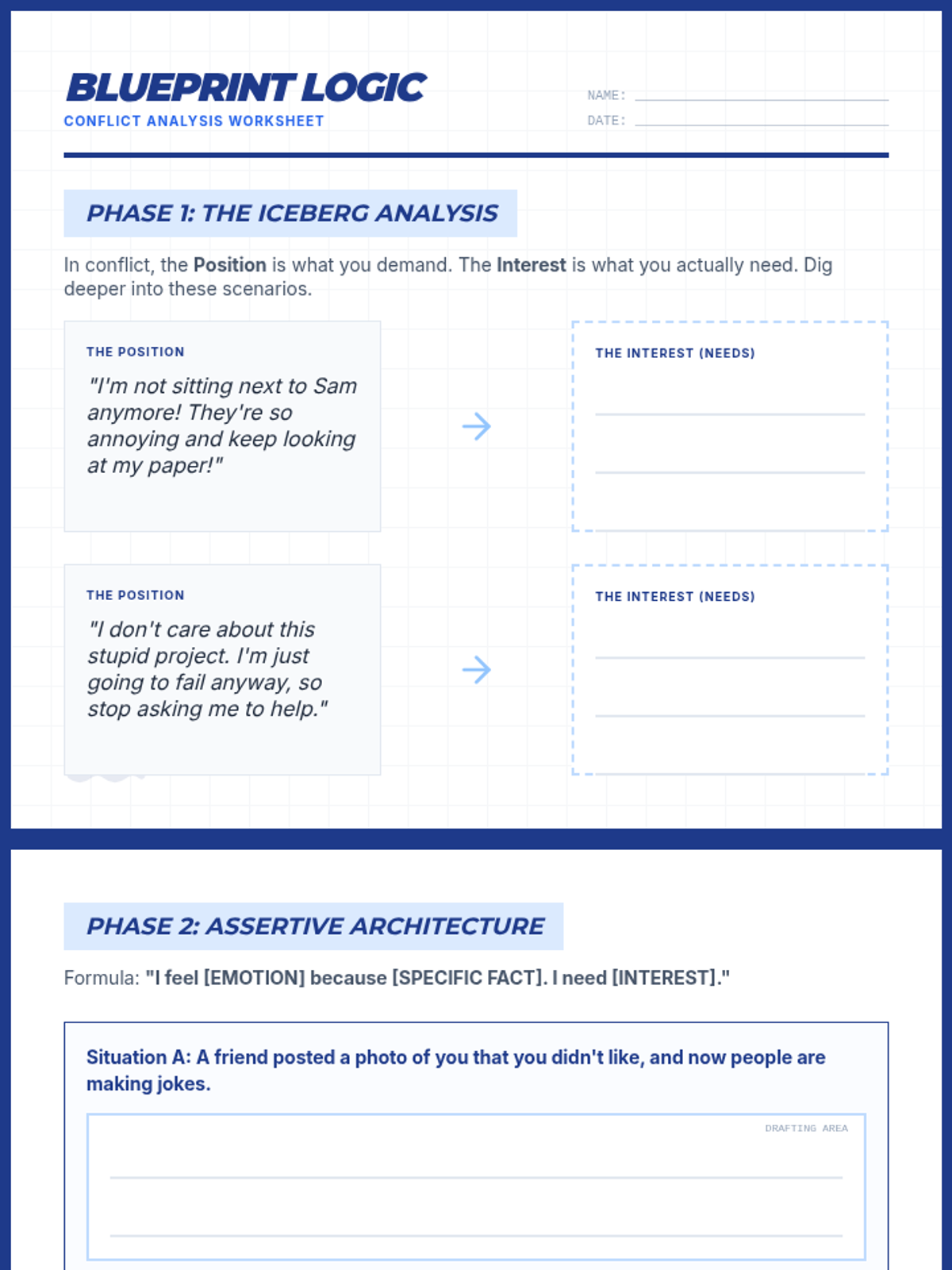
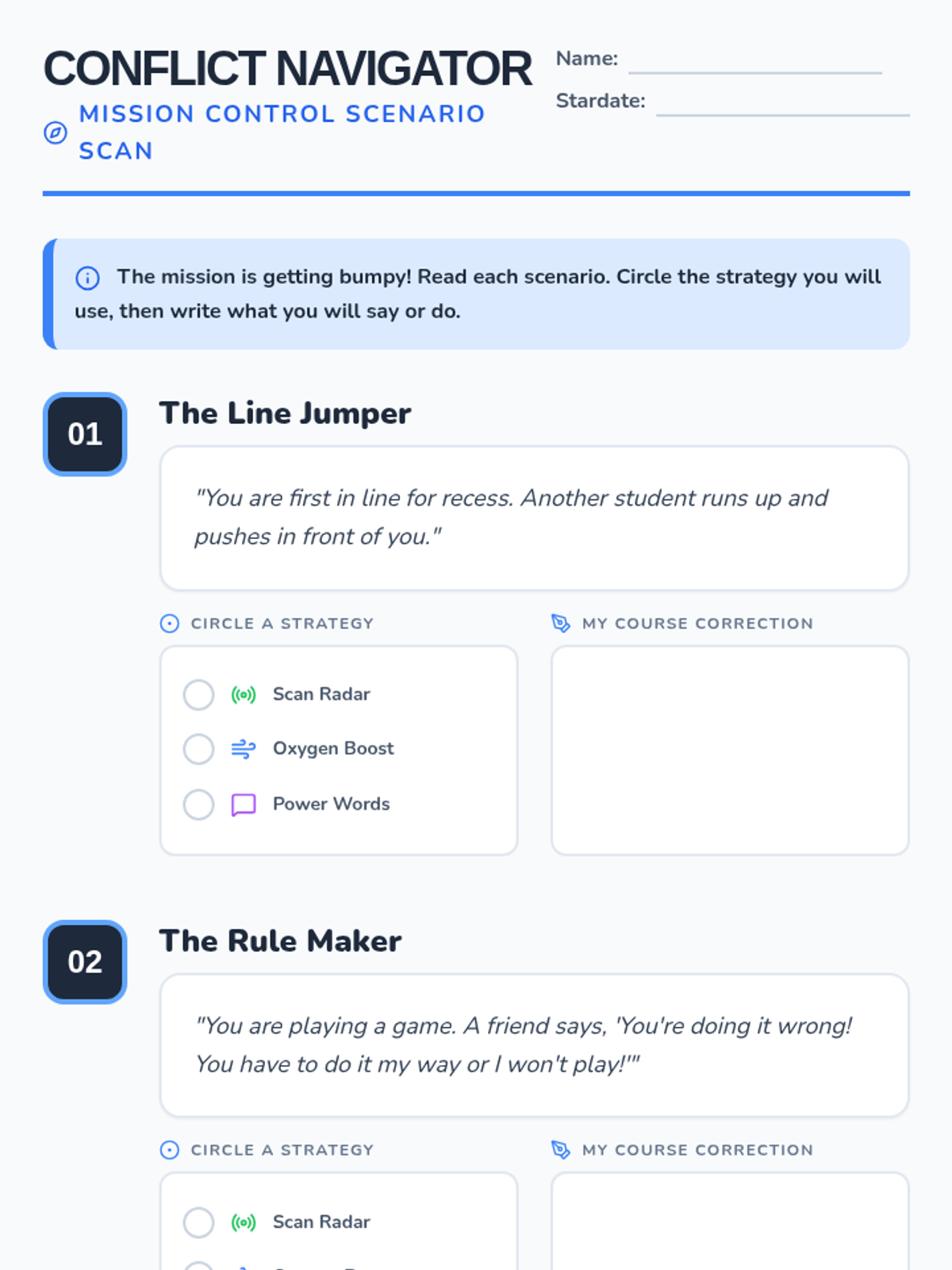
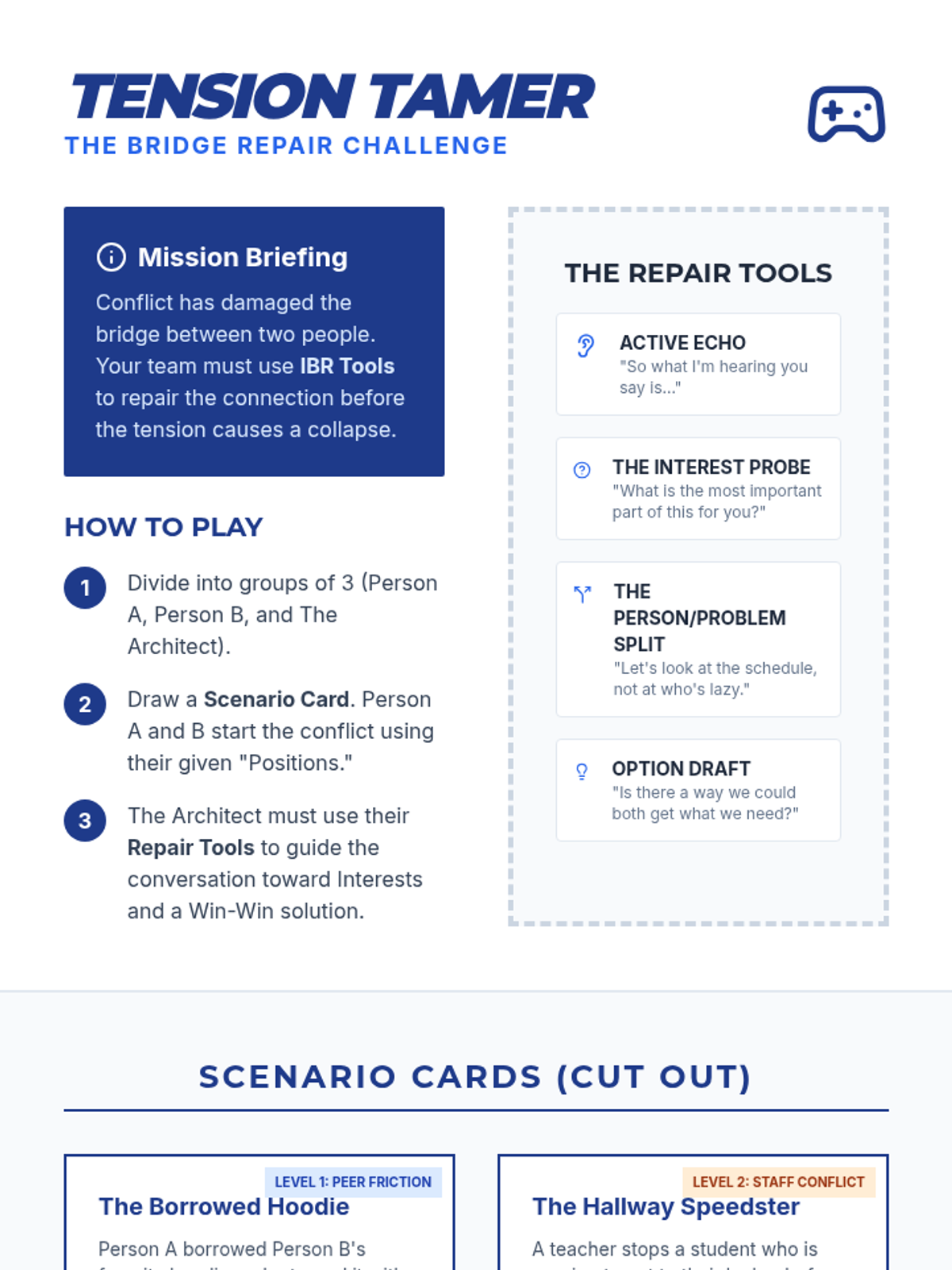
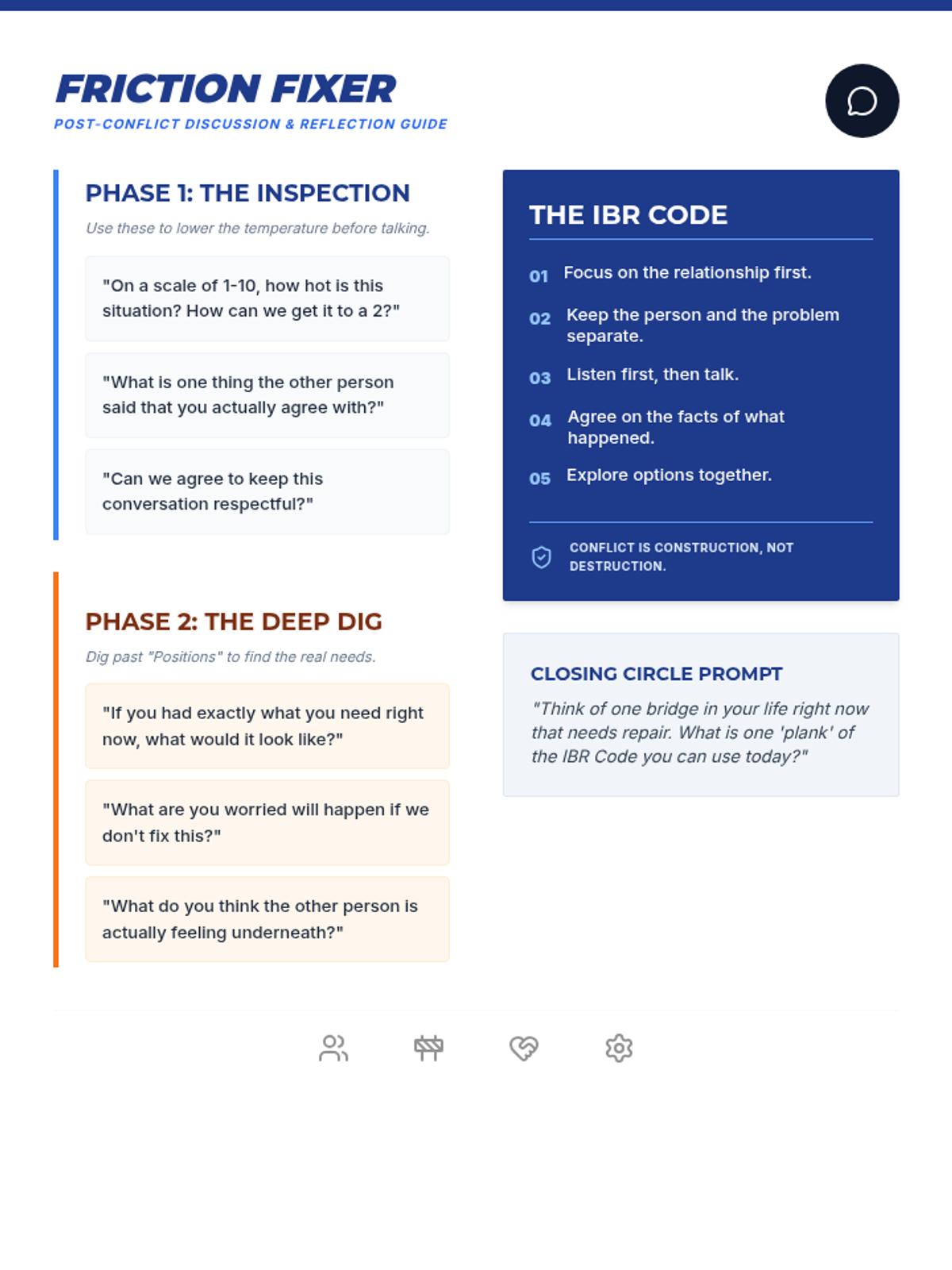
A workshop on de-escalation and Interest-Based Relational (IBR) communication strategies for middle schoolers. Students learn to separate people from problems and identify underlying interests to resolve conflicts effectively.
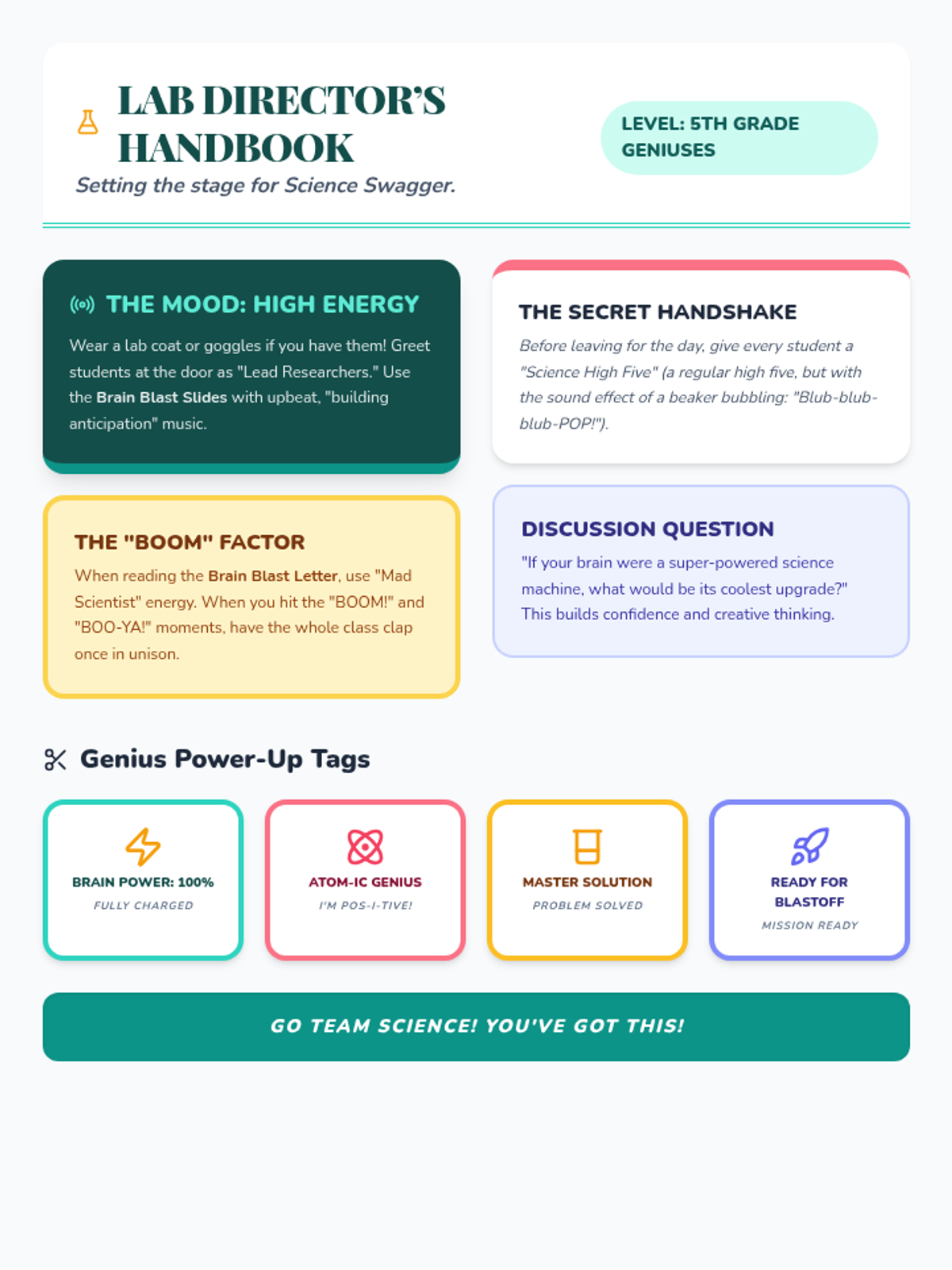
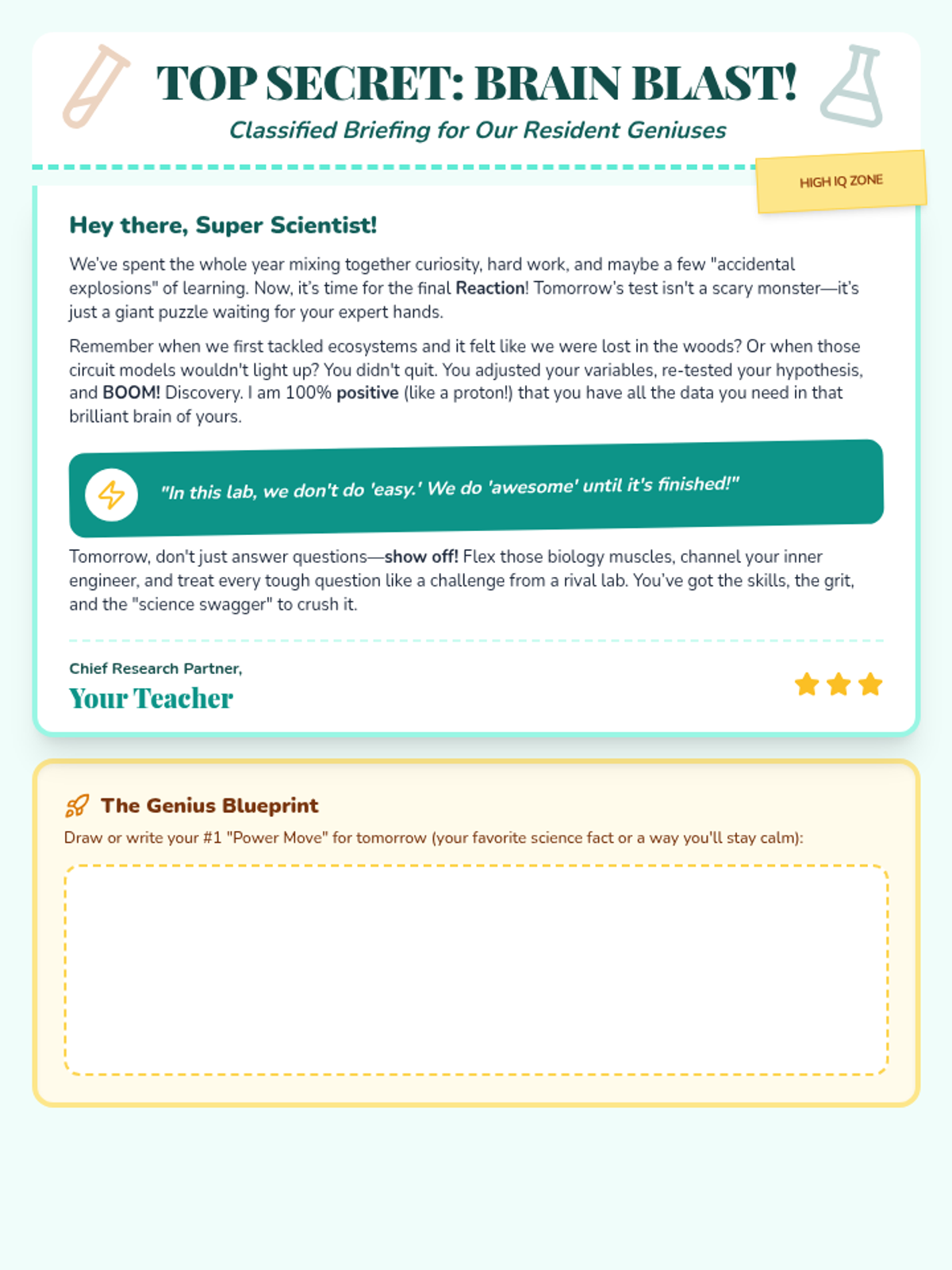
A warm, science-themed motivational session to prepare 5th-grade students for their state science test, focusing on confidence and shared growth.
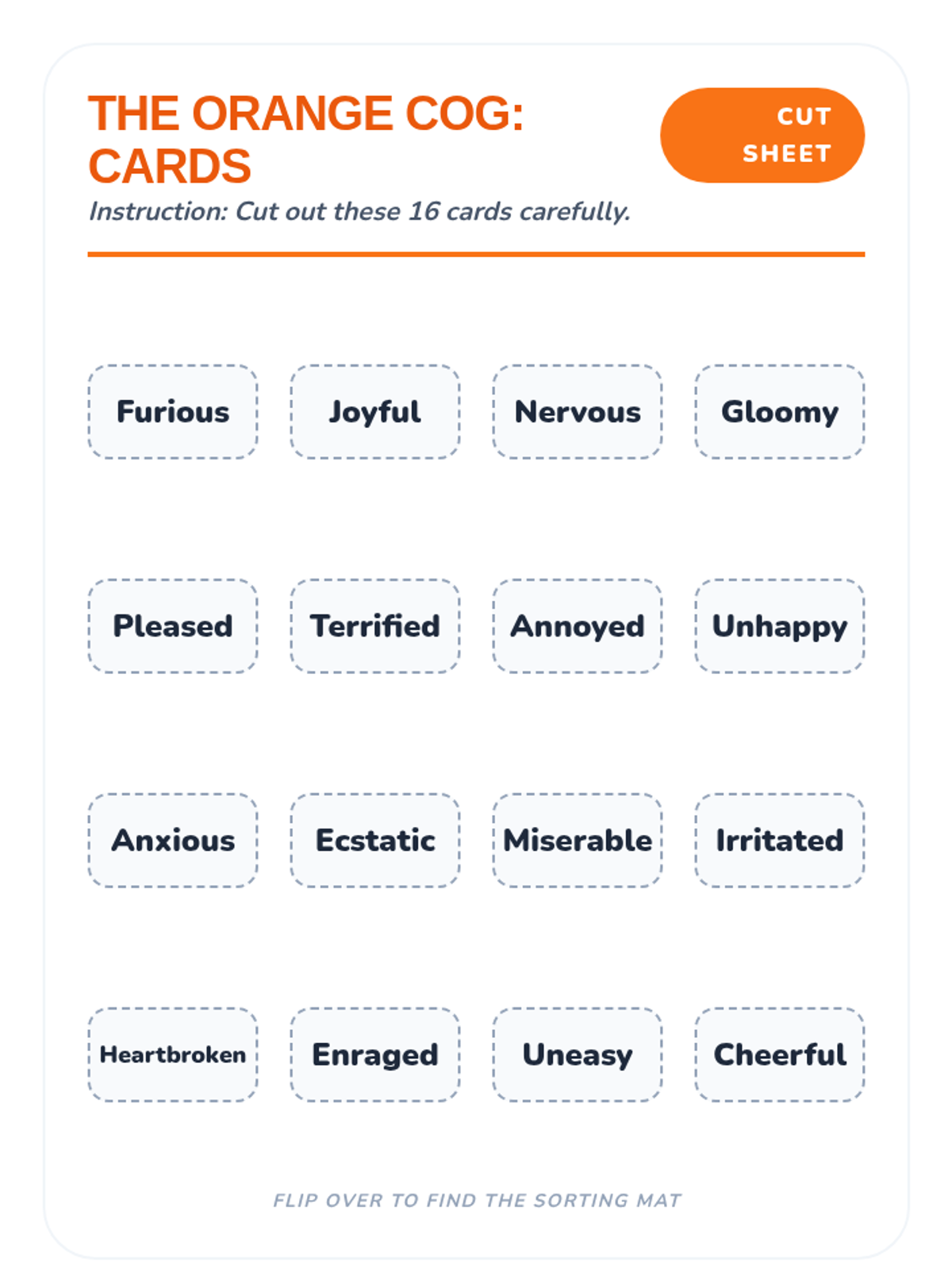
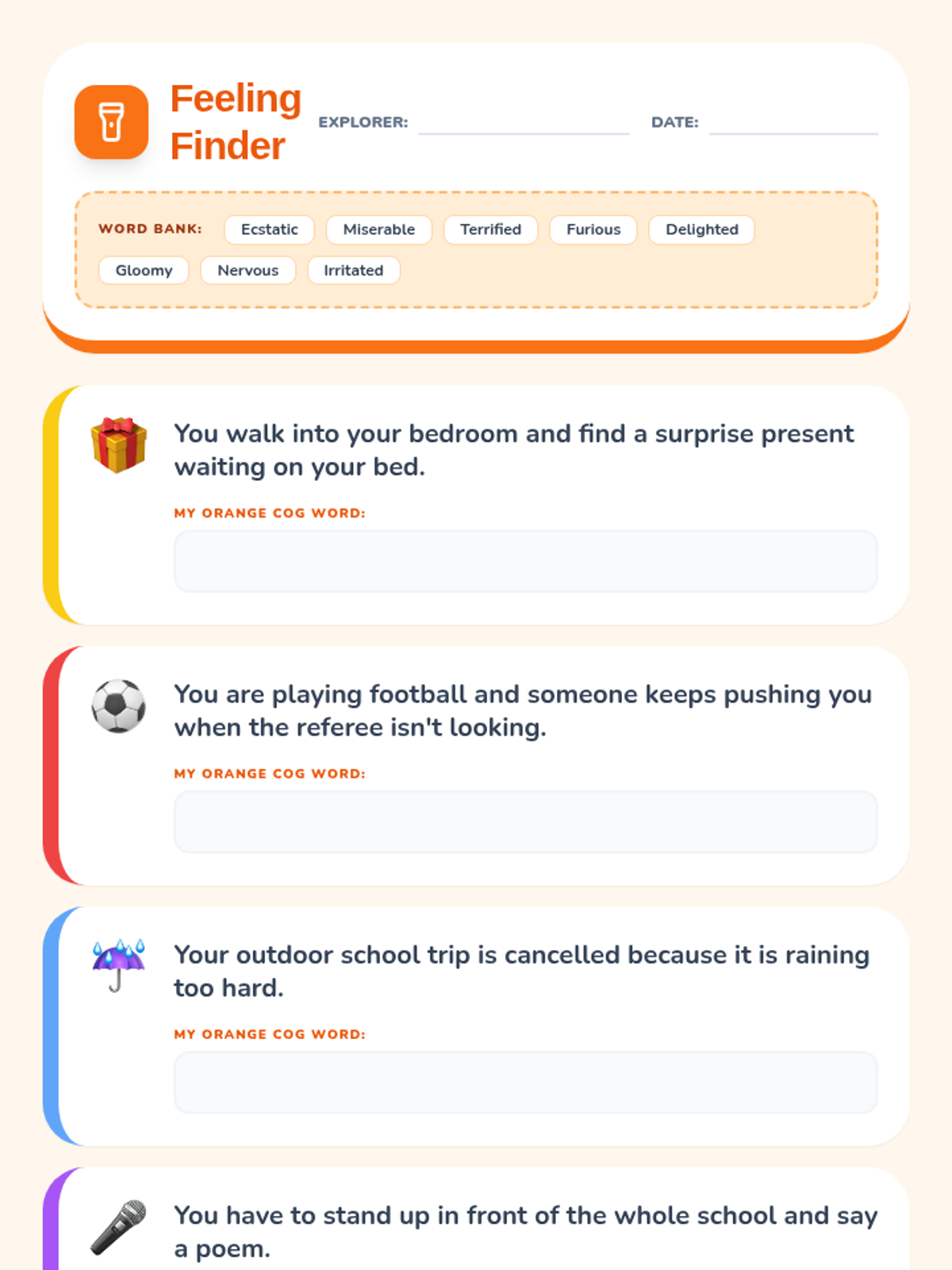
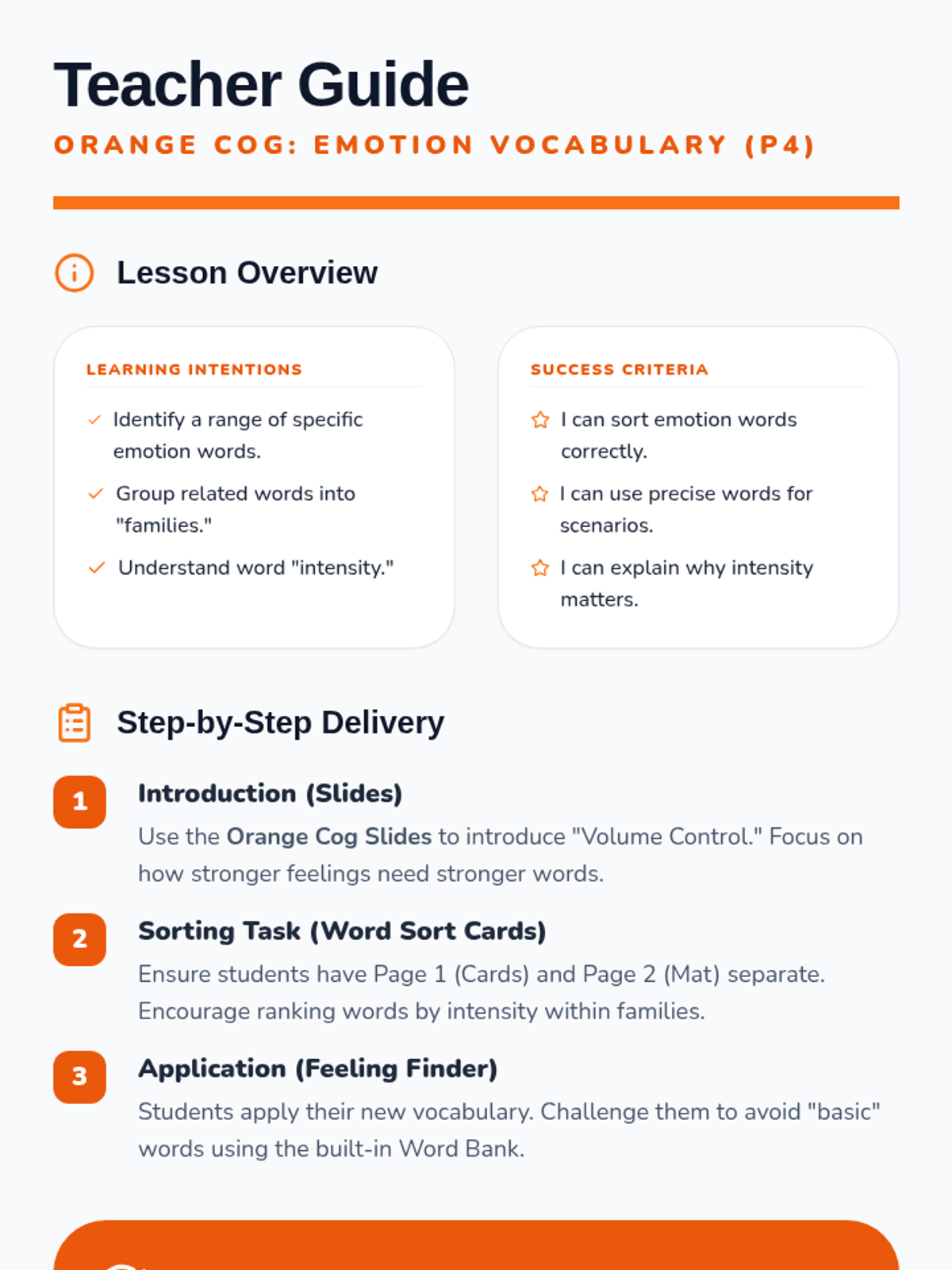
A lesson focused on the 'Orange Cog' from the Emotion Works framework, helping students develop a rich vocabulary for their feelings through sorting and scenario analysis.
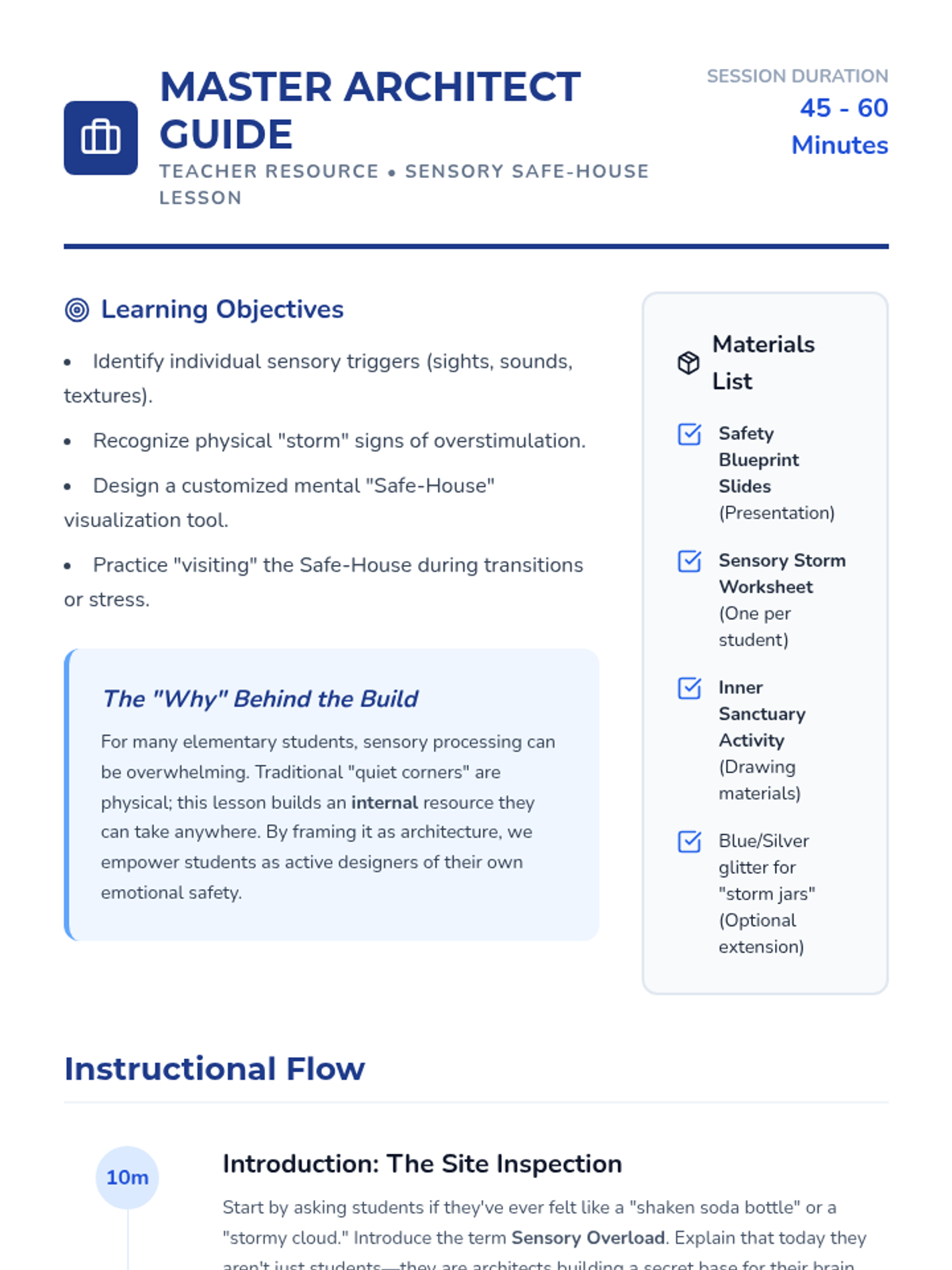
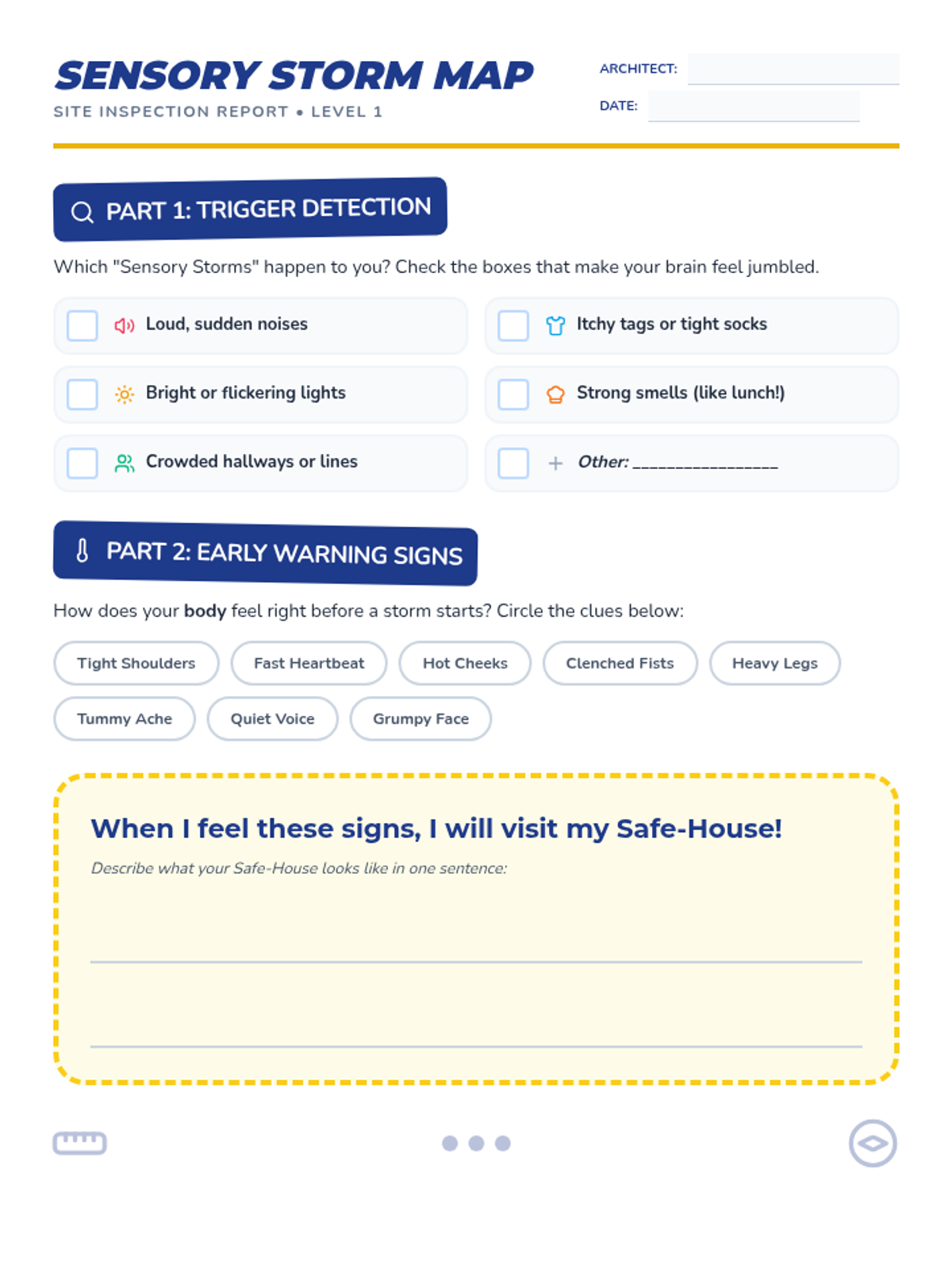
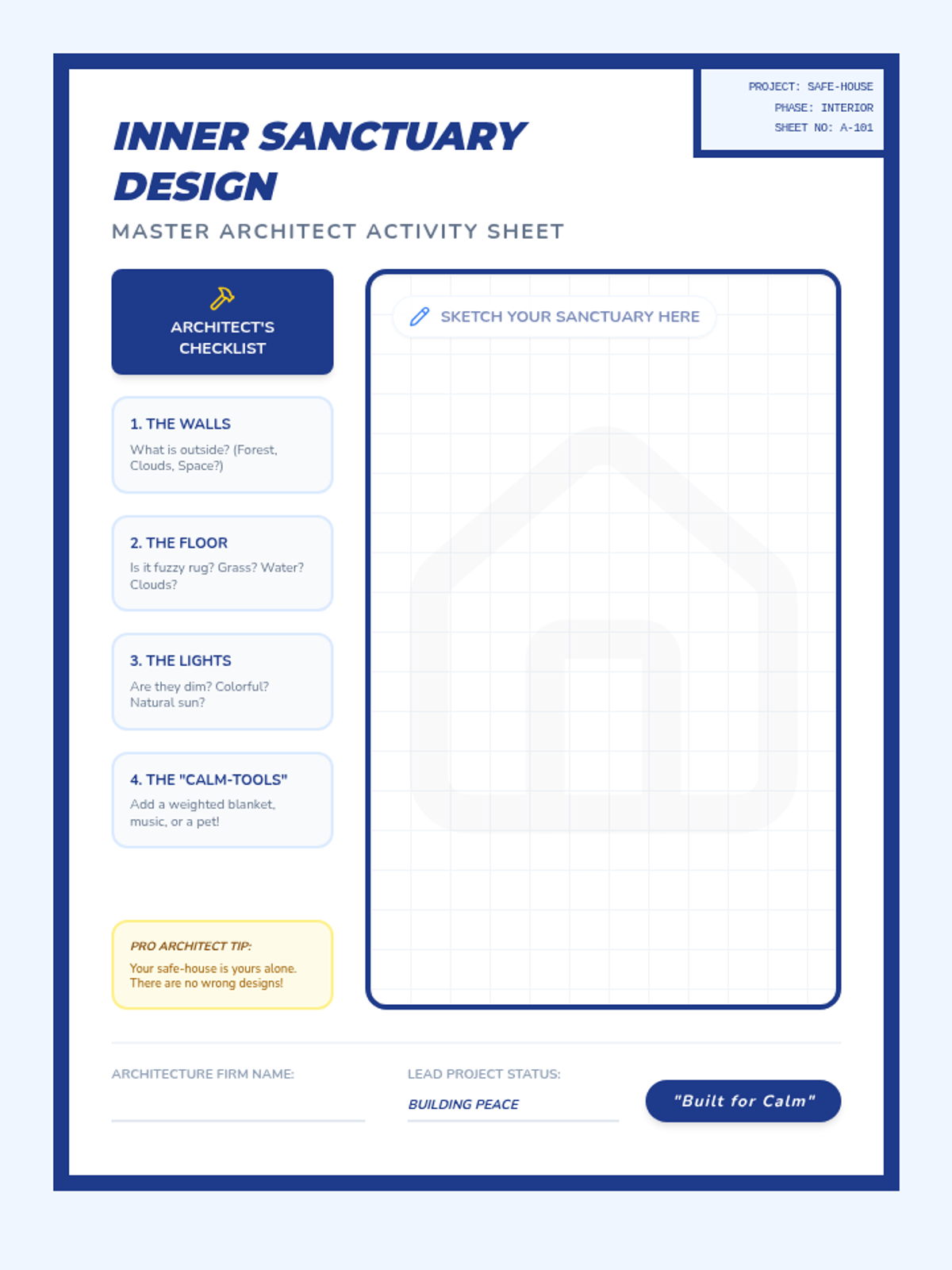
A social-emotional learning lesson where elementary students identify sensory triggers and design a mental 'safe-house' to manage overstimulation and build self-regulation skills.
Uses social stories and role-play to practice 'pivoting' when faced with unwanted tasks or transitions, focusing on calm compliance and compromise.
Creating a personal 'Base Camp' (Calm-Down Corner) toolkit with visual reminders of strategies learned in previous weeks.
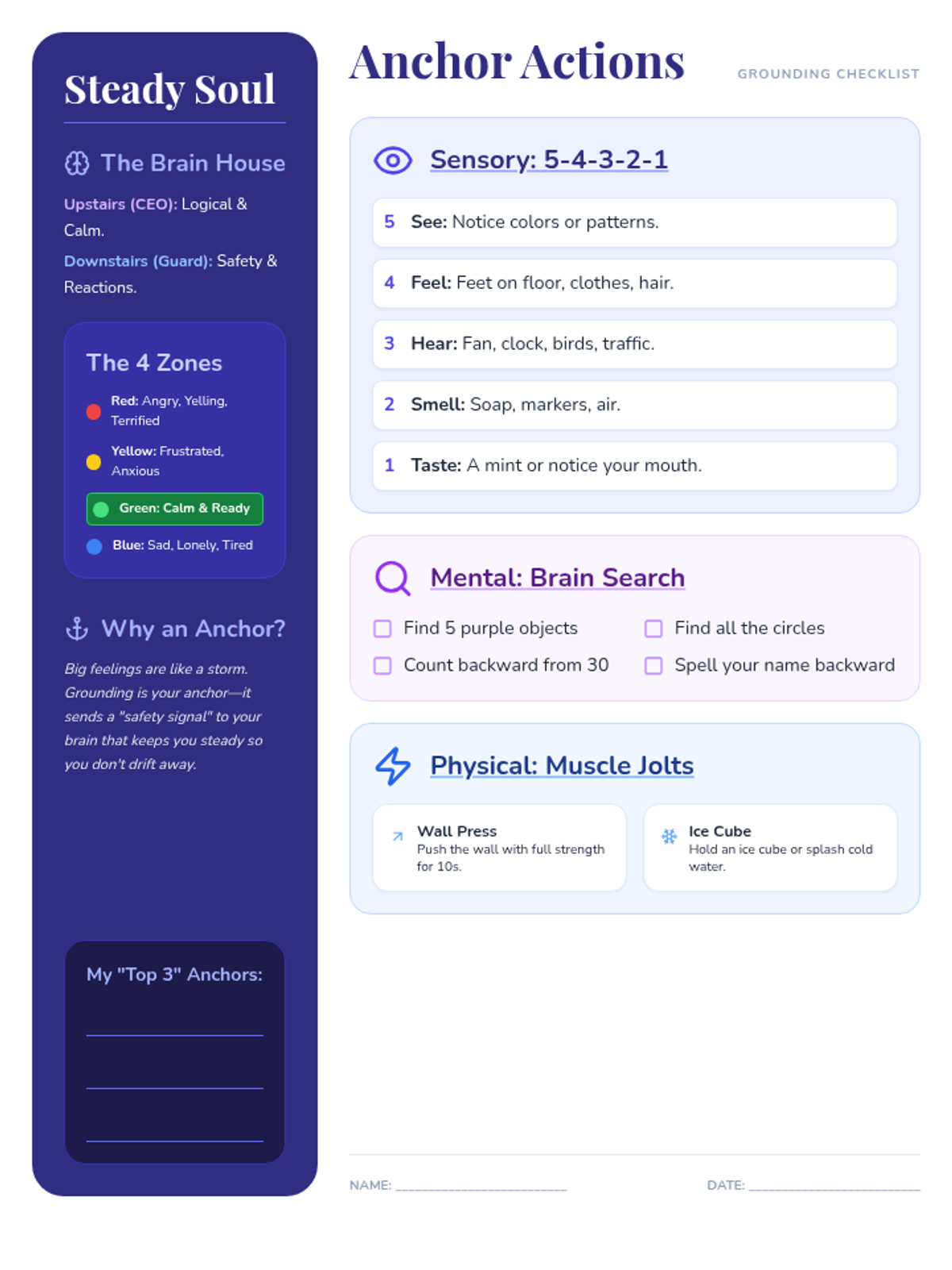
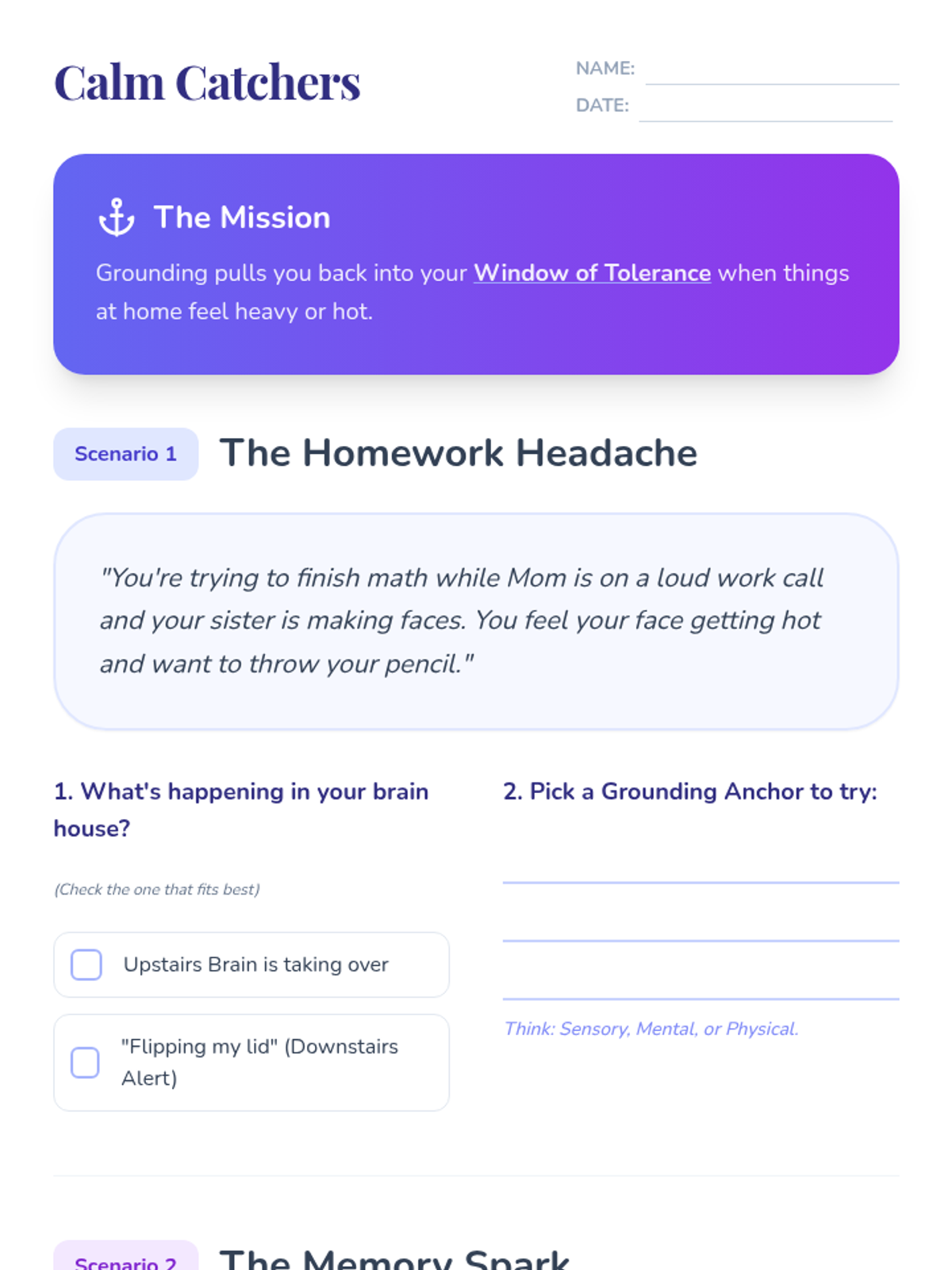
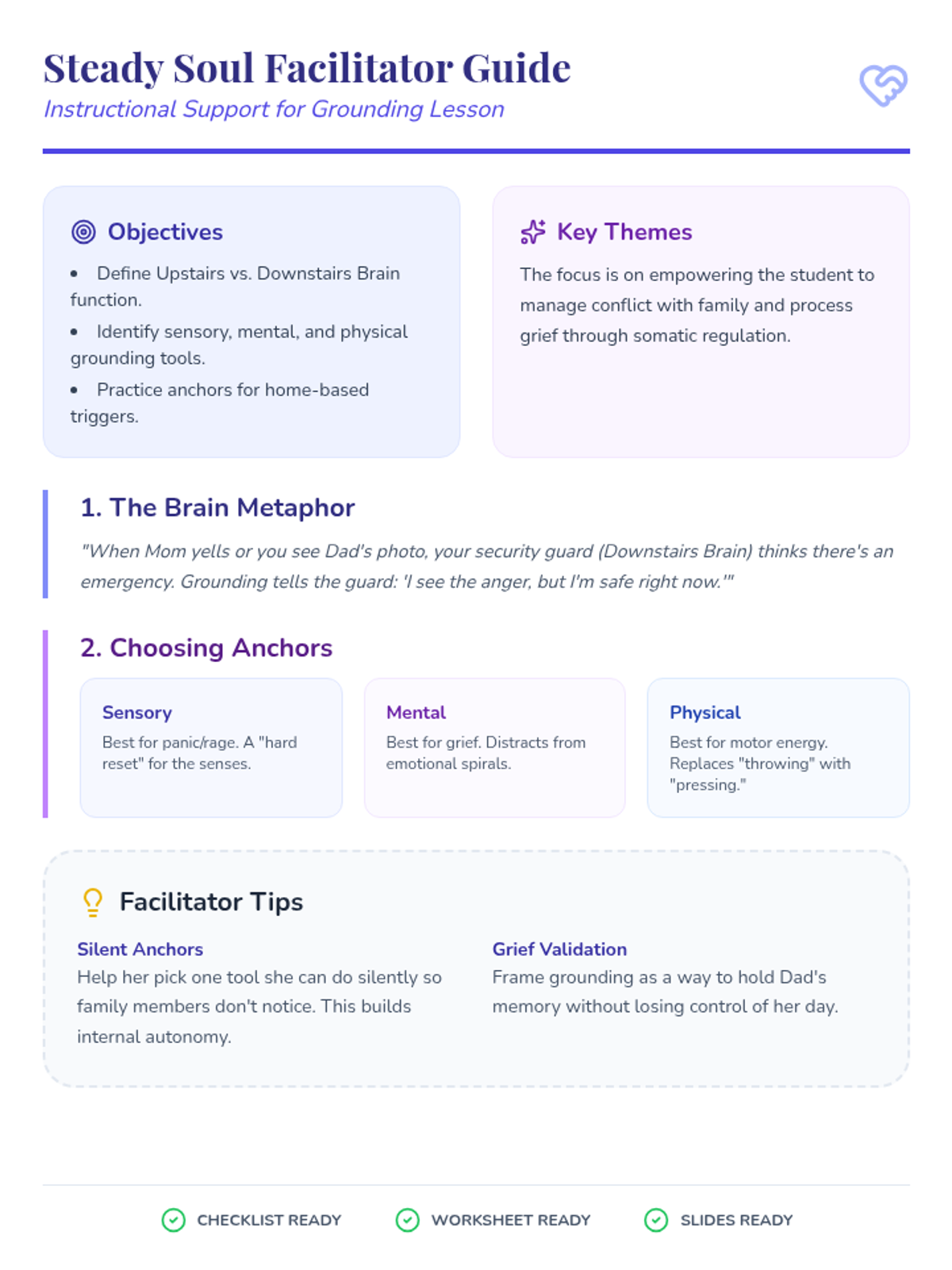
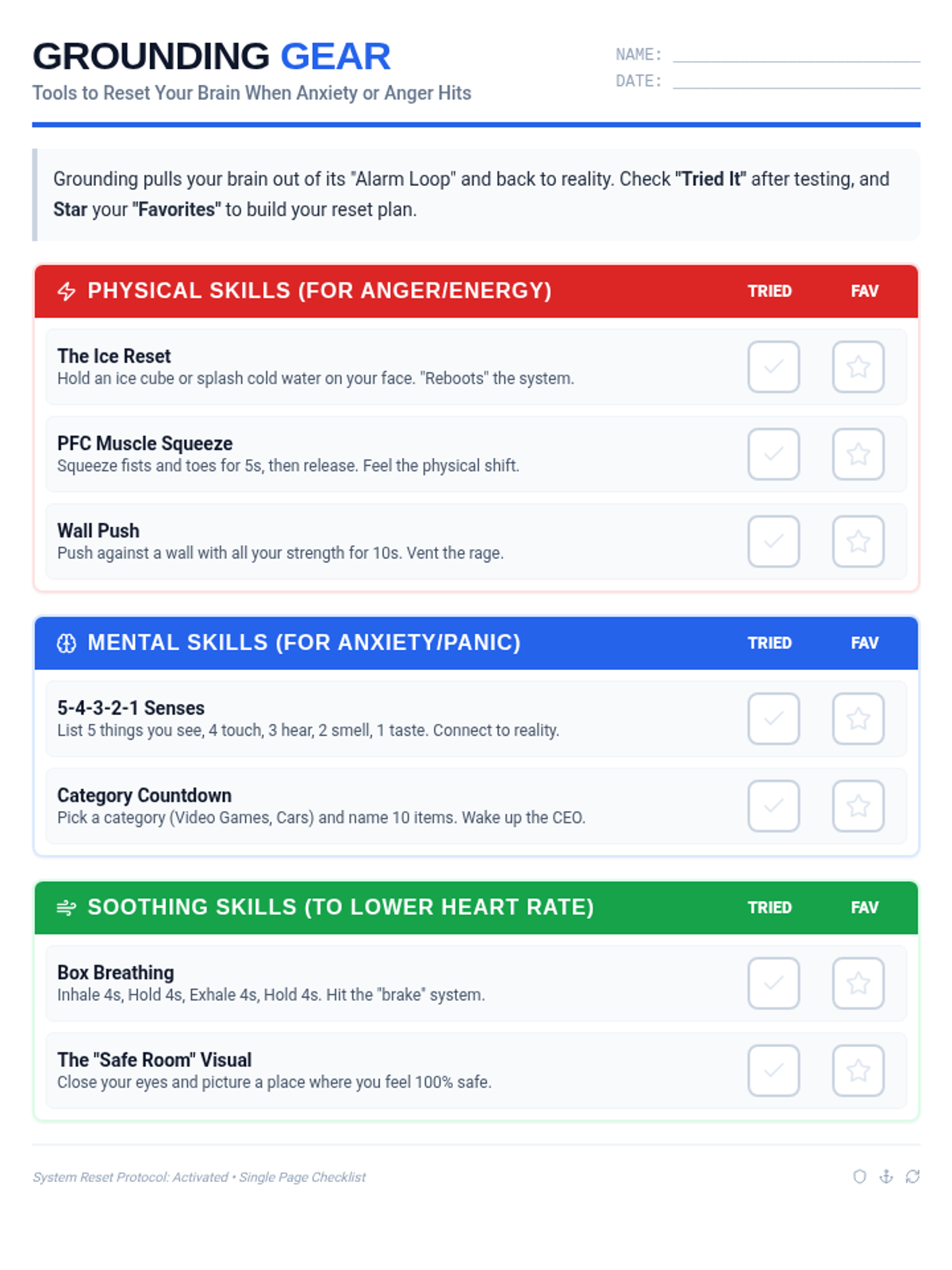
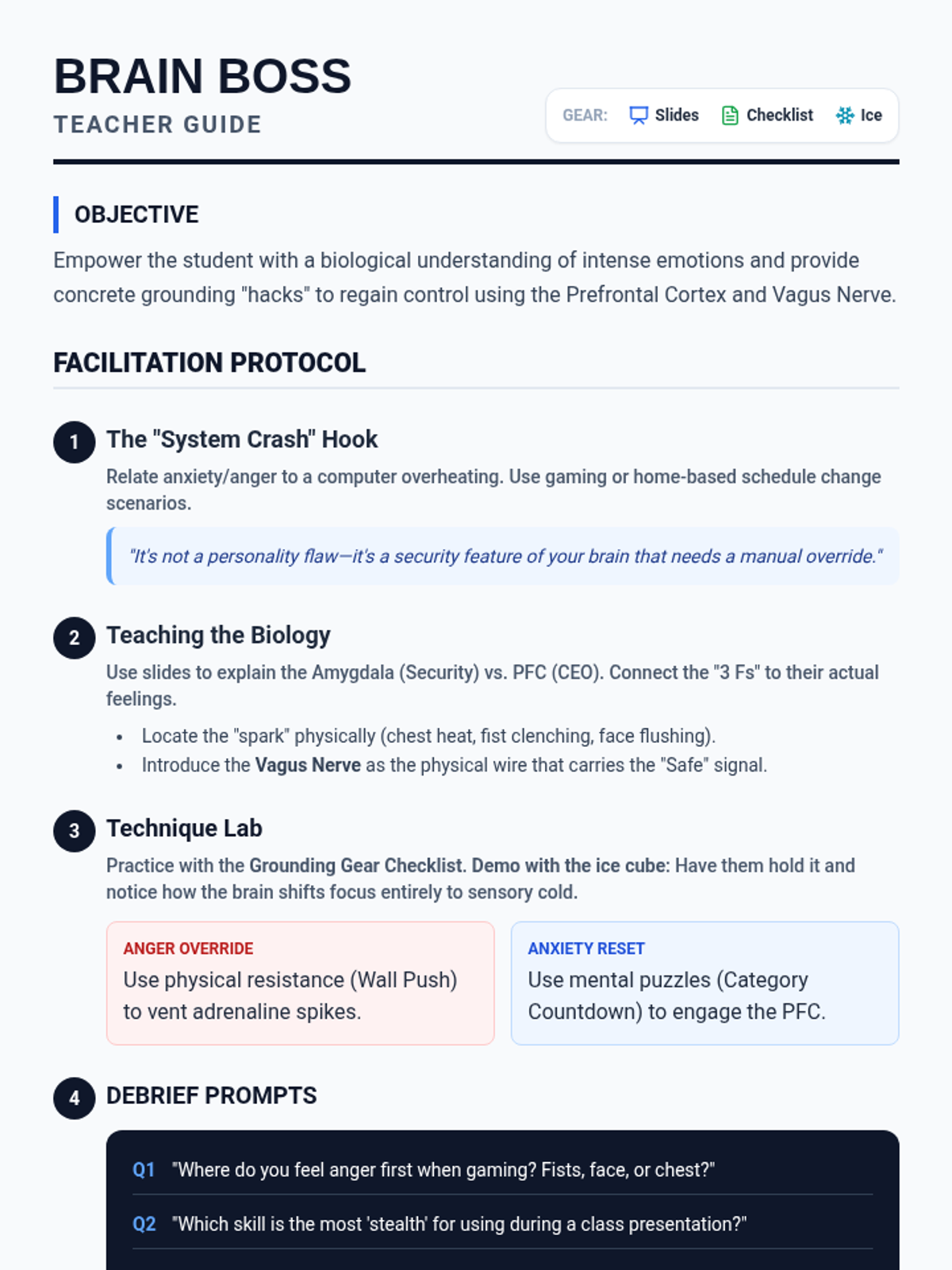
A lesson designed for a 6th-grade student to understand the neuroscience of grounding and practice specific techniques (Sensory, Mental, Physical) to manage anger and grief at home.
A lesson for middle schoolers on the neuroscience of grounding, covering the amygdala, prefrontal cortex, and vagus nerve to manage anxiety and anger.
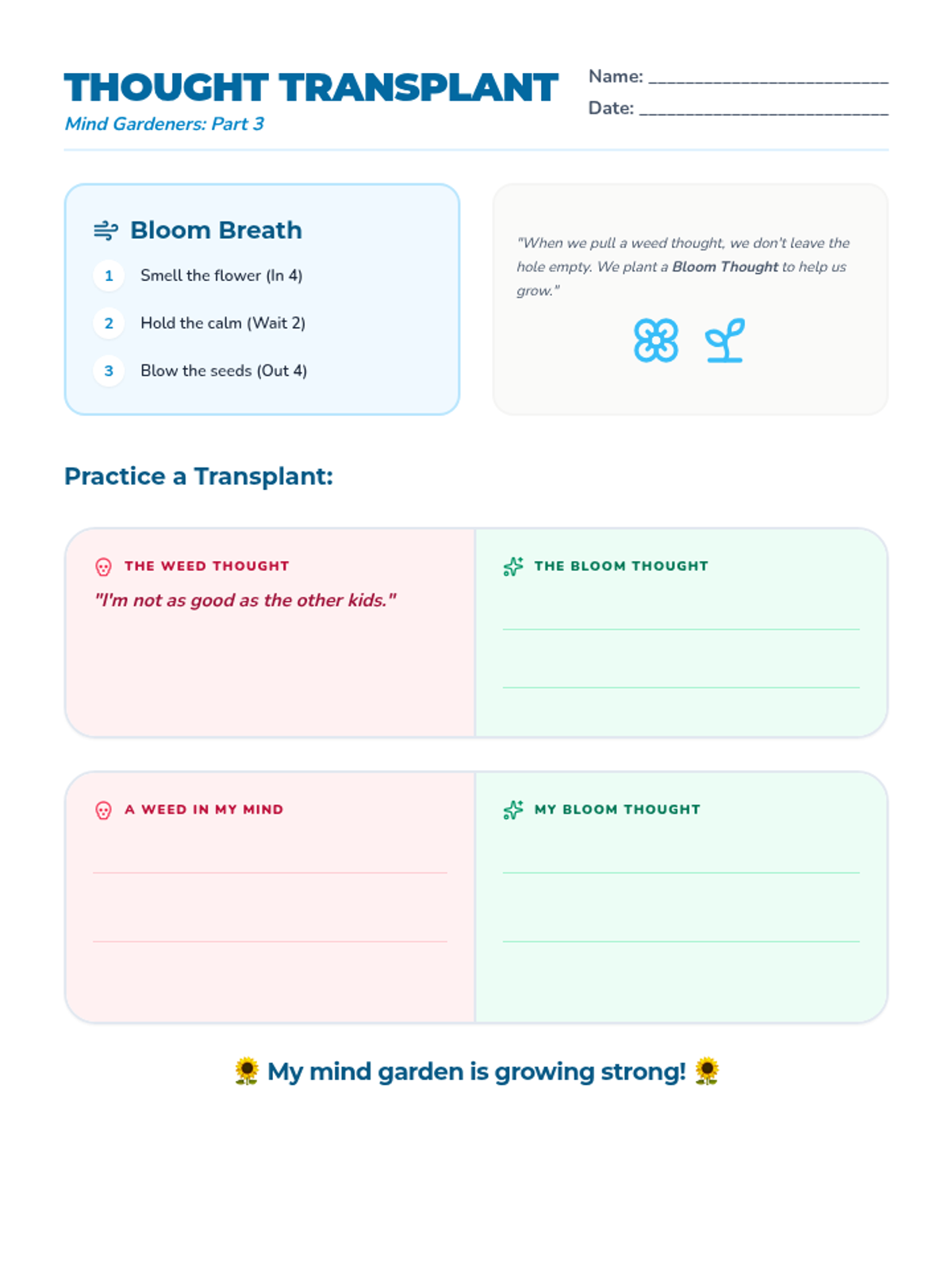
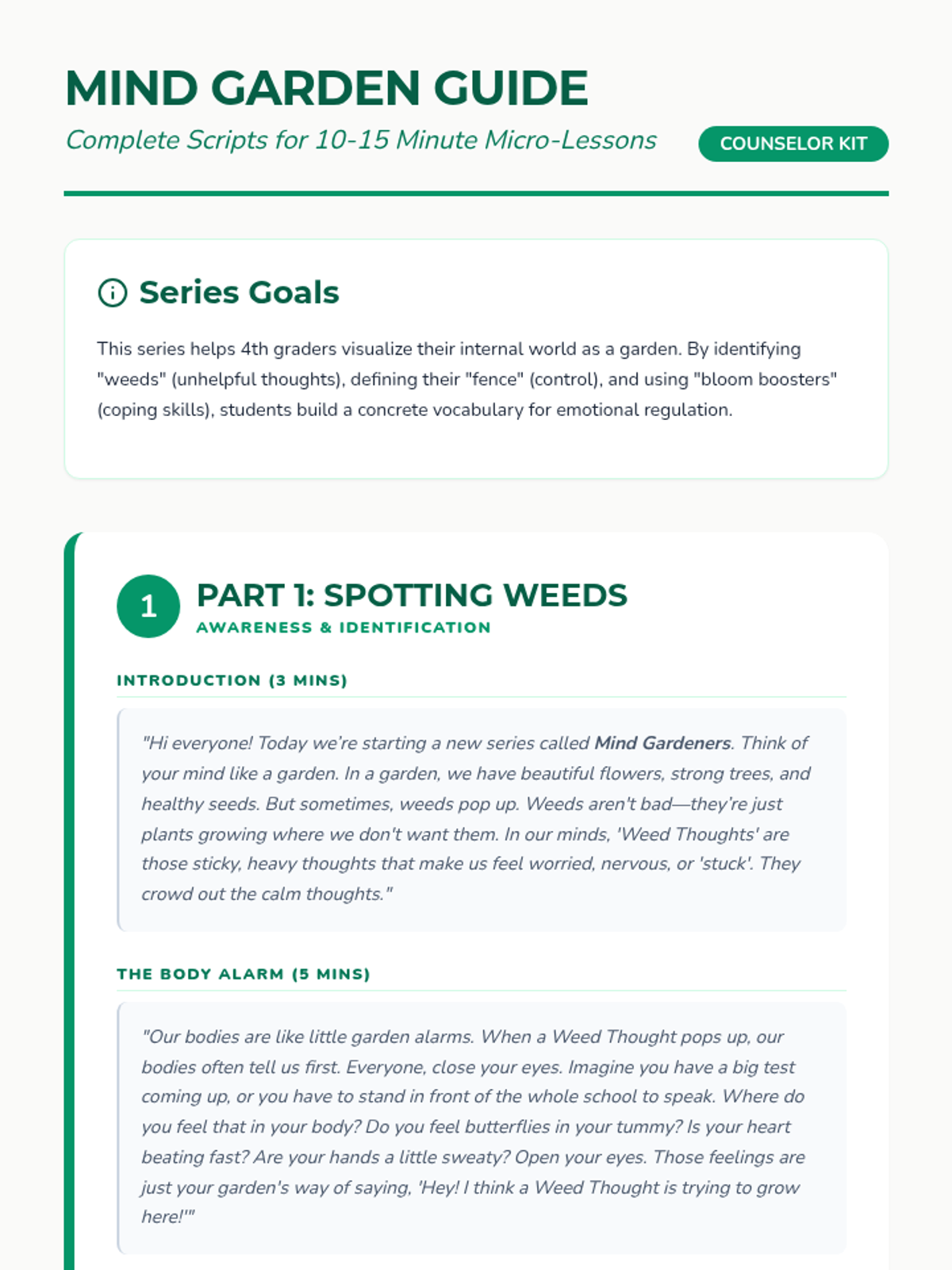
Students practice reframing unhelpful thoughts and building a toolkit of coping strategies to 'bloom' through challenging emotions.
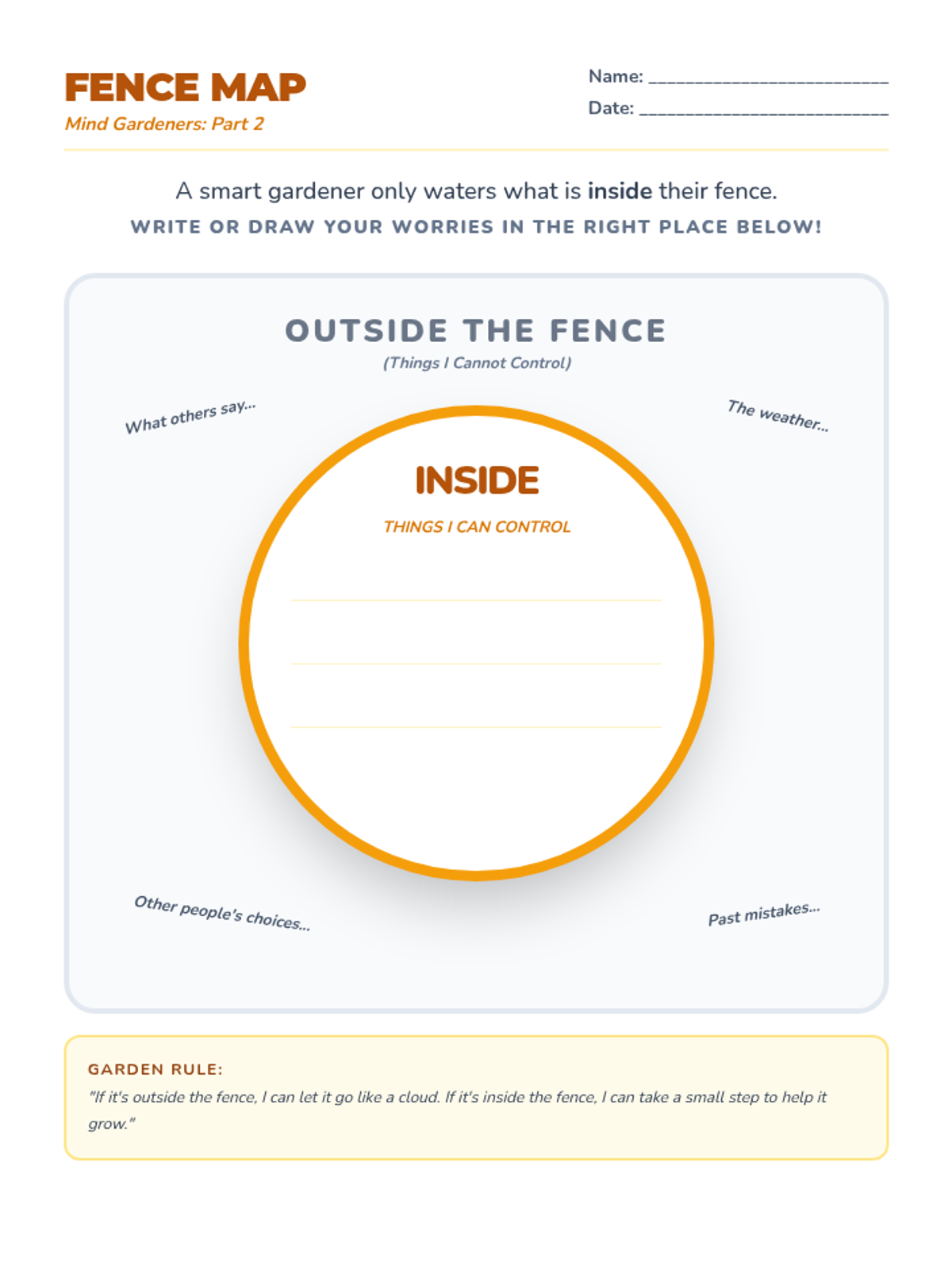
Students explore the concept of the Circle of Control, learning to distinguish between things they can change (inside the garden fence) and things they must accept (outside the fence).
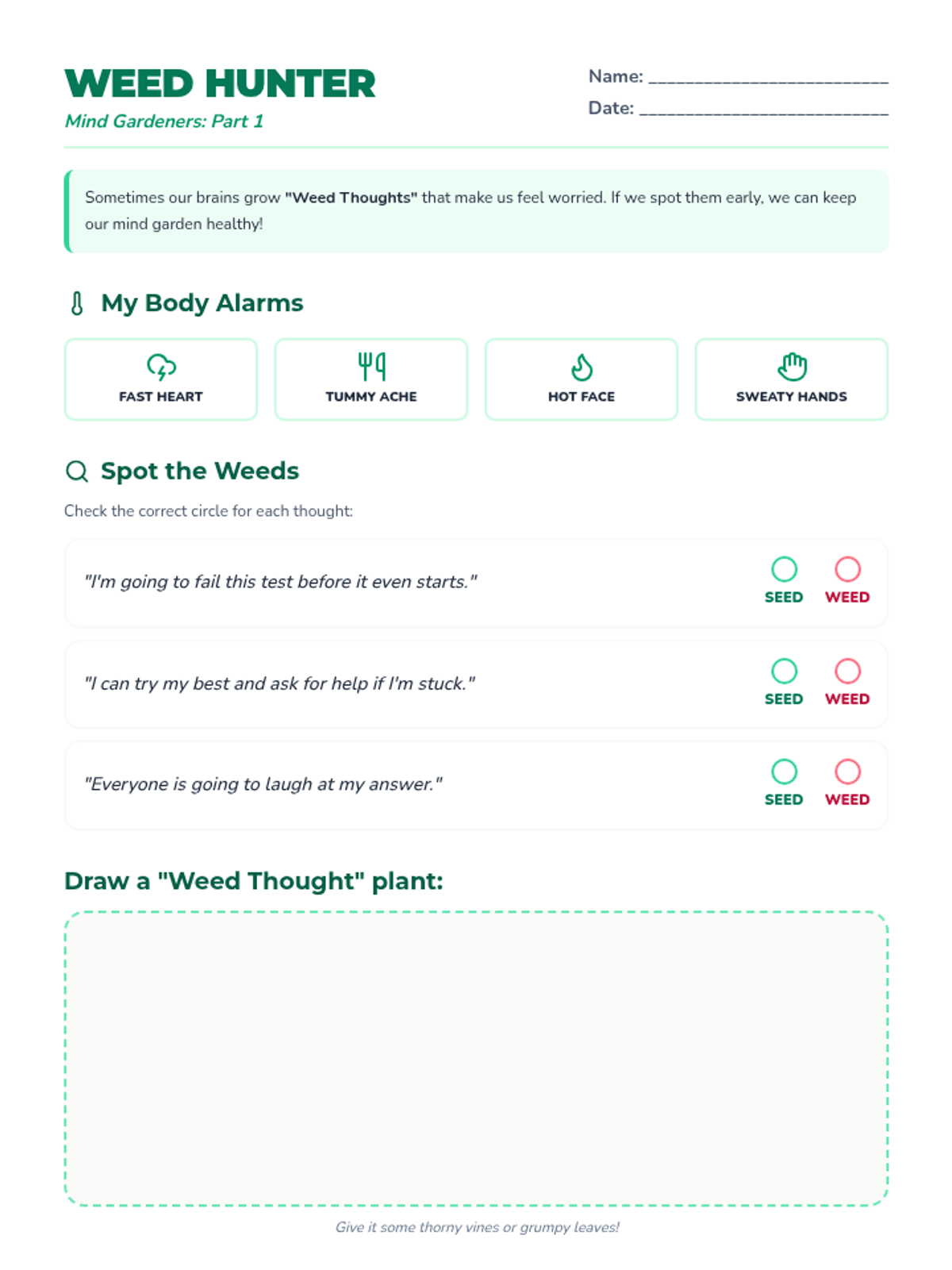
Students learn to identify physical signs of anxiety and recognize 'weed thoughts'—unhelpful or negative thoughts that can crowd out calm ones.
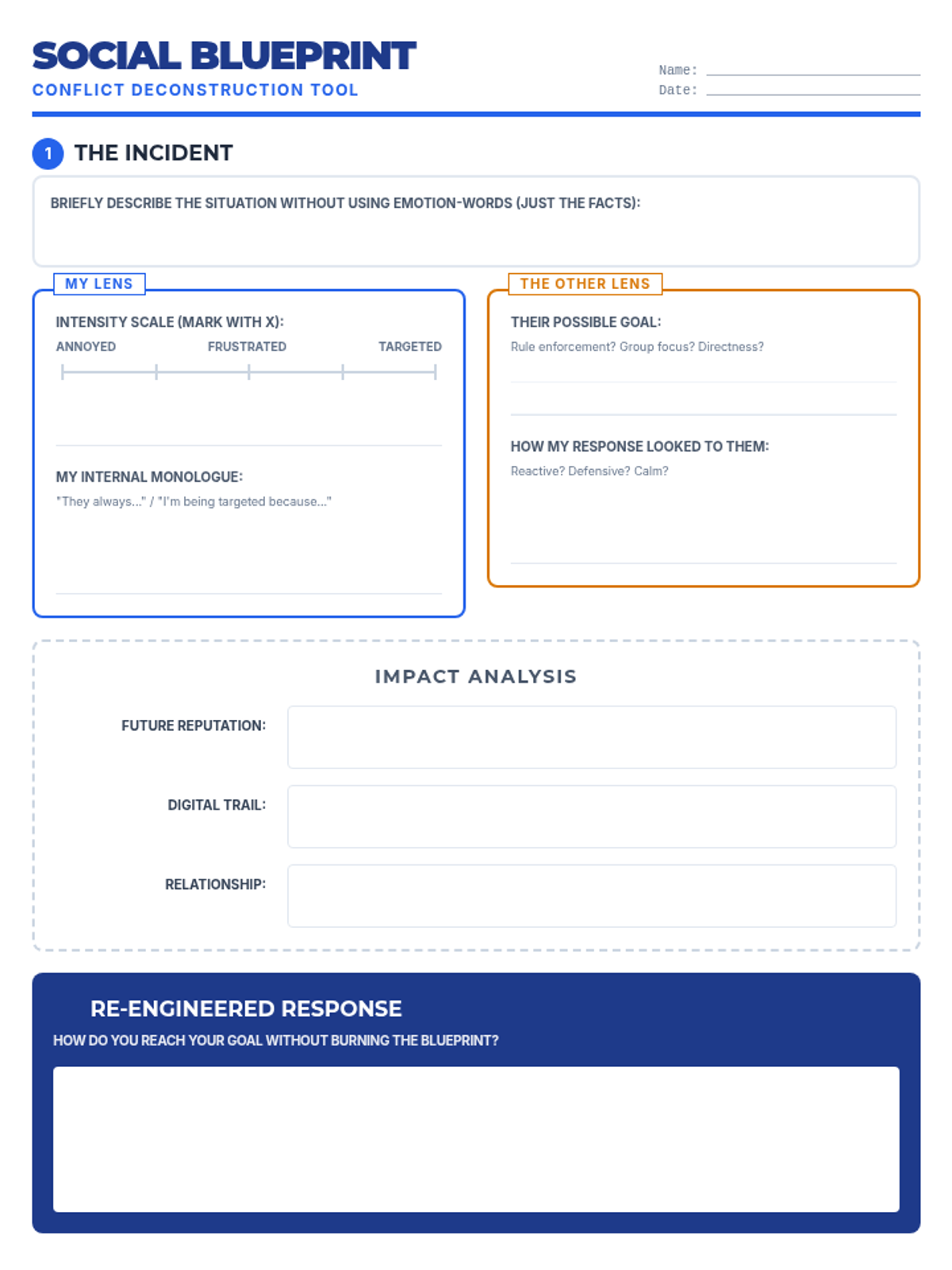
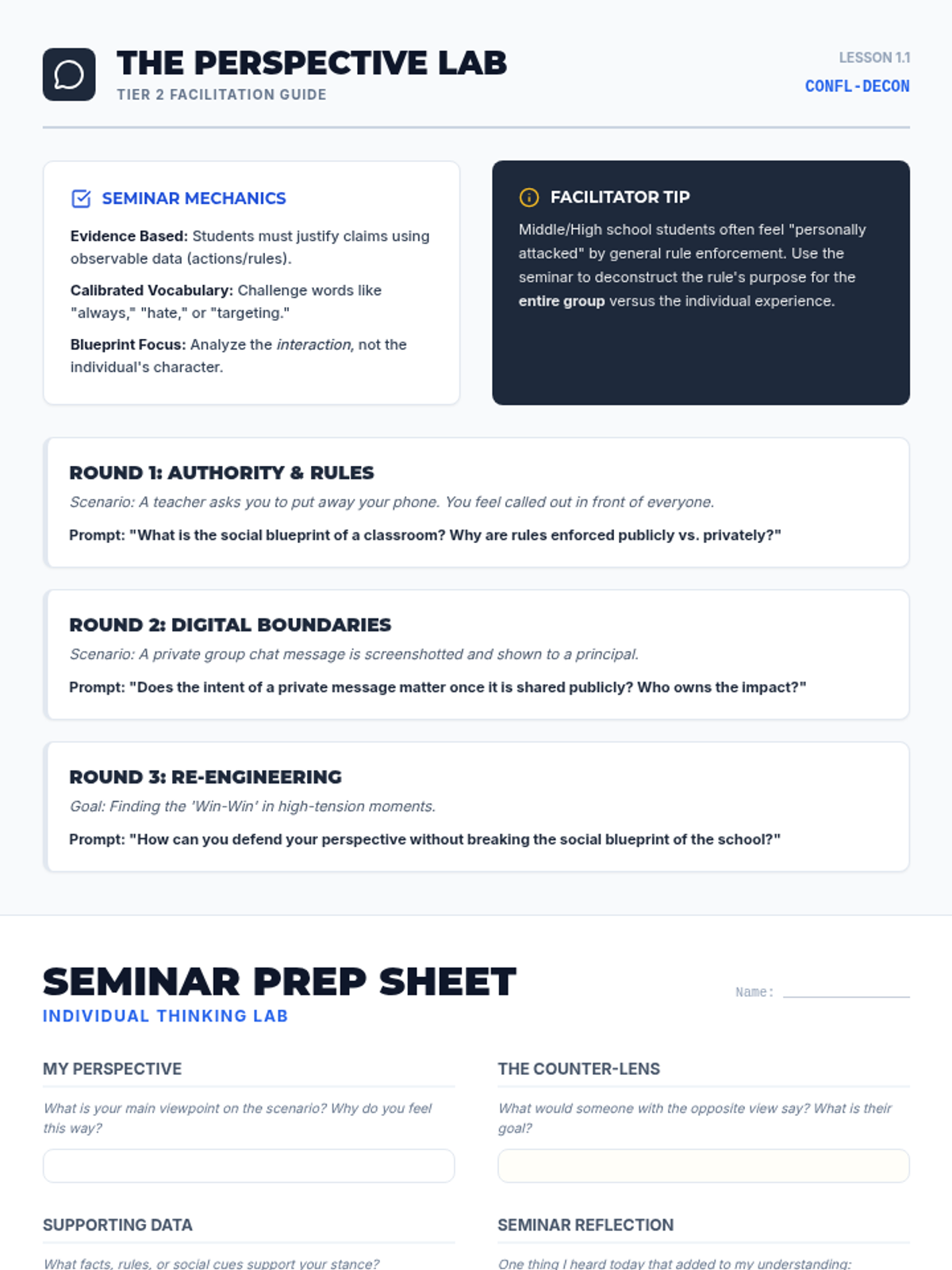
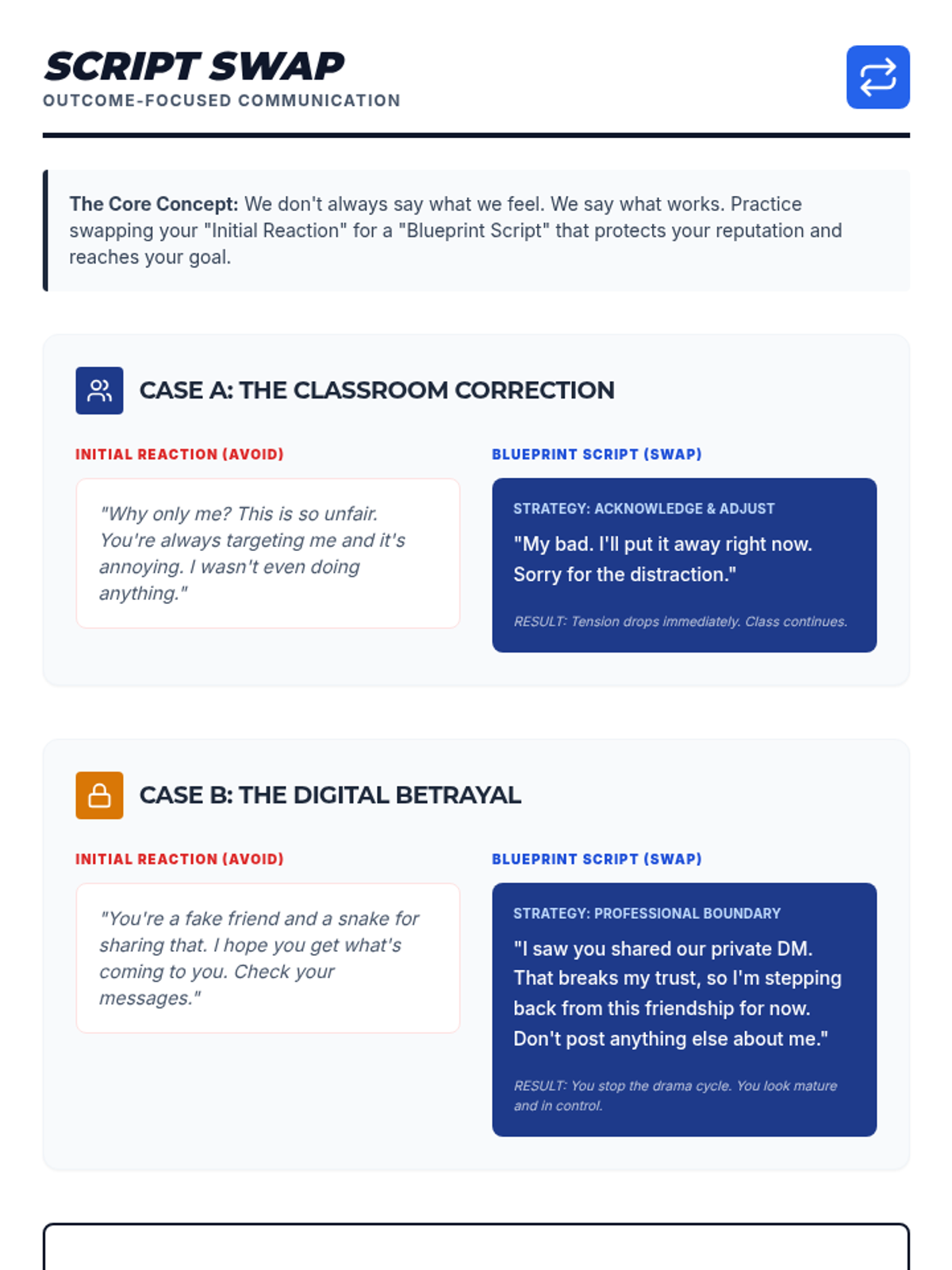
Focuses on deconstructing personal conflicts through multiple lenses, specifically addressing the gap between personal feelings and external impact in school and peer environments.