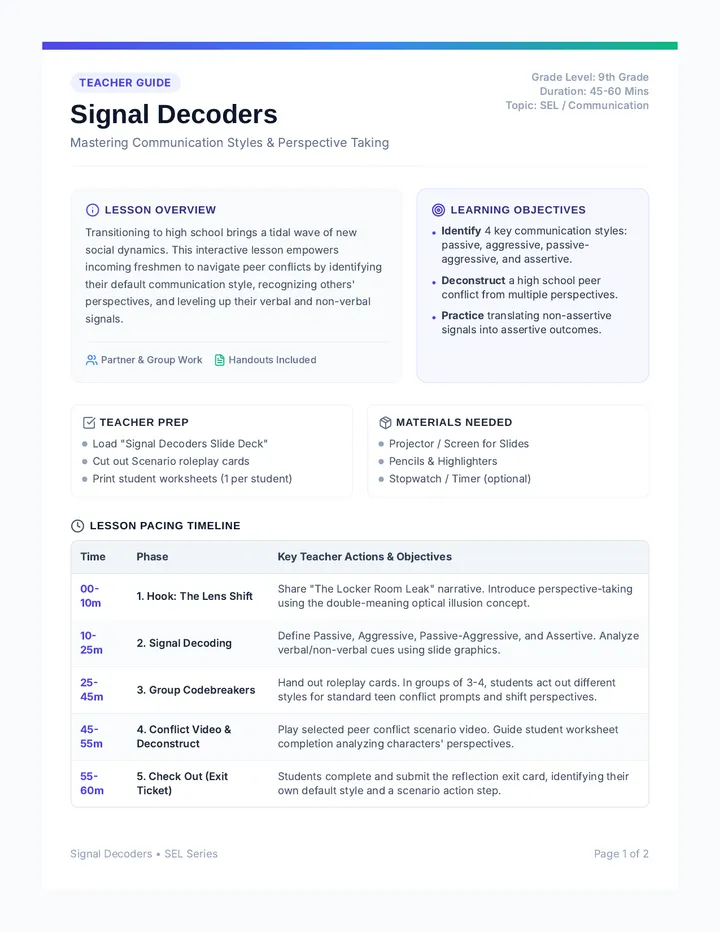
Teaching Tales Lesson Plan
A comprehensive lesson plan for a 90-minute teacher candidate debrief session, including preparation steps, learning objectives, and a detailed instructional sequence.
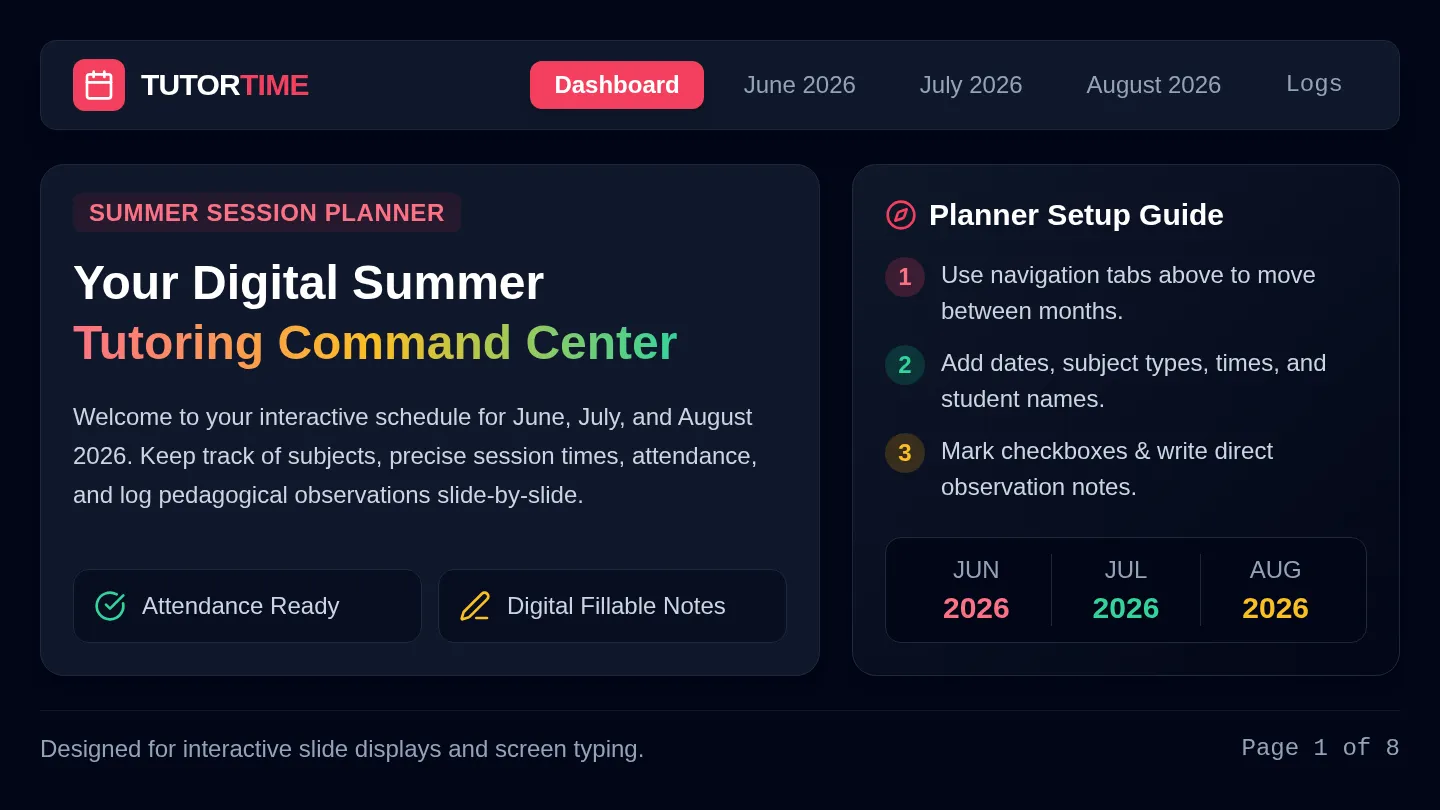
Teaching Tales Presentation
A visual presentation for the 'Teaching Tales & Triumphs' session, including slides for the warm-up, problem-solving game, superpower activity, and mindful reflection.
Two Words Warm Up Handout
A quick reflection handout for teacher candidates to capture their 3-week teaching experience in two descriptive words and one feeling word.
What Would You Do Scenarios Handout
A set of common classroom teaching dilemmas for small-group discussion and collaborative problem solving, including scenarios on classroom management, motivation, and conflict resolution.
Teaching Superpower Activity Sheet
A creative reflection activity where teacher candidates identify and name a "superpower" they developed during their 3-week teaching experience, celebrating their growth as educators.
Mindful Moments Reflection Canvas
A quiet, personal reflection handout designed for emotional de-stressing, providing a dedicated space for teacher candidates to doodle, draw, or color their feelings and experiences.
One Big Takeaway Exit Slip
A final reflection slip for teacher candidates to identify and record their most significant learning or insight from the 3-week teaching experience.
Teaching Tales Facilitator Script
A detailed facilitation script for the session lead, providing speaking prompts, transition guidance, and instructional notes for each activity.