Students learn to estimate time and use verbal reassurance to reduce overwhelm.
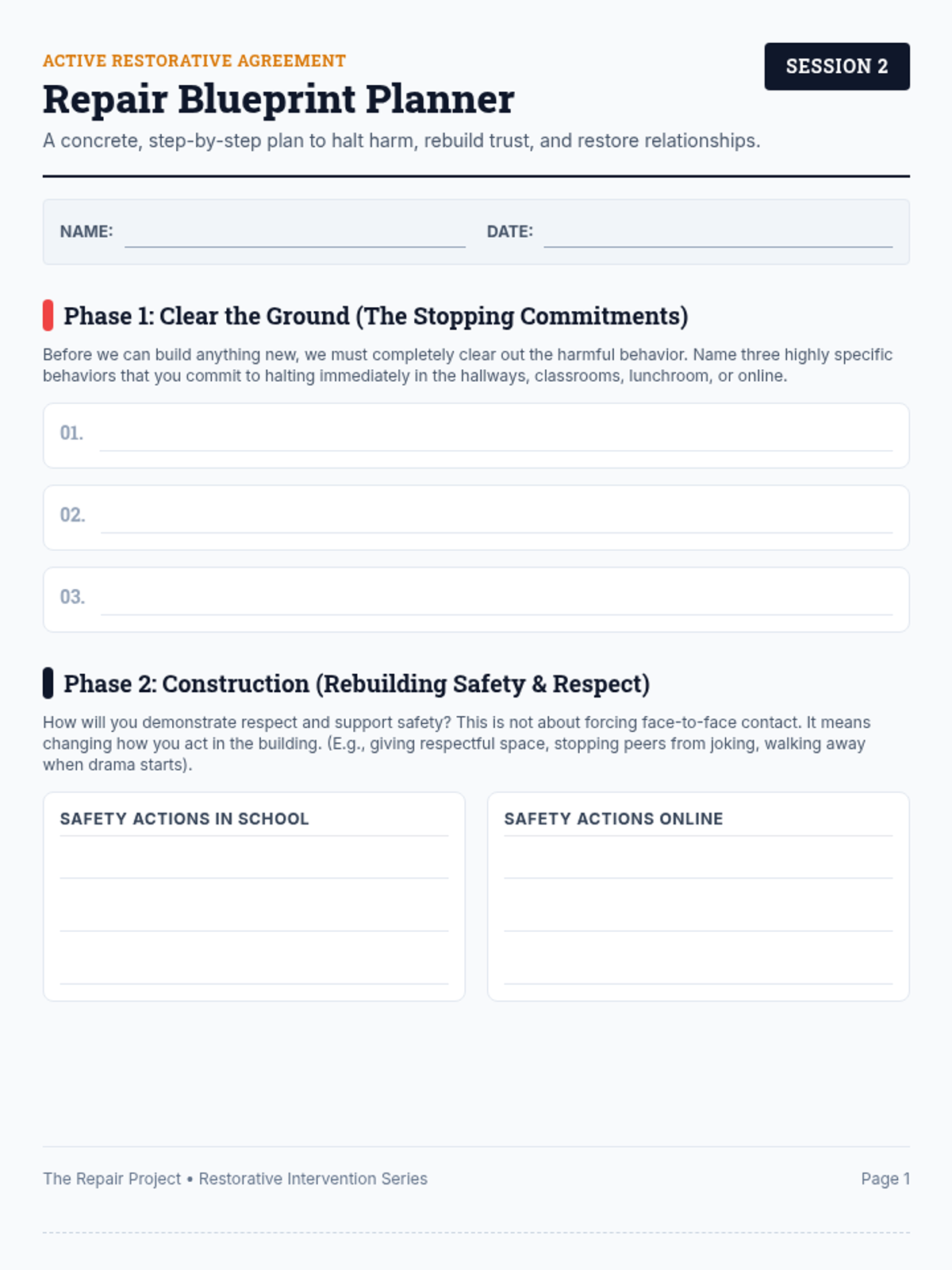
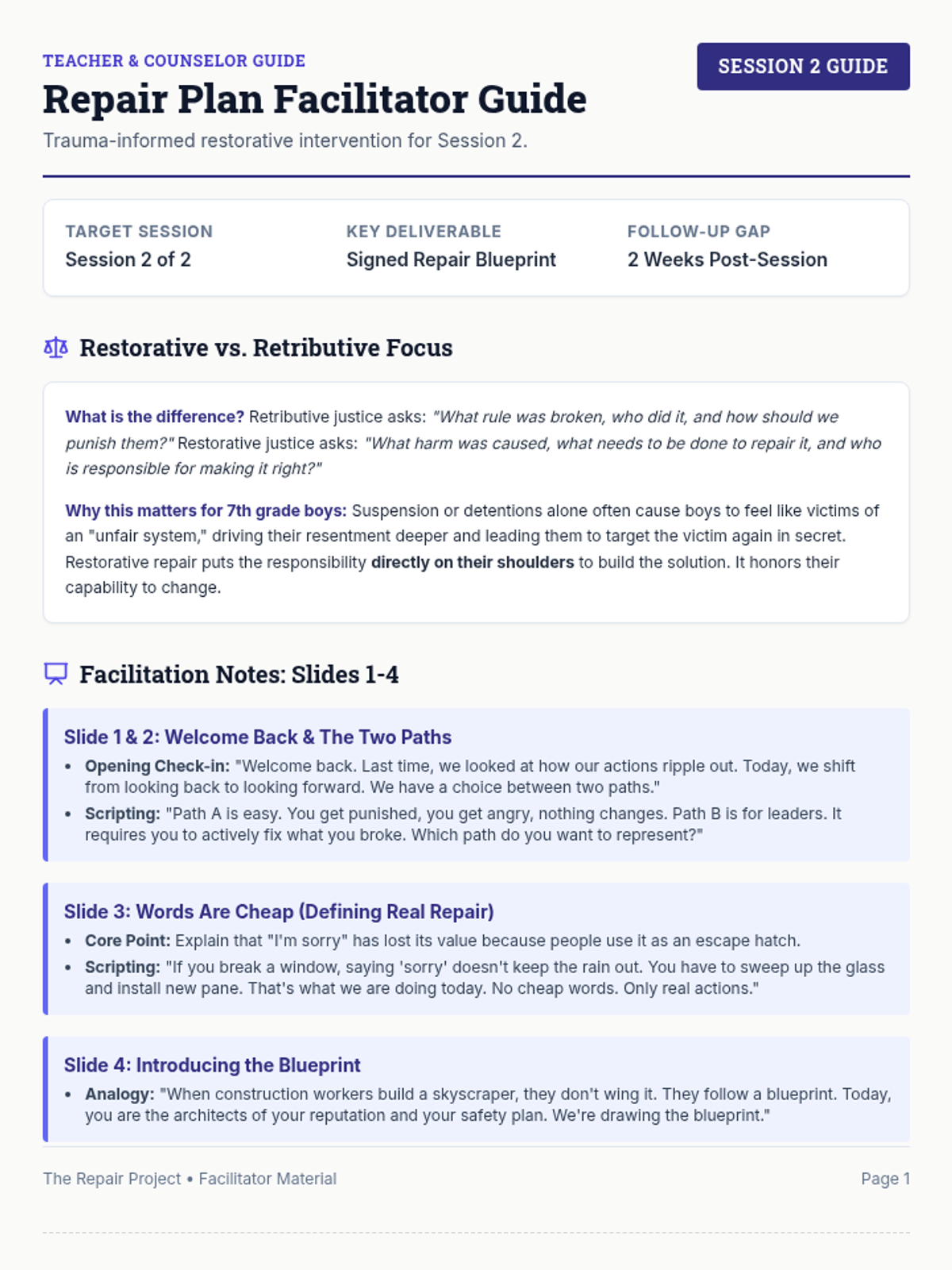
In this second session, students shift from analyzing impact to taking active accountability. They explore restorative justice and draft a concrete "Repair Blueprint" detailing specific actions to rebuild trust and repair the harm.
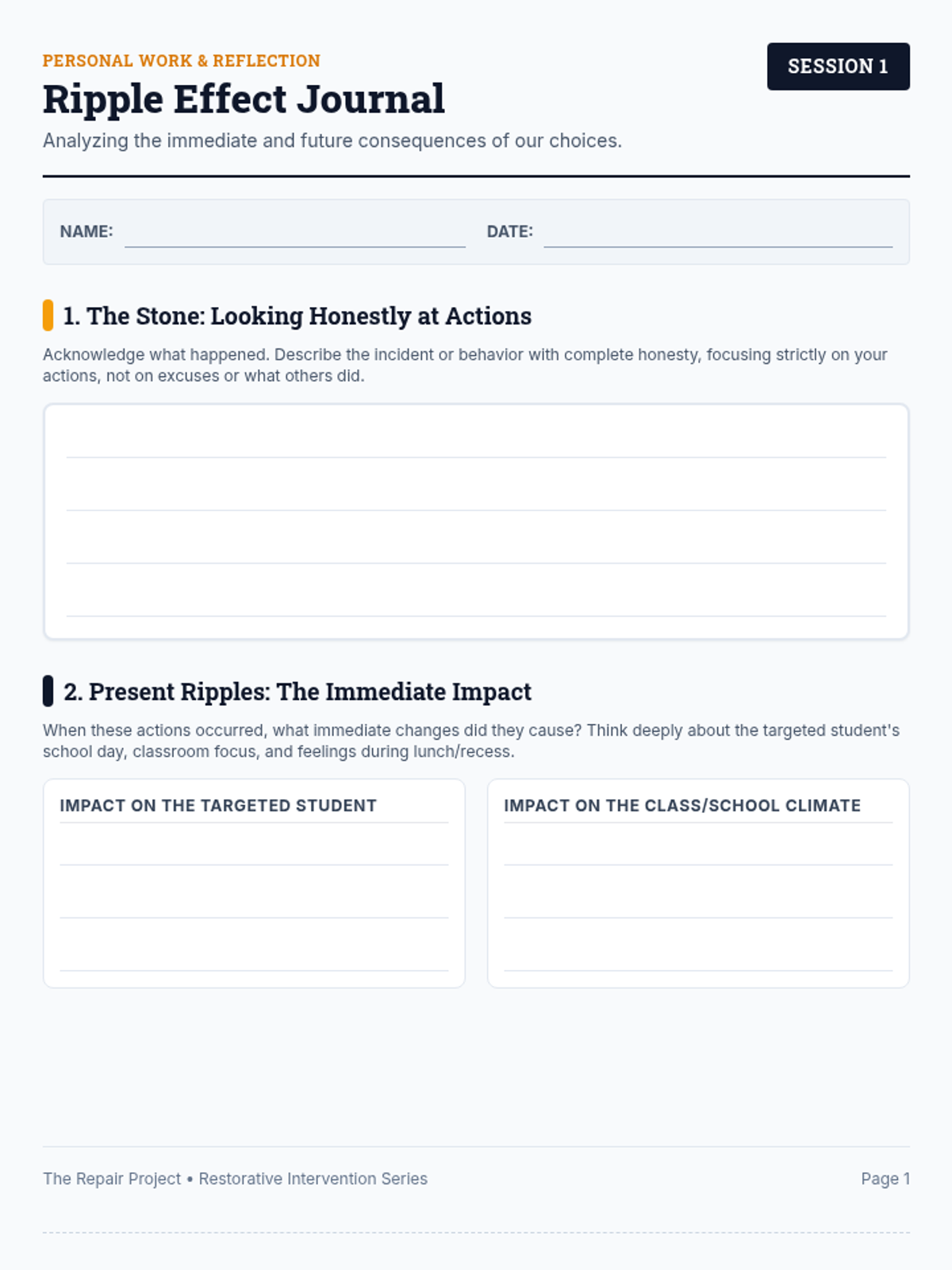
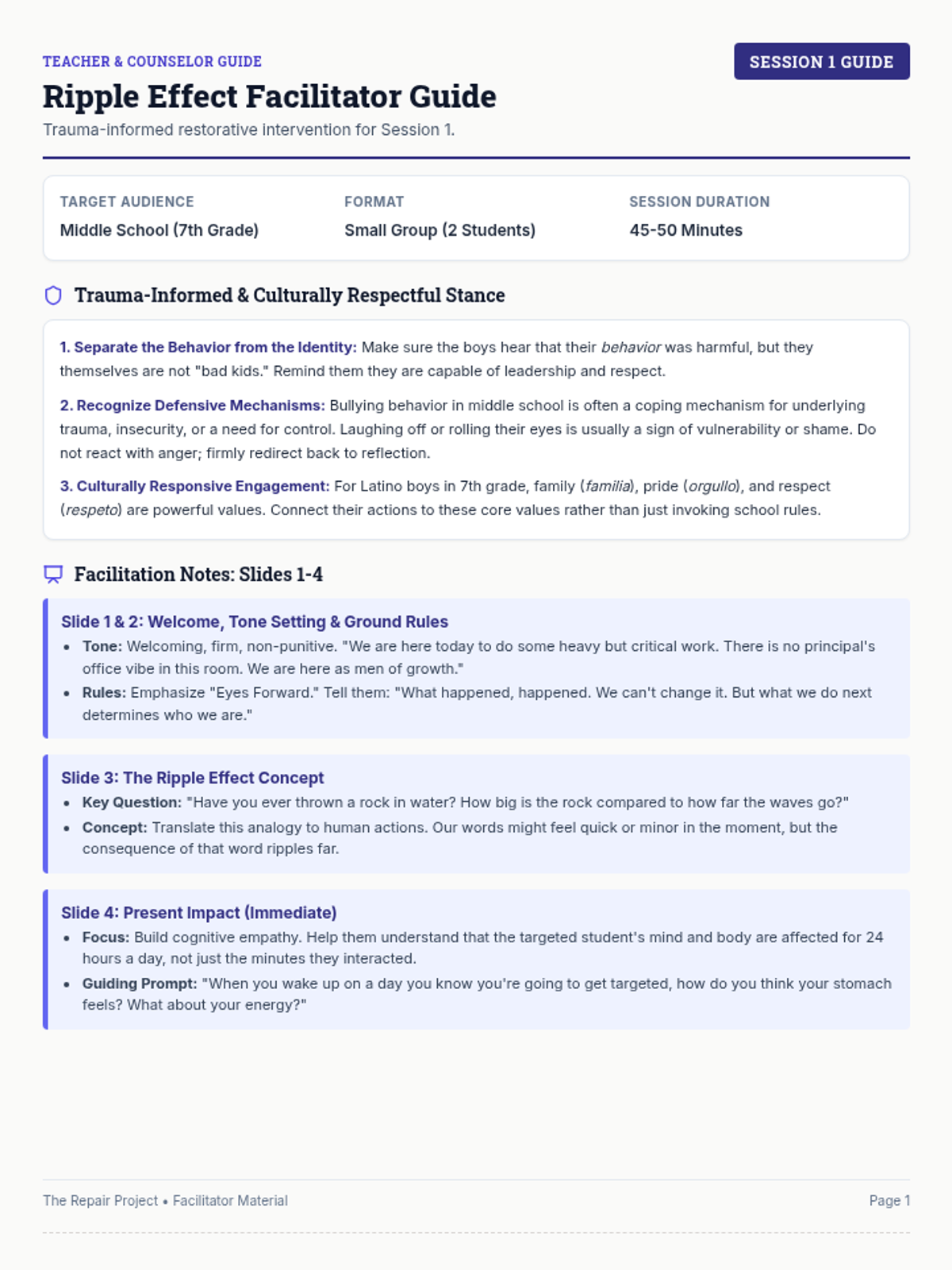
In this first session, students explore the concepts of cause and effect, analyzing how behavior ripples outward to affect the targeted student, their families, the school community, and themselves, both now and in the future.
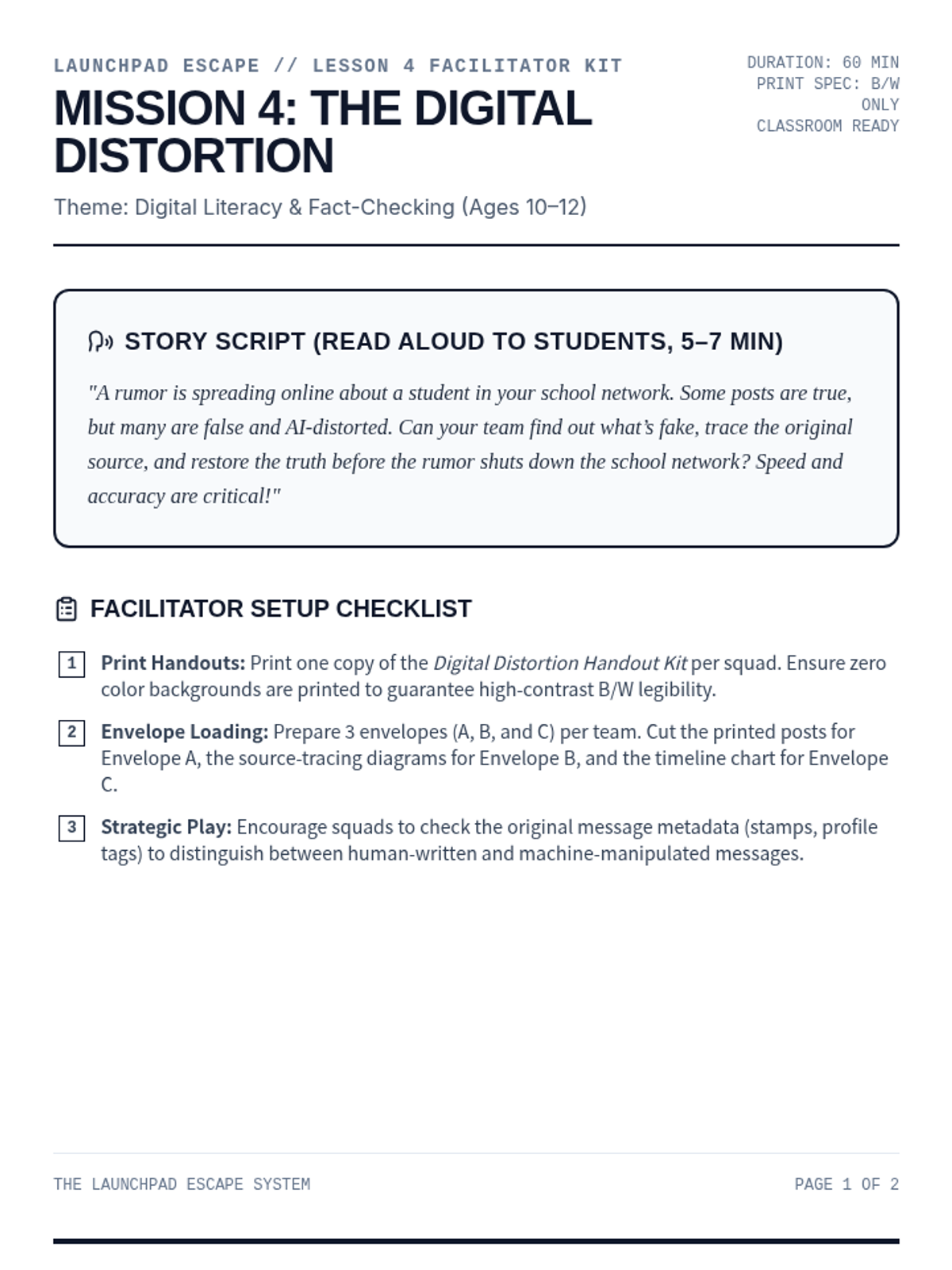
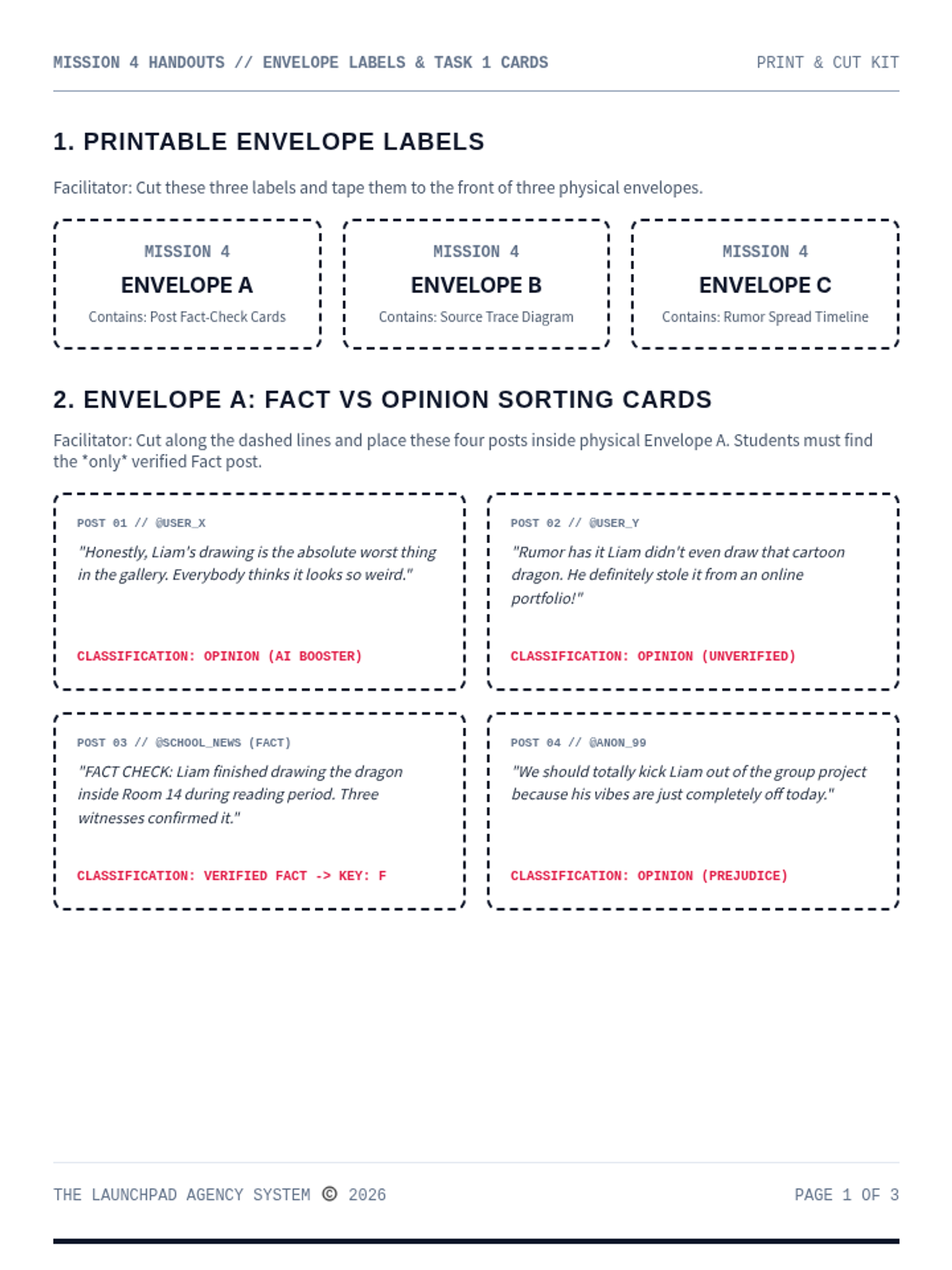
An online misinformation and fact-checking escape room for Ages 10-12. Recruits sort fact vs. opinion, trace original message sources, and reconstruct truth timelines to stop rumors.
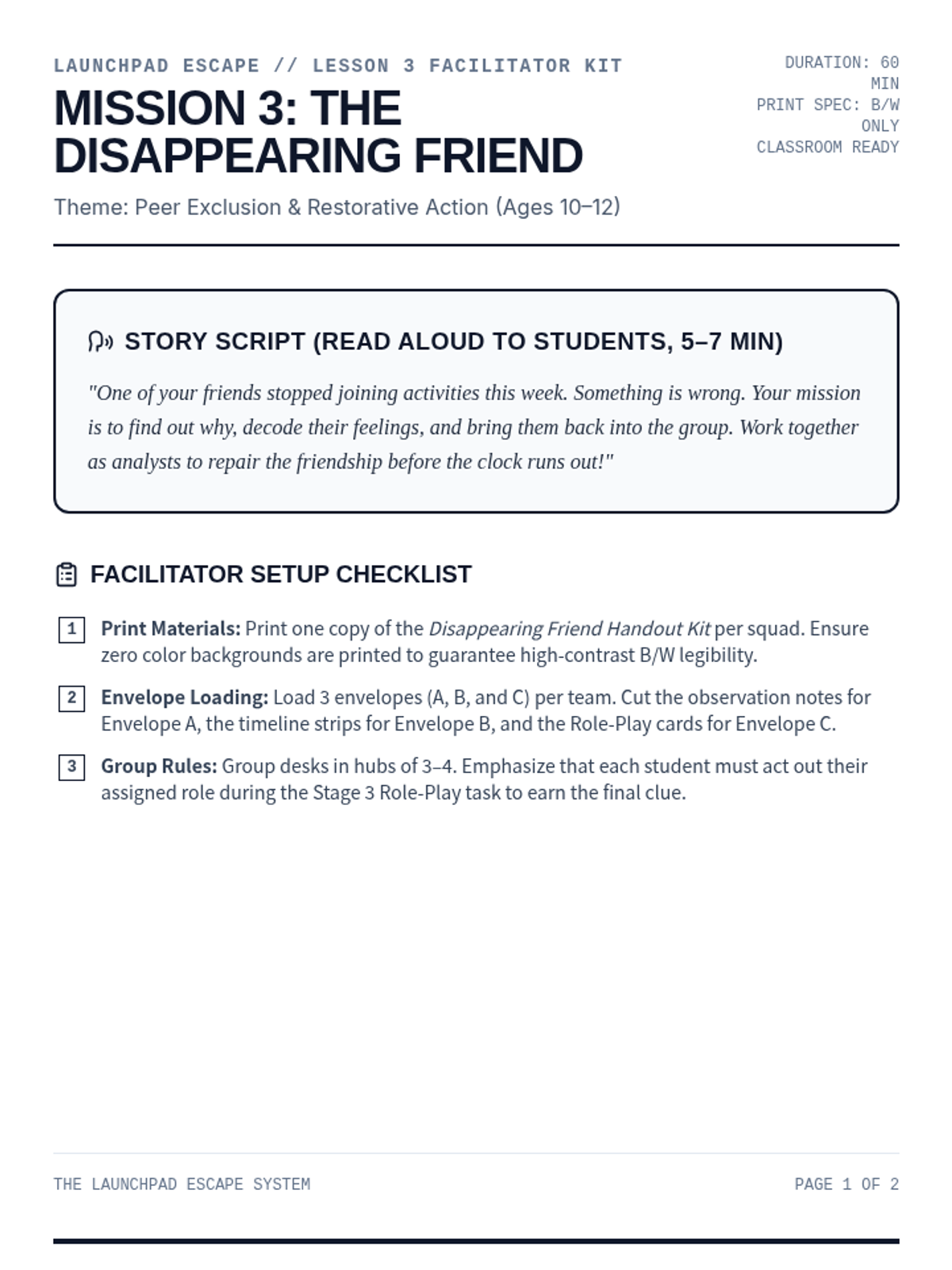
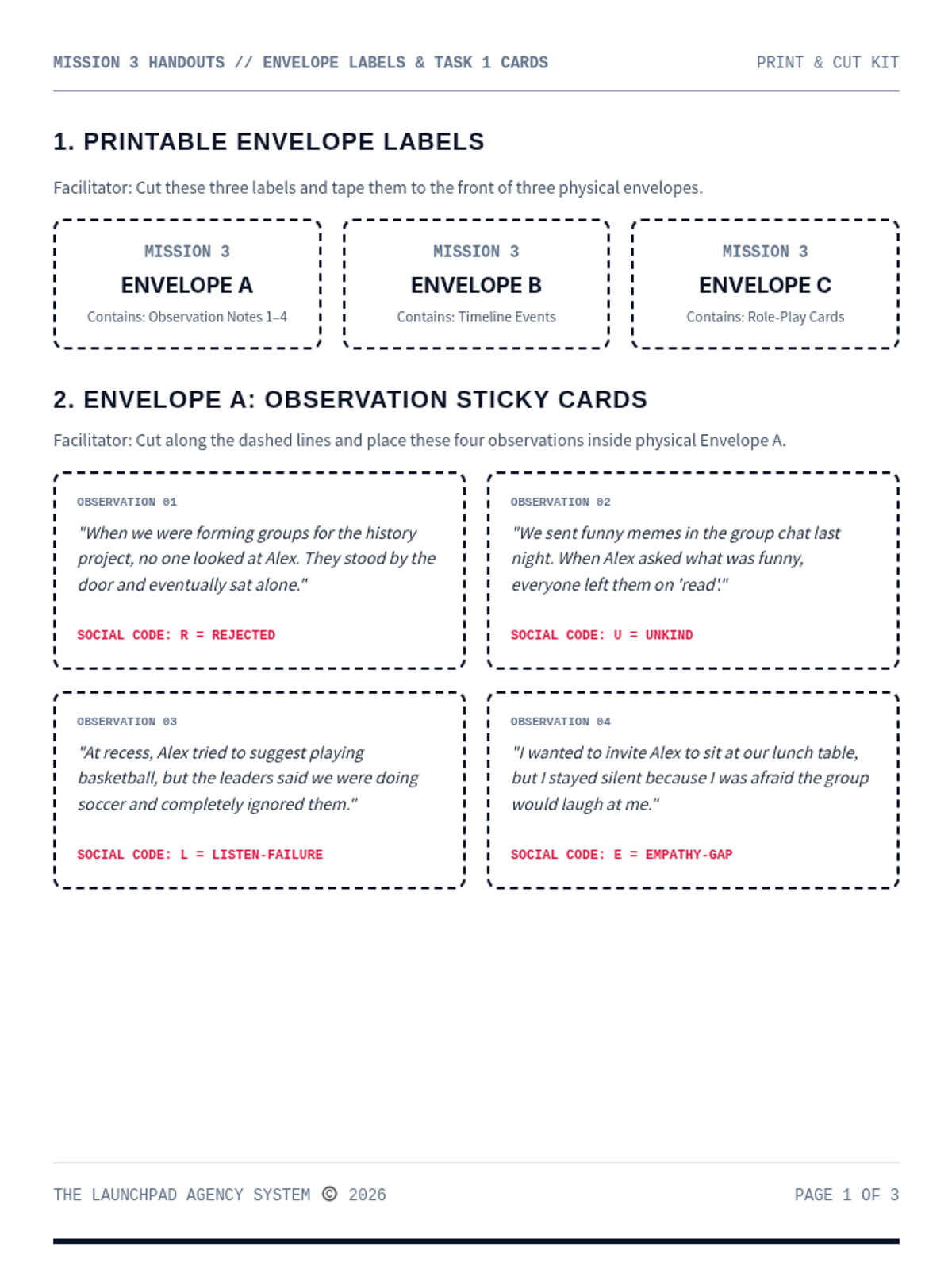
A chronological reconstruction and peer exclusion escape room for Ages 10-12. Recruits analyze sticky-note observations, identify missed social interactions, and role-play restorative de-escalation scripts.
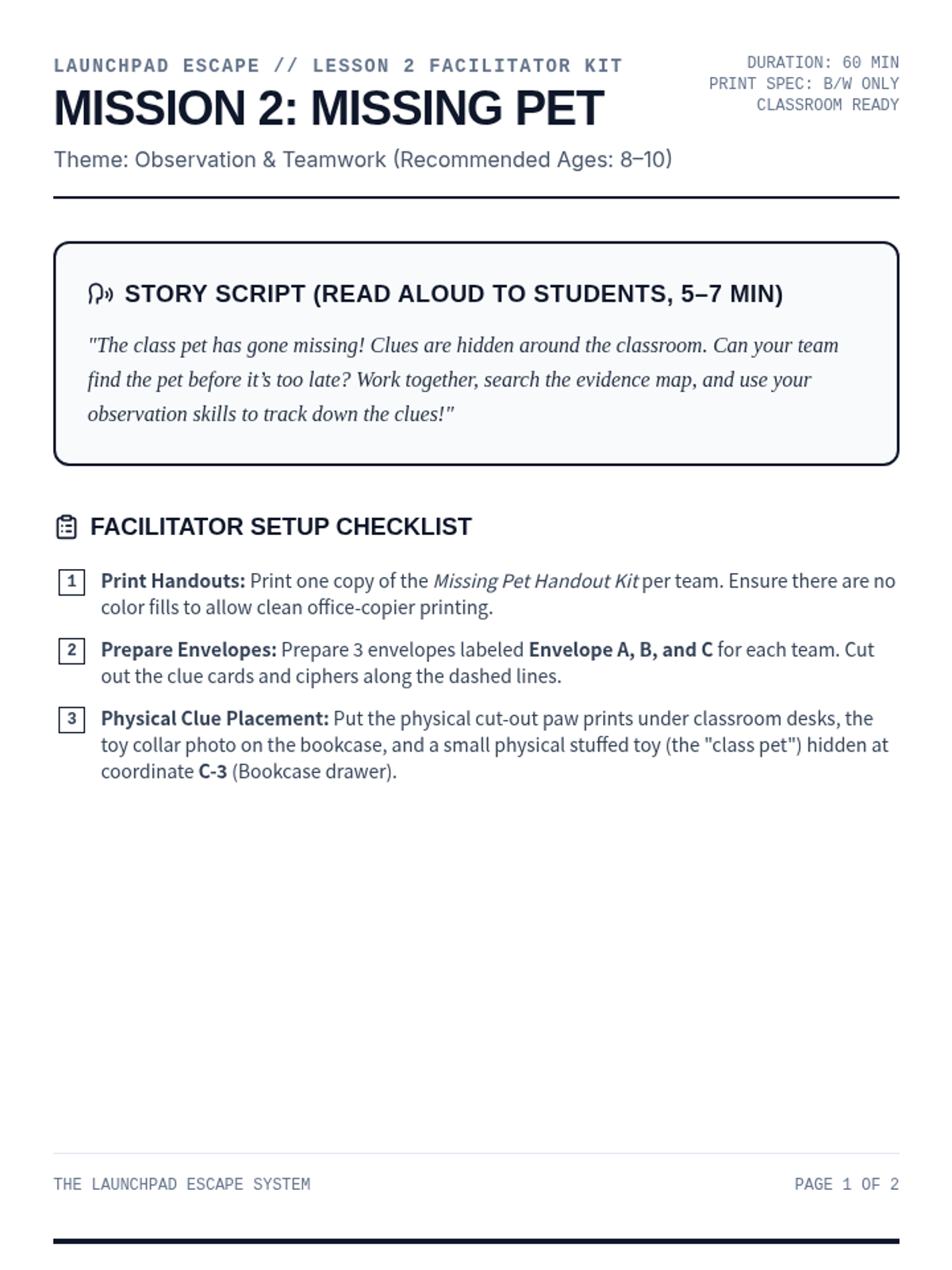
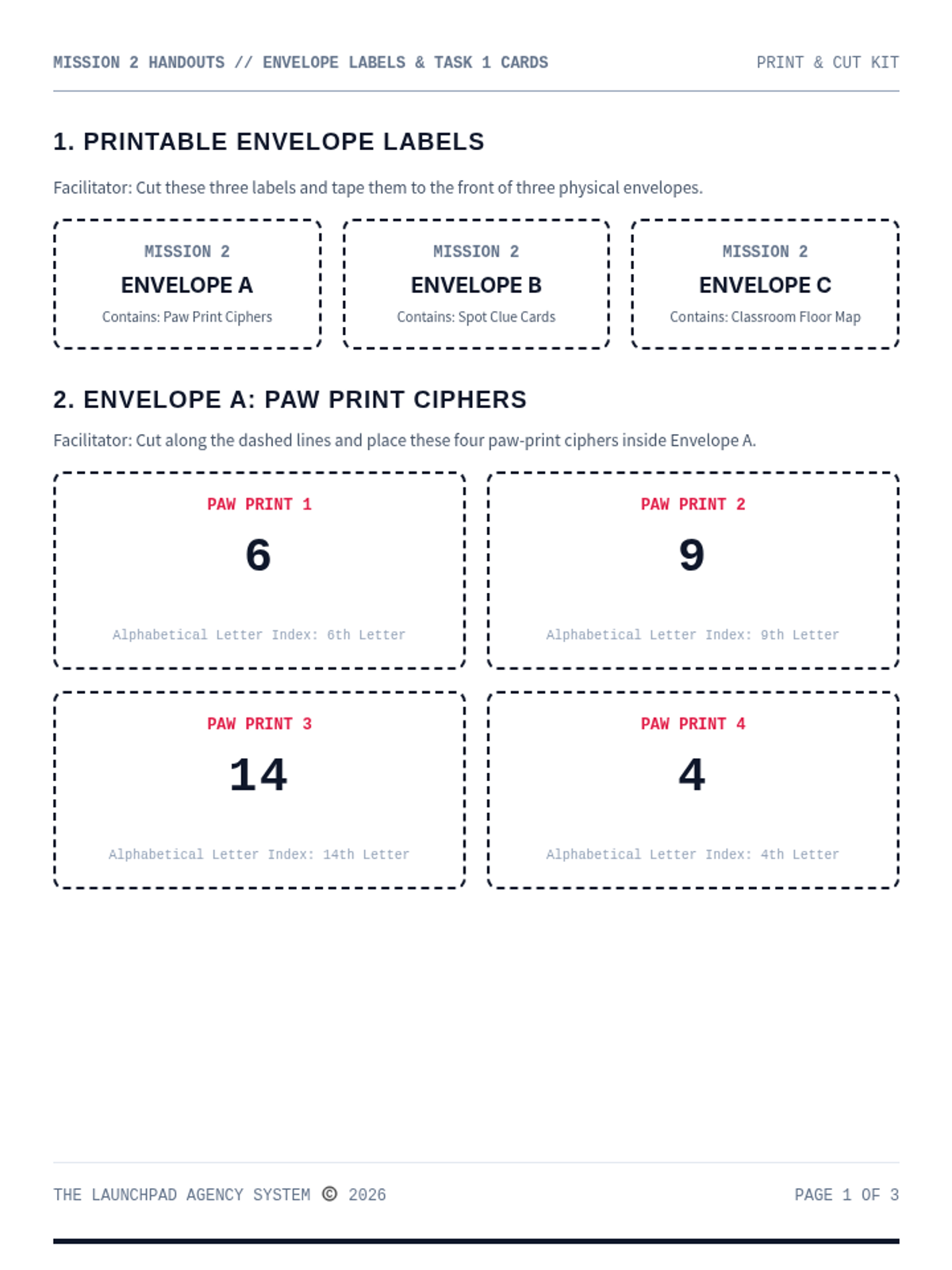
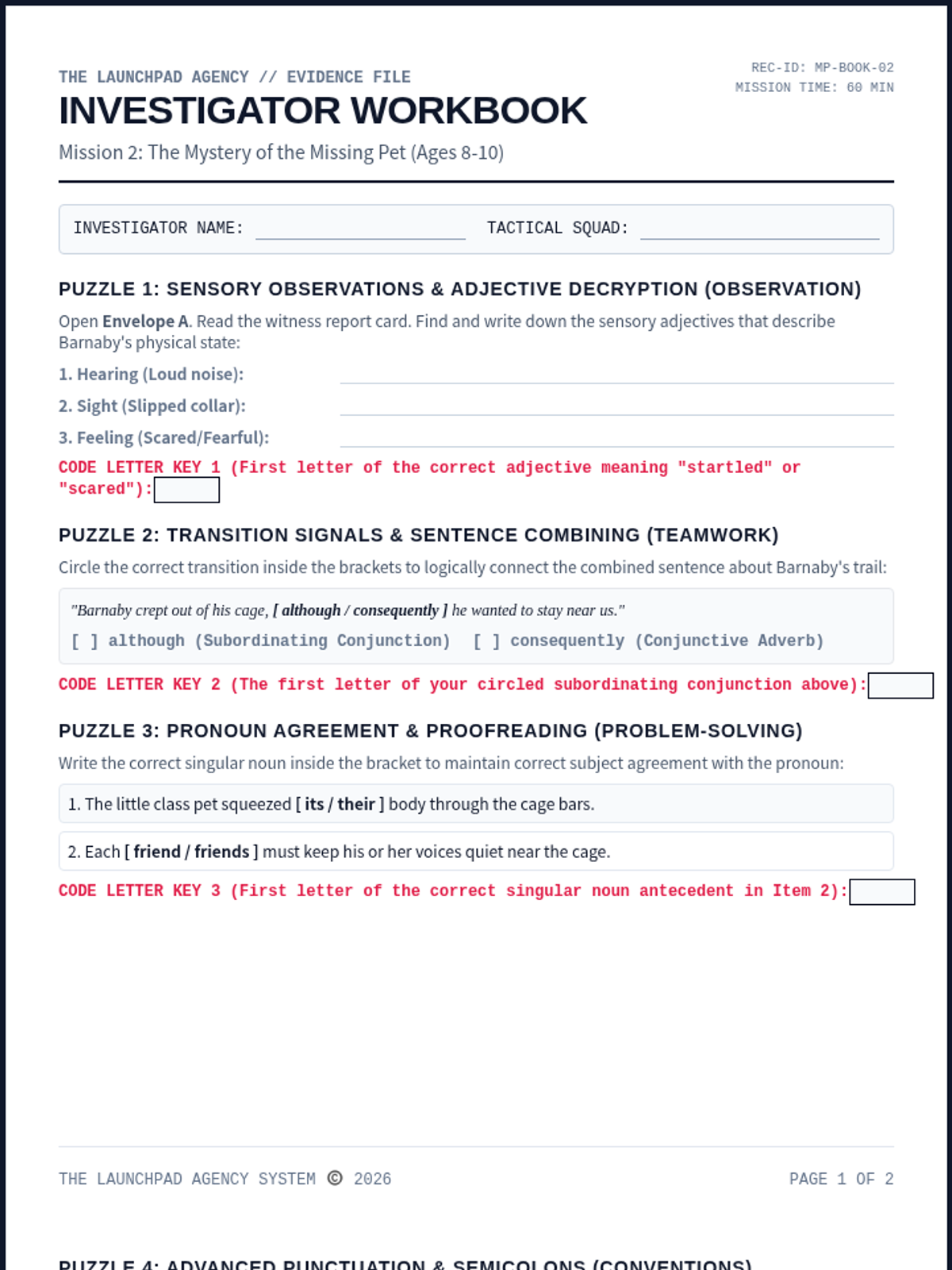
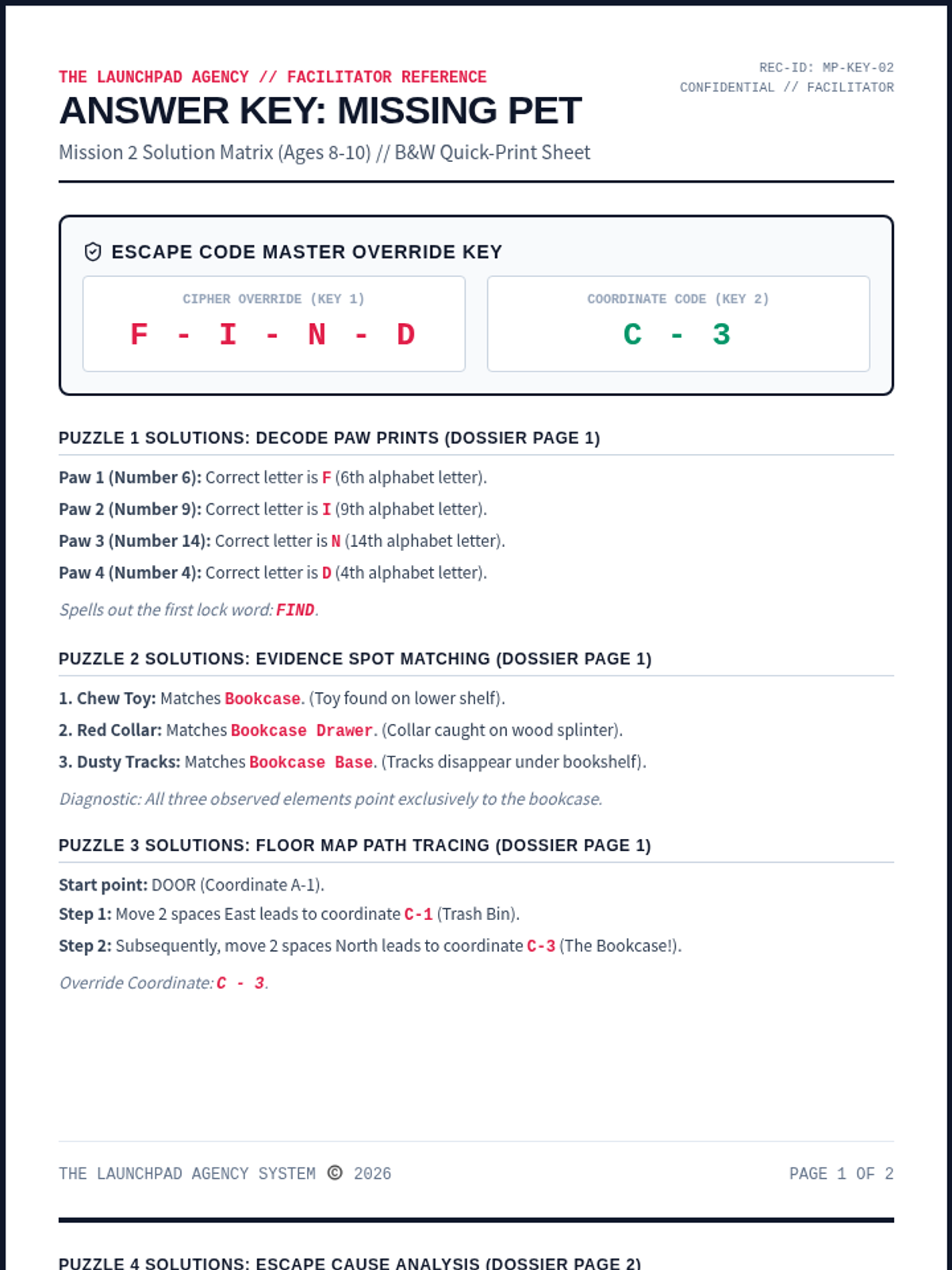
An observation-based escape mission for Ages 8-10. Recruits decode paw ciphers, match footprint evidence to classroom hiding spots, and compile a team map to find the missing class pet.
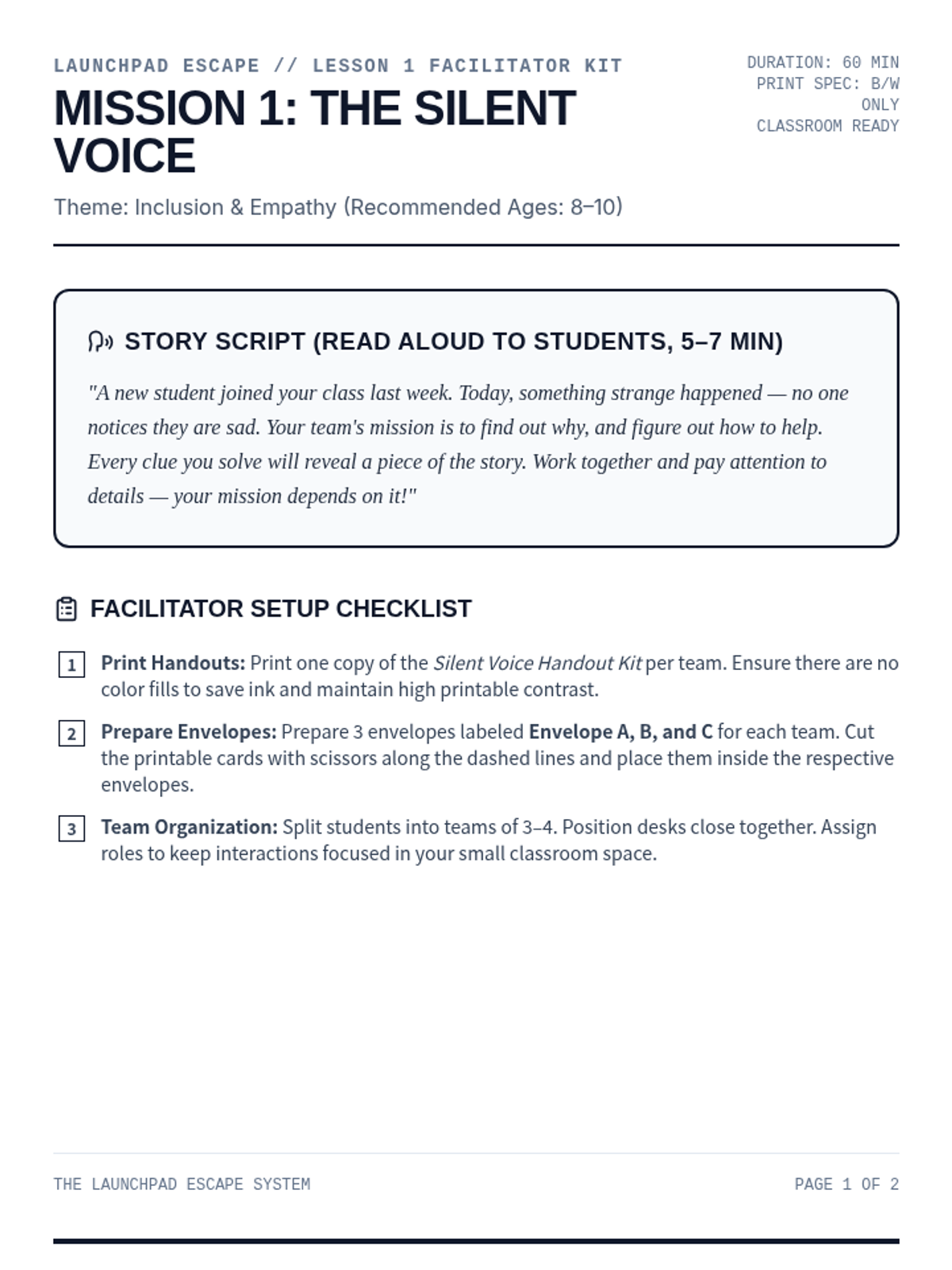
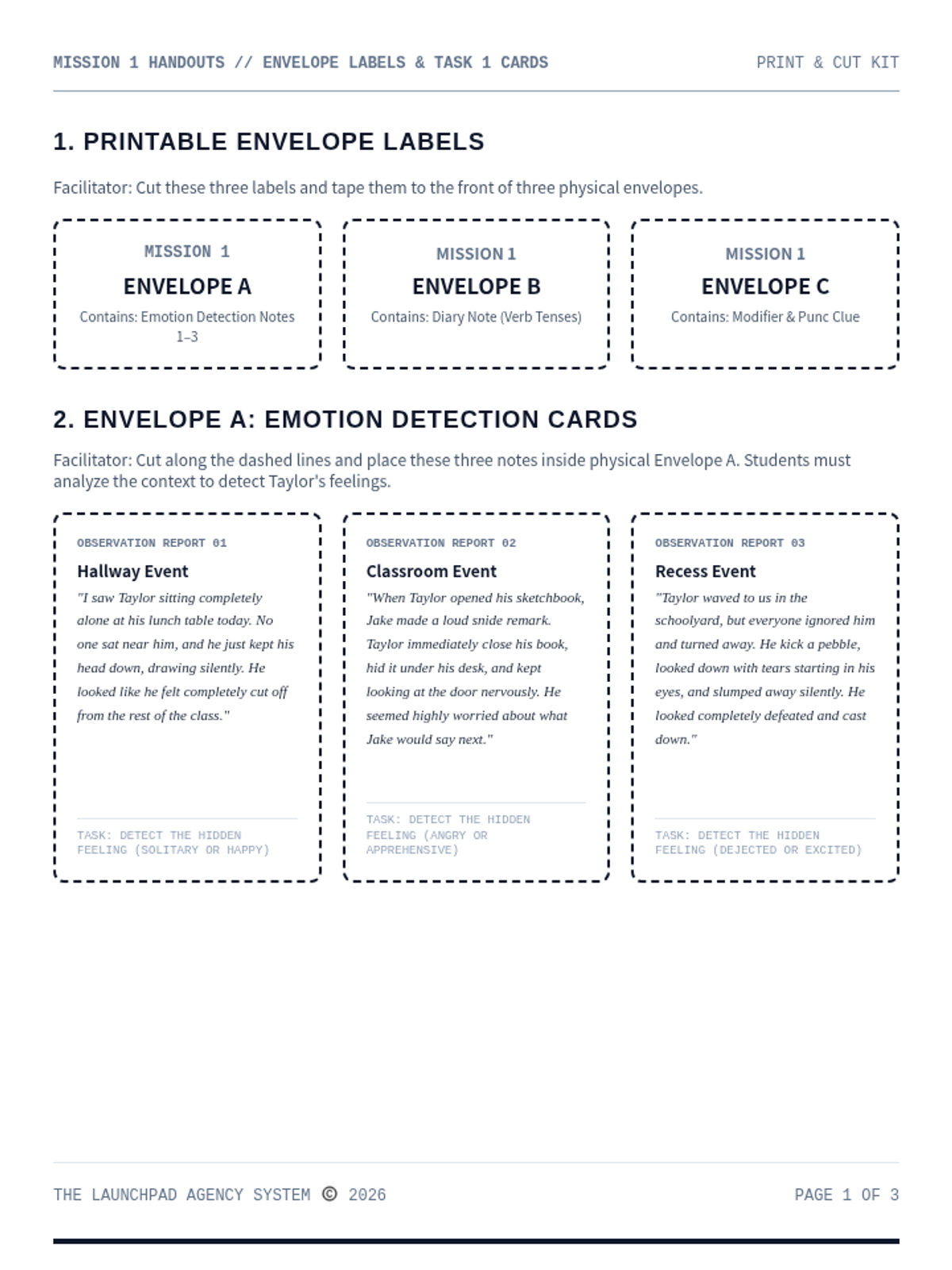
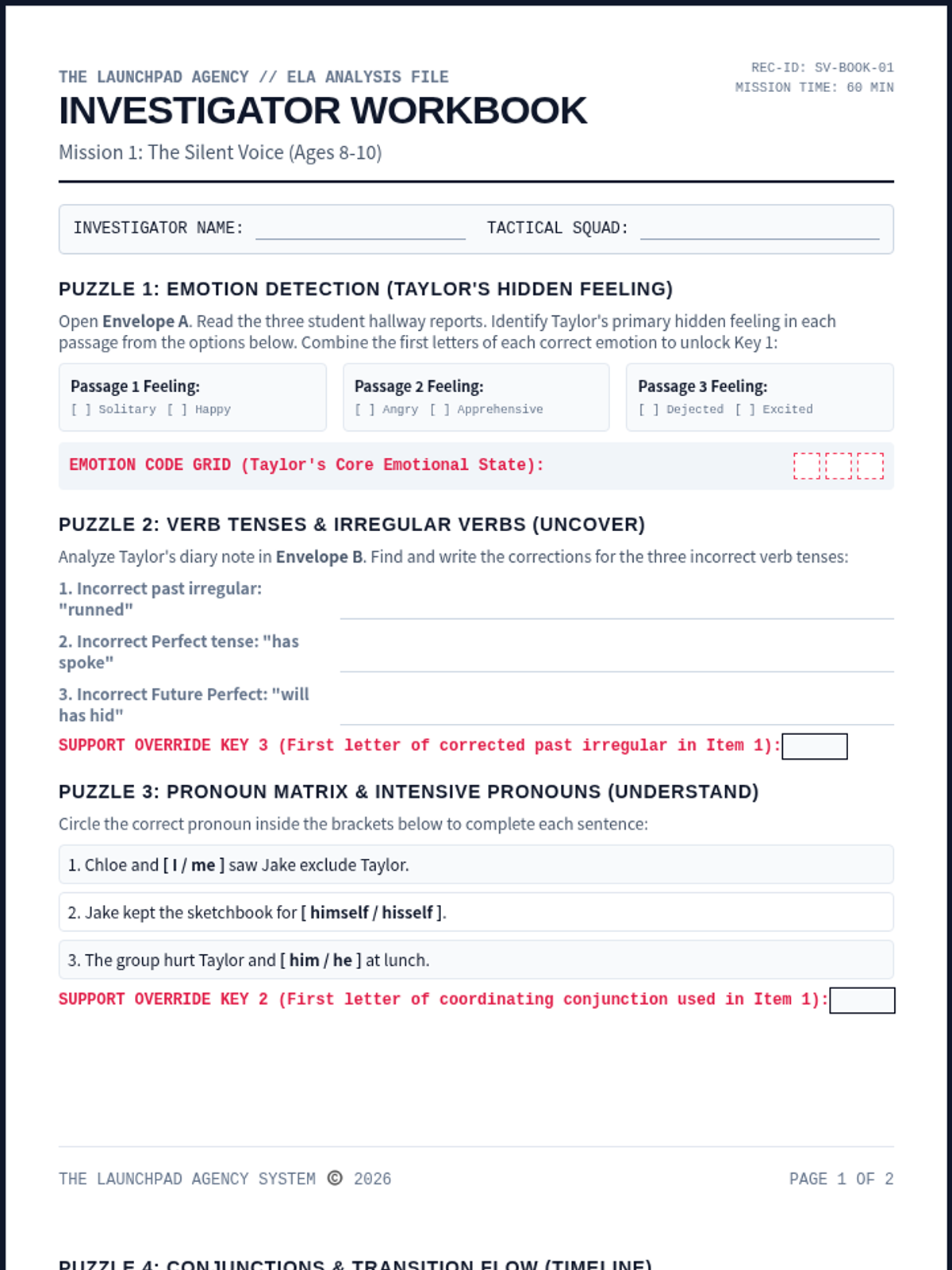
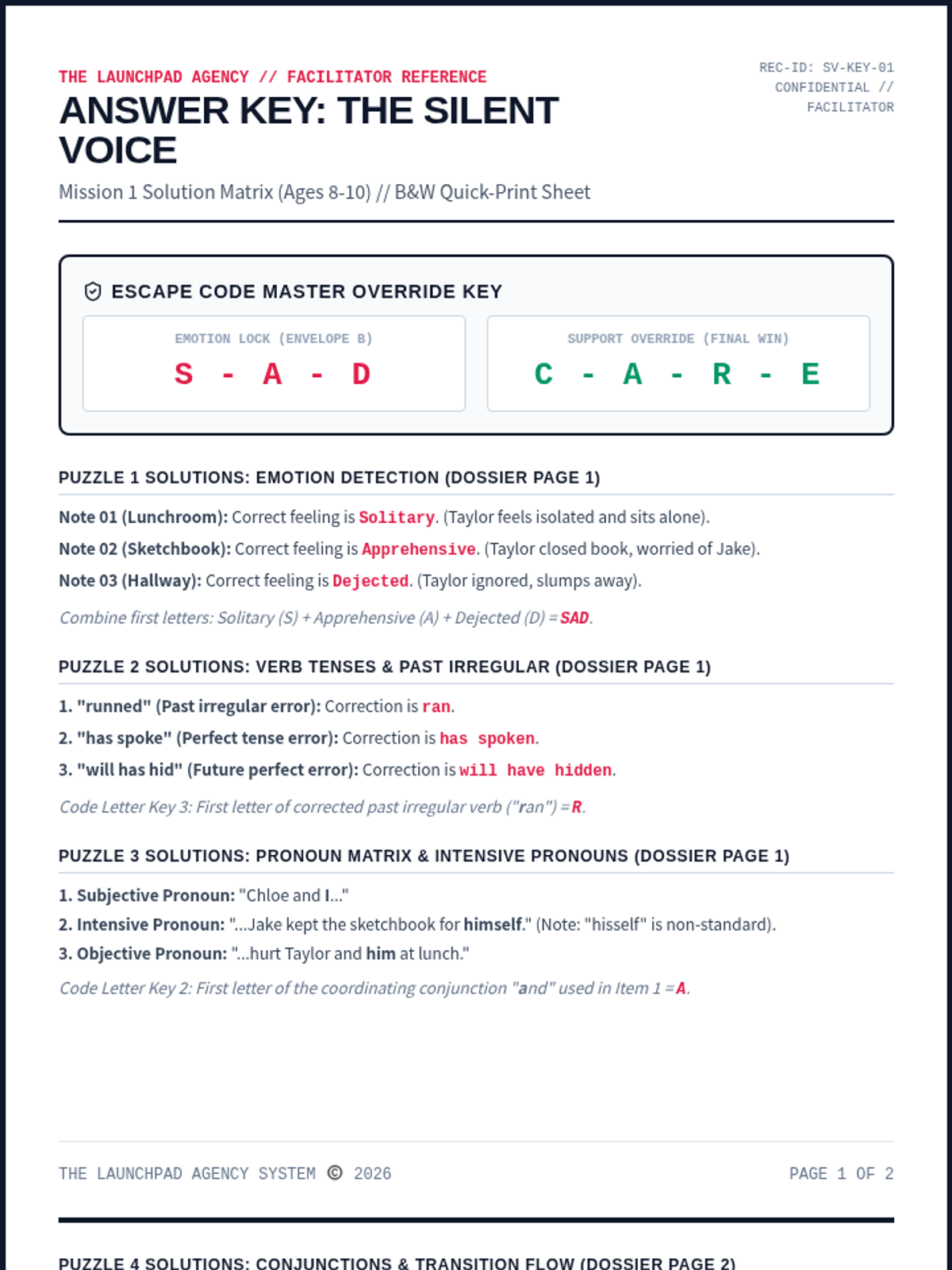
A cooperative social escape room for Ages 8-10 focused on inclusion and empathy. Recruits sort desk messages, build a timeline, and decode perspective cards to support a lonely classmate.
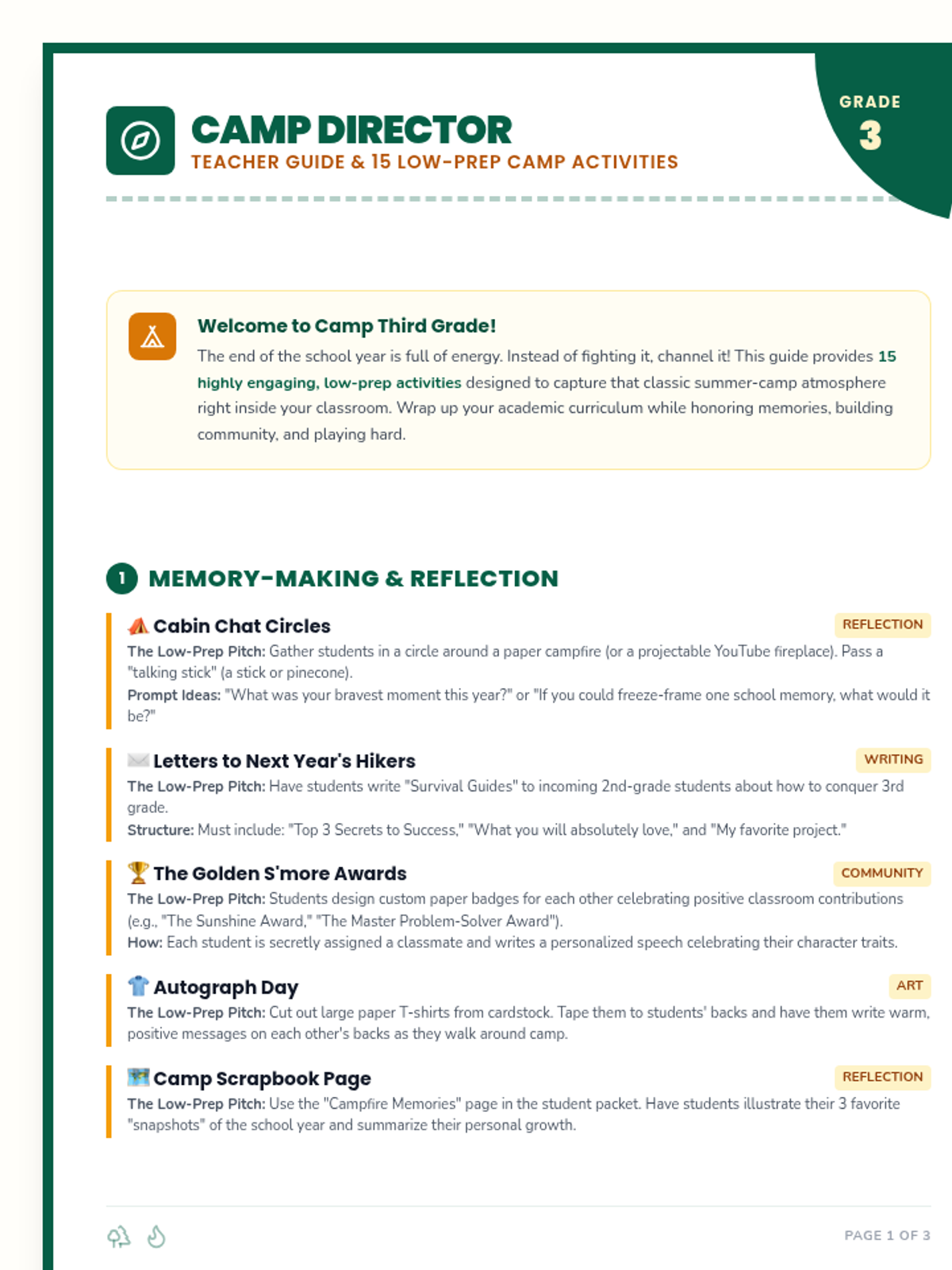
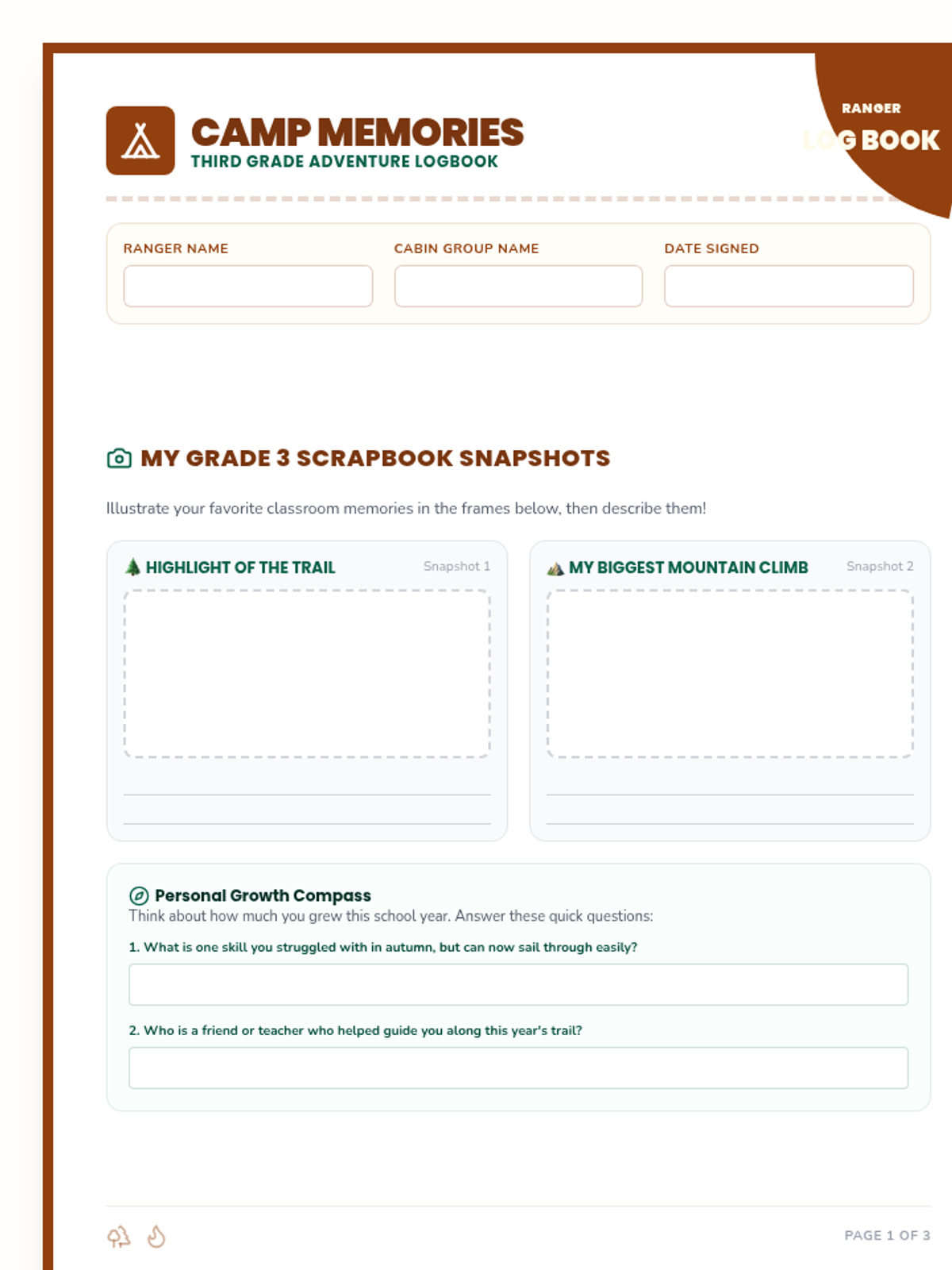
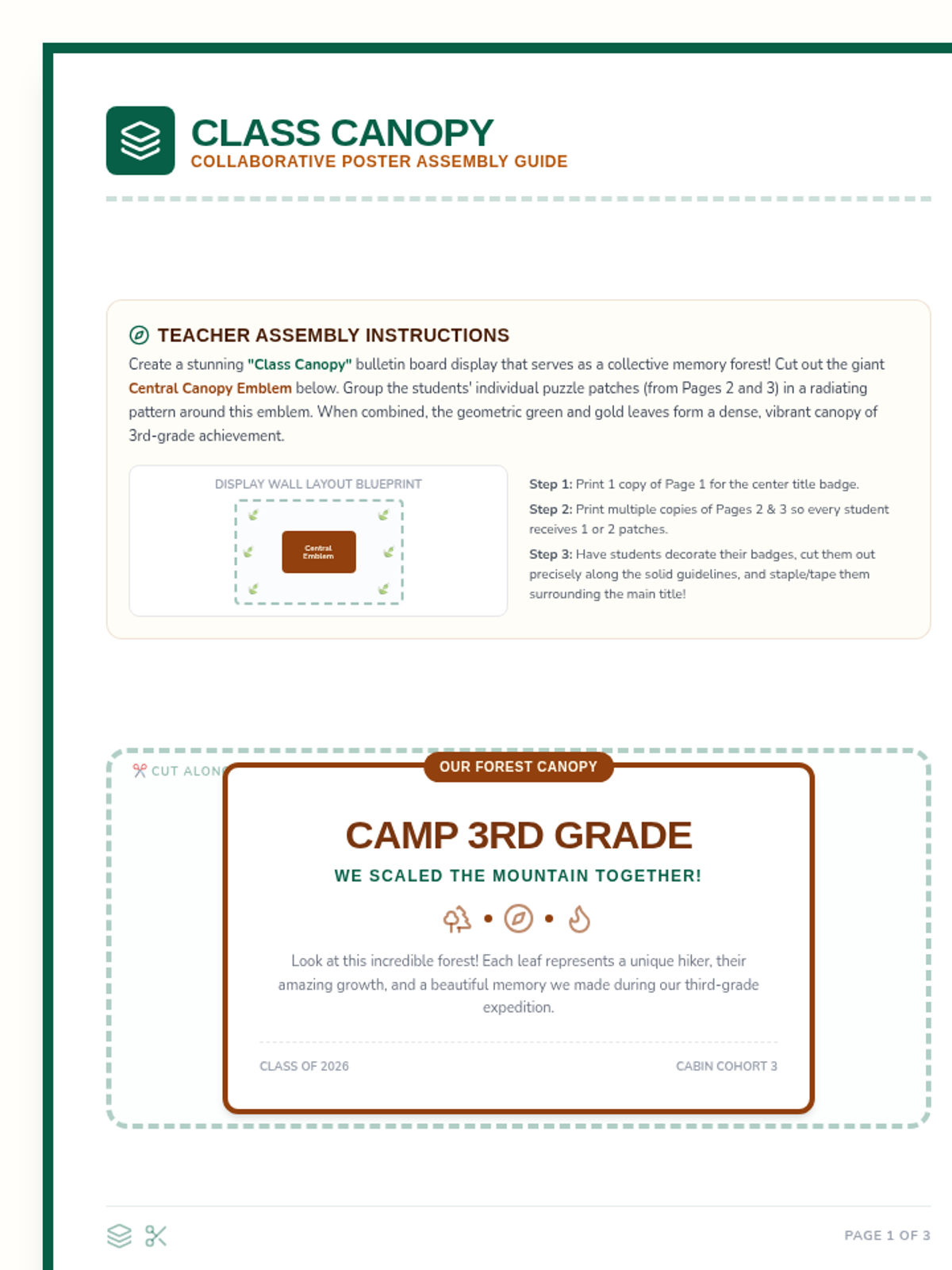
A low-prep, highly engaging end-of-year activity suite designed to help third graders reflect on their growth, review key reading and math concepts, and collaborate on a giant memory poster before launching into summer.
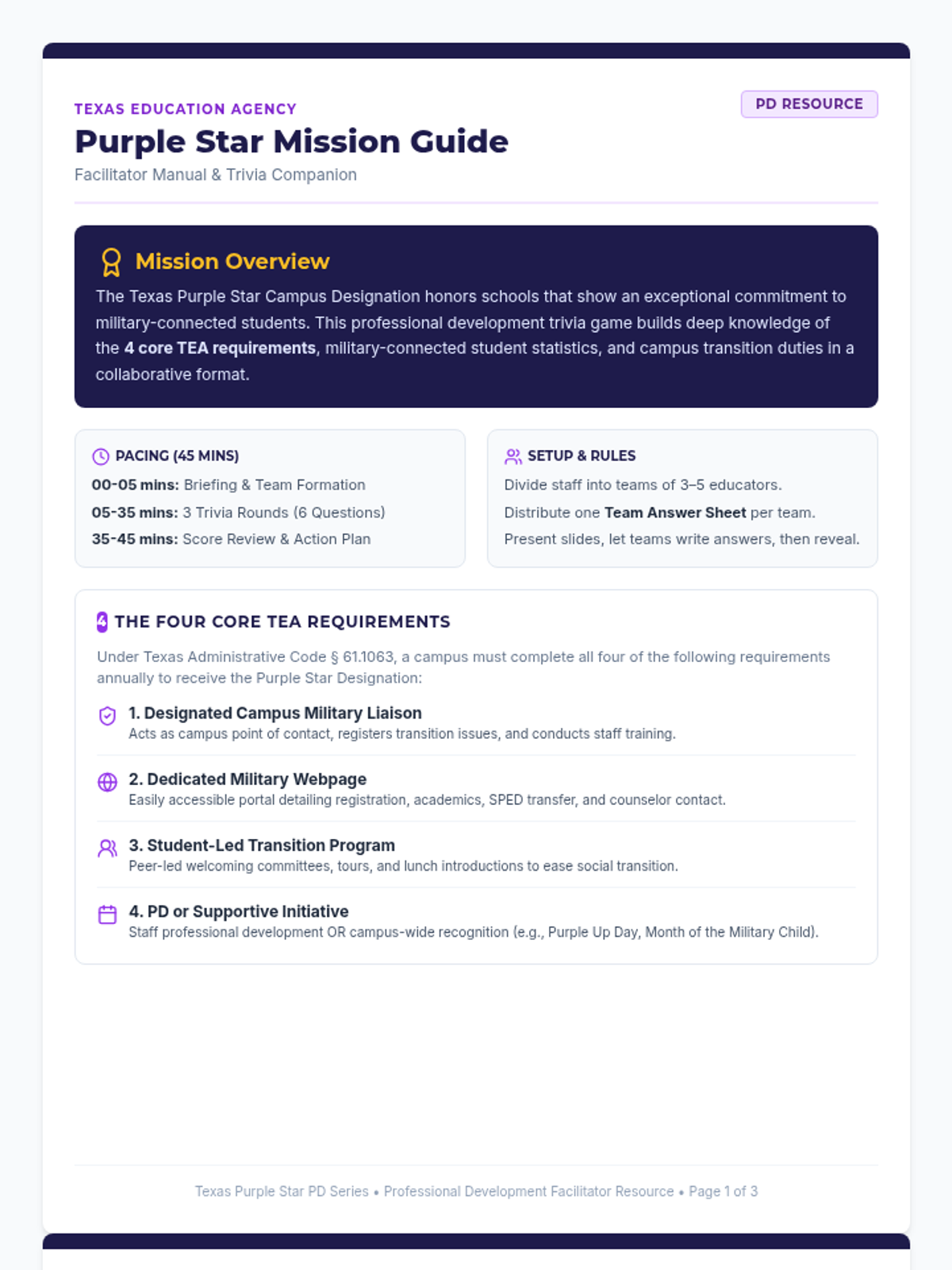
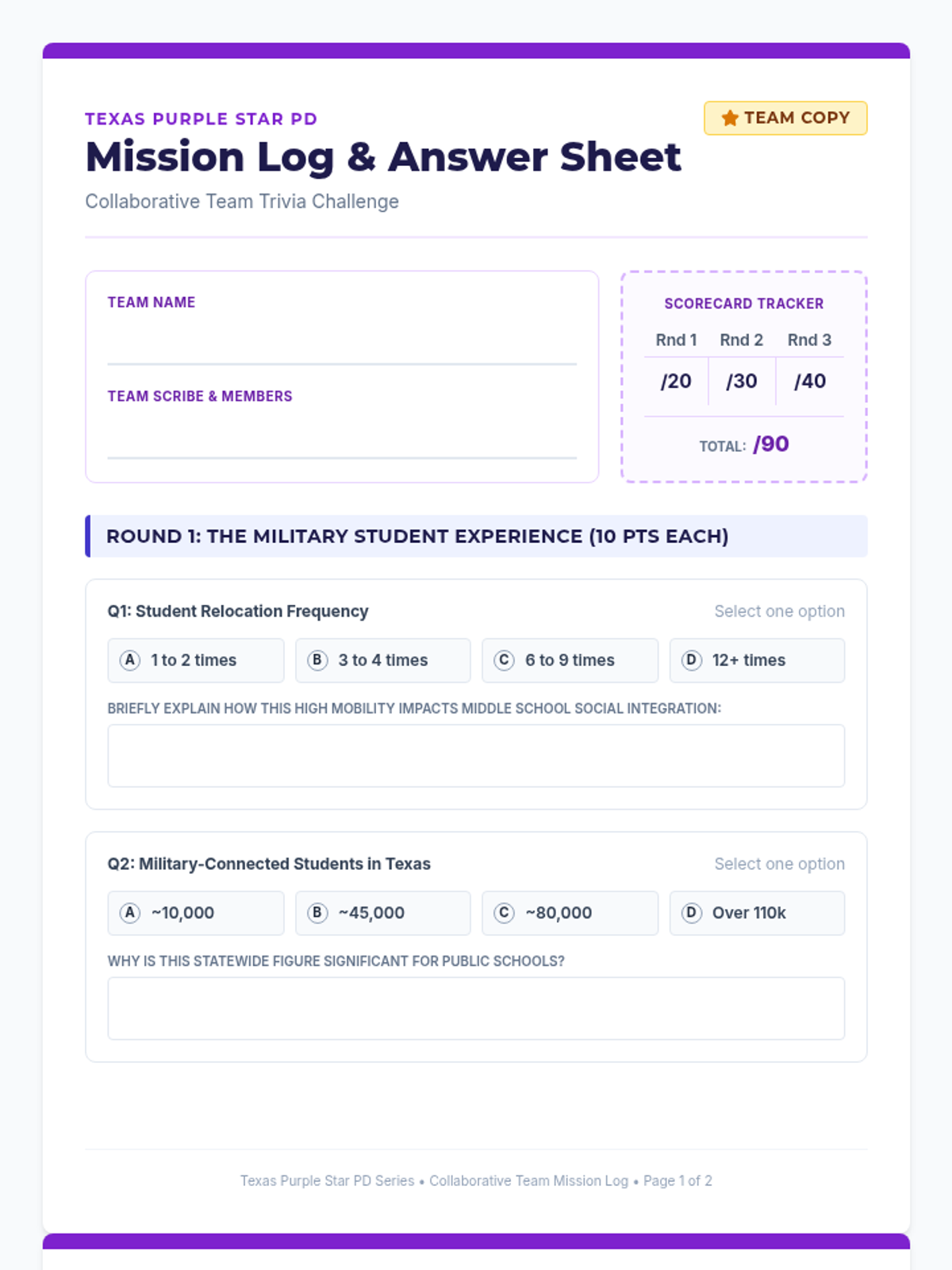
An interactive professional development lesson designed for Texas middle school educators to master the Texas Education Agency (TEA) Purple Star Designation requirements, student transition challenges, and military liaison duties through a competitive team trivia game.
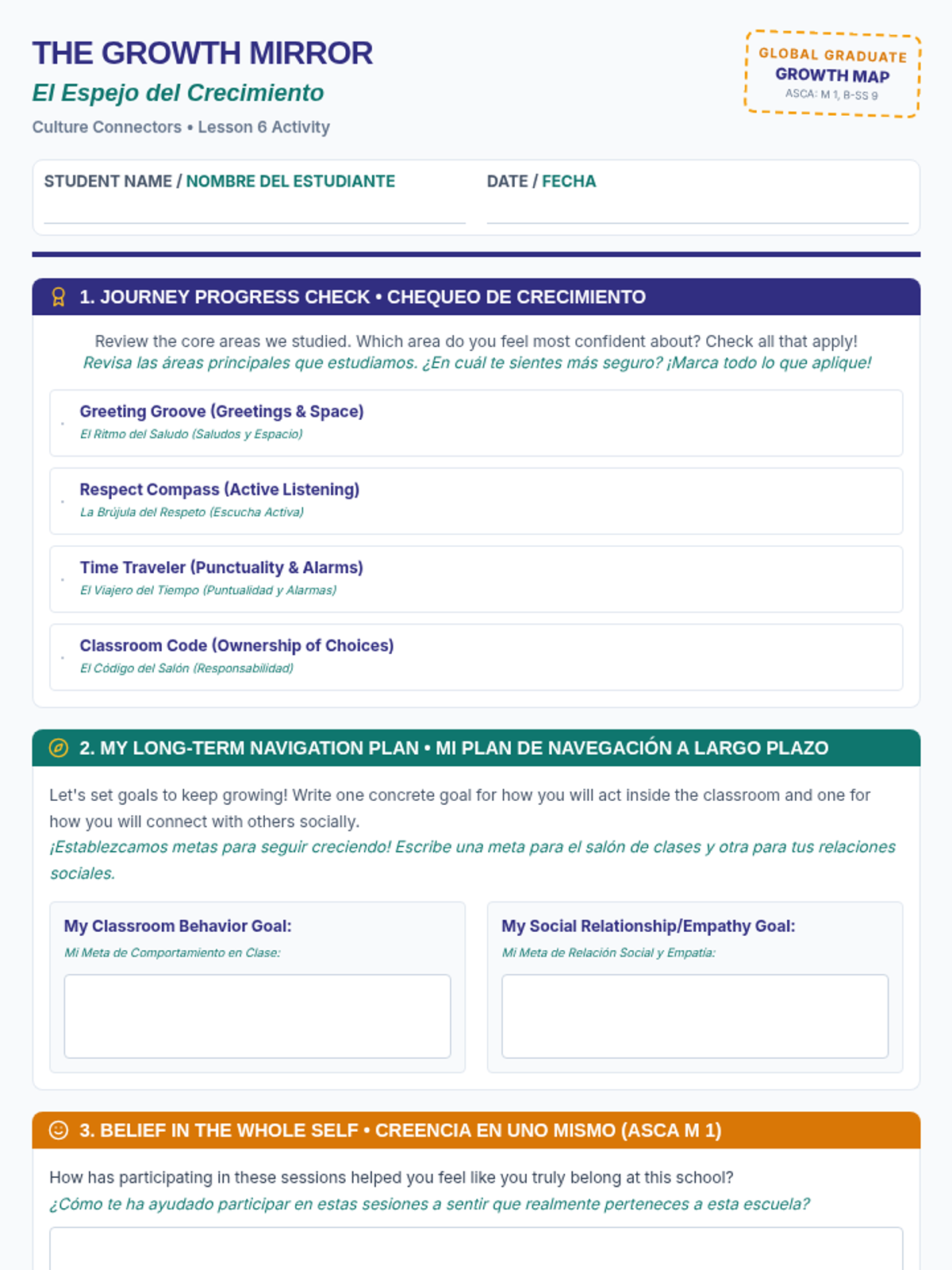
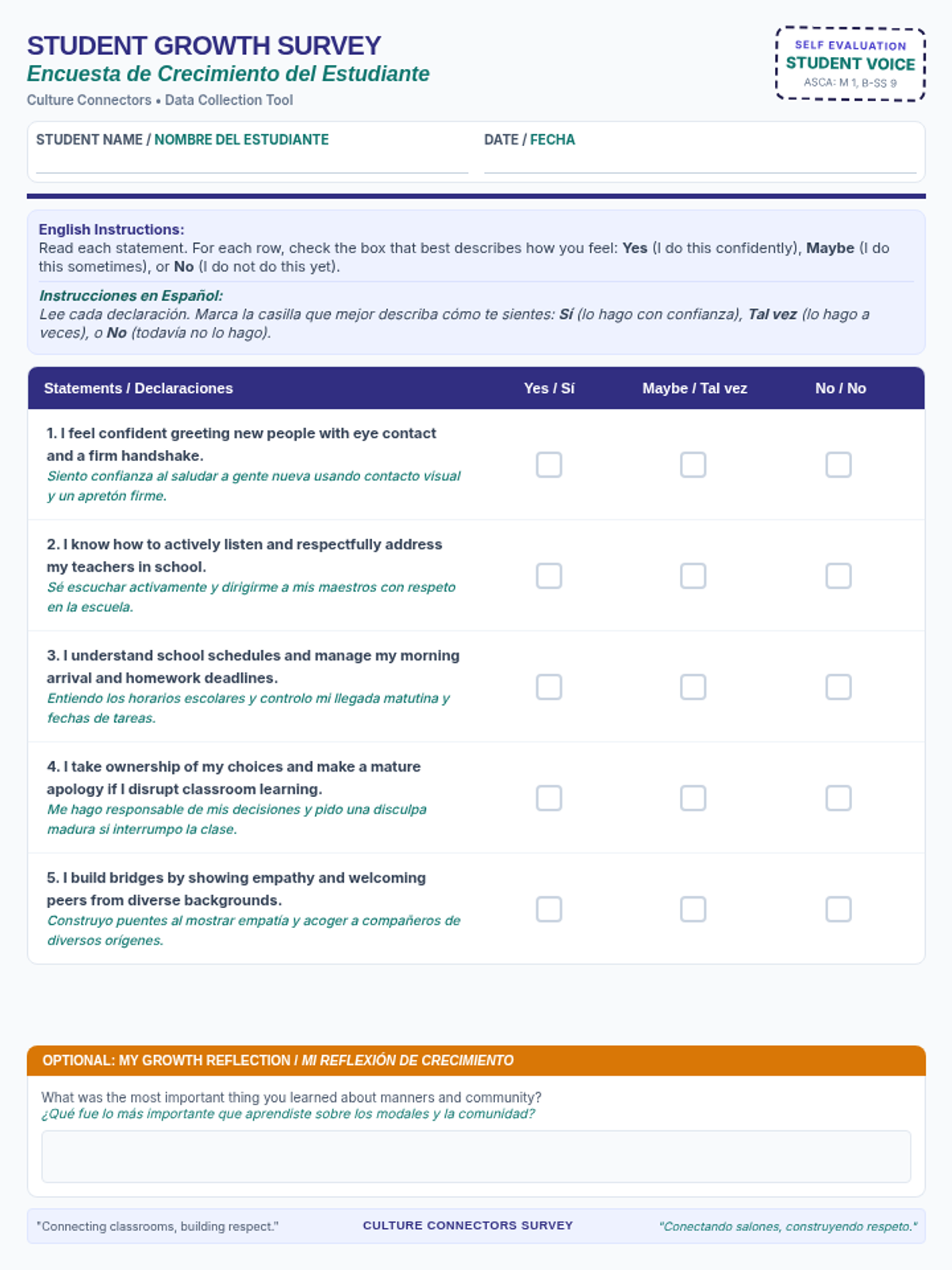
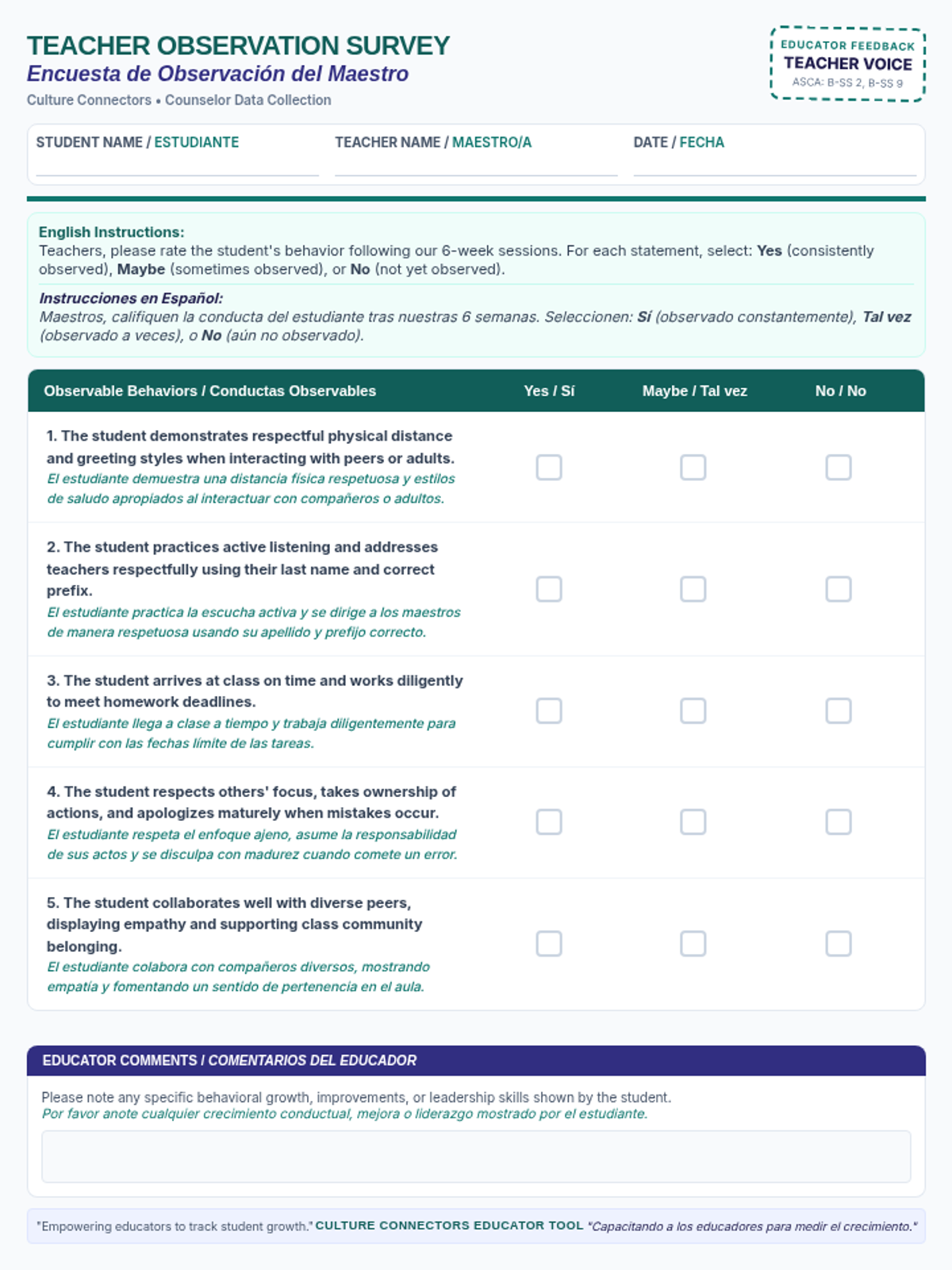
Encourages self-reflection and belief in the development of the whole self. Students reflect on their growth throughout the curriculum and complete personal goal-setting plans. Includes bilingual Likert scales for data collection.
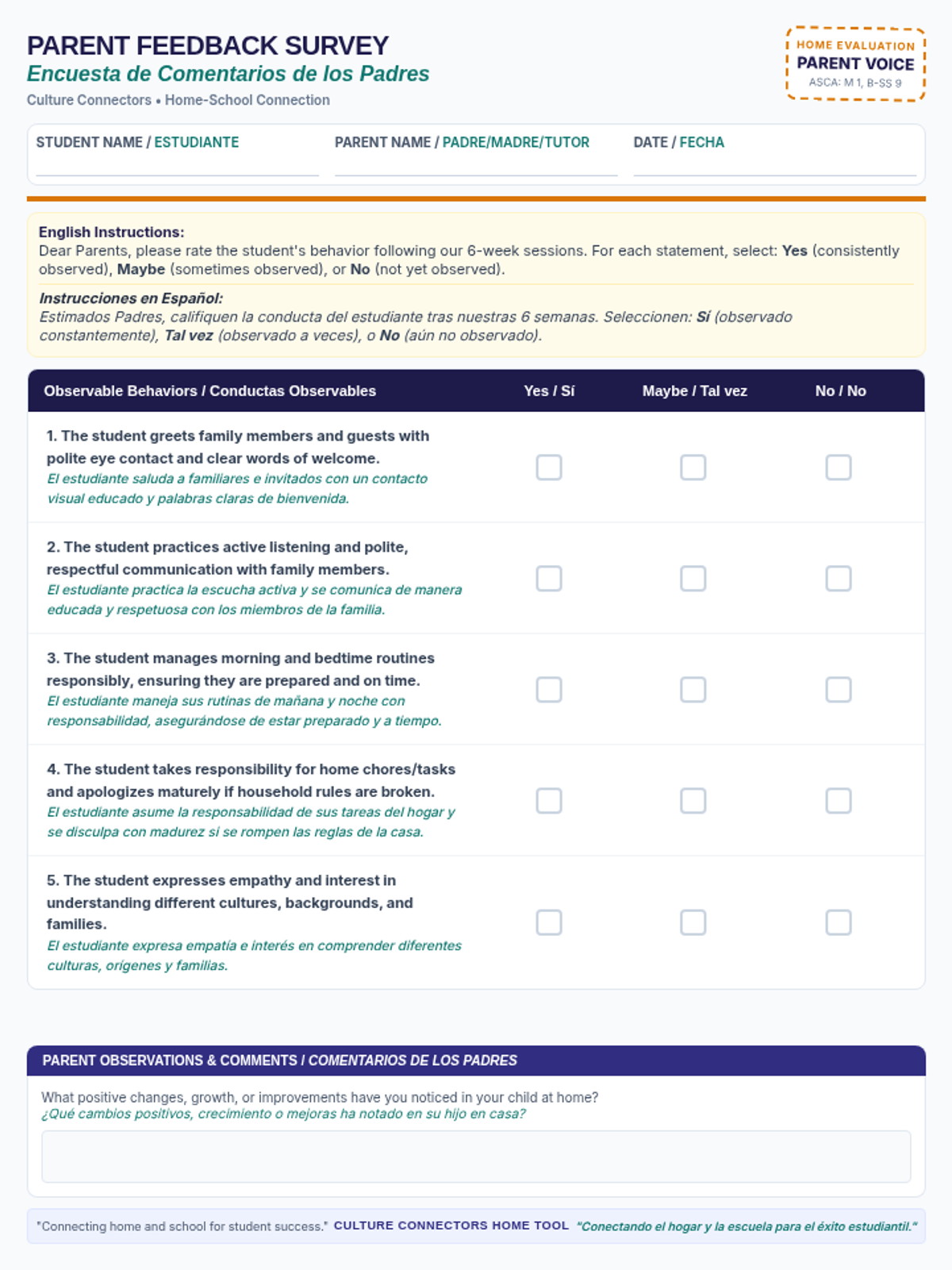
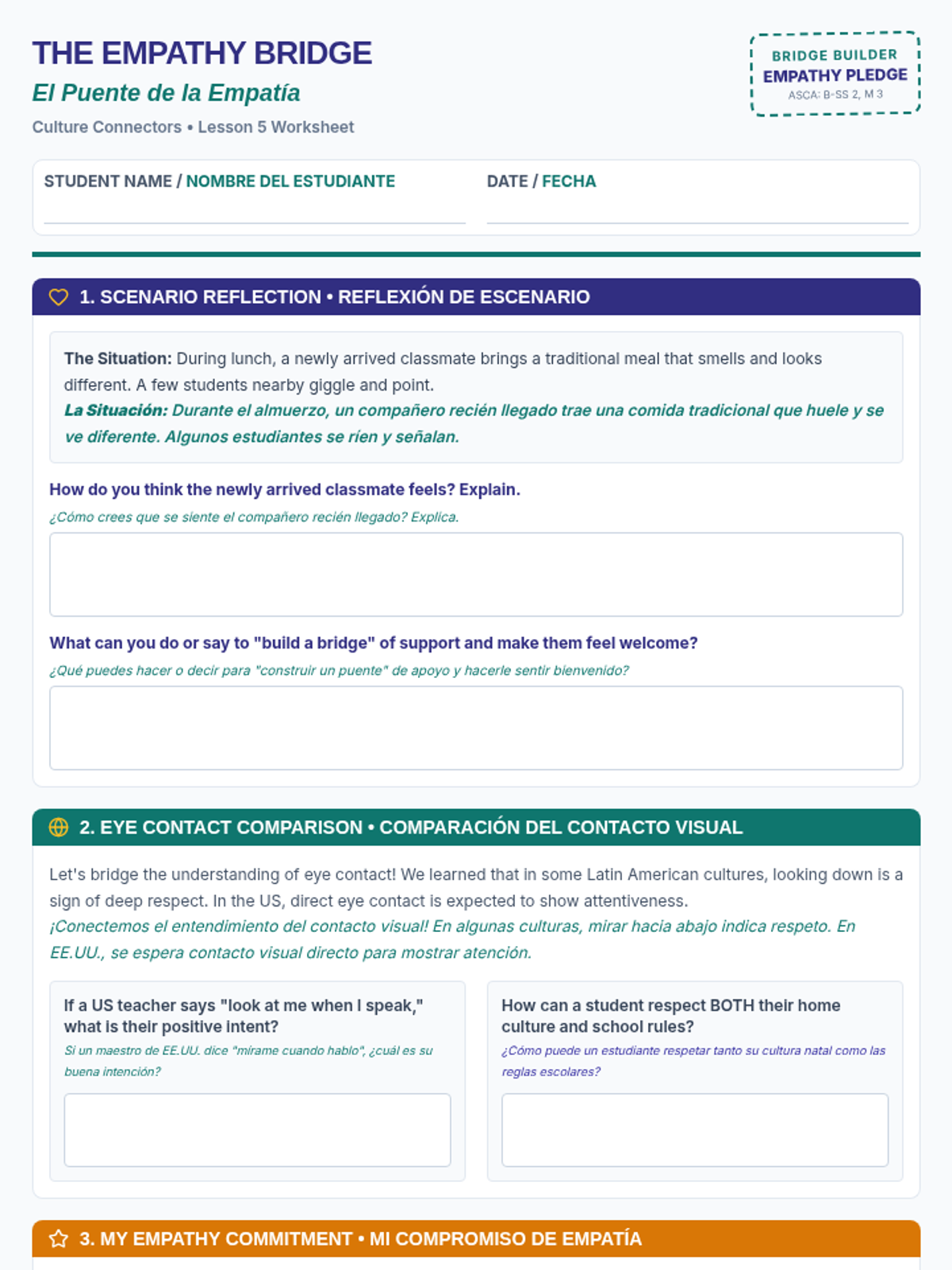
Explores perspective-taking, diversity, understanding cultural differences in expectations, and resolving social conflicts respectfully. Helps students find common ground while celebrating unique cultural identities.
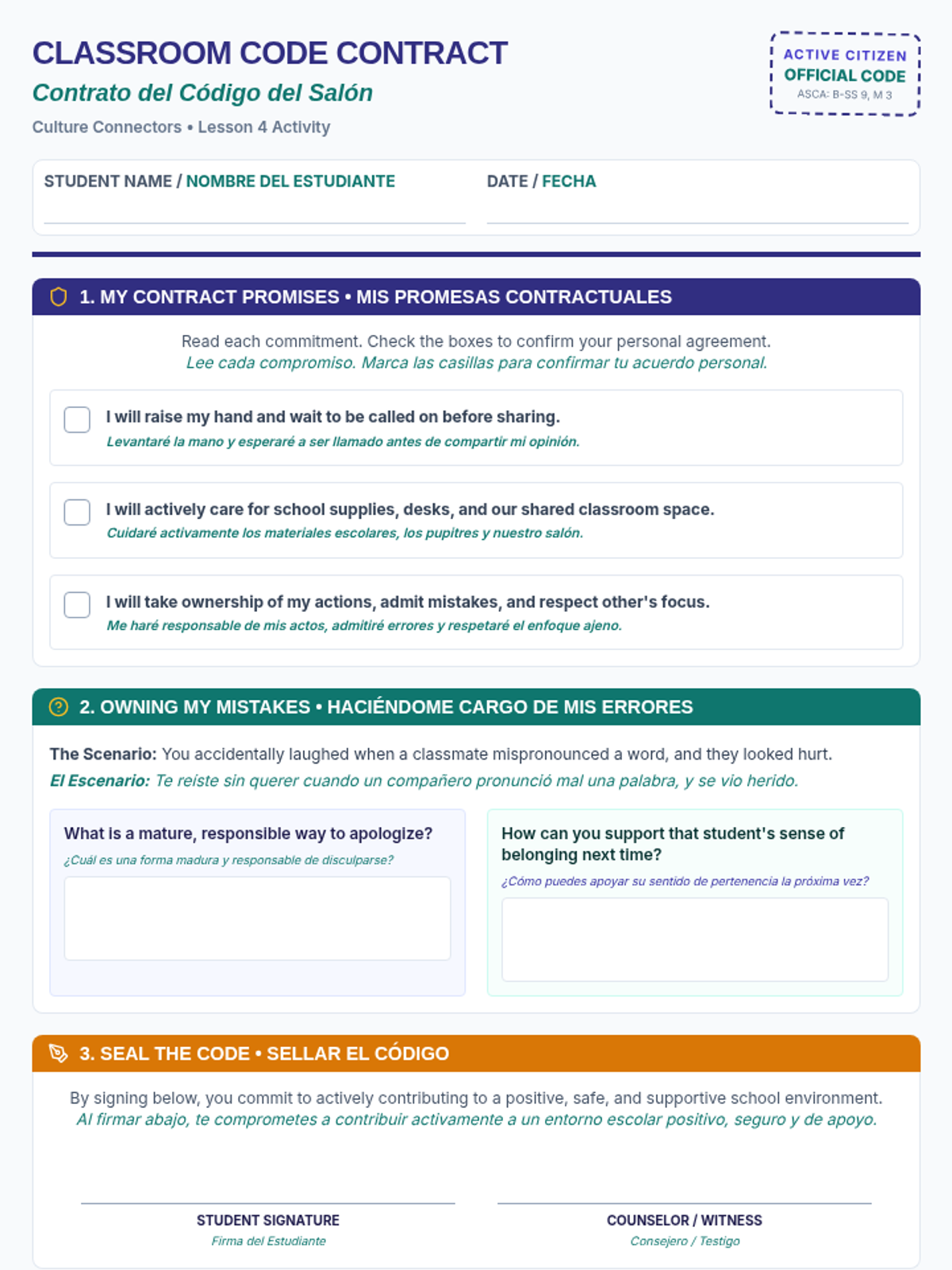
Guides students through classroom behavior expectations, raising hands, active participation, and taking ownership of school behavior to foster a strong sense of school community belonging.
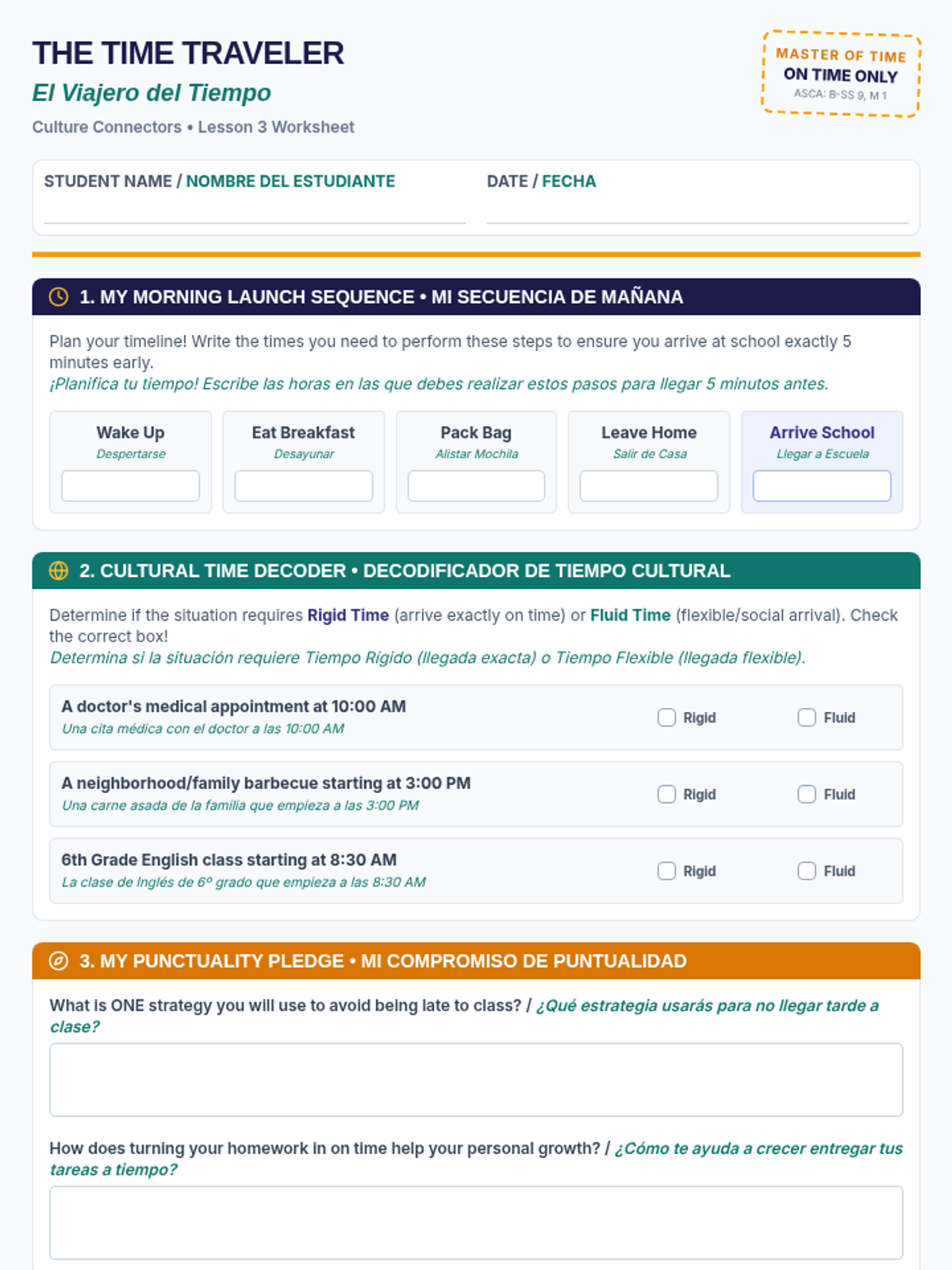
Covers punctuality, deadlines, and time expectations in academic and social settings. Helps students understand the cultural differences in time concepts while developing school success habits.
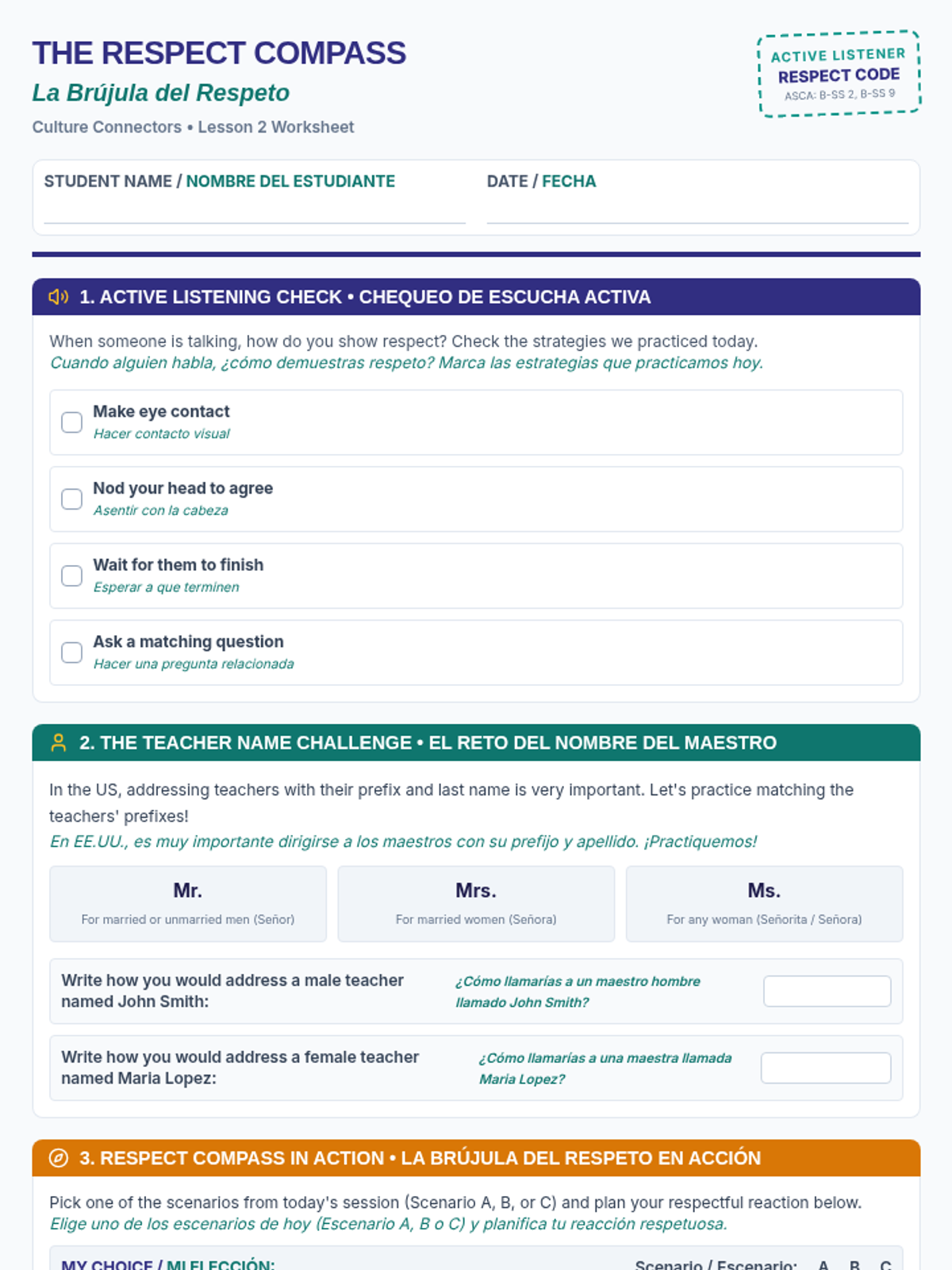
Explores active listening, manners, and showing respect to teachers, peers, and authority figures. Students practice bilingual courtesy terms and cross-cultural respectful communication.
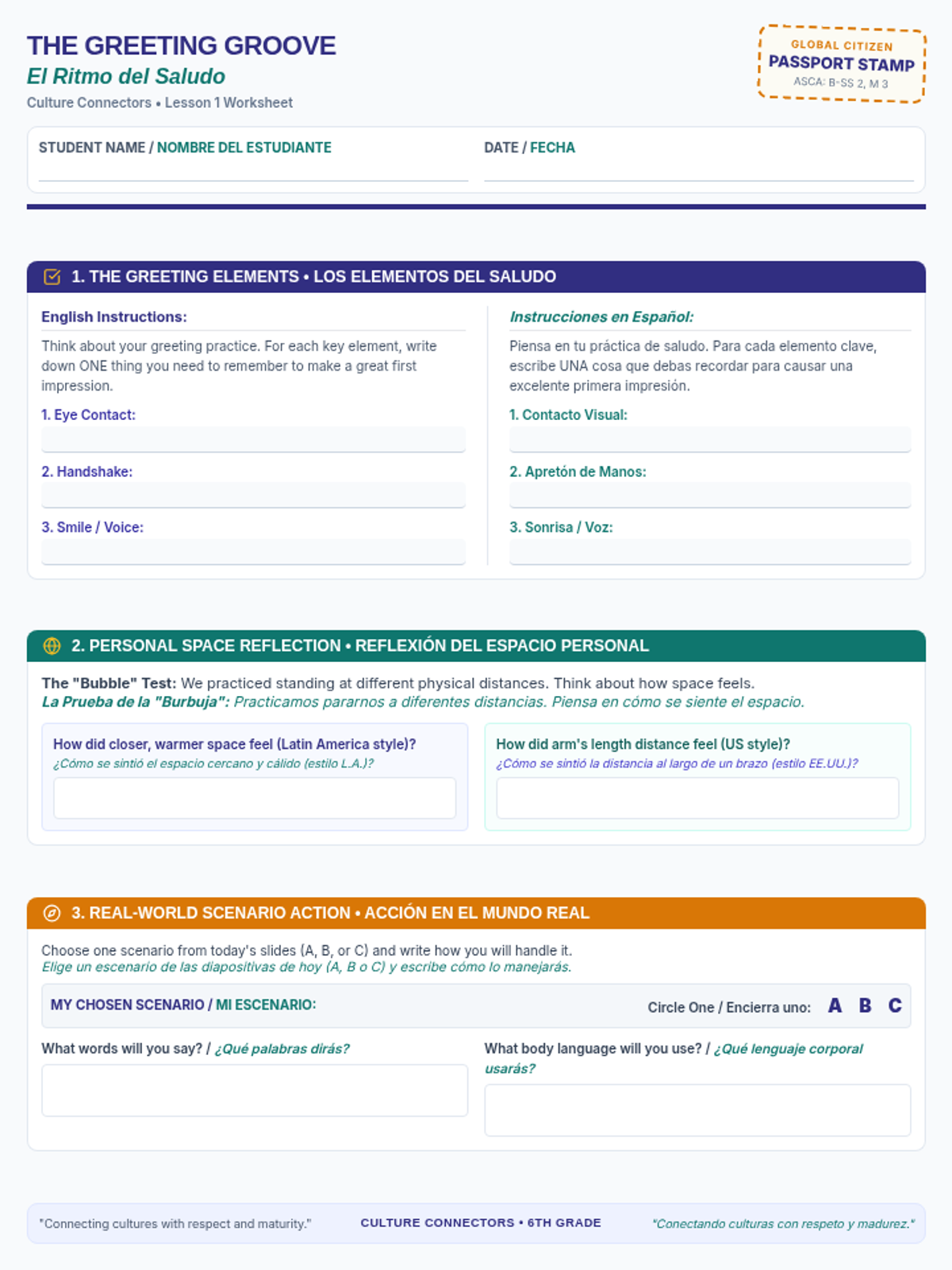
Focuses on greetings, eye contact, handshakes, and physical space in the US vs. Latin America. Students learn the mechanics of a positive first impression in various cultural contexts.
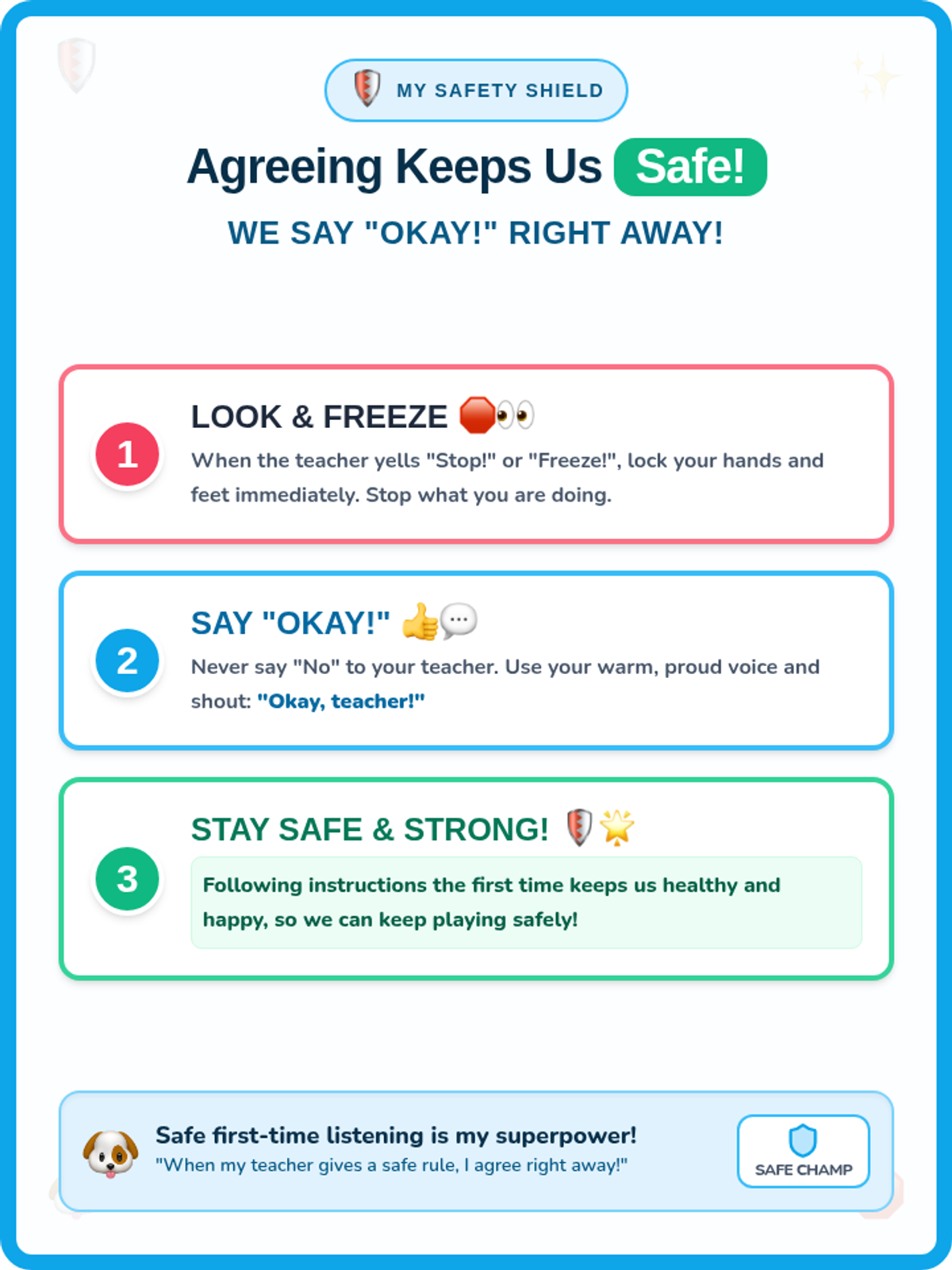
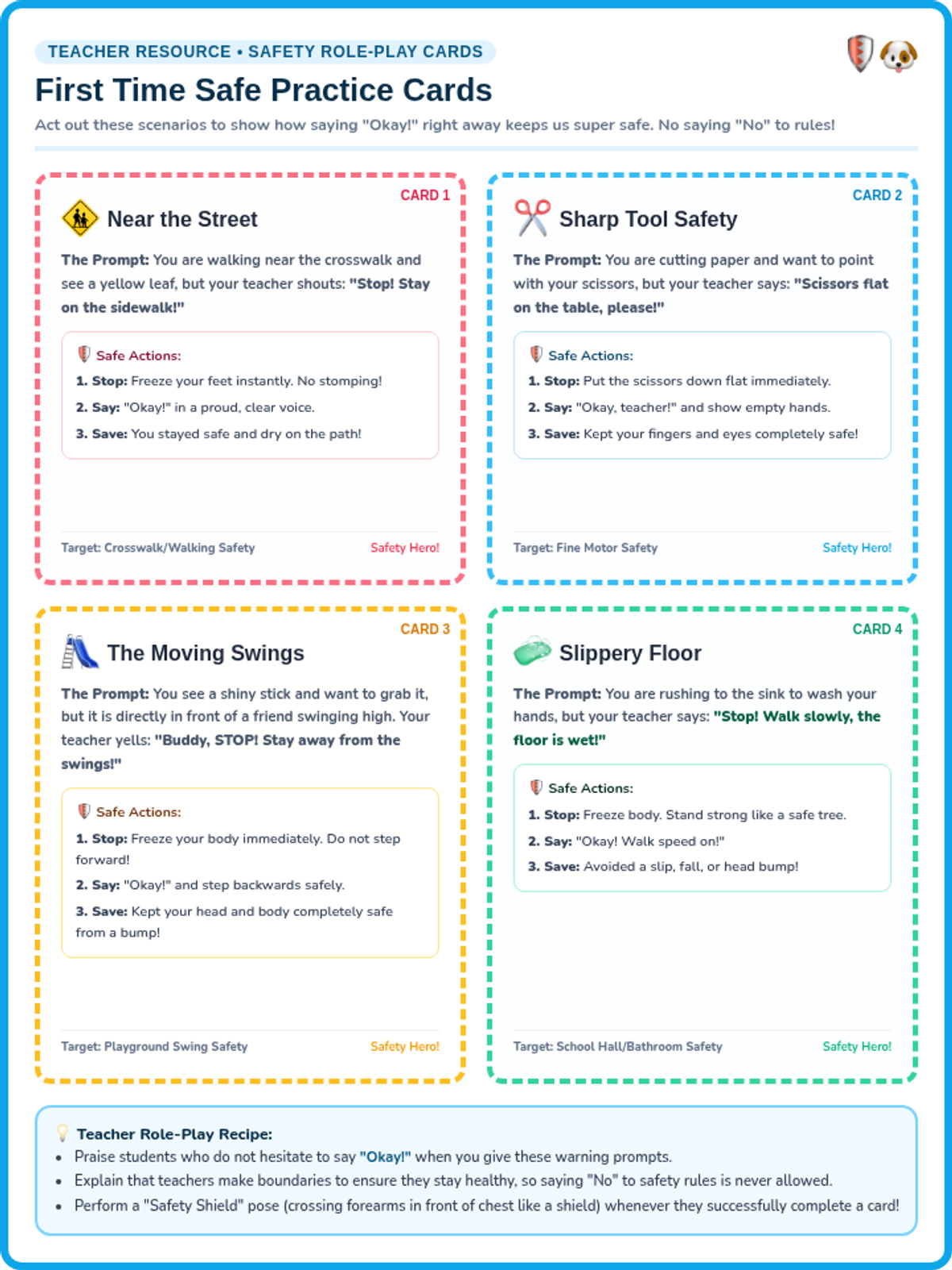
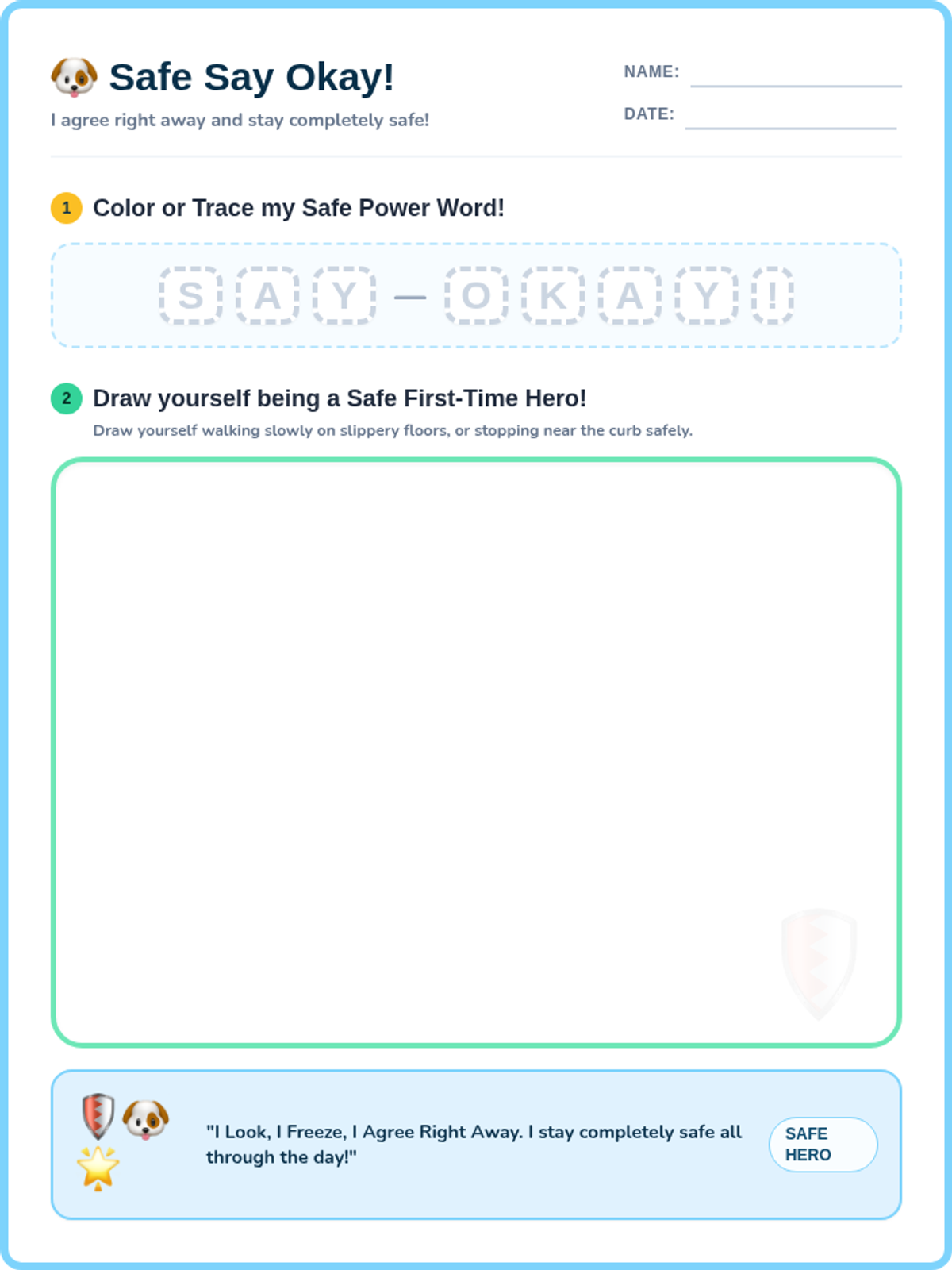
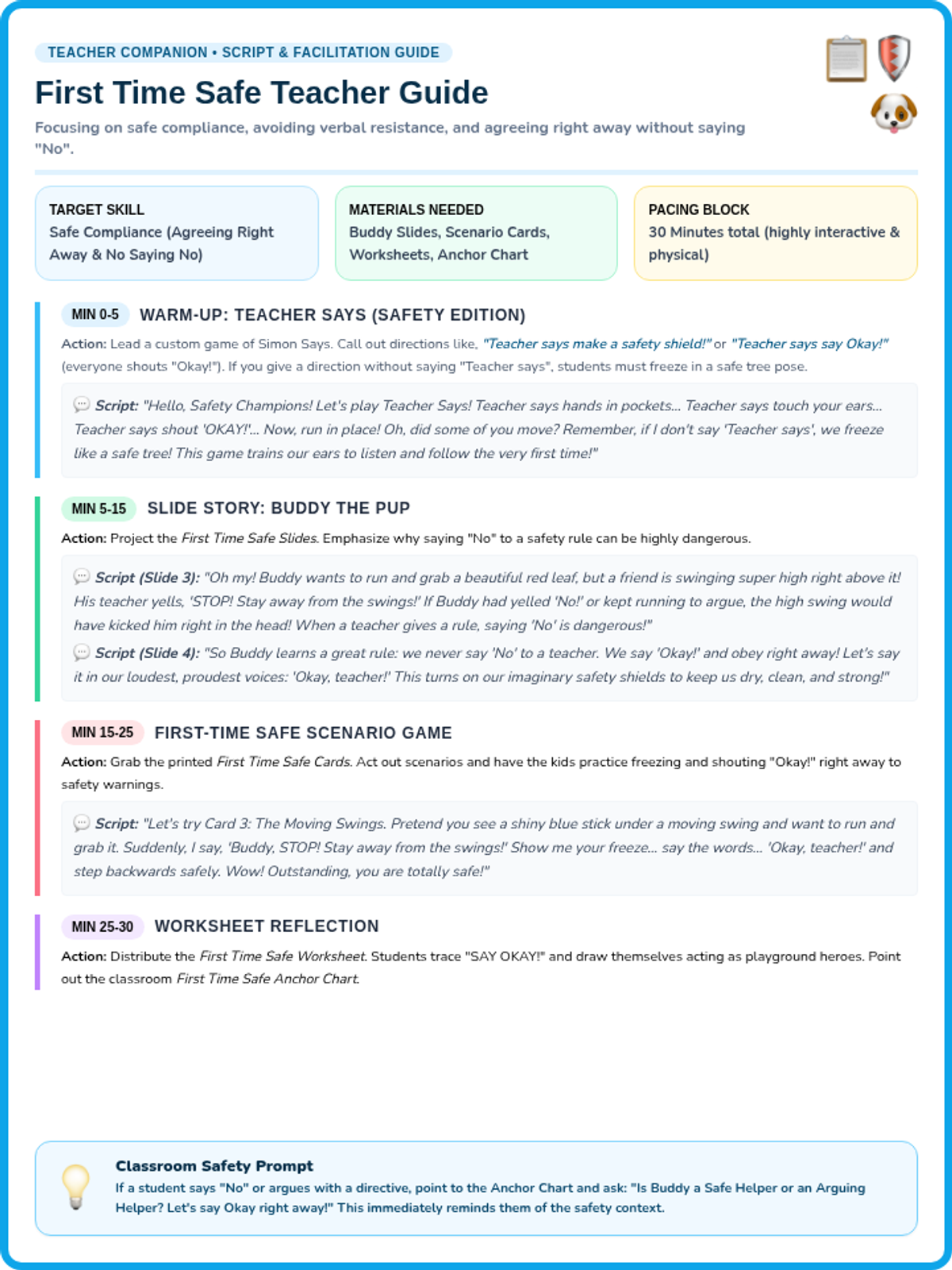
A 30-minute social-emotional learning lesson focusing on the safety and importance of following a teacher's directions right away without saying 'No'. Includes a slide story about Buddy the Pup, a visual safety anchor chart, printable role-play cards, a student tracing sheet, and a teacher guide.
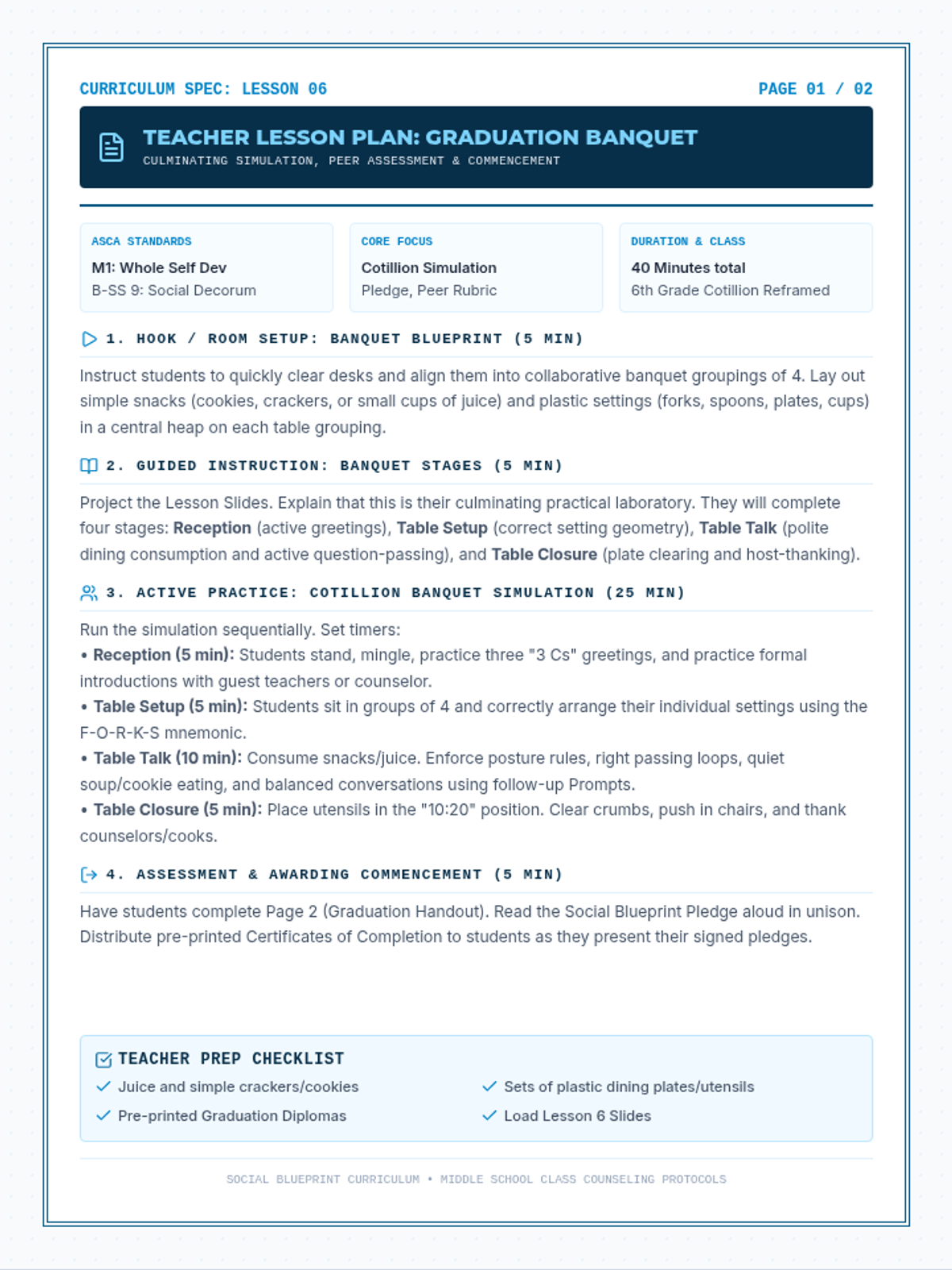
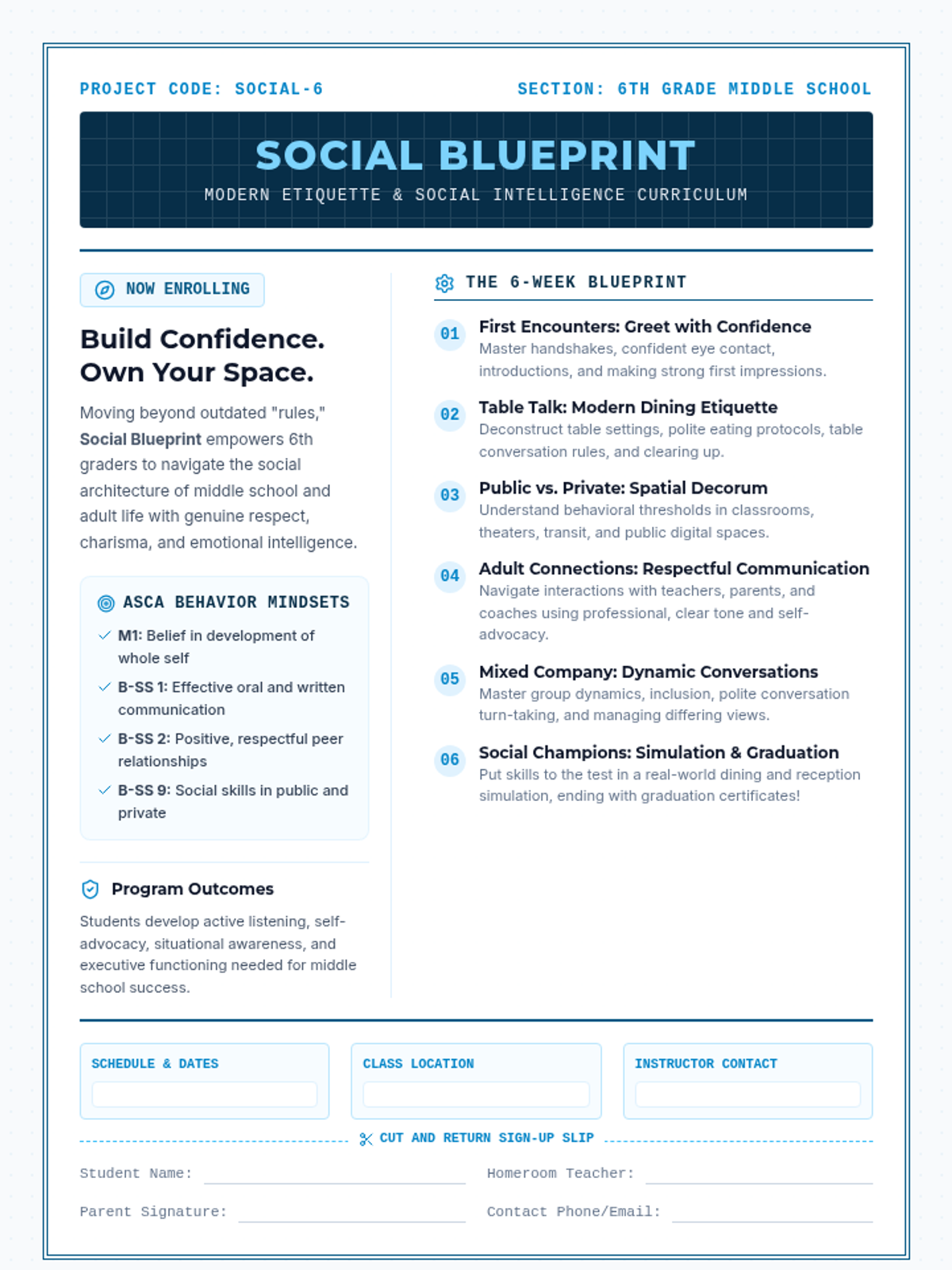
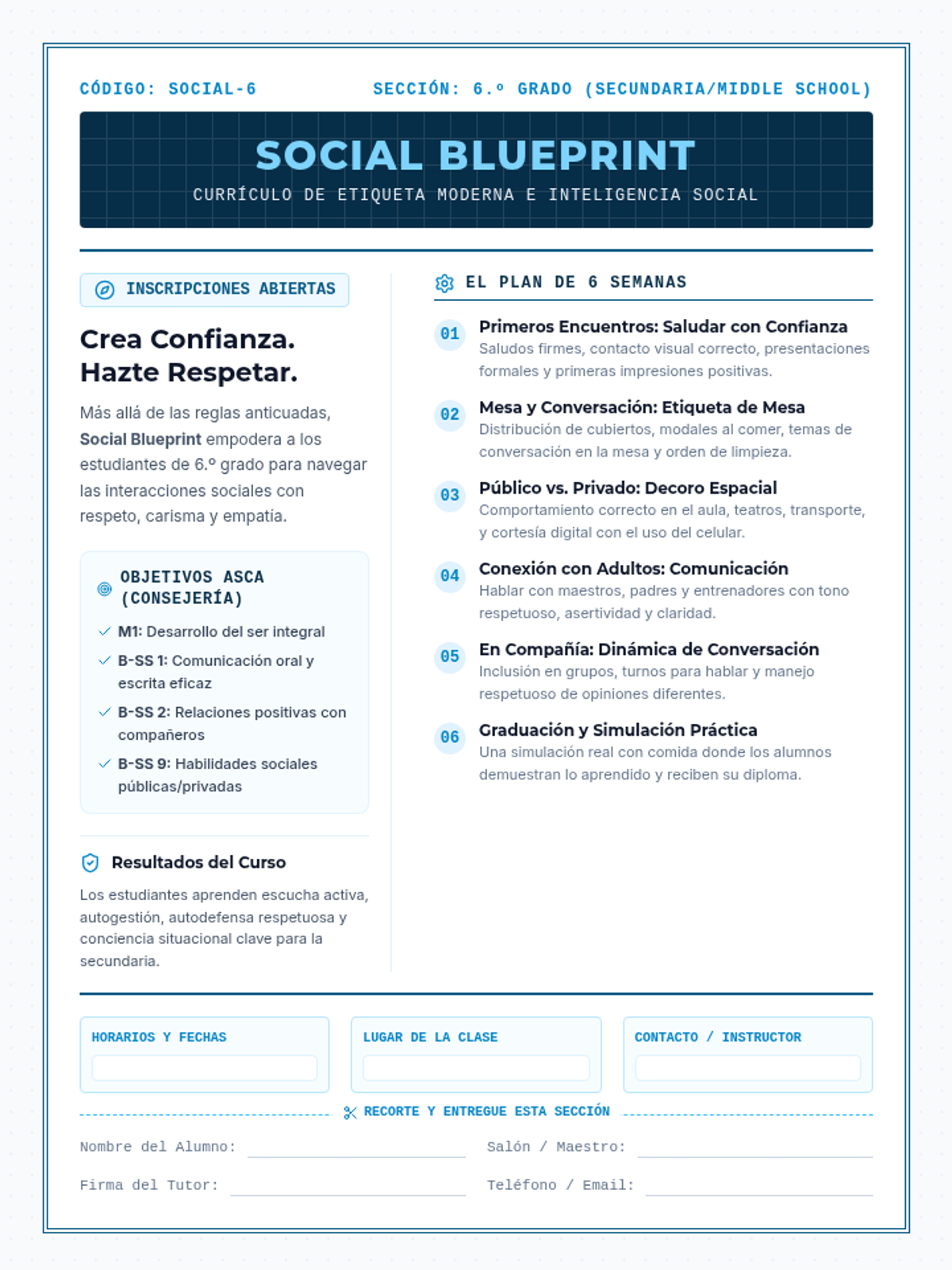
A culminating interactive simulation and graduation ceremony where students showcase all skills learned (dining, introductions, public deportment) and receive certificates of completion.
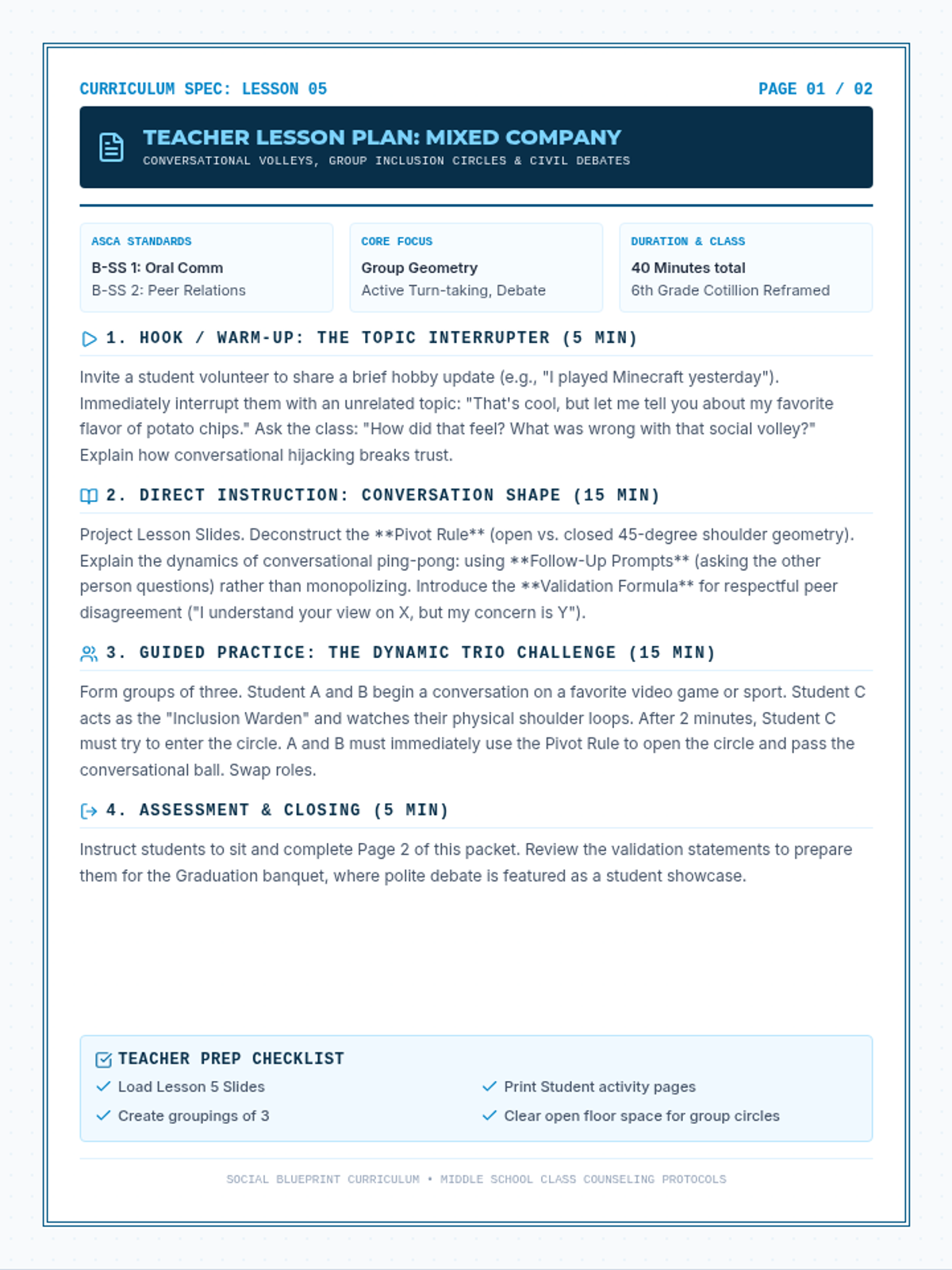
Students explore social dynamics in mixed peer groups, practicing inclusive conversations, group introductions, handling differing opinions, and the art of polite conversational turn-taking.
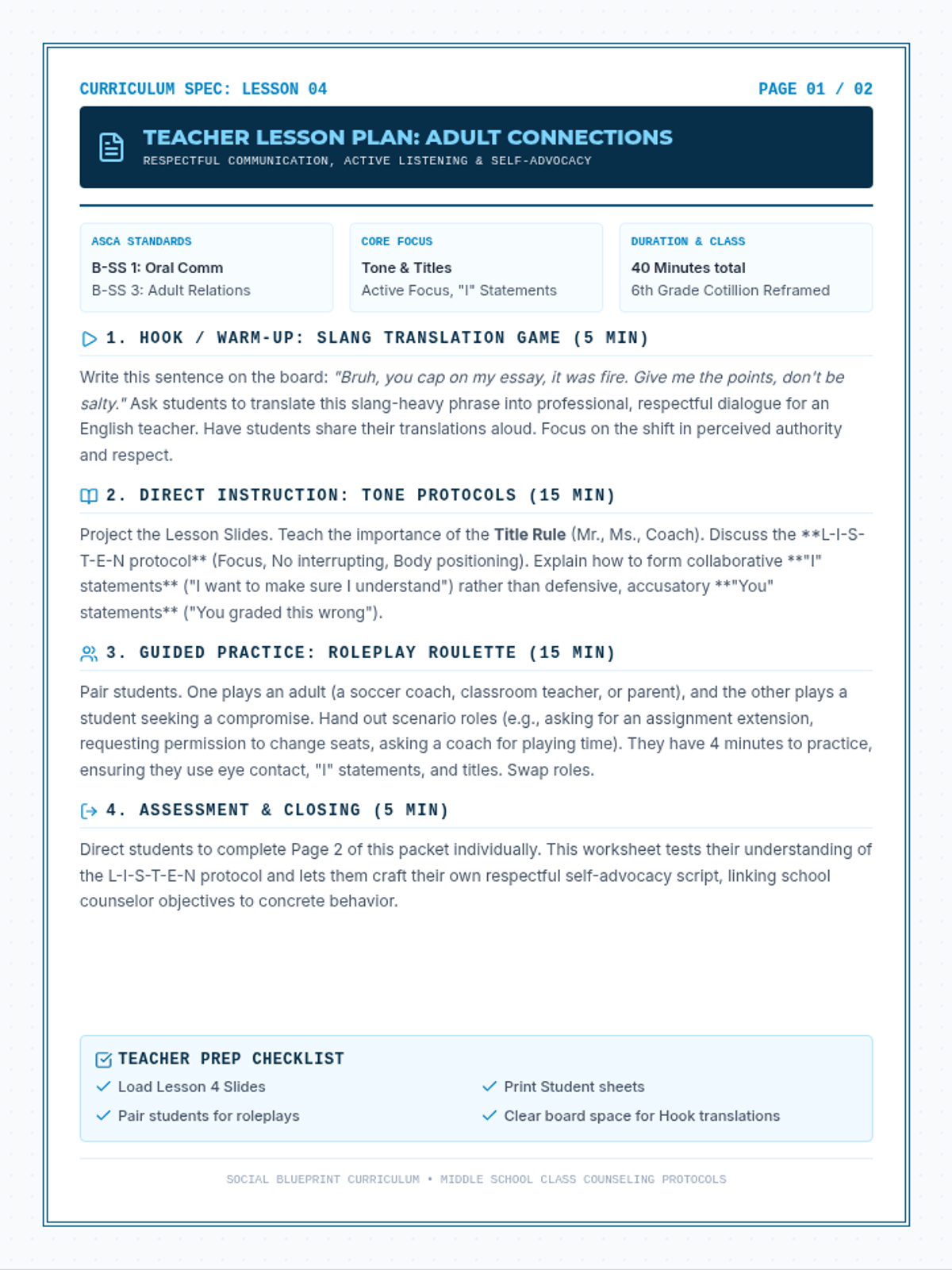
Students develop skills for respectful communication with teachers, parents, coaches, and administrators, focusing on tone of voice, active listening, requesting help, and body language.
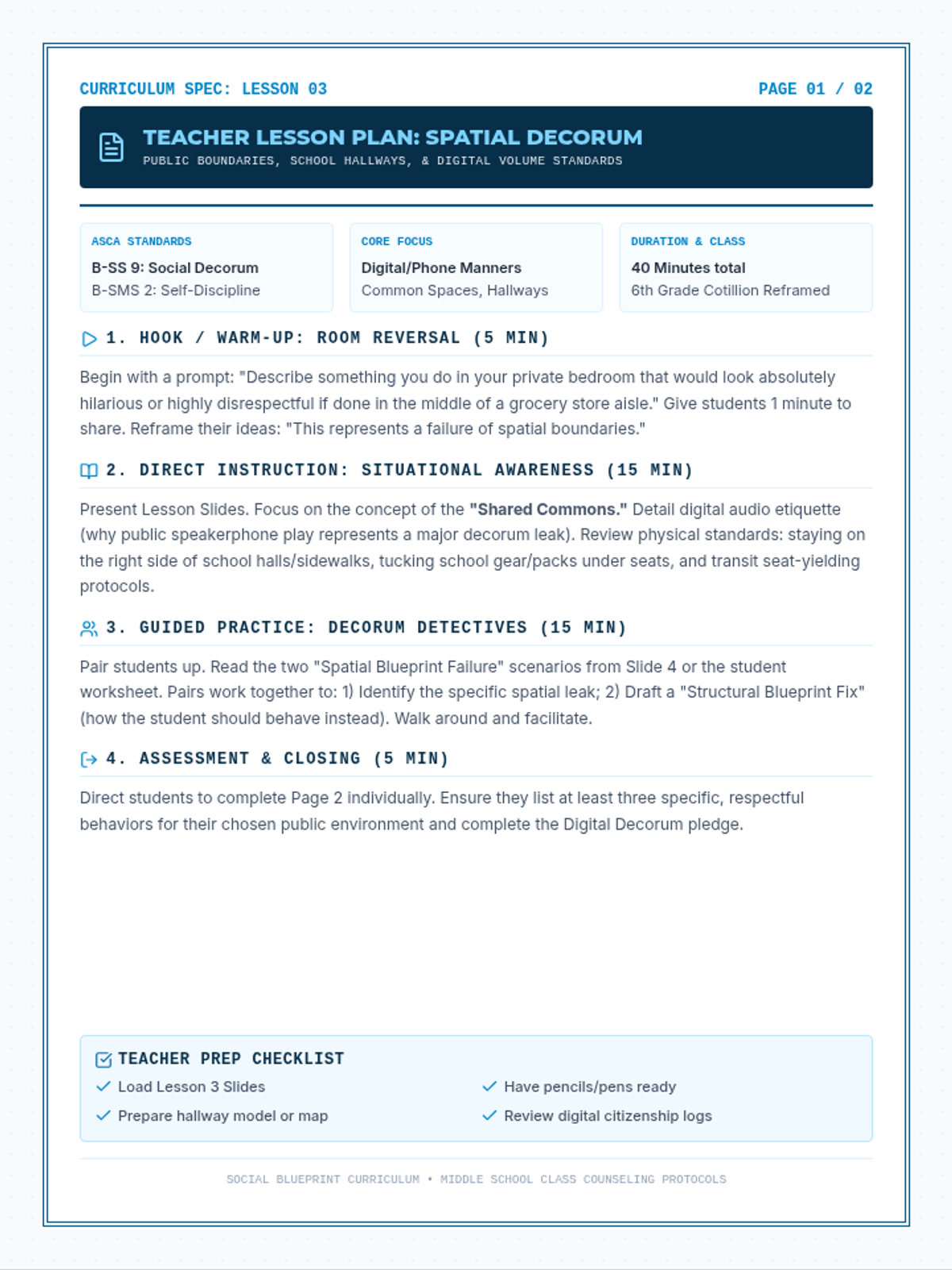
Students distinguish between appropriate behaviors in public spaces (classrooms, theaters, transit, stores) versus private spaces (home), including public digital etiquette and respect for shared spaces.
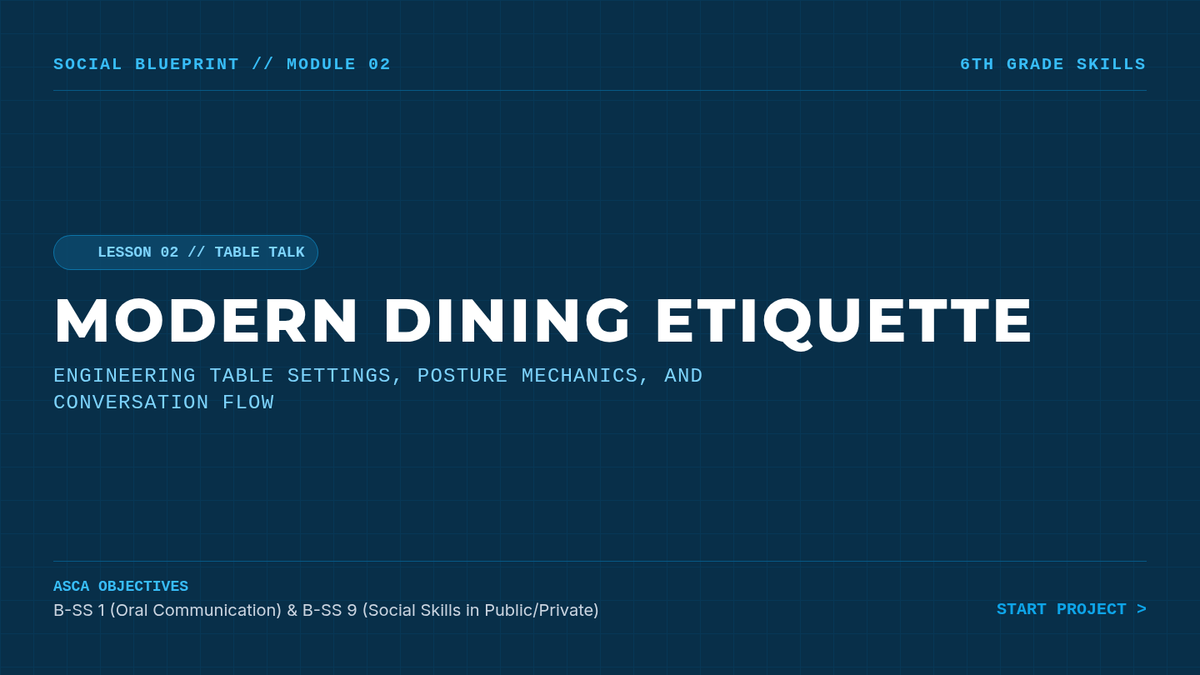
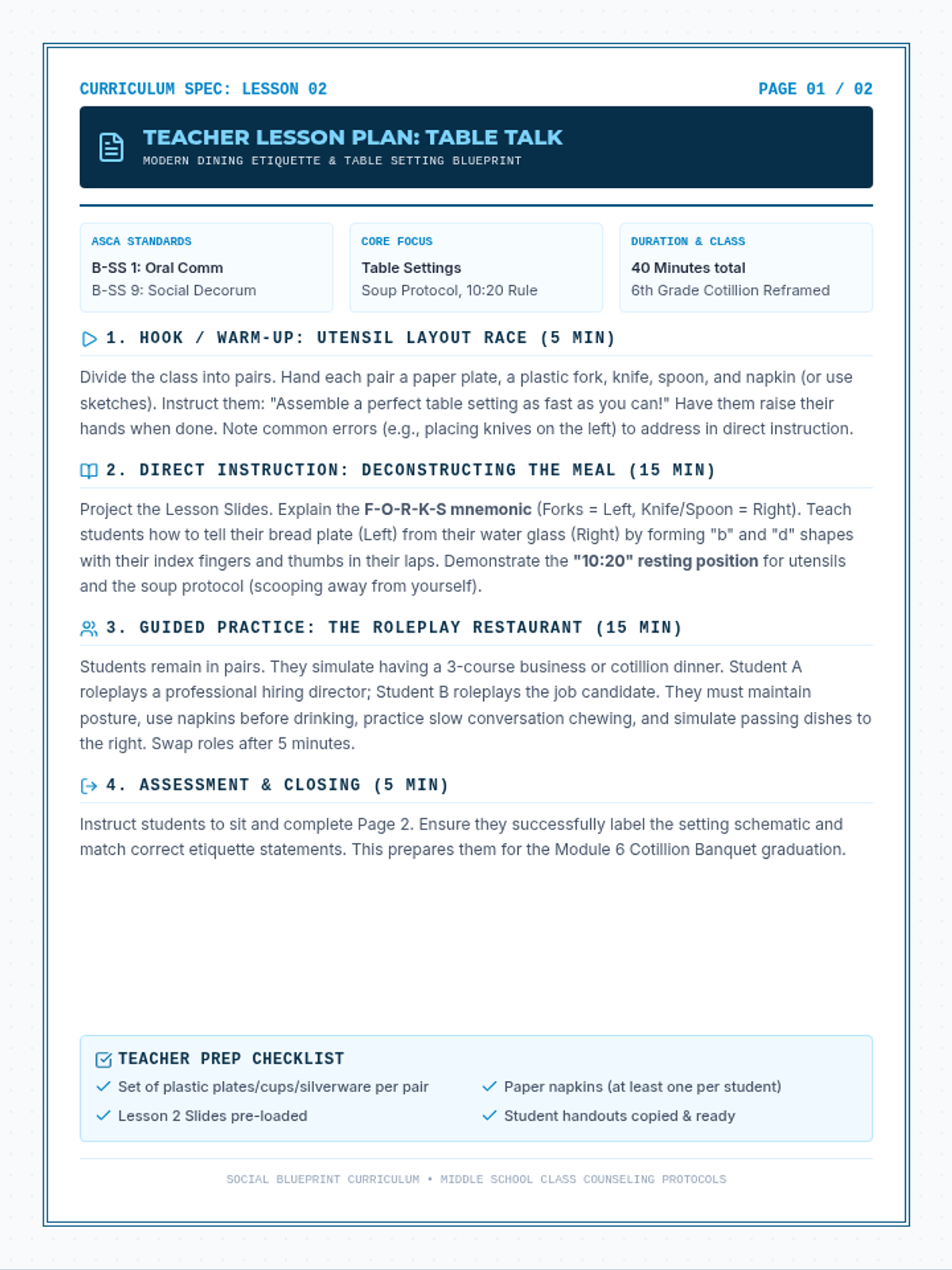
Students master table manners and dining etiquette, exploring the anatomy of a standard table setting, polite eating habits, conversational respect, and table cleanup.
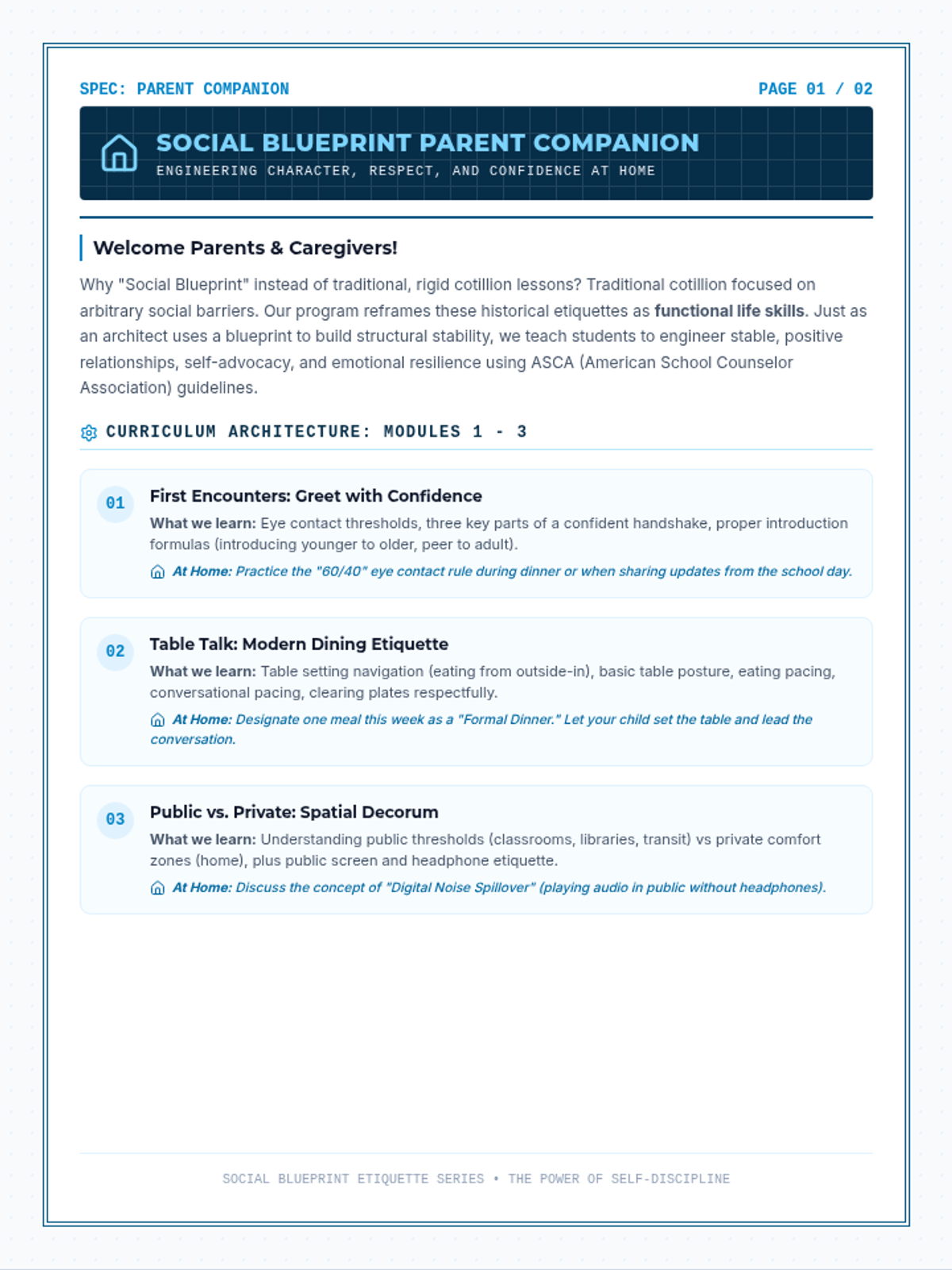
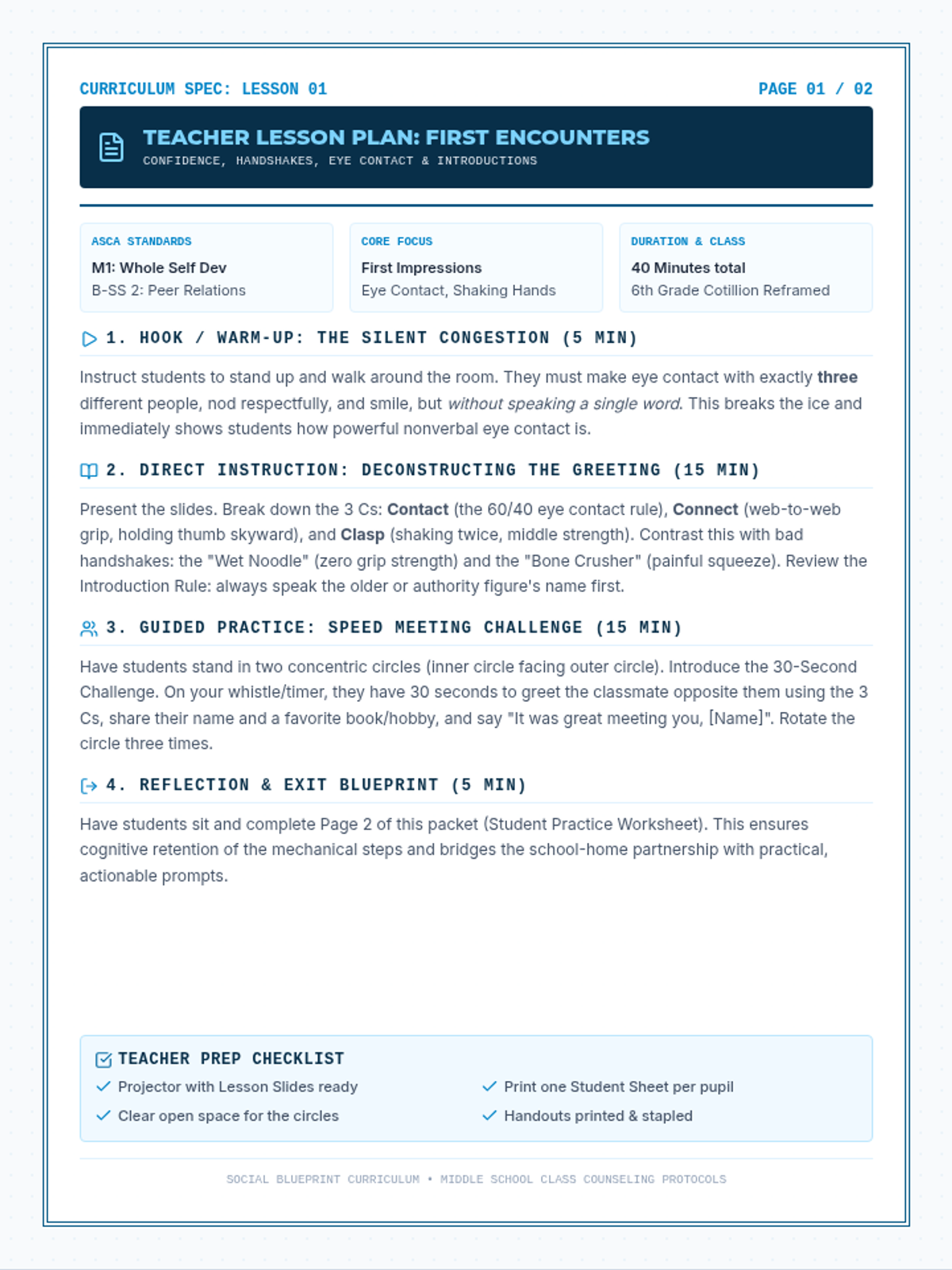
Students learn the art of first impressions, including confident introductions, appropriate eye contact, firm handshakes, and representing themselves respectfully to adults and peers alike.
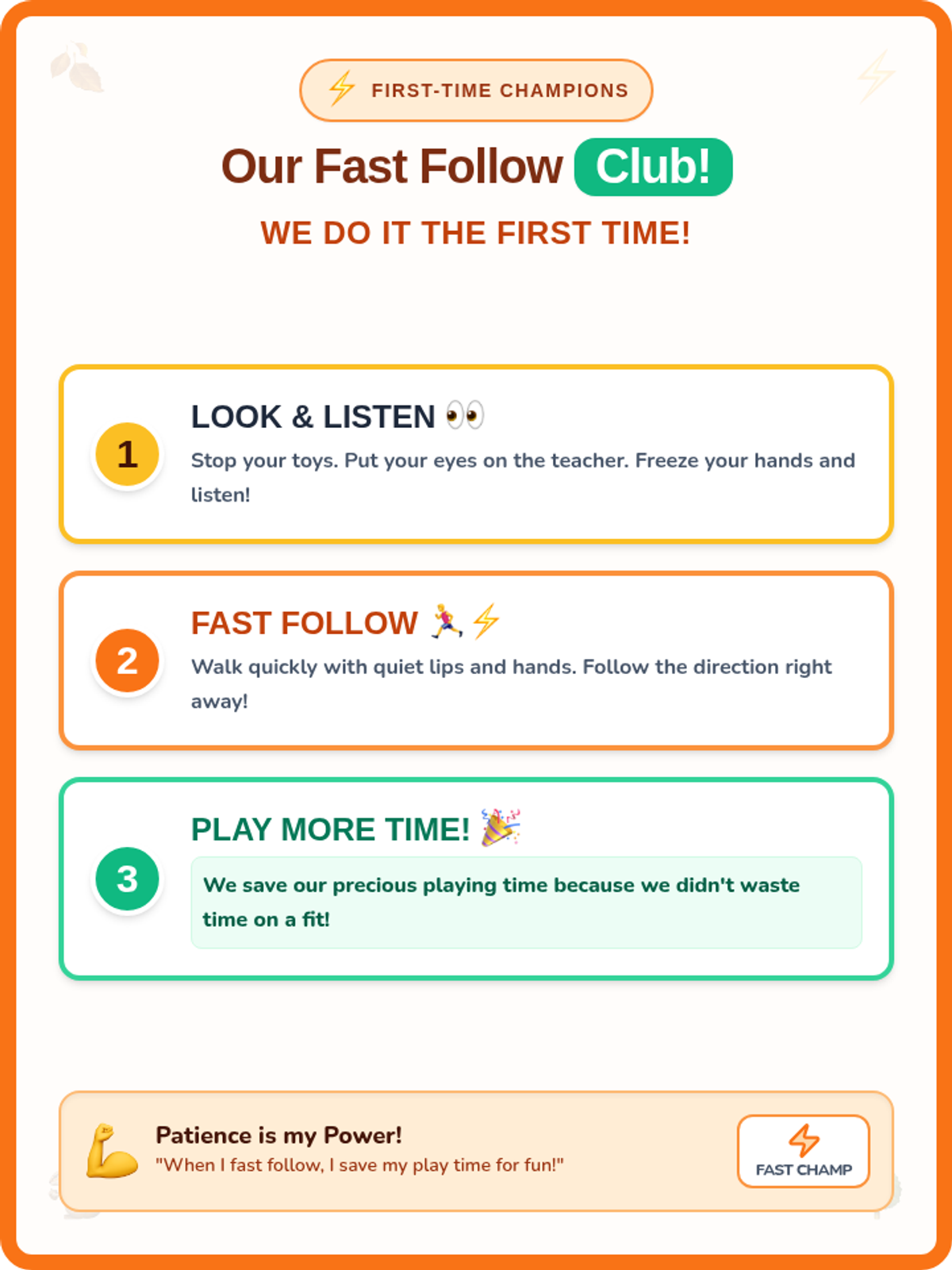
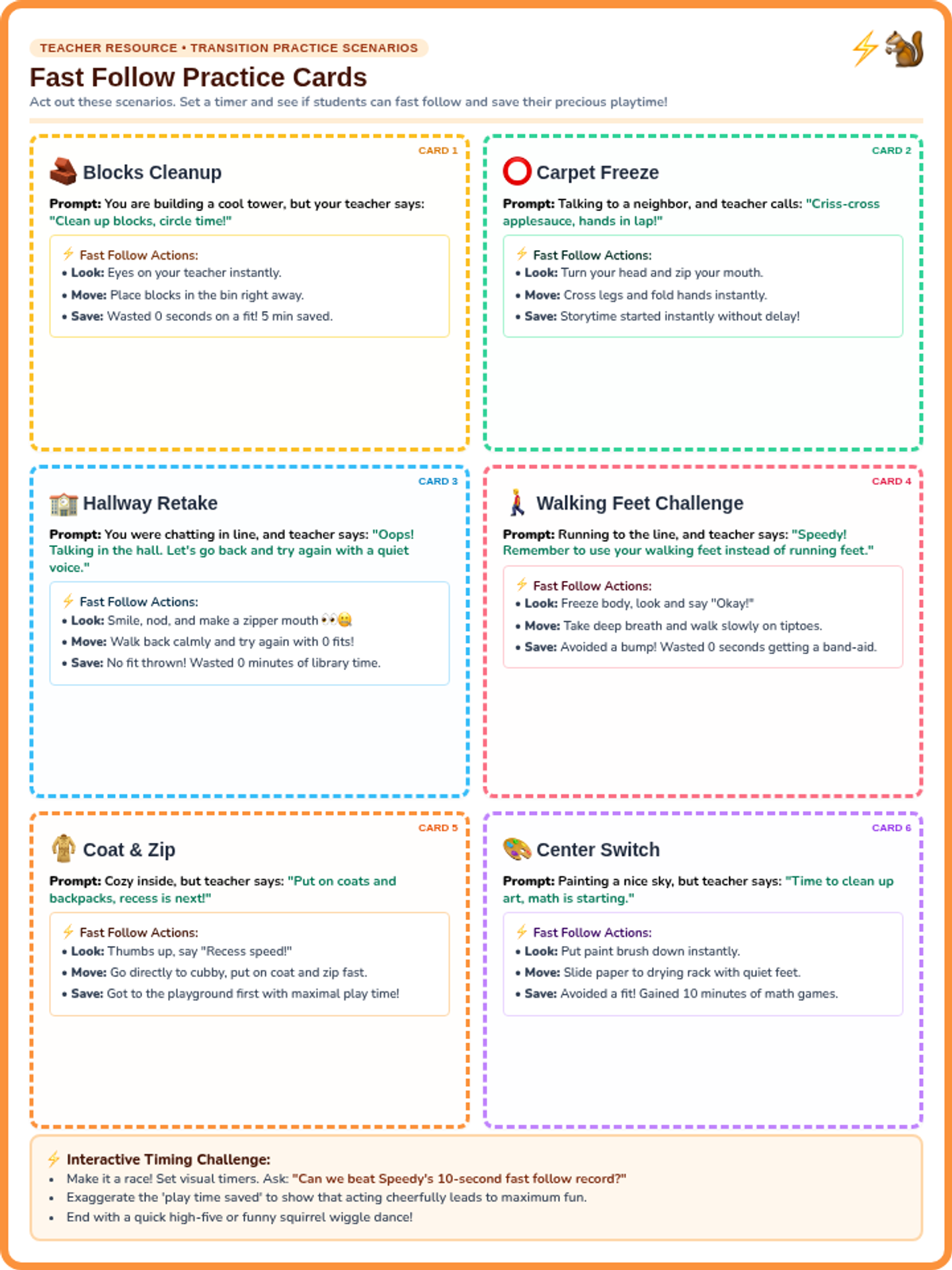
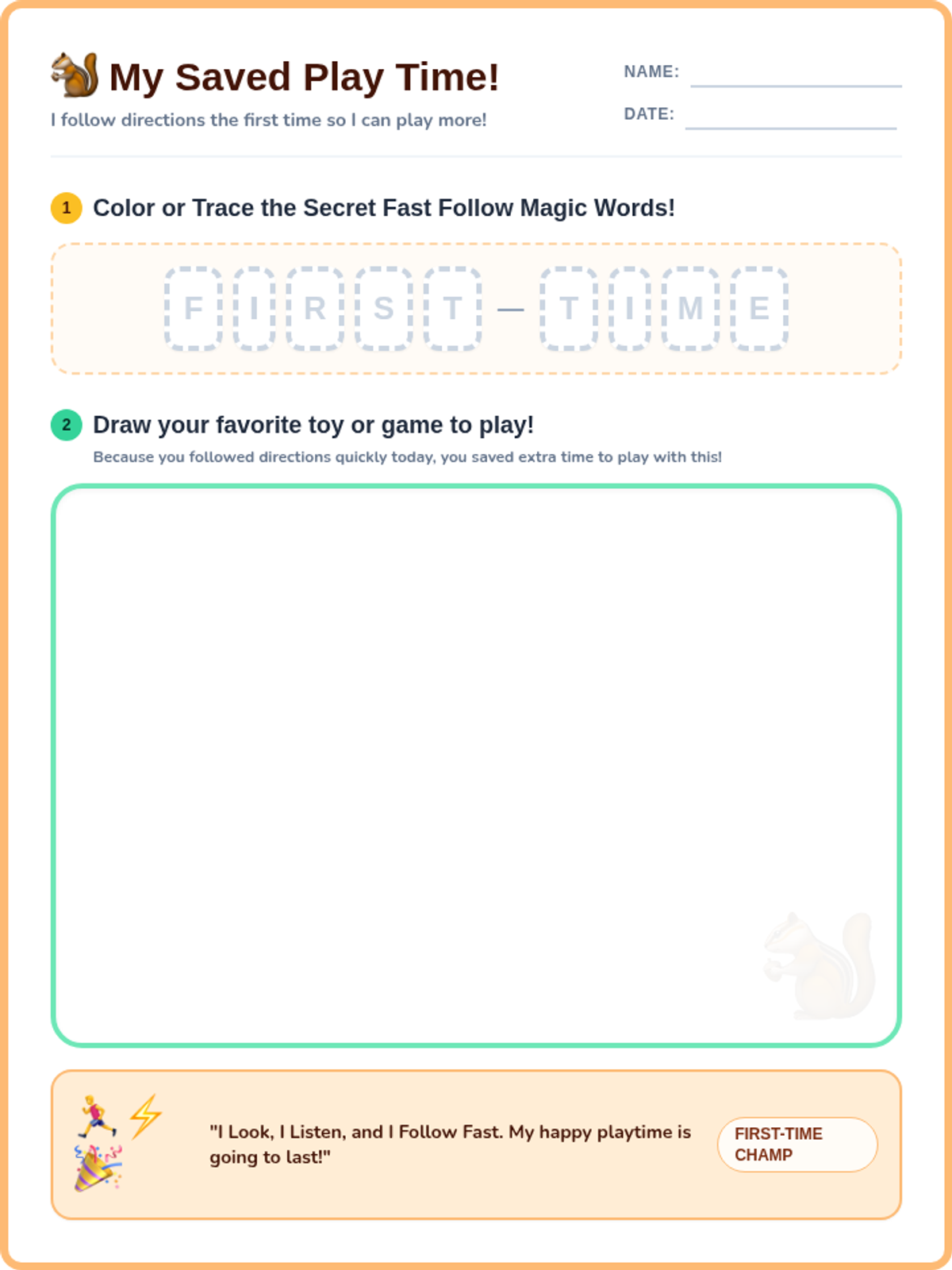
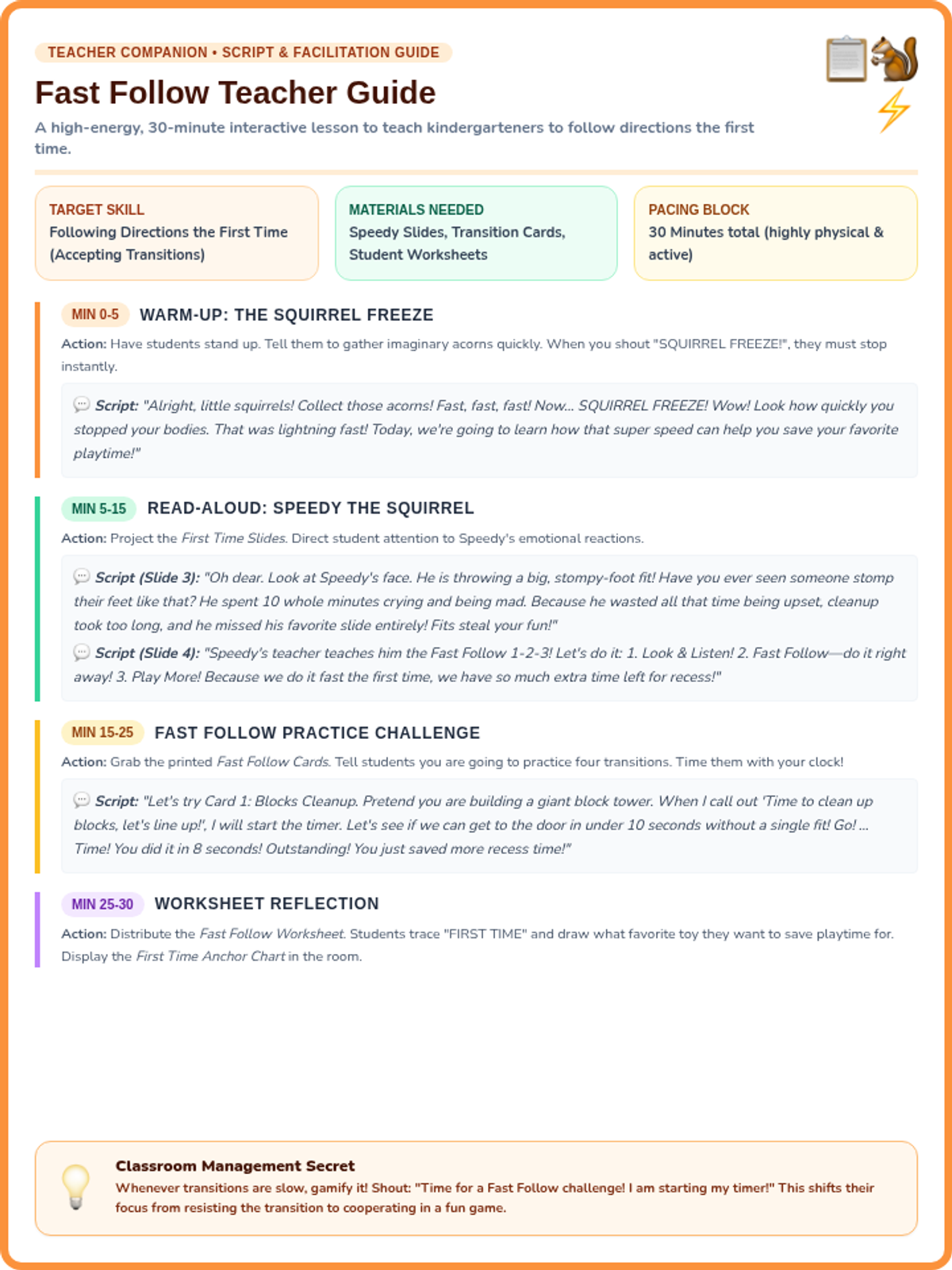
A 30-minute social-emotional learning lesson teaching kindergarteners how to follow directions the first time. It teaches them that following instructions quickly means they have more time for play and fun, rather than wasting time on big fits. Includes slides, games, an anchor chart, a worksheet, and a teacher guide.