A 15-minute icebreaker activity for adult staff to build rapport through rapid sharing and finding common ground.
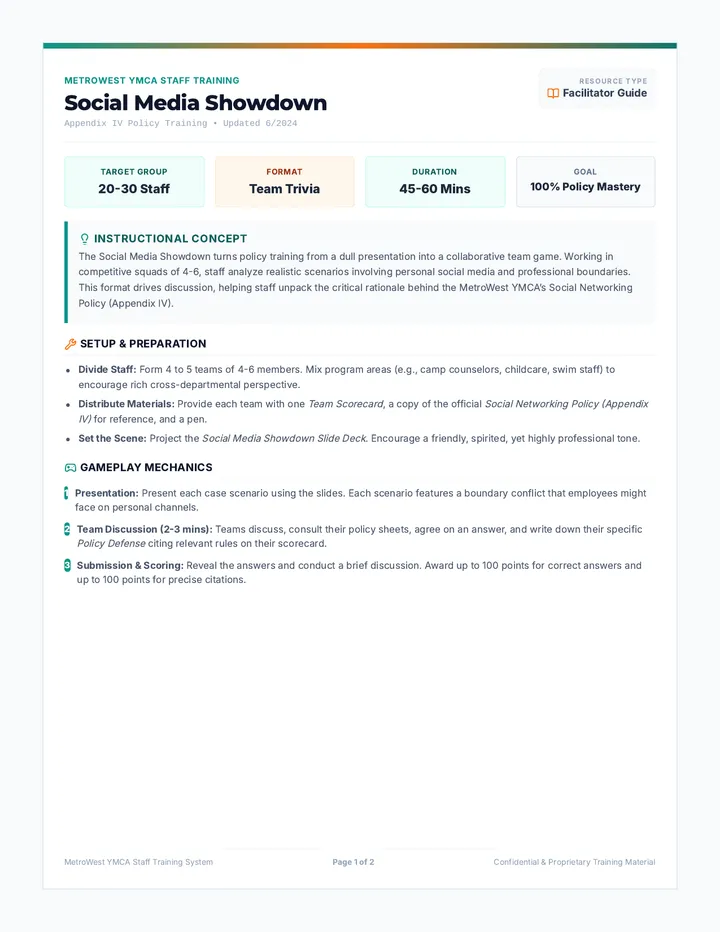
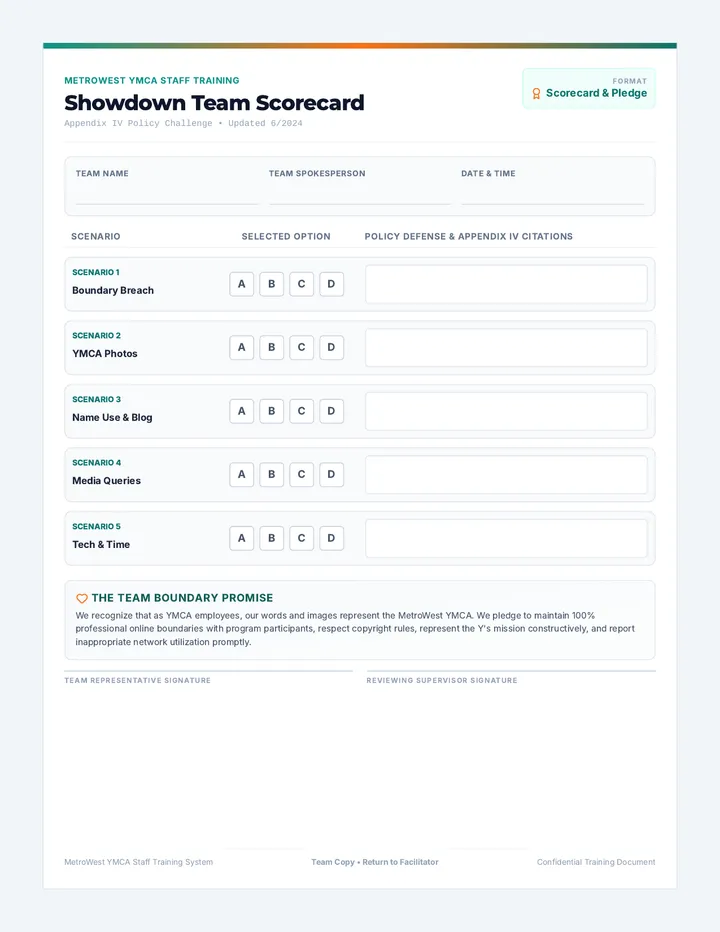
A high-energy, collaborative staff training session built around a competitive trivia game. Staff work in teams to analyze realistic scenarios and master MetroWest YMCA's Social Networking Policy (Appendix IV, Updated 6/2024), emphasizing child safety, professional boundaries, and brand protection.
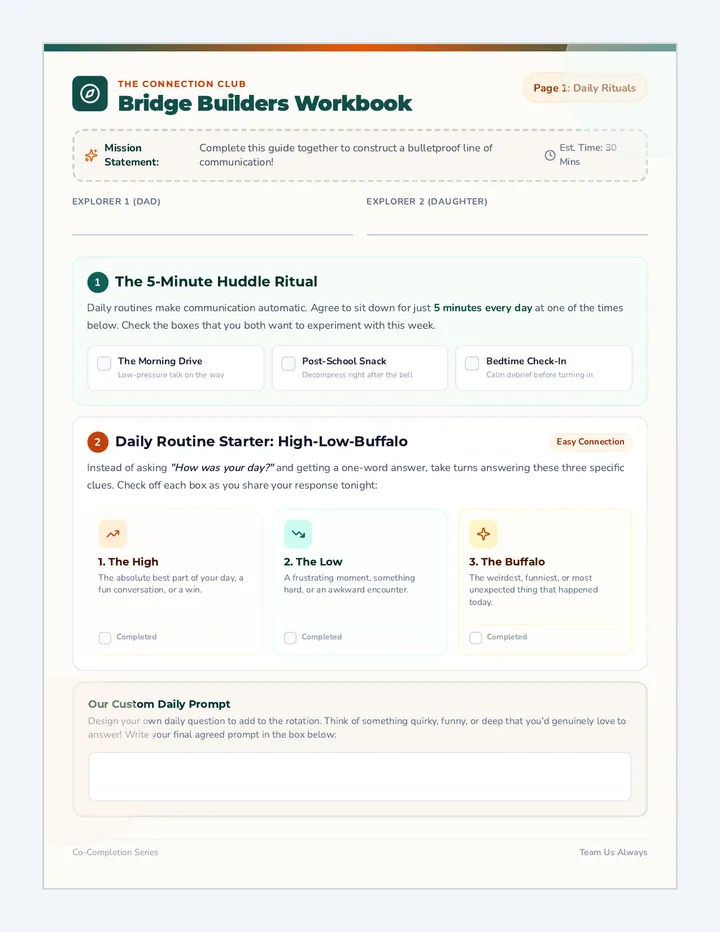
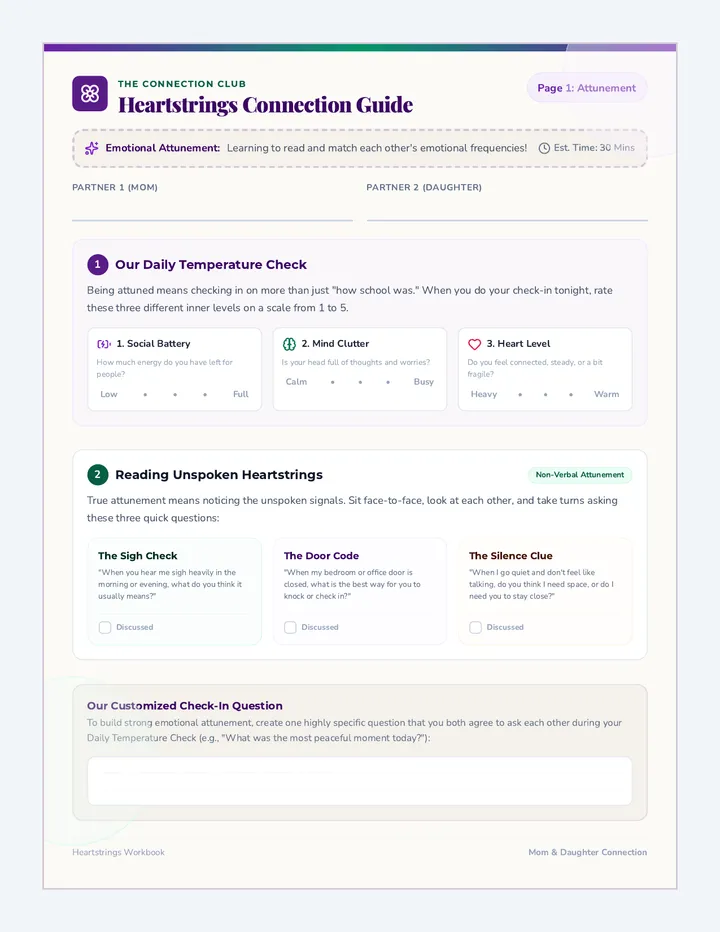
A high-quality co-completion toolkit for parents and 11-year-old pre-teens. Focuses on active listening, emotional attunement, conflict de-escalation, and establishing daily connection rituals.
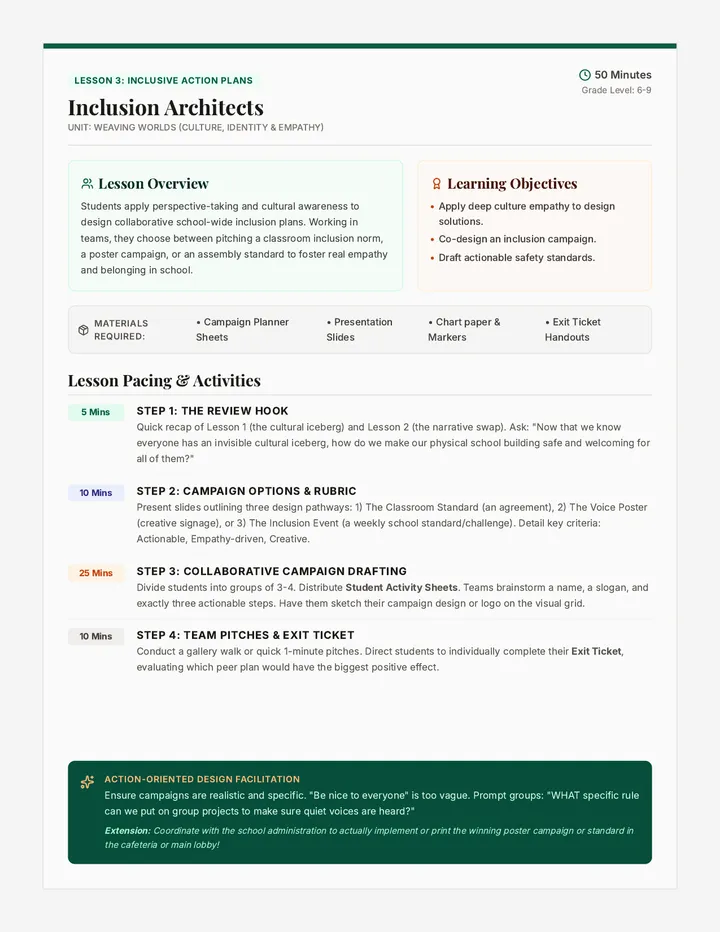
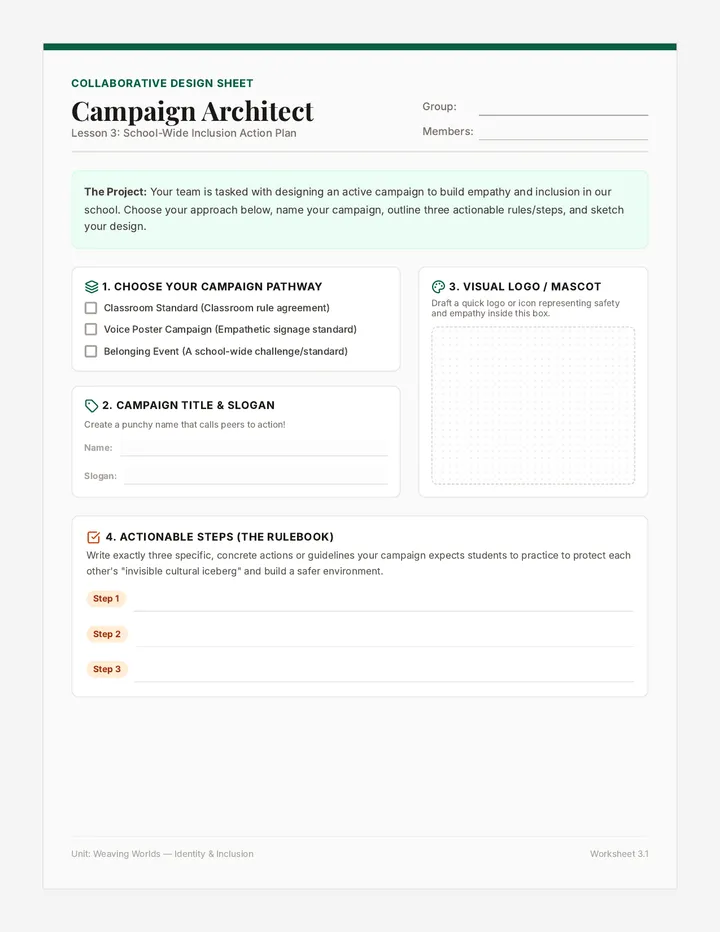
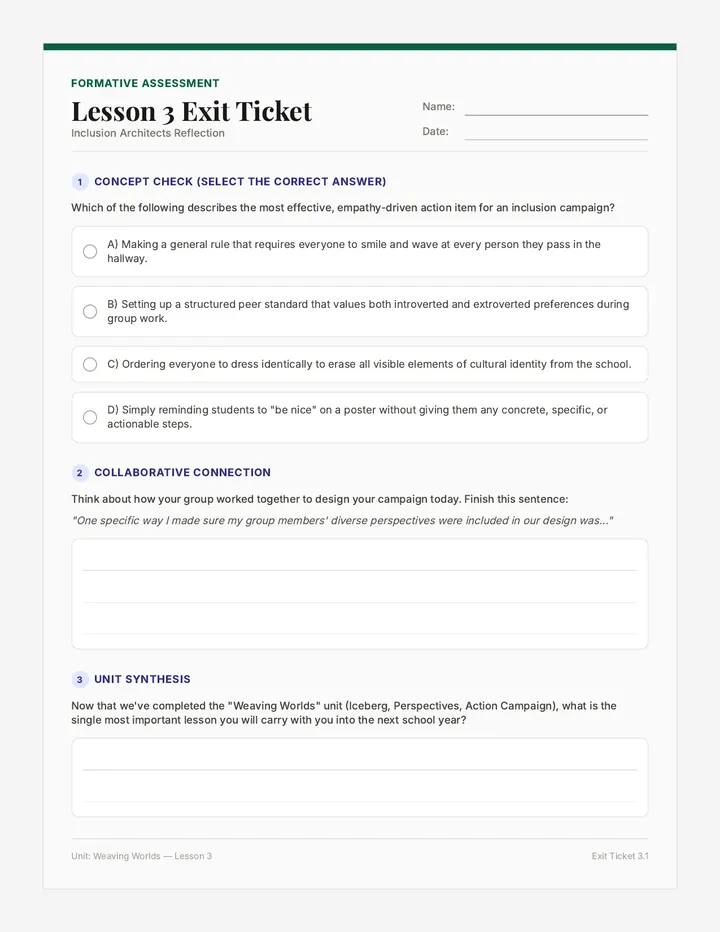
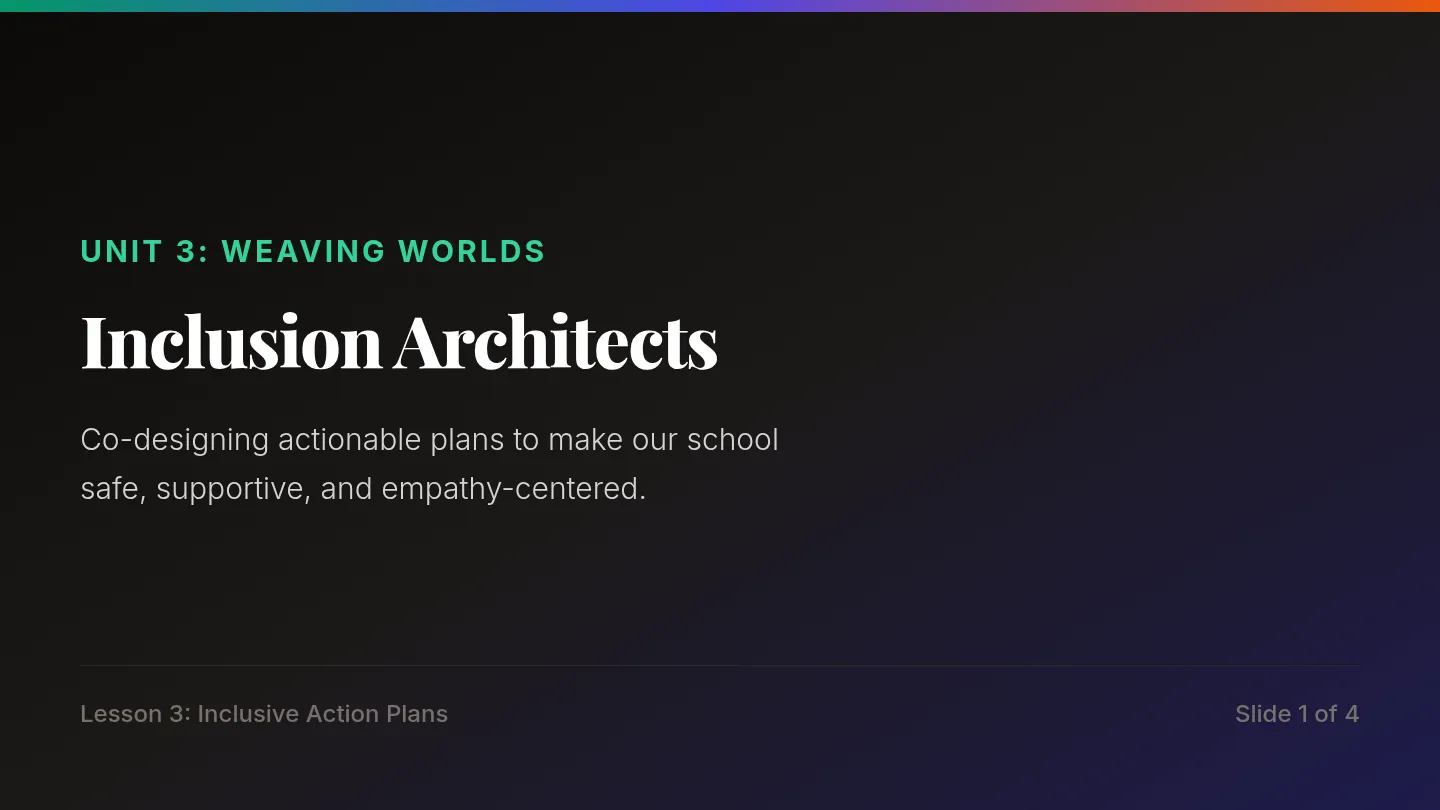
Students apply their deep listening and empathy skills to design a school-wide inclusion campaign or classroom standard, designing collaborative action items.
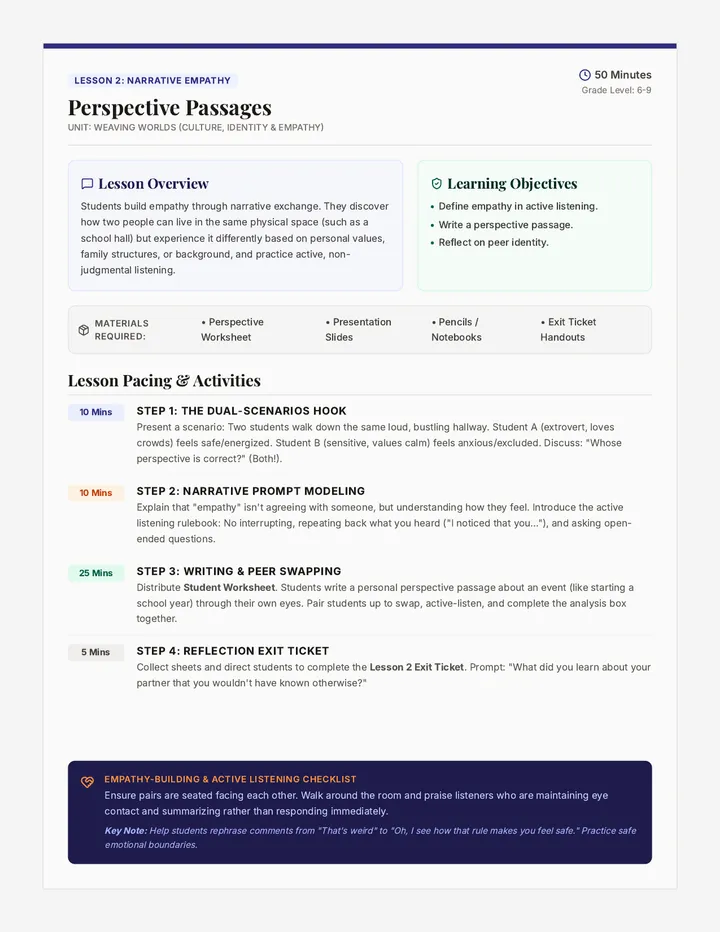
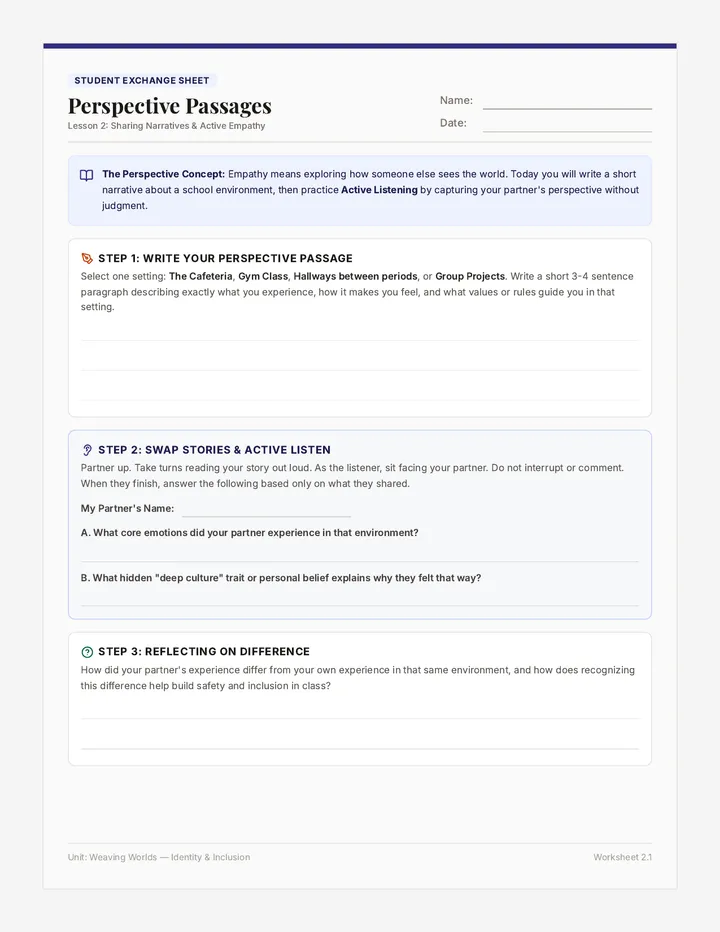
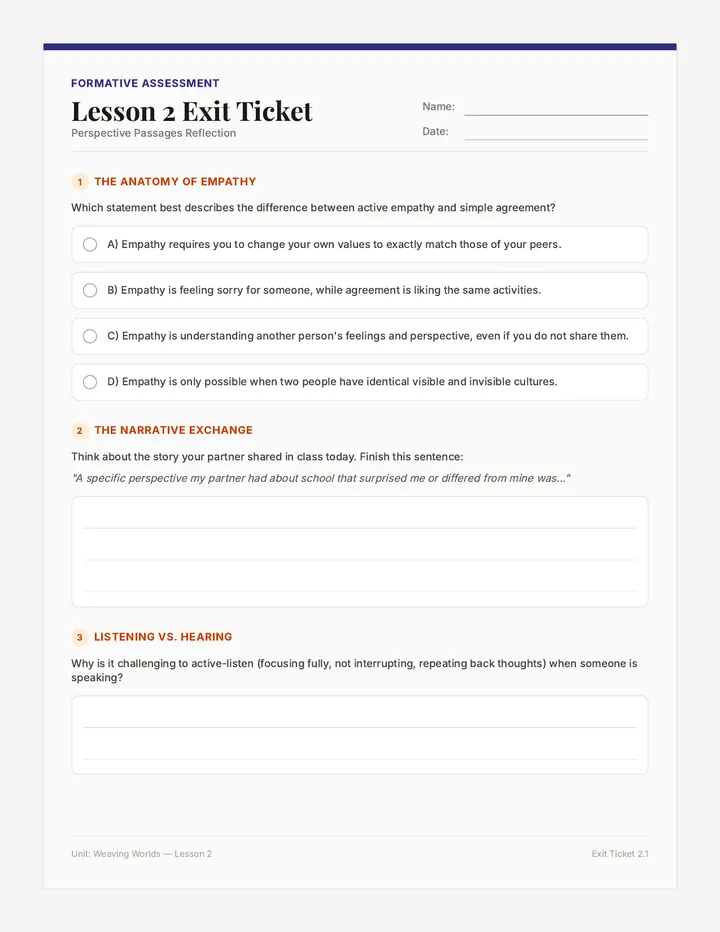
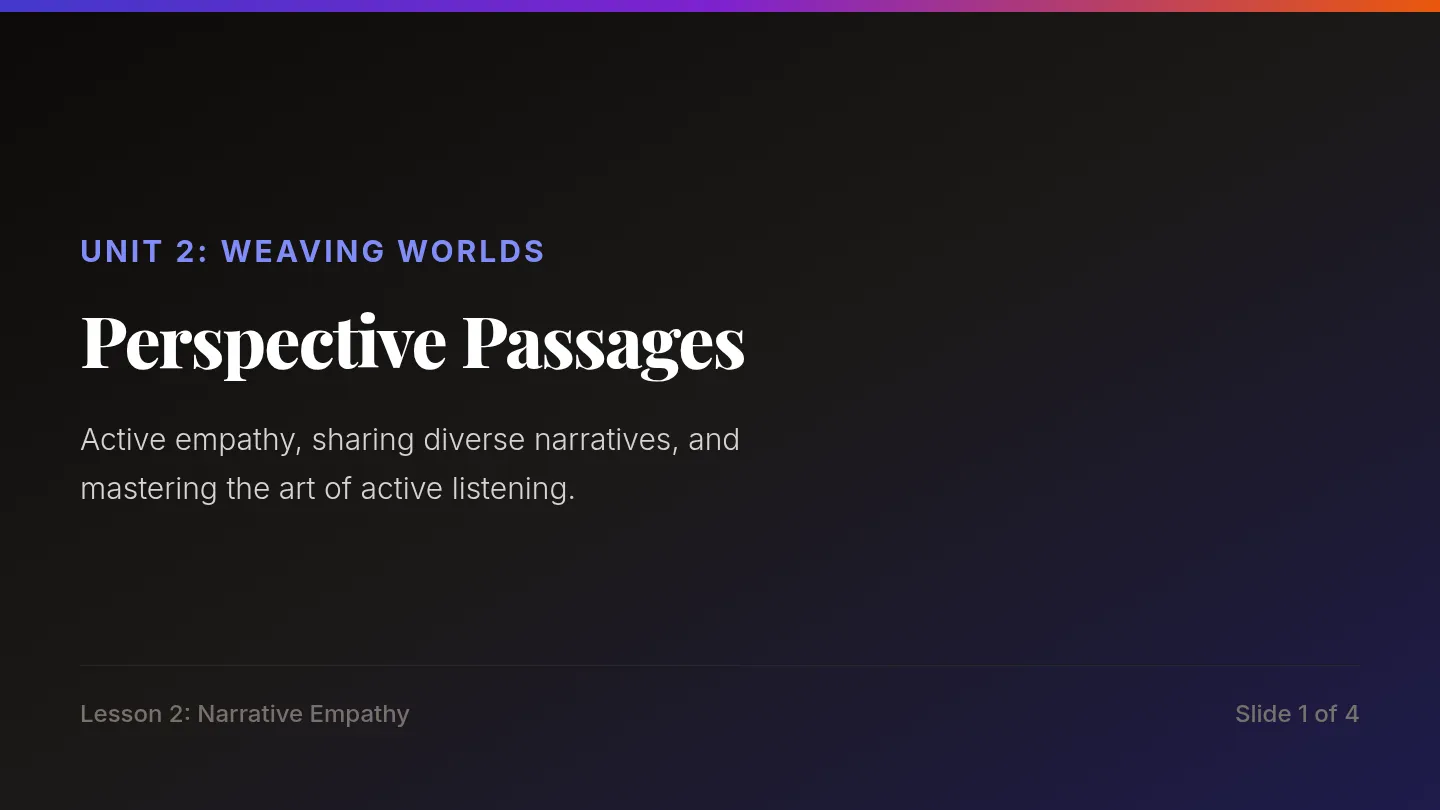
Students engage in active empathy and narrative exchange, analyzing how personal experiences and cultural backgrounds shape our perspectives of shared environments.
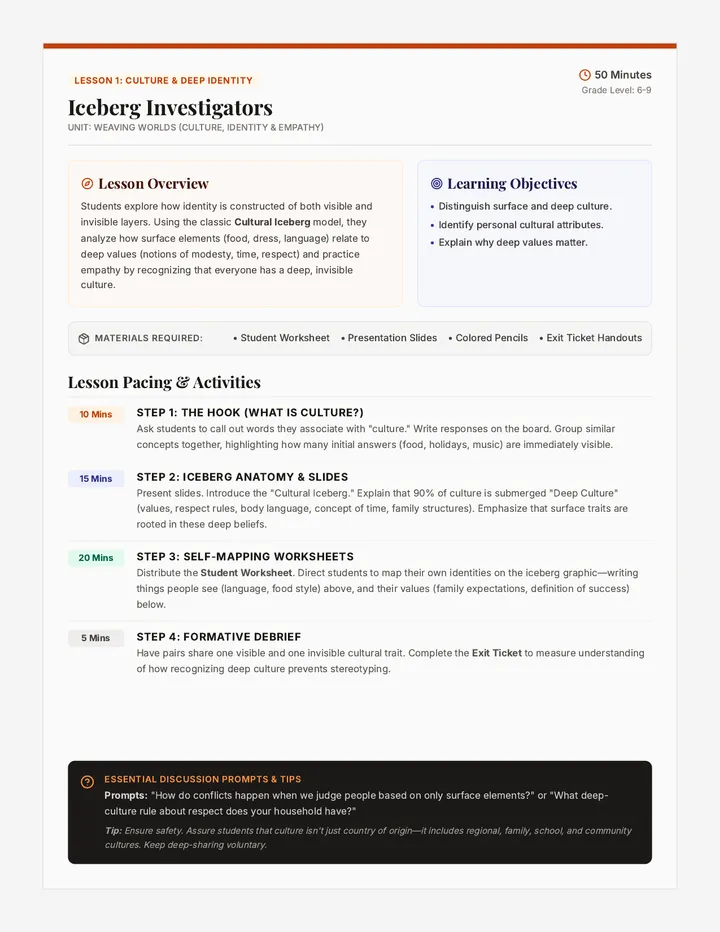
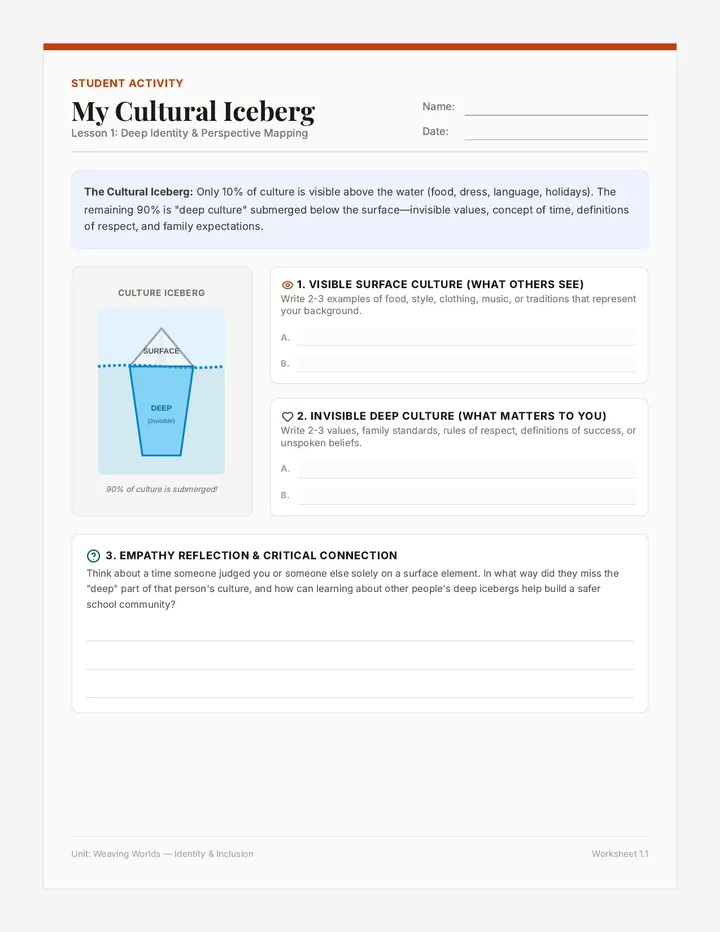
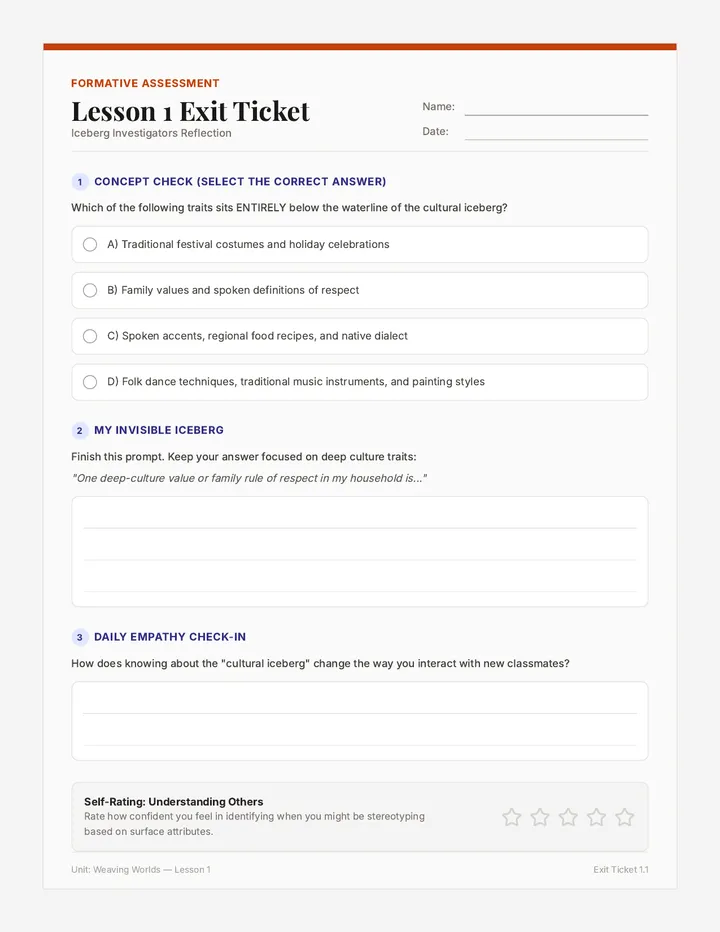
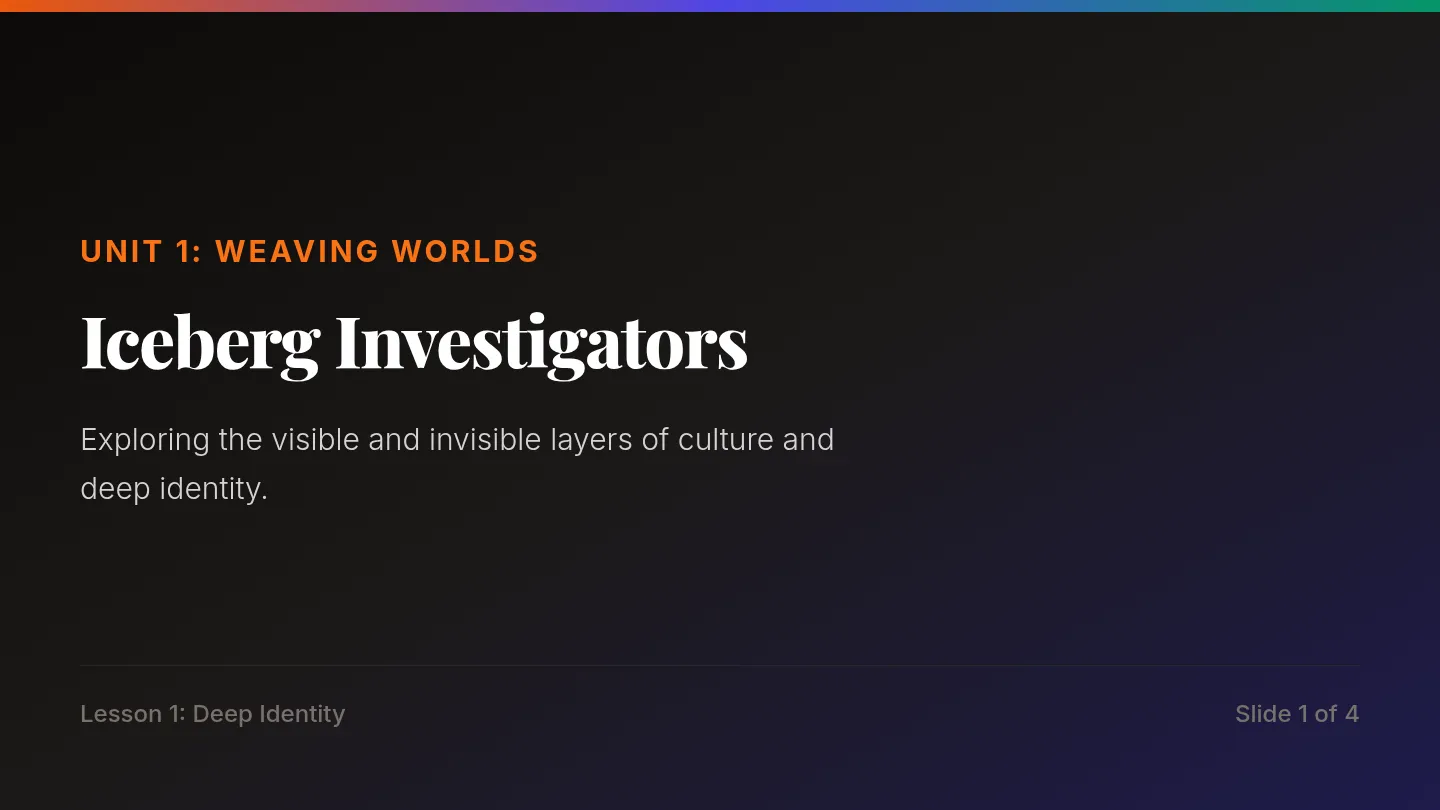
Students explore the concept of the cultural iceberg, distinguishing between visible elements of culture and deep, invisible values, to recognize the richness of identity.
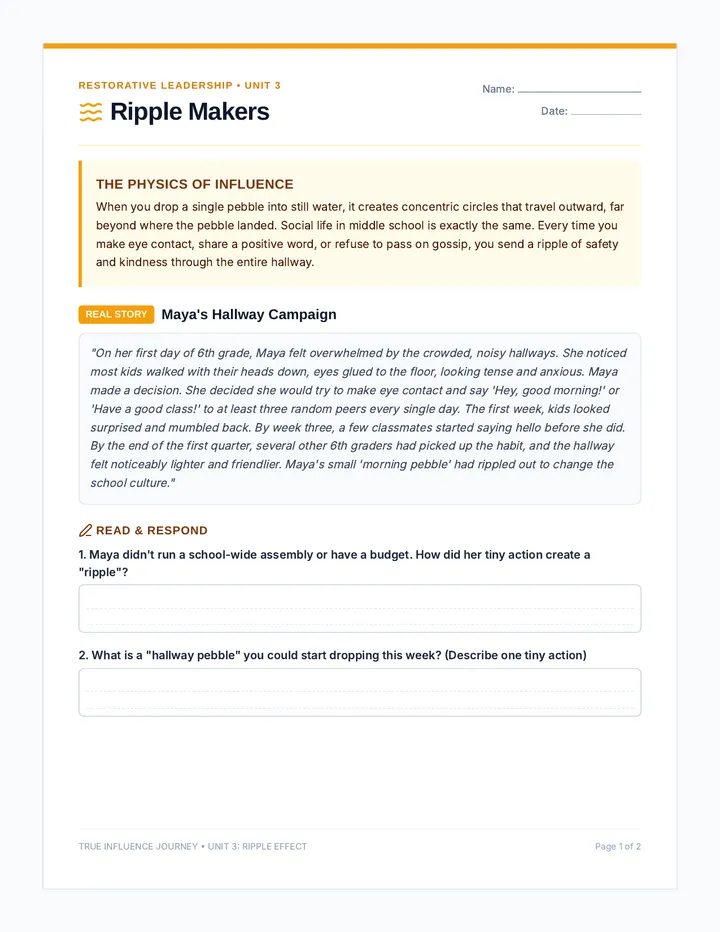
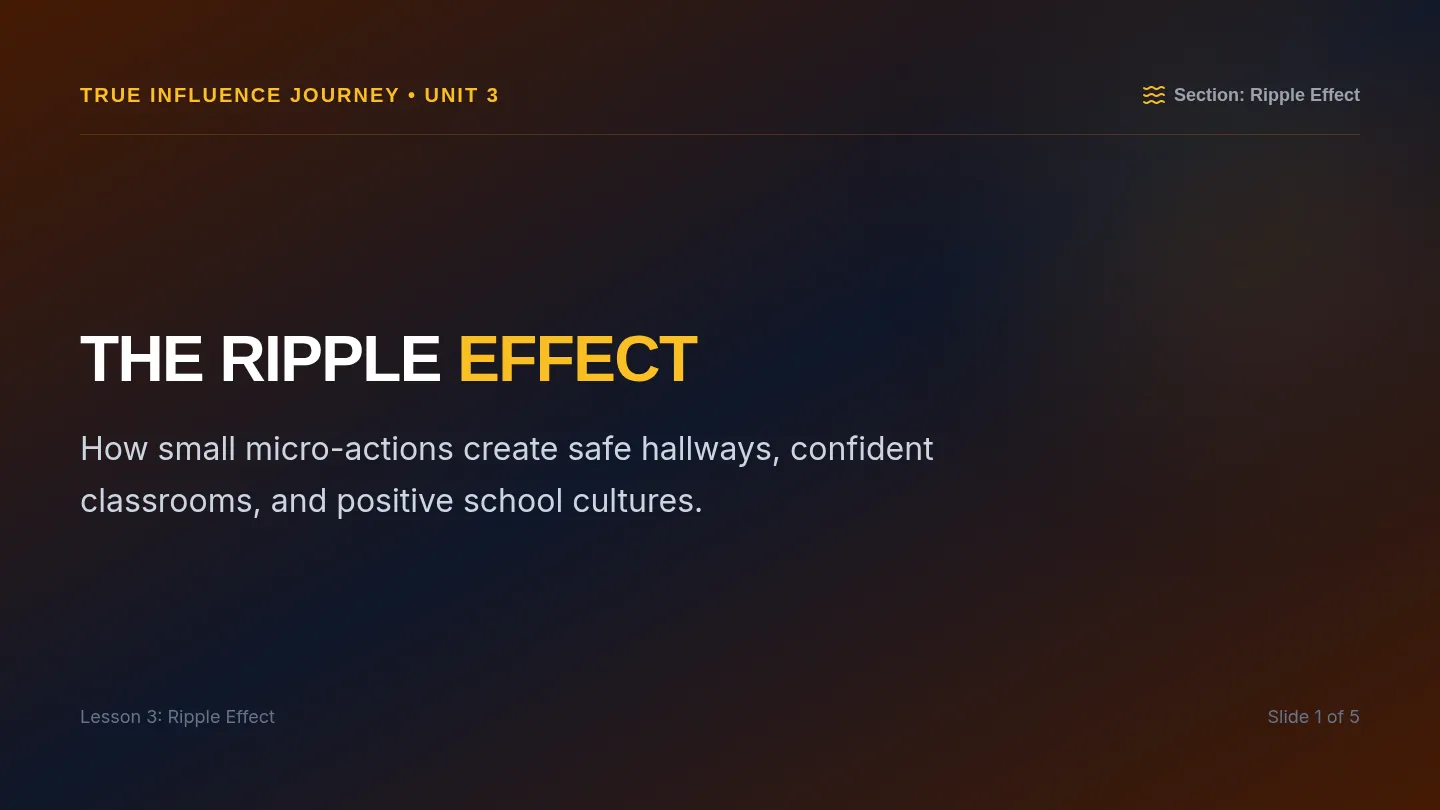
Focuses on creating a sustainable positive culture through daily small actions, prompting students to track their leadership and reflect on how positive behavior spreads. Features read-and-respond profiles of real student leaders.
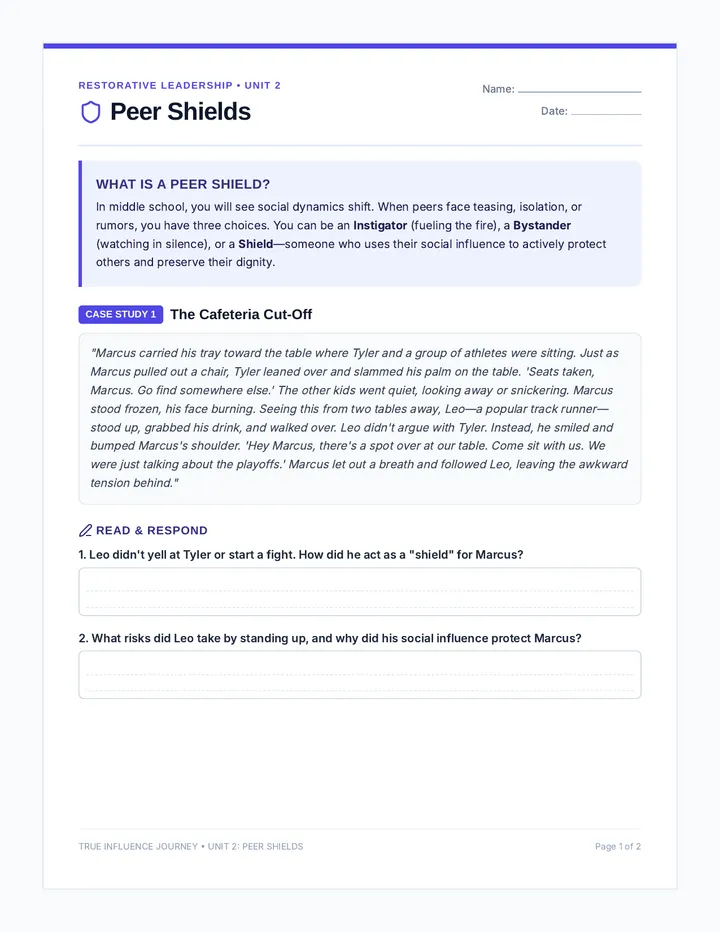
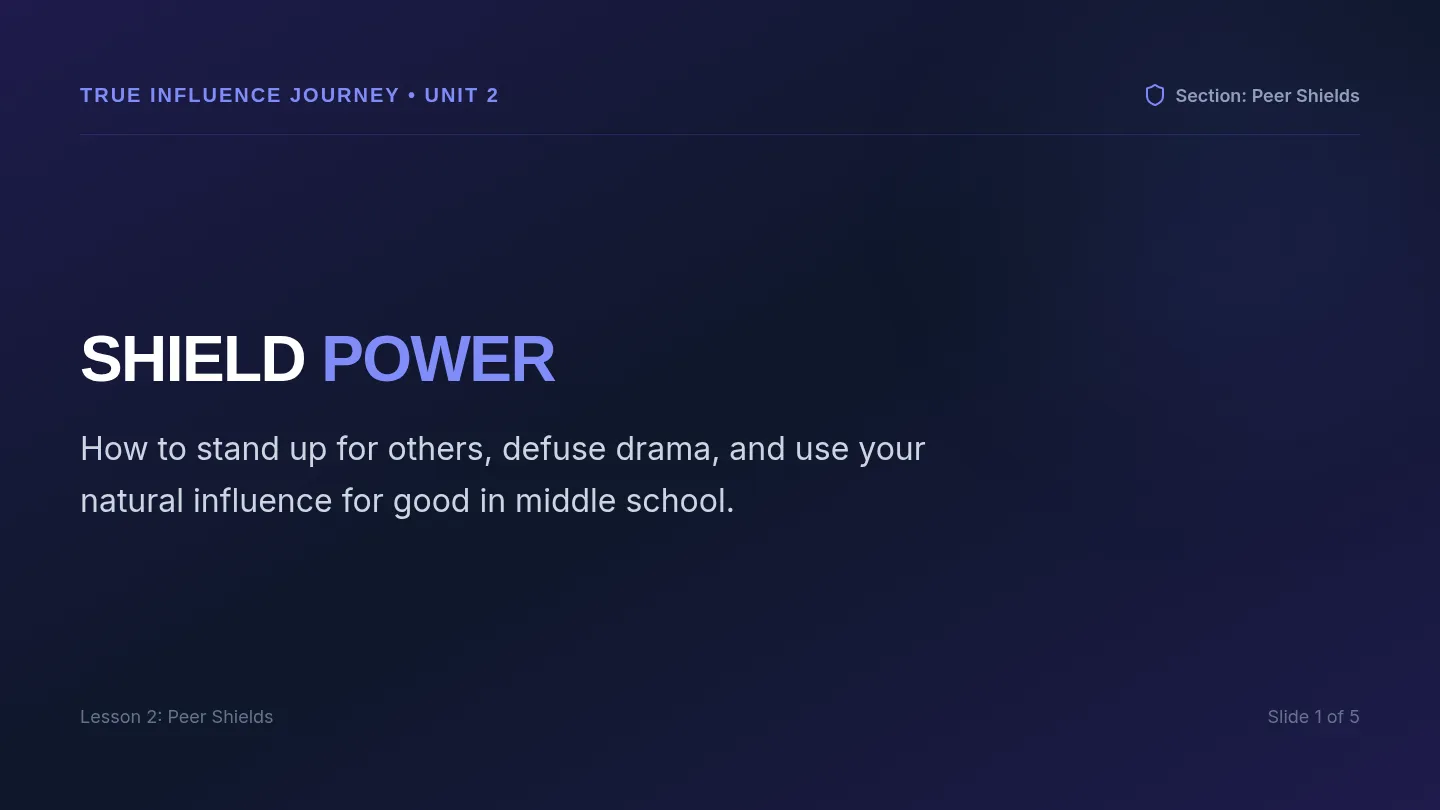
Students explore what it means to be a 'shield' for peers in middle school rather than a passive bystander or an instigator. Features narrative read-and-respond case studies on standing up to social exclusion and rumors.
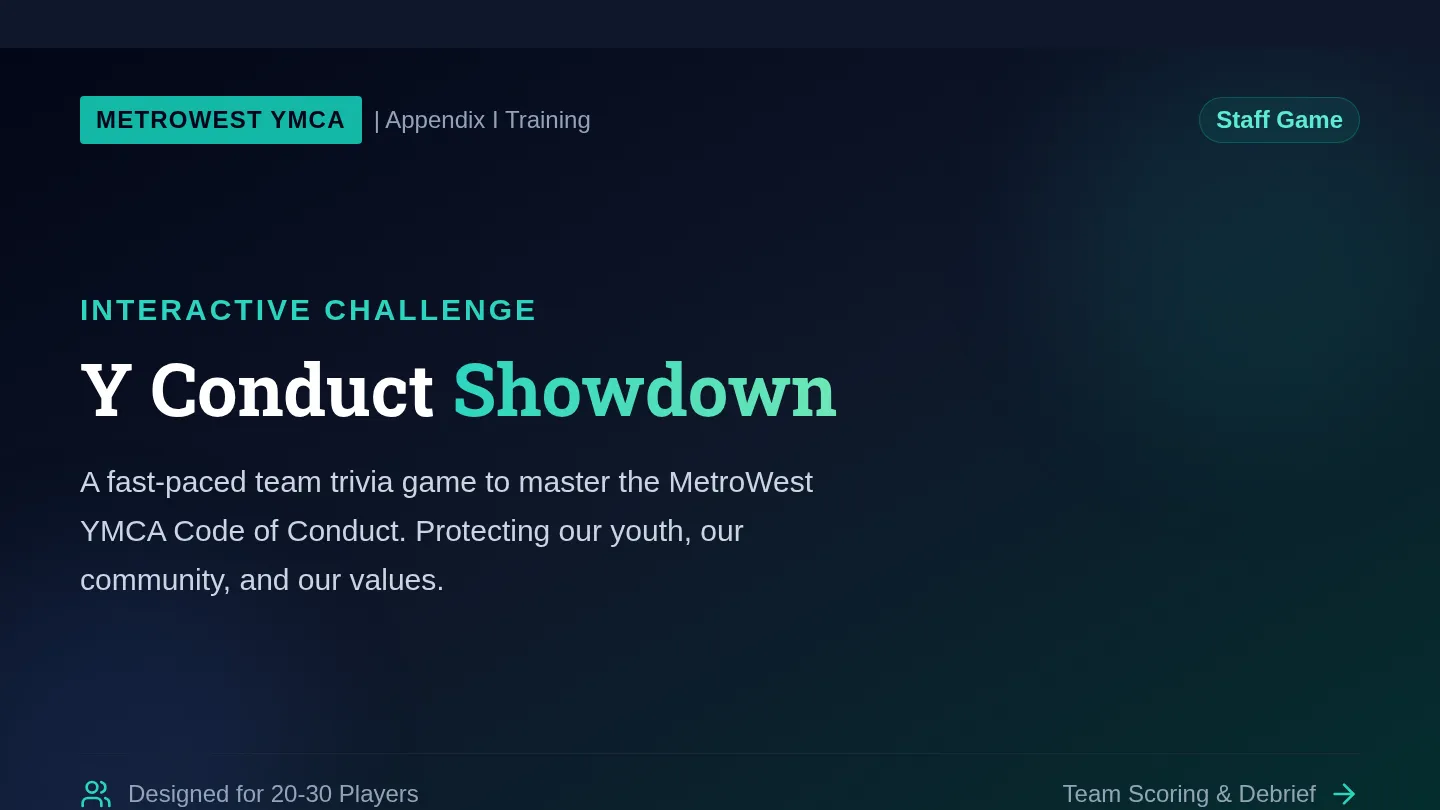
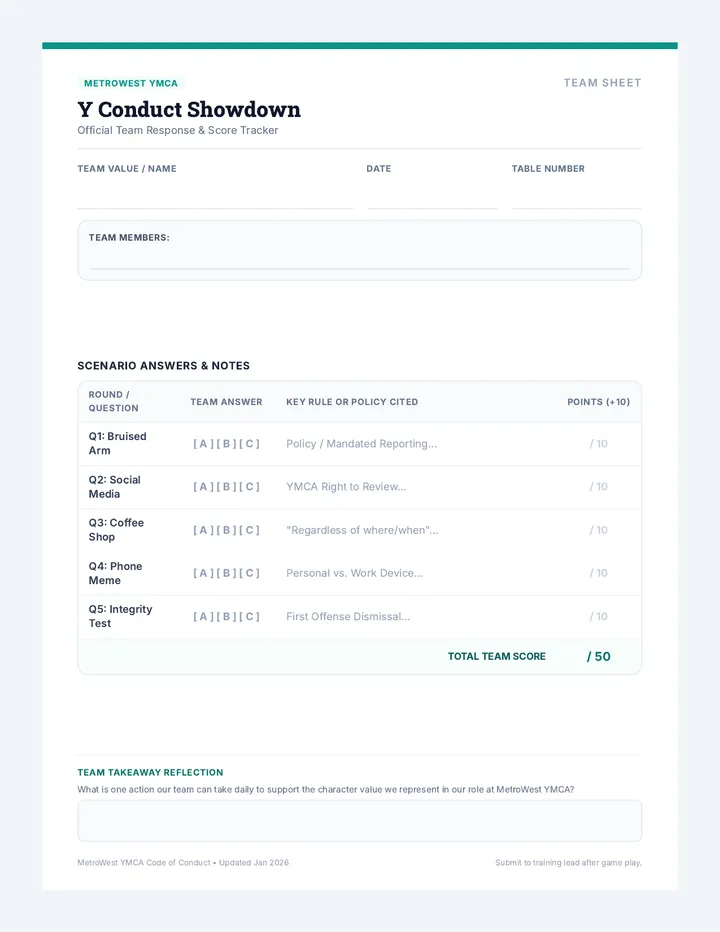
A interactive, high-energy staff training lesson designed to review the MetroWest YMCA Code of Conduct (Appendix I) through active team play and situational analysis.
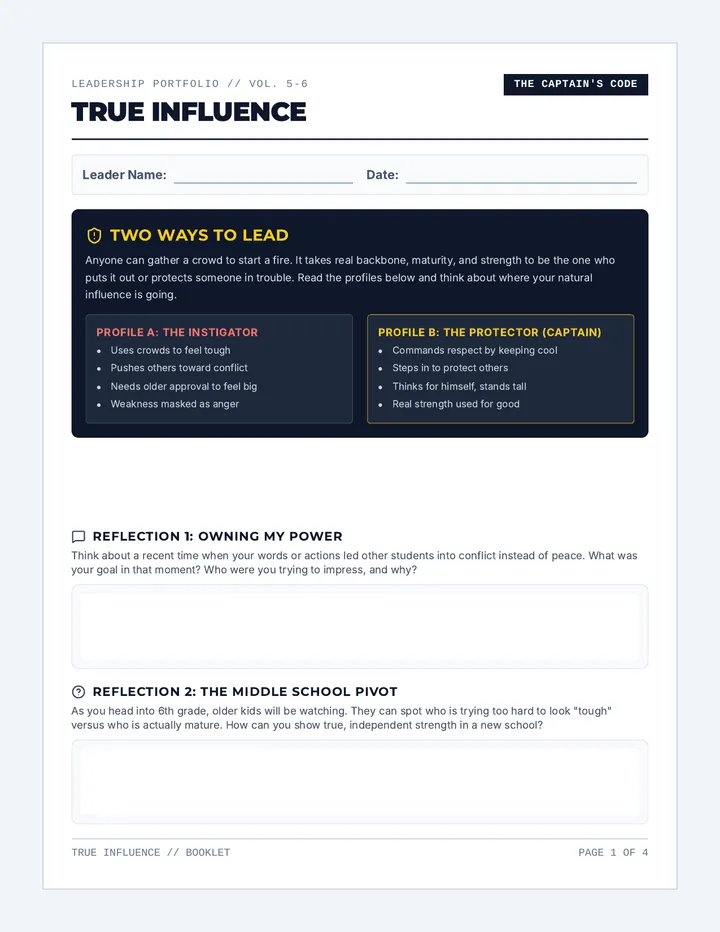
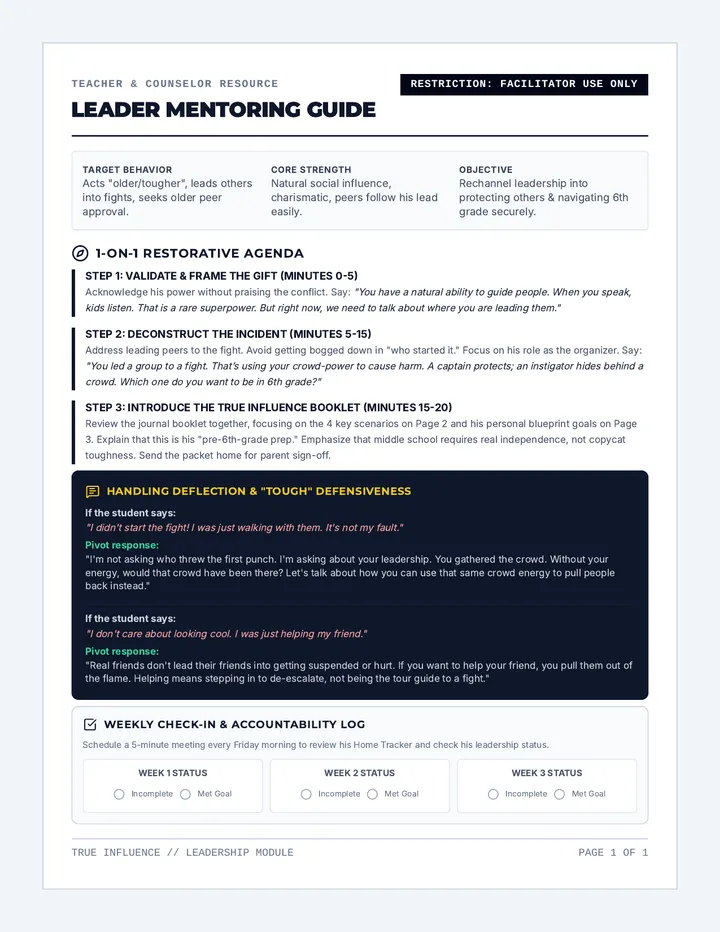
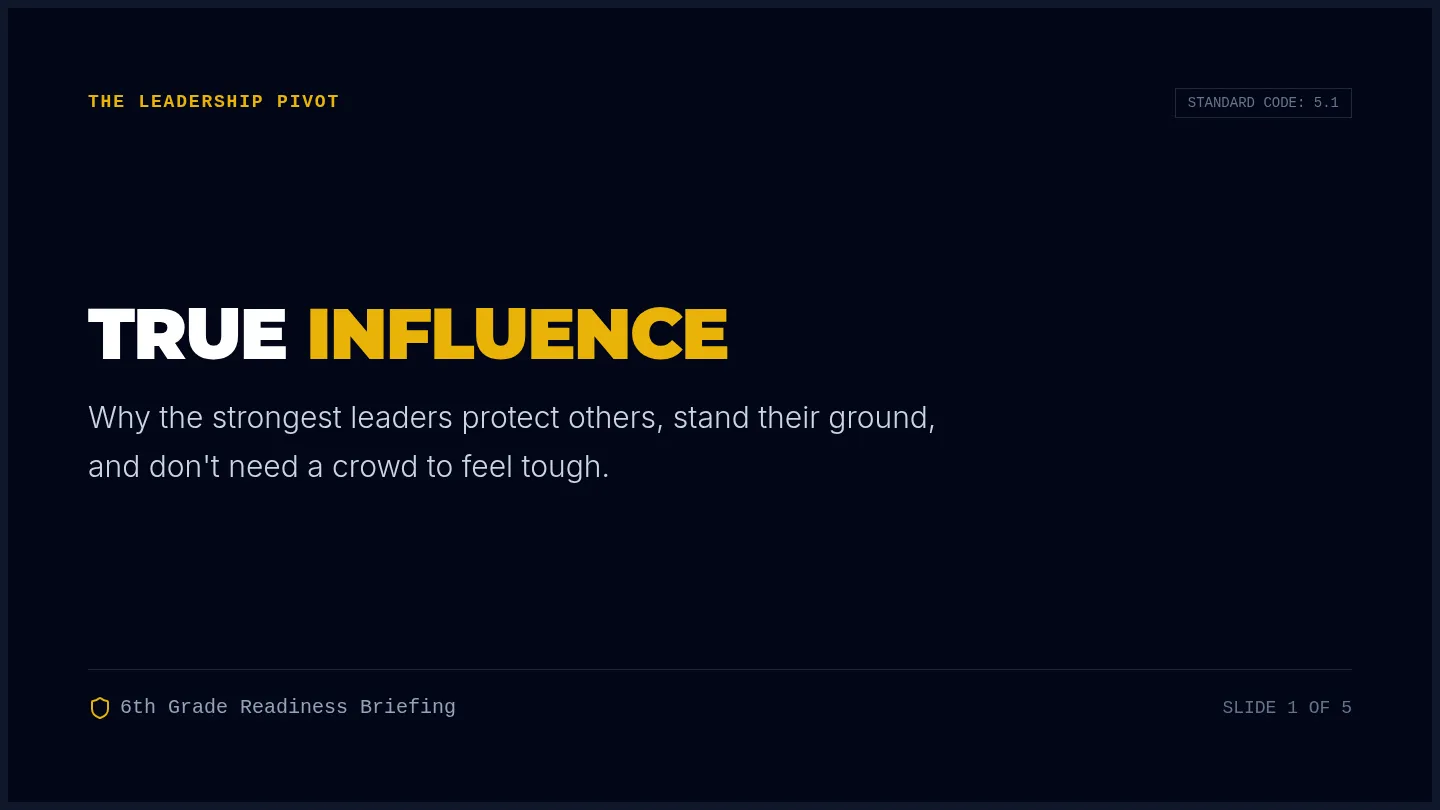
A restorative leadership module designed for a 5th-grade student transitioning to middle school. Focuses on channeling natural social influence into positive leadership, specifically protecting and looking out for others, rather than leading peers into conflict.
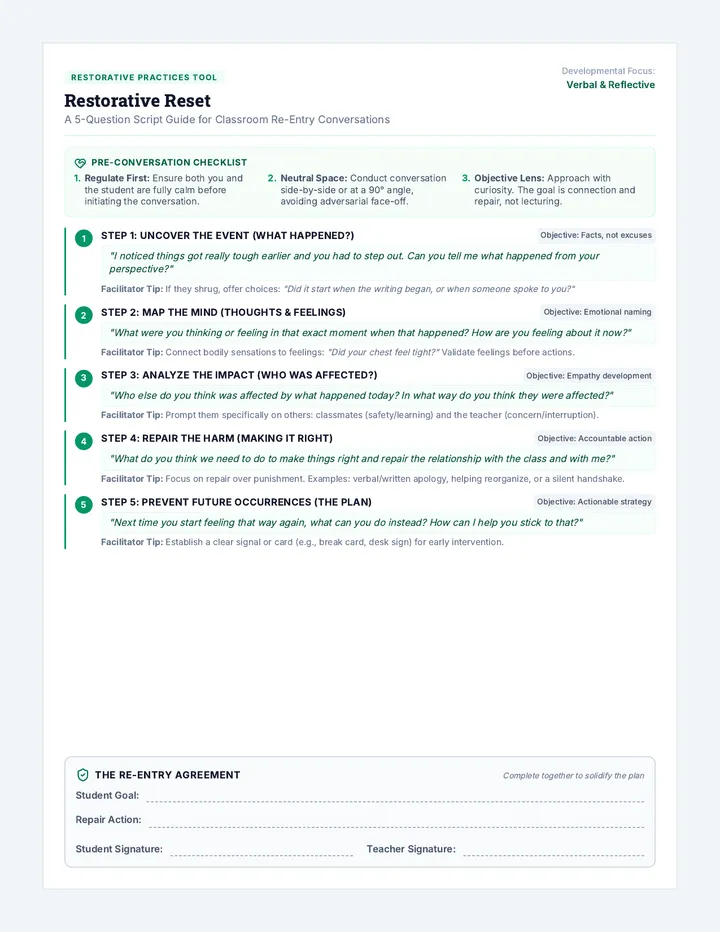
A structured framework for conducting supportive, restorative conversations with students following an emotional outburst or classroom removal.
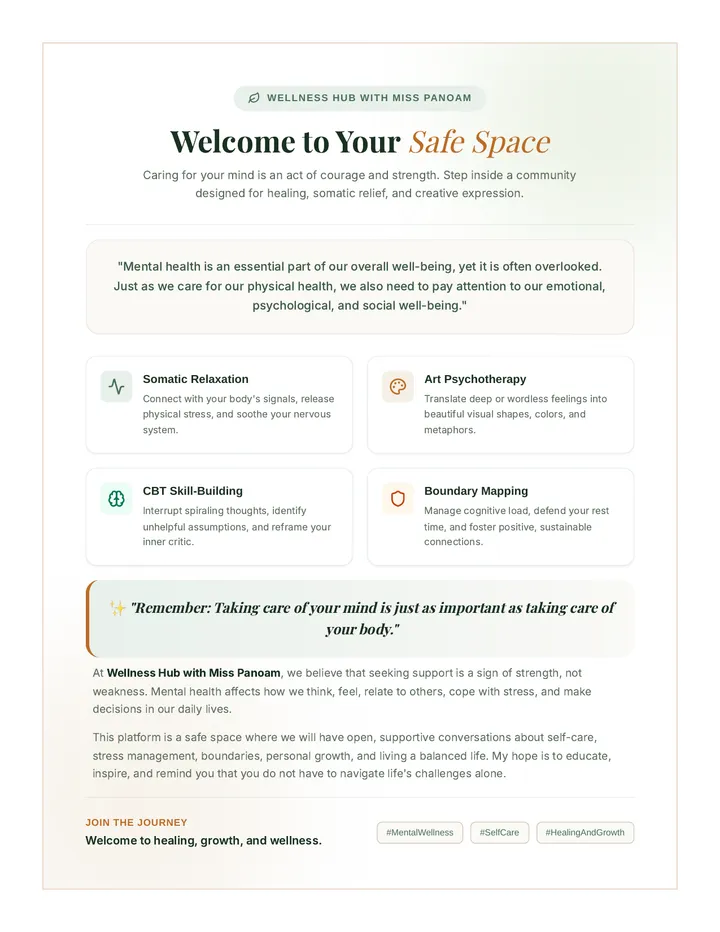
An elegant, welcoming visual announcement page introducing the Wellness Hub with Miss Panoam, designed for counseling psychology, art therapy, and somatic mindfulness support.
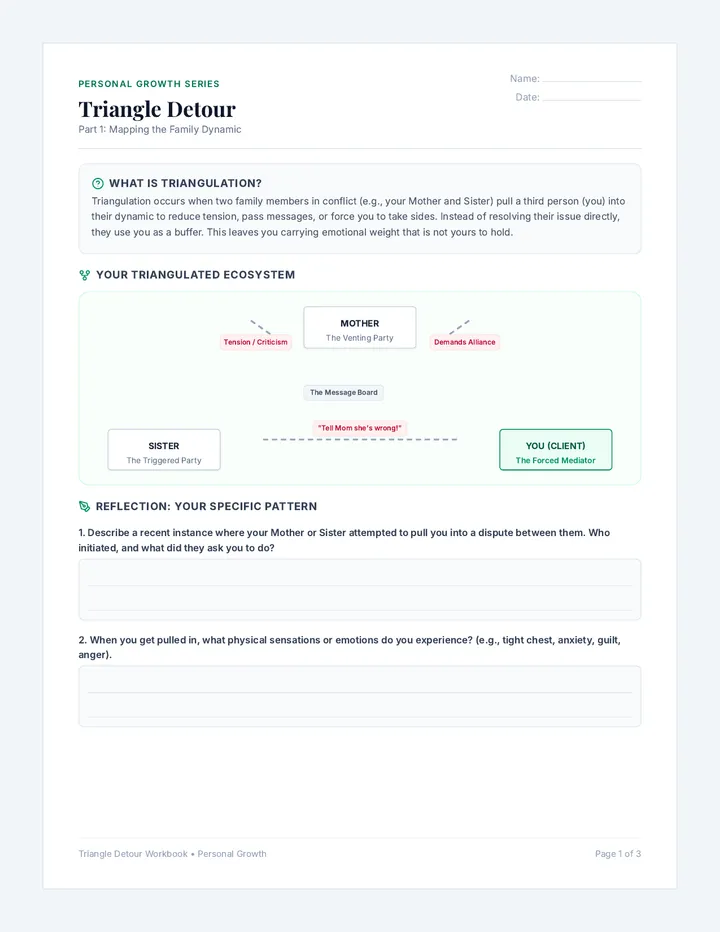
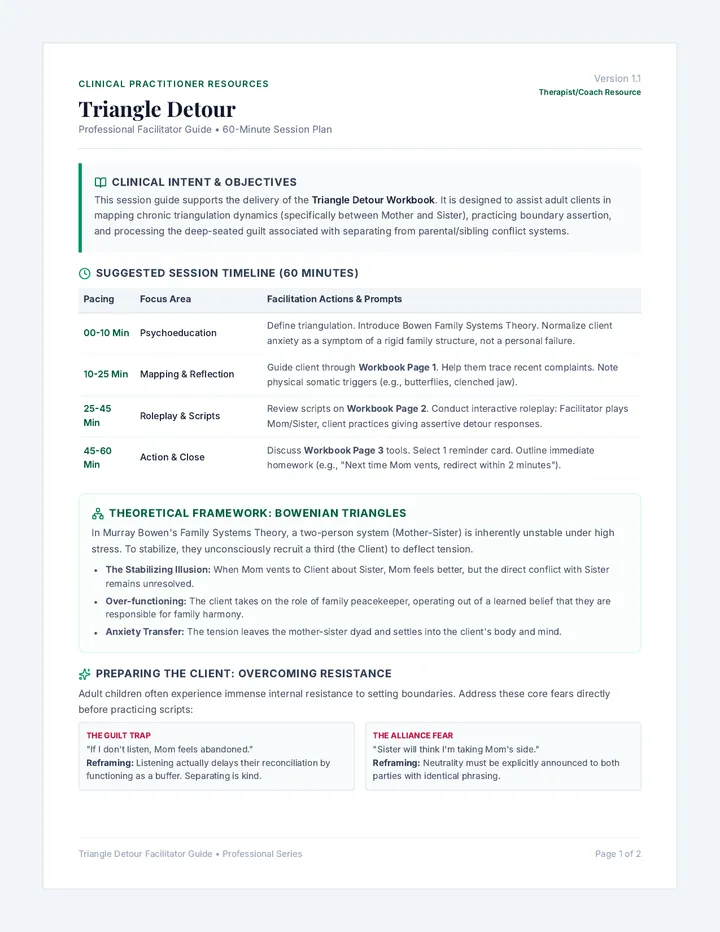
A therapeutic lesson designed for adult children caught in long-standing triangulation dynamics between their mother and sister. This lesson teaches assertive communication, boundary-setting strategies, and detouring family arguments.
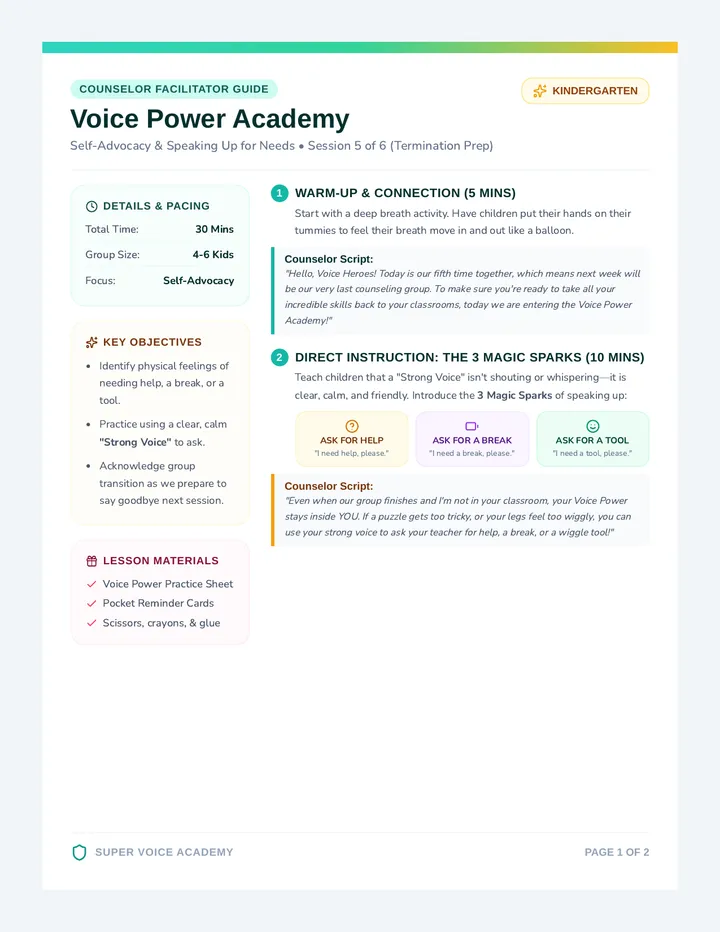
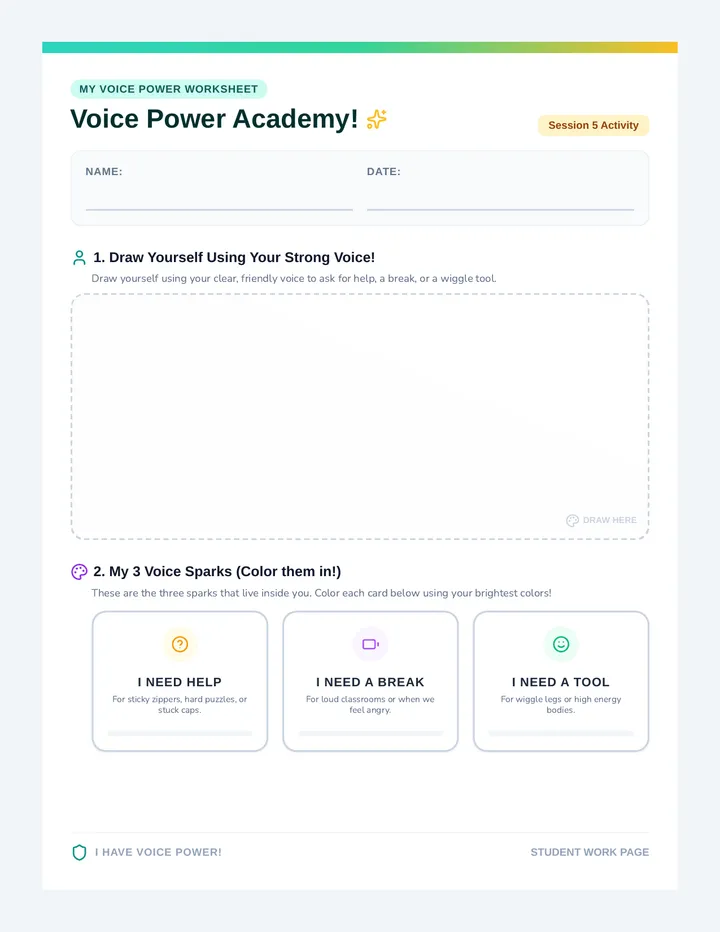
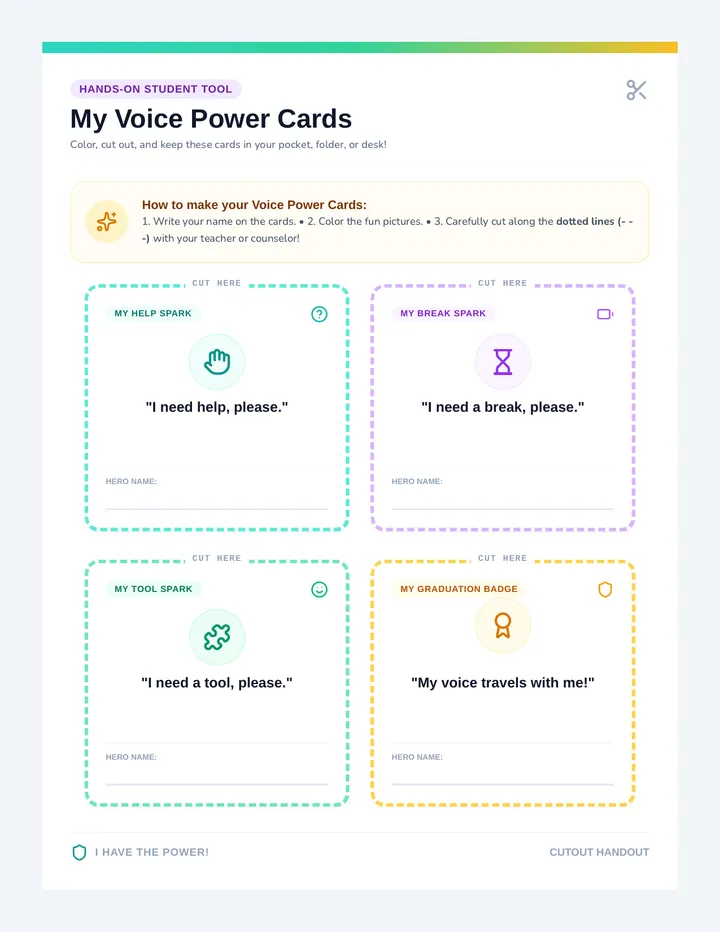
A kindergarten counseling lesson focused on self-advocacy and speaking up for needs. Students learn to use their strong voice to ask for help, breaks, or sensory tools as they prepare for the counseling group's transition/termination.
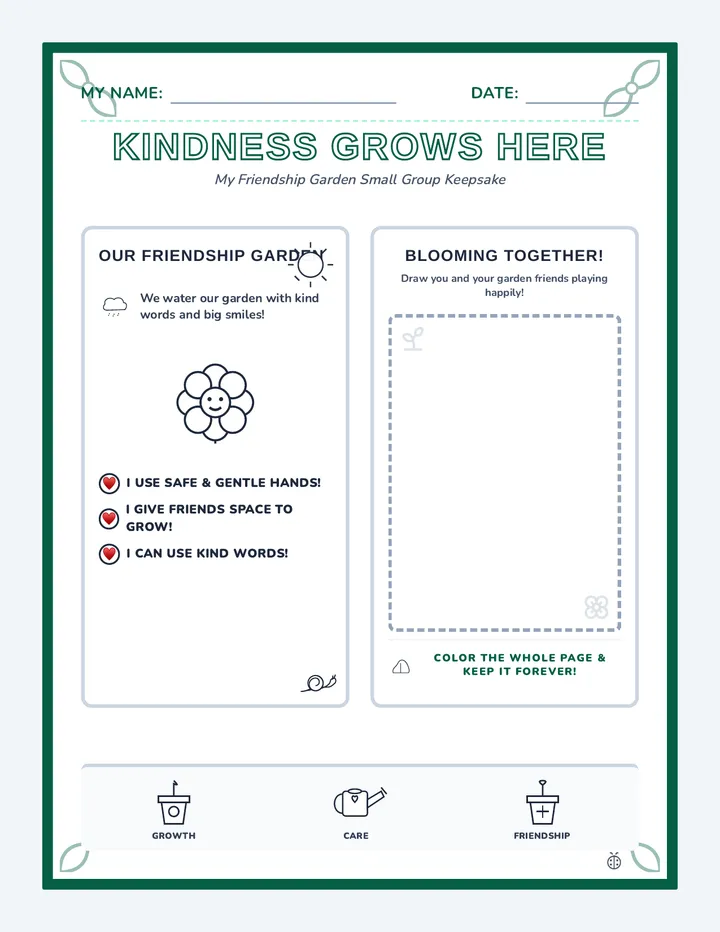
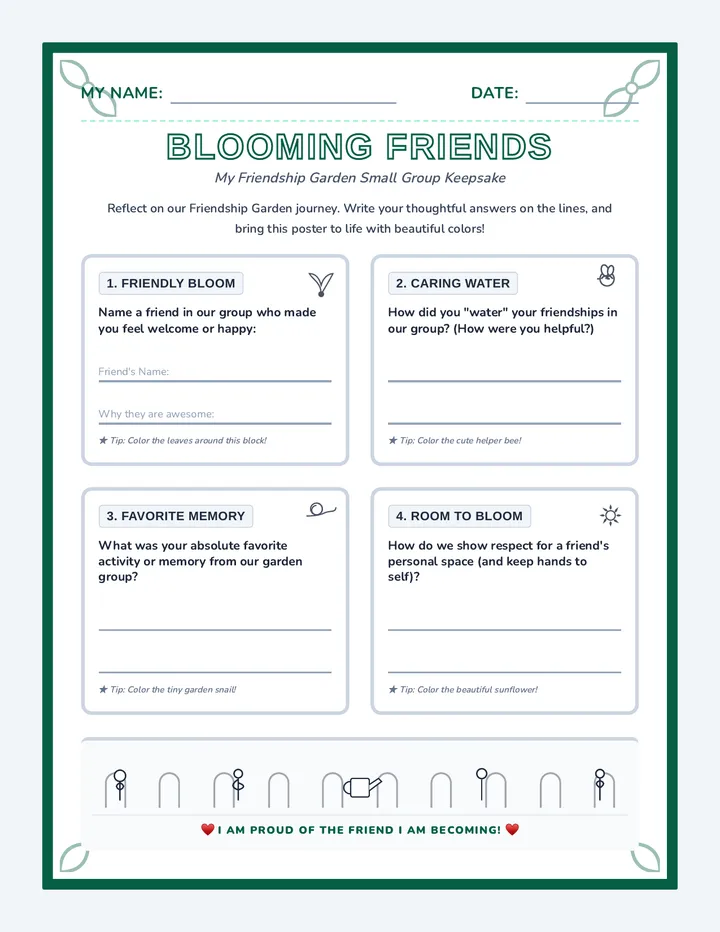
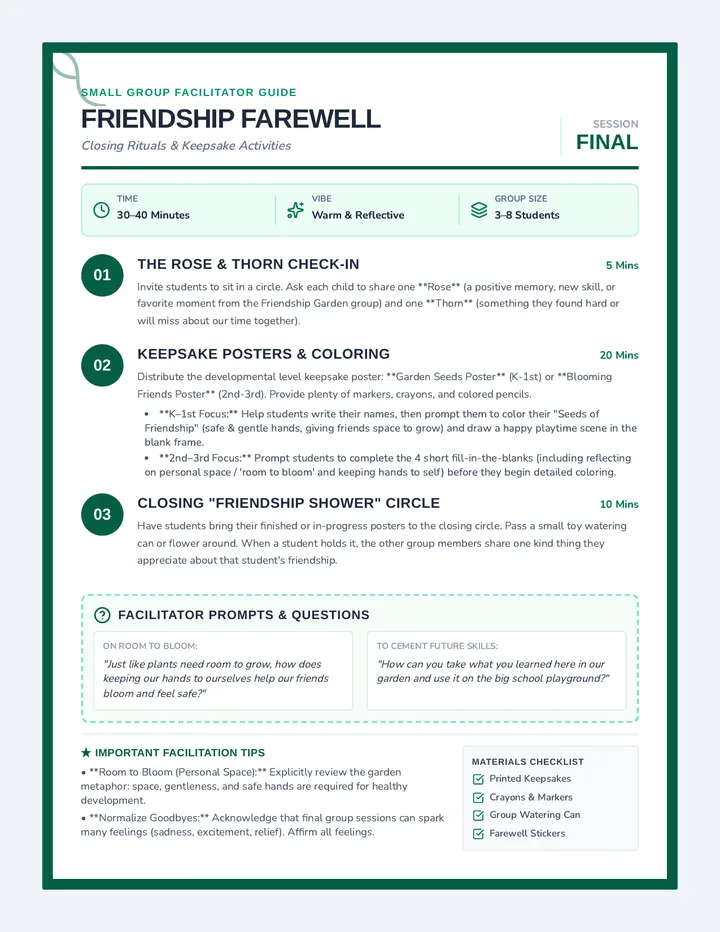
A warm, reflective closing lesson for the Friendship Garden small group. It provides students with creative keepsake coloring posters tailored to their grade levels to celebrate their growth and positive relationships.
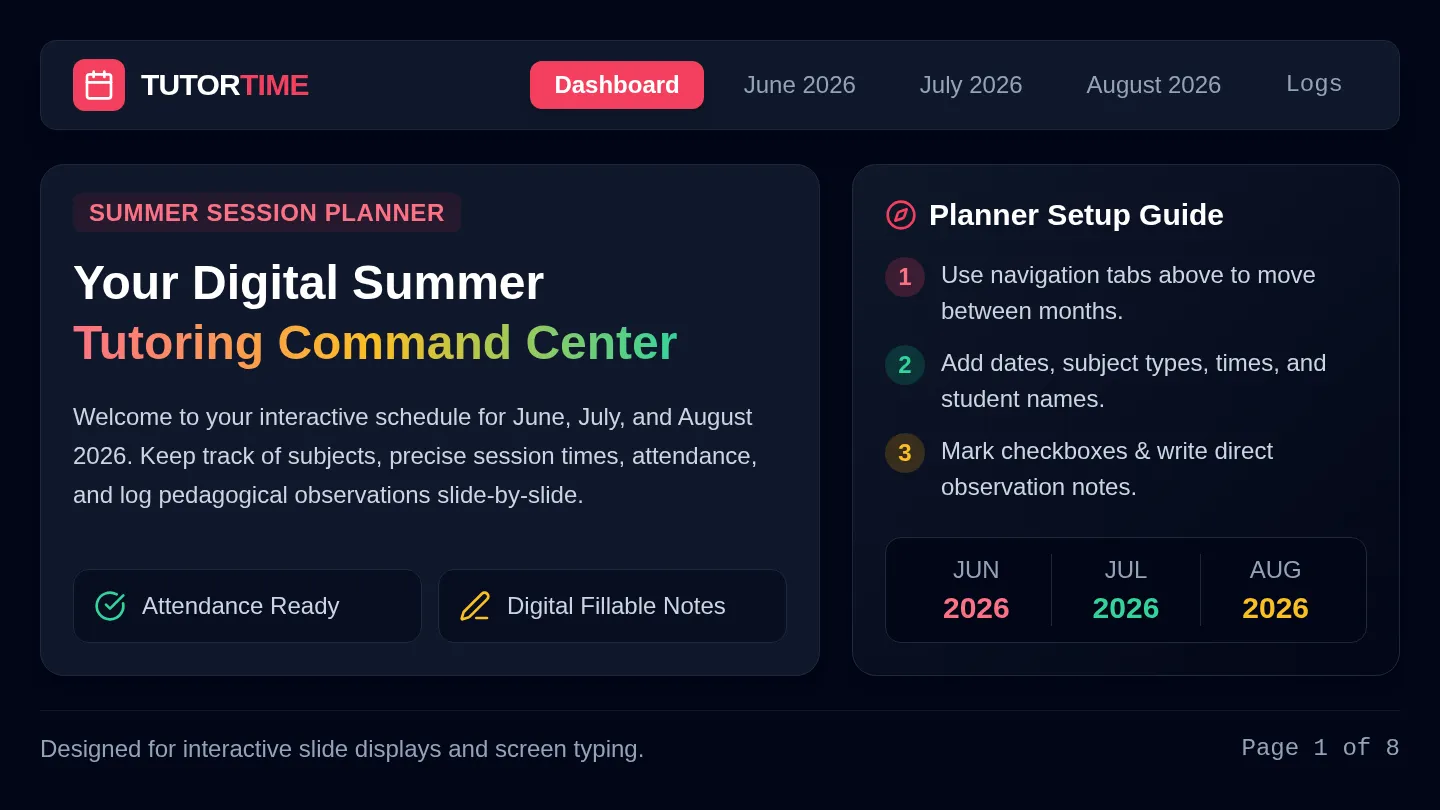
A lesson designed to help tutors manage, plan, and log their summer tutoring sessions with high-quality digital scheduling slides.
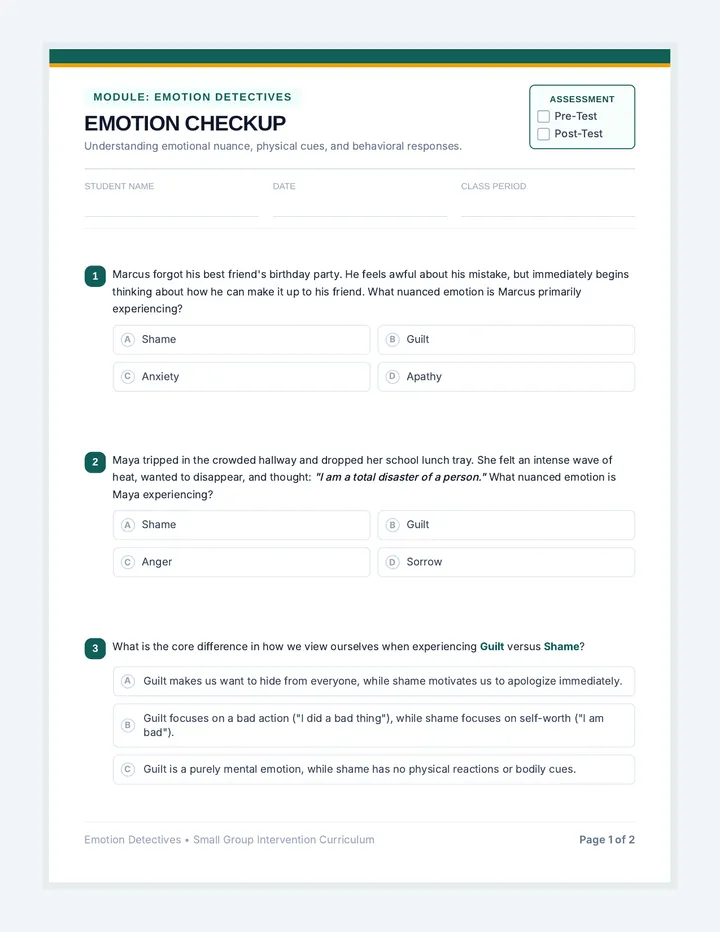
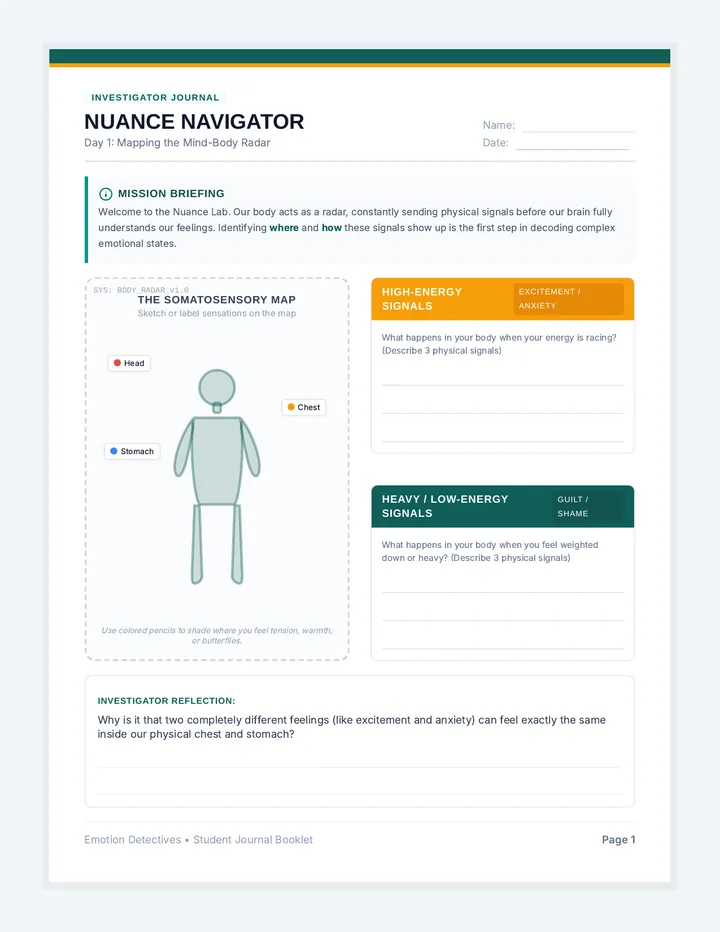
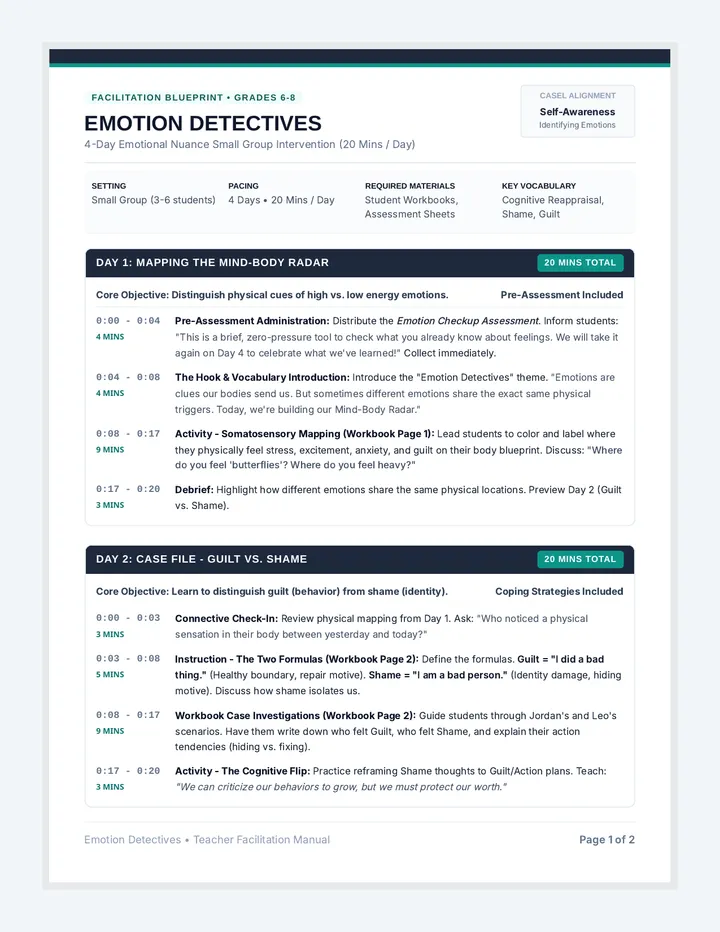
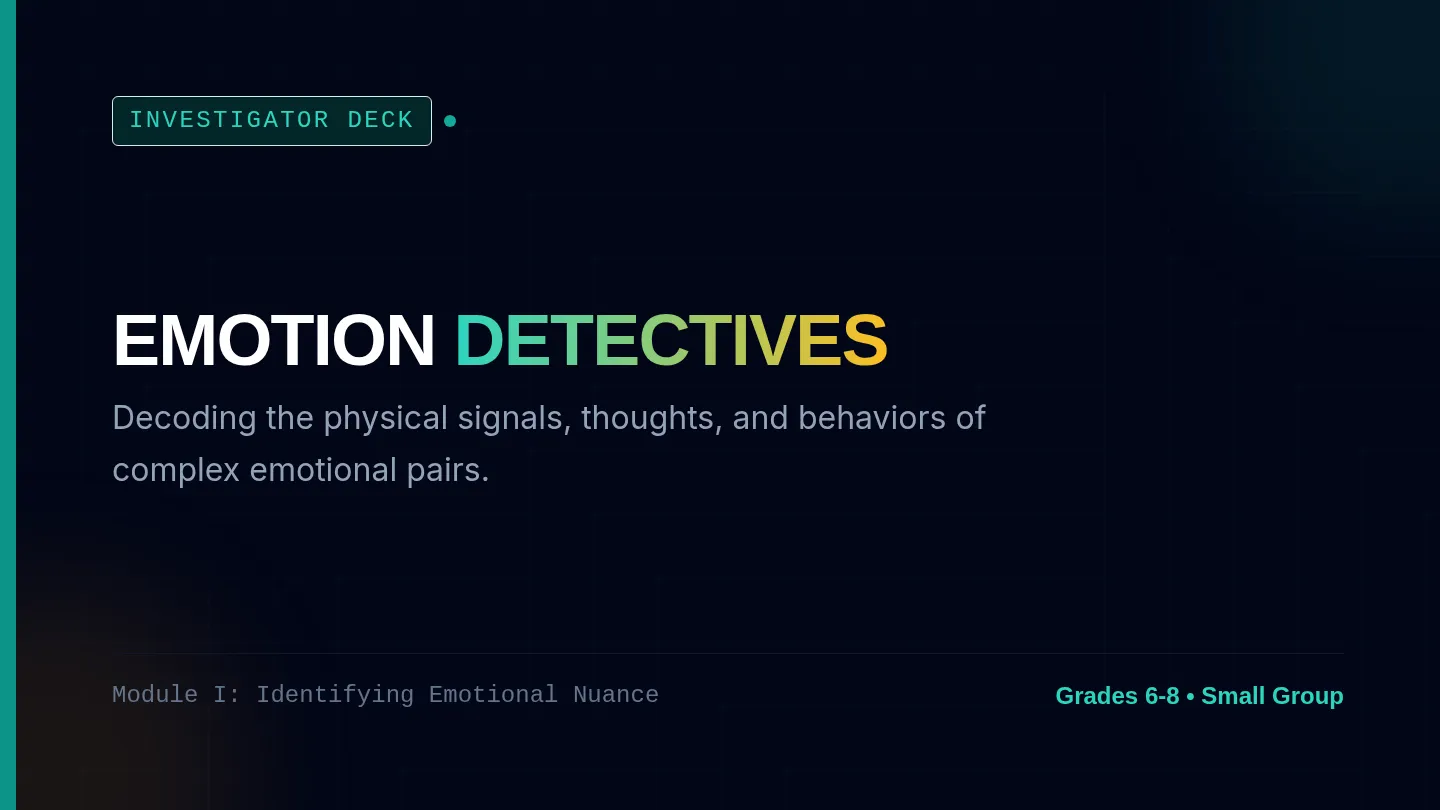
A 4-day small group intervention for grades 6-8 focusing on self-awareness and emotional nuance. Students explore the physical, cognitive, and behavioral distinctions between complex emotional pairs like guilt versus shame and excitement versus anxiety.
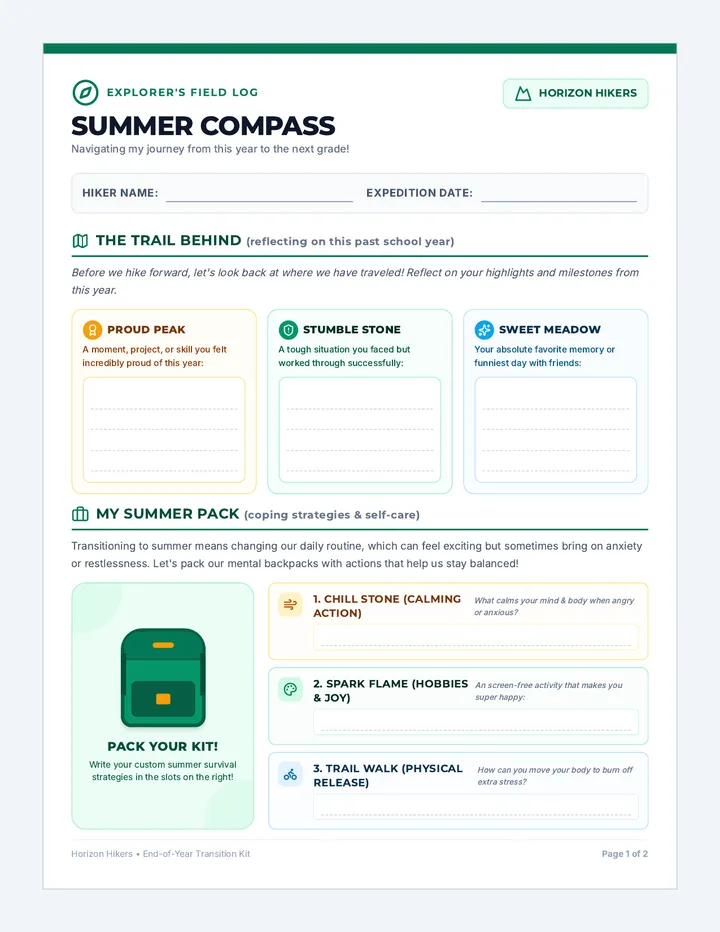
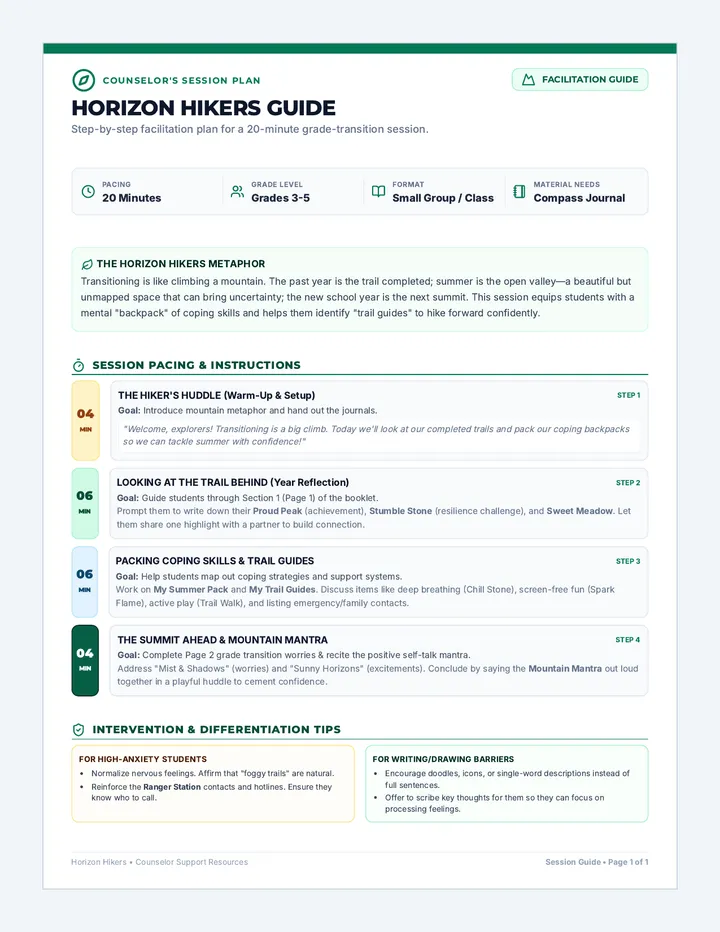
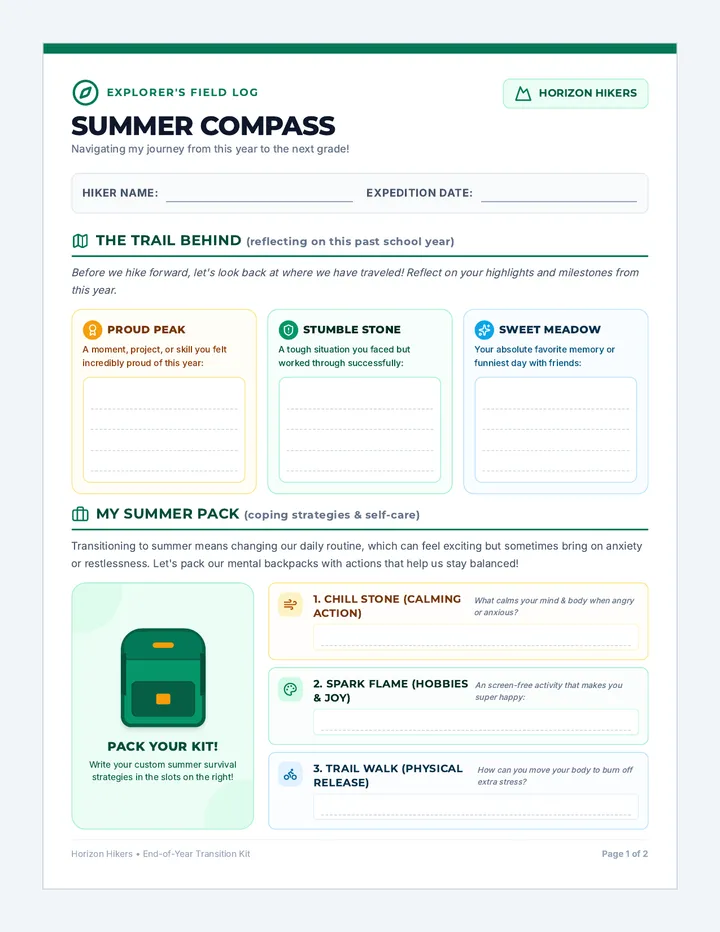
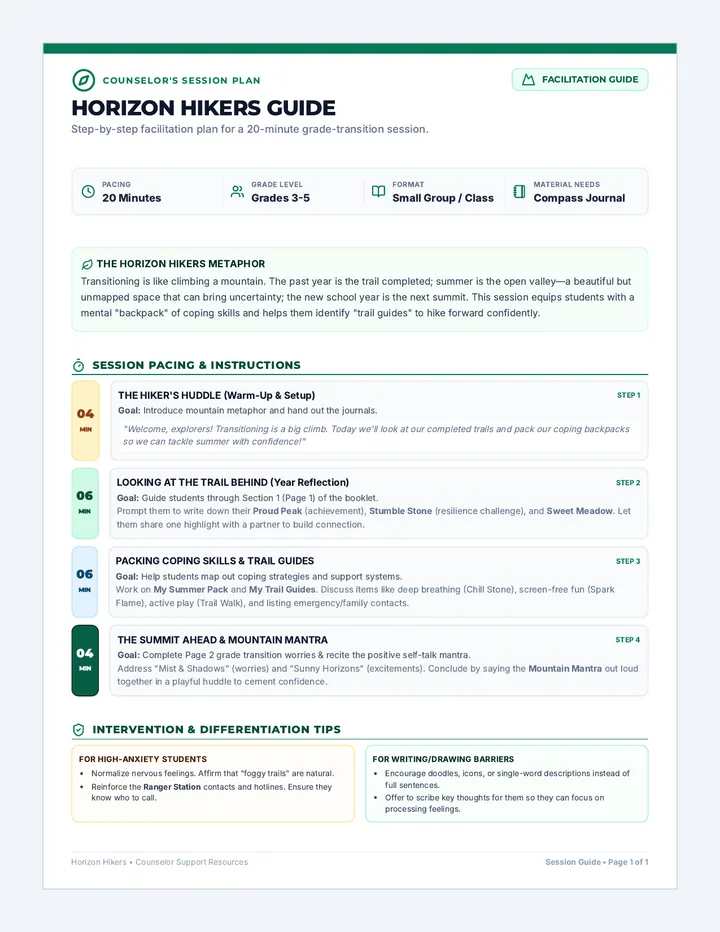
A supportive transition lesson for upper elementary students to reflect on the past year, create a visual coping plan for summer, and build confidence for entering the next grade.
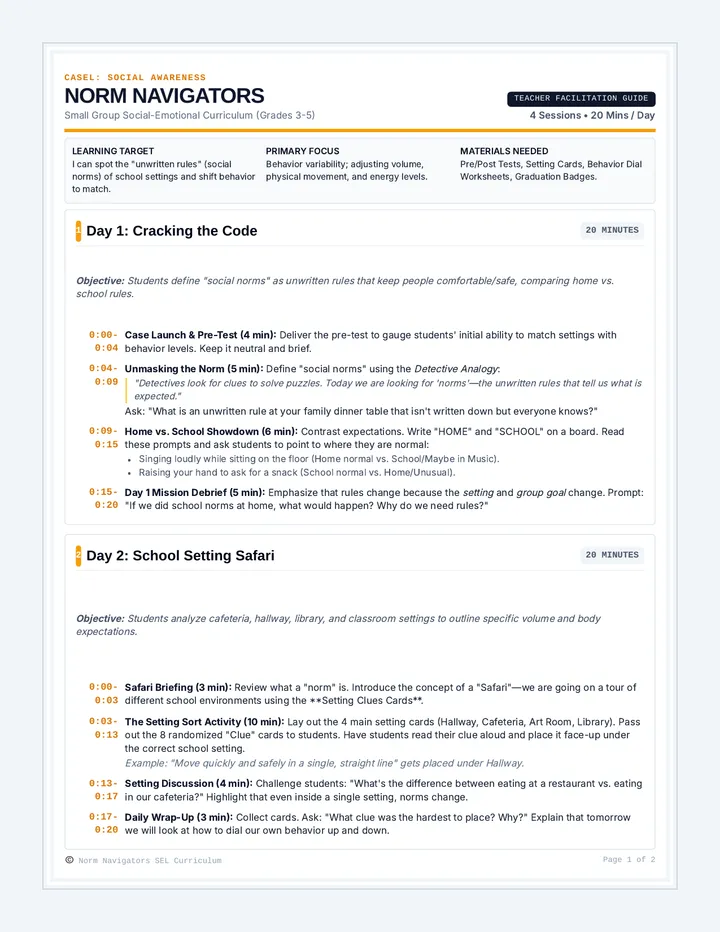
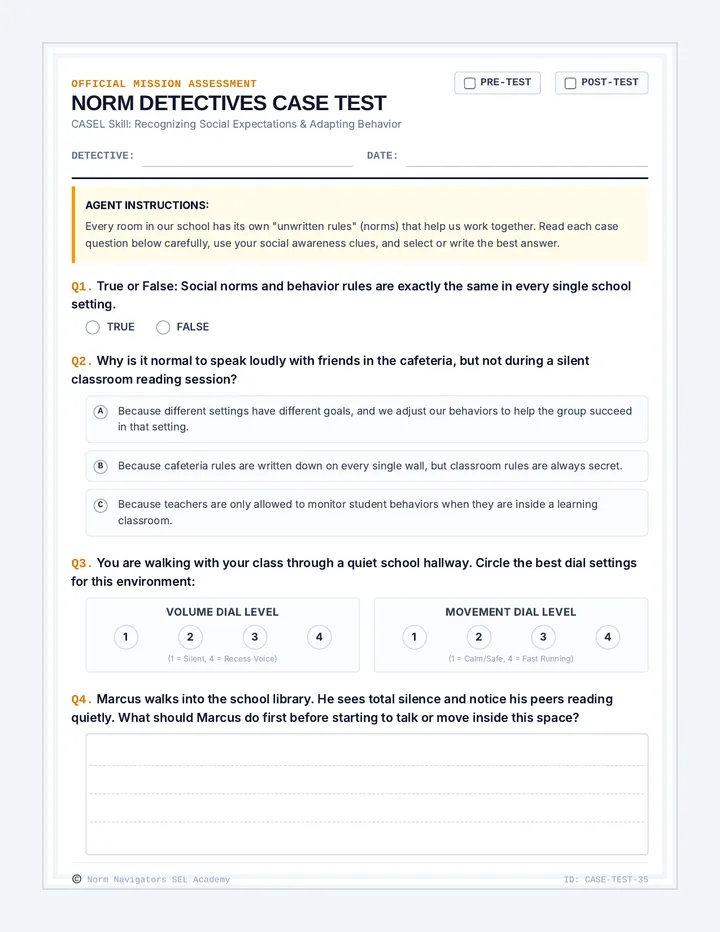
Students complete their post-test, demonstrate behavior-shifting skills in a scenario-based card challenge, and celebrate their growth with a graduation badge.
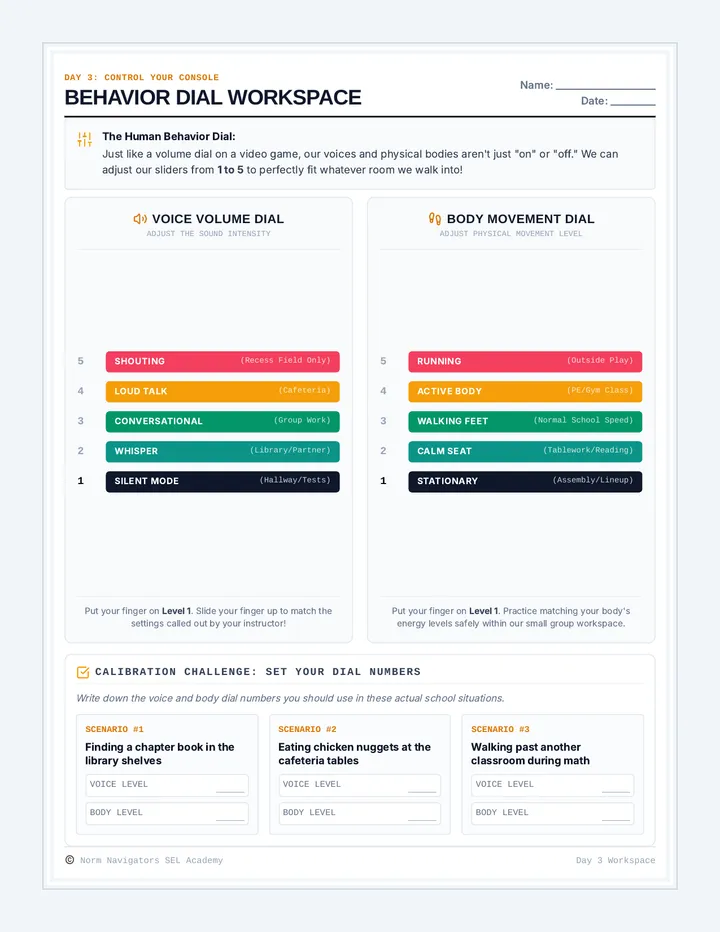
Students practice using a "Behavior Dial" to physically and vocally adjust their volume, movement, and energy levels to match different school environments.
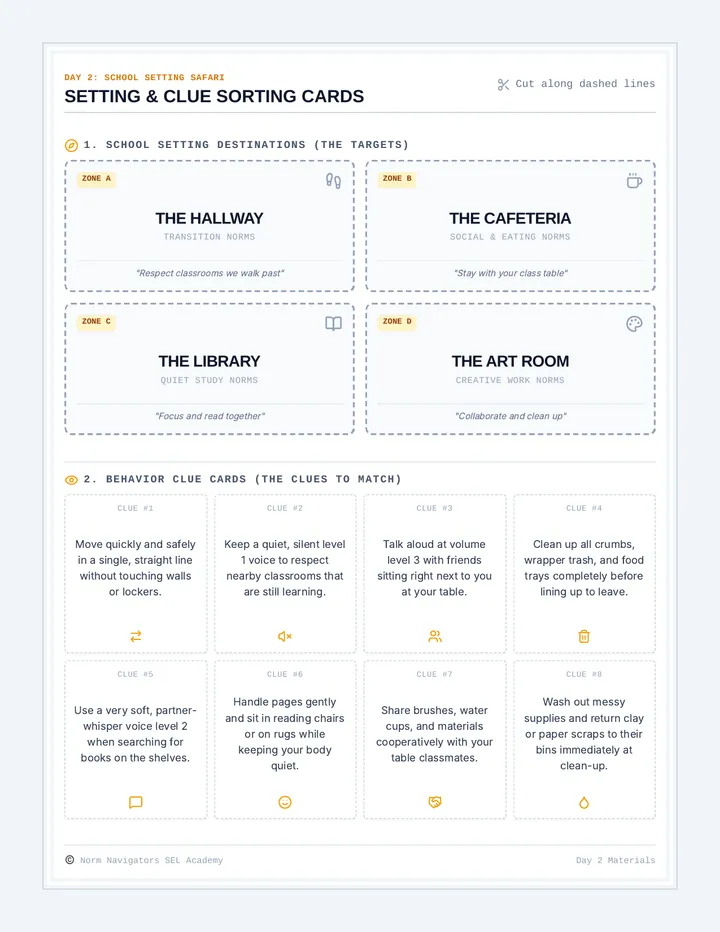
Students examine specific school settings like the hallway, cafeteria, and specials classes to map out their unique expectations and unwritten rules.
Students are introduced to the concept of social norms as unwritten rules that help groups work together, comparing how norms change between home and school.
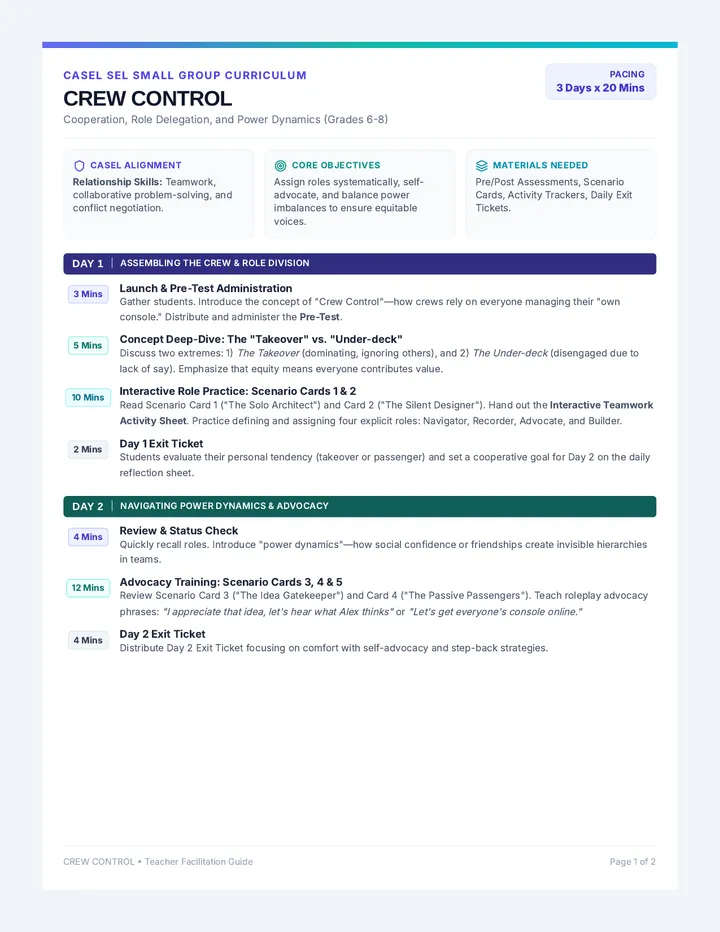
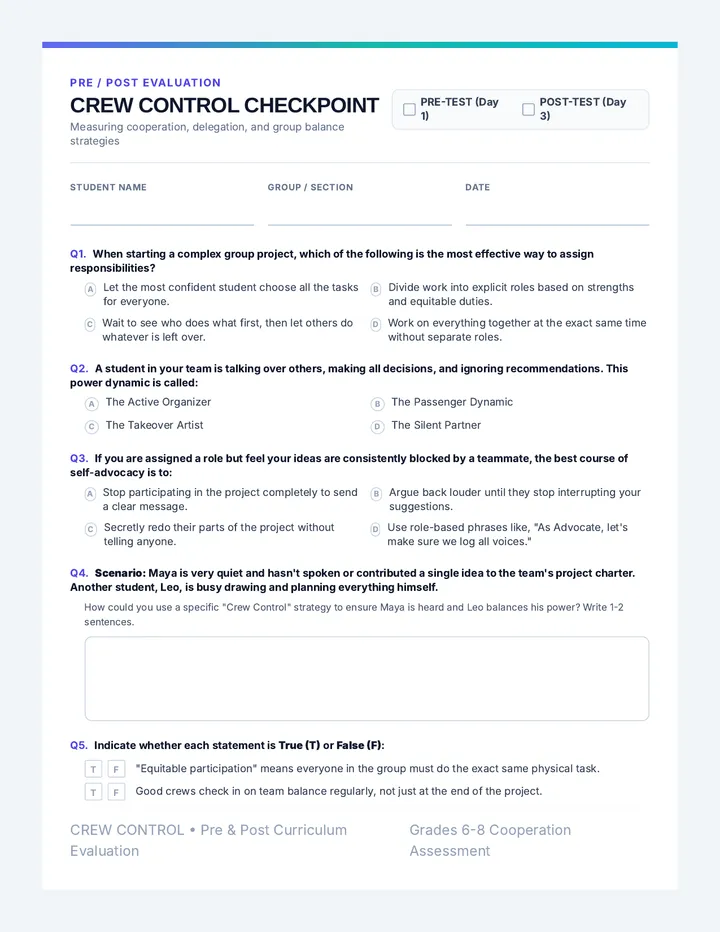
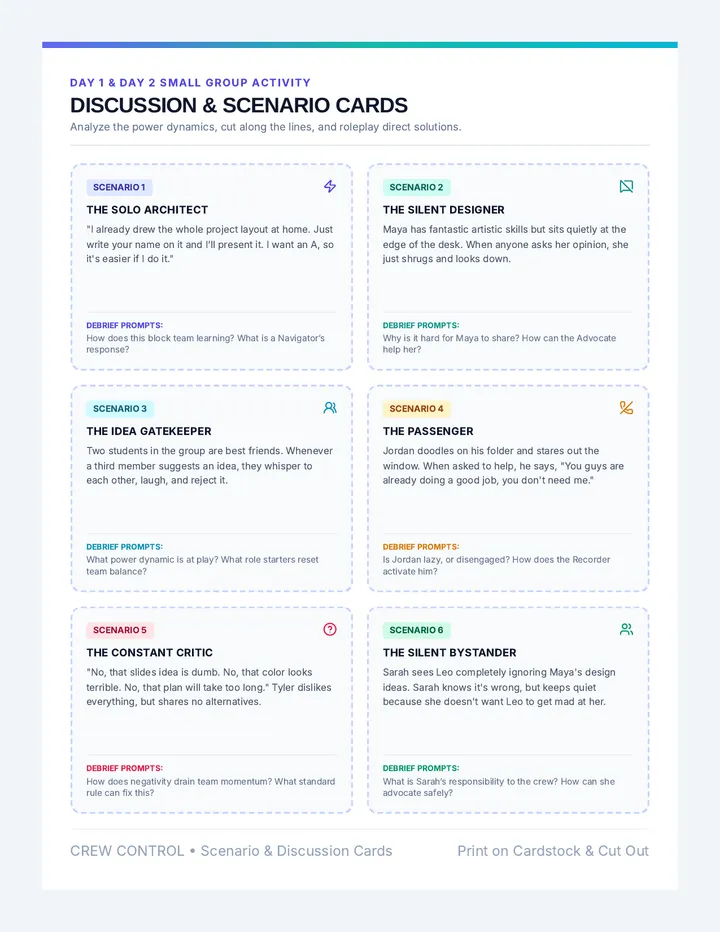
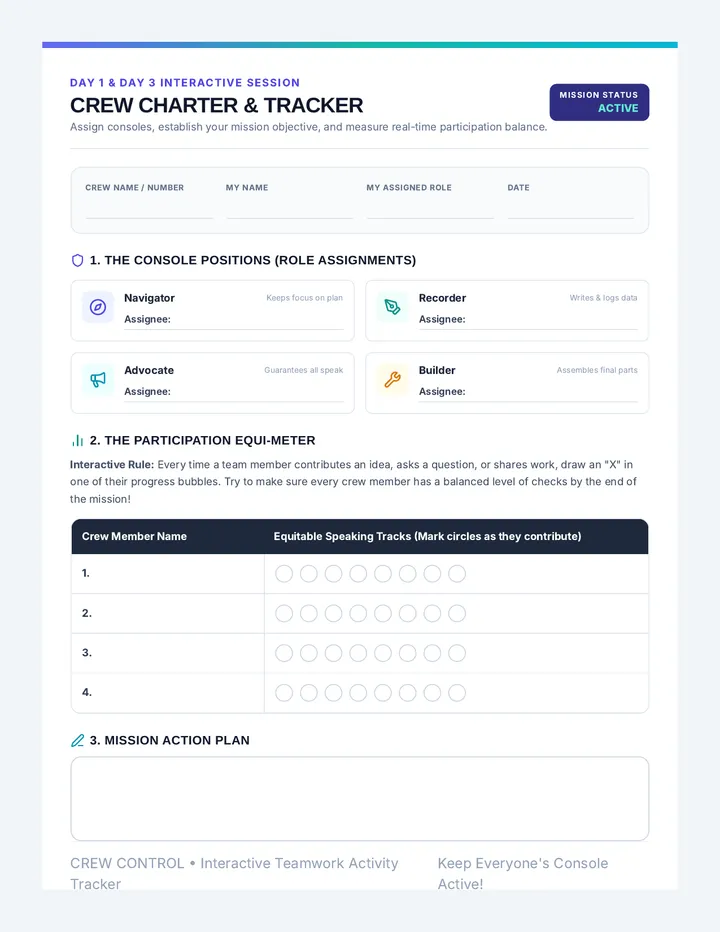
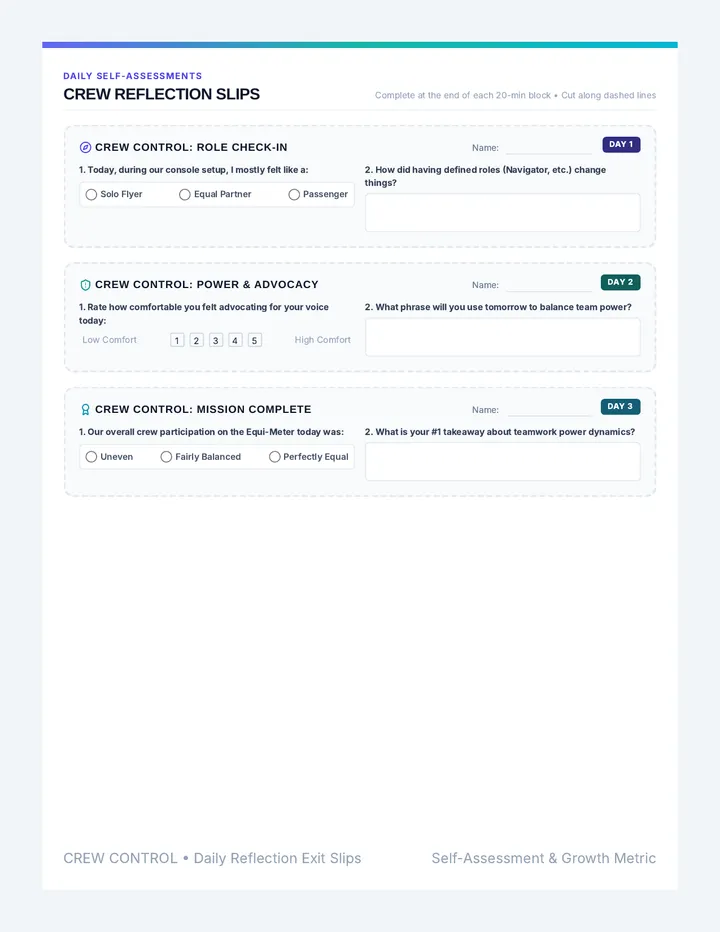
A cohesive 3-day small group curriculum that teaches middle school students how to coordinate project responsibilities, self-advocate, and address dominance or passivity to ensure equitable participation.