Students learn to distinguish between private information (which identifies them) and personal information (preferences) through a detective-themed sorting game.
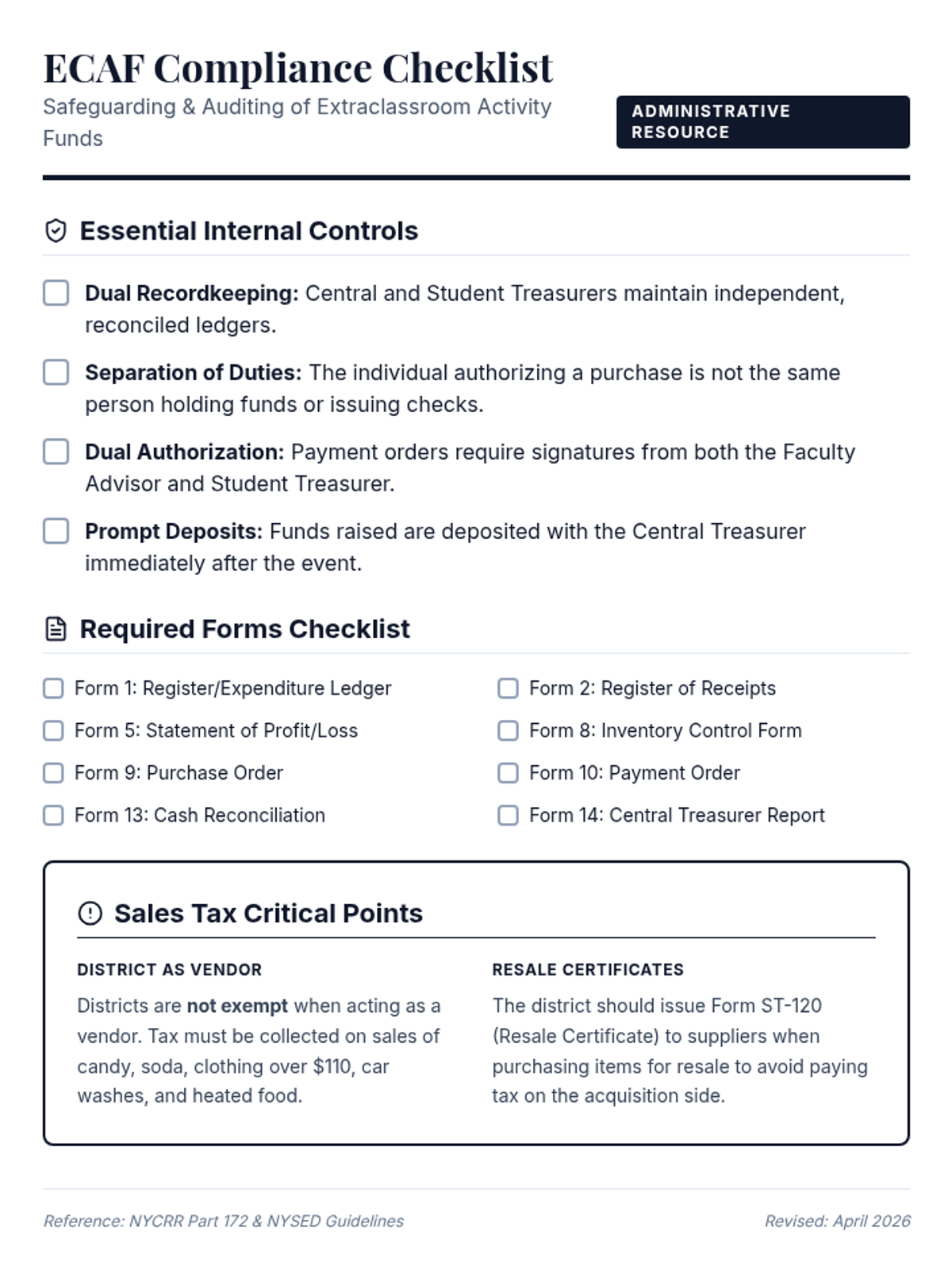
A comprehensive professional guide to the safeguarding, accounting, and auditing of extraclassroom activity funds, covering regulatory requirements, internal controls, and operational procedures.
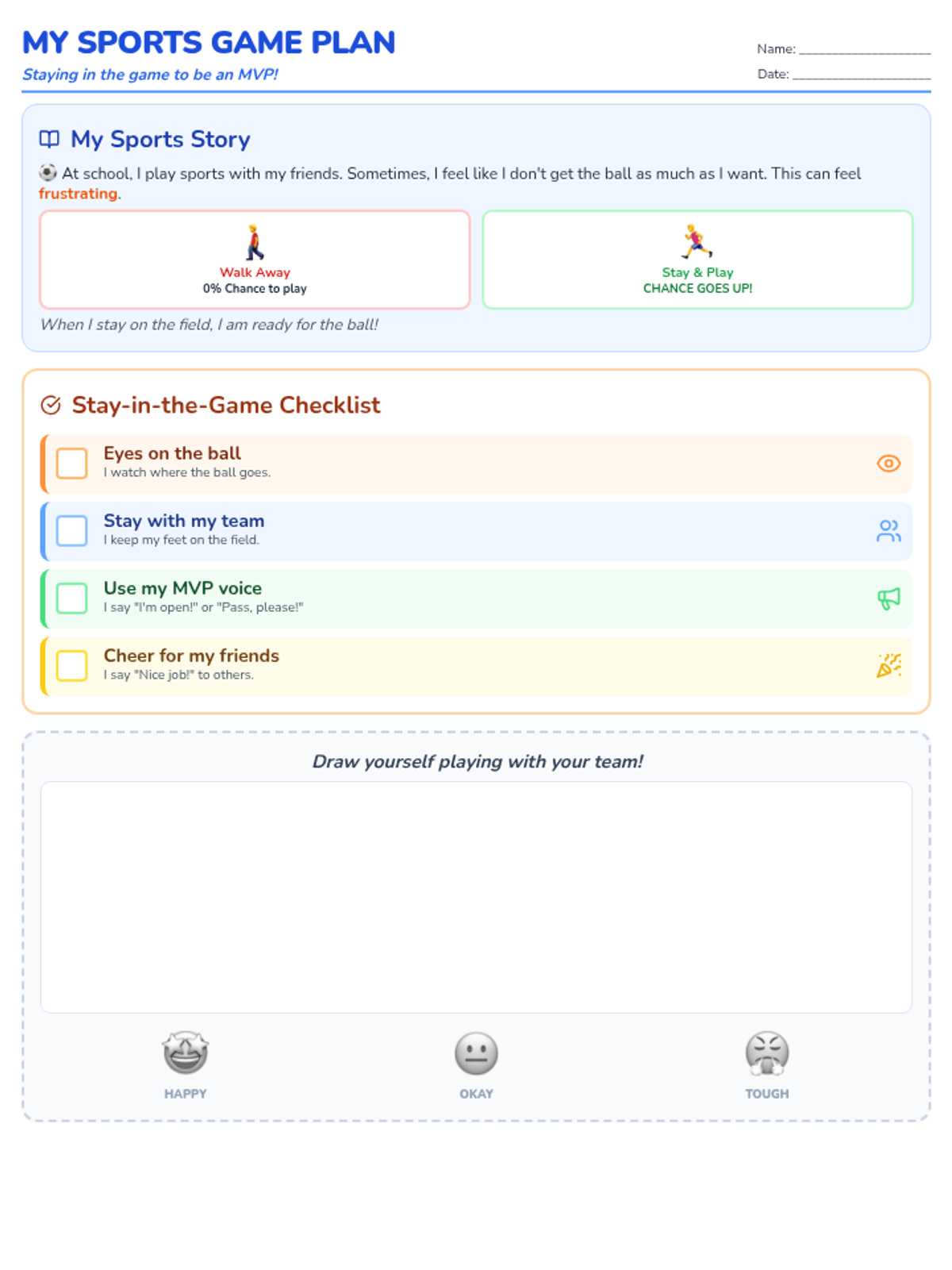
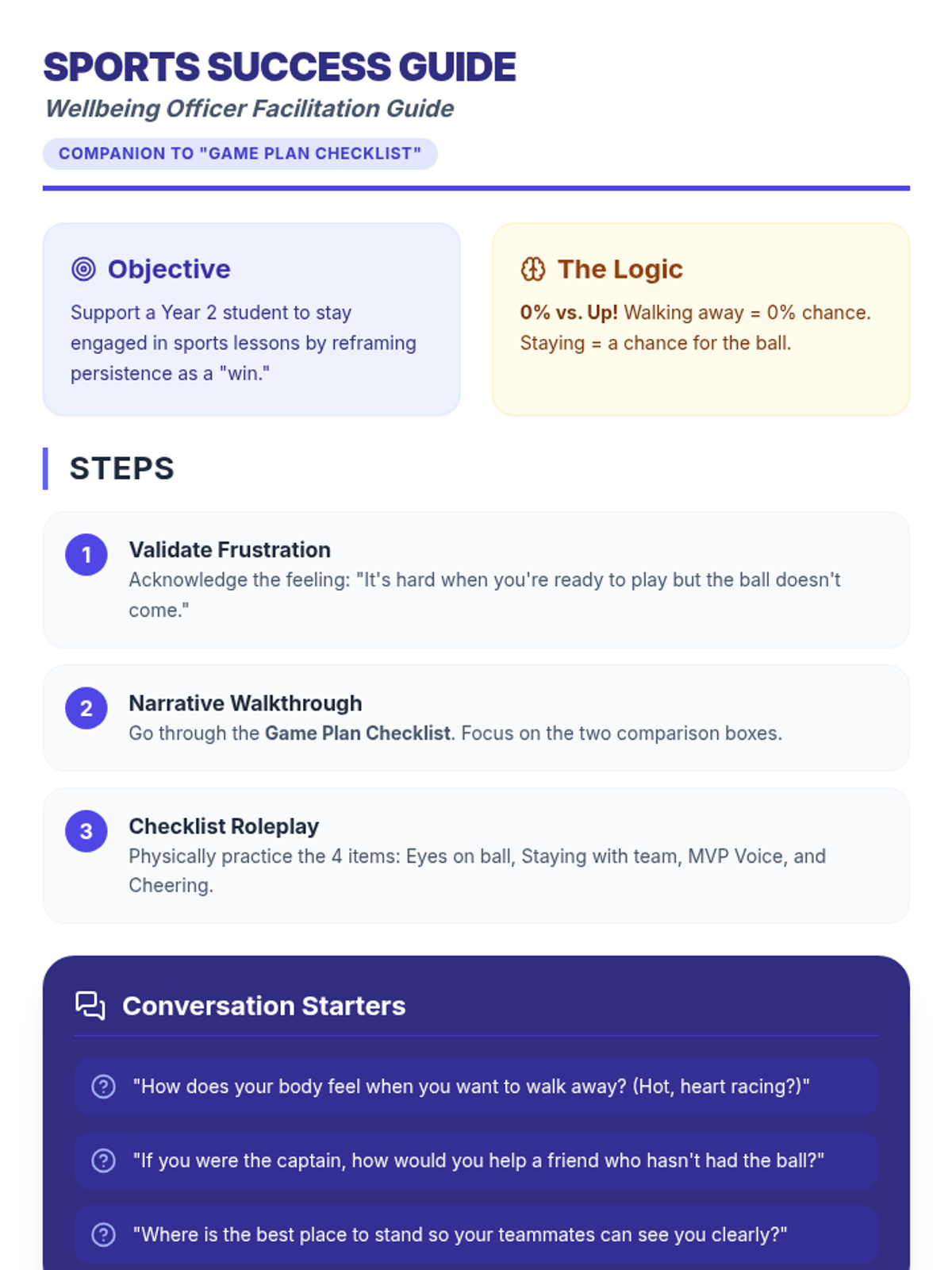
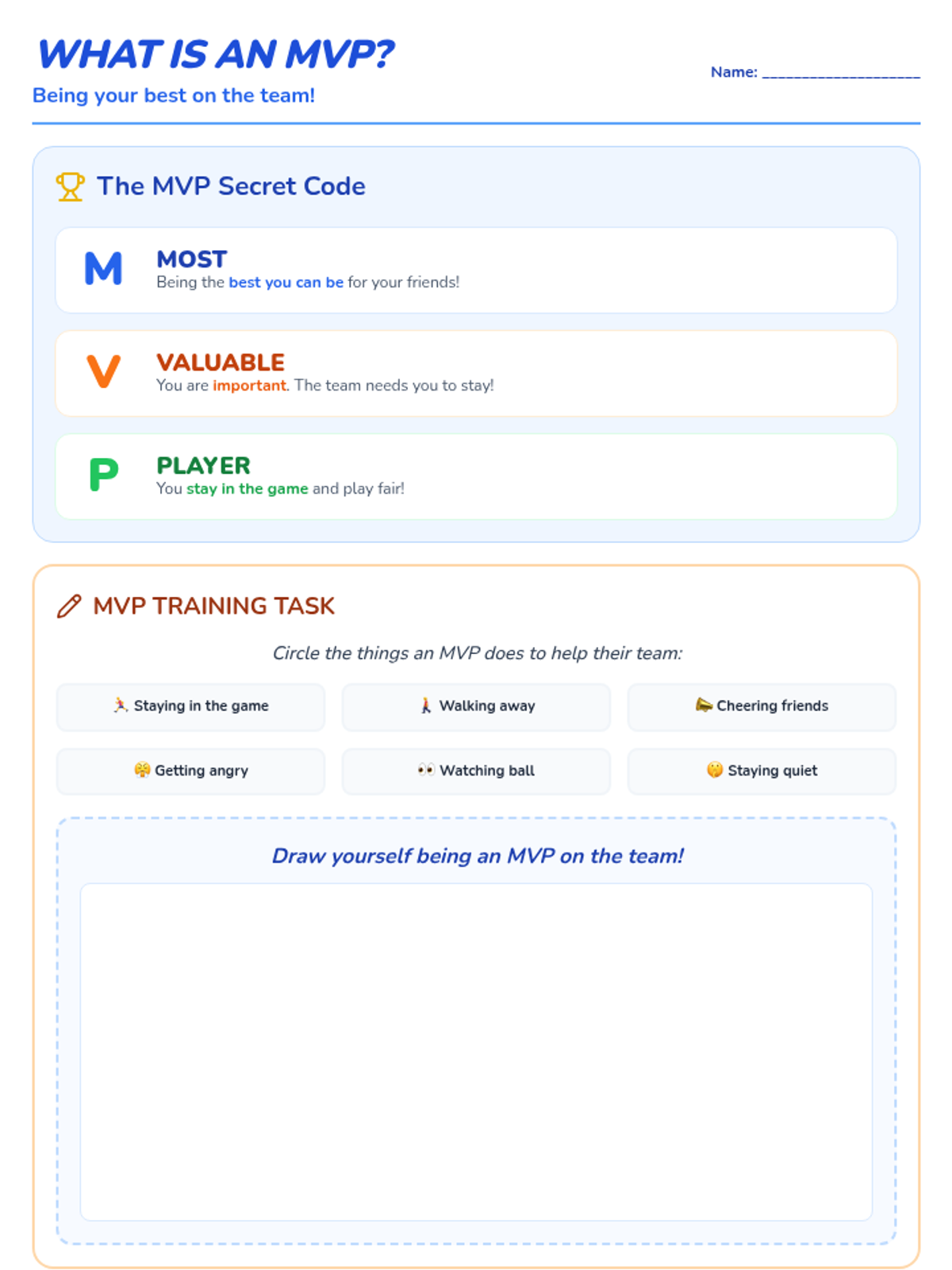
A 1:1 social-emotional lesson designed for a Year 2 student to address frustrations during sports lessons, focusing on the importance of staying engaged and practicing fair play.
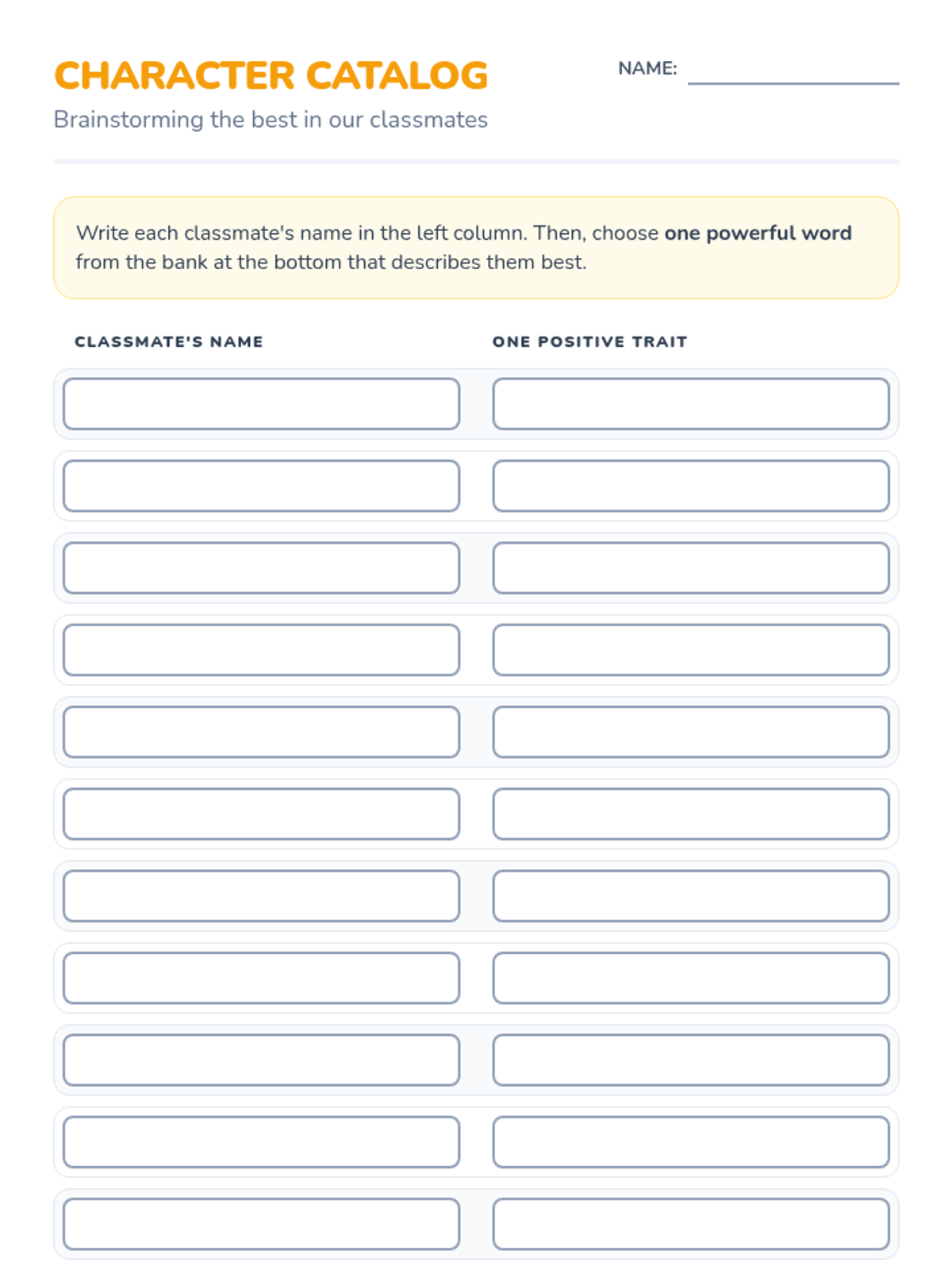
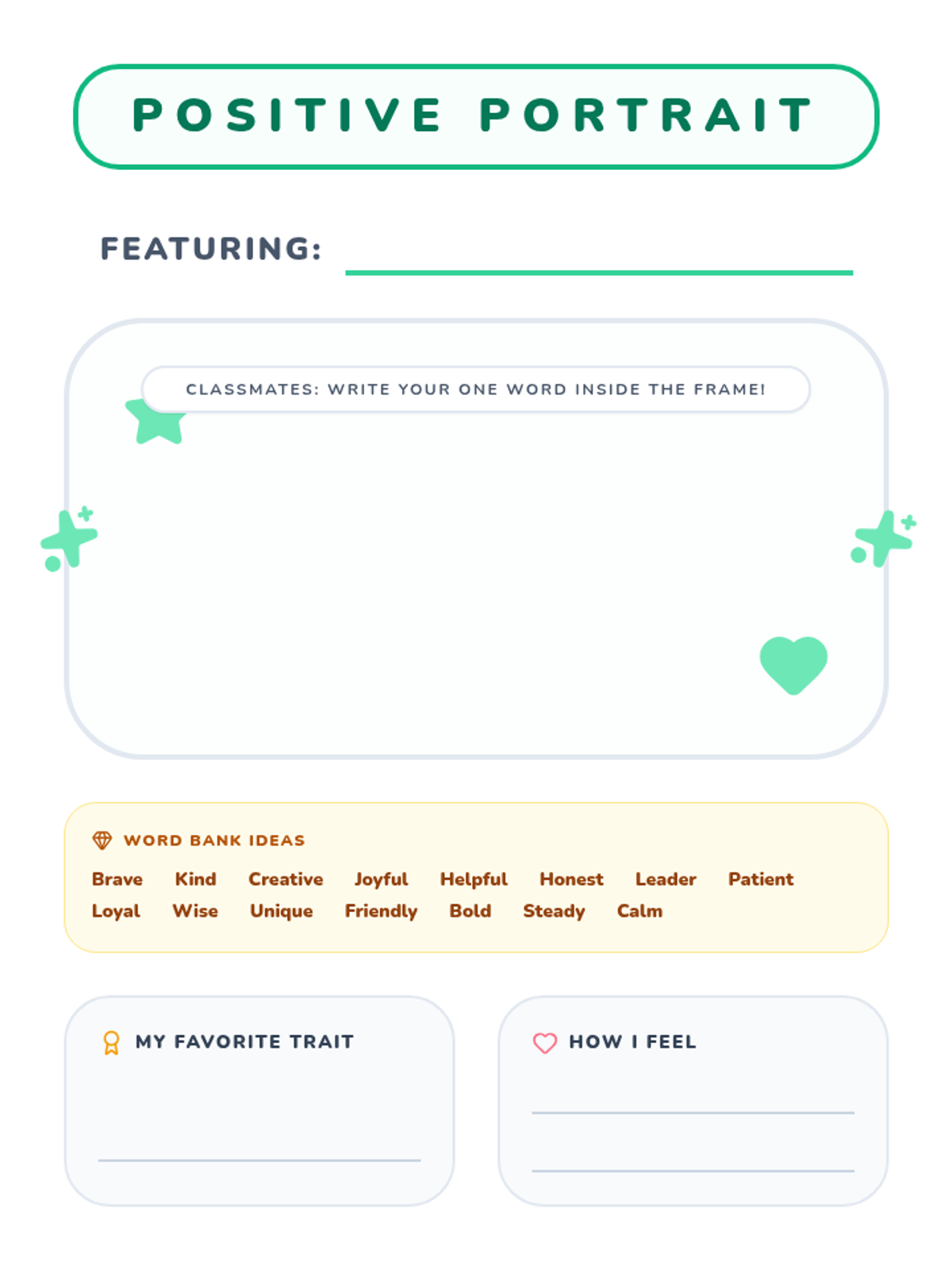
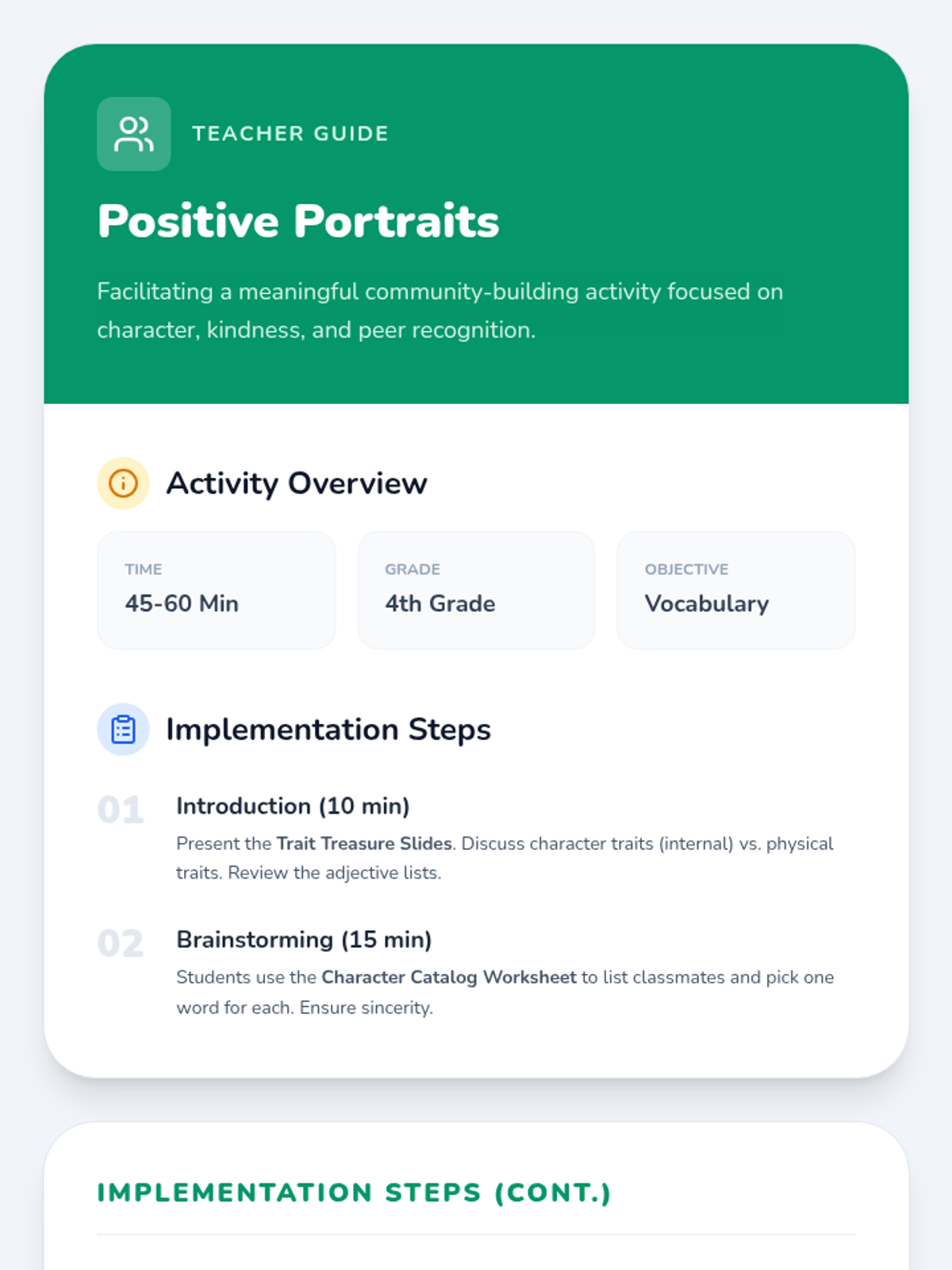
A community-building lesson where 4th-grade students explore positive character traits and choose a single, powerful adjective to describe each of their classmates.
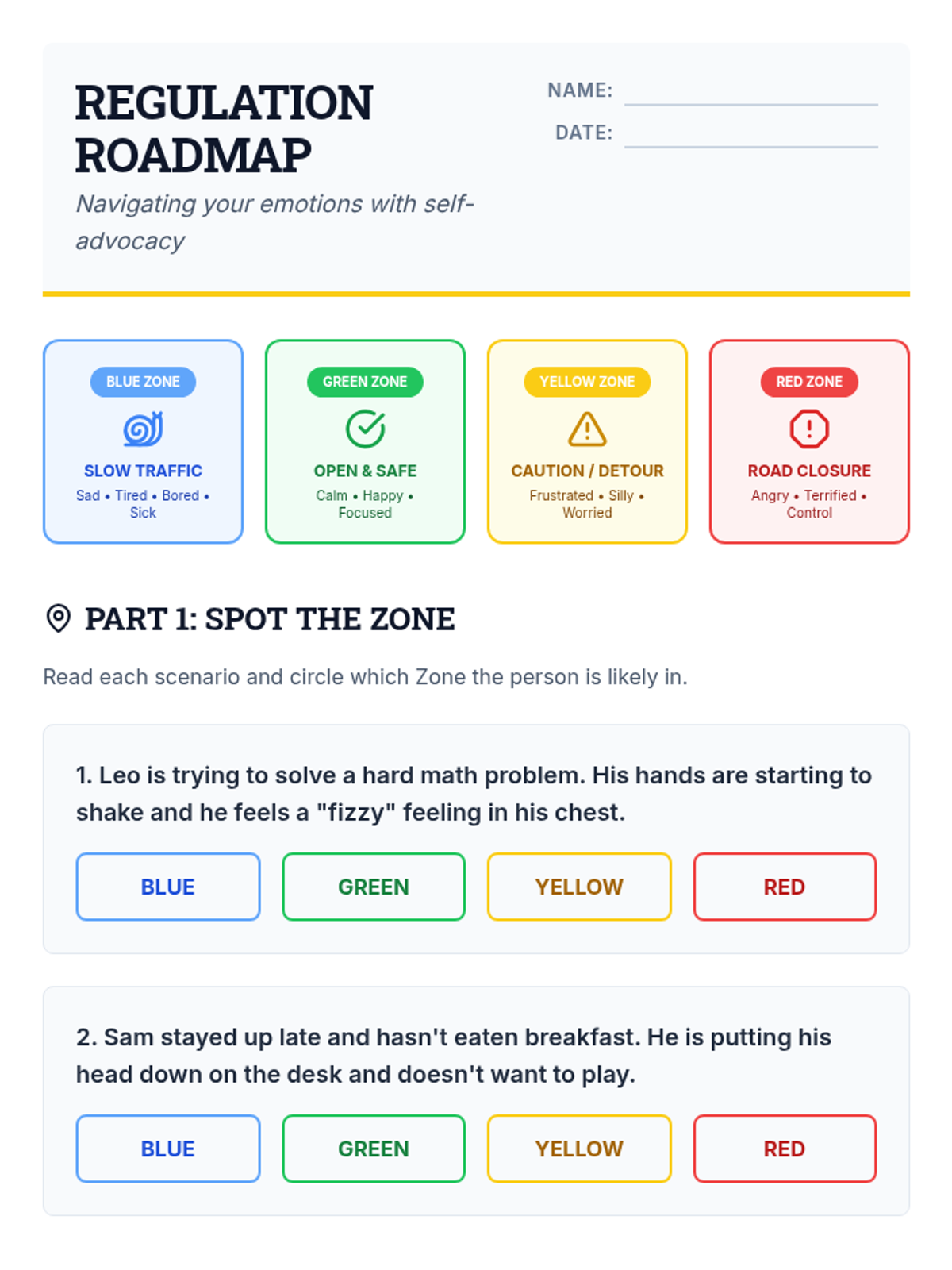
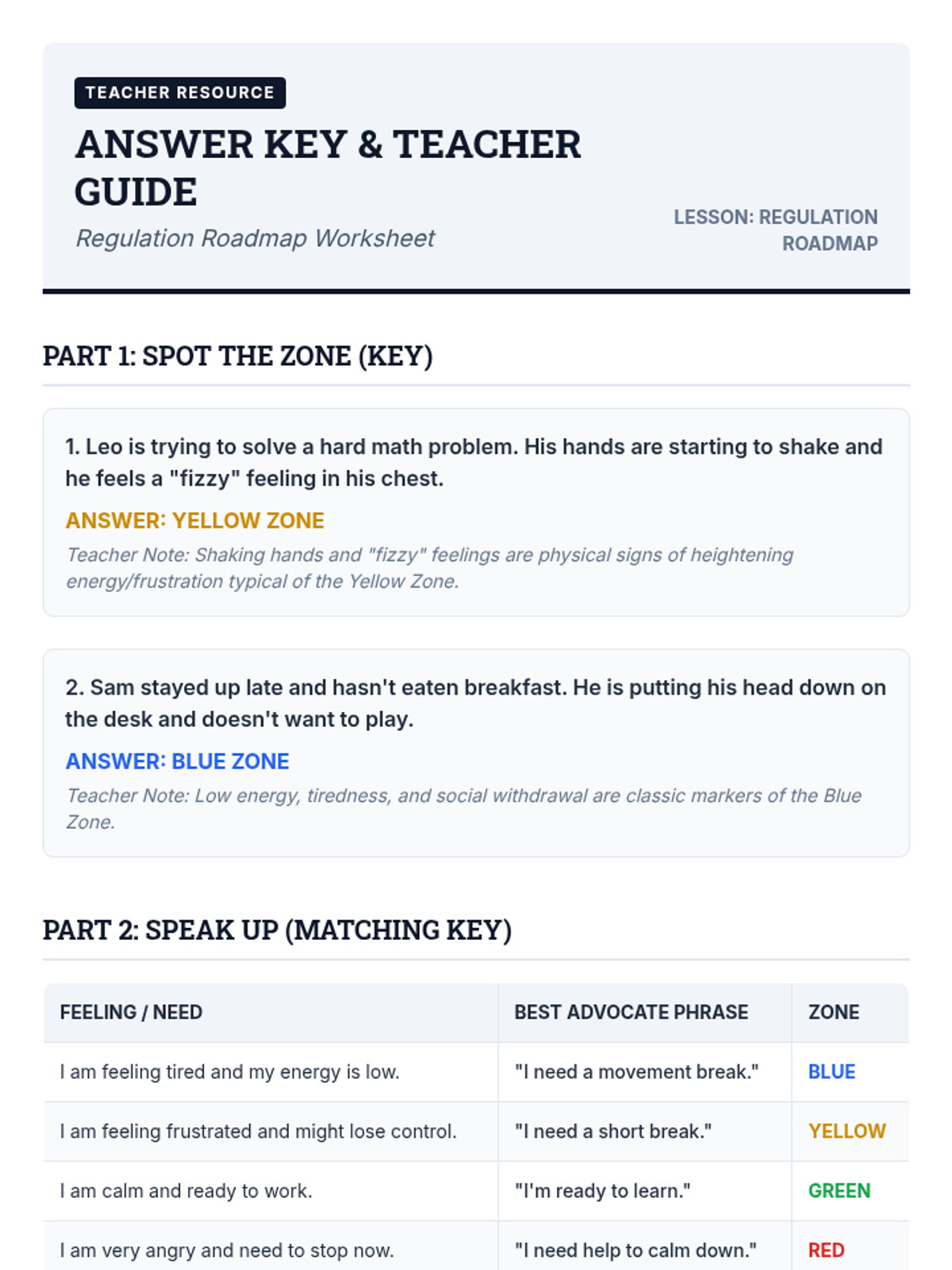
A lesson introducing the Zones of Regulation framework using a construction zone analogy, focusing on identifying emotions and using self-advocacy phrases to manage them.
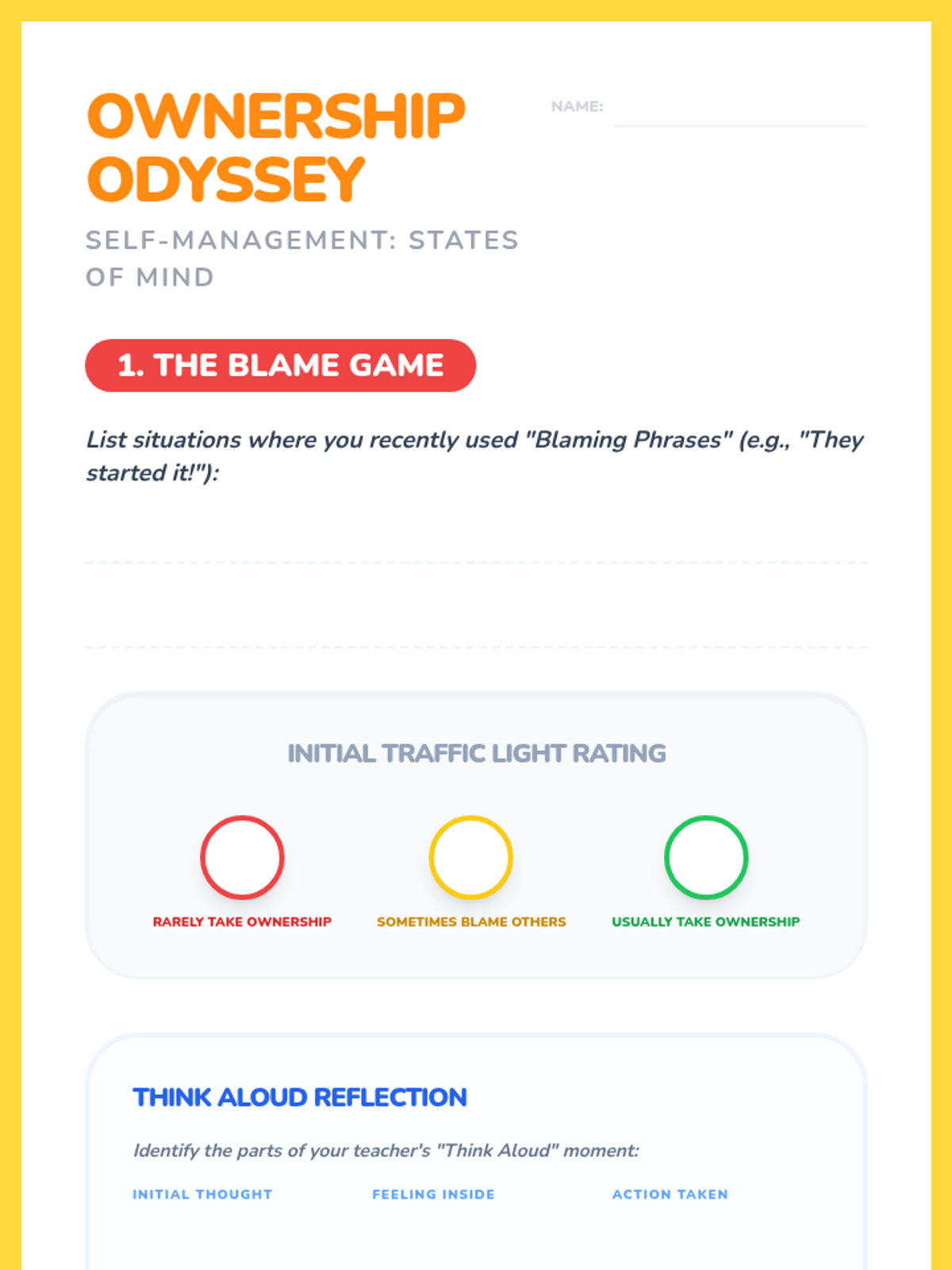
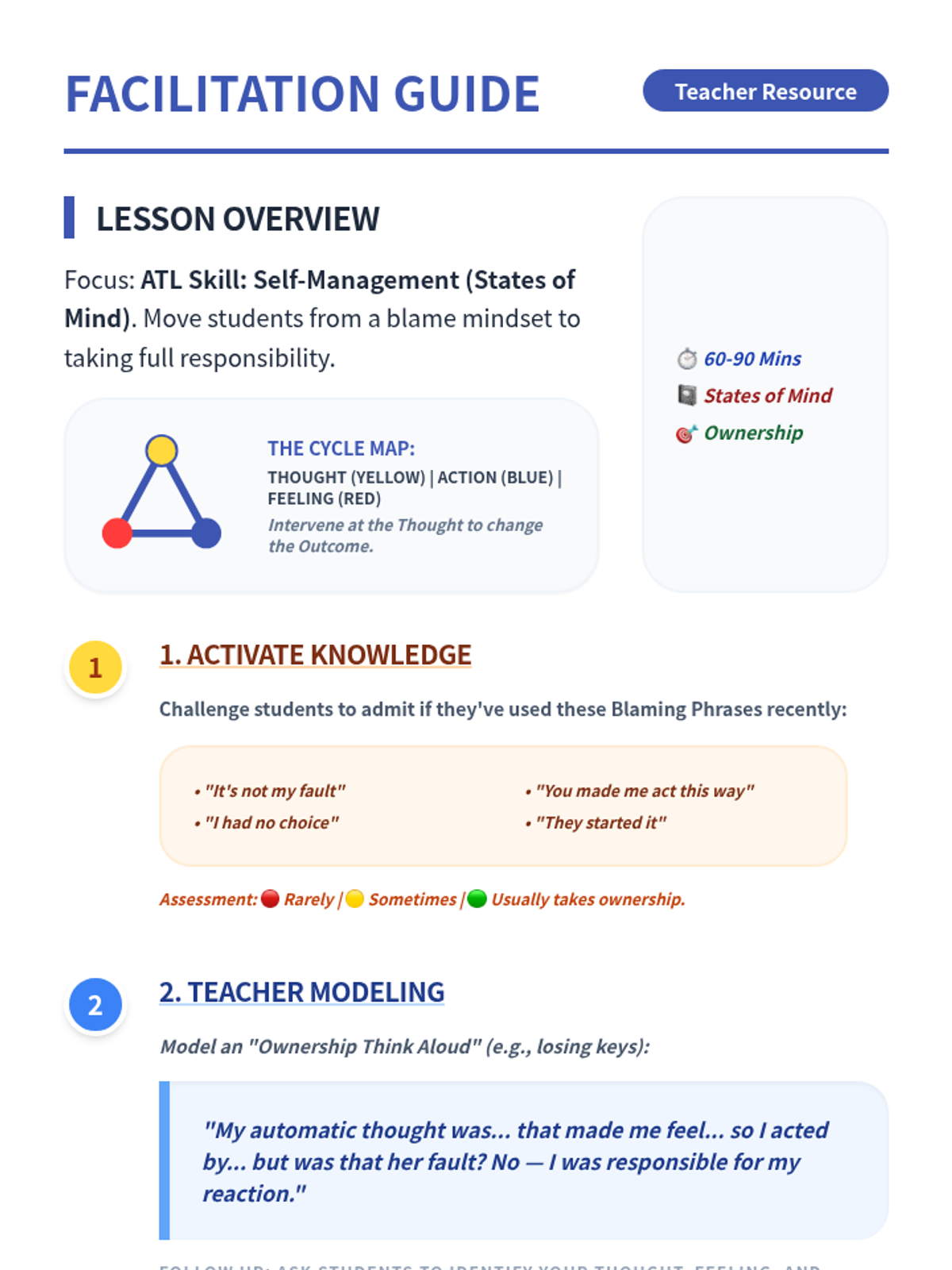
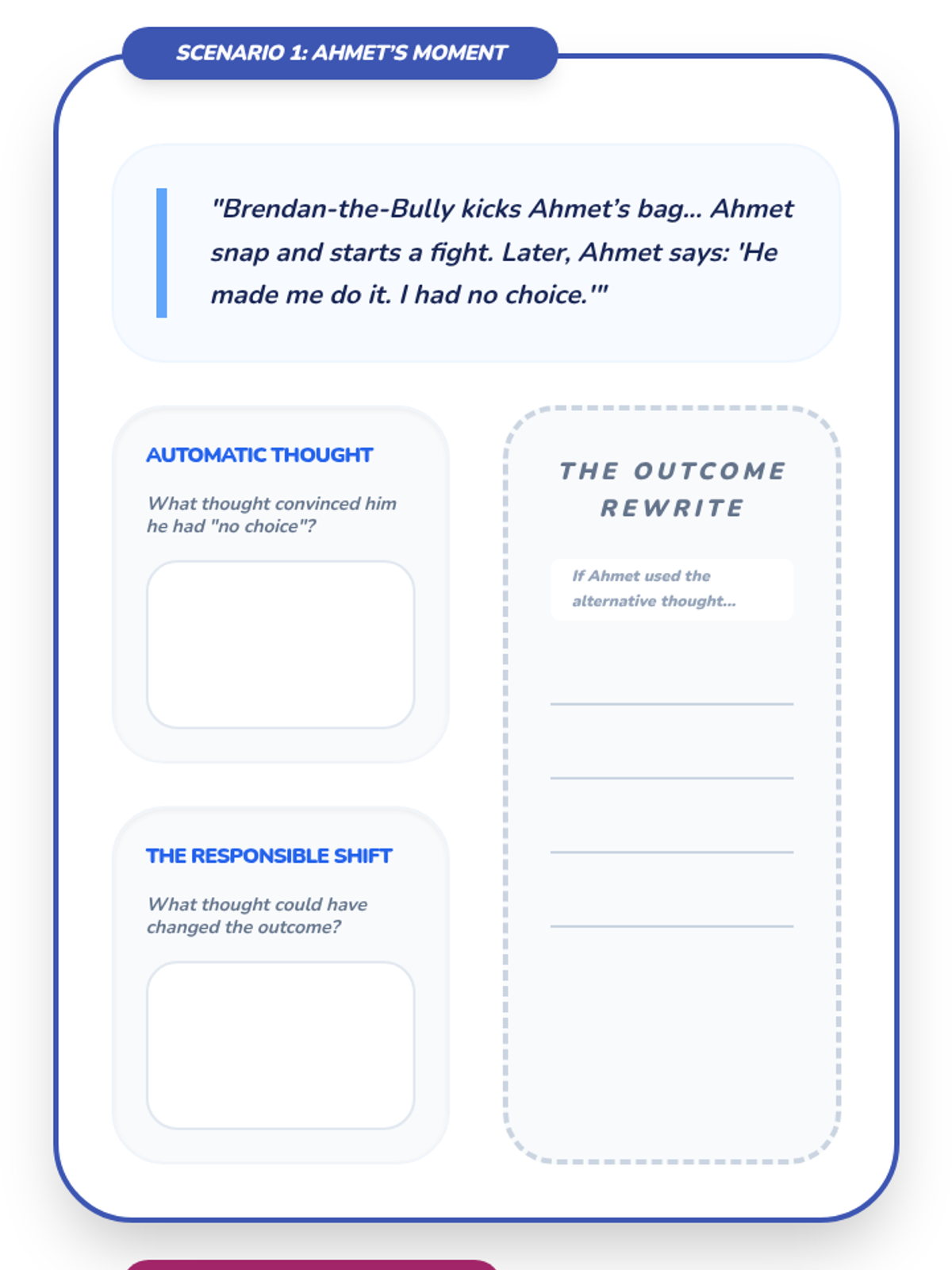
A comprehensive self-management lesson that uses Cognitive Behavioral Therapy (CBT) principles to help students move from a blame mindset to taking full responsibility for their actions. Students analyze characters from 'Inside Out 2' and 'The Boy at the Back of the Class' to understand the connection between thoughts, feelings, and behaviors.
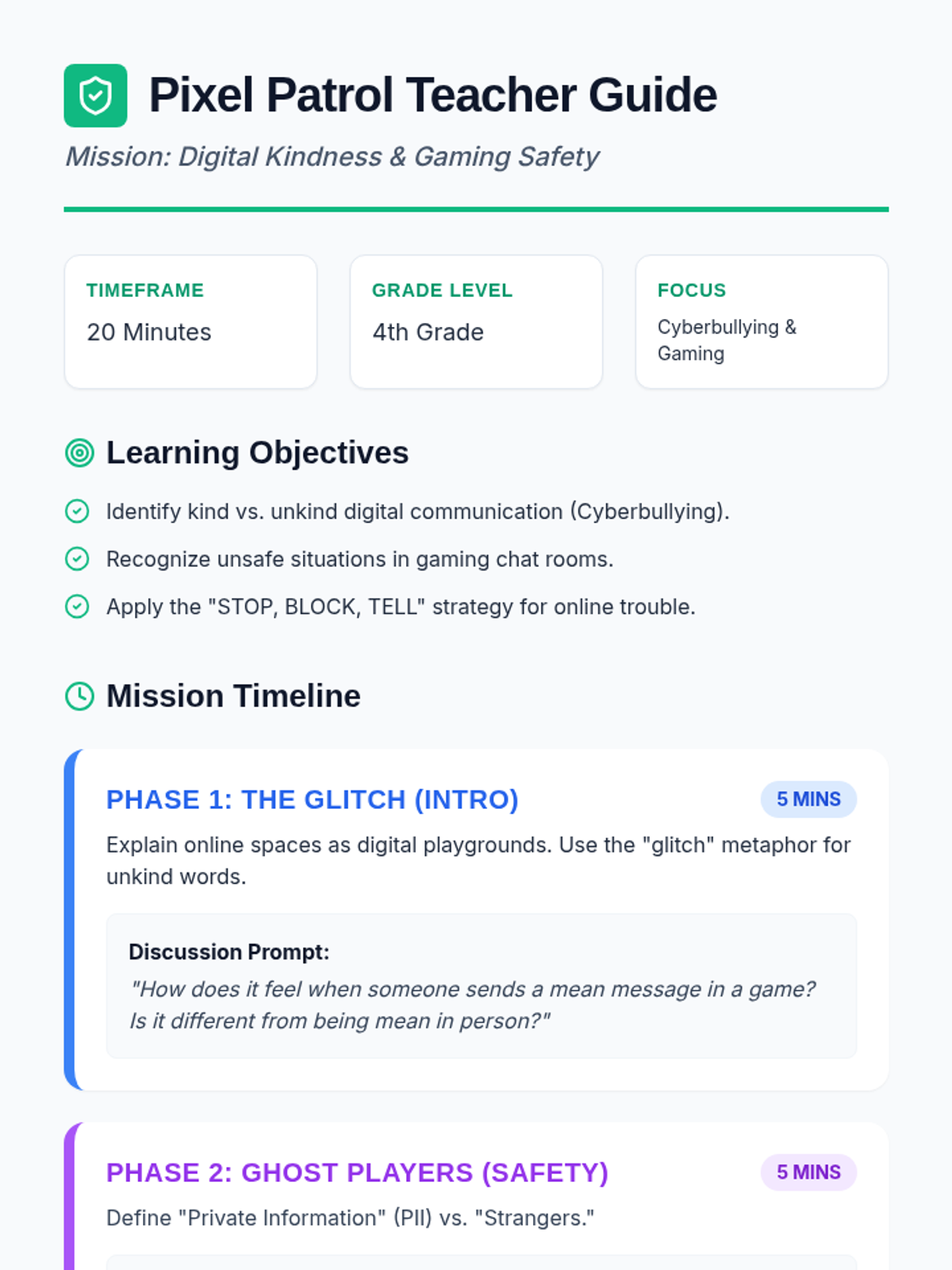
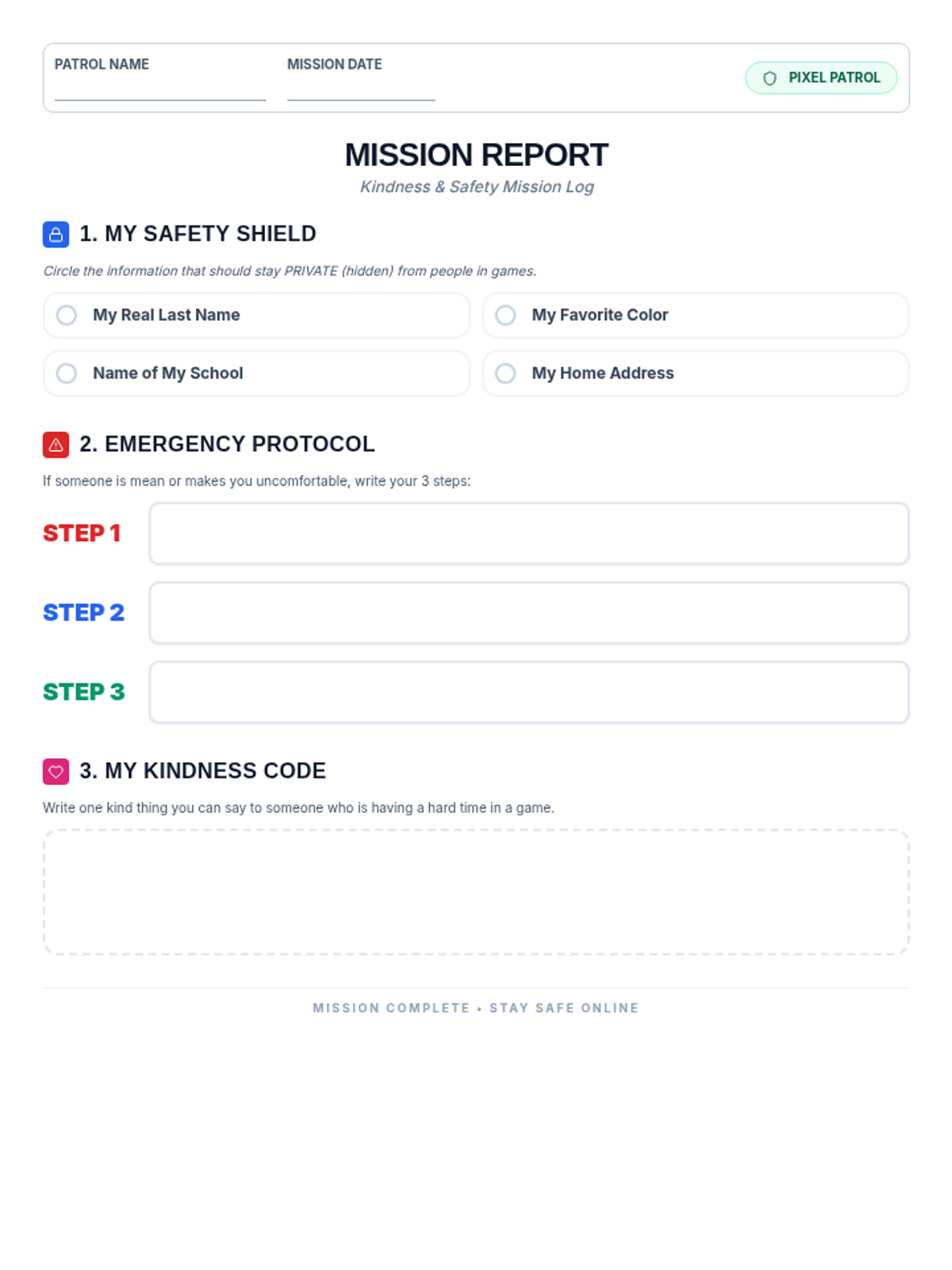
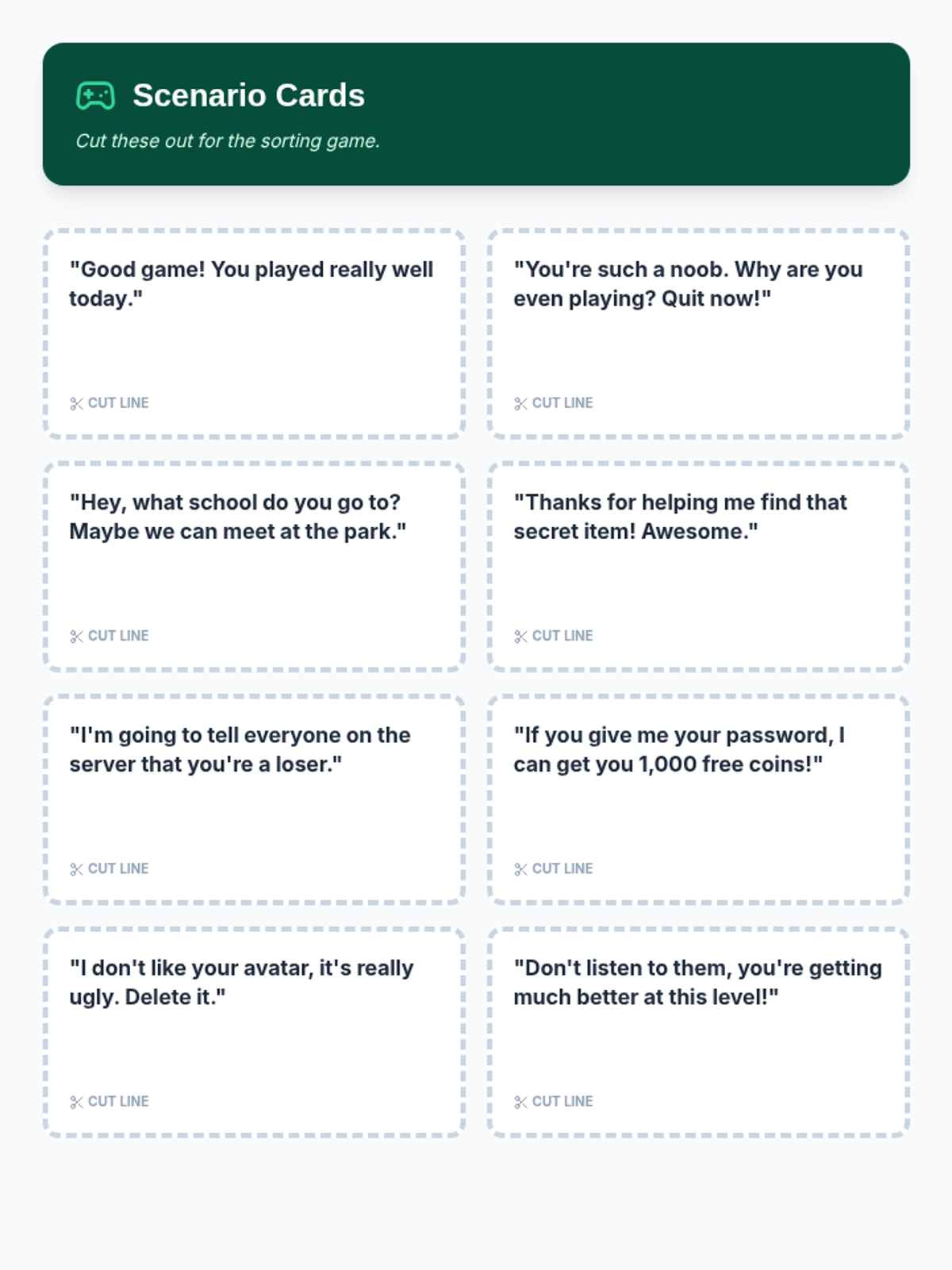
A 20-minute mission-based lesson for 4th graders focusing on kind digital communication and staying safe in gaming environments and chat rooms. Students become 'Pixel Patrollers' to learn how to identify and respond to cyberbullying and unsafe interactions.
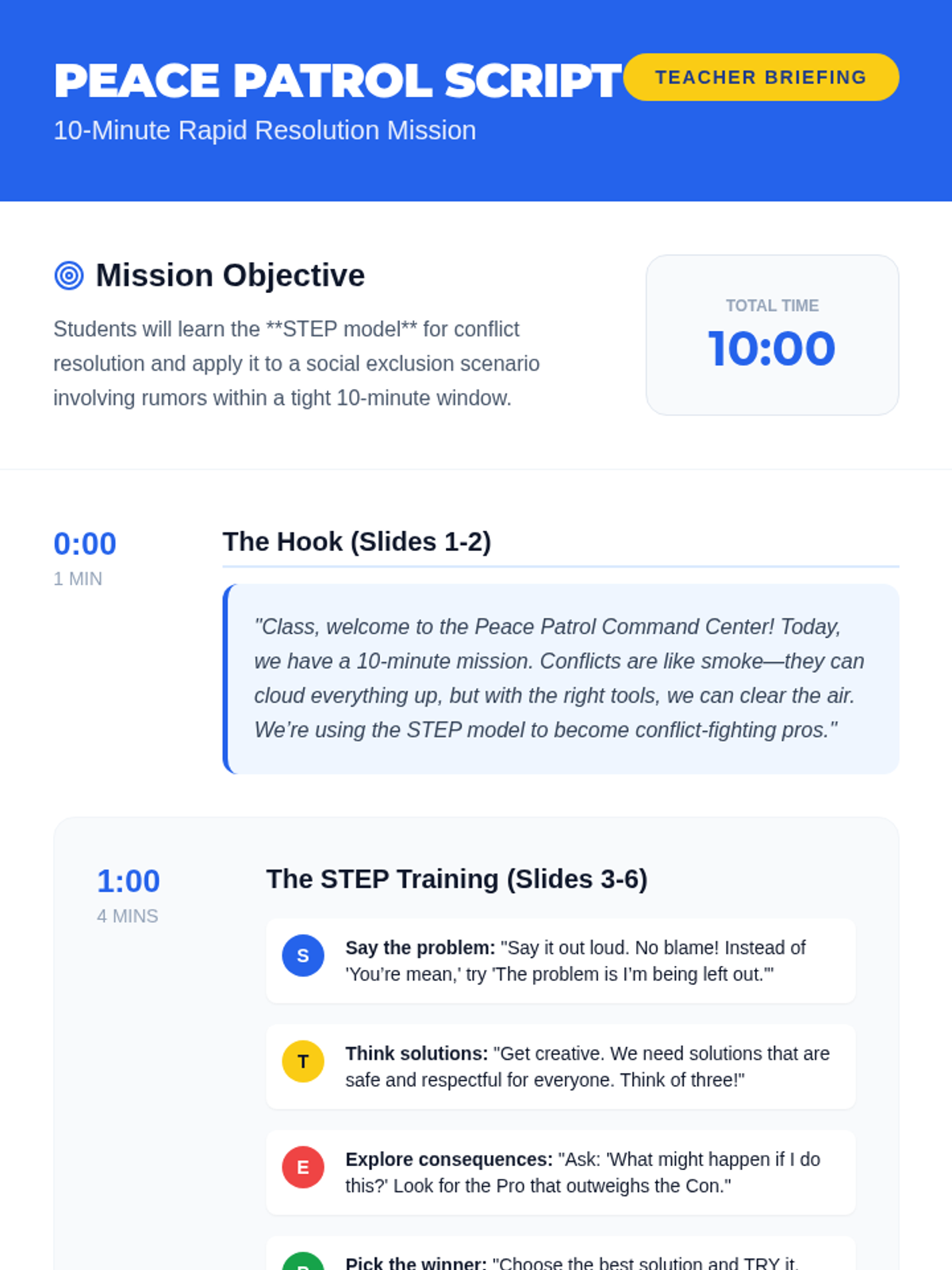
A fast-paced, high-energy 10-minute lesson teaching the STEP model for conflict resolution through a social exclusion scenario. Students learn to navigate rumors and friendship friction like a pro.
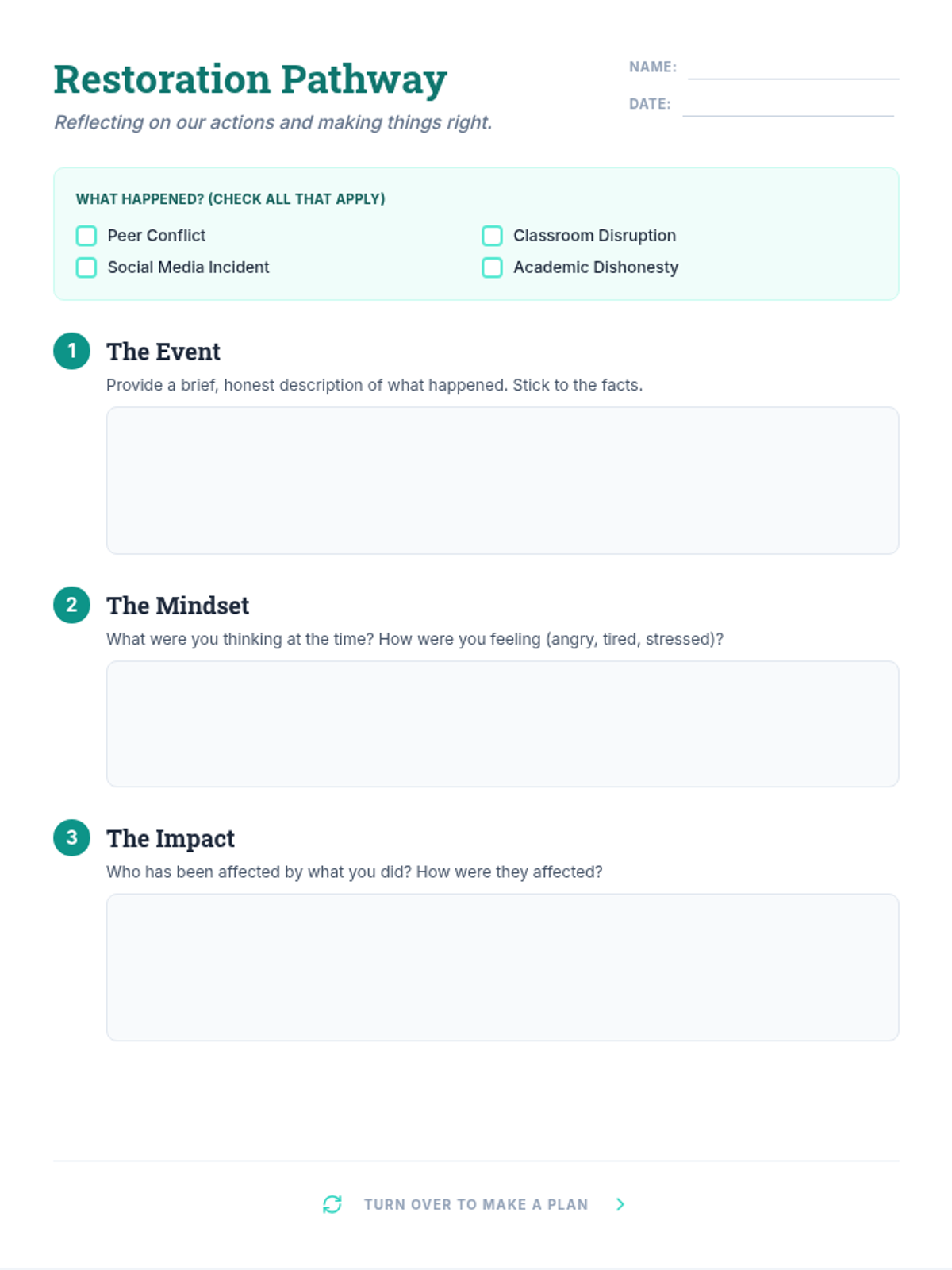
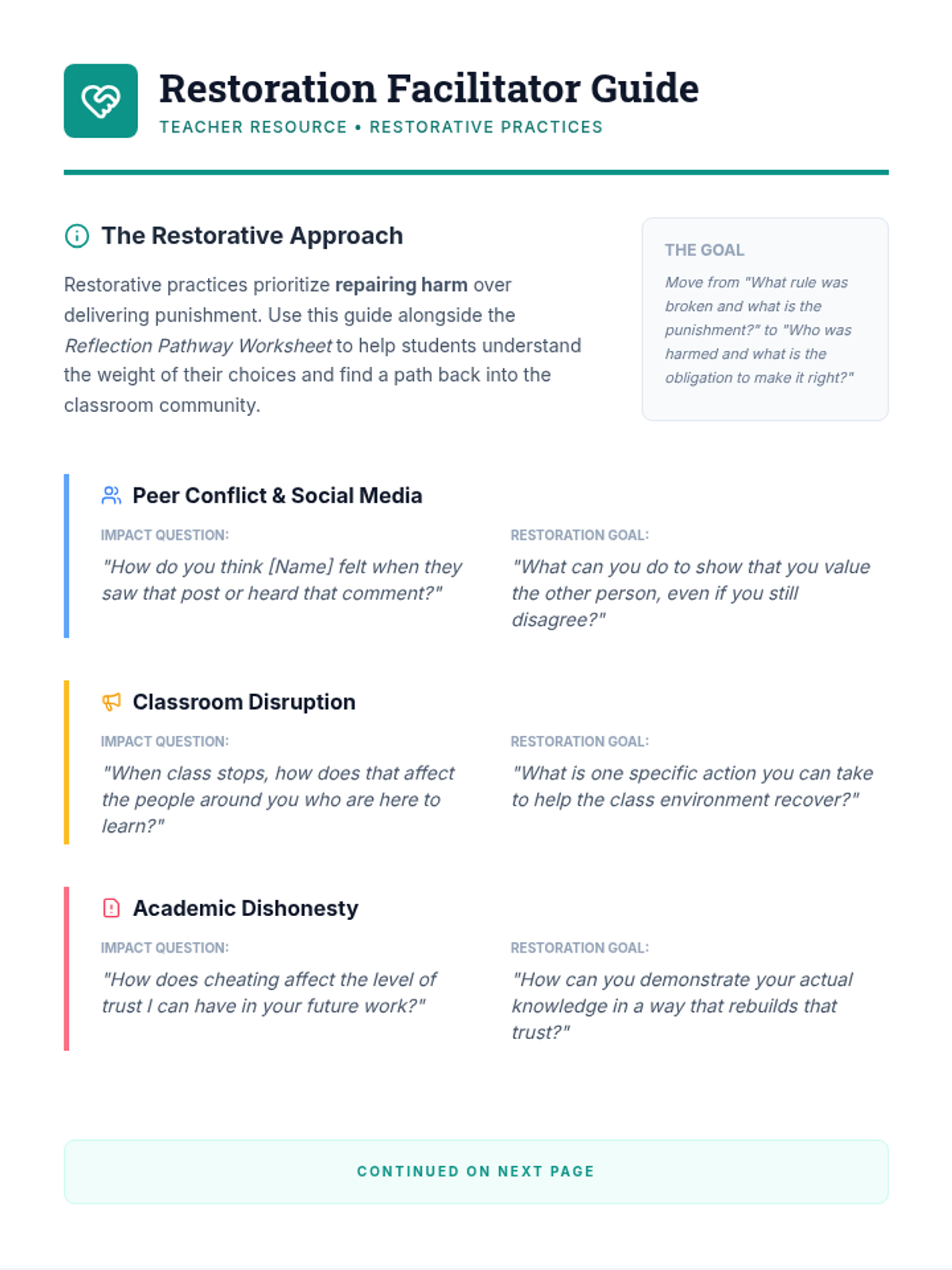
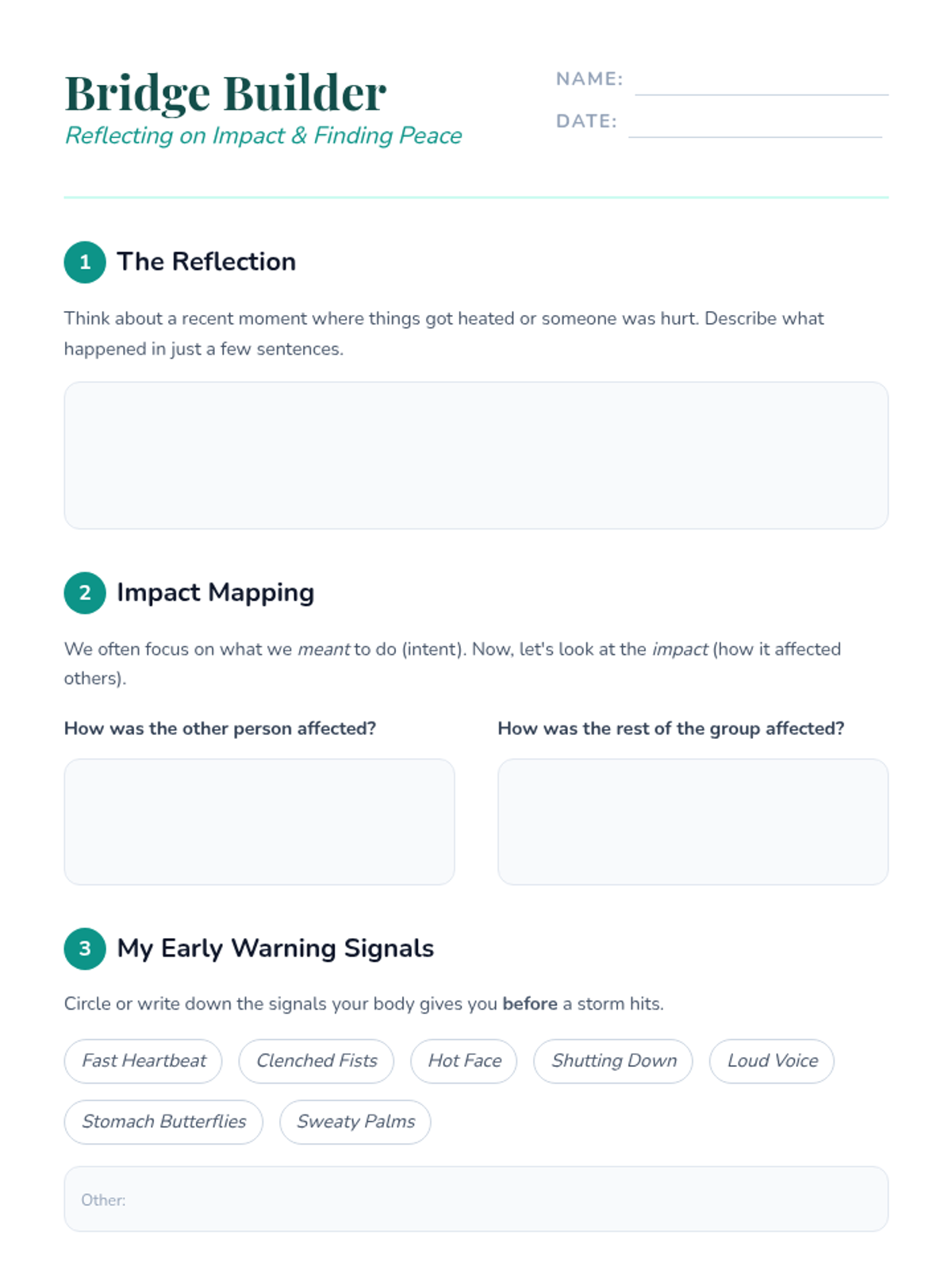
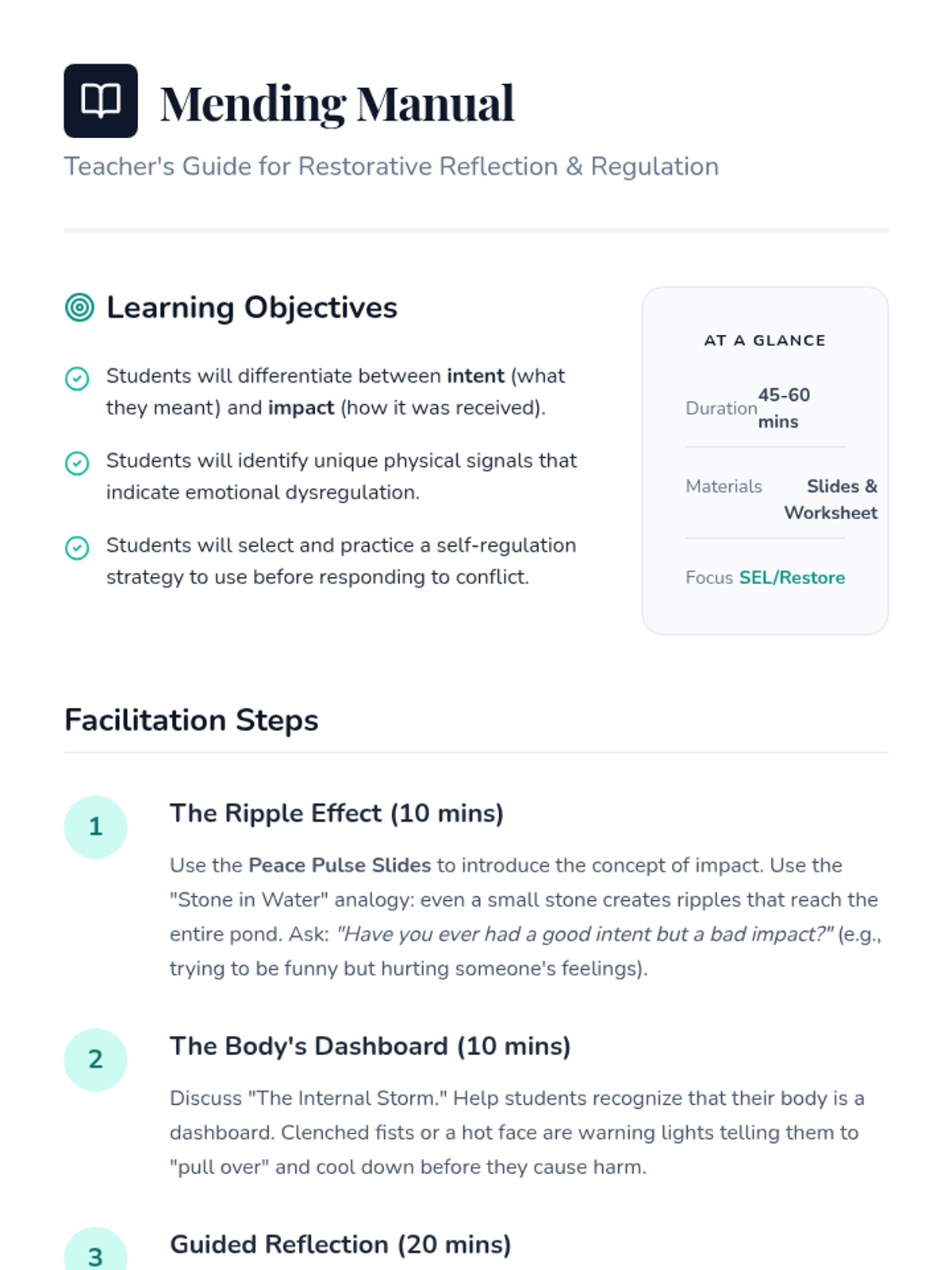
A collection of restorative practice tools designed to help students reflect on their actions, understand the impact of their behavior, and create a plan for restoration following peer conflict, classroom disruption, social media incidents, or academic dishonesty.
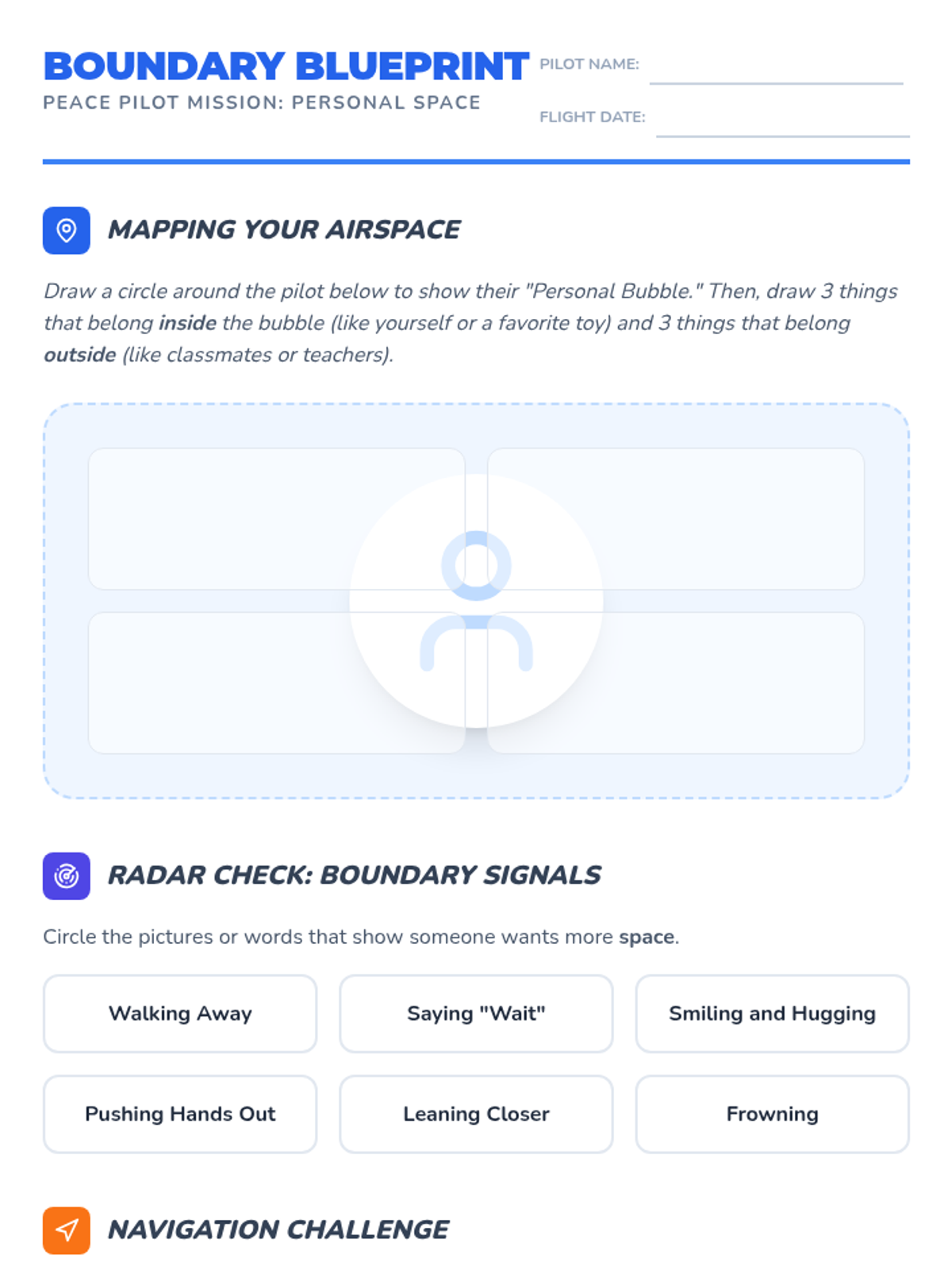
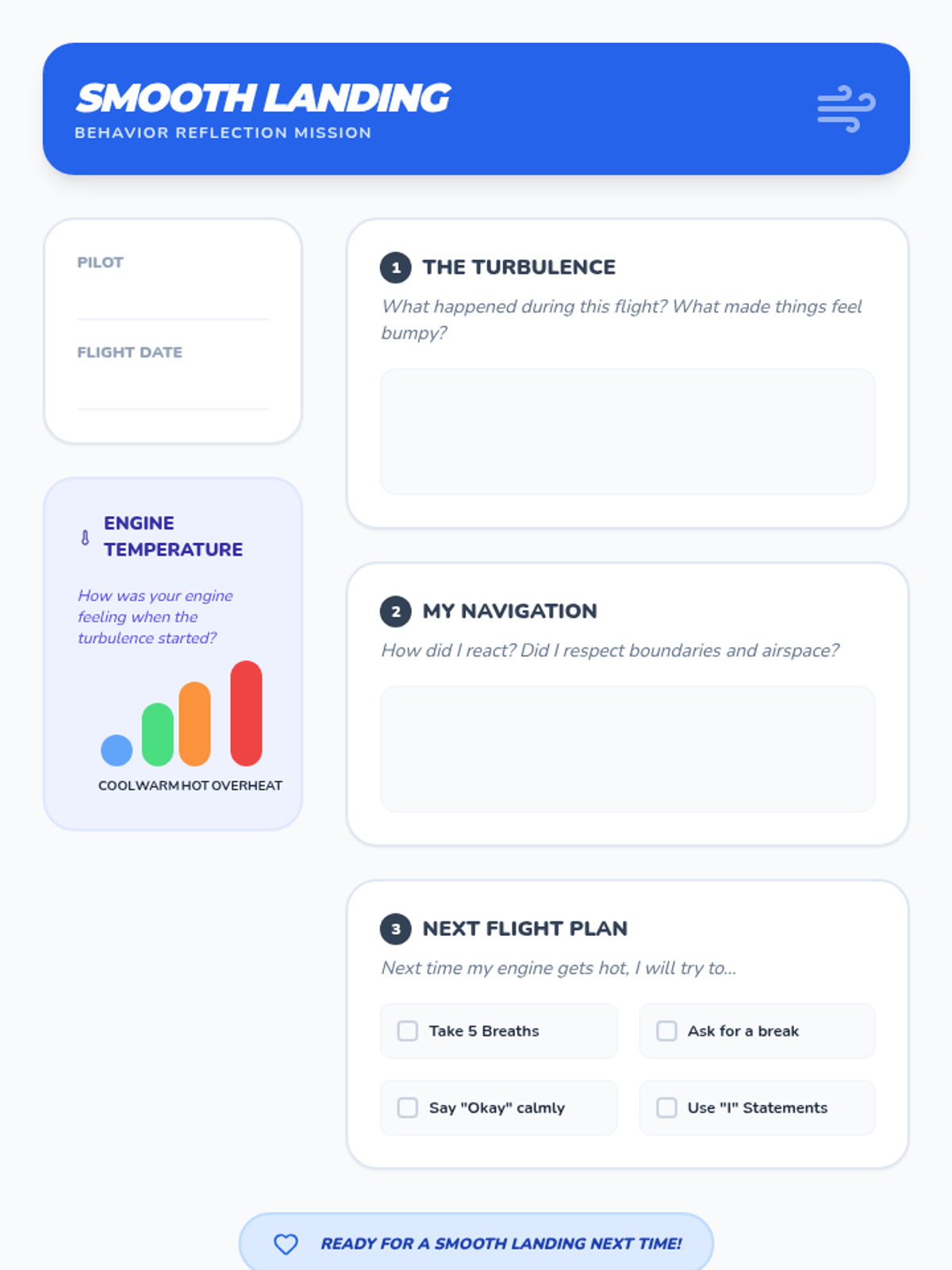
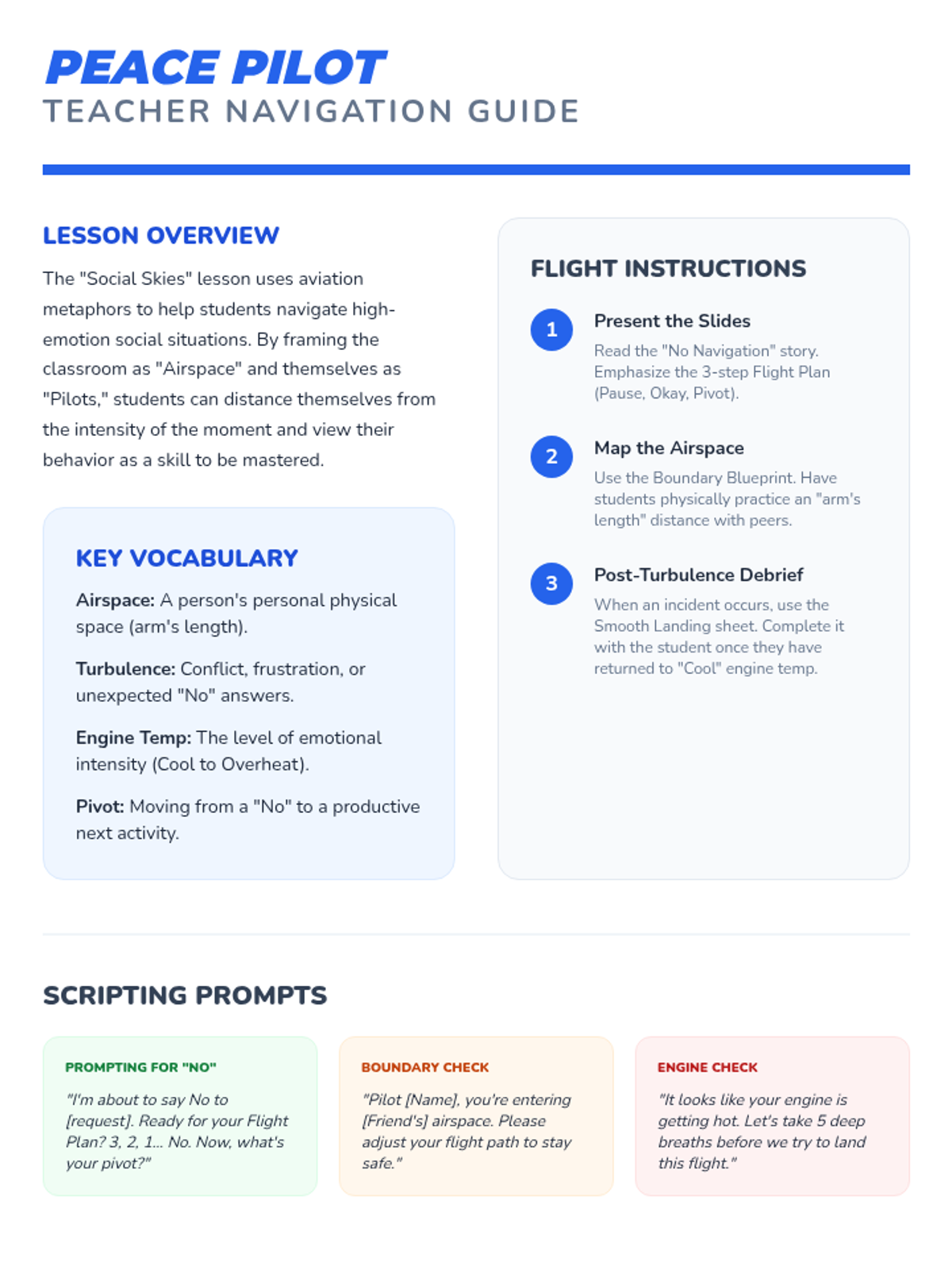
A social-emotional learning lesson focused on accepting 'no', respecting personal space boundaries, and reflecting on behavioral choices. Students learn to navigate social challenges with the 'Peace Pilot' framework for staying calm and respectful.
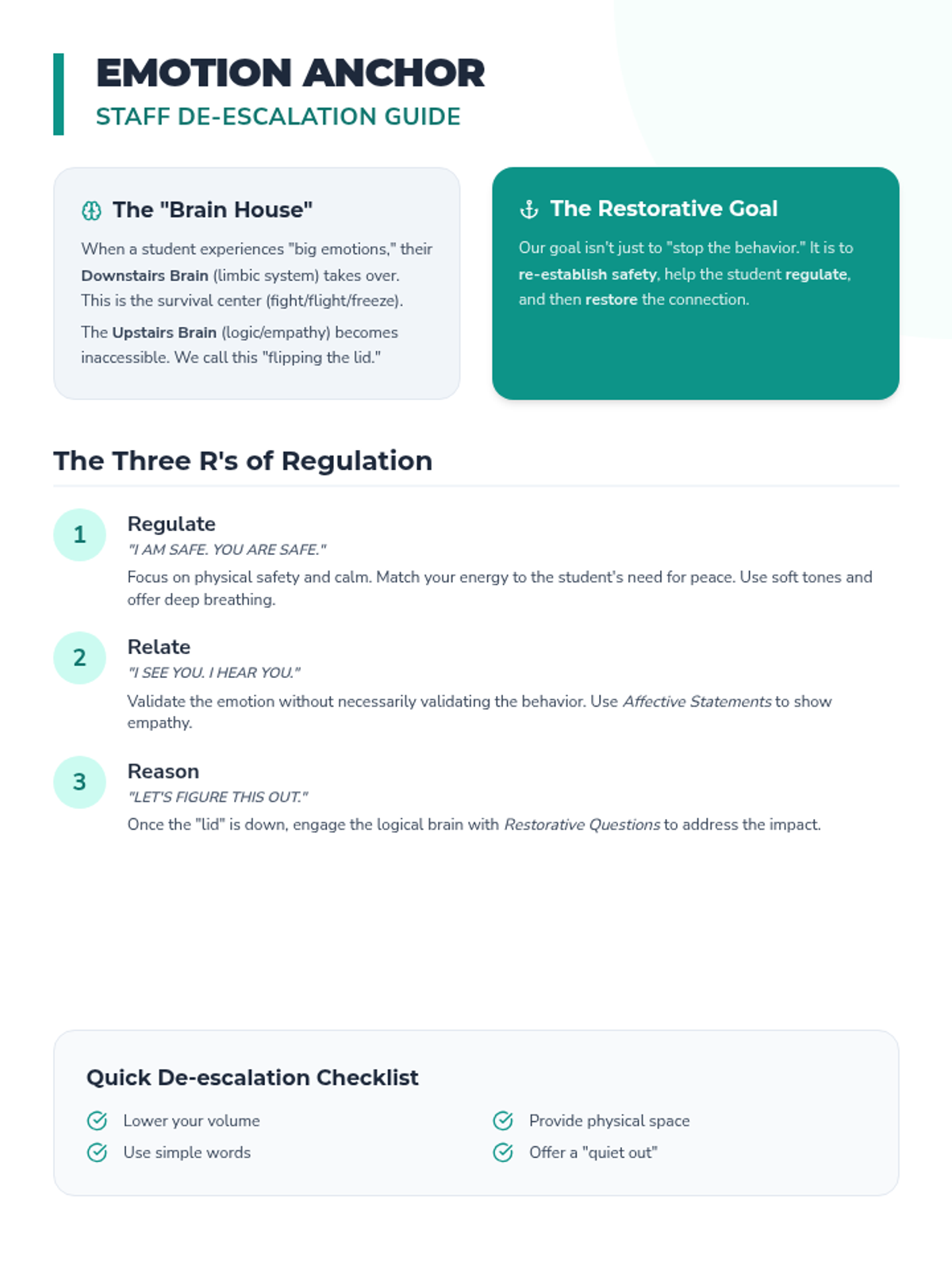
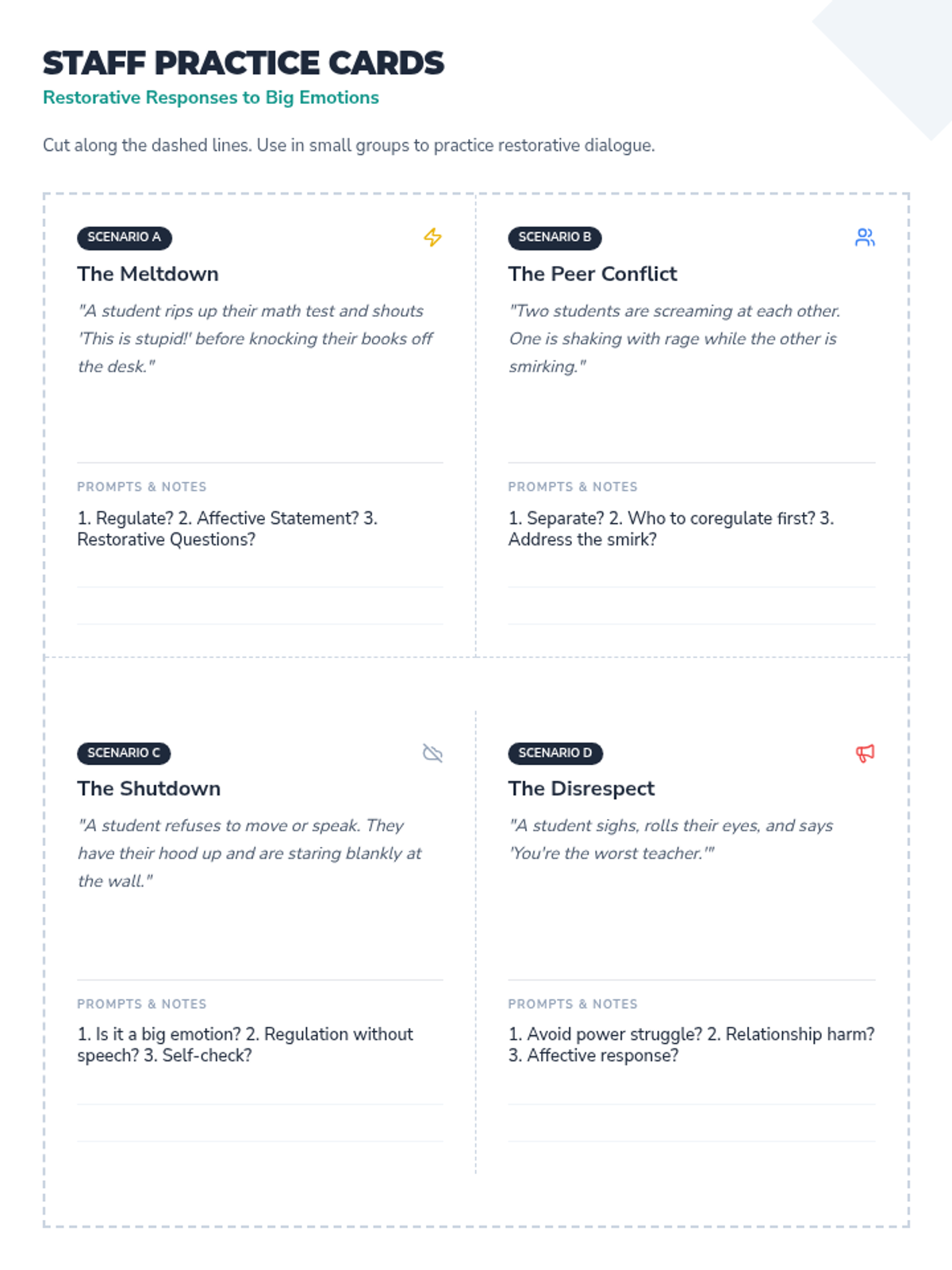
A professional development module for school staff focused on using restorative practices to de-escalate big emotions and foster emotional regulation in students.
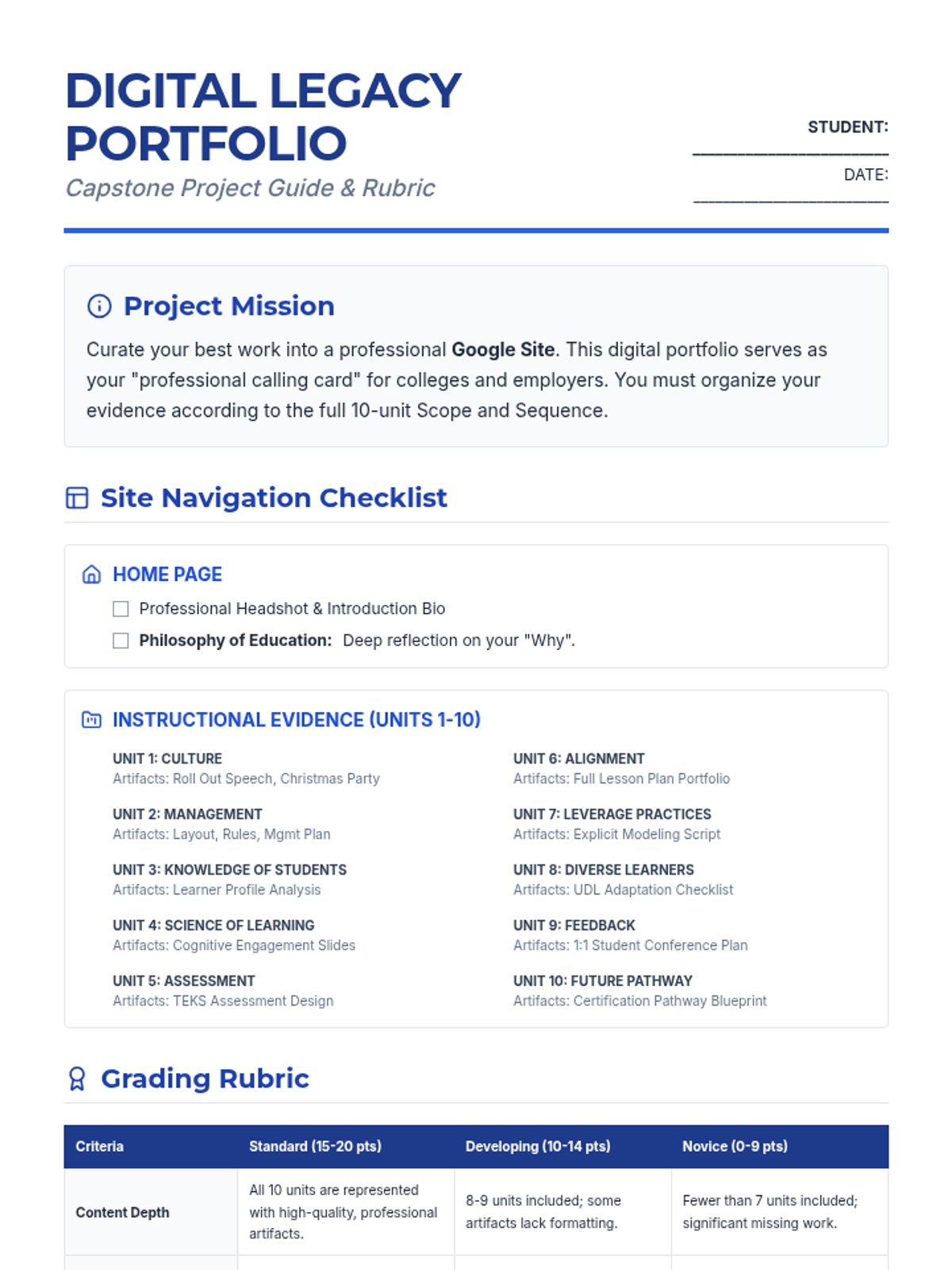
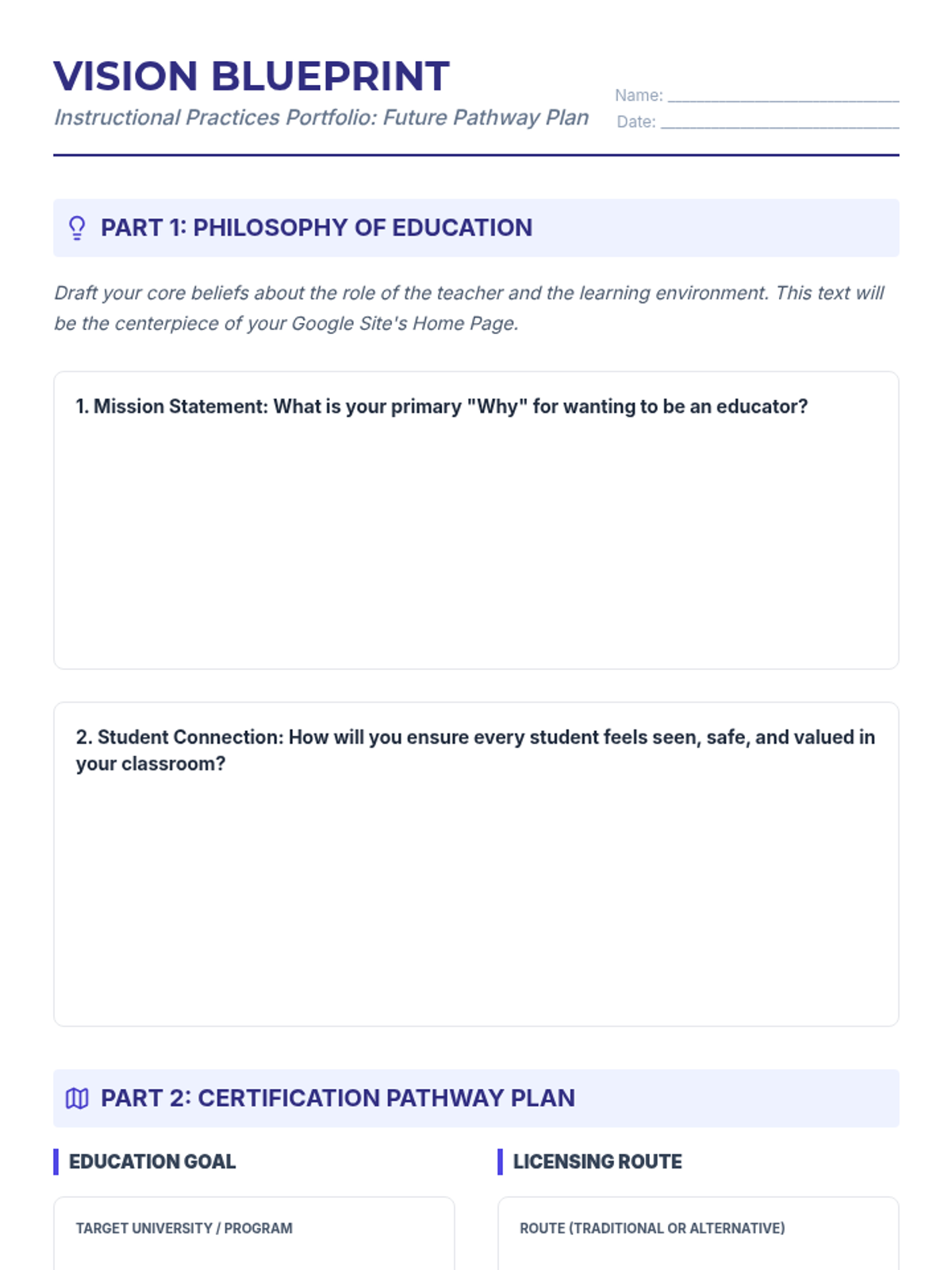
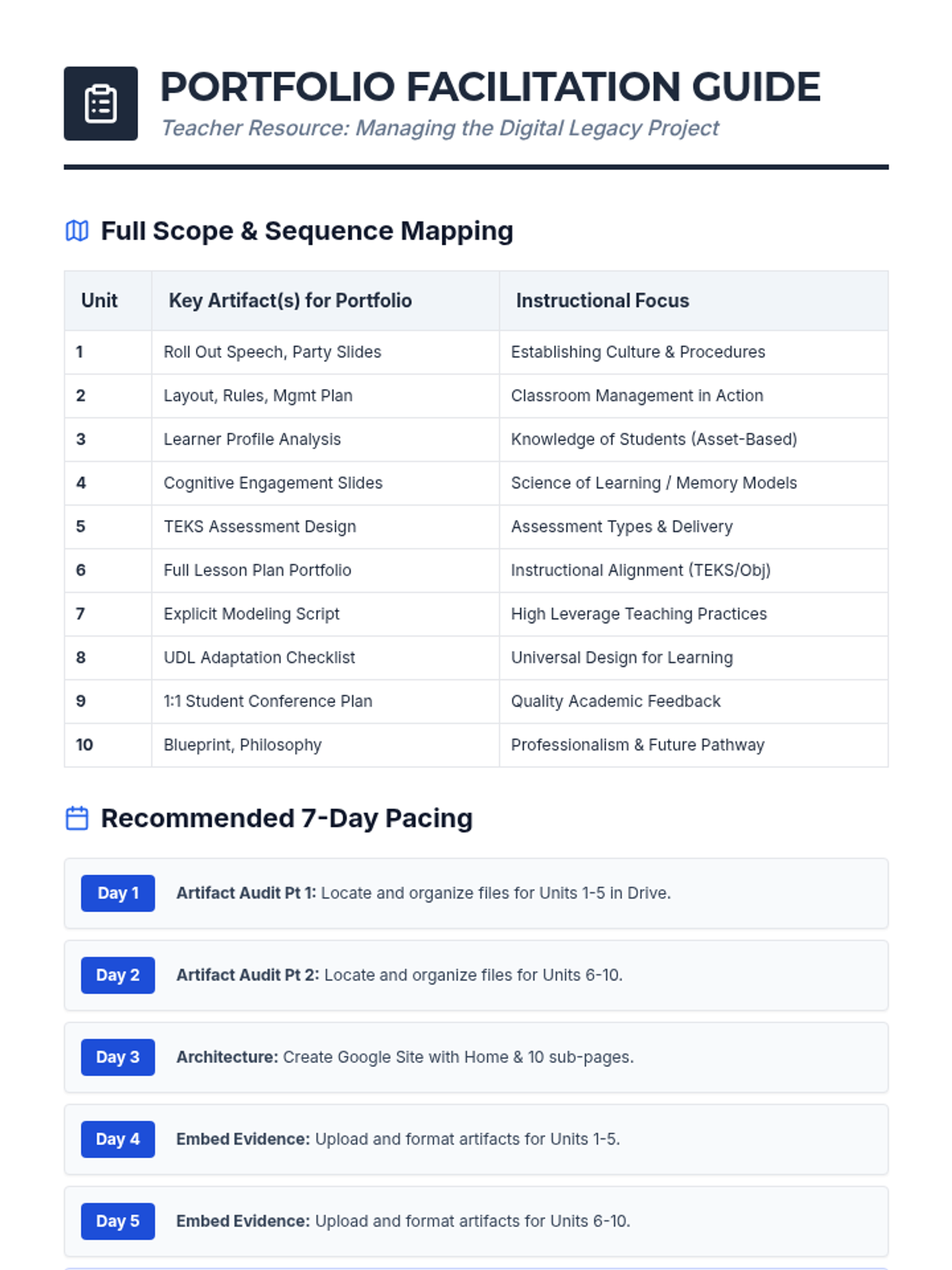
A comprehensive end-of-year portfolio project where students build a professional Google Site to showcase their instructional practices, previous projects, and future career plans in education.
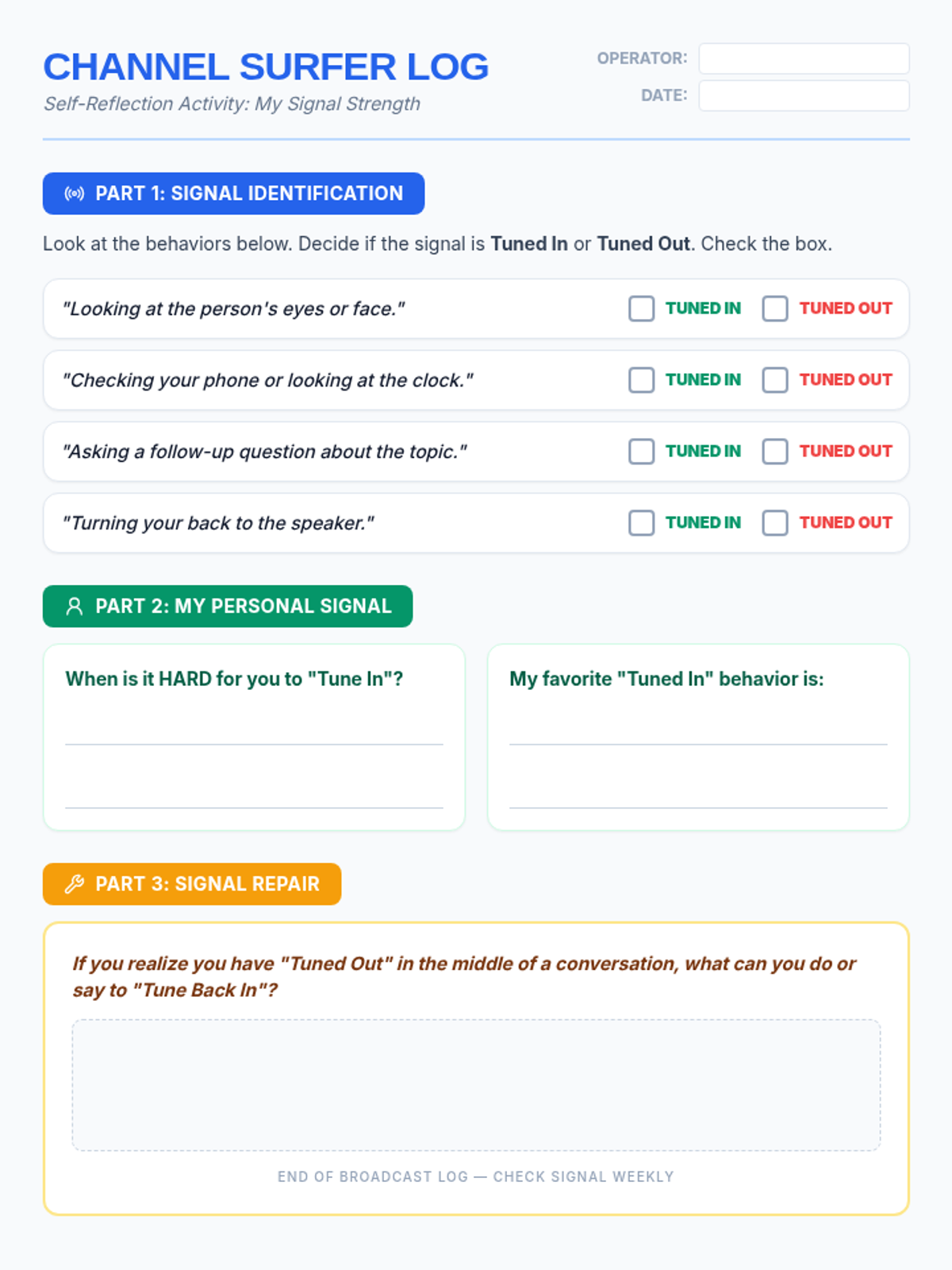
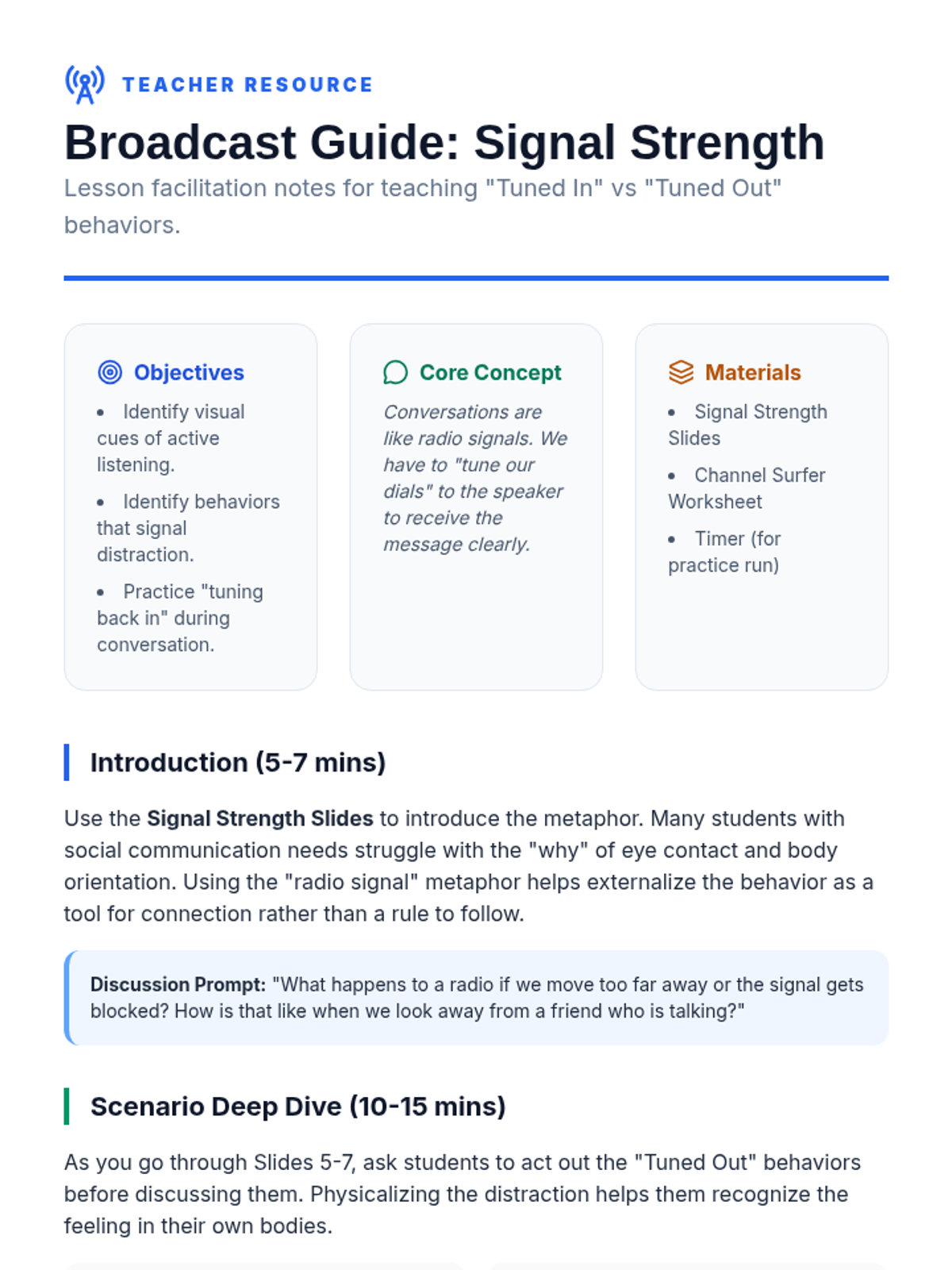
A social skills lesson for speech therapy sessions focusing on identifying and practicing 'tuned in' vs 'tuned out' behaviors using a radio/broadcast signal metaphor.
A lesson focused on restorative justice principles, helping students identify the impact of their actions and master self-regulation strategies to rebuild relationships.
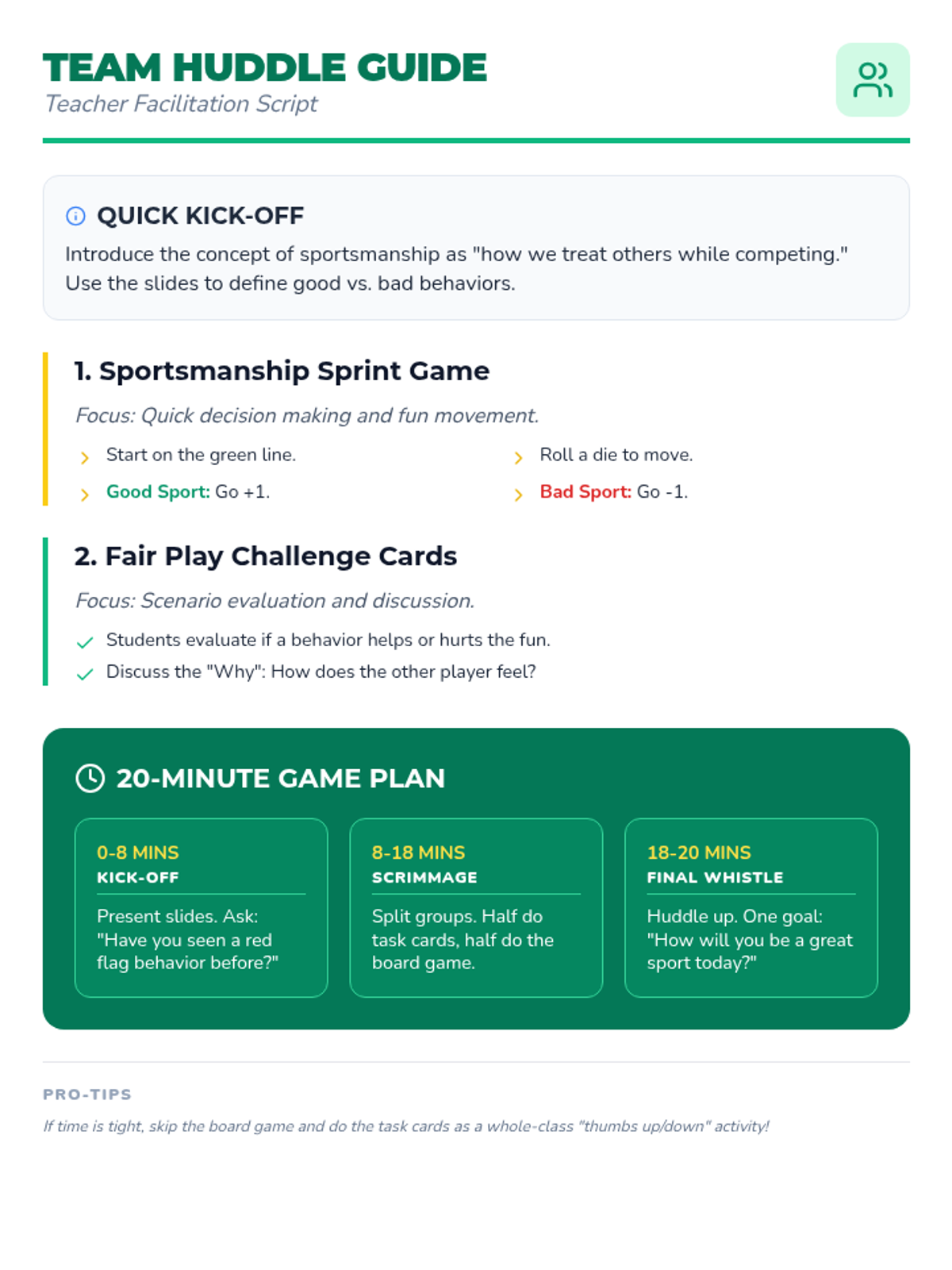
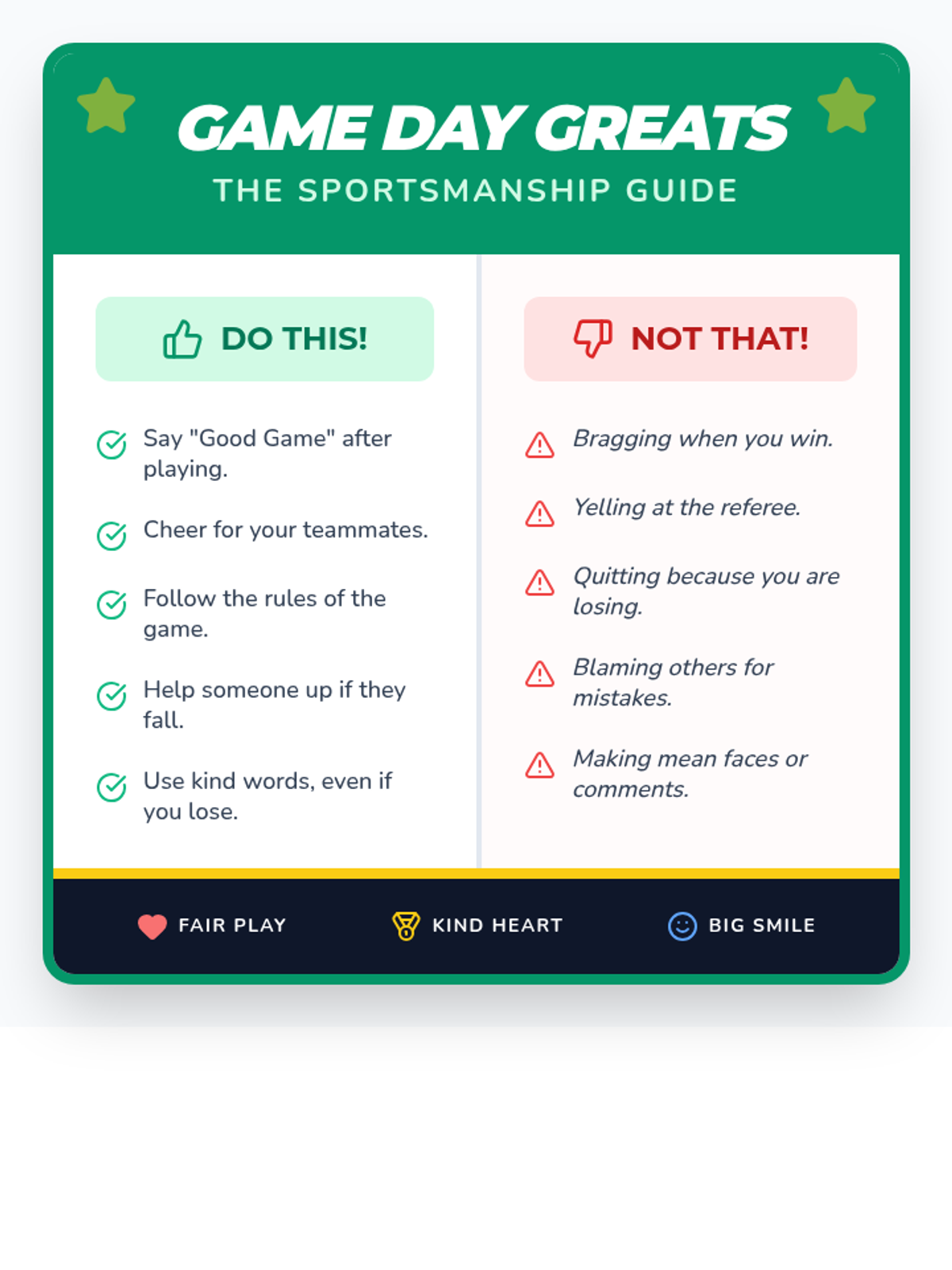
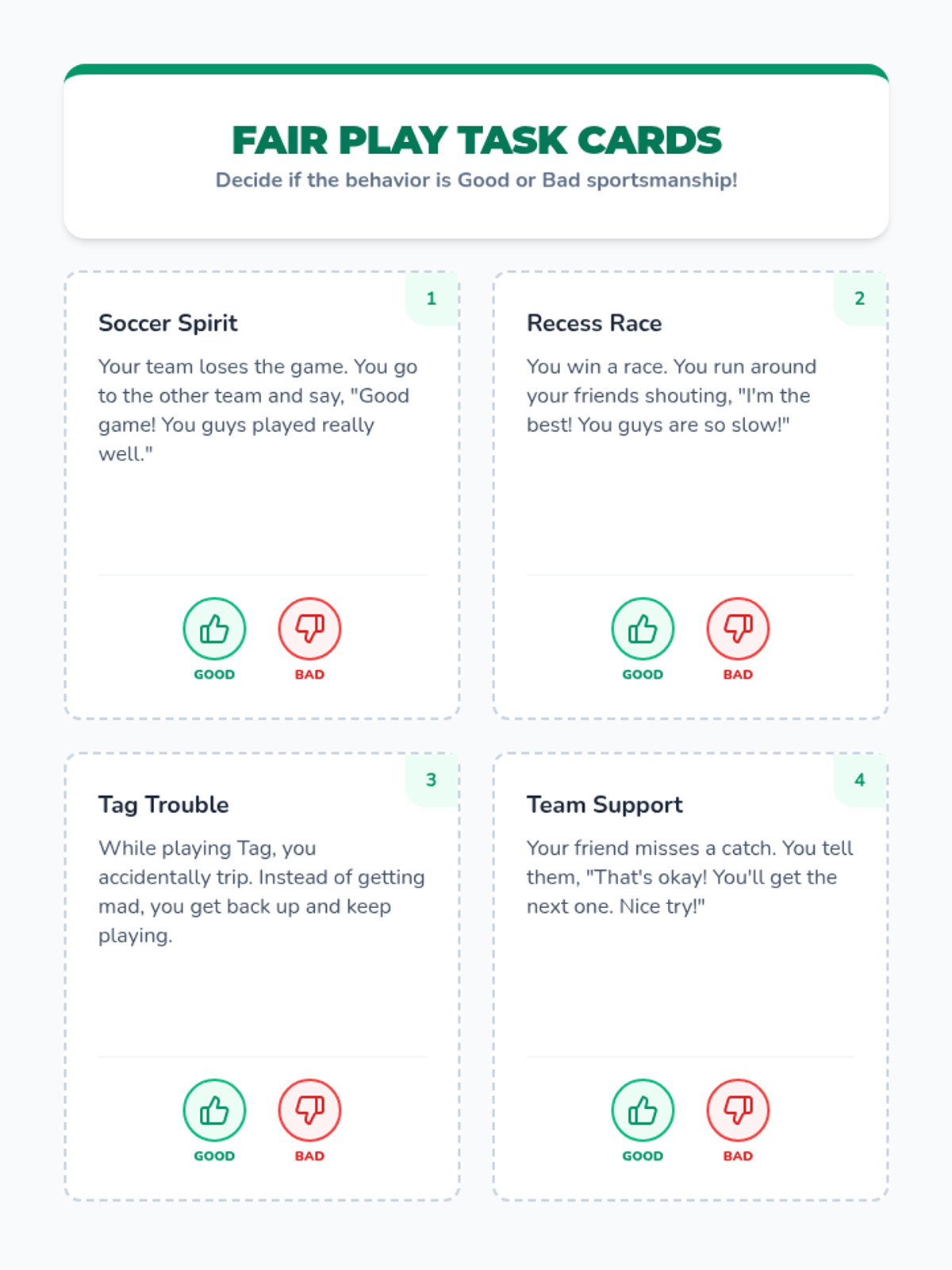
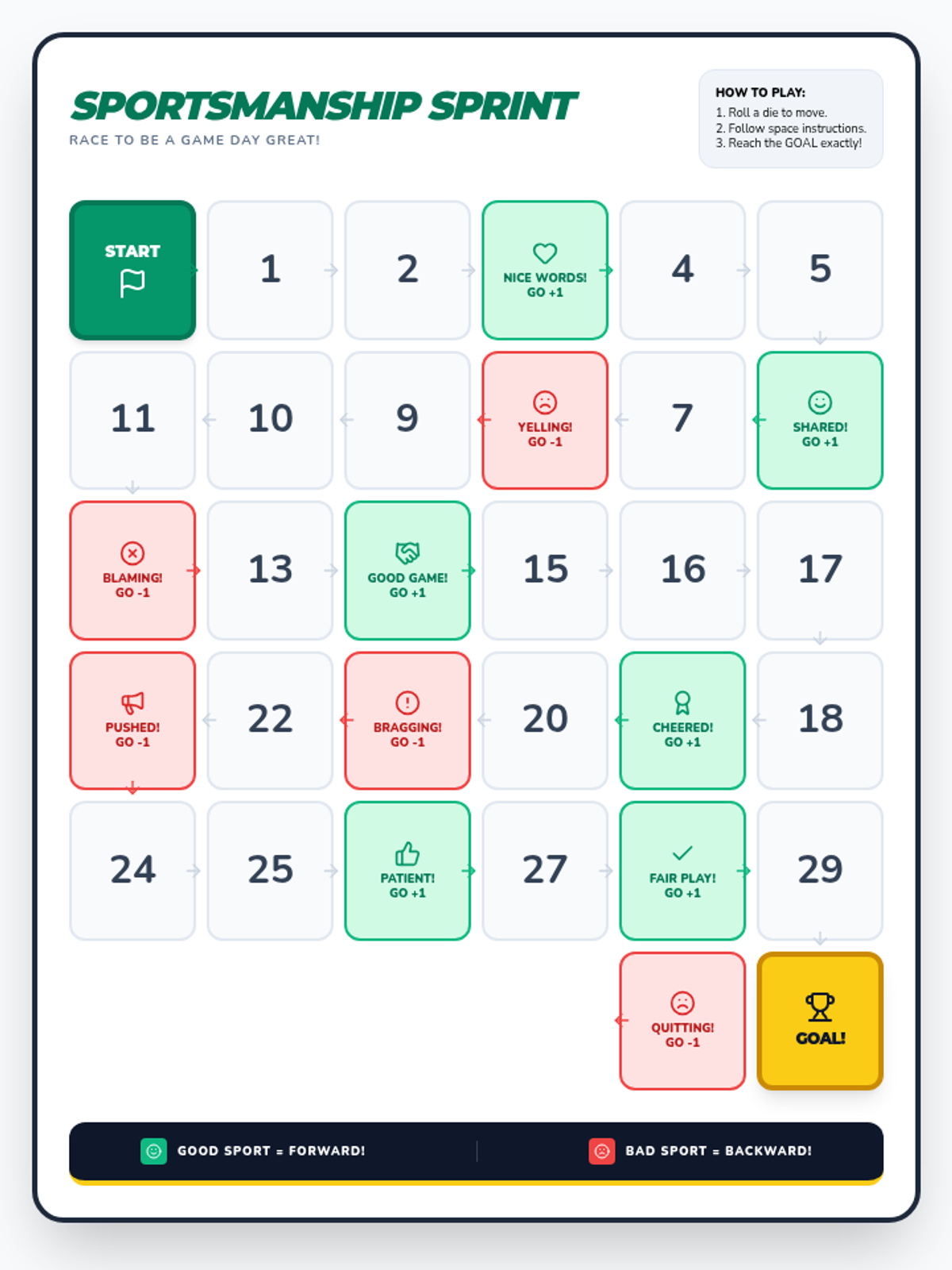
A high-energy, 20-minute lesson on sportsmanship, focusing on how to be a 'Game Day Great' by handling wins and losses with grace. Includes slides, a small group guide, an anchor chart, task cards, and a board game.
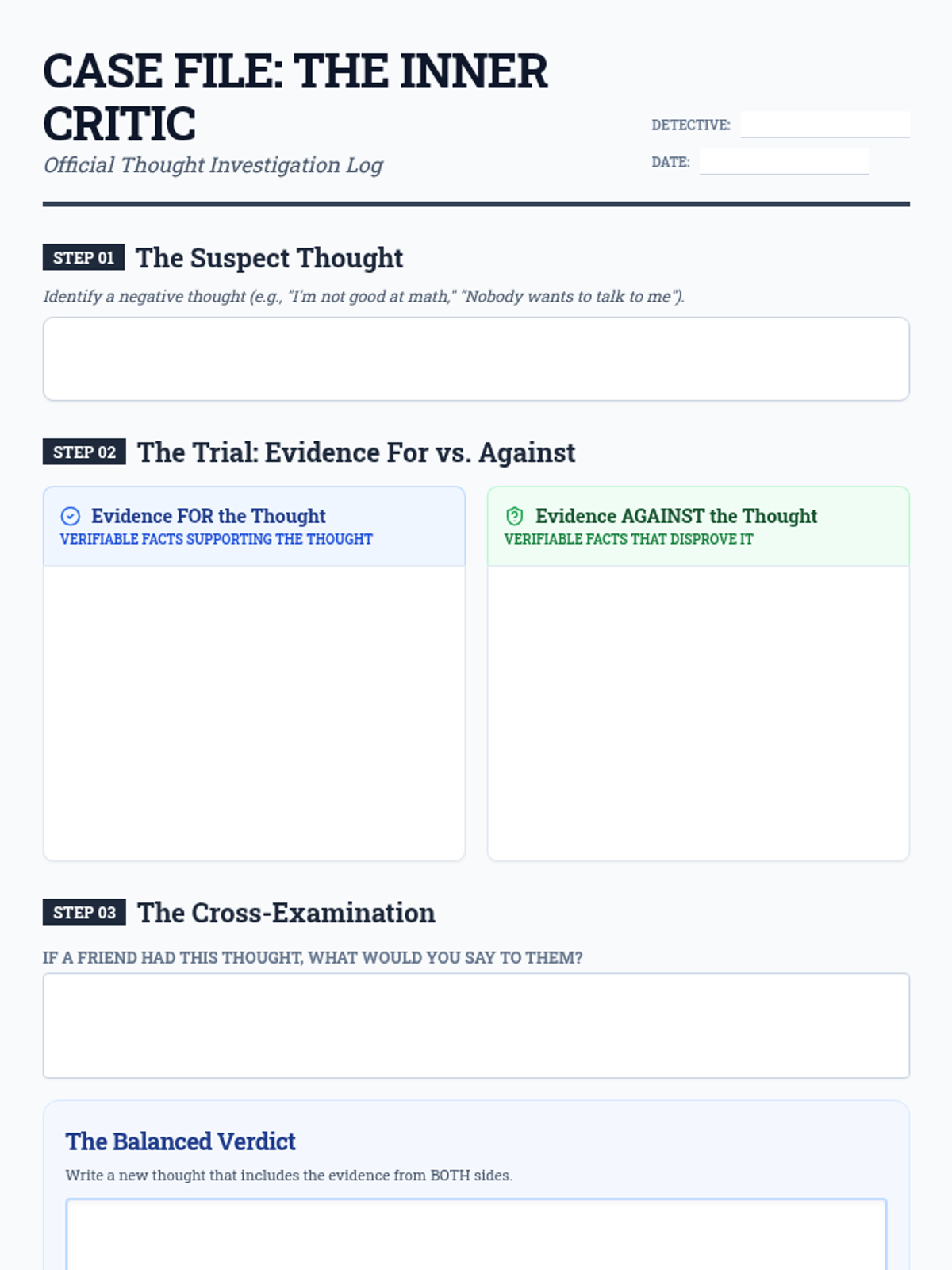
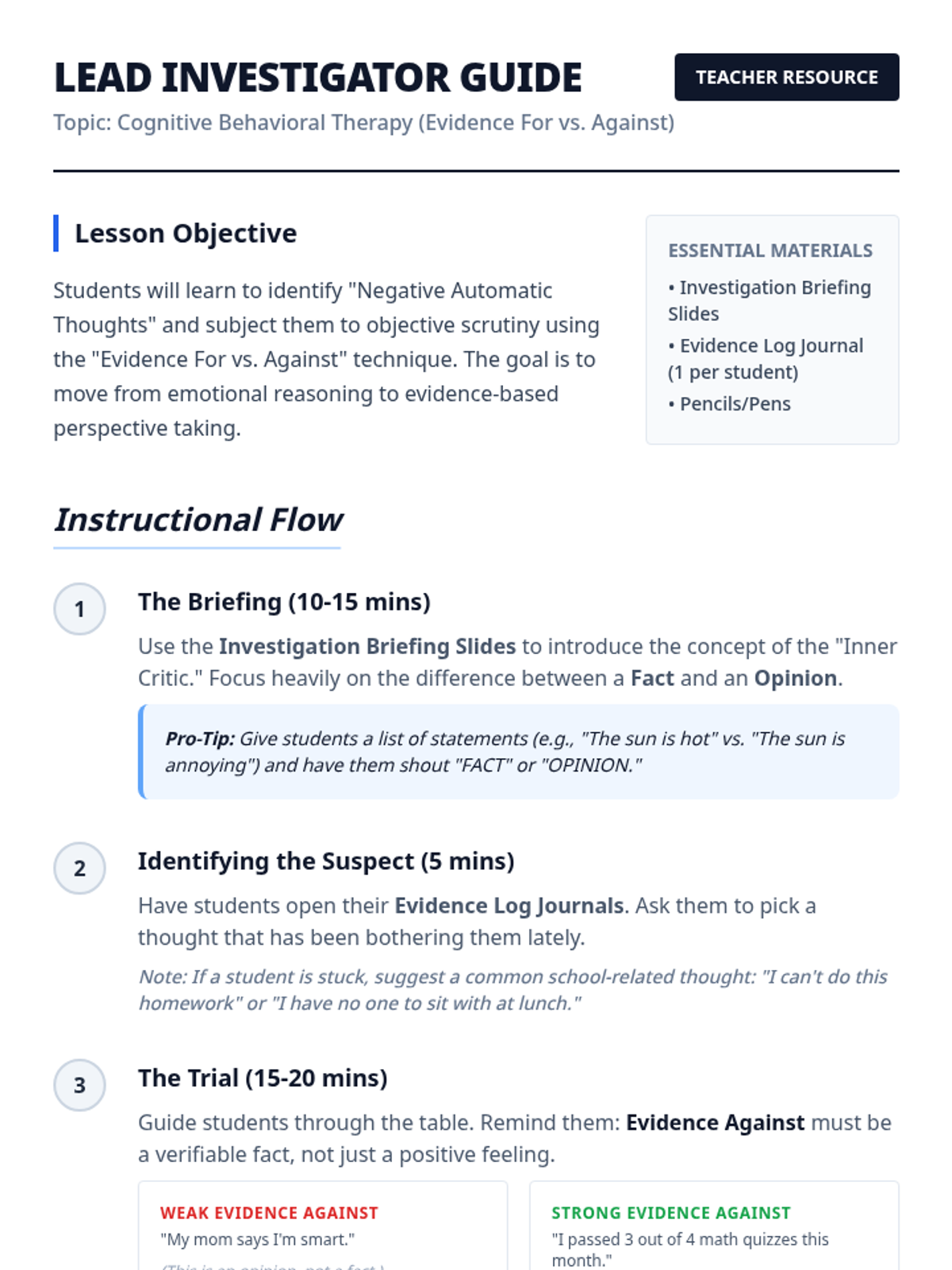
A lesson focused on identifying and challenging cognitive distortions through the 'evidence for vs. against' technique, styled as a psychological investigation.
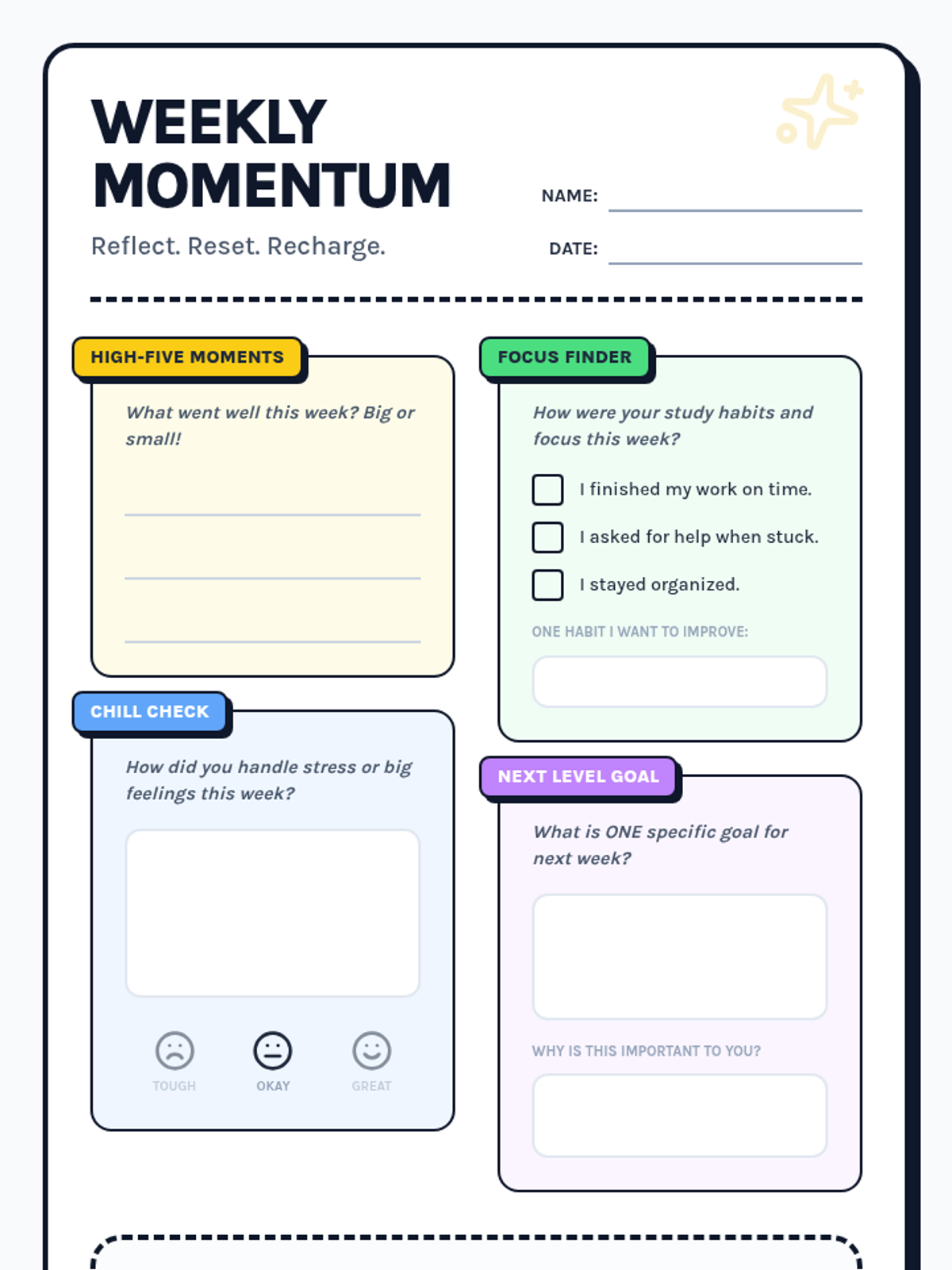
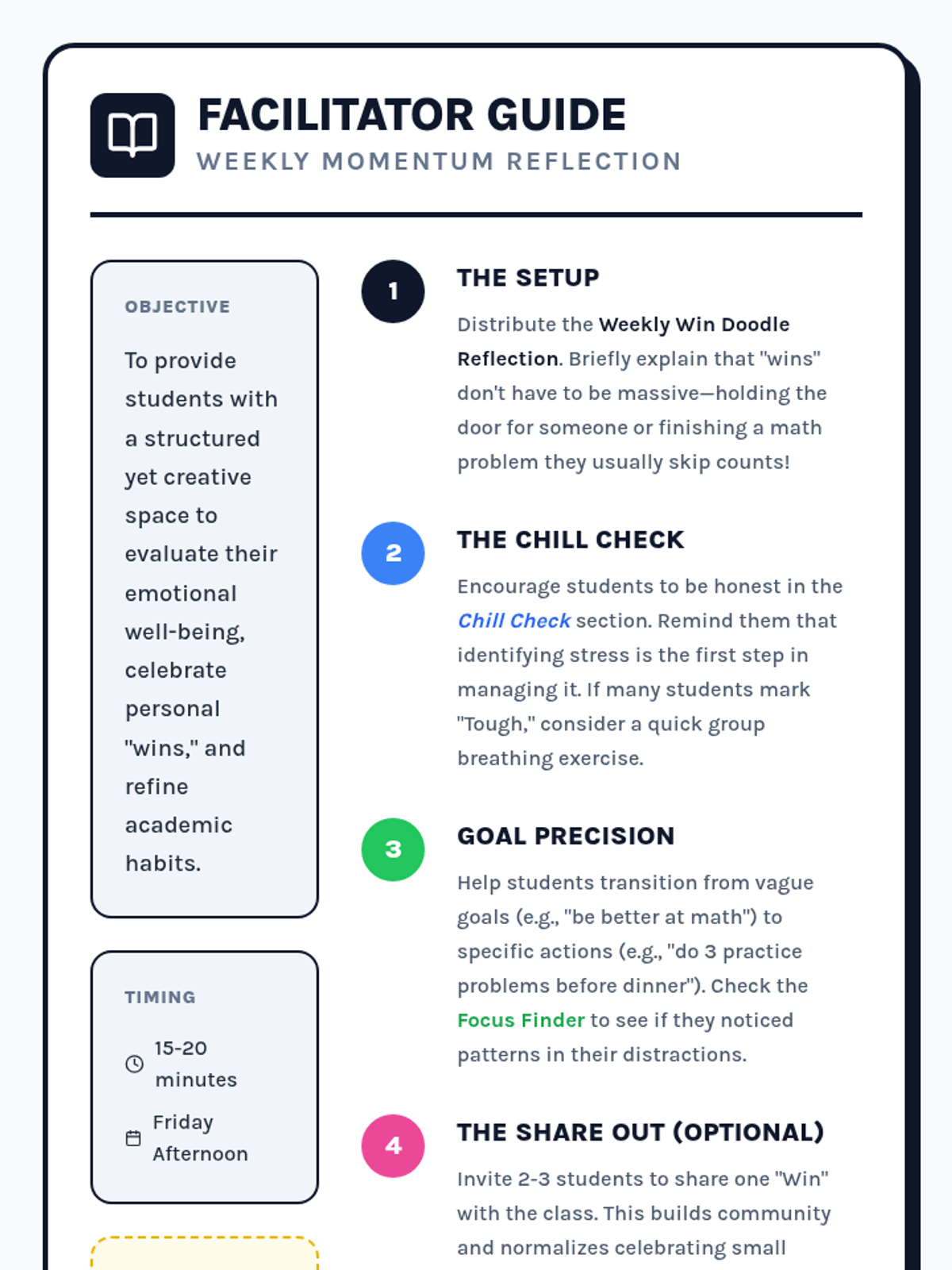
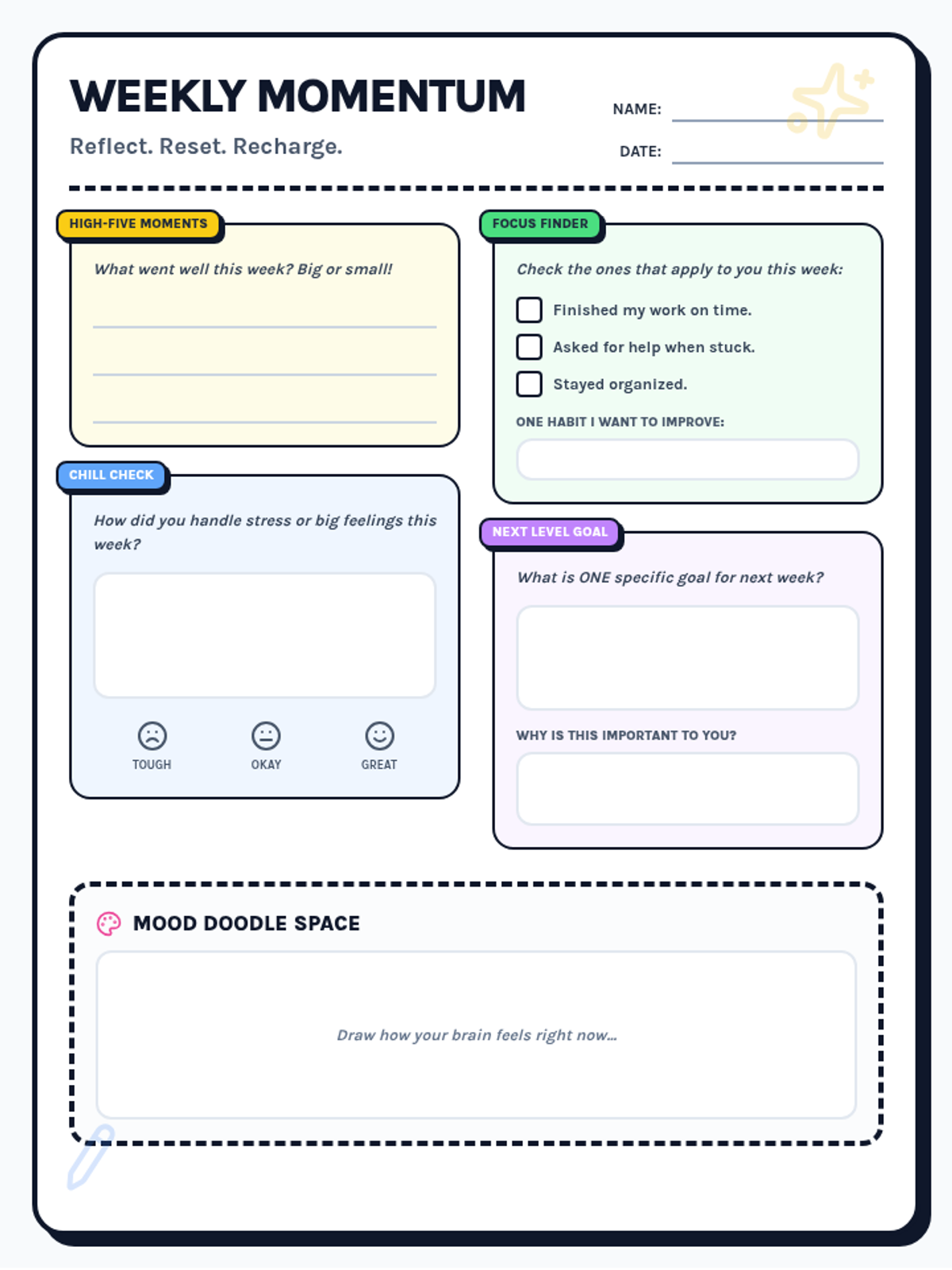
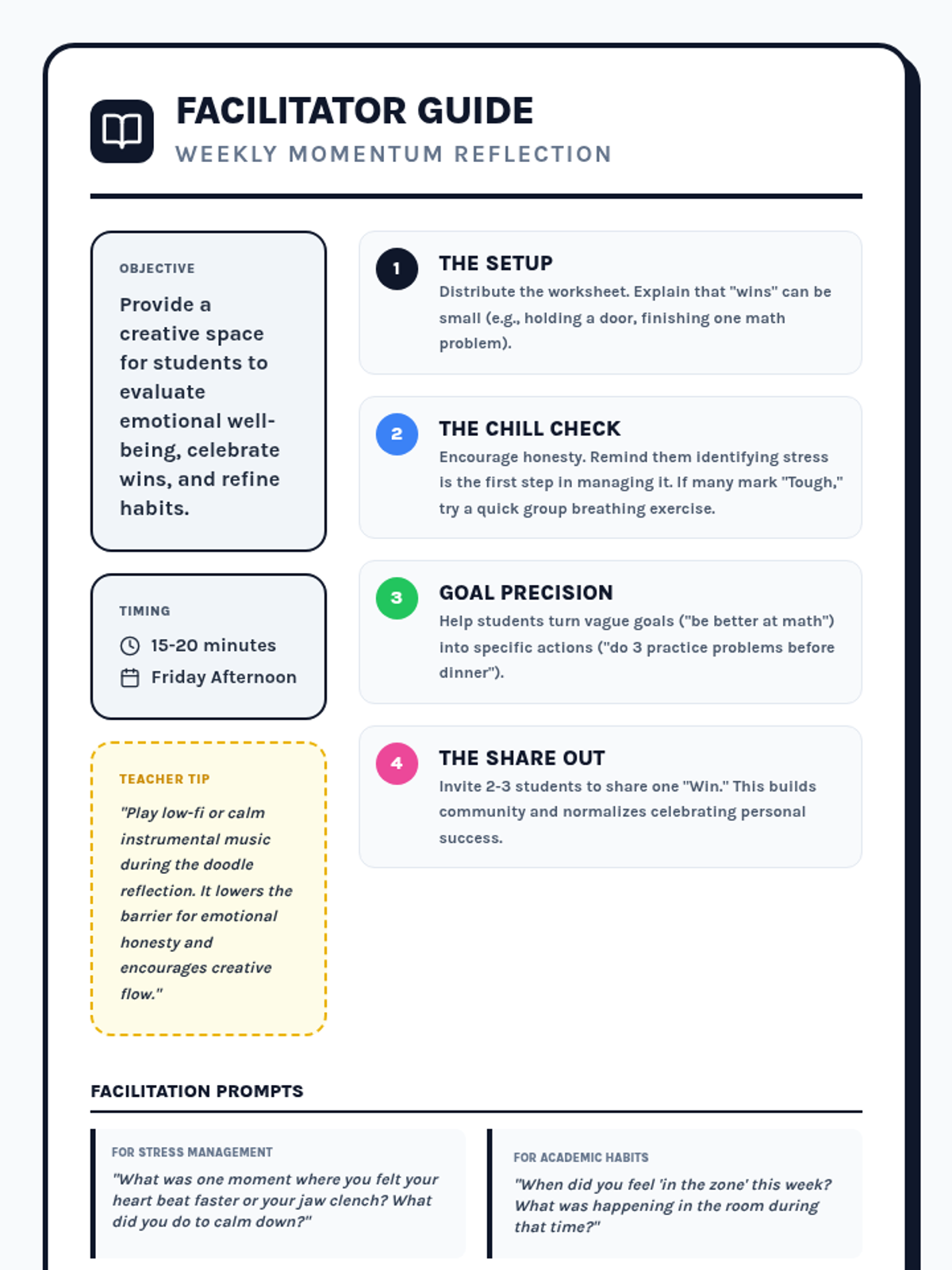
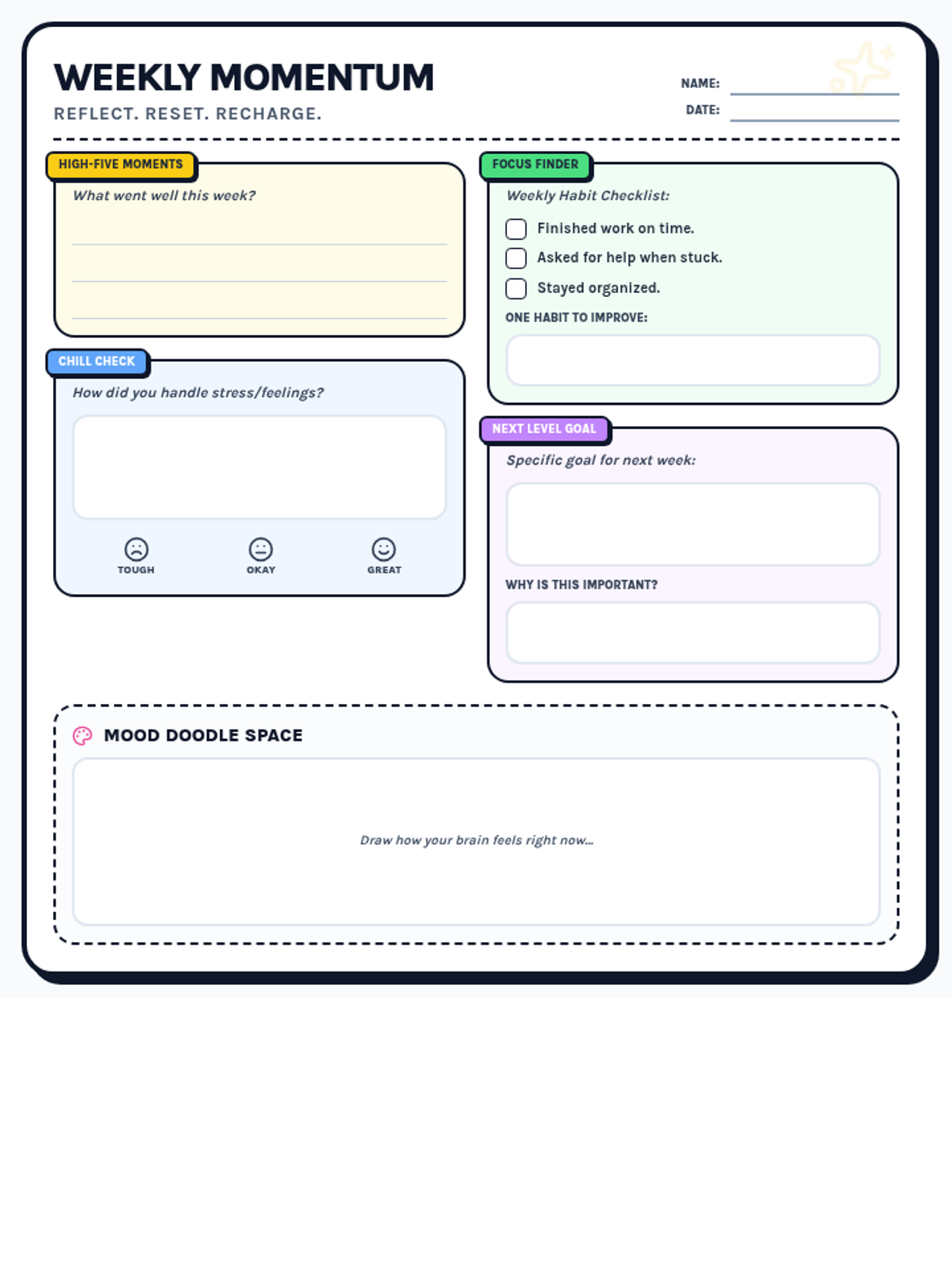
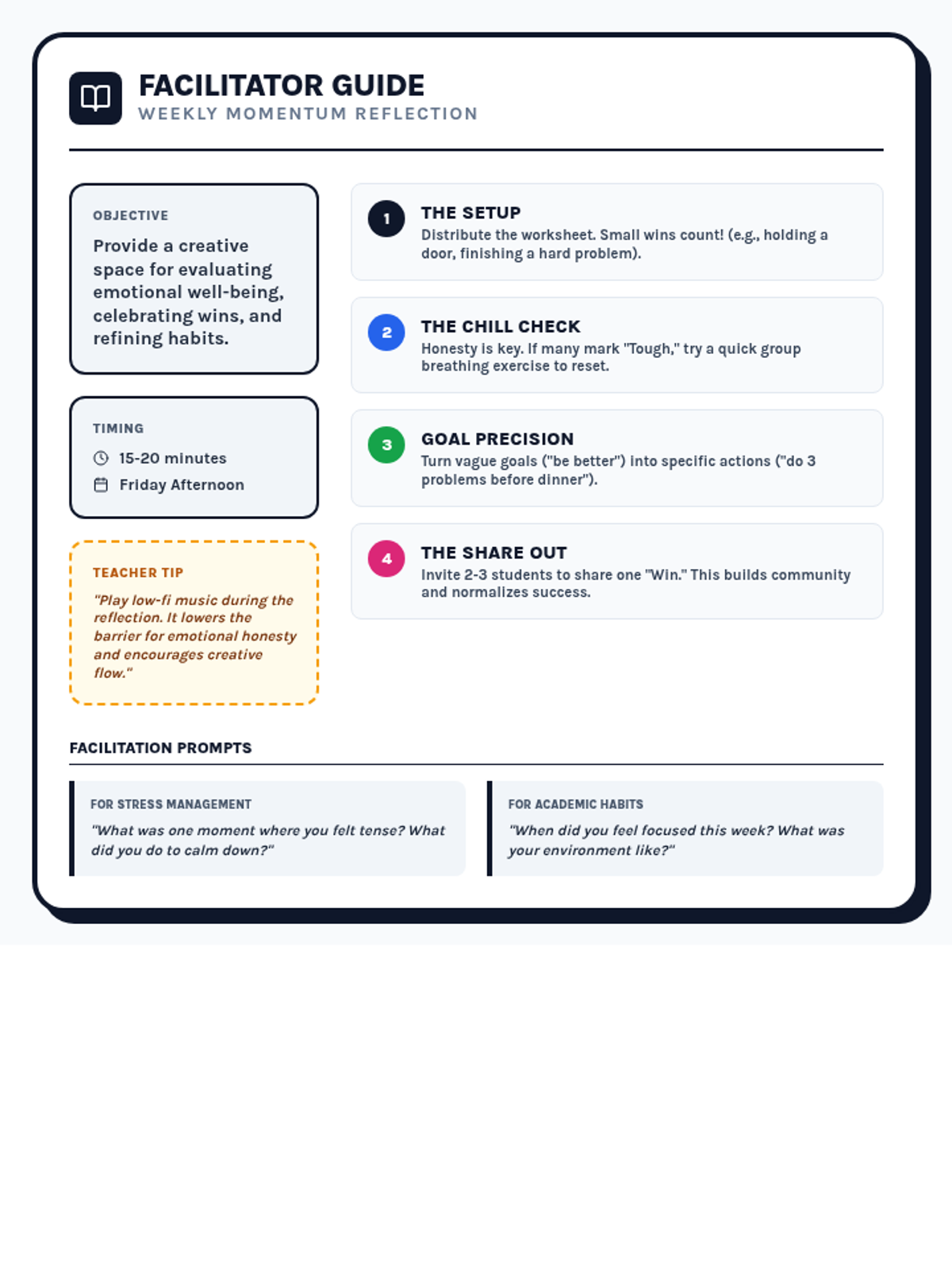
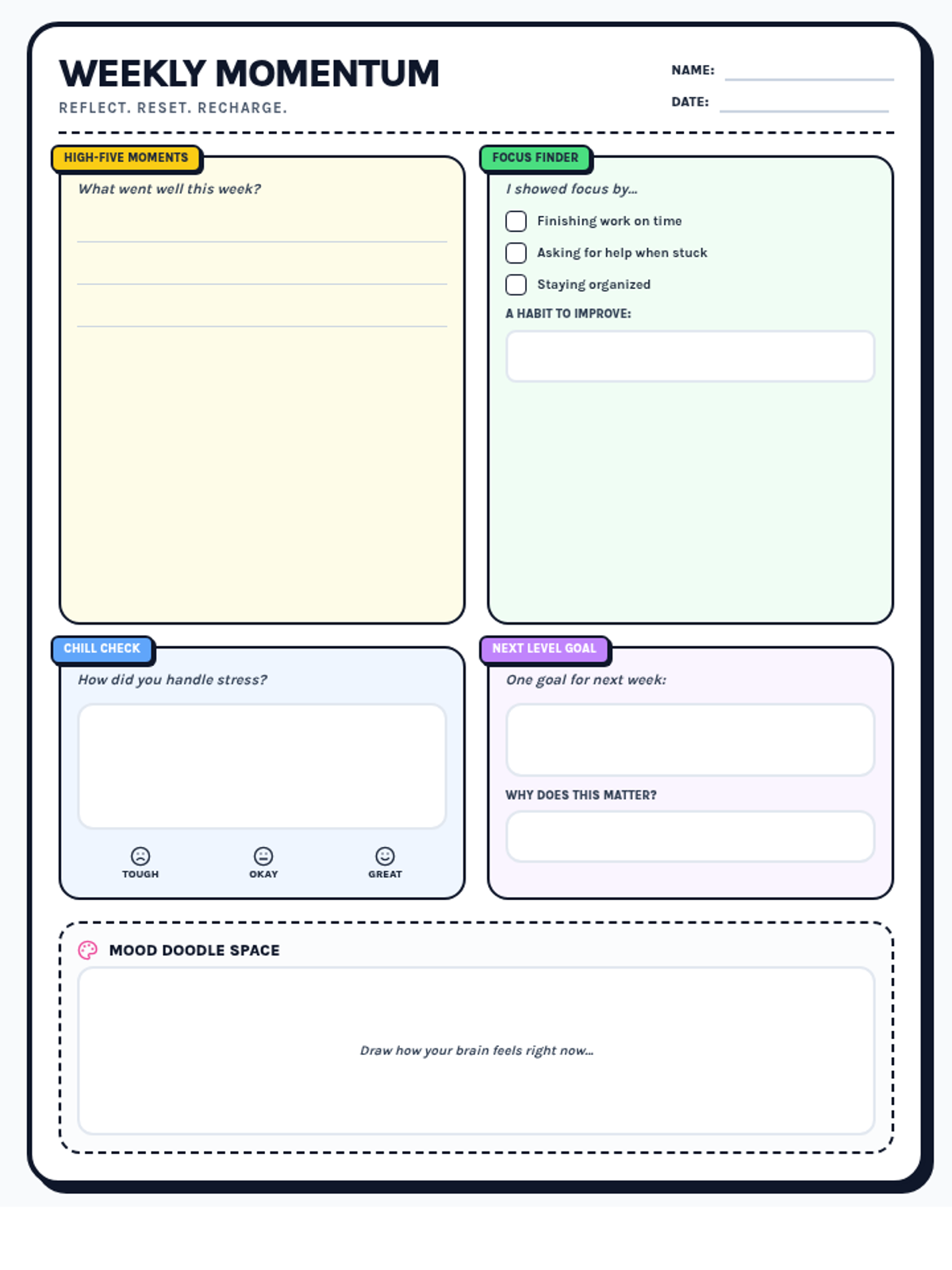
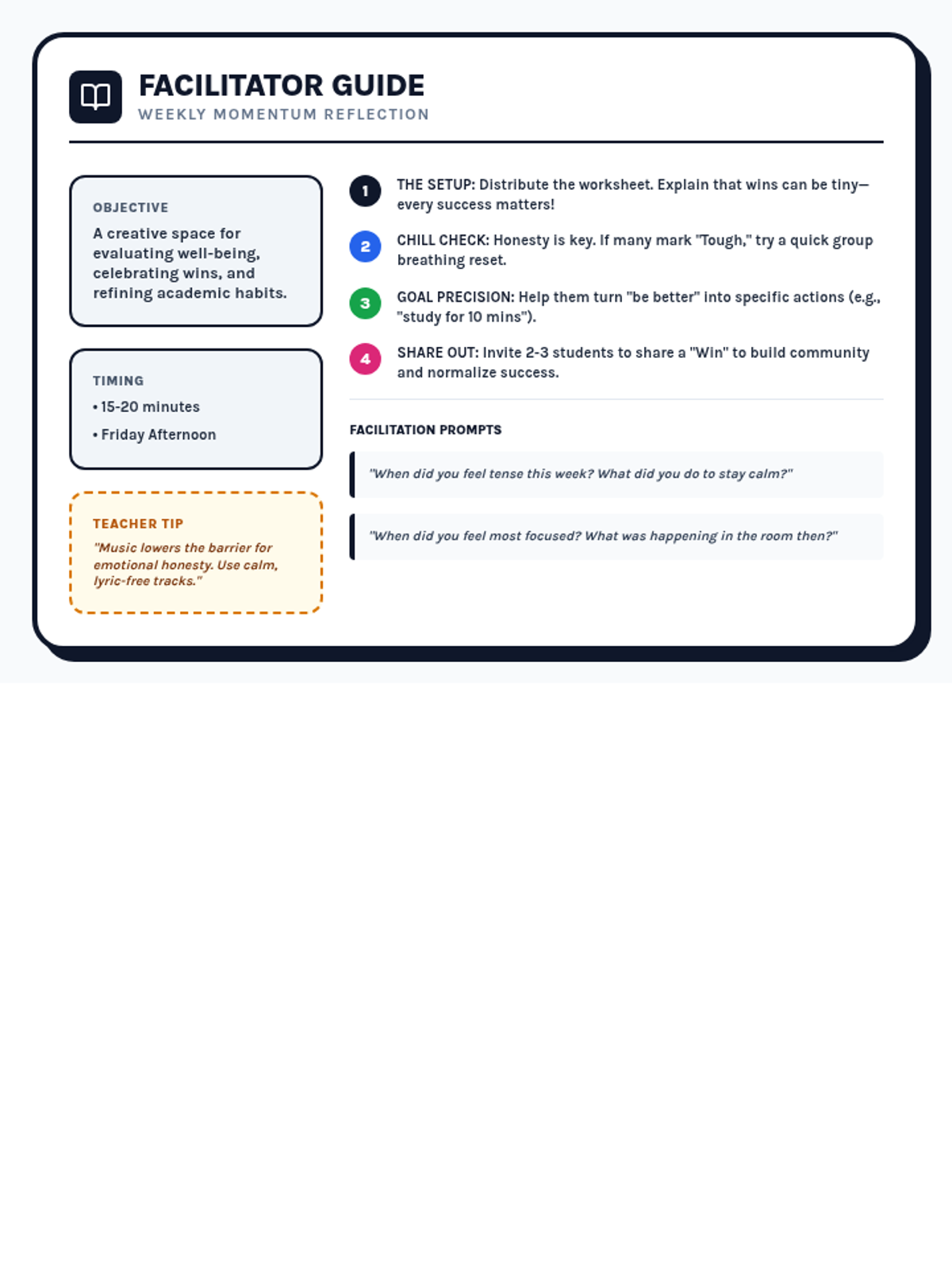
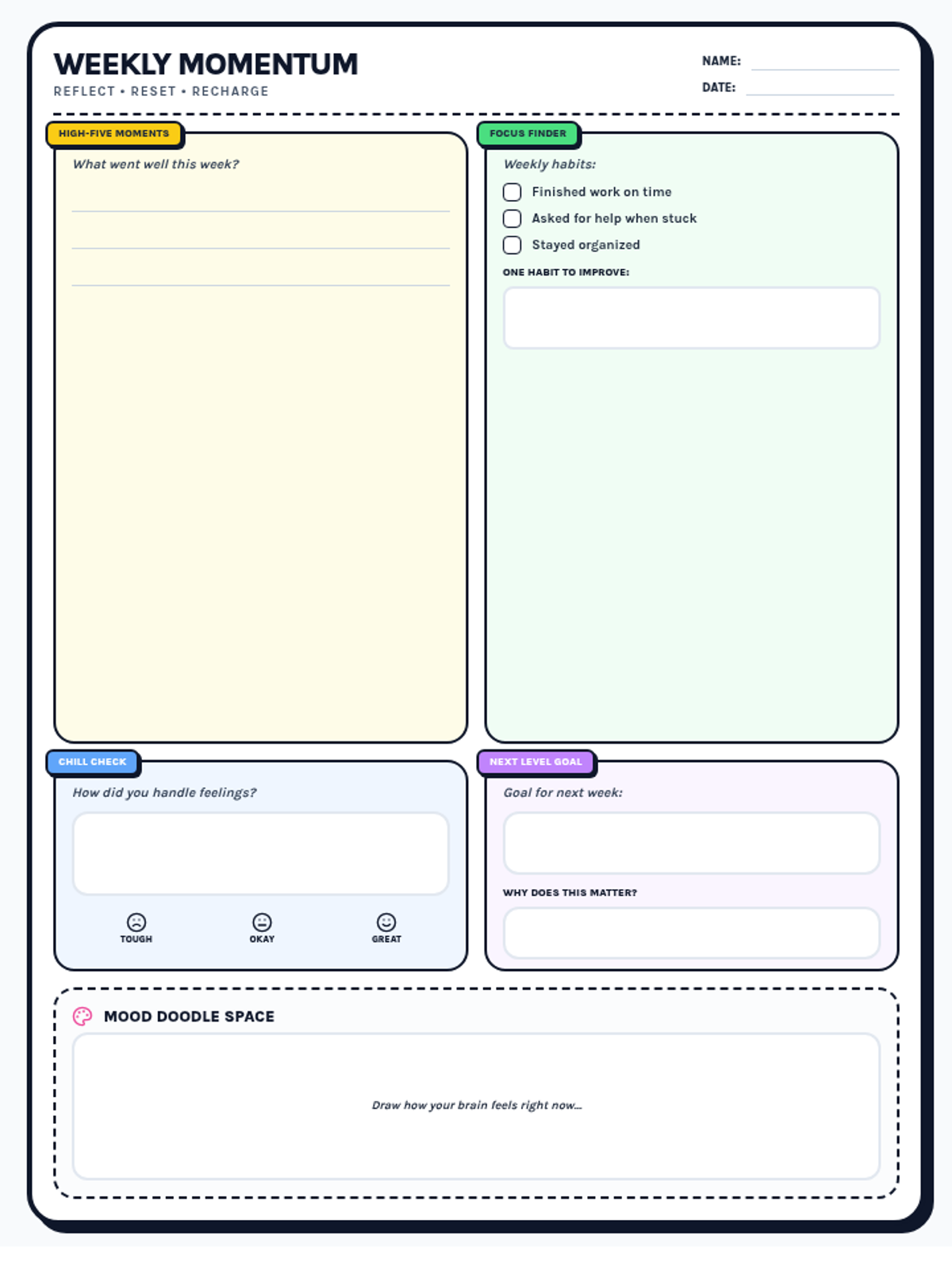
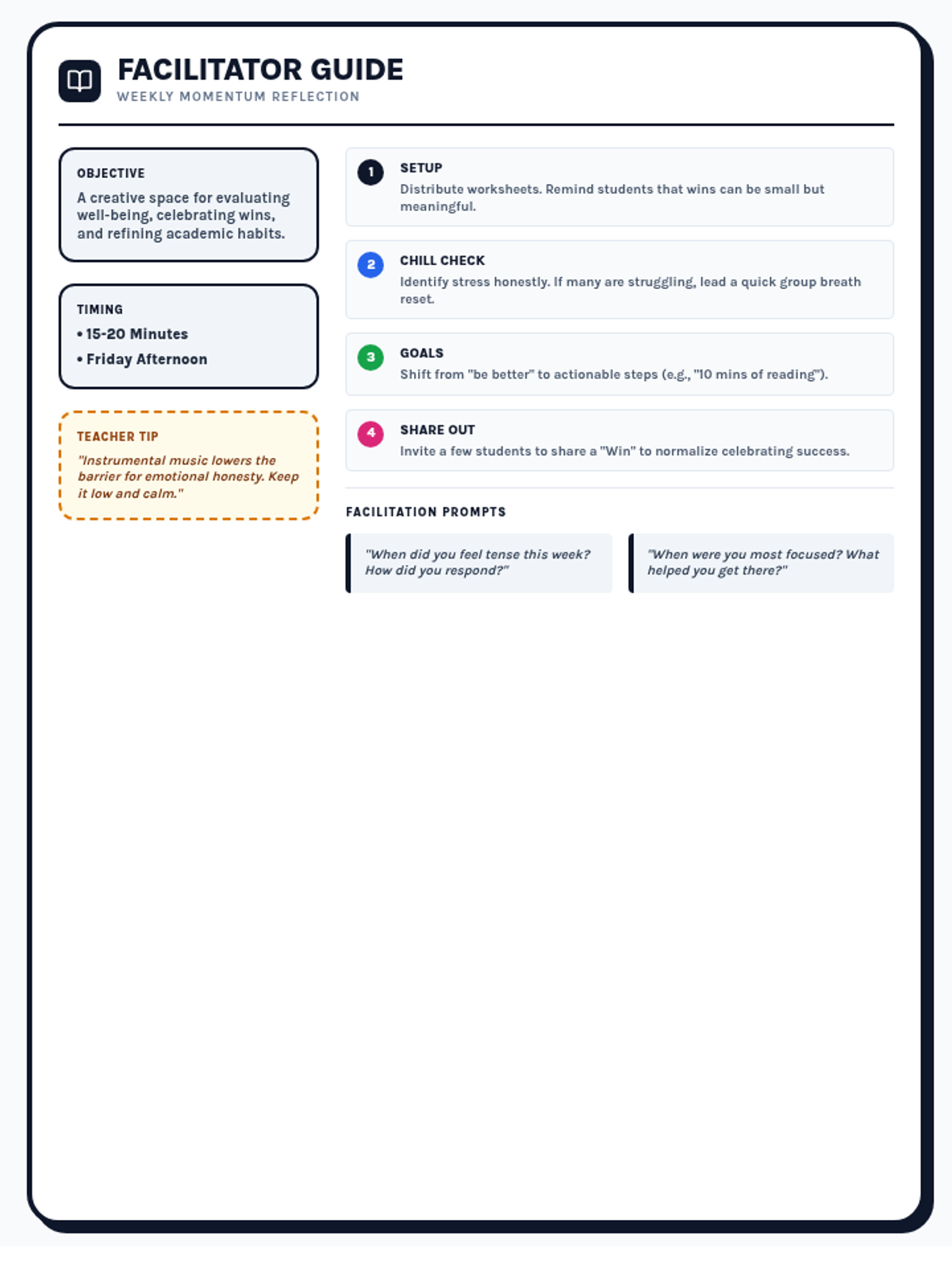
A recurring weekly reflection tool designed to help students celebrate successes, manage their emotional well-being, and sharpen their academic focus through a creative doodle-inspired layout.
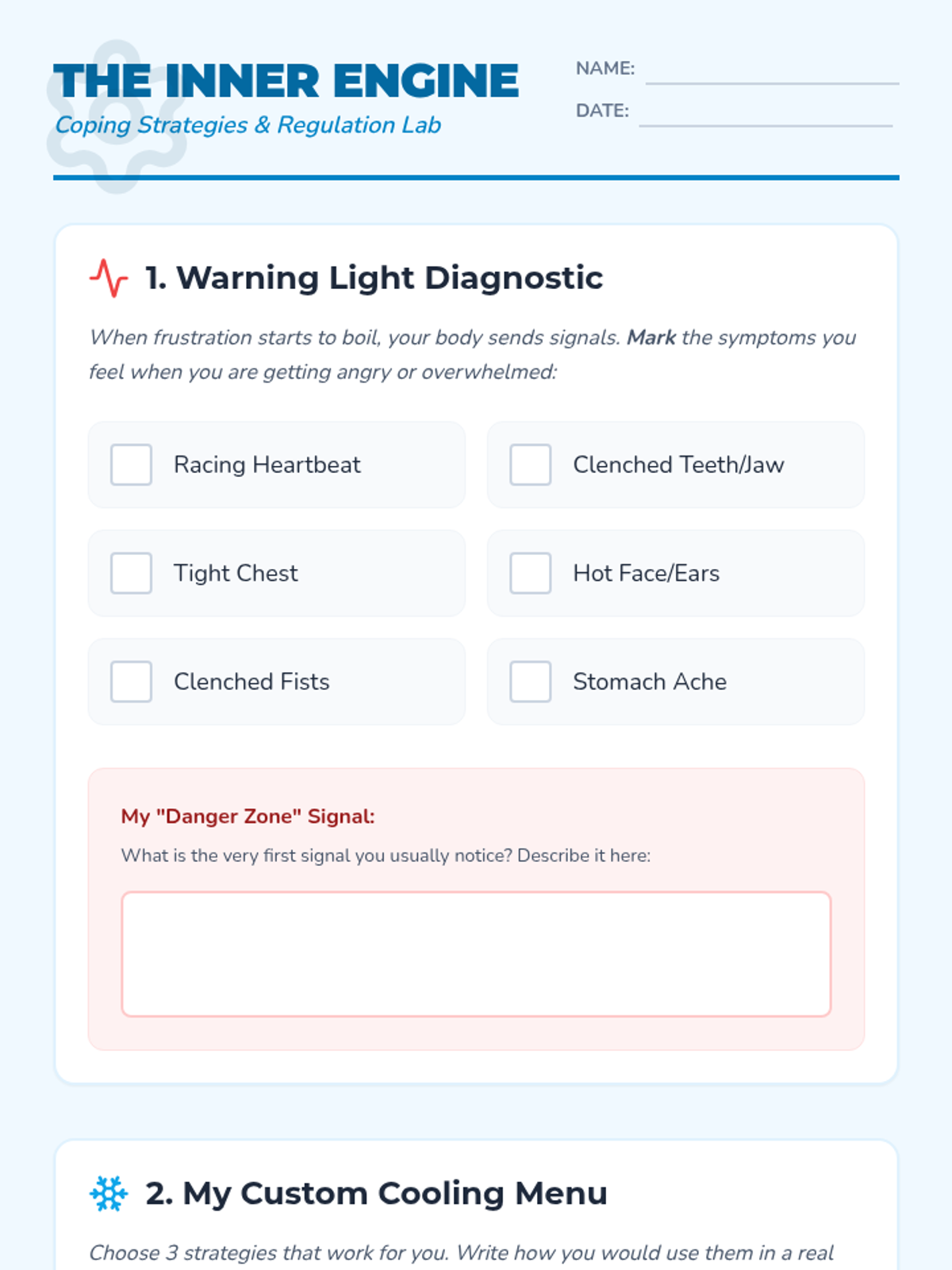
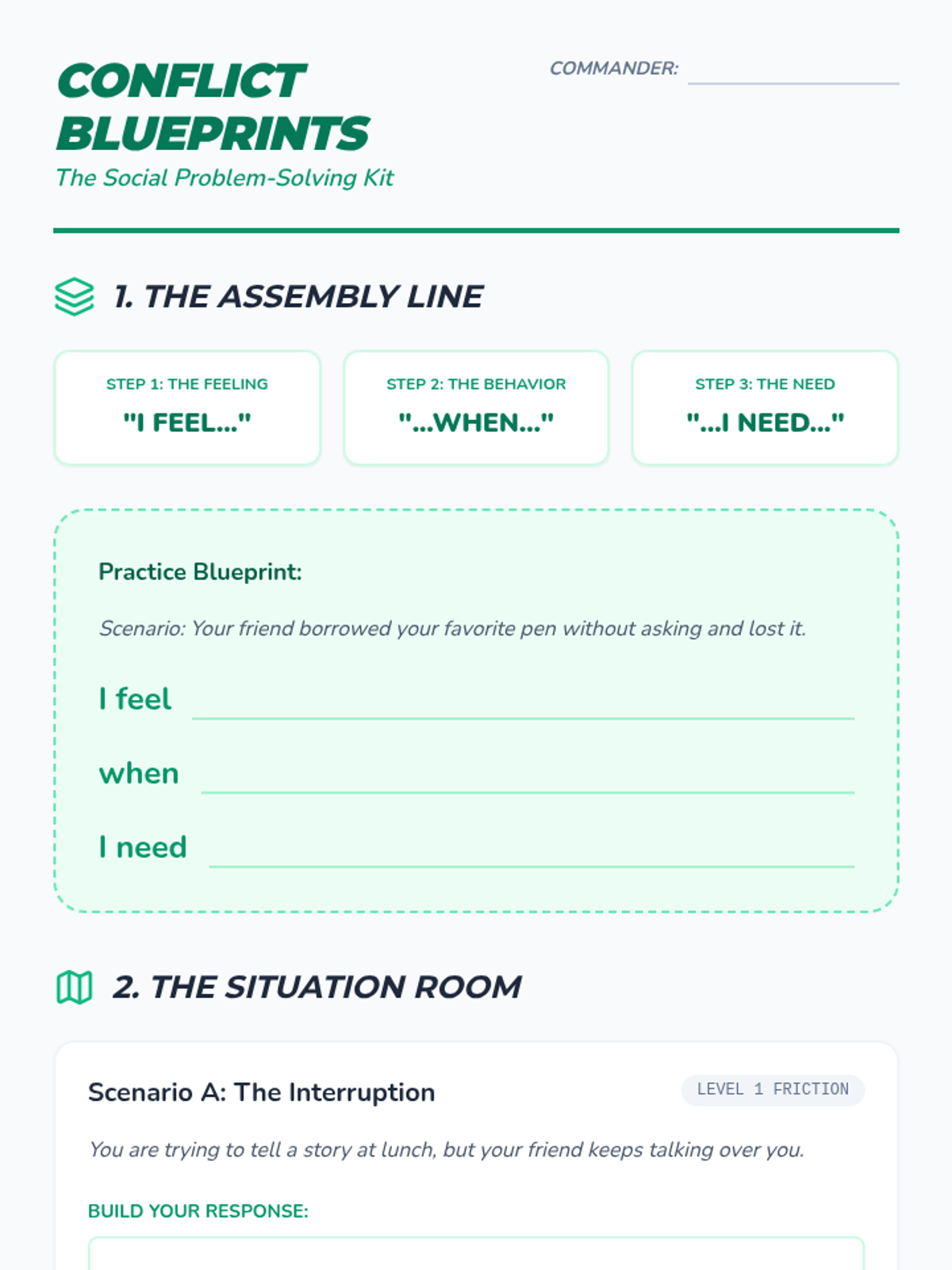
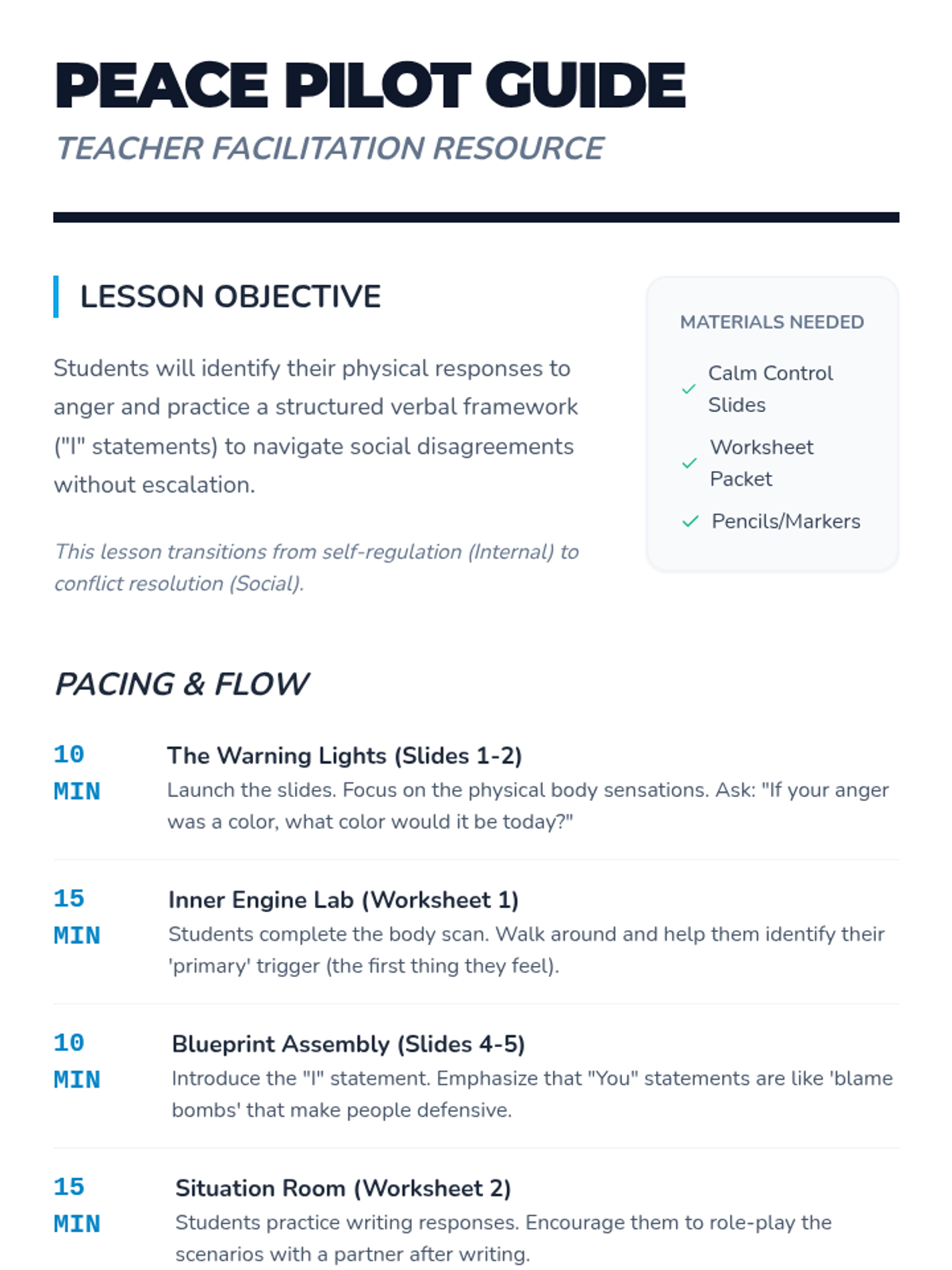
This lesson covers the physical sensations of frustration and provides a structured framework for navigating social conflicts using 'I' statements and perspective-taking.
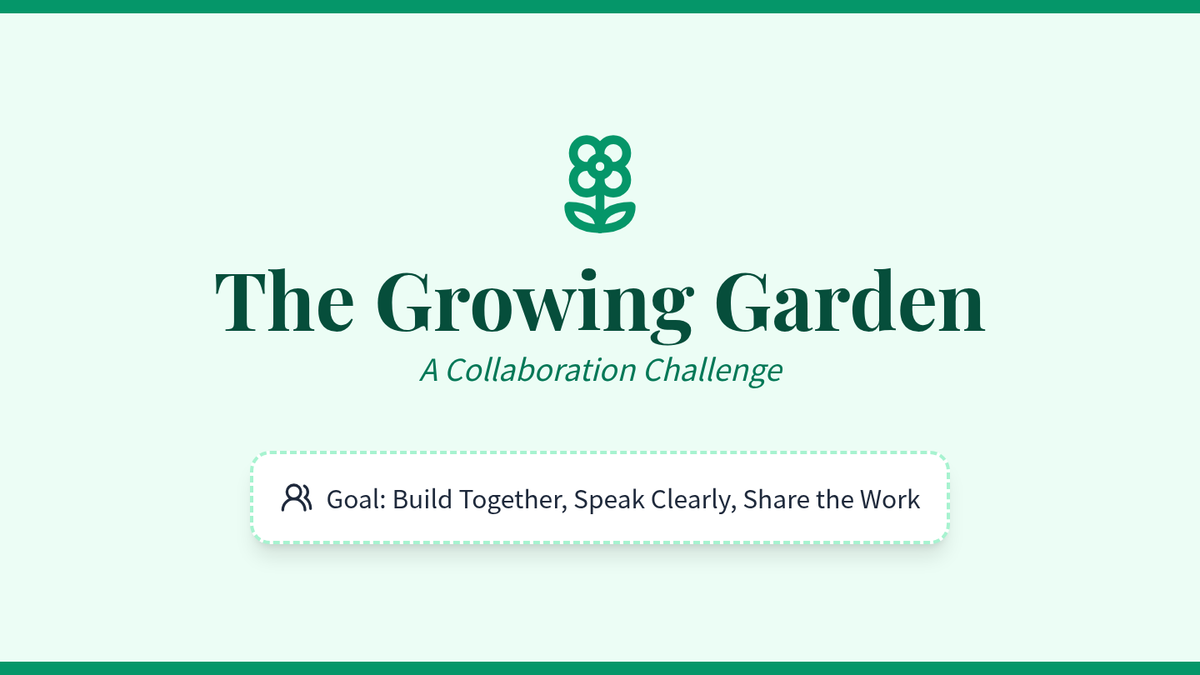
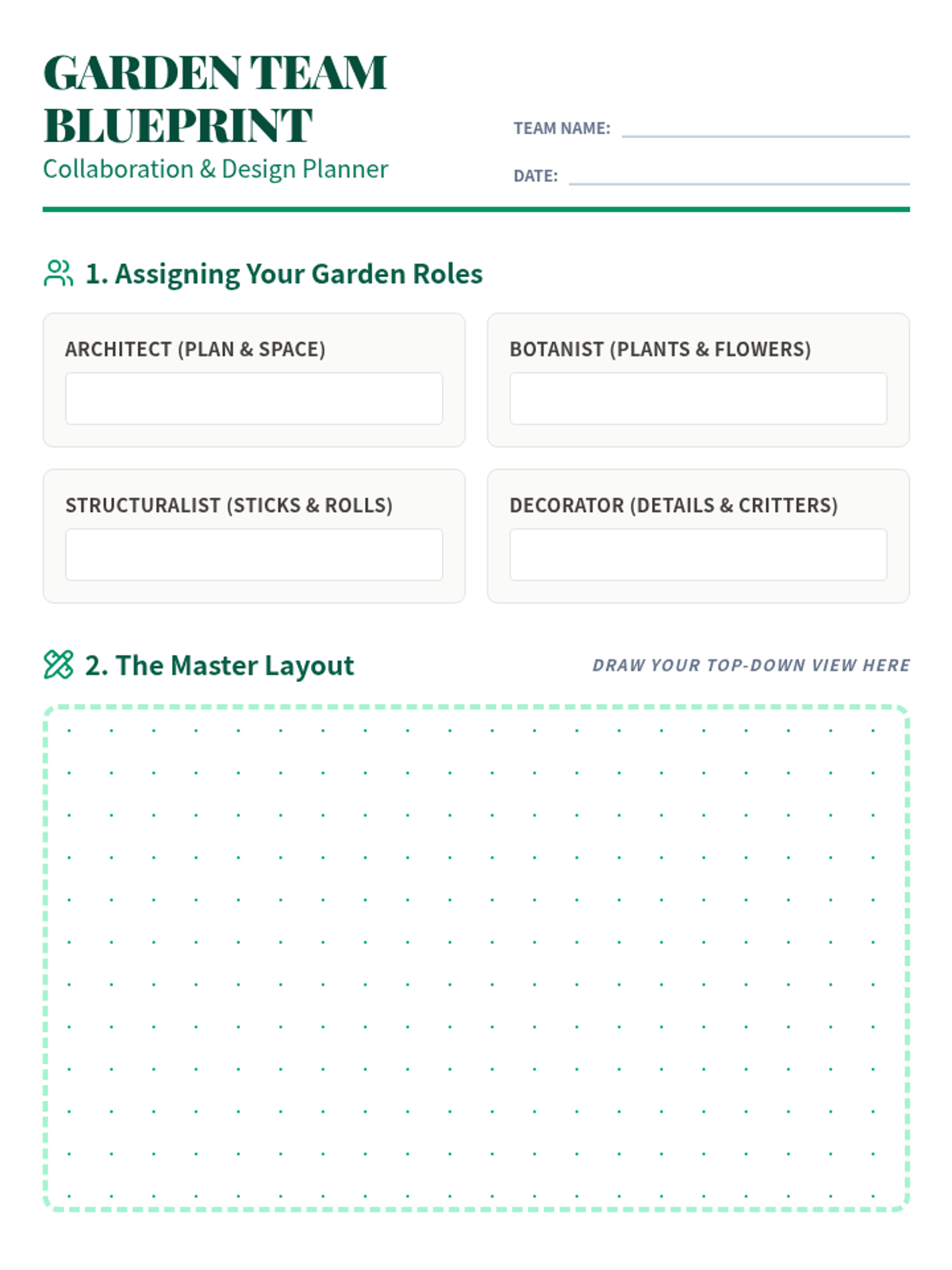
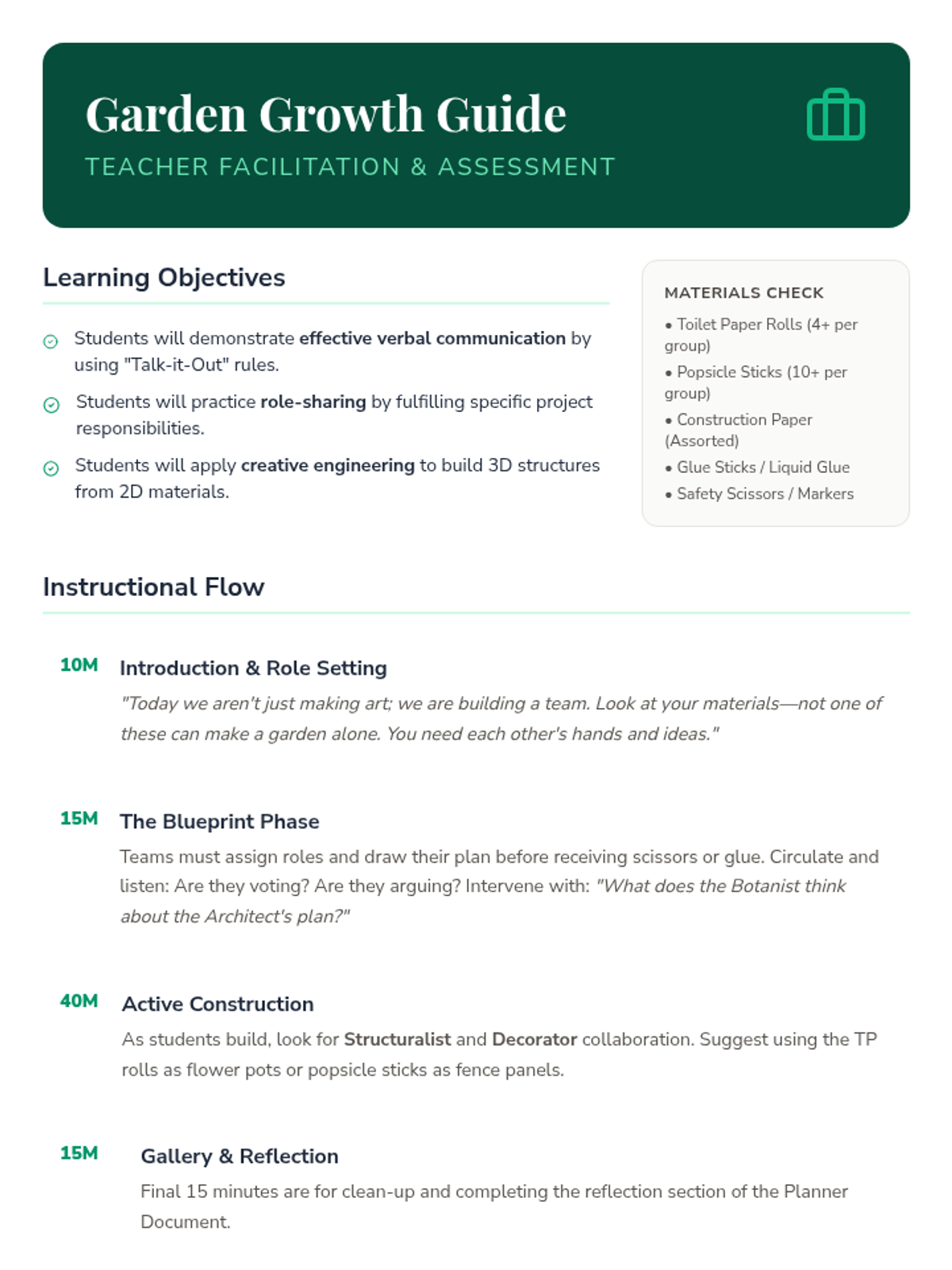
A collaborative hands-on project where students use recycled materials to build a spring garden while practicing effective communication and role-sharing.
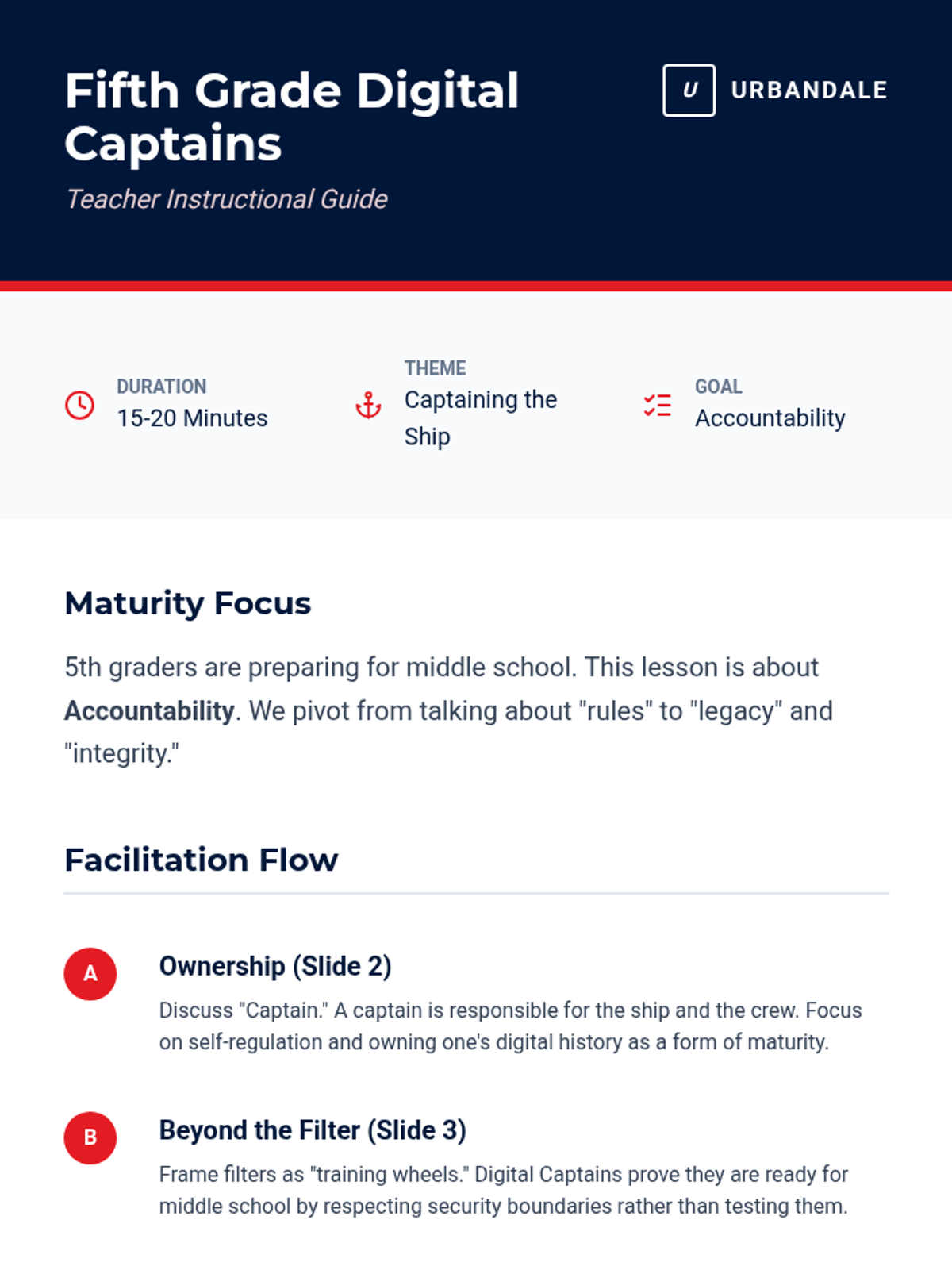
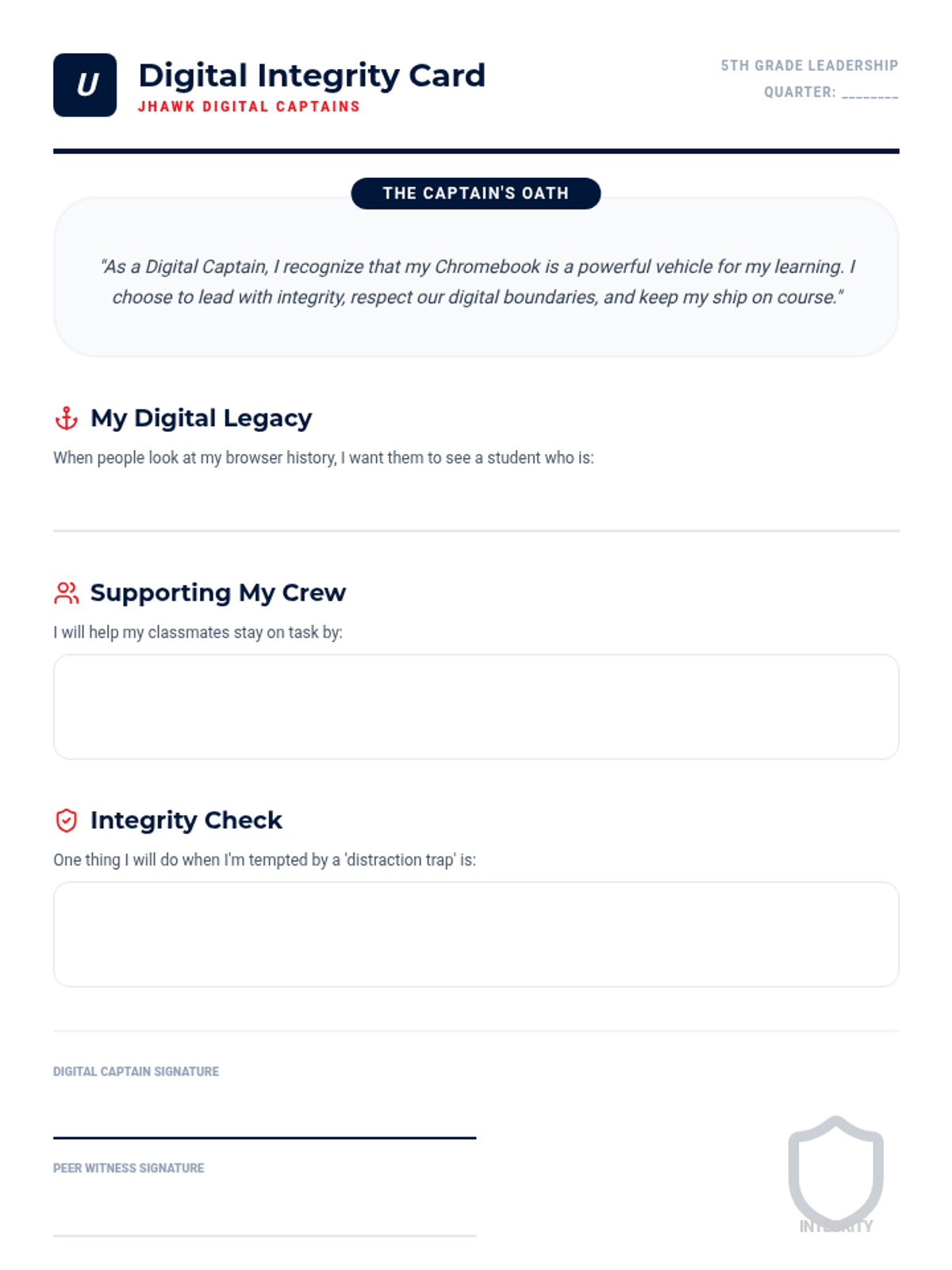
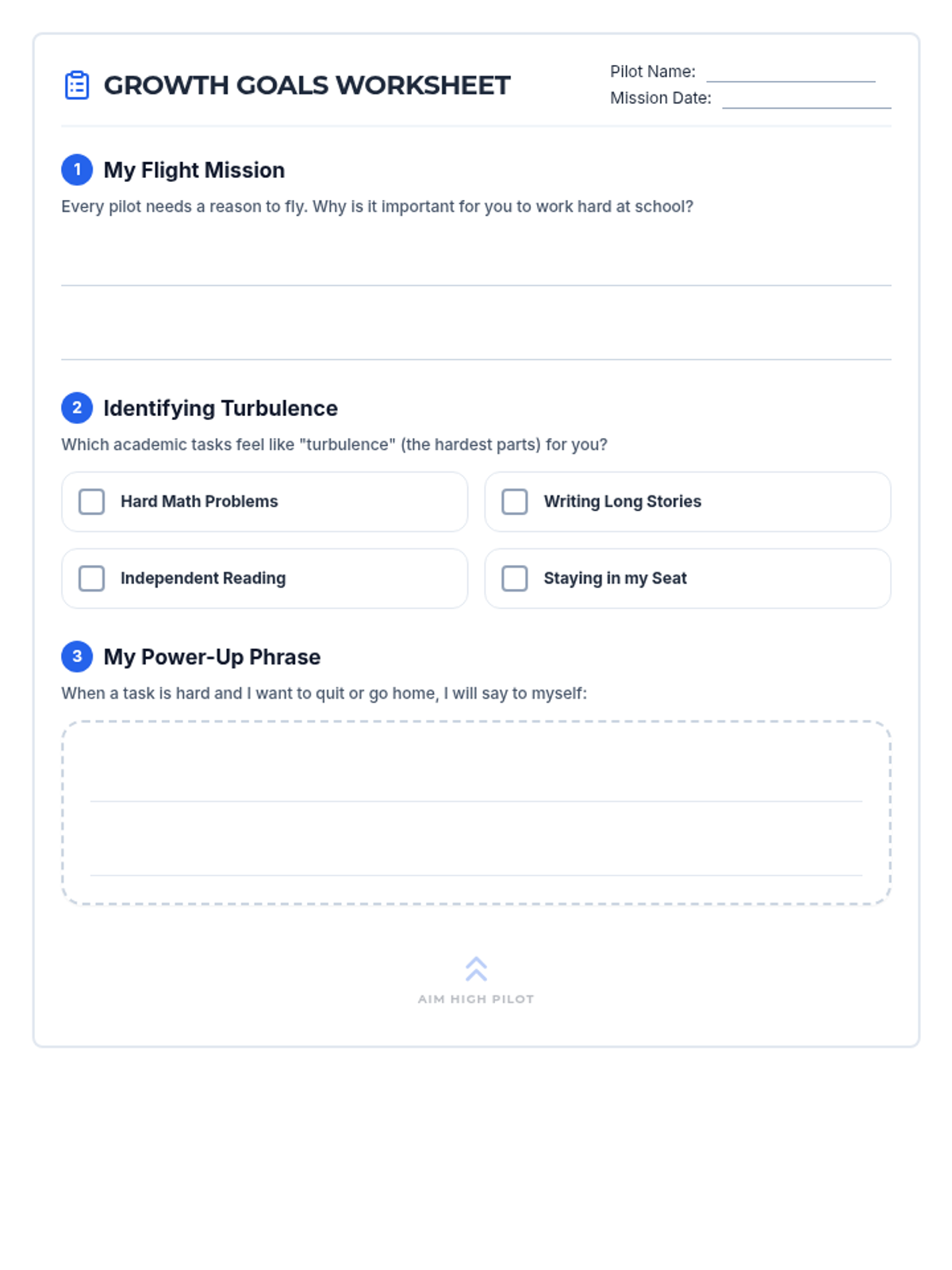
Empowers 5th graders to lead by example, discussing the importance of academic integrity and resisting the urge to bypass school filters.
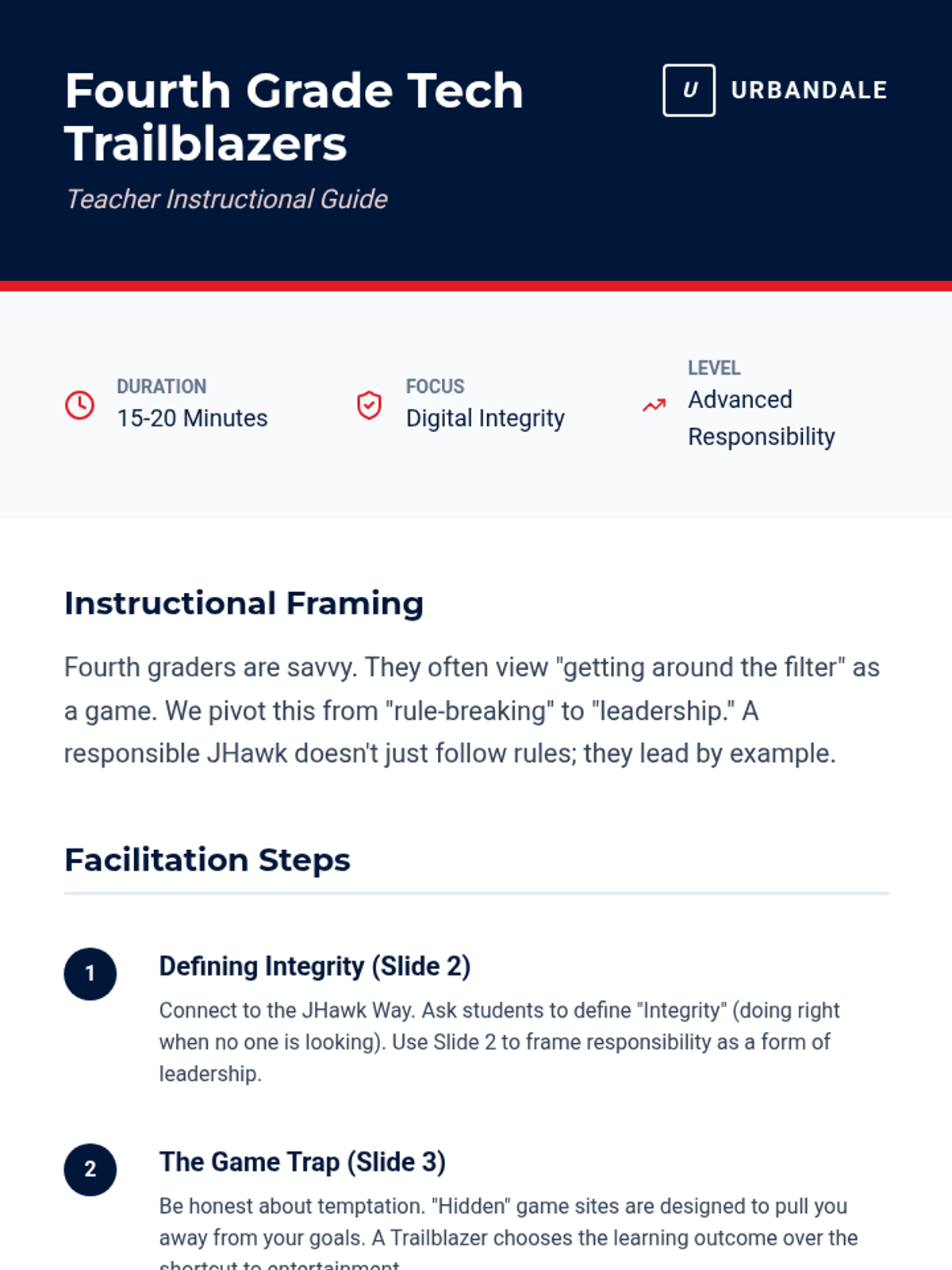
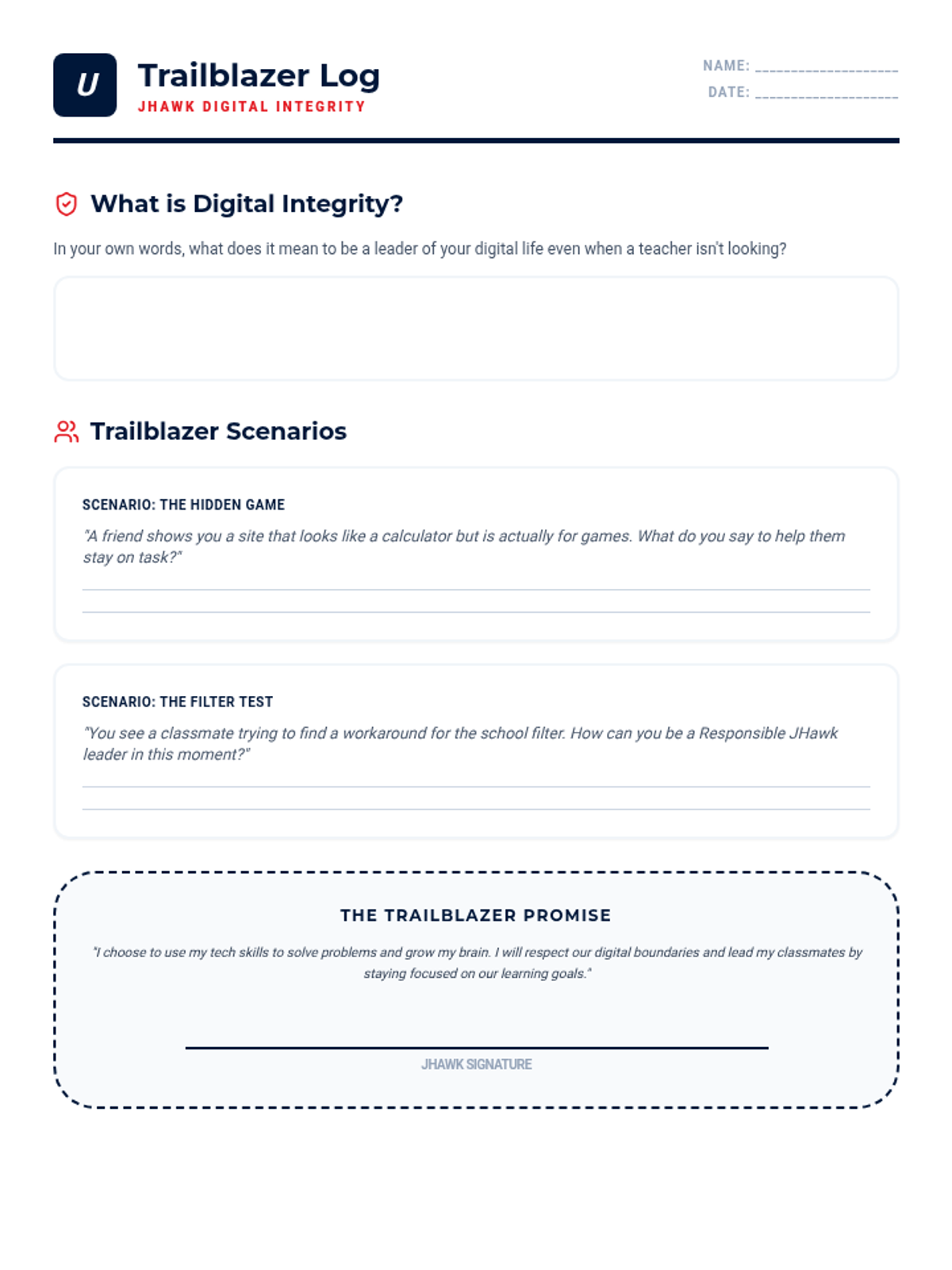
Addresses the specific challenges of 4th graders, focusing on avoiding game websites and maintaining focus on assigned tasks.
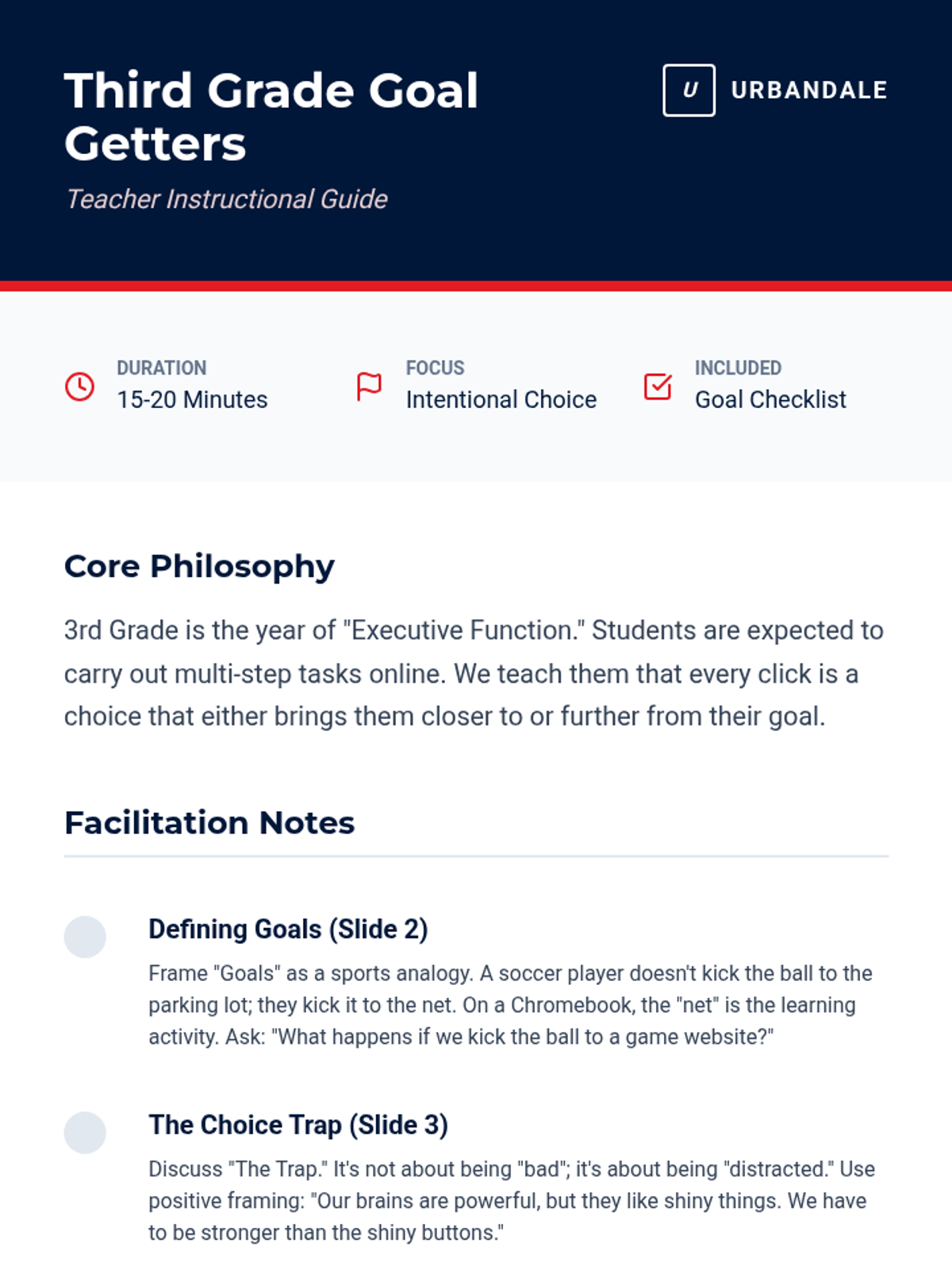
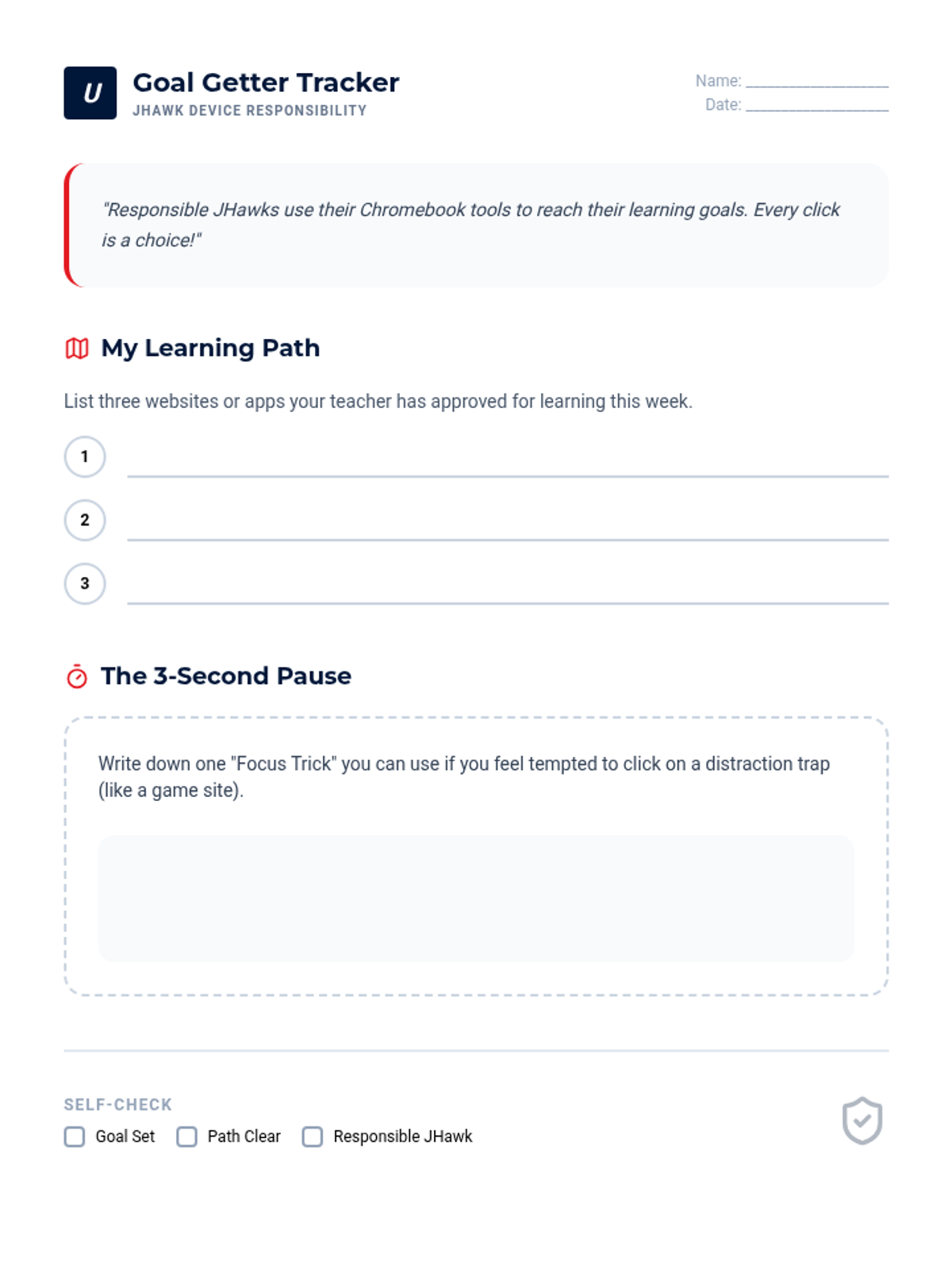
Helps 3rd graders identify common online distractions and practice making responsible choices that align with their learning goals.
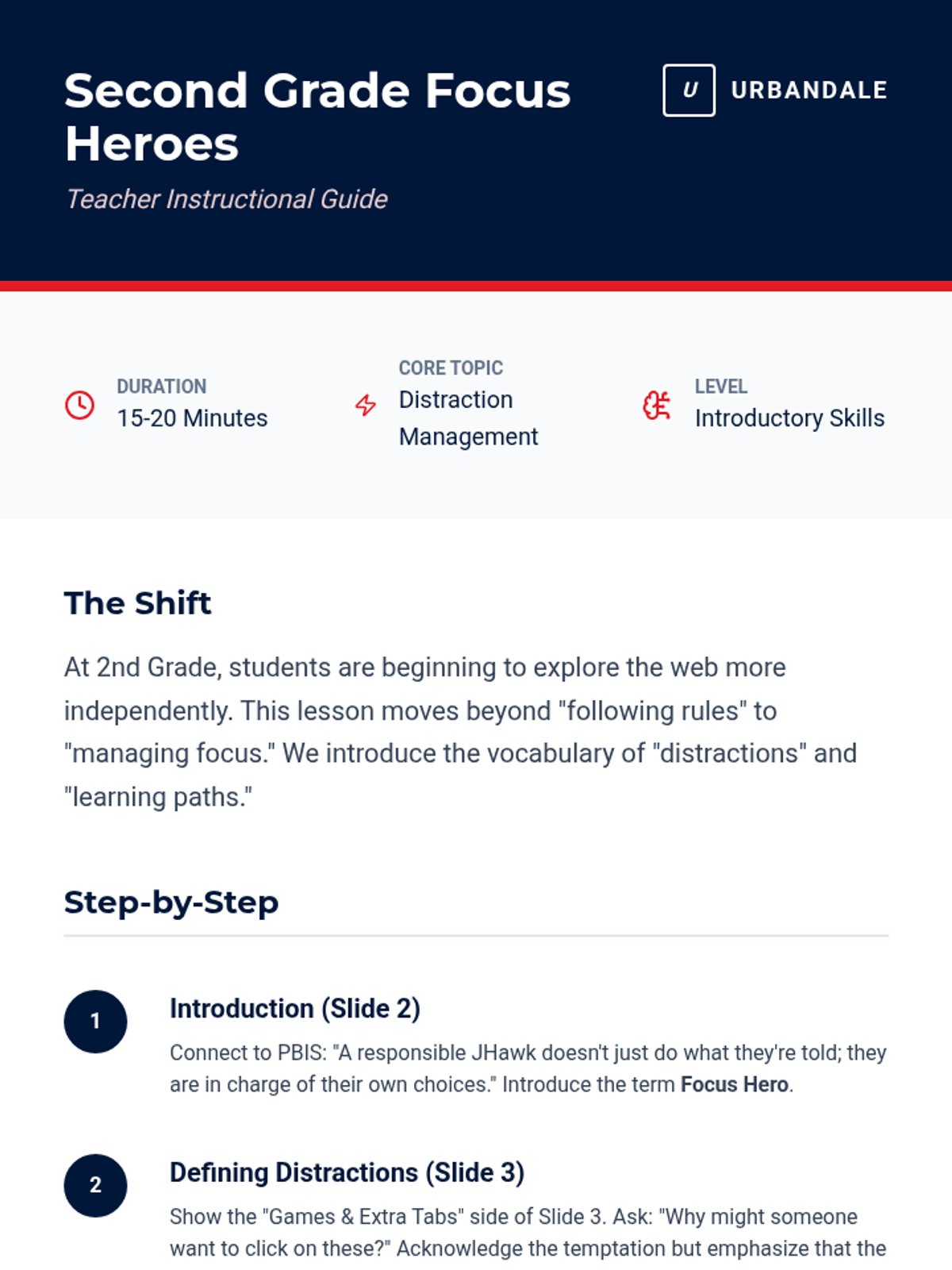
Introduces 2nd graders to the idea of managing digital distractions and staying on task during learning time.
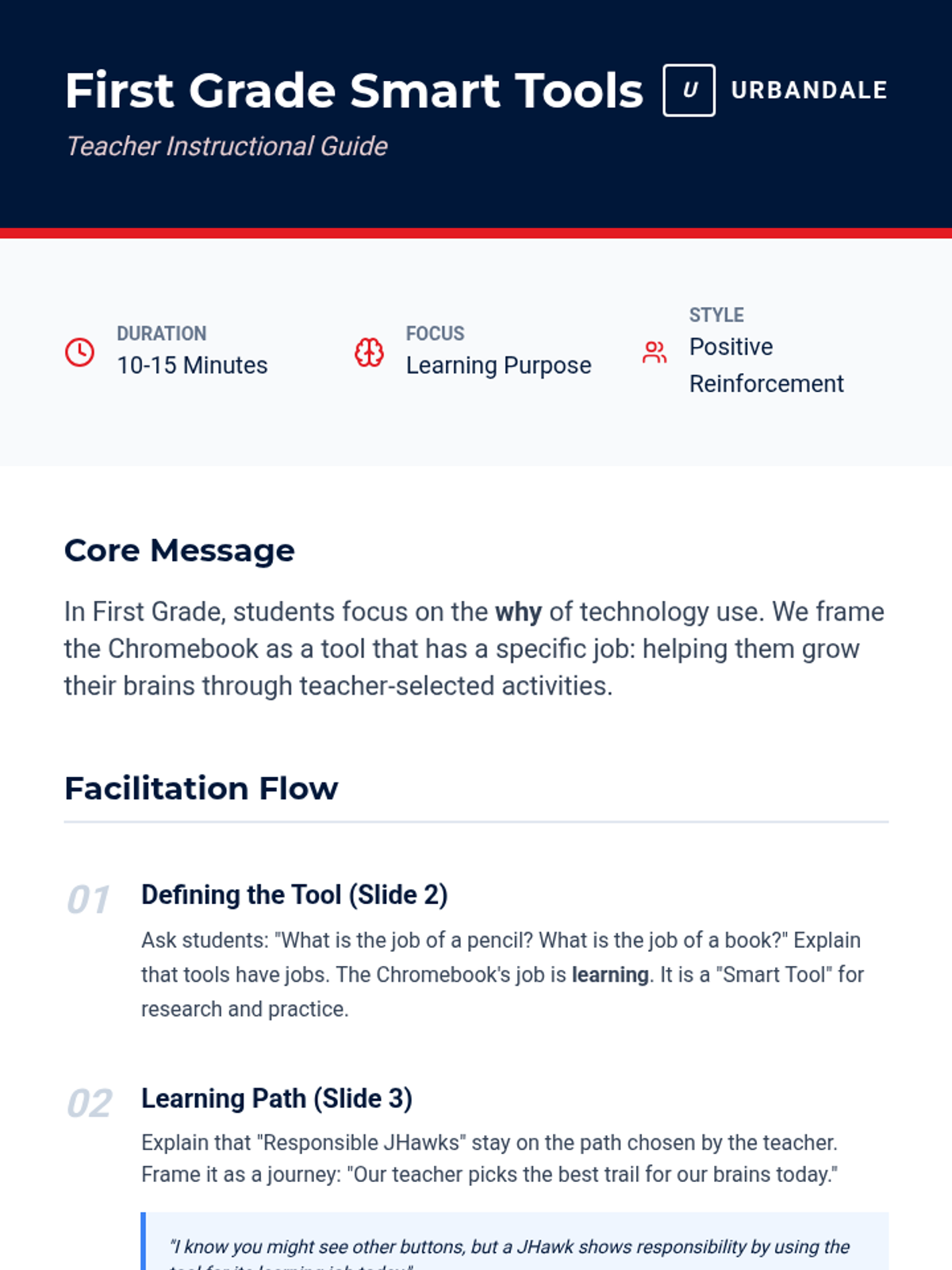
Reinforces the 'Tool not Toy' concept for 1st graders, emphasizing the JHawk Way of being Responsible with school technology.
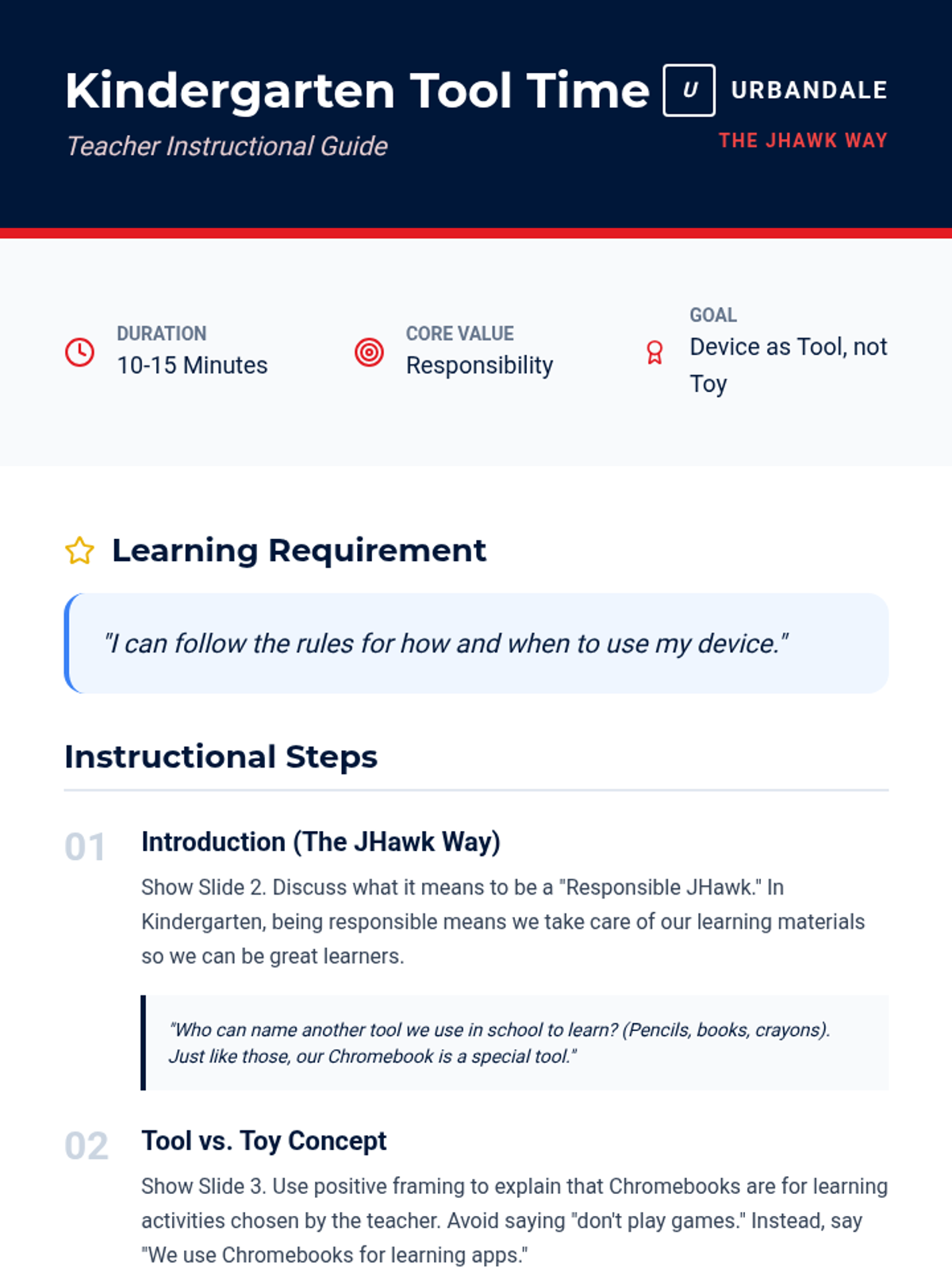
Introduces Kindergarteners to the concept that Chromebooks are learning tools, not toys, focusing on following teacher directions for when to use them.
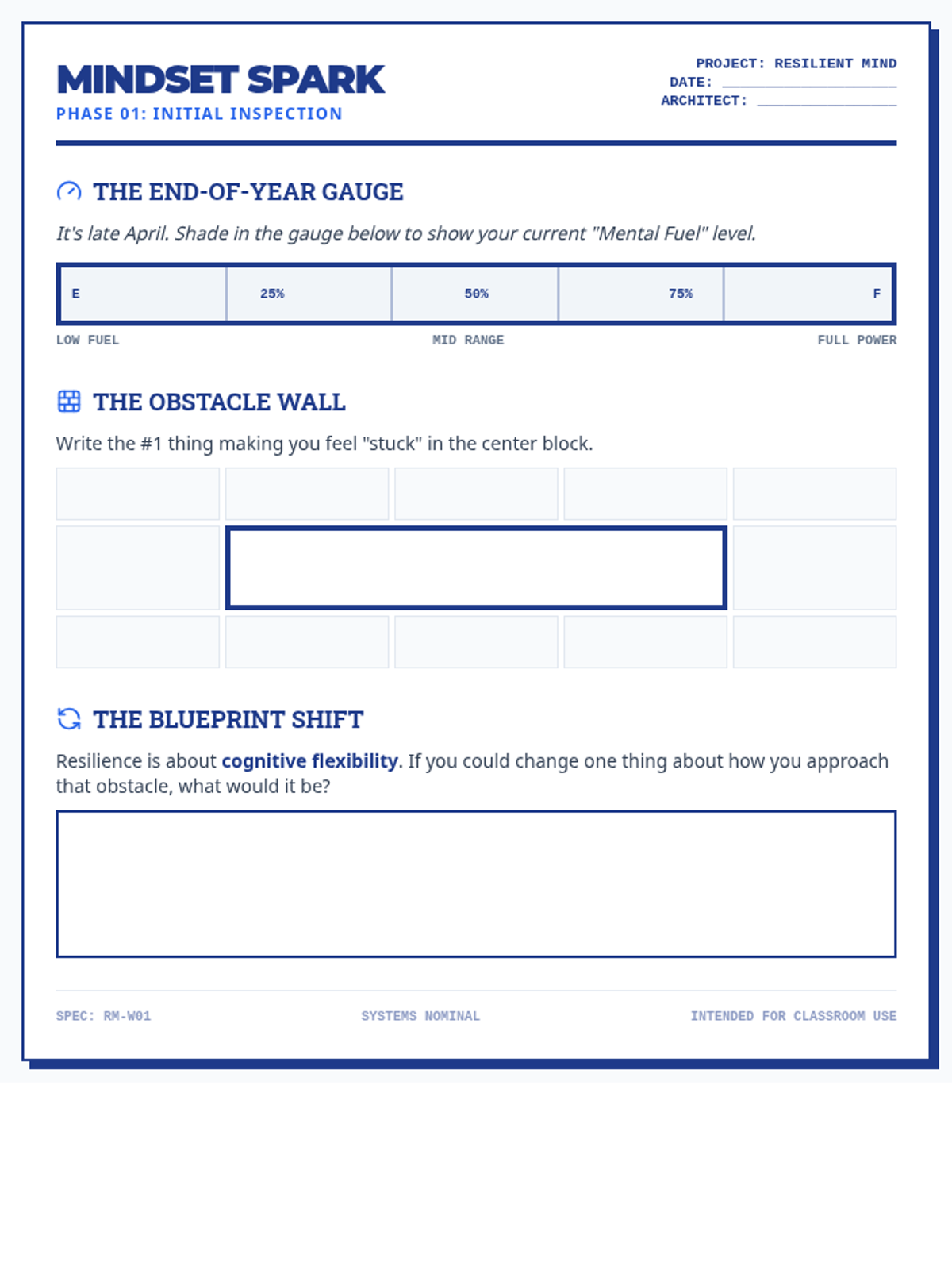
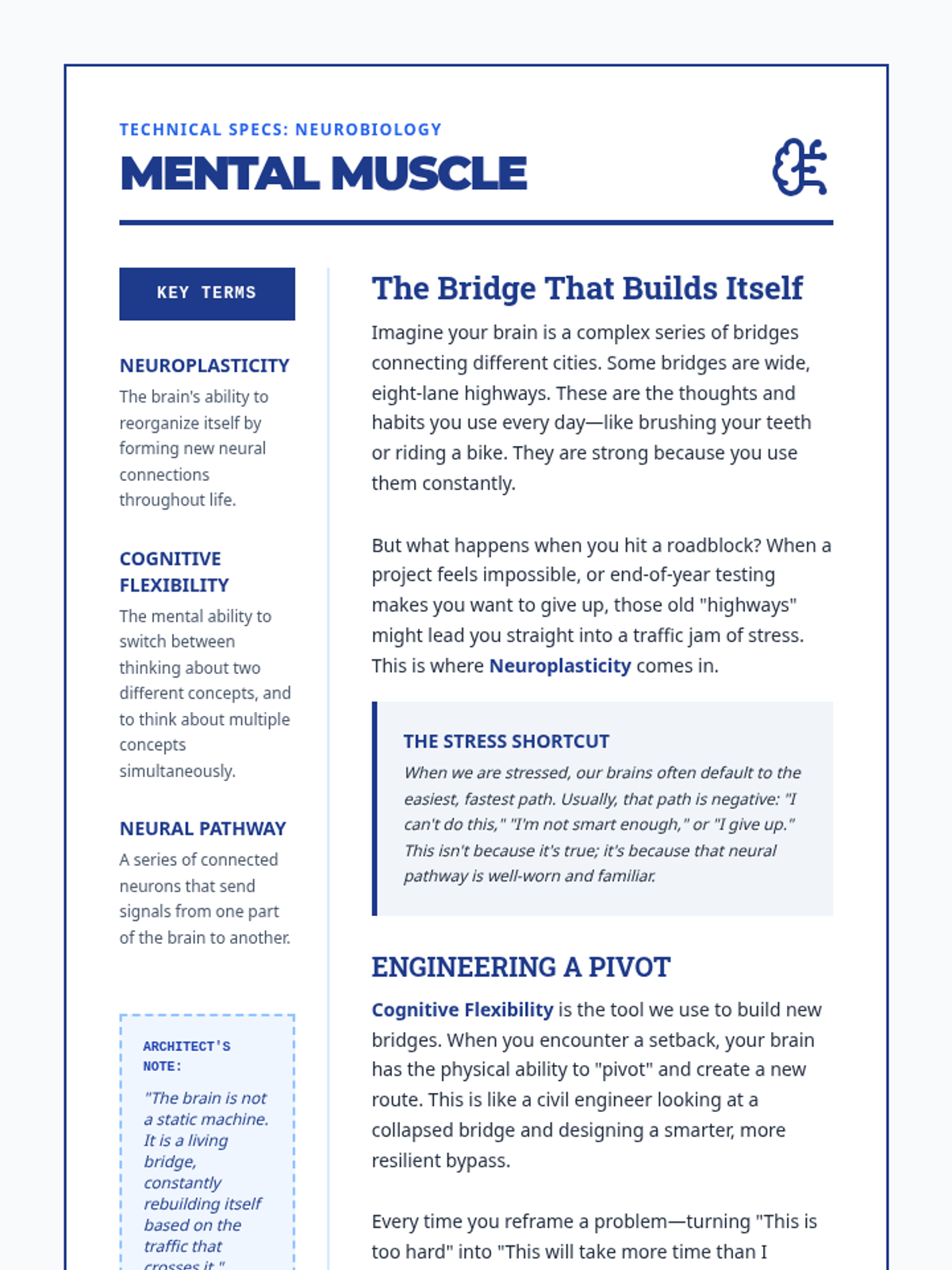
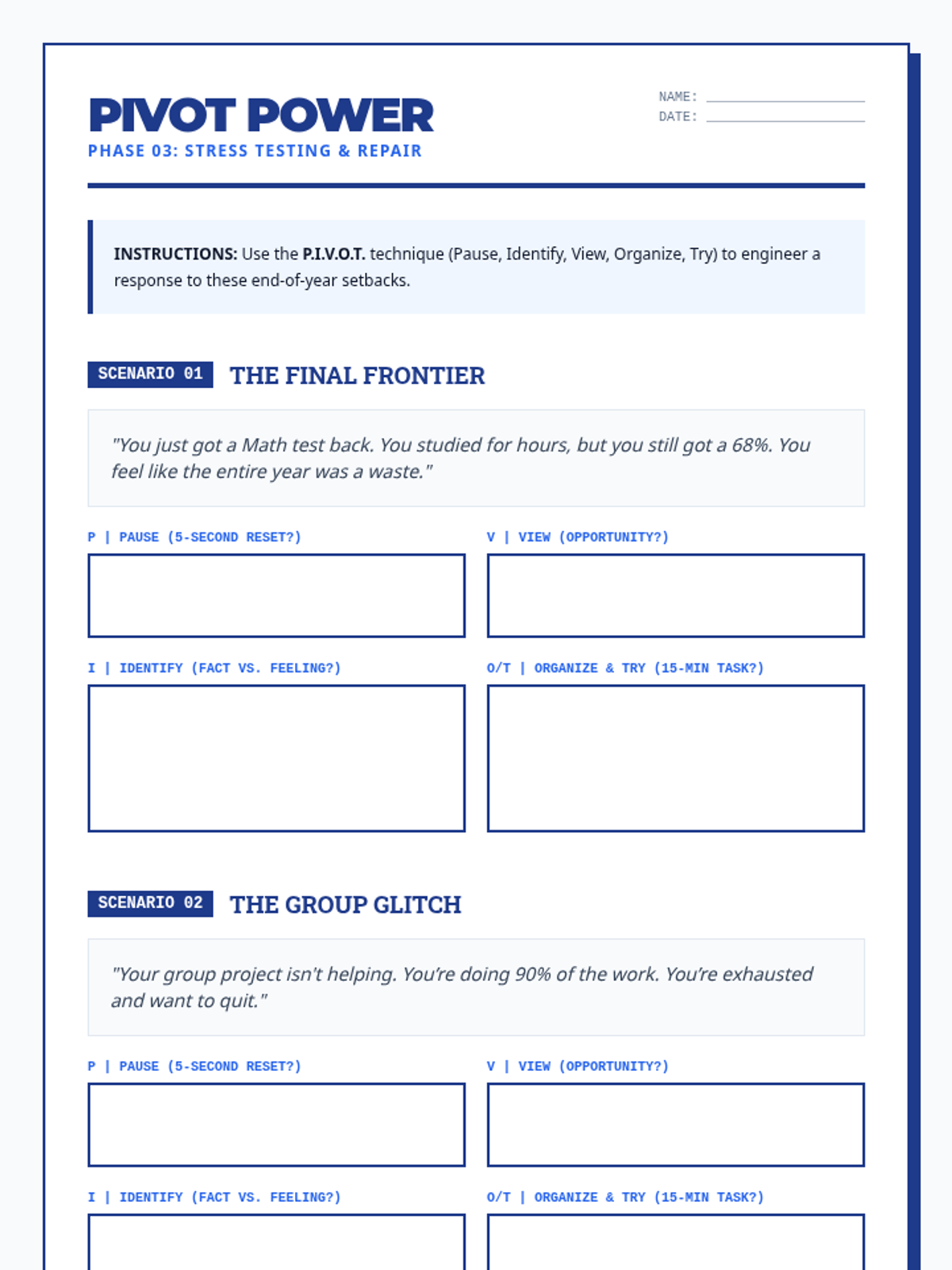
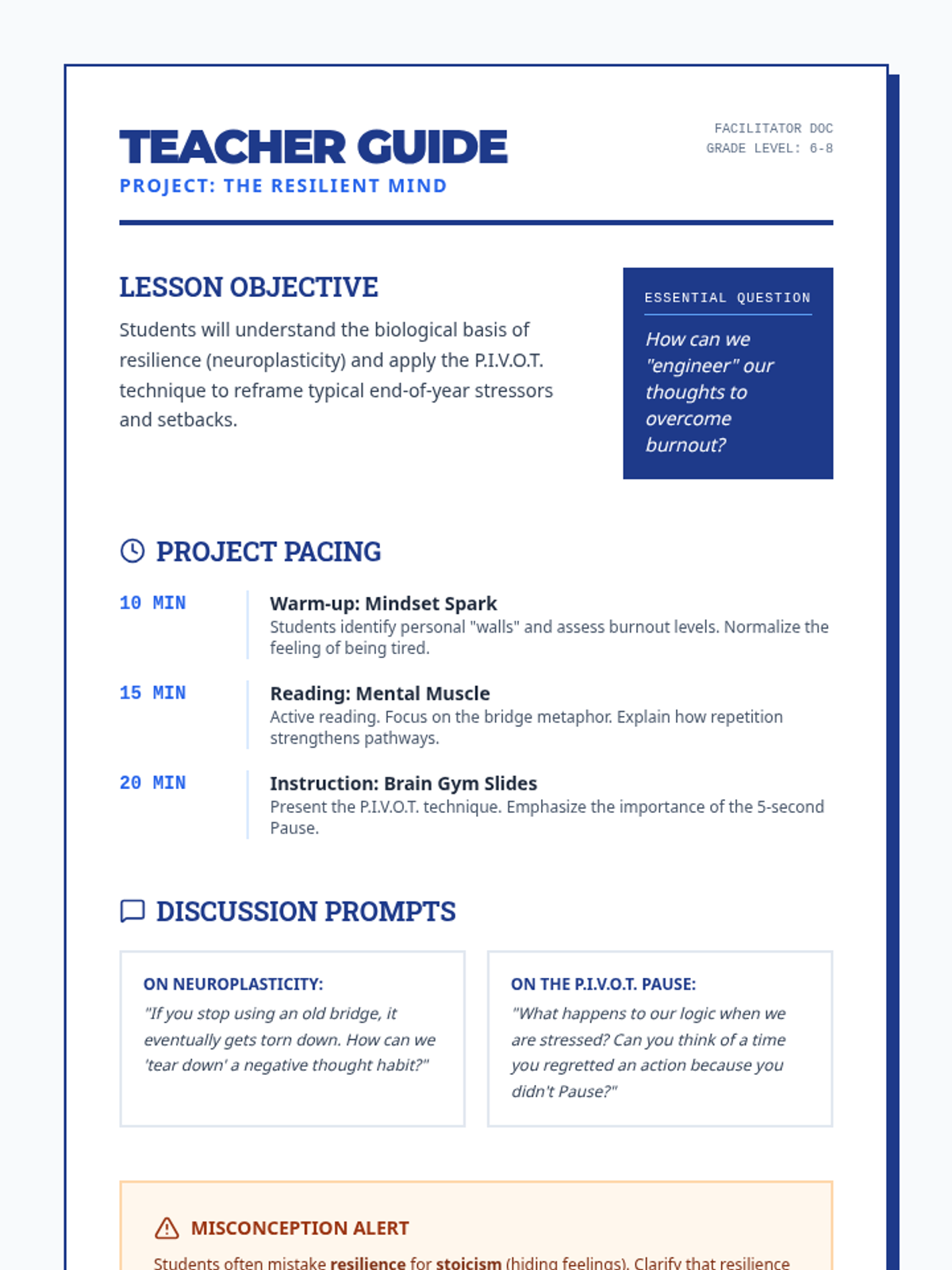
A 6th-8th grade social-emotional learning lesson designed to combat end-of-year burnout. Students explore neuroplasticity and cognitive flexibility through hands-on 'engineering' of their own mental responses to setbacks.
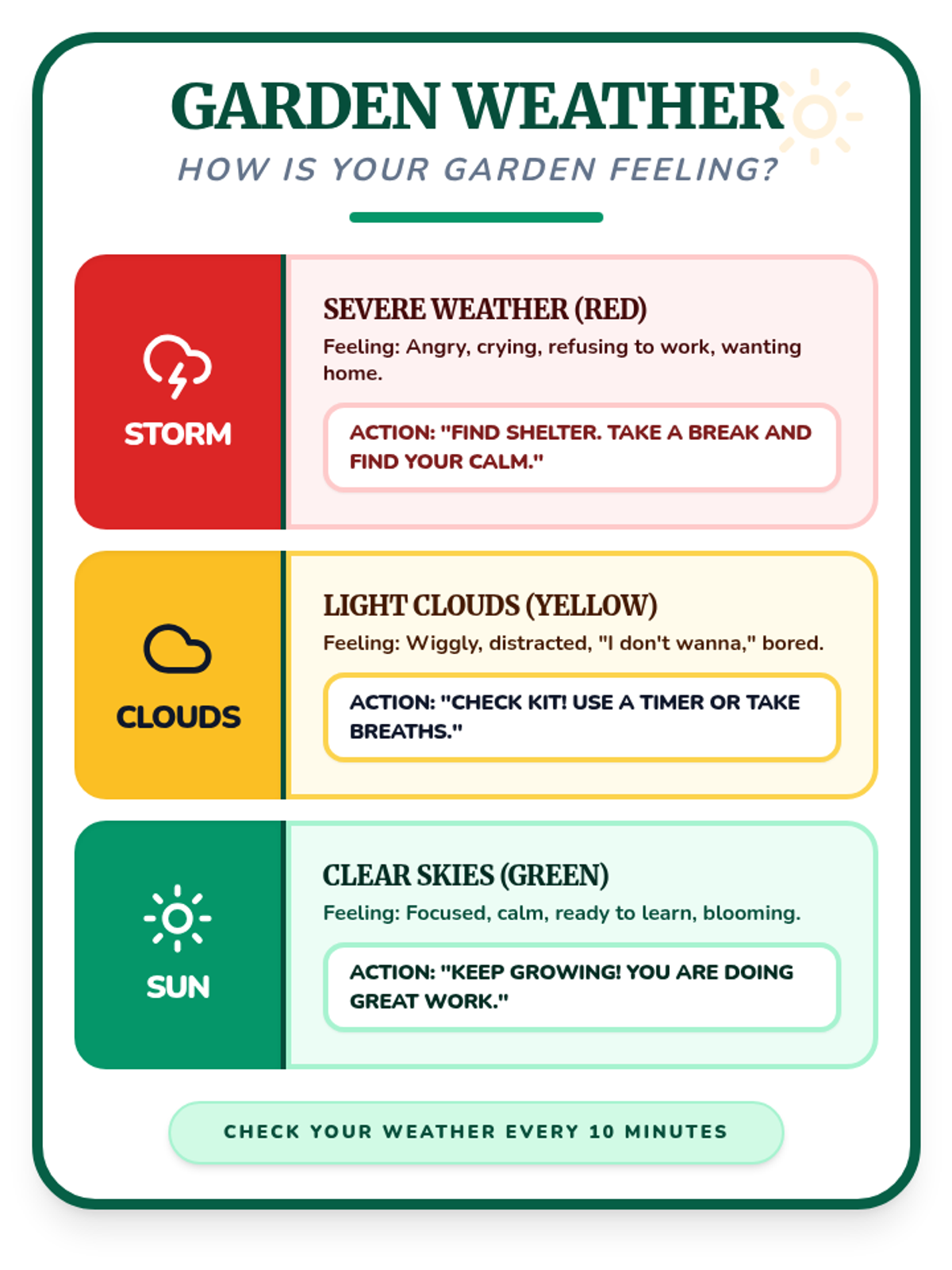
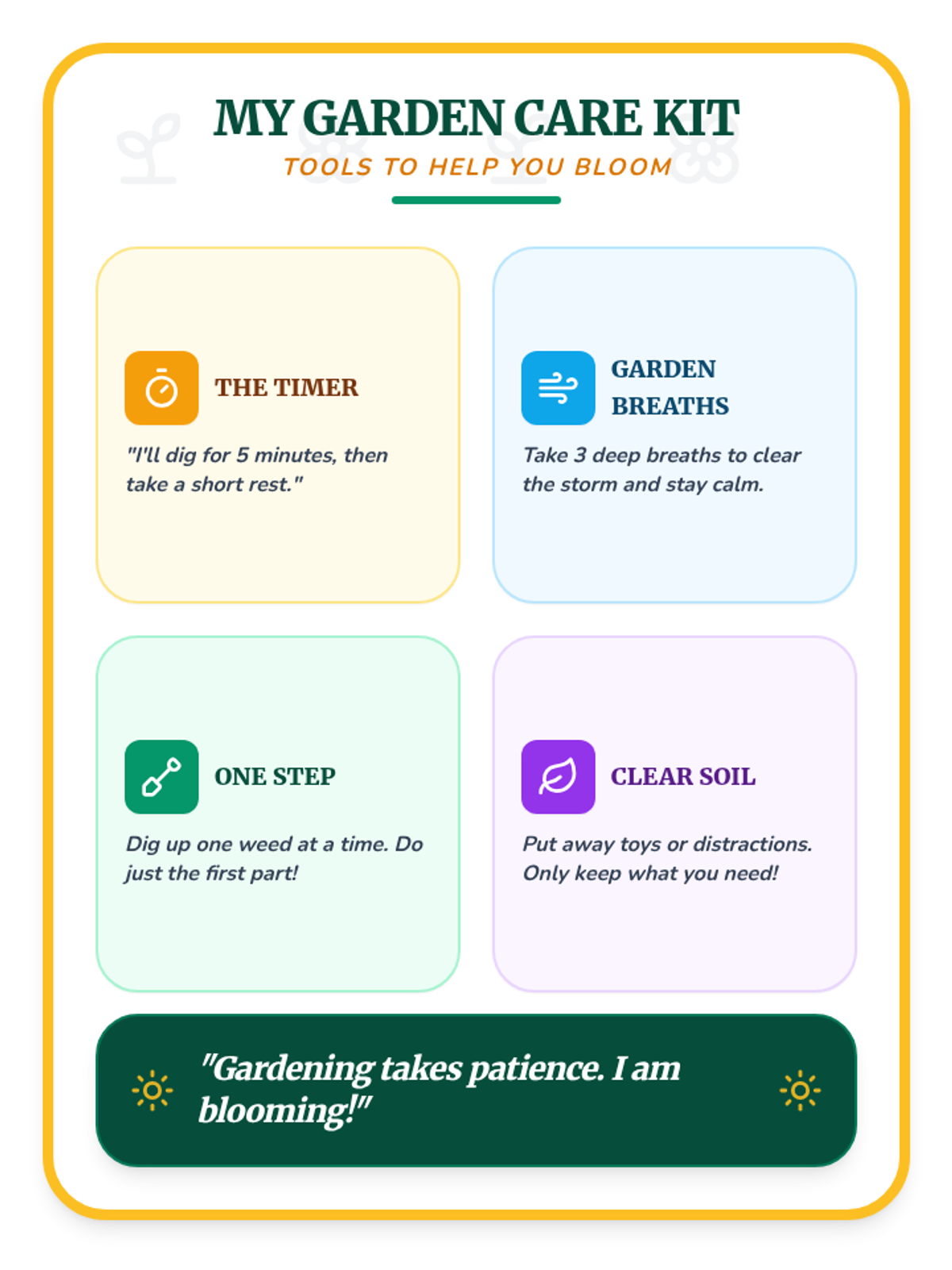
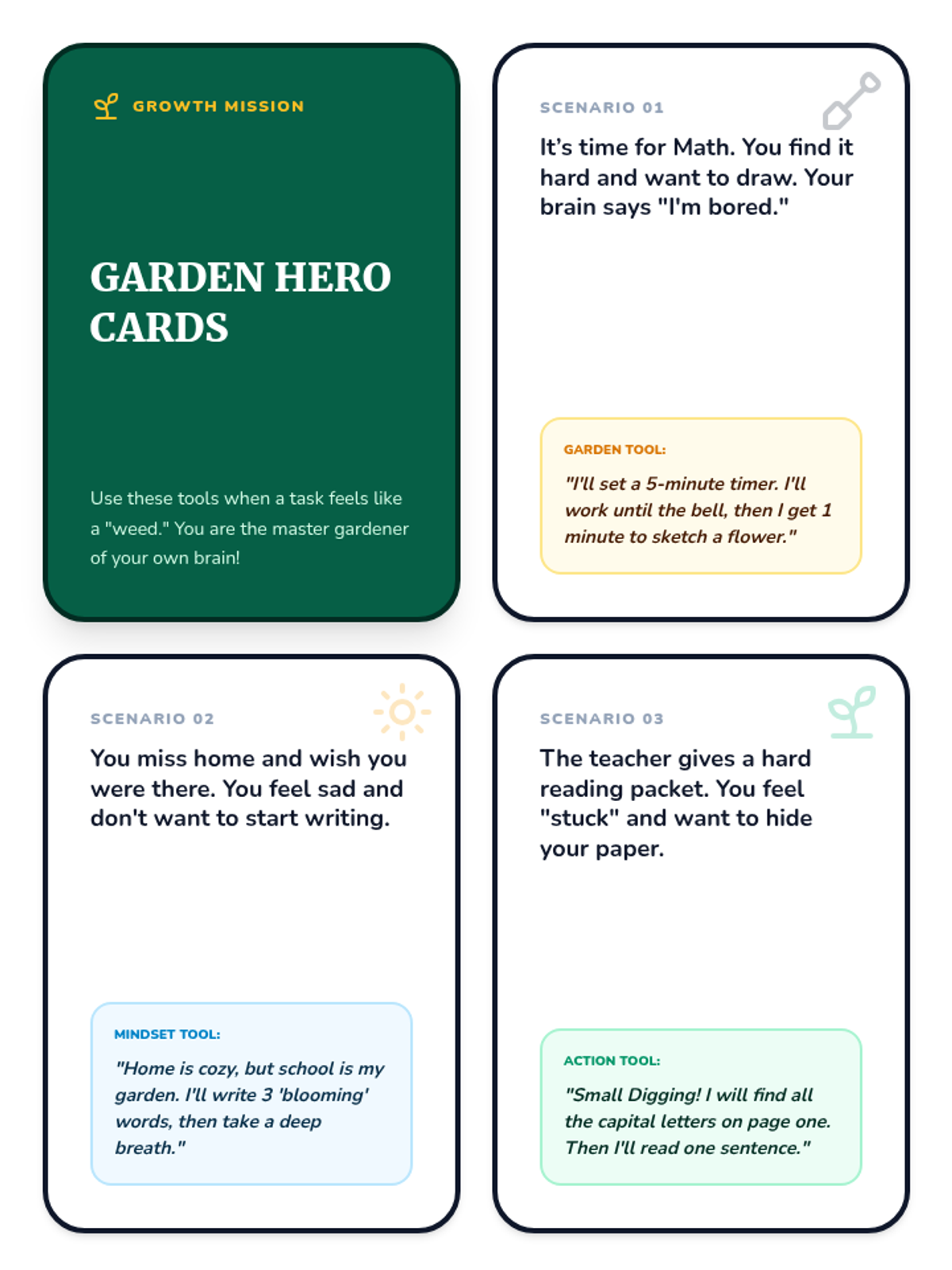
Navigating emotional regulation and frustration by understanding 'garden weather' and using tools to handle academic storms.
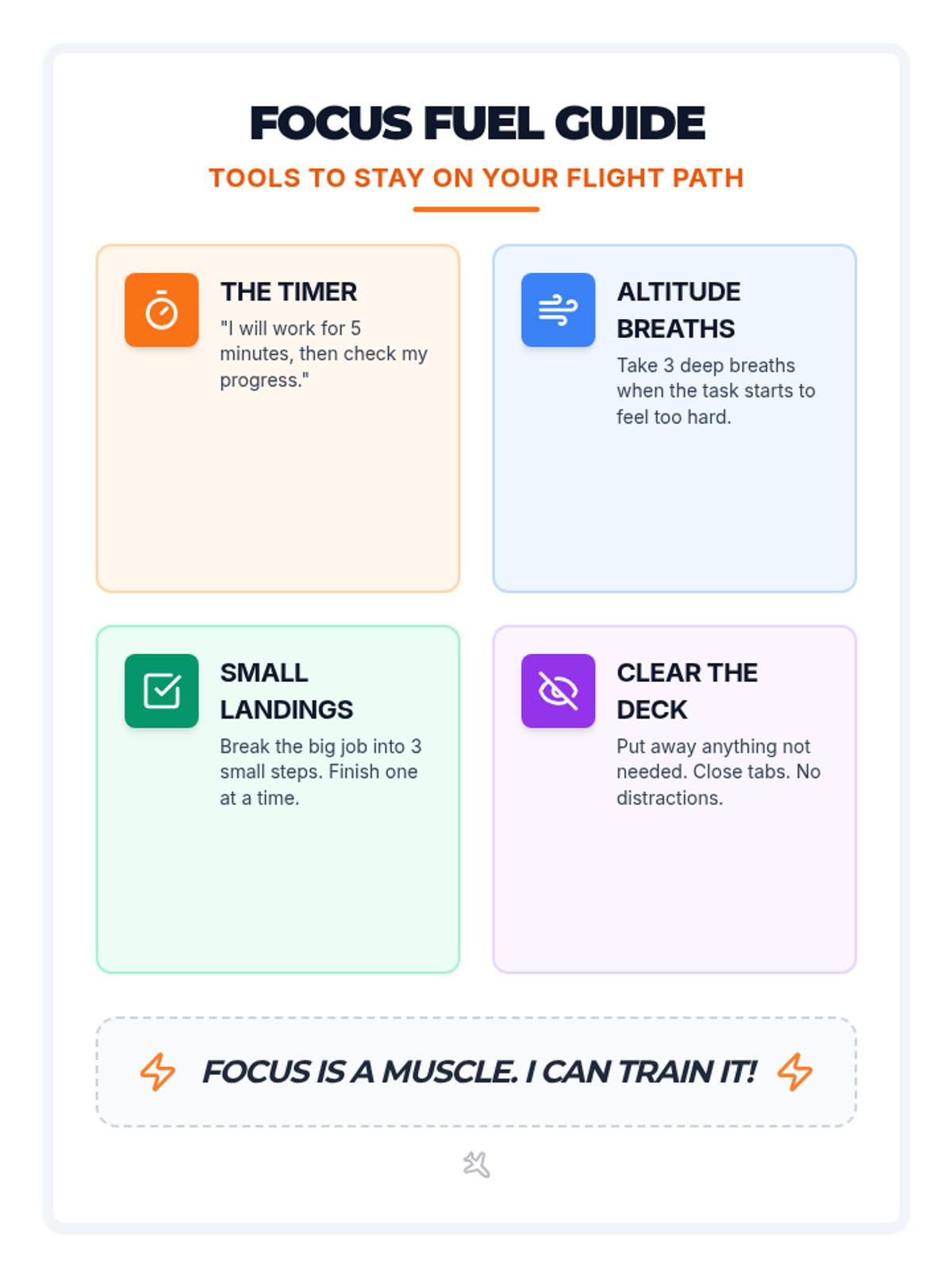
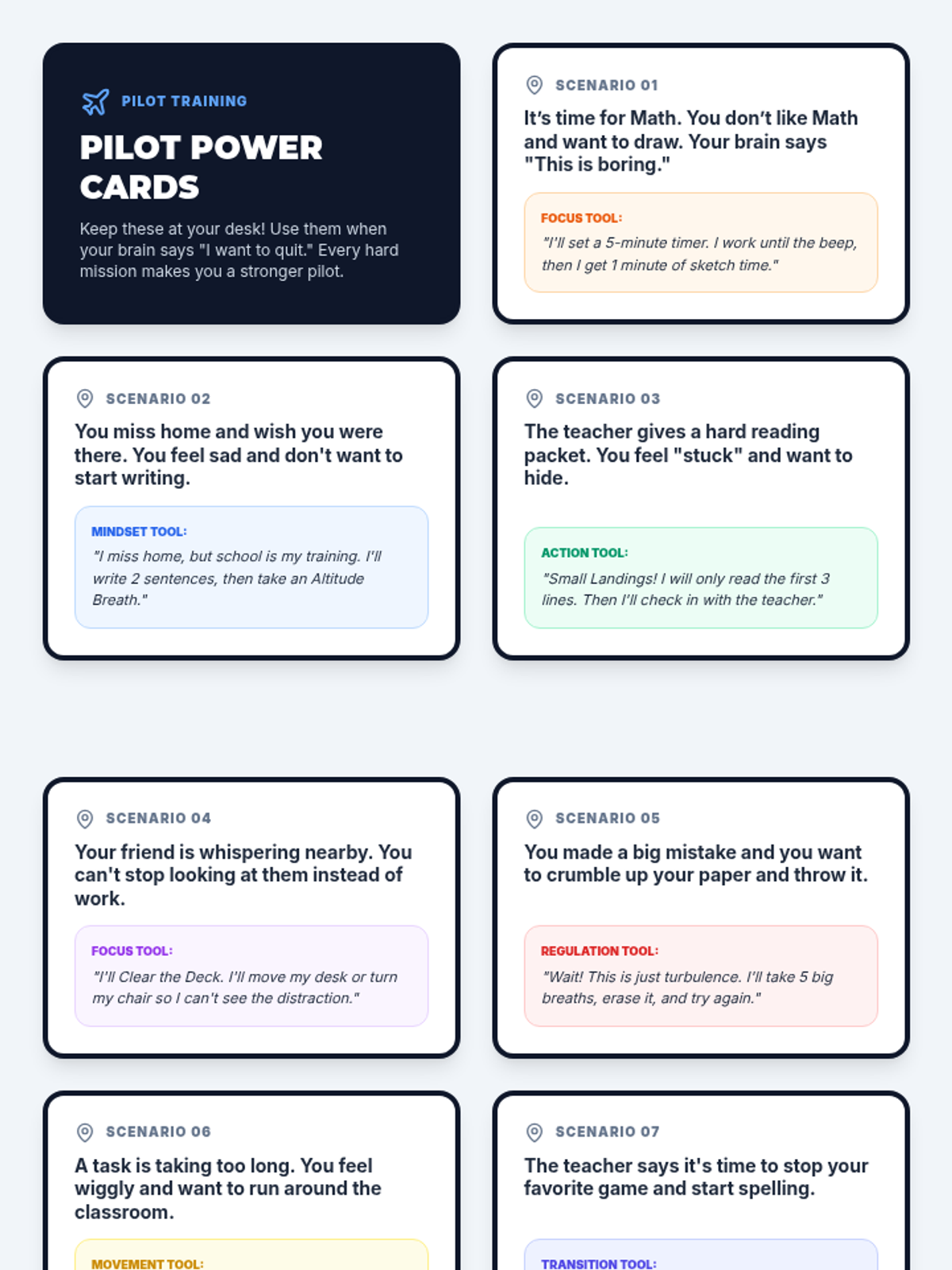
Developing executive functioning skills for sustained attention, treating focus as a toolkit for tending to academic tasks.
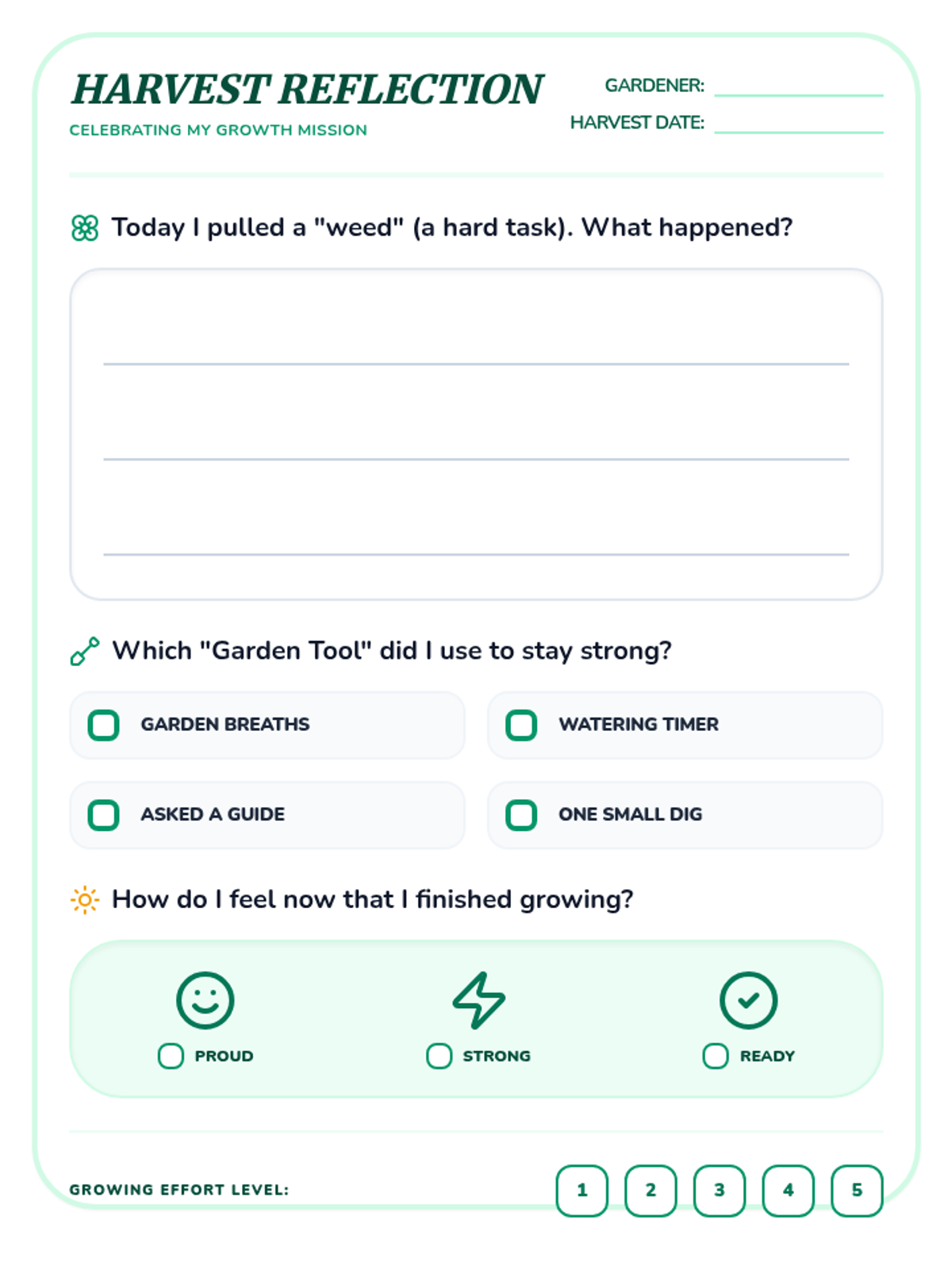
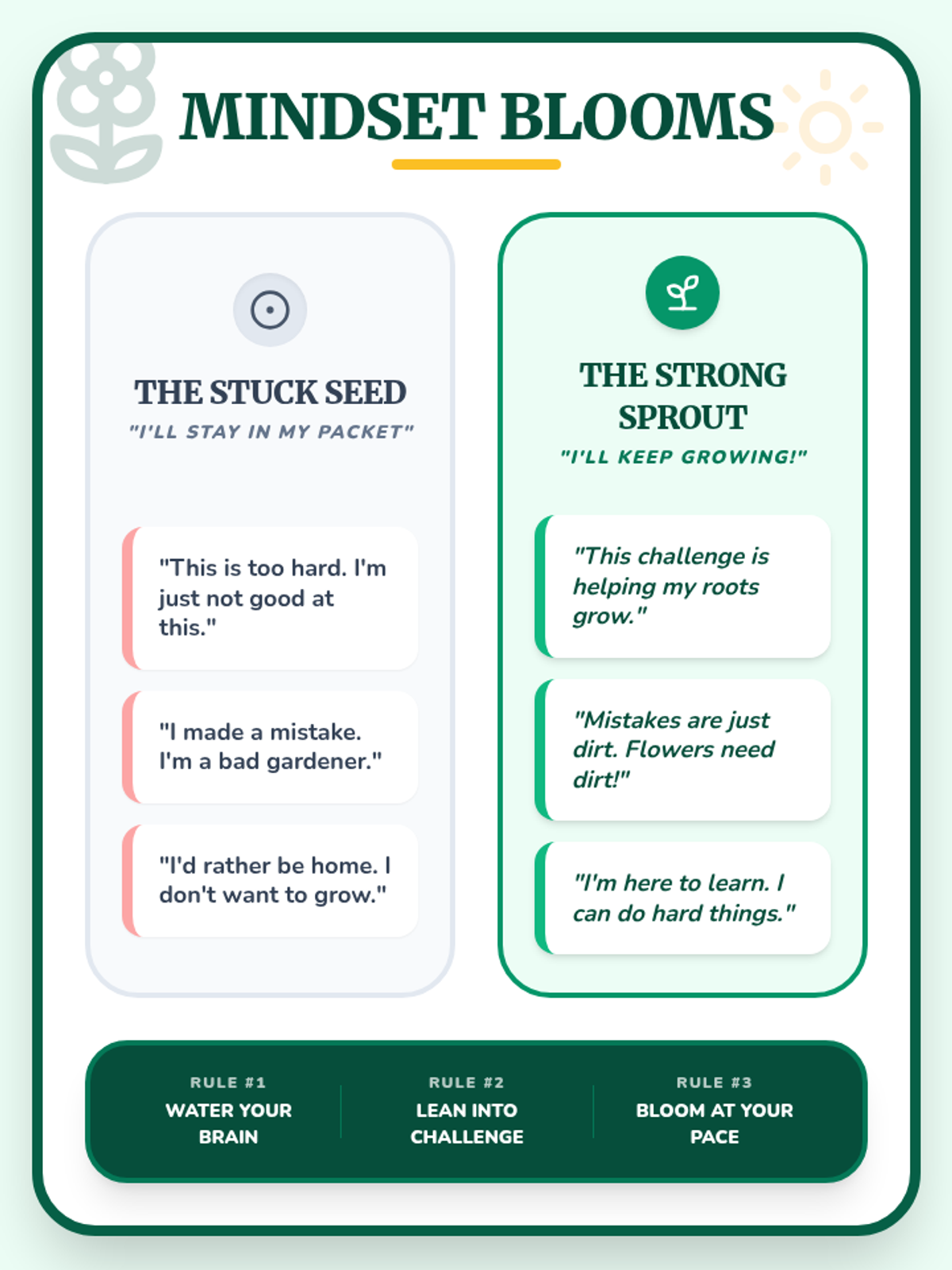
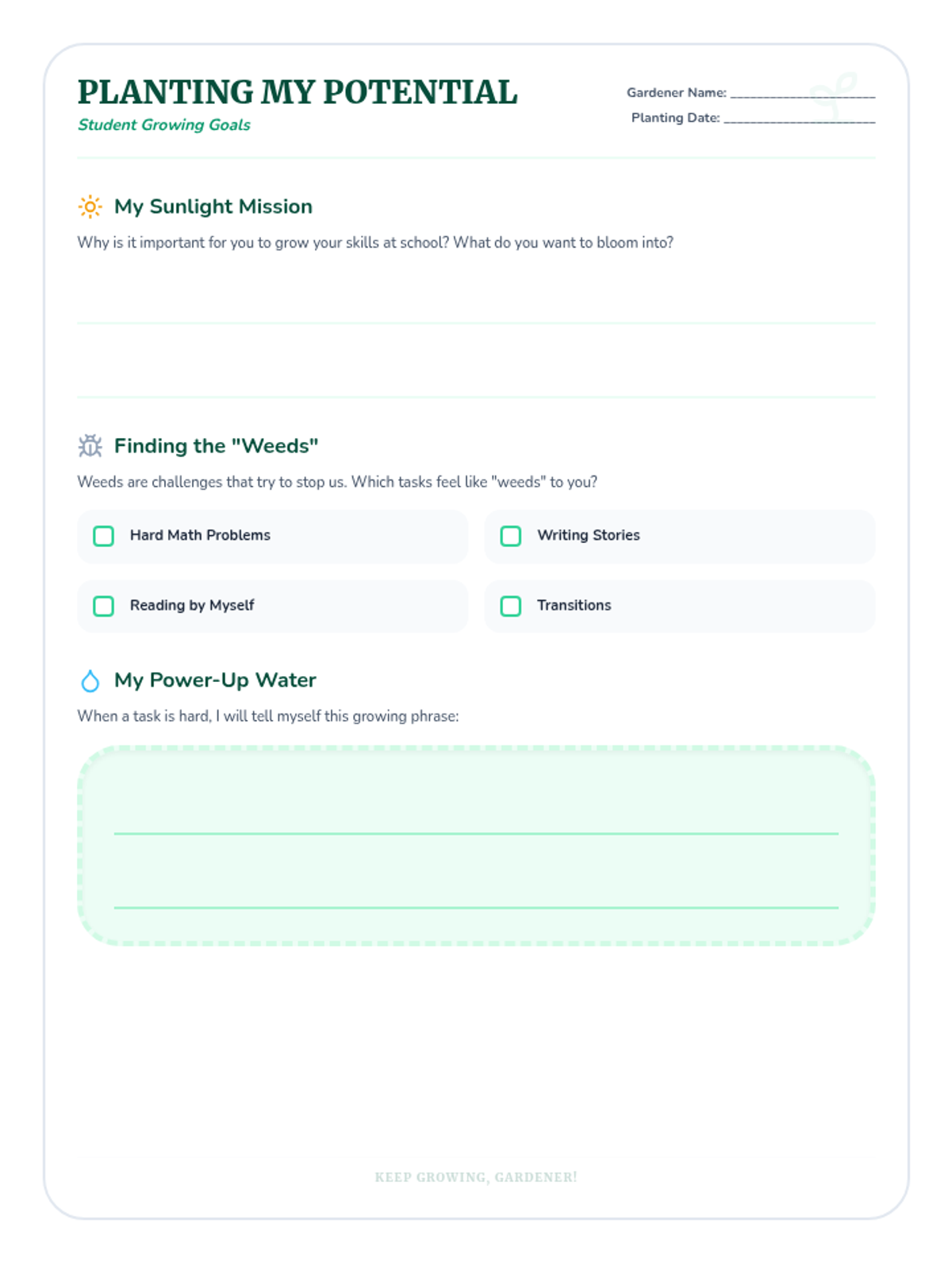
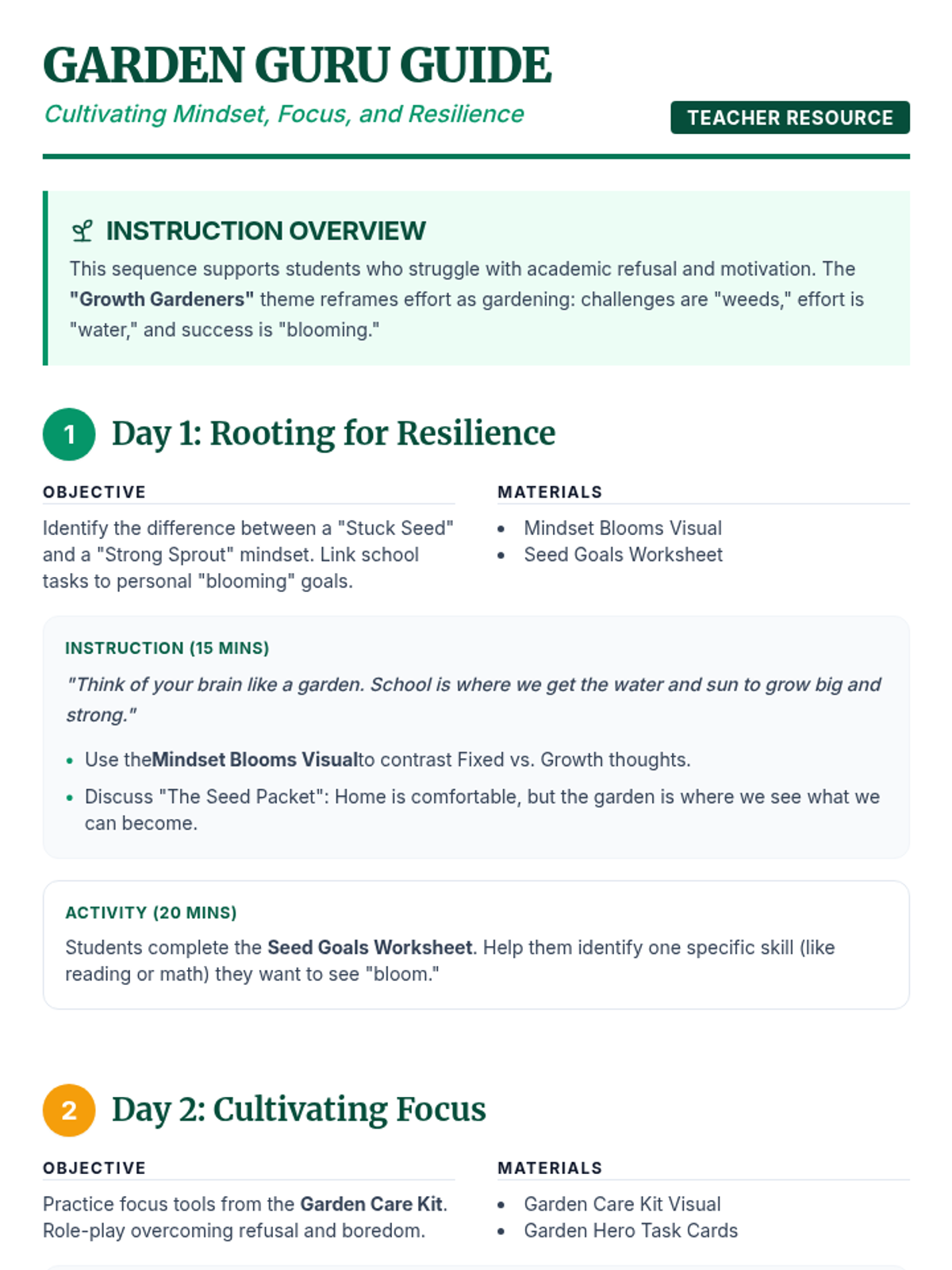
Introduction to growth mindset through the metaphor of gardening, helping students see that effort is the 'water' that helps their skills grow.
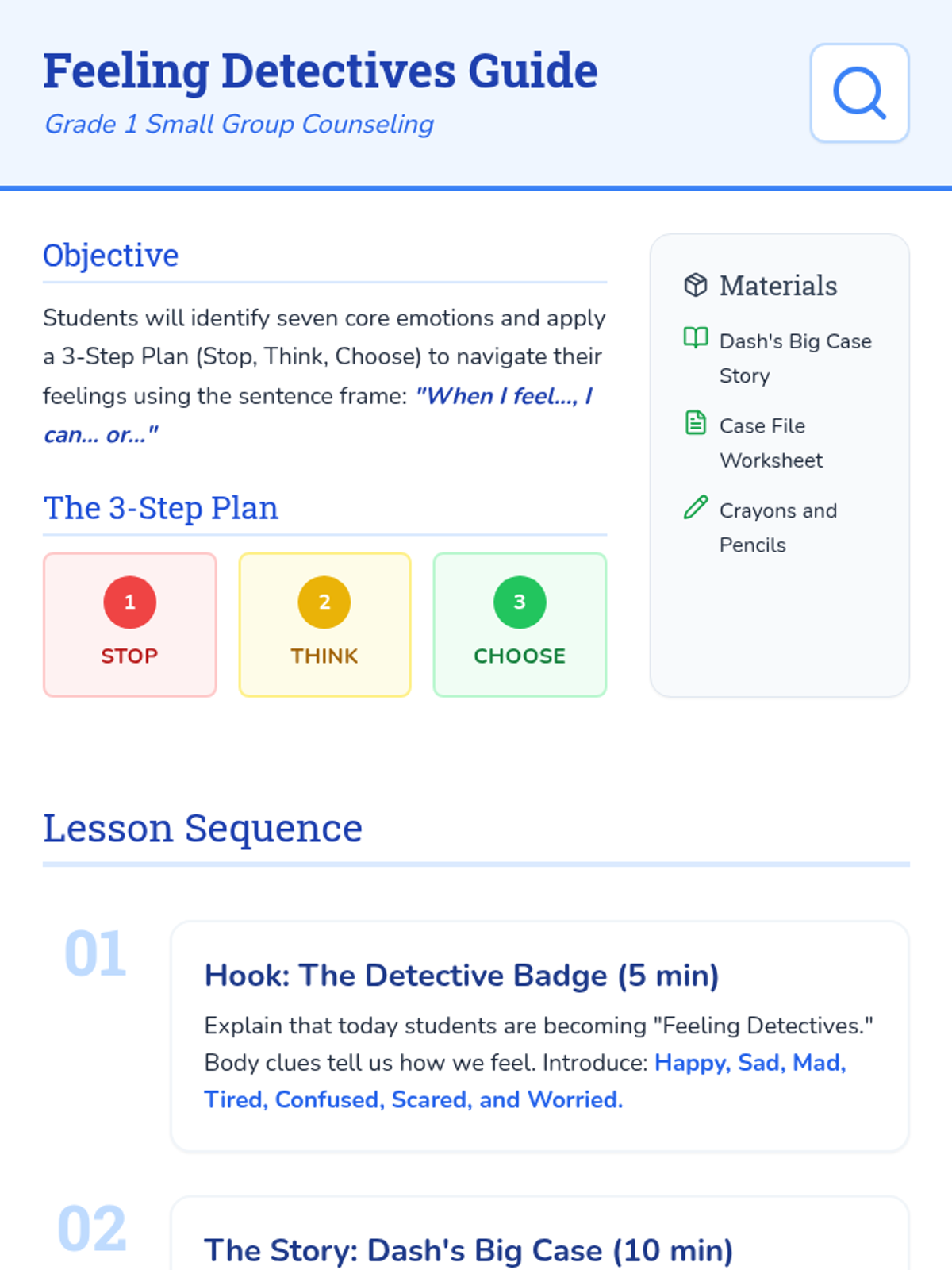
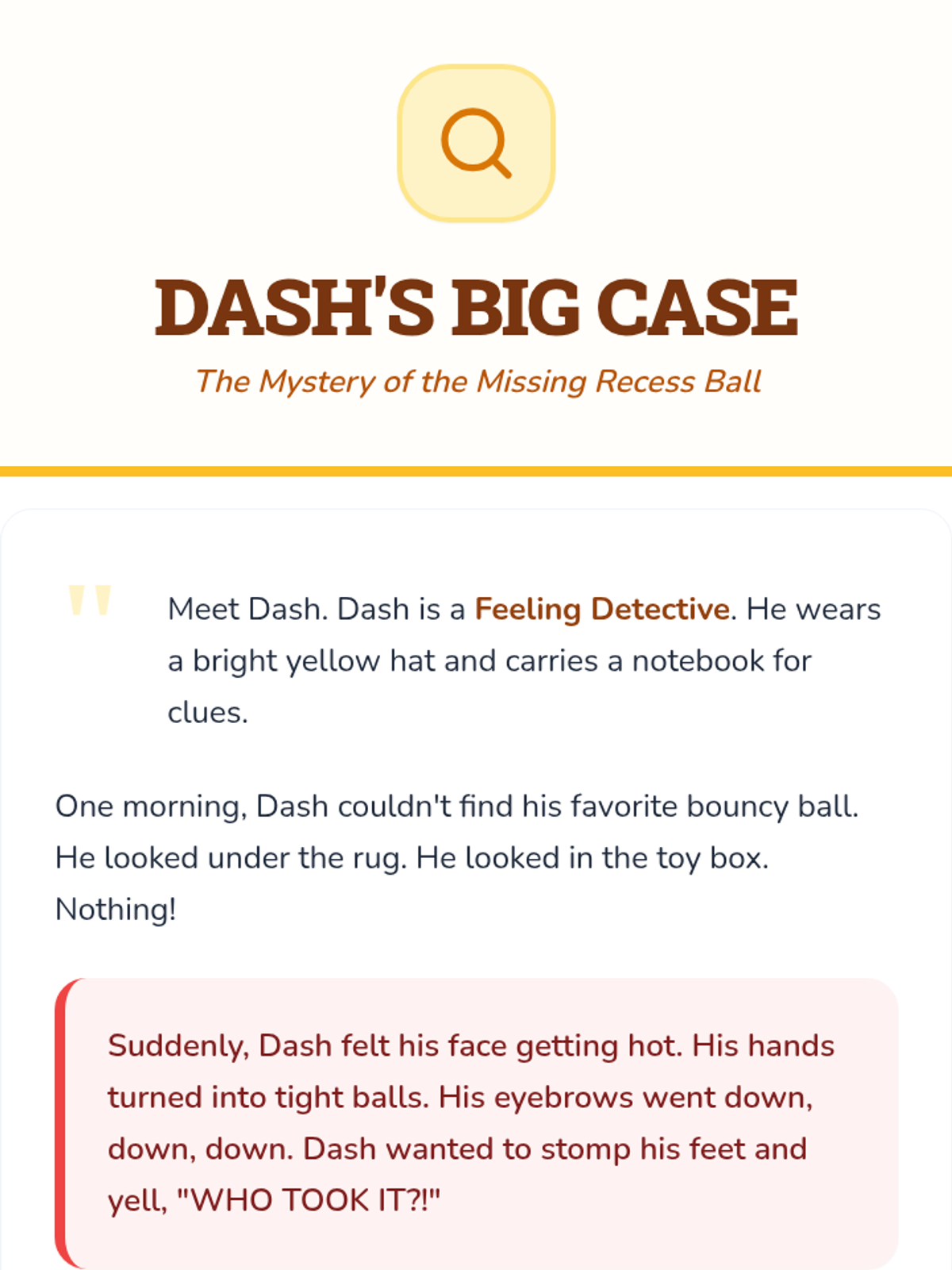
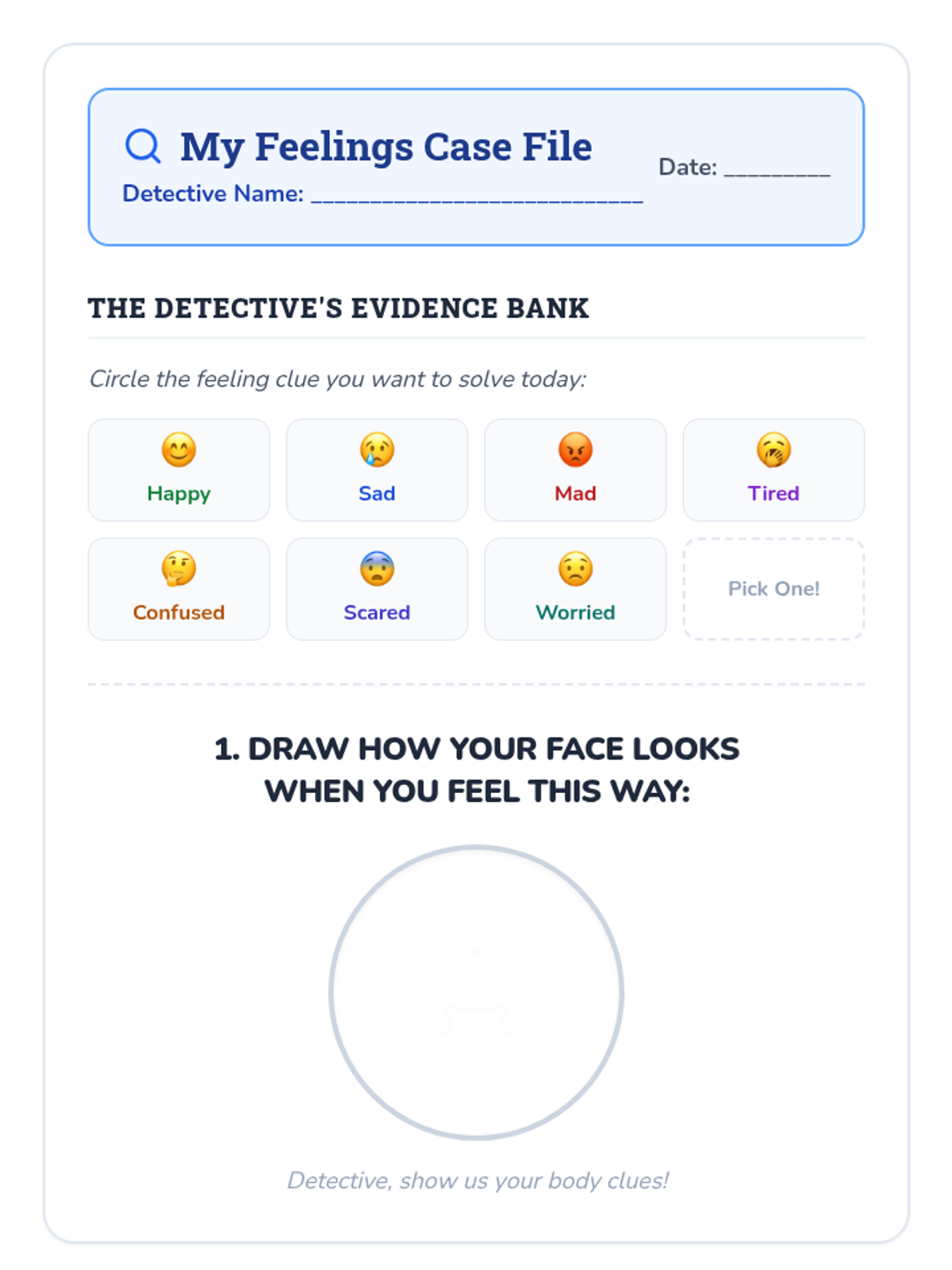
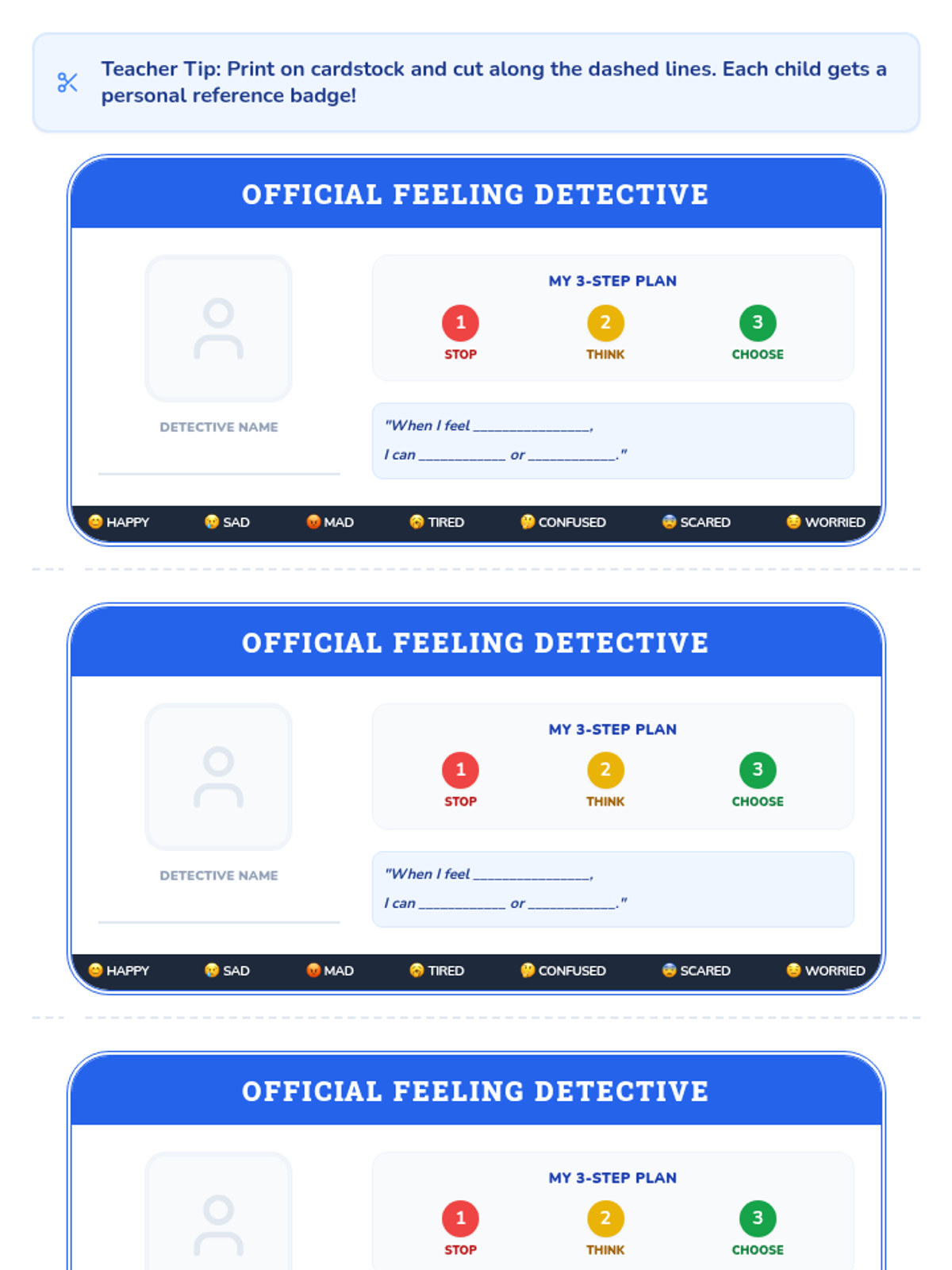
A small group counseling lesson focused on identifying emotions and implementing a 3-step self-regulation plan. Students learn to navigate feelings like happy, sad, mad, tired, confused, scared, and worried using a detective-themed strategy.
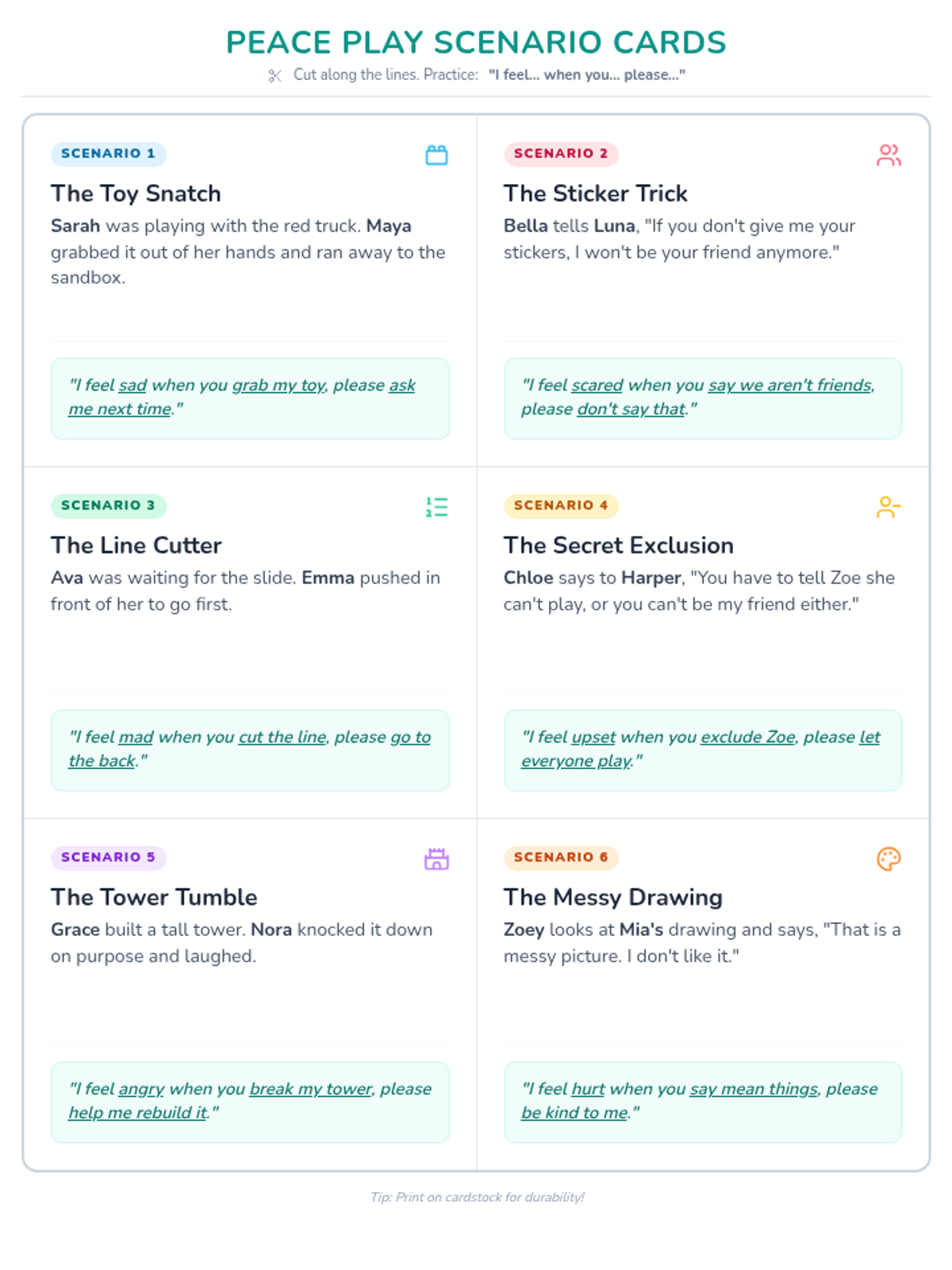
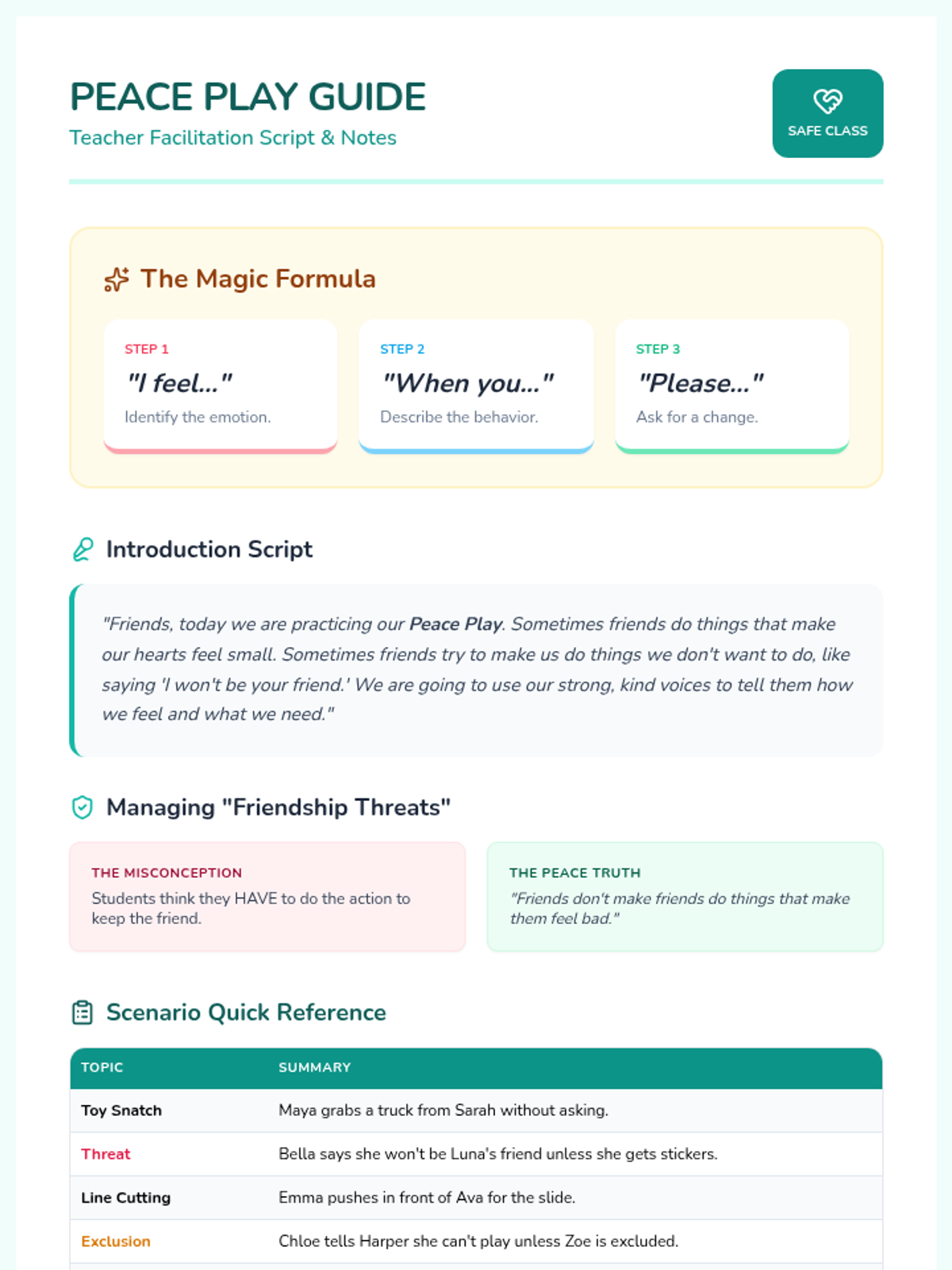
A collection of role-play scenarios and teacher guidance designed to help kindergarten students practice conflict resolution using 'I-statements' and navigate peer pressure.
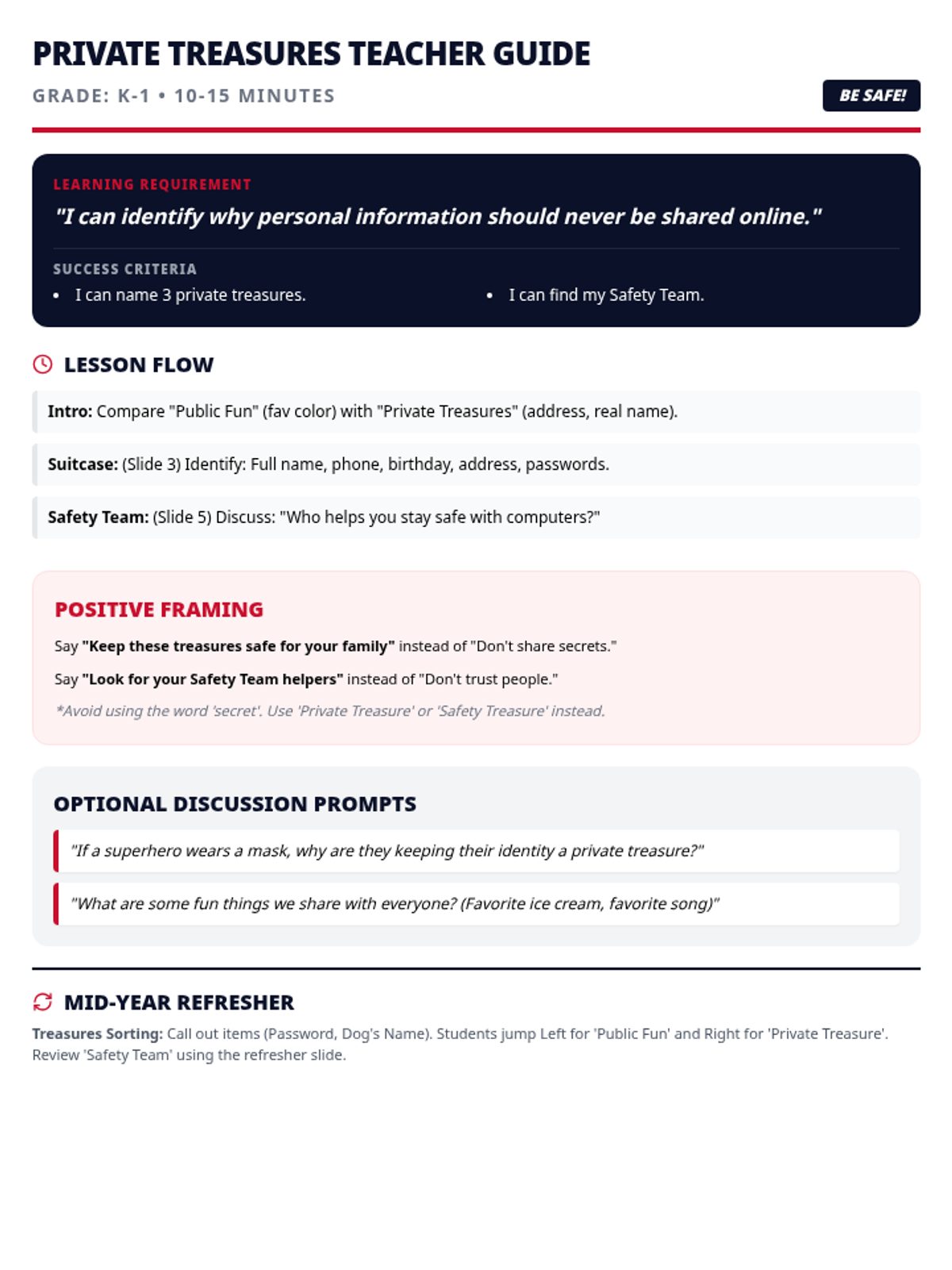
A 10-15 minute introductory lesson for K-1 students on identifying and protecting private information using the JHawk Way of being safe. Includes partner activities and positive framing for early learners.
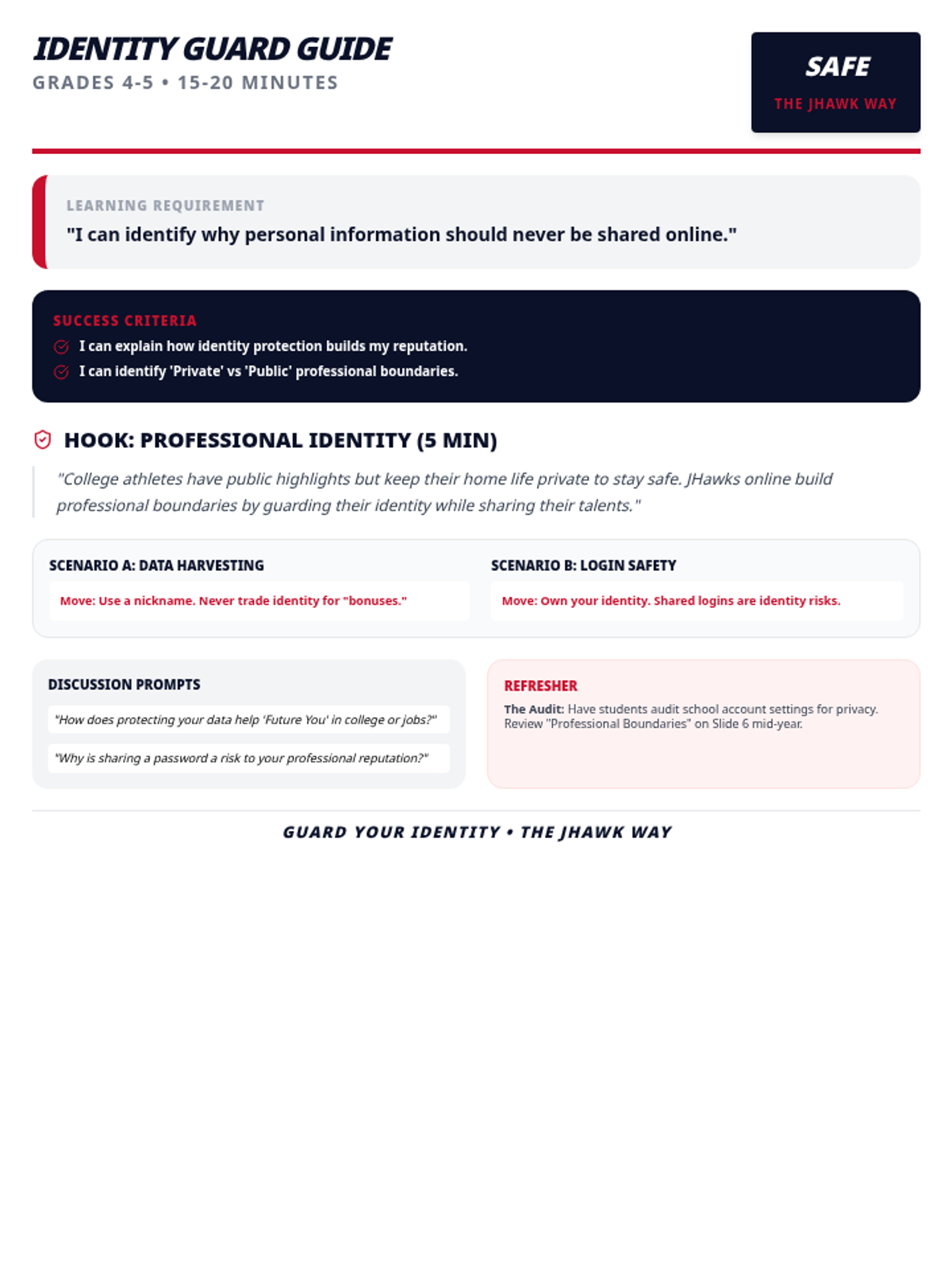
A 15-20 minute lesson for 4-5 students on identity protection and the importance of a secure digital footprint. Students analyze scenarios to practice being safe and professional online.