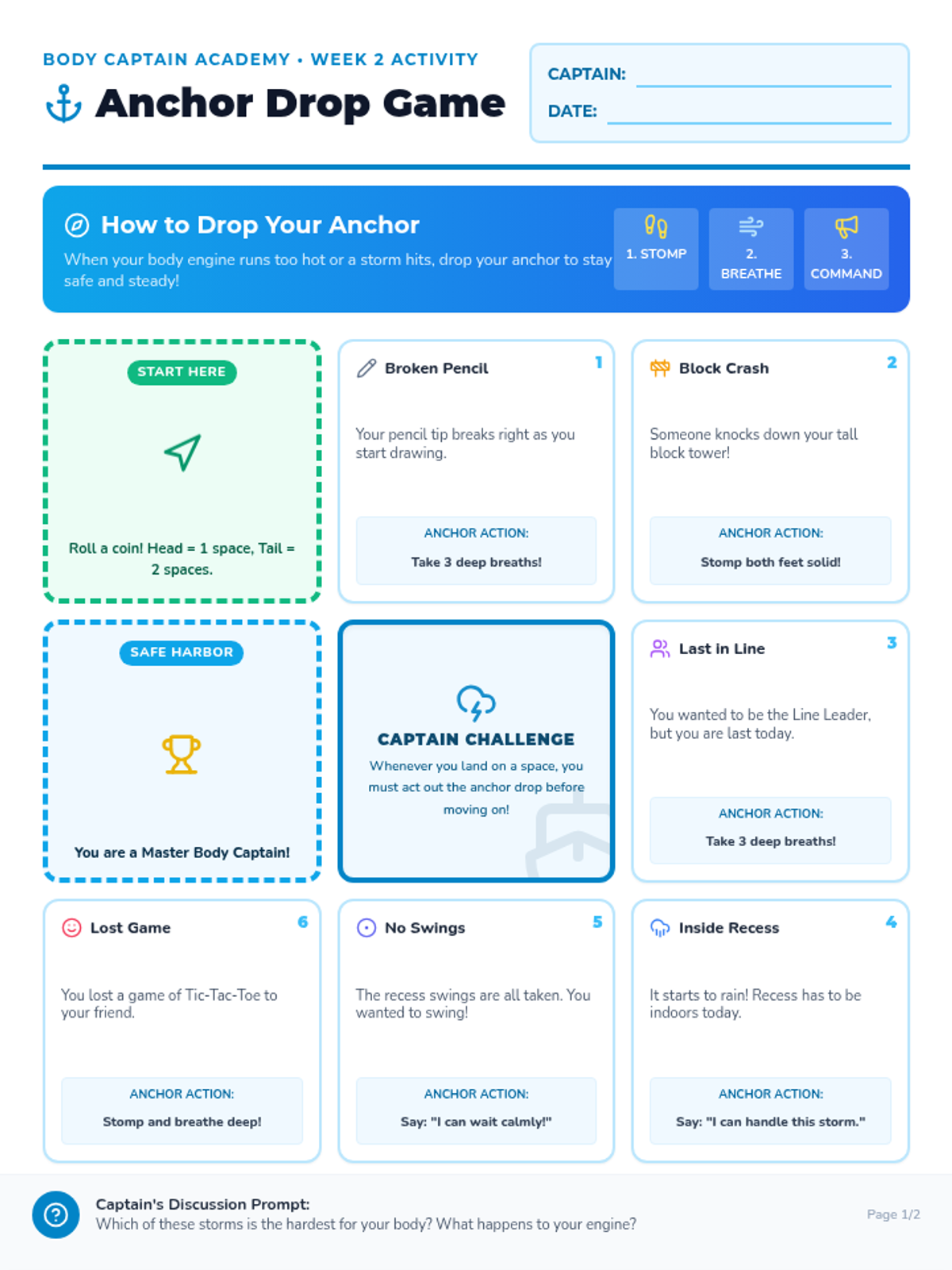
Students practice whispering their actions as they do them, similar to a sportscaster announcing a game. This continuous verbal loop helps prevent distraction and keeps the student engaged.
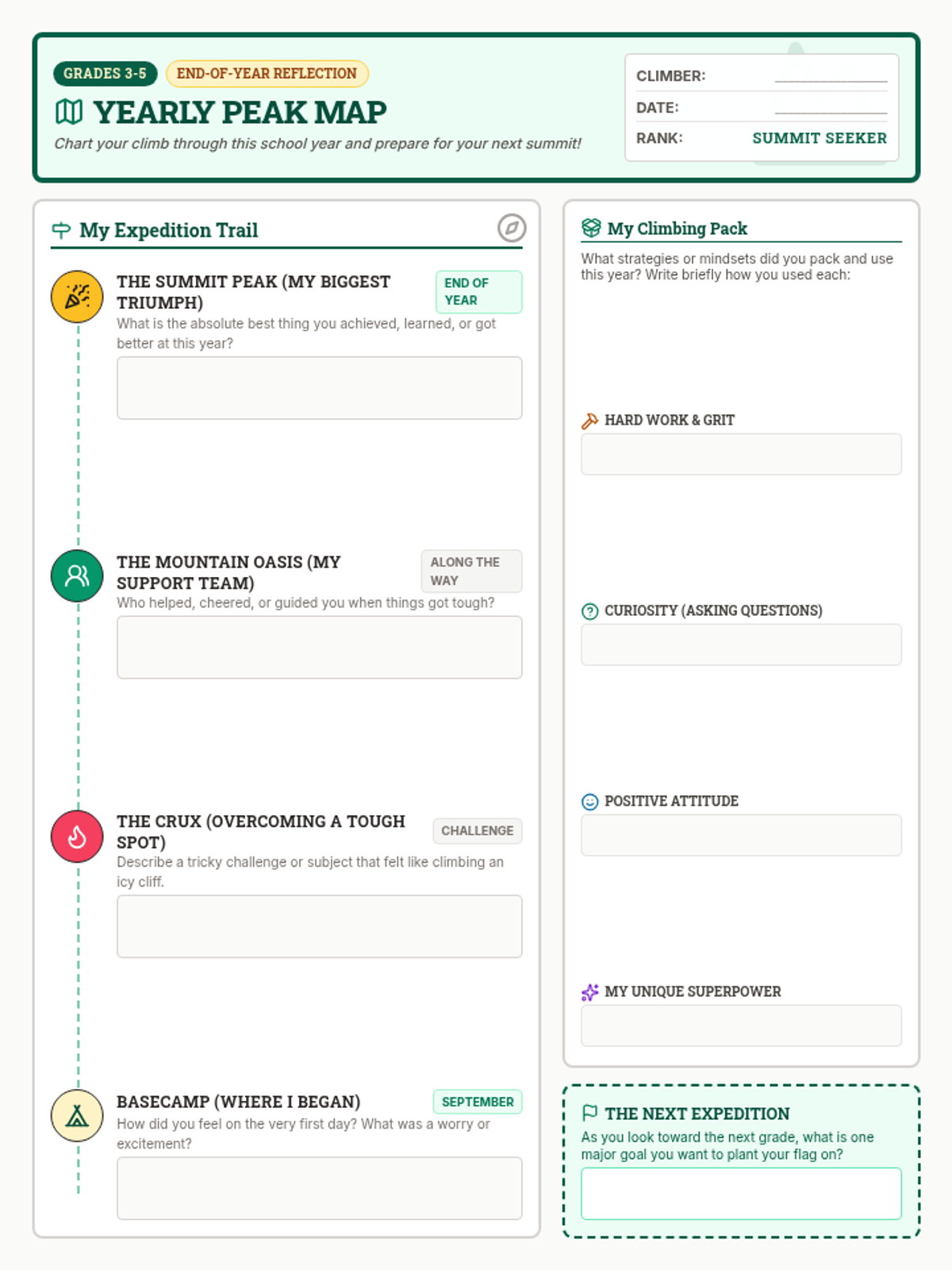
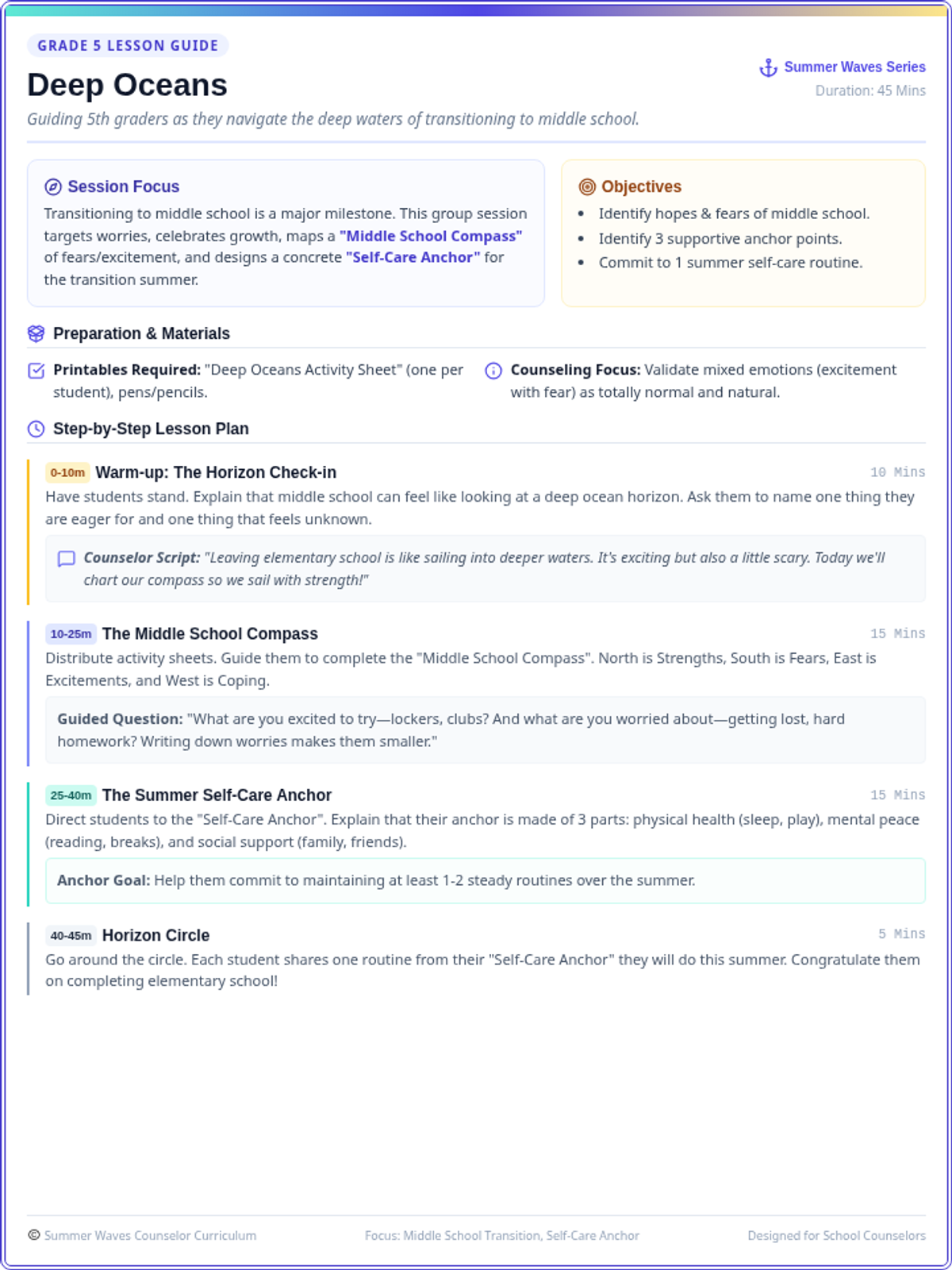
A quick, impactful lesson for 5th graders transitioning to middle school. Students explore their internal locus of control through the 'Circle of Control' concept and celebrate their elementary achievements through goal-setting and reflection.
This lesson teaches students how to calculate total costs of multiple items and make spending decisions based on a fixed budget.
This lesson focuses on identifying US coins (penny, nickel, dime, quarter) and their respective values through visual recognition and matching.
A foundational lesson for Transitional Kindergarten students focused on identifying basic emotions and the physical sensation of being 'wiggly' (stressed) vs. 'still' (calm). Introduces 'Turtle Breathing' as a primary regulation tool.
Reviewing all strategies, celebrating progress, and creating a personalized self-control plan for future use.
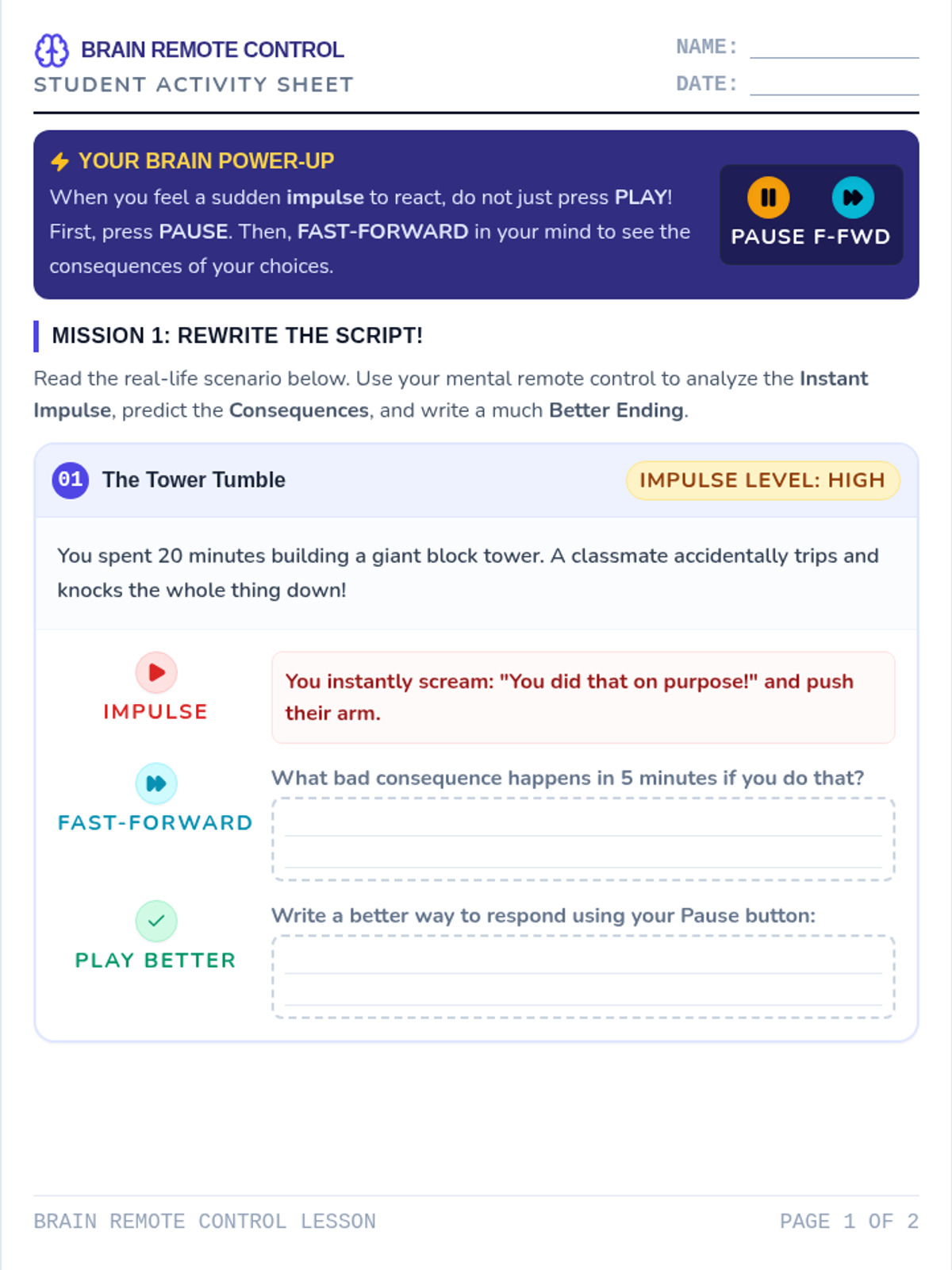
Developing impulse control by 'fast-forwarding' to see the potential consequences of different choices.
Managing the intensity of emotions and reactions using the 'Volume Control' strategy for self-regulation in social situations.
Addressing social frustrations by 'rewinding' to understand what happened and how to troubleshoot social bugs with peers.
Focusing on the 'Pause' button to build a gap between impulse and action, featuring strategies for stopping in the moment.
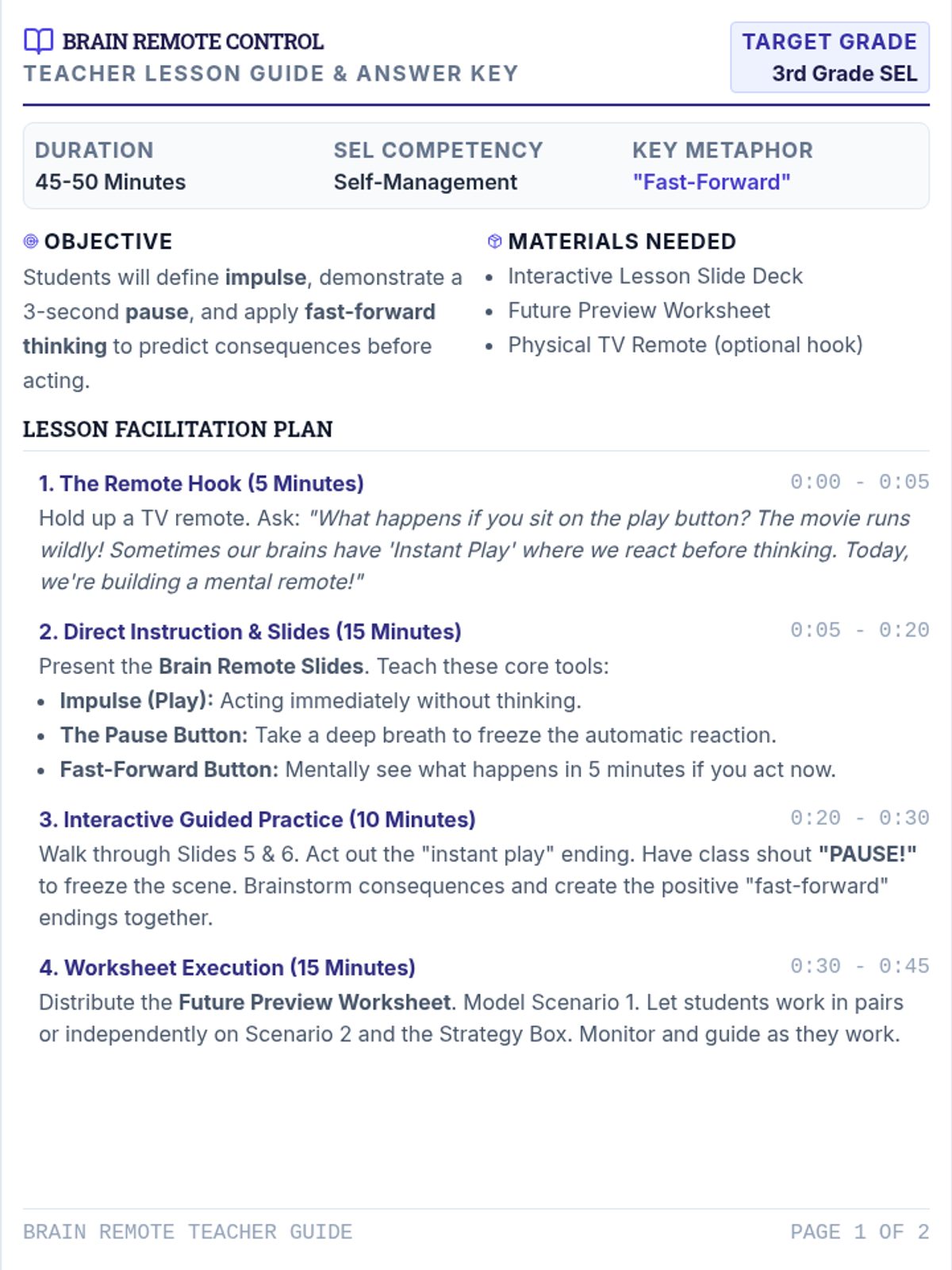
Introduction to the concept of self-control using the remote control metaphor and identifying personal 'impulses' that need managing.
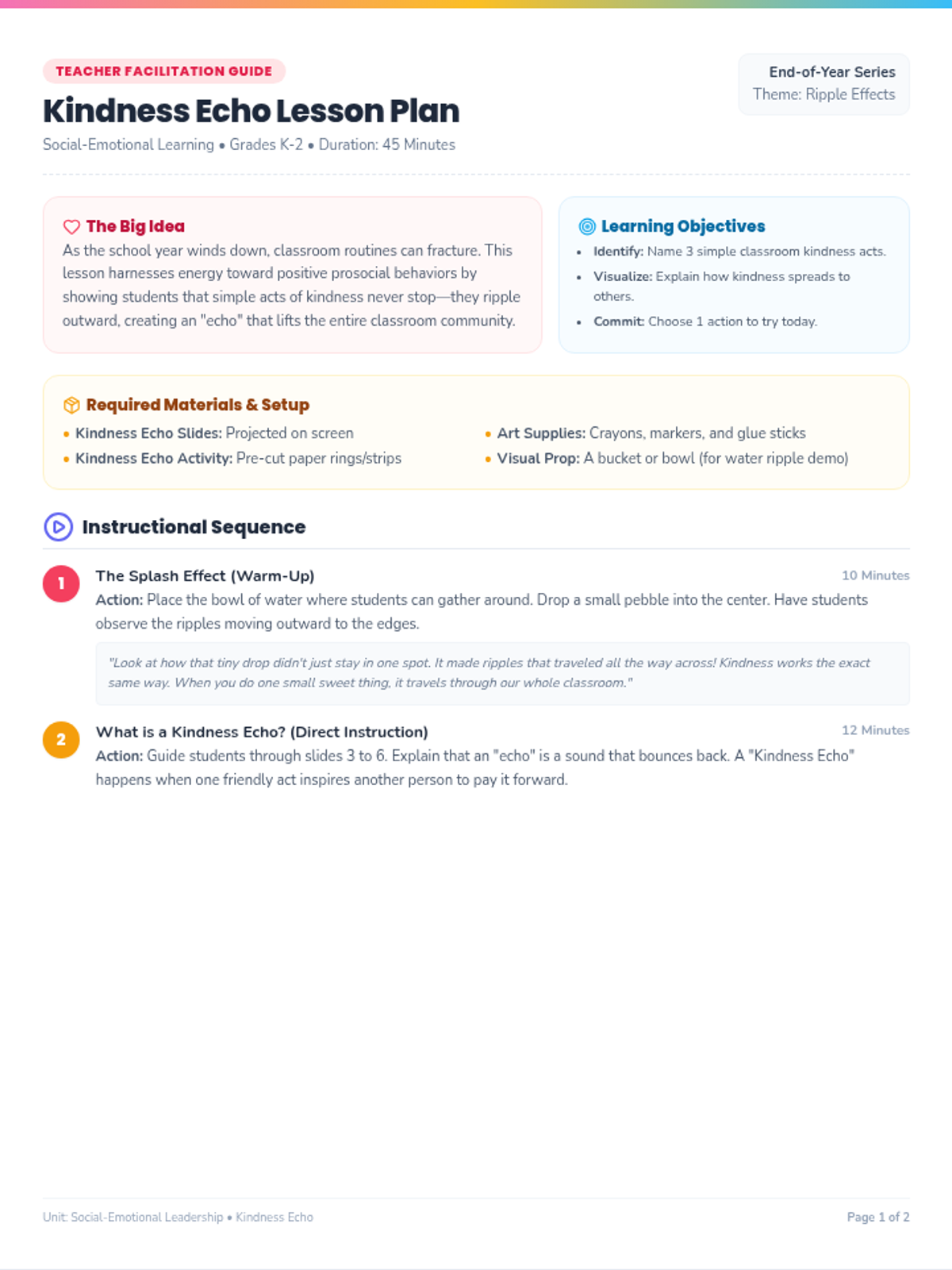
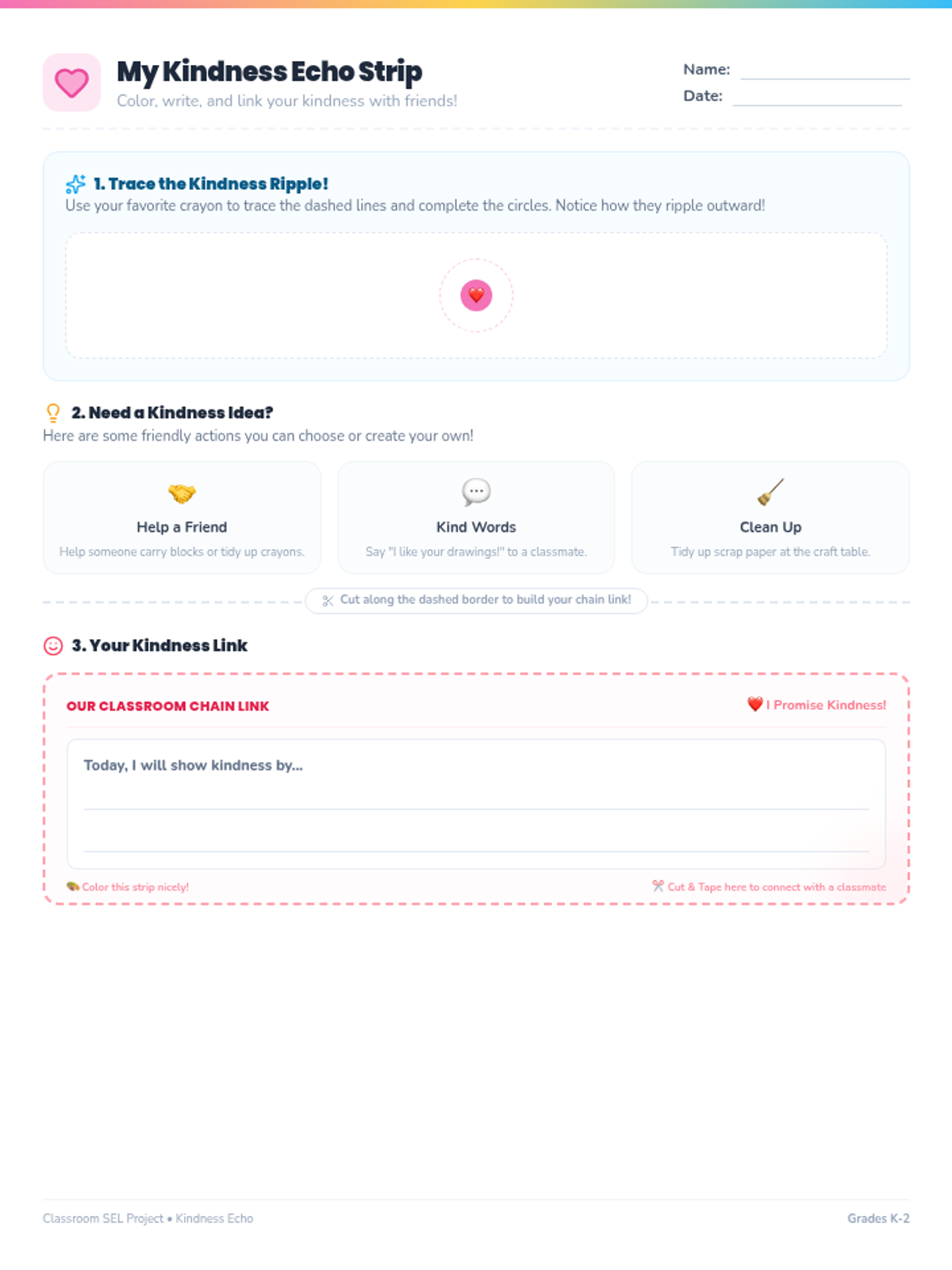
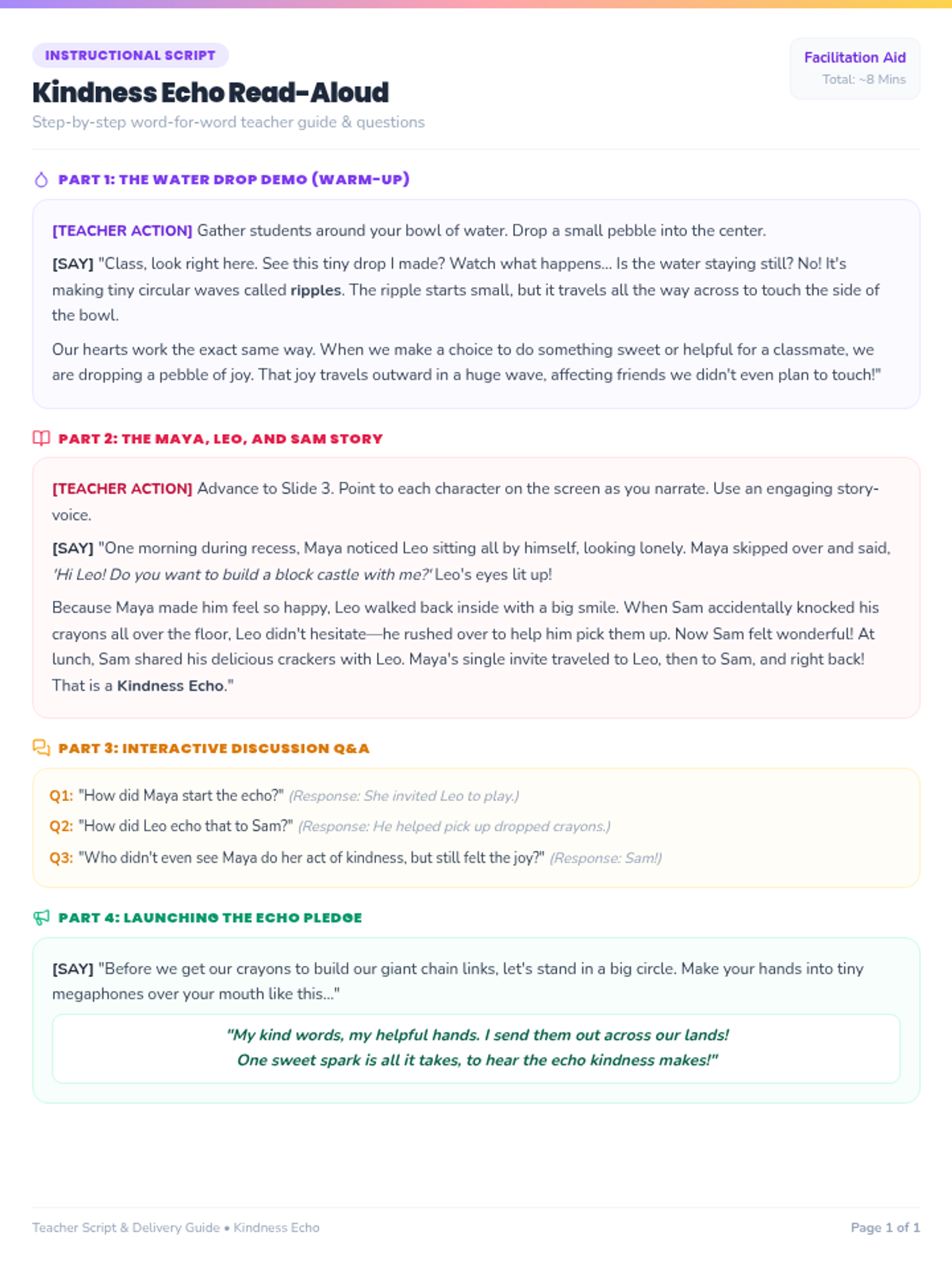
A fast-paced, engaging 15-minute lesson exploring the 'Ripple Effect' of kindness and why it matters for both the giver and the receiver.
Students will learn how to make meaningful apologies and use art to explore the concept of repairing damaged relationships.
Students will practice effective communication techniques using role-play scenarios focused on active listening and "I" statements.
Students will explore different ways to navigate disagreements using a board game format to practice perspective-taking.
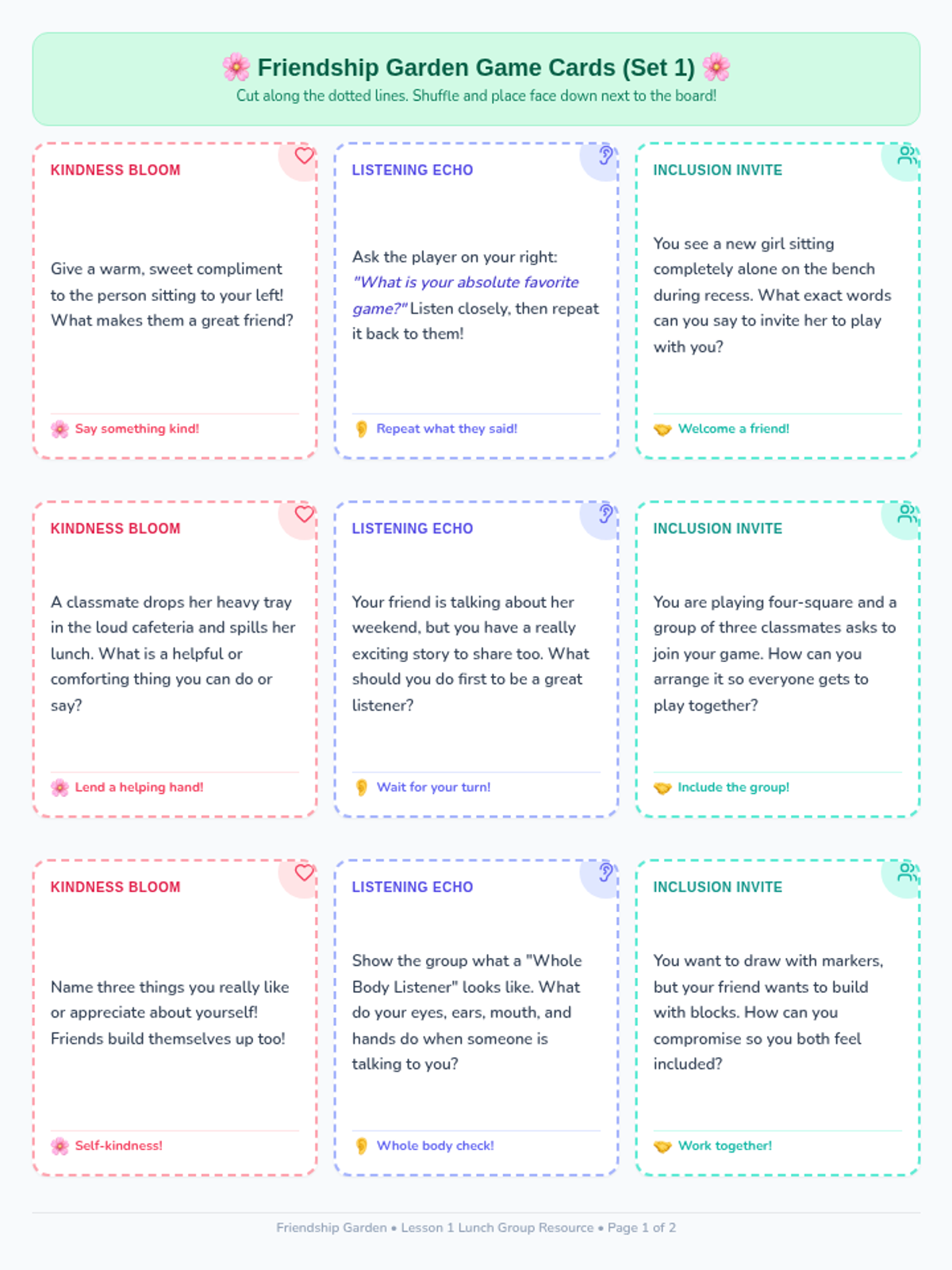
Students will identify the "ingredients" of a good friend and create a visual representation of their friendship standards.
A lesson designed for two first-graders to learn how to replace screaming and eloping with verbal communication using a feelings chart. Through role-play and visual aids, students practice identifying their emotions and stating their needs.
A social-emotional learning lesson for Tier 2 small groups focusing on identifying spheres of control and practicing assertive I-Statements in social scenarios.
Celebrating progress and reviewing all strategies learned over the 8 weeks.
Learning how to apologize and reset after an accidental blurt occurs.