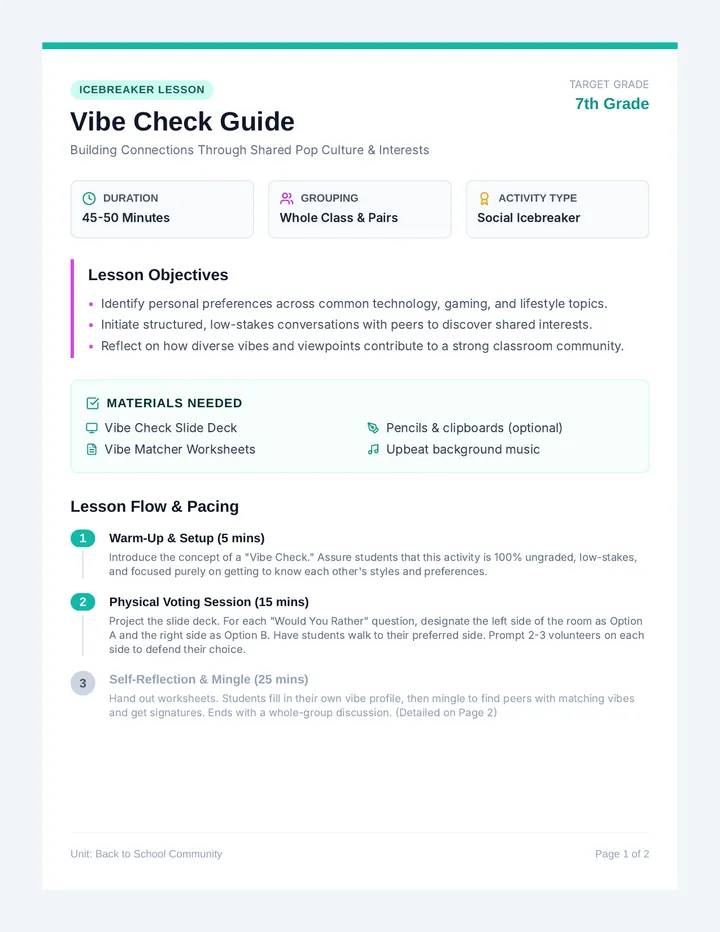
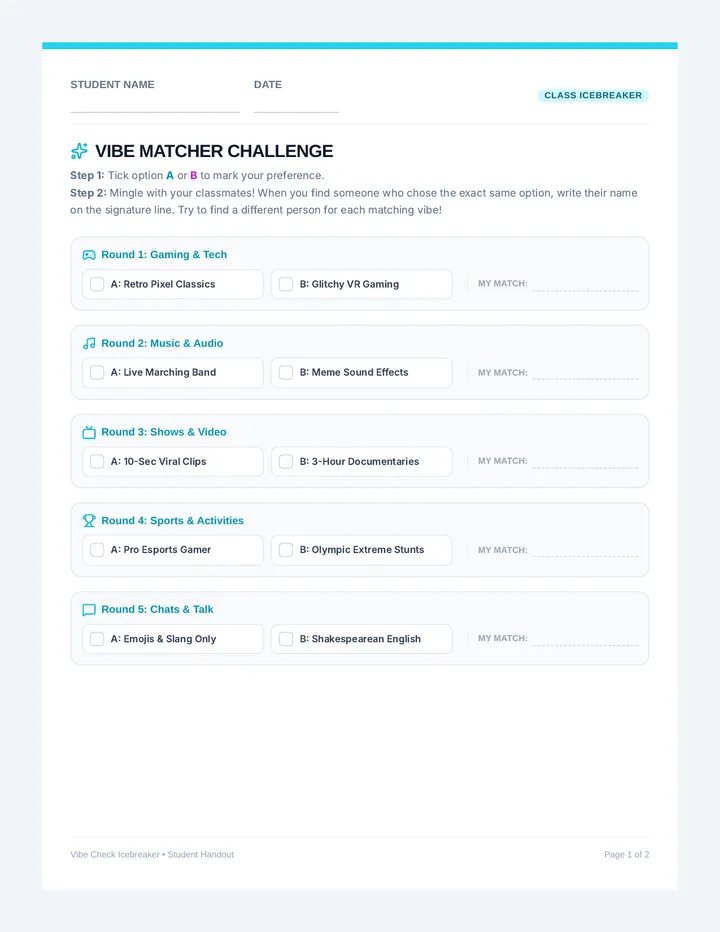
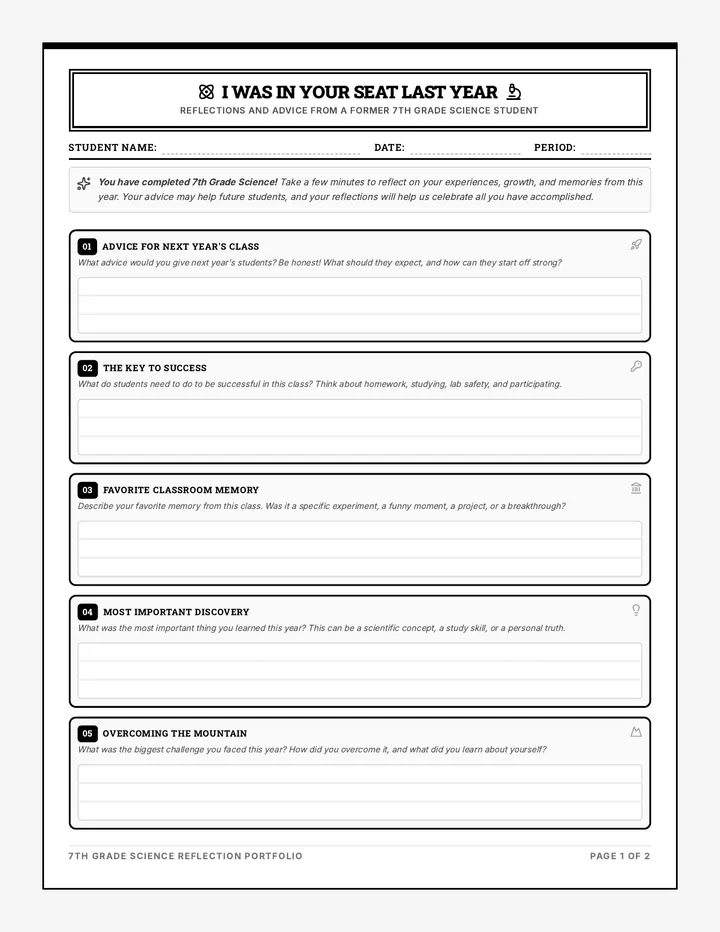
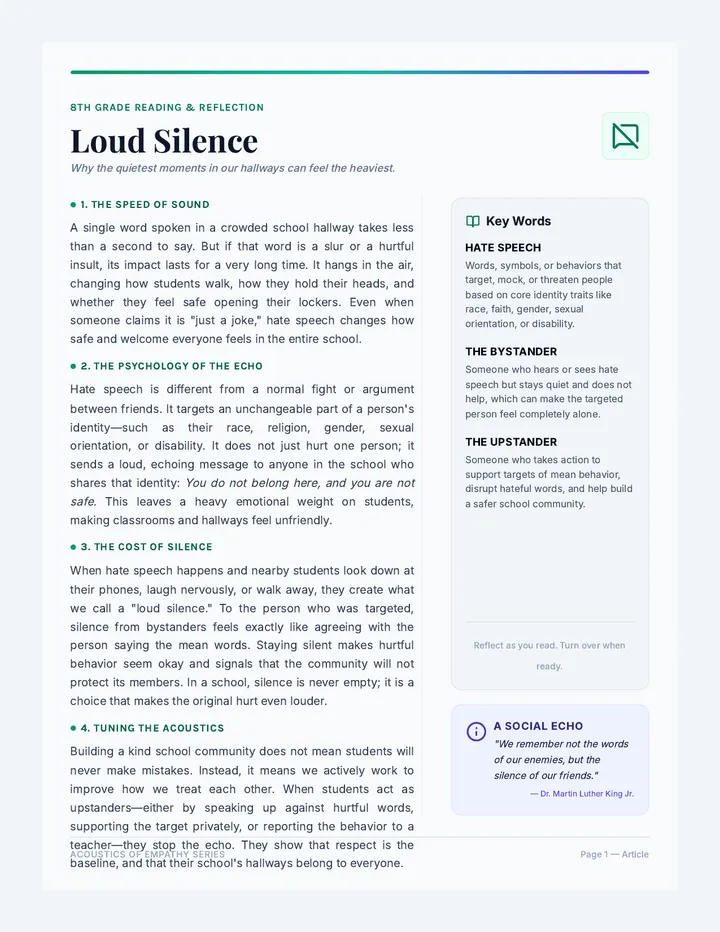
Pause Process Proceed Lesson Plan
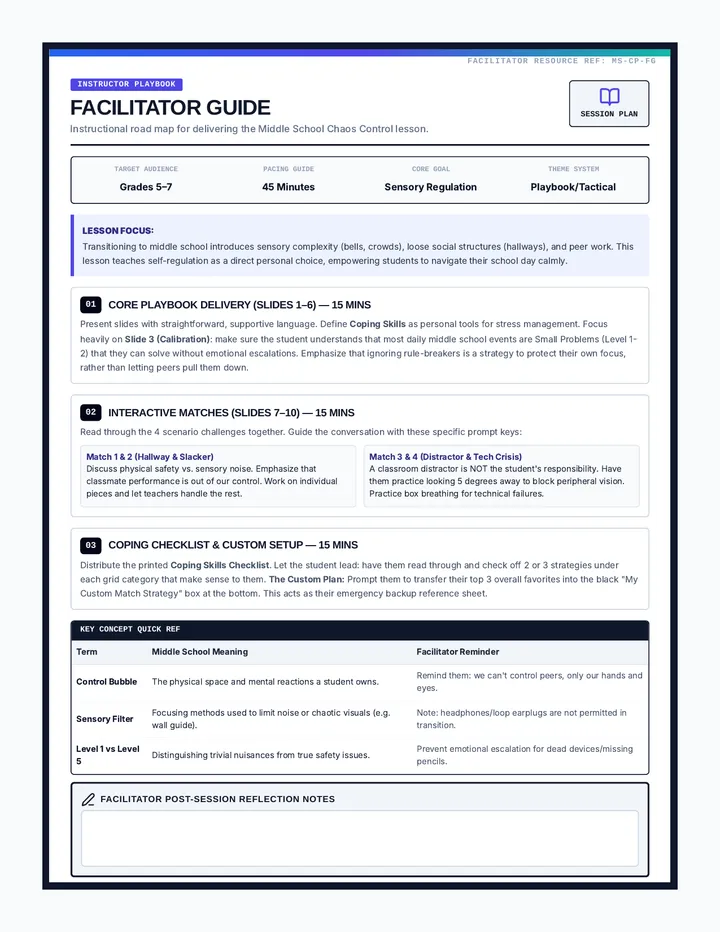
Teacher-facing lesson plan for the 'Pause, Process, Proceed!' session, focusing on advanced impulse control strategies and group challenges.
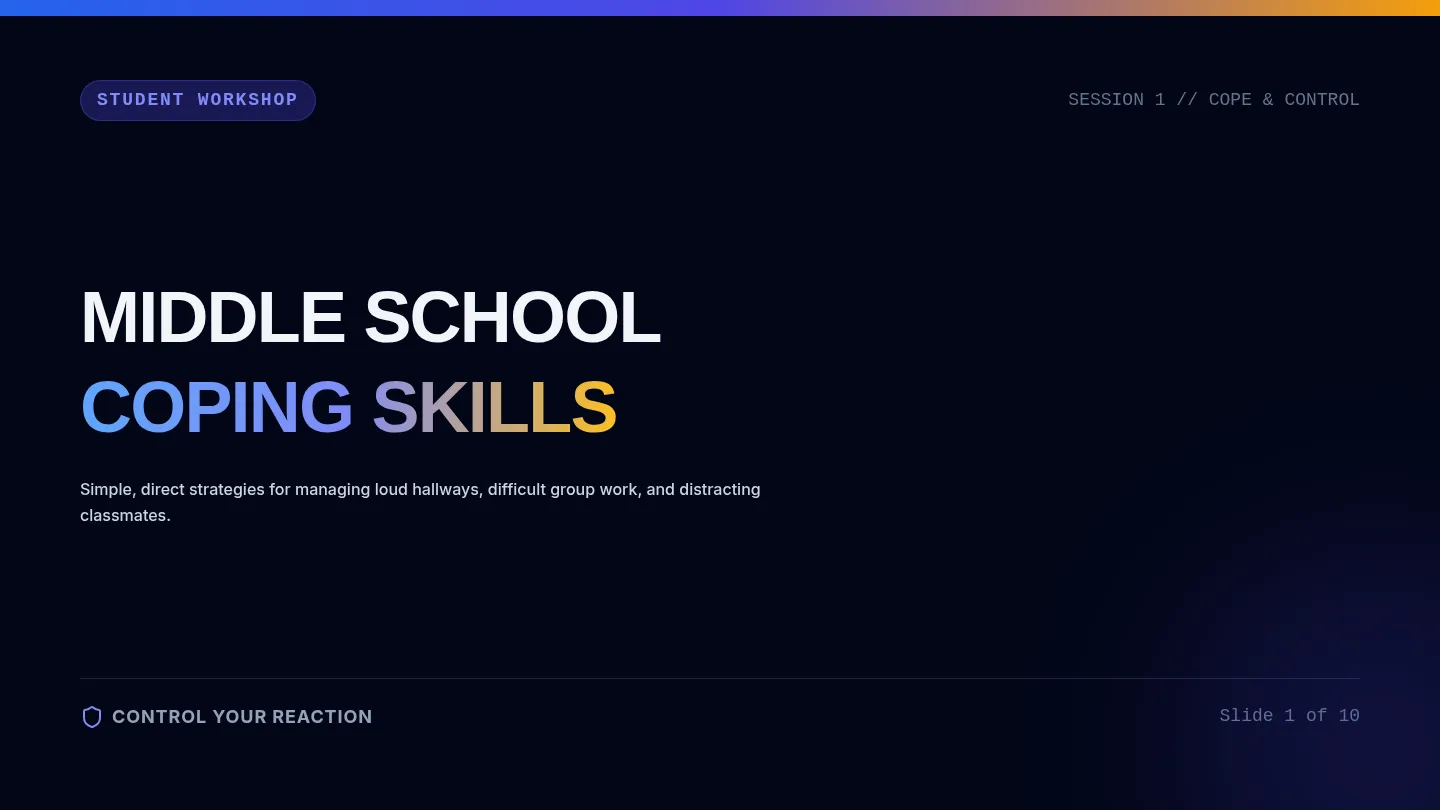
Pause Process Proceed Presentation
Visual presentation for the 'Pause, Process, Proceed!' lesson, featuring advanced impulse control frameworks and long-term thinking strategies.
Pause Process Proceed Script
Facilitation guide for teachers providing a step-by-step instructional script for delivering the 'Pause, Process, Proceed!' lesson.
Quick Choices Warm Up
Student warm-up activity for the 'Pause, Process, Proceed!' lesson, prompting students to reflect on quick choices and their reactions.
The Power of Pause Reading
Educational reading passage explaining the 'Pause, Process, Proceed' framework and specific techniques for secondary students to improve self-control.
Marshmallow Challenge Activity Guide
Activity guide for the Marshmallow Challenge, focusing on how impulse control and planning affect group success.
My Impulse Control Toolkit Worksheet
Worksheet for students to identify personal triggers and develop strategies for managing impulses using the 'Pause, Process, Proceed' framework.
Impulse Control Action Discussion Guide
Facilitation guide for leading a classroom discussion on impulse control experiences and real-world applications.
Decision Dilemma Dice Game Guide
Game guide and scenario cards for the Decision Dilemma Dice activity, practicing impulse control strategies.
One Big Takeaway Cool Down
Student reflection activity for the 'Pause, Process, Proceed!' lesson, prompting students to reflect on their key learning.
Check Your Control IQ Quiz
Quiz for students to assess their understanding of impulse control and the 'Pause, Process, Proceed' framework.
Check Your Control IQ Answer Key
Answer key for the Check Your Control IQ quiz, providing correct responses and pedagogical reasoning.
My Impulse Control Journey Project Guide
Project guide for students to design and track a personalized impulse control plan over several weeks.
My Impulse Control Journey Rubric
Assessment rubric for the 'My Impulse Control Journey' project, detailing proficiency levels for proposal, plan, log, reflection, and strategy application.
Mastering Self Control Test
Final test for the 'Mastering the Pause' sequence, assessing student understanding of impulse control frameworks and real-world application.