Students learn about liability insurance, including 'Bodily Injury' and 'Property Damage' limits, and calculate costs in fault-based accidents.
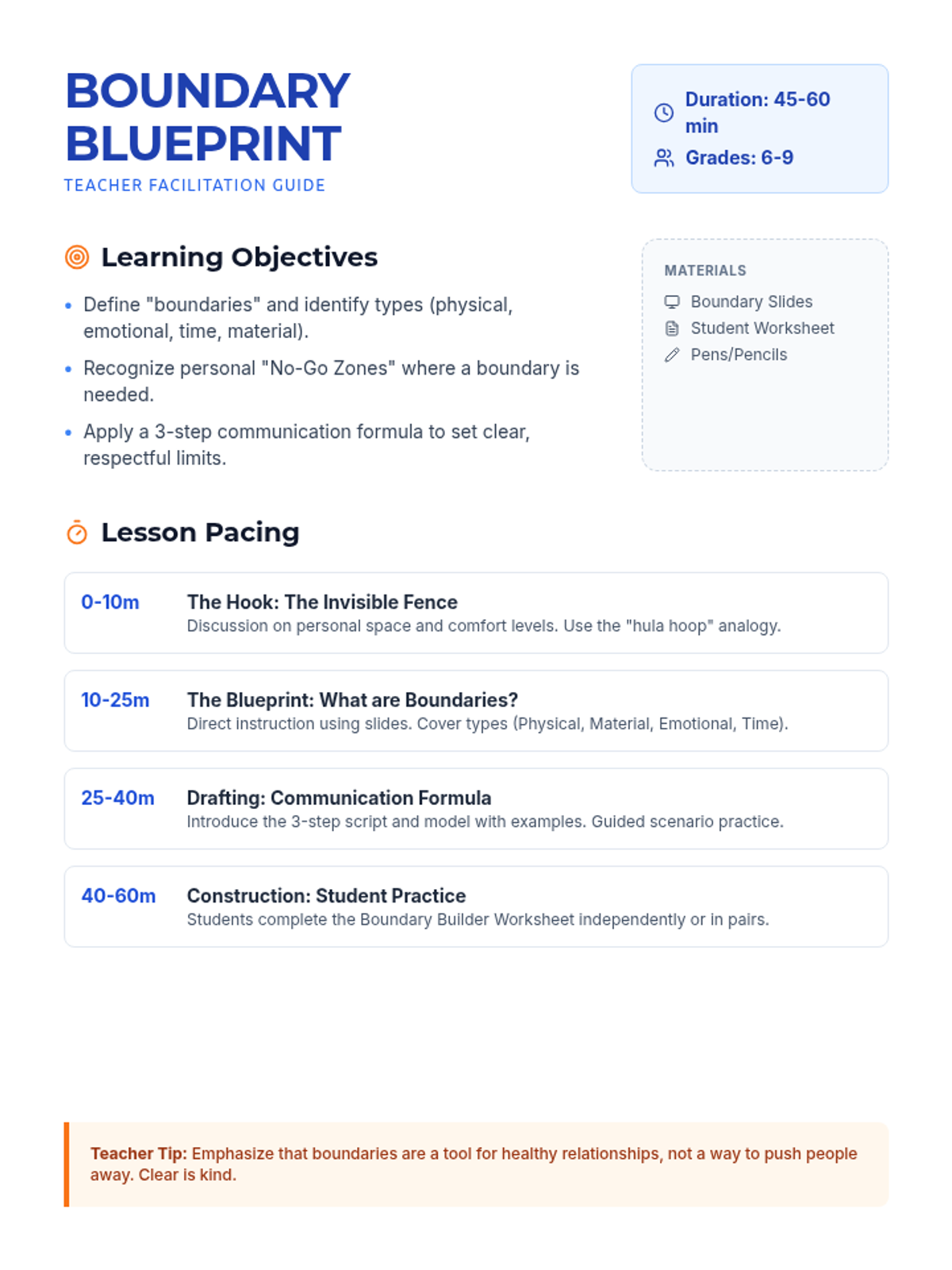
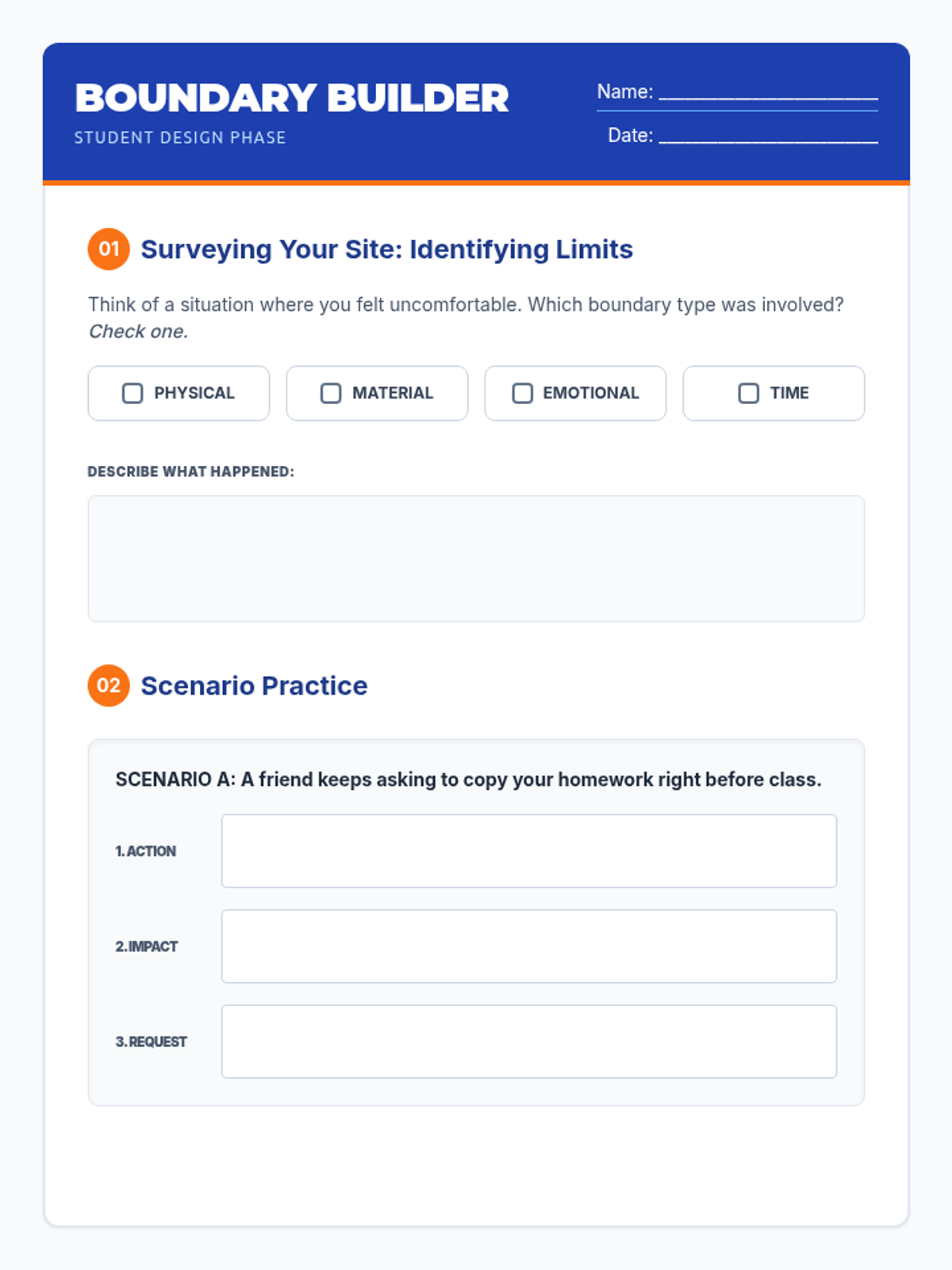
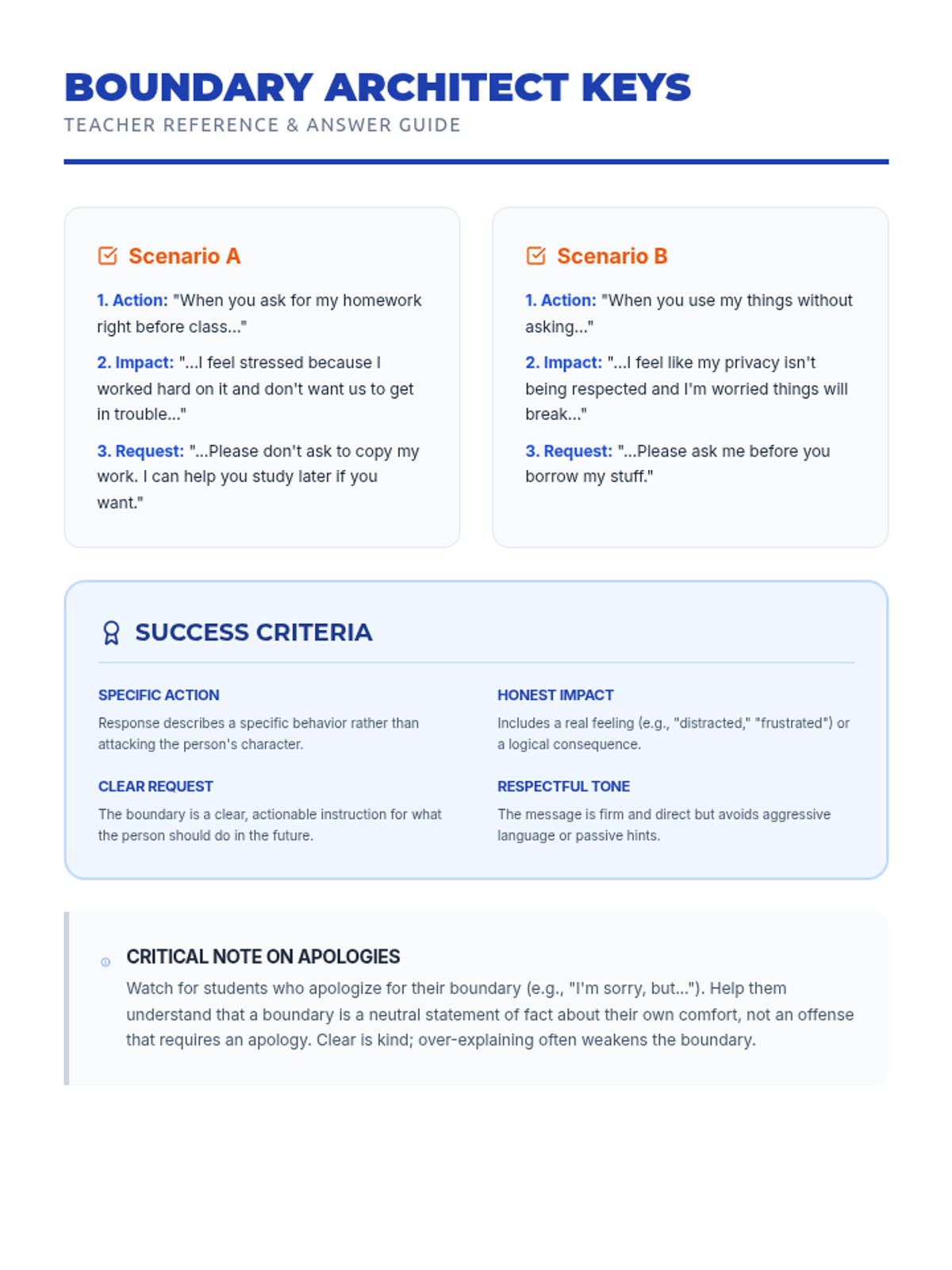
A comprehensive lesson on setting healthy boundaries, focusing on identifying personal limits and communicating them effectively using a 'blueprint' framework. Students learn to draft, communicate, and maintain boundaries in various social contexts.
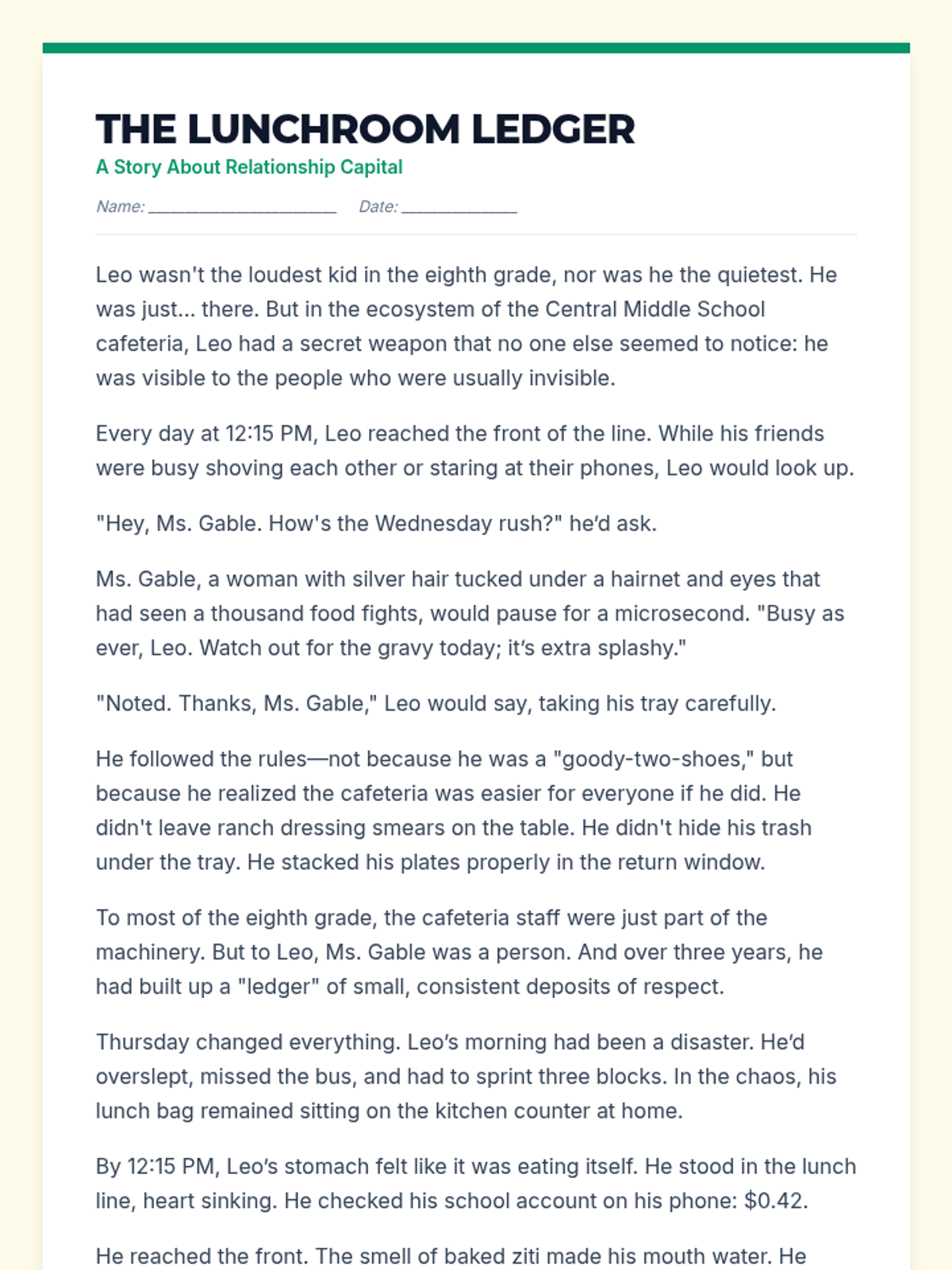
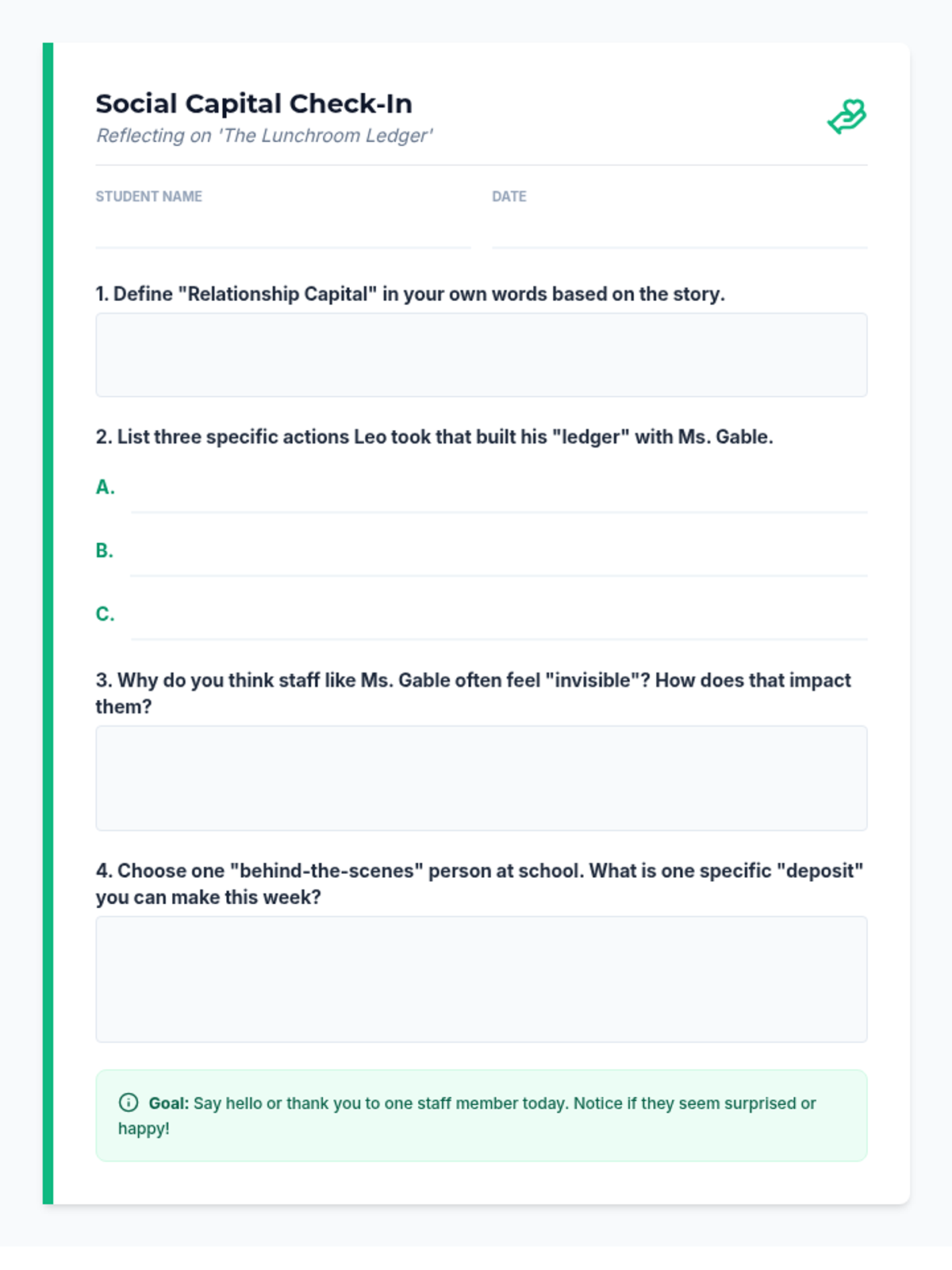
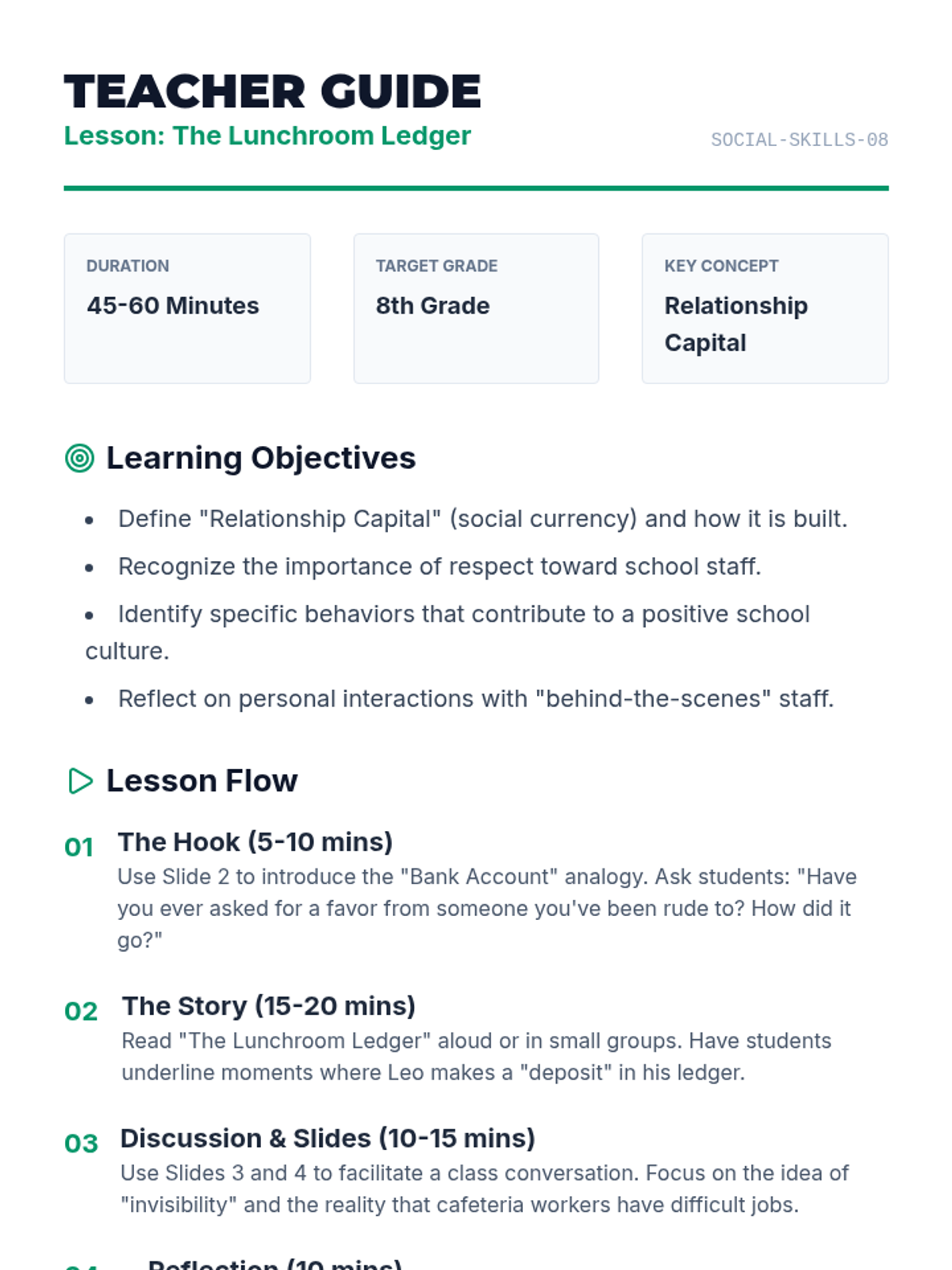
A lesson exploring how consistent kindness and following rules build 'relationship capital' that can help in unexpected situations. Includes a story, reflection worksheet, and teacher guide.
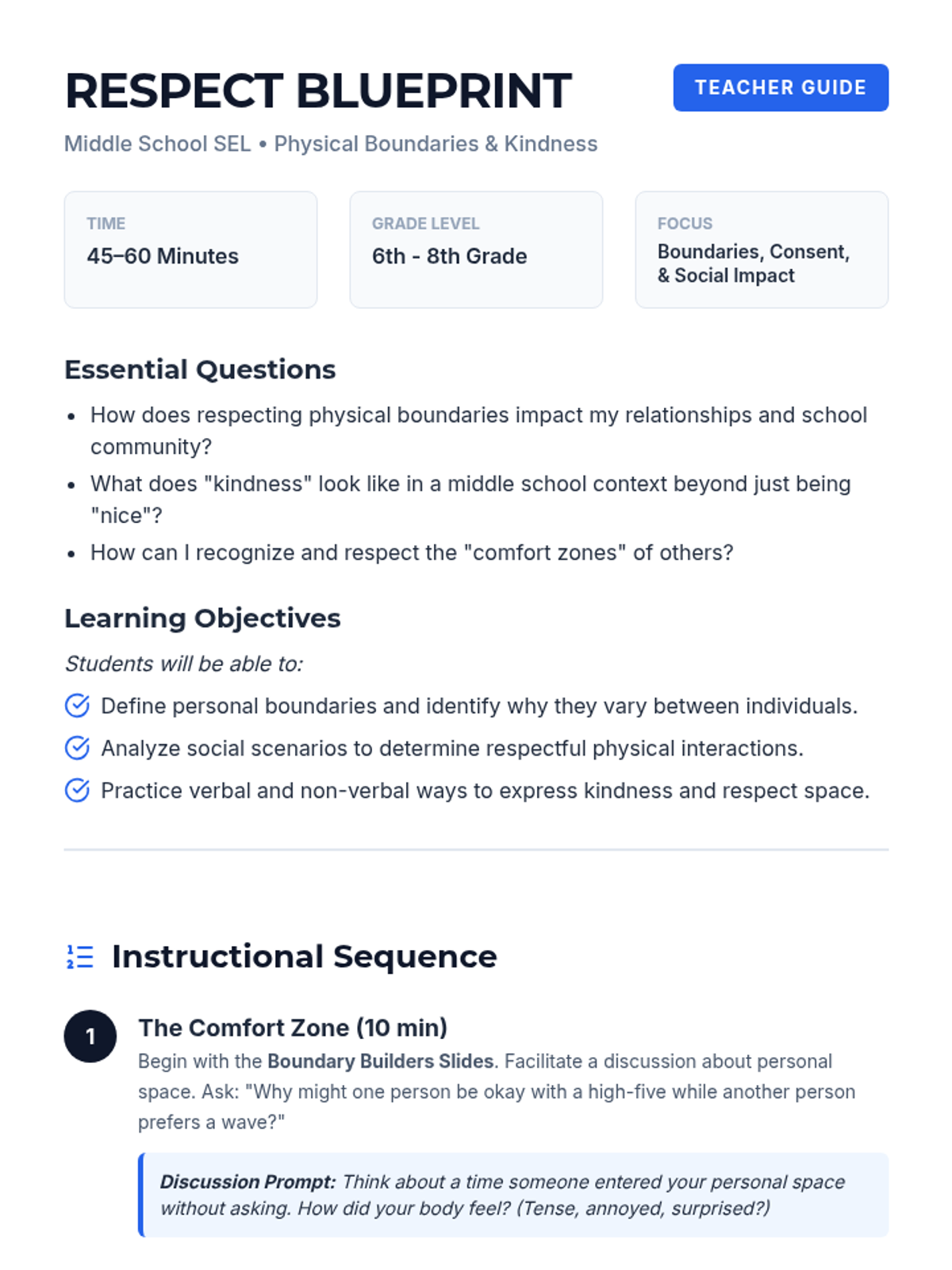
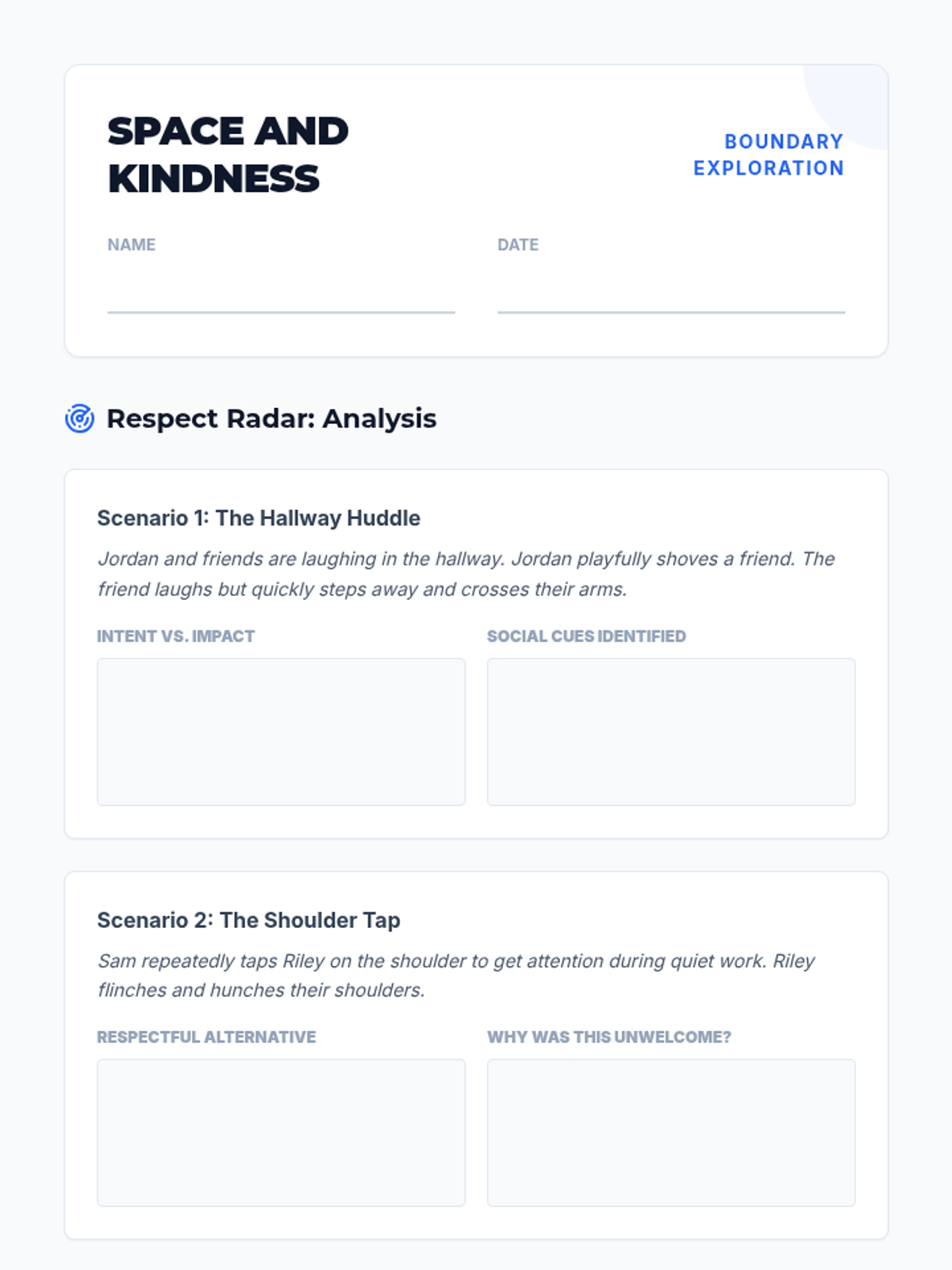
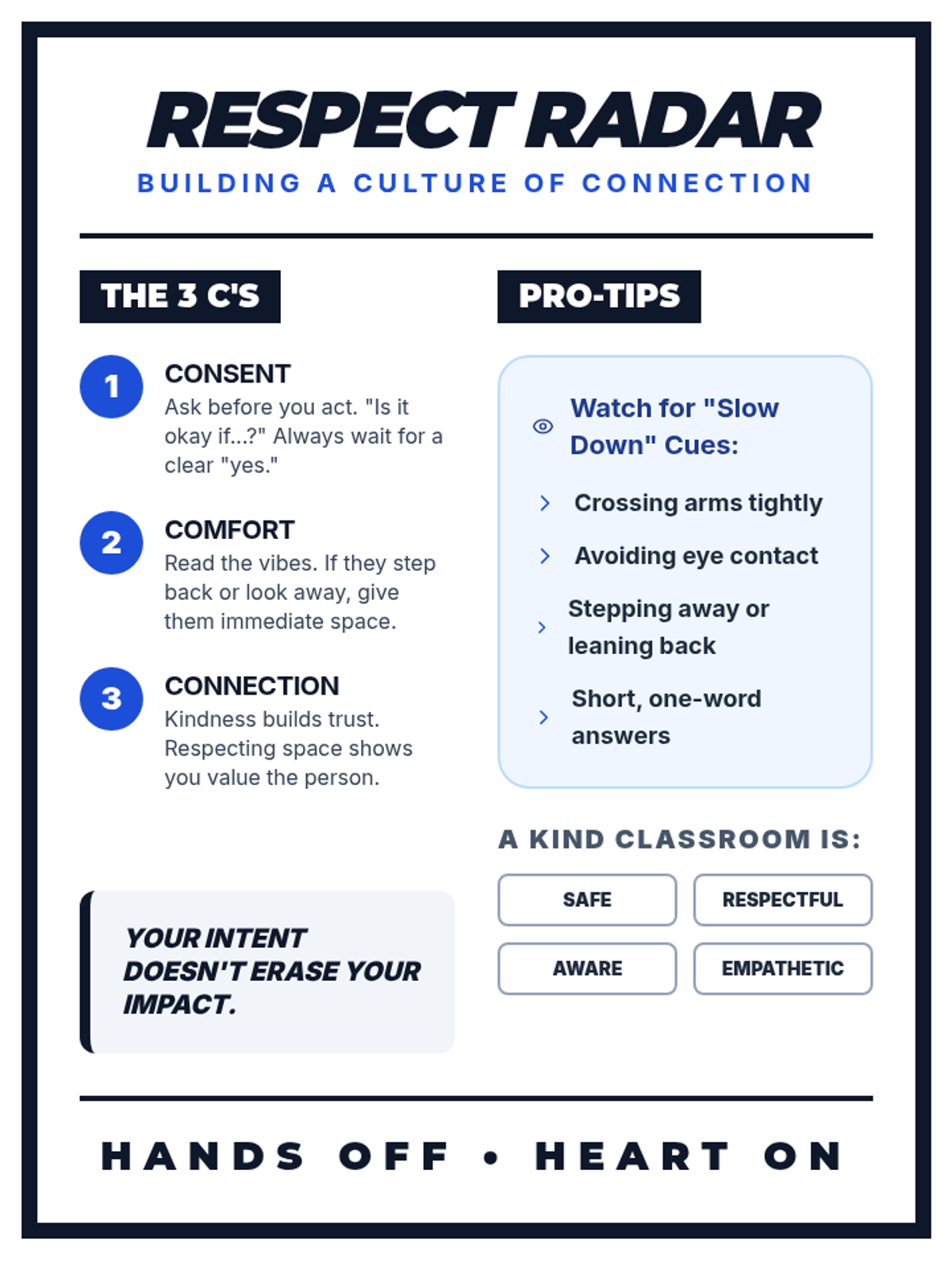
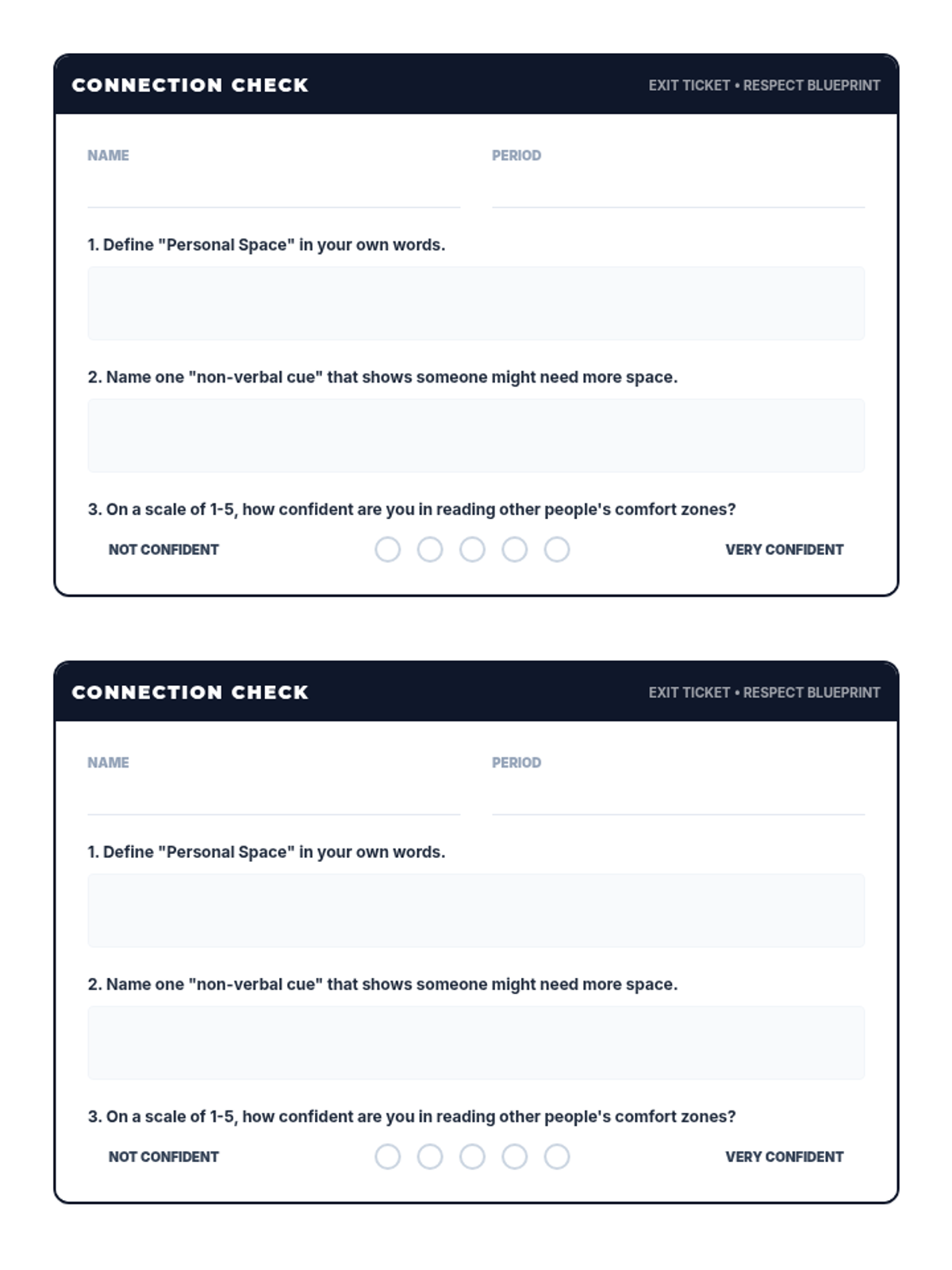
A comprehensive lesson for middle school students focused on physical boundaries, personal space, and the impact of kind actions on community culture.
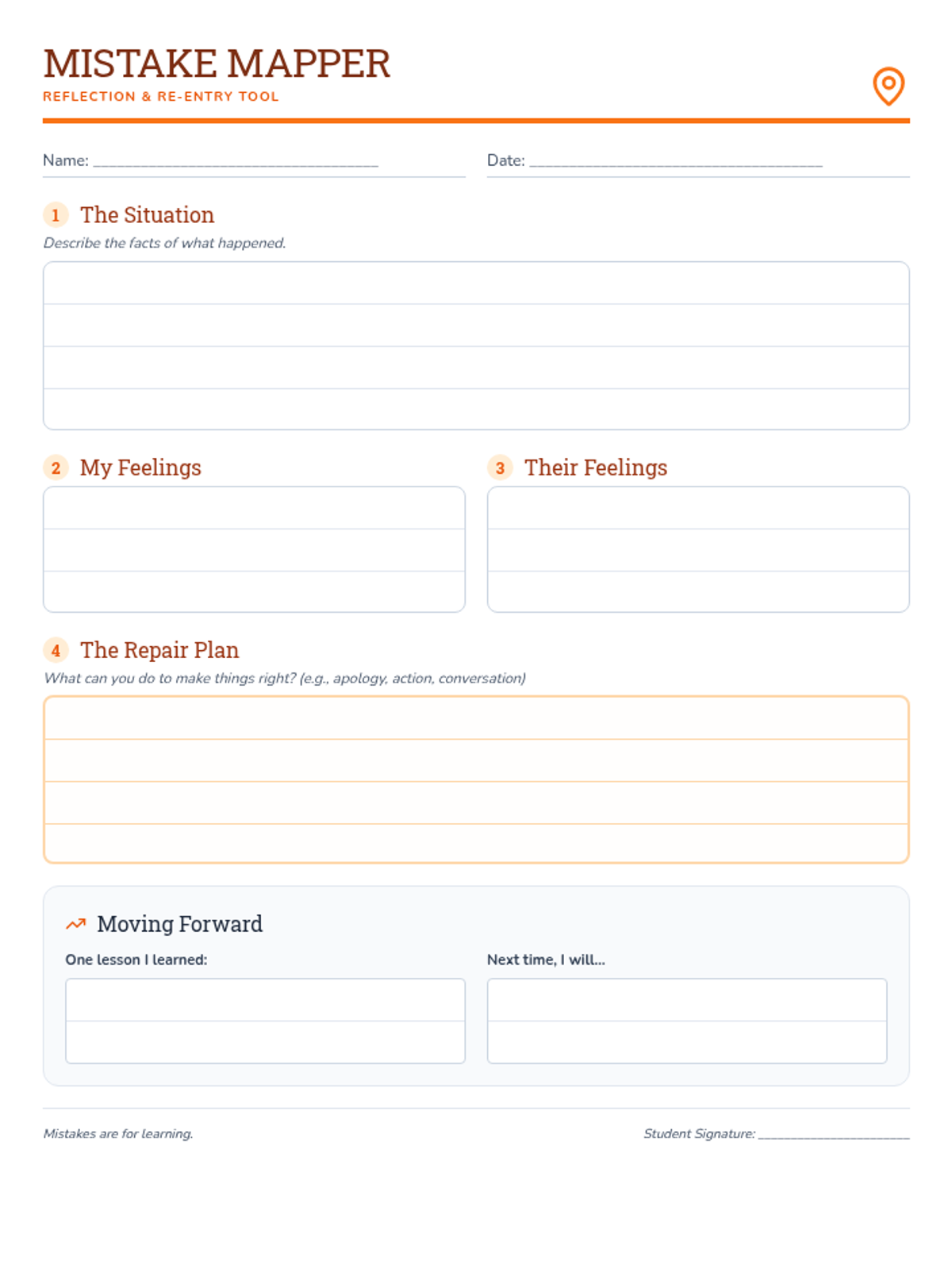
Focusing on accountability, repair, and maintaining a growth mindset after making mistakes during the re-entry process.
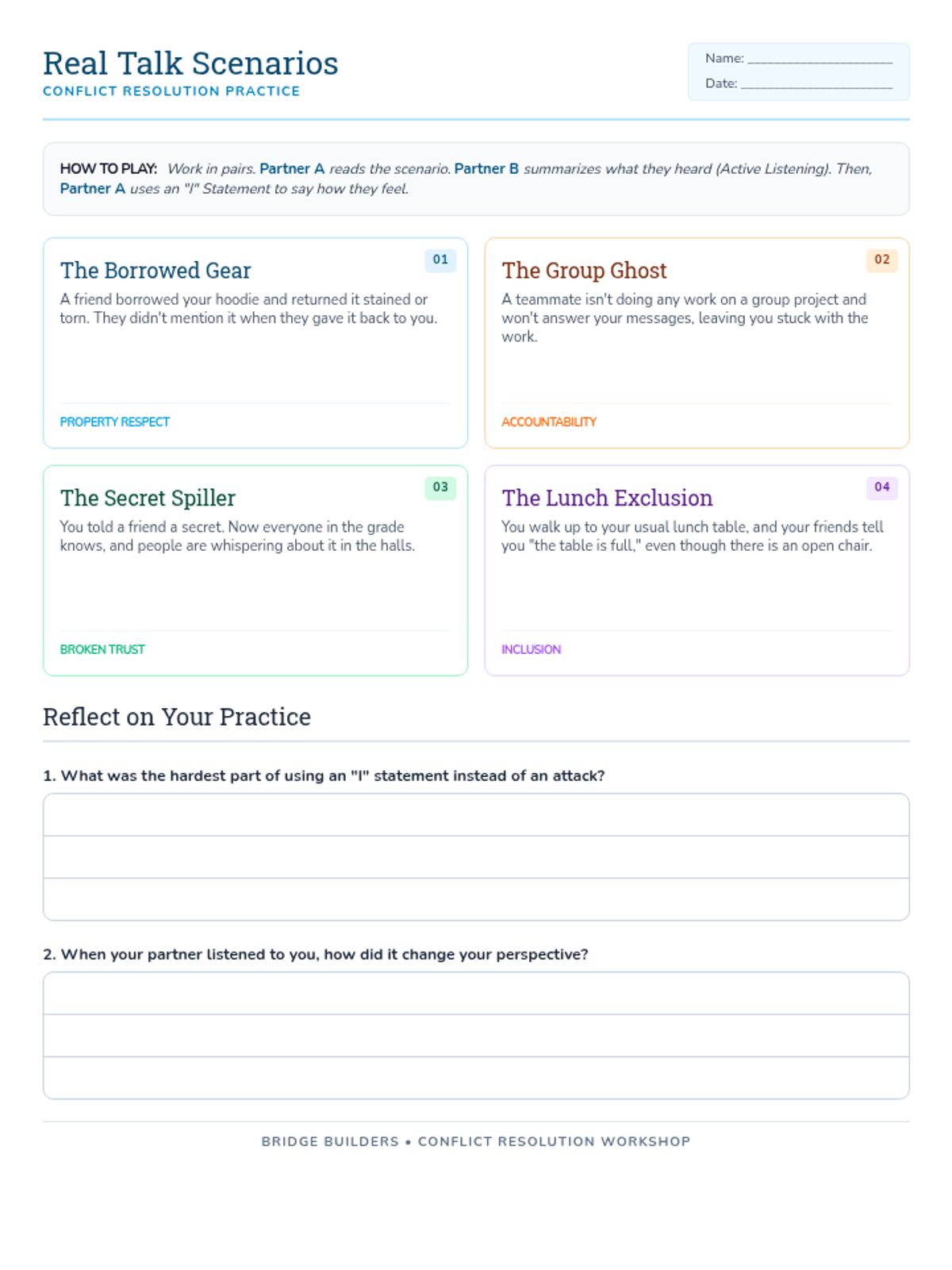
A practical workshop on active listening and 'I' statements to equip students with conflict resolution skills.
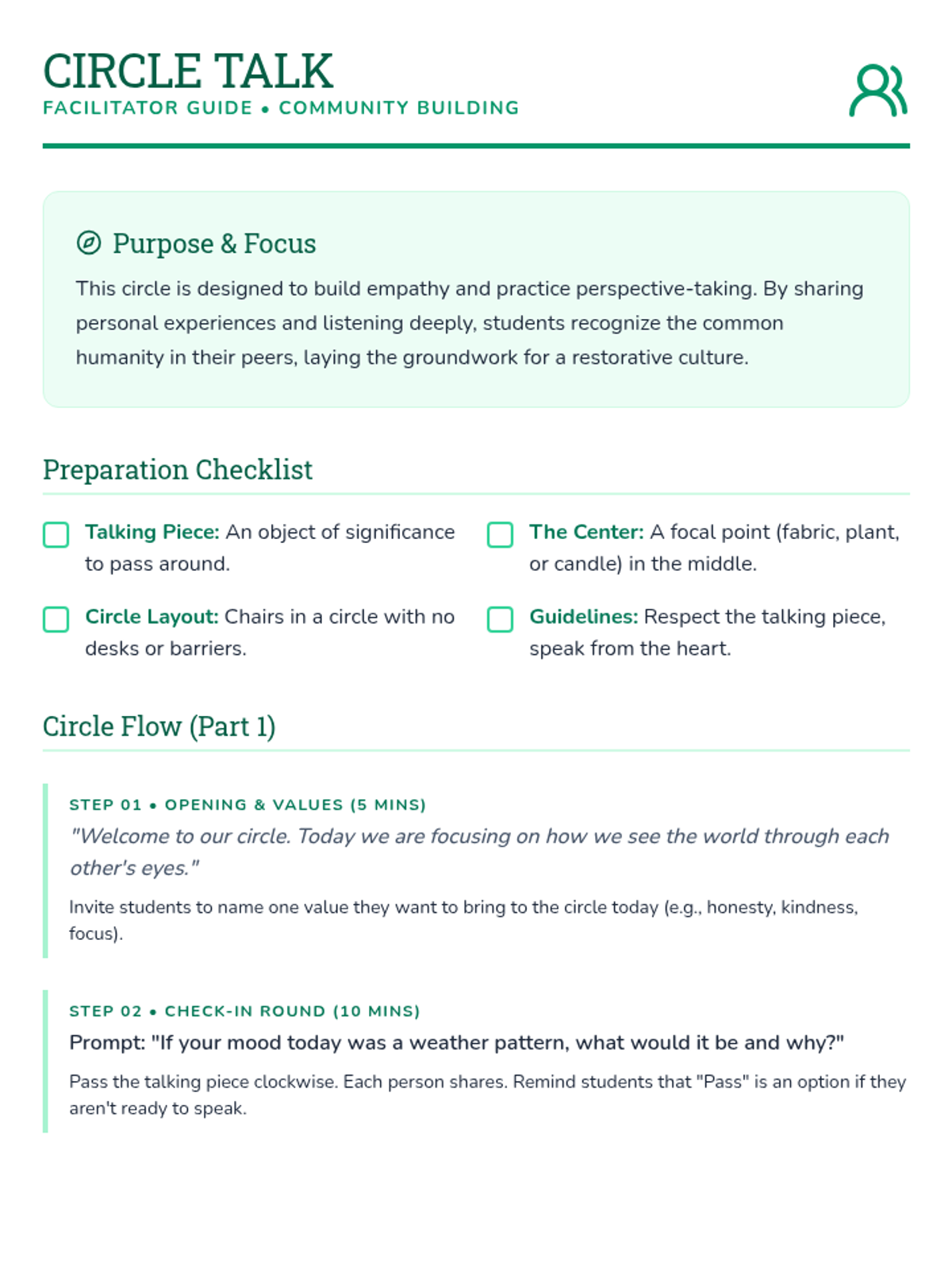
Establishing a safe space through community-building circles that focus on empathy and perspective-taking.
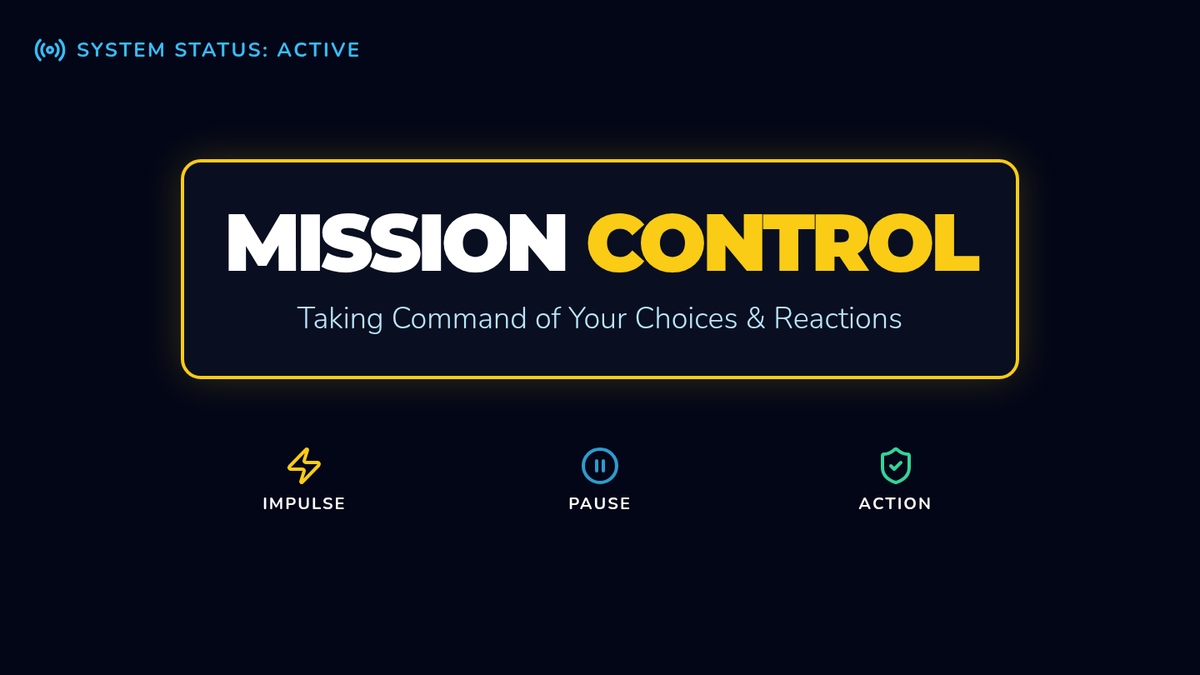
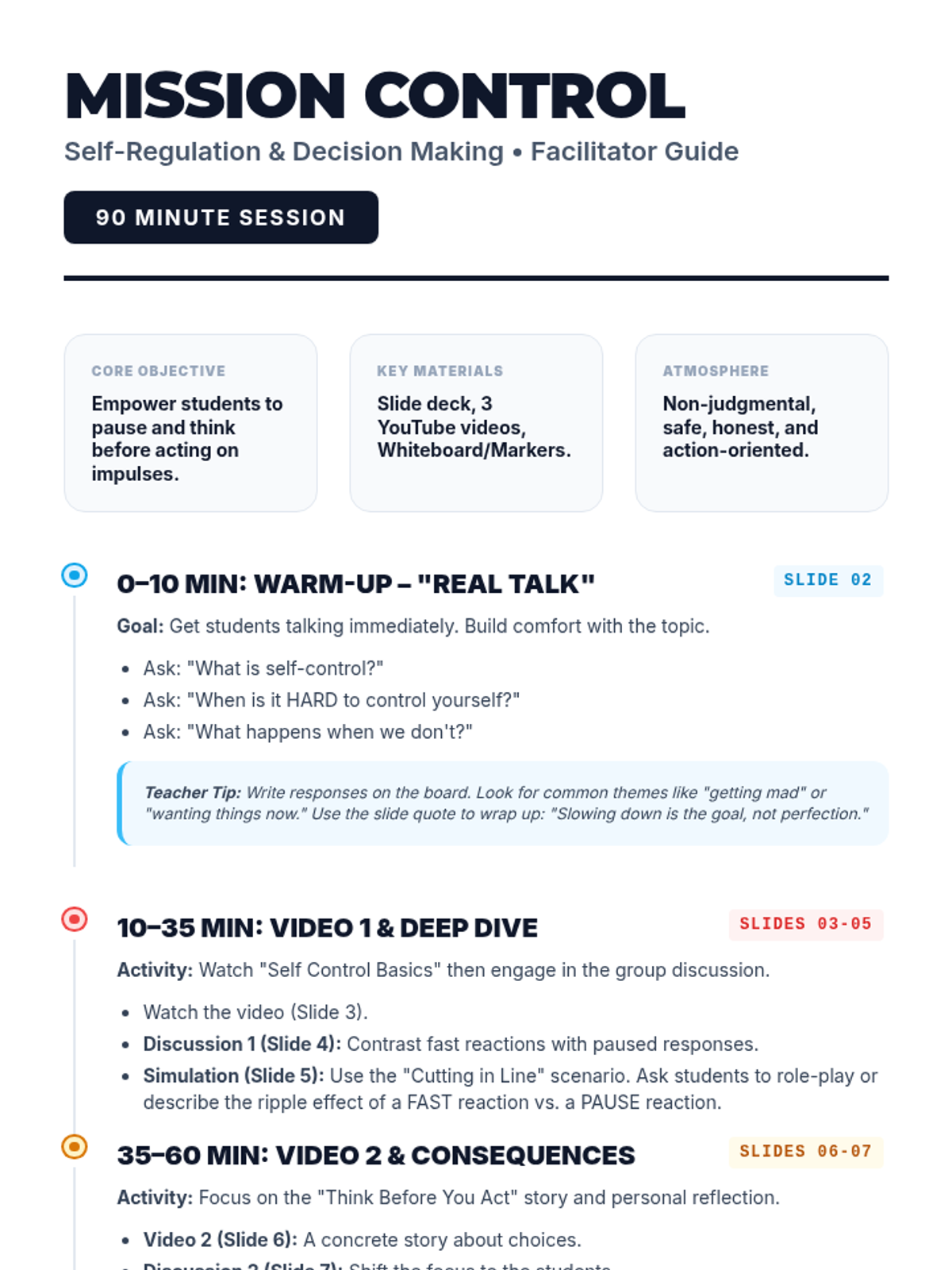
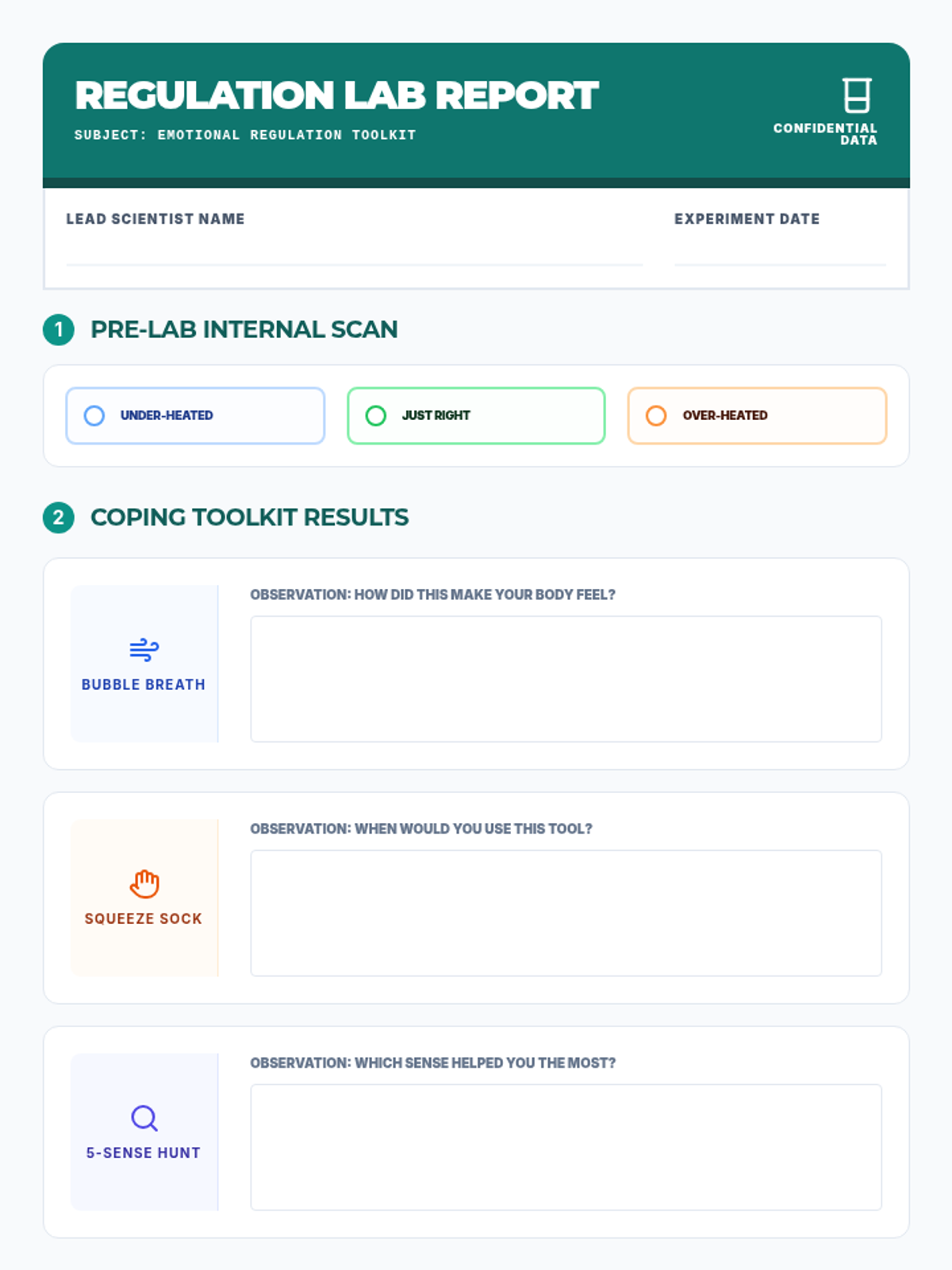
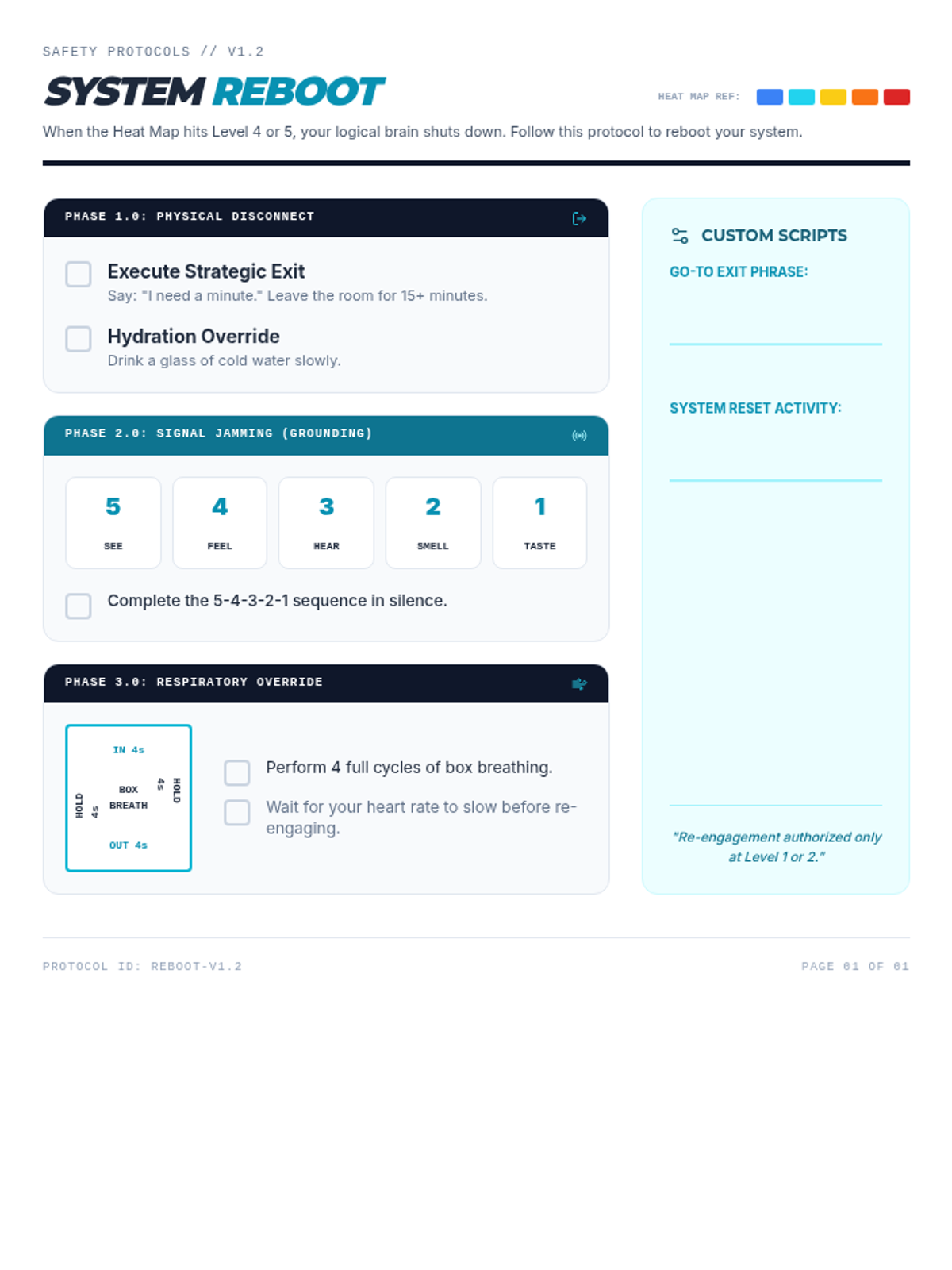
A comprehensive 90-minute lesson designed to help students understand self-control, the consequences of impulsive reactions, and practical tools for emotional regulation.
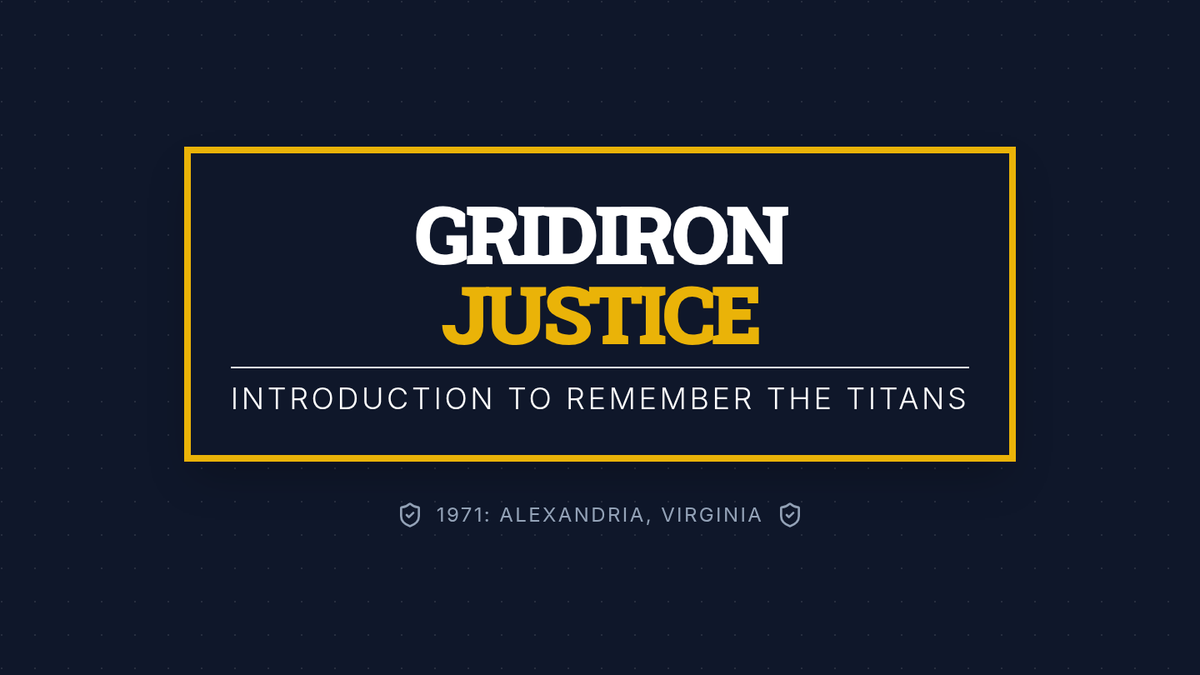
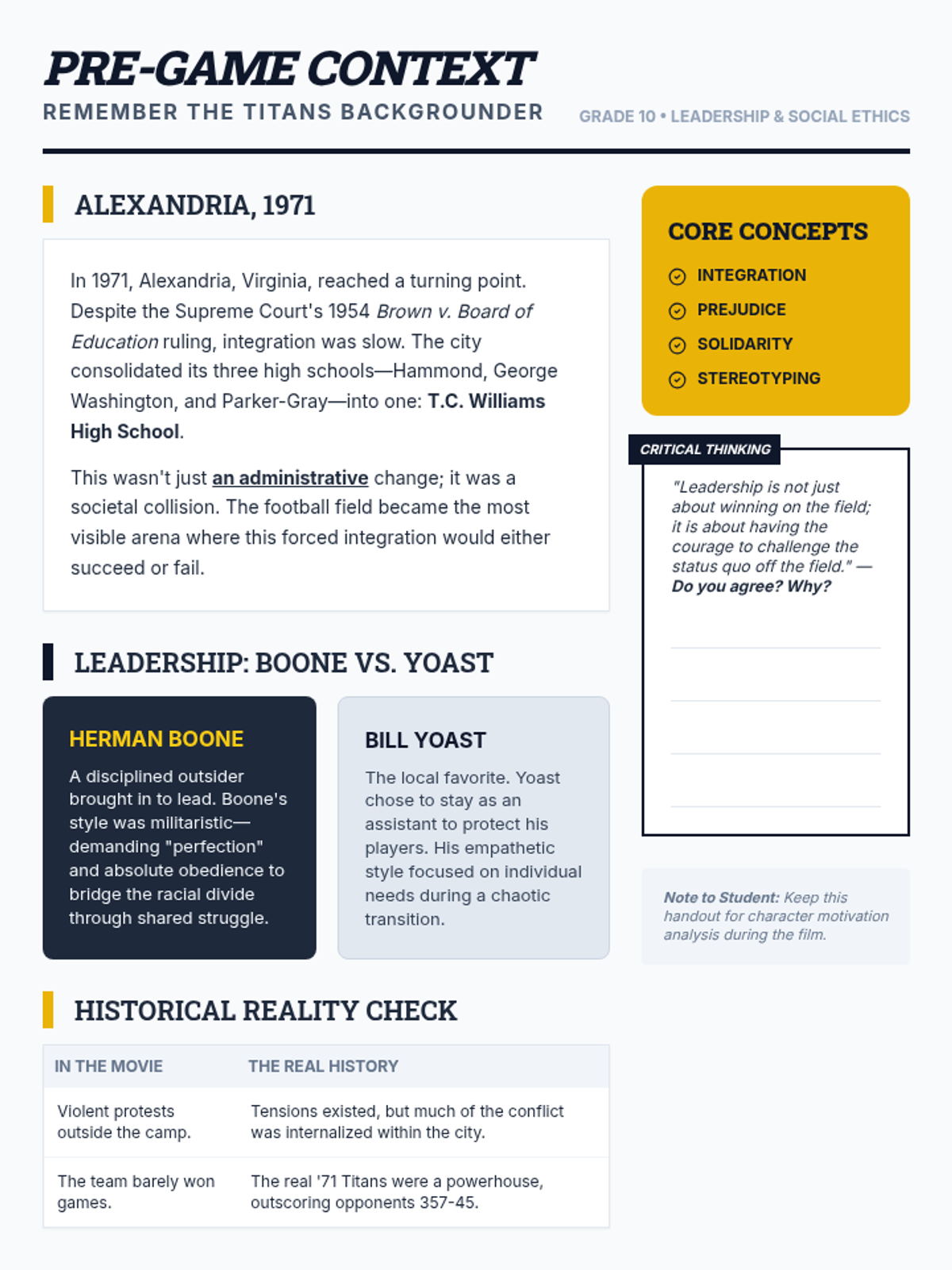
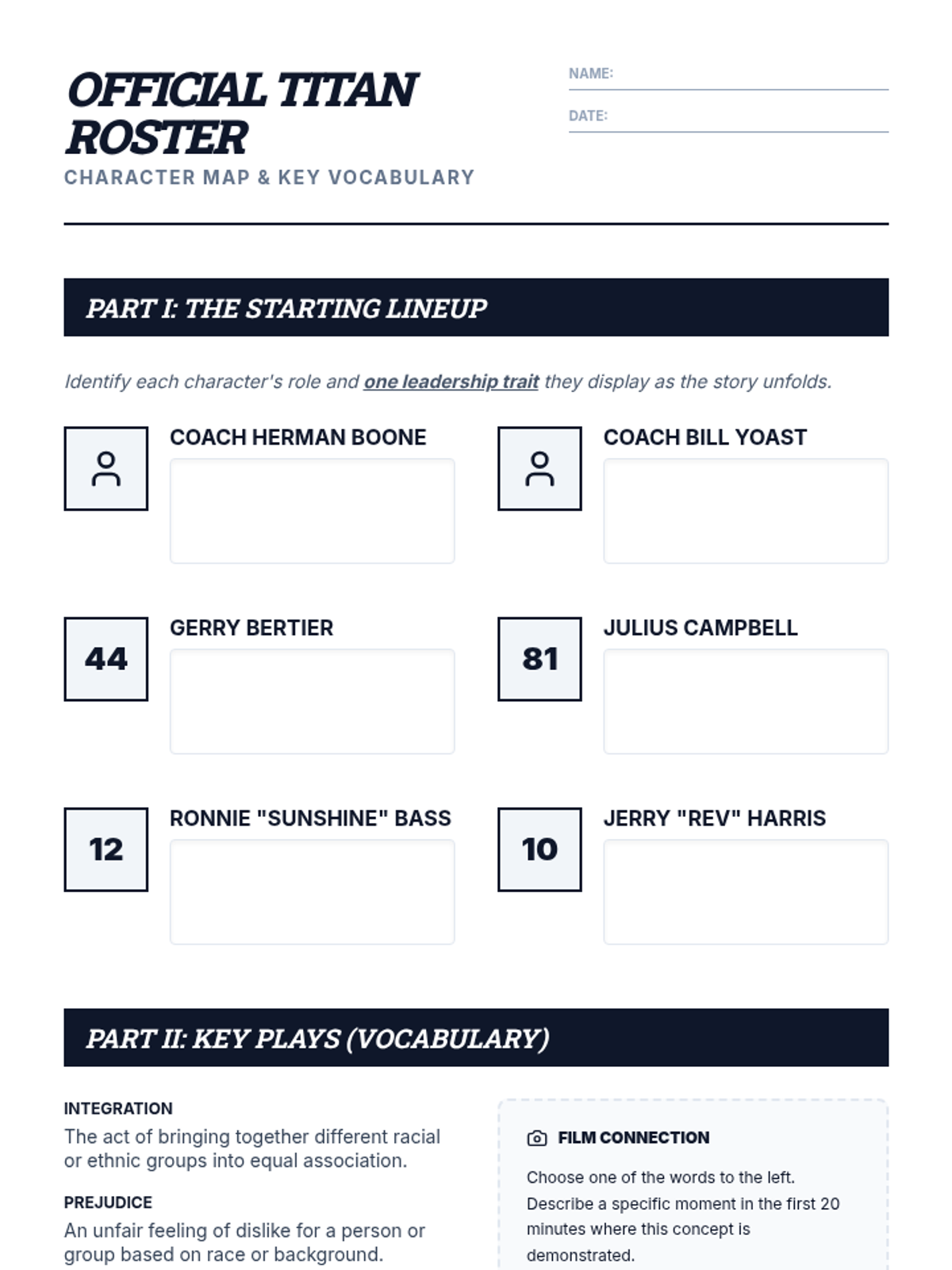
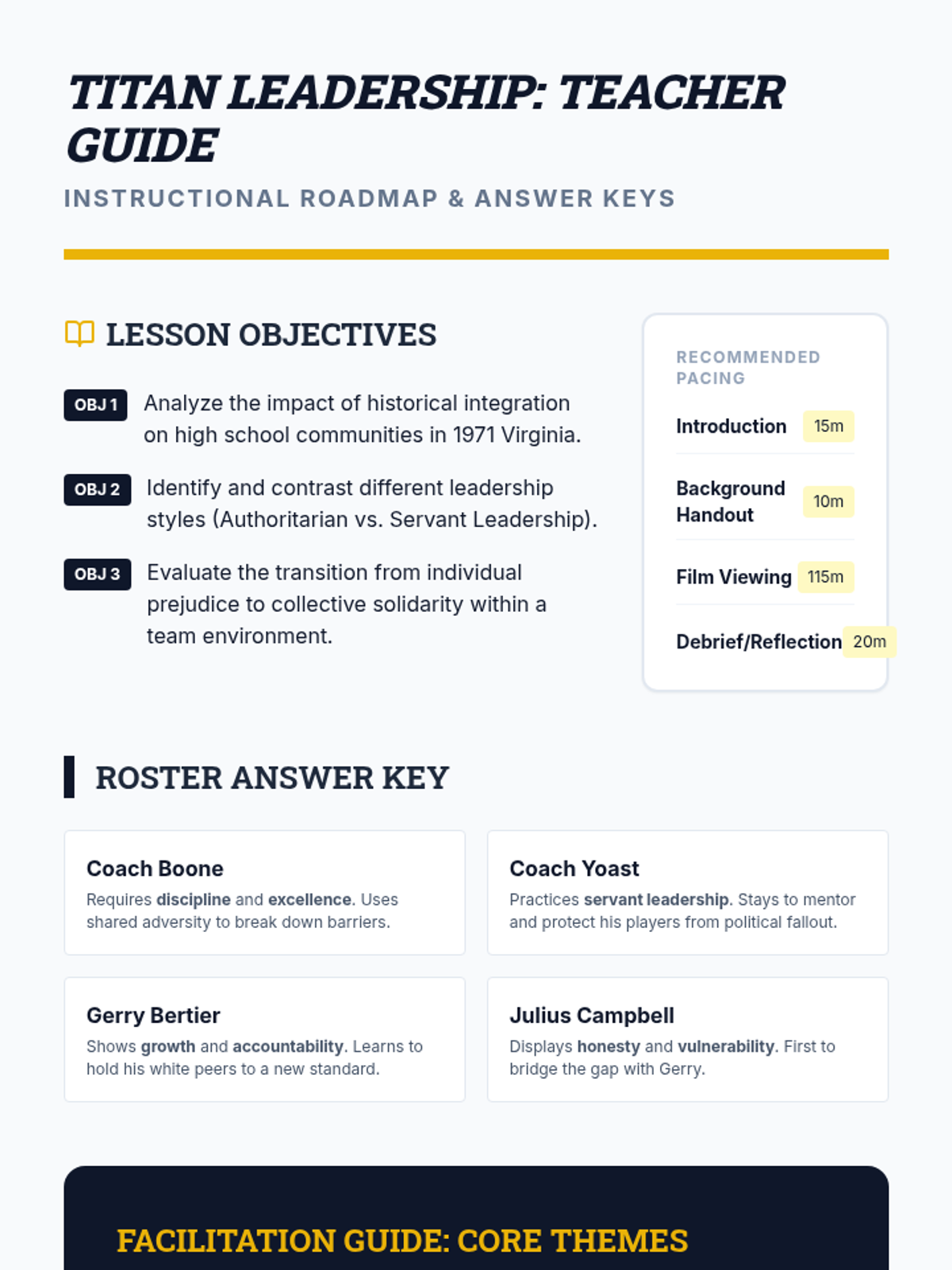
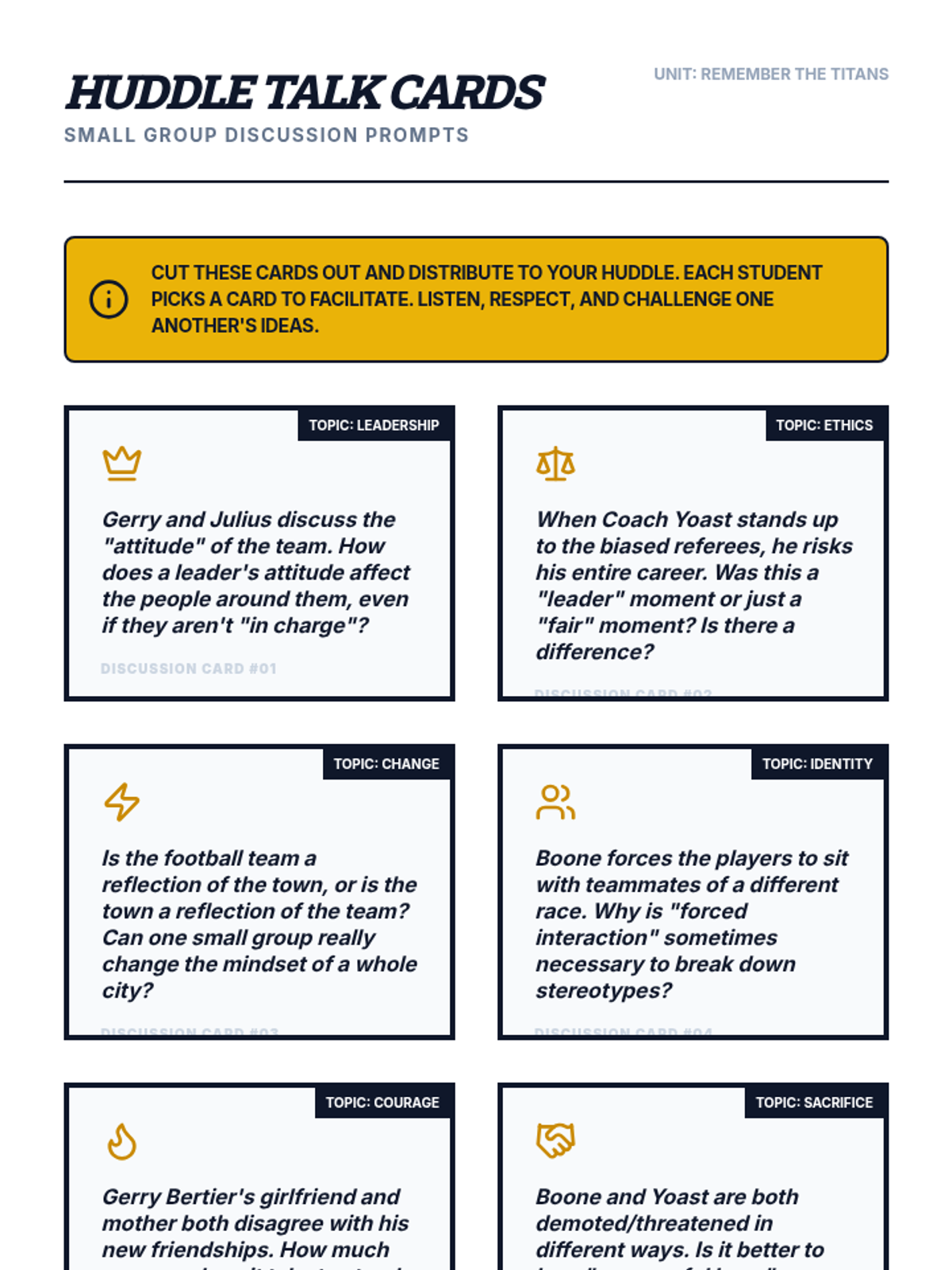
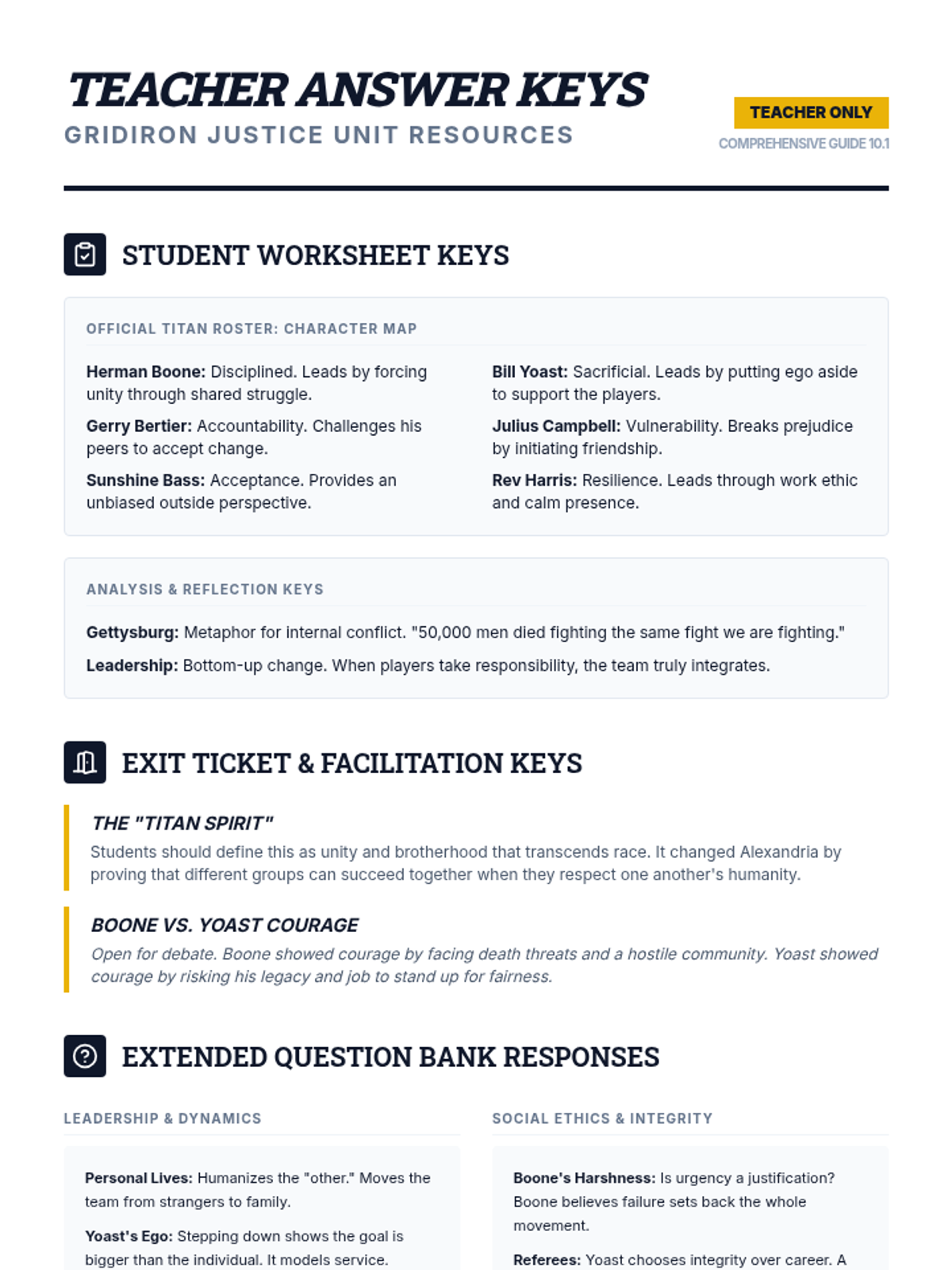
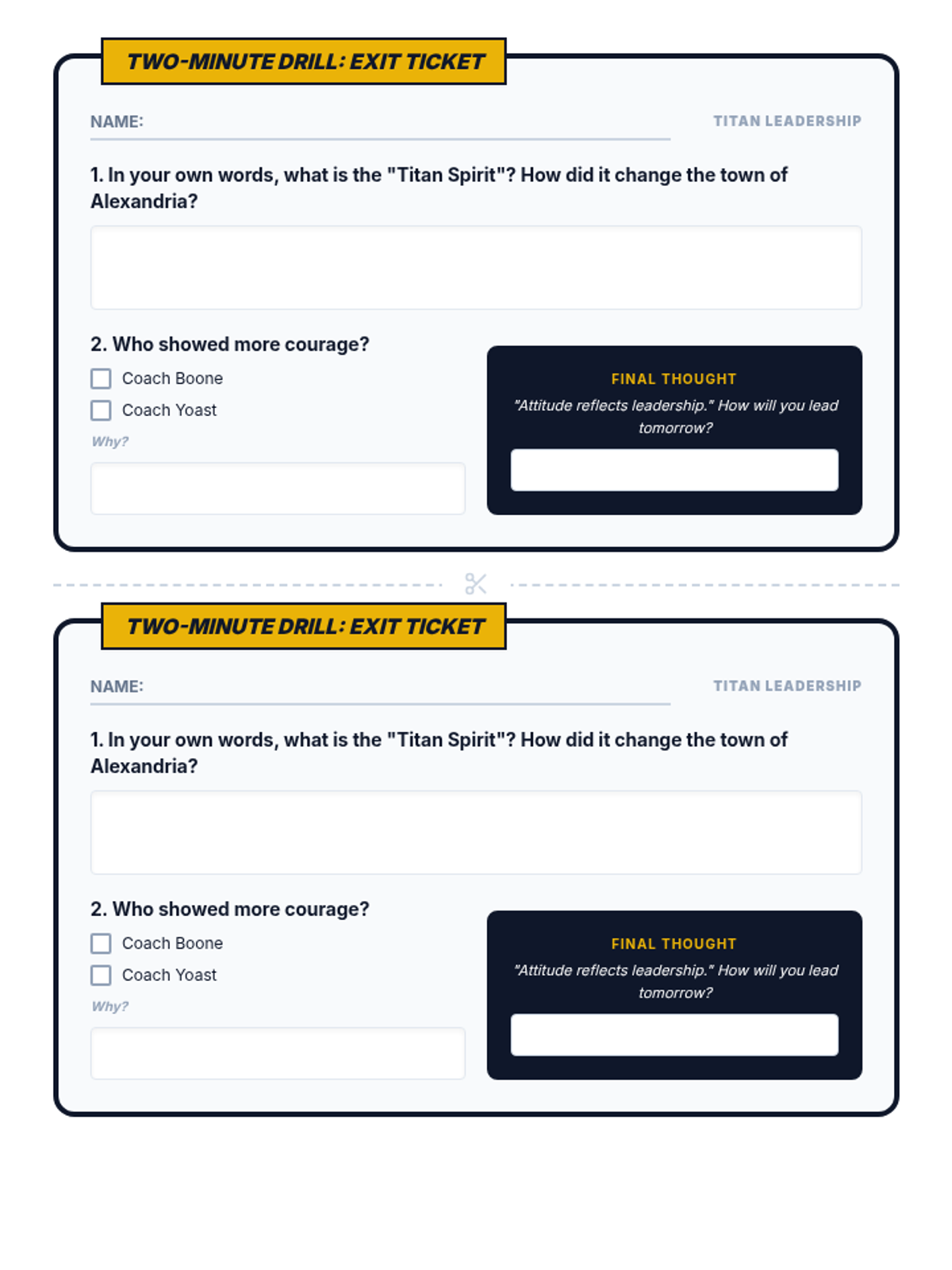
An introductory exploration of the historical and social themes in the film Remember the Titans, focusing on the 1971 integration of T.C. Williams High School and the leadership required to build a unified team.
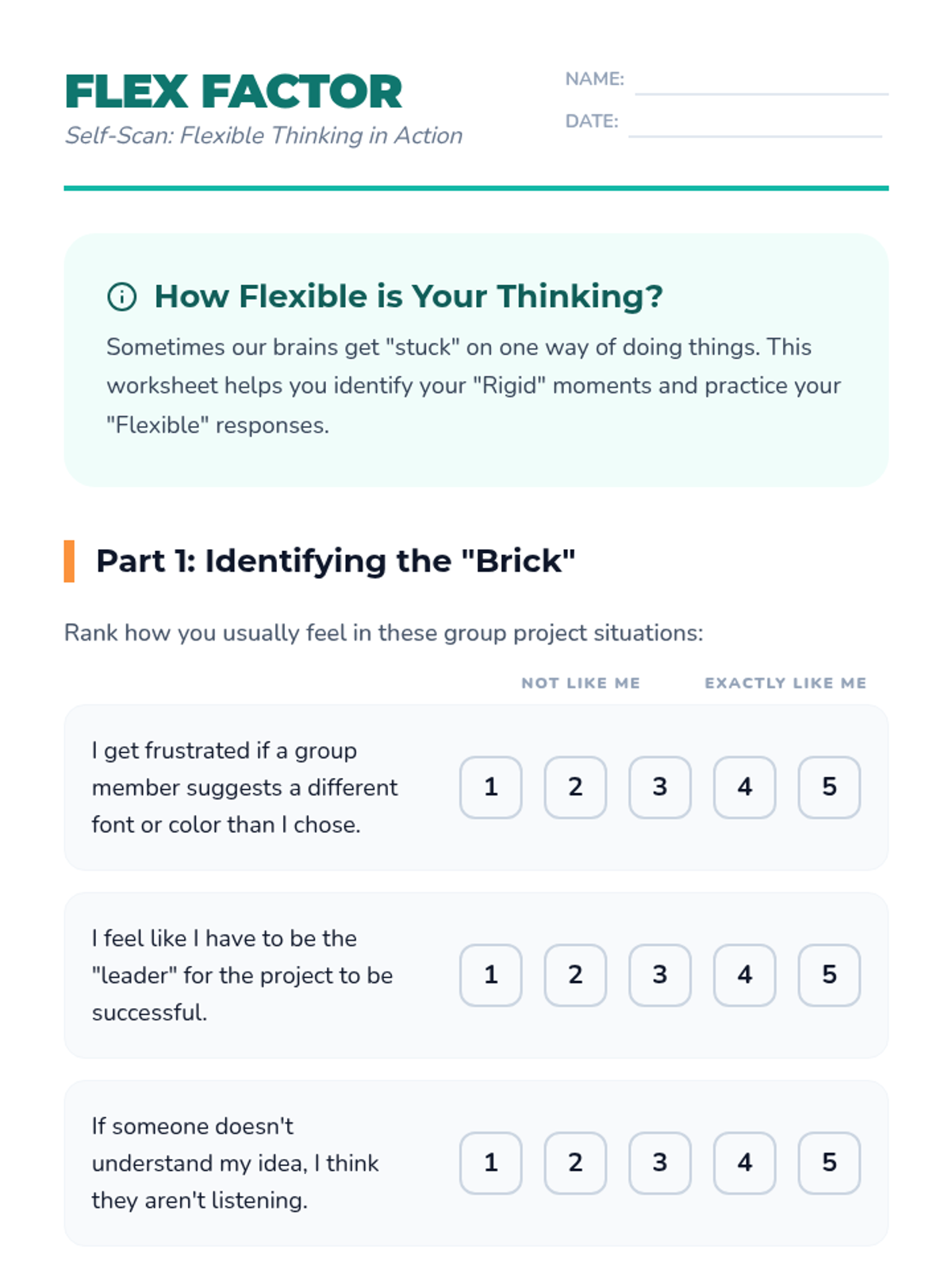
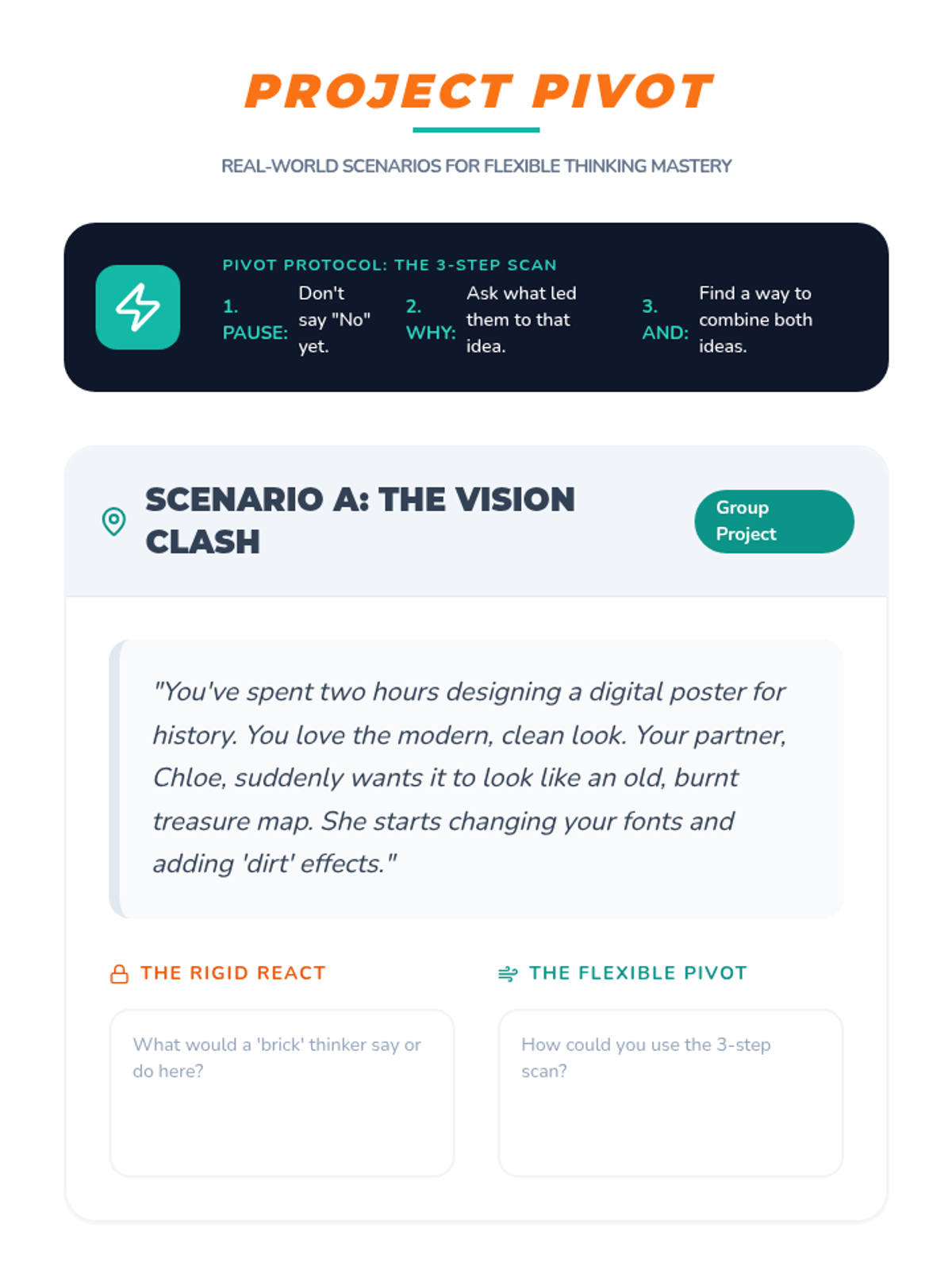
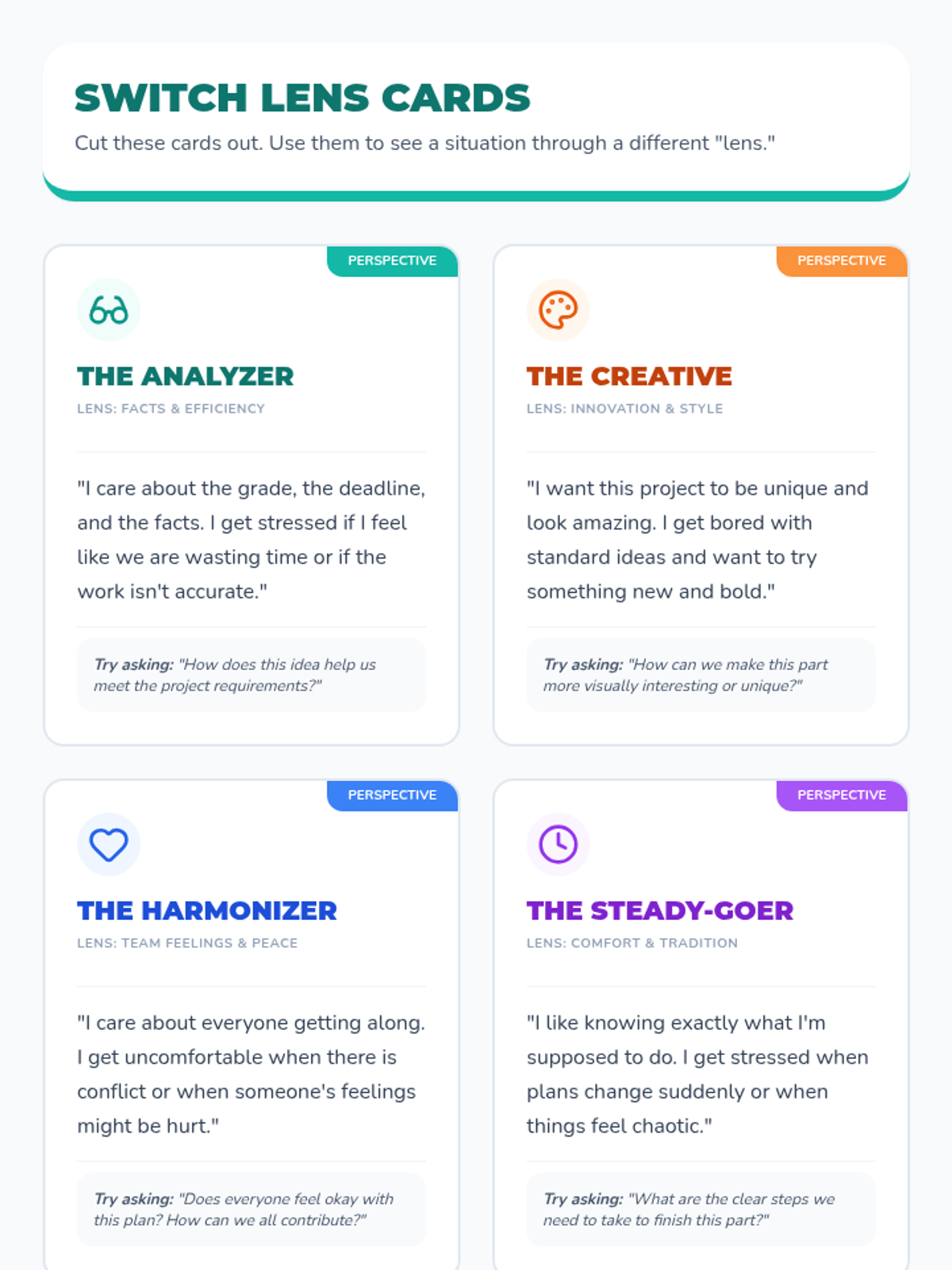
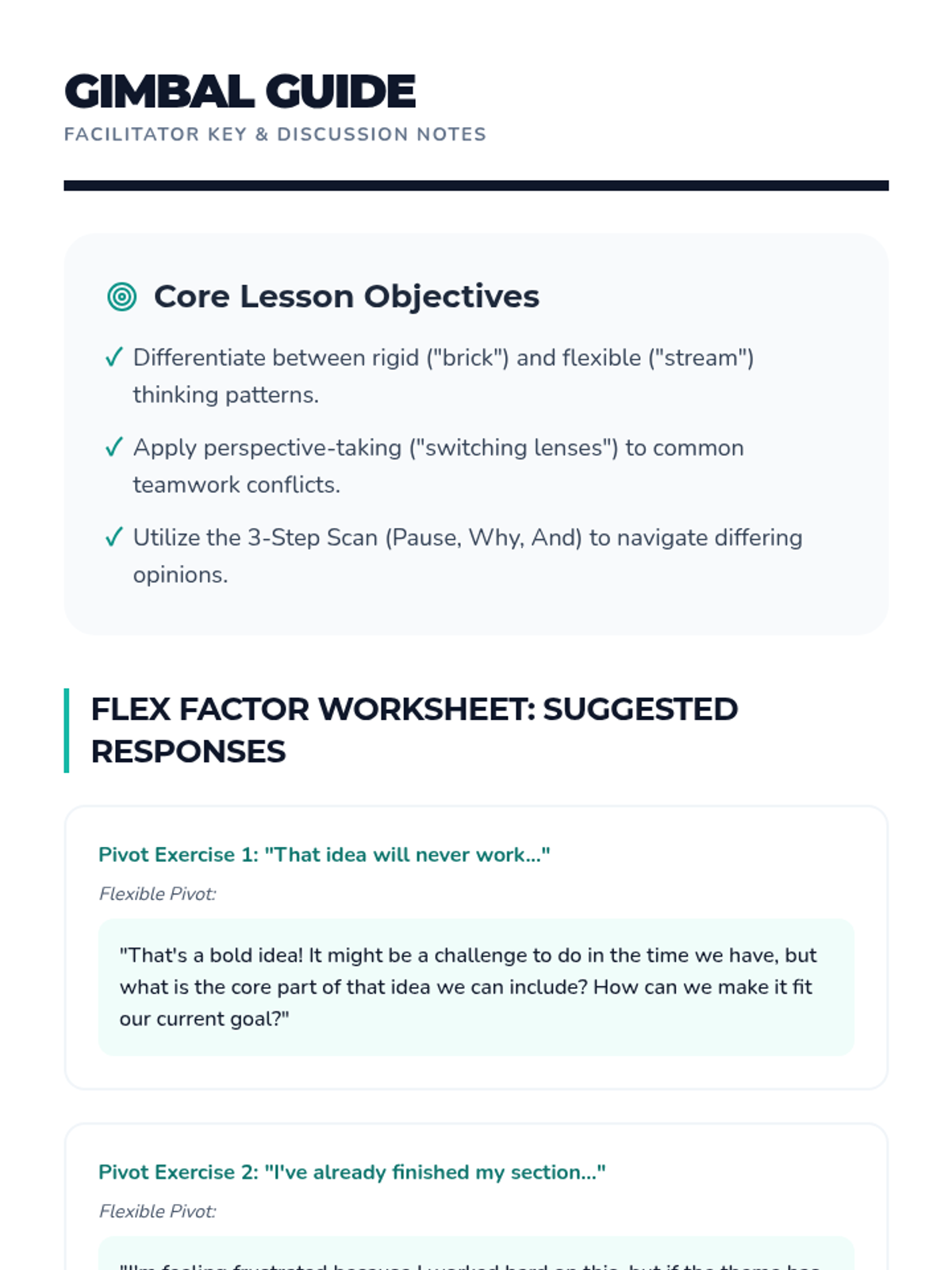
A lesson for 8th grade students focusing on flexible thinking and perspective taking within the context of group projects and peer collaboration. It uses the metaphor of a 'mental gimbal' to help students navigate diverse opinions and social challenges.
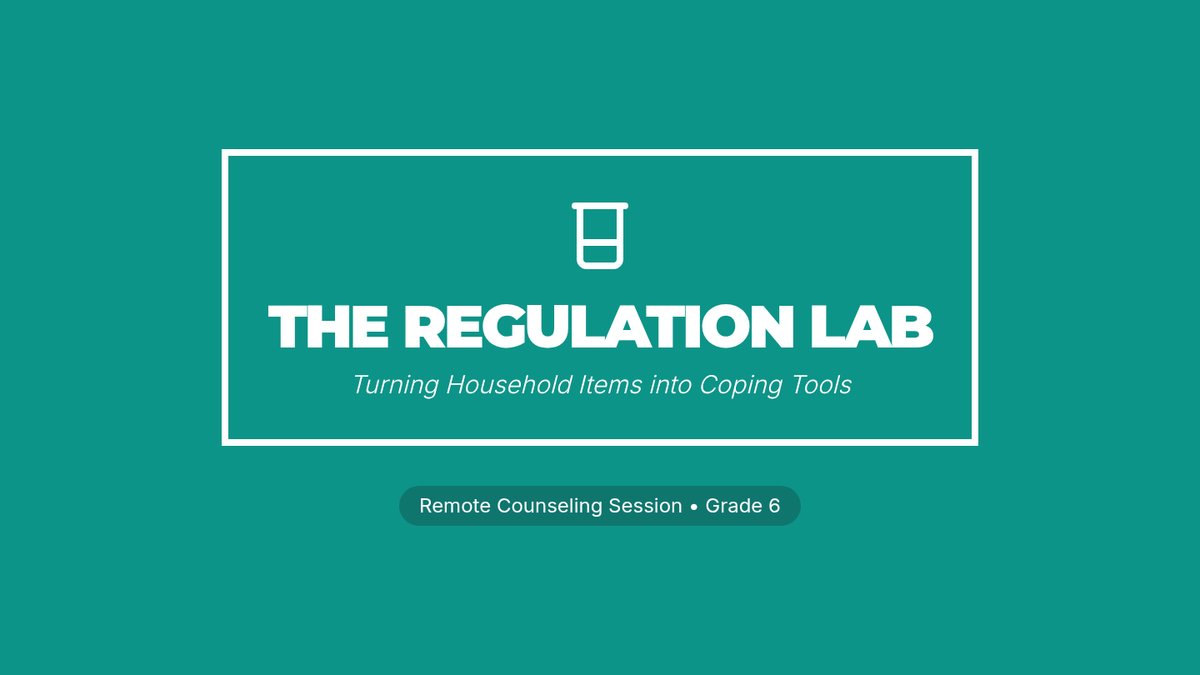
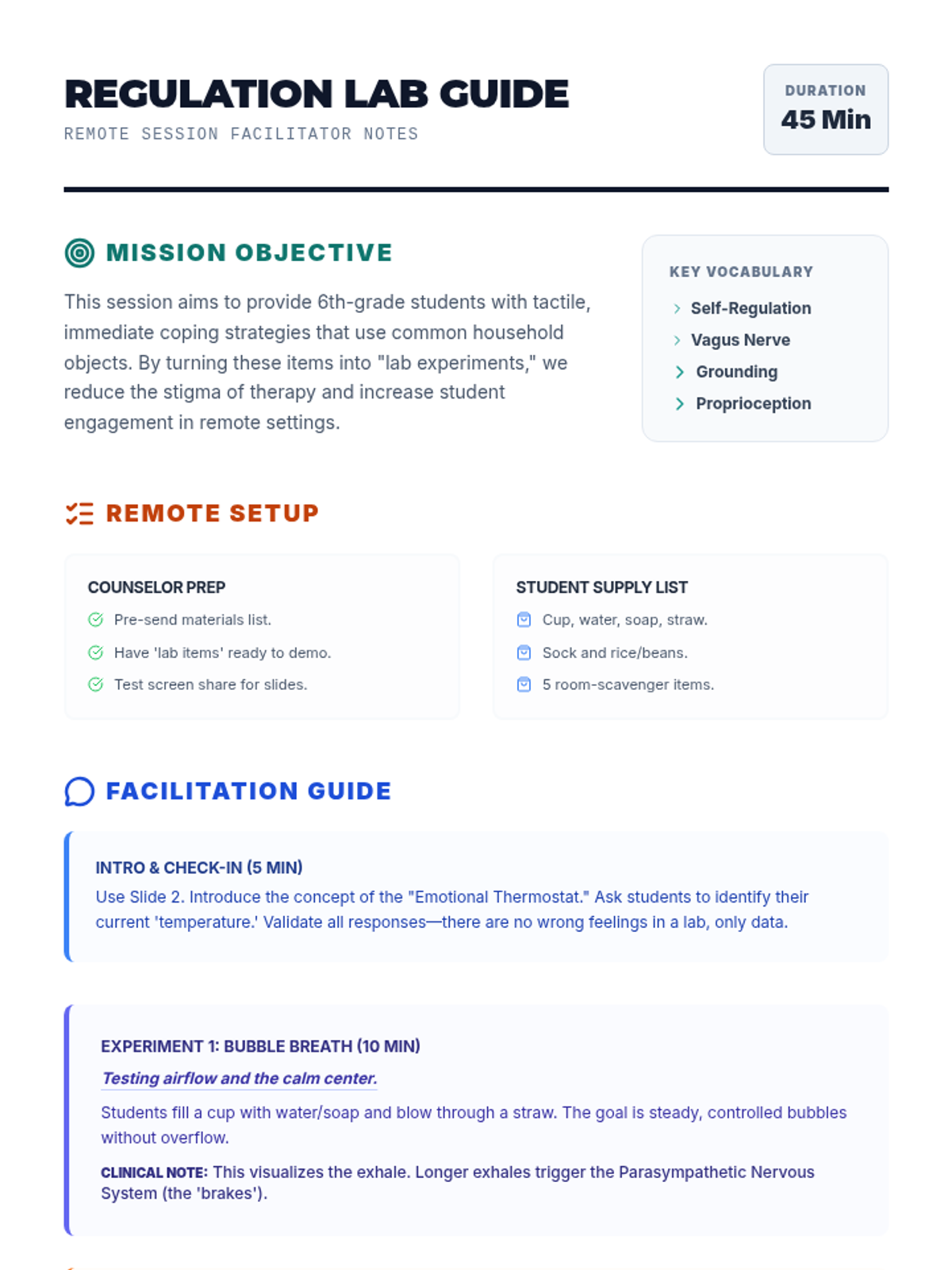
An interactive remote session where students use household items like socks, soap, and everyday objects to practice deep breathing, grounding, and muscle relaxation techniques.
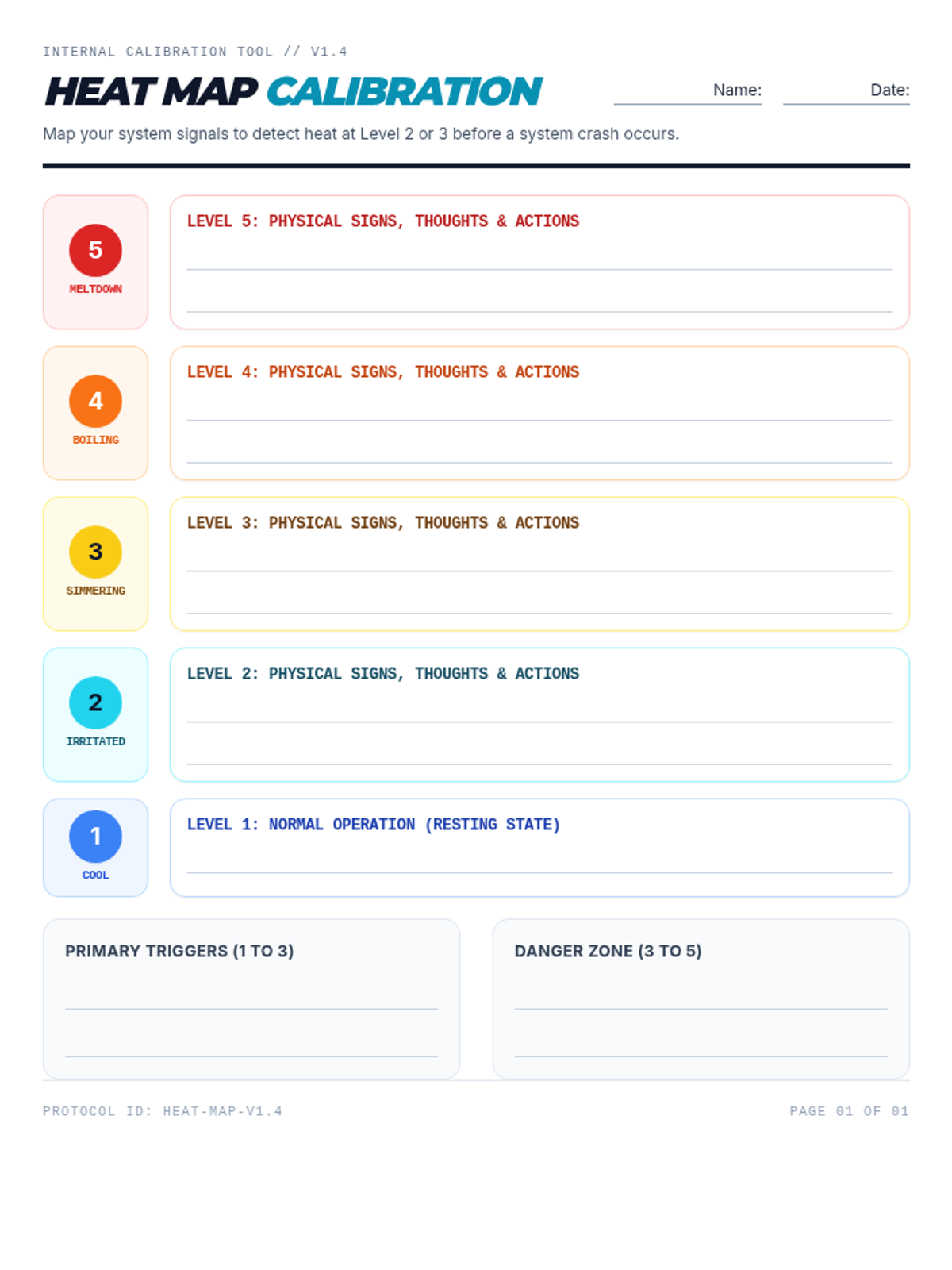
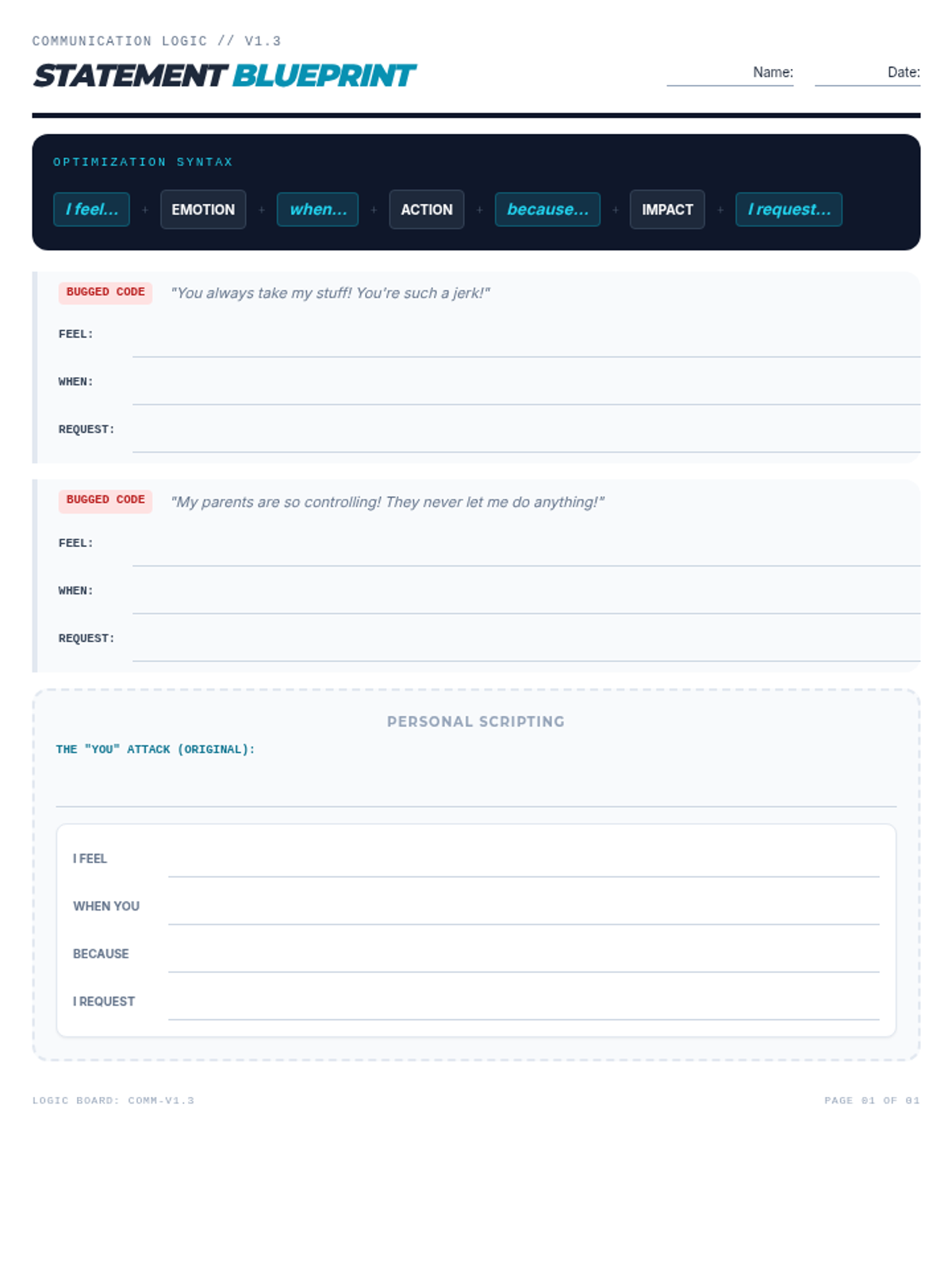
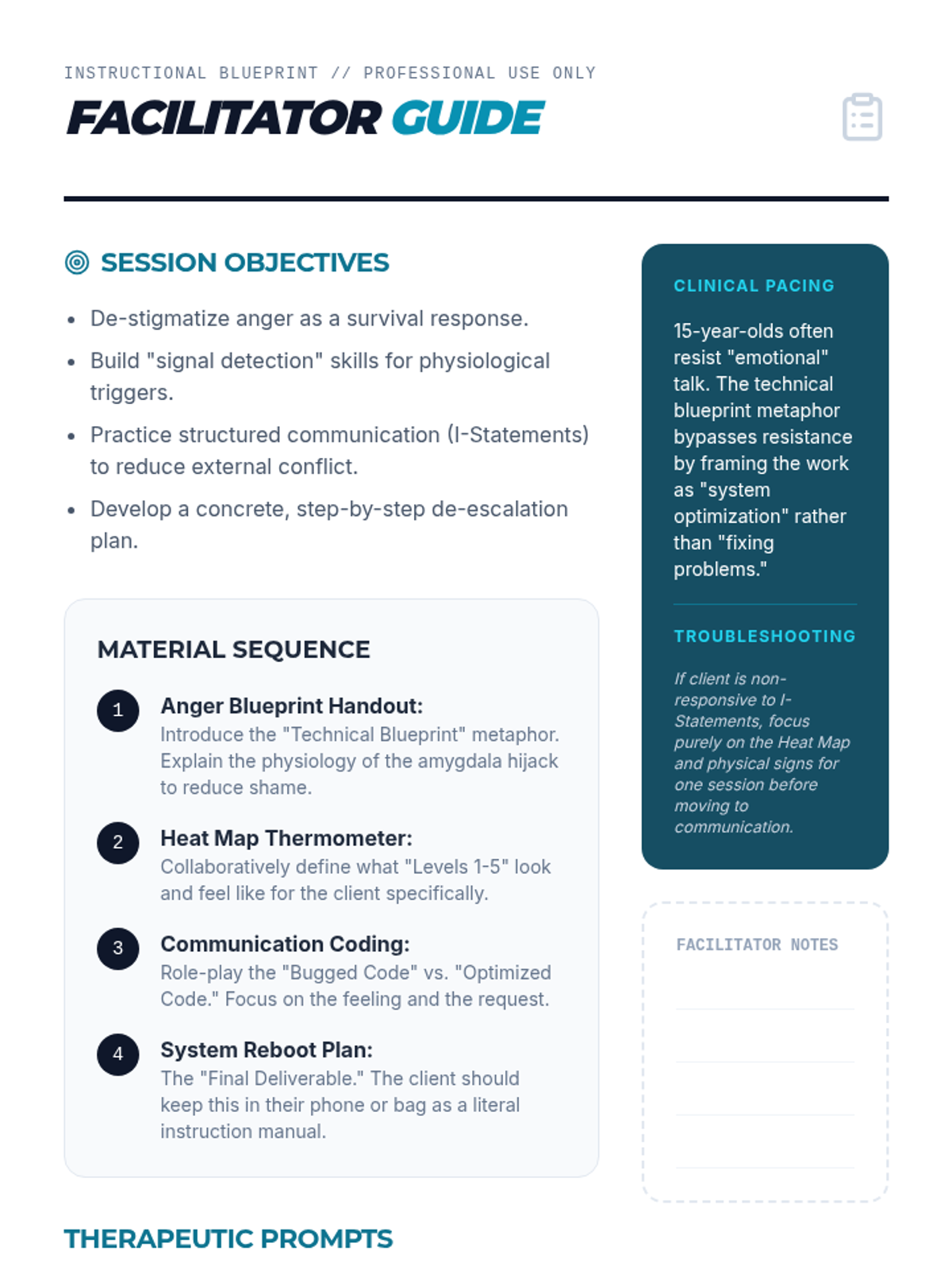
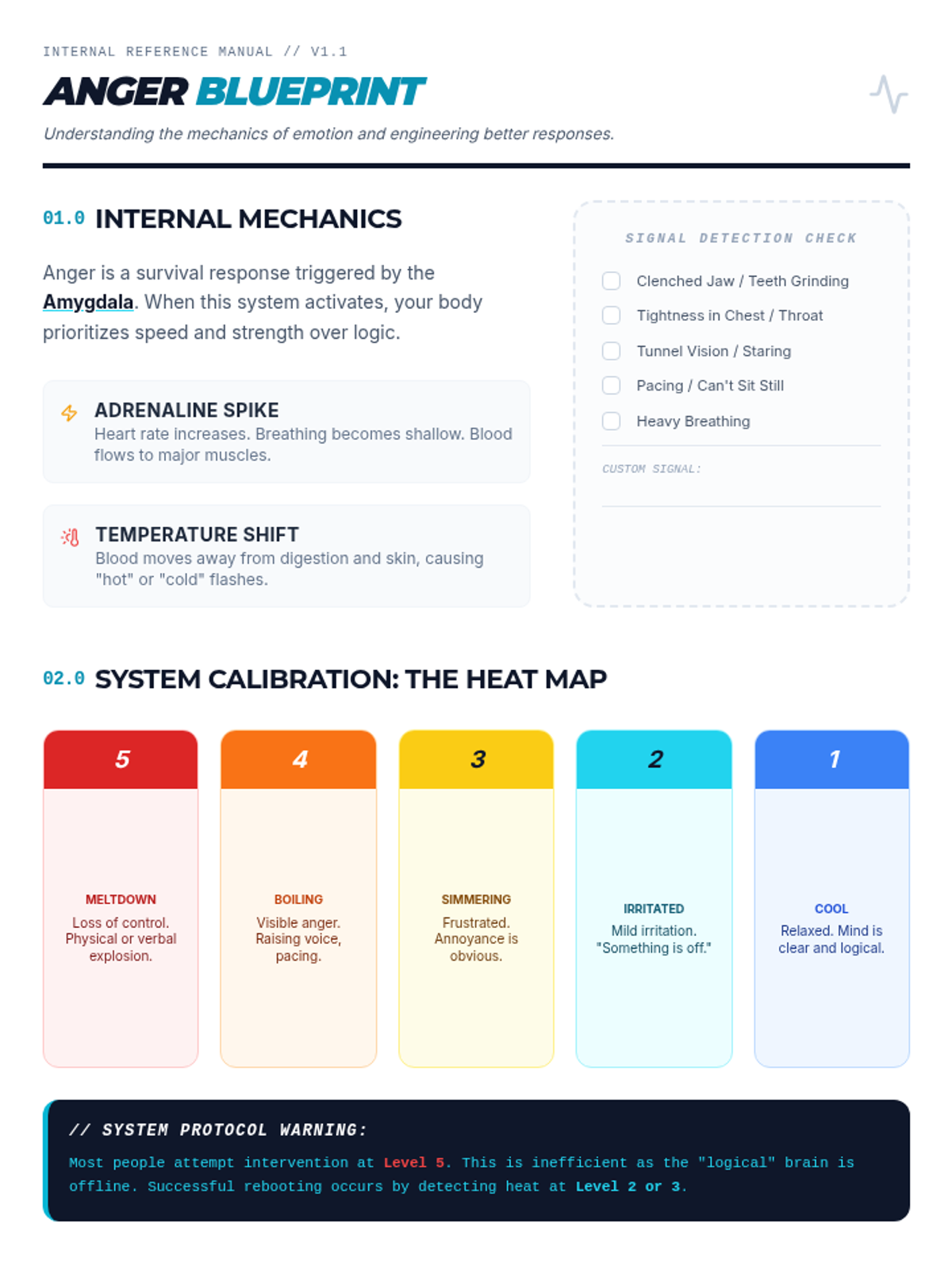
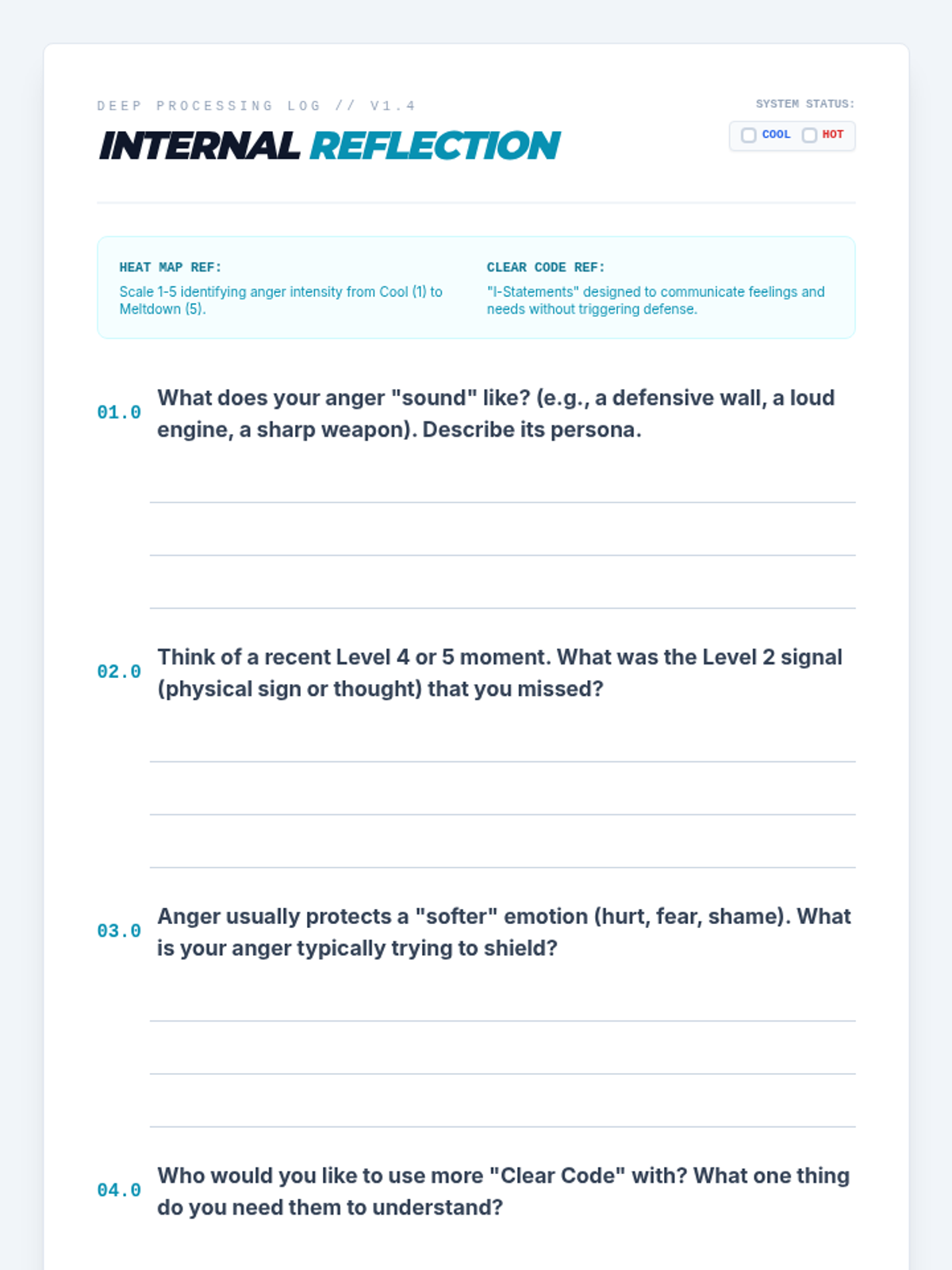
A comprehensive anger management module for teenagers, focusing on identifying emotional triggers, mastering 'I' statements, and implementing de-escalation strategies through a modern technical blueprint aesthetic.
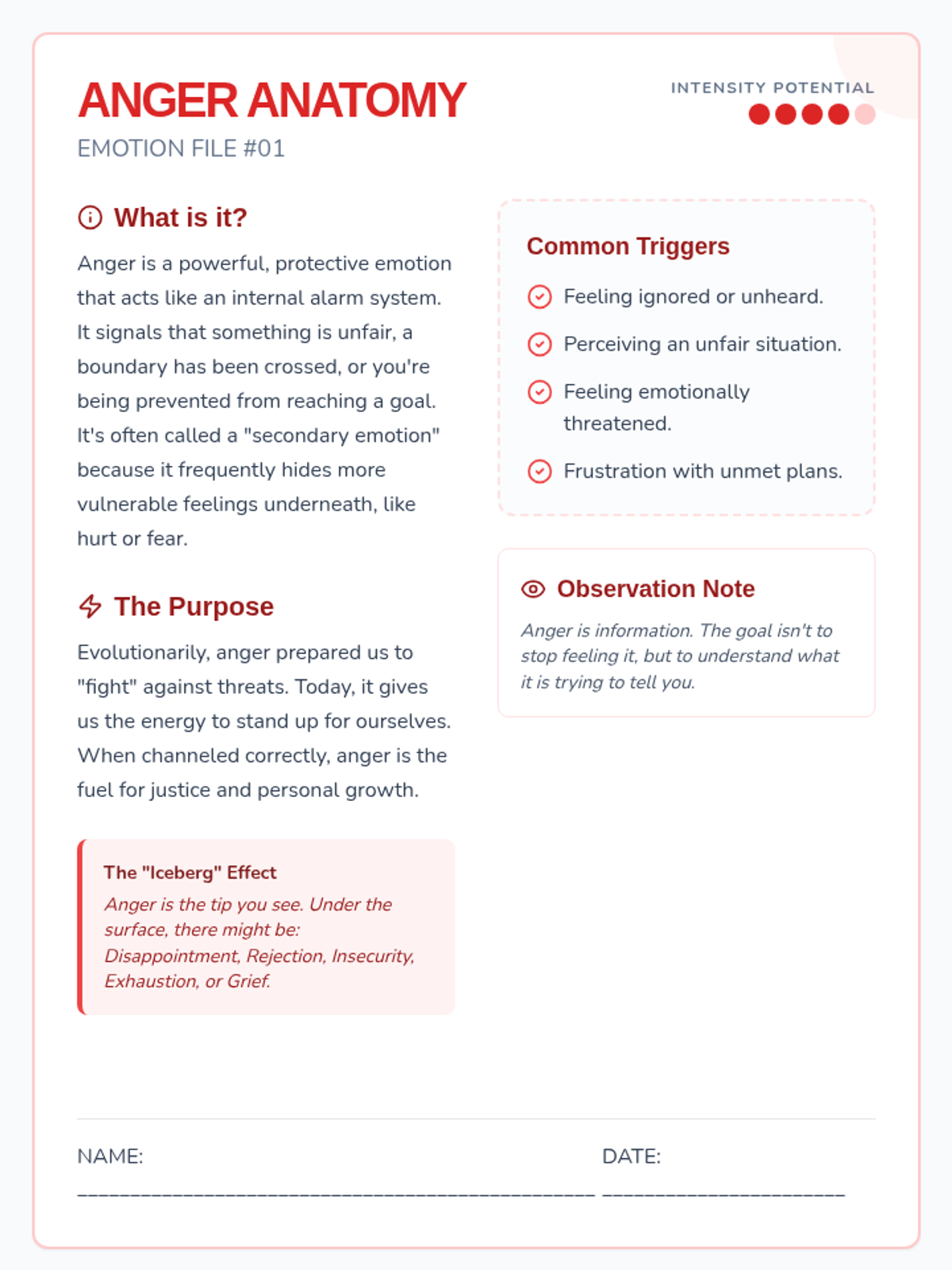
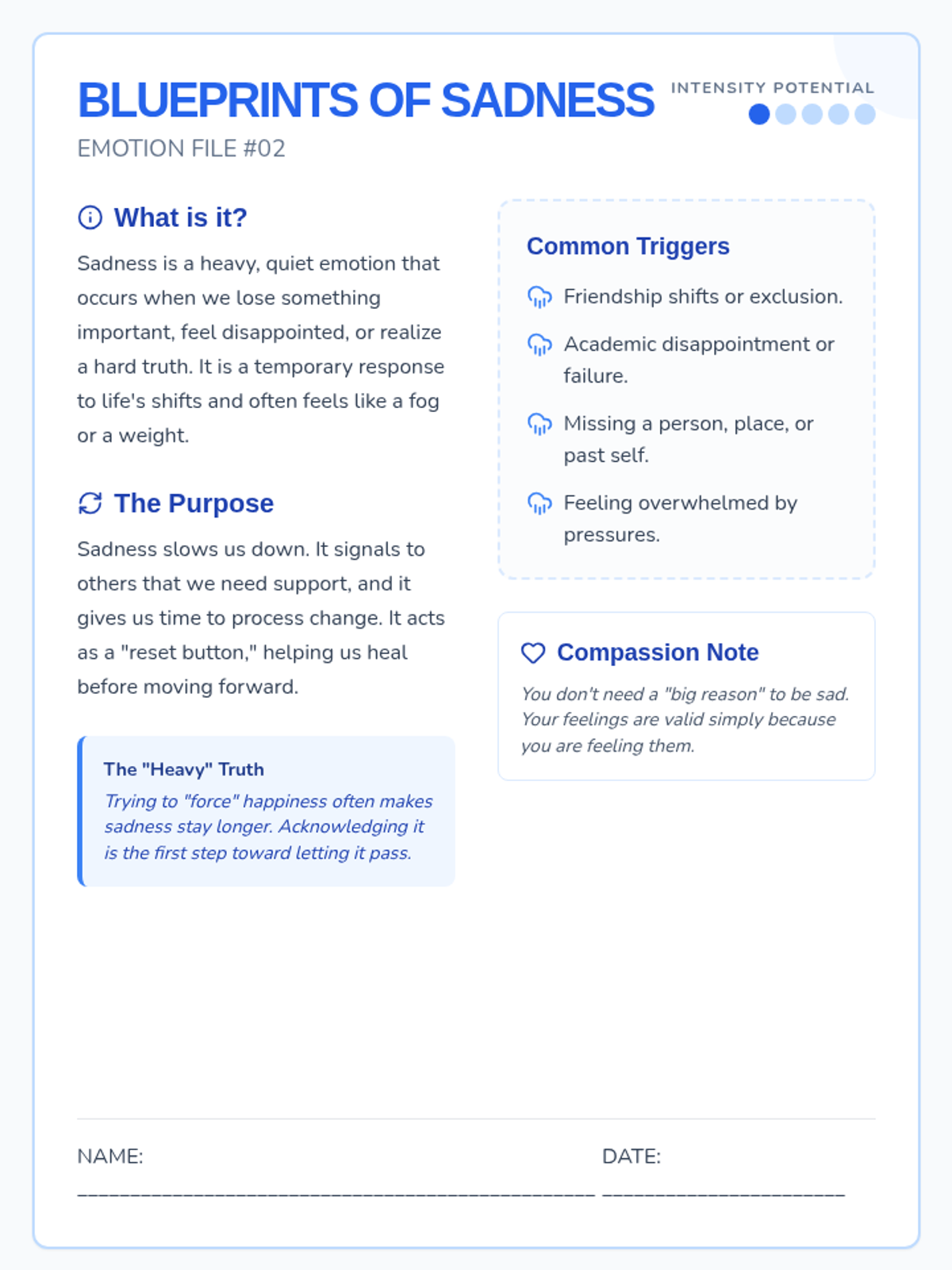
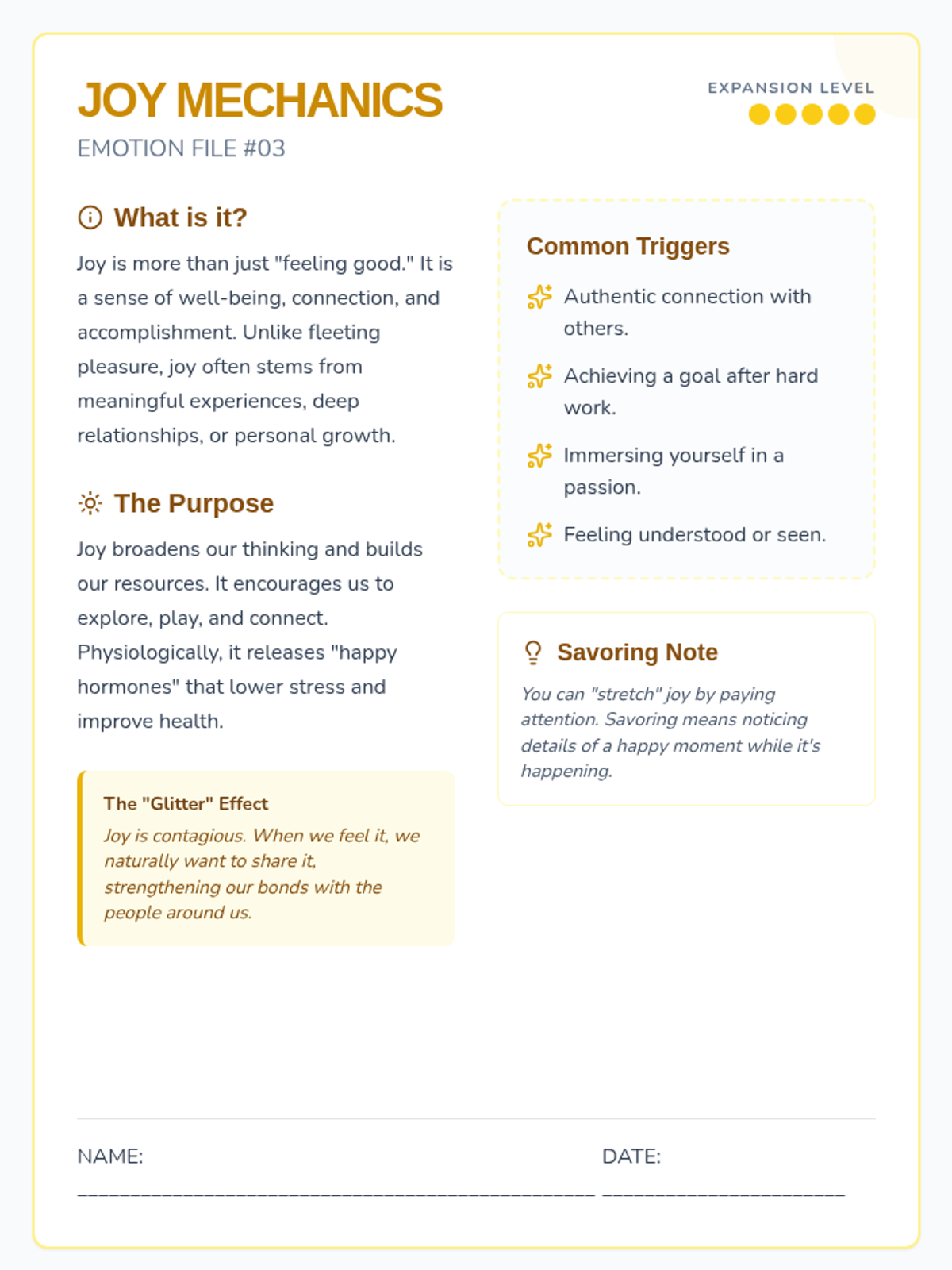
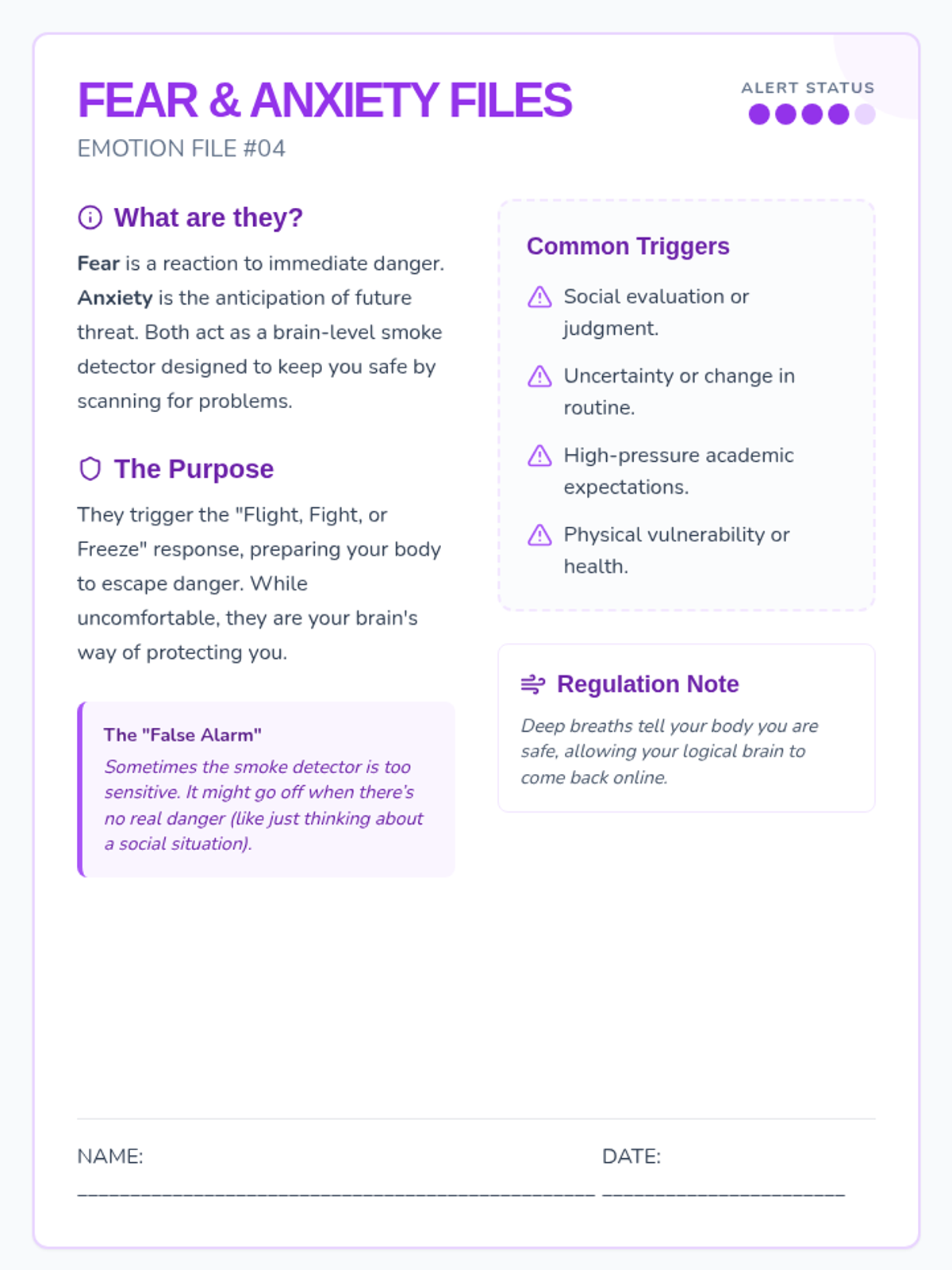
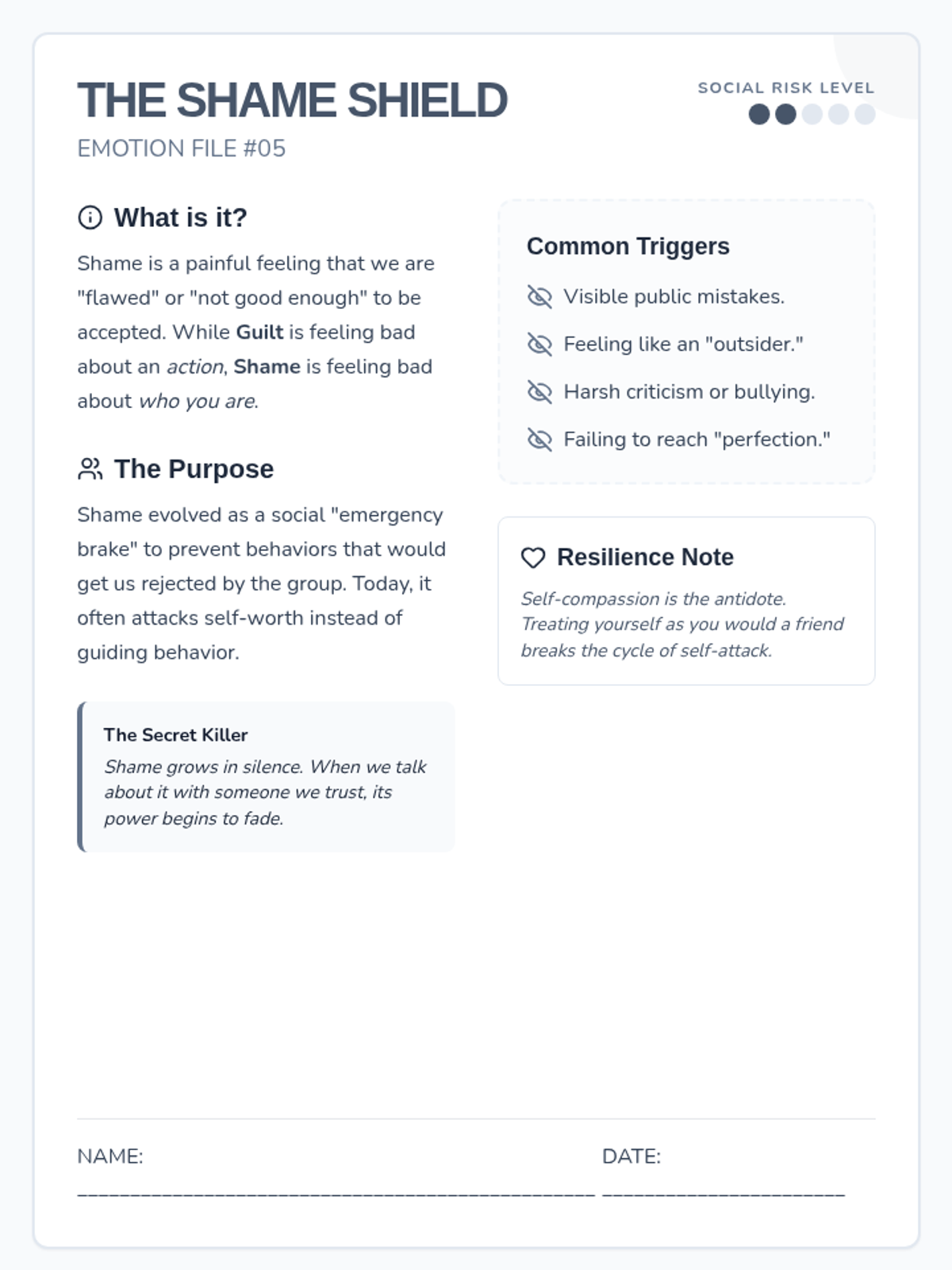
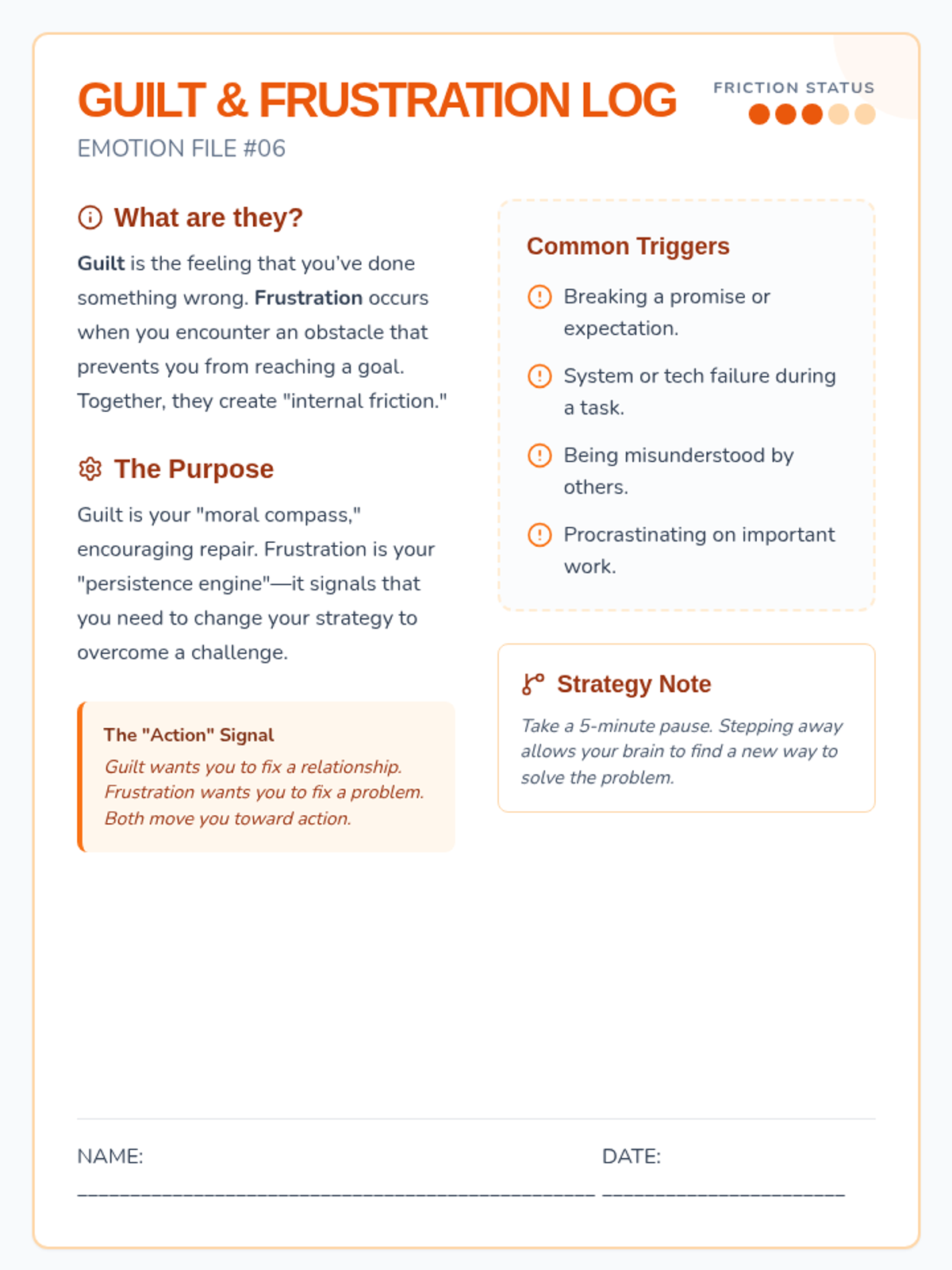
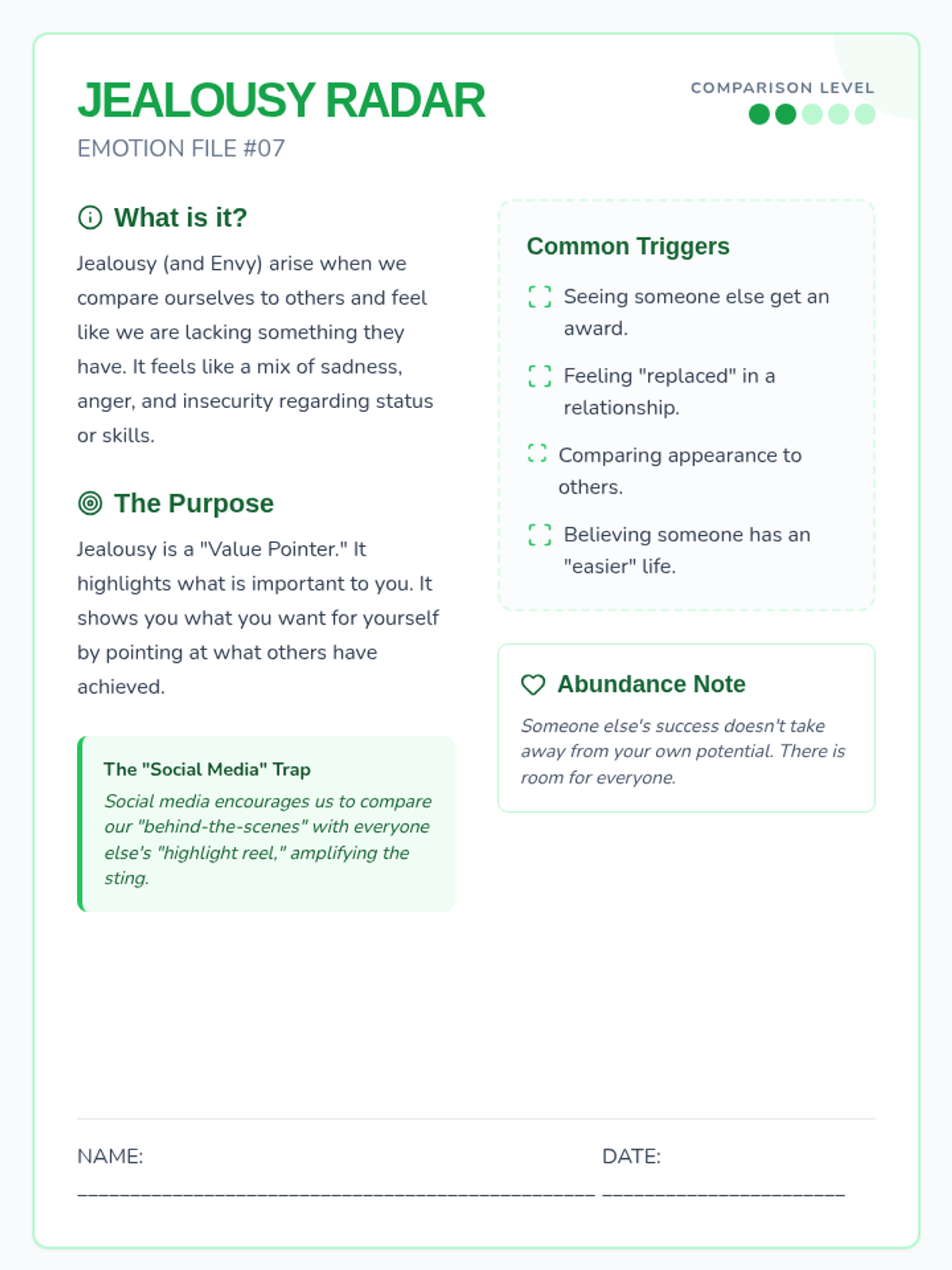
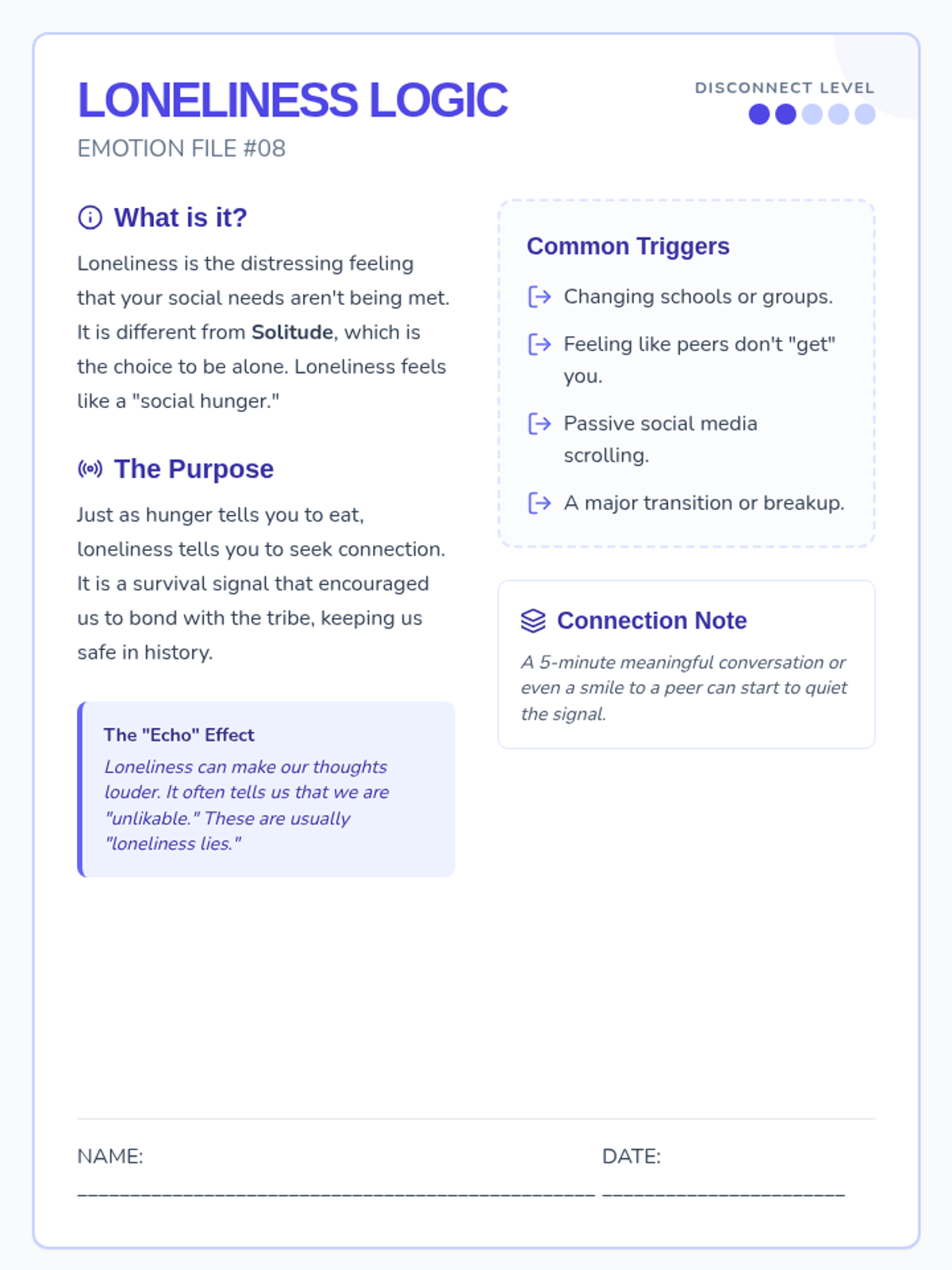
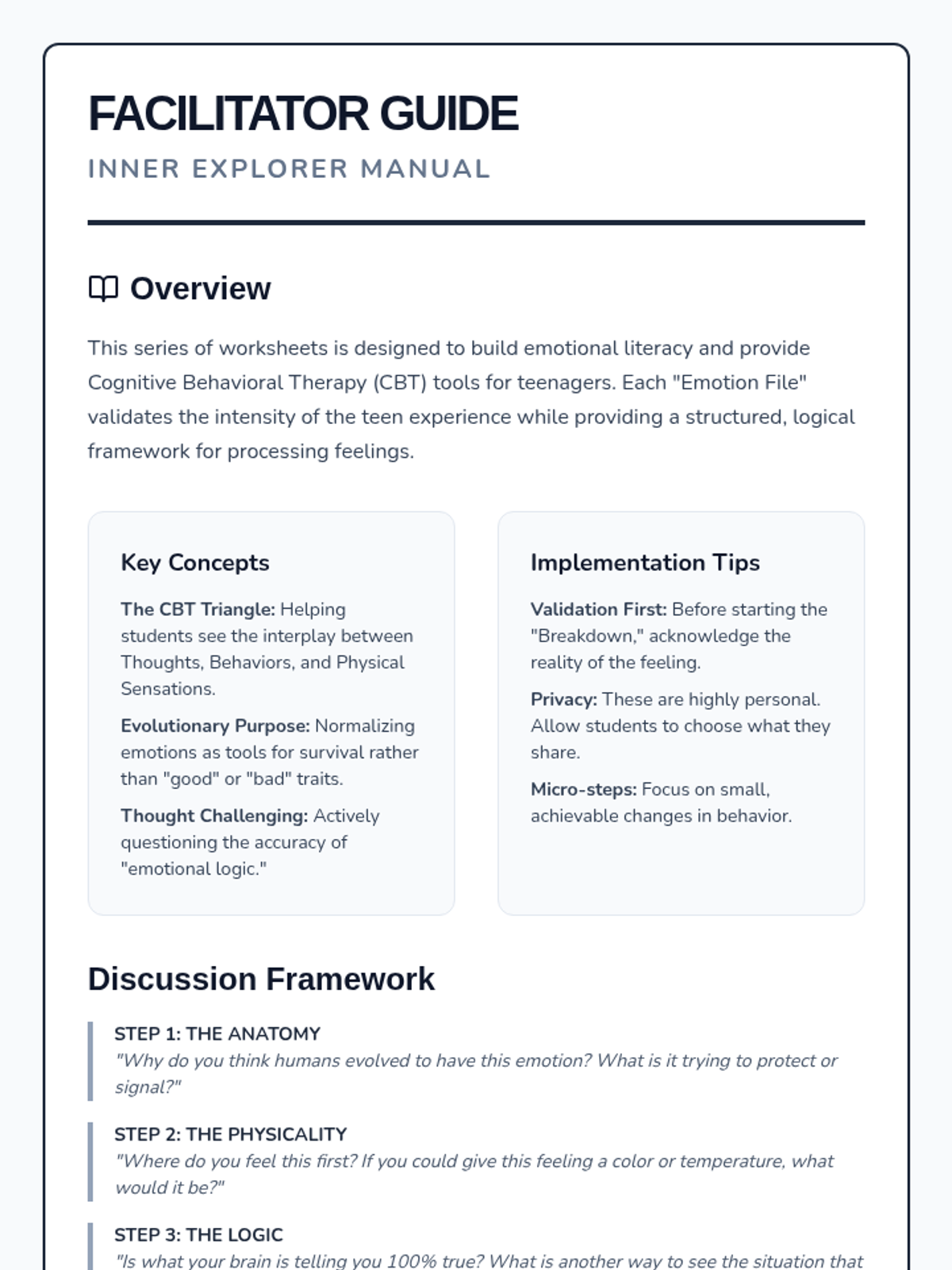
A comprehensive set of emotional literacy and CBT-based worksheets designed for teenagers to explore, understand, and manage complex emotions. Each module includes descriptive content and structured reflection areas for thoughts, behaviors, and physical sensations.
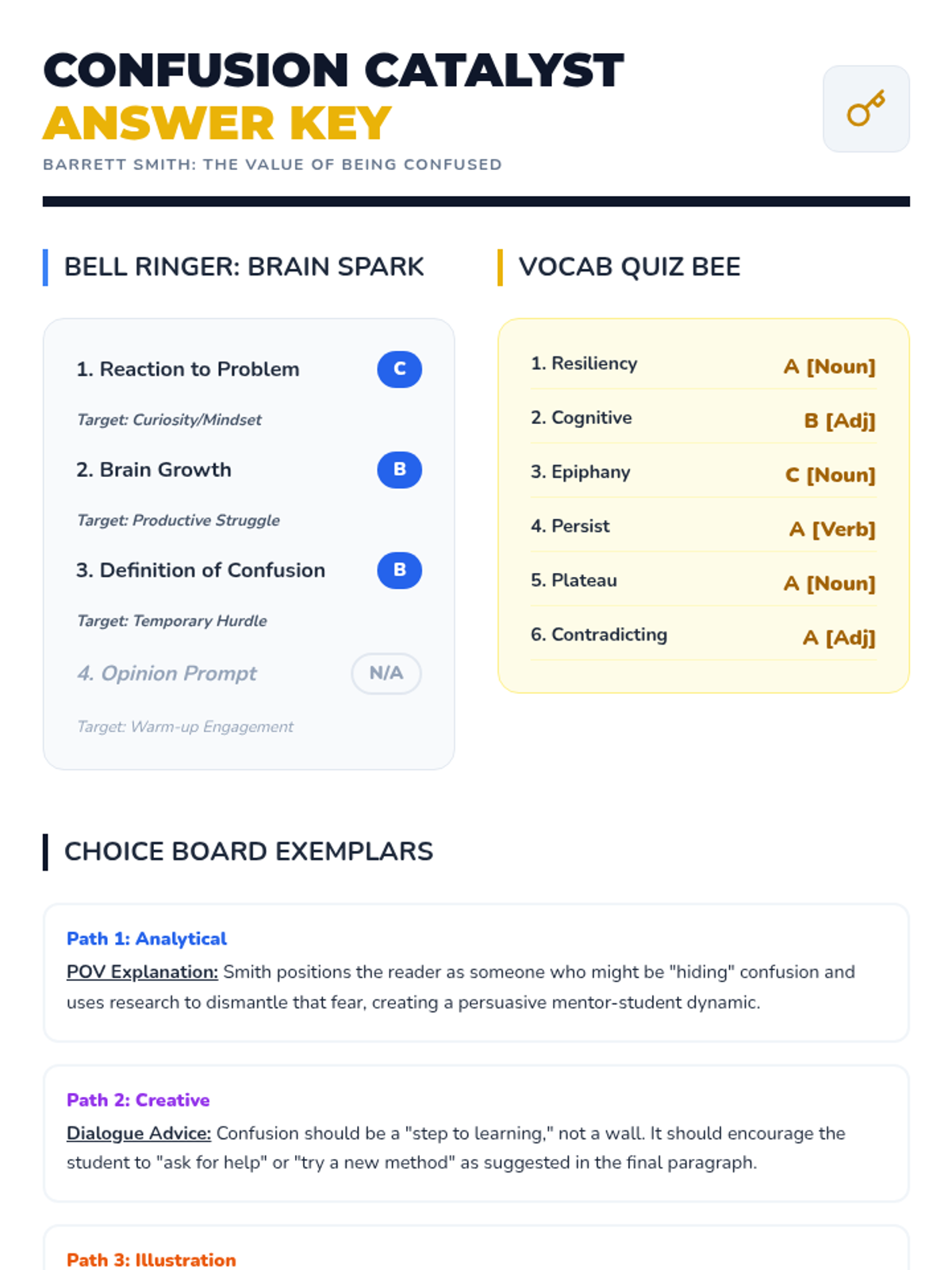
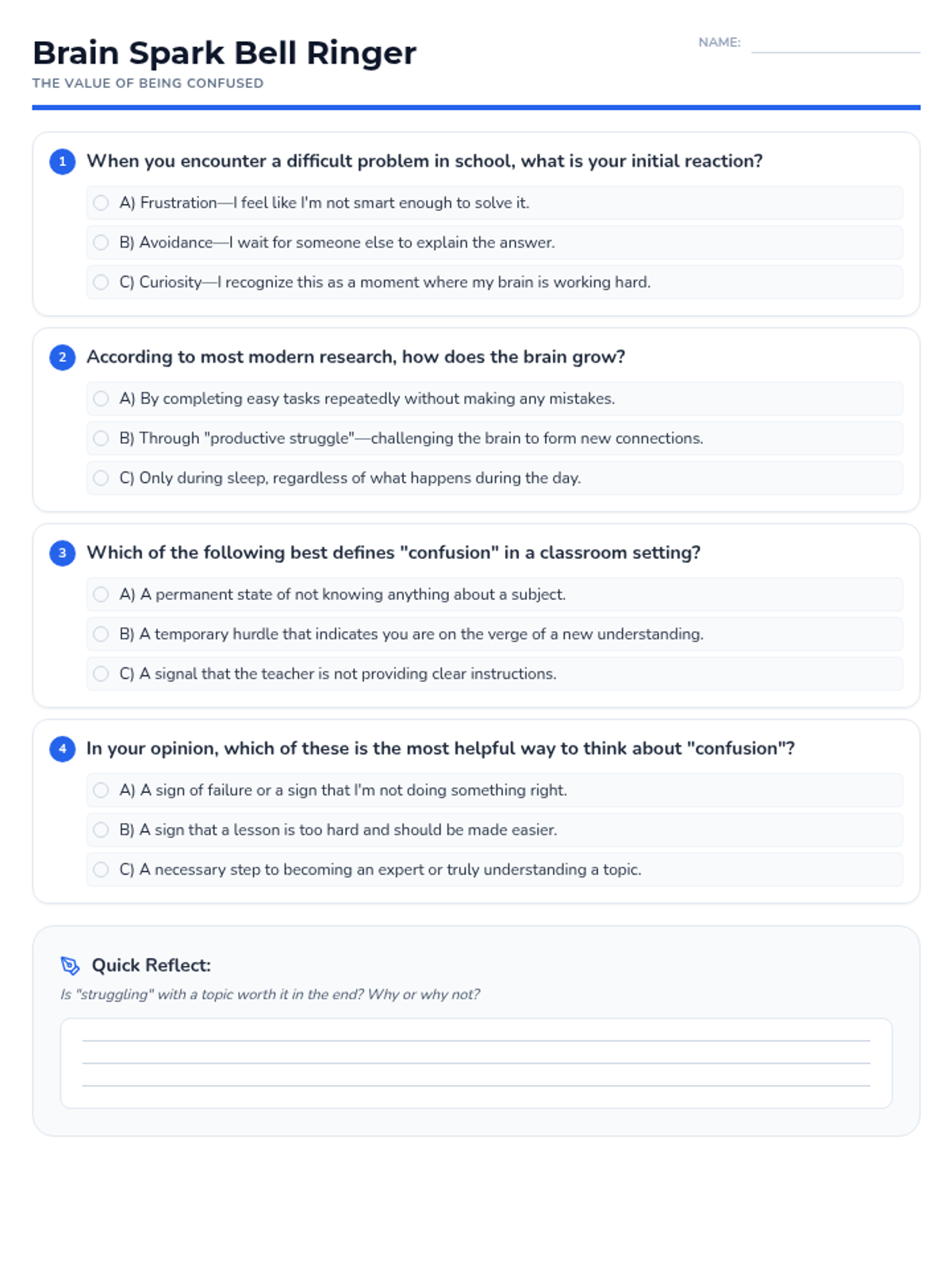
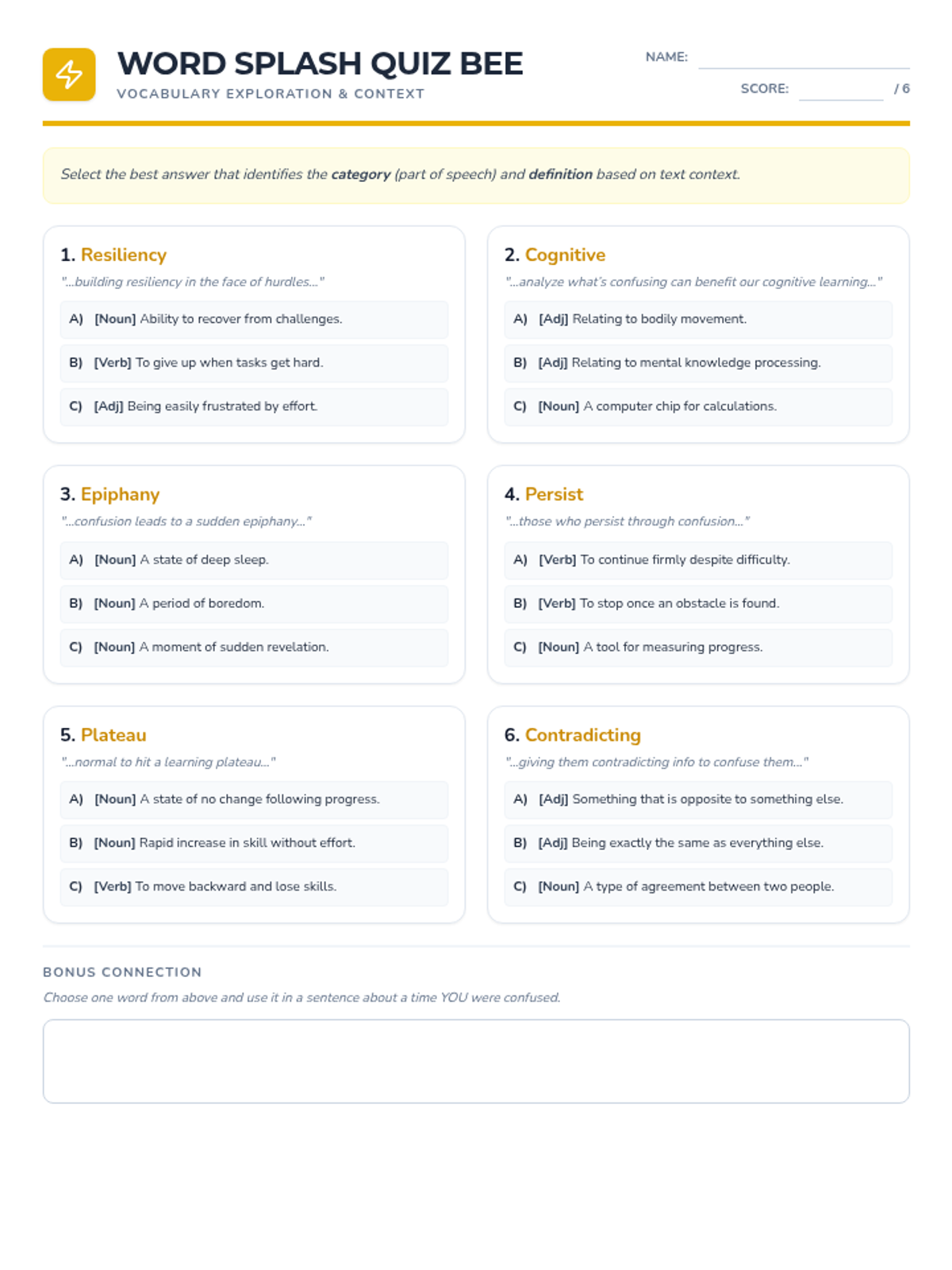
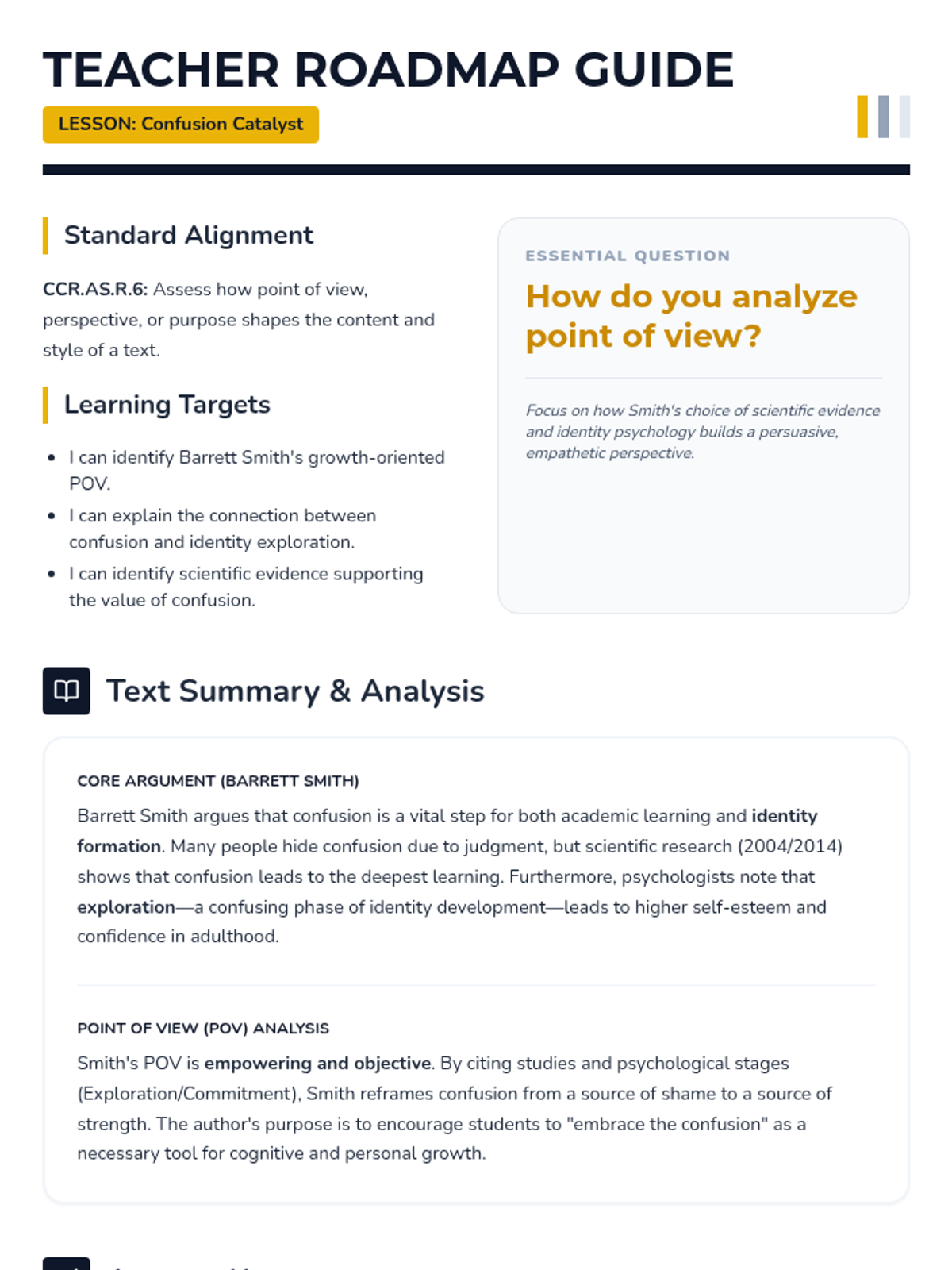
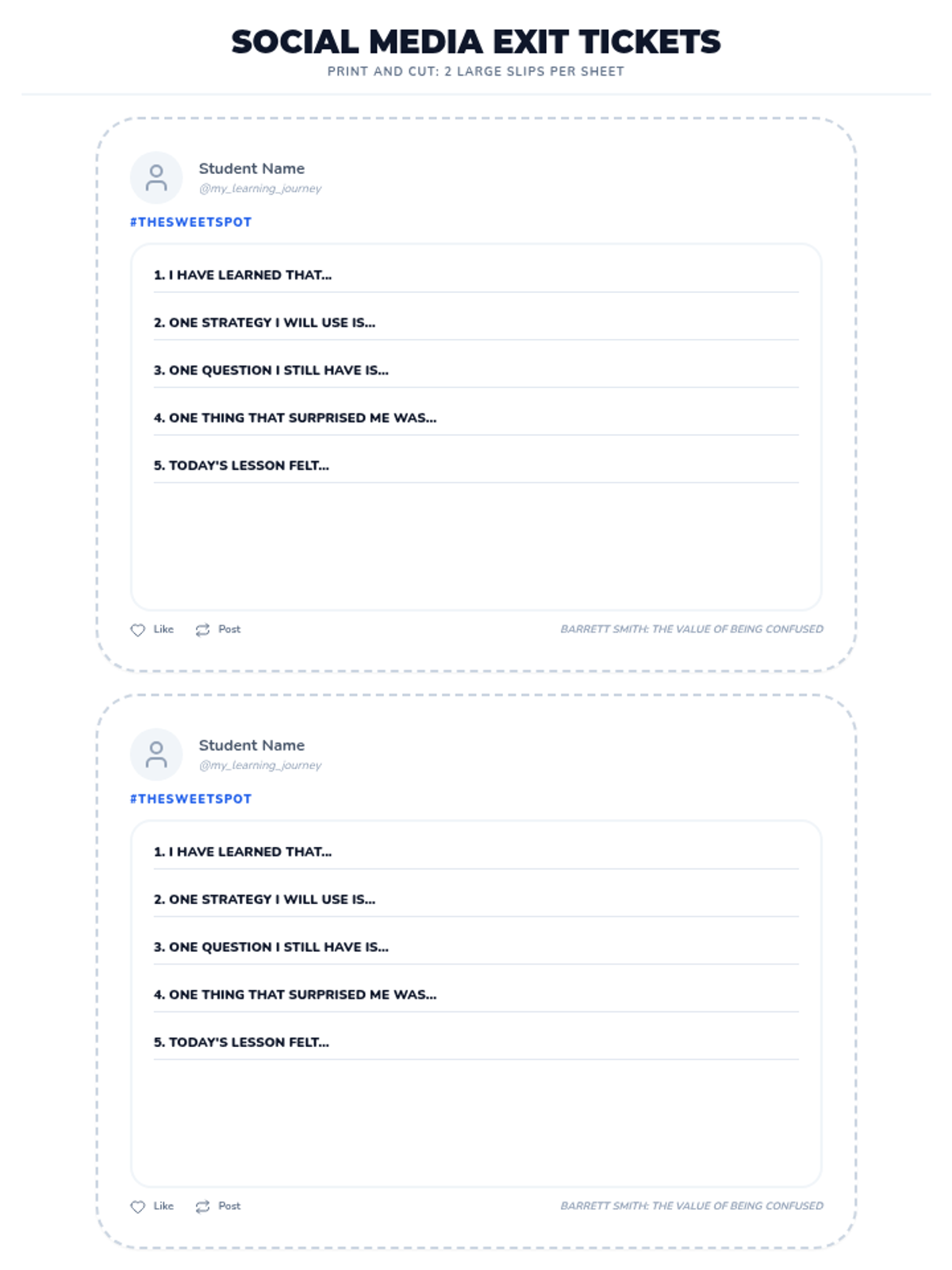
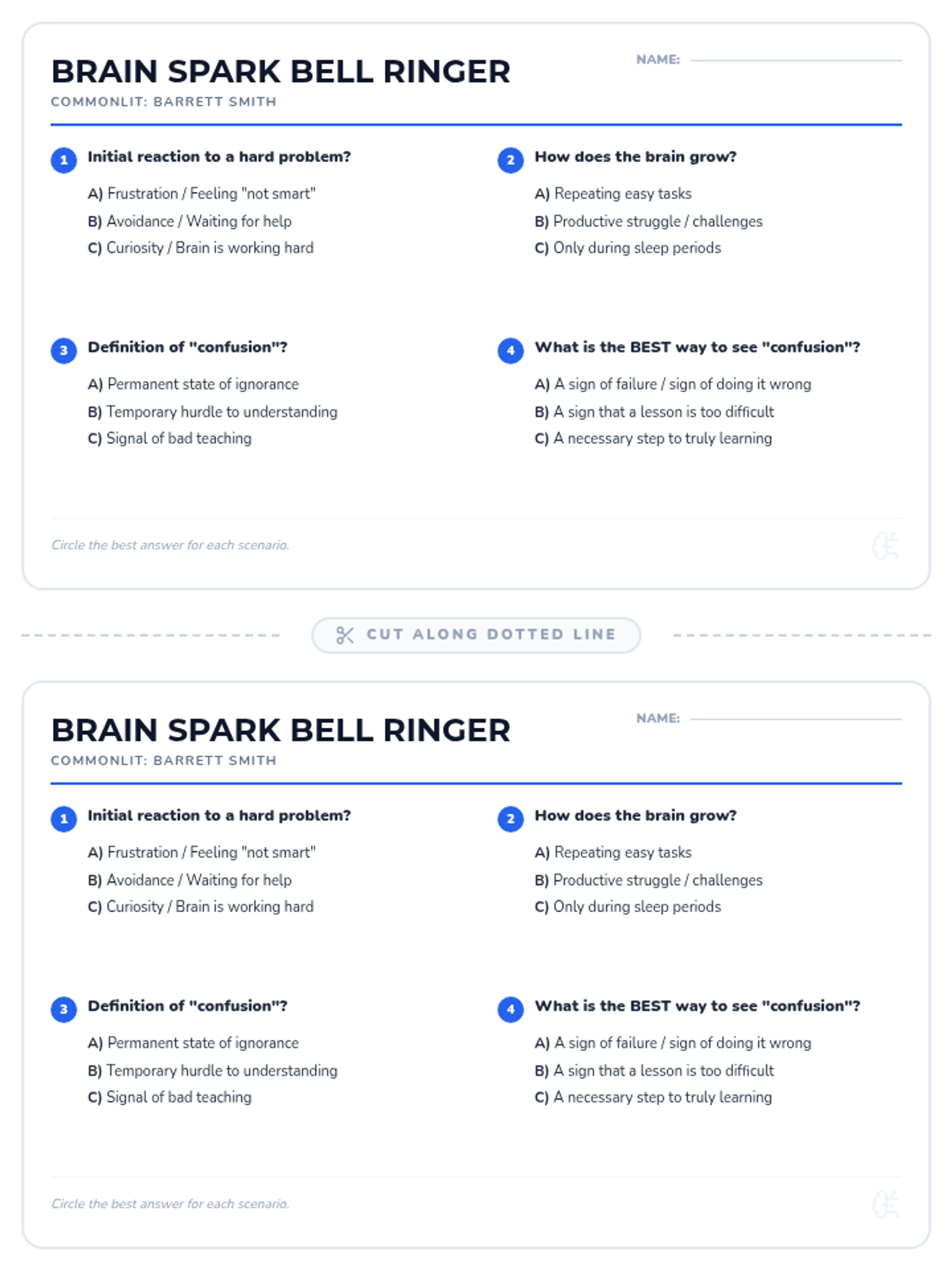
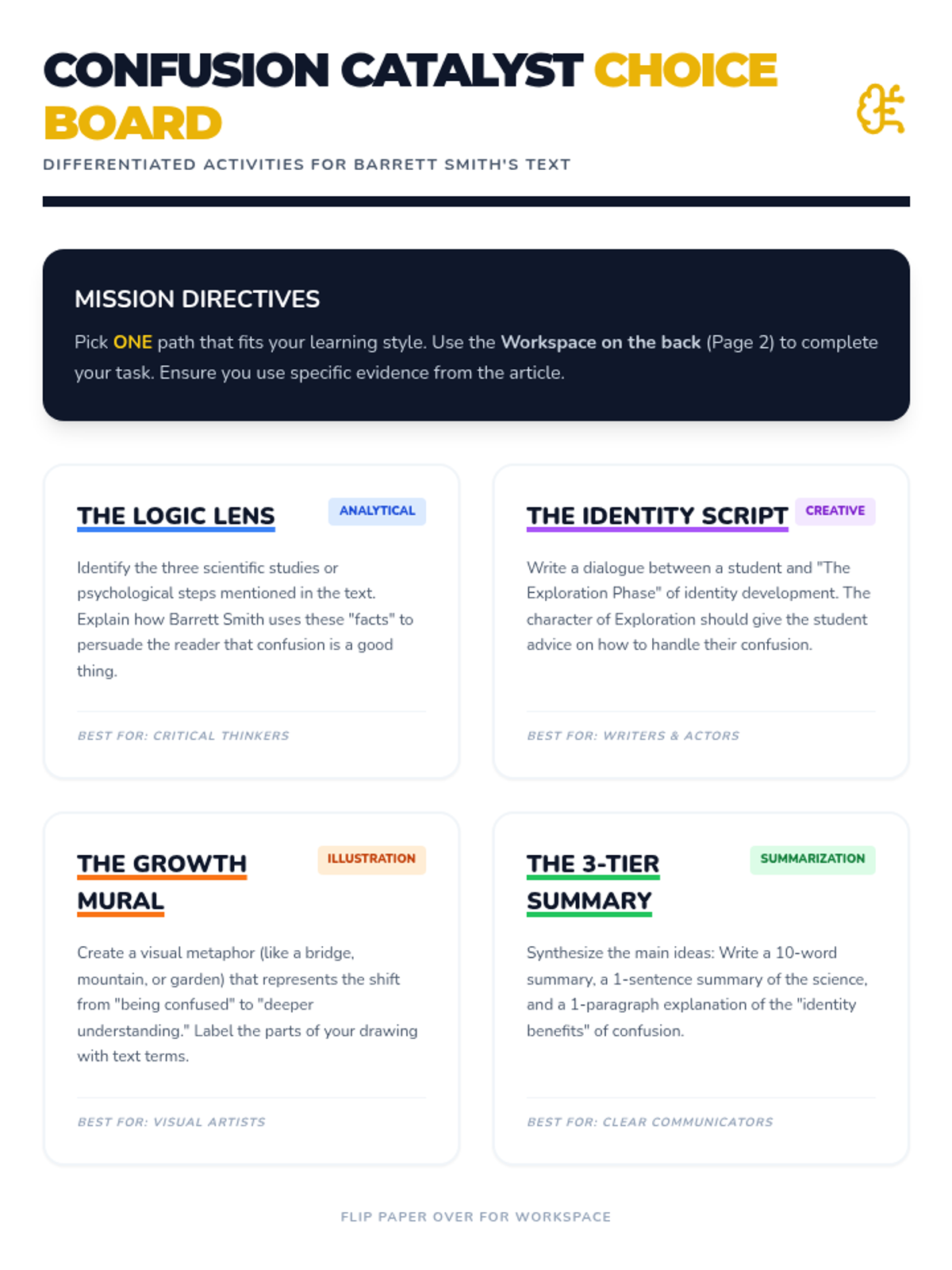
An analysis of Kimberly Tyson's 'The Value of Being Confused' focusing on how the author uses perspective to reframe confusion as a learning tool. Includes vocabulary development, collaborative discussion, and creative choice-based assessment.
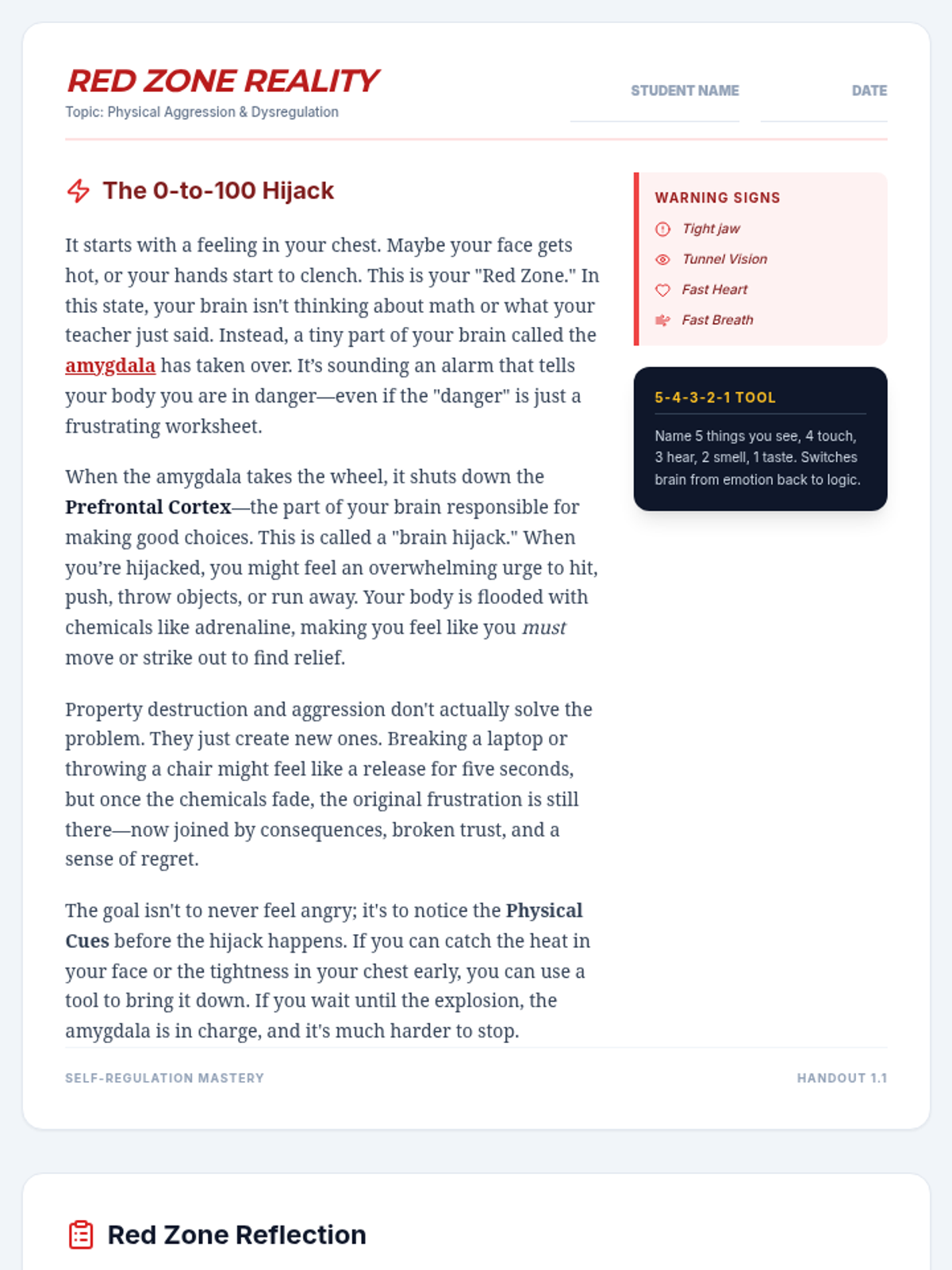
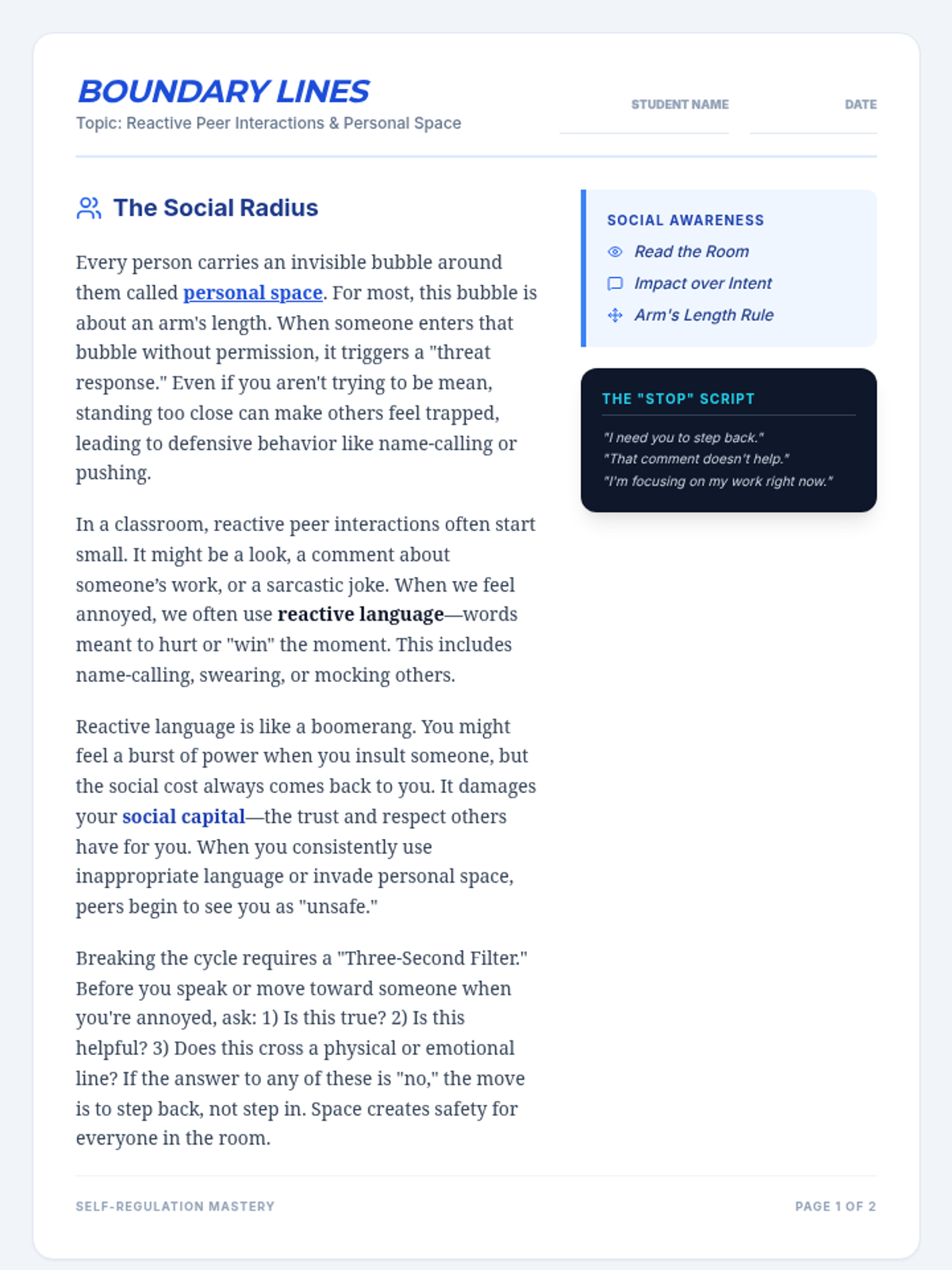
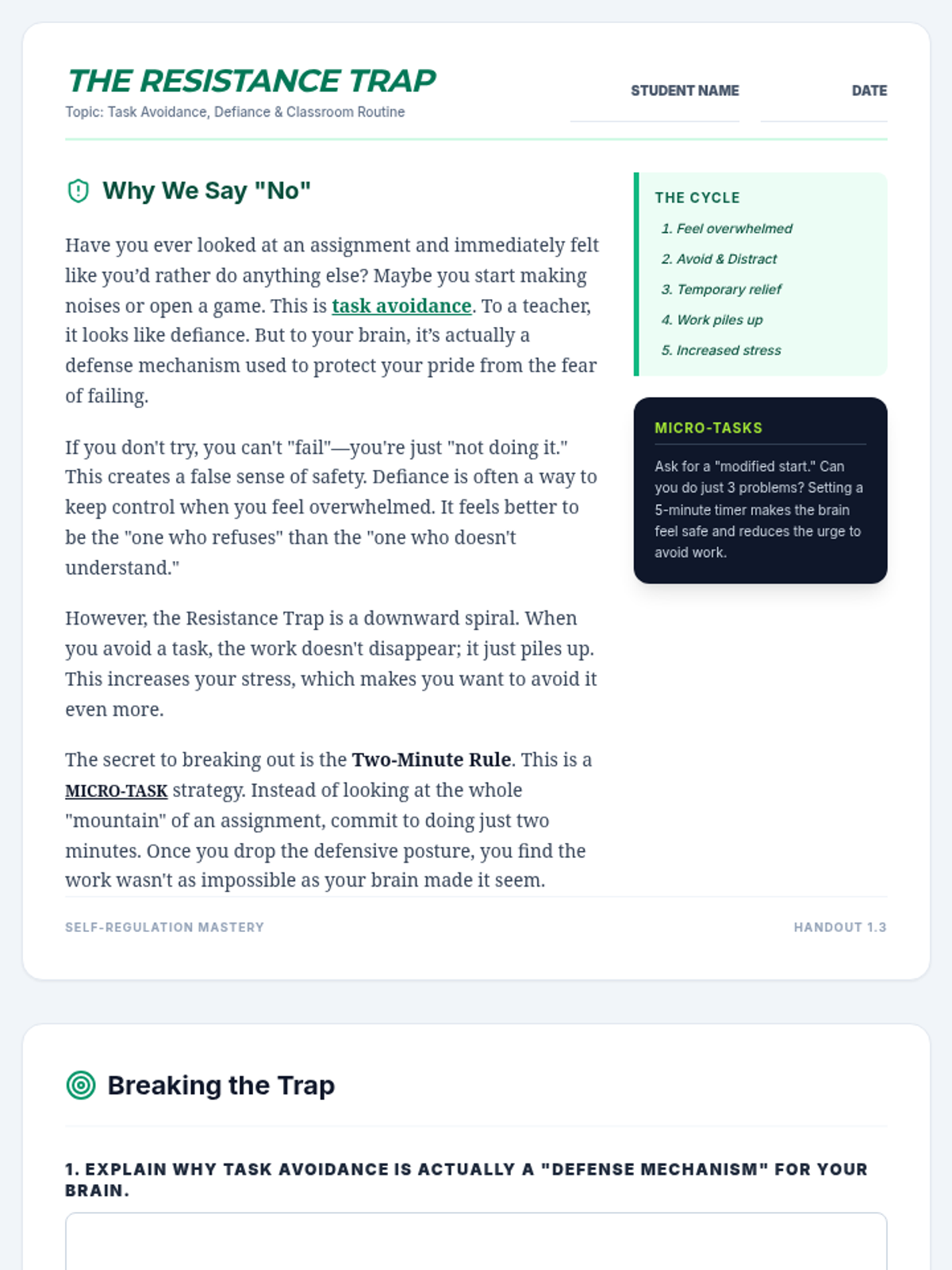
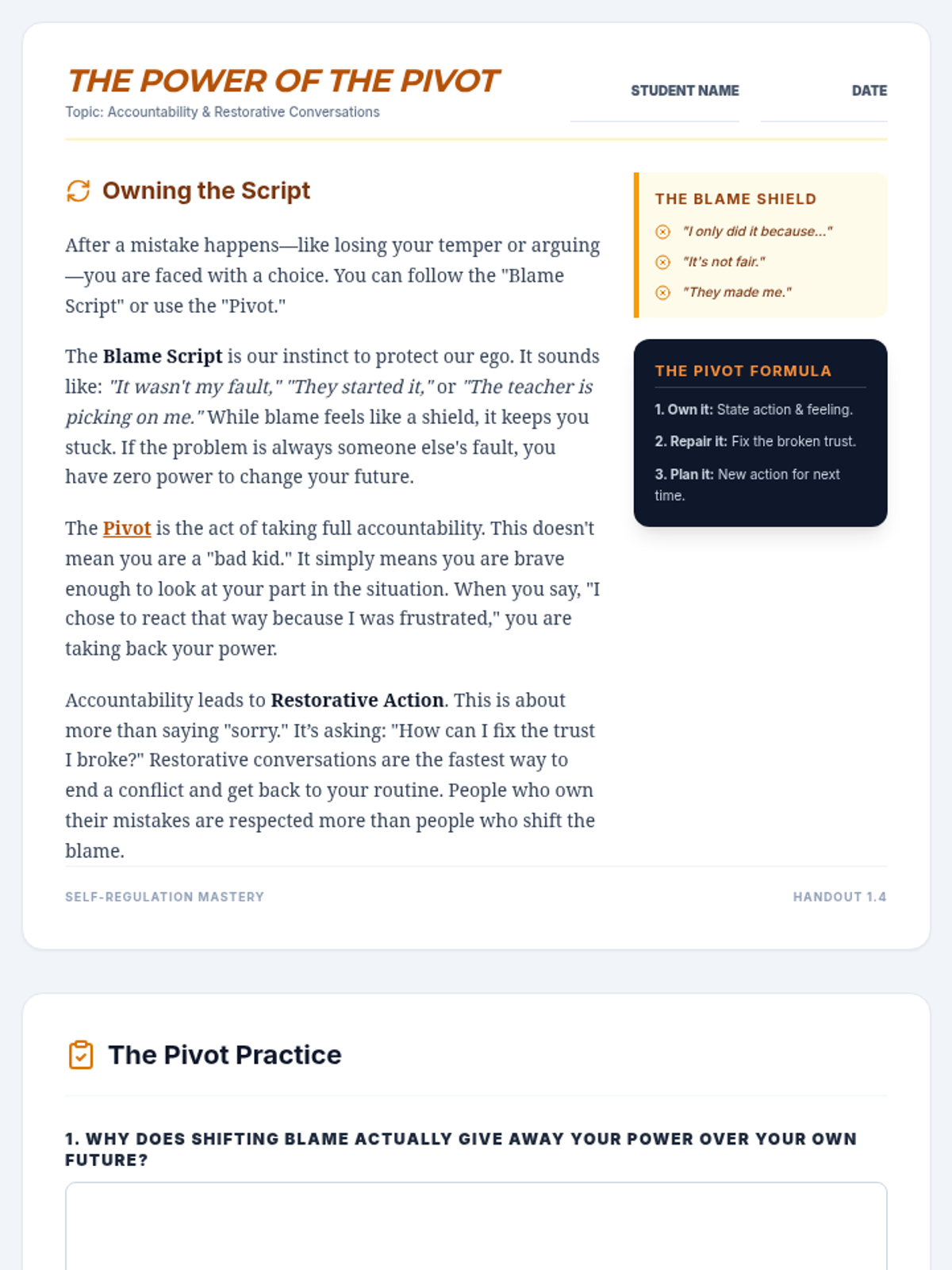
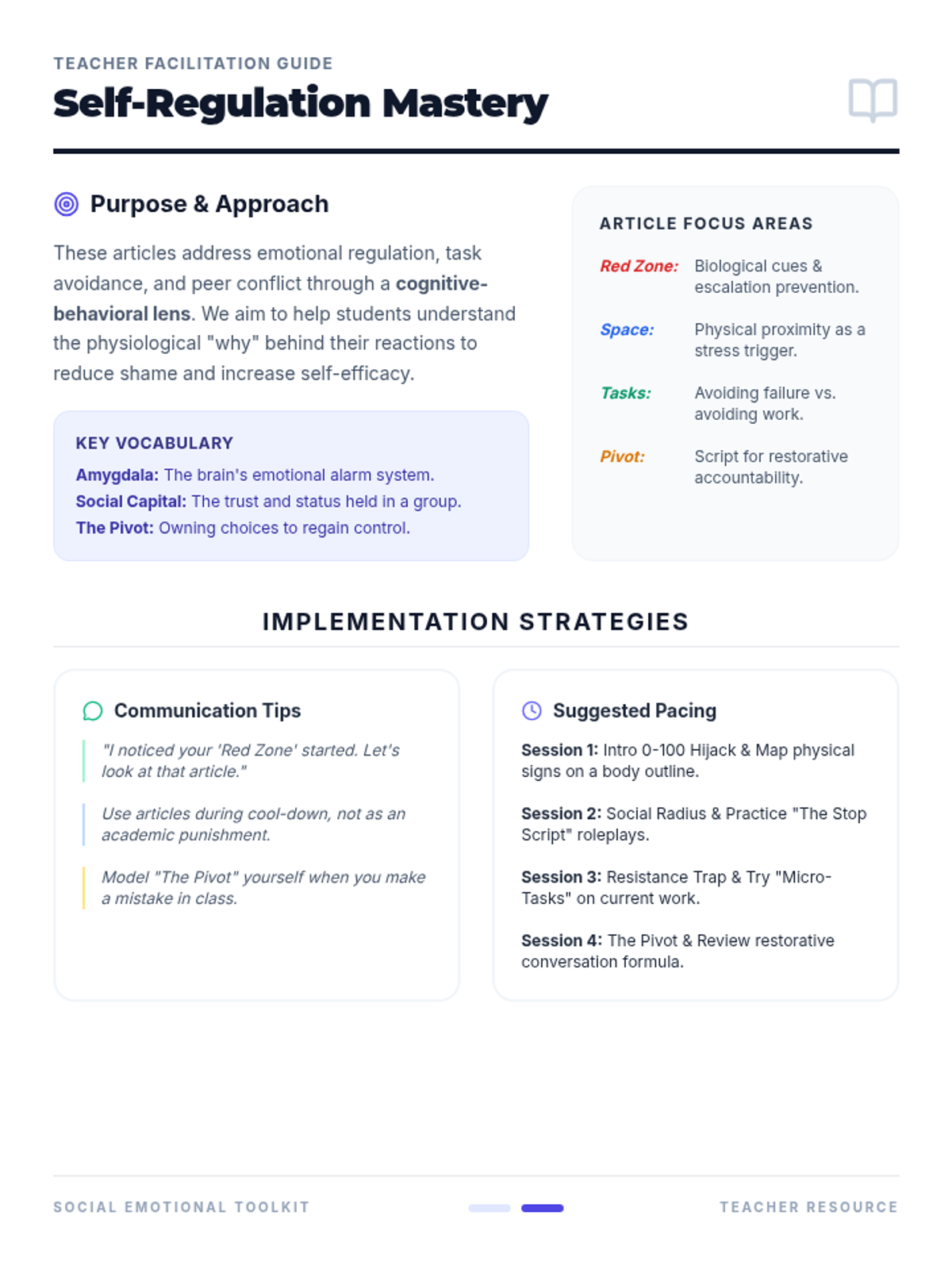
This lesson explores the mechanics of emotional dysregulation and the transition from reactive behaviors to proactive self-management. Students will read about brain chemistry, social boundaries, and the psychology of avoidance to build a toolkit for classroom success.
A collaborative "Pairs Compare" activity where students work in teams of four to share keywords, locate evidence, and synthesize final answers on index cards.
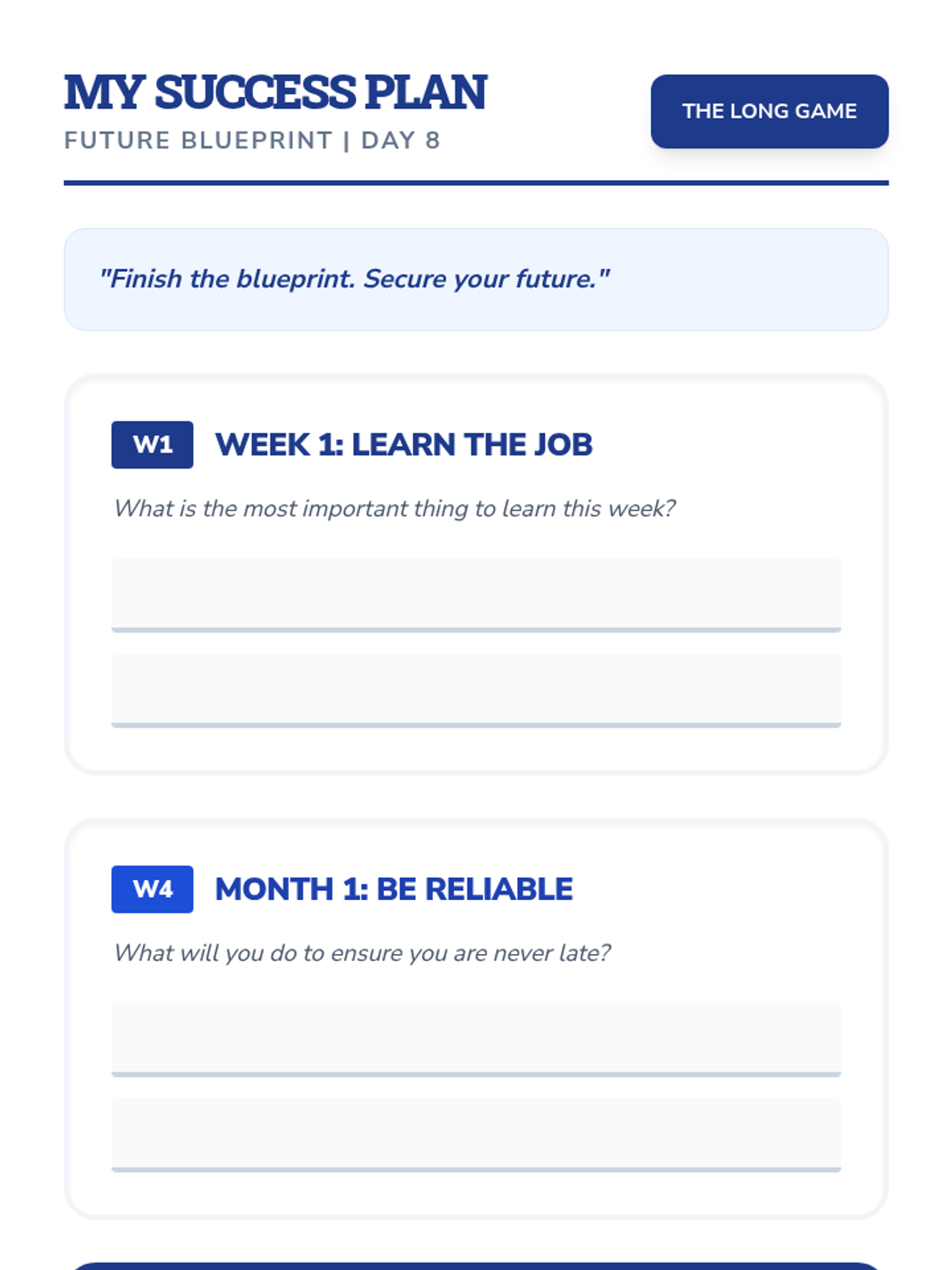
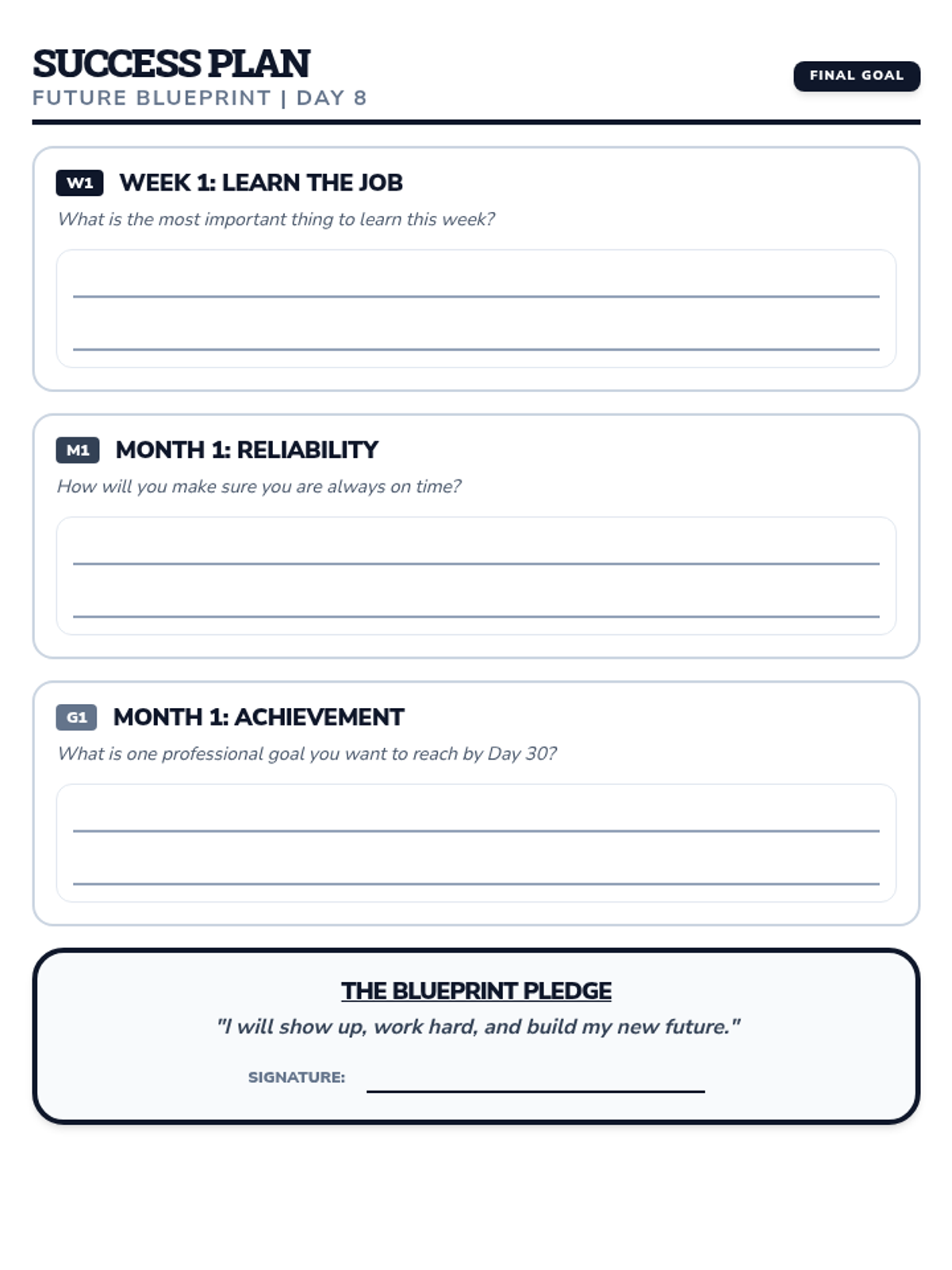
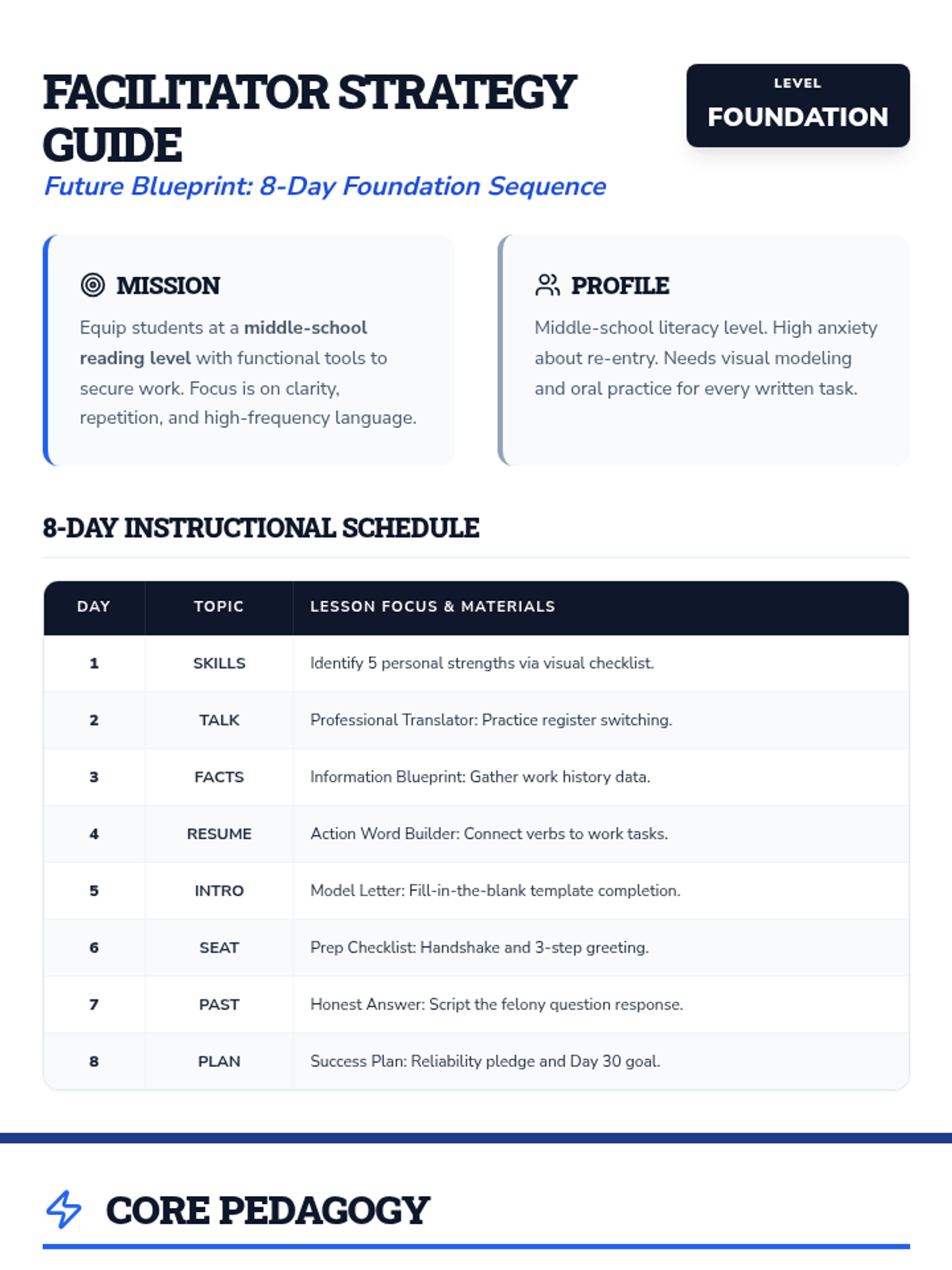
Job search strategies, staying employed, and long-term career planning. Final review and preparation for the 'working world'.
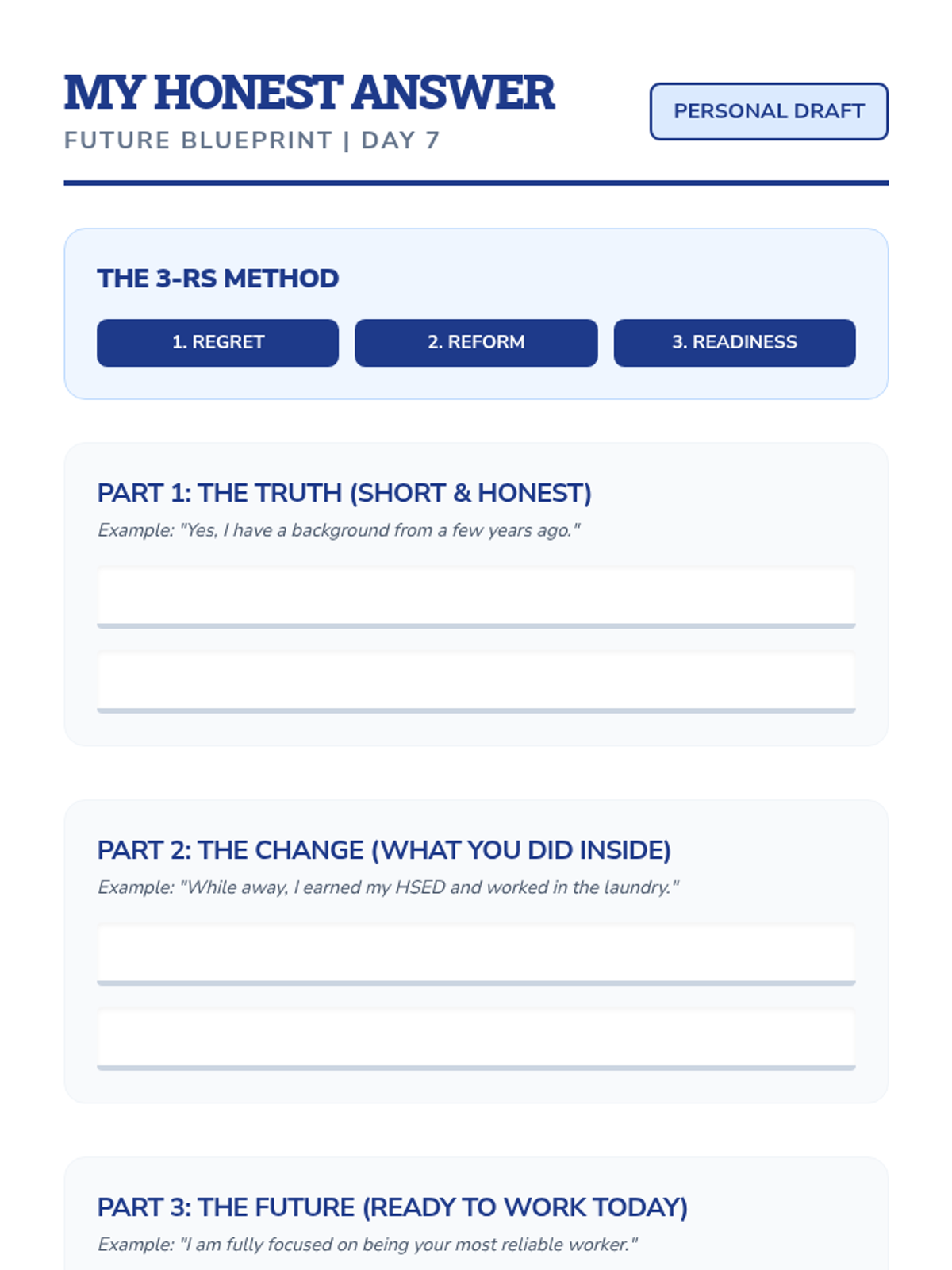
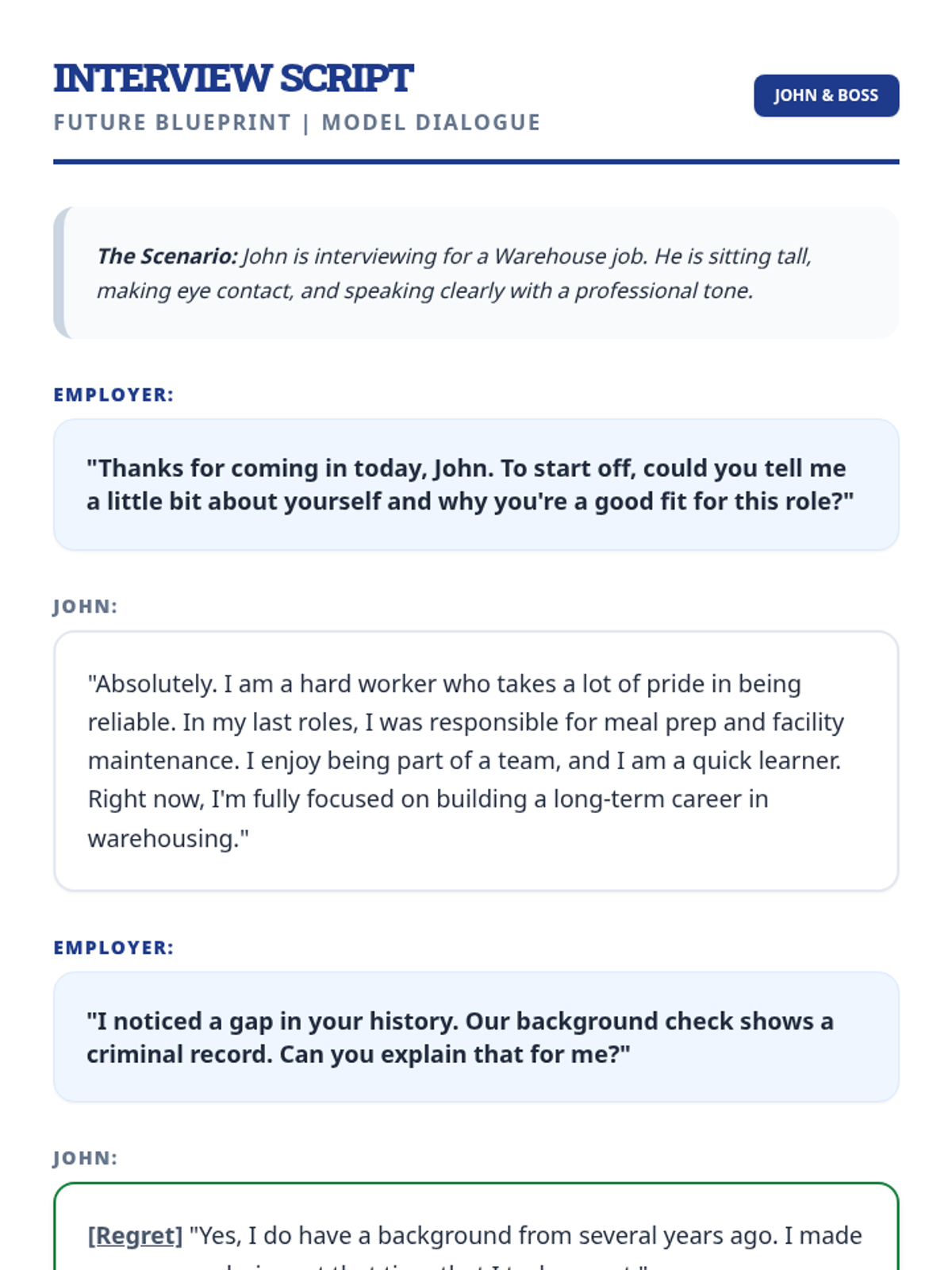
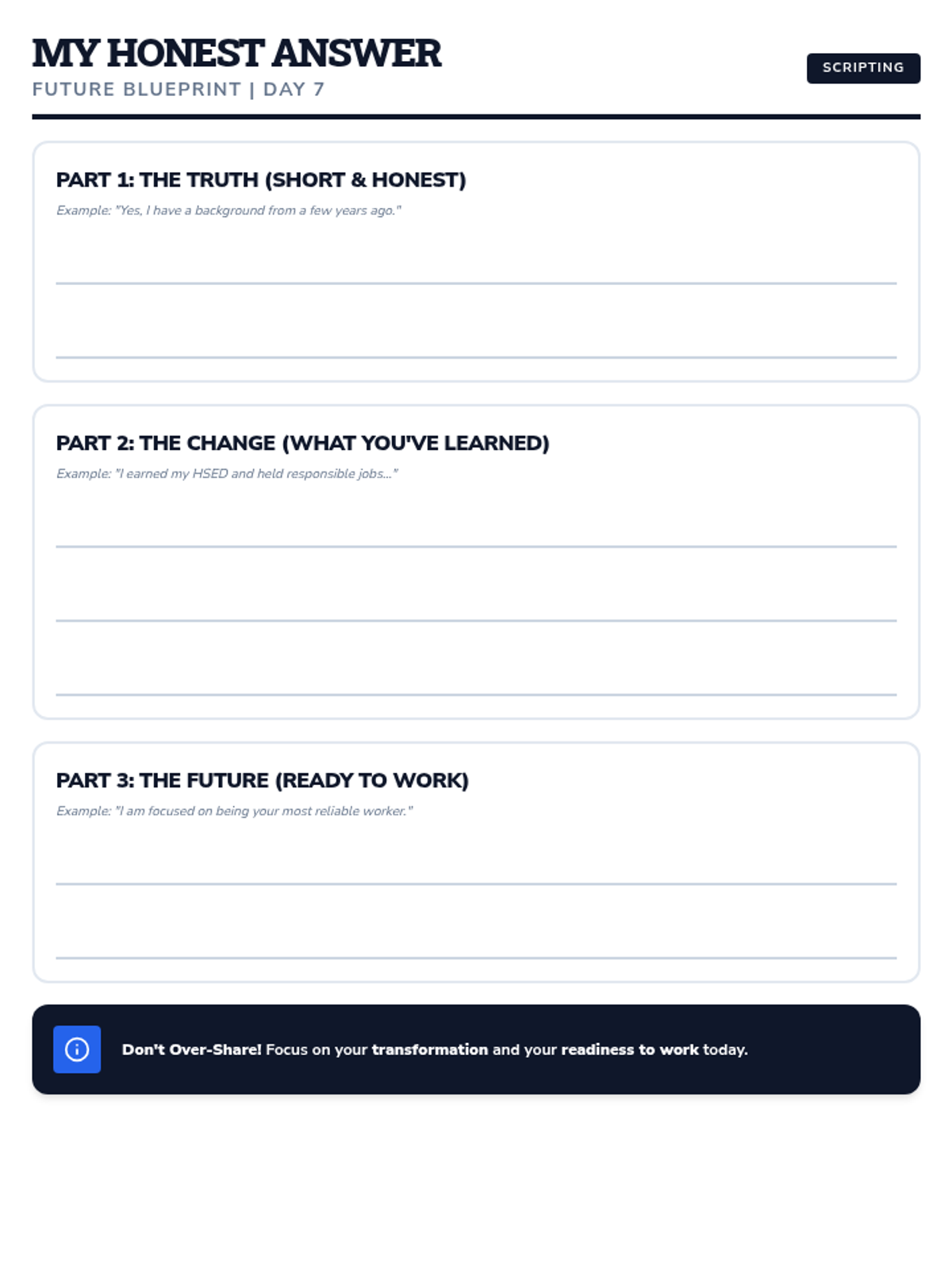
Specific strategies for addressing incarceration and background checks. Uses the 'Regret, Reform, Readiness' framework.
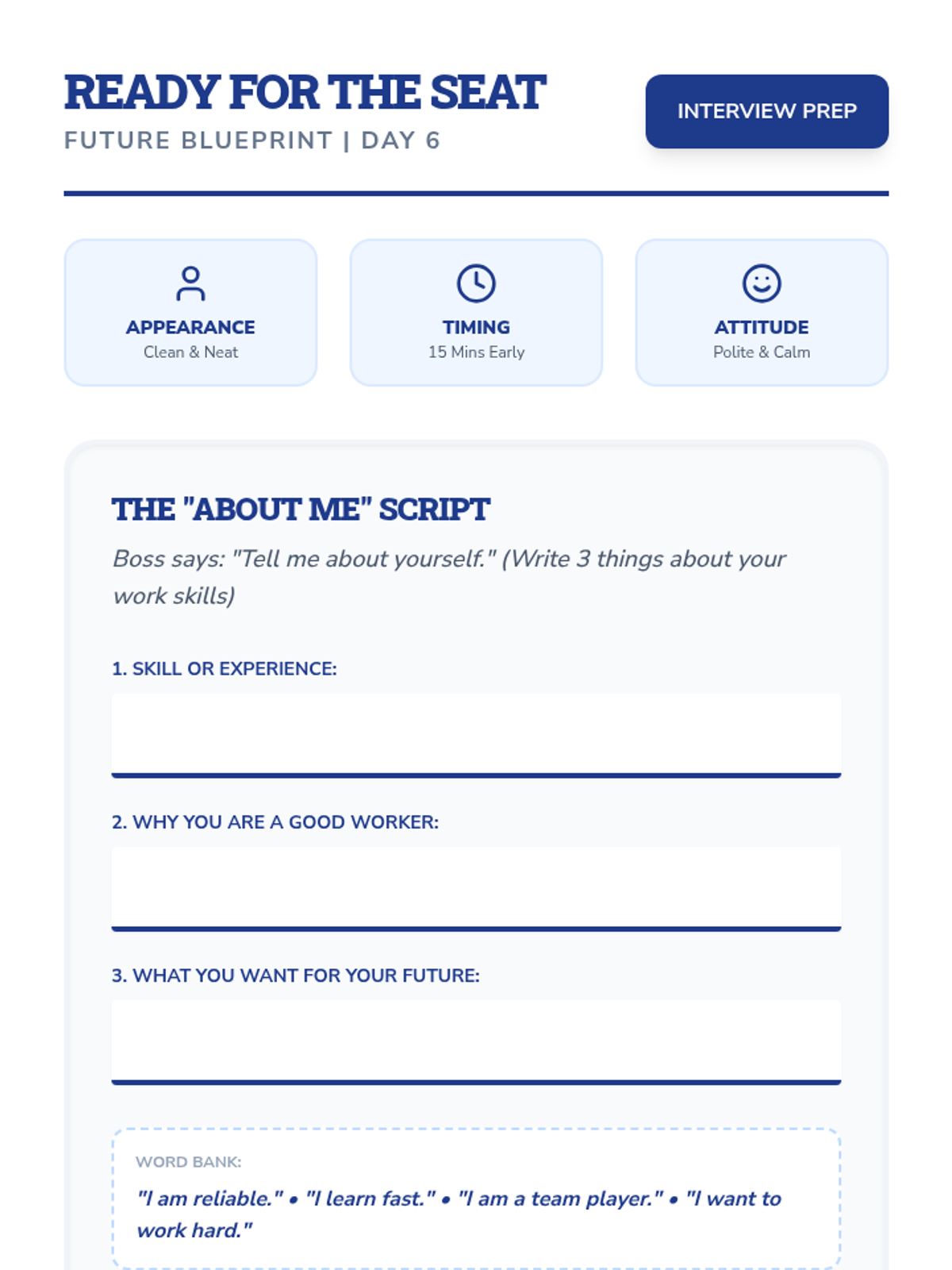
Preparation for the interview process. Focuses on preparation, appearance, and the first five minutes of the encounter.
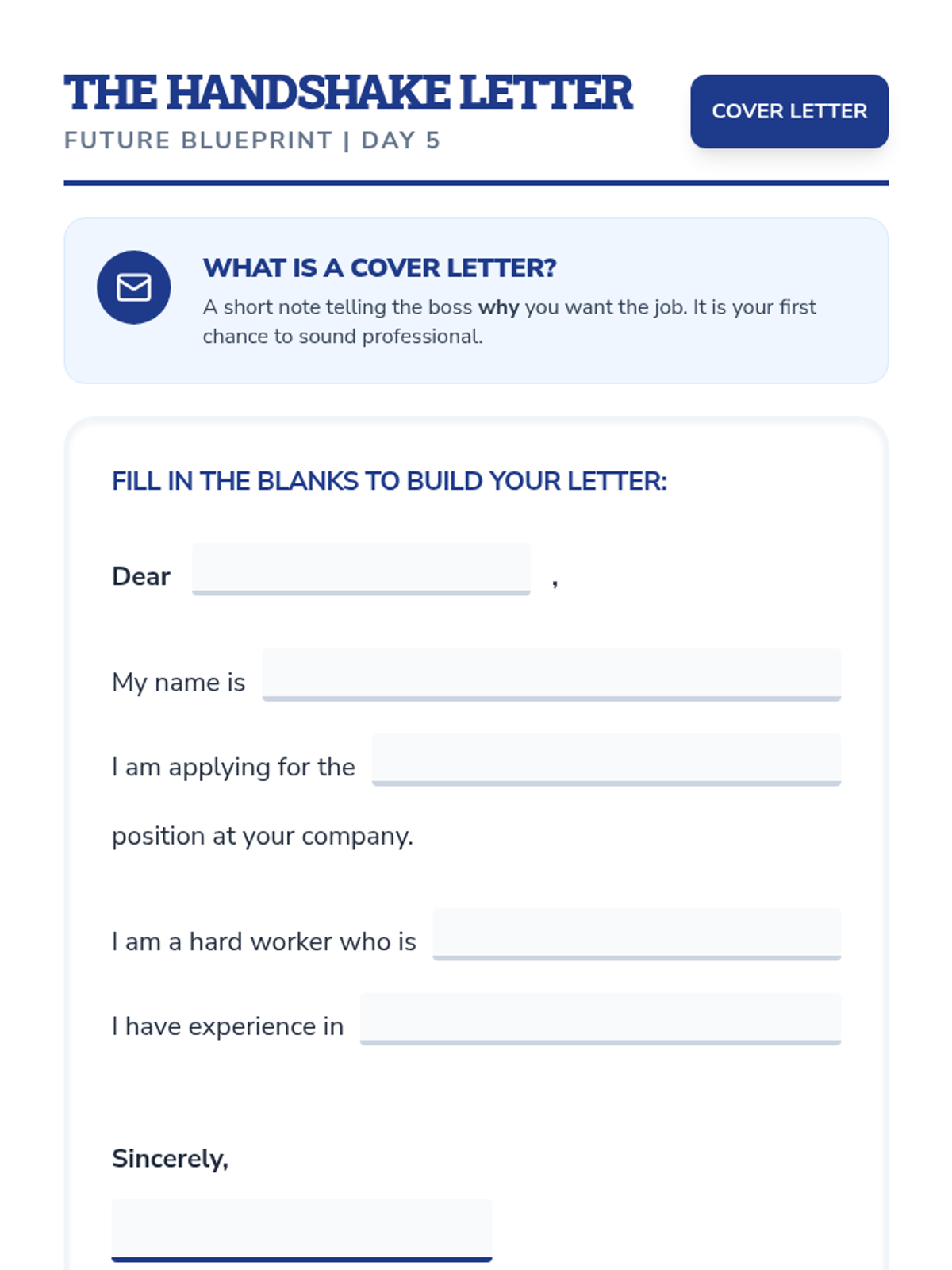
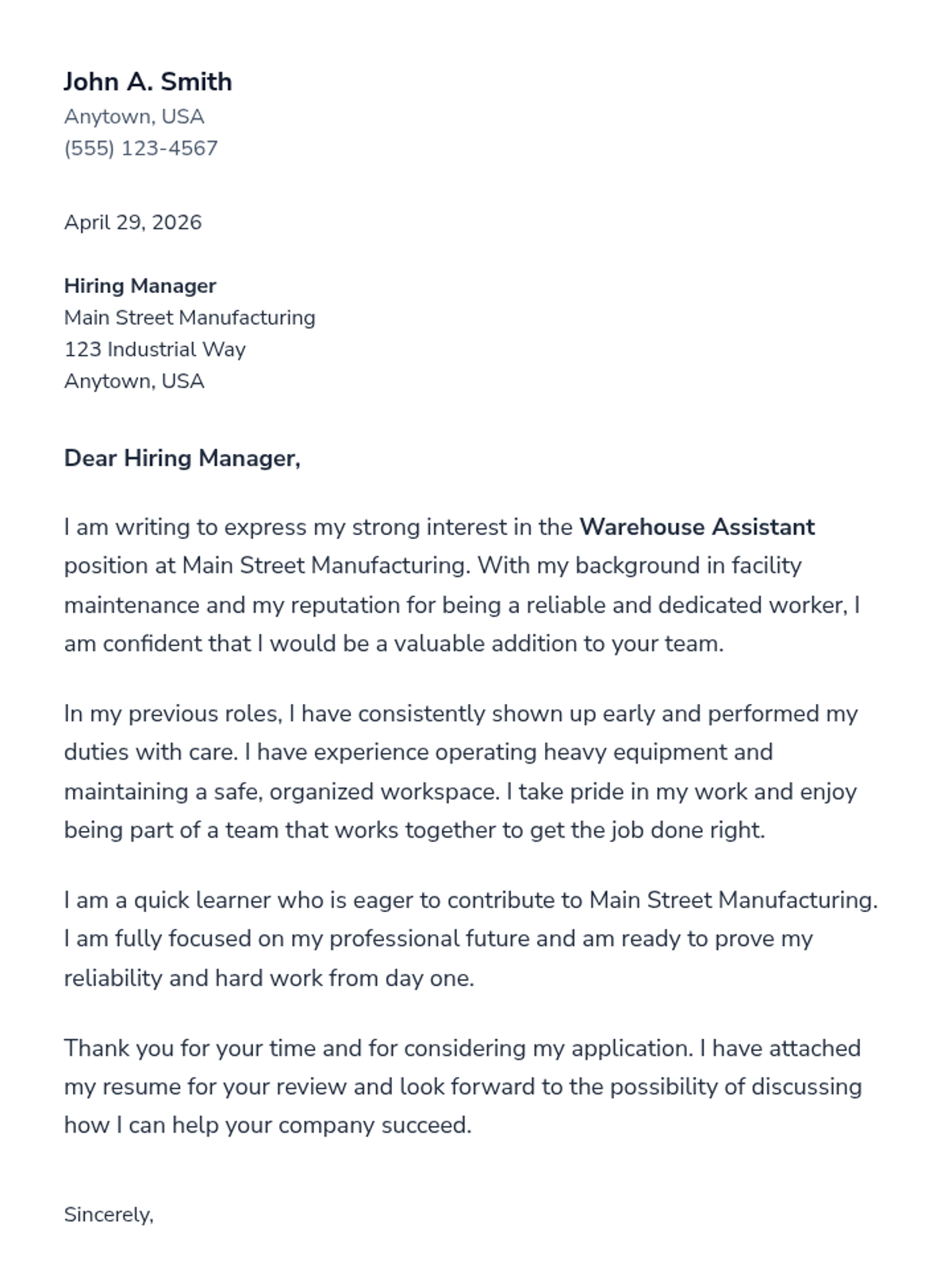
Demystifying the cover letter. Students learn how to introduce themselves to an employer and explain their interest in a role.
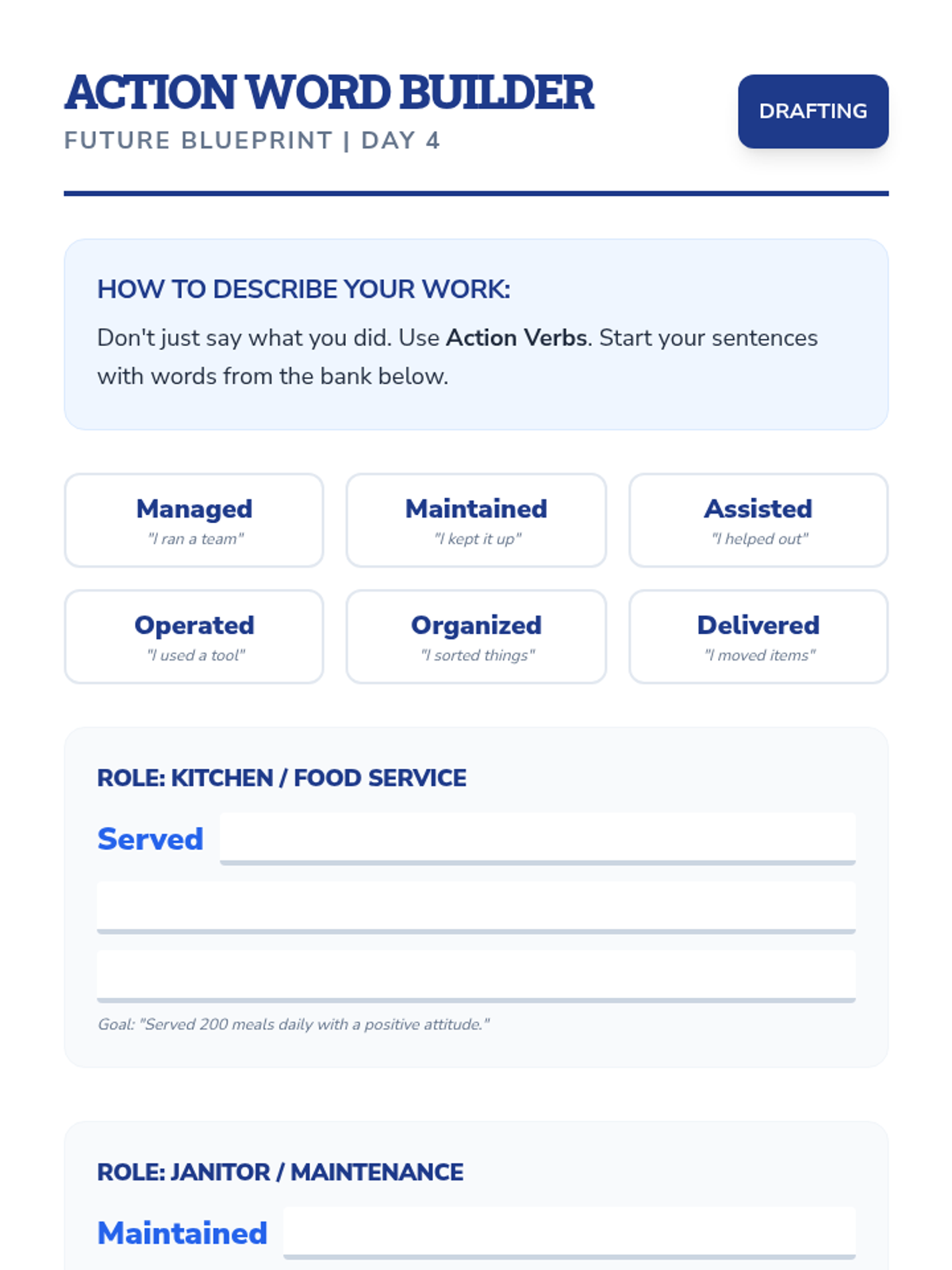
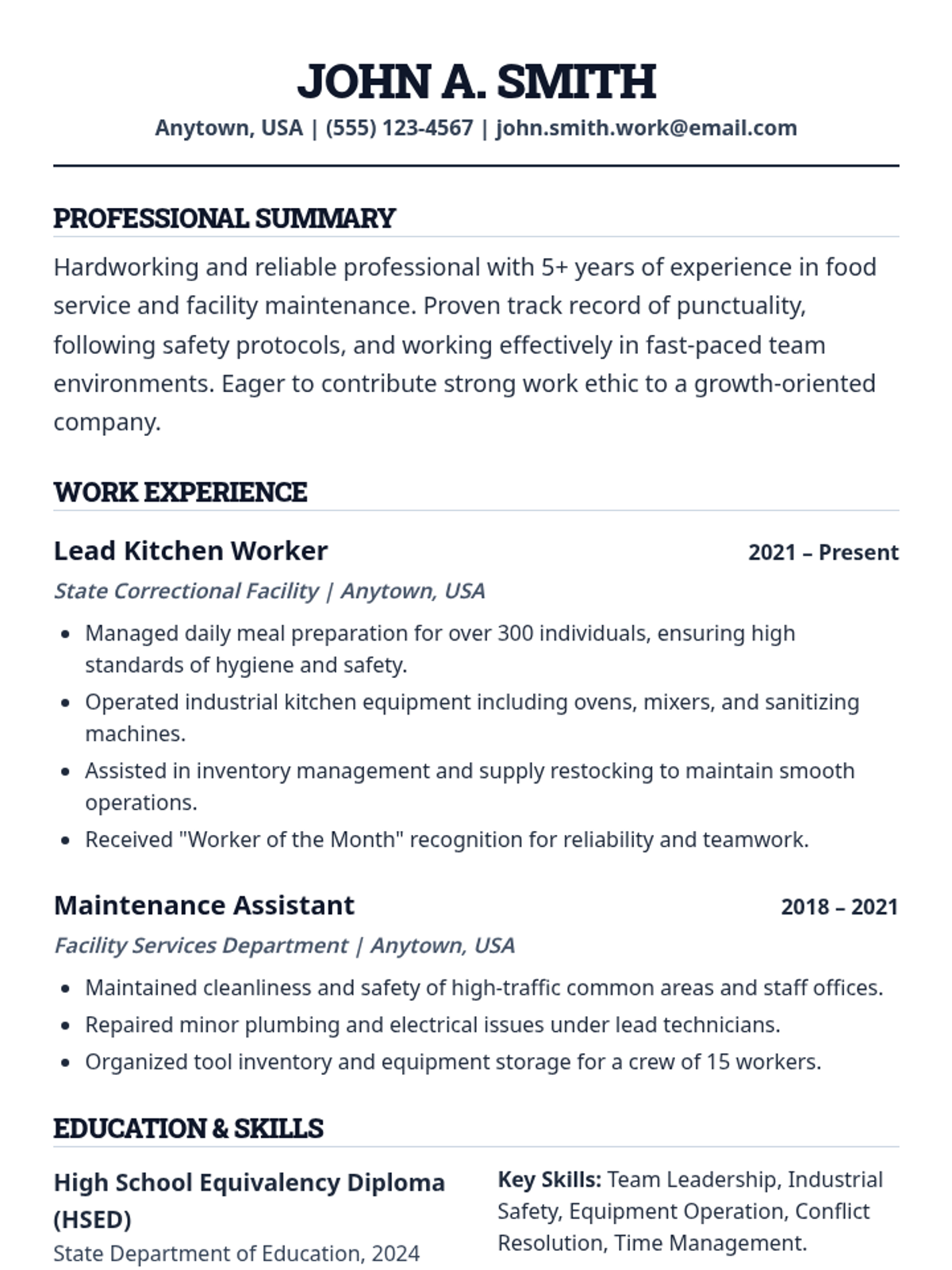
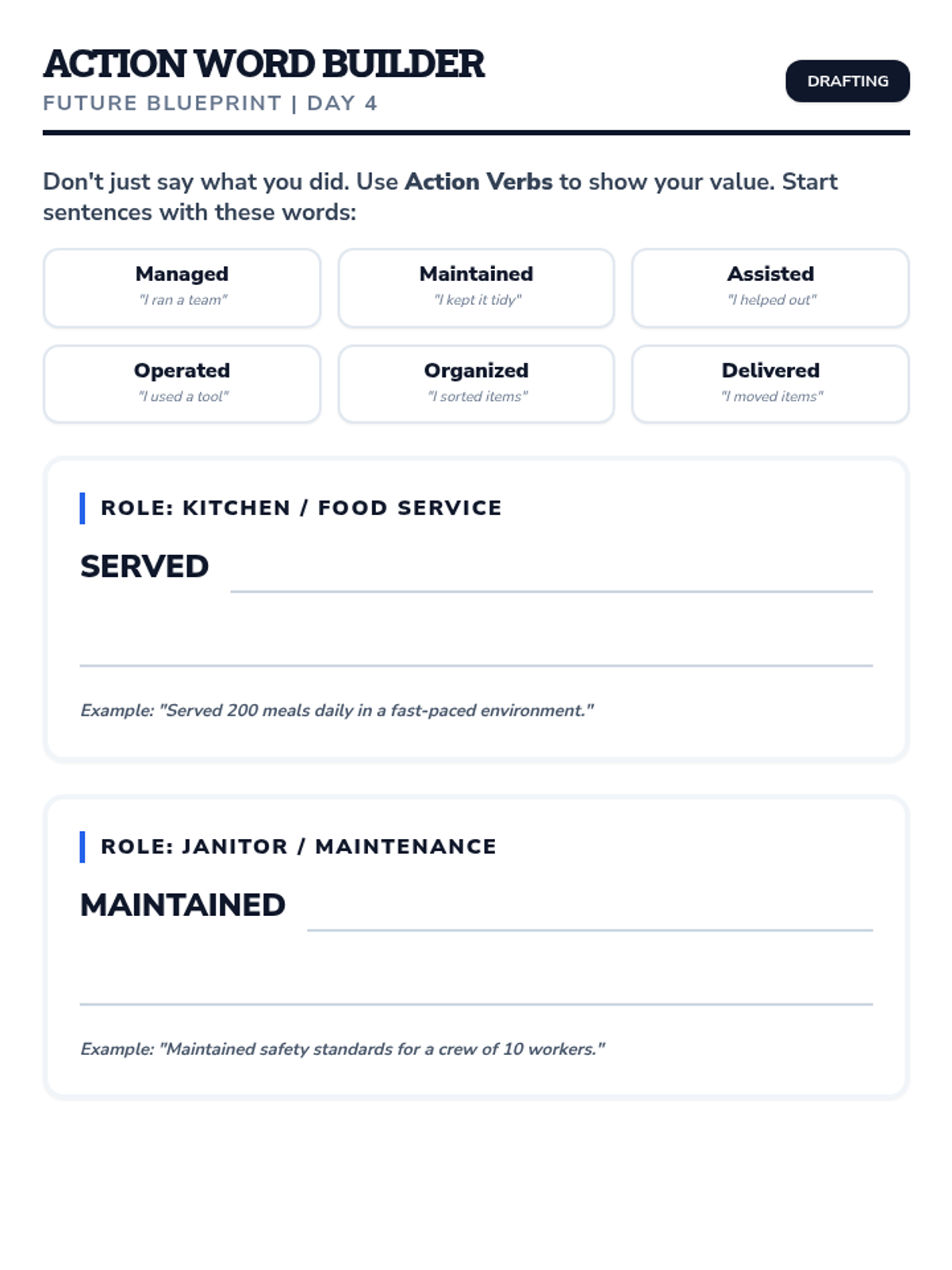
Guided drafting of the resume. Focuses on using action verbs and structuring work history to highlight strengths.
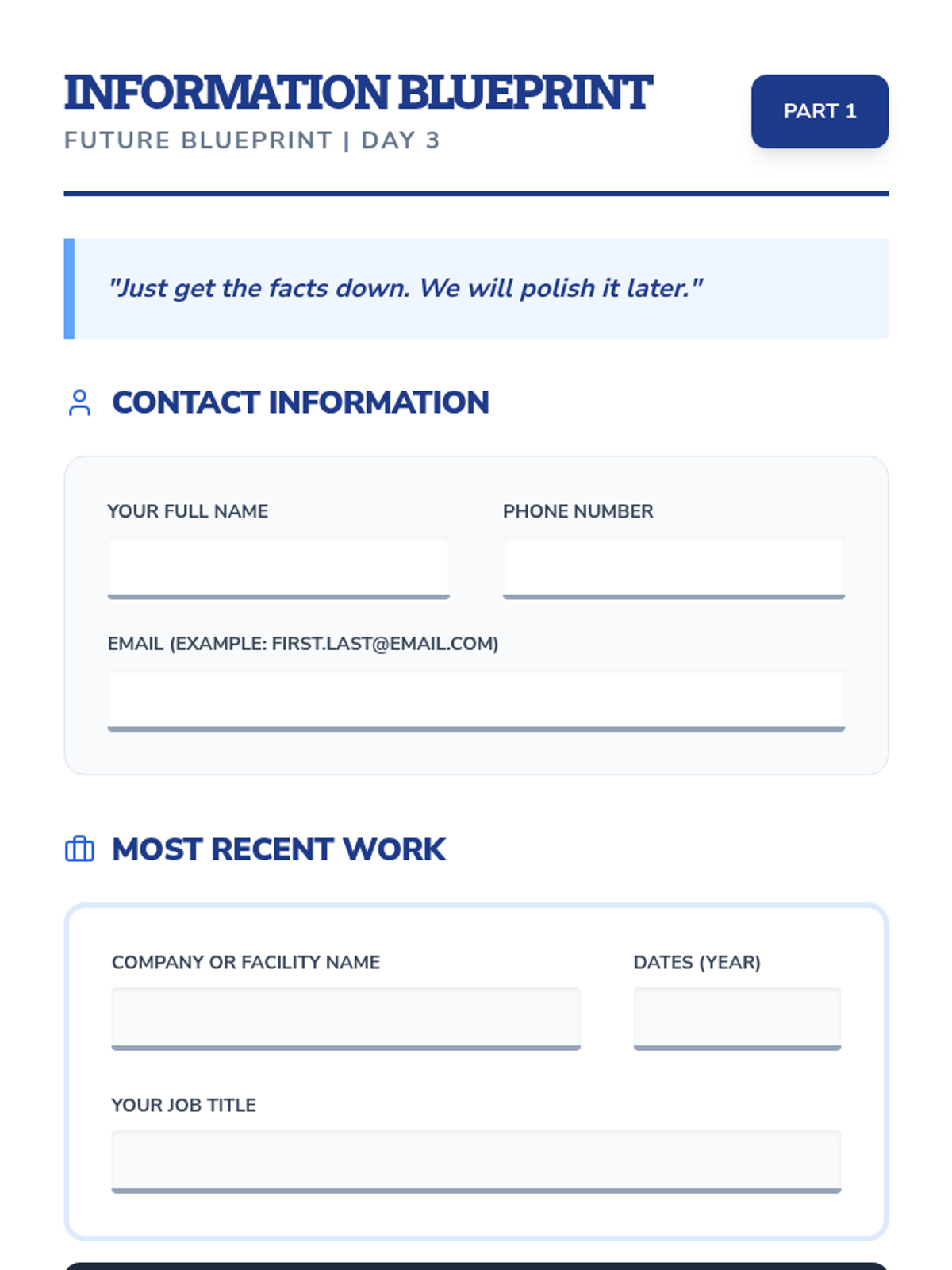
Introduction to resume components. Students begin gathering the necessary information for their professional documents in a simplified format.
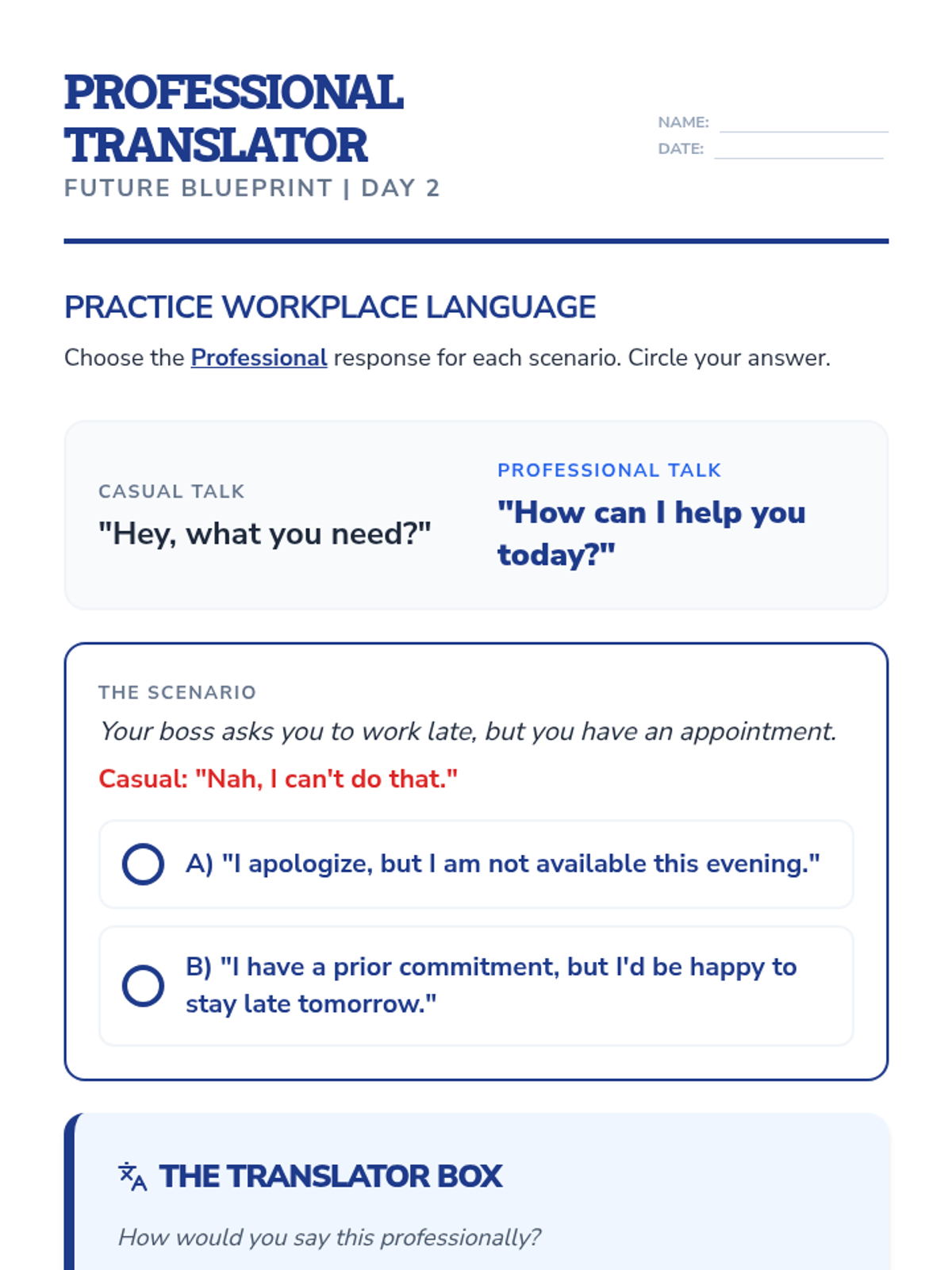
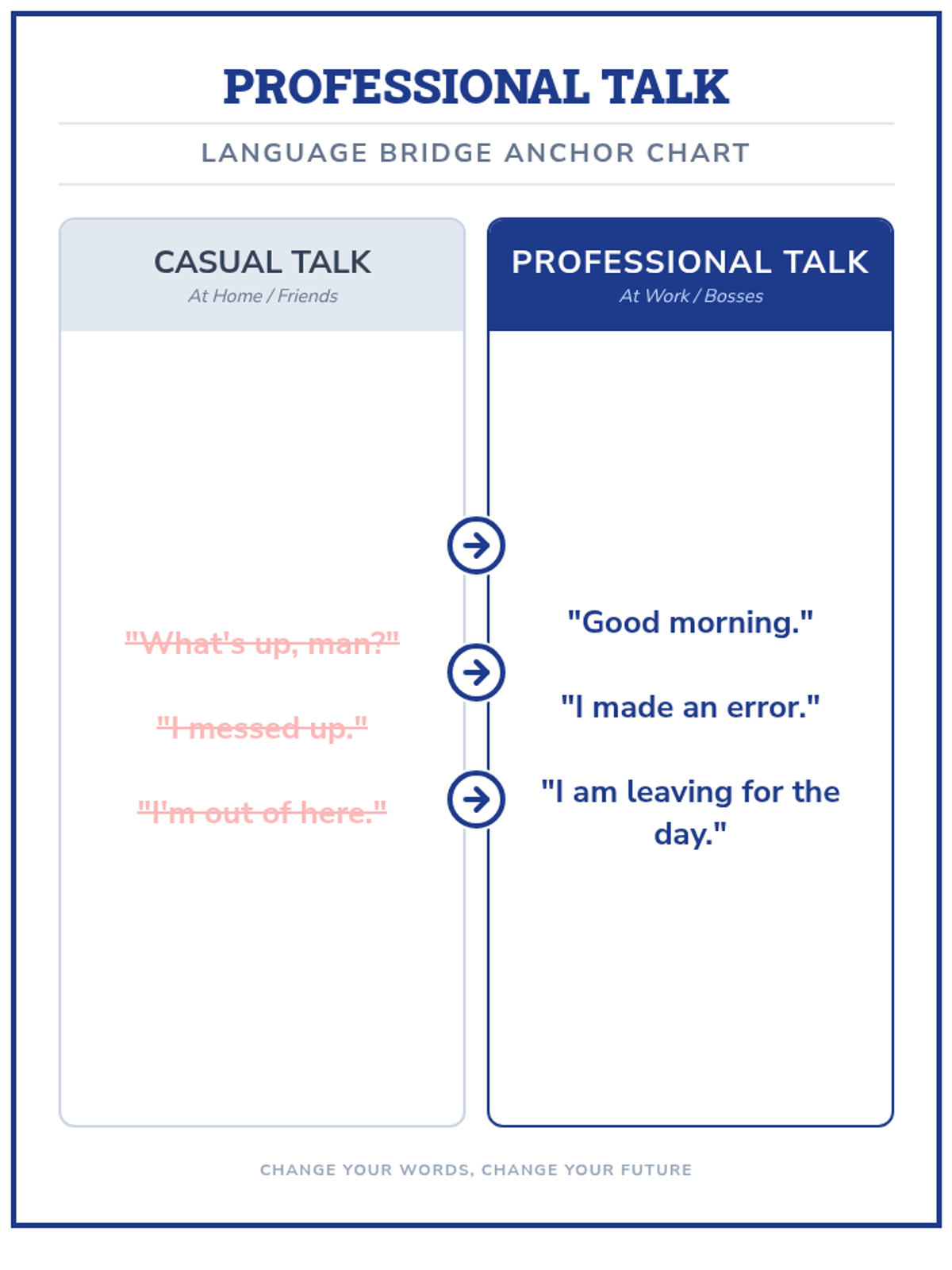
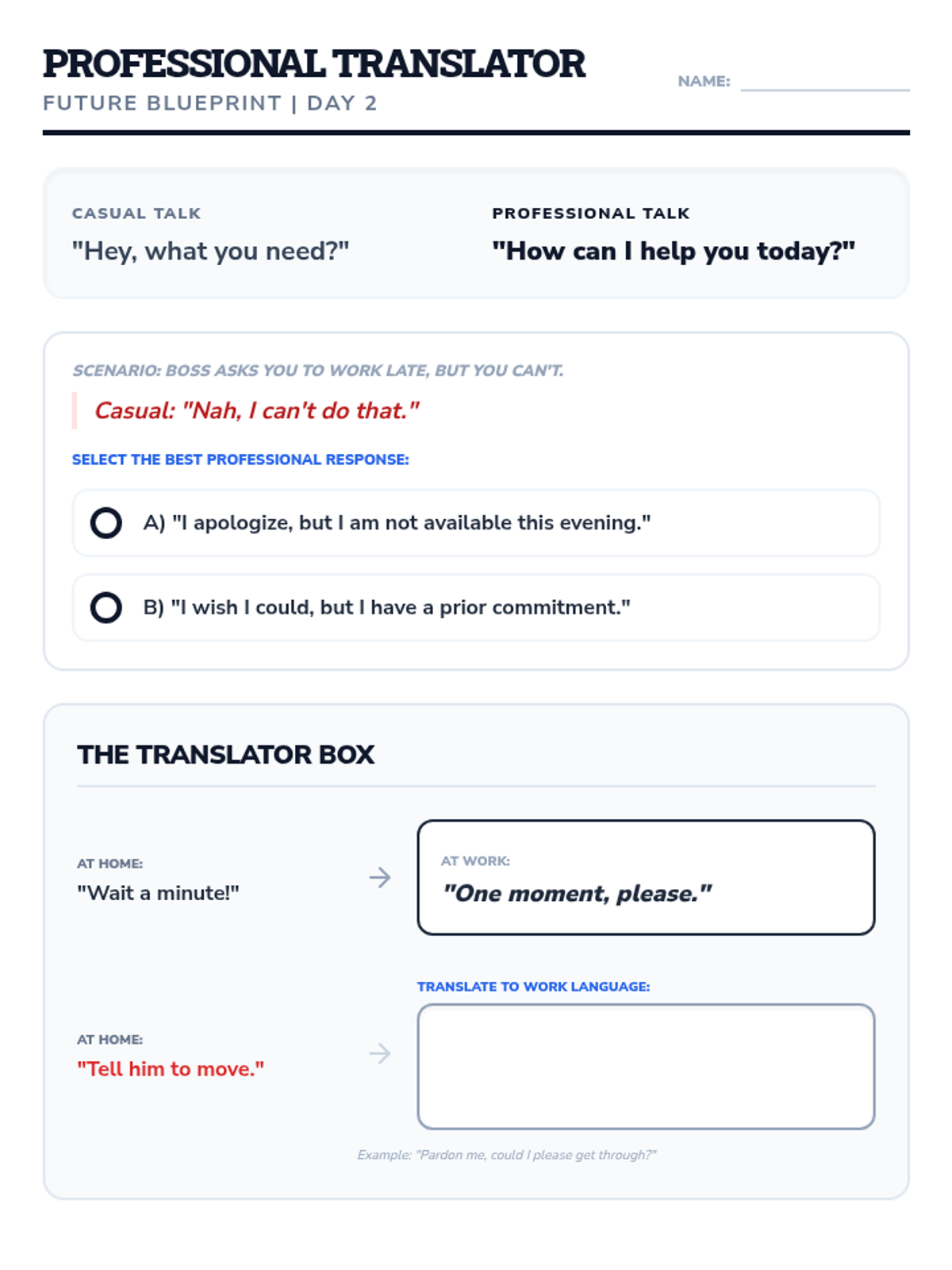
Covers soft skills, professional vocabulary, and non-verbal communication. Practice shifting from casual to professional language.
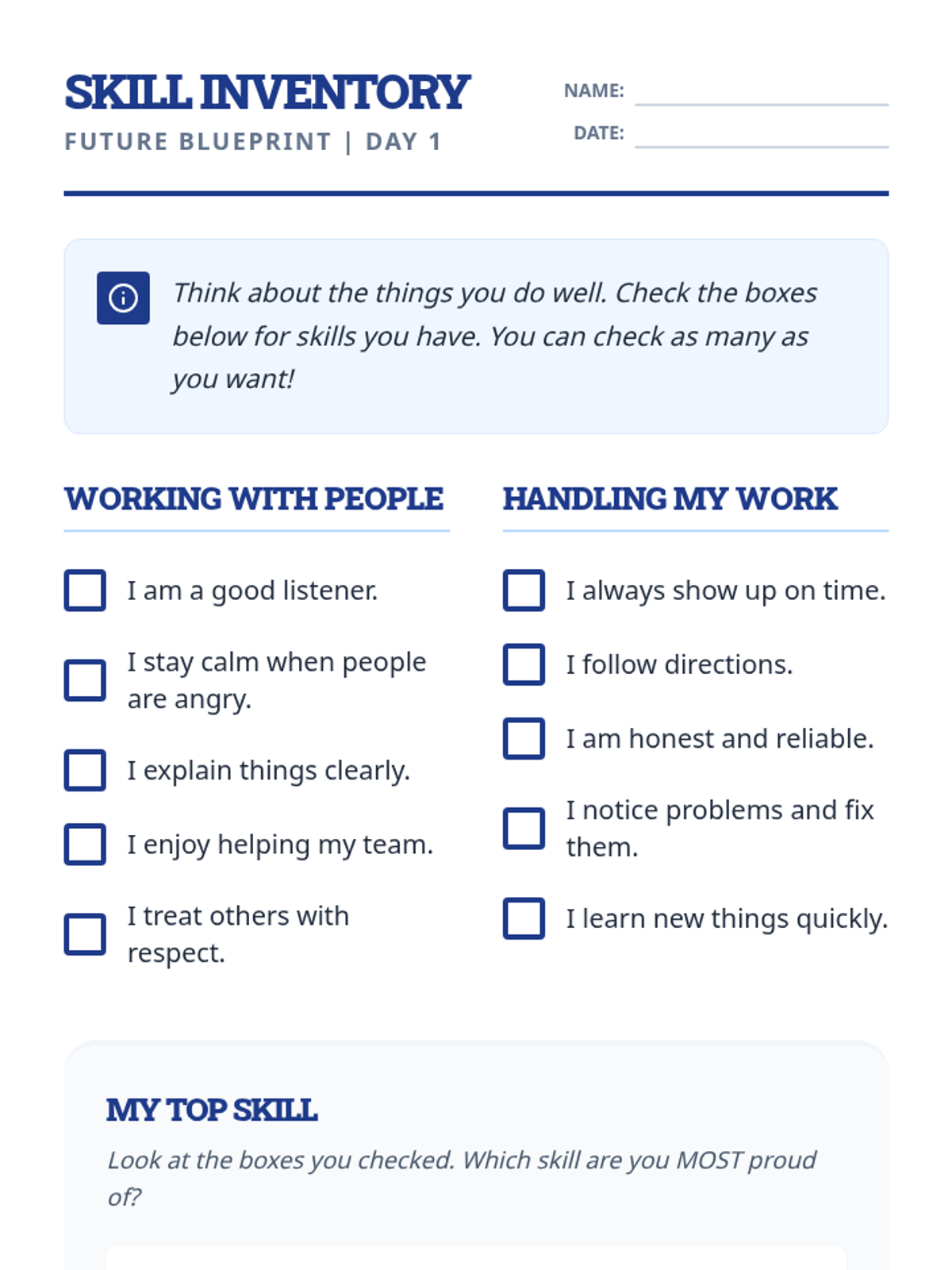
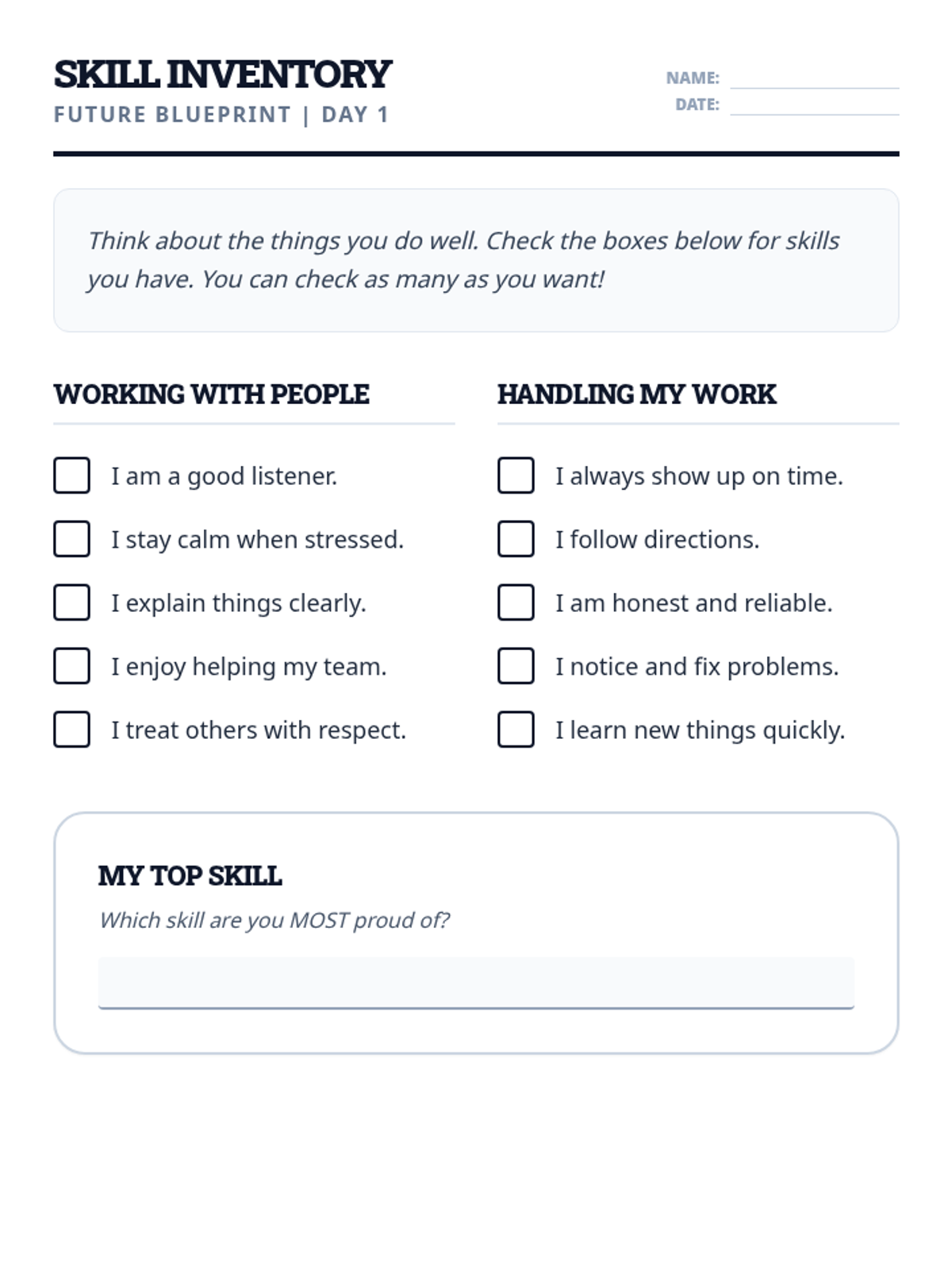
Focuses on identifying transferable skills and setting professional goals. Helps students recognize the value of their experiences in a professional context.
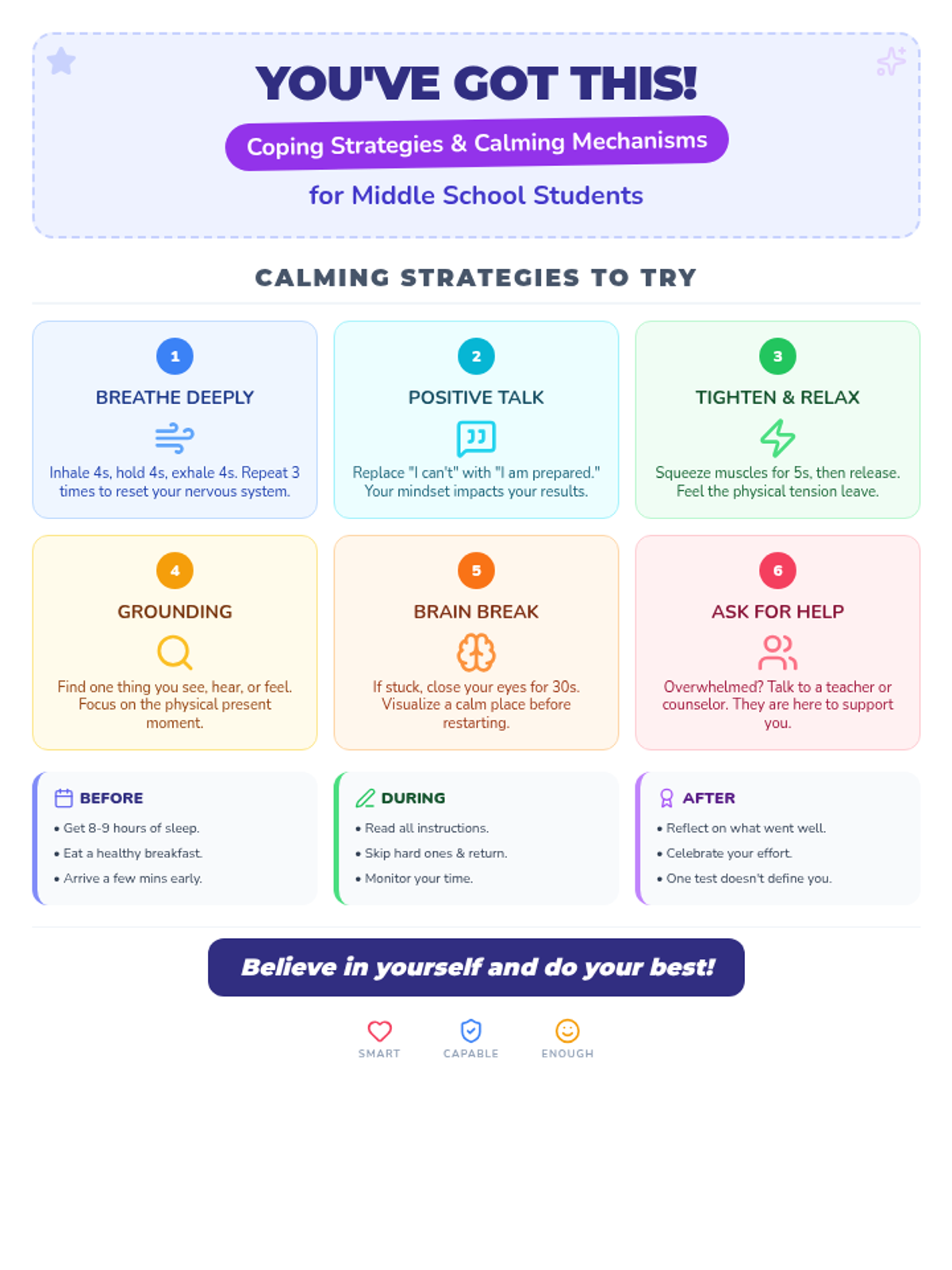
A lesson focused on equipping middle school students with practical strategies to manage test-related stress and anxiety.
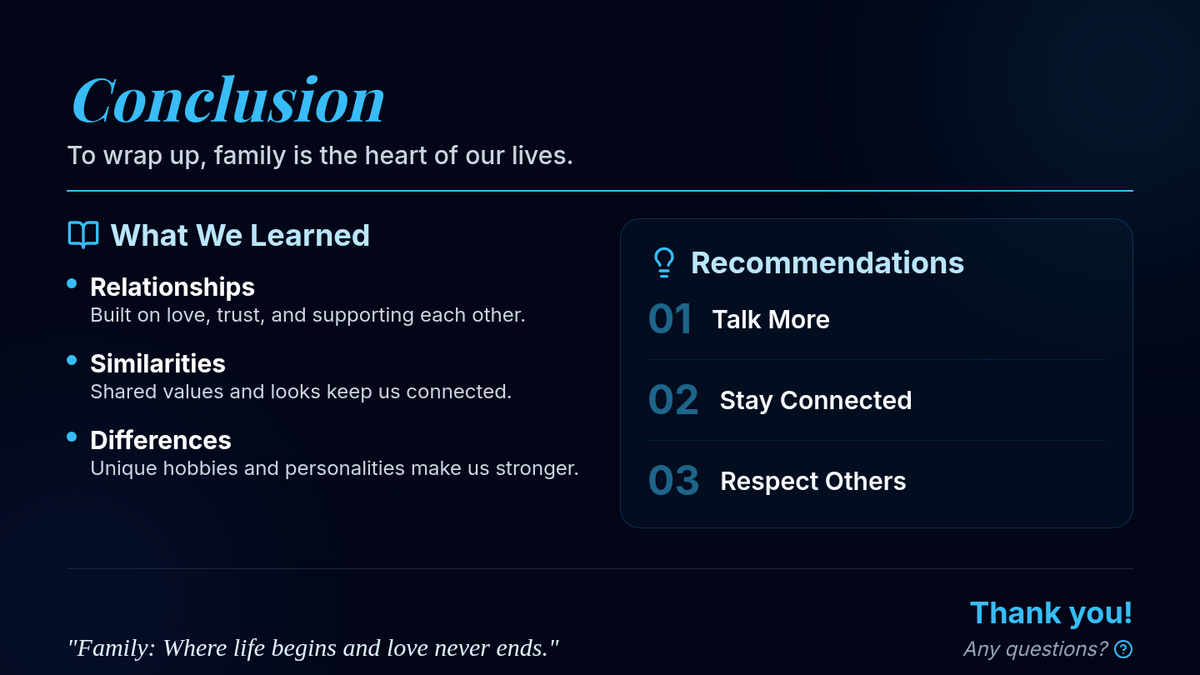
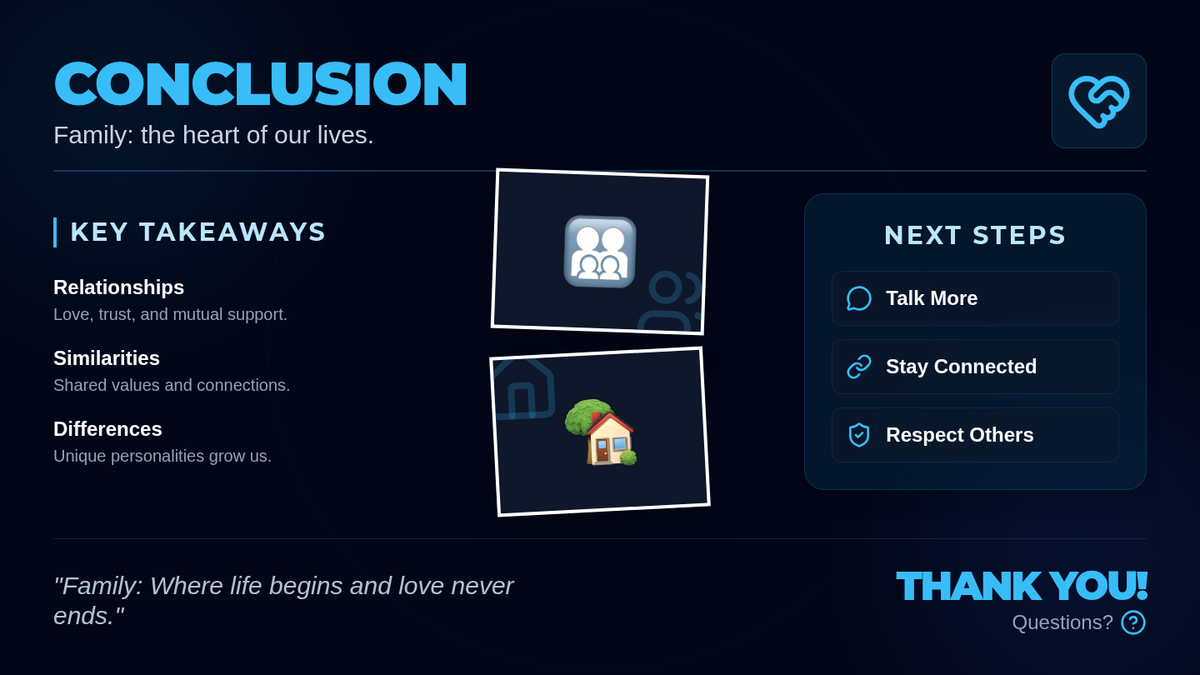
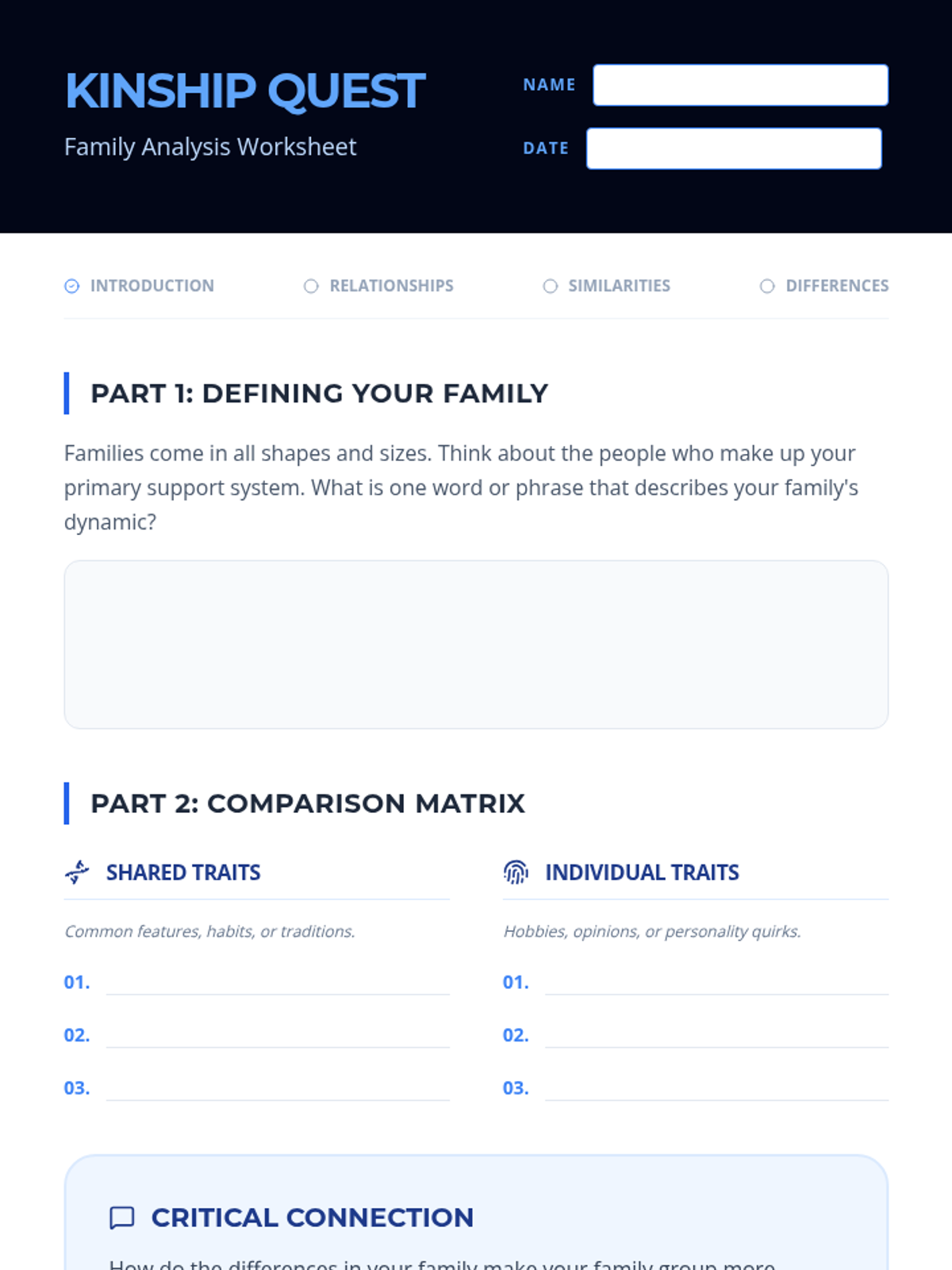
A concluding lesson on the importance of family, focusing on relationships, similarities, and differences.
A lesson exploring the dynamics of family relationships, including the genetic and behavioral similarities and differences that make every family unique.
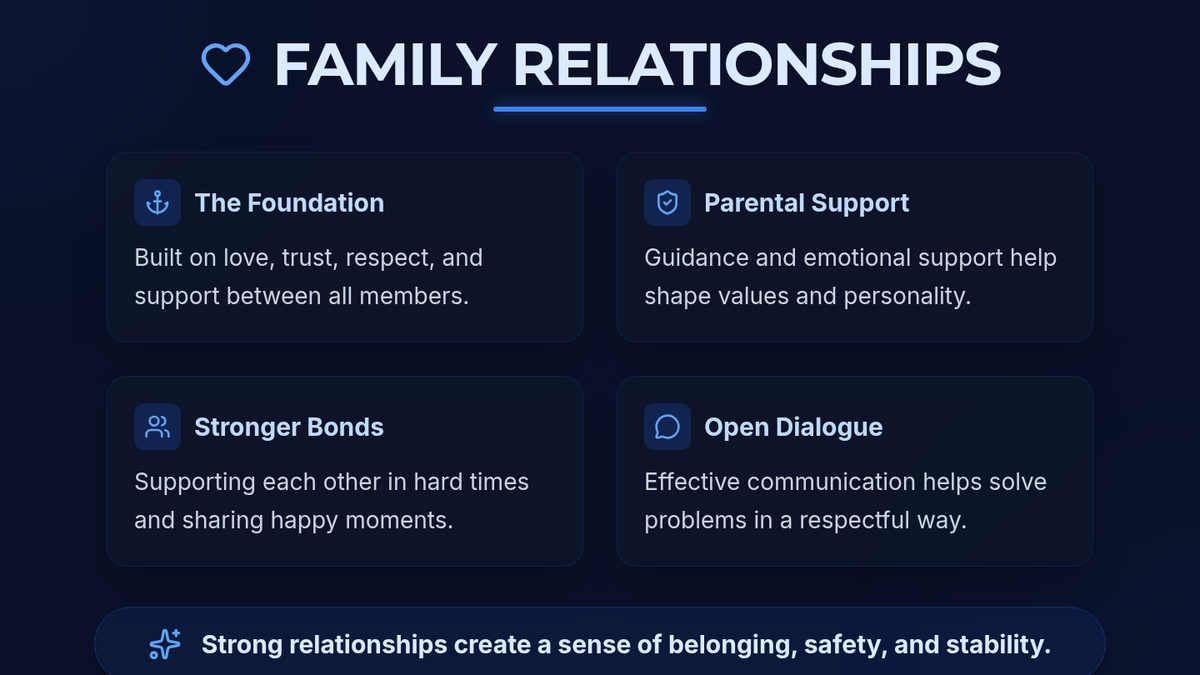
A lesson exploring the importance of family relationships, the roles of parents, and how communication strengthens bonds.
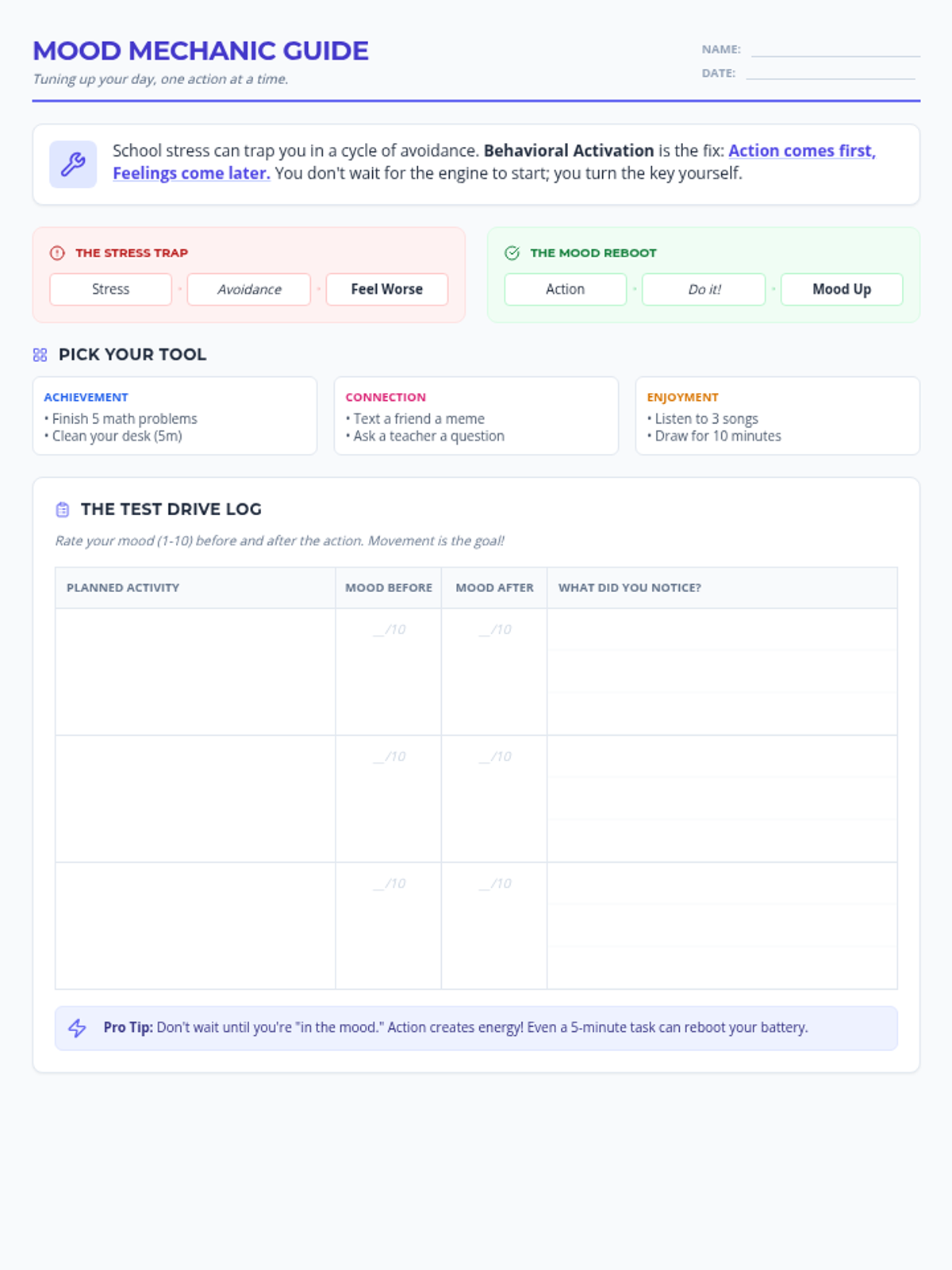
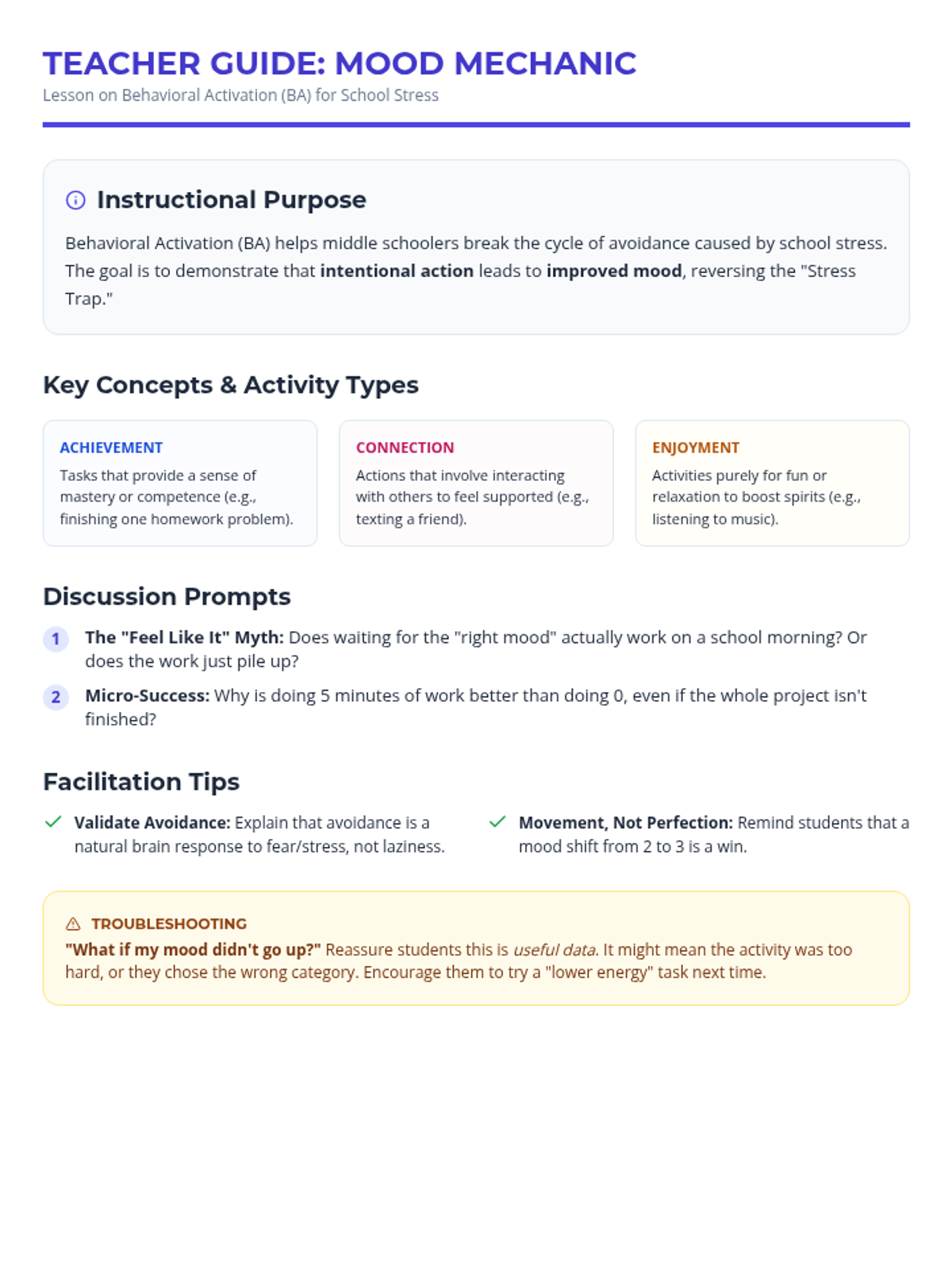
This lesson introduces middle school students to Behavioral Activation, a practical tool for managing school-related stress by changing actions to improve mood. Students will learn the 'vicious cycle' of stress and practice planning and tracking activities using a before-and-after mood scale.