A 30-minute lesson for 10th graders focused on shifting from excuses to accountability using a restorative mindset. Students learn to distinguish between excuses and explanations and practice drafting repair-focused statements.
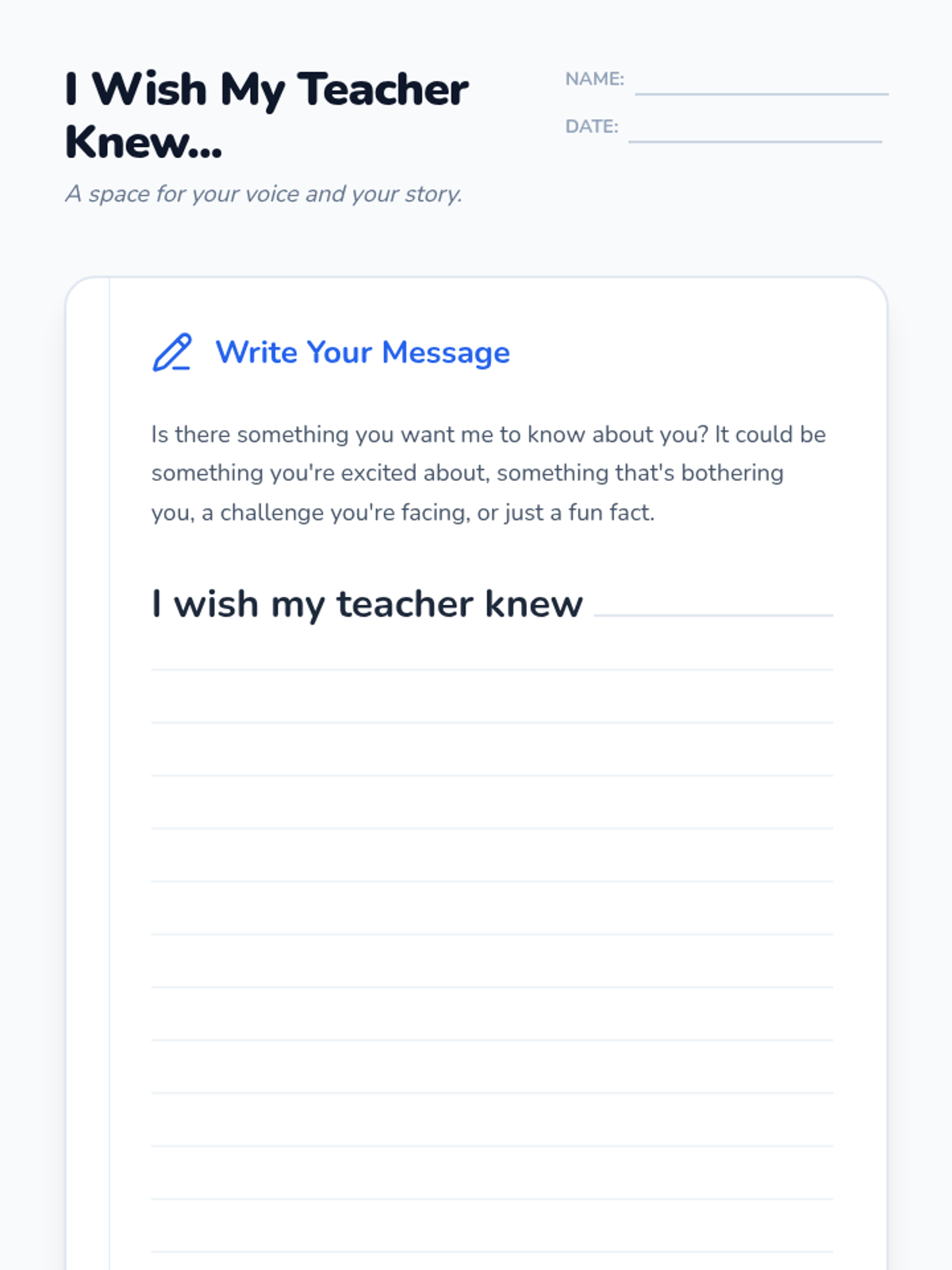
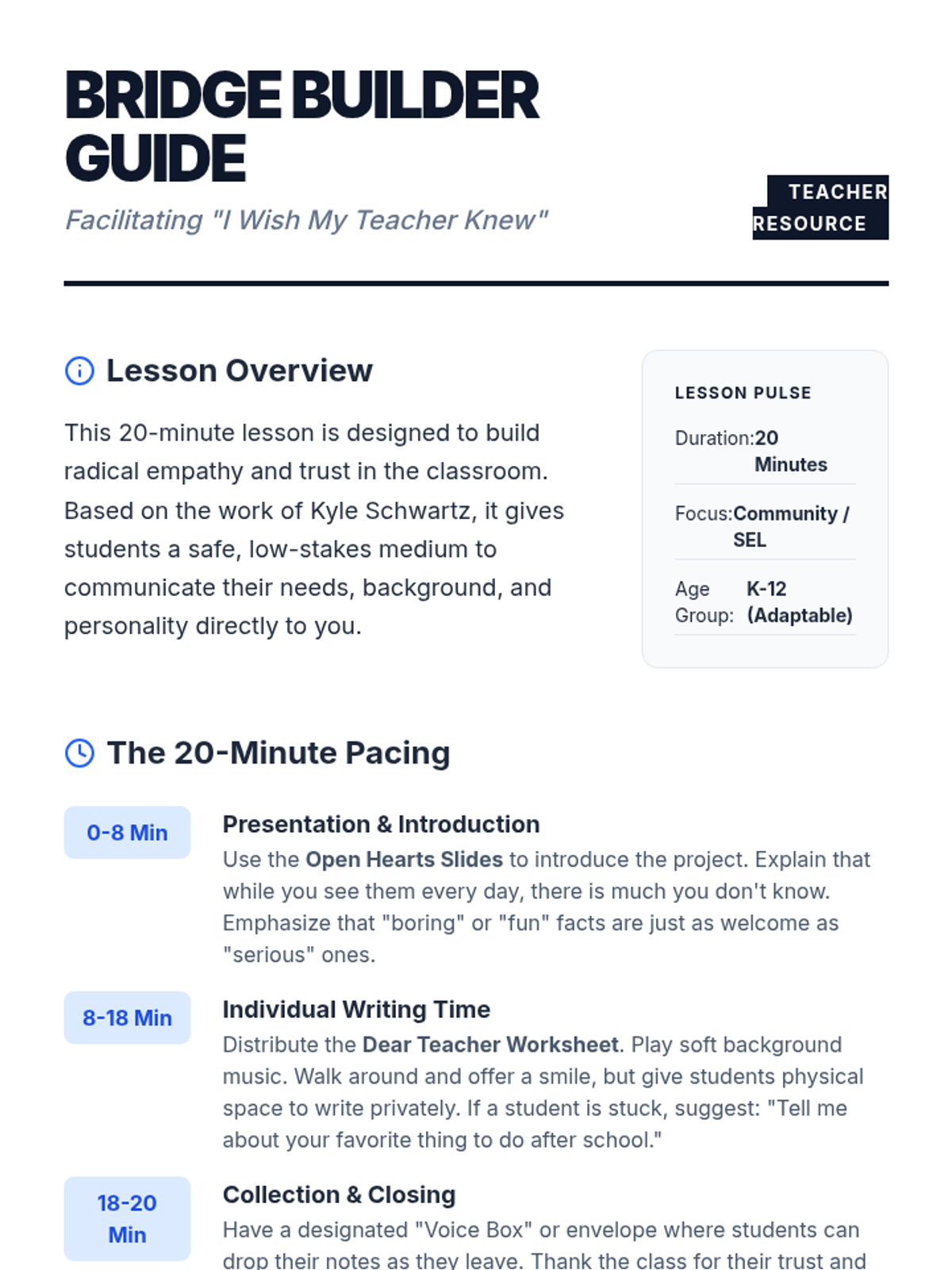
A short, impactful community-building lesson based on the "I Wish My Teacher Knew" project. Students share personal insights, needs, or stories with their teacher to build trust, empathy, and a stronger classroom community.
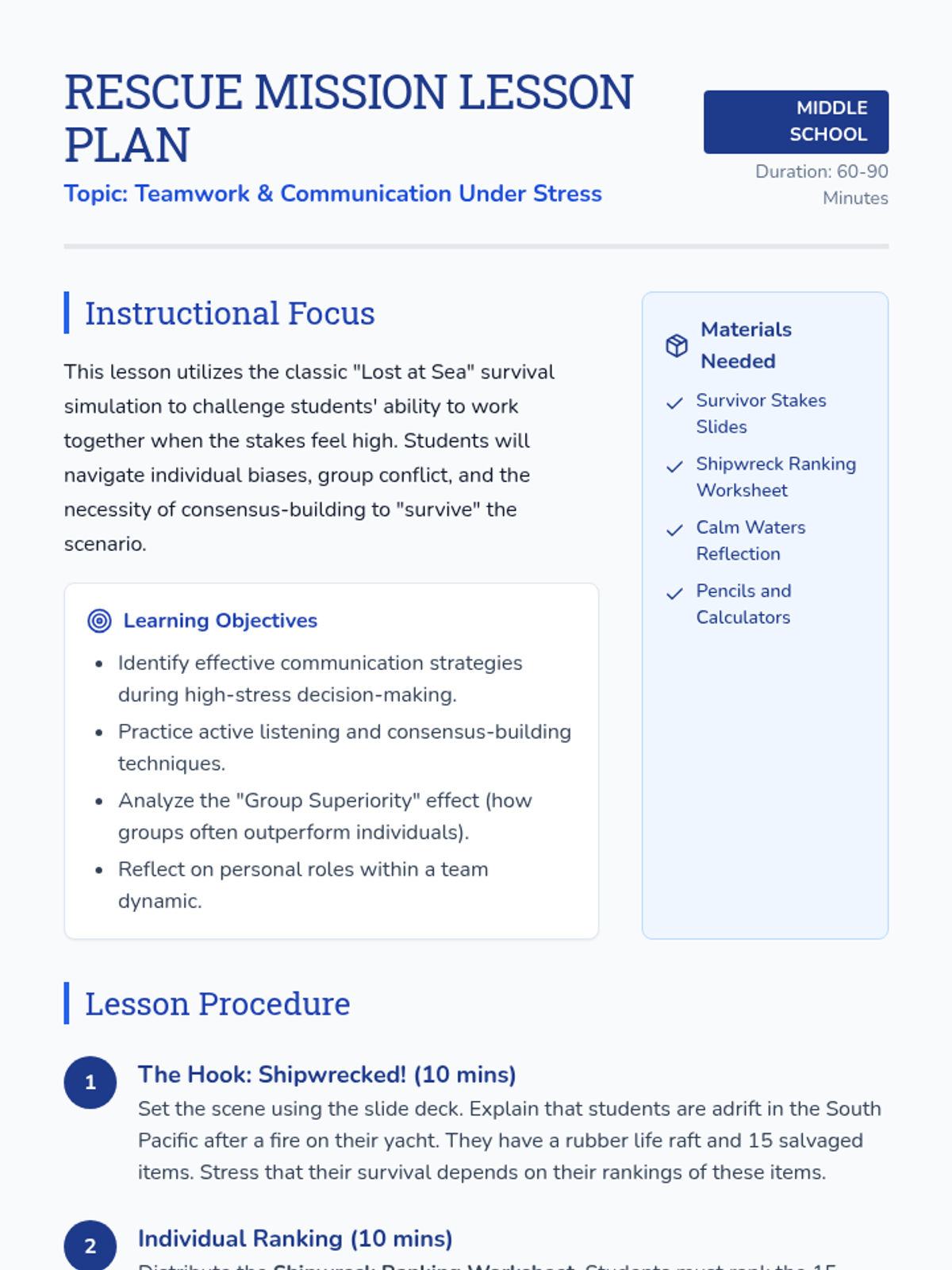
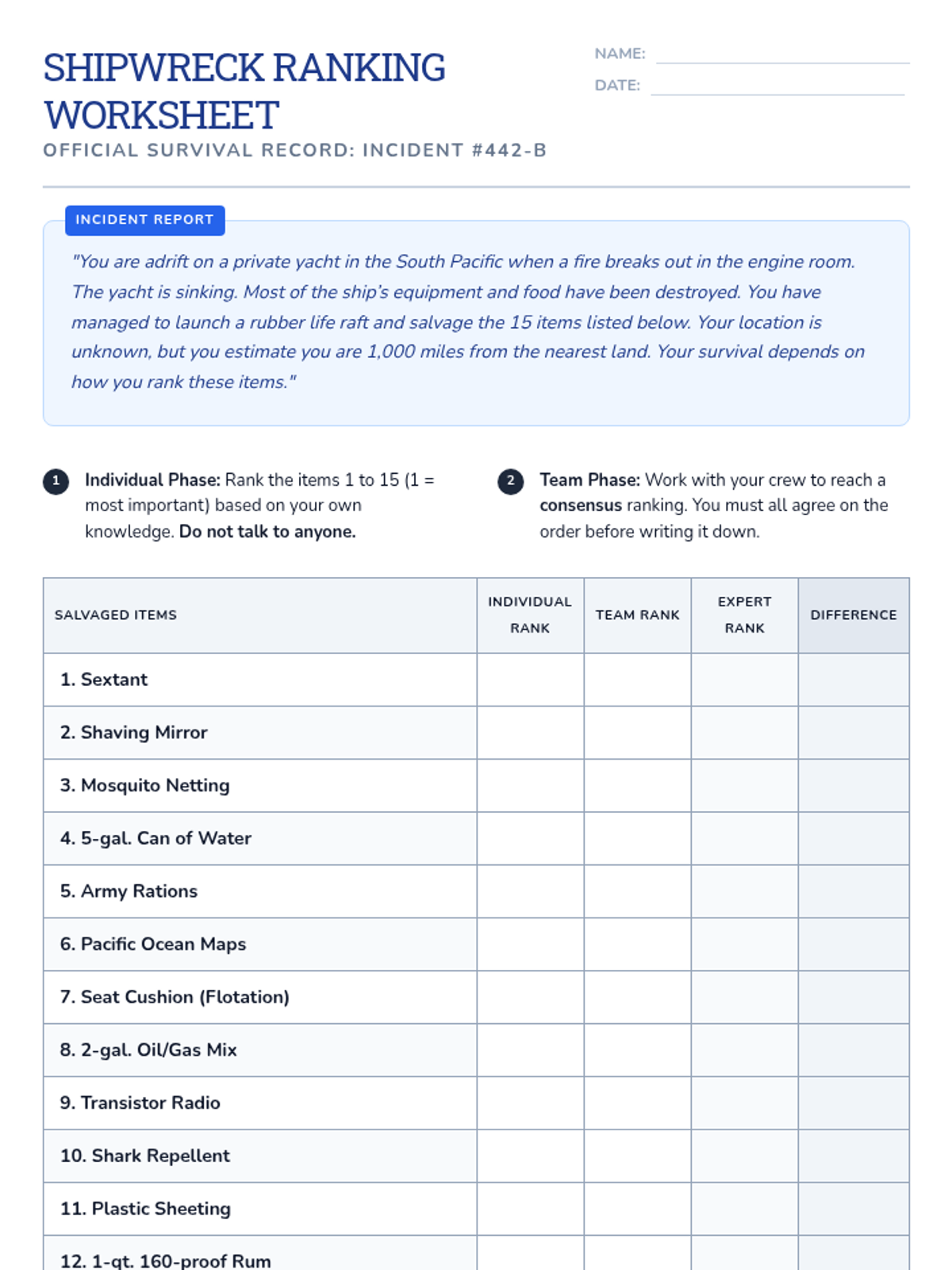
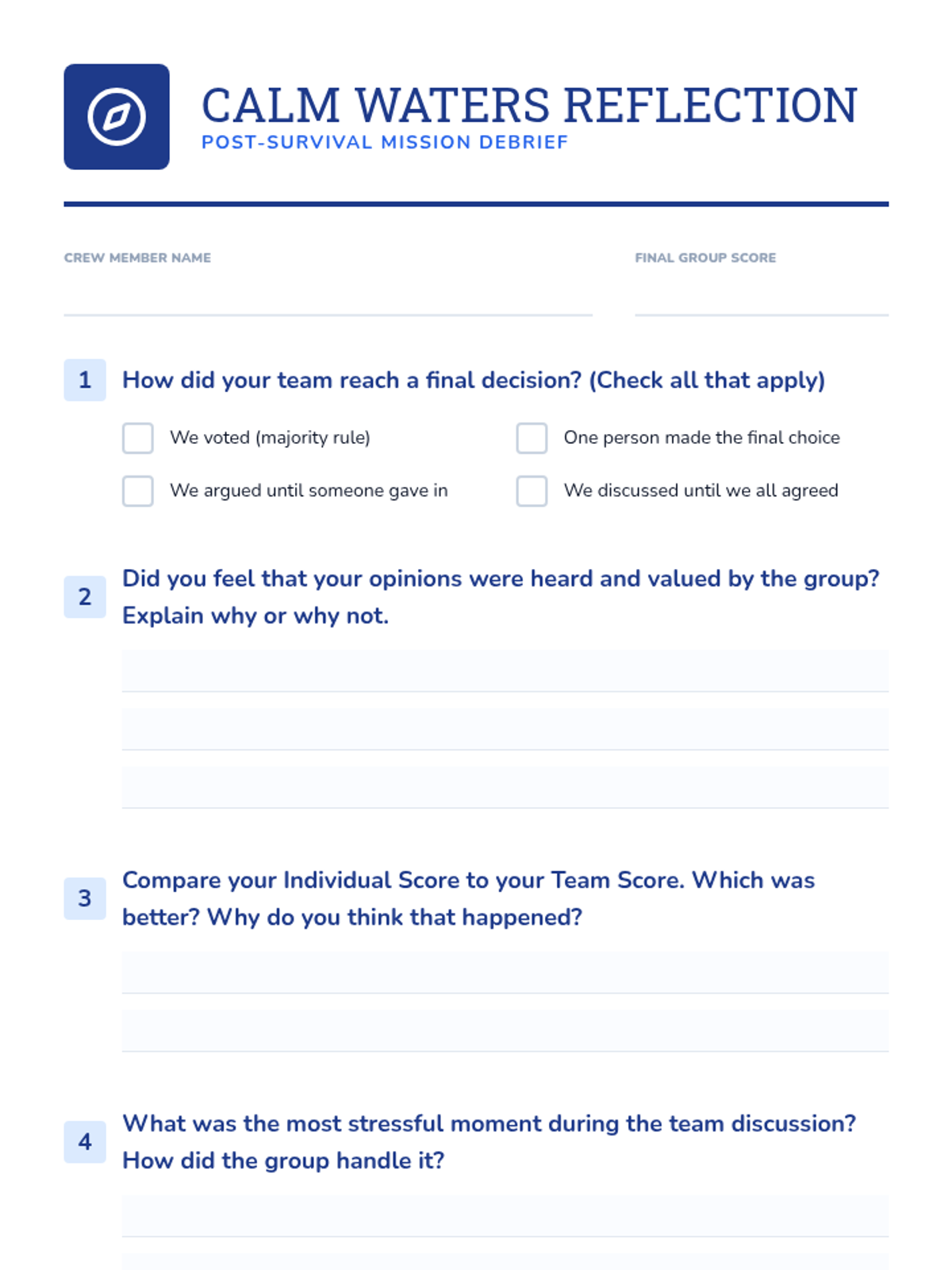
A comprehensive lesson focused on teamwork, consensus-building, and communication under stress using a classic maritime survival scenario. Students must collaborate to rank items for survival after a shipwreck.
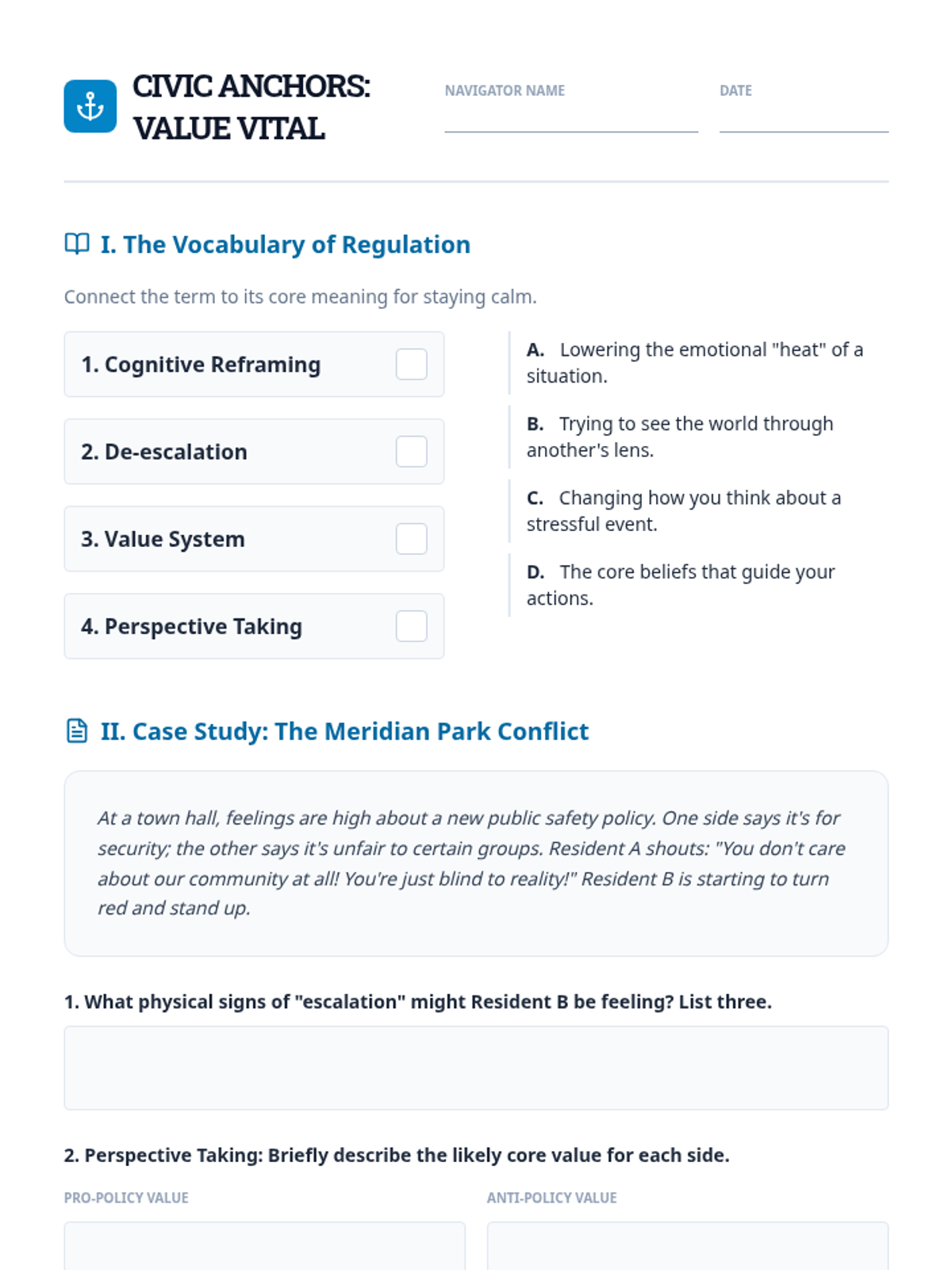
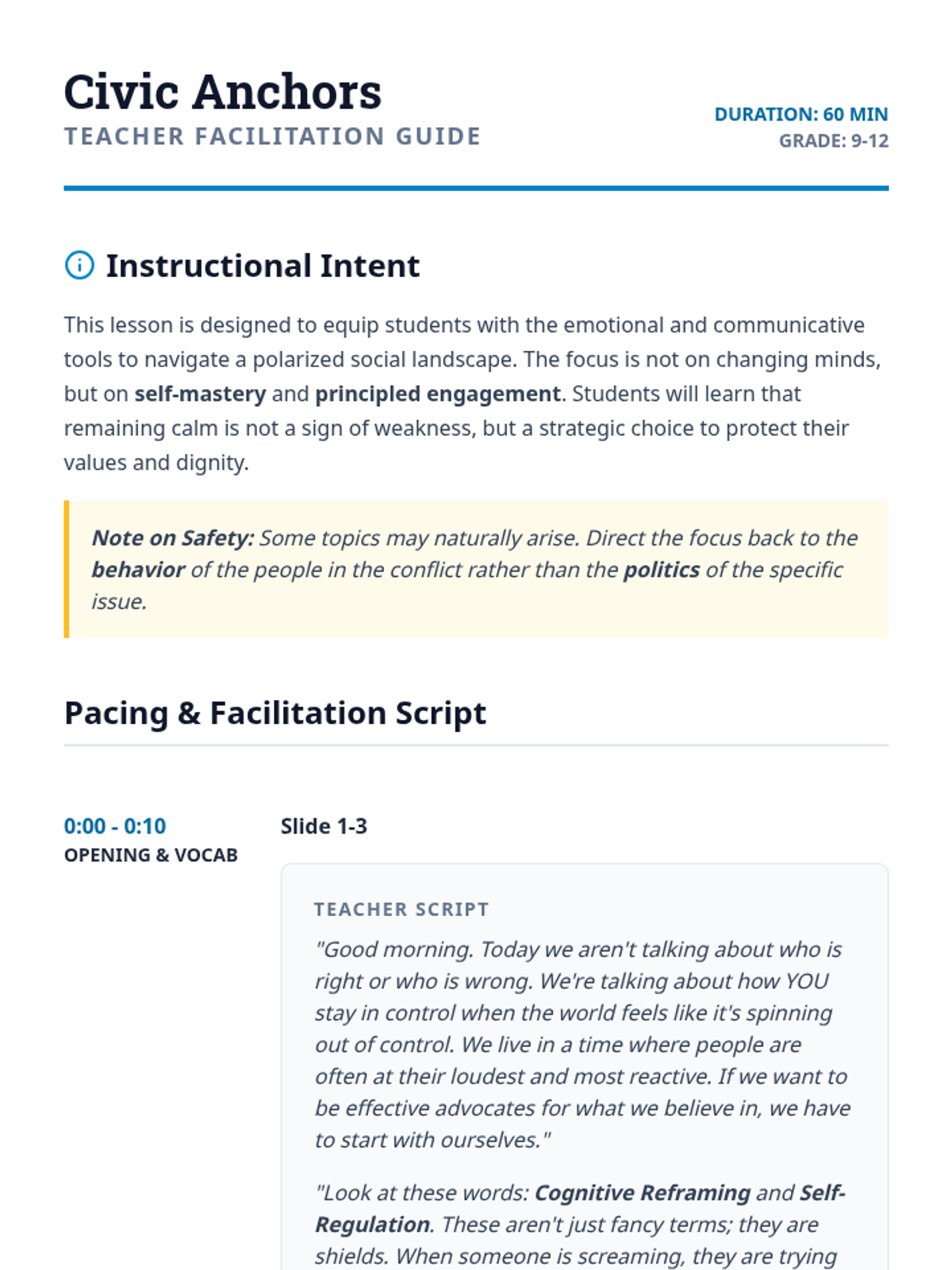
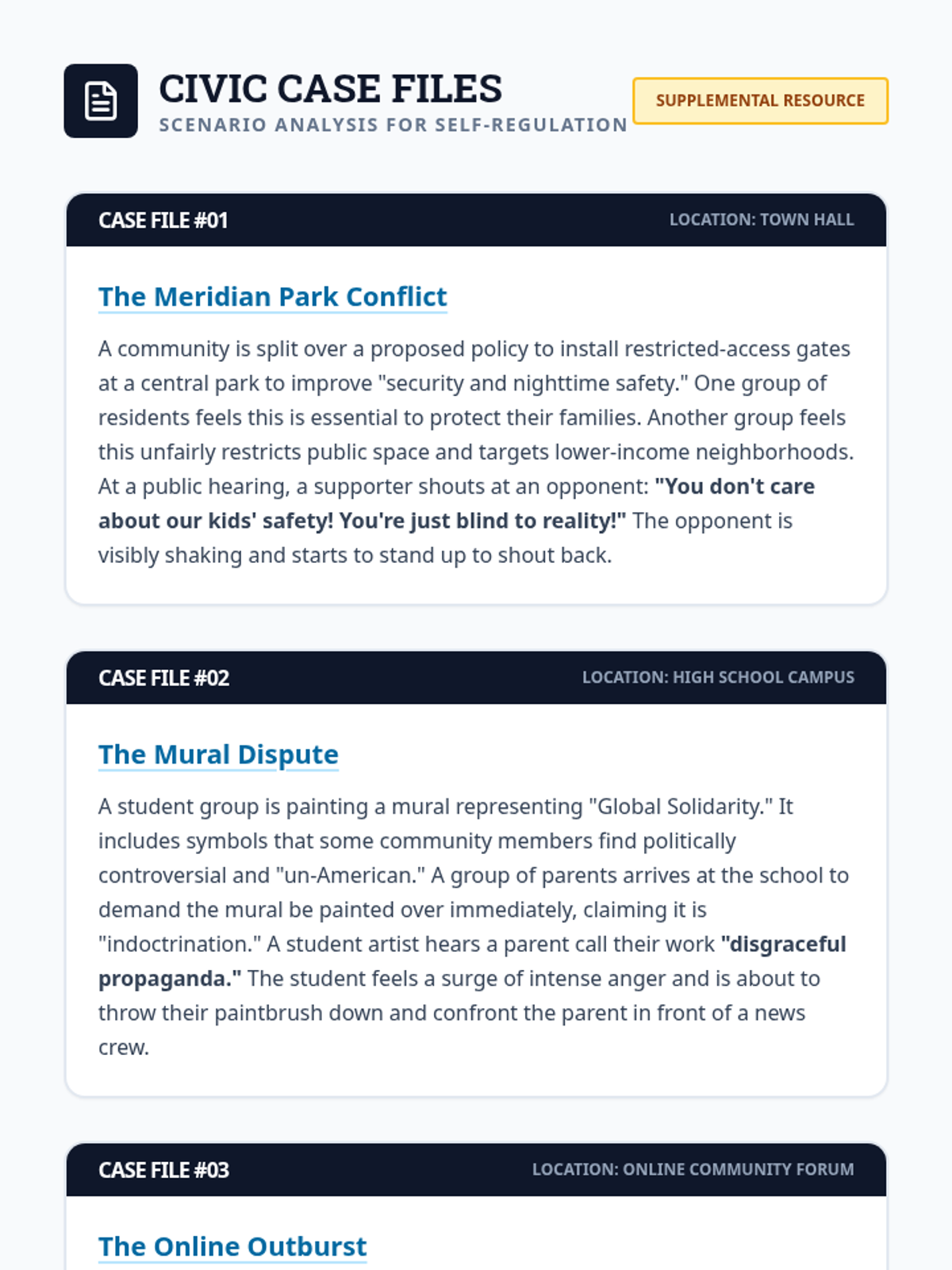
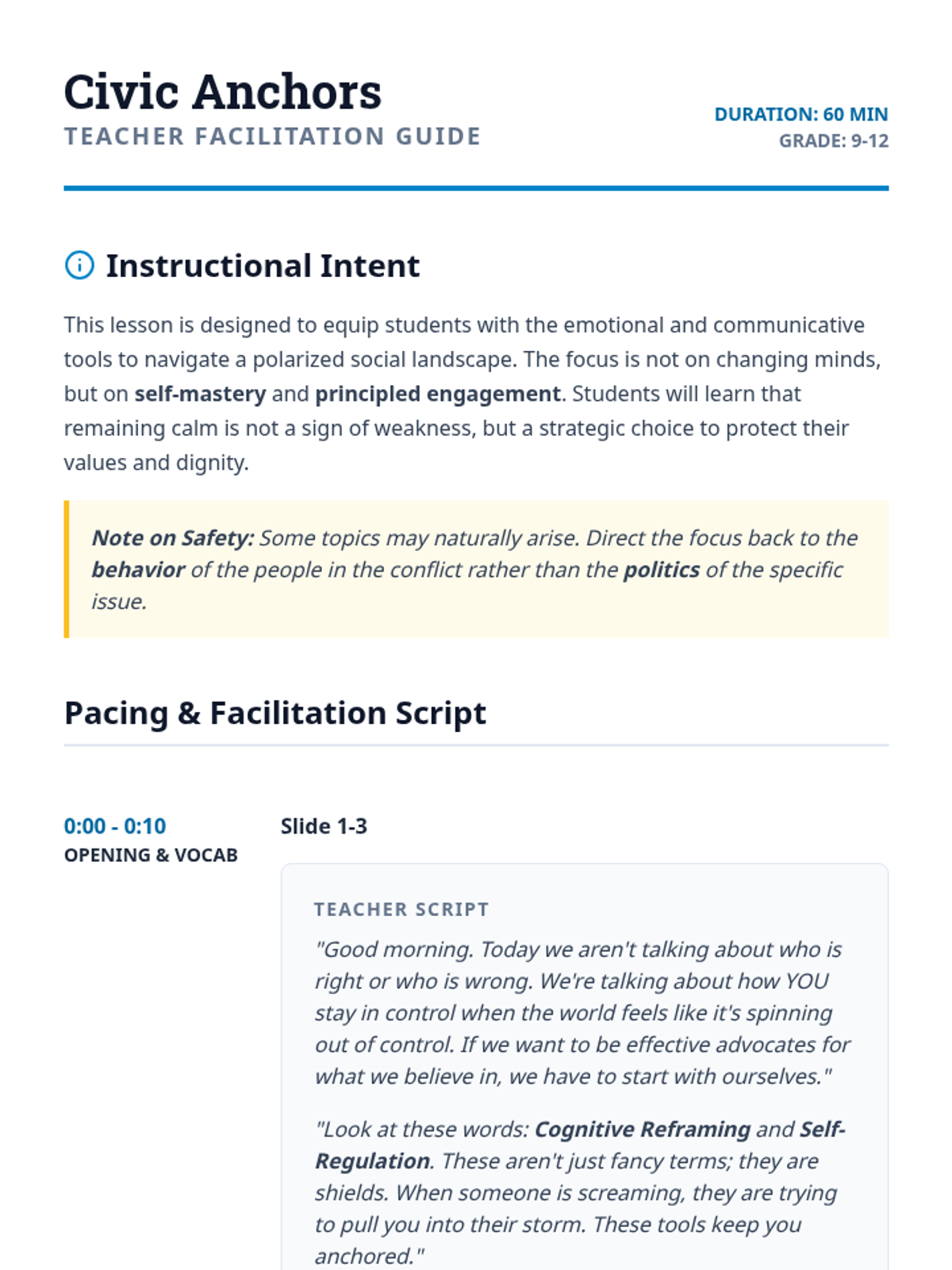
A one-hour high school lesson focused on self-regulation, communication, and perspective-taking within a divided political climate, helping students stay true to their values without escalating conflict.
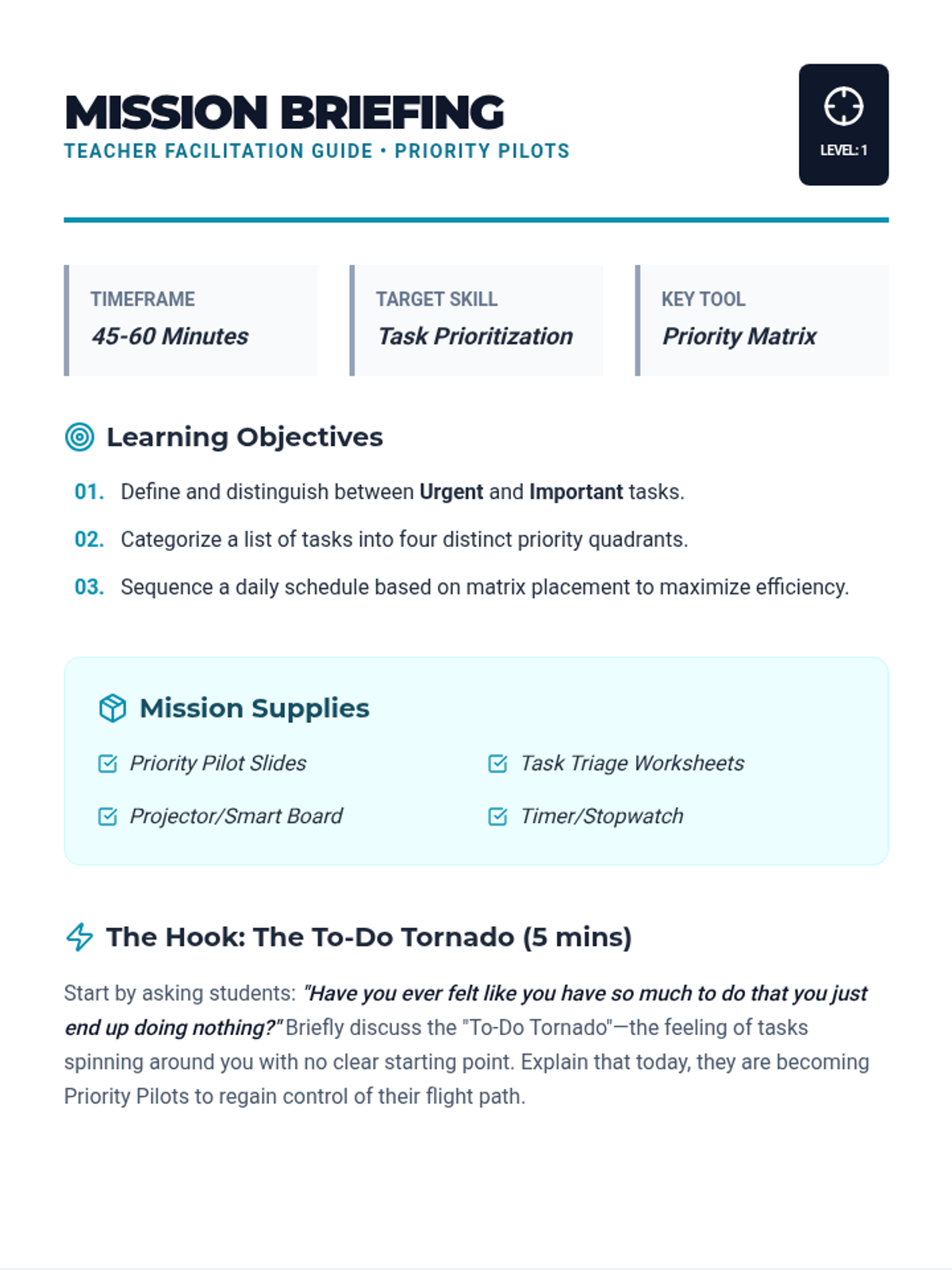
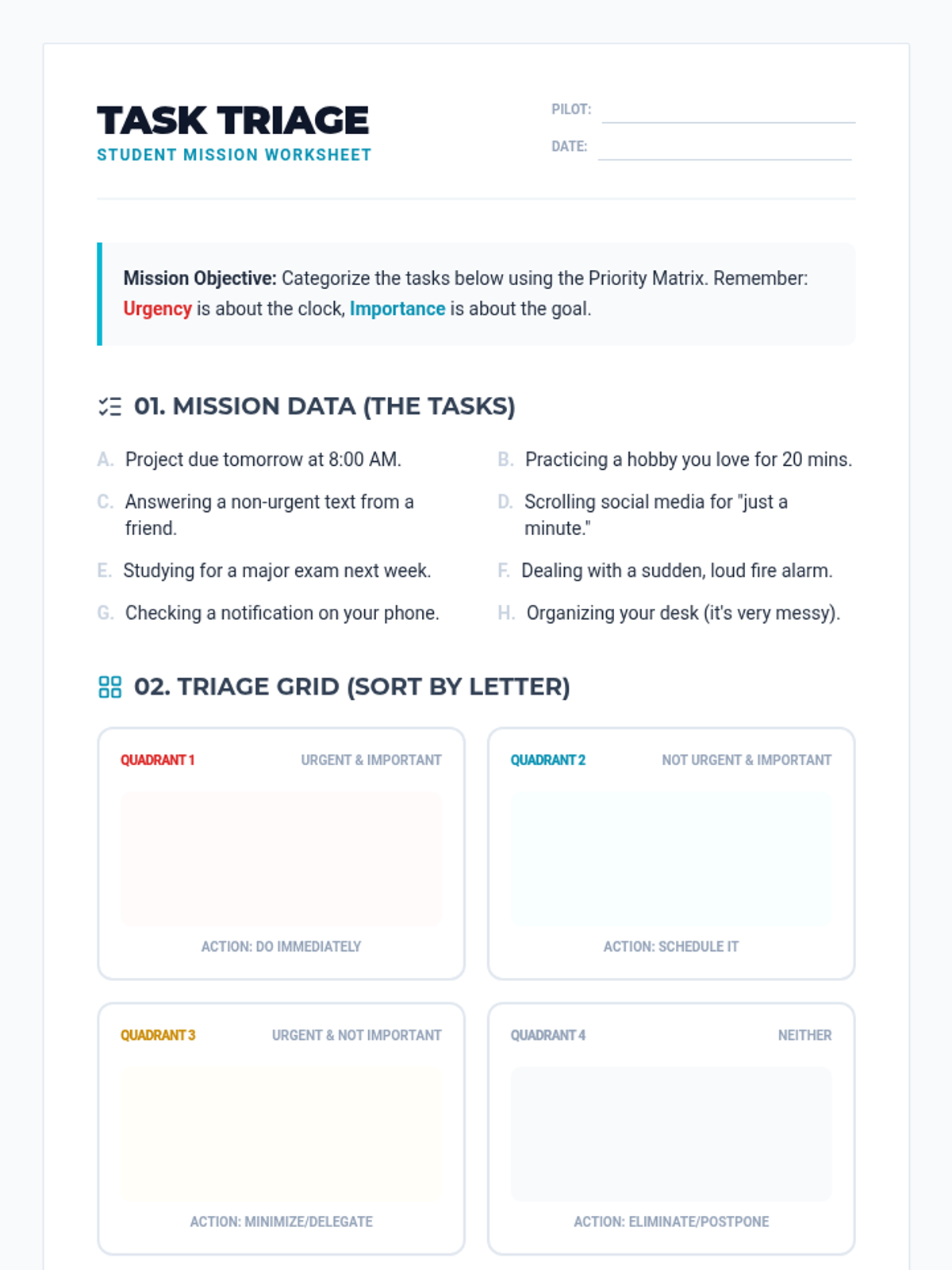
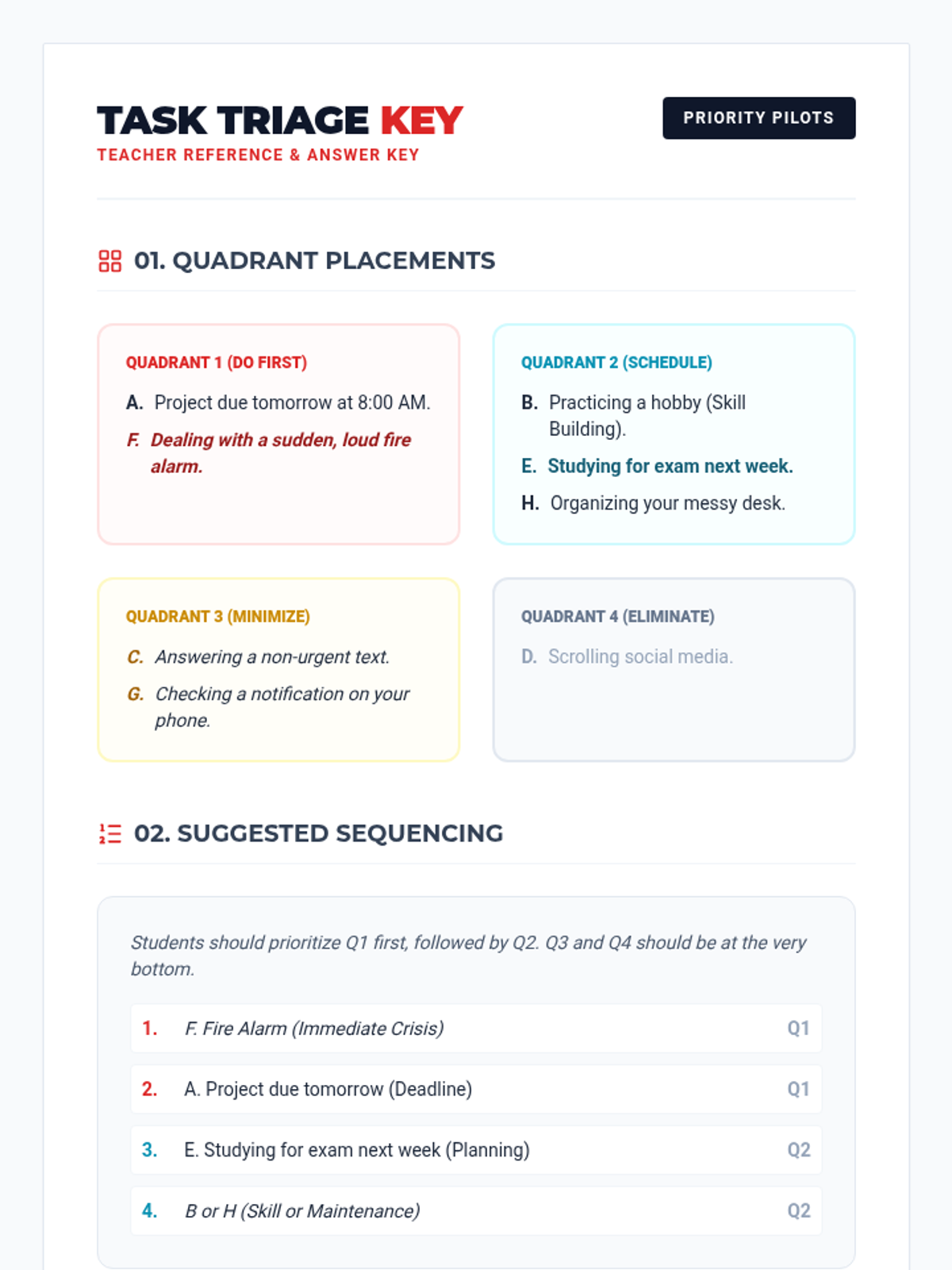
A comprehensive lesson on task prioritization where students learn to distinguish between urgent and important tasks and use a matrix to sequence their daily activities.
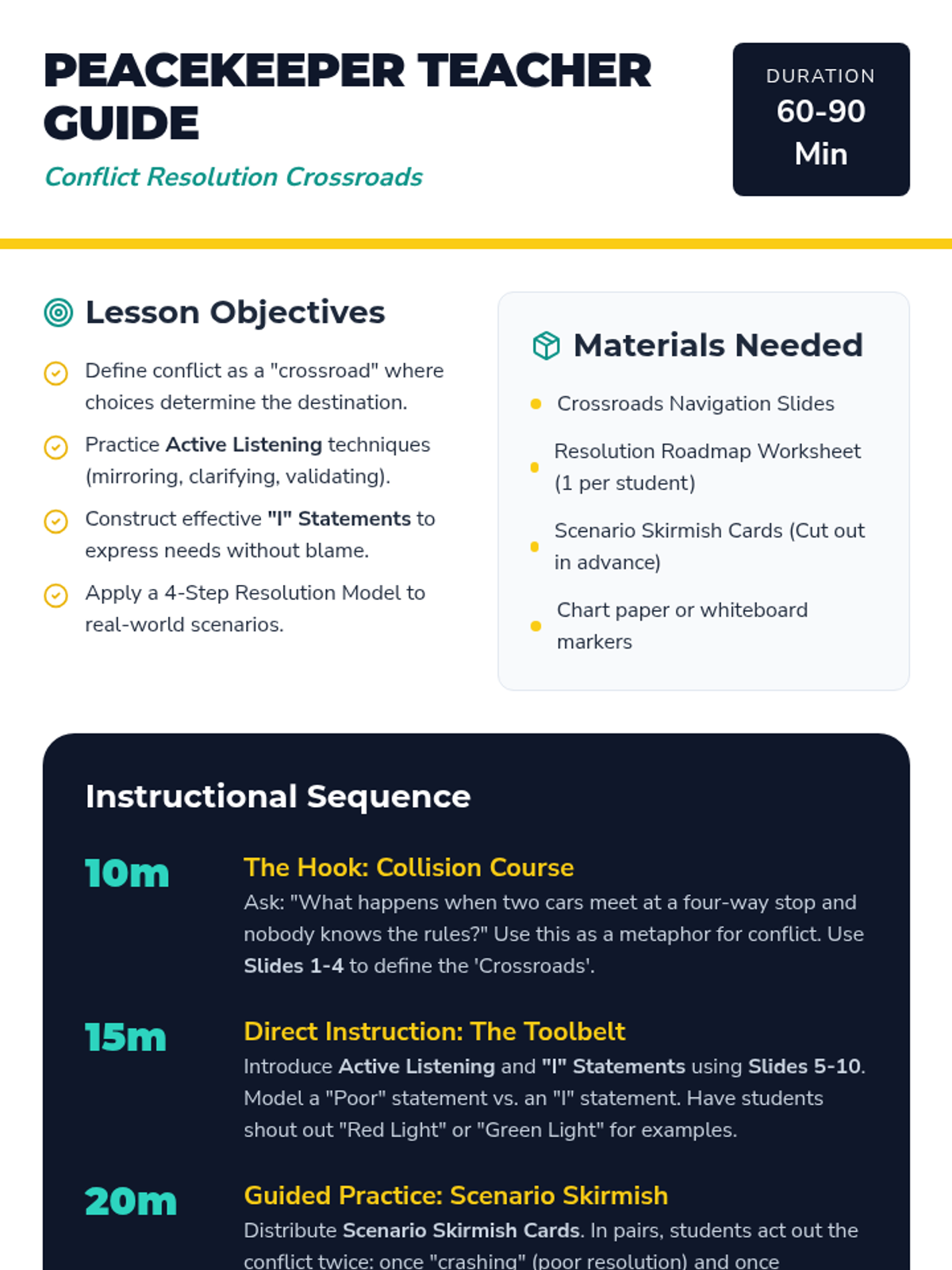
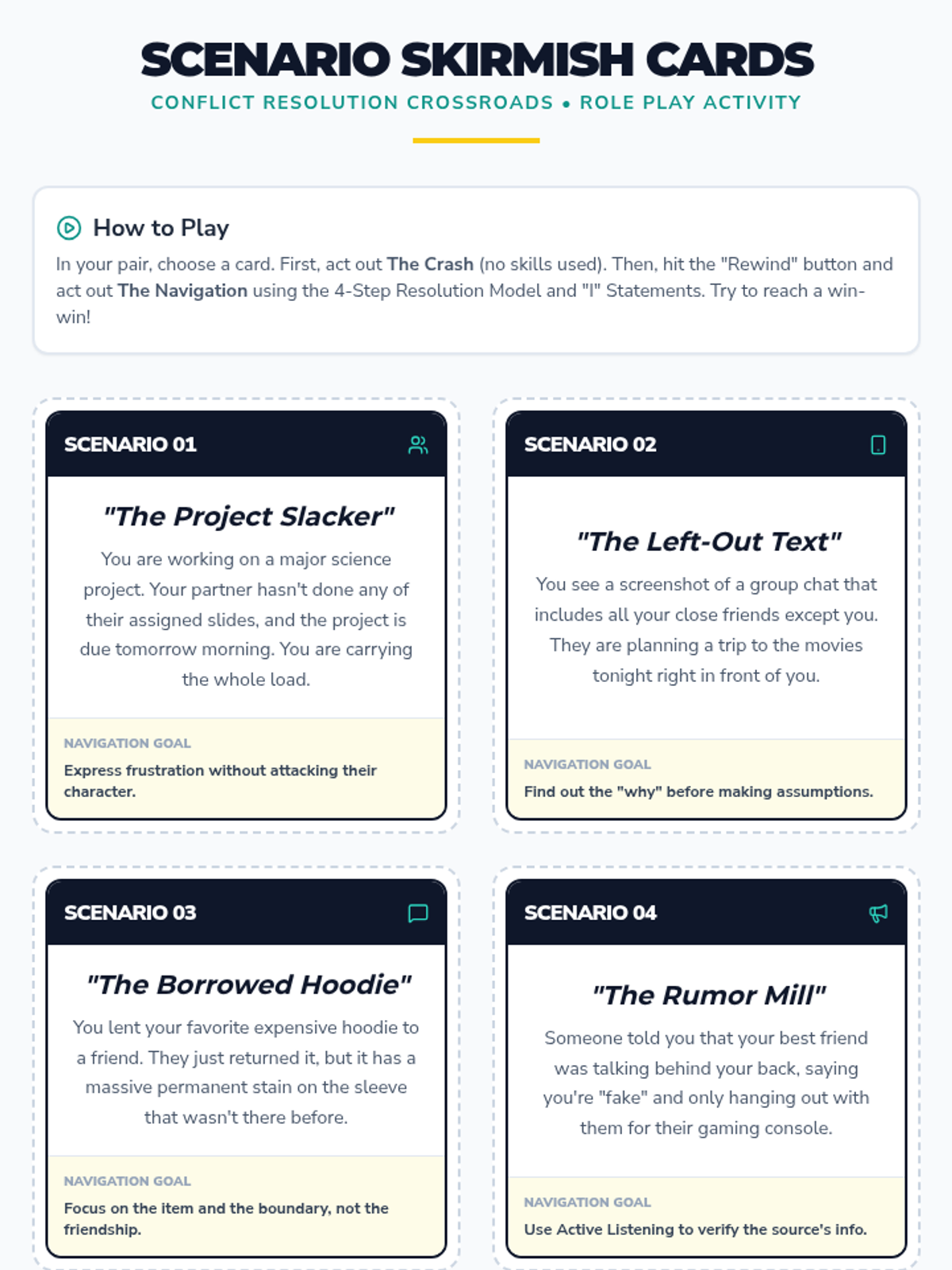
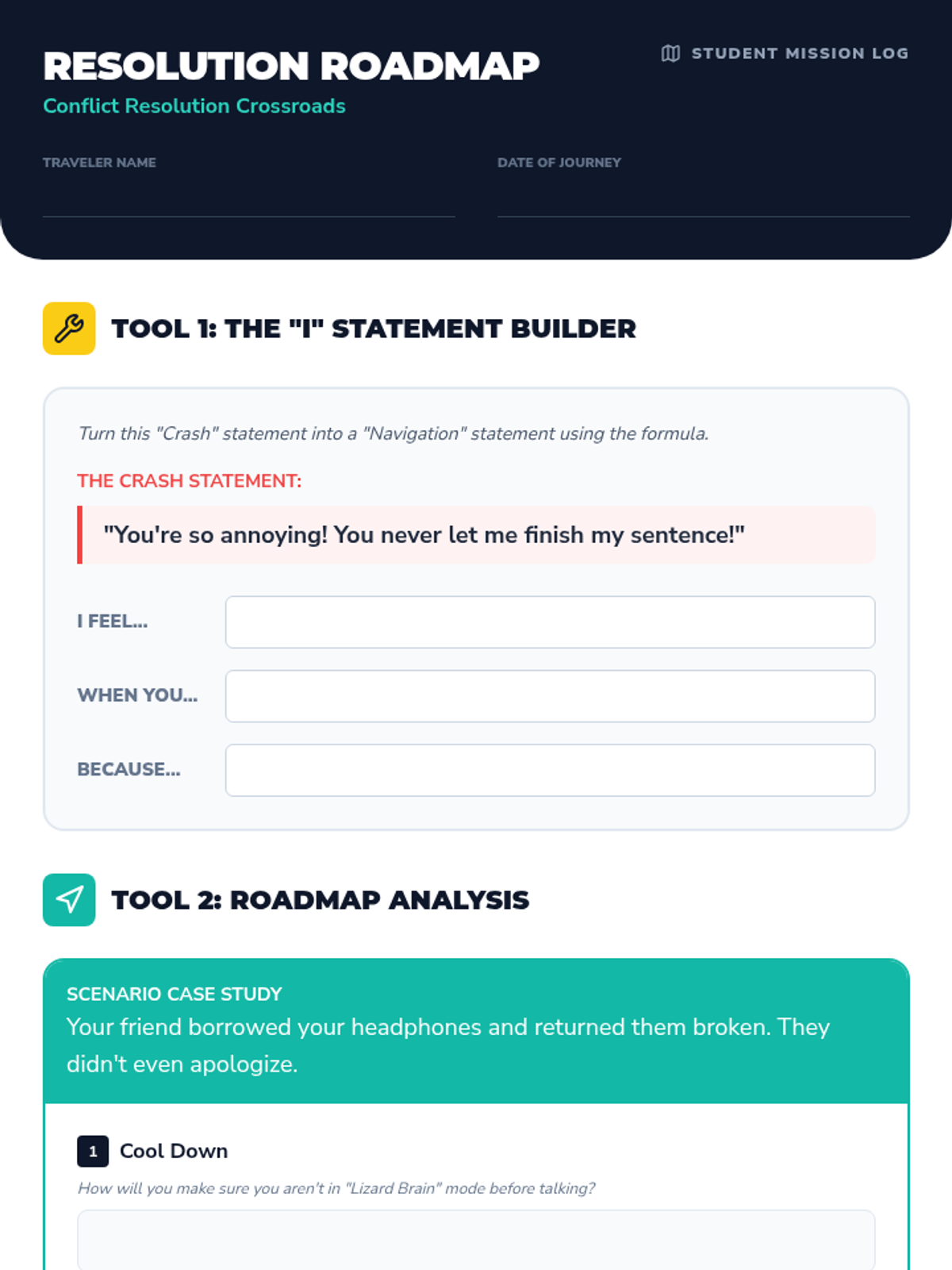
A comprehensive lesson for middle and high school students to master conflict resolution through a structured resolution model, active listening, and role-playing scenarios. Students learn to navigate 'conflict crossroads' using empathy and clear communication.
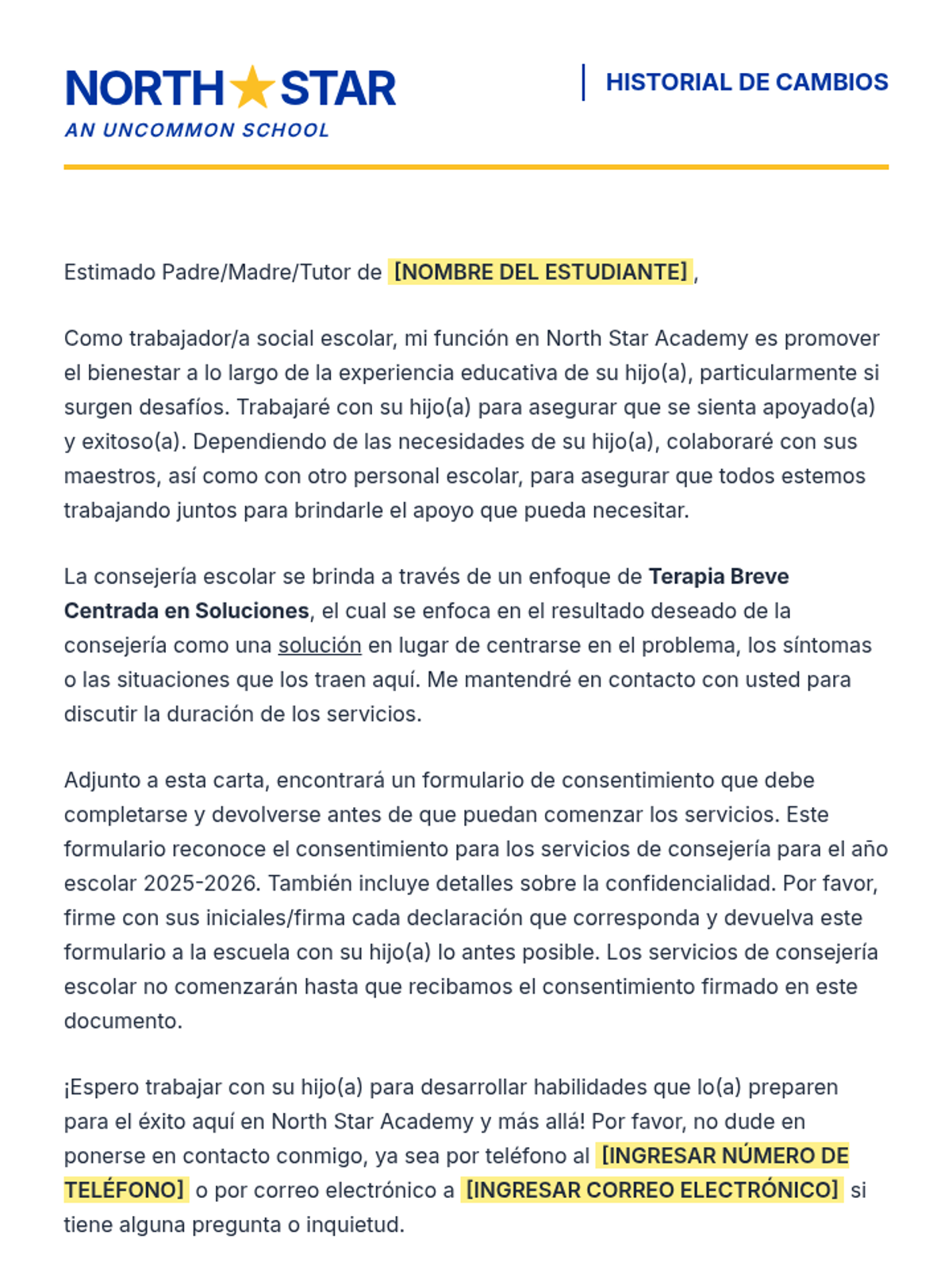
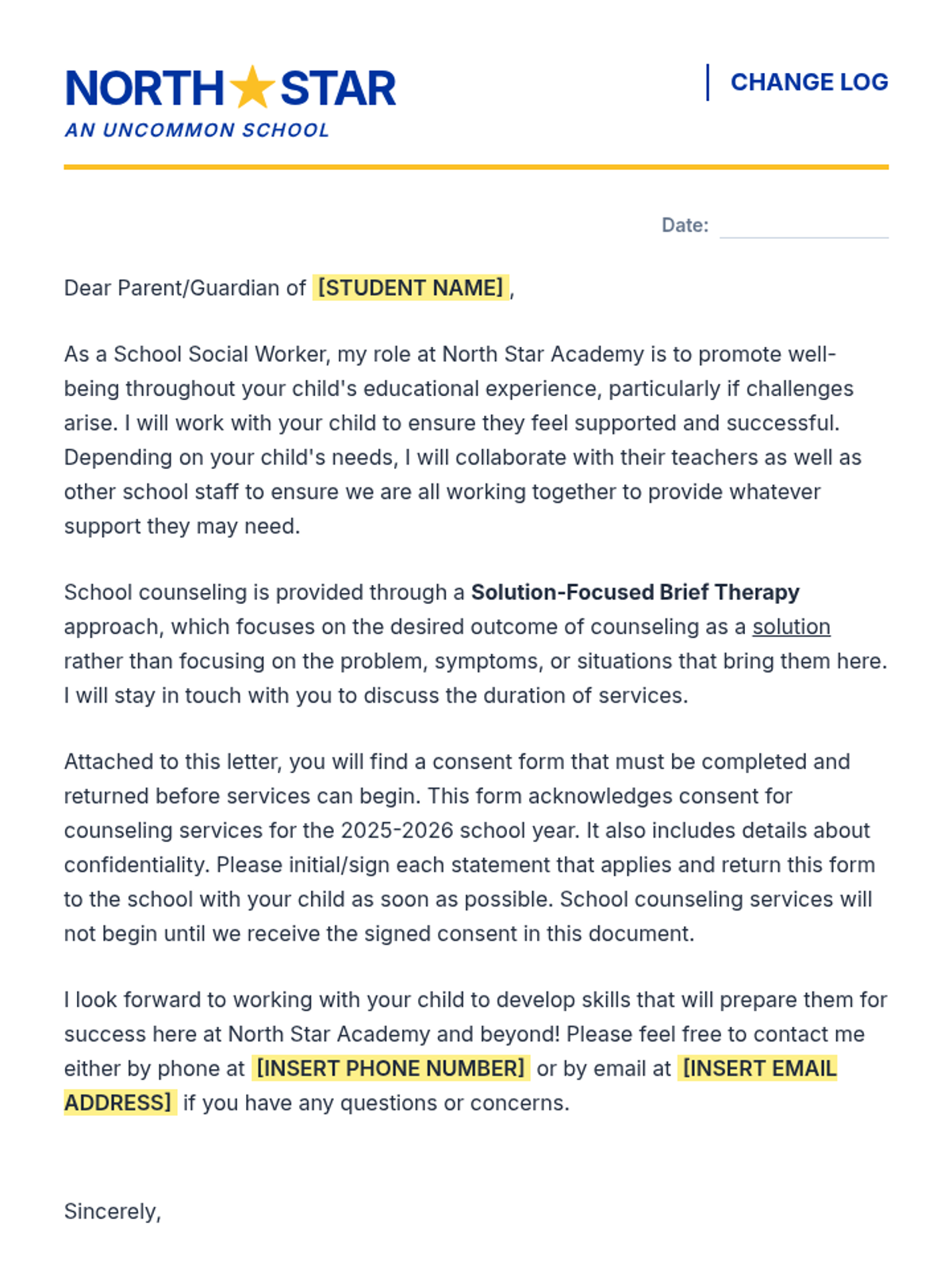
A set of translated resources for school social workers to obtain parental consent for school-based counseling services.
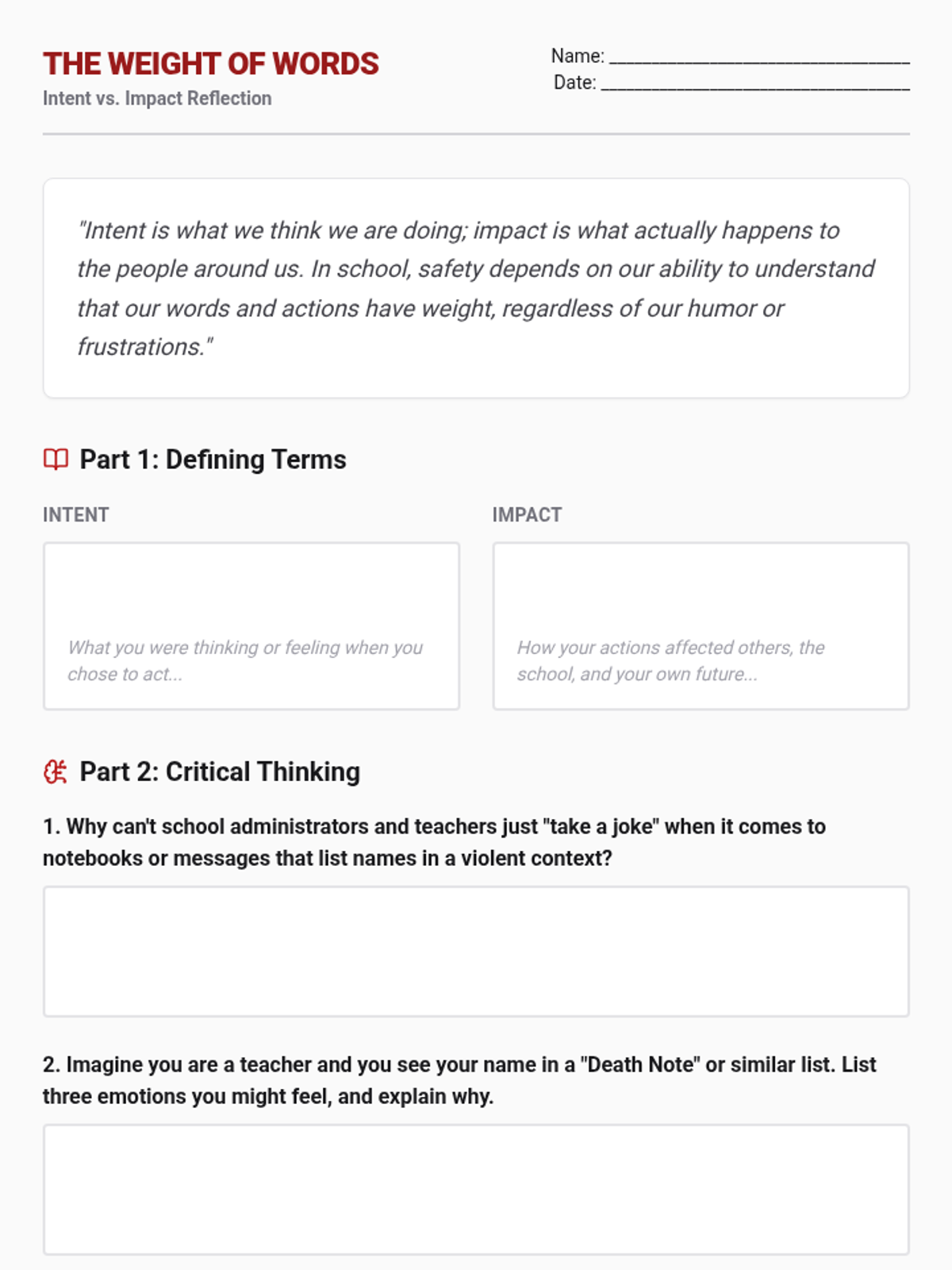
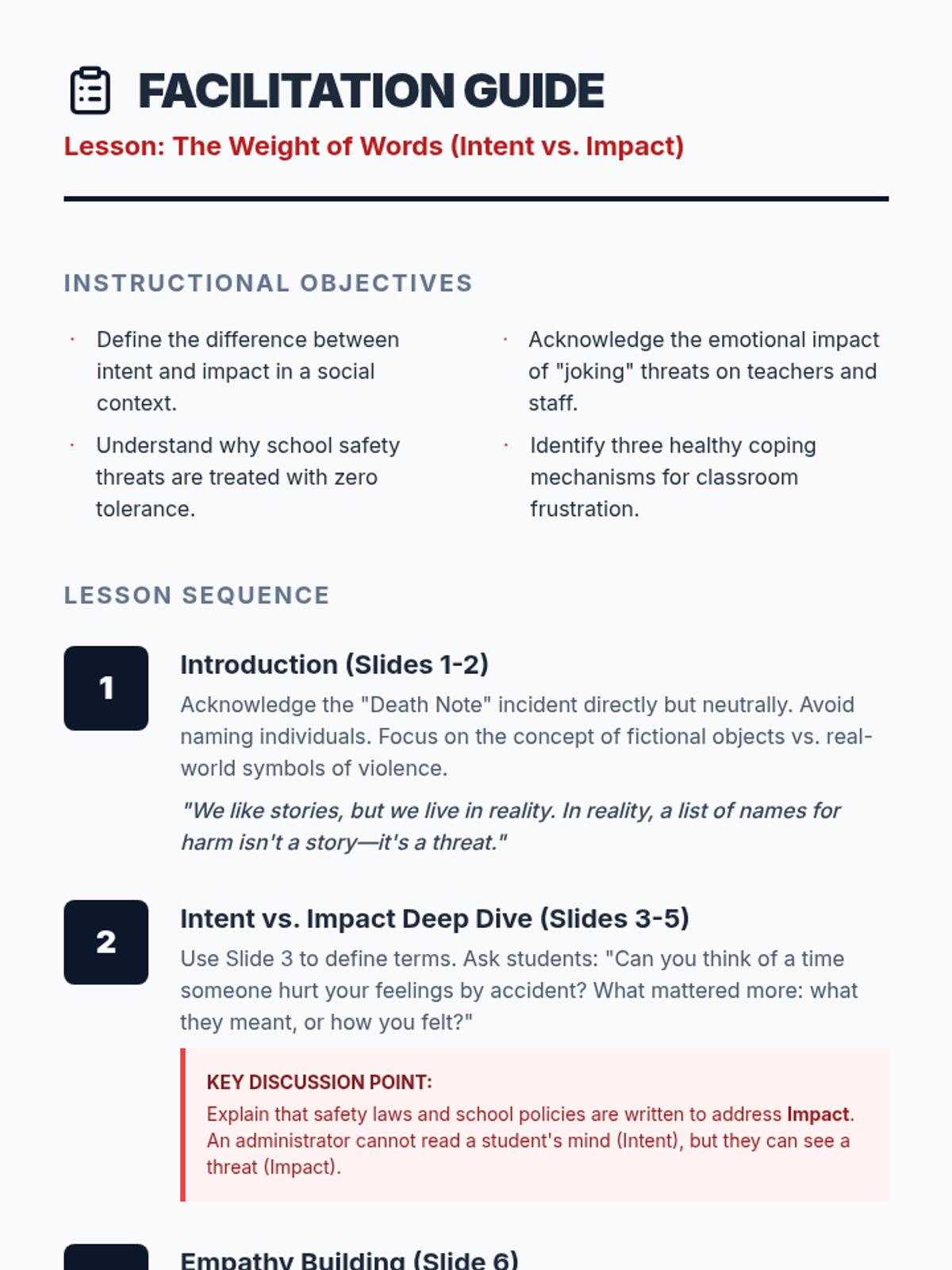
A psychoeducation lesson designed to address the severity of school threats following a 'Death Note' incident, focusing on the critical difference between intent and impact.
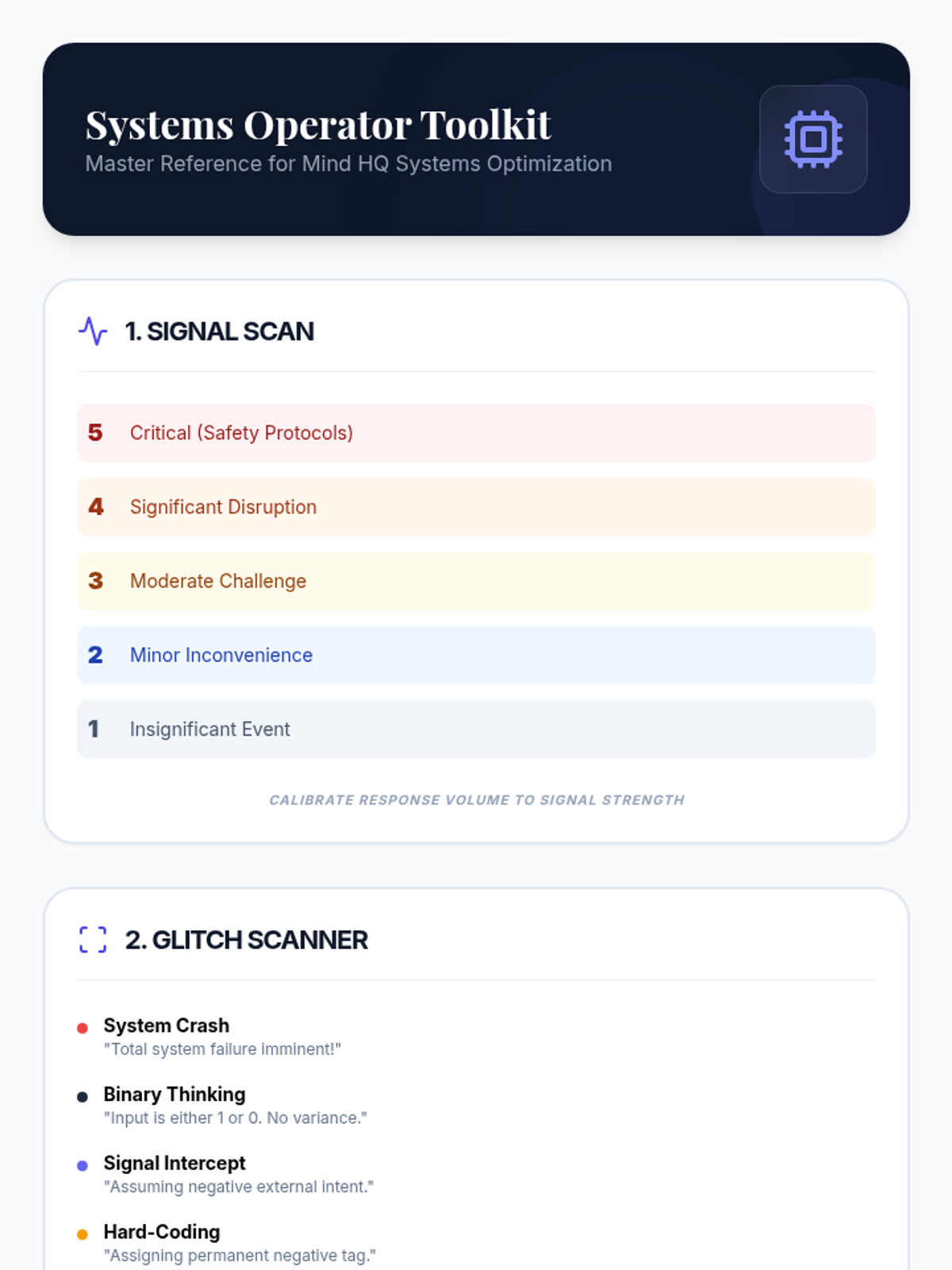
Focuses on long-term application and maintenance of regulation strategies, culminating in a personalized 'Operator Toolkit' for sustained mastery.
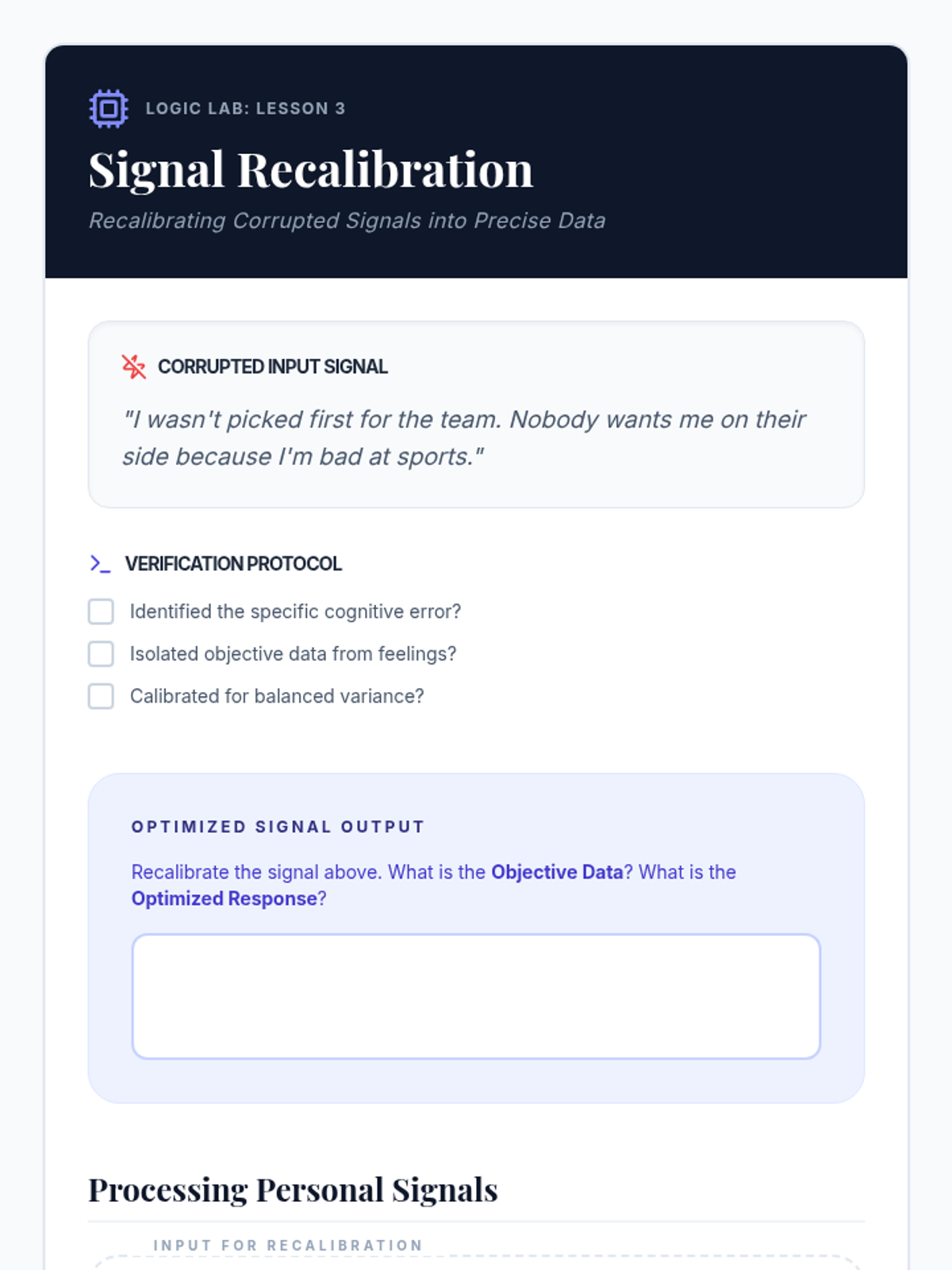
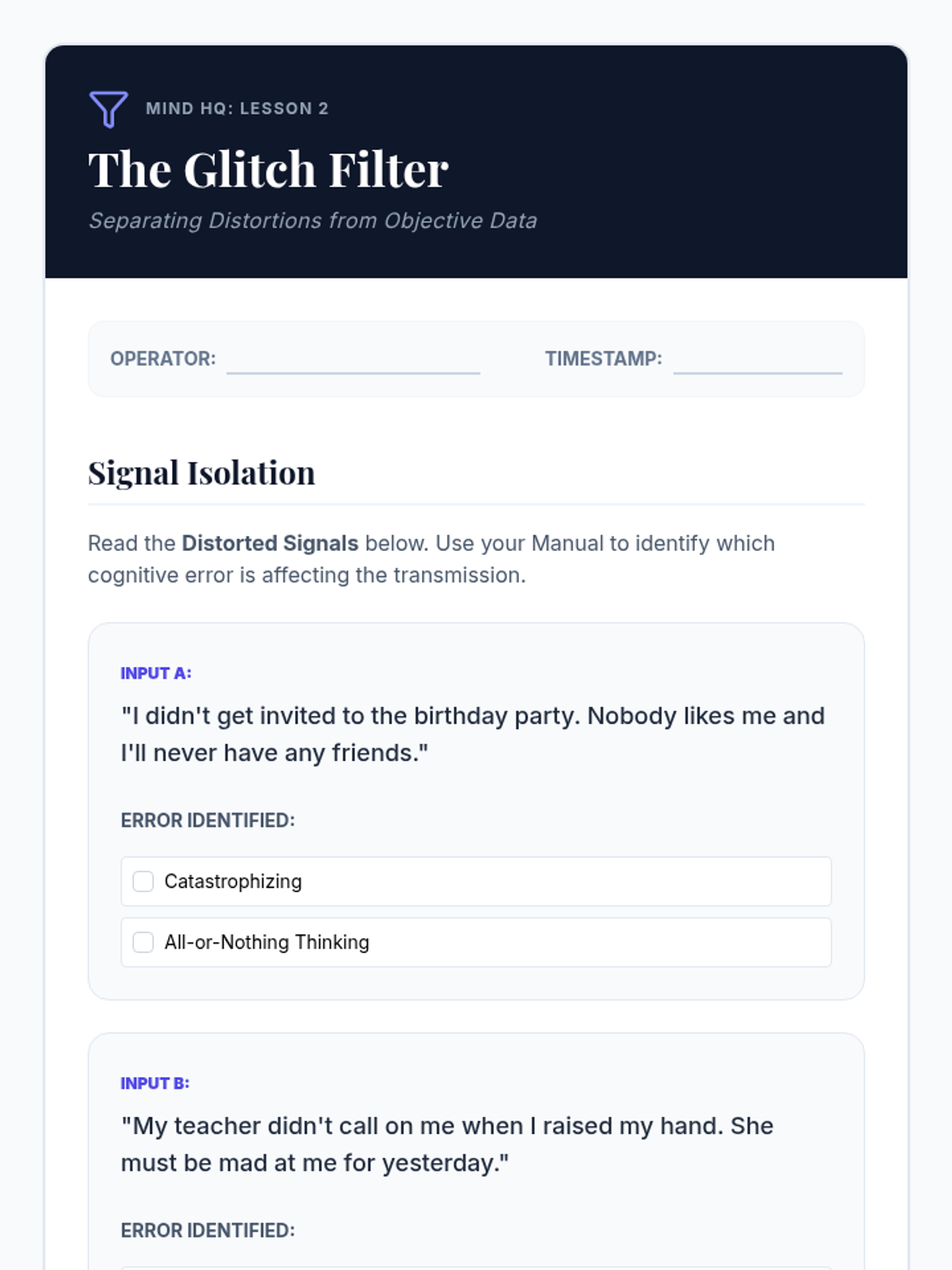
Provides tools for cognitive restructuring, teaching students to challenge 'Thinking Glitches' and calibrate their perspective in the 'Logic Lab' to reach balanced conclusions.
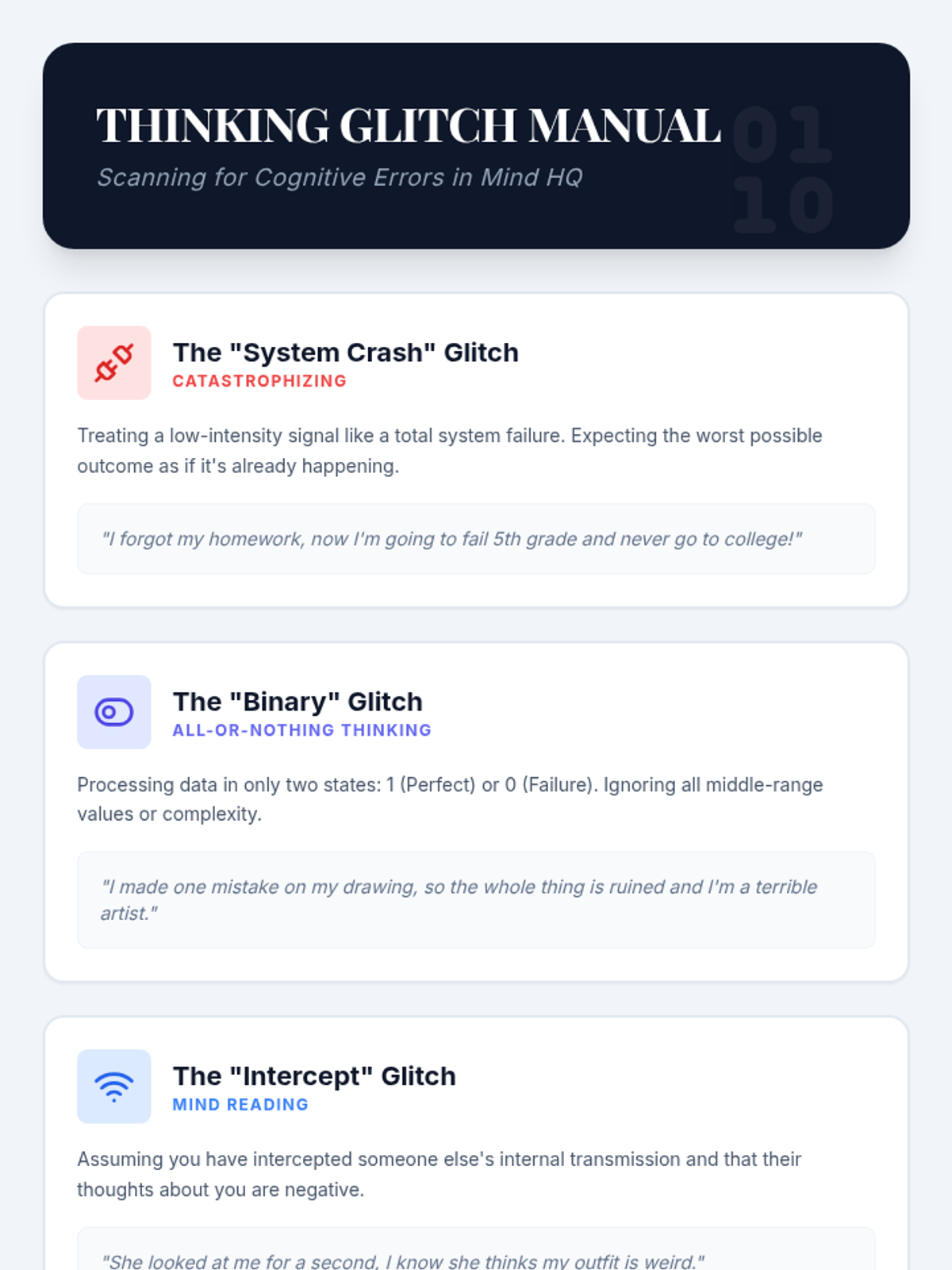
Introduces the concept of cognitive distortions as 'Thinking Glitches' and teaches the student to identify patterns like catastrophizing and all-or-nothing thinking.
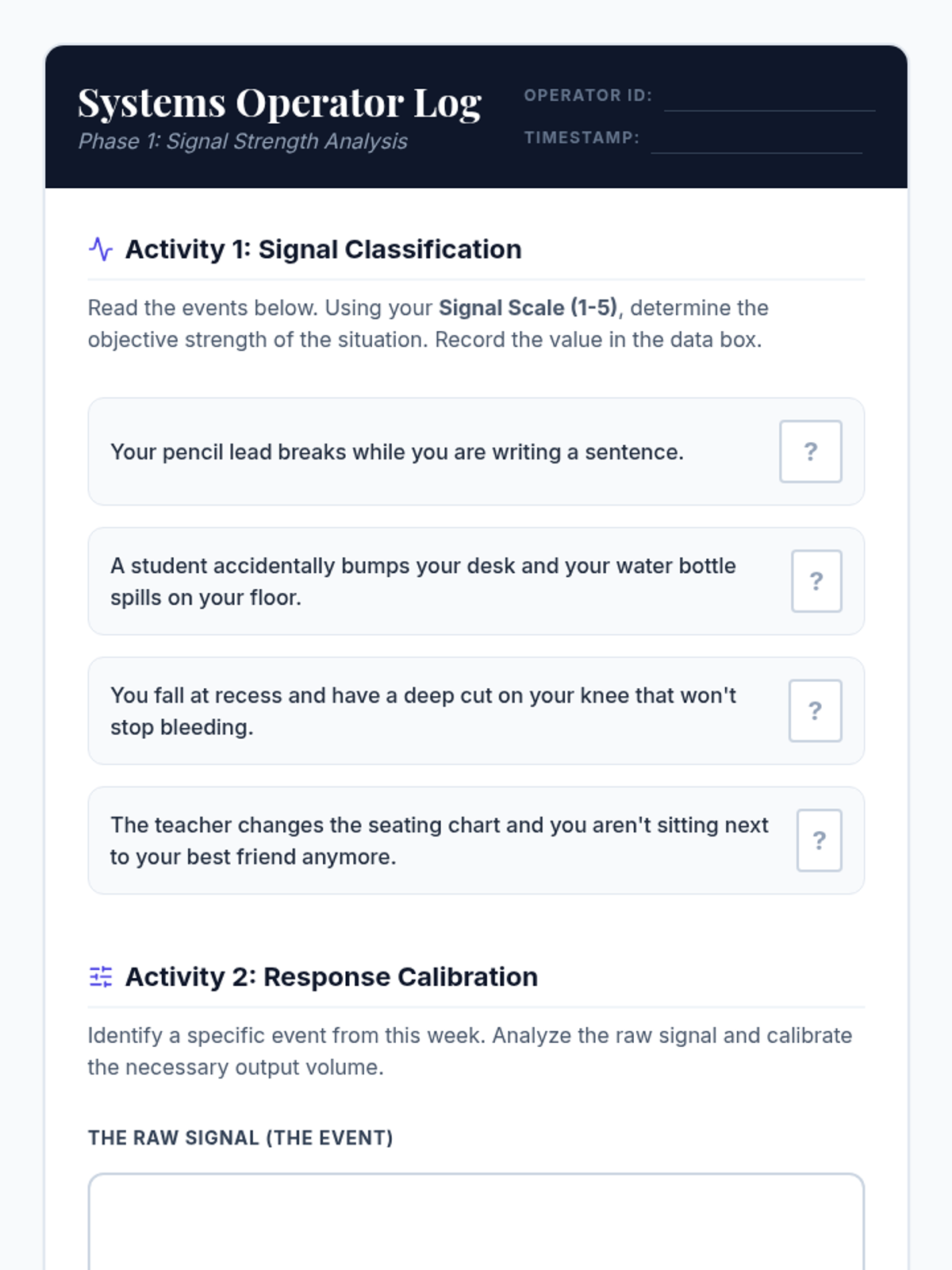
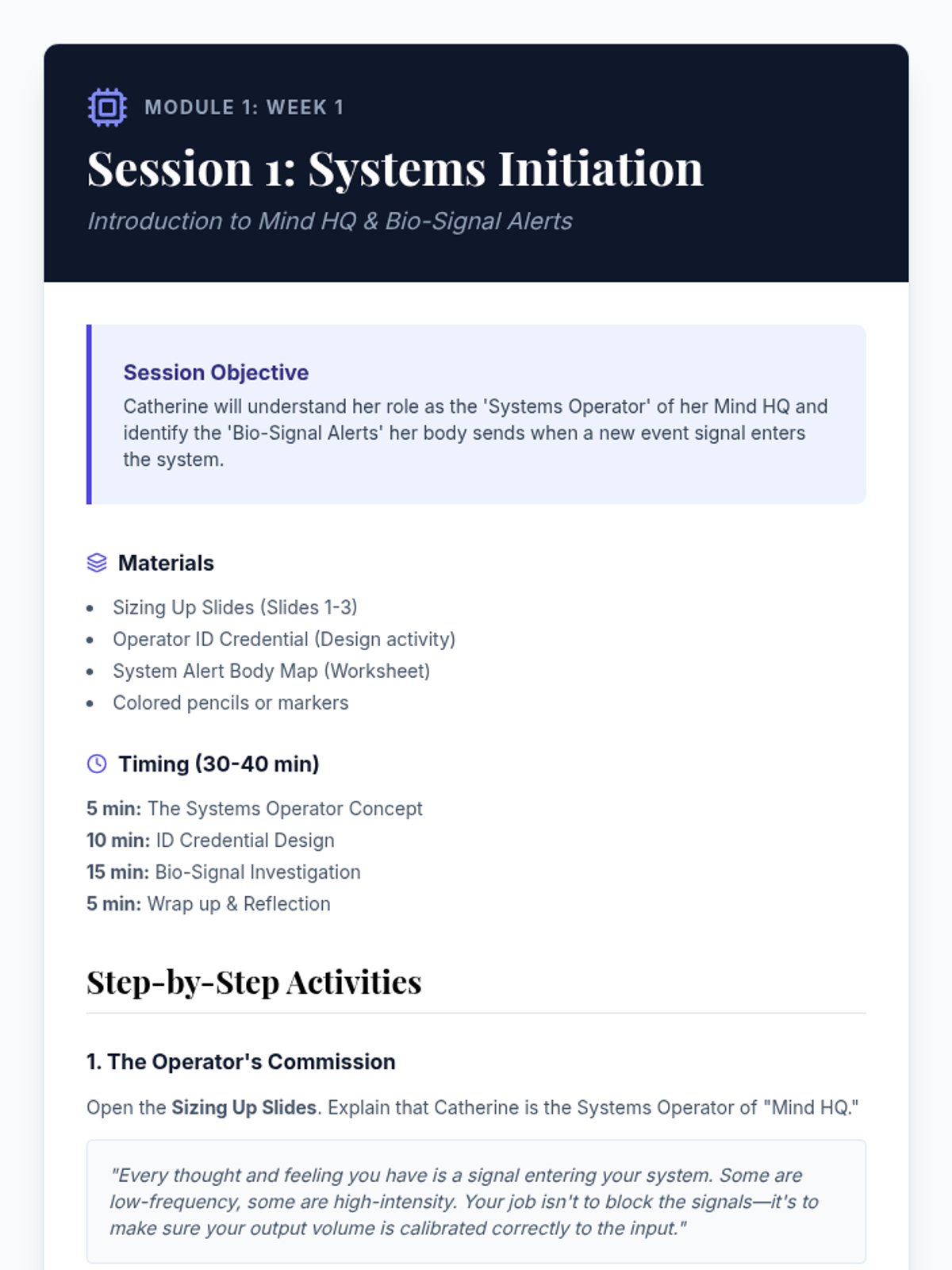
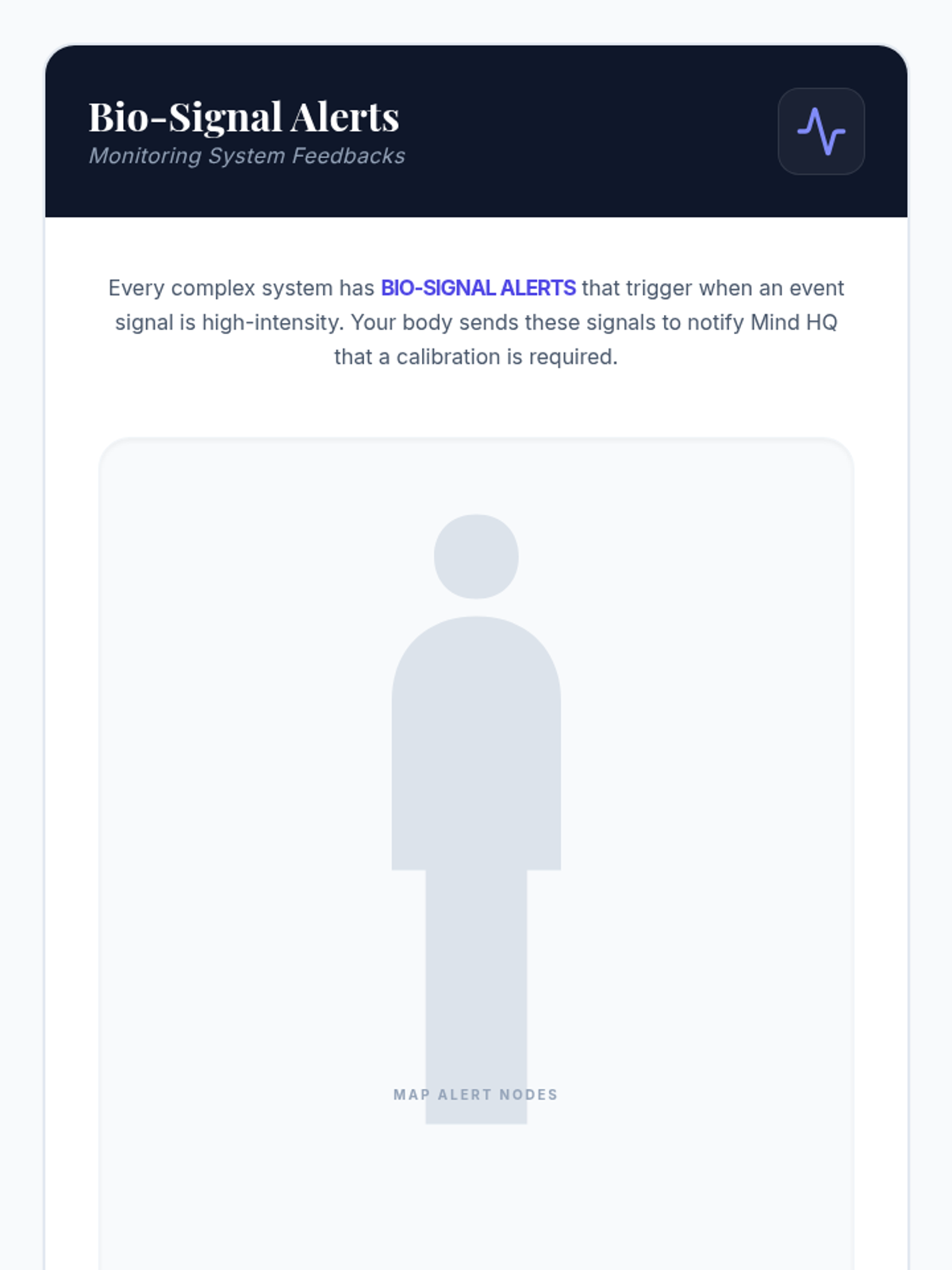
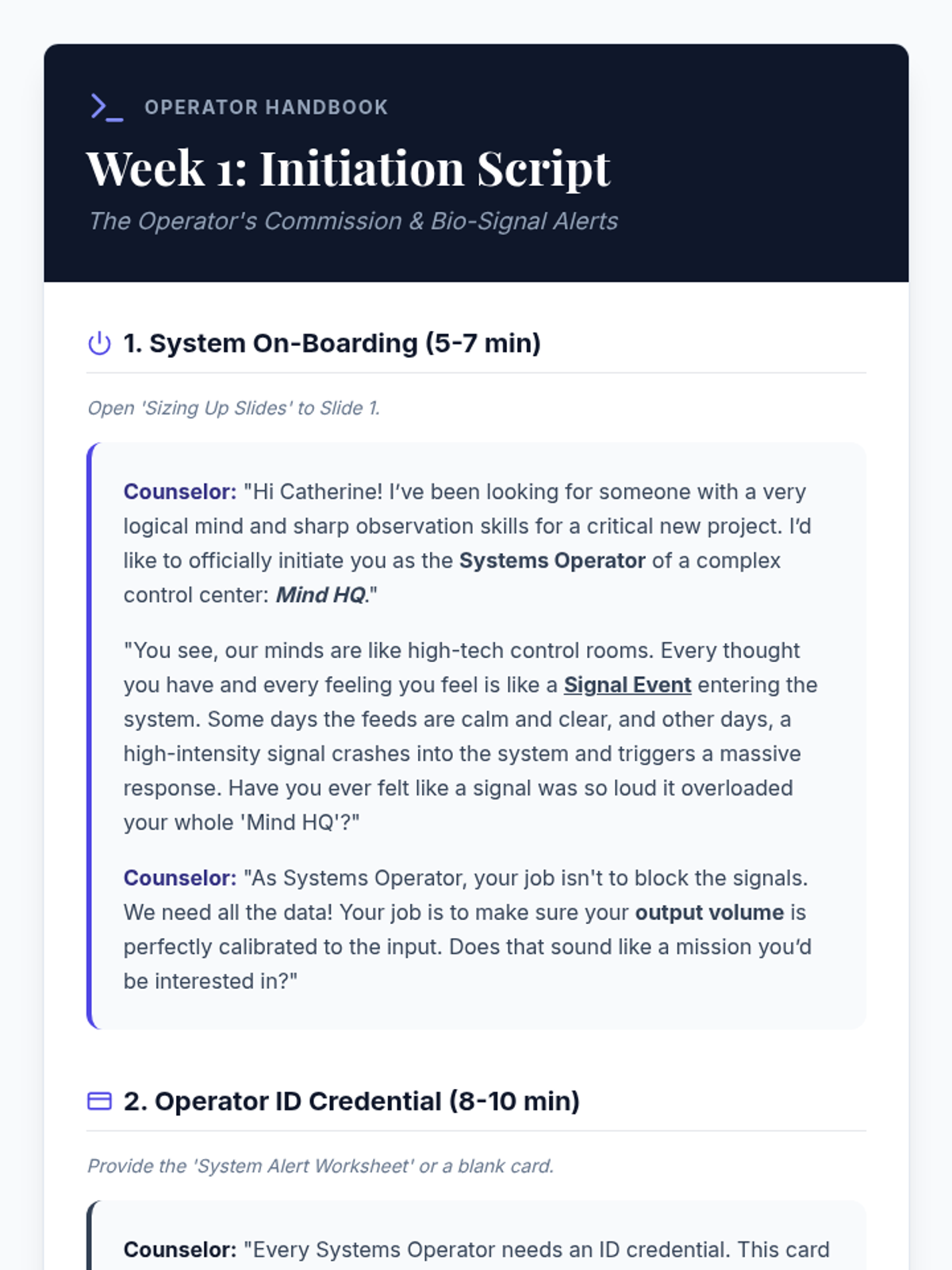
Focuses on identifying the 'Scale of Situation' and ensuring physiological and emotional reactions are proportionate. This module provides the foundation for objective situational interpretation using the 'Mind HQ' framework.
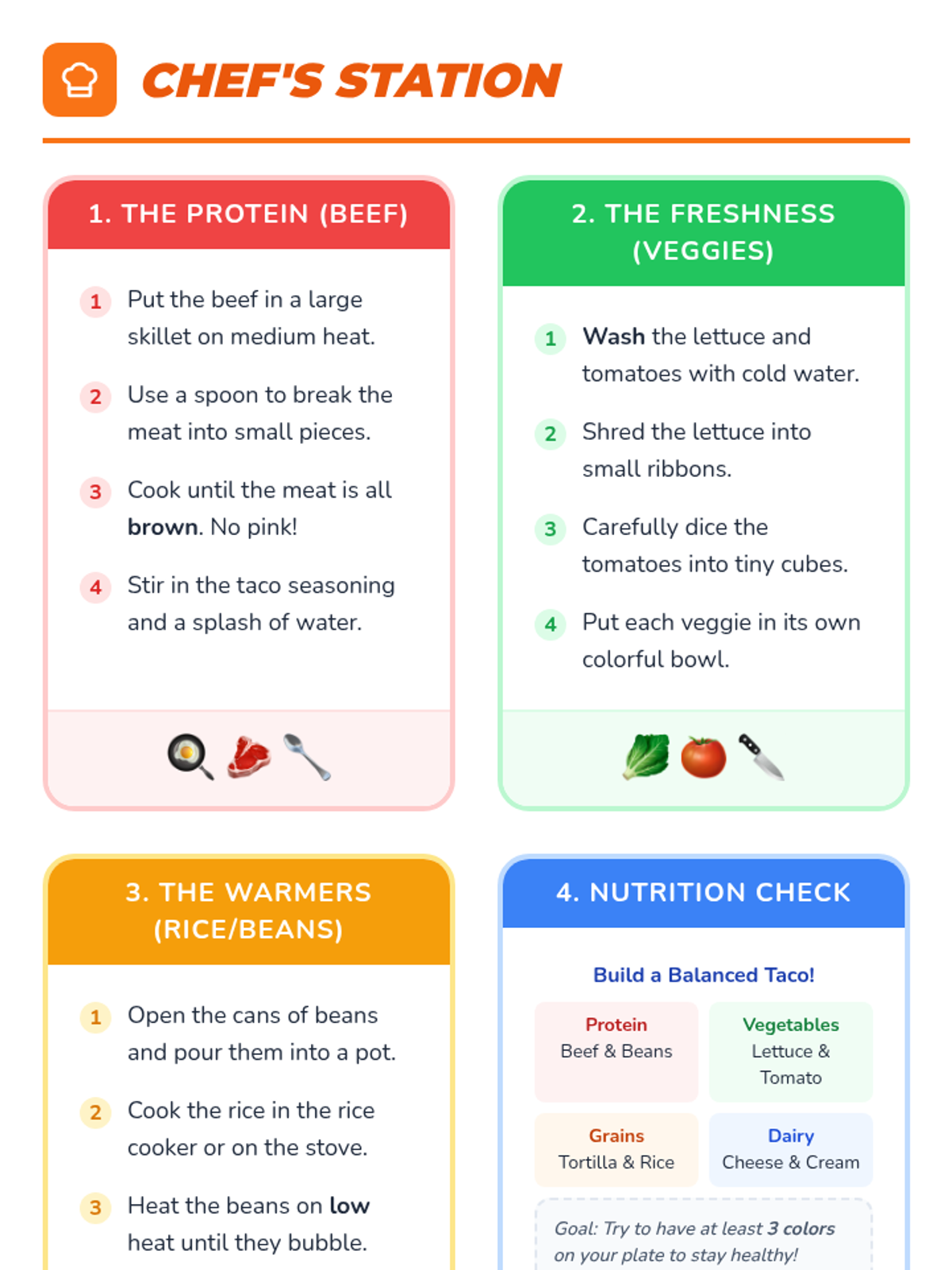
Focuses on food preparation and nutrition. Students follow visual recipes to prepare taco ingredients and identify healthy food groups.
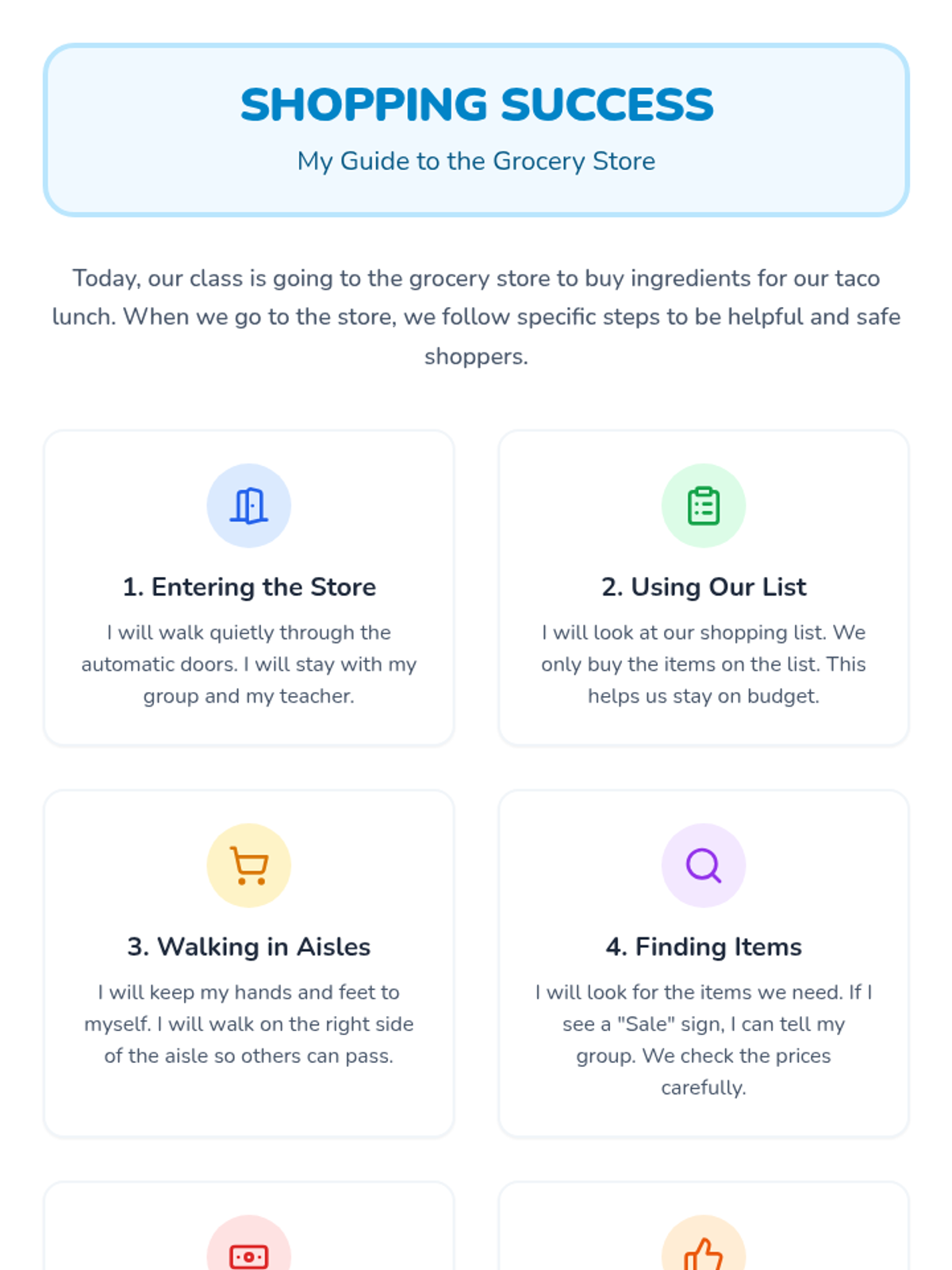
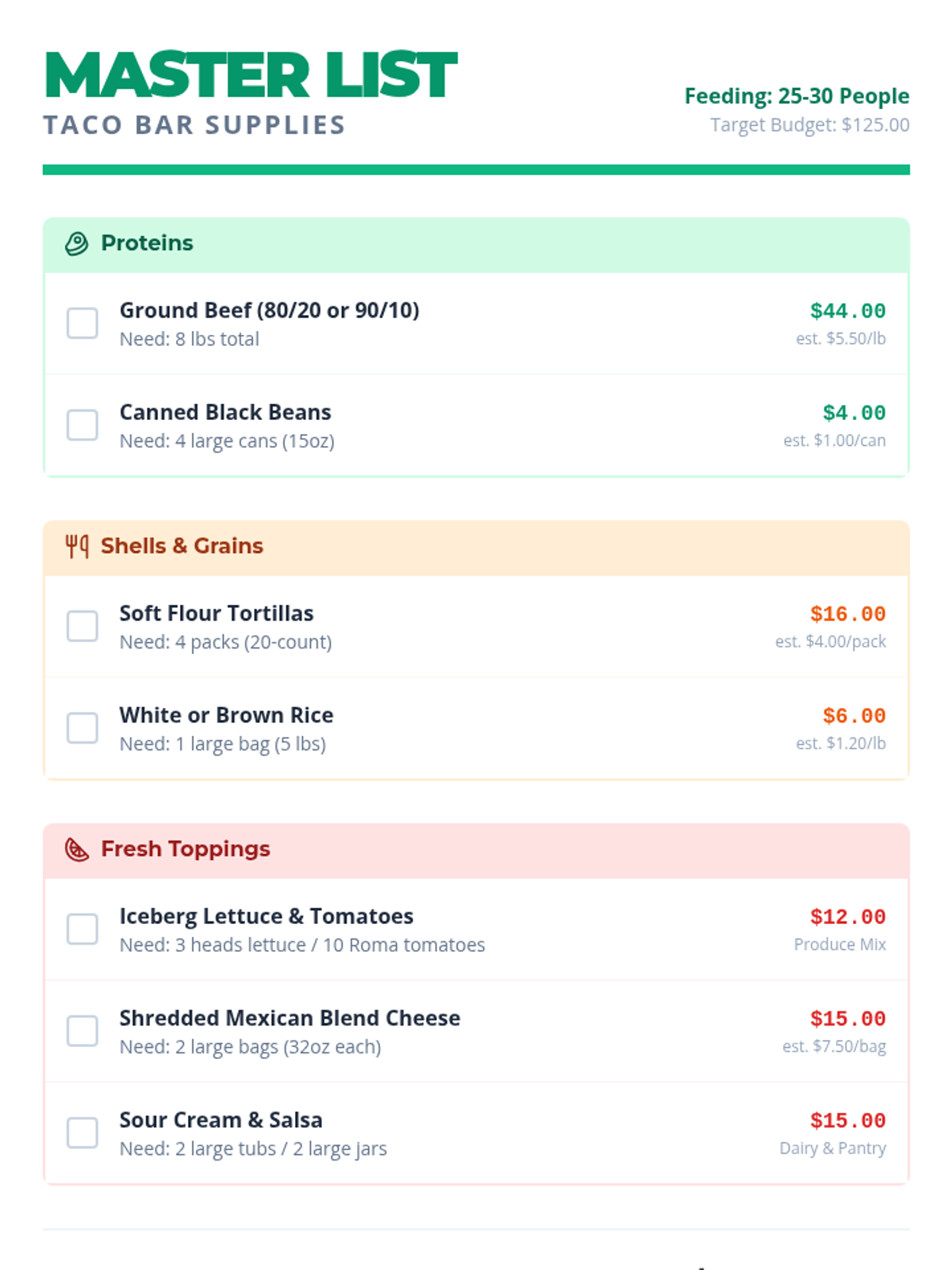
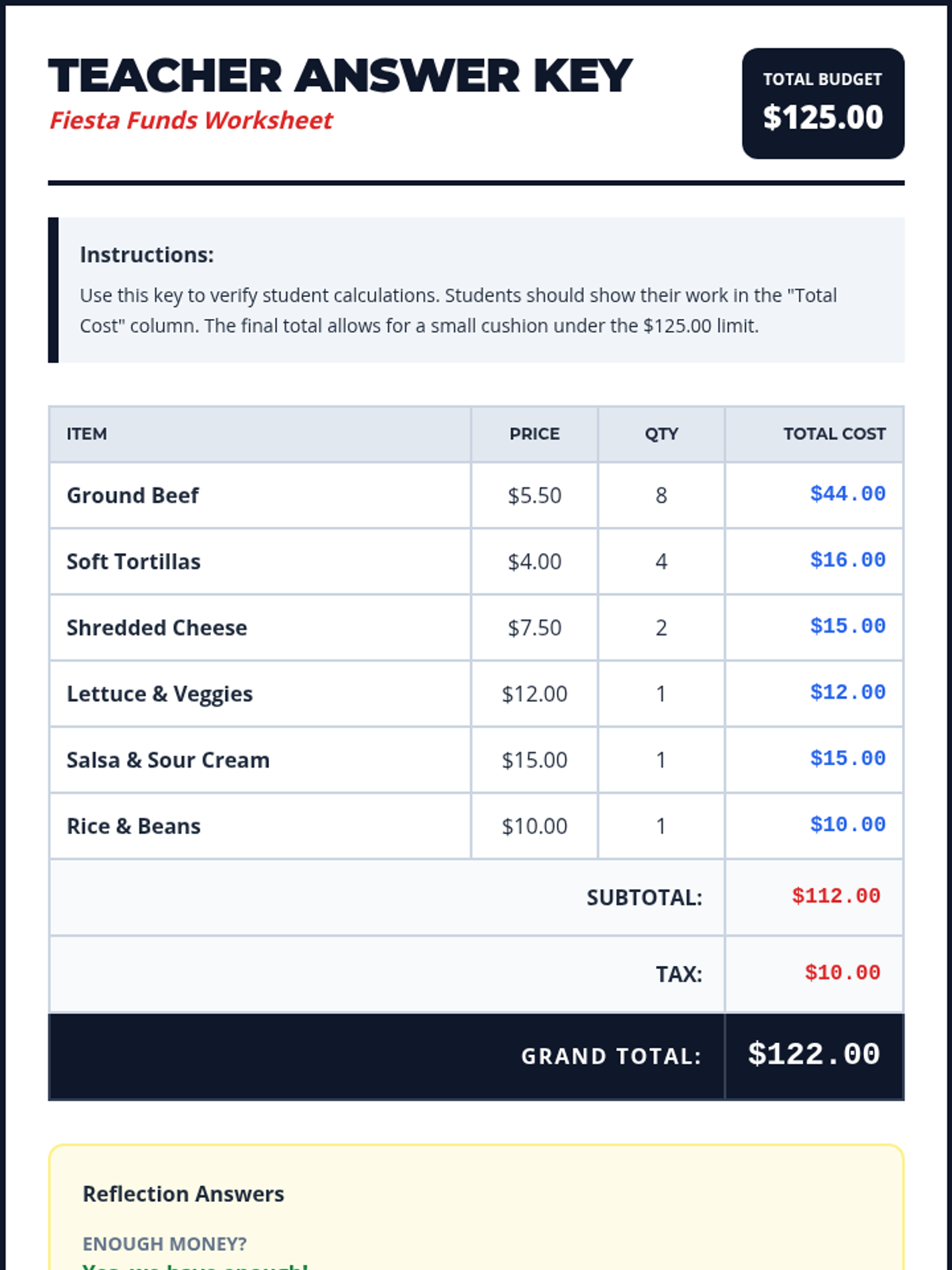
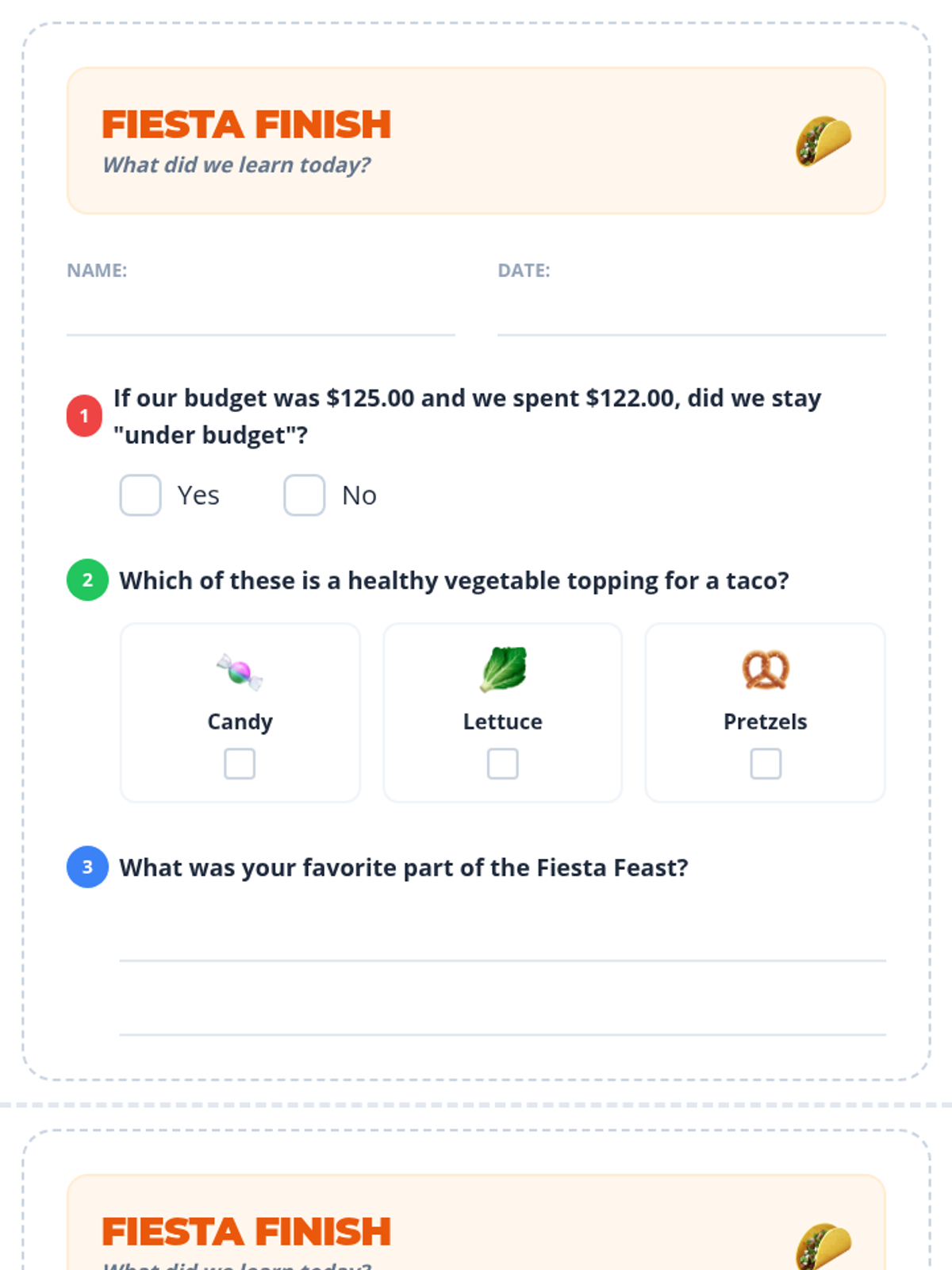
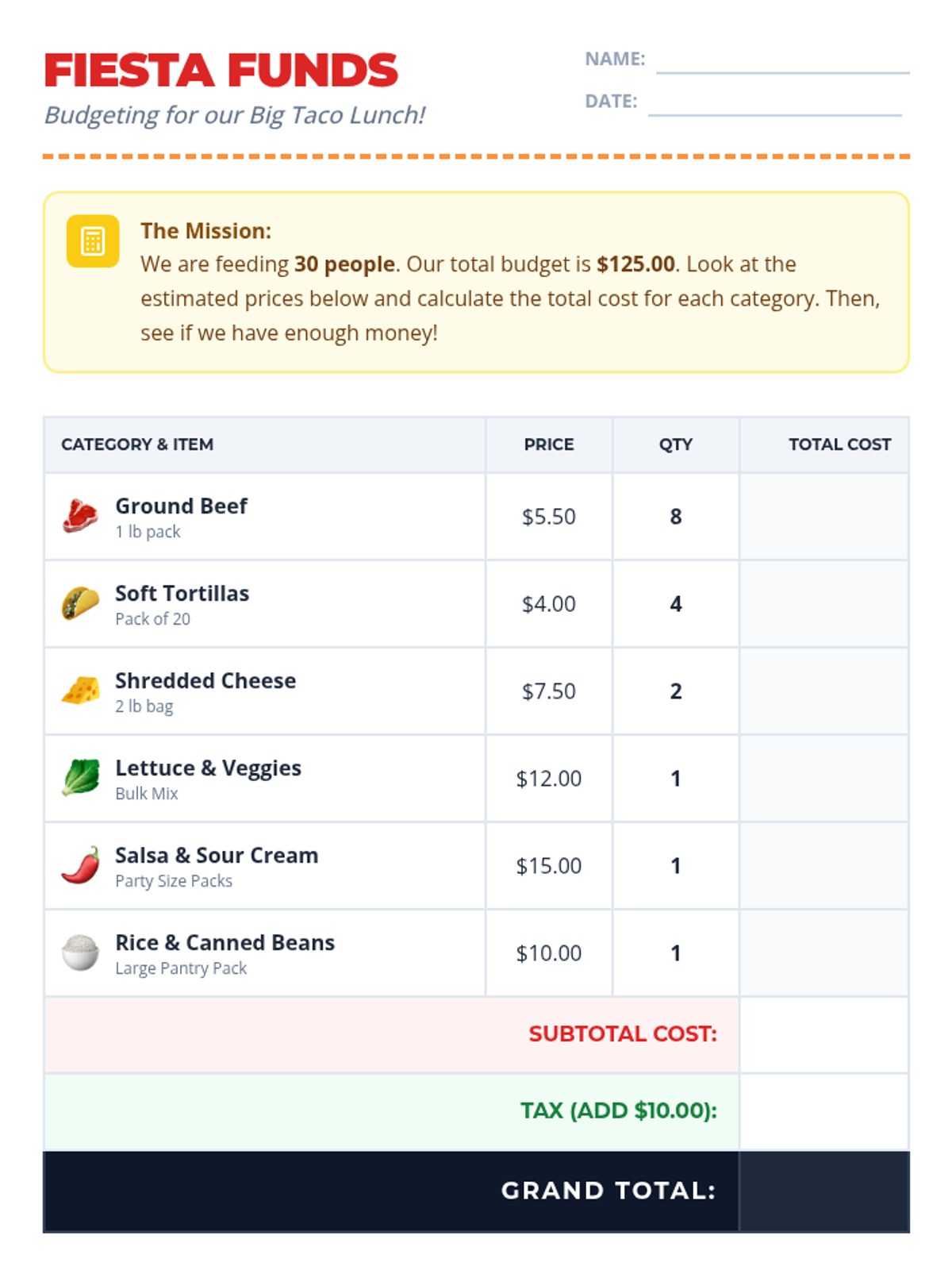
Focuses on the financial and social aspects of grocery shopping. Students calculate costs, manage a budget, and learn the social expectations of visiting a store.
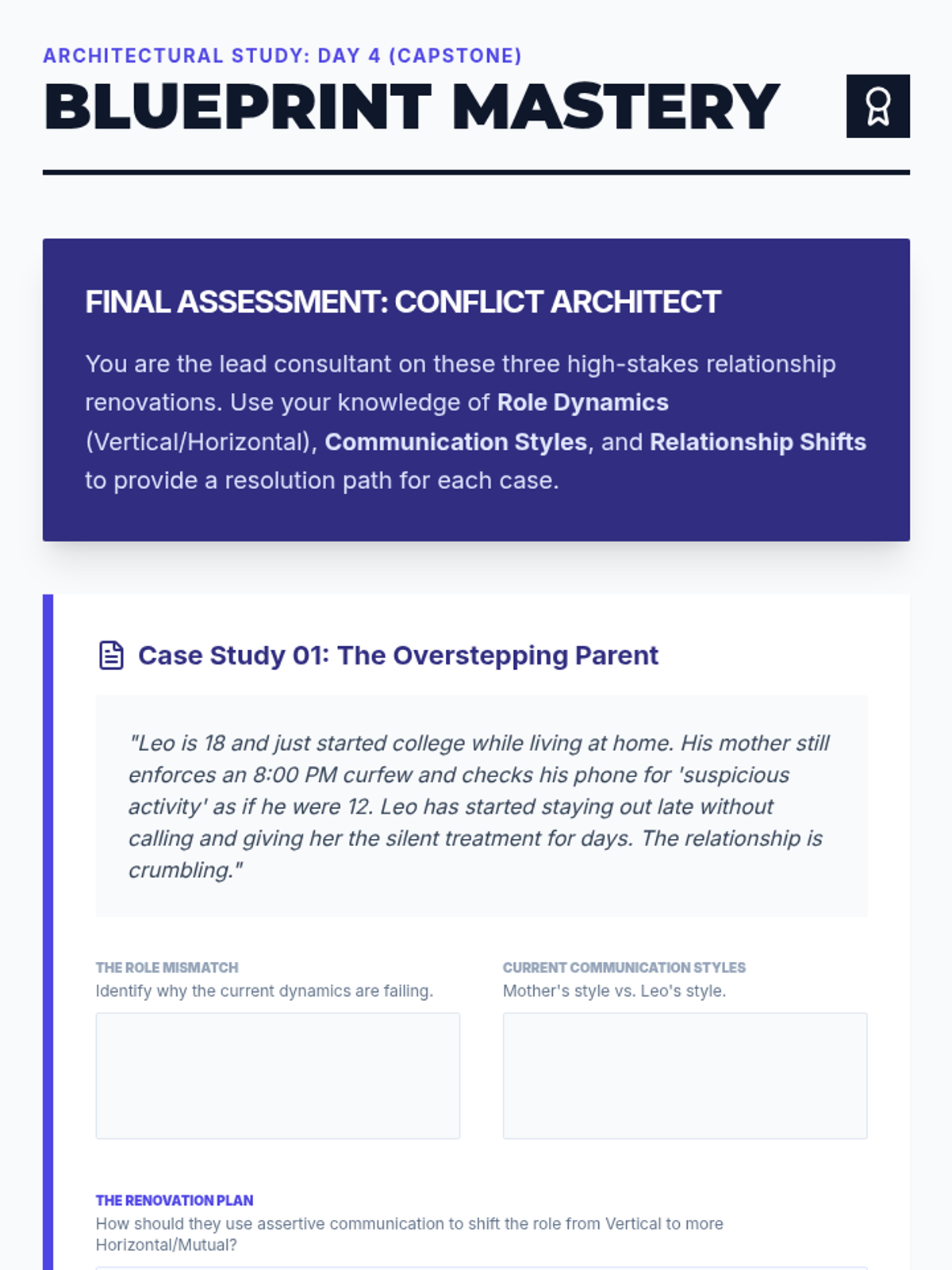
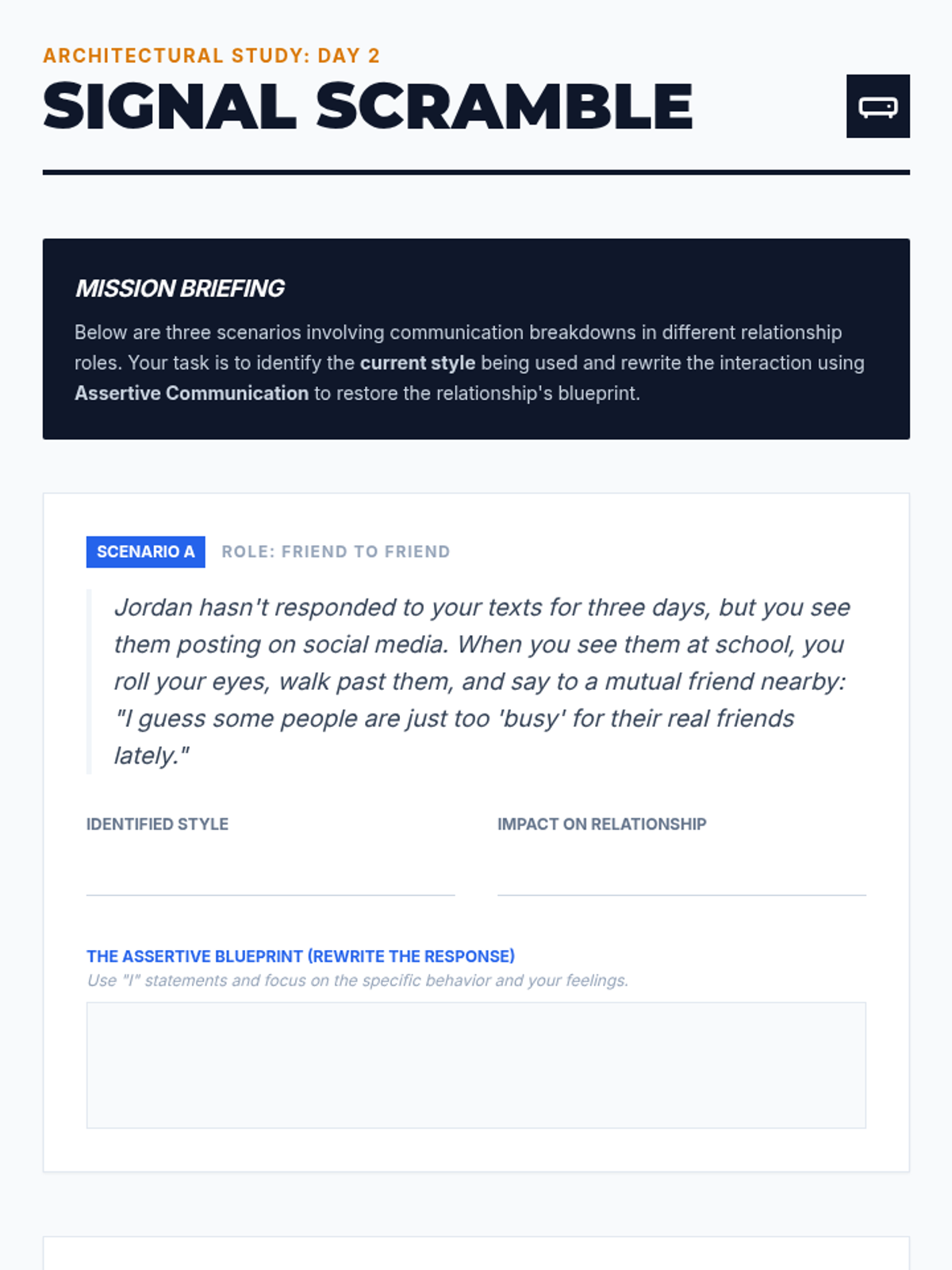
A capstone practice where students apply their knowledge to complex scenarios involving role changes and communication breakdowns.
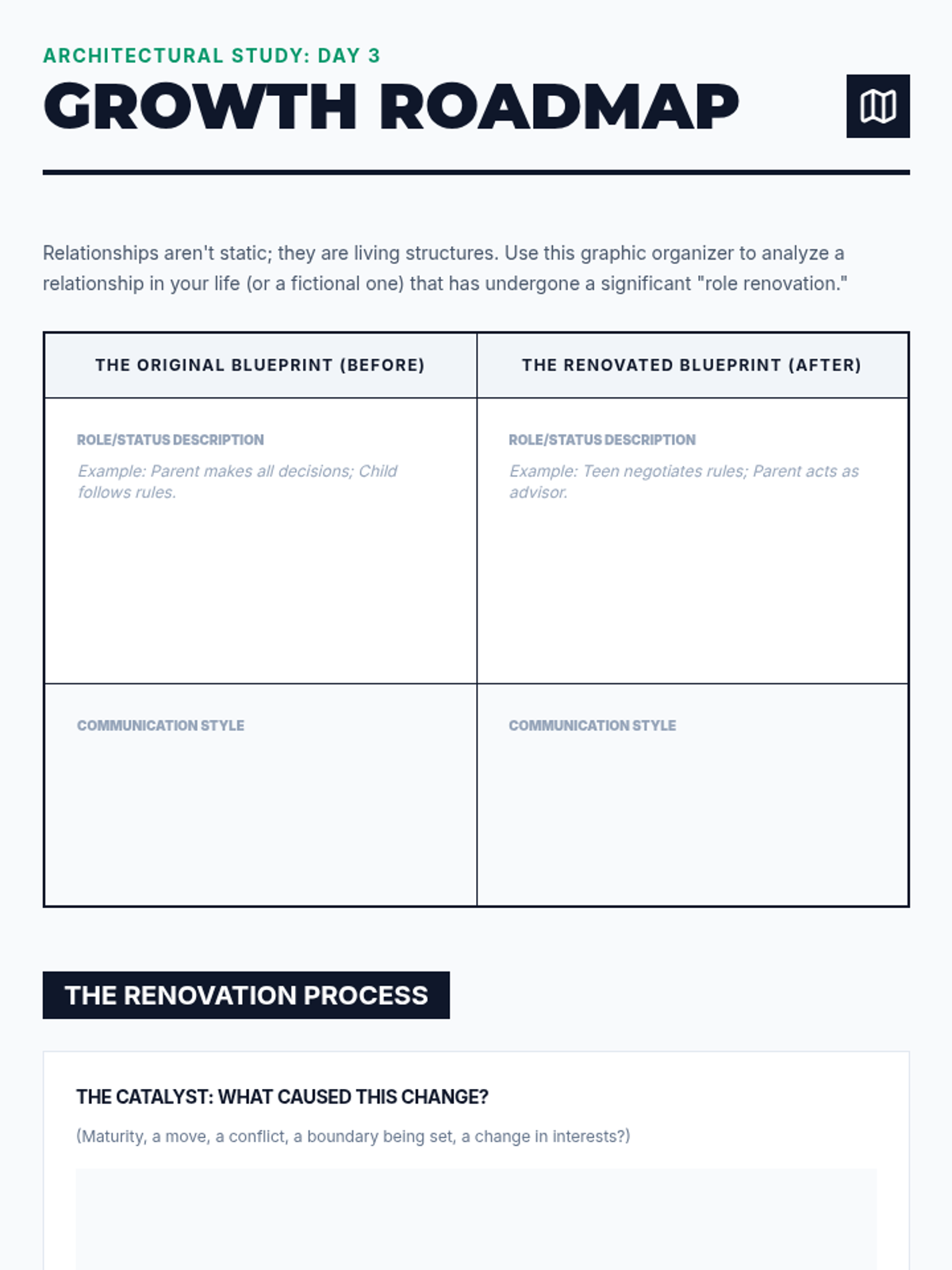
Students investigate why and how relationships change over time, focusing on boundaries and life transitions.
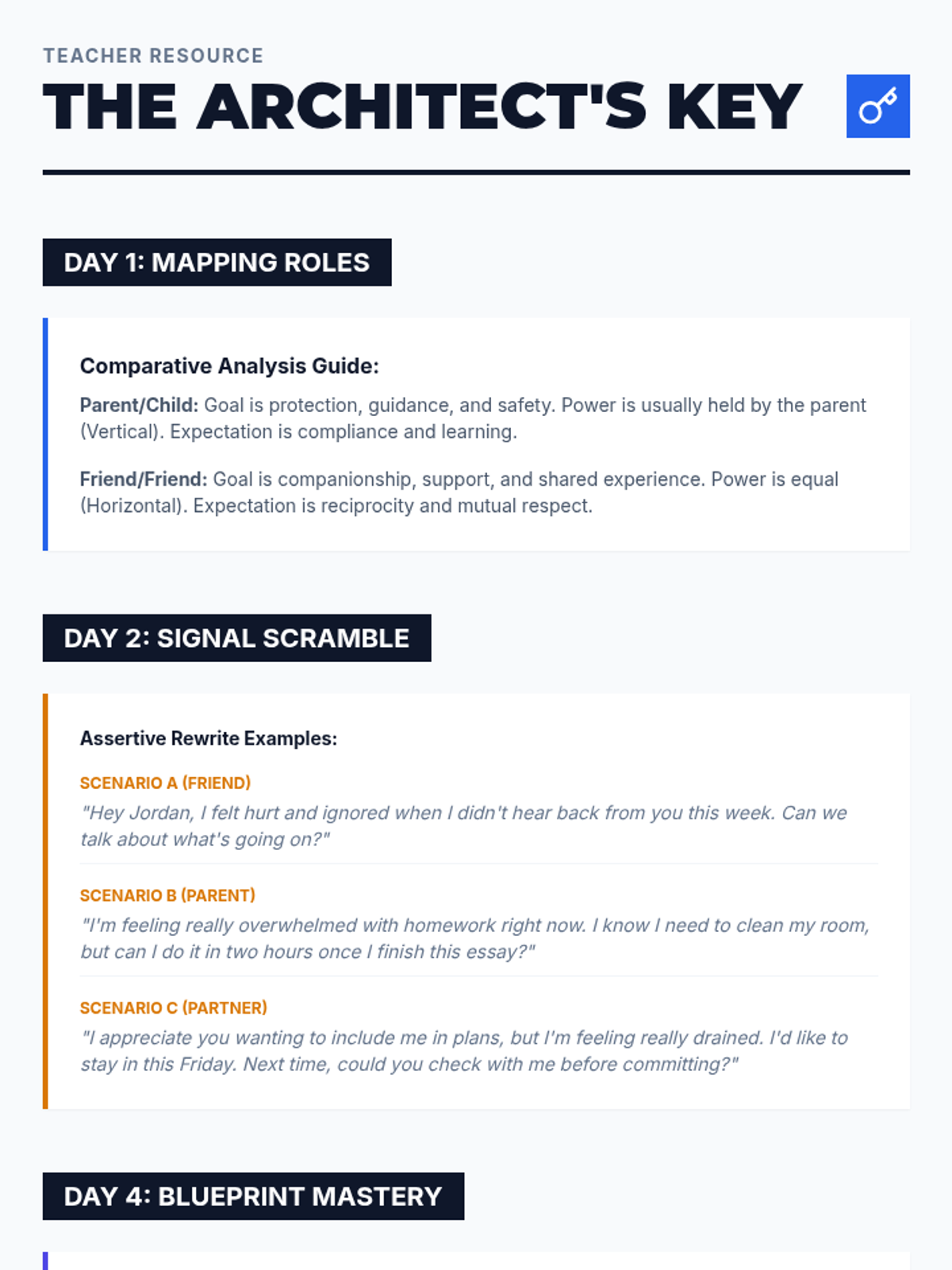
An exploration of the four primary communication styles and how they interact with different relationship roles to build or break connections.