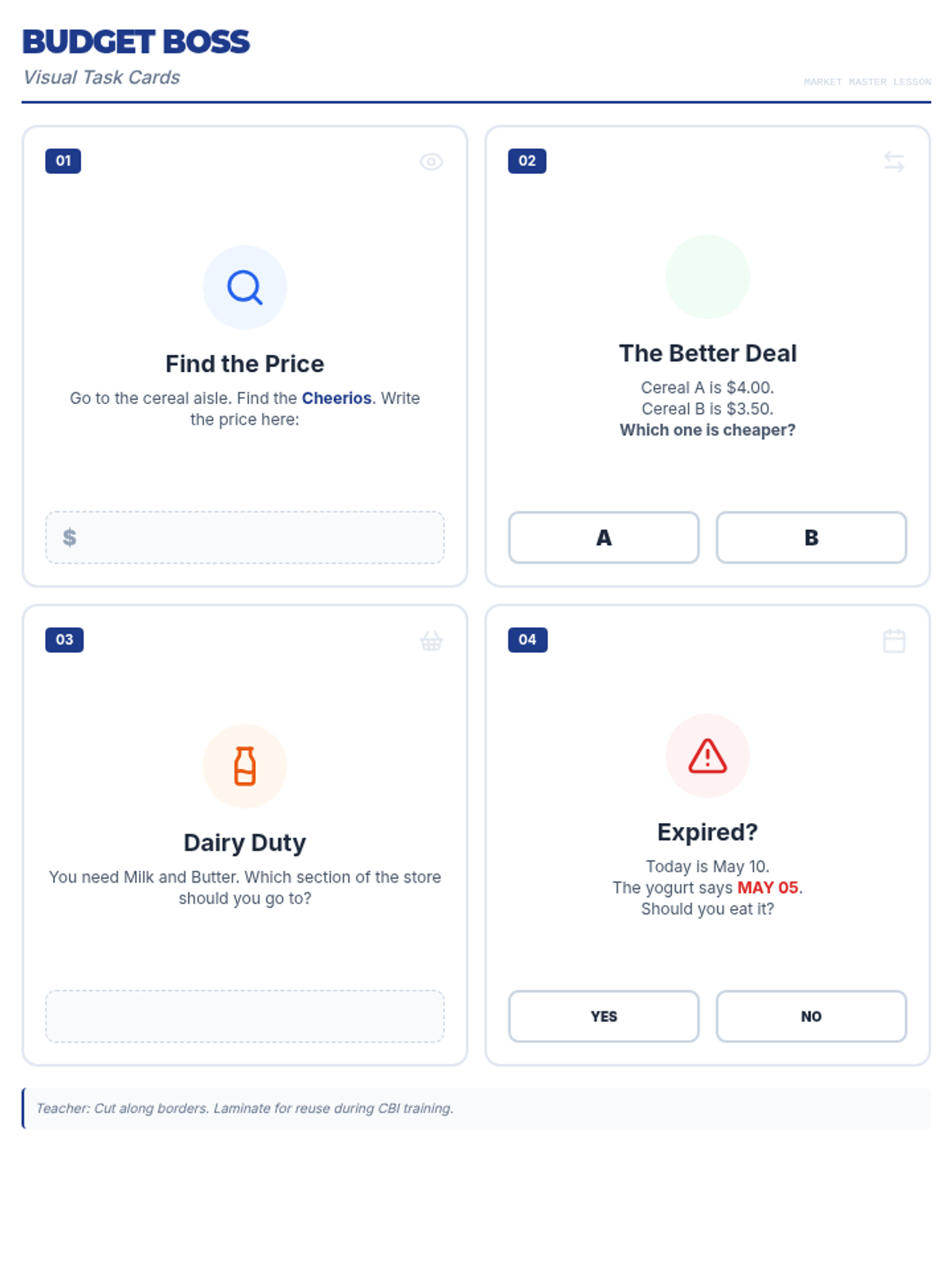
A functional math lesson designed for life skills students to practice budgeting and price comparison in a simulated grocery store environment. Students learn to navigate price tags and make smart shopping choices for independent living.
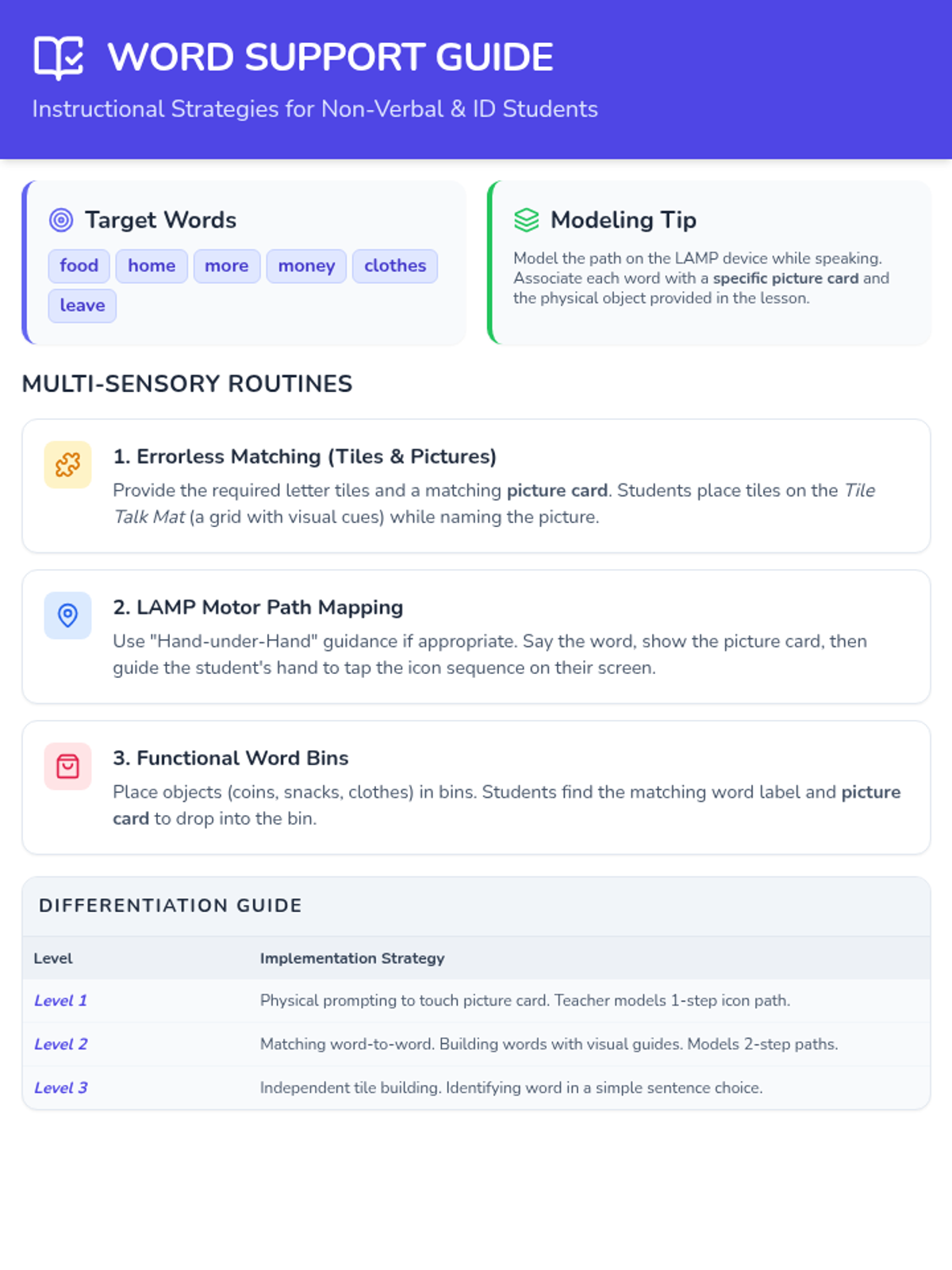
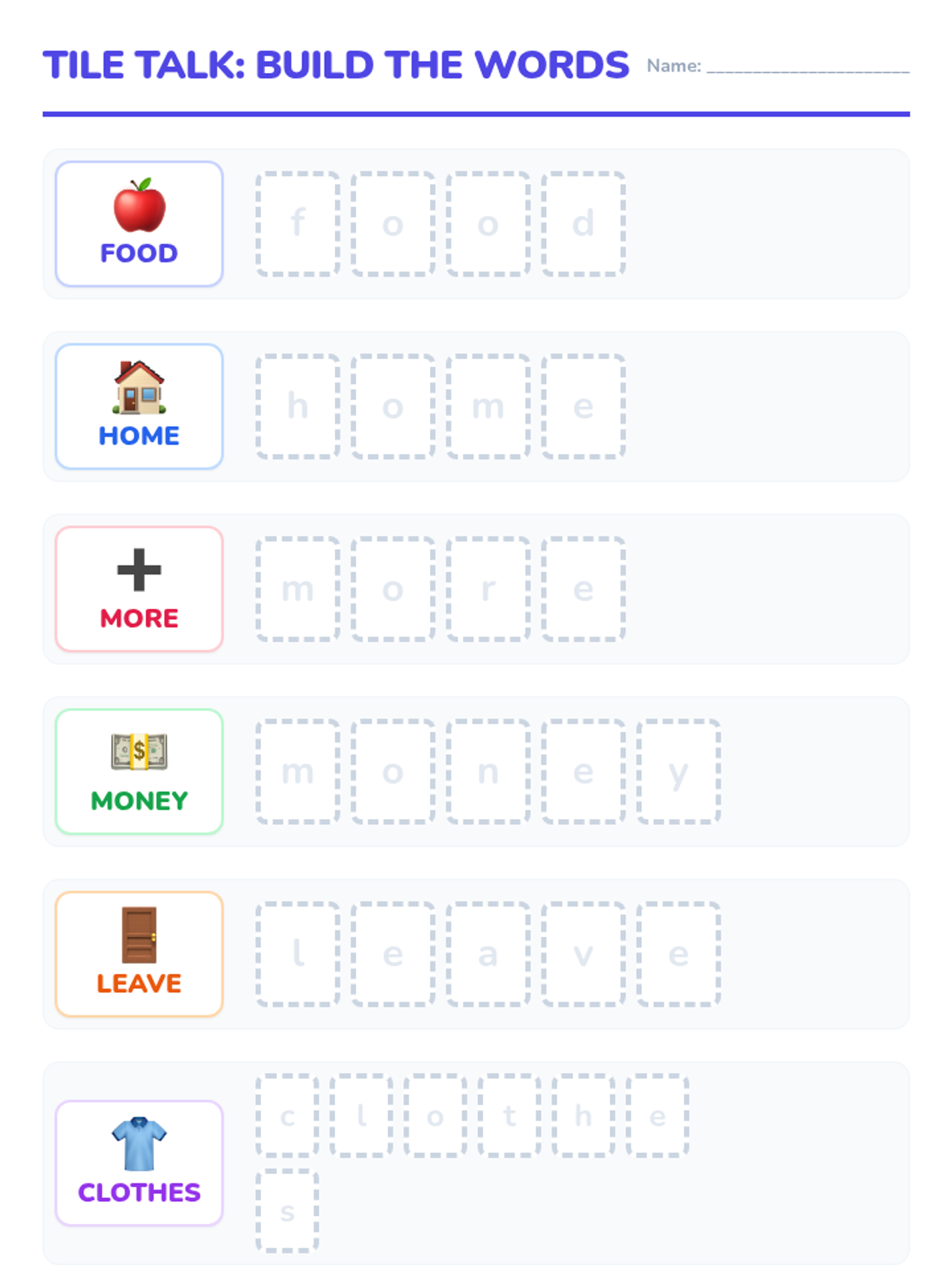
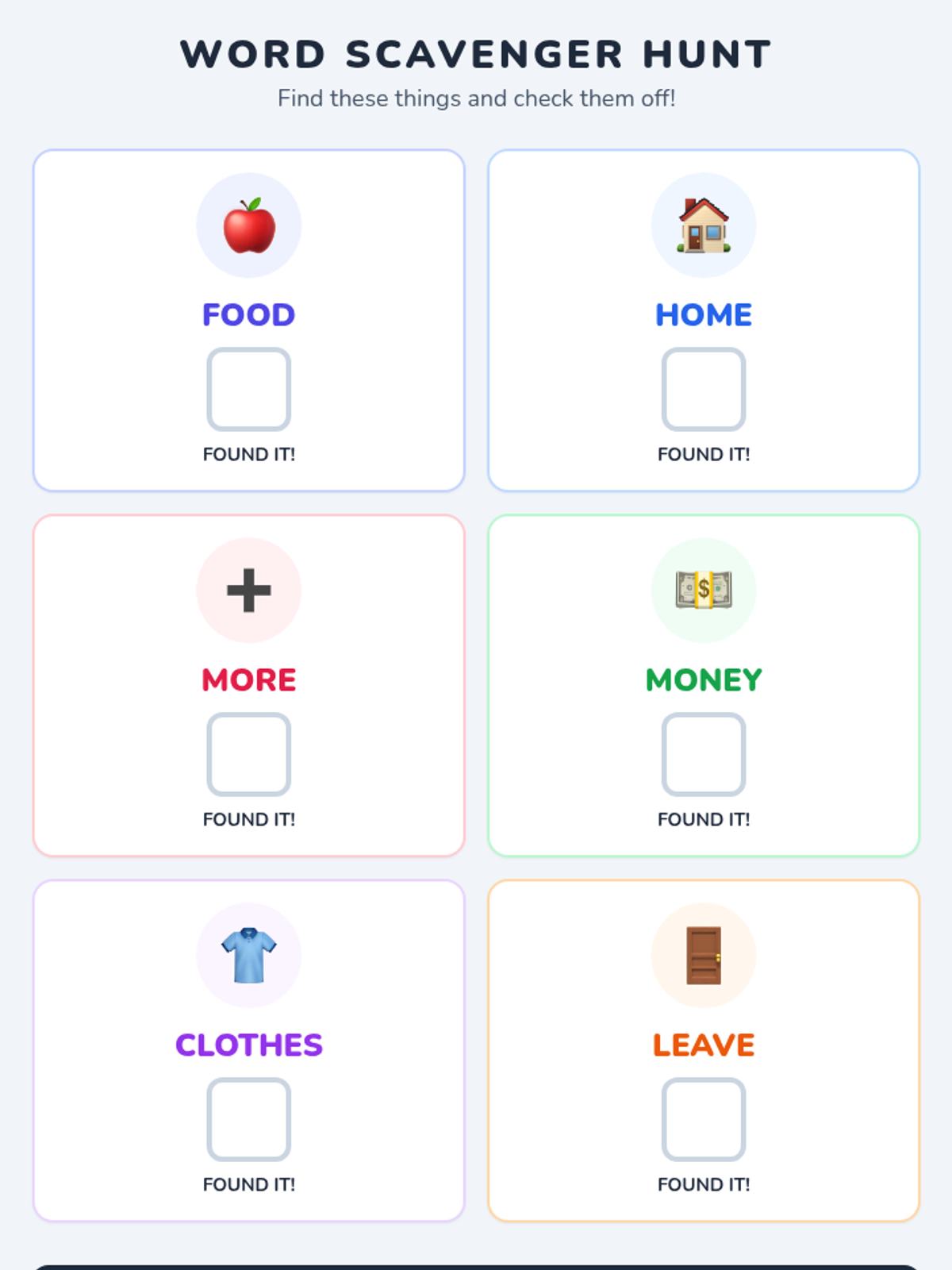
Introducing high-frequency words (food, home, more, money, clothes, leave) through visual aids, AAC modeling, and hands-on tile building.
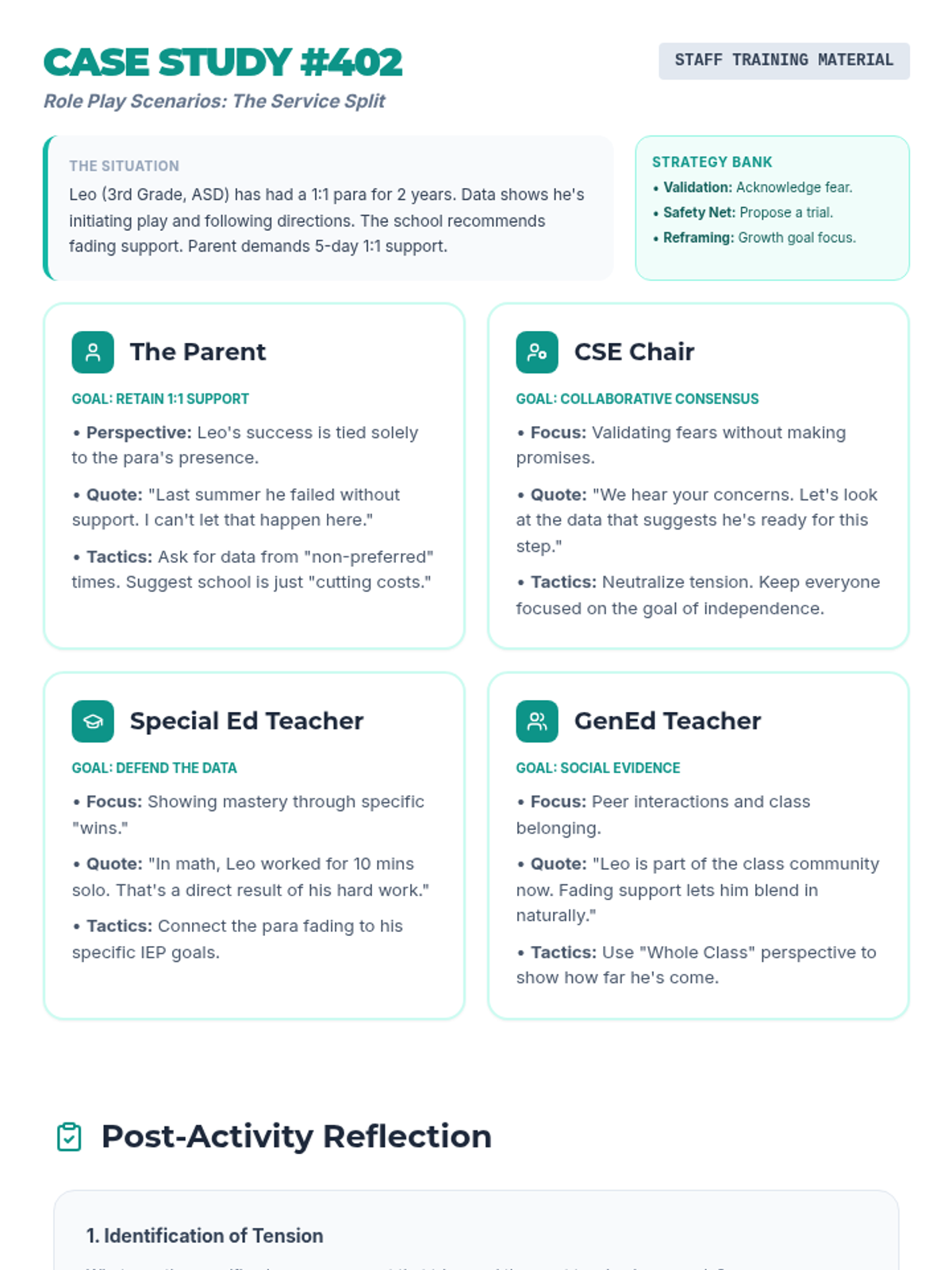
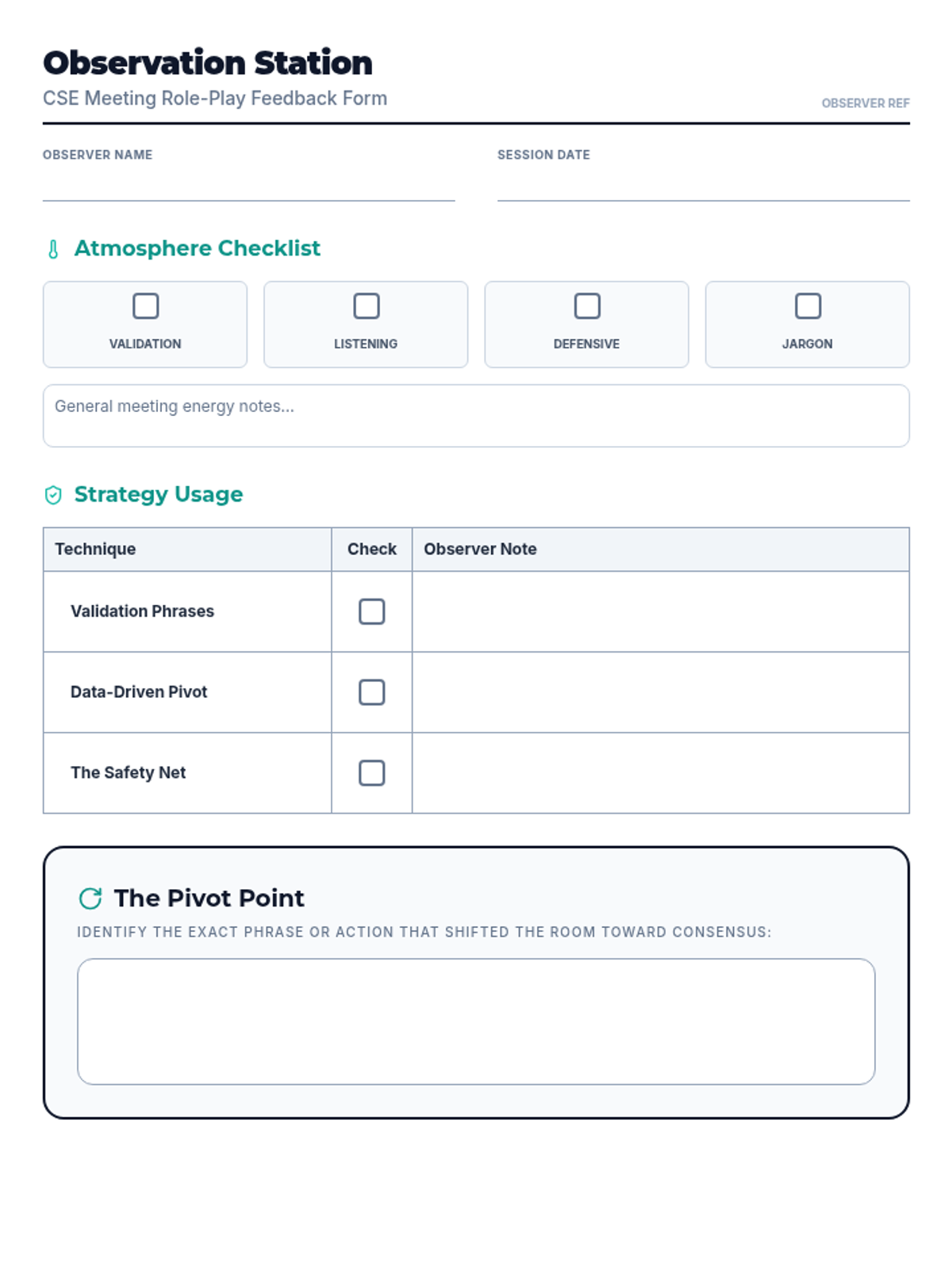
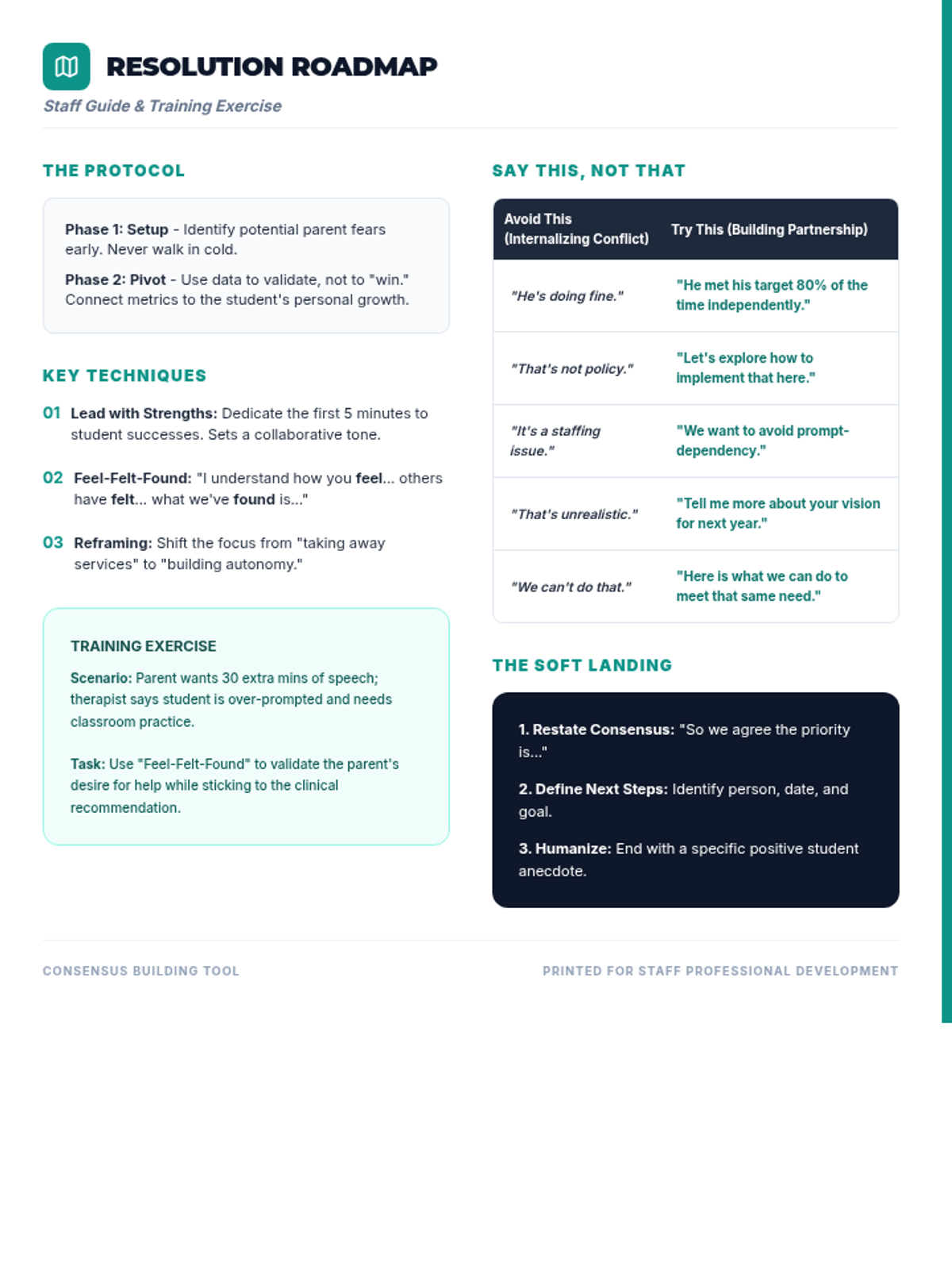
A professional development lesson designed for school staff to practice resolving parent-staff conflicts during Committee on Special Education (CSE) meetings through role-play and structured reflection.
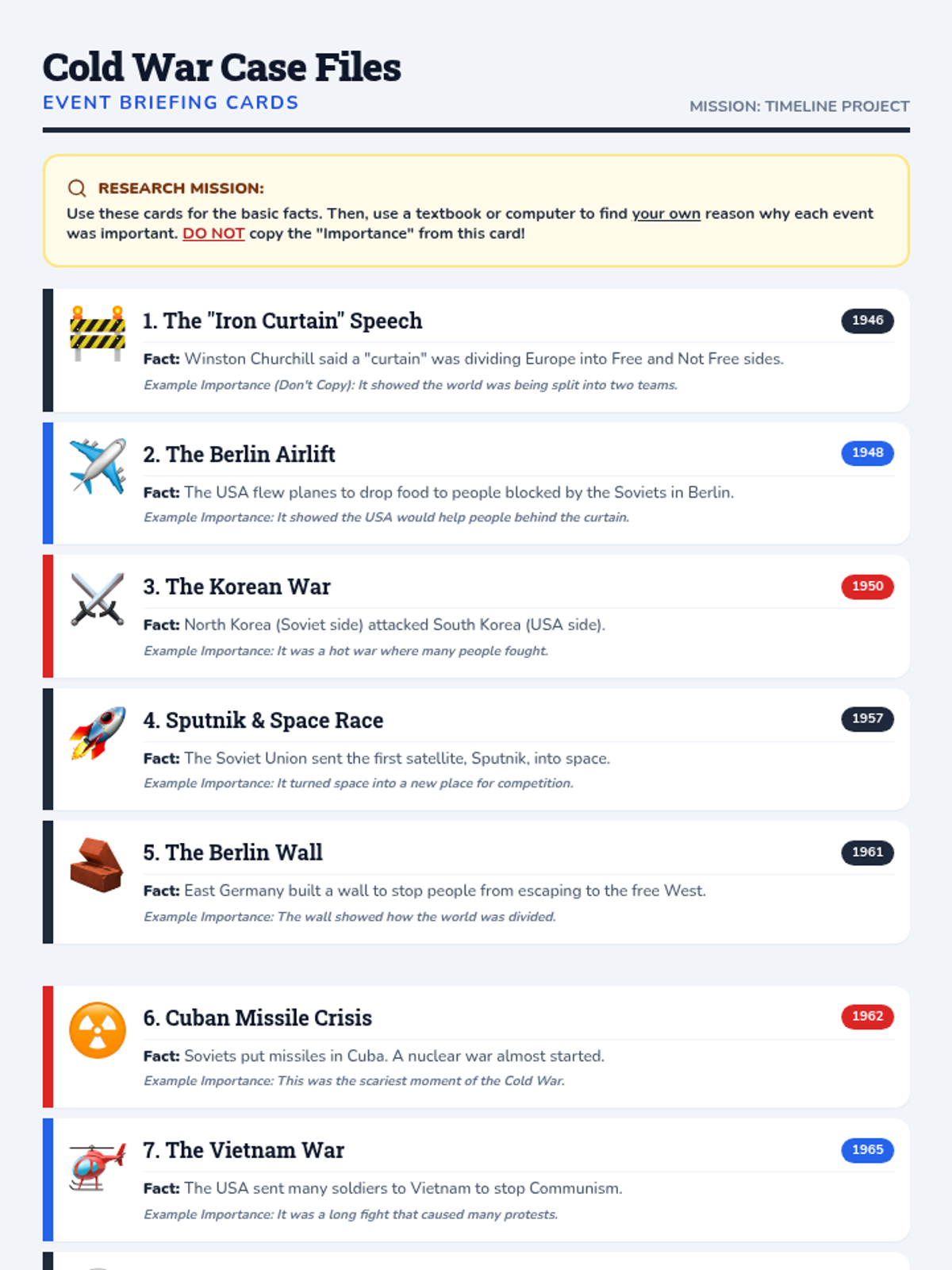
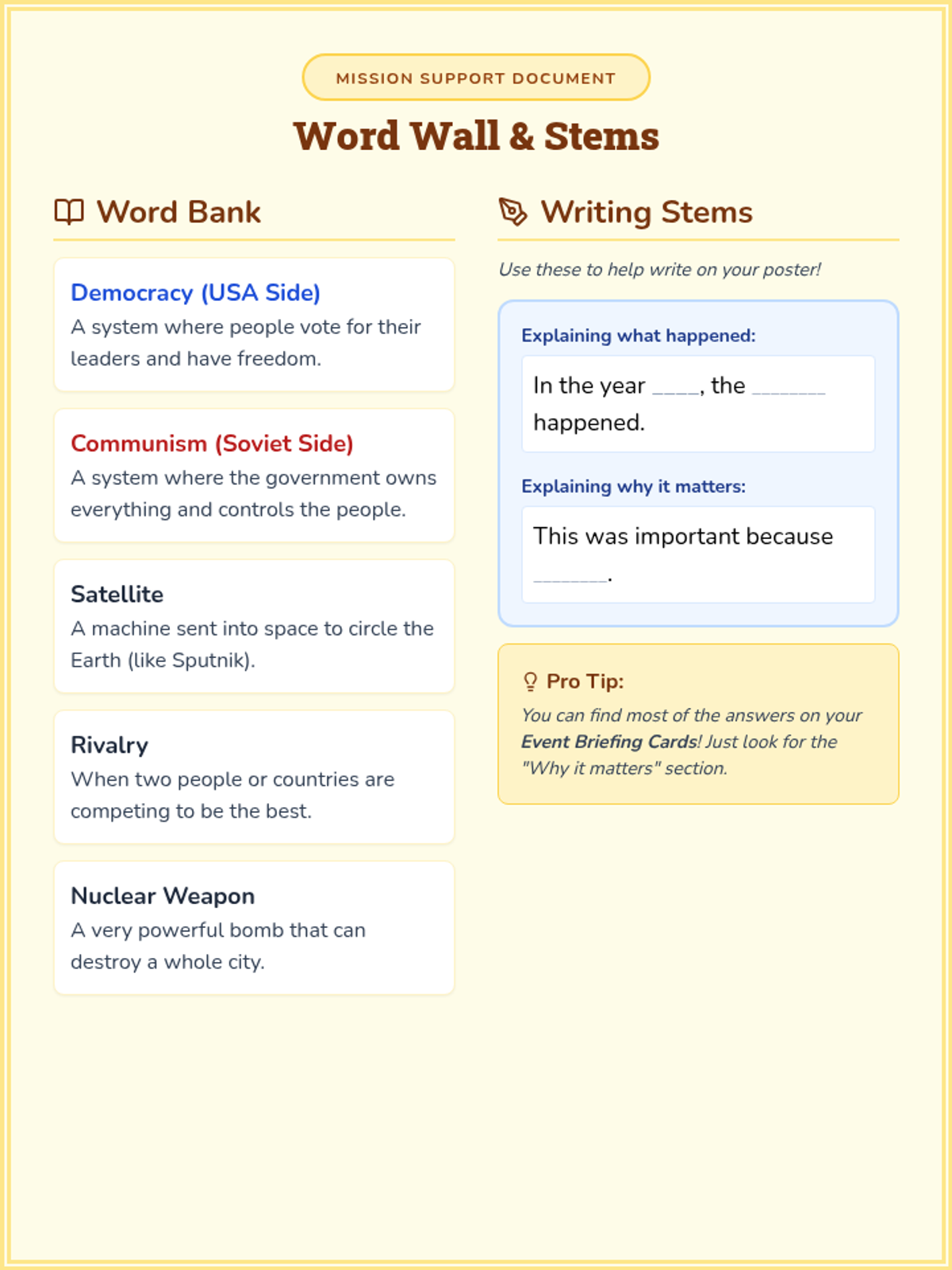
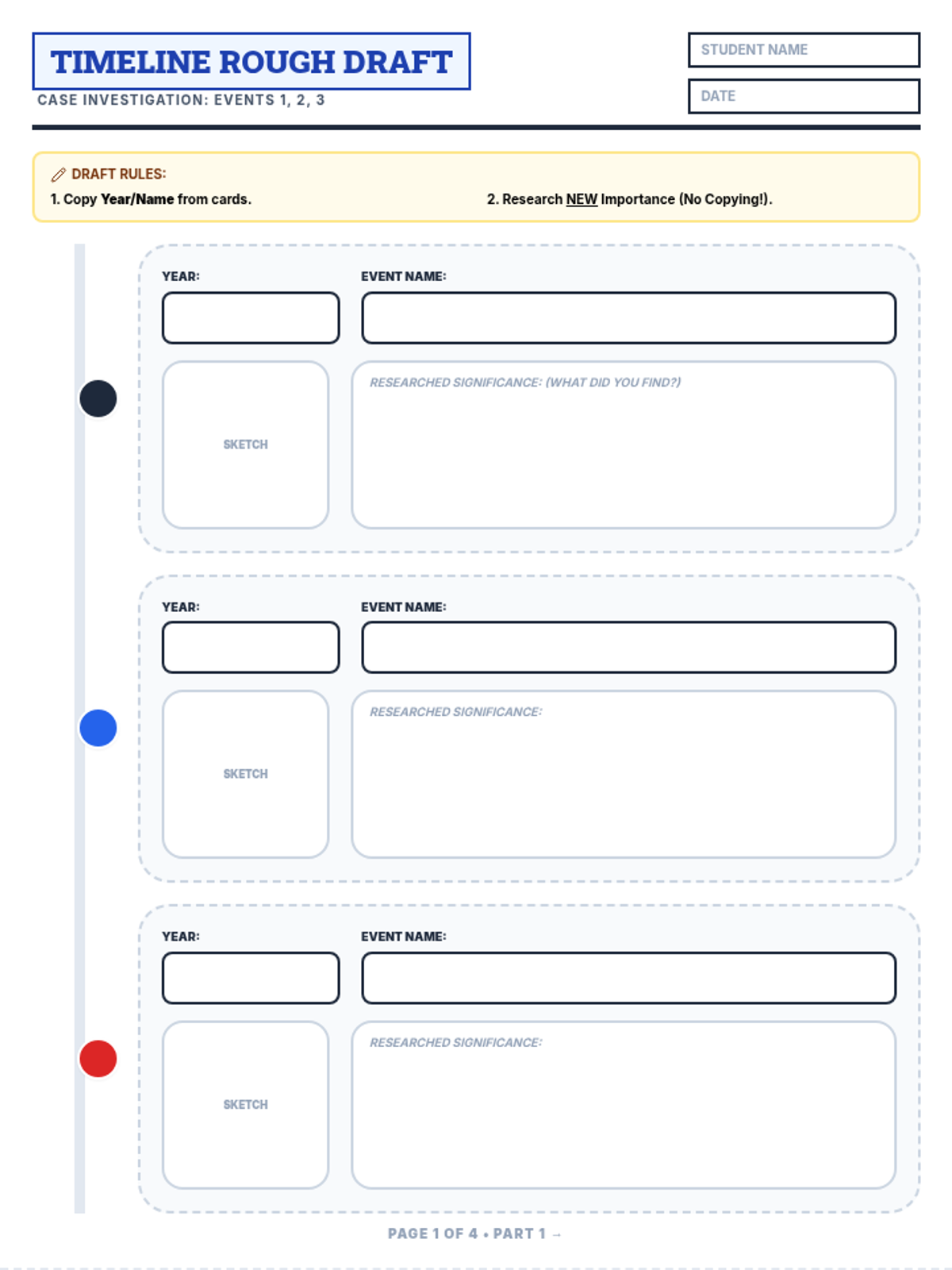
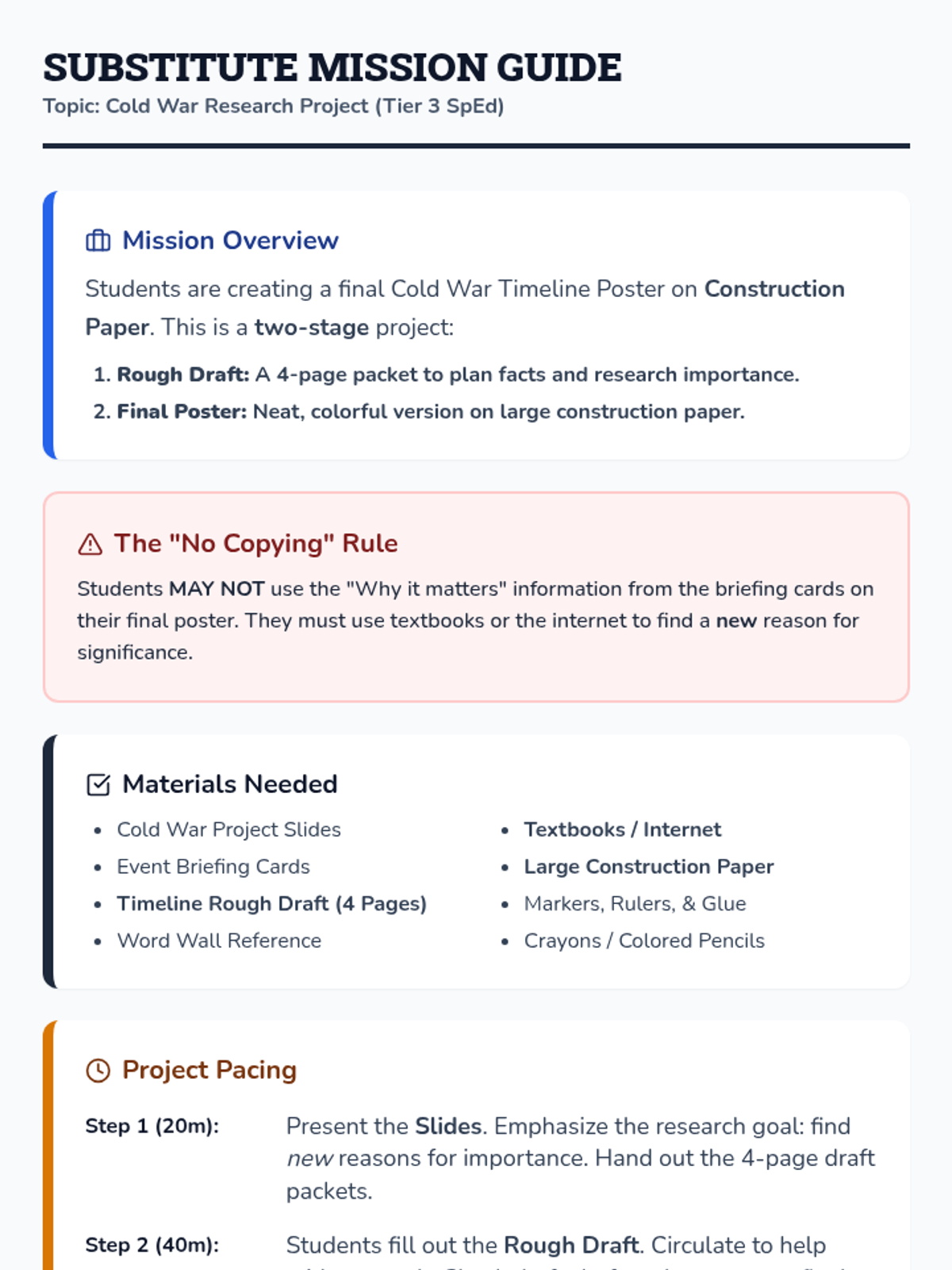
A simplified project-based lesson on the Cold War designed for Tier 3 Special Education students. Students use a 'Case File' approach to build a timeline of 10 major events with provided stems and visual supports.
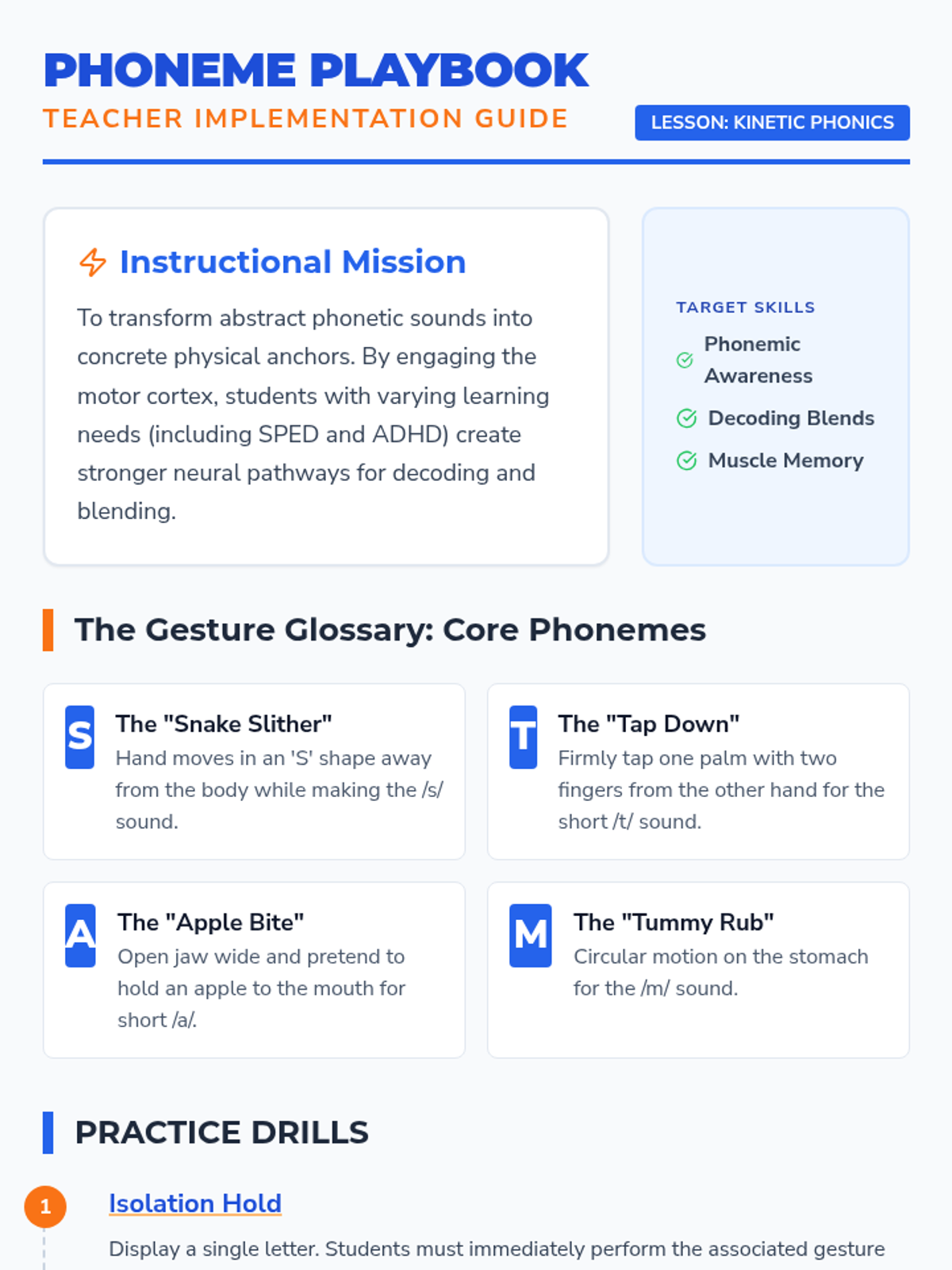
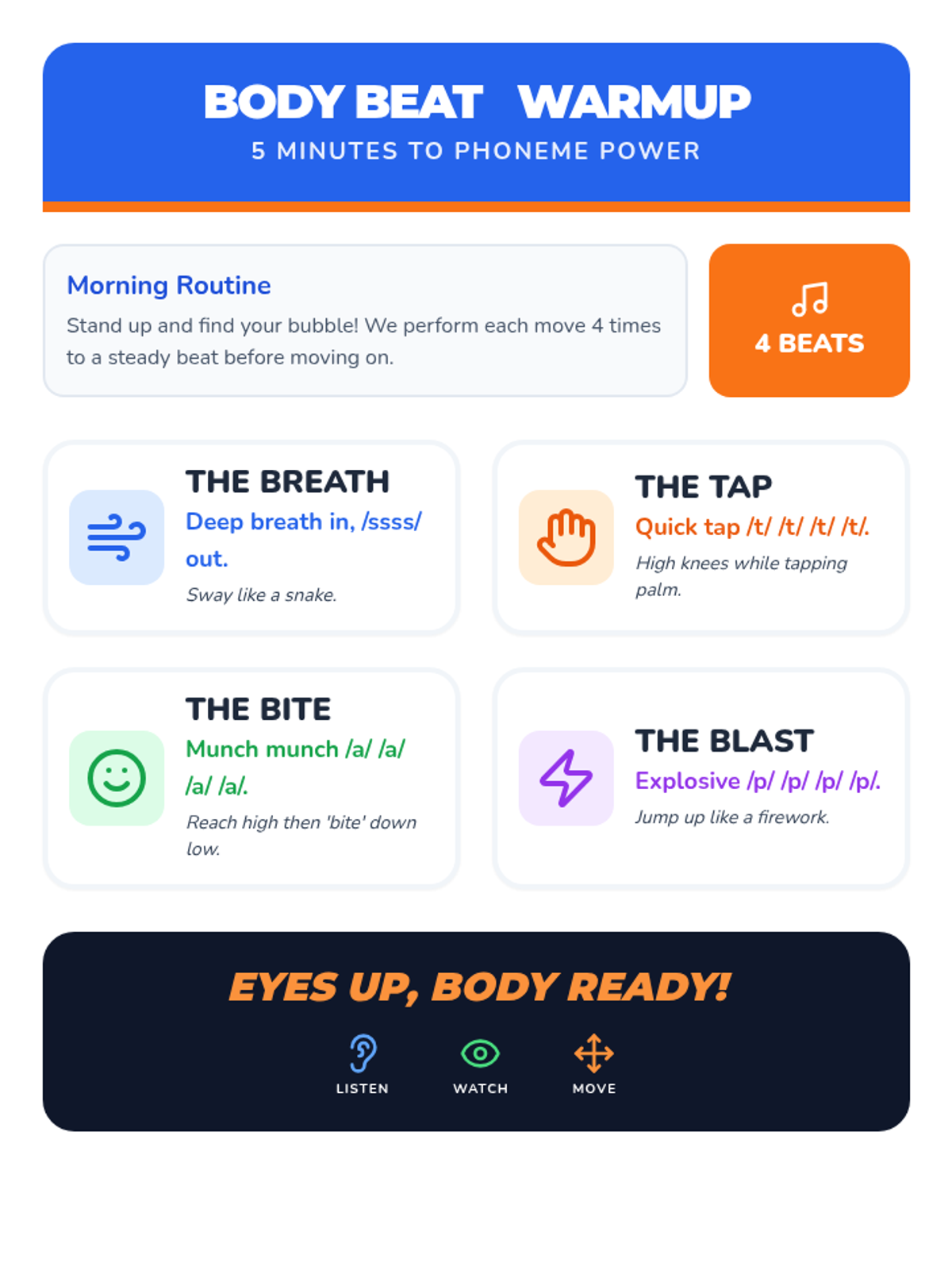
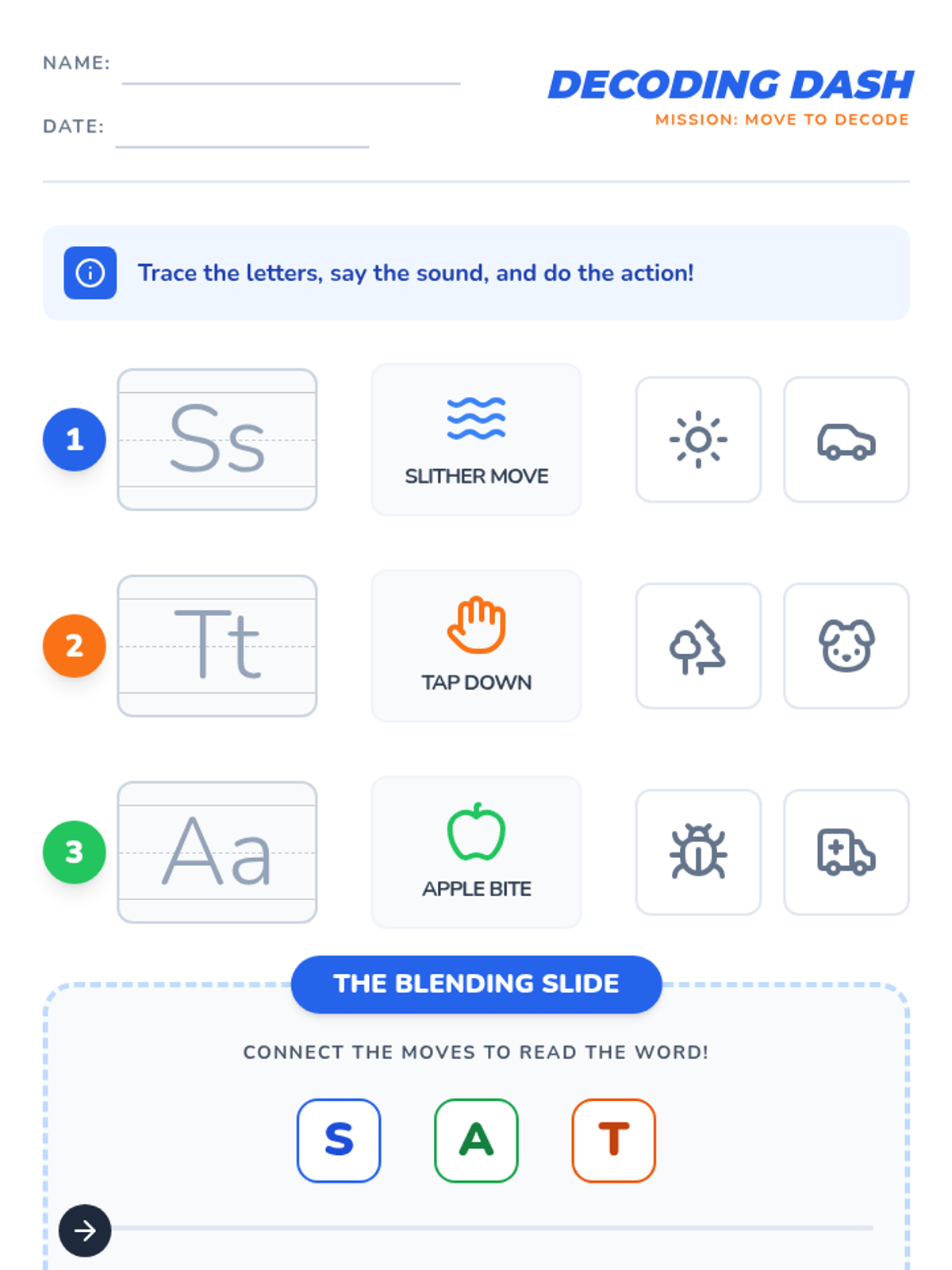
An active literacy lesson that uses physical gestures to represent phonemes and blends, helping students build muscle memory for reading through movement.
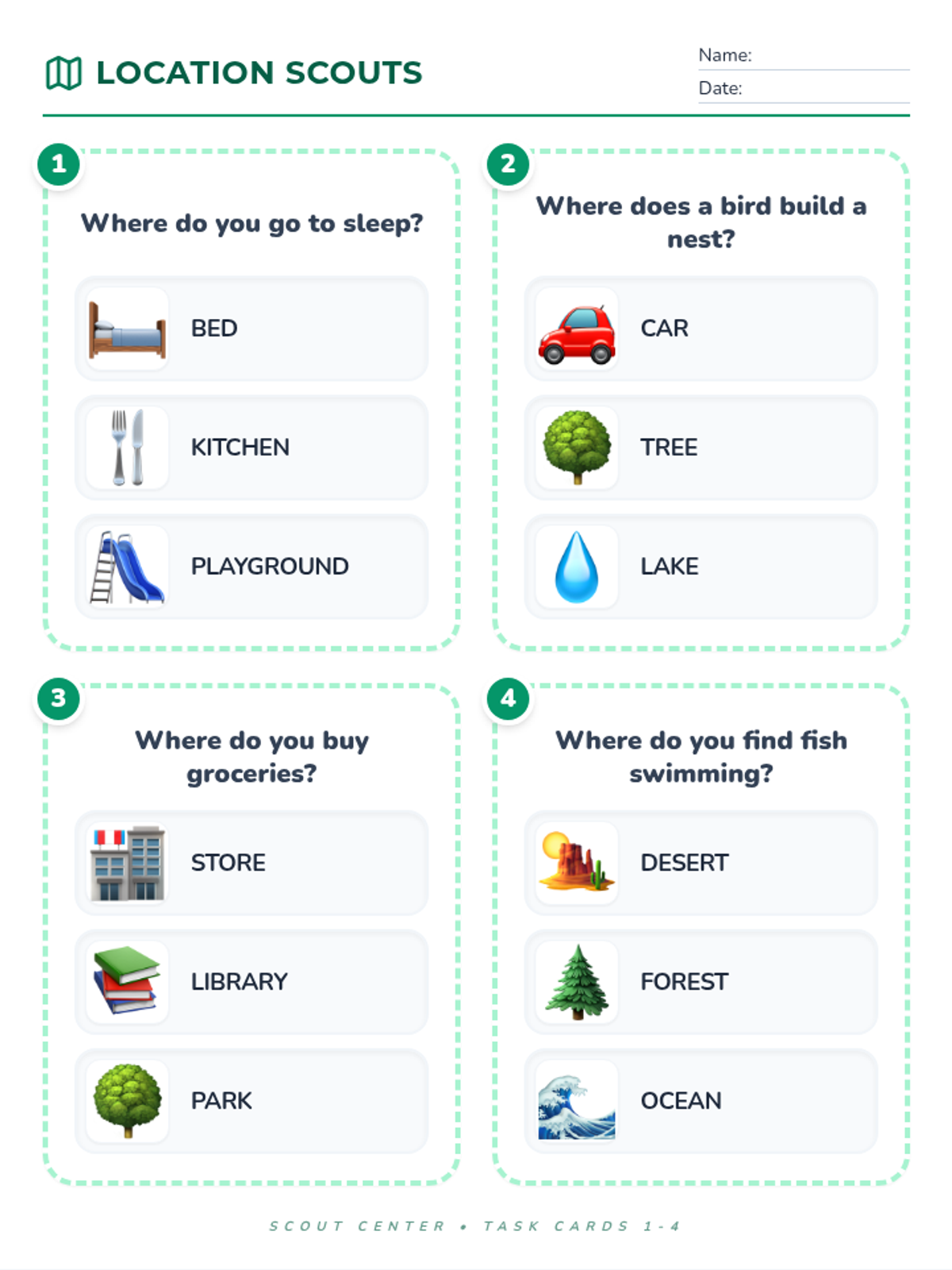
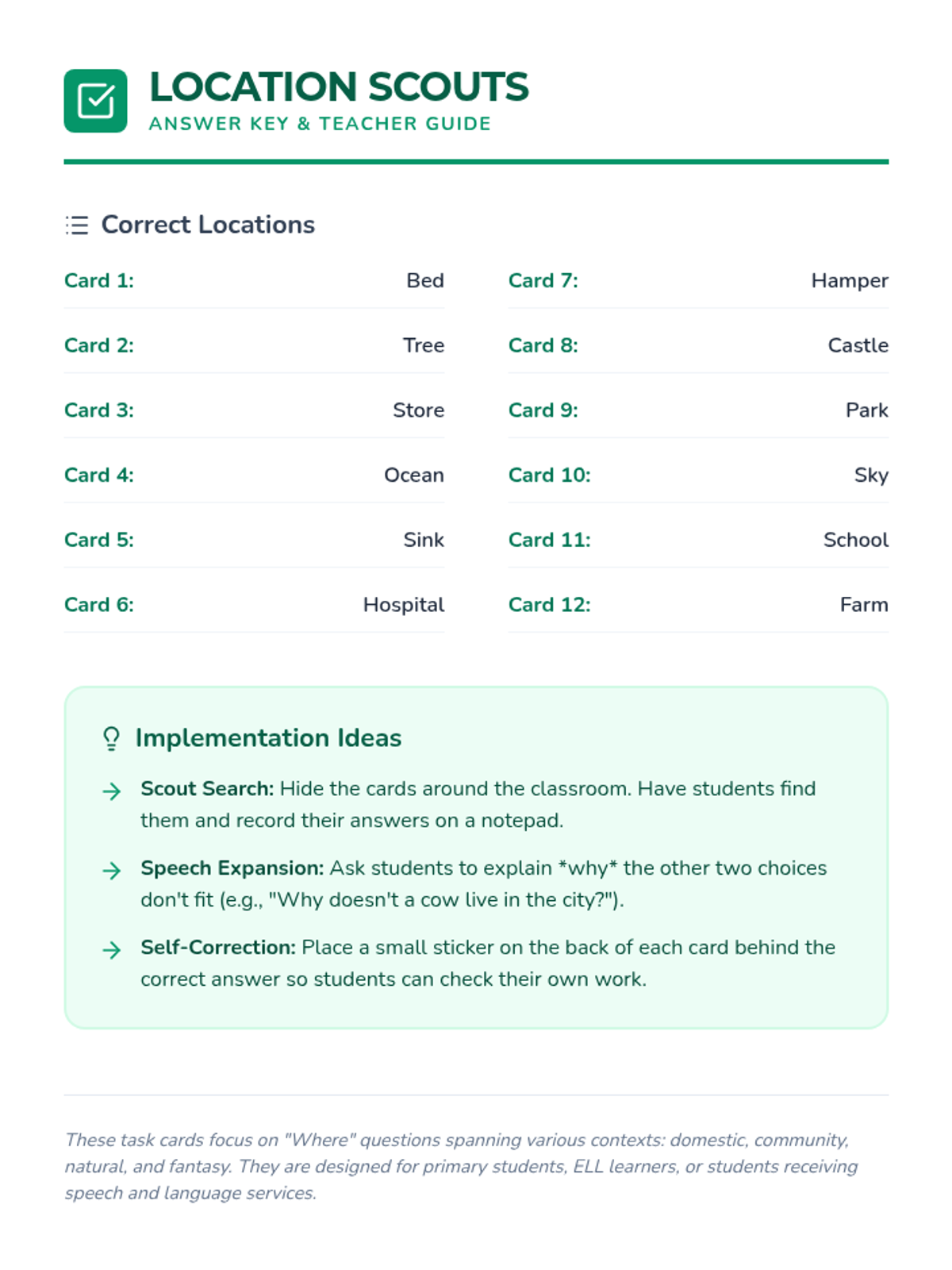
A set of hands-on task cards and teacher resources to help students master 'Where' questions across various contexts using visual supports.
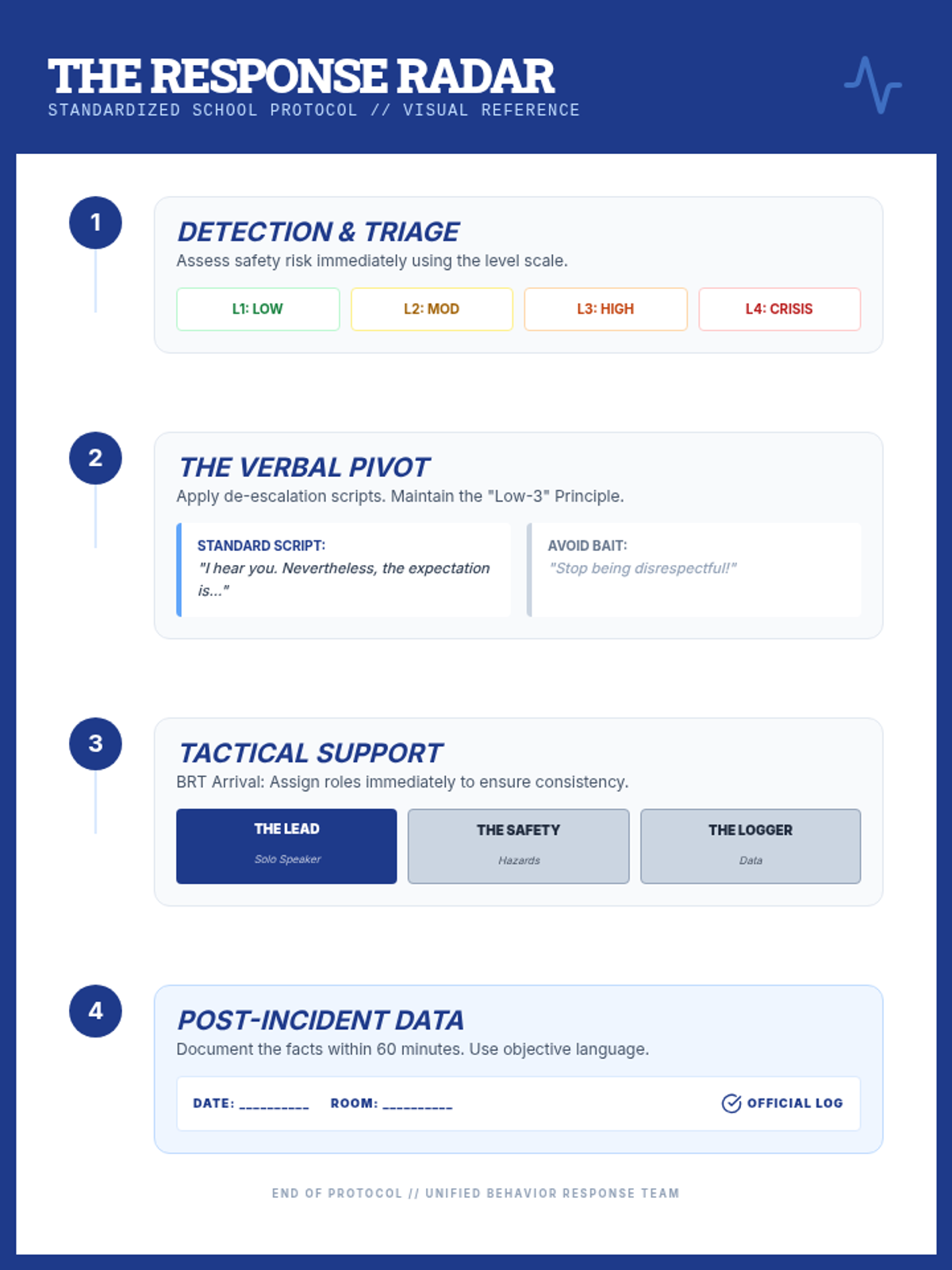
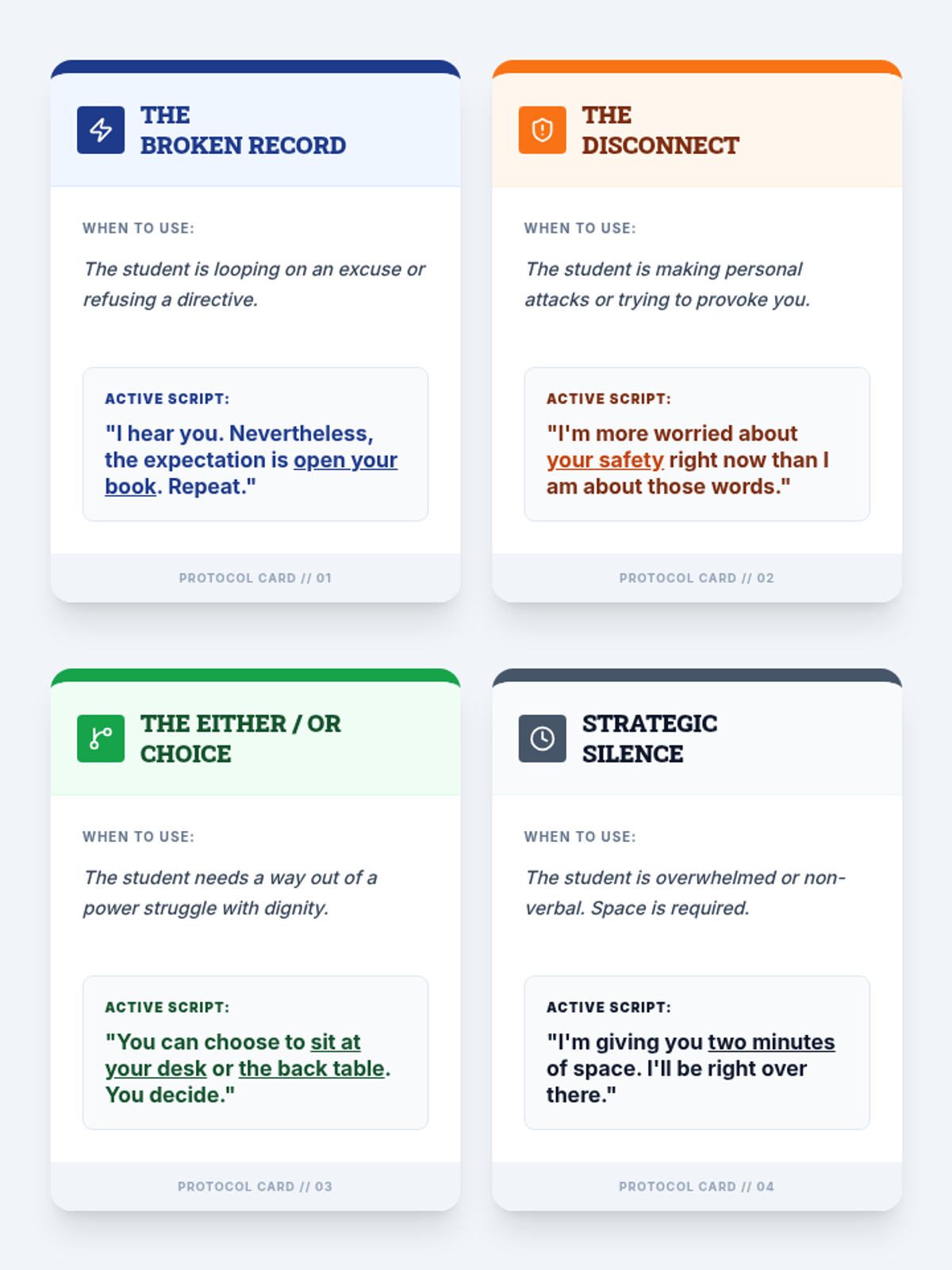
A comprehensive framework for school behavior response teams to standardize de-escalation techniques and crisis management protocols. This lesson provides clear, step-by-step procedures to ensure consistency and reduce the need for micromanagement during high-stress incidents.
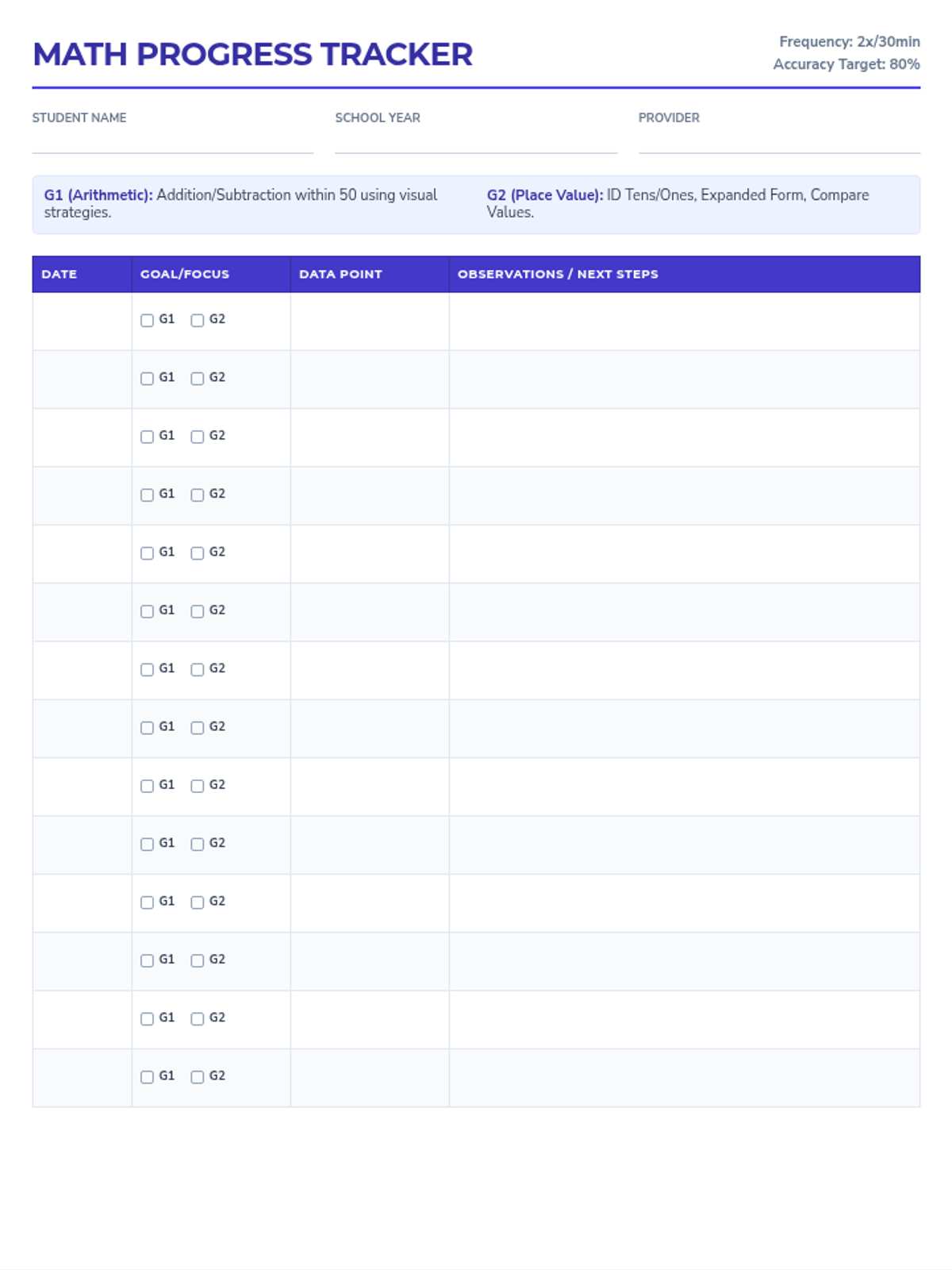
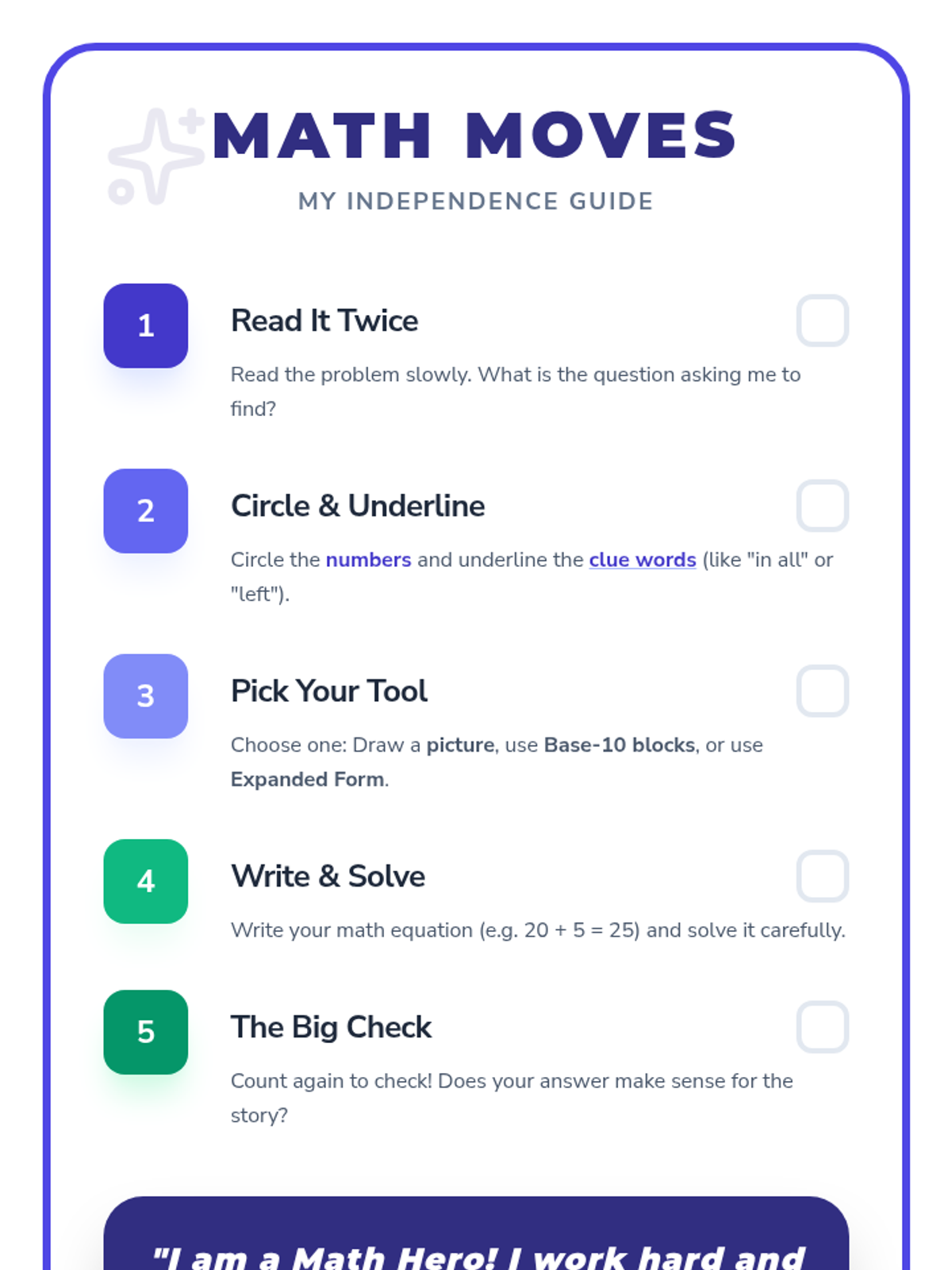
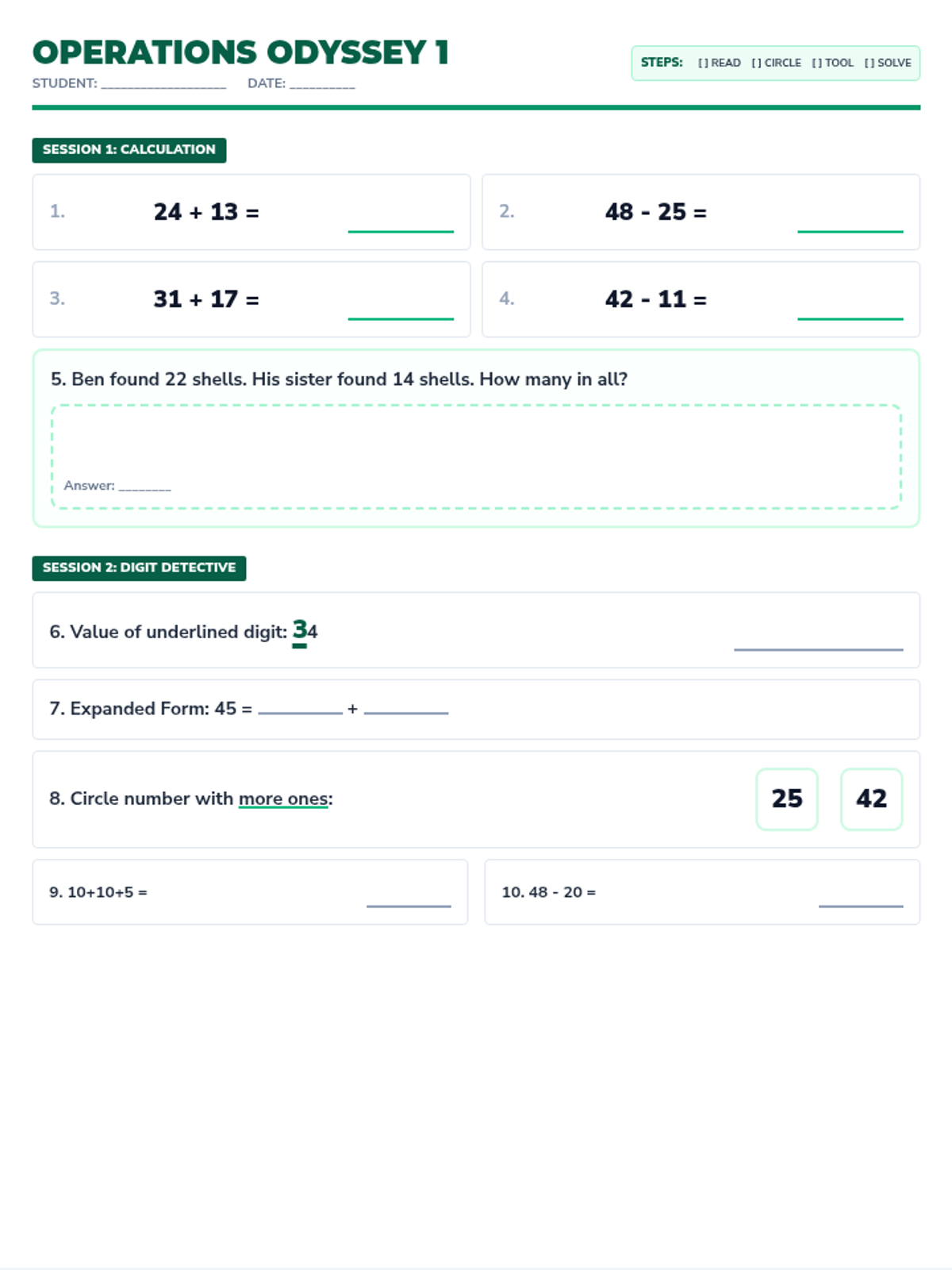
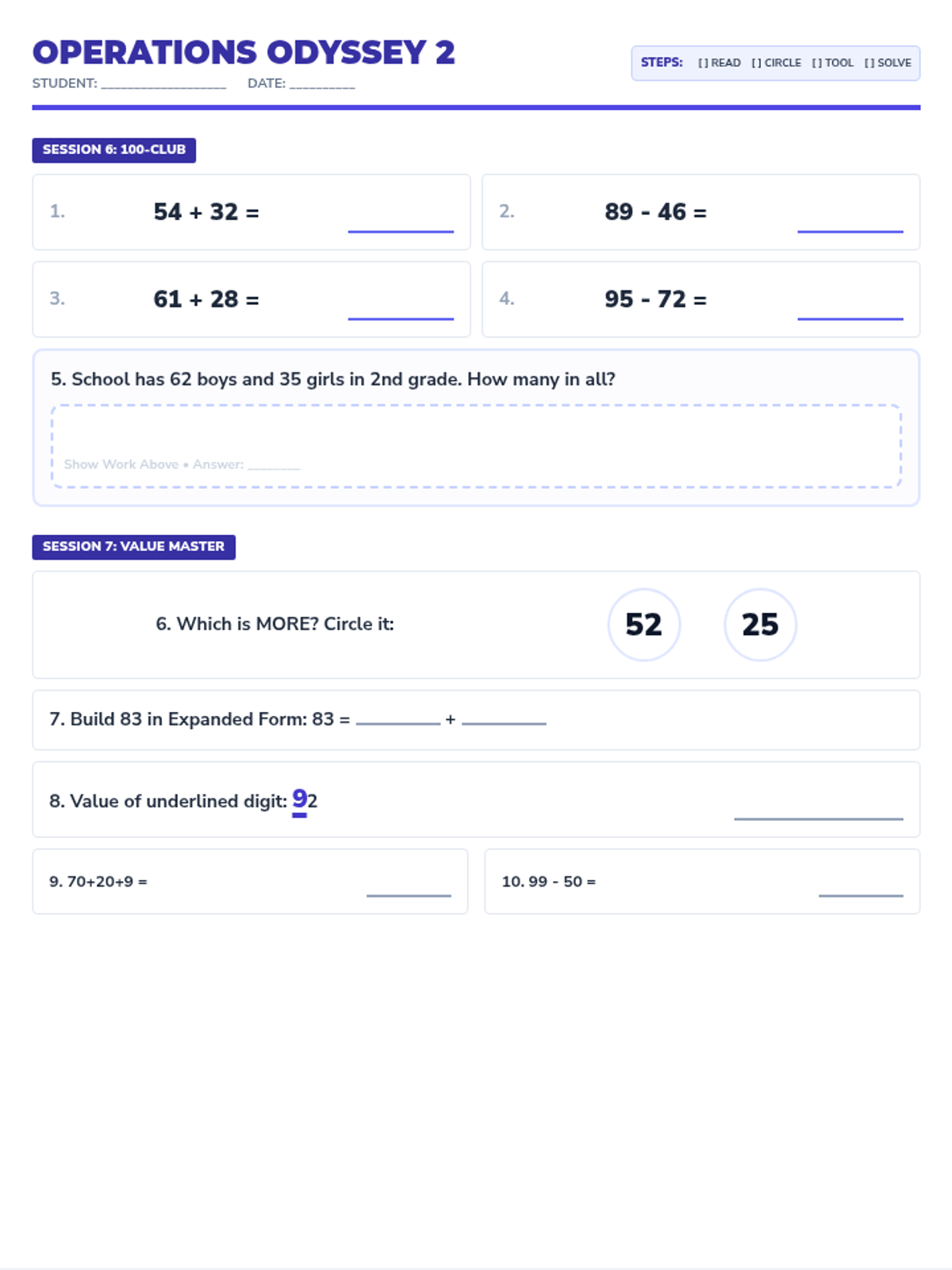
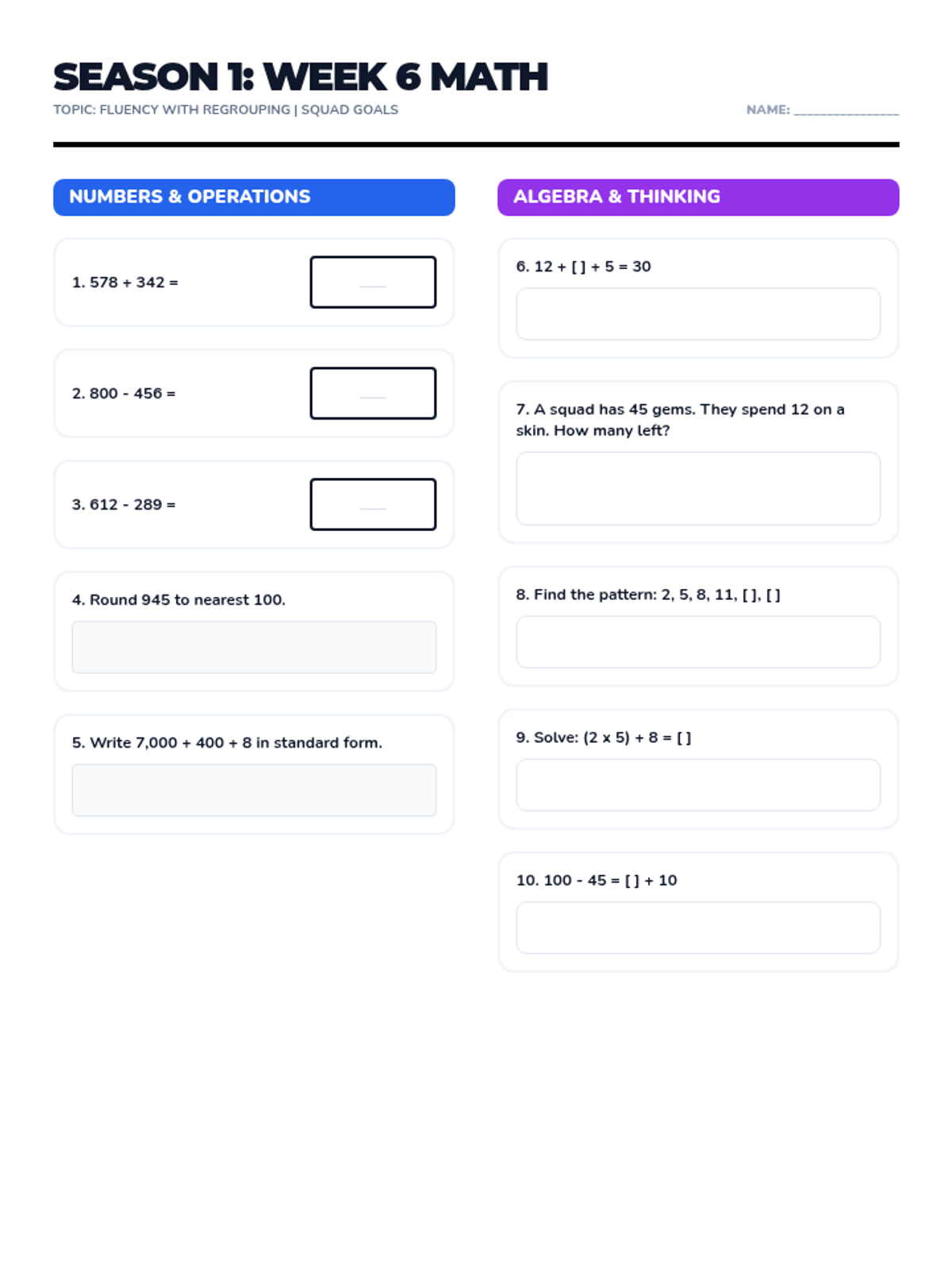
A comprehensive tracking system for monitoring student progress in basic arithmetic and place value concepts, designed for bi-weekly service delivery.
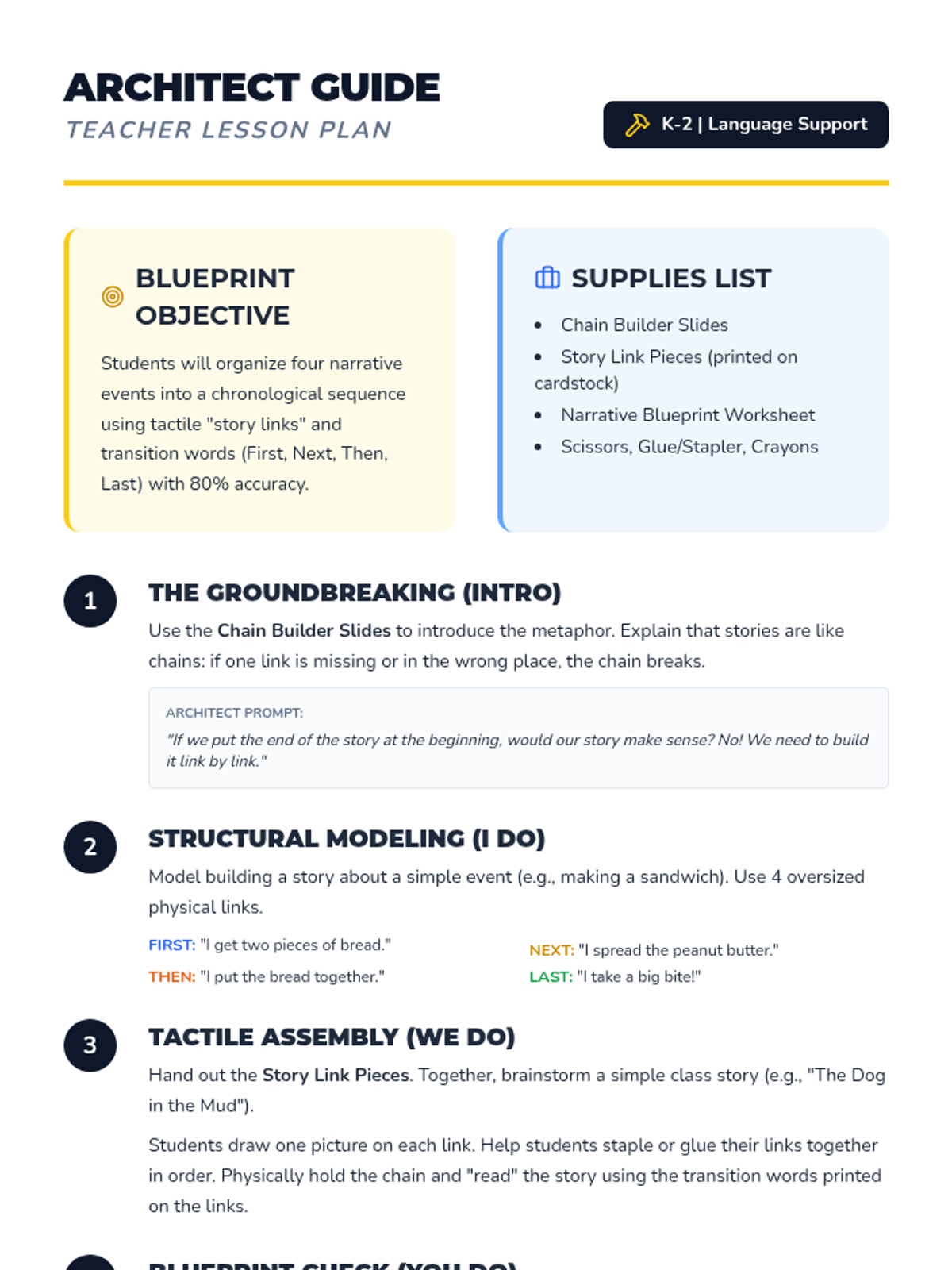
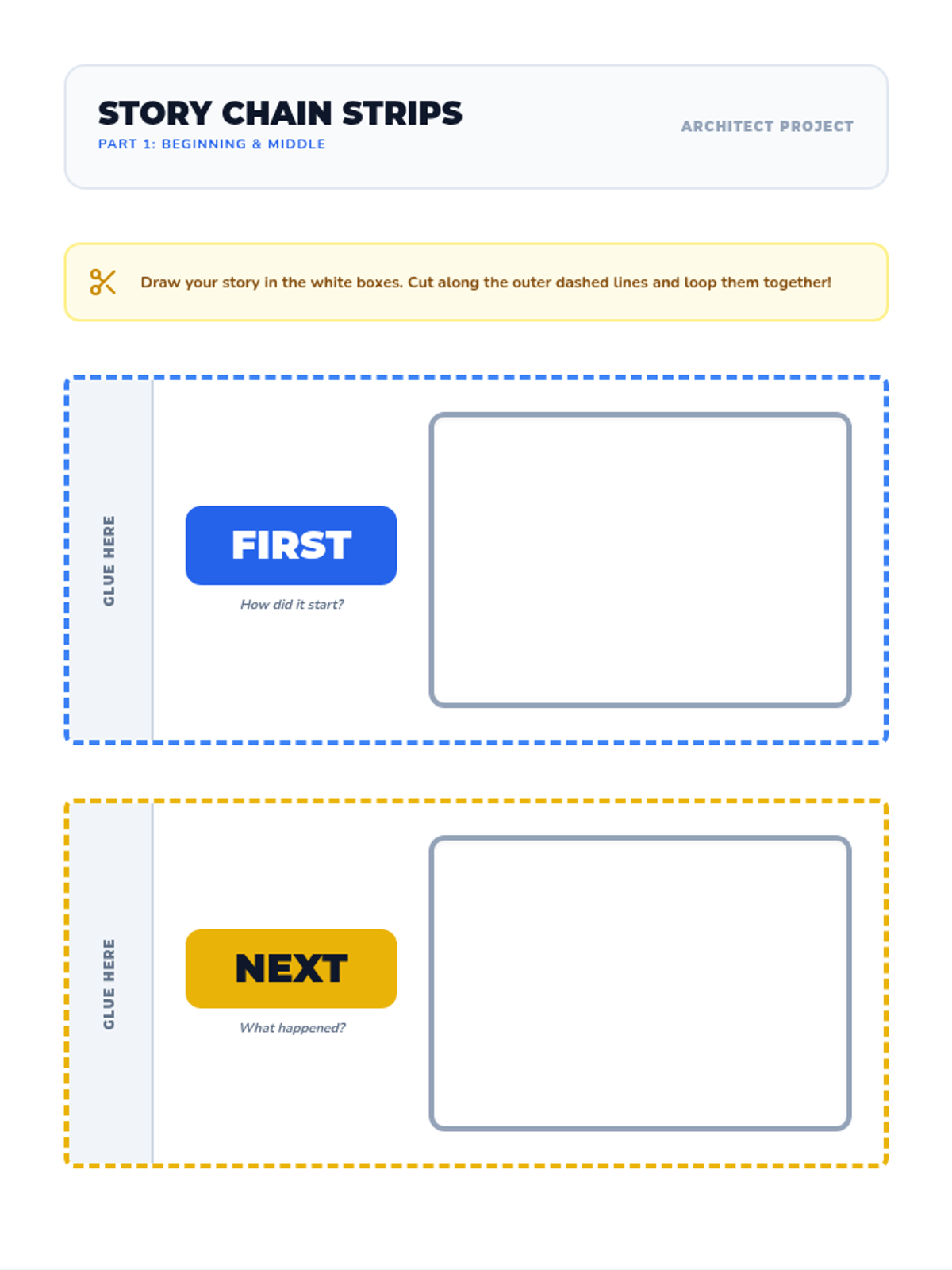
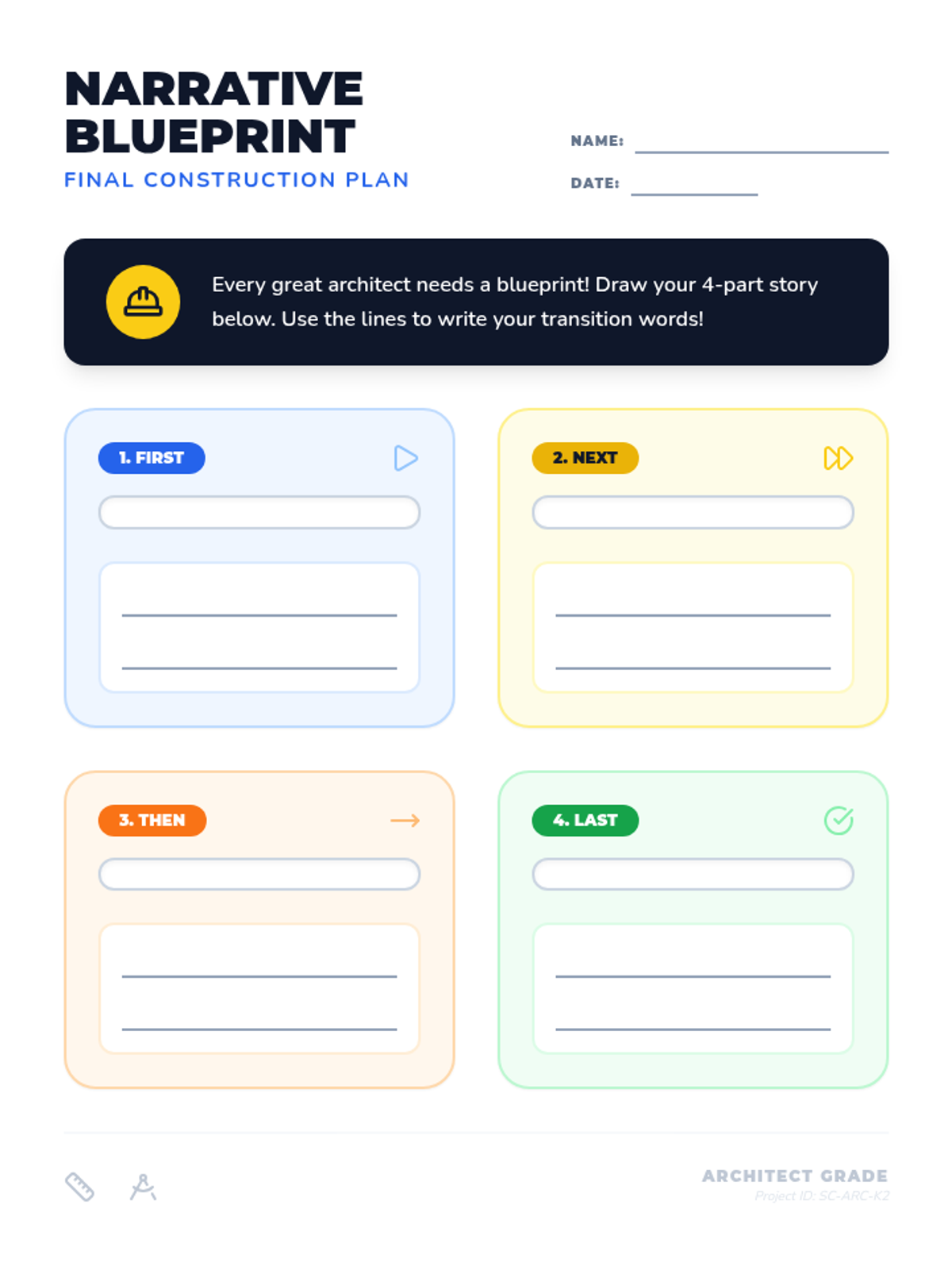
A tactile narrative structure lesson for K-2 students with language delays, using physical 'links' to build story sequences and master transitions.
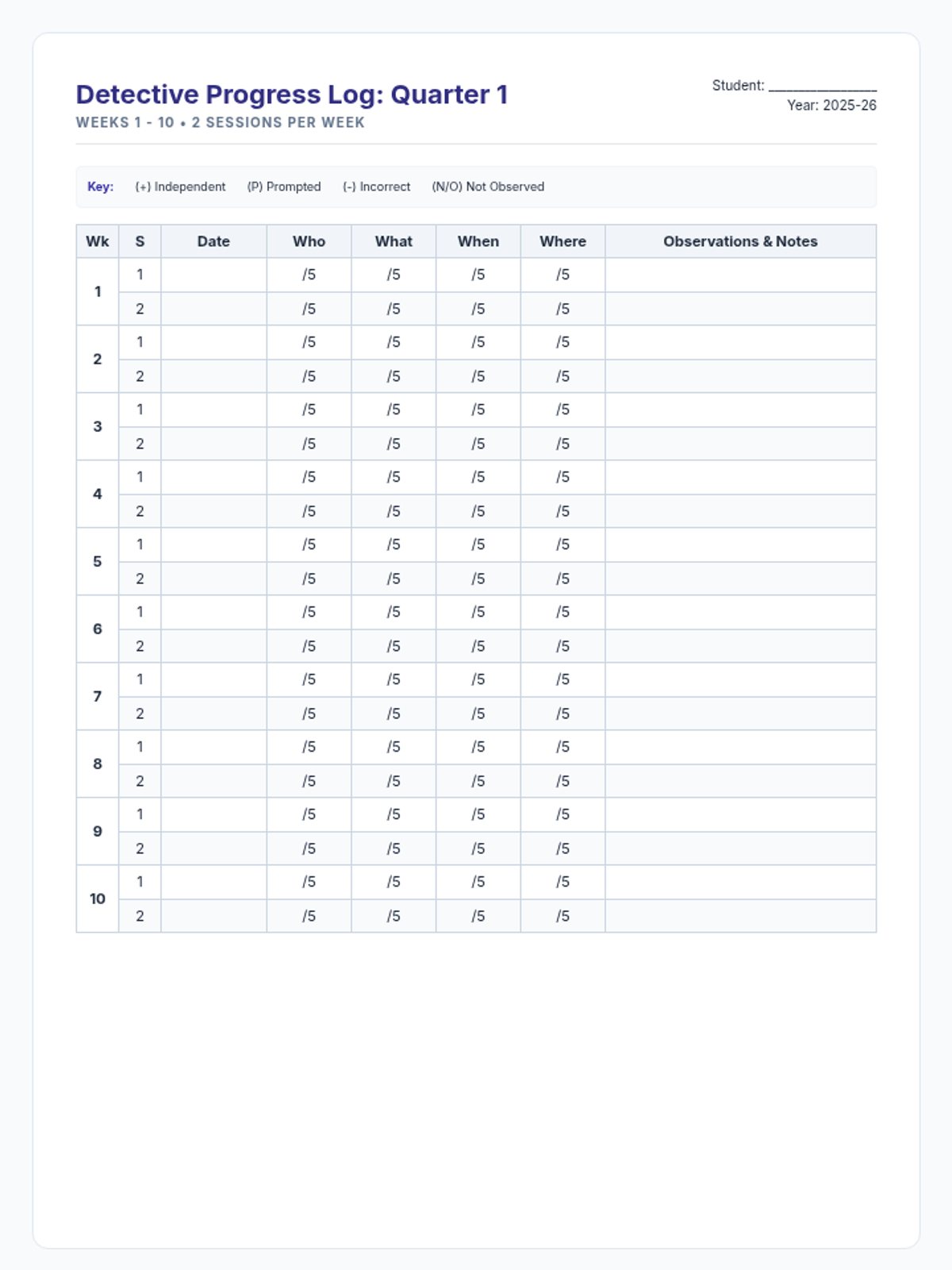
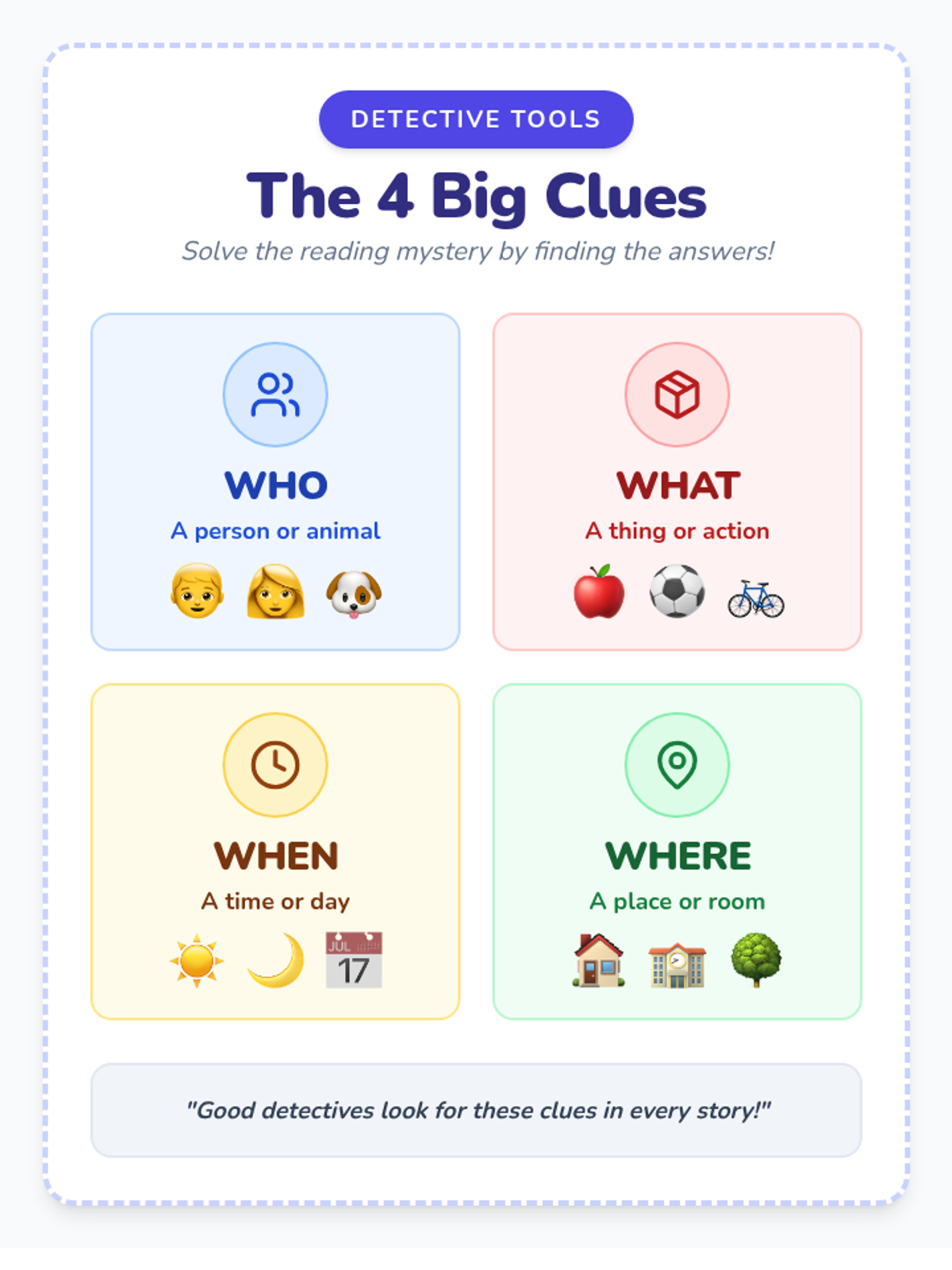
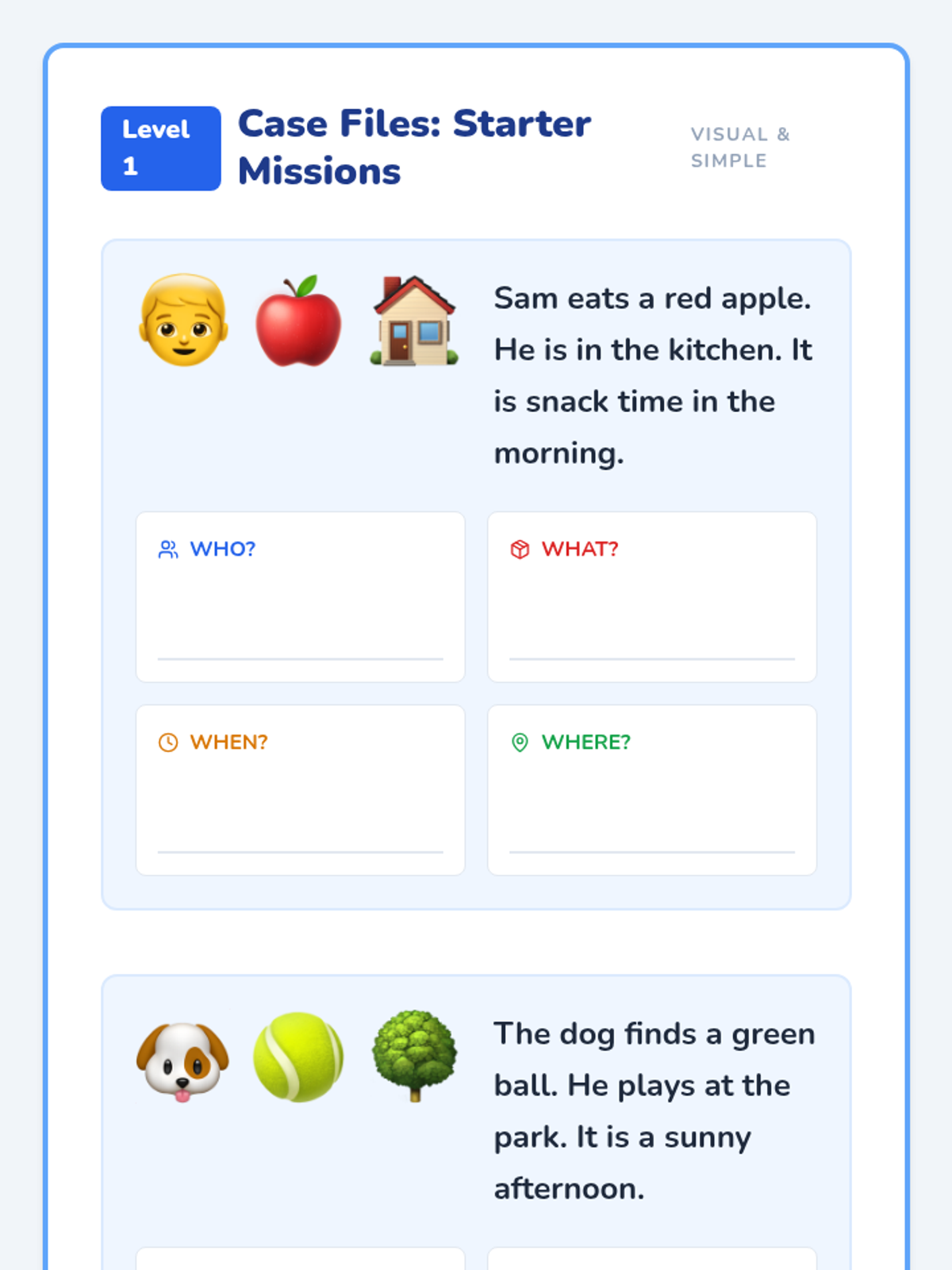
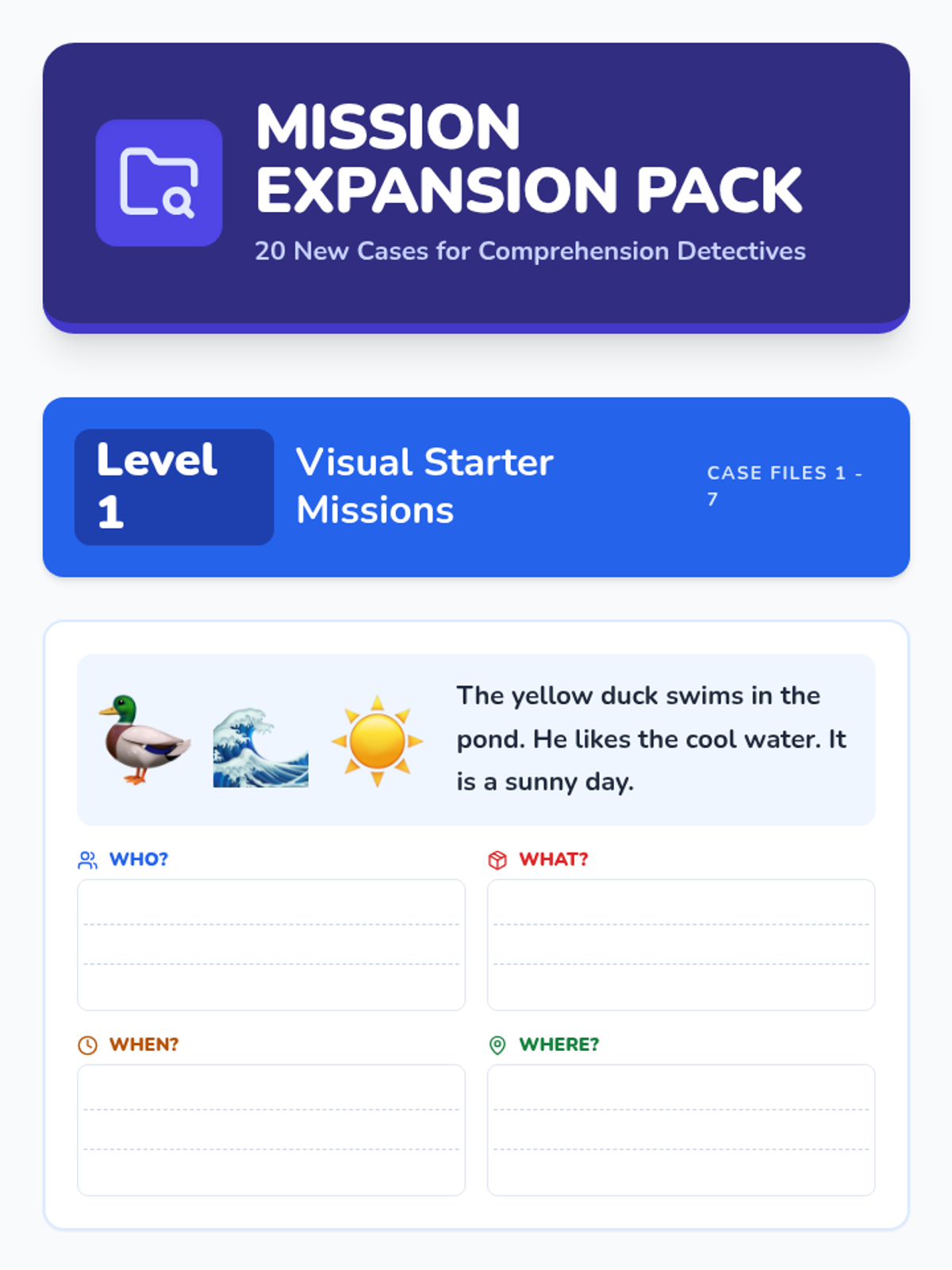
A comprehensive set of materials designed for Level 2 autistic students to build reading comprehension through visual supports and structured progress monitoring. The lesson focuses on identifying 'Who, What, When, and Where' through tiered passages that grow in complexity.
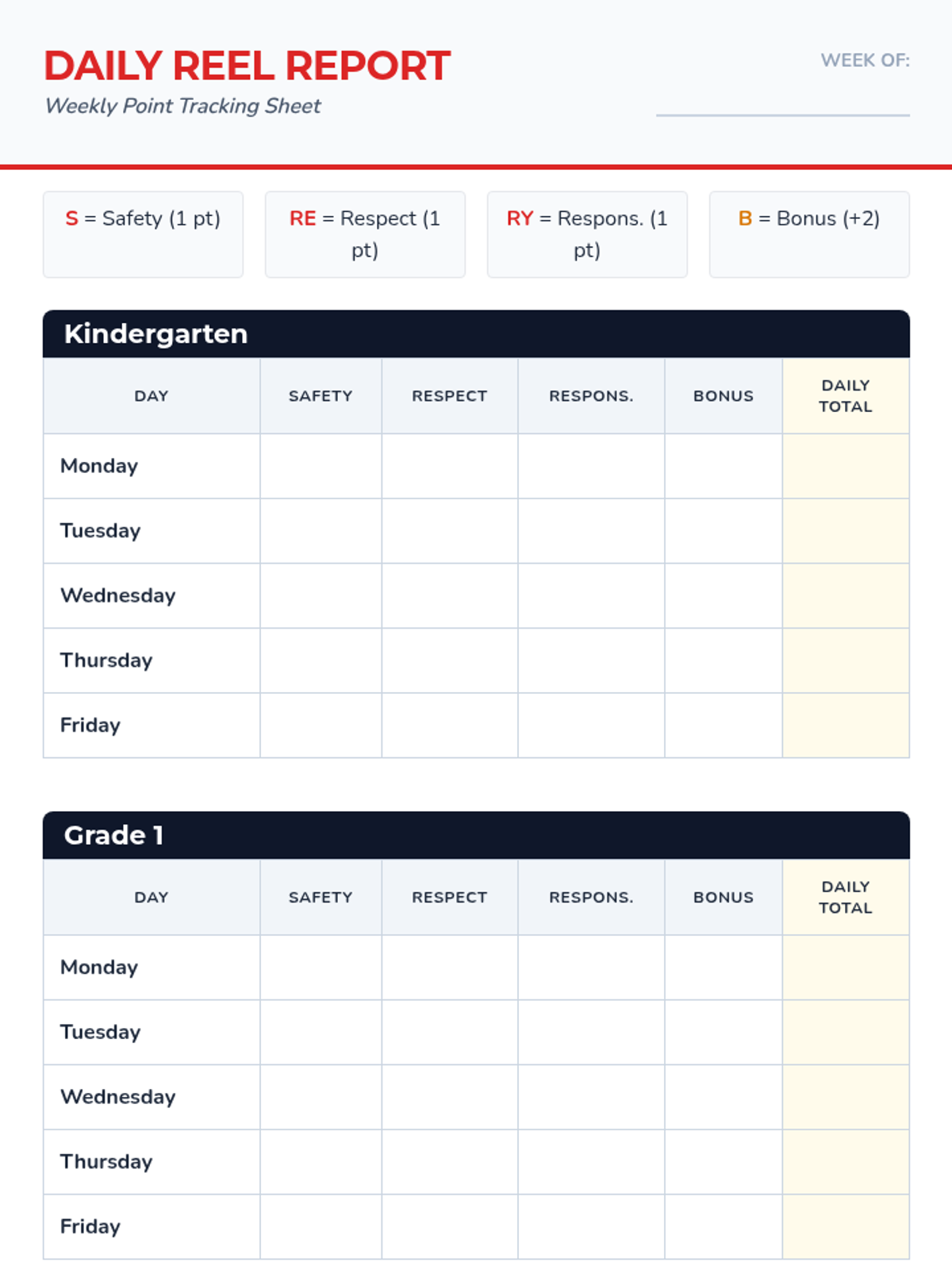
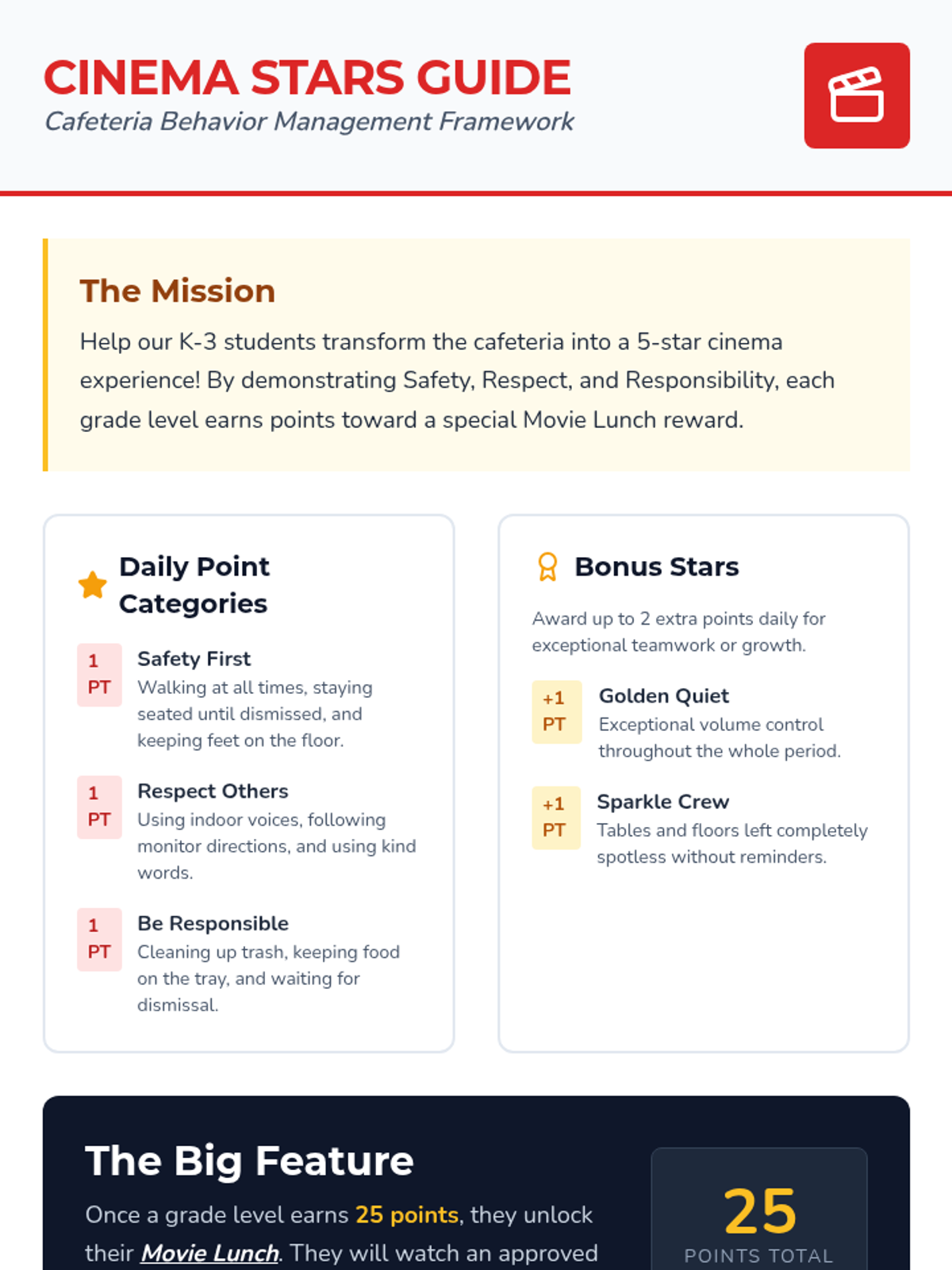
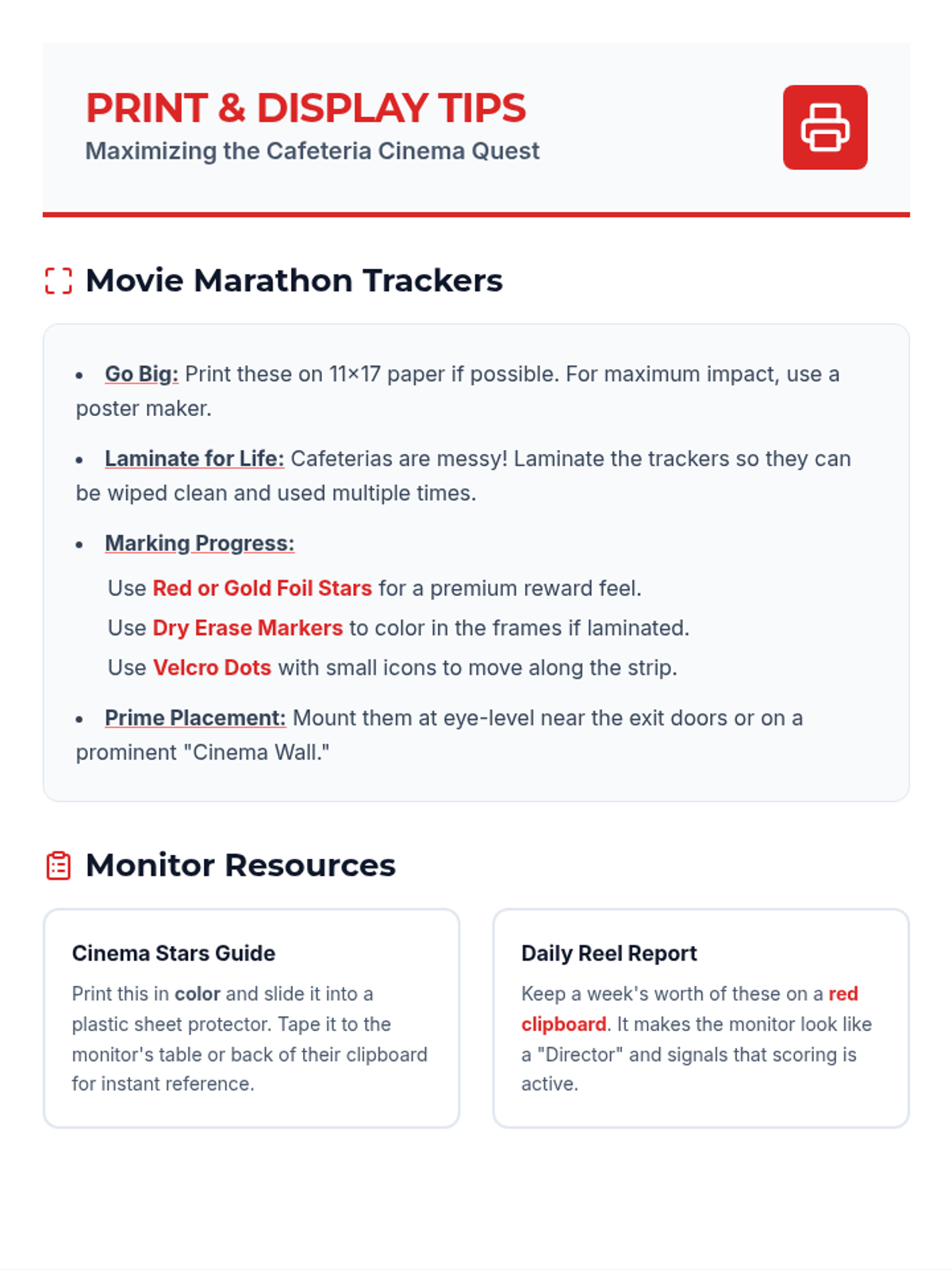
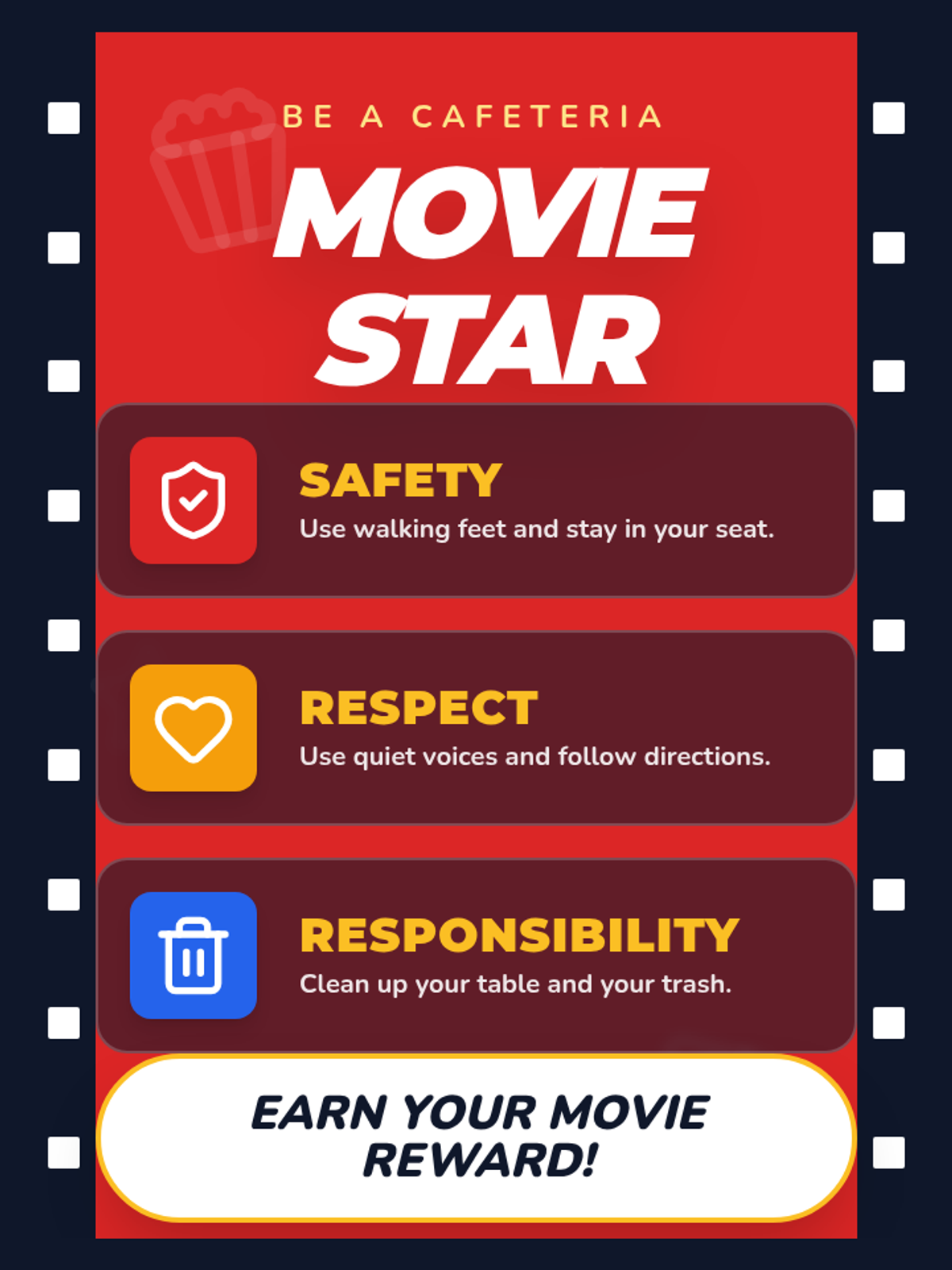
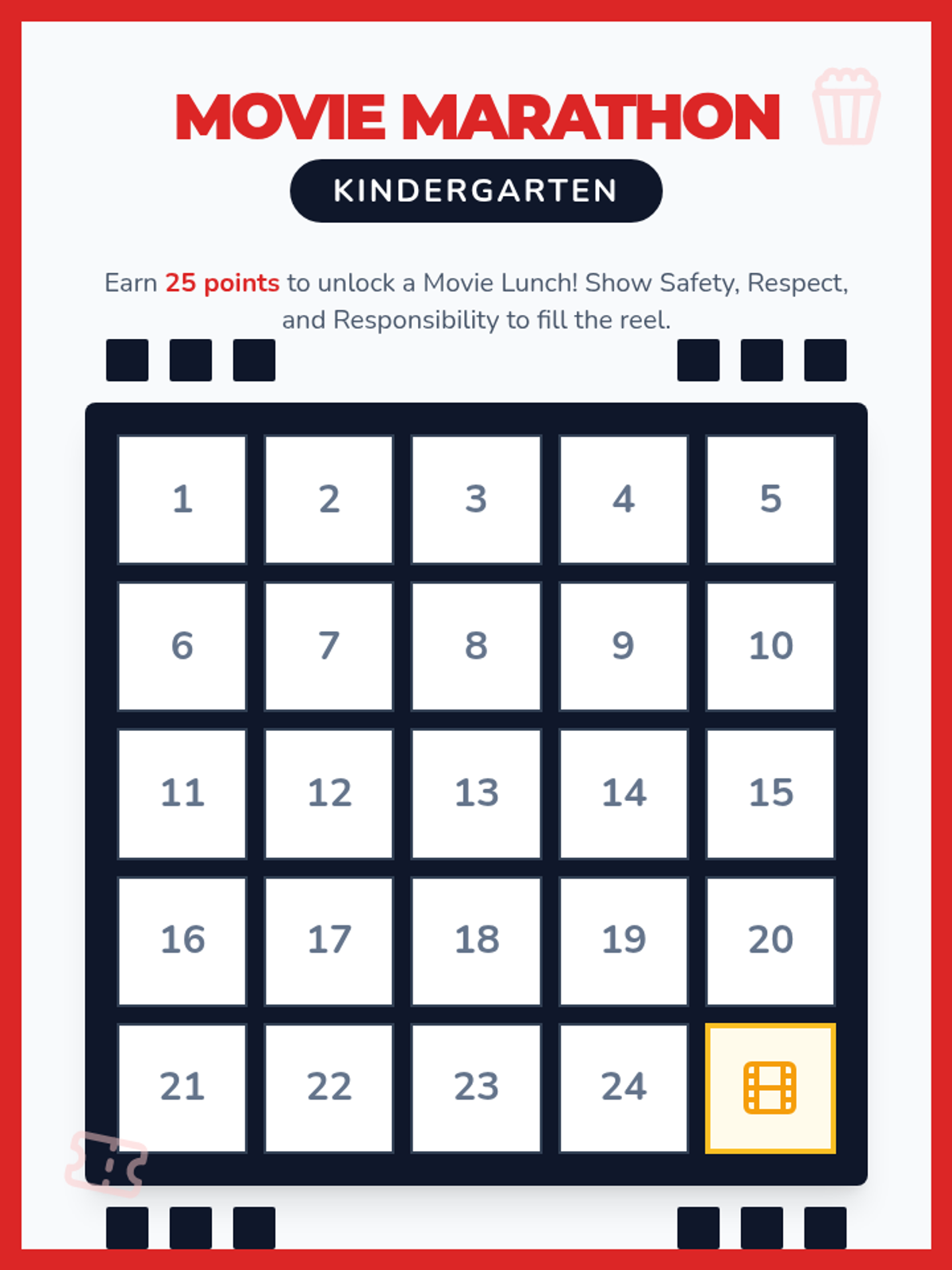
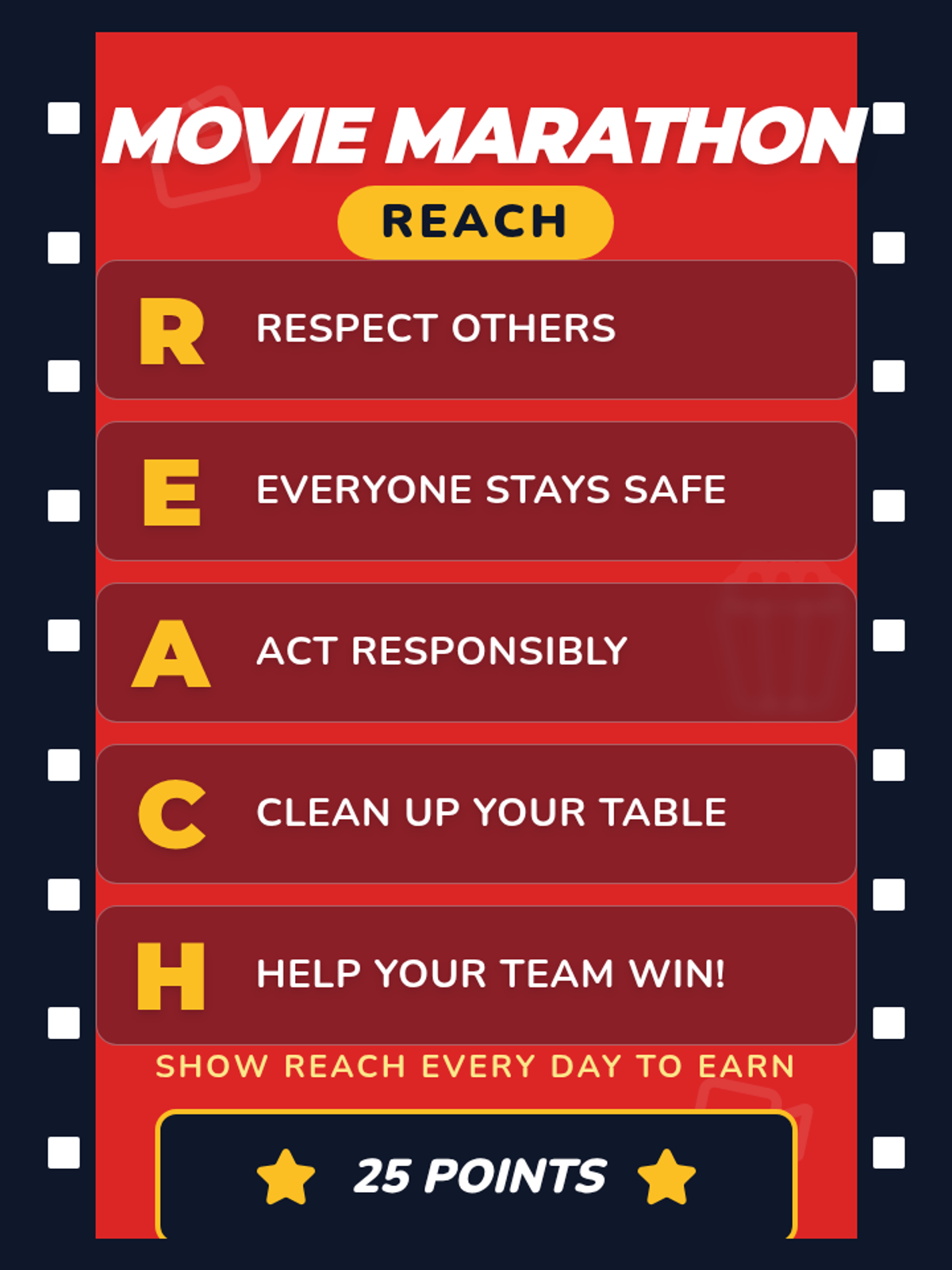
A management system designed for K-3 students to earn a movie reward through positive cafeteria behavior. Includes progress tracking, monitor tools, and introductory slides.
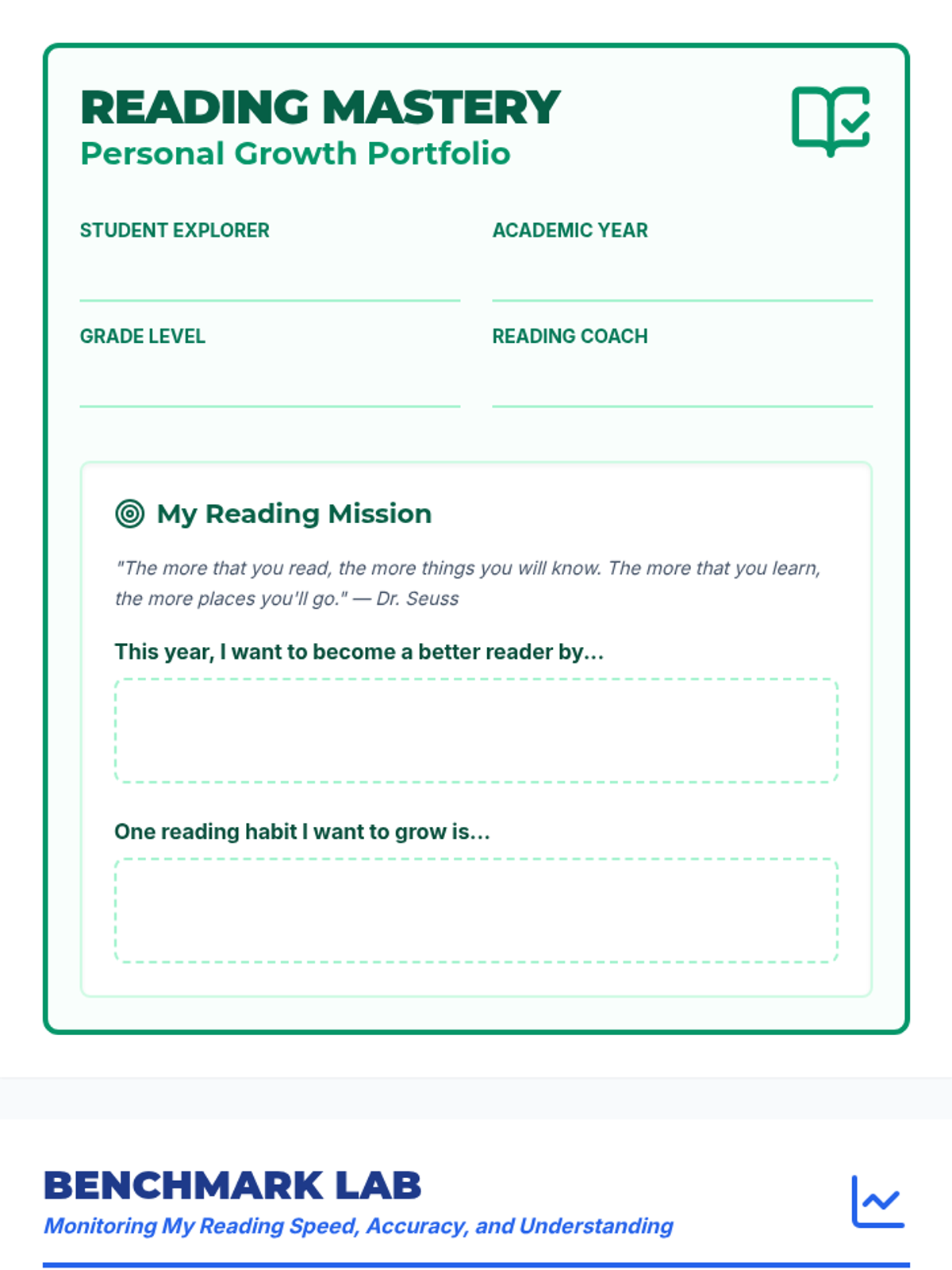
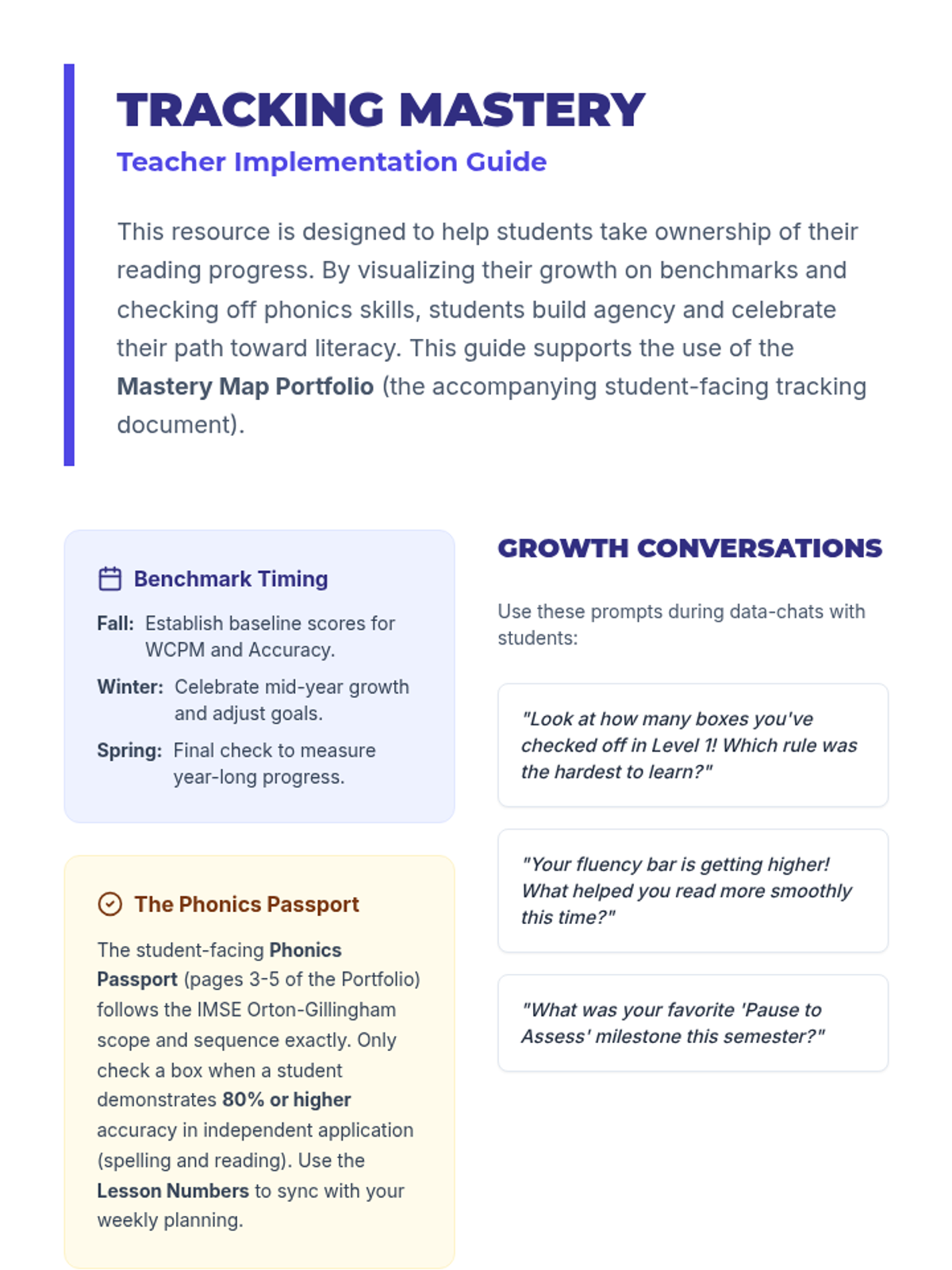
A comprehensive suite of data tracking tools for students to monitor their reading progress, including benchmark assessments and IMSE Orton-Gillingham concept checks from Kindergarten through 5th grade.
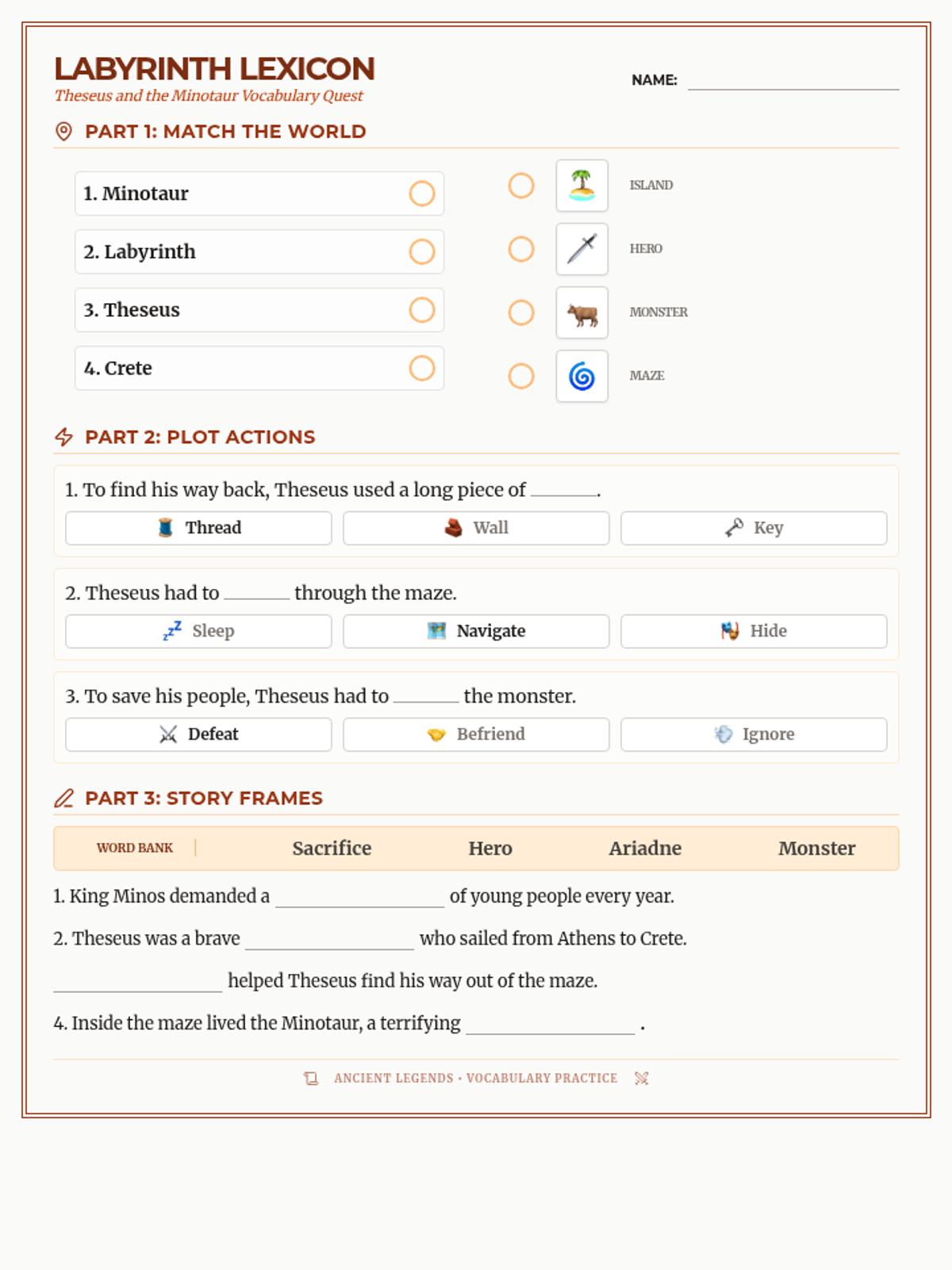
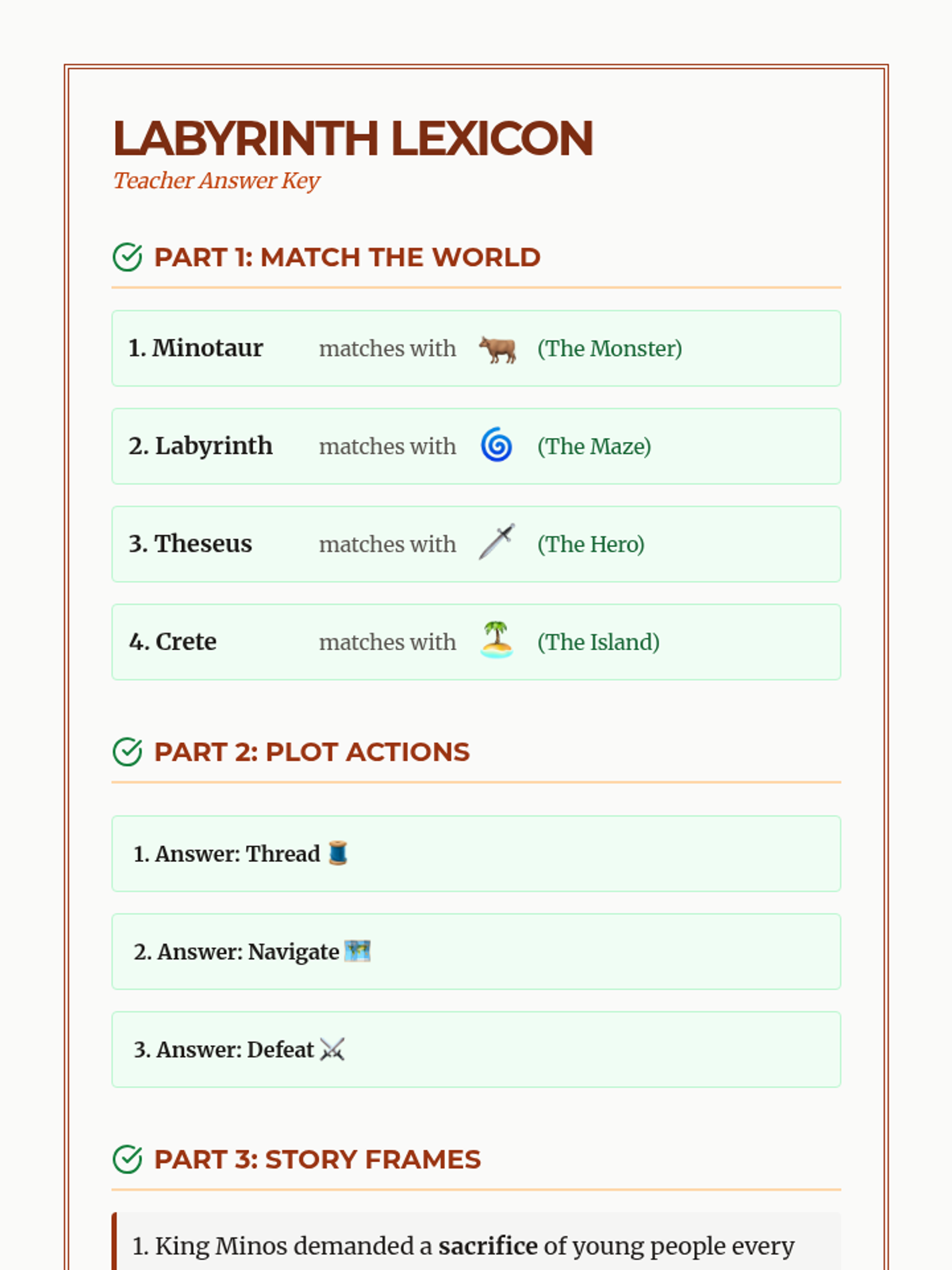
A vocabulary-focused lesson on the myth of Theseus and the Minotaur, designed with visual scaffolds and modified tasks for accessibility.
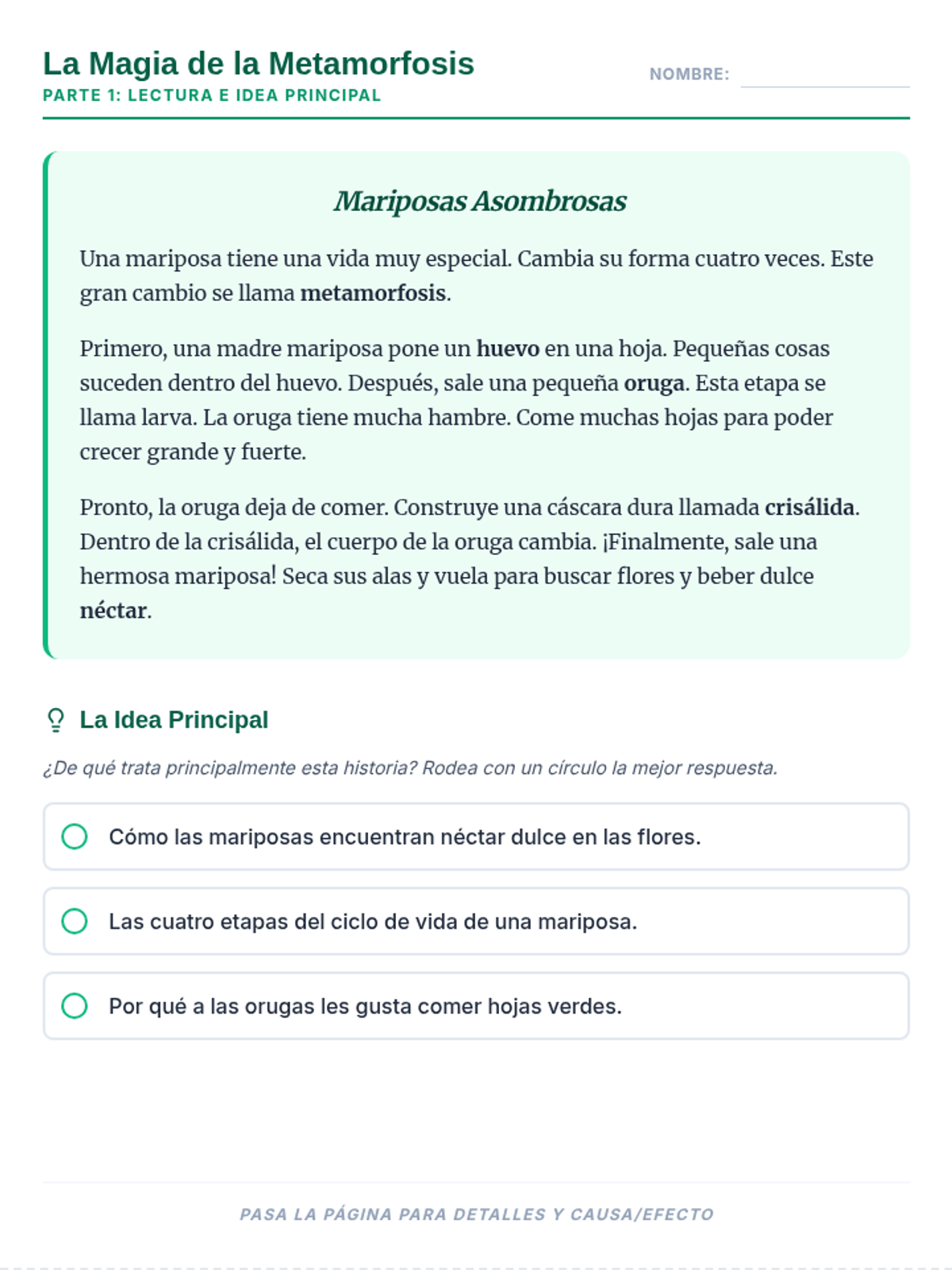
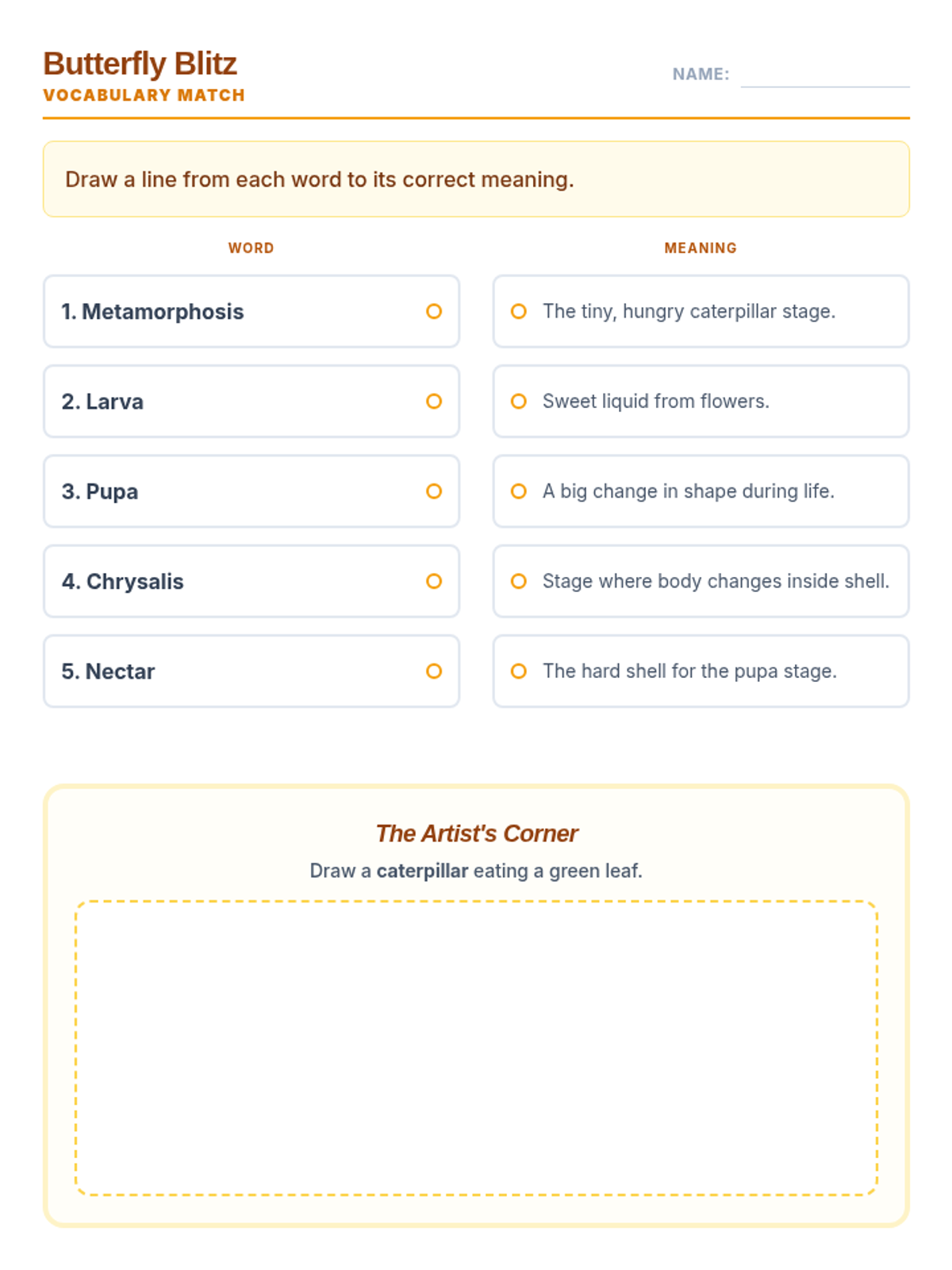
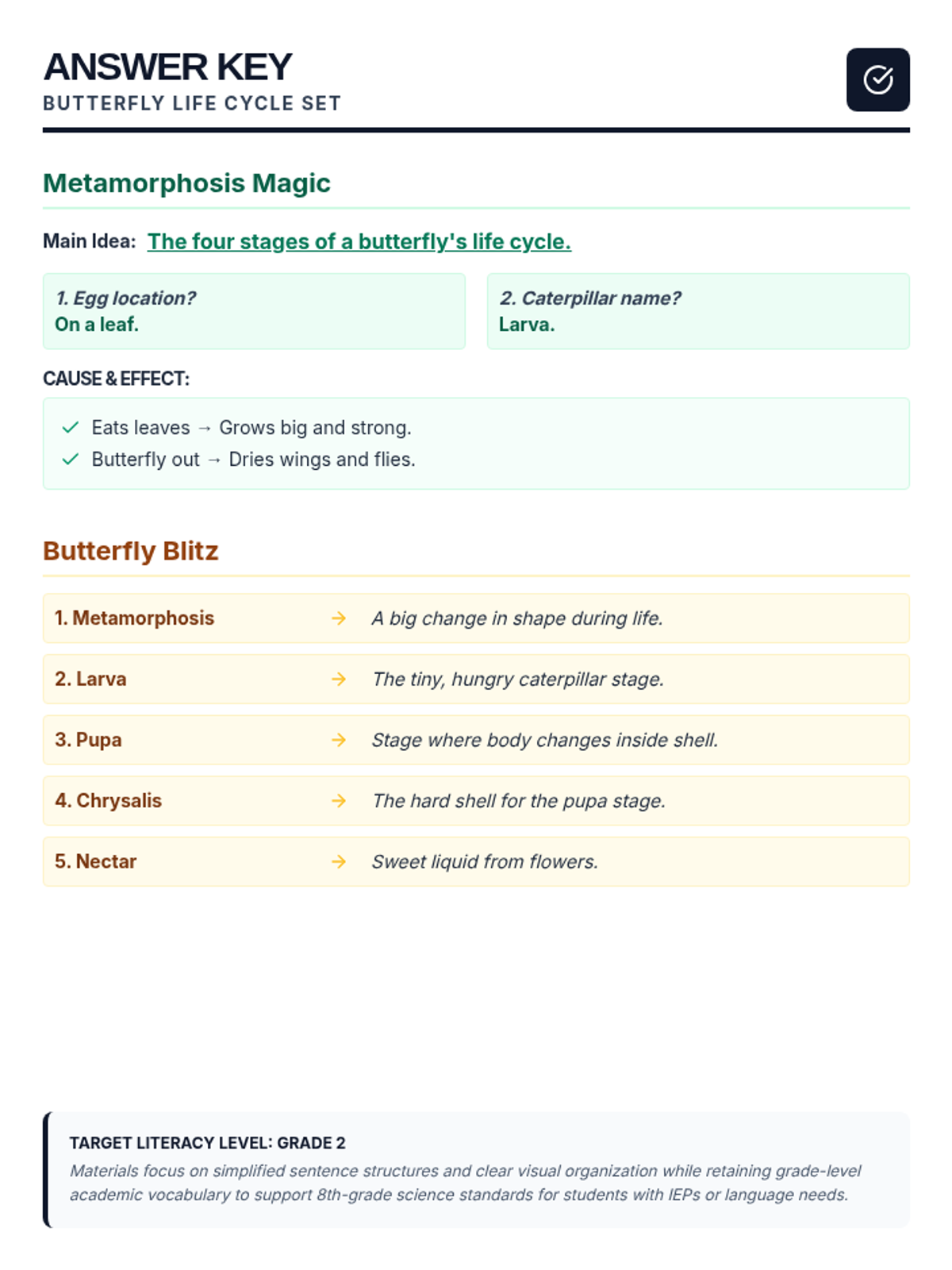
A collection of homework materials focused on the life cycle of butterflies, designed for 8th-grade students reading at a 2nd-grade level. The materials emphasize key vocabulary, main idea and details, and cause-and-effect relationships.
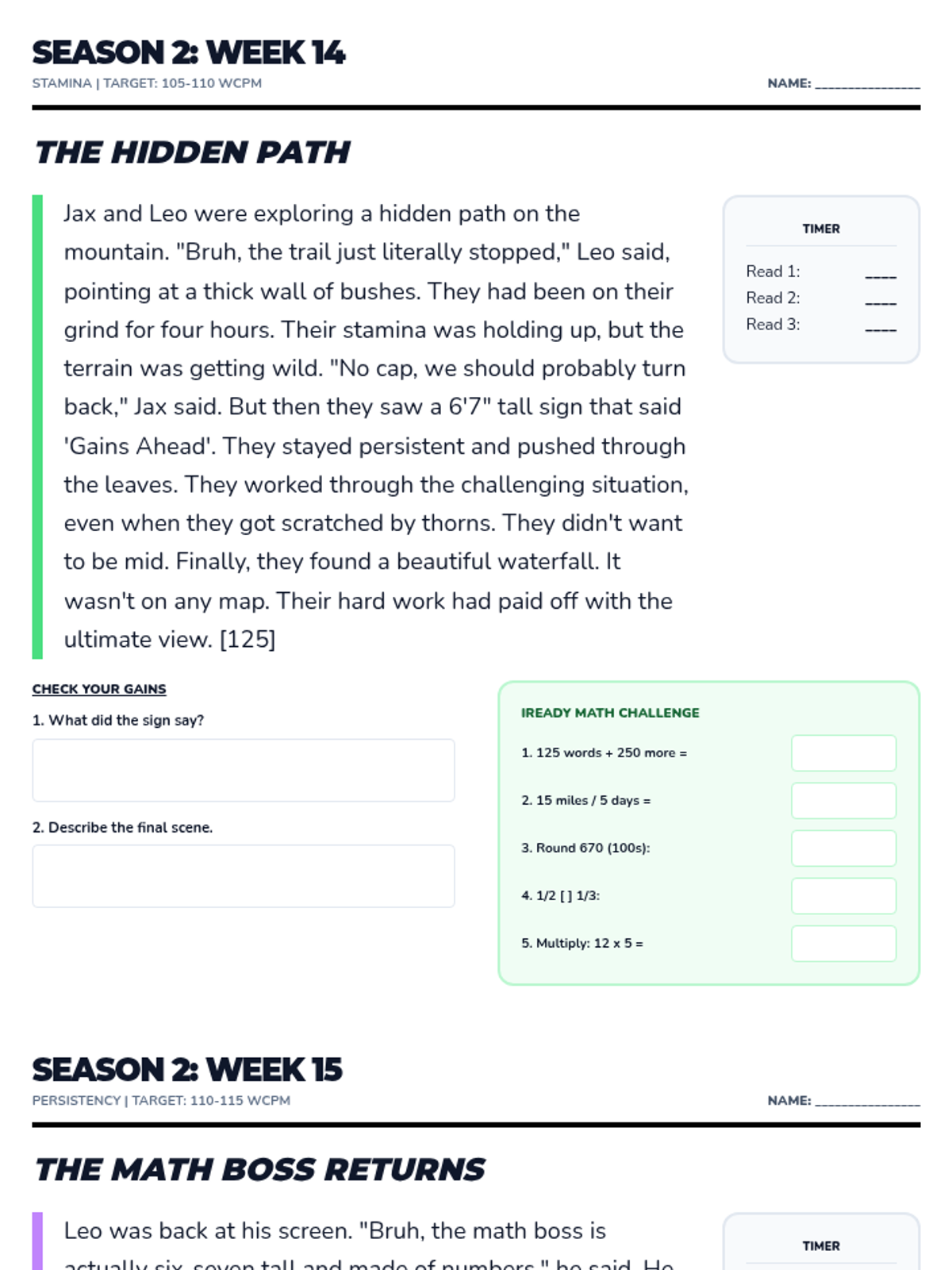
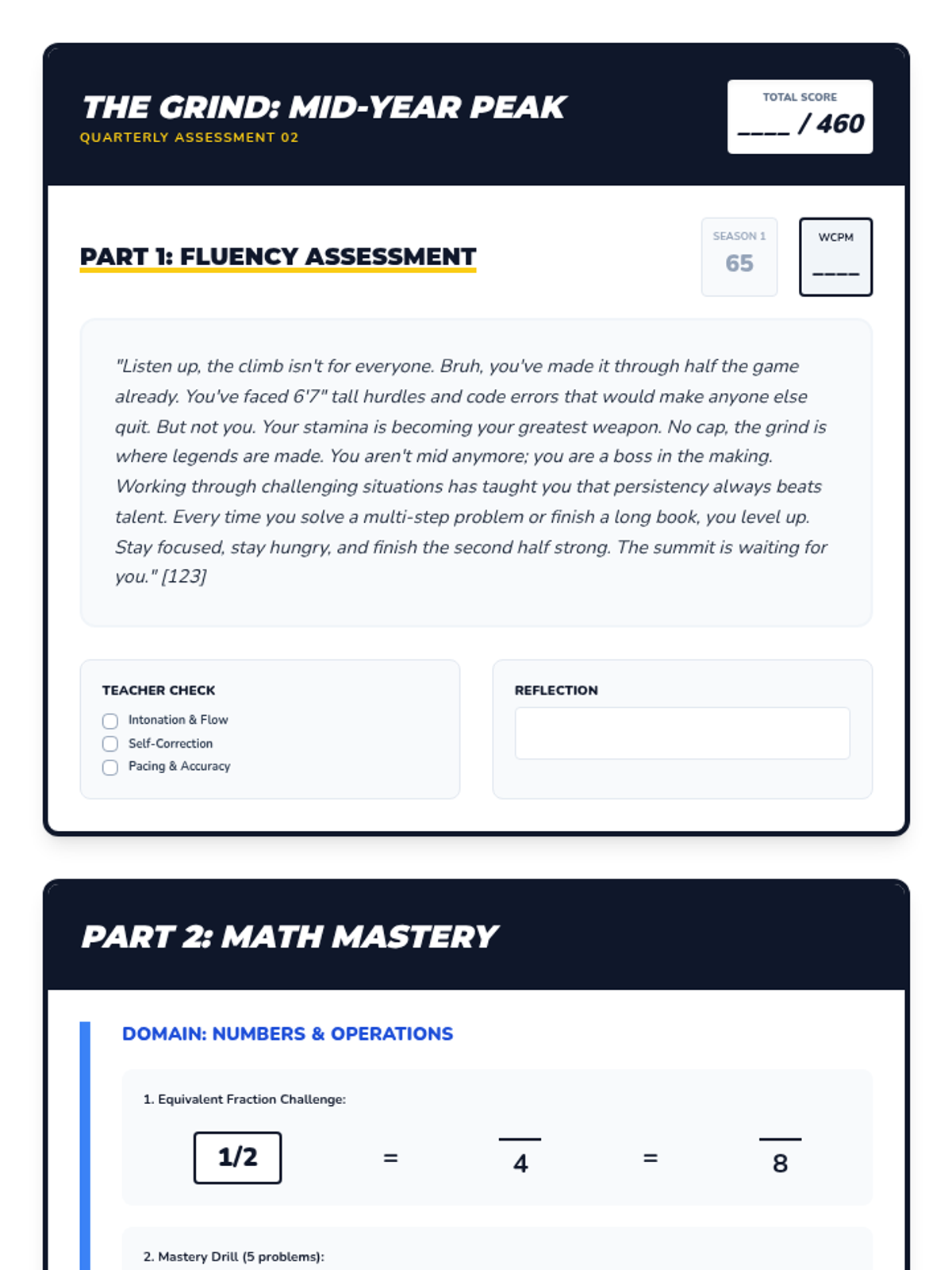
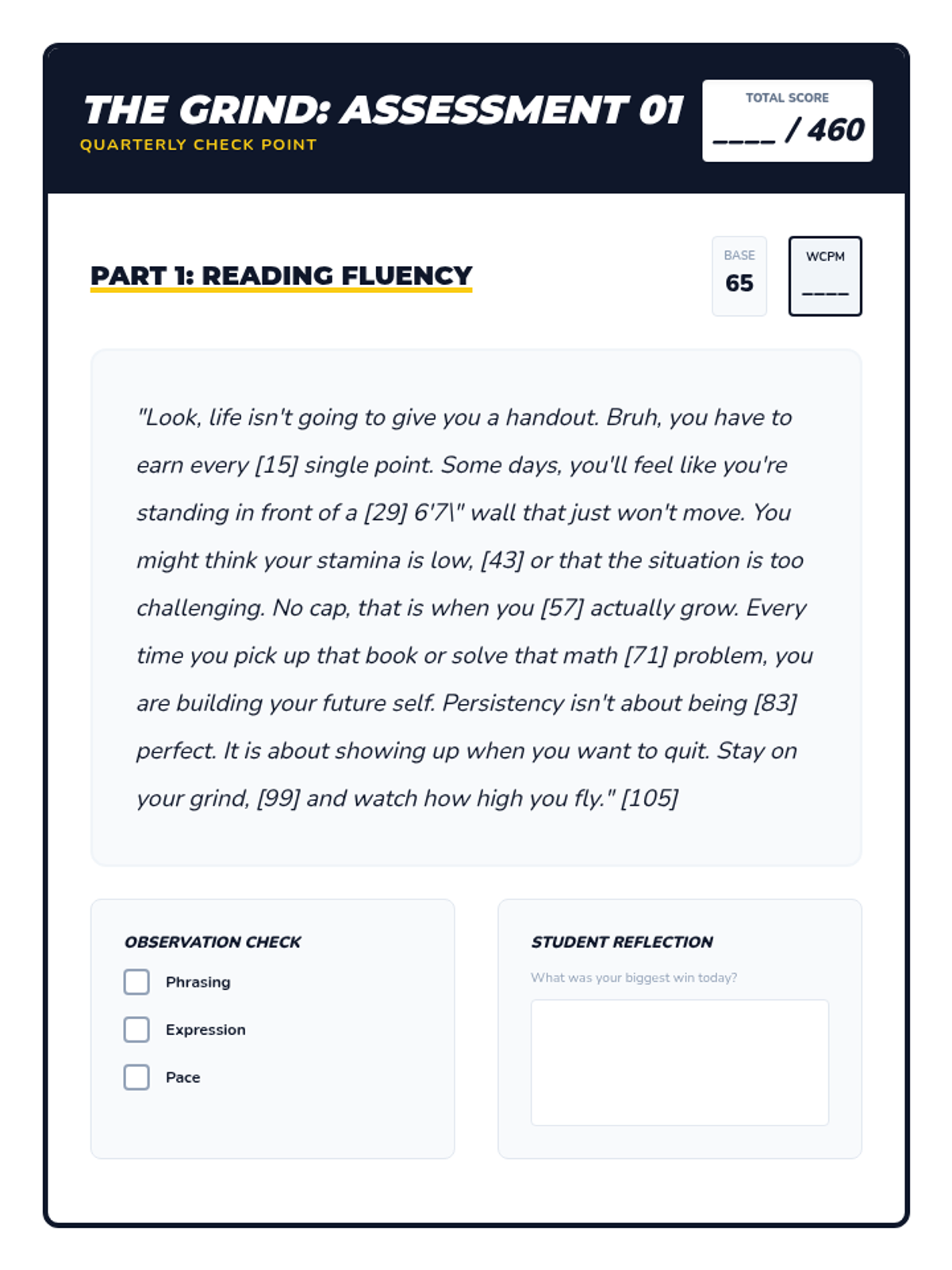
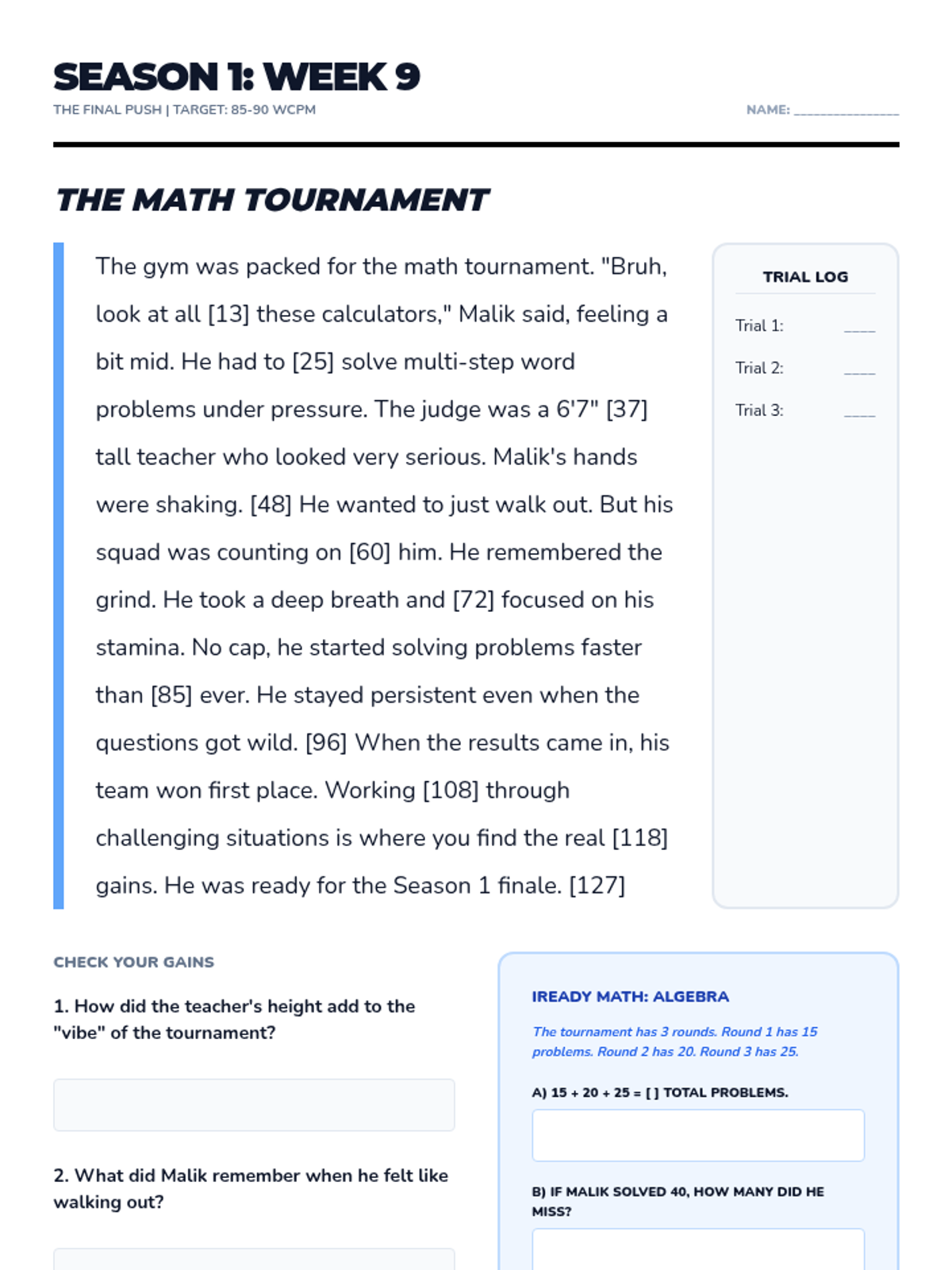
Final push towards the 110 WCPM goal and the 460 iReady score with 4th-grade readiness passages and multi-step algebraic problems.
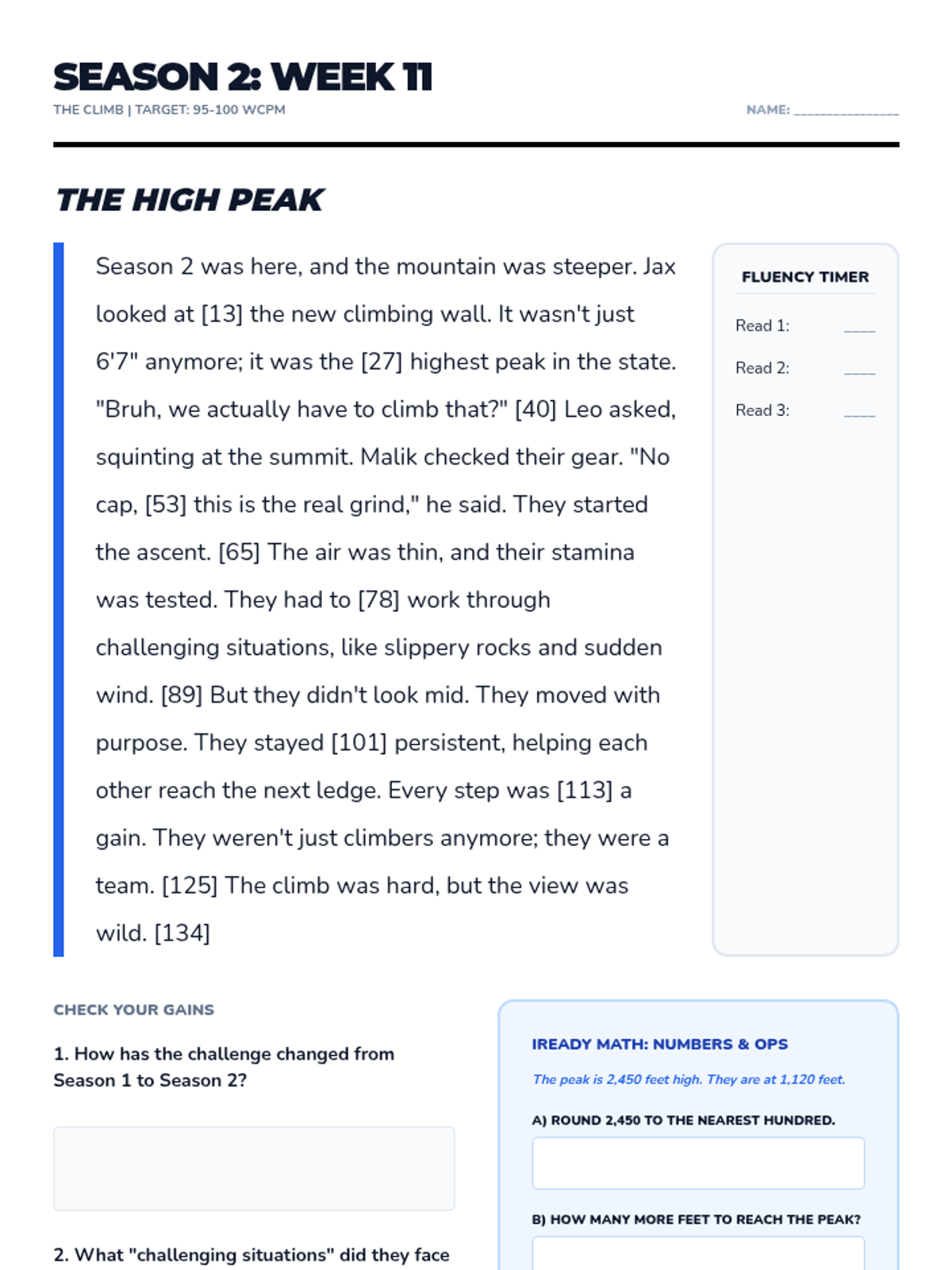
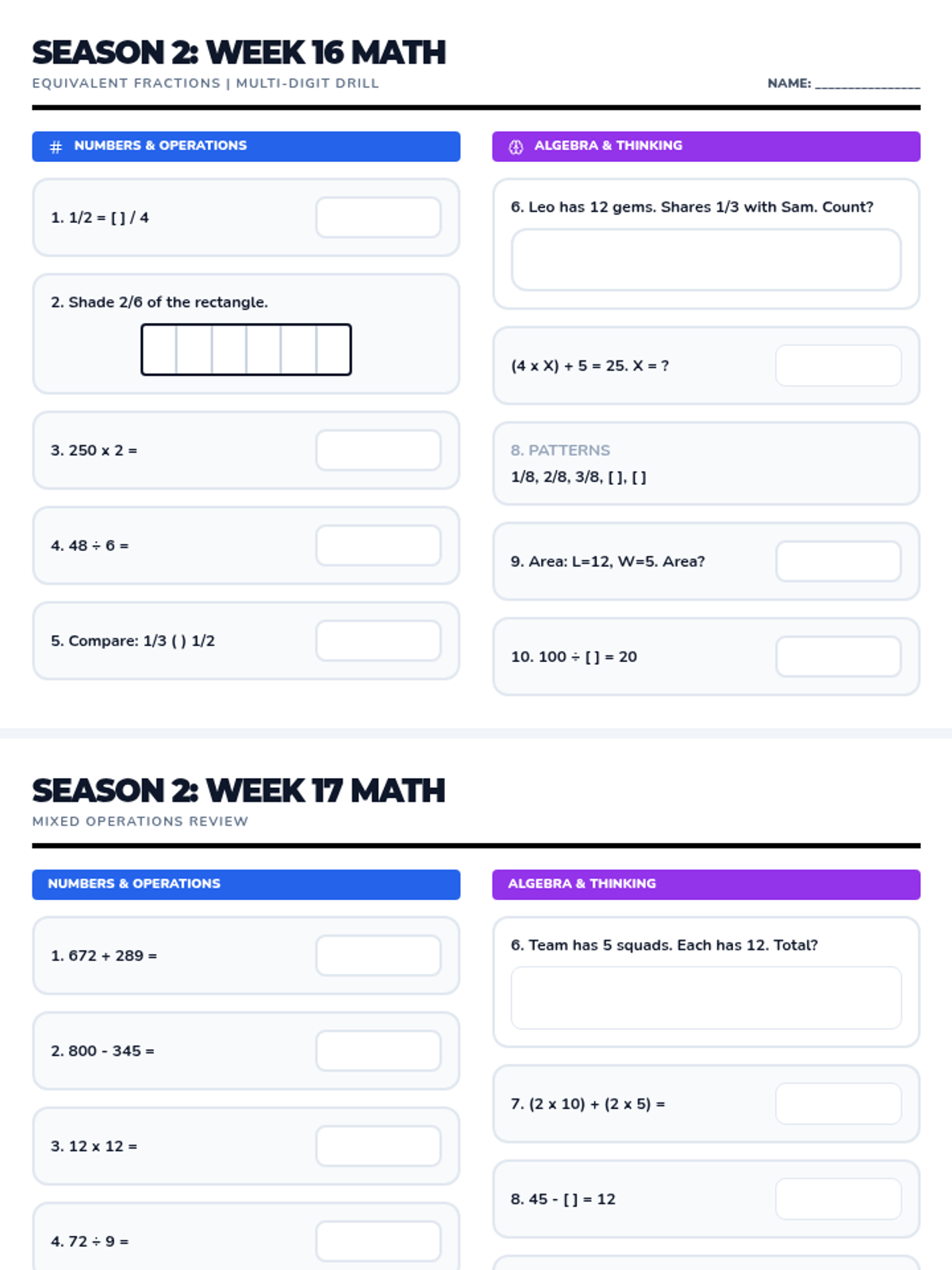
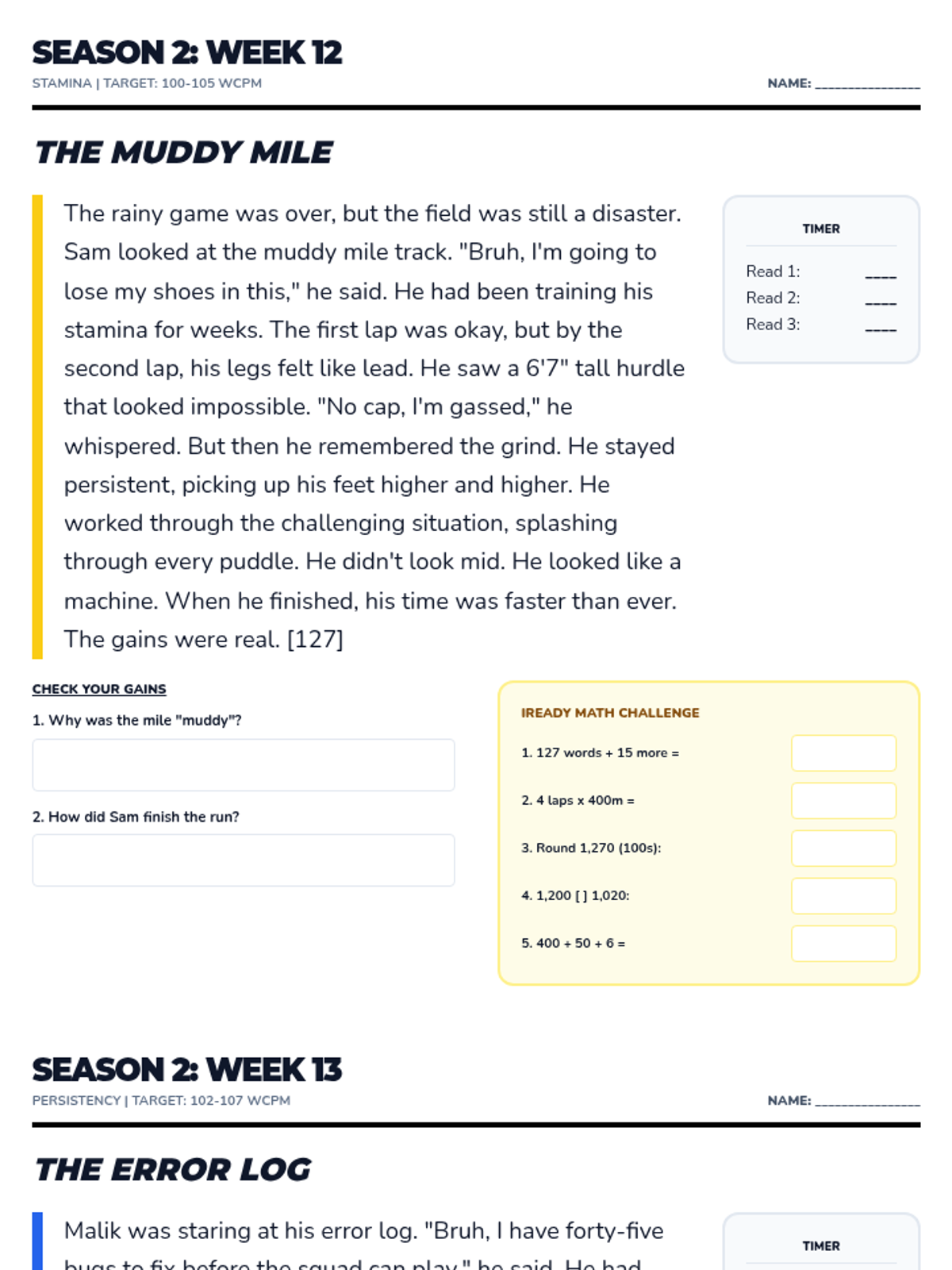
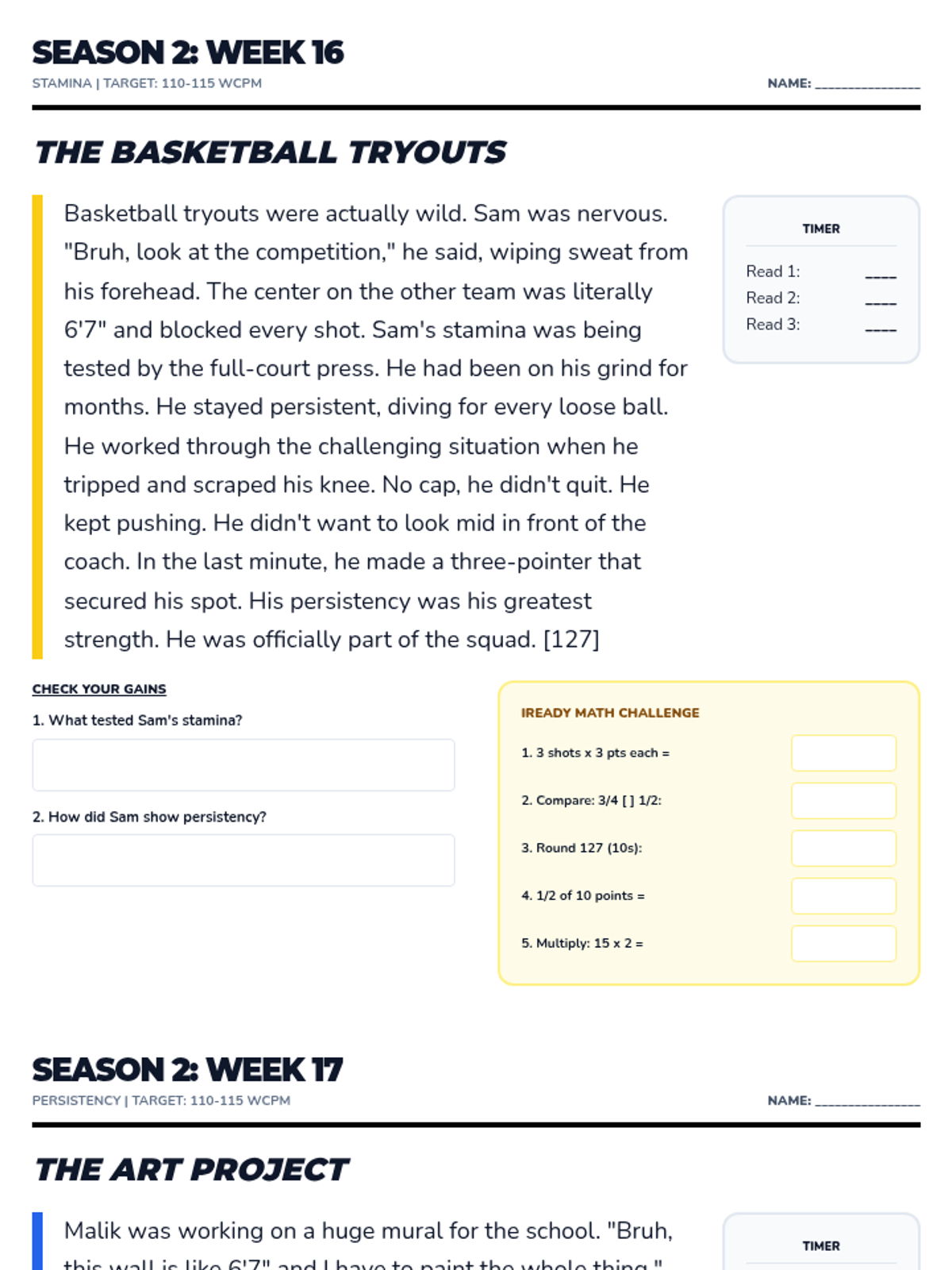
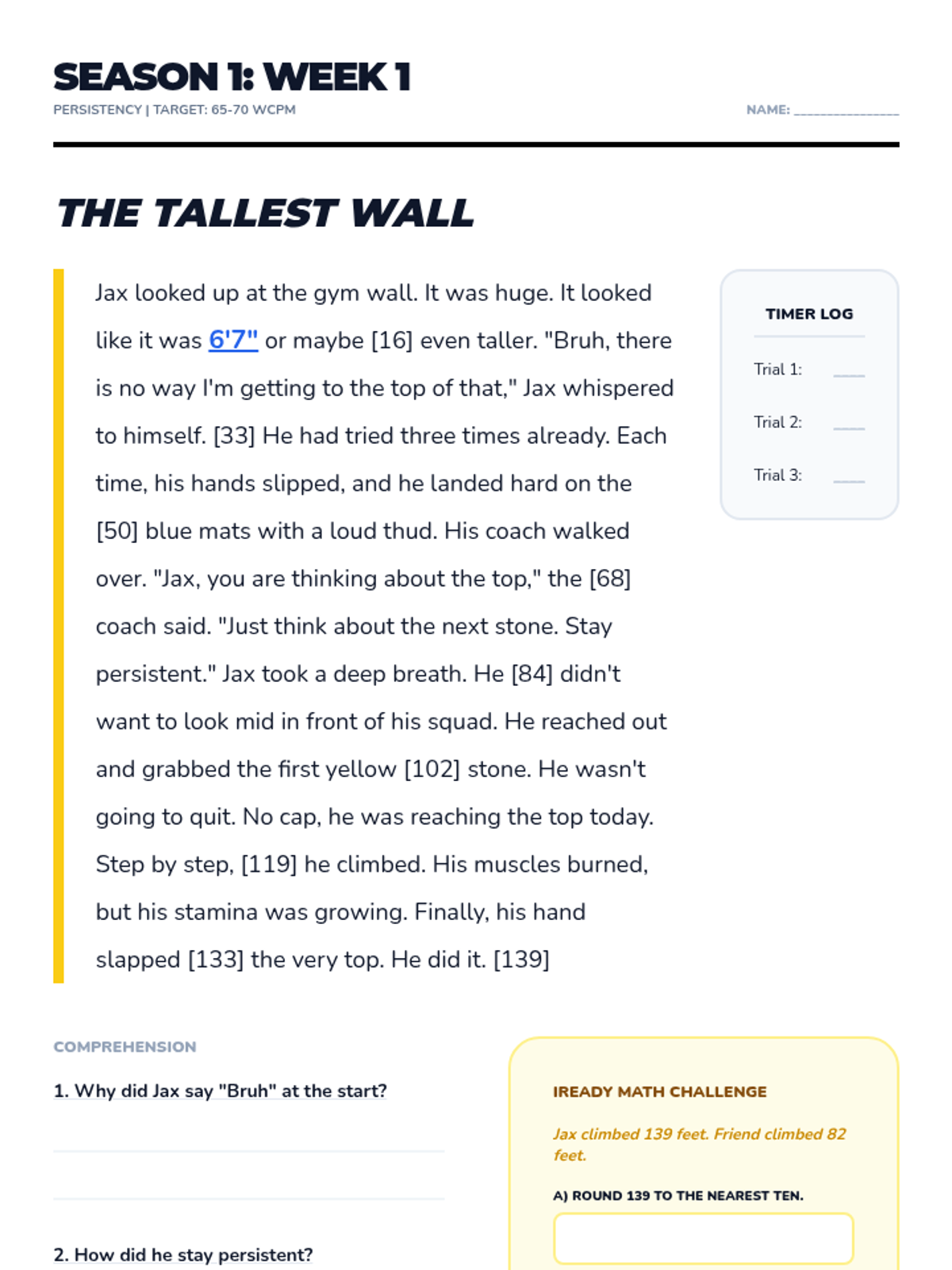
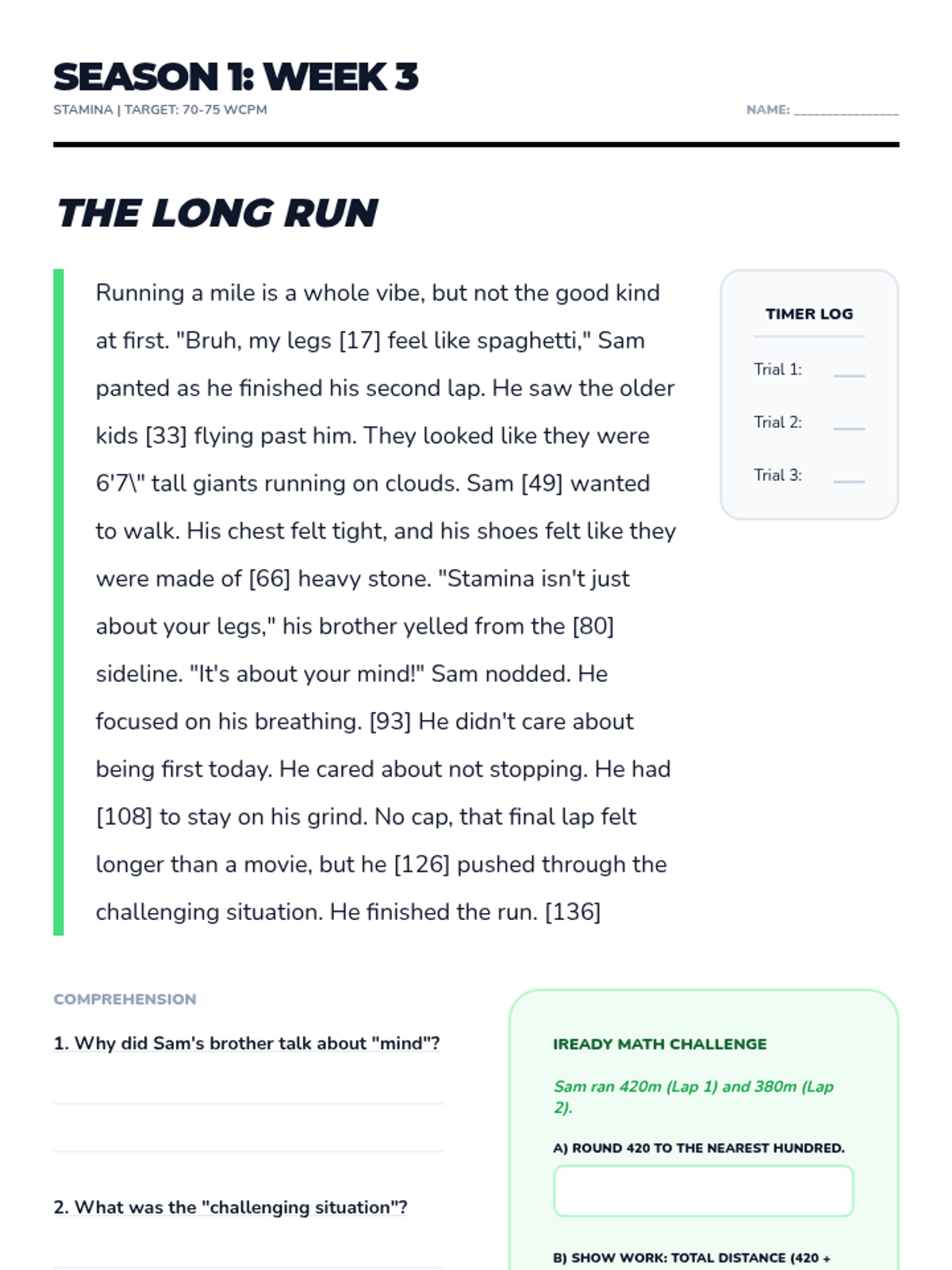
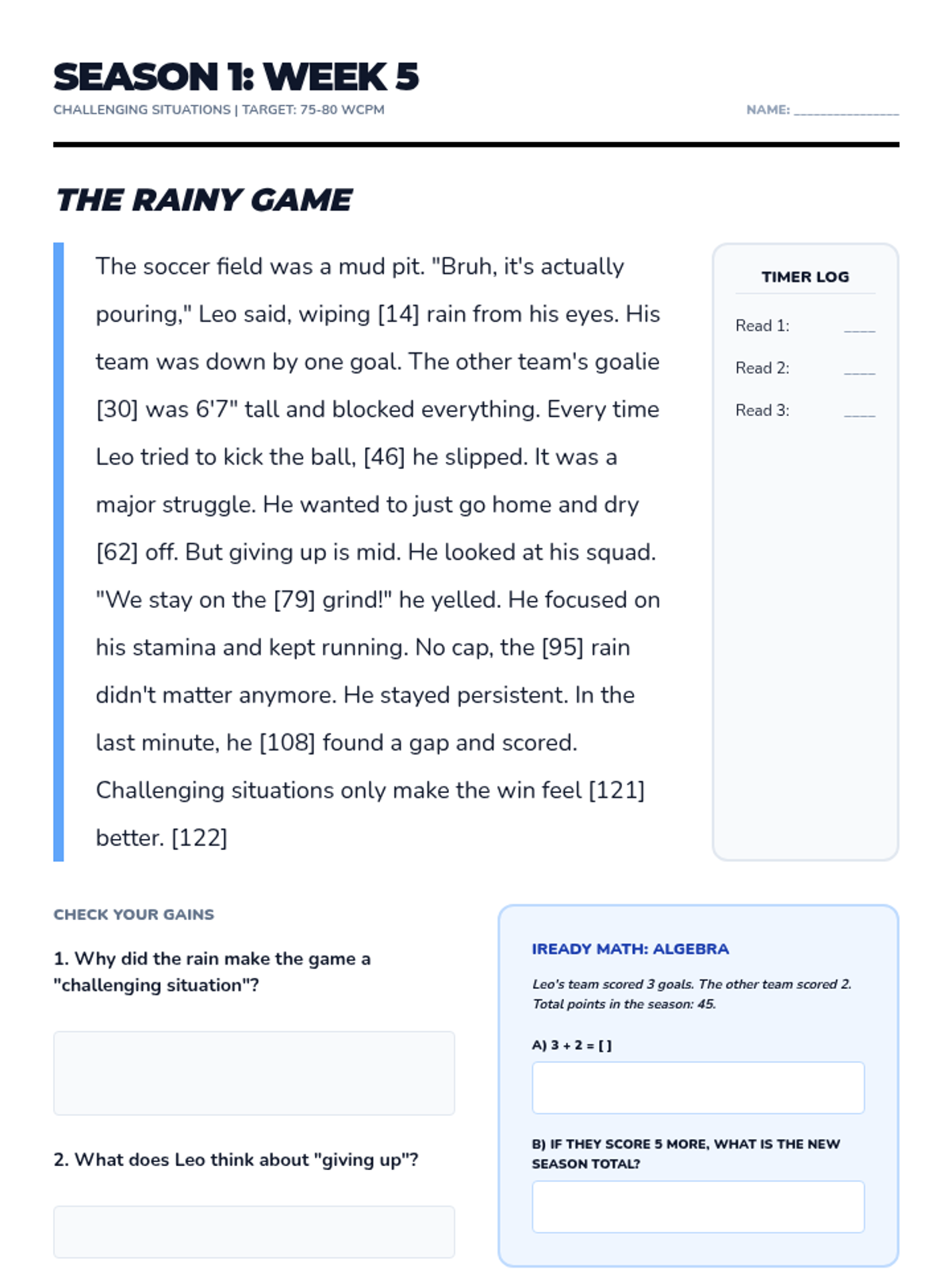
Focusing on stamina and persistency with longer passages and math skills centered on fractions and complex word problems.
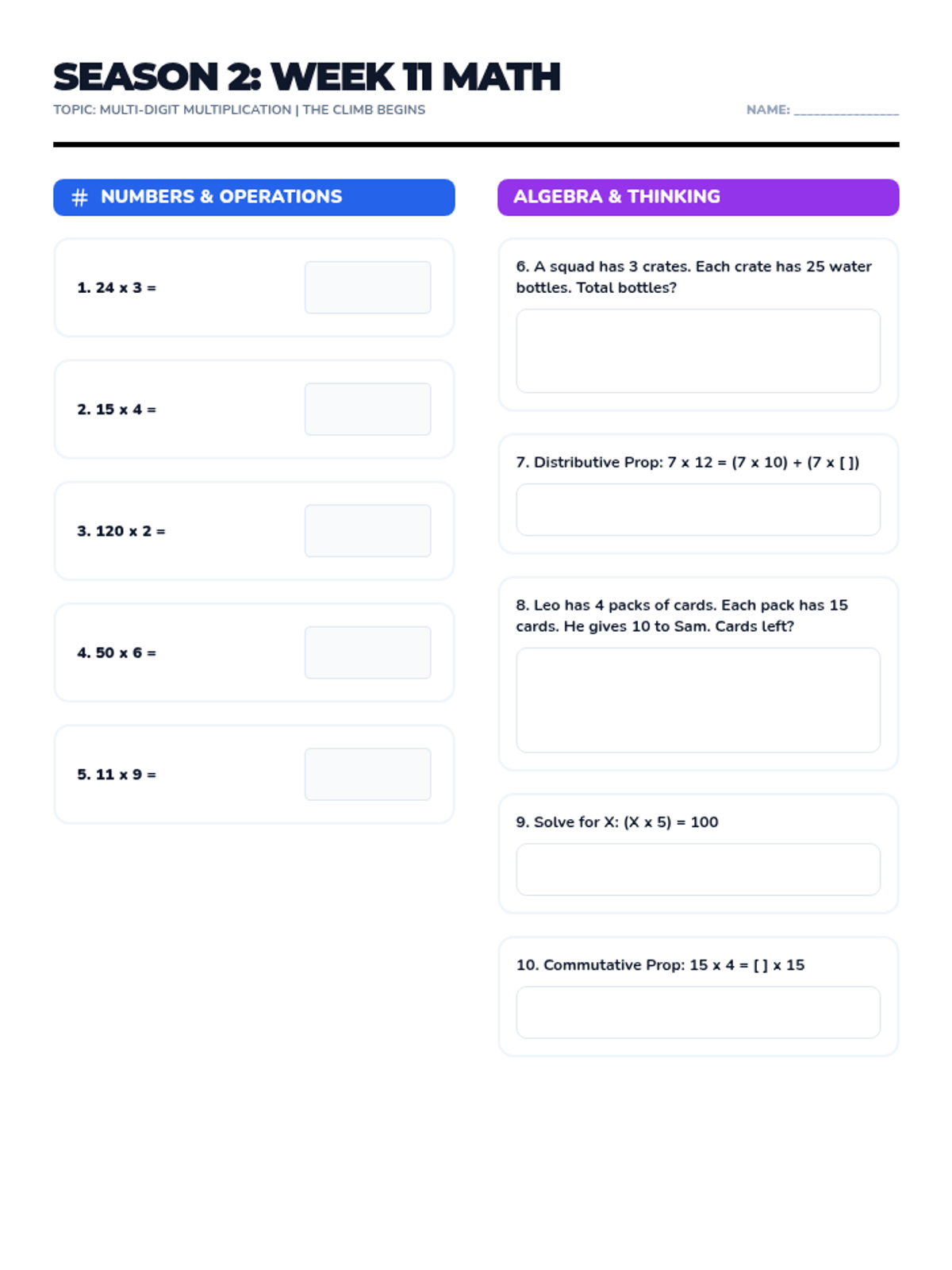
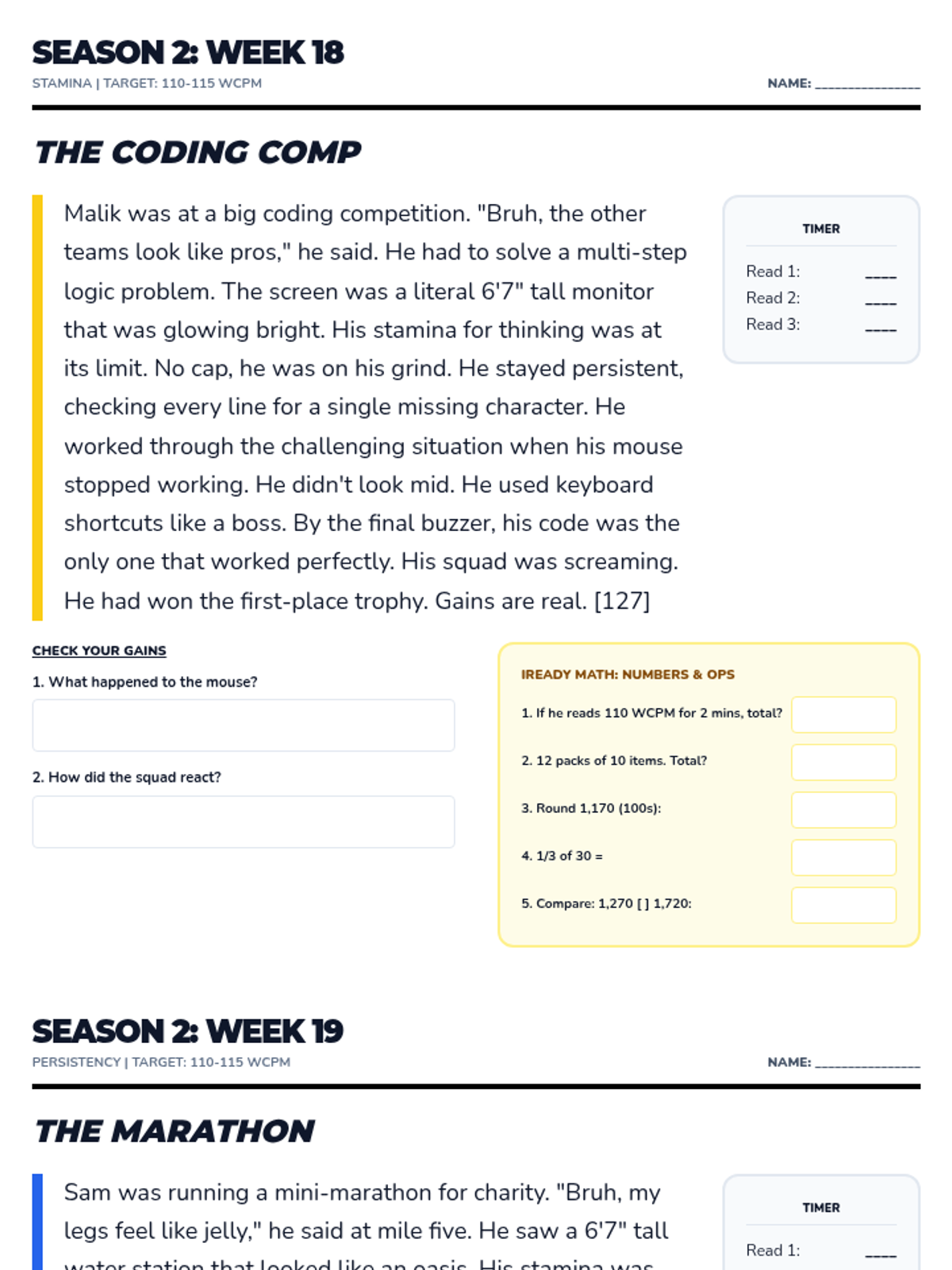
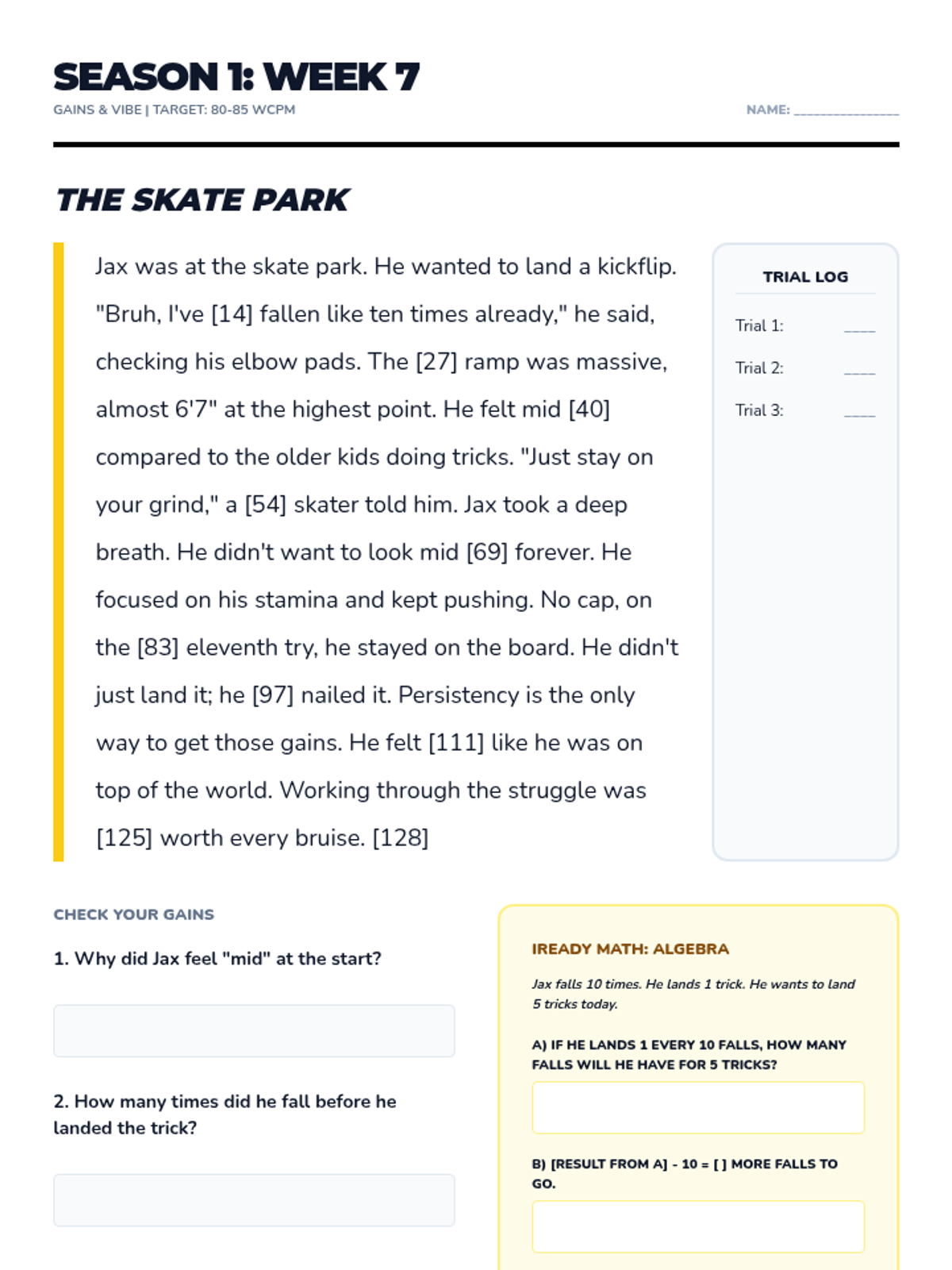
Stepping up complexity in reading passages and focusing on multiplication, division, and algebraic thinking.
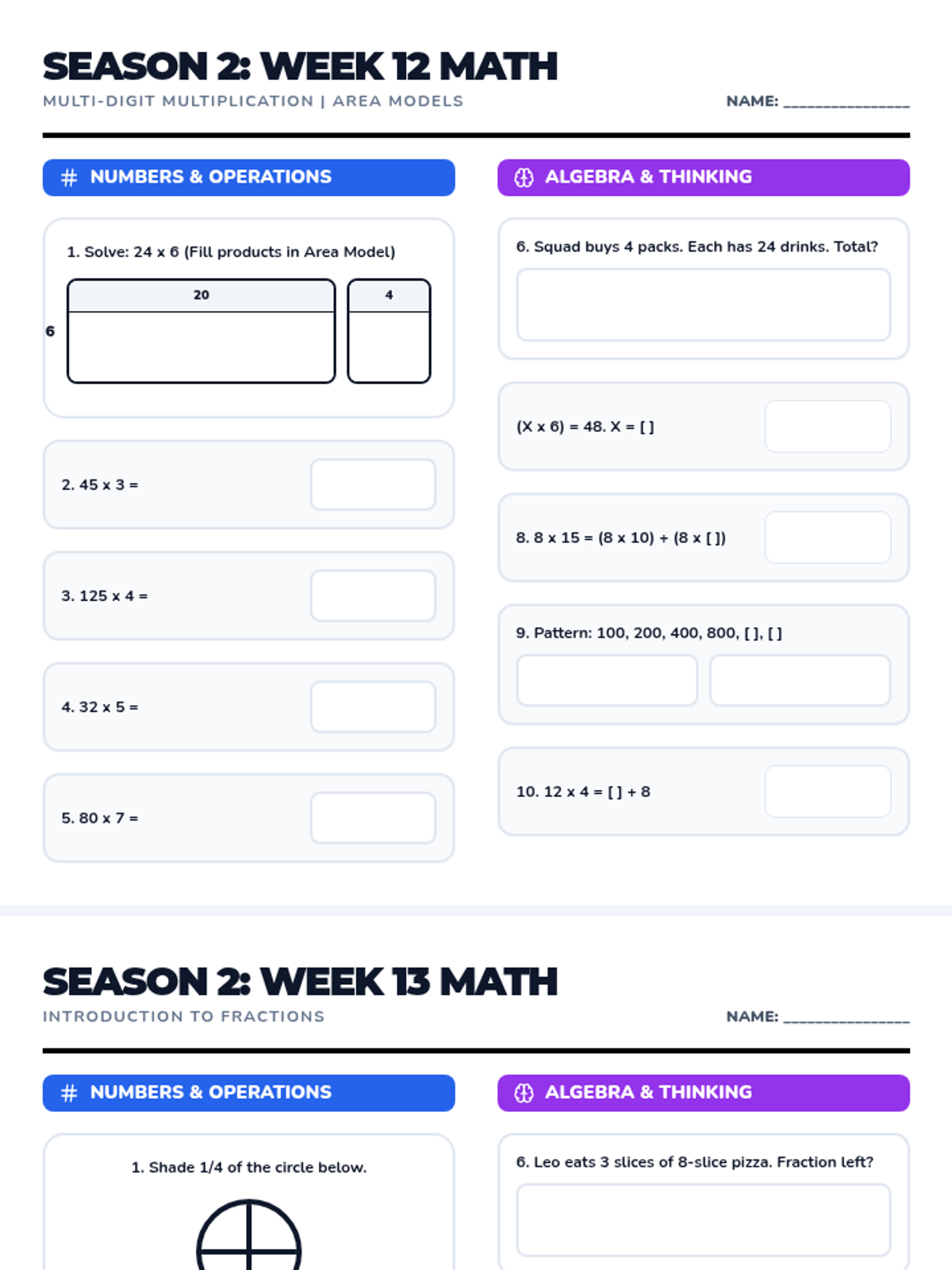
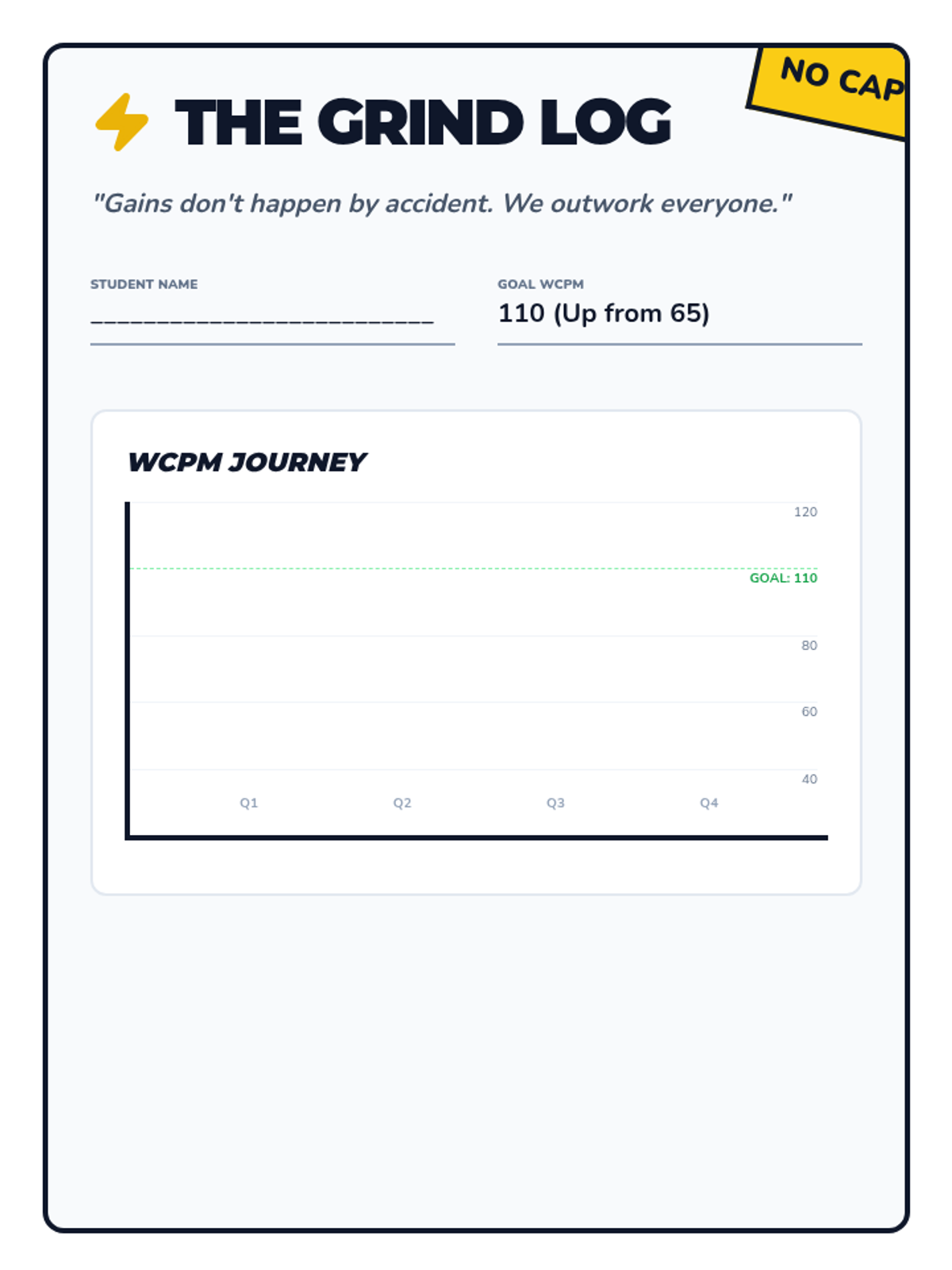
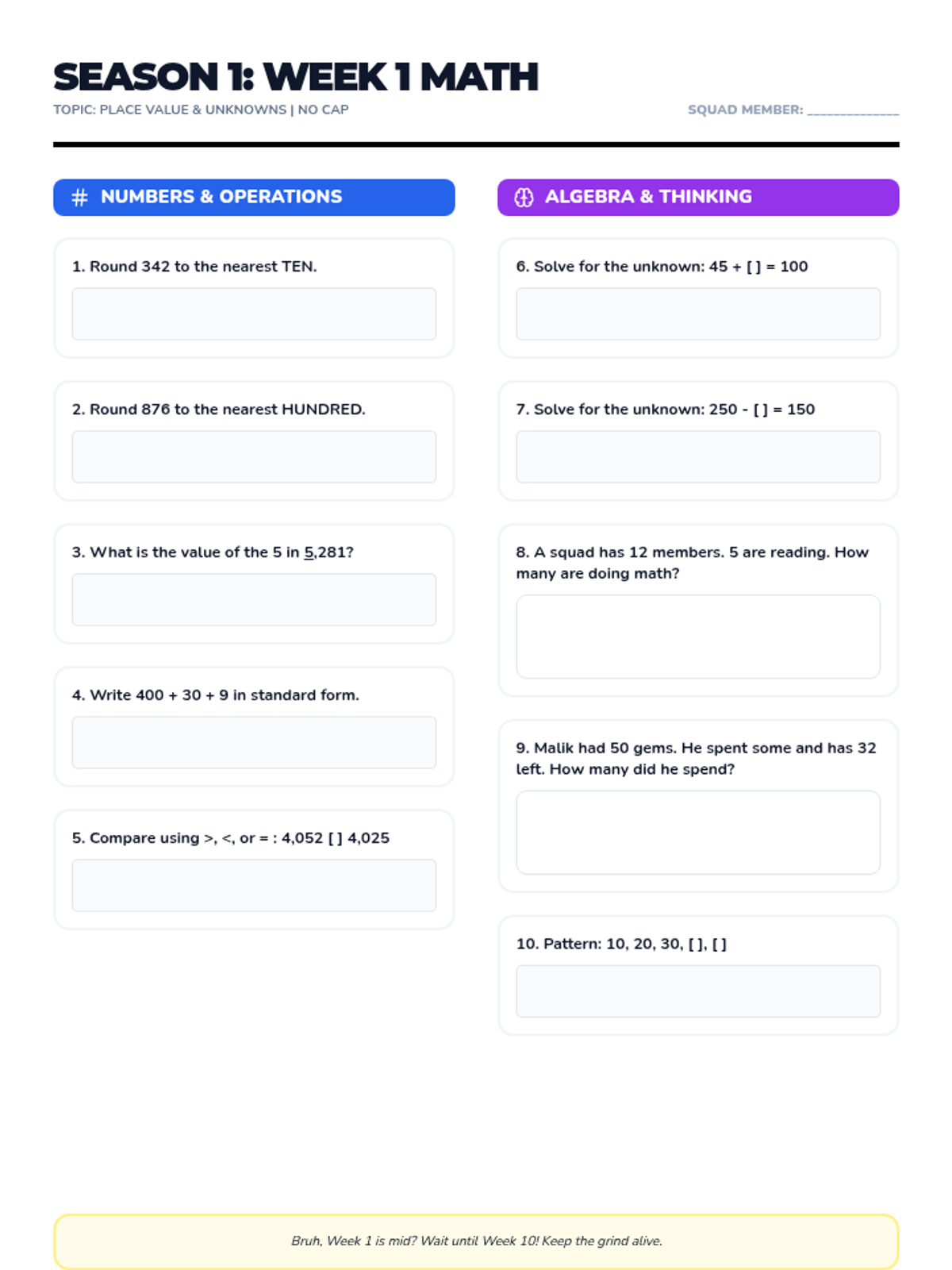
The foundation of the program, focusing on initial fluency routines and core 3rd-grade math skills in place value and operations. Includes the 40-week Success Log and Math Checklist.
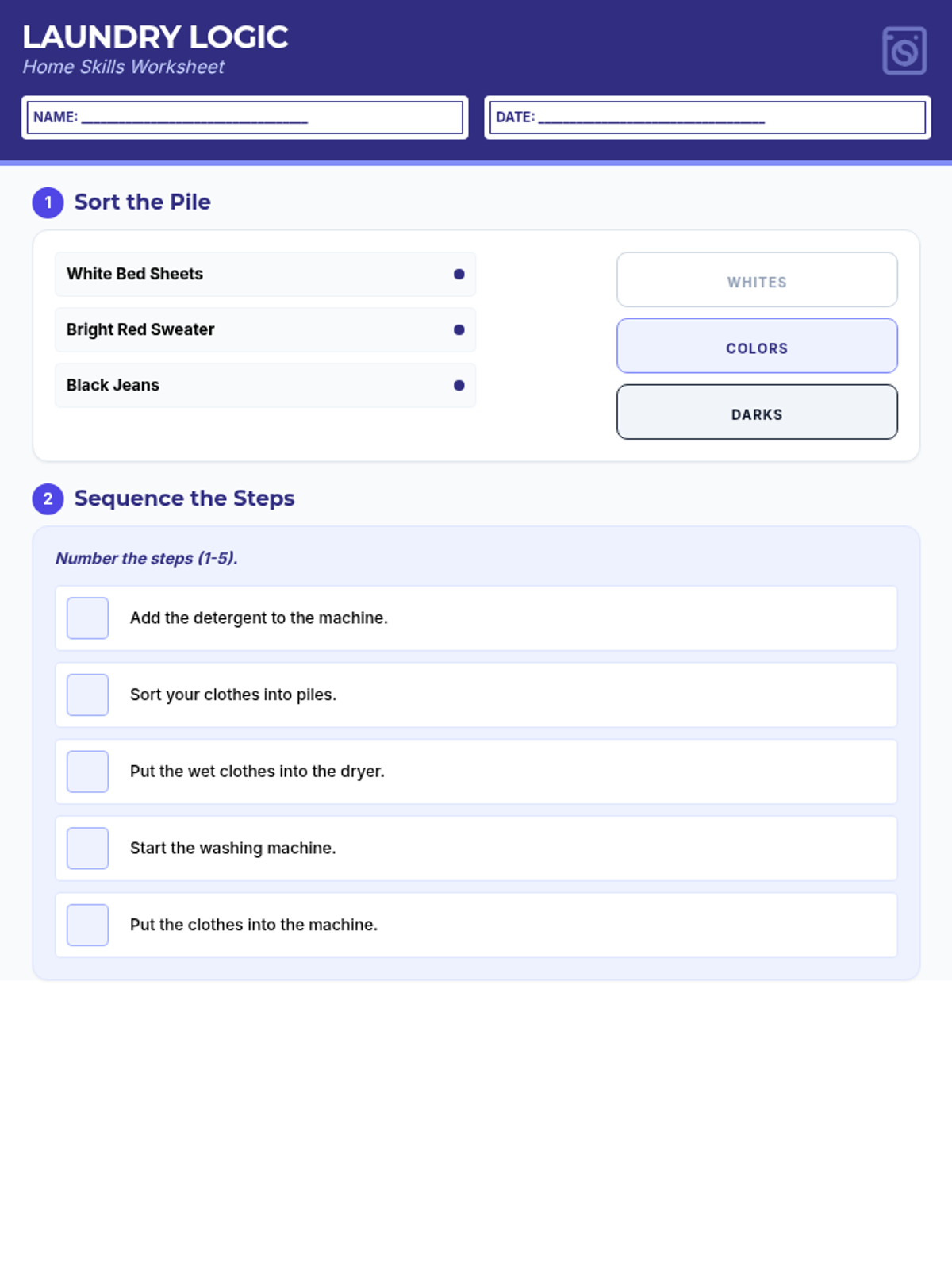
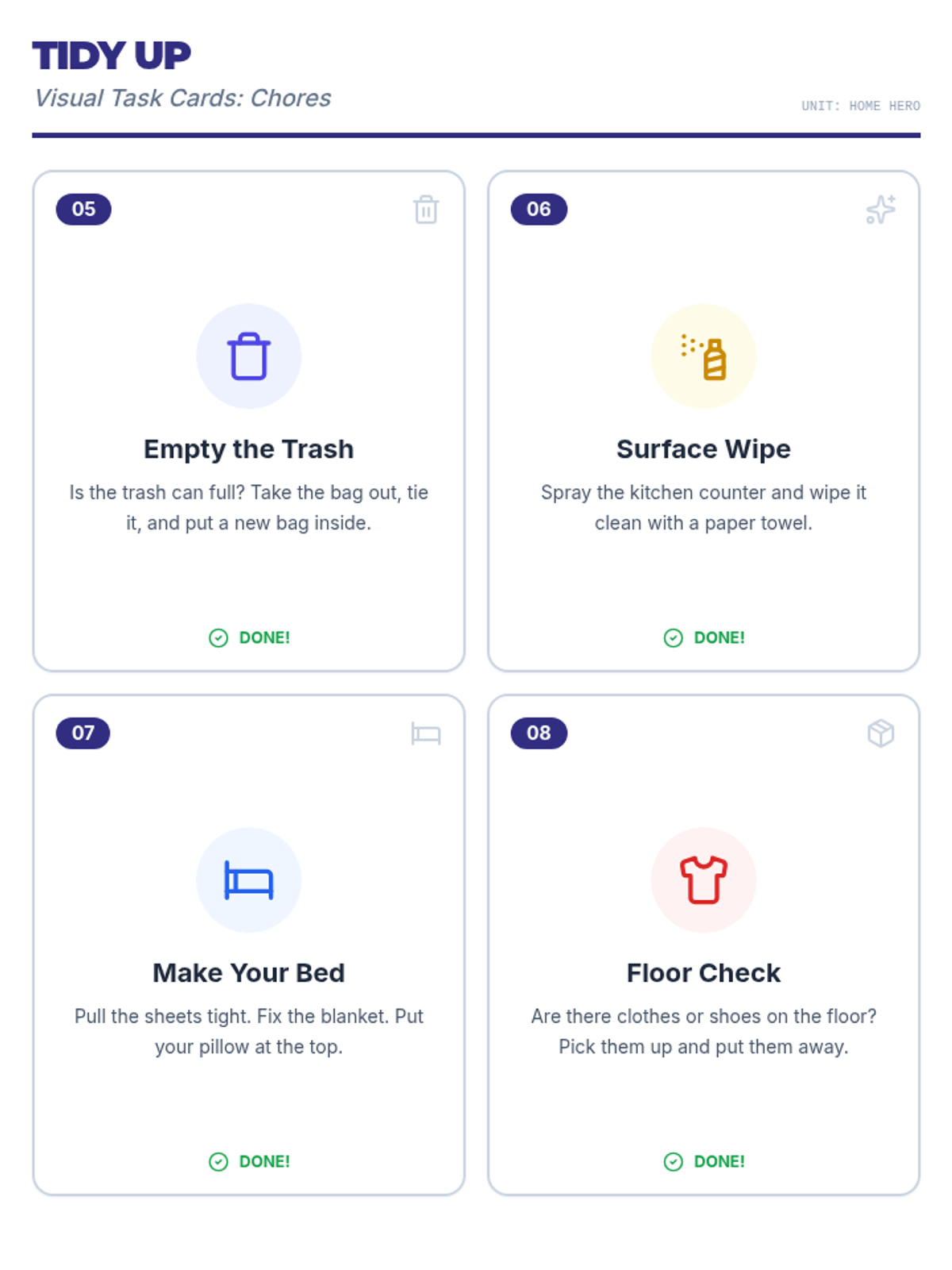
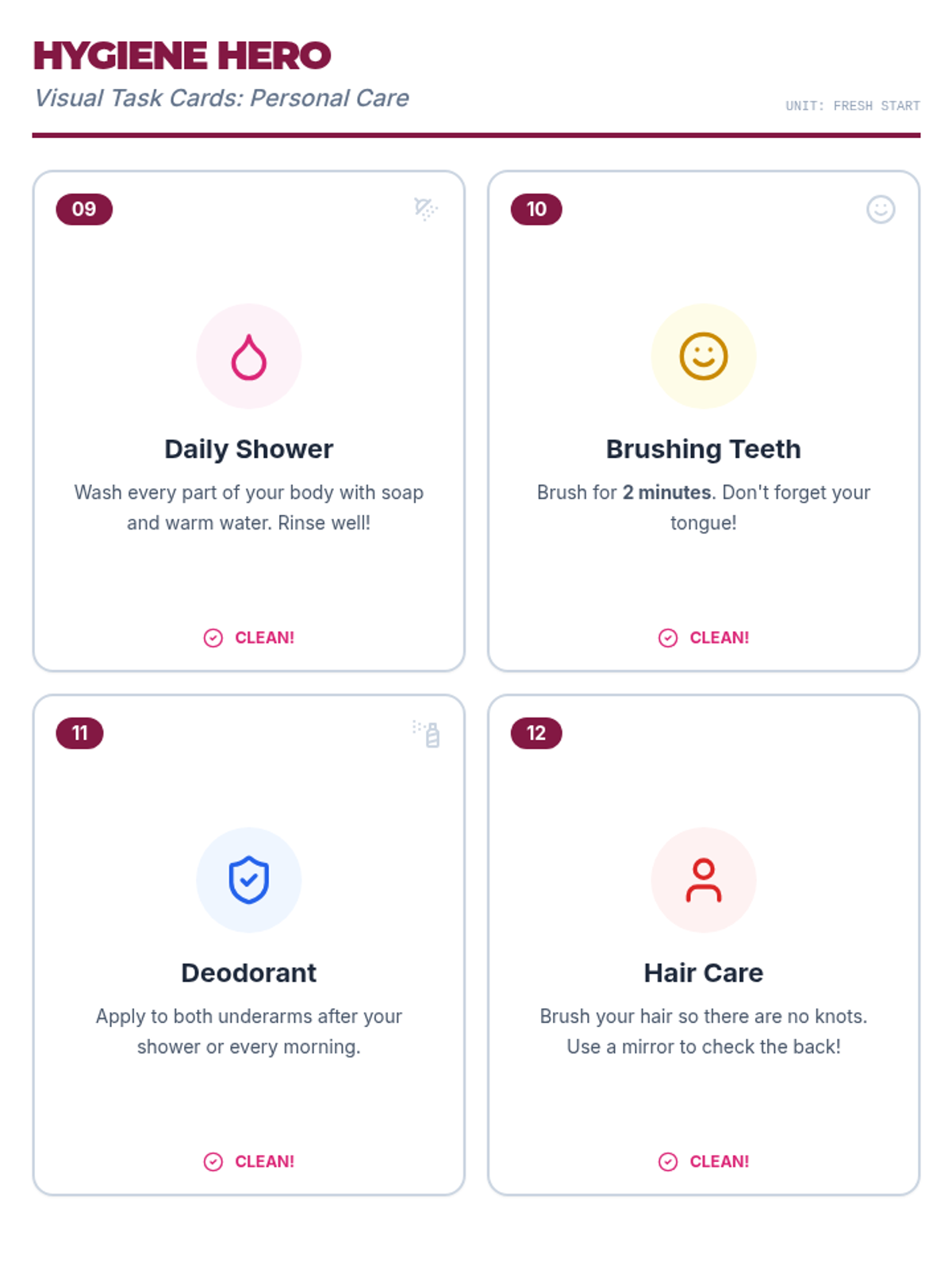
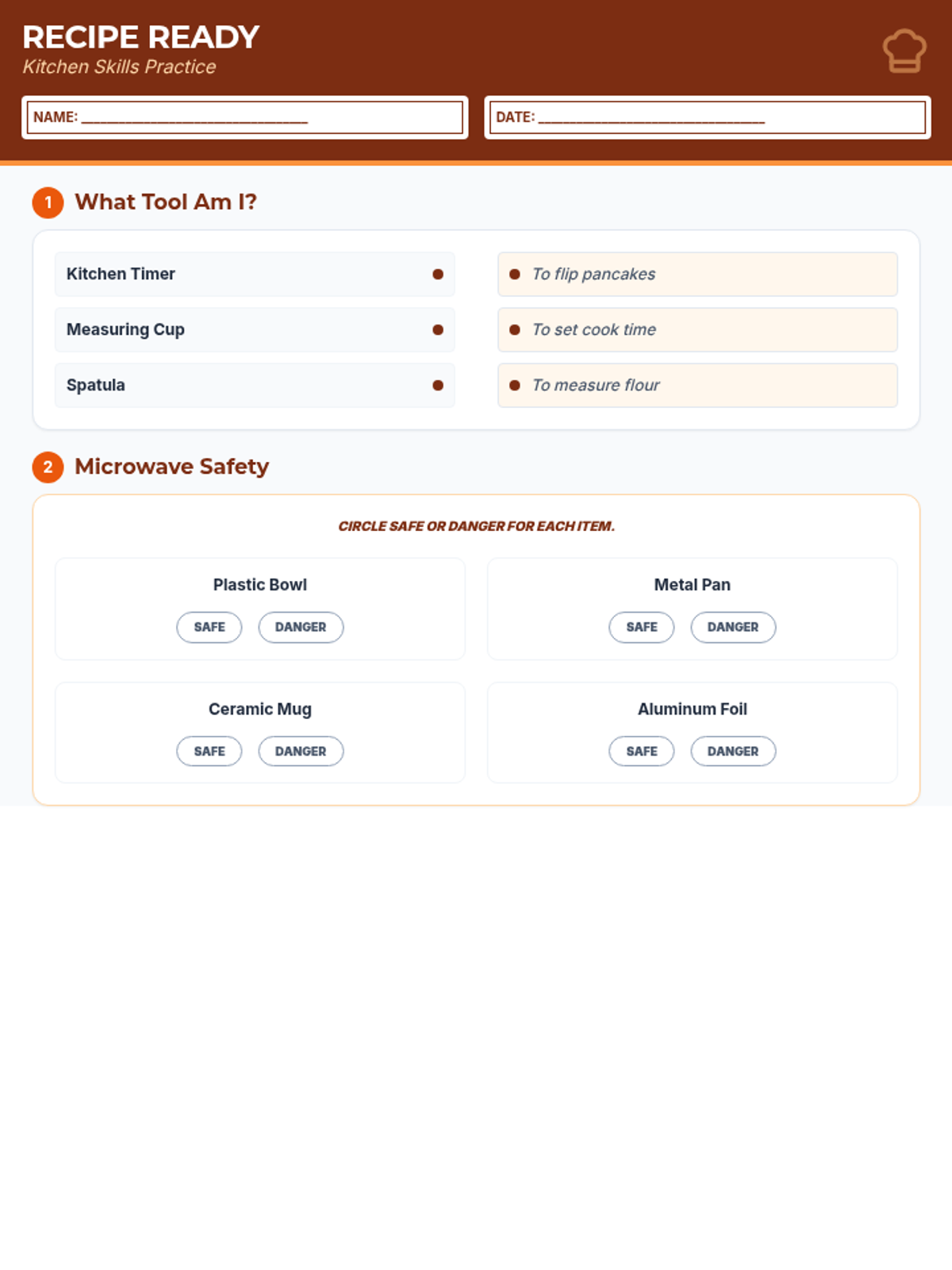
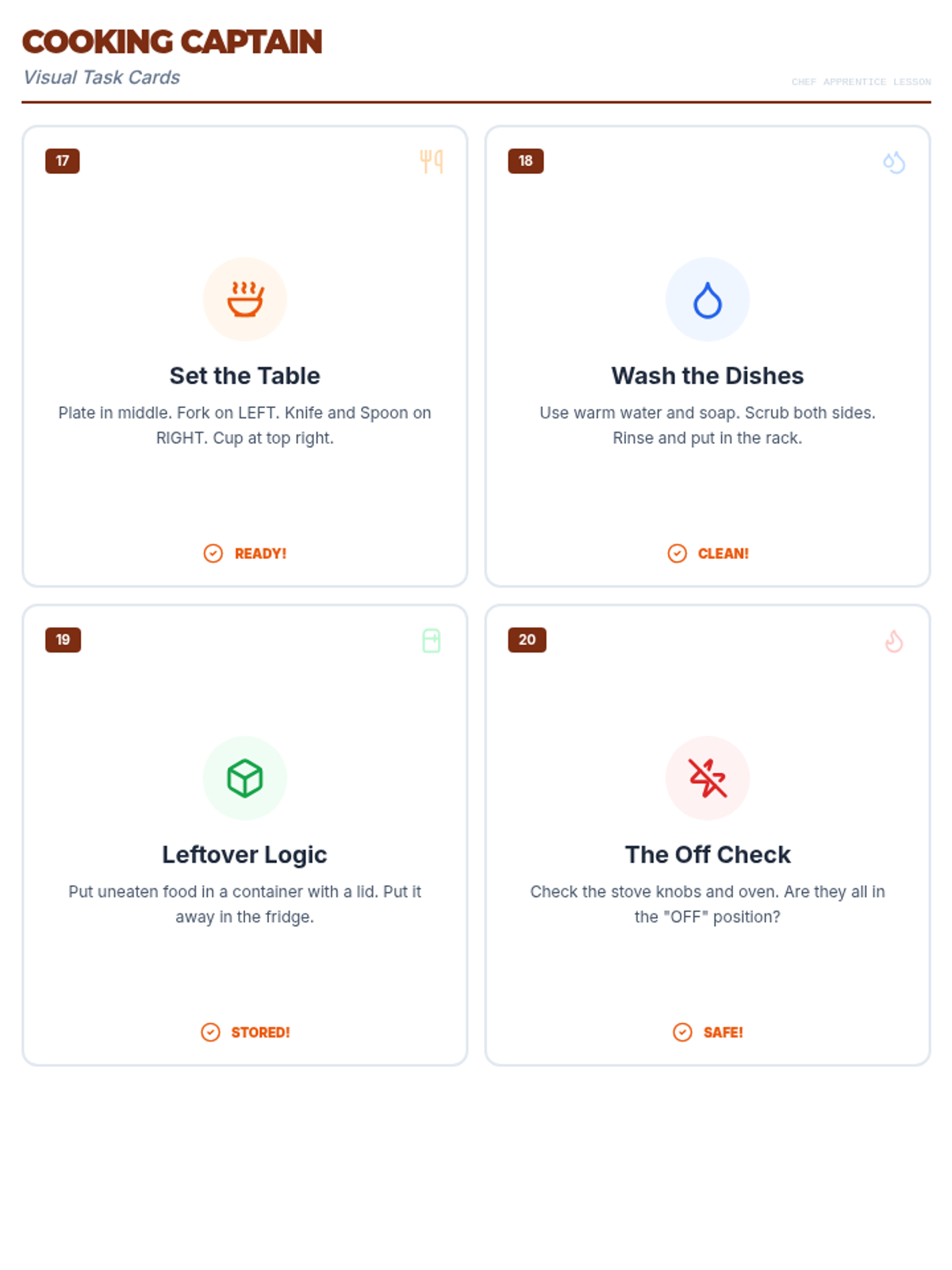
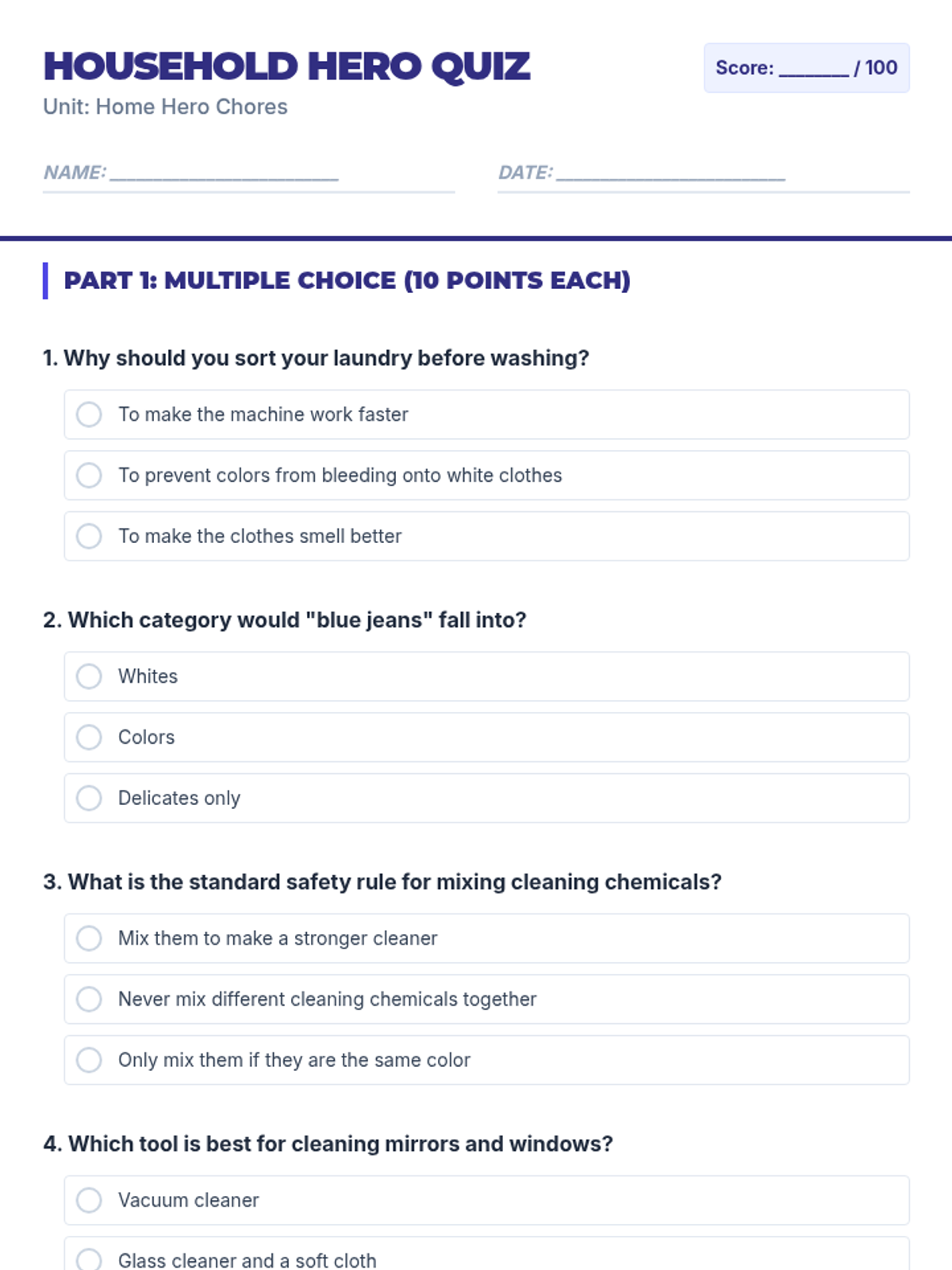
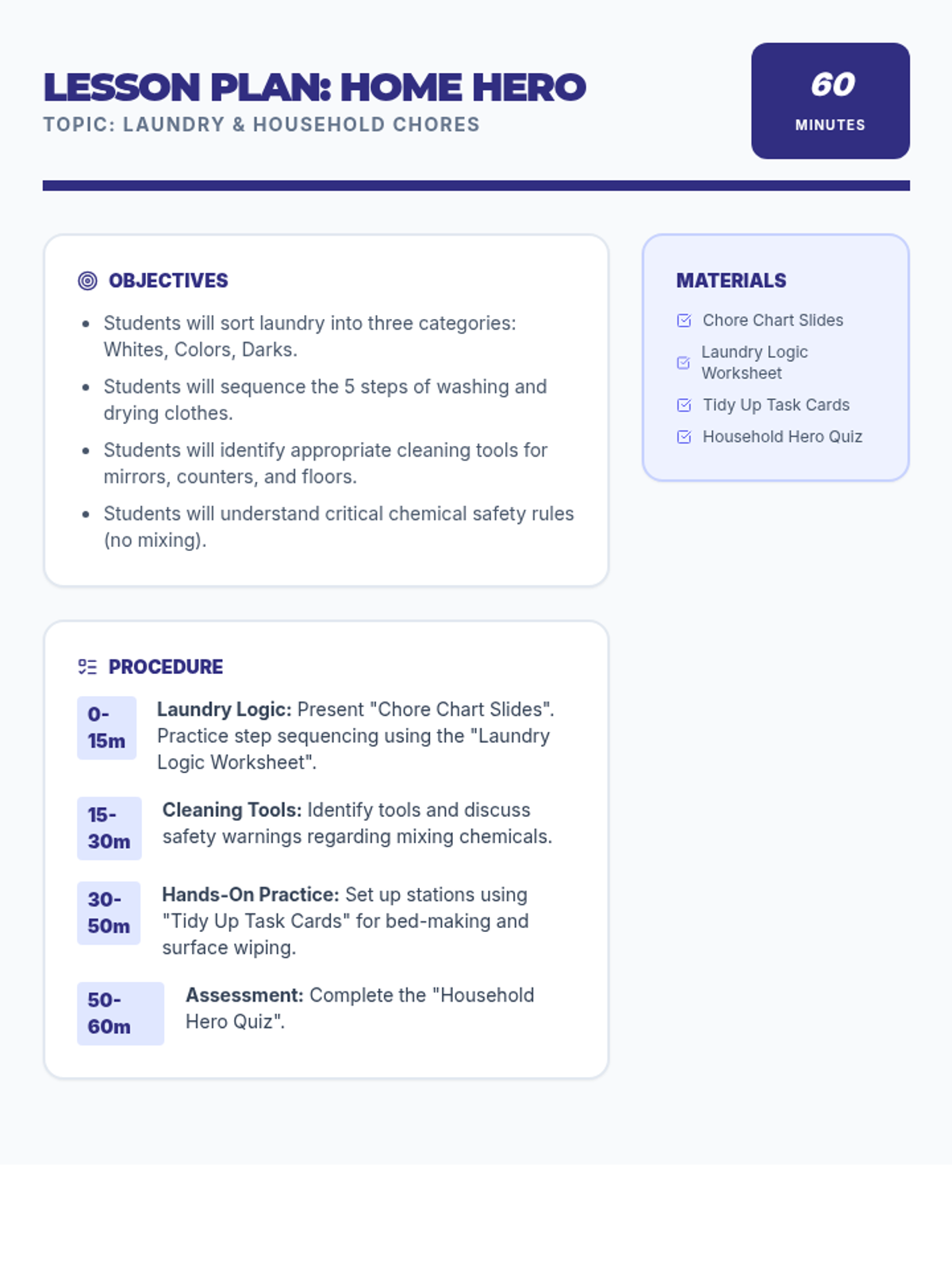
Mastering the art of laundry, cleaning schedules, and maintaining a healthy home environment.
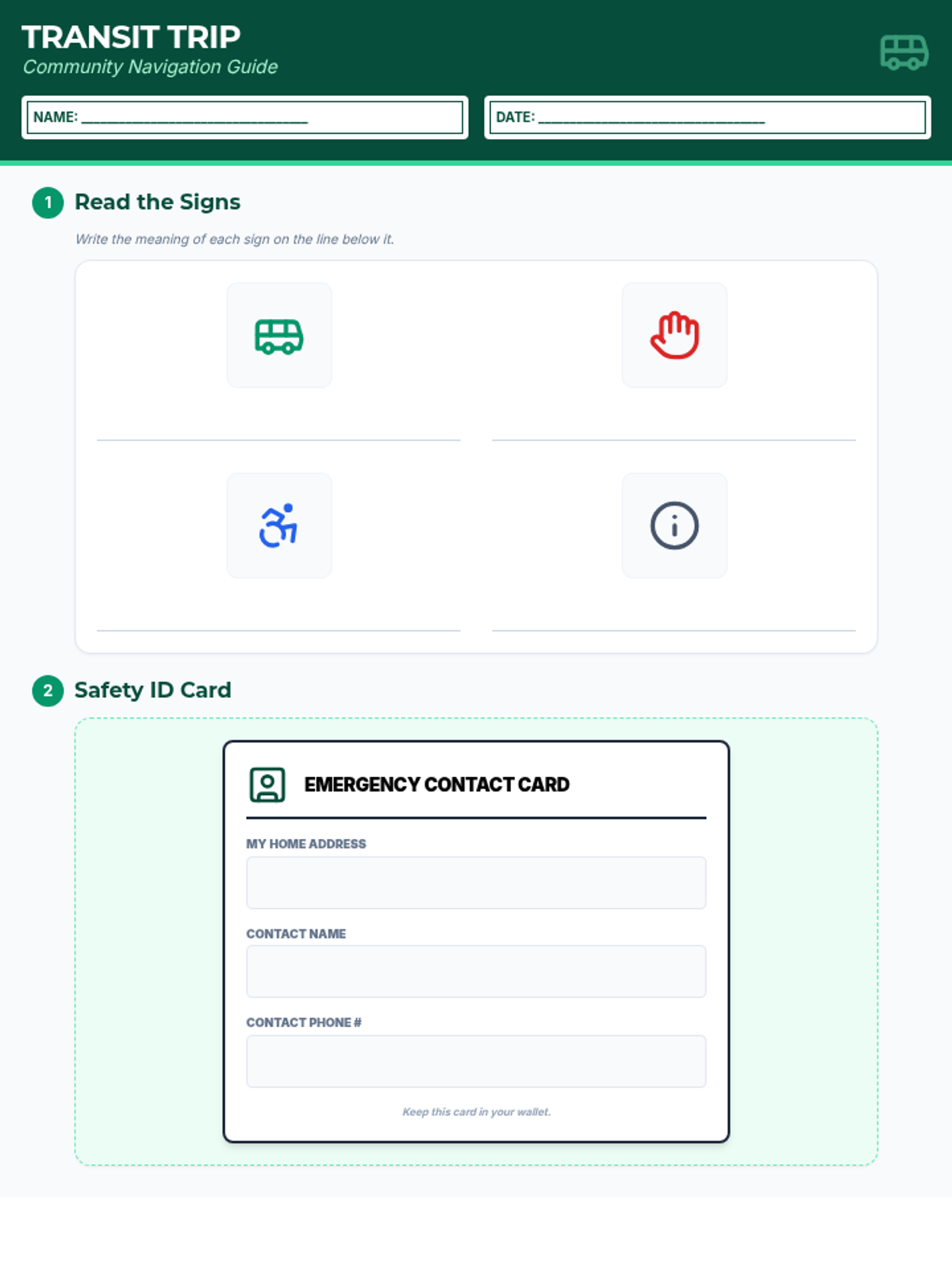
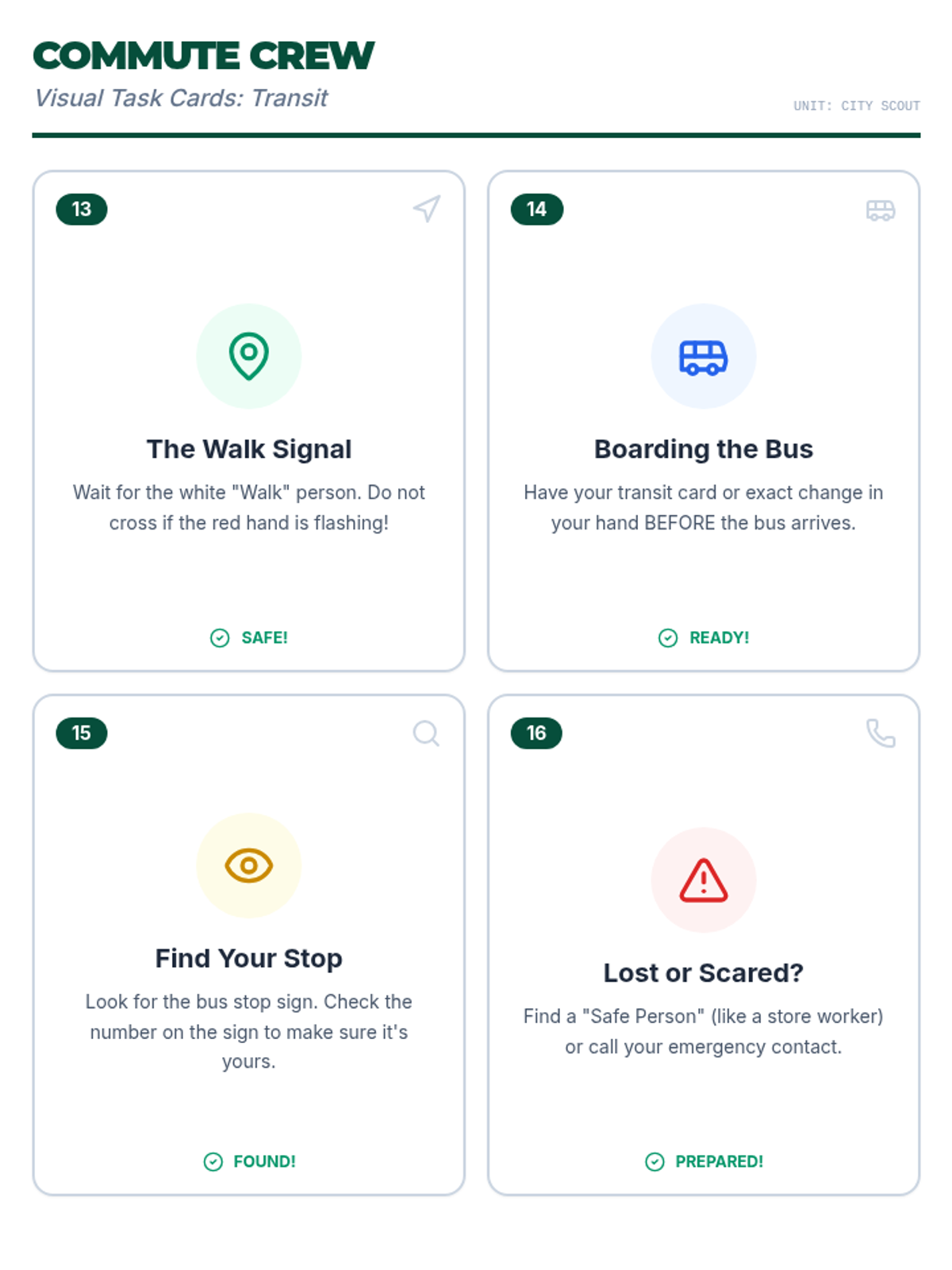
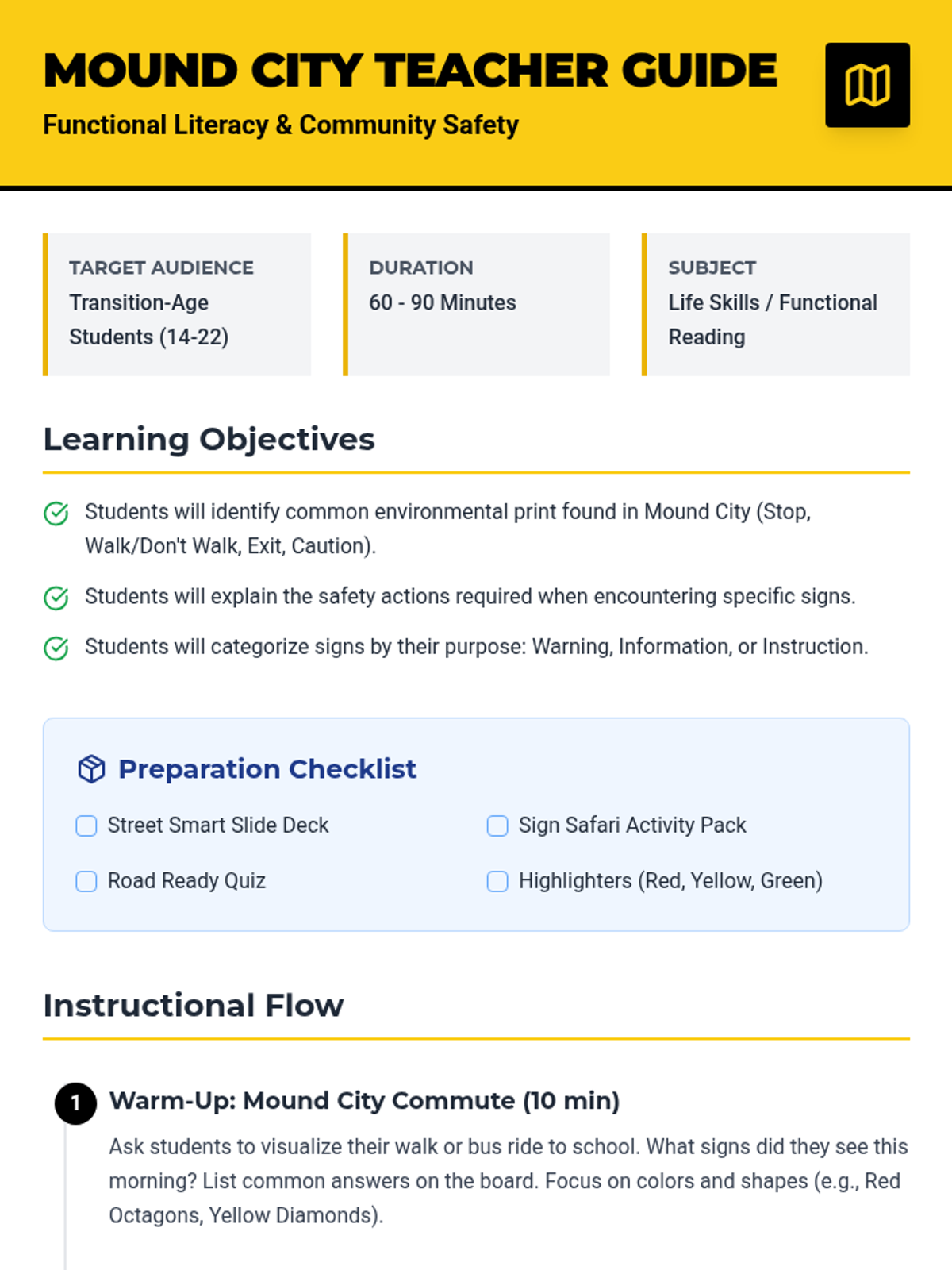
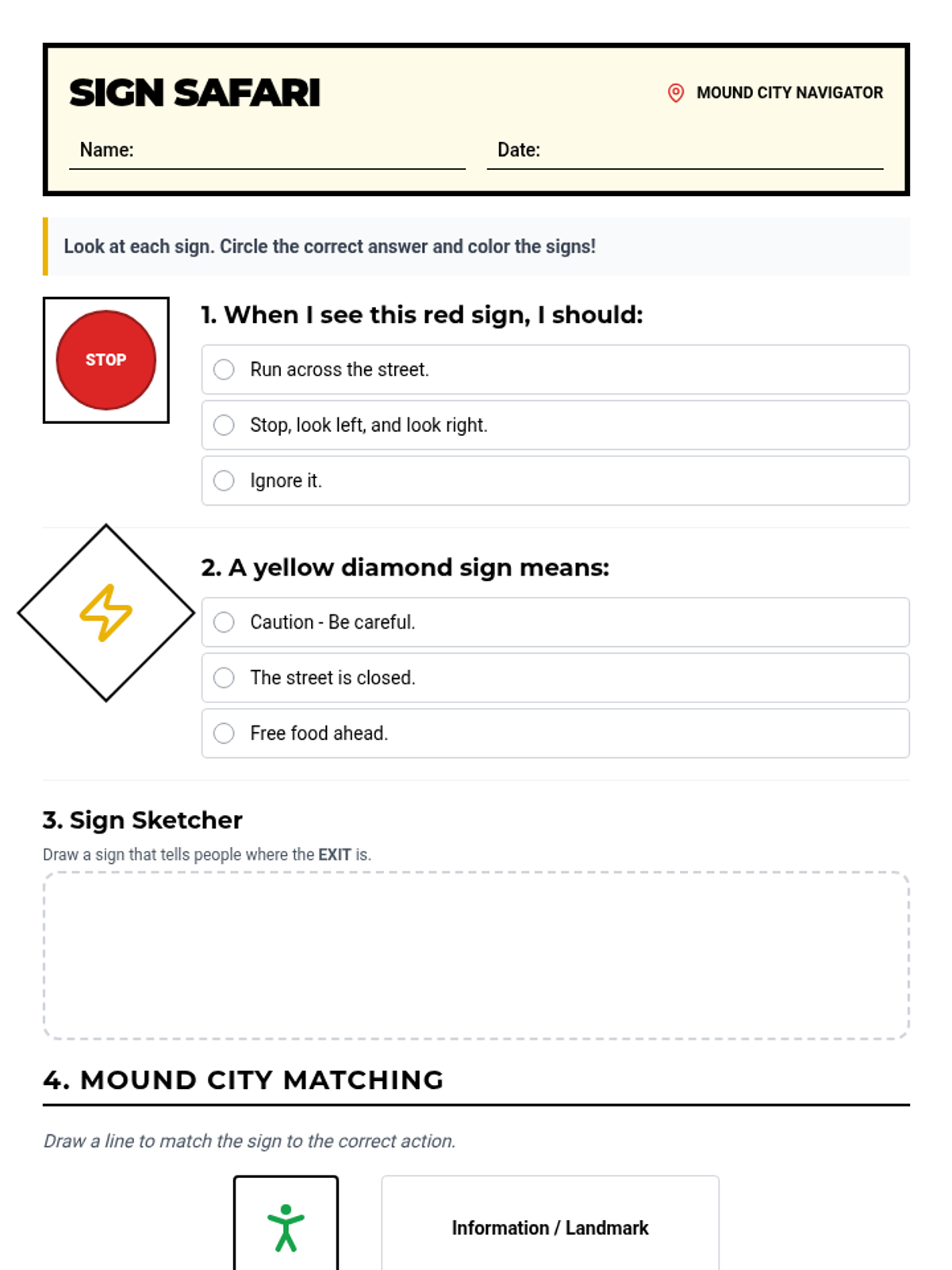
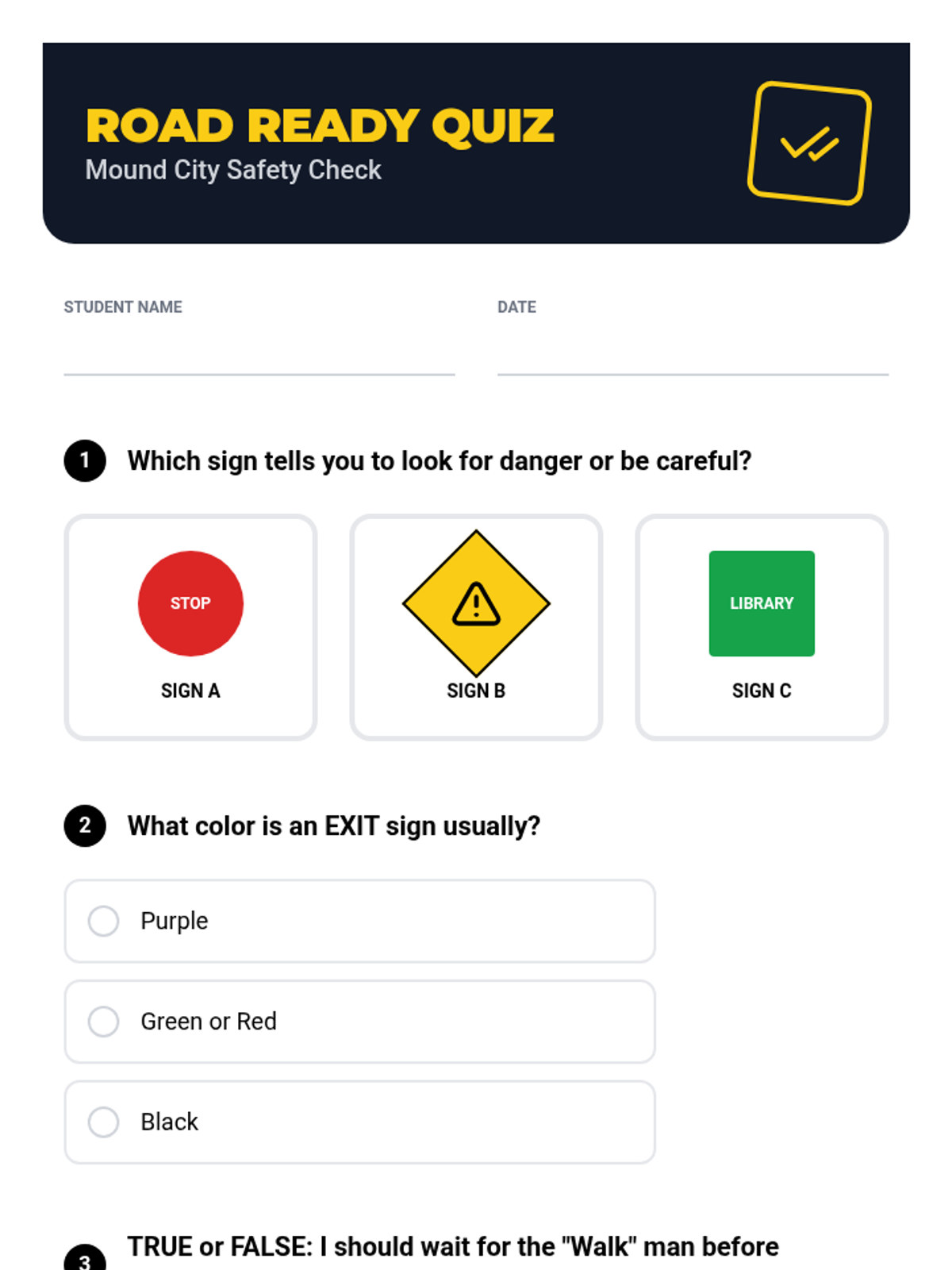
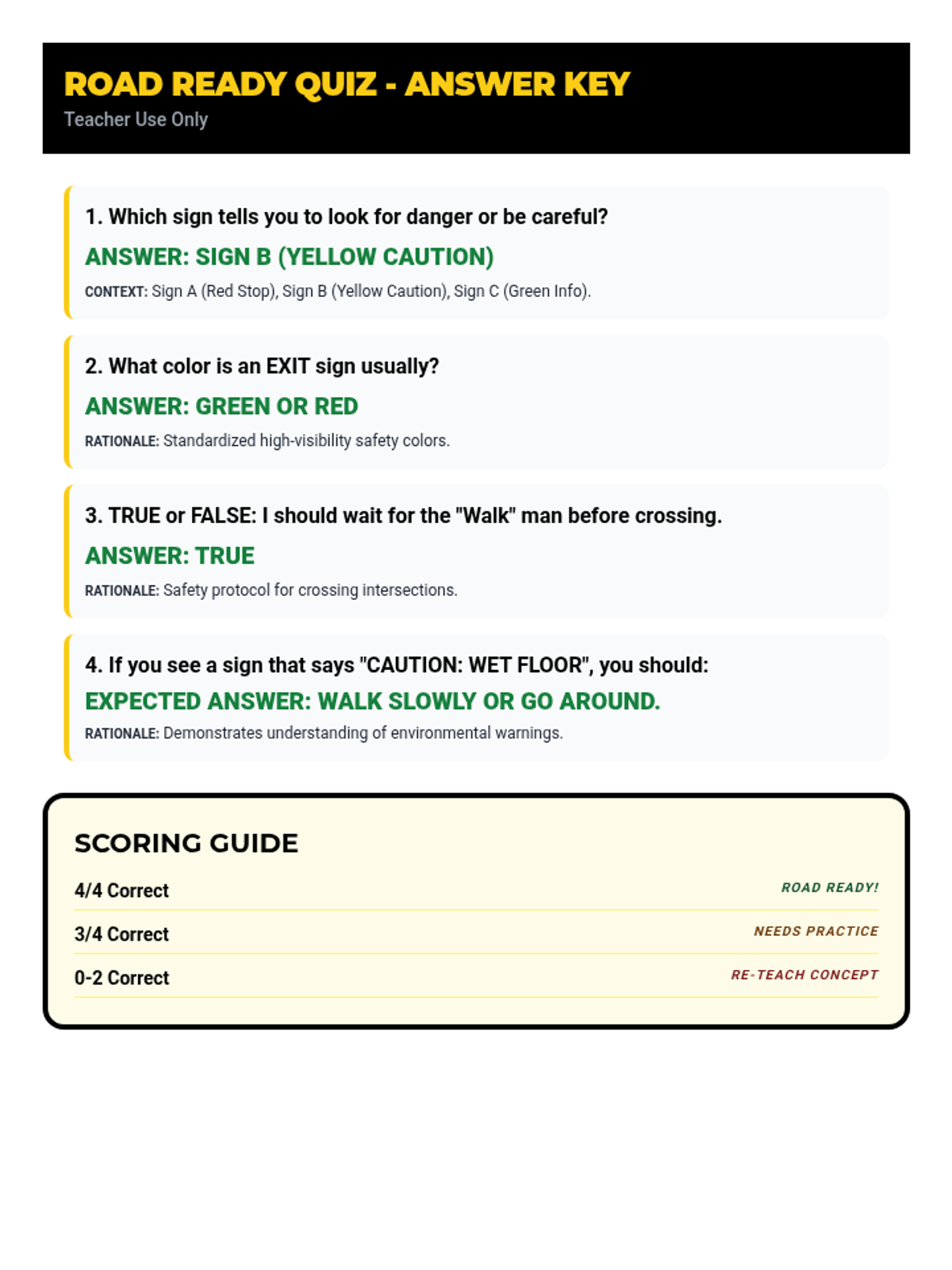
A functional literacy lesson for transition-age students focused on identifying and interpreting environmental print and safety signs in the Mound City community. Students build real-world independence through sign recognition and situational awareness.
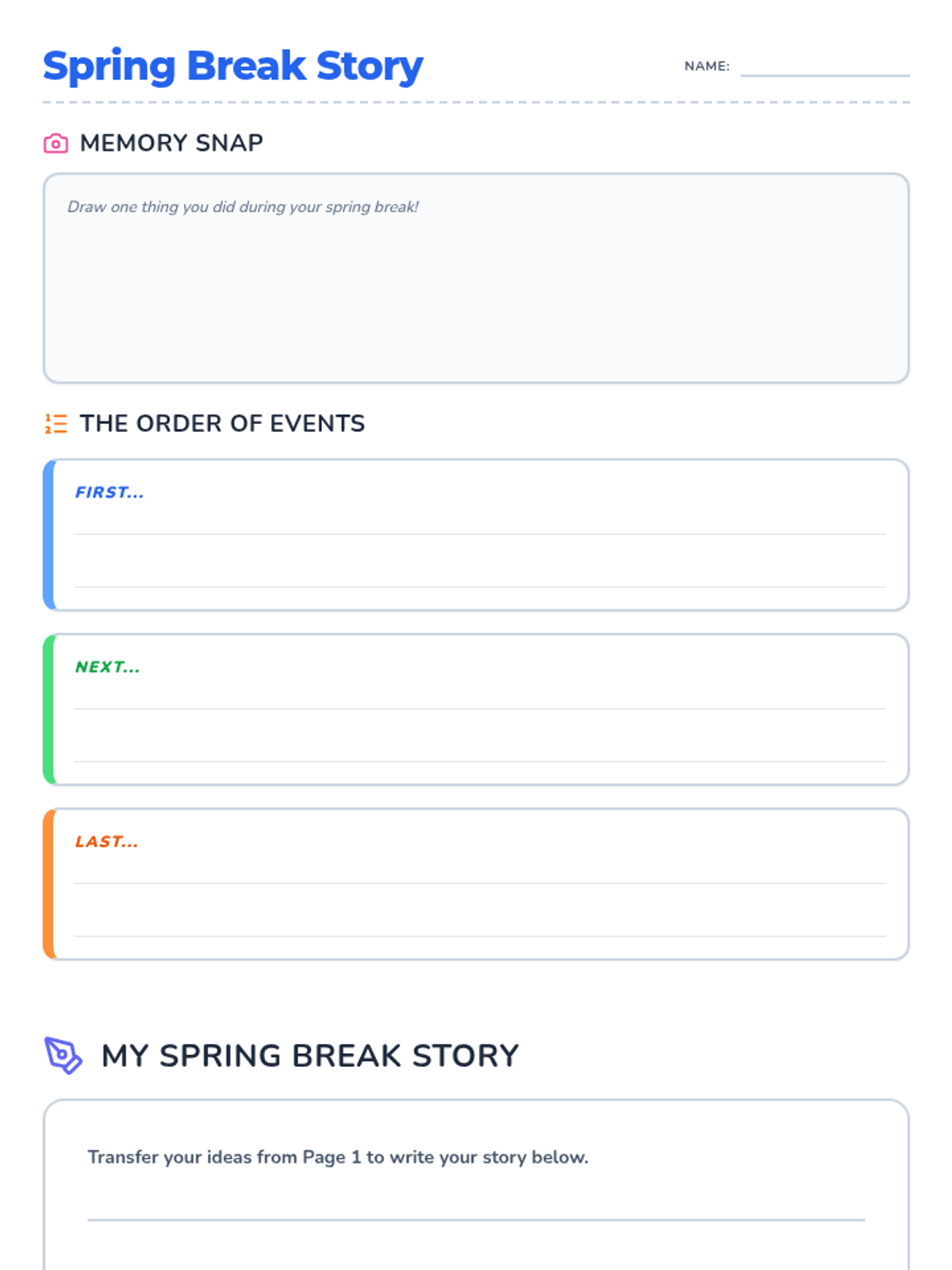
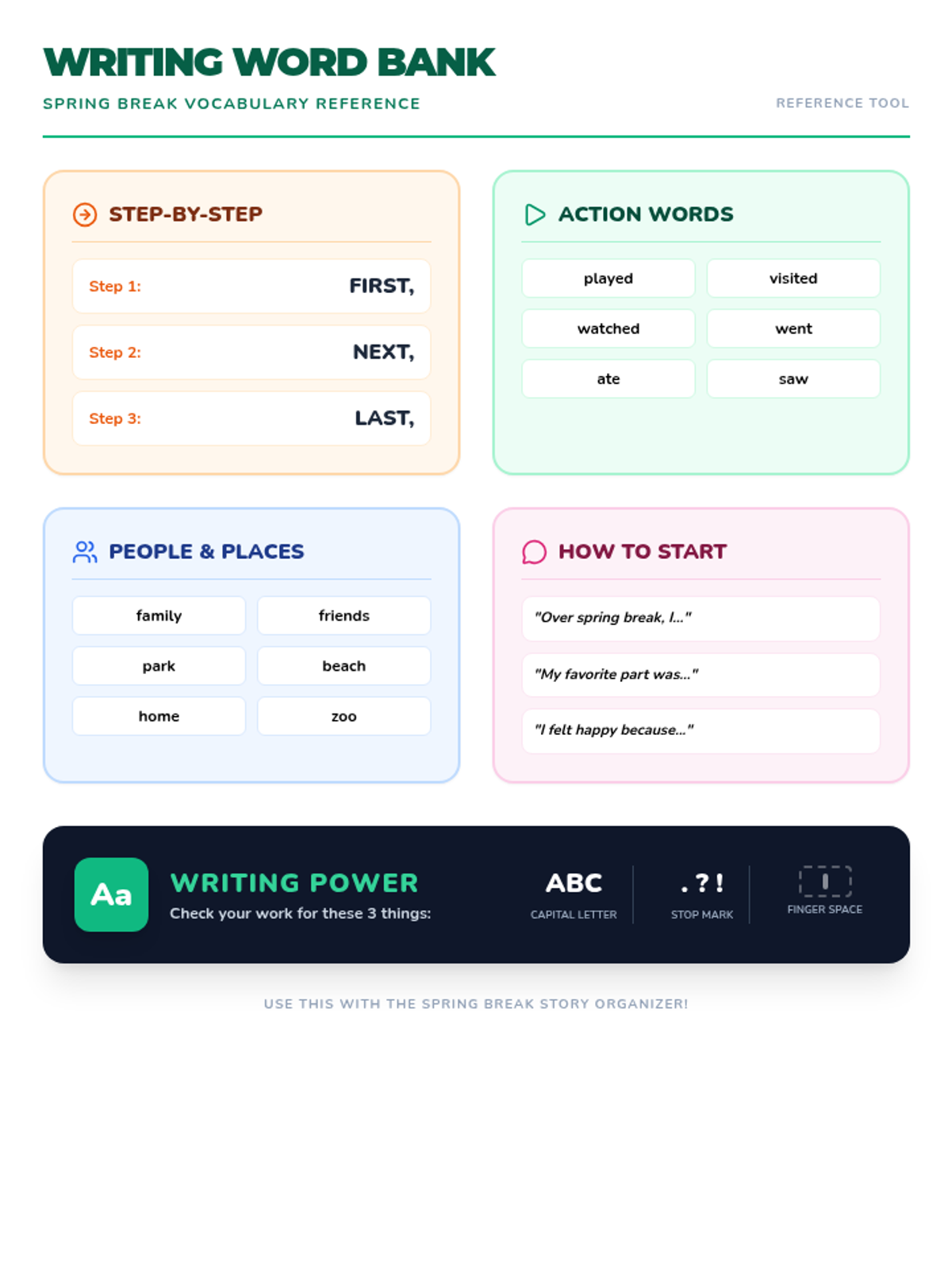
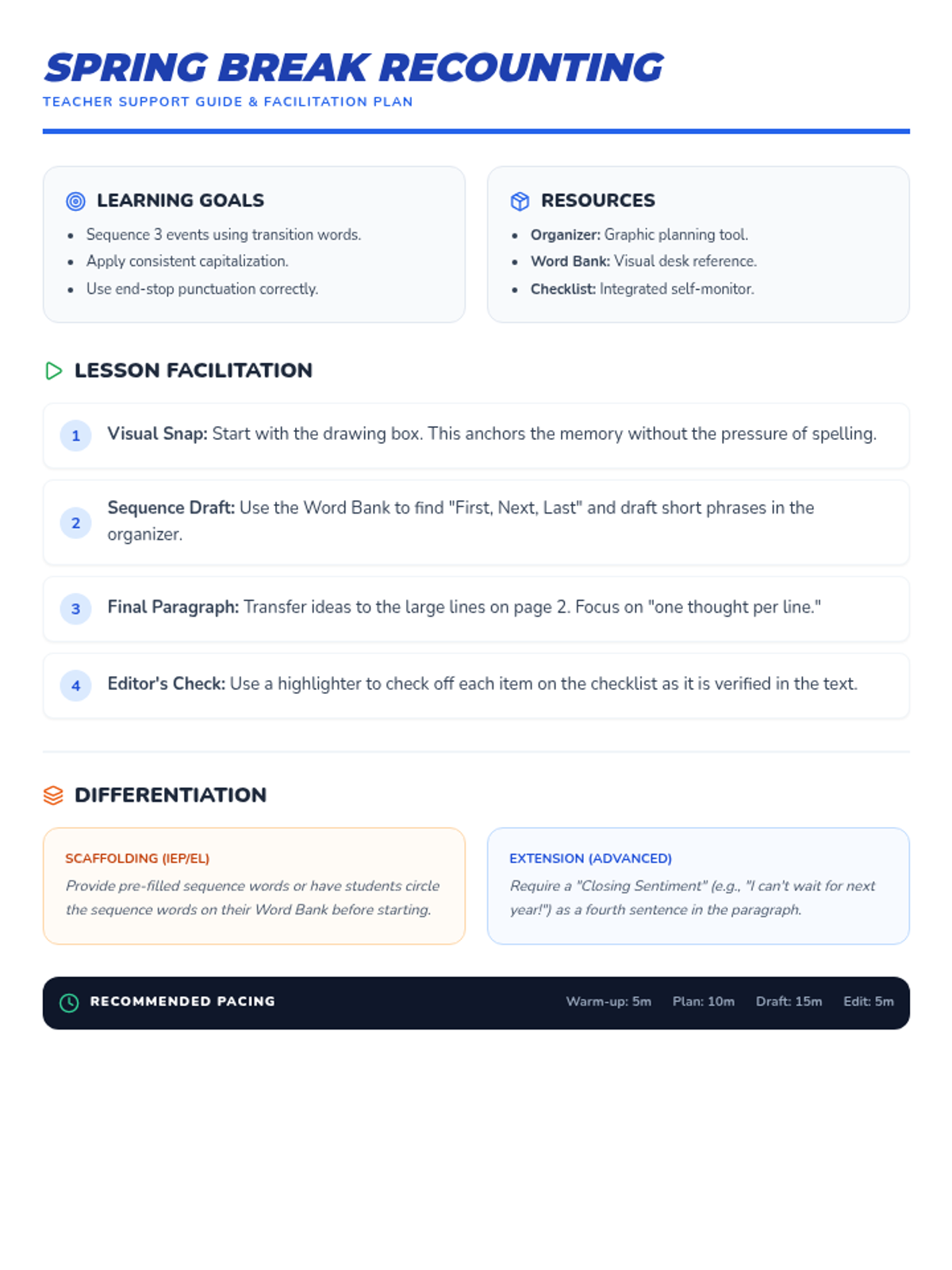
A structured writing lesson to help IEP students recount their spring break experiences using sequencing and proper grammar.
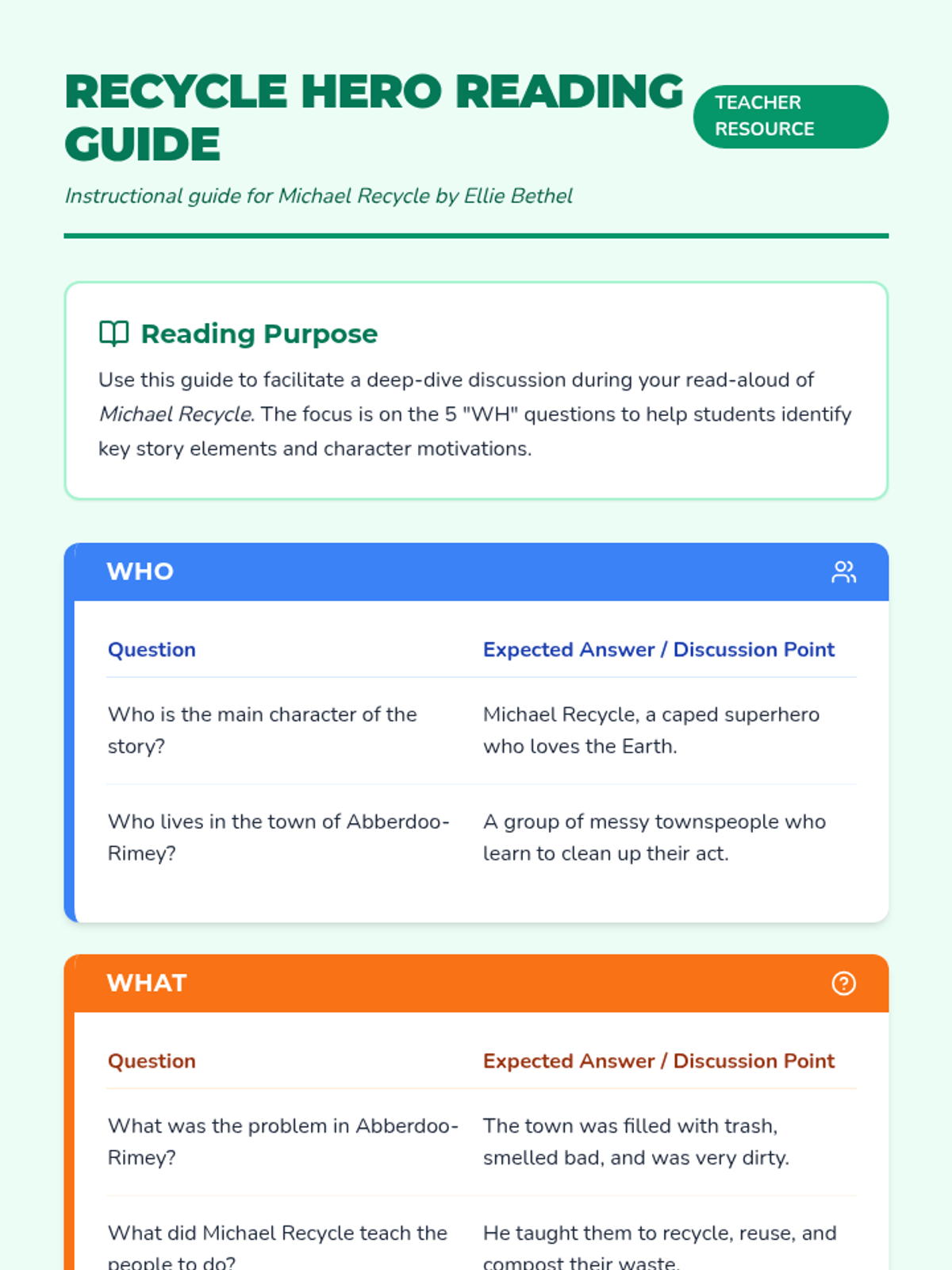
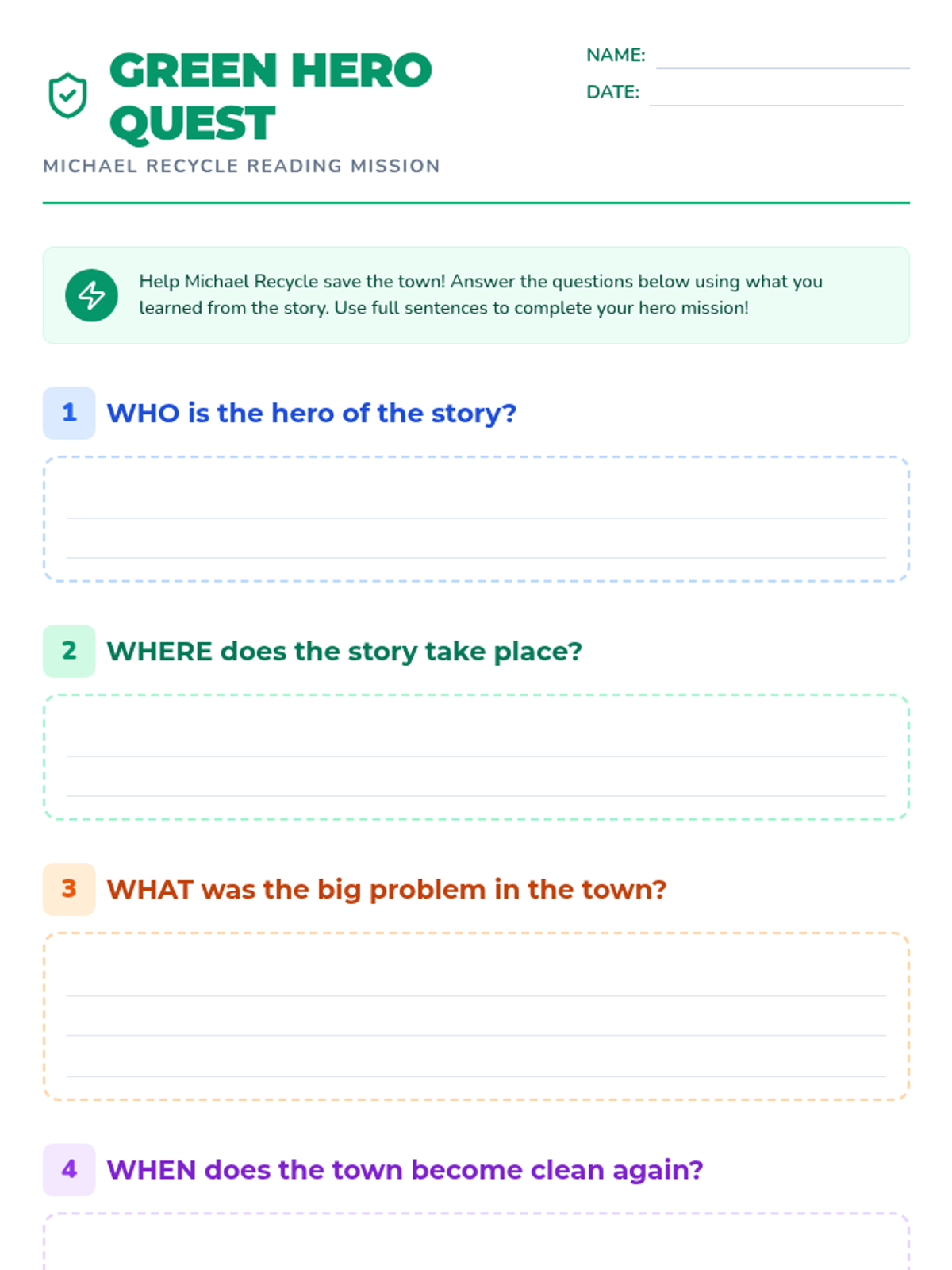
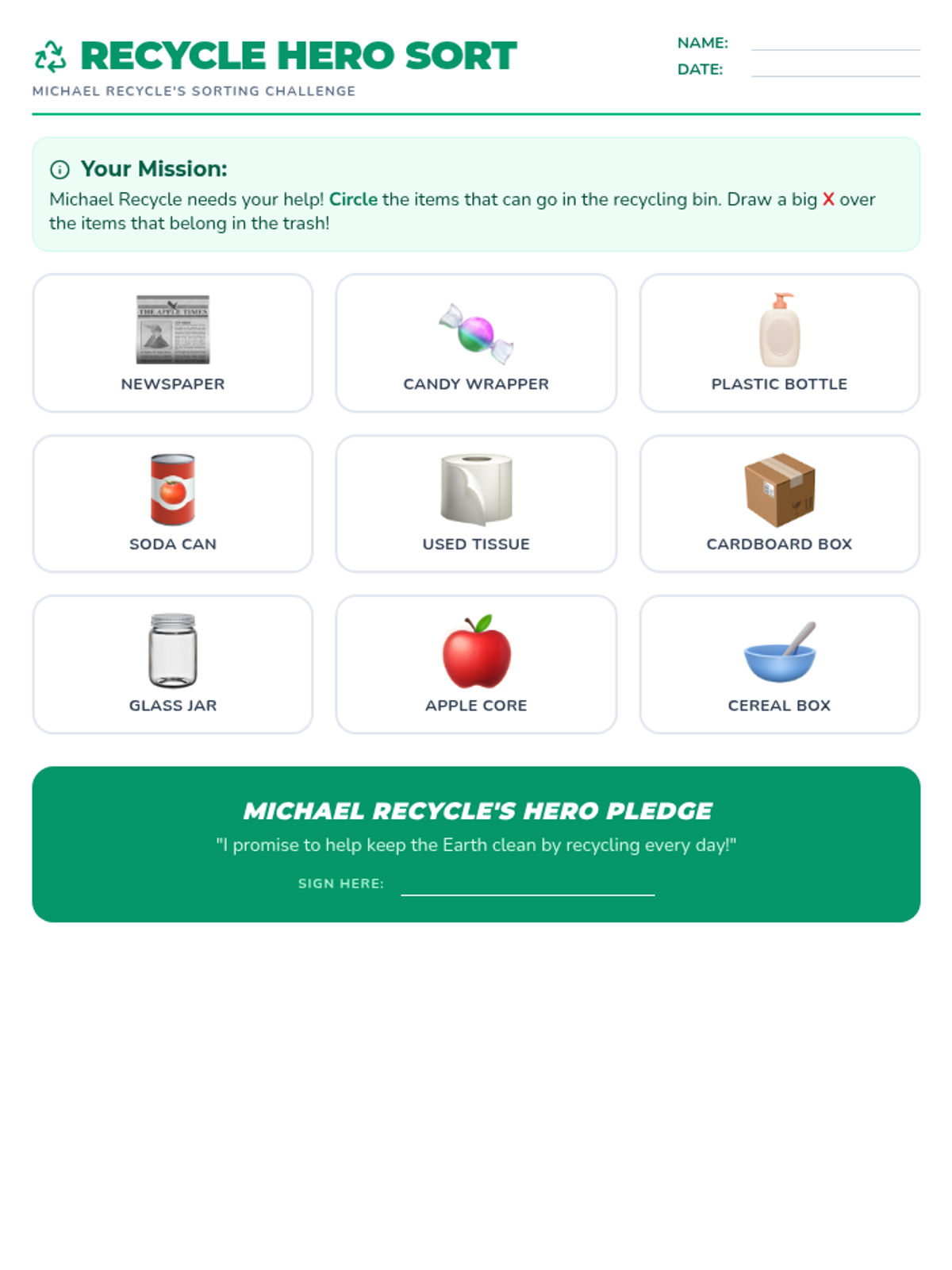
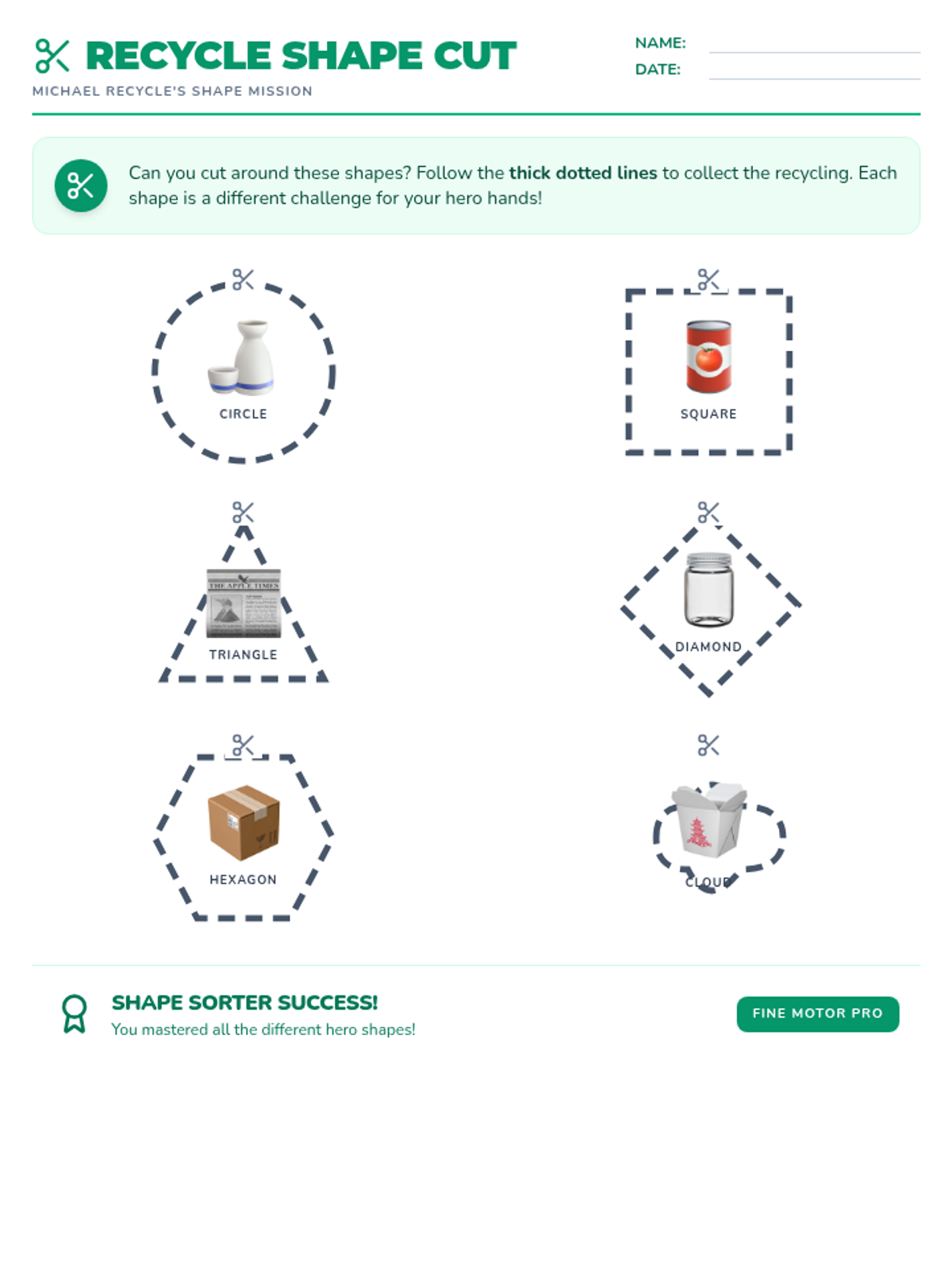
A reading comprehension lesson centered on the book Michael Recycle by Ellie Bethel, focusing on identifying key story elements using WH-questions.
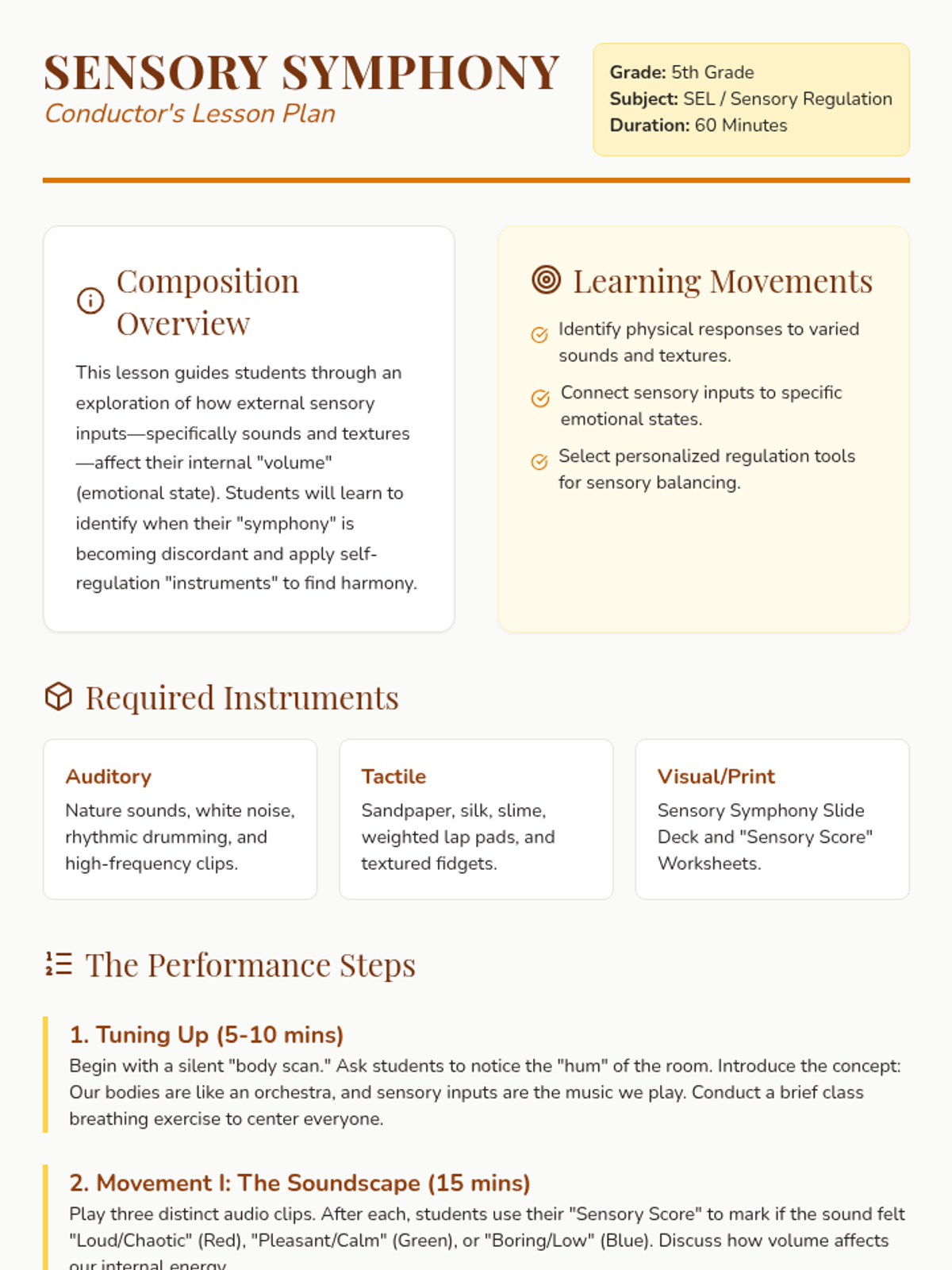
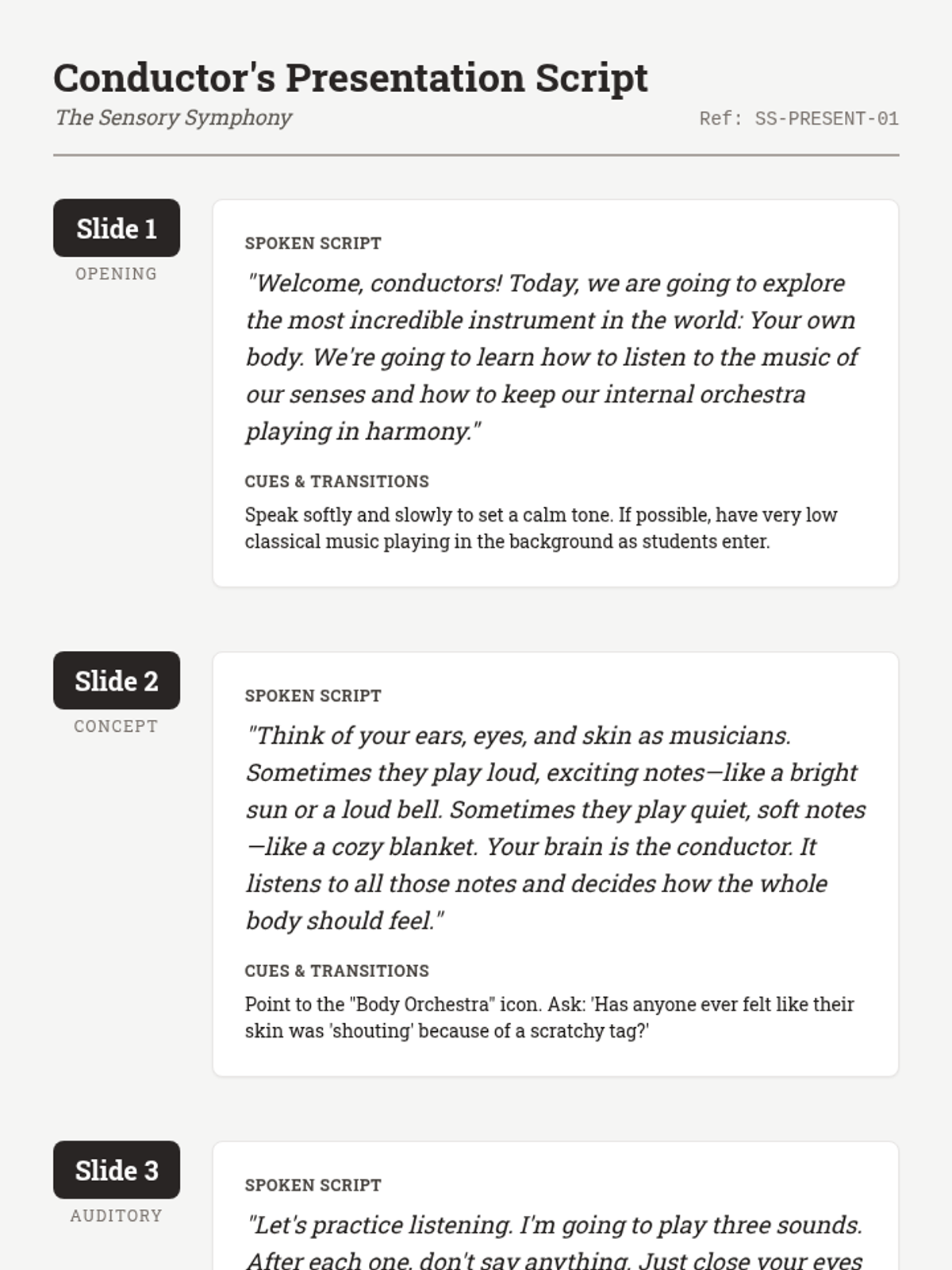
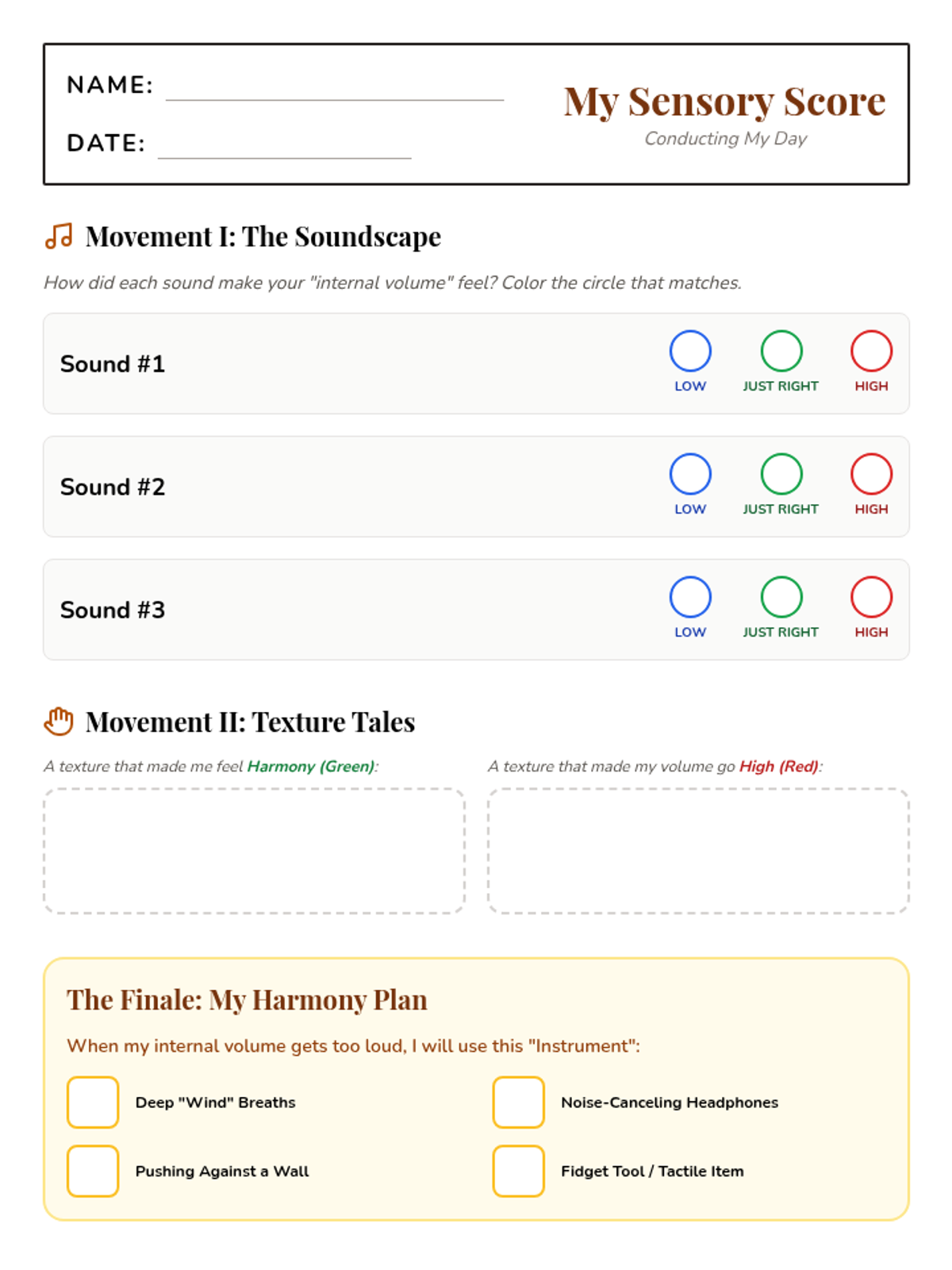
A multi-sensory lesson for 5th graders with sensory processing needs, focusing on the connection between external stimuli (sound/texture) and internal emotional states to build self-regulation skills.
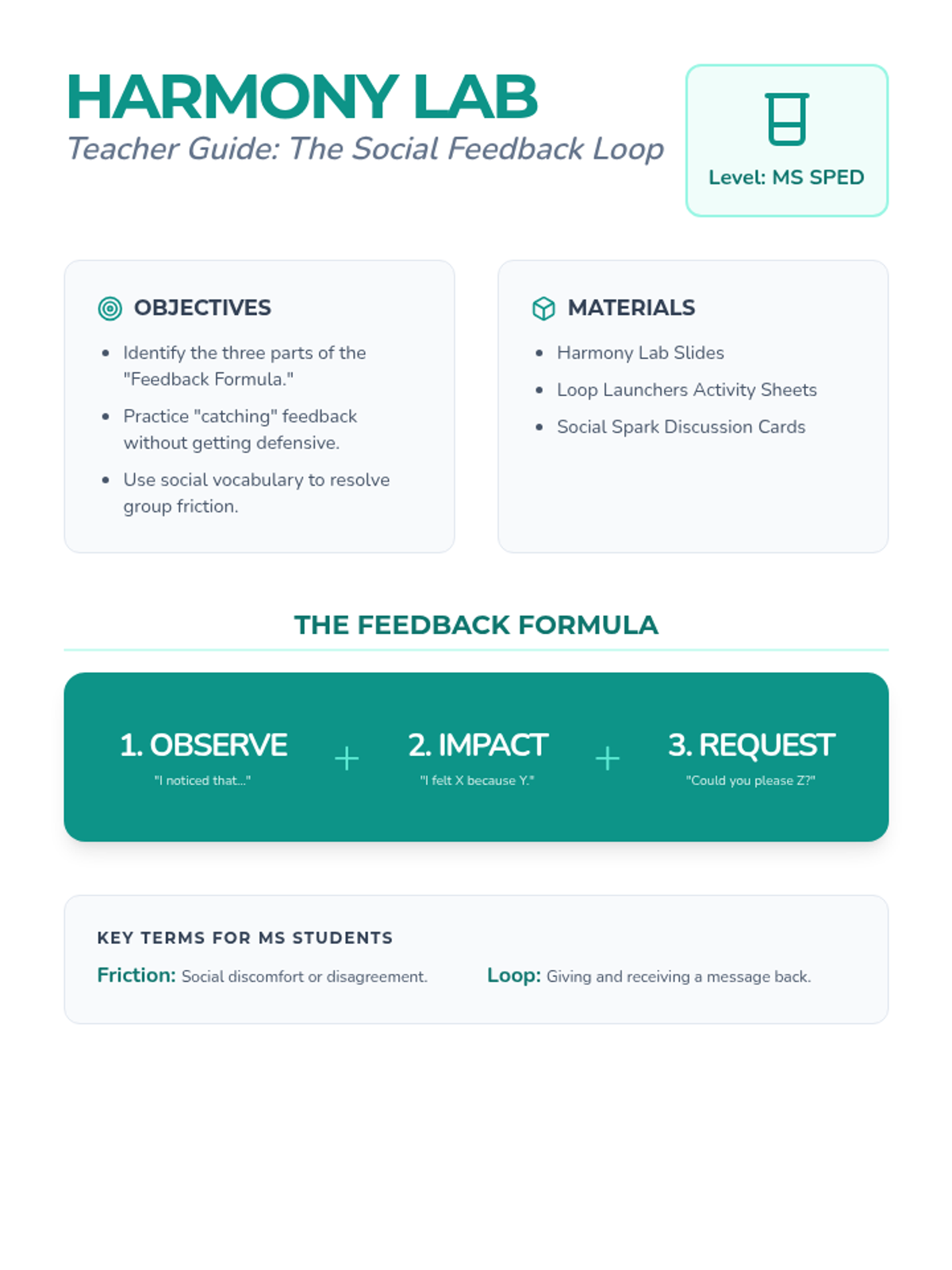
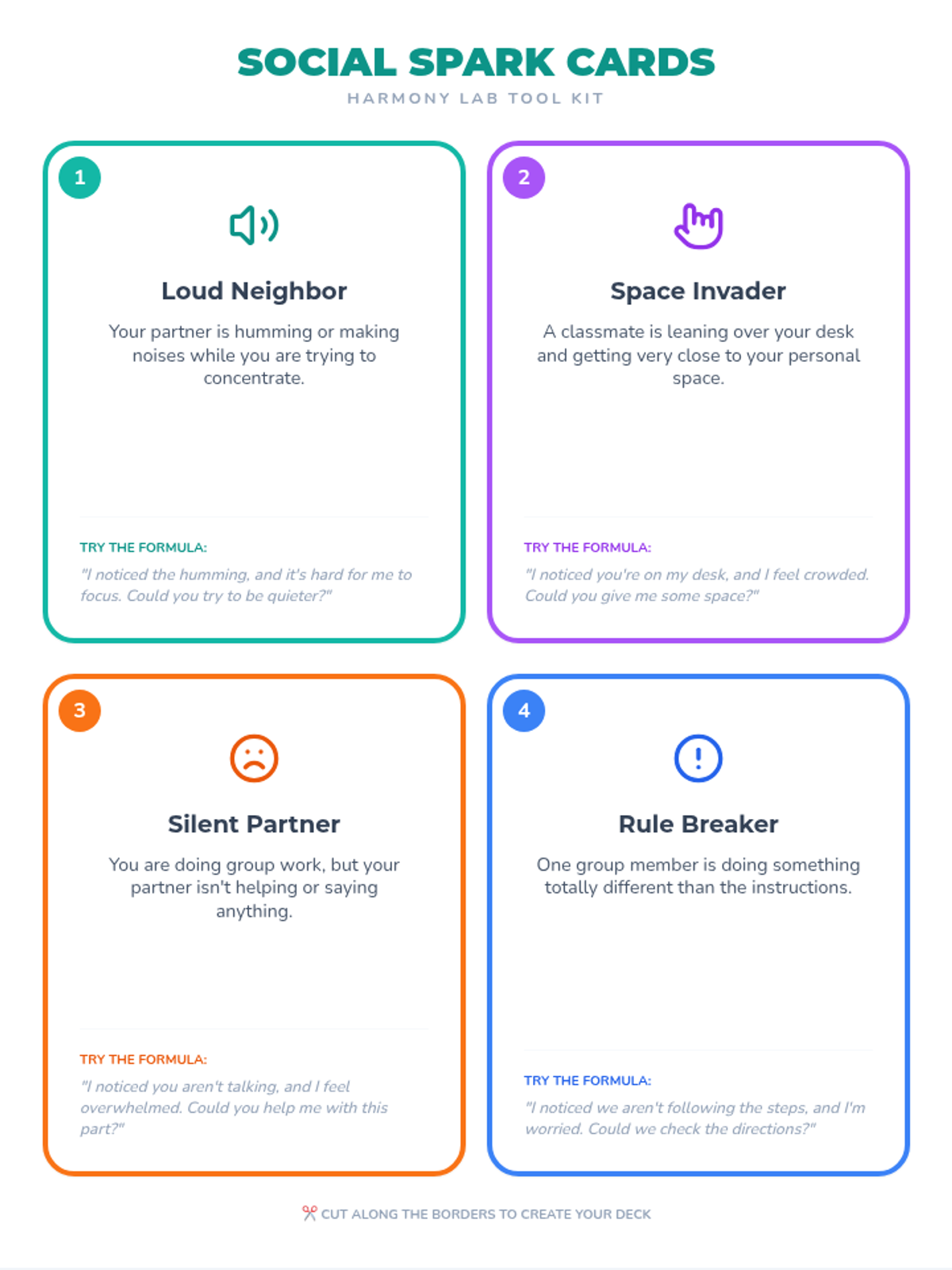
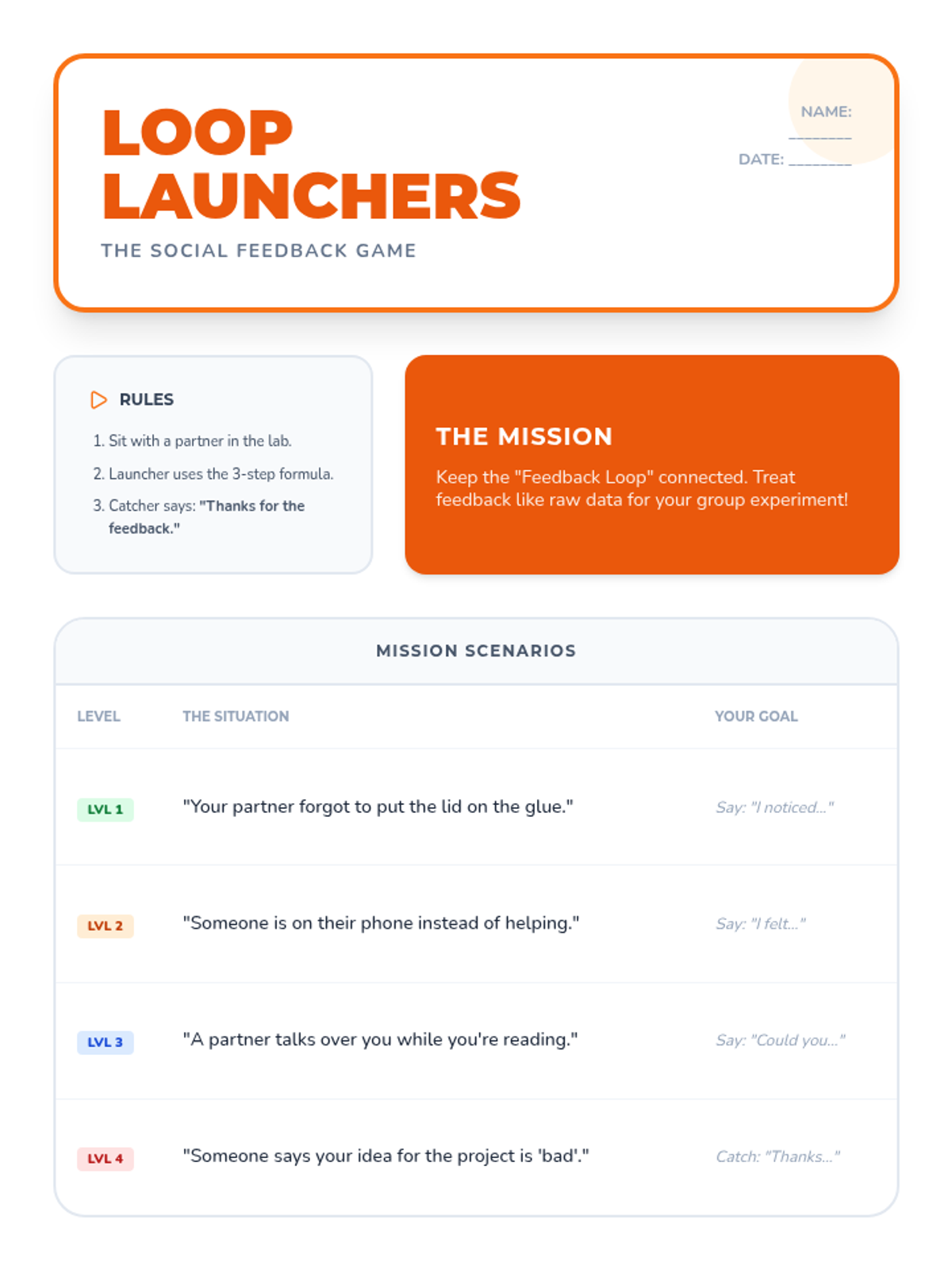
A social-emotional learning lesson designed for middle school special education students to master the 'Feedback Formula.' Students will explore group dynamics through the lens of a scientific laboratory, practicing how to give and receive constructive feedback to maintain positive peer relationships.
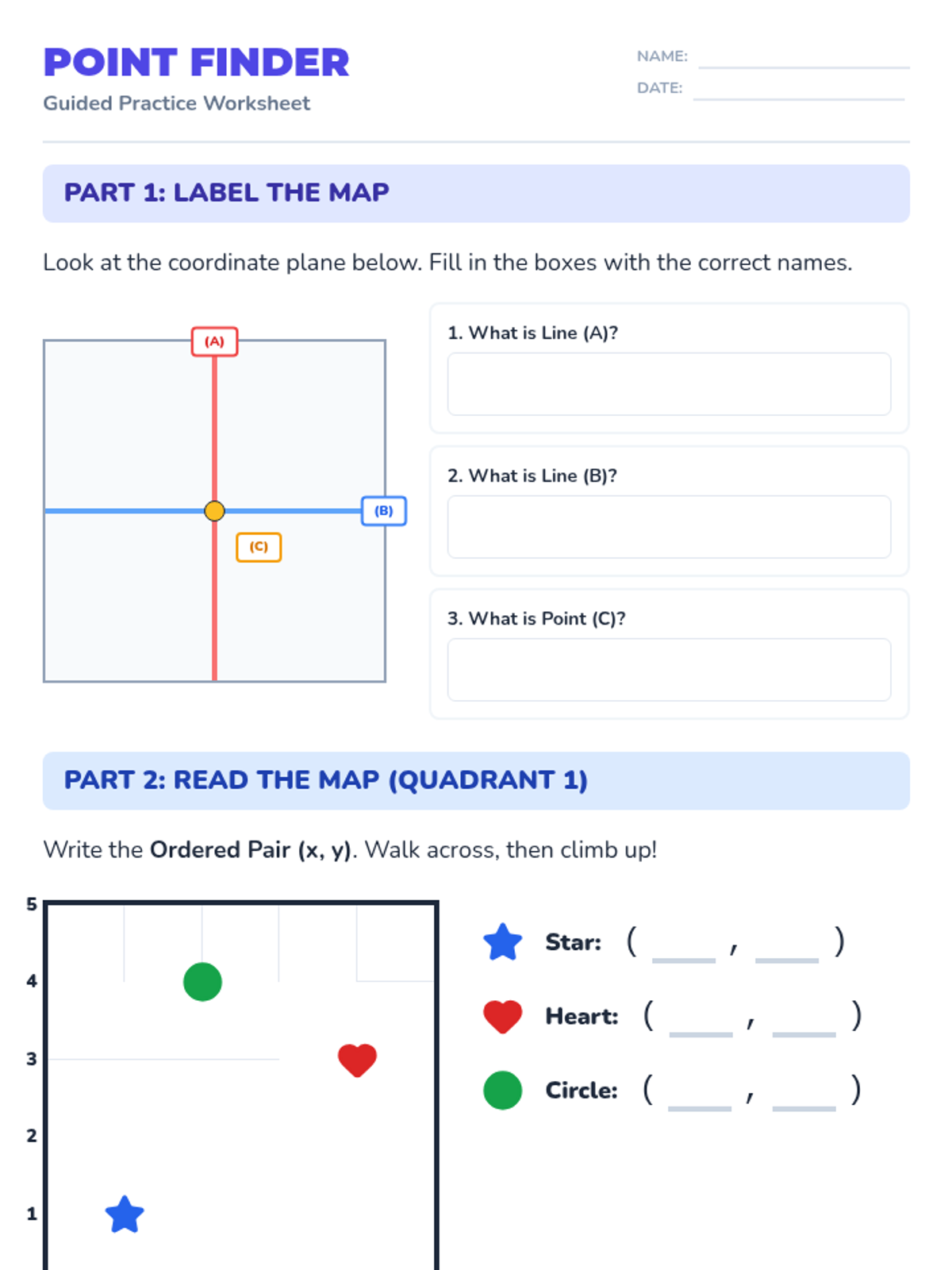
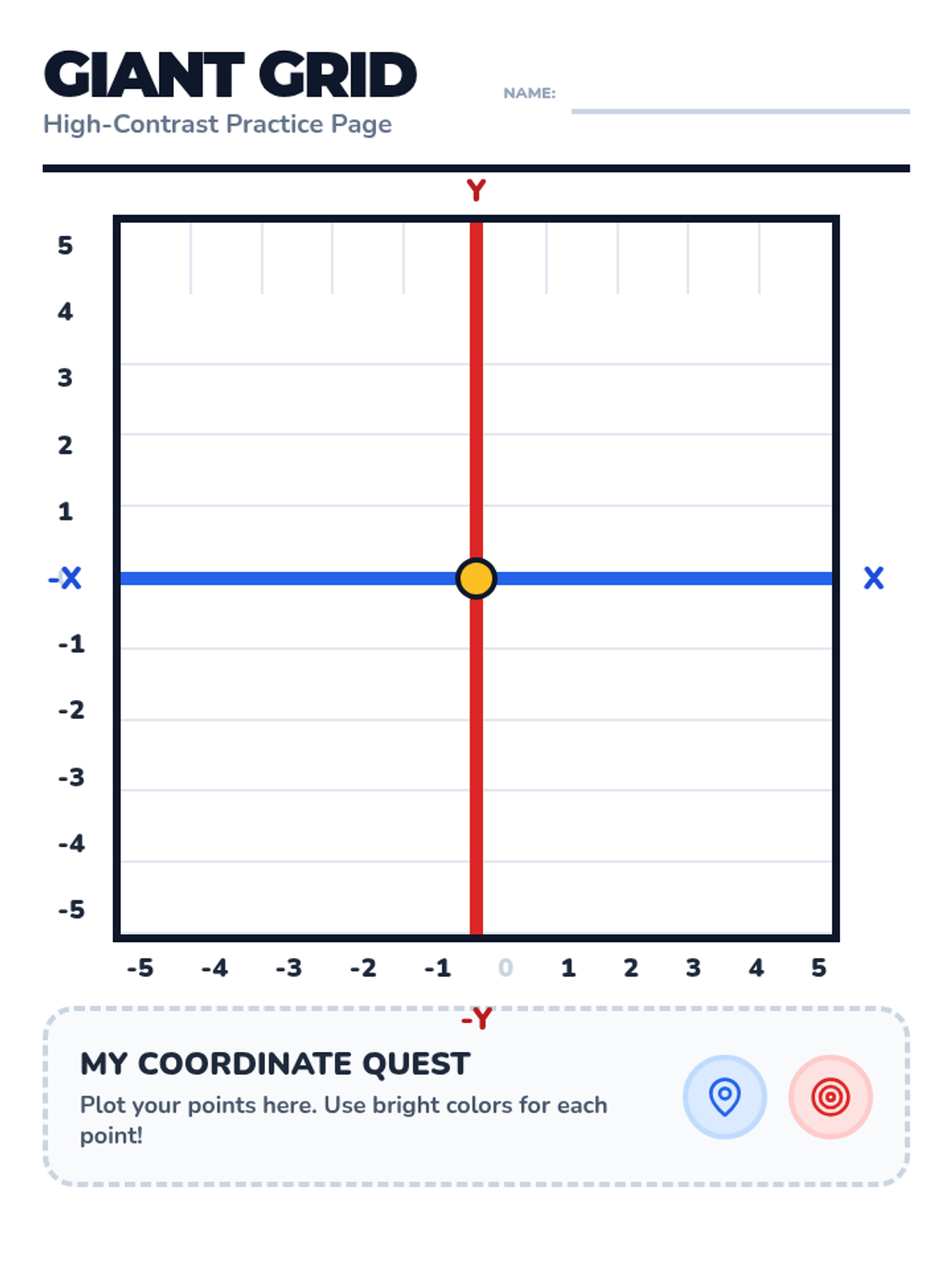
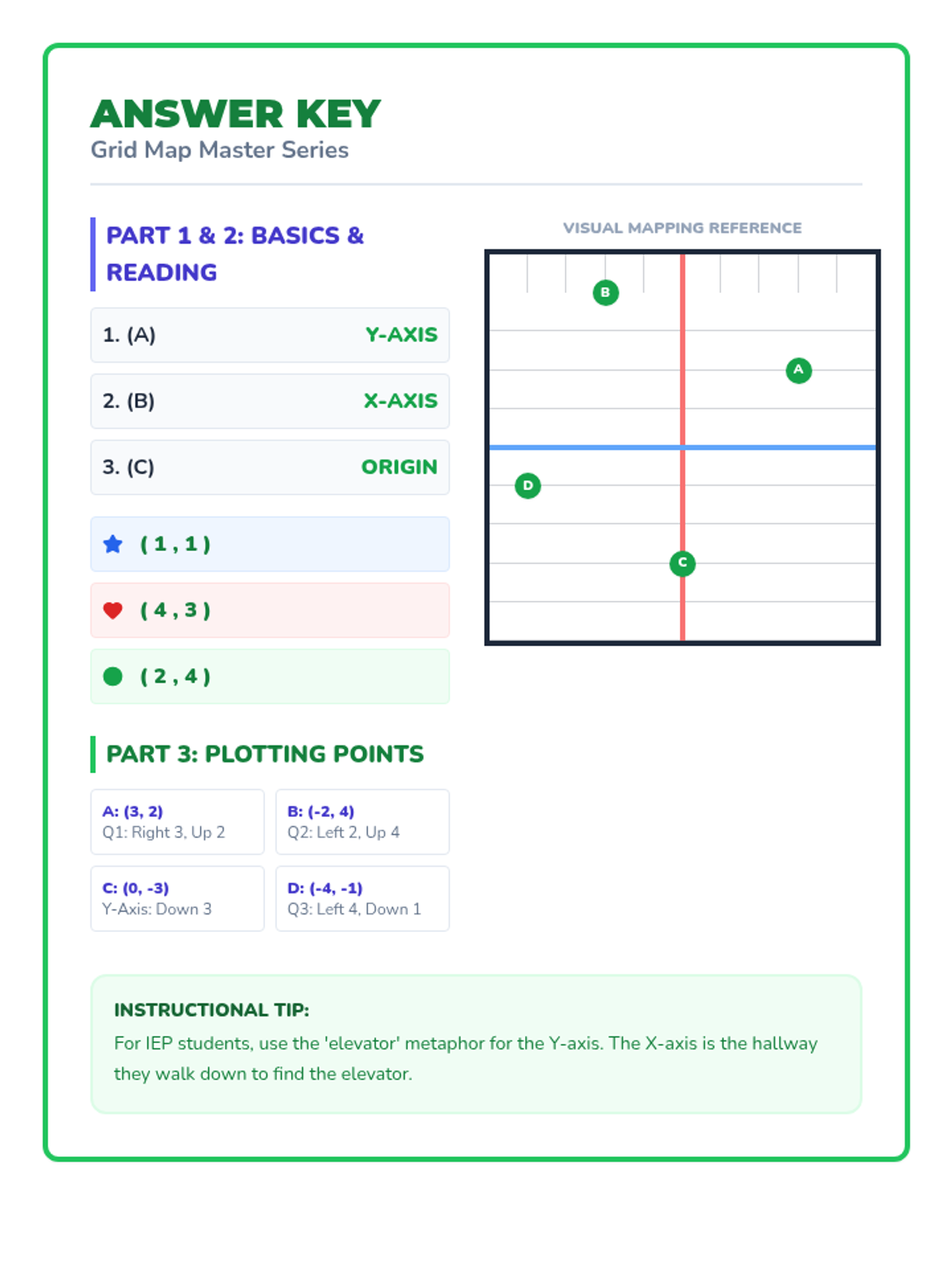
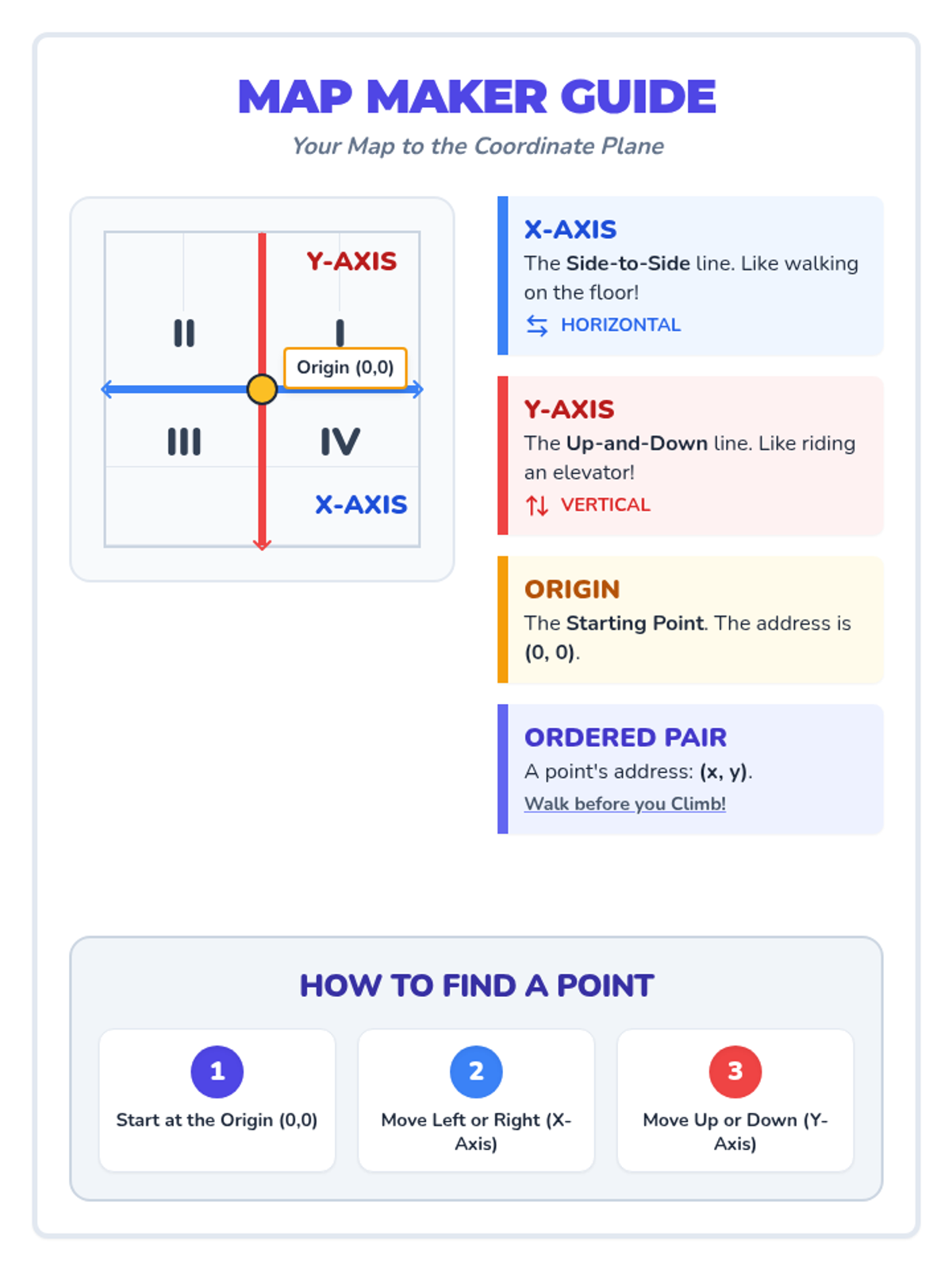
A foundational lesson on the coordinate plane designed for IEP students, focusing on vocabulary, quadrant identification, and step-by-step plotting and reading of points.
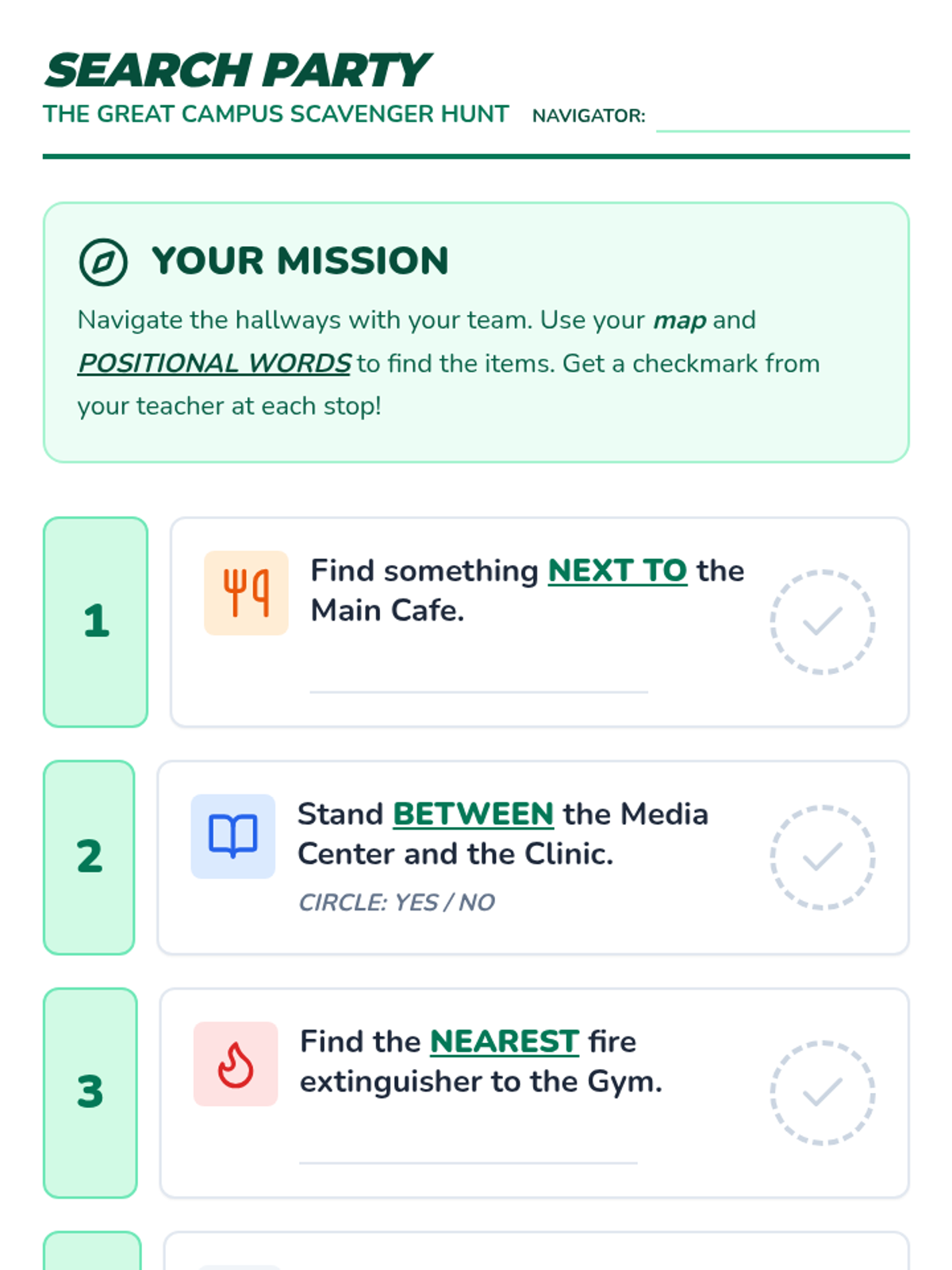
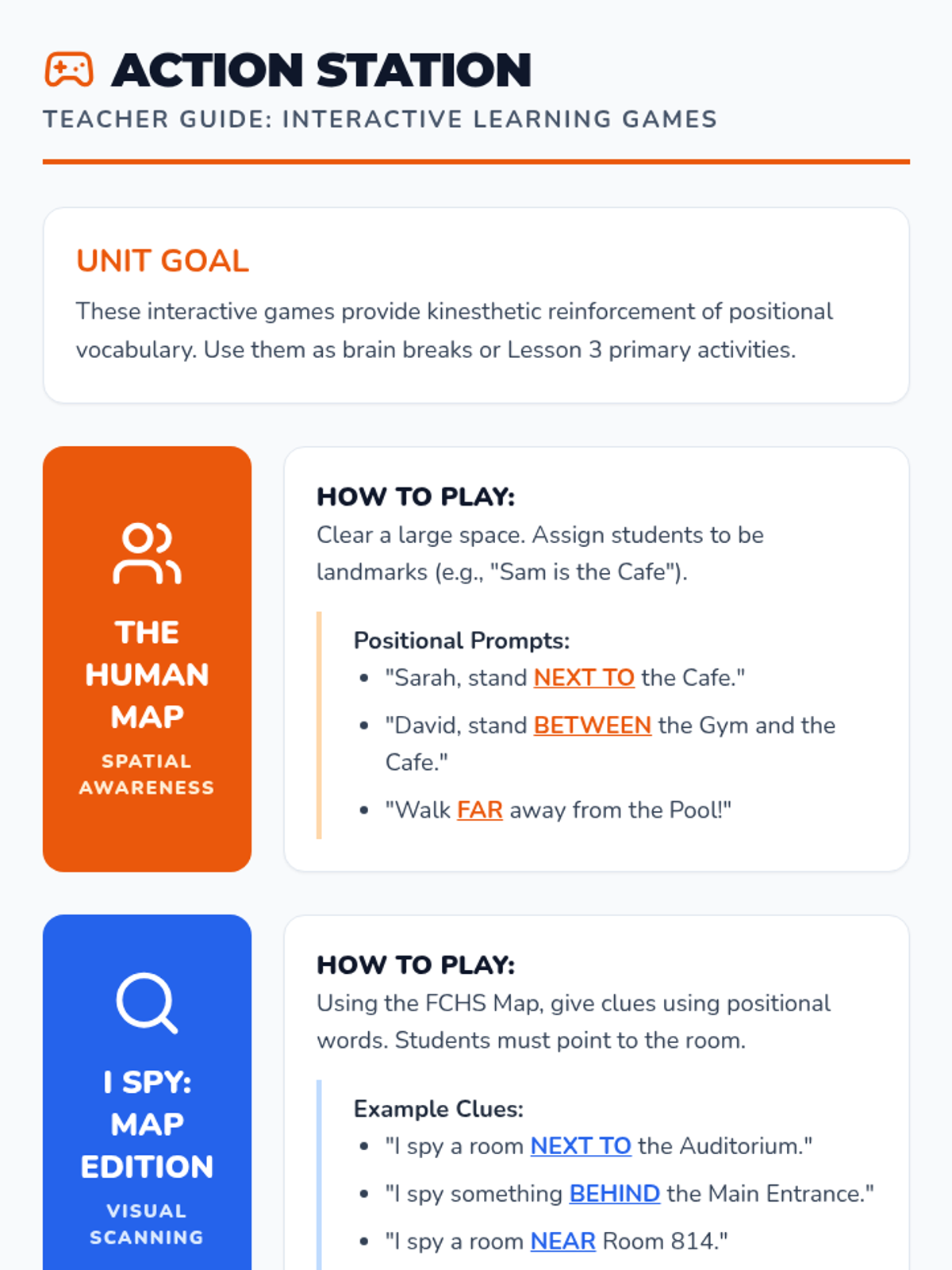
Hands-on application of spatial skills through school-wide scavenger hunts and interactive physical games.
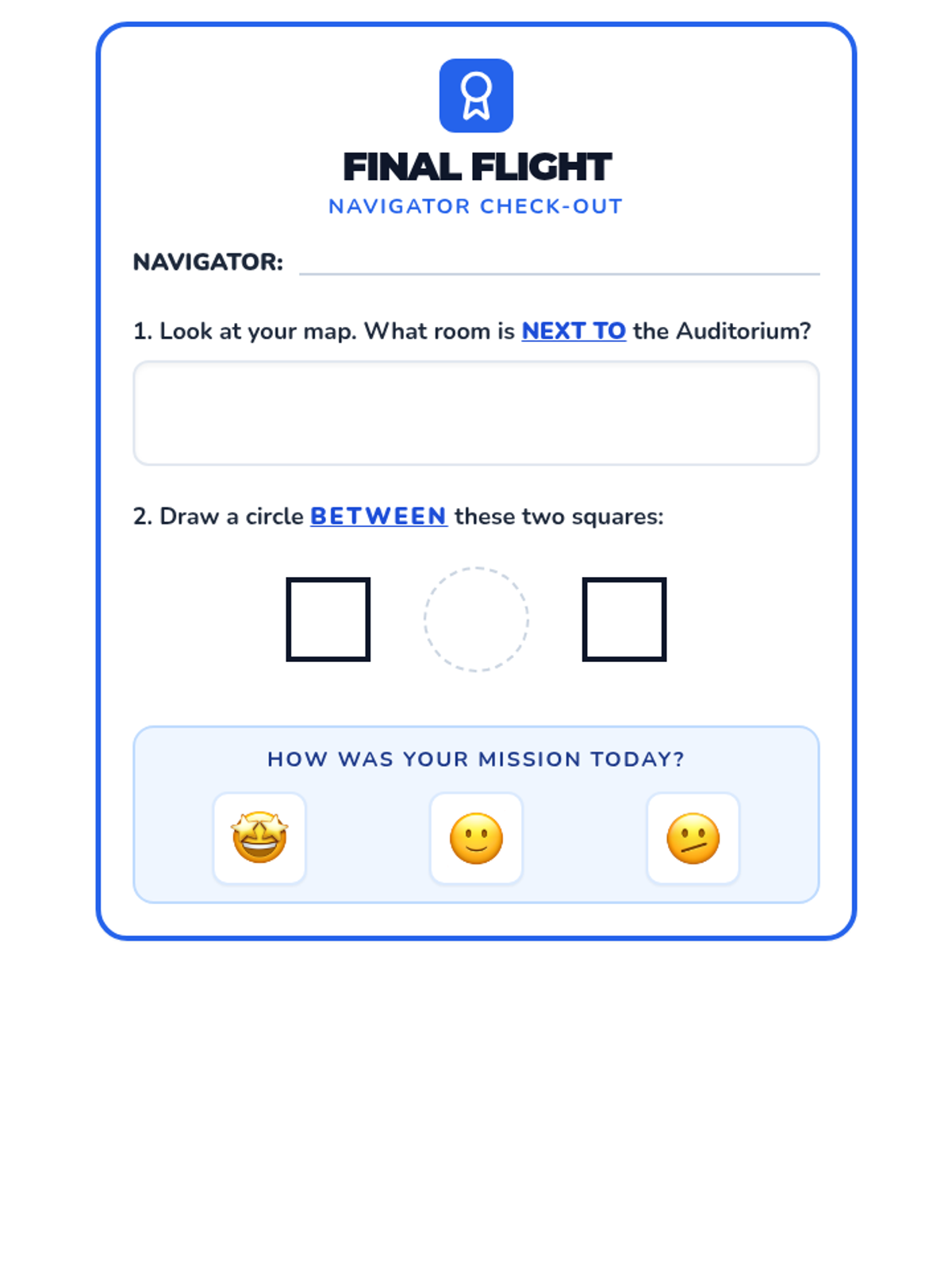
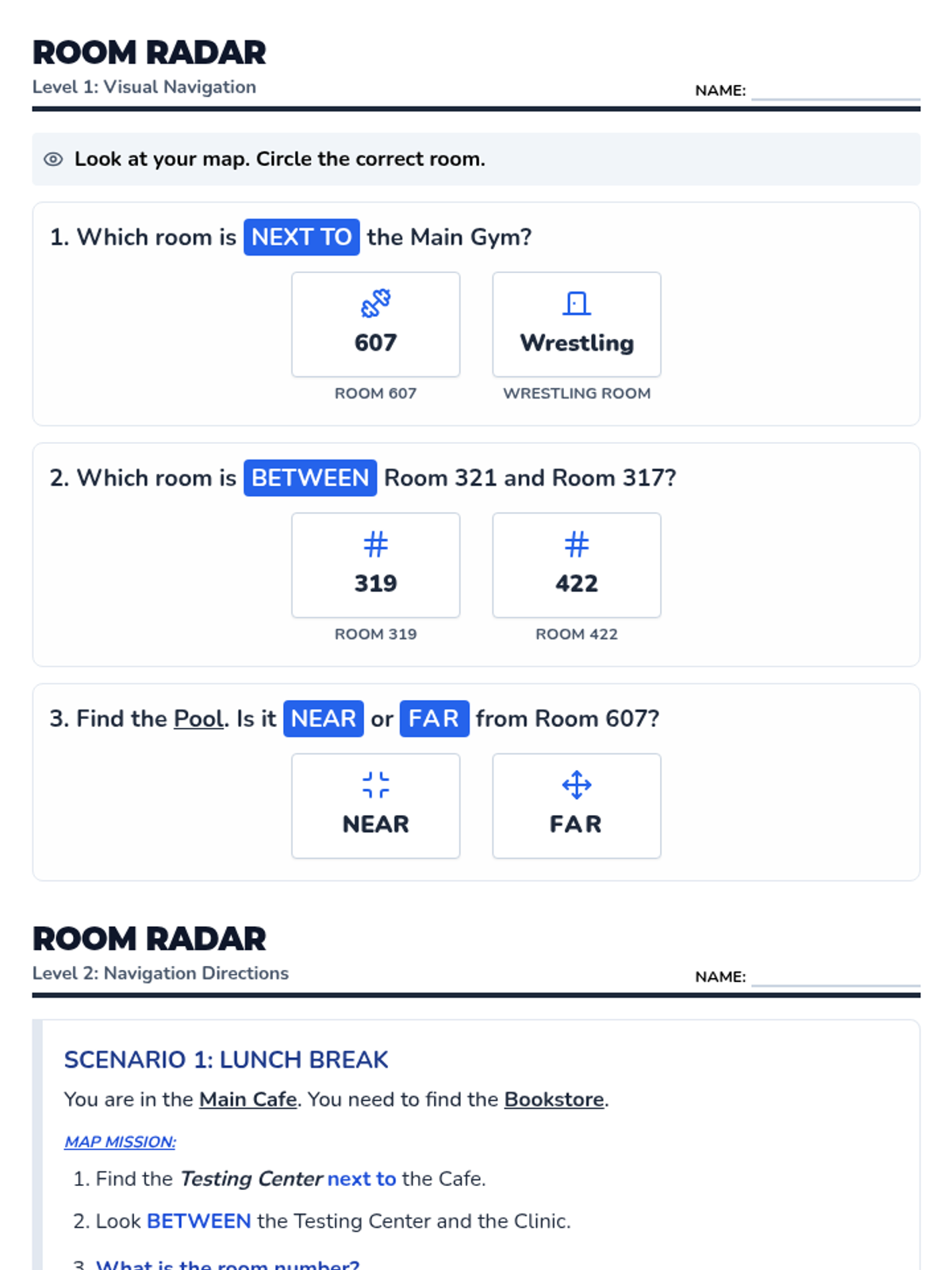
Applying positional vocabulary to the Franklin Central High School map, identifying key landmarks and room relationships.
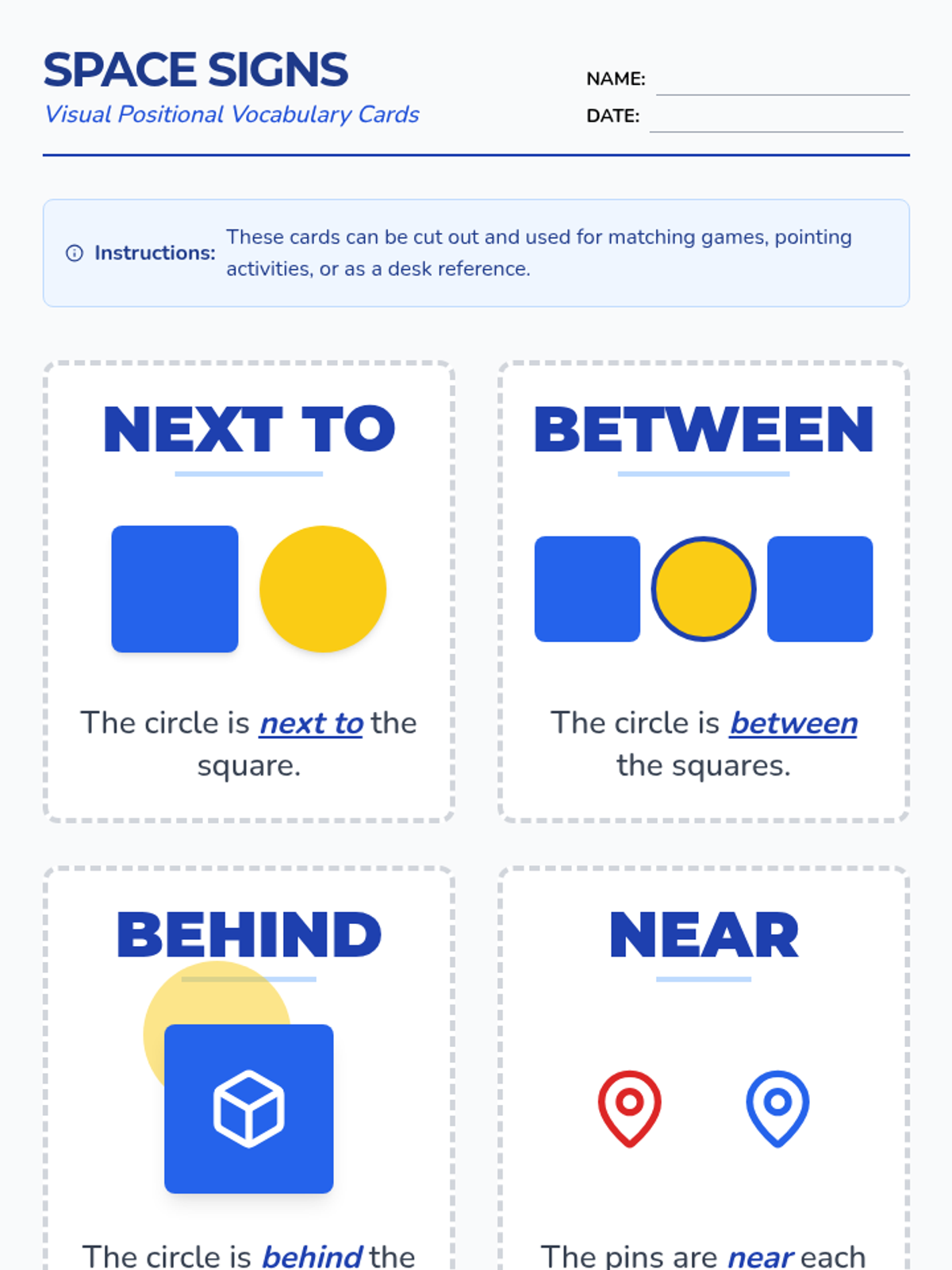
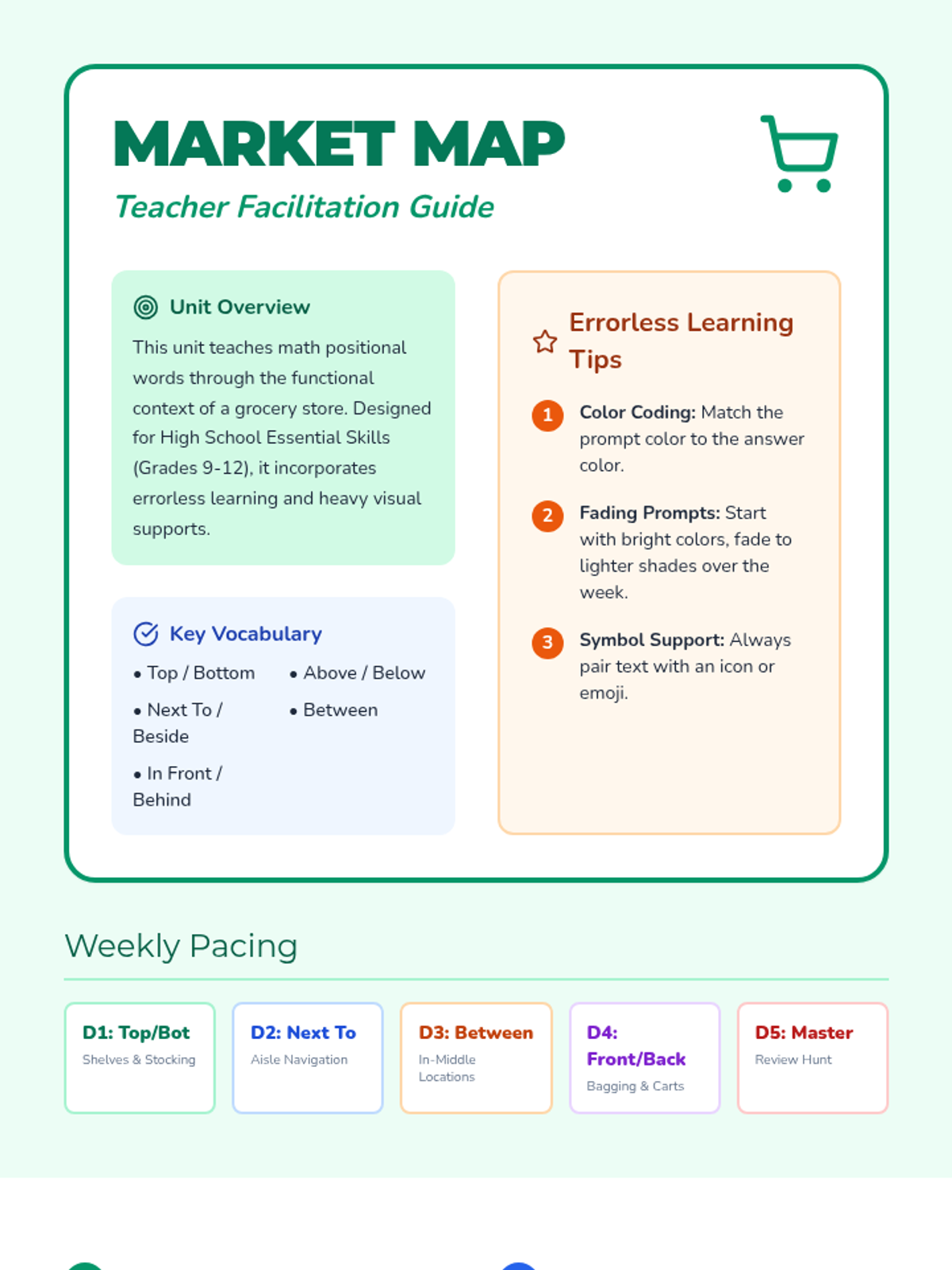
Introduction to positional vocabulary (near, far, next to, behind, between) using visual supports and simple classroom objects.
A cumulative review lesson applying all positional words to a full shopping trip simulation.
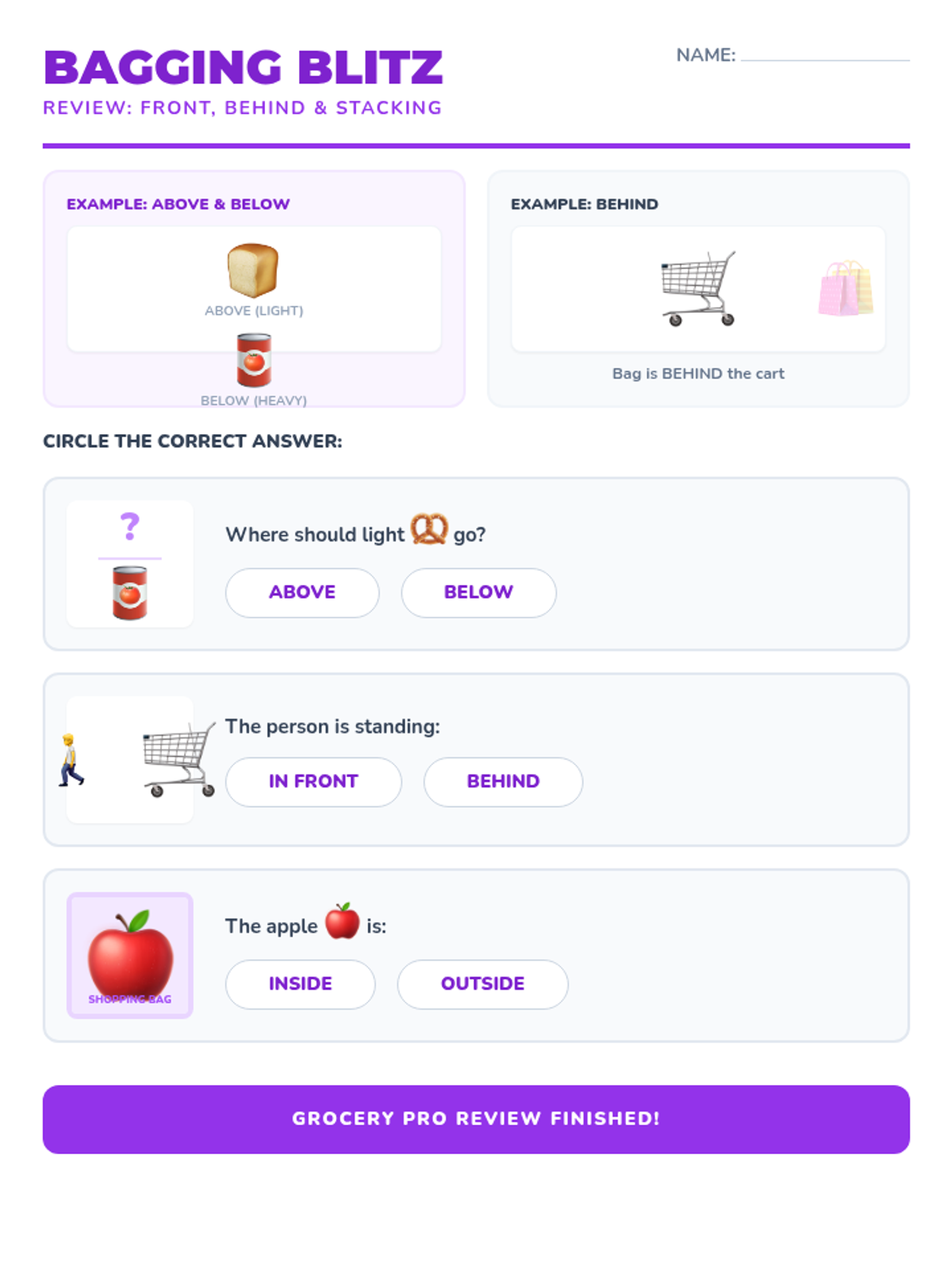
Explores 'in front of' and 'behind' through bagging groceries and cart organization.
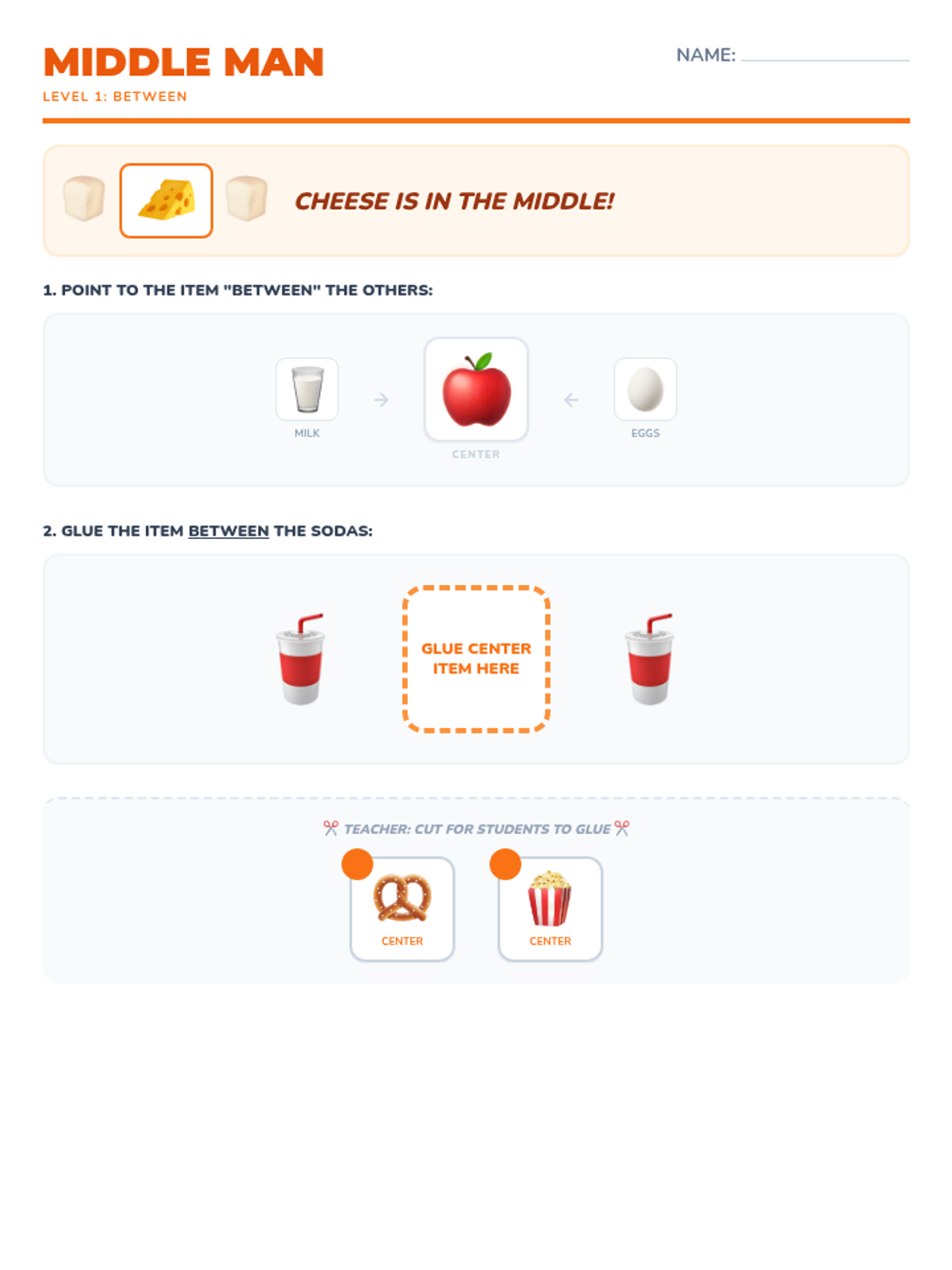
Teaches the concept of 'between' using shelf layouts and checkout line scenarios.
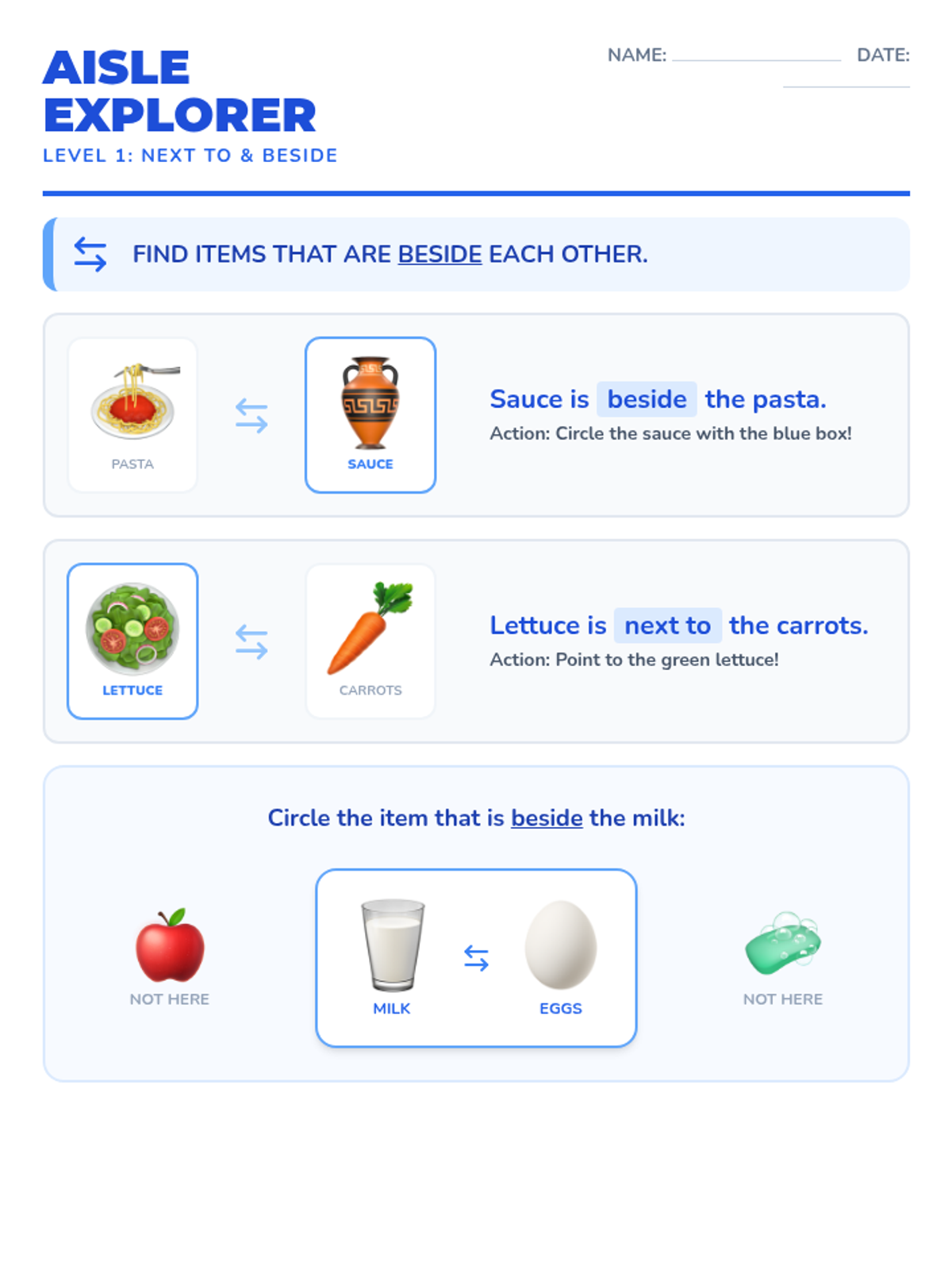
Introduces 'next to' and 'beside' concepts by navigating grocery aisles and finding neighboring items.
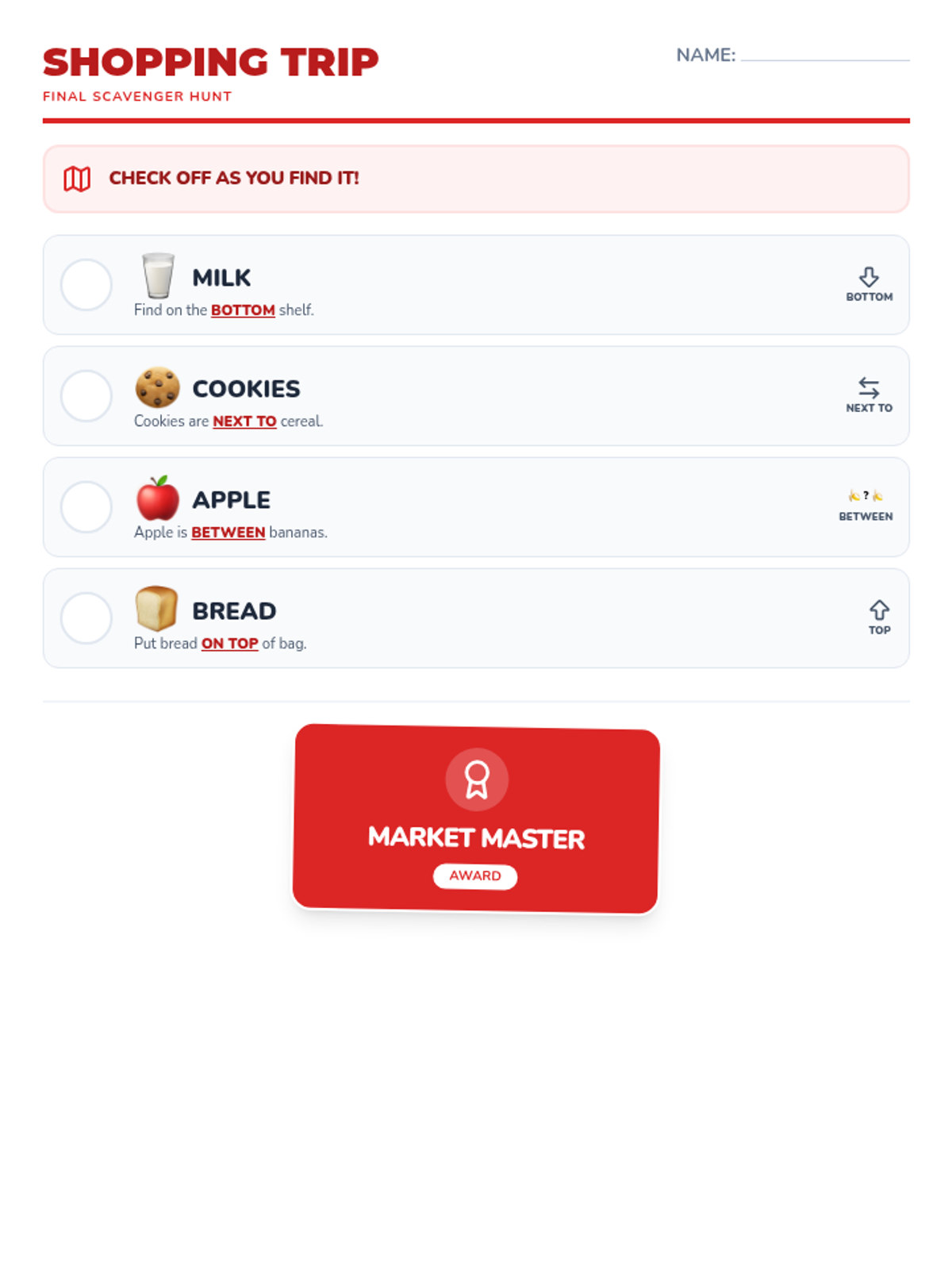
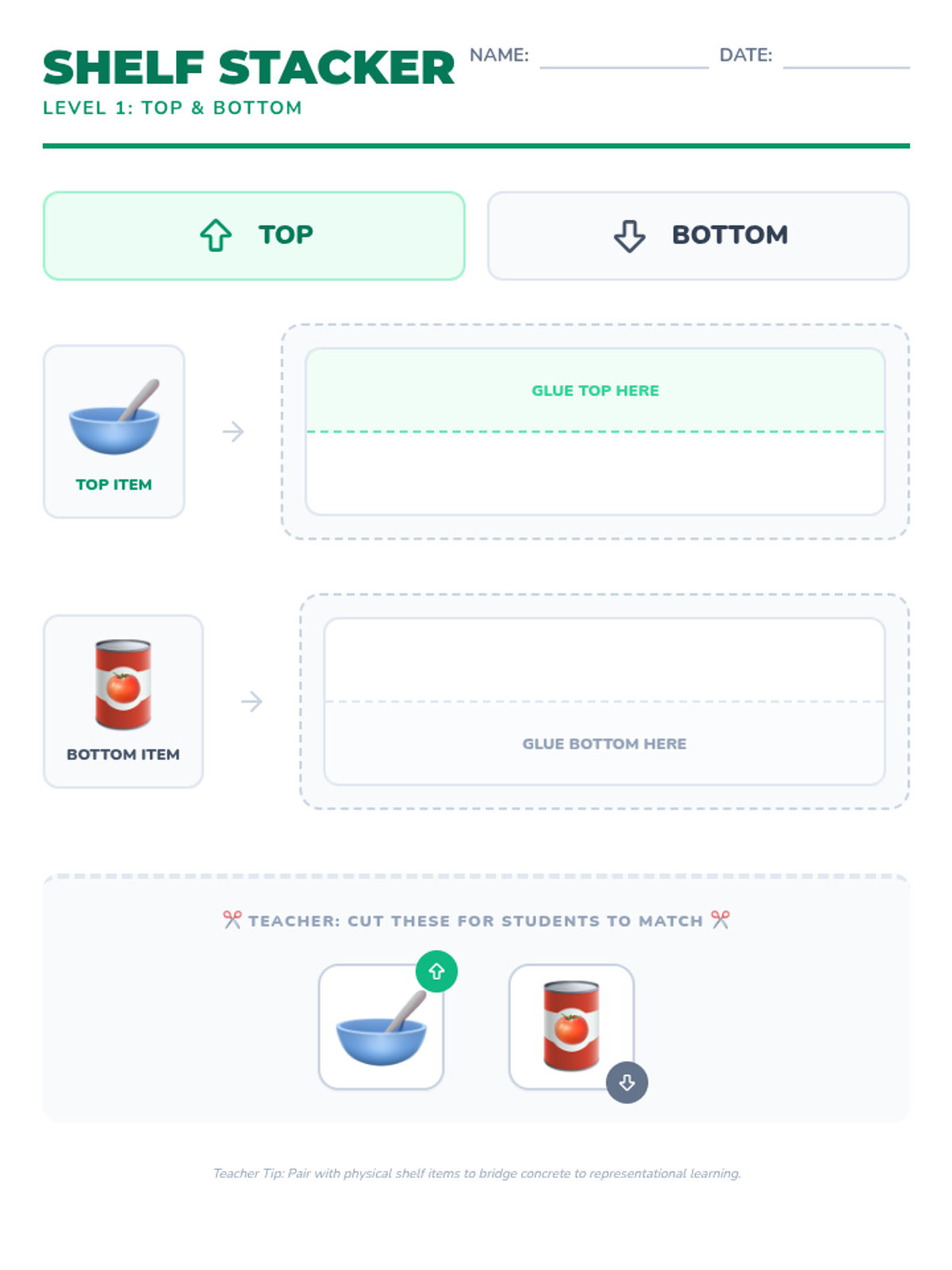
Focuses on the concepts of 'top' and 'bottom' through the functional lens of stocking grocery shelves and identifying item locations.
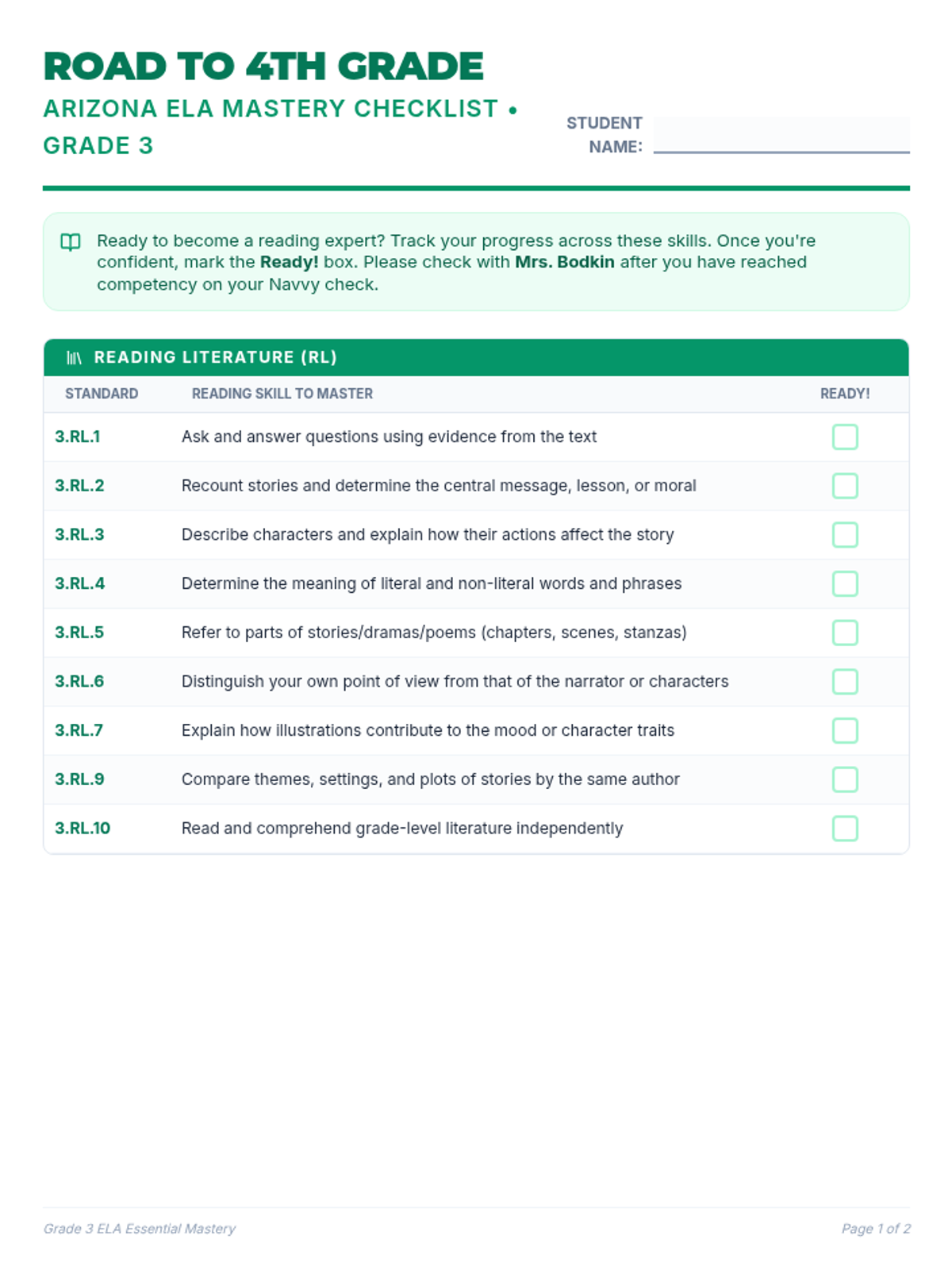
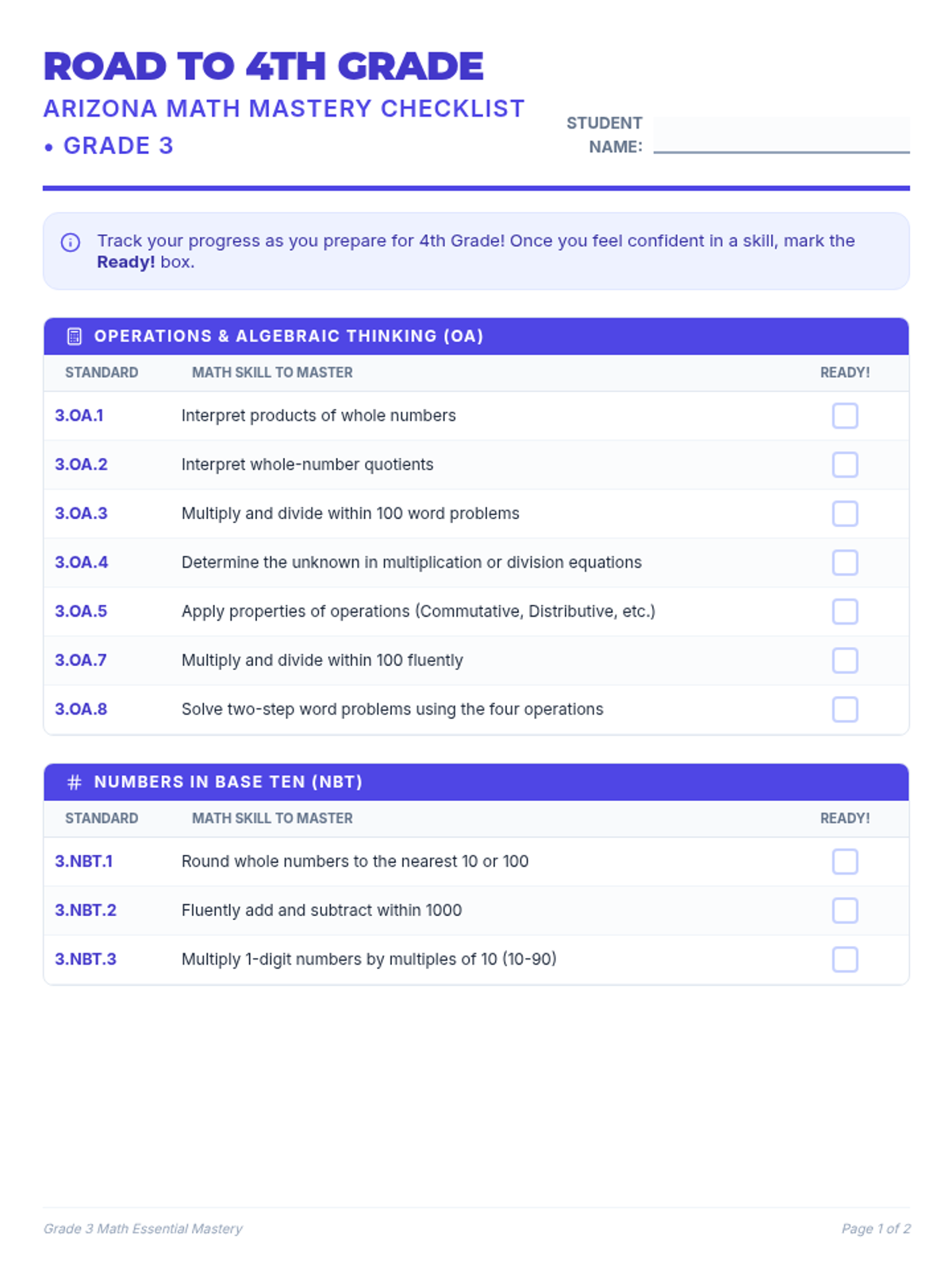
A collection of standards mastery tracking cards for Grade 3 Arizona students, covering Math and ELA with a consistent multi-attempt tracking system.
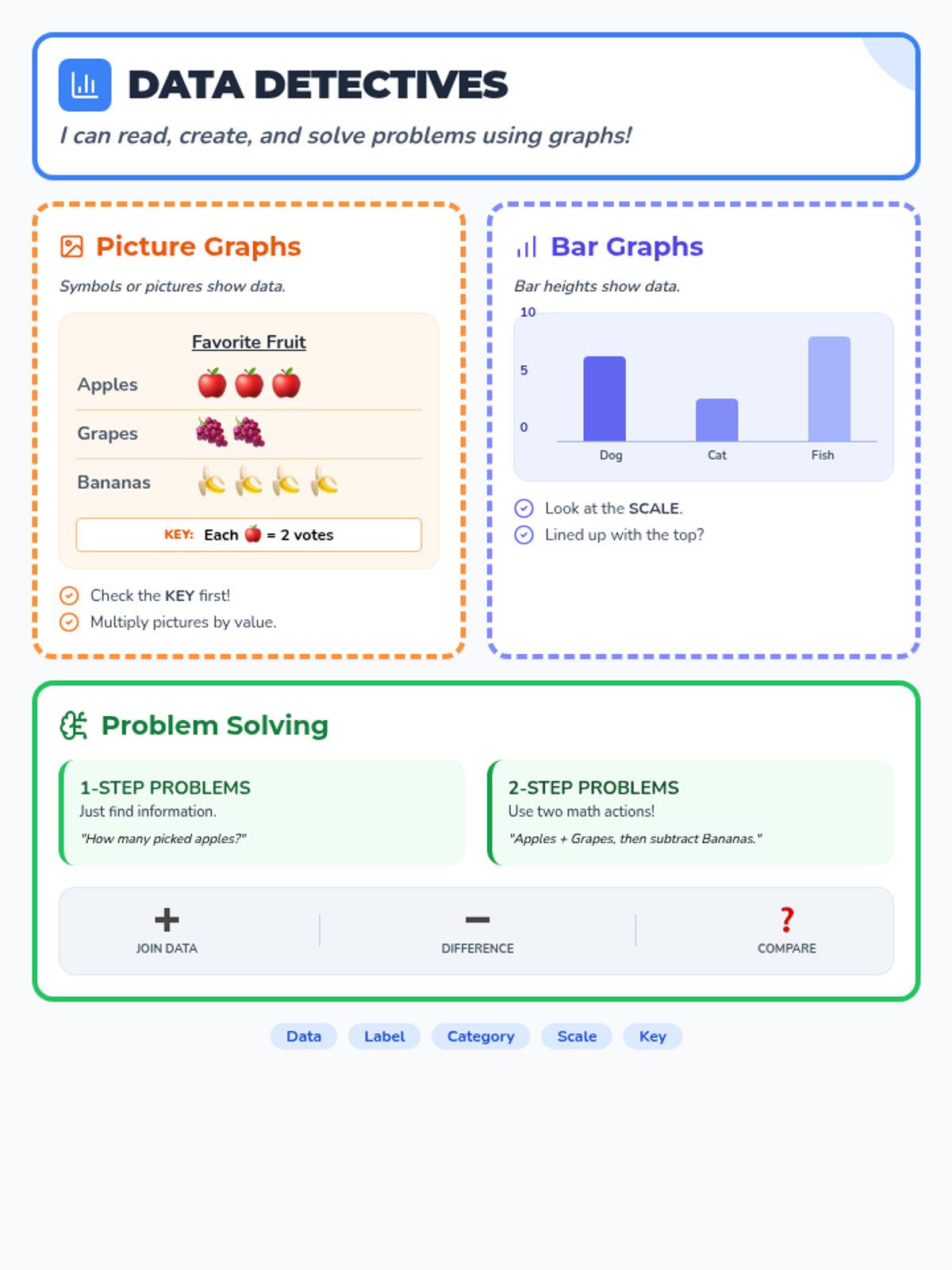
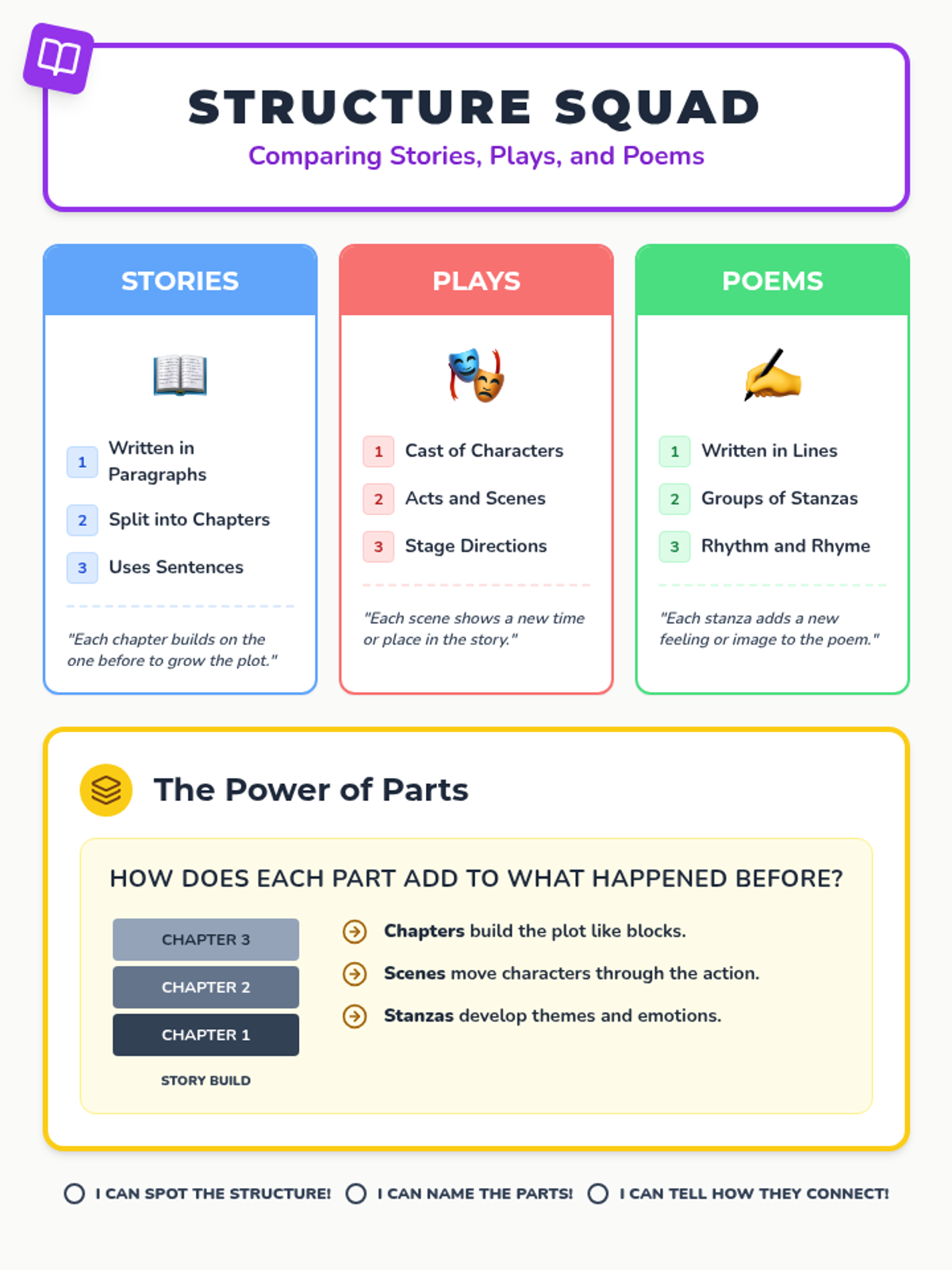
A collection of visual anchor charts designed to support elementary students in mastering data representation and literary structures.
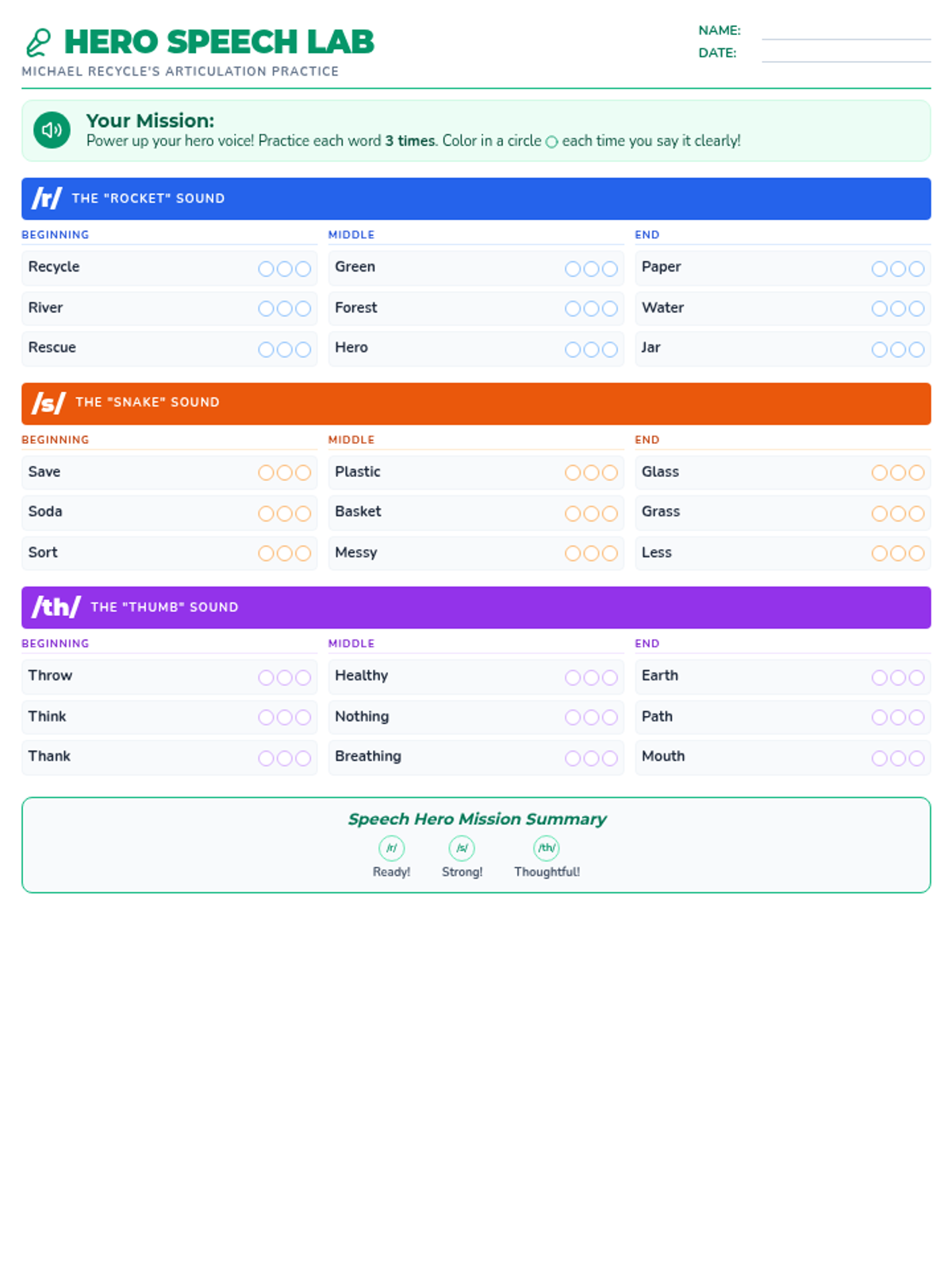
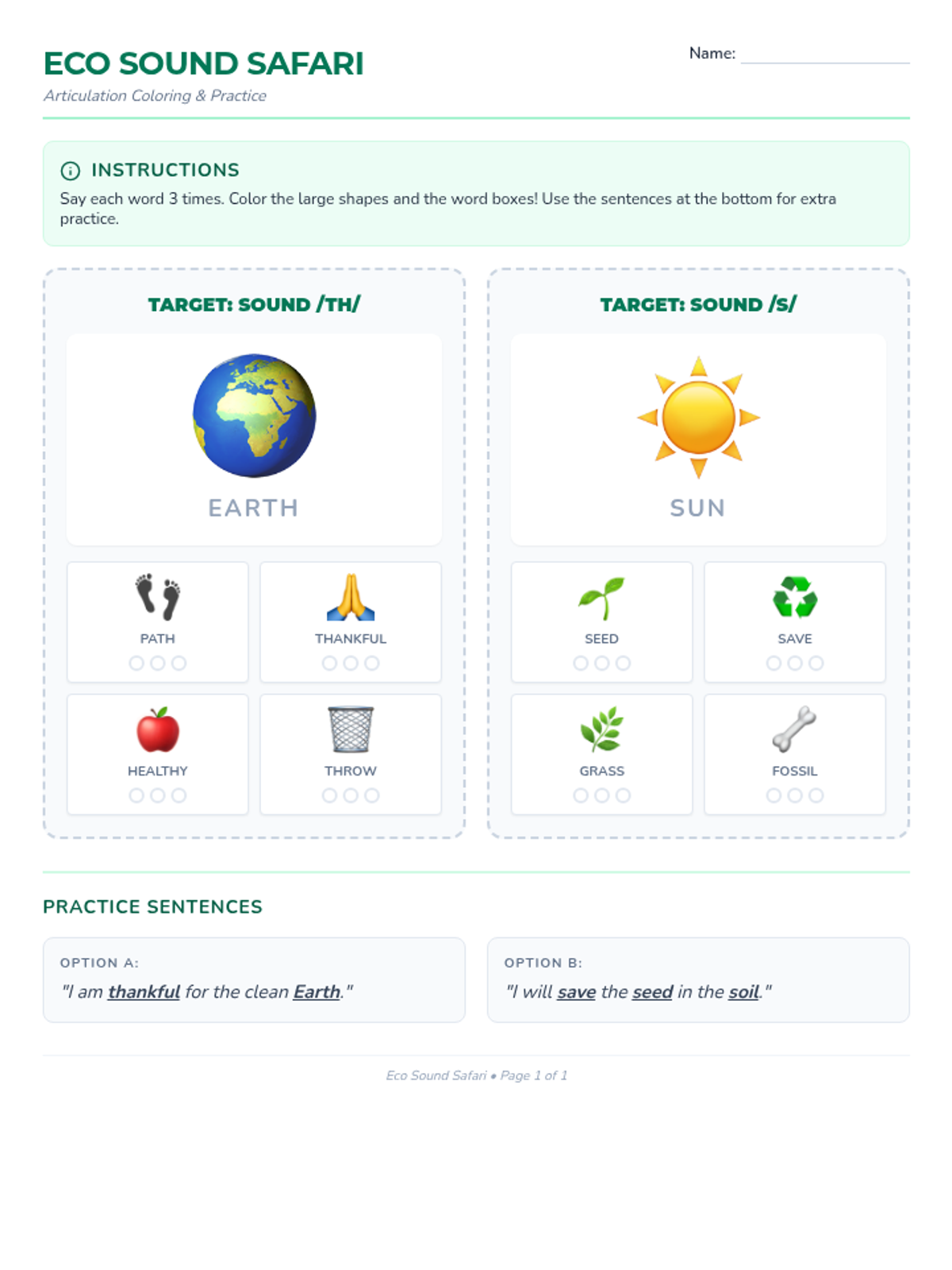
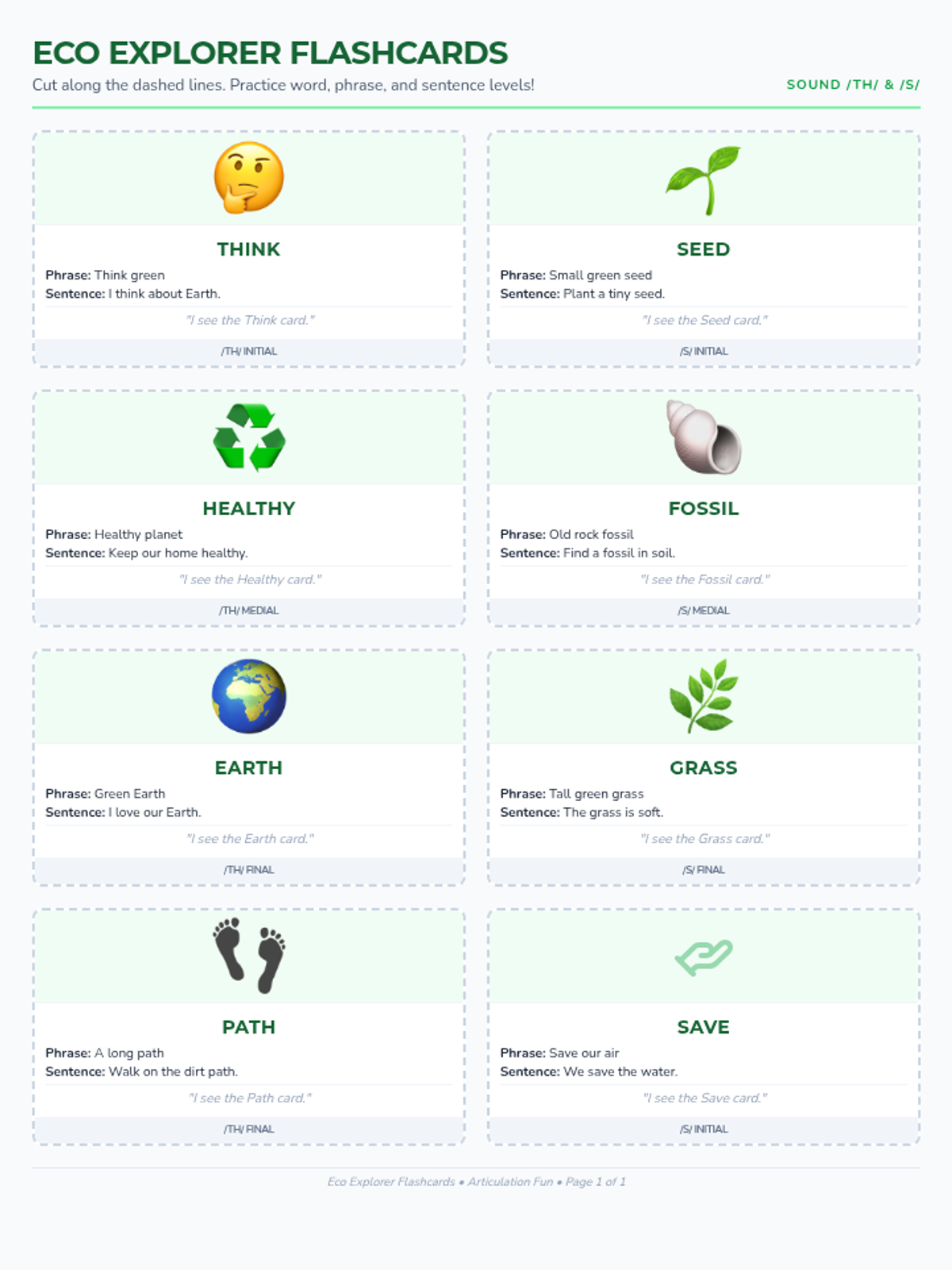
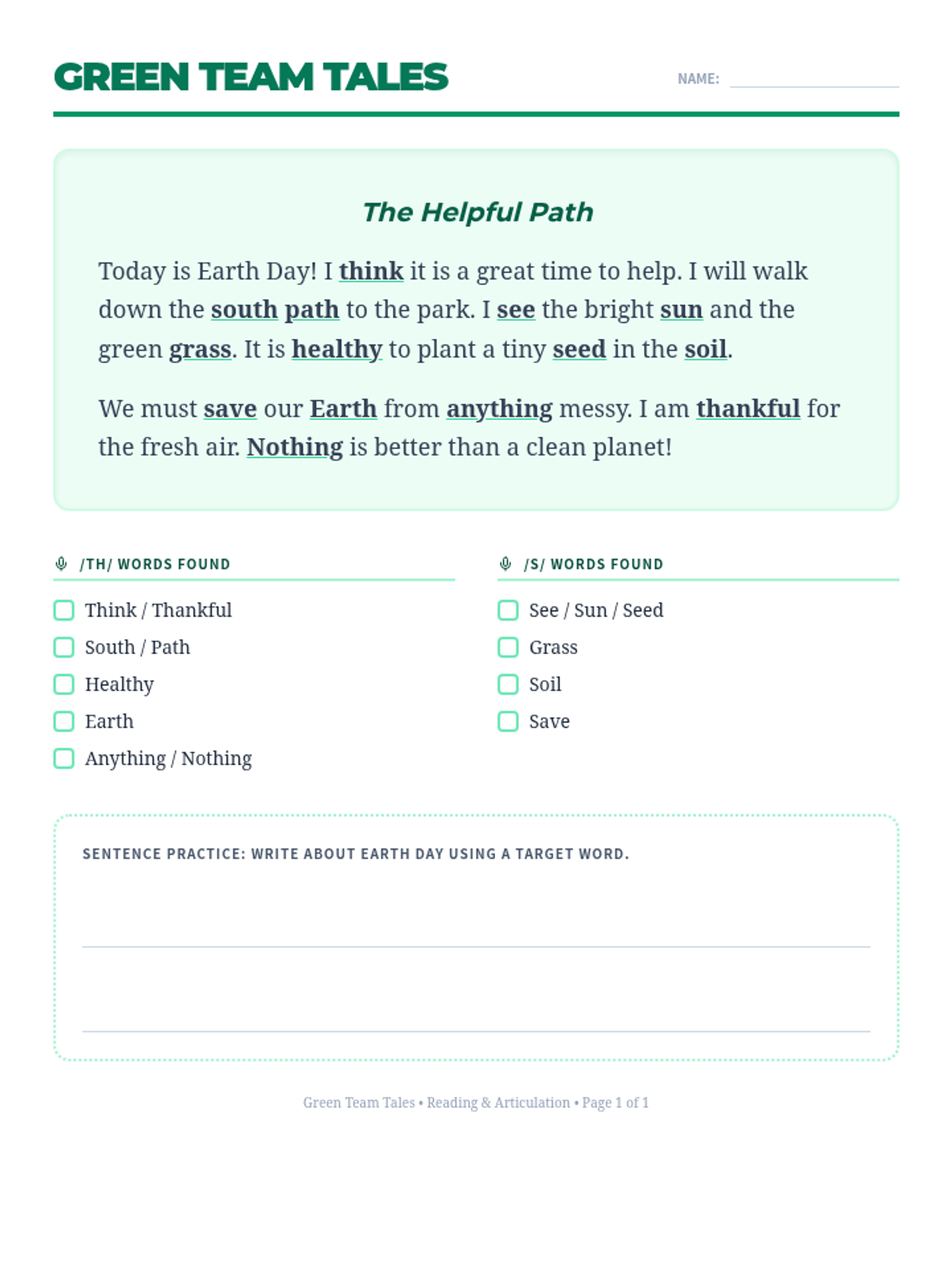
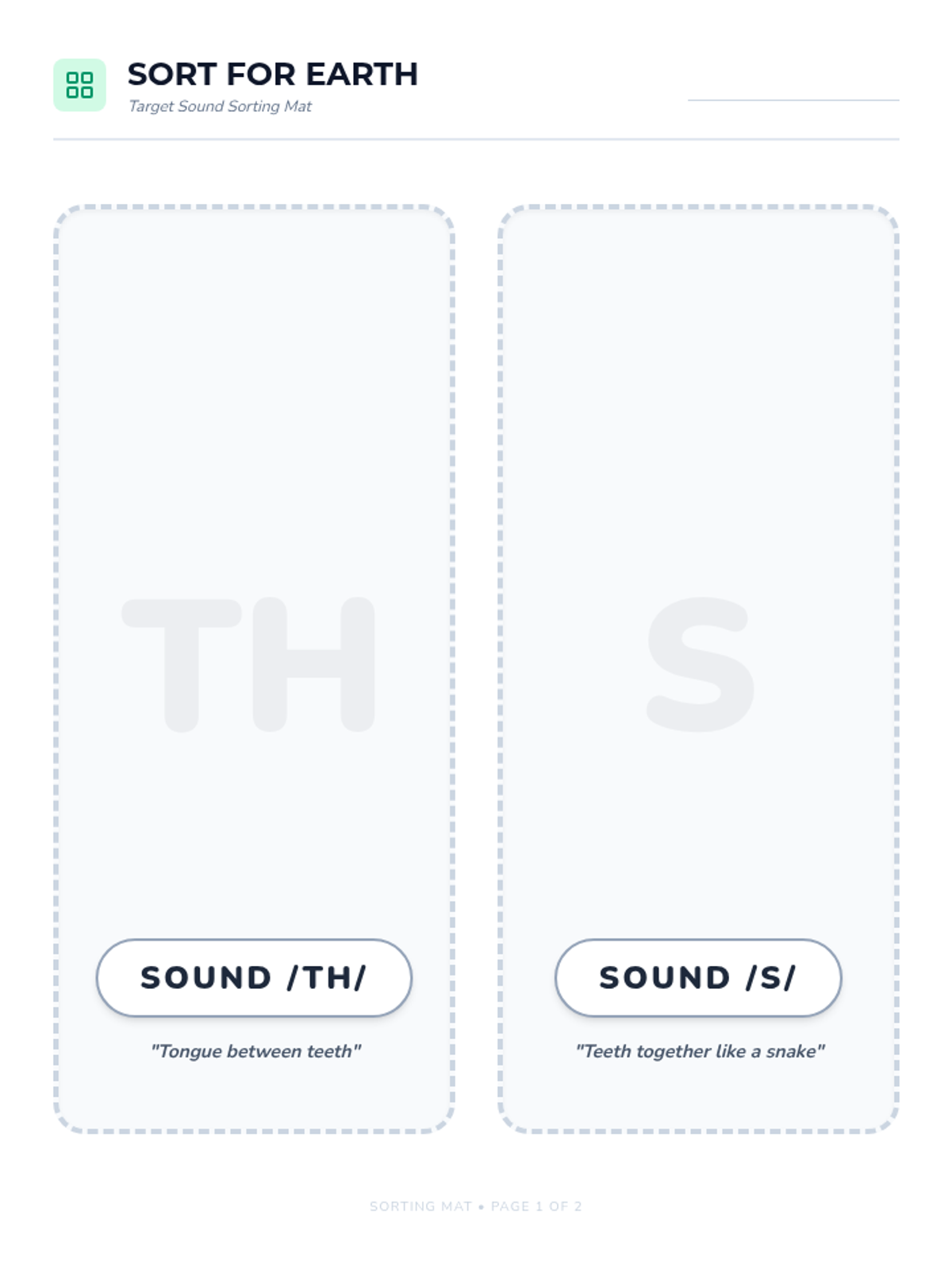
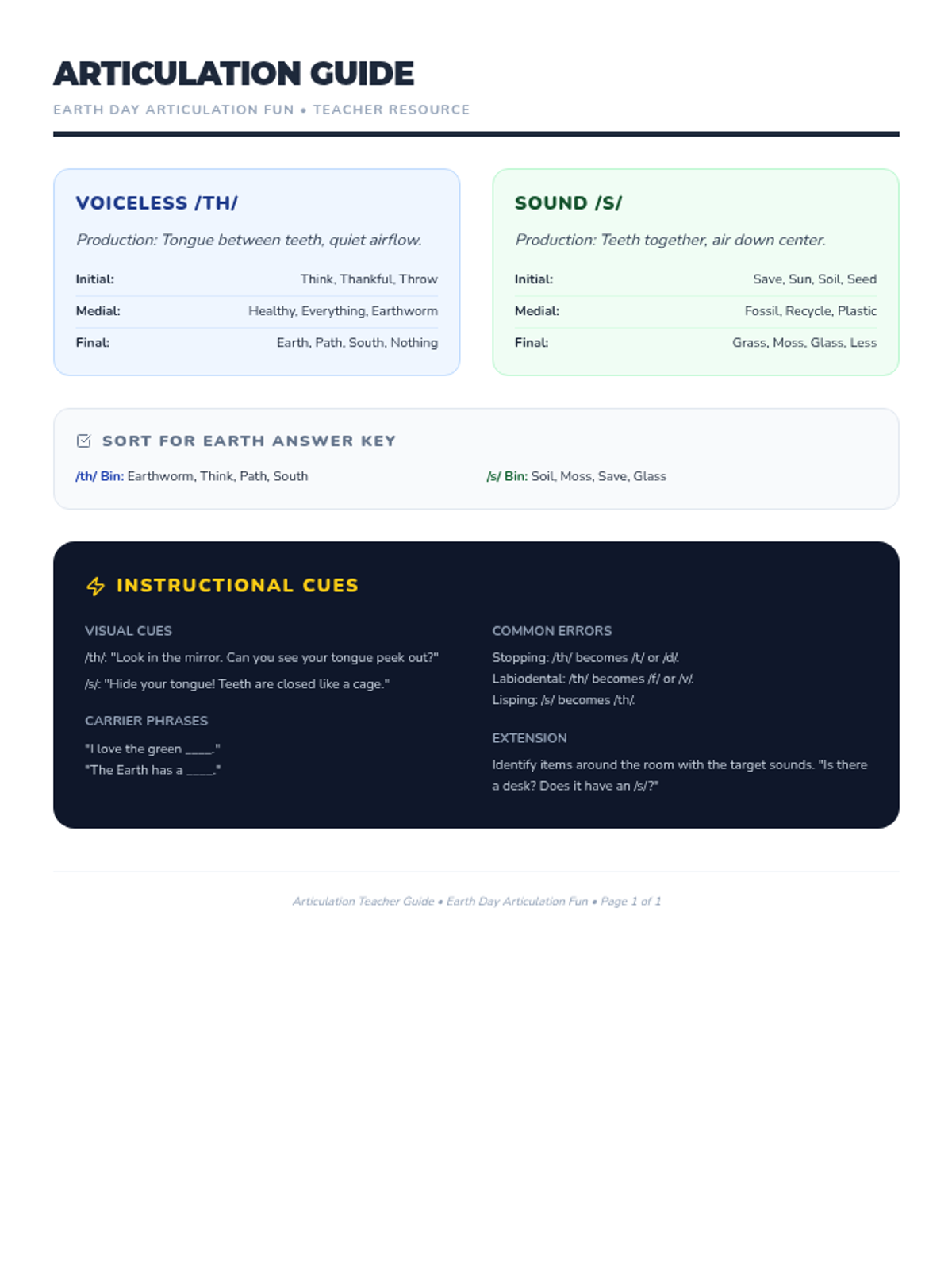
A set of articulation activities focused on voiceless /th/ and /s/ sounds within an Earth Day theme, covering word, phrase, and sentence levels.
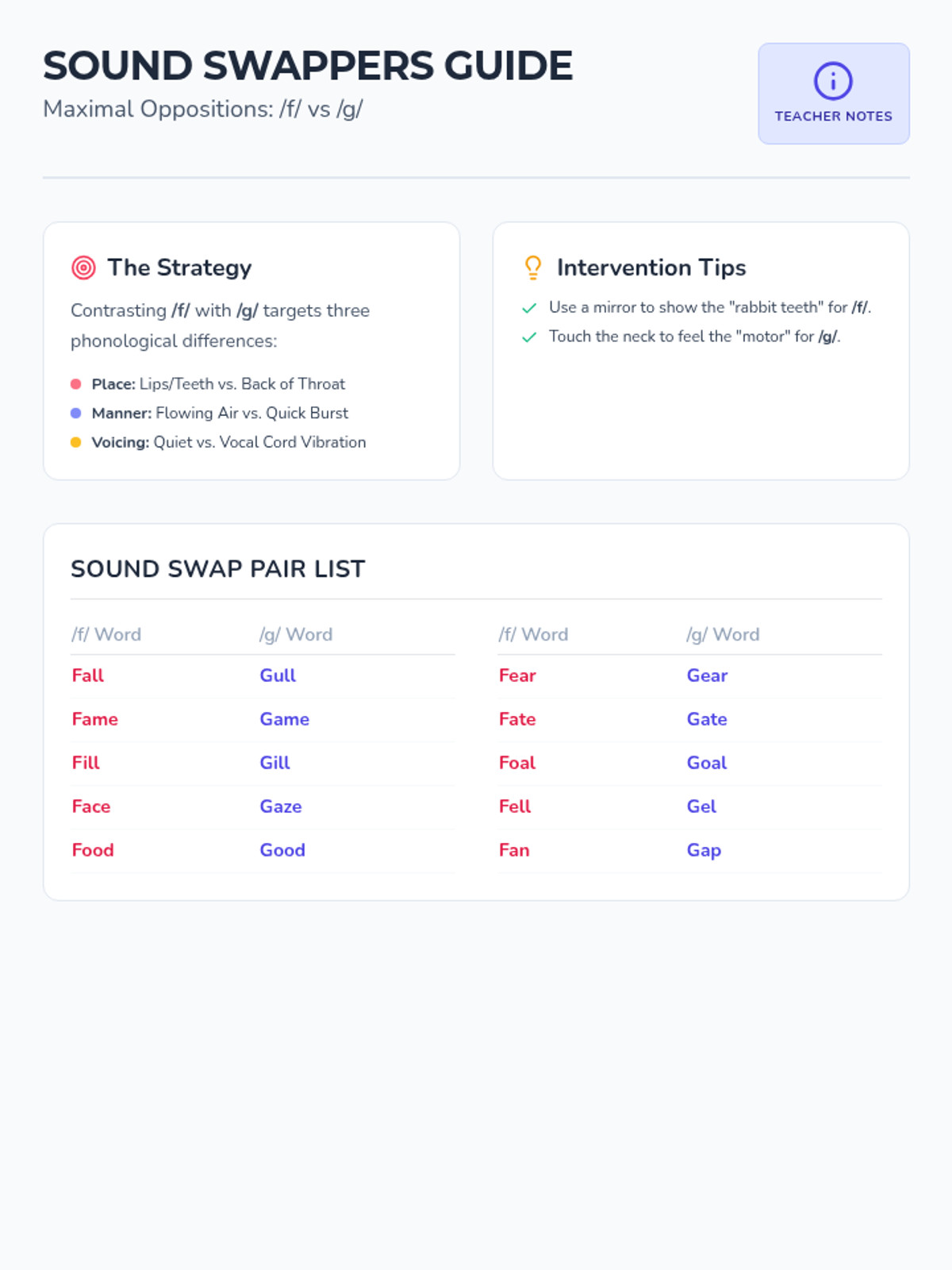
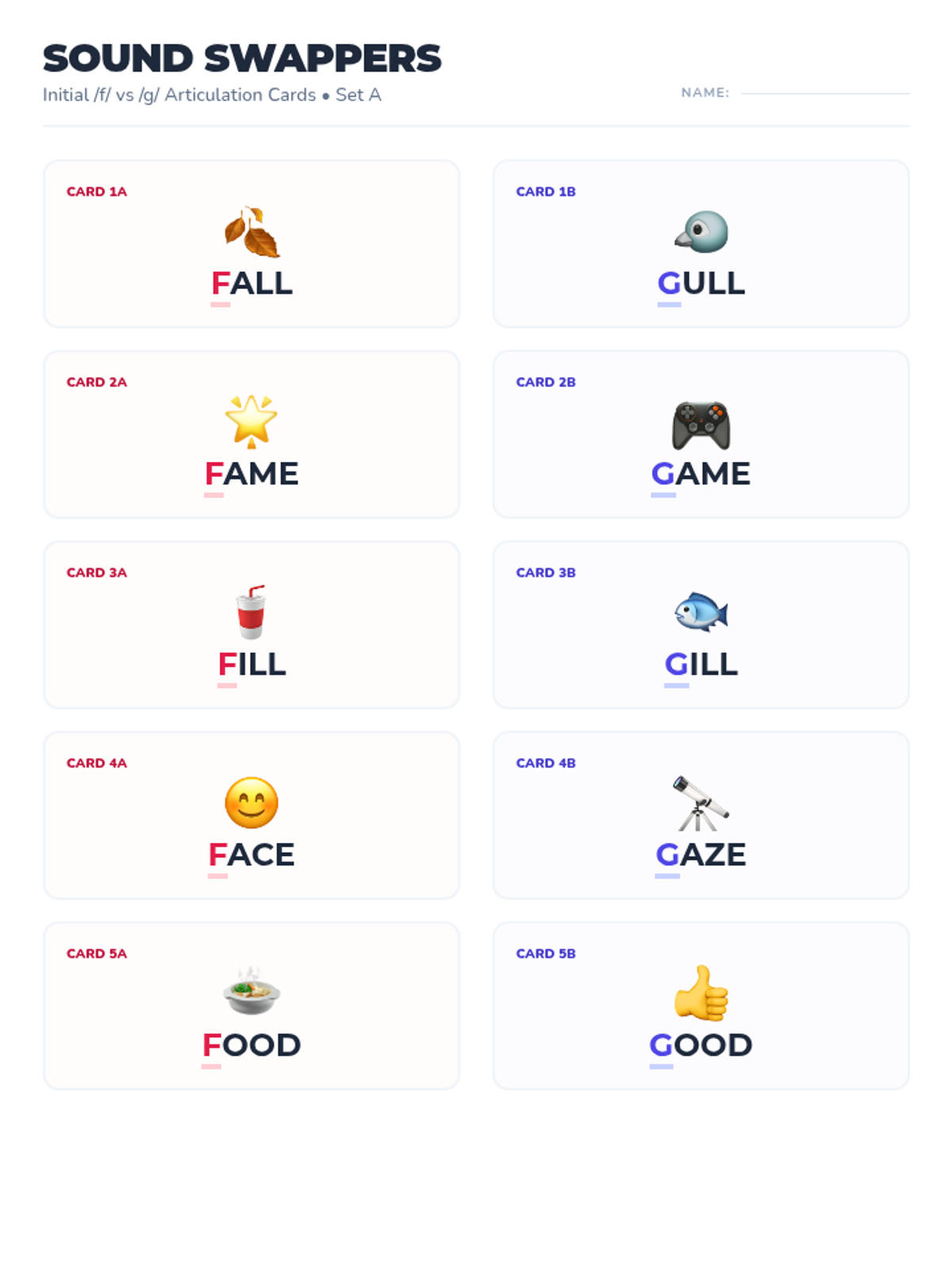
A set of resources for practicing the articulation of /f/ and /g/ initial sounds using maximal opposition pairs in a flashcard format.
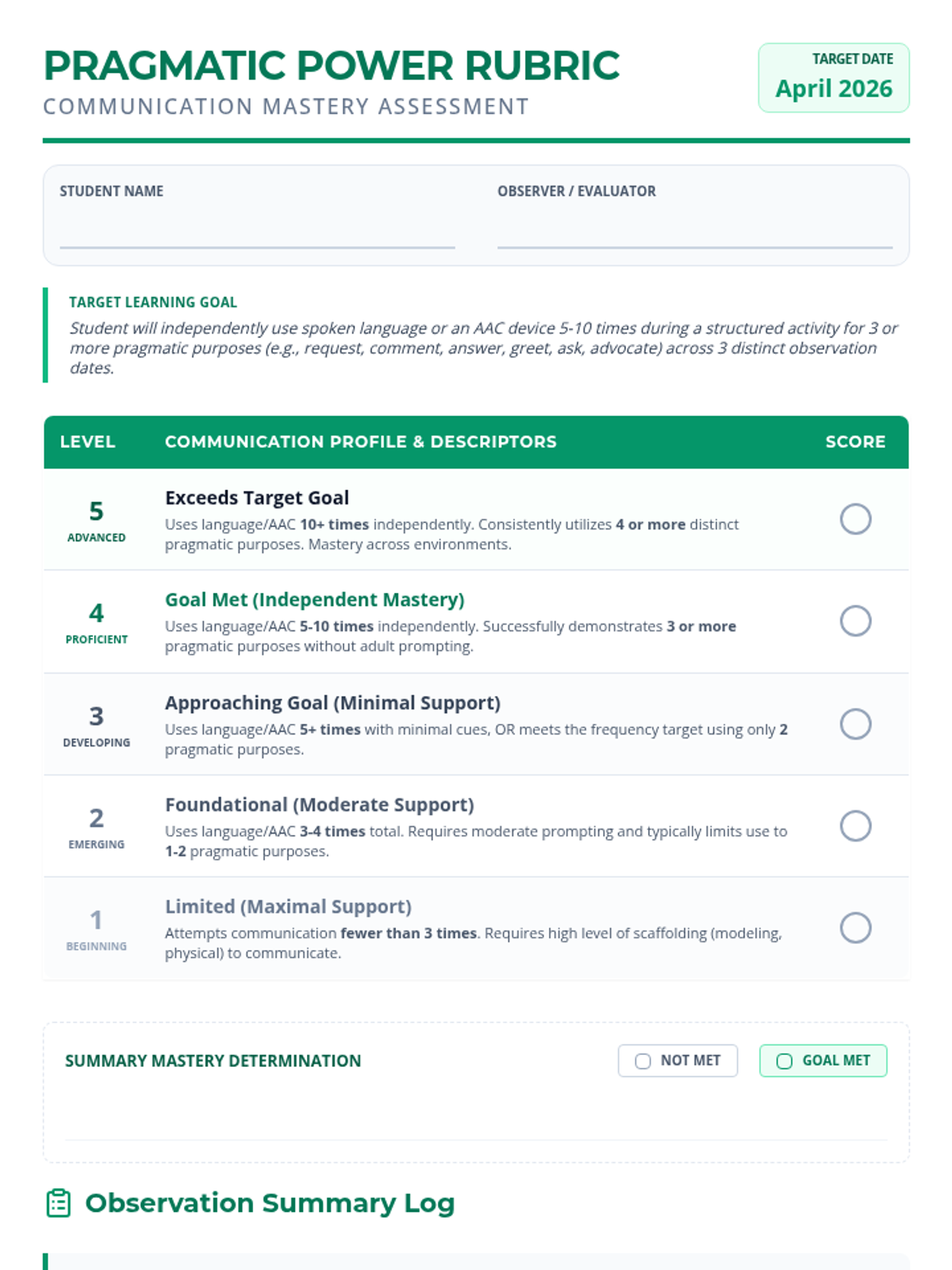
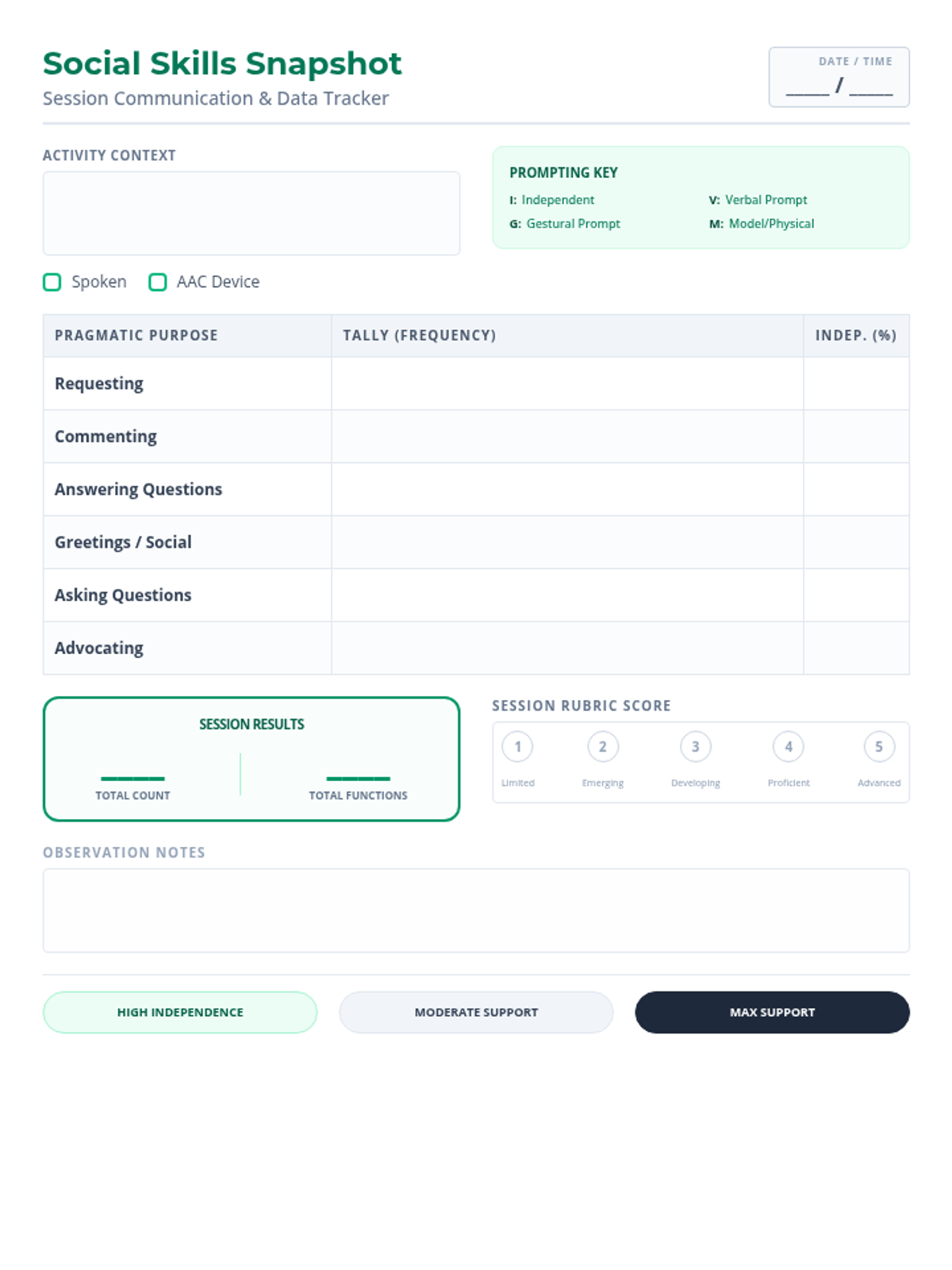
A comprehensive evaluation tool designed to track and measure a student's progress toward mastering various pragmatic communication functions using spoken language or AAC devices.
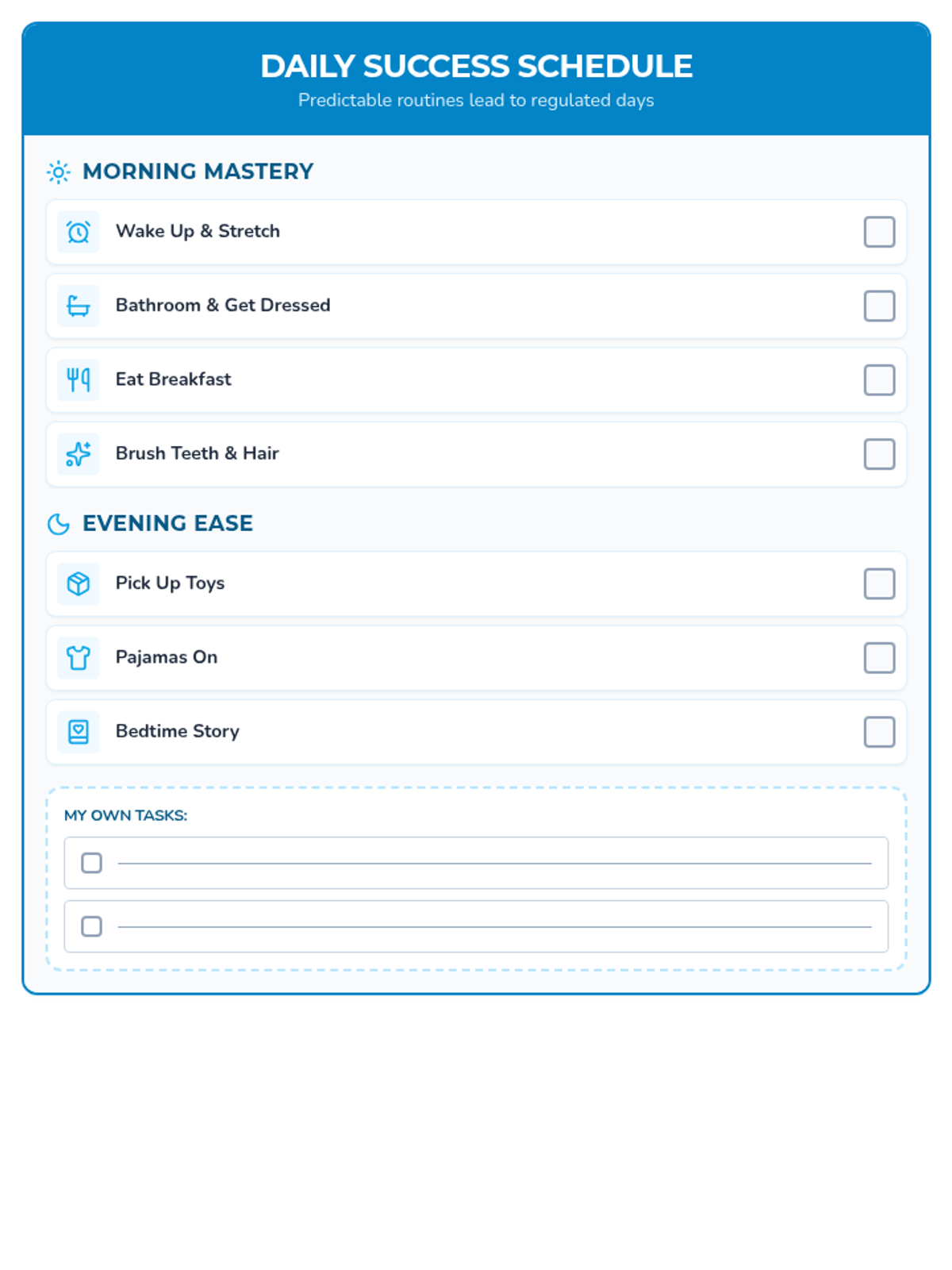
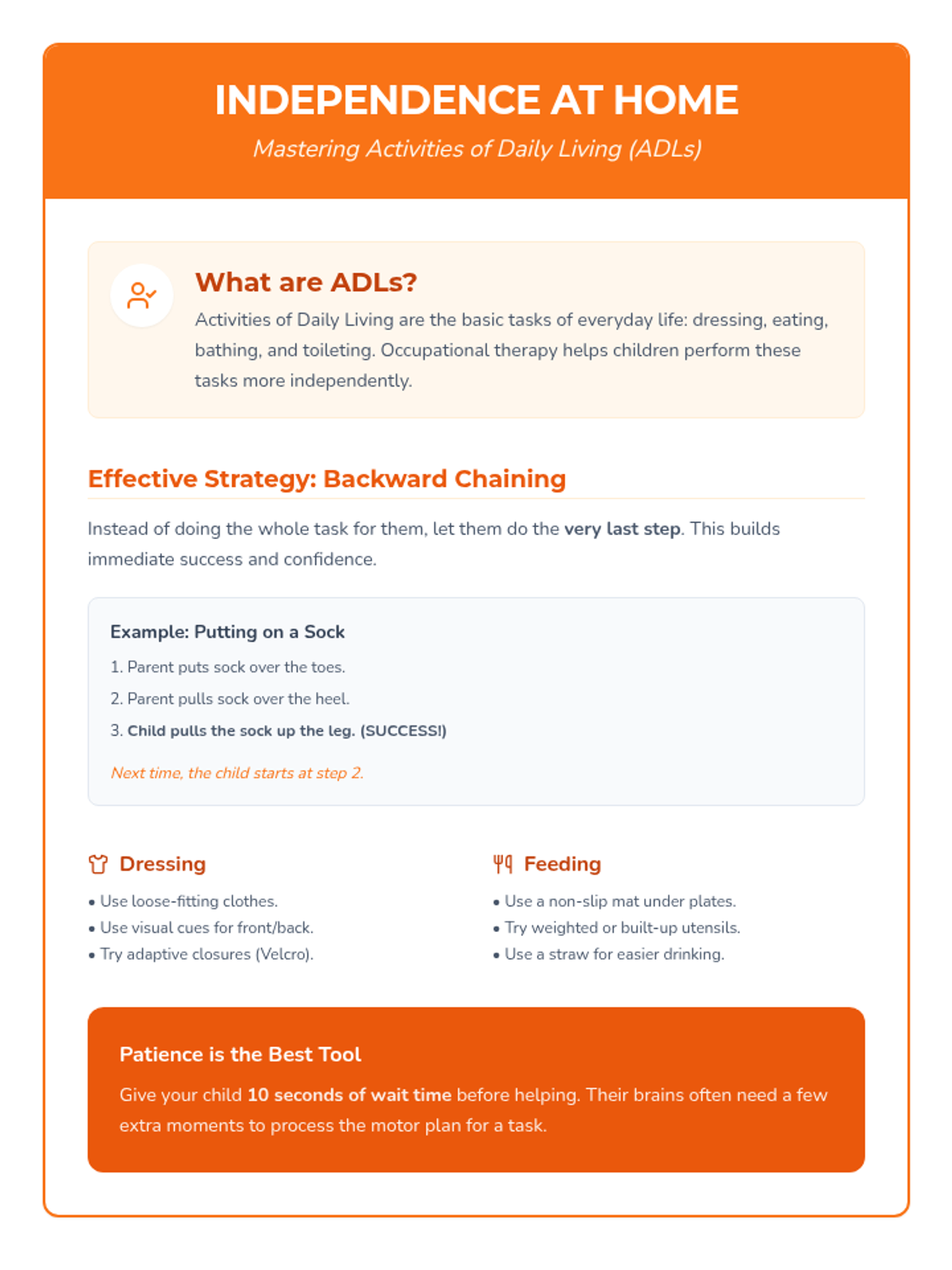
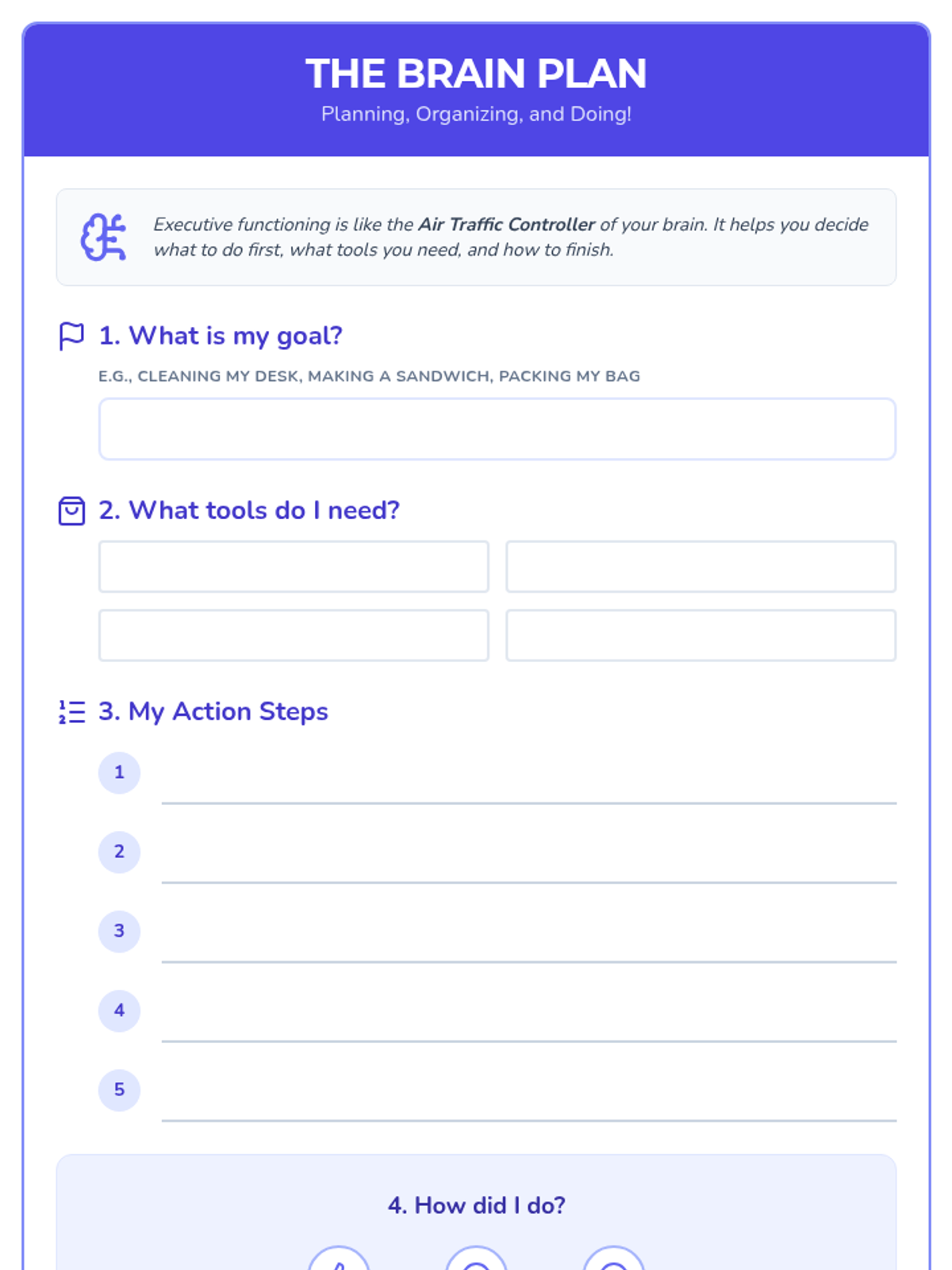
Strategies for Activities of Daily Living (ADLs), executive functioning, and establishing successful home routines.