A reading comprehension lesson centered on the book Michael Recycle by Ellie Bethel, focusing on identifying key story elements using WH-questions.
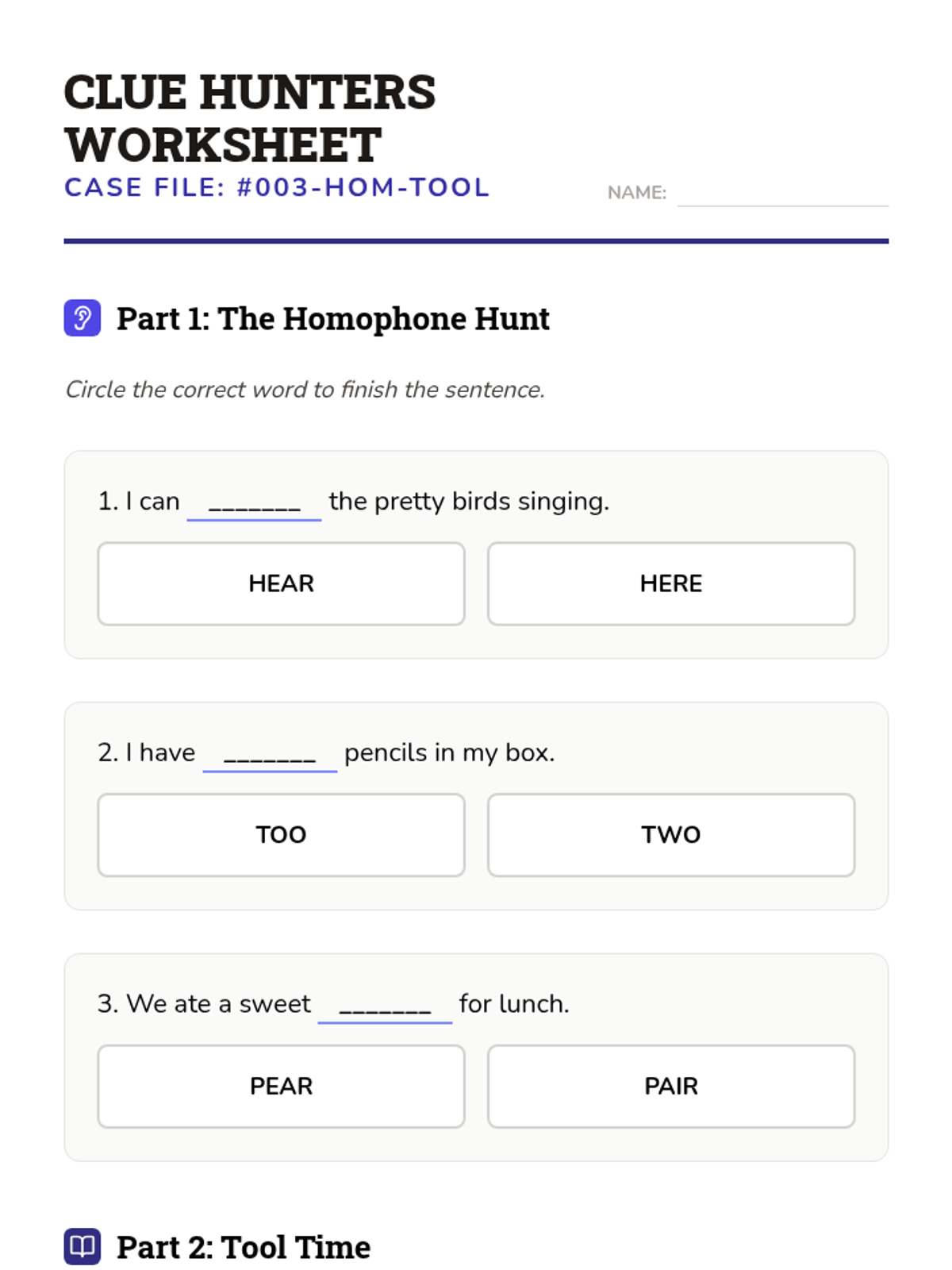
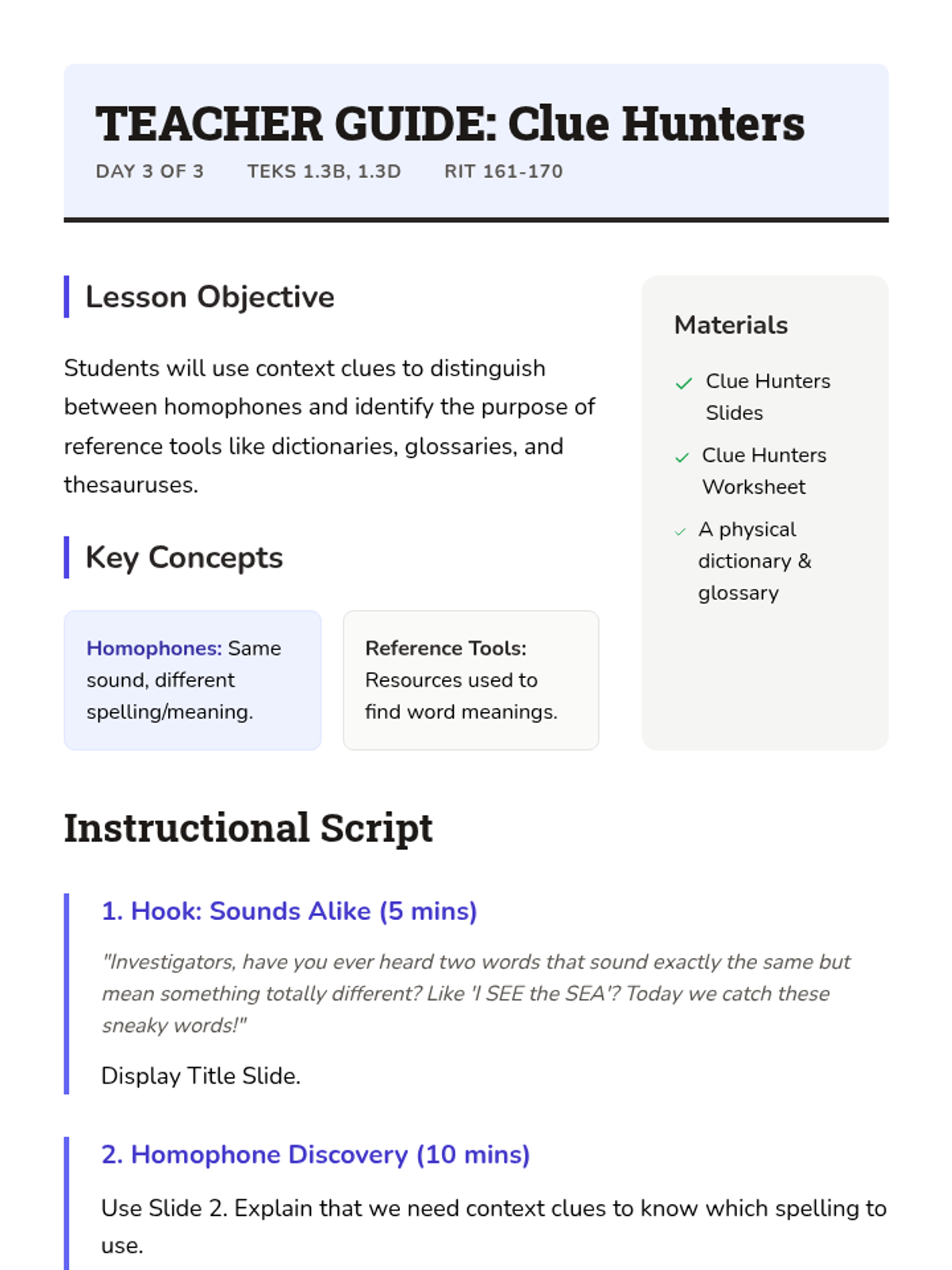
Teaches students to use context clues for homophones and explore reference tools like dictionaries and glossaries, aligning with TEKS 1.3B and 1.3D.
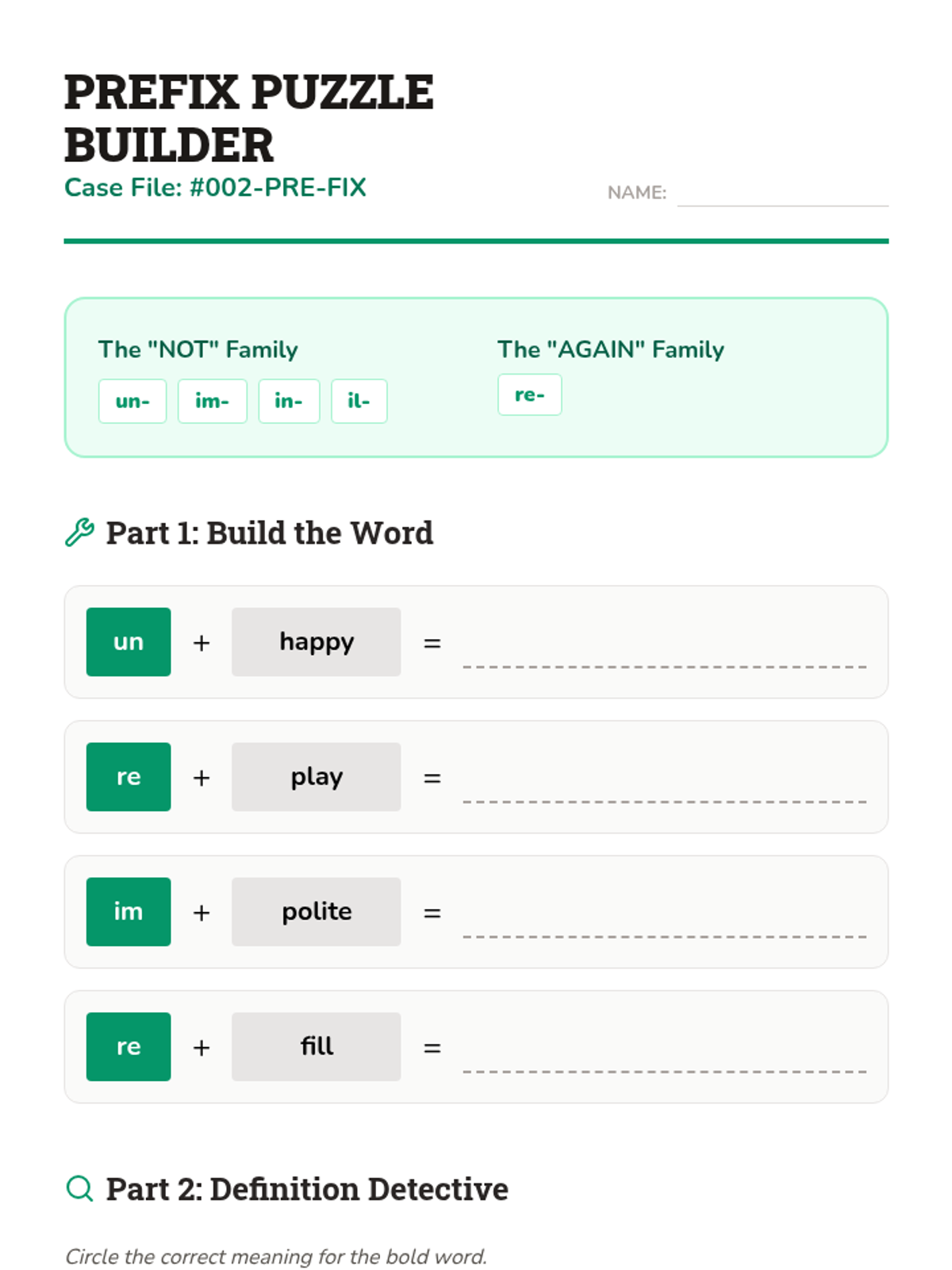
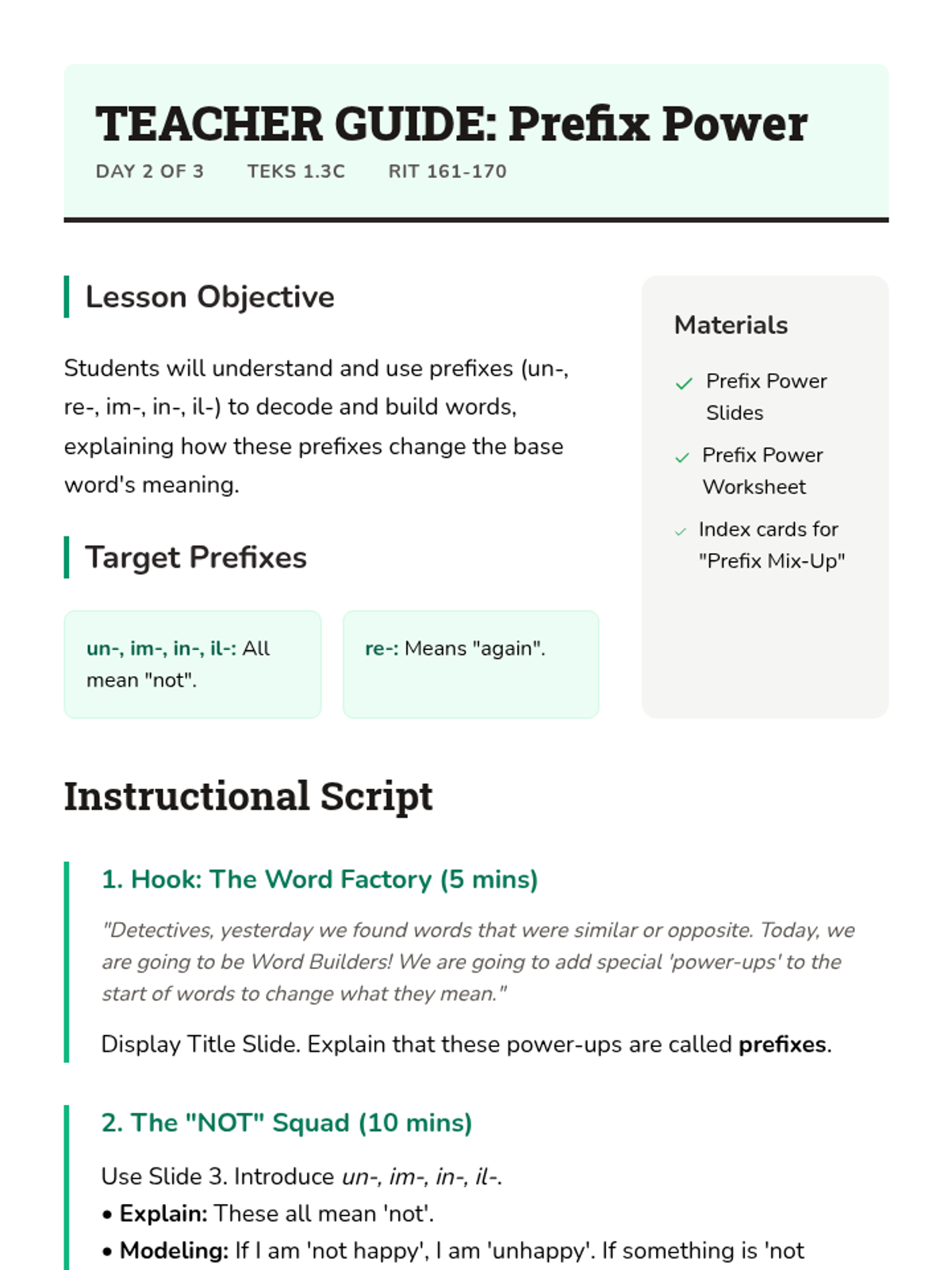
Covers the meaning and use of prefixes un-, re-, im-, in-, and il- to change word meanings, aligning with TEKS 1.3C.
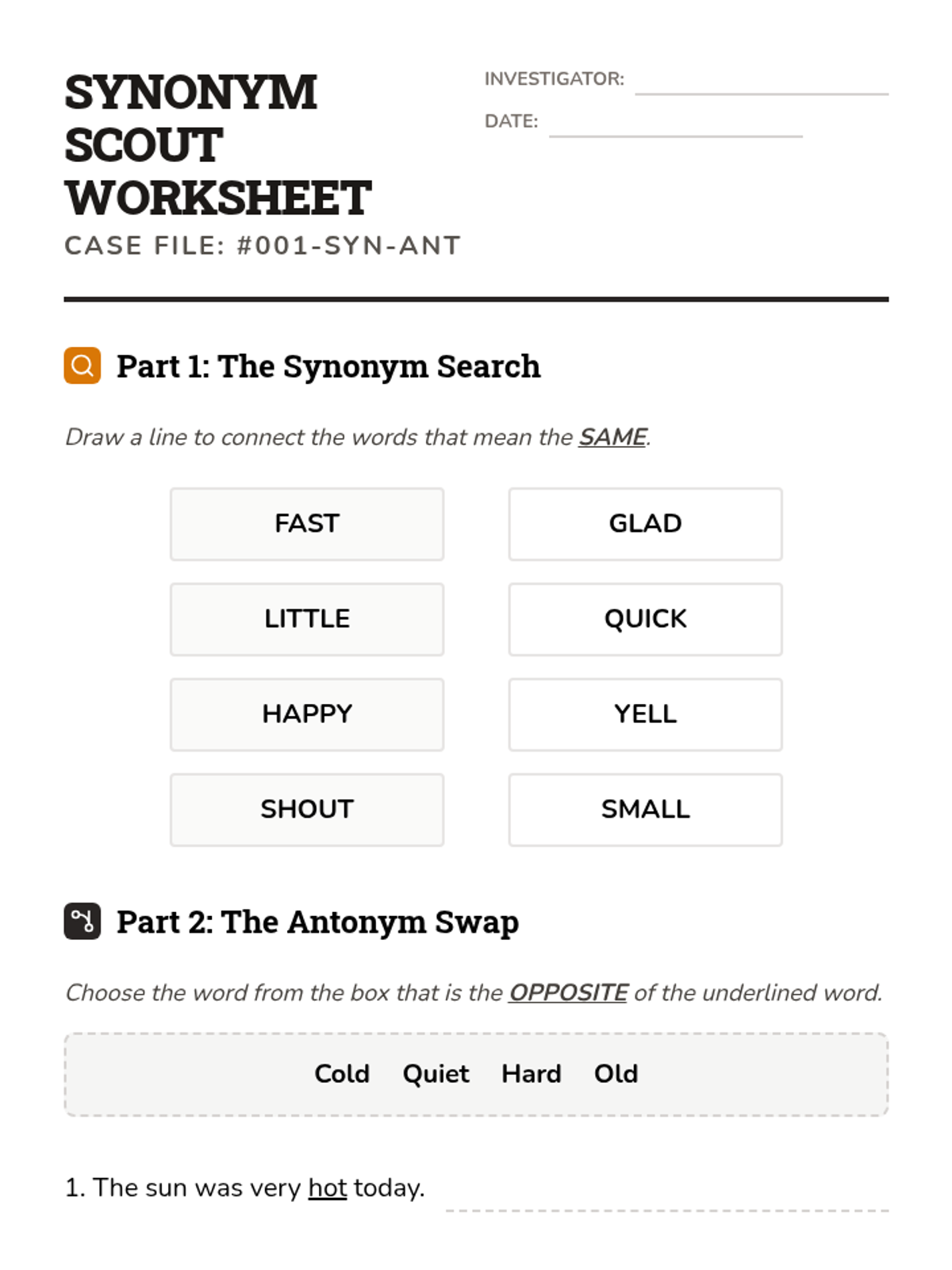
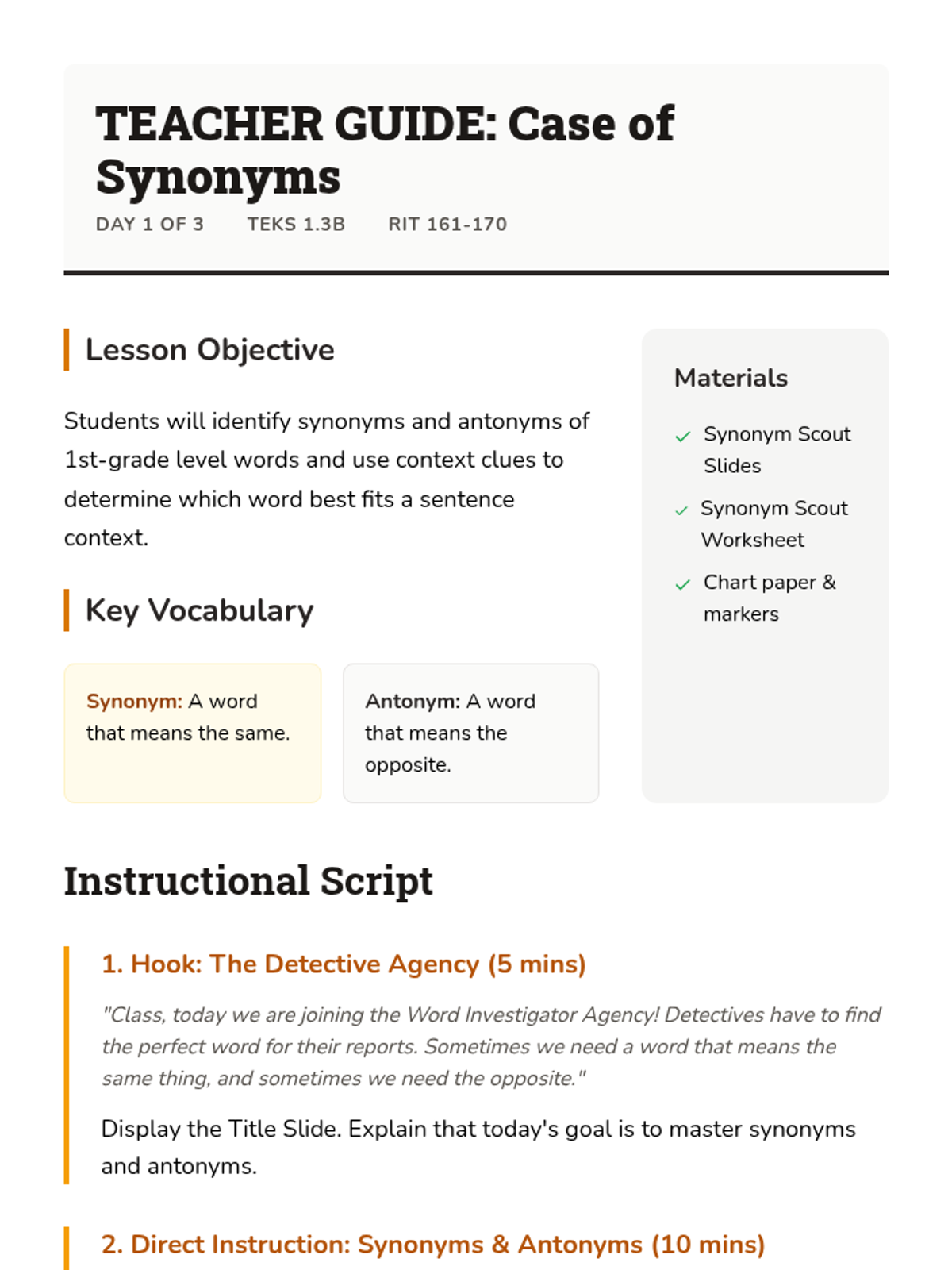
Focuses on identifying synonyms and antonyms and using context clues to find words that best fit a sentence, aligning with TEKS 1.3B.
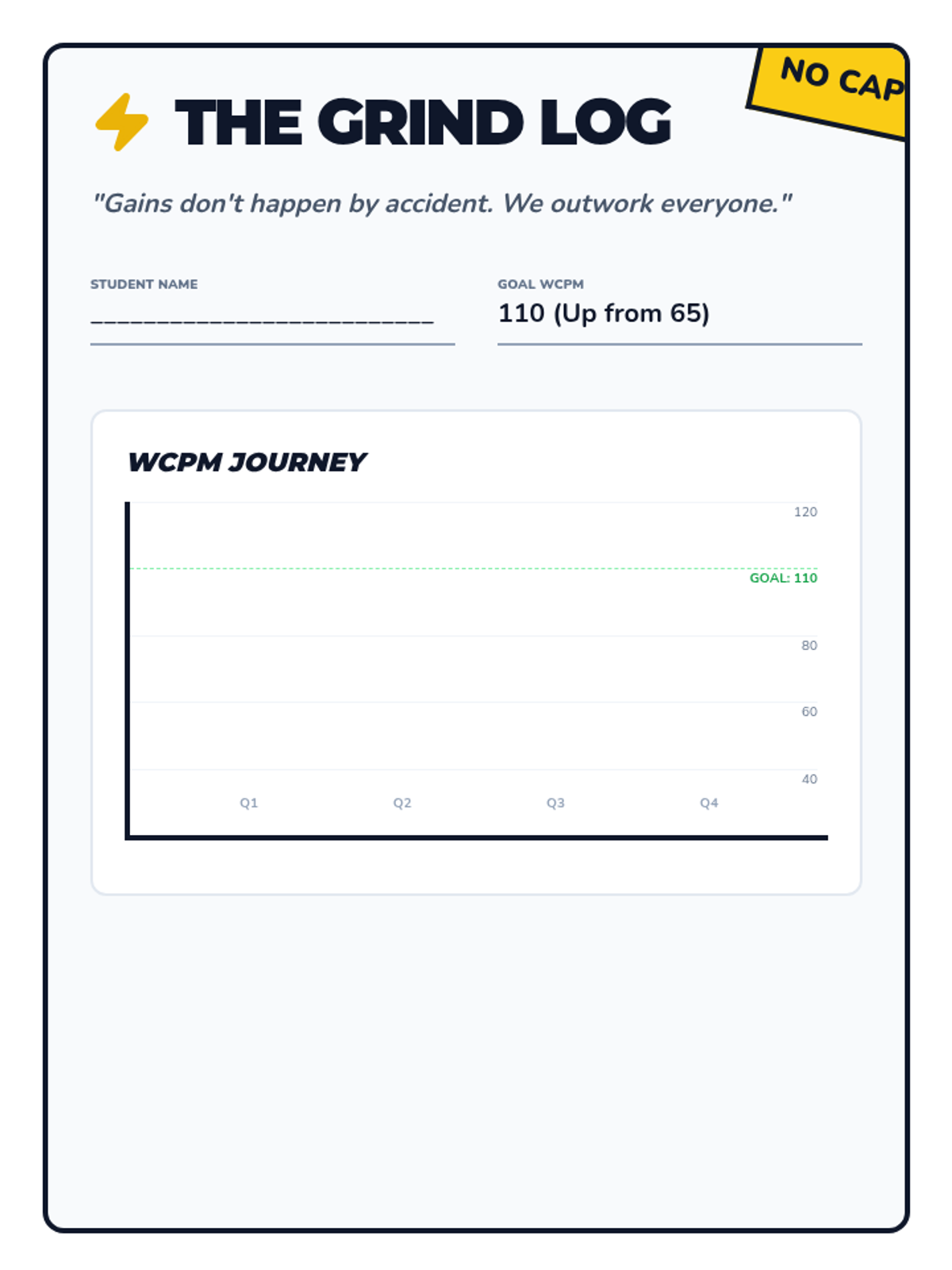
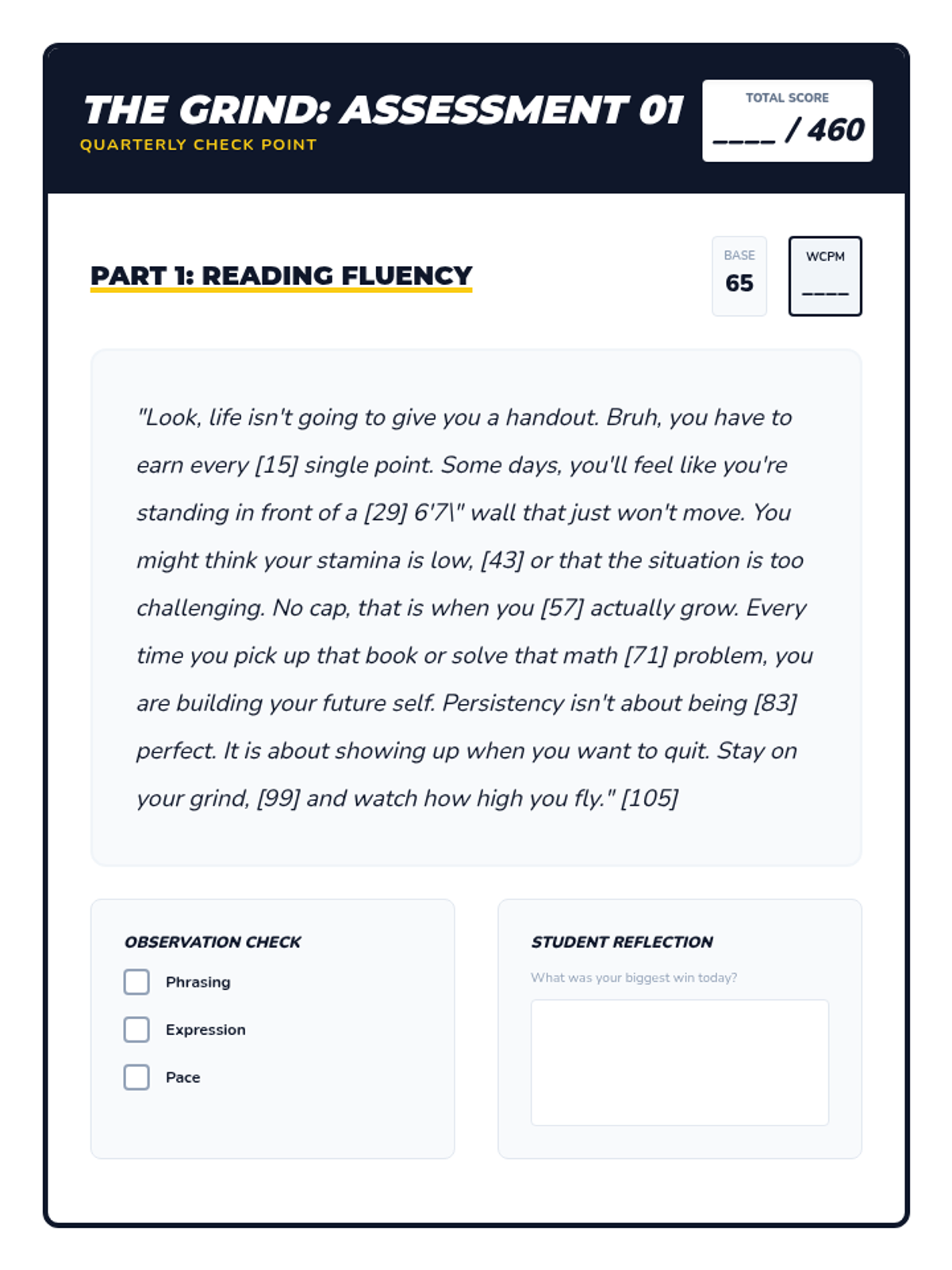
Final push towards the 110 WCPM goal and the 460 iReady score with 4th-grade readiness passages and multi-step algebraic problems.
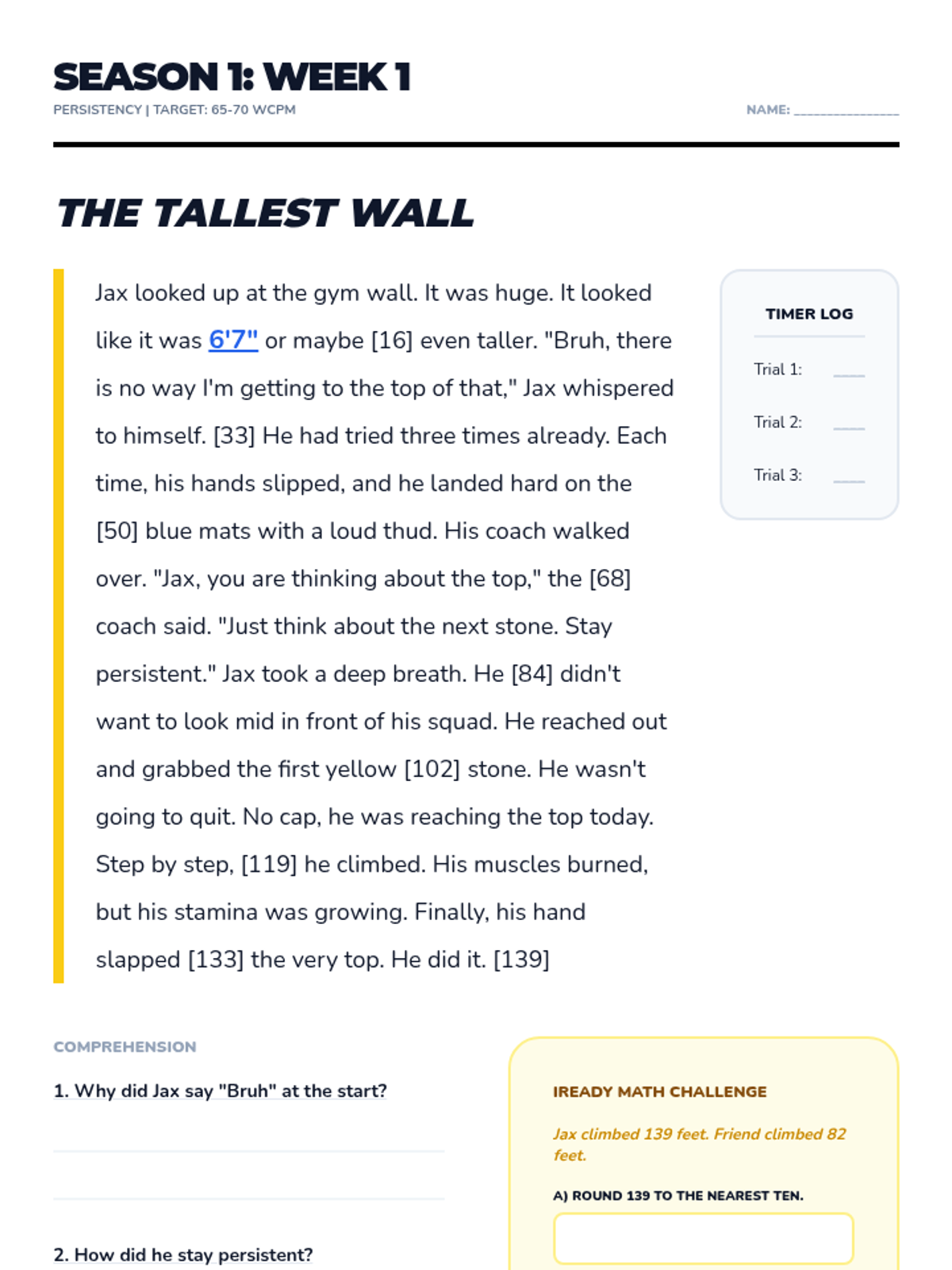
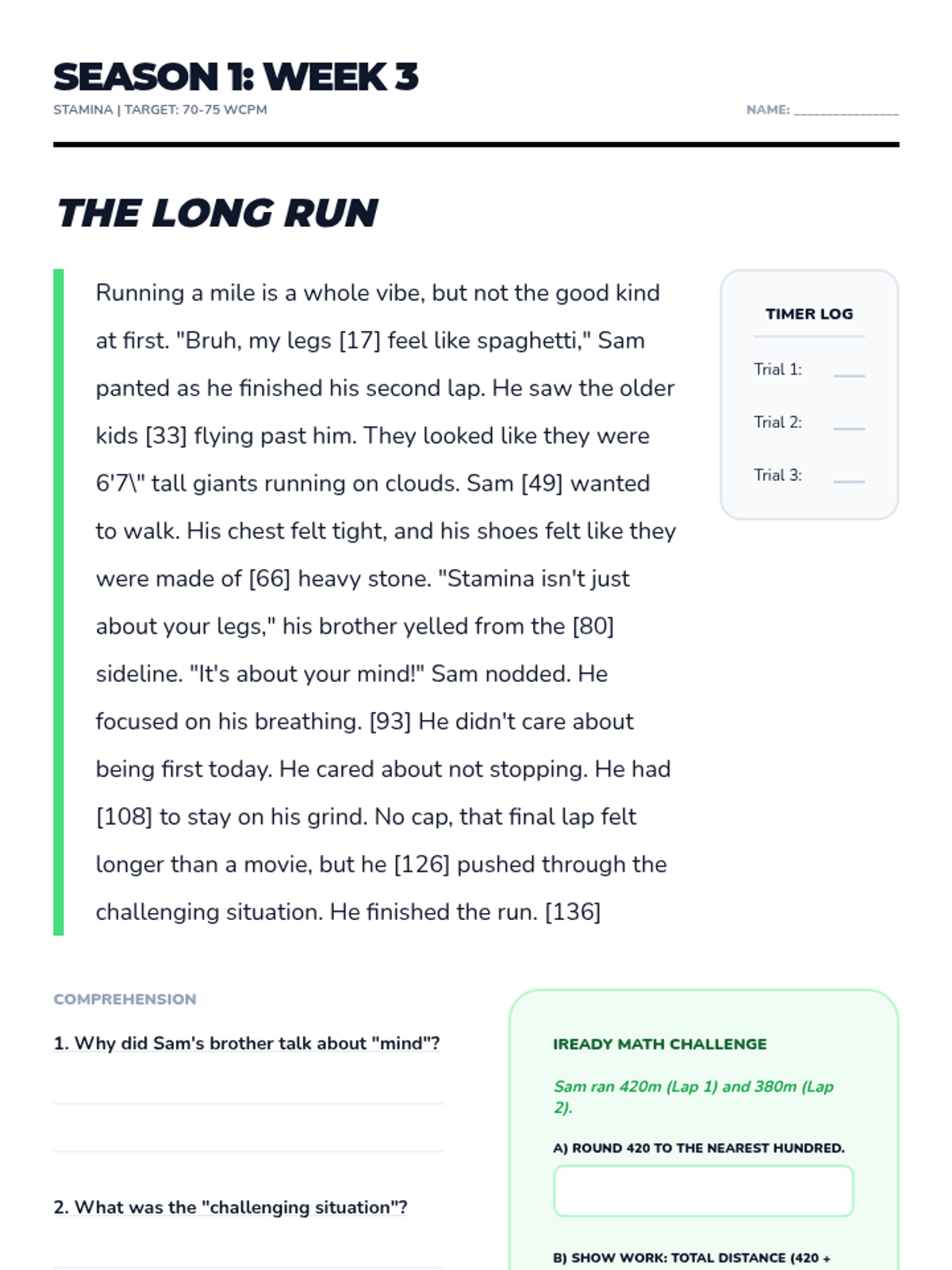
Focusing on stamina and persistency with longer passages and math skills centered on fractions and complex word problems.
Stepping up complexity in reading passages and focusing on multiplication, division, and algebraic thinking.
The foundation of the program, focusing on initial fluency routines and core 3rd-grade math skills in place value and operations. Includes the 40-week Success Log and Math Checklist.
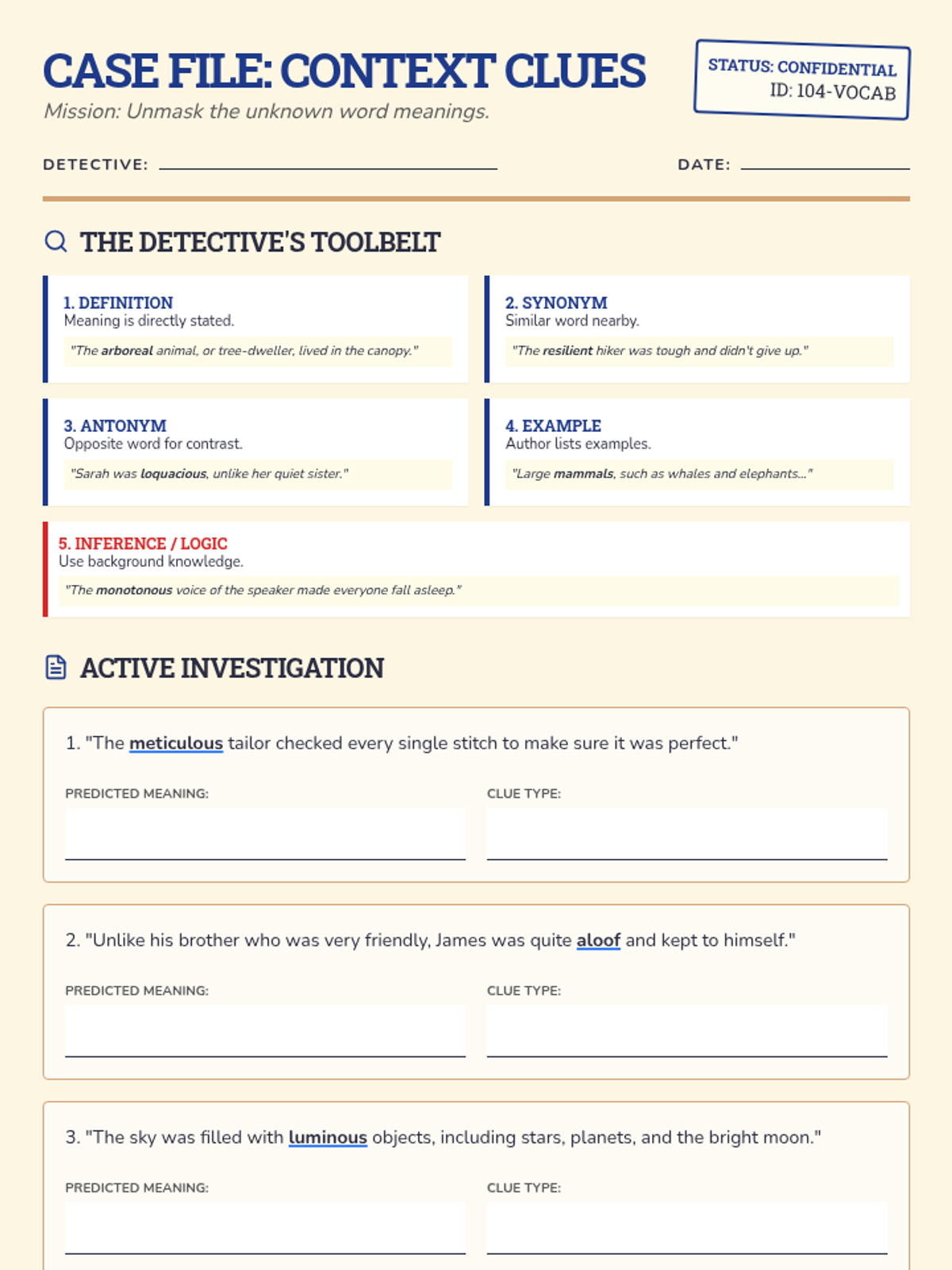
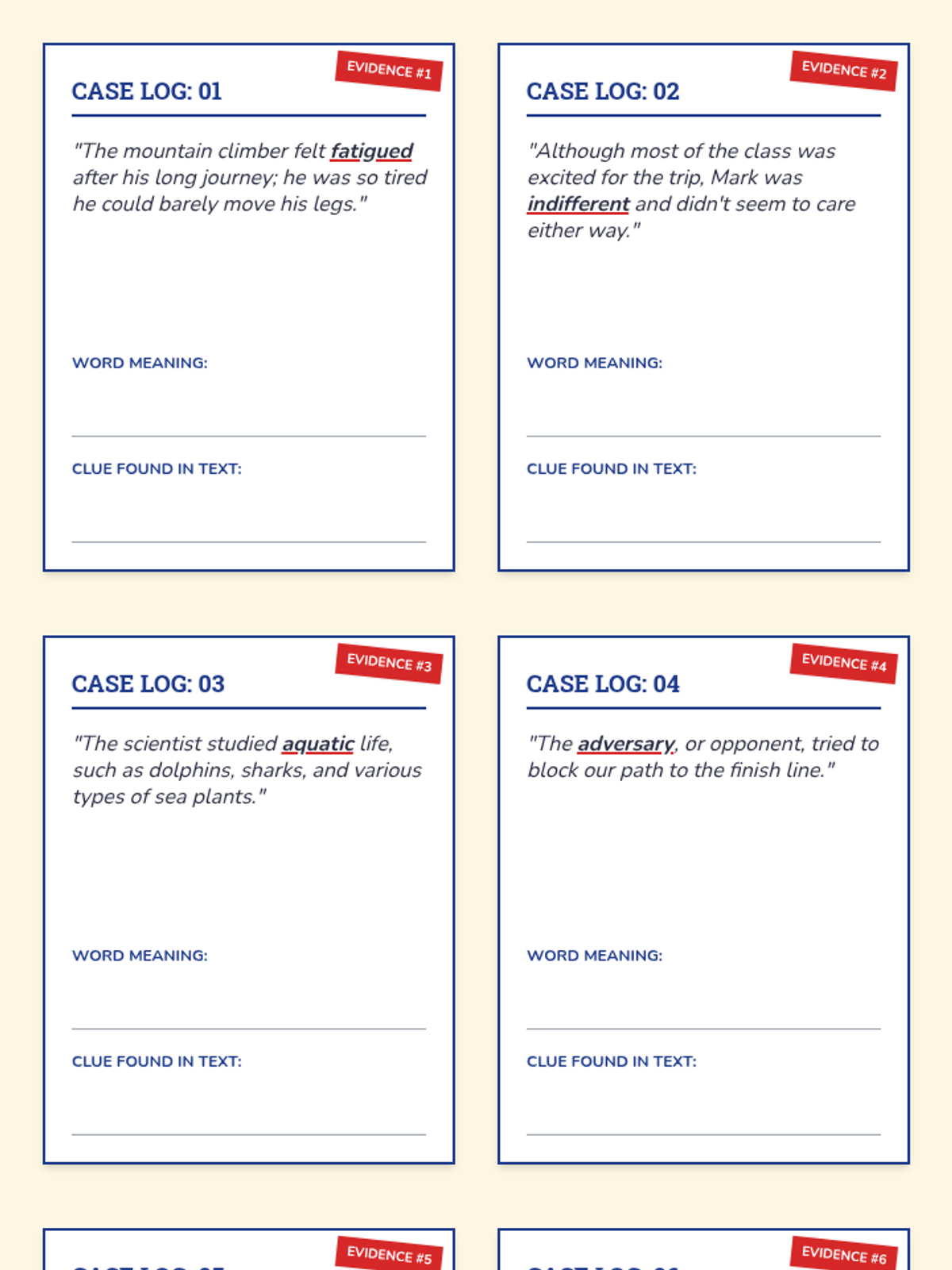
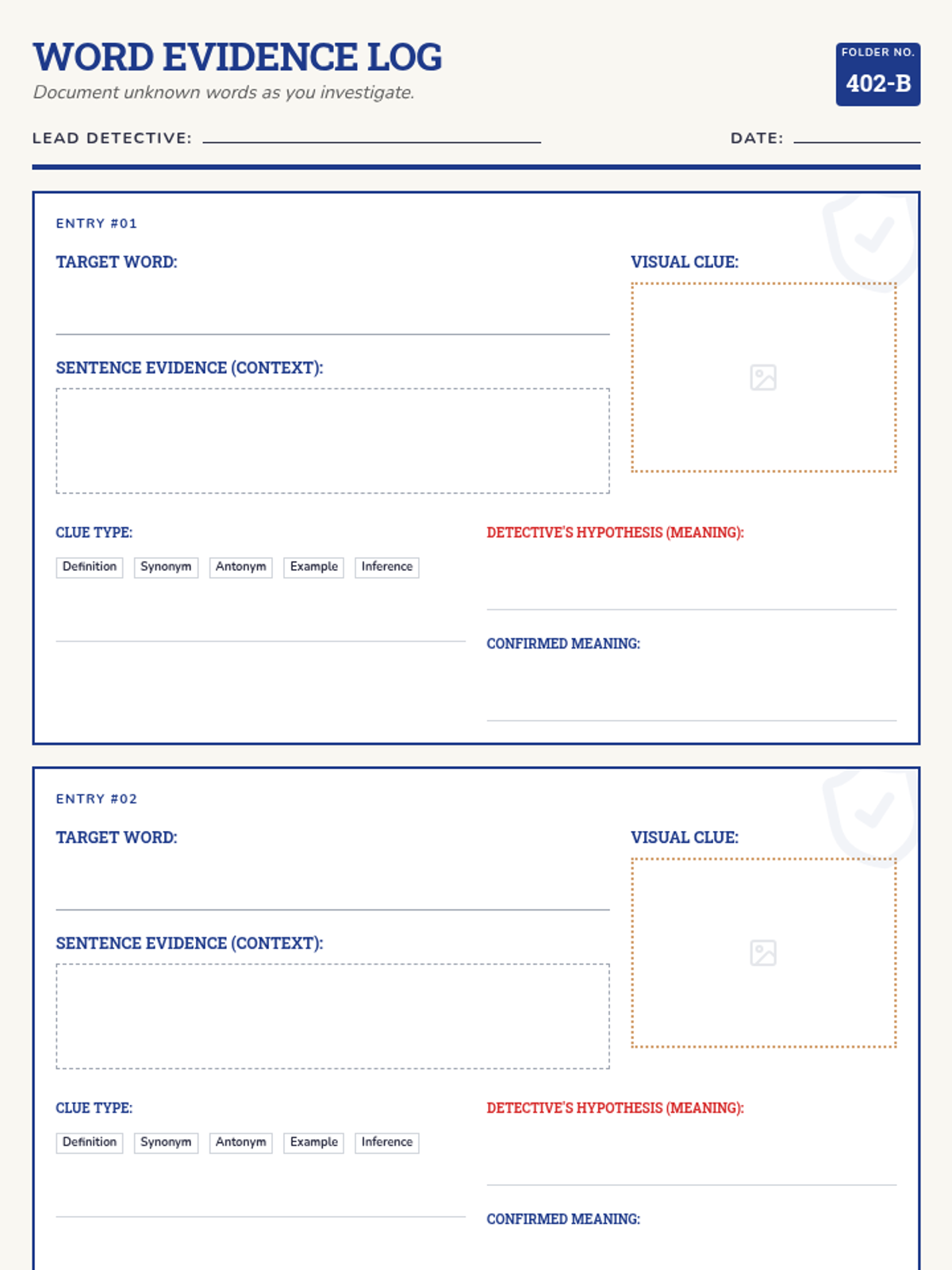
A deep dive into using word relationships and context clues to uncover the meaning of unfamiliar words. Students act as word detectives, searching for evidence in sentences to solve vocabulary mysteries through guided practice and independent evidence-gathering.
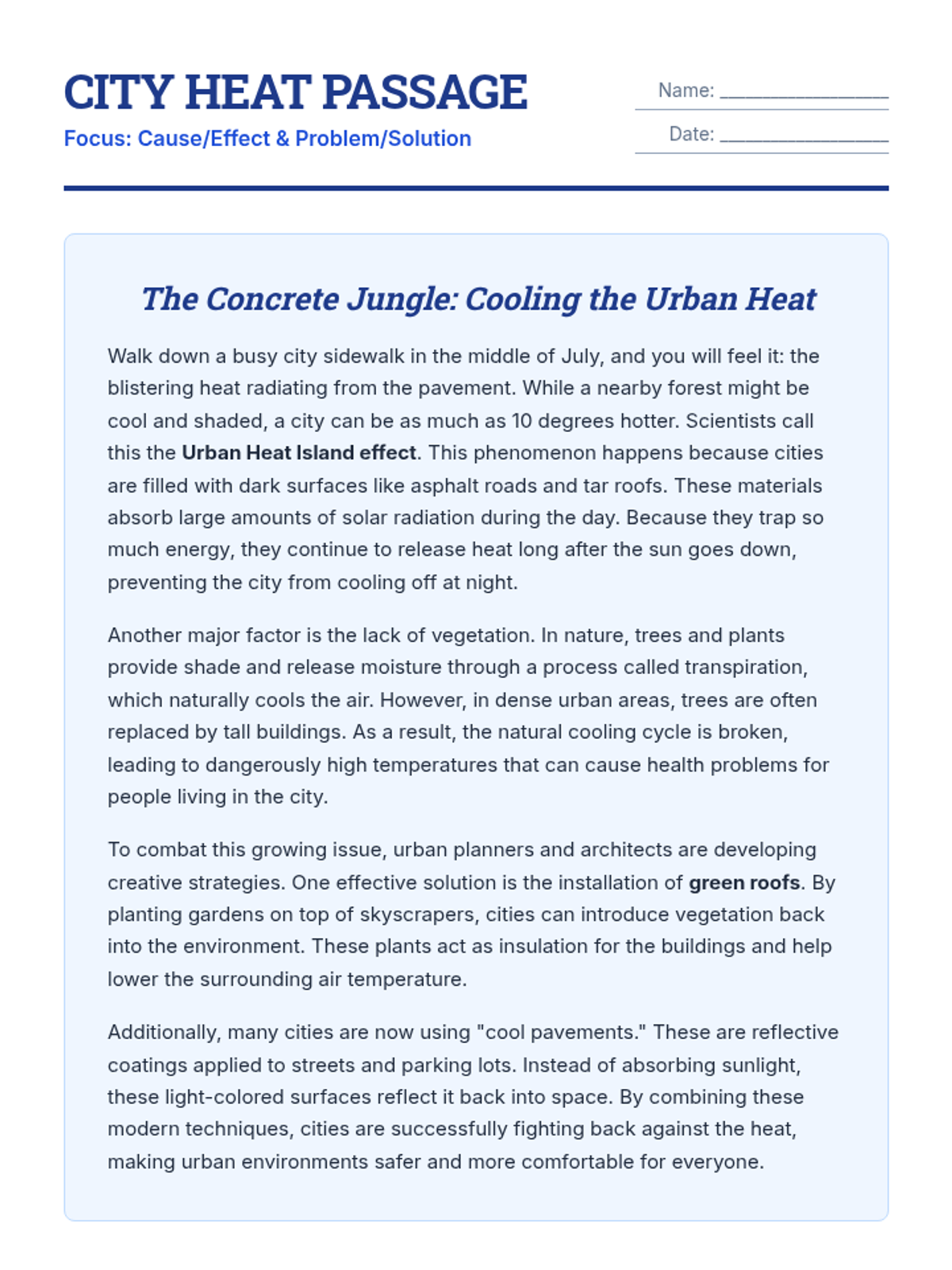
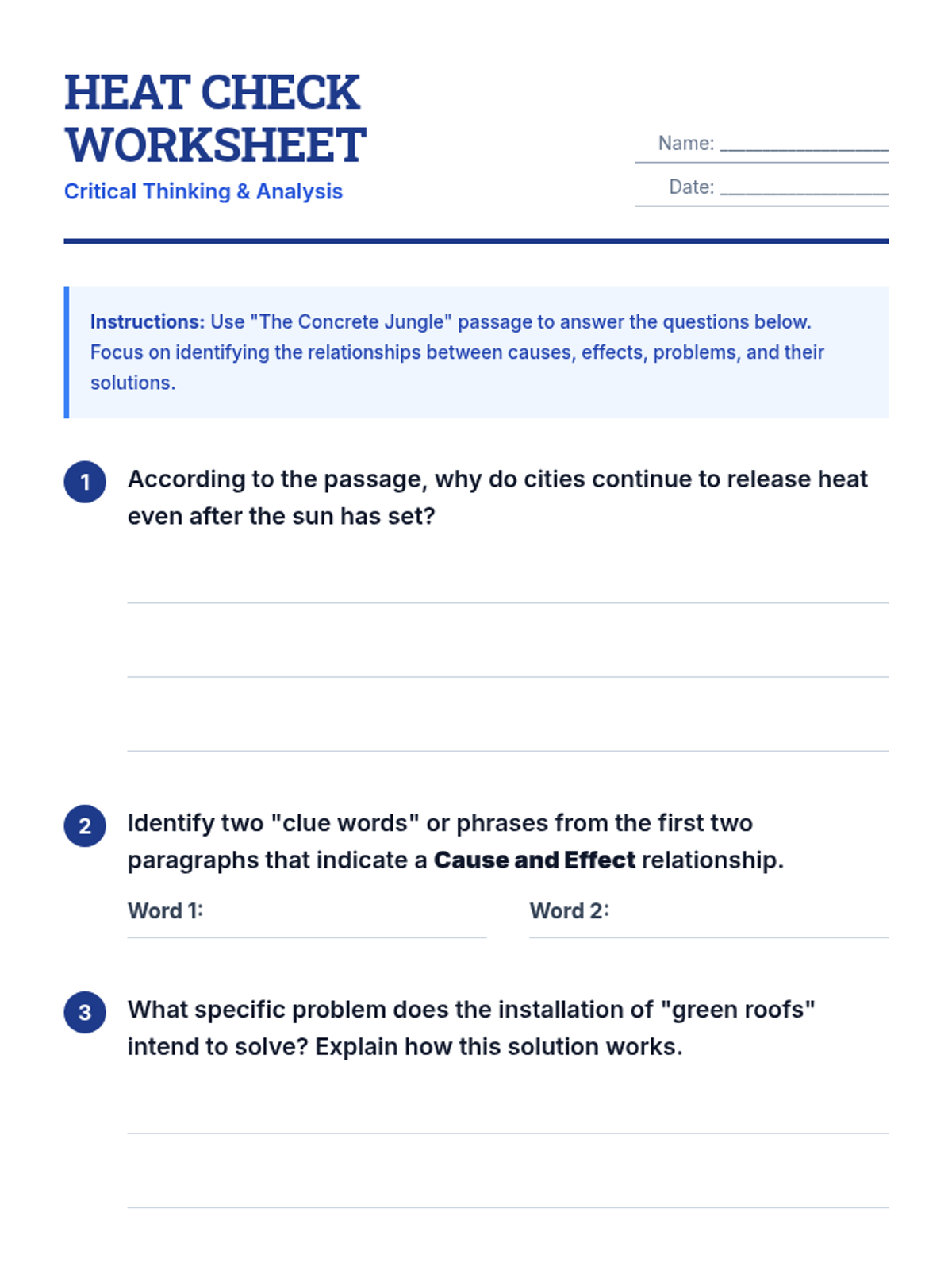
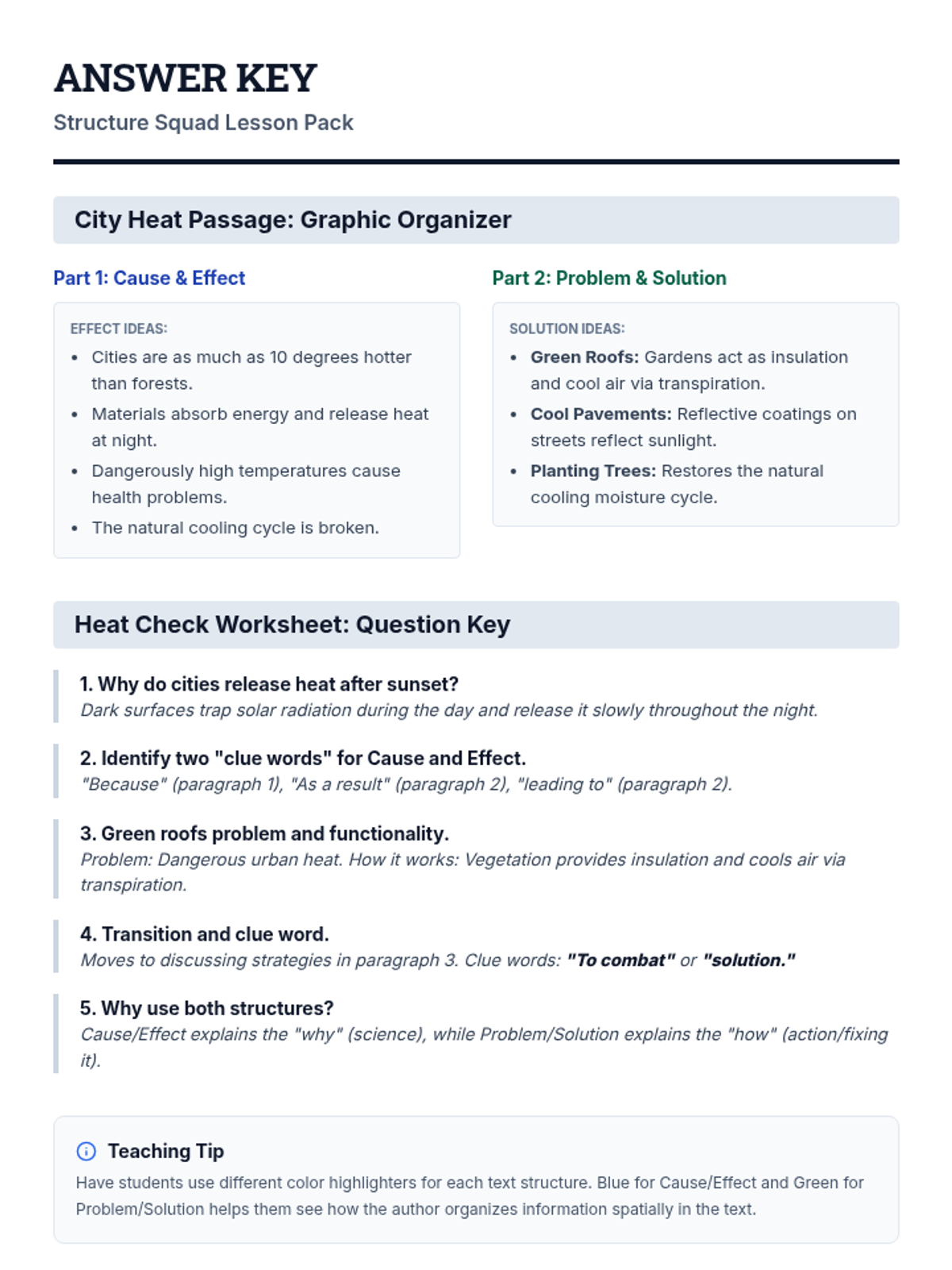
This lesson introduces students to identifying and distinguishing between cause-and-effect and problem-solution text structures using a high-interest passage about urban heat islands. Students will analyze the relationship between events and the methods used to solve environmental challenges.
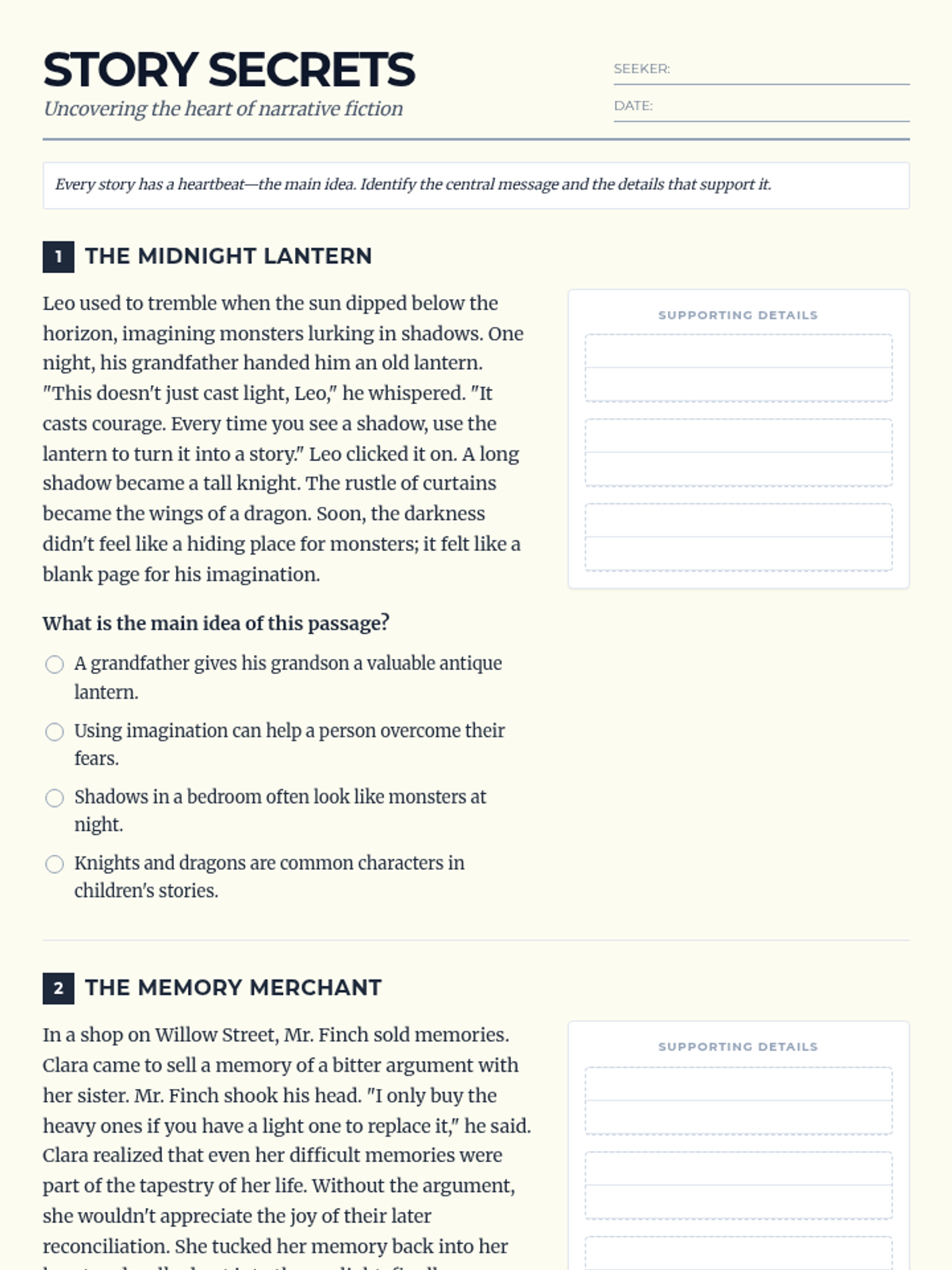
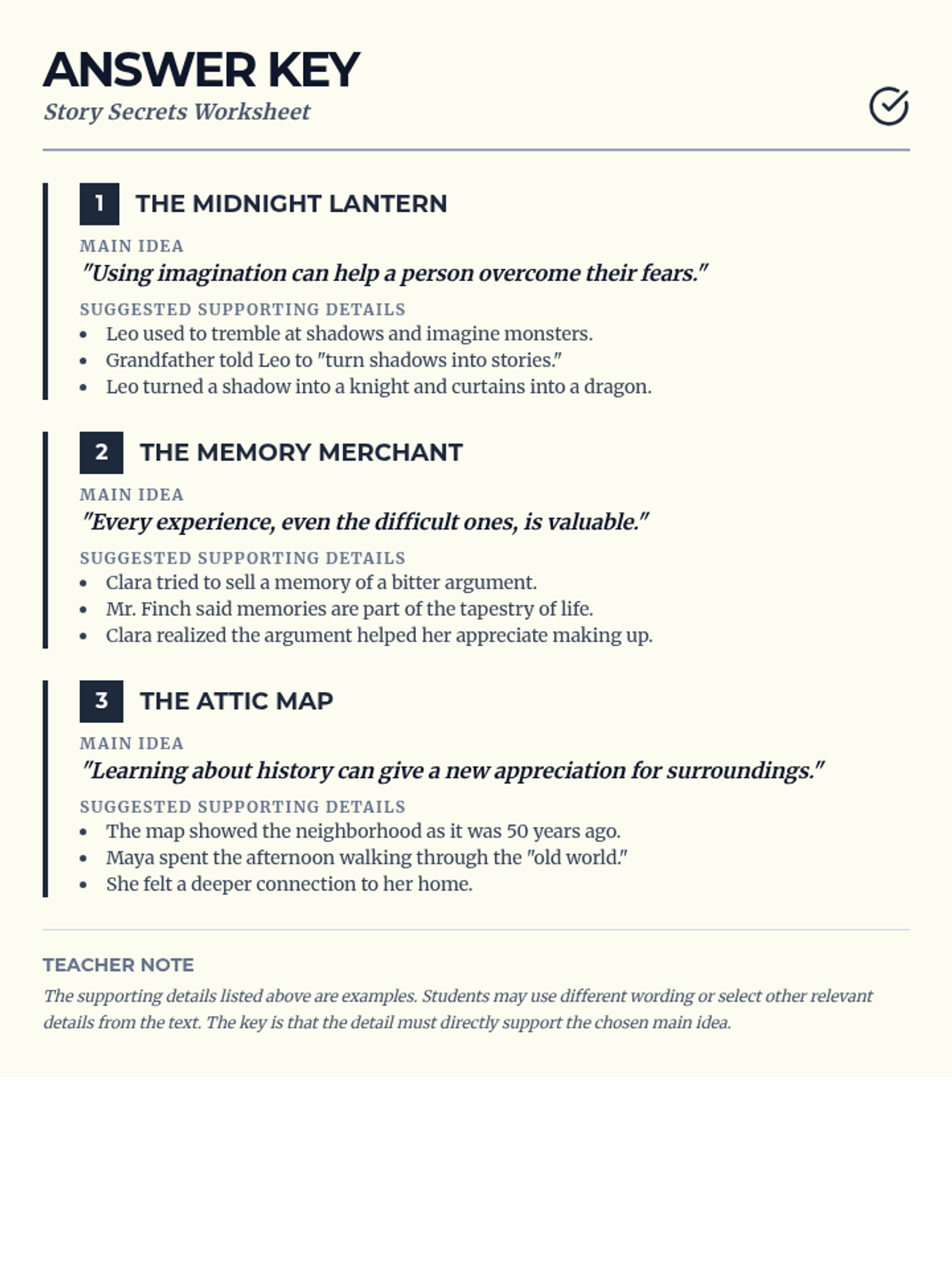
A lesson focused on identifying the main idea and supporting details within narrative fiction through engaging short stories and structured analysis.
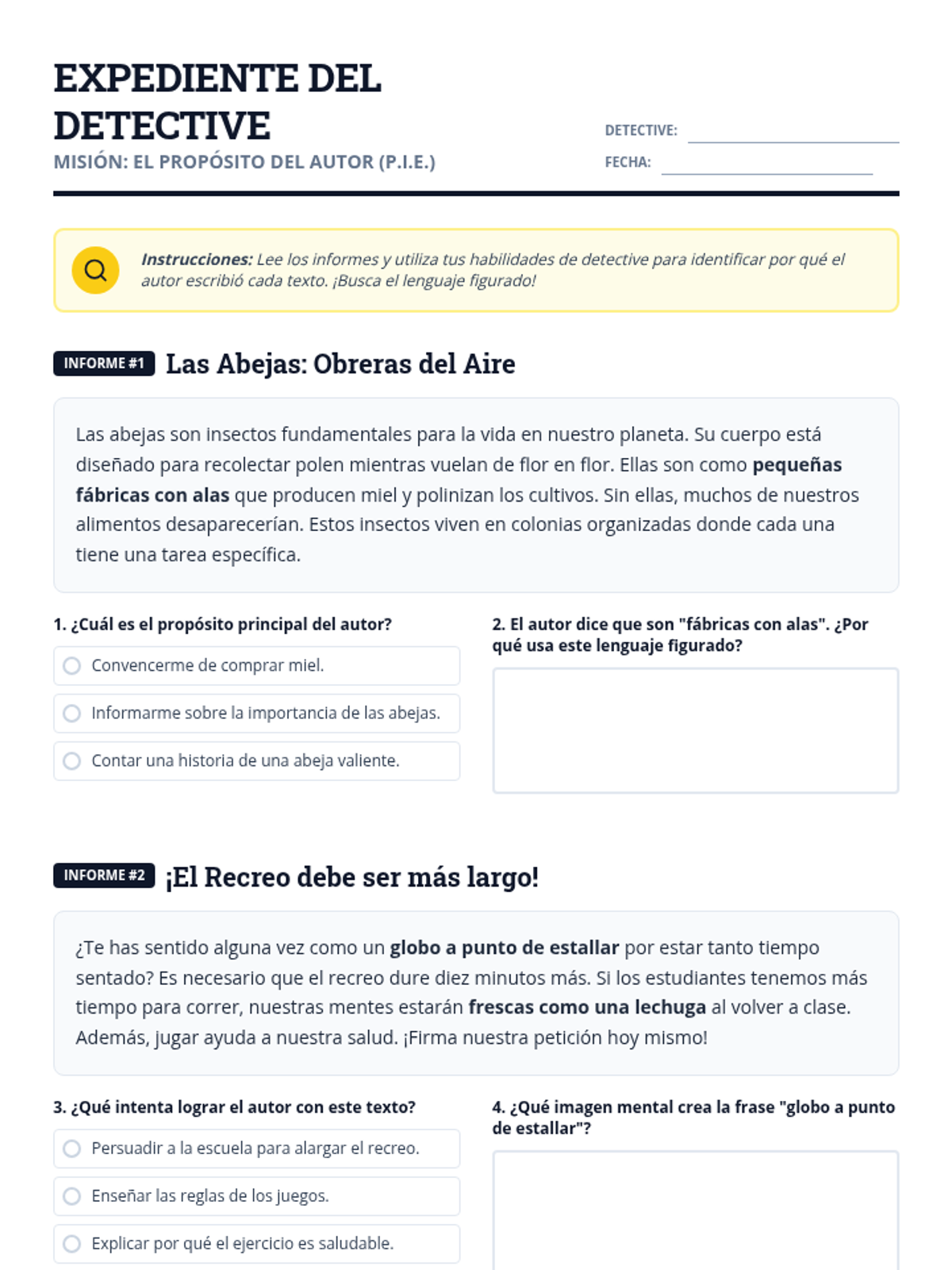
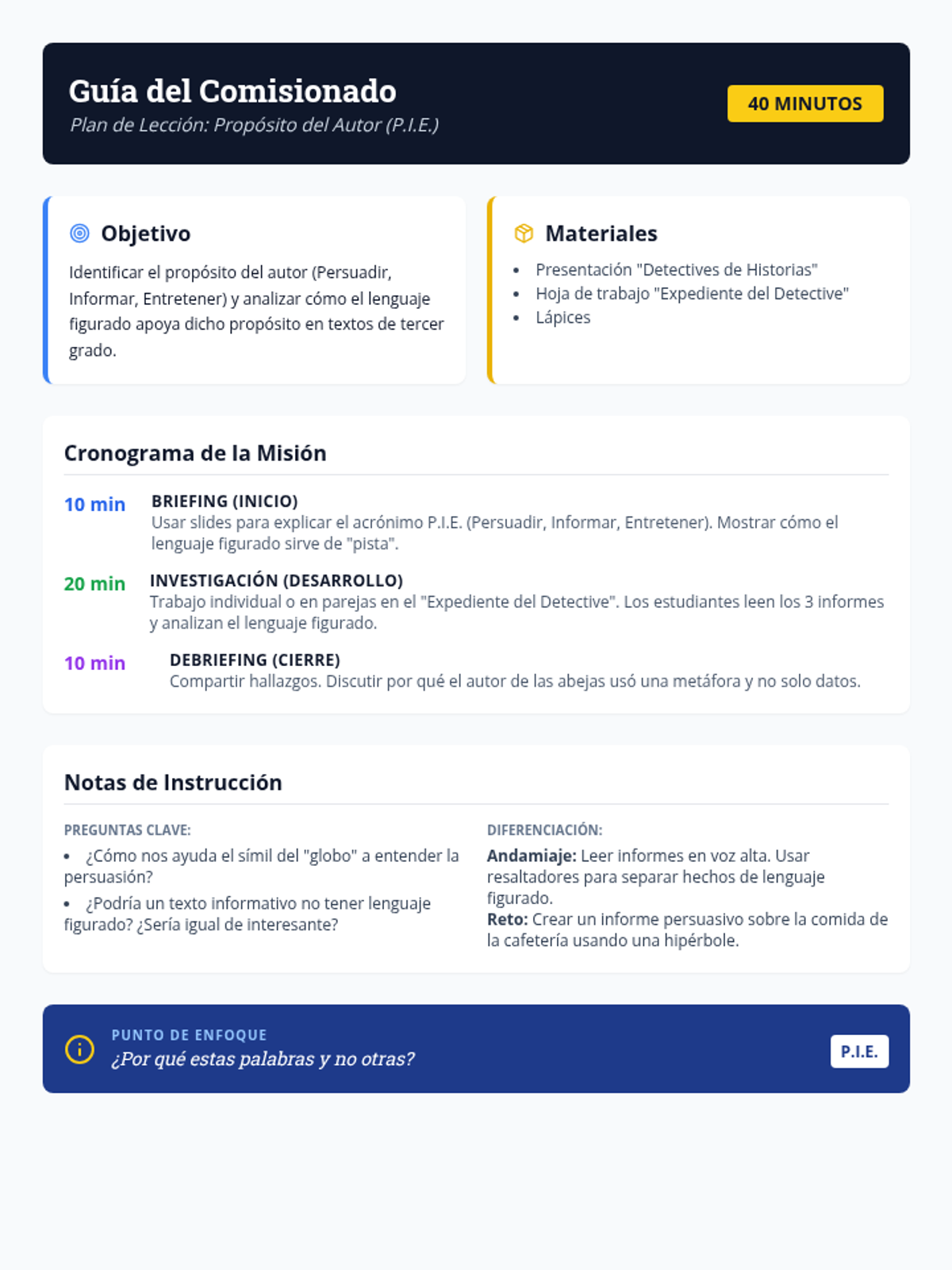
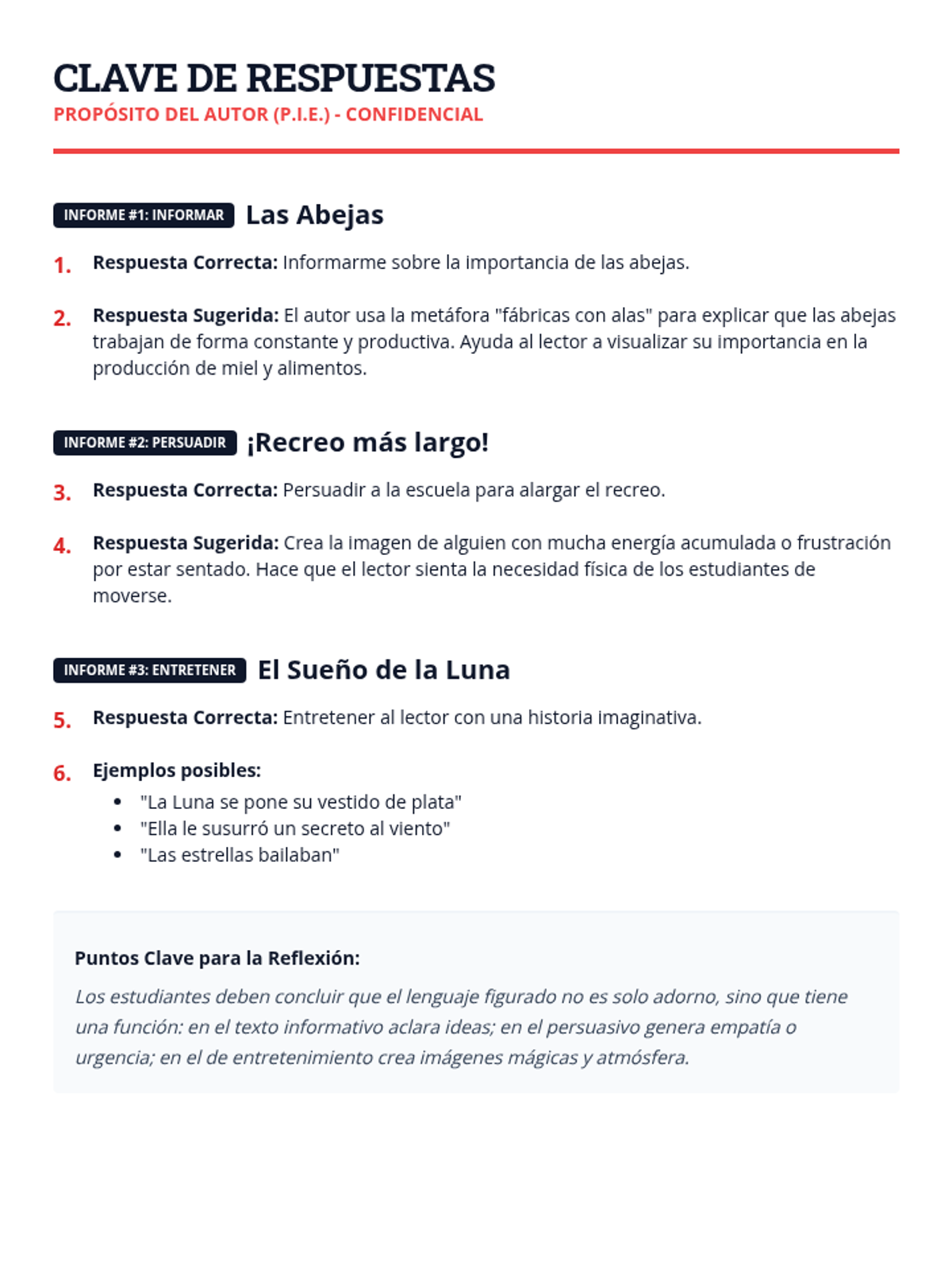
Una lección de 40 minutos diseñada para estudiantes de tercer grado sobre el propósito del autor, explorando textos persuasivos, informativos y narrativos con un enfoque especial en el lenguaje figurado.
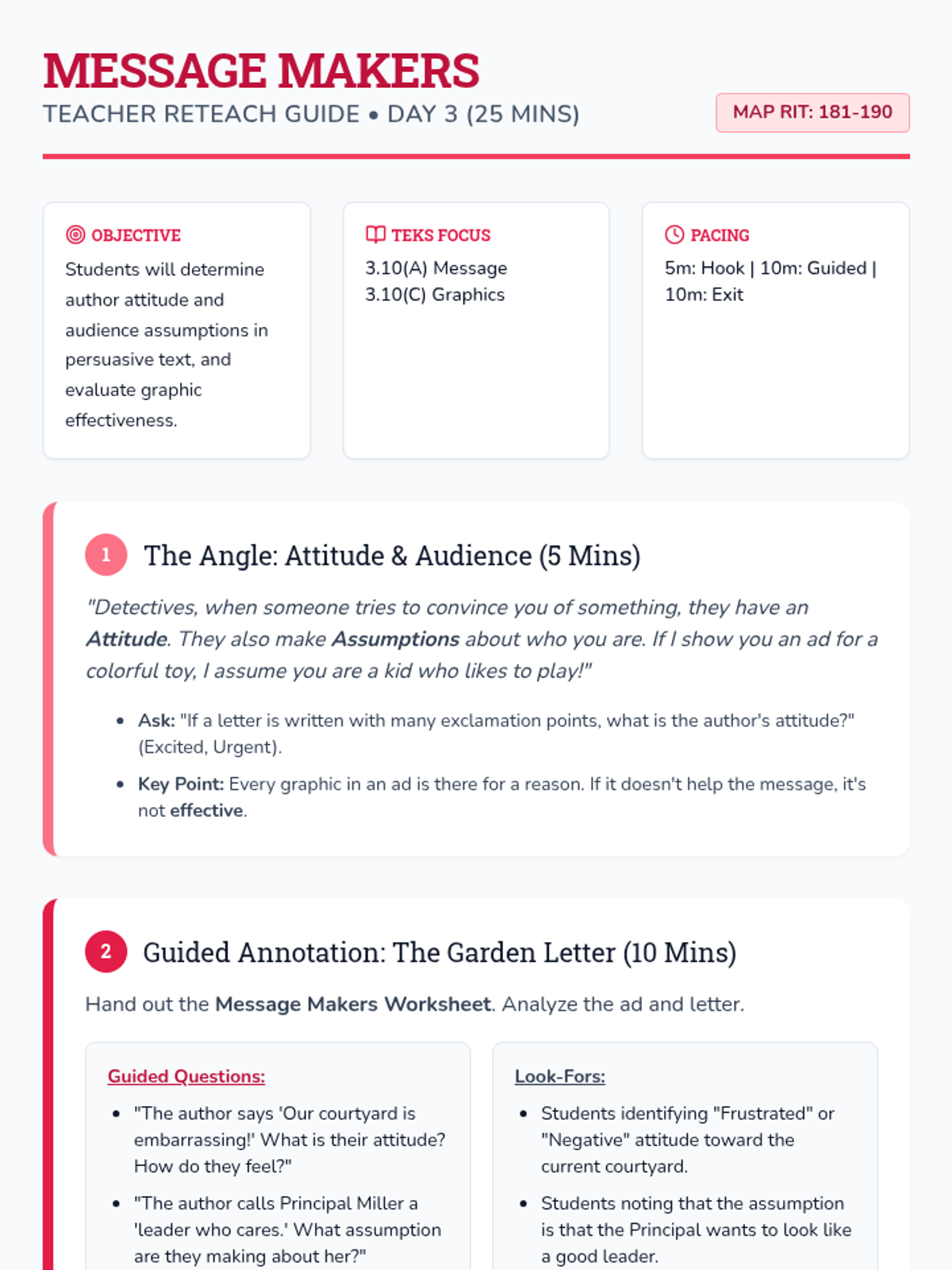
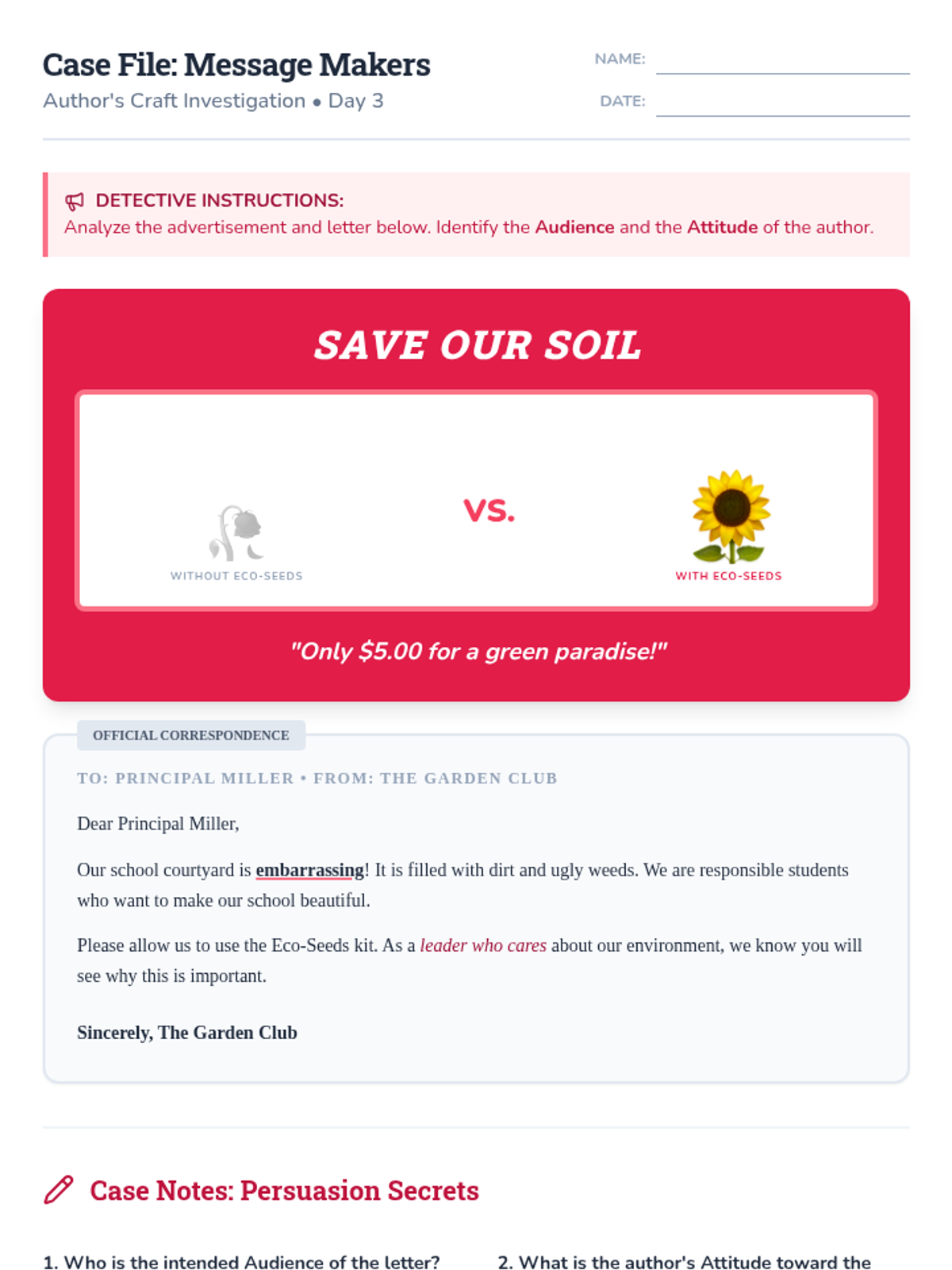
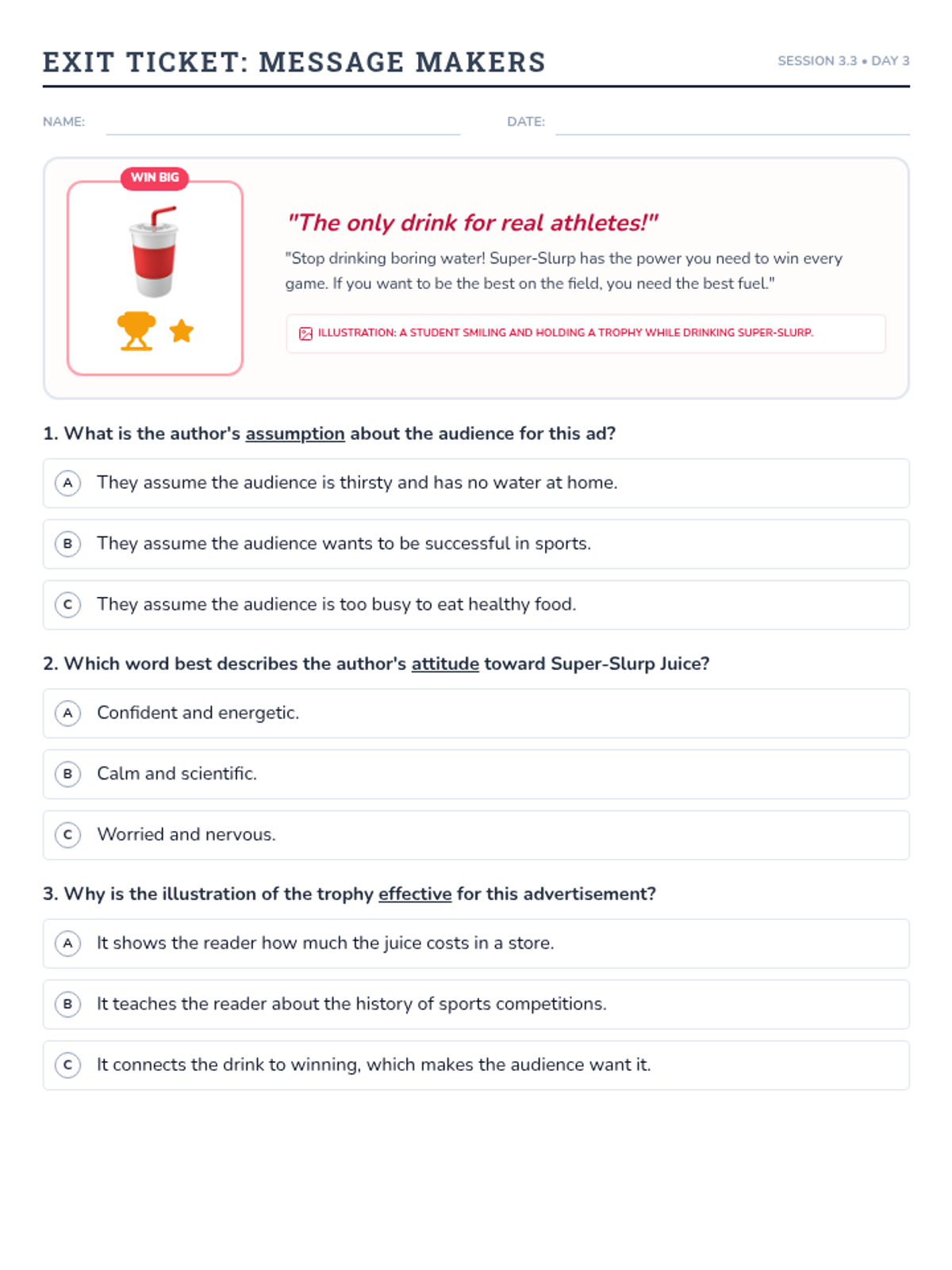
Students evaluate persuasive techniques, identifying author attitude, audience assumptions, and the effectiveness of visuals in ads and letters.
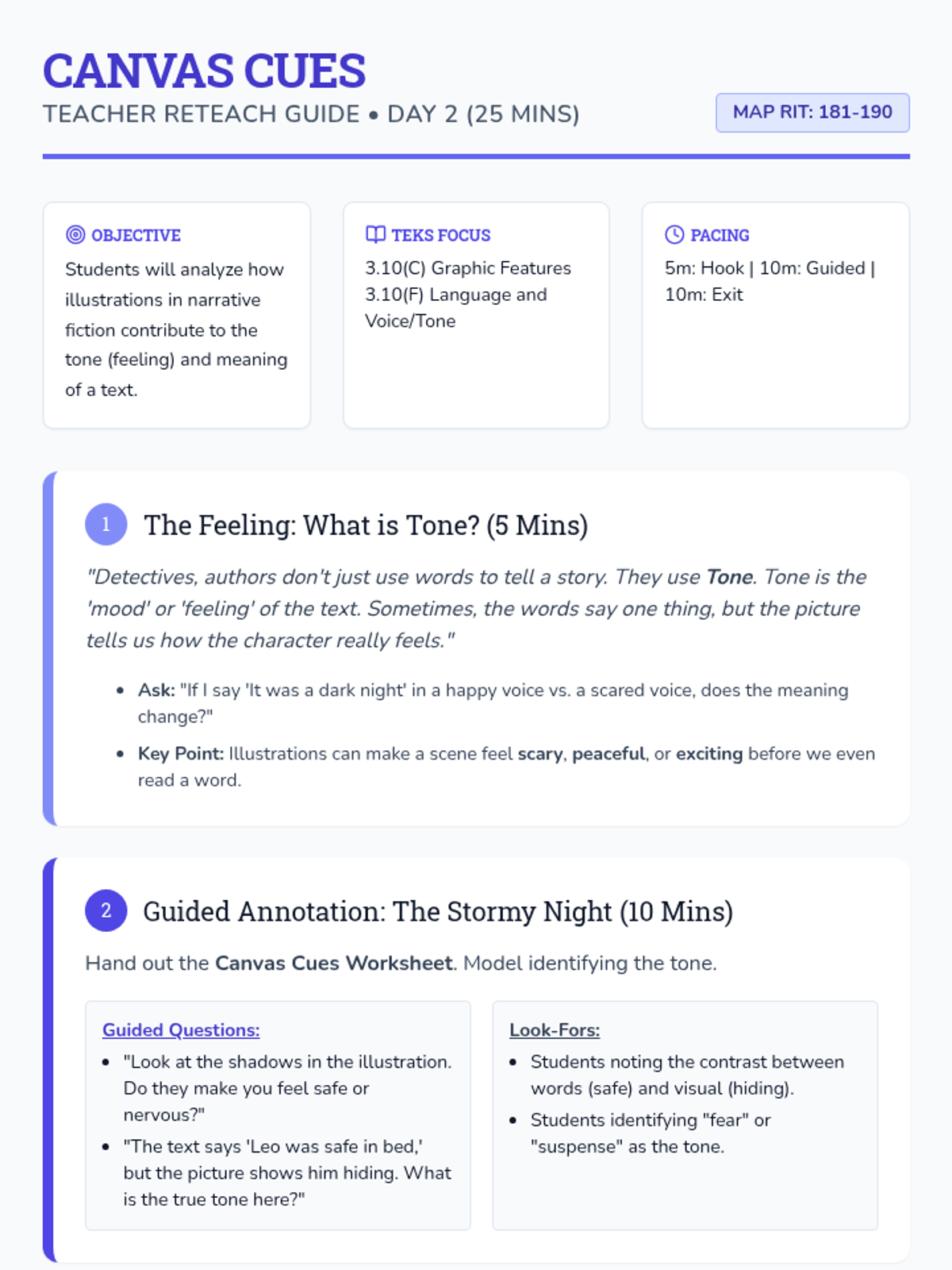
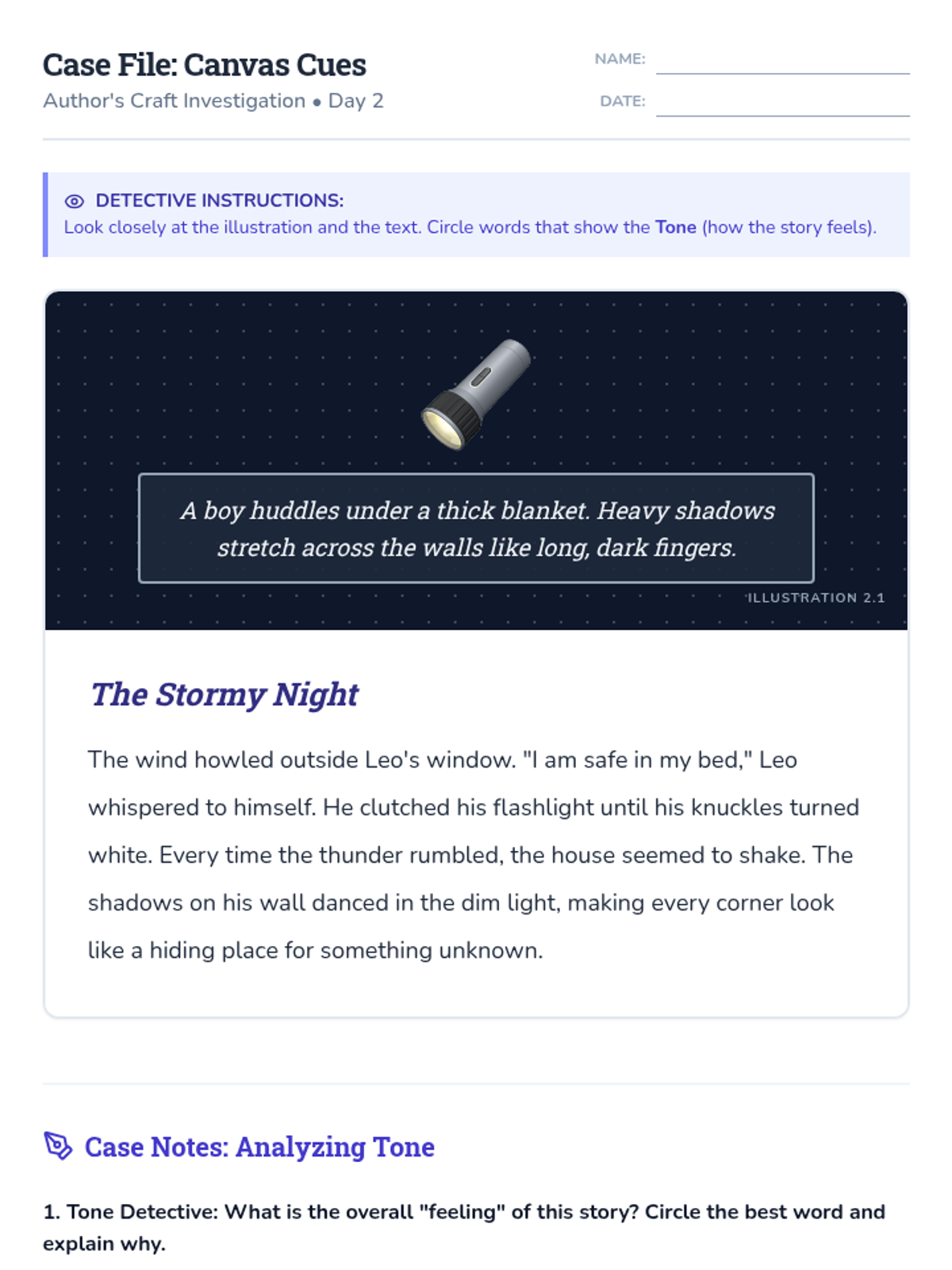
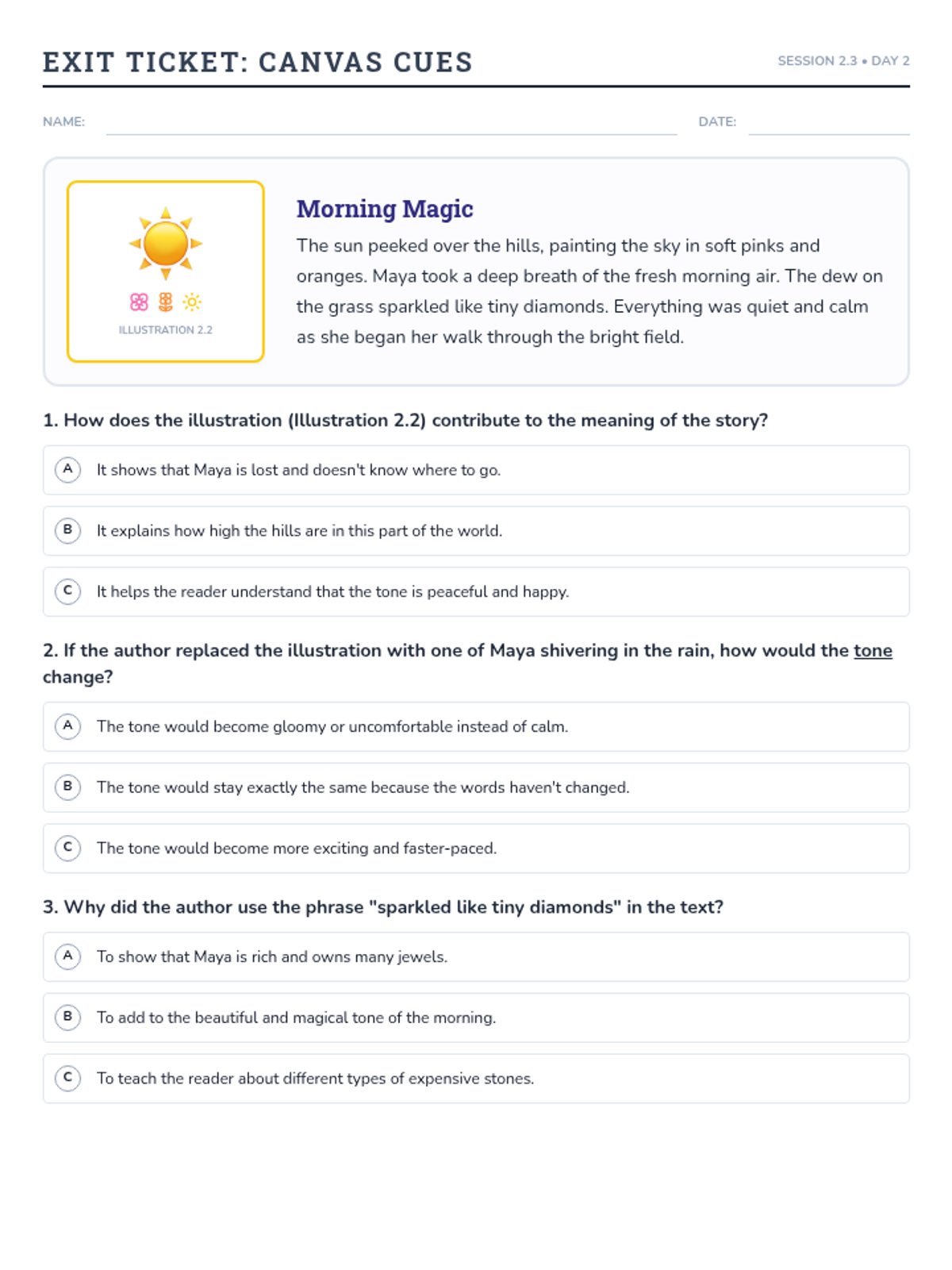
Students explore how illustrations in narrative fiction contribute to the tone and meaning of a story, moving beyond the literal text.
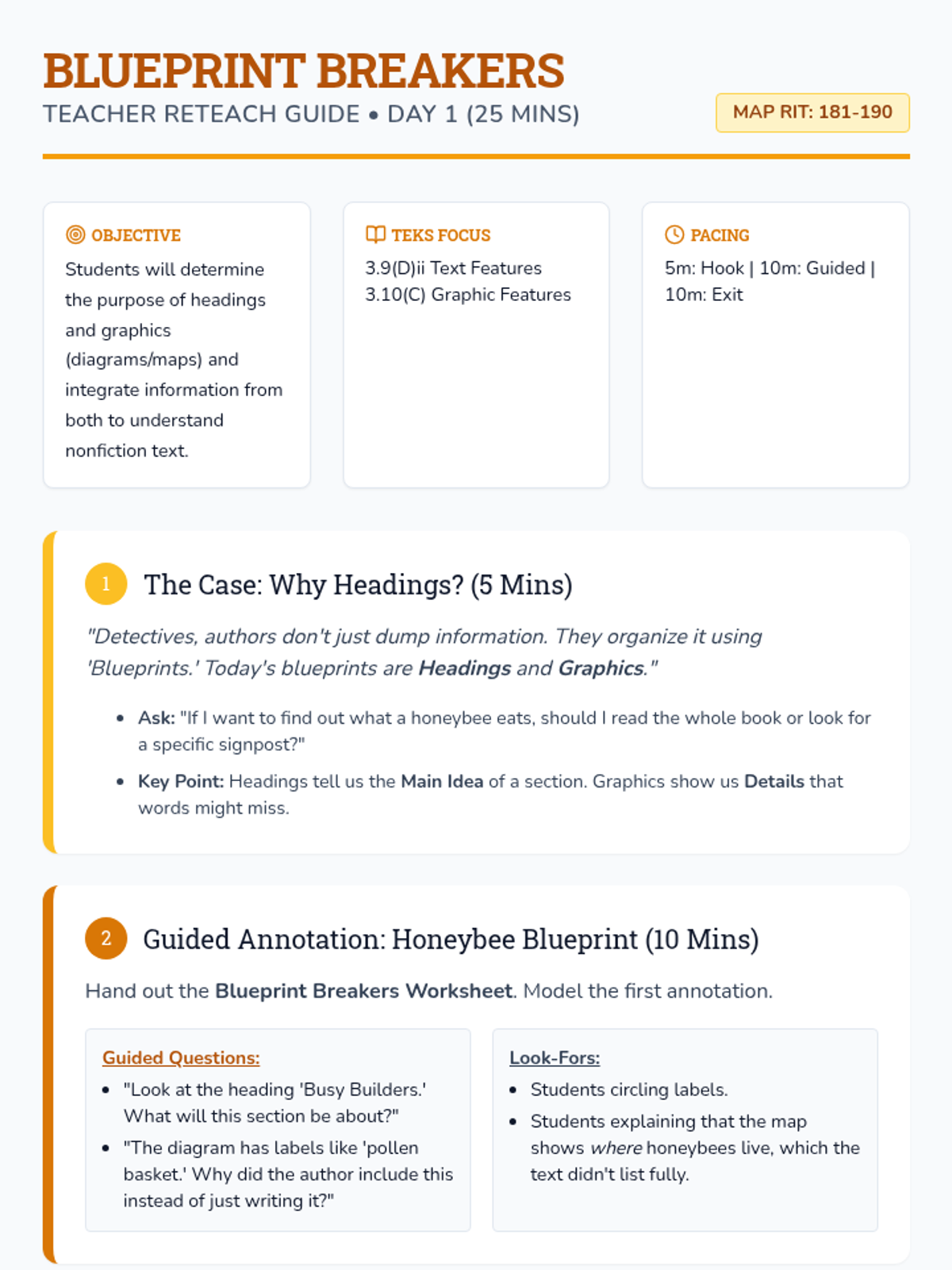
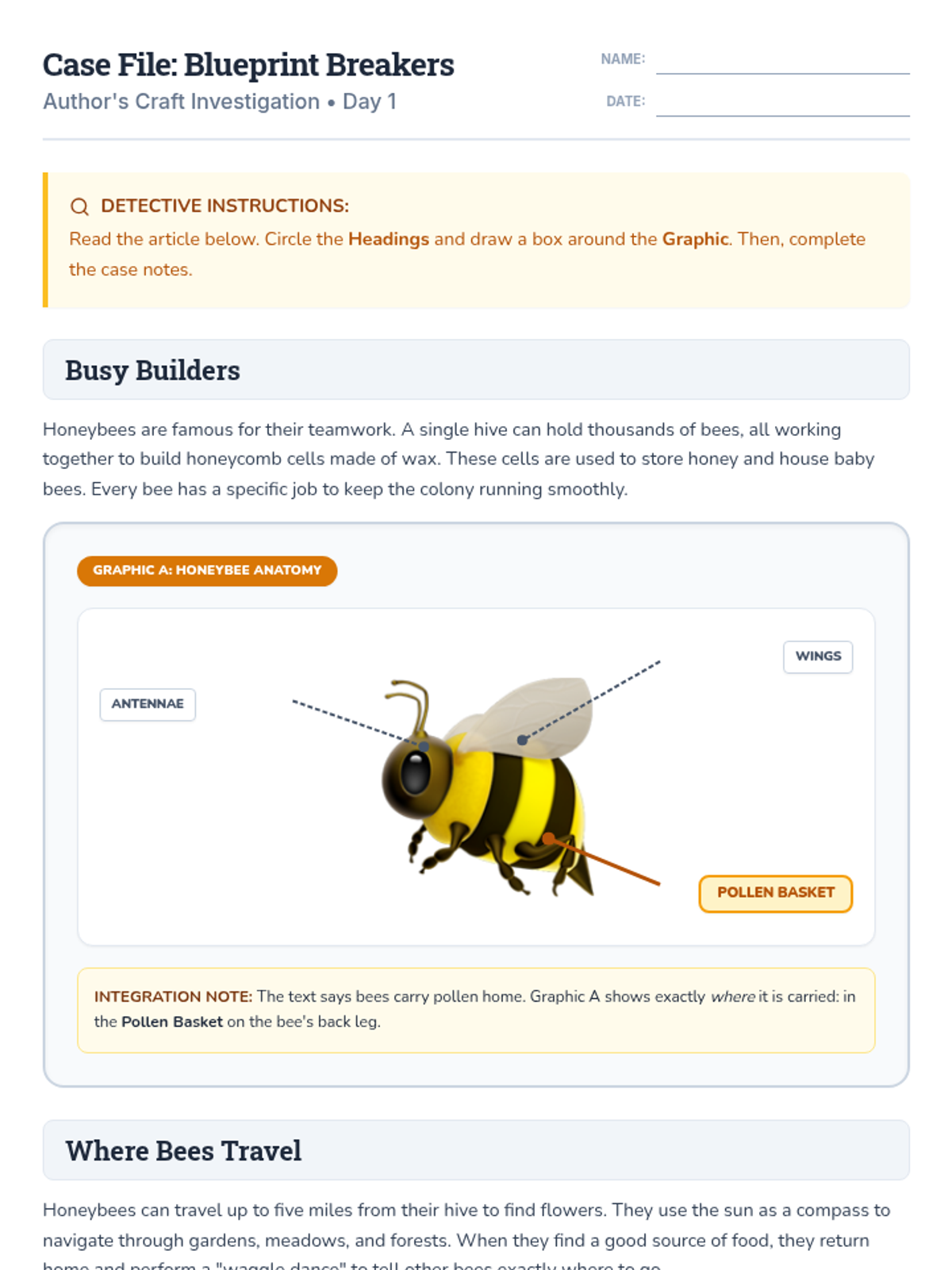
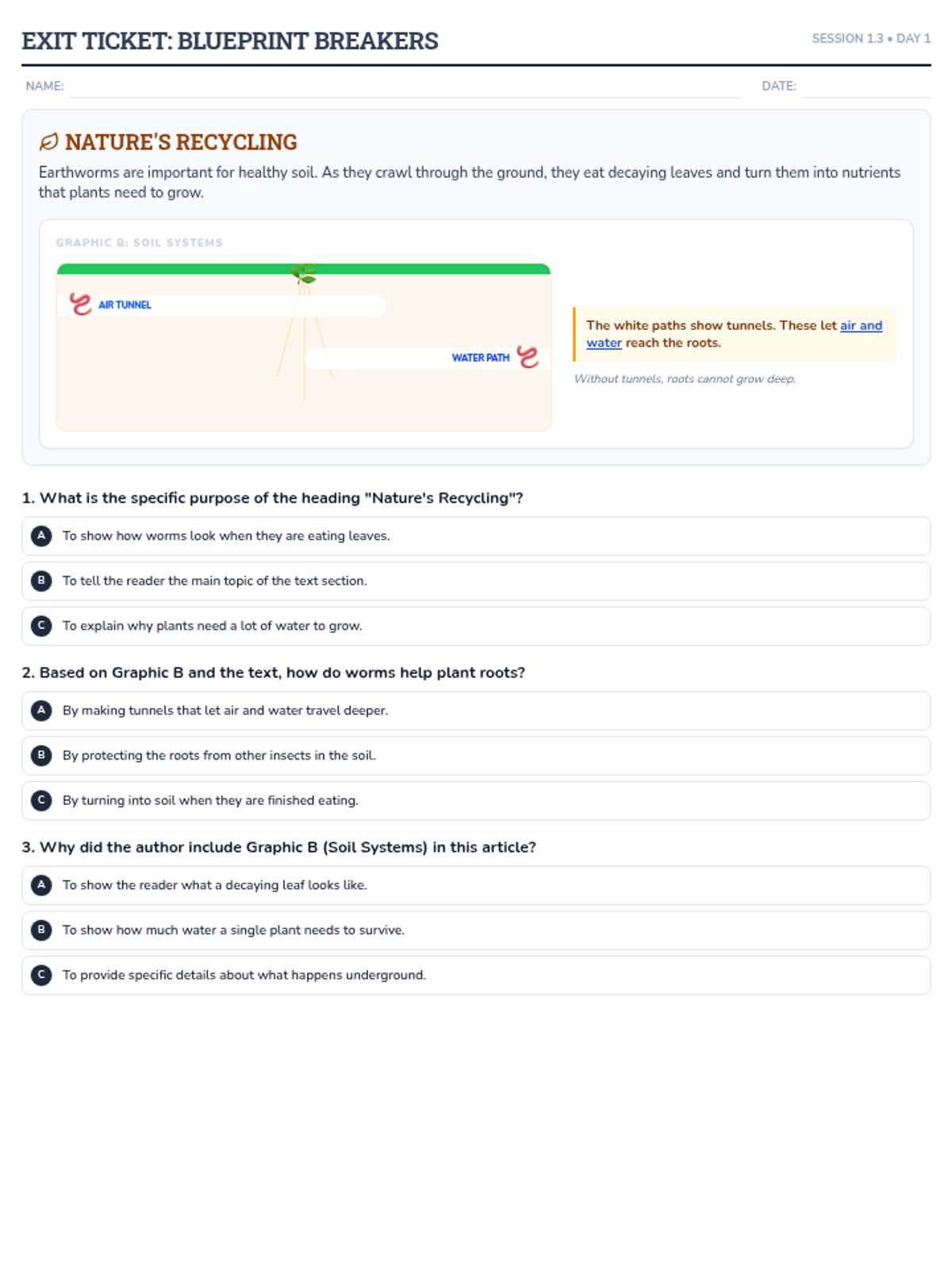
Students analyze nonfiction text features, focusing on how headings, diagrams, and maps organize information and contribute to the reader's understanding.
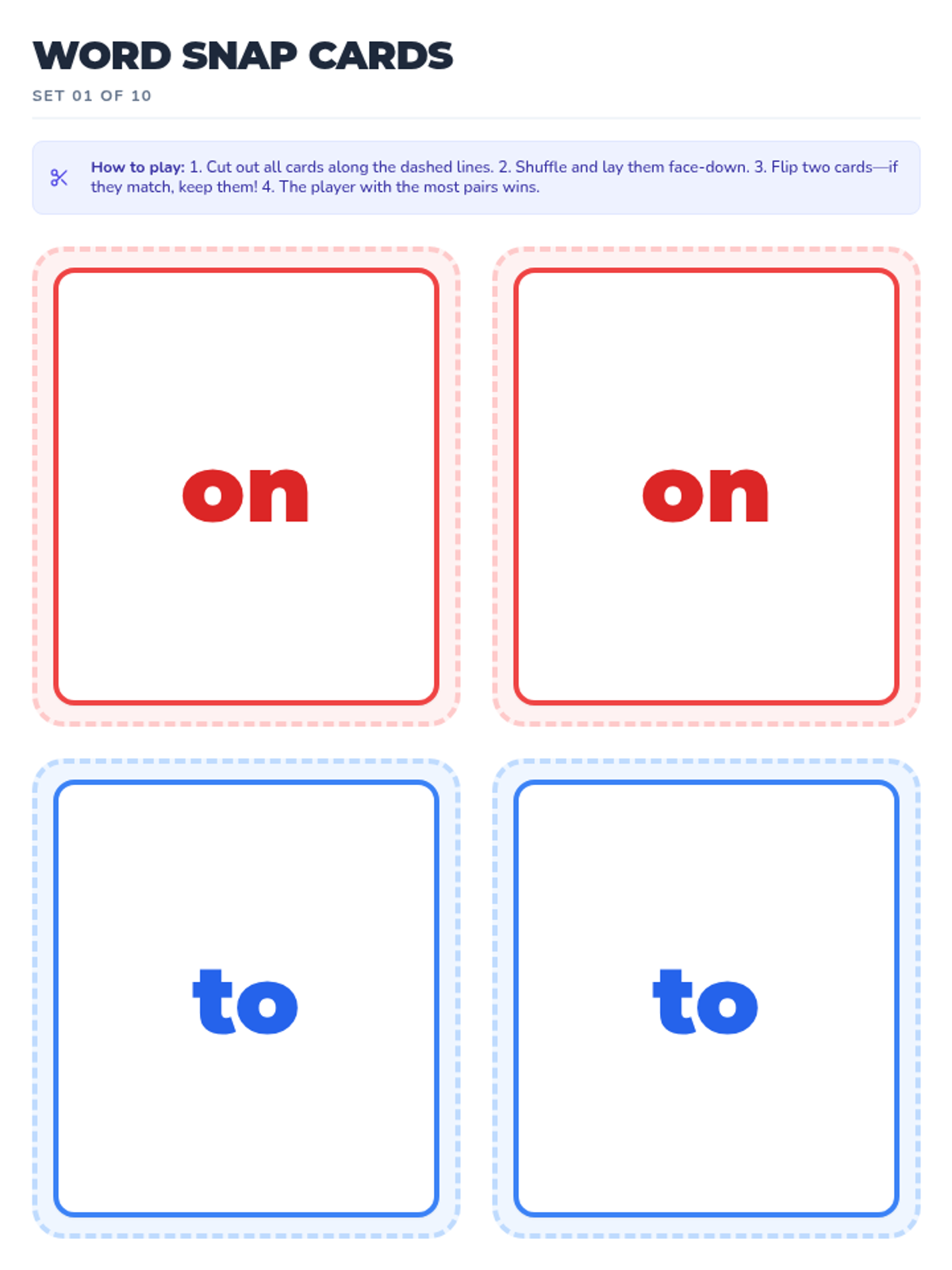
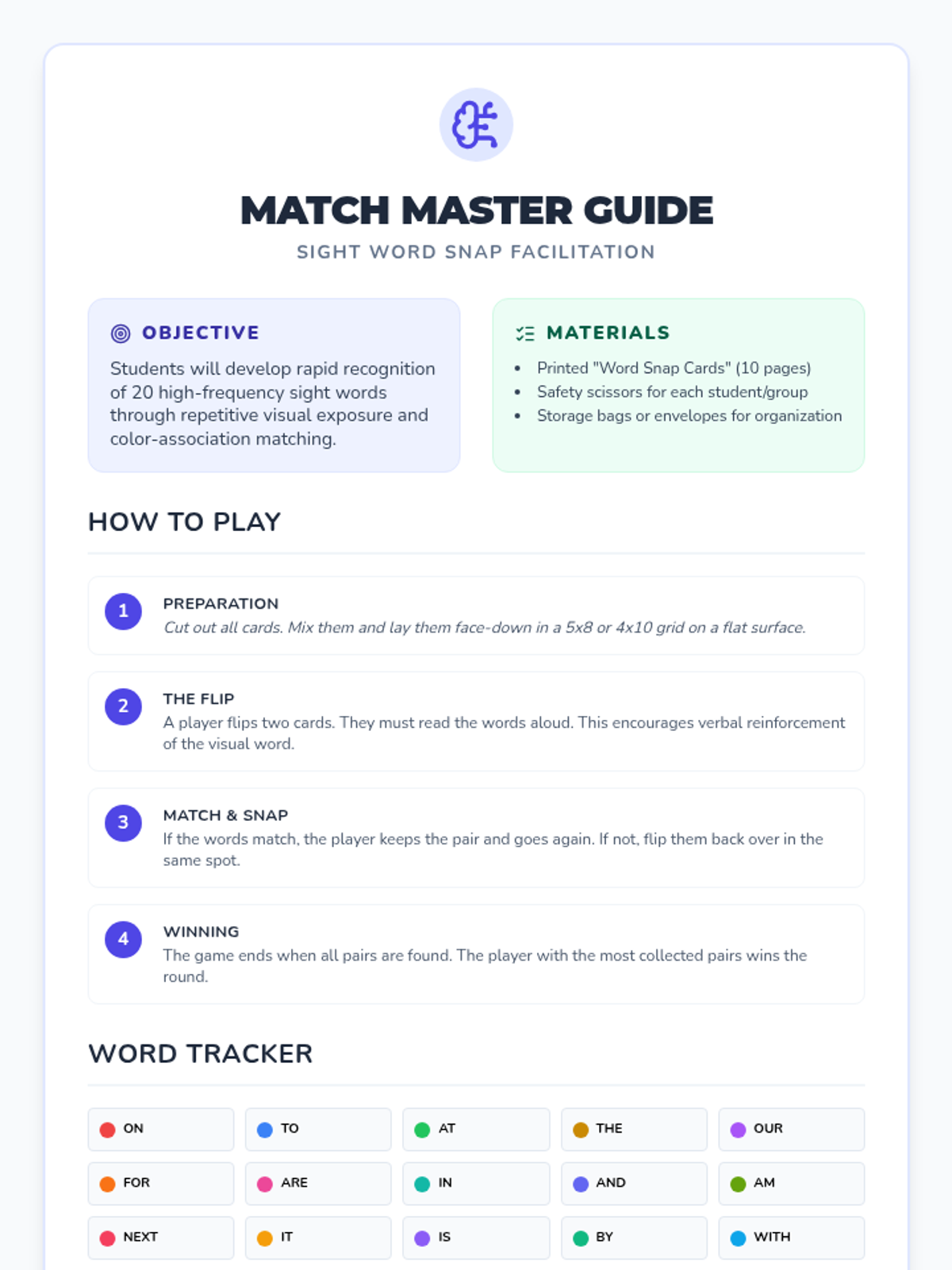
A fun, interactive memory game designed to help students master high-frequency sight words through color-coded matching cards.
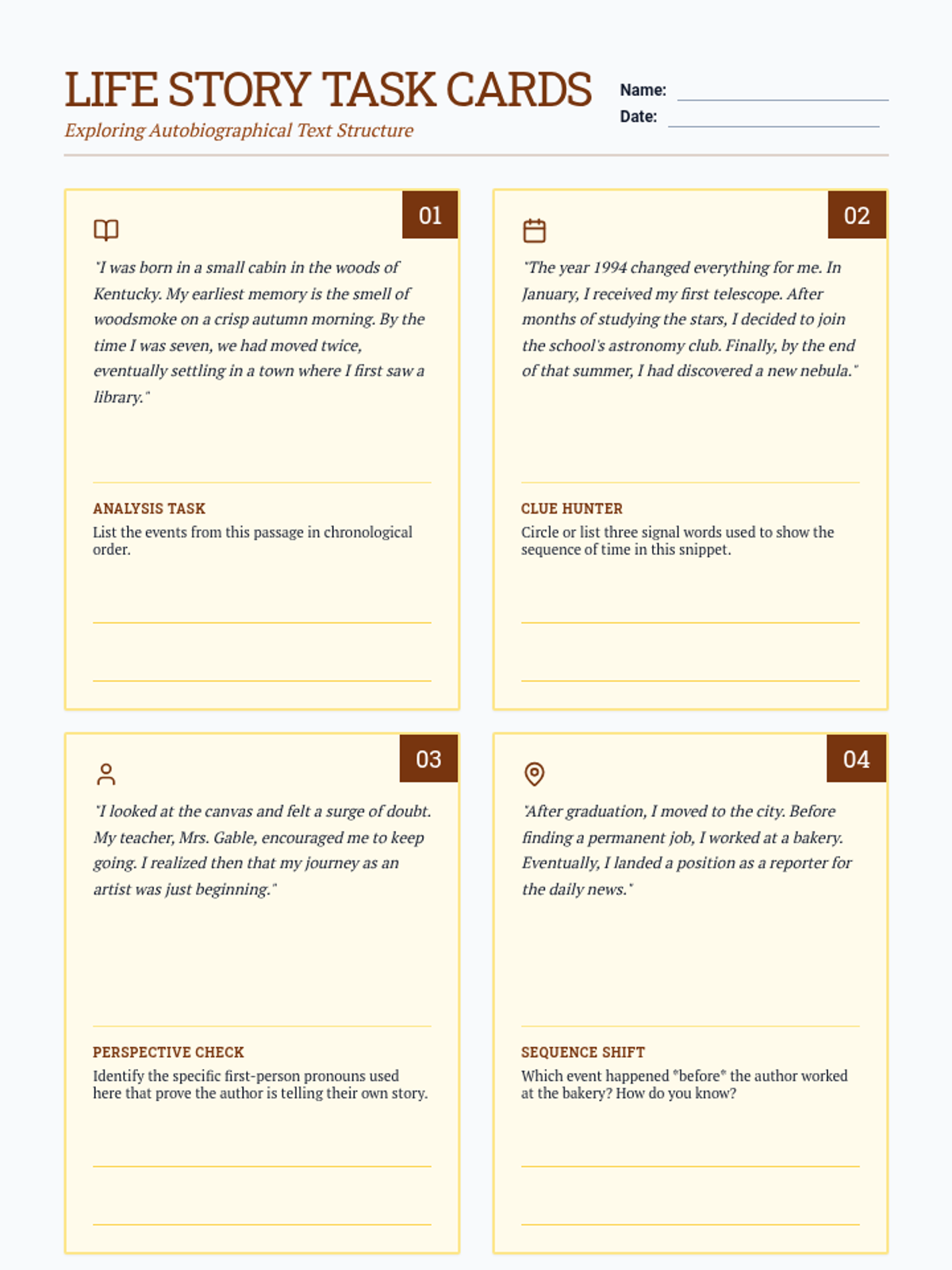
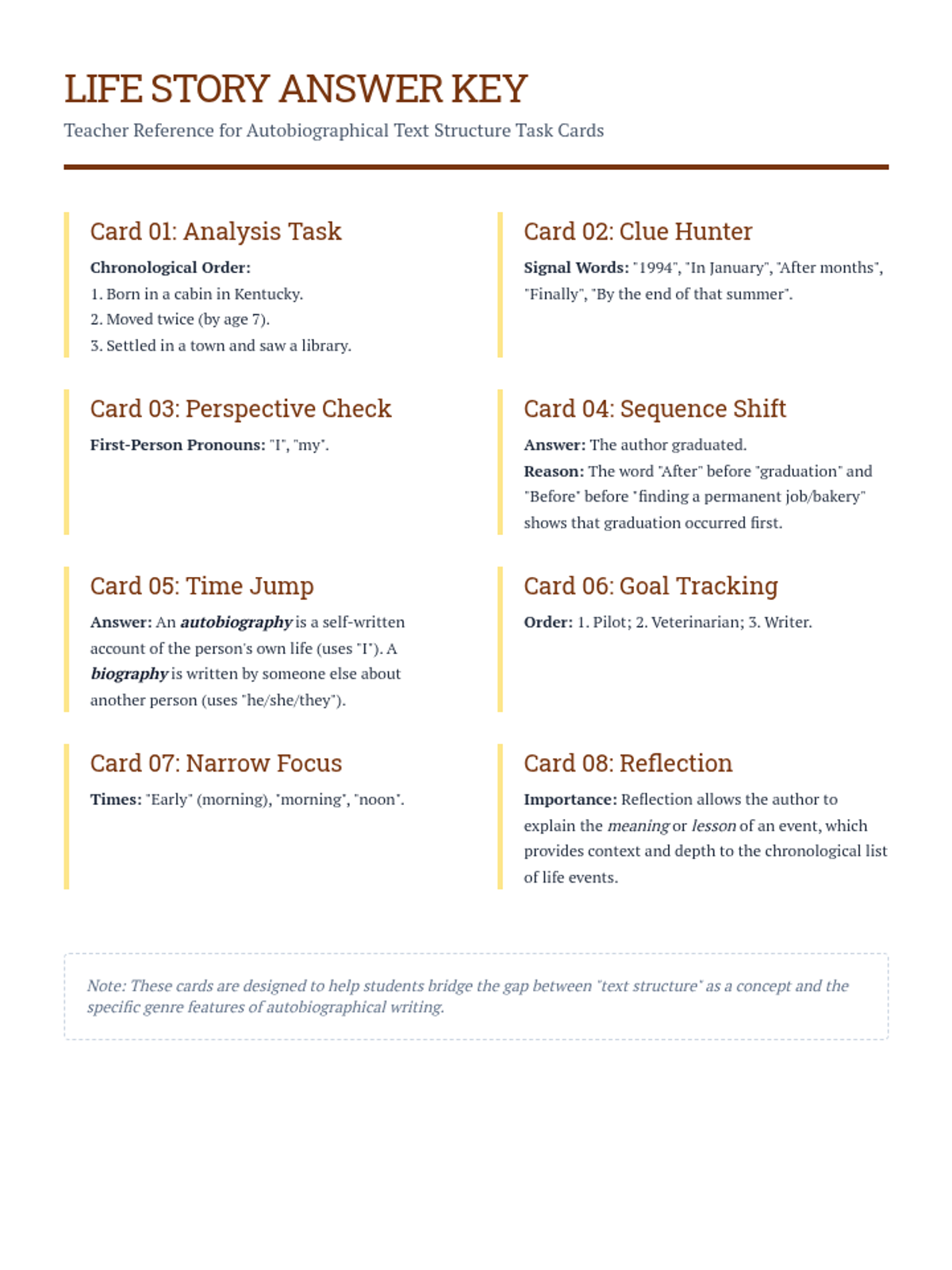
A lesson focused on identifying the features of autobiographical writing, including chronological text structure and first-person perspective.
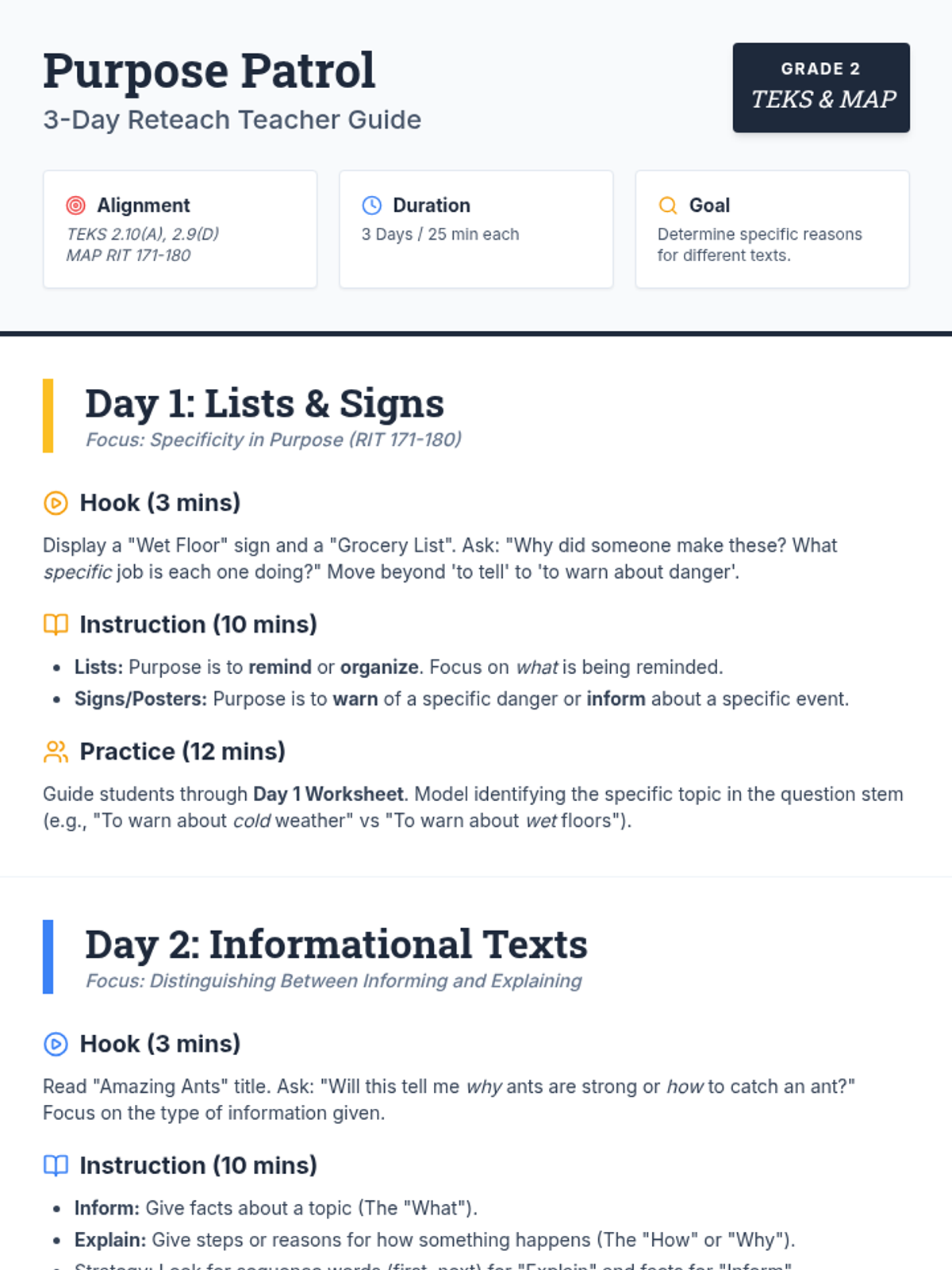
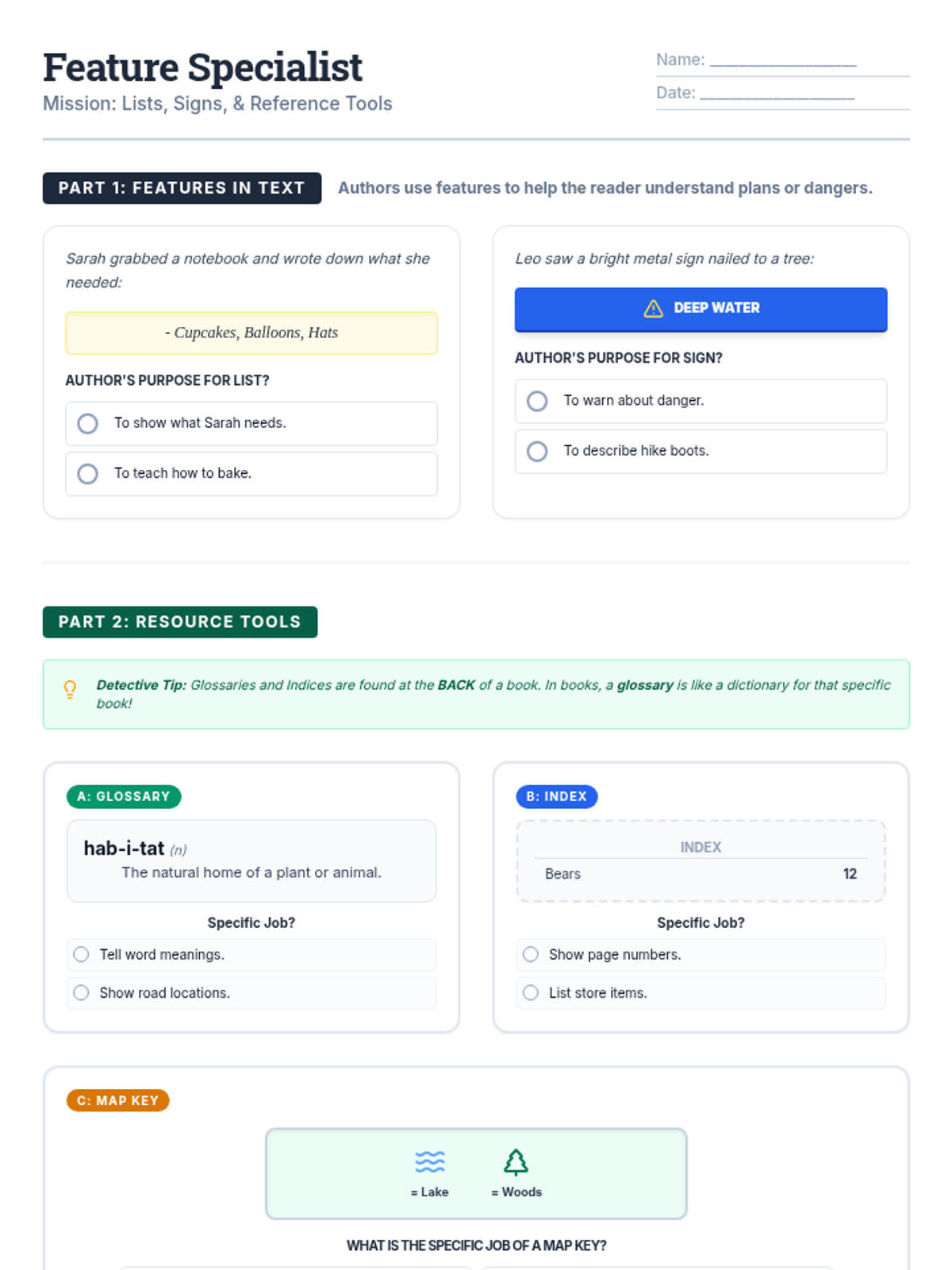
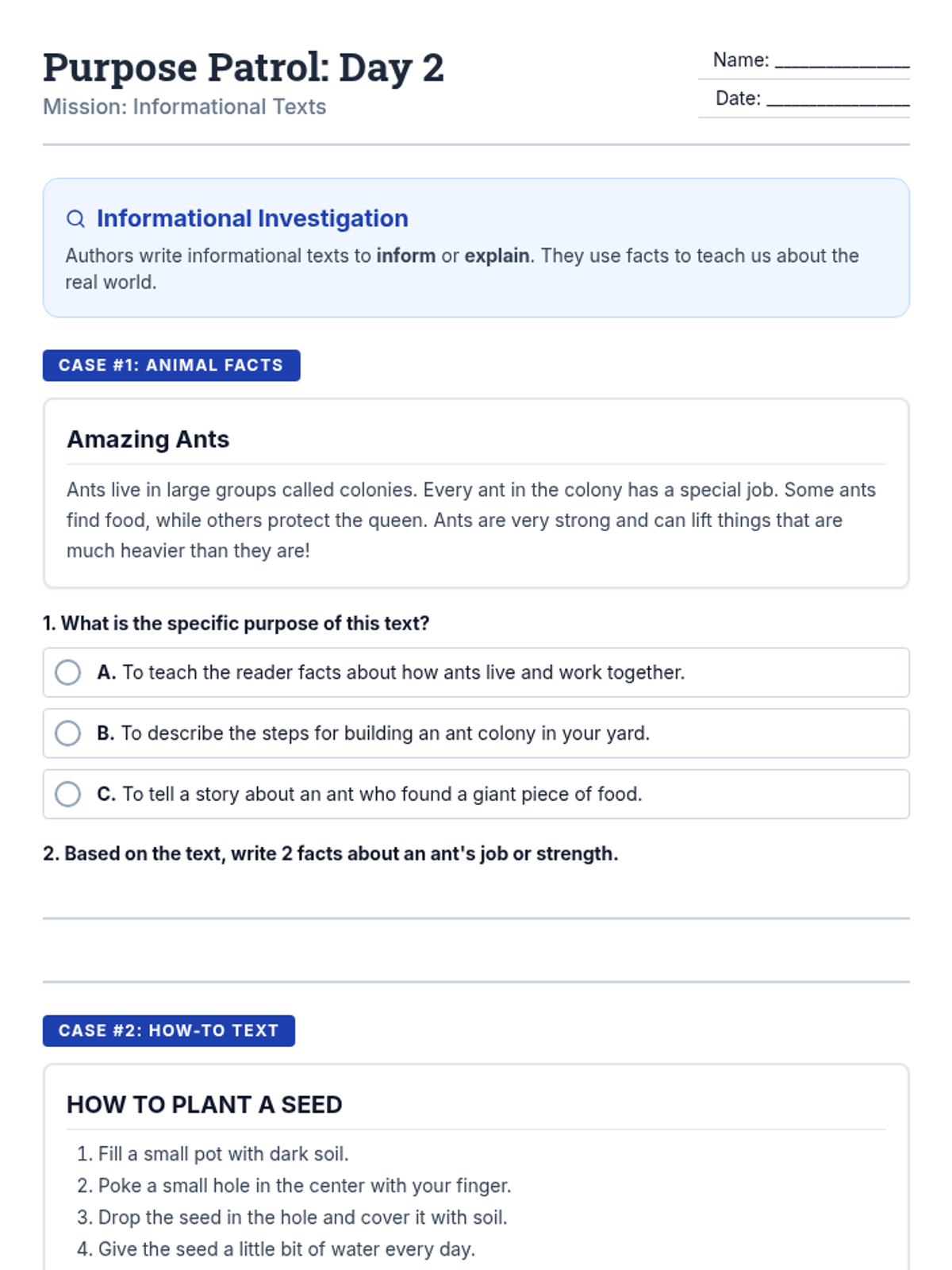
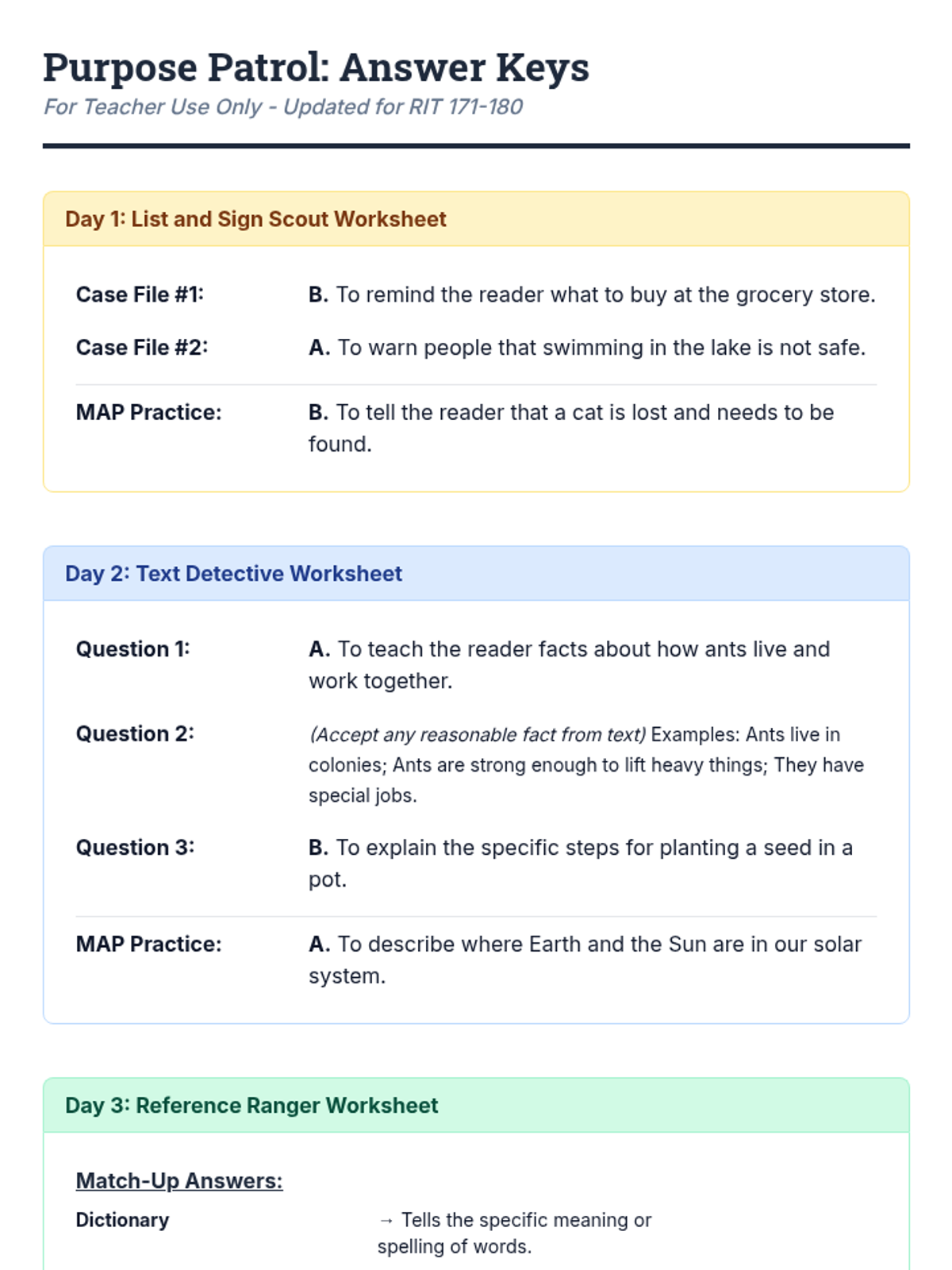
Day 1 focuses on identifying the specific purpose of lists and signs/posters in everyday contexts.