A lesson focused on identifying the main idea and supporting details within narrative fiction through engaging short stories and structured analysis.
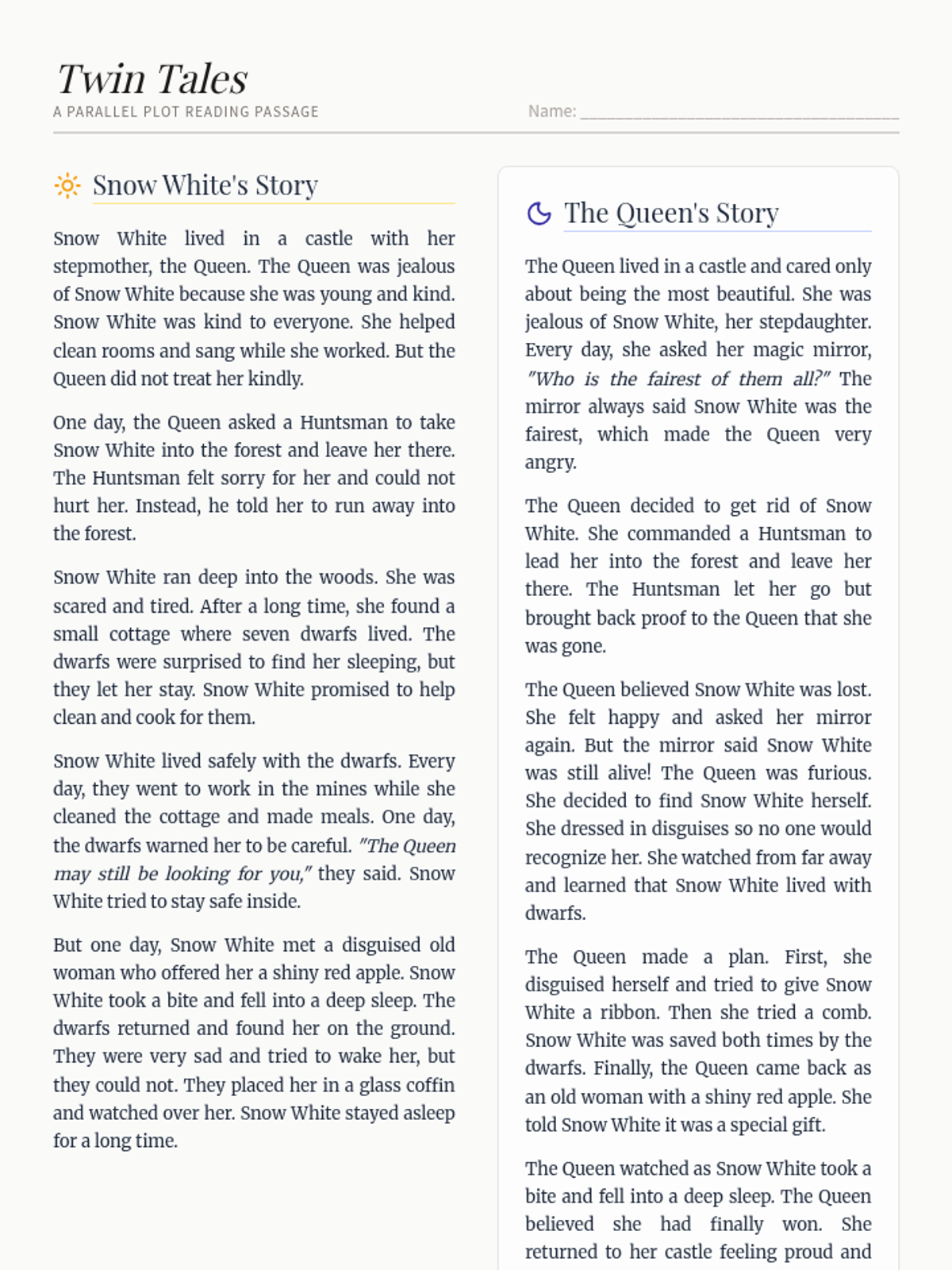
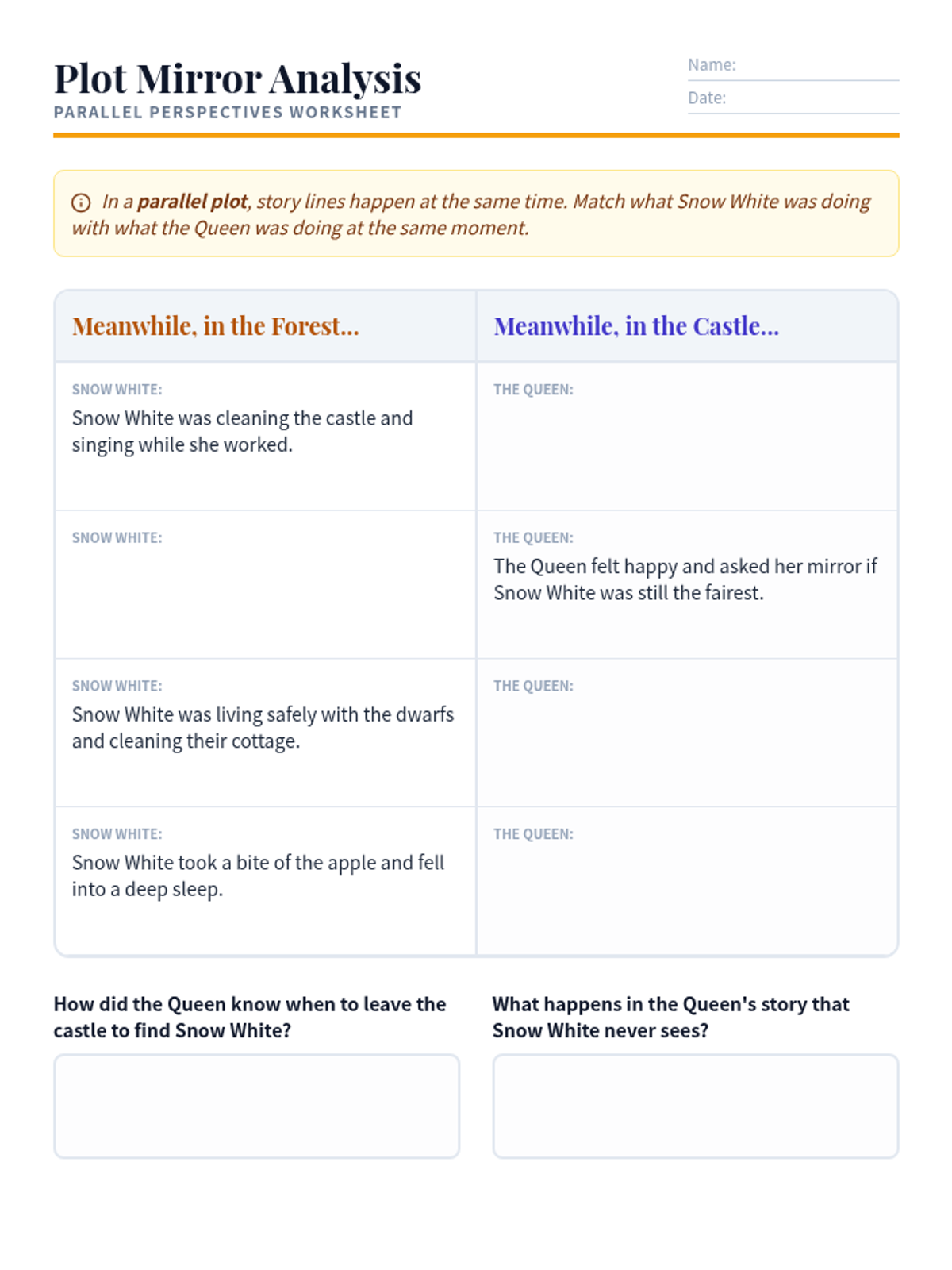
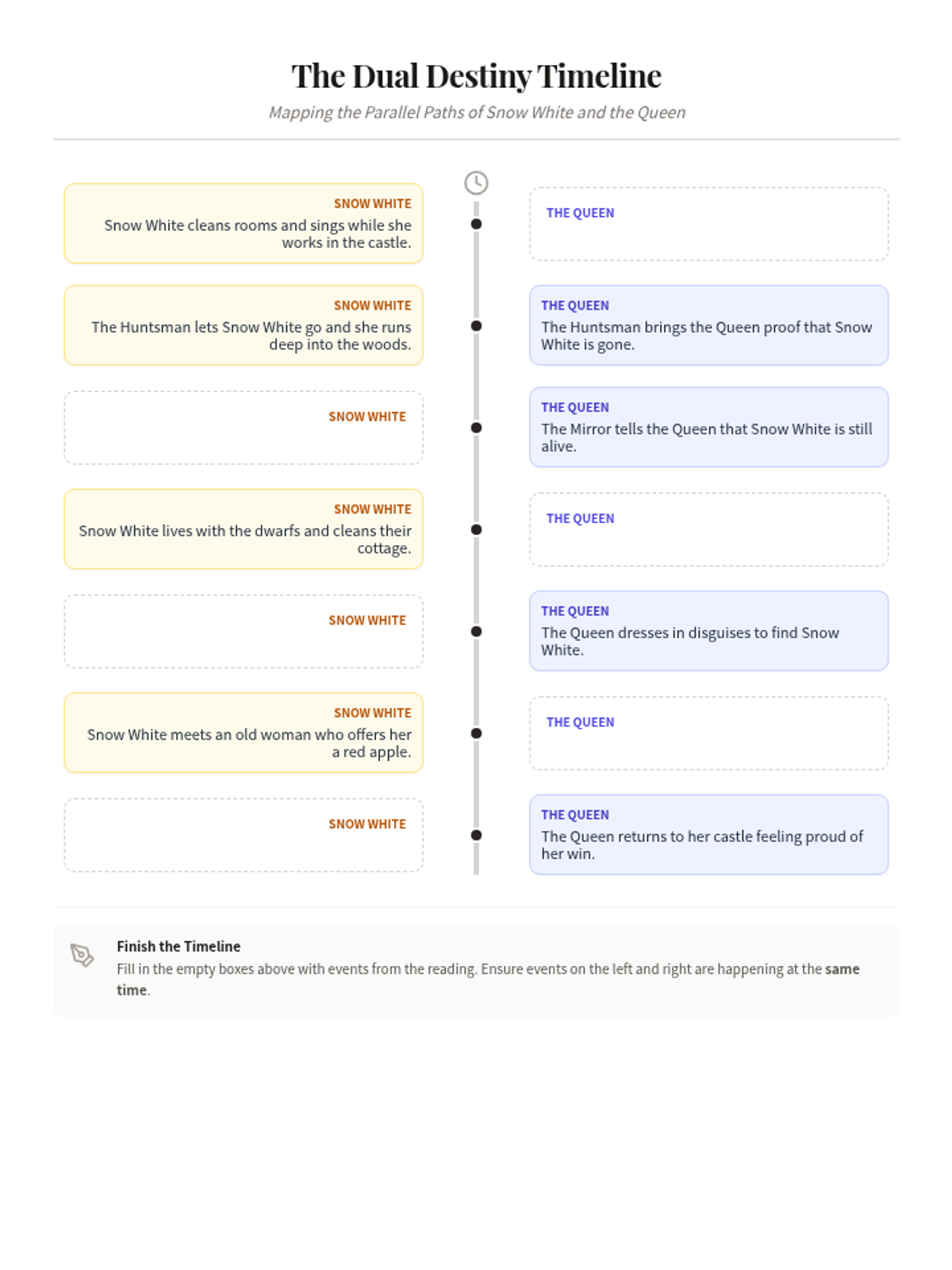
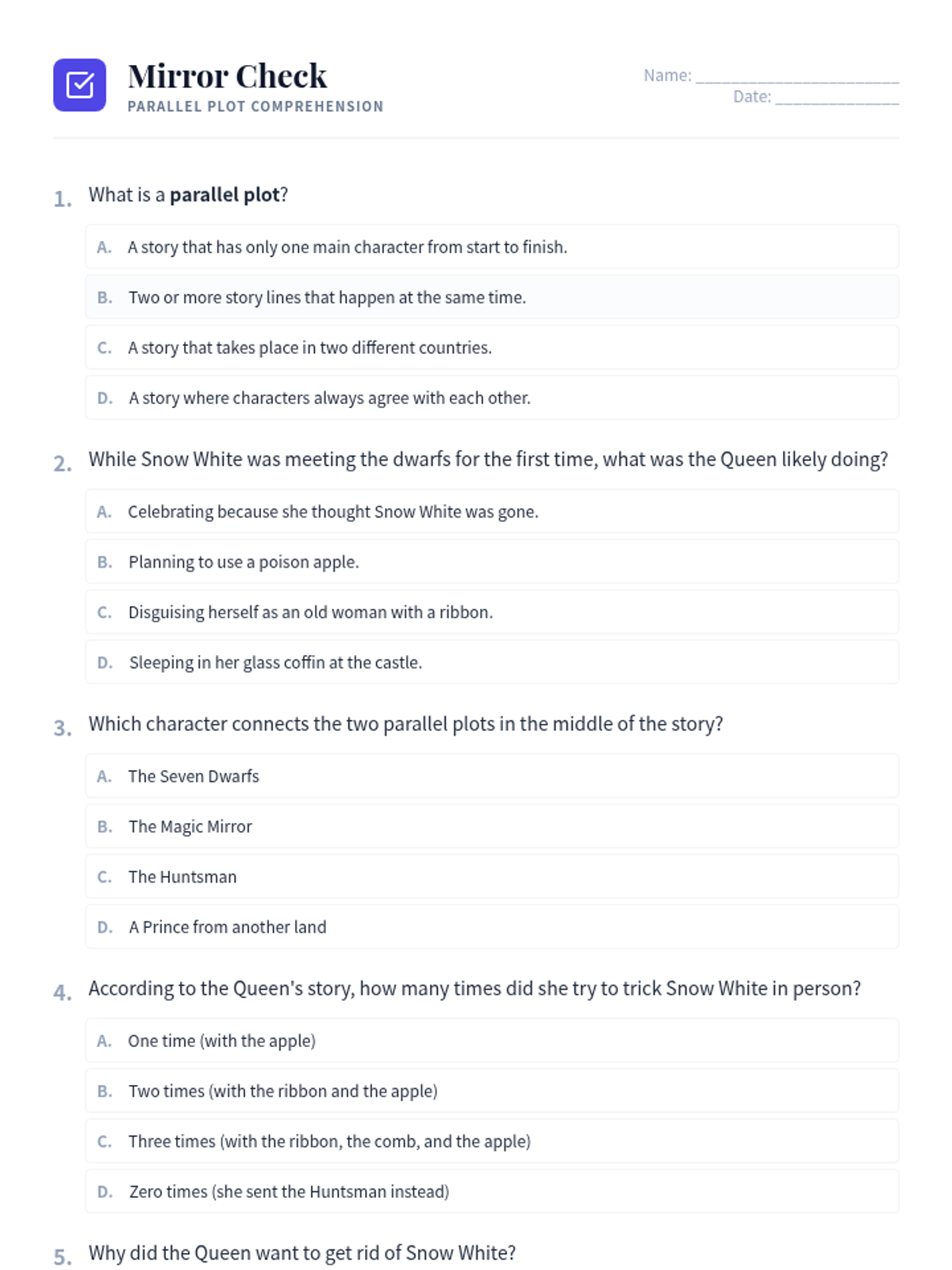
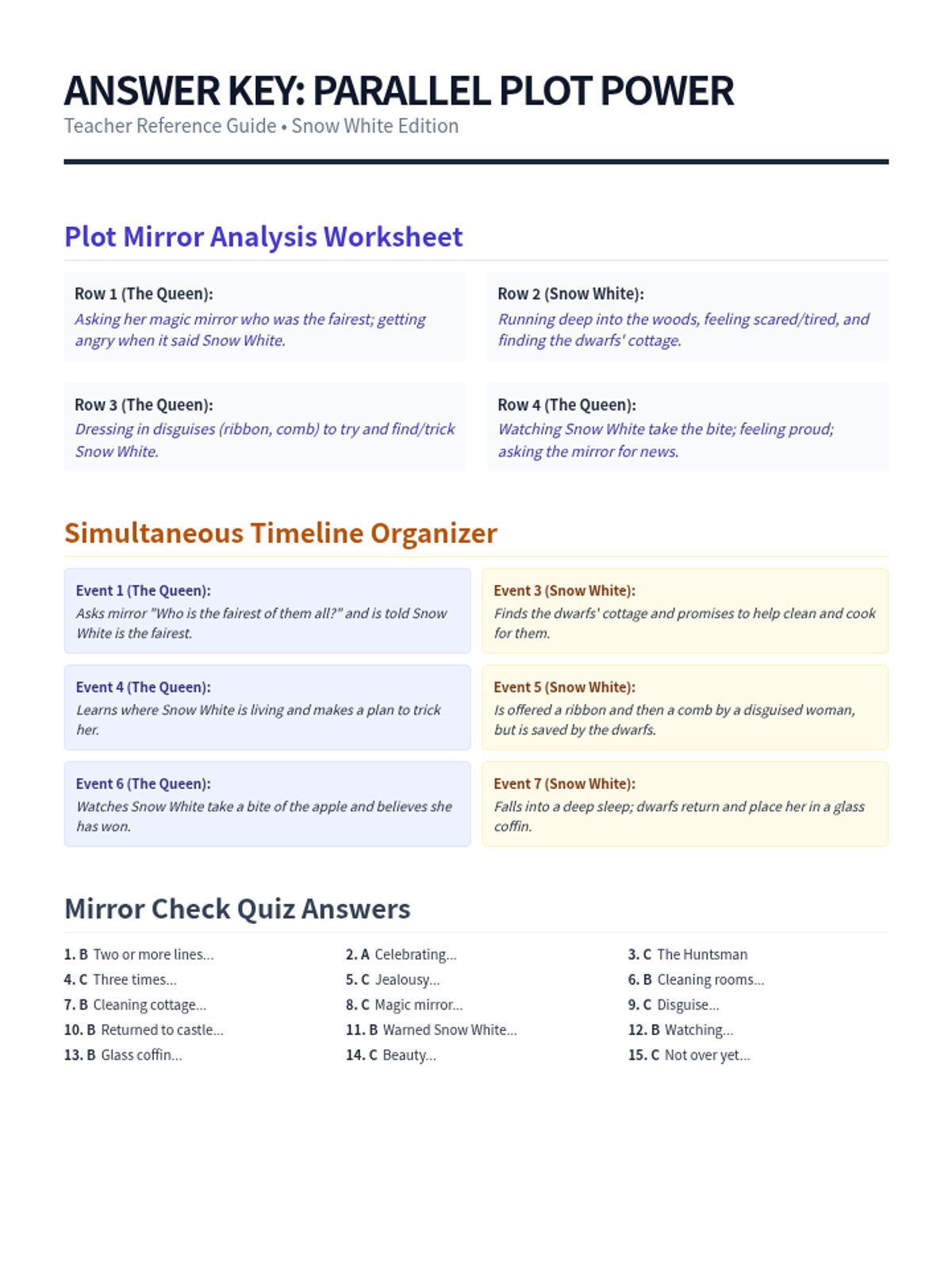
Students analyze two versions of the Snow White story to understand parallel plots, identifying how events in the Queen's journey occur simultaneously with Snow White's.
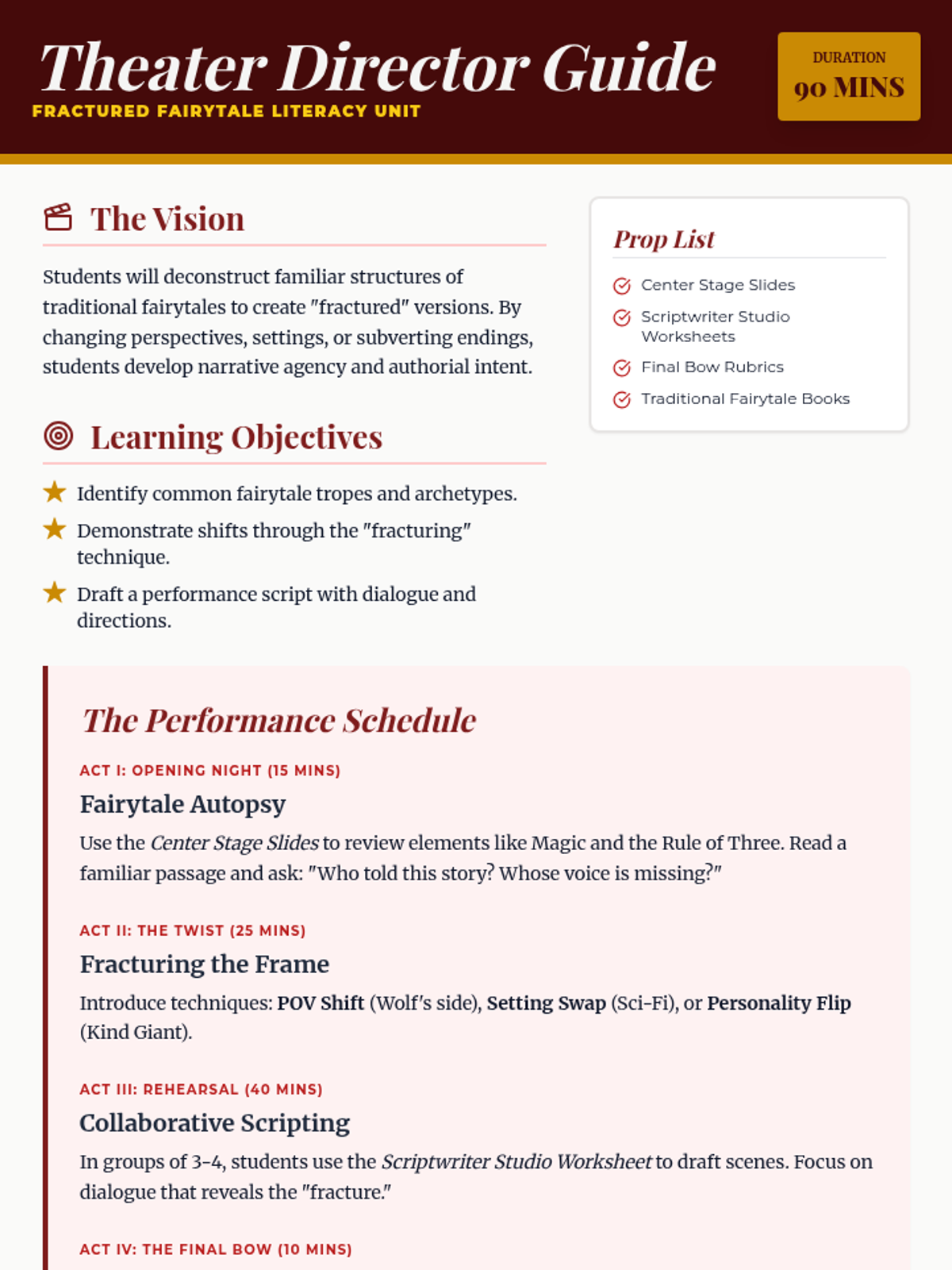
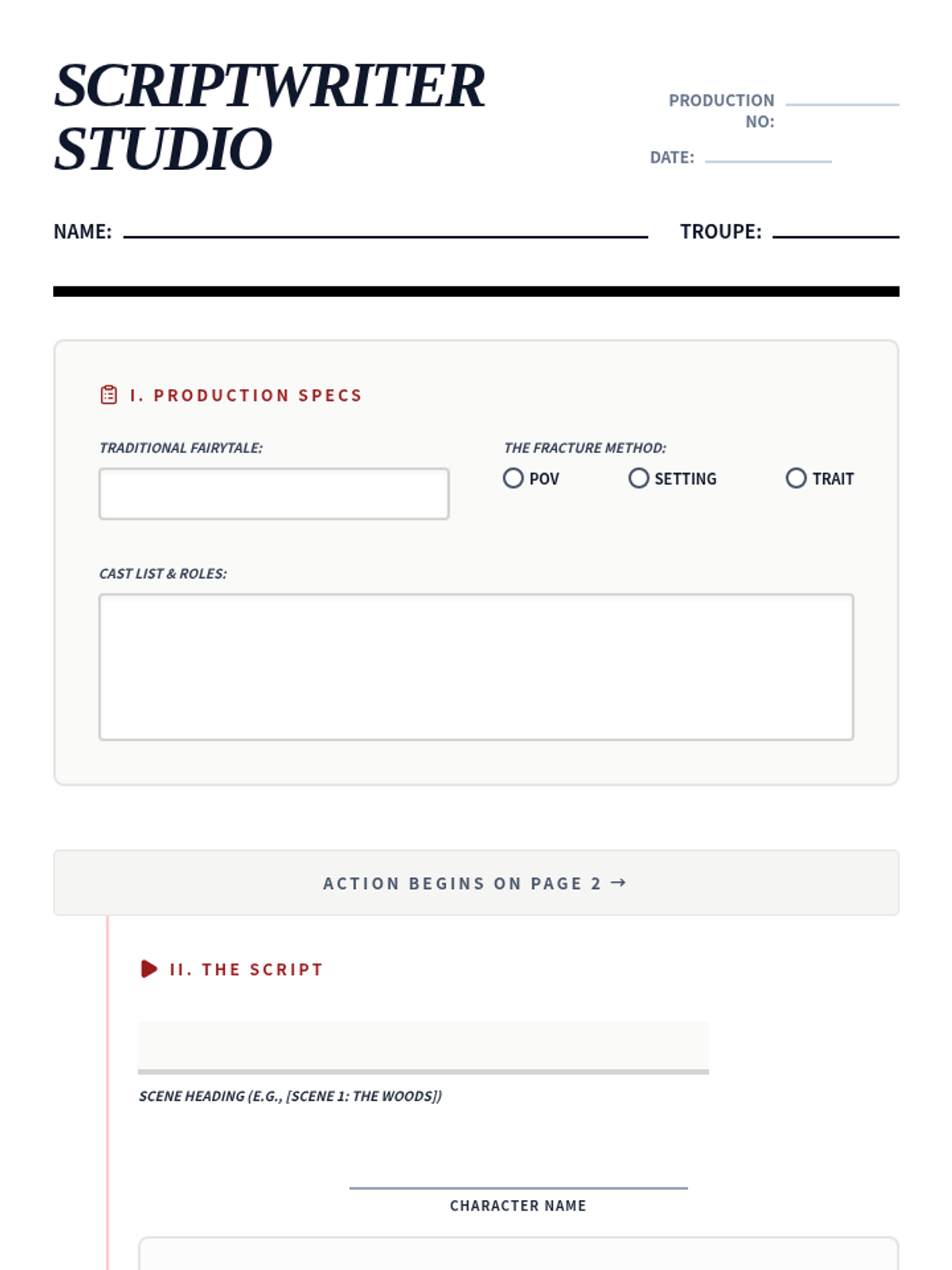
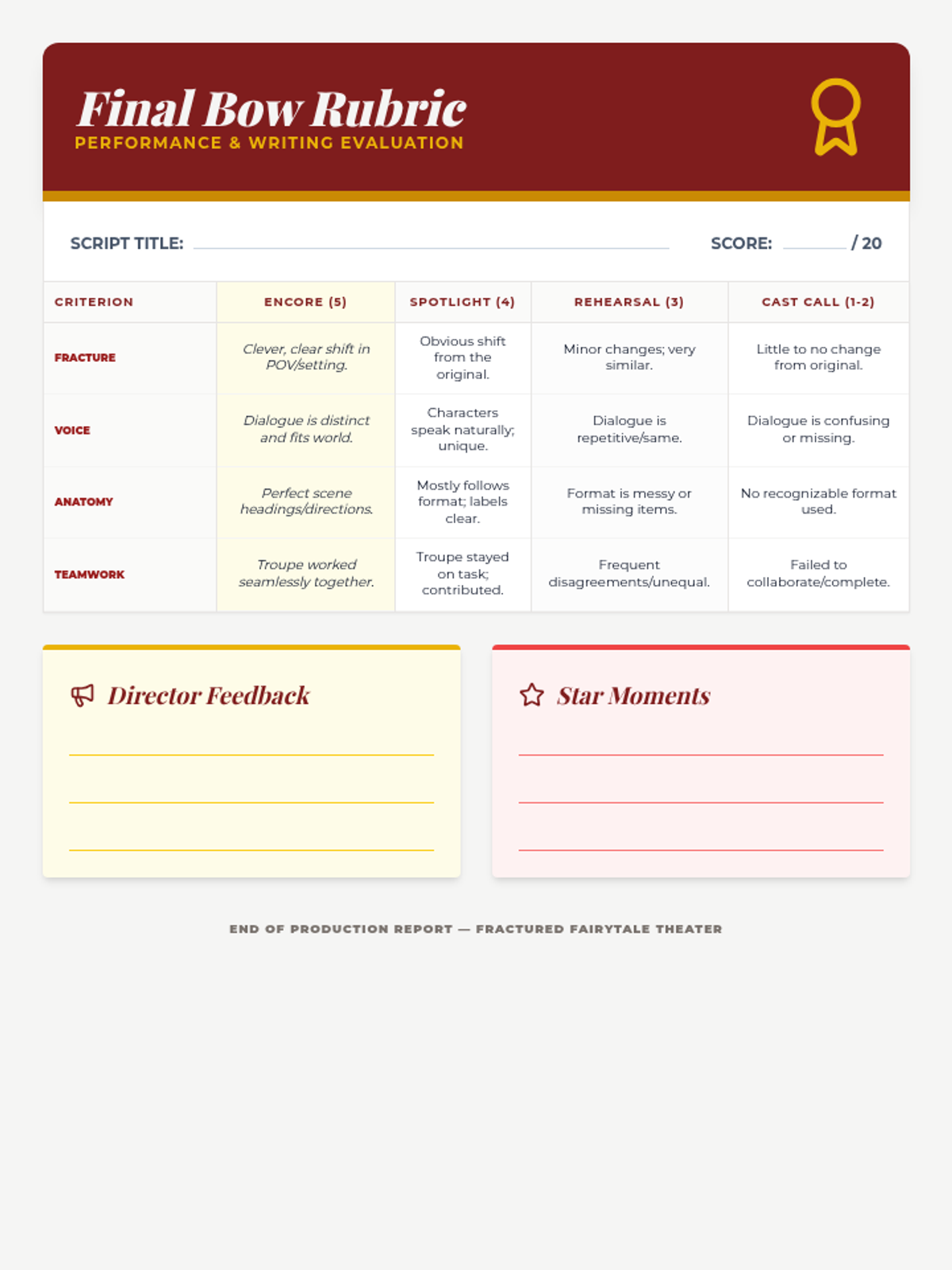
A literacy unit where students analyze traditional fairytales and collaborate to rewrite them through script-writing and dramatic play. Students explore character perspectives and alternative endings to strengthen comprehension and creative expression.
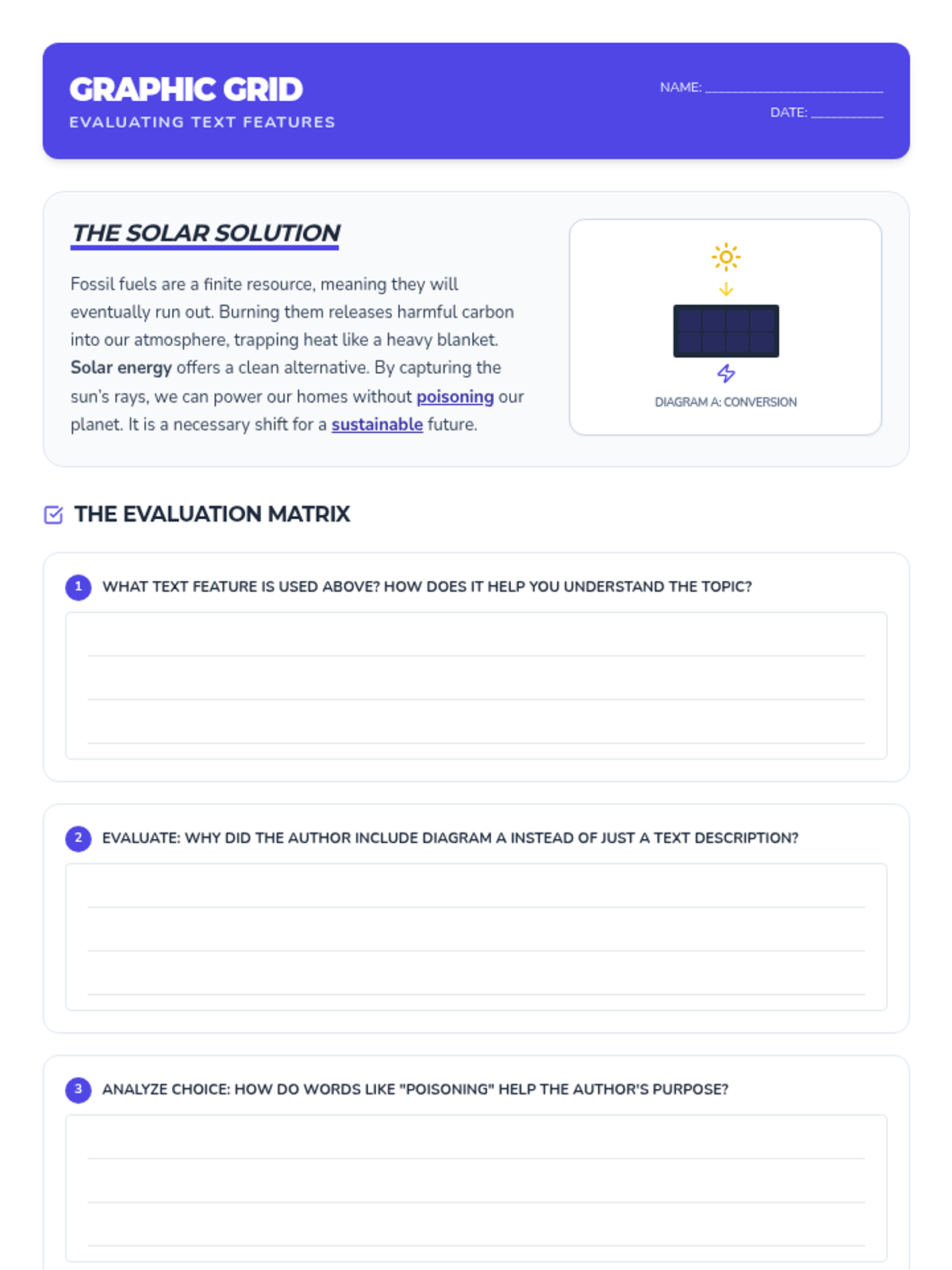
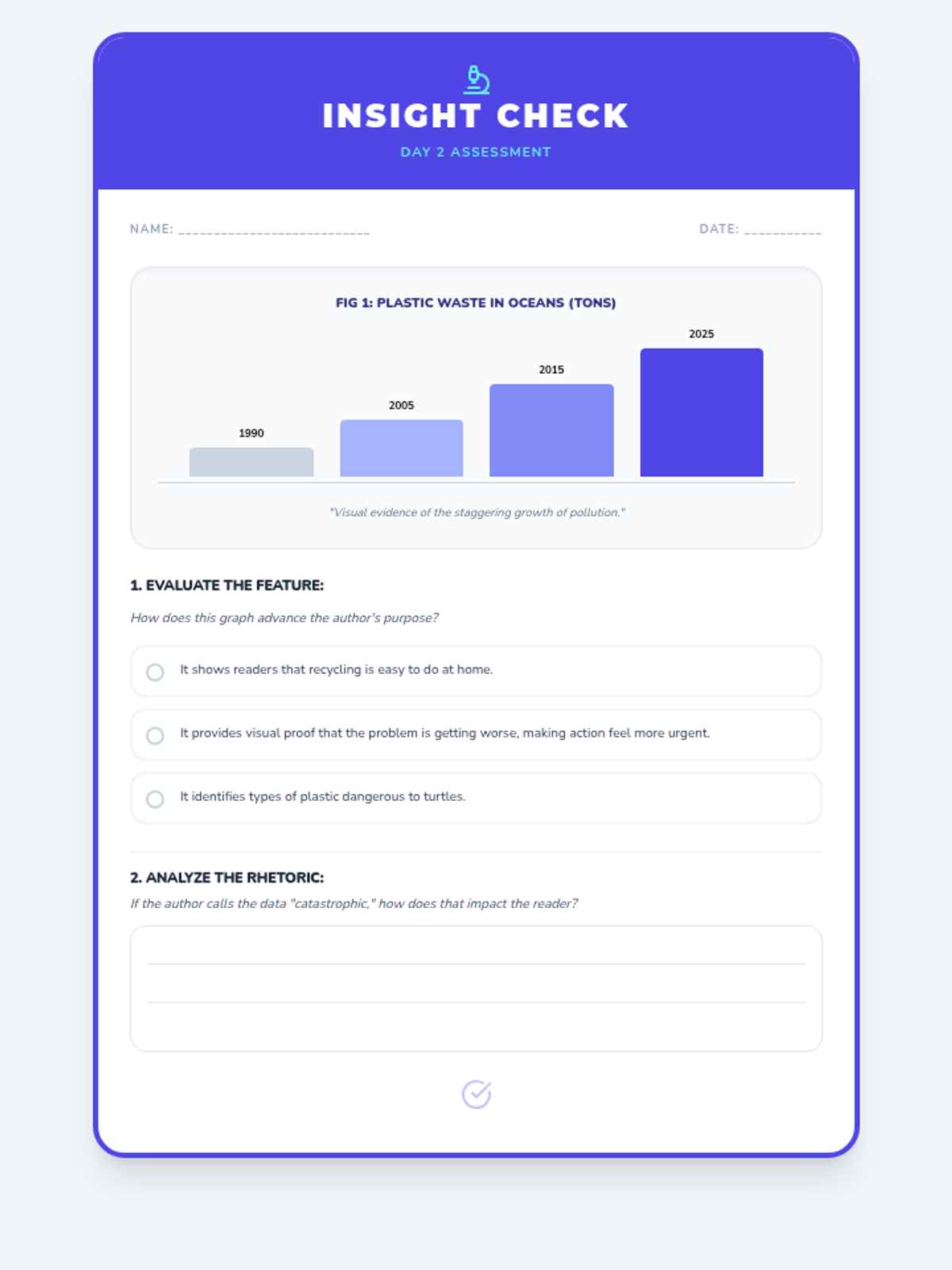
Focuses on evaluating how text and graphic features enhance informational texts and investigating how rhetorical techniques serve an author's specific intent.
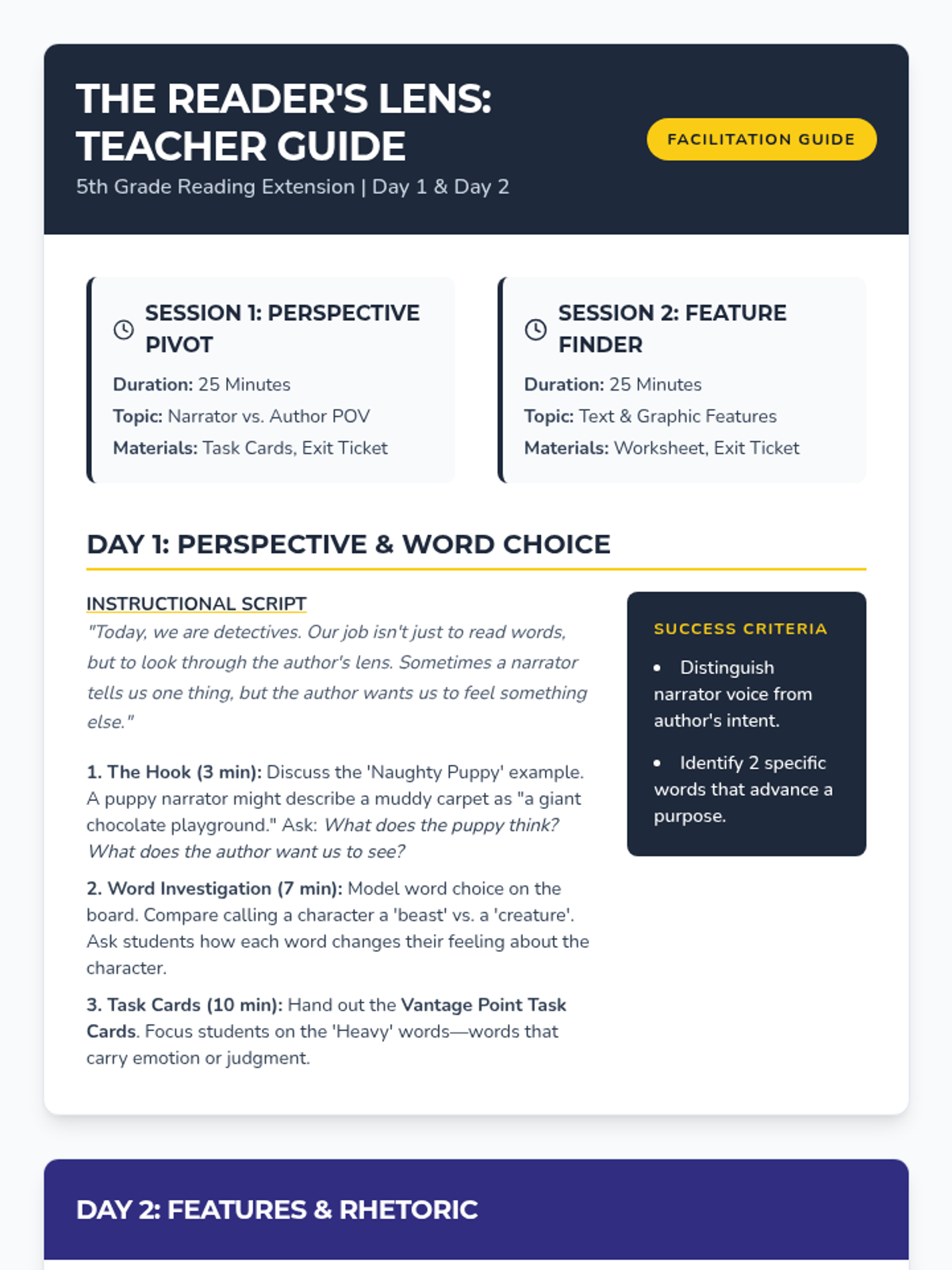
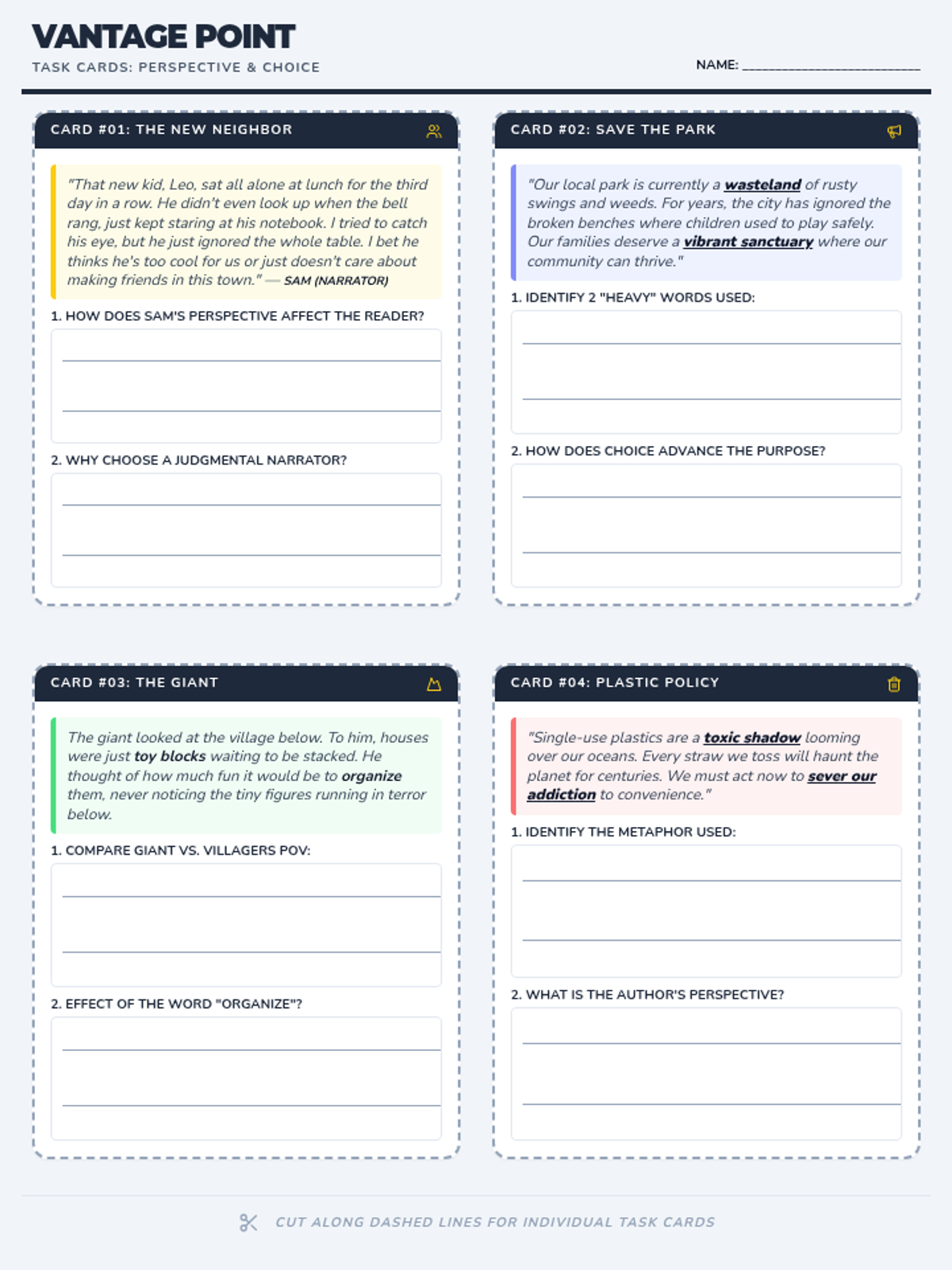
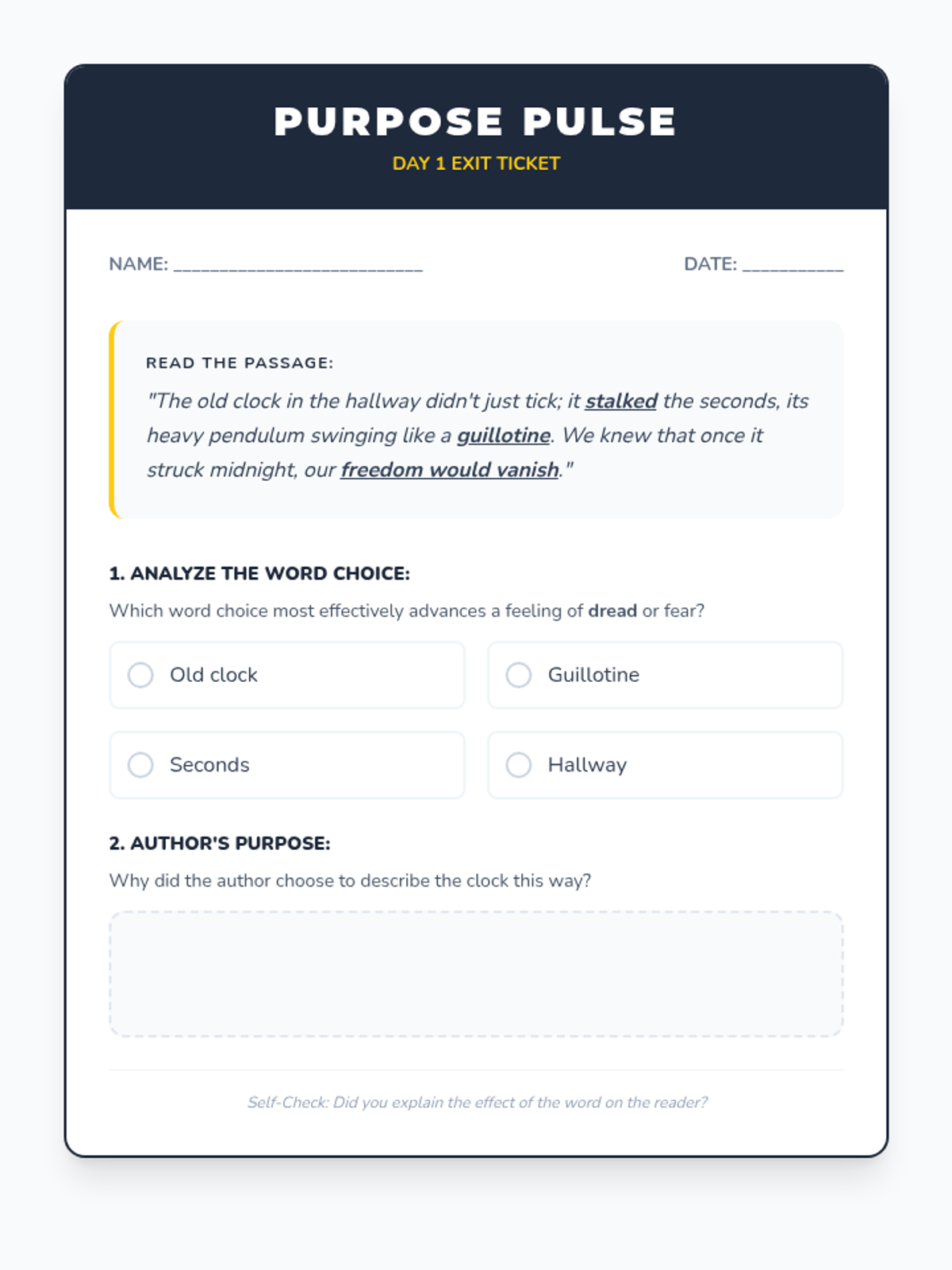
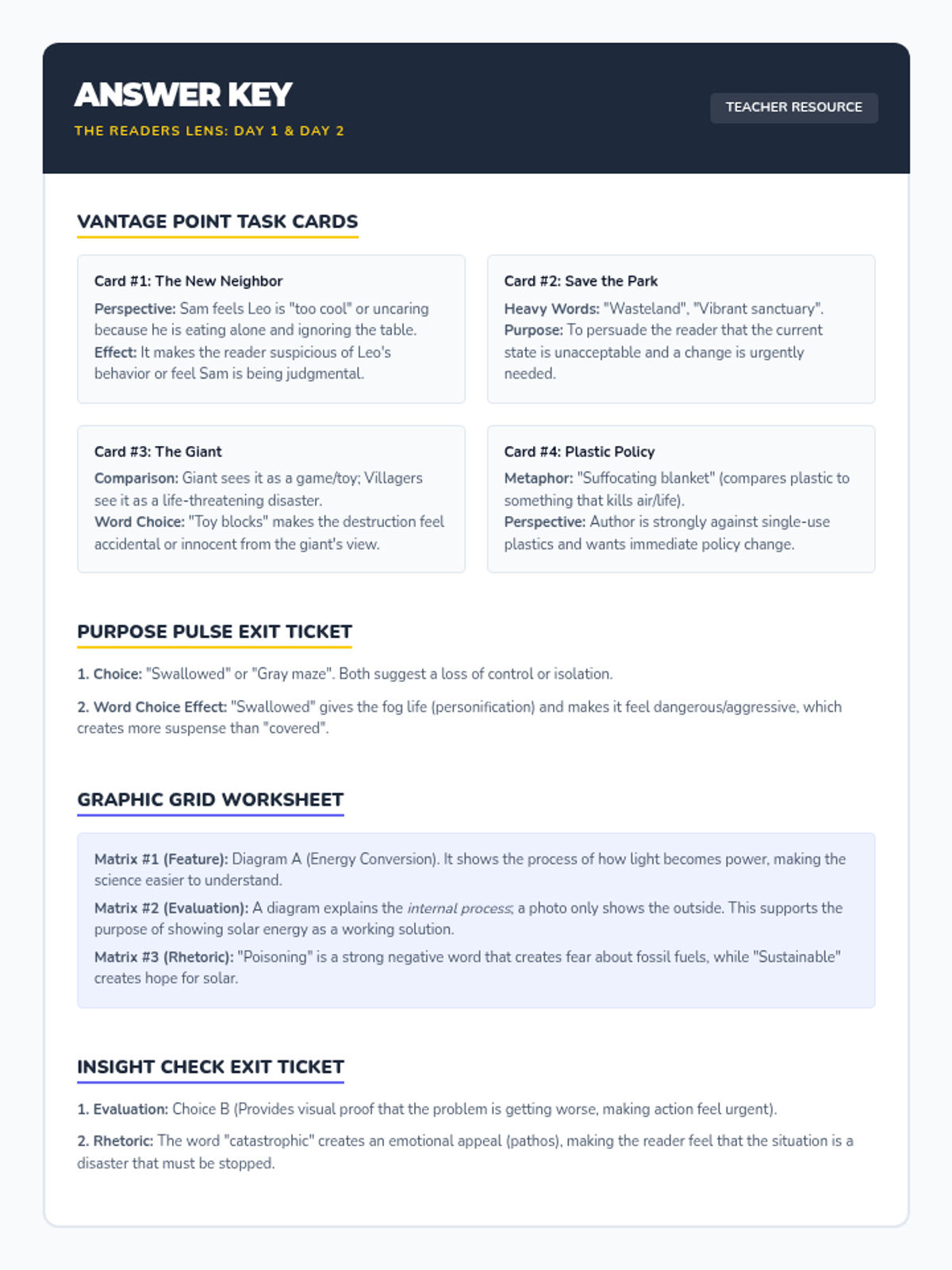
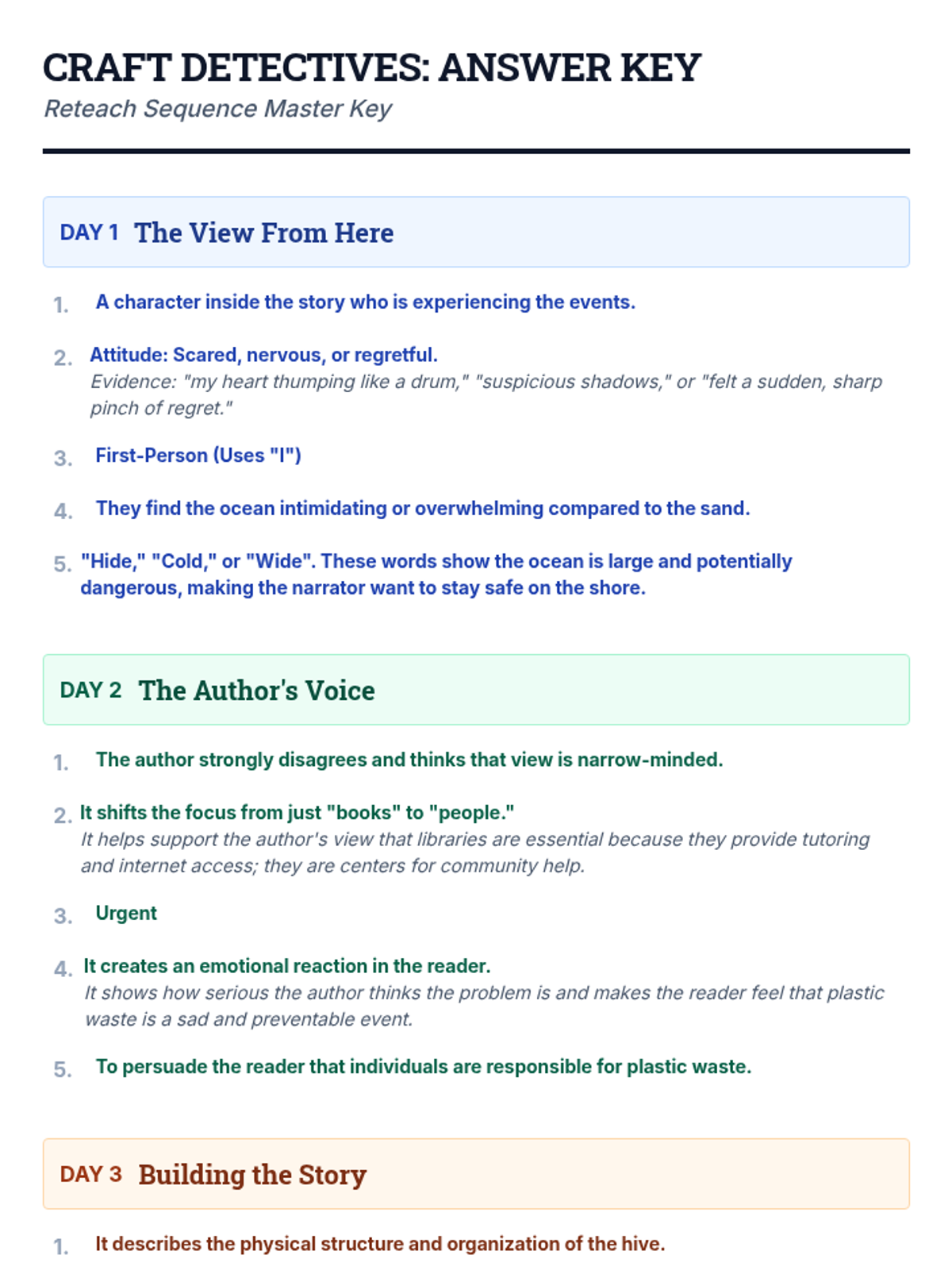
Focuses on distinguishing between the author's and narrator's point of view and analyzing how specific word choices in persuasive and narrative texts advance the author's purpose.
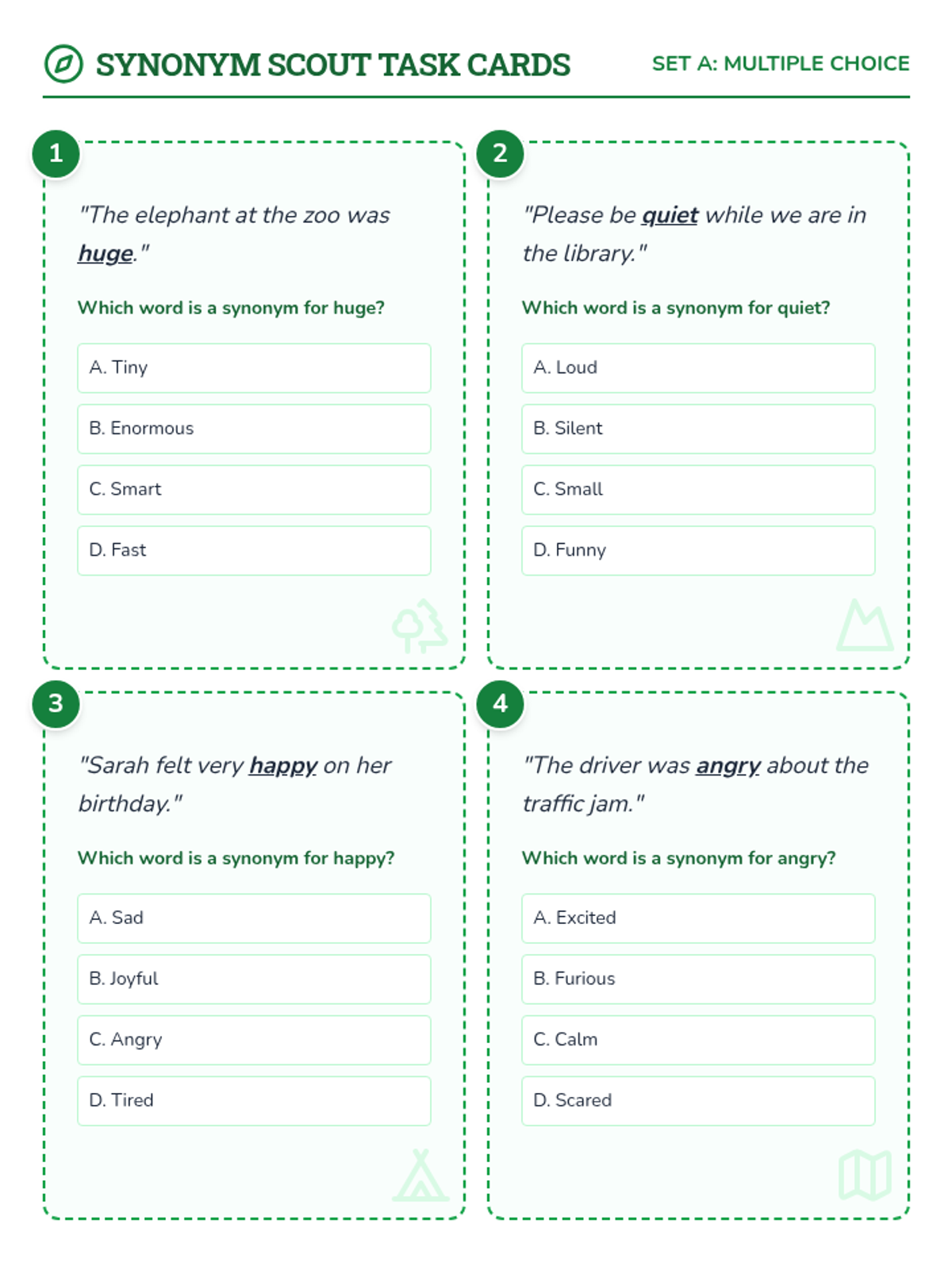
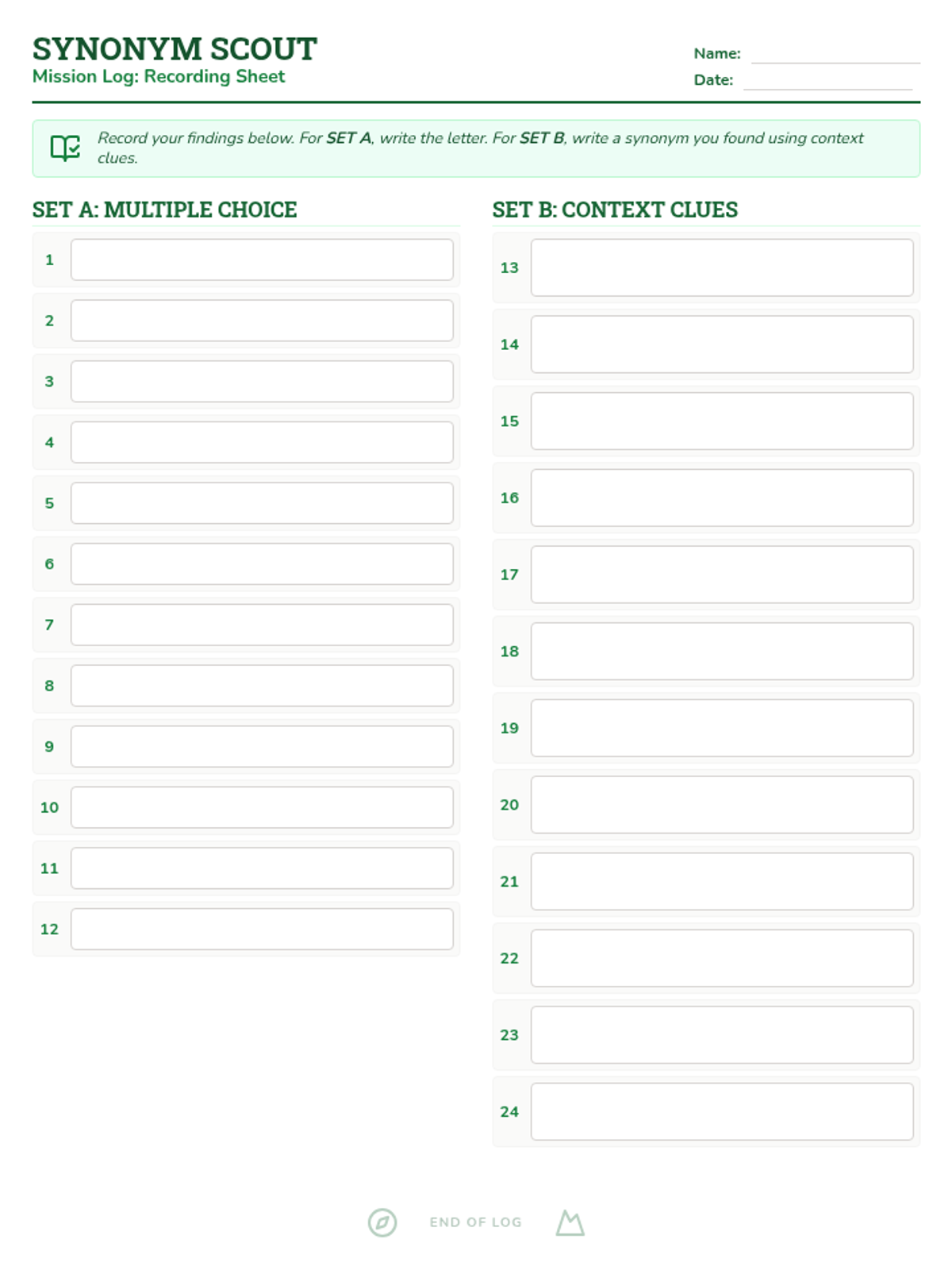
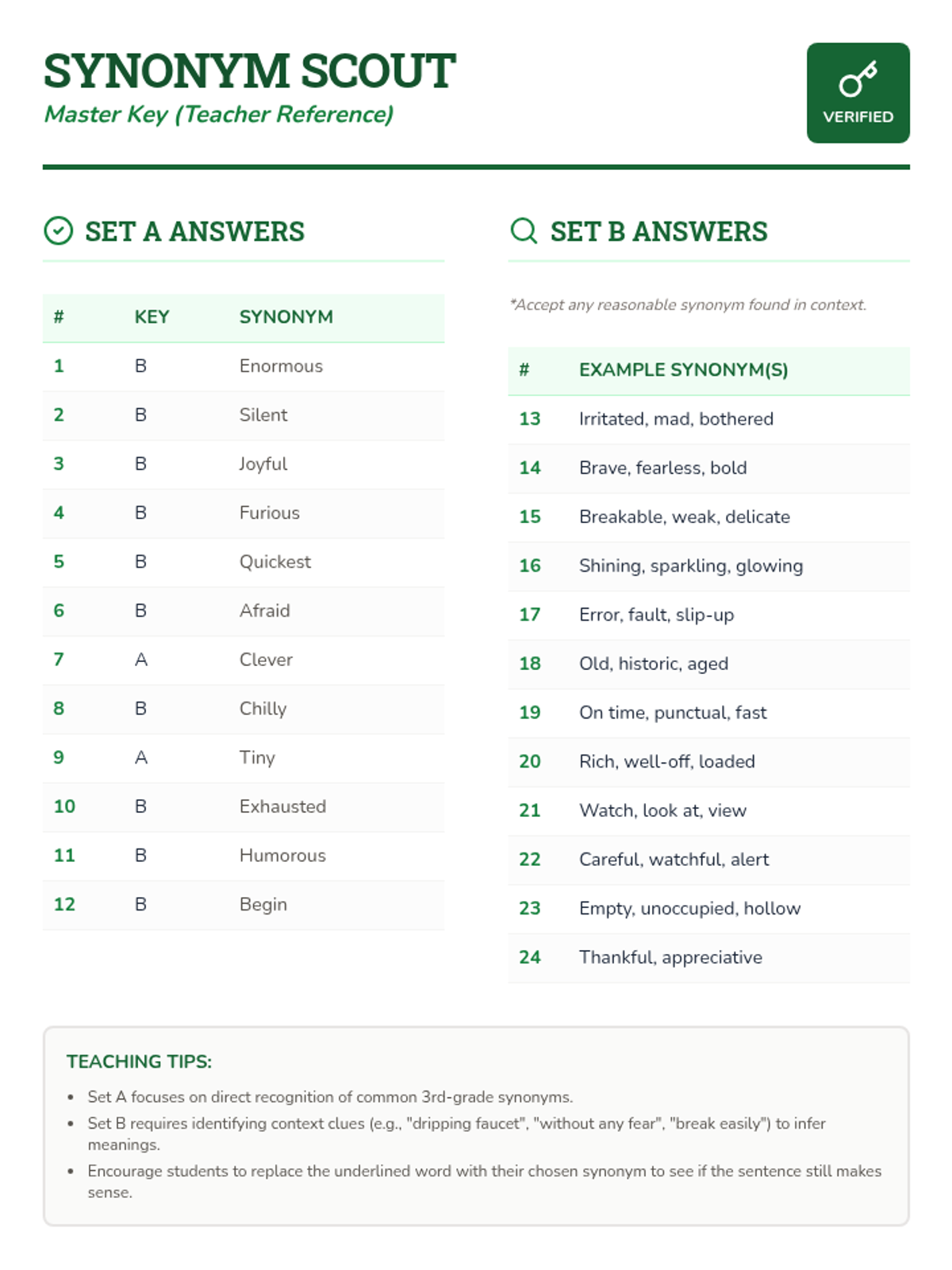
A set of 24 task cards and supporting materials designed to help 3rd-grade students master synonyms through multiple-choice questions and context-clue analysis in a fun 'scout' theme.
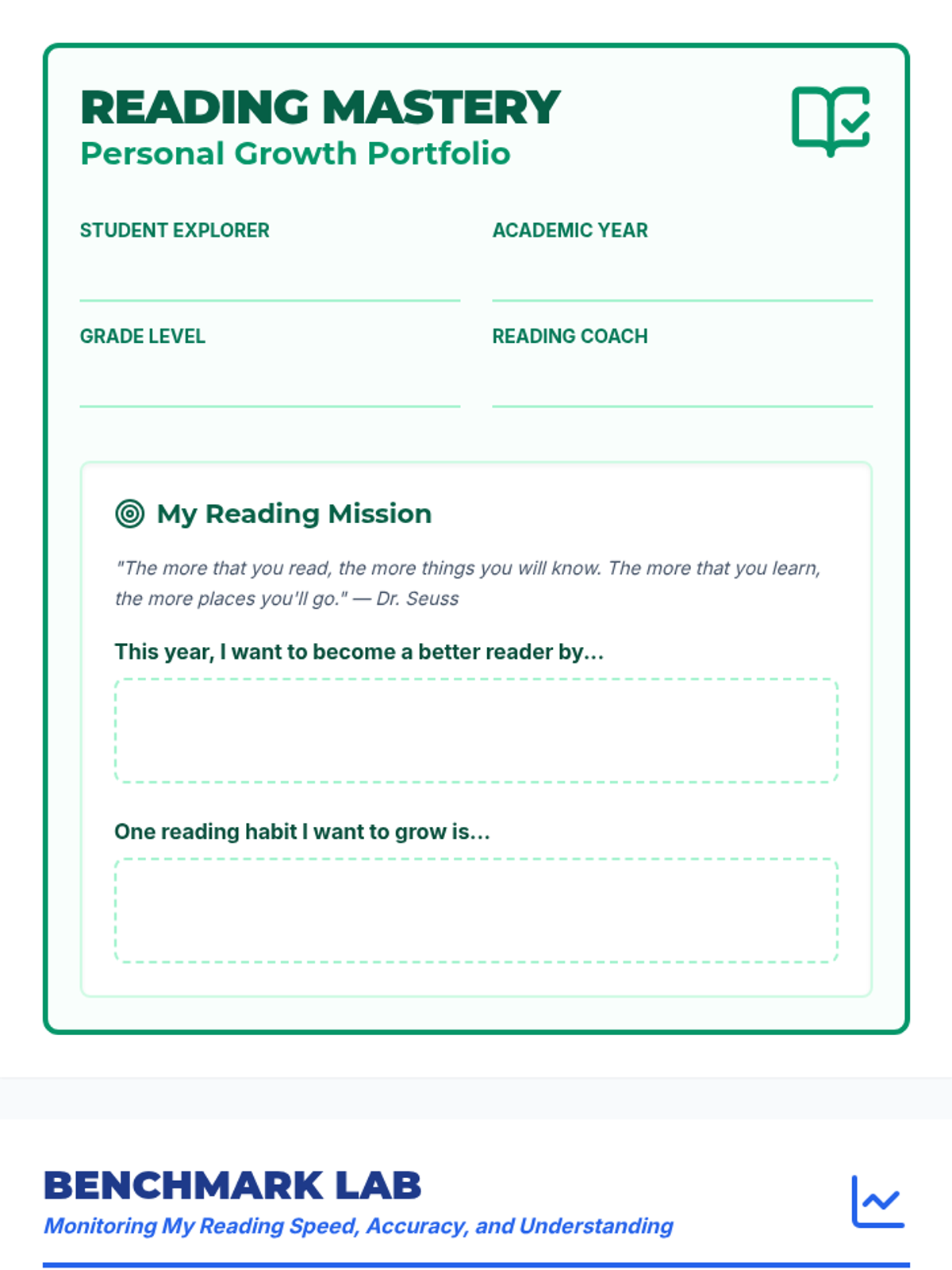
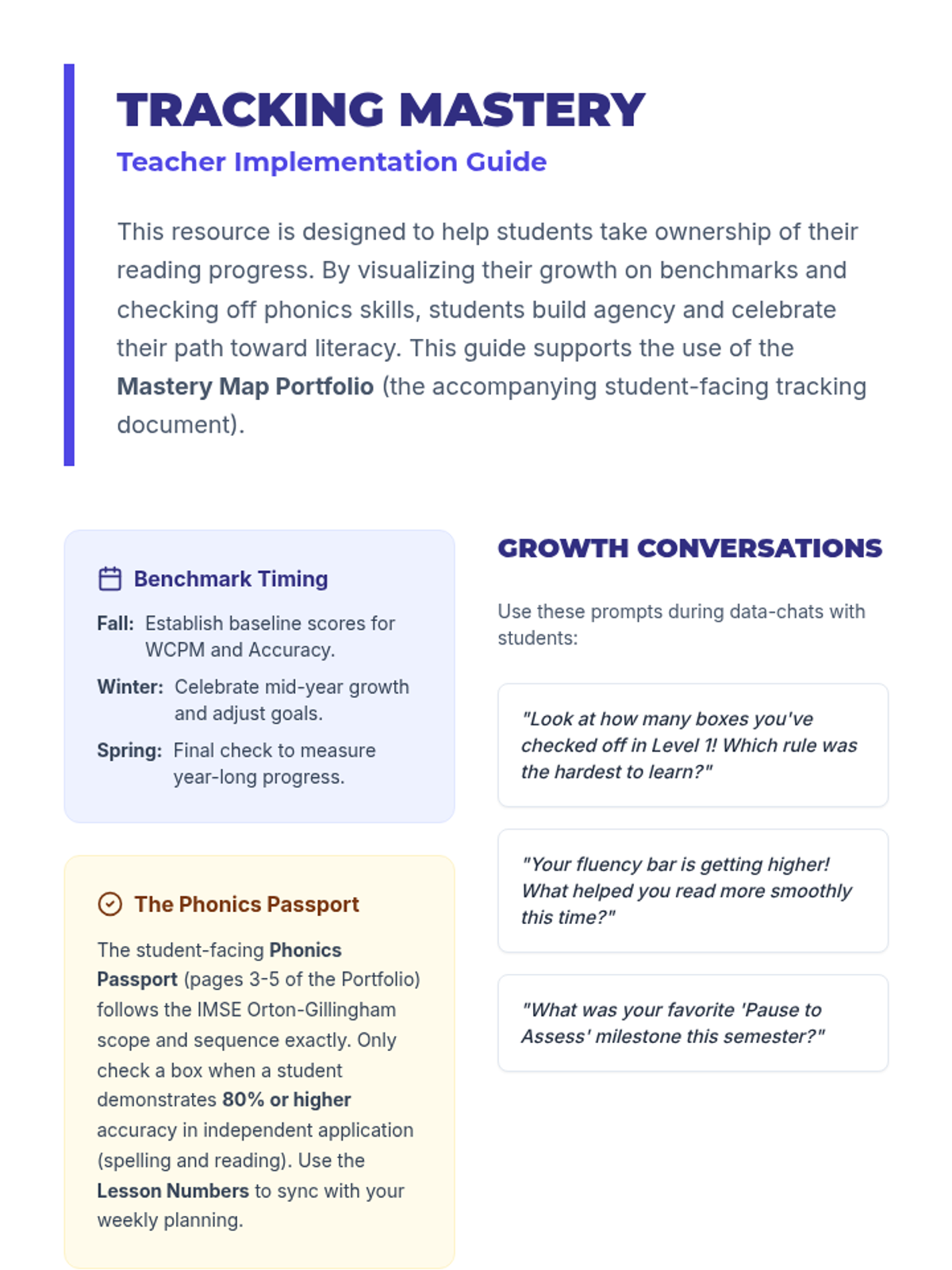
A comprehensive suite of data tracking tools for students to monitor their reading progress, including benchmark assessments and IMSE Orton-Gillingham concept checks from Kindergarten through 5th grade.
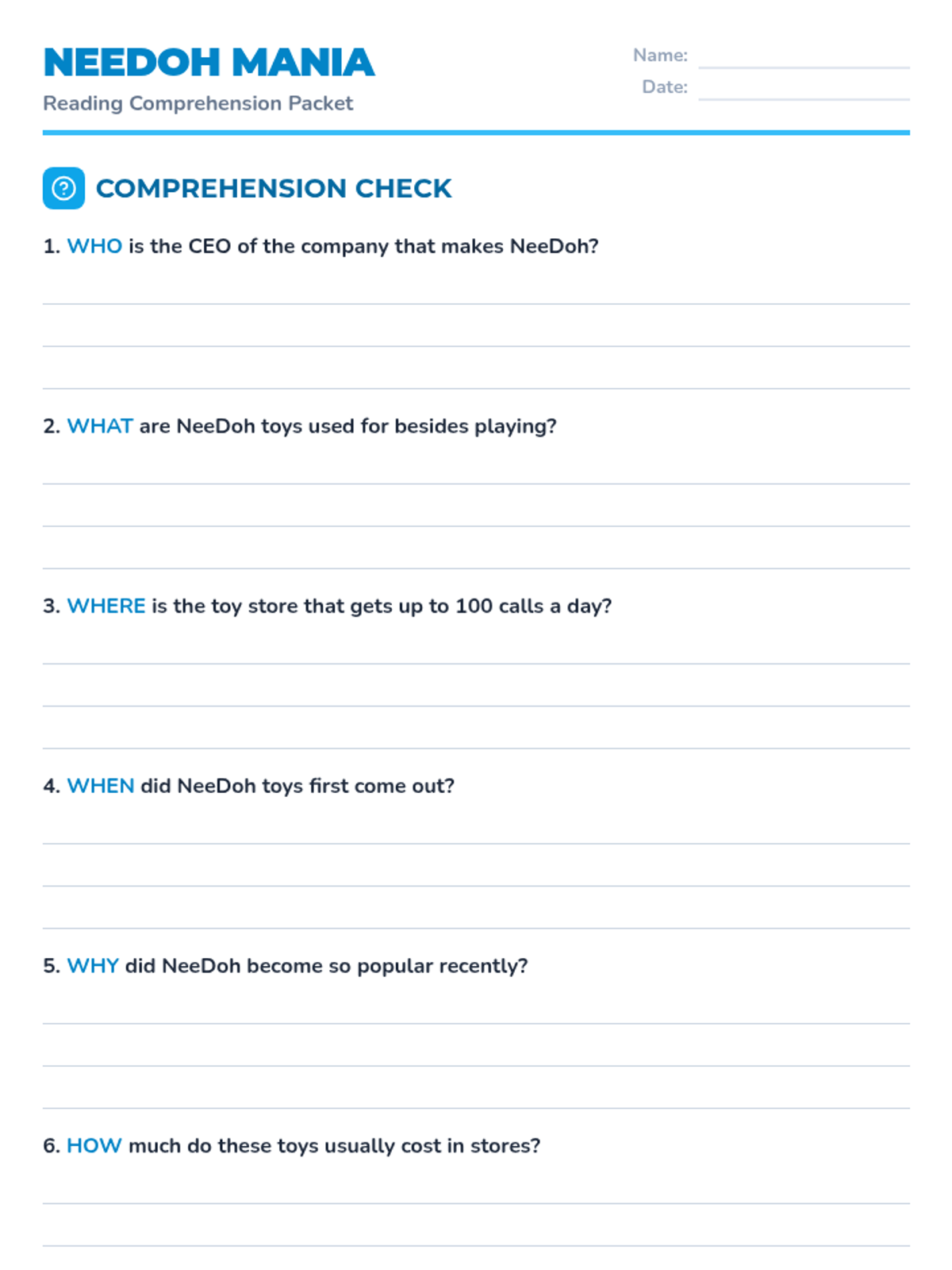
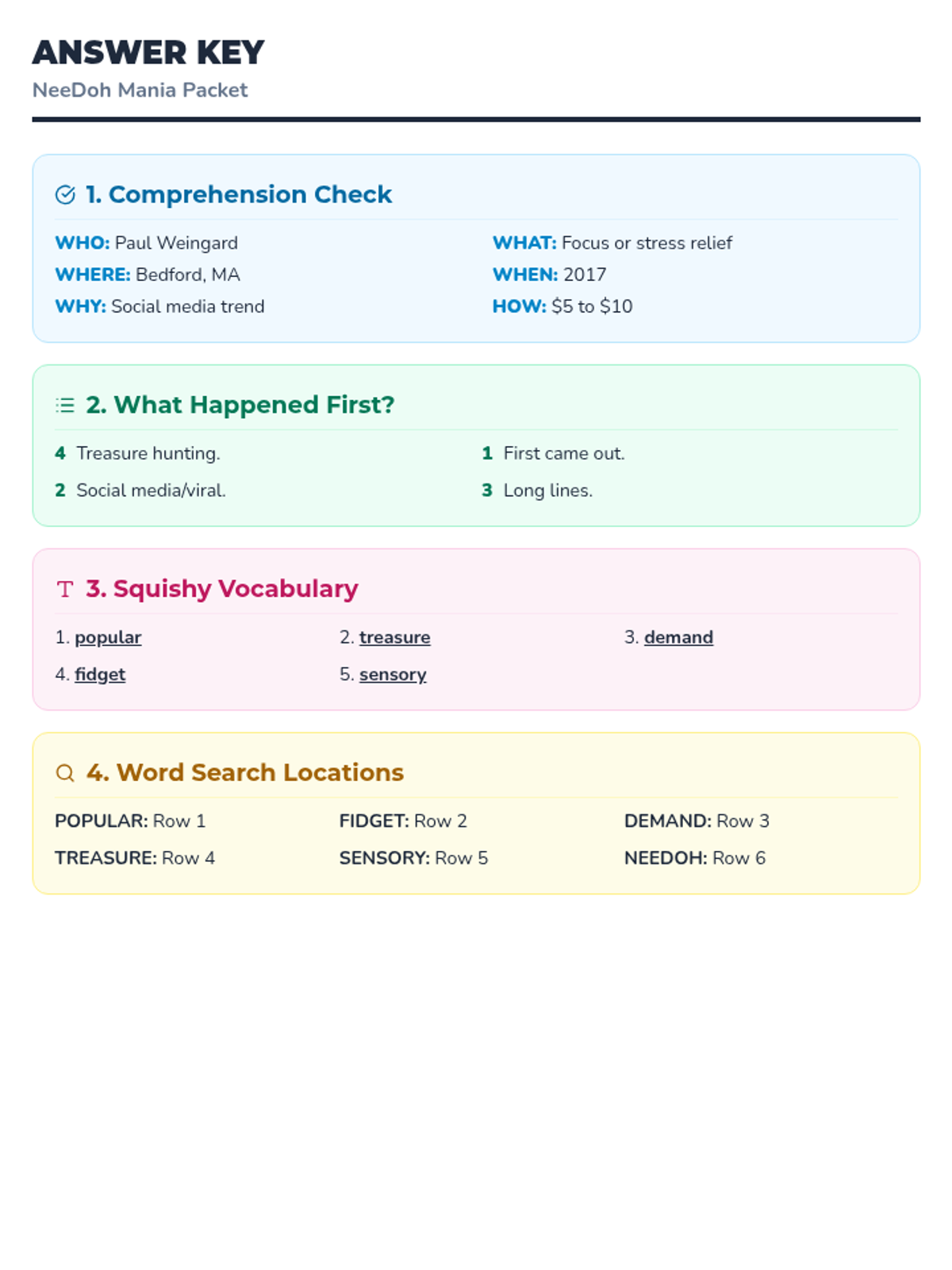
A packet of activities based on the viral NeeDoh toy trend, designed for 3rd-grade students to practice comprehension, vocabulary, and sequencing skills.
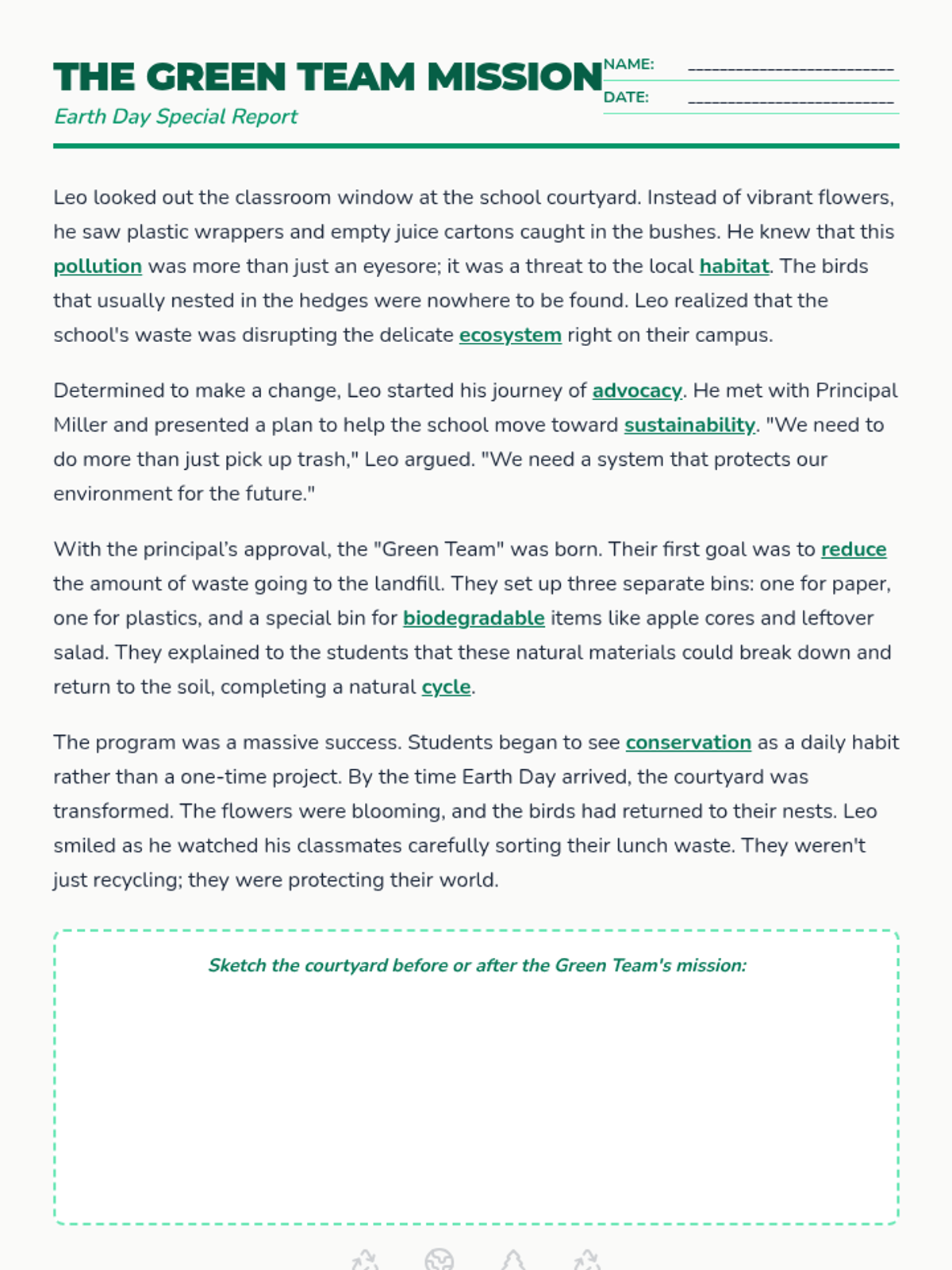
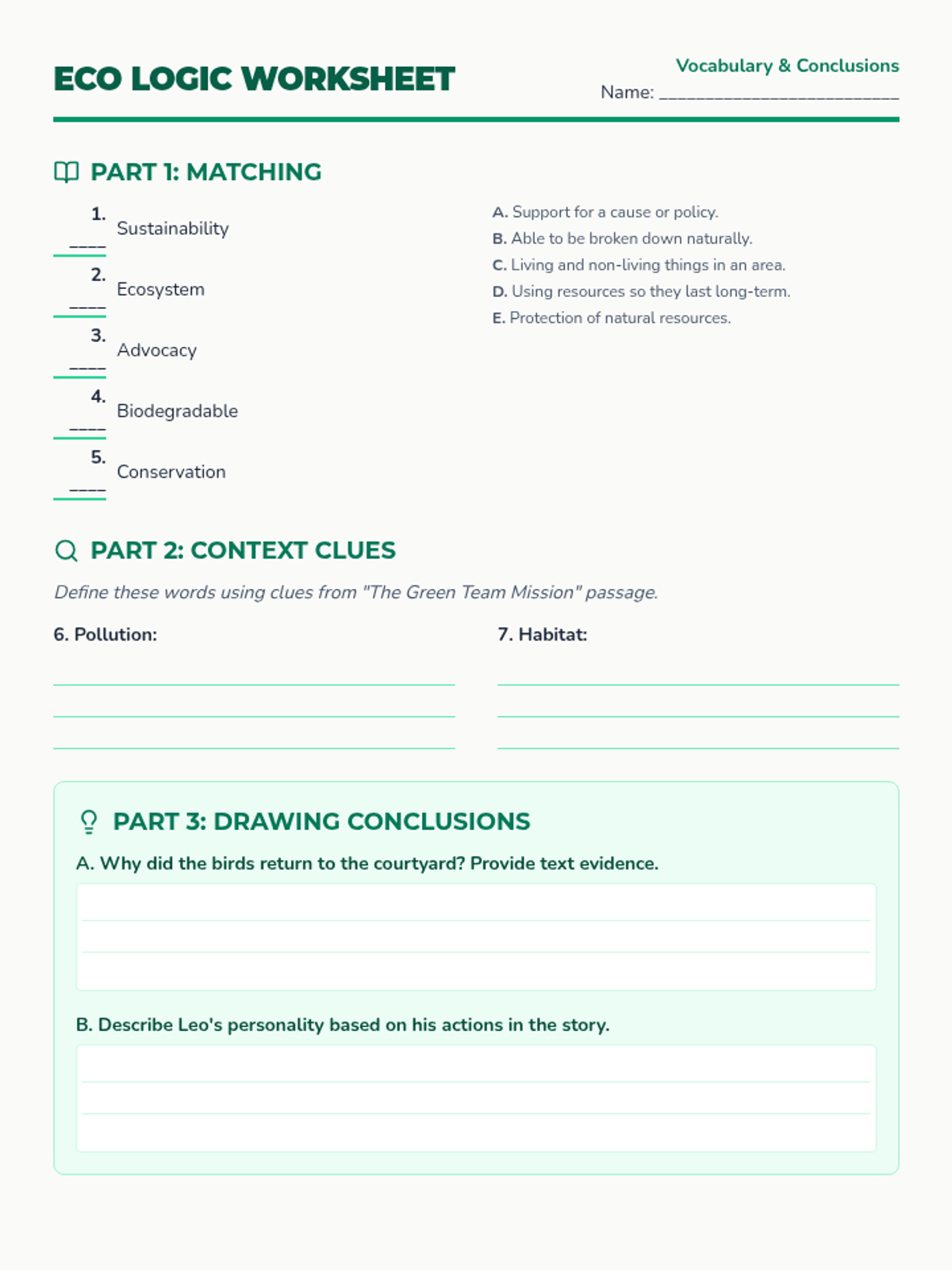
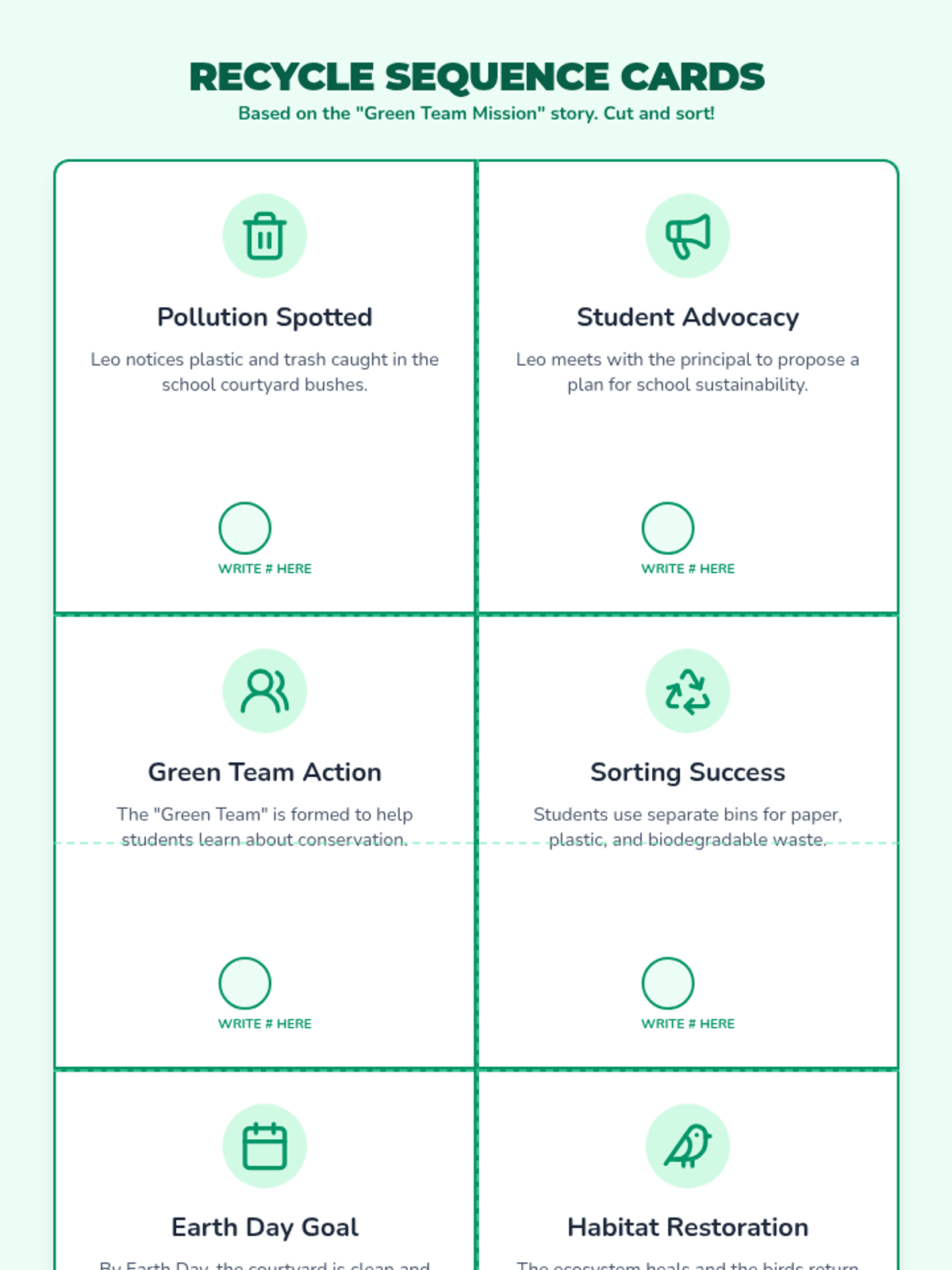
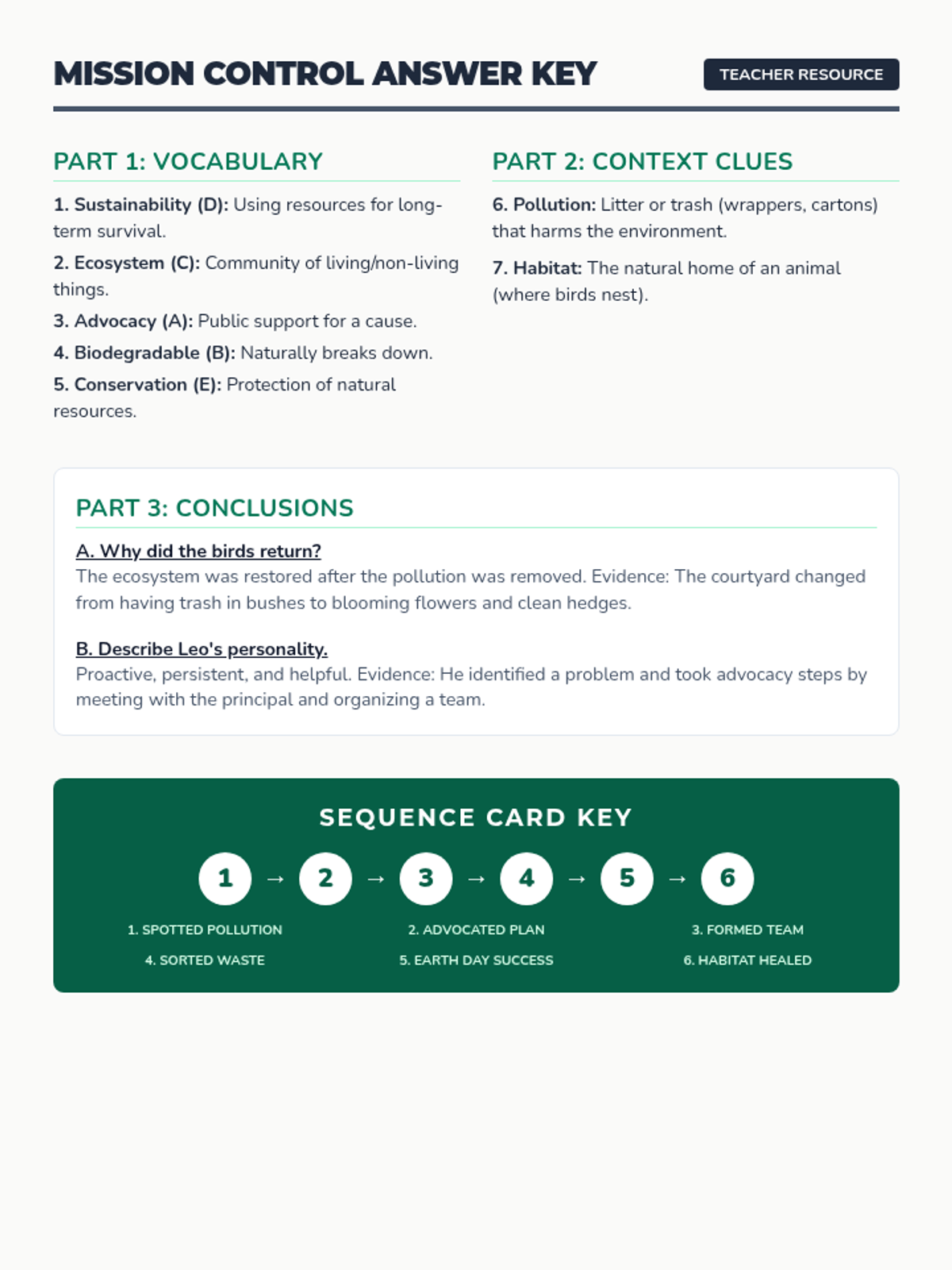
A lesson focused on school recycling, vocabulary development, and drawing conclusions for Earth Day. Students will engage with a reading passage and sequence cards to understand environmental impact.
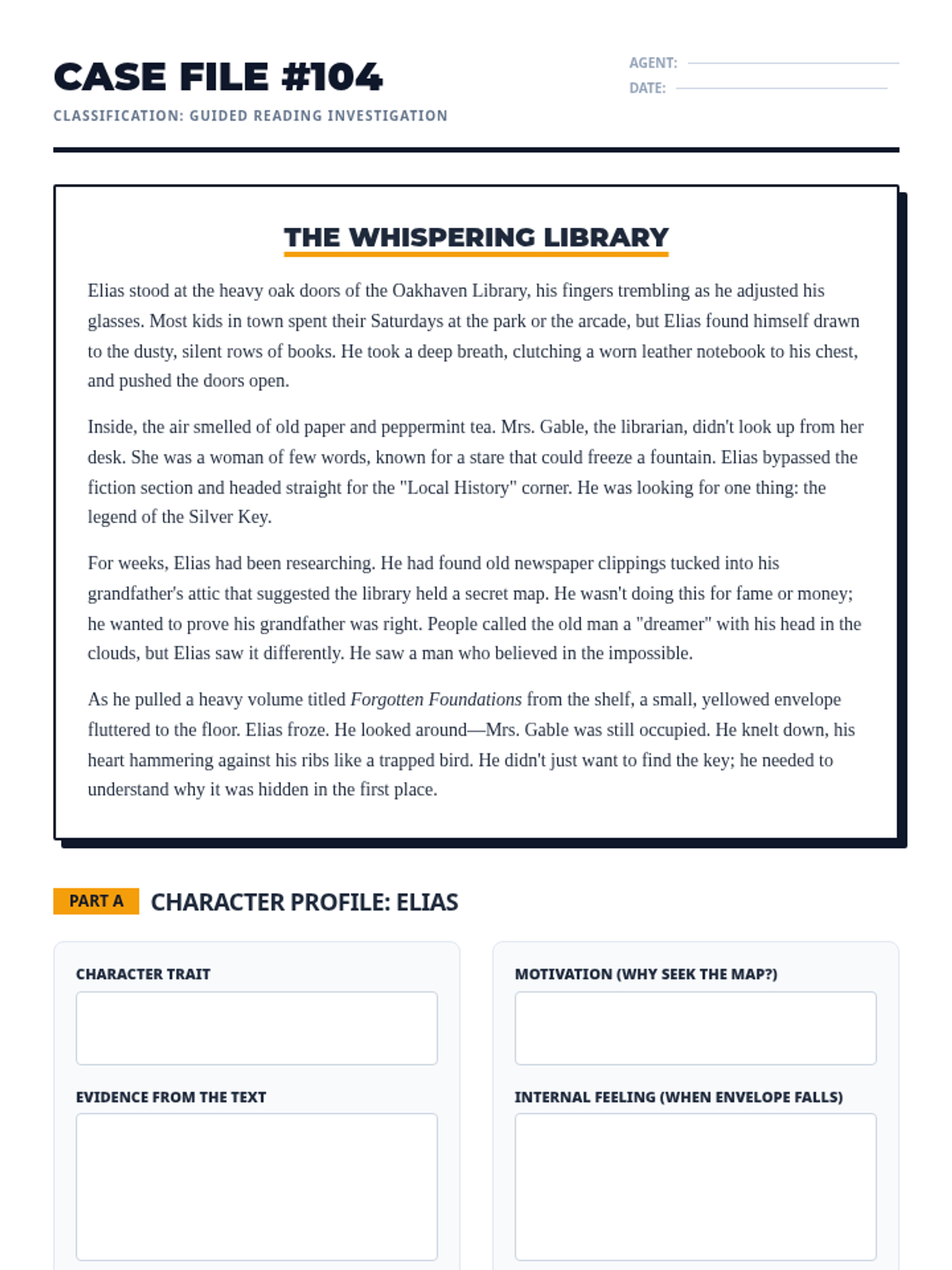
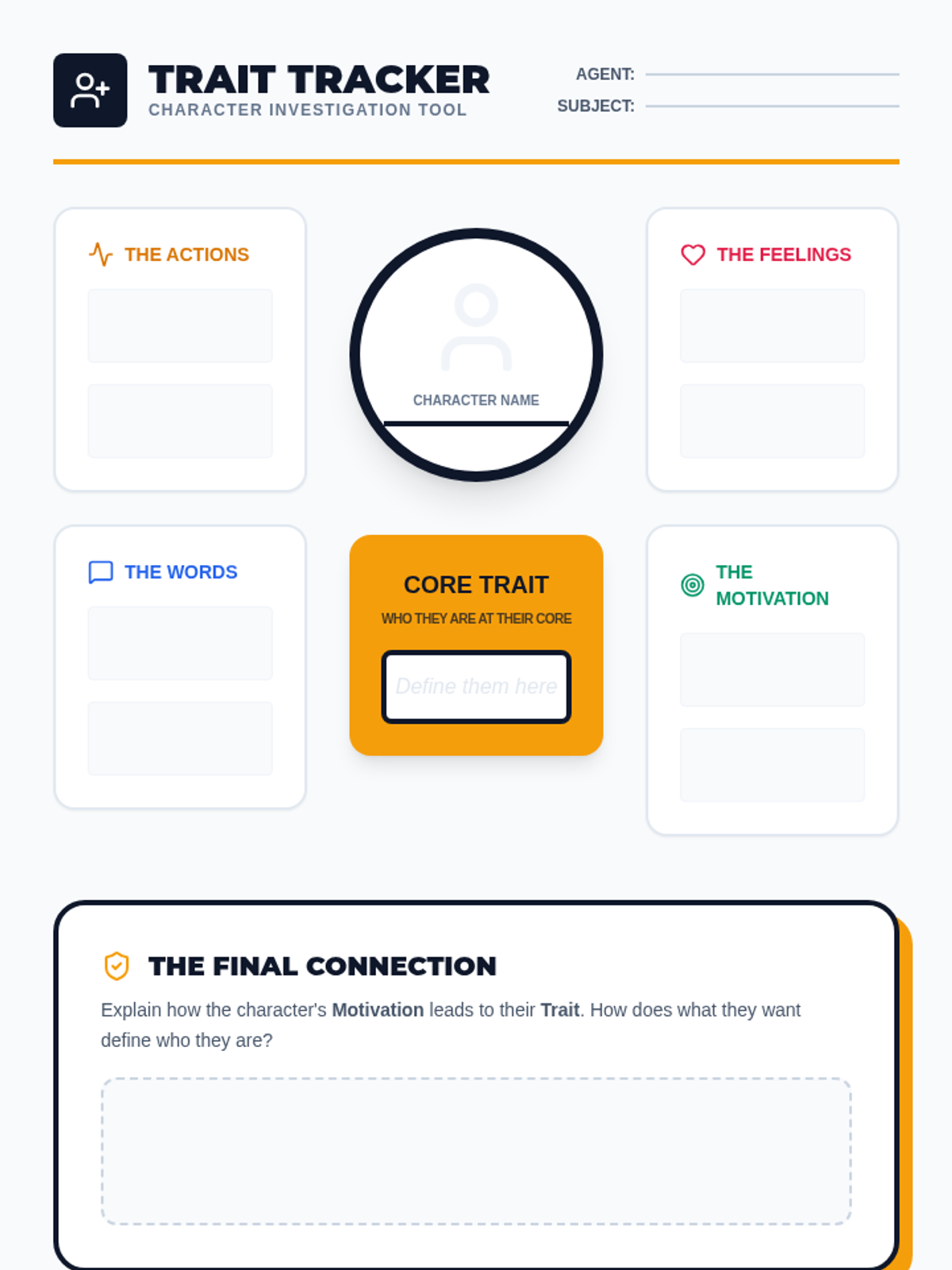
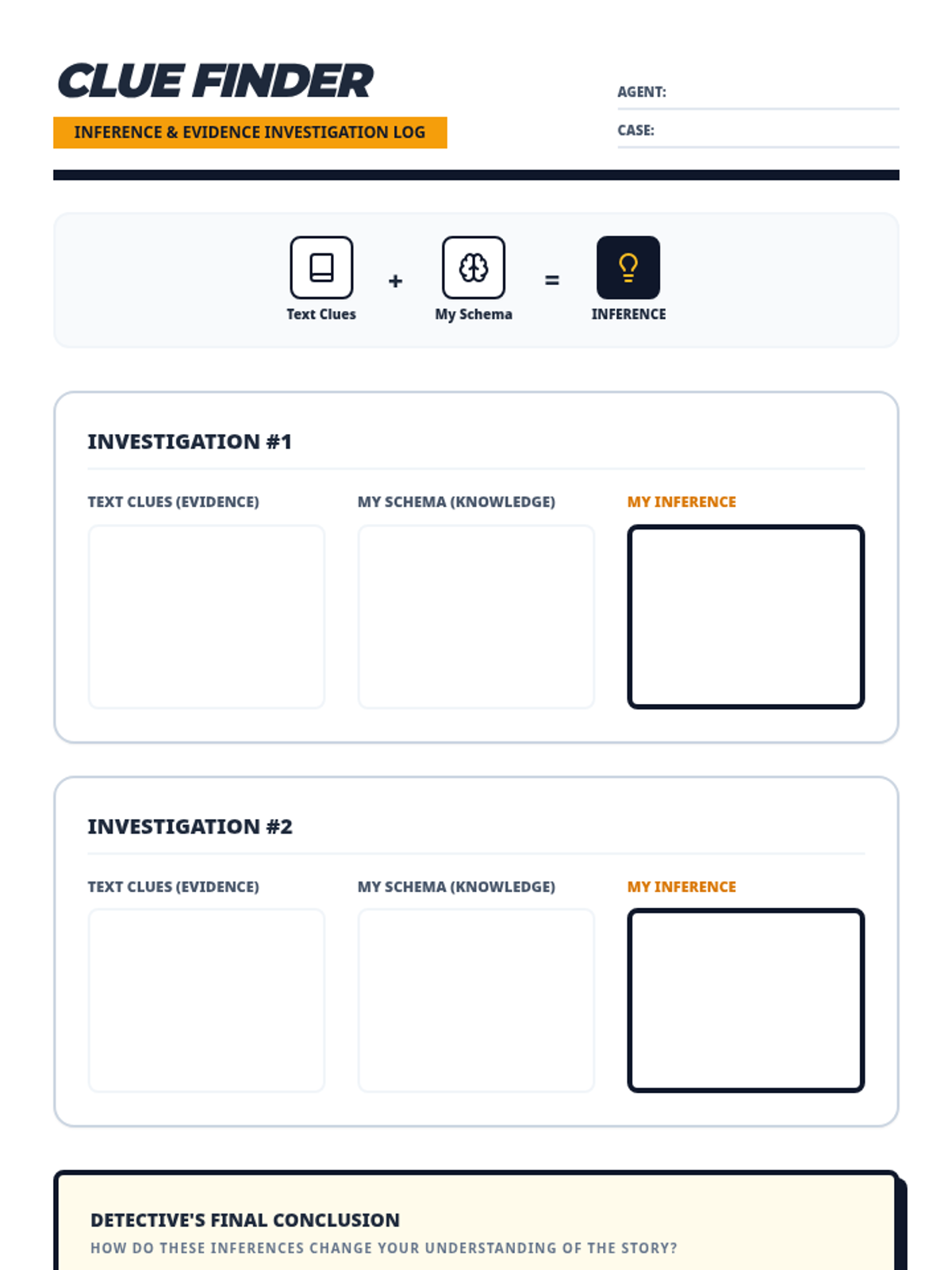
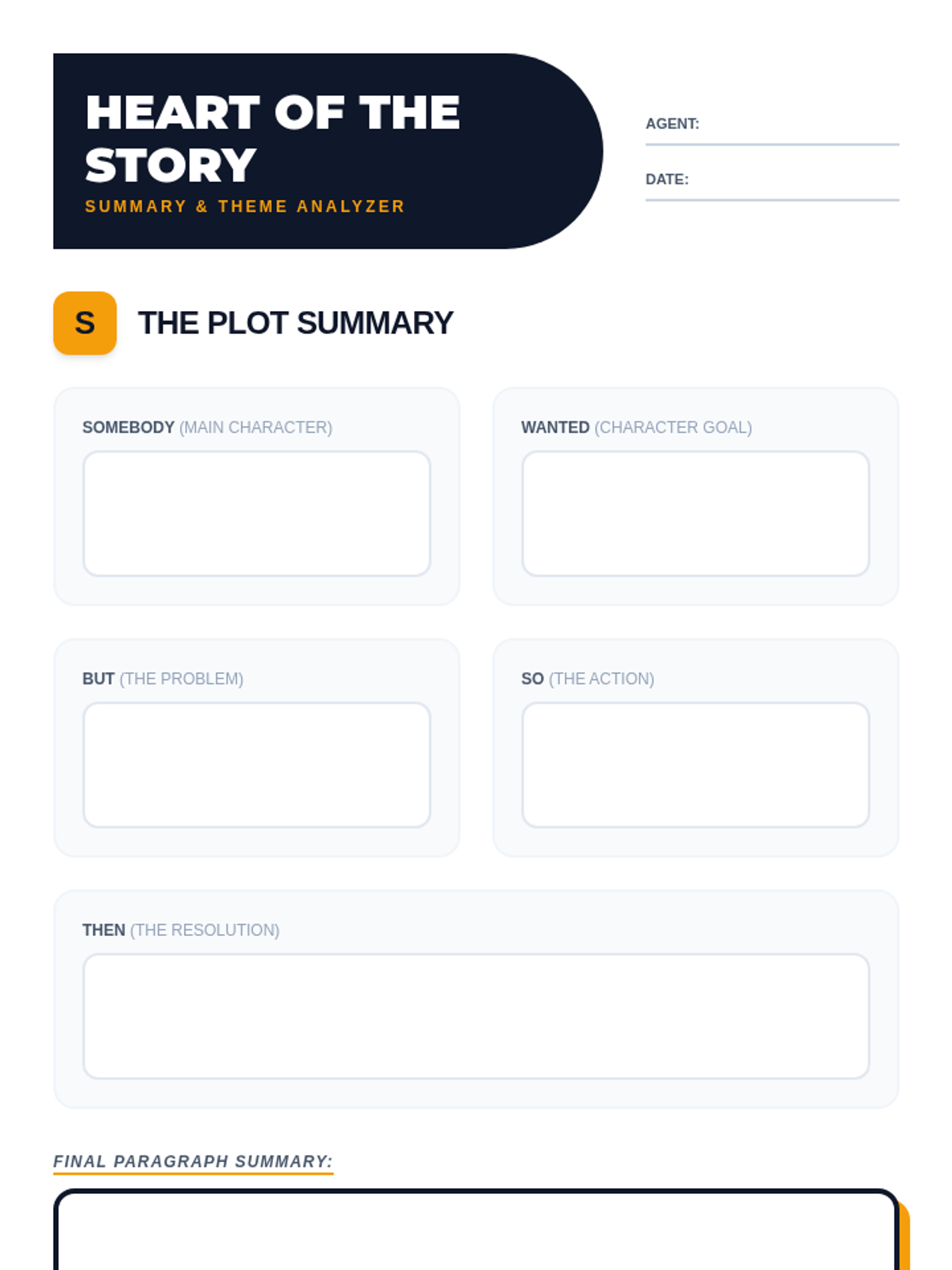
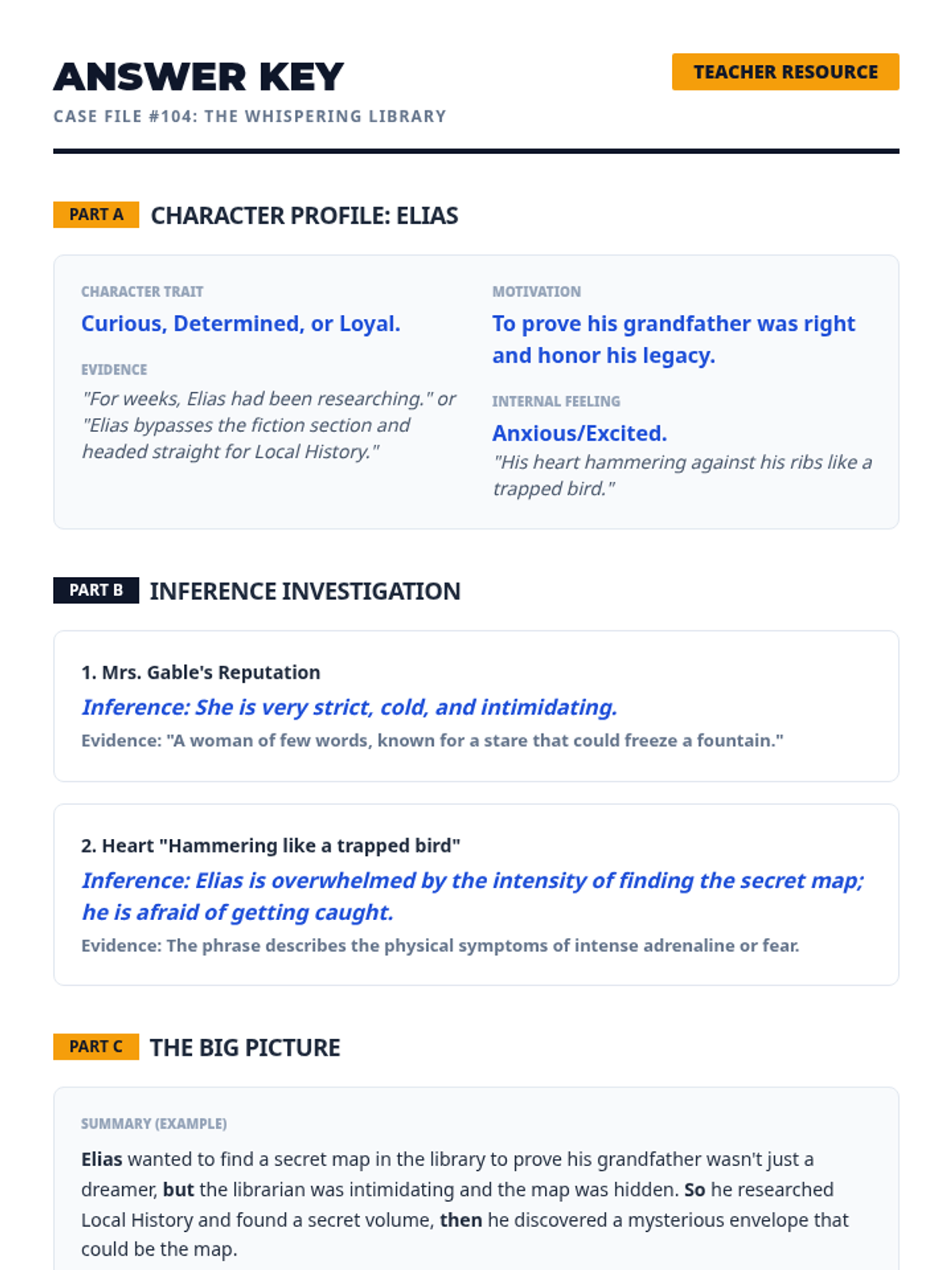
Students learn to analyze characters, make evidence-based inferences, and synthesize story elements into summaries and themes using a detective-themed approach.
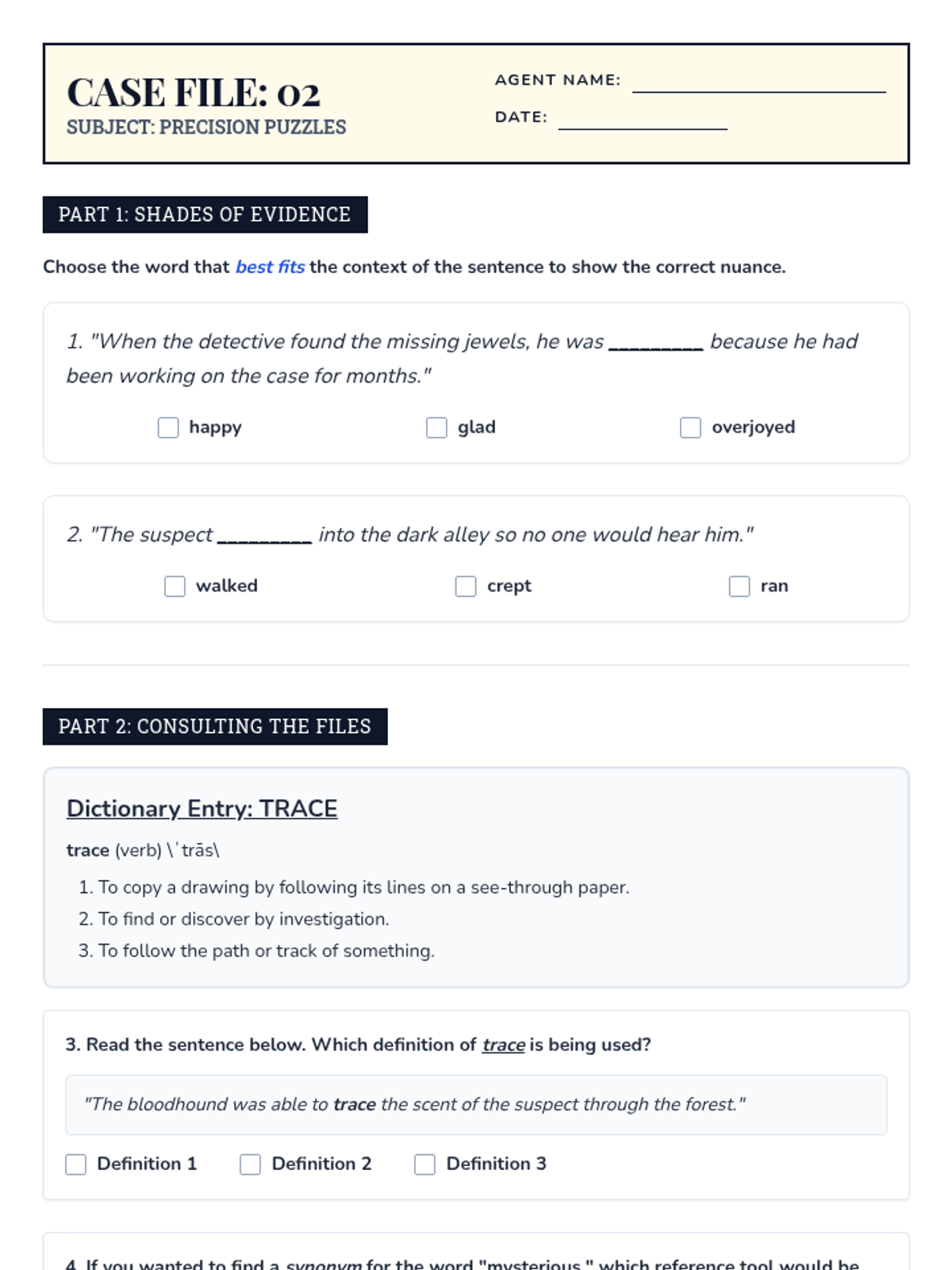
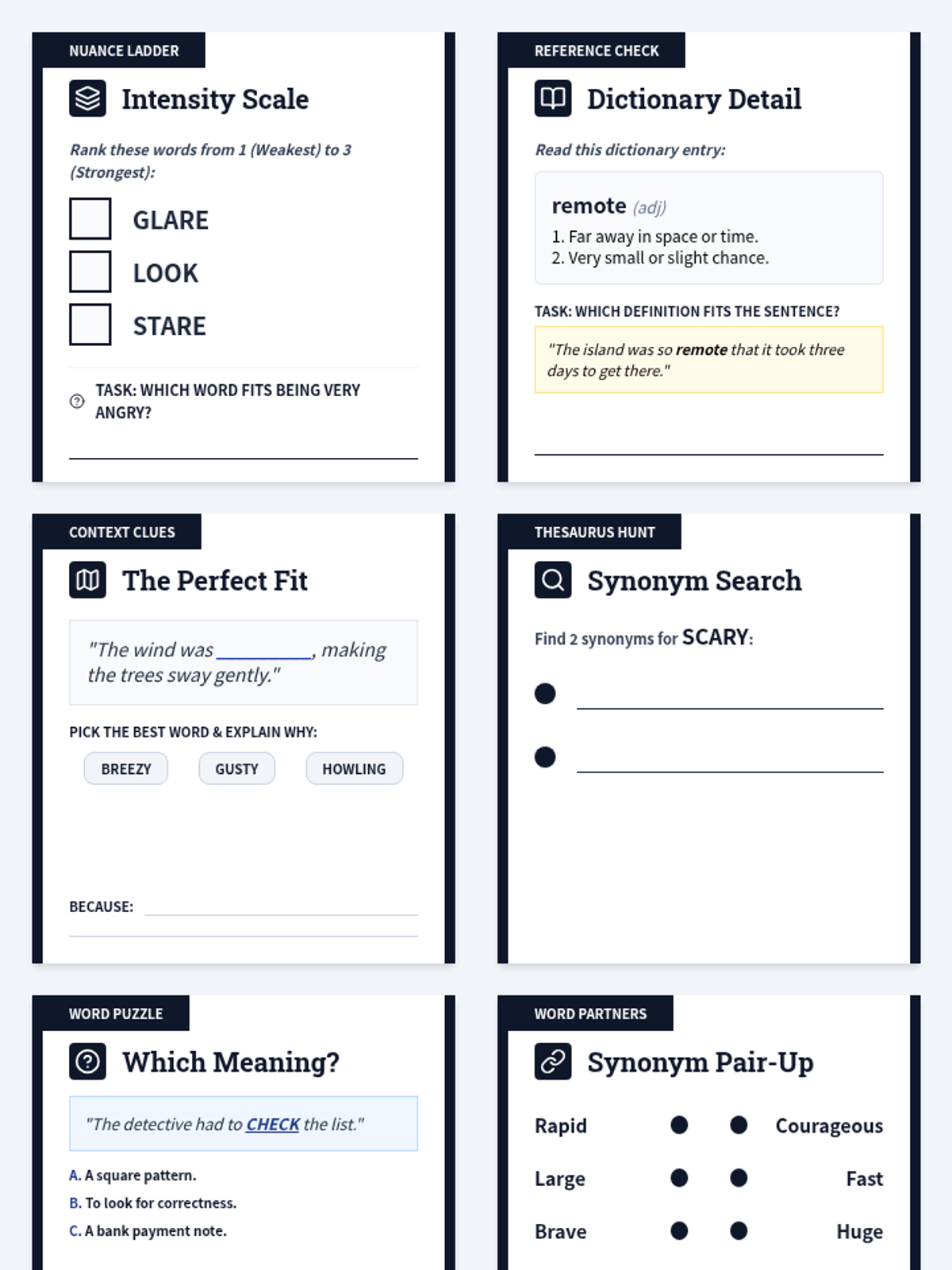
Focuses on TEKS 3.3.C and 3.3.D, targeting word nuances, synonyms, and the effective use of reference materials to determine precise meanings.
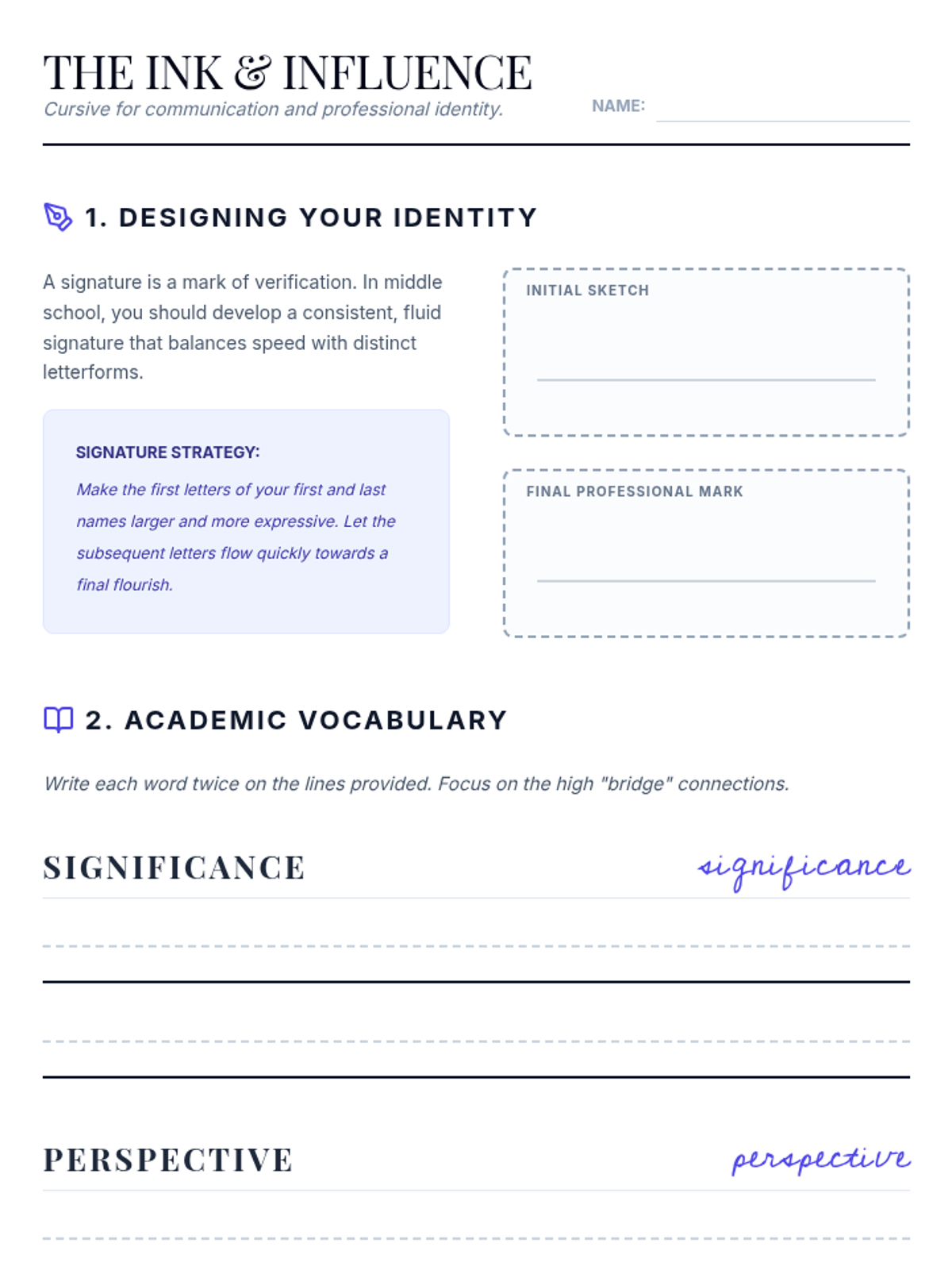
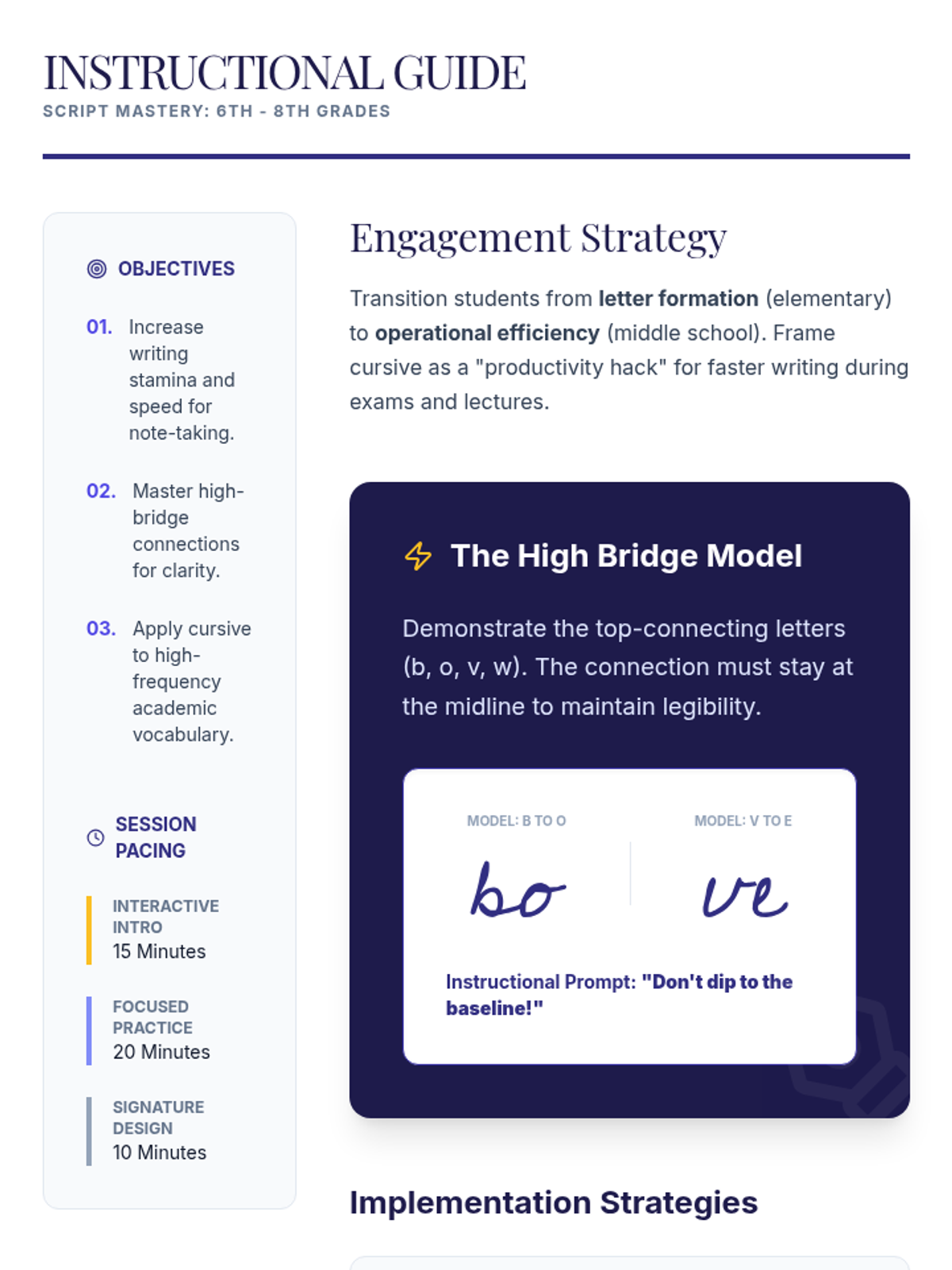
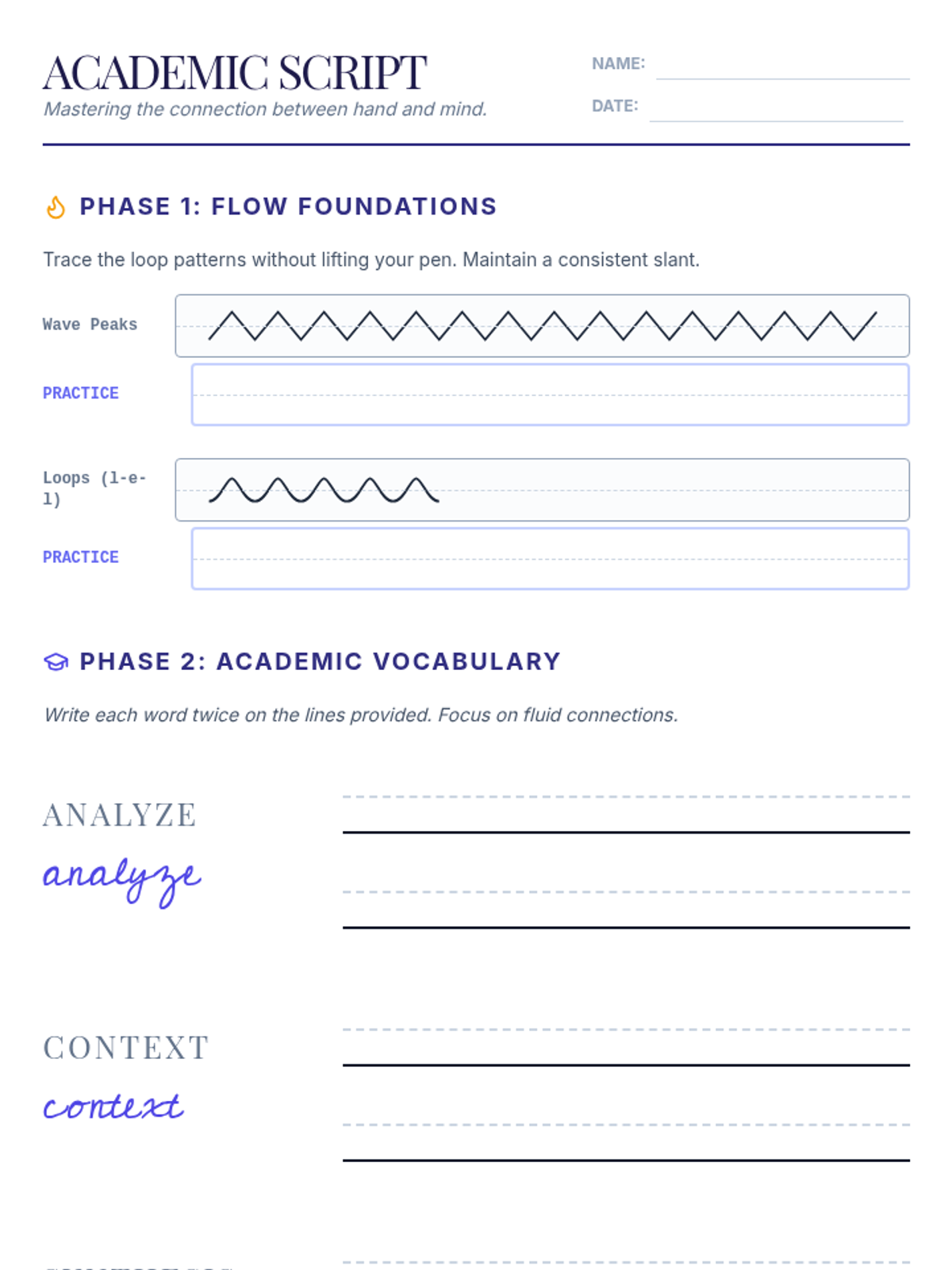
A modern take on cursive handwriting for middle school students, focusing on academic vocabulary, signature development, and the efficiency of script for note-taking. This lesson moves beyond elementary tracing to focus on fluid connections and professional presentation.
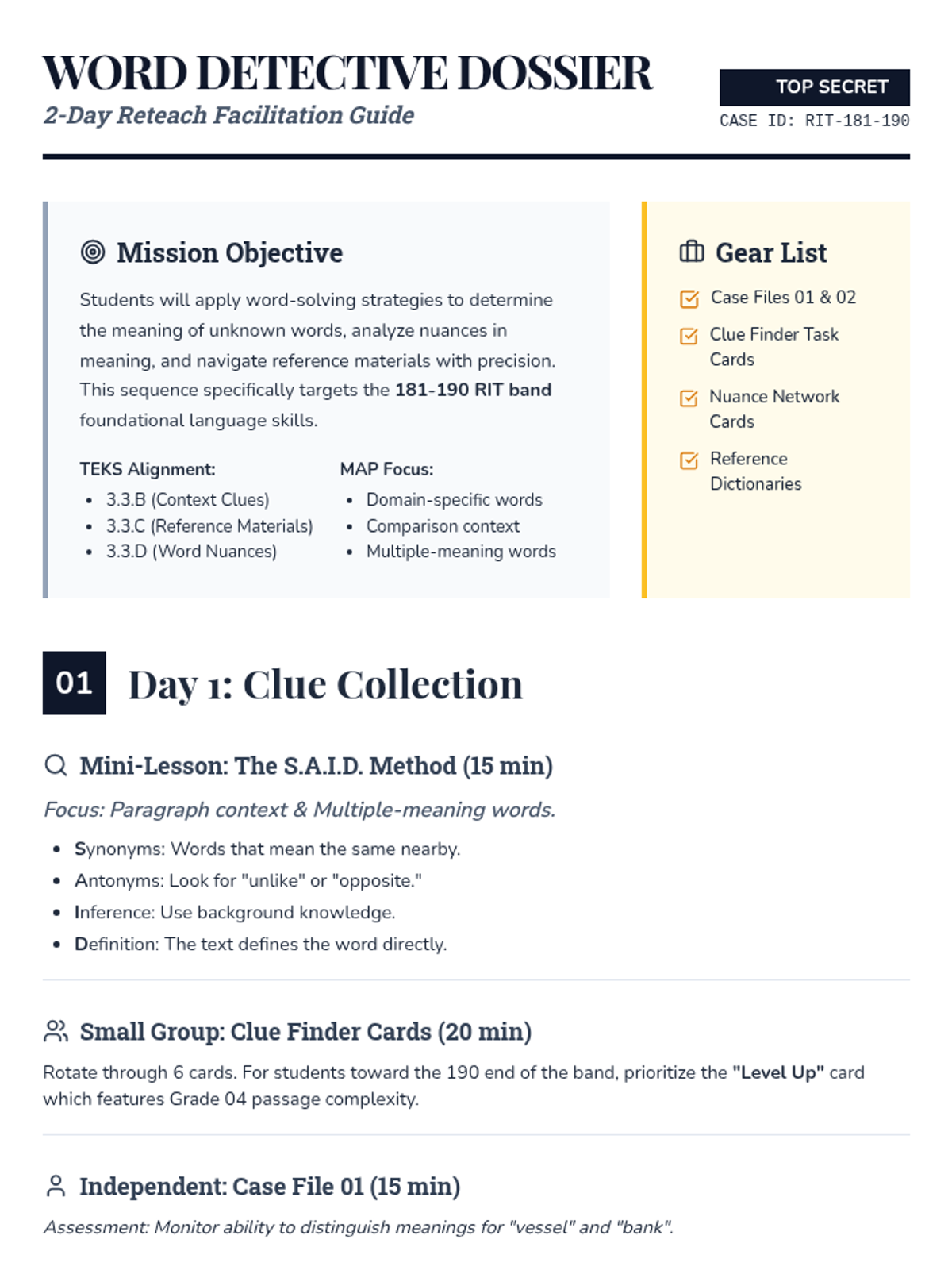
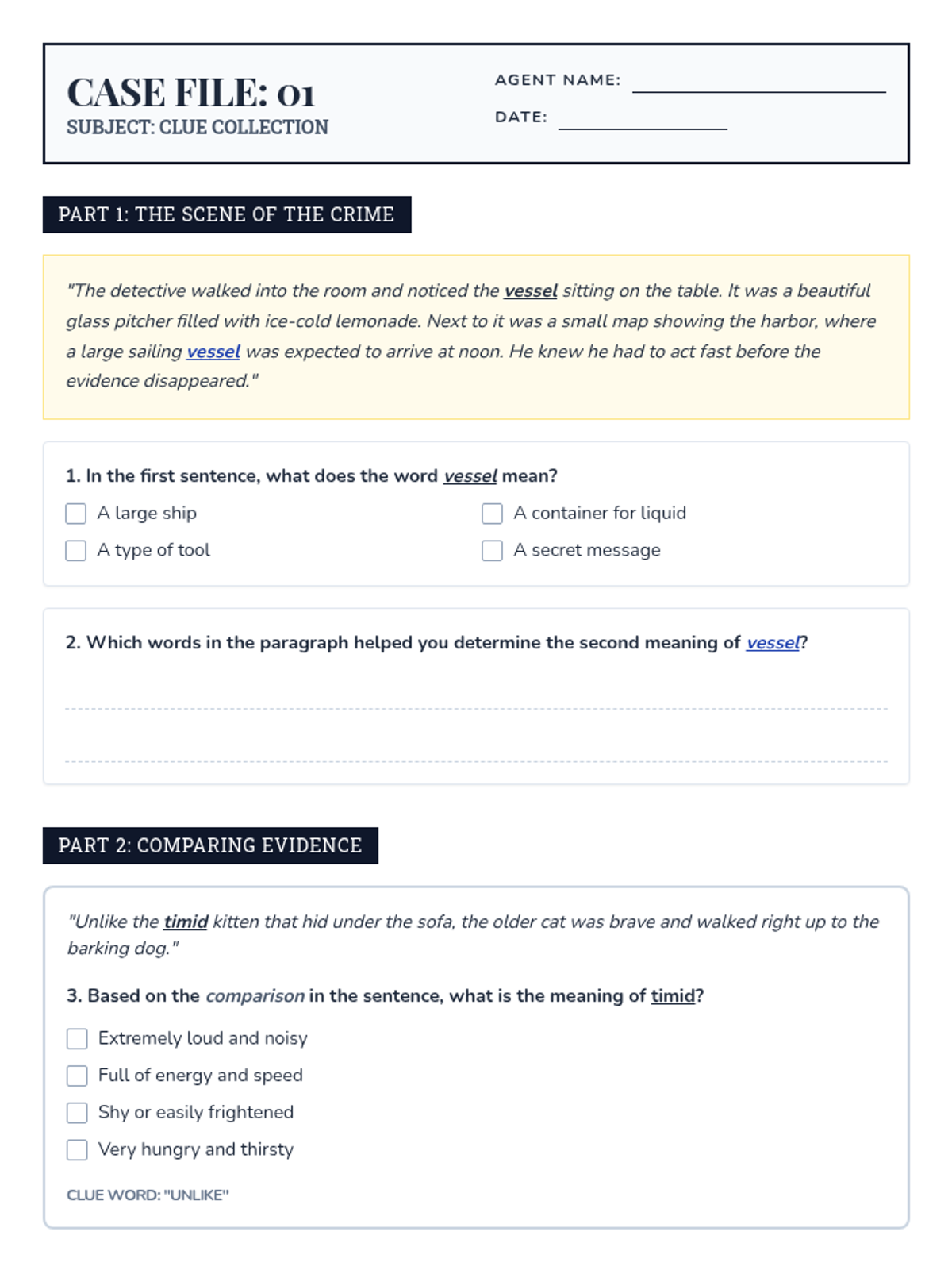
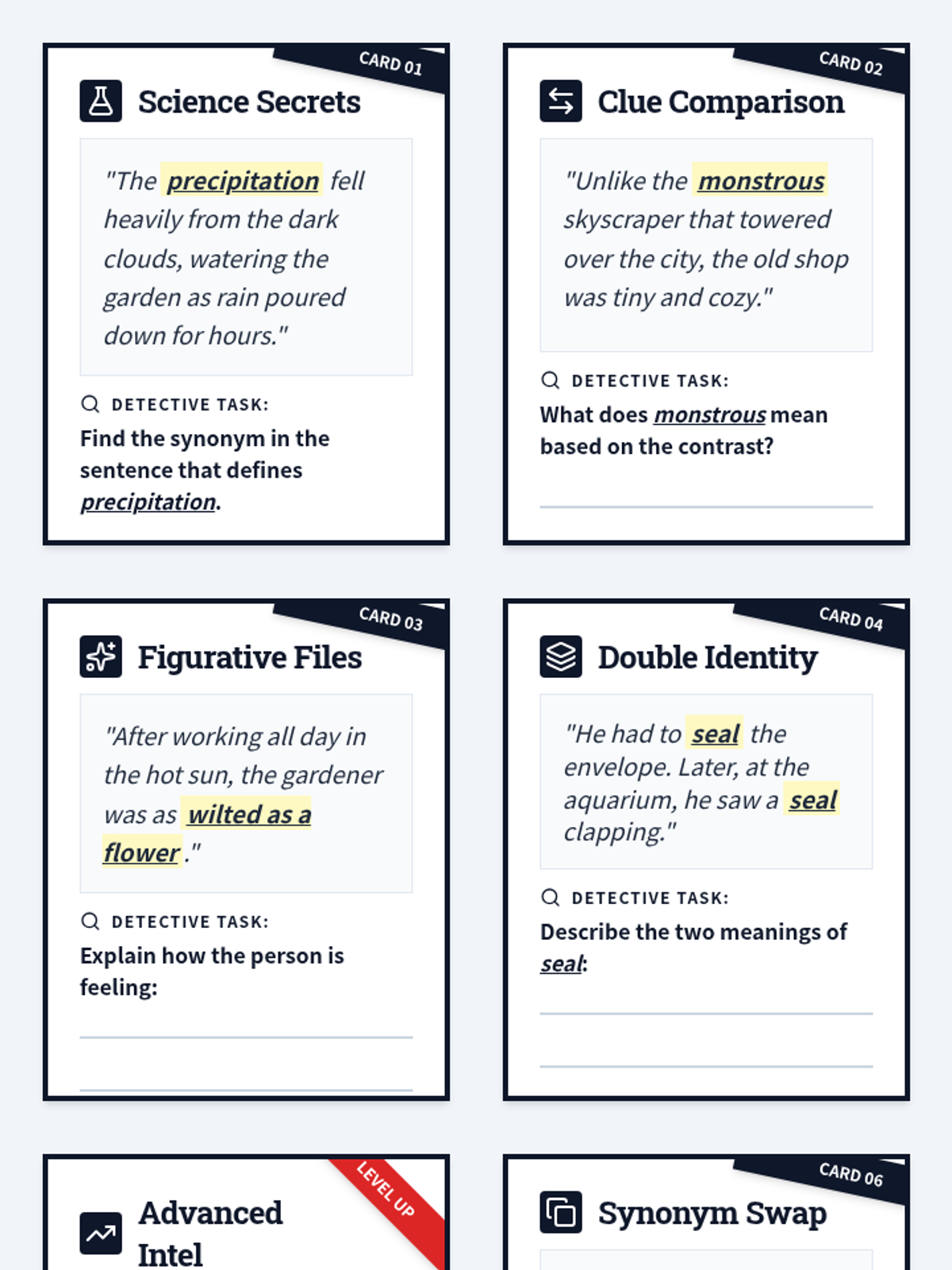
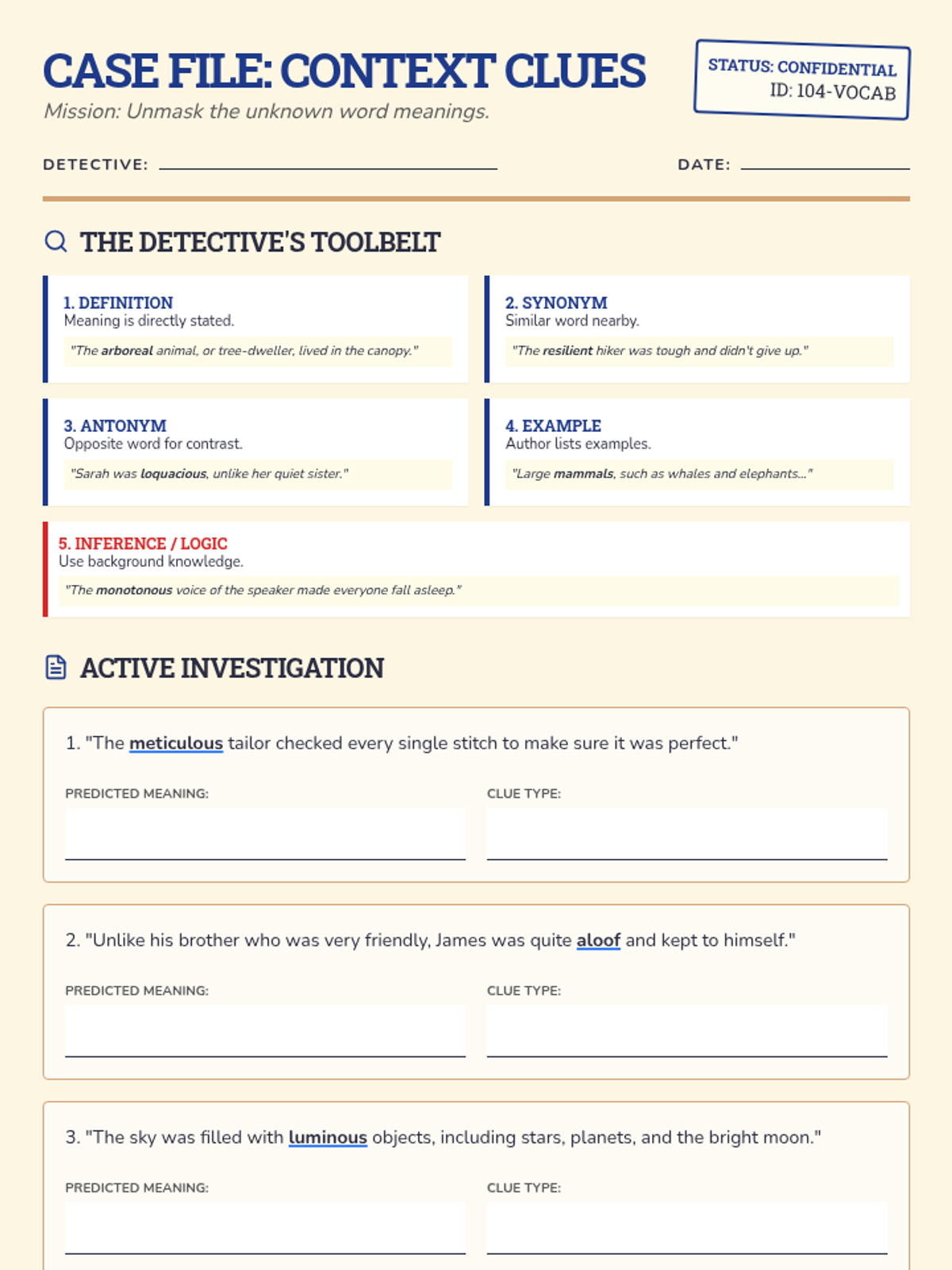
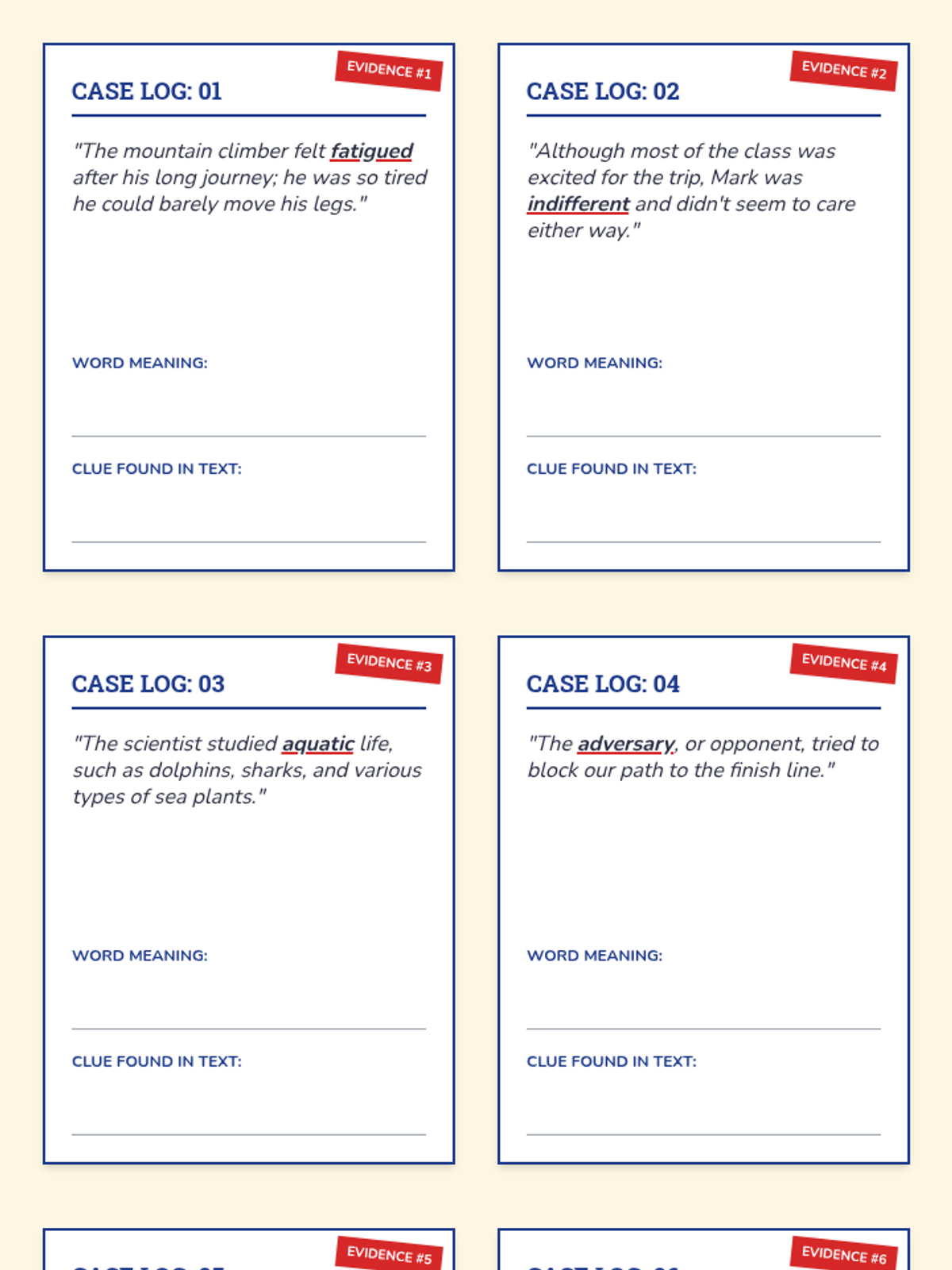
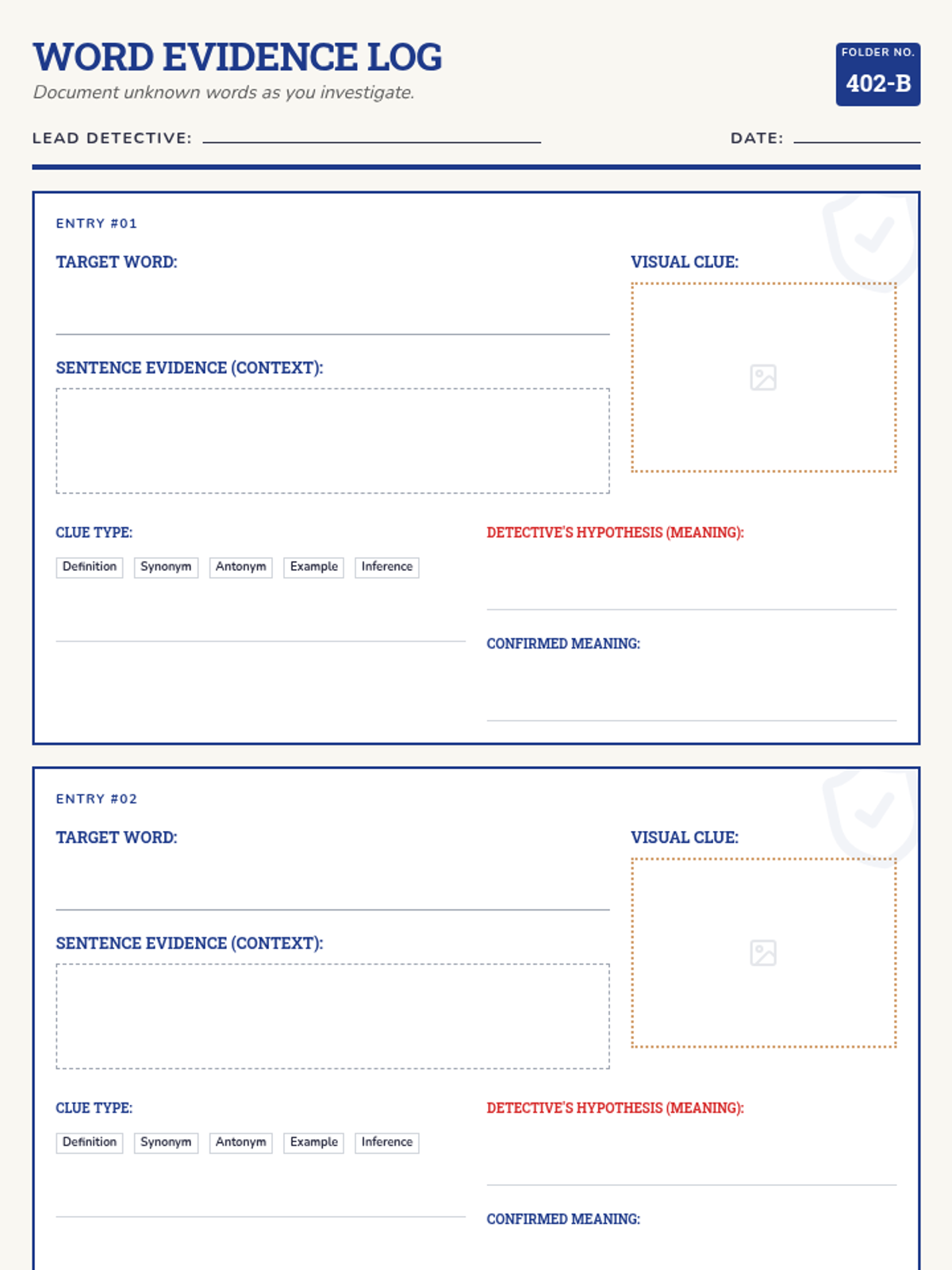
A deep dive into using word relationships and context clues to uncover the meaning of unfamiliar words. Students act as word detectives, searching for evidence in sentences to solve vocabulary mysteries through guided practice and independent evidence-gathering.
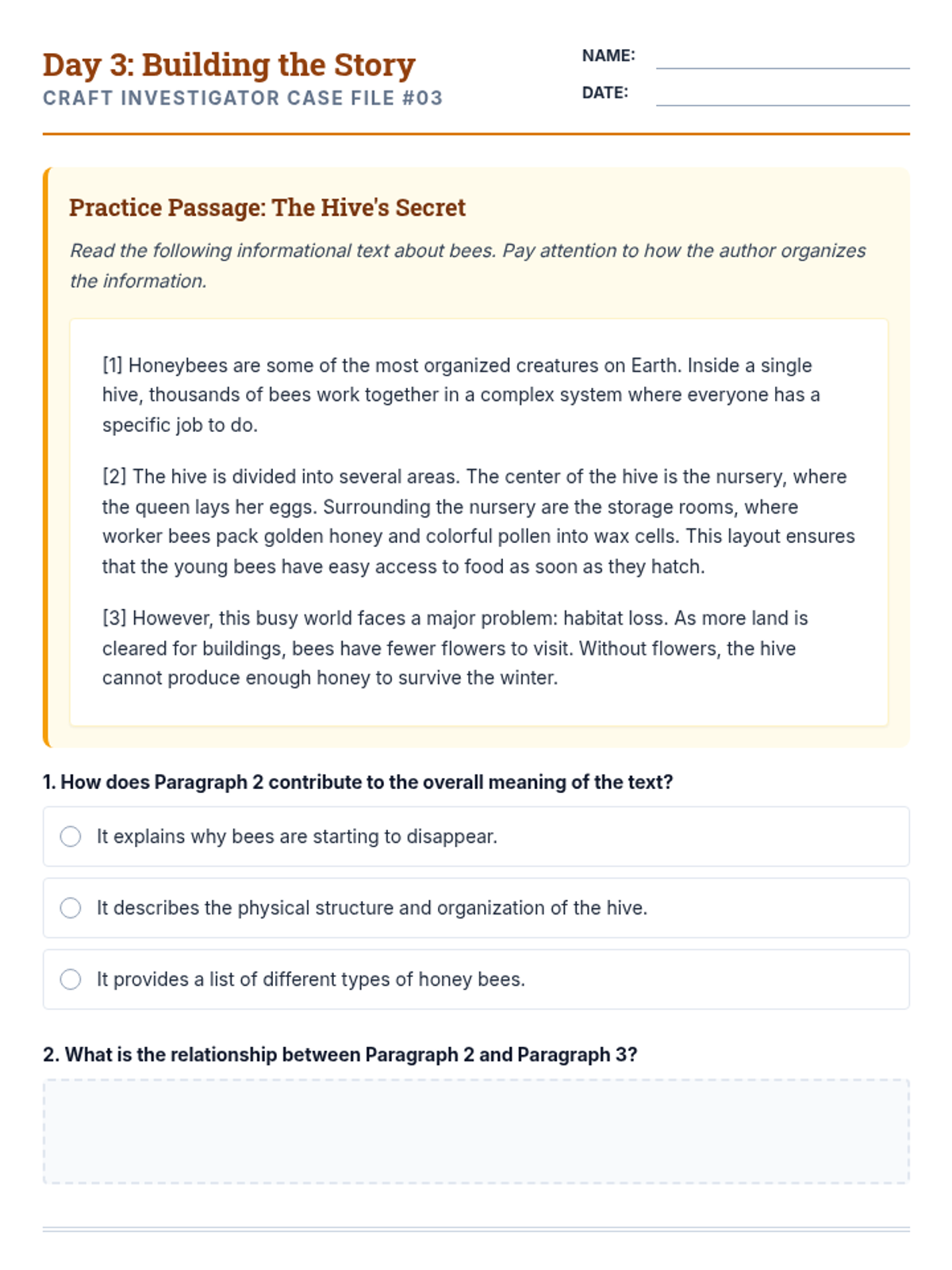
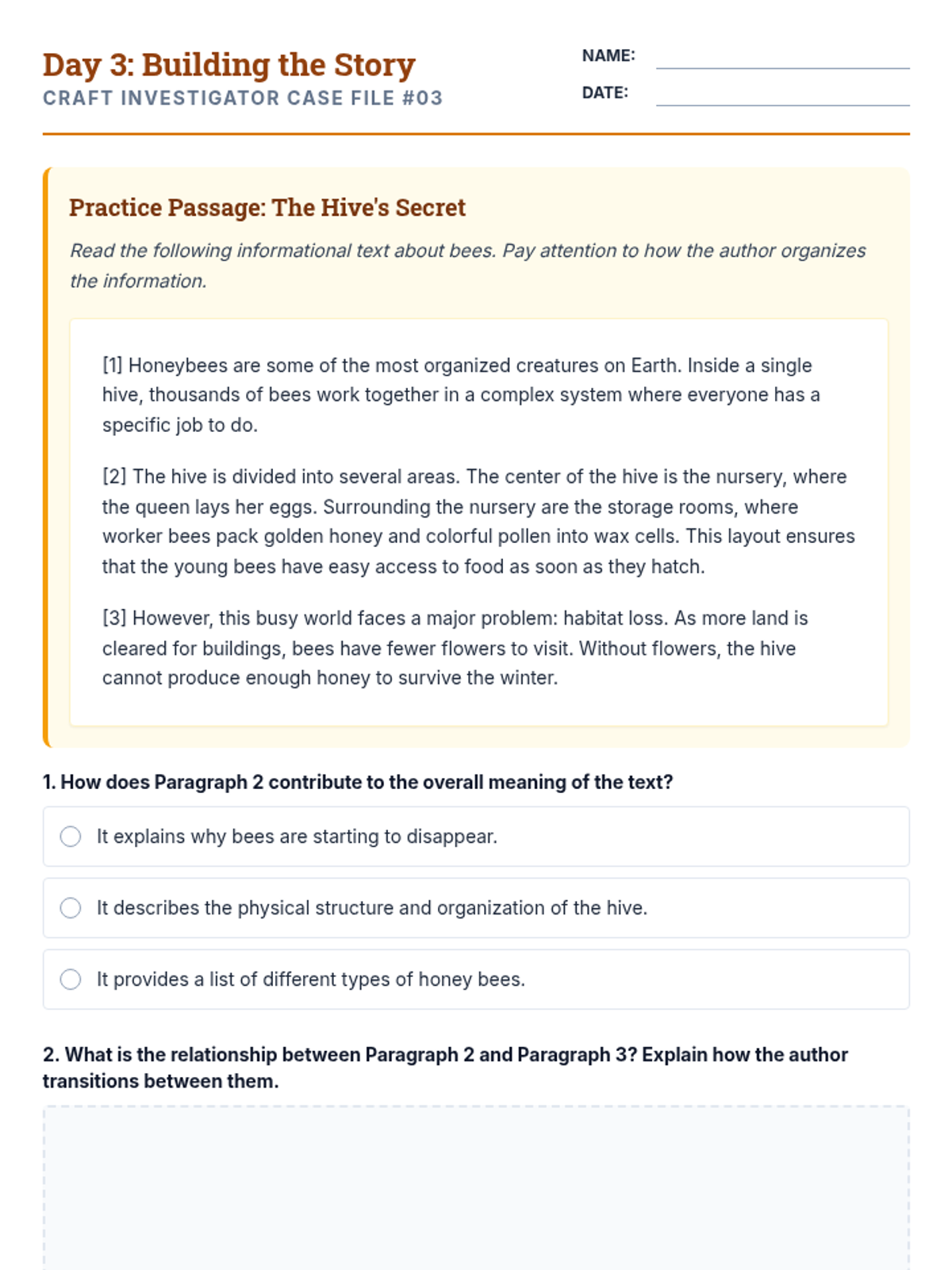
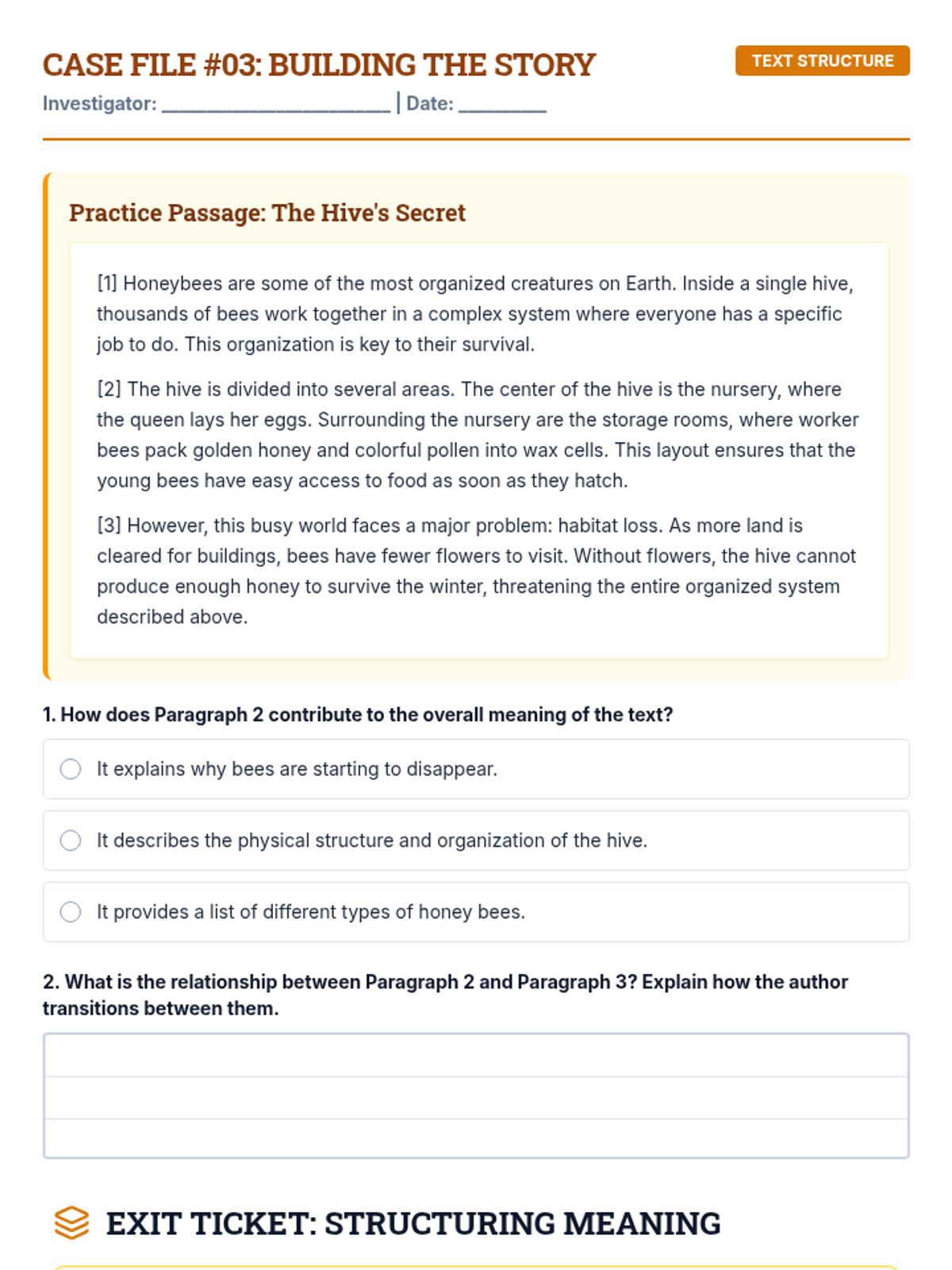
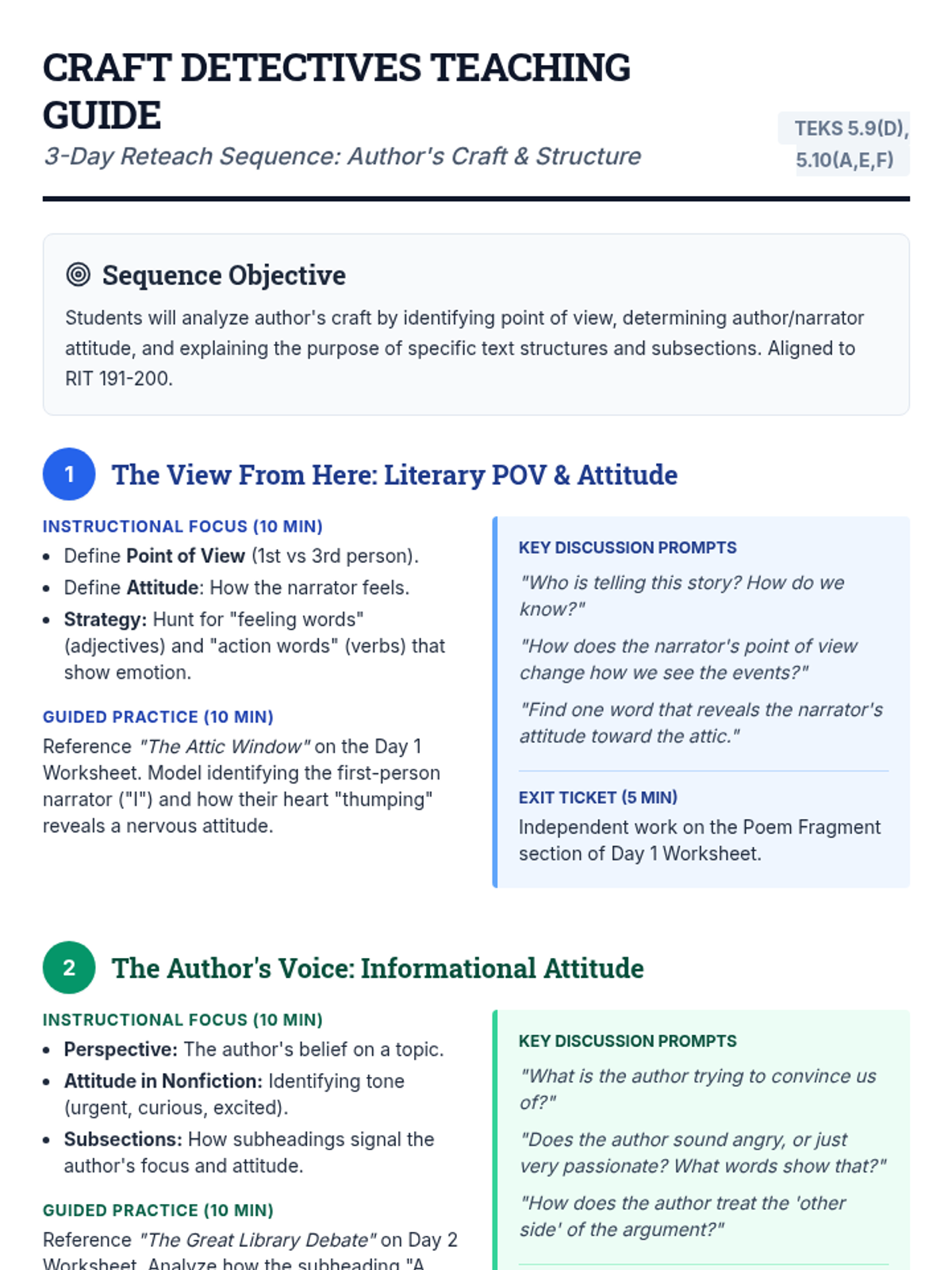
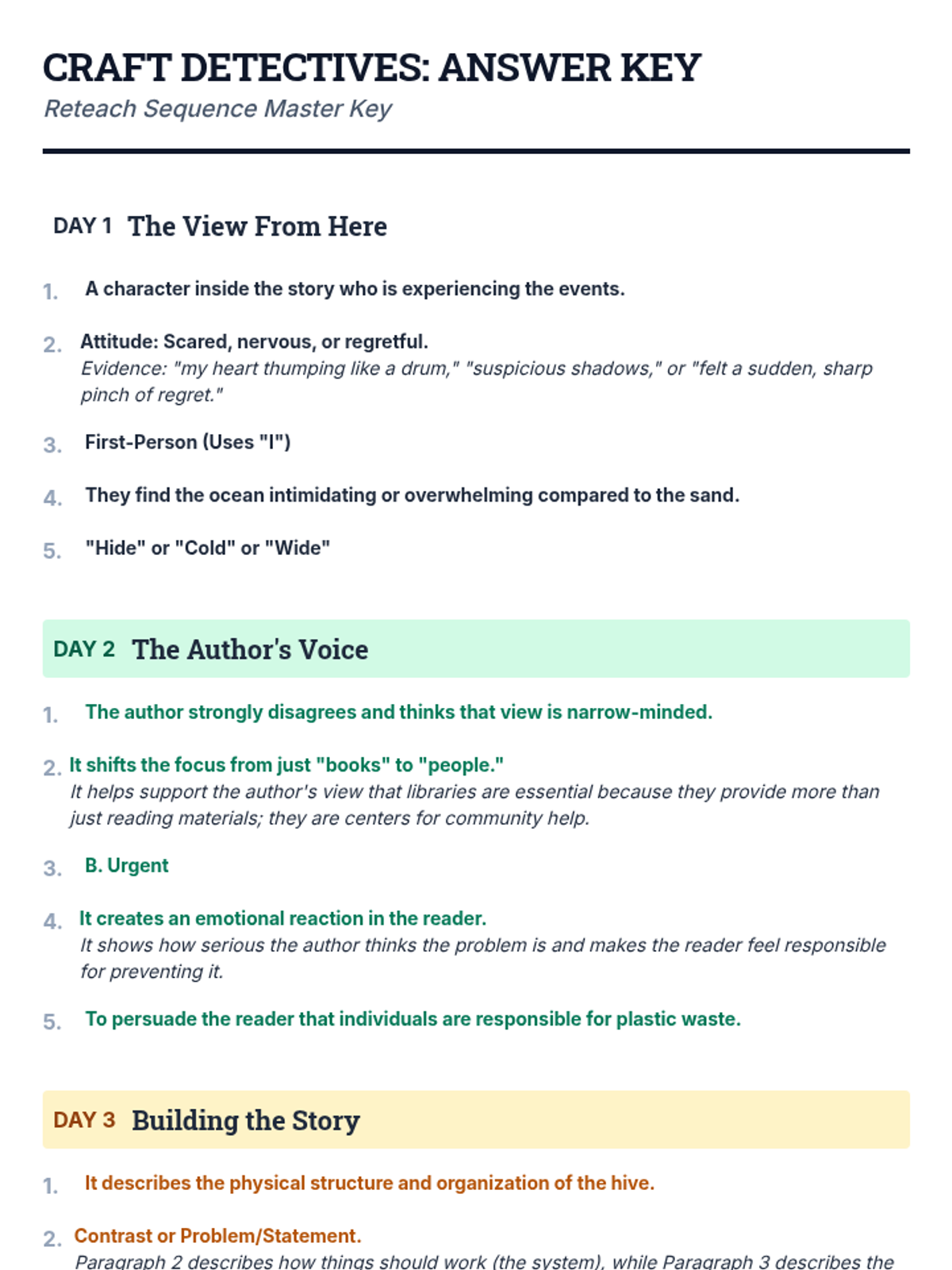
A 25-minute small group lesson exploring organizational structures and how specific paragraphs or sections contribute to the overall meaning and plot of a text.
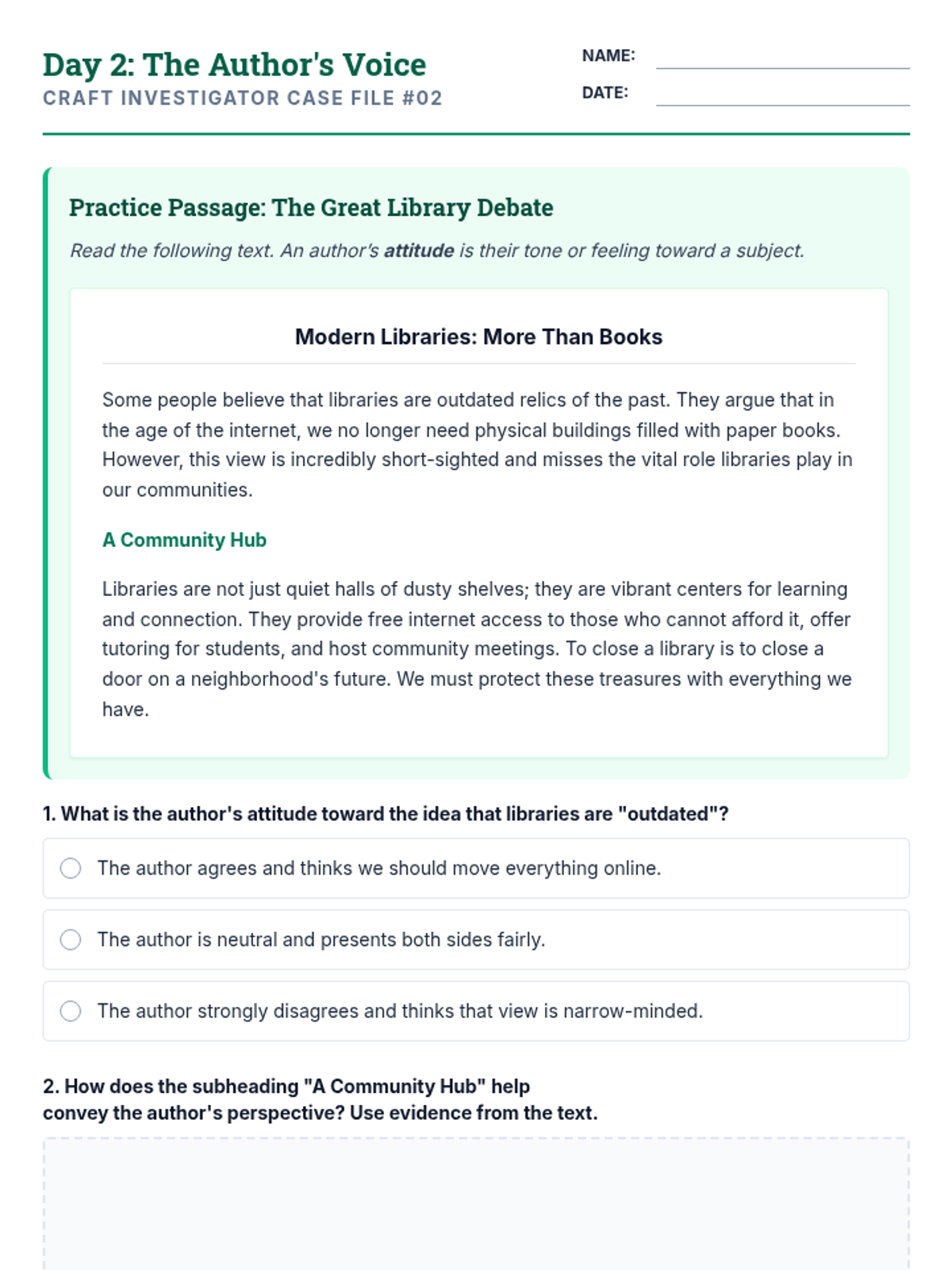
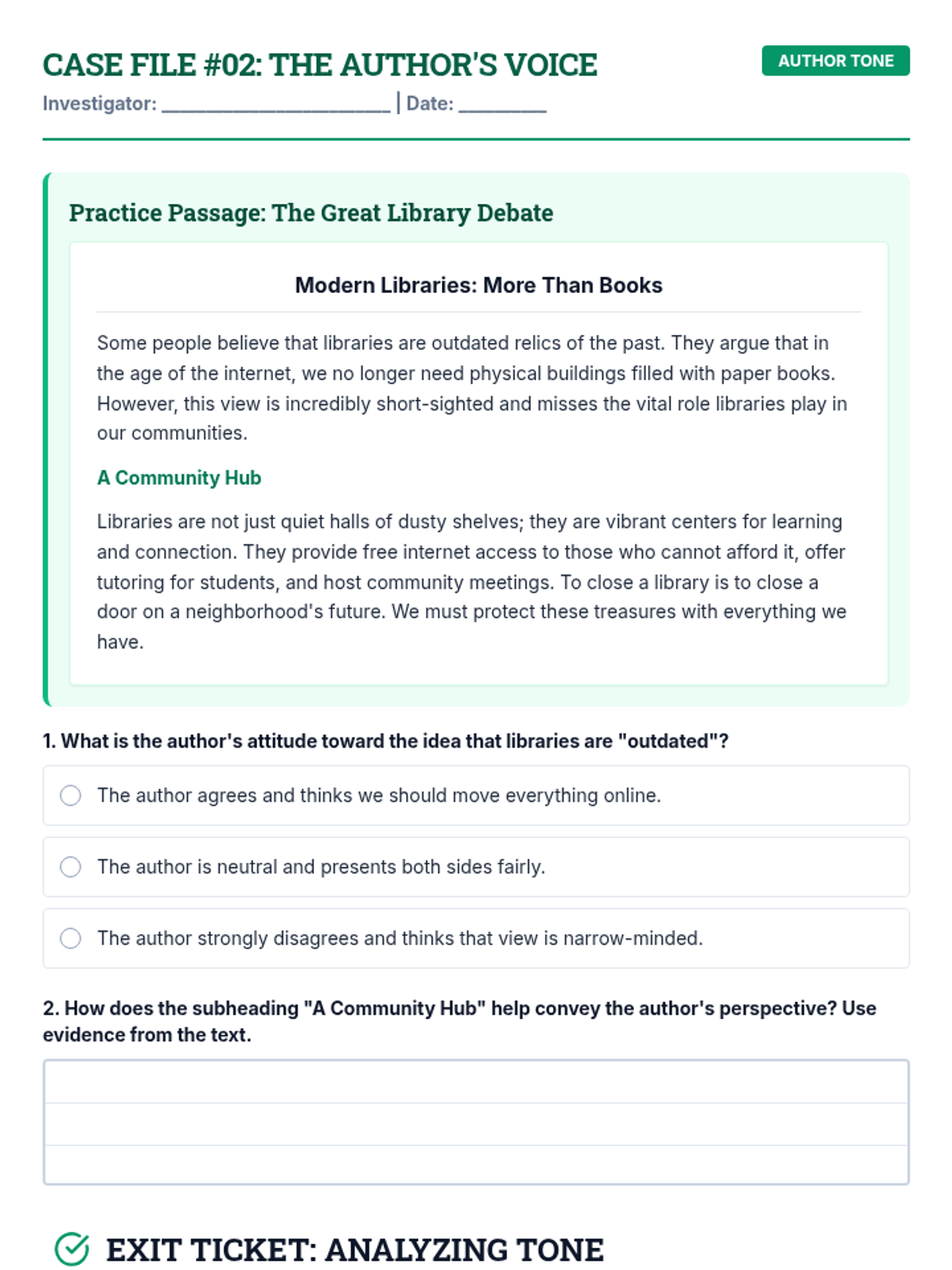
A 25-minute small group lesson analyzing author's attitude and perspective in informational and persuasive texts, focusing on how specific sentences and subsections convey tone.
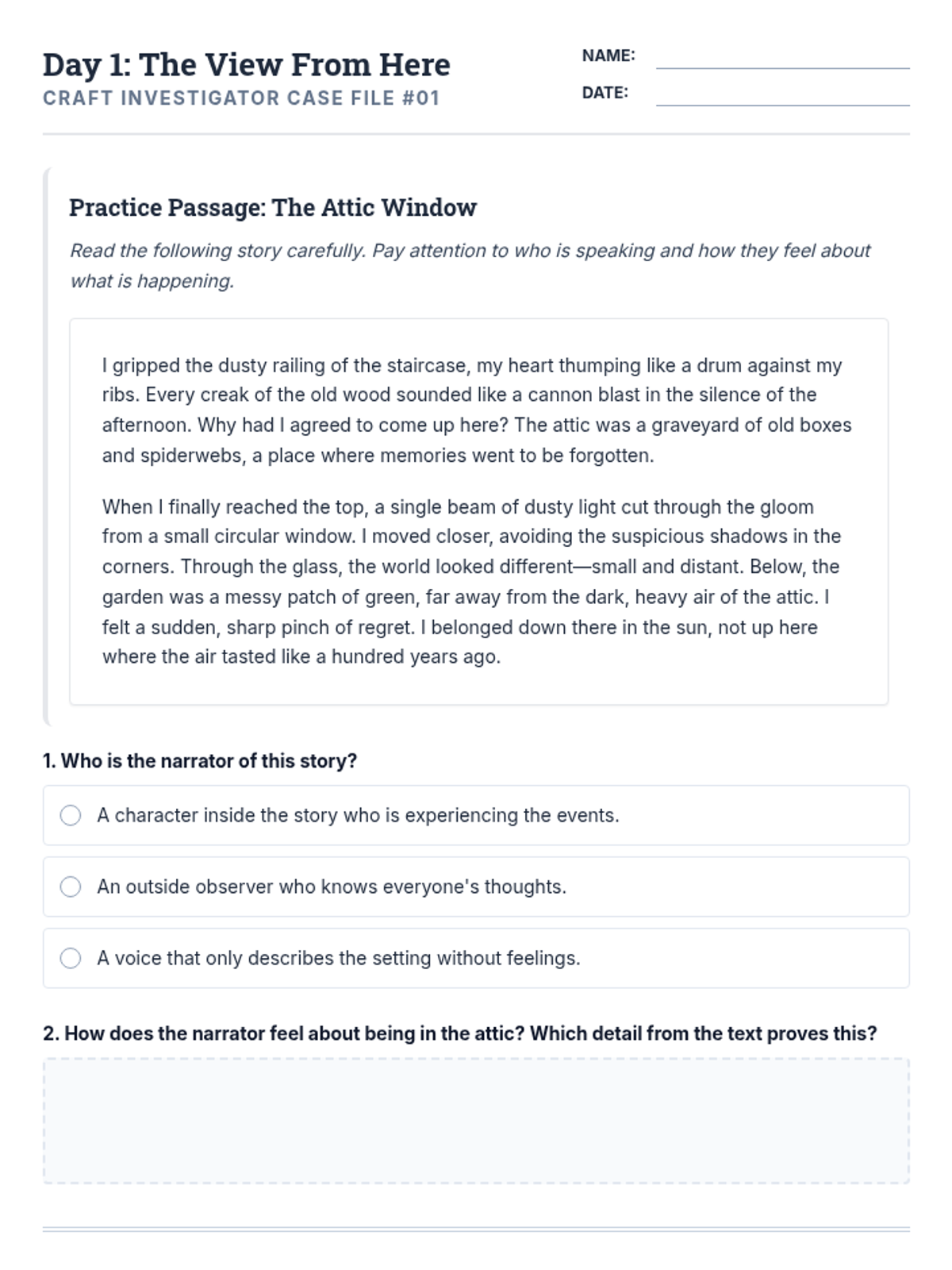
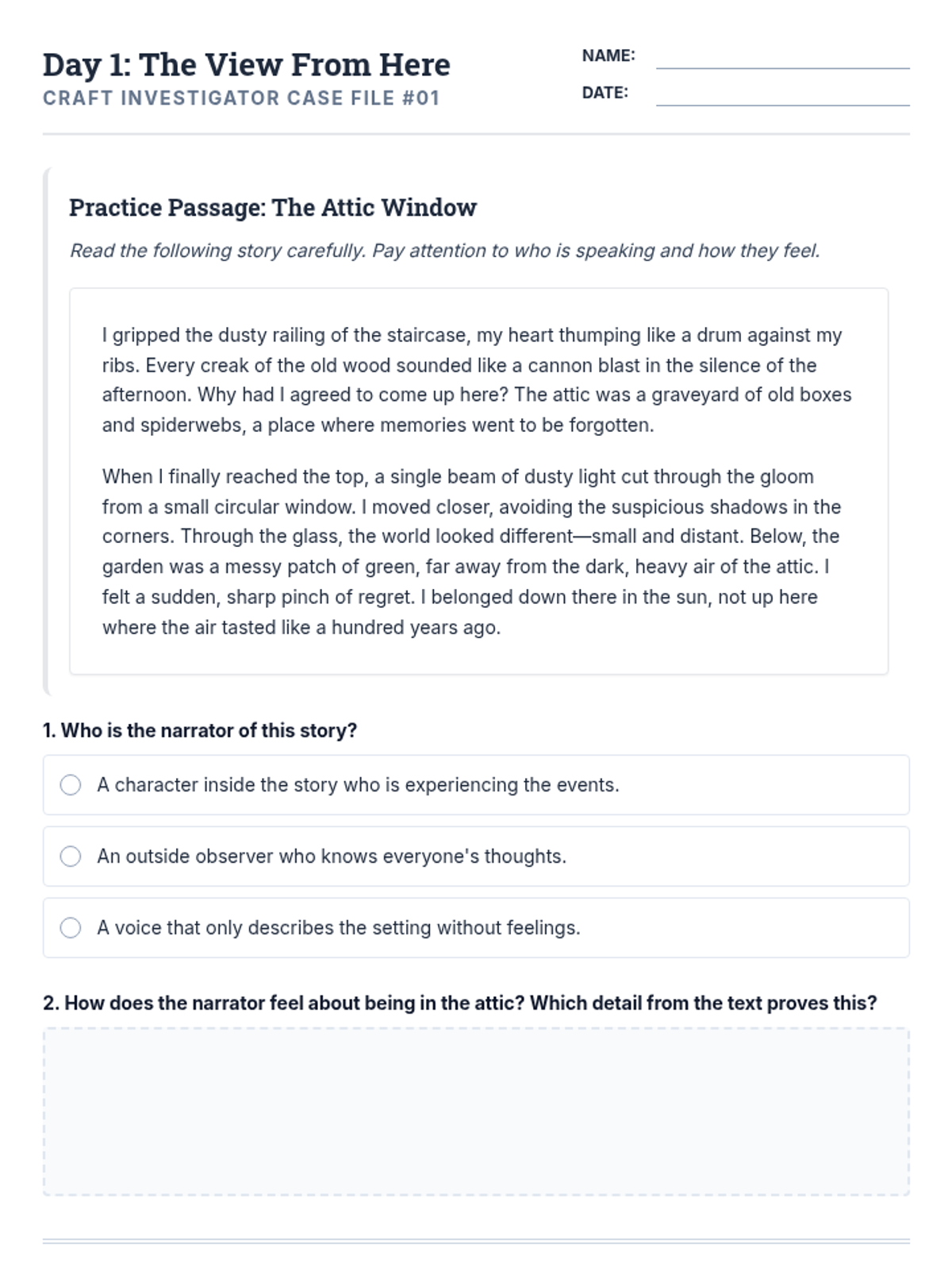
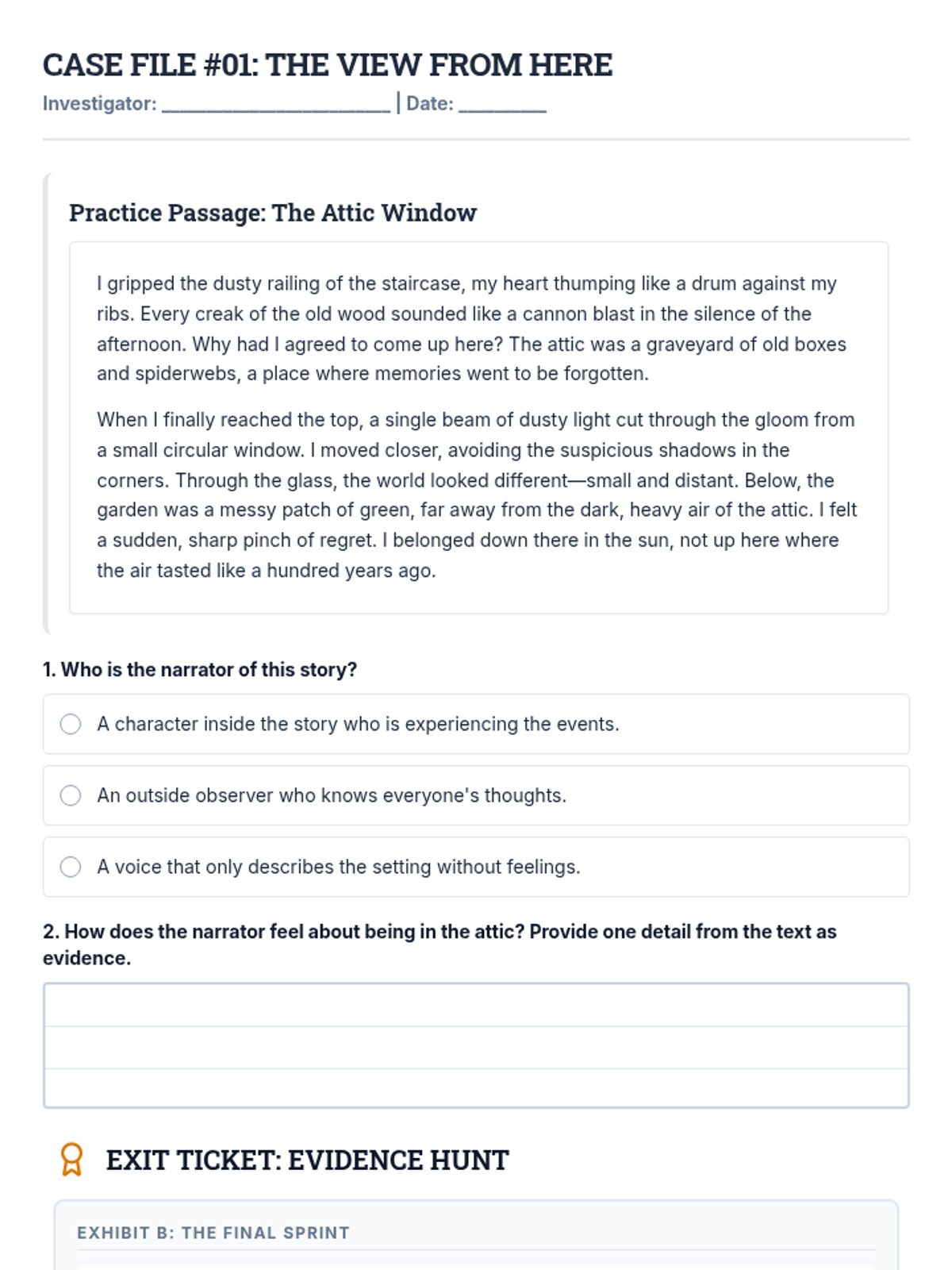
A 25-minute small group lesson focusing on identifying the narrator, first-person point of view, and how specific details reveal the narrator's attitude in literary texts and poetry.
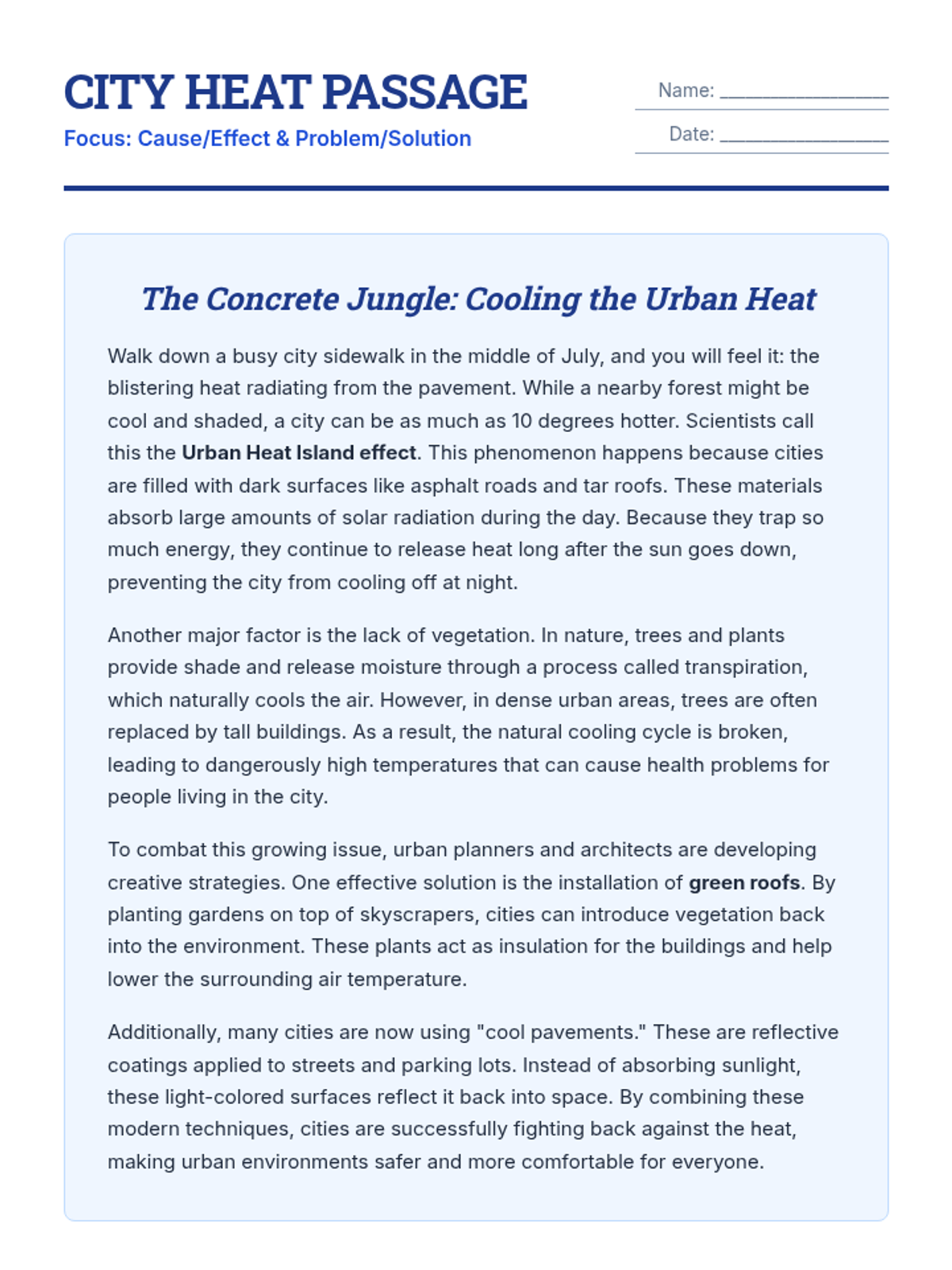
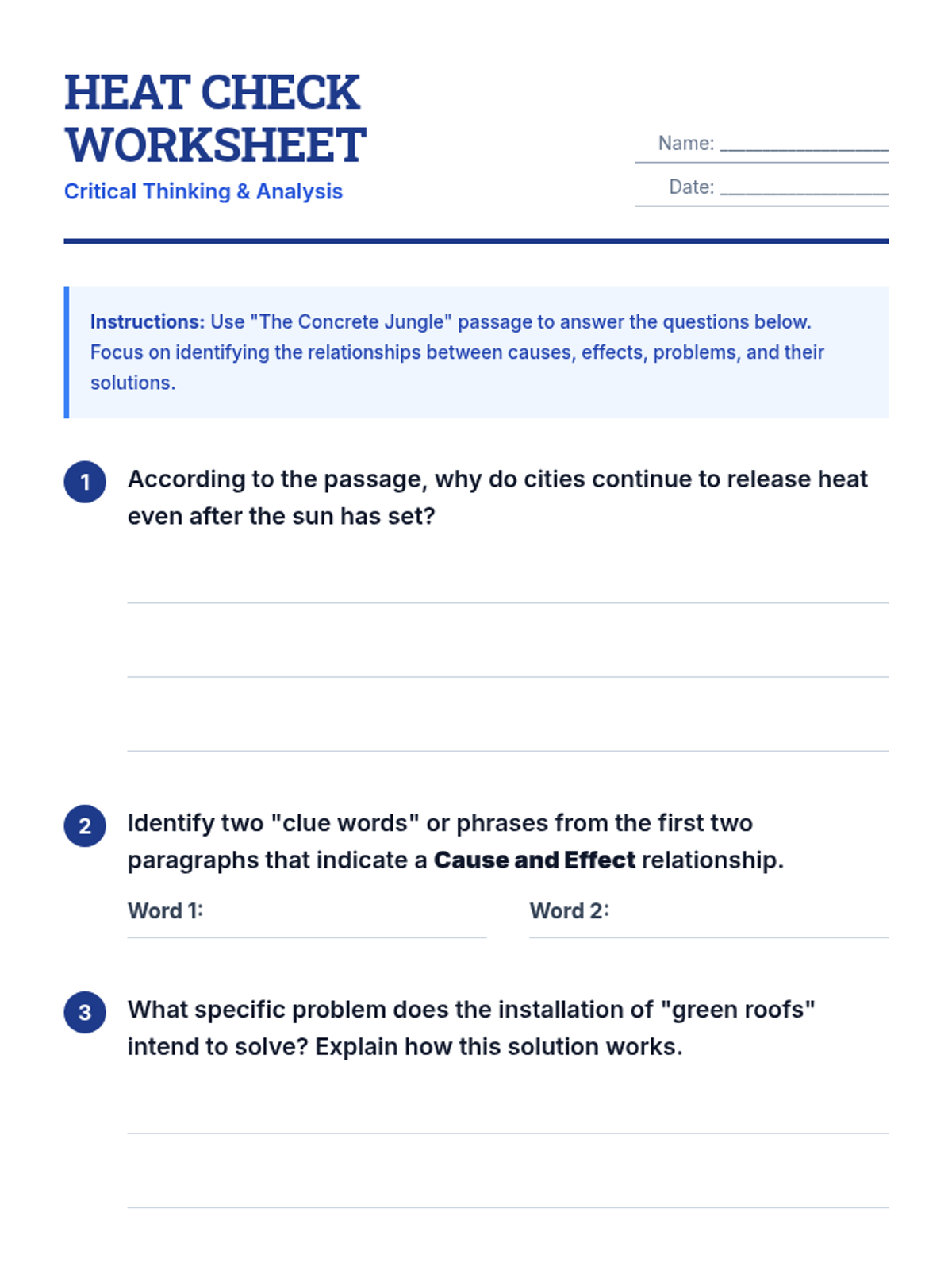
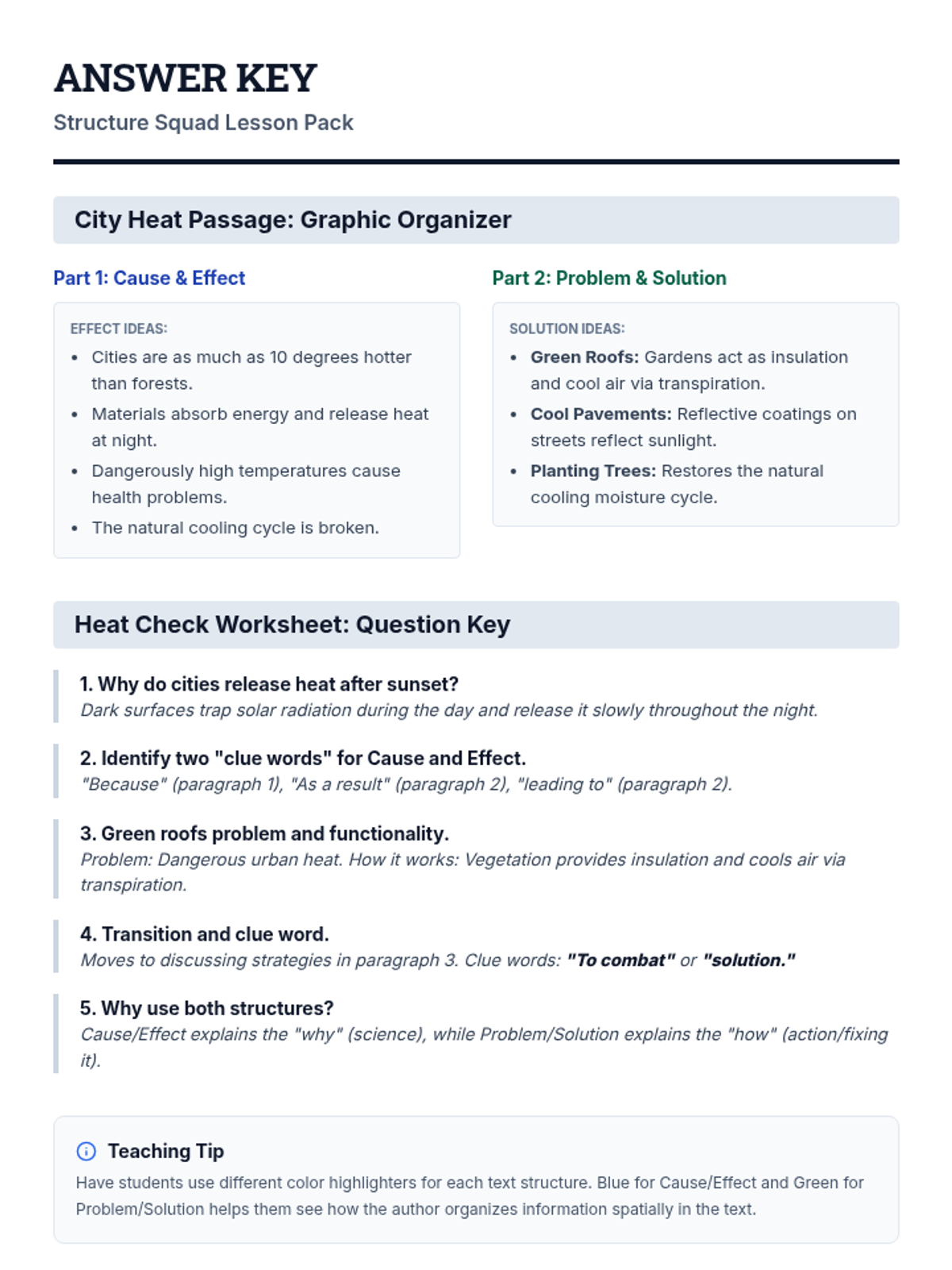
This lesson introduces students to identifying and distinguishing between cause-and-effect and problem-solution text structures using a high-interest passage about urban heat islands. Students will analyze the relationship between events and the methods used to solve environmental challenges.
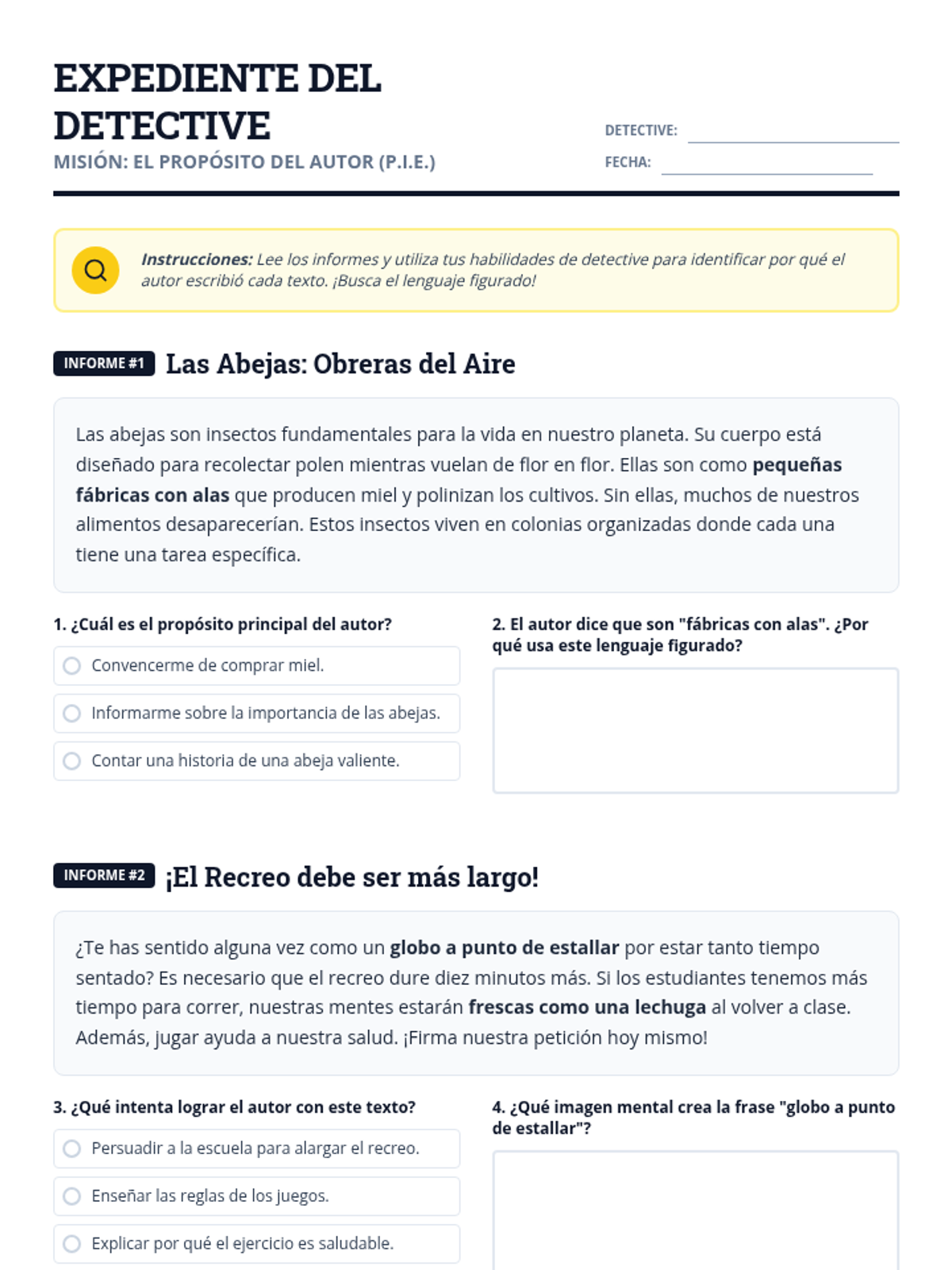
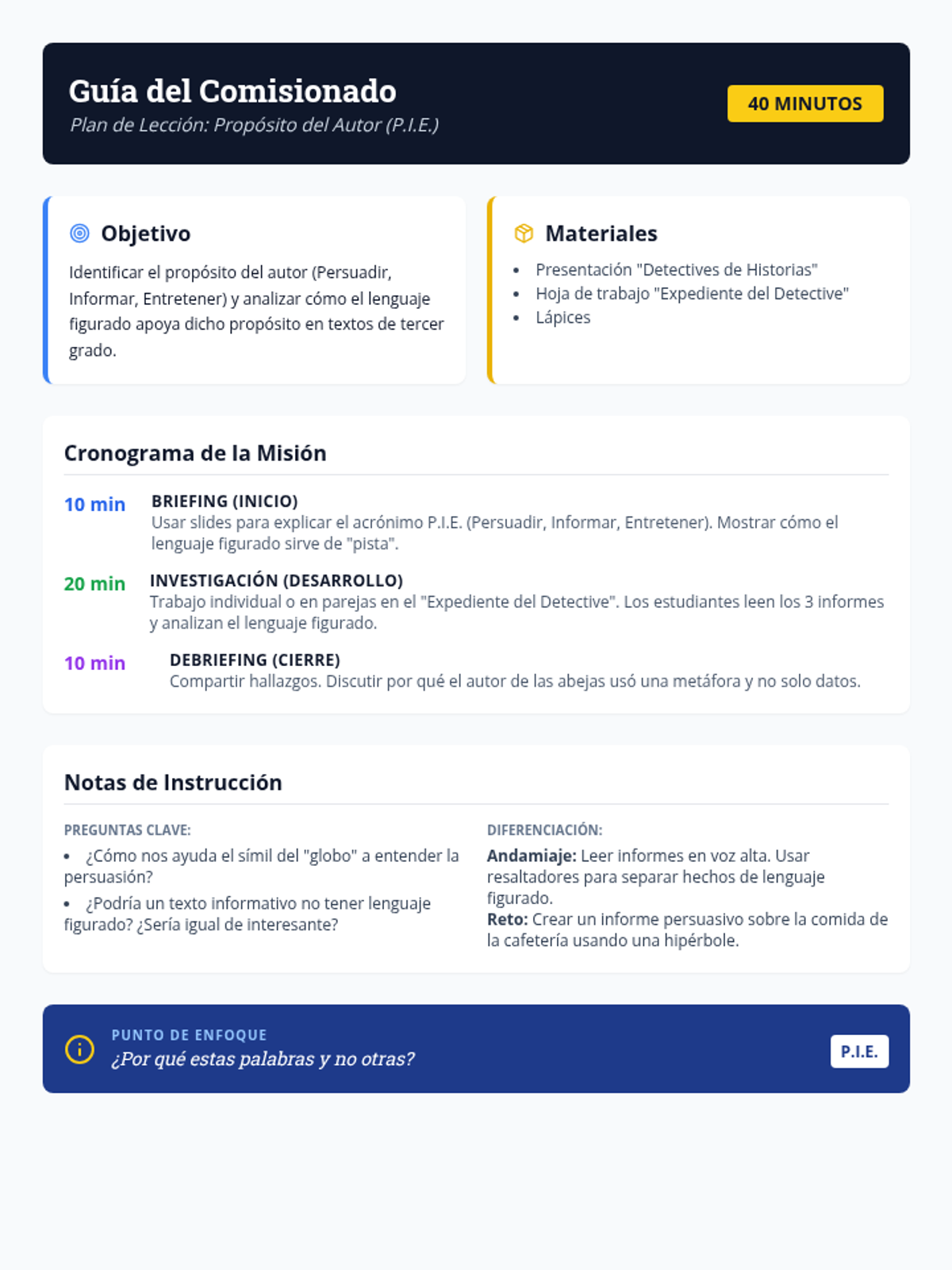
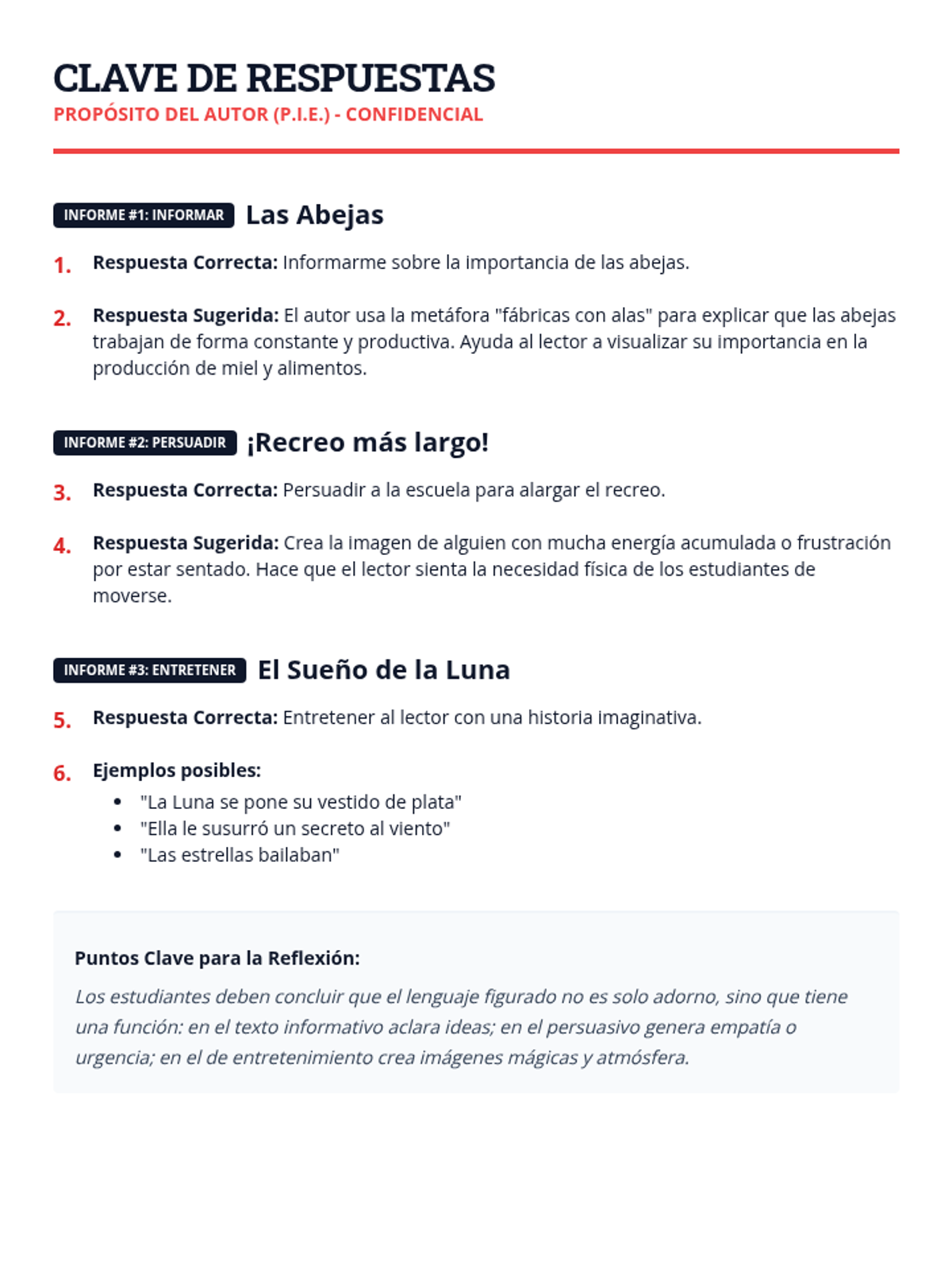
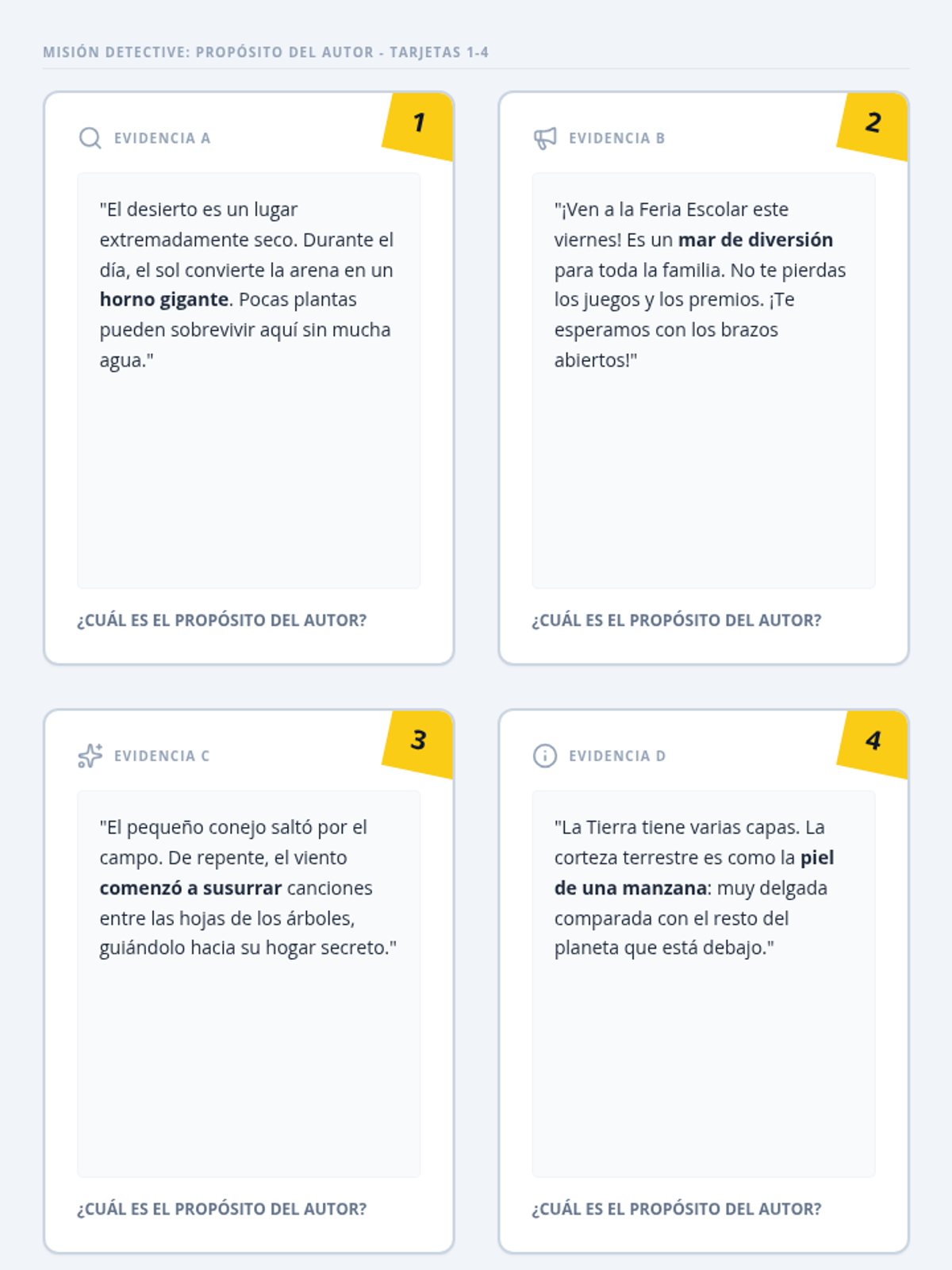
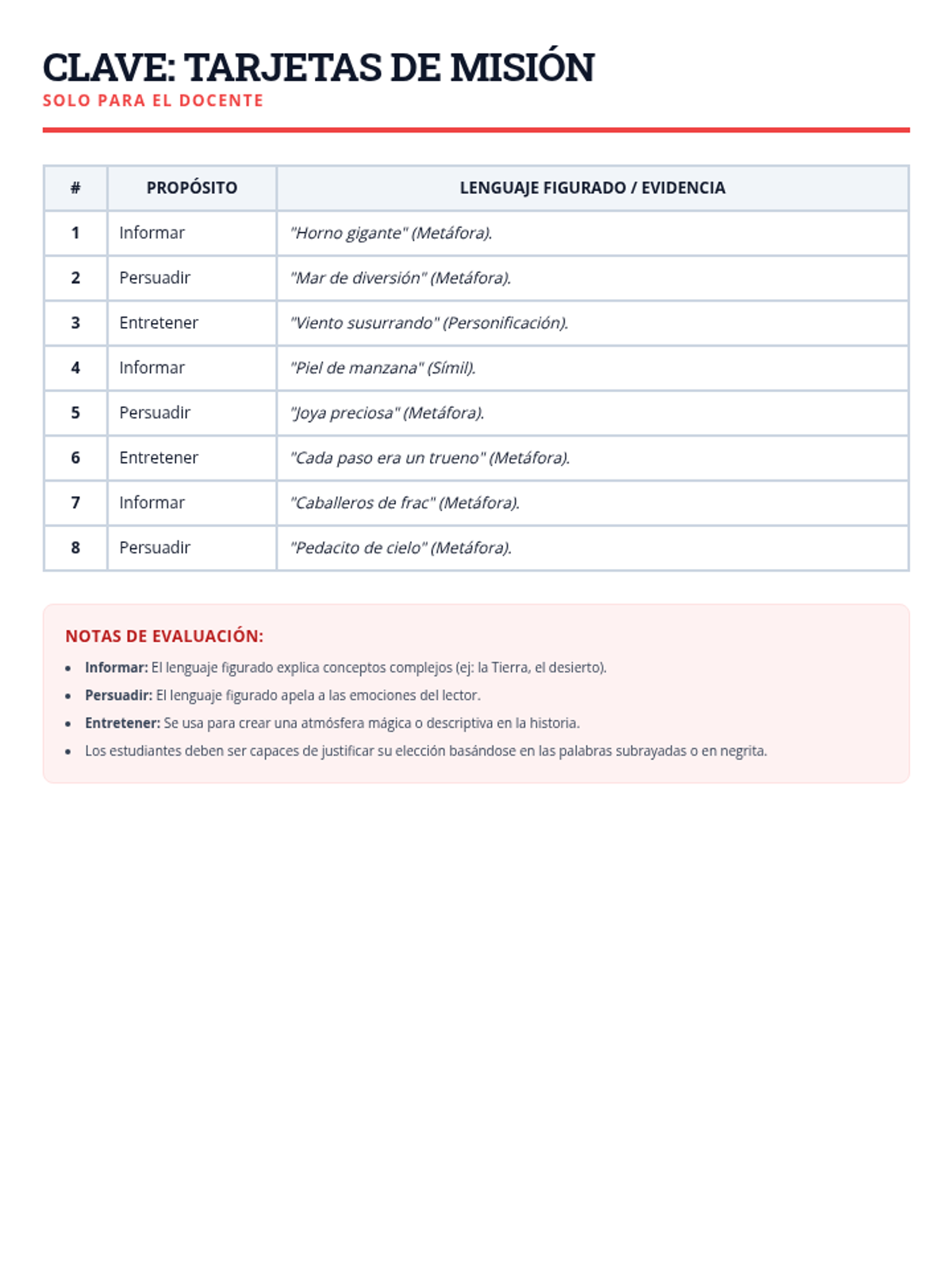
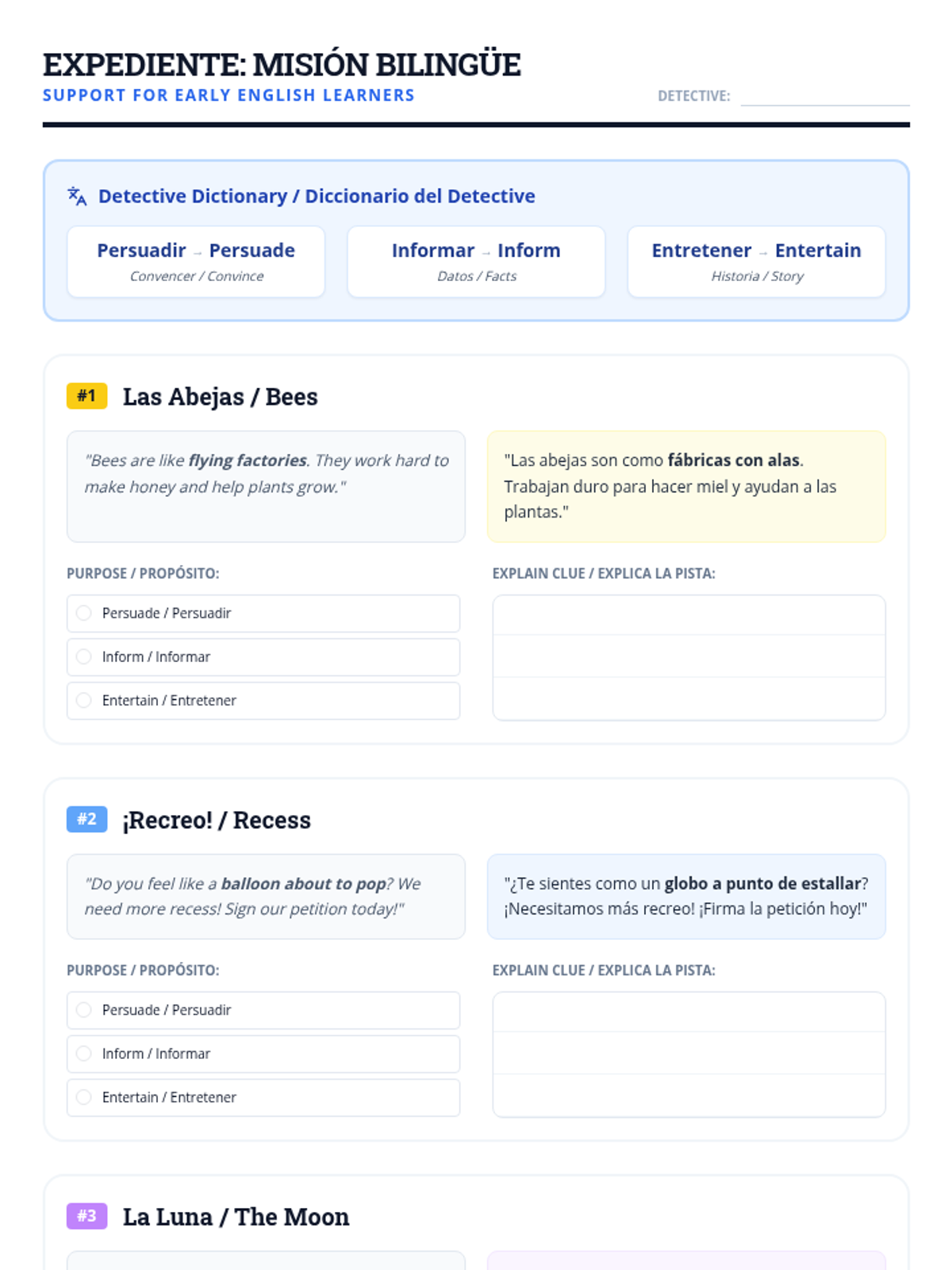
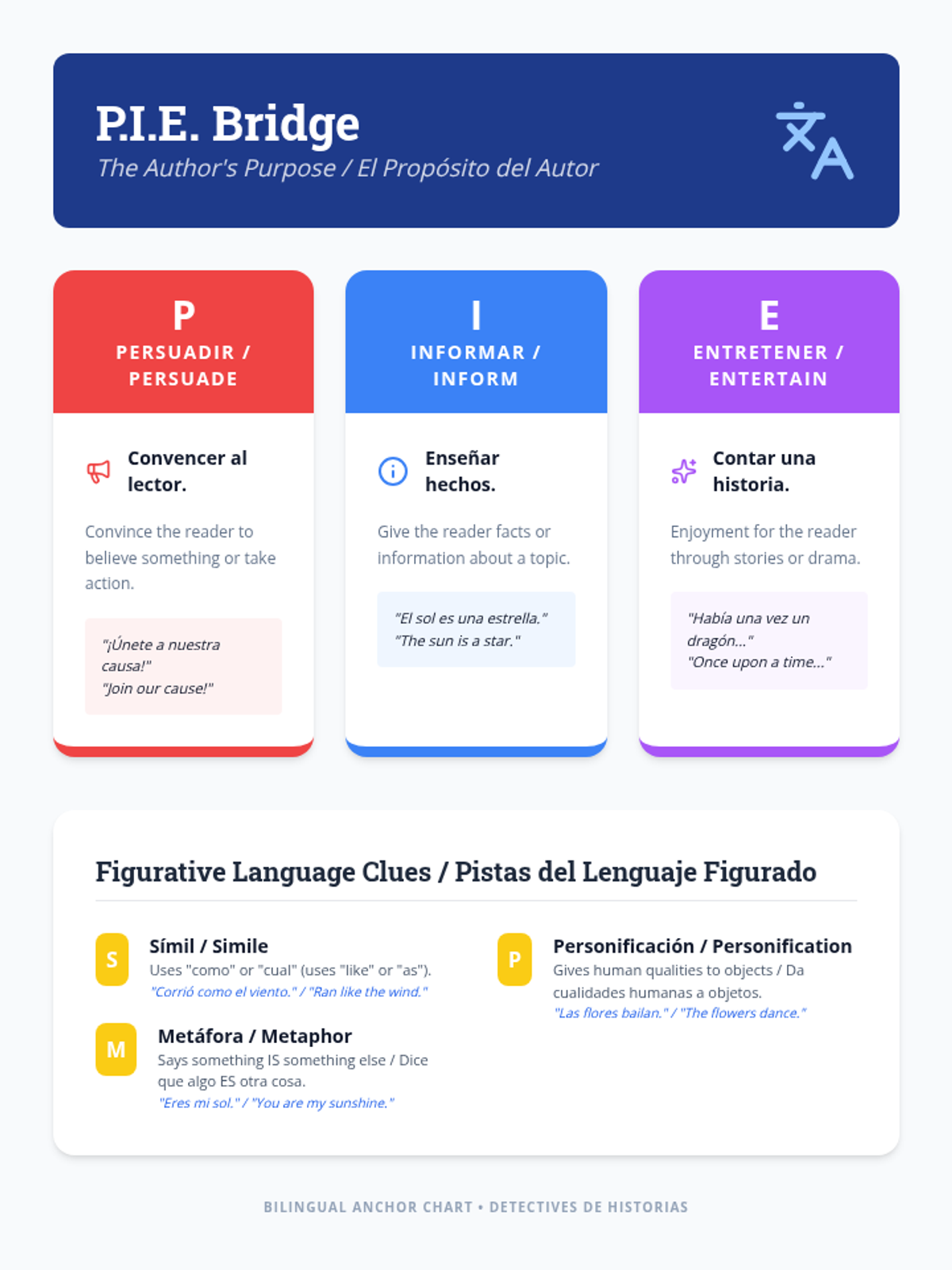
Una lección de 40 minutos diseñada para estudiantes de tercer grado sobre el propósito del autor, explorando textos persuasivos, informativos y narrativos con un enfoque especial en el lenguaje figurado.
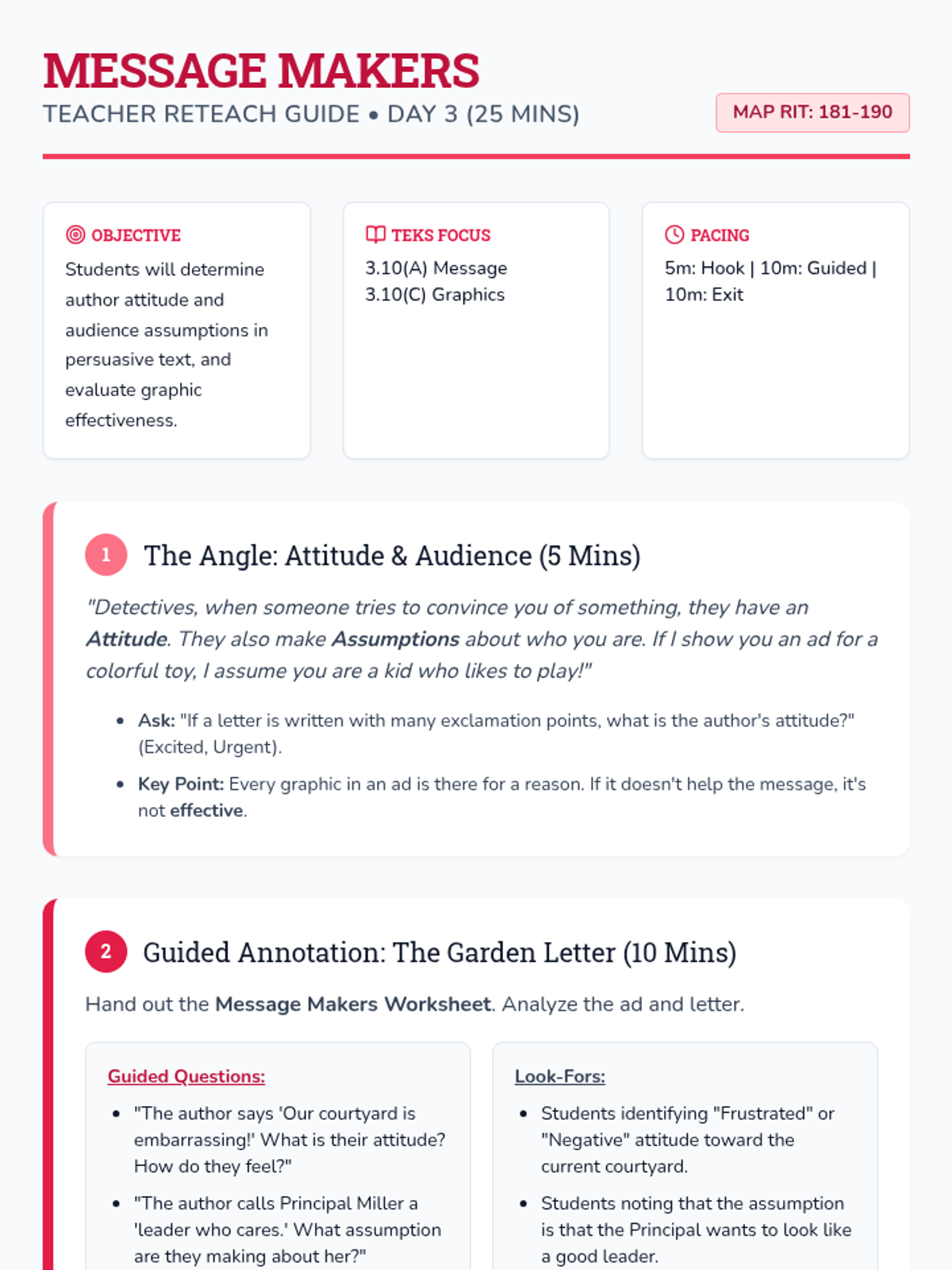
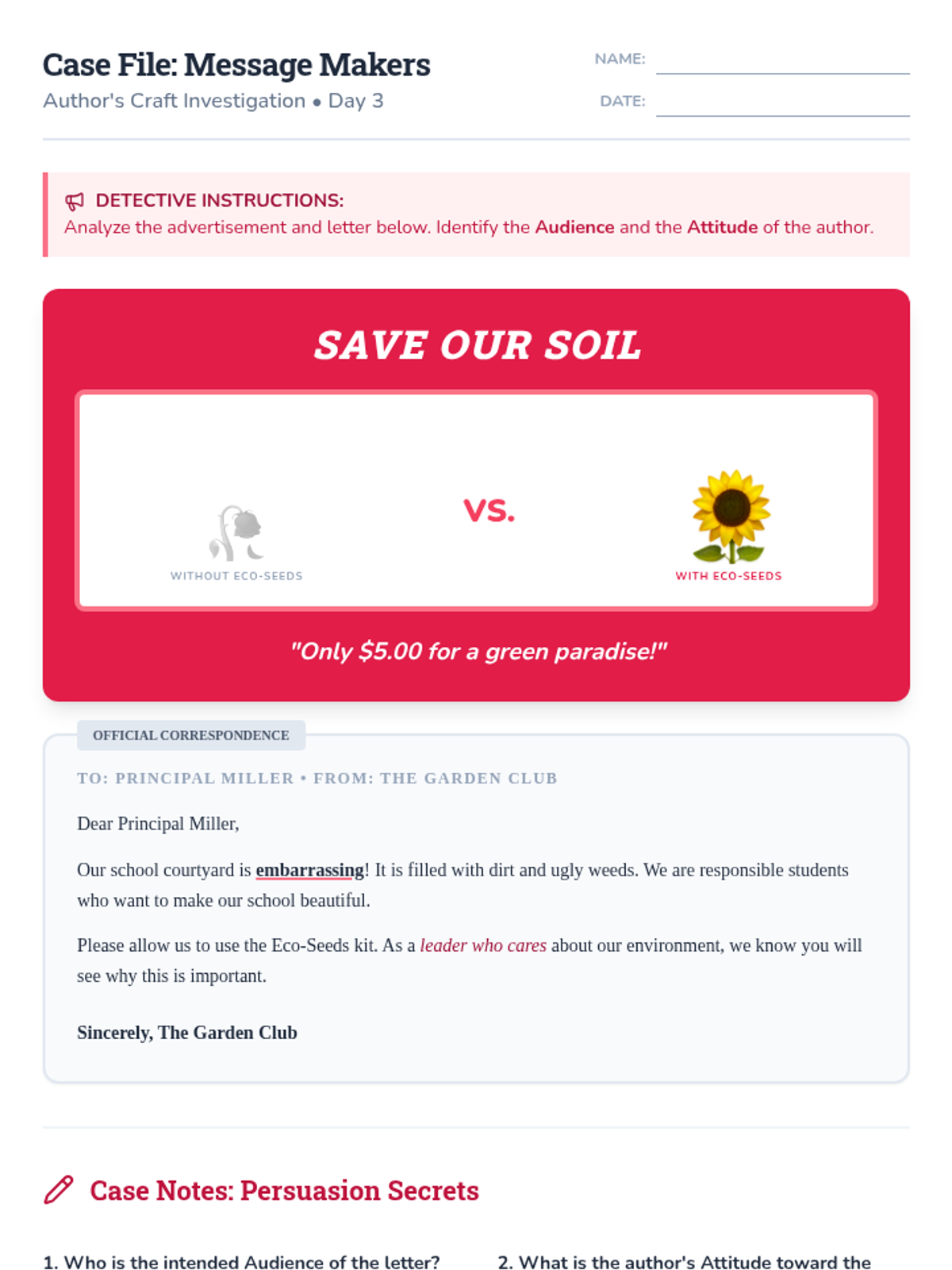
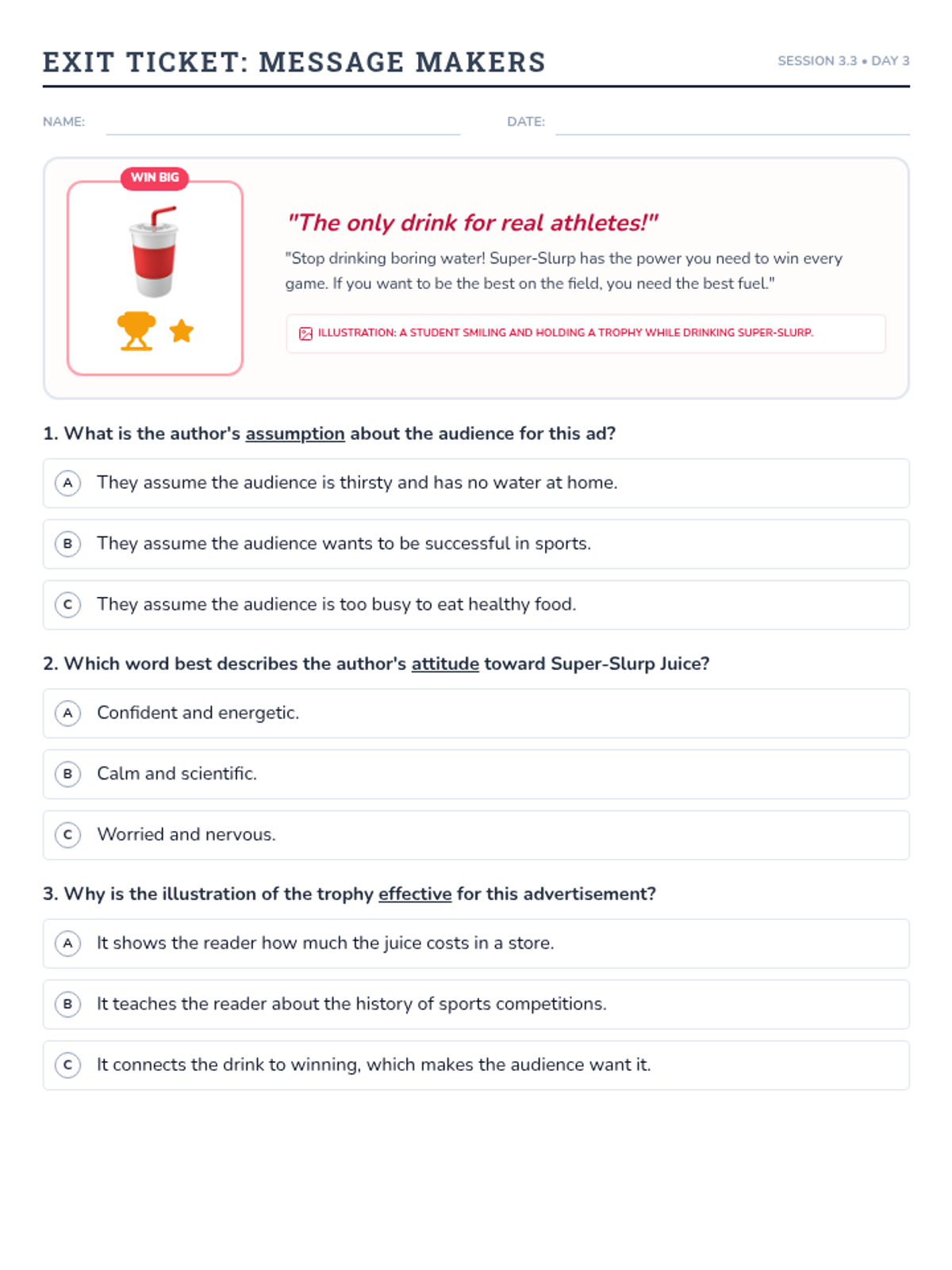
Students evaluate persuasive techniques, identifying author attitude, audience assumptions, and the effectiveness of visuals in ads and letters.
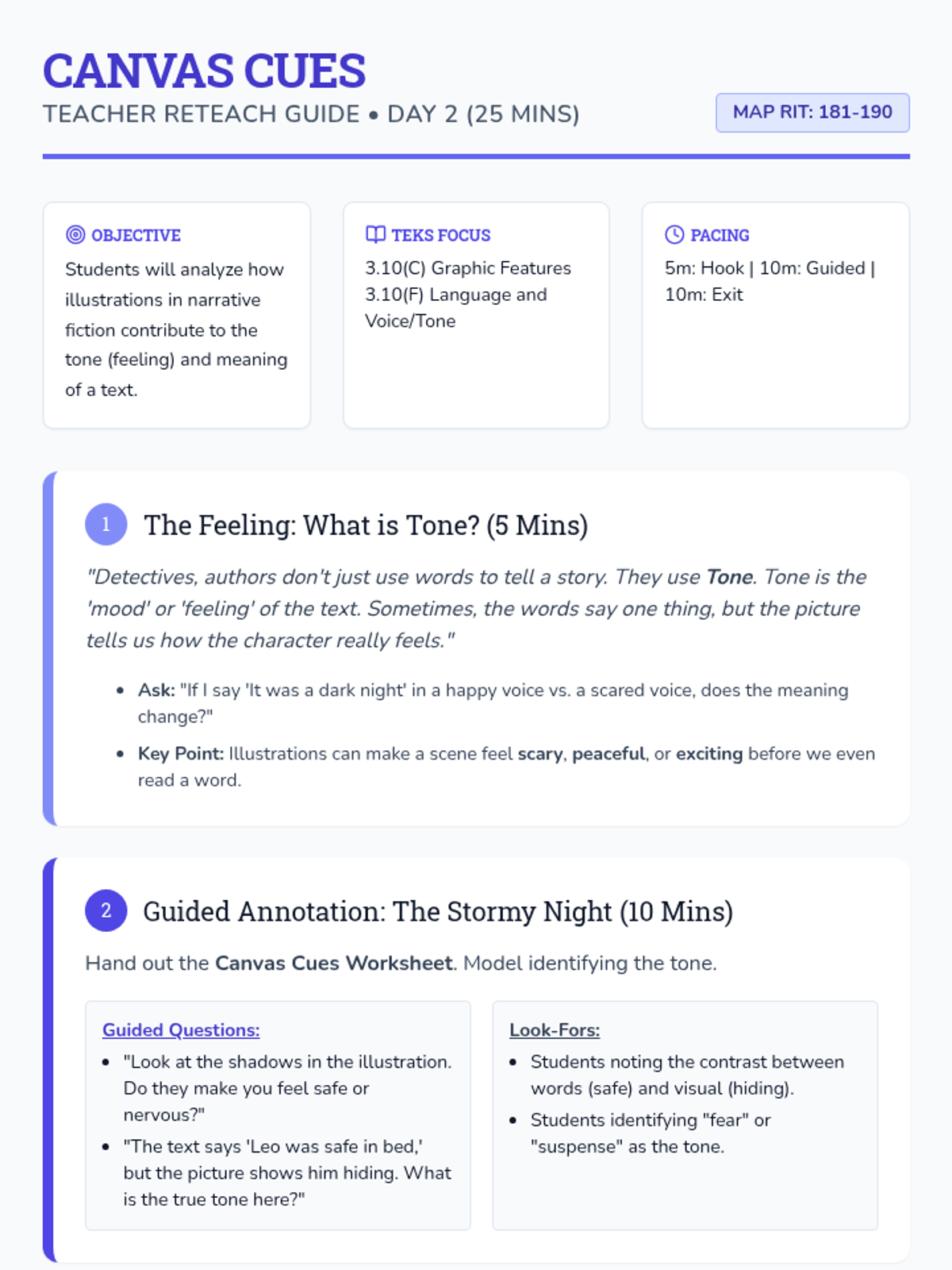
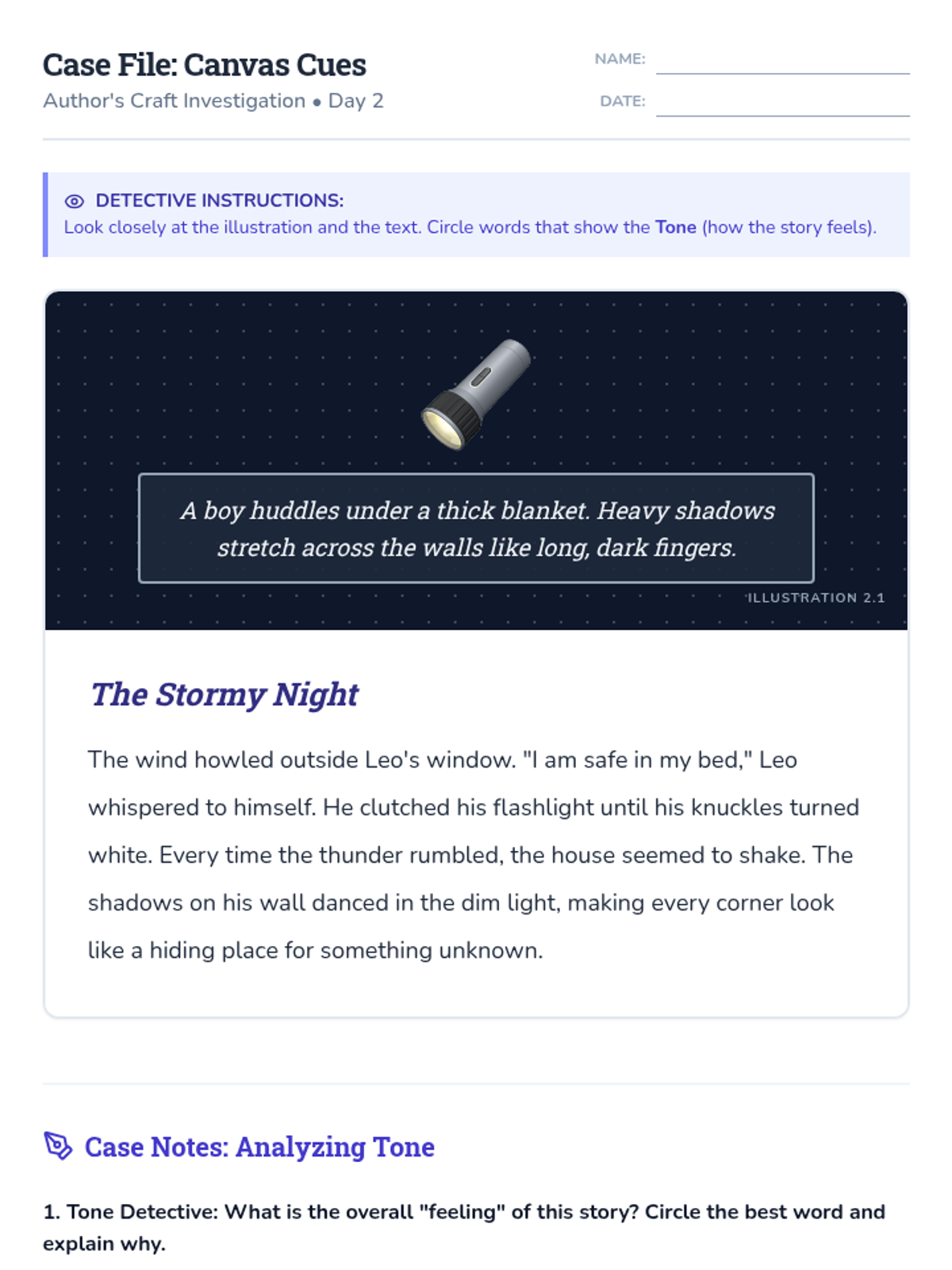
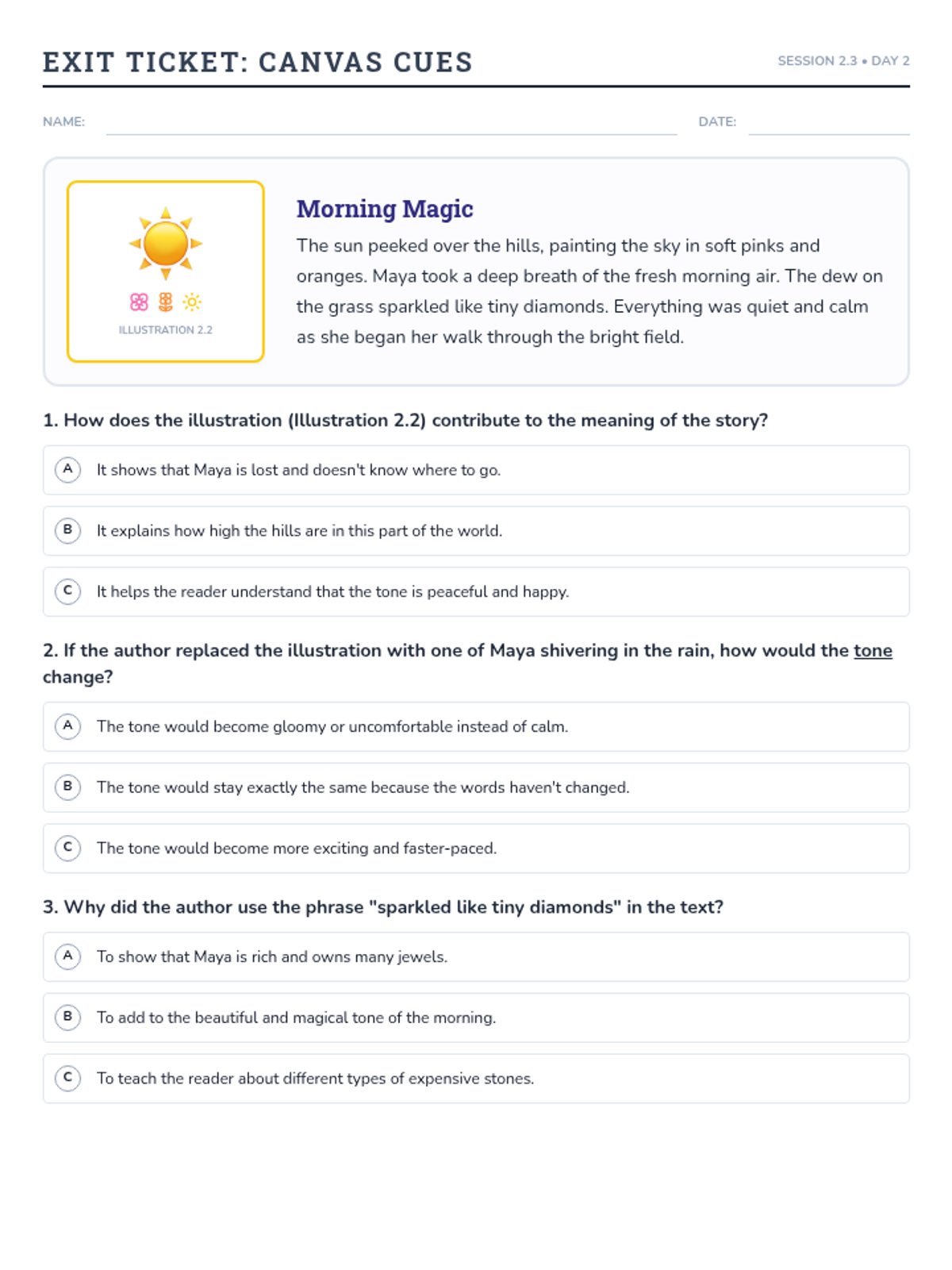
Students explore how illustrations in narrative fiction contribute to the tone and meaning of a story, moving beyond the literal text.