Focuses on the concepts of 'top' and 'bottom' through the functional lens of stocking grocery shelves and identifying item locations.
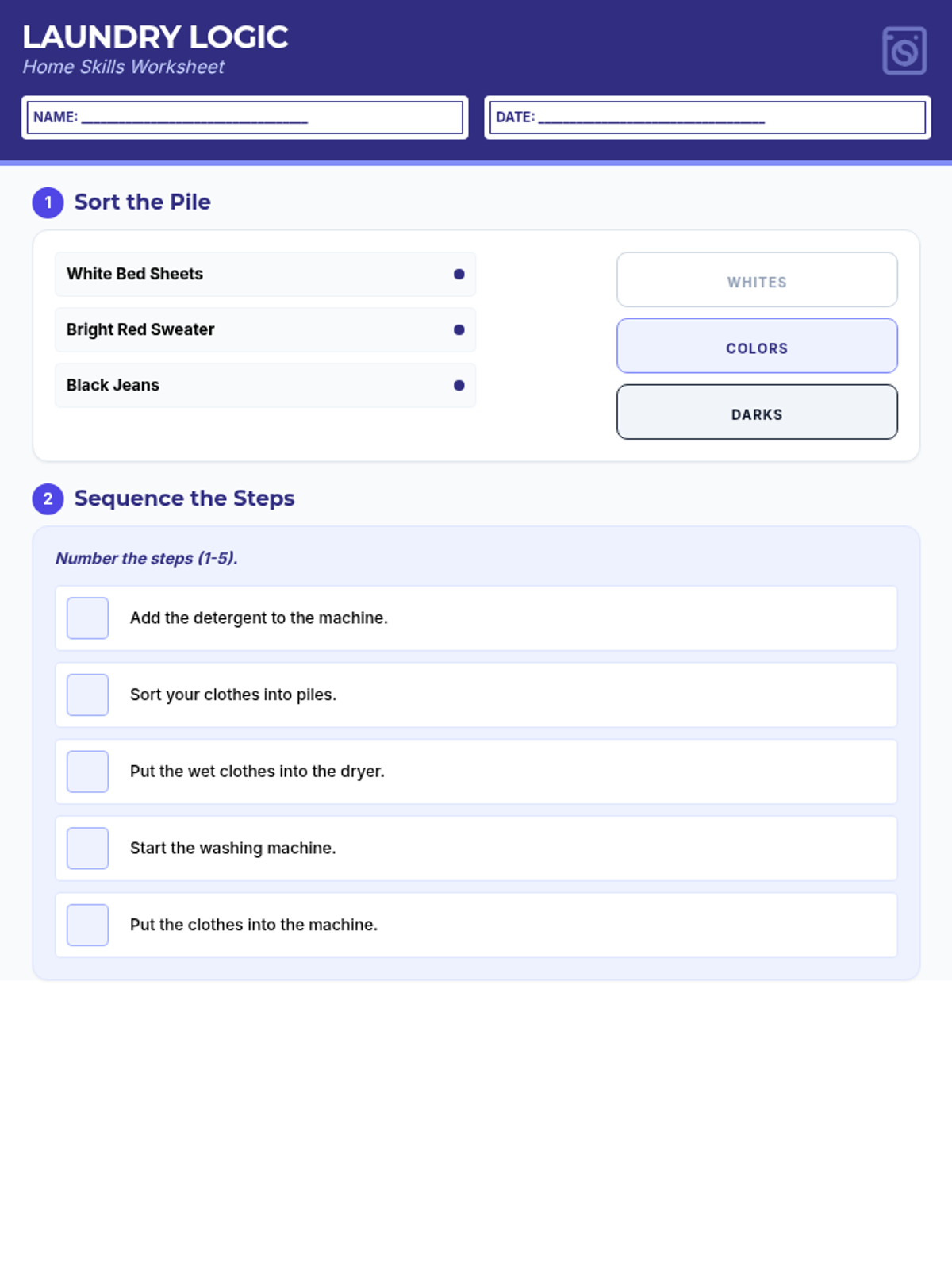
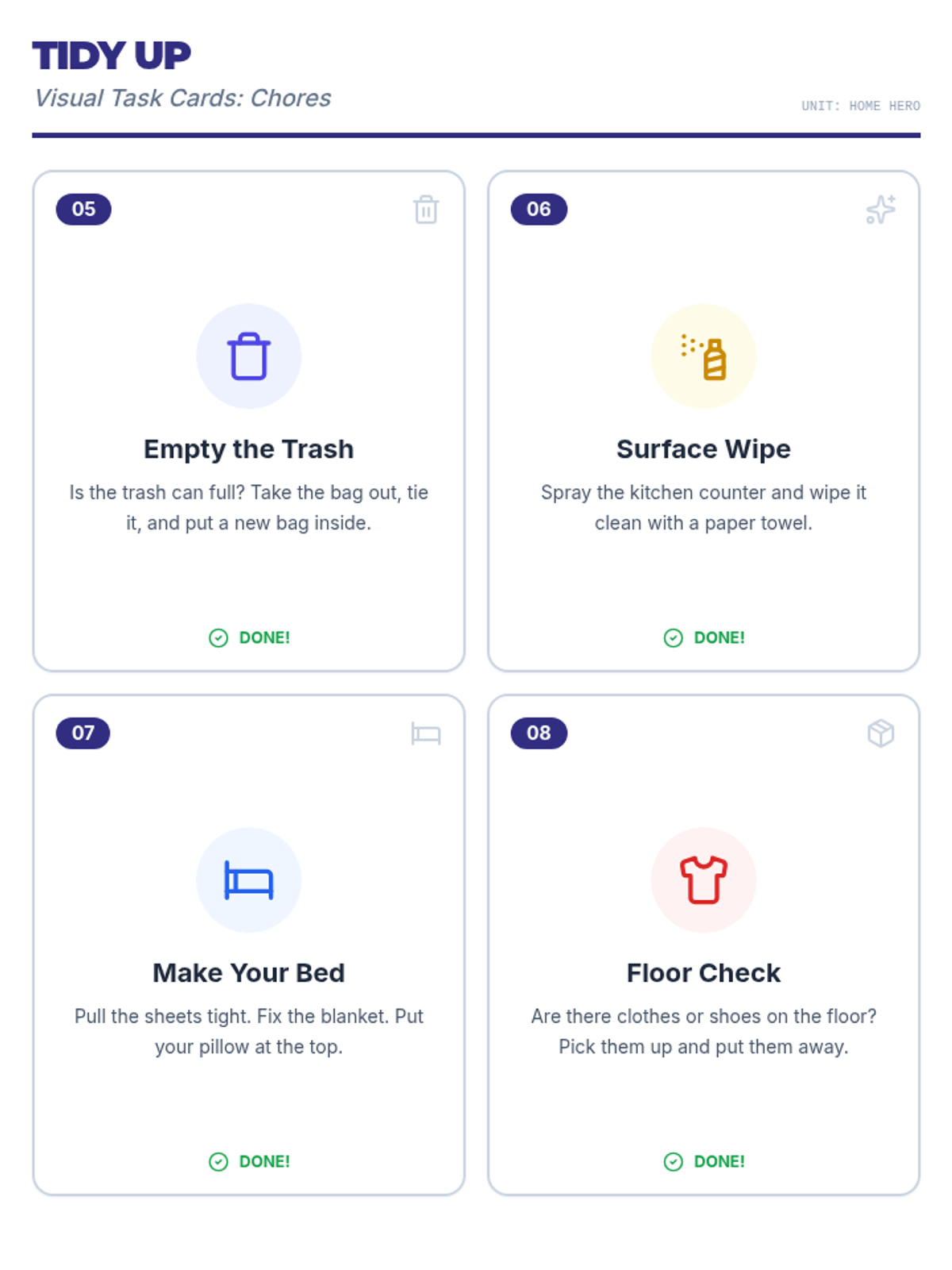
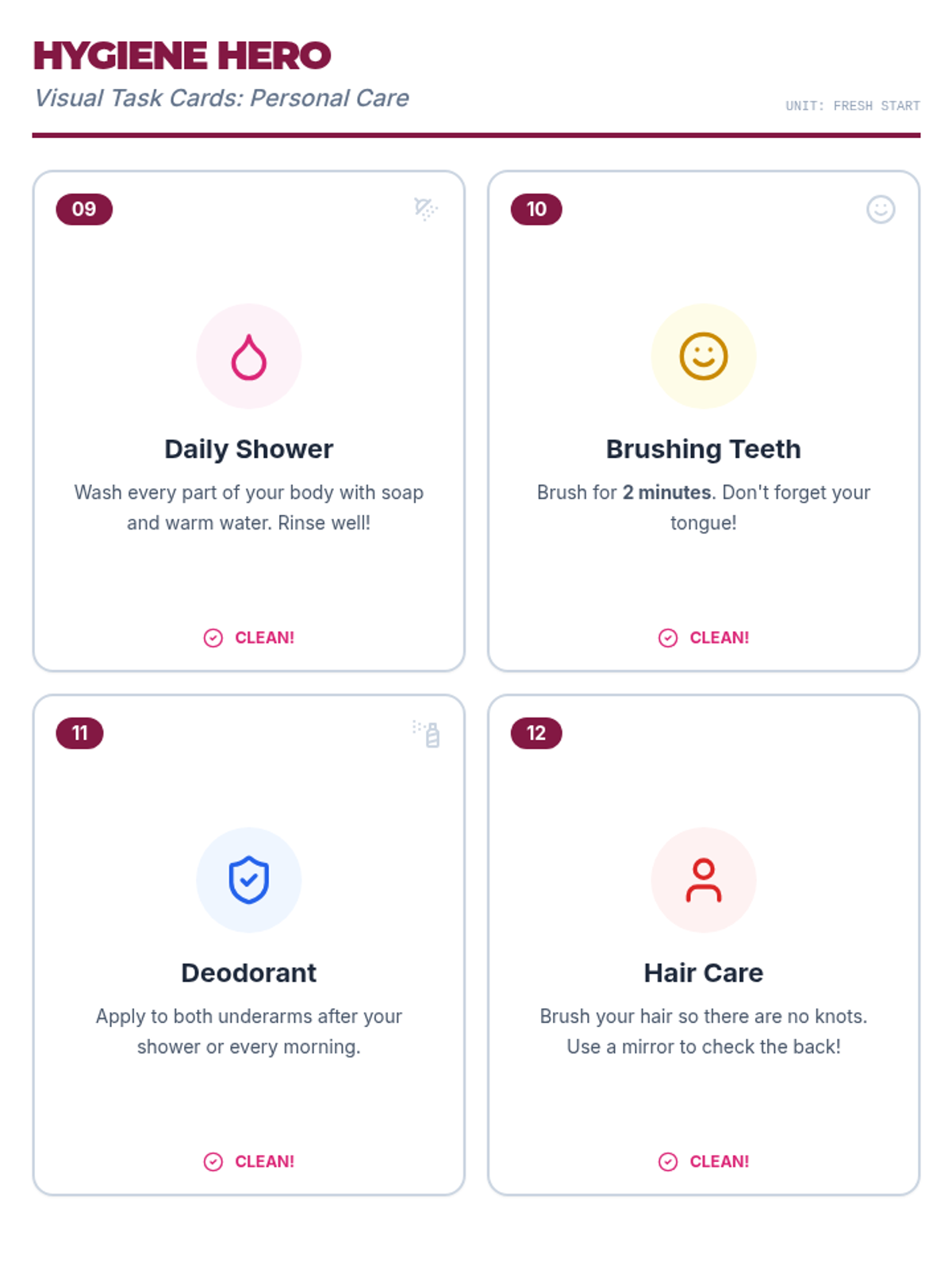
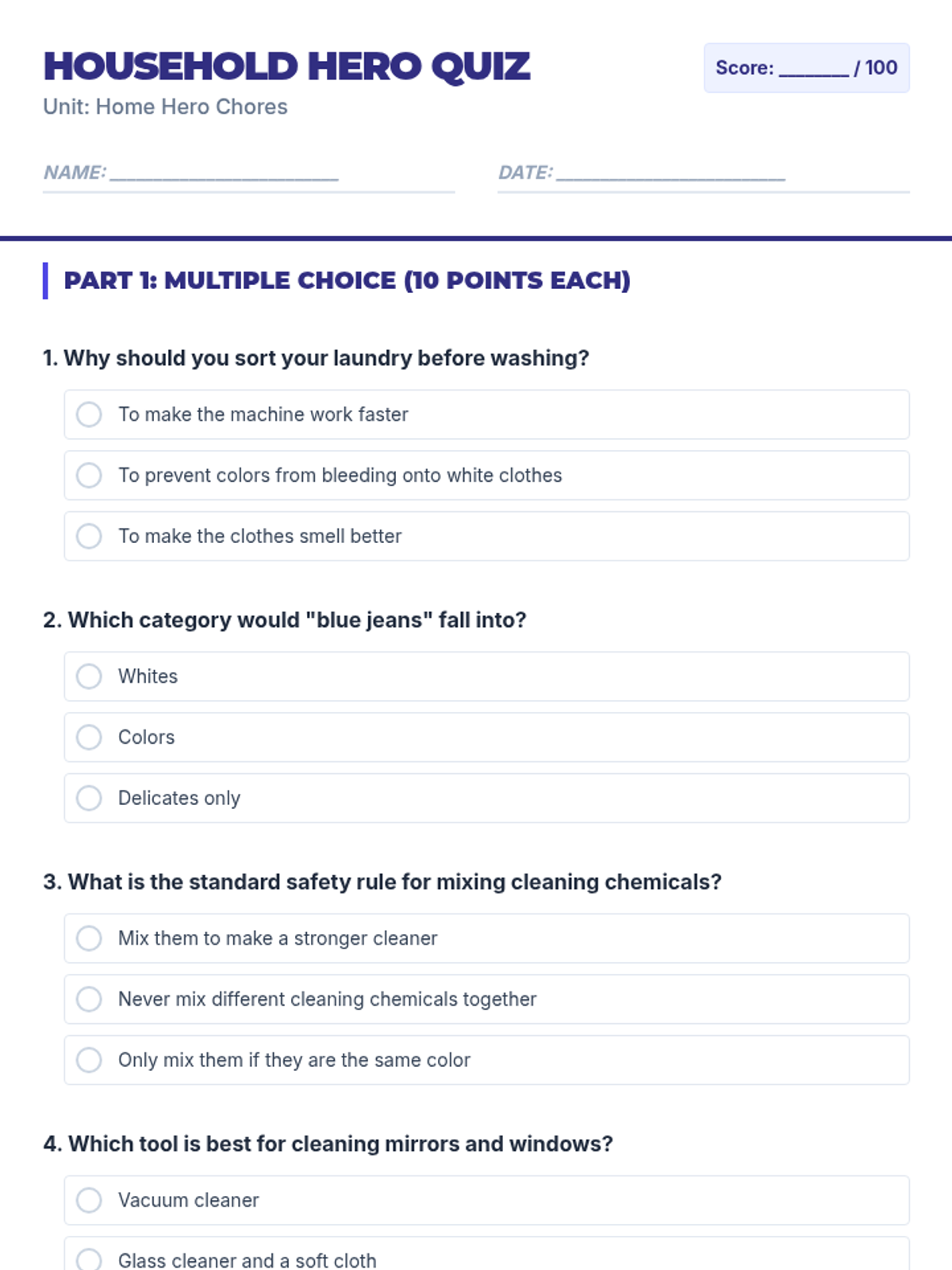
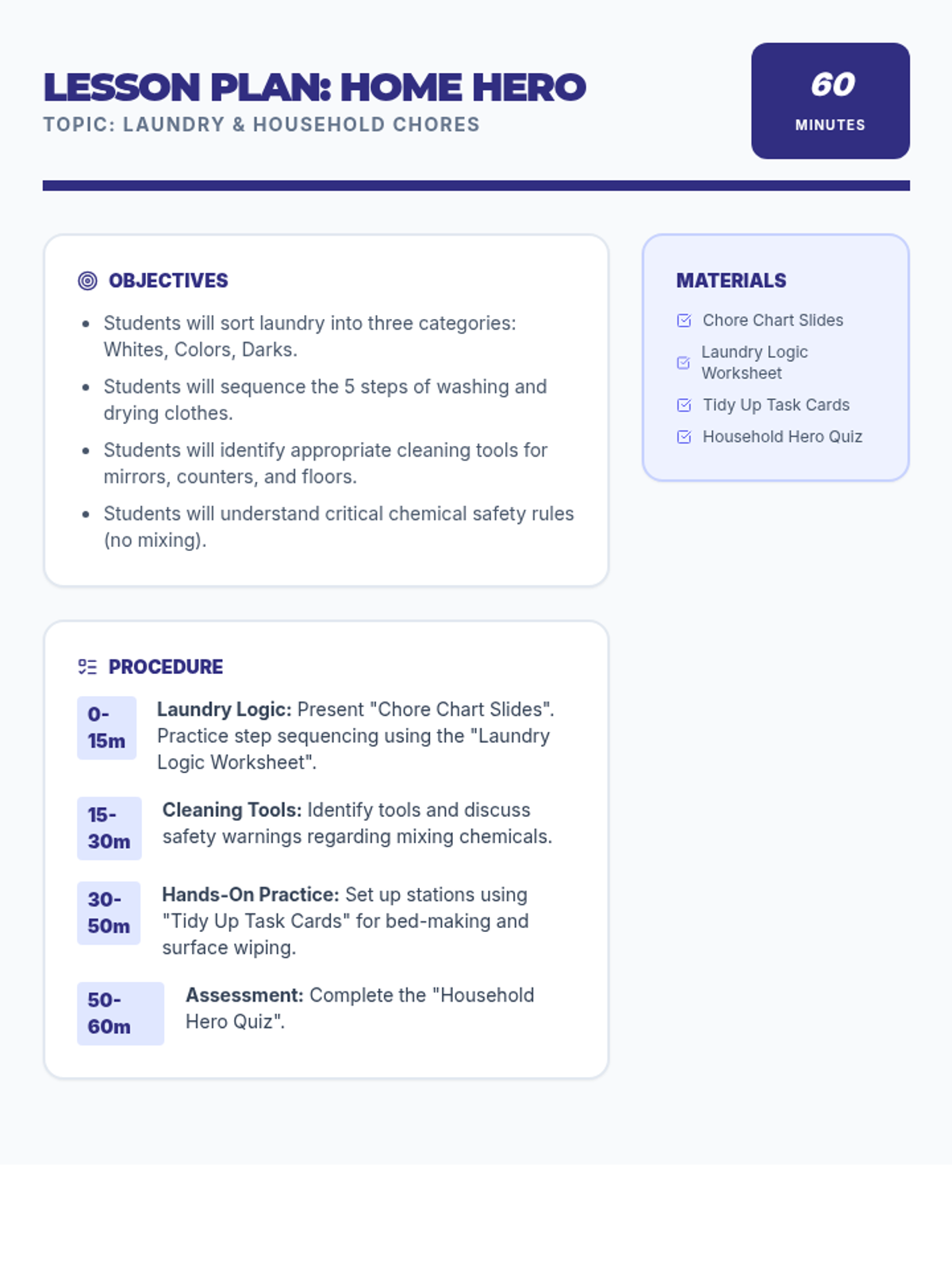
Mastering the art of laundry, cleaning schedules, and maintaining a healthy home environment.
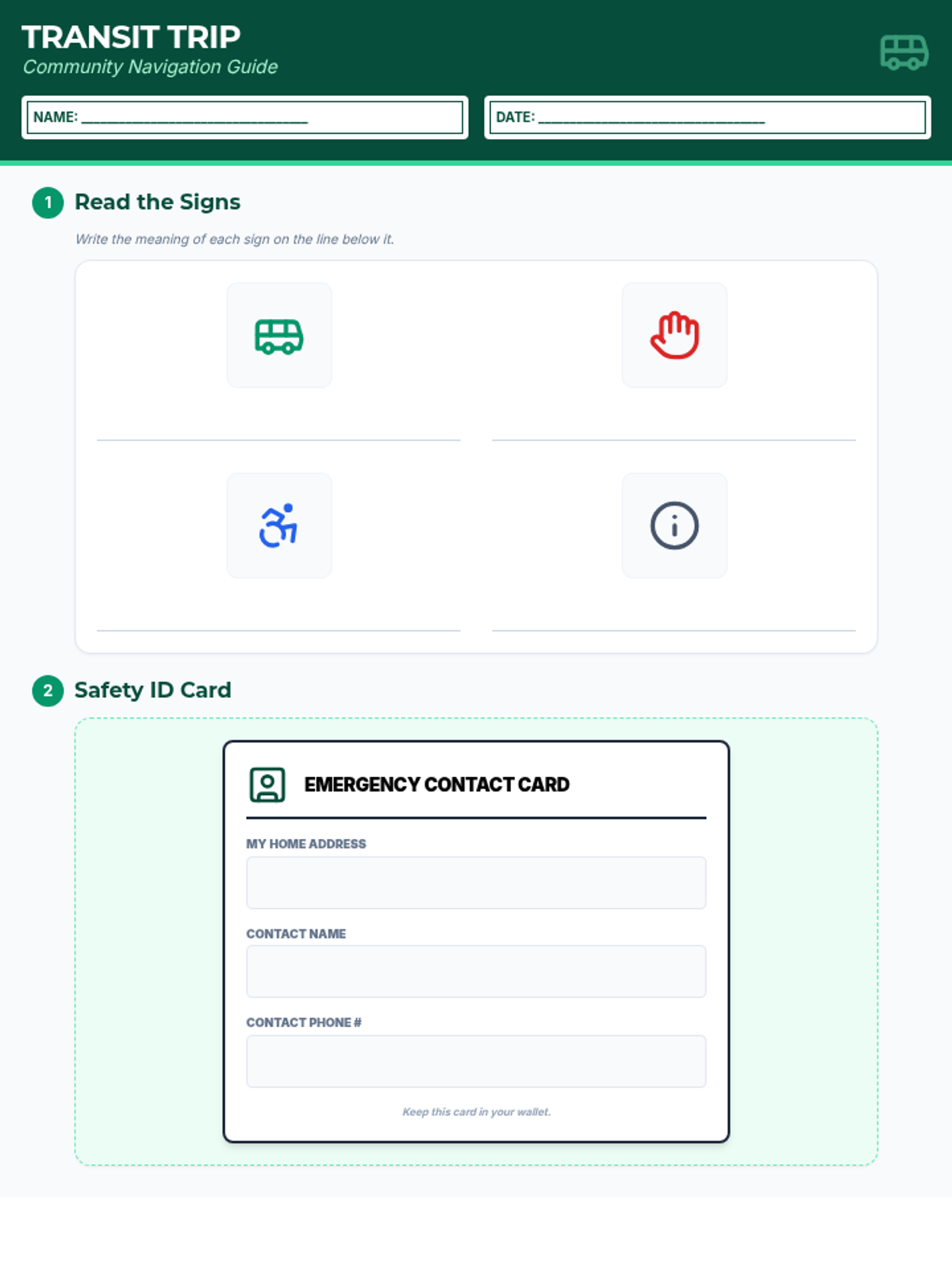
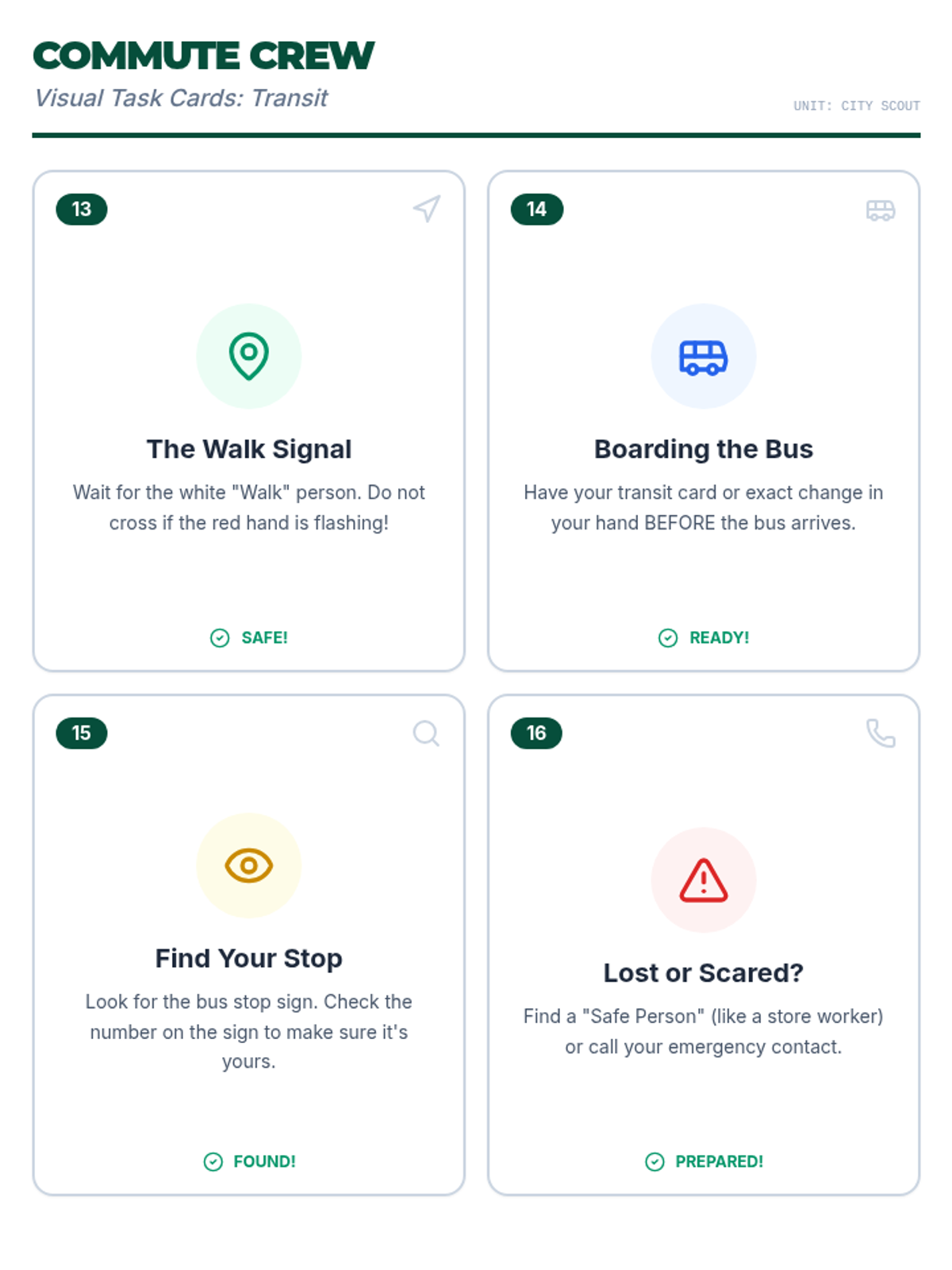
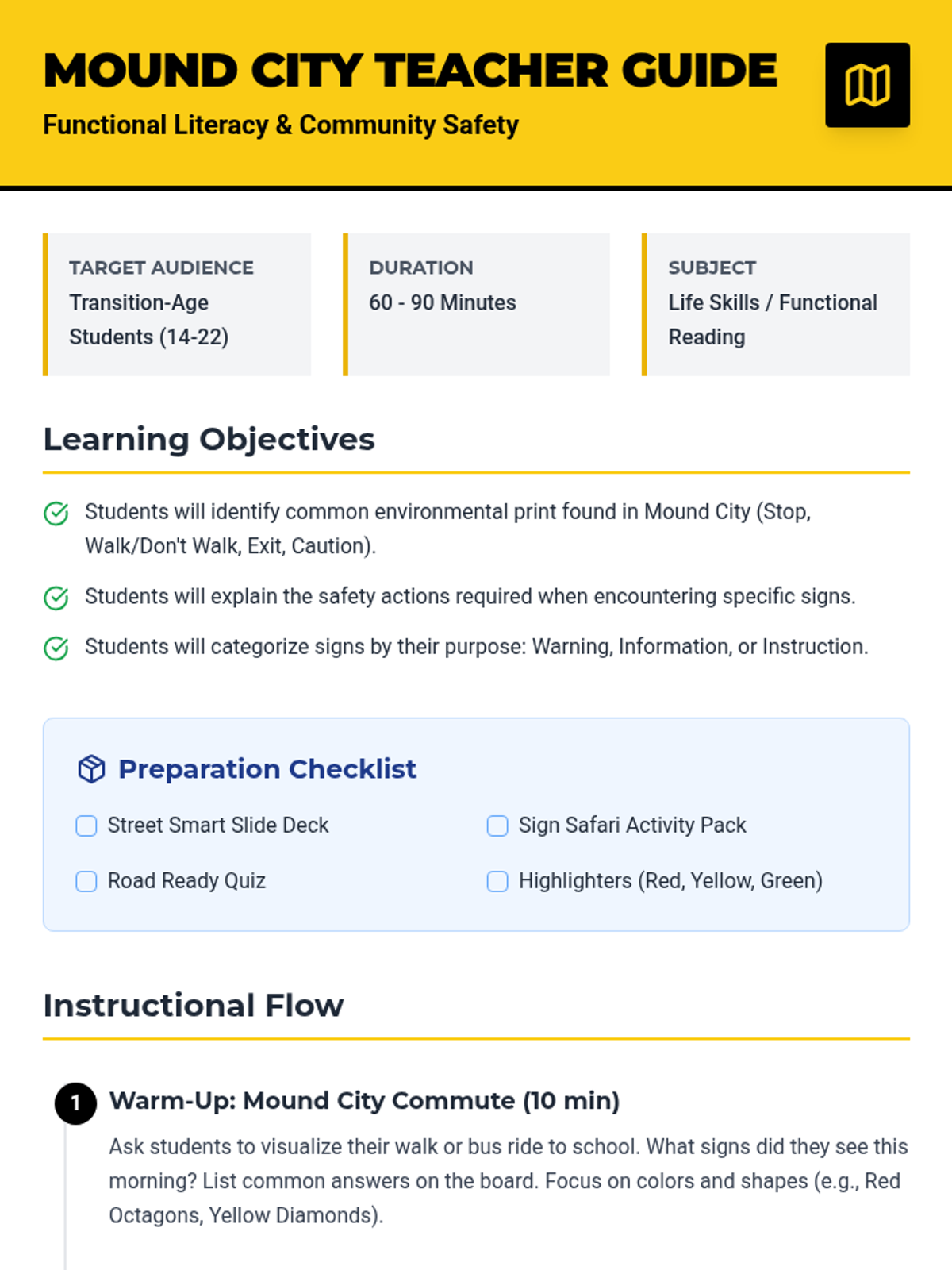
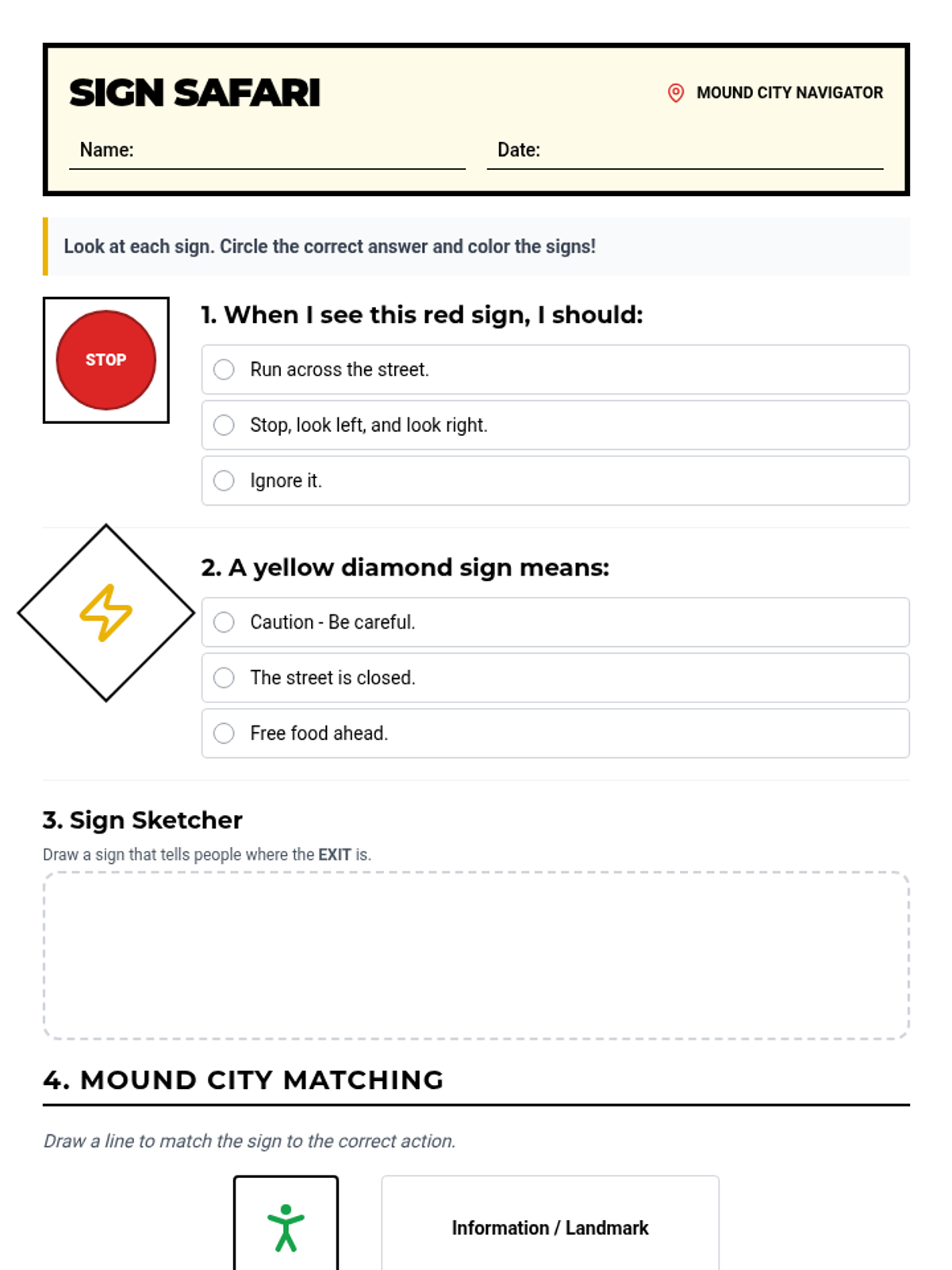
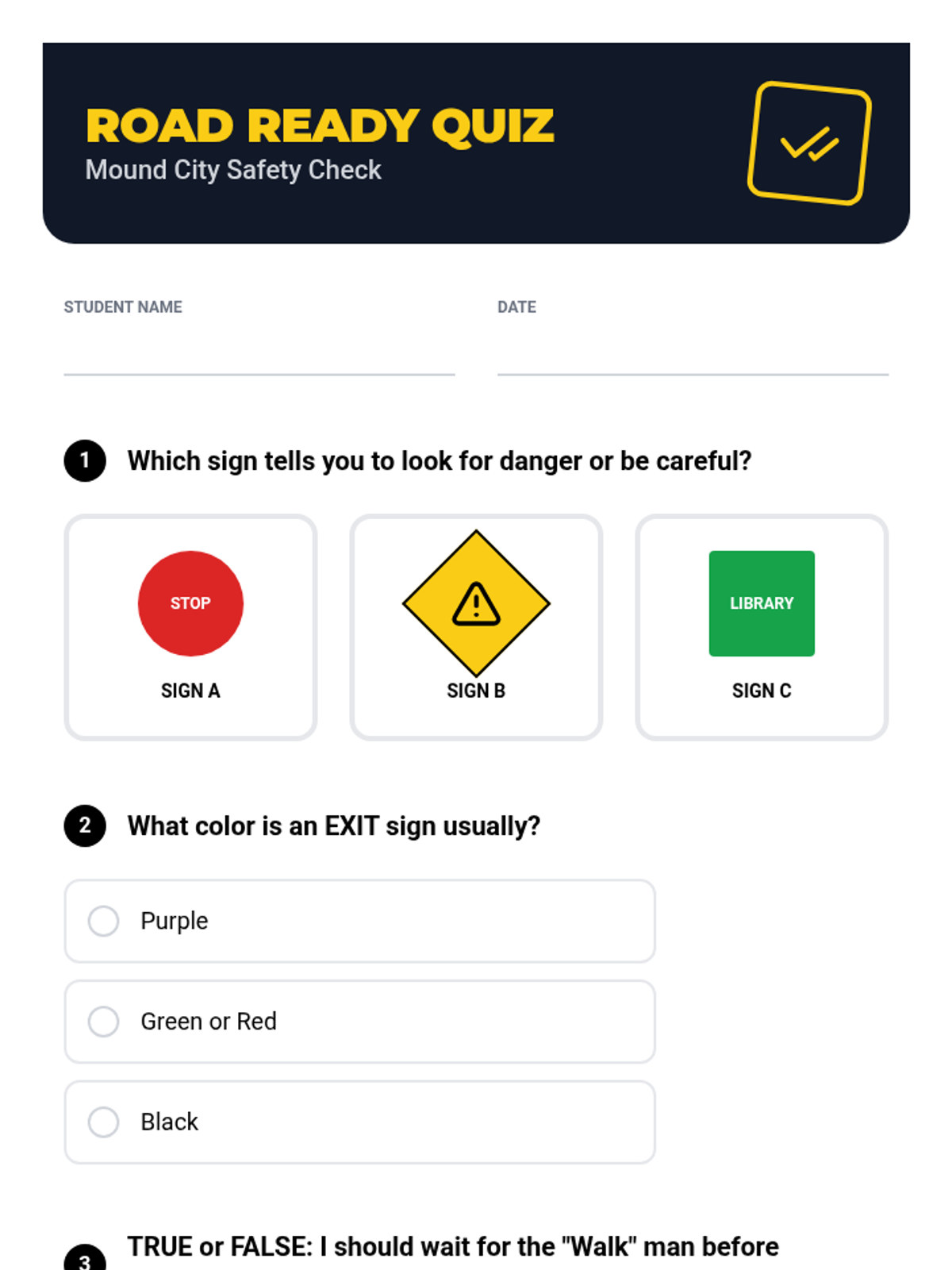
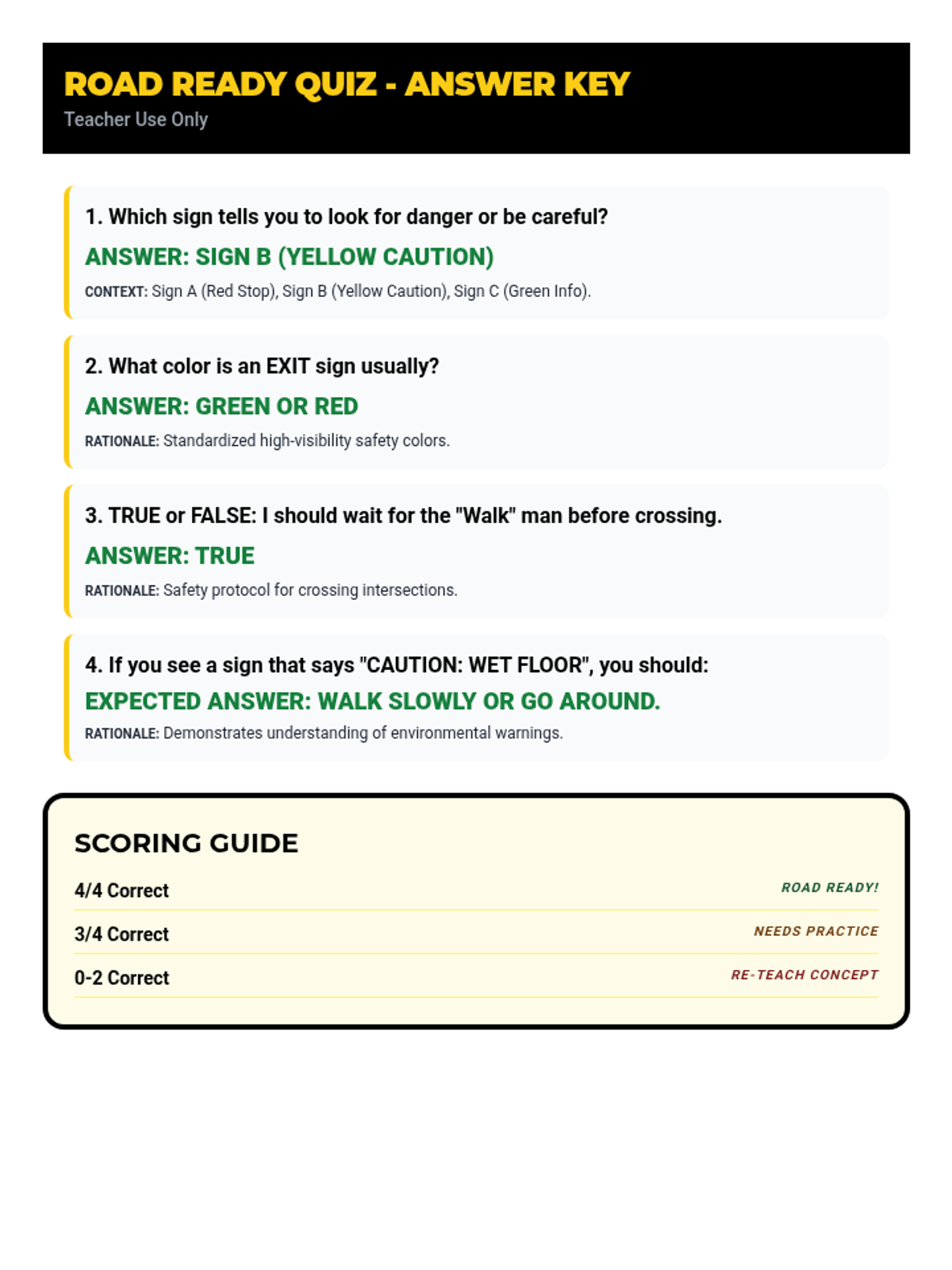
A functional literacy lesson for transition-age students focused on identifying and interpreting environmental print and safety signs in the Mound City community. Students build real-world independence through sign recognition and situational awareness.
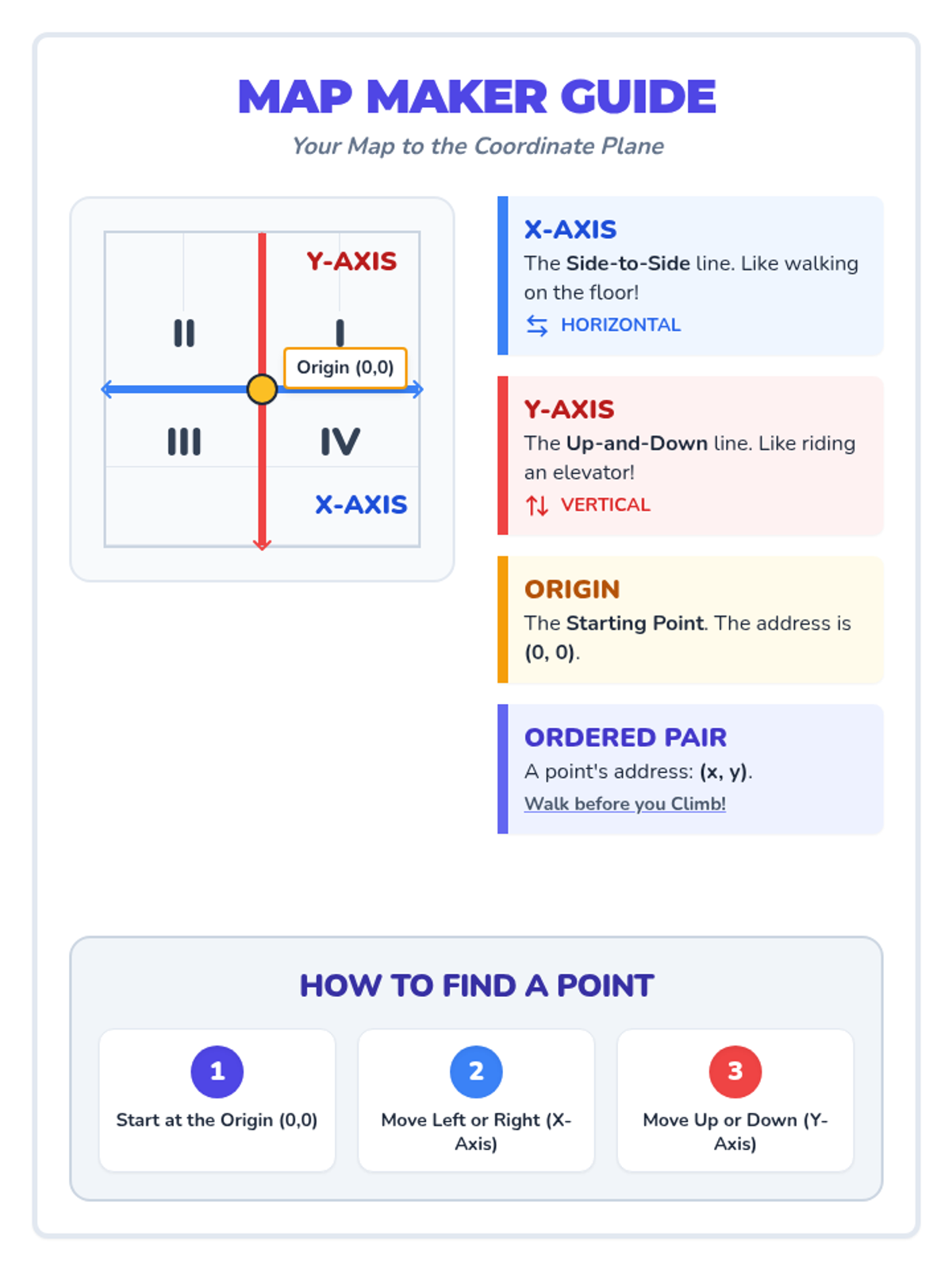
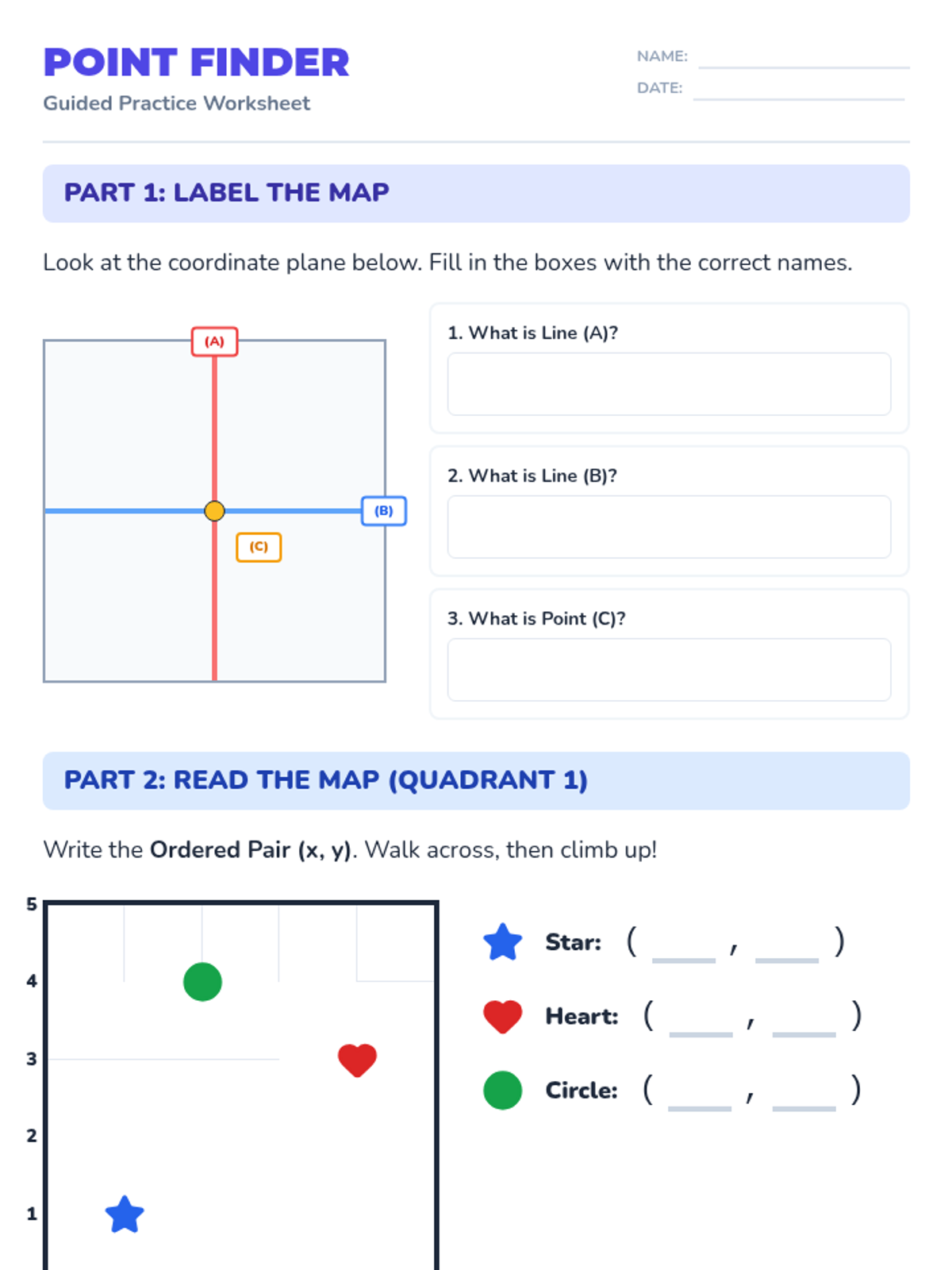
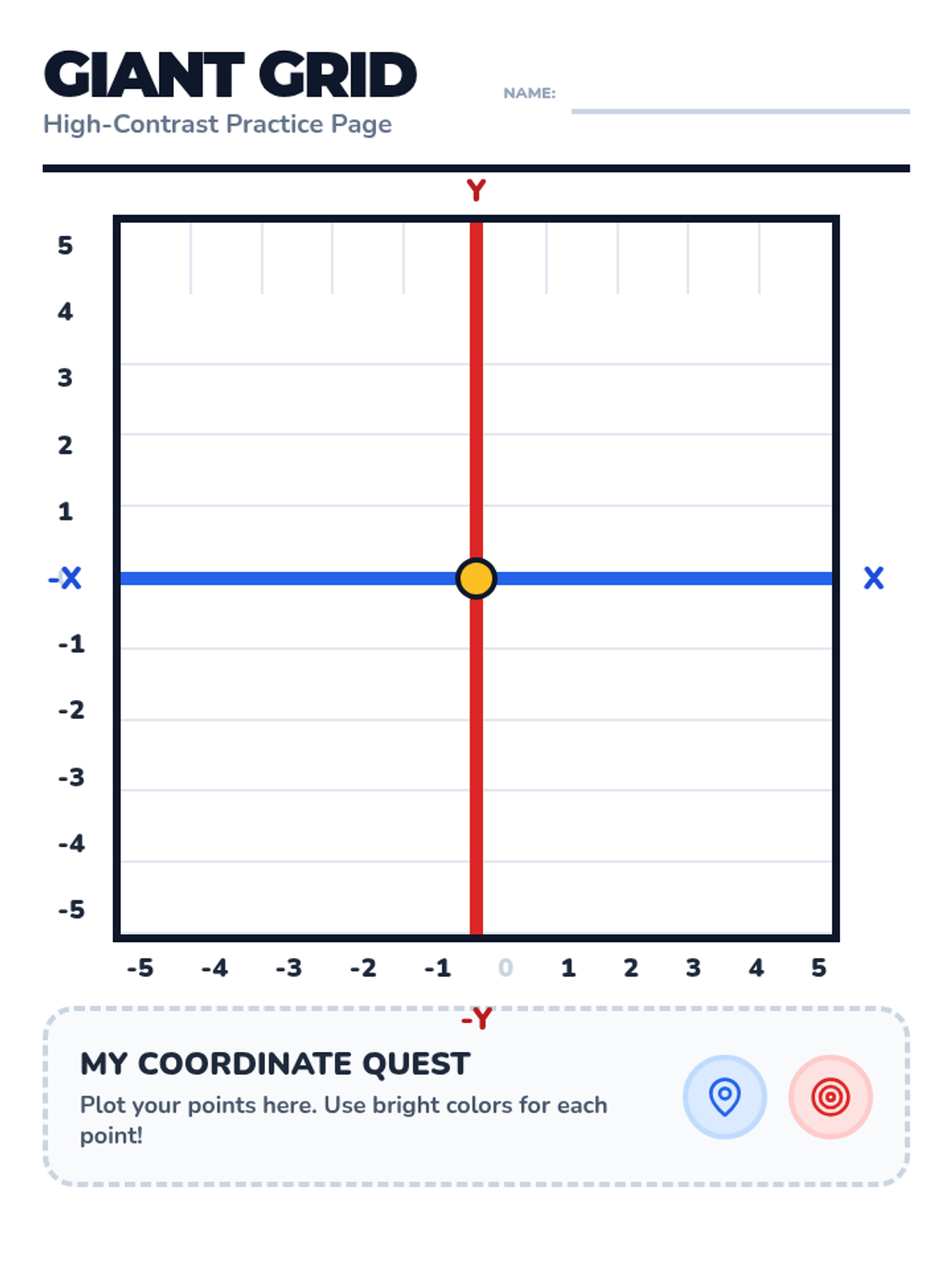
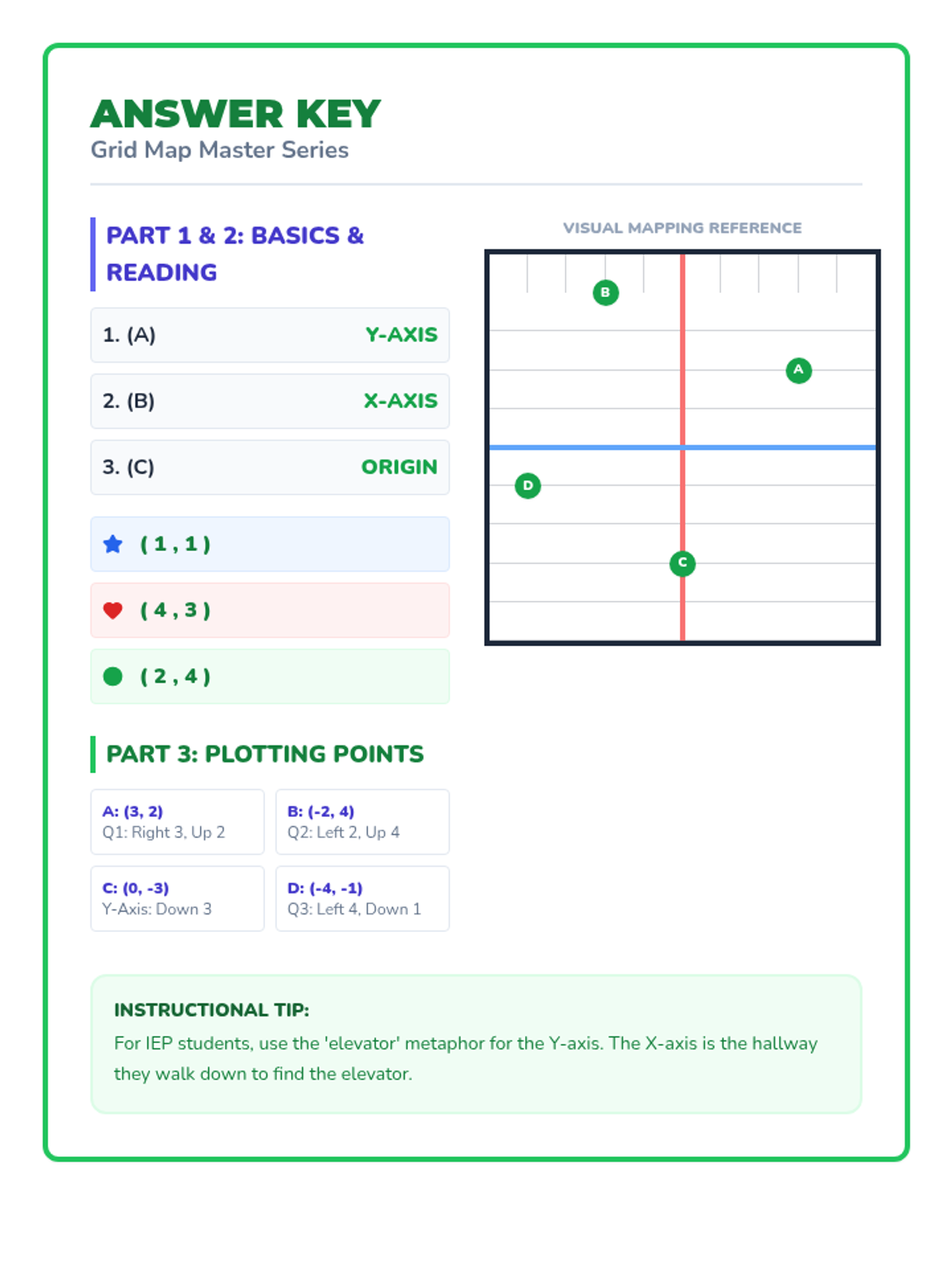
A foundational lesson on the coordinate plane designed for IEP students, focusing on vocabulary, quadrant identification, and step-by-step plotting and reading of points.
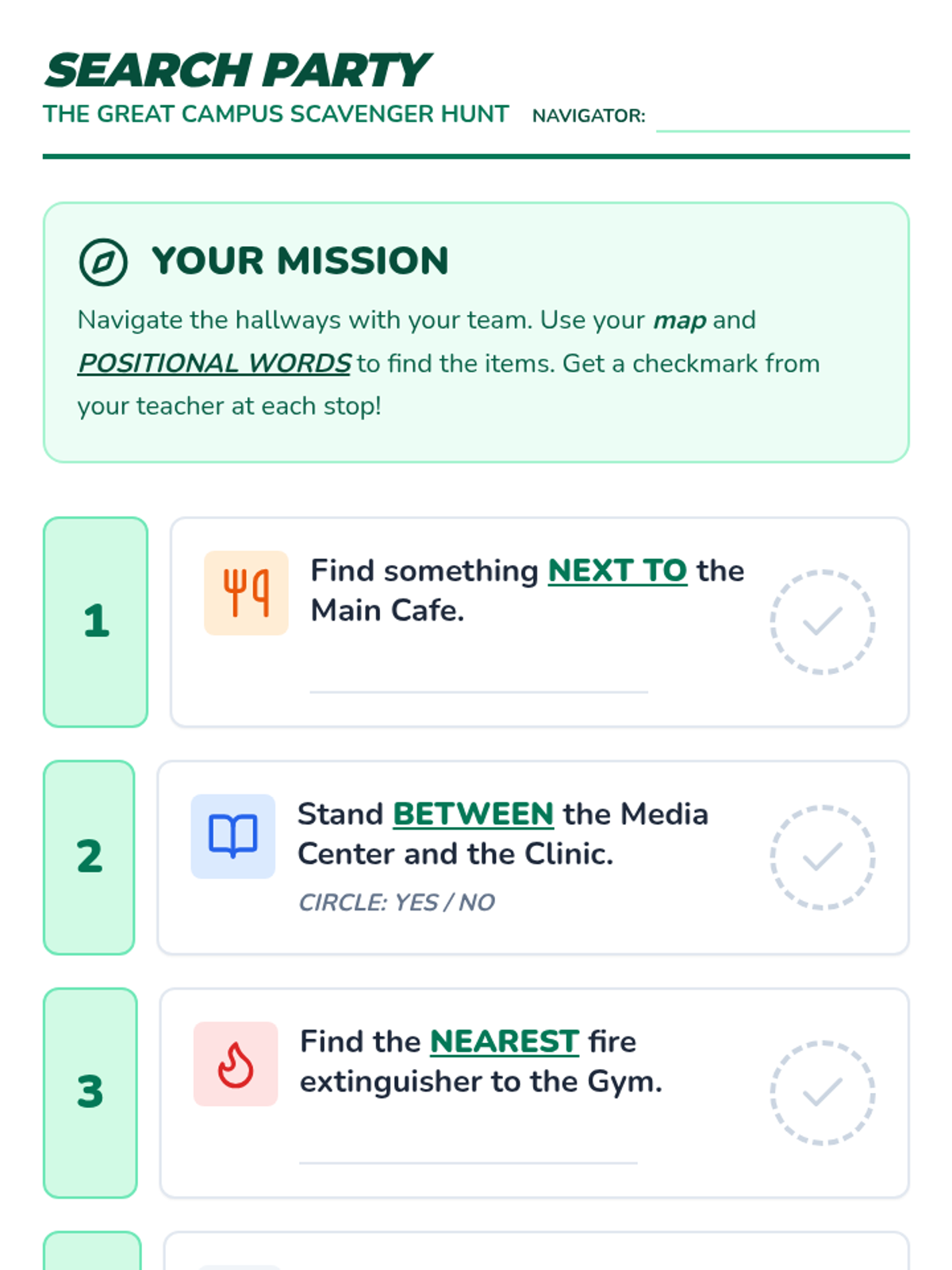
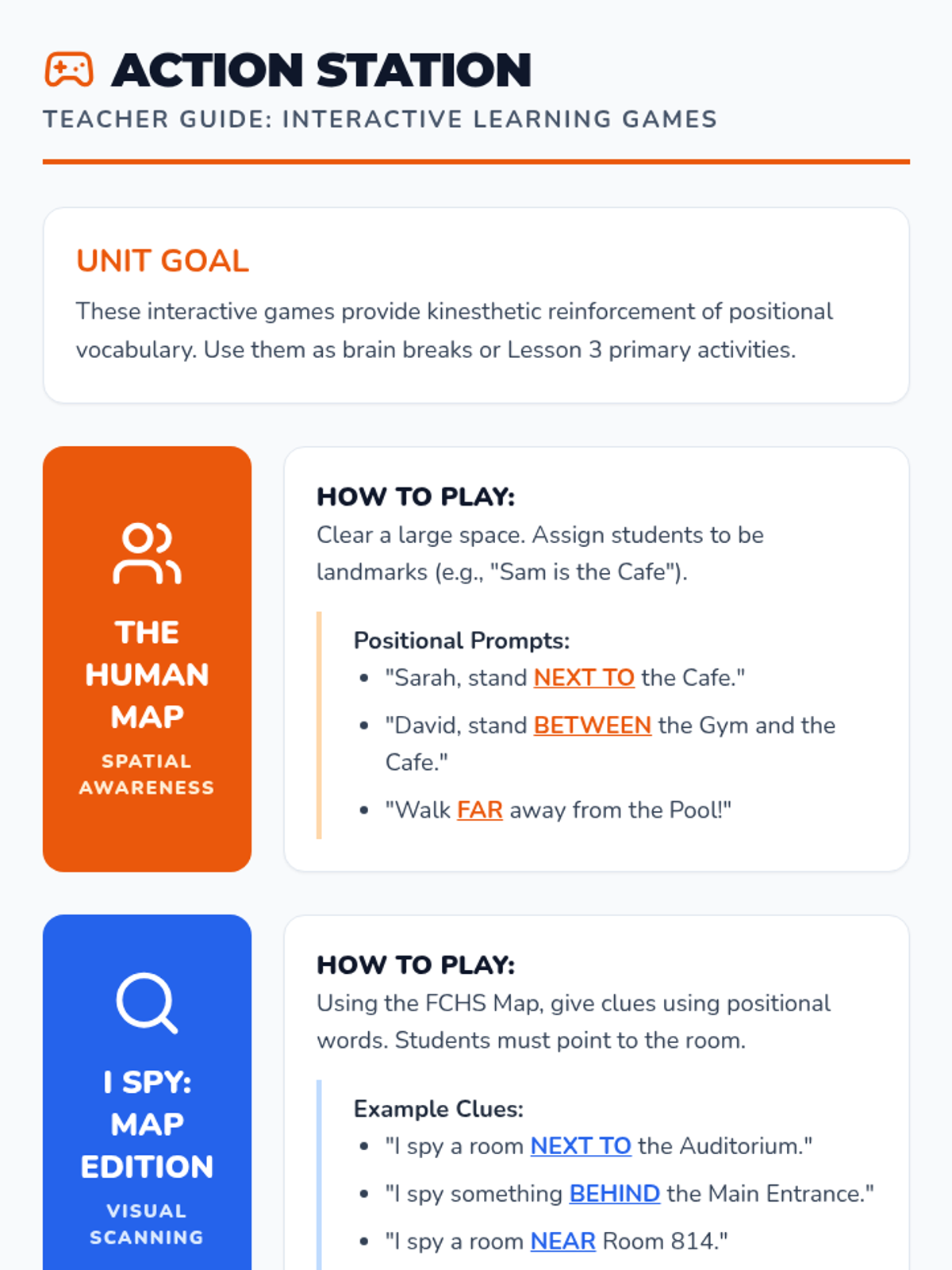
Hands-on application of spatial skills through school-wide scavenger hunts and interactive physical games.
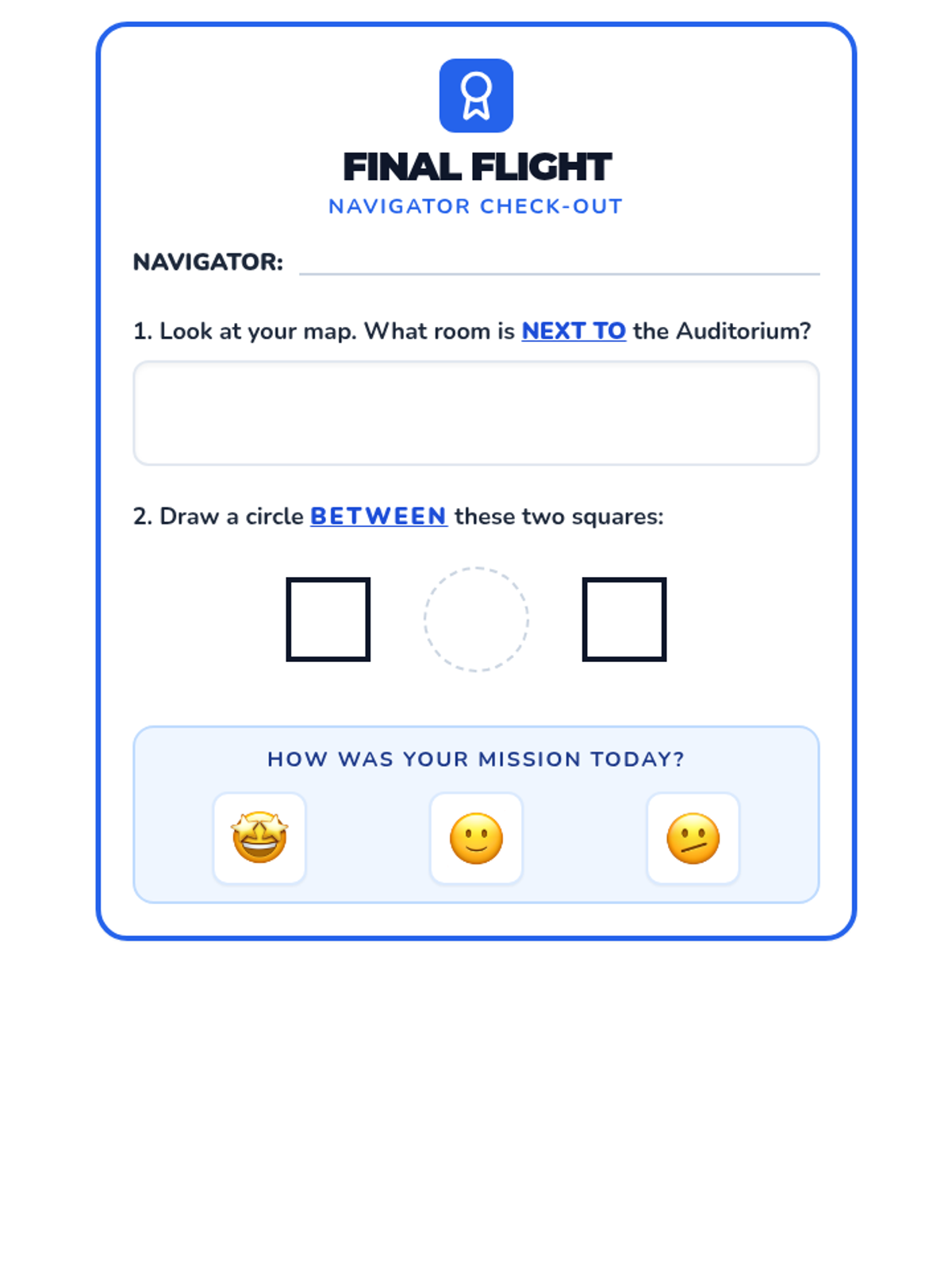
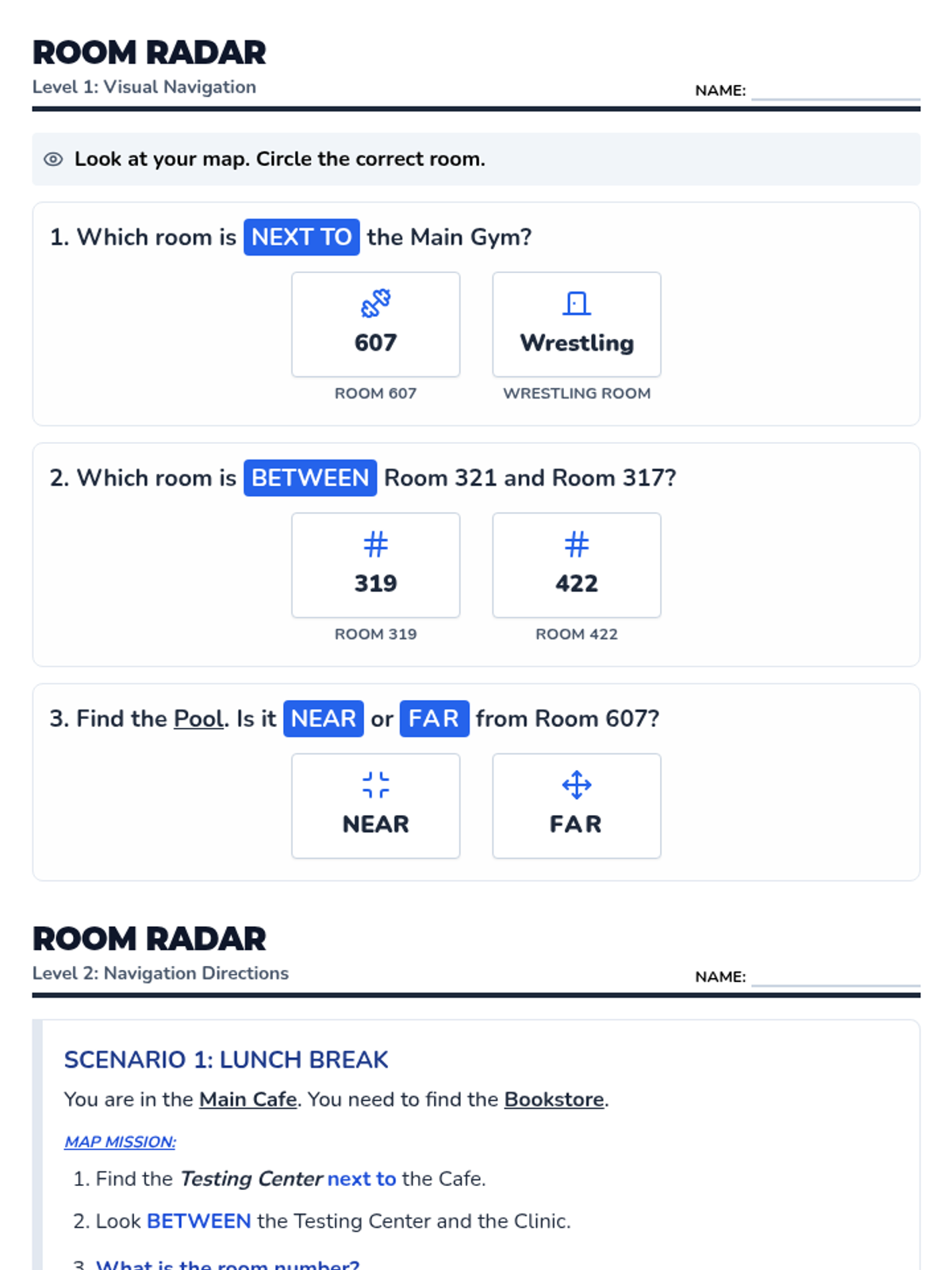
Applying positional vocabulary to the Franklin Central High School map, identifying key landmarks and room relationships.
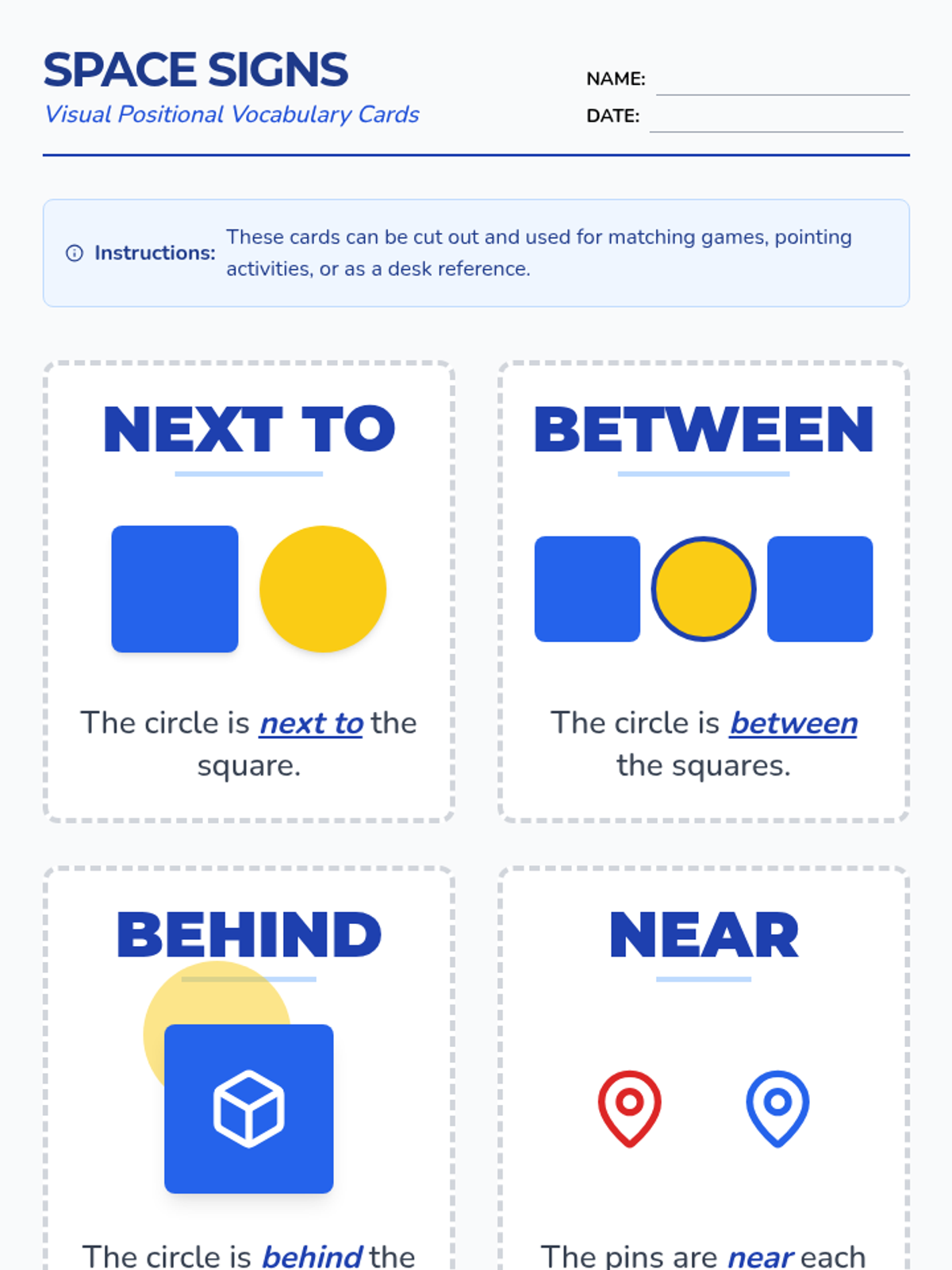
Introduction to positional vocabulary (near, far, next to, behind, between) using visual supports and simple classroom objects.
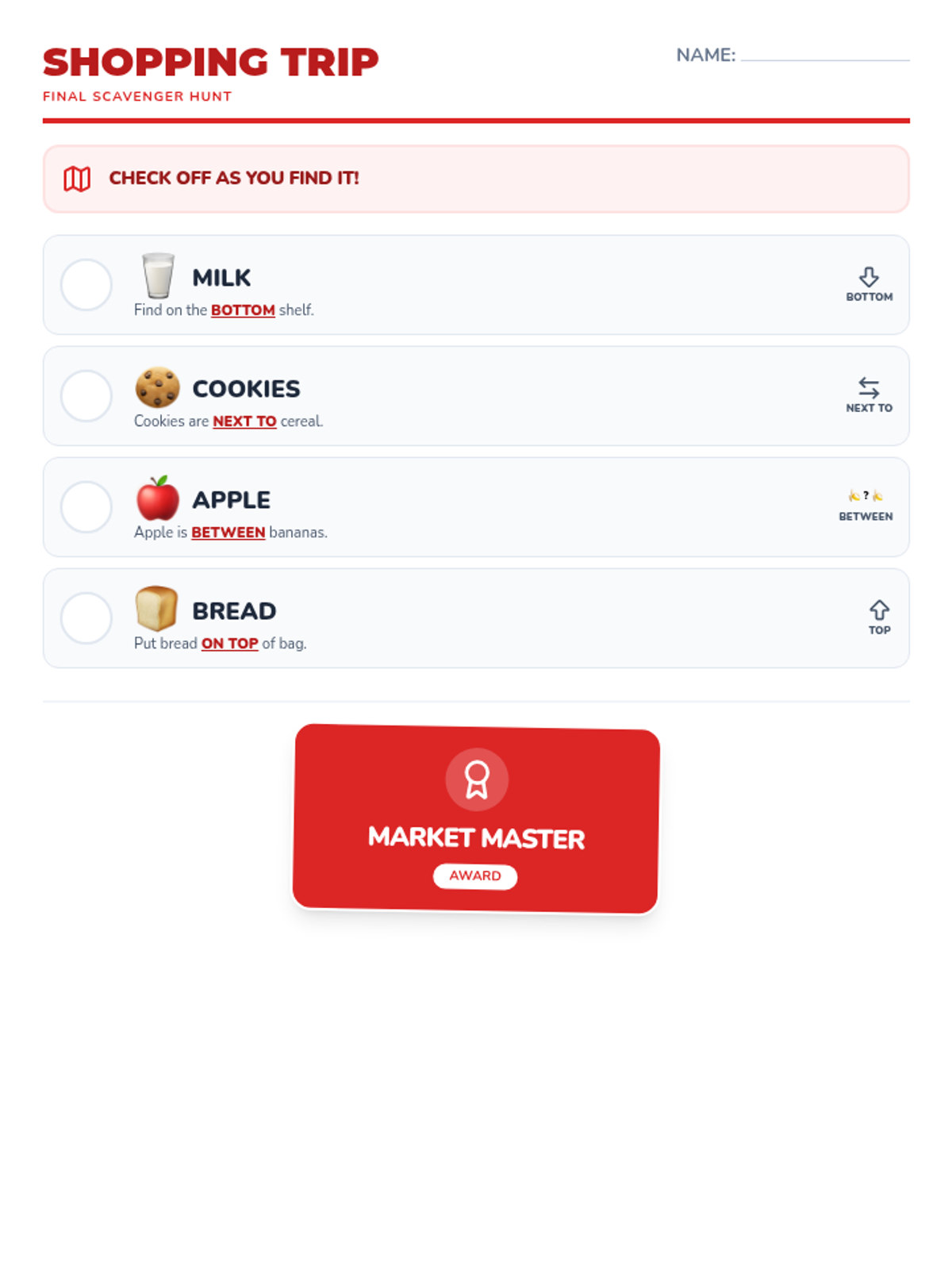
A cumulative review lesson applying all positional words to a full shopping trip simulation.
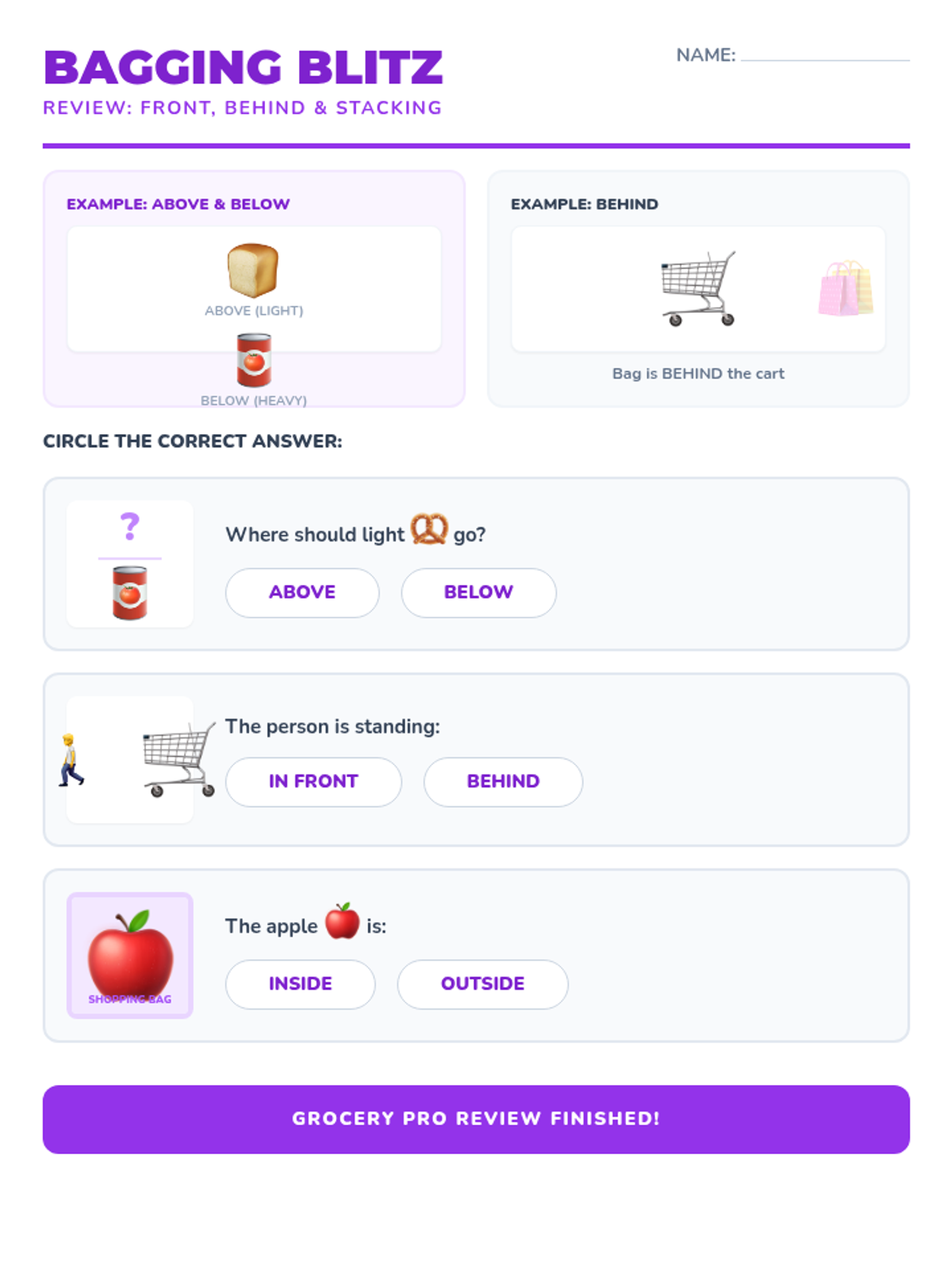
Explores 'in front of' and 'behind' through bagging groceries and cart organization.
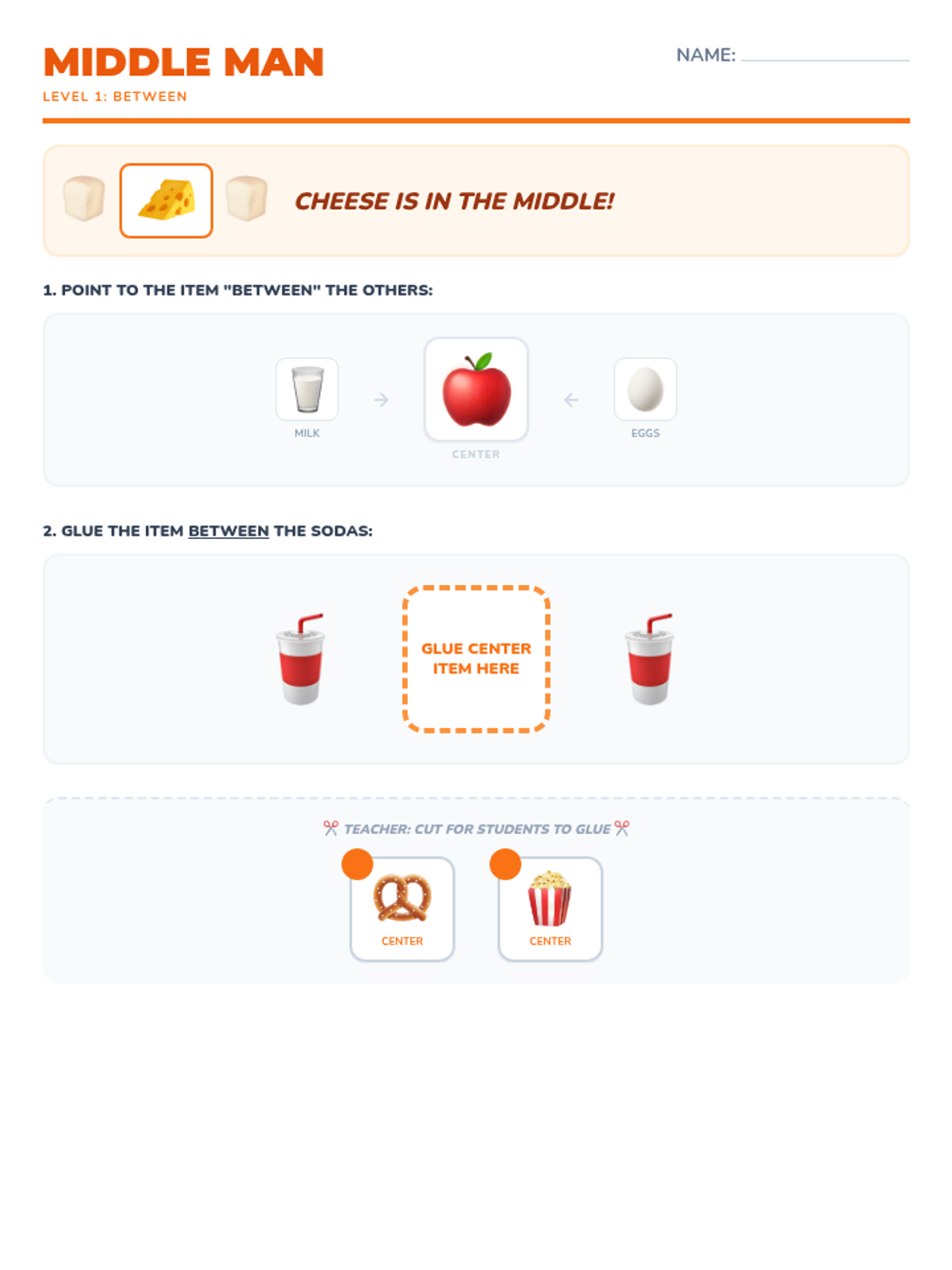
Teaches the concept of 'between' using shelf layouts and checkout line scenarios.
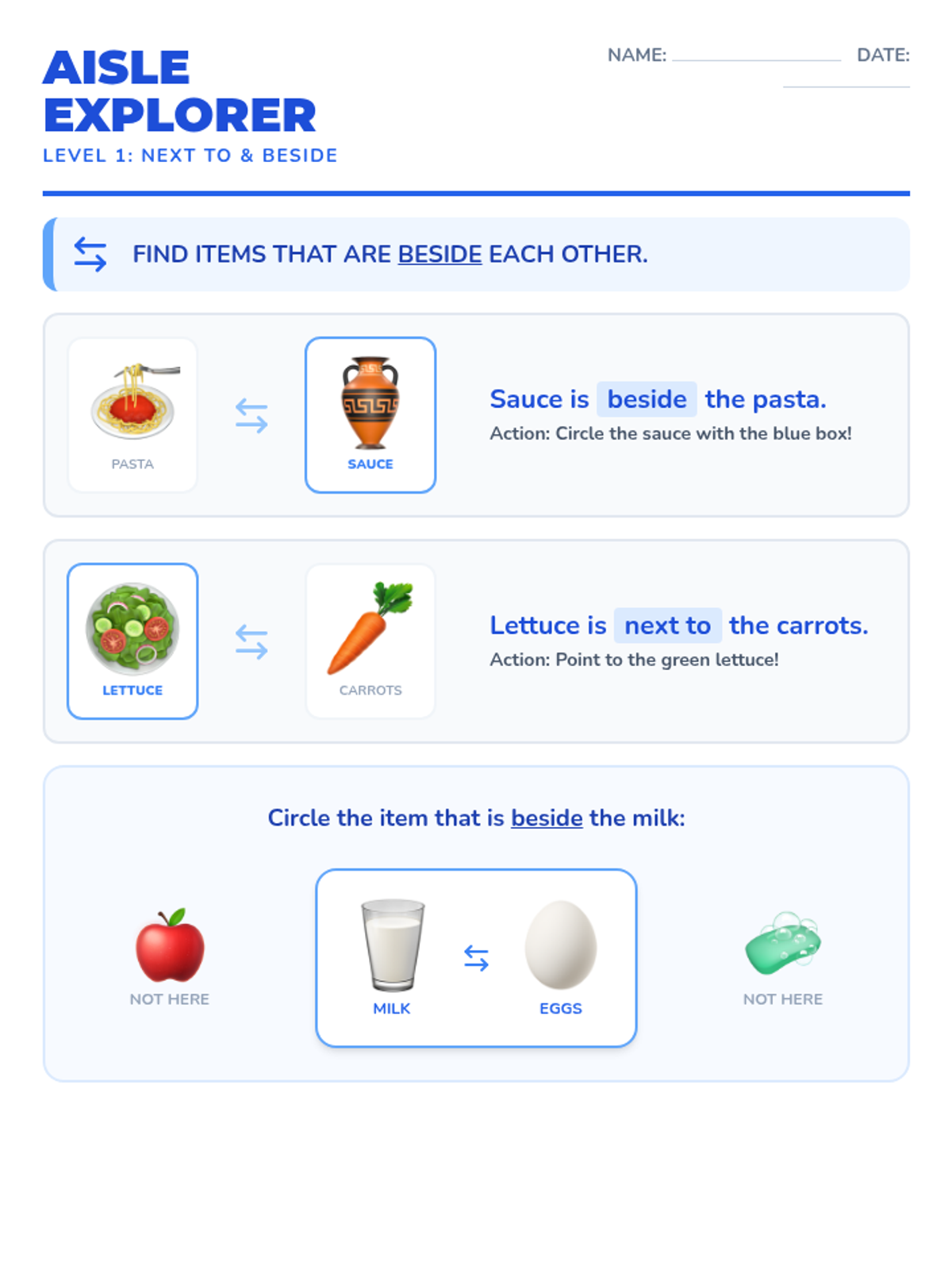
Introduces 'next to' and 'beside' concepts by navigating grocery aisles and finding neighboring items.
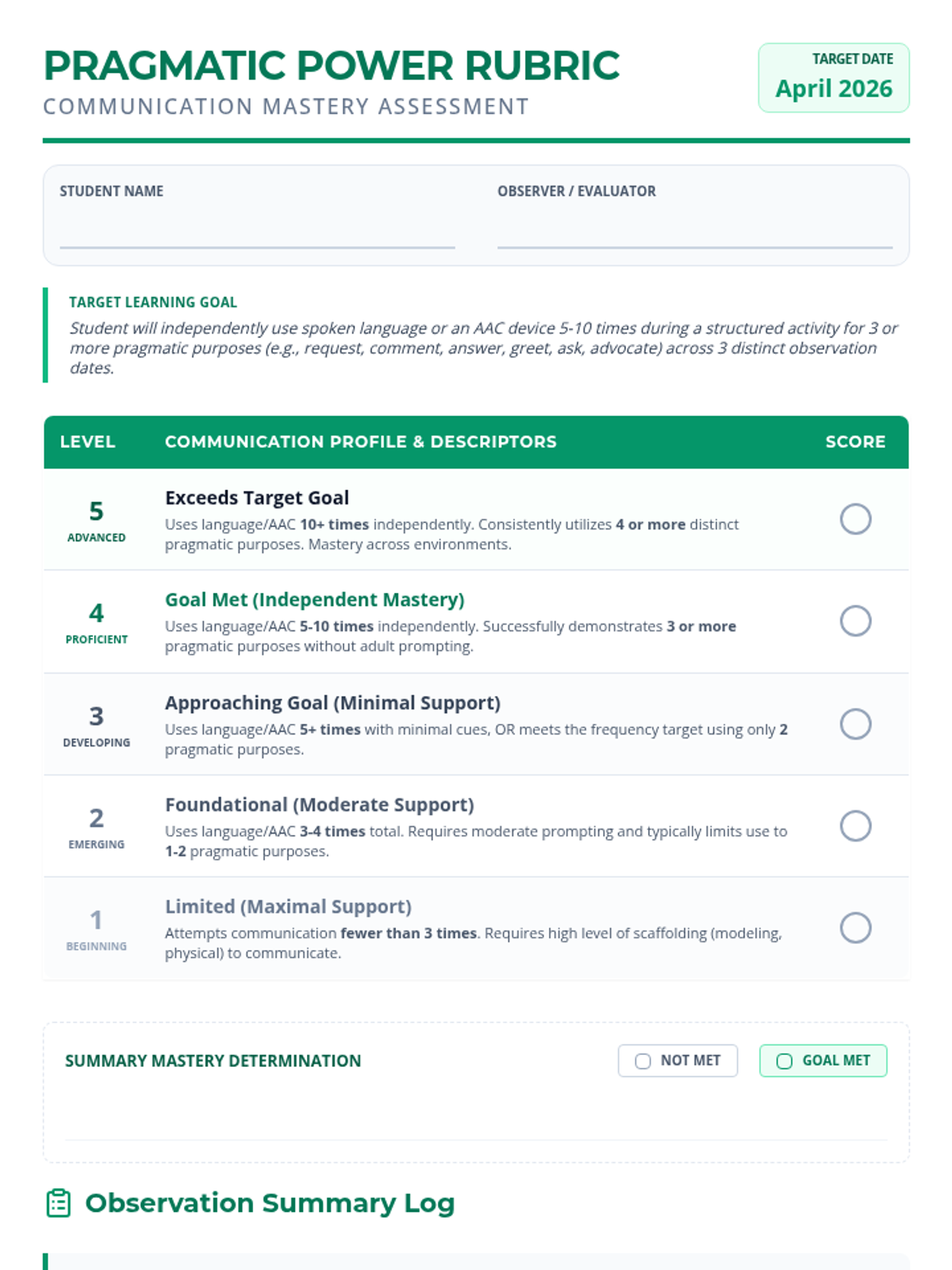
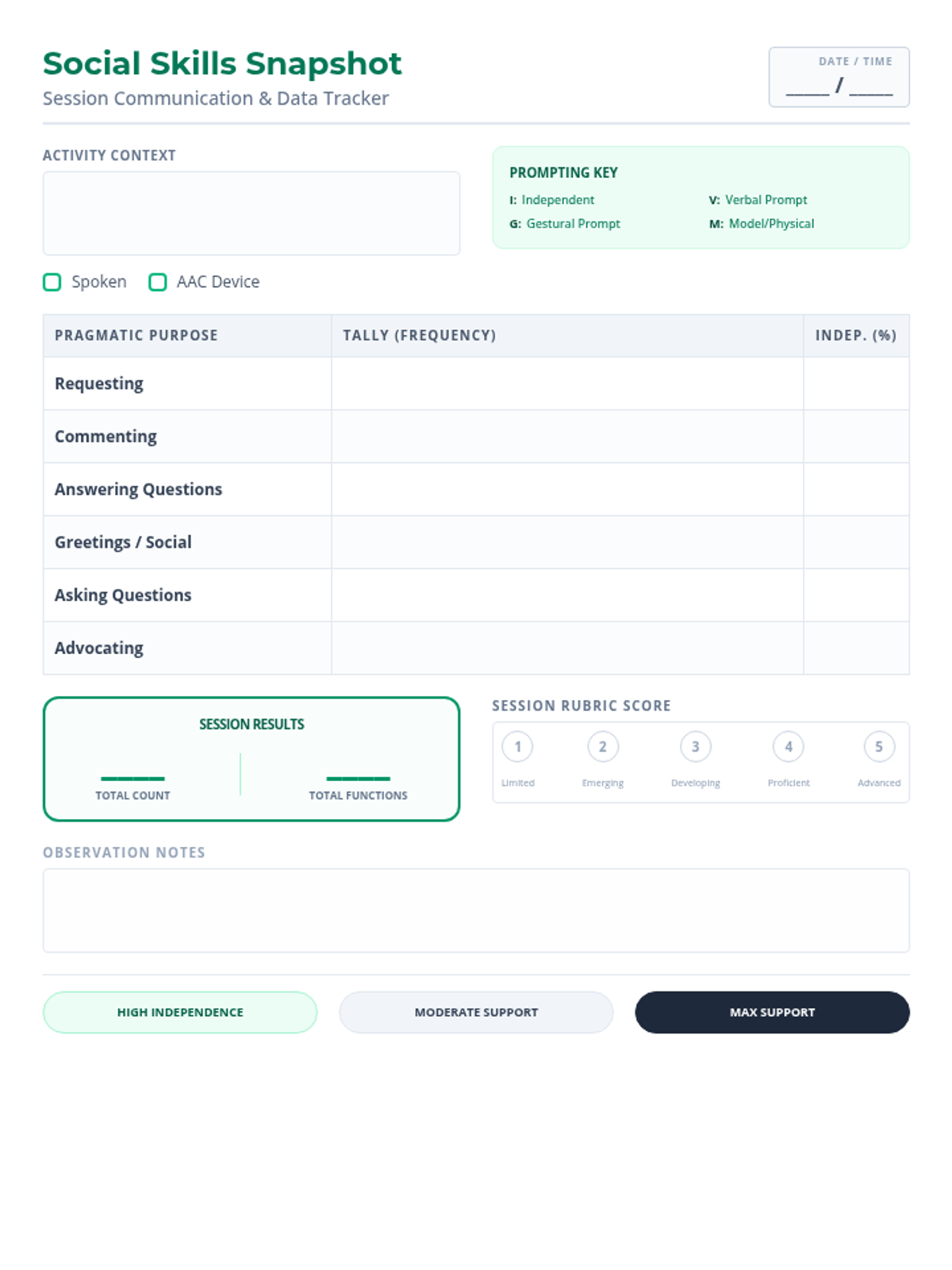
A comprehensive evaluation tool designed to track and measure a student's progress toward mastering various pragmatic communication functions using spoken language or AAC devices.
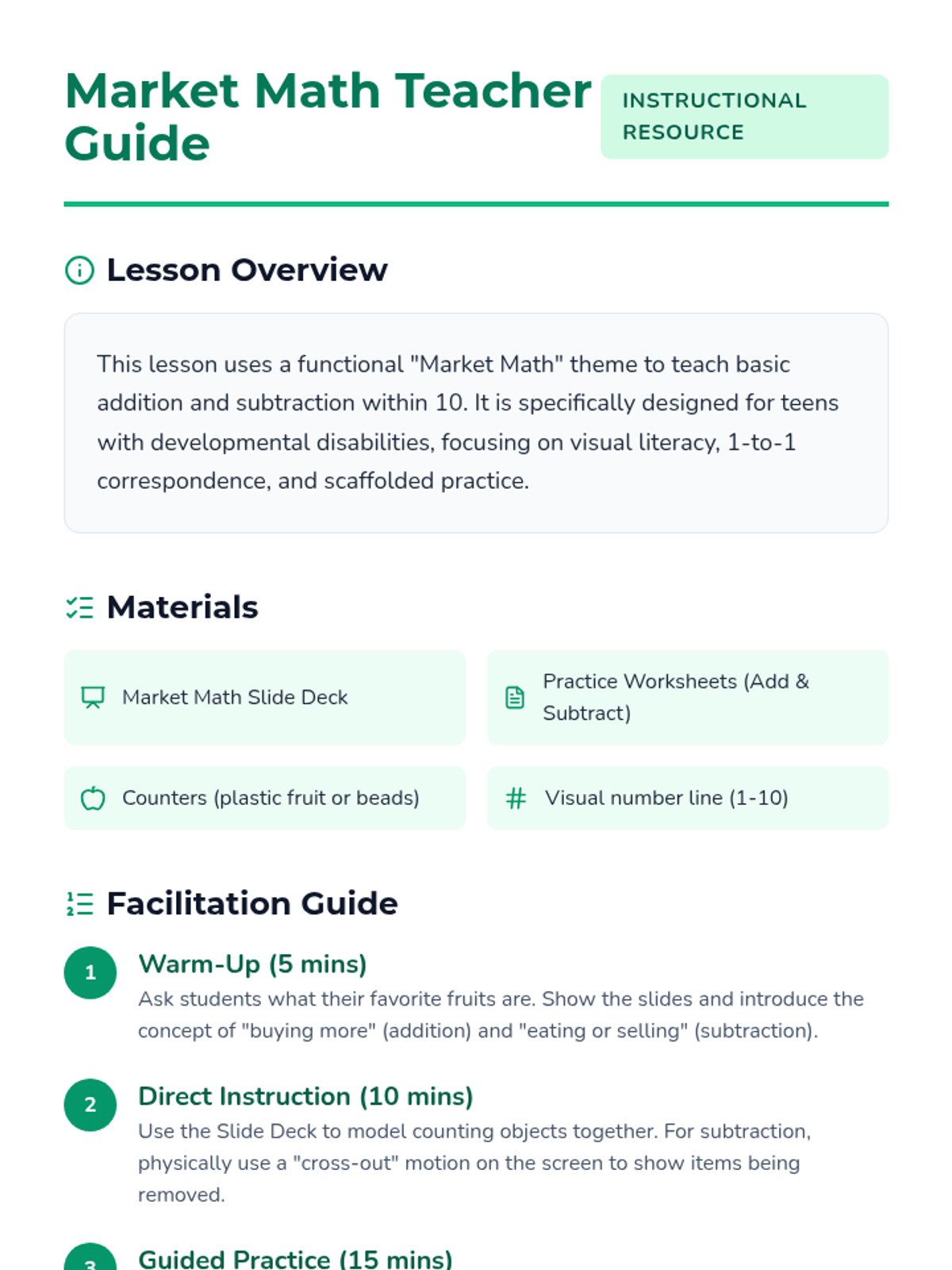
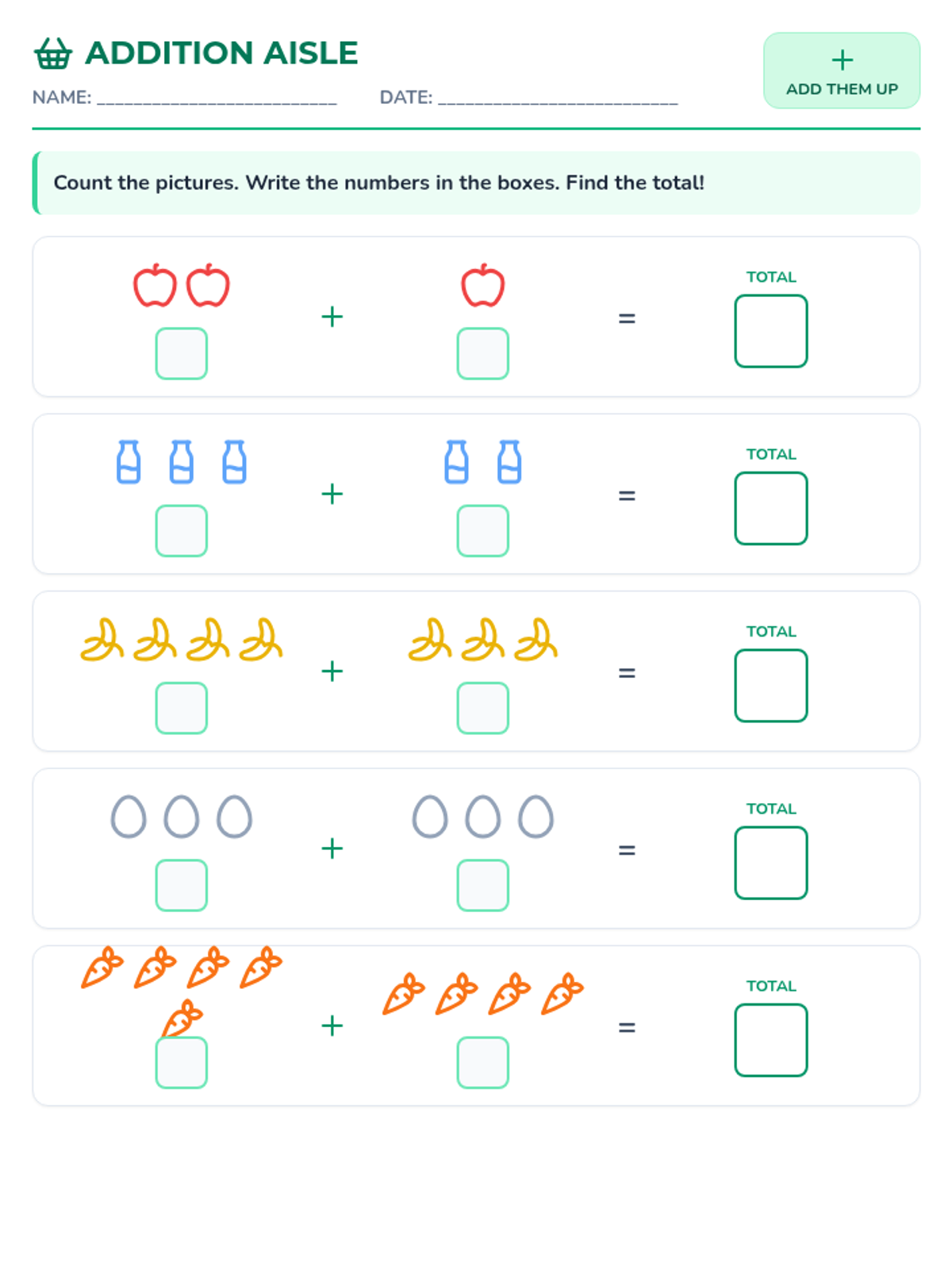
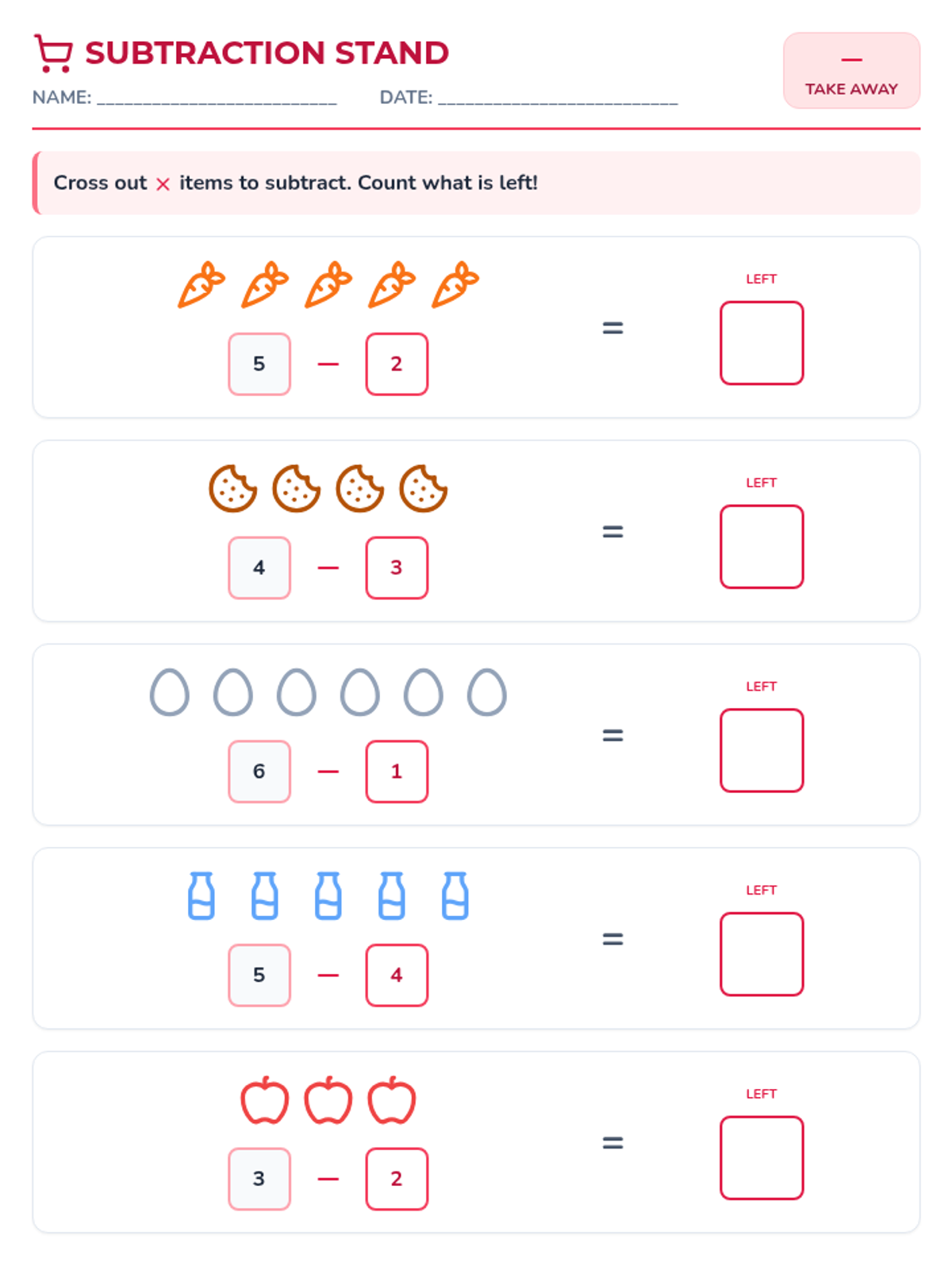
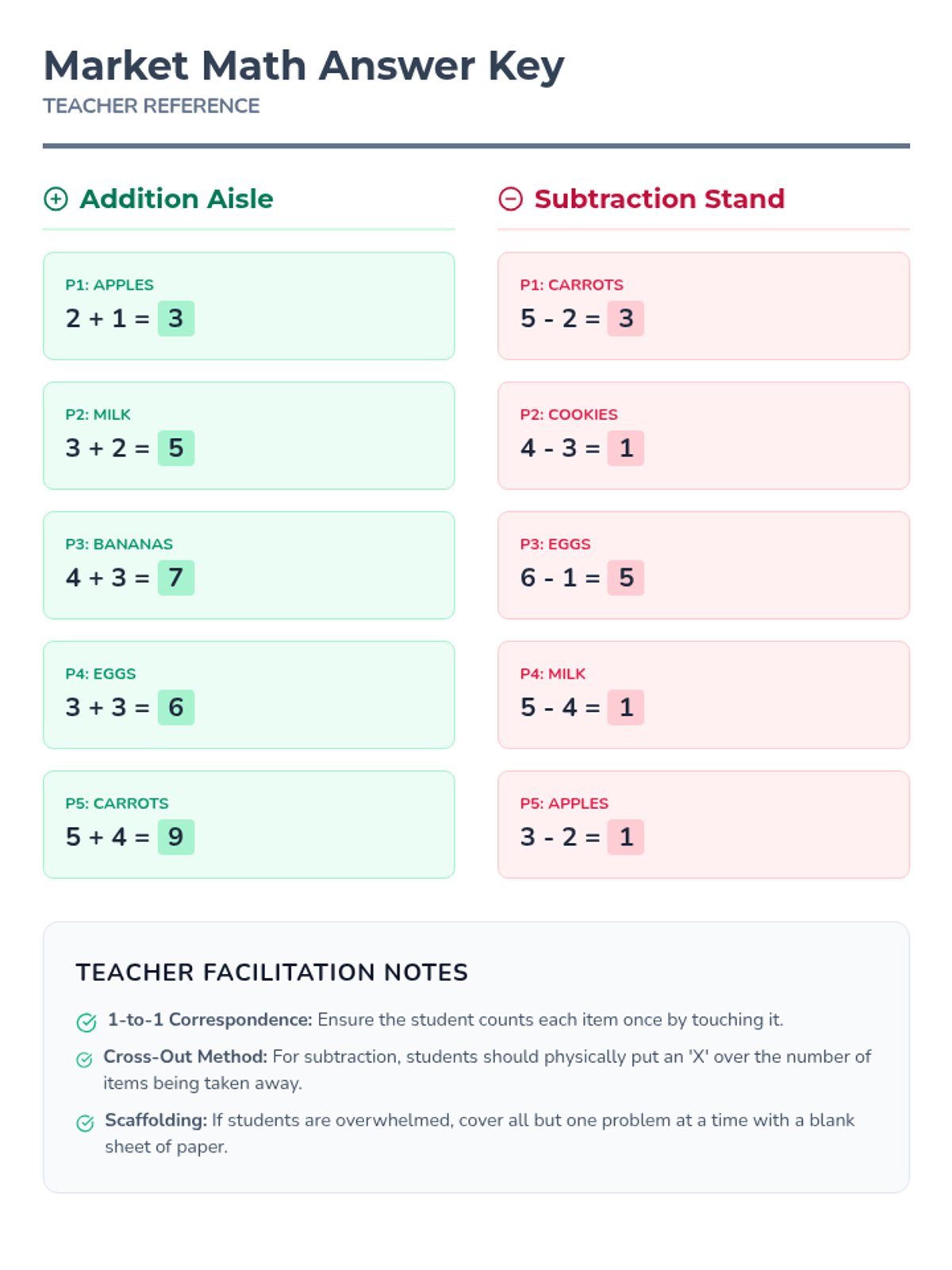
A functional math lesson focusing on basic addition and subtraction within 20 using a grocery store theme. Designed for teens with developmental disabilities, it emphasizes visual aids and real-world application.
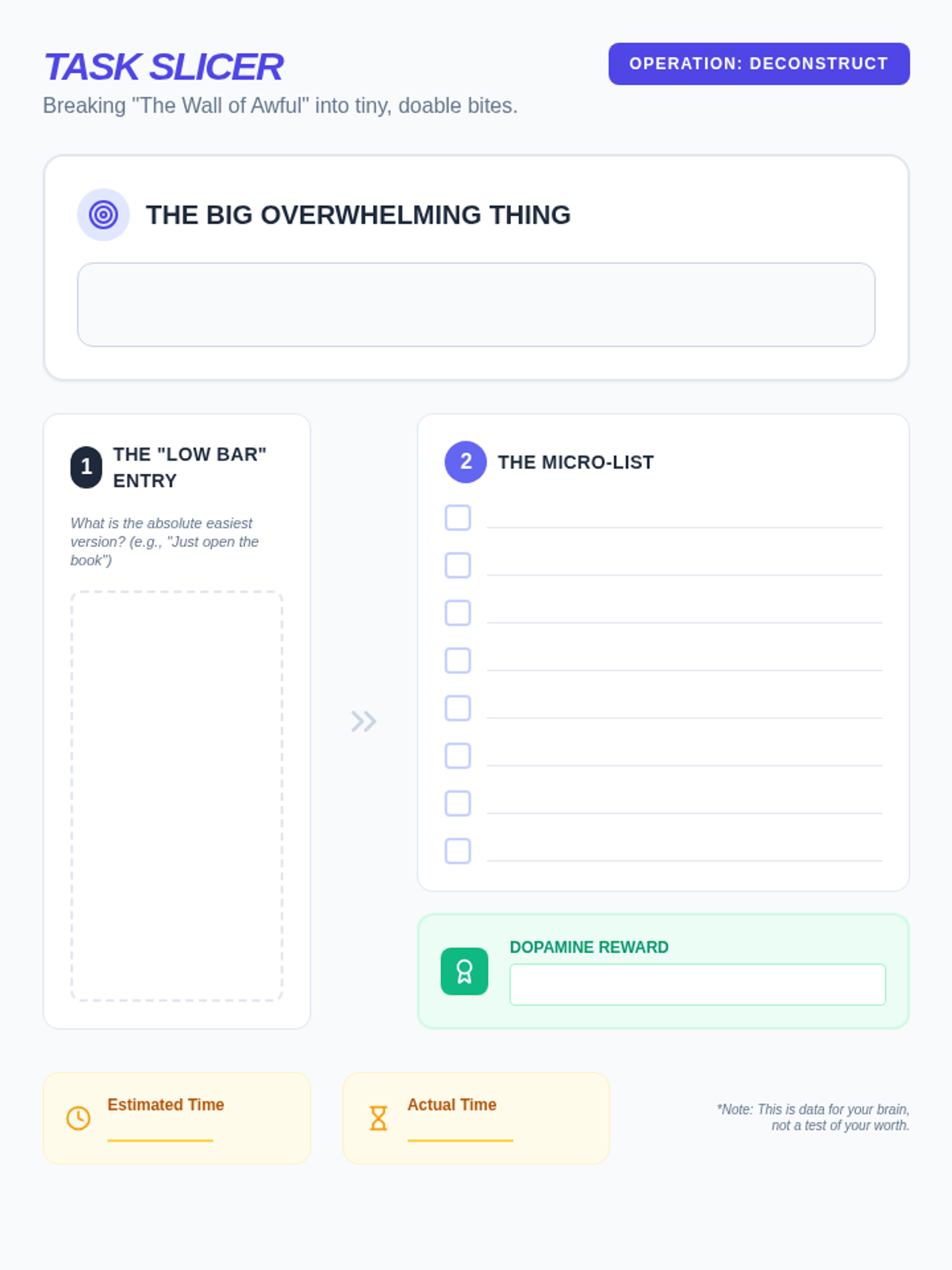
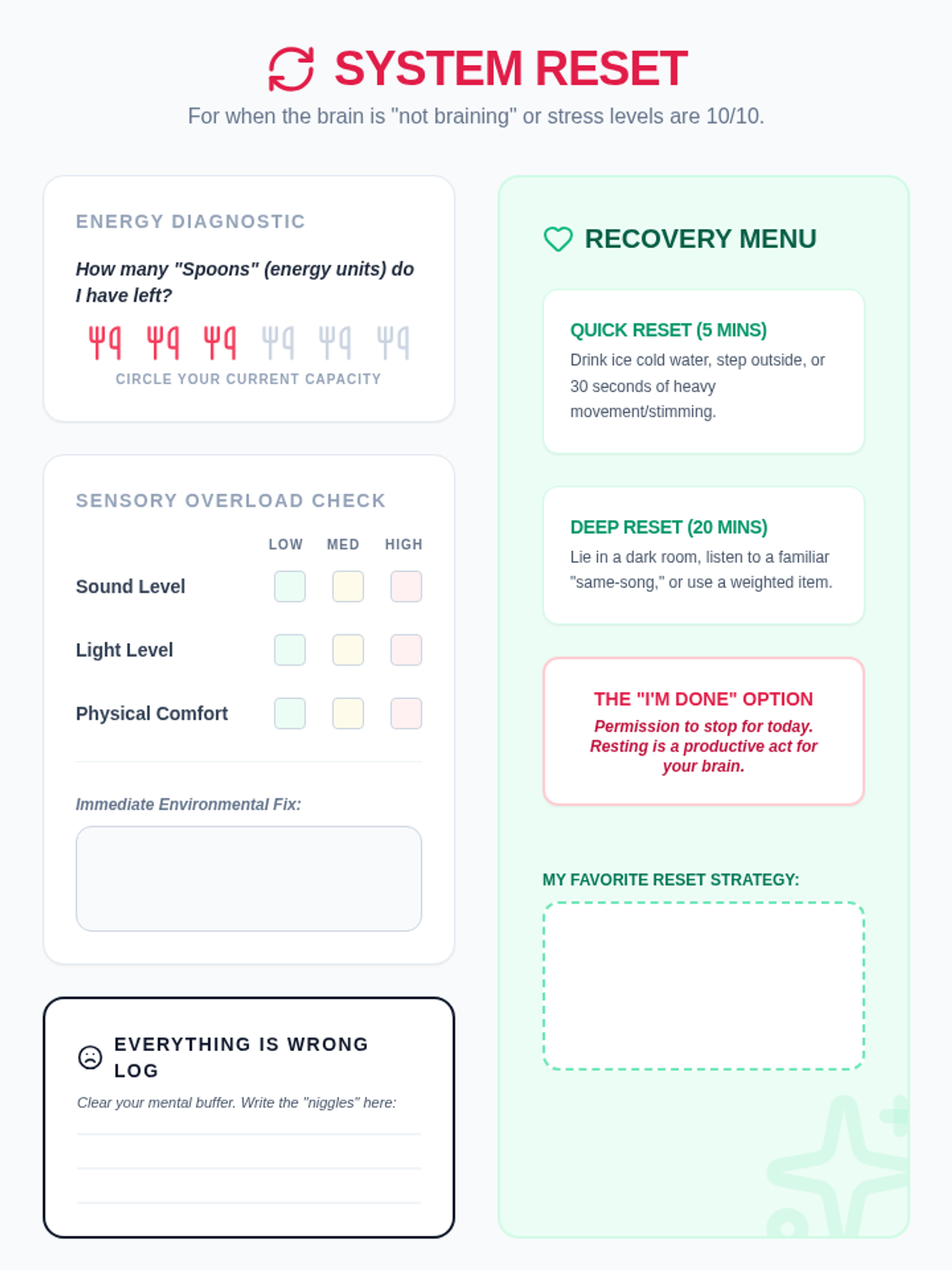
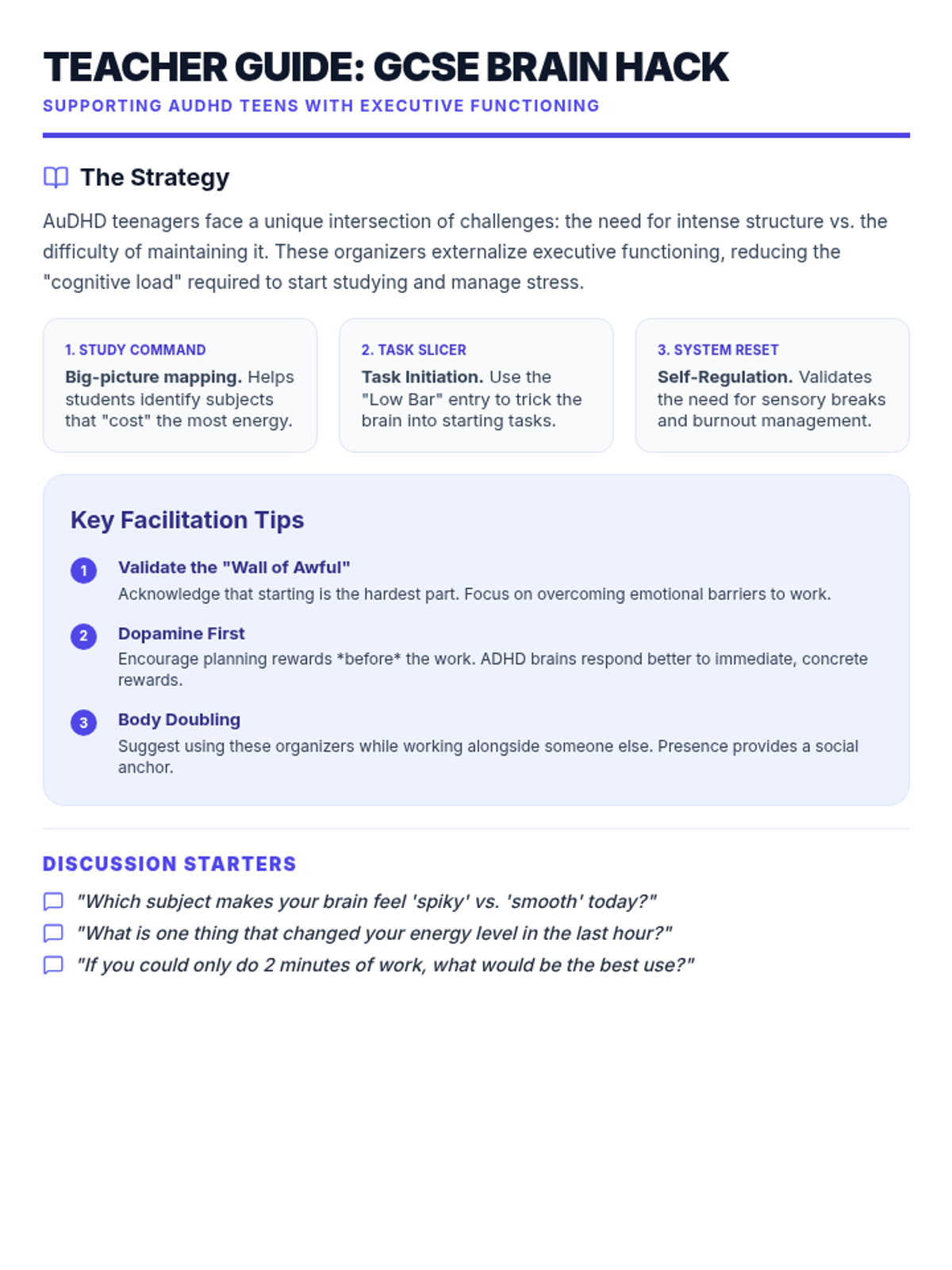
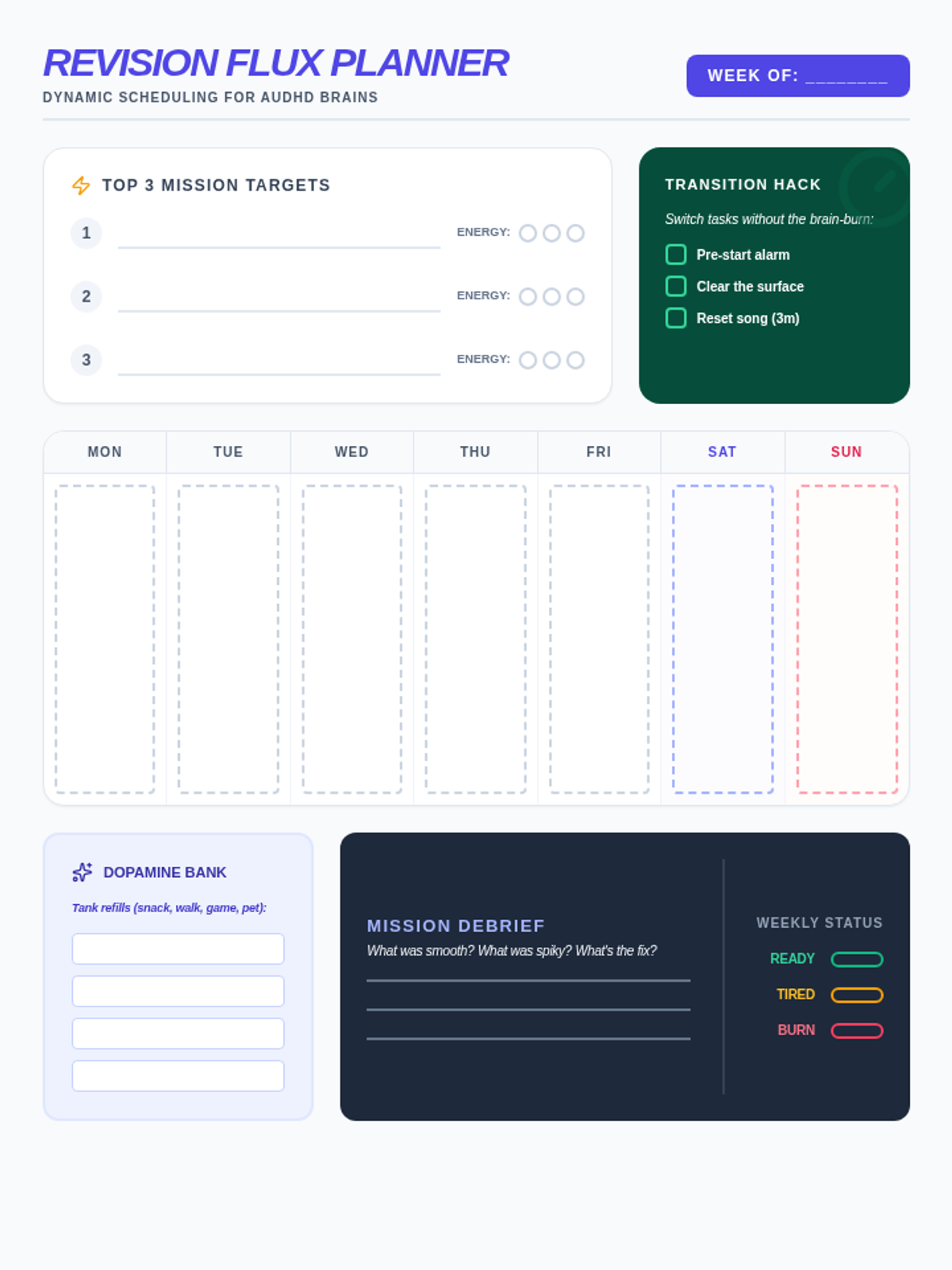
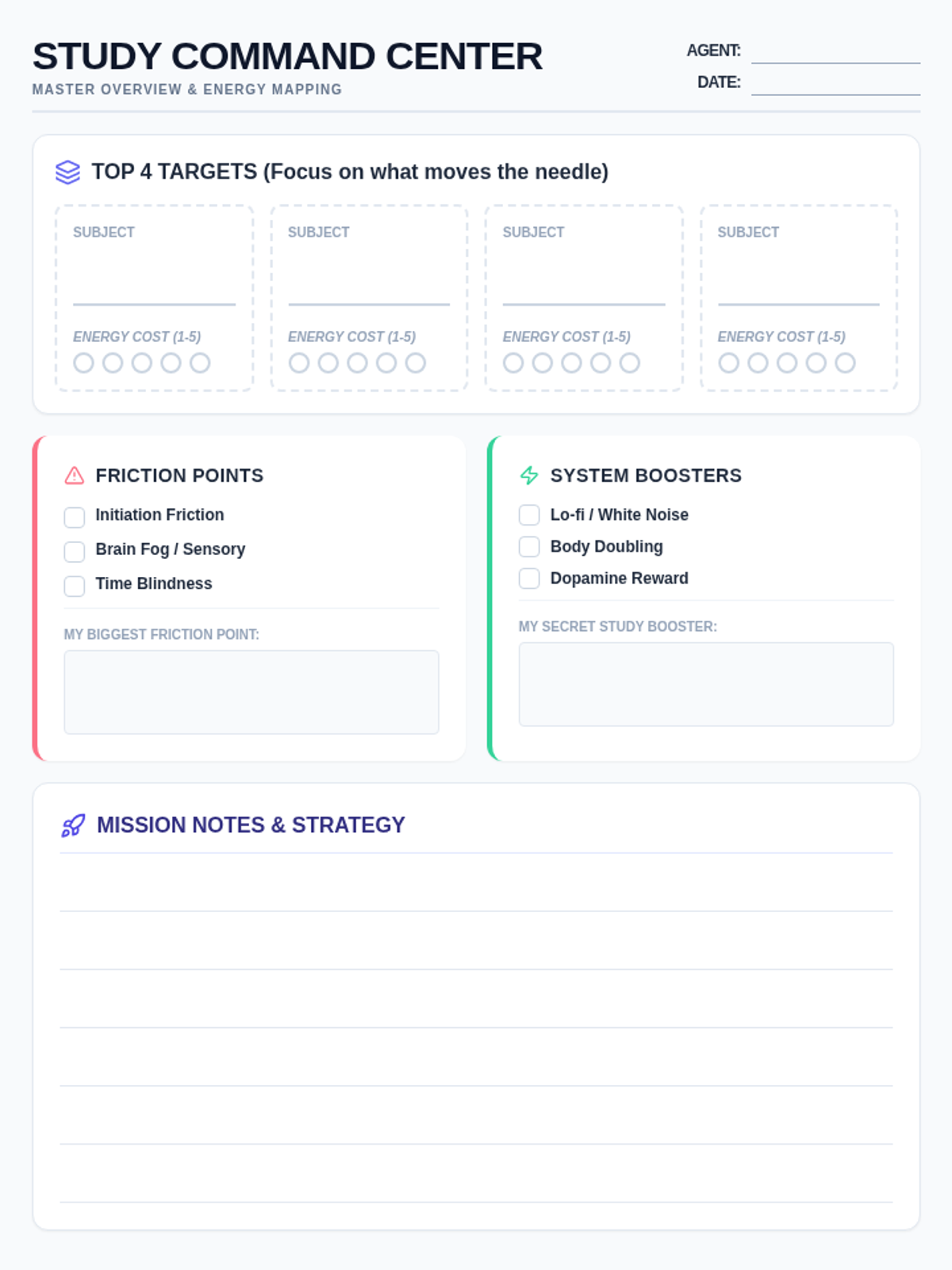
A collection of graphic organizers and strategies designed specifically for AuDHD teenagers to manage executive functioning and stress during GCSE exam preparation.
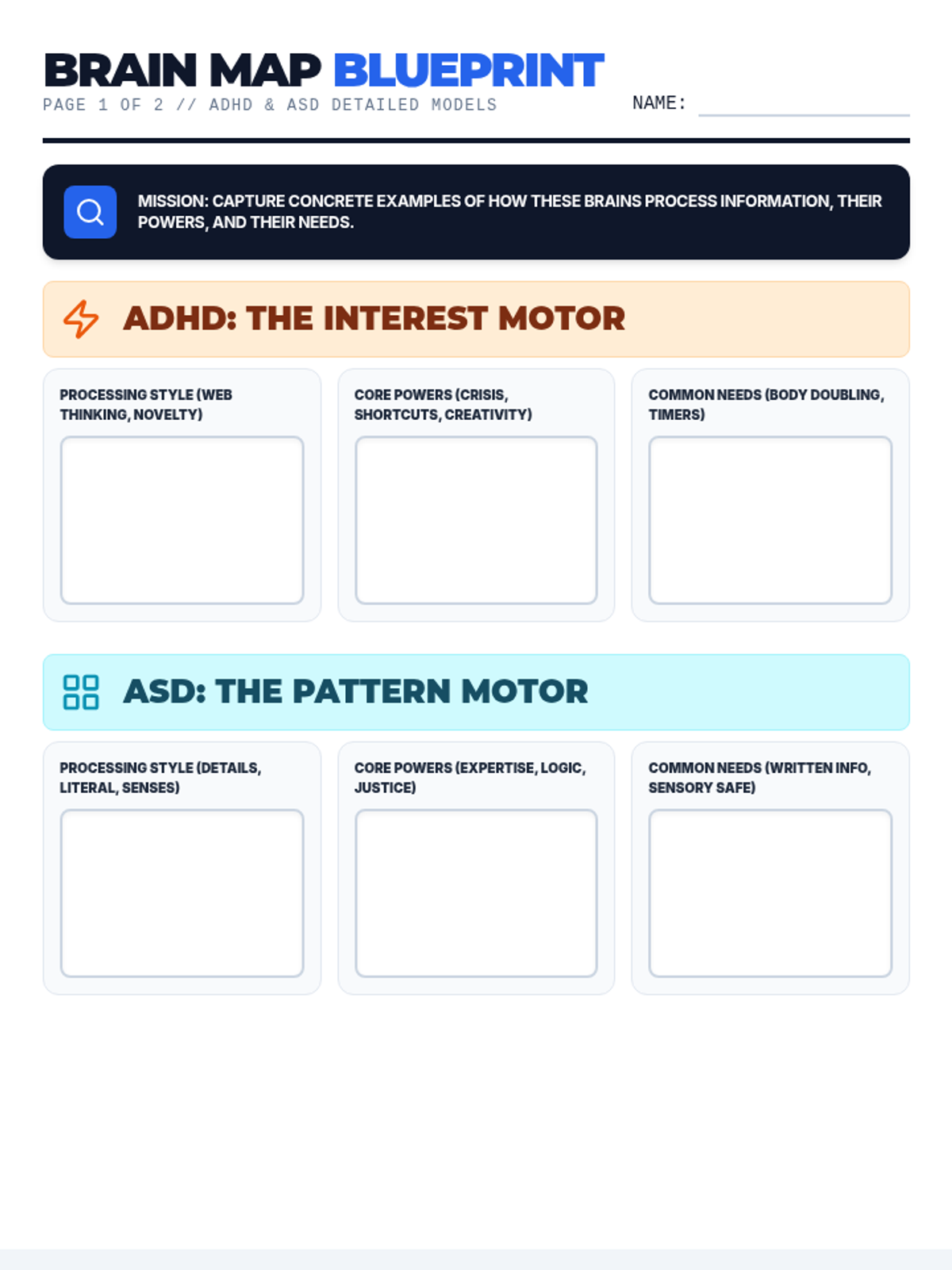
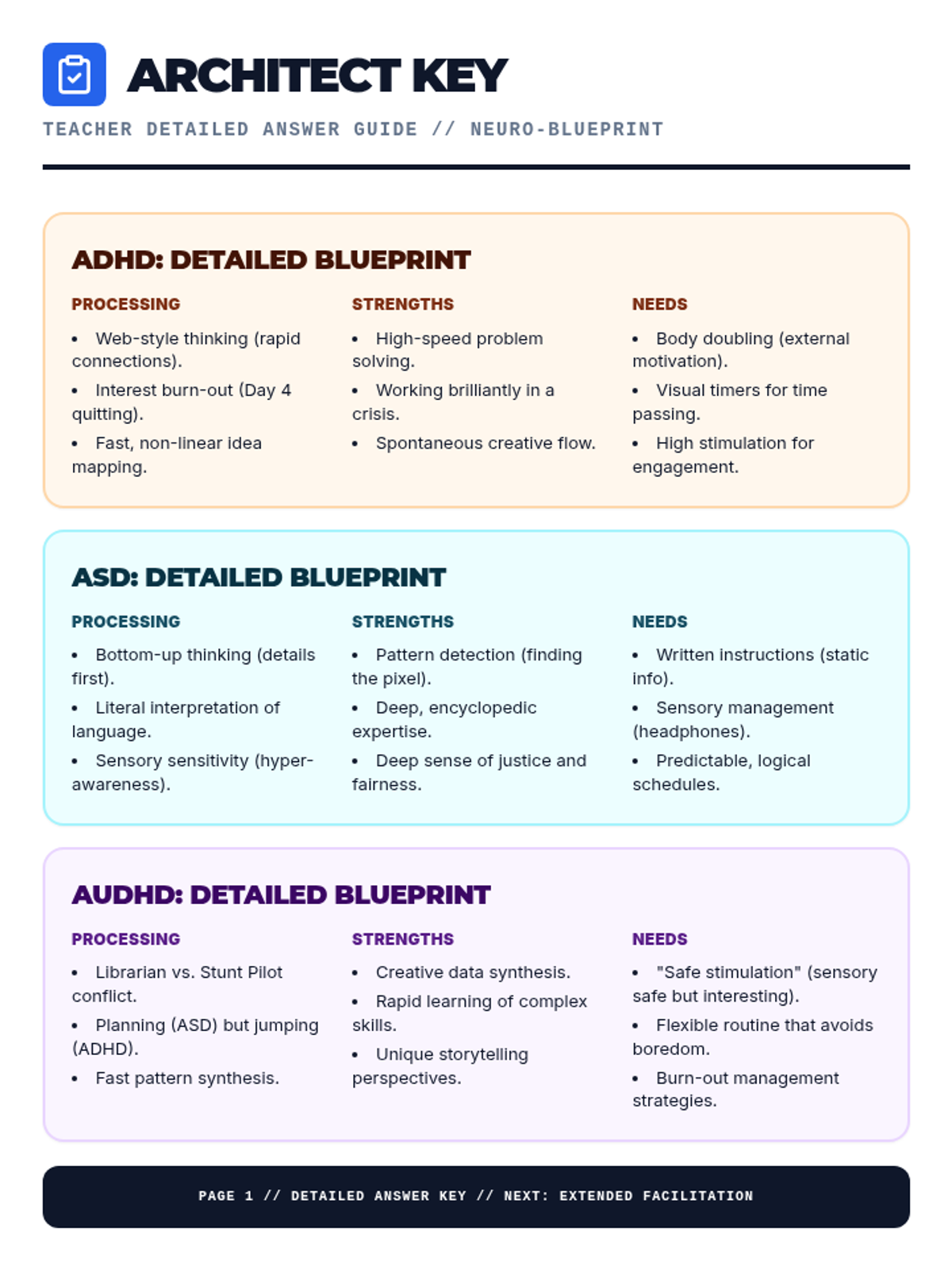
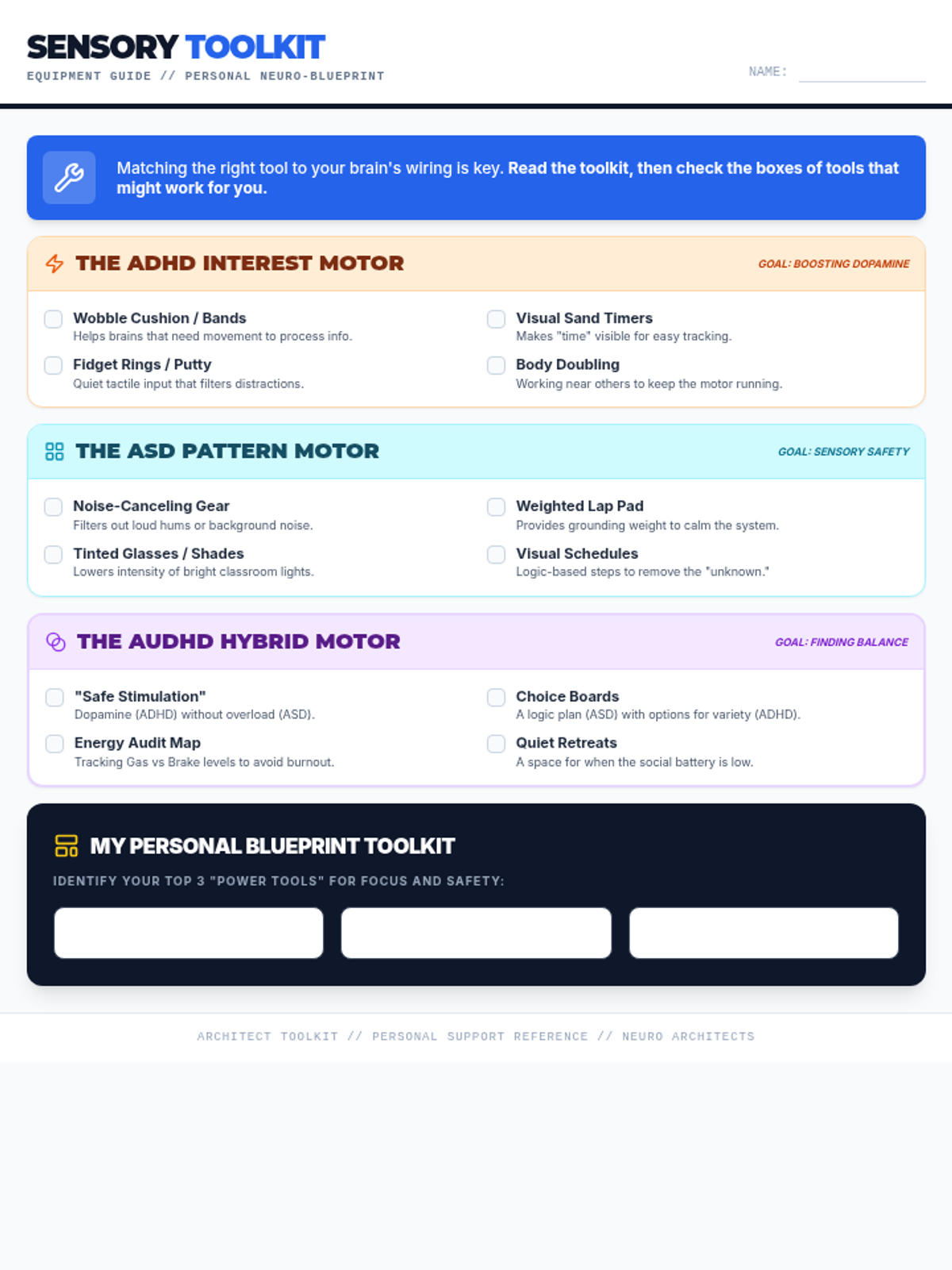
An exploration of the unique wiring of ADHD, ASD, and AuDHD brains through visual mapping and blueprinting. Students learn to identify key processing differences and strengths associated with each neurotype using a visual-first approach.
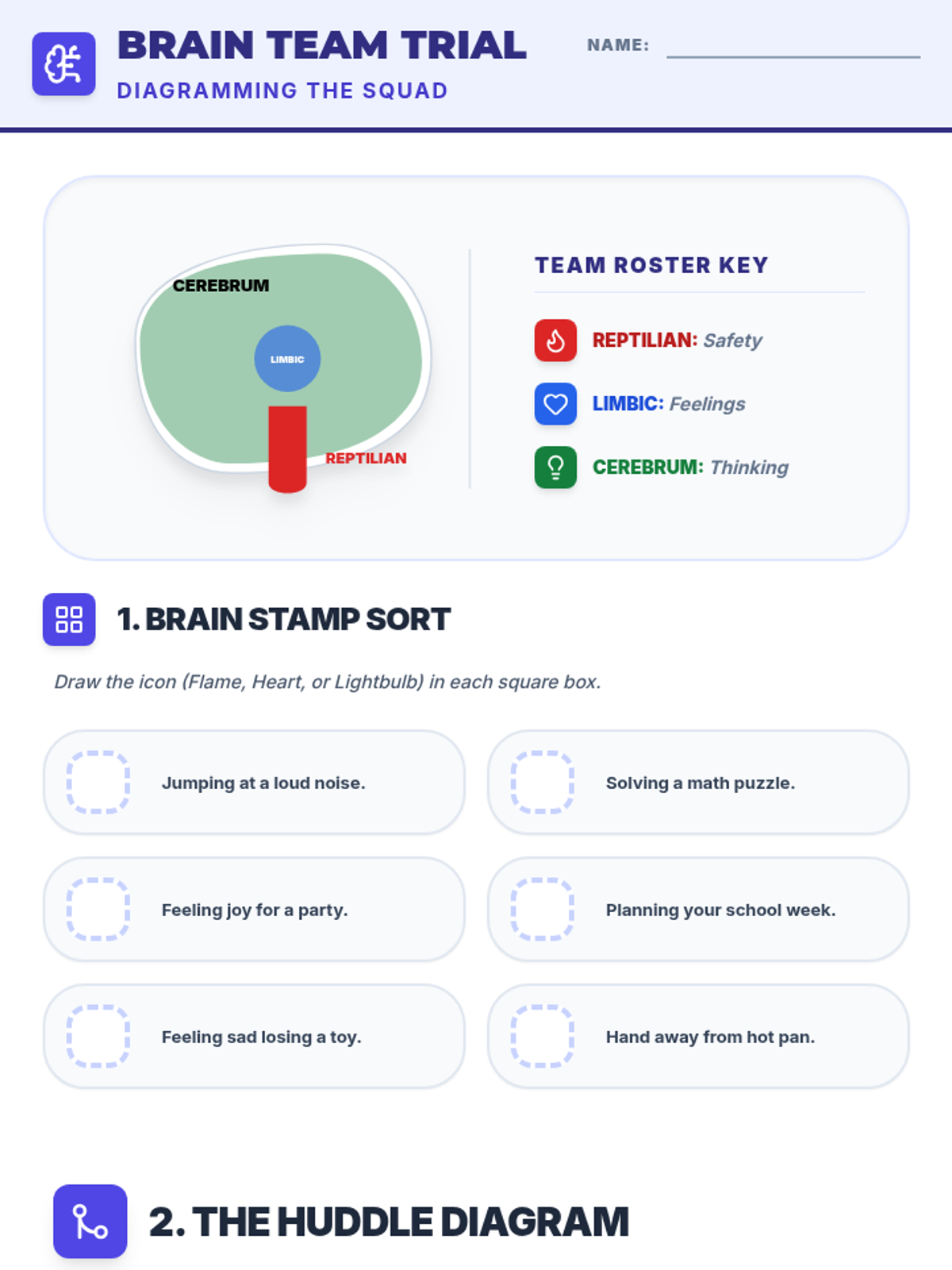
Exploring the foundational layers of the brain—the Reptilian Brain, the Limbic System, and the Cerebellum—to understand how survival instincts, emotions, and physical coordination work together.
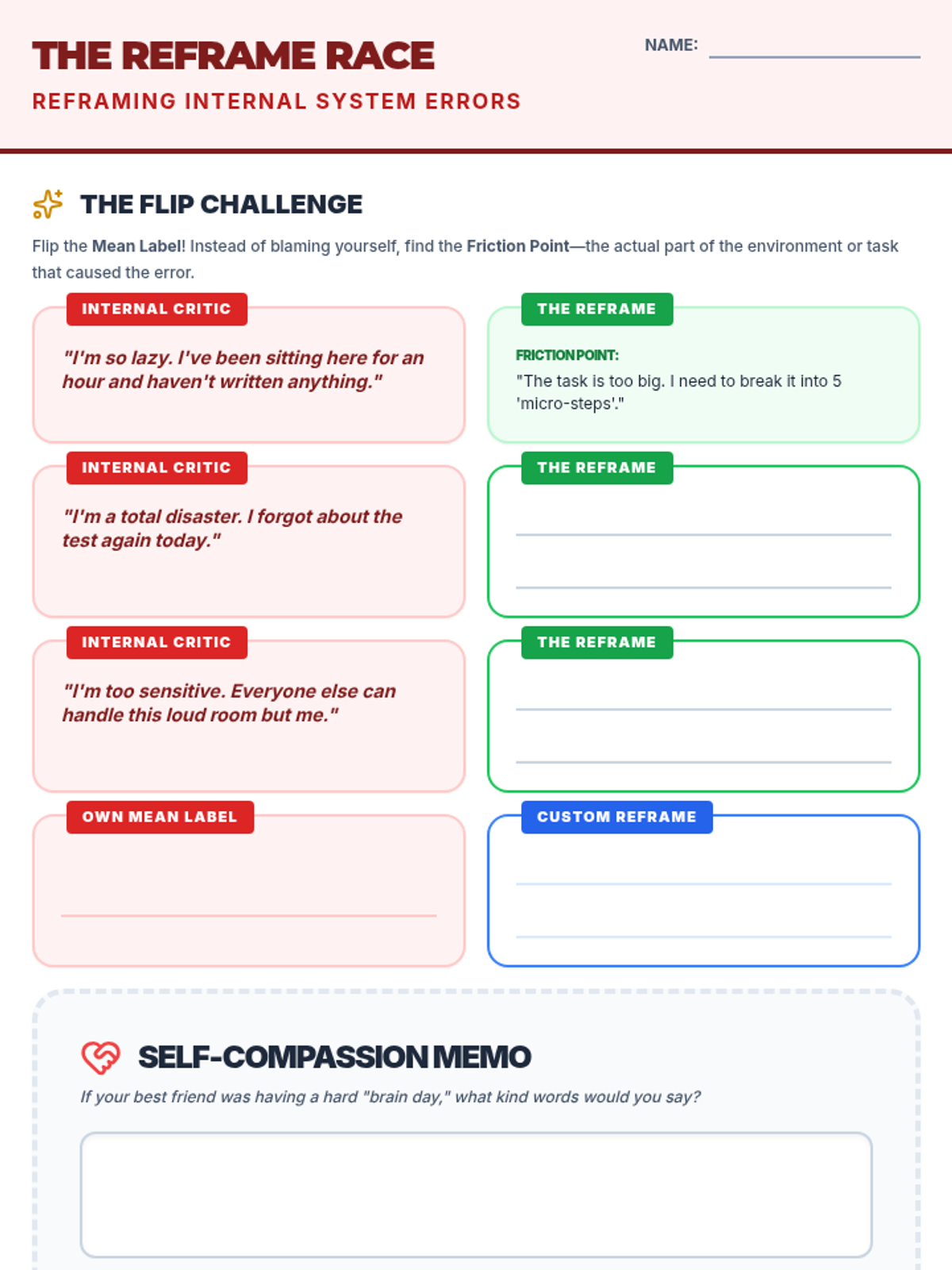
Developing a growth mindset specifically tailored for neurodivergent experiences, focusing on self-compassion and reframing challenges.
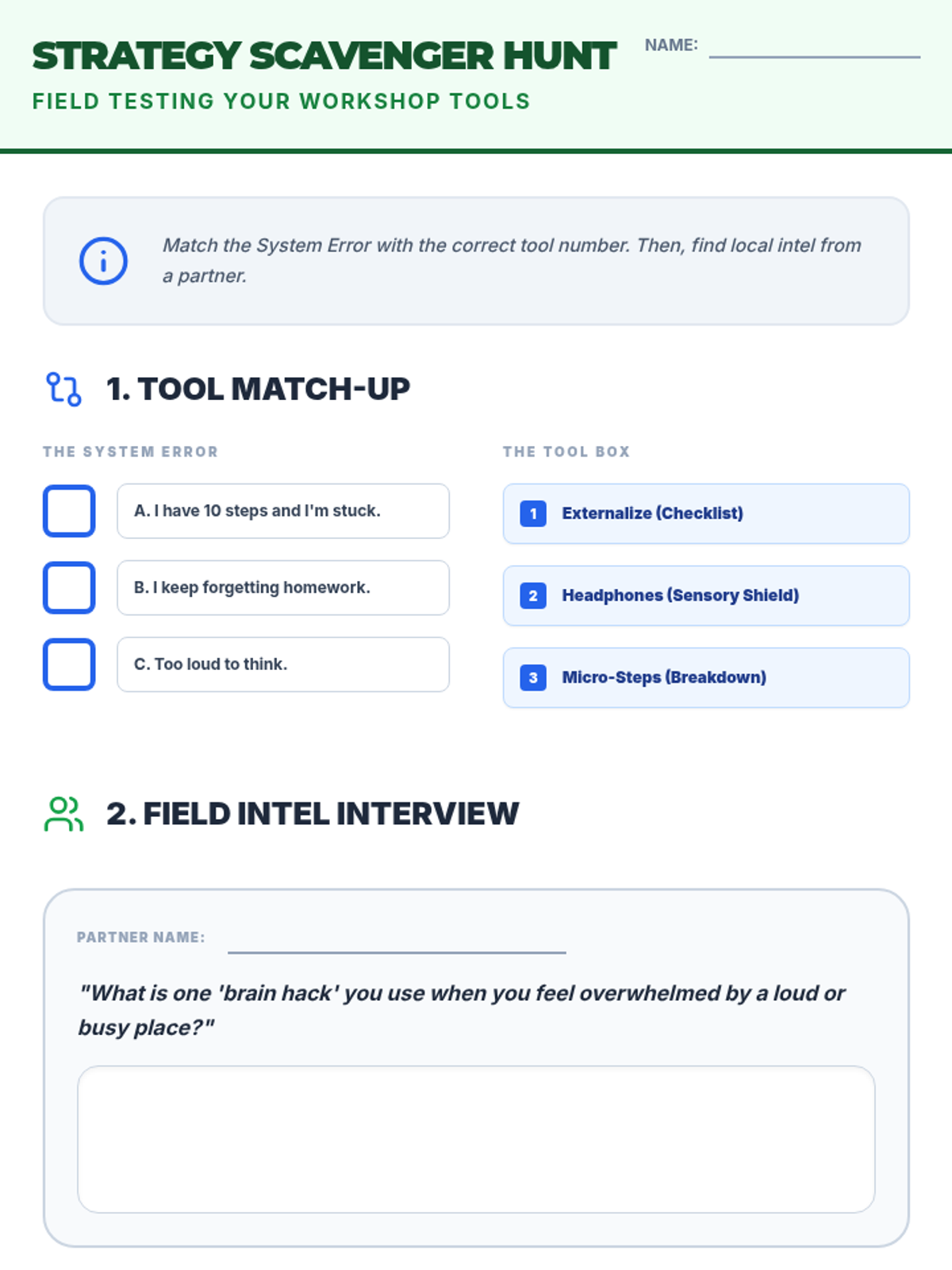
Practical strategies for managing time, focus, and sensory needs by working with the brain's natural tendencies.