A professional development lesson designed for school staff to practice resolving parent-staff conflicts during Committee on Special Education (CSE) meetings through role-play and structured reflection.
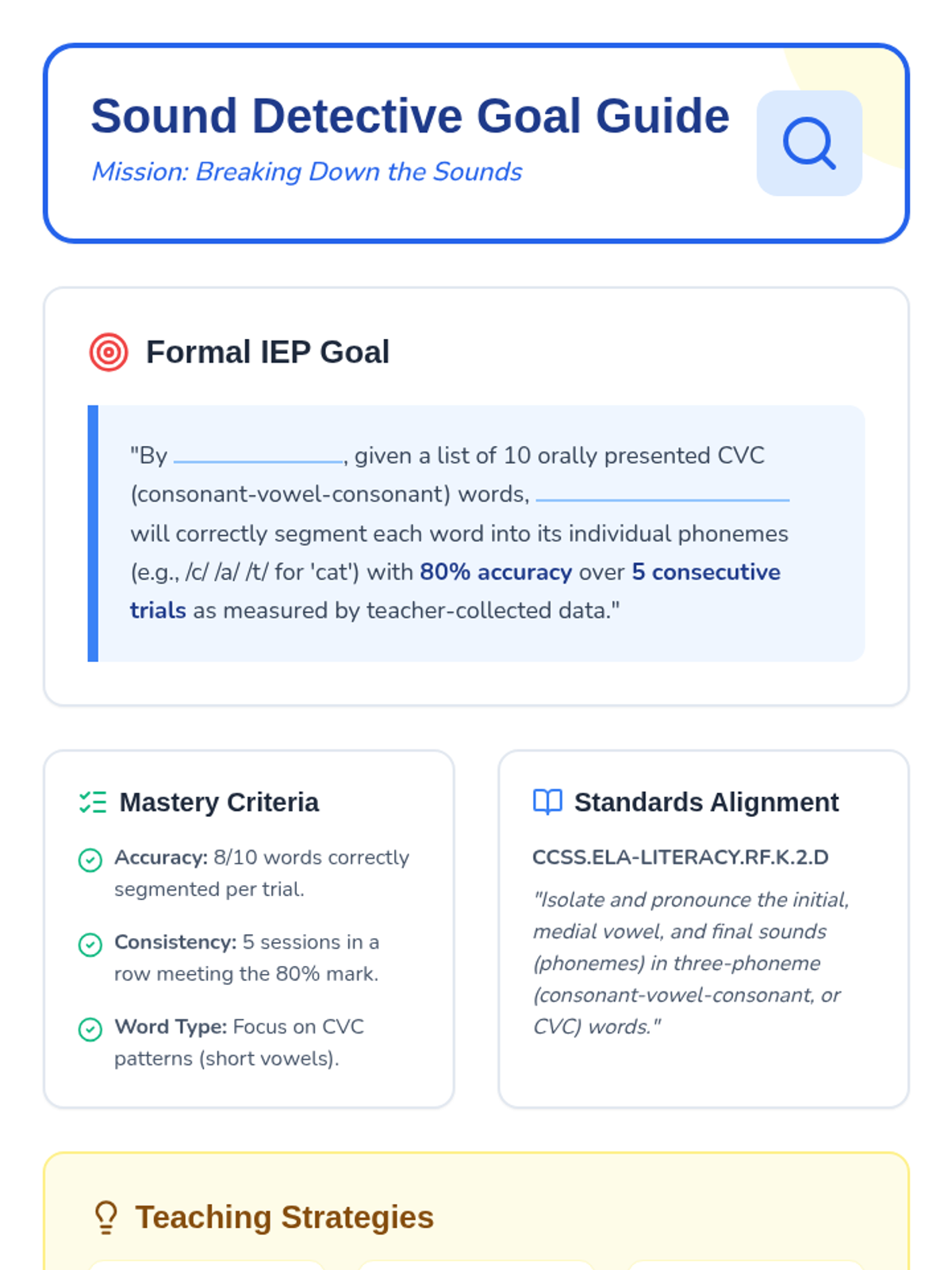
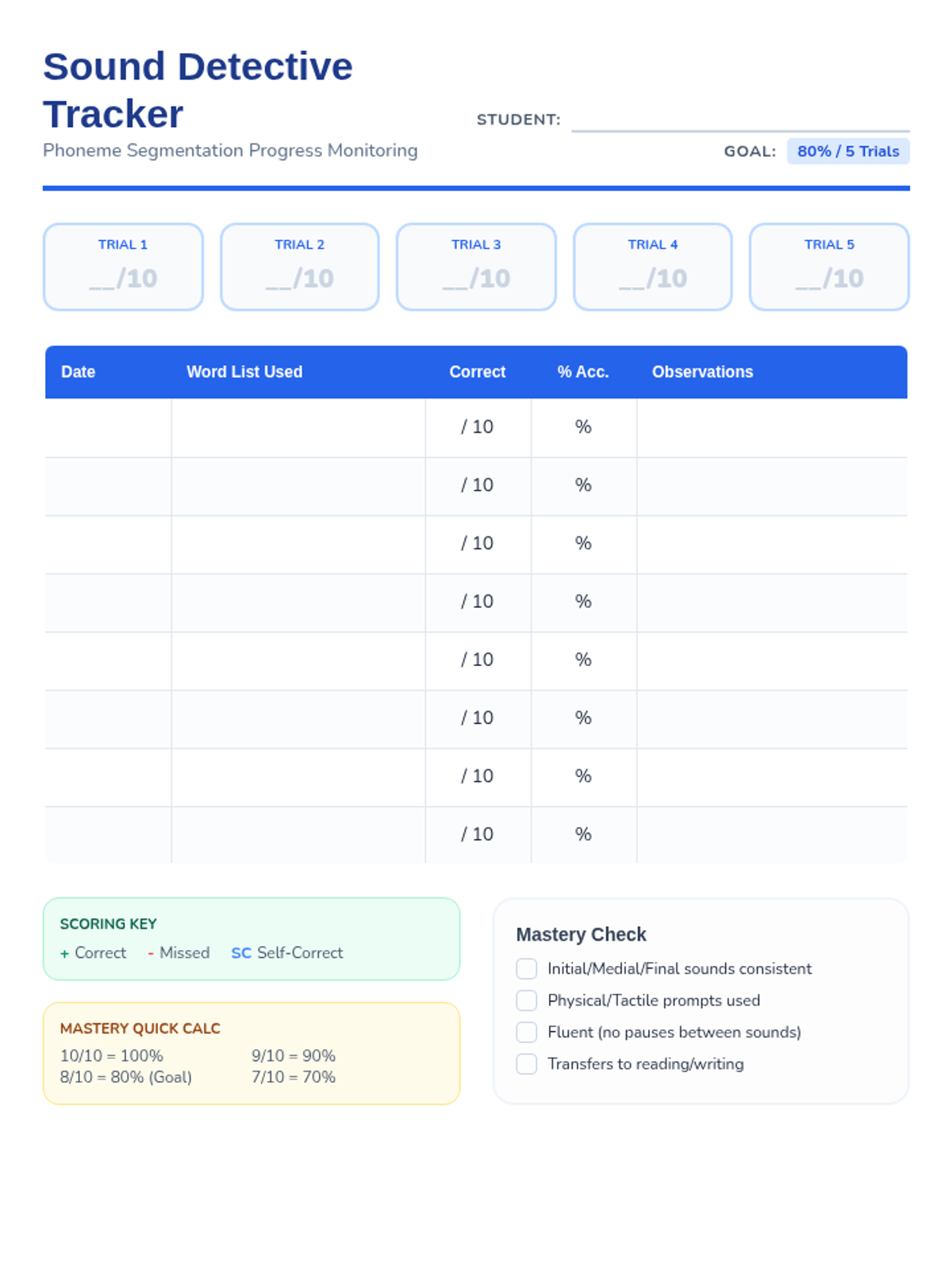
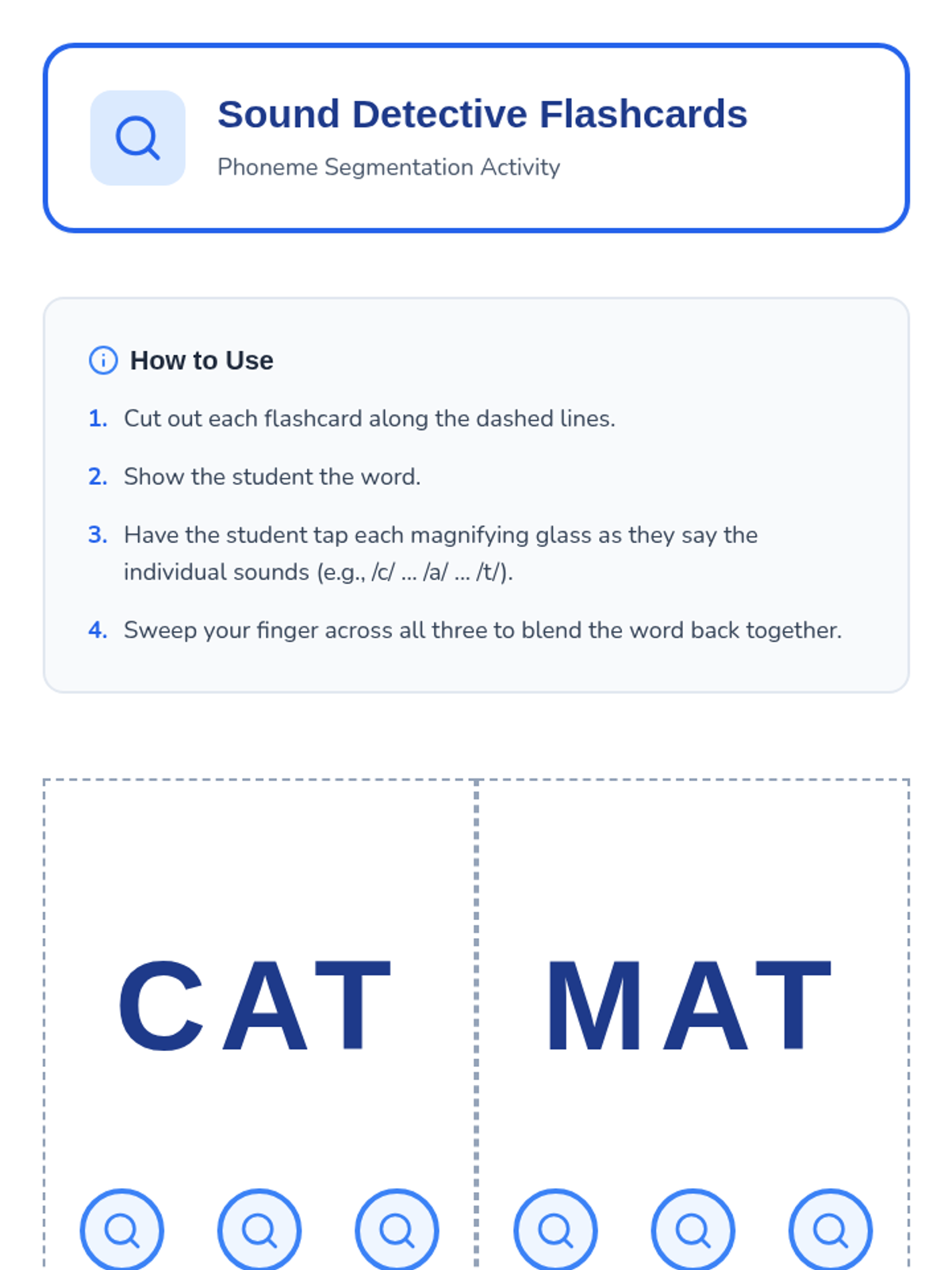
A specialized set of resources for tracking and achieving phoneme segmentation mastery in kindergarten, featuring a formal IEP goal guide and a systematic progress monitoring tracker.
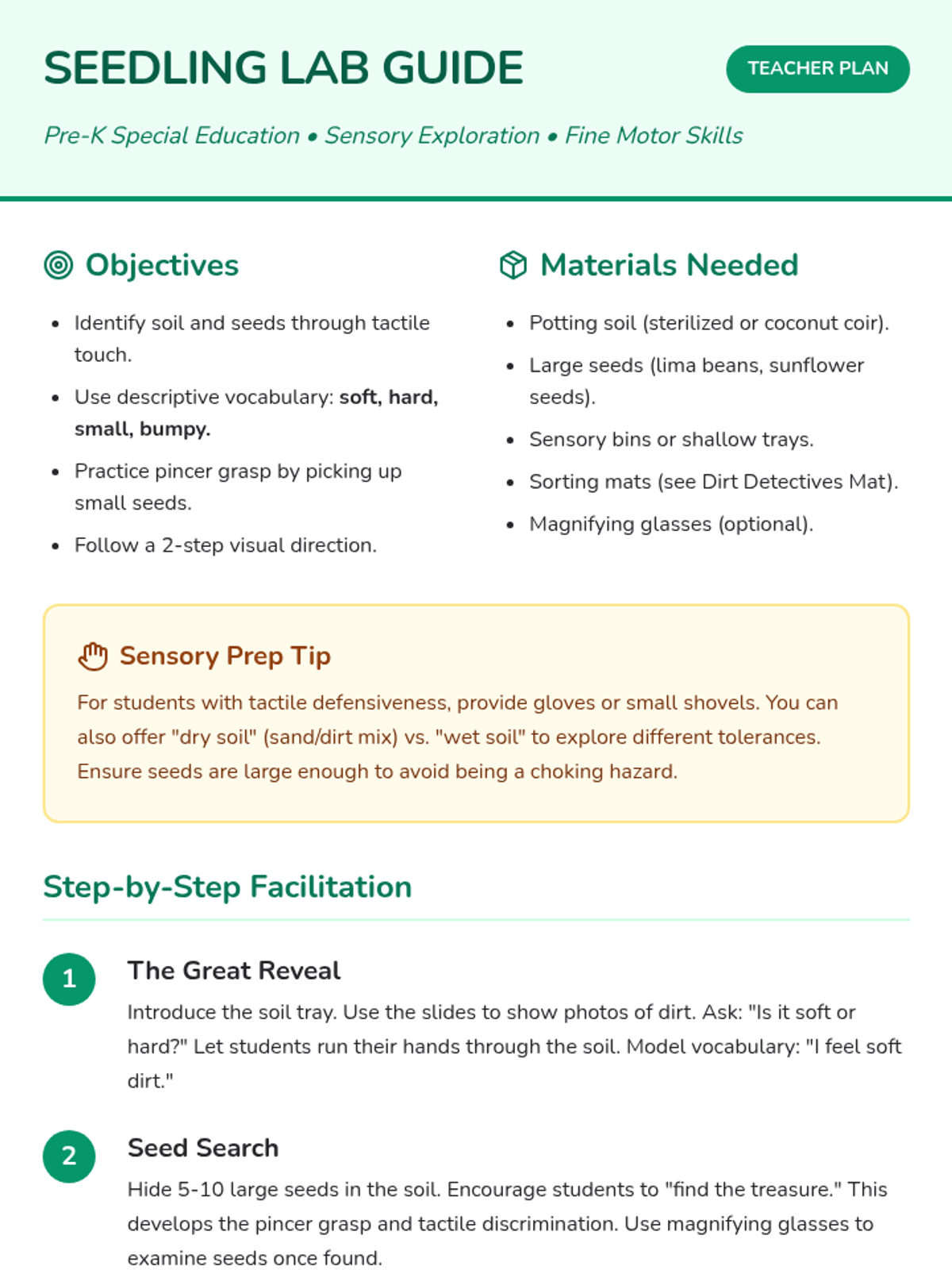
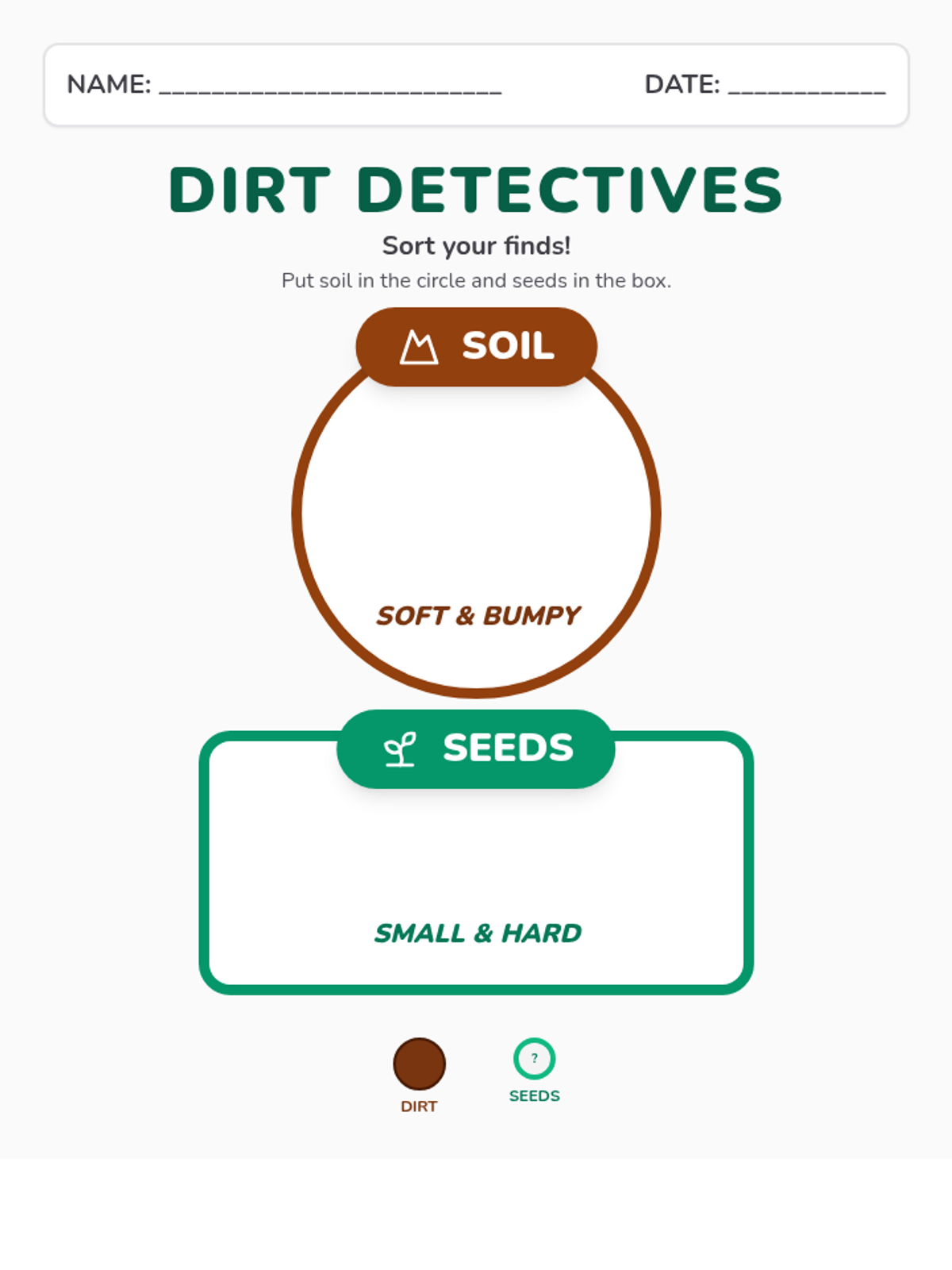
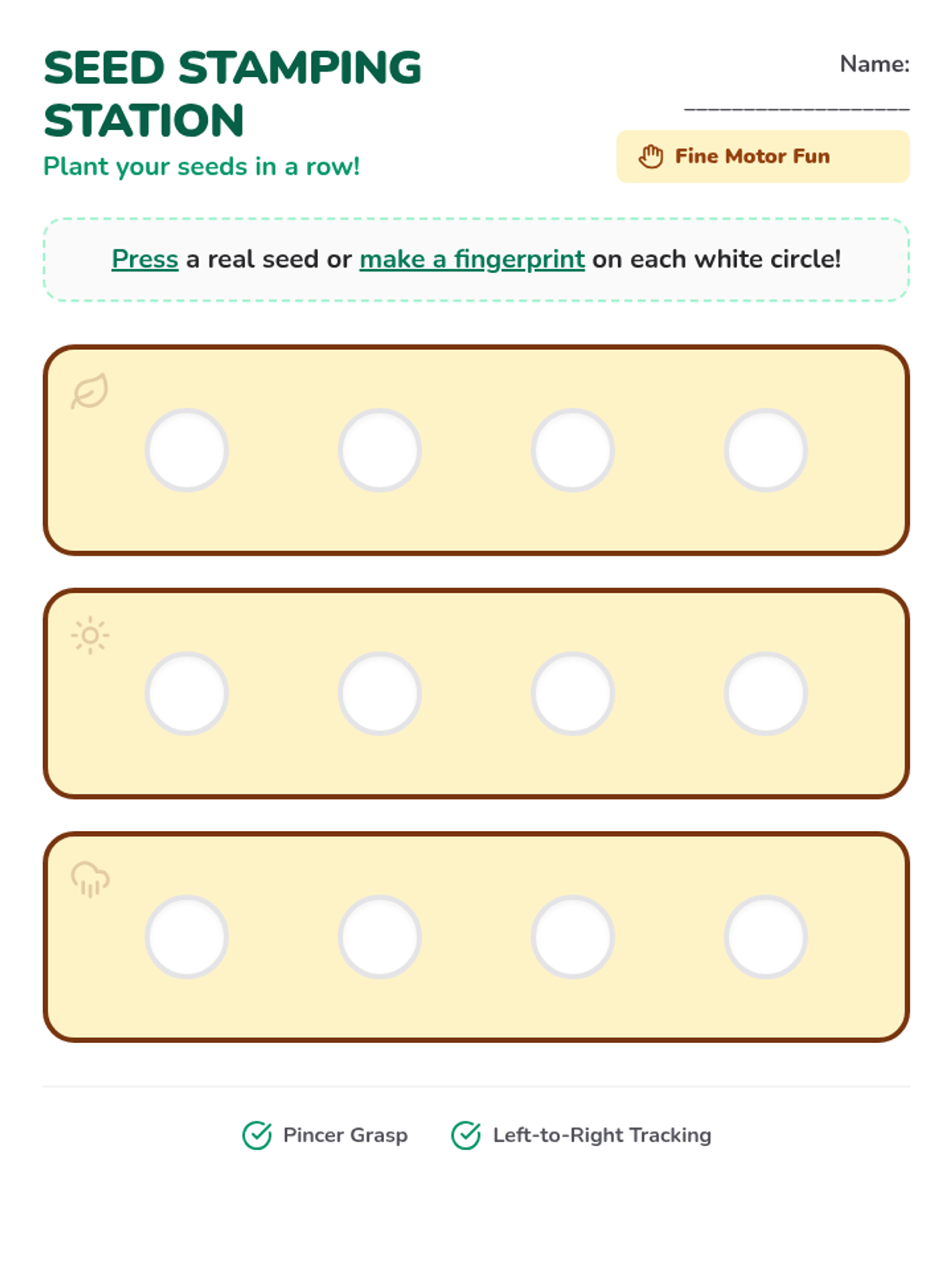
A hands-on sensory exploration for Pre-K students to discover the texture of soil and seeds while developing fine motor control and basic plant vocabulary. This lesson is specifically designed for Special Education environments with sensory-friendly prompts and visual supports.
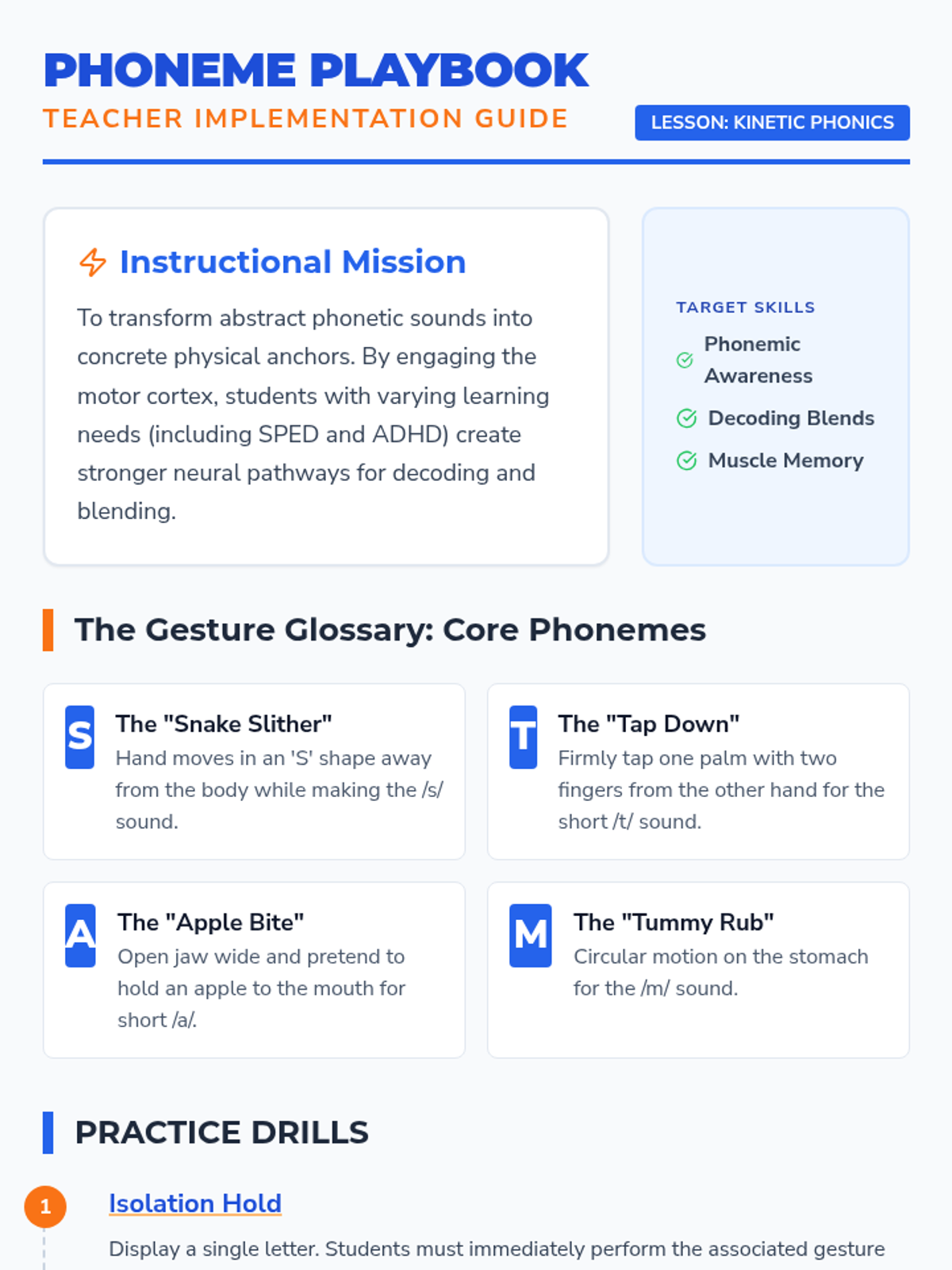
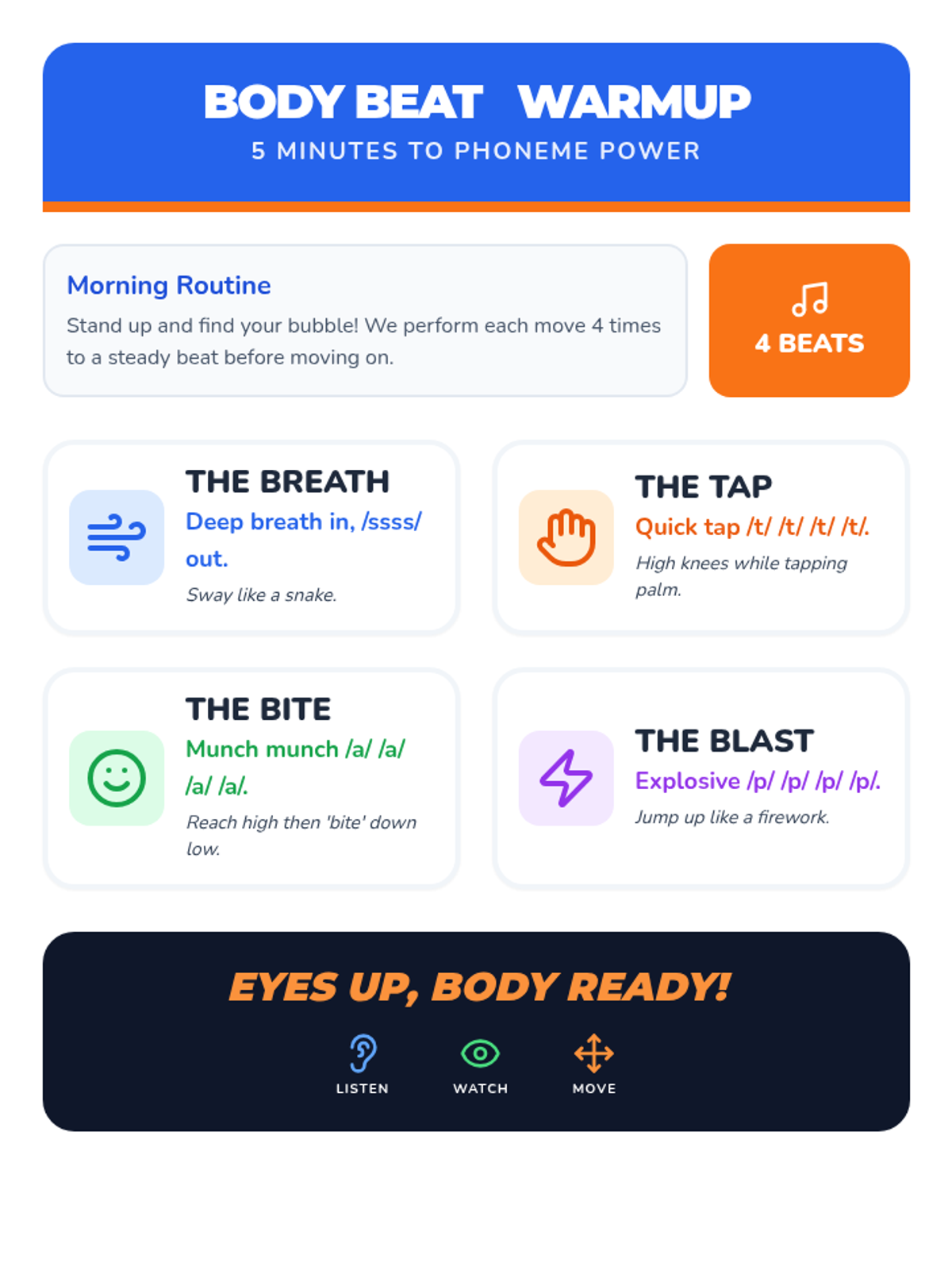
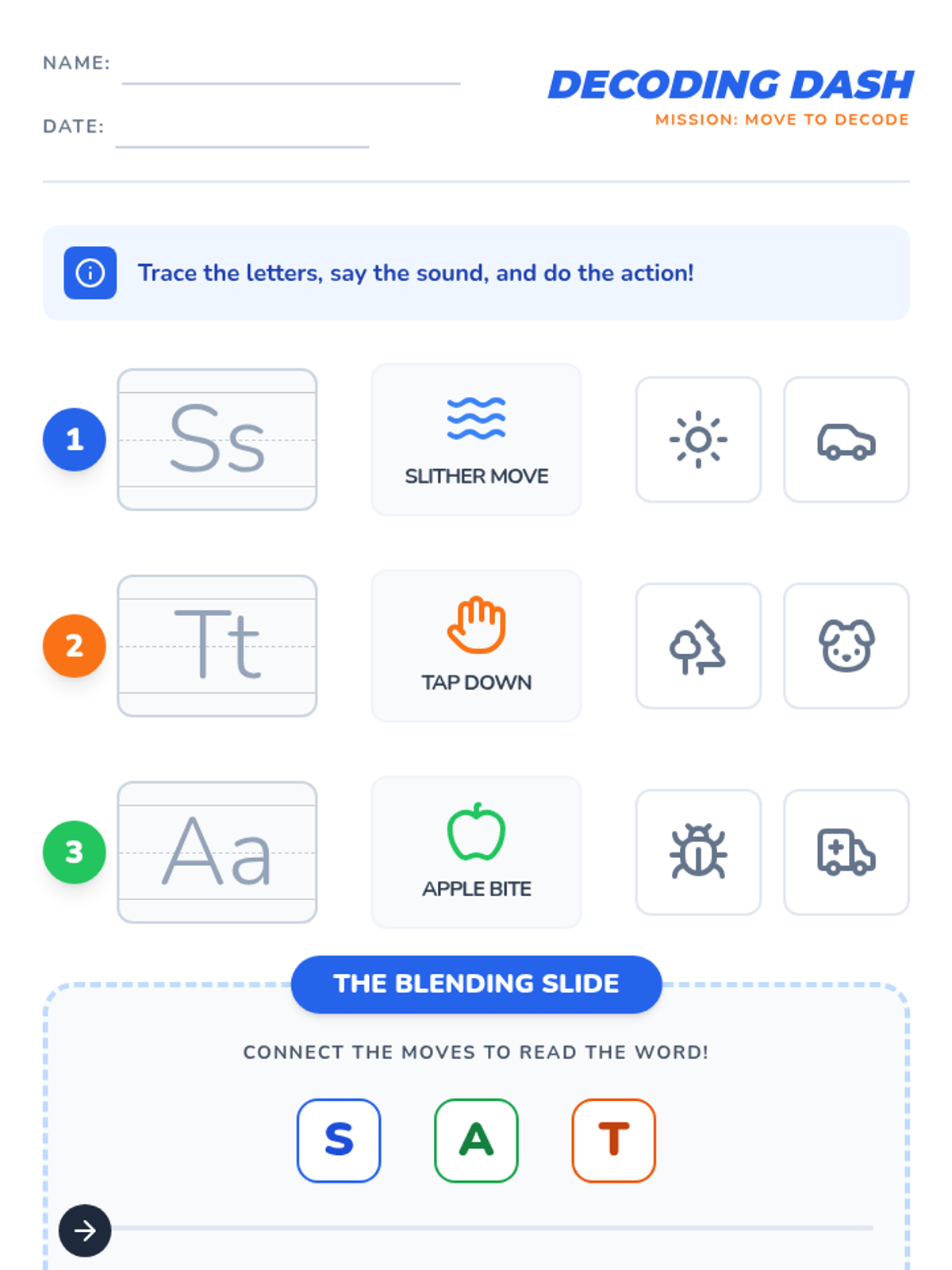
An active literacy lesson that uses physical gestures to represent phonemes and blends, helping students build muscle memory for reading through movement.
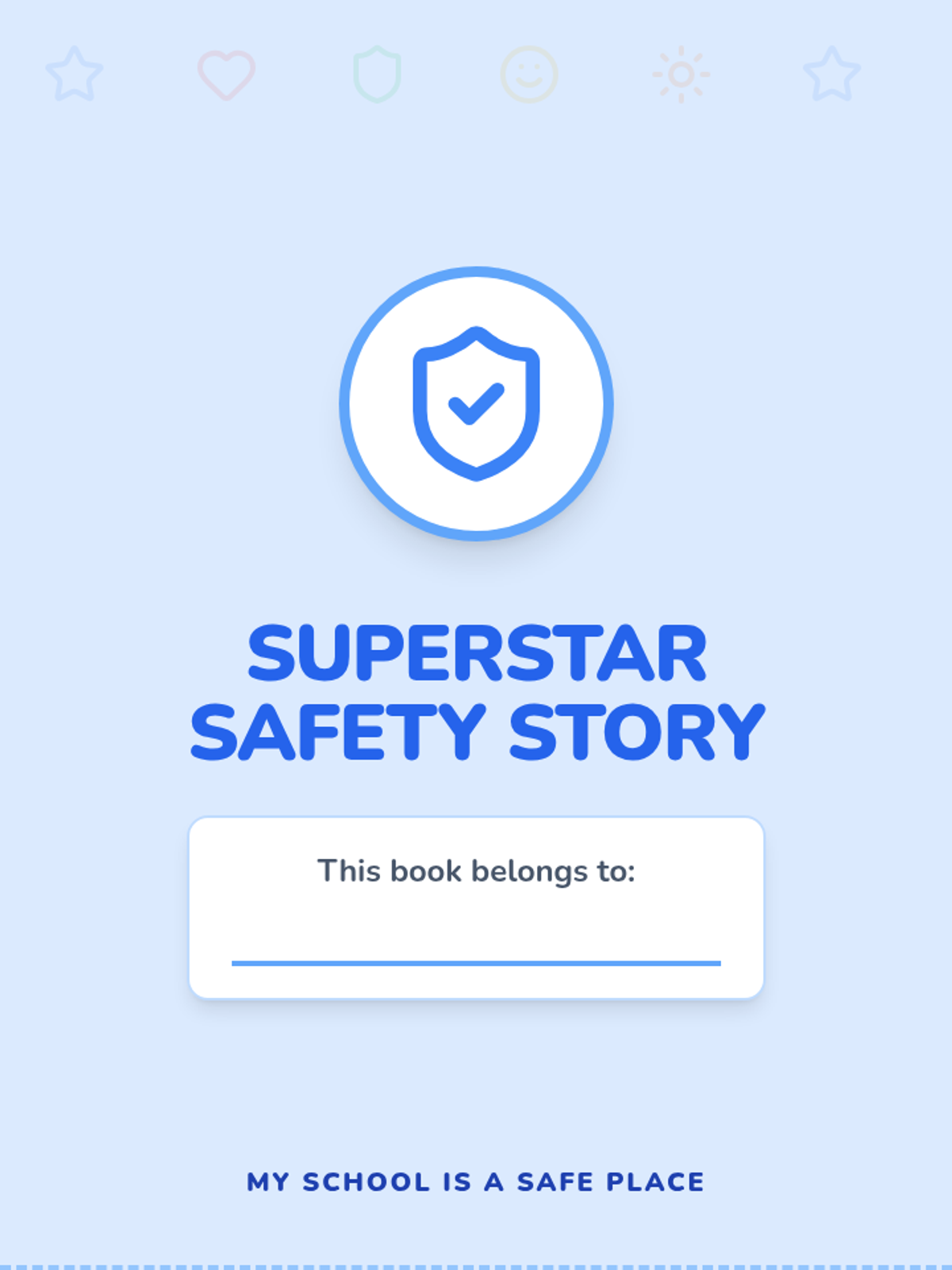
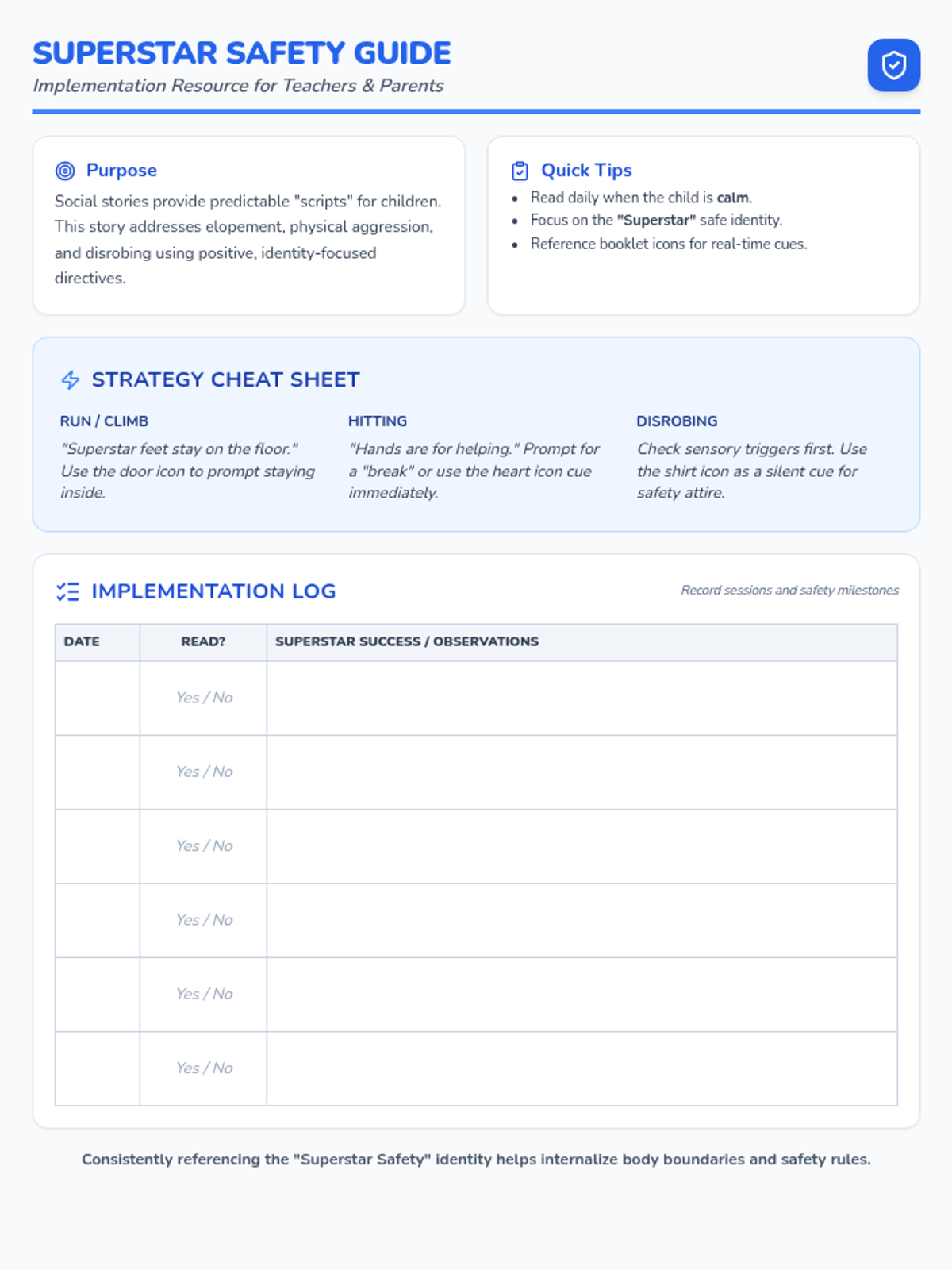
A social story lesson designed to help young children understand and practice safety boundaries at school, including staying in the classroom, keeping hands gentle, and maintaining appropriate attire.
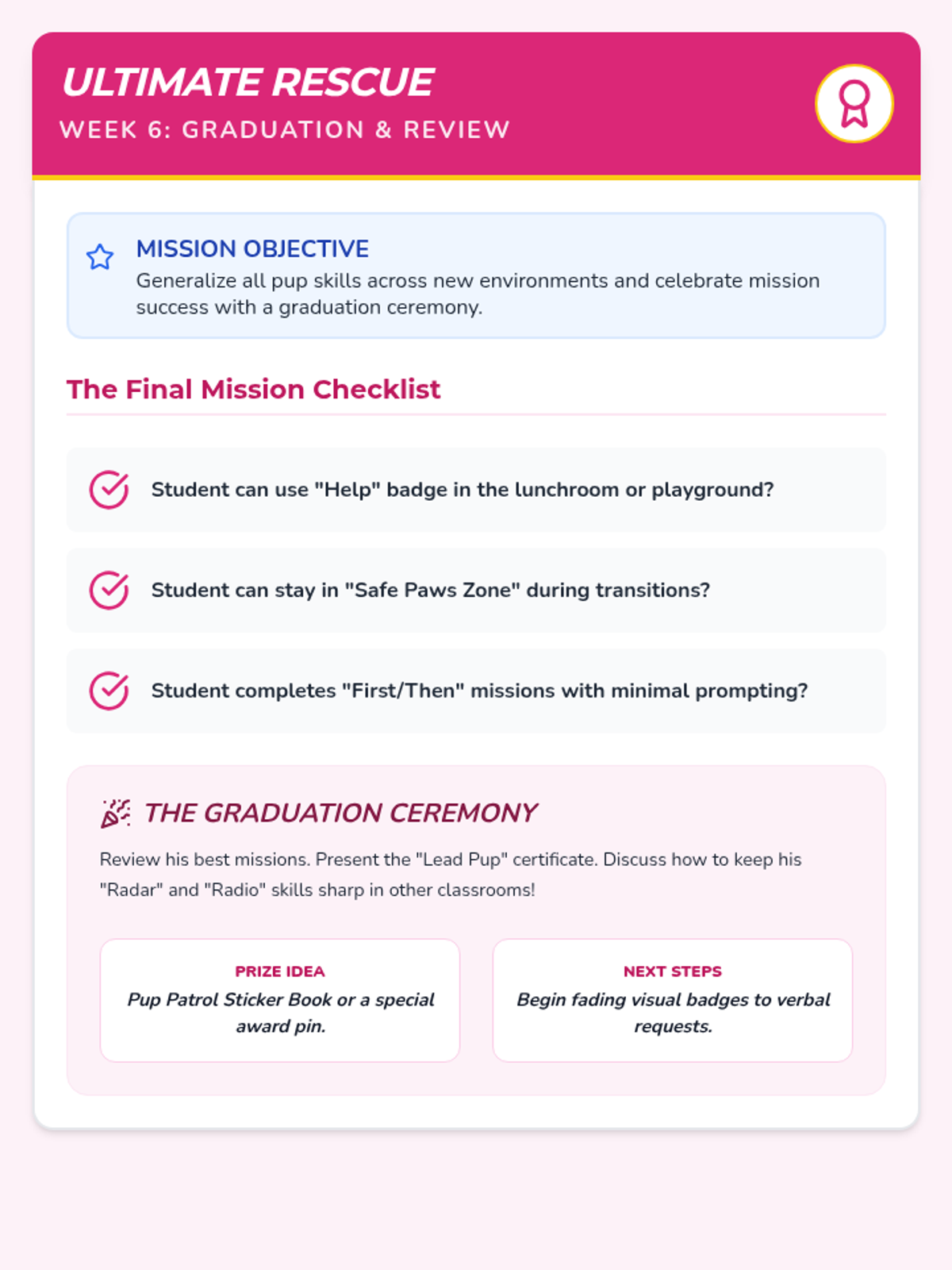
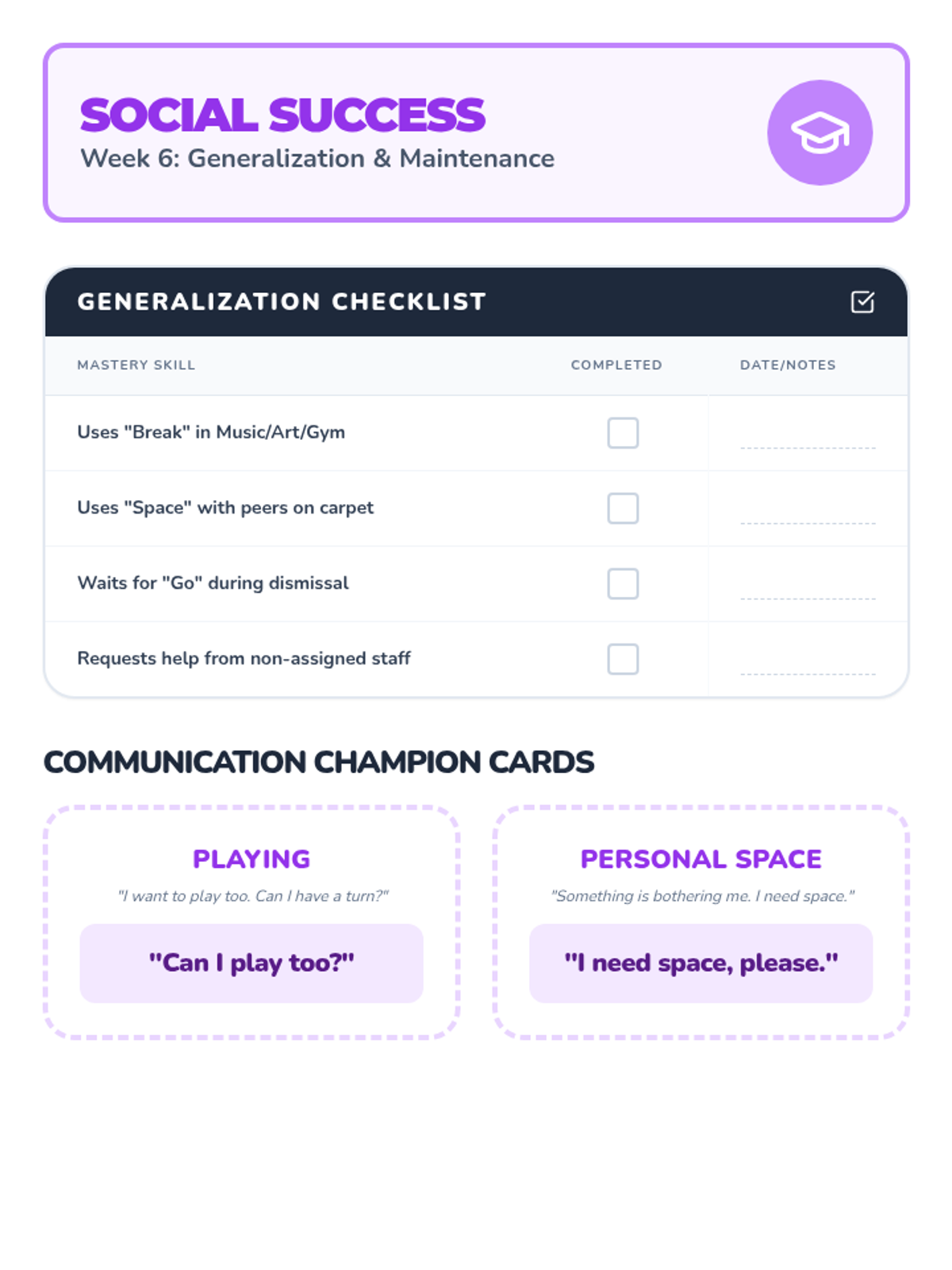
A final review and celebration of skills learned, focusing on generalizing behaviors to new settings.
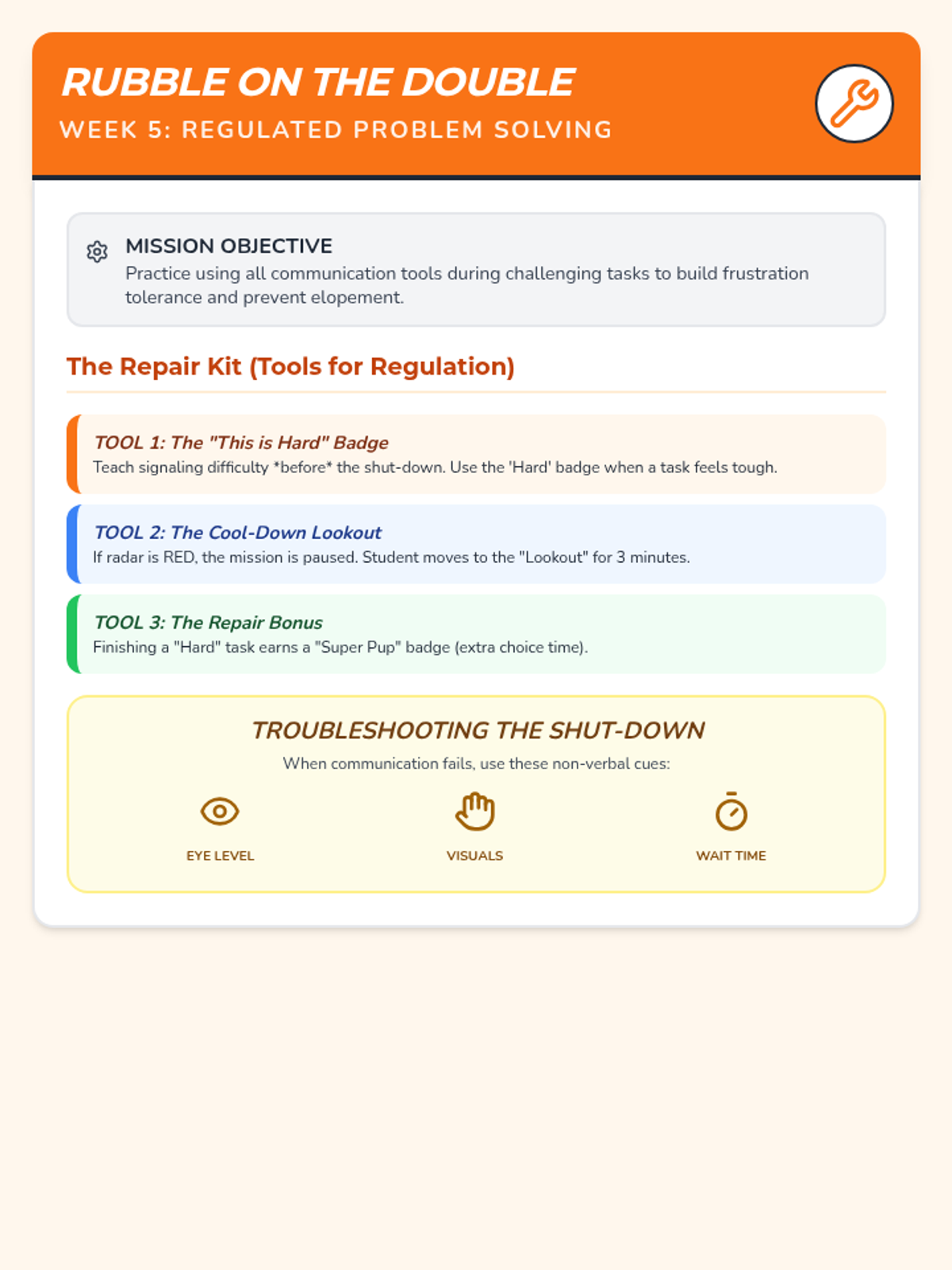
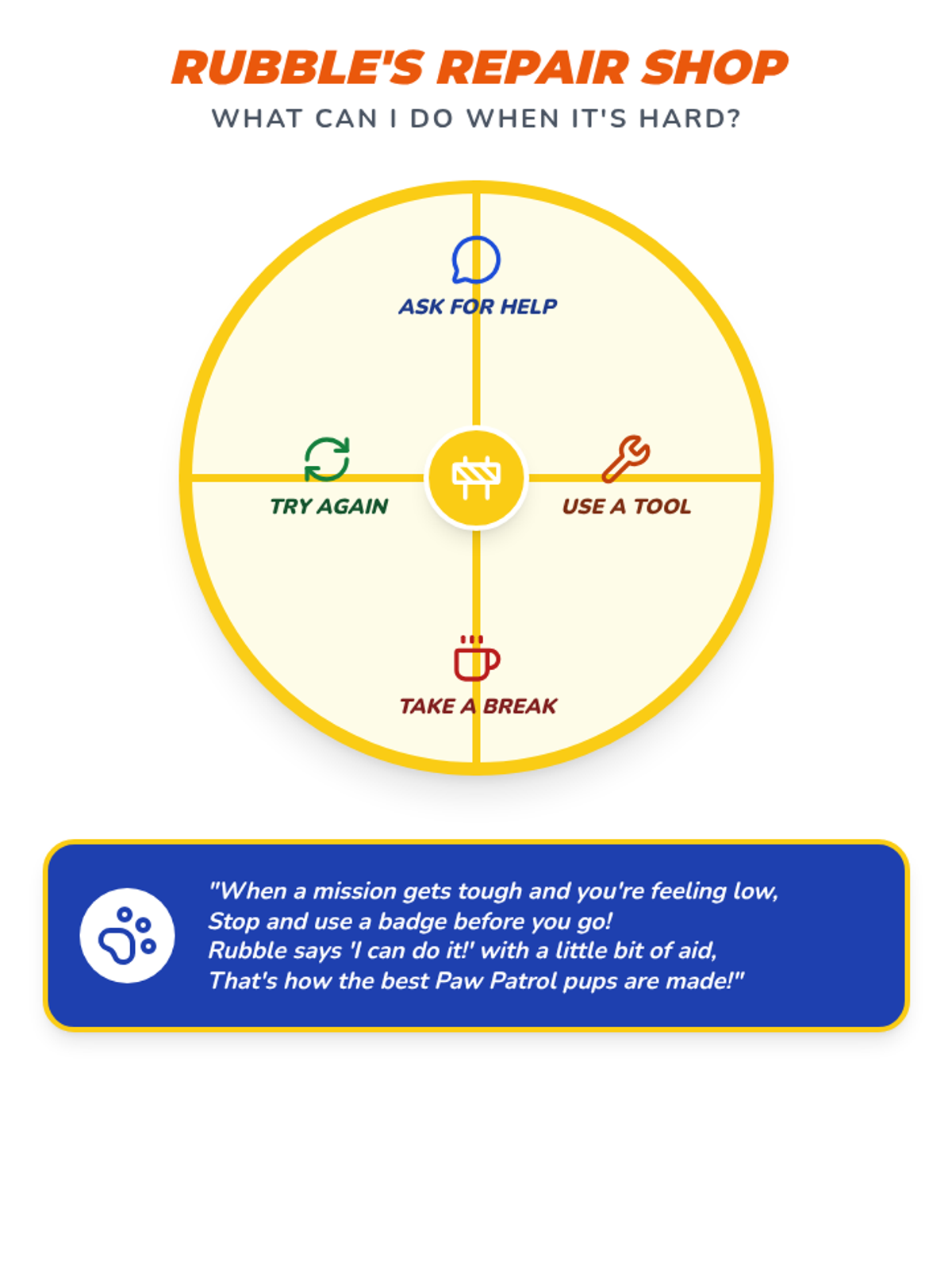
Applying communication skills during challenging tasks to maintain emotional regulation.
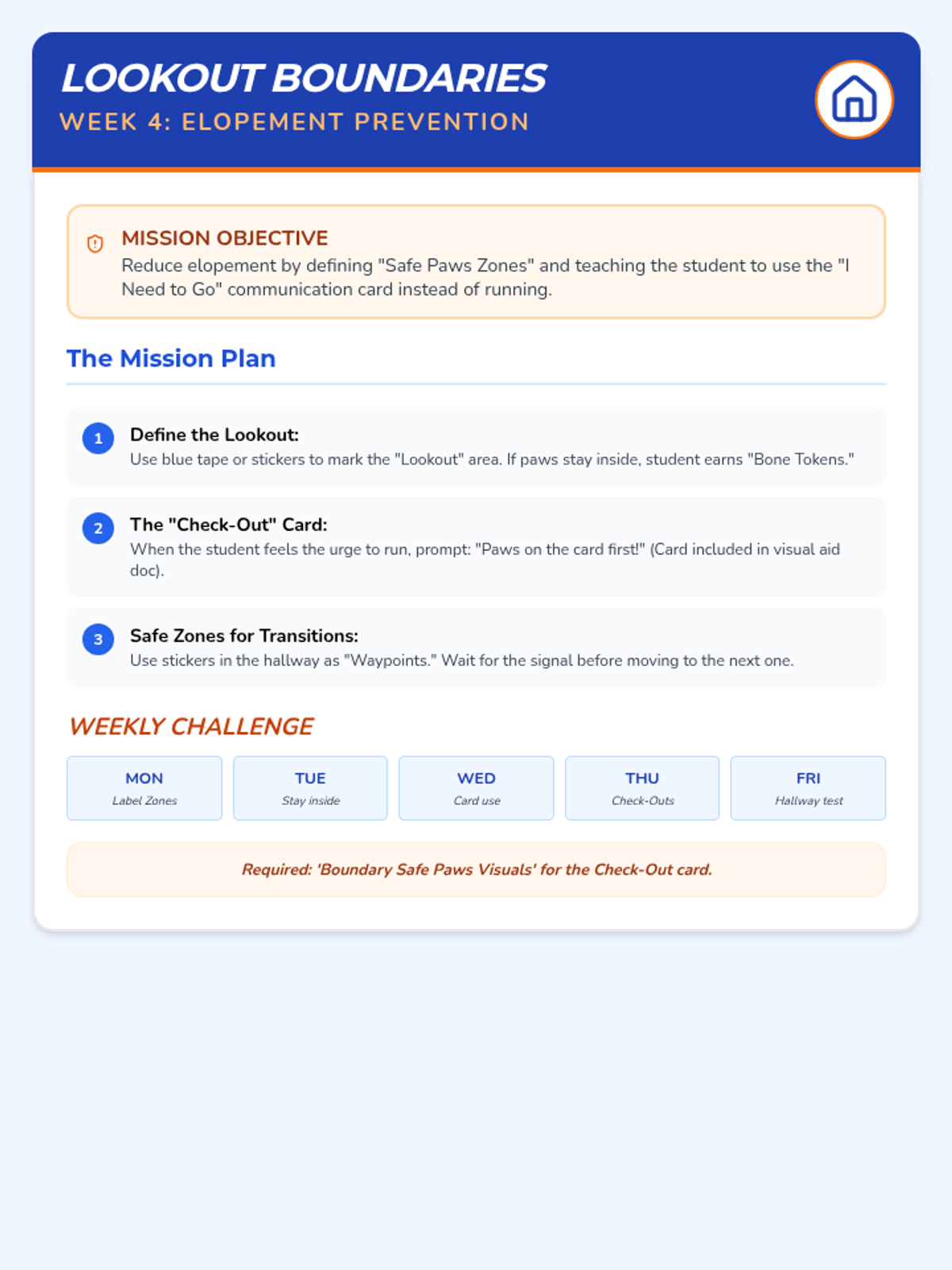
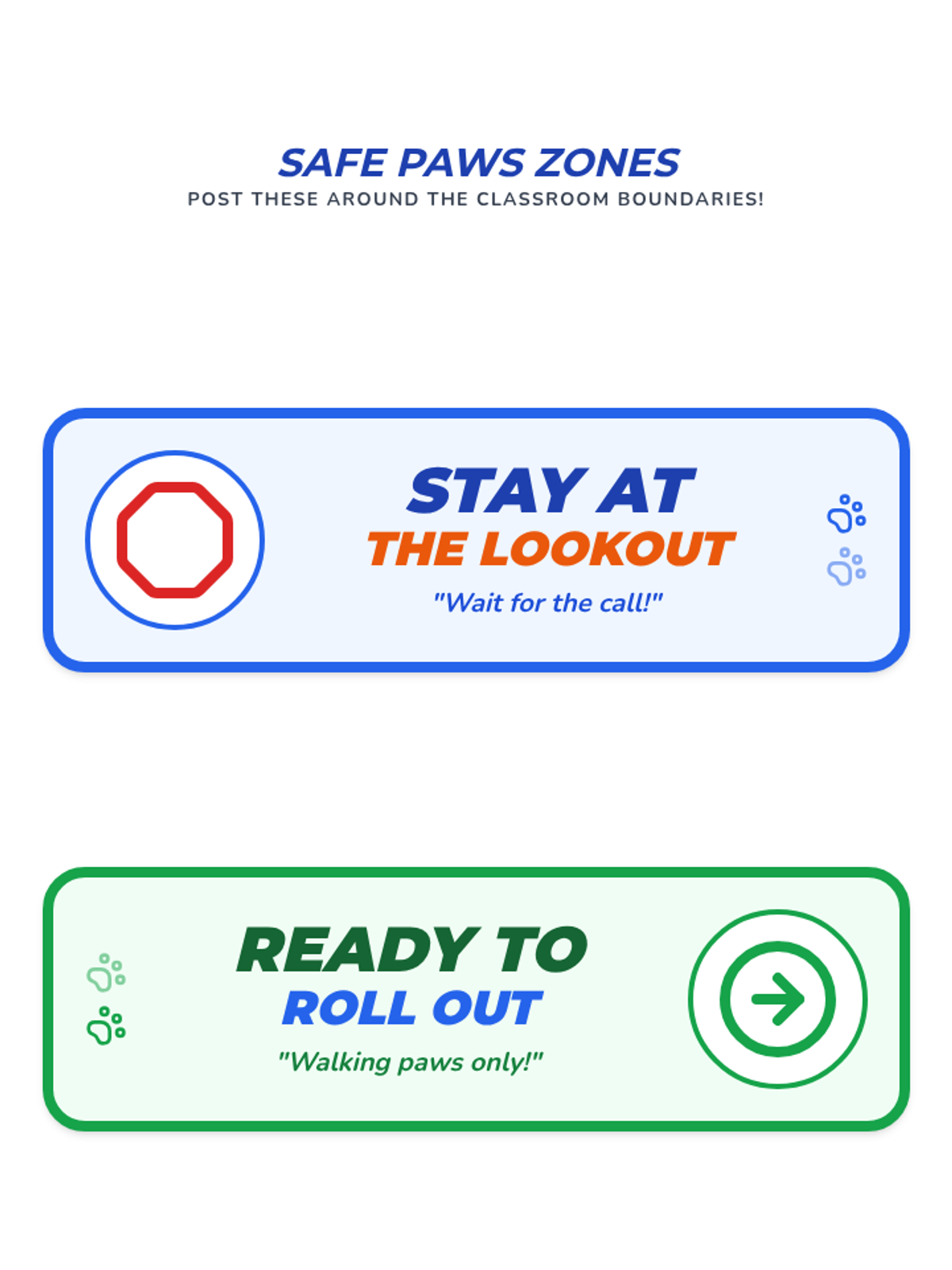
Targeting elopement by defining boundaries and teaching the "Stay at the Lookout" concept.
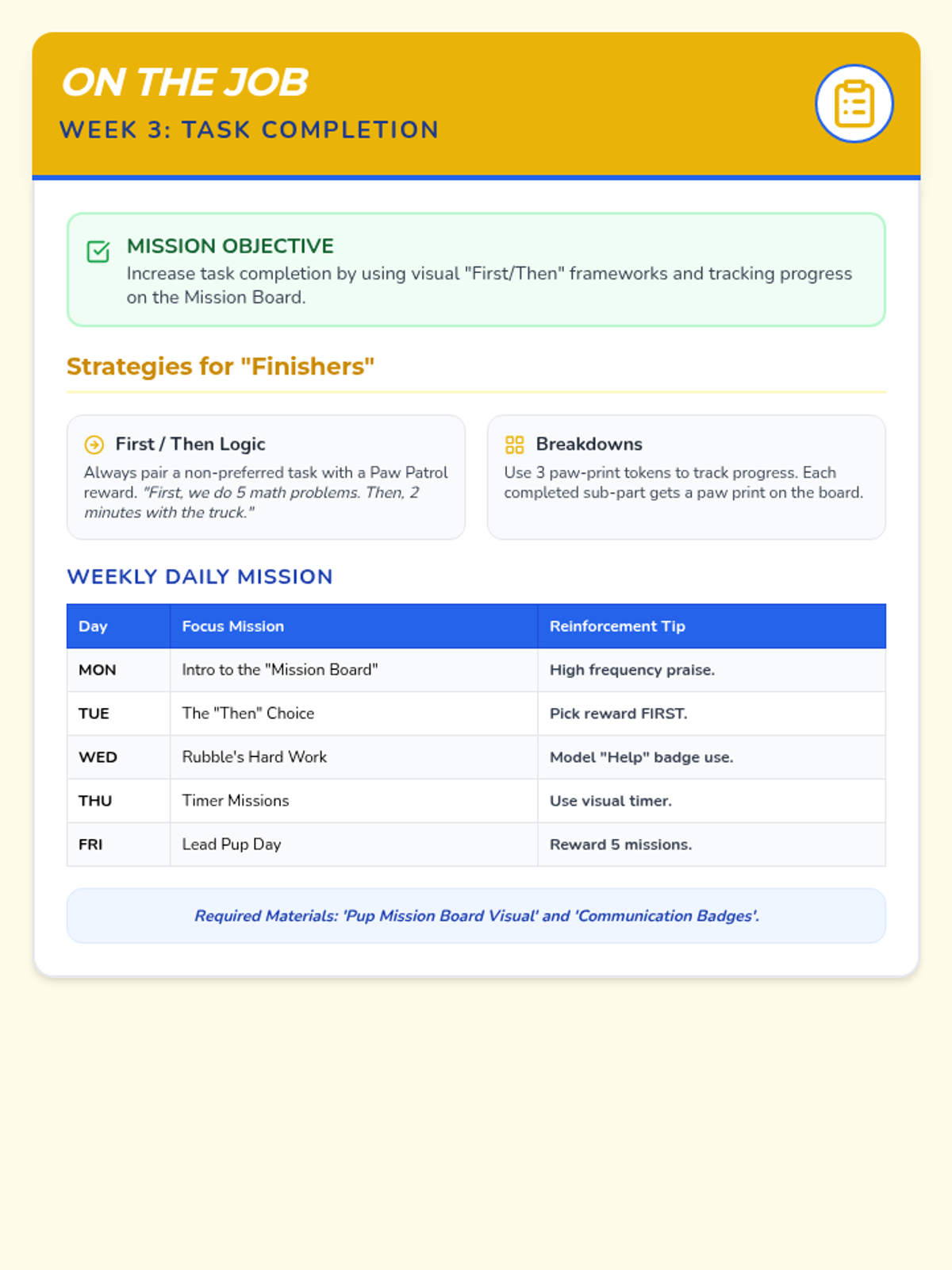
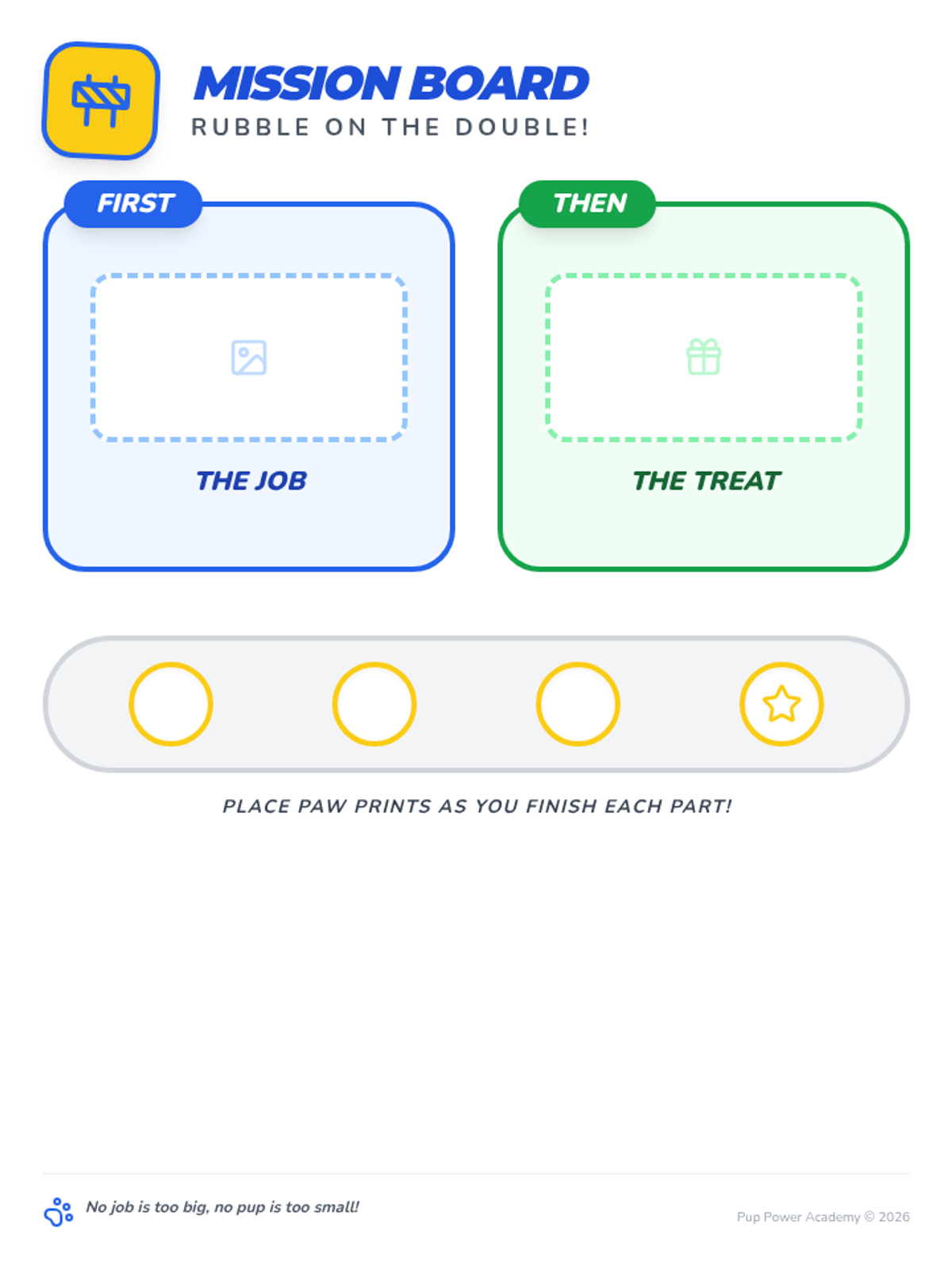
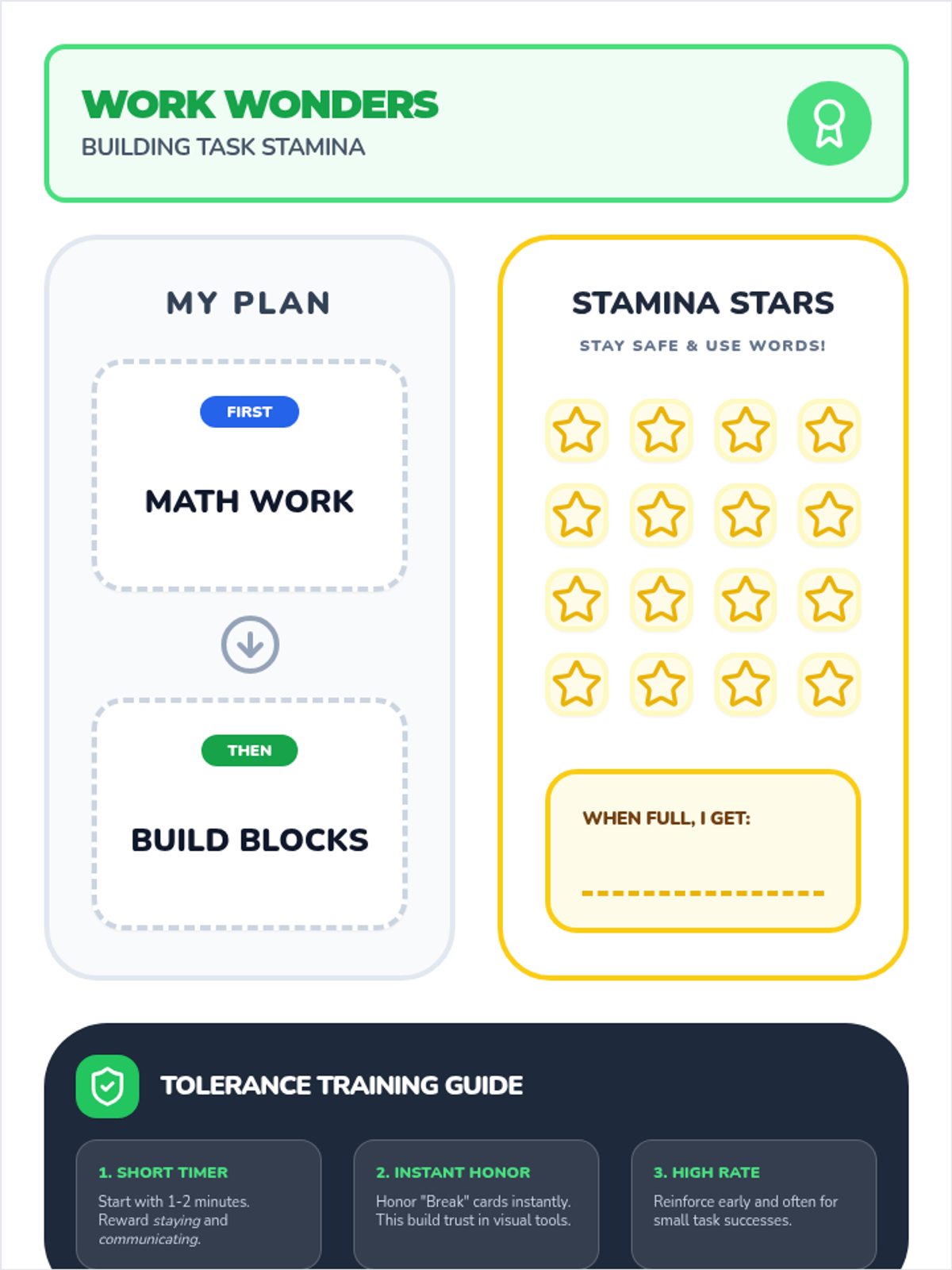
Using visual schedules and "First-Then" logic to improve task completion rates.
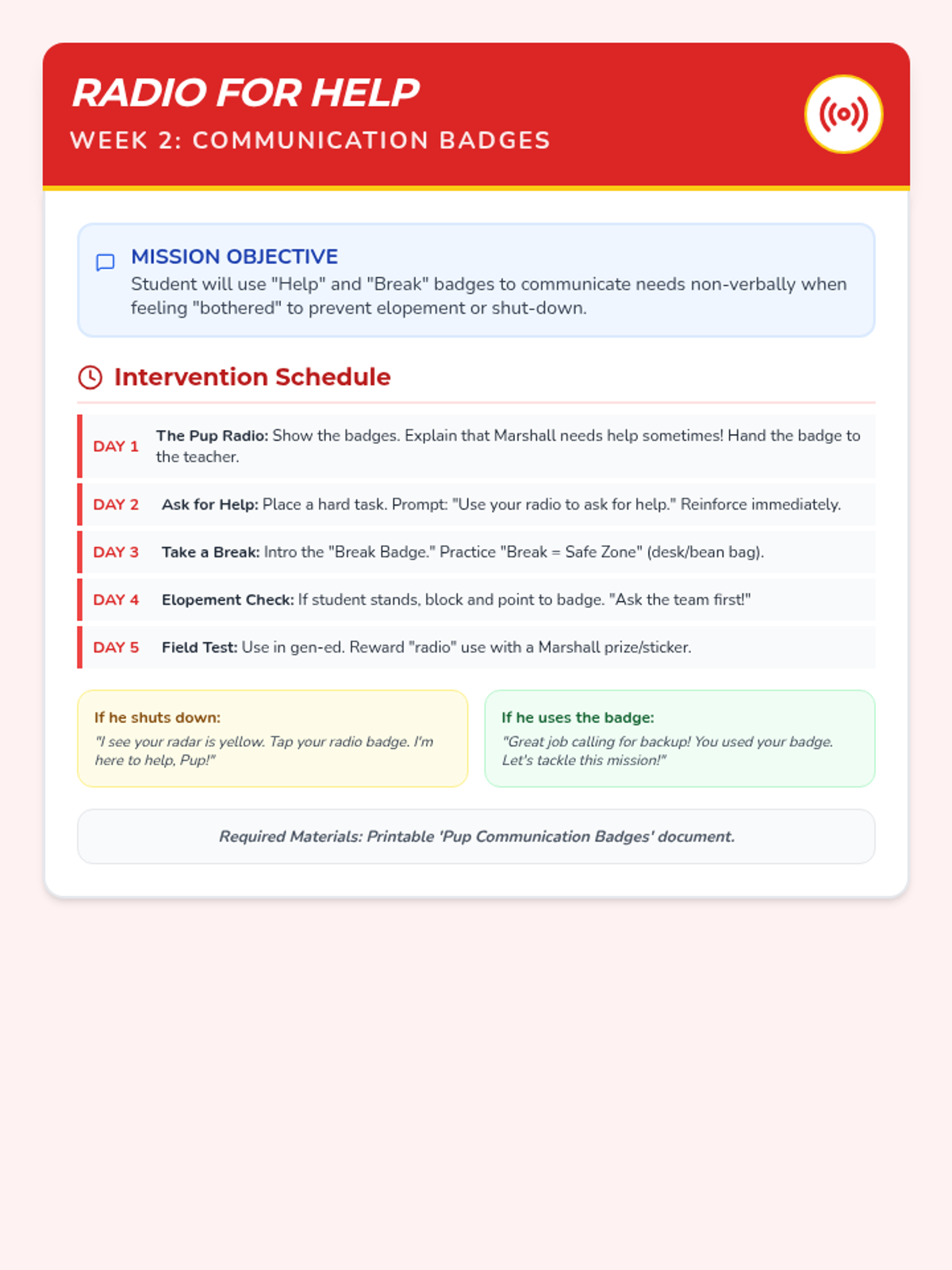
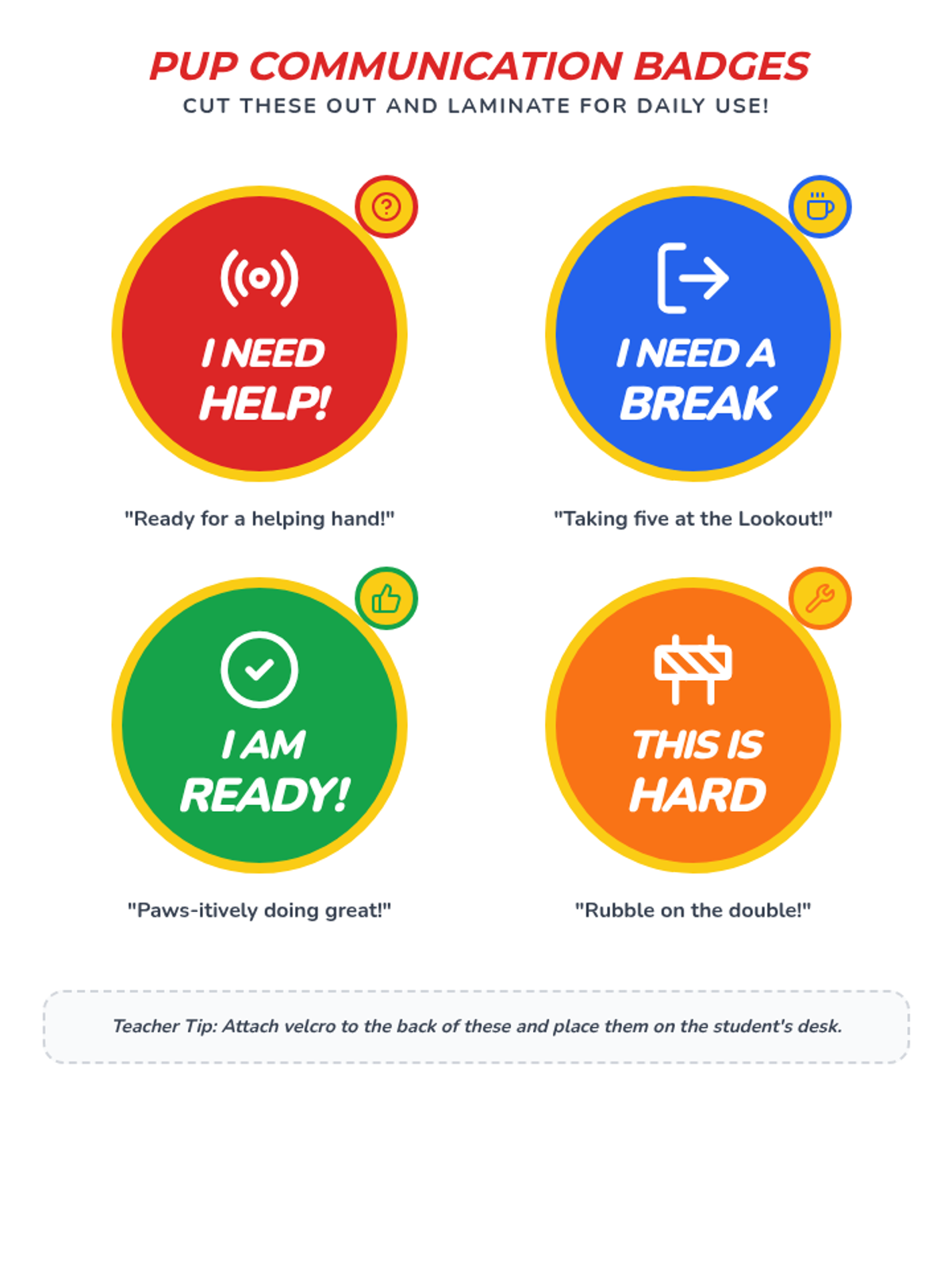
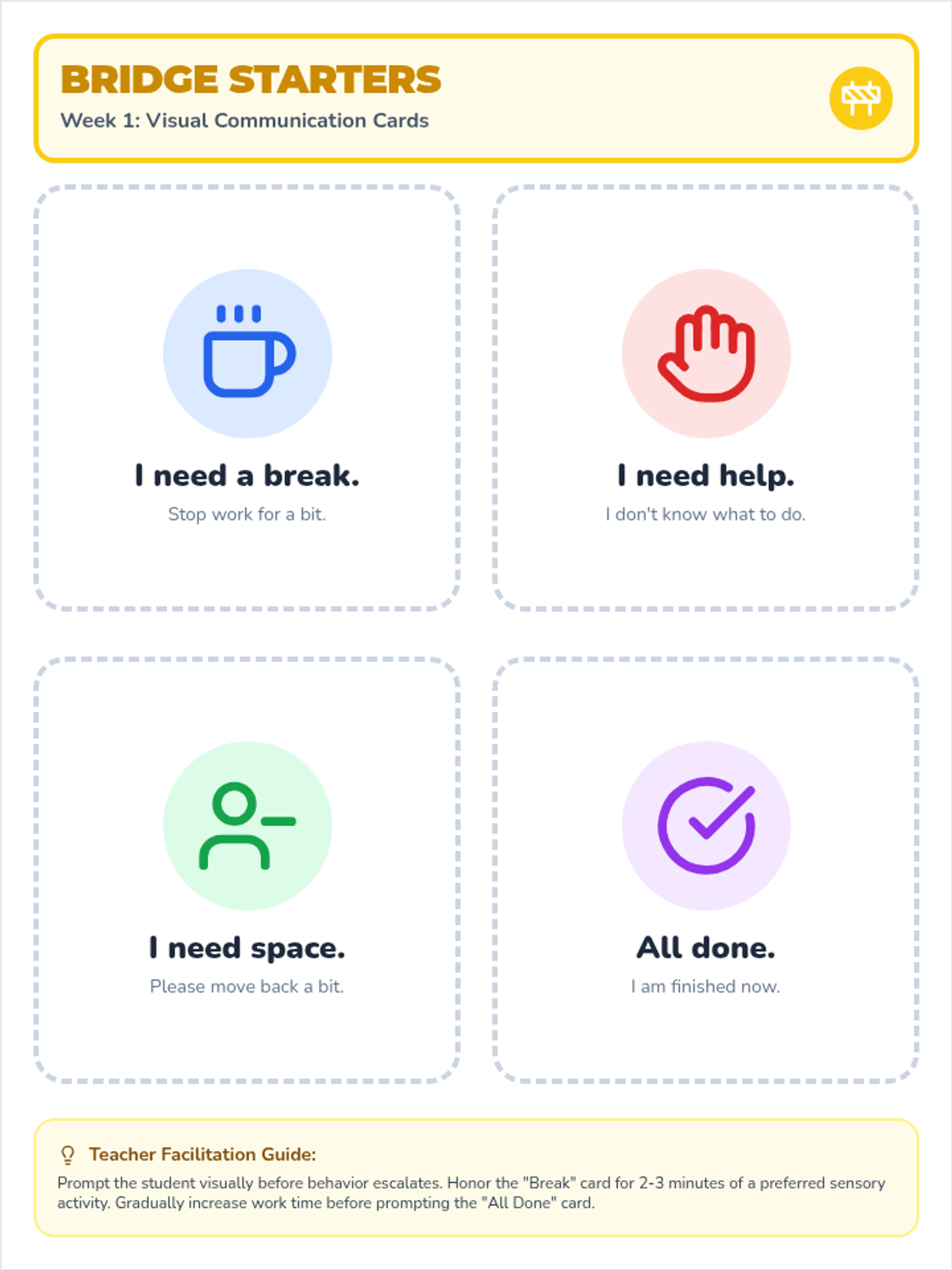
Introducing non-verbal communication tools to ask for help or a break before behaviors escalate.
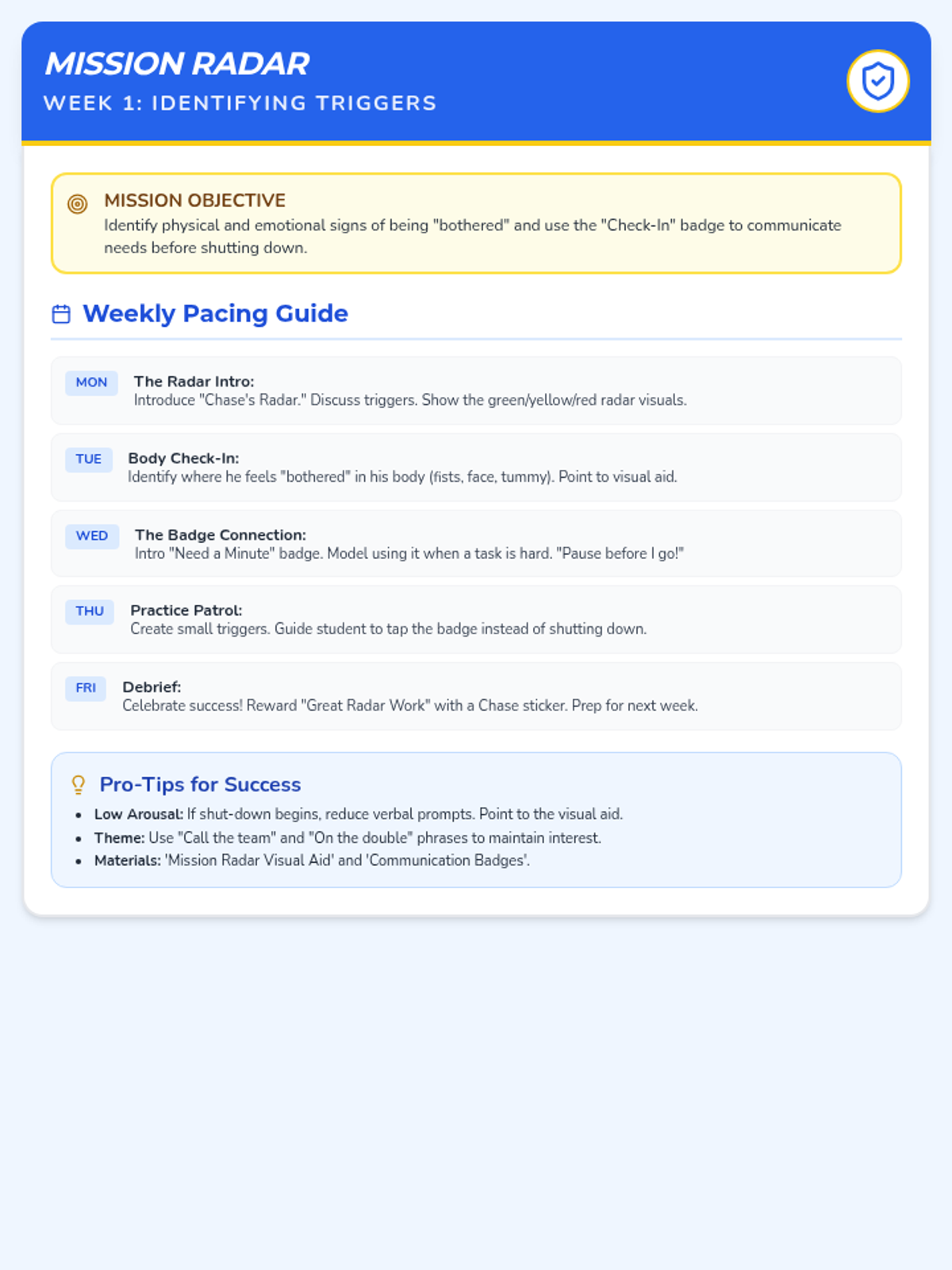
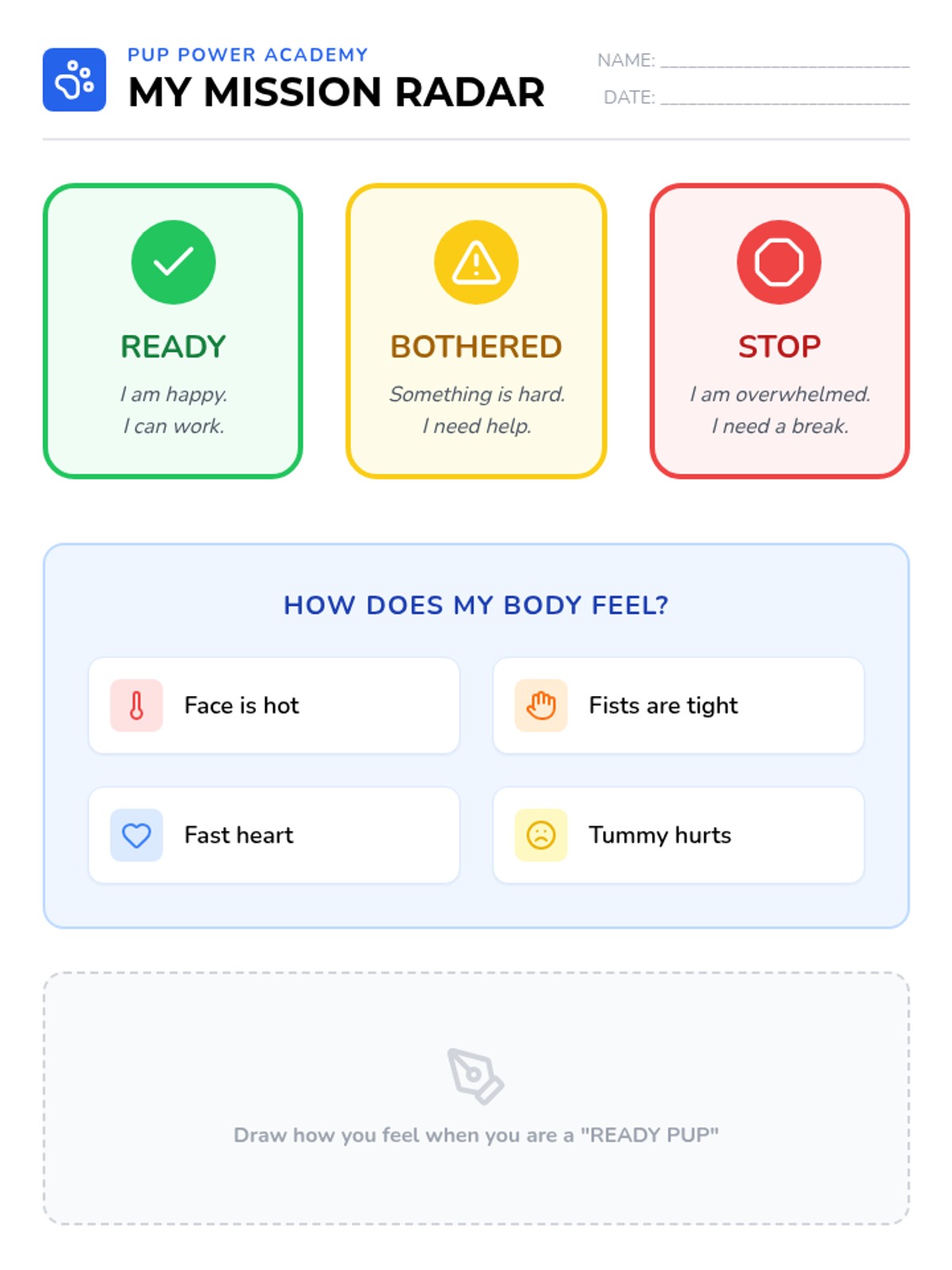
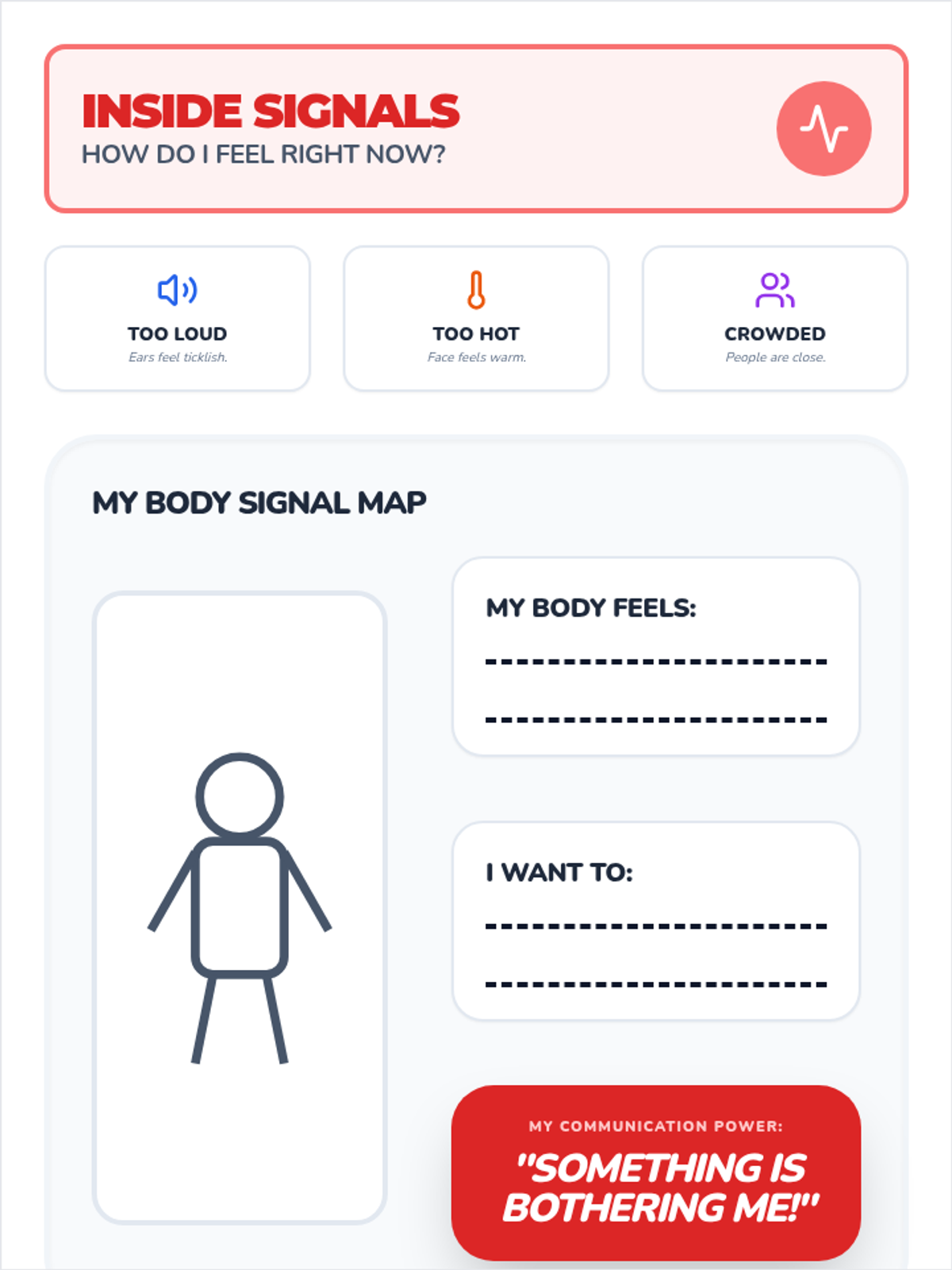
Focuses on recognizing when a student is starting to feel "bothered" or overwhelmed to prevent shutting down.
Generalizes communication skills across various school settings and peers to ensure long-term maintenance of reduced elopement and avoidance.
Combines communication skills with high-reinforcement schedules to increase task duration and reduce avoidance.
Helps the student identify internal and external stressors that lead to verbal regression and behavioral outbursts.
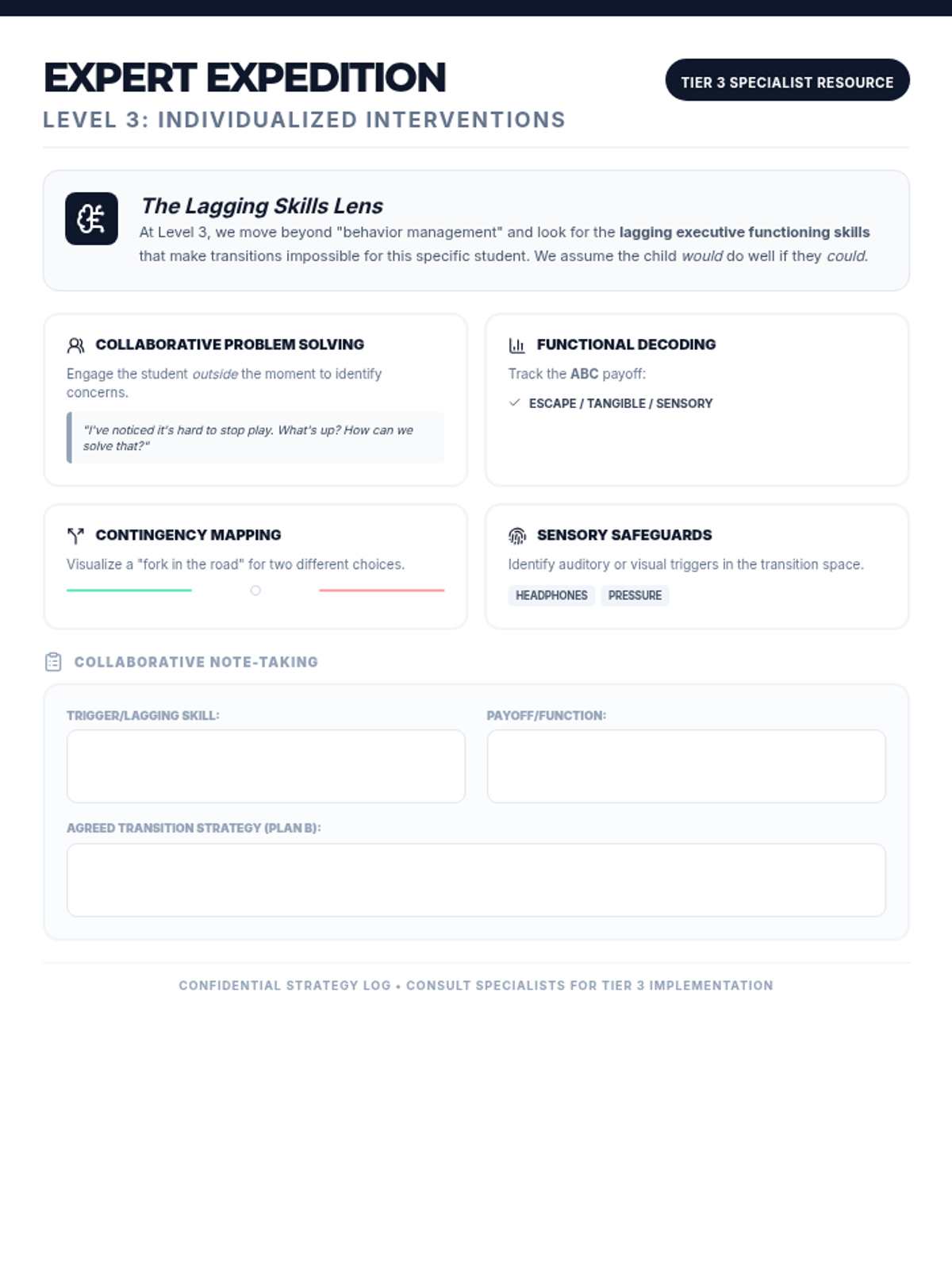
Teaches safe transition strategies and 'waiting' skills to mitigate elopement behaviors during high-stress movement periods.
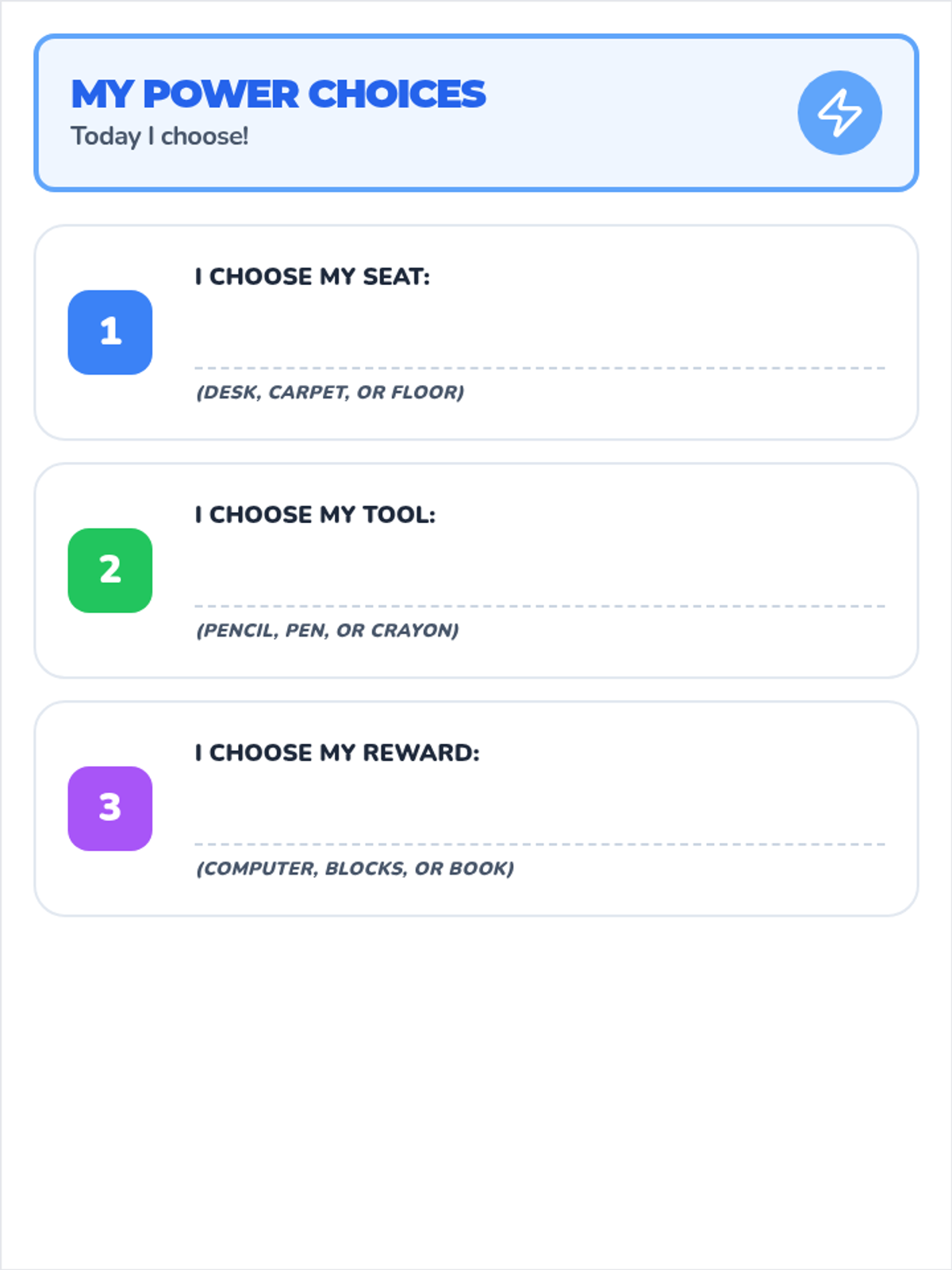
Empowers the student with choice-making opportunities to increase agency and reduce the need for avoidance behaviors during academic tasks.
Focuses on teaching the student to identify when they are overwhelmed and use a visual or verbal request for a 'break' to prevent task avoidance and elopement.
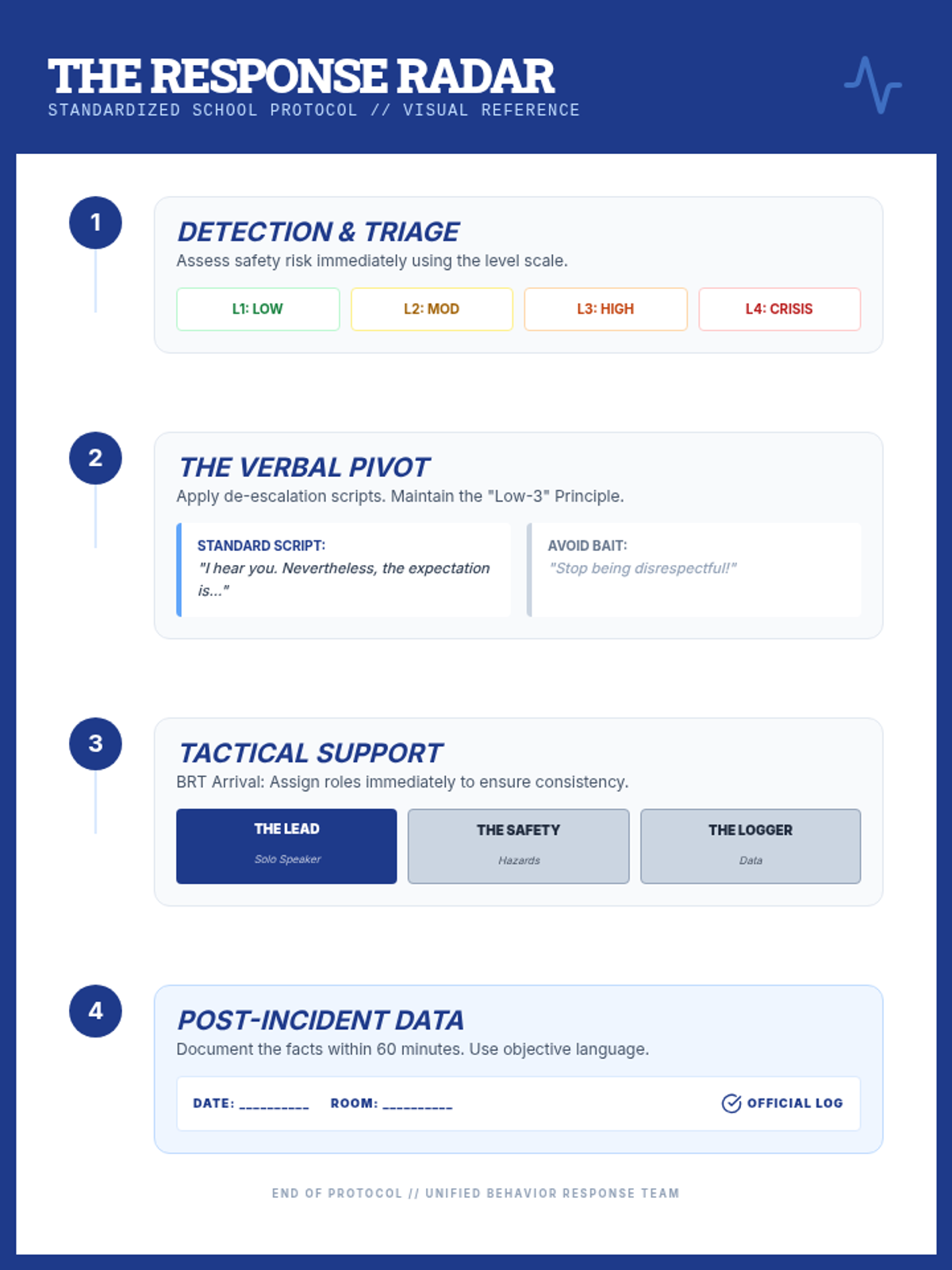
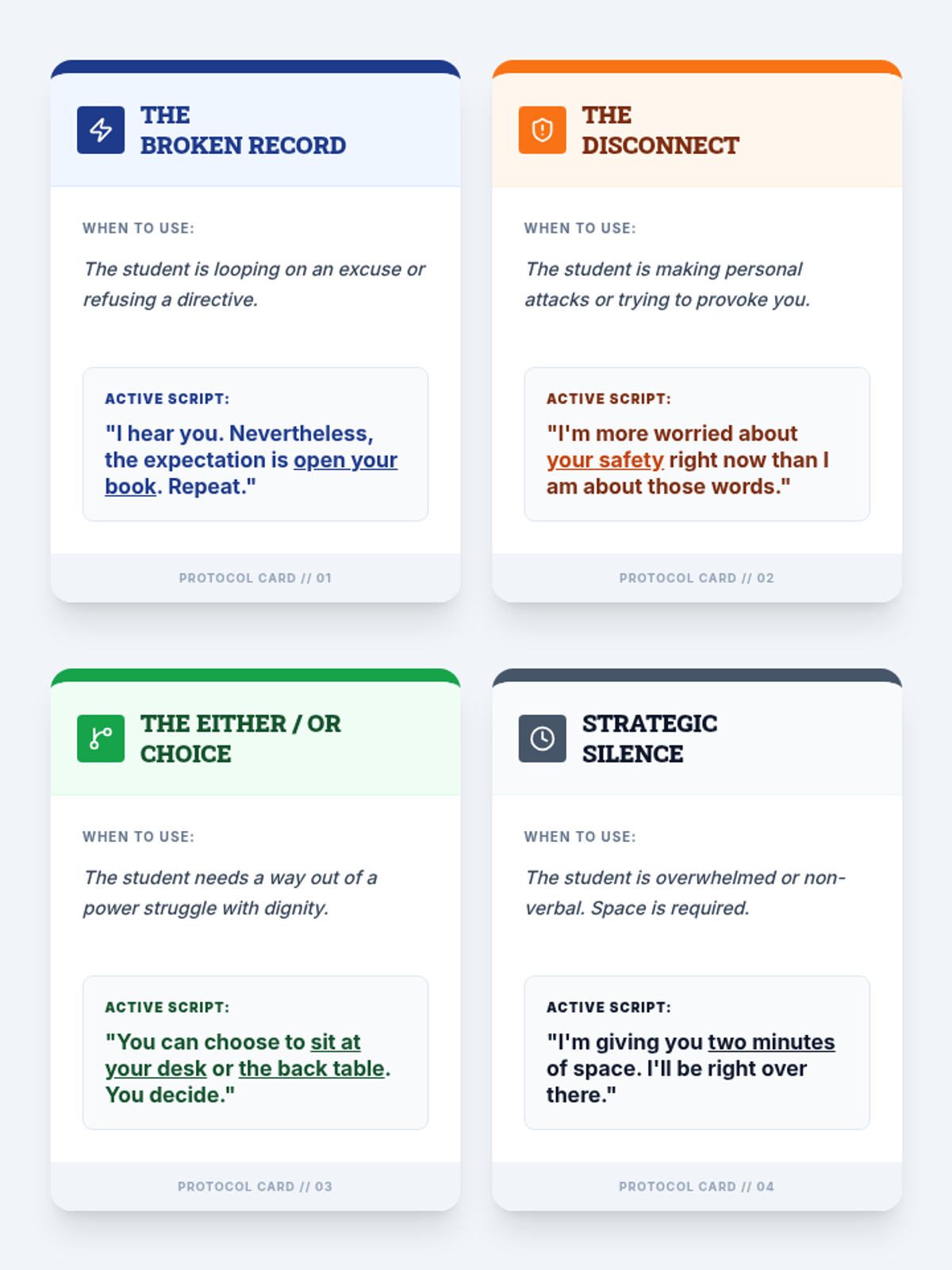
A comprehensive framework for school behavior response teams to standardize de-escalation techniques and crisis management protocols. This lesson provides clear, step-by-step procedures to ensure consistency and reduce the need for micromanagement during high-stress incidents.
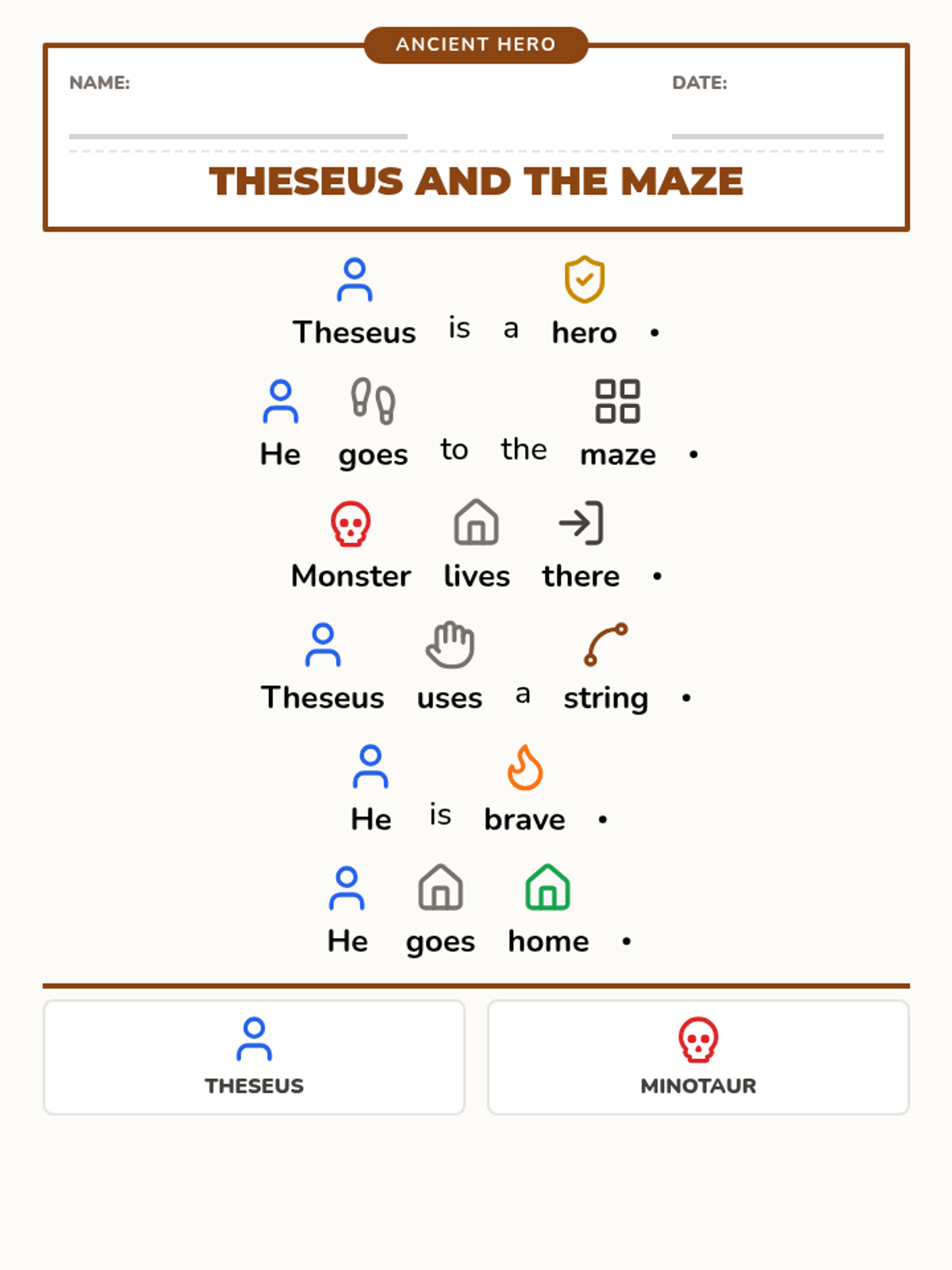
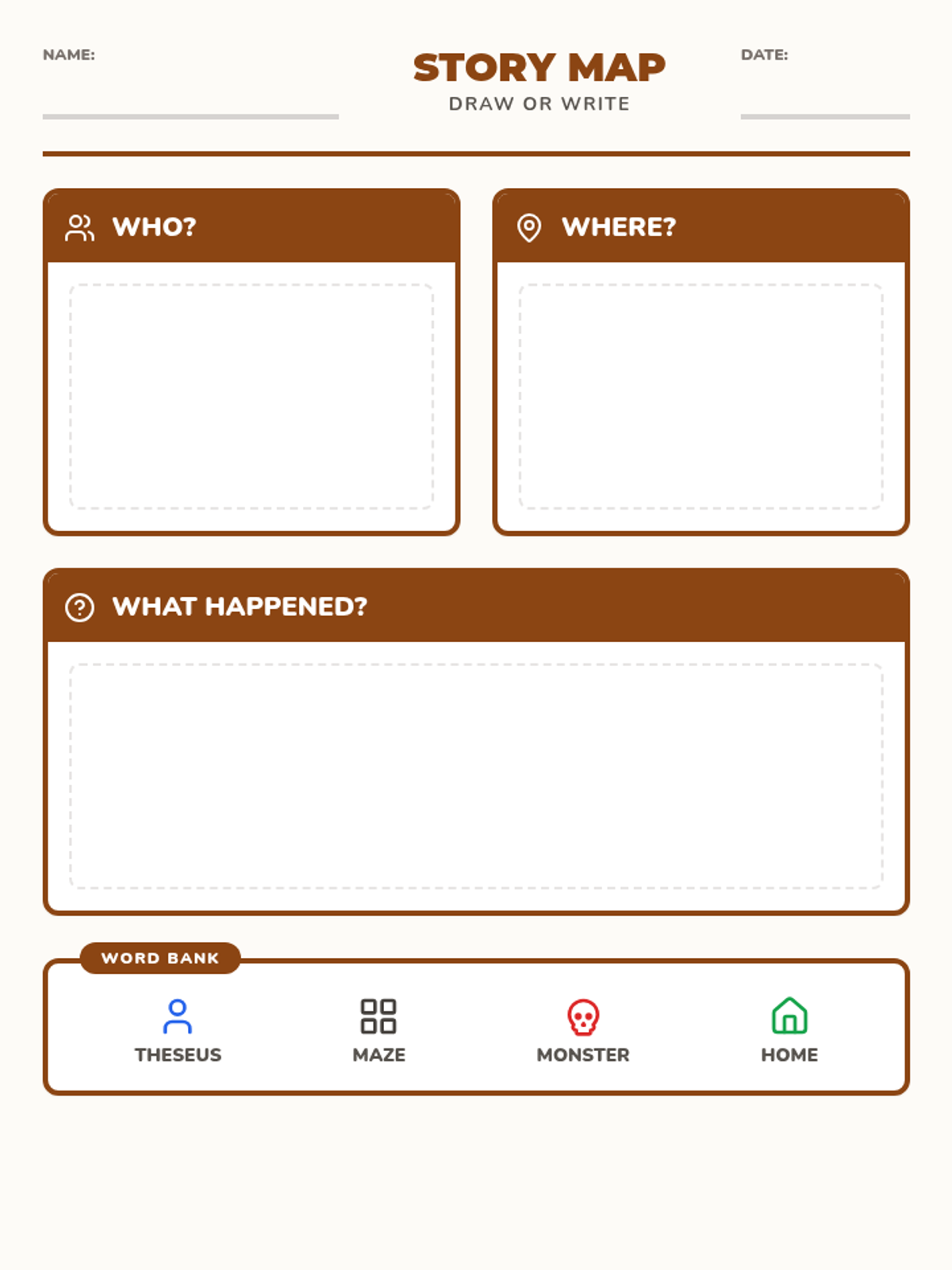
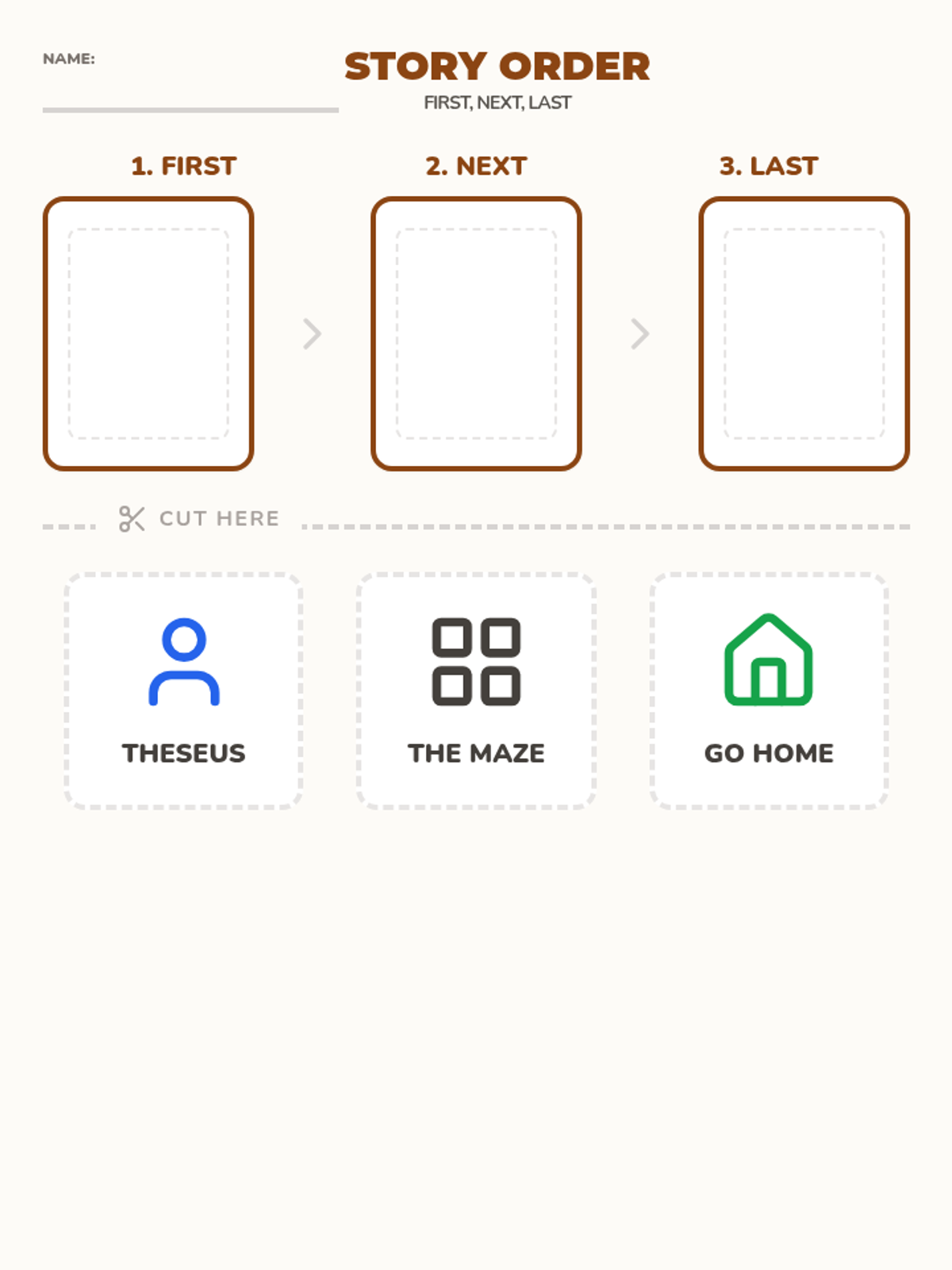
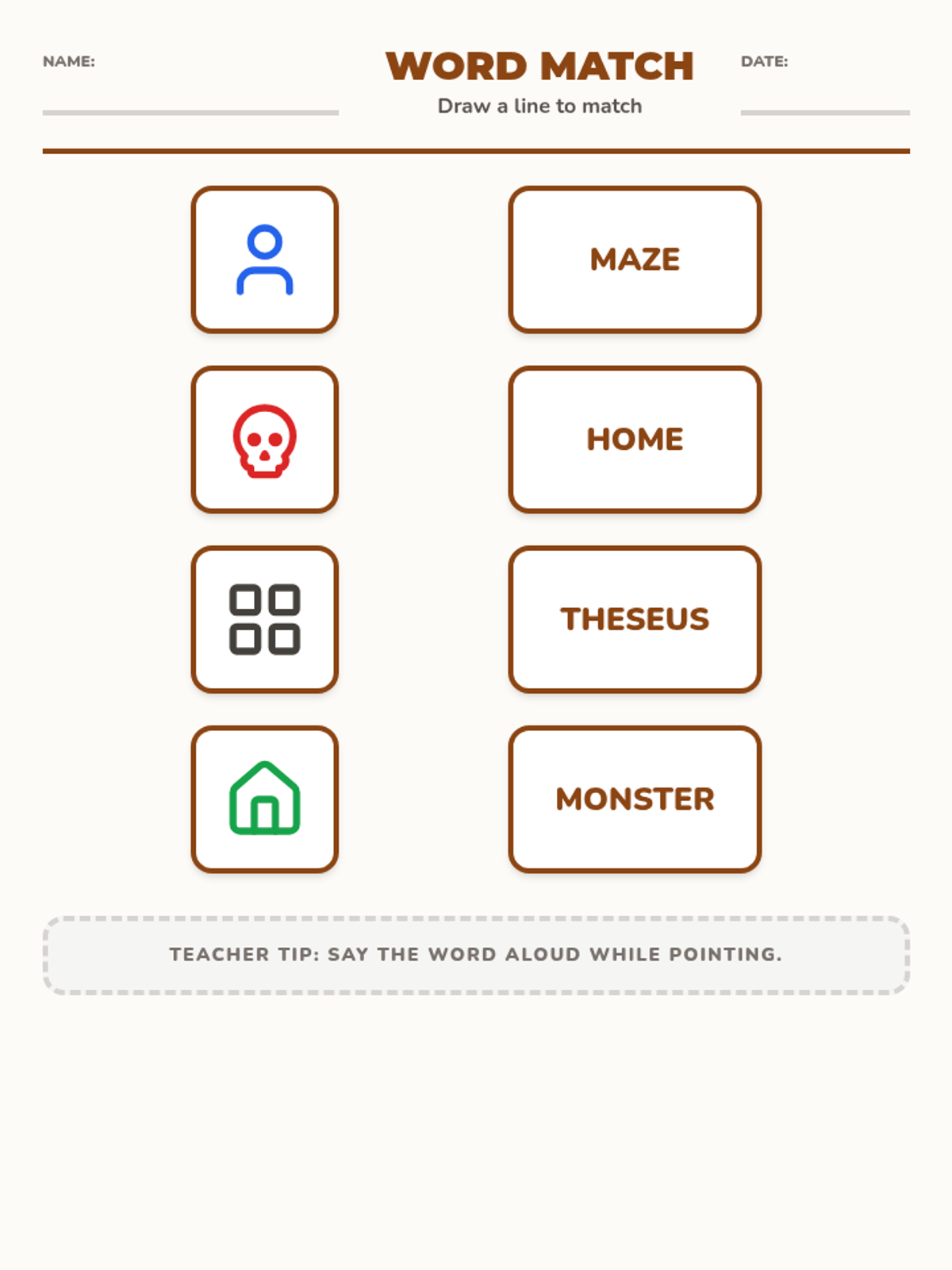
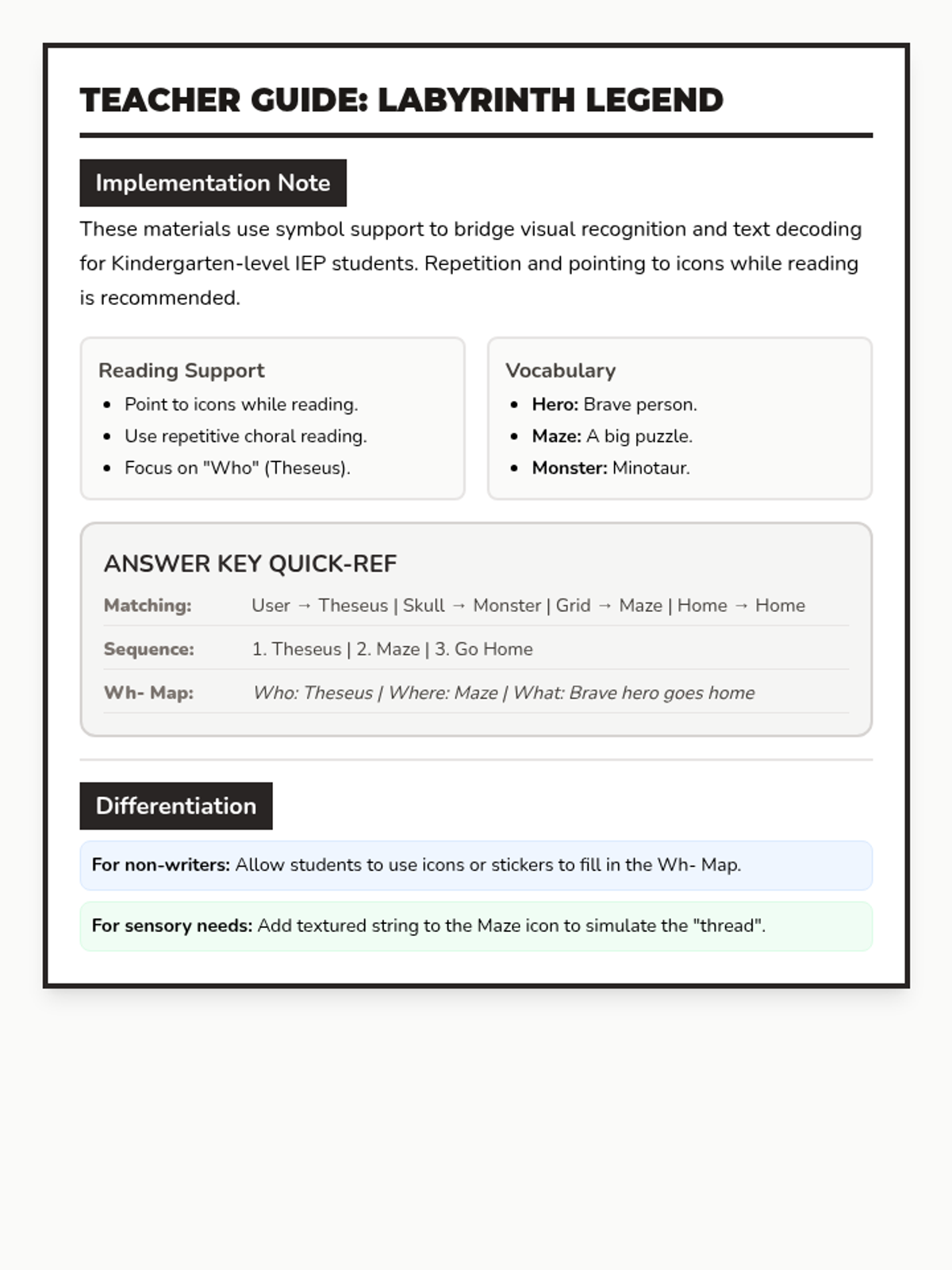
A modified reading lesson on the Greek myth of Theseus and the Minotaur, designed for Kindergarten-level IEP students with symbol support and simplified comprehension tasks.
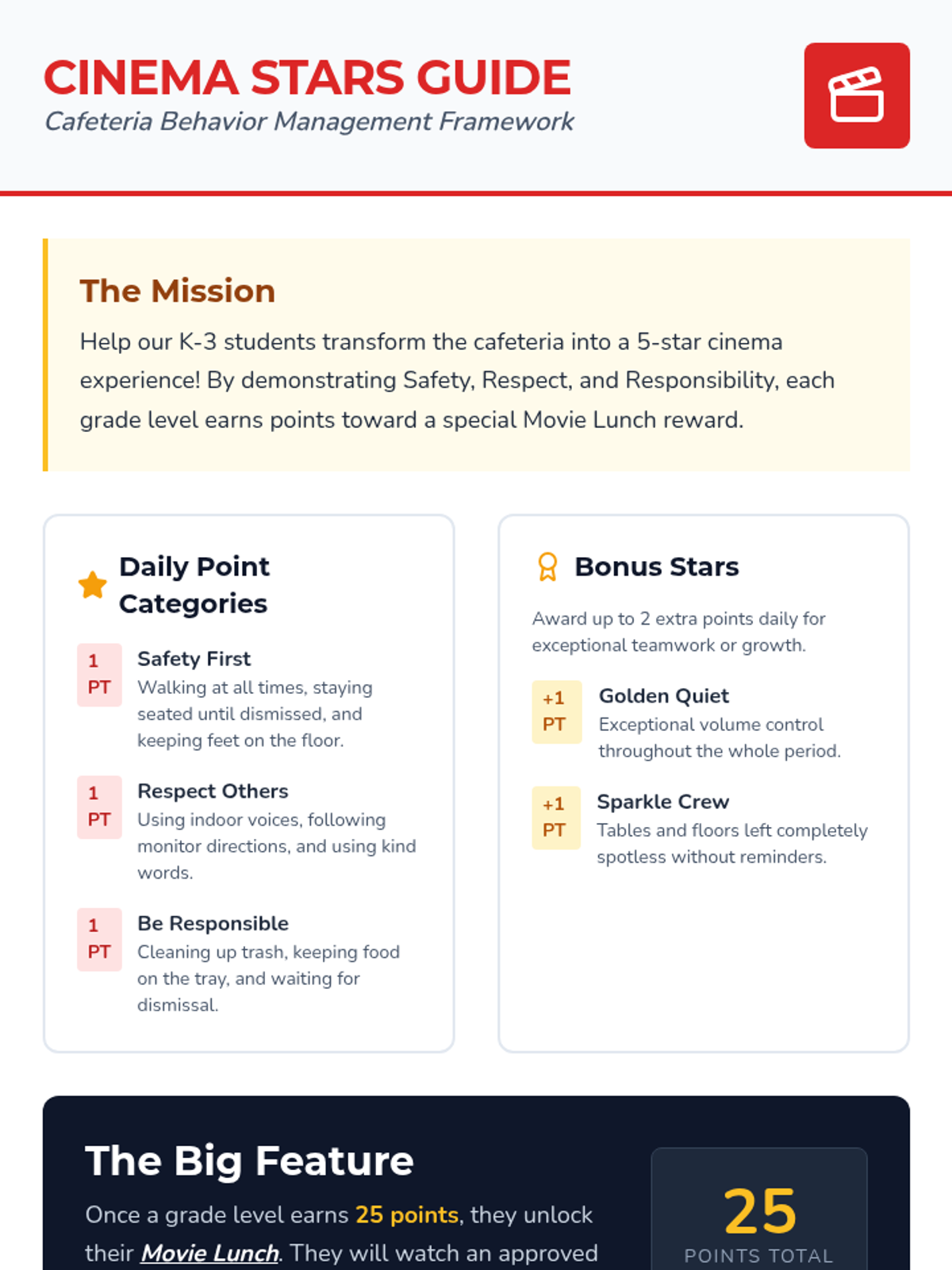
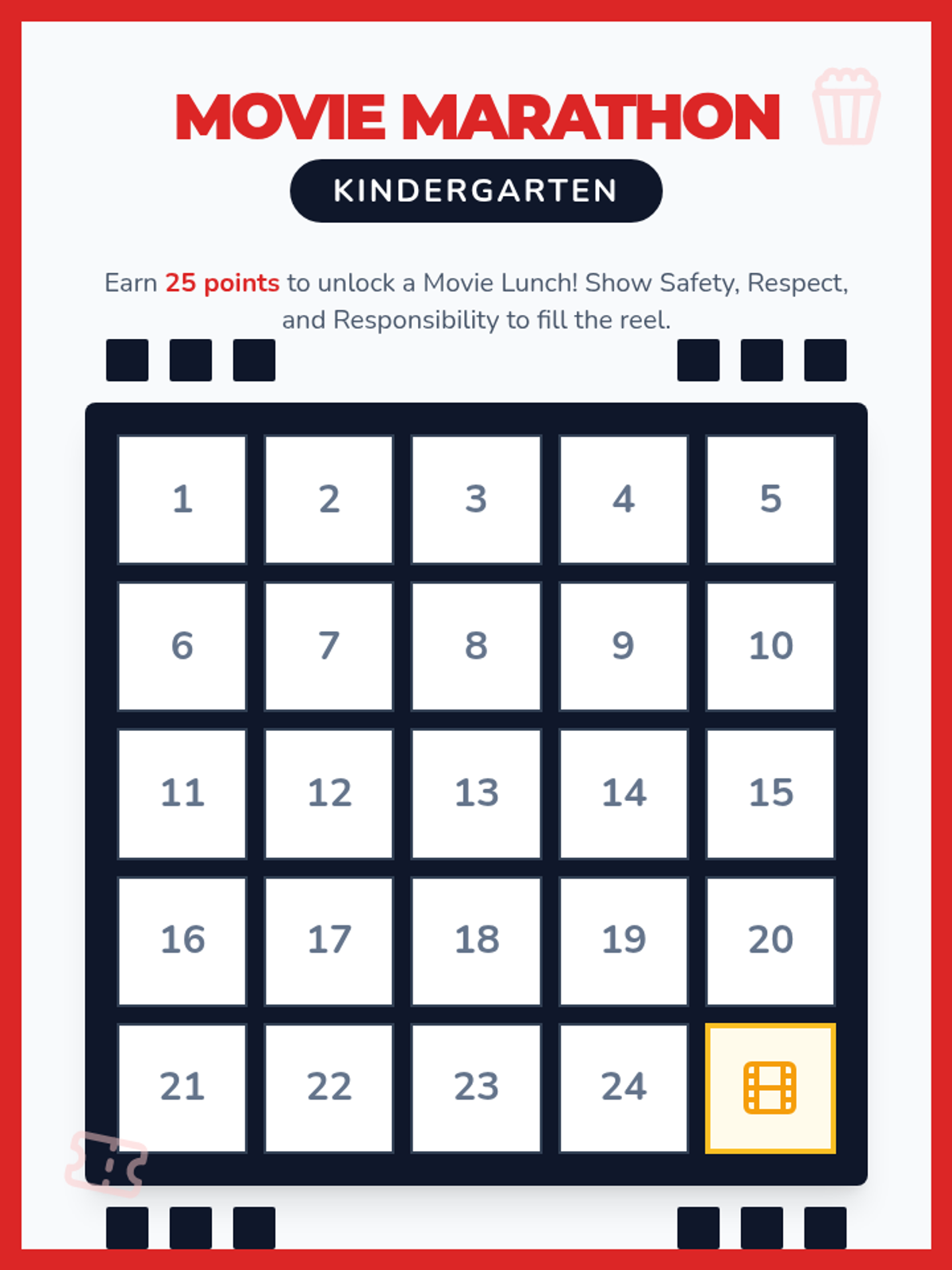
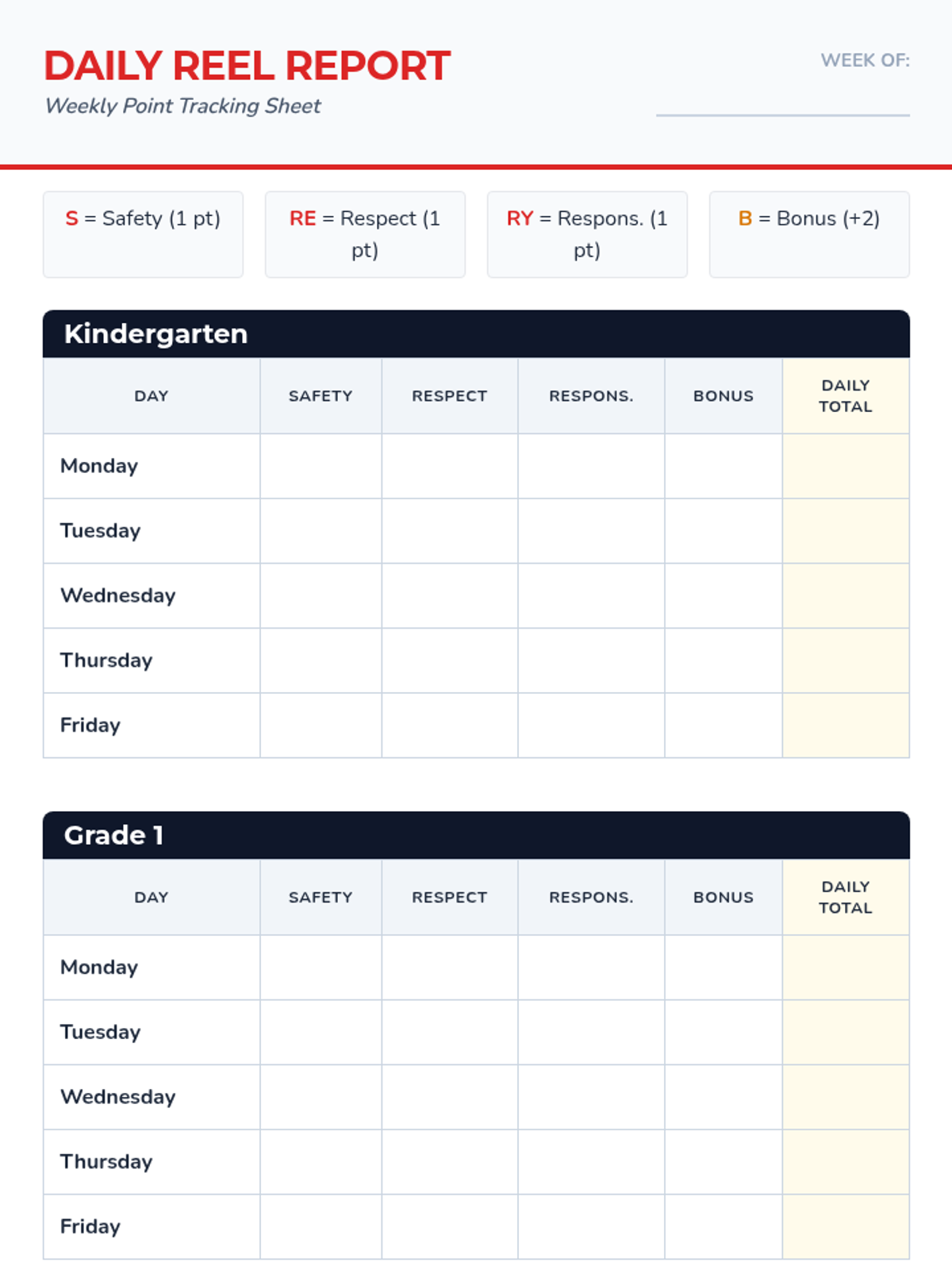
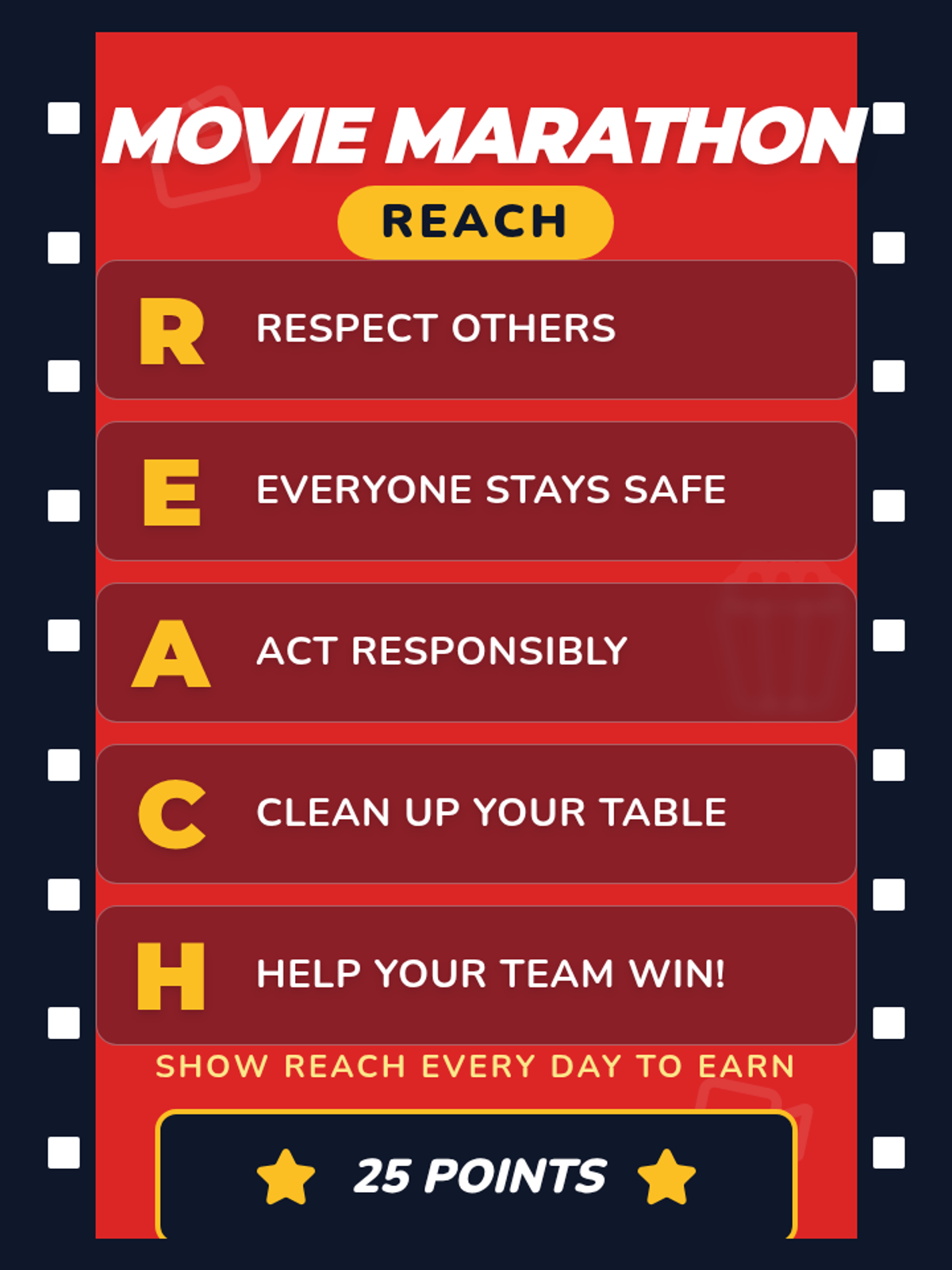
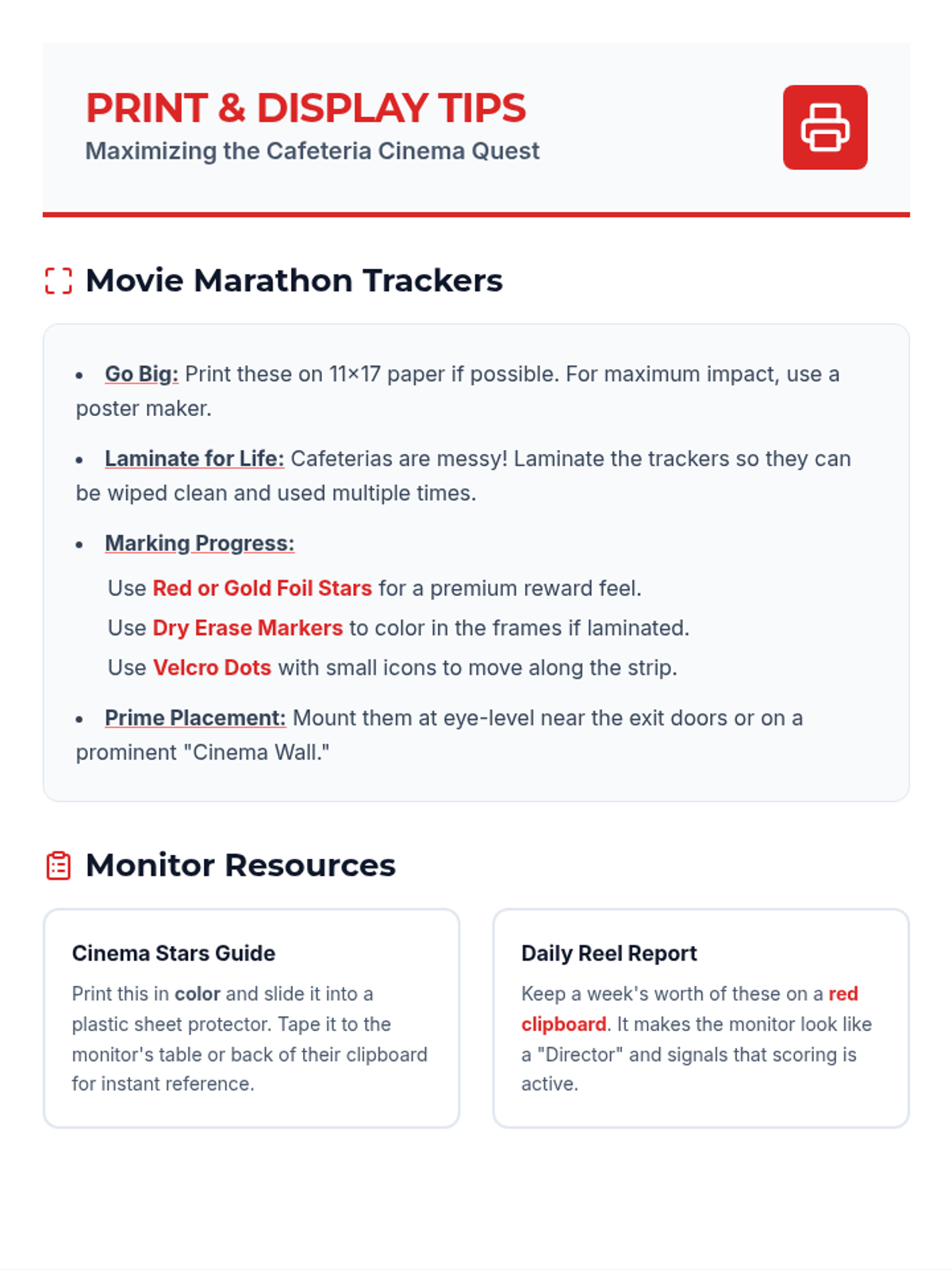
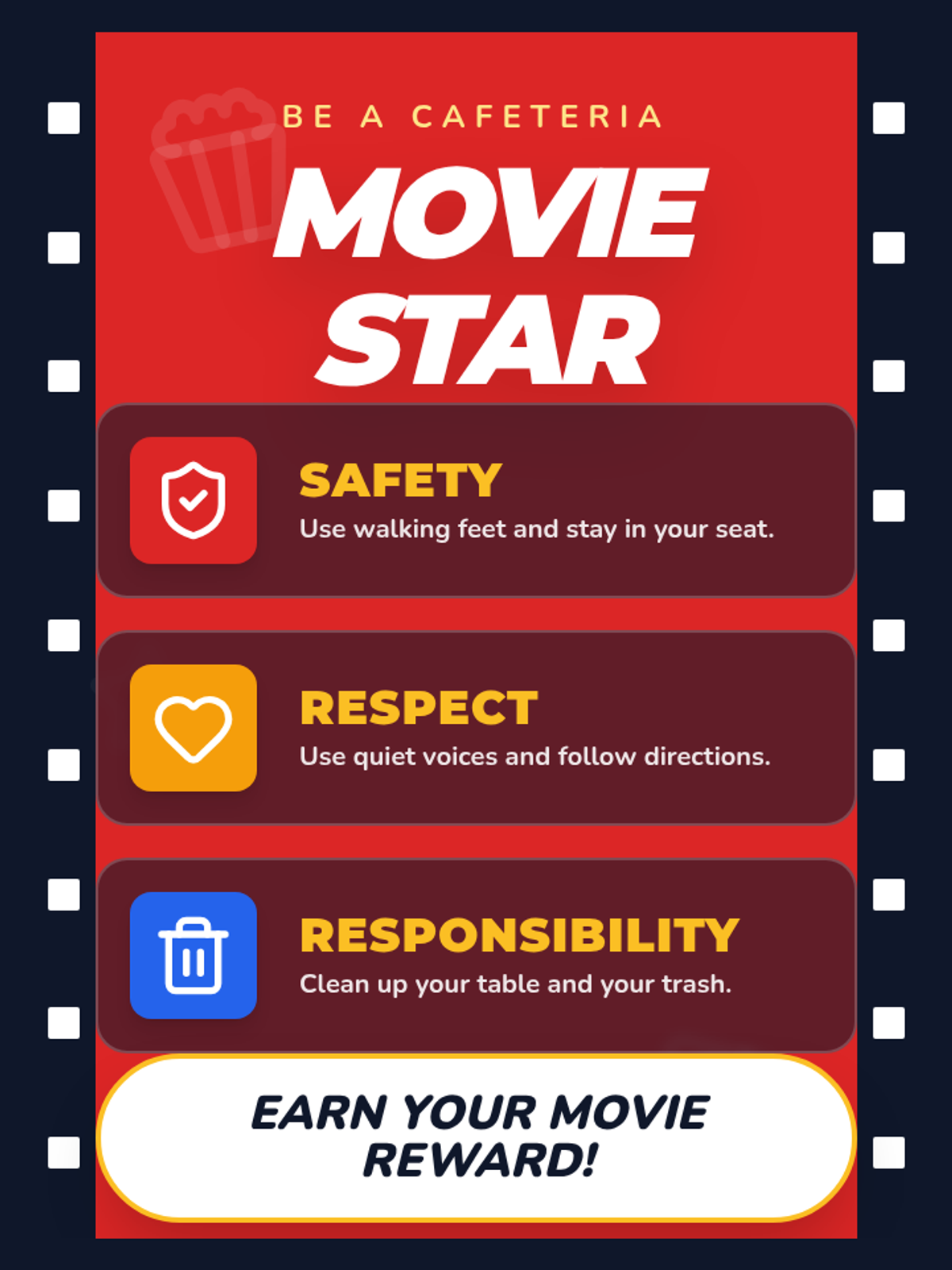
A management system designed for K-3 students to earn a movie reward through positive cafeteria behavior. Includes progress tracking, monitor tools, and introductory slides.
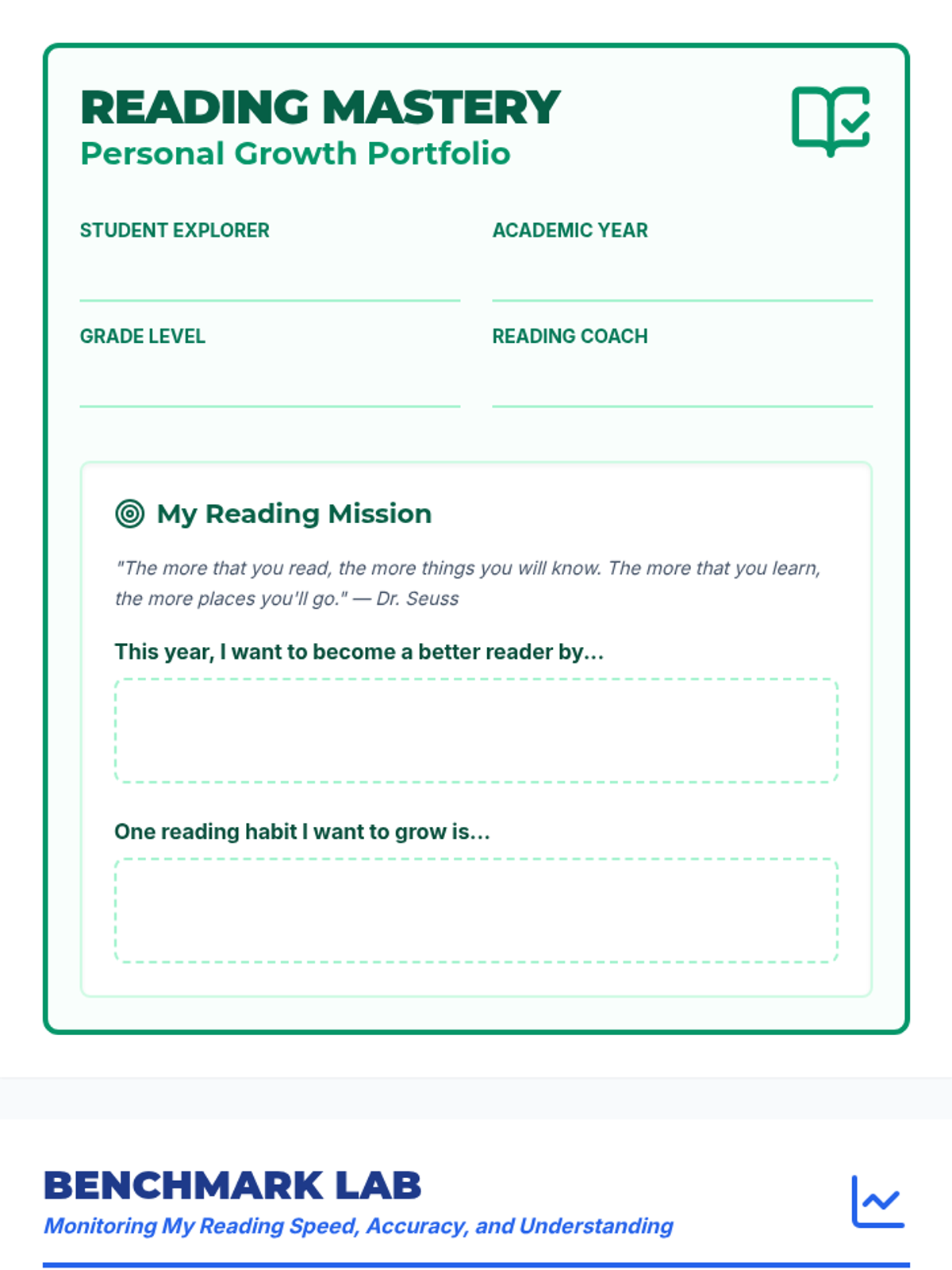
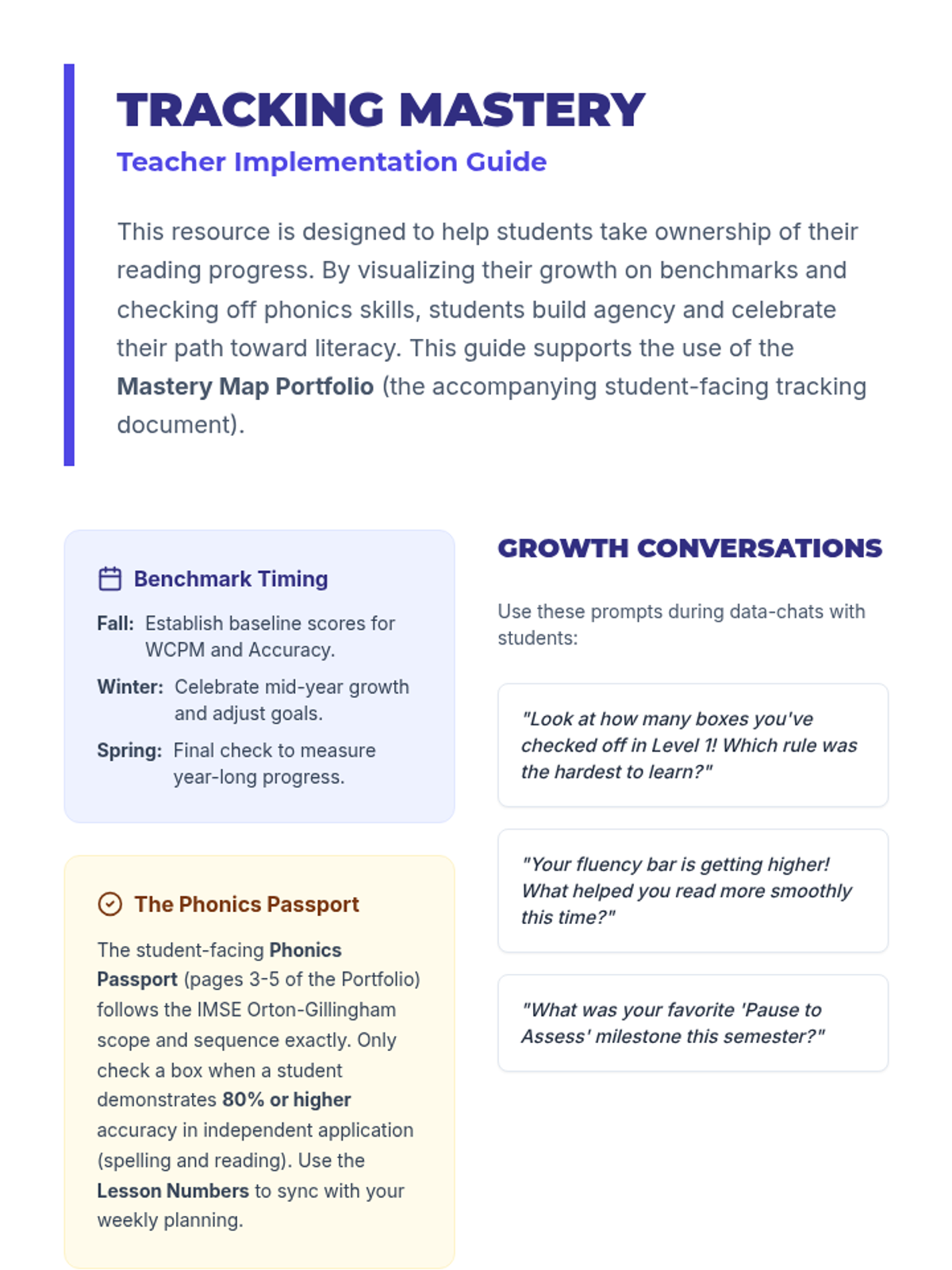
A comprehensive suite of data tracking tools for students to monitor their reading progress, including benchmark assessments and IMSE Orton-Gillingham concept checks from Kindergarten through 5th grade.
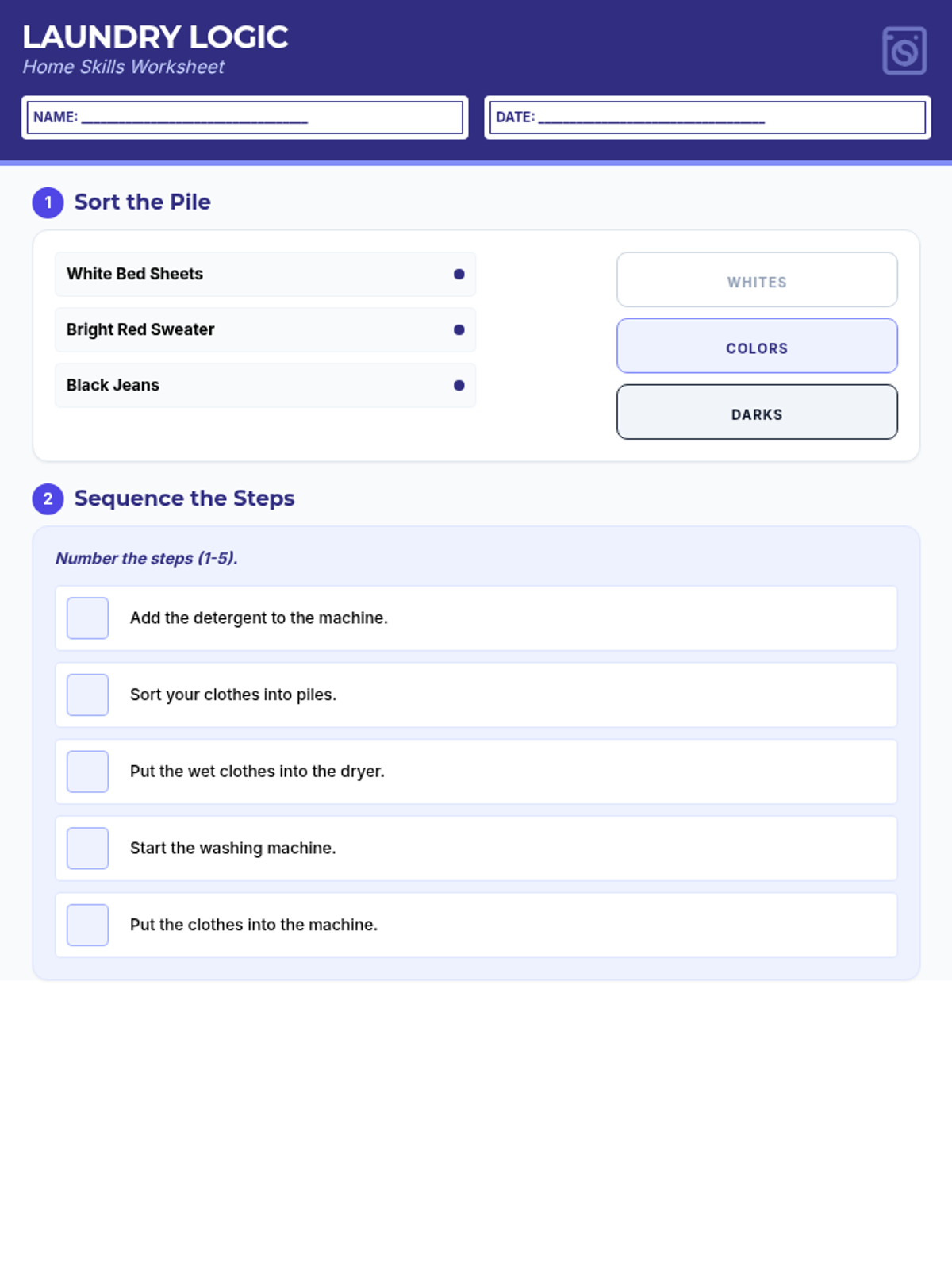
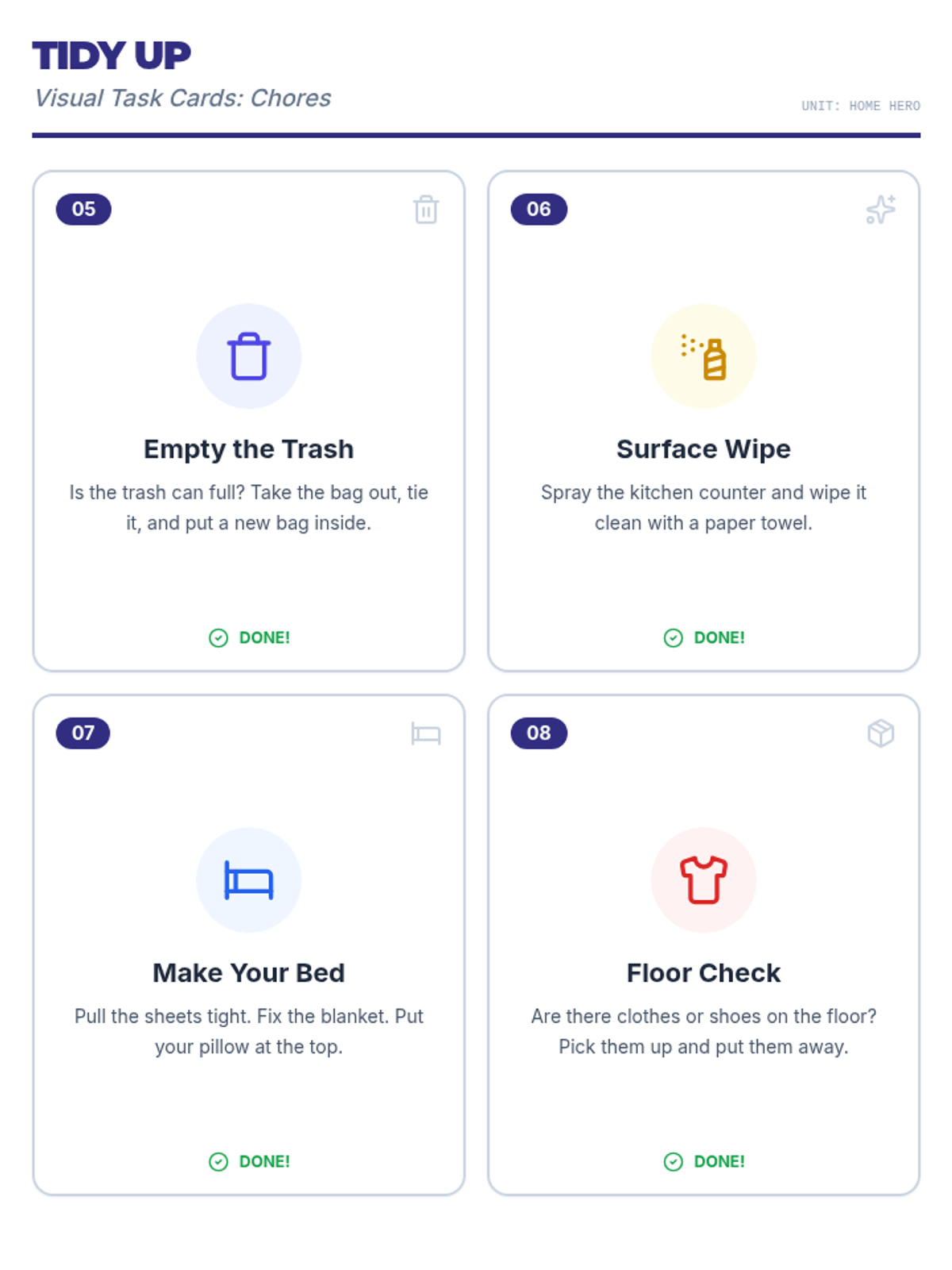
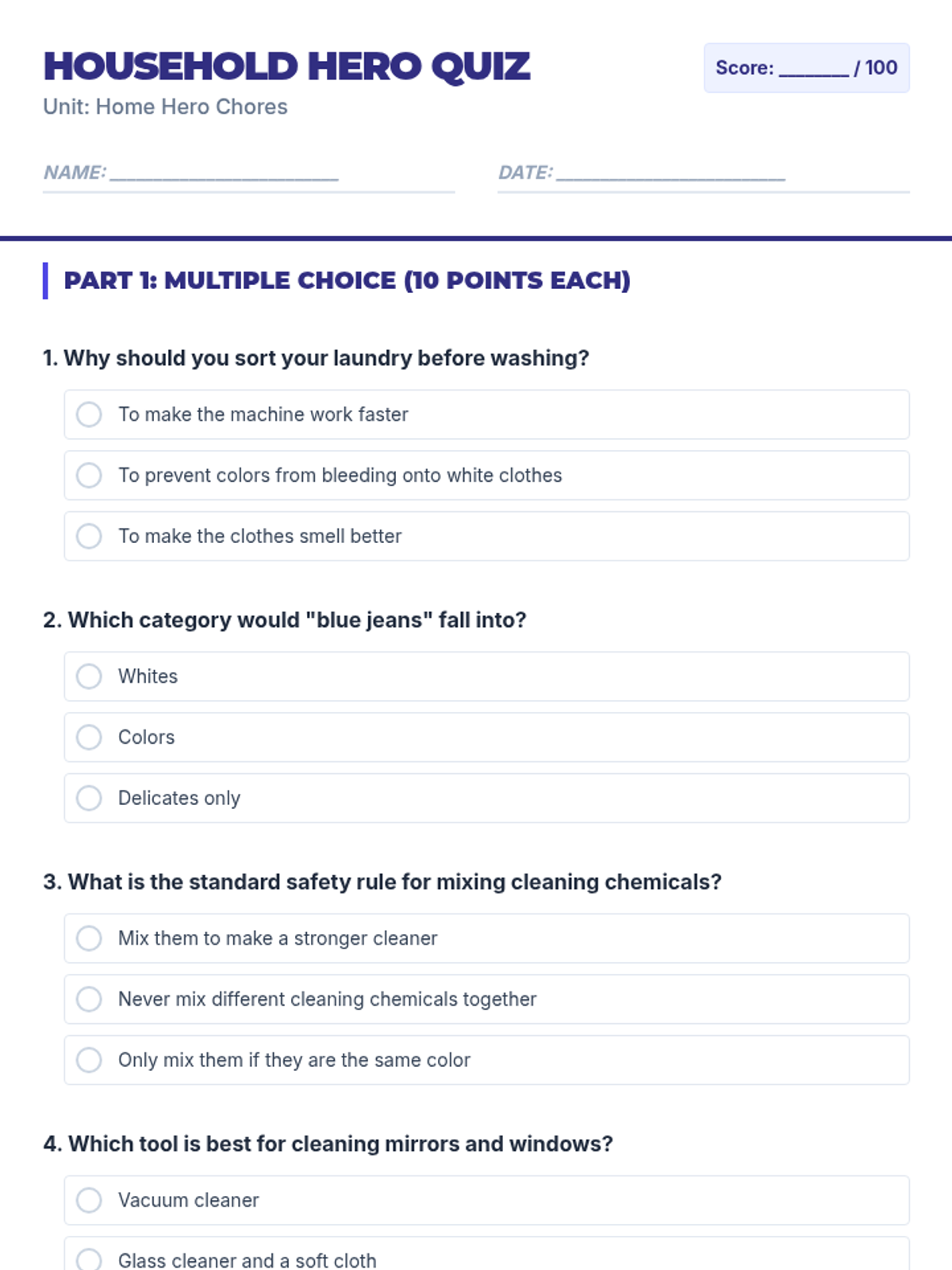
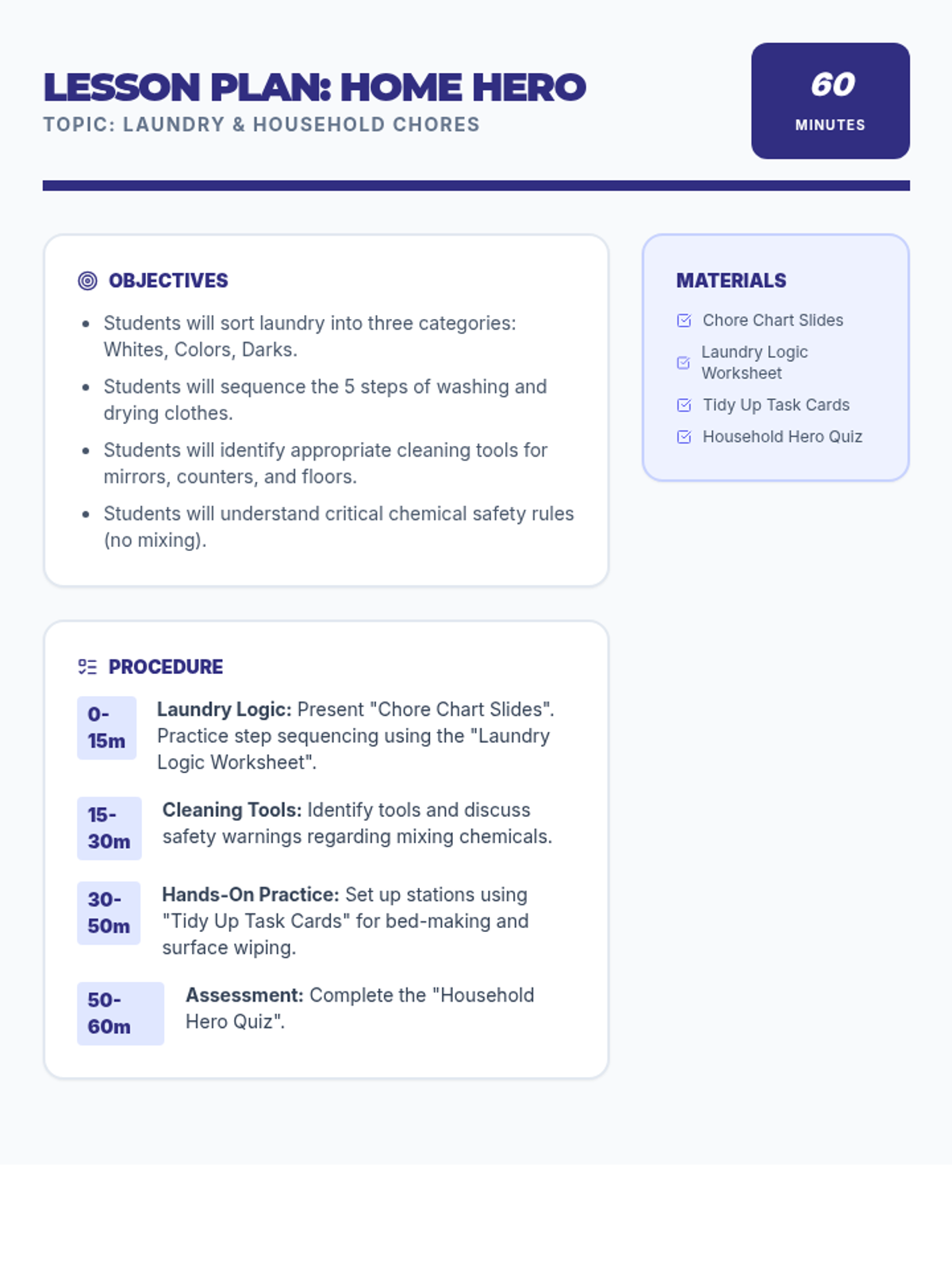
Mastering the art of laundry, cleaning schedules, and maintaining a healthy home environment.
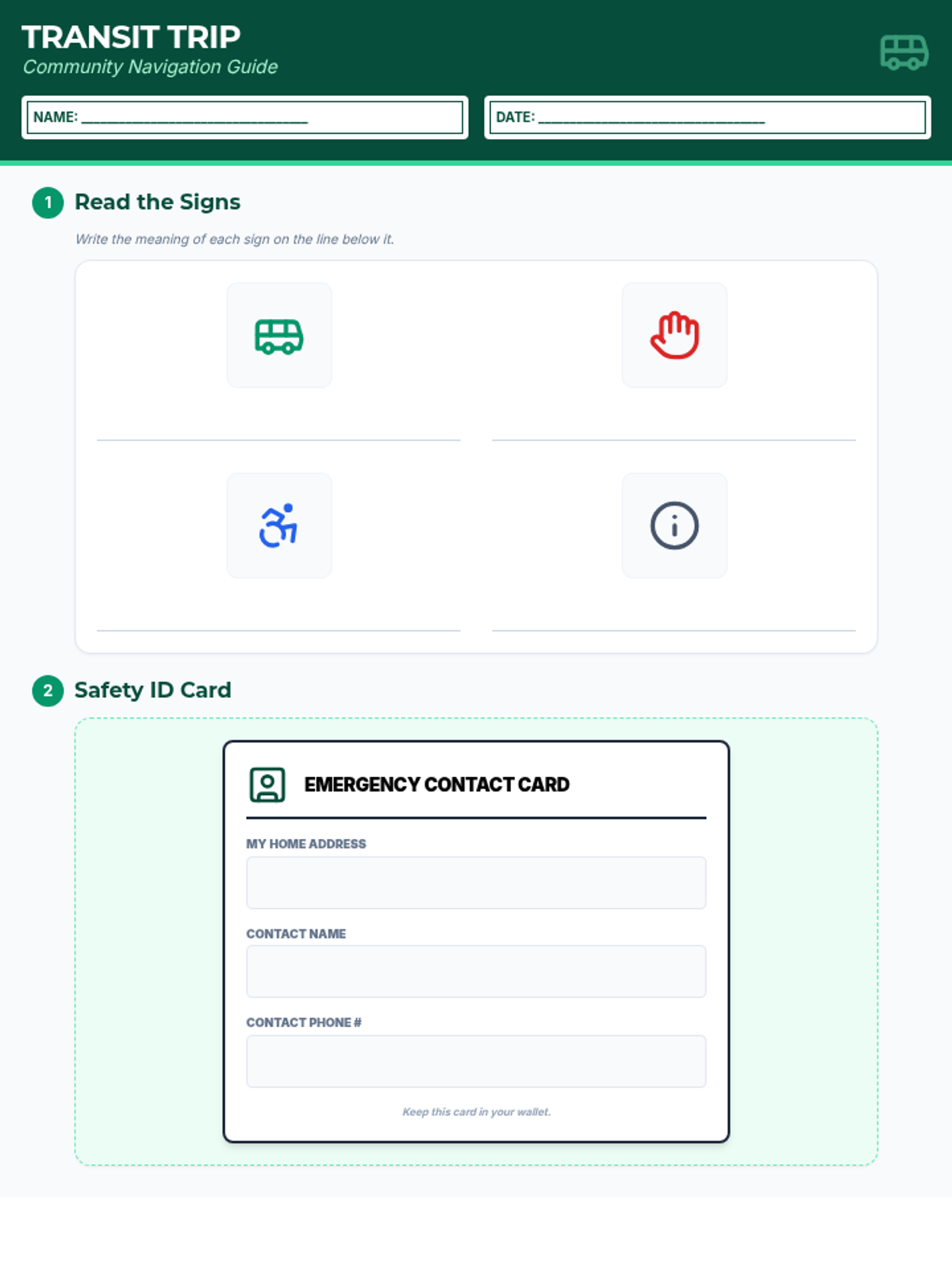
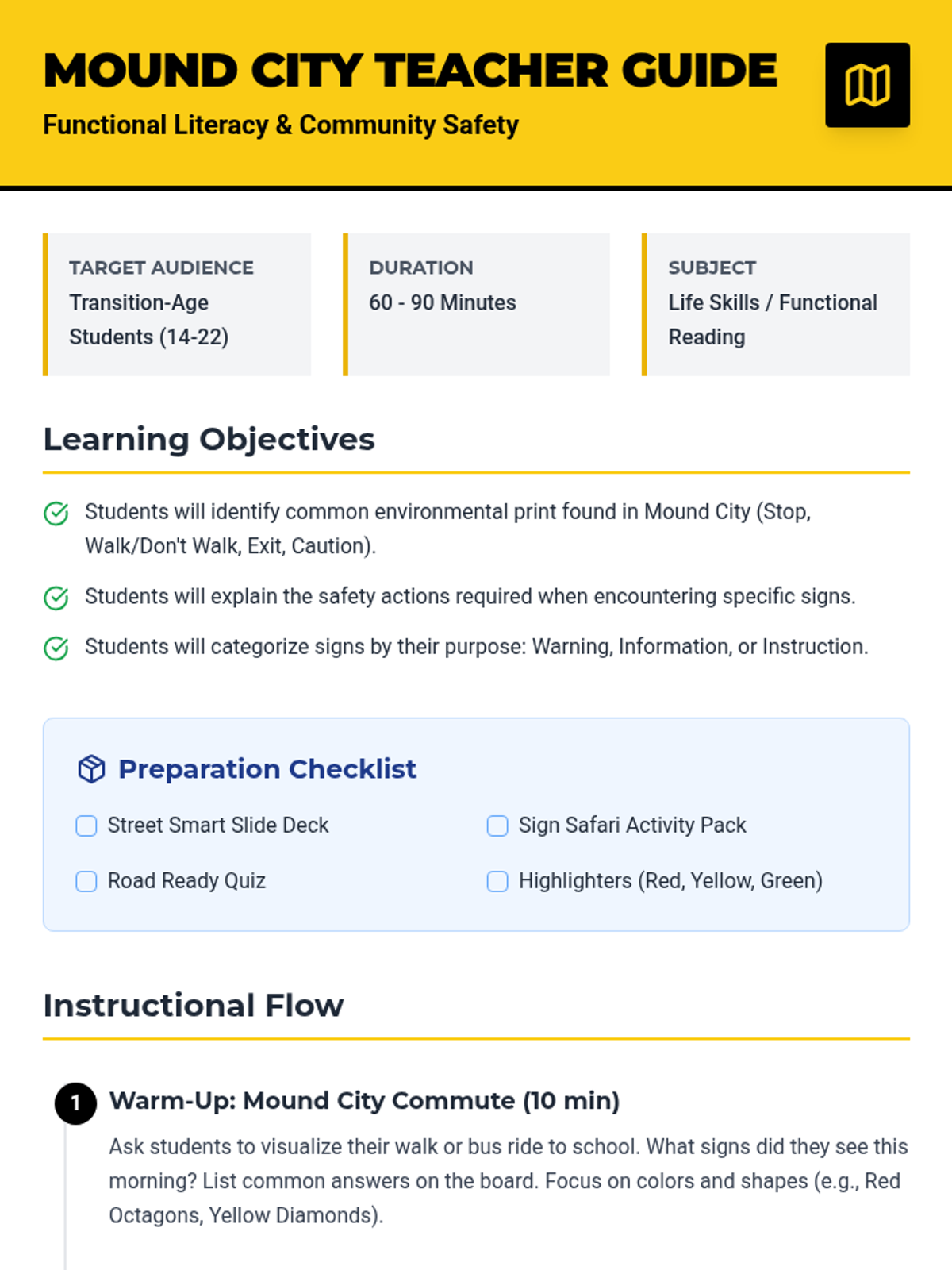
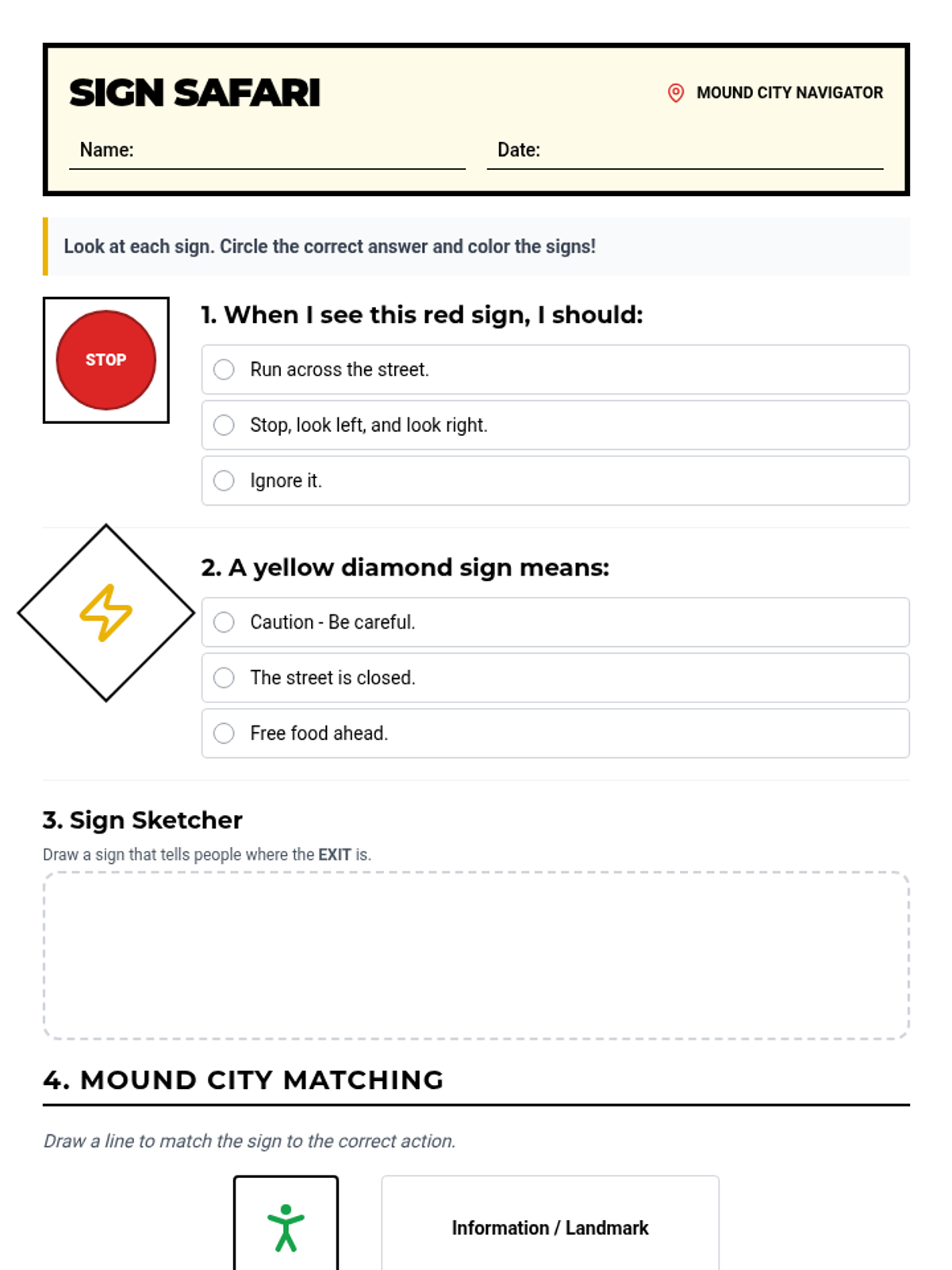
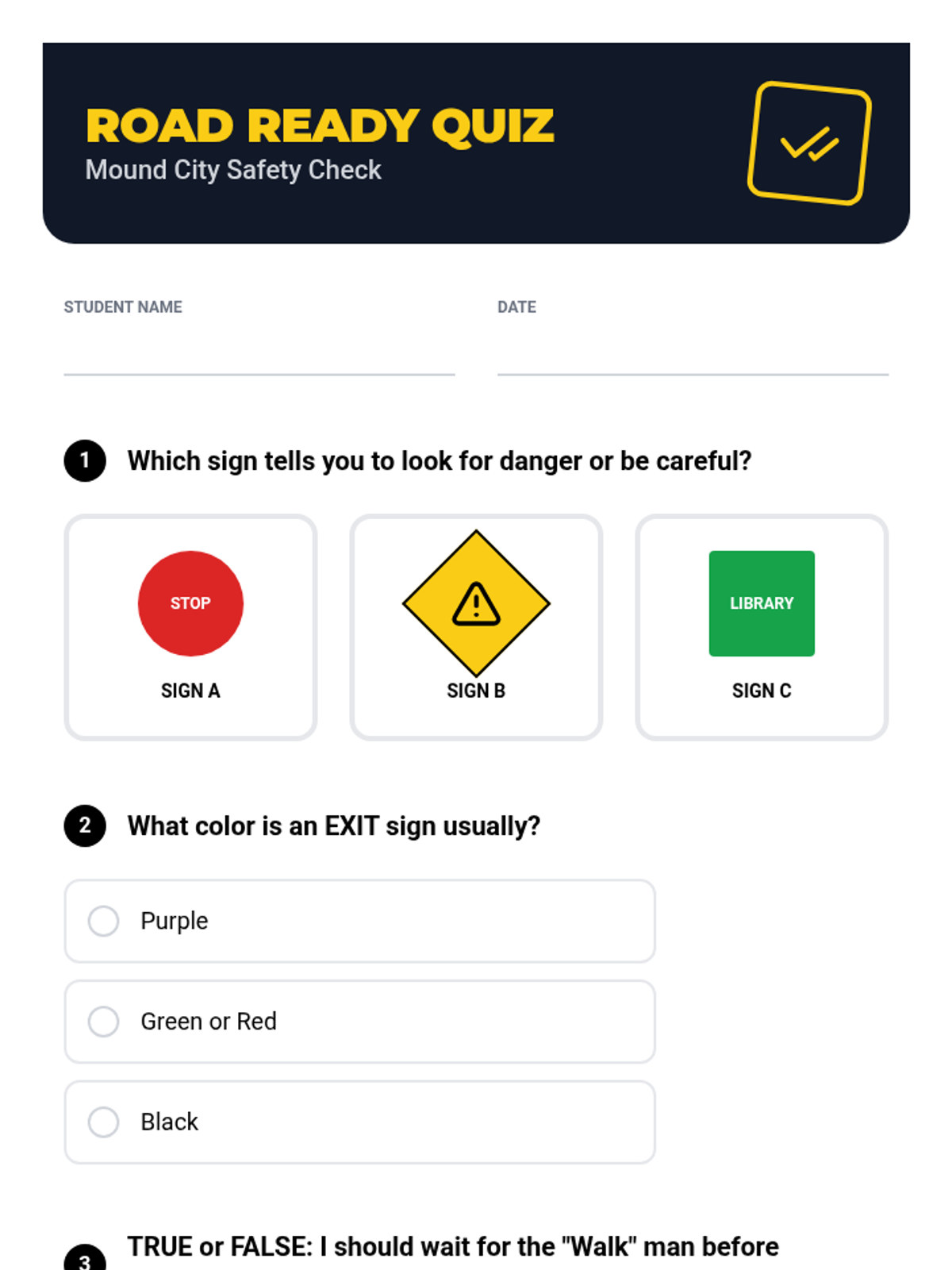
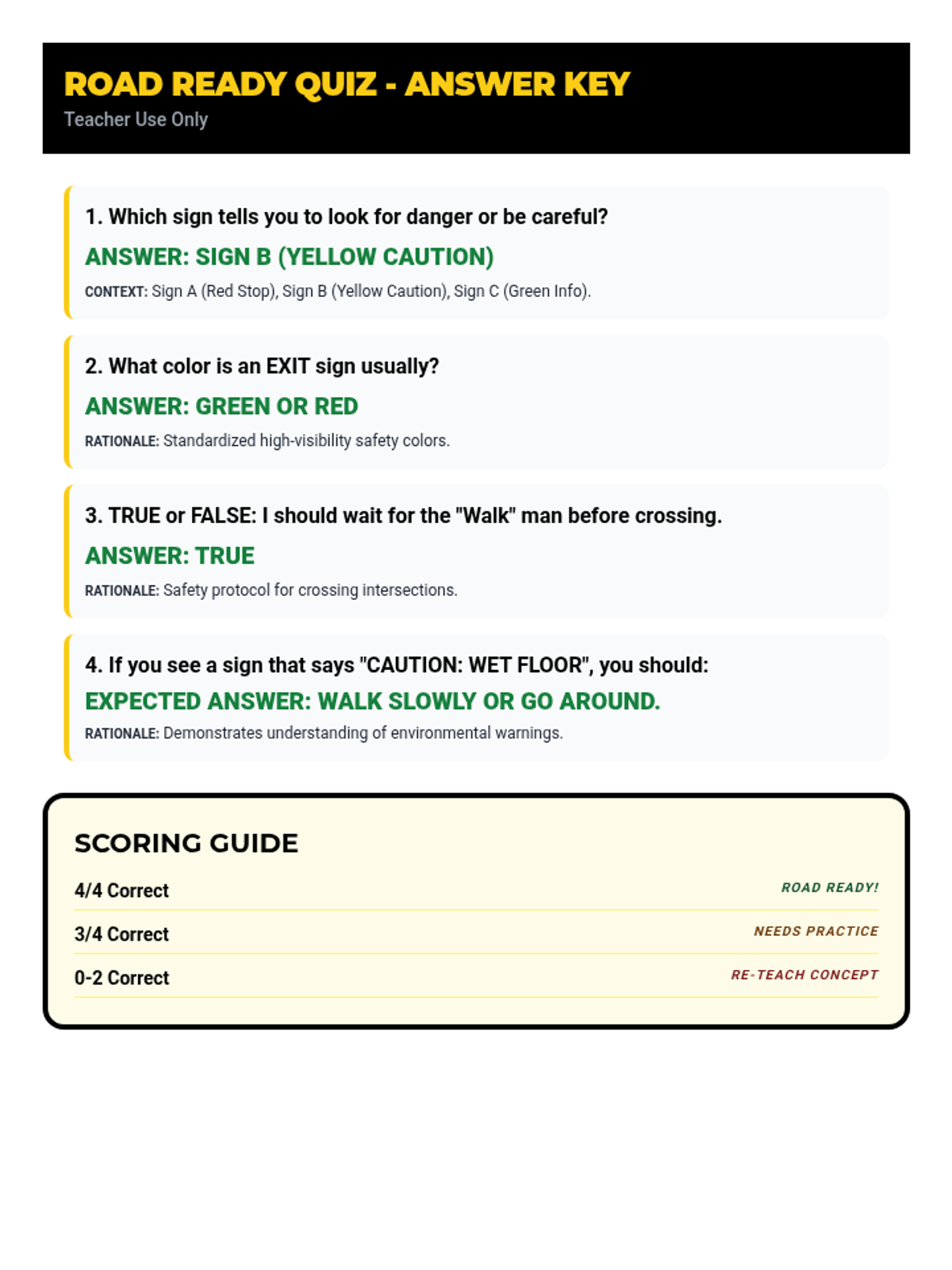
A functional literacy lesson for transition-age students focused on identifying and interpreting environmental print and safety signs in the Mound City community. Students build real-world independence through sign recognition and situational awareness.
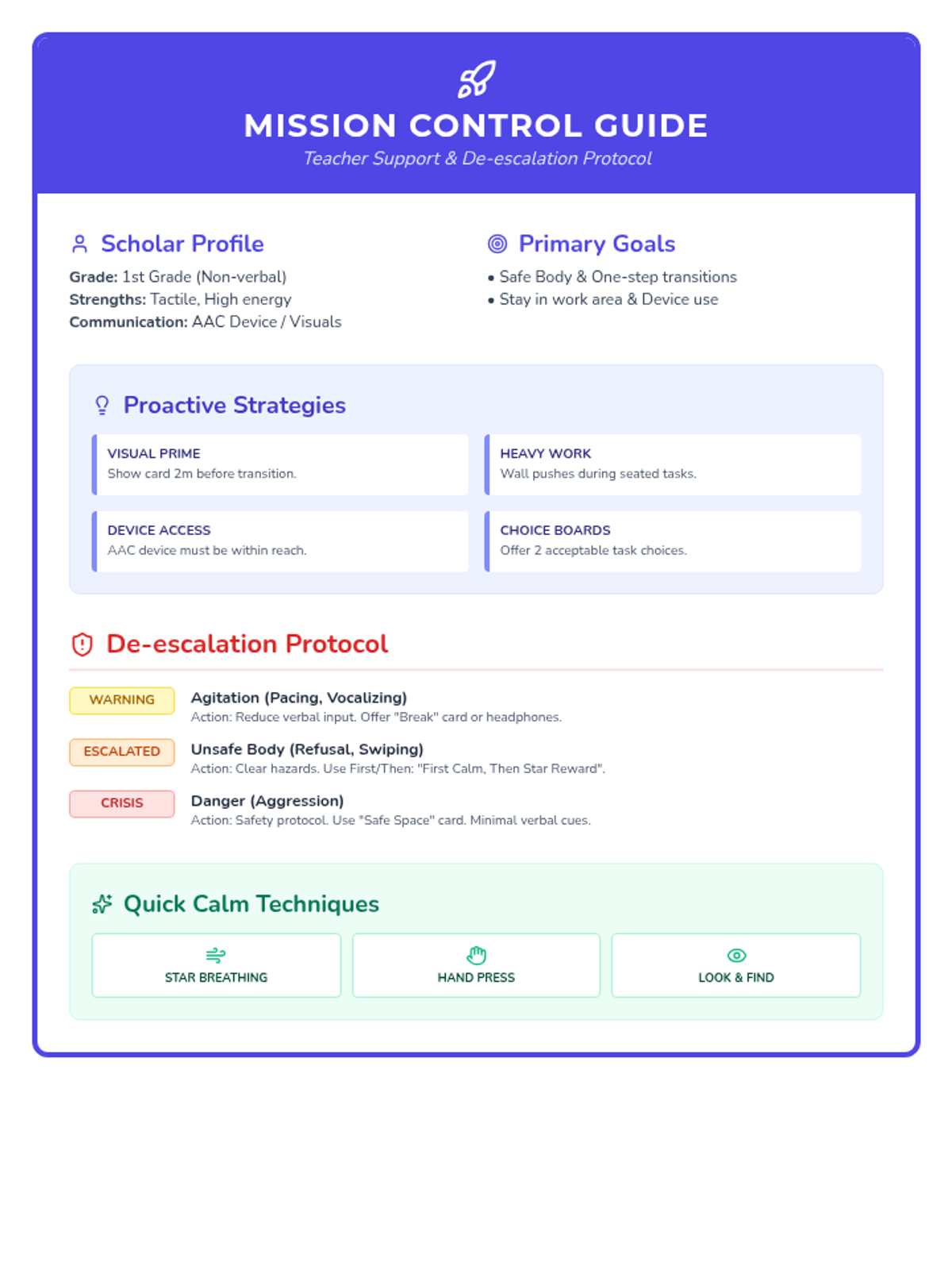
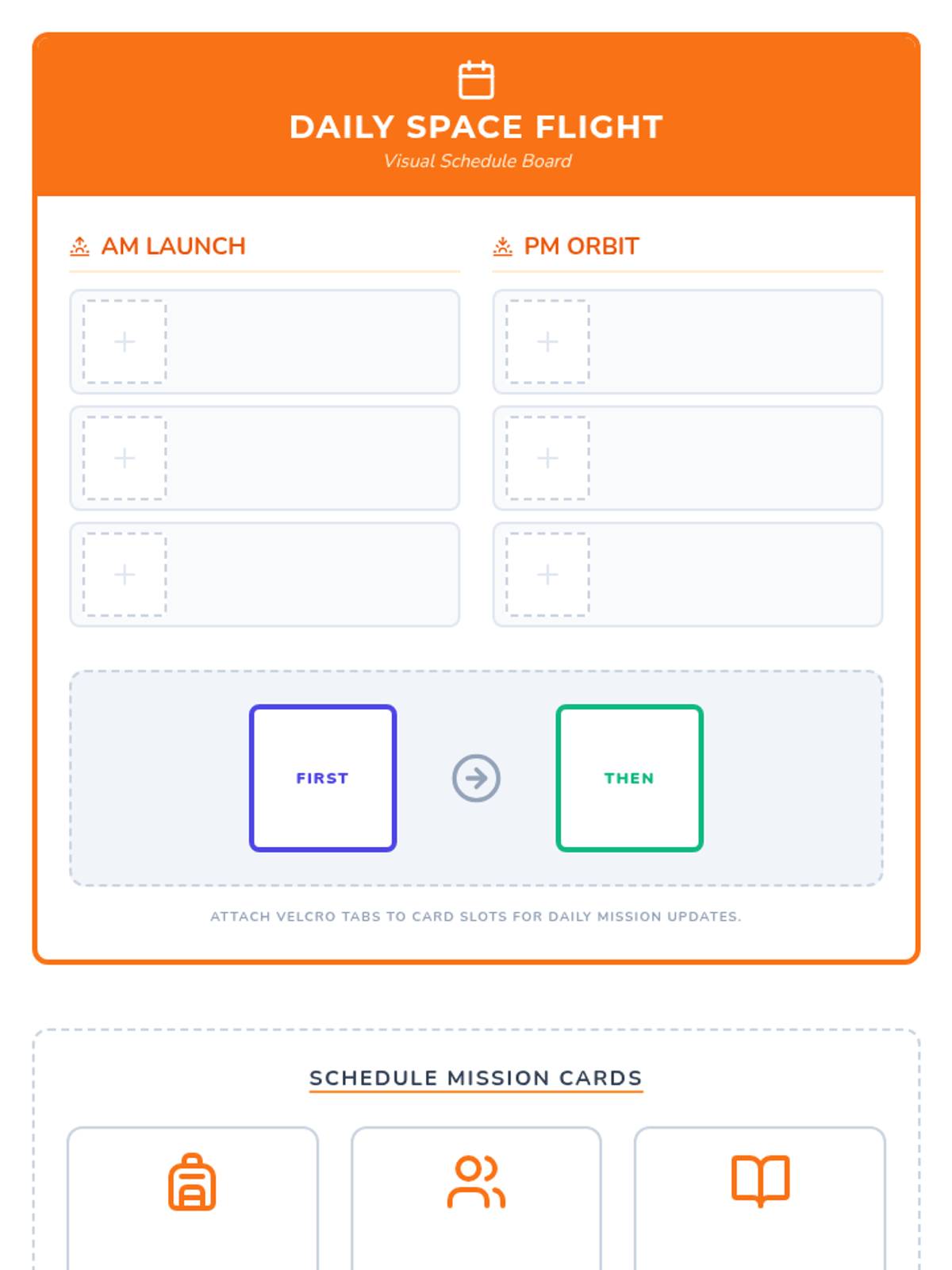
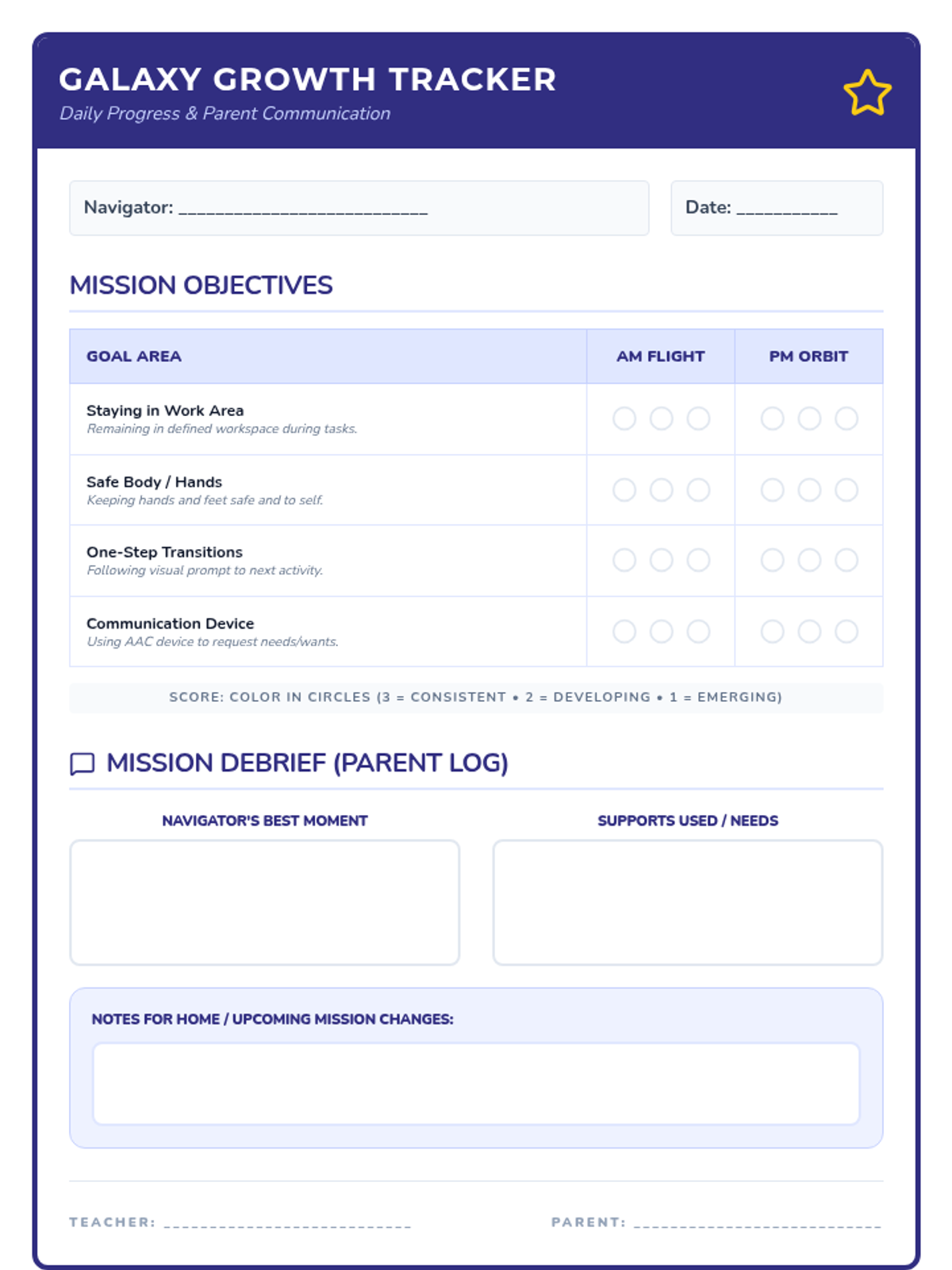
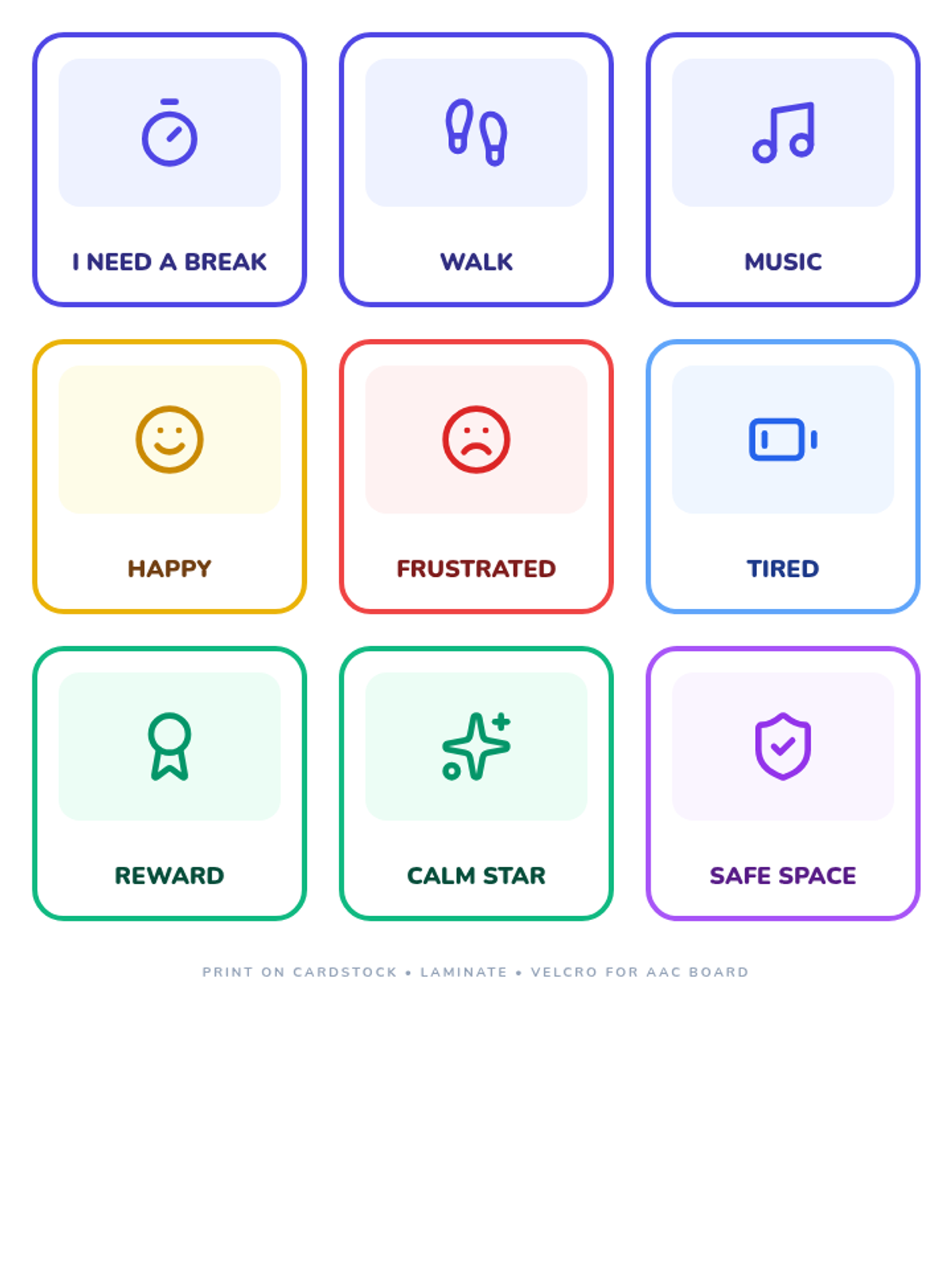
Essential visual and behavioral tools for supporting a non-verbal student in a 1st-grade classroom setting. This lesson includes communication cards, visual schedules, and tracking systems tailored to specific behavioral goals.
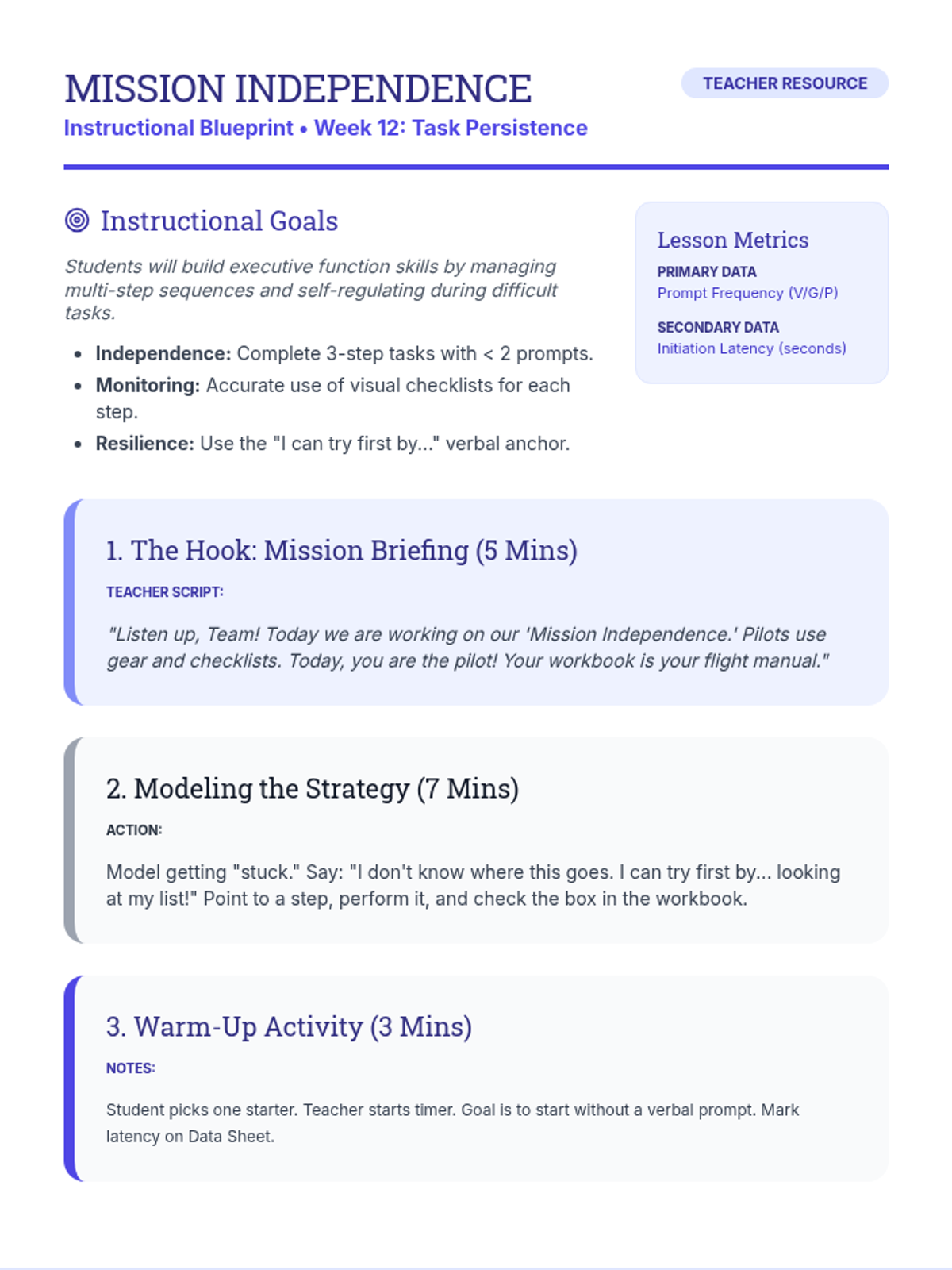
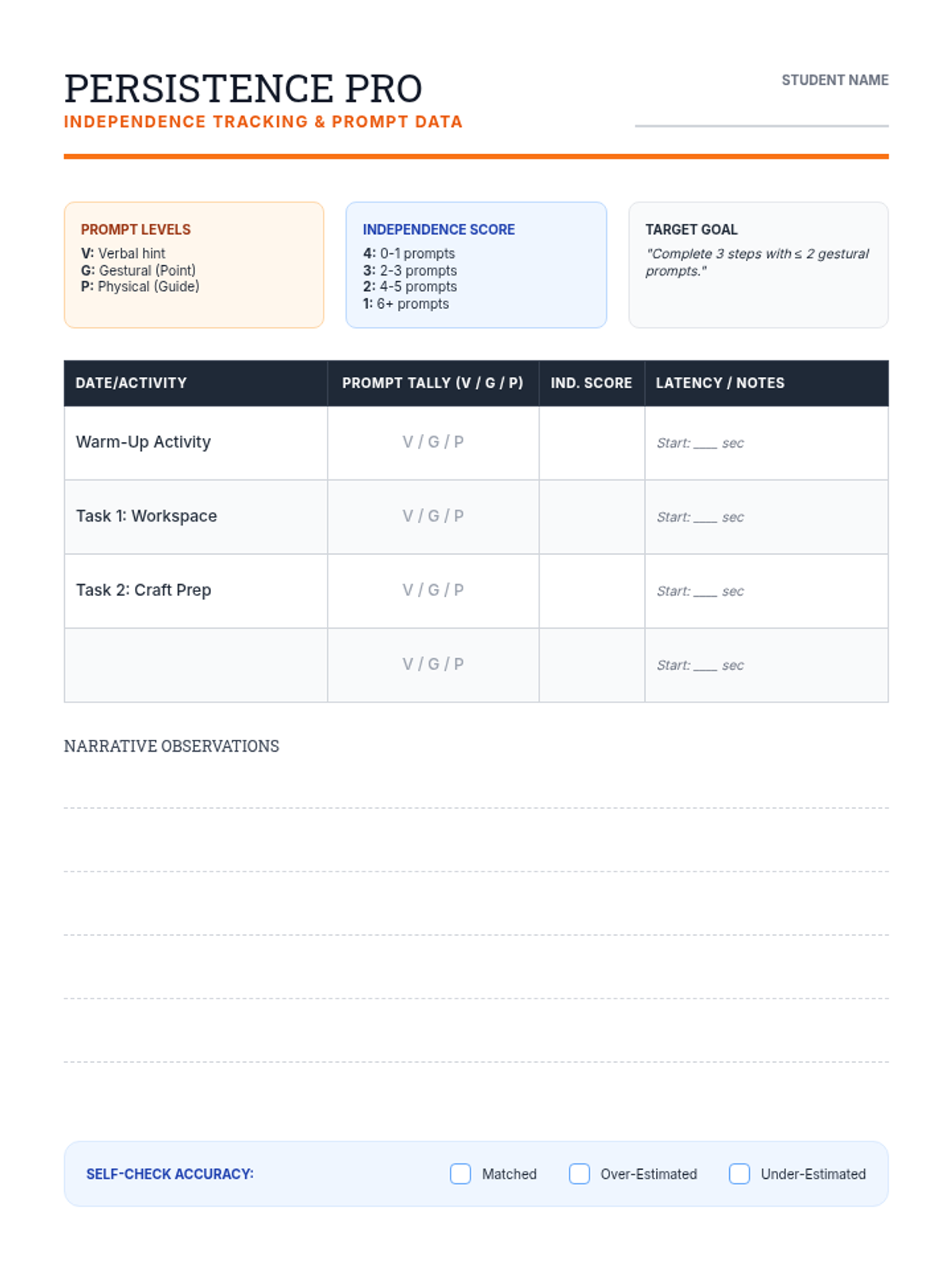
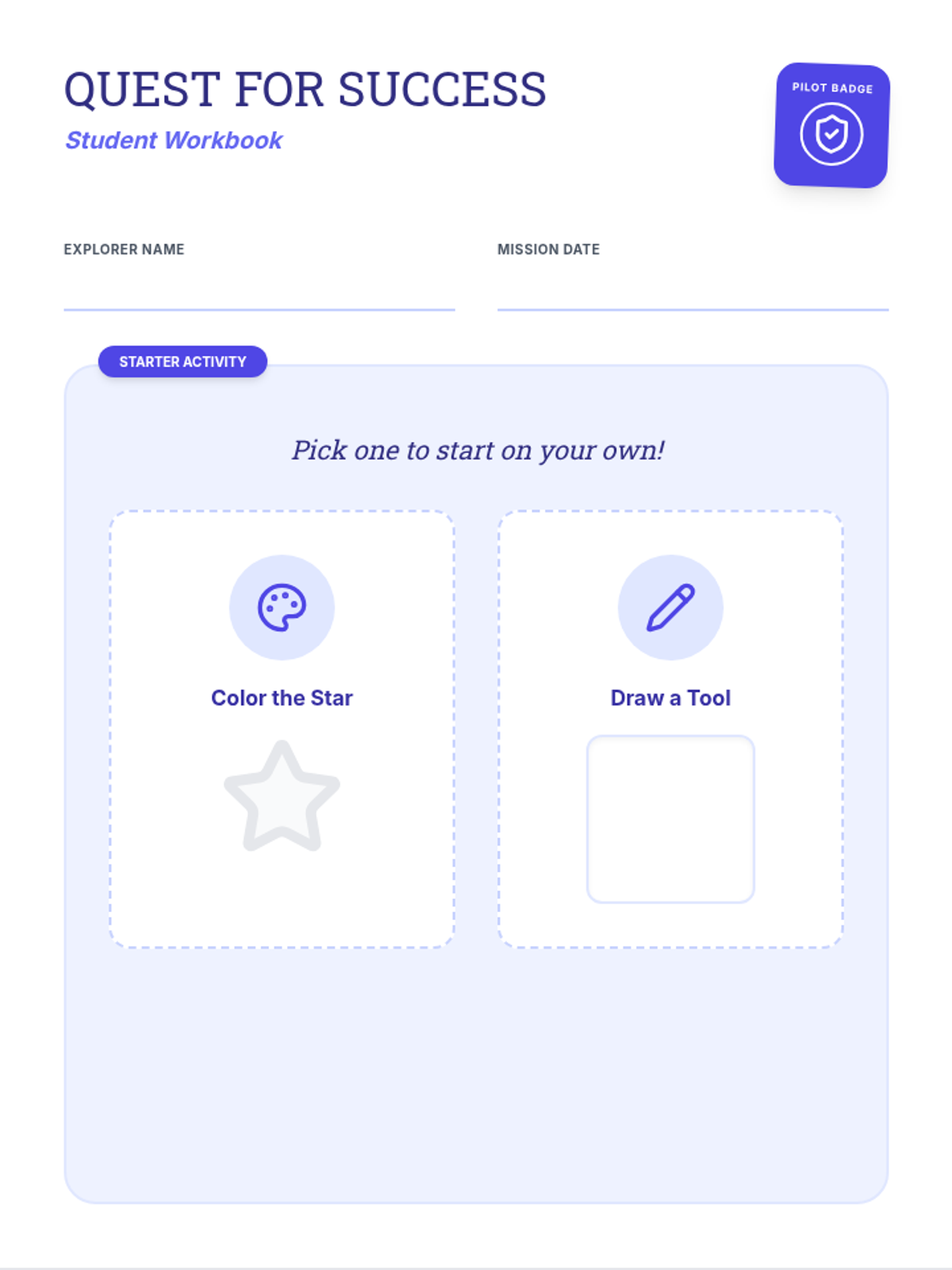
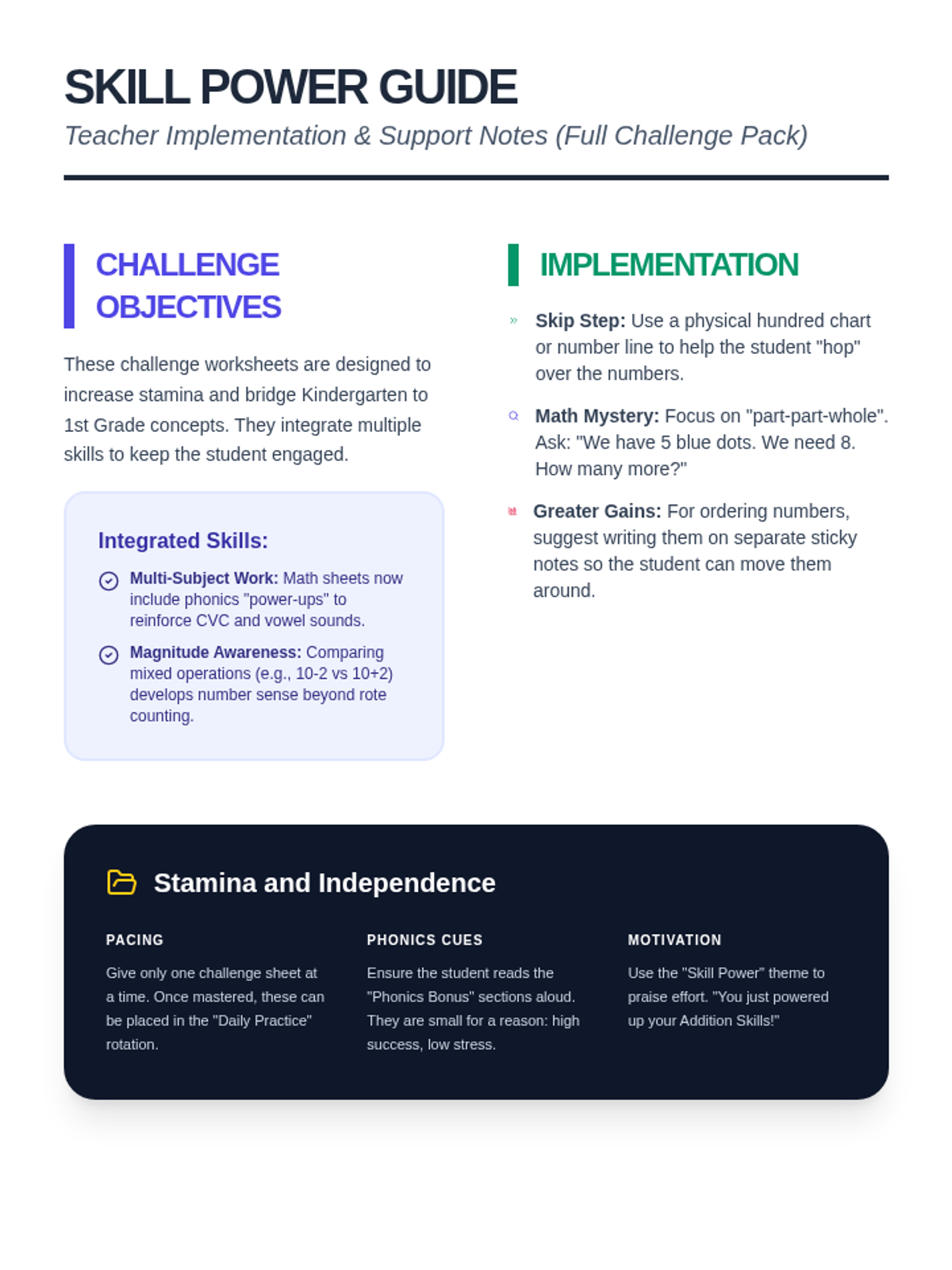
A comprehensive lesson focused on building task persistence and independence in 1st-grade students through structured 3-step tasks, visual checklists, and self-monitoring strategies.
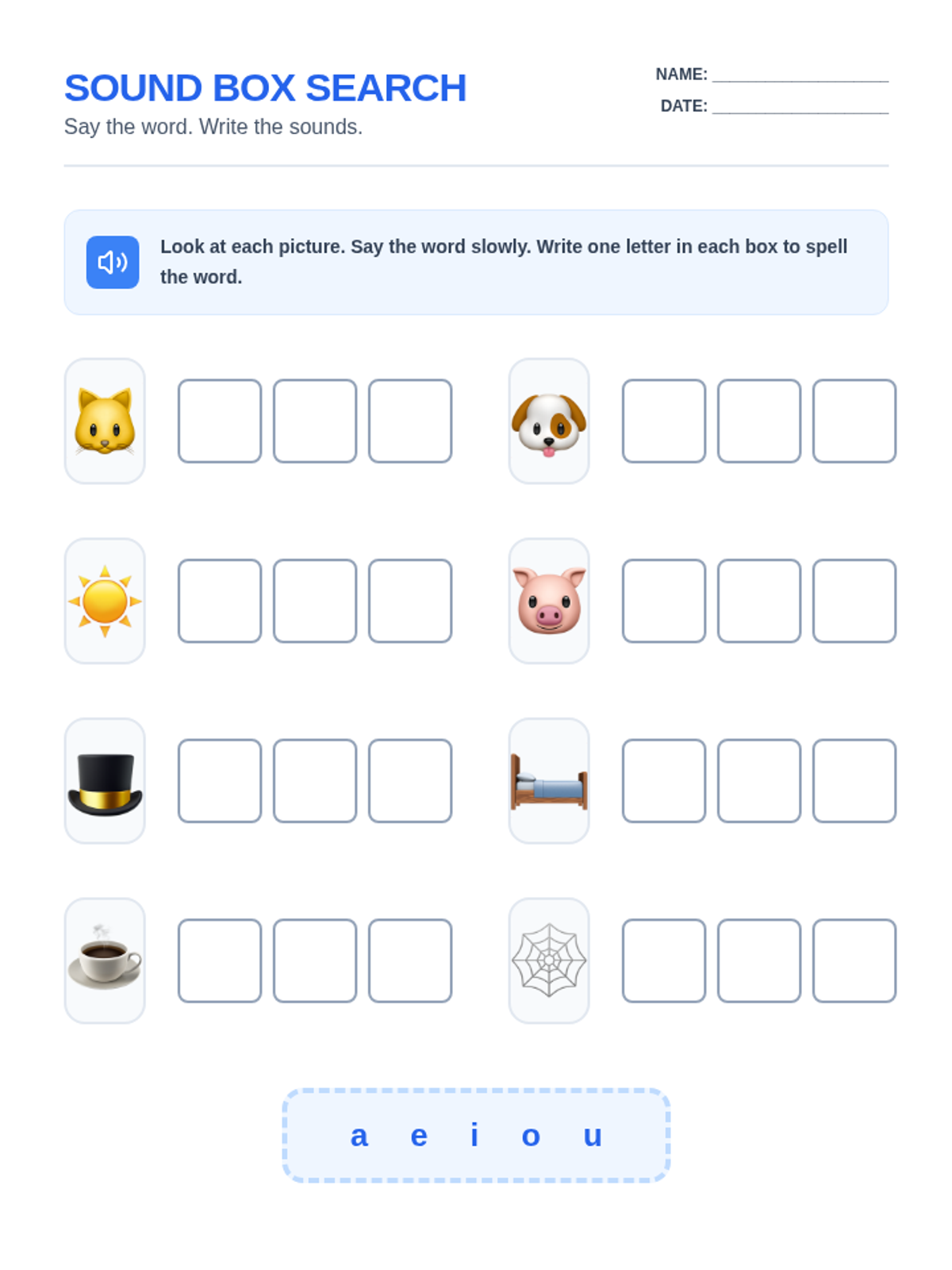
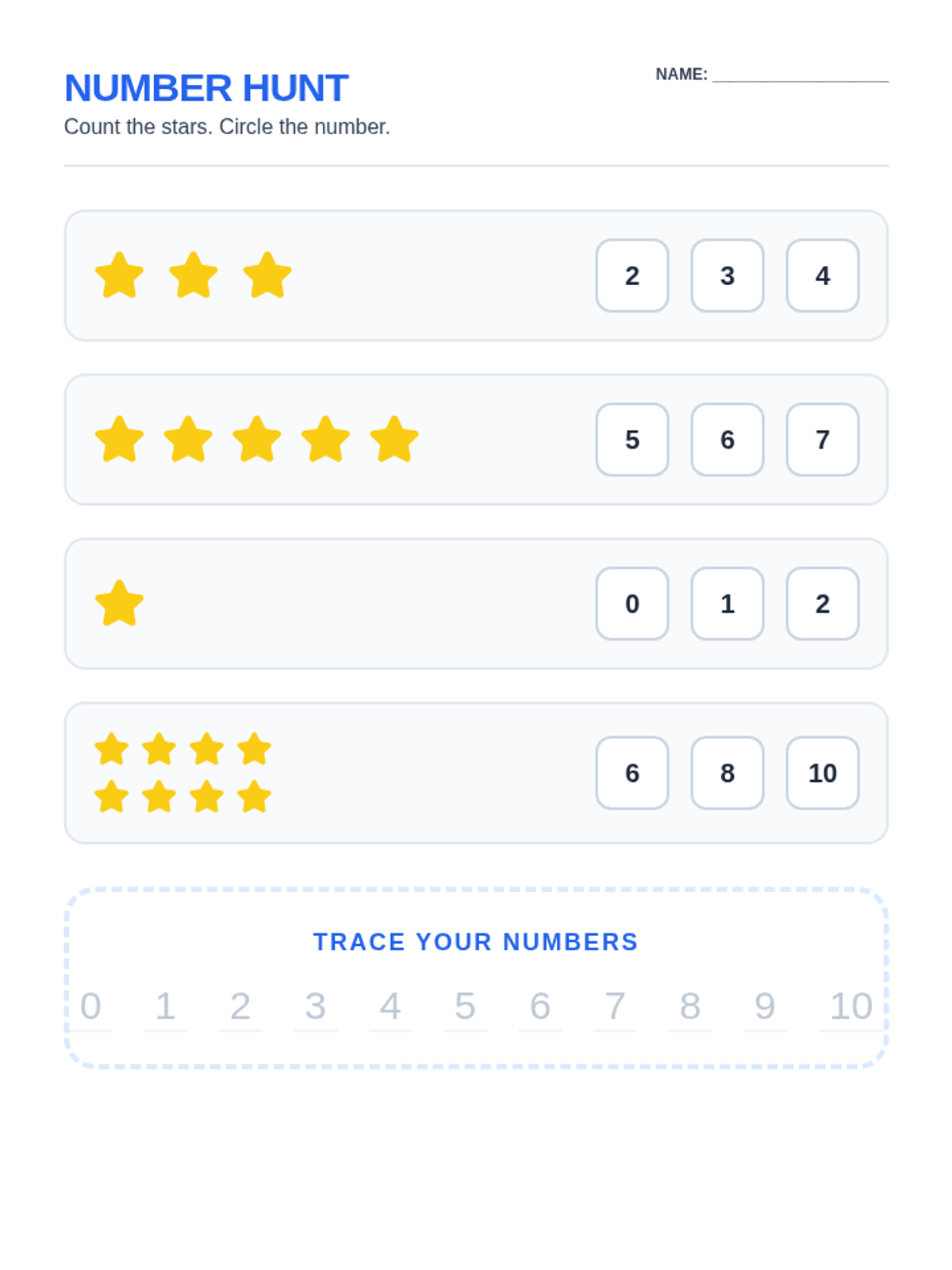
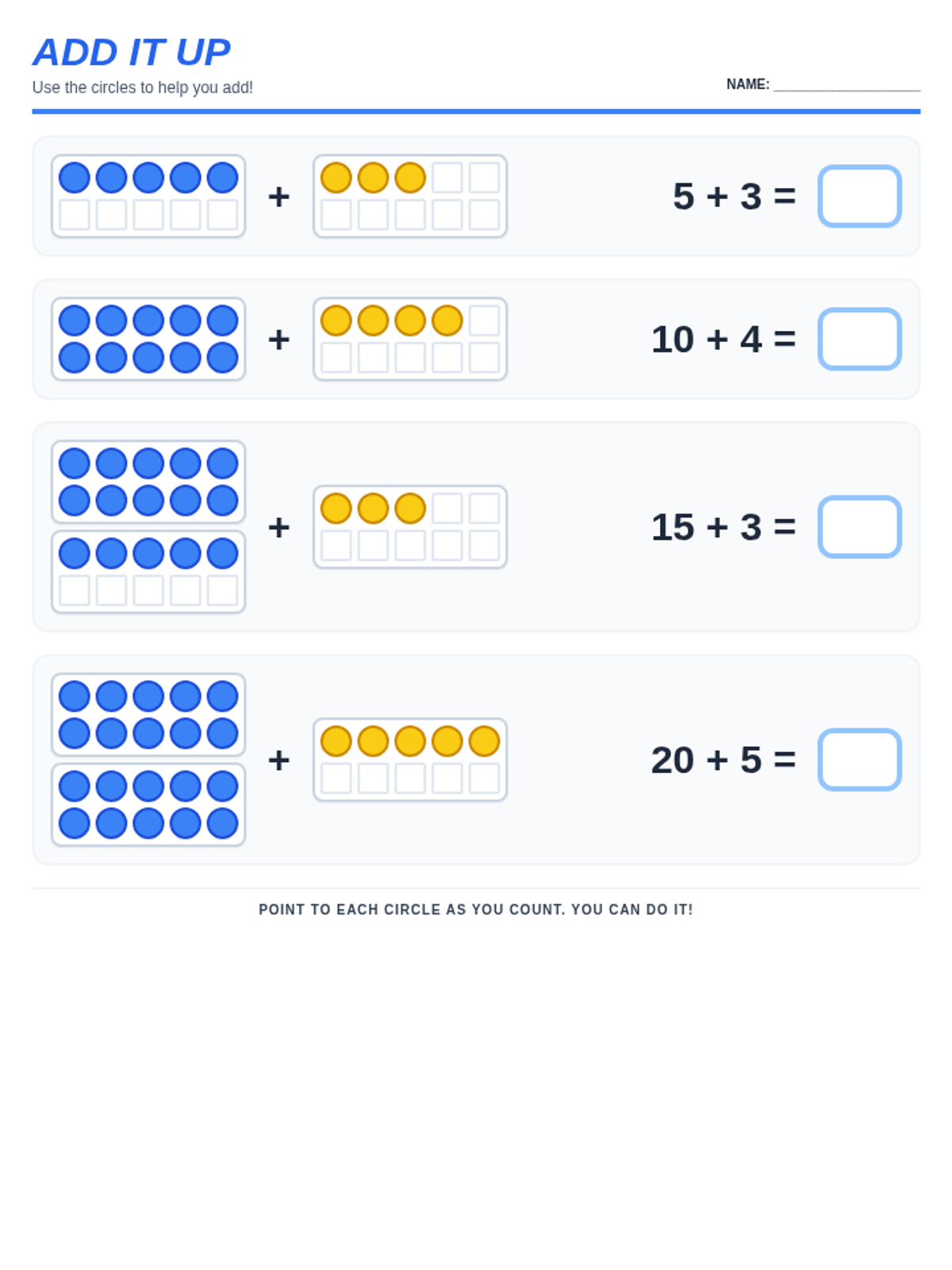
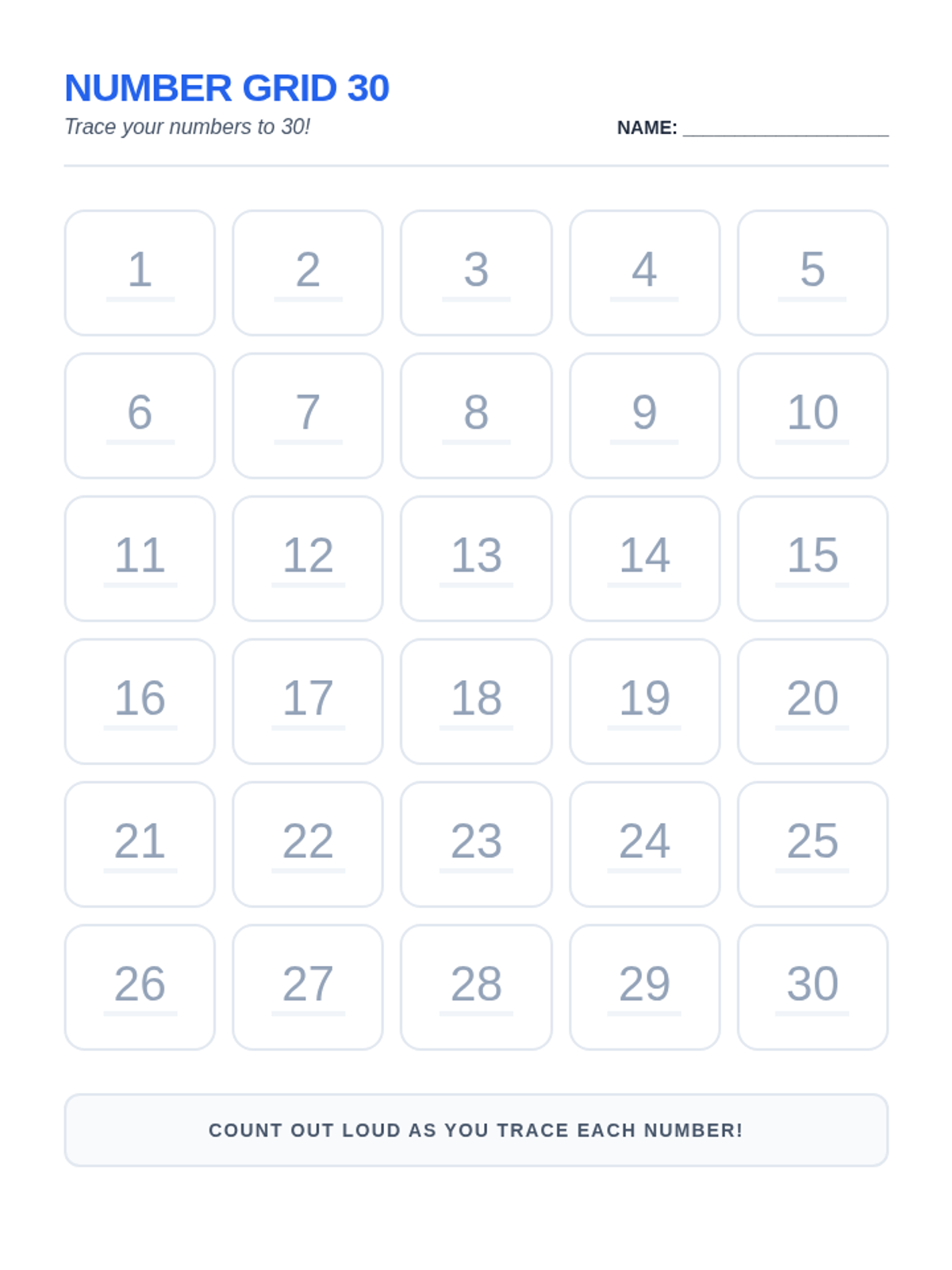
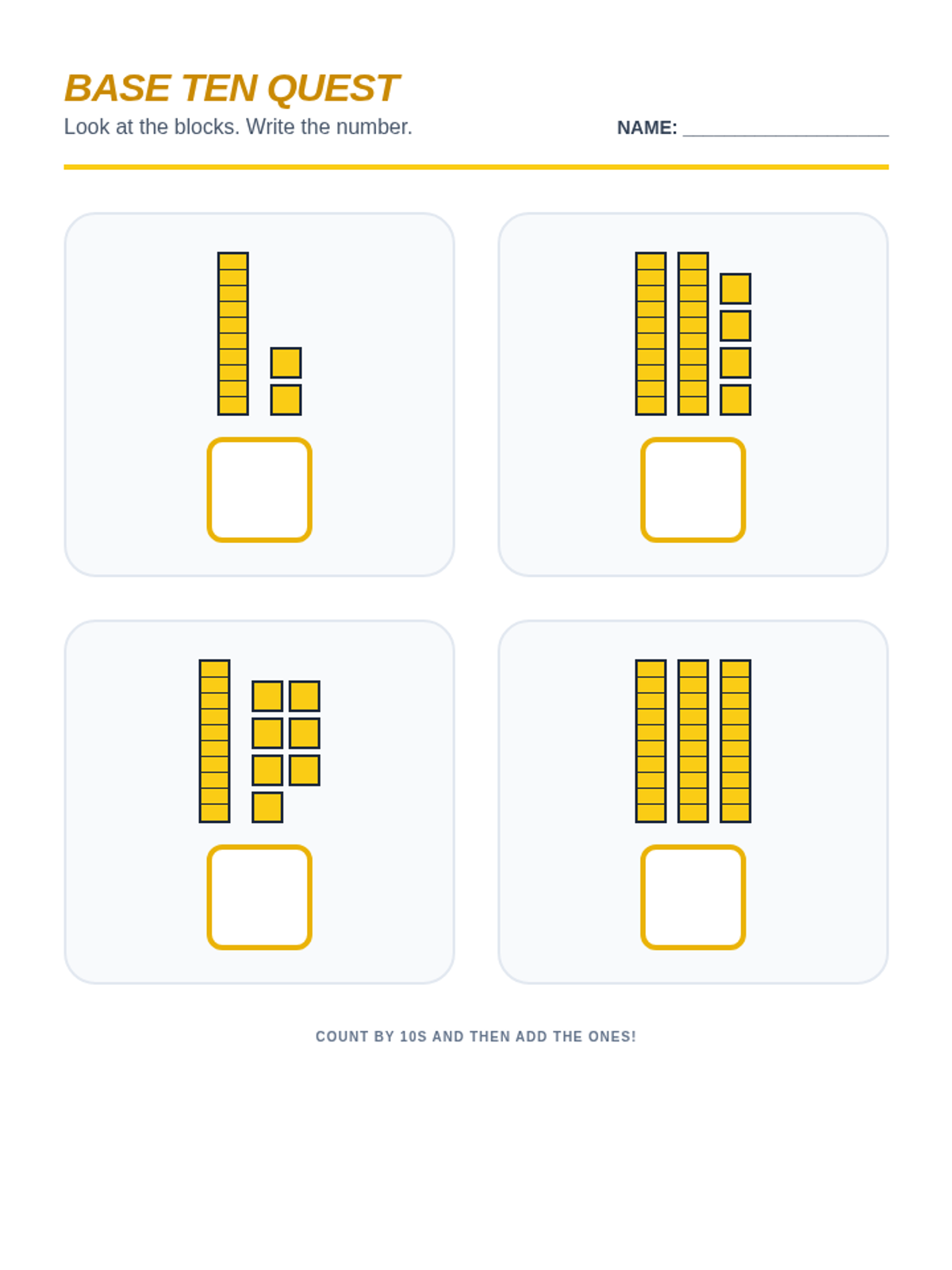
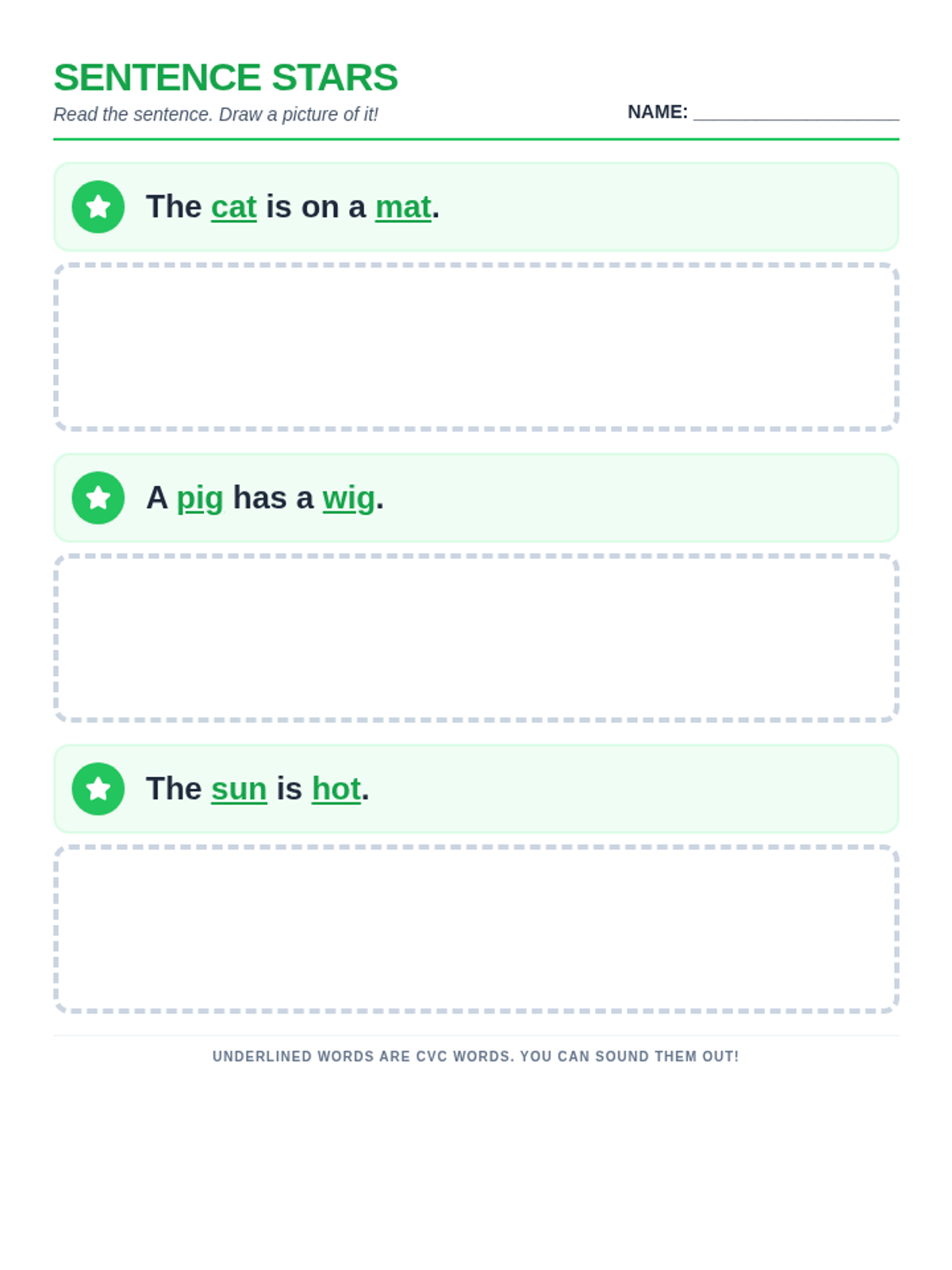
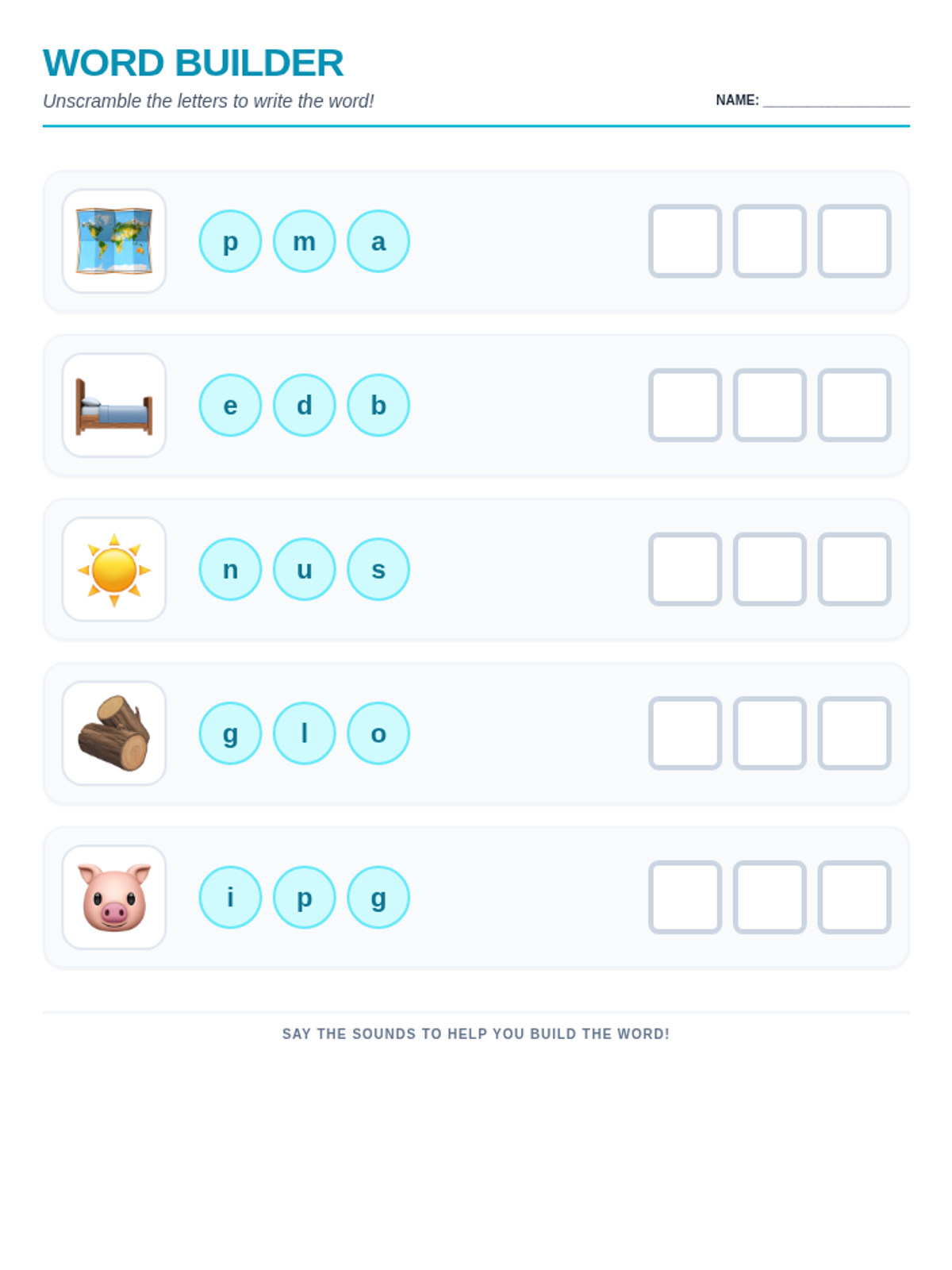
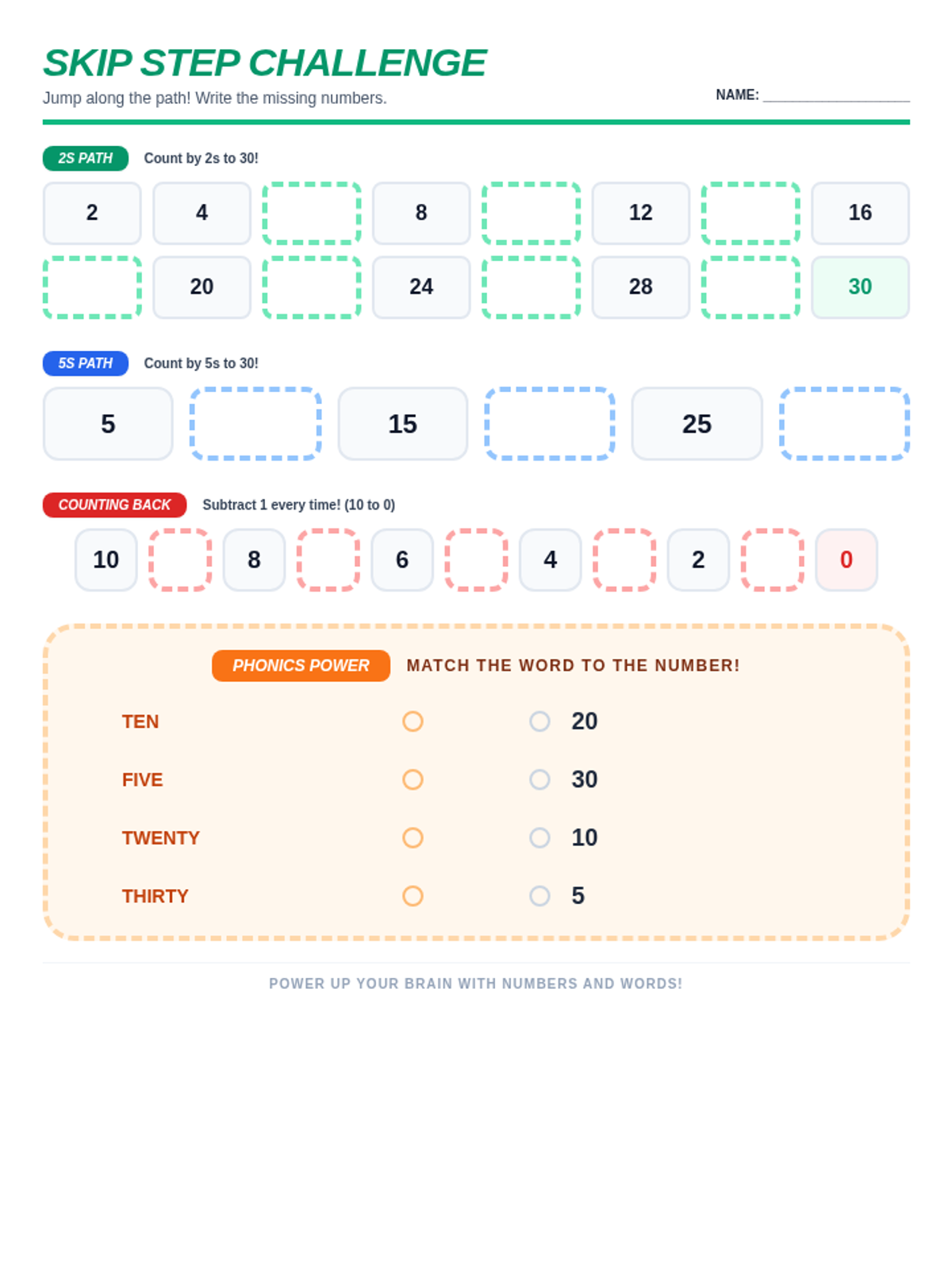
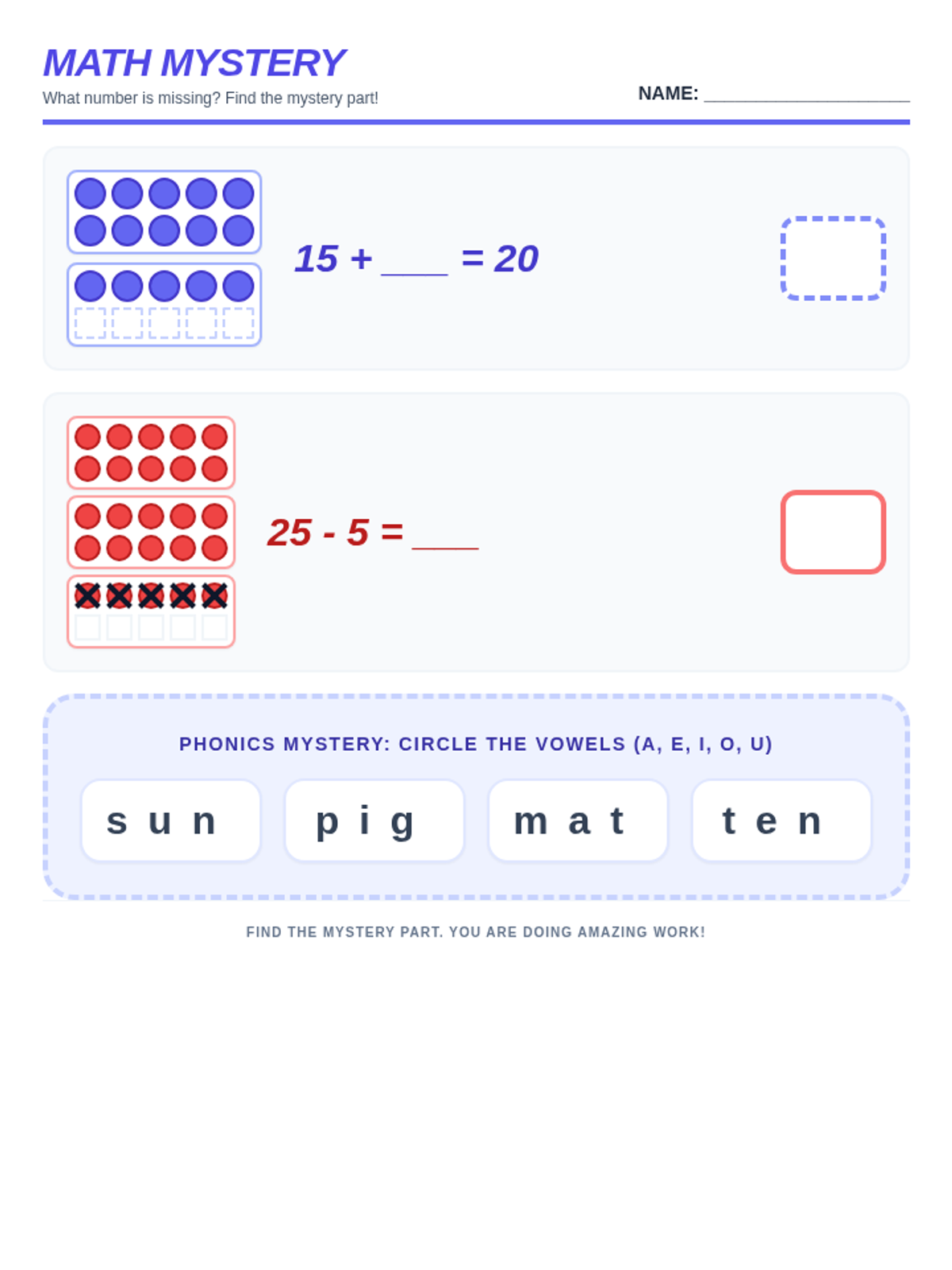
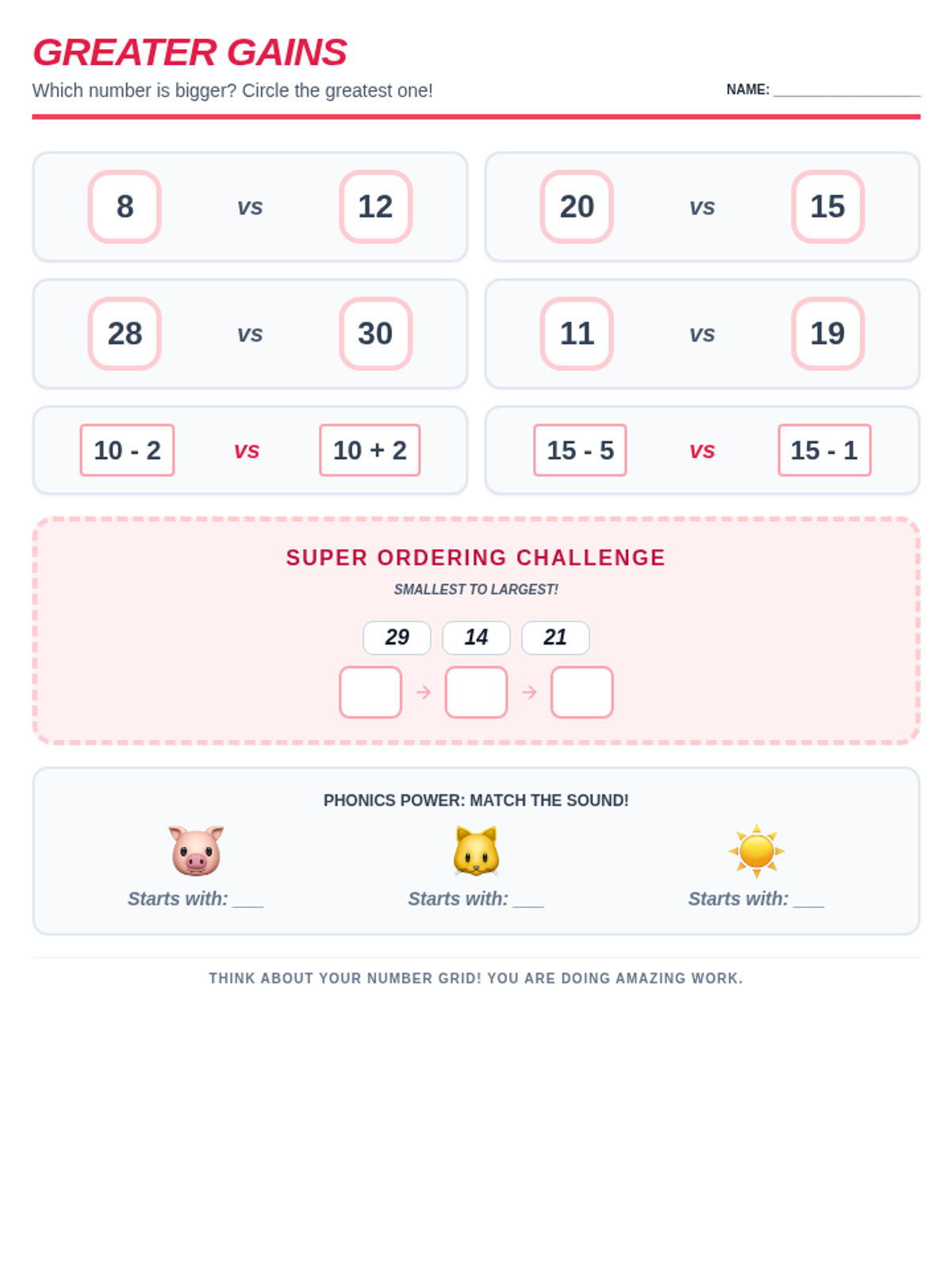
A set of foundational literacy and numeracy materials designed for an EC student performing at a Kindergarten level, focusing on CVC words, number sense 0-10, and basic addition.
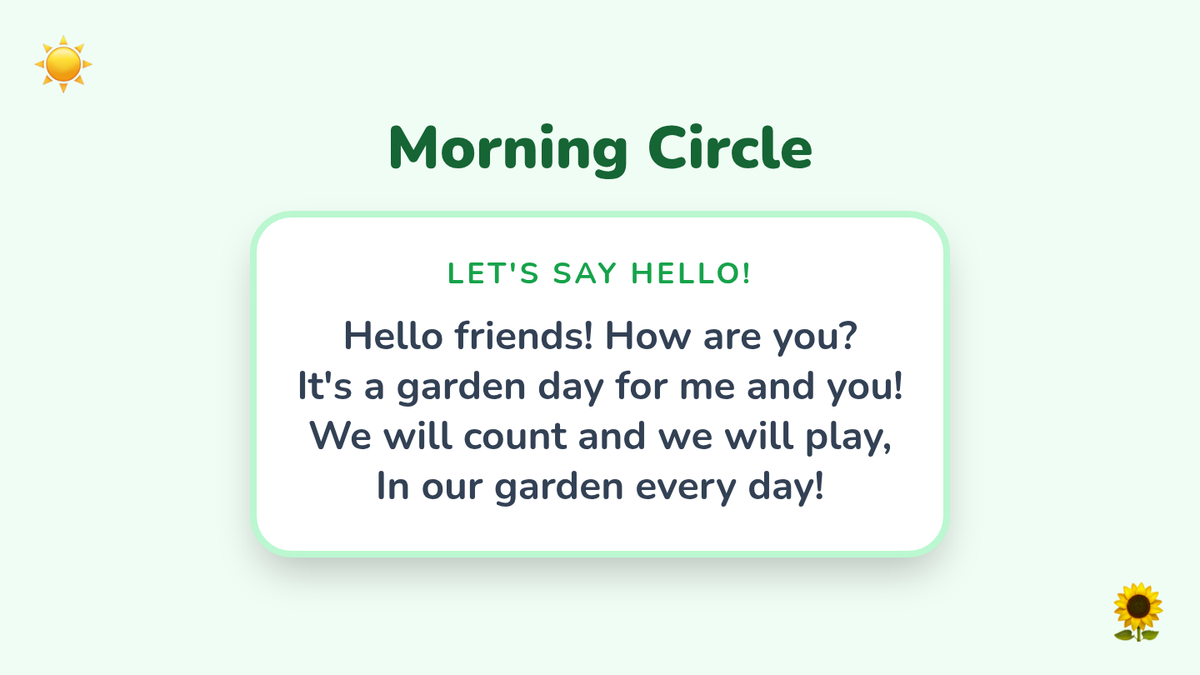
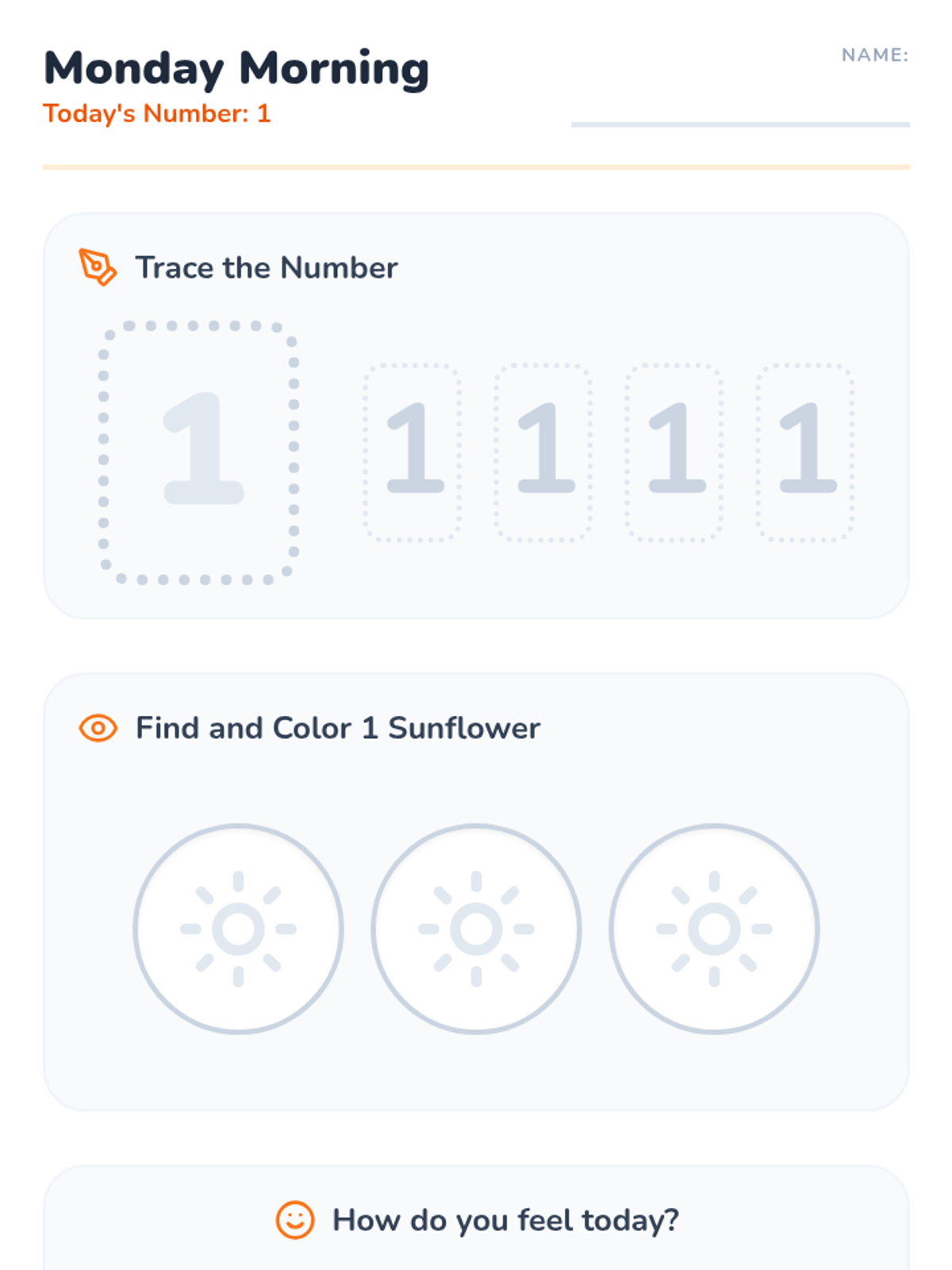
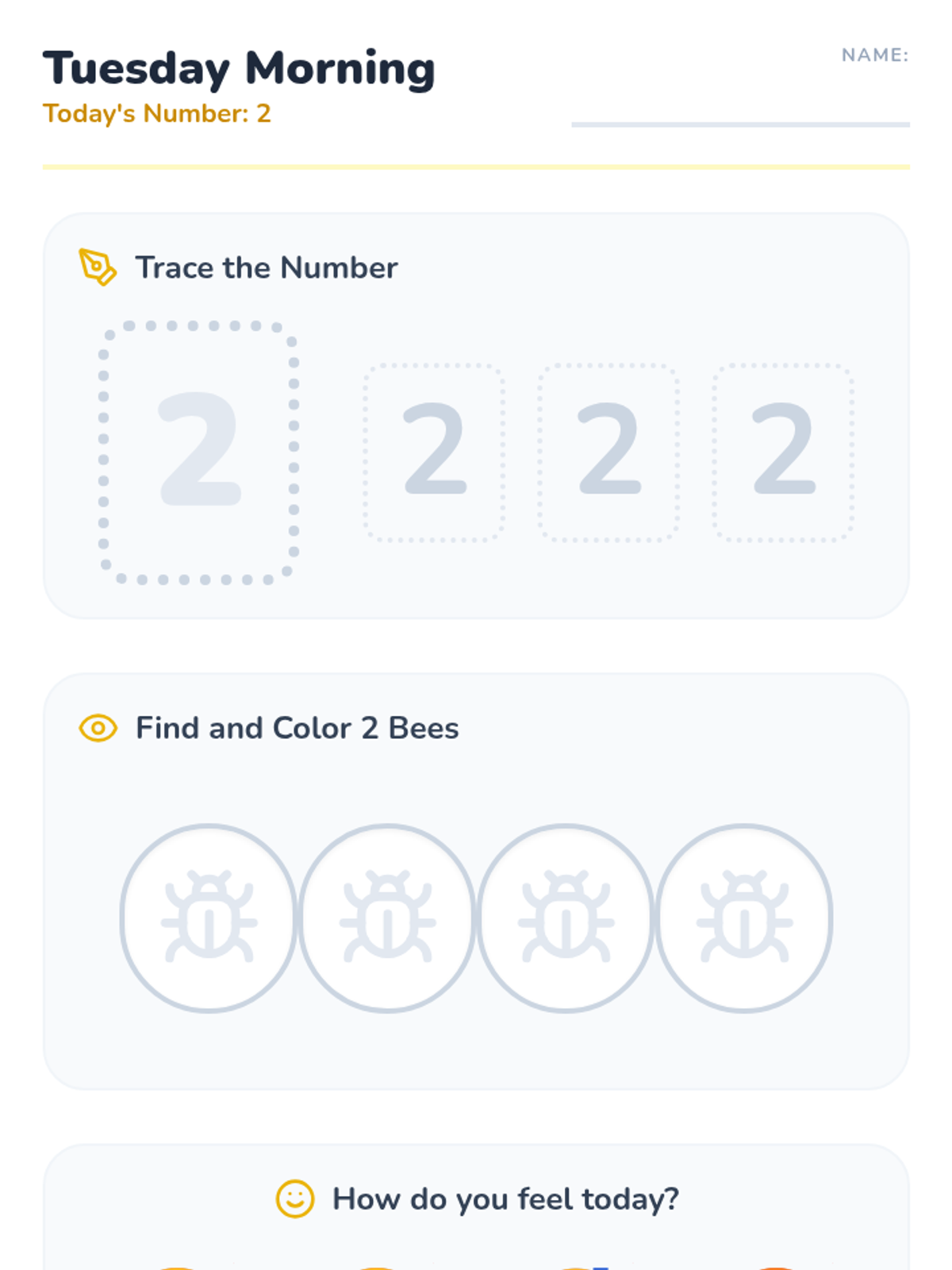
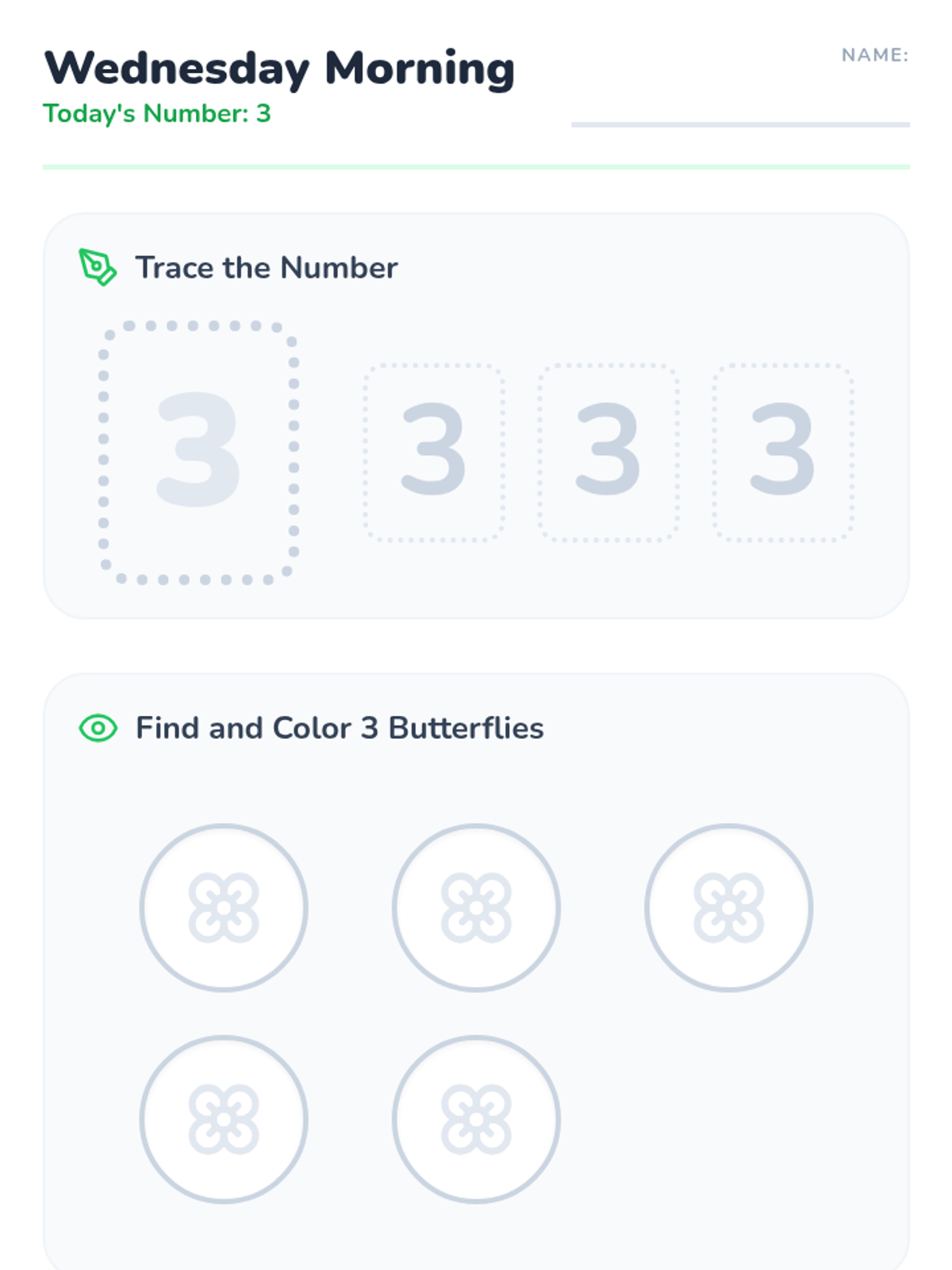
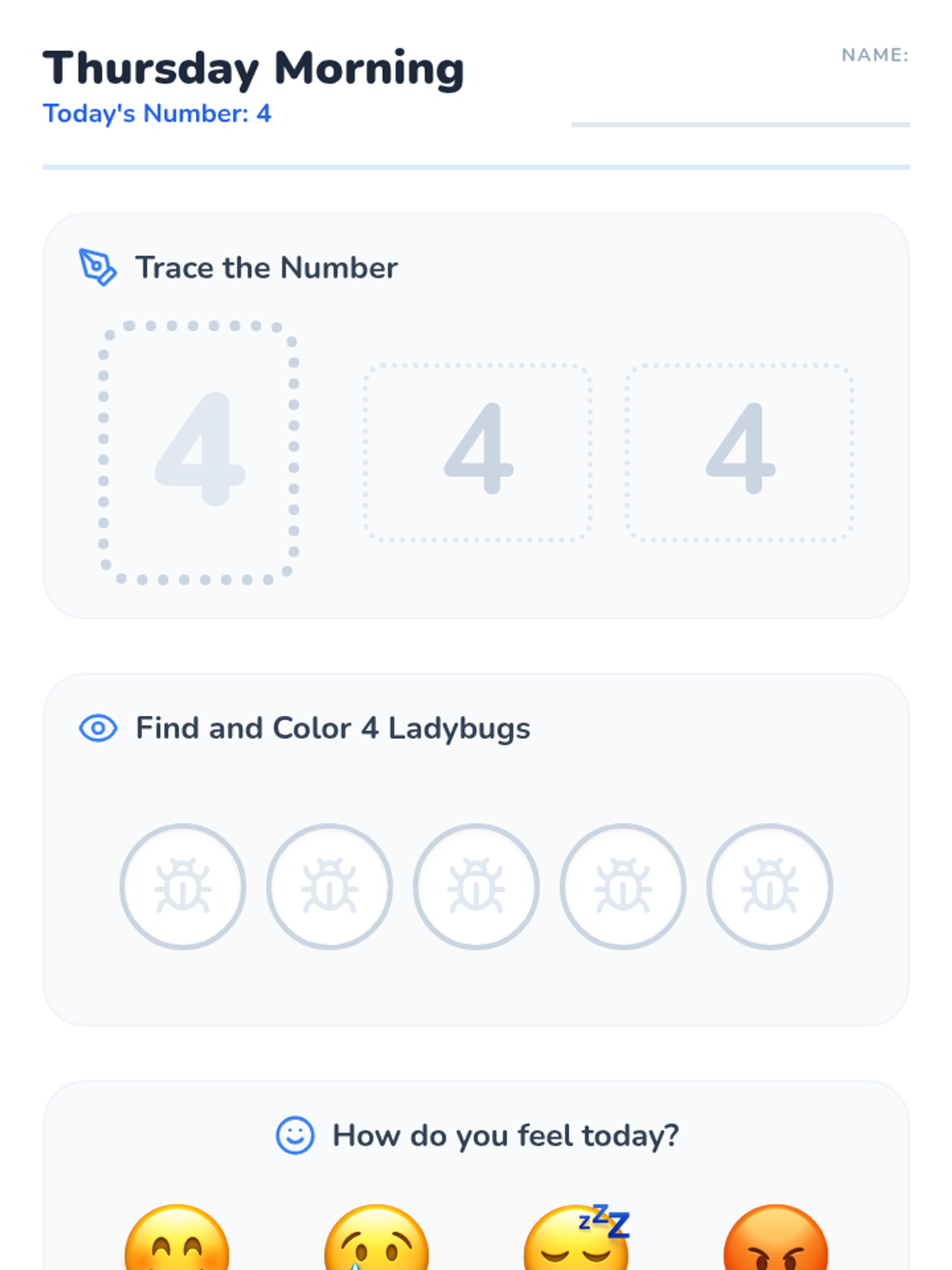
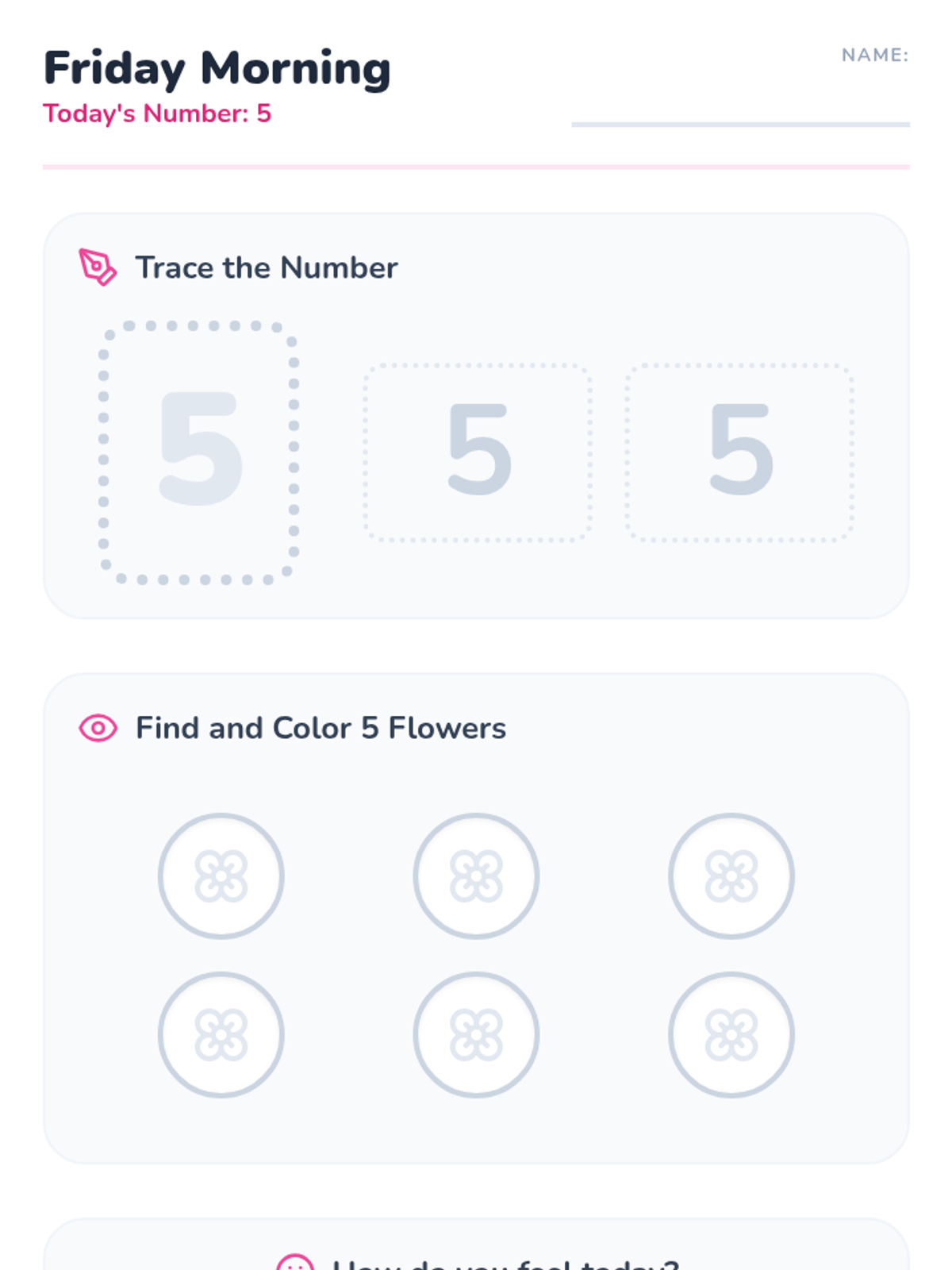
A daily routine lesson for morning circle and daily work, reinforcing garden themes, calendar skills, and social-emotional awareness.
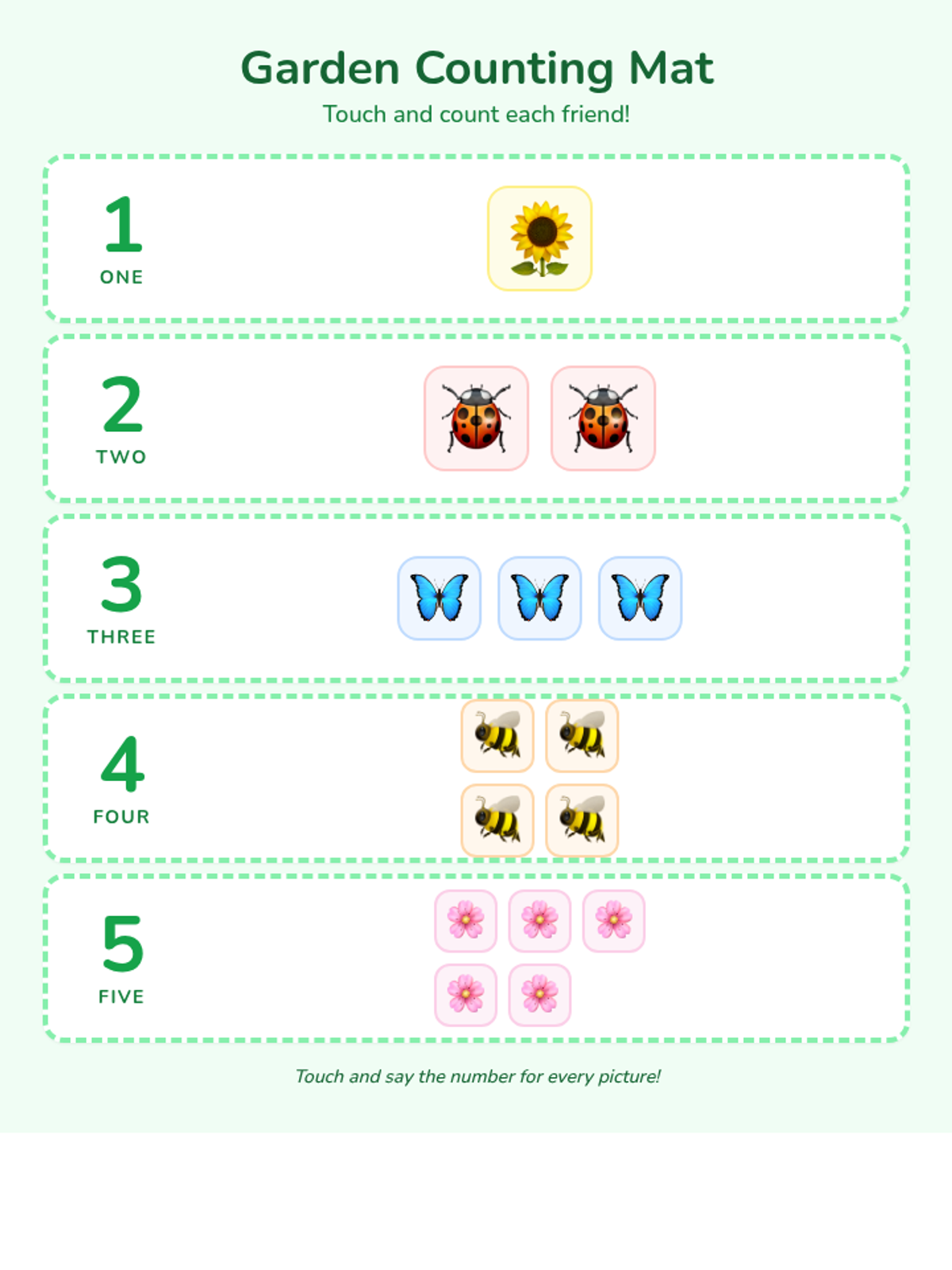
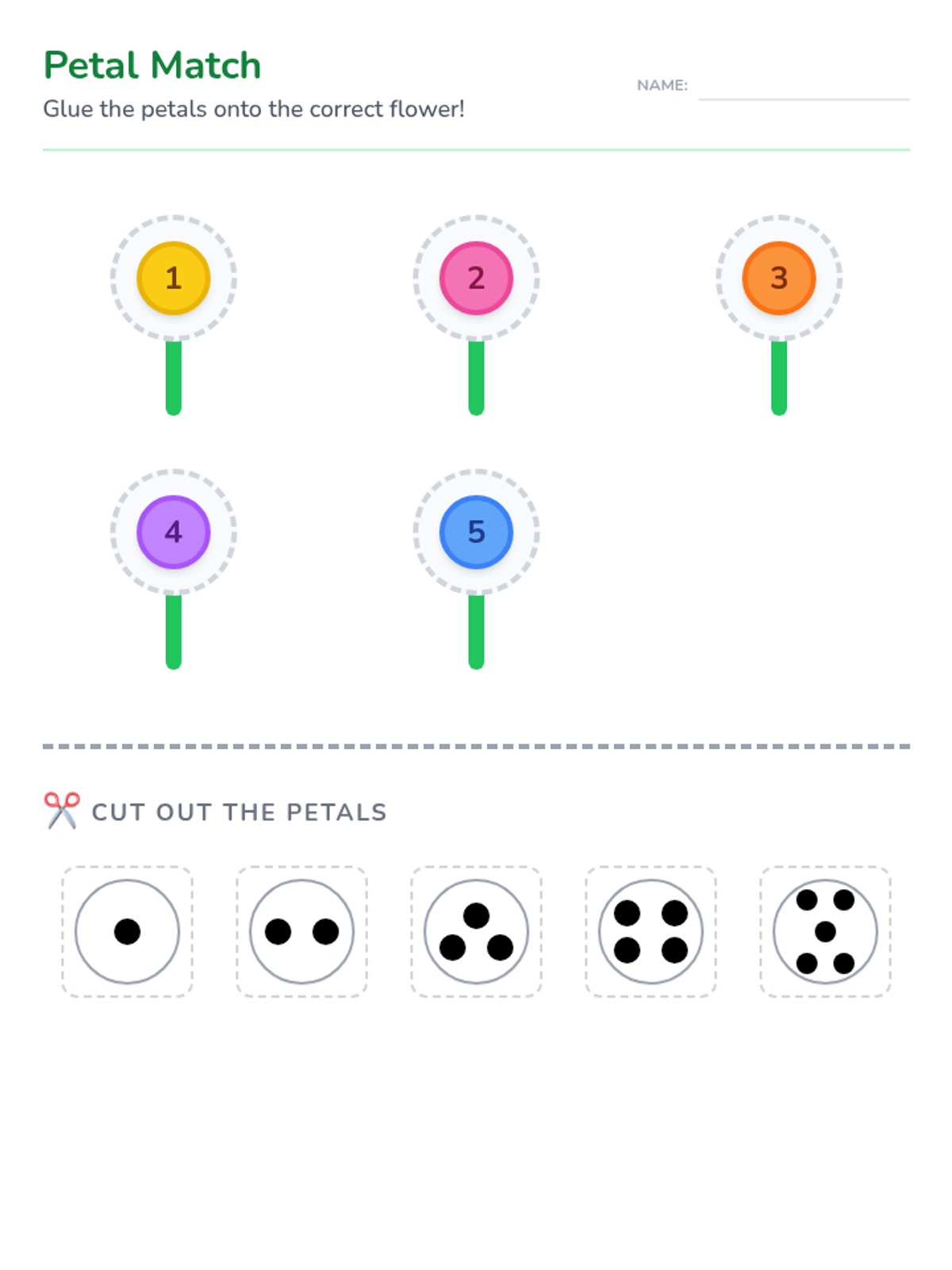
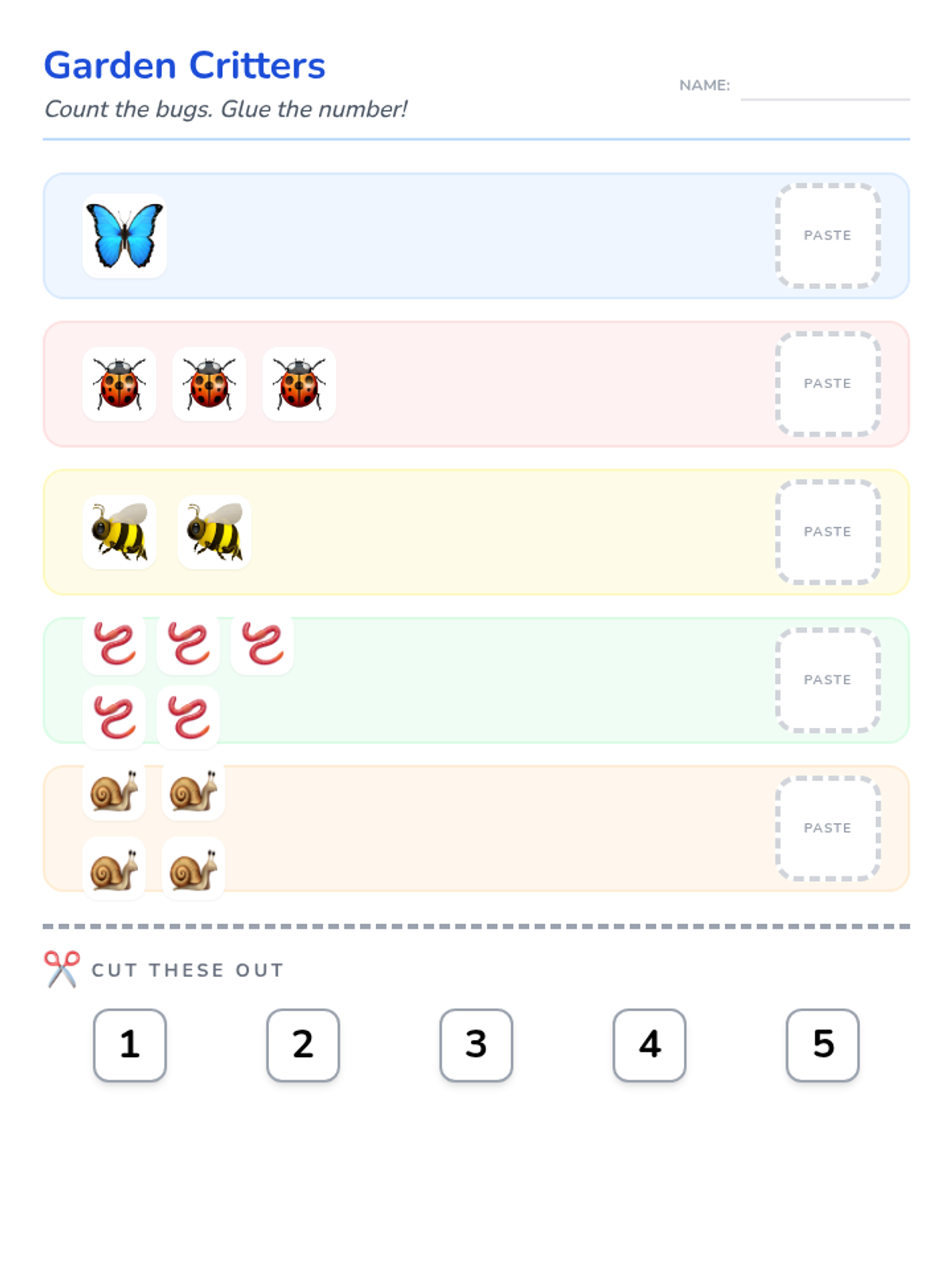
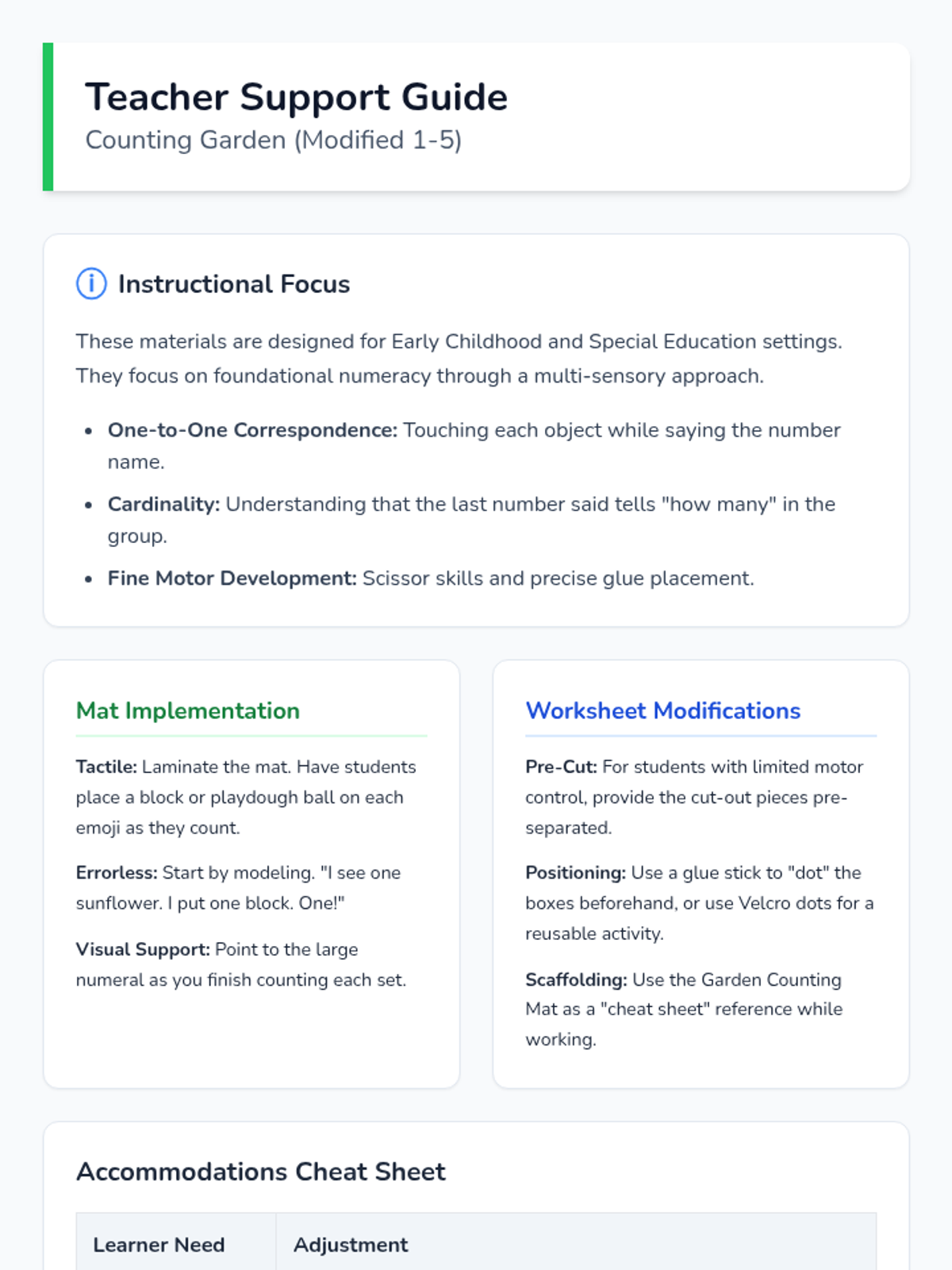
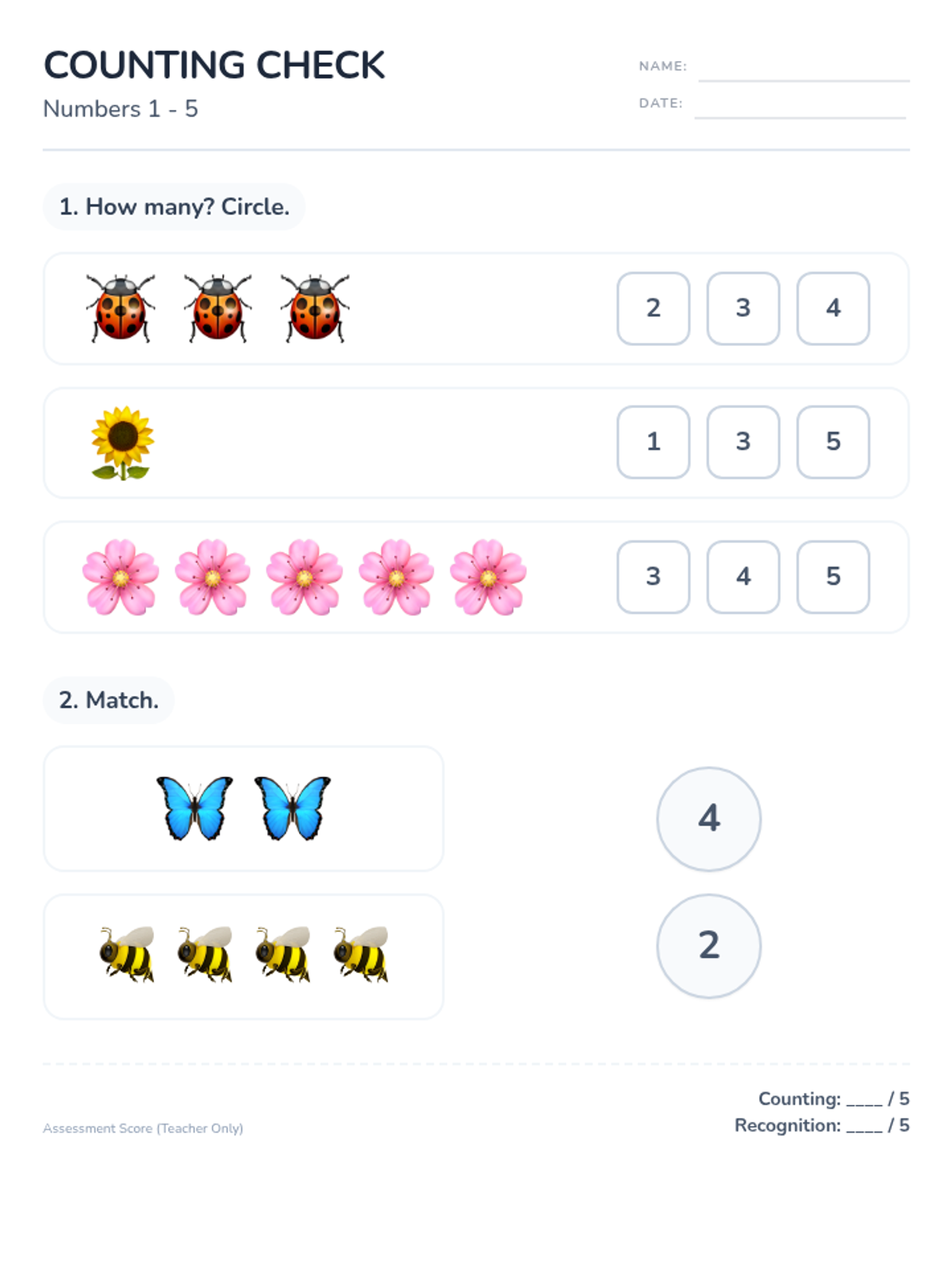
Students explore the numbers 1 through 5 using visual supports and hands-on matching activities to build one-to-one correspondence.
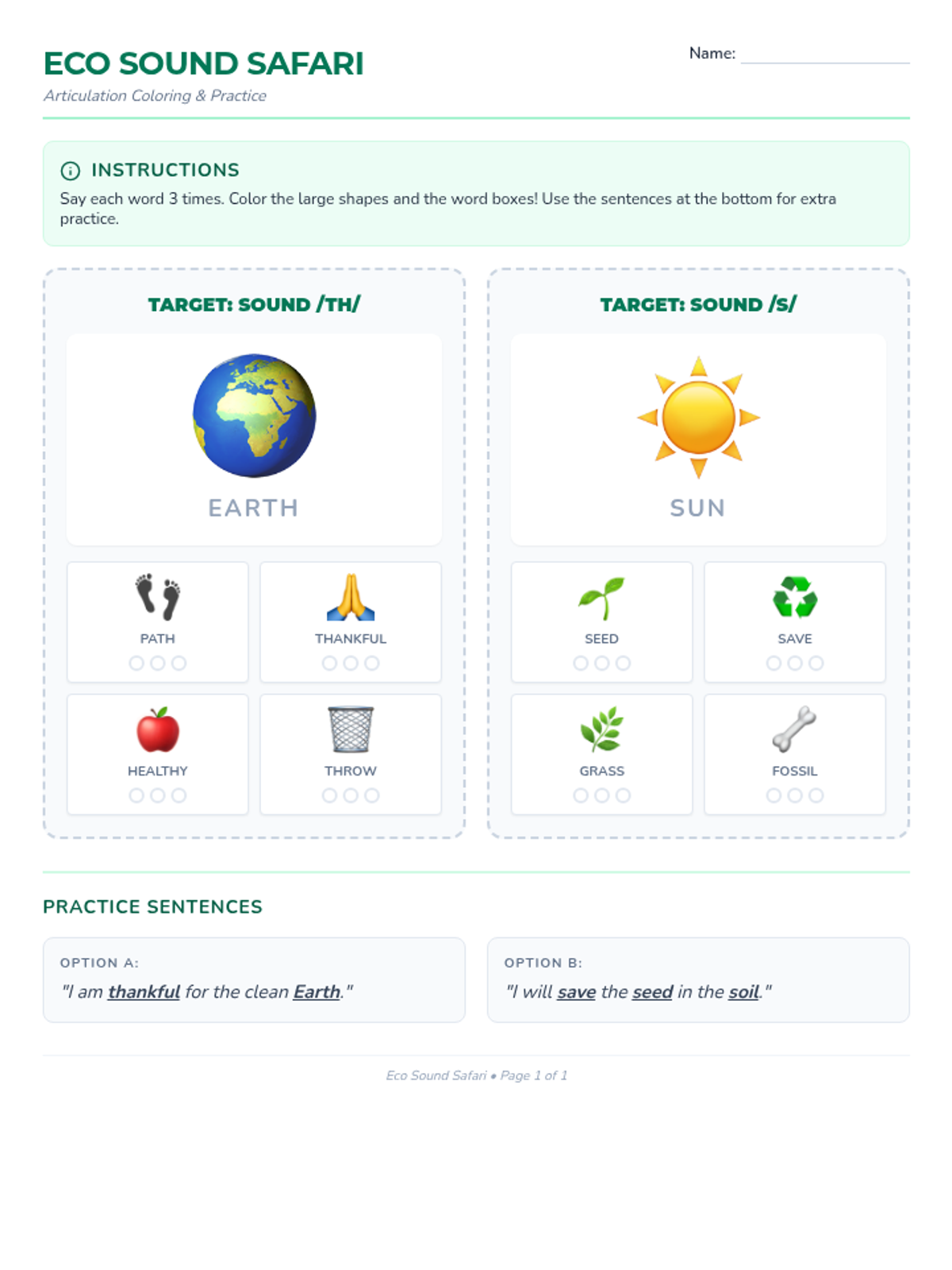
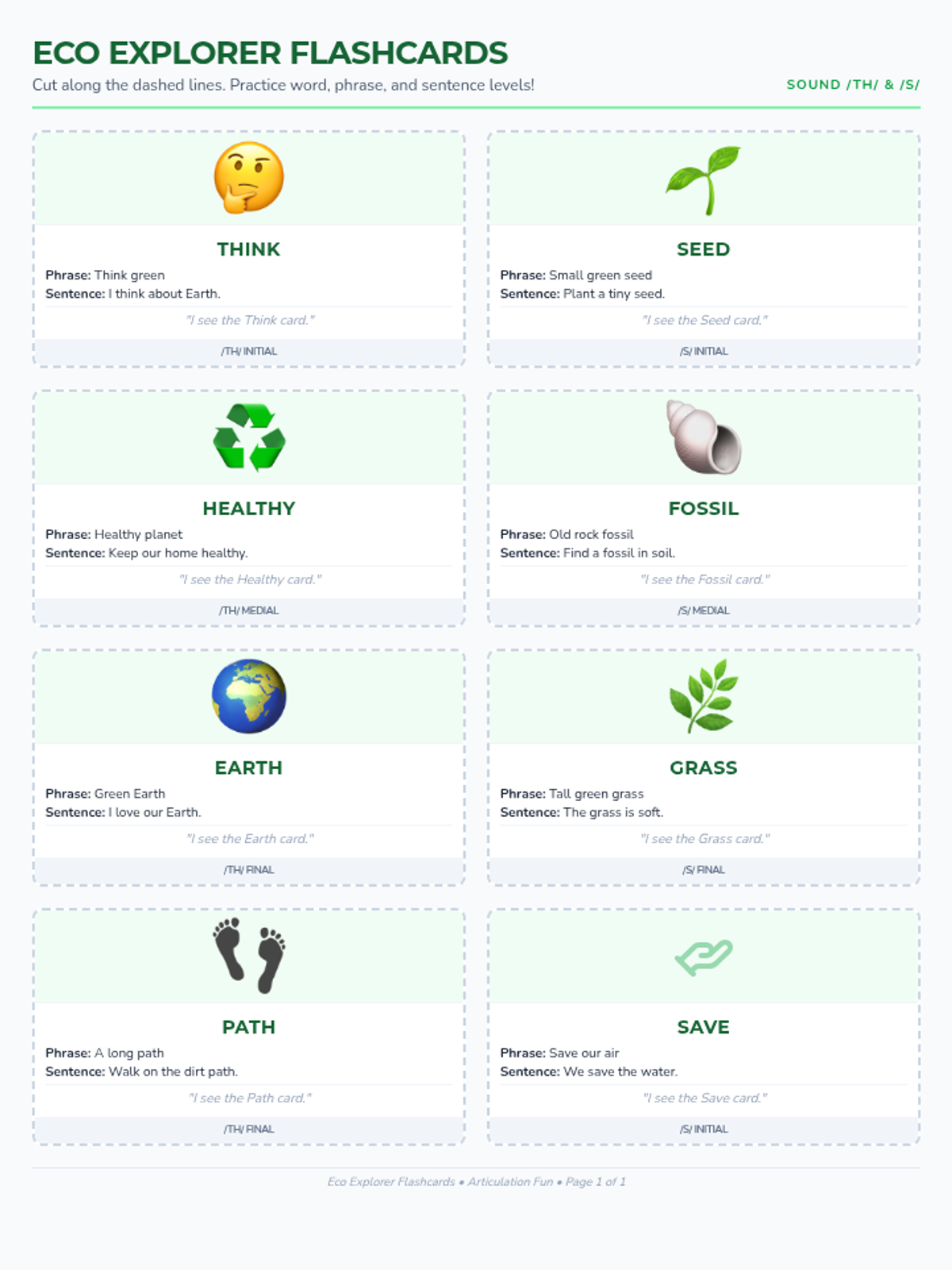
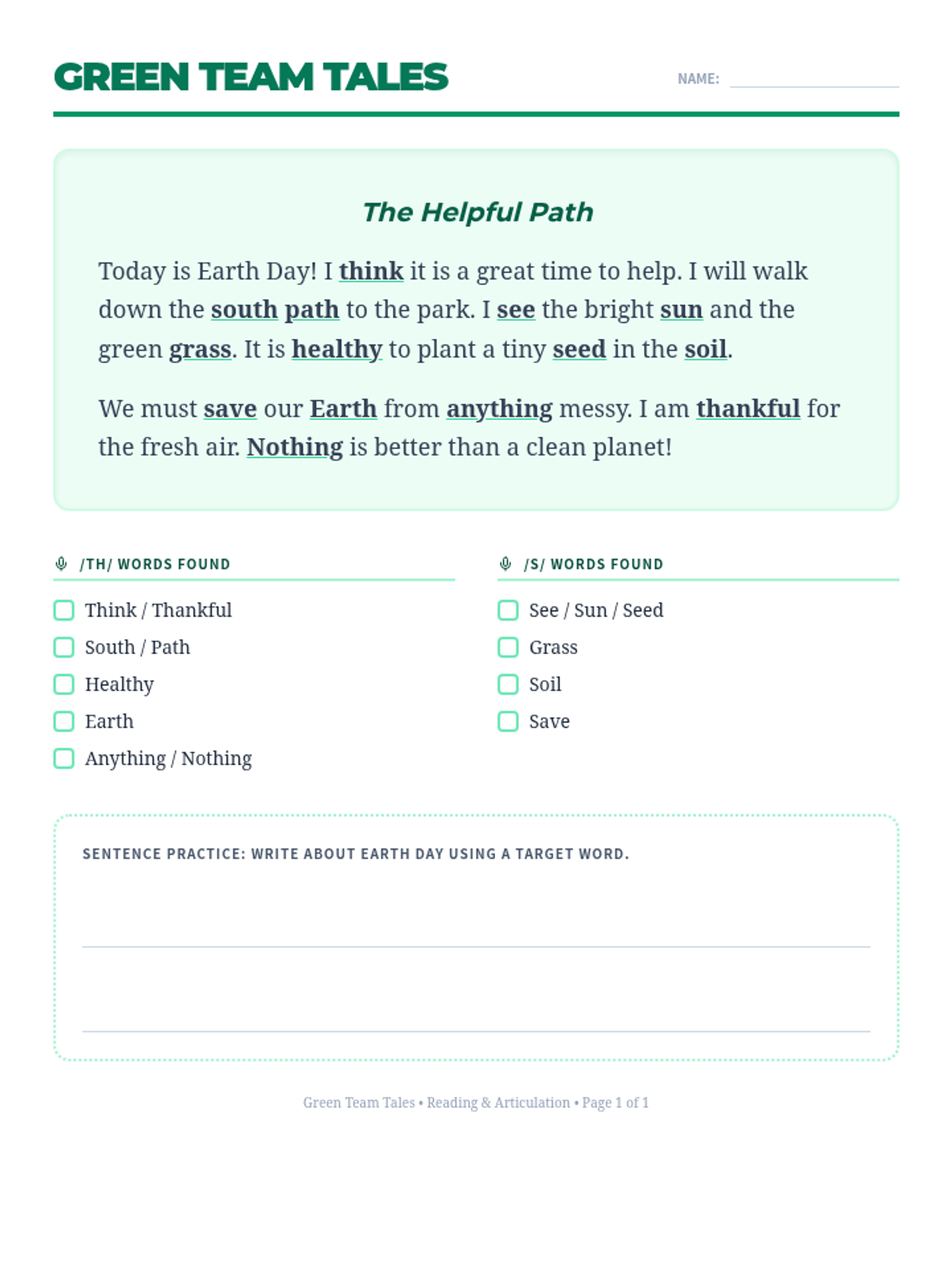
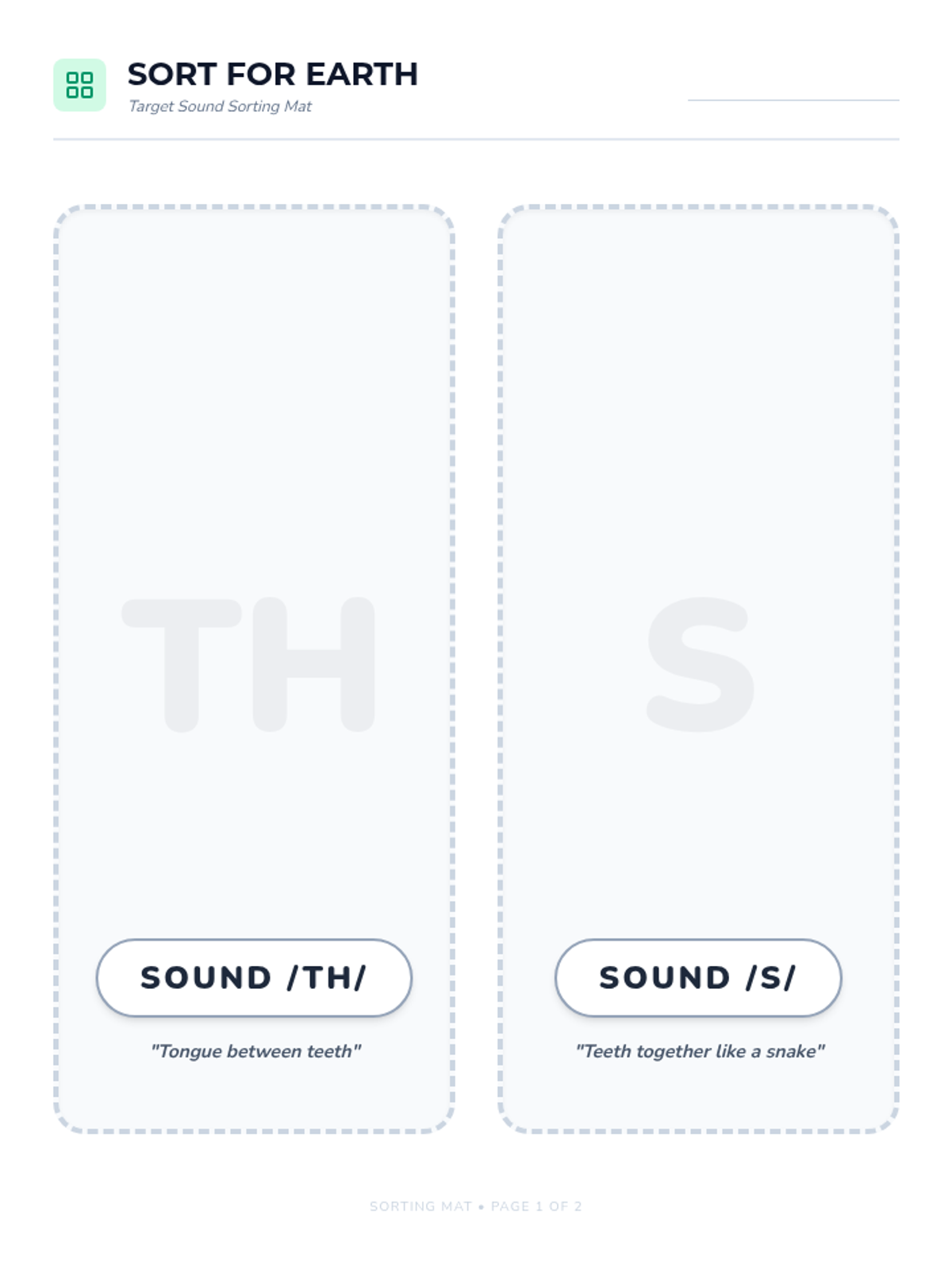
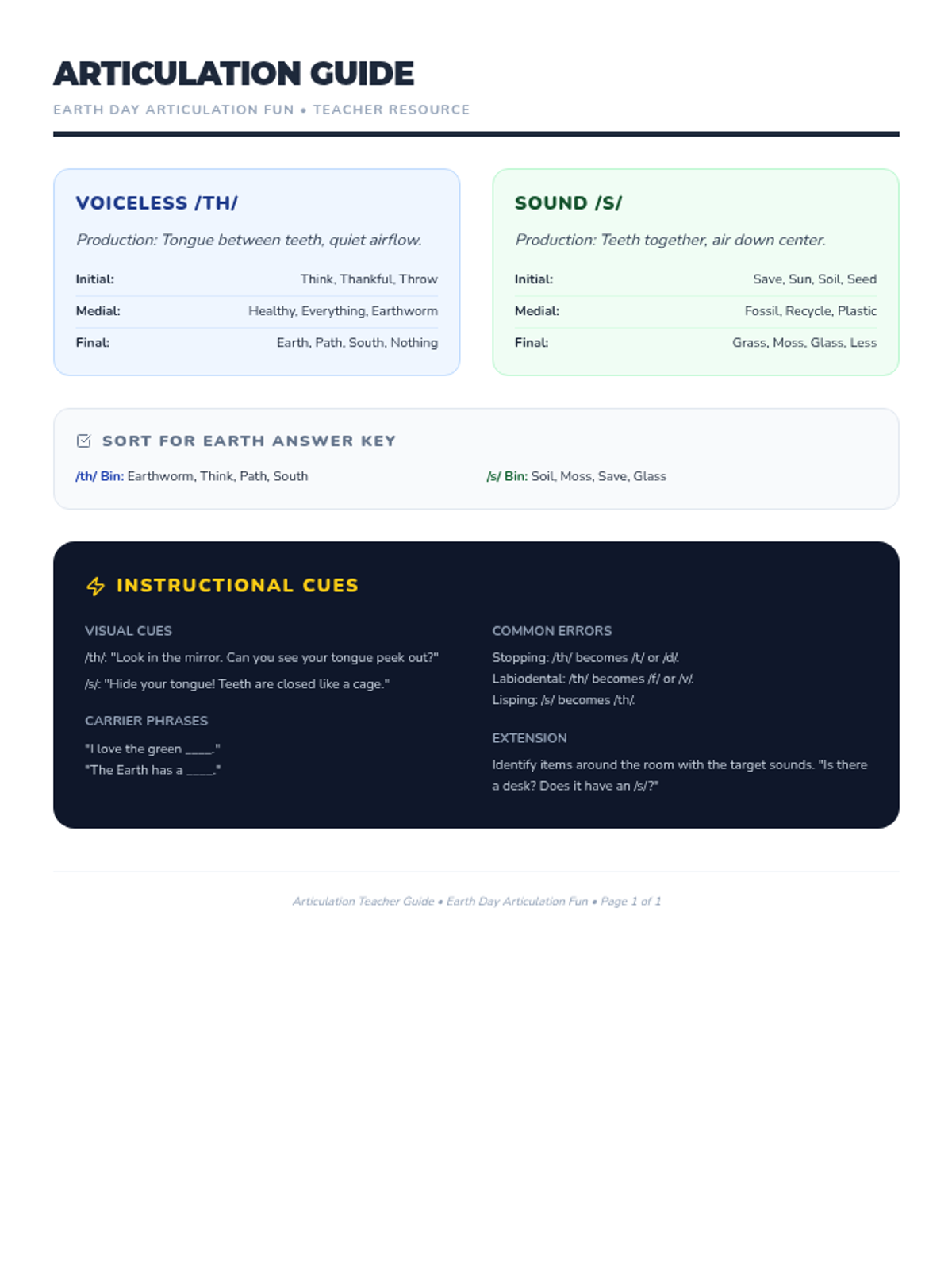
A set of articulation activities focused on voiceless /th/ and /s/ sounds within an Earth Day theme, covering word, phrase, and sentence levels.
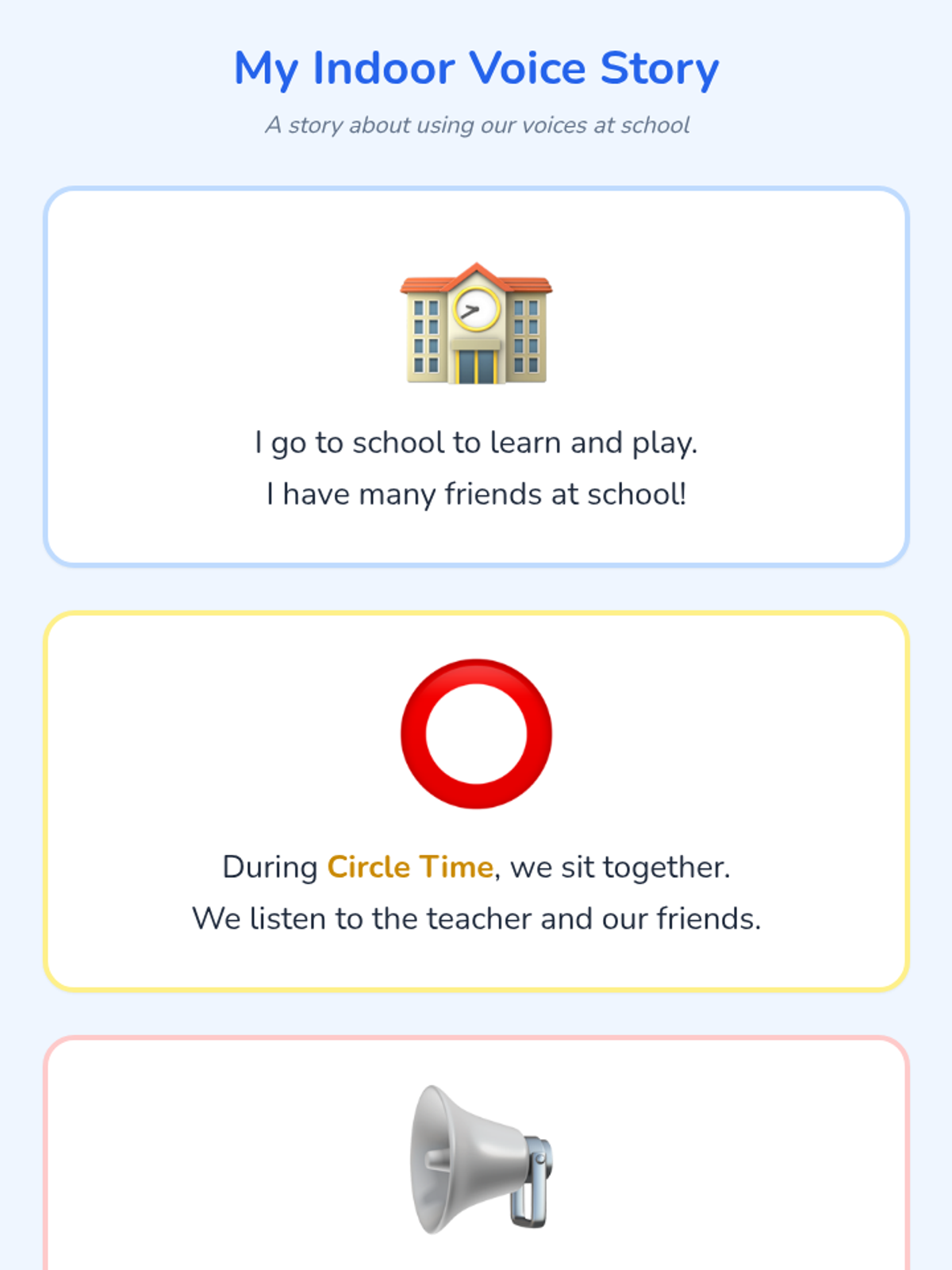
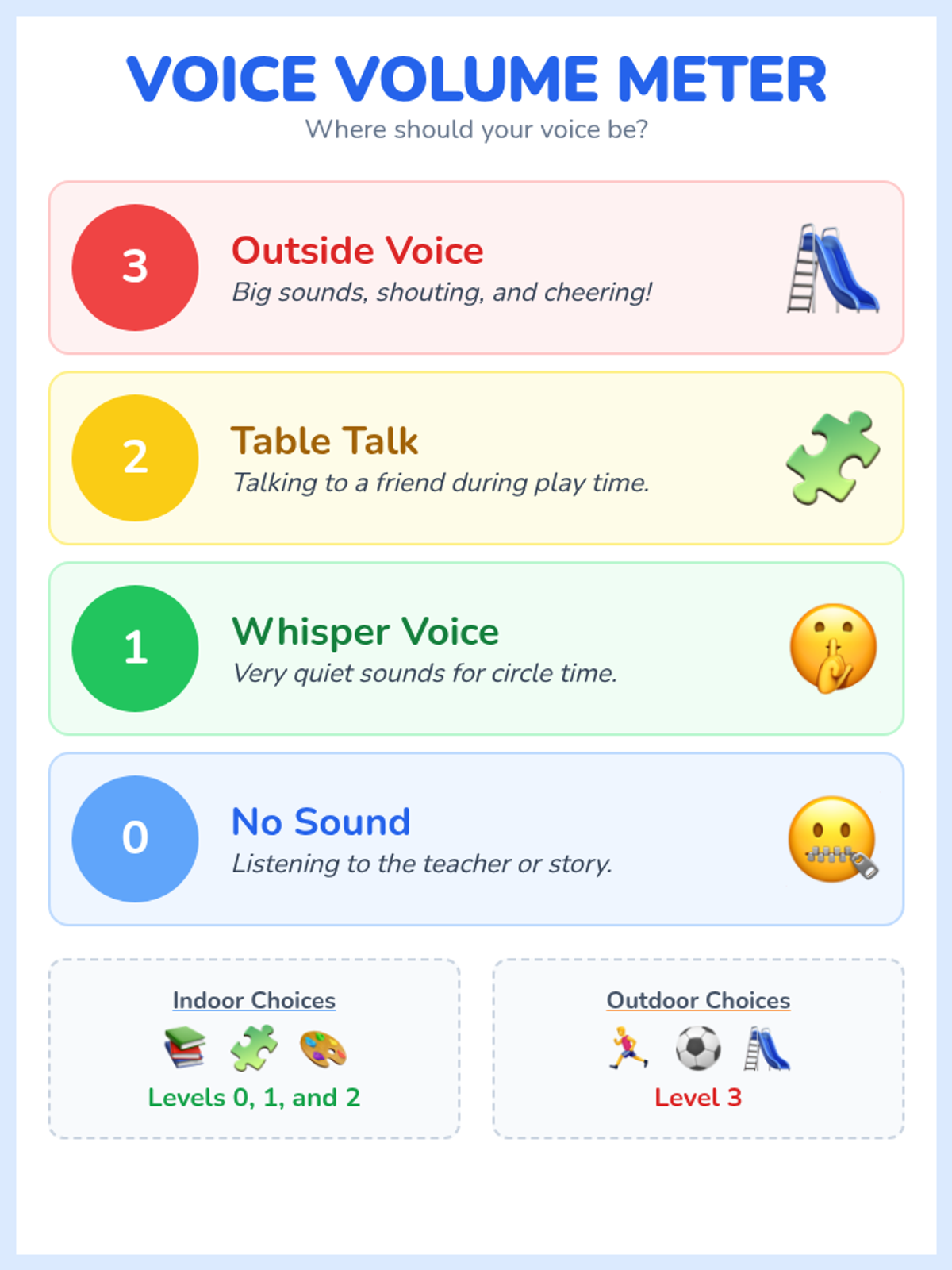
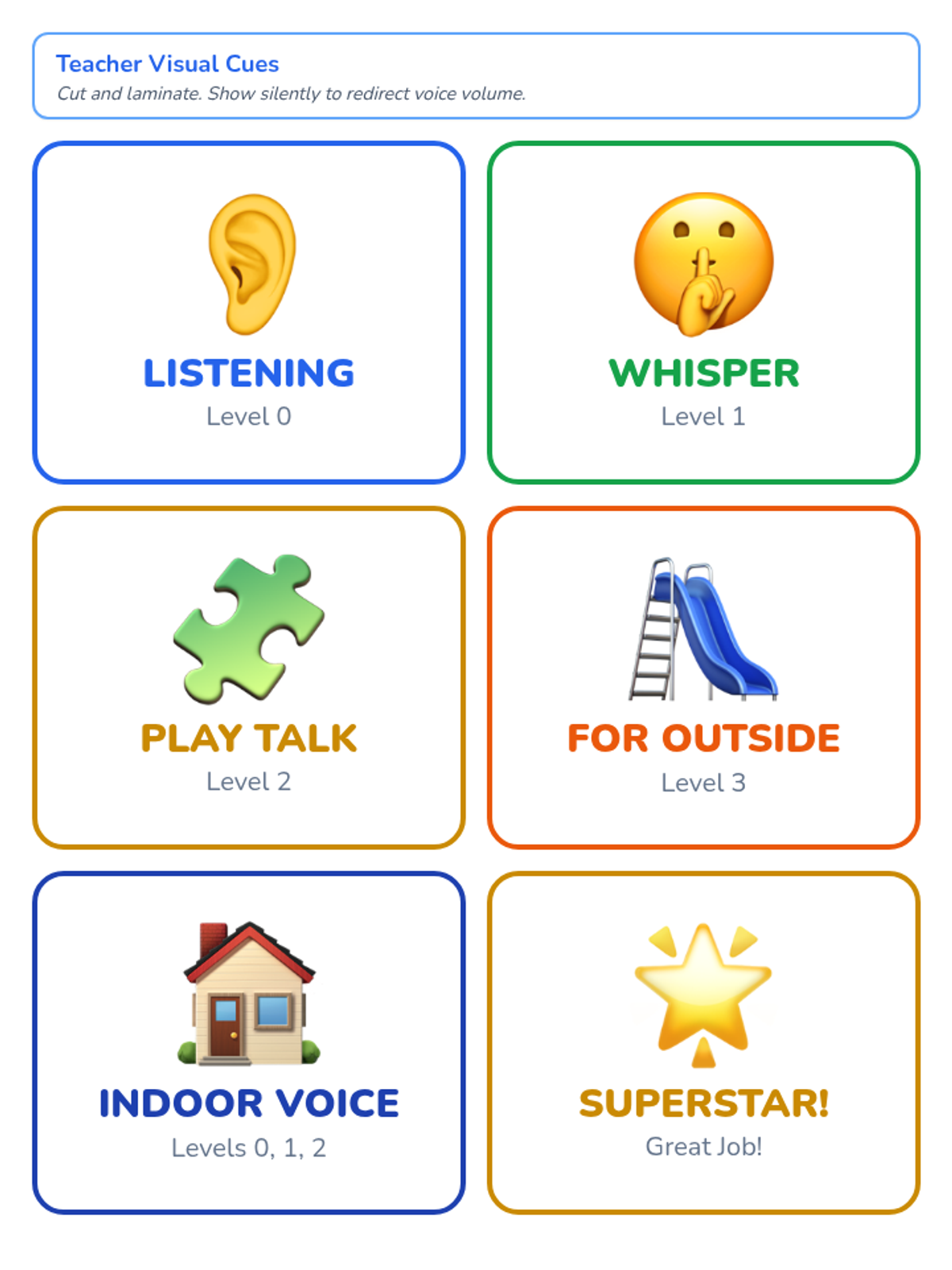
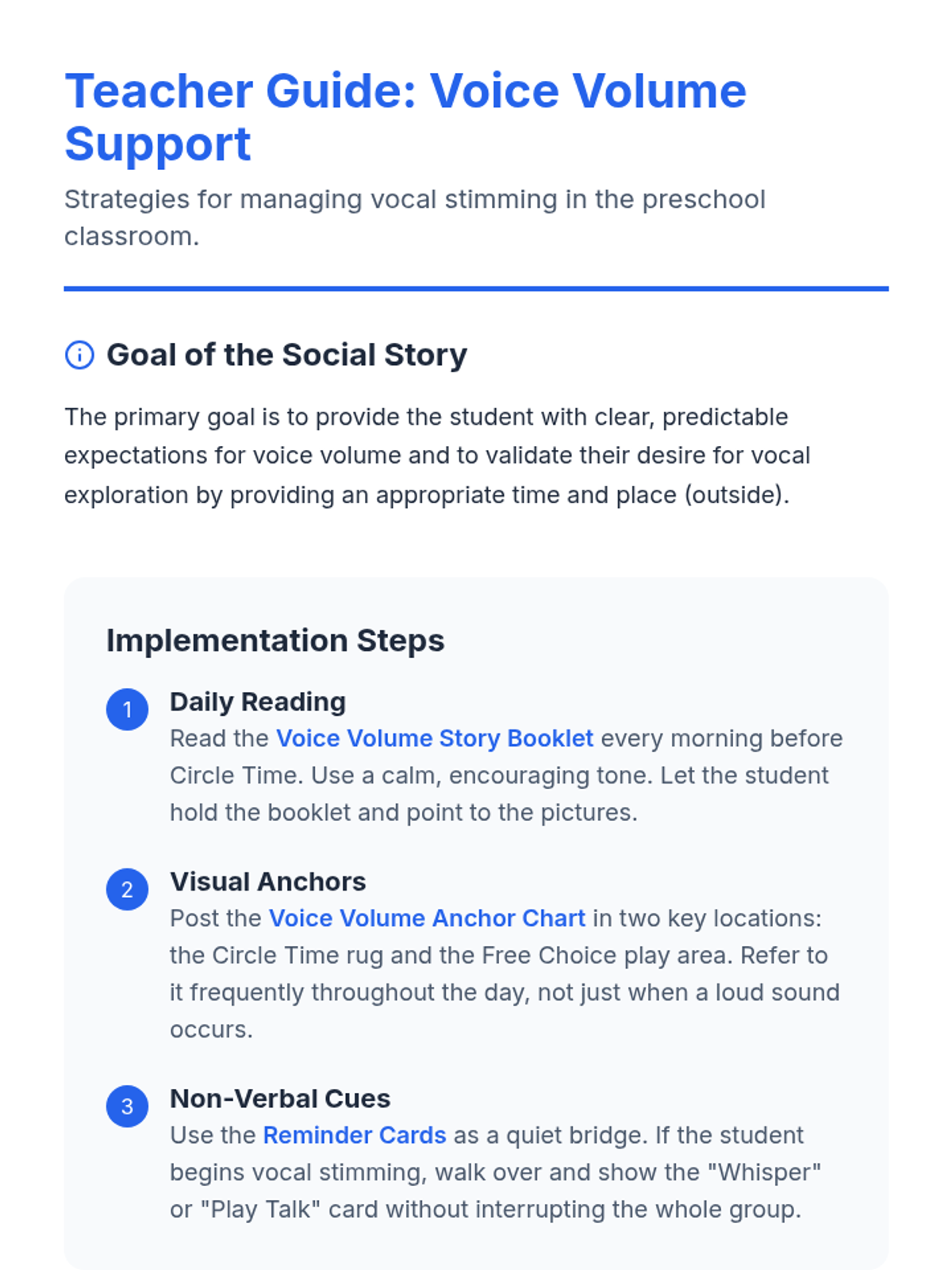
A social story and visual support system designed to help preschoolers understand when to use indoor voices and save loud sounds for outdoor play.
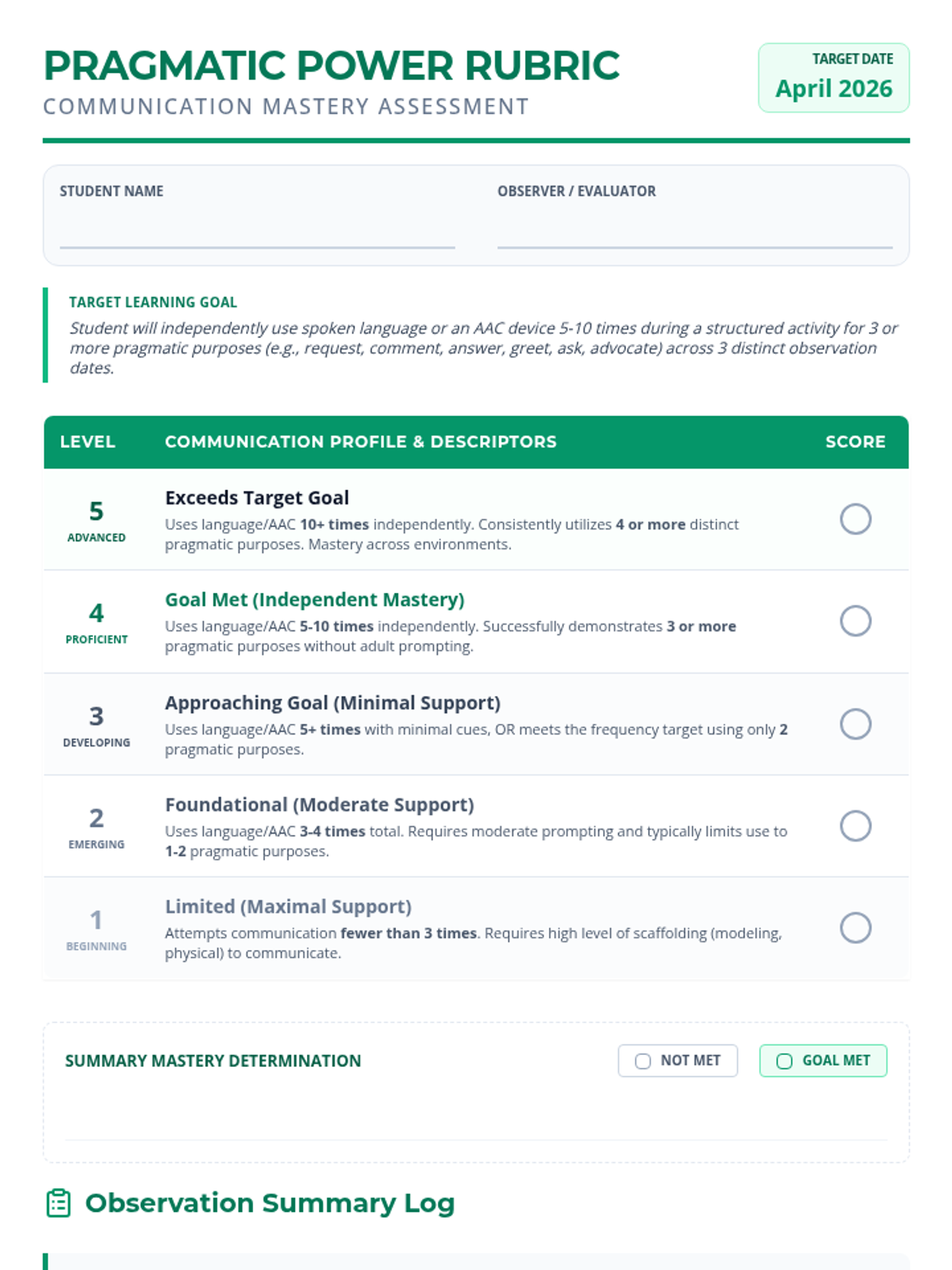
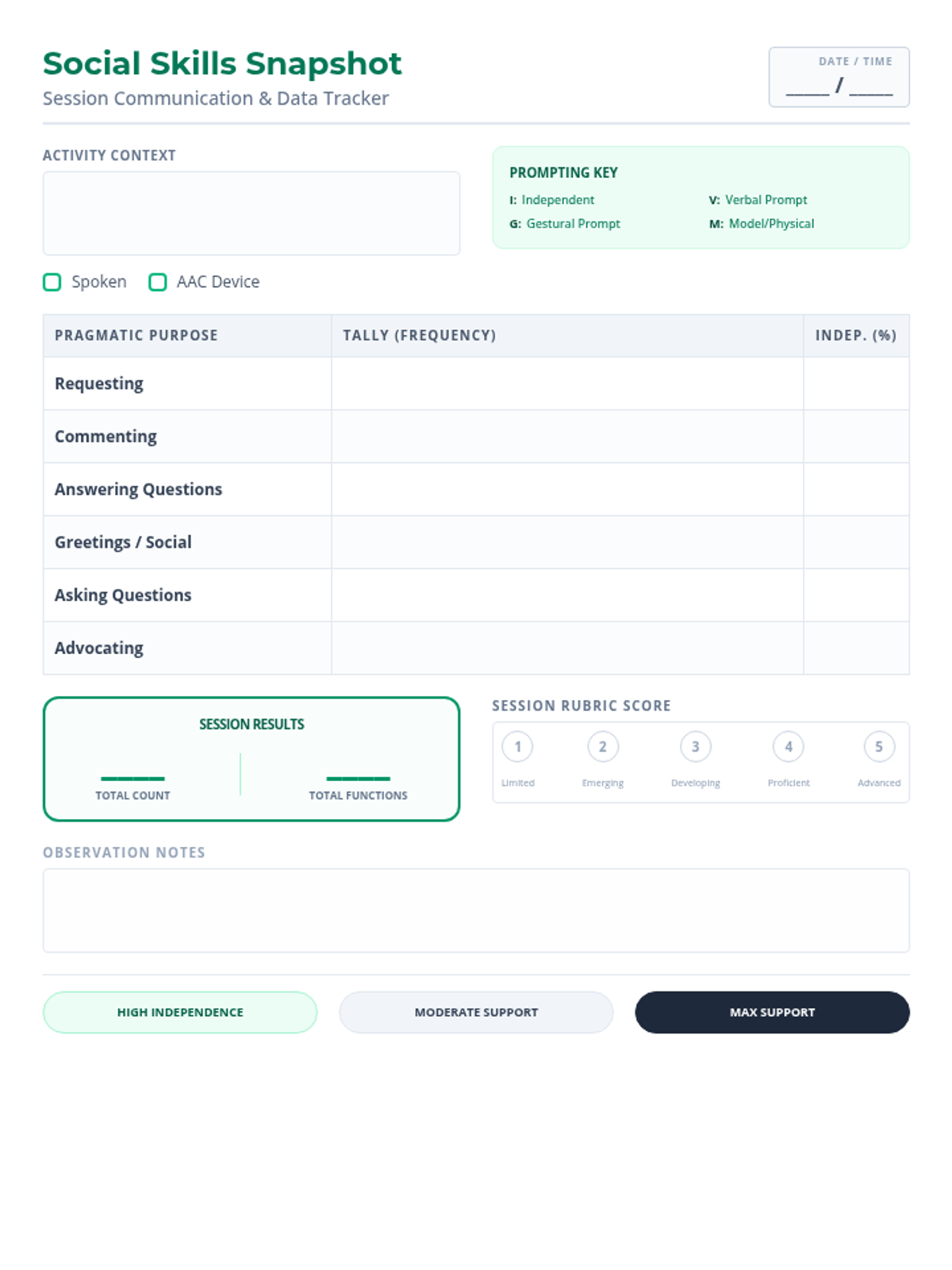
A comprehensive evaluation tool designed to track and measure a student's progress toward mastering various pragmatic communication functions using spoken language or AAC devices.
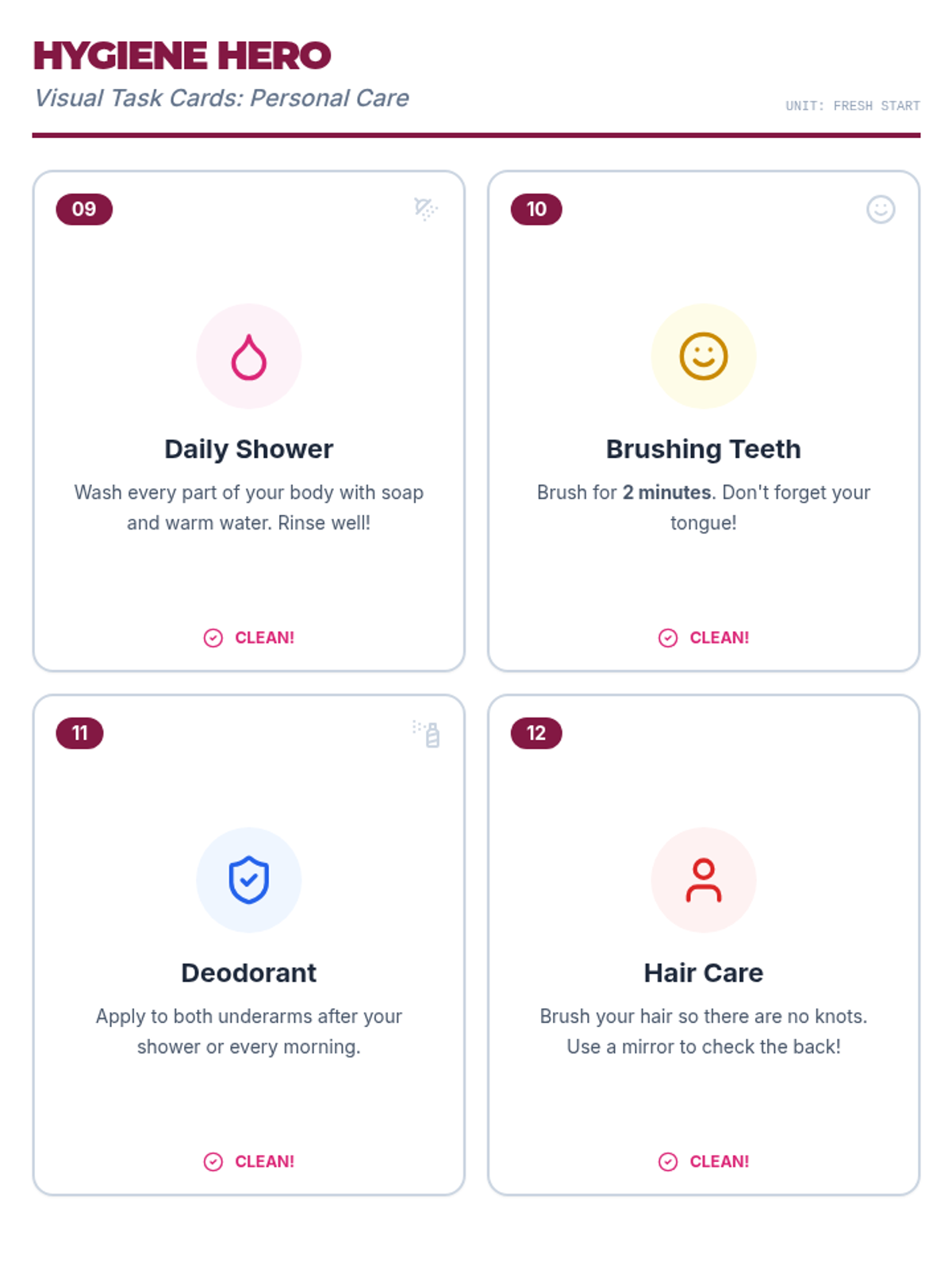
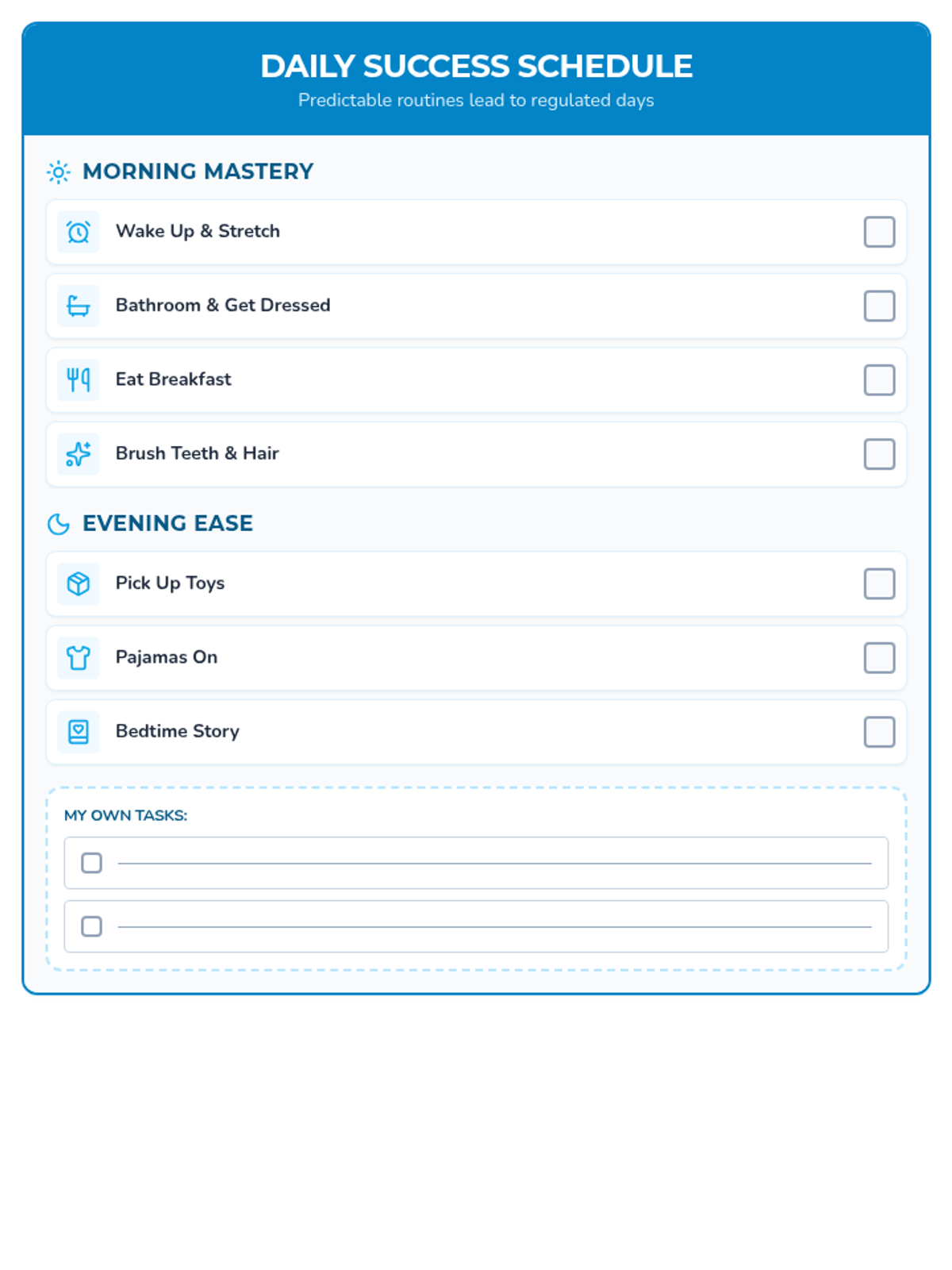
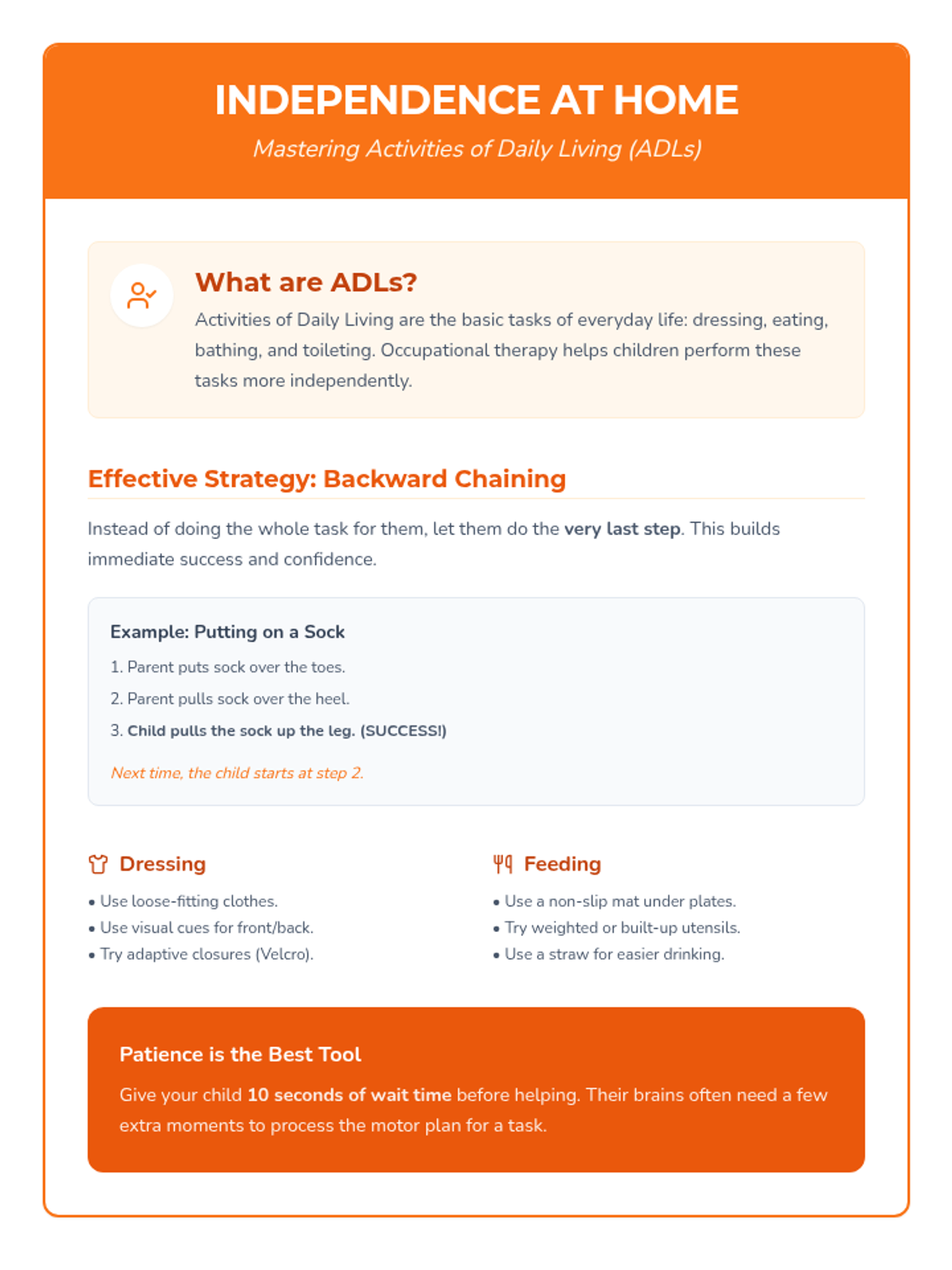
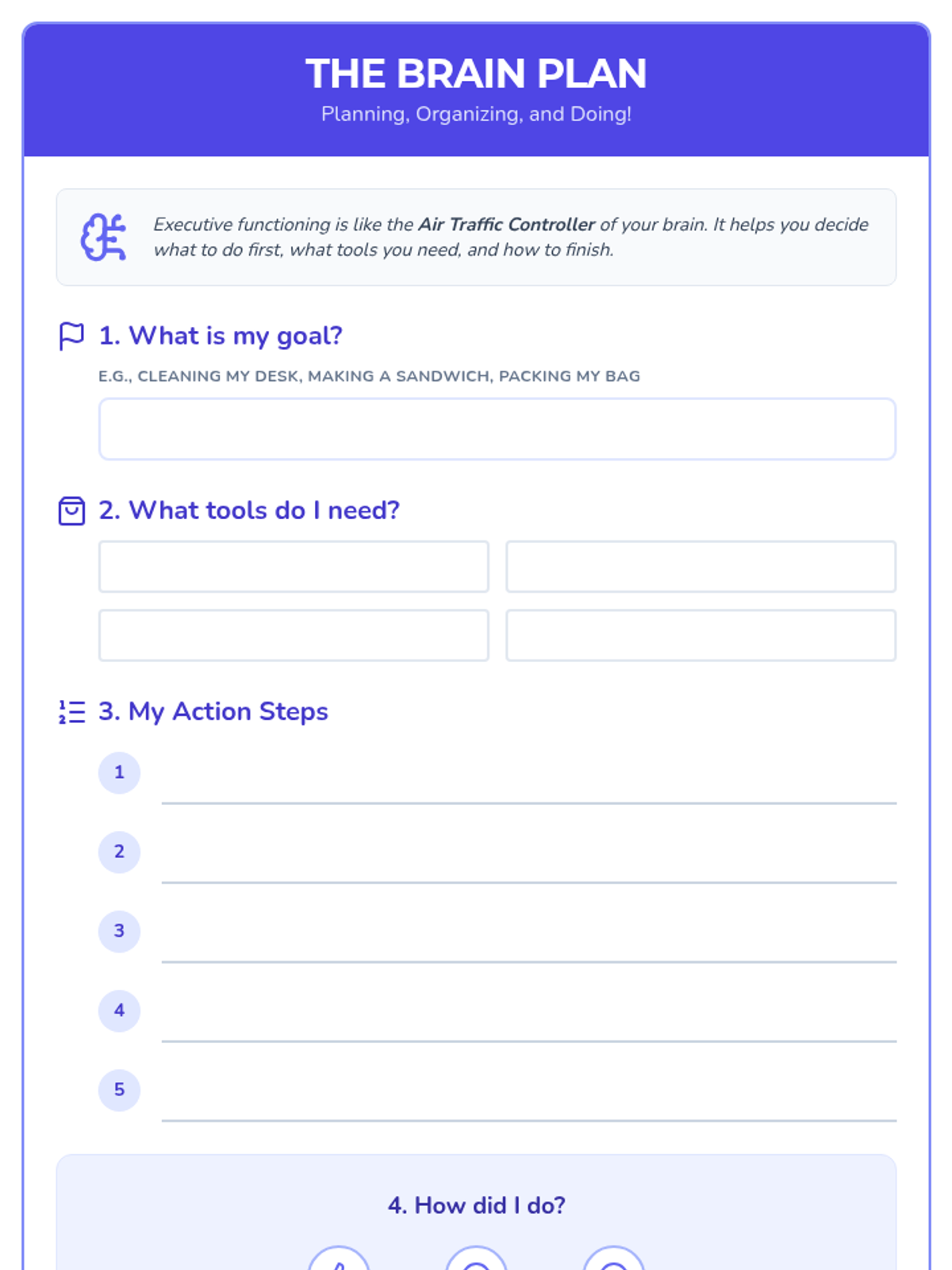
Strategies for Activities of Daily Living (ADLs), executive functioning, and establishing successful home routines.
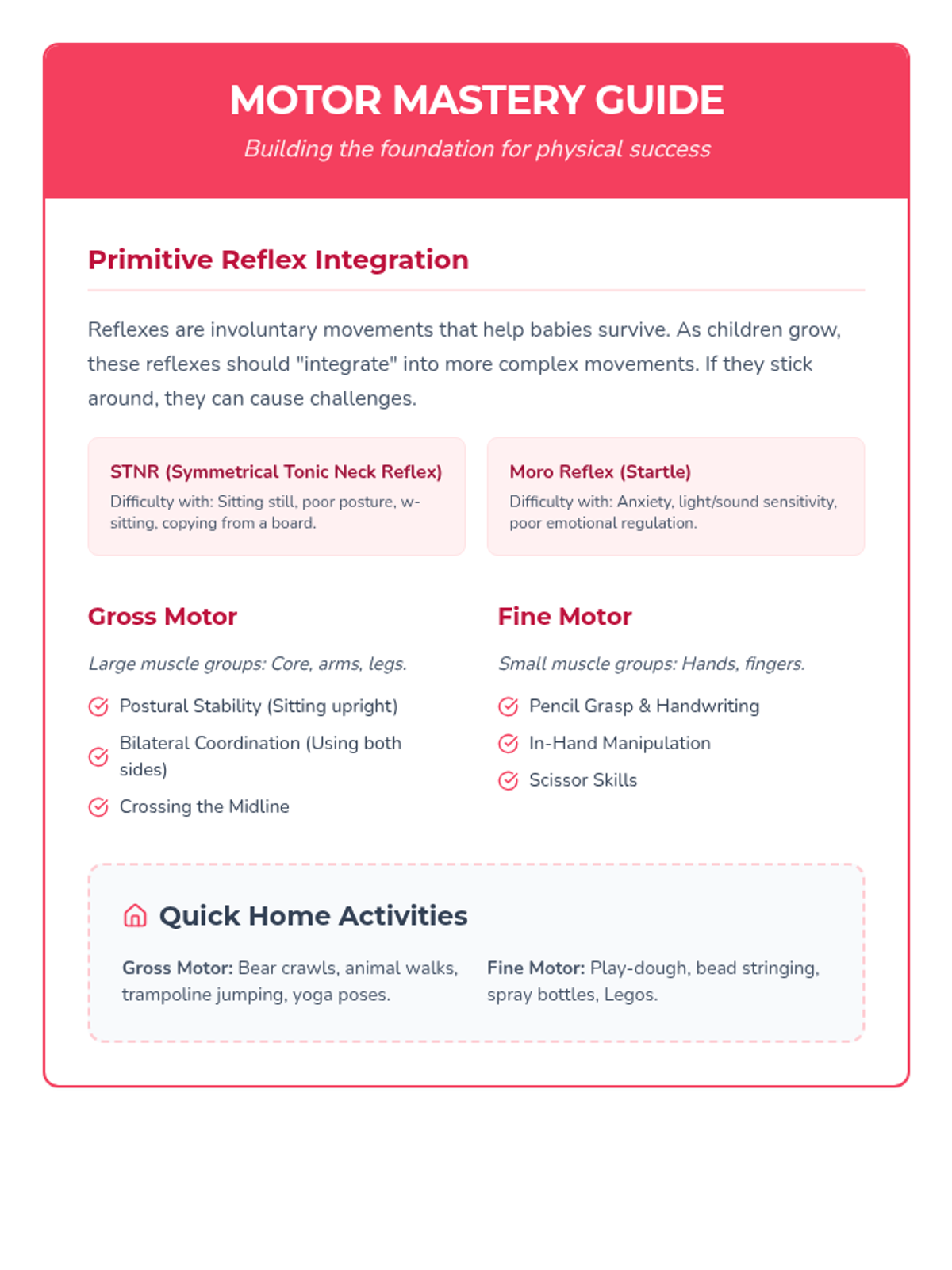
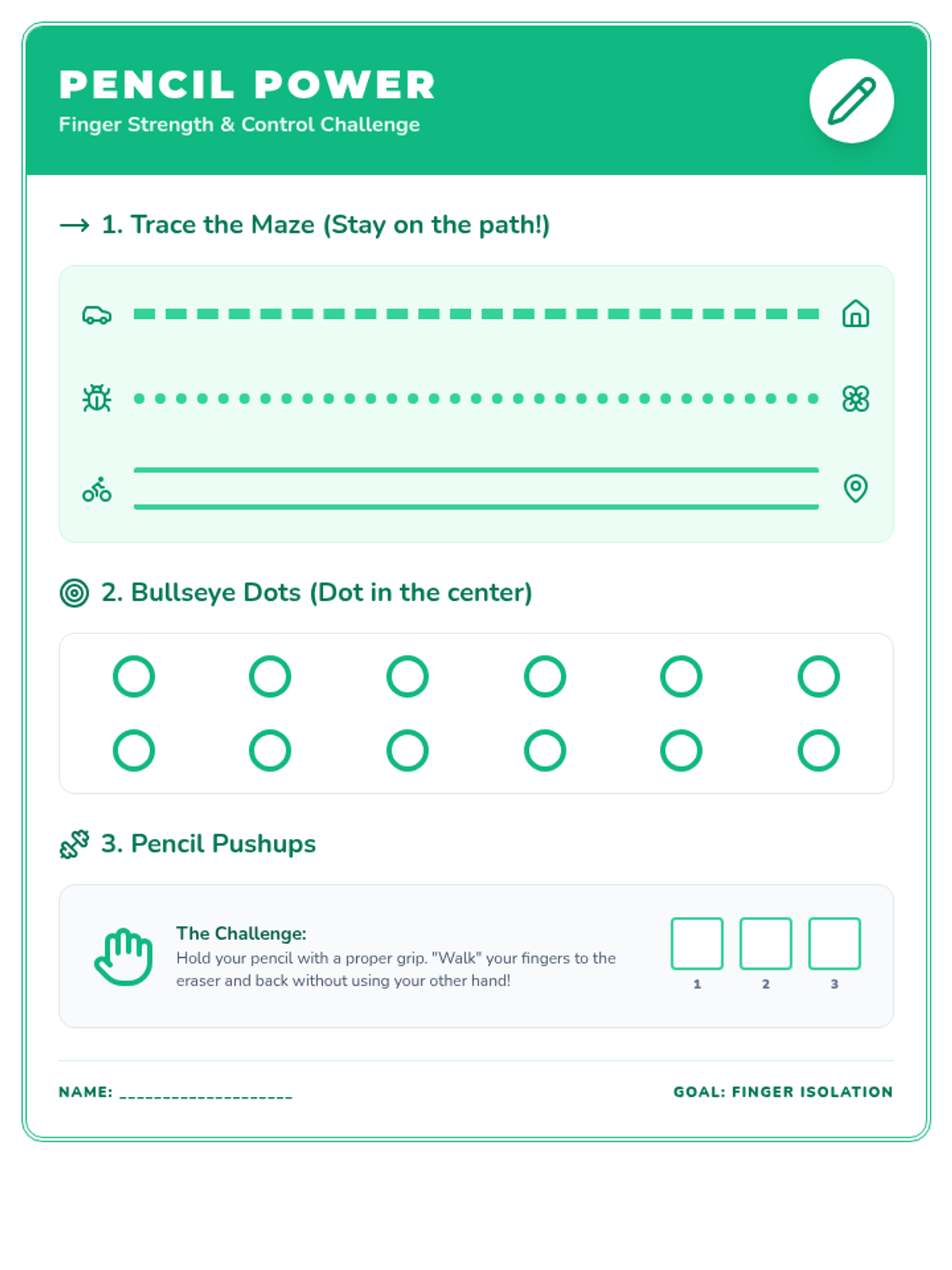
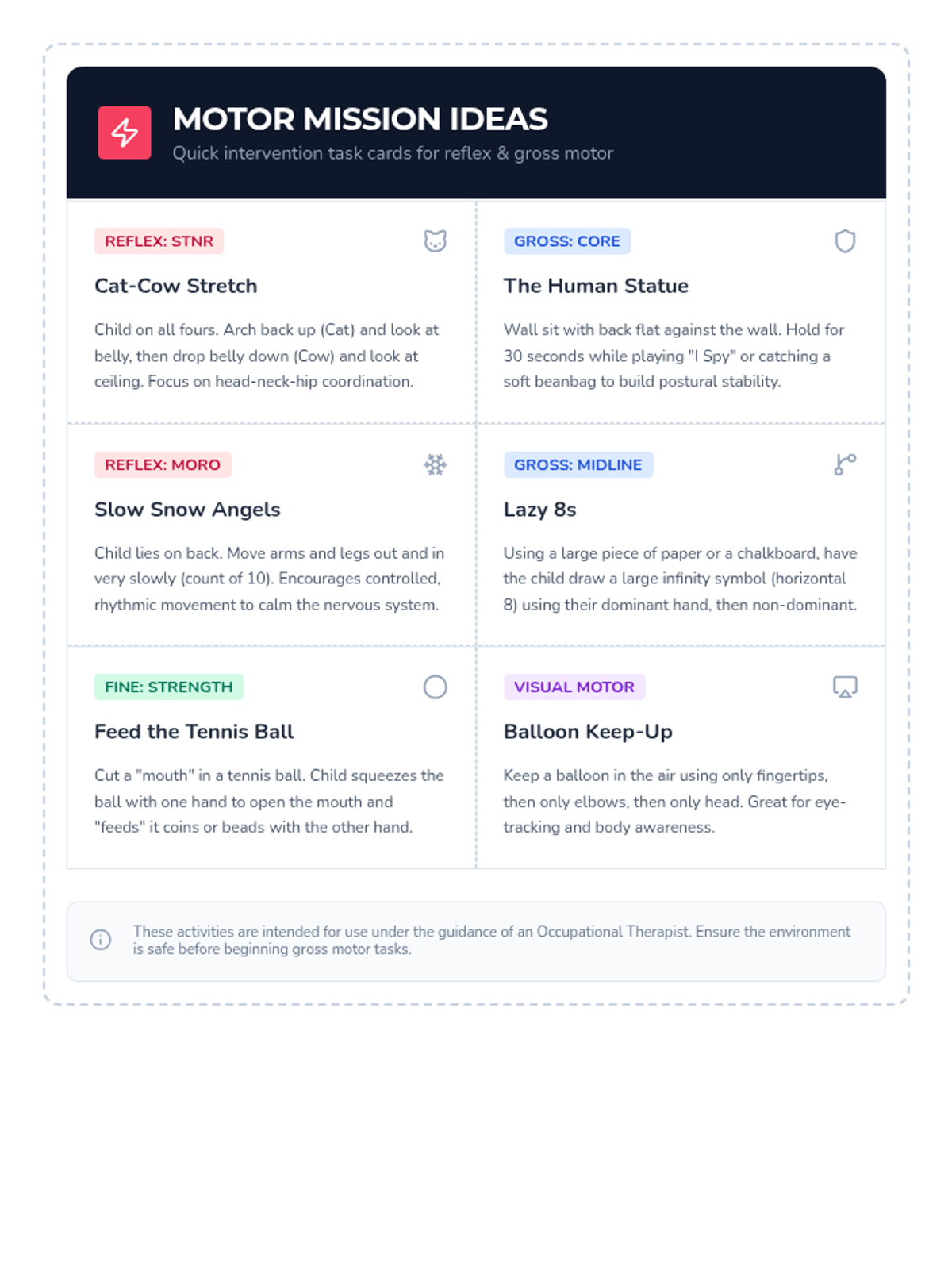
Targeting fine motor precision, gross motor coordination, and primitive reflex integration for functional movement.
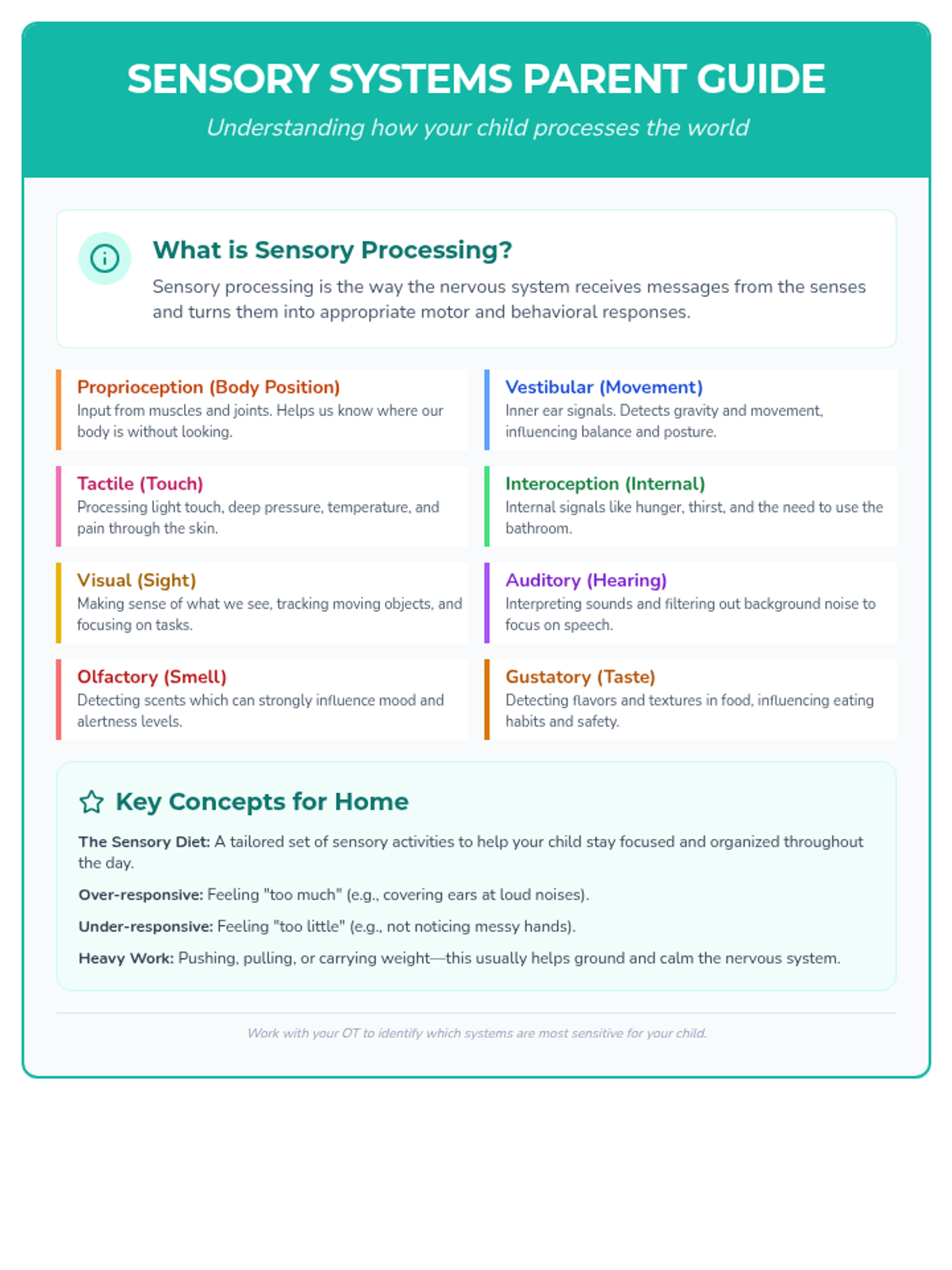
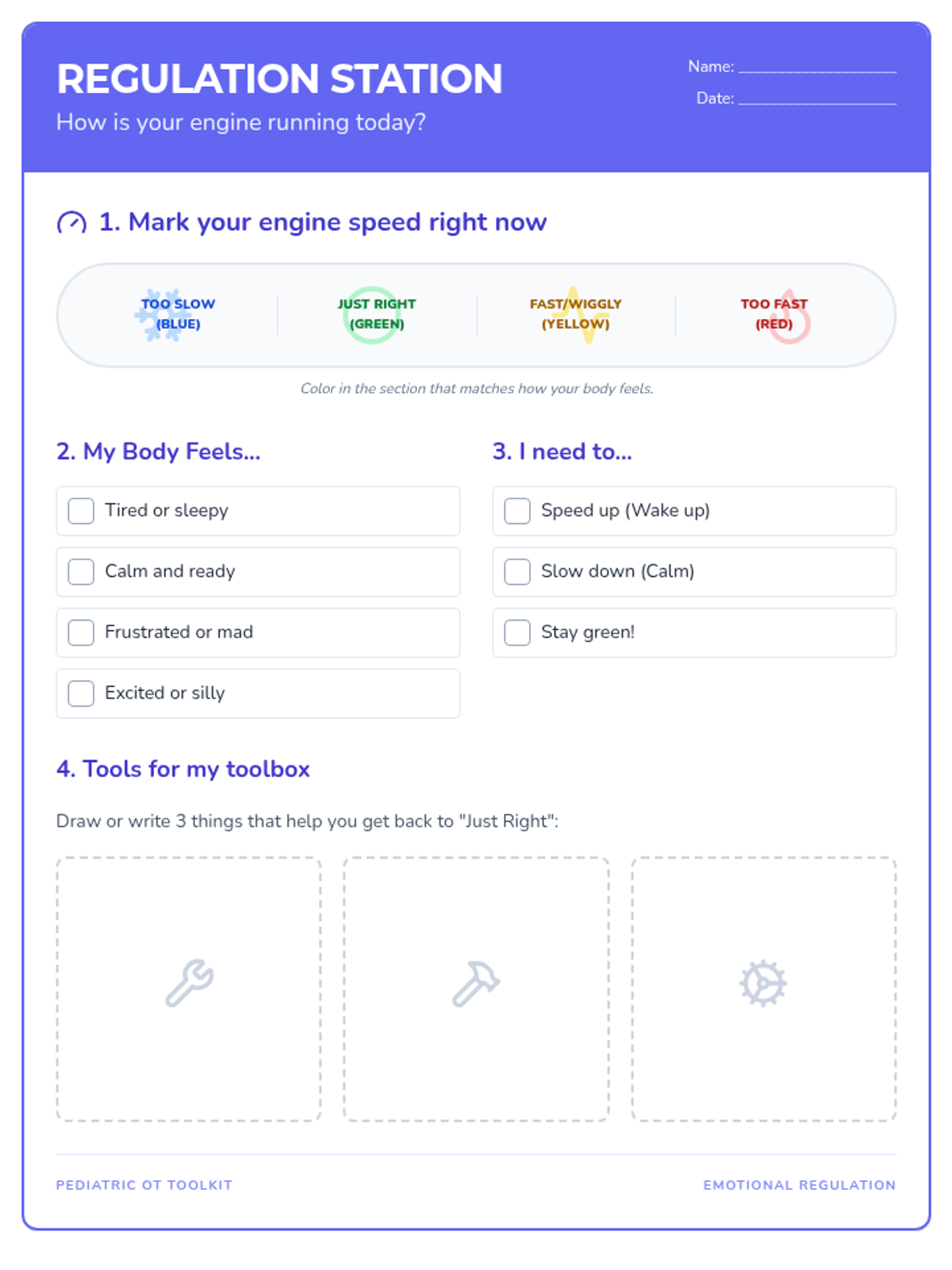
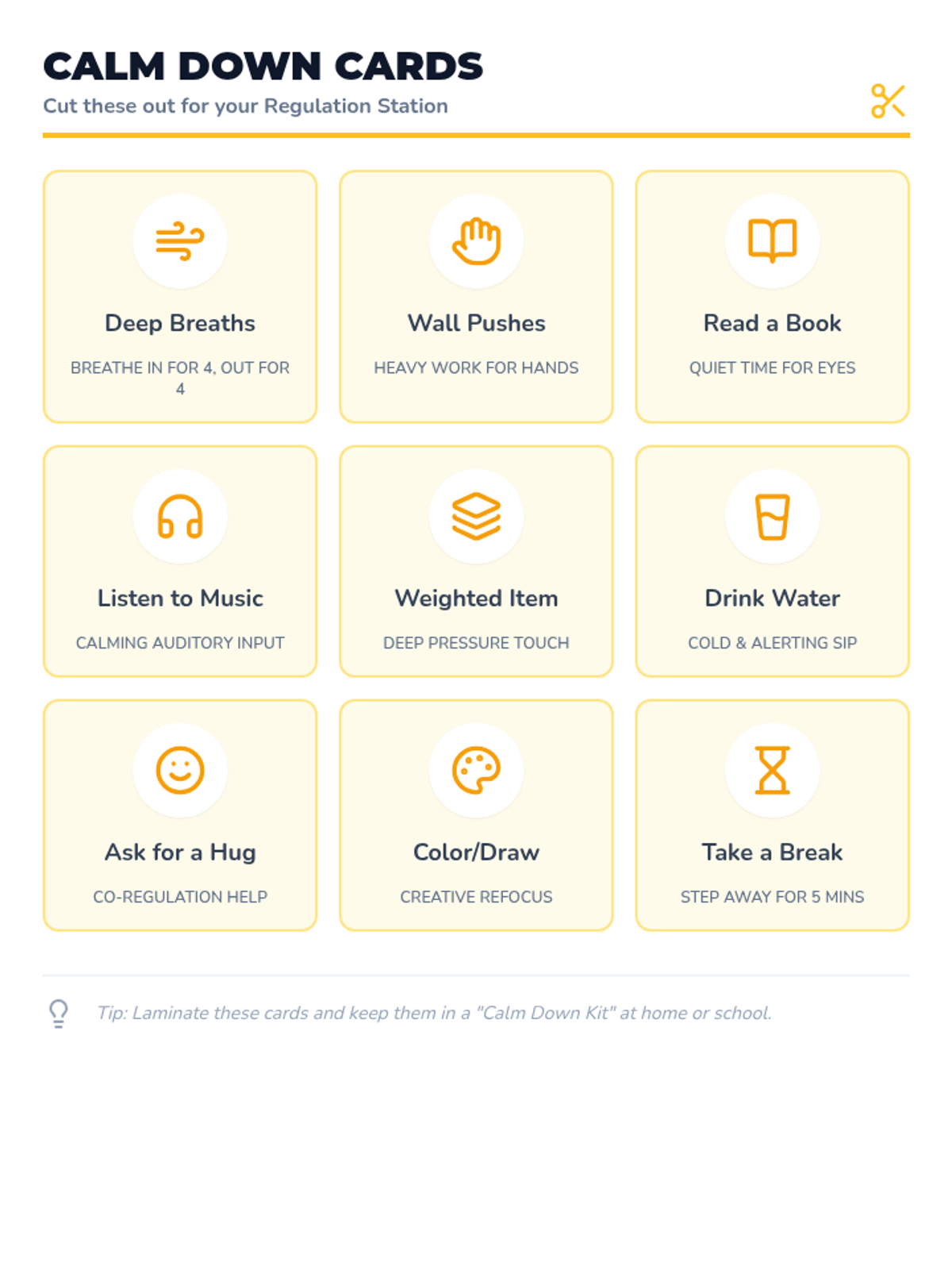
Focuses on sensory integration, emotional regulation, and behavioral strategies to help children maintain an optimal state of arousal.
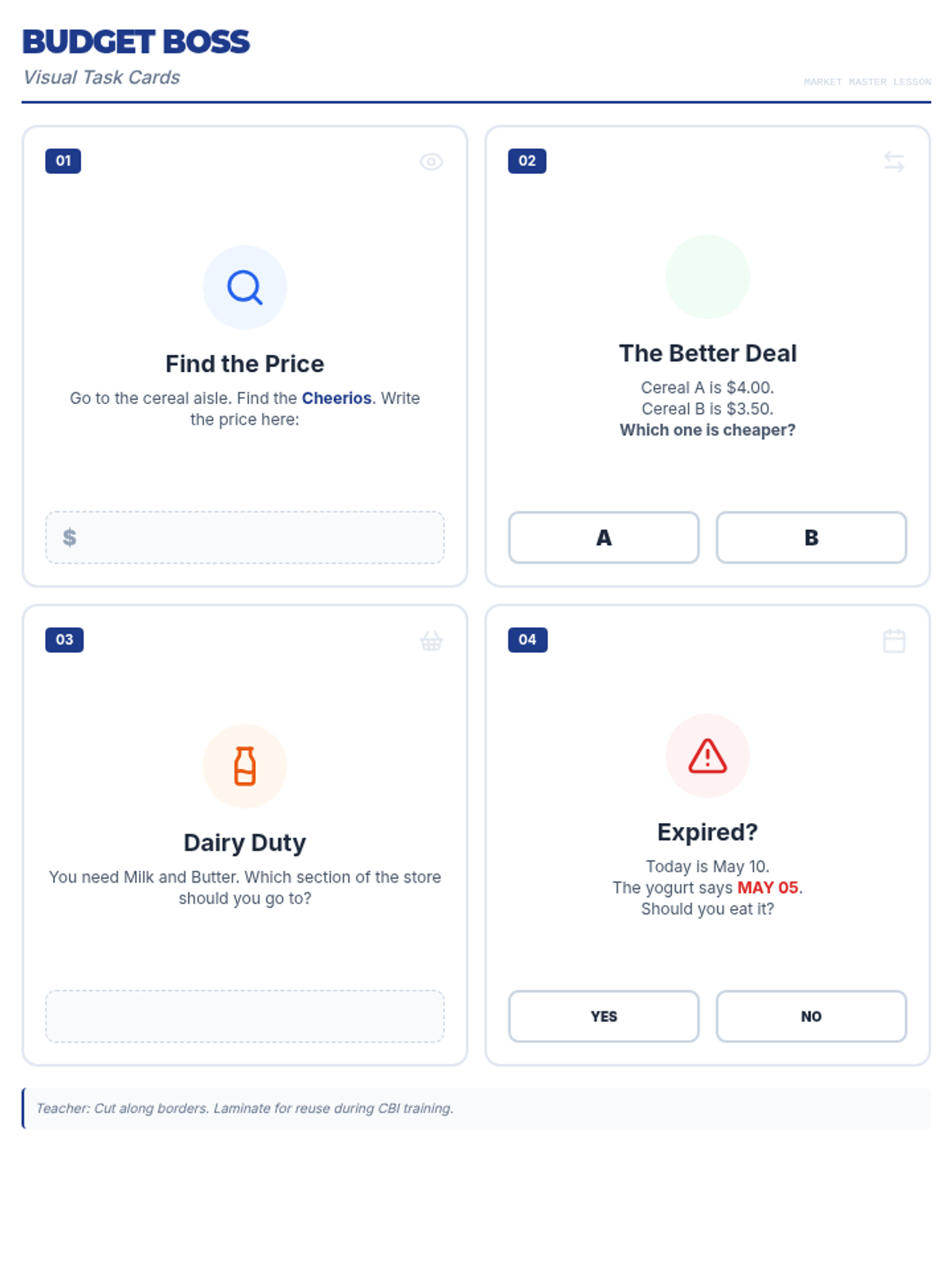
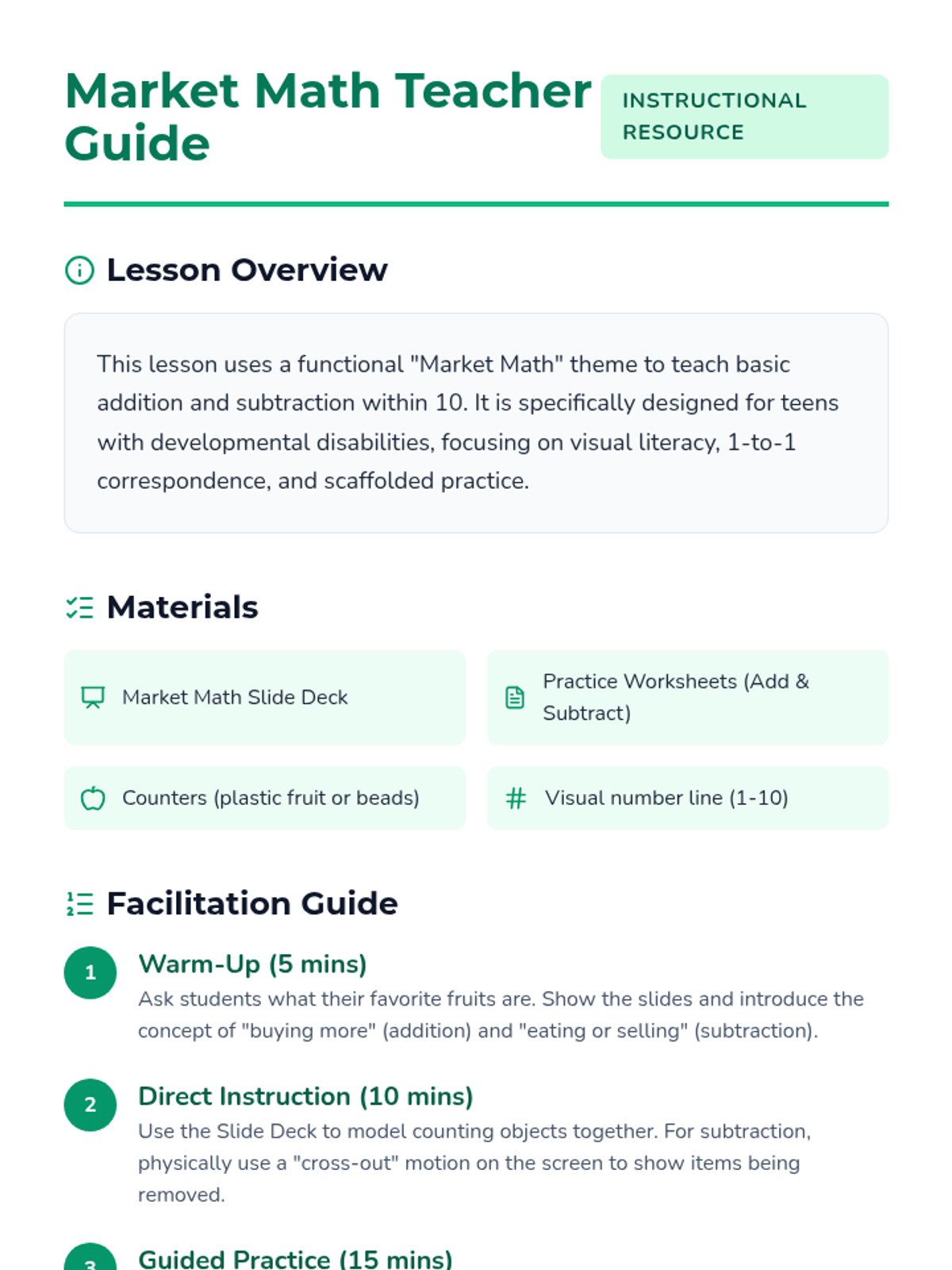
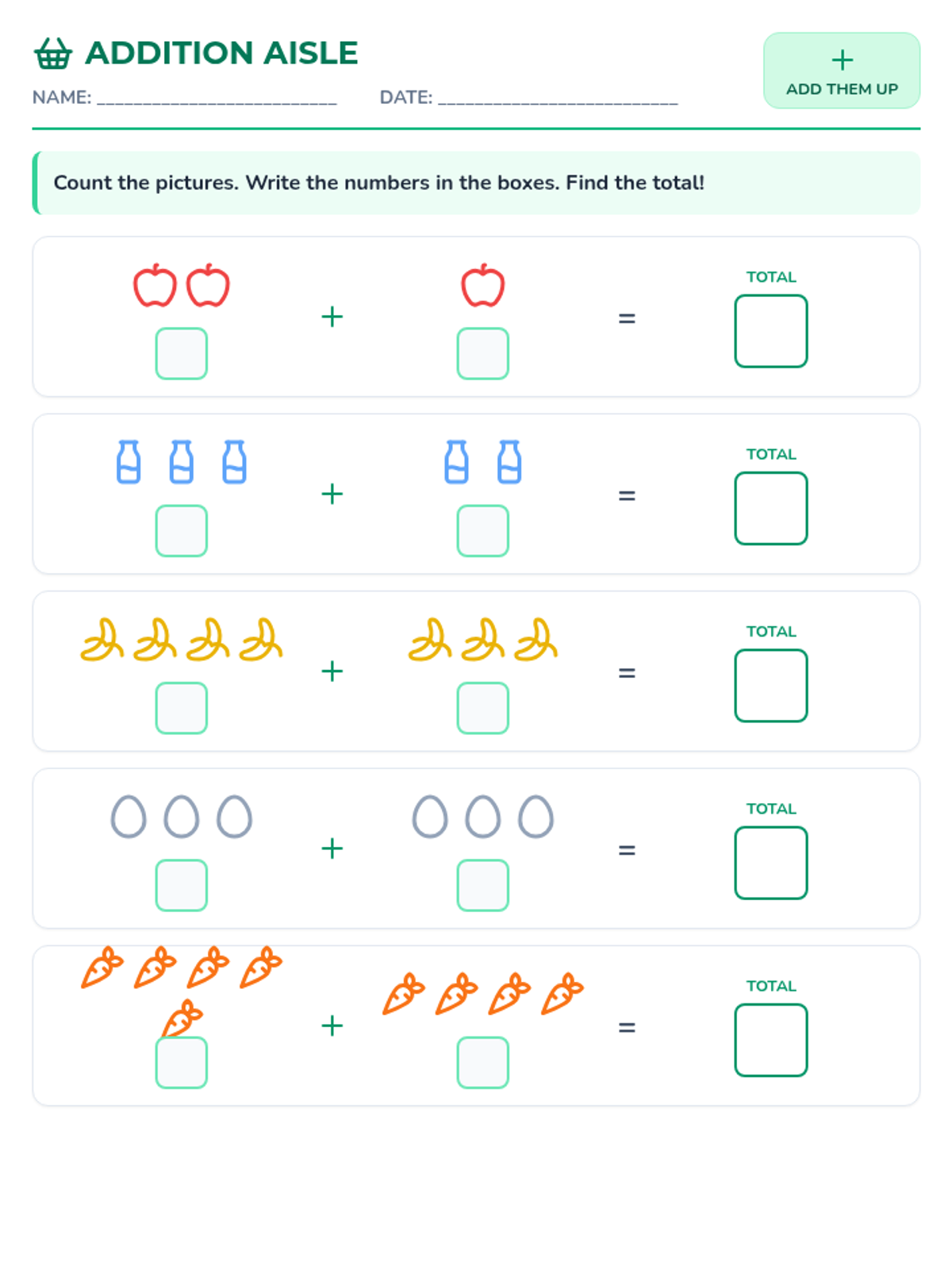
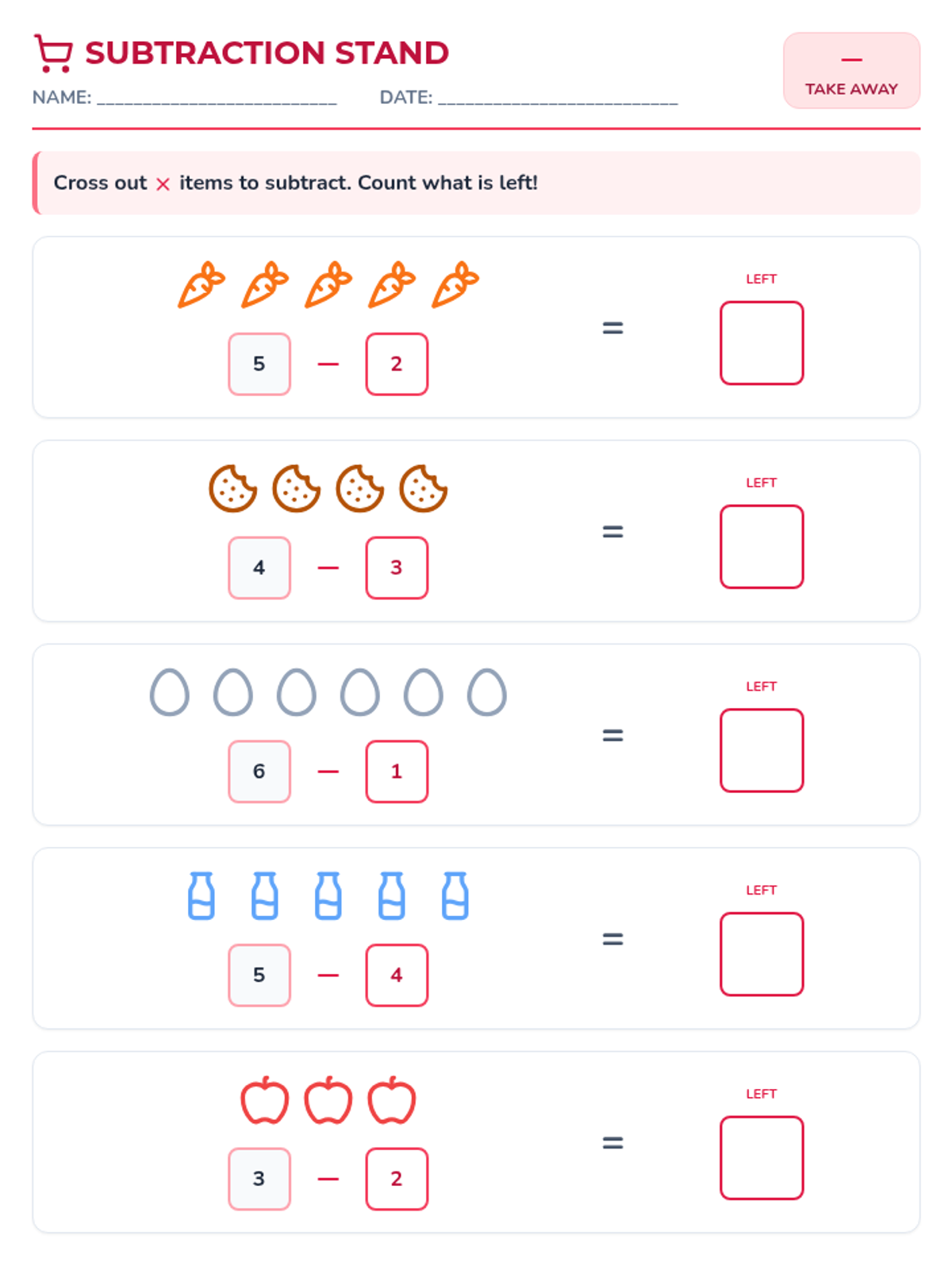
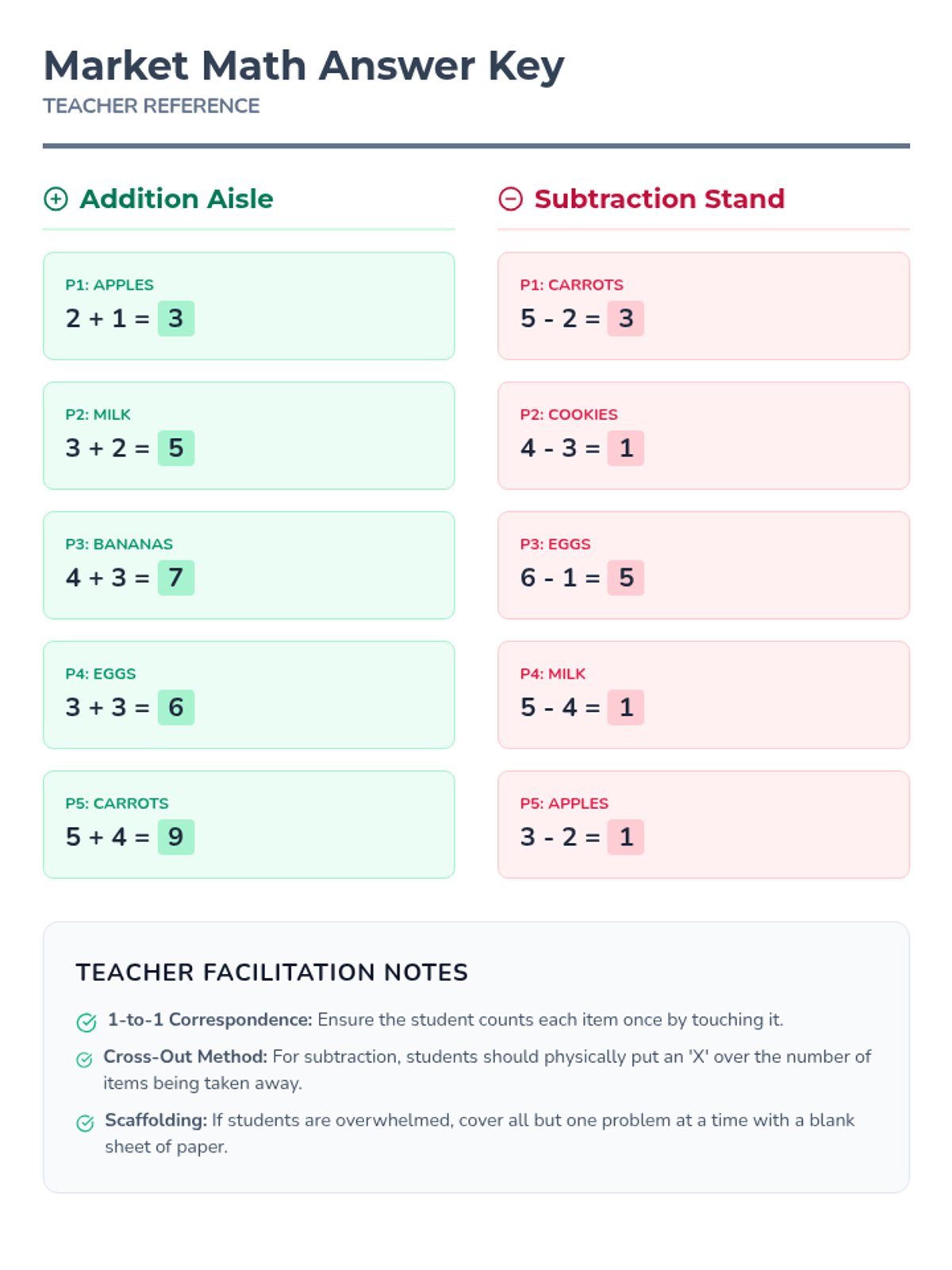
A functional math lesson focusing on basic addition and subtraction within 20 using a grocery store theme. Designed for teens with developmental disabilities, it emphasizes visual aids and real-world application.
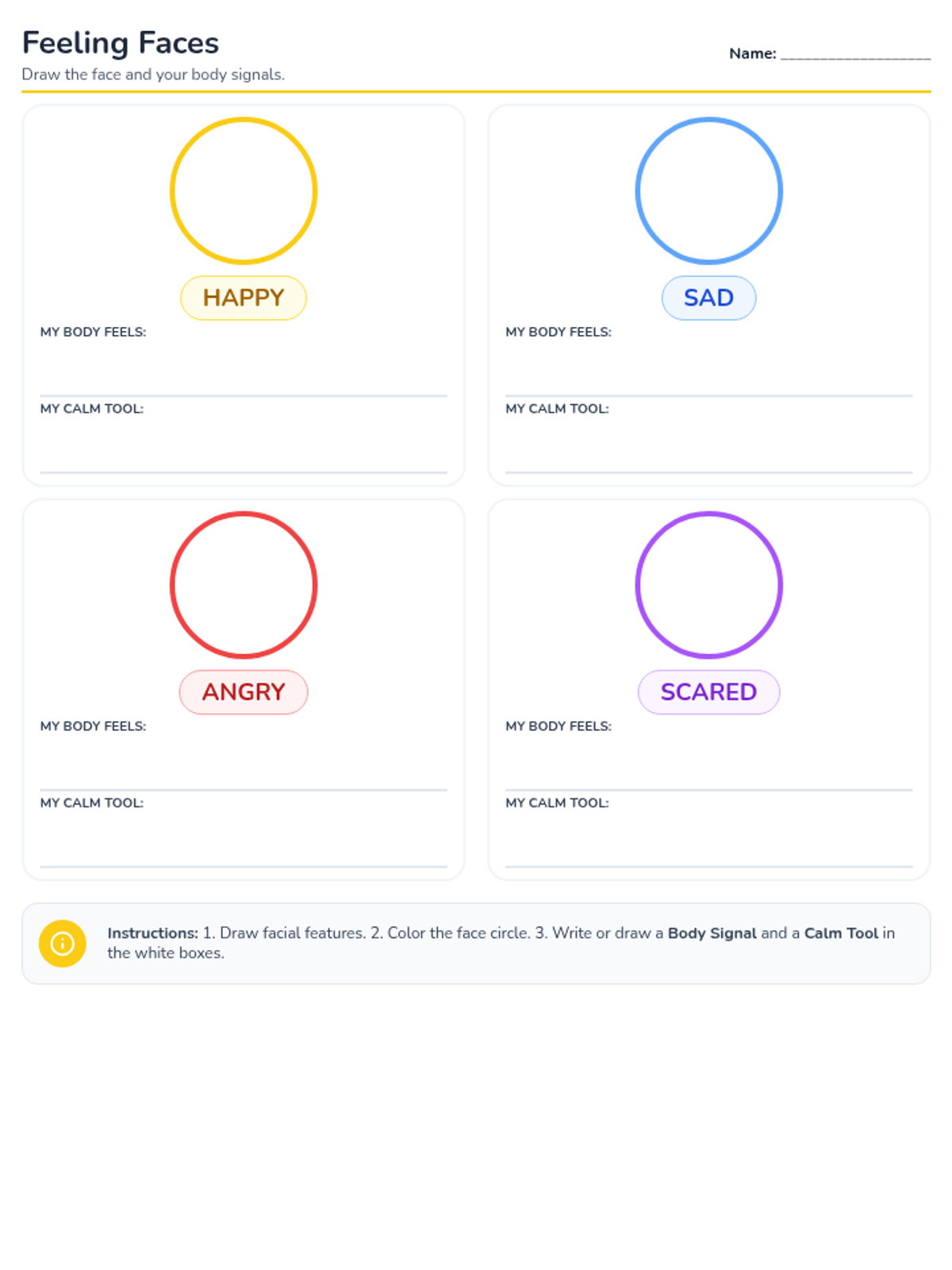
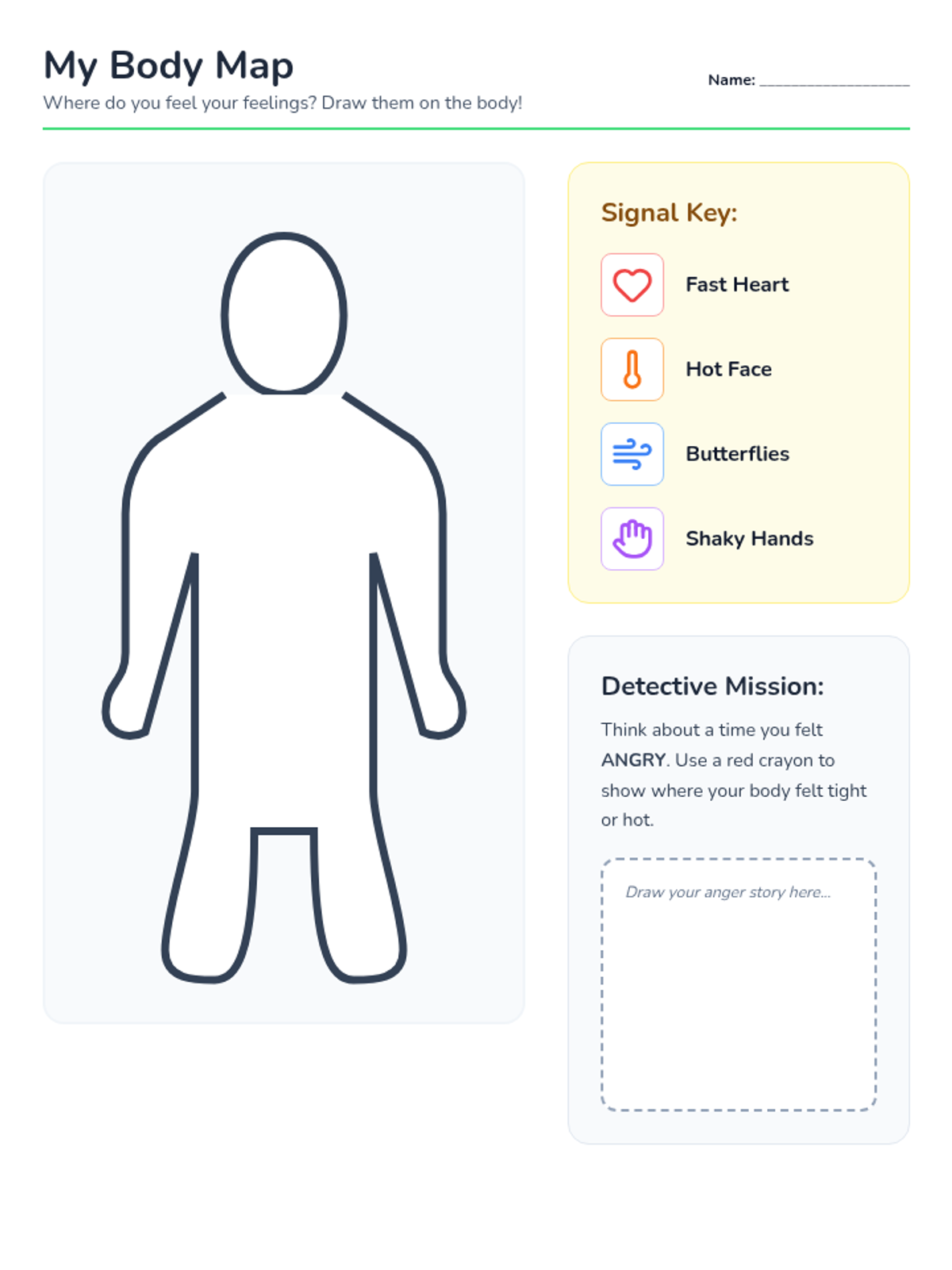
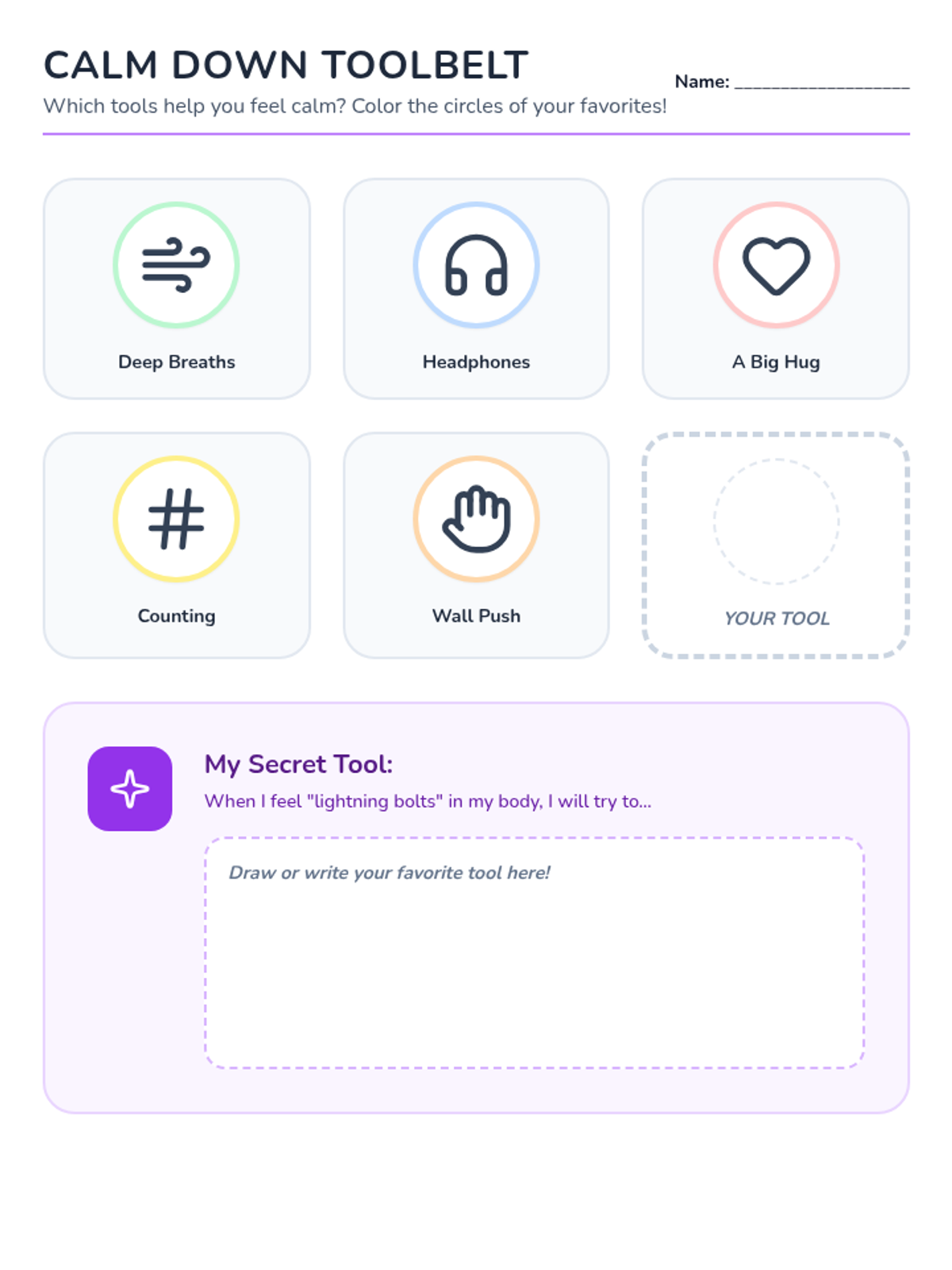
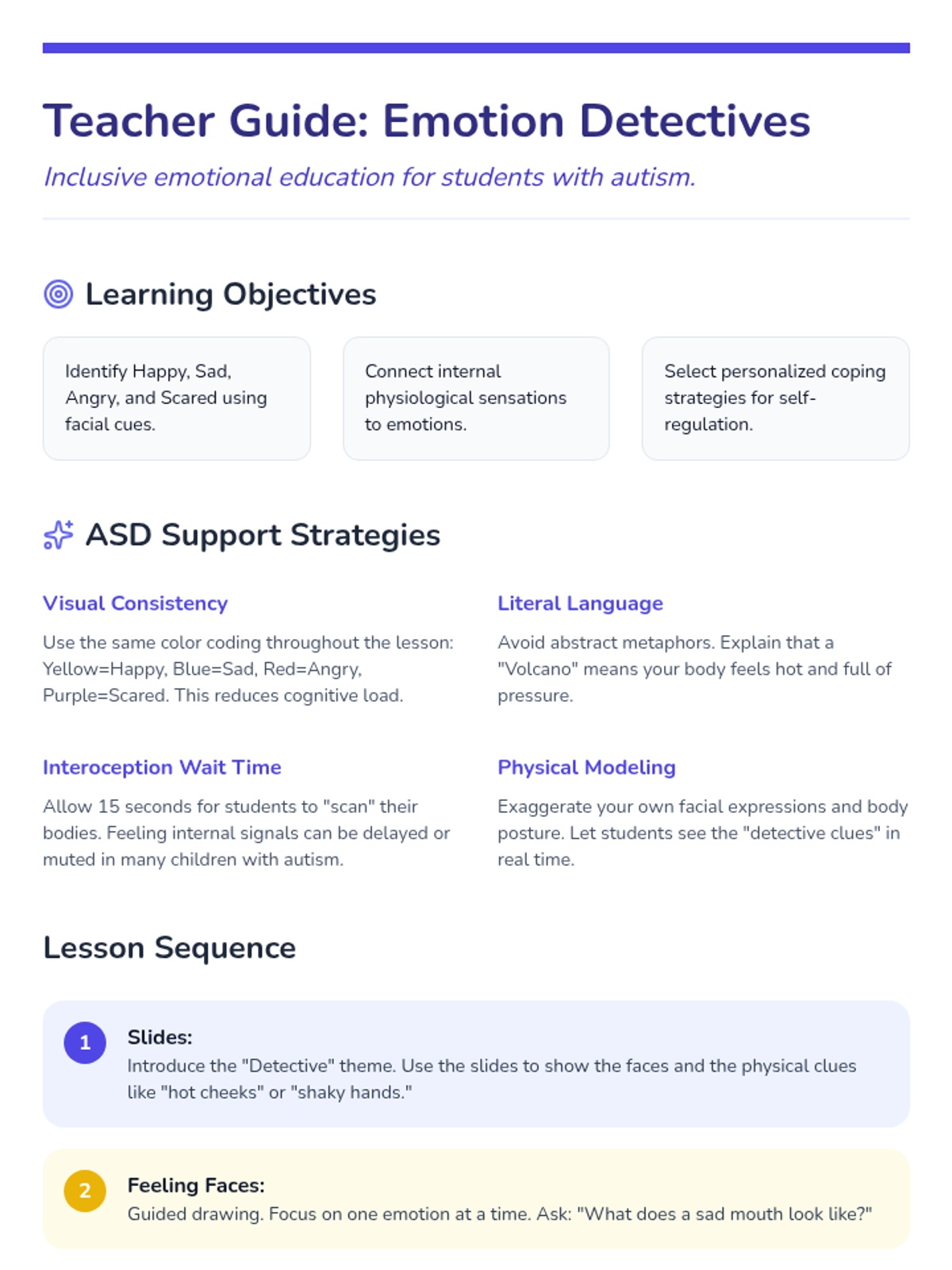
An interactive lesson designed for young learners with autism to identify basic emotions, recognize physical body signals, and build a personalized toolkit of coping strategies through visual supports and drawing activities.
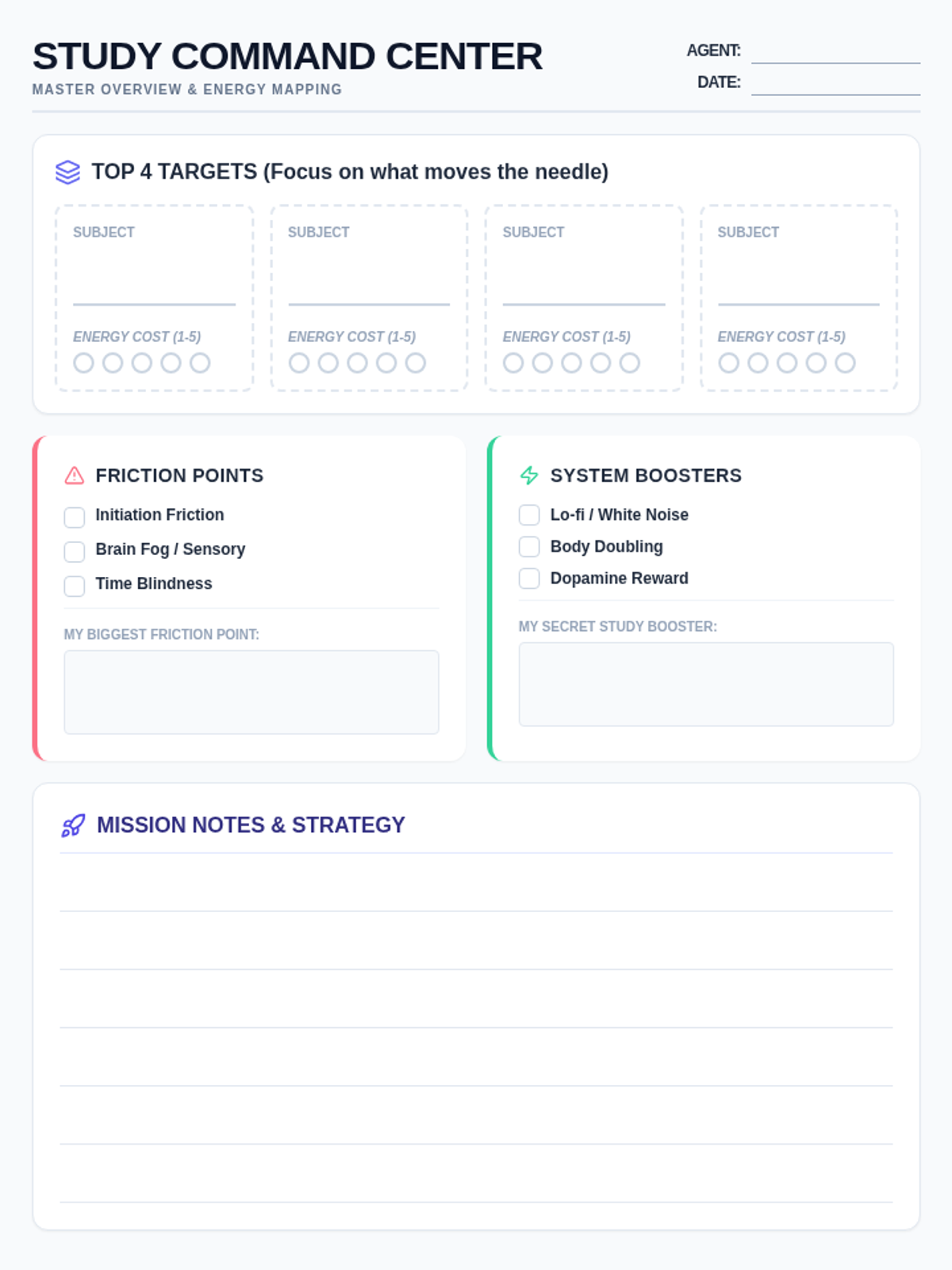
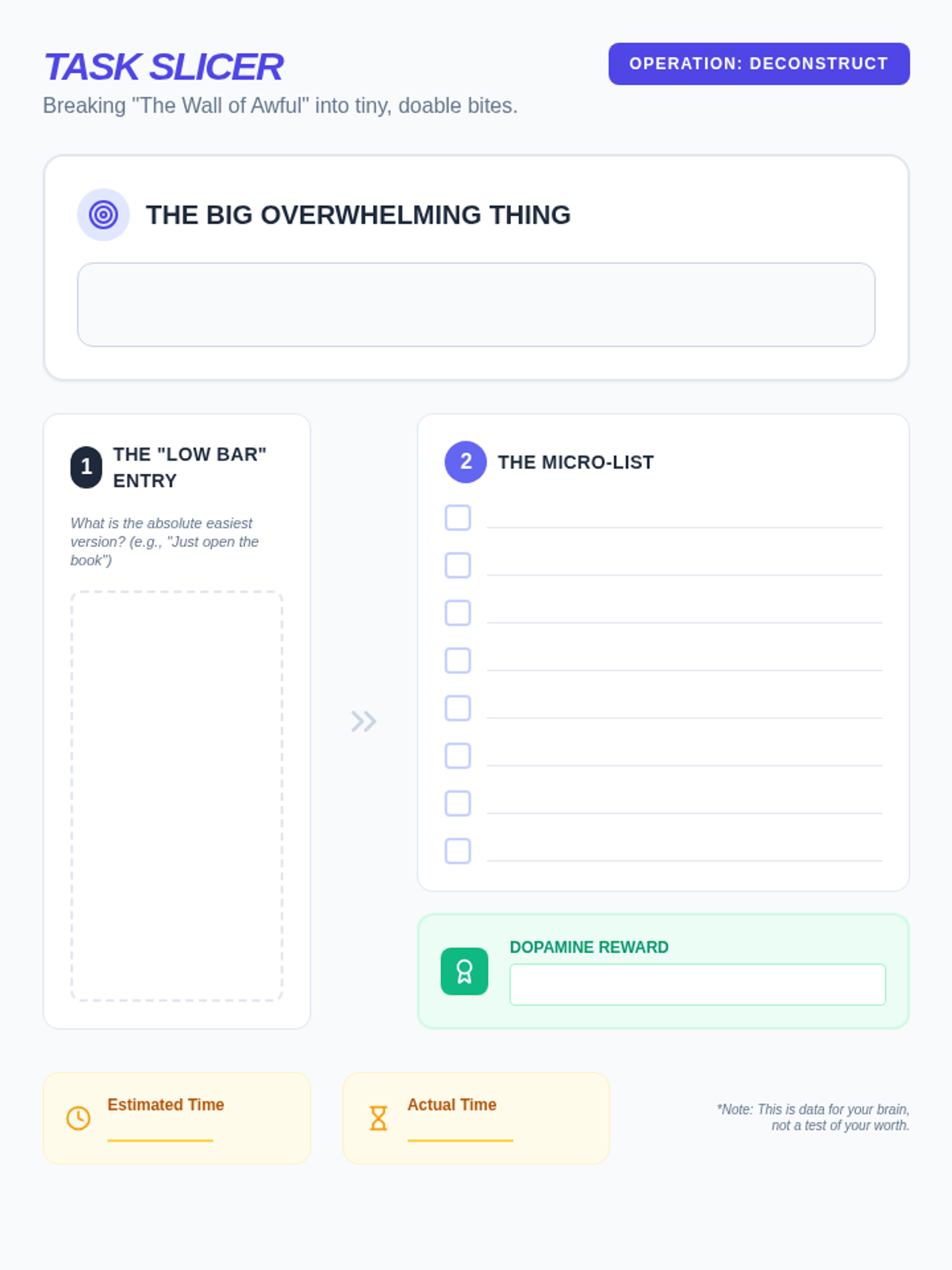
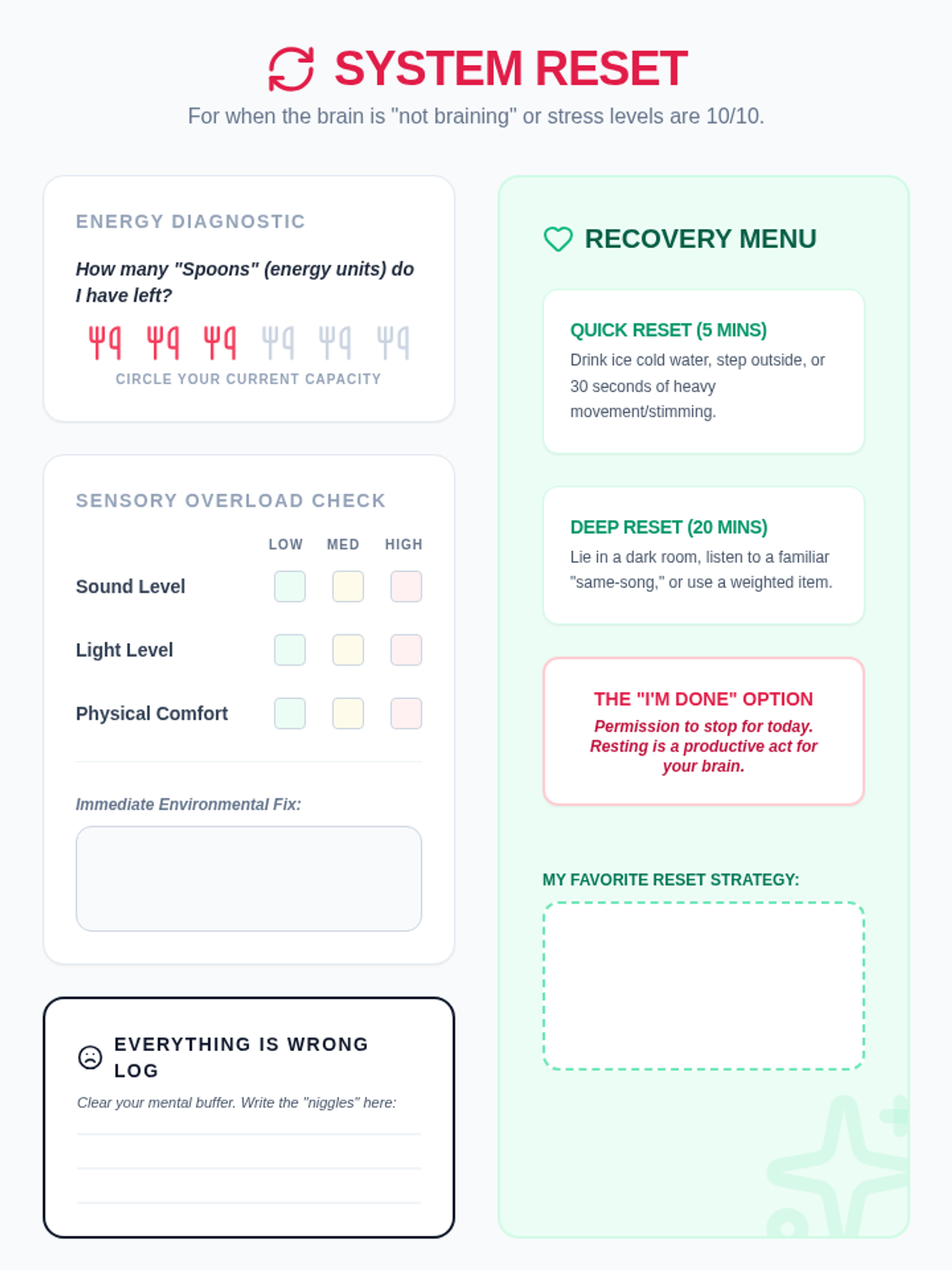
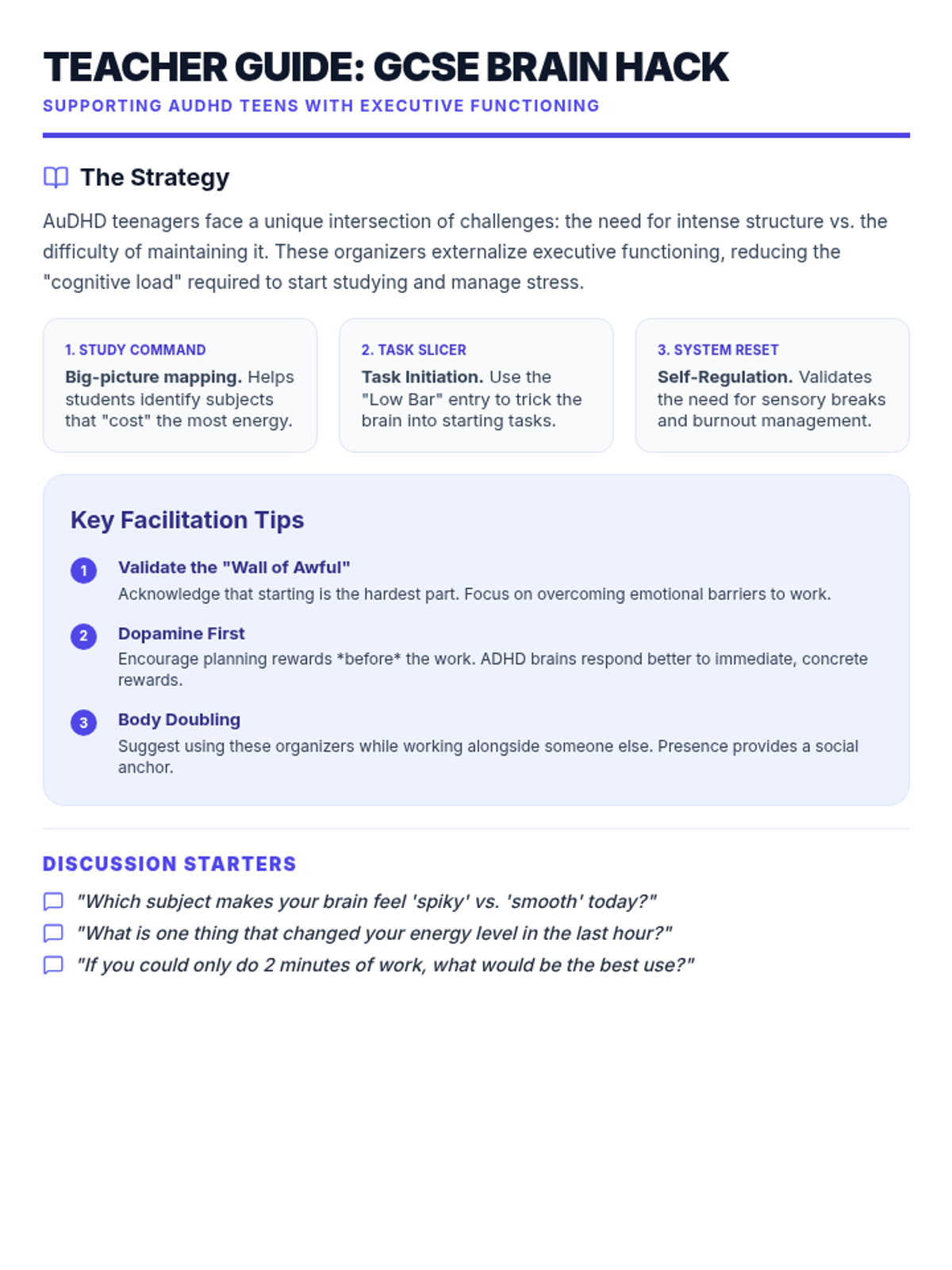
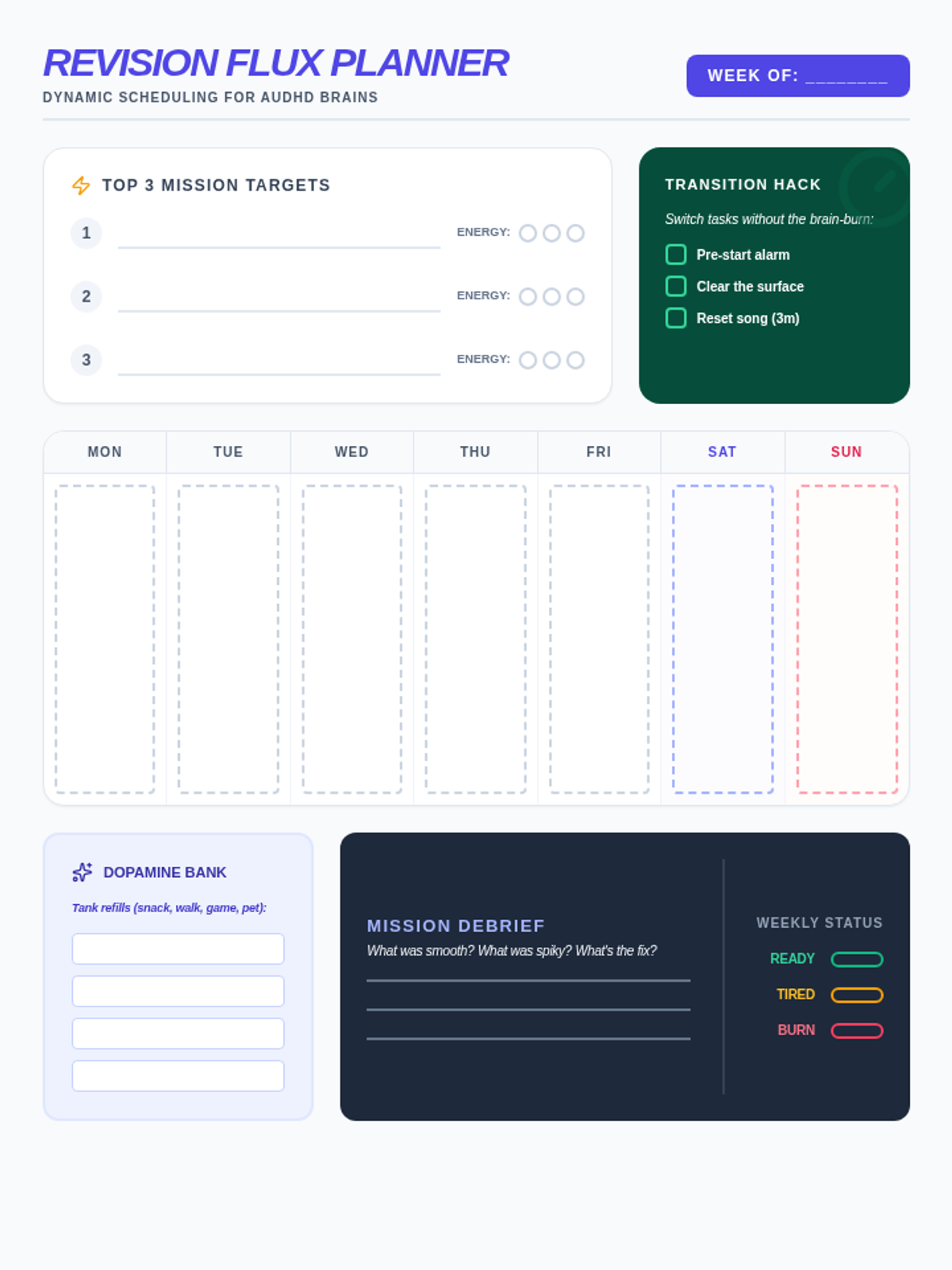
A collection of graphic organizers and strategies designed specifically for AuDHD teenagers to manage executive functioning and stress during GCSE exam preparation.
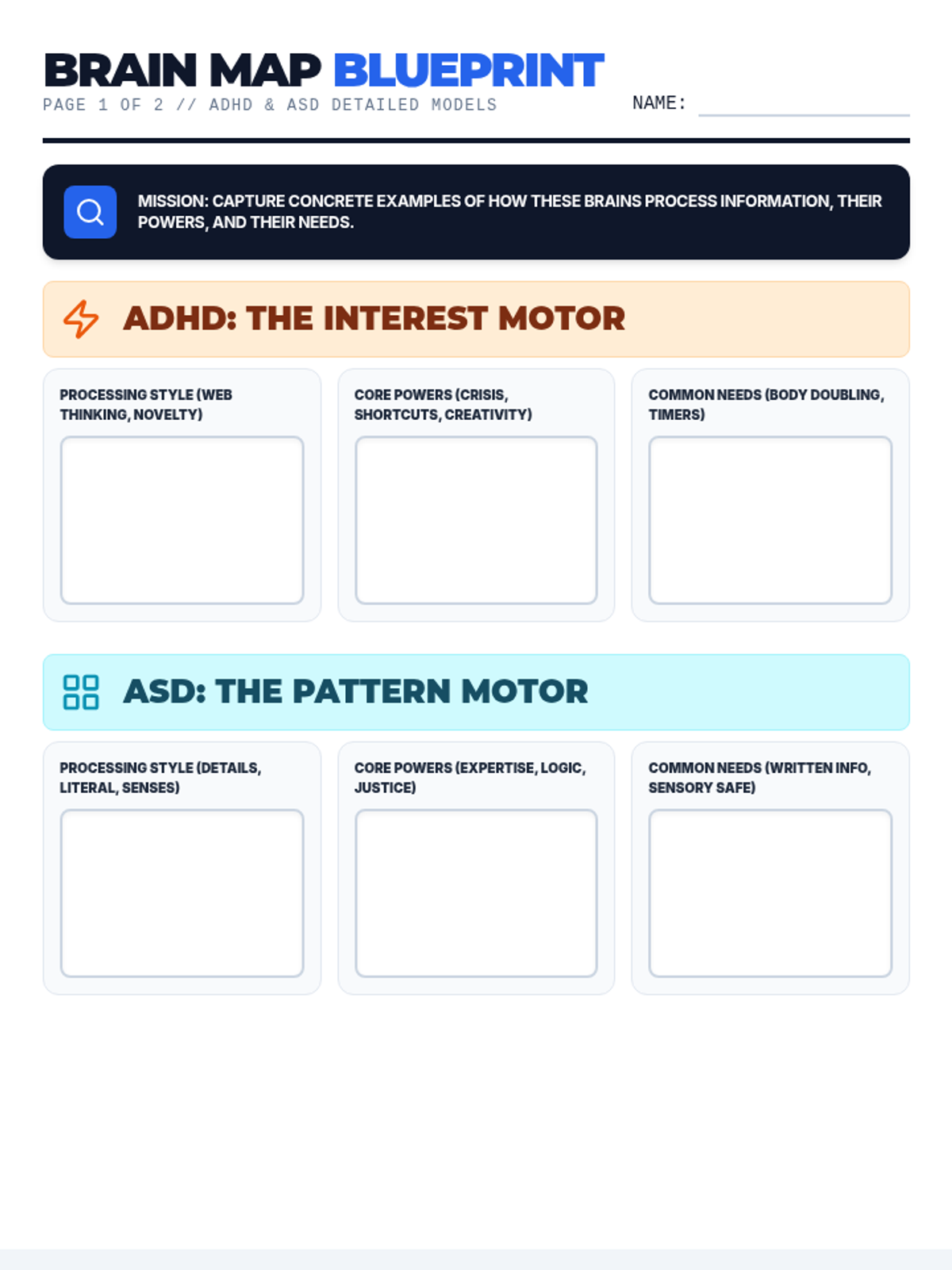
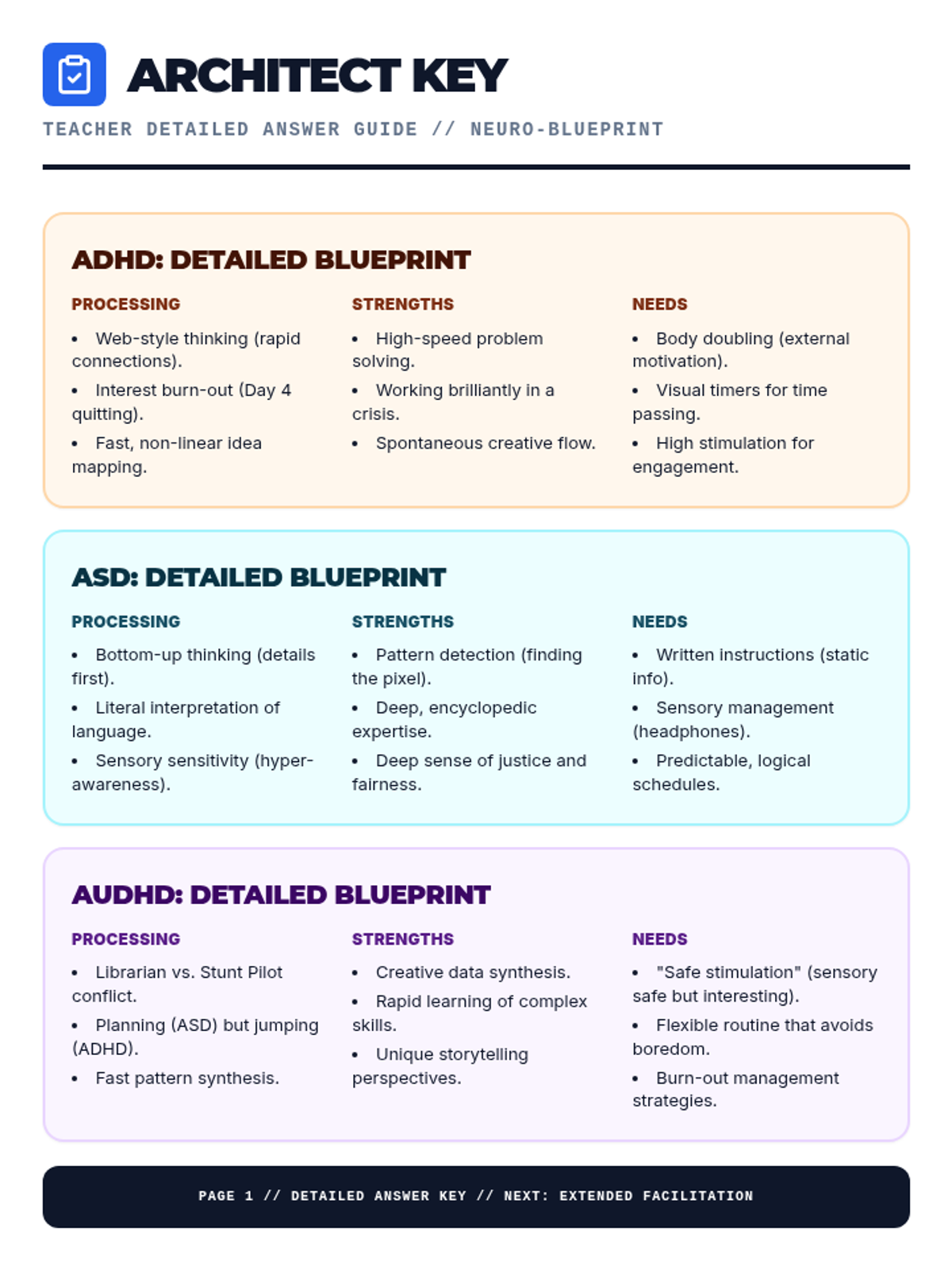
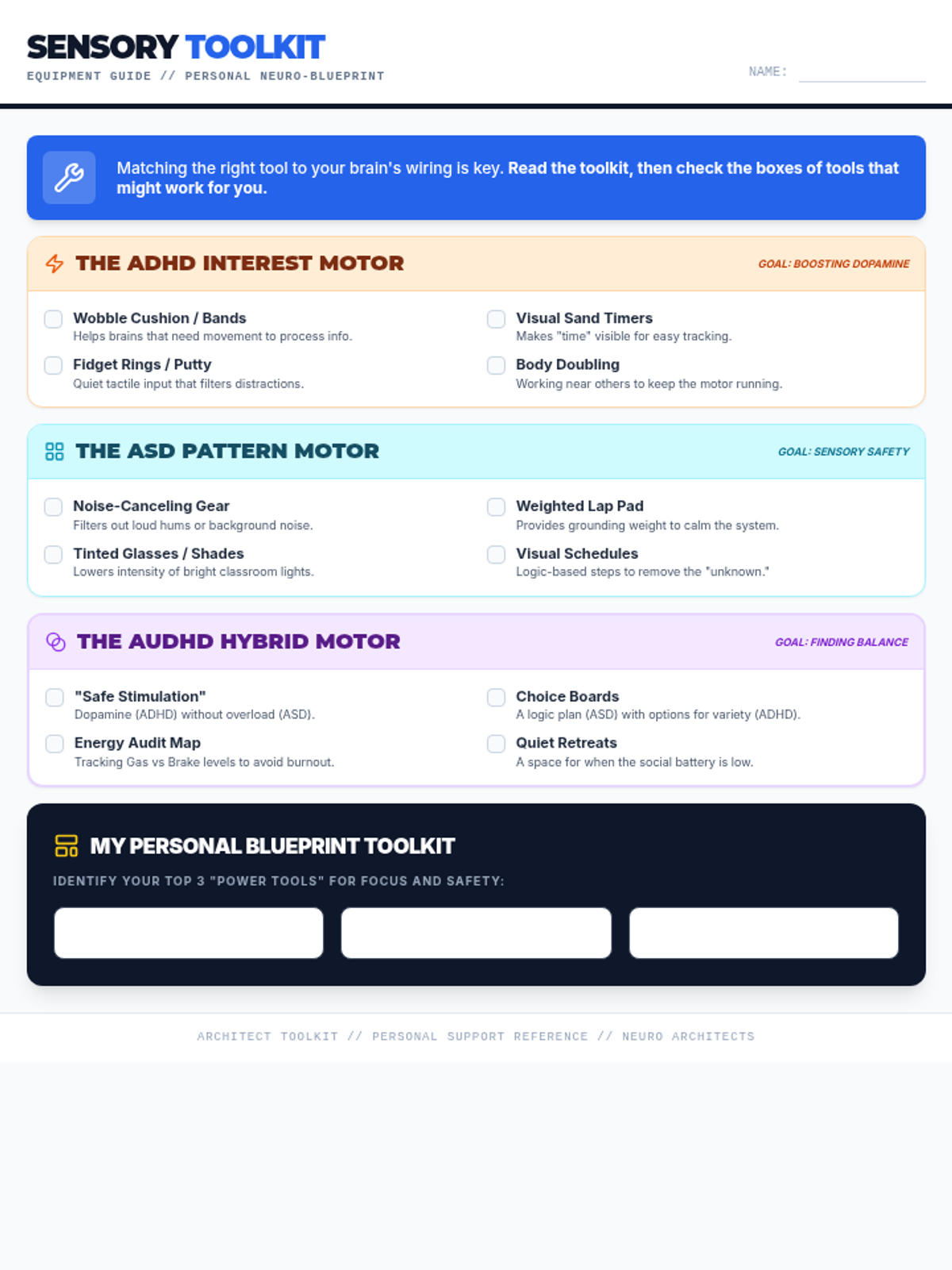
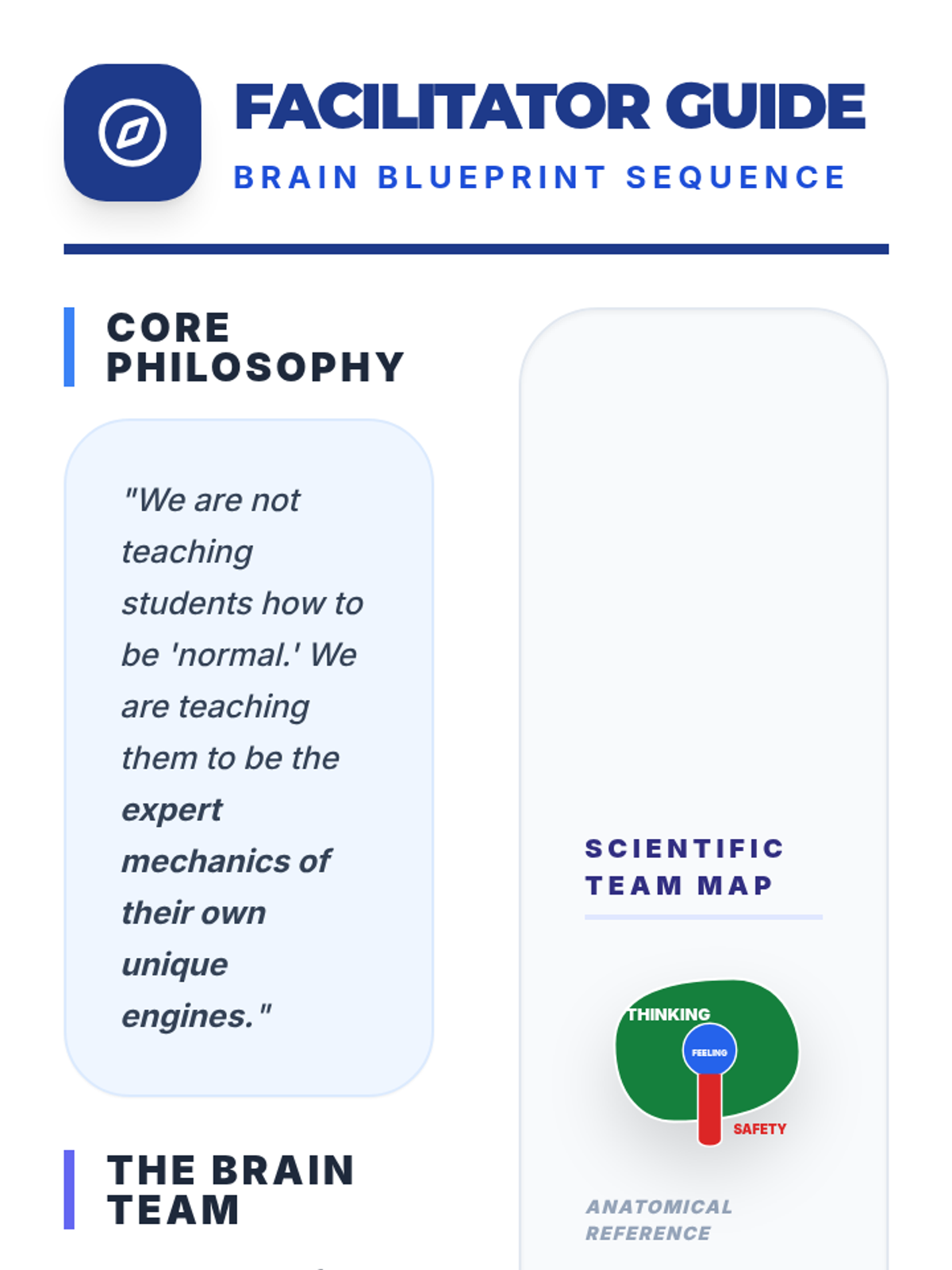
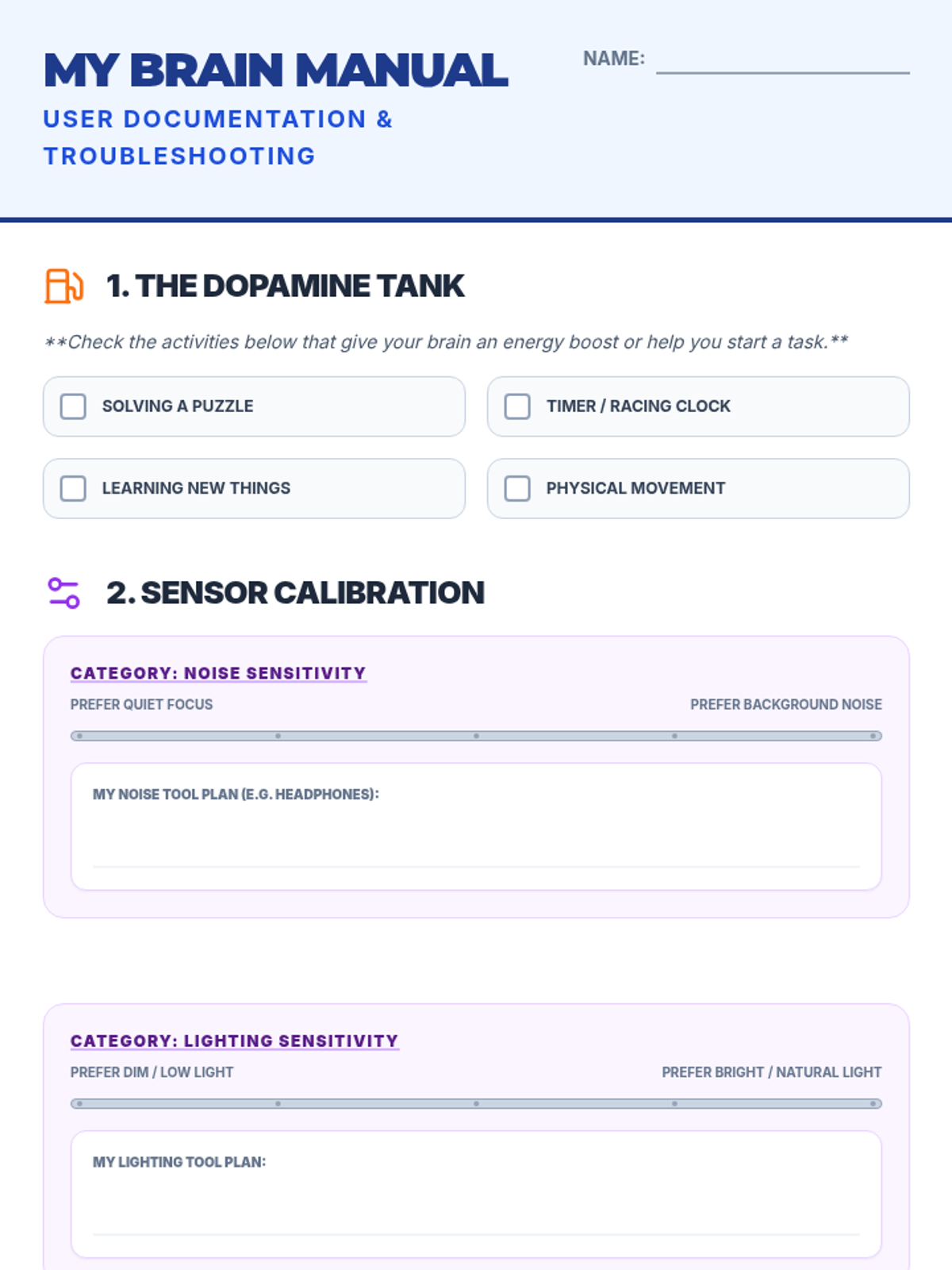
An exploration of the unique wiring of ADHD, ASD, and AuDHD brains through visual mapping and blueprinting. Students learn to identify key processing differences and strengths associated with each neurotype using a visual-first approach.
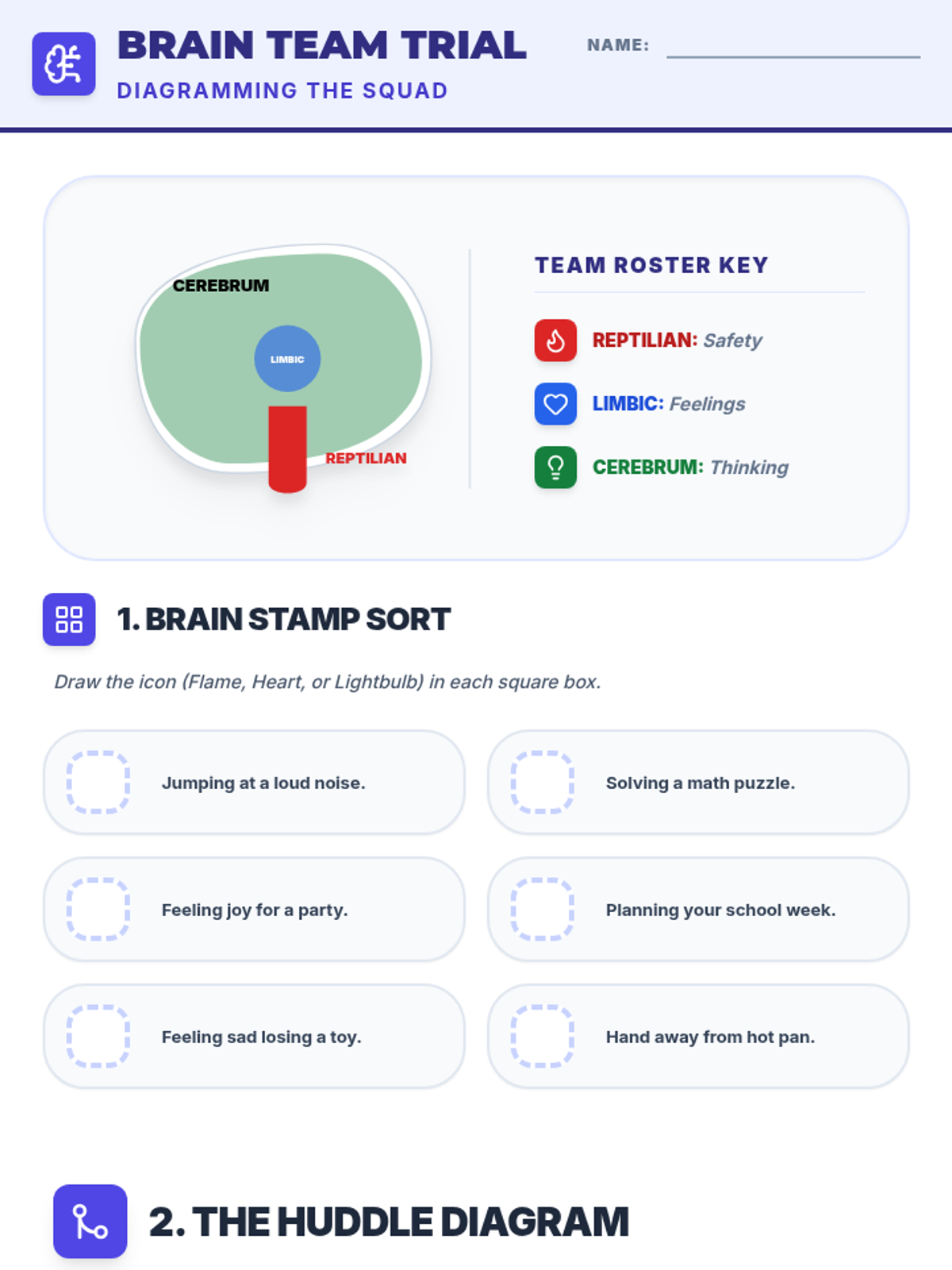
Exploring the foundational layers of the brain—the Reptilian Brain, the Limbic System, and the Cerebellum—to understand how survival instincts, emotions, and physical coordination work together.
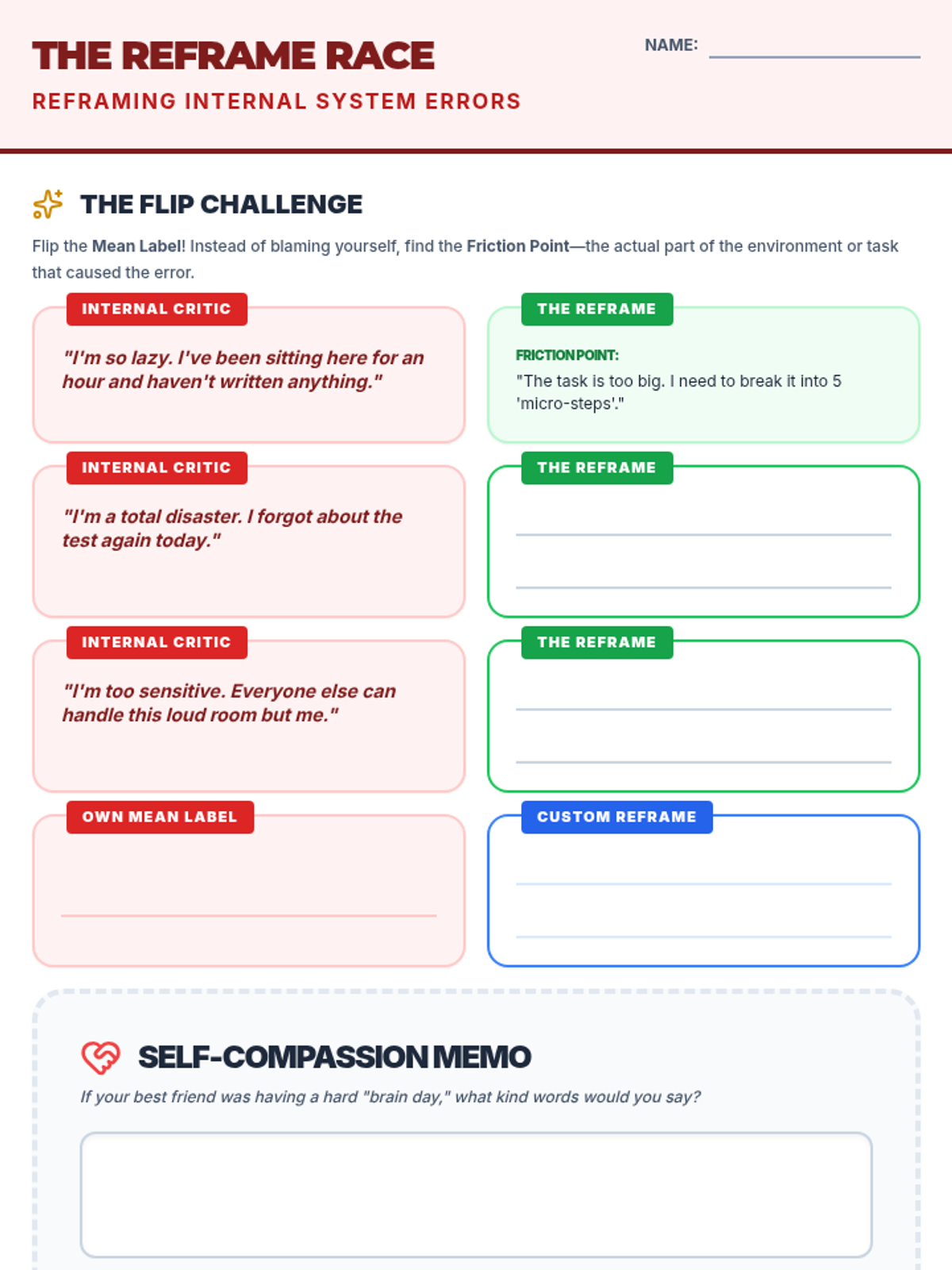
Developing a growth mindset specifically tailored for neurodivergent experiences, focusing on self-compassion and reframing challenges.
Practical strategies for managing time, focus, and sensory needs by working with the brain's natural tendencies.
Exploration of the neurobiology of ADHD and AuDHD, focusing on executive function and sensory processing as 'features' rather than 'bugs.'
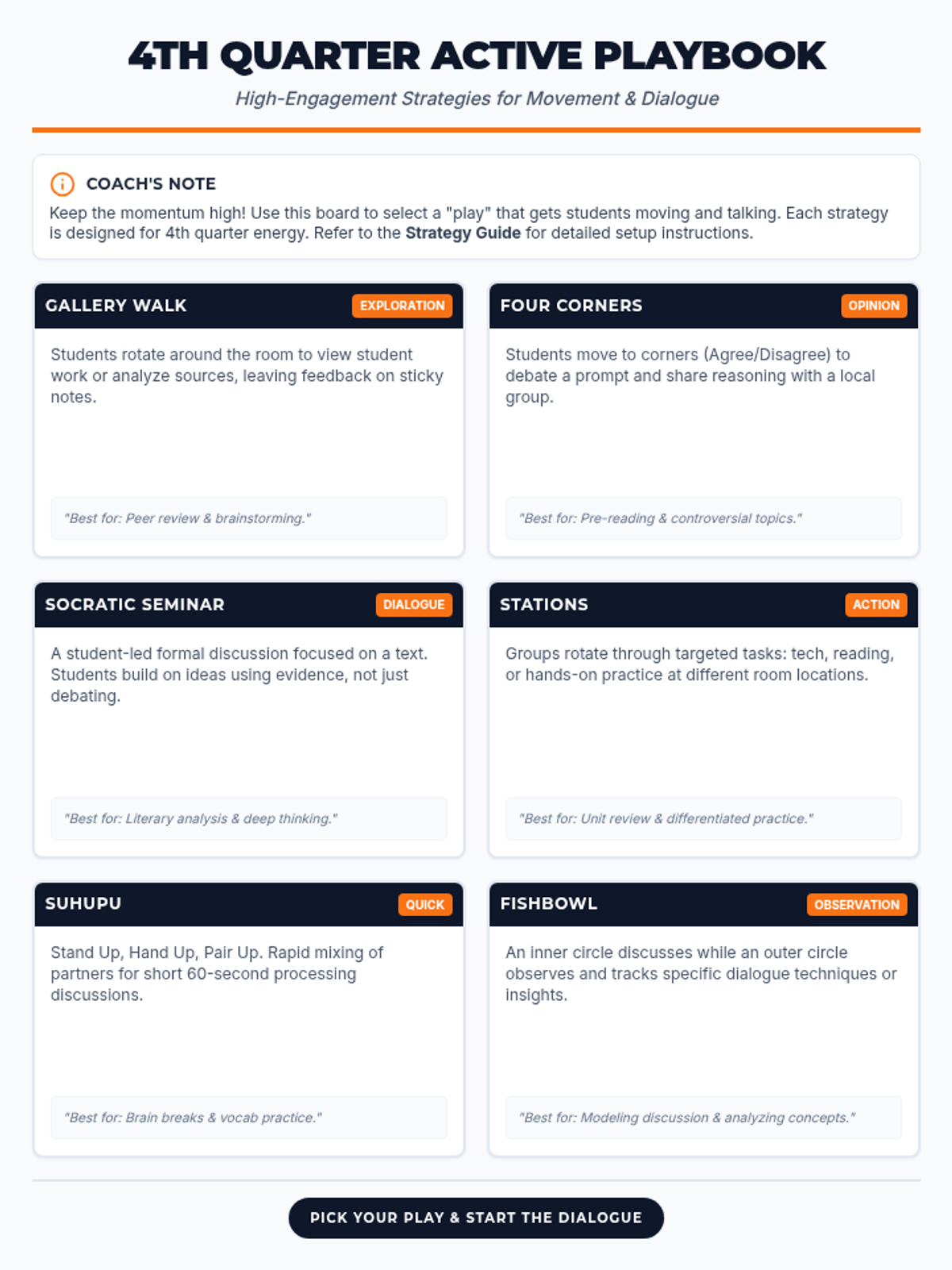
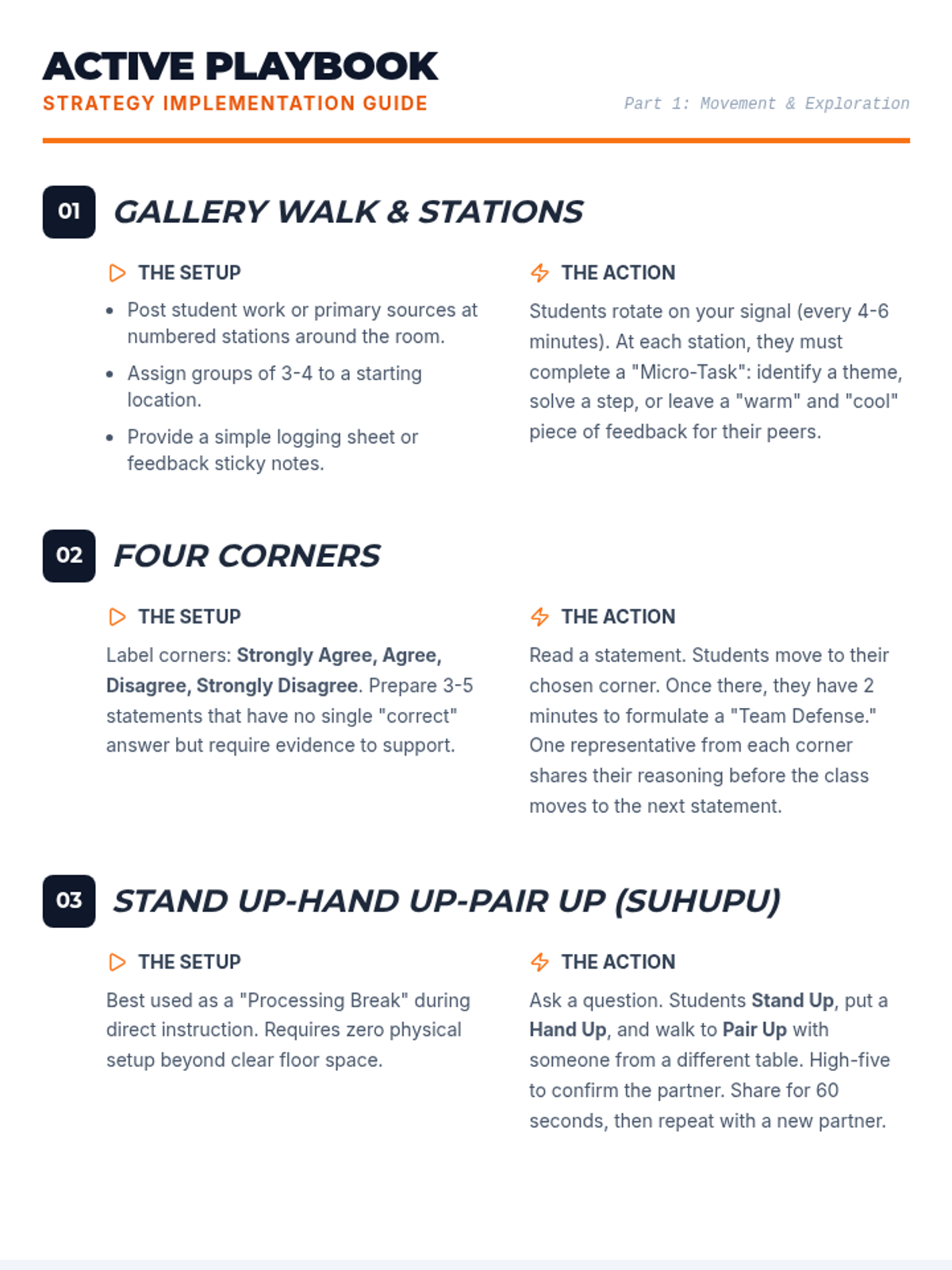
A comprehensive guide for teachers to implement movement-based and dialogue-driven instructional strategies to keep student engagement high during the 4th quarter.
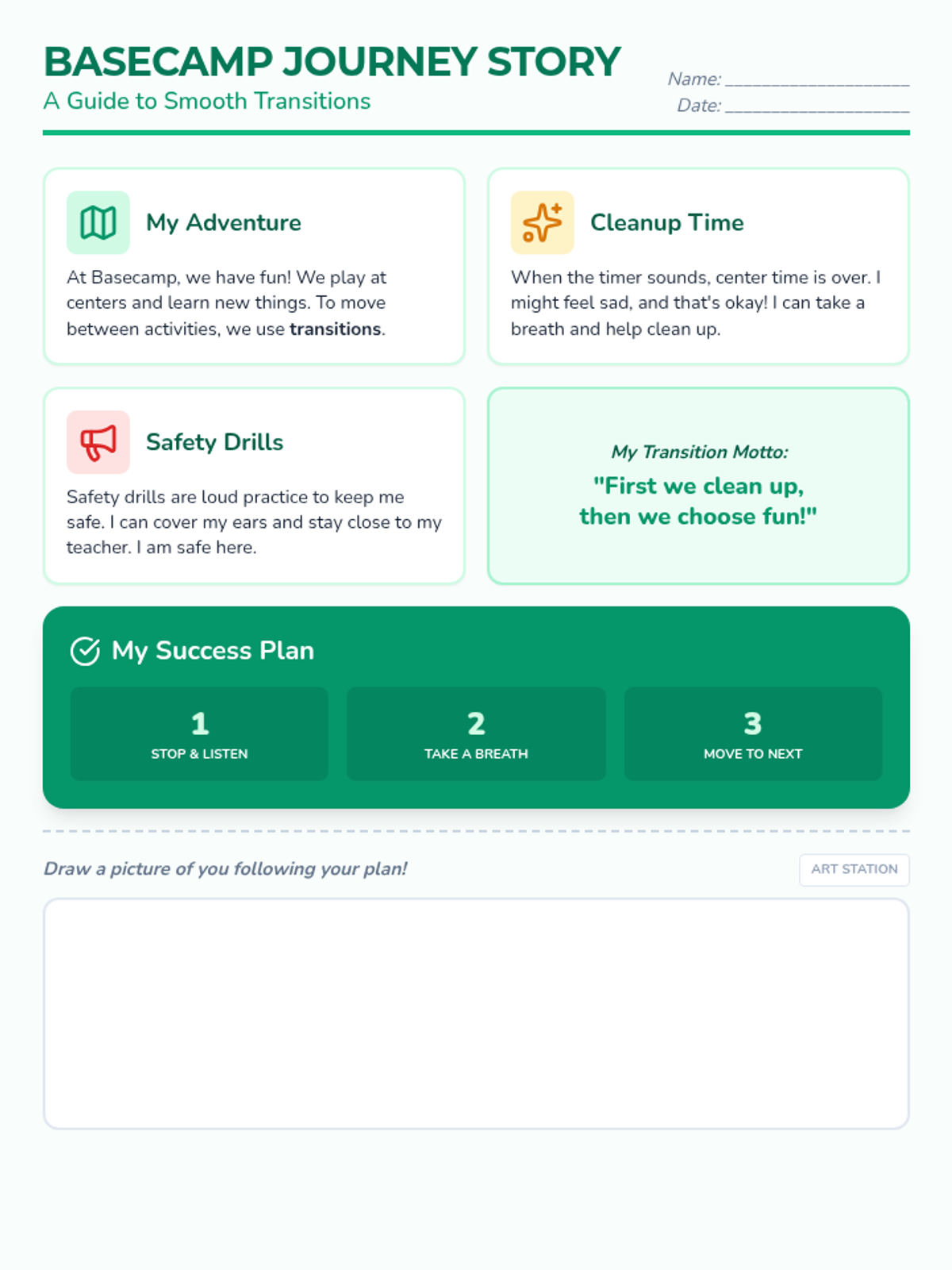
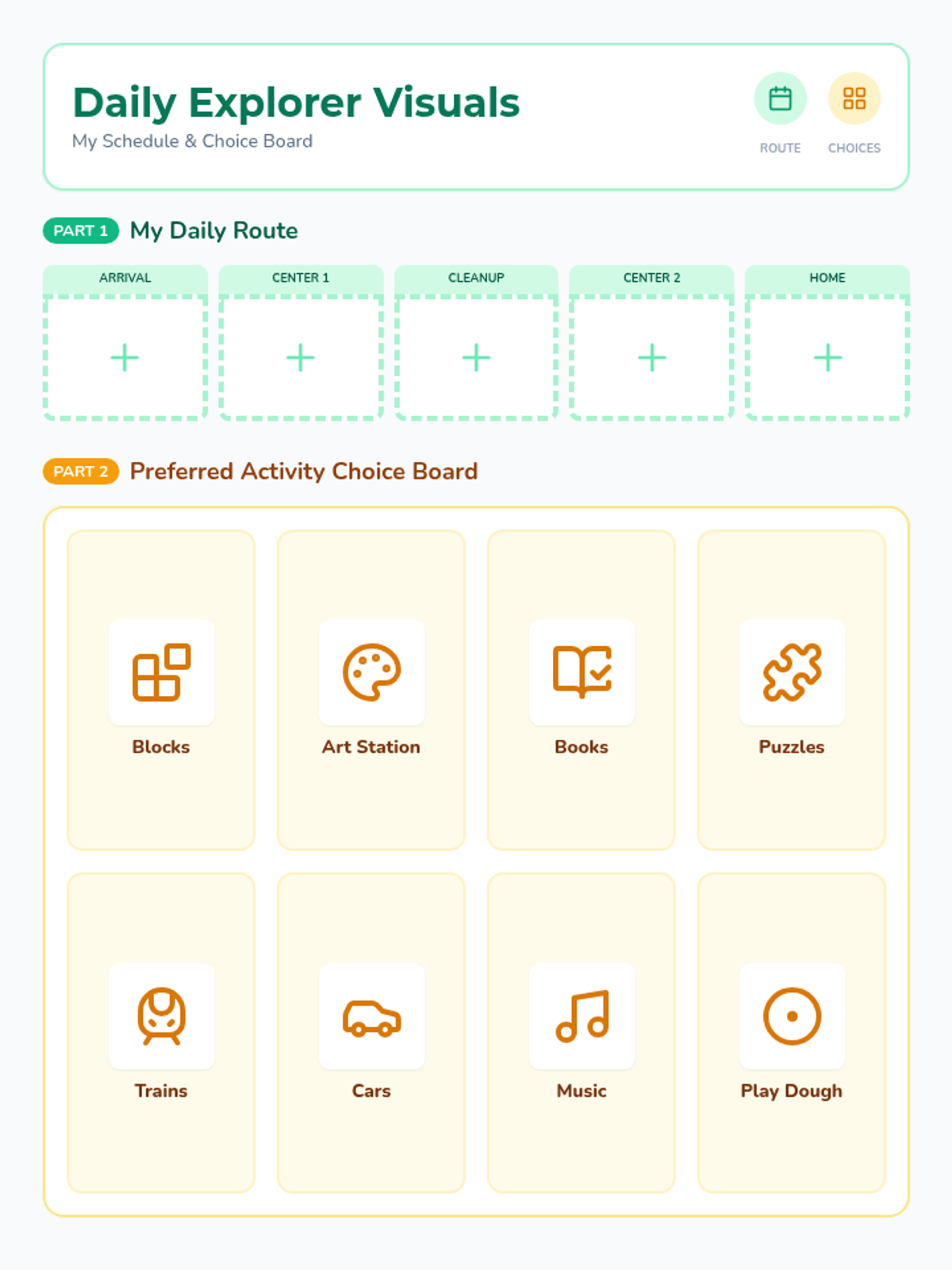
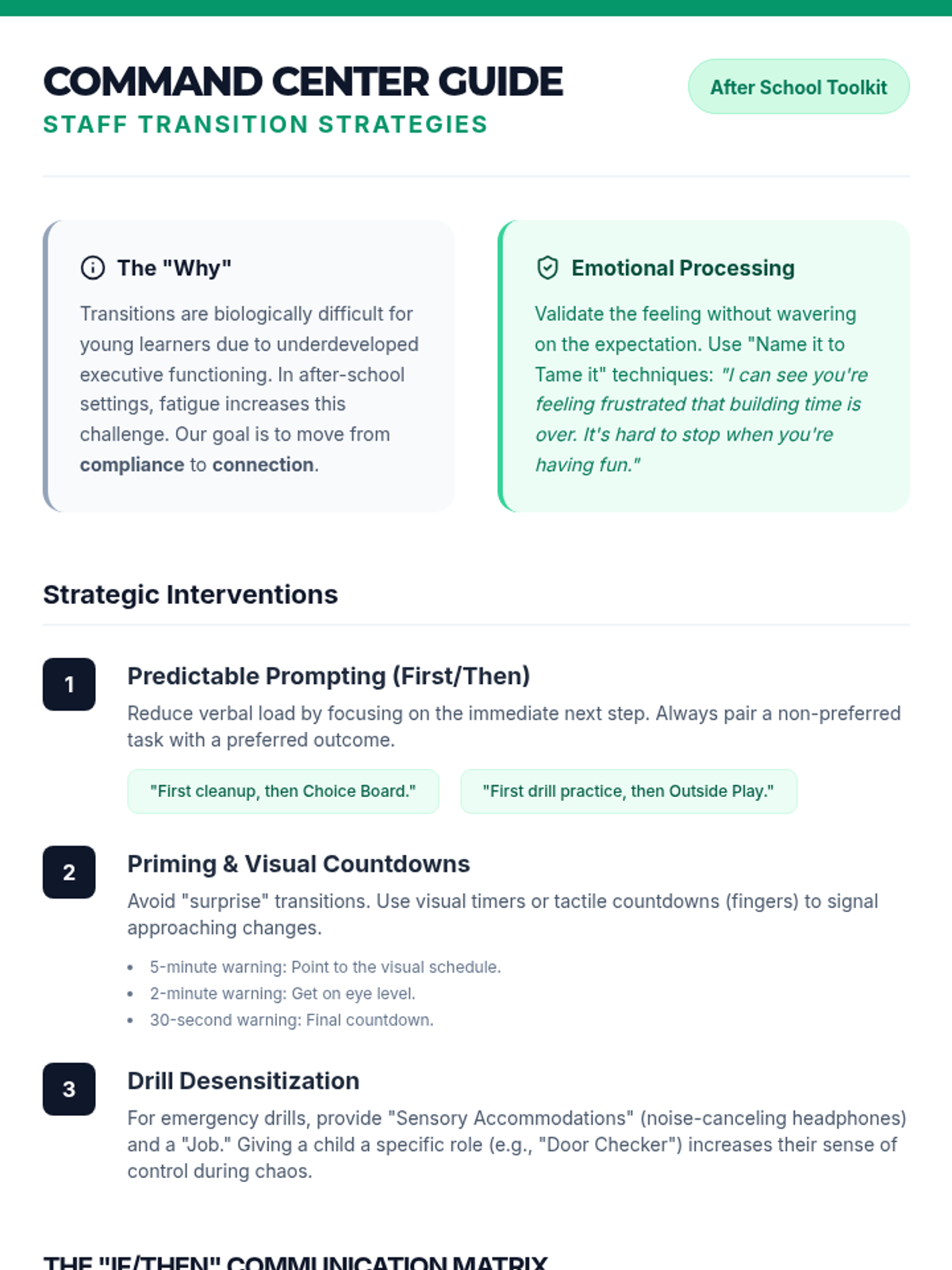
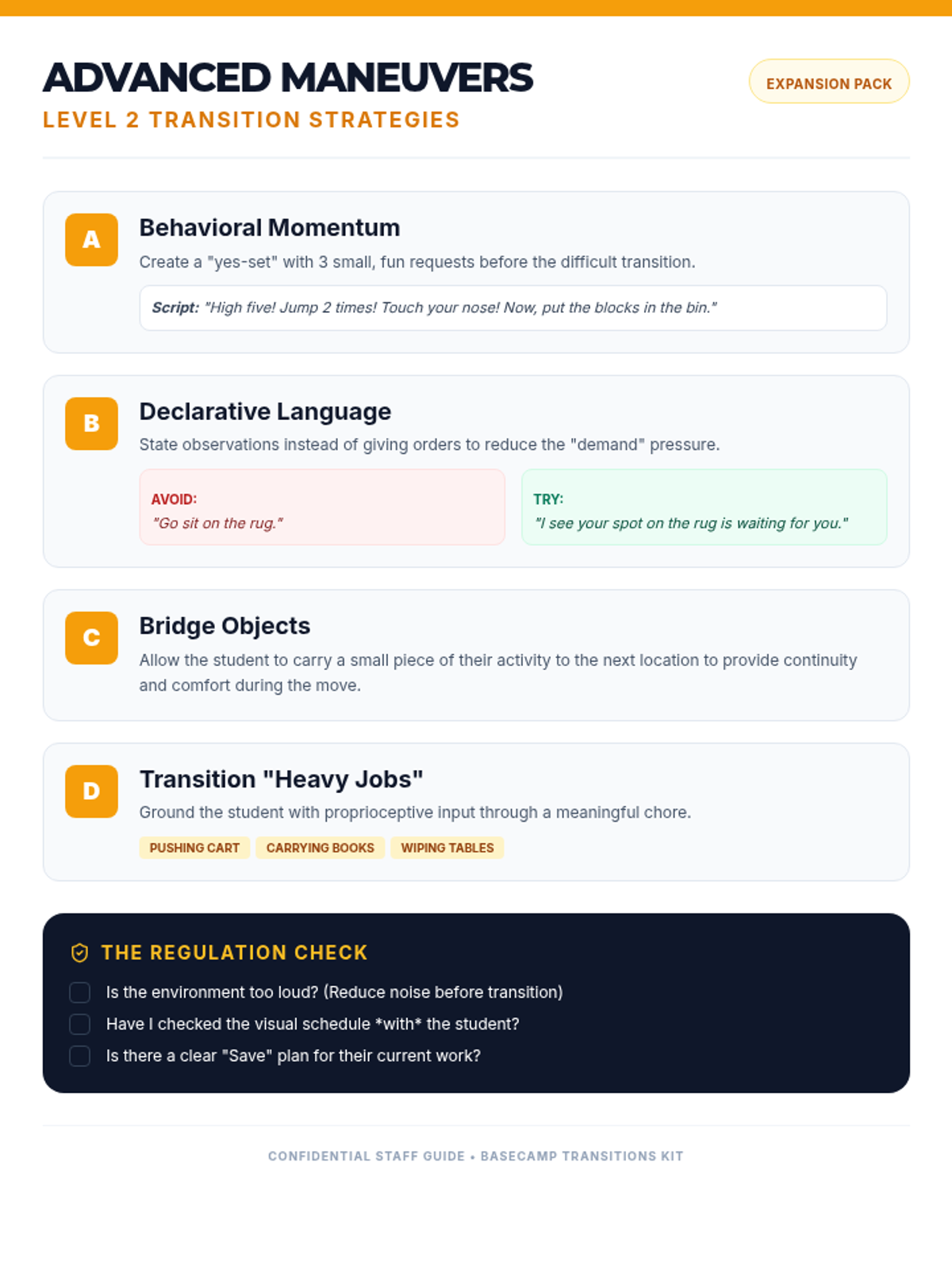
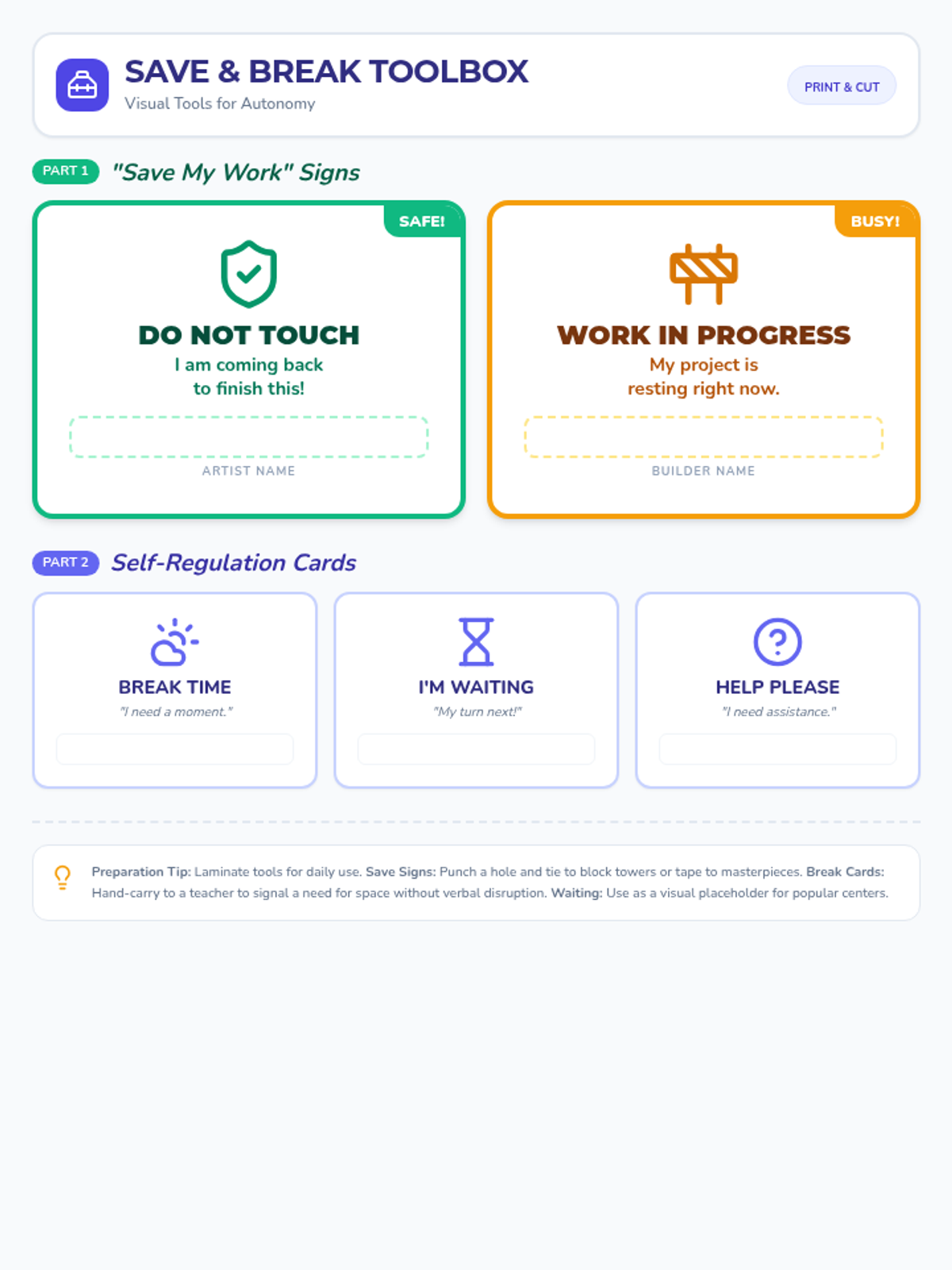
A comprehensive toolkit designed to help kindergarten students navigate transitions, manage activity changes, and process emotions in an after-school setting through visual supports and structured social narratives.
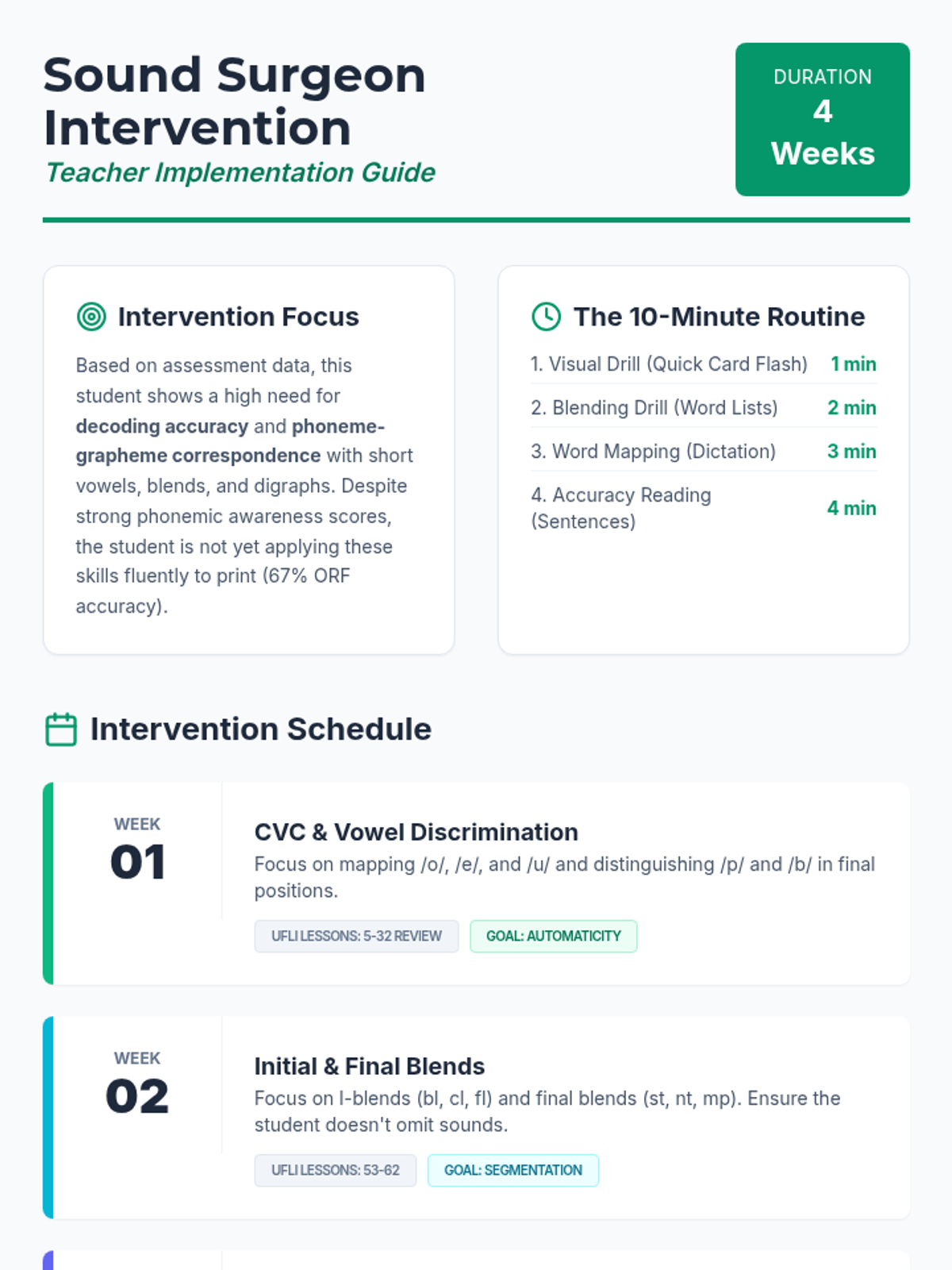
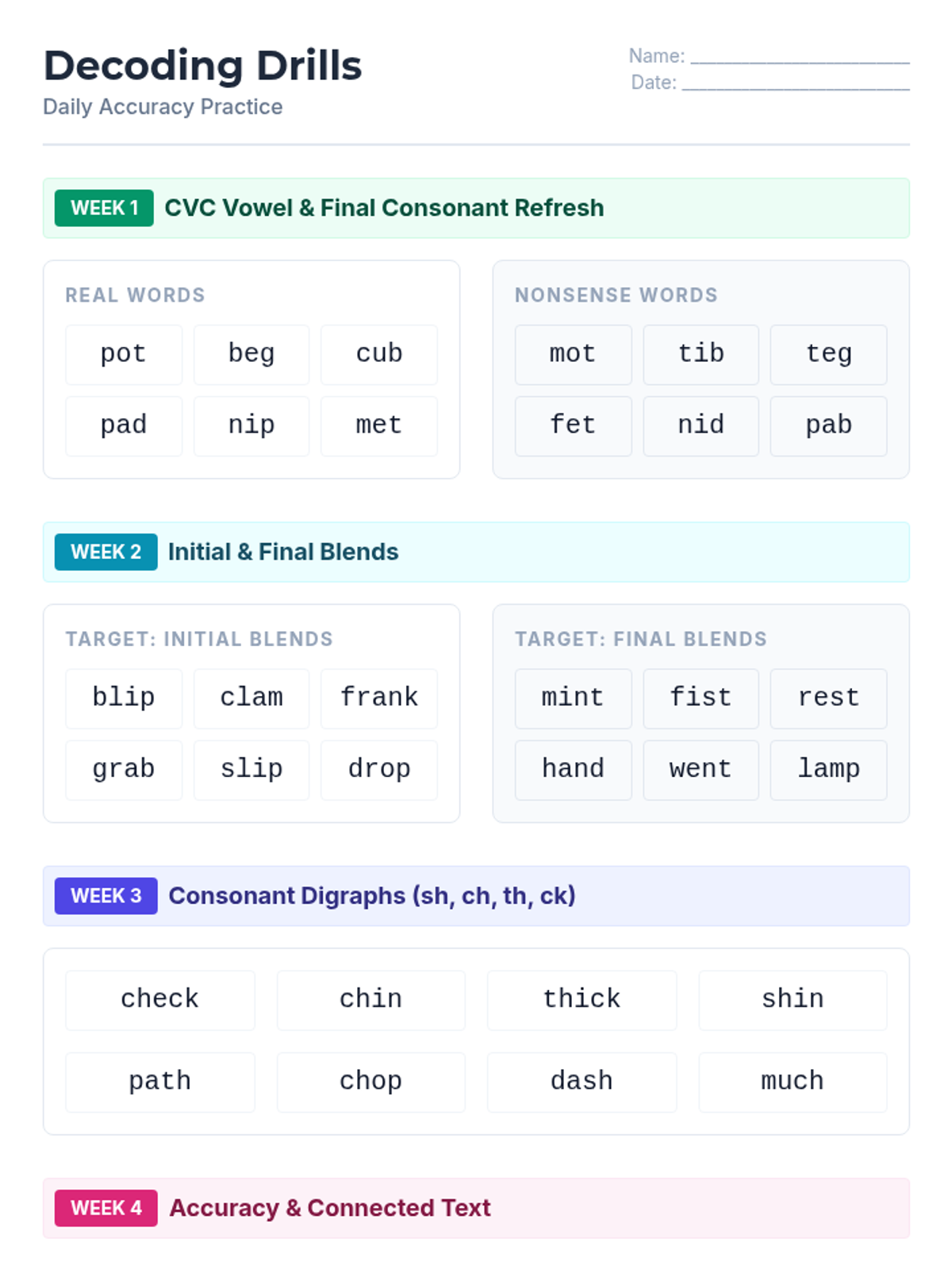
A 4-week phonics intervention designed for Grade 1 students needing intensive work on short vowels, blends, and digraphs based on DIBELS and decoding inventory data. The program follows a 10-minute daily routine aligned with Science of Reading and UFLI principles.
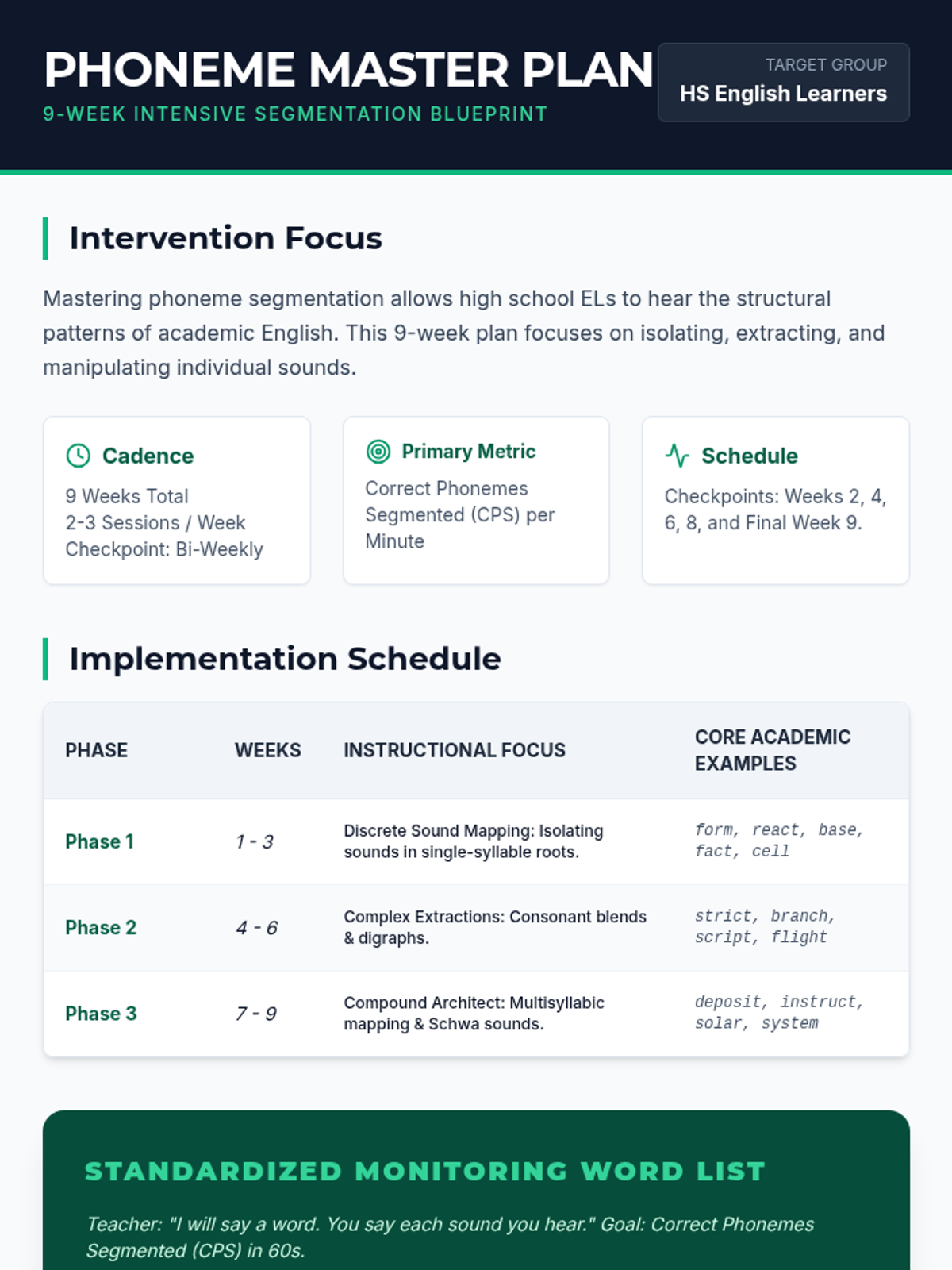
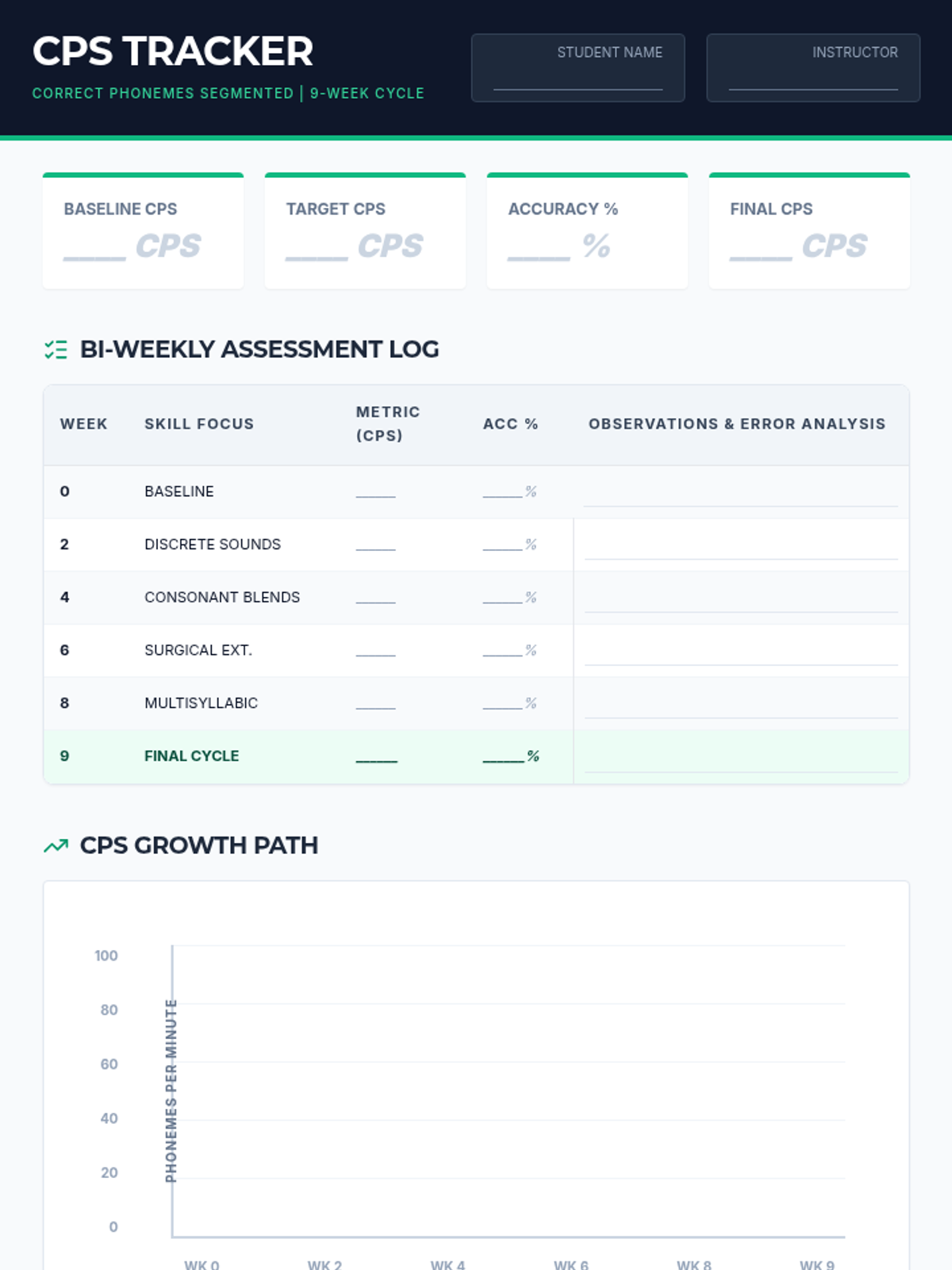
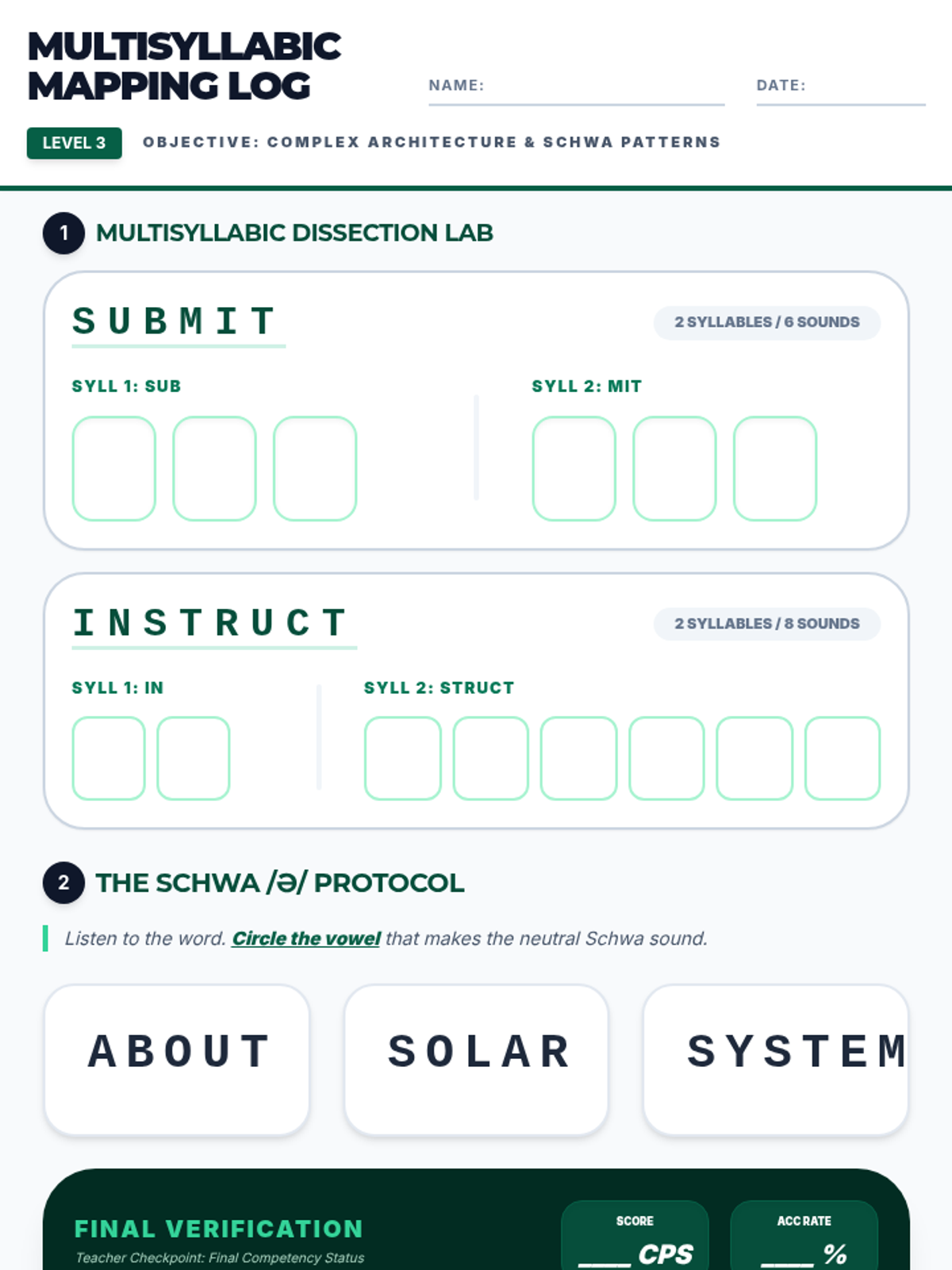
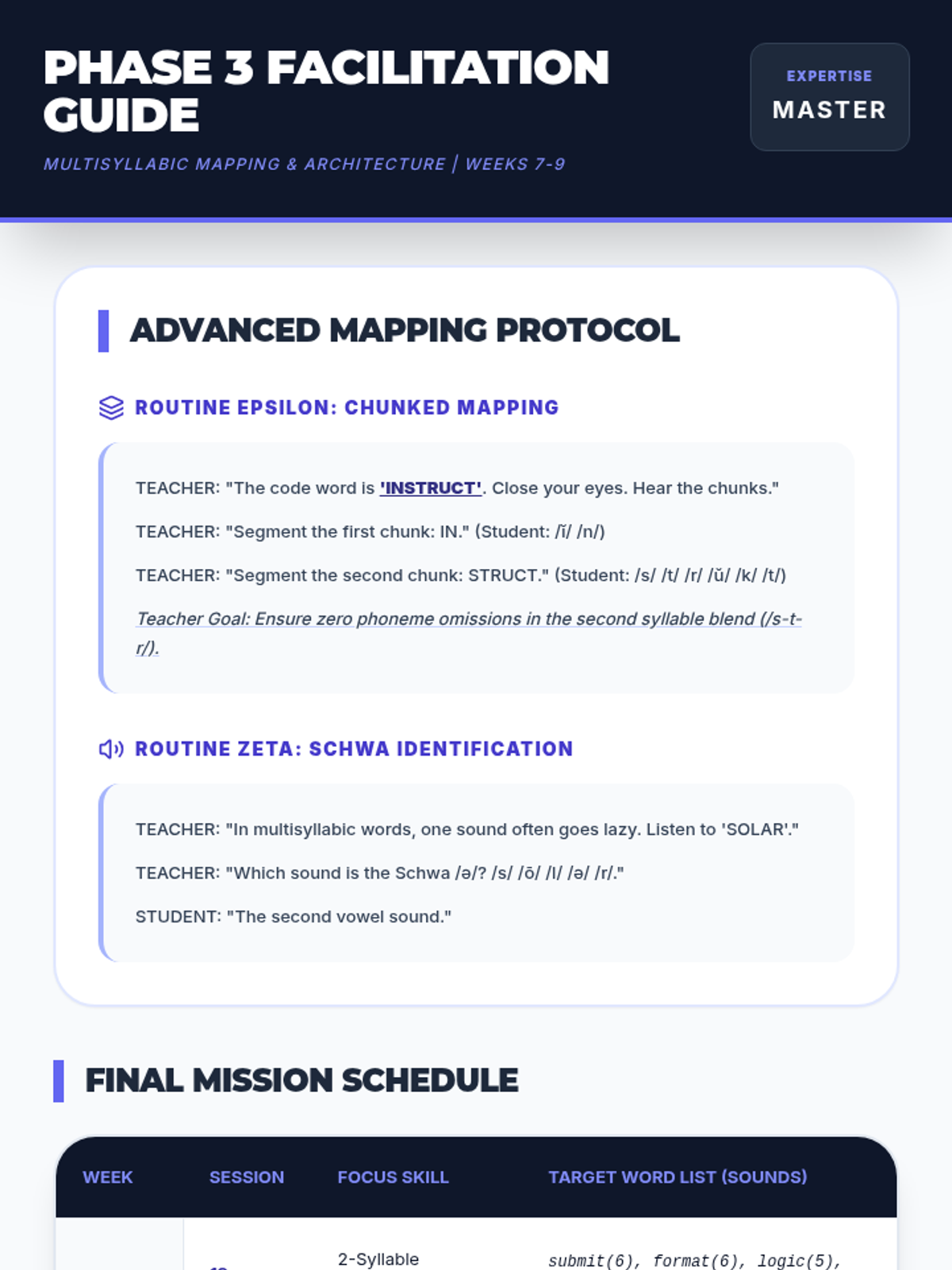
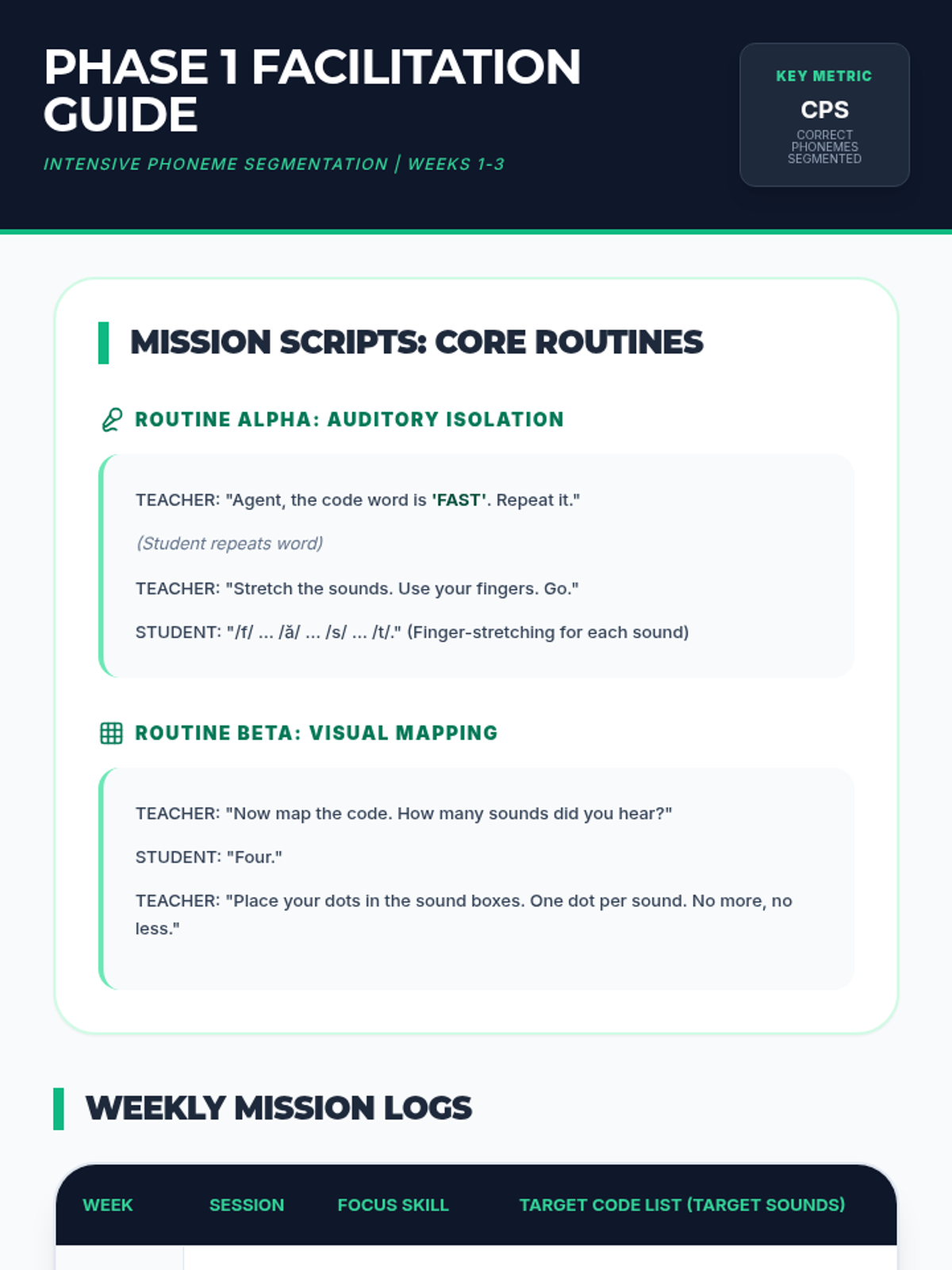
The master 9-week schedule and progress monitoring system for a pure phoneme segmentation intervention cycle.
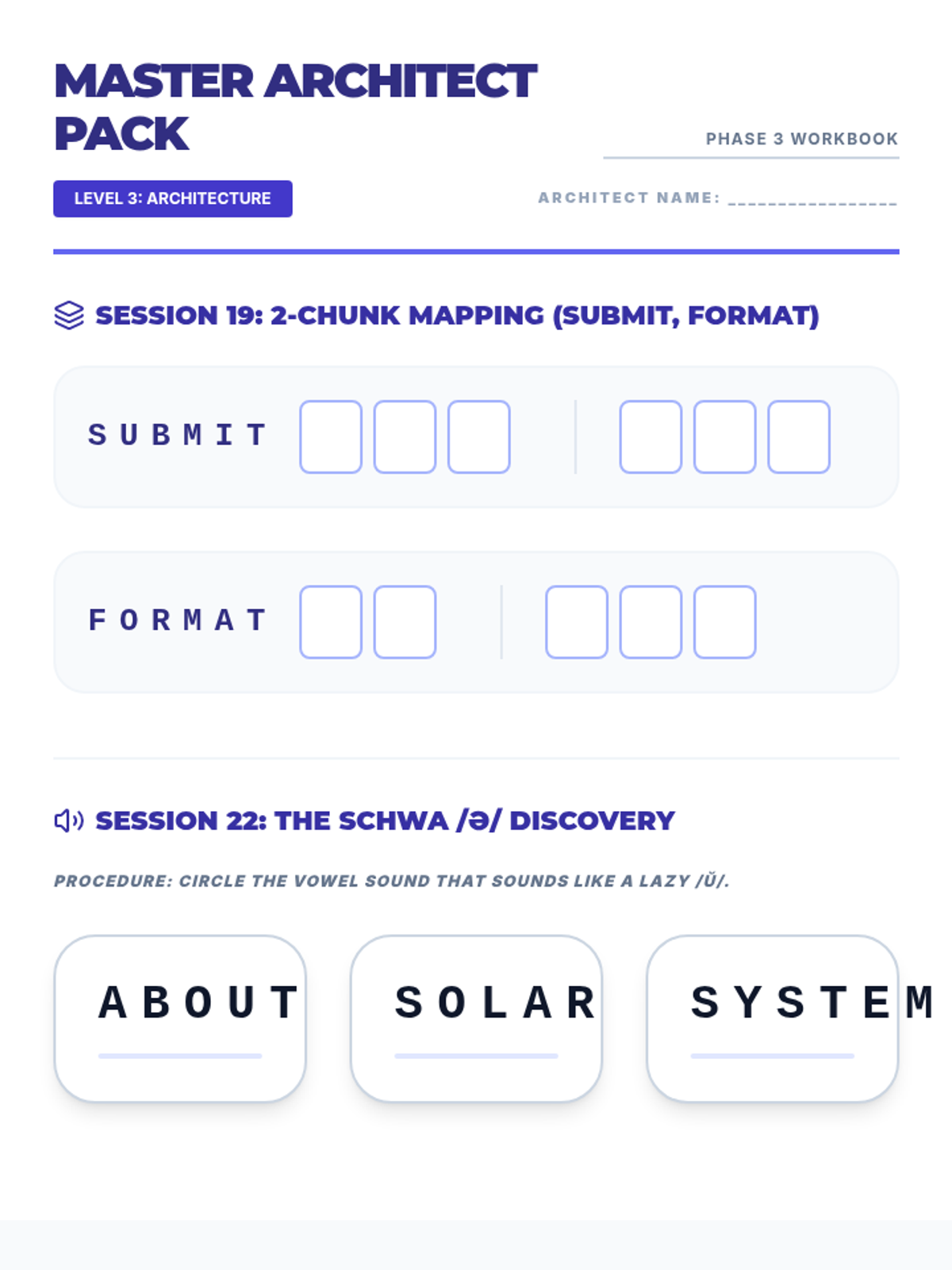
Applying segmentation skills to multisyllabic academic vocabulary, focusing on the relationship between sounds and syllables.
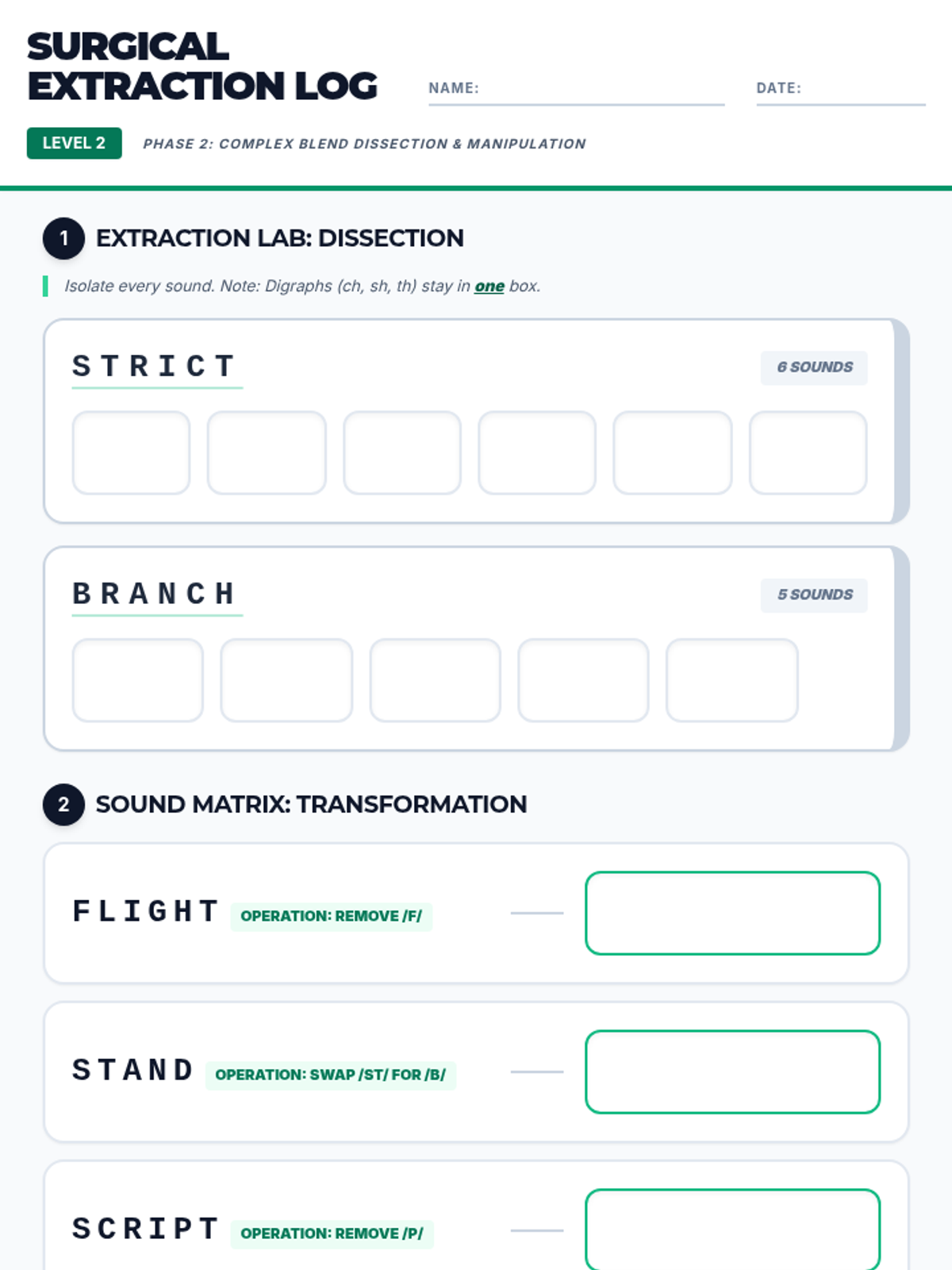
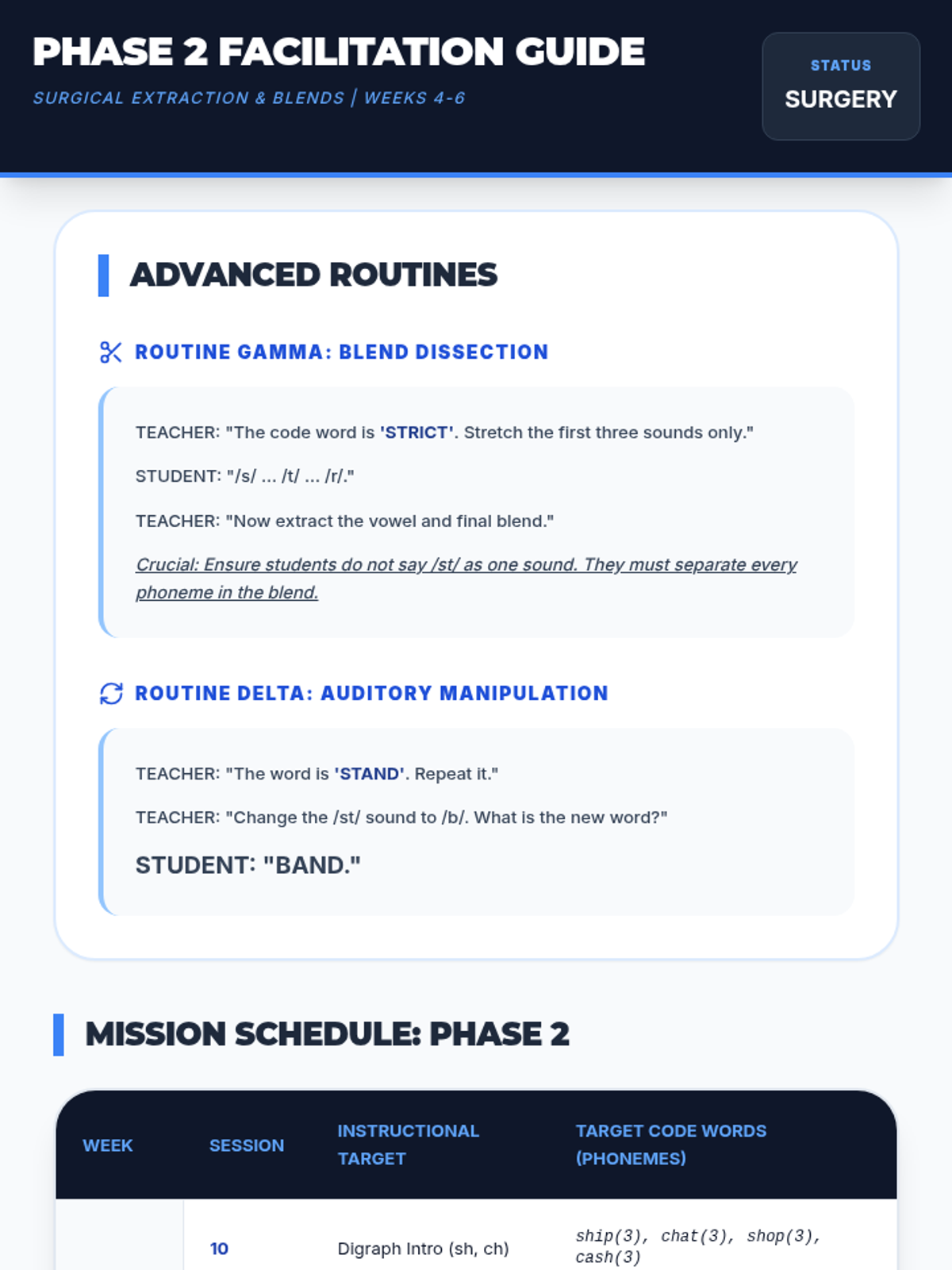
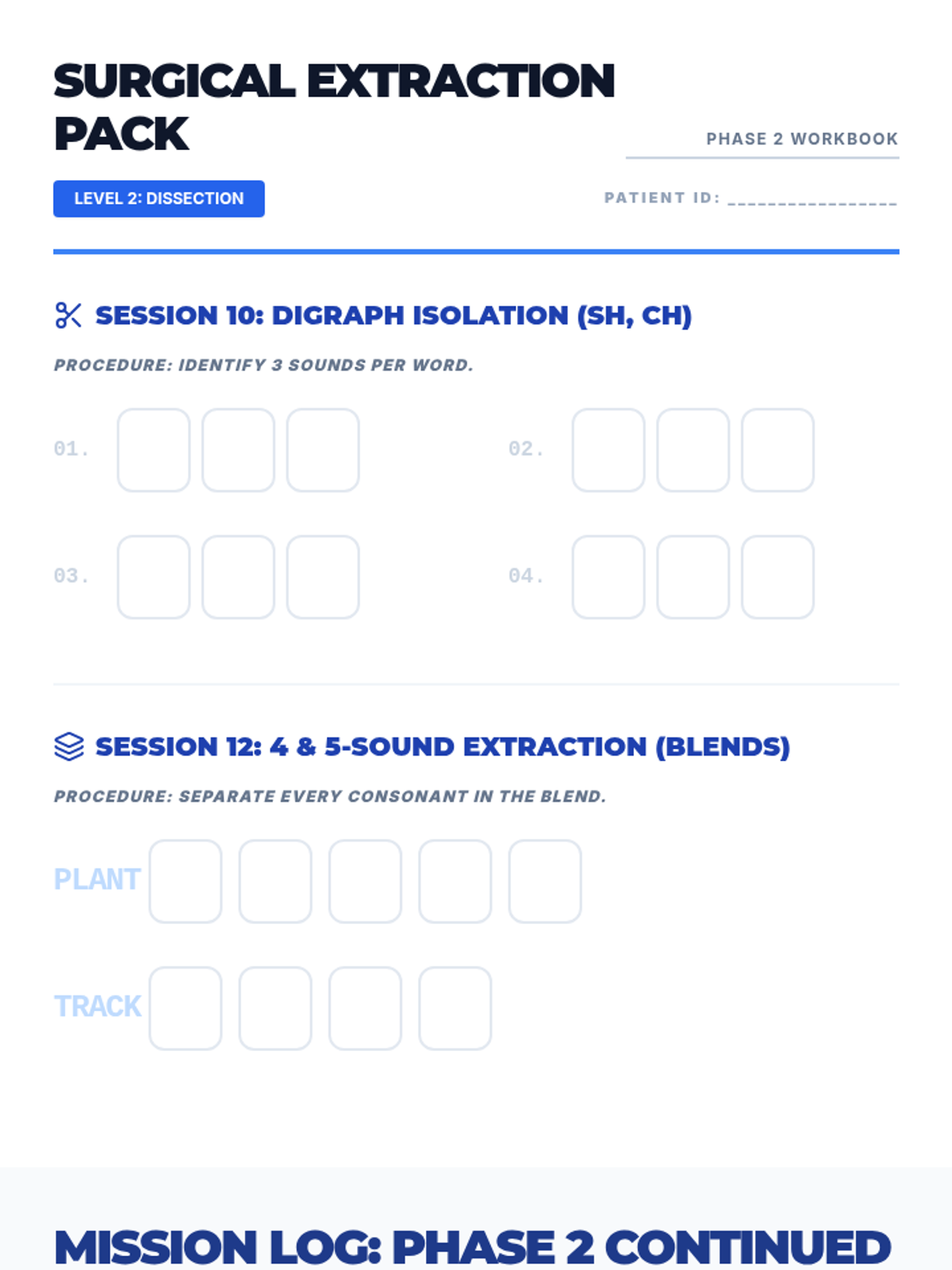
Advanced segmentation focusing on complex consonant blends, digraphs, and sound manipulation (addition, deletion, and substitution).
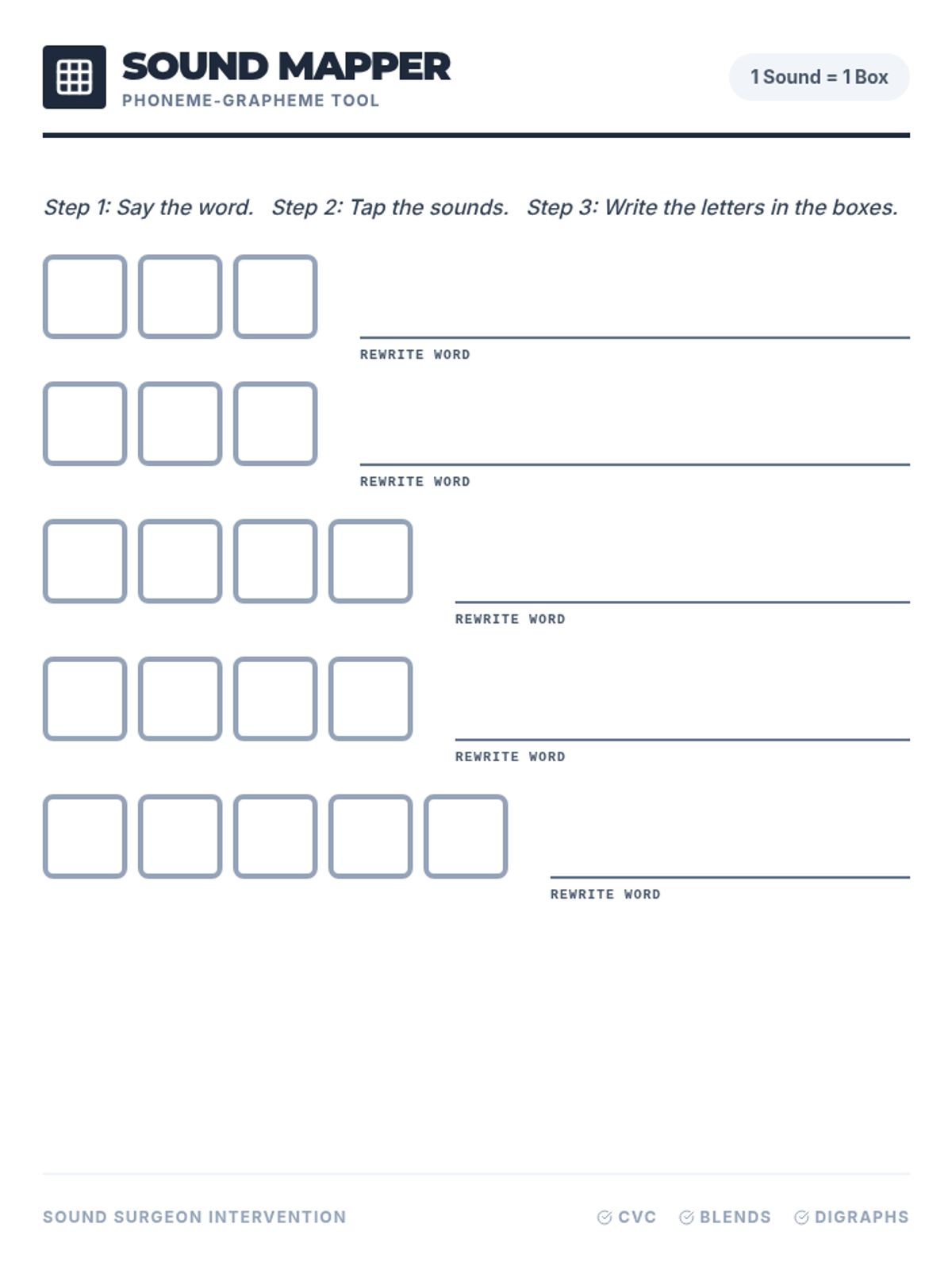
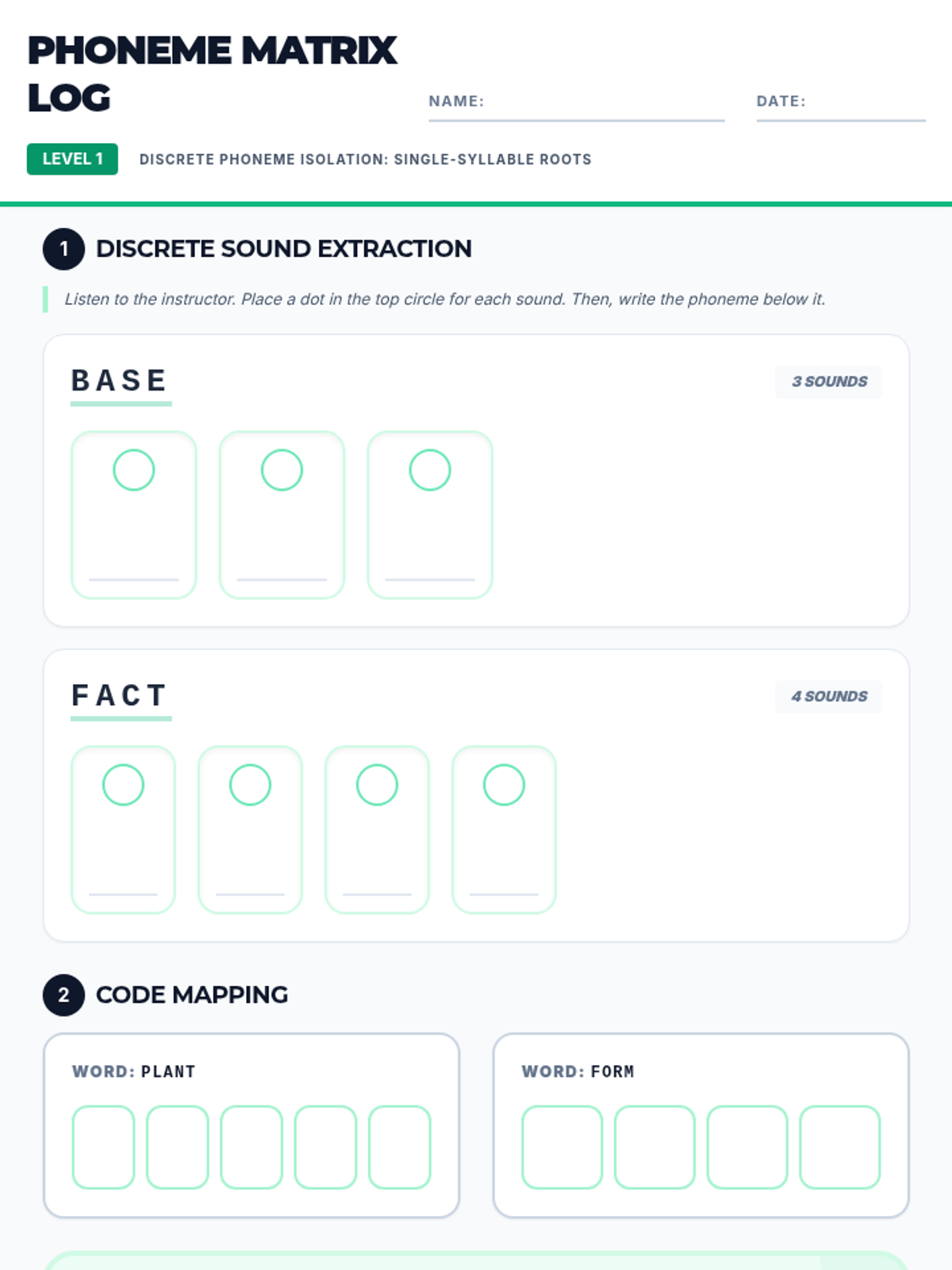
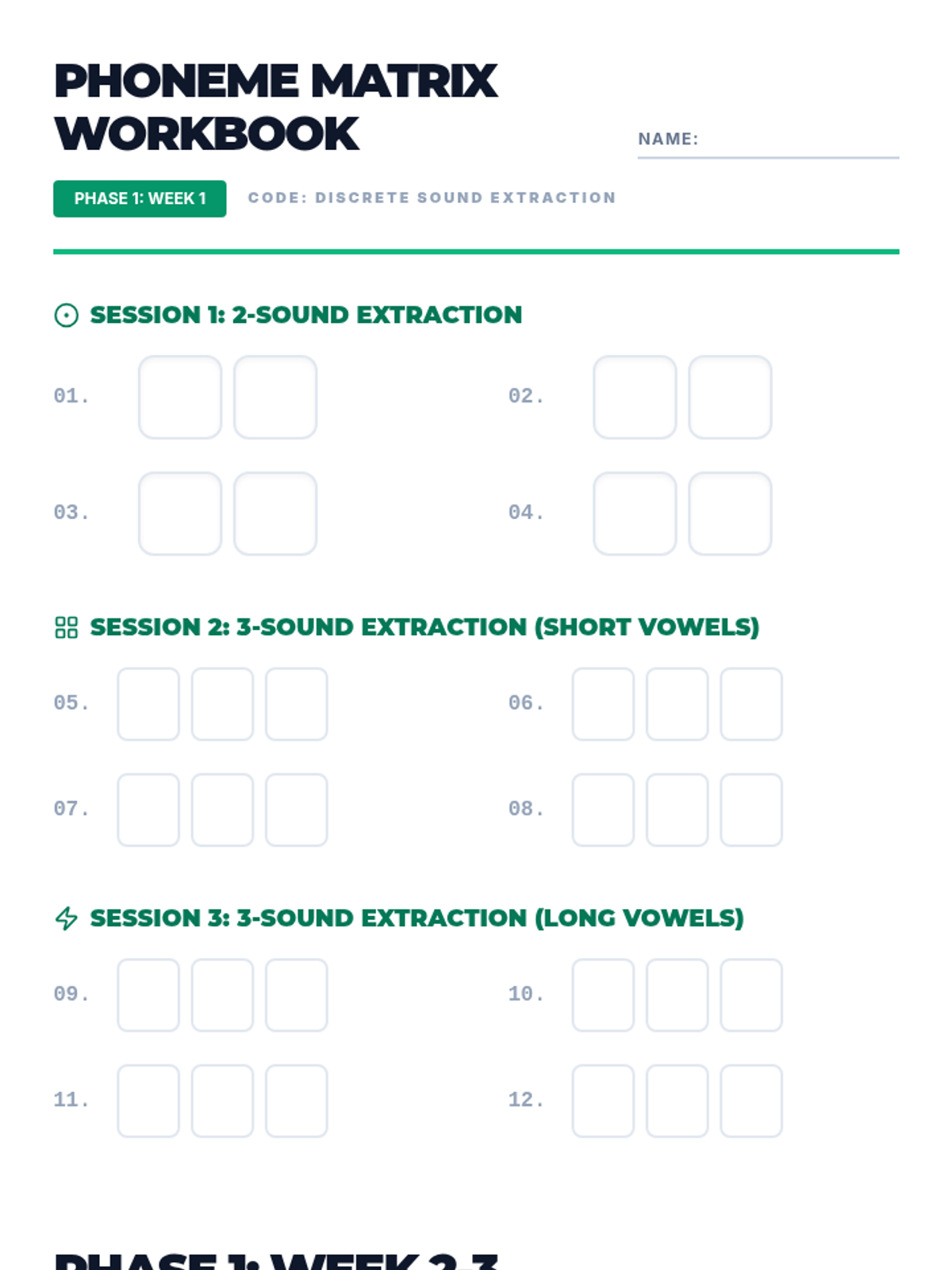
Foundational sound mapping focusing on individual phonemes in single-syllable academic roots and high-frequency technical words.
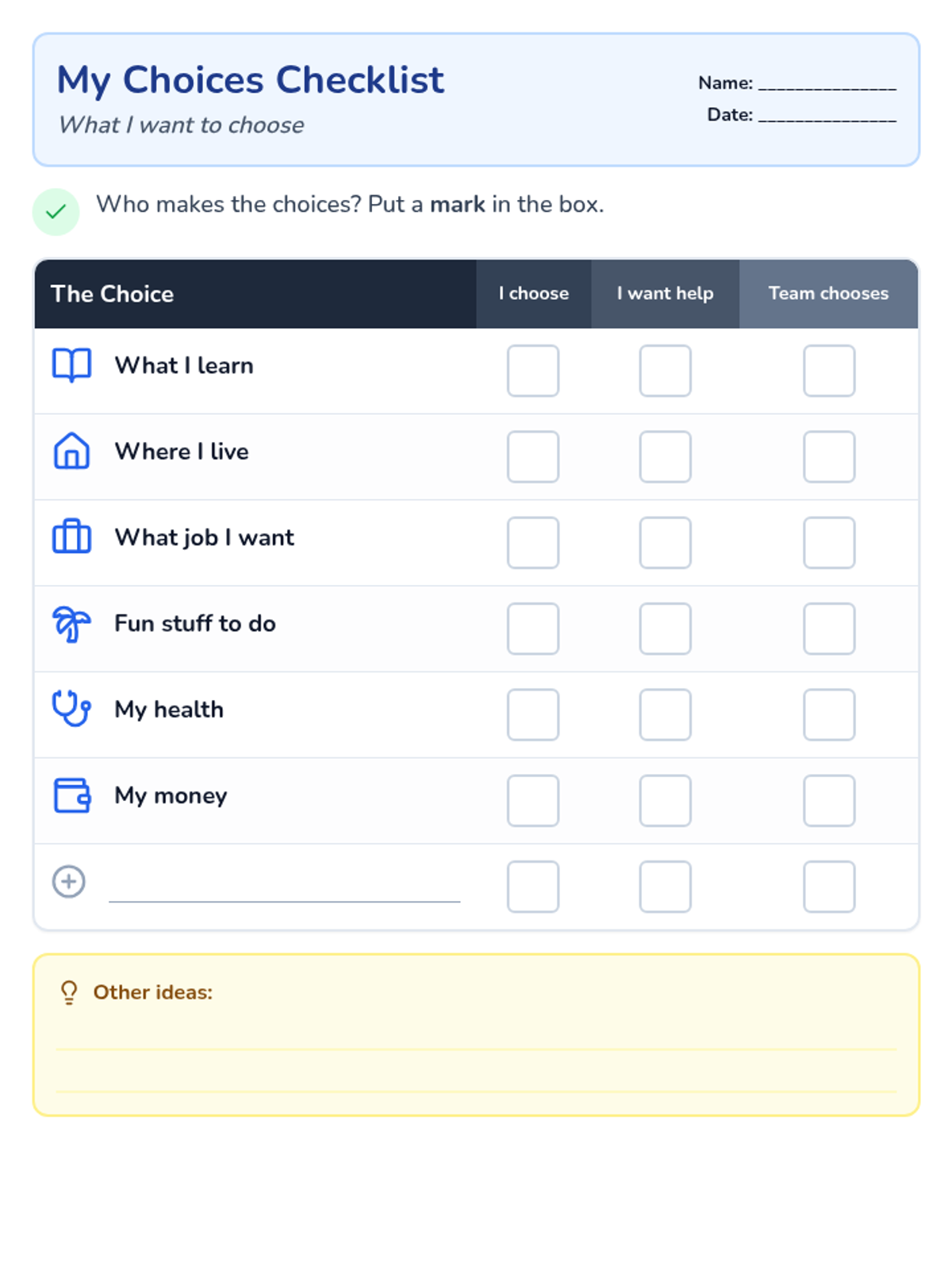
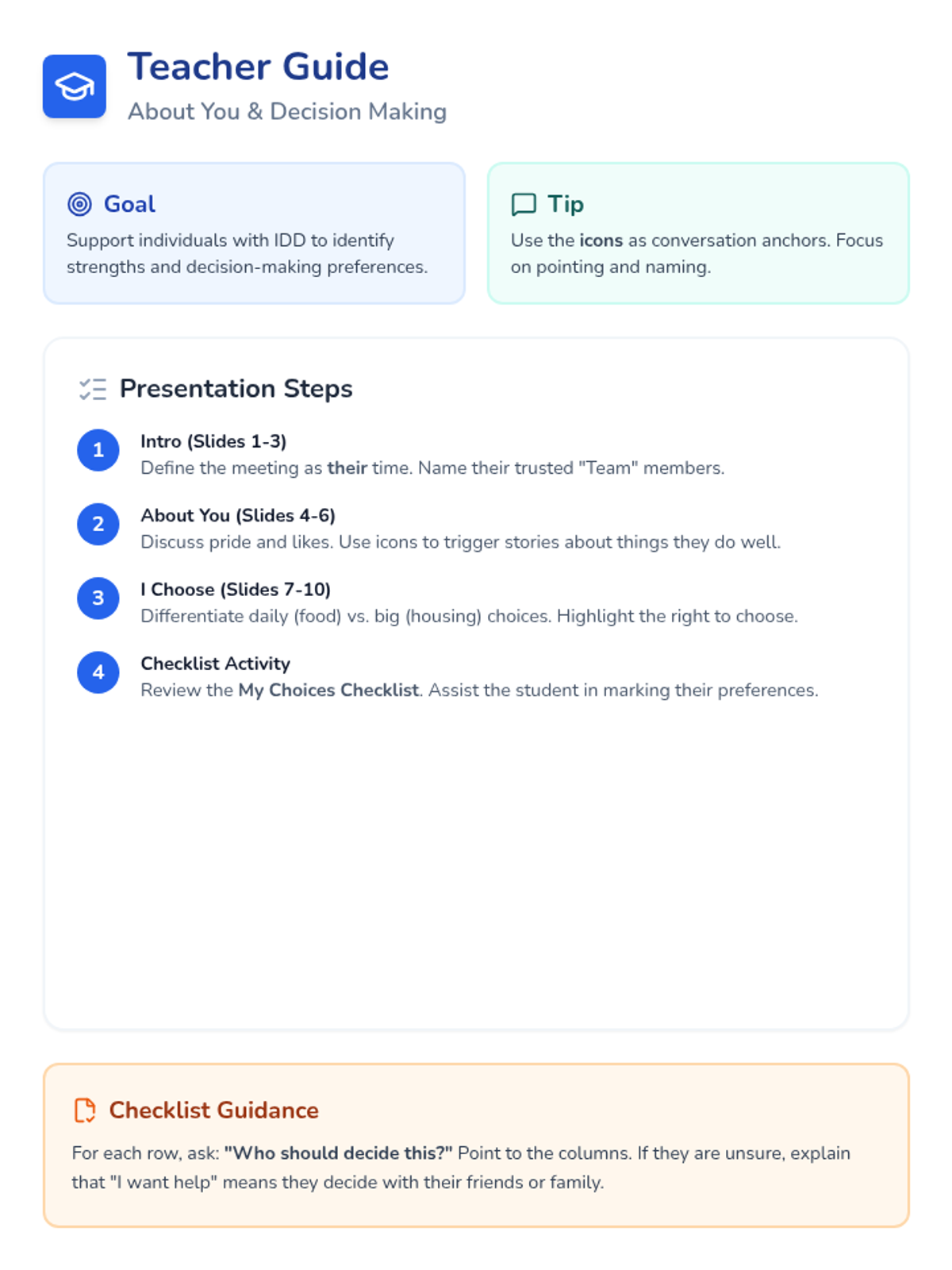
A simplified guide for individuals with intellectual and developmental disabilities to understand their Individual Program Plan (IPP) process, focusing on personal strengths and decision-making.