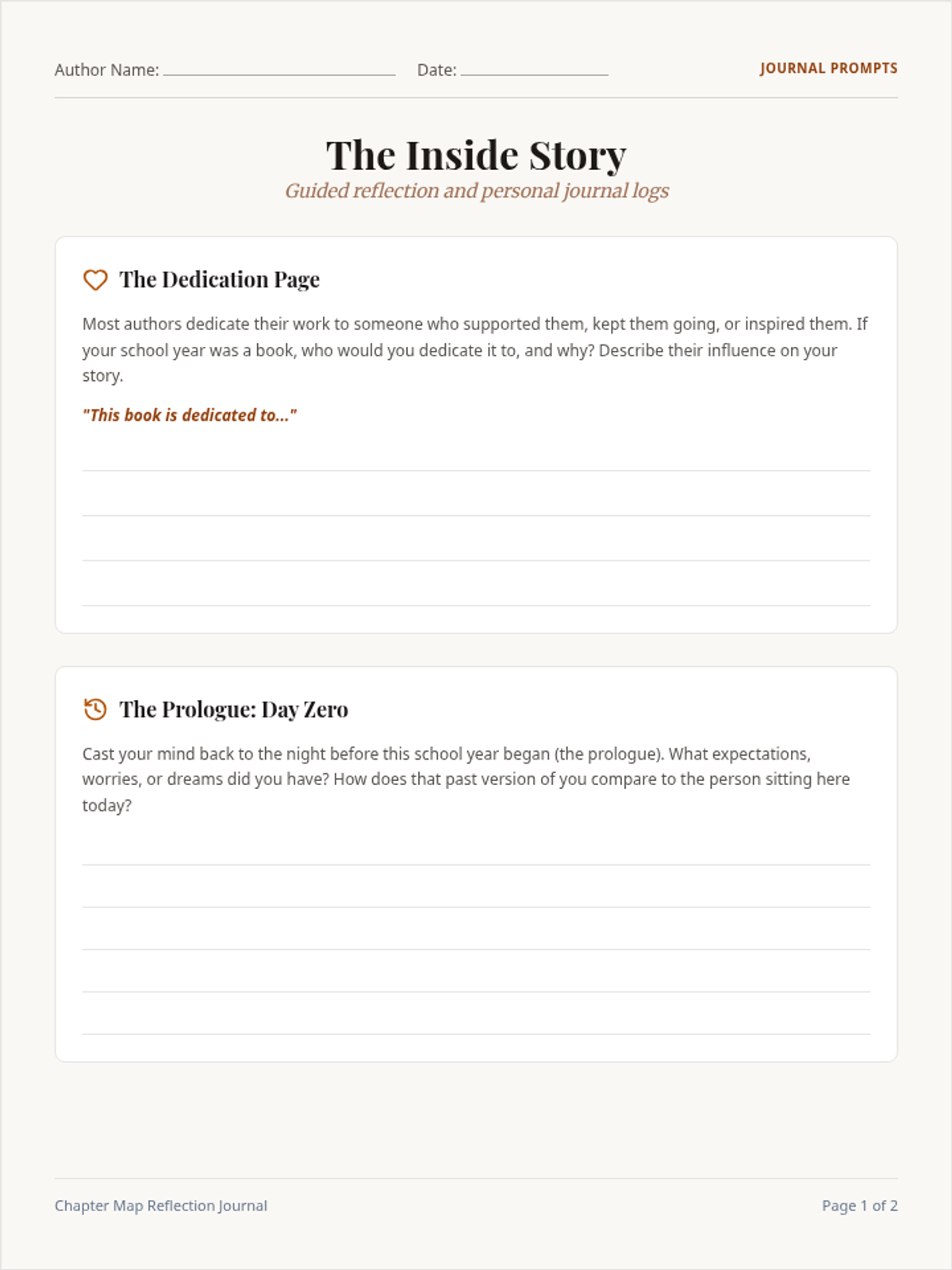
A 55-minute independent session where 11th graders analyze the anatomy of a strong recommendation letter and practice ACT-style reading comprehension on the topic of educational assessment.
This lesson focuses on the crucial distinction between intent (what we meant to do) and impact (the actual result of our actions or words). Students reflect on why impact often matters more in repairing harm and how to navigate these moments with accountability.
A CBT-based lesson designed for teenagers to understand the connection between anxiety and anger, identify triggers, and practice self-regulation techniques.
This lesson explores the origins and impacts of urban stereotypes, specifically focusing on the harmful "violent" and "drug-seeking" narratives often applied to marginalized communities. Students will analyze media bias and reflect on the real-world consequences of these single-perspective stories.
A comprehensive guide to the home buying process, covering financial preparation, mortgage types, home inspections, and the legal closing process. Students will learn how to navigate the complex journey of purchasing their first home with confidence and financial savvy.
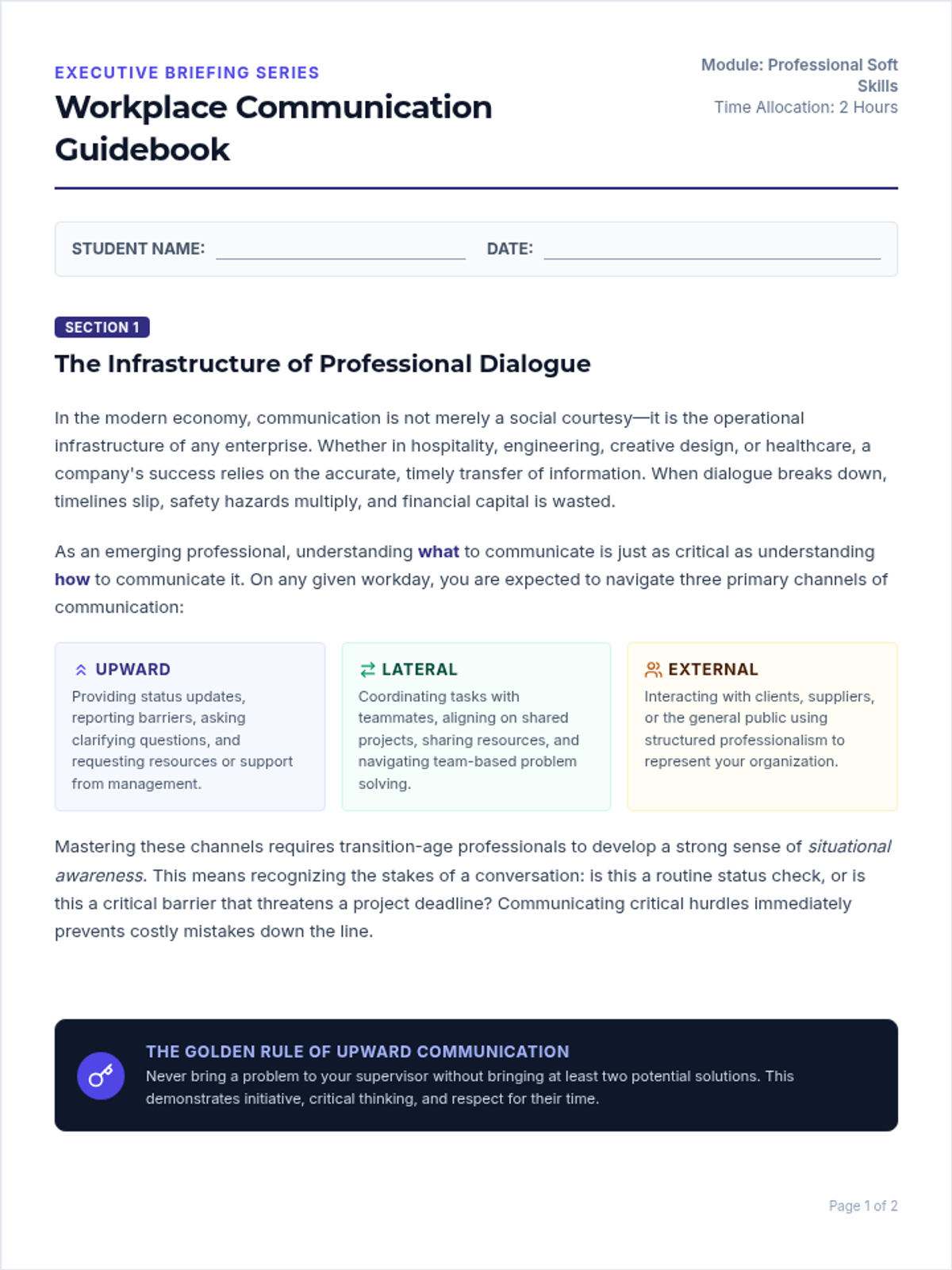
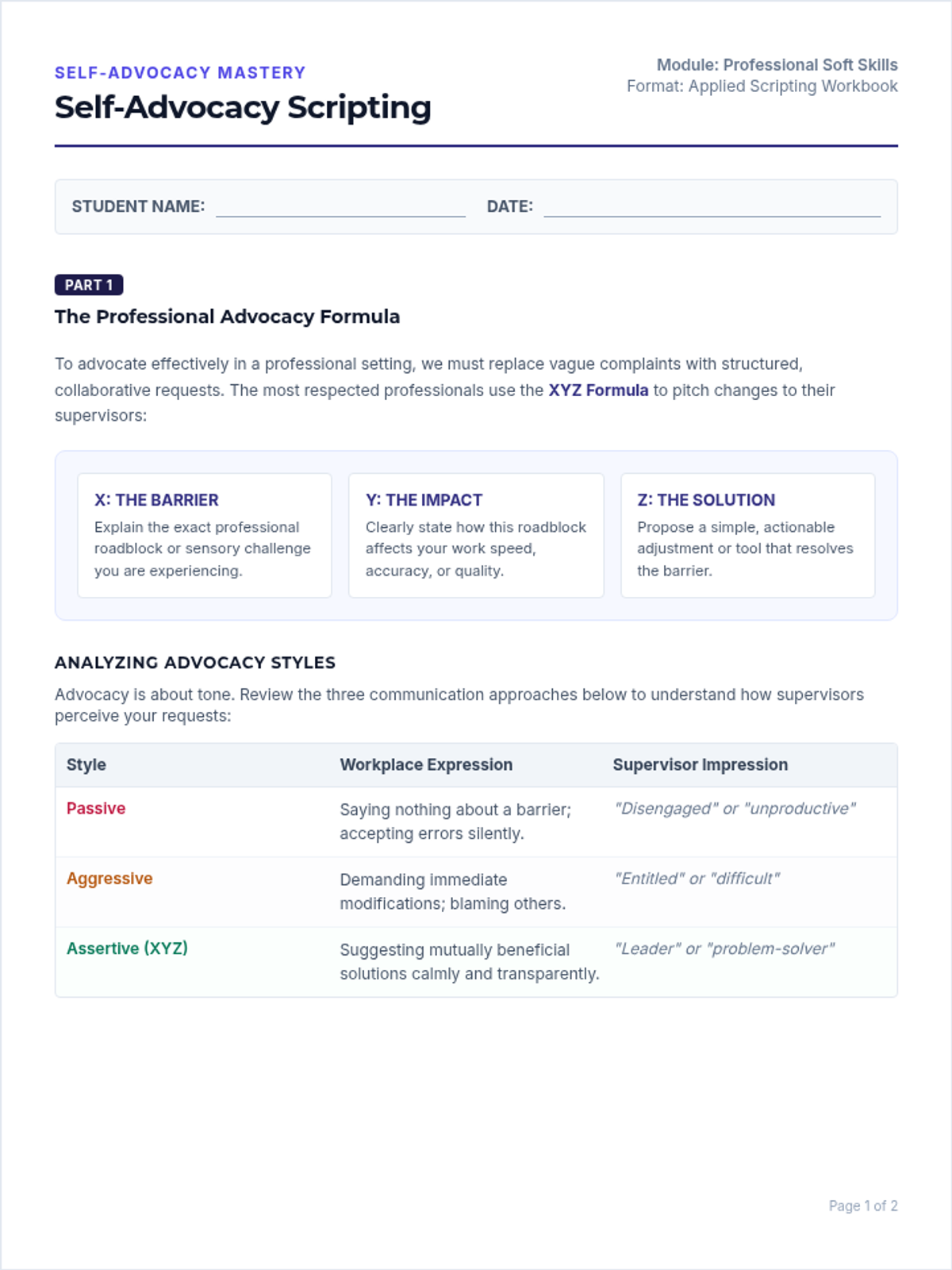
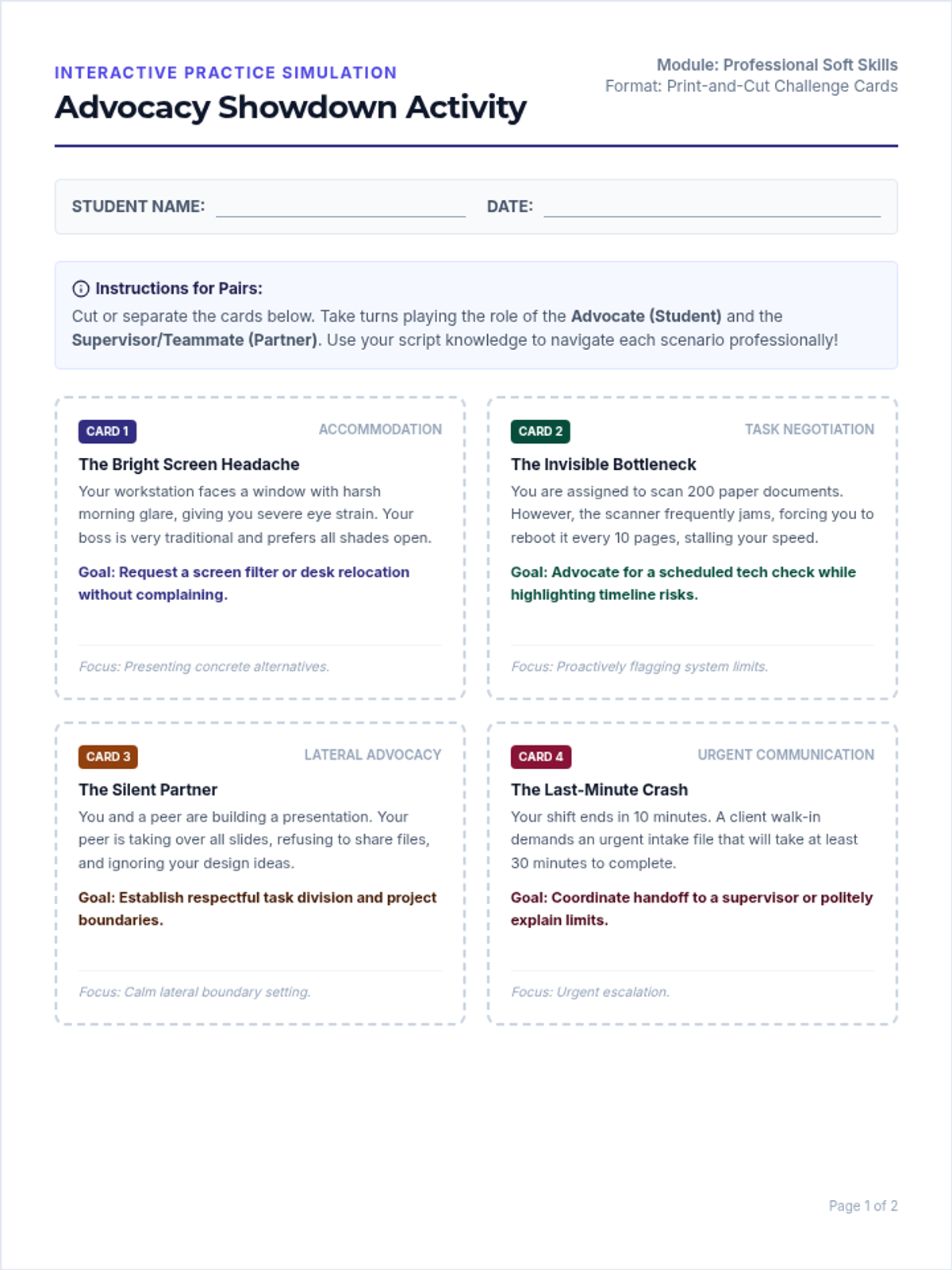
This lesson teaches an anxious 15-year-old girl how to differentiate between communication styles, challenge her fears of being 'dramatic' or 'hurting others', and develop practical scripts for handling her parents, friends, and teachers using CBT principles.
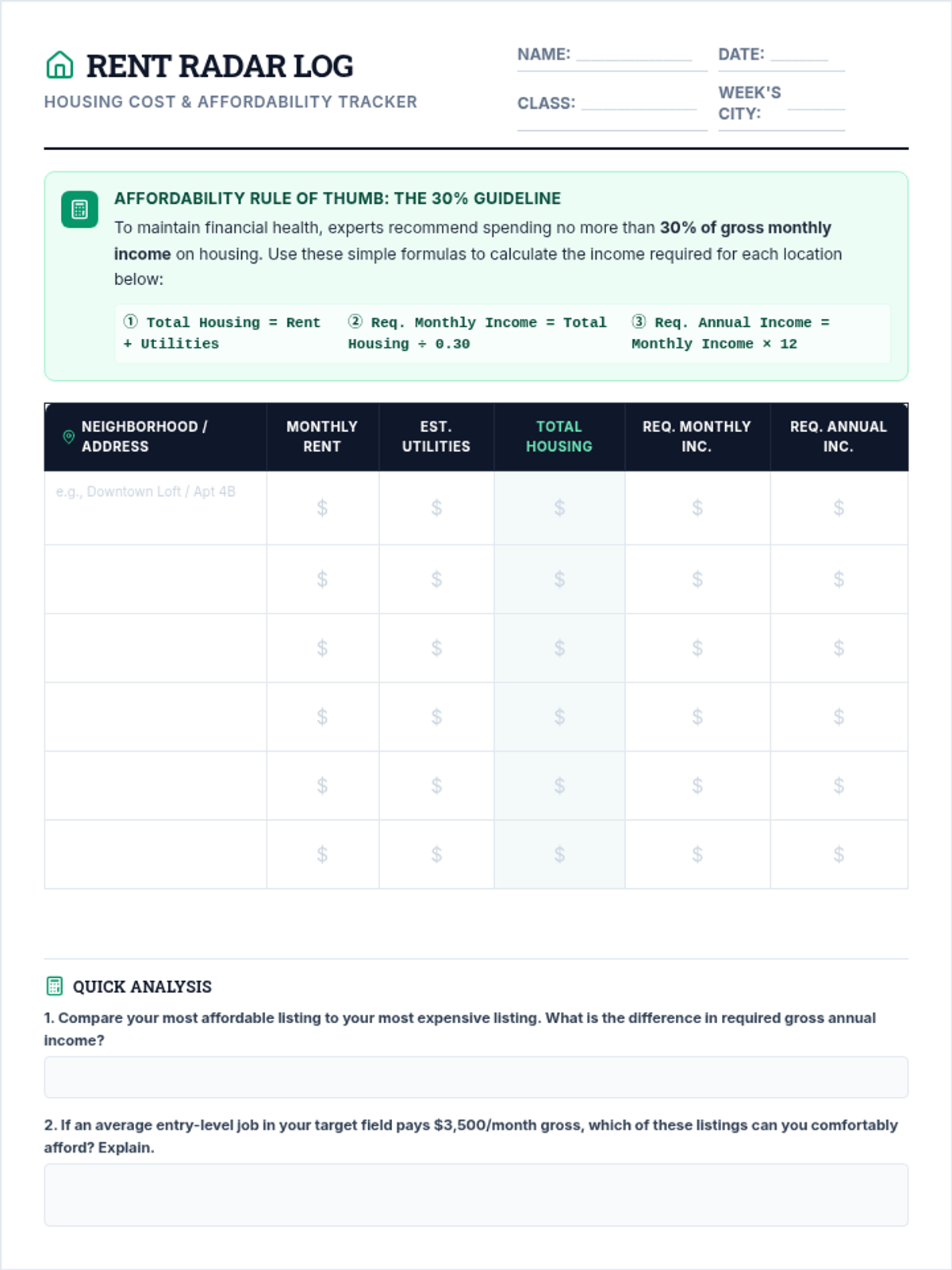
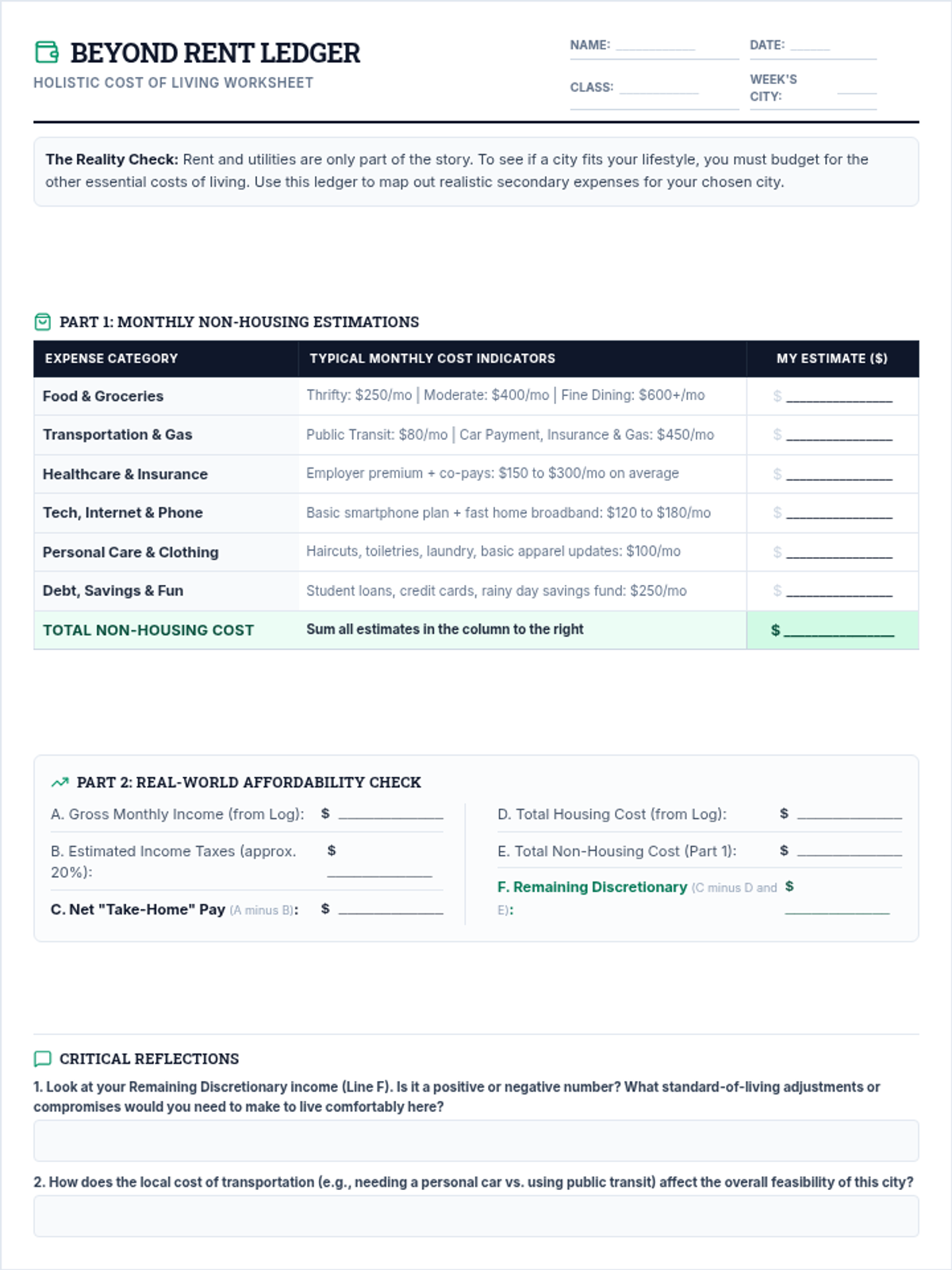
Analyzing how location affects the value of money by comparing cost-of-living data between Denver, Colorado, and Los Angeles, California.
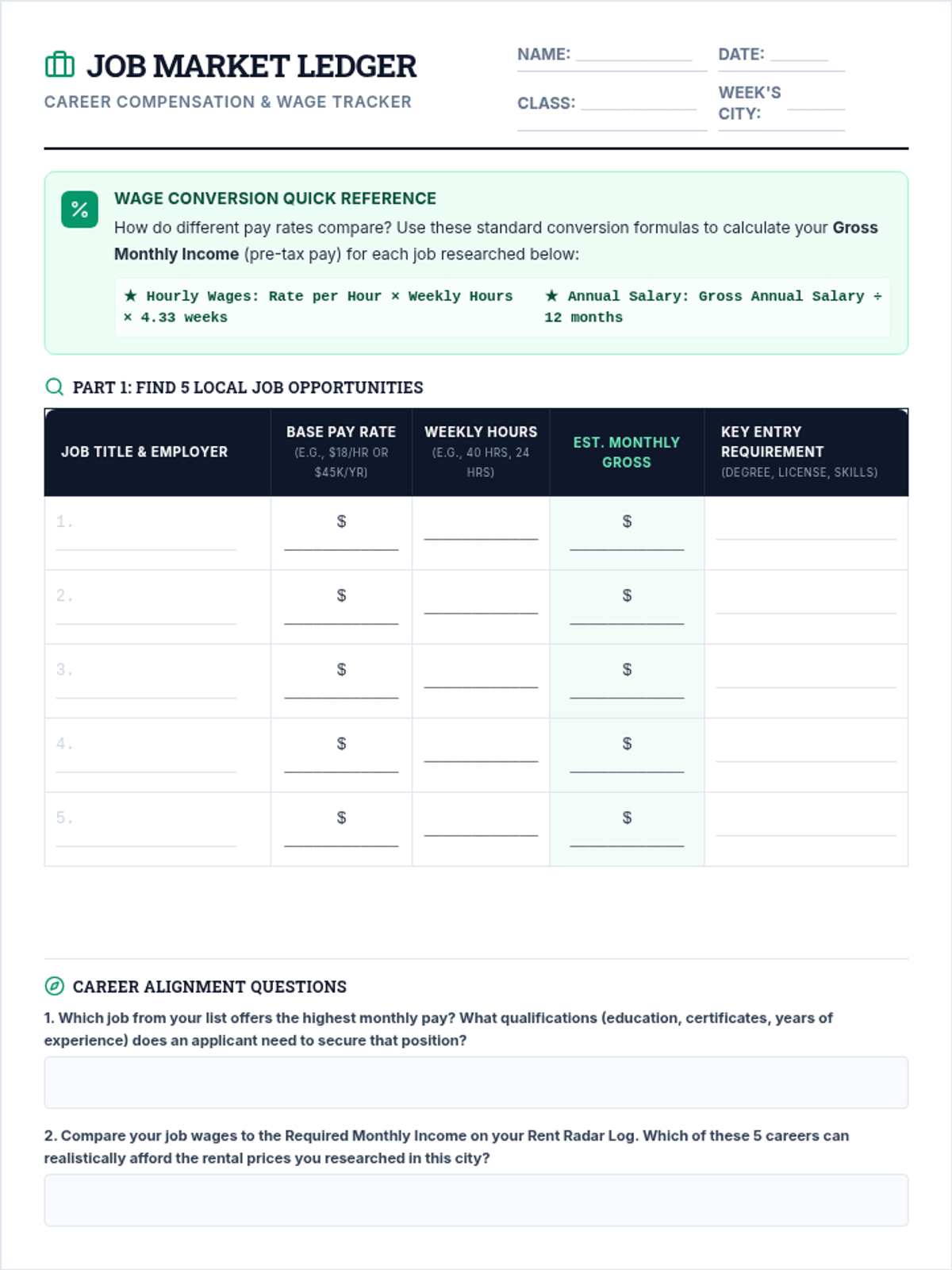
Navigating the administrative side of employment, including benefit comparisons and the essential tax forms required for new hires.
Understanding the fundamentals of how income is earned, how paychecks are calculated, and the specific math behind a $15.16 hourly wage.
Students learn the importance of post-interview follow-up by writing thank-you emails and reflecting on their overall performance throughout the project.
A hands-on day for mock interviews where students practice professional communication and receive constructive feedback.
Students prepare for the social dynamics of an interview by researching common retail questions and planning their own inquiries for the employer.
Focuses on translating personal experiences into a professional resume and drafting a concise cover letter using structured templates.
Students explore different retail roles, learn to read job descriptions, and practice completing a standard job application form with accuracy.
A rapid-fire, 20-minute introduction to Cognitive Behavioral Therapy (CBT) techniques for managing anxiety. Students learn to identify 'glitchy' thoughts and practice reframing them through a scientific 'investigative' lens.
A high-energy 20-minute session focused on overcoming procrastination using the 5-Second Rule and Time Blocking techniques. Students will learn to bridge the gap between thinking and doing through practical racing-themed activities.
A comprehensive social-emotional learning lesson designed to help students navigate testing anxiety using mindfulness, somatic grounding, and cognitive reframing. This lesson equips students with 'micro-moments' of calm to regain control during high-stakes assessments.
A social skills lesson focused on perspective-taking during school group work, helping students understand different points of view and resolve conflicts collaboratively.
Application of reframing techniques through high-stakes social and academic scenarios, featuring role-play practice and the creation of a personalized mental playbook.
Interactive workshop teaching three core reframing strategies: The Scientist (evidence-based), The Prosecutor (logic-checking), and The Coach (action-oriented).
An exploration into the mechanics of the 'Inner Critic,' identifying specific cognitive distortions such as catastrophizing and black-and-white thinking through a psychological lens.
The final four weeks focus on rehearsing help-seeking behaviors through roleplay, managing physiological anxiety symptoms, and transitioning these skills into the actual math classroom.
The first four weeks of the intervention focus on identifying anxiety triggers, reframing help-seeking as a skill, and introducing the non-verbal signal system and question stems.
A 90-minute workshop on financial survival where students navigate a 'Life Happens' group simulation to understand income, taxes, and unexpected costs.
Students will apply their tools to future academic and personal stressors. This session focuses on time management, goal setting, and creating a proactive plan for high-stress periods.
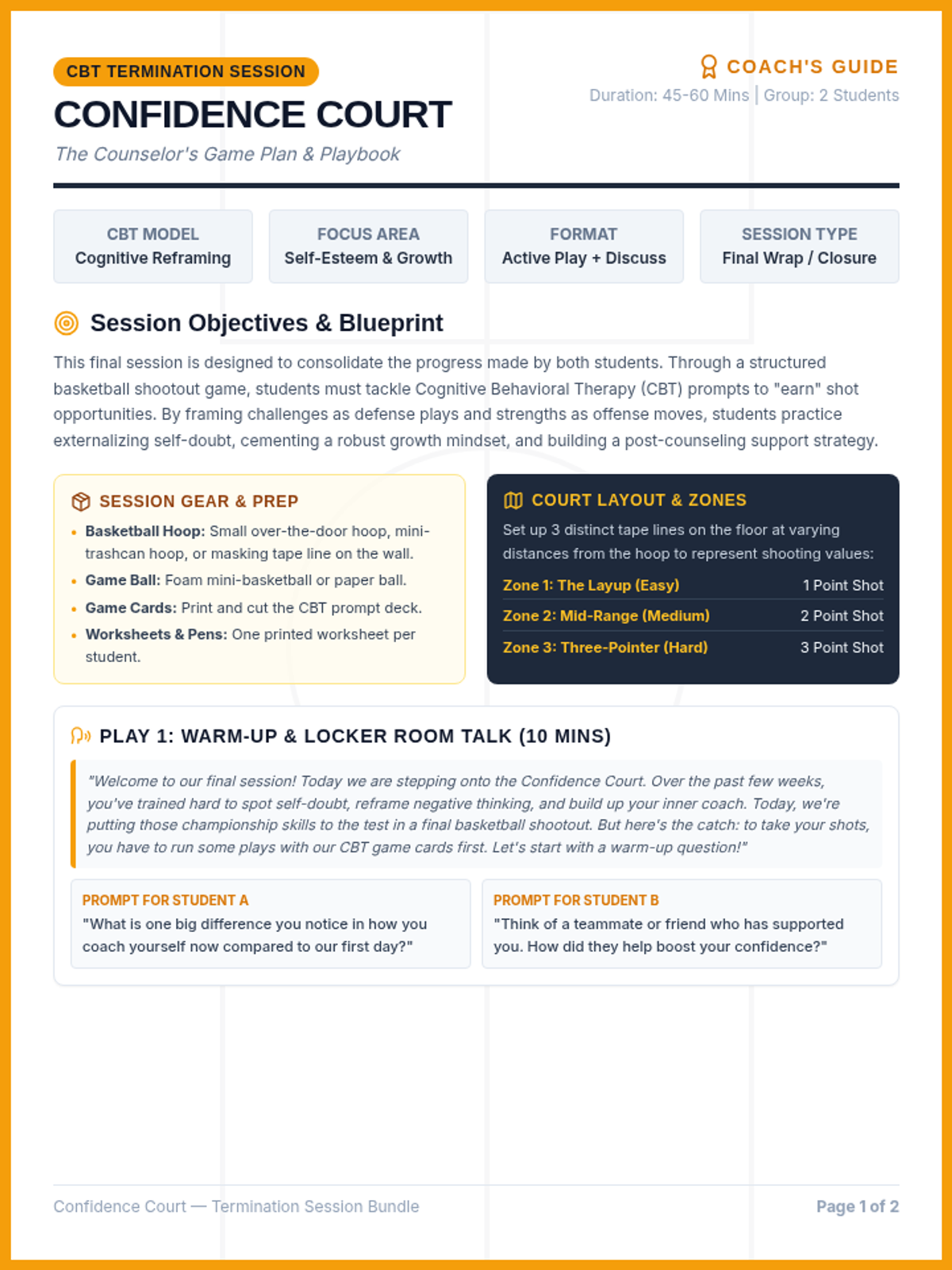
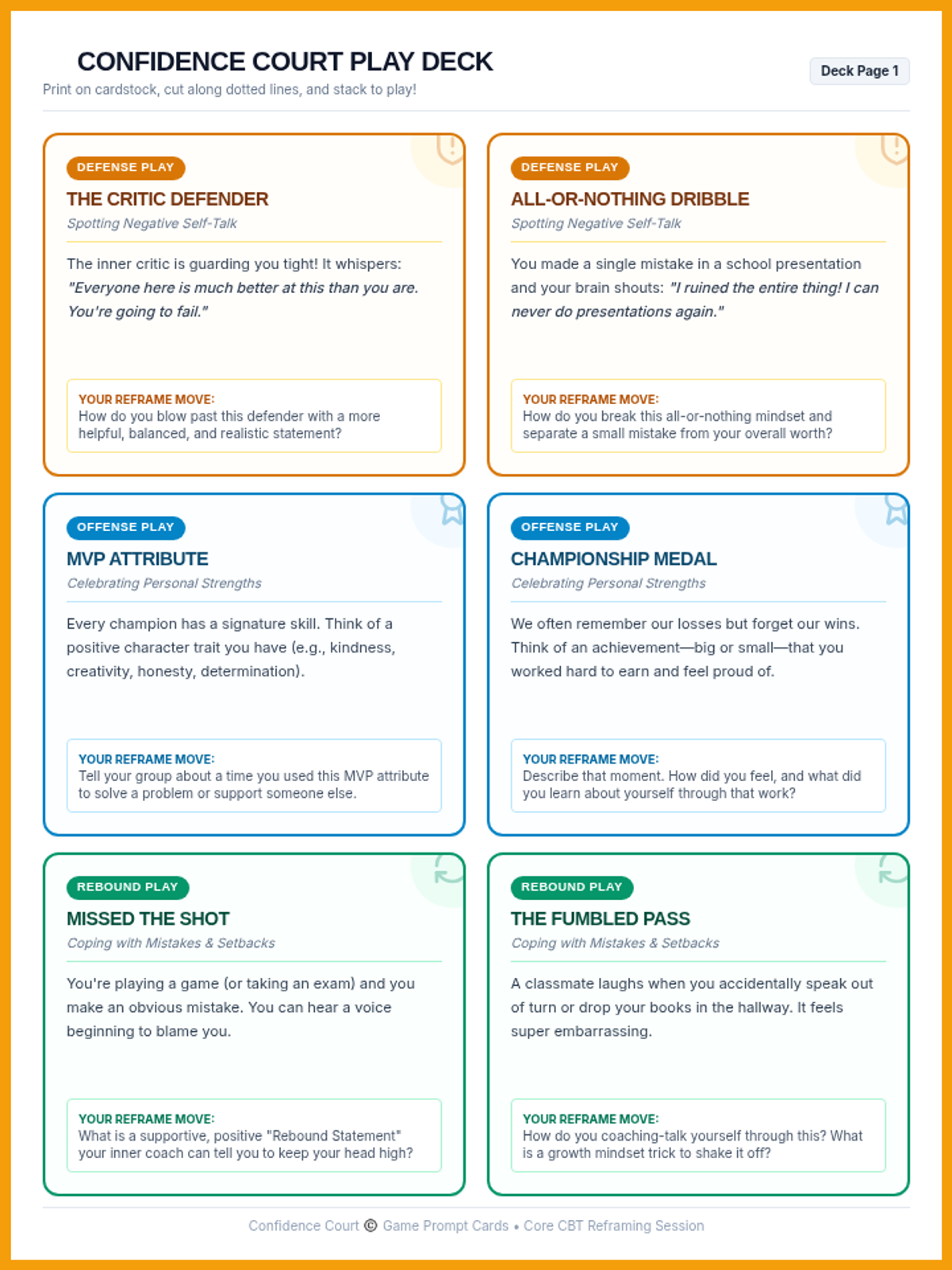
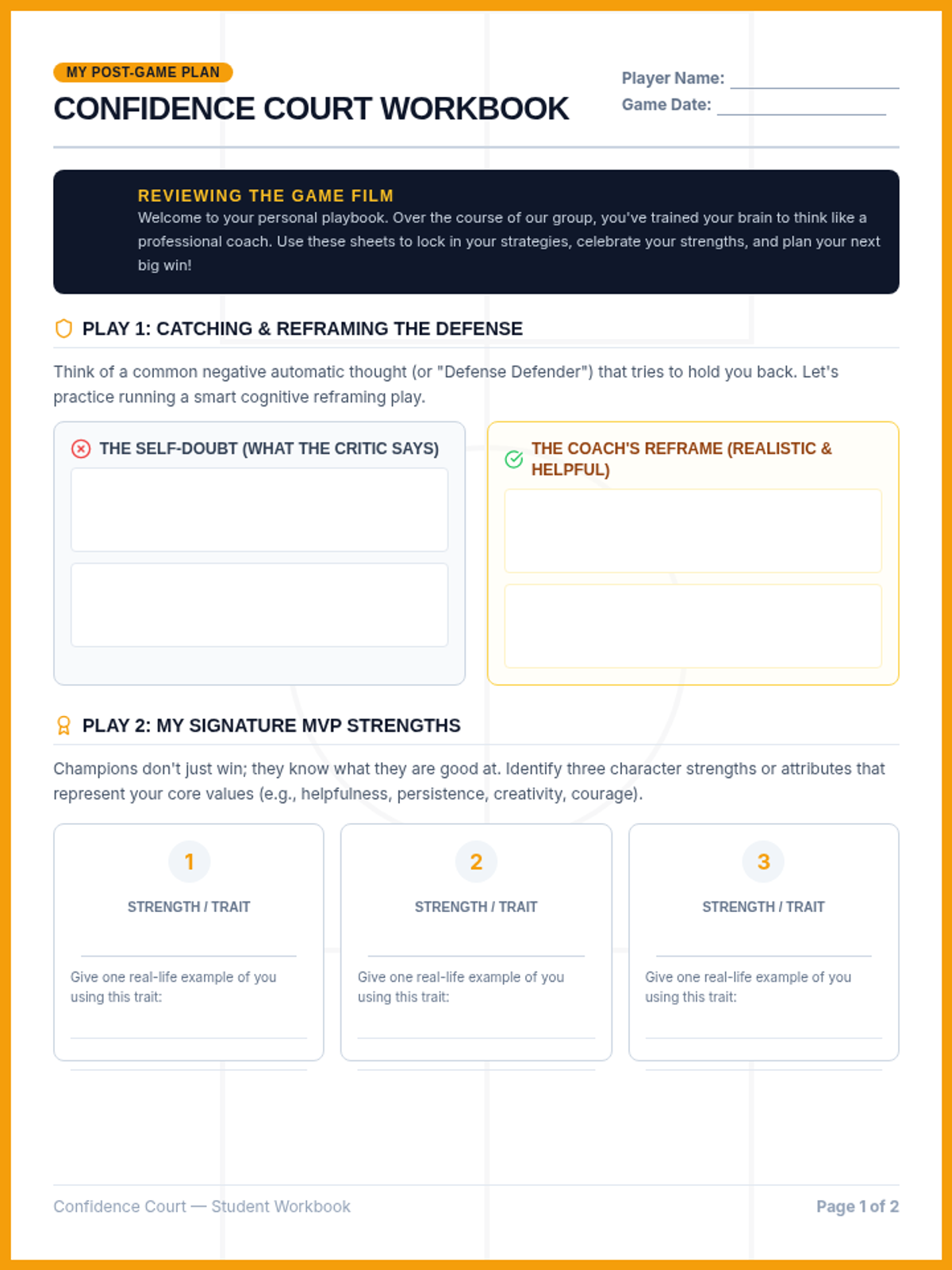
Addressing perfectionism and self-criticism, this session introduces self-compassion as a tool for resilience. Students will practice kindness toward themselves and challenge the 'inner critic'.
This session focuses on navigating social anxiety and peer pressure. Students will learn about healthy boundaries and practice assertive communication to protect their mental well-being.
Students will explore the connection between thoughts, feelings, and behaviors. They will learn to identify 'thought traps' and practice 'flipping the script' on anxious internal narratives.
A focused speaking activity where students use the 'Internal Laboratory' metaphor to express emotional regulation and personal growth. The lesson centers on a 2-minute scripted performance with integrated stage directions and breathing cues.
A comprehensive set of tools for planning and executing a multi-destination community trip, focusing on life skills, budgeting, and social expectations.
A modern, science-based exploration of depression, motivation, and coping strategies designed specifically for teens. This lesson focuses on the 'Neuro Blueprint' approach to understanding brain chemistry and emotional regulation.
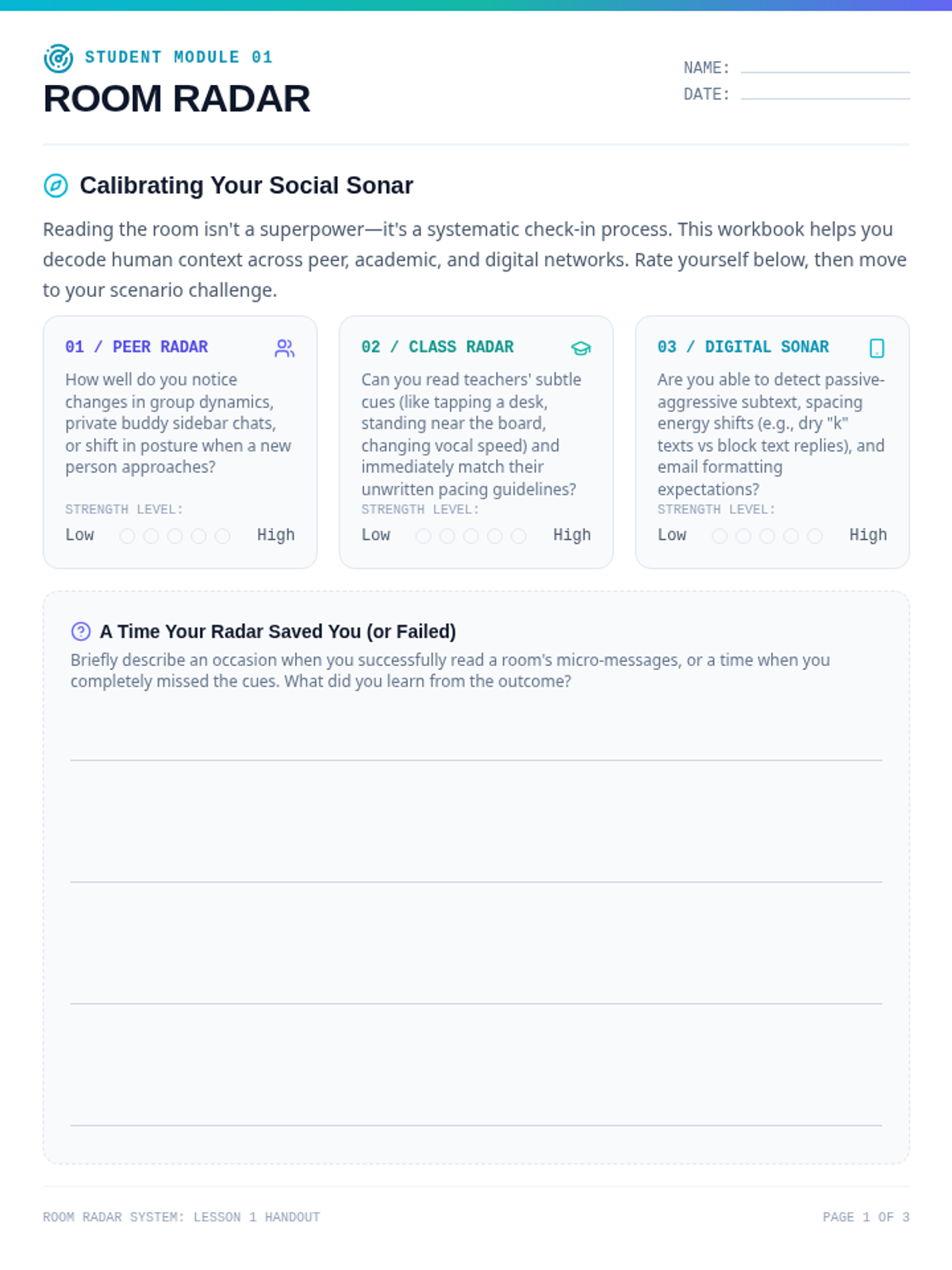
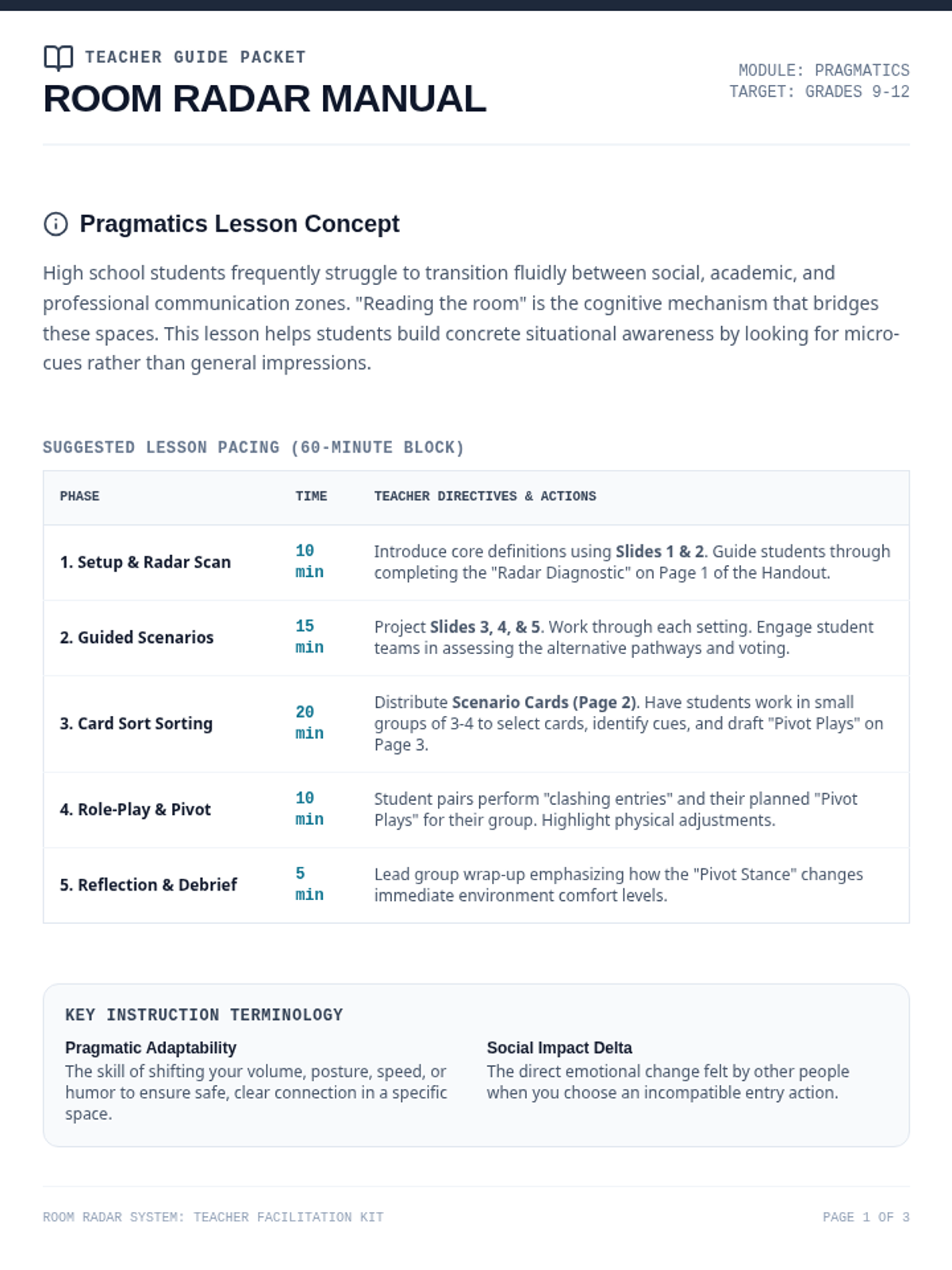
A lesson focused on helping high school students understand and maintain personal space in specific school environments like PE class and the bus.
A complete toolkit for organizing a school field trip, including student interest forms, registration packets, and permission slips. Designed to simplify the logistics for teachers while engaging students in the excitement of the upcoming adventure.
A lesson designed to help students in behavior support programs identify their current emotional state, recognize triggers, and select appropriate coping strategies for self-regulation.
An introductory guide to navigating local community resources in Clay County, Florida, focusing on essential services for independence and advocacy. Students will explore transportation, food assistance, disability support, and recreational opportunities.
A 30-minute targeted lesson for high school students focusing on distinguishing healthy from unhealthy relationship traits, establishing personal boundaries, and the mechanics of making friends.
In this final module, students practice writing practical communications like thank-you notes, simple emails, and filling out more complex community forms. The lesson culminates in a review of the Word Wallet.
Precision in personal record keeping and high-stakes data entry. Participants master the transcription of addresses, phone numbers, and temporal sequences (Calendars) required for community logistics.
Technical decoding of digital shorthand, emoji-based logic, and communication purpose. Participants master the protocols for professional text and email responses while identifying security risks (Scams).
Critical literacy for workplace performance, including role-specific terminology, equipment identification, and high-stakes administrative records (Time Sheets/Safety Logs). Participants master the language of employment.
Advanced identification of community symbols and environmental hazard markers. Participants learn to decode high-stakes visual language and follow directional protocols for safe navigation in public and professional spaces.
The foundational module of the Words That Work program, focusing on the precision of legal identification and credential data entry. Participants master the structure of names and official signatures required for professional autonomy.
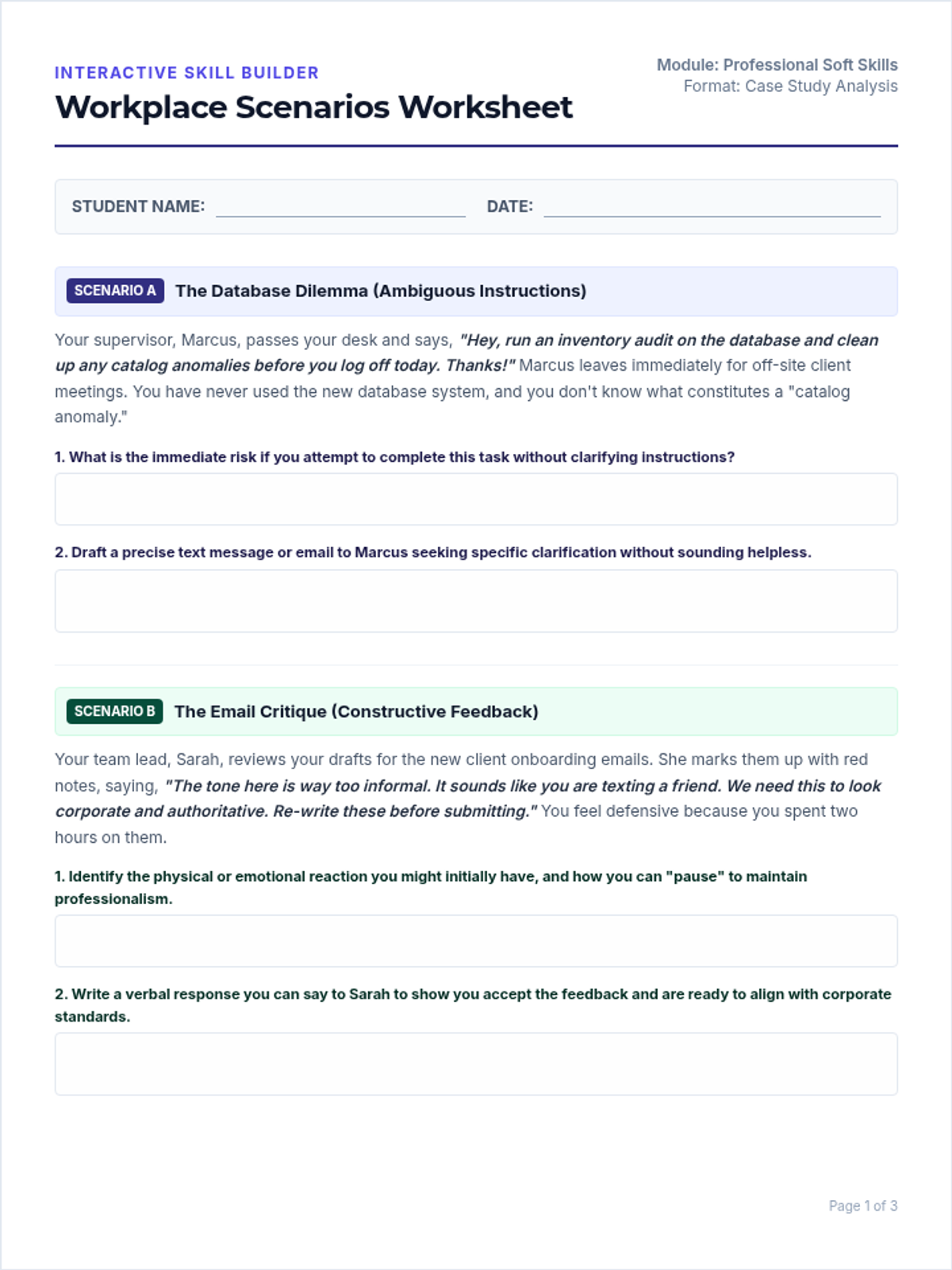
A high-impact, 30-minute session designed to help high school students navigate real-world social challenges using communication, problem-solving, and self-determination. Students will analyze a scenario and draft an advocacy plan.
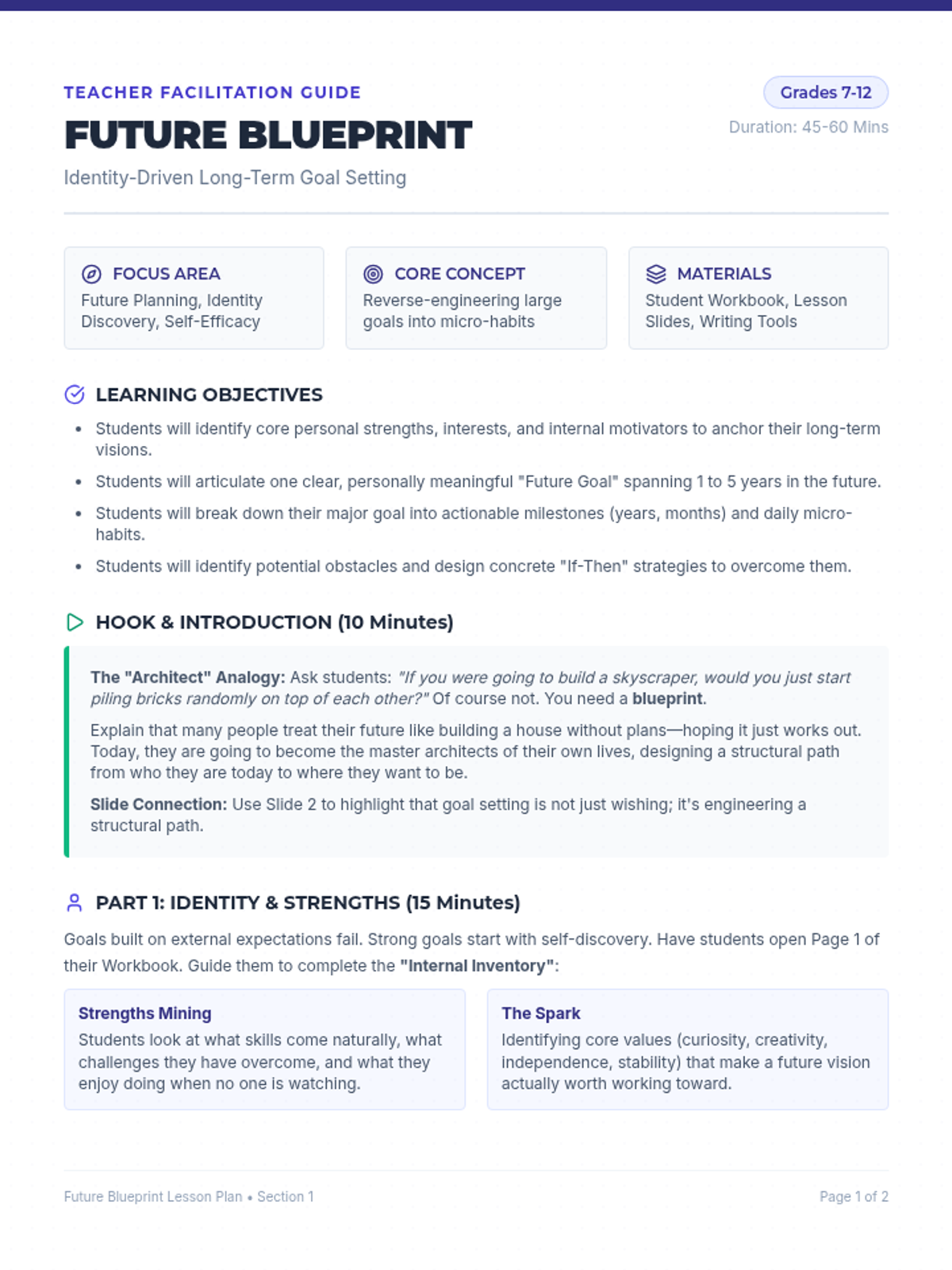
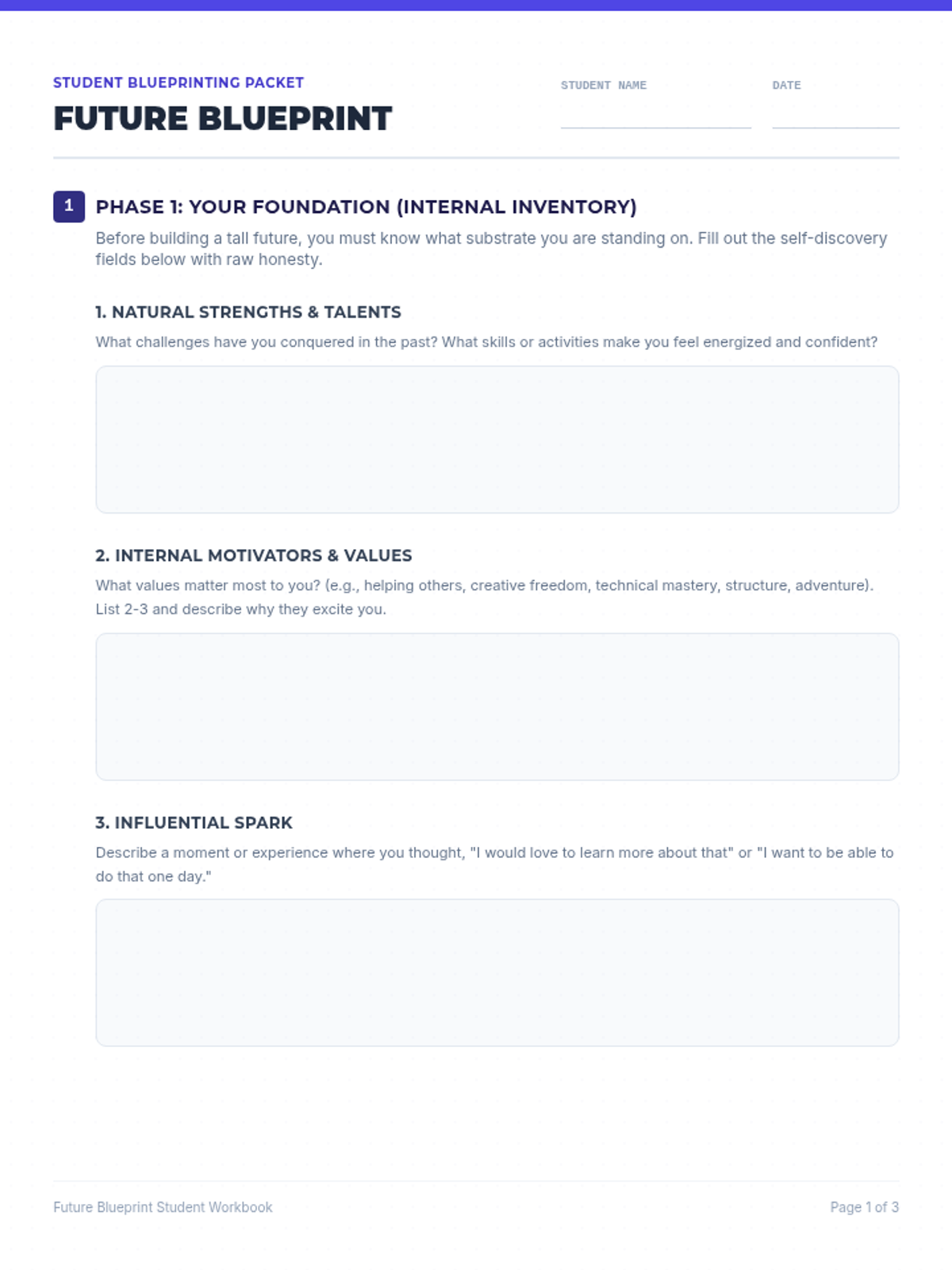
A quick, high-impact 15-minute advisory warm-up focused on visualizing and planning long-term goals using an architectural blueprint theme.
A project-based lesson where students develop a lean business model for a new venture, culminating in a 10-slide pitch deck and evaluated by a professional rubric.
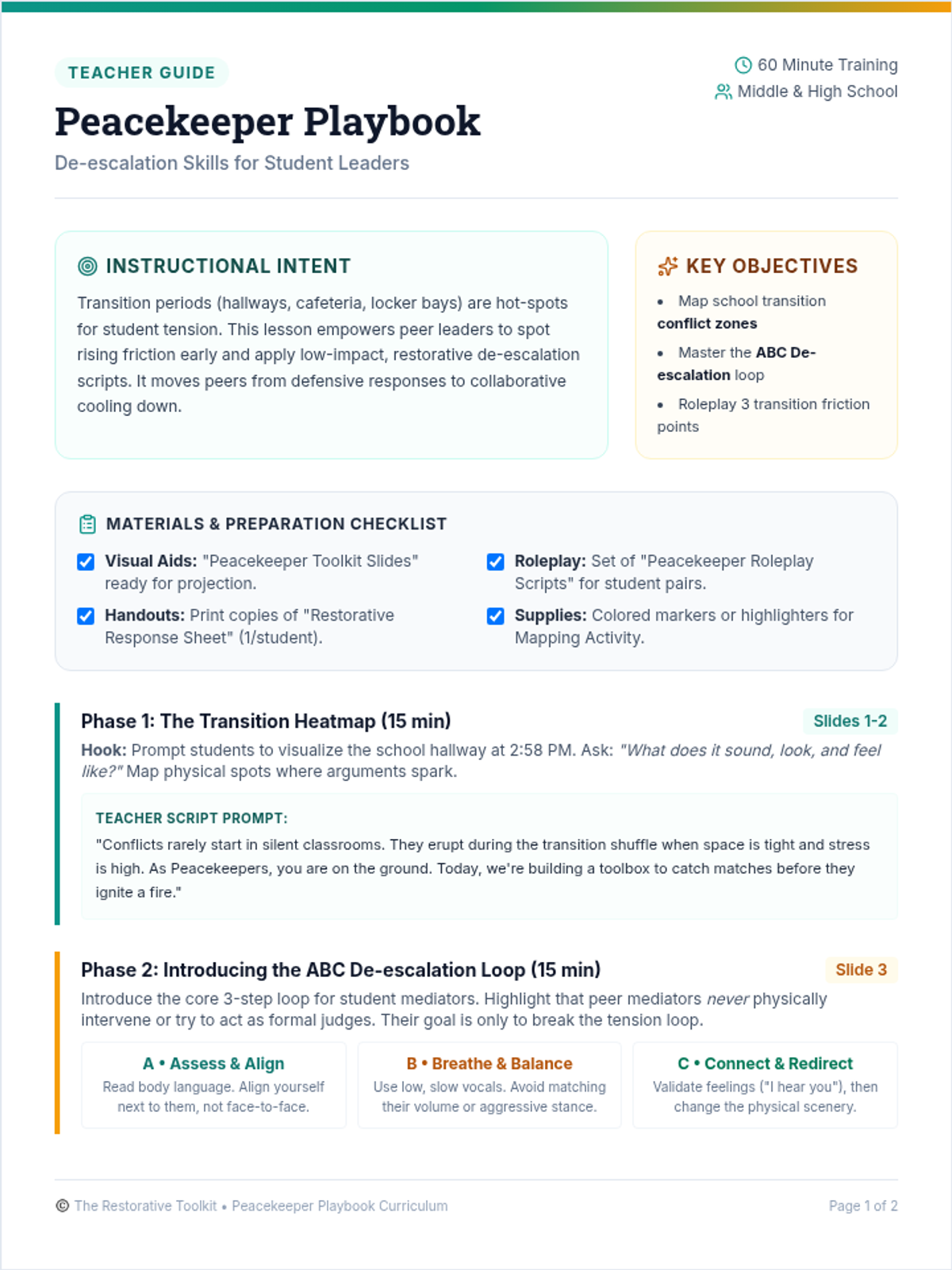
A comprehensive restorative justice workshop for high school students and leaders to move from rule-breaking to community-building. Students learn to analyze the impact of behavioral incidents and draft actionable blueprints for restitution.
A lesson focused on identifying the boundaries and expectations of different relationship types through card-sorting activities and scenario analysis.
Final refinement of the business model and prototype, culminating in a professional pitch presentation and project reflection.